window.__IS_SSR__=true
window.__INITIAL_STATE__={
"attachmentsReducer": {
"audio_0": {
"type": "attachments",
"id": "audio_0",
"imgSizes": {
"kqedFullSize": {
"file": "https://ww2.kqed.org/news/wp-content/themes/KQED-unified/img/audio_bgs/background0.jpg"
}
}
},
"audio_1": {
"type": "attachments",
"id": "audio_1",
"imgSizes": {
"kqedFullSize": {
"file": "https://ww2.kqed.org/news/wp-content/themes/KQED-unified/img/audio_bgs/background1.jpg"
}
}
},
"audio_2": {
"type": "attachments",
"id": "audio_2",
"imgSizes": {
"kqedFullSize": {
"file": "https://ww2.kqed.org/news/wp-content/themes/KQED-unified/img/audio_bgs/background2.jpg"
}
}
},
"audio_3": {
"type": "attachments",
"id": "audio_3",
"imgSizes": {
"kqedFullSize": {
"file": "https://ww2.kqed.org/news/wp-content/themes/KQED-unified/img/audio_bgs/background3.jpg"
}
}
},
"audio_4": {
"type": "attachments",
"id": "audio_4",
"imgSizes": {
"kqedFullSize": {
"file": "https://ww2.kqed.org/news/wp-content/themes/KQED-unified/img/audio_bgs/background4.jpg"
}
}
},
"placeholder": {
"type": "attachments",
"id": "placeholder",
"imgSizes": {
"thumbnail": {
"file": "https://cdn.kqed.org/wp-content/uploads/2024/12/KQED-Default-Image-816638274-2000x1333-1-160x107.jpg",
"width": 160,
"height": 107,
"mimeType": "image/jpeg"
},
"medium": {
"file": "https://cdn.kqed.org/wp-content/uploads/2024/12/KQED-Default-Image-816638274-2000x1333-1-800x533.jpg",
"width": 800,
"height": 533,
"mimeType": "image/jpeg"
},
"medium_large": {
"file": "https://cdn.kqed.org/wp-content/uploads/2024/12/KQED-Default-Image-816638274-2000x1333-1-768x512.jpg",
"width": 768,
"height": 512,
"mimeType": "image/jpeg"
},
"large": {
"file": "https://cdn.kqed.org/wp-content/uploads/2024/12/KQED-Default-Image-816638274-2000x1333-1-1020x680.jpg",
"width": 1020,
"height": 680,
"mimeType": "image/jpeg"
},
"1536x1536": {
"file": "https://cdn.kqed.org/wp-content/uploads/2024/12/KQED-Default-Image-816638274-2000x1333-1-1536x1024.jpg",
"width": 1536,
"height": 1024,
"mimeType": "image/jpeg"
},
"fd-lrg": {
"file": "https://cdn.kqed.org/wp-content/uploads/2024/12/KQED-Default-Image-816638274-2000x1333-1-1536x1024.jpg",
"width": 1536,
"height": 1024,
"mimeType": "image/jpeg"
},
"fd-med": {
"file": "https://cdn.kqed.org/wp-content/uploads/2024/12/KQED-Default-Image-816638274-2000x1333-1-1020x680.jpg",
"width": 1020,
"height": 680,
"mimeType": "image/jpeg"
},
"fd-sm": {
"file": "https://cdn.kqed.org/wp-content/uploads/2024/12/KQED-Default-Image-816638274-2000x1333-1-800x533.jpg",
"width": 800,
"height": 533,
"mimeType": "image/jpeg"
},
"post-thumbnail": {
"file": "https://cdn.kqed.org/wp-content/uploads/2024/12/KQED-Default-Image-816638274-2000x1333-1-672x372.jpg",
"width": 672,
"height": 372,
"mimeType": "image/jpeg"
},
"twentyfourteen-full-width": {
"file": "https://cdn.kqed.org/wp-content/uploads/2024/12/KQED-Default-Image-816638274-2000x1333-1-1038x576.jpg",
"width": 1038,
"height": 576,
"mimeType": "image/jpeg"
},
"xxsmall": {
"file": "https://cdn.kqed.org/wp-content/uploads/2024/12/KQED-Default-Image-816638274-2000x1333-1-160x107.jpg",
"width": 160,
"height": 107,
"mimeType": "image/jpeg"
},
"xsmall": {
"file": "https://cdn.kqed.org/wp-content/uploads/2024/12/KQED-Default-Image-816638274-2000x1333-1-672x372.jpg",
"width": 672,
"height": 372,
"mimeType": "image/jpeg"
},
"small": {
"file": "https://cdn.kqed.org/wp-content/uploads/2024/12/KQED-Default-Image-816638274-2000x1333-1-672x372.jpg",
"width": 672,
"height": 372,
"mimeType": "image/jpeg"
},
"xlarge": {
"file": "https://cdn.kqed.org/wp-content/uploads/2024/12/KQED-Default-Image-816638274-2000x1333-1-1020x680.jpg",
"width": 1020,
"height": 680,
"mimeType": "image/jpeg"
},
"full-width": {
"file": "https://cdn.kqed.org/wp-content/uploads/2024/12/KQED-Default-Image-816638274-2000x1333-1-1920x1280.jpg",
"width": 1920,
"height": 1280,
"mimeType": "image/jpeg"
},
"guest-author-32": {
"file": "https://cdn.kqed.org/wp-content/uploads/2025/01/KQED-Default-Image-816638274-1333x1333-1-160x160.jpg",
"width": 32,
"height": 32,
"mimeType": "image/jpeg"
},
"guest-author-50": {
"file": "https://cdn.kqed.org/wp-content/uploads/2025/01/KQED-Default-Image-816638274-1333x1333-1-160x160.jpg",
"width": 50,
"height": 50,
"mimeType": "image/jpeg"
},
"guest-author-64": {
"file": "https://cdn.kqed.org/wp-content/uploads/2025/01/KQED-Default-Image-816638274-1333x1333-1-160x160.jpg",
"width": 64,
"height": 64,
"mimeType": "image/jpeg"
},
"guest-author-96": {
"file": "https://cdn.kqed.org/wp-content/uploads/2025/01/KQED-Default-Image-816638274-1333x1333-1-160x160.jpg",
"width": 96,
"height": 96,
"mimeType": "image/jpeg"
},
"guest-author-128": {
"file": "https://cdn.kqed.org/wp-content/uploads/2025/01/KQED-Default-Image-816638274-1333x1333-1-160x160.jpg",
"width": 128,
"height": 128,
"mimeType": "image/jpeg"
},
"detail": {
"file": "https://cdn.kqed.org/wp-content/uploads/2025/01/KQED-Default-Image-816638274-1333x1333-1-160x160.jpg",
"width": 160,
"height": 160,
"mimeType": "image/jpeg"
},
"kqedFullSize": {
"file": "https://cdn.kqed.org/wp-content/uploads/2024/12/KQED-Default-Image-816638274-2000x1333-1.jpg",
"width": 2000,
"height": 1333
}
}
},
"news_12060338": {
"type": "attachments",
"id": "news_12060338",
"meta": {
"index": "attachments_1716263798",
"site": "news",
"id": "12060338",
"found": true
},
"title": "Unrecognizable Couple Paying Bills at Home",
"publishDate": 1760726619,
"status": "inherit",
"parent": 12060292,
"modified": 1760726739,
"caption": "The California Climate Credit was $55 for PG&E customers this month. This is a state program that twice a year cuts down how much you pay in your electricity bill.",
"credit": "via Getty images",
"altTag": null,
"description": null,
"imgSizes": {
"thumbnail": {
"file": "https://cdn.kqed.org/wp-content/uploads/sites/10/2025/10/ClimateBill_lede-160x107.jpg",
"width": 160,
"height": 107,
"mimeType": "image/jpeg"
},
"1536x1536": {
"file": "https://cdn.kqed.org/wp-content/uploads/sites/10/2025/10/ClimateBill_lede-1536x1025.jpg",
"width": 1536,
"height": 1025,
"mimeType": "image/jpeg"
},
"post-thumbnail": {
"file": "https://cdn.kqed.org/wp-content/uploads/sites/10/2025/10/ClimateBill_lede-672x372.jpg",
"width": 672,
"height": 372,
"mimeType": "image/jpeg"
},
"twentyfourteen-full-width": {
"file": "https://cdn.kqed.org/wp-content/uploads/sites/10/2025/10/ClimateBill_lede-1038x576.jpg",
"width": 1038,
"height": 576,
"mimeType": "image/jpeg"
},
"kqedFullSize": {
"file": "https://cdn.kqed.org/wp-content/uploads/sites/10/2025/10/ClimateBill_lede.jpg",
"width": 1950,
"height": 1301
}
},
"isLoading": false,
"fetchFailed": false
},
"news_12000320": {
"type": "attachments",
"id": "news_12000320",
"meta": {
"index": "attachments_1716263798",
"site": "news",
"id": "12000320",
"found": true
},
"title": "mpox-monkeypox-global-emergency-who-vaccine",
"publishDate": 1723740957,
"status": "inherit",
"parent": 12000319,
"modified": 1723750986,
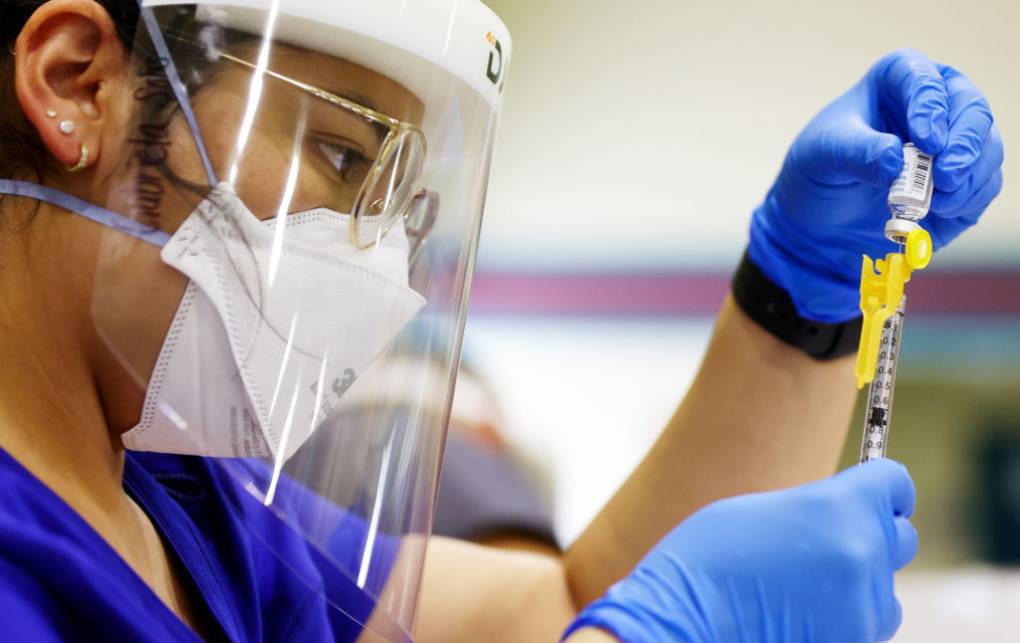
"caption": "Licensed Vocational Nurse (LVN) Gabriela Solis prepares a dose of the Jynneos mpox vaccine at an L.A. County vaccination site in East Los Angeles on Aug. 10, 2022.",
"credit": "Mario Tama/Getty Images",
"altTag": "A woman wearing glasses, a face mask and a visor with blue surgical gloves holds a syringe and a small bottle.",
"description": null,
"imgSizes": {
"medium": {
"file": "https://cdn.kqed.org/wp-content/uploads/sites/10/2024/08/GettyImages-1414098149-800x505.jpg",
"width": 800,
"height": 505,
"mimeType": "image/jpeg"
},
"large": {
"file": "https://cdn.kqed.org/wp-content/uploads/sites/10/2024/08/GettyImages-1414098149-1020x643.jpg",
"width": 1020,
"height": 643,
"mimeType": "image/jpeg"
},
"thumbnail": {
"file": "https://cdn.kqed.org/wp-content/uploads/sites/10/2024/08/GettyImages-1414098149-160x101.jpg",
"width": 160,
"height": 101,
"mimeType": "image/jpeg"
},
"post-thumbnail": {
"file": "https://cdn.kqed.org/wp-content/uploads/sites/10/2024/08/GettyImages-1414098149-672x372.jpg",
"width": 672,
"height": 372,
"mimeType": "image/jpeg"
},
"twentyfourteen-full-width": {
"file": "https://cdn.kqed.org/wp-content/uploads/sites/10/2024/08/GettyImages-1414098149-1024x576.jpg",
"width": 1024,
"height": 576,
"mimeType": "image/jpeg"
},
"kqedFullSize": {
"file": "https://cdn.kqed.org/wp-content/uploads/sites/10/2024/08/GettyImages-1414098149.jpg",
"width": 1024,
"height": 646
}
},
"isLoading": false,
"fetchFailed": false
},
"news_12060163": {
"type": "attachments",
"id": "news_12060163",
"meta": {
"index": "attachments_1716263798",
"site": "news",
"id": "12060163",
"found": true
},
"title": "Views over the Yosemite Valley floor at sunset.",
"publishDate": 1760644001,
"status": "inherit",
"parent": 12060120,
"modified": 1760644029,
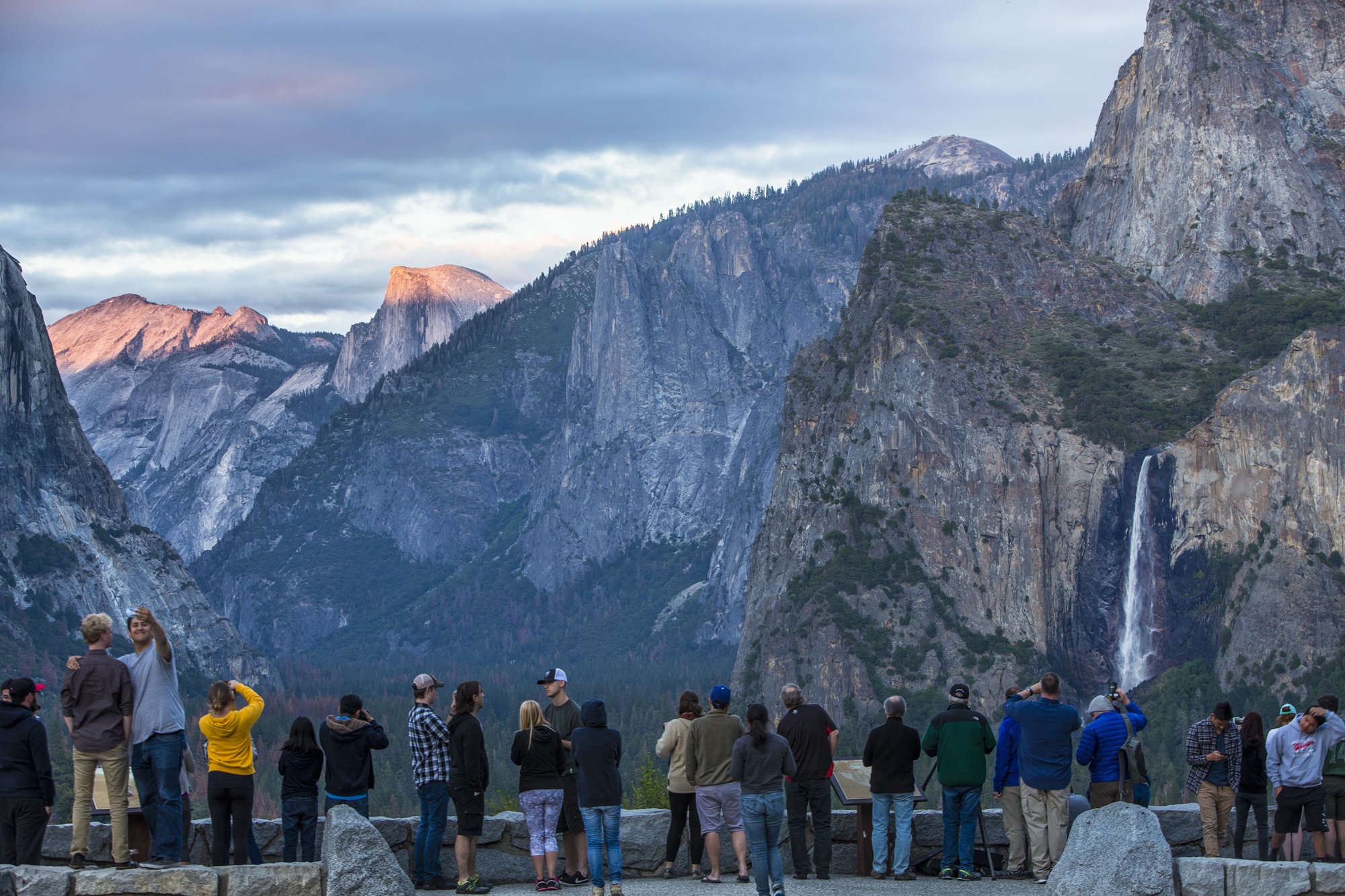
"caption": "Views over the Yosemite Valley floor at sunset.",
"credit": "Matthew Micah Wright/Getty Images",
"altTag": null,
"description": null,
"imgSizes": {
"thumbnail": {
"file": "https://cdn.kqed.org/wp-content/uploads/sites/10/2025/10/YosemiteGetty3-160x107.jpg",
"width": 160,
"height": 107,
"mimeType": "image/jpeg"
},
"1536x1536": {
"file": "https://cdn.kqed.org/wp-content/uploads/sites/10/2025/10/YosemiteGetty3-1536x1024.jpg",
"width": 1536,
"height": 1024,
"mimeType": "image/jpeg"
},
"post-thumbnail": {
"file": "https://cdn.kqed.org/wp-content/uploads/sites/10/2025/10/YosemiteGetty3-672x372.jpg",
"width": 672,
"height": 372,
"mimeType": "image/jpeg"
},
"twentyfourteen-full-width": {
"file": "https://cdn.kqed.org/wp-content/uploads/sites/10/2025/10/YosemiteGetty3-1038x576.jpg",
"width": 1038,
"height": 576,
"mimeType": "image/jpeg"
},
"kqedFullSize": {
"file": "https://cdn.kqed.org/wp-content/uploads/sites/10/2025/10/YosemiteGetty3.jpg",
"width": 2000,
"height": 1333
}
},
"isLoading": false,
"fetchFailed": false
},
"news_12059706": {
"type": "attachments",
"id": "news_12059706",
"meta": {
"index": "attachments_1716263798",
"site": "news",
"id": "12059706",
"found": true
},
"title": "MyShake_WP",
"publishDate": 1760381926,
"status": "inherit",
"parent": 12059704,
"modified": 1760382317,
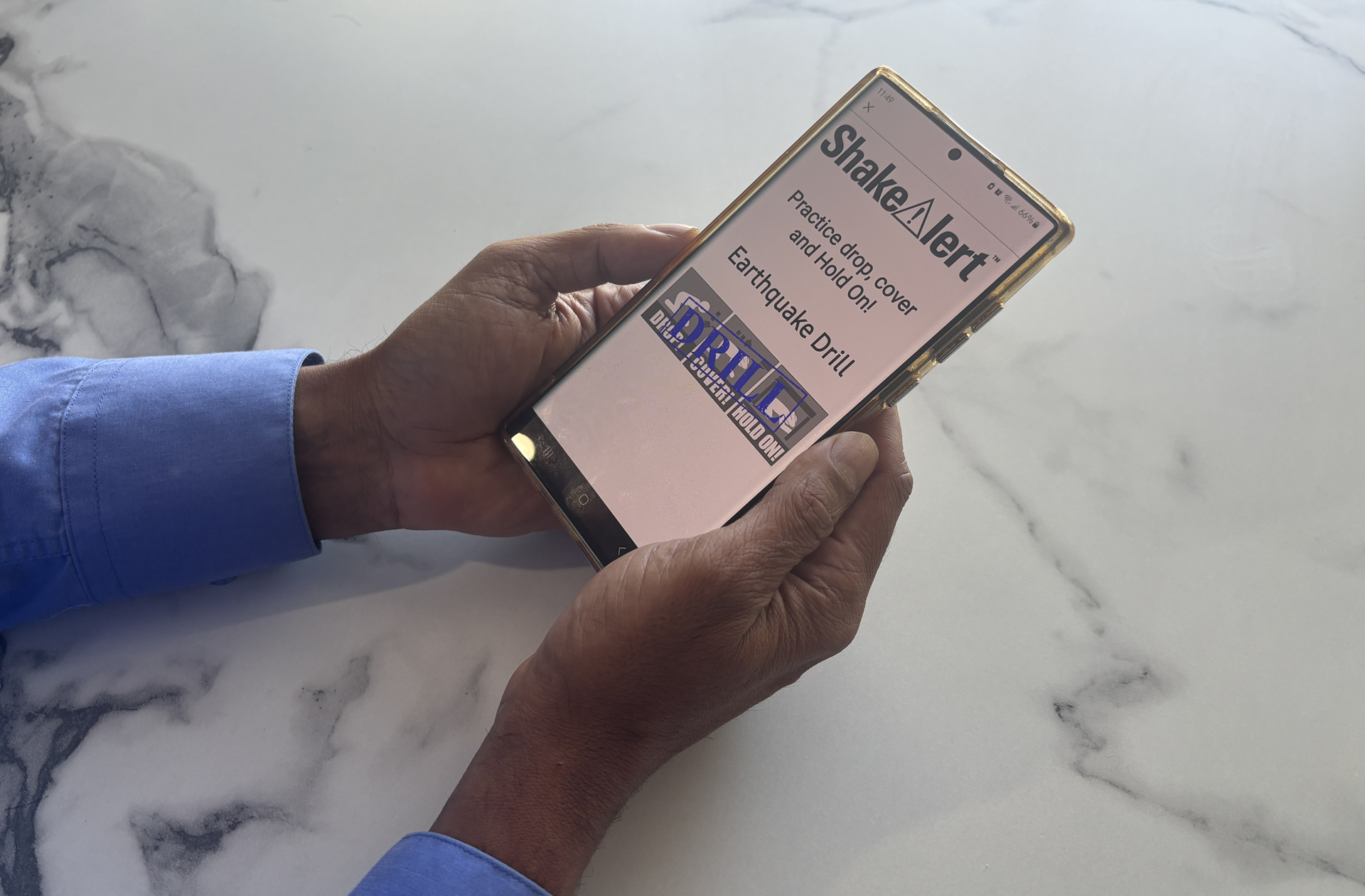
"caption": "If you’re one of the over 4 million Californians who have the MyShake earthquake warning app downloaded, you might get a loud alert on Thursday morning. This test will be part of the Annual Great ShakeOut quake preparedness drill, taking place across the globe.",
"credit": "Courtesy of Suresh Raman",
"altTag": null,
"description": null,
"imgSizes": {
"thumbnail": {
"file": "https://cdn.kqed.org/wp-content/uploads/sites/10/2025/10/MyShake_WP-160x105.png",
"width": 160,
"height": 105,
"mimeType": "image/png"
},
"1536x1536": {
"file": "https://cdn.kqed.org/wp-content/uploads/sites/10/2025/10/MyShake_WP-1536x1009.png",
"width": 1536,
"height": 1009,
"mimeType": "image/png"
},
"post-thumbnail": {
"file": "https://cdn.kqed.org/wp-content/uploads/sites/10/2025/10/MyShake_WP-672x372.png",
"width": 672,
"height": 372,
"mimeType": "image/png"
},
"twentyfourteen-full-width": {
"file": "https://cdn.kqed.org/wp-content/uploads/sites/10/2025/10/MyShake_WP-1038x576.png",
"width": 1038,
"height": 576,
"mimeType": "image/png"
},
"kqedFullSize": {
"file": "https://cdn.kqed.org/wp-content/uploads/sites/10/2025/10/MyShake_WP.png",
"width": 1920,
"height": 1261
}
},
"isLoading": false,
"fetchFailed": false
},
"news_12059671": {
"type": "attachments",
"id": "news_12059671",
"meta": {
"index": "attachments_1716263798",
"site": "news",
"id": "12059671",
"found": true
},
"title": "Glastonbury Festival 2025 - Day Three",
"publishDate": 1760376720,
"status": "inherit",
"parent": 12059653,
"modified": 1760380535,
"caption": "Lorde performs during day three of Glastonbury Festival 2025 at Worthy Farm, Pilton, on June 27, 2025, in Glastonbury, England. ",
"credit": "Joseph Okpako/WireImage via Getty Images",
"altTag": null,
"description": null,
"imgSizes": {
"thumbnail": {
"file": "https://cdn.kqed.org/wp-content/uploads/sites/10/2025/10/LordeGetty-160x106.jpg",
"width": 160,
"height": 106,
"mimeType": "image/jpeg"
},
"1536x1536": {
"file": "https://cdn.kqed.org/wp-content/uploads/sites/10/2025/10/LordeGetty-1536x1022.jpg",
"width": 1536,
"height": 1022,
"mimeType": "image/jpeg"
},
"post-thumbnail": {
"file": "https://cdn.kqed.org/wp-content/uploads/sites/10/2025/10/LordeGetty-672x372.jpg",
"width": 672,
"height": 372,
"mimeType": "image/jpeg"
},
"twentyfourteen-full-width": {
"file": "https://cdn.kqed.org/wp-content/uploads/sites/10/2025/10/LordeGetty-1038x576.jpg",
"width": 1038,
"height": 576,
"mimeType": "image/jpeg"
},
"kqedFullSize": {
"file": "https://cdn.kqed.org/wp-content/uploads/sites/10/2025/10/LordeGetty.jpg",
"width": 2000,
"height": 1331
}
},
"isLoading": false,
"fetchFailed": false
},
"news_12059309": {
"type": "attachments",
"id": "news_12059309",
"meta": {
"index": "attachments_1716263798",
"site": "news",
"id": "12059309",
"found": true
},
"title": "251009-CORNMAZEBTS-15-BL-KQED",
"publishDate": 1760041536,
"status": "inherit",
"parent": 0,
"modified": 1760041596,
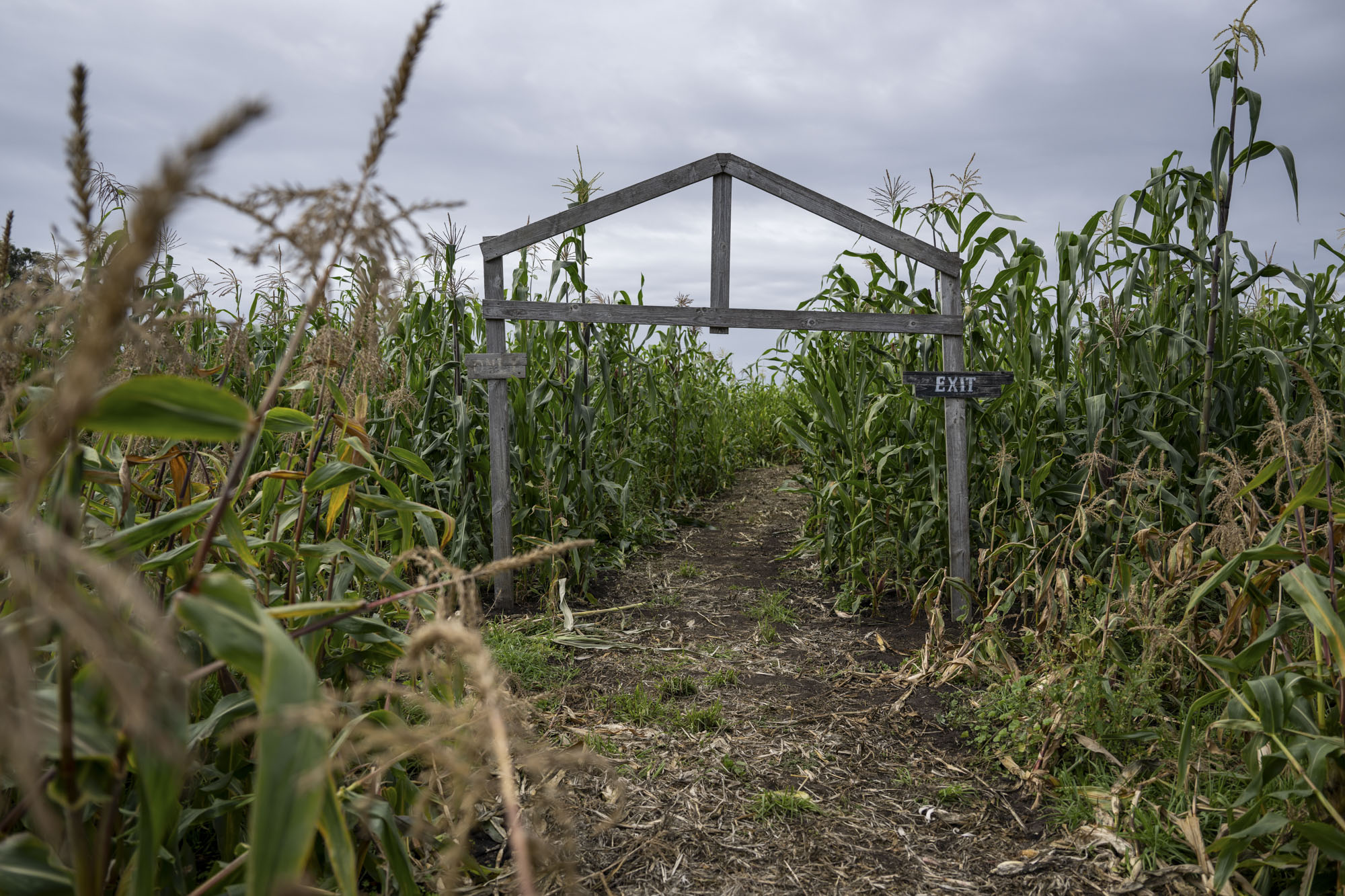
"caption": "The exit of the corn maze at Andreotti Family Farms in Half Moon Bay on Oct. 9, 2025.",
"credit": "Beth LaBerge/KQED",
"altTag": null,
"description": null,
"imgSizes": {
"thumbnail": {
"file": "https://cdn.kqed.org/wp-content/uploads/sites/10/2025/10/251009-CORNMAZEBTS-15-BL-KQED-160x107.jpg",
"width": 160,
"height": 107,
"mimeType": "image/jpeg"
},
"1536x1536": {
"file": "https://cdn.kqed.org/wp-content/uploads/sites/10/2025/10/251009-CORNMAZEBTS-15-BL-KQED-1536x1024.jpg",
"width": 1536,
"height": 1024,
"mimeType": "image/jpeg"
},
"post-thumbnail": {
"file": "https://cdn.kqed.org/wp-content/uploads/sites/10/2025/10/251009-CORNMAZEBTS-15-BL-KQED-672x372.jpg",
"width": 672,
"height": 372,
"mimeType": "image/jpeg"
},
"twentyfourteen-full-width": {
"file": "https://cdn.kqed.org/wp-content/uploads/sites/10/2025/10/251009-CORNMAZEBTS-15-BL-KQED-1038x576.jpg",
"width": 1038,
"height": 576,
"mimeType": "image/jpeg"
},
"kqedFullSize": {
"file": "https://cdn.kqed.org/wp-content/uploads/sites/10/2025/10/251009-CORNMAZEBTS-15-BL-KQED.jpg",
"width": 2000,
"height": 1333
}
},
"isLoading": false,
"fetchFailed": false
},
"news_12058363": {
"type": "attachments",
"id": "news_12058363",
"meta": {
"index": "attachments_1716263798",
"site": "news",
"id": "12058363",
"found": true
},
"title": "Fort Point National Historic Site, Low Angle View Of Bridge",
"publishDate": 1759422906,
"status": "inherit",
"parent": 12058291,
"modified": 1759423091,
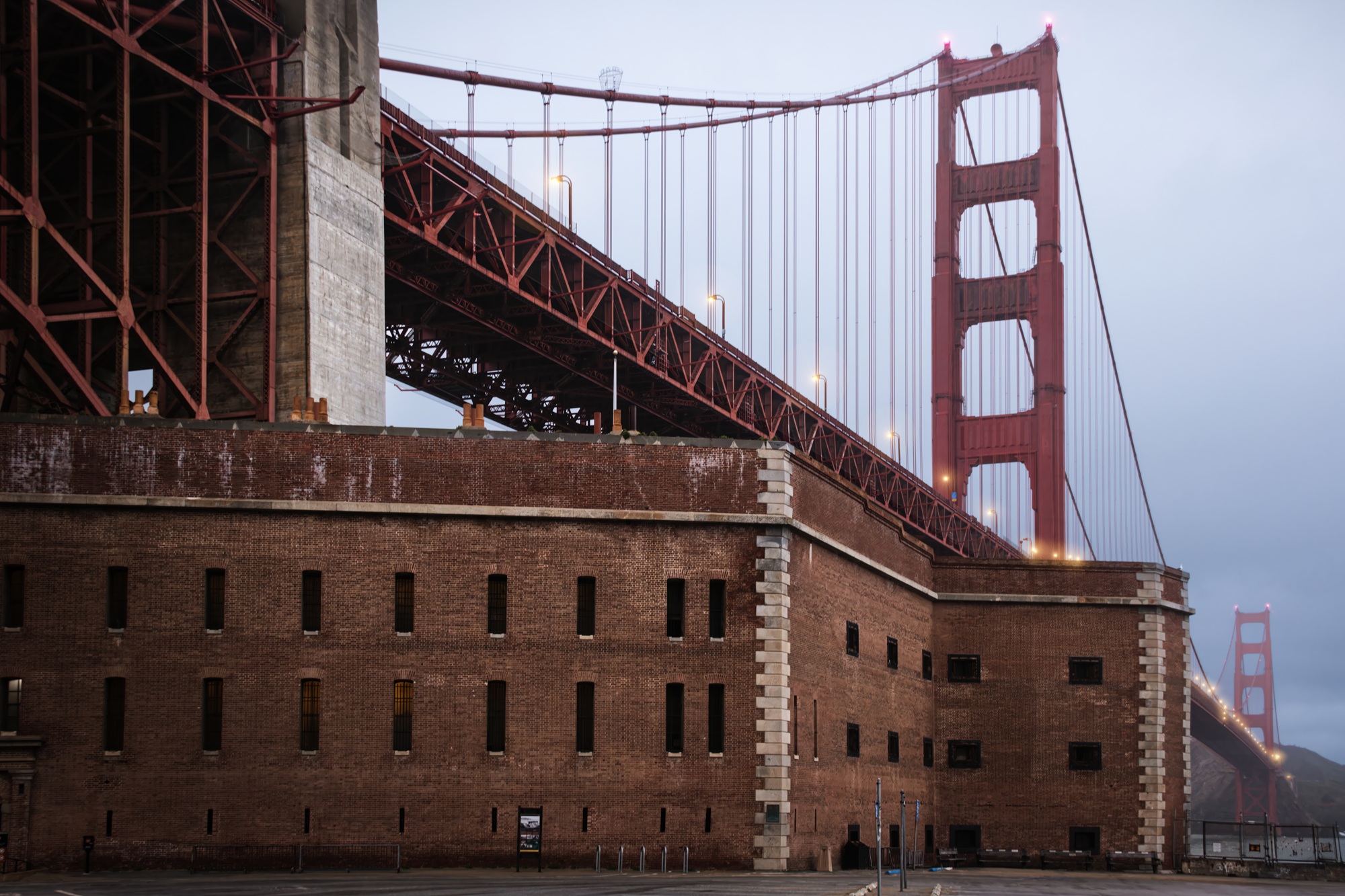
"caption": "Fort Point, a signature landmark located beneath the Golden Gate Bridge in San Francisco, California, on April 16, 2025.",
"credit": "EyeEm Mobile GmbH/iStock via Getty Images",
"altTag": null,
"description": null,
"imgSizes": {
"thumbnail": {
"file": "https://cdn.kqed.org/wp-content/uploads/sites/10/2025/10/GGBridgeGetty-160x107.jpg",
"width": 160,
"height": 107,
"mimeType": "image/jpeg"
},
"1536x1536": {
"file": "https://cdn.kqed.org/wp-content/uploads/sites/10/2025/10/GGBridgeGetty-1536x1024.jpg",
"width": 1536,
"height": 1024,
"mimeType": "image/jpeg"
},
"post-thumbnail": {
"file": "https://cdn.kqed.org/wp-content/uploads/sites/10/2025/10/GGBridgeGetty-672x372.jpg",
"width": 672,
"height": 372,
"mimeType": "image/jpeg"
},
"twentyfourteen-full-width": {
"file": "https://cdn.kqed.org/wp-content/uploads/sites/10/2025/10/GGBridgeGetty-1038x576.jpg",
"width": 1038,
"height": 576,
"mimeType": "image/jpeg"
},
"kqedFullSize": {
"file": "https://cdn.kqed.org/wp-content/uploads/sites/10/2025/10/GGBridgeGetty.jpg",
"width": 2000,
"height": 1333
}
},
"isLoading": false,
"fetchFailed": false
},
"news_12059383": {
"type": "attachments",
"id": "news_12059383",
"meta": {
"index": "attachments_1716263798",
"site": "news",
"id": "12059383",
"found": true
},
"title": "Federal Government Shuts Down After Congress Fails To Pass Funding Bill",
"publishDate": 1760051125,
"status": "inherit",
"parent": 12059380,
"modified": 1760054900,
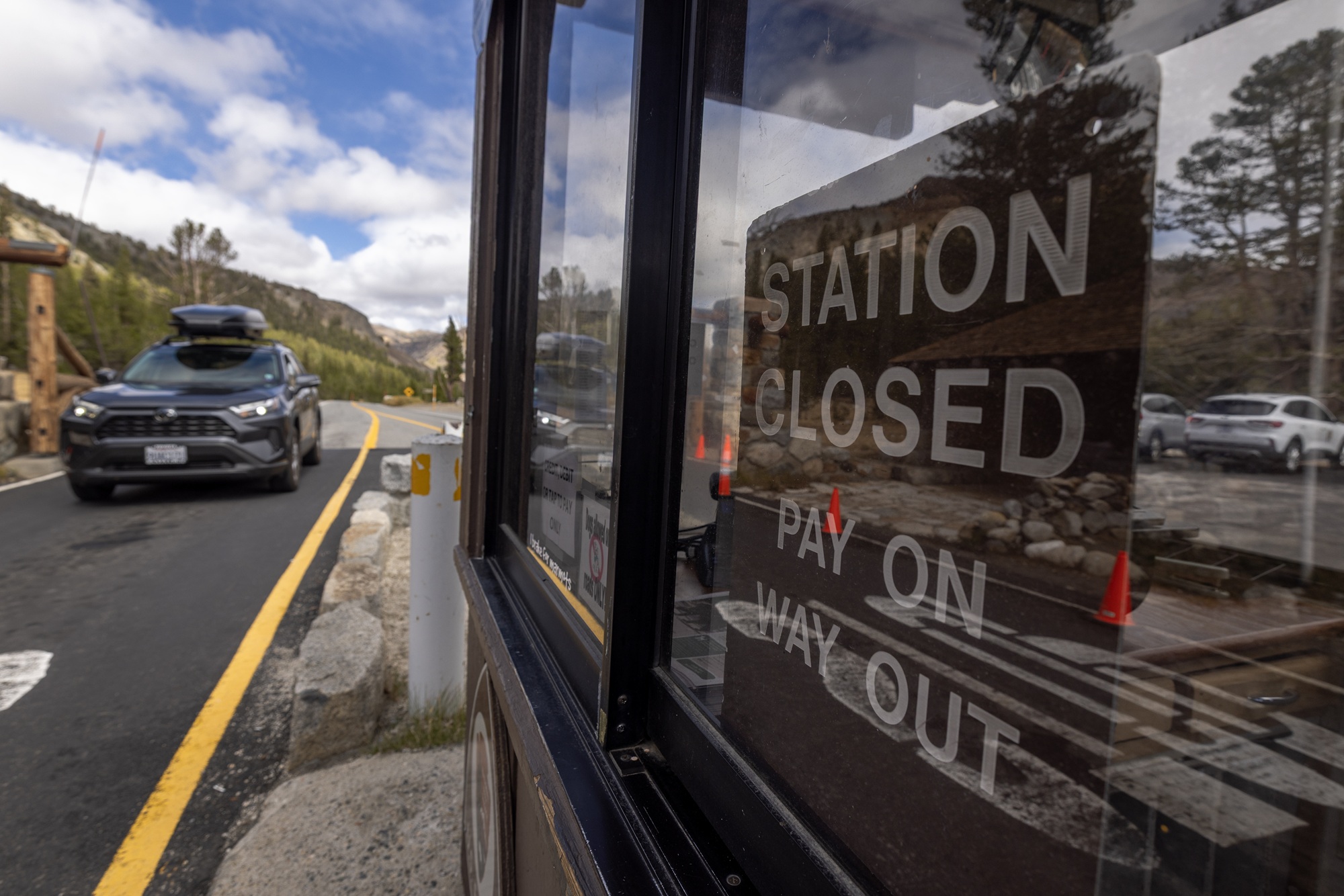
"caption": "A motorist passes through the Tioga Pass fee station at the eastern entrance to Yosemite National Park, which is vacant of available employees to collect fees that help fund the park, on the first day of the government shutdown on Oct. 1, 2025, in Yosemite National Park, California. ",
"credit": "David McNew/Getty Images",
"altTag": null,
"description": null,
"imgSizes": {
"thumbnail": {
"file": "https://cdn.kqed.org/wp-content/uploads/sites/10/2025/10/YosemiteGetty-1-160x107.jpg",
"width": 160,
"height": 107,
"mimeType": "image/jpeg"
},
"1536x1536": {
"file": "https://cdn.kqed.org/wp-content/uploads/sites/10/2025/10/YosemiteGetty-1-1536x1025.jpg",
"width": 1536,
"height": 1025,
"mimeType": "image/jpeg"
},
"post-thumbnail": {
"file": "https://cdn.kqed.org/wp-content/uploads/sites/10/2025/10/YosemiteGetty-1-672x372.jpg",
"width": 672,
"height": 372,
"mimeType": "image/jpeg"
},
"twentyfourteen-full-width": {
"file": "https://cdn.kqed.org/wp-content/uploads/sites/10/2025/10/YosemiteGetty-1-1038x576.jpg",
"width": 1038,
"height": 576,
"mimeType": "image/jpeg"
},
"kqedFullSize": {
"file": "https://cdn.kqed.org/wp-content/uploads/sites/10/2025/10/YosemiteGetty-1.jpg",
"width": 2000,
"height": 1334
}
},
"isLoading": false,
"fetchFailed": false
},
"news_12055106": {
"type": "attachments",
"id": "news_12055106",
"meta": {
"index": "attachments_1716263798",
"site": "news",
"id": "12055106",
"found": true
},
"title": "250904-PRESIDIOHIKES-11-BL-KQED",
"publishDate": 1757351447,
"status": "inherit",
"parent": 12054079,
"modified": 1759962225,
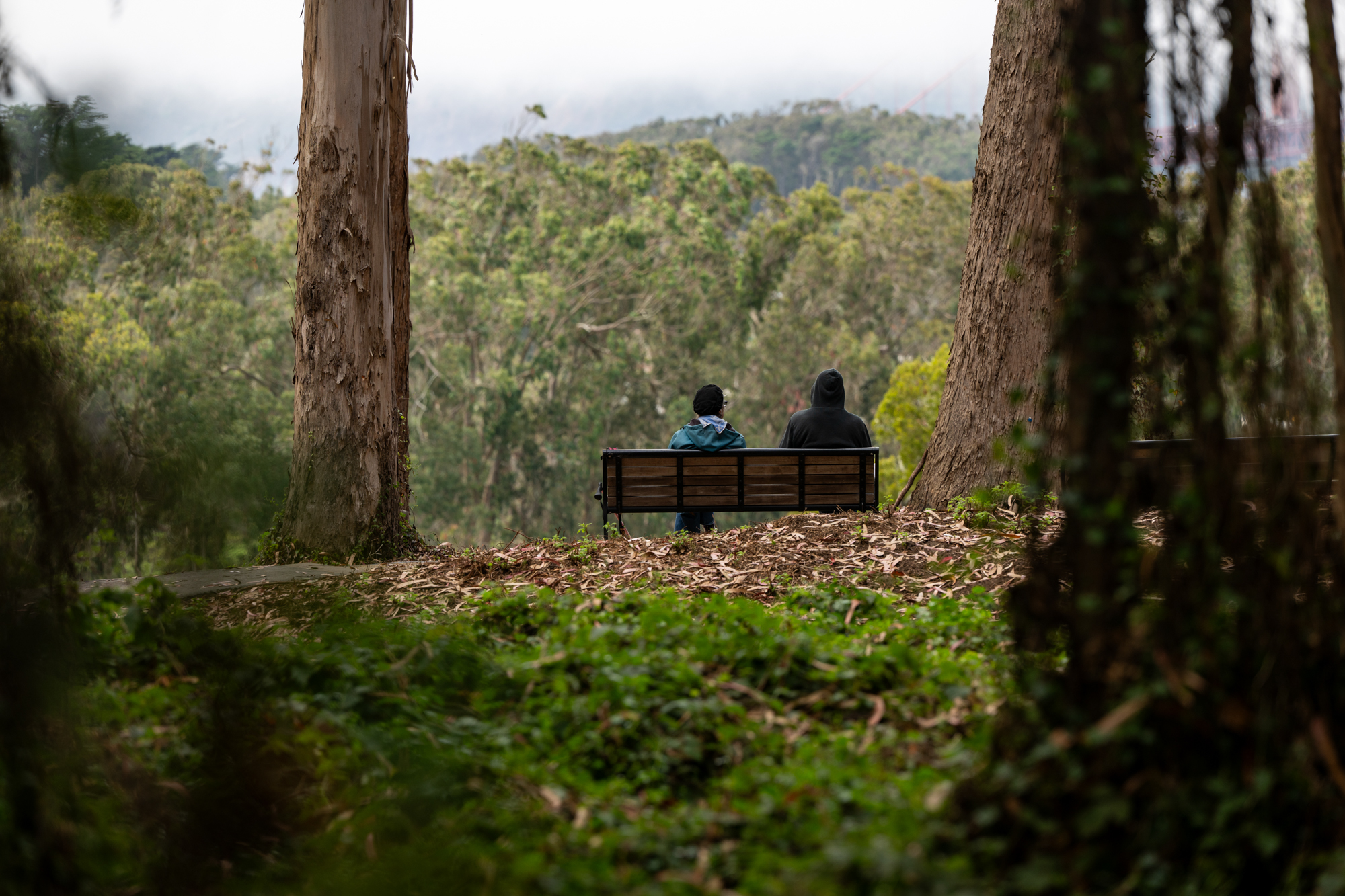
"caption": "Two people sit at Cemetery Overlook in the Presidio of San Francisco on Sept. 4, 2025, which looks out over the National Cemetery and the San Francisco Bay.",
"credit": "Beth LaBerge/KQED",
"altTag": null,
"description": null,
"imgSizes": {
"thumbnail": {
"file": "https://cdn.kqed.org/wp-content/uploads/sites/10/2025/09/250904-PRESIDIOHIKES-11-BL-KQED-160x107.jpg",
"width": 160,
"height": 107,
"mimeType": "image/jpeg"
},
"1536x1536": {
"file": "https://cdn.kqed.org/wp-content/uploads/sites/10/2025/09/250904-PRESIDIOHIKES-11-BL-KQED-1536x1024.jpg",
"width": 1536,
"height": 1024,
"mimeType": "image/jpeg"
},
"post-thumbnail": {
"file": "https://cdn.kqed.org/wp-content/uploads/sites/10/2025/09/250904-PRESIDIOHIKES-11-BL-KQED-672x372.jpg",
"width": 672,
"height": 372,
"mimeType": "image/jpeg"
},
"twentyfourteen-full-width": {
"file": "https://cdn.kqed.org/wp-content/uploads/sites/10/2025/09/250904-PRESIDIOHIKES-11-BL-KQED-1038x576.jpg",
"width": 1038,
"height": 576,
"mimeType": "image/jpeg"
},
"kqedFullSize": {
"file": "https://cdn.kqed.org/wp-content/uploads/sites/10/2025/09/250904-PRESIDIOHIKES-11-BL-KQED.jpg",
"width": 2000,
"height": 1333
}
},
"isLoading": false,
"fetchFailed": false
},
"news_12059261": {
"type": "attachments",
"id": "news_12059261",
"meta": {
"index": "attachments_1716263798",
"site": "news",
"id": "12059261",
"found": true
},
"title": "Visitors walk on the roof of Fort Point on Saturday, Dec. 1, 2018, in San Francisco, CA. The Golden Gate Bridge towers above Fort Point.",
"publishDate": 1760028337,
"status": "inherit",
"parent": 12059259,
"modified": 1760028436,
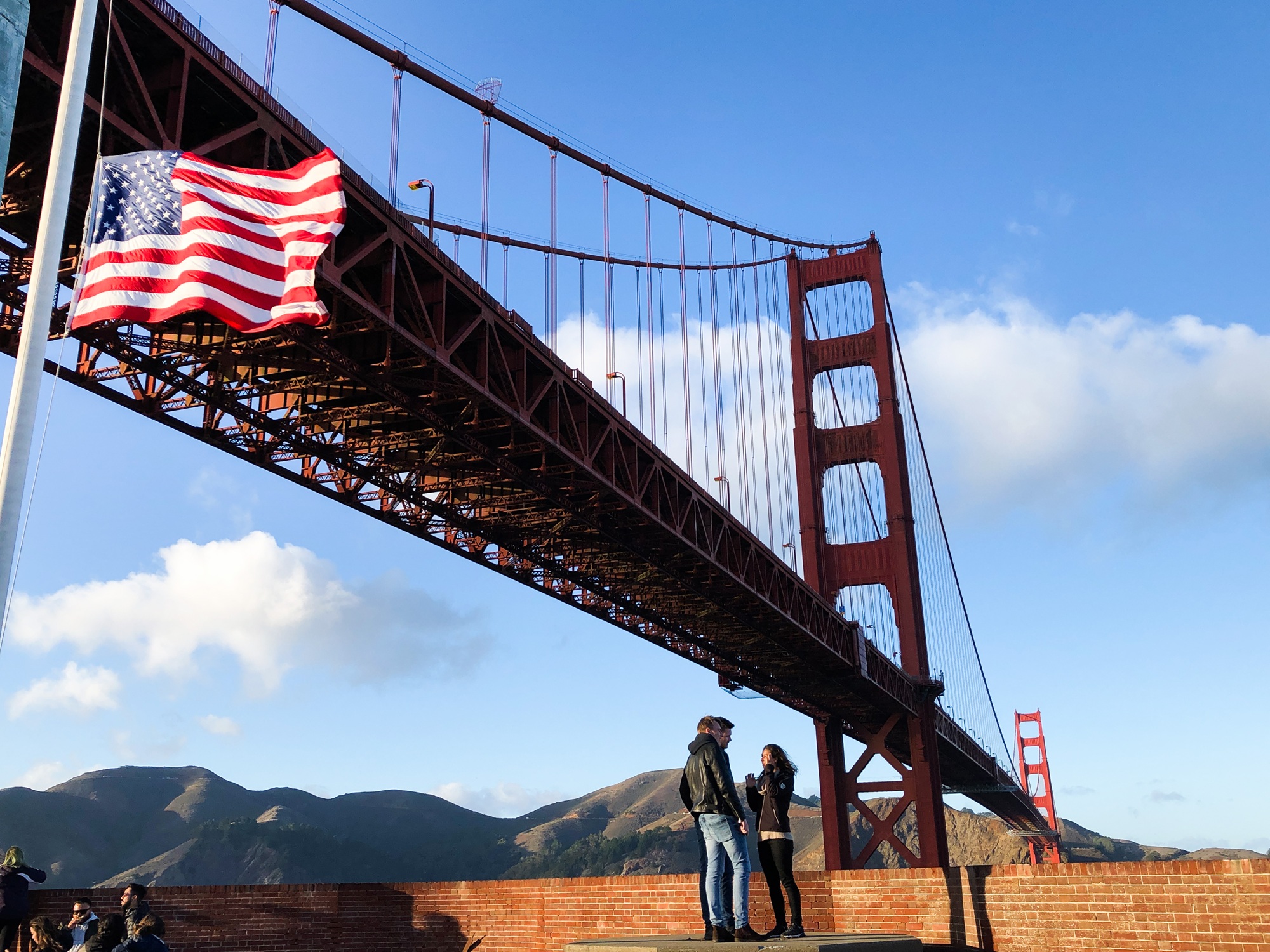
"caption": "Visitors walk on the roof of Fort Point beneath the towering Golden Gate Bridge on Dec. 1, 2018, in San Francisco, California.",
"credit": "Paul Kuroda/San Francisco Chronicle via Getty Images",
"altTag": null,
"description": null,
"imgSizes": {
"thumbnail": {
"file": "https://cdn.kqed.org/wp-content/uploads/sites/10/2025/10/FortPointSFGetty-160x120.jpg",
"width": 160,
"height": 120,
"mimeType": "image/jpeg"
},
"1536x1536": {
"file": "https://cdn.kqed.org/wp-content/uploads/sites/10/2025/10/FortPointSFGetty-1536x1152.jpg",
"width": 1536,
"height": 1152,
"mimeType": "image/jpeg"
},
"post-thumbnail": {
"file": "https://cdn.kqed.org/wp-content/uploads/sites/10/2025/10/FortPointSFGetty-672x372.jpg",
"width": 672,
"height": 372,
"mimeType": "image/jpeg"
},
"twentyfourteen-full-width": {
"file": "https://cdn.kqed.org/wp-content/uploads/sites/10/2025/10/FortPointSFGetty-1038x576.jpg",
"width": 1038,
"height": 576,
"mimeType": "image/jpeg"
},
"kqedFullSize": {
"file": "https://cdn.kqed.org/wp-content/uploads/sites/10/2025/10/FortPointSFGetty.jpg",
"width": 2000,
"height": 1500
}
},
"isLoading": false,
"fetchFailed": false
},
"news_12058901": {
"type": "attachments",
"id": "news_12058901",
"meta": {
"index": "attachments_1716263798",
"site": "news",
"id": "12058901",
"found": true
},
"title": "Diwali Festival In Mumbai",
"publishDate": 1759856606,
"status": "inherit",
"parent": 12058893,
"modified": 1759856640,
"caption": "Children play with firecrackers during Diwali, the Hindu festival of lights, in Mumbai, India, on Oct. 31, 2024.",
"credit": "Indranil Aditya/NurPhoto via Getty Images",
"altTag": null,
"description": null,
"imgSizes": {
"thumbnail": {
"file": "https://cdn.kqed.org/wp-content/uploads/sites/10/2025/10/DiwaliIndiaGetty1-160x105.jpg",
"width": 160,
"height": 105,
"mimeType": "image/jpeg"
},
"1536x1536": {
"file": "https://cdn.kqed.org/wp-content/uploads/sites/10/2025/10/DiwaliIndiaGetty1-1536x1011.jpg",
"width": 1536,
"height": 1011,
"mimeType": "image/jpeg"
},
"post-thumbnail": {
"file": "https://cdn.kqed.org/wp-content/uploads/sites/10/2025/10/DiwaliIndiaGetty1-672x372.jpg",
"width": 672,
"height": 372,
"mimeType": "image/jpeg"
},
"twentyfourteen-full-width": {
"file": "https://cdn.kqed.org/wp-content/uploads/sites/10/2025/10/DiwaliIndiaGetty1-1038x576.jpg",
"width": 1038,
"height": 576,
"mimeType": "image/jpeg"
},
"kqedFullSize": {
"file": "https://cdn.kqed.org/wp-content/uploads/sites/10/2025/10/DiwaliIndiaGetty1.jpg",
"width": 2000,
"height": 1317
}
},
"isLoading": false,
"fetchFailed": false
},
"news_11979390": {
"type": "attachments",
"id": "news_11979390",
"meta": {
"index": "attachments_1716263798",
"site": "news",
"id": "11979390",
"found": true
},
"title": "hispanic college student doing some home works from home with laptop",
"publishDate": 1710374837,
"status": "inherit",
"parent": 11979367,
"modified": 1759874426,
"caption": "A glitch blocking mixed-status families has caused stress for many, but some steps can be taken in the meantime when it comes to the FAFSA application.",
"credit": "Carol Yepes/Getty Images",
"altTag": "A young woman with dark brown hair stares intently at her computer screen.",
"description": null,
"imgSizes": {
"medium": {
"file": "https://cdn.kqed.org/wp-content/uploads/sites/10/2024/03/GettyImages-1403066184-800x533.jpg",
"width": 800,
"height": 533,
"mimeType": "image/jpeg"
},
"large": {
"file": "https://cdn.kqed.org/wp-content/uploads/sites/10/2024/03/GettyImages-1403066184-1020x680.jpg",
"width": 1020,
"height": 680,
"mimeType": "image/jpeg"
},
"thumbnail": {
"file": "https://cdn.kqed.org/wp-content/uploads/sites/10/2024/03/GettyImages-1403066184-160x107.jpg",
"width": 160,
"height": 107,
"mimeType": "image/jpeg"
},
"1536x1536": {
"file": "https://cdn.kqed.org/wp-content/uploads/sites/10/2024/03/GettyImages-1403066184-1536x1024.jpg",
"width": 1536,
"height": 1024,
"mimeType": "image/jpeg"
},
"2048x2048": {
"file": "https://cdn.kqed.org/wp-content/uploads/sites/10/2024/03/GettyImages-1403066184-2048x1365.jpg",
"width": 2048,
"height": 1365,
"mimeType": "image/jpeg"
},
"post-thumbnail": {
"file": "https://cdn.kqed.org/wp-content/uploads/sites/10/2024/03/GettyImages-1403066184-672x372.jpg",
"width": 672,
"height": 372,
"mimeType": "image/jpeg"
},
"twentyfourteen-full-width": {
"file": "https://cdn.kqed.org/wp-content/uploads/sites/10/2024/03/GettyImages-1403066184-1038x576.jpg",
"width": 1038,
"height": 576,
"mimeType": "image/jpeg"
},
"full-width": {
"file": "https://cdn.kqed.org/wp-content/uploads/sites/10/2024/03/GettyImages-1403066184-1920x1280.jpg",
"width": 1920,
"height": 1280,
"mimeType": "image/jpeg"
},
"kqedFullSize": {
"file": "https://cdn.kqed.org/wp-content/uploads/sites/10/2024/03/GettyImages-1403066184.jpg",
"width": 2121,
"height": 1414
}
},
"isLoading": false,
"fetchFailed": false
}
},
"audioPlayerReducer": {
"postId": "stream_live",
"isPaused": true,
"isPlaying": false,
"pfsActive": false,
"pledgeModalIsOpen": true,
"playerDrawerIsOpen": false,
"liveAudioPlayStartedAt": 0,
"liveAudioPlayContext": ""
},
"authorsReducer": {
"carlysevern": {
"type": "authors",
"id": "3243",
"meta": {
"index": "authors_1716337520",
"id": "3243",
"found": true
},
"name": "Carly Severn",
"firstName": "Carly",
"lastName": "Severn",
"slug": "carlysevern",
"email": "csevern@kqed.org",
"display_author_email": false,
"staff_mastheads": [
"news"
],
"title": "Senior Editor, Audience News ",
"bio": "Carly is KQED's Senior Editor of Audience News on the Digital News team, and has reported for the California Report Magazine, Bay Curious and KQED Arts. She's formerly the host of \u003ca href=\"http://ww2.kqed.org/pop/category/the-cooler/\" rel=\"noopener noreferrer\">The Cooler\u003c/a> podcast.",
"avatar": "https://secure.gravatar.com/avatar/54037bf5c128fe678f0ef26cec97a93f2e7f220a22d7285703328f12c42c1b1d?s=600&d=blank&r=g",
"twitter": "teacupinthebay",
"bluesky": null,
"facebook": null,
"instagram": null,
"linkedin": null,
"sites": [
{
"site": "",
"roles": [
"editor"
]
},
{
"site": "arts",
"roles": [
"editor"
]
},
{
"site": "news",
"roles": [
"administrator"
]
},
{
"site": "pop",
"roles": [
"editor"
]
},
{
"site": "futureofyou",
"roles": [
"editor"
]
},
{
"site": "about",
"roles": [
"administrator"
]
},
{
"site": "mindshift",
"roles": [
"editor"
]
},
{
"site": "bayareabites",
"roles": [
"editor"
]
},
{
"site": "stateofhealth",
"roles": [
"editor"
]
},
{
"site": "science",
"roles": [
"editor"
]
},
{
"site": "food",
"roles": [
"contributor"
]
},
{
"site": "forum",
"roles": [
"editor"
]
},
{
"site": "perspectives",
"roles": [
"administrator"
]
},
{
"site": "liveblog",
"roles": [
"editor"
]
}
],
"headData": {
"title": "Carly Severn | KQED",
"description": "Senior Editor, Audience News ",
"ogImgSrc": "https://secure.gravatar.com/avatar/54037bf5c128fe678f0ef26cec97a93f2e7f220a22d7285703328f12c42c1b1d?s=600&d=blank&r=g",
"twImgSrc": "https://secure.gravatar.com/avatar/54037bf5c128fe678f0ef26cec97a93f2e7f220a22d7285703328f12c42c1b1d?s=600&d=blank&r=g"
},
"isLoading": false,
"link": "/author/carlysevern"
},
"smohamad": {
"type": "authors",
"id": "11631",
"meta": {
"index": "authors_1716337520",
"id": "11631",
"found": true
},
"name": "Sarah Mohamad",
"firstName": "Sarah",
"lastName": "Mohamad",
"slug": "smohamad",
"email": "smohamad@KQED.org",
"display_author_email": true,
"staff_mastheads": [],
"title": "Engagement Producer and Reporter, KQED Science",
"bio": "Sarah Mohamad is an audience engagement reporter and producer for KQED Science. She reports on audience-focused science and environment stories and manages the team's social media, newsletter, and engagement efforts. Prior to this role, she played a key role as project manager for NSF's \u003ca href=\"https://www.kqed.org/crackingthecode\">\u003cem>Cracking the Code: Influencing Millennial Science Engagement\u003c/em> \u003c/a>audience research.",
"avatar": "https://secure.gravatar.com/avatar/e6224957cd82d015183756ddde1f928013a563d7ca2e4565f8c4de1ec64886c5?s=600&d=blank&r=g",
"twitter": "sarahkmohamad",
"bluesky": null,
"facebook": null,
"instagram": null,
"linkedin": null,
"sites": [
{
"site": "",
"roles": [
"editor"
]
},
{
"site": "arts",
"roles": [
"editor"
]
},
{
"site": "news",
"roles": [
"editor"
]
},
{
"site": "about",
"roles": [
"editor"
]
},
{
"site": "science",
"roles": [
"editor"
]
}
],
"headData": {
"title": "Sarah Mohamad | KQED",
"description": "Engagement Producer and Reporter, KQED Science",
"ogImgSrc": "https://secure.gravatar.com/avatar/e6224957cd82d015183756ddde1f928013a563d7ca2e4565f8c4de1ec64886c5?s=600&d=blank&r=g",
"twImgSrc": "https://secure.gravatar.com/avatar/e6224957cd82d015183756ddde1f928013a563d7ca2e4565f8c4de1ec64886c5?s=600&d=blank&r=g"
},
"isLoading": false,
"link": "/author/smohamad"
},
"ccabreralomeli": {
"type": "authors",
"id": "11708",
"meta": {
"index": "authors_1716337520",
"id": "11708",
"found": true
},
"name": "Carlos Cabrera-Lomelí",
"firstName": "Carlos",
"lastName": "Cabrera-Lomelí",
"slug": "ccabreralomeli",
"email": "ccabreralomeli@KQED.org",
"display_author_email": true,
"staff_mastheads": [
"news"
],
"title": "Community Reporter",
"bio": "Carlos Cabrera-Lomelí is a community reporter with KQED's digital engagement team. He also reports and co-produces for KQED's bilingual news hub KQED en Español. He grew up in San Francisco's Mission District and has previously worked with Univision, 48 Hills and REFORMA in Mexico City.",
"avatar": "https://secure.gravatar.com/avatar/c309be9665e484f887b818c89e273ecc673004f426f36b24d00a4d813a2e0518?s=600&d=blank&r=g",
"twitter": "@LomeliCabrera",
"bluesky": null,
"facebook": null,
"instagram": null,
"linkedin": null,
"sites": [
{
"site": "arts",
"roles": [
"editor"
]
},
{
"site": "news",
"roles": [
"editor"
]
},
{
"site": "about",
"roles": [
"editor"
]
},
{
"site": "science",
"roles": [
"editor"
]
},
{
"site": "perspectives",
"roles": [
"editor"
]
},
{
"site": "elections",
"roles": [
"editor"
]
},
{
"site": "liveblog",
"roles": [
"contributor"
]
}
],
"headData": {
"title": "Carlos Cabrera-Lomelí | KQED",
"description": "Community Reporter",
"ogImgSrc": "https://secure.gravatar.com/avatar/c309be9665e484f887b818c89e273ecc673004f426f36b24d00a4d813a2e0518?s=600&d=blank&r=g",
"twImgSrc": "https://secure.gravatar.com/avatar/c309be9665e484f887b818c89e273ecc673004f426f36b24d00a4d813a2e0518?s=600&d=blank&r=g"
},
"isLoading": false,
"link": "/author/ccabreralomeli"
},
"nkhan": {
"type": "authors",
"id": "11867",
"meta": {
"index": "authors_1716337520",
"id": "11867",
"found": true
},
"name": "Nisa Khan",
"firstName": "Nisa",
"lastName": "Khan",
"slug": "nkhan",
"email": "nkhan@kqed.org",
"display_author_email": false,
"staff_mastheads": [],
"title": "KQED Contributor",
"bio": "Nisa Khan is a reporter for KQED's Audience News Desk. She was formerly a data reporter at Michigan Radio. She earned a Bachelor of Science in Information from the University of Michigan and a Master of Arts in Communication from Stanford University.",
"avatar": "https://secure.gravatar.com/avatar/8720459eef081ff64582b3506b124d58523e80e120704a0cbd9892533c914991?s=600&d=blank&r=g",
"twitter": "mnisakhan",
"bluesky": null,
"facebook": null,
"instagram": null,
"linkedin": null,
"sites": [
{
"site": "arts",
"roles": [
"editor"
]
},
{
"site": "news",
"roles": [
"editor"
]
},
{
"site": "science",
"roles": [
"editor",
"author"
]
},
{
"site": "forum",
"roles": [
"editor"
]
},
{
"site": "liveblog",
"roles": [
"contributor"
]
}
],
"headData": {
"title": "Nisa Khan | KQED",
"description": "KQED Contributor",
"ogImgSrc": "https://secure.gravatar.com/avatar/8720459eef081ff64582b3506b124d58523e80e120704a0cbd9892533c914991?s=600&d=blank&r=g",
"twImgSrc": "https://secure.gravatar.com/avatar/8720459eef081ff64582b3506b124d58523e80e120704a0cbd9892533c914991?s=600&d=blank&r=g"
},
"isLoading": false,
"link": "/author/nkhan"
},
"sarahwright": {
"type": "authors",
"id": "11956",
"meta": {
"index": "authors_1716337520",
"id": "11956",
"found": true
},
"name": "Sarah Wright",
"firstName": "Sarah",
"lastName": "Wright",
"slug": "sarahwright",
"email": "swright@kqed.org",
"display_author_email": true,
"staff_mastheads": [],
"title": "Outdoors Engagement Reporter",
"bio": "Sarah Wright is KQED's Outdoors Engagement Reporter. Originally from Lake Tahoe, she completed a thru-hike of the Pacific Crest Trail in 2019 and was a U.S. Fulbright Program grantee to Argentina in 2023. Her journalism has appeared in The Guardian, The San Francisco Standard, The Palo Alto Weekly and the Half Moon Bay Review.",
"avatar": "https://secure.gravatar.com/avatar/c161a3d6441865cba25e6db4fa561099ad665799e9432e34da2b84d7e371524c?s=600&d=blank&r=g",
"twitter": null,
"bluesky": null,
"facebook": null,
"instagram": null,
"linkedin": null,
"sites": [
{
"site": "arts",
"roles": [
"editor"
]
},
{
"site": "news",
"roles": [
"editor"
]
},
{
"site": "science",
"roles": [
"contributor",
"author"
]
},
{
"site": "forum",
"roles": [
"editor"
]
}
],
"headData": {
"title": "Sarah Wright | KQED",
"description": "Outdoors Engagement Reporter",
"ogImgSrc": "https://secure.gravatar.com/avatar/c161a3d6441865cba25e6db4fa561099ad665799e9432e34da2b84d7e371524c?s=600&d=blank&r=g",
"twImgSrc": "https://secure.gravatar.com/avatar/c161a3d6441865cba25e6db4fa561099ad665799e9432e34da2b84d7e371524c?s=600&d=blank&r=g"
},
"isLoading": false,
"link": "/author/sarahwright"
}
},
"pagesReducer": {
"news_category_guides-and-explainers": {
"type": "terms",
"id": "news_34168",
"meta": {
"index": "terms_1716263798",
"site": "news",
"id": "34168",
"score": 14.406026
},
"name": "Guides and Explainers",
"slug": "guides-and-explainers",
"taxonomy": "category",
"description": null,
"featImg": null,
"headData": {
"title": "Guides and Explainers Archives | KQED News",
"description": null,
"ogTitle": null,
"ogDescription": null,
"ogImgId": null,
"twTitle": null,
"twDescription": null,
"twImgId": null
},
"ttid": 34185,
"isLoading": false,
"title": "Guides and Explainers",
"pageMeta": {
"site": "news",
"WpPageTemplate": "page-topic-editorial",
"currentPage": 20
},
"blocks": [
{
"blockName": "kqed/post-list",
"attrs": {
"layout": "cardArticle2",
"query": "posts/news?category=guides-and-explainers",
"seeMore": false,
"paginated": true,
"page": 20
}
},
{
"blockName": "kqed/ad"
}
]
}
},
"pfsSessionReducer": {},
"postsReducer": {
"stream_live": {
"type": "live",
"id": "stream_live",
"audioUrl": "https://streams.kqed.org/kqedradio",
"title": "Live Stream",
"excerpt": "Live Stream information currently unavailable.",
"link": "/radio",
"featImg": "",
"label": {
"name": "KQED Live",
"link": "/"
}
},
"stream_kqedNewscast": {
"type": "posts",
"id": "stream_kqedNewscast",
"audioUrl": "https://www.kqed.org/.stream/anon/radio/RDnews/newscast.mp3?_=1",
"title": "KQED Newscast",
"featImg": "",
"label": {
"name": "88.5 FM",
"link": "/"
}
},
"news_12060292": {
"type": "posts",
"id": "news_12060292",
"meta": {
"index": "posts_1716263798",
"site": "news",
"id": "12060292",
"score": null,
"sort": [
1760785222000
]
},
"guestAuthors": [],
"slug": "discount-october-electricity-bill-california-pge-climate-credit",
"title": "Did You Get a Discount on This Month’s Electricity Bill? Here's How to Check",
"publishDate": 1760785222,
"format": "standard",
"headTitle": "Did You Get a Discount on This Month’s Electricity Bill? Here’s How to Check | KQED",
"labelTerm": {
"site": "news"
},
"content": "\u003cp>Before you start carving pumpkins and putting on \u003ca href=\"https://www.kqed.org/arts/13979698/10-best-bay-area-san-francisco-oakland-san-jose-halloween-events-guide-2025\">your Halloween costume\u003c/a>, check this month’s electricity bill: There may be an extra $58.23 waiting for you.\u003c/p>\n\u003cp>This month, most energy users in the state should have received the \u003ca href=\"https://www.cpuc.ca.gov/climatecredit\">California Climate Credit\u003c/a> — a sum that shows up in your electricity bill twice a year.\u003c/p>\n\u003cp>This program is financed by \u003ca href=\"https://www.kqed.org/news/12055907/california-lawmakers-will-vote-on-extending-the-cap-and-trade-program-and-boosting-grid-reliability\">the state’s Cap-and-Trade program\u003c/a>, which allows major polluters like power plants and oil refineries to release greenhouse gases as long as they buy allowances equivalent to what they emit.\u003c/p>\n\u003cp>But how much you actually get from the credit depends on who your electric utility is. PG&E, which covers most of California, gave its customers a $58.23 credit in this month’s utility bill.\u003c/p>\n\u003cp>[ad fullwidth]\u003c/p>\n\u003cp>Southern California Edison, serving huge swathes of the Inland Empire and the Central Valley, passed on $86 to their ratepayers. And folks in communities near the Oregon border — like Crescent City — qualified for the largest credit amount in the whole state: $174 from Pacific Power.\u003c/p>\n\u003cp>This credit is only distributed twice a year, in April and October. And this year, state officials estimate that residents will receive a combined total of \u003ca href=\"https://www.gov.ca.gov/2025/03/18/millions-of-californians-to-get-average-of-137-in-credits-on-their-april-utility-bills-thanks-to-states-climate-program/?utm_source=chatgpt.com\">$1.4 billion on their utility bills\u003c/a>. Natural gas customers also received an additional credit back in April.\u003c/p>\n\u003cp>What you need to know about the credit that will show up on your PG&E bill this month:\u003c/p>\n\u003ch2>How do I know I received the credit?\u003c/h2>\n\u003cp>Look for the electricity bill that you received at the start of October. If you didn’t receive one in your mailbox and you’re a PG&E customer, you can \u003ca href=\"https://myaccount.pge.com/myaccount/s/login/?language=en_US\">check your account balance online\u003c/a> or by calling 1-877-704-8470.\u003c/p>\n\u003cp>Once you have your bill handy — either in printed or electronic form — check the upper right corner, under a section titled “Your Account Summary.”\u003c/p>\n\u003cfigure id=\"attachment_11972924\" class=\"wp-caption aligncenter\" style=\"max-width: 1920px\">\u003cimg loading=\"lazy\" decoding=\"async\" class=\"size-full wp-image-11972924\" src=\"https://cdn.kqed.org/wp-content/uploads/sites/10/2024/01/GettyImages-1032614258.jpg\" alt=\"A woman on the phone while looking over her bills.\" width=\"1920\" height=\"1280\" srcset=\"https://cdn.kqed.org/wp-content/uploads/sites/10/2024/01/GettyImages-1032614258.jpg 1920w, https://cdn.kqed.org/wp-content/uploads/sites/10/2024/01/GettyImages-1032614258-800x533.jpg 800w, https://cdn.kqed.org/wp-content/uploads/sites/10/2024/01/GettyImages-1032614258-1020x680.jpg 1020w, https://cdn.kqed.org/wp-content/uploads/sites/10/2024/01/GettyImages-1032614258-160x107.jpg 160w, https://cdn.kqed.org/wp-content/uploads/sites/10/2024/01/GettyImages-1032614258-1536x1024.jpg 1536w\" sizes=\"auto, (max-width: 1920px) 100vw, 1920px\">\u003cfigcaption class=\"wp-caption-text\">As of Jan. 1, 2024, PG&E’s new rate hikes went into effect, increasing the average Californian household’s gas and electricity bills by 13%, translating into a monthly increase of $34.50 — or $414 on the year. \u003ccite>(Stock image/Getty Images)\u003c/cite>\u003c/figcaption>\u003c/figure>\n\u003cp>There should be a negative amount labeled as “Electric Adjustments.” This will be subtracted from the sum of the other fees in your bill, like the electricity and gas delivery fees, along with city- or county-level dues.\u003c/p>\n\u003cp>PG&E customers should also see a message directly below their total amount due that reads: “Current charges include a discount of $58.23 for CA Climate Credit.”\u003c/p>\n\u003cp>And if you’re wondering whether the Climate Credit counts as income for tax purposes, a spokesperson for the California Public Utilities Commission confirmed that it doesn’t. “The Climate Credit is not counted as income, it is part of your utility bill (a bill credit),” they told KQED by email.\u003c/p>\n\u003ch2>What if I didn’t receive this credit?\u003c/h2>\n\u003cp>The California Climate Credit is automatically delivered to all customers of investor-owned utility companies, and you do not need to do anything to receive these funds.\u003c/p>\n\u003cp>Public utilities — Los Angeles Department of Water and Power, for example — are not part of this program and therefore their ratepayers do not qualify for this credit.\u003c/p>\n\u003cp>If your power is provided by an investor-owned utility, which includes PG&E, you \u003cem>should\u003c/em> have received an amount in your favor for this month’s bill. San Diego Gas & Electric customers, however, received the credit in September.[aside postID=news_12055461 hero='https://cdn.kqed.org/wp-content/uploads/sites/10/2025/09/250509-BeniciaRefinery-31-BL_qed.jpg']But if this credit did not get to you at all, state officials recommend you first contact your utility directly.\u003c/p>\n\u003cp>“That is because your utility can directly access your records, tell you whether you’re receiving the credit, and correct any errors directly,” stated the California Public Utilities Commission, which manages the program, on its website.\u003c/p>\n\u003cp>The customer service lines for the state’s privately owned utilities are:\u003c/p>\n\u003cul>\n\u003cli>PG&E: 1-877-660-6789\u003c/li>\n\u003cli>SCE: 1-800-655-4555\u003c/li>\n\u003cli>SDG&E: 1-800-411-7343\u003c/li>\n\u003cli>Liberty Utilities: 1-800-782-2506\u003c/li>\n\u003cli>Pacific Power: 1-888-221-7070\u003c/li>\n\u003c/ul>\n\u003cp>A spokesperson for the CPUC suggested you can also call the CPUC directly (1-800-649-7570) if you don’t see this credit in your monthly bill.\u003c/p>\n\u003cp>If you are unable to contact your utility’s customer service team — or they have, and they couldn’t help you — and you still have not received your Climate Credit, you can \u003ca href=\"https://www.cpuc.ca.gov/consumer-support/file-a-complaint/utility-complaint\">file a complaint directly with the CPUC\u003c/a>. Keep in mind that this is an informal complaint and a CPUC caseworker will step in to mediate between you and your utility.\u003c/p>\n\u003ch2>What if I live in an apartment building with a ‘master meter’?\u003c/h2>\n\u003cp>If your landlord or building management company is the one that manages the electricity bills for your apartment, you should still get your share of the credit.\u003c/p>\n\u003cfigure id=\"attachment_12024802\" class=\"wp-caption aligncenter\" style=\"max-width: 2000px\">\u003cimg loading=\"lazy\" decoding=\"async\" class=\"size-full wp-image-12024802\" src=\"https://cdn.kqed.org/wp-content/uploads/sites/10/2025/01/20250127_CSUMB-Electricity_DB_00471.jpg\" alt=\"\" width=\"2000\" height=\"1333\" srcset=\"https://cdn.kqed.org/wp-content/uploads/sites/10/2025/01/20250127_CSUMB-Electricity_DB_00471.jpg 2000w, https://cdn.kqed.org/wp-content/uploads/sites/10/2025/01/20250127_CSUMB-Electricity_DB_00471-800x533.jpg 800w, https://cdn.kqed.org/wp-content/uploads/sites/10/2025/01/20250127_CSUMB-Electricity_DB_00471-1020x680.jpg 1020w, https://cdn.kqed.org/wp-content/uploads/sites/10/2025/01/20250127_CSUMB-Electricity_DB_00471-160x107.jpg 160w, https://cdn.kqed.org/wp-content/uploads/sites/10/2025/01/20250127_CSUMB-Electricity_DB_00471-1536x1024.jpg 1536w, https://cdn.kqed.org/wp-content/uploads/sites/10/2025/01/20250127_CSUMB-Electricity_DB_00471-1920x1280.jpg 1920w\" sizes=\"auto, (max-width: 2000px) 100vw, 2000px\">\u003cfigcaption class=\"wp-caption-text\">Electric lines run overhead of the East Campus housing development of California State University, Monterey Bay in Marina, California, Monday, Jan. 27, 2025. PG&E canceled an ambitious plan to electrify the East Campus housing development at a community scale. \u003ccite>(David M. Barreda/KQED)\u003c/cite>\u003c/figcaption>\u003c/figure>\n\u003cp>According to \u003ca href=\"https://leginfo.legislature.ca.gov/faces/codes_displaySection.xhtml?sectionNum=739.5.&lawCode=PUC\">state rules\u003c/a>, your landlord is obligated to pass on any state rebates to individual submetered customers.\u003c/p>\n\u003cp>If you are unsure that your building owner passed on the credit, you can request they provide you with an itemized statement that includes your billing rate and the total charges for the billing period, which should include the most recent Climate Credit amount.\u003c/p>\n\u003ch2>Will I get this credit forever?\u003c/h2>\n\u003cp>When it was first created, the state’s Cap-and-Trade program was originally scheduled to end in 2030. But lawmakers reached a deal last month \u003ca href=\"https://www.kqed.org/news/12055907/california-lawmakers-will-vote-on-extending-the-cap-and-trade-program-and-boosting-grid-reliability\">extending it to 2045 \u003c/a>—which also extended the Climate Credit, financed by what major polluters pay the state.\u003c/p>\n\u003cp>Both Gov. Gavin Newsom and Democrats in the state Legislature are very supportive of cap-and-trade, with Newsom calling it a critical part of California’s transition \u003ca href=\"https://www.kqed.org/news/12055907/california-lawmakers-will-vote-on-extending-the-cap-and-trade-program-and-boosting-grid-reliability\">to a greener economy\u003c/a>. Extending cap-and-trade, Newsom said, “will save money on your electric bills, stabilize gas supply, and slash toxic air pollution.”\u003c/p>\n\u003cfigure id=\"attachment_11402283\" class=\"wp-caption aligncenter\" style=\"max-width: 1920px\">\u003cimg loading=\"lazy\" decoding=\"async\" class=\"size-full wp-image-11402283\" src=\"https://cdn.kqed.org/wp-content/uploads/sites/10/2017/04/PumpingGas.jpg\" alt=\"It's an open question whether cap and trade can survive a bruising political battle and the likelihood of tacking on more to the price of gas at the pump.\" width=\"1920\" height=\"1265\" srcset=\"https://cdn.kqed.org/wp-content/uploads/sites/10/2017/04/PumpingGas.jpg 1920w, https://cdn.kqed.org/wp-content/uploads/sites/10/2017/04/PumpingGas-160x105.jpg 160w, https://cdn.kqed.org/wp-content/uploads/sites/10/2017/04/PumpingGas-800x527.jpg 800w, https://cdn.kqed.org/wp-content/uploads/sites/10/2017/04/PumpingGas-1020x672.jpg 1020w, https://cdn.kqed.org/wp-content/uploads/sites/10/2017/04/PumpingGas-1180x777.jpg 1180w, https://cdn.kqed.org/wp-content/uploads/sites/10/2017/04/PumpingGas-960x633.jpg 960w, https://cdn.kqed.org/wp-content/uploads/sites/10/2017/04/PumpingGas-240x158.jpg 240w, https://cdn.kqed.org/wp-content/uploads/sites/10/2017/04/PumpingGas-375x247.jpg 375w, https://cdn.kqed.org/wp-content/uploads/sites/10/2017/04/PumpingGas-520x343.jpg 520w\" sizes=\"auto, (max-width: 1920px) 100vw, 1920px\">\u003cfigcaption class=\"wp-caption-text\">It’s an open question whether cap and trade can survive a bruising political battle and the likelihood of tacking on more to the price of gas at the pump. \u003ccite>(Justin Sullivan/Getty Images)\u003c/cite>\u003c/figcaption>\u003c/figure>\n\u003cp>Since the Climate Credit began in 2014, the amount individual customers receive each year has consistently increased.\u003c/p>\n\u003cp>Republicans — a minority in both chambers of the state Legislature — argue that cap-and-trade raises the costs for all residents.\u003c/p>\n\u003cp>A February report from the \u003ca href=\"https://calepa.ca.gov/wp-content/uploads/2025/02/2024-ANNUAL-REPORT-OF-THE-IEMAC-final.pdf\">Independent Emissions Market Advisory Committee\u003c/a> did find that the program \u003cem>has\u003c/em> increased gas costs statewide by about 26 cents per gallon, but the effect on electricity rates has been minimal, as the state’s grid isn’t very carbon-intensive.\u003c/p>\n\u003cp>\u003cem>This story includes reporting from The Associated Press.\u003c/em>\u003c/p>\n\u003cp>[ad floatright]\u003c/p>\n",
"blocks": [],
"excerpt": "PG&E customers should have received a credit of almost $60 on their utility bill this month. Here's how to make sure you got yours.",
"status": "publish",
"parent": 0,
"modified": 1760994127,
"stats": {
"hasAudio": false,
"hasVideo": false,
"hasChartOrMap": false,
"iframeSrcs": [],
"hasGoogleForm": false,
"hasGallery": false,
"hasHearkenModule": false,
"hasPolis": false,
"paragraphCount": 30,
"wordCount": 1214
},
"headData": {
"title": "Did You Get a Discount on This Month’s Electricity Bill? Here's How to Check | KQED",
"description": "PG&E customers should have received a credit of almost $60 on their utility bill this month. Here's how to make sure you got yours.",
"ogTitle": "",
"ogDescription": "",
"ogImgId": "",
"twTitle": "",
"twDescription": "",
"twImgId": "",
"schema": {
"@context": "https://schema.org",
"@type": "NewsArticle",
"headline": "Did You Get a Discount on This Month’s Electricity Bill? Here's How to Check",
"datePublished": "2025-10-18T04:00:22-07:00",
"dateModified": "2025-10-20T14:02:07-07:00",
"image": "https://cdn.kqed.org/wp-content/uploads/2020/02/KQED-OG-Image@1x.png",
"isAccessibleForFree": "True",
"publisher": {
"@type": "NewsMediaOrganization",
"@id": "https://www.kqed.org/#organization",
"name": "KQED",
"logo": "https://cdn.kqed.org/wp-content/uploads/2020/02/KQED-OG-Image@1x.png",
"url": "https://www.kqed.org",
"sameAs": [
"https://www.facebook.com/KQED",
"https://twitter.com/KQED",
"https://www.instagram.com/kqed/",
"https://www.tiktok.com/@kqedofficial",
"https://www.linkedin.com/company/kqed",
"https://www.youtube.com/channel/UCeC0IOo7i1P_61zVUWbJ4nw"
]
}
}
},
"primaryCategory": {
"termId": 34168,
"slug": "guides-and-explainers",
"name": "Guides and Explainers"
},
"sticky": false,
"nprStoryId": "kqed-12060292",
"templateType": "standard",
"featuredImageType": "standard",
"excludeFromSiteSearch": "Include",
"articleAge": "0",
"path": "/news/12060292/discount-october-electricity-bill-california-pge-climate-credit",
"audioTrackLength": null,
"parsedContent": [
{
"type": "contentString",
"content": "\u003cdiv class=\"post-body\">\u003cp>\u003cp>Before you start carving pumpkins and putting on \u003ca href=\"https://www.kqed.org/arts/13979698/10-best-bay-area-san-francisco-oakland-san-jose-halloween-events-guide-2025\">your Halloween costume\u003c/a>, check this month’s electricity bill: There may be an extra $58.23 waiting for you.\u003c/p>\n\u003cp>This month, most energy users in the state should have received the \u003ca href=\"https://www.cpuc.ca.gov/climatecredit\">California Climate Credit\u003c/a> — a sum that shows up in your electricity bill twice a year.\u003c/p>\n\u003cp>This program is financed by \u003ca href=\"https://www.kqed.org/news/12055907/california-lawmakers-will-vote-on-extending-the-cap-and-trade-program-and-boosting-grid-reliability\">the state’s Cap-and-Trade program\u003c/a>, which allows major polluters like power plants and oil refineries to release greenhouse gases as long as they buy allowances equivalent to what they emit.\u003c/p>\n\u003cp>But how much you actually get from the credit depends on who your electric utility is. PG&E, which covers most of California, gave its customers a $58.23 credit in this month’s utility bill.\u003c/p>\n\u003cp>\u003c/p>\u003c/div>",
"attributes": {
"named": {},
"numeric": []
}
},
{
"type": "component",
"content": "",
"name": "ad",
"attributes": {
"named": {
"label": "fullwidth"
},
"numeric": [
"fullwidth"
]
}
},
{
"type": "contentString",
"content": "\u003cdiv class=\"post-body\">\u003cp>\u003c/p>\n\u003cp>Southern California Edison, serving huge swathes of the Inland Empire and the Central Valley, passed on $86 to their ratepayers. And folks in communities near the Oregon border — like Crescent City — qualified for the largest credit amount in the whole state: $174 from Pacific Power.\u003c/p>\n\u003cp>This credit is only distributed twice a year, in April and October. And this year, state officials estimate that residents will receive a combined total of \u003ca href=\"https://www.gov.ca.gov/2025/03/18/millions-of-californians-to-get-average-of-137-in-credits-on-their-april-utility-bills-thanks-to-states-climate-program/?utm_source=chatgpt.com\">$1.4 billion on their utility bills\u003c/a>. Natural gas customers also received an additional credit back in April.\u003c/p>\n\u003cp>What you need to know about the credit that will show up on your PG&E bill this month:\u003c/p>\n\u003ch2>How do I know I received the credit?\u003c/h2>\n\u003cp>Look for the electricity bill that you received at the start of October. If you didn’t receive one in your mailbox and you’re a PG&E customer, you can \u003ca href=\"https://myaccount.pge.com/myaccount/s/login/?language=en_US\">check your account balance online\u003c/a> or by calling 1-877-704-8470.\u003c/p>\n\u003cp>Once you have your bill handy — either in printed or electronic form — check the upper right corner, under a section titled “Your Account Summary.”\u003c/p>\n\u003cfigure id=\"attachment_11972924\" class=\"wp-caption aligncenter\" style=\"max-width: 1920px\">\u003cimg loading=\"lazy\" decoding=\"async\" class=\"size-full wp-image-11972924\" src=\"https://cdn.kqed.org/wp-content/uploads/sites/10/2024/01/GettyImages-1032614258.jpg\" alt=\"A woman on the phone while looking over her bills.\" width=\"1920\" height=\"1280\" srcset=\"https://cdn.kqed.org/wp-content/uploads/sites/10/2024/01/GettyImages-1032614258.jpg 1920w, https://cdn.kqed.org/wp-content/uploads/sites/10/2024/01/GettyImages-1032614258-800x533.jpg 800w, https://cdn.kqed.org/wp-content/uploads/sites/10/2024/01/GettyImages-1032614258-1020x680.jpg 1020w, https://cdn.kqed.org/wp-content/uploads/sites/10/2024/01/GettyImages-1032614258-160x107.jpg 160w, https://cdn.kqed.org/wp-content/uploads/sites/10/2024/01/GettyImages-1032614258-1536x1024.jpg 1536w\" sizes=\"auto, (max-width: 1920px) 100vw, 1920px\">\u003cfigcaption class=\"wp-caption-text\">As of Jan. 1, 2024, PG&E’s new rate hikes went into effect, increasing the average Californian household’s gas and electricity bills by 13%, translating into a monthly increase of $34.50 — or $414 on the year. \u003ccite>(Stock image/Getty Images)\u003c/cite>\u003c/figcaption>\u003c/figure>\n\u003cp>There should be a negative amount labeled as “Electric Adjustments.” This will be subtracted from the sum of the other fees in your bill, like the electricity and gas delivery fees, along with city- or county-level dues.\u003c/p>\n\u003cp>PG&E customers should also see a message directly below their total amount due that reads: “Current charges include a discount of $58.23 for CA Climate Credit.”\u003c/p>\n\u003cp>And if you’re wondering whether the Climate Credit counts as income for tax purposes, a spokesperson for the California Public Utilities Commission confirmed that it doesn’t. “The Climate Credit is not counted as income, it is part of your utility bill (a bill credit),” they told KQED by email.\u003c/p>\n\u003ch2>What if I didn’t receive this credit?\u003c/h2>\n\u003cp>The California Climate Credit is automatically delivered to all customers of investor-owned utility companies, and you do not need to do anything to receive these funds.\u003c/p>\n\u003cp>Public utilities — Los Angeles Department of Water and Power, for example — are not part of this program and therefore their ratepayers do not qualify for this credit.\u003c/p>\n\u003cp>If your power is provided by an investor-owned utility, which includes PG&E, you \u003cem>should\u003c/em> have received an amount in your favor for this month’s bill. San Diego Gas & Electric customers, however, received the credit in September.\u003c/p>\u003c/div>",
"attributes": {
"named": {},
"numeric": []
}
},
{
"type": "component",
"content": "",
"name": "aside",
"attributes": {
"named": {
"postid": "news_12055461",
"hero": "https://cdn.kqed.org/wp-content/uploads/sites/10/2025/09/250509-BeniciaRefinery-31-BL_qed.jpg",
"label": ""
},
"numeric": []
}
},
{
"type": "contentString",
"content": "\u003cdiv class=\"post-body\">\u003cp>But if this credit did not get to you at all, state officials recommend you first contact your utility directly.\u003c/p>\n\u003cp>“That is because your utility can directly access your records, tell you whether you’re receiving the credit, and correct any errors directly,” stated the California Public Utilities Commission, which manages the program, on its website.\u003c/p>\n\u003cp>The customer service lines for the state’s privately owned utilities are:\u003c/p>\n\u003cul>\n\u003cli>PG&E: 1-877-660-6789\u003c/li>\n\u003cli>SCE: 1-800-655-4555\u003c/li>\n\u003cli>SDG&E: 1-800-411-7343\u003c/li>\n\u003cli>Liberty Utilities: 1-800-782-2506\u003c/li>\n\u003cli>Pacific Power: 1-888-221-7070\u003c/li>\n\u003c/ul>\n\u003cp>A spokesperson for the CPUC suggested you can also call the CPUC directly (1-800-649-7570) if you don’t see this credit in your monthly bill.\u003c/p>\n\u003cp>If you are unable to contact your utility’s customer service team — or they have, and they couldn’t help you — and you still have not received your Climate Credit, you can \u003ca href=\"https://www.cpuc.ca.gov/consumer-support/file-a-complaint/utility-complaint\">file a complaint directly with the CPUC\u003c/a>. Keep in mind that this is an informal complaint and a CPUC caseworker will step in to mediate between you and your utility.\u003c/p>\n\u003ch2>What if I live in an apartment building with a ‘master meter’?\u003c/h2>\n\u003cp>If your landlord or building management company is the one that manages the electricity bills for your apartment, you should still get your share of the credit.\u003c/p>\n\u003cfigure id=\"attachment_12024802\" class=\"wp-caption aligncenter\" style=\"max-width: 2000px\">\u003cimg loading=\"lazy\" decoding=\"async\" class=\"size-full wp-image-12024802\" src=\"https://cdn.kqed.org/wp-content/uploads/sites/10/2025/01/20250127_CSUMB-Electricity_DB_00471.jpg\" alt=\"\" width=\"2000\" height=\"1333\" srcset=\"https://cdn.kqed.org/wp-content/uploads/sites/10/2025/01/20250127_CSUMB-Electricity_DB_00471.jpg 2000w, https://cdn.kqed.org/wp-content/uploads/sites/10/2025/01/20250127_CSUMB-Electricity_DB_00471-800x533.jpg 800w, https://cdn.kqed.org/wp-content/uploads/sites/10/2025/01/20250127_CSUMB-Electricity_DB_00471-1020x680.jpg 1020w, https://cdn.kqed.org/wp-content/uploads/sites/10/2025/01/20250127_CSUMB-Electricity_DB_00471-160x107.jpg 160w, https://cdn.kqed.org/wp-content/uploads/sites/10/2025/01/20250127_CSUMB-Electricity_DB_00471-1536x1024.jpg 1536w, https://cdn.kqed.org/wp-content/uploads/sites/10/2025/01/20250127_CSUMB-Electricity_DB_00471-1920x1280.jpg 1920w\" sizes=\"auto, (max-width: 2000px) 100vw, 2000px\">\u003cfigcaption class=\"wp-caption-text\">Electric lines run overhead of the East Campus housing development of California State University, Monterey Bay in Marina, California, Monday, Jan. 27, 2025. PG&E canceled an ambitious plan to electrify the East Campus housing development at a community scale. \u003ccite>(David M. Barreda/KQED)\u003c/cite>\u003c/figcaption>\u003c/figure>\n\u003cp>According to \u003ca href=\"https://leginfo.legislature.ca.gov/faces/codes_displaySection.xhtml?sectionNum=739.5.&lawCode=PUC\">state rules\u003c/a>, your landlord is obligated to pass on any state rebates to individual submetered customers.\u003c/p>\n\u003cp>If you are unsure that your building owner passed on the credit, you can request they provide you with an itemized statement that includes your billing rate and the total charges for the billing period, which should include the most recent Climate Credit amount.\u003c/p>\n\u003ch2>Will I get this credit forever?\u003c/h2>\n\u003cp>When it was first created, the state’s Cap-and-Trade program was originally scheduled to end in 2030. But lawmakers reached a deal last month \u003ca href=\"https://www.kqed.org/news/12055907/california-lawmakers-will-vote-on-extending-the-cap-and-trade-program-and-boosting-grid-reliability\">extending it to 2045 \u003c/a>—which also extended the Climate Credit, financed by what major polluters pay the state.\u003c/p>\n\u003cp>Both Gov. Gavin Newsom and Democrats in the state Legislature are very supportive of cap-and-trade, with Newsom calling it a critical part of California’s transition \u003ca href=\"https://www.kqed.org/news/12055907/california-lawmakers-will-vote-on-extending-the-cap-and-trade-program-and-boosting-grid-reliability\">to a greener economy\u003c/a>. Extending cap-and-trade, Newsom said, “will save money on your electric bills, stabilize gas supply, and slash toxic air pollution.”\u003c/p>\n\u003cfigure id=\"attachment_11402283\" class=\"wp-caption aligncenter\" style=\"max-width: 1920px\">\u003cimg loading=\"lazy\" decoding=\"async\" class=\"size-full wp-image-11402283\" src=\"https://cdn.kqed.org/wp-content/uploads/sites/10/2017/04/PumpingGas.jpg\" alt=\"It's an open question whether cap and trade can survive a bruising political battle and the likelihood of tacking on more to the price of gas at the pump.\" width=\"1920\" height=\"1265\" srcset=\"https://cdn.kqed.org/wp-content/uploads/sites/10/2017/04/PumpingGas.jpg 1920w, https://cdn.kqed.org/wp-content/uploads/sites/10/2017/04/PumpingGas-160x105.jpg 160w, https://cdn.kqed.org/wp-content/uploads/sites/10/2017/04/PumpingGas-800x527.jpg 800w, https://cdn.kqed.org/wp-content/uploads/sites/10/2017/04/PumpingGas-1020x672.jpg 1020w, https://cdn.kqed.org/wp-content/uploads/sites/10/2017/04/PumpingGas-1180x777.jpg 1180w, https://cdn.kqed.org/wp-content/uploads/sites/10/2017/04/PumpingGas-960x633.jpg 960w, https://cdn.kqed.org/wp-content/uploads/sites/10/2017/04/PumpingGas-240x158.jpg 240w, https://cdn.kqed.org/wp-content/uploads/sites/10/2017/04/PumpingGas-375x247.jpg 375w, https://cdn.kqed.org/wp-content/uploads/sites/10/2017/04/PumpingGas-520x343.jpg 520w\" sizes=\"auto, (max-width: 1920px) 100vw, 1920px\">\u003cfigcaption class=\"wp-caption-text\">It’s an open question whether cap and trade can survive a bruising political battle and the likelihood of tacking on more to the price of gas at the pump. \u003ccite>(Justin Sullivan/Getty Images)\u003c/cite>\u003c/figcaption>\u003c/figure>\n\u003cp>Since the Climate Credit began in 2014, the amount individual customers receive each year has consistently increased.\u003c/p>\n\u003cp>Republicans — a minority in both chambers of the state Legislature — argue that cap-and-trade raises the costs for all residents.\u003c/p>\n\u003cp>A February report from the \u003ca href=\"https://calepa.ca.gov/wp-content/uploads/2025/02/2024-ANNUAL-REPORT-OF-THE-IEMAC-final.pdf\">Independent Emissions Market Advisory Committee\u003c/a> did find that the program \u003cem>has\u003c/em> increased gas costs statewide by about 26 cents per gallon, but the effect on electricity rates has been minimal, as the state’s grid isn’t very carbon-intensive.\u003c/p>\n\u003cp>\u003cem>This story includes reporting from The Associated Press.\u003c/em>\u003c/p>\n\u003cp>\u003c/p>\u003c/div>",
"attributes": {
"named": {},
"numeric": []
}
},
{
"type": "component",
"content": "",
"name": "ad",
"attributes": {
"named": {
"label": "floatright"
},
"numeric": [
"floatright"
]
}
},
{
"type": "contentString",
"content": "\u003cdiv class=\"post-body\">\u003cp>\u003c/p>\n\u003c/div>\u003c/p>",
"attributes": {
"named": {},
"numeric": []
}
}
],
"link": "/news/12060292/discount-october-electricity-bill-california-pge-climate-credit",
"authors": [
"11708"
],
"categories": [
"news_31795",
"news_34165",
"news_1758",
"news_34168",
"news_8"
],
"tags": [
"news_32707",
"news_18538",
"news_35876",
"news_18545",
"news_35070",
"news_35888",
"news_27626",
"news_17996",
"news_140"
],
"featImg": "news_12060338",
"label": "news"
},
"news_12060358": {
"type": "posts",
"id": "news_12060358",
"meta": {
"index": "posts_1716263798",
"site": "news",
"id": "12060358",
"score": null,
"sort": [
1760740249000
]
},
"guestAuthors": [],
"slug": "mpox-cases-clade-i-southern-california",
"title": "3 Cases of More Severe Mpox Strain Found in California — Here's What to Know",
"publishDate": 1760740249,
"format": "standard",
"headTitle": "3 Cases of More Severe Mpox Strain Found in California — Here’s What to Know | KQED",
"labelTerm": {
"site": "news"
},
"content": "\u003cp>Three new cases of clade I mpox — the more severe strain of the disease formerly known as “\u003ca href=\"https://www.kqed.org/monkeypox\">monkeypox\u003c/a>” responsible for outbreaks in Central and Eastern Africa \u003cspan style=\"font-weight: 400;\">— have been identified \u003c/span>in Southern California, according to the California Department of Public Health.\u003c/p>\n\u003cp>\u003ca href=\"https://www.cdph.ca.gov/Programs/OPA/Pages/NR25-015.aspx\">In a statement on Friday\u003c/a>, CDPH said they’d worked with local public health officials in Long Beach and Los Angeles County to identify these cases, which were not related to each other. “This is the first time clade I cases without a history of international travel have been reported in California or the United States,” CDPH said.\u003c/p>\n\u003cp>[ad fullwidth]\u003c/p>\n\u003cp>CDPH said that all three cases in Southern California “required hospitalization,” and the patients are now recovering.\u003c/p>\n\u003cp>The agency urged anyone who might be at heightened risk from mpox to seek out a \u003ca href=\"#find-mpox-vaccine-near-me\">free vaccine against the disease \u003c/a>as soon as possible, if they haven’t already been vaccinated, noting that ” for either clade, vaccination lowers the chances of getting mpox and having severe disease.”\u003c/p>\n\u003cp>\u003cstrong>Jump straight to: \u003c/strong>\u003c/p>\n\u003cul>\n\u003cli>\u003cstrong>\u003ca href=\"#find-mpox-vaccine-near-me\">Who’s eligible for an mpox vaccine in the Bay Area?\u003c/a>\u003c/strong>\u003c/li>\n\u003cli>\u003cstrong>\u003ca href=\"#who-can-get-mpox-clade-i-ii\">Who can get clade I and clade II mpox?\u003c/a>\u003c/strong>\u003c/li>\n\u003cli>\u003cstrong>\u003ca href=\"#mpox-monkeypox-symptoms\">What are the symptoms of clade I and clade II mpox?\u003c/a>\u003c/strong>\u003c/li>\n\u003c/ul>\n\u003cp>State health officials also said they’re conducting contact tracing around the Southern California cases and will continue to work with local health departments on surveillance — “and with the CDC as they are available during \u003ca href=\"https://www.kqed.org/news/tag/government-shutdown\">the federal government shutdown\u003c/a>.”\u003c/p>\n\u003cp>On Monday, a spokesperson for CDPH said that the agency was continuing to work “with available staff at CDC” on their mpox response, but warned of “delays in coordination and communication” that “will put our communities at greater risk and reduce CDPH’s and local health jurisdictions’ ability to respond to a potentially larger outbreak.”\u003c/p>\n\u003cp>Dr. Julia Janssen, deputy director of the San Francisco Department of Public Health’s HIV/STI Prevention and Control Branch, confirmed that “thus far, we have had no clade I mpox cases reported in San Francisco, and we’re continuing to monitor the situation in Southern California closely.”\u003c/p>\n\u003cp>Keep reading for what you need to know about mpox amid news of these three new clade I mpox cases in the state.\u003c/p>\n\u003ch2>What is clade I mpox?\u003c/h2>\n\u003cp>As the name suggests, mpox is related to the smallpox virus but is generally less severe and far less contagious than smallpox, \u003ca href=\"https://www.cdph.ca.gov/Programs/CID/DCDC/Pages/mpox.aspx\">according to CDPH\u003c/a>. In addition to fever, chills, headache and muscle pain, mpox can cause a painful rash — also known as lesions — that appears on many parts of the body.\u003c/p>\n\u003cp>\u003ca href=\"https://www.kqed.org/news/12014961/the-first-us-clade-i-mpox-case-has-been-found-in-the-bay-area-heres-what-to-know\">Clade I mpox has caused widespread disease and even death\u003c/a> in countries including the Democratic Republic of the Congo (DRC), which was the epicenter of the ongoing outbreak in 2024. It’s a different strain than clade II mpox, which is the kind \u003ca href=\"https://www.kqed.org/news/11919070/monkeypox-in-the-bay-area-from-symptoms-to-how-to-find-a-vaccine-heres-what-we-know\">that caused an outbreak in the Bay Area in 2022\u003c/a>, and that’s been circulating at low levels since.\u003c/p>\n\u003ch2>\u003ca id=\"who-can-get-mpox-clade-i-ii\">\u003c/a>Who can get clade I — and clade II— mpox?\u003c/h2>\n\u003cp>Anyone can get mpox, which spreads mainly through close physical contact, including sex.\u003c/p>\n\u003cp>But past clade II outbreaks in the U.S. have particularly affected gay and bisexual men, along with trans and nonbinary people who have sex with men.[aside postID=news_12052382 hero='https://ww2.kqed.org/app/uploads/sites/10/2023/11/GettyImages-1408879341-qut-1020x765.jpg']And these new clade I cases in Southern California being unrelated to each other — and in people who hadn’t traveled to affected regions — now indicates “that person-to-person community spread of clade I mpox is occurring in California, primarily impacting communities of gay and bisexual men, and other men who have sex with men, as well as their social networks,” CDPH said.\u003c/p>\n\u003cp>According to \u003ca href=\"https://www.cdc.gov/monkeypox/outbreaks/2023/index.html\">the Centers for Disease Control and Prevention’s website\u003c/a>, which was last updated on Sept. 15, only six cases of clade I mpox have been reported in the U.S. — all in people who had recently traveled to countries affected by a clade I outbreak. \u003ca href=\"https://www.kqed.org/news/12014961/the-first-us-clade-i-mpox-case-has-been-found-in-the-bay-area-heres-what-to-know\">The first U.S clade I case\u003c/a> was detected in San Mateo County in November 2024.\u003c/p>\n\u003cp>According to CDPH, the risk of clade I mpox to the general public remains low right now. “Casual contact, like one might have in an airplane, office, or store, is unlikely to spread mpox,” the agency said.\u003c/p>\n\u003ch2>\u003ca id=\"mpox-monkeypox-symptoms\">\u003c/a>What should I know about the symptoms of mpox?\u003c/h2>\n\u003cp>\u003cstrong>Mpox spreads through physical contact\u003c/strong>\u003c/p>\n\u003cp>The mpox virus spreads through close — usually skin-to-skin — contact with someone who is infected. This could be direct contact with the infectious rashes or scabs someone with mpox develops, scabs, having intimate physical contact with someone who has mpox, such as kissing, cuddling or sex.\u003c/p>\n\u003cp>Coming into contact with infected bodily fluids or items that have been touched by rashes or fluids from an infected person can also expose you to the virus.\u003c/p>\n\u003cfigure id=\"attachment_11949273\" class=\"wp-caption alignnone\" style=\"max-width: 1920px\">\u003cimg loading=\"lazy\" decoding=\"async\" class=\"size-full wp-image-11949273\" src=\"https://cdn.kqed.org/wp-content/uploads/sites/10/2023/05/RS65506_GettyImages-1428290091-1-qut.jpg\" alt=\"Small circular patterns float in a dense, thick brown substance.\" width=\"1920\" height=\"1523\" srcset=\"https://cdn.kqed.org/wp-content/uploads/sites/10/2023/05/RS65506_GettyImages-1428290091-1-qut.jpg 1920w, https://cdn.kqed.org/wp-content/uploads/sites/10/2023/05/RS65506_GettyImages-1428290091-1-qut-800x635.jpg 800w, https://cdn.kqed.org/wp-content/uploads/sites/10/2023/05/RS65506_GettyImages-1428290091-1-qut-1020x809.jpg 1020w, https://cdn.kqed.org/wp-content/uploads/sites/10/2023/05/RS65506_GettyImages-1428290091-1-qut-160x127.jpg 160w, https://cdn.kqed.org/wp-content/uploads/sites/10/2023/05/RS65506_GettyImages-1428290091-1-qut-1536x1218.jpg 1536w\" sizes=\"auto, (max-width: 1920px) 100vw, 1920px\">\u003cfigcaption class=\"wp-caption-text\">Colorized transmission electron micrograph of mpox virus particles (orange) found within an infected cell (brown) cultured in a laboratory. \u003ccite>(NIH-NIAID/Image Point FR/BSIP/Universal Images Group via Getty Images)\u003c/cite>\u003c/figcaption>\u003c/figure>\n\u003cp>In 2024, UCSF infectious disease expert Dr. Peter Chin-Hong issued a reminder that infection still “requires close skin-to-skin contact or intensive household contact — so you can’t get it from Muni or from yoga, or from going to Trader Joe’s.”\u003c/p>\n\u003cp>“It’s still very hard to get mpox, even from somebody with active lesions,” he said.\u003c/p>\n\u003cp>\u003cstrong>Mpox symptoms don’t start straight away after exposure\u003c/strong>\u003c/p>\n\u003cp>\u003ca href=\"https://www.cdc.gov/poxvirus/mpox/symptoms/index.html\">Mpox can have a long incubation period\u003c/a> — that is, the time between when you’re exposed to mpox and when you start to develop symptoms.\u003c/p>\n\u003cp>This period can range from as short as three days and as long as 17 days (almost three weeks), according to the CDC.\u003c/p>\n\u003cp>\u003cstrong>Mpox symptoms and affected areas can be varied\u003c/strong>\u003c/p>\n\u003cp>The symptoms of clade I and clade II mpox are similar, SFDPH’s Janssen said, and they can often start as flu-like conditions — which is worth bearing in mind as \u003ca href=\"https://www.kqed.org/news/12045979/nimbus-nb181-covid-variant-symptoms-razor-blade-throat-incubation-period-testing\">the Bay Area comes down from another COVID-19 wave\u003c/a>.[aside postID=news_12056934 hero='https://cdn.kqed.org/wp-content/uploads/sites/10/2025/09/gettyimages-2235563712.jpeg']The mpox virus also appears as a rash or sores or spots that can resemble pimples or blisters on the skin anywhere on the body, including the face, inside the mouth, hands, feet, chest, genitals and anus. These spots often start as red, flat spots that then become bumps before the bumps become filled with pus and turn into scabs when they break. These symptoms can be extremely painful.\u003c/p>\n\u003cp>\u003ca href=\"https://www.cdc.gov/poxvirus/mpox/symptoms/index.html\">If you’re unsure about recognizing an mpox rash, the CDC has a photo guide\u003c/a>.\u003c/p>\n\u003cp>If you suspect you might have mpox symptoms — even if they’re subtle — see your health care provider right away or \u003ca href=\"https://www.sf.gov/get-mpox-vaccines-testing-and-medicine\">consult one of SFPDH’s clinics for mpox testing\u003c/a>. See more on \u003ca href=\"https://sf.gov/information/mpox\">what to do if you suspect you have mpox\u003c/a>.\u003c/p>\n\u003ch2>I’ve already got my mpox vaccine. Should I seek out a booster now?\u003c/h2>\n\u003cp>\u003ca href=\"https://www.cdc.gov/monkeypox/hcp/vaccine-considerations/vaccination-overview.html\">There’s no current recommendation\u003c/a> for a booster dose of the mpox vaccine.\u003c/p>\n\u003ch2>Will the mpox vaccine protect me against both strains of mpox?\u003c/h2>\n\u003cp>Yes, confirmed Janssen: “The mpox vaccine protects against both clades: clade I and clade II.”\u003c/p>\n\u003ch2>\u003ca id=\"find-mpox-vaccine-near-me\">\u003c/a>Who’s eligible for a new mpox vaccine in the Bay Area?\u003c/h2>\n\u003cp>The vaccine currently available in the U.S. (brand name: Jynneos) is a two-dose series, with roughly a month between doses. Maximal immunity will be built two weeks after your second dose. If you only got one dose previously, go ahead and seek out your second dose ASAP.\u003c/p>\n\u003cp>The CDC recommends the two-dose mpox vaccine to gay and bisexual men and other men who have sex with men, as well as transgender, nonbinary or gender-diverse people who in the past 6 months, have had, or anticipate having:\u003c/p>\n\u003cul>\n\u003cli>More than one sexual partner and/or\u003c/li>\n\u003cli>A new diagnosis of one or more sexually transmitted infections.\u003c/li>\n\u003c/ul>\n\u003cp>The CDC’s vaccine recommendations also include anyone who has had sex at a commercial sex venue like a sex club or bathhouse. \u003ca href=\"https://www.cdc.gov/monkeypox/hcp/vaccine-considerations/vaccination-overview.html\">See the full mpox vaccine eligibility recommendations from the CDC\u003c/a>.\u003c/p>\n\u003cp>\u003ca href=\"https://www.sf.gov/get-mpox-vaccines-testing-and-treatment\">San Francisco additionally recommends vaccination\u003c/a> for anyone living with HIV, anyone taking PrEP or who’s eligible to take it and sex workers. SFDPH also recommends it for anyone who has sex “at a large event in a geographic area where mpox virus transmission is occurring, or has a sex partner with any of the stated risks,” Janssen said earlier in 2025.\u003c/p>\n\u003cp>\u003cstrong>Will the mpox vaccine stop me getting mpox entirely?\u003c/strong>\u003c/p>\n\u003cp>Like the COVID-19 vaccine, the mpox vaccine can’t prevent all infections.\u003c/p>\n\u003cp>Janssen told KQED earlier this year that while fewer than 1% of people who are fully vaccinated have been diagnosed with the disease, “no vaccine is 100% effective” — “and while mpox infection after vaccination is rare, it does occur.”\u003c/p>\n\u003cfigure id=\"attachment_11988132\" class=\"wp-caption alignnone\" style=\"max-width: 1920px\">\u003cimg loading=\"lazy\" decoding=\"async\" class=\"size-full wp-image-11988132\" src=\"https://cdn.kqed.org/wp-content/uploads/sites/10/2024/05/GettyImages-1412778743.jpg\" alt=\"\" width=\"1920\" height=\"1315\" srcset=\"https://cdn.kqed.org/wp-content/uploads/sites/10/2024/05/GettyImages-1412778743.jpg 1920w, https://cdn.kqed.org/wp-content/uploads/sites/10/2024/05/GettyImages-1412778743-800x548.jpg 800w, https://cdn.kqed.org/wp-content/uploads/sites/10/2024/05/GettyImages-1412778743-1020x699.jpg 1020w, https://cdn.kqed.org/wp-content/uploads/sites/10/2024/05/GettyImages-1412778743-160x110.jpg 160w, https://cdn.kqed.org/wp-content/uploads/sites/10/2024/05/GettyImages-1412778743-1536x1052.jpg 1536w\" sizes=\"auto, (max-width: 1920px) 100vw, 1920px\">\u003cfigcaption class=\"wp-caption-text\">A pharmacist prepares a dose of the Jynneos mpox vaccine at a pop-up vaccination clinic opened by the Los Angeles County Department of Public Health at the West Hollywood Library on Aug. 3, 2022, in West Hollywood, California. \u003ccite>(Mario Tama/Getty Images)\u003c/cite>\u003c/figcaption>\u003c/figure>\n\u003cp>But even if someone who’s fully vaccinated with Jynneos \u003cem>does\u003c/em> get infected with mpox, she said, “those cases are typically mild.”\u003c/p>\n\u003cp>In other words, like the COVID-19 shot, the mpox vaccine makes it far more likely that any infection you get is far less severe than it would have been if you hadn’t been vaccinated.\u003c/p>\n\u003cp>And the difference between suffering from severe mpox versus a mild case can be considerable, as attested to by the \u003ca href=\"https://www.nytimes.com/2022/07/18/nyregion/new-york-monkeypox-vaccine.html\">“excruciating” symptoms reported during the early days of the 2022 U.S. outbreak\u003c/a>, when most patients hadn’t yet been offered the mpox vaccine. ”\u003c/p>\n\u003cp>\u003cstrong>Travel and mpox vaccination\u003c/strong>\u003c/p>\n\u003cp>\u003ca href=\"https://www.cdc.gov/mpox/vaccines/index.html\">The CDC has updated its vaccination recommendations\u003c/a> to extend to people traveling to countries with clade I \u003cem>and\u003c/em> clade II outbreaks.\u003c/p>\n\u003cp>As of Sept. 15, these countries with clade I outbreaks include Burundi, Central African Republic, Democratic Republic of the Congo, Ethiopia, Kenya, Malawi, Mozambique, Republic of the Congo, Rwanda, South Sudan, Tanzania, Uganda and Zambia. Countries with new clade II outbreaks include Liberia and Sierra Leone.\u003c/p>\n\u003cp>The agency recommends getting both doses of the vaccine “if you anticipate experiencing any of the following” while traveling to these countries:\u003c/p>\n\u003cul>\n\u003cli>Sex with a new partner\u003c/li>\n\u003cli>Sex at a commercial sex venue, such as a sex club or bathhouse\u003c/li>\n\u003cli>Sex in exchange for money, goods, drugs or other trade\u003c/li>\n\u003cli>Sex in association with a large public event, such as a rave, party or festival.\u003c/li>\n\u003c/ul>\n\u003cp>The mpox vaccine was also originally only available for people aged 18 and older, but in 2022, the Food and Drug Administration (FDA) issued an emergency-use authorization that allows providers to also give the vaccine to young people under 18 who are “determined to be at high risk” of infection.\u003c/p>\n\u003ch2>\u003ca id=\"find-mpox-vaccine-near-me\">\u003c/a>Where can I find an mpox vaccine near me?\u003c/h2>\n\u003cp>If you have a regular health care provider, SFDPH recommends you ask them first about getting the mpox vaccine. Your vaccine will be free, but you may be charged a regular copay for seeing your provider.\u003c/p>\n\u003cp>If you’re eligible for the vaccine, your health insurance should cover the costs \u003ca href=\"https://www.cdc.gov/monkeypox/hcp/vaccine-considerations/vaccination-overview.html\">thanks to the CDC’s recommendations\u003c/a>. If you don’t have a regular health care provider or insurance, you can find the mpox vaccine free at clinics around the Bay Area. You can opt to schedule an appointment or choose a walk-in clinic, depending on what works best for you.\u003c/p>\n\u003cp>(As with the COVID-19 vaccine, receiving an mpox vaccine won’t make you \u003ca href=\"https://documentedny.com/2021/04/04/public-charge-rule-explained/\">a public charge\u003c/a> or affect any future immigration processes you may enter into, and you won’t be asked about your immigration status to receive the mpox vaccine.)\u003c/p>\n\u003cp>\u003cstrong>If you live in or near San Francisco:\u003c/strong>\u003c/p>\n\u003cp>See \u003ca href=\"https://www.sf.gov/get-mpox-vaccines-testing-and-treatment\">a full list of mpox vaccine sites near you in San Francisco\u003c/a>. SFDPH confirms that you don’t have to be a city resident in San Francisco to get vaccinated for mpox.\u003c/p>\n\u003cp>\u003cstrong>Mpox vaccination sites elsewhere in the Bay Area and California:\u003c/strong>\u003c/p>\n\u003cp>Find an mpox vaccine clinic near you using \u003ca href=\"https://myturn.ca.gov/\">the state’s myturn.ca.gov site.\u003c/a>\u003c/p>\n\u003cp>\u003cstrong>Getting an mpox vaccine at a pharmacy:\u003c/strong>\u003c/p>\n\u003cp>Some pharmacies offer mpox vaccination appointments online, along with other vaccines like COVID-19 and flu. But if you choose this route, you’ll be asked for insurance details — and it’s important to verify with your insurer \u003cem>ahead\u003c/em> of time that they’ll cover the cost of an mpox vaccine at a pharmacy like CVS or Walgreens, as the out-of-pocket costs you’ll be quoted may be steep. If you find your insurance doesn’t fully cover the cost, \u003ca href=\"https://www.sf.gov/get-mpox-vaccines-testing-and-treatment\">SFDPH said you can seek your vaccine at one of their clinics “while supplies last.”\u003c/a>\u003c/p>\n\u003cp>If you get your health care through a health system like Kaiser Permanente, it’s unlikely you’ll be able to get your mpox vaccine covered by insurance at a pharmacy like CVS or Walgreens — the way you can’t get your COVID-19 or flu shot covered by Kaiser at a pharmacy either — and may have to seek it directly from a Kaiser provider.\u003c/p>\n\u003cp>If you’re able to make an appointment online at a pharmacy for your mpox vaccine, you should consider calling that location ahead of time to verify that they do indeed have supply in stock.\u003c/p>\n\u003cp>\u003cem>This story includes reporting from KQED’s Billy Cruz, Carlos Cabrera-Lomelí and Nisa Khan.\u003c/em>\u003c/p>\n\u003cp>[ad floatright]\u003c/p>\n",
"blocks": [],
"excerpt": "With three new cases of a more severe mpox strain detected in Southern California, here's what to know about symptoms, where to find an mpox vaccine and the difference between the two strains.\r\n\r\n\r\n\r\n\r\n\r\n",
"status": "publish",
"parent": 0,
"modified": 1761002401,
"stats": {
"hasAudio": false,
"hasVideo": false,
"hasChartOrMap": false,
"iframeSrcs": [],
"hasGoogleForm": false,
"hasGallery": false,
"hasHearkenModule": false,
"hasPolis": false,
"paragraphCount": 58,
"wordCount": 2358
},
"headData": {
"title": "3 Cases of More Severe Mpox Strain Found in California — Here's What to Know | KQED",
"description": "With three new cases of a more severe mpox strain detected in Southern California, here's what to know about symptoms, where to find an mpox vaccine and the difference between the two strains.\r\n\r\n\r\n\r\n\r\n\r\n",
"ogTitle": "",
"ogDescription": "",
"ogImgId": "",
"twTitle": "",
"twDescription": "",
"twImgId": "",
"schema": {
"@context": "https://schema.org",
"@type": "NewsArticle",
"headline": "3 Cases of More Severe Mpox Strain Found in California — Here's What to Know",
"datePublished": "2025-10-17T15:30:49-07:00",
"dateModified": "2025-10-20T16:20:01-07:00",
"image": "https://cdn.kqed.org/wp-content/uploads/2020/02/KQED-OG-Image@1x.png",
"isAccessibleForFree": "True",
"publisher": {
"@type": "NewsMediaOrganization",
"@id": "https://www.kqed.org/#organization",
"name": "KQED",
"logo": "https://cdn.kqed.org/wp-content/uploads/2020/02/KQED-OG-Image@1x.png",
"url": "https://www.kqed.org",
"sameAs": [
"https://www.facebook.com/KQED",
"https://twitter.com/KQED",
"https://www.instagram.com/kqed/",
"https://www.tiktok.com/@kqedofficial",
"https://www.linkedin.com/company/kqed",
"https://www.youtube.com/channel/UCeC0IOo7i1P_61zVUWbJ4nw"
]
}
}
},
"primaryCategory": {
"termId": 31795,
"slug": "california",
"name": "California"
},
"sticky": false,
"nprStoryId": "kqed-12060358",
"templateType": "standard",
"featuredImageType": "standard",
"excludeFromSiteSearch": "Include",
"articleAge": "0",
"path": "/news/12060358/mpox-cases-clade-i-southern-california",
"audioTrackLength": null,
"parsedContent": [
{
"type": "contentString",
"content": "\u003cdiv class=\"post-body\">\u003cp>\u003cp>Three new cases of clade I mpox — the more severe strain of the disease formerly known as “\u003ca href=\"https://www.kqed.org/monkeypox\">monkeypox\u003c/a>” responsible for outbreaks in Central and Eastern Africa \u003cspan style=\"font-weight: 400;\">— have been identified \u003c/span>in Southern California, according to the California Department of Public Health.\u003c/p>\n\u003cp>\u003ca href=\"https://www.cdph.ca.gov/Programs/OPA/Pages/NR25-015.aspx\">In a statement on Friday\u003c/a>, CDPH said they’d worked with local public health officials in Long Beach and Los Angeles County to identify these cases, which were not related to each other. “This is the first time clade I cases without a history of international travel have been reported in California or the United States,” CDPH said.\u003c/p>\n\u003cp>\u003c/p>\u003c/div>",
"attributes": {
"named": {},
"numeric": []
}
},
{
"type": "component",
"content": "",
"name": "ad",
"attributes": {
"named": {
"label": "fullwidth"
},
"numeric": [
"fullwidth"
]
}
},
{
"type": "contentString",
"content": "\u003cdiv class=\"post-body\">\u003cp>\u003c/p>\n\u003cp>CDPH said that all three cases in Southern California “required hospitalization,” and the patients are now recovering.\u003c/p>\n\u003cp>The agency urged anyone who might be at heightened risk from mpox to seek out a \u003ca href=\"#find-mpox-vaccine-near-me\">free vaccine against the disease \u003c/a>as soon as possible, if they haven’t already been vaccinated, noting that ” for either clade, vaccination lowers the chances of getting mpox and having severe disease.”\u003c/p>\n\u003cp>\u003cstrong>Jump straight to: \u003c/strong>\u003c/p>\n\u003cul>\n\u003cli>\u003cstrong>\u003ca href=\"#find-mpox-vaccine-near-me\">Who’s eligible for an mpox vaccine in the Bay Area?\u003c/a>\u003c/strong>\u003c/li>\n\u003cli>\u003cstrong>\u003ca href=\"#who-can-get-mpox-clade-i-ii\">Who can get clade I and clade II mpox?\u003c/a>\u003c/strong>\u003c/li>\n\u003cli>\u003cstrong>\u003ca href=\"#mpox-monkeypox-symptoms\">What are the symptoms of clade I and clade II mpox?\u003c/a>\u003c/strong>\u003c/li>\n\u003c/ul>\n\u003cp>State health officials also said they’re conducting contact tracing around the Southern California cases and will continue to work with local health departments on surveillance — “and with the CDC as they are available during \u003ca href=\"https://www.kqed.org/news/tag/government-shutdown\">the federal government shutdown\u003c/a>.”\u003c/p>\n\u003cp>On Monday, a spokesperson for CDPH said that the agency was continuing to work “with available staff at CDC” on their mpox response, but warned of “delays in coordination and communication” that “will put our communities at greater risk and reduce CDPH’s and local health jurisdictions’ ability to respond to a potentially larger outbreak.”\u003c/p>\n\u003cp>Dr. Julia Janssen, deputy director of the San Francisco Department of Public Health’s HIV/STI Prevention and Control Branch, confirmed that “thus far, we have had no clade I mpox cases reported in San Francisco, and we’re continuing to monitor the situation in Southern California closely.”\u003c/p>\n\u003cp>Keep reading for what you need to know about mpox amid news of these three new clade I mpox cases in the state.\u003c/p>\n\u003ch2>What is clade I mpox?\u003c/h2>\n\u003cp>As the name suggests, mpox is related to the smallpox virus but is generally less severe and far less contagious than smallpox, \u003ca href=\"https://www.cdph.ca.gov/Programs/CID/DCDC/Pages/mpox.aspx\">according to CDPH\u003c/a>. In addition to fever, chills, headache and muscle pain, mpox can cause a painful rash — also known as lesions — that appears on many parts of the body.\u003c/p>\n\u003cp>\u003ca href=\"https://www.kqed.org/news/12014961/the-first-us-clade-i-mpox-case-has-been-found-in-the-bay-area-heres-what-to-know\">Clade I mpox has caused widespread disease and even death\u003c/a> in countries including the Democratic Republic of the Congo (DRC), which was the epicenter of the ongoing outbreak in 2024. It’s a different strain than clade II mpox, which is the kind \u003ca href=\"https://www.kqed.org/news/11919070/monkeypox-in-the-bay-area-from-symptoms-to-how-to-find-a-vaccine-heres-what-we-know\">that caused an outbreak in the Bay Area in 2022\u003c/a>, and that’s been circulating at low levels since.\u003c/p>\n\u003ch2>\u003ca id=\"who-can-get-mpox-clade-i-ii\">\u003c/a>Who can get clade I — and clade II— mpox?\u003c/h2>\n\u003cp>Anyone can get mpox, which spreads mainly through close physical contact, including sex.\u003c/p>\n\u003cp>But past clade II outbreaks in the U.S. have particularly affected gay and bisexual men, along with trans and nonbinary people who have sex with men.\u003c/p>\u003c/div>",
"attributes": {
"named": {},
"numeric": []
}
},
{
"type": "component",
"content": "",
"name": "aside",
"attributes": {
"named": {
"postid": "news_12052382",
"hero": "https://ww2.kqed.org/app/uploads/sites/10/2023/11/GettyImages-1408879341-qut-1020x765.jpg",
"label": ""
},
"numeric": []
}
},
{
"type": "contentString",
"content": "\u003cdiv class=\"post-body\">\u003cp>And these new clade I cases in Southern California being unrelated to each other — and in people who hadn’t traveled to affected regions — now indicates “that person-to-person community spread of clade I mpox is occurring in California, primarily impacting communities of gay and bisexual men, and other men who have sex with men, as well as their social networks,” CDPH said.\u003c/p>\n\u003cp>According to \u003ca href=\"https://www.cdc.gov/monkeypox/outbreaks/2023/index.html\">the Centers for Disease Control and Prevention’s website\u003c/a>, which was last updated on Sept. 15, only six cases of clade I mpox have been reported in the U.S. — all in people who had recently traveled to countries affected by a clade I outbreak. \u003ca href=\"https://www.kqed.org/news/12014961/the-first-us-clade-i-mpox-case-has-been-found-in-the-bay-area-heres-what-to-know\">The first U.S clade I case\u003c/a> was detected in San Mateo County in November 2024.\u003c/p>\n\u003cp>According to CDPH, the risk of clade I mpox to the general public remains low right now. “Casual contact, like one might have in an airplane, office, or store, is unlikely to spread mpox,” the agency said.\u003c/p>\n\u003ch2>\u003ca id=\"mpox-monkeypox-symptoms\">\u003c/a>What should I know about the symptoms of mpox?\u003c/h2>\n\u003cp>\u003cstrong>Mpox spreads through physical contact\u003c/strong>\u003c/p>\n\u003cp>The mpox virus spreads through close — usually skin-to-skin — contact with someone who is infected. This could be direct contact with the infectious rashes or scabs someone with mpox develops, scabs, having intimate physical contact with someone who has mpox, such as kissing, cuddling or sex.\u003c/p>\n\u003cp>Coming into contact with infected bodily fluids or items that have been touched by rashes or fluids from an infected person can also expose you to the virus.\u003c/p>\n\u003cfigure id=\"attachment_11949273\" class=\"wp-caption alignnone\" style=\"max-width: 1920px\">\u003cimg loading=\"lazy\" decoding=\"async\" class=\"size-full wp-image-11949273\" src=\"https://cdn.kqed.org/wp-content/uploads/sites/10/2023/05/RS65506_GettyImages-1428290091-1-qut.jpg\" alt=\"Small circular patterns float in a dense, thick brown substance.\" width=\"1920\" height=\"1523\" srcset=\"https://cdn.kqed.org/wp-content/uploads/sites/10/2023/05/RS65506_GettyImages-1428290091-1-qut.jpg 1920w, https://cdn.kqed.org/wp-content/uploads/sites/10/2023/05/RS65506_GettyImages-1428290091-1-qut-800x635.jpg 800w, https://cdn.kqed.org/wp-content/uploads/sites/10/2023/05/RS65506_GettyImages-1428290091-1-qut-1020x809.jpg 1020w, https://cdn.kqed.org/wp-content/uploads/sites/10/2023/05/RS65506_GettyImages-1428290091-1-qut-160x127.jpg 160w, https://cdn.kqed.org/wp-content/uploads/sites/10/2023/05/RS65506_GettyImages-1428290091-1-qut-1536x1218.jpg 1536w\" sizes=\"auto, (max-width: 1920px) 100vw, 1920px\">\u003cfigcaption class=\"wp-caption-text\">Colorized transmission electron micrograph of mpox virus particles (orange) found within an infected cell (brown) cultured in a laboratory. \u003ccite>(NIH-NIAID/Image Point FR/BSIP/Universal Images Group via Getty Images)\u003c/cite>\u003c/figcaption>\u003c/figure>\n\u003cp>In 2024, UCSF infectious disease expert Dr. Peter Chin-Hong issued a reminder that infection still “requires close skin-to-skin contact or intensive household contact — so you can’t get it from Muni or from yoga, or from going to Trader Joe’s.”\u003c/p>\n\u003cp>“It’s still very hard to get mpox, even from somebody with active lesions,” he said.\u003c/p>\n\u003cp>\u003cstrong>Mpox symptoms don’t start straight away after exposure\u003c/strong>\u003c/p>\n\u003cp>\u003ca href=\"https://www.cdc.gov/poxvirus/mpox/symptoms/index.html\">Mpox can have a long incubation period\u003c/a> — that is, the time between when you’re exposed to mpox and when you start to develop symptoms.\u003c/p>\n\u003cp>This period can range from as short as three days and as long as 17 days (almost three weeks), according to the CDC.\u003c/p>\n\u003cp>\u003cstrong>Mpox symptoms and affected areas can be varied\u003c/strong>\u003c/p>\n\u003cp>The symptoms of clade I and clade II mpox are similar, SFDPH’s Janssen said, and they can often start as flu-like conditions — which is worth bearing in mind as \u003ca href=\"https://www.kqed.org/news/12045979/nimbus-nb181-covid-variant-symptoms-razor-blade-throat-incubation-period-testing\">the Bay Area comes down from another COVID-19 wave\u003c/a>.\u003c/p>\u003c/div>",
"attributes": {
"named": {},
"numeric": []
}
},
{
"type": "component",
"content": "",
"name": "aside",
"attributes": {
"named": {
"postid": "news_12056934",
"hero": "https://cdn.kqed.org/wp-content/uploads/sites/10/2025/09/gettyimages-2235563712.jpeg",
"label": ""
},
"numeric": []
}
},
{
"type": "contentString",
"content": "\u003cdiv class=\"post-body\">\u003cp>The mpox virus also appears as a rash or sores or spots that can resemble pimples or blisters on the skin anywhere on the body, including the face, inside the mouth, hands, feet, chest, genitals and anus. These spots often start as red, flat spots that then become bumps before the bumps become filled with pus and turn into scabs when they break. These symptoms can be extremely painful.\u003c/p>\n\u003cp>\u003ca href=\"https://www.cdc.gov/poxvirus/mpox/symptoms/index.html\">If you’re unsure about recognizing an mpox rash, the CDC has a photo guide\u003c/a>.\u003c/p>\n\u003cp>If you suspect you might have mpox symptoms — even if they’re subtle — see your health care provider right away or \u003ca href=\"https://www.sf.gov/get-mpox-vaccines-testing-and-medicine\">consult one of SFPDH’s clinics for mpox testing\u003c/a>. See more on \u003ca href=\"https://sf.gov/information/mpox\">what to do if you suspect you have mpox\u003c/a>.\u003c/p>\n\u003ch2>I’ve already got my mpox vaccine. Should I seek out a booster now?\u003c/h2>\n\u003cp>\u003ca href=\"https://www.cdc.gov/monkeypox/hcp/vaccine-considerations/vaccination-overview.html\">There’s no current recommendation\u003c/a> for a booster dose of the mpox vaccine.\u003c/p>\n\u003ch2>Will the mpox vaccine protect me against both strains of mpox?\u003c/h2>\n\u003cp>Yes, confirmed Janssen: “The mpox vaccine protects against both clades: clade I and clade II.”\u003c/p>\n\u003ch2>\u003ca id=\"find-mpox-vaccine-near-me\">\u003c/a>Who’s eligible for a new mpox vaccine in the Bay Area?\u003c/h2>\n\u003cp>The vaccine currently available in the U.S. (brand name: Jynneos) is a two-dose series, with roughly a month between doses. Maximal immunity will be built two weeks after your second dose. If you only got one dose previously, go ahead and seek out your second dose ASAP.\u003c/p>\n\u003cp>The CDC recommends the two-dose mpox vaccine to gay and bisexual men and other men who have sex with men, as well as transgender, nonbinary or gender-diverse people who in the past 6 months, have had, or anticipate having:\u003c/p>\n\u003cul>\n\u003cli>More than one sexual partner and/or\u003c/li>\n\u003cli>A new diagnosis of one or more sexually transmitted infections.\u003c/li>\n\u003c/ul>\n\u003cp>The CDC’s vaccine recommendations also include anyone who has had sex at a commercial sex venue like a sex club or bathhouse. \u003ca href=\"https://www.cdc.gov/monkeypox/hcp/vaccine-considerations/vaccination-overview.html\">See the full mpox vaccine eligibility recommendations from the CDC\u003c/a>.\u003c/p>\n\u003cp>\u003ca href=\"https://www.sf.gov/get-mpox-vaccines-testing-and-treatment\">San Francisco additionally recommends vaccination\u003c/a> for anyone living with HIV, anyone taking PrEP or who’s eligible to take it and sex workers. SFDPH also recommends it for anyone who has sex “at a large event in a geographic area where mpox virus transmission is occurring, or has a sex partner with any of the stated risks,” Janssen said earlier in 2025.\u003c/p>\n\u003cp>\u003cstrong>Will the mpox vaccine stop me getting mpox entirely?\u003c/strong>\u003c/p>\n\u003cp>Like the COVID-19 vaccine, the mpox vaccine can’t prevent all infections.\u003c/p>\n\u003cp>Janssen told KQED earlier this year that while fewer than 1% of people who are fully vaccinated have been diagnosed with the disease, “no vaccine is 100% effective” — “and while mpox infection after vaccination is rare, it does occur.”\u003c/p>\n\u003cfigure id=\"attachment_11988132\" class=\"wp-caption alignnone\" style=\"max-width: 1920px\">\u003cimg loading=\"lazy\" decoding=\"async\" class=\"size-full wp-image-11988132\" src=\"https://cdn.kqed.org/wp-content/uploads/sites/10/2024/05/GettyImages-1412778743.jpg\" alt=\"\" width=\"1920\" height=\"1315\" srcset=\"https://cdn.kqed.org/wp-content/uploads/sites/10/2024/05/GettyImages-1412778743.jpg 1920w, https://cdn.kqed.org/wp-content/uploads/sites/10/2024/05/GettyImages-1412778743-800x548.jpg 800w, https://cdn.kqed.org/wp-content/uploads/sites/10/2024/05/GettyImages-1412778743-1020x699.jpg 1020w, https://cdn.kqed.org/wp-content/uploads/sites/10/2024/05/GettyImages-1412778743-160x110.jpg 160w, https://cdn.kqed.org/wp-content/uploads/sites/10/2024/05/GettyImages-1412778743-1536x1052.jpg 1536w\" sizes=\"auto, (max-width: 1920px) 100vw, 1920px\">\u003cfigcaption class=\"wp-caption-text\">A pharmacist prepares a dose of the Jynneos mpox vaccine at a pop-up vaccination clinic opened by the Los Angeles County Department of Public Health at the West Hollywood Library on Aug. 3, 2022, in West Hollywood, California. \u003ccite>(Mario Tama/Getty Images)\u003c/cite>\u003c/figcaption>\u003c/figure>\n\u003cp>But even if someone who’s fully vaccinated with Jynneos \u003cem>does\u003c/em> get infected with mpox, she said, “those cases are typically mild.”\u003c/p>\n\u003cp>In other words, like the COVID-19 shot, the mpox vaccine makes it far more likely that any infection you get is far less severe than it would have been if you hadn’t been vaccinated.\u003c/p>\n\u003cp>And the difference between suffering from severe mpox versus a mild case can be considerable, as attested to by the \u003ca href=\"https://www.nytimes.com/2022/07/18/nyregion/new-york-monkeypox-vaccine.html\">“excruciating” symptoms reported during the early days of the 2022 U.S. outbreak\u003c/a>, when most patients hadn’t yet been offered the mpox vaccine. ”\u003c/p>\n\u003cp>\u003cstrong>Travel and mpox vaccination\u003c/strong>\u003c/p>\n\u003cp>\u003ca href=\"https://www.cdc.gov/mpox/vaccines/index.html\">The CDC has updated its vaccination recommendations\u003c/a> to extend to people traveling to countries with clade I \u003cem>and\u003c/em> clade II outbreaks.\u003c/p>\n\u003cp>As of Sept. 15, these countries with clade I outbreaks include Burundi, Central African Republic, Democratic Republic of the Congo, Ethiopia, Kenya, Malawi, Mozambique, Republic of the Congo, Rwanda, South Sudan, Tanzania, Uganda and Zambia. Countries with new clade II outbreaks include Liberia and Sierra Leone.\u003c/p>\n\u003cp>The agency recommends getting both doses of the vaccine “if you anticipate experiencing any of the following” while traveling to these countries:\u003c/p>\n\u003cul>\n\u003cli>Sex with a new partner\u003c/li>\n\u003cli>Sex at a commercial sex venue, such as a sex club or bathhouse\u003c/li>\n\u003cli>Sex in exchange for money, goods, drugs or other trade\u003c/li>\n\u003cli>Sex in association with a large public event, such as a rave, party or festival.\u003c/li>\n\u003c/ul>\n\u003cp>The mpox vaccine was also originally only available for people aged 18 and older, but in 2022, the Food and Drug Administration (FDA) issued an emergency-use authorization that allows providers to also give the vaccine to young people under 18 who are “determined to be at high risk” of infection.\u003c/p>\n\u003ch2>\u003ca id=\"find-mpox-vaccine-near-me\">\u003c/a>Where can I find an mpox vaccine near me?\u003c/h2>\n\u003cp>If you have a regular health care provider, SFDPH recommends you ask them first about getting the mpox vaccine. Your vaccine will be free, but you may be charged a regular copay for seeing your provider.\u003c/p>\n\u003cp>If you’re eligible for the vaccine, your health insurance should cover the costs \u003ca href=\"https://www.cdc.gov/monkeypox/hcp/vaccine-considerations/vaccination-overview.html\">thanks to the CDC’s recommendations\u003c/a>. If you don’t have a regular health care provider or insurance, you can find the mpox vaccine free at clinics around the Bay Area. You can opt to schedule an appointment or choose a walk-in clinic, depending on what works best for you.\u003c/p>\n\u003cp>(As with the COVID-19 vaccine, receiving an mpox vaccine won’t make you \u003ca href=\"https://documentedny.com/2021/04/04/public-charge-rule-explained/\">a public charge\u003c/a> or affect any future immigration processes you may enter into, and you won’t be asked about your immigration status to receive the mpox vaccine.)\u003c/p>\n\u003cp>\u003cstrong>If you live in or near San Francisco:\u003c/strong>\u003c/p>\n\u003cp>See \u003ca href=\"https://www.sf.gov/get-mpox-vaccines-testing-and-treatment\">a full list of mpox vaccine sites near you in San Francisco\u003c/a>. SFDPH confirms that you don’t have to be a city resident in San Francisco to get vaccinated for mpox.\u003c/p>\n\u003cp>\u003cstrong>Mpox vaccination sites elsewhere in the Bay Area and California:\u003c/strong>\u003c/p>\n\u003cp>Find an mpox vaccine clinic near you using \u003ca href=\"https://myturn.ca.gov/\">the state’s myturn.ca.gov site.\u003c/a>\u003c/p>\n\u003cp>\u003cstrong>Getting an mpox vaccine at a pharmacy:\u003c/strong>\u003c/p>\n\u003cp>Some pharmacies offer mpox vaccination appointments online, along with other vaccines like COVID-19 and flu. But if you choose this route, you’ll be asked for insurance details — and it’s important to verify with your insurer \u003cem>ahead\u003c/em> of time that they’ll cover the cost of an mpox vaccine at a pharmacy like CVS or Walgreens, as the out-of-pocket costs you’ll be quoted may be steep. If you find your insurance doesn’t fully cover the cost, \u003ca href=\"https://www.sf.gov/get-mpox-vaccines-testing-and-treatment\">SFDPH said you can seek your vaccine at one of their clinics “while supplies last.”\u003c/a>\u003c/p>\n\u003cp>If you get your health care through a health system like Kaiser Permanente, it’s unlikely you’ll be able to get your mpox vaccine covered by insurance at a pharmacy like CVS or Walgreens — the way you can’t get your COVID-19 or flu shot covered by Kaiser at a pharmacy either — and may have to seek it directly from a Kaiser provider.\u003c/p>\n\u003cp>If you’re able to make an appointment online at a pharmacy for your mpox vaccine, you should consider calling that location ahead of time to verify that they do indeed have supply in stock.\u003c/p>\n\u003cp>\u003cem>This story includes reporting from KQED’s Billy Cruz, Carlos Cabrera-Lomelí and Nisa Khan.\u003c/em>\u003c/p>\n\u003cp>\u003c/p>\u003c/div>",
"attributes": {
"named": {},
"numeric": []
}
},
{
"type": "component",
"content": "",
"name": "ad",
"attributes": {
"named": {
"label": "floatright"
},
"numeric": [
"floatright"
]
}
},
{
"type": "contentString",
"content": "\u003cdiv class=\"post-body\">\u003cp>\u003c/p>\n\u003c/div>\u003c/p>",
"attributes": {
"named": {},
"numeric": []
}
}
],
"link": "/news/12060358/mpox-cases-clade-i-southern-california",
"authors": [
"3243"
],
"categories": [
"news_31795",
"news_34168",
"news_457",
"news_28250",
"news_8",
"news_356"
],
"tags": [
"news_32707",
"news_18543",
"news_31382",
"news_32353"
],
"featImg": "news_12000320",
"label": "news"
},
"news_12060120": {
"type": "posts",
"id": "news_12060120",
"meta": {
"index": "posts_1716263798",
"site": "news",
"id": "12060120",
"score": null,
"sort": [
1760644618000
]
},
"guestAuthors": [],
"slug": "what-is-the-shutdown-doing-to-yosemite",
"title": "What Is the Government Shutdown Doing to Yosemite?",
"publishDate": 1760644618,
"format": "standard",
"headTitle": "What Is the Government Shutdown Doing to Yosemite? | KQED",
"labelTerm": {
"site": "news"
},
"content": "\u003cp>When Santa Rosa resident Sean Jennings arrived at Yosemite National Park last week on a weekday during the ongoing \u003ca href=\"https://www.kqed.org/news/tag/government-shutdown\">government shutdown\u003c/a>, he was shocked by how busy the park was: “There were people everywhere,” he said.\u003c/p>\n\u003cp>Jennings had planned a leaf peeping trip through the Sierra with his daughter Sugar and had reserved one night’s stay in Yosemite itself at Porcupine Flats campground, near Tioga Pass.\u003c/p>\n\u003cp>As frequent visitors to national parks, Jennings said he and his daughter were surprised to find bumper-to-bumper traffic, full parking lots and piled-up garbage — especially for a Monday in October. He also reported “a general undercurrent of, I wouldn’t say hostility, but unease” among their fellow visitors.\u003c/p>\n\u003cp>[ad fullwidth]\u003c/p>\n\u003cp>And on top of it all, when the family pulled into their campground, with no rangers around to check in campground guests and enforce bookings, there was somebody already set up in the spot that they had reserved and paid for weeks ago.\u003c/p>\n\u003cp>Jennings said the person did politely pack up and leave when confronted. But overall, “there was definitely a level of brusqueness” to most of his interactions with other visitors in the park, he said.\u003c/p>\n\u003cfigure id=\"attachment_11970738\" class=\"wp-caption aligncenter\" style=\"max-width: 2000px\">\u003cimg loading=\"lazy\" decoding=\"async\" class=\"size-full wp-image-11970738\" src=\"https://cdn.kqed.org/wp-content/uploads/sites/10/2023/12/GettyImages-1846156476-scaled-e1759449061670.jpg\" alt=\"state parks\" width=\"2000\" height=\"1334\">\u003cfigcaption class=\"wp-caption-text\">A welcome sign is seen at the Yosemite National Park on Dec. 13, 2023. \u003ccite>(Tayfun Coskun/Anadolu via Getty Images)\u003c/cite>\u003c/figcaption>\u003c/figure>\n\u003cp>“It didn’t feel as welcoming, as open as it has in the past for us,” he said. “It felt disorganized and had sort of a ‘first-come-first-serve,’ ‘screw you’ type of feeling to it.”\u003c/p>\n\u003cp>\u003ca href=\"https://www.kqed.org/news/12058298/at-muir-woods-tourists-heartbroken-over-national-park-closure-during-shutdown\">Unlike other national parks\u003c/a>, \u003ca href=\"https://www.kqed.org/news/12058508/yes-yosemite-is-open-during-the-shutdown-but-with-lots-of-changes-for-visitors\">Yosemite has remained open during the federal government shutdown\u003c/a>, albeit with a drastically reduced workforce. And more than two weeks in, with many of their workers off the job, \u003ca href=\"http://kqed.org/news/12059380/should-i-still-visit-yosemite-and-other-questions-about-national-parks-during-the-shutdown\">national parks are starting to feel the effects\u003c/a> of the federal government shutdown.\u003c/p>\n\u003cp>While some say reports of unpermitted activity at Yosemite National Park are overblown, others say an uptick in visitors has been significant and noticeable – so much that they’re worried about the long-term effects not just on the park, but on the behavior of future park visitors.\u003c/p>\n\u003ch2>‘Eerie’ in the Valley\u003c/h2>\n\u003cp>Mark Rose, Sierra Nevada program manager for the National Parks Conservation Association, visited Yosemite late last week and said most things appeared normal. For the most part, the bathrooms he saw were clean, and the trash had been taken out, and a volunteer was even on duty as his campground host. But the park had an “eerie” feel, Rose said.\u003c/p>\n\u003cp>“It almost felt like you showed up to class and none of the teachers were there,” he said. “I didn’t see a single National Park Service employee — not a single ranger wearing a ranger suit, walking around or helping visitors.”\u003c/p>\n\u003cfigure id=\"attachment_12059383\" class=\"wp-caption aligncenter\" style=\"max-width: 2000px\">\u003cimg loading=\"lazy\" decoding=\"async\" class=\"size-full wp-image-12059383\" src=\"https://cdn.kqed.org/wp-content/uploads/sites/10/2025/10/YosemiteGetty-1.jpg\" alt=\"\" width=\"2000\" height=\"1334\" srcset=\"https://cdn.kqed.org/wp-content/uploads/sites/10/2025/10/YosemiteGetty-1.jpg 2000w, https://cdn.kqed.org/wp-content/uploads/sites/10/2025/10/YosemiteGetty-1-160x107.jpg 160w, https://cdn.kqed.org/wp-content/uploads/sites/10/2025/10/YosemiteGetty-1-1536x1025.jpg 1536w\" sizes=\"auto, (max-width: 2000px) 100vw, 2000px\">\u003cfigcaption class=\"wp-caption-text\">A motorist passes through the Tioga Pass fee station at the eastern entrance to Yosemite National Park, which is vacant of available employees to collect fees that help fund the park, on the first day of the government shutdown on Oct. 1, 2025, in Yosemite National Park, California. \u003ccite>(David McNew/Getty Images)\u003c/cite>\u003c/figcaption>\u003c/figure>\n\u003cp>That’s because most park rangers, particularly “interpretive rangers” — those that share park information with the public — \u003ca href=\"https://www.kqed.org/news/12057777/government-shutdown-who-affected-bay-area-california-social-security-airports-national-parks-courts-fleet-week-sf\">have been furloughed during the shutdown\u003c/a>.\u003c/p>\n\u003cp>In the interim, volunteers and employees from the nonprofit Yosemite Conservancy are staffing a single welcome center in the Valley. But all other visitor centers and museums, as well as the park entrance kiosks, are closed. There are no ranger programs, no maps being handed out and some Yosemite campgrounds don’t even have a volunteer making sure that reservations are being honored — or that \u003ca href=\"https://www.kqed.org/news/12002429/california-camping-tahoe-yosemite-bears-safety-what-to-do-bear-spray\">people are storing their food away from bears \u003c/a>and other wildlife.\u003c/p>\n\u003cp>Many weekend visitors to Yosemite posting \u003ca href=\"https://www.reddit.com/r/Yosemite/comments/1o6mltd/current_state_of_campgrounds/\">to Reddit\u003c/a> reported that, like Rose, they saw nothing out of the ordinary in the park during the shutdown. But nonetheless, Rose said, just one bad actor can have a major impact — and with \u003ca href=\"https://www.kqed.org/forum/2010101910047/yosemite-and-other-ca-national-parks-underfunded-understaffed-this-summer\">staffing already down this year\u003c/a> in national parks, added to President Donald Trump’s threats to cut even more employees during the shutdown, Rose is worried about the bigger picture.\u003c/p>\n\u003cp>“We saw before the shutdown and during the shutdown, \u003ca href=\"https://www.nytimes.com/2025/08/27/us/politics/trump-cuts-national-parks.html\">we don’t have adequate levels of staffing\u003c/a> to protect visitors and protect resources,” Rose said. “The concern is the longer this drags on, the more of these impacts we’re going to continue to see.”\u003c/p>\n\u003ch2>Short on staff\u003c/h2>\n\u003cp>As the shutdown loomed in late September, \u003ca href=\"https://www.kqed.org/news/12058137/government-shutdown-2025-national-parks-planning-memo\">a group of former national parks superintendents sounded the alarm\u003c/a> about the effect that keeping parks open without full staff could have.\u003c/p>\n\u003cp>With so many of their colleagues off the job, the few people deemed essential and still working in Yosemite — including fire and search-and-rescue crews — are under strain. One federal worker in the park, who spoke to KQED on condition of anonymity for fear of retaliation and losing their job, said the park has been busy, “like all the time,” since the shutdown, with visitorship more resembling the park’s summer peaks.\u003c/p>\n\u003cfigure id=\"attachment_12058519\" class=\"wp-caption aligncenter\" style=\"max-width: 2000px\">\u003cimg loading=\"lazy\" decoding=\"async\" class=\"size-full wp-image-12058519\" src=\"https://cdn.kqed.org/wp-content/uploads/sites/10/2025/10/YosemiteGetty.jpg\" alt=\"\" width=\"2000\" height=\"1298\" srcset=\"https://cdn.kqed.org/wp-content/uploads/sites/10/2025/10/YosemiteGetty.jpg 2000w, https://cdn.kqed.org/wp-content/uploads/sites/10/2025/10/YosemiteGetty-160x104.jpg 160w, https://cdn.kqed.org/wp-content/uploads/sites/10/2025/10/YosemiteGetty-1536x997.jpg 1536w\" sizes=\"auto, (max-width: 2000px) 100vw, 2000px\">\u003cfigcaption class=\"wp-caption-text\">Visitors look up at El Capitan from El Capitan Meadow in Yosemite National Park, California, on May 20, 2025. \u003ccite>(Carlos Avila Gonzalez/San Francisco Chronicle via Getty Images)\u003c/cite>\u003c/figcaption>\u003c/figure>\n\u003cp>“There’s nobody to stop them at the gate,” they said. With nobody on duty to collect entrance fees, “everybody knows that it’s free, so they’re just coming.” KQED reached out to Yosemite National Park representatives for comment, but received no response.\u003c/p>\n\u003cp>Also still working are law enforcement rangers, essentially the police at parks, but Elisabeth Barton, founding member and CEO of tour company Echo Adventure Cooperative, said they are doing “double duty,” as they attempt to enforce rules that visitors were never apprised of.\u003c/p>\n\u003cp>Barton, whose group guides trips in Yosemite and Stanislaus National Forest, described the scene in Yosemite during the last two weeks as “wild.”[aside postID=news_12059380 hero='https://cdn.kqed.org/wp-content/uploads/sites/10/2025/10/251001-NATIONAL-PARKS-SHUTDOWN-MD-04-KQED-1536x1024.jpg']Barton said she fears the shutdown has actually attracted a more “aggressive” type of visitor — one that saw that parks would be open but unstaffed, and decided to come anyway. And for some, to take the opportunity to do an activity that’s normally banned or requires a permit.\u003c/p>\n\u003cp>The \u003ca href=\"https://theoxfordblue.co.uk/why-does-everyone-suddenly-want-to-rock-climb/\">soaring popularity of climbing as a sport\u003c/a>, which is in one of its \u003ca href=\"https://wildlandtrekking.com/blog/the-ultimate-guide-to-rock-climbing-in-yosemite/\">peak seasons\u003c/a> in the park, may explain the lines she’s seen during the shutdown at popular Yosemite routes like “The Nose” of El Capitan, she said. And while you’ll find people doing unpermitted things in the park all year round, Barton said, she thinks people have gotten more bold — \u003ca href=\"https://www.usatoday.com/story/news/nation/2025/10/15/yosemite-national-park-base-jumpers-government-shutdown/86703269007/\">BASE jumping off cliffs without a permit in broad daylight\u003c/a> and flying drones, \u003ca href=\"https://www.nps.gov/yose/learn/news/use-of-unmanned-aircraft-systems-drones-prohibited-in-yosemite-national-park.htm%3Fcmpid%3Dpscau\">an activity that’s banned in national parks\u003c/a> — knowing there aren’t enough staff to enforce the rules.\u003c/p>\n\u003cp>Members of her guiding company have “been trying to do our part and just remind people that [drones are] illegal, and they do not care,” she said. “And they have told us such.”\u003c/p>\n\u003cp>“This past weekend felt like the Fourth of July, it was so busy,” the anonymous park worker said — and is especially concerned about the unchecked visitor behavior they’ve witnessed during the shutdown. “There are so many people parked all over the place, parked in the dirt, parked on plants and other resources.”\u003c/p>\n\u003cp>In the campgrounds themselves, “there’s definitely been an uptick in people squatting,” they said — just like the Jennings family encountered at Porcupine Flats.\u003c/p>\n\u003ch2>A bad standard\u003c/h2>\n\u003cp>The Yosemite shutdown crowds have Barton feeling “very conflicted,” she said. On the one hand, her co-op’s guiding business, hotel and outdoor shop have thrived during this period. “It’s incredibly beneficial to my company to have the shutdown when it’s happening, because the shoulder season is now busier than it’s ever been,” she said.\u003c/p>\n\u003cp>And Barton believes everyone should experience the beauty of national parks, especially those who’ve never been to one before.\u003c/p>\n\u003cfigure id=\"attachment_11740802\" class=\"wp-caption aligncenter\" style=\"max-width: 1920px\">\u003cimg loading=\"lazy\" decoding=\"async\" class=\"size-full wp-image-11740802\" src=\"https://cdn.kqed.org/wp-content/uploads/sites/10/2019/04/RS1491_STA_629-e1555526819429.jpg\" alt=\"El Capitan in Yosemite National Park.\" width=\"1920\" height=\"1440\">\u003cfigcaption class=\"wp-caption-text\">El Capitan in Yosemite National Park. \u003ccite>(Craig Miller/KQED)\u003c/cite>\u003c/figcaption>\u003c/figure>\n\u003cp>“But at the same time, I’m seeing unprecedented damage to my park,” she said. And while the number of people actually breaking the rules — intentionally or unintentionally — may be relatively small, Barton worries that bad actors are setting a particularly bad example for those first-time visitors, who may build undesirable habits and cause damage at parks in the future.\u003c/p>\n\u003cp>“There is a standard being set for a national park visitor — the folks who would never dare pull a drone out of their vehicle because it’s just against the rules and they know it,” she said. “While they’re in the park, they’re seeing all these drones moving and they’re like, ‘You know what, maybe it’s not that big of a deal?’”\u003c/p>\n\u003cp>The anonymous park worker said there’s not much they can do to stop the behavior. Law enforcement is generally too busy to ticket everyone, and they’re skeptical they’ll receive word of changes from park leadership anytime soon. “Information is not being disseminated,” they said — and the leadership above them “doesn’t know anything.”\u003c/p>\n\u003cp>Rose, too, worries this may just be the start of bigger impacts for national parks.\u003c/p>\n\u003cp>“The last shutdown was 35 days,” he said. “And it wasn’t until we got about 3 weeks into it that you really started to see some of the impacts.”\u003c/p>\n\u003cp>[ad floatright]\u003c/p>\n",
"blocks": [],
"excerpt": "During the government shutdown, some parkgoers are being flagrant about unpermitted activity, according to visitors, workers and advocates.",
"status": "publish",
"parent": 0,
"modified": 1761760248,
"stats": {
"hasAudio": false,
"hasVideo": false,
"hasChartOrMap": false,
"iframeSrcs": [],
"hasGoogleForm": false,
"hasGallery": false,
"hasHearkenModule": false,
"hasPolis": false,
"paragraphCount": 32,
"wordCount": 1689
},
"headData": {
"title": "What Is the Government Shutdown Doing to Yosemite? | KQED",
"description": "During the government shutdown, some parkgoers are being flagrant about unpermitted activity, according to visitors, workers and advocates.",
"ogTitle": "",
"ogDescription": "",
"ogImgId": "",
"twTitle": "",
"twDescription": "",
"twImgId": "",
"schema": {
"@context": "https://schema.org",
"@type": "NewsArticle",
"headline": "What Is the Government Shutdown Doing to Yosemite?",
"datePublished": "2025-10-16T12:56:58-07:00",
"dateModified": "2025-10-29T10:50:48-07:00",
"image": "https://cdn.kqed.org/wp-content/uploads/2020/02/KQED-OG-Image@1x.png",
"isAccessibleForFree": "True",
"publisher": {
"@type": "NewsMediaOrganization",
"@id": "https://www.kqed.org/#organization",
"name": "KQED",
"logo": "https://cdn.kqed.org/wp-content/uploads/2020/02/KQED-OG-Image@1x.png",
"url": "https://www.kqed.org",
"sameAs": [
"https://www.facebook.com/KQED",
"https://twitter.com/KQED",
"https://www.instagram.com/kqed/",
"https://www.tiktok.com/@kqedofficial",
"https://www.linkedin.com/company/kqed",
"https://www.youtube.com/channel/UCeC0IOo7i1P_61zVUWbJ4nw"
]
}
}
},
"primaryCategory": {
"termId": 34168,
"slug": "guides-and-explainers",
"name": "Guides and Explainers"
},
"sticky": false,
"nprStoryId": "kqed-12060120",
"templateType": "standard",
"featuredImageType": "standard",
"excludeFromSiteSearch": "Include",
"articleAge": "0",
"path": "/news/12060120/what-is-the-shutdown-doing-to-yosemite",
"audioTrackLength": null,
"parsedContent": [
{
"type": "contentString",
"content": "\u003cdiv class=\"post-body\">\u003cp>\u003cp>When Santa Rosa resident Sean Jennings arrived at Yosemite National Park last week on a weekday during the ongoing \u003ca href=\"https://www.kqed.org/news/tag/government-shutdown\">government shutdown\u003c/a>, he was shocked by how busy the park was: “There were people everywhere,” he said.\u003c/p>\n\u003cp>Jennings had planned a leaf peeping trip through the Sierra with his daughter Sugar and had reserved one night’s stay in Yosemite itself at Porcupine Flats campground, near Tioga Pass.\u003c/p>\n\u003cp>As frequent visitors to national parks, Jennings said he and his daughter were surprised to find bumper-to-bumper traffic, full parking lots and piled-up garbage — especially for a Monday in October. He also reported “a general undercurrent of, I wouldn’t say hostility, but unease” among their fellow visitors.\u003c/p>\n\u003cp>\u003c/p>\u003c/div>",
"attributes": {
"named": {},
"numeric": []
}
},
{
"type": "component",
"content": "",
"name": "ad",
"attributes": {
"named": {
"label": "fullwidth"
},
"numeric": [
"fullwidth"
]
}
},
{
"type": "contentString",
"content": "\u003cdiv class=\"post-body\">\u003cp>\u003c/p>\n\u003cp>And on top of it all, when the family pulled into their campground, with no rangers around to check in campground guests and enforce bookings, there was somebody already set up in the spot that they had reserved and paid for weeks ago.\u003c/p>\n\u003cp>Jennings said the person did politely pack up and leave when confronted. But overall, “there was definitely a level of brusqueness” to most of his interactions with other visitors in the park, he said.\u003c/p>\n\u003cfigure id=\"attachment_11970738\" class=\"wp-caption aligncenter\" style=\"max-width: 2000px\">\u003cimg loading=\"lazy\" decoding=\"async\" class=\"size-full wp-image-11970738\" src=\"https://cdn.kqed.org/wp-content/uploads/sites/10/2023/12/GettyImages-1846156476-scaled-e1759449061670.jpg\" alt=\"state parks\" width=\"2000\" height=\"1334\">\u003cfigcaption class=\"wp-caption-text\">A welcome sign is seen at the Yosemite National Park on Dec. 13, 2023. \u003ccite>(Tayfun Coskun/Anadolu via Getty Images)\u003c/cite>\u003c/figcaption>\u003c/figure>\n\u003cp>“It didn’t feel as welcoming, as open as it has in the past for us,” he said. “It felt disorganized and had sort of a ‘first-come-first-serve,’ ‘screw you’ type of feeling to it.”\u003c/p>\n\u003cp>\u003ca href=\"https://www.kqed.org/news/12058298/at-muir-woods-tourists-heartbroken-over-national-park-closure-during-shutdown\">Unlike other national parks\u003c/a>, \u003ca href=\"https://www.kqed.org/news/12058508/yes-yosemite-is-open-during-the-shutdown-but-with-lots-of-changes-for-visitors\">Yosemite has remained open during the federal government shutdown\u003c/a>, albeit with a drastically reduced workforce. And more than two weeks in, with many of their workers off the job, \u003ca href=\"http://kqed.org/news/12059380/should-i-still-visit-yosemite-and-other-questions-about-national-parks-during-the-shutdown\">national parks are starting to feel the effects\u003c/a> of the federal government shutdown.\u003c/p>\n\u003cp>While some say reports of unpermitted activity at Yosemite National Park are overblown, others say an uptick in visitors has been significant and noticeable – so much that they’re worried about the long-term effects not just on the park, but on the behavior of future park visitors.\u003c/p>\n\u003ch2>‘Eerie’ in the Valley\u003c/h2>\n\u003cp>Mark Rose, Sierra Nevada program manager for the National Parks Conservation Association, visited Yosemite late last week and said most things appeared normal. For the most part, the bathrooms he saw were clean, and the trash had been taken out, and a volunteer was even on duty as his campground host. But the park had an “eerie” feel, Rose said.\u003c/p>\n\u003cp>“It almost felt like you showed up to class and none of the teachers were there,” he said. “I didn’t see a single National Park Service employee — not a single ranger wearing a ranger suit, walking around or helping visitors.”\u003c/p>\n\u003cfigure id=\"attachment_12059383\" class=\"wp-caption aligncenter\" style=\"max-width: 2000px\">\u003cimg loading=\"lazy\" decoding=\"async\" class=\"size-full wp-image-12059383\" src=\"https://cdn.kqed.org/wp-content/uploads/sites/10/2025/10/YosemiteGetty-1.jpg\" alt=\"\" width=\"2000\" height=\"1334\" srcset=\"https://cdn.kqed.org/wp-content/uploads/sites/10/2025/10/YosemiteGetty-1.jpg 2000w, https://cdn.kqed.org/wp-content/uploads/sites/10/2025/10/YosemiteGetty-1-160x107.jpg 160w, https://cdn.kqed.org/wp-content/uploads/sites/10/2025/10/YosemiteGetty-1-1536x1025.jpg 1536w\" sizes=\"auto, (max-width: 2000px) 100vw, 2000px\">\u003cfigcaption class=\"wp-caption-text\">A motorist passes through the Tioga Pass fee station at the eastern entrance to Yosemite National Park, which is vacant of available employees to collect fees that help fund the park, on the first day of the government shutdown on Oct. 1, 2025, in Yosemite National Park, California. \u003ccite>(David McNew/Getty Images)\u003c/cite>\u003c/figcaption>\u003c/figure>\n\u003cp>That’s because most park rangers, particularly “interpretive rangers” — those that share park information with the public — \u003ca href=\"https://www.kqed.org/news/12057777/government-shutdown-who-affected-bay-area-california-social-security-airports-national-parks-courts-fleet-week-sf\">have been furloughed during the shutdown\u003c/a>.\u003c/p>\n\u003cp>In the interim, volunteers and employees from the nonprofit Yosemite Conservancy are staffing a single welcome center in the Valley. But all other visitor centers and museums, as well as the park entrance kiosks, are closed. There are no ranger programs, no maps being handed out and some Yosemite campgrounds don’t even have a volunteer making sure that reservations are being honored — or that \u003ca href=\"https://www.kqed.org/news/12002429/california-camping-tahoe-yosemite-bears-safety-what-to-do-bear-spray\">people are storing their food away from bears \u003c/a>and other wildlife.\u003c/p>\n\u003cp>Many weekend visitors to Yosemite posting \u003ca href=\"https://www.reddit.com/r/Yosemite/comments/1o6mltd/current_state_of_campgrounds/\">to Reddit\u003c/a> reported that, like Rose, they saw nothing out of the ordinary in the park during the shutdown. But nonetheless, Rose said, just one bad actor can have a major impact — and with \u003ca href=\"https://www.kqed.org/forum/2010101910047/yosemite-and-other-ca-national-parks-underfunded-understaffed-this-summer\">staffing already down this year\u003c/a> in national parks, added to President Donald Trump’s threats to cut even more employees during the shutdown, Rose is worried about the bigger picture.\u003c/p>\n\u003cp>“We saw before the shutdown and during the shutdown, \u003ca href=\"https://www.nytimes.com/2025/08/27/us/politics/trump-cuts-national-parks.html\">we don’t have adequate levels of staffing\u003c/a> to protect visitors and protect resources,” Rose said. “The concern is the longer this drags on, the more of these impacts we’re going to continue to see.”\u003c/p>\n\u003ch2>Short on staff\u003c/h2>\n\u003cp>As the shutdown loomed in late September, \u003ca href=\"https://www.kqed.org/news/12058137/government-shutdown-2025-national-parks-planning-memo\">a group of former national parks superintendents sounded the alarm\u003c/a> about the effect that keeping parks open without full staff could have.\u003c/p>\n\u003cp>With so many of their colleagues off the job, the few people deemed essential and still working in Yosemite — including fire and search-and-rescue crews — are under strain. One federal worker in the park, who spoke to KQED on condition of anonymity for fear of retaliation and losing their job, said the park has been busy, “like all the time,” since the shutdown, with visitorship more resembling the park’s summer peaks.\u003c/p>\n\u003cfigure id=\"attachment_12058519\" class=\"wp-caption aligncenter\" style=\"max-width: 2000px\">\u003cimg loading=\"lazy\" decoding=\"async\" class=\"size-full wp-image-12058519\" src=\"https://cdn.kqed.org/wp-content/uploads/sites/10/2025/10/YosemiteGetty.jpg\" alt=\"\" width=\"2000\" height=\"1298\" srcset=\"https://cdn.kqed.org/wp-content/uploads/sites/10/2025/10/YosemiteGetty.jpg 2000w, https://cdn.kqed.org/wp-content/uploads/sites/10/2025/10/YosemiteGetty-160x104.jpg 160w, https://cdn.kqed.org/wp-content/uploads/sites/10/2025/10/YosemiteGetty-1536x997.jpg 1536w\" sizes=\"auto, (max-width: 2000px) 100vw, 2000px\">\u003cfigcaption class=\"wp-caption-text\">Visitors look up at El Capitan from El Capitan Meadow in Yosemite National Park, California, on May 20, 2025. \u003ccite>(Carlos Avila Gonzalez/San Francisco Chronicle via Getty Images)\u003c/cite>\u003c/figcaption>\u003c/figure>\n\u003cp>“There’s nobody to stop them at the gate,” they said. With nobody on duty to collect entrance fees, “everybody knows that it’s free, so they’re just coming.” KQED reached out to Yosemite National Park representatives for comment, but received no response.\u003c/p>\n\u003cp>Also still working are law enforcement rangers, essentially the police at parks, but Elisabeth Barton, founding member and CEO of tour company Echo Adventure Cooperative, said they are doing “double duty,” as they attempt to enforce rules that visitors were never apprised of.\u003c/p>\n\u003cp>Barton, whose group guides trips in Yosemite and Stanislaus National Forest, described the scene in Yosemite during the last two weeks as “wild.”\u003c/p>\u003c/div>",
"attributes": {
"named": {},
"numeric": []
}
},
{
"type": "component",
"content": "",
"name": "aside",
"attributes": {
"named": {
"postid": "news_12059380",
"hero": "https://cdn.kqed.org/wp-content/uploads/sites/10/2025/10/251001-NATIONAL-PARKS-SHUTDOWN-MD-04-KQED-1536x1024.jpg",
"label": ""
},
"numeric": []
}
},
{
"type": "contentString",
"content": "\u003cdiv class=\"post-body\">\u003cp>Barton said she fears the shutdown has actually attracted a more “aggressive” type of visitor — one that saw that parks would be open but unstaffed, and decided to come anyway. And for some, to take the opportunity to do an activity that’s normally banned or requires a permit.\u003c/p>\n\u003cp>The \u003ca href=\"https://theoxfordblue.co.uk/why-does-everyone-suddenly-want-to-rock-climb/\">soaring popularity of climbing as a sport\u003c/a>, which is in one of its \u003ca href=\"https://wildlandtrekking.com/blog/the-ultimate-guide-to-rock-climbing-in-yosemite/\">peak seasons\u003c/a> in the park, may explain the lines she’s seen during the shutdown at popular Yosemite routes like “The Nose” of El Capitan, she said. And while you’ll find people doing unpermitted things in the park all year round, Barton said, she thinks people have gotten more bold — \u003ca href=\"https://www.usatoday.com/story/news/nation/2025/10/15/yosemite-national-park-base-jumpers-government-shutdown/86703269007/\">BASE jumping off cliffs without a permit in broad daylight\u003c/a> and flying drones, \u003ca href=\"https://www.nps.gov/yose/learn/news/use-of-unmanned-aircraft-systems-drones-prohibited-in-yosemite-national-park.htm%3Fcmpid%3Dpscau\">an activity that’s banned in national parks\u003c/a> — knowing there aren’t enough staff to enforce the rules.\u003c/p>\n\u003cp>Members of her guiding company have “been trying to do our part and just remind people that [drones are] illegal, and they do not care,” she said. “And they have told us such.”\u003c/p>\n\u003cp>“This past weekend felt like the Fourth of July, it was so busy,” the anonymous park worker said — and is especially concerned about the unchecked visitor behavior they’ve witnessed during the shutdown. “There are so many people parked all over the place, parked in the dirt, parked on plants and other resources.”\u003c/p>\n\u003cp>In the campgrounds themselves, “there’s definitely been an uptick in people squatting,” they said — just like the Jennings family encountered at Porcupine Flats.\u003c/p>\n\u003ch2>A bad standard\u003c/h2>\n\u003cp>The Yosemite shutdown crowds have Barton feeling “very conflicted,” she said. On the one hand, her co-op’s guiding business, hotel and outdoor shop have thrived during this period. “It’s incredibly beneficial to my company to have the shutdown when it’s happening, because the shoulder season is now busier than it’s ever been,” she said.\u003c/p>\n\u003cp>And Barton believes everyone should experience the beauty of national parks, especially those who’ve never been to one before.\u003c/p>\n\u003cfigure id=\"attachment_11740802\" class=\"wp-caption aligncenter\" style=\"max-width: 1920px\">\u003cimg loading=\"lazy\" decoding=\"async\" class=\"size-full wp-image-11740802\" src=\"https://cdn.kqed.org/wp-content/uploads/sites/10/2019/04/RS1491_STA_629-e1555526819429.jpg\" alt=\"El Capitan in Yosemite National Park.\" width=\"1920\" height=\"1440\">\u003cfigcaption class=\"wp-caption-text\">El Capitan in Yosemite National Park. \u003ccite>(Craig Miller/KQED)\u003c/cite>\u003c/figcaption>\u003c/figure>\n\u003cp>“But at the same time, I’m seeing unprecedented damage to my park,” she said. And while the number of people actually breaking the rules — intentionally or unintentionally — may be relatively small, Barton worries that bad actors are setting a particularly bad example for those first-time visitors, who may build undesirable habits and cause damage at parks in the future.\u003c/p>\n\u003cp>“There is a standard being set for a national park visitor — the folks who would never dare pull a drone out of their vehicle because it’s just against the rules and they know it,” she said. “While they’re in the park, they’re seeing all these drones moving and they’re like, ‘You know what, maybe it’s not that big of a deal?’”\u003c/p>\n\u003cp>The anonymous park worker said there’s not much they can do to stop the behavior. Law enforcement is generally too busy to ticket everyone, and they’re skeptical they’ll receive word of changes from park leadership anytime soon. “Information is not being disseminated,” they said — and the leadership above them “doesn’t know anything.”\u003c/p>\n\u003cp>Rose, too, worries this may just be the start of bigger impacts for national parks.\u003c/p>\n\u003cp>“The last shutdown was 35 days,” he said. “And it wasn’t until we got about 3 weeks into it that you really started to see some of the impacts.”\u003c/p>\n\u003cp>\u003c/p>\u003c/div>",
"attributes": {
"named": {},
"numeric": []
}
},
{
"type": "component",
"content": "",
"name": "ad",
"attributes": {
"named": {
"label": "floatright"
},
"numeric": [
"floatright"
]
}
},
{
"type": "contentString",
"content": "\u003cdiv class=\"post-body\">\u003cp>\u003c/p>\n\u003c/div>\u003c/p>",
"attributes": {
"named": {},
"numeric": []
}
}
],
"link": "/news/12060120/what-is-the-shutdown-doing-to-yosemite",
"authors": [
"11956"
],
"categories": [
"news_31795",
"news_34168",
"news_8",
"news_13"
],
"tags": [
"news_32707",
"news_36020",
"news_18538",
"news_35888",
"news_1204",
"news_3971",
"news_2715",
"news_35725",
"news_21950",
"news_1419",
"news_4746"
],
"featImg": "news_12060163",
"label": "news"
},
"news_12059704": {
"type": "posts",
"id": "news_12059704",
"meta": {
"index": "posts_1716263798",
"site": "news",
"id": "12059704",
"score": null,
"sort": [
1760633446000
]
},
"guestAuthors": [],
"slug": "why-your-phone-may-get-a-loud-earthquake-test-alert-this-week-and-how-the-myshake-app-works",
"title": "Why Your Phone May Get a Loud Earthquake Test Alert Today — and How the MyShake App Works",
"publishDate": 1760633446,
"format": "standard",
"headTitle": "Why Your Phone May Get a Loud Earthquake Test Alert Today — and How the MyShake App Works | KQED",
"labelTerm": {
"site": "news"
},
"content": "\u003cp>A heads-up: your phone might be getting a loud \u003ca href=\"https://www.kqed.org/news/tag/earthquake\">earthquake\u003c/a> test alert this morning.\u003c/p>\n\u003cp>At least, you will if you’re one of the over 4 million Californians who have the \u003ca href=\"https://www.kqed.org/science/1977213/heres-where-to-download-californias-earthquake-early-warning-app\">MyShake earthquake warning app downloaded\u003c/a> on your cellphone. And this test alert will be part of the \u003ca href=\"https://www.shakeout.org/\">Annual Great ShakeOut\u003c/a> quake preparedness drill that takes place across the globe.\u003c/p>\n\u003cp>The practice run is particularly aptly timed for East Bay residents, who felt \u003ca href=\"https://earthquake.usgs.gov/earthquakes/eventpage/nc75250206/executive\">a 3.1 quake for real on Thursday\u003c/a>, located on the UC Berkeley campus.\u003c/p>\n\u003cp>The drill also takes place on the day before the 36th anniversary of\u003ca href=\"https://www.kqed.org/news/11780552/when-the-big-one-hit-unearthed-images-of-loma-prieta\"> the devastating Loma Prieta earthquake, \u003c/a>a 6.9 magnitude quake on the San Andreas fault in 1989 that killed 63 people, injured nearly 3,800 more and caused an estimated $6 billion in property damage.\u003c/p>\n\u003cp>Every second counts when an earthquake strikes. And that’s where the MyShake app, developed at \u003ca href=\"https://earthquakes.berkeley.edu/\">UC Berkeley’s Seismology Lab\u003c/a> and funded by the \u003ca href=\"https://www.caloes.ca.gov/\">California Governor’s Office of Emergency Services (Cal OES)\u003c/a>, comes in.\u003c/p>\n\u003cp>[ad fullwidth]\u003c/p>\n\u003cp>\u003cstrong>Jump straight to:\u003c/strong>\u003c/p>\n\u003cul>\n\u003cli>\u003cstrong>\u003ca href=\"#Whenwilltheearthquaketestalert\">When will the earthquake test alert hit my phone on Thursday?\u003c/a>\u003c/strong>\u003c/li>\n\u003c/ul>\n\u003cp>Since its launch in 2019, MyShake has sent early warning alerts to more than 5.5 million devices across California, Oregon and Washington for over 170 earthquakes. The app delivers crucial seconds of warning before shaking begins, allowing users to take life-saving actions — drop, cover and hold on — before the ground moves.\u003c/p>\n\u003cp>“We can’t predict earthquakes,” said Julien Marty, operations manager at the Berkeley Seismology Lab. “But we can detect them as soon as they start and alert the public within seconds.”\u003c/p>\n\u003cp>“MyShake really excels at making that time as short as possible,” he said.\u003c/p>\n\u003ch2>Are you ready for an earthquake?\u003c/h2>\n\u003cp>The app is powered by the \u003ca href=\"https://www.shakealert.org/media-kit/\">U.S. Geological Survey’s (USGS) ShakeAlert system\u003c/a>, which uses a network of seismic sensors to detect earthquakes in real time. Once an event is detected, MyShake pushes alerts to users’ phones almost instantly, giving them anywhere from a few seconds to half a minute to react.\u003c/p>\n\u003cp>MyShake is the only app officially delivering earthquake early warnings on behalf of the state. But beyond alerts, it’s also intended as an educational tool.[aside postID=news_12057001 hero='https://cdn.kqed.org/wp-content/uploads/sites/10/2025/09/250922-BERKELEY-EARTHQUAKE-KQED-1.jpg']Users can explore recent quakes on an interactive map, learn about earthquake safety and receive guidance on how to prepare their homes and families. “There’s lots of safety information in the app for educating people how to prepare their area for better protection in the event of an earthquake, and also on how to respond to an earthquake properly,” said Suresh Raman, who manages the MyShake team at the Berkeley Seismology Lab.\u003c/p>\n\u003cp>However, Raman and Marty emphasized that \u003ca href=\"https://www.kqed.org/science/1949019/its-about-time-how-to-get-ready-for-the-next-emergency\">preparation goes beyond drills\u003c/a>. Secure heavy furniture, build an emergency kit and know what to do when the next quake hits. “It has been well-documented that in the case of the Loma Prieta event or the Northridge event, more than 50% of the injuries were caused by things falling on people or people falling on things,” Marty said. “If everyone takes a few simple steps to prepare, we can really reduce injuries and save lives.” \u003ca href=\"https://www.kqed.org/science/1949019/its-about-time-how-to-get-ready-for-the-next-emergency\">Read more from KQED about how to prep your home for an earthquake.\u003c/a>\u003c/p>\n\u003cp>Here’s what you need to know about this latest test alert that’s happening on Thursday — and more ways to get these earthquake warnings for real.\u003c/p>\n\u003ch2>\u003ca id=\"Whenwilltheearthquaketestalert\">\u003c/a>When will the earthquake test alert happen?\u003c/h2>\n\u003cp>The \u003ca href=\"https://www.kqed.org/science/1977213/heres-where-to-download-californias-earthquake-early-warning-app\">MyShake app\u003c/a> will send the test alert at 10:16 a.m. Thursday.\u003c/p>\n\u003cp>This phone alert will only be received by people with the MyShake app who live in California, Oregon and Washington.\u003c/p>\n\u003ch2>What will the alert look and sound like?\u003c/h2>\n\u003cp>The \u003ca href=\"https://myshake.berkeley.edu/FAQ_en.html#shakeout2\">MyShake test alert\u003c/a> will say “Drill: Drop! Cover! Hold On!” You’ll also get an audio alert that will signify that this is an earthquake drill.\u003c/p>\n\u003ch2>I want this alert — how can I make sure I get it?\u003c/h2>\n\u003cp>If you have an iPhone, you can \u003ca href=\"https://apps.apple.com/us/app/myshake/id1467058529\">download the MyShake app from the Apple App Store\u003c/a>.\u003c/p>\n\u003cp>If you have an Android phone, you can\u003ca href=\"https://play.google.com/store/apps/details?id=edu.berkeley.bsl.myshake&pli=1\"> download MyShake from the Google Play store\u003c/a>.\u003c/p>\n\u003ch2>How will this system be used when a real earthquake is detected?\u003c/h2>\n\u003cp>When an earthquake occurs, multiple earthquake stations will detect the shaking of the ground. Algorithms then estimate the earthquake’s location and expected magnitude.\u003c/p>\n\u003cp>\u003ca href=\"https://myshake.berkeley.edu/faq.html#troubleshooting\">If the earthquake is estimated to be magnitude 4.5 or greater,\u003c/a> MyShake will send an alert to phones in the affected area.\u003c/p>\n\u003cp>https://www.youtube.com/watch?v=y1p0pFFbH8M\u003c/p>\n\u003cp>“Just this year, there have been 15 such events greater than magnitude 4.5,” Raman said. December 2024 saw the year’s largest magnitude: a \u003ca href=\"https://earthquake.usgs.gov/earthquakes/eventpage/us7000nw7b/executive\">7.0 earthquake in Cape Mendocino.\u003c/a>\u003c/p>\n\u003cp>“It is important for the public to understand that earthquakes do happen throughout the state, and whatever they can do to prepare would be beneficial at some point,” he said.\u003c/p>\n\u003ch2>I have the app, but what if I don’t get the test alert?\u003c/h2>\n\u003cp>If you have the MyShake app and you still don’t get the alert on your phone on Thursday, don’t worry: It might be due to a few reasons.\u003c/p>\n\u003cp>Your alerts and notifications might be disabled for the MyShake app, or MyShake may not have permission to run in your phone’s background. Since the alert will be sent to phones in California, Oregon and Washington, the app will rely on your location data in order to send you the test alert.\u003c/p>\n\u003cp>This means that if you have your location services turned off, you might not be able to receive the alert. You can \u003ca href=\"https://www.kqed.org/science/1994754/myshake-info@berkeley.edu\">contact MyShake suppor\u003c/a>t if you think you’ve encountered a problem with the app.\u003c/p>\n\u003cp>(If you did install MyShake in the past on your iPhone, but you still don’t receive the alert, check that you don’t have the “Offload Unused Apps” turned on. This feature could have automatically uninstalled MyShake to save storage space if you haven’t used it in a while.)\u003c/p>\n\u003ch2>If my phone is off or on airplane mode, will I receive the alert?\u003c/h2>\n\u003cp>Just like a normal alert, MyShake is unable to send test alerts to phones that are off or in airplane mode.\u003c/p>\n\u003cp>For people who have the MyShake app and prefer not to receive the alerts on Thursday, \u003ca href=\"https://myshake.berkeley.edu/faq.html#shakeout\">MyShake advises people to turn off notifications on their phones\u003c/a> from 10:00 a.m. to 11:00 a.m. on that day.\u003c/p>\n\u003cp>\u003ca href=\"https://myshake.berkeley.edu/FAQ_en.html#science\">Find more frequently asked questions about MyShake here.\u003c/a>\u003c/p>\n\u003ch2>What are other ways than MyShake to get an alert if a real earthquake hits?\u003c/h2>\n\u003cp>The ShakeAlert Earthquake Early Warning System (EEW) from USGS and the Federal Emergency Management Agency sends \u003ca href=\"https://www.usgs.gov/faqs/how-do-i-sign-shakealertr-earthquake-early-warning-system\">earthquake alerts to people’s phones in multiple ways.\u003c/a>[aside postID=news_12027026 hero='https://cdn.kqed.org/wp-content/uploads/sites/10/2023/08/Bridges_2412527-e1692820851937-1020x765.jpg']The most widespread way is through Wireless Emergency Alerts (WEA), which sends loud alerts to all cellphones. If an earthquake is expected to be magnitude 5 or greater, \u003ca href=\"https://earthquake.ca.gov/wireless-emergency-alerts/#:~:text=WEA%20alerts%20will%20be%20sent,5.0%20with%20shaking%20intensity%204.\">USGS and FEMA will send a WEA to all capable devices.\u003c/a>\u003c/p>\n\u003cp>ShakeAlert also powers other systems like MyShake alerts and \u003ca href=\"https://www.readysandiego.org/SDEmergencyApp/\">the ShakeReadySD app for San Diego residents.\u003c/a>\u003c/p>\n\u003cp>Since 2020, \u003ca href=\"https://www.kqed.org/science/1968352/android-phones-will-now-automatically-receive-california-earthquake-warnings\">Android phones have also been capable of receiving earthquake early warning alerts\u003c/a> through Google’s Android operating system — though users should still check their settings to make sure that earthquake alerts are enabled.\u003c/p>\n\u003cp>MyShake differs from other alert delivery tools in that it collects user experience reports for earthquakes greater than magnitude 3.5 and uses motion data captured by phones for research purposes.\u003c/p>\n\u003cp>The hope for this test alert is that when people receive it, they drop, cover and hold on.\u003c/p>\n\u003cp>[ad floatright]\u003c/p>\n",
"blocks": [],
"excerpt": "California’s annual earthquake drill happens today. Get the details and learn how to be prepared. ",
"status": "publish",
"parent": 0,
"modified": 1760635528,
"stats": {
"hasAudio": false,
"hasVideo": true,
"hasChartOrMap": false,
"iframeSrcs": [],
"hasGoogleForm": false,
"hasGallery": false,
"hasHearkenModule": false,
"hasPolis": false,
"paragraphCount": 36,
"wordCount": 1347
},
"headData": {
"title": "Why Your Phone May Get a Loud Earthquake Test Alert Today — and How the MyShake App Works | KQED",
"description": "California’s annual earthquake drill happens today. Get the details and learn how to be prepared. ",
"ogTitle": "",
"ogDescription": "",
"ogImgId": "",
"twTitle": "",
"twDescription": "",
"twImgId": "",
"schema": {
"@context": "https://schema.org",
"@type": "NewsArticle",
"headline": "Why Your Phone May Get a Loud Earthquake Test Alert Today — and How the MyShake App Works",
"datePublished": "2025-10-16T09:50:46-07:00",
"dateModified": "2025-10-16T10:25:28-07:00",
"image": "https://cdn.kqed.org/wp-content/uploads/2020/02/KQED-OG-Image@1x.png",
"isAccessibleForFree": "True",
"publisher": {
"@type": "NewsMediaOrganization",
"@id": "https://www.kqed.org/#organization",
"name": "KQED",
"logo": "https://cdn.kqed.org/wp-content/uploads/2020/02/KQED-OG-Image@1x.png",
"url": "https://www.kqed.org",
"sameAs": [
"https://www.facebook.com/KQED",
"https://twitter.com/KQED",
"https://www.instagram.com/kqed/",
"https://www.tiktok.com/@kqedofficial",
"https://www.linkedin.com/company/kqed",
"https://www.youtube.com/channel/UCeC0IOo7i1P_61zVUWbJ4nw"
]
}
}
},
"primaryCategory": {
"termId": 34168,
"slug": "guides-and-explainers",
"name": "Guides and Explainers"
},
"sticky": false,
"nprStoryId": "kqed-12059704",
"templateType": "standard",
"featuredImageType": "standard",
"excludeFromSiteSearch": "Include",
"articleAge": "0",
"path": "/news/12059704/why-your-phone-may-get-a-loud-earthquake-test-alert-this-week-and-how-the-myshake-app-works",
"audioTrackLength": null,
"parsedContent": [
{
"type": "contentString",
"content": "\u003cdiv class=\"post-body\">\u003cp>\u003cp>A heads-up: your phone might be getting a loud \u003ca href=\"https://www.kqed.org/news/tag/earthquake\">earthquake\u003c/a> test alert this morning.\u003c/p>\n\u003cp>At least, you will if you’re one of the over 4 million Californians who have the \u003ca href=\"https://www.kqed.org/science/1977213/heres-where-to-download-californias-earthquake-early-warning-app\">MyShake earthquake warning app downloaded\u003c/a> on your cellphone. And this test alert will be part of the \u003ca href=\"https://www.shakeout.org/\">Annual Great ShakeOut\u003c/a> quake preparedness drill that takes place across the globe.\u003c/p>\n\u003cp>The practice run is particularly aptly timed for East Bay residents, who felt \u003ca href=\"https://earthquake.usgs.gov/earthquakes/eventpage/nc75250206/executive\">a 3.1 quake for real on Thursday\u003c/a>, located on the UC Berkeley campus.\u003c/p>\n\u003cp>The drill also takes place on the day before the 36th anniversary of\u003ca href=\"https://www.kqed.org/news/11780552/when-the-big-one-hit-unearthed-images-of-loma-prieta\"> the devastating Loma Prieta earthquake, \u003c/a>a 6.9 magnitude quake on the San Andreas fault in 1989 that killed 63 people, injured nearly 3,800 more and caused an estimated $6 billion in property damage.\u003c/p>\n\u003cp>Every second counts when an earthquake strikes. And that’s where the MyShake app, developed at \u003ca href=\"https://earthquakes.berkeley.edu/\">UC Berkeley’s Seismology Lab\u003c/a> and funded by the \u003ca href=\"https://www.caloes.ca.gov/\">California Governor’s Office of Emergency Services (Cal OES)\u003c/a>, comes in.\u003c/p>\n\u003cp>\u003c/p>\u003c/div>",
"attributes": {
"named": {},
"numeric": []
}
},
{
"type": "component",
"content": "",
"name": "ad",
"attributes": {
"named": {
"label": "fullwidth"
},
"numeric": [
"fullwidth"
]
}
},
{
"type": "contentString",
"content": "\u003cdiv class=\"post-body\">\u003cp>\u003c/p>\n\u003cp>\u003cstrong>Jump straight to:\u003c/strong>\u003c/p>\n\u003cul>\n\u003cli>\u003cstrong>\u003ca href=\"#Whenwilltheearthquaketestalert\">When will the earthquake test alert hit my phone on Thursday?\u003c/a>\u003c/strong>\u003c/li>\n\u003c/ul>\n\u003cp>Since its launch in 2019, MyShake has sent early warning alerts to more than 5.5 million devices across California, Oregon and Washington for over 170 earthquakes. The app delivers crucial seconds of warning before shaking begins, allowing users to take life-saving actions — drop, cover and hold on — before the ground moves.\u003c/p>\n\u003cp>“We can’t predict earthquakes,” said Julien Marty, operations manager at the Berkeley Seismology Lab. “But we can detect them as soon as they start and alert the public within seconds.”\u003c/p>\n\u003cp>“MyShake really excels at making that time as short as possible,” he said.\u003c/p>\n\u003ch2>Are you ready for an earthquake?\u003c/h2>\n\u003cp>The app is powered by the \u003ca href=\"https://www.shakealert.org/media-kit/\">U.S. Geological Survey’s (USGS) ShakeAlert system\u003c/a>, which uses a network of seismic sensors to detect earthquakes in real time. Once an event is detected, MyShake pushes alerts to users’ phones almost instantly, giving them anywhere from a few seconds to half a minute to react.\u003c/p>\n\u003cp>MyShake is the only app officially delivering earthquake early warnings on behalf of the state. But beyond alerts, it’s also intended as an educational tool.\u003c/p>\u003c/div>",
"attributes": {
"named": {},
"numeric": []
}
},
{
"type": "component",
"content": "",
"name": "aside",
"attributes": {
"named": {
"postid": "news_12057001",
"hero": "https://cdn.kqed.org/wp-content/uploads/sites/10/2025/09/250922-BERKELEY-EARTHQUAKE-KQED-1.jpg",
"label": ""
},
"numeric": []
}
},
{
"type": "contentString",
"content": "\u003cdiv class=\"post-body\">\u003cp>Users can explore recent quakes on an interactive map, learn about earthquake safety and receive guidance on how to prepare their homes and families. “There’s lots of safety information in the app for educating people how to prepare their area for better protection in the event of an earthquake, and also on how to respond to an earthquake properly,” said Suresh Raman, who manages the MyShake team at the Berkeley Seismology Lab.\u003c/p>\n\u003cp>However, Raman and Marty emphasized that \u003ca href=\"https://www.kqed.org/science/1949019/its-about-time-how-to-get-ready-for-the-next-emergency\">preparation goes beyond drills\u003c/a>. Secure heavy furniture, build an emergency kit and know what to do when the next quake hits. “It has been well-documented that in the case of the Loma Prieta event or the Northridge event, more than 50% of the injuries were caused by things falling on people or people falling on things,” Marty said. “If everyone takes a few simple steps to prepare, we can really reduce injuries and save lives.” \u003ca href=\"https://www.kqed.org/science/1949019/its-about-time-how-to-get-ready-for-the-next-emergency\">Read more from KQED about how to prep your home for an earthquake.\u003c/a>\u003c/p>\n\u003cp>Here’s what you need to know about this latest test alert that’s happening on Thursday — and more ways to get these earthquake warnings for real.\u003c/p>\n\u003ch2>\u003ca id=\"Whenwilltheearthquaketestalert\">\u003c/a>When will the earthquake test alert happen?\u003c/h2>\n\u003cp>The \u003ca href=\"https://www.kqed.org/science/1977213/heres-where-to-download-californias-earthquake-early-warning-app\">MyShake app\u003c/a> will send the test alert at 10:16 a.m. Thursday.\u003c/p>\n\u003cp>This phone alert will only be received by people with the MyShake app who live in California, Oregon and Washington.\u003c/p>\n\u003ch2>What will the alert look and sound like?\u003c/h2>\n\u003cp>The \u003ca href=\"https://myshake.berkeley.edu/FAQ_en.html#shakeout2\">MyShake test alert\u003c/a> will say “Drill: Drop! Cover! Hold On!” You’ll also get an audio alert that will signify that this is an earthquake drill.\u003c/p>\n\u003ch2>I want this alert — how can I make sure I get it?\u003c/h2>\n\u003cp>If you have an iPhone, you can \u003ca href=\"https://apps.apple.com/us/app/myshake/id1467058529\">download the MyShake app from the Apple App Store\u003c/a>.\u003c/p>\n\u003cp>If you have an Android phone, you can\u003ca href=\"https://play.google.com/store/apps/details?id=edu.berkeley.bsl.myshake&pli=1\"> download MyShake from the Google Play store\u003c/a>.\u003c/p>\n\u003ch2>How will this system be used when a real earthquake is detected?\u003c/h2>\n\u003cp>When an earthquake occurs, multiple earthquake stations will detect the shaking of the ground. Algorithms then estimate the earthquake’s location and expected magnitude.\u003c/p>\n\u003cp>\u003ca href=\"https://myshake.berkeley.edu/faq.html#troubleshooting\">If the earthquake is estimated to be magnitude 4.5 or greater,\u003c/a> MyShake will send an alert to phones in the affected area.\u003c/p>\u003c/p>\u003cp>\u003cspan class='utils-parseShortcode-shortcodes-__youtubeShortcode__embedYoutube'>\n \u003cspan class='utils-parseShortcode-shortcodes-__youtubeShortcode__embedYoutubeInside'>\n \u003ciframe\n loading='lazy'\n class='utils-parseShortcode-shortcodes-__youtubeShortcode__youtubePlayer'\n type='text/html'\n src='//www.youtube.com/embed/y1p0pFFbH8M'\n title='//www.youtube.com/embed/y1p0pFFbH8M'\n allowfullscreen='true'\n style='border:0;'>\u003c/iframe>\n \u003c/span>\n \u003c/span>\u003c/p>\u003cp>\u003cp>“Just this year, there have been 15 such events greater than magnitude 4.5,” Raman said. December 2024 saw the year’s largest magnitude: a \u003ca href=\"https://earthquake.usgs.gov/earthquakes/eventpage/us7000nw7b/executive\">7.0 earthquake in Cape Mendocino.\u003c/a>\u003c/p>\n\u003cp>“It is important for the public to understand that earthquakes do happen throughout the state, and whatever they can do to prepare would be beneficial at some point,” he said.\u003c/p>\n\u003ch2>I have the app, but what if I don’t get the test alert?\u003c/h2>\n\u003cp>If you have the MyShake app and you still don’t get the alert on your phone on Thursday, don’t worry: It might be due to a few reasons.\u003c/p>\n\u003cp>Your alerts and notifications might be disabled for the MyShake app, or MyShake may not have permission to run in your phone’s background. Since the alert will be sent to phones in California, Oregon and Washington, the app will rely on your location data in order to send you the test alert.\u003c/p>\n\u003cp>This means that if you have your location services turned off, you might not be able to receive the alert. You can \u003ca href=\"https://www.kqed.org/science/1994754/myshake-info@berkeley.edu\">contact MyShake suppor\u003c/a>t if you think you’ve encountered a problem with the app.\u003c/p>\n\u003cp>(If you did install MyShake in the past on your iPhone, but you still don’t receive the alert, check that you don’t have the “Offload Unused Apps” turned on. This feature could have automatically uninstalled MyShake to save storage space if you haven’t used it in a while.)\u003c/p>\n\u003ch2>If my phone is off or on airplane mode, will I receive the alert?\u003c/h2>\n\u003cp>Just like a normal alert, MyShake is unable to send test alerts to phones that are off or in airplane mode.\u003c/p>\n\u003cp>For people who have the MyShake app and prefer not to receive the alerts on Thursday, \u003ca href=\"https://myshake.berkeley.edu/faq.html#shakeout\">MyShake advises people to turn off notifications on their phones\u003c/a> from 10:00 a.m. to 11:00 a.m. on that day.\u003c/p>\n\u003cp>\u003ca href=\"https://myshake.berkeley.edu/FAQ_en.html#science\">Find more frequently asked questions about MyShake here.\u003c/a>\u003c/p>\n\u003ch2>What are other ways than MyShake to get an alert if a real earthquake hits?\u003c/h2>\n\u003cp>The ShakeAlert Earthquake Early Warning System (EEW) from USGS and the Federal Emergency Management Agency sends \u003ca href=\"https://www.usgs.gov/faqs/how-do-i-sign-shakealertr-earthquake-early-warning-system\">earthquake alerts to people’s phones in multiple ways.\u003c/a>\u003c/p>\u003c/div>",
"attributes": {
"named": {},
"numeric": []
}
},
{
"type": "component",
"content": "",
"name": "aside",
"attributes": {
"named": {
"postid": "news_12027026",
"hero": "https://cdn.kqed.org/wp-content/uploads/sites/10/2023/08/Bridges_2412527-e1692820851937-1020x765.jpg",
"label": ""
},
"numeric": []
}
},
{
"type": "contentString",
"content": "\u003cdiv class=\"post-body\">\u003cp>The most widespread way is through Wireless Emergency Alerts (WEA), which sends loud alerts to all cellphones. If an earthquake is expected to be magnitude 5 or greater, \u003ca href=\"https://earthquake.ca.gov/wireless-emergency-alerts/#:~:text=WEA%20alerts%20will%20be%20sent,5.0%20with%20shaking%20intensity%204.\">USGS and FEMA will send a WEA to all capable devices.\u003c/a>\u003c/p>\n\u003cp>ShakeAlert also powers other systems like MyShake alerts and \u003ca href=\"https://www.readysandiego.org/SDEmergencyApp/\">the ShakeReadySD app for San Diego residents.\u003c/a>\u003c/p>\n\u003cp>Since 2020, \u003ca href=\"https://www.kqed.org/science/1968352/android-phones-will-now-automatically-receive-california-earthquake-warnings\">Android phones have also been capable of receiving earthquake early warning alerts\u003c/a> through Google’s Android operating system — though users should still check their settings to make sure that earthquake alerts are enabled.\u003c/p>\n\u003cp>MyShake differs from other alert delivery tools in that it collects user experience reports for earthquakes greater than magnitude 3.5 and uses motion data captured by phones for research purposes.\u003c/p>\n\u003cp>The hope for this test alert is that when people receive it, they drop, cover and hold on.\u003c/p>\n\u003cp>\u003c/p>\u003c/div>",
"attributes": {
"named": {},
"numeric": []
}
},
{
"type": "component",
"content": "",
"name": "ad",
"attributes": {
"named": {
"label": "floatright"
},
"numeric": [
"floatright"
]
}
},
{
"type": "contentString",
"content": "\u003cdiv class=\"post-body\">\u003cp>\u003c/p>\n\u003c/div>\u003c/p>",
"attributes": {
"named": {},
"numeric": []
}
}
],
"link": "/news/12059704/why-your-phone-may-get-a-loud-earthquake-test-alert-this-week-and-how-the-myshake-app-works",
"authors": [
"11631"
],
"categories": [
"news_31795",
"news_34165",
"news_19906",
"news_34168",
"news_28250",
"news_8"
],
"tags": [
"news_32707",
"news_1386",
"news_18538",
"news_1012",
"news_35888",
"news_3091",
"news_17597"
],
"featImg": "news_12059706",
"label": "news"
},
"news_12059653": {
"type": "posts",
"id": "news_12059653",
"meta": {
"index": "posts_1716263798",
"site": "news",
"id": "12059653",
"score": null,
"sort": [
1760378426000
]
},
"guestAuthors": [],
"slug": "seeing-lorde-at-the-greek-theatre-this-weekend-from-bag-policy-to-parking-what-to-know",
"title": "Seeing Lorde at the Greek Theatre This Weekend? From Bag Policy to Parking, What to Know",
"publishDate": 1760378426,
"format": "standard",
"headTitle": "Seeing Lorde at the Greek Theatre This Weekend? From Bag Policy to Parking, What to Know | KQED",
"labelTerm": {
"site": "news"
},
"content": "\u003cp>The Lorde has risen, and she’s coming to Berkeley’s \u003ca href=\"https://thegreekberkeley.com/events/lorde-251019\">Greek Theatre\u003c/a> for one night on Sunday.\u003c/p>\n\u003cp>The pop star — best known for her raw, poetic ballads — is visiting the Bay Area on the Ultrasound Tour, which centers on her latest album \u003cem>Virgin\u003c/em>.\u003c/p>\n\u003cp>\u003cem>Virgin \u003c/em>is Lorde’s \u003ca href=\"https://www.npr.org/2025/06/27/g-s1-74782/lorde-virgin-review\">most uninhibited work yet\u003c/a>, exploring the artist’s relationship to\u003ca href=\"https://www.billboard.com/music/pop/lorde-body-image-issues-1235960209/\"> identity, gender and her body\u003c/a>.\u003c/p>\n\u003cp>“This album is a byproduct of that process of fully coming into my body and feeling the fullness of my power,” Lorde said \u003ca href=\"https://www.documentjournal.com/2025/05/the-magic-lives-close-to-the-edge-lorde-and-artist-martine-syms-on-the-beauty-of-the-self/\">in a recent interview\u003c/a>. “I’m not hiding from myself.”\u003c/p>\n\u003cp>[ad fullwidth]\u003c/p>\n\u003cp>If you got tickets to this sold-out date on the Ultrasound Tour, they were likely \u003ca href=\"https://www.reddit.com/r/lorde/comments/1kno4d1/concert_ticket_megathread_share_your_gripes_and/\">hard-won\u003c/a>, especially considering the often-\u003ca href=\"https://www.rollingstone.com/music/music-news/ftc-sues-live-nation-ticketmaster-scalpers-1235430610/\">chaotic state\u003c/a> of \u003ca href=\"https://www.vice.com/en/article/concert-tickets-arent-expensive-enough-actually-says-live-nation-ceo/\">concert ticket acquisition\u003c/a>.\u003c/p>\n\u003cp>So you can just enjoy the music and not worry about logistics, keep reading for our guide to how to navigate the Greek Theatre in Berkeley, including the bag policy, parking and public transportation options.\u003c/p>\n\u003cp>\u003cstrong>Jump straight to: \u003c/strong>\u003c/p>\n\u003cul>\n\u003cli>\u003cstrong>\u003ca href=\"#WhattimeistheLordeUltrasoundshowonSunday\">What time is the Lorde Ultrasound show on Sunday?\u003c/a>\u003c/strong>\u003c/li>\n\u003cli>\u003cstrong>\u003ca href=\"#WherecanIfindparkingneartheGreekTheatre\">Where can I find parking near the Greek Theatre?\u003c/a>\u003c/strong>\u003c/li>\n\u003cli>\u003cstrong>\u003ca href=\"#WhatcantIbringintothevenue\">What can’t I bring into the venue?\u003c/a>\u003cbr>\n\u003c/strong>\u003c/li>\n\u003cli>\u003cstrong>\u003ca href=\"#CanIstillgetLordeUltrasoundticketsfortheBerkeleyshow\">Can I still get Lorde Ultrasound tickets for the Berkeley show?\u003cbr>\n\u003c/a>\u003c/strong>\u003c/li>\n\u003c/ul>\n\u003ch2>What should I expect from a Lorde show?\u003c/h2>\n\u003cp>If this is your first Lorde show, or first concert ever, in this reporter’s humble opinion, you’re in for a very powerful performance.\u003c/p>\n\u003cp>While there will be some excellent production and a few backup dancers, the real main attraction will be Lorde and her voice. Lorde throws herself into her performances, strutting on stage and cracking smiles during her most beloved choruses that the audience will be \u003cem>screaming \u003c/em>along to.\u003c/p>\n\u003cblockquote class=\"tiktok-embed\" style=\"max-width: 605px;min-width: 325px\" cite=\"https://www.tiktok.com/@anthonyhaynes9/video/7529668736639323414\" data-video-id=\"7529668736639323414\">\n\u003csection>\u003ca title=\"@anthonyhaynes9\" href=\"https://www.tiktok.com/@anthonyhaynes9?refer=embed\" target=\"_blank\" rel=\"noopener\">@anthonyhaynes9\u003c/a>\u003ca title=\"♬ David - Lorde\" href=\"https://www.tiktok.com/music/David-7520211959529179137?refer=embed\" target=\"_blank\" rel=\"noopener\">♬ David – Lorde\u003c/a>\u003c/section>\n\u003c/blockquote>\n\u003cp>[tiktok]\u003c/p>\n\u003cp>In short, Lorde is clearly having a good time during her shows, and this reporter thinks you should consider embracing that unbridled energy, too.\u003c/p>\n\u003cp>While the Ultrasound Tour will center around \u003cem>Virgin\u003c/em>, new and veteran fans can be assured that Lorde will be playing the hits from \u003cem>Melodrama \u003c/em>and \u003cem>Pure Heroine\u003c/em>.\u003c/p>\n\u003cblockquote class=\"tiktok-embed\" style=\"max-width: 605px;min-width: 325px\" cite=\"https://www.tiktok.com/@noellemcdye/video/7552555166390668565\" data-video-id=\"7552555166390668565\">\n\u003csection>\u003ca title=\"@noellemcdye\" href=\"https://www.tiktok.com/@noellemcdye?refer=embed\" target=\"_blank\" rel=\"noopener\">@noellemcdye\u003c/a> i’m obsessed🩻🩻🩻🩻 stay tuned for the outfit \u003ca title=\"lorde\" href=\"https://www.tiktok.com/tag/lorde?refer=embed\" target=\"_blank\" rel=\"noopener\">#lorde\u003c/a> \u003ca title=\"♬ Green Light - Lorde\" href=\"https://www.tiktok.com/music/Green-Light-222446812845273088?refer=embed\" target=\"_blank\" rel=\"noopener\">♬ Green Light – Lorde\u003c/a>\u003c/section>\n\u003c/blockquote>\n\u003cp>[tiktok]\u003c/p>\n\u003cp>And even though her third album, \u003cem>Solar Power, \u003c/em>is a bit of an unloved child in the Lorde fandom, a few of those songs will make it through, too. If you don’t mind spoilers, you can \u003ca href=\"https://www.billboard.com/lists/lorde-setlist-ultrasound-world-tour-songs-night-1/\">check out the entire Ultrasound set on \u003cem>Billboard’s website, \u003c/em>\u003c/a>although the setlist is always \u003ca href=\"https://www.reddit.com/r/lorde/comments/1njy3b2/ultrasound_tour_setlist/\">subject to change\u003c/a>.\u003c/p>\n\u003cp>There is no real dress code for a Lorde concert, but many fans choose to embrace the artist’s own minimalist style of a plain white tee and jeans. Bonus points if you cut out \u003ca href=\"https://www.youtube.com/watch?v=b7pE8AG1jjE\">ribs\u003c/a> in the back of the shirt. Alternatively, you can pick up \u003ca href=\"https://www.instagram.com/p/DOt80ErjnH8/?hl=en&img_index=2\">merch at the concert itself\u003c/a>.\u003c/p>\n\u003ch2>\u003ca id=\"WhattimeistheLordeUltrasoundshowonSunday\">\u003c/a>What time is the Lorde show in Berkeley?\u003c/h2>\n\u003cp>Doors are \u003ca href=\"https://thegreekberkeley.com/events/lorde-251019\">slated to open\u003c/a> at 4:30 p.m., with the show starting at 6 p.m.\u003c/p>\n\u003cp>However, Lorde has two opening acts lined up for her Berkeley stop, The Japanese House and Empress Of, so she’ll likely arrive on stage closer to 9 p.m.\u003c/p>\n\u003cp>The Ultrasound show is around \u003ca href=\"https://www.yahoo.com/entertainment/articles/lorde-ultrasound-2025-tour-tickets-141727866.html\">two hours long\u003c/a>.\u003c/p>\n\u003ch2>\u003ca id=\"WhatcantIbringintothevenue\">\u003c/a>What is the bag policy at the Greek?\u003c/h2>\n\u003cp>Unlike some larger stadium venues, the Greek Theatre does allow you to bring a small personal bag and backpacks (and there are no specific dimension requirements, a representative for the venue confirmed to KQED by email). You \u003ca href=\"https://thegreekberkeley.com/faq/\">can also bring\u003c/a>:\u003c/p>\n\u003cul>\n\u003cli>Personal seat cushions (no legs)\u003c/li>\n\u003cli>Small blankets under 40” x 60”\u003c/li>\n\u003cli>Small food items (there is also \u003ca href=\"https://thegreekberkeley.com/wp-content/uploads/sites/2/2025/04/RESMap_MASTER_2025.v2.png\">food available at the theater\u003c/a>)\u003c/li>\n\u003cli>Sealed water bottles and empty refillable bottles (there are water refill stations in the theater)\u003c/li>\n\u003c/ul>\n\u003cp>\u003cimg loading=\"lazy\" decoding=\"async\" class=\"aligncenter size-full wp-image-12059663\" src=\"https://cdn.kqed.org/wp-content/uploads/sites/10/2025/10/GreekTheatreLF.jpg\" alt=\"\" width=\"2000\" height=\"2000\" srcset=\"https://cdn.kqed.org/wp-content/uploads/sites/10/2025/10/GreekTheatreLF.jpg 2000w, https://cdn.kqed.org/wp-content/uploads/sites/10/2025/10/GreekTheatreLF-160x160.jpg 160w, https://cdn.kqed.org/wp-content/uploads/sites/10/2025/10/GreekTheatreLF-1536x1536.jpg 1536w\" sizes=\"auto, (max-width: 2000px) 100vw, 2000px\">\u003c/p>\n\u003cp>You \u003ca href=\"https://thegreekberkeley.com/faq/\">cannot bring items\u003c/a> like:\u003c/p>\n\u003cul>\n\u003cli>Structured stadium chairs and lawn furniture\u003c/li>\n\u003cli>Strollers\u003c/li>\n\u003cli>Large backpacks\u003c/li>\n\u003cli>Flags\u003c/li>\n\u003cli>Tobacco products\u003c/li>\n\u003cli>Alcohol\u003c/li>\n\u003cli>Large banners or posters\u003c/li>\n\u003cli>Pets (excepting service animals)\u003c/li>\n\u003c/ul>\n\u003cp>There is \u003ca href=\"https://thegreekberkeley.com/faq/\">no coat check\u003c/a> at the Greek Theater, so plan accordingly.\u003c/p>\n\u003ch2>What will the weather be like in Berkeley?\u003c/h2>\n\u003cp>The Greek Theatre is \u003ca href=\"https://thegreekberkeley.com/\">an open venue\u003c/a>, meaning it is exposed to the sky like an amphitheater.\u003c/p>\n\u003cp>So you should keep your \u003ca href=\"https://forecast.weather.gov/MapClick.php?lat=37.86988000000008&lon=-122.27053999999998\">eye on the forecast\u003c/a> before going, and expect chilly October temperatures in the evening. The venue itself encourages fans to layer up.\u003c/p>\n\u003cp>According to the Greek’s website, the show will continue \u003ca href=\"https://thegreekberkeley.com/faq/\">“rain or shine.”\u003c/a> And while their bag policy said you can’t bring umbrellas, you \u003cem>can\u003c/em> wear a waterproof poncho.\u003c/p>\n\u003ch2>\u003ca id=\"WherecanIfindparkingneartheGreekTheatre\">\u003c/a>What should I know about parking at the Greek Theatre for the Lorde show?\u003c/h2>\n\u003cp>Parking at the Greek Theatre will be difficult, and \u003ca href=\"https://thegreekberkeley.com/venue-info/parking-and-directions/\">the venue “highly” recommends\u003c/a> the use of public transportation.\u003c/p>\n\u003cp>There are limited parking spots around the theater, so make sure you arrive early if you’re determined to drive.[aside postID=news_12052690 hero='https://cdn.kqed.org/wp-content/uploads/sites/10/2025/08/20241204-BART-JY-023_qed.jpg']The two closest parking lots to the theater are \u003ca href=\"https://www.google.com/maps/place/Lower+Hearst+Parking+Structure,+2451+Hearst+Ave,+Berkeley,+CA+94709/@37.8757097,-122.2577096,127m/data=!3m1!1e3!4m6!3m5!1s0x80857c210bb41b1b:0x2a15b3fe4c02b880!8m2!3d37.8751922!4d-122.2614698!16s%2Fg%2F12hkr37x6?entry=ttu&g_ep=EgoyMDI1MTAwNy4wIKXMDSoASAFQAw%3D%3D\">Lower Hearst\u003c/a> and \u003ca href=\"https://www.google.com/maps/place/2701+Hearst+Ave+Upper+Hearst+Parking+Structure,+Berkeley,+CA+94709/@37.8757097,-122.2571624,127m/data=!3m1!1e3!4m6!3m5!1s0x80857c23a1428b99:0x65311ec13ec2a7e0!8m2!3d37.8757097!4d-122.2571624!16s%2Fg%2F12hp6vpzq?entry=ttu&g_ep=EgoyMDI1MTAwNy4wIKXMDSoASAFQAw%3D%3D\">Upper Hearst\u003c/a>, both of which don’t open until 5 p.m., according to \u003ca href=\"https://thegreekberkeley.com/venue-info/parking-and-directions/\">the venue’s website\u003c/a>. There is accessible parking available in the Upper Hearst lot.\u003c/p>\n\u003cp>Other \u003ca href=\"https://www.google.com/maps/d/viewer?mid=17p2WVqgjYvDBX5kql3qgM036TkzfVs8&ll=37.86722259999998%2C-122.2594535&z=16\">parking locations \u003c/a>include:\u003c/p>\n\u003cul>\n\u003cli>The Telegraph/Channing Garage (2450 Durant Ave.)\u003c/li>\n\u003cli>Underground parking (2580 Bancroft Way and 2308 Bowditch St.)\u003c/li>\n\u003cli>The Oxford Parking Garage (Oxford Street between Allston Way & Kittredge Street)\u003c/li>\n\u003cli>Standard parking (2020 Kittredge St.)\u003c/li>\n\u003c/ul>\n\u003cp>You can also check out \u003ca href=\"https://spothero.com/destination/oakland/berkeley-parking\">third-party parking websites like SpotHero\u003c/a> if you’d like to buy a spot ahead of time.\u003c/p>\n\u003cp>But the venue \u003ca href=\"https://app.hive.co/email/489263/view/public?hash=9507b07cfde40b2\">warns\u003c/a> that “Stubhub or third-party parking passes are not valid and we can’t assist in any refunds or facilitating communications with these companies, unfortunately.”\u003c/p>\n\u003ch2>What’s the best way to take public transit to the Ultrasound show?\u003c/h2>\n\u003cp>You can \u003ca href=\"https://www.bart.gov/planner\">plan your trip using BART’s Trip Planner\u003c/a> or \u003ca href=\"http://www.511.org/\">use 511\u003c/a>.\u003c/p>\n\u003cp>The \u003ca href=\"https://thegreekberkeley.com/venue-info/parking-and-directions/\">closest BART station\u003c/a> to the Greek Theatre is the Downtown Berkeley stop, located at Center and Shattuck.\u003c/p>\n\u003cfigure id=\"attachment_11932691\" class=\"wp-caption aligncenter\" style=\"max-width: 1920px\">\u003cimg loading=\"lazy\" decoding=\"async\" class=\"size-full wp-image-11932691\" src=\"https://cdn.kqed.org/wp-content/uploads/sites/10/2022/11/BART-train-san-francisco-background.jpg\" alt=\"A BART train stops at an above ground station with San Francisco looming in the background\" width=\"1920\" height=\"1440\" srcset=\"https://cdn.kqed.org/wp-content/uploads/sites/10/2022/11/BART-train-san-francisco-background.jpg 1920w, https://cdn.kqed.org/wp-content/uploads/sites/10/2022/11/BART-train-san-francisco-background-800x600.jpg 800w, https://cdn.kqed.org/wp-content/uploads/sites/10/2022/11/BART-train-san-francisco-background-1020x765.jpg 1020w, https://cdn.kqed.org/wp-content/uploads/sites/10/2022/11/BART-train-san-francisco-background-160x120.jpg 160w, https://cdn.kqed.org/wp-content/uploads/sites/10/2022/11/BART-train-san-francisco-background-1536x1152.jpg 1536w\" sizes=\"auto, (max-width: 1920px) 100vw, 1920px\">\u003cfigcaption class=\"wp-caption-text\">A Bay Area Rapid Transit (BART) train pulls away from the Rockridge station on Aug. 2, 2013, in Oakland, California. \u003ccite>(Justin Sullivan/Getty Images)\u003c/cite>\u003c/figcaption>\u003c/figure>\n\u003cp>\u003ca href=\"https://thegreekberkeley.com/venue-info/parking-and-directions/\">See the Greek Theatre’s advice for connecting \u003c/a>between BART and AC transit to reach the venue.\u003c/p>\n\u003cp>The theater is part of UC Berkeley, so a walkable campus surrounds it and is about a 25-minute trek.\u003c/p>\n\u003cp>There are also \u003ca href=\"https://thegreekberkeley.com/venue-info/parking-and-directions/\">bike racks\u003c/a> in front of the theater, if you want to bike to the venue.\u003c/p>\n\u003ch2>What should I know about accessibility for the Lorde show?\u003c/h2>\n\u003cp>There is accessible parking available \u003ca href=\"https://thegreekberkeley.com/venue-info/parking-and-directions/\">a block away from the Greek Theatre\u003c/a> in Upper Hearst, which is at the corner of Hearst Ave and Gayley Road.\u003c/p>\n\u003cp>“Please note that there is a curbside drop-off area on Gayley Road just north of the Greek Theatre entrance for passengers with mobility disabilities who prefer to minimize the travel distance to the Greek Theatre,” the website reads.\u003c/p>\n\u003cp>The venue also \u003ca href=\"https://thegreekberkeley.com/ada-accessibility/\">encourages\u003c/a> people to reach out directly to “make requests for special accommodations or needs for any event at any venue we present.” You can reach out through 1-510-548-3010 or email contact@anotherplanetent.com.\u003c/p>\n\u003ch2>\u003ca id=\"CanIstillgetLordeUltrasoundticketsfortheBerkeleyshow\">\u003c/a>Can I still get tickets for Lorde’s Berkeley show?\u003c/h2>\n\u003cp>Sorry: According to Ticketmaster, \u003ca href=\"https://www.ticketmaster.com/lorde-berkeley-california-10-19-2025/event/1C0062A7A2B12817\">the show is sold out\u003c/a>.\u003c/p>\n\u003cp>You could try your luck with resale websites like \u003ca href=\"https://www.stubhub.com/lorde-berkeley-tickets-10-19-2025/event/158207355/\">StubHub\u003c/a> or \u003ca href=\"https://seatgeek.com/lorde-tickets/berkeley-california-the-greek-theatre-at-u-c-berkeley-2025-10-19-6-pm/concert/17514929\">SeatGeek\u003c/a>, with the costs starting at a cool $339.\u003c/p>\n\u003cp>Fans also often try to sell or trade tickets on social media, and sometimes this method does work out. However, the \u003ca href=\"https://www.kqed.org/news/11956083/taylor-swift-levis-stadium-eras-santa-clara-tickets#taylorswifttickets\">Better Business Bureau issued a warning\u003c/a> about resale scams during Taylor Swift’s \u003cem>Eras \u003c/em>tour, with many people discovering after sending the money through apps like Venmo or Zelle that these “tickets” never existed. So, check out the person’s profile and their past posting history to see if it seems real.\u003c/p>\n\u003cp>And if you do choose to buy a resale, use your credit card, the BBB said. This at least provides some protection for you if the deal was fake.\u003c/p>\n\u003cp>[ad floatright]\u003c/p>\n",
"blocks": [],
"excerpt": "What to expect from Lorde’s Berkeley date on her Ultrasound tour on Sunday, from what you can bring into the venue to where to find parking nearby. ",
"status": "publish",
"parent": 0,
"modified": 1760381427,
"stats": {
"hasAudio": false,
"hasVideo": false,
"hasChartOrMap": false,
"iframeSrcs": [],
"hasGoogleForm": false,
"hasGallery": false,
"hasHearkenModule": false,
"hasPolis": false,
"paragraphCount": 44,
"wordCount": 1361
},
"headData": {
"title": "Seeing Lorde at the Greek Theatre This Weekend? From Bag Policy to Parking, What to Know | KQED",
"description": "What to expect from Lorde’s Berkeley date on her Ultrasound tour on Sunday, from what you can bring into the venue to where to find parking nearby. ",
"ogTitle": "",
"ogDescription": "",
"ogImgId": "",
"twTitle": "",
"twDescription": "",
"twImgId": "",
"schema": {
"@context": "https://schema.org",
"@type": "NewsArticle",
"headline": "Seeing Lorde at the Greek Theatre This Weekend? From Bag Policy to Parking, What to Know",
"datePublished": "2025-10-13T11:00:26-07:00",
"dateModified": "2025-10-13T11:50:27-07:00",
"image": "https://cdn.kqed.org/wp-content/uploads/2020/02/KQED-OG-Image@1x.png",
"isAccessibleForFree": "True",
"publisher": {
"@type": "NewsMediaOrganization",
"@id": "https://www.kqed.org/#organization",
"name": "KQED",
"logo": "https://cdn.kqed.org/wp-content/uploads/2020/02/KQED-OG-Image@1x.png",
"url": "https://www.kqed.org",
"sameAs": [
"https://www.facebook.com/KQED",
"https://twitter.com/KQED",
"https://www.instagram.com/kqed/",
"https://www.tiktok.com/@kqedofficial",
"https://www.linkedin.com/company/kqed",
"https://www.youtube.com/channel/UCeC0IOo7i1P_61zVUWbJ4nw"
]
}
}
},
"primaryCategory": {
"termId": 34168,
"slug": "guides-and-explainers",
"name": "Guides and Explainers"
},
"sticky": false,
"nprStoryId": "kqed-12059653",
"templateType": "standard",
"featuredImageType": "standard",
"excludeFromSiteSearch": "Include",
"articleAge": "0",
"path": "/news/12059653/seeing-lorde-at-the-greek-theatre-this-weekend-from-bag-policy-to-parking-what-to-know",
"audioTrackLength": null,
"parsedContent": [
{
"type": "contentString",
"content": "\u003cdiv class=\"post-body\">\u003cp>\u003cp>The Lorde has risen, and she’s coming to Berkeley’s \u003ca href=\"https://thegreekberkeley.com/events/lorde-251019\">Greek Theatre\u003c/a> for one night on Sunday.\u003c/p>\n\u003cp>The pop star — best known for her raw, poetic ballads — is visiting the Bay Area on the Ultrasound Tour, which centers on her latest album \u003cem>Virgin\u003c/em>.\u003c/p>\n\u003cp>\u003cem>Virgin \u003c/em>is Lorde’s \u003ca href=\"https://www.npr.org/2025/06/27/g-s1-74782/lorde-virgin-review\">most uninhibited work yet\u003c/a>, exploring the artist’s relationship to\u003ca href=\"https://www.billboard.com/music/pop/lorde-body-image-issues-1235960209/\"> identity, gender and her body\u003c/a>.\u003c/p>\n\u003cp>“This album is a byproduct of that process of fully coming into my body and feeling the fullness of my power,” Lorde said \u003ca href=\"https://www.documentjournal.com/2025/05/the-magic-lives-close-to-the-edge-lorde-and-artist-martine-syms-on-the-beauty-of-the-self/\">in a recent interview\u003c/a>. “I’m not hiding from myself.”\u003c/p>\n\u003cp>\u003c/p>\u003c/div>",
"attributes": {
"named": {},
"numeric": []
}
},
{
"type": "component",
"content": "",
"name": "ad",
"attributes": {
"named": {
"label": "fullwidth"
},
"numeric": [
"fullwidth"
]
}
},
{
"type": "contentString",
"content": "\u003cdiv class=\"post-body\">\u003cp>\u003c/p>\n\u003cp>If you got tickets to this sold-out date on the Ultrasound Tour, they were likely \u003ca href=\"https://www.reddit.com/r/lorde/comments/1kno4d1/concert_ticket_megathread_share_your_gripes_and/\">hard-won\u003c/a>, especially considering the often-\u003ca href=\"https://www.rollingstone.com/music/music-news/ftc-sues-live-nation-ticketmaster-scalpers-1235430610/\">chaotic state\u003c/a> of \u003ca href=\"https://www.vice.com/en/article/concert-tickets-arent-expensive-enough-actually-says-live-nation-ceo/\">concert ticket acquisition\u003c/a>.\u003c/p>\n\u003cp>So you can just enjoy the music and not worry about logistics, keep reading for our guide to how to navigate the Greek Theatre in Berkeley, including the bag policy, parking and public transportation options.\u003c/p>\n\u003cp>\u003cstrong>Jump straight to: \u003c/strong>\u003c/p>\n\u003cul>\n\u003cli>\u003cstrong>\u003ca href=\"#WhattimeistheLordeUltrasoundshowonSunday\">What time is the Lorde Ultrasound show on Sunday?\u003c/a>\u003c/strong>\u003c/li>\n\u003cli>\u003cstrong>\u003ca href=\"#WherecanIfindparkingneartheGreekTheatre\">Where can I find parking near the Greek Theatre?\u003c/a>\u003c/strong>\u003c/li>\n\u003cli>\u003cstrong>\u003ca href=\"#WhatcantIbringintothevenue\">What can’t I bring into the venue?\u003c/a>\u003cbr>\n\u003c/strong>\u003c/li>\n\u003cli>\u003cstrong>\u003ca href=\"#CanIstillgetLordeUltrasoundticketsfortheBerkeleyshow\">Can I still get Lorde Ultrasound tickets for the Berkeley show?\u003cbr>\n\u003c/a>\u003c/strong>\u003c/li>\n\u003c/ul>\n\u003ch2>What should I expect from a Lorde show?\u003c/h2>\n\u003cp>If this is your first Lorde show, or first concert ever, in this reporter’s humble opinion, you’re in for a very powerful performance.\u003c/p>\n\u003cp>While there will be some excellent production and a few backup dancers, the real main attraction will be Lorde and her voice. Lorde throws herself into her performances, strutting on stage and cracking smiles during her most beloved choruses that the audience will be \u003cem>screaming \u003c/em>along to.\u003c/p>\n\u003cblockquote class=\"tiktok-embed\" style=\"max-width: 605px;min-width: 325px\" cite=\"https://www.tiktok.com/@anthonyhaynes9/video/7529668736639323414\" data-video-id=\"7529668736639323414\">\n\u003csection>\u003ca title=\"@anthonyhaynes9\" href=\"https://www.tiktok.com/@anthonyhaynes9?refer=embed\" target=\"_blank\" rel=\"noopener\">@anthonyhaynes9\u003c/a>\u003ca title=\"♬ David - Lorde\" href=\"https://www.tiktok.com/music/David-7520211959529179137?refer=embed\" target=\"_blank\" rel=\"noopener\">♬ David – Lorde\u003c/a>\u003c/section>\n\u003c/blockquote>\n\u003cp>\u003c/p>\u003c/div>",
"attributes": {
"named": {},
"numeric": []
}
},
{
"type": "component",
"content": "",
"name": "tiktok",
"attributes": {
"named": {
"label": ""
},
"numeric": []
}
},
{
"type": "contentString",
"content": "\u003cdiv class=\"post-body\">\u003cp>\u003c/p>\n\u003cp>In short, Lorde is clearly having a good time during her shows, and this reporter thinks you should consider embracing that unbridled energy, too.\u003c/p>\n\u003cp>While the Ultrasound Tour will center around \u003cem>Virgin\u003c/em>, new and veteran fans can be assured that Lorde will be playing the hits from \u003cem>Melodrama \u003c/em>and \u003cem>Pure Heroine\u003c/em>.\u003c/p>\n\u003cblockquote class=\"tiktok-embed\" style=\"max-width: 605px;min-width: 325px\" cite=\"https://www.tiktok.com/@noellemcdye/video/7552555166390668565\" data-video-id=\"7552555166390668565\">\n\u003csection>\u003ca title=\"@noellemcdye\" href=\"https://www.tiktok.com/@noellemcdye?refer=embed\" target=\"_blank\" rel=\"noopener\">@noellemcdye\u003c/a> i’m obsessed🩻🩻🩻🩻 stay tuned for the outfit \u003ca title=\"lorde\" href=\"https://www.tiktok.com/tag/lorde?refer=embed\" target=\"_blank\" rel=\"noopener\">#lorde\u003c/a> \u003ca title=\"♬ Green Light - Lorde\" href=\"https://www.tiktok.com/music/Green-Light-222446812845273088?refer=embed\" target=\"_blank\" rel=\"noopener\">♬ Green Light – Lorde\u003c/a>\u003c/section>\n\u003c/blockquote>\n\u003cp>\u003c/p>\u003c/div>",
"attributes": {
"named": {},
"numeric": []
}
},
{
"type": "component",
"content": "",
"name": "tiktok",
"attributes": {
"named": {
"label": ""
},
"numeric": []
}
},
{
"type": "contentString",
"content": "\u003cdiv class=\"post-body\">\u003cp>\u003c/p>\n\u003cp>And even though her third album, \u003cem>Solar Power, \u003c/em>is a bit of an unloved child in the Lorde fandom, a few of those songs will make it through, too. If you don’t mind spoilers, you can \u003ca href=\"https://www.billboard.com/lists/lorde-setlist-ultrasound-world-tour-songs-night-1/\">check out the entire Ultrasound set on \u003cem>Billboard’s website, \u003c/em>\u003c/a>although the setlist is always \u003ca href=\"https://www.reddit.com/r/lorde/comments/1njy3b2/ultrasound_tour_setlist/\">subject to change\u003c/a>.\u003c/p>\n\u003cp>There is no real dress code for a Lorde concert, but many fans choose to embrace the artist’s own minimalist style of a plain white tee and jeans. Bonus points if you cut out \u003ca href=\"https://www.youtube.com/watch?v=b7pE8AG1jjE\">ribs\u003c/a> in the back of the shirt. Alternatively, you can pick up \u003ca href=\"https://www.instagram.com/p/DOt80ErjnH8/?hl=en&img_index=2\">merch at the concert itself\u003c/a>.\u003c/p>\n\u003ch2>\u003ca id=\"WhattimeistheLordeUltrasoundshowonSunday\">\u003c/a>What time is the Lorde show in Berkeley?\u003c/h2>\n\u003cp>Doors are \u003ca href=\"https://thegreekberkeley.com/events/lorde-251019\">slated to open\u003c/a> at 4:30 p.m., with the show starting at 6 p.m.\u003c/p>\n\u003cp>However, Lorde has two opening acts lined up for her Berkeley stop, The Japanese House and Empress Of, so she’ll likely arrive on stage closer to 9 p.m.\u003c/p>\n\u003cp>The Ultrasound show is around \u003ca href=\"https://www.yahoo.com/entertainment/articles/lorde-ultrasound-2025-tour-tickets-141727866.html\">two hours long\u003c/a>.\u003c/p>\n\u003ch2>\u003ca id=\"WhatcantIbringintothevenue\">\u003c/a>What is the bag policy at the Greek?\u003c/h2>\n\u003cp>Unlike some larger stadium venues, the Greek Theatre does allow you to bring a small personal bag and backpacks (and there are no specific dimension requirements, a representative for the venue confirmed to KQED by email). You \u003ca href=\"https://thegreekberkeley.com/faq/\">can also bring\u003c/a>:\u003c/p>\n\u003cul>\n\u003cli>Personal seat cushions (no legs)\u003c/li>\n\u003cli>Small blankets under 40” x 60”\u003c/li>\n\u003cli>Small food items (there is also \u003ca href=\"https://thegreekberkeley.com/wp-content/uploads/sites/2/2025/04/RESMap_MASTER_2025.v2.png\">food available at the theater\u003c/a>)\u003c/li>\n\u003cli>Sealed water bottles and empty refillable bottles (there are water refill stations in the theater)\u003c/li>\n\u003c/ul>\n\u003cp>\u003cimg loading=\"lazy\" decoding=\"async\" class=\"aligncenter size-full wp-image-12059663\" src=\"https://cdn.kqed.org/wp-content/uploads/sites/10/2025/10/GreekTheatreLF.jpg\" alt=\"\" width=\"2000\" height=\"2000\" srcset=\"https://cdn.kqed.org/wp-content/uploads/sites/10/2025/10/GreekTheatreLF.jpg 2000w, https://cdn.kqed.org/wp-content/uploads/sites/10/2025/10/GreekTheatreLF-160x160.jpg 160w, https://cdn.kqed.org/wp-content/uploads/sites/10/2025/10/GreekTheatreLF-1536x1536.jpg 1536w\" sizes=\"auto, (max-width: 2000px) 100vw, 2000px\">\u003c/p>\n\u003cp>You \u003ca href=\"https://thegreekberkeley.com/faq/\">cannot bring items\u003c/a> like:\u003c/p>\n\u003cul>\n\u003cli>Structured stadium chairs and lawn furniture\u003c/li>\n\u003cli>Strollers\u003c/li>\n\u003cli>Large backpacks\u003c/li>\n\u003cli>Flags\u003c/li>\n\u003cli>Tobacco products\u003c/li>\n\u003cli>Alcohol\u003c/li>\n\u003cli>Large banners or posters\u003c/li>\n\u003cli>Pets (excepting service animals)\u003c/li>\n\u003c/ul>\n\u003cp>There is \u003ca href=\"https://thegreekberkeley.com/faq/\">no coat check\u003c/a> at the Greek Theater, so plan accordingly.\u003c/p>\n\u003ch2>What will the weather be like in Berkeley?\u003c/h2>\n\u003cp>The Greek Theatre is \u003ca href=\"https://thegreekberkeley.com/\">an open venue\u003c/a>, meaning it is exposed to the sky like an amphitheater.\u003c/p>\n\u003cp>So you should keep your \u003ca href=\"https://forecast.weather.gov/MapClick.php?lat=37.86988000000008&lon=-122.27053999999998\">eye on the forecast\u003c/a> before going, and expect chilly October temperatures in the evening. The venue itself encourages fans to layer up.\u003c/p>\n\u003cp>According to the Greek’s website, the show will continue \u003ca href=\"https://thegreekberkeley.com/faq/\">“rain or shine.”\u003c/a> And while their bag policy said you can’t bring umbrellas, you \u003cem>can\u003c/em> wear a waterproof poncho.\u003c/p>\n\u003ch2>\u003ca id=\"WherecanIfindparkingneartheGreekTheatre\">\u003c/a>What should I know about parking at the Greek Theatre for the Lorde show?\u003c/h2>\n\u003cp>Parking at the Greek Theatre will be difficult, and \u003ca href=\"https://thegreekberkeley.com/venue-info/parking-and-directions/\">the venue “highly” recommends\u003c/a> the use of public transportation.\u003c/p>\n\u003cp>There are limited parking spots around the theater, so make sure you arrive early if you’re determined to drive.\u003c/p>\u003c/div>",
"attributes": {
"named": {},
"numeric": []
}
},
{
"type": "component",
"content": "",
"name": "aside",
"attributes": {
"named": {
"postid": "news_12052690",
"hero": "https://cdn.kqed.org/wp-content/uploads/sites/10/2025/08/20241204-BART-JY-023_qed.jpg",
"label": ""
},
"numeric": []
}
},
{
"type": "contentString",
"content": "\u003cdiv class=\"post-body\">\u003cp>The two closest parking lots to the theater are \u003ca href=\"https://www.google.com/maps/place/Lower+Hearst+Parking+Structure,+2451+Hearst+Ave,+Berkeley,+CA+94709/@37.8757097,-122.2577096,127m/data=!3m1!1e3!4m6!3m5!1s0x80857c210bb41b1b:0x2a15b3fe4c02b880!8m2!3d37.8751922!4d-122.2614698!16s%2Fg%2F12hkr37x6?entry=ttu&g_ep=EgoyMDI1MTAwNy4wIKXMDSoASAFQAw%3D%3D\">Lower Hearst\u003c/a> and \u003ca href=\"https://www.google.com/maps/place/2701+Hearst+Ave+Upper+Hearst+Parking+Structure,+Berkeley,+CA+94709/@37.8757097,-122.2571624,127m/data=!3m1!1e3!4m6!3m5!1s0x80857c23a1428b99:0x65311ec13ec2a7e0!8m2!3d37.8757097!4d-122.2571624!16s%2Fg%2F12hp6vpzq?entry=ttu&g_ep=EgoyMDI1MTAwNy4wIKXMDSoASAFQAw%3D%3D\">Upper Hearst\u003c/a>, both of which don’t open until 5 p.m., according to \u003ca href=\"https://thegreekberkeley.com/venue-info/parking-and-directions/\">the venue’s website\u003c/a>. There is accessible parking available in the Upper Hearst lot.\u003c/p>\n\u003cp>Other \u003ca href=\"https://www.google.com/maps/d/viewer?mid=17p2WVqgjYvDBX5kql3qgM036TkzfVs8&ll=37.86722259999998%2C-122.2594535&z=16\">parking locations \u003c/a>include:\u003c/p>\n\u003cul>\n\u003cli>The Telegraph/Channing Garage (2450 Durant Ave.)\u003c/li>\n\u003cli>Underground parking (2580 Bancroft Way and 2308 Bowditch St.)\u003c/li>\n\u003cli>The Oxford Parking Garage (Oxford Street between Allston Way & Kittredge Street)\u003c/li>\n\u003cli>Standard parking (2020 Kittredge St.)\u003c/li>\n\u003c/ul>\n\u003cp>You can also check out \u003ca href=\"https://spothero.com/destination/oakland/berkeley-parking\">third-party parking websites like SpotHero\u003c/a> if you’d like to buy a spot ahead of time.\u003c/p>\n\u003cp>But the venue \u003ca href=\"https://app.hive.co/email/489263/view/public?hash=9507b07cfde40b2\">warns\u003c/a> that “Stubhub or third-party parking passes are not valid and we can’t assist in any refunds or facilitating communications with these companies, unfortunately.”\u003c/p>\n\u003ch2>What’s the best way to take public transit to the Ultrasound show?\u003c/h2>\n\u003cp>You can \u003ca href=\"https://www.bart.gov/planner\">plan your trip using BART’s Trip Planner\u003c/a> or \u003ca href=\"http://www.511.org/\">use 511\u003c/a>.\u003c/p>\n\u003cp>The \u003ca href=\"https://thegreekberkeley.com/venue-info/parking-and-directions/\">closest BART station\u003c/a> to the Greek Theatre is the Downtown Berkeley stop, located at Center and Shattuck.\u003c/p>\n\u003cfigure id=\"attachment_11932691\" class=\"wp-caption aligncenter\" style=\"max-width: 1920px\">\u003cimg loading=\"lazy\" decoding=\"async\" class=\"size-full wp-image-11932691\" src=\"https://cdn.kqed.org/wp-content/uploads/sites/10/2022/11/BART-train-san-francisco-background.jpg\" alt=\"A BART train stops at an above ground station with San Francisco looming in the background\" width=\"1920\" height=\"1440\" srcset=\"https://cdn.kqed.org/wp-content/uploads/sites/10/2022/11/BART-train-san-francisco-background.jpg 1920w, https://cdn.kqed.org/wp-content/uploads/sites/10/2022/11/BART-train-san-francisco-background-800x600.jpg 800w, https://cdn.kqed.org/wp-content/uploads/sites/10/2022/11/BART-train-san-francisco-background-1020x765.jpg 1020w, https://cdn.kqed.org/wp-content/uploads/sites/10/2022/11/BART-train-san-francisco-background-160x120.jpg 160w, https://cdn.kqed.org/wp-content/uploads/sites/10/2022/11/BART-train-san-francisco-background-1536x1152.jpg 1536w\" sizes=\"auto, (max-width: 1920px) 100vw, 1920px\">\u003cfigcaption class=\"wp-caption-text\">A Bay Area Rapid Transit (BART) train pulls away from the Rockridge station on Aug. 2, 2013, in Oakland, California. \u003ccite>(Justin Sullivan/Getty Images)\u003c/cite>\u003c/figcaption>\u003c/figure>\n\u003cp>\u003ca href=\"https://thegreekberkeley.com/venue-info/parking-and-directions/\">See the Greek Theatre’s advice for connecting \u003c/a>between BART and AC transit to reach the venue.\u003c/p>\n\u003cp>The theater is part of UC Berkeley, so a walkable campus surrounds it and is about a 25-minute trek.\u003c/p>\n\u003cp>There are also \u003ca href=\"https://thegreekberkeley.com/venue-info/parking-and-directions/\">bike racks\u003c/a> in front of the theater, if you want to bike to the venue.\u003c/p>\n\u003ch2>What should I know about accessibility for the Lorde show?\u003c/h2>\n\u003cp>There is accessible parking available \u003ca href=\"https://thegreekberkeley.com/venue-info/parking-and-directions/\">a block away from the Greek Theatre\u003c/a> in Upper Hearst, which is at the corner of Hearst Ave and Gayley Road.\u003c/p>\n\u003cp>“Please note that there is a curbside drop-off area on Gayley Road just north of the Greek Theatre entrance for passengers with mobility disabilities who prefer to minimize the travel distance to the Greek Theatre,” the website reads.\u003c/p>\n\u003cp>The venue also \u003ca href=\"https://thegreekberkeley.com/ada-accessibility/\">encourages\u003c/a> people to reach out directly to “make requests for special accommodations or needs for any event at any venue we present.” You can reach out through 1-510-548-3010 or email contact@anotherplanetent.com.\u003c/p>\n\u003ch2>\u003ca id=\"CanIstillgetLordeUltrasoundticketsfortheBerkeleyshow\">\u003c/a>Can I still get tickets for Lorde’s Berkeley show?\u003c/h2>\n\u003cp>Sorry: According to Ticketmaster, \u003ca href=\"https://www.ticketmaster.com/lorde-berkeley-california-10-19-2025/event/1C0062A7A2B12817\">the show is sold out\u003c/a>.\u003c/p>\n\u003cp>You could try your luck with resale websites like \u003ca href=\"https://www.stubhub.com/lorde-berkeley-tickets-10-19-2025/event/158207355/\">StubHub\u003c/a> or \u003ca href=\"https://seatgeek.com/lorde-tickets/berkeley-california-the-greek-theatre-at-u-c-berkeley-2025-10-19-6-pm/concert/17514929\">SeatGeek\u003c/a>, with the costs starting at a cool $339.\u003c/p>\n\u003cp>Fans also often try to sell or trade tickets on social media, and sometimes this method does work out. However, the \u003ca href=\"https://www.kqed.org/news/11956083/taylor-swift-levis-stadium-eras-santa-clara-tickets#taylorswifttickets\">Better Business Bureau issued a warning\u003c/a> about resale scams during Taylor Swift’s \u003cem>Eras \u003c/em>tour, with many people discovering after sending the money through apps like Venmo or Zelle that these “tickets” never existed. So, check out the person’s profile and their past posting history to see if it seems real.\u003c/p>\n\u003cp>And if you do choose to buy a resale, use your credit card, the BBB said. This at least provides some protection for you if the deal was fake.\u003c/p>\n\u003cp>\u003c/p>\u003c/div>",
"attributes": {
"named": {},
"numeric": []
}
},
{
"type": "component",
"content": "",
"name": "ad",
"attributes": {
"named": {
"label": "floatright"
},
"numeric": [
"floatright"
]
}
},
{
"type": "contentString",
"content": "\u003cdiv class=\"post-body\">\u003cp>\u003c/p>\n\u003c/div>\u003c/p>",
"attributes": {
"named": {},
"numeric": []
}
}
],
"link": "/news/12059653/seeing-lorde-at-the-greek-theatre-this-weekend-from-bag-policy-to-parking-what-to-know",
"authors": [
"11867"
],
"categories": [
"news_29992",
"news_223",
"news_34168",
"news_28250",
"news_8"
],
"tags": [
"news_19133",
"news_32662",
"news_32707",
"news_129",
"news_3772",
"news_18352",
"news_29577",
"news_1425"
],
"featImg": "news_12059671",
"label": "news"
},
"news_12059426": {
"type": "posts",
"id": "news_12059426",
"meta": {
"index": "posts_1716263798",
"site": "news",
"id": "12059426",
"score": null,
"sort": [
1760180445000
]
},
"guestAuthors": [],
"slug": "how-is-a-corn-maze-made-plus-where-to-find-them-in-the-bay-area-this-october",
"title": "How Is a Corn Maze Made? Plus, Where to Find Them in the Bay Area This October",
"publishDate": 1760180445,
"format": "standard",
"headTitle": "How Is a Corn Maze Made? Plus, Where to Find Them in the Bay Area This October | KQED",
"labelTerm": {
"site": "news"
},
"content": "\u003cp>Jim Groverman, the owner of the \u003ca href=\"https://www.kqed.org/news/tag/petaluma\">Petaluma\u003c/a> Pumpkin Patch and Amazing Corn Maze, has been building corn mazes for more than 30 years. And he does it all by hand.\u003c/p>\n\u003cp>“I don’t map anything out,” he said. “I do it all in my head.”\u003c/p>\n\u003cp>While other creations vie for the “biggest corn maze in the world” title — including \u003ca href=\"https://www.coolpatchpumpkins.com/\">Dixon’s record-holding Cool Patch Pumpkins\u003c/a> — Groverman’s \u003ca href=\"https://petalumapumpkinpatch.com/corn-maze/\">four-acre corn maze\u003c/a> holds a different charm. And it’s just one of many Bay Area corn mazes in full holiday swing this month, offering the public a chance to solve these life-sized puzzles.\u003c/p>\n\u003cp>[ad fullwidth]\u003c/p>\n\u003cp>\u003cstrong>Jump straight to:\u003c/strong>\u003c/p>\n\u003cul>\n\u003cli>\u003cstrong>\u003ca href=\"#Experttipsforsolvingacornmaze\">Expert tips for solving a corn maze\u003c/a>\u003c/strong>\u003c/li>\n\u003cli>\u003cstrong>\u003ca href=\"#bay-area-corn-maze-near-me\">Bay Area corn mazes to visit this spooky season\u003c/a>\u003c/strong>\u003c/li>\n\u003c/ul>\n\u003cp>Some corn mazes, like Groverman’s, are hand-cut with just one way in and out. Others boast intricate patterns and hidden checkpoints — not to mention all the other activities on the farm during fall.\u003c/p>\n\u003cp>Read on to find out how the Bay Area’s corn mazes are made, with expert tips from their creators on how to get out of them. And if you’re eager for a challenge, we’ve got a roundup of Bay Area corn mazes where you can get lost in the stalks yourself.\u003c/p>\n\u003ch2>How is a corn maze made?\u003c/h2>\n\u003cp>How corn maze creators actually design and build their labyrinths can be very different from farm to farm.\u003c/p>\n\u003cp>For Groverman, the key to a solid corn maze — like any crop, is “good soil.”\u003c/p>\n\u003cp>Starting in March, he takes soil samples, adding fertilizers as needed, before working the soil and preparing it for planting. While the old saying says corn should be \u003ca href=\"https://www.wisfarmer.com/story/news/2025/07/02/knee-high-by-fourth-of-july-adage-is-becoming-obsolete-heres-why/84426153007/\">“knee high at the Fourth of July\u003c/a>,” Groverman waits until the end of June to plant, so his stalks can still be that welcoming green color in time for his October maze.\u003c/p>\n\u003cfigure id=\"attachment_12059448\" class=\"wp-caption aligncenter\" style=\"max-width: 2000px\">\u003cimg loading=\"lazy\" decoding=\"async\" class=\"wp-image-12059448 size-full\" src=\"https://cdn.kqed.org/wp-content/uploads/sites/10/2025/10/PetalumaCornMaze1.jpg\" alt=\"\" width=\"2000\" height=\"1500\" srcset=\"https://cdn.kqed.org/wp-content/uploads/sites/10/2025/10/PetalumaCornMaze1.jpg 2000w, https://cdn.kqed.org/wp-content/uploads/sites/10/2025/10/PetalumaCornMaze1-160x120.jpg 160w, https://cdn.kqed.org/wp-content/uploads/sites/10/2025/10/PetalumaCornMaze1-1536x1152.jpg 1536w\" sizes=\"auto, (max-width: 2000px) 100vw, 2000px\">\u003cfigcaption class=\"wp-caption-text\">The corn kernel sandbox at the Petaluma Pumpkin Patch and Amazing Corn Maze. Jim Groverman, owner of the Petaluma Pumpkin Patch, has been building corn mazes for more than 30 years. \u003ccite>(Courtesy of Petaluma Pumpkin Patch and Amazing Corn Maze)\u003c/cite>\u003c/figcaption>\u003c/figure>\n\u003cp>Groverman plants 30,000 seeds per acre in total — 7 inches apart, in rows 2-and-a-half feet apart.\u003c/p>\n\u003cp>All summer long, he weeds the rows to keep the crows out of the young stalks, because “they’ll just go along and pull the corn right out of the ground” at that height.\u003c/p>\n\u003cp>Once the corn gets tall enough, Groverman grabs his shovel and gets to work sculpting his maze. With a team of two, just making the pathway takes four to five eight-hour days, “at least,” he said. “I try to have it all made and completed by the first of August.”\u003c/p>\n\u003cp>The final touch: Groverman then lets the remaining corn grow tall until October, when he opens his doors to the public.[aside postID=news_12054079 hero='https://cdn.kqed.org/wp-content/uploads/sites/10/2025/09/250904-PRESIDIOHIKES-11-BL-KQED.jpg']Frank Andreotti, farm manager at \u003ca href=\"https://andreottifamilyfarm.com/\">Andreotti Family Farm\u003c/a> in Half Moon Bay, takes a similar freehand approach — but with a little more power.\u003c/p>\n\u003cp>After all his corn has grown in, Andreotti constructs his 10-acre corn maze in just a few hours by plowing a 6-foot-wide path with a tractor.\u003c/p>\n\u003cp>“When I’m driving through, I just have in my mind the outlay of the entire field,” he said. “It’s like freehand painting.”\u003c/p>\n\u003cp>Denise Fantozzi, on the other hand, is one farm owner who took the GPS route — and it’s paid off. Each year at Fantozzi Farms, located in the Central Valley, \u003ca href=\"https://fantozzifarms.com/corn-maze/\">she and her husband dream up a new design for the maze\u003c/a>, which is actually three mazes in one. The pair works with a company called Maze Play to input the design into a GPS and then, when the stalks are about 3 feet tall, they cut the maze exactly to the design.\u003c/p>\n\u003cp>This year’s theme is how food goes from the farm to the grocery store to the table, Fantozzi said. The smallest of the mazes is designed to be short and easy for school groups to complete, featuring animal tracks that kids can identify as they navigate the maze. The second-largest maze invites older children to play “Farm Scene Investigation,” a Clue-like game in which they can search for hidden pictures in the maze to identify which animals stole Farmer Joe’s pies.\u003c/p>\n\u003cp>The largest of the mazes, for teens and adults, includes 12 hidden checkpoints and can take anywhere from 40 minutes to two hours to complete, Fantozzi said.\u003c/p>\n\u003cp>“It’s an intricate design every year,” she said.\u003c/p>\n\u003ch2>\u003ca id=\"Experttipsforsolvingacornmaze\">\u003c/a>What are some top tips for solving a corn maze?\u003c/h2>\n\u003cp>\u003cstrong>Consider shelling out for the map\u003c/strong>\u003c/p>\n\u003cp>Groverman’s is a traditional maze, with one way in and one way out — and to complete it, you have to pass through each corner and climb two towers.\u003c/p>\n\u003cp>“You really have to cover the whole area,” he said.\u003c/p>\n\u003cfigure id=\"attachment_12059308\" class=\"wp-caption aligncenter\" style=\"max-width: 2000px\">\u003cimg loading=\"lazy\" decoding=\"async\" class=\"size-full wp-image-12059308\" src=\"https://cdn.kqed.org/wp-content/uploads/sites/10/2025/10/251009-CORNMAZEBTS-08-BL-KQED.jpg\" alt=\"\" width=\"2000\" height=\"1333\" srcset=\"https://cdn.kqed.org/wp-content/uploads/sites/10/2025/10/251009-CORNMAZEBTS-08-BL-KQED.jpg 2000w, https://cdn.kqed.org/wp-content/uploads/sites/10/2025/10/251009-CORNMAZEBTS-08-BL-KQED-160x107.jpg 160w, https://cdn.kqed.org/wp-content/uploads/sites/10/2025/10/251009-CORNMAZEBTS-08-BL-KQED-1536x1024.jpg 1536w\" sizes=\"auto, (max-width: 2000px) 100vw, 2000px\">\u003cfigcaption class=\"wp-caption-text\">The corn maze path at Andreotti Family Farms in Half Moon Bay on Oct. 9, 2025. \u003ccite>(Beth LaBerge/KQED)\u003c/cite>\u003c/figcaption>\u003c/figure>\n\u003cp>Groverman’s maze takes around 45 minutes to complete, but if you’re worried about solving it, you can purchase a postcard featuring an aerial map to help you.\u003c/p>\n\u003cp>“There’s so many times I go in to rescue people at the end of the night,” he said.\u003c/p>\n\u003cp>\u003cstrong>Look for clues in your surroundings\u003c/strong>\u003c/p>\n\u003cp>Andreotti’s, on the other hand, is full of dead ends, but should only take up to 25 minutes, he said.\u003c/p>\n\u003cp>Before entering the maze, he recommends you get a lay of the land first: Take note of any landmarks, “and use the sun,” he advised.\u003c/p>\n\u003cfigure id=\"attachment_12059307\" class=\"wp-caption aligncenter\" style=\"max-width: 2000px\">\u003cimg loading=\"lazy\" decoding=\"async\" class=\"size-full wp-image-12059307\" src=\"https://cdn.kqed.org/wp-content/uploads/sites/10/2025/10/251009-CORNMAZEBTS-07-BL-KQED.jpg\" alt=\"\" width=\"2000\" height=\"1333\" srcset=\"https://cdn.kqed.org/wp-content/uploads/sites/10/2025/10/251009-CORNMAZEBTS-07-BL-KQED.jpg 2000w, https://cdn.kqed.org/wp-content/uploads/sites/10/2025/10/251009-CORNMAZEBTS-07-BL-KQED-160x107.jpg 160w, https://cdn.kqed.org/wp-content/uploads/sites/10/2025/10/251009-CORNMAZEBTS-07-BL-KQED-1536x1024.jpg 1536w\" sizes=\"auto, (max-width: 2000px) 100vw, 2000px\">\u003cfigcaption class=\"wp-caption-text\">Sun shines through the leaves of a corn stalk in the corn maze at Andreotti Family Farms in Half Moon Bay on Oct. 9, 2025. \u003ccite>(Beth LaBerge/KQED)\u003c/cite>\u003c/figcaption>\u003c/figure>\n\u003cp>\u003cstrong>Know how to get out if you really need to \u003c/strong>\u003c/p>\n\u003cp>Fantozzi’s mazes also come with a map, but that doesn’t mean people don’t still get turned around, she said.\u003c/p>\n\u003cp>“If you get really lost and you just want to get out of the maze, you can walk between any two rows of corn and it’ll take you right to the side,” she said.\u003c/p>\n\u003cp>“There is an out if you really get completely lost,” she said.\u003c/p>\n\u003ch2>\u003ca id=\"bay-area-corn-maze-near-me\">\u003c/a>Bay Area corn mazes (and pumpkin patches) to get you into the spooky season mood\u003c/h2>\n\u003cp>\u003ca href=\"https://petalumapumpkinpatch.com/\">\u003cstrong>Petaluma Pumpkin Patch and Amazing Corn Maze\u003c/strong>\u003c/a>\u003cstrong>, Petaluma\u003c/strong>\u003c/p>\n\u003cp>Admission to Groverman’s corn maze is $9 during the day and $13 for the night maze. Kids under 5 years old enter for free.\u003c/p>\n\u003cp>Apart from their handmade corn maze, Groverman grows everything that is sold at the pumpkin patch, including pumpkins, gourds and squash. There’s even a giant corn box, filled with around 8,000 pounds of corn grain to play in like a sandbox.\u003c/p>\n\u003cfigure id=\"attachment_12059452\" class=\"wp-caption aligncenter\" style=\"max-width: 2000px\">\u003cimg loading=\"lazy\" decoding=\"async\" class=\"wp-image-12059452 size-full\" src=\"https://cdn.kqed.org/wp-content/uploads/sites/10/2025/10/PetalumaCornMaze2.jpg\" alt=\"\" width=\"2000\" height=\"1500\" srcset=\"https://cdn.kqed.org/wp-content/uploads/sites/10/2025/10/PetalumaCornMaze2.jpg 2000w, https://cdn.kqed.org/wp-content/uploads/sites/10/2025/10/PetalumaCornMaze2-160x120.jpg 160w, https://cdn.kqed.org/wp-content/uploads/sites/10/2025/10/PetalumaCornMaze2-1536x1152.jpg 1536w\" sizes=\"auto, (max-width: 2000px) 100vw, 2000px\">\u003cfigcaption class=\"wp-caption-text\">Children enjoying pony rides at the Petaluma Pumpkin Patch and Amazing Corn Maze. \u003ccite>(Courtesy of Petaluma Pumpkin Patch and Amazing Corn Maze)\u003c/cite>\u003c/figcaption>\u003c/figure>\n\u003cp>You’ll also find food vendors, farm animals, a bounce house, a super slide and giant chair and — on the weekend — pony rides.\u003c/p>\n\u003cp>The entire pumpkin patch is open from 10 a.m. to 7 p.m. on weekdays and Sundays and until 10 p.m. on Fridays and Saturdays.\u003c/p>\n\u003cp>\u003ca href=\"https://andreottifamilyfarm.com/\">\u003cstrong>Andreotti Family Farm\u003c/strong>\u003c/a>\u003cstrong>, Half Moon Bay\u003c/strong>\u003c/p>\n\u003cp>Also known for its U-pick sunflower field, Andreotti’s pumpkin patch, hay rides and corn maze location opened on Oct. 4 this year after heavy rains delayed the opening. Andreotti’s team grows all their own crops, including edible and decorative pumpkins.\u003c/p>\n\u003cp>Tickets to the corn maze can be purchased in advance and cost $12, plus a processing fee. Kids 3 and under enter for free. The hay ride is $7 plus a fee, and takes visitors on a tour of the property. The farm is open from 10 a.m. to 5 p.m.\u003c/p>\n\u003cp>\u003ca href=\"https://www.webbranchinc.com/\">\u003cstrong>Webb Ranch\u003c/strong>\u003c/a>\u003cstrong>, Portola Valley\u003c/strong>\u003c/p>\n\u003cp>This small quarter-acre corn maze is open from 10 a.m. to 6 p.m. and reservations are required on weekends.\u003c/p>\n\u003cp>Webb Ranch also offers a bounce house open daily, in addition to a kids’ farm obstacle course and haunted house. On the weekends, they are open for tractor hay rides, a petting zoo and a reptile zoo.\u003c/p>\n\u003cfigure id=\"attachment_12059455\" class=\"wp-caption aligncenter\" style=\"max-width: 2000px\">\u003cimg loading=\"lazy\" decoding=\"async\" class=\"size-full wp-image-12059455\" src=\"https://cdn.kqed.org/wp-content/uploads/sites/10/2025/10/WebbCornMaze1.jpg\" alt=\"\" width=\"2000\" height=\"1500\" srcset=\"https://cdn.kqed.org/wp-content/uploads/sites/10/2025/10/WebbCornMaze1.jpg 2000w, https://cdn.kqed.org/wp-content/uploads/sites/10/2025/10/WebbCornMaze1-160x120.jpg 160w, https://cdn.kqed.org/wp-content/uploads/sites/10/2025/10/WebbCornMaze1-1536x1152.jpg 1536w\" sizes=\"auto, (max-width: 2000px) 100vw, 2000px\">\u003cfigcaption class=\"wp-caption-text\">Webb Ranch, located in the Portola Valley, is a small quarter-acre corn maze and is open from 10 a.m. to 6 p.m. Reservations are required on weekends. \u003ccite>(Courtesy of Webb Ranch)\u003c/cite>\u003c/figcaption>\u003c/figure>\n\u003cp>The Webb pumpkin patch store sells pumpkins and other produce like jams, honeys and corn stalks for purchase, plus other Halloween supplies.\u003c/p>\n\u003cp>Weekend entry to the patch, including all activities, is $35 for children under 12, $15 for teens and adults and $10 for adults accompanying a child. Kids under two enter for free and senior admission is $10. Weekday passes are discounted and don’t require a reservation.\u003c/p>\n\u003cp>\u003ca href=\"https://fantozzifarms.com/\">\u003cstrong>Fantozzi Farms,\u003c/strong>\u003c/a>\u003cstrong> Central Valley\u003c/strong>\u003c/p>\n\u003cp>This Patterson maze in Stanislaus County may be more of a trek from the Bay Area, but its three different mazes for all age levels are designed to entice a family-oriented crowd.\u003c/p>\n\u003cp>The maze is open in the evenings on weekdays until 7 p.m. and until 10 p.m. on Fridays, plus Saturdays 10 a.m. to 10 p.m. and Sundays 10 a.m. to 8 p.m.\u003c/p>\n\u003cp>Also available at the farm is a hayride through “Scarecrow Alley,” featuring a community contest to make the favorite scarecrow, pipe slides, live pig races and even a pig derby. There’s also a petting zoo, paintball shooting range and an evening haunted maze on Friday and Saturday nights.\u003c/p>\n\u003cp>Admission to the whole farm is $15 on weekends and $12 on weekdays.\u003c/p>\n\u003cp>https://docs.google.com/forms/d/e/1FAIpQLSeCeDp_MY_h4G6VWj_-VPl-BJlQ3Uya2H0vxRZZd_47BpXwVA/viewform?embedded=true\u003c/p>\n\u003cp>[ad floatright]\u003c/p>\n",
"blocks": [],
"excerpt": "Delving into the art of creating a superior corn maze — plus, where to find the best Bay Area corn mazes near you.",
"status": "publish",
"parent": 0,
"modified": 1760367077,
"stats": {
"hasAudio": false,
"hasVideo": false,
"hasChartOrMap": false,
"iframeSrcs": [],
"hasGoogleForm": true,
"hasGallery": false,
"hasHearkenModule": false,
"hasPolis": false,
"paragraphCount": 51,
"wordCount": 1723
},
"headData": {
"title": "How Is a Corn Maze Made? Plus, Where to Find Them in the Bay Area This October | KQED",
"description": "Delving into the art of creating a superior corn maze — plus, where to find the best Bay Area corn mazes near you.",
"ogTitle": "",
"ogDescription": "",
"ogImgId": "",
"twTitle": "",
"twDescription": "",
"twImgId": "",
"schema": {
"@context": "https://schema.org",
"@type": "NewsArticle",
"headline": "How Is a Corn Maze Made? Plus, Where to Find Them in the Bay Area This October",
"datePublished": "2025-10-11T04:00:45-07:00",
"dateModified": "2025-10-13T07:51:17-07:00",
"image": "https://cdn.kqed.org/wp-content/uploads/2020/02/KQED-OG-Image@1x.png",
"isAccessibleForFree": "True",
"publisher": {
"@type": "NewsMediaOrganization",
"@id": "https://www.kqed.org/#organization",
"name": "KQED",
"logo": "https://cdn.kqed.org/wp-content/uploads/2020/02/KQED-OG-Image@1x.png",
"url": "https://www.kqed.org",
"sameAs": [
"https://www.facebook.com/KQED",
"https://twitter.com/KQED",
"https://www.instagram.com/kqed/",
"https://www.tiktok.com/@kqedofficial",
"https://www.linkedin.com/company/kqed",
"https://www.youtube.com/channel/UCeC0IOo7i1P_61zVUWbJ4nw"
]
}
}
},
"primaryCategory": {
"termId": 34168,
"slug": "guides-and-explainers",
"name": "Guides and Explainers"
},
"sticky": false,
"nprStoryId": "kqed-12059426",
"templateType": "standard",
"featuredImageType": "standard",
"excludeFromSiteSearch": "Include",
"articleAge": "0",
"path": "/news/12059426/how-is-a-corn-maze-made-plus-where-to-find-them-in-the-bay-area-this-october",
"audioTrackLength": null,
"parsedContent": [
{
"type": "contentString",
"content": "\u003cdiv class=\"post-body\">\u003cp>\u003cp>Jim Groverman, the owner of the \u003ca href=\"https://www.kqed.org/news/tag/petaluma\">Petaluma\u003c/a> Pumpkin Patch and Amazing Corn Maze, has been building corn mazes for more than 30 years. And he does it all by hand.\u003c/p>\n\u003cp>“I don’t map anything out,” he said. “I do it all in my head.”\u003c/p>\n\u003cp>While other creations vie for the “biggest corn maze in the world” title — including \u003ca href=\"https://www.coolpatchpumpkins.com/\">Dixon’s record-holding Cool Patch Pumpkins\u003c/a> — Groverman’s \u003ca href=\"https://petalumapumpkinpatch.com/corn-maze/\">four-acre corn maze\u003c/a> holds a different charm. And it’s just one of many Bay Area corn mazes in full holiday swing this month, offering the public a chance to solve these life-sized puzzles.\u003c/p>\n\u003cp>\u003c/p>\u003c/div>",
"attributes": {
"named": {},
"numeric": []
}
},
{
"type": "component",
"content": "",
"name": "ad",
"attributes": {
"named": {
"label": "fullwidth"
},
"numeric": [
"fullwidth"
]
}
},
{
"type": "contentString",
"content": "\u003cdiv class=\"post-body\">\u003cp>\u003c/p>\n\u003cp>\u003cstrong>Jump straight to:\u003c/strong>\u003c/p>\n\u003cul>\n\u003cli>\u003cstrong>\u003ca href=\"#Experttipsforsolvingacornmaze\">Expert tips for solving a corn maze\u003c/a>\u003c/strong>\u003c/li>\n\u003cli>\u003cstrong>\u003ca href=\"#bay-area-corn-maze-near-me\">Bay Area corn mazes to visit this spooky season\u003c/a>\u003c/strong>\u003c/li>\n\u003c/ul>\n\u003cp>Some corn mazes, like Groverman’s, are hand-cut with just one way in and out. Others boast intricate patterns and hidden checkpoints — not to mention all the other activities on the farm during fall.\u003c/p>\n\u003cp>Read on to find out how the Bay Area’s corn mazes are made, with expert tips from their creators on how to get out of them. And if you’re eager for a challenge, we’ve got a roundup of Bay Area corn mazes where you can get lost in the stalks yourself.\u003c/p>\n\u003ch2>How is a corn maze made?\u003c/h2>\n\u003cp>How corn maze creators actually design and build their labyrinths can be very different from farm to farm.\u003c/p>\n\u003cp>For Groverman, the key to a solid corn maze — like any crop, is “good soil.”\u003c/p>\n\u003cp>Starting in March, he takes soil samples, adding fertilizers as needed, before working the soil and preparing it for planting. While the old saying says corn should be \u003ca href=\"https://www.wisfarmer.com/story/news/2025/07/02/knee-high-by-fourth-of-july-adage-is-becoming-obsolete-heres-why/84426153007/\">“knee high at the Fourth of July\u003c/a>,” Groverman waits until the end of June to plant, so his stalks can still be that welcoming green color in time for his October maze.\u003c/p>\n\u003cfigure id=\"attachment_12059448\" class=\"wp-caption aligncenter\" style=\"max-width: 2000px\">\u003cimg loading=\"lazy\" decoding=\"async\" class=\"wp-image-12059448 size-full\" src=\"https://cdn.kqed.org/wp-content/uploads/sites/10/2025/10/PetalumaCornMaze1.jpg\" alt=\"\" width=\"2000\" height=\"1500\" srcset=\"https://cdn.kqed.org/wp-content/uploads/sites/10/2025/10/PetalumaCornMaze1.jpg 2000w, https://cdn.kqed.org/wp-content/uploads/sites/10/2025/10/PetalumaCornMaze1-160x120.jpg 160w, https://cdn.kqed.org/wp-content/uploads/sites/10/2025/10/PetalumaCornMaze1-1536x1152.jpg 1536w\" sizes=\"auto, (max-width: 2000px) 100vw, 2000px\">\u003cfigcaption class=\"wp-caption-text\">The corn kernel sandbox at the Petaluma Pumpkin Patch and Amazing Corn Maze. Jim Groverman, owner of the Petaluma Pumpkin Patch, has been building corn mazes for more than 30 years. \u003ccite>(Courtesy of Petaluma Pumpkin Patch and Amazing Corn Maze)\u003c/cite>\u003c/figcaption>\u003c/figure>\n\u003cp>Groverman plants 30,000 seeds per acre in total — 7 inches apart, in rows 2-and-a-half feet apart.\u003c/p>\n\u003cp>All summer long, he weeds the rows to keep the crows out of the young stalks, because “they’ll just go along and pull the corn right out of the ground” at that height.\u003c/p>\n\u003cp>Once the corn gets tall enough, Groverman grabs his shovel and gets to work sculpting his maze. With a team of two, just making the pathway takes four to five eight-hour days, “at least,” he said. “I try to have it all made and completed by the first of August.”\u003c/p>\n\u003cp>The final touch: Groverman then lets the remaining corn grow tall until October, when he opens his doors to the public.\u003c/p>\u003c/div>",
"attributes": {
"named": {},
"numeric": []
}
},
{
"type": "component",
"content": "",
"name": "aside",
"attributes": {
"named": {
"postid": "news_12054079",
"hero": "https://cdn.kqed.org/wp-content/uploads/sites/10/2025/09/250904-PRESIDIOHIKES-11-BL-KQED.jpg",
"label": ""
},
"numeric": []
}
},
{
"type": "contentString",
"content": "\u003cdiv class=\"post-body\">\u003cp>Frank Andreotti, farm manager at \u003ca href=\"https://andreottifamilyfarm.com/\">Andreotti Family Farm\u003c/a> in Half Moon Bay, takes a similar freehand approach — but with a little more power.\u003c/p>\n\u003cp>After all his corn has grown in, Andreotti constructs his 10-acre corn maze in just a few hours by plowing a 6-foot-wide path with a tractor.\u003c/p>\n\u003cp>“When I’m driving through, I just have in my mind the outlay of the entire field,” he said. “It’s like freehand painting.”\u003c/p>\n\u003cp>Denise Fantozzi, on the other hand, is one farm owner who took the GPS route — and it’s paid off. Each year at Fantozzi Farms, located in the Central Valley, \u003ca href=\"https://fantozzifarms.com/corn-maze/\">she and her husband dream up a new design for the maze\u003c/a>, which is actually three mazes in one. The pair works with a company called Maze Play to input the design into a GPS and then, when the stalks are about 3 feet tall, they cut the maze exactly to the design.\u003c/p>\n\u003cp>This year’s theme is how food goes from the farm to the grocery store to the table, Fantozzi said. The smallest of the mazes is designed to be short and easy for school groups to complete, featuring animal tracks that kids can identify as they navigate the maze. The second-largest maze invites older children to play “Farm Scene Investigation,” a Clue-like game in which they can search for hidden pictures in the maze to identify which animals stole Farmer Joe’s pies.\u003c/p>\n\u003cp>The largest of the mazes, for teens and adults, includes 12 hidden checkpoints and can take anywhere from 40 minutes to two hours to complete, Fantozzi said.\u003c/p>\n\u003cp>“It’s an intricate design every year,” she said.\u003c/p>\n\u003ch2>\u003ca id=\"Experttipsforsolvingacornmaze\">\u003c/a>What are some top tips for solving a corn maze?\u003c/h2>\n\u003cp>\u003cstrong>Consider shelling out for the map\u003c/strong>\u003c/p>\n\u003cp>Groverman’s is a traditional maze, with one way in and one way out — and to complete it, you have to pass through each corner and climb two towers.\u003c/p>\n\u003cp>“You really have to cover the whole area,” he said.\u003c/p>\n\u003cfigure id=\"attachment_12059308\" class=\"wp-caption aligncenter\" style=\"max-width: 2000px\">\u003cimg loading=\"lazy\" decoding=\"async\" class=\"size-full wp-image-12059308\" src=\"https://cdn.kqed.org/wp-content/uploads/sites/10/2025/10/251009-CORNMAZEBTS-08-BL-KQED.jpg\" alt=\"\" width=\"2000\" height=\"1333\" srcset=\"https://cdn.kqed.org/wp-content/uploads/sites/10/2025/10/251009-CORNMAZEBTS-08-BL-KQED.jpg 2000w, https://cdn.kqed.org/wp-content/uploads/sites/10/2025/10/251009-CORNMAZEBTS-08-BL-KQED-160x107.jpg 160w, https://cdn.kqed.org/wp-content/uploads/sites/10/2025/10/251009-CORNMAZEBTS-08-BL-KQED-1536x1024.jpg 1536w\" sizes=\"auto, (max-width: 2000px) 100vw, 2000px\">\u003cfigcaption class=\"wp-caption-text\">The corn maze path at Andreotti Family Farms in Half Moon Bay on Oct. 9, 2025. \u003ccite>(Beth LaBerge/KQED)\u003c/cite>\u003c/figcaption>\u003c/figure>\n\u003cp>Groverman’s maze takes around 45 minutes to complete, but if you’re worried about solving it, you can purchase a postcard featuring an aerial map to help you.\u003c/p>\n\u003cp>“There’s so many times I go in to rescue people at the end of the night,” he said.\u003c/p>\n\u003cp>\u003cstrong>Look for clues in your surroundings\u003c/strong>\u003c/p>\n\u003cp>Andreotti’s, on the other hand, is full of dead ends, but should only take up to 25 minutes, he said.\u003c/p>\n\u003cp>Before entering the maze, he recommends you get a lay of the land first: Take note of any landmarks, “and use the sun,” he advised.\u003c/p>\n\u003cfigure id=\"attachment_12059307\" class=\"wp-caption aligncenter\" style=\"max-width: 2000px\">\u003cimg loading=\"lazy\" decoding=\"async\" class=\"size-full wp-image-12059307\" src=\"https://cdn.kqed.org/wp-content/uploads/sites/10/2025/10/251009-CORNMAZEBTS-07-BL-KQED.jpg\" alt=\"\" width=\"2000\" height=\"1333\" srcset=\"https://cdn.kqed.org/wp-content/uploads/sites/10/2025/10/251009-CORNMAZEBTS-07-BL-KQED.jpg 2000w, https://cdn.kqed.org/wp-content/uploads/sites/10/2025/10/251009-CORNMAZEBTS-07-BL-KQED-160x107.jpg 160w, https://cdn.kqed.org/wp-content/uploads/sites/10/2025/10/251009-CORNMAZEBTS-07-BL-KQED-1536x1024.jpg 1536w\" sizes=\"auto, (max-width: 2000px) 100vw, 2000px\">\u003cfigcaption class=\"wp-caption-text\">Sun shines through the leaves of a corn stalk in the corn maze at Andreotti Family Farms in Half Moon Bay on Oct. 9, 2025. \u003ccite>(Beth LaBerge/KQED)\u003c/cite>\u003c/figcaption>\u003c/figure>\n\u003cp>\u003cstrong>Know how to get out if you really need to \u003c/strong>\u003c/p>\n\u003cp>Fantozzi’s mazes also come with a map, but that doesn’t mean people don’t still get turned around, she said.\u003c/p>\n\u003cp>“If you get really lost and you just want to get out of the maze, you can walk between any two rows of corn and it’ll take you right to the side,” she said.\u003c/p>\n\u003cp>“There is an out if you really get completely lost,” she said.\u003c/p>\n\u003ch2>\u003ca id=\"bay-area-corn-maze-near-me\">\u003c/a>Bay Area corn mazes (and pumpkin patches) to get you into the spooky season mood\u003c/h2>\n\u003cp>\u003ca href=\"https://petalumapumpkinpatch.com/\">\u003cstrong>Petaluma Pumpkin Patch and Amazing Corn Maze\u003c/strong>\u003c/a>\u003cstrong>, Petaluma\u003c/strong>\u003c/p>\n\u003cp>Admission to Groverman’s corn maze is $9 during the day and $13 for the night maze. Kids under 5 years old enter for free.\u003c/p>\n\u003cp>Apart from their handmade corn maze, Groverman grows everything that is sold at the pumpkin patch, including pumpkins, gourds and squash. There’s even a giant corn box, filled with around 8,000 pounds of corn grain to play in like a sandbox.\u003c/p>\n\u003cfigure id=\"attachment_12059452\" class=\"wp-caption aligncenter\" style=\"max-width: 2000px\">\u003cimg loading=\"lazy\" decoding=\"async\" class=\"wp-image-12059452 size-full\" src=\"https://cdn.kqed.org/wp-content/uploads/sites/10/2025/10/PetalumaCornMaze2.jpg\" alt=\"\" width=\"2000\" height=\"1500\" srcset=\"https://cdn.kqed.org/wp-content/uploads/sites/10/2025/10/PetalumaCornMaze2.jpg 2000w, https://cdn.kqed.org/wp-content/uploads/sites/10/2025/10/PetalumaCornMaze2-160x120.jpg 160w, https://cdn.kqed.org/wp-content/uploads/sites/10/2025/10/PetalumaCornMaze2-1536x1152.jpg 1536w\" sizes=\"auto, (max-width: 2000px) 100vw, 2000px\">\u003cfigcaption class=\"wp-caption-text\">Children enjoying pony rides at the Petaluma Pumpkin Patch and Amazing Corn Maze. \u003ccite>(Courtesy of Petaluma Pumpkin Patch and Amazing Corn Maze)\u003c/cite>\u003c/figcaption>\u003c/figure>\n\u003cp>You’ll also find food vendors, farm animals, a bounce house, a super slide and giant chair and — on the weekend — pony rides.\u003c/p>\n\u003cp>The entire pumpkin patch is open from 10 a.m. to 7 p.m. on weekdays and Sundays and until 10 p.m. on Fridays and Saturdays.\u003c/p>\n\u003cp>\u003ca href=\"https://andreottifamilyfarm.com/\">\u003cstrong>Andreotti Family Farm\u003c/strong>\u003c/a>\u003cstrong>, Half Moon Bay\u003c/strong>\u003c/p>\n\u003cp>Also known for its U-pick sunflower field, Andreotti’s pumpkin patch, hay rides and corn maze location opened on Oct. 4 this year after heavy rains delayed the opening. Andreotti’s team grows all their own crops, including edible and decorative pumpkins.\u003c/p>\n\u003cp>Tickets to the corn maze can be purchased in advance and cost $12, plus a processing fee. Kids 3 and under enter for free. The hay ride is $7 plus a fee, and takes visitors on a tour of the property. The farm is open from 10 a.m. to 5 p.m.\u003c/p>\n\u003cp>\u003ca href=\"https://www.webbranchinc.com/\">\u003cstrong>Webb Ranch\u003c/strong>\u003c/a>\u003cstrong>, Portola Valley\u003c/strong>\u003c/p>\n\u003cp>This small quarter-acre corn maze is open from 10 a.m. to 6 p.m. and reservations are required on weekends.\u003c/p>\n\u003cp>Webb Ranch also offers a bounce house open daily, in addition to a kids’ farm obstacle course and haunted house. On the weekends, they are open for tractor hay rides, a petting zoo and a reptile zoo.\u003c/p>\n\u003cfigure id=\"attachment_12059455\" class=\"wp-caption aligncenter\" style=\"max-width: 2000px\">\u003cimg loading=\"lazy\" decoding=\"async\" class=\"size-full wp-image-12059455\" src=\"https://cdn.kqed.org/wp-content/uploads/sites/10/2025/10/WebbCornMaze1.jpg\" alt=\"\" width=\"2000\" height=\"1500\" srcset=\"https://cdn.kqed.org/wp-content/uploads/sites/10/2025/10/WebbCornMaze1.jpg 2000w, https://cdn.kqed.org/wp-content/uploads/sites/10/2025/10/WebbCornMaze1-160x120.jpg 160w, https://cdn.kqed.org/wp-content/uploads/sites/10/2025/10/WebbCornMaze1-1536x1152.jpg 1536w\" sizes=\"auto, (max-width: 2000px) 100vw, 2000px\">\u003cfigcaption class=\"wp-caption-text\">Webb Ranch, located in the Portola Valley, is a small quarter-acre corn maze and is open from 10 a.m. to 6 p.m. Reservations are required on weekends. \u003ccite>(Courtesy of Webb Ranch)\u003c/cite>\u003c/figcaption>\u003c/figure>\n\u003cp>The Webb pumpkin patch store sells pumpkins and other produce like jams, honeys and corn stalks for purchase, plus other Halloween supplies.\u003c/p>\n\u003cp>Weekend entry to the patch, including all activities, is $35 for children under 12, $15 for teens and adults and $10 for adults accompanying a child. Kids under two enter for free and senior admission is $10. Weekday passes are discounted and don’t require a reservation.\u003c/p>\n\u003cp>\u003ca href=\"https://fantozzifarms.com/\">\u003cstrong>Fantozzi Farms,\u003c/strong>\u003c/a>\u003cstrong> Central Valley\u003c/strong>\u003c/p>\n\u003cp>This Patterson maze in Stanislaus County may be more of a trek from the Bay Area, but its three different mazes for all age levels are designed to entice a family-oriented crowd.\u003c/p>\n\u003cp>The maze is open in the evenings on weekdays until 7 p.m. and until 10 p.m. on Fridays, plus Saturdays 10 a.m. to 10 p.m. and Sundays 10 a.m. to 8 p.m.\u003c/p>\n\u003cp>Also available at the farm is a hayride through “Scarecrow Alley,” featuring a community contest to make the favorite scarecrow, pipe slides, live pig races and even a pig derby. There’s also a petting zoo, paintball shooting range and an evening haunted maze on Friday and Saturday nights.\u003c/p>\n\u003cp>Admission to the whole farm is $15 on weekends and $12 on weekdays.\u003c/p>\u003c/p>\u003cp>\u003cdiv class='utils-parseShortcode-shortcodes-__shortcodes__shortcodeWrapper'>\n \u003ciframe\n src='https://docs.google.com/forms/d/e/1FAIpQLSeCeDp_MY_h4G6VWj_-VPl-BJlQ3Uya2H0vxRZZd_47BpXwVA/viewform?embedded=true?embedded=true'\n title='https://docs.google.com/forms/d/e/1FAIpQLSeCeDp_MY_h4G6VWj_-VPl-BJlQ3Uya2H0vxRZZd_47BpXwVA/viewform?embedded=true'\n width='760' height='500'\n frameborder='0'\n marginheight='0' marginwidth='0'>\u003c/iframe>\u003c/div>\u003c/p>\u003cp>\u003cp>\u003c/p>\u003c/div>",
"attributes": {
"named": {},
"numeric": []
}
},
{
"type": "component",
"content": "",
"name": "ad",
"attributes": {
"named": {
"label": "floatright"
},
"numeric": [
"floatright"
]
}
},
{
"type": "contentString",
"content": "\u003cdiv class=\"post-body\">\u003cp>\u003c/p>\n\u003c/div>\u003c/p>",
"attributes": {
"named": {},
"numeric": []
}
}
],
"link": "/news/12059426/how-is-a-corn-maze-made-plus-where-to-find-them-in-the-bay-area-this-october",
"authors": [
"11956"
],
"categories": [
"news_29992",
"news_223",
"news_31795",
"news_34168",
"news_28250",
"news_8"
],
"tags": [
"news_32707",
"news_1386",
"news_18538",
"news_311",
"news_23333",
"news_18163",
"news_35888",
"news_27626",
"news_1164",
"news_18816",
"news_2509"
],
"featImg": "news_12059309",
"label": "news"
},
"news_12058291": {
"type": "posts",
"id": "news_12058291",
"meta": {
"index": "posts_1716263798",
"site": "news",
"id": "12058291",
"score": null,
"sort": [
1760130952000
]
},
"guestAuthors": [],
"slug": "san-francisco-national-parks-government-shutdown-bay-area-muir-woods-redwoods-fort-point",
"title": "Which Bay Area Landmarks Are Closed by the Government Shutdown — and Where Can You Go Instead?",
"publishDate": 1760130952,
"format": "standard",
"headTitle": "Which Bay Area Landmarks Are Closed by the Government Shutdown — and Where Can You Go Instead? | KQED",
"labelTerm": {
"site": "news"
},
"content": "\u003cp>Now entering its second week, the \u003ca href=\"https://www.kqed.org/news/12057777\">federal government shutdown\u003c/a> has resulted in many San Francisco Bay Area landmarks and attractions closing their doors.\u003c/p>\n\u003cp>This includes \u003ca href=\"https://www.kqed.org/news/12058298/at-muir-woods-tourists-heartbroken-over-national-park-closure-during-shutdown\">Muir Woods National Monument\u003c/a>, where visitors who came to see the giant redwoods on Oct. 1 were not able to enter the park. \u003ca href=\"https://www.nps.gov/alca/index.htm\">Alcatraz Island\u003c/a> was also initially closed but \u003ca href=\"https://www.cityexperiences.com/san-francisco/city-cruises/alcatraz/tour-options/alcatraz-day-tour/\">re-opened on Oct. 3,\u003c/a> and \u003ca href=\"https://www.kqed.org/news/12059259/san-franciscos-fort-point-will-partially-reopen-amid-national-parks-shutdown\">Fort Point will partially reopen on Friday\u003c/a>.\u003c/p>\n\u003cp>Last year, San Francisco alone drew \u003ca href=\"https://sftravel.ent.box.com/s/n3xqgl7cnjxl9wwd3kodkxkooswrp2ca\">an estimated 23.3 million visitors.\u003c/a> And for those who traveled across the country — \u003ca href=\"https://www.kqed.org/news/12058298/at-muir-woods-tourists-heartbroken-over-national-park-closure-during-shutdown\">or even the globe \u003c/a>— to see these sites, it’s a dismaying, unexpected prospect.\u003c/p>\n\u003cp>[ad fullwidth]\u003c/p>\n\u003cp>But while several landmarks will remain closed for the duration of the shutdown, other Bay Area locations on the tourist trail remain open. Keep reading for which federally managed locations locally are closed to the public, and where visitors can go instead.\u003c/p>\n\u003cul>\n\u003cli>\u003cstrong>Jump straight to: \u003ca href=\"#WhatBayAreavisitorattractionsareclosedduringtheshutdown\">What Bay Area visitor attractions are closed during the shutdown\u003c/a>\u003c/strong>\u003c/li>\n\u003c/ul>\n\u003ch2>First off, which Bay Area tourist spots are \u003cem>unaffected \u003c/em>by the shutdown?\u003c/h2>\n\u003cp>\u003cstrong>Alcatraz Island\u003c/strong>\u003c/p>\n\u003cp>Alcatraz Island was a particularly confusing case for tourists to San Francisco early in the shutdown. After posting a Oct. 1 closure that was described as temporary due to a “planned project,” NPS said that the site would be “reopening for its regular schedule on October 2 with all facilities OPEN” — and Alcatraz City Cruises, \u003ca href=\"https://www.cityexperiences.com/san-francisco/city-cruises/alcatraz/tour-options/alcatraz-day-tour/\">the ferry company that operates boat service to the island\u003c/a>, was still selling tickets for Thursday onward.\u003c/p>\n\u003cp>But on Oct. 2, notices were posted on NPS.gov stating that \u003ca href=\"https://www.nps.gov/alca/index.htm\">Alcatraz Island was now in fact “closed due to lapse in federal appropriations,”\u003c/a> offering no timeframe for the closure, and that any ticket purchases would be refunded.\u003c/p>\n\u003cfigure id=\"attachment_12058258\" class=\"wp-caption alignnone\" style=\"max-width: 2000px\">\u003cimg loading=\"lazy\" decoding=\"async\" class=\"size-full wp-image-12058258\" src=\"https://cdn.kqed.org/wp-content/uploads/sites/10/2025/10/20251001_PARKSSHUTDOWN_GC-7-KQED.jpg\" alt=\"\" width=\"2000\" height=\"1333\" srcset=\"https://cdn.kqed.org/wp-content/uploads/sites/10/2025/10/20251001_PARKSSHUTDOWN_GC-7-KQED.jpg 2000w, https://cdn.kqed.org/wp-content/uploads/sites/10/2025/10/20251001_PARKSSHUTDOWN_GC-7-KQED-160x107.jpg 160w, https://cdn.kqed.org/wp-content/uploads/sites/10/2025/10/20251001_PARKSSHUTDOWN_GC-7-KQED-1536x1024.jpg 1536w\" sizes=\"auto, (max-width: 2000px) 100vw, 2000px\">\u003cfigcaption class=\"wp-caption-text\">A security guard informs a tourist that Alcatraz Island is closed Oct. 1, citing closure due to a planned project, on October 1, 2025. \u003ccite>(Gina Castro/KQED)\u003c/cite>\u003c/figcaption>\u003c/figure>\n\u003cp>On Oct. 3, \u003ca href=\"https://www.cityexperiences.com/san-francisco/city-cruises/alcatraz/tour-options/alcatraz-day-tour/\">Alcatraz City Cruises’ website said tours to the Island had resumed once more at 10:30 a.m.\u003c/a>\u003c/p>\n\u003cp>Brendan David, owner of local tour company San Francisco Excursions told KQED that the NPS staffer responsible for tour groups on the Island informed him early on Oct. 3 that earlier tours that day had been canceled.\u003c/p>\n\u003cp>During the 2018 government shutdown, \u003ca href=\"https://www.mercurynews.com/2018/12/24/alcatraz-cancelled-shutdown-san-francisco-bay-area-muir-woods/\">Alcatraz remained open, though night tours were canceled.\u003c/a>\u003c/p>\n\u003cp>\u003cstrong>Fort Point National Historic Site (partially open starting Oct. 10)\u003c/strong>\u003c/p>\n\u003cdiv class=\"post-body\">\n\u003cp>After being \u003ca href=\"https://www.kqed.org/news/12058291/san-francisco-national-parks-government-shutdown-bay-area-muir-woods-redwoods-fort-point\">shuttered for over a week due to the federal government shutdown\u003c/a>, \u003ca href=\"https://www.nps.gov/fopo/index.htm\">Fort Point National Historic Site\u003c/a> is scheduled to partially reopen to the public on Friday.\u003c/p>\n\u003cp>The San Francisco national park site, famed for its use as a filming location for Alfred Hitchcock’s 1958 thriller \u003ca href=\"https://reelsf.com/reelsf/vertigo-fort-point\">\u003cem>Vertigo\u003c/em>\u003c/a>, will reopen only on weekends during the shutdown, according to Chris Lehnertz, president and CEO of the Golden Gate National Parks Conservancy.\u003c/p>\n\u003cp>During the shutdown, \u003ca href=\"https://www.kqed.org/news/12058291/san-francisco-national-parks-government-shutdown-bay-area-muir-woods-redwoods-fort-point\">the gates that lead to Fort Point by Long Avenue and Marine Drive have remained locked\u003c/a>, although pedestrian access is still possible and the site’s bathrooms are still open.\u003c/p>\n\u003c/div>\n\u003cdiv class=\"post-body\">\n\u003cp>But Lehnertz said due to the popularity of the \u003ca href=\"https://www.for-site.org/black-gold-stories-untold\">\u003cem>Black Gold: Stories Untold \u003c/em>\u003c/a>exhibition on display inside Fort Point, the conservancy made a donation to fund staffing at the site for the show’s final weekend on Oct. 10-13. Both the museum and exhibition will be open from 10 a.m. to 5 p.m.\u003c/p>\n\u003c/div>\n\u003cdiv class=\"post-body\">\n\u003cp>The Fort Point visitor center, parking lot, bookstore and the bathrooms will be open Friday through Monday for the Indigenous Peoples Day holiday weekend, and every following weekend, Friday through Sunday, “for the foreseeable future,” said Lehnertz. \u003ca href=\"https://www.kqed.org/news/12059259/san-franciscos-fort-point-will-partially-reopen-amid-national-parks-shutdown\">Read more about the reopening of Fort Point.\u003c/a>\u003c/p>\n\u003cp>\u003cem>Alternatives to Fort Point during the week:\u003c/em> \u003ca href=\"https://www.nps.gov/goga/planyourvisit/fort-baker.htm\">NPS site Fort Baker\u003c/a>, across the Golden Gate Bridge in Marin County, remains open during the shutdown. The Golden Gate National Parks Conservancy also offers more\u003ca href=\"https://www.parksconservancy.org/article/seven-places-gaze-golden-gate-bridge\"> ideas for scenic vantage points around the bridge\u003c/a>.\u003c/p>\n\u003c/div>\n\u003cp>\u003cstrong>The Presidio\u003c/strong>\u003c/p>\n\u003cp>The Presidio of San Francisco is under NPS jurisdiction but funded separately, so the former U.S.-Army-site-turned-national park will remain open and accessible. Take a look at our suggestions for\u003ca href=\"https://www.kqed.org/news/12054079/best-hikes-san-francisco-presidio-views-trails-hiking\"> four hikes to discover the Presidio.\u003c/a>\u003c/p>\n\u003cfigure id=\"attachment_12055111\" class=\"wp-caption aligncenter\" style=\"max-width: 2000px\">\u003cimg loading=\"lazy\" decoding=\"async\" class=\"size-full wp-image-12055111\" src=\"https://cdn.kqed.org/wp-content/uploads/sites/10/2025/09/250904-PRESIDIOHIKES-22-BL-KQED.jpg\" alt=\"\" width=\"2000\" height=\"1333\" srcset=\"https://cdn.kqed.org/wp-content/uploads/sites/10/2025/09/250904-PRESIDIOHIKES-22-BL-KQED.jpg 2000w, https://cdn.kqed.org/wp-content/uploads/sites/10/2025/09/250904-PRESIDIOHIKES-22-BL-KQED-160x107.jpg 160w, https://cdn.kqed.org/wp-content/uploads/sites/10/2025/09/250904-PRESIDIOHIKES-22-BL-KQED-1536x1024.jpg 1536w\" sizes=\"auto, (max-width: 2000px) 100vw, 2000px\">\u003cfigcaption class=\"wp-caption-text\">A trail passes by Immigrant Point Overlook in the Presidio of San Francisco on Sept. 4, 2025. \u003ccite>(Beth LaBerge/KQED)\u003c/cite>\u003c/figcaption>\u003c/figure>\n\u003cp>\u003cstrong>Golden Gate Park\u003c/strong>\u003c/p>\n\u003cp>Golden Gate Park is not federal land and therefore is unaffected by the shutdown.\u003c/p>\n\u003cfigure id=\"attachment_12046160\" class=\"wp-caption alignnone\" style=\"max-width: 2000px\">\u003cimg loading=\"lazy\" decoding=\"async\" class=\"size-full wp-image-12046160\" src=\"https://cdn.kqed.org/wp-content/uploads/sites/10/2025/06/250624-PARKFILE-25-BL-KQED.jpg\" alt=\"\" width=\"2000\" height=\"1333\" srcset=\"https://cdn.kqed.org/wp-content/uploads/sites/10/2025/06/250624-PARKFILE-25-BL-KQED.jpg 2000w, https://cdn.kqed.org/wp-content/uploads/sites/10/2025/06/250624-PARKFILE-25-BL-KQED-160x107.jpg 160w, https://cdn.kqed.org/wp-content/uploads/sites/10/2025/06/250624-PARKFILE-25-BL-KQED-1536x1024.jpg 1536w\" sizes=\"auto, (max-width: 2000px) 100vw, 2000px\">\u003cfigcaption class=\"wp-caption-text\">People row on a rental boat on Blue Heron Lake in Golden Gate Park in San Francisco on June 24, 2025. \u003ccite>(Beth LaBerge/KQED)\u003c/cite>\u003c/figcaption>\u003c/figure>\n\u003cp>\u003cstrong>Almost all museums and galleries around the Bay Area\u003c/strong>\u003c/p>\n\u003cp>Unlike Washington, D.C., where museums and galleries are part of the federal Smithsonian group, Bay Area museums and galleries aren’t federally run and are unaffected by the shutdown. That includes the de Young Museum, the Legion of Honor, SFMOMA, the California Academy of Sciences and the Oakland Museum of California.\u003c/p>\n\u003cp>The only exception will be the museums that are part of NPS sites.\u003c/p>\n\u003cfigure id=\"attachment_12049693\" class=\"wp-caption aligncenter\" style=\"max-width: 1920px\">\u003cimg loading=\"lazy\" decoding=\"async\" class=\"size-full wp-image-12049693\" src=\"https://cdn.kqed.org/wp-content/uploads/sites/10/2025/07/Fog-2.png\" alt=\"\" width=\"1920\" height=\"1280\" srcset=\"https://cdn.kqed.org/wp-content/uploads/sites/10/2025/07/Fog-2.png 1920w, https://cdn.kqed.org/wp-content/uploads/sites/10/2025/07/Fog-2-160x107.png 160w, https://cdn.kqed.org/wp-content/uploads/sites/10/2025/07/Fog-2-1536x1024.png 1536w\" sizes=\"auto, (max-width: 1920px) 100vw, 1920px\">\u003cfigcaption class=\"wp-caption-text\">Hikers explore Point Reyes shrouded in fog on July 20, 2025. \u003ccite>(Sarah Wright/KQED)\u003c/cite>\u003c/figcaption>\u003c/figure>\n\u003cp>\u003cstrong>Point Reyes National Seashore \u003c/strong>\u003c/p>\n\u003cp>No NPS closures have yet been posted for this 100-square-mile stretch of wilderness on the North Bay coast, though visitors should watch for \u003ca href=\"https://www.nps.gov/pore/planyourvisit/conditions.htm\">bathroom closures\u003c/a>.\u003c/p>\n\u003cp>\u003cstrong>And in case you were wondering … San Francisco cable cars\u003c/strong>\u003c/p>\n\u003cp>Run by SFMTA, the cable cars will continue to operate.\u003c/p>\n\u003ch2>\u003ca id=\"WhatBayAreavisitorattractionsareclosedduringtheshutdown\">\u003c/a>What Bay Area parks, landmarks and tourist attractions are affected by the shutdown?\u003c/h2>\n\u003cp>\u003cstrong>Muir Woods National Monument: Closed with temporary re-opening Oct. 23-Nov 1\u003c/strong>\u003c/p>\n\u003cp>Many people come to the Bay Area hoping to visit Muir Woods’ famous, majestic redwoods, but this national park is one of the Bay Area NPS sites that \u003ca href=\"https://www.nps.gov/goga/planyourvisit/park-status-during-2025-lapse.htm\">closed straightaway at the start of the shutdown\u003c/a>.\u003c/p>\n\u003cp>However, \u003ca href=\"https://www.kqed.org/news/12061286/muir-woods-reopens-amid-government-shutdown-temporarily\">Muir Woods was temporarily re-opened for 10 days on Oct. 23\u003c/a> thanks to donations from several companies associated with the park. Nov. `1 will be the last day to visit Muir Woods during the shutdown before it closes again.\u003c/p>\n\u003cp>Both parking at Muir Woods itself and the shuttle to the park require \u003ca href=\"http://gomuirwoods.com\">timed reservations in advance via gomuirwoods.com\u003c/a>.\u003c/p>\n\u003cfigure id=\"attachment_12058253\" class=\"wp-caption aligncenter\" style=\"max-width: 2000px\">\u003cimg loading=\"lazy\" decoding=\"async\" class=\"size-full wp-image-12058253\" src=\"https://cdn.kqed.org/wp-content/uploads/sites/10/2025/10/251001-NATIONAL-PARKS-SHUTDOWN-MD-04-KQED.jpg\" alt=\"\" width=\"2000\" height=\"1333\" srcset=\"https://cdn.kqed.org/wp-content/uploads/sites/10/2025/10/251001-NATIONAL-PARKS-SHUTDOWN-MD-04-KQED.jpg 2000w, https://cdn.kqed.org/wp-content/uploads/sites/10/2025/10/251001-NATIONAL-PARKS-SHUTDOWN-MD-04-KQED-160x107.jpg 160w, https://cdn.kqed.org/wp-content/uploads/sites/10/2025/10/251001-NATIONAL-PARKS-SHUTDOWN-MD-04-KQED-1536x1024.jpg 1536w\" sizes=\"auto, (max-width: 2000px) 100vw, 2000px\">\u003cfigcaption class=\"wp-caption-text\">A visitor peeks past the barriers at the entrance of Muir Woods National Monument in Marin County, California, which is closed as a consequence of the government shutdown on Oct. 1, 2025. \u003ccite>(Martin do Nascimento/KQED)\u003c/cite>\u003c/figcaption>\u003c/figure>\n\u003cp>If you’ve already bought reservations for a period when Muir Woods will be closed, they’ll be canceled and refunded. You \u003cem>can \u003c/em>still make reservations, but since we don’t know how long the shutdown will last, be aware that “any reservations made for the near future may be automatically canceled and refunded if the shutdown continues,” according to the Go Muir Woods site.\u003c/p>\n\u003cp>\u003cem>Alternatives to Muir Woods? \u003c/em>On Wednesday, park rangers turning away visitors recommended nearby hikes, including \u003ca href=\"https://parks.marincounty.gov/parkspreserves/preserves/roys-redwoods\">Roy’s Redwoods Preserve\u003c/a> around 45 minutes north, and trails around \u003ca href=\"https://www.parks.ca.gov/?page_id=471\">Mt. Tamalpais\u003c/a> — which, as a California State Park, remains open to the public.\u003c/p>\n\u003cp>KQED also has a guide to other forest spaces around the Bay Area that offer \u003ca href=\"https://www.kqed.org/news/12050823/muir-woods-reservation-parking-redwood-forests-bay-area-alternative\">stunning redwoods\u003c/a>, including Samuel P. Taylor State Park and Armstrong Redwoods State park in the North Bay. \u003ca href=\"https://www.kqed.org/news/12050823/muir-woods-reservation-parking-redwood-forests-bay-area-alternative\">Read our full guide to Bay Area redwoods to visit as an alternative to Muir Woods.\u003c/a>\u003c/p>\n\u003cfigure id=\"attachment_12050853\" class=\"wp-caption alignnone\" style=\"max-width: 1920px\">\u003cimg loading=\"lazy\" decoding=\"async\" class=\"wp-image-12050853 size-full\" src=\"https://cdn.kqed.org/wp-content/uploads/sites/10/2025/08/Armstrong-Redwoods-1.png\" alt=\"\" width=\"1920\" height=\"1176\" srcset=\"https://cdn.kqed.org/wp-content/uploads/sites/10/2025/08/Armstrong-Redwoods-1.png 1920w, https://cdn.kqed.org/wp-content/uploads/sites/10/2025/08/Armstrong-Redwoods-1-160x98.png 160w, https://cdn.kqed.org/wp-content/uploads/sites/10/2025/08/Armstrong-Redwoods-1-1536x941.png 1536w\" sizes=\"auto, (max-width: 1920px) 100vw, 1920px\">\u003cfigcaption class=\"wp-caption-text\">If you can’t see Muir Woods, the Bay Area still holds other beautiful redwood forests, like Armstrong Redwoods State Natural Reserve. \u003ccite>(Hotaik Sung/Getty)\u003c/cite>\u003c/figcaption>\u003c/figure>\n\u003cp>You may hear that it’s possible to \u003ca href=\"https://www.alltrails.com/trail/us/california/canopy-lost-and-fern-creek-loop\">hike into Muir Woods from other areas\u003c/a>, but while it’s technically true, the NPS has historically urged visitors to stay away from closed parks.[aside postID=news_12058137 hero='https://cdn.kqed.org/wp-content/uploads/sites/10/2025/09/250912-TrumpsSignageOrder-36-BL_qed.jpg']A full closure like this also means that if you get into trouble on the steep trails, there will be no park rangers or first responders in the vicinity to help you — and there’s little-to-no cellphone service.\u003c/p>\n\u003cp>\u003cstrong>China Beach: Closed\u003c/strong>\u003c/p>\n\u003cp>\u003ca href=\"https://www.nps.gov/goga/planyourvisit/chinabeach.htm\">China Beach\u003c/a>, a small but scenic San Francisco cove with views of the Golden Gate Bridge, is now closed.\u003c/p>\n\u003cp>\u003cem>Alternatives to China Beach: \u003c/em>While nearby NPS site \u003ca href=\"https://www.nps.gov/places/000/baker-beach.htm\">Baker Beach\u003c/a> remains open and offers a similar vista, its parking lot has been closed — so you’ll need to find alternative parking in the Sea Cliff neighborhood. Baker Beach’s bathrooms, however, will remain open.\u003c/p>\n\u003cfigure id=\"attachment_12058373\" class=\"wp-caption aligncenter\" style=\"max-width: 1777px\">\u003cimg loading=\"lazy\" decoding=\"async\" class=\"size-full wp-image-12058373\" src=\"https://cdn.kqed.org/wp-content/uploads/sites/10/2025/10/PointBonita_20120317b_qed.jpg\" alt=\"\" width=\"1777\" height=\"1333\" srcset=\"https://cdn.kqed.org/wp-content/uploads/sites/10/2025/10/PointBonita_20120317b_qed.jpg 1777w, https://cdn.kqed.org/wp-content/uploads/sites/10/2025/10/PointBonita_20120317b_qed-160x120.jpg 160w, https://cdn.kqed.org/wp-content/uploads/sites/10/2025/10/PointBonita_20120317b_qed-1536x1152.jpg 1536w\" sizes=\"auto, (max-width: 1777px) 100vw, 1777px\">\u003cfigcaption class=\"wp-caption-text\">Point Bonita Lighthouse in the Marin Headlands of California on March 17, 2012. \u003ccite>(Craig Miller/KQED)\u003c/cite>\u003c/figcaption>\u003c/figure>\n\u003cp>\u003cstrong>Point Bonita Lighthouse: Closed\u003c/strong>\u003c/p>\n\u003cp>\u003ca href=\"https://www.nps.gov/goga/pobo.htm\">This 1855 lighthouse in the Marin Headlands\u003c/a>, with views over the Golden Gate, is also now closed.\u003c/p>\n\u003cp>\u003cem>Alternatives to Point Bonita Lighthouse: \u003c/em>NPS has suggestions on \u003ca href=\"https://www.nps.gov/goga/planyourvisit/marin-headlands-scenic-vistas.htm\">how to drive the Headlands\u003c/a> to access the most striking vantage points over the ocean and the Bay. If it’s lighthouses you’re looking for, consider heading south to visit \u003ca href=\"https://www.lighthousefriends.com/light.asp?ID=78#google_vignette\">Point Montara \u003c/a>near Half Moon Bay, \u003ca href=\"https://www.parks.ca.gov/?page_id=533\">Pigeon Point\u003c/a> near Pescadero and \u003ca href=\"https://www.pointpinoslighthouse.org/\">Point Pinos\u003c/a> near Monterey. There’s also the \u003ca href=\"https://www.nps.gov/pore/planyourvisit/lighthouse.htm\">Point Reyes lighthouse\u003c/a>, but as this is NPS land, you should stay vigilant for any updates around shutdown closures.\u003c/p>\n\u003cfigure id=\"attachment_11993184\" class=\"wp-caption alignnone\" style=\"max-width: 1777px\">\u003cimg loading=\"lazy\" decoding=\"async\" class=\"wp-image-11993184 size-full\" src=\"https://cdn.kqed.org/wp-content/uploads/sites/10/2024/07/GettyImages-2155470074_qed.jpg\" alt=\"\" width=\"1777\" height=\"1333\" srcset=\"https://cdn.kqed.org/wp-content/uploads/sites/10/2024/07/GettyImages-2155470074_qed.jpg 1777w, https://cdn.kqed.org/wp-content/uploads/sites/10/2024/07/GettyImages-2155470074_qed-800x600.jpg 800w, https://cdn.kqed.org/wp-content/uploads/sites/10/2024/07/GettyImages-2155470074_qed-1020x765.jpg 1020w, https://cdn.kqed.org/wp-content/uploads/sites/10/2024/07/GettyImages-2155470074_qed-160x120.jpg 160w, https://cdn.kqed.org/wp-content/uploads/sites/10/2024/07/GettyImages-2155470074_qed-1536x1152.jpg 1536w\" sizes=\"auto, (max-width: 1777px) 100vw, 1777px\">\u003cfigcaption class=\"wp-caption-text\">San Francisco’s Baker Beach photographed on June 4, 2024. \u003ccite>(Tayfun Coskun/Getty Images)\u003c/cite>\u003c/figcaption>\u003c/figure>\n\u003ch2>Finally: Going to the beach? Watch out for parking lot closures\u003c/h2>\n\u003cp>Popular Bay Area beaches where parking lots are currently closed (but bathrooms remain open):\u003c/p>\n\u003cul>\n\u003cli>Crissy Field East Beach, San Francisco\u003c/li>\n\u003cli>Baker Beach, San Francisco\u003c/li>\n\u003cli>Stinson Beach, Marin County\u003c/li>\n\u003cli>Muir Beach and Muir Beach Overlook, Marin County.\u003c/li>\n\u003c/ul>\n\u003cp>\u003ca href=\"https://www.nps.gov/goga/planyourvisit/park-status-during-2025-lapse.htm\">See the full list of NPS closures and advisories for the Golden Gate National Recreation Area\u003c/a>.\u003c/p>\n\u003cp>[ad floatright]\u003c/p>\n",
"blocks": [],
"excerpt": "On Wednesday, some popular National Park Service locations around the Bay Area began experiencing full or partial closures. Here are the spots that are still open and unaffected.",
"status": "publish",
"parent": 0,
"modified": 1761760450,
"stats": {
"hasAudio": false,
"hasVideo": false,
"hasChartOrMap": false,
"iframeSrcs": [],
"hasGoogleForm": false,
"hasGallery": false,
"hasHearkenModule": false,
"hasPolis": false,
"paragraphCount": 46,
"wordCount": 1616
},
"headData": {
"title": "Which Bay Area Landmarks Are Closed by the Government Shutdown — and Where Can You Go Instead? | KQED",
"description": "On Wednesday, some popular National Park Service locations around the Bay Area began experiencing full or partial closures. Here are the spots that are still open and unaffected.",
"ogTitle": "",
"ogDescription": "",
"ogImgId": "",
"twTitle": "",
"twDescription": "",
"twImgId": "",
"schema": {
"@context": "https://schema.org",
"@type": "NewsArticle",
"headline": "Which Bay Area Landmarks Are Closed by the Government Shutdown — and Where Can You Go Instead?",
"datePublished": "2025-10-10T14:15:52-07:00",
"dateModified": "2025-10-29T10:54:10-07:00",
"image": "https://cdn.kqed.org/wp-content/uploads/2020/02/KQED-OG-Image@1x.png",
"isAccessibleForFree": "True",
"publisher": {
"@type": "NewsMediaOrganization",
"@id": "https://www.kqed.org/#organization",
"name": "KQED",
"logo": "https://cdn.kqed.org/wp-content/uploads/2020/02/KQED-OG-Image@1x.png",
"url": "https://www.kqed.org",
"sameAs": [
"https://www.facebook.com/KQED",
"https://twitter.com/KQED",
"https://www.instagram.com/kqed/",
"https://www.tiktok.com/@kqedofficial",
"https://www.linkedin.com/company/kqed",
"https://www.youtube.com/channel/UCeC0IOo7i1P_61zVUWbJ4nw"
]
}
}
},
"primaryCategory": {
"termId": 34168,
"slug": "guides-and-explainers",
"name": "Guides and Explainers"
},
"sticky": false,
"nprStoryId": "kqed-12058291",
"templateType": "standard",
"featuredImageType": "standard",
"excludeFromSiteSearch": "Include",
"articleAge": "0",
"path": "/news/12058291/san-francisco-national-parks-government-shutdown-bay-area-muir-woods-redwoods-fort-point",
"audioTrackLength": null,
"parsedContent": [
{
"type": "contentString",
"content": "\u003cdiv class=\"post-body\">\u003cp>\u003cp>Now entering its second week, the \u003ca href=\"https://www.kqed.org/news/12057777\">federal government shutdown\u003c/a> has resulted in many San Francisco Bay Area landmarks and attractions closing their doors.\u003c/p>\n\u003cp>This includes \u003ca href=\"https://www.kqed.org/news/12058298/at-muir-woods-tourists-heartbroken-over-national-park-closure-during-shutdown\">Muir Woods National Monument\u003c/a>, where visitors who came to see the giant redwoods on Oct. 1 were not able to enter the park. \u003ca href=\"https://www.nps.gov/alca/index.htm\">Alcatraz Island\u003c/a> was also initially closed but \u003ca href=\"https://www.cityexperiences.com/san-francisco/city-cruises/alcatraz/tour-options/alcatraz-day-tour/\">re-opened on Oct. 3,\u003c/a> and \u003ca href=\"https://www.kqed.org/news/12059259/san-franciscos-fort-point-will-partially-reopen-amid-national-parks-shutdown\">Fort Point will partially reopen on Friday\u003c/a>.\u003c/p>\n\u003cp>Last year, San Francisco alone drew \u003ca href=\"https://sftravel.ent.box.com/s/n3xqgl7cnjxl9wwd3kodkxkooswrp2ca\">an estimated 23.3 million visitors.\u003c/a> And for those who traveled across the country — \u003ca href=\"https://www.kqed.org/news/12058298/at-muir-woods-tourists-heartbroken-over-national-park-closure-during-shutdown\">or even the globe \u003c/a>— to see these sites, it’s a dismaying, unexpected prospect.\u003c/p>\n\u003cp>\u003c/p>\u003c/div>",
"attributes": {
"named": {},
"numeric": []
}
},
{
"type": "component",
"content": "",
"name": "ad",
"attributes": {
"named": {
"label": "fullwidth"
},
"numeric": [
"fullwidth"
]
}
},
{
"type": "contentString",
"content": "\u003cdiv class=\"post-body\">\u003cp>\u003c/p>\n\u003cp>But while several landmarks will remain closed for the duration of the shutdown, other Bay Area locations on the tourist trail remain open. Keep reading for which federally managed locations locally are closed to the public, and where visitors can go instead.\u003c/p>\n\u003cul>\n\u003cli>\u003cstrong>Jump straight to: \u003ca href=\"#WhatBayAreavisitorattractionsareclosedduringtheshutdown\">What Bay Area visitor attractions are closed during the shutdown\u003c/a>\u003c/strong>\u003c/li>\n\u003c/ul>\n\u003ch2>First off, which Bay Area tourist spots are \u003cem>unaffected \u003c/em>by the shutdown?\u003c/h2>\n\u003cp>\u003cstrong>Alcatraz Island\u003c/strong>\u003c/p>\n\u003cp>Alcatraz Island was a particularly confusing case for tourists to San Francisco early in the shutdown. After posting a Oct. 1 closure that was described as temporary due to a “planned project,” NPS said that the site would be “reopening for its regular schedule on October 2 with all facilities OPEN” — and Alcatraz City Cruises, \u003ca href=\"https://www.cityexperiences.com/san-francisco/city-cruises/alcatraz/tour-options/alcatraz-day-tour/\">the ferry company that operates boat service to the island\u003c/a>, was still selling tickets for Thursday onward.\u003c/p>\n\u003cp>But on Oct. 2, notices were posted on NPS.gov stating that \u003ca href=\"https://www.nps.gov/alca/index.htm\">Alcatraz Island was now in fact “closed due to lapse in federal appropriations,”\u003c/a> offering no timeframe for the closure, and that any ticket purchases would be refunded.\u003c/p>\n\u003cfigure id=\"attachment_12058258\" class=\"wp-caption alignnone\" style=\"max-width: 2000px\">\u003cimg loading=\"lazy\" decoding=\"async\" class=\"size-full wp-image-12058258\" src=\"https://cdn.kqed.org/wp-content/uploads/sites/10/2025/10/20251001_PARKSSHUTDOWN_GC-7-KQED.jpg\" alt=\"\" width=\"2000\" height=\"1333\" srcset=\"https://cdn.kqed.org/wp-content/uploads/sites/10/2025/10/20251001_PARKSSHUTDOWN_GC-7-KQED.jpg 2000w, https://cdn.kqed.org/wp-content/uploads/sites/10/2025/10/20251001_PARKSSHUTDOWN_GC-7-KQED-160x107.jpg 160w, https://cdn.kqed.org/wp-content/uploads/sites/10/2025/10/20251001_PARKSSHUTDOWN_GC-7-KQED-1536x1024.jpg 1536w\" sizes=\"auto, (max-width: 2000px) 100vw, 2000px\">\u003cfigcaption class=\"wp-caption-text\">A security guard informs a tourist that Alcatraz Island is closed Oct. 1, citing closure due to a planned project, on October 1, 2025. \u003ccite>(Gina Castro/KQED)\u003c/cite>\u003c/figcaption>\u003c/figure>\n\u003cp>On Oct. 3, \u003ca href=\"https://www.cityexperiences.com/san-francisco/city-cruises/alcatraz/tour-options/alcatraz-day-tour/\">Alcatraz City Cruises’ website said tours to the Island had resumed once more at 10:30 a.m.\u003c/a>\u003c/p>\n\u003cp>Brendan David, owner of local tour company San Francisco Excursions told KQED that the NPS staffer responsible for tour groups on the Island informed him early on Oct. 3 that earlier tours that day had been canceled.\u003c/p>\n\u003cp>During the 2018 government shutdown, \u003ca href=\"https://www.mercurynews.com/2018/12/24/alcatraz-cancelled-shutdown-san-francisco-bay-area-muir-woods/\">Alcatraz remained open, though night tours were canceled.\u003c/a>\u003c/p>\n\u003cp>\u003cstrong>Fort Point National Historic Site (partially open starting Oct. 10)\u003c/strong>\u003c/p>\n\u003cdiv class=\"post-body\">\n\u003cp>After being \u003ca href=\"https://www.kqed.org/news/12058291/san-francisco-national-parks-government-shutdown-bay-area-muir-woods-redwoods-fort-point\">shuttered for over a week due to the federal government shutdown\u003c/a>, \u003ca href=\"https://www.nps.gov/fopo/index.htm\">Fort Point National Historic Site\u003c/a> is scheduled to partially reopen to the public on Friday.\u003c/p>\n\u003cp>The San Francisco national park site, famed for its use as a filming location for Alfred Hitchcock’s 1958 thriller \u003ca href=\"https://reelsf.com/reelsf/vertigo-fort-point\">\u003cem>Vertigo\u003c/em>\u003c/a>, will reopen only on weekends during the shutdown, according to Chris Lehnertz, president and CEO of the Golden Gate National Parks Conservancy.\u003c/p>\n\u003cp>During the shutdown, \u003ca href=\"https://www.kqed.org/news/12058291/san-francisco-national-parks-government-shutdown-bay-area-muir-woods-redwoods-fort-point\">the gates that lead to Fort Point by Long Avenue and Marine Drive have remained locked\u003c/a>, although pedestrian access is still possible and the site’s bathrooms are still open.\u003c/p>\n\u003c/div>\n\u003cdiv class=\"post-body\">\n\u003cp>But Lehnertz said due to the popularity of the \u003ca href=\"https://www.for-site.org/black-gold-stories-untold\">\u003cem>Black Gold: Stories Untold \u003c/em>\u003c/a>exhibition on display inside Fort Point, the conservancy made a donation to fund staffing at the site for the show’s final weekend on Oct. 10-13. Both the museum and exhibition will be open from 10 a.m. to 5 p.m.\u003c/p>\n\u003c/div>\n\u003cdiv class=\"post-body\">\n\u003cp>The Fort Point visitor center, parking lot, bookstore and the bathrooms will be open Friday through Monday for the Indigenous Peoples Day holiday weekend, and every following weekend, Friday through Sunday, “for the foreseeable future,” said Lehnertz. \u003ca href=\"https://www.kqed.org/news/12059259/san-franciscos-fort-point-will-partially-reopen-amid-national-parks-shutdown\">Read more about the reopening of Fort Point.\u003c/a>\u003c/p>\n\u003cp>\u003cem>Alternatives to Fort Point during the week:\u003c/em> \u003ca href=\"https://www.nps.gov/goga/planyourvisit/fort-baker.htm\">NPS site Fort Baker\u003c/a>, across the Golden Gate Bridge in Marin County, remains open during the shutdown. The Golden Gate National Parks Conservancy also offers more\u003ca href=\"https://www.parksconservancy.org/article/seven-places-gaze-golden-gate-bridge\"> ideas for scenic vantage points around the bridge\u003c/a>.\u003c/p>\n\u003c/div>\n\u003cp>\u003cstrong>The Presidio\u003c/strong>\u003c/p>\n\u003cp>The Presidio of San Francisco is under NPS jurisdiction but funded separately, so the former U.S.-Army-site-turned-national park will remain open and accessible. Take a look at our suggestions for\u003ca href=\"https://www.kqed.org/news/12054079/best-hikes-san-francisco-presidio-views-trails-hiking\"> four hikes to discover the Presidio.\u003c/a>\u003c/p>\n\u003cfigure id=\"attachment_12055111\" class=\"wp-caption aligncenter\" style=\"max-width: 2000px\">\u003cimg loading=\"lazy\" decoding=\"async\" class=\"size-full wp-image-12055111\" src=\"https://cdn.kqed.org/wp-content/uploads/sites/10/2025/09/250904-PRESIDIOHIKES-22-BL-KQED.jpg\" alt=\"\" width=\"2000\" height=\"1333\" srcset=\"https://cdn.kqed.org/wp-content/uploads/sites/10/2025/09/250904-PRESIDIOHIKES-22-BL-KQED.jpg 2000w, https://cdn.kqed.org/wp-content/uploads/sites/10/2025/09/250904-PRESIDIOHIKES-22-BL-KQED-160x107.jpg 160w, https://cdn.kqed.org/wp-content/uploads/sites/10/2025/09/250904-PRESIDIOHIKES-22-BL-KQED-1536x1024.jpg 1536w\" sizes=\"auto, (max-width: 2000px) 100vw, 2000px\">\u003cfigcaption class=\"wp-caption-text\">A trail passes by Immigrant Point Overlook in the Presidio of San Francisco on Sept. 4, 2025. \u003ccite>(Beth LaBerge/KQED)\u003c/cite>\u003c/figcaption>\u003c/figure>\n\u003cp>\u003cstrong>Golden Gate Park\u003c/strong>\u003c/p>\n\u003cp>Golden Gate Park is not federal land and therefore is unaffected by the shutdown.\u003c/p>\n\u003cfigure id=\"attachment_12046160\" class=\"wp-caption alignnone\" style=\"max-width: 2000px\">\u003cimg loading=\"lazy\" decoding=\"async\" class=\"size-full wp-image-12046160\" src=\"https://cdn.kqed.org/wp-content/uploads/sites/10/2025/06/250624-PARKFILE-25-BL-KQED.jpg\" alt=\"\" width=\"2000\" height=\"1333\" srcset=\"https://cdn.kqed.org/wp-content/uploads/sites/10/2025/06/250624-PARKFILE-25-BL-KQED.jpg 2000w, https://cdn.kqed.org/wp-content/uploads/sites/10/2025/06/250624-PARKFILE-25-BL-KQED-160x107.jpg 160w, https://cdn.kqed.org/wp-content/uploads/sites/10/2025/06/250624-PARKFILE-25-BL-KQED-1536x1024.jpg 1536w\" sizes=\"auto, (max-width: 2000px) 100vw, 2000px\">\u003cfigcaption class=\"wp-caption-text\">People row on a rental boat on Blue Heron Lake in Golden Gate Park in San Francisco on June 24, 2025. \u003ccite>(Beth LaBerge/KQED)\u003c/cite>\u003c/figcaption>\u003c/figure>\n\u003cp>\u003cstrong>Almost all museums and galleries around the Bay Area\u003c/strong>\u003c/p>\n\u003cp>Unlike Washington, D.C., where museums and galleries are part of the federal Smithsonian group, Bay Area museums and galleries aren’t federally run and are unaffected by the shutdown. That includes the de Young Museum, the Legion of Honor, SFMOMA, the California Academy of Sciences and the Oakland Museum of California.\u003c/p>\n\u003cp>The only exception will be the museums that are part of NPS sites.\u003c/p>\n\u003cfigure id=\"attachment_12049693\" class=\"wp-caption aligncenter\" style=\"max-width: 1920px\">\u003cimg loading=\"lazy\" decoding=\"async\" class=\"size-full wp-image-12049693\" src=\"https://cdn.kqed.org/wp-content/uploads/sites/10/2025/07/Fog-2.png\" alt=\"\" width=\"1920\" height=\"1280\" srcset=\"https://cdn.kqed.org/wp-content/uploads/sites/10/2025/07/Fog-2.png 1920w, https://cdn.kqed.org/wp-content/uploads/sites/10/2025/07/Fog-2-160x107.png 160w, https://cdn.kqed.org/wp-content/uploads/sites/10/2025/07/Fog-2-1536x1024.png 1536w\" sizes=\"auto, (max-width: 1920px) 100vw, 1920px\">\u003cfigcaption class=\"wp-caption-text\">Hikers explore Point Reyes shrouded in fog on July 20, 2025. \u003ccite>(Sarah Wright/KQED)\u003c/cite>\u003c/figcaption>\u003c/figure>\n\u003cp>\u003cstrong>Point Reyes National Seashore \u003c/strong>\u003c/p>\n\u003cp>No NPS closures have yet been posted for this 100-square-mile stretch of wilderness on the North Bay coast, though visitors should watch for \u003ca href=\"https://www.nps.gov/pore/planyourvisit/conditions.htm\">bathroom closures\u003c/a>.\u003c/p>\n\u003cp>\u003cstrong>And in case you were wondering … San Francisco cable cars\u003c/strong>\u003c/p>\n\u003cp>Run by SFMTA, the cable cars will continue to operate.\u003c/p>\n\u003ch2>\u003ca id=\"WhatBayAreavisitorattractionsareclosedduringtheshutdown\">\u003c/a>What Bay Area parks, landmarks and tourist attractions are affected by the shutdown?\u003c/h2>\n\u003cp>\u003cstrong>Muir Woods National Monument: Closed with temporary re-opening Oct. 23-Nov 1\u003c/strong>\u003c/p>\n\u003cp>Many people come to the Bay Area hoping to visit Muir Woods’ famous, majestic redwoods, but this national park is one of the Bay Area NPS sites that \u003ca href=\"https://www.nps.gov/goga/planyourvisit/park-status-during-2025-lapse.htm\">closed straightaway at the start of the shutdown\u003c/a>.\u003c/p>\n\u003cp>However, \u003ca href=\"https://www.kqed.org/news/12061286/muir-woods-reopens-amid-government-shutdown-temporarily\">Muir Woods was temporarily re-opened for 10 days on Oct. 23\u003c/a> thanks to donations from several companies associated with the park. Nov. `1 will be the last day to visit Muir Woods during the shutdown before it closes again.\u003c/p>\n\u003cp>Both parking at Muir Woods itself and the shuttle to the park require \u003ca href=\"http://gomuirwoods.com\">timed reservations in advance via gomuirwoods.com\u003c/a>.\u003c/p>\n\u003cfigure id=\"attachment_12058253\" class=\"wp-caption aligncenter\" style=\"max-width: 2000px\">\u003cimg loading=\"lazy\" decoding=\"async\" class=\"size-full wp-image-12058253\" src=\"https://cdn.kqed.org/wp-content/uploads/sites/10/2025/10/251001-NATIONAL-PARKS-SHUTDOWN-MD-04-KQED.jpg\" alt=\"\" width=\"2000\" height=\"1333\" srcset=\"https://cdn.kqed.org/wp-content/uploads/sites/10/2025/10/251001-NATIONAL-PARKS-SHUTDOWN-MD-04-KQED.jpg 2000w, https://cdn.kqed.org/wp-content/uploads/sites/10/2025/10/251001-NATIONAL-PARKS-SHUTDOWN-MD-04-KQED-160x107.jpg 160w, https://cdn.kqed.org/wp-content/uploads/sites/10/2025/10/251001-NATIONAL-PARKS-SHUTDOWN-MD-04-KQED-1536x1024.jpg 1536w\" sizes=\"auto, (max-width: 2000px) 100vw, 2000px\">\u003cfigcaption class=\"wp-caption-text\">A visitor peeks past the barriers at the entrance of Muir Woods National Monument in Marin County, California, which is closed as a consequence of the government shutdown on Oct. 1, 2025. \u003ccite>(Martin do Nascimento/KQED)\u003c/cite>\u003c/figcaption>\u003c/figure>\n\u003cp>If you’ve already bought reservations for a period when Muir Woods will be closed, they’ll be canceled and refunded. You \u003cem>can \u003c/em>still make reservations, but since we don’t know how long the shutdown will last, be aware that “any reservations made for the near future may be automatically canceled and refunded if the shutdown continues,” according to the Go Muir Woods site.\u003c/p>\n\u003cp>\u003cem>Alternatives to Muir Woods? \u003c/em>On Wednesday, park rangers turning away visitors recommended nearby hikes, including \u003ca href=\"https://parks.marincounty.gov/parkspreserves/preserves/roys-redwoods\">Roy’s Redwoods Preserve\u003c/a> around 45 minutes north, and trails around \u003ca href=\"https://www.parks.ca.gov/?page_id=471\">Mt. Tamalpais\u003c/a> — which, as a California State Park, remains open to the public.\u003c/p>\n\u003cp>KQED also has a guide to other forest spaces around the Bay Area that offer \u003ca href=\"https://www.kqed.org/news/12050823/muir-woods-reservation-parking-redwood-forests-bay-area-alternative\">stunning redwoods\u003c/a>, including Samuel P. Taylor State Park and Armstrong Redwoods State park in the North Bay. \u003ca href=\"https://www.kqed.org/news/12050823/muir-woods-reservation-parking-redwood-forests-bay-area-alternative\">Read our full guide to Bay Area redwoods to visit as an alternative to Muir Woods.\u003c/a>\u003c/p>\n\u003cfigure id=\"attachment_12050853\" class=\"wp-caption alignnone\" style=\"max-width: 1920px\">\u003cimg loading=\"lazy\" decoding=\"async\" class=\"wp-image-12050853 size-full\" src=\"https://cdn.kqed.org/wp-content/uploads/sites/10/2025/08/Armstrong-Redwoods-1.png\" alt=\"\" width=\"1920\" height=\"1176\" srcset=\"https://cdn.kqed.org/wp-content/uploads/sites/10/2025/08/Armstrong-Redwoods-1.png 1920w, https://cdn.kqed.org/wp-content/uploads/sites/10/2025/08/Armstrong-Redwoods-1-160x98.png 160w, https://cdn.kqed.org/wp-content/uploads/sites/10/2025/08/Armstrong-Redwoods-1-1536x941.png 1536w\" sizes=\"auto, (max-width: 1920px) 100vw, 1920px\">\u003cfigcaption class=\"wp-caption-text\">If you can’t see Muir Woods, the Bay Area still holds other beautiful redwood forests, like Armstrong Redwoods State Natural Reserve. \u003ccite>(Hotaik Sung/Getty)\u003c/cite>\u003c/figcaption>\u003c/figure>\n\u003cp>You may hear that it’s possible to \u003ca href=\"https://www.alltrails.com/trail/us/california/canopy-lost-and-fern-creek-loop\">hike into Muir Woods from other areas\u003c/a>, but while it’s technically true, the NPS has historically urged visitors to stay away from closed parks.\u003c/p>\u003c/div>",
"attributes": {
"named": {},
"numeric": []
}
},
{
"type": "component",
"content": "",
"name": "aside",
"attributes": {
"named": {
"postid": "news_12058137",
"hero": "https://cdn.kqed.org/wp-content/uploads/sites/10/2025/09/250912-TrumpsSignageOrder-36-BL_qed.jpg",
"label": ""
},
"numeric": []
}
},
{
"type": "contentString",
"content": "\u003cdiv class=\"post-body\">\u003cp>A full closure like this also means that if you get into trouble on the steep trails, there will be no park rangers or first responders in the vicinity to help you — and there’s little-to-no cellphone service.\u003c/p>\n\u003cp>\u003cstrong>China Beach: Closed\u003c/strong>\u003c/p>\n\u003cp>\u003ca href=\"https://www.nps.gov/goga/planyourvisit/chinabeach.htm\">China Beach\u003c/a>, a small but scenic San Francisco cove with views of the Golden Gate Bridge, is now closed.\u003c/p>\n\u003cp>\u003cem>Alternatives to China Beach: \u003c/em>While nearby NPS site \u003ca href=\"https://www.nps.gov/places/000/baker-beach.htm\">Baker Beach\u003c/a> remains open and offers a similar vista, its parking lot has been closed — so you’ll need to find alternative parking in the Sea Cliff neighborhood. Baker Beach’s bathrooms, however, will remain open.\u003c/p>\n\u003cfigure id=\"attachment_12058373\" class=\"wp-caption aligncenter\" style=\"max-width: 1777px\">\u003cimg loading=\"lazy\" decoding=\"async\" class=\"size-full wp-image-12058373\" src=\"https://cdn.kqed.org/wp-content/uploads/sites/10/2025/10/PointBonita_20120317b_qed.jpg\" alt=\"\" width=\"1777\" height=\"1333\" srcset=\"https://cdn.kqed.org/wp-content/uploads/sites/10/2025/10/PointBonita_20120317b_qed.jpg 1777w, https://cdn.kqed.org/wp-content/uploads/sites/10/2025/10/PointBonita_20120317b_qed-160x120.jpg 160w, https://cdn.kqed.org/wp-content/uploads/sites/10/2025/10/PointBonita_20120317b_qed-1536x1152.jpg 1536w\" sizes=\"auto, (max-width: 1777px) 100vw, 1777px\">\u003cfigcaption class=\"wp-caption-text\">Point Bonita Lighthouse in the Marin Headlands of California on March 17, 2012. \u003ccite>(Craig Miller/KQED)\u003c/cite>\u003c/figcaption>\u003c/figure>\n\u003cp>\u003cstrong>Point Bonita Lighthouse: Closed\u003c/strong>\u003c/p>\n\u003cp>\u003ca href=\"https://www.nps.gov/goga/pobo.htm\">This 1855 lighthouse in the Marin Headlands\u003c/a>, with views over the Golden Gate, is also now closed.\u003c/p>\n\u003cp>\u003cem>Alternatives to Point Bonita Lighthouse: \u003c/em>NPS has suggestions on \u003ca href=\"https://www.nps.gov/goga/planyourvisit/marin-headlands-scenic-vistas.htm\">how to drive the Headlands\u003c/a> to access the most striking vantage points over the ocean and the Bay. If it’s lighthouses you’re looking for, consider heading south to visit \u003ca href=\"https://www.lighthousefriends.com/light.asp?ID=78#google_vignette\">Point Montara \u003c/a>near Half Moon Bay, \u003ca href=\"https://www.parks.ca.gov/?page_id=533\">Pigeon Point\u003c/a> near Pescadero and \u003ca href=\"https://www.pointpinoslighthouse.org/\">Point Pinos\u003c/a> near Monterey. There’s also the \u003ca href=\"https://www.nps.gov/pore/planyourvisit/lighthouse.htm\">Point Reyes lighthouse\u003c/a>, but as this is NPS land, you should stay vigilant for any updates around shutdown closures.\u003c/p>\n\u003cfigure id=\"attachment_11993184\" class=\"wp-caption alignnone\" style=\"max-width: 1777px\">\u003cimg loading=\"lazy\" decoding=\"async\" class=\"wp-image-11993184 size-full\" src=\"https://cdn.kqed.org/wp-content/uploads/sites/10/2024/07/GettyImages-2155470074_qed.jpg\" alt=\"\" width=\"1777\" height=\"1333\" srcset=\"https://cdn.kqed.org/wp-content/uploads/sites/10/2024/07/GettyImages-2155470074_qed.jpg 1777w, https://cdn.kqed.org/wp-content/uploads/sites/10/2024/07/GettyImages-2155470074_qed-800x600.jpg 800w, https://cdn.kqed.org/wp-content/uploads/sites/10/2024/07/GettyImages-2155470074_qed-1020x765.jpg 1020w, https://cdn.kqed.org/wp-content/uploads/sites/10/2024/07/GettyImages-2155470074_qed-160x120.jpg 160w, https://cdn.kqed.org/wp-content/uploads/sites/10/2024/07/GettyImages-2155470074_qed-1536x1152.jpg 1536w\" sizes=\"auto, (max-width: 1777px) 100vw, 1777px\">\u003cfigcaption class=\"wp-caption-text\">San Francisco’s Baker Beach photographed on June 4, 2024. \u003ccite>(Tayfun Coskun/Getty Images)\u003c/cite>\u003c/figcaption>\u003c/figure>\n\u003ch2>Finally: Going to the beach? Watch out for parking lot closures\u003c/h2>\n\u003cp>Popular Bay Area beaches where parking lots are currently closed (but bathrooms remain open):\u003c/p>\n\u003cul>\n\u003cli>Crissy Field East Beach, San Francisco\u003c/li>\n\u003cli>Baker Beach, San Francisco\u003c/li>\n\u003cli>Stinson Beach, Marin County\u003c/li>\n\u003cli>Muir Beach and Muir Beach Overlook, Marin County.\u003c/li>\n\u003c/ul>\n\u003cp>\u003ca href=\"https://www.nps.gov/goga/planyourvisit/park-status-during-2025-lapse.htm\">See the full list of NPS closures and advisories for the Golden Gate National Recreation Area\u003c/a>.\u003c/p>\n\u003cp>\u003c/p>\u003c/div>",
"attributes": {
"named": {},
"numeric": []
}
},
{
"type": "component",
"content": "",
"name": "ad",
"attributes": {
"named": {
"label": "floatright"
},
"numeric": [
"floatright"
]
}
},
{
"type": "contentString",
"content": "\u003cdiv class=\"post-body\">\u003cp>\u003c/p>\n\u003c/div>\u003c/p>",
"attributes": {
"named": {},
"numeric": []
}
}
],
"link": "/news/12058291/san-francisco-national-parks-government-shutdown-bay-area-muir-woods-redwoods-fort-point",
"authors": [
"3243"
],
"categories": [
"news_31795",
"news_34168",
"news_34551",
"news_8",
"news_13"
],
"tags": [
"news_32707",
"news_36020",
"news_24345",
"news_1323",
"news_35888",
"news_27626",
"news_34957",
"news_1204",
"news_19904",
"news_2715",
"news_35724",
"news_17968"
],
"featImg": "news_12058363",
"label": "news"
},
"news_12059380": {
"type": "posts",
"id": "news_12059380",
"meta": {
"index": "posts_1716263798",
"site": "news",
"id": "12059380",
"score": null,
"sort": [
1760053246000
]
},
"guestAuthors": [],
"slug": "should-i-still-visit-yosemite-and-other-questions-about-national-parks-during-the-shutdown",
"title": "Should I Still Visit Yosemite? And Other Questions About National Parks During the Shutdown",
"publishDate": 1760053246,
"format": "standard",
"headTitle": "Should I Still Visit Yosemite? And Other Questions About National Parks During the Shutdown | KQED",
"labelTerm": {
"site": "news"
},
"content": "\u003cp>More than a week in, the federal \u003ca href=\"https://www.kqed.org/news/tag/government-shutdown\">government shutdown\u003c/a> has affected national parks in an often-confusing variety of ways.\u003c/p>\n\u003cp>While many \u003ca href=\"https://www.kqed.org/news/12058291/san-francisco-national-parks-government-shutdown-bay-area-muir-woods-redwoods-fort-point\">National Park Service sites are fully open,\u003c/a> like \u003ca href=\"https://www.kqed.org/news/12058592/alcatraz-island-is-open-again-after-several-false-starts\">Alcatraz\u003c/a>, other sites are completely closed during the shutdown — including \u003ca href=\"https://www.kqed.org/news/12058298/at-muir-woods-tourists-heartbroken-over-national-park-closure-during-shutdown\">Muir Woods National Monument.\u003c/a>\u003c/p>\n\u003cp>And then, there are the other parks that remain technically open but with \u003ca href=\"https://www.kqed.org/news/12058508/yes-yosemite-is-open-during-the-shutdown-but-with-lots-of-changes-for-visitors\">vastly reduced staffing levels and limited services\u003c/a>. What’s more, with many NPS staff furloughed, these parks’ websites are not being updated during the shutdown, making it even more difficult to find up-to-date information, especially for first-time visitors.\u003c/p>\n\u003cp>[ad fullwidth]\u003c/p>\n\u003cp>If you have plans to visit a national park soon — having secured a coveted camping Yosemite reservation, for example — it might feel hard right now to know what’s happening on the ground at parks, and how you can prepare for your trip.\u003c/p>\n\u003cp>We talked to the experts, who shared what you should know about visiting national parks during the shutdown.\u003c/p>\n\u003cp>Jump straight to:\u003c/p>\n\u003cul>\n\u003cli>\u003ca href=\"#ShouldIstillgotoaNationalParkduringtheshutdown\">Should I still go to a National Park during the shutdown?\u003c/a>\u003c/li>\n\u003cli>\u003ca href=\"#Willmyreservationbehonored\">Will my reservation be honored?\u003c/a>\u003c/li>\n\u003cli>\u003ca href=\"#HowwillIknowifatrailisopenorclosed\">How will I know if a trail is open or closed?\u003c/a>\u003c/li>\n\u003cli>\u003ca href=\"#HowcanIrecreateresponsibly\">How can I recreate responsibly?\u003c/a>\u003c/li>\n\u003cli>\u003ca href=\"#WhereelsecanIgoonmyvacation\">Where else can I go on my vacation?\u003c/a>\u003c/li>\n\u003cli>\u003ca href=\"#HowcanIsupportNationalParksrightnow\">How can I support National Parks right now?\u003c/a>\u003c/li>\n\u003c/ul>\n\u003ch2>\u003ca id=\"ShouldIstillgotoaNationalParkduringtheshutdown\">\u003c/a>Should I still go to a national park that’s open?\u003c/h2>\n\u003cp>First things first — check whether the park you’re planning to visit \u003cem>is \u003c/em>actually open, as \u003ca href=\"https://www.kqed.org/news/12058291/san-francisco-national-parks-government-shutdown-bay-area-muir-woods-redwoods-fort-point\">several parks have experienced something of a back-and-forth\u003c/a> with closing and opening in the last week.\u003c/p>\n\u003cp>If the park of your choice is open, make sure you know of any other closures that may still be in place within it, like bathrooms, parking lots, campsites and other amenities.\u003c/p>\n\u003cfigure id=\"attachment_12059389\" class=\"wp-caption aligncenter\" style=\"max-width: 2000px\">\u003cimg loading=\"lazy\" decoding=\"async\" class=\"size-full wp-image-12059389\" src=\"https://cdn.kqed.org/wp-content/uploads/sites/10/2025/10/YosemiteGetty2.jpg\" alt=\"\" width=\"2000\" height=\"1333\" srcset=\"https://cdn.kqed.org/wp-content/uploads/sites/10/2025/10/YosemiteGetty2.jpg 2000w, https://cdn.kqed.org/wp-content/uploads/sites/10/2025/10/YosemiteGetty2-160x107.jpg 160w, https://cdn.kqed.org/wp-content/uploads/sites/10/2025/10/YosemiteGetty2-1536x1024.jpg 1536w\" sizes=\"auto, (max-width: 2000px) 100vw, 2000px\">\u003cfigcaption class=\"wp-caption-text\">Visitors hike the Mist Trail toward Vernal Falls on Aug. 31, 2025, in the Yosemite National Park, California. \u003ccite>(Apu Gomes/Getty Images)\u003c/cite>\u003c/figcaption>\u003c/figure>\n\u003cp>For example, \u003ca href=\"https://www.yosemite.com/current-conditions/\">Yosemite\u003c/a> has open gates but no rangers on duty at the entry to collect fees, and all visitor centers are locked. \u003ca href=\"https://www.nps.gov/goga/planyourvisit/park-status-during-2025-lapse.htm\">A full list of closures of Golden Gate National Recreation\u003c/a> sites in the Bay Area can be found here.\u003c/p>\n\u003cp>Remember that many national parks websites are not being updated during the shutdown. What’s more, communications staff for parks have been furloughed, with many only checking email for urgent safety issues — so updates to the public, including on social media, will be slow to get out.[aside postID=news_12058291 hero='https://cdn.kqed.org/wp-content/uploads/sites/10/2025/10/GGBridgeGetty.jpg']Mark Rose, the \u003ca href=\"https://www.npca.org/articles/11003-parks-group-warns-shutdown-leaves-national-parks-open-and-unprotected-while\">National Parks Conservation Association’\u003c/a>s Sierra Nevada program manager, said his organization is encouraging visitors who \u003cem>can \u003c/em>change their plans to do so.\u003c/p>\n\u003cp>Canceling your trip isn’t just to protect the park, he said — but also because you may miss out on some attractions like visitor centers, ranger programs and museums that aren’t operating during the shutdown.\u003c/p>\n\u003cp>But, “if you have a reservation, or this is a once-in-a-lifetime trip and you’re flying across the country, we’re not going to say, ‘Don’t go to the park,’” Rose said. “If you are going to go, do everything you can to plan ahead and be prepared.”\u003c/p>\n\u003cp>However, he did warn against taking on a more risky adventure right now — like a multi-day backpacking trip — because staffing is low and response times may be delayed in an emergency.\u003c/p>\n\u003cp>As for more local and urban national park sites like those within the Bay Area, Chris Lehnertz, president and CEO of the Golden Gate National Parks Conservancy, said it’s OK to visit, but be sure to focus on minimizing damage.\u003c/p>\n\u003cp>“I think people should continue to go to parks — \u003cem>and \u003c/em>they should be thoughtful visitors,” she said.\u003c/p>\n\u003ch2>\u003ca id=\"Willmyreservationbehonored\">\u003c/a>Will my national parks reservation be honored?\u003c/h2>\n\u003cp>It \u003cem>should \u003c/em>be. But if it isn’t, you may unfortunately have trouble finding out ahead of time.\u003c/p>\n\u003cp>Since the government shutdown on Oct. 1, reservations for NPS lands — like camping sites and backcountry permits — have been thrown into confusion, \u003ca href=\"https://www.reddit.com/r/JoshuaTree/comments/1nw8pmp/reservation_automatically_cancelled/\">with Reddit threads like this one\u003c/a> full of people struggling to find definitive answers on whether their reservations will be honored.\u003c/p>\n\u003cfigure id=\"attachment_12058253\" class=\"wp-caption aligncenter\" style=\"max-width: 2000px\">\u003cimg loading=\"lazy\" decoding=\"async\" class=\"size-full wp-image-12058253\" src=\"https://cdn.kqed.org/wp-content/uploads/sites/10/2025/10/251001-NATIONAL-PARKS-SHUTDOWN-MD-04-KQED.jpg\" alt=\"\" width=\"2000\" height=\"1333\" srcset=\"https://cdn.kqed.org/wp-content/uploads/sites/10/2025/10/251001-NATIONAL-PARKS-SHUTDOWN-MD-04-KQED.jpg 2000w, https://cdn.kqed.org/wp-content/uploads/sites/10/2025/10/251001-NATIONAL-PARKS-SHUTDOWN-MD-04-KQED-160x107.jpg 160w, https://cdn.kqed.org/wp-content/uploads/sites/10/2025/10/251001-NATIONAL-PARKS-SHUTDOWN-MD-04-KQED-1536x1024.jpg 1536w\" sizes=\"auto, (max-width: 2000px) 100vw, 2000px\">\u003cfigcaption class=\"wp-caption-text\">A visitor peeks past the barriers at the entrance of Muir Woods National Monument in Marin County, California, which is closed as a consequence of the government shutdown on Oct. 1, 2025. \u003ccite>(Martin do Nascimento/KQED)\u003c/cite>\u003c/figcaption>\u003c/figure>\n\u003cp>The simplest answer is that if the park is open, you can still go — and your reservation should still be valid. But Rose warned that due to reduced staff, there may be fewer rangers available to check that everyone is complying with the reservation system.\u003c/p>\n\u003cp>In a worst-case scenario, this could mean there’s nobody to make sure someone isn’t taking your campsite, either inadvertently or deliberately.[aside postID=news_12058508 hero='https://cdn.kqed.org/wp-content/uploads/sites/10/2025/10/YosemiteGetty.jpg']A message on \u003ca href=\"http://recreation.gov\">Recreation.gov\u003c/a>, which manages reservations for national parks, states that \u003ca href=\"https://www.recreation.gov/government-shutdown-info\">the agency isn’t able to keep track of current closures\u003c/a>, and that understaffing may, in fact, cancel your reservation even at a park that’s otherwise open.\u003c/p>\n\u003cp>Cory Goehring, outdoor programs manager and senior naturalist at nonprofit Yosemite Conservancy, said that while services are limited within the park, he’s heard that people are generally respecting reservations — and hasn’t seen reports of overcrowding or damage just yet.\u003c/p>\n\u003cp>Wilderness reservations for backcountry trips are still valid, Goehring said. But most wilderness centers — other than the one in Yosemite Valley — won’t have rangers there to help you register your trip ahead of time.\u003c/p>\n\u003cp>This means it’s important that you self-register your trip and let others know about your plans ahead of time in case of an emergency, Goehring said. You’ll also need to \u003ca href=\"https://www.kqed.org/news/12058508/yes-yosemite-is-open-during-the-shutdown-but-with-lots-of-changes-for-visitors\">bring your own bear canister\u003c/a>, as rentals will not be available outside of Yosemite Valley, and be sure to abide by food storage regulations.\u003c/p>\n\u003ch2>\u003ca id=\"HowwillIknowifatrailisopenorclosed\">\u003c/a>How will I know which trails are open in a park?\u003c/h2>\n\u003cp>During the shutdown, those parts of parks that are already physically accessible are staying open. Think of it as “an open-air closure,” Lehnertz said.\u003c/p>\n\u003cp>So while certain visitor centers and entire welcome areas are closed, including parking lots, many trails remain open and technically accessible.\u003c/p>\n\u003cfigure id=\"attachment_12049693\" class=\"wp-caption aligncenter\" style=\"max-width: 1920px\">\u003cimg loading=\"lazy\" decoding=\"async\" class=\"size-full wp-image-12049693\" src=\"https://cdn.kqed.org/wp-content/uploads/sites/10/2025/07/Fog-2.png\" alt=\"\" width=\"1920\" height=\"1280\" srcset=\"https://cdn.kqed.org/wp-content/uploads/sites/10/2025/07/Fog-2.png 1920w, https://cdn.kqed.org/wp-content/uploads/sites/10/2025/07/Fog-2-160x107.png 160w, https://cdn.kqed.org/wp-content/uploads/sites/10/2025/07/Fog-2-1536x1024.png 1536w\" sizes=\"auto, (max-width: 1920px) 100vw, 1920px\">\u003cfigcaption class=\"wp-caption-text\">Hikers explore Point Reyes shrouded in fog on July 20, 2025. \u003ccite>(Sarah Wright/KQED)\u003c/cite>\u003c/figcaption>\u003c/figure>\n\u003cp>So long as there’s no “closed” sign, these trails can be accessed, but Lehnertz noted that since you may find some areas are unexpectedly closed, be sure to respect any signs you \u003cem>do \u003c/em>see.\u003c/p>\n\u003cp>Basically, whether it’s at a park entrance or within the park itself, “don’t go past any sign that has the word ‘Closed’ on it,” urged Lehnertz.\u003c/p>\n\u003cp>She also warned that you could encounter slower response times if there’s an emergency due to reduced staffing, and amenities like bathrooms and trash cans may not be serviced as frequently.\u003c/p>\n\u003ch2>\u003ca id=\"HowcanIrecreateresponsibly\">\u003c/a>How can I recreate responsibly?\u003c/h2>\n\u003cp>“The most important thing to keep in mind is: these are public lands, and we all have a responsibility to tend to them,” Goehring said.\u003c/p>\n\u003cp>While Yosemite remains open, he urged visitors to follow \u003ca href=\"https://www.nps.gov/yose/planyourvisit/lnt.htm\">Leave No Trace\u003c/a> principles by respecting the park’s natural and cultural sites.\u003c/p>\n\u003cp>“Looking at the seven pillars of Leave No Trace, the very first one is to plan ahead and prepare,” he said. “That’s going to be the most important thing for people to do if they’re going to make their way to Yosemite.”\u003c/p>\n\u003cfigure id=\"attachment_11997996\" class=\"wp-caption aligncenter\" style=\"max-width: 2000px\">\u003cimg loading=\"lazy\" decoding=\"async\" class=\"size-full wp-image-11997996\" src=\"https://cdn.kqed.org/wp-content/uploads/sites/10/2024/07/GETTYIMAGES-2021284785-KQED.jpg\" alt=\"\" width=\"2000\" height=\"1333\" srcset=\"https://cdn.kqed.org/wp-content/uploads/sites/10/2024/07/GETTYIMAGES-2021284785-KQED.jpg 2000w, https://cdn.kqed.org/wp-content/uploads/sites/10/2024/07/GETTYIMAGES-2021284785-KQED-800x533.jpg 800w, https://cdn.kqed.org/wp-content/uploads/sites/10/2024/07/GETTYIMAGES-2021284785-KQED-1020x680.jpg 1020w, https://cdn.kqed.org/wp-content/uploads/sites/10/2024/07/GETTYIMAGES-2021284785-KQED-160x107.jpg 160w, https://cdn.kqed.org/wp-content/uploads/sites/10/2024/07/GETTYIMAGES-2021284785-KQED-1536x1024.jpg 1536w, https://cdn.kqed.org/wp-content/uploads/sites/10/2024/07/GETTYIMAGES-2021284785-KQED-1920x1280.jpg 1920w\" sizes=\"auto, (max-width: 2000px) 100vw, 2000px\">\u003cfigcaption class=\"wp-caption-text\">Upper Yosemite Fall is reflected in the Merced River at Swinging Bridge in Yosemite National Park on June 13, 2023. \u003ccite>(Tracy Barbutes/The Washington Post via Getty Images)\u003c/cite>\u003c/figcaption>\u003c/figure>\n\u003cp>While the park’s website might not be fully up to date, Lehnertz recommended checking out the “\u003ca href=\"https://www.nps.gov/alca/planyourvisit/index.htm\">Plan Your Visit\u003c/a>” section to get advice ahead of your trip. Think about the timing of your visit, and what your bathroom and trash needs will be ahead of time. If you’re traveling with kids or pets, consider what their needs will be, too.\u003c/p>\n\u003cp>Most of all, don’t go off trails or damage the park, she reiterated.\u003c/p>\n\u003cp>A \u003ca href=\"https://yosemite.org/yosemite-during-the-government-shutdown/\">guide published by the Yosemite Conservancy\u003c/a> also urges visitors to stay patient, as “fewer staff means slower or reduced service.” Goehring recommends \u003ca href=\"https://www.nps.gov/yose/planyourvisit/upload/Yosemite-Guide-50-8-508V1.pdf\">downloading the park map and guide\u003c/a> ahead of time, since no one will be there to give directions at the entrance of the park.\u003c/p>\n\u003cp>Many parks have limited cell phone service, so the National Parks Conservation Association advises \u003ca href=\"https://www.npca.org/articles/7670-2025-park-visitation-prepare-for-the-unexpected\">bringing extra water and being especially careful to respect wildlife\u003c/a> during the shutdown.\u003c/p>\n\u003cp>NPCA’s Rose urged visitors to \u003ca href=\"https://www.kqed.org/news/12002429/california-camping-tahoe-yosemite-bears-safety-what-to-do-bear-spray\">store their food away from bears\u003c/a> and to be extra cautious about wildfires amid limited staffing to help guard against those hazards. “All it takes is one bad actor” to “undo decades of progress,” he warned.\u003c/p>\n\u003cp>So far, Lehnertz said, who works with national park sites in the Bay Area, “our community members are being very respectful of park resources.”\u003c/p>\n\u003ch2>I want to stay away from national parks during the shutdown. \u003ca id=\"WhereelsecanIgoonmyvacation\">\u003c/a>Where can I go instead?\u003c/h2>\n\u003cp>While some national parks are closed or operating with limited staff, California’s 280 state parks are all functional and operating as usual. That includes more than 340 miles of coastline, 970 miles of lake and river frontage and more than 15,000 campsites and 4,500 miles of trail, according to California State Parks spokesperson Adeline Yee.\u003c/p>\n\u003cp>When it comes to state-run alternatives to popular national parks in the Sierra, Yee particularly recommended \u003ca href=\"https://www.parks.ca.gov/?page_id=514\">Mono Lake Tufa State Natural Reserve\u003c/a> near the eastern entrance to Yosemite.\u003c/p>\n\u003cfigure id=\"attachment_12046849\" class=\"wp-caption aligncenter\" style=\"max-width: 2000px\">\u003cimg loading=\"lazy\" decoding=\"async\" class=\"size-full wp-image-12046849\" src=\"https://cdn.kqed.org/wp-content/uploads/sites/10/2025/07/MonoLakeGullsGetty1.jpg\" alt=\"\" width=\"2000\" height=\"1458\" srcset=\"https://cdn.kqed.org/wp-content/uploads/sites/10/2025/07/MonoLakeGullsGetty1.jpg 2000w, https://cdn.kqed.org/wp-content/uploads/sites/10/2025/07/MonoLakeGullsGetty1-160x117.jpg 160w, https://cdn.kqed.org/wp-content/uploads/sites/10/2025/07/MonoLakeGullsGetty1-1536x1120.jpg 1536w\" sizes=\"auto, (max-width: 2000px) 100vw, 2000px\">\u003cfigcaption class=\"wp-caption-text\">A California gull soars above Mono Lake in Lee Vining, California, on July 18, 2011. \u003ccite>(Paul Chinn/The San Francisco Chronicle via Getty Images)\u003c/cite>\u003c/figcaption>\u003c/figure>\n\u003cp>For a taste of Gold Rush history and some very big trees, you can stop by \u003ca href=\"https://www.parks.ca.gov/?page_id=552\">Columbia State Historic Park\u003c/a> and \u003ca href=\"https://www.parks.ca.gov/?page_id=551\">Calaveras Big Trees State Park\u003c/a> near Yosemite’s western entrances, Yee said.\u003c/p>\n\u003cp>And amid the changing fall colors, state parks even published its own list of autumn \u003ca href=\"https://www.parks.ca.gov/NewsRelease/1430\">recommendations to catch the best of the vibrant foliage, \u003c/a>which includes Bay Area parks like Angel Island, Henry Coe and Castle Rock state parks.\u003c/p>\n\u003cp>\u003ca href=\"https://www.parks.ca.gov/Find-a-Park\">See the list of all state parks within California\u003c/a> and take a look at \u003ca href=\"https://www.kqed.org/news/12058291/san-francisco-national-parks-government-shutdown-bay-area-muir-woods-redwoods-fort-point\">KQED’s other recommendations for Bay Area landmarks\u003c/a> that aren’t affected by the shutdown, including the Presidio.\u003c/p>\n\u003ch2>\u003ca id=\"HowcanIsupportNationalParksrightnow\">\u003c/a>How can I support National Parks right now?\u003c/h2>\n\u003cp>The NPCA estimates that parks \u003ca href=\"https://www.npca.org/articles/3590-what-a-federal-government-shutdown-means-for-national-parks\">could lose as much as $1 million per day\u003c/a> while not collecting entrance and other fees during the shutdown. That’s not even including the potential impacts to local economies — an estimated $80 million daily — that will lose their own revenue as visitorship pauses, the organization said.\u003c/p>\n\u003cp>In addition to the nationwide nonprofit \u003ca href=\"https://give.nationalparks.org/site/Donation2?df_id=9065&9065.donation=form1&mfc_pref=T&s_subsrc=25D00WGG-X0G2X&utm_source=ck-ad&utm_medium=GG&utm_campaign=evg25&rc=CKNPF-SEARCH-GG-BRAND-US-X0G2X&g_acctid=334-377-6810&g_keyword=national%20parks%20foundation&g_network=g&g_adgroupid=144572029880&g_keywordid=kwd-354898249845&g_adtype=search&g_campaignid=18504611475&g_adid=727503475416&g_campaign=NPF+Paid+Search+-+Brand+-+EXACT&gad_source=1&gad_campaignid=18504611475&gbraid=0AAAAADtLNwL-71r6J9kImJF9VCRDauhx7&gclid=CjwKCAjwup3HBhAAEiwA7euZunIHMAH9ENxAOcGigmLM09UNNMlQPeG-Ys4c40TxOpDgkUlICO2uexoCa98QAvD_BwE\">National Park Foundation\u003c/a>, every national park has its own nonprofit arm that organizes volunteers, runs bookstores and often fills gaps left by the National Park Service. Some of those groups are even using their own funds to keep parks open, like Lehnertz’s group, which is now \u003ca href=\"https://www.kqed.org/news/12059259/san-franciscos-fort-point-will-partially-reopen-amid-national-parks-shutdown\">paying to keep Fort Point available to the public again\u003c/a> on weekends.\u003c/p>\n\u003cfigure id=\"attachment_12029489\" class=\"wp-caption aligncenter\" style=\"max-width: 2000px\">\u003cimg loading=\"lazy\" decoding=\"async\" class=\"size-full wp-image-12029489\" src=\"https://cdn.kqed.org/wp-content/uploads/sites/10/2025/03/CaliforniaPublicLandsGetty1.jpg\" alt=\"\" width=\"2000\" height=\"1335\" srcset=\"https://cdn.kqed.org/wp-content/uploads/sites/10/2025/03/CaliforniaPublicLandsGetty1.jpg 2000w, https://cdn.kqed.org/wp-content/uploads/sites/10/2025/03/CaliforniaPublicLandsGetty1-800x534.jpg 800w, https://cdn.kqed.org/wp-content/uploads/sites/10/2025/03/CaliforniaPublicLandsGetty1-1020x681.jpg 1020w, https://cdn.kqed.org/wp-content/uploads/sites/10/2025/03/CaliforniaPublicLandsGetty1-160x107.jpg 160w, https://cdn.kqed.org/wp-content/uploads/sites/10/2025/03/CaliforniaPublicLandsGetty1-1536x1025.jpg 1536w, https://cdn.kqed.org/wp-content/uploads/sites/10/2025/03/CaliforniaPublicLandsGetty1-1920x1282.jpg 1920w\" sizes=\"auto, (max-width: 2000px) 100vw, 2000px\">\u003cfigcaption class=\"wp-caption-text\">A volunteer for the National Park Service welcomes visitors at the Exploration Center in Yosemite Valley, at Yosemite National Park on March 1, 2025. \u003ccite>(Laure Andrillon/AFP via Getty)\u003c/cite>\u003c/figcaption>\u003c/figure>\n\u003cp>Plus, these organizations are still operating their own programs within national parks during the shutdown. These include the \u003ca href=\"https://yosemite.org/experience/outdoor-adventures/\">Yosemite Conservancy\u003c/a>, which is staffing its own centers in the park to field visitor questions and is continuing to run its art and guided tour programs.\u003c/p>\n\u003cp>So for those inclined to donate money or time, you can find information online on how to help the nonprofit affiliate for your park of choice.\u003c/p>\n\u003cp>NPCA is also urging park supporters to contact their members of Congress to call on them to pass a funding bill to keep the government open — and to support \u003ca href=\"https://www.appropriations.senate.gov/news/majority/senate-committee-approves-fy-2026-interior-and-environment-appropriations-bill\">a Senate bill that averts future funding cuts for parks. \u003c/a>\u003c/p>\n\u003cp>[ad floatright]\u003c/p>\n",
"blocks": [],
"excerpt": "Parks advocates say: Plan ahead, pack out your trash and be prepared to cancel your trip to a national park right now.",
"status": "publish",
"parent": 0,
"modified": 1761760493,
"stats": {
"hasAudio": false,
"hasVideo": false,
"hasChartOrMap": false,
"iframeSrcs": [],
"hasGoogleForm": false,
"hasGallery": false,
"hasHearkenModule": false,
"hasPolis": false,
"paragraphCount": 48,
"wordCount": 2077
},
"headData": {
"title": "Should I Still Visit Yosemite? And Other Questions About National Parks During the Shutdown | KQED",
"description": "Parks advocates say: Plan ahead, pack out your trash and be prepared to cancel your trip to a national park right now.",
"ogTitle": "",
"ogDescription": "",
"ogImgId": "",
"twTitle": "",
"twDescription": "",
"twImgId": "",
"schema": {
"@context": "https://schema.org",
"@type": "NewsArticle",
"headline": "Should I Still Visit Yosemite? And Other Questions About National Parks During the Shutdown",
"datePublished": "2025-10-09T16:40:46-07:00",
"dateModified": "2025-10-29T10:54:53-07:00",
"image": "https://cdn.kqed.org/wp-content/uploads/2020/02/KQED-OG-Image@1x.png",
"isAccessibleForFree": "True",
"publisher": {
"@type": "NewsMediaOrganization",
"@id": "https://www.kqed.org/#organization",
"name": "KQED",
"logo": "https://cdn.kqed.org/wp-content/uploads/2020/02/KQED-OG-Image@1x.png",
"url": "https://www.kqed.org",
"sameAs": [
"https://www.facebook.com/KQED",
"https://twitter.com/KQED",
"https://www.instagram.com/kqed/",
"https://www.tiktok.com/@kqedofficial",
"https://www.linkedin.com/company/kqed",
"https://www.youtube.com/channel/UCeC0IOo7i1P_61zVUWbJ4nw"
]
}
}
},
"primaryCategory": {
"termId": 34168,
"slug": "guides-and-explainers",
"name": "Guides and Explainers"
},
"sticky": false,
"nprStoryId": "kqed-12059380",
"templateType": "standard",
"featuredImageType": "standard",
"excludeFromSiteSearch": "Include",
"articleAge": "0",
"path": "/news/12059380/should-i-still-visit-yosemite-and-other-questions-about-national-parks-during-the-shutdown",
"audioTrackLength": null,
"parsedContent": [
{
"type": "contentString",
"content": "\u003cdiv class=\"post-body\">\u003cp>\u003cp>More than a week in, the federal \u003ca href=\"https://www.kqed.org/news/tag/government-shutdown\">government shutdown\u003c/a> has affected national parks in an often-confusing variety of ways.\u003c/p>\n\u003cp>While many \u003ca href=\"https://www.kqed.org/news/12058291/san-francisco-national-parks-government-shutdown-bay-area-muir-woods-redwoods-fort-point\">National Park Service sites are fully open,\u003c/a> like \u003ca href=\"https://www.kqed.org/news/12058592/alcatraz-island-is-open-again-after-several-false-starts\">Alcatraz\u003c/a>, other sites are completely closed during the shutdown — including \u003ca href=\"https://www.kqed.org/news/12058298/at-muir-woods-tourists-heartbroken-over-national-park-closure-during-shutdown\">Muir Woods National Monument.\u003c/a>\u003c/p>\n\u003cp>And then, there are the other parks that remain technically open but with \u003ca href=\"https://www.kqed.org/news/12058508/yes-yosemite-is-open-during-the-shutdown-but-with-lots-of-changes-for-visitors\">vastly reduced staffing levels and limited services\u003c/a>. What’s more, with many NPS staff furloughed, these parks’ websites are not being updated during the shutdown, making it even more difficult to find up-to-date information, especially for first-time visitors.\u003c/p>\n\u003cp>\u003c/p>\u003c/div>",
"attributes": {
"named": {},
"numeric": []
}
},
{
"type": "component",
"content": "",
"name": "ad",
"attributes": {
"named": {
"label": "fullwidth"
},
"numeric": [
"fullwidth"
]
}
},
{
"type": "contentString",
"content": "\u003cdiv class=\"post-body\">\u003cp>\u003c/p>\n\u003cp>If you have plans to visit a national park soon — having secured a coveted camping Yosemite reservation, for example — it might feel hard right now to know what’s happening on the ground at parks, and how you can prepare for your trip.\u003c/p>\n\u003cp>We talked to the experts, who shared what you should know about visiting national parks during the shutdown.\u003c/p>\n\u003cp>Jump straight to:\u003c/p>\n\u003cul>\n\u003cli>\u003ca href=\"#ShouldIstillgotoaNationalParkduringtheshutdown\">Should I still go to a National Park during the shutdown?\u003c/a>\u003c/li>\n\u003cli>\u003ca href=\"#Willmyreservationbehonored\">Will my reservation be honored?\u003c/a>\u003c/li>\n\u003cli>\u003ca href=\"#HowwillIknowifatrailisopenorclosed\">How will I know if a trail is open or closed?\u003c/a>\u003c/li>\n\u003cli>\u003ca href=\"#HowcanIrecreateresponsibly\">How can I recreate responsibly?\u003c/a>\u003c/li>\n\u003cli>\u003ca href=\"#WhereelsecanIgoonmyvacation\">Where else can I go on my vacation?\u003c/a>\u003c/li>\n\u003cli>\u003ca href=\"#HowcanIsupportNationalParksrightnow\">How can I support National Parks right now?\u003c/a>\u003c/li>\n\u003c/ul>\n\u003ch2>\u003ca id=\"ShouldIstillgotoaNationalParkduringtheshutdown\">\u003c/a>Should I still go to a national park that’s open?\u003c/h2>\n\u003cp>First things first — check whether the park you’re planning to visit \u003cem>is \u003c/em>actually open, as \u003ca href=\"https://www.kqed.org/news/12058291/san-francisco-national-parks-government-shutdown-bay-area-muir-woods-redwoods-fort-point\">several parks have experienced something of a back-and-forth\u003c/a> with closing and opening in the last week.\u003c/p>\n\u003cp>If the park of your choice is open, make sure you know of any other closures that may still be in place within it, like bathrooms, parking lots, campsites and other amenities.\u003c/p>\n\u003cfigure id=\"attachment_12059389\" class=\"wp-caption aligncenter\" style=\"max-width: 2000px\">\u003cimg loading=\"lazy\" decoding=\"async\" class=\"size-full wp-image-12059389\" src=\"https://cdn.kqed.org/wp-content/uploads/sites/10/2025/10/YosemiteGetty2.jpg\" alt=\"\" width=\"2000\" height=\"1333\" srcset=\"https://cdn.kqed.org/wp-content/uploads/sites/10/2025/10/YosemiteGetty2.jpg 2000w, https://cdn.kqed.org/wp-content/uploads/sites/10/2025/10/YosemiteGetty2-160x107.jpg 160w, https://cdn.kqed.org/wp-content/uploads/sites/10/2025/10/YosemiteGetty2-1536x1024.jpg 1536w\" sizes=\"auto, (max-width: 2000px) 100vw, 2000px\">\u003cfigcaption class=\"wp-caption-text\">Visitors hike the Mist Trail toward Vernal Falls on Aug. 31, 2025, in the Yosemite National Park, California. \u003ccite>(Apu Gomes/Getty Images)\u003c/cite>\u003c/figcaption>\u003c/figure>\n\u003cp>For example, \u003ca href=\"https://www.yosemite.com/current-conditions/\">Yosemite\u003c/a> has open gates but no rangers on duty at the entry to collect fees, and all visitor centers are locked. \u003ca href=\"https://www.nps.gov/goga/planyourvisit/park-status-during-2025-lapse.htm\">A full list of closures of Golden Gate National Recreation\u003c/a> sites in the Bay Area can be found here.\u003c/p>\n\u003cp>Remember that many national parks websites are not being updated during the shutdown. What’s more, communications staff for parks have been furloughed, with many only checking email for urgent safety issues — so updates to the public, including on social media, will be slow to get out.\u003c/p>\u003c/div>",
"attributes": {
"named": {},
"numeric": []
}
},
{
"type": "component",
"content": "",
"name": "aside",
"attributes": {
"named": {
"postid": "news_12058291",
"hero": "https://cdn.kqed.org/wp-content/uploads/sites/10/2025/10/GGBridgeGetty.jpg",
"label": ""
},
"numeric": []
}
},
{
"type": "contentString",
"content": "\u003cdiv class=\"post-body\">\u003cp>Mark Rose, the \u003ca href=\"https://www.npca.org/articles/11003-parks-group-warns-shutdown-leaves-national-parks-open-and-unprotected-while\">National Parks Conservation Association’\u003c/a>s Sierra Nevada program manager, said his organization is encouraging visitors who \u003cem>can \u003c/em>change their plans to do so.\u003c/p>\n\u003cp>Canceling your trip isn’t just to protect the park, he said — but also because you may miss out on some attractions like visitor centers, ranger programs and museums that aren’t operating during the shutdown.\u003c/p>\n\u003cp>But, “if you have a reservation, or this is a once-in-a-lifetime trip and you’re flying across the country, we’re not going to say, ‘Don’t go to the park,’” Rose said. “If you are going to go, do everything you can to plan ahead and be prepared.”\u003c/p>\n\u003cp>However, he did warn against taking on a more risky adventure right now — like a multi-day backpacking trip — because staffing is low and response times may be delayed in an emergency.\u003c/p>\n\u003cp>As for more local and urban national park sites like those within the Bay Area, Chris Lehnertz, president and CEO of the Golden Gate National Parks Conservancy, said it’s OK to visit, but be sure to focus on minimizing damage.\u003c/p>\n\u003cp>“I think people should continue to go to parks — \u003cem>and \u003c/em>they should be thoughtful visitors,” she said.\u003c/p>\n\u003ch2>\u003ca id=\"Willmyreservationbehonored\">\u003c/a>Will my national parks reservation be honored?\u003c/h2>\n\u003cp>It \u003cem>should \u003c/em>be. But if it isn’t, you may unfortunately have trouble finding out ahead of time.\u003c/p>\n\u003cp>Since the government shutdown on Oct. 1, reservations for NPS lands — like camping sites and backcountry permits — have been thrown into confusion, \u003ca href=\"https://www.reddit.com/r/JoshuaTree/comments/1nw8pmp/reservation_automatically_cancelled/\">with Reddit threads like this one\u003c/a> full of people struggling to find definitive answers on whether their reservations will be honored.\u003c/p>\n\u003cfigure id=\"attachment_12058253\" class=\"wp-caption aligncenter\" style=\"max-width: 2000px\">\u003cimg loading=\"lazy\" decoding=\"async\" class=\"size-full wp-image-12058253\" src=\"https://cdn.kqed.org/wp-content/uploads/sites/10/2025/10/251001-NATIONAL-PARKS-SHUTDOWN-MD-04-KQED.jpg\" alt=\"\" width=\"2000\" height=\"1333\" srcset=\"https://cdn.kqed.org/wp-content/uploads/sites/10/2025/10/251001-NATIONAL-PARKS-SHUTDOWN-MD-04-KQED.jpg 2000w, https://cdn.kqed.org/wp-content/uploads/sites/10/2025/10/251001-NATIONAL-PARKS-SHUTDOWN-MD-04-KQED-160x107.jpg 160w, https://cdn.kqed.org/wp-content/uploads/sites/10/2025/10/251001-NATIONAL-PARKS-SHUTDOWN-MD-04-KQED-1536x1024.jpg 1536w\" sizes=\"auto, (max-width: 2000px) 100vw, 2000px\">\u003cfigcaption class=\"wp-caption-text\">A visitor peeks past the barriers at the entrance of Muir Woods National Monument in Marin County, California, which is closed as a consequence of the government shutdown on Oct. 1, 2025. \u003ccite>(Martin do Nascimento/KQED)\u003c/cite>\u003c/figcaption>\u003c/figure>\n\u003cp>The simplest answer is that if the park is open, you can still go — and your reservation should still be valid. But Rose warned that due to reduced staff, there may be fewer rangers available to check that everyone is complying with the reservation system.\u003c/p>\n\u003cp>In a worst-case scenario, this could mean there’s nobody to make sure someone isn’t taking your campsite, either inadvertently or deliberately.\u003c/p>\u003c/div>",
"attributes": {
"named": {},
"numeric": []
}
},
{
"type": "component",
"content": "",
"name": "aside",
"attributes": {
"named": {
"postid": "news_12058508",
"hero": "https://cdn.kqed.org/wp-content/uploads/sites/10/2025/10/YosemiteGetty.jpg",
"label": ""
},
"numeric": []
}
},
{
"type": "contentString",
"content": "\u003cdiv class=\"post-body\">\u003cp>A message on \u003ca href=\"http://recreation.gov\">Recreation.gov\u003c/a>, which manages reservations for national parks, states that \u003ca href=\"https://www.recreation.gov/government-shutdown-info\">the agency isn’t able to keep track of current closures\u003c/a>, and that understaffing may, in fact, cancel your reservation even at a park that’s otherwise open.\u003c/p>\n\u003cp>Cory Goehring, outdoor programs manager and senior naturalist at nonprofit Yosemite Conservancy, said that while services are limited within the park, he’s heard that people are generally respecting reservations — and hasn’t seen reports of overcrowding or damage just yet.\u003c/p>\n\u003cp>Wilderness reservations for backcountry trips are still valid, Goehring said. But most wilderness centers — other than the one in Yosemite Valley — won’t have rangers there to help you register your trip ahead of time.\u003c/p>\n\u003cp>This means it’s important that you self-register your trip and let others know about your plans ahead of time in case of an emergency, Goehring said. You’ll also need to \u003ca href=\"https://www.kqed.org/news/12058508/yes-yosemite-is-open-during-the-shutdown-but-with-lots-of-changes-for-visitors\">bring your own bear canister\u003c/a>, as rentals will not be available outside of Yosemite Valley, and be sure to abide by food storage regulations.\u003c/p>\n\u003ch2>\u003ca id=\"HowwillIknowifatrailisopenorclosed\">\u003c/a>How will I know which trails are open in a park?\u003c/h2>\n\u003cp>During the shutdown, those parts of parks that are already physically accessible are staying open. Think of it as “an open-air closure,” Lehnertz said.\u003c/p>\n\u003cp>So while certain visitor centers and entire welcome areas are closed, including parking lots, many trails remain open and technically accessible.\u003c/p>\n\u003cfigure id=\"attachment_12049693\" class=\"wp-caption aligncenter\" style=\"max-width: 1920px\">\u003cimg loading=\"lazy\" decoding=\"async\" class=\"size-full wp-image-12049693\" src=\"https://cdn.kqed.org/wp-content/uploads/sites/10/2025/07/Fog-2.png\" alt=\"\" width=\"1920\" height=\"1280\" srcset=\"https://cdn.kqed.org/wp-content/uploads/sites/10/2025/07/Fog-2.png 1920w, https://cdn.kqed.org/wp-content/uploads/sites/10/2025/07/Fog-2-160x107.png 160w, https://cdn.kqed.org/wp-content/uploads/sites/10/2025/07/Fog-2-1536x1024.png 1536w\" sizes=\"auto, (max-width: 1920px) 100vw, 1920px\">\u003cfigcaption class=\"wp-caption-text\">Hikers explore Point Reyes shrouded in fog on July 20, 2025. \u003ccite>(Sarah Wright/KQED)\u003c/cite>\u003c/figcaption>\u003c/figure>\n\u003cp>So long as there’s no “closed” sign, these trails can be accessed, but Lehnertz noted that since you may find some areas are unexpectedly closed, be sure to respect any signs you \u003cem>do \u003c/em>see.\u003c/p>\n\u003cp>Basically, whether it’s at a park entrance or within the park itself, “don’t go past any sign that has the word ‘Closed’ on it,” urged Lehnertz.\u003c/p>\n\u003cp>She also warned that you could encounter slower response times if there’s an emergency due to reduced staffing, and amenities like bathrooms and trash cans may not be serviced as frequently.\u003c/p>\n\u003ch2>\u003ca id=\"HowcanIrecreateresponsibly\">\u003c/a>How can I recreate responsibly?\u003c/h2>\n\u003cp>“The most important thing to keep in mind is: these are public lands, and we all have a responsibility to tend to them,” Goehring said.\u003c/p>\n\u003cp>While Yosemite remains open, he urged visitors to follow \u003ca href=\"https://www.nps.gov/yose/planyourvisit/lnt.htm\">Leave No Trace\u003c/a> principles by respecting the park’s natural and cultural sites.\u003c/p>\n\u003cp>“Looking at the seven pillars of Leave No Trace, the very first one is to plan ahead and prepare,” he said. “That’s going to be the most important thing for people to do if they’re going to make their way to Yosemite.”\u003c/p>\n\u003cfigure id=\"attachment_11997996\" class=\"wp-caption aligncenter\" style=\"max-width: 2000px\">\u003cimg loading=\"lazy\" decoding=\"async\" class=\"size-full wp-image-11997996\" src=\"https://cdn.kqed.org/wp-content/uploads/sites/10/2024/07/GETTYIMAGES-2021284785-KQED.jpg\" alt=\"\" width=\"2000\" height=\"1333\" srcset=\"https://cdn.kqed.org/wp-content/uploads/sites/10/2024/07/GETTYIMAGES-2021284785-KQED.jpg 2000w, https://cdn.kqed.org/wp-content/uploads/sites/10/2024/07/GETTYIMAGES-2021284785-KQED-800x533.jpg 800w, https://cdn.kqed.org/wp-content/uploads/sites/10/2024/07/GETTYIMAGES-2021284785-KQED-1020x680.jpg 1020w, https://cdn.kqed.org/wp-content/uploads/sites/10/2024/07/GETTYIMAGES-2021284785-KQED-160x107.jpg 160w, https://cdn.kqed.org/wp-content/uploads/sites/10/2024/07/GETTYIMAGES-2021284785-KQED-1536x1024.jpg 1536w, https://cdn.kqed.org/wp-content/uploads/sites/10/2024/07/GETTYIMAGES-2021284785-KQED-1920x1280.jpg 1920w\" sizes=\"auto, (max-width: 2000px) 100vw, 2000px\">\u003cfigcaption class=\"wp-caption-text\">Upper Yosemite Fall is reflected in the Merced River at Swinging Bridge in Yosemite National Park on June 13, 2023. \u003ccite>(Tracy Barbutes/The Washington Post via Getty Images)\u003c/cite>\u003c/figcaption>\u003c/figure>\n\u003cp>While the park’s website might not be fully up to date, Lehnertz recommended checking out the “\u003ca href=\"https://www.nps.gov/alca/planyourvisit/index.htm\">Plan Your Visit\u003c/a>” section to get advice ahead of your trip. Think about the timing of your visit, and what your bathroom and trash needs will be ahead of time. If you’re traveling with kids or pets, consider what their needs will be, too.\u003c/p>\n\u003cp>Most of all, don’t go off trails or damage the park, she reiterated.\u003c/p>\n\u003cp>A \u003ca href=\"https://yosemite.org/yosemite-during-the-government-shutdown/\">guide published by the Yosemite Conservancy\u003c/a> also urges visitors to stay patient, as “fewer staff means slower or reduced service.” Goehring recommends \u003ca href=\"https://www.nps.gov/yose/planyourvisit/upload/Yosemite-Guide-50-8-508V1.pdf\">downloading the park map and guide\u003c/a> ahead of time, since no one will be there to give directions at the entrance of the park.\u003c/p>\n\u003cp>Many parks have limited cell phone service, so the National Parks Conservation Association advises \u003ca href=\"https://www.npca.org/articles/7670-2025-park-visitation-prepare-for-the-unexpected\">bringing extra water and being especially careful to respect wildlife\u003c/a> during the shutdown.\u003c/p>\n\u003cp>NPCA’s Rose urged visitors to \u003ca href=\"https://www.kqed.org/news/12002429/california-camping-tahoe-yosemite-bears-safety-what-to-do-bear-spray\">store their food away from bears\u003c/a> and to be extra cautious about wildfires amid limited staffing to help guard against those hazards. “All it takes is one bad actor” to “undo decades of progress,” he warned.\u003c/p>\n\u003cp>So far, Lehnertz said, who works with national park sites in the Bay Area, “our community members are being very respectful of park resources.”\u003c/p>\n\u003ch2>I want to stay away from national parks during the shutdown. \u003ca id=\"WhereelsecanIgoonmyvacation\">\u003c/a>Where can I go instead?\u003c/h2>\n\u003cp>While some national parks are closed or operating with limited staff, California’s 280 state parks are all functional and operating as usual. That includes more than 340 miles of coastline, 970 miles of lake and river frontage and more than 15,000 campsites and 4,500 miles of trail, according to California State Parks spokesperson Adeline Yee.\u003c/p>\n\u003cp>When it comes to state-run alternatives to popular national parks in the Sierra, Yee particularly recommended \u003ca href=\"https://www.parks.ca.gov/?page_id=514\">Mono Lake Tufa State Natural Reserve\u003c/a> near the eastern entrance to Yosemite.\u003c/p>\n\u003cfigure id=\"attachment_12046849\" class=\"wp-caption aligncenter\" style=\"max-width: 2000px\">\u003cimg loading=\"lazy\" decoding=\"async\" class=\"size-full wp-image-12046849\" src=\"https://cdn.kqed.org/wp-content/uploads/sites/10/2025/07/MonoLakeGullsGetty1.jpg\" alt=\"\" width=\"2000\" height=\"1458\" srcset=\"https://cdn.kqed.org/wp-content/uploads/sites/10/2025/07/MonoLakeGullsGetty1.jpg 2000w, https://cdn.kqed.org/wp-content/uploads/sites/10/2025/07/MonoLakeGullsGetty1-160x117.jpg 160w, https://cdn.kqed.org/wp-content/uploads/sites/10/2025/07/MonoLakeGullsGetty1-1536x1120.jpg 1536w\" sizes=\"auto, (max-width: 2000px) 100vw, 2000px\">\u003cfigcaption class=\"wp-caption-text\">A California gull soars above Mono Lake in Lee Vining, California, on July 18, 2011. \u003ccite>(Paul Chinn/The San Francisco Chronicle via Getty Images)\u003c/cite>\u003c/figcaption>\u003c/figure>\n\u003cp>For a taste of Gold Rush history and some very big trees, you can stop by \u003ca href=\"https://www.parks.ca.gov/?page_id=552\">Columbia State Historic Park\u003c/a> and \u003ca href=\"https://www.parks.ca.gov/?page_id=551\">Calaveras Big Trees State Park\u003c/a> near Yosemite’s western entrances, Yee said.\u003c/p>\n\u003cp>And amid the changing fall colors, state parks even published its own list of autumn \u003ca href=\"https://www.parks.ca.gov/NewsRelease/1430\">recommendations to catch the best of the vibrant foliage, \u003c/a>which includes Bay Area parks like Angel Island, Henry Coe and Castle Rock state parks.\u003c/p>\n\u003cp>\u003ca href=\"https://www.parks.ca.gov/Find-a-Park\">See the list of all state parks within California\u003c/a> and take a look at \u003ca href=\"https://www.kqed.org/news/12058291/san-francisco-national-parks-government-shutdown-bay-area-muir-woods-redwoods-fort-point\">KQED’s other recommendations for Bay Area landmarks\u003c/a> that aren’t affected by the shutdown, including the Presidio.\u003c/p>\n\u003ch2>\u003ca id=\"HowcanIsupportNationalParksrightnow\">\u003c/a>How can I support National Parks right now?\u003c/h2>\n\u003cp>The NPCA estimates that parks \u003ca href=\"https://www.npca.org/articles/3590-what-a-federal-government-shutdown-means-for-national-parks\">could lose as much as $1 million per day\u003c/a> while not collecting entrance and other fees during the shutdown. That’s not even including the potential impacts to local economies — an estimated $80 million daily — that will lose their own revenue as visitorship pauses, the organization said.\u003c/p>\n\u003cp>In addition to the nationwide nonprofit \u003ca href=\"https://give.nationalparks.org/site/Donation2?df_id=9065&9065.donation=form1&mfc_pref=T&s_subsrc=25D00WGG-X0G2X&utm_source=ck-ad&utm_medium=GG&utm_campaign=evg25&rc=CKNPF-SEARCH-GG-BRAND-US-X0G2X&g_acctid=334-377-6810&g_keyword=national%20parks%20foundation&g_network=g&g_adgroupid=144572029880&g_keywordid=kwd-354898249845&g_adtype=search&g_campaignid=18504611475&g_adid=727503475416&g_campaign=NPF+Paid+Search+-+Brand+-+EXACT&gad_source=1&gad_campaignid=18504611475&gbraid=0AAAAADtLNwL-71r6J9kImJF9VCRDauhx7&gclid=CjwKCAjwup3HBhAAEiwA7euZunIHMAH9ENxAOcGigmLM09UNNMlQPeG-Ys4c40TxOpDgkUlICO2uexoCa98QAvD_BwE\">National Park Foundation\u003c/a>, every national park has its own nonprofit arm that organizes volunteers, runs bookstores and often fills gaps left by the National Park Service. Some of those groups are even using their own funds to keep parks open, like Lehnertz’s group, which is now \u003ca href=\"https://www.kqed.org/news/12059259/san-franciscos-fort-point-will-partially-reopen-amid-national-parks-shutdown\">paying to keep Fort Point available to the public again\u003c/a> on weekends.\u003c/p>\n\u003cfigure id=\"attachment_12029489\" class=\"wp-caption aligncenter\" style=\"max-width: 2000px\">\u003cimg loading=\"lazy\" decoding=\"async\" class=\"size-full wp-image-12029489\" src=\"https://cdn.kqed.org/wp-content/uploads/sites/10/2025/03/CaliforniaPublicLandsGetty1.jpg\" alt=\"\" width=\"2000\" height=\"1335\" srcset=\"https://cdn.kqed.org/wp-content/uploads/sites/10/2025/03/CaliforniaPublicLandsGetty1.jpg 2000w, https://cdn.kqed.org/wp-content/uploads/sites/10/2025/03/CaliforniaPublicLandsGetty1-800x534.jpg 800w, https://cdn.kqed.org/wp-content/uploads/sites/10/2025/03/CaliforniaPublicLandsGetty1-1020x681.jpg 1020w, https://cdn.kqed.org/wp-content/uploads/sites/10/2025/03/CaliforniaPublicLandsGetty1-160x107.jpg 160w, https://cdn.kqed.org/wp-content/uploads/sites/10/2025/03/CaliforniaPublicLandsGetty1-1536x1025.jpg 1536w, https://cdn.kqed.org/wp-content/uploads/sites/10/2025/03/CaliforniaPublicLandsGetty1-1920x1282.jpg 1920w\" sizes=\"auto, (max-width: 2000px) 100vw, 2000px\">\u003cfigcaption class=\"wp-caption-text\">A volunteer for the National Park Service welcomes visitors at the Exploration Center in Yosemite Valley, at Yosemite National Park on March 1, 2025. \u003ccite>(Laure Andrillon/AFP via Getty)\u003c/cite>\u003c/figcaption>\u003c/figure>\n\u003cp>Plus, these organizations are still operating their own programs within national parks during the shutdown. These include the \u003ca href=\"https://yosemite.org/experience/outdoor-adventures/\">Yosemite Conservancy\u003c/a>, which is staffing its own centers in the park to field visitor questions and is continuing to run its art and guided tour programs.\u003c/p>\n\u003cp>So for those inclined to donate money or time, you can find information online on how to help the nonprofit affiliate for your park of choice.\u003c/p>\n\u003cp>NPCA is also urging park supporters to contact their members of Congress to call on them to pass a funding bill to keep the government open — and to support \u003ca href=\"https://www.appropriations.senate.gov/news/majority/senate-committee-approves-fy-2026-interior-and-environment-appropriations-bill\">a Senate bill that averts future funding cuts for parks. \u003c/a>\u003c/p>\n\u003cp>\u003c/p>\u003c/div>",
"attributes": {
"named": {},
"numeric": []
}
},
{
"type": "component",
"content": "",
"name": "ad",
"attributes": {
"named": {
"label": "floatright"
},
"numeric": [
"floatright"
]
}
},
{
"type": "contentString",
"content": "\u003cdiv class=\"post-body\">\u003cp>\u003c/p>\n\u003c/div>\u003c/p>",
"attributes": {
"named": {},
"numeric": []
}
}
],
"link": "/news/12059380/should-i-still-visit-yosemite-and-other-questions-about-national-parks-during-the-shutdown",
"authors": [
"11956"
],
"categories": [
"news_31795",
"news_34168",
"news_8",
"news_13"
],
"tags": [
"news_32707",
"news_36020",
"news_18538",
"news_24345",
"news_1323",
"news_1204",
"news_35725",
"news_2905",
"news_17603",
"news_4746"
],
"featImg": "news_12059383",
"label": "news"
},
"news_12054079": {
"type": "posts",
"id": "news_12054079",
"meta": {
"index": "posts_1716263798",
"site": "news",
"id": "12054079",
"score": null,
"sort": [
1760035823000
]
},
"guestAuthors": [],
"slug": "best-hikes-san-francisco-presidio-views-trails-hiking",
"title": "4 Holiday Hikes to Explore the San Francisco Presidio, From Stunning Views to Historic Trails",
"publishDate": 1760035823,
"format": "standard",
"headTitle": "4 Holiday Hikes to Explore the San Francisco Presidio, From Stunning Views to Historic Trails | KQED",
"labelTerm": {
"site": "news"
},
"content": "\u003cp>If there’s one thing about San Francisco that’s unwaveringly impressive, it’s the city’s parks. Every resident has access to some kind of park \u003ca href=\"https://www.cbsnews.com/sanfrancisco/news/in-san-francisco-everyone-lives-within-a-10-minute-walk-of-a-park/\">within a 10-minute walk.\u003c/a>\u003c/p>\n\u003cp>And the west side of the city is particularly blessed — between sprawling Golden Gate Park (it’s bigger than Manhattan’s Central Park) and the Presidio, there are \u003ca href=\"https://sfrecpark.org/419/Who-We-Are\">more than 4,000 acres\u003c/a> of parkland in the city’s boundaries.\u003c/p>\n\u003cfigure id=\"attachment_12054109\" class=\"wp-caption alignnone\" style=\"max-width: 2000px\">\u003cimg loading=\"lazy\" decoding=\"async\" class=\"size-full wp-image-12054109\" src=\"https://cdn.kqed.org/wp-content/uploads/sites/10/2025/08/250604-HikingSFBluffs-03-BL_qed.jpg\" alt=\"\" width=\"2000\" height=\"1333\" srcset=\"https://cdn.kqed.org/wp-content/uploads/sites/10/2025/08/250604-HikingSFBluffs-03-BL_qed.jpg 2000w, https://cdn.kqed.org/wp-content/uploads/sites/10/2025/08/250604-HikingSFBluffs-03-BL_qed-160x107.jpg 160w, https://cdn.kqed.org/wp-content/uploads/sites/10/2025/08/250604-HikingSFBluffs-03-BL_qed-1536x1024.jpg 1536w\" sizes=\"auto, (max-width: 2000px) 100vw, 2000px\">\u003cfigcaption class=\"wp-caption-text\">A jogger runs along part of the Batteries to Bluffs Trail in the Presidio of San Francisco on June 4, 2025. The coastal path offers views of the Golden Gate Bridge and Pacific Ocean, access to historic military sites and Marshall’s Beach. \u003ccite>(Beth LaBerge/KQED)\u003c/cite>\u003c/figcaption>\u003c/figure>\n\u003cp>While Golden Gate Park boasts ample museums and is perfect for a long stroll, if you’re really trying to immerse yourself in nature, consider taking your next hike this holiday weekend to the Presidio, where wildness can be found around every corner.\u003c/p>\n\u003cp>[ad fullwidth]\u003c/p>\n\u003cp>A former U.S. Army site turned national park, the Presidio can feel shockingly wild for how urban it is. Getting lost in its tangles of \u003ca href=\"https://presidio.gov/about/sustainability/creating-a-sustainable-forest\">cypress, redwood and eucalyptus trees\u003c/a> is easy to do.\u003c/p>\n\u003cp>You may even see its \u003ca href=\"https://www.kqed.org/news/12046806/coyotes-are-in-pupping-season-in-the-bay-area-heres-how-to-keep-yourself-and-your-dog-safe\">infamous coyotes,\u003c/a> which inhabit the area and are often responsible for seasonal trail closures.\u003c/p>\n\u003cp>\u003cimg loading=\"lazy\" decoding=\"async\" class=\"aligncenter size-full wp-image-12054103\" src=\"https://cdn.kqed.org/wp-content/uploads/sites/10/2025/08/Trails-Map-Accessible.pdf.jpg\" alt=\"\" width=\"2000\" height=\"1294\" srcset=\"https://cdn.kqed.org/wp-content/uploads/sites/10/2025/08/Trails-Map-Accessible.pdf.jpg 2000w, https://cdn.kqed.org/wp-content/uploads/sites/10/2025/08/Trails-Map-Accessible.pdf-160x104.jpg 160w, https://cdn.kqed.org/wp-content/uploads/sites/10/2025/08/Trails-Map-Accessible.pdf-1536x994.jpg 1536w\" sizes=\"auto, (max-width: 2000px) 100vw, 2000px\">\u003c/p>\n\u003cp>The Presidio’s sheer size, however, can be initially daunting for many would-be explorers. Perhaps you’ve only visited \u003ca href=\"https://presidio.gov/explore/attractions/andy-goldsworthys-wood-line\">Andy Goldsworthy’s ever-decaying \u003cem>Wood Line\u003c/em>\u003c/a> while traveling on \u003ca href=\"https://presidio.gov/explore/attractions/lovers-lane-trail\">Lover’s Lane\u003c/a>, allegedly San Francisco’s oldest footpath. Or maybe you’ve taken on the popular \u003ca href=\"https://www.kqed.org/news/12042938/hiking-along-beautiful-bluffs-can-get-risky-heres-how-to-stay-safe\">Batteries to Bluffs\u003c/a> trail, or the stroll from Crissy Field along \u003ca href=\"https://presidio.gov/explore/attractions/golden-gate-promenade-bay-trail\">Golden Gate Promenade \u003c/a>to \u003ca href=\"https://presidio.gov/explore/attractions/fort-point-national-historic-site\">Fort Point\u003c/a> and the iconic bridge itself.\u003c/p>\n\u003cp>But head inland a bit and you’ll discover the park has far more than meets the eye, including a network of trails that take you through its most hidden, and some of its best, spots. Read on for four of the best hikes to discover the Presidio, from incredible views to off-the-beaten-path finds.\u003c/p>\n\u003cp>A word about safety: The Presidio is home to an active coyote population, so some sections of the park, like sections of the Park Trail and the Bay Area Ridge Trail, are closed to dogs in certain seasons to prevent dog-coyote conflicts. \u003ca href=\"https://presidio.gov/about/sustainability/coyotes-in-the-presidio\">Remember to check for closures\u003c/a> before heading out, keep your dog leashed and abide by all posted signs.\u003c/p>\n\u003ch2>For a Presidio hike with a ‘wilderness’ feel: The Ecology Trail\u003c/h2>\n\u003cp>One of the park’s shortest but most immersive trails is the \u003ca href=\"https://presidio.gov/explore/attractions/ecology-trail\">Ecology Trail\u003c/a>, which winds around a southeastern segment of the park and takes hikers through redwoods, native grasslands and even coastal wetland habitat.\u003c/p>\n\u003cp>The upper trail is pedestrian only, while the lower trail allows bikes. Stop at \u003ca href=\"https://presidio.gov/explore/attractions/inspiration-point-overlook\">Inspiration Point Overlook\u003c/a> for one of the best views in the park, overlooking Angel Island, the Palace of Fine Arts and Alcatraz.\u003c/p>\n\u003cfigure id=\"attachment_12055105\" class=\"wp-caption alignnone\" style=\"max-width: 2000px\">\u003cimg loading=\"lazy\" decoding=\"async\" class=\"size-full wp-image-12055105\" src=\"https://cdn.kqed.org/wp-content/uploads/sites/10/2025/09/250904-PRESIDIOHIKES-09-BL-KQED.jpg\" alt=\"\" width=\"2000\" height=\"1333\" srcset=\"https://cdn.kqed.org/wp-content/uploads/sites/10/2025/09/250904-PRESIDIOHIKES-09-BL-KQED.jpg 2000w, https://cdn.kqed.org/wp-content/uploads/sites/10/2025/09/250904-PRESIDIOHIKES-09-BL-KQED-160x107.jpg 160w, https://cdn.kqed.org/wp-content/uploads/sites/10/2025/09/250904-PRESIDIOHIKES-09-BL-KQED-1536x1024.jpg 1536w\" sizes=\"auto, (max-width: 2000px) 100vw, 2000px\">\u003cfigcaption class=\"wp-caption-text\">Upper Ecology Trail, near Inspiration Point, in the Presidio of San Francisco on Sept. 4, 2025. \u003ccite>(Beth LaBerge/KQED)\u003c/cite>\u003c/figcaption>\u003c/figure>\n\u003cp>Along the way, don’t forget to detour to \u003ca href=\"https://presidio.gov/explore/attractions/el-polin-spring\">El Polín Spring\u003c/a>, a natural spring that was foundational to the Indigenous people who lived in the area and the Spanish and U.S. armies who later occupied it.\u003c/p>\n\u003cp>Part of the Tennessee Hollow Watershed, the site of the spring was also home to \u003ca href=\"https://www.nps.gov/prsf/learn/historyculture/juana-briones.htm\">Doña Juana Briones de Miranda\u003c/a>, among the first settlers of then-Yerba Buena, who lived there with her family in the 1800s.\u003c/p>\n\u003cp>Presidio Trust spokesperson Lisa Petrie said when the park was first established, cleaning up and restoring native habitat to the spring and the surrounding ecosystem was a high priority.[aside postID=news_12052990 hero='https://cdn.kqed.org/wp-content/uploads/sites/10/2025/08/CampingGetty.jpg']Now, \u003ca href=\"https://presidio.gov/about/sustainability\">everything from great horned owls to frogs and even turtles\u003c/a> can be found there, and it’s also the site used to first reintroduce species that have been threatened back into the landscape.\u003c/p>\n\u003cp>“When the habitat was planted there, the area just started to thrive,” she said.\u003c/p>\n\u003cp>To get to the spring from the south, a zig-zagging trail winds downhill through scrubland to a boardwalk and the entrance of the spring, tucked away inside a sheltered oak-tree wildlife hub. Here, you’ll also find a “field station” housing materials for kids to learn about the spring.\u003c/p>\n\u003cp>Nearby signage, which details the importance of the water to native species and the people who lived nearby, encourages visitors to slow down and listen to the birds and the wind as it moves through the three main habitats of the area — wetland, coastal scrub and grassland.\u003c/p>\n\u003cp>“It just makes you feel like you’re in the wilderness,” Petrie said.\u003c/p>\n\u003cp>\u003cem>By the numbers: \u003c/em>The Ecology Trail is 1.4 miles in total and takes about half an hour to complete, but adding on a detour to El Polín Spring will tack on another 15–20 minutes or so.\u003c/p>\n\u003ch2>For a Presidio hike with history: The Park Trail\u003c/h2>\n\u003cp>Bisecting the park north-south is the \u003ca href=\"https://presidio.gov/explore/attractions/park-trail\">Park Trail\u003c/a>, which winds adjacent to the San Francisco National Cemetery, up to the Presidio Golf Course, around Mountain Lake and terminating at the former U.S. Marine Hospital — which is now housing for Presidio residents.\u003c/p>\n\u003cp>One major highlight of the trail is a quick detour to the \u003ca href=\"https://presidio.gov/explore/attractions/national-cemetery-overlook\">National Cemetery Overlook\u003c/a>, also accessible via the Bay Area Ridge Trail. The forest here is dense with green foliage and ivy crawling up eucalyptus trees. Above the cemetery is a place to sit and reflect or meander through a World War I monument adorned with excerpts from \u003ca href=\"https://www.nps.gov/wwim/learn/historyculture/young.htm\">Archibald MacLeish’s poem \u003cem>The Young Dead Soldiers Do Not Speak.\u003c/em>\u003c/a>\u003c/p>\n\u003cfigure id=\"attachment_12055107\" class=\"wp-caption alignnone\" style=\"max-width: 2000px\">\u003cimg loading=\"lazy\" decoding=\"async\" class=\"size-full wp-image-12055107\" src=\"https://cdn.kqed.org/wp-content/uploads/sites/10/2025/09/250904-PRESIDIOHIKES-13-BL-KQED.jpg\" alt=\"\" width=\"2000\" height=\"1333\" srcset=\"https://cdn.kqed.org/wp-content/uploads/sites/10/2025/09/250904-PRESIDIOHIKES-13-BL-KQED.jpg 2000w, https://cdn.kqed.org/wp-content/uploads/sites/10/2025/09/250904-PRESIDIOHIKES-13-BL-KQED-160x107.jpg 160w, https://cdn.kqed.org/wp-content/uploads/sites/10/2025/09/250904-PRESIDIOHIKES-13-BL-KQED-1536x1024.jpg 1536w\" sizes=\"auto, (max-width: 2000px) 100vw, 2000px\">\u003cfigcaption class=\"wp-caption-text\">Cemetery Overlook in the Presidio of San Francisco on Sept. 4, 2025, looks out over the National Cemetery and the San Francisco Bay. \u003ccite>(Beth LaBerge/KQED)\u003c/cite>\u003c/figcaption>\u003c/figure>\n\u003cp>Calvin Anderson, a San Francisco resident who was out walking to the overlook, said his son goes to school not too far away — so he often comes out to Inspiration Point and the Cemetery Overlook, both for the history and the views of the Golden Gate Bridge.\u003c/p>\n\u003cp>“I even have it tattooed on my arm,” he said of the bridge.\u003c/p>\n\u003cp>\u003c!-- iframe plugin v.4.3 wordpress.org/plugins/iframe/ -->\u003cbr>\n\u003ciframe loading=\"lazy\" src=\"https://www.google.com/maps/d/embed?mid=1WaXHWVkgLirukBHy8AuipWBKO60eYUY&ehbc=2E312F\" width=\"1920\" height=\"480\" scrolling=\"yes\" class=\"iframe-class\" frameborder=\"0\">\u003c/iframe>\u003c/p>\n\u003cp>It’s not the only homage along this trail to those lost. At its northernmost end, you’ll find a \u003ca href=\"https://presidio.gov/explore/attractions/presidio-pet-cemetery\">pet cemetery\u003c/a>. Then, as the Park Trail winds its way south, it passes near the \u003ca href=\"https://presidio.gov/explore/attractions/marine-cemetery-vista\">Marine Cemetery Vista\u003c/a> overlooking the park’s dune habitat, which honors merchant mariners who died at the nearby Marine Hospital, whose graves were rediscovered in 1989.\u003c/p>\n\u003cp>\u003cem>By the numbers: \u003c/em>The Park Trail winds north to south for 1.7 miles in total. Add on detours to the National Cemetery Overlook and Marine Cemetery Vista, and it’ll come out closer to 2–2.5 miles for a little under an hour of walking.\u003c/p>\n\u003ch2>For a Presidio hike with art: The Bay Area Ridge Trail\u003c/h2>\n\u003cp>The Bay Area Ridge Trail is a more than 500-mile network of trails that \u003ca href=\"https://ridgetrail.org/\">creates a ring around the entire Bay Area\u003c/a> — and\u003ca href=\"https://presidio.gov/explore/attractions/bay-area-ridge-trail\"> its Presidio segment \u003c/a>is a highlight.\u003c/p>\n\u003cp>Near its southern start, the trail passes next to \u003ca href=\"https://presidio.gov/explore/attractions/andy-goldsworthys-spire\">another Andy Goldsworthy sculpture called \u003cem>Spire\u003c/em>\u003c/a>\u003cem>. \u003c/em>The artist built this artwork from 37 Monterey cypress trees that had to be removed during the park’s restoration, and it’s now surrounded by new trees planted at the time.\u003c/p>\n\u003cfigure id=\"attachment_12055112\" class=\"wp-caption alignnone\" style=\"max-width: 2000px\">\u003cimg loading=\"lazy\" decoding=\"async\" class=\"size-full wp-image-12055112\" src=\"https://cdn.kqed.org/wp-content/uploads/sites/10/2025/09/250904-PRESIDIOHIKES-24-BL-KQED.jpg\" alt=\"\" width=\"2000\" height=\"1333\" srcset=\"https://cdn.kqed.org/wp-content/uploads/sites/10/2025/09/250904-PRESIDIOHIKES-24-BL-KQED.jpg 2000w, https://cdn.kqed.org/wp-content/uploads/sites/10/2025/09/250904-PRESIDIOHIKES-24-BL-KQED-160x107.jpg 160w, https://cdn.kqed.org/wp-content/uploads/sites/10/2025/09/250904-PRESIDIOHIKES-24-BL-KQED-1536x1024.jpg 1536w\" sizes=\"auto, (max-width: 2000px) 100vw, 2000px\">\u003cfigcaption class=\"wp-caption-text\">Tents are setup at Rob Hill Campground, above Immigrant Point Overlook, in the Presidio of San Francisco on Sept. 4, 2025. \u003ccite>(Beth LaBerge/KQED)\u003c/cite>\u003c/figcaption>\u003c/figure>\n\u003cp>As well as being an arresting sight, \u003cem>Spire \u003c/em>is “almost acting like a measuring stick to see the natural progression of the new trees that were planted,” Petrie said. “It’s just a striking moment to be able to consider the various life cycles of trees.”\u003c/p>\n\u003cp>In addition to the National Cemetery Overlook, along the way you’ll skirt the Presidio Golf Course — as well as the \u003ca href=\"https://presidio.gov/explore/attractions/rob-hill-campground\">Rob Hill Campground\u003c/a>, the highest point in the Presidio, which \u003ca href=\"https://rvparksf.com/\">until recently\u003c/a> was the only campground within the city. During World War II, it was a lookout that then became a campground maintained by the Boy Scouts.\u003c/p>\n\u003cp>Today, it welcomes up to 30 people at each site during the summer months. \u003ca href=\"https://www.recreation.gov/camping/campgrounds/10172170\">Rob Hill Group Campground reservations \u003c/a>get snapped up quickly on weekends, but tend to be easy to get on weekdays.\u003c/p>\n\u003cp>Behind the sites themselves is a dune restoration site and a forest with a fire circle. Petrie said if the weather is right, at nighttime while camping, you may even see stars and hear the evocative foghorn in the distance.\u003c/p>\n\u003cp>“You can also really hear the great horned owls up there,” she said.\u003c/p>\n\u003cp>\u003cem>By the numbers: \u003c/em>The total length of this section of the Bay Area Ridge Trail is just 2.5 miles, and takes just under an hour to complete from one end to the other. If you’re planning to hike it point to point, it’s easily accessible by public transit on both ends via the \u003ca href=\"https://www.sfmta.com/routes/1-california\">1 Muni bus\u003c/a> from the south and the \u003ca href=\"https://www.sfmta.com/routes/28-19th-avenue\">28 from the north near the Golden Gate Bridge.\u003c/a> Reservations at Rob Hill Campground cost $92 per night on weekdays and $240 on weekends.\u003c/p>\n\u003ch2>For a Presidio hike with stunning views: Juan Bautista de Anza National Historic Trail\u003c/h2>\n\u003cp>The 1,200-mile \u003ca href=\"https://presidio.gov/explore/attractions/juan-bautista-de-anza-national-historic-trail\">Juan Bautista de Anza Historic Trail \u003c/a>crosses three states and even an international border, \u003ca href=\"https://www.nps.gov/juba/planyourvisit/maps.htm\">following the colonizer’s route\u003c/a> from Sonora, Mexico, to San Francisco in 1776.\u003c/p>\n\u003cp>Luckily for you, its Presidio segment is just under three miles long, following the expedition’s route from Mountain Lake to the Golden Gate Bridge, with a whole lot of vistas along the way.\u003c/p>\n\u003cfigure id=\"attachment_12055110\" class=\"wp-caption alignnone\" style=\"max-width: 2000px\">\u003cimg loading=\"lazy\" decoding=\"async\" class=\"size-full wp-image-12055110\" src=\"https://cdn.kqed.org/wp-content/uploads/sites/10/2025/09/250904-PRESIDIOHIKES-21-BL-KQED.jpg\" alt=\"\" width=\"2000\" height=\"1333\" srcset=\"https://cdn.kqed.org/wp-content/uploads/sites/10/2025/09/250904-PRESIDIOHIKES-21-BL-KQED.jpg 2000w, https://cdn.kqed.org/wp-content/uploads/sites/10/2025/09/250904-PRESIDIOHIKES-21-BL-KQED-160x107.jpg 160w, https://cdn.kqed.org/wp-content/uploads/sites/10/2025/09/250904-PRESIDIOHIKES-21-BL-KQED-1536x1024.jpg 1536w\" sizes=\"auto, (max-width: 2000px) 100vw, 2000px\">\u003cfigcaption class=\"wp-caption-text\">A view from Immigrant Point Overlook in the Presidio of San Francisco on Sept. 4, 2025. \u003ccite>(Beth LaBerge/KQED)\u003c/cite>\u003c/figcaption>\u003c/figure>\n\u003cp>In total, the park has eight scenic overlooks, which Petrie said were key to transforming the Presidio from a military base to a national park site.\u003c/p>\n\u003cp>The least assuming but most unique is the \u003ca href=\"https://presidio.gov/explore/attractions/lobos-valley-overlook\">Lobos Valley Overlook\u003c/a>, which gives a rare west-facing view of Sea Cliff and the Legion of Honor Museum beyond.\u003c/p>\n\u003cp>Then, \u003ca href=\"https://presidio.gov/explore/attractions/immigrant-point-overlook\">Immigrant Point Overlook\u003c/a> perches hikers above the Batteries-to-Bluffs trails, where the expanse of the Pacific Ocean beyond dominates the view, honoring immigrants to the United States who landed on these shores.\u003c/p>\n\u003cp>You’ll also encounter the dramatic \u003ca href=\"https://presidio.gov/explore/attractions/pacific-overlook\">Pacific Overlook\u003c/a> and its hidden picnic tables, and the \u003ca href=\"https://presidio.gov/explore/attractions/golden-gate-overlook\">Golden Gate Overlook\u003c/a>, which Petrie highlighted as one of the most “unusual, head-on” views of the bridge in the park.\u003c/p>\n\u003cp>\u003c!-- iframe plugin v.4.3 wordpress.org/plugins/iframe/ -->\u003cbr>\n\u003ciframe loading=\"lazy\" src=\"https://www.google.com/maps/d/embed?mid=1cMScoOQYrt1ezTgUGz_2P_laW8aJMyg&ehbc=2E312F\" height=\"480\" width=\"100%\" scrolling=\"yes\" class=\"iframe-class\" frameborder=\"0\">\u003c/iframe>\u003c/p>\n\u003cp>While most of the trails in the park are up to two to three miles maximum, Petrie encouraged hikers to get creative to make a full day out of it.\u003c/p>\n\u003cp>“It’s amazing how you can do loops and put the trails together,” Petrie said.\u003c/p>\n\u003cp>\u003cem>By the numbers: \u003c/em>At almost three miles, this section of trail takes around an hour to complete. Don’t forget to stop at \u003ca href=\"https://presidio.gov/explore/attractions/mountain-lake\">Mountain Lake \u003c/a>on your way out for a chance to spot birds and frogs at one of the city’s last natural lakes.\u003c/p>\n\u003cp>https://docs.google.com/forms/d/e/1FAIpQLSeCeDp_MY_h4G6VWj_-VPl-BJlQ3Uya2H0vxRZZd_47BpXwVA/viewform?embedded=true\u003c/p>\n\u003cp>[ad floatright]\u003c/p>\n",
"blocks": [],
"excerpt": "There’s more to this national park than meets the eye. Here are four great trails for discovering the Presidio in San Francisco, from historical walks to stunning views.",
"status": "publish",
"parent": 0,
"modified": 1760040516,
"stats": {
"hasAudio": false,
"hasVideo": false,
"hasChartOrMap": true,
"iframeSrcs": [
"https://www.google.com/maps/d/embed"
],
"hasGoogleForm": true,
"hasGallery": false,
"hasHearkenModule": false,
"hasPolis": false,
"paragraphCount": 46,
"wordCount": 1930
},
"headData": {
"title": "4 Holiday Hikes to Explore the San Francisco Presidio, From Stunning Views to Historic Trails | KQED",
"description": "There’s more to this national park than meets the eye. Here are four great trails for discovering the Presidio in San Francisco, from historical walks to stunning views.",
"ogTitle": "",
"ogDescription": "",
"ogImgId": "",
"twTitle": "",
"twDescription": "",
"twImgId": "",
"schema": {
"@context": "https://schema.org",
"@type": "NewsArticle",
"headline": "4 Holiday Hikes to Explore the San Francisco Presidio, From Stunning Views to Historic Trails",
"datePublished": "2025-10-09T11:50:23-07:00",
"dateModified": "2025-10-09T13:08:36-07:00",
"image": "https://cdn.kqed.org/wp-content/uploads/2020/02/KQED-OG-Image@1x.png",
"isAccessibleForFree": "True",
"publisher": {
"@type": "NewsMediaOrganization",
"@id": "https://www.kqed.org/#organization",
"name": "KQED",
"logo": "https://cdn.kqed.org/wp-content/uploads/2020/02/KQED-OG-Image@1x.png",
"url": "https://www.kqed.org",
"sameAs": [
"https://www.facebook.com/KQED",
"https://twitter.com/KQED",
"https://www.instagram.com/kqed/",
"https://www.tiktok.com/@kqedofficial",
"https://www.linkedin.com/company/kqed",
"https://www.youtube.com/channel/UCeC0IOo7i1P_61zVUWbJ4nw"
]
}
}
},
"primaryCategory": {
"termId": 34168,
"slug": "guides-and-explainers",
"name": "Guides and Explainers"
},
"sticky": false,
"nprStoryId": "kqed-12054079",
"templateType": "standard",
"featuredImageType": "standard",
"excludeFromSiteSearch": "Include",
"articleAge": "0",
"path": "/news/12054079/best-hikes-san-francisco-presidio-views-trails-hiking",
"audioTrackLength": null,
"parsedContent": [
{
"type": "contentString",
"content": "\u003cdiv class=\"post-body\">\u003cp>\u003cp>If there’s one thing about San Francisco that’s unwaveringly impressive, it’s the city’s parks. Every resident has access to some kind of park \u003ca href=\"https://www.cbsnews.com/sanfrancisco/news/in-san-francisco-everyone-lives-within-a-10-minute-walk-of-a-park/\">within a 10-minute walk.\u003c/a>\u003c/p>\n\u003cp>And the west side of the city is particularly blessed — between sprawling Golden Gate Park (it’s bigger than Manhattan’s Central Park) and the Presidio, there are \u003ca href=\"https://sfrecpark.org/419/Who-We-Are\">more than 4,000 acres\u003c/a> of parkland in the city’s boundaries.\u003c/p>\n\u003cfigure id=\"attachment_12054109\" class=\"wp-caption alignnone\" style=\"max-width: 2000px\">\u003cimg loading=\"lazy\" decoding=\"async\" class=\"size-full wp-image-12054109\" src=\"https://cdn.kqed.org/wp-content/uploads/sites/10/2025/08/250604-HikingSFBluffs-03-BL_qed.jpg\" alt=\"\" width=\"2000\" height=\"1333\" srcset=\"https://cdn.kqed.org/wp-content/uploads/sites/10/2025/08/250604-HikingSFBluffs-03-BL_qed.jpg 2000w, https://cdn.kqed.org/wp-content/uploads/sites/10/2025/08/250604-HikingSFBluffs-03-BL_qed-160x107.jpg 160w, https://cdn.kqed.org/wp-content/uploads/sites/10/2025/08/250604-HikingSFBluffs-03-BL_qed-1536x1024.jpg 1536w\" sizes=\"auto, (max-width: 2000px) 100vw, 2000px\">\u003cfigcaption class=\"wp-caption-text\">A jogger runs along part of the Batteries to Bluffs Trail in the Presidio of San Francisco on June 4, 2025. The coastal path offers views of the Golden Gate Bridge and Pacific Ocean, access to historic military sites and Marshall’s Beach. \u003ccite>(Beth LaBerge/KQED)\u003c/cite>\u003c/figcaption>\u003c/figure>\n\u003cp>While Golden Gate Park boasts ample museums and is perfect for a long stroll, if you’re really trying to immerse yourself in nature, consider taking your next hike this holiday weekend to the Presidio, where wildness can be found around every corner.\u003c/p>\n\u003cp>\u003c/p>\u003c/div>",
"attributes": {
"named": {},
"numeric": []
}
},
{
"type": "component",
"content": "",
"name": "ad",
"attributes": {
"named": {
"label": "fullwidth"
},
"numeric": [
"fullwidth"
]
}
},
{
"type": "contentString",
"content": "\u003cdiv class=\"post-body\">\u003cp>\u003c/p>\n\u003cp>A former U.S. Army site turned national park, the Presidio can feel shockingly wild for how urban it is. Getting lost in its tangles of \u003ca href=\"https://presidio.gov/about/sustainability/creating-a-sustainable-forest\">cypress, redwood and eucalyptus trees\u003c/a> is easy to do.\u003c/p>\n\u003cp>You may even see its \u003ca href=\"https://www.kqed.org/news/12046806/coyotes-are-in-pupping-season-in-the-bay-area-heres-how-to-keep-yourself-and-your-dog-safe\">infamous coyotes,\u003c/a> which inhabit the area and are often responsible for seasonal trail closures.\u003c/p>\n\u003cp>\u003cimg loading=\"lazy\" decoding=\"async\" class=\"aligncenter size-full wp-image-12054103\" src=\"https://cdn.kqed.org/wp-content/uploads/sites/10/2025/08/Trails-Map-Accessible.pdf.jpg\" alt=\"\" width=\"2000\" height=\"1294\" srcset=\"https://cdn.kqed.org/wp-content/uploads/sites/10/2025/08/Trails-Map-Accessible.pdf.jpg 2000w, https://cdn.kqed.org/wp-content/uploads/sites/10/2025/08/Trails-Map-Accessible.pdf-160x104.jpg 160w, https://cdn.kqed.org/wp-content/uploads/sites/10/2025/08/Trails-Map-Accessible.pdf-1536x994.jpg 1536w\" sizes=\"auto, (max-width: 2000px) 100vw, 2000px\">\u003c/p>\n\u003cp>The Presidio’s sheer size, however, can be initially daunting for many would-be explorers. Perhaps you’ve only visited \u003ca href=\"https://presidio.gov/explore/attractions/andy-goldsworthys-wood-line\">Andy Goldsworthy’s ever-decaying \u003cem>Wood Line\u003c/em>\u003c/a> while traveling on \u003ca href=\"https://presidio.gov/explore/attractions/lovers-lane-trail\">Lover’s Lane\u003c/a>, allegedly San Francisco’s oldest footpath. Or maybe you’ve taken on the popular \u003ca href=\"https://www.kqed.org/news/12042938/hiking-along-beautiful-bluffs-can-get-risky-heres-how-to-stay-safe\">Batteries to Bluffs\u003c/a> trail, or the stroll from Crissy Field along \u003ca href=\"https://presidio.gov/explore/attractions/golden-gate-promenade-bay-trail\">Golden Gate Promenade \u003c/a>to \u003ca href=\"https://presidio.gov/explore/attractions/fort-point-national-historic-site\">Fort Point\u003c/a> and the iconic bridge itself.\u003c/p>\n\u003cp>But head inland a bit and you’ll discover the park has far more than meets the eye, including a network of trails that take you through its most hidden, and some of its best, spots. Read on for four of the best hikes to discover the Presidio, from incredible views to off-the-beaten-path finds.\u003c/p>\n\u003cp>A word about safety: The Presidio is home to an active coyote population, so some sections of the park, like sections of the Park Trail and the Bay Area Ridge Trail, are closed to dogs in certain seasons to prevent dog-coyote conflicts. \u003ca href=\"https://presidio.gov/about/sustainability/coyotes-in-the-presidio\">Remember to check for closures\u003c/a> before heading out, keep your dog leashed and abide by all posted signs.\u003c/p>\n\u003ch2>For a Presidio hike with a ‘wilderness’ feel: The Ecology Trail\u003c/h2>\n\u003cp>One of the park’s shortest but most immersive trails is the \u003ca href=\"https://presidio.gov/explore/attractions/ecology-trail\">Ecology Trail\u003c/a>, which winds around a southeastern segment of the park and takes hikers through redwoods, native grasslands and even coastal wetland habitat.\u003c/p>\n\u003cp>The upper trail is pedestrian only, while the lower trail allows bikes. Stop at \u003ca href=\"https://presidio.gov/explore/attractions/inspiration-point-overlook\">Inspiration Point Overlook\u003c/a> for one of the best views in the park, overlooking Angel Island, the Palace of Fine Arts and Alcatraz.\u003c/p>\n\u003cfigure id=\"attachment_12055105\" class=\"wp-caption alignnone\" style=\"max-width: 2000px\">\u003cimg loading=\"lazy\" decoding=\"async\" class=\"size-full wp-image-12055105\" src=\"https://cdn.kqed.org/wp-content/uploads/sites/10/2025/09/250904-PRESIDIOHIKES-09-BL-KQED.jpg\" alt=\"\" width=\"2000\" height=\"1333\" srcset=\"https://cdn.kqed.org/wp-content/uploads/sites/10/2025/09/250904-PRESIDIOHIKES-09-BL-KQED.jpg 2000w, https://cdn.kqed.org/wp-content/uploads/sites/10/2025/09/250904-PRESIDIOHIKES-09-BL-KQED-160x107.jpg 160w, https://cdn.kqed.org/wp-content/uploads/sites/10/2025/09/250904-PRESIDIOHIKES-09-BL-KQED-1536x1024.jpg 1536w\" sizes=\"auto, (max-width: 2000px) 100vw, 2000px\">\u003cfigcaption class=\"wp-caption-text\">Upper Ecology Trail, near Inspiration Point, in the Presidio of San Francisco on Sept. 4, 2025. \u003ccite>(Beth LaBerge/KQED)\u003c/cite>\u003c/figcaption>\u003c/figure>\n\u003cp>Along the way, don’t forget to detour to \u003ca href=\"https://presidio.gov/explore/attractions/el-polin-spring\">El Polín Spring\u003c/a>, a natural spring that was foundational to the Indigenous people who lived in the area and the Spanish and U.S. armies who later occupied it.\u003c/p>\n\u003cp>Part of the Tennessee Hollow Watershed, the site of the spring was also home to \u003ca href=\"https://www.nps.gov/prsf/learn/historyculture/juana-briones.htm\">Doña Juana Briones de Miranda\u003c/a>, among the first settlers of then-Yerba Buena, who lived there with her family in the 1800s.\u003c/p>\n\u003cp>Presidio Trust spokesperson Lisa Petrie said when the park was first established, cleaning up and restoring native habitat to the spring and the surrounding ecosystem was a high priority.\u003c/p>\u003c/div>",
"attributes": {
"named": {},
"numeric": []
}
},
{
"type": "component",
"content": "",
"name": "aside",
"attributes": {
"named": {
"postid": "news_12052990",
"hero": "https://cdn.kqed.org/wp-content/uploads/sites/10/2025/08/CampingGetty.jpg",
"label": ""
},
"numeric": []
}
},
{
"type": "contentString",
"content": "\u003cdiv class=\"post-body\">\u003cp>Now, \u003ca href=\"https://presidio.gov/about/sustainability\">everything from great horned owls to frogs and even turtles\u003c/a> can be found there, and it’s also the site used to first reintroduce species that have been threatened back into the landscape.\u003c/p>\n\u003cp>“When the habitat was planted there, the area just started to thrive,” she said.\u003c/p>\n\u003cp>To get to the spring from the south, a zig-zagging trail winds downhill through scrubland to a boardwalk and the entrance of the spring, tucked away inside a sheltered oak-tree wildlife hub. Here, you’ll also find a “field station” housing materials for kids to learn about the spring.\u003c/p>\n\u003cp>Nearby signage, which details the importance of the water to native species and the people who lived nearby, encourages visitors to slow down and listen to the birds and the wind as it moves through the three main habitats of the area — wetland, coastal scrub and grassland.\u003c/p>\n\u003cp>“It just makes you feel like you’re in the wilderness,” Petrie said.\u003c/p>\n\u003cp>\u003cem>By the numbers: \u003c/em>The Ecology Trail is 1.4 miles in total and takes about half an hour to complete, but adding on a detour to El Polín Spring will tack on another 15–20 minutes or so.\u003c/p>\n\u003ch2>For a Presidio hike with history: The Park Trail\u003c/h2>\n\u003cp>Bisecting the park north-south is the \u003ca href=\"https://presidio.gov/explore/attractions/park-trail\">Park Trail\u003c/a>, which winds adjacent to the San Francisco National Cemetery, up to the Presidio Golf Course, around Mountain Lake and terminating at the former U.S. Marine Hospital — which is now housing for Presidio residents.\u003c/p>\n\u003cp>One major highlight of the trail is a quick detour to the \u003ca href=\"https://presidio.gov/explore/attractions/national-cemetery-overlook\">National Cemetery Overlook\u003c/a>, also accessible via the Bay Area Ridge Trail. The forest here is dense with green foliage and ivy crawling up eucalyptus trees. Above the cemetery is a place to sit and reflect or meander through a World War I monument adorned with excerpts from \u003ca href=\"https://www.nps.gov/wwim/learn/historyculture/young.htm\">Archibald MacLeish’s poem \u003cem>The Young Dead Soldiers Do Not Speak.\u003c/em>\u003c/a>\u003c/p>\n\u003cfigure id=\"attachment_12055107\" class=\"wp-caption alignnone\" style=\"max-width: 2000px\">\u003cimg loading=\"lazy\" decoding=\"async\" class=\"size-full wp-image-12055107\" src=\"https://cdn.kqed.org/wp-content/uploads/sites/10/2025/09/250904-PRESIDIOHIKES-13-BL-KQED.jpg\" alt=\"\" width=\"2000\" height=\"1333\" srcset=\"https://cdn.kqed.org/wp-content/uploads/sites/10/2025/09/250904-PRESIDIOHIKES-13-BL-KQED.jpg 2000w, https://cdn.kqed.org/wp-content/uploads/sites/10/2025/09/250904-PRESIDIOHIKES-13-BL-KQED-160x107.jpg 160w, https://cdn.kqed.org/wp-content/uploads/sites/10/2025/09/250904-PRESIDIOHIKES-13-BL-KQED-1536x1024.jpg 1536w\" sizes=\"auto, (max-width: 2000px) 100vw, 2000px\">\u003cfigcaption class=\"wp-caption-text\">Cemetery Overlook in the Presidio of San Francisco on Sept. 4, 2025, looks out over the National Cemetery and the San Francisco Bay. \u003ccite>(Beth LaBerge/KQED)\u003c/cite>\u003c/figcaption>\u003c/figure>\n\u003cp>Calvin Anderson, a San Francisco resident who was out walking to the overlook, said his son goes to school not too far away — so he often comes out to Inspiration Point and the Cemetery Overlook, both for the history and the views of the Golden Gate Bridge.\u003c/p>\n\u003cp>“I even have it tattooed on my arm,” he said of the bridge.\u003c/p>\n\u003cp>\u003c!-- iframe plugin v.4.3 wordpress.org/plugins/iframe/ -->\u003cbr>\n\u003ciframe loading=\"lazy\" src=\"https://www.google.com/maps/d/embed?mid=1WaXHWVkgLirukBHy8AuipWBKO60eYUY&ehbc=2E312F\" width=\"1920\" height=\"480\" scrolling=\"yes\" class=\"iframe-class\" frameborder=\"0\">\u003c/iframe>\u003c/p>\n\u003cp>It’s not the only homage along this trail to those lost. At its northernmost end, you’ll find a \u003ca href=\"https://presidio.gov/explore/attractions/presidio-pet-cemetery\">pet cemetery\u003c/a>. Then, as the Park Trail winds its way south, it passes near the \u003ca href=\"https://presidio.gov/explore/attractions/marine-cemetery-vista\">Marine Cemetery Vista\u003c/a> overlooking the park’s dune habitat, which honors merchant mariners who died at the nearby Marine Hospital, whose graves were rediscovered in 1989.\u003c/p>\n\u003cp>\u003cem>By the numbers: \u003c/em>The Park Trail winds north to south for 1.7 miles in total. Add on detours to the National Cemetery Overlook and Marine Cemetery Vista, and it’ll come out closer to 2–2.5 miles for a little under an hour of walking.\u003c/p>\n\u003ch2>For a Presidio hike with art: The Bay Area Ridge Trail\u003c/h2>\n\u003cp>The Bay Area Ridge Trail is a more than 500-mile network of trails that \u003ca href=\"https://ridgetrail.org/\">creates a ring around the entire Bay Area\u003c/a> — and\u003ca href=\"https://presidio.gov/explore/attractions/bay-area-ridge-trail\"> its Presidio segment \u003c/a>is a highlight.\u003c/p>\n\u003cp>Near its southern start, the trail passes next to \u003ca href=\"https://presidio.gov/explore/attractions/andy-goldsworthys-spire\">another Andy Goldsworthy sculpture called \u003cem>Spire\u003c/em>\u003c/a>\u003cem>. \u003c/em>The artist built this artwork from 37 Monterey cypress trees that had to be removed during the park’s restoration, and it’s now surrounded by new trees planted at the time.\u003c/p>\n\u003cfigure id=\"attachment_12055112\" class=\"wp-caption alignnone\" style=\"max-width: 2000px\">\u003cimg loading=\"lazy\" decoding=\"async\" class=\"size-full wp-image-12055112\" src=\"https://cdn.kqed.org/wp-content/uploads/sites/10/2025/09/250904-PRESIDIOHIKES-24-BL-KQED.jpg\" alt=\"\" width=\"2000\" height=\"1333\" srcset=\"https://cdn.kqed.org/wp-content/uploads/sites/10/2025/09/250904-PRESIDIOHIKES-24-BL-KQED.jpg 2000w, https://cdn.kqed.org/wp-content/uploads/sites/10/2025/09/250904-PRESIDIOHIKES-24-BL-KQED-160x107.jpg 160w, https://cdn.kqed.org/wp-content/uploads/sites/10/2025/09/250904-PRESIDIOHIKES-24-BL-KQED-1536x1024.jpg 1536w\" sizes=\"auto, (max-width: 2000px) 100vw, 2000px\">\u003cfigcaption class=\"wp-caption-text\">Tents are setup at Rob Hill Campground, above Immigrant Point Overlook, in the Presidio of San Francisco on Sept. 4, 2025. \u003ccite>(Beth LaBerge/KQED)\u003c/cite>\u003c/figcaption>\u003c/figure>\n\u003cp>As well as being an arresting sight, \u003cem>Spire \u003c/em>is “almost acting like a measuring stick to see the natural progression of the new trees that were planted,” Petrie said. “It’s just a striking moment to be able to consider the various life cycles of trees.”\u003c/p>\n\u003cp>In addition to the National Cemetery Overlook, along the way you’ll skirt the Presidio Golf Course — as well as the \u003ca href=\"https://presidio.gov/explore/attractions/rob-hill-campground\">Rob Hill Campground\u003c/a>, the highest point in the Presidio, which \u003ca href=\"https://rvparksf.com/\">until recently\u003c/a> was the only campground within the city. During World War II, it was a lookout that then became a campground maintained by the Boy Scouts.\u003c/p>\n\u003cp>Today, it welcomes up to 30 people at each site during the summer months. \u003ca href=\"https://www.recreation.gov/camping/campgrounds/10172170\">Rob Hill Group Campground reservations \u003c/a>get snapped up quickly on weekends, but tend to be easy to get on weekdays.\u003c/p>\n\u003cp>Behind the sites themselves is a dune restoration site and a forest with a fire circle. Petrie said if the weather is right, at nighttime while camping, you may even see stars and hear the evocative foghorn in the distance.\u003c/p>\n\u003cp>“You can also really hear the great horned owls up there,” she said.\u003c/p>\n\u003cp>\u003cem>By the numbers: \u003c/em>The total length of this section of the Bay Area Ridge Trail is just 2.5 miles, and takes just under an hour to complete from one end to the other. If you’re planning to hike it point to point, it’s easily accessible by public transit on both ends via the \u003ca href=\"https://www.sfmta.com/routes/1-california\">1 Muni bus\u003c/a> from the south and the \u003ca href=\"https://www.sfmta.com/routes/28-19th-avenue\">28 from the north near the Golden Gate Bridge.\u003c/a> Reservations at Rob Hill Campground cost $92 per night on weekdays and $240 on weekends.\u003c/p>\n\u003ch2>For a Presidio hike with stunning views: Juan Bautista de Anza National Historic Trail\u003c/h2>\n\u003cp>The 1,200-mile \u003ca href=\"https://presidio.gov/explore/attractions/juan-bautista-de-anza-national-historic-trail\">Juan Bautista de Anza Historic Trail \u003c/a>crosses three states and even an international border, \u003ca href=\"https://www.nps.gov/juba/planyourvisit/maps.htm\">following the colonizer’s route\u003c/a> from Sonora, Mexico, to San Francisco in 1776.\u003c/p>\n\u003cp>Luckily for you, its Presidio segment is just under three miles long, following the expedition’s route from Mountain Lake to the Golden Gate Bridge, with a whole lot of vistas along the way.\u003c/p>\n\u003cfigure id=\"attachment_12055110\" class=\"wp-caption alignnone\" style=\"max-width: 2000px\">\u003cimg loading=\"lazy\" decoding=\"async\" class=\"size-full wp-image-12055110\" src=\"https://cdn.kqed.org/wp-content/uploads/sites/10/2025/09/250904-PRESIDIOHIKES-21-BL-KQED.jpg\" alt=\"\" width=\"2000\" height=\"1333\" srcset=\"https://cdn.kqed.org/wp-content/uploads/sites/10/2025/09/250904-PRESIDIOHIKES-21-BL-KQED.jpg 2000w, https://cdn.kqed.org/wp-content/uploads/sites/10/2025/09/250904-PRESIDIOHIKES-21-BL-KQED-160x107.jpg 160w, https://cdn.kqed.org/wp-content/uploads/sites/10/2025/09/250904-PRESIDIOHIKES-21-BL-KQED-1536x1024.jpg 1536w\" sizes=\"auto, (max-width: 2000px) 100vw, 2000px\">\u003cfigcaption class=\"wp-caption-text\">A view from Immigrant Point Overlook in the Presidio of San Francisco on Sept. 4, 2025. \u003ccite>(Beth LaBerge/KQED)\u003c/cite>\u003c/figcaption>\u003c/figure>\n\u003cp>In total, the park has eight scenic overlooks, which Petrie said were key to transforming the Presidio from a military base to a national park site.\u003c/p>\n\u003cp>The least assuming but most unique is the \u003ca href=\"https://presidio.gov/explore/attractions/lobos-valley-overlook\">Lobos Valley Overlook\u003c/a>, which gives a rare west-facing view of Sea Cliff and the Legion of Honor Museum beyond.\u003c/p>\n\u003cp>Then, \u003ca href=\"https://presidio.gov/explore/attractions/immigrant-point-overlook\">Immigrant Point Overlook\u003c/a> perches hikers above the Batteries-to-Bluffs trails, where the expanse of the Pacific Ocean beyond dominates the view, honoring immigrants to the United States who landed on these shores.\u003c/p>\n\u003cp>You’ll also encounter the dramatic \u003ca href=\"https://presidio.gov/explore/attractions/pacific-overlook\">Pacific Overlook\u003c/a> and its hidden picnic tables, and the \u003ca href=\"https://presidio.gov/explore/attractions/golden-gate-overlook\">Golden Gate Overlook\u003c/a>, which Petrie highlighted as one of the most “unusual, head-on” views of the bridge in the park.\u003c/p>\n\u003cp>\u003c!-- iframe plugin v.4.3 wordpress.org/plugins/iframe/ -->\u003cbr>\n\u003ciframe loading=\"lazy\" src=\"https://www.google.com/maps/d/embed?mid=1cMScoOQYrt1ezTgUGz_2P_laW8aJMyg&ehbc=2E312F\" height=\"480\" width=\"100%\" scrolling=\"yes\" class=\"iframe-class\" frameborder=\"0\">\u003c/iframe>\u003c/p>\n\u003cp>While most of the trails in the park are up to two to three miles maximum, Petrie encouraged hikers to get creative to make a full day out of it.\u003c/p>\n\u003cp>“It’s amazing how you can do loops and put the trails together,” Petrie said.\u003c/p>\n\u003cp>\u003cem>By the numbers: \u003c/em>At almost three miles, this section of trail takes around an hour to complete. Don’t forget to stop at \u003ca href=\"https://presidio.gov/explore/attractions/mountain-lake\">Mountain Lake \u003c/a>on your way out for a chance to spot birds and frogs at one of the city’s last natural lakes.\u003c/p>\u003c/p>\u003cp>\u003cdiv class='utils-parseShortcode-shortcodes-__shortcodes__shortcodeWrapper'>\n \u003ciframe\n src='https://docs.google.com/forms/d/e/1FAIpQLSeCeDp_MY_h4G6VWj_-VPl-BJlQ3Uya2H0vxRZZd_47BpXwVA/viewform?embedded=true?embedded=true'\n title='https://docs.google.com/forms/d/e/1FAIpQLSeCeDp_MY_h4G6VWj_-VPl-BJlQ3Uya2H0vxRZZd_47BpXwVA/viewform?embedded=true'\n width='760' height='500'\n frameborder='0'\n marginheight='0' marginwidth='0'>\u003c/iframe>\u003c/div>\u003c/p>\u003cp>\u003cp>\u003c/p>\u003c/div>",
"attributes": {
"named": {},
"numeric": []
}
},
{
"type": "component",
"content": "",
"name": "ad",
"attributes": {
"named": {
"label": "floatright"
},
"numeric": [
"floatright"
]
}
},
{
"type": "contentString",
"content": "\u003cdiv class=\"post-body\">\u003cp>\u003c/p>\n\u003c/div>\u003c/p>",
"attributes": {
"named": {},
"numeric": []
}
}
],
"link": "/news/12054079/best-hikes-san-francisco-presidio-views-trails-hiking",
"authors": [
"11956"
],
"categories": [
"news_31795",
"news_34168",
"news_28250",
"news_8"
],
"tags": [
"news_32707",
"news_18538",
"news_24345",
"news_29828",
"news_17925",
"news_21950",
"news_5663",
"news_38",
"news_4170"
],
"featImg": "news_12055106",
"label": "news"
},
"news_12059259": {
"type": "posts",
"id": "news_12059259",
"meta": {
"index": "posts_1716263798",
"site": "news",
"id": "12059259",
"score": null,
"sort": [
1760034039000
]
},
"guestAuthors": [],
"slug": "san-franciscos-fort-point-will-partially-reopen-amid-national-parks-shutdown",
"title": "San Francisco’s Fort Point Will Partially Reopen Amid National Parks Shutdown",
"publishDate": 1760034039,
"format": "standard",
"headTitle": "San Francisco’s Fort Point Will Partially Reopen Amid National Parks Shutdown | KQED",
"labelTerm": {
"site": "news"
},
"content": "\u003cp>After being \u003ca href=\"https://www.kqed.org/news/12058291/san-francisco-national-parks-government-shutdown-bay-area-muir-woods-redwoods-fort-point\">shuttered for over a week due to the federal government shutdown\u003c/a>, \u003ca href=\"https://www.nps.gov/fopo/index.htm\">Fort Point National Historic Site\u003c/a> is scheduled to partially reopen to the public on Friday.\u003c/p>\n\u003cp>The San Francisco national park site, famed for its use as a filming location for Alfred Hitchcock’s 1958 thriller \u003ca href=\"https://reelsf.com/reelsf/vertigo-fort-point\">\u003cem>Vertigo\u003c/em>\u003c/a>, will reopen only on weekends during the shutdown, according to Chris Lehnertz, president and CEO of the Golden Gate National Parks Conservancy. Fort Point received almost \u003ca href=\"https://irma.nps.gov/Stats/SSRSReports/Park%20Specific%20Reports/Annual%20Park%20Recreation%20Visitation%20(1904%20-%20Last%20Calendar%20Year)?Park=FOPO\">1.2 million\u003c/a> visitors in 2024.\u003c/p>\n\u003cp>Before the shutdown, Fort Point’s \u003ca href=\"https://www.nps.gov/fopo/planyourvisit/hours.htm\">interior\u003c/a> was open to the public on Mondays through Thursdays, with weeklong access to the fort’s grounds. During the shutdown, \u003ca href=\"https://www.kqed.org/news/12058291/san-francisco-national-parks-government-shutdown-bay-area-muir-woods-redwoods-fort-point\">the gates that lead to Fort Point by road have remained locked\u003c/a>, although pedestrian access is still possible and the site’s bathrooms are still open.\u003c/p>\n\u003cp>[ad fullwidth]\u003c/p>\n\u003cp>But Lehnertz said due to the popularity of the \u003cem>\u003ca href=\"https://www.kqed.org/arts/13977165/review-black-gold-fort-point-san-francisco\">Black Gold: Stories Untold\u003c/a>\u003c/em> exhibition on display inside Fort Point, the conservancy made a donation to fund staffing at the site for the show’s final weekend on Oct. 10–13. Both the museum and exhibition will be open from 10 a.m. to 5 p.m.\u003c/p>\n\u003cp>“It’s just one of those times when an exhibit that’s this important needs to have a final hurrah,” she said.[aside postID=news_12058298 hero='https://cdn.kqed.org/wp-content/uploads/sites/10/2025/10/251001-NATIONAL-PARKS-SHUTDOWN-MD-08-KQED.jpg']The Fort Point visitor center, parking lot, bookstore and the bathrooms will be open Friday through Monday for the Indigenous Peoples Day holiday weekend, and every following weekend, Friday through Sunday, “for the foreseeable future,” Lehnertz said.\u003c/p>\n\u003cp>\u003ca href=\"https://www.for-site.org/black-gold-stories-untold\">\u003cem>Black Gold\u003c/em>\u003c/a>, a collaboration between the park service and the For-Site Foundation, features the work of 17 artists highlighting Black history and the contributions of Black Californians during the period from the Gold Rush to Reconstruction.\u003c/p>\n\u003cp>Since opening on June 6, 70,000 visitors have seen the \u003cem>Black Gold\u003c/em> exhibit, according to \u003ca href=\"https://www.for-site.org/black-gold-stories-untold\">For-Site\u003c/a>. The foundation is planning two performances for Oct. 12 at 1 p.m. and 2 p.m. to mark its closing weekend, with actors “representing historic figures highlighted in the exhibition.”\u003c/p>\n\u003ch2>How parks are reopening during the shutdown\u003c/h2>\n\u003cp>Lehnertz said the conservancy, a nonprofit membership organization that supports parks within the Golden Gate National Recreation Area, is able to partially reopen Fort Point under the current parks contingency \u003ca href=\"https://www.doi.gov/sites/default/files/documents/2025-09/doi-nps-lapse-plan2025930508.pdf\">plan\u003c/a> for the shutdown — which allows park partners and concessionaires, like hotel, food or tour operators, to make donations to reopen specific parks to reduce the community’s economic loss.\u003c/p>\n\u003cp>“Governors and partners in several states have been working with the National Park Service to establish short-term agreements with donations to help maintain operations during the lapse in appropriations,” a spokesperson for the National Park Service told KQED by email Thursday. “We can confirm that thanks to one of our partners there is an agreement in place for Fort Point.”\u003c/p>\n\u003cp>This donation model has also funded\u003ca href=\"https://www.kqed.org/news/12058592/\"> the Oct. 3 reopening of Alcatraz Island\u003c/a>, which was initially closed for two days at the start of the shutdown. Hornblower Group and Alcatraz City Cruises, operators of ferry service to the island, confirmed to KQED Thursday that they made a donation to NPS in partnership with the conservancy, to restart Alcatraz tours and to keep the park open during the shutdown.\u003c/p>\n\u003cp>\u003c/p>\n",
"blocks": [],
"excerpt": "The Golden Gate National Parks Conservancy says it’s funding a “final hurrah” for the site’s ‘Black Gold’ exhibit.",
"status": "publish",
"parent": 0,
"modified": 1761760523,
"stats": {
"hasAudio": false,
"hasVideo": false,
"hasChartOrMap": false,
"iframeSrcs": [],
"hasGoogleForm": false,
"hasGallery": false,
"hasHearkenModule": false,
"hasPolis": false,
"paragraphCount": 12,
"wordCount": 576
},
"headData": {
"title": "San Francisco’s Fort Point Will Partially Reopen Amid National Parks Shutdown | KQED",
"description": "The Golden Gate National Parks Conservancy says it’s funding a “final hurrah” for the site’s ‘Black Gold’ exhibit.",
"ogTitle": "",
"ogDescription": "",
"ogImgId": "",
"twTitle": "",
"twDescription": "",
"twImgId": "",
"schema": {
"@context": "https://schema.org",
"@type": "NewsArticle",
"headline": "San Francisco’s Fort Point Will Partially Reopen Amid National Parks Shutdown",
"datePublished": "2025-10-09T11:20:39-07:00",
"dateModified": "2025-10-29T10:55:23-07:00",
"image": "https://cdn.kqed.org/wp-content/uploads/2020/02/KQED-OG-Image@1x.png",
"isAccessibleForFree": "True",
"publisher": {
"@type": "NewsMediaOrganization",
"@id": "https://www.kqed.org/#organization",
"name": "KQED",
"logo": "https://cdn.kqed.org/wp-content/uploads/2020/02/KQED-OG-Image@1x.png",
"url": "https://www.kqed.org",
"sameAs": [
"https://www.facebook.com/KQED",
"https://twitter.com/KQED",
"https://www.instagram.com/kqed/",
"https://www.tiktok.com/@kqedofficial",
"https://www.linkedin.com/company/kqed",
"https://www.youtube.com/channel/UCeC0IOo7i1P_61zVUWbJ4nw"
]
}
}
},
"primaryCategory": {
"termId": 34168,
"slug": "guides-and-explainers",
"name": "Guides and Explainers"
},
"sticky": false,
"nprStoryId": "kqed-12059259",
"templateType": "standard",
"featuredImageType": "standard",
"excludeFromSiteSearch": "Include",
"articleAge": "0",
"path": "/news/12059259/san-franciscos-fort-point-will-partially-reopen-amid-national-parks-shutdown",
"audioTrackLength": null,
"parsedContent": [
{
"type": "contentString",
"content": "\u003cdiv class=\"post-body\">\u003cp>\u003cp>After being \u003ca href=\"https://www.kqed.org/news/12058291/san-francisco-national-parks-government-shutdown-bay-area-muir-woods-redwoods-fort-point\">shuttered for over a week due to the federal government shutdown\u003c/a>, \u003ca href=\"https://www.nps.gov/fopo/index.htm\">Fort Point National Historic Site\u003c/a> is scheduled to partially reopen to the public on Friday.\u003c/p>\n\u003cp>The San Francisco national park site, famed for its use as a filming location for Alfred Hitchcock’s 1958 thriller \u003ca href=\"https://reelsf.com/reelsf/vertigo-fort-point\">\u003cem>Vertigo\u003c/em>\u003c/a>, will reopen only on weekends during the shutdown, according to Chris Lehnertz, president and CEO of the Golden Gate National Parks Conservancy. Fort Point received almost \u003ca href=\"https://irma.nps.gov/Stats/SSRSReports/Park%20Specific%20Reports/Annual%20Park%20Recreation%20Visitation%20(1904%20-%20Last%20Calendar%20Year)?Park=FOPO\">1.2 million\u003c/a> visitors in 2024.\u003c/p>\n\u003cp>Before the shutdown, Fort Point’s \u003ca href=\"https://www.nps.gov/fopo/planyourvisit/hours.htm\">interior\u003c/a> was open to the public on Mondays through Thursdays, with weeklong access to the fort’s grounds. During the shutdown, \u003ca href=\"https://www.kqed.org/news/12058291/san-francisco-national-parks-government-shutdown-bay-area-muir-woods-redwoods-fort-point\">the gates that lead to Fort Point by road have remained locked\u003c/a>, although pedestrian access is still possible and the site’s bathrooms are still open.\u003c/p>\n\u003cp>\u003c/p>\u003c/div>",
"attributes": {
"named": {},
"numeric": []
}
},
{
"type": "component",
"content": "",
"name": "ad",
"attributes": {
"named": {
"label": "fullwidth"
},
"numeric": [
"fullwidth"
]
}
},
{
"type": "contentString",
"content": "\u003cdiv class=\"post-body\">\u003cp>\u003c/p>\n\u003cp>But Lehnertz said due to the popularity of the \u003cem>\u003ca href=\"https://www.kqed.org/arts/13977165/review-black-gold-fort-point-san-francisco\">Black Gold: Stories Untold\u003c/a>\u003c/em> exhibition on display inside Fort Point, the conservancy made a donation to fund staffing at the site for the show’s final weekend on Oct. 10–13. Both the museum and exhibition will be open from 10 a.m. to 5 p.m.\u003c/p>\n\u003cp>“It’s just one of those times when an exhibit that’s this important needs to have a final hurrah,” she said.\u003c/p>\u003c/div>",
"attributes": {
"named": {},
"numeric": []
}
},
{
"type": "component",
"content": "",
"name": "aside",
"attributes": {
"named": {
"postid": "news_12058298",
"hero": "https://cdn.kqed.org/wp-content/uploads/sites/10/2025/10/251001-NATIONAL-PARKS-SHUTDOWN-MD-08-KQED.jpg",
"label": ""
},
"numeric": []
}
},
{
"type": "contentString",
"content": "\u003cdiv class=\"post-body\">\u003cp>The Fort Point visitor center, parking lot, bookstore and the bathrooms will be open Friday through Monday for the Indigenous Peoples Day holiday weekend, and every following weekend, Friday through Sunday, “for the foreseeable future,” Lehnertz said.\u003c/p>\n\u003cp>\u003ca href=\"https://www.for-site.org/black-gold-stories-untold\">\u003cem>Black Gold\u003c/em>\u003c/a>, a collaboration between the park service and the For-Site Foundation, features the work of 17 artists highlighting Black history and the contributions of Black Californians during the period from the Gold Rush to Reconstruction.\u003c/p>\n\u003cp>Since opening on June 6, 70,000 visitors have seen the \u003cem>Black Gold\u003c/em> exhibit, according to \u003ca href=\"https://www.for-site.org/black-gold-stories-untold\">For-Site\u003c/a>. The foundation is planning two performances for Oct. 12 at 1 p.m. and 2 p.m. to mark its closing weekend, with actors “representing historic figures highlighted in the exhibition.”\u003c/p>\n\u003ch2>How parks are reopening during the shutdown\u003c/h2>\n\u003cp>Lehnertz said the conservancy, a nonprofit membership organization that supports parks within the Golden Gate National Recreation Area, is able to partially reopen Fort Point under the current parks contingency \u003ca href=\"https://www.doi.gov/sites/default/files/documents/2025-09/doi-nps-lapse-plan2025930508.pdf\">plan\u003c/a> for the shutdown — which allows park partners and concessionaires, like hotel, food or tour operators, to make donations to reopen specific parks to reduce the community’s economic loss.\u003c/p>\n\u003cp>“Governors and partners in several states have been working with the National Park Service to establish short-term agreements with donations to help maintain operations during the lapse in appropriations,” a spokesperson for the National Park Service told KQED by email Thursday. “We can confirm that thanks to one of our partners there is an agreement in place for Fort Point.”\u003c/p>\n\u003cp>This donation model has also funded\u003ca href=\"https://www.kqed.org/news/12058592/\"> the Oct. 3 reopening of Alcatraz Island\u003c/a>, which was initially closed for two days at the start of the shutdown. Hornblower Group and Alcatraz City Cruises, operators of ferry service to the island, confirmed to KQED Thursday that they made a donation to NPS in partnership with the conservancy, to restart Alcatraz tours and to keep the park open during the shutdown.\u003c/p>\n\u003cp>\u003c/p>\n\u003c/div>\u003c/p>",
"attributes": {
"named": {},
"numeric": []
}
}
],
"link": "/news/12059259/san-franciscos-fort-point-will-partially-reopen-amid-national-parks-shutdown",
"authors": [
"11956"
],
"categories": [
"news_29992",
"news_31795",
"news_34168",
"news_28250",
"news_8"
],
"tags": [
"news_32707",
"news_36020",
"news_1386",
"news_35888",
"news_1276",
"news_29828",
"news_17925",
"news_38"
],
"featImg": "news_12059261",
"label": "news"
},
"news_12058893": {
"type": "posts",
"id": "news_12058893",
"meta": {
"index": "posts_1716263798",
"site": "news",
"id": "12058893",
"score": null,
"sort": [
1760007633000
]
},
"guestAuthors": [],
"slug": "happy-diwali-2025-events-san-francisco-bay-area-parties",
"title": "Diwali 2025: Where to Celebrate in the Bay Area",
"publishDate": 1760007633,
"format": "standard",
"headTitle": "Diwali 2025: Where to Celebrate in the Bay Area | KQED",
"labelTerm": {
"site": "news"
},
"content": "\u003cp>Diwali — or Deepawali — is approaching this month, on Oct. 20. And the \u003ca href=\"https://www.kqed.org/news/tag/bay-area\">Bay Area\u003c/a> has a host of events honoring \u003ca href=\"https://www.rmg.co.uk/stories/time/when-diwali\">the festival\u003c/a> observed by Hindus, Jains, Sikhs and Buddhists.\u003c/p>\n\u003cp>Diwali, also known as the Festival of Lights, is a five-day event, with \u003ca href=\"https://www.kqed.org/bayareabites/135190/how-the-bay-areas-south-asian-diaspora-explores-diwalis-multiplicity\">particular celebrations on the third day\u003c/a>. As Urmila Ramakrishnan wrote for\u003ca href=\"https://www.kqed.org/bayareabites/139532/thalai-deepavali-and-new-traditions-in-the-time-of-coronavirus\"> KQED in 2020\u003c/a>, the holiday is a “celebration of light over darkness, unity over conflict.”\u003c/p>\n\u003cp>As of this week, California is the \u003ca href=\"https://www.sfgate.com/bayarea/article/california-officially-recognizes-religious-holiday-21091407.php\">third\u003c/a> state in the nation to officially recognize Diwali as a state holiday. The \u003ca href=\"https://legiscan.com/CA/text/AB268/id/3174480\">bill\u003c/a>, signed by Gov. Gavin Newsom, allows community colleges and public schools to close for the holiday. State employees may also take paid time off. Diwali is described in the bill as “the 15th day of the month of Kartik in the Hindu lunar calendar of each year.”\u003c/p>\n\u003cp>\u003cstrong>Jump straight to Diwali events in:\u003c/strong>\u003c/p>\n\u003cul>\n\u003cli>\u003cstrong>\u003ca href=\"#SanFrancisco\">San Francisco\u003c/a>\u003c/strong>\u003c/li>\n\u003cli>\u003cstrong>\u003ca href=\"#EastBay\">East Bay\u003c/a>\u003c/strong>\u003c/li>\n\u003cli>\u003cstrong>\u003ca href=\"#NorthBay\">North Bay\u003c/a>\u003c/strong>\u003c/li>\n\u003cli>\u003cstrong>\u003ca href=\"#SouthBay\">South Bay\u003c/a>\u003c/strong>\u003c/li>\n\u003c/ul>\n\u003cp>The Bay Area is home to some of \u003ca href=\"https://www.thearda.com/us-religion/statistics/rankings?typ=2&u=1&cod=9\">the largest \u003c/a>\u003ca href=\"https://www.thearda.com/us-religion/statistics/rankings?typ=1&u=1&cod=109\">Hindu populations\u003c/a> in the country, and the San Francisco-Oakland-Berkeley metro area has \u003ca href=\"https://www.thearda.com/us-religion/statistics/rankings?typ=0&u=1&cod=252\">the third-highest number\u003c/a> of Hindu congregations in the nation, according to 2020 data from the U.S. Religion Census.\u003c/p>\n\u003cp>[ad fullwidth]\u003c/p>\n\u003cp>But Diwali is also celebrated by a diverse range of people and cultures. (If you’re looking for ways to wish someone a happy Diwali this year, you’ll find \u003ca href=\"https://www.simonandsimon.co.uk/blog/say-happy-diwali-in-hindi-with-these-diwali-wishes\">helpful guidance online\u003c/a> for Diwali greetings in different languages – but remember, “Happy Diwali!” works too.)\u003c/p>\n\u003cp>Ramakrishnan herself wrote that she blended “both Bengali and Tamilian traditions” in her Diwali observations. “I grew up oscillating between my mother’s Bengali traditions of Kali Puja and lighting the kuthu vilaku oil lamp with my father,” she wrote. “The women would light tea candles around the house to welcome the goddess of wealth, Lakshmi, into the home.”\u003c/p>\n\u003cfigure id=\"attachment_12058903\" class=\"wp-caption aligncenter\" style=\"max-width: 2000px\">\u003cimg loading=\"lazy\" decoding=\"async\" class=\"size-full wp-image-12058903\" src=\"https://cdn.kqed.org/wp-content/uploads/sites/10/2025/10/DiwaliIndiaGetty2.jpg\" alt=\"\" width=\"2000\" height=\"1312\" srcset=\"https://cdn.kqed.org/wp-content/uploads/sites/10/2025/10/DiwaliIndiaGetty2.jpg 2000w, https://cdn.kqed.org/wp-content/uploads/sites/10/2025/10/DiwaliIndiaGetty2-160x105.jpg 160w, https://cdn.kqed.org/wp-content/uploads/sites/10/2025/10/DiwaliIndiaGetty2-1536x1008.jpg 1536w\" sizes=\"auto, (max-width: 2000px) 100vw, 2000px\">\u003cfigcaption class=\"wp-caption-text\">Older women at Pramod Talukdar Memorial Old Age Home light Diya oil lamps as they celebrate Diwali in Guwahati, India, on Nov. 1, 2024. Diwali, also known as the Festival of Lights, is one of the most widely celebrated Hindu festivals, symbolizing the victory of light over darkness and good over evil. \u003ccite>(David Talukdar/NurPhoto via Getty Images)\u003c/cite>\u003c/figcaption>\u003c/figure>\n\u003cp>There’s no shortage of major Bay Area Diwali events throughout October and early November this year, including a \u003ca href=\"https://www.eventbrite.ca/e/bhangra-beats-night-market-2nd-official-city-of-sf-diwali-celebration-tickets-1534154640829?aff=ebdssbdestsearch&keep_tld=1\">Bhangra and Beats Night Market\u003c/a> hosted by the City of San Francisco.\u003c/p>\n\u003cp>Another standout will be the Oct. 20 grand opening of \u003ca href=\"https://www.parivarbayarea.net/\">Parivar Bay Area’s new office\u003c/a> in San Francisco. Parivar, an organization that centers trans and gender-diverse immigrants, will be offering a Diwali dinner to celebrate its new space.\u003c/p>\n\u003cp>“This isn’t just an office,” Parivar’s \u003ca href=\"https://www.instagram.com/accounts/login/?next=%2Fparivarbayarea%2F&source=omni_redirect\">social media post\u003c/a> reads. “It’s our home of cultural pride, immigrant and asylum togetherness, and intersectional unity.”\u003c/p>\n\u003cp>Read more to see what other events and celebrations are happening in the region.\u003c/p>\n\u003cfigure id=\"attachment_12058923\" class=\"wp-caption aligncenter\" style=\"max-width: 2000px\">\u003cimg loading=\"lazy\" decoding=\"async\" class=\"size-full wp-image-12058923\" src=\"https://cdn.kqed.org/wp-content/uploads/sites/10/2025/10/bhangra-beats-lead.jpg\" alt=\"\" width=\"2000\" height=\"1124\" srcset=\"https://cdn.kqed.org/wp-content/uploads/sites/10/2025/10/bhangra-beats-lead.jpg 2000w, https://cdn.kqed.org/wp-content/uploads/sites/10/2025/10/bhangra-beats-lead-160x90.jpg 160w, https://cdn.kqed.org/wp-content/uploads/sites/10/2025/10/bhangra-beats-lead-1536x863.jpg 1536w\" sizes=\"auto, (max-width: 2000px) 100vw, 2000px\">\u003cfigcaption class=\"wp-caption-text\">Bhangra and Beats brings bhangra dancing and South Asian street food to downtown San Francisco. \u003ccite>(Courtesy of Bhangra and Beats)\u003c/cite>\u003c/figcaption>\u003c/figure>\n\u003ch2>\u003ca id=\"SanFrancisco\">\u003c/a>2025 Diwali celebrations in San Francisco\u003c/h2>\n\u003cul>\n\u003cli>\u003cstrong>Saturday, Oct. 11\u003c/strong>: Celebration at \u003ca href=\"https://www.eventbrite.ca/e/diwali-festival-of-lights-celebration-its-about-time-tickets-1749766180749?aff=ebdssbdestsearch&keep_tld=1\">\u003cstrong>the Brahma Kumaris Meditation Center\u003c/strong>\u003c/a>. Free.\u003c/li>\n\u003cli>\u003cstrong>Wednesday, Oct. 15 to Sunday, Oct. 19: \u003ca href=\"https://www.instagram.com/p/DOsEZMmDrQ-/\">Diwali dinner\u003c/a>\u003c/strong> at Besharam. $95 per guest.\u003c/li>\n\u003cli>\u003cstrong>Saturday, Oct. 18: \u003ca href=\"https://www.eventbrite.ca/e/sf-queer-diwali-2025-tickets-1666130915419?aff=ebdssbdestsearch&keep_tld=1\">Queer Diawli celebration\u003c/a>\u003c/strong> at El Rio. Tickets cost $20.\u003c/li>\n\u003cli>\u003cstrong>Saturday, Oct. 18: \u003ca href=\"https://www.eventbrite.ca/e/singles-diwali-speed-dating-ages-21-49-oct-18-430-pm-rm-212-sf-tickets-1758468188689?aff=ebdssbdestsearch&keep_tld=1\">Singles’ Diwali Speed Dating\u003c/a>\u003c/strong> at \u003cstrong>\u003ca href=\"https://www.eventbrite.ca/e/singles-diwali-mixer-ages-21-49-oct-18-330-pm-rm-212-sf-tickets-1758460836699?aff=ebdssbdestsearch&keep_tld=1\">RM 212\u003c/a>\u003c/strong>. Tickets cost $12.51.\u003c/li>\n\u003cli>\u003cstrong>Monday, Oct. 20: \u003ca href=\"https://www.eventbrite.ca/e/diwali-utsav-our-grand-opening-tickets-1735004066869?aff=ebdssbdestsearch&keep_tld=1\">Grand opening\u003c/a>\u003c/strong> of \u003cstrong>\u003ca href=\"https://www.instagram.com/parivarbayarea/?hl=en\">Parivar’s San Francisco office\u003c/a>\u003c/strong> for Diwali. Free.\u003c/li>\n\u003cli data-stringify-indent=\"0\" data-stringify-border=\"0\">\u003cb data-stringify-type=\"bold\">Monday, Oct. 20: \u003c/b>\u003cstrong>\u003ca class=\"c-link\" href=\"https://www.eventbrite.com/e/diwali-in-castro-office-opening-after-party-tickets-1783352237549\" target=\"_blank\" rel=\"noopener noreferrer\" data-stringify-link=\"https://www.eventbrite.com/e/diwali-in-castro-office-opening-after-party-tickets-1783352237549\" data-sk=\"tooltip_parent\">Diwali in the Castro\u003c/a>\u003c/strong> at QBar. Free.\u003c/li>\n\u003cli>\u003cstrong>Tuesday, Oct. 28: \u003ca href=\"https://www.eventbrite.ca/e/diwali-bollywood-class-and-party-tickets-1358251610129?aff=ebdssbdestsearch&keep_tld=1\">Bollywood dancing class\u003c/a>\u003c/strong> and party. Free.\u003c/li>\n\u003c/ul>\n\u003cp>\u003cem>For children and families\u003c/em>\u003c/p>\n\u003cul>\n\u003cli>\u003cstrong>Sunday, Oct. 19: \u003ca href=\"https://www.instagram.com/p/DPRtp9jks2U/?igsh=NTc4MTIwNjQ2YQ%3D%3D\">Diwali celebration\u003c/a>\u003c/strong> at the Outer Sunset Farmers Market and Mercantile on Ortega Street.\u003c/li>\n\u003cli>\u003cstrong>Friday, Oct. 24: \u003ca href=\"https://www.eventbrite.ca/e/bhangra-beats-night-market-2nd-official-city-of-sf-diwali-celebration-tickets-1534154640829?aff=ebdssbdestsearch&keep_tld=1\">Bhangra and Beats Night Market\u003c/a>\u003c/strong> hosted by the City of San Francisco. Free.\u003c/li>\n\u003cli>\u003cstrong>Sunday, Oct. 26:\u003c/strong> \u003ca href=\"https://www.eventbrite.com/e/sf-diwali-festival-of-lights-and-kids-diwali-celebration-tickets-1825858705539?aff=erelexpmlt\">\u003cstrong>Diwali celebration\u003c/strong>\u003c/a> at BAPS Shri Swaminarayan Mandir. Free.\u003c/li>\n\u003cli>\u003cstrong>Sunday, Nov. 1: \u003ca href=\"https://www.eventbrite.ca/e/dia-de-los-muertos-diwali-celebration-in-the-presidio-tickets-1716495737959?aff=ebdssbdestsearch&keep_tld=1\">Día de los Muertos & Diwali\u003c/a>\u003c/strong> celebration at the Presidio Tunnel Tops park. Free.\u003c/li>\n\u003c/ul>\n\u003cfigure id=\"attachment_12058899\" class=\"wp-caption aligncenter\" style=\"max-width: 2000px\">\u003cimg loading=\"lazy\" decoding=\"async\" class=\"wp-image-12058899 size-full\" src=\"https://cdn.kqed.org/wp-content/uploads/sites/10/2025/10/DiwaliSanRamonGetty.jpg\" alt=\"\" width=\"2000\" height=\"1332\" srcset=\"https://cdn.kqed.org/wp-content/uploads/sites/10/2025/10/DiwaliSanRamonGetty.jpg 2000w, https://cdn.kqed.org/wp-content/uploads/sites/10/2025/10/DiwaliSanRamonGetty-160x107.jpg 160w, https://cdn.kqed.org/wp-content/uploads/sites/10/2025/10/DiwaliSanRamonGetty-1536x1023.jpg 1536w\" sizes=\"auto, (max-width: 2000px) 100vw, 2000px\">\u003cfigcaption class=\"wp-caption-text\">Rangoli, a colorful form of Indian folk art celebrating art, beauty and culture, is seen drawn on the sidewalks of Bishop Ranch City Center to celebrate the Hindu holiday Diwali in San Ramon, California, on Nov. 14, 2020. \u003ccite>(Jessica Christian/The San Francisco Chronicle via Getty Images)\u003c/cite>\u003c/figcaption>\u003c/figure>\n\u003ch2>\u003ca id=\"EastBay\">\u003c/a>2025 Diwali celebrations in East Bay\u003c/h2>\n\u003cul>\n\u003cli>\u003cstrong>Multiple dates: \u003ca href=\"https://www.eventbrite.ca/e/delicious-diwali-fare-cooking-class-by-cozymealtm-tickets-1725188277579?aff=ebdssbdestsearch&keep_tld=1\">Cooking classes\u003c/a>\u003c/strong> in Union City. Tickets cost $97.87.\u003c/li>\n\u003cli>\u003cstrong>Friday, Oct. 17: \u003ca href=\"https://www.eventbrite.ca/e/diwali-hungama-tickets-1723067143209?aff=ebdssbdestsearch&keep_tld=1\">Party\u003c/a>\u003c/strong> at Little India Restaurant & Bar in Livermore. Early tickets cost $12.51, standard tickets are $15.00, with discounts for couples and groups.\u003c/li>\n\u003cli>\u003cstrong>Friday, Oct. 24: \u003ca href=\"https://danterobere.com/event/diwali-night/\">Diwali Night\u003c/a>\u003c/strong> at Dante Robere Vineyards in Livermore. Tickets range from $188.58 to $209.93.\u003c/li>\n\u003cli>\u003cstrong>Sunday, Nov. 2: \u003ca href=\"https://www.eventbrite.ca/e/kartik-maas-deep-daan-includes-dinner-prashaad-deep-daan-kit-tickets-1712540788599?aff=ebdssbdestsearch&keep_tld=1\">Dinner and dancing\u003c/a>\u003c/strong> at Pleasanton Senior Center in Pleasanton. General admission tickets cost $12.51.\u003c/li>\n\u003c/ul>\n\u003cfigure id=\"attachment_12058906\" class=\"wp-caption aligncenter\" style=\"max-width: 2000px\">\u003cimg loading=\"lazy\" decoding=\"async\" class=\"size-full wp-image-12058906\" src=\"https://cdn.kqed.org/wp-content/uploads/sites/10/2025/10/002_KQED_MilanSweetsCenterMilpitas_04272022_qed.jpg\" alt=\"\" width=\"2000\" height=\"1333\" srcset=\"https://cdn.kqed.org/wp-content/uploads/sites/10/2025/10/002_KQED_MilanSweetsCenterMilpitas_04272022_qed.jpg 2000w, https://cdn.kqed.org/wp-content/uploads/sites/10/2025/10/002_KQED_MilanSweetsCenterMilpitas_04272022_qed-160x107.jpg 160w, https://cdn.kqed.org/wp-content/uploads/sites/10/2025/10/002_KQED_MilanSweetsCenterMilpitas_04272022_qed-1536x1024.jpg 1536w\" sizes=\"auto, (max-width: 2000px) 100vw, 2000px\">\u003cfigcaption class=\"wp-caption-text\">Sweets fill the counter at Milan Sweet Center, serving vegetarian Indian dishes, in Milpitas on April 27, 2022. \u003ccite>(Beth LaBerge/KQED)\u003c/cite>\u003c/figcaption>\u003c/figure>\n\u003cp>\u003cem>For children and families\u003c/em>\u003c/p>\n\u003cul>\n\u003cli>\u003cstrong>Saturday, Oct. 11: \u003ca href=\"https://www.aiaevents.org/#events\">Festival of Lights and Fireworks\u003c/a>\u003c/strong> at the Alameda County Fairgrounds. Tickets cost $10.38.\u003c/li>\n\u003cli>\u003cstrong>Saturday, Oct. 18: \u003ca href=\"https://www.eventbrite.ca/e/diwali-annakut-celebration-2025-with-kids-carnival-and-food-festival-tickets-1770794105839?aff=ebdssbdestsearch&keep_tld=1\">Diwali and Annakut celebration\u003c/a>\u003c/strong> at SMVS Shri Swaminarayan Mandir in Newark. Free.\u003c/li>\n\u003cli>\u003cstrong>Saturday, Oct. 18: \u003ca href=\"https://www.eventbrite.ca/e/dublin-diwali-mela-tickets-1625808530079?aff=ebdssbdestsearch&keep_tld=1\">Diwali celebration\u003c/a>\u003c/strong> at Emerald Glen Park in Dublin. Free.\u003c/li>\n\u003cli>\u003cstrong>Friday, Oct. 24: \u003ca href=\"https://www.eventbrite.ca/e/oakland-diwali-2025-tickets-1665489637339?aff=ebdssbdestsearch&keep_tld=1\">Diwali celebration\u003c/a>\u003c/strong> at BLOC15 in Oakland. Free.\u003c/li>\n\u003c/ul>\n\u003ch2>\u003ca id=\"NorthBay\">\u003c/a>2025 Diwali celebrations in North Bay\u003c/h2>\n\u003cp>\u003cem>For children and families\u003c/em>\u003c/p>\n\u003cul>\n\u003cli>\u003cstrong>Saturday, Oct. 18: \u003ca href=\"https://www.eventbrite.ca/e/diwali-celebration-2025-fairfield-ca-by-bhf-tickets-1740958386399?aff=ebdssbdestsearch&keep_tld=1\">Diwali celebration\u003c/a>\u003c/strong> at Oakbrook Academy of the Arts in Fairfield. Free.\u003c/li>\n\u003cli>\u003cstrong>Friday, Oct. 24: \u003ca href=\"https://millvalleylibrary.libcal.com/event/15454086\">Diwali celebration\u003c/a>\u003c/strong> for children at the Mill Valley Public Library. Free.\u003c/li>\n\u003c/ul>\n\u003cfigure id=\"attachment_12058914\" class=\"wp-caption aligncenter\" style=\"max-width: 2000px\">\u003cimg loading=\"lazy\" decoding=\"async\" class=\"size-full wp-image-12058914\" src=\"https://cdn.kqed.org/wp-content/uploads/sites/10/2025/10/DiwaliIndiaGetty3.jpg\" alt=\"\" width=\"2000\" height=\"1335\" srcset=\"https://cdn.kqed.org/wp-content/uploads/sites/10/2025/10/DiwaliIndiaGetty3.jpg 2000w, https://cdn.kqed.org/wp-content/uploads/sites/10/2025/10/DiwaliIndiaGetty3-160x107.jpg 160w, https://cdn.kqed.org/wp-content/uploads/sites/10/2025/10/DiwaliIndiaGetty3-1536x1025.jpg 1536w\" sizes=\"auto, (max-width: 2000px) 100vw, 2000px\">\u003cfigcaption class=\"wp-caption-text\">A student from a Hindu religious school lights earthen lamps in front of Mani Mandir during the celebrations to mark Diwali, the Hindu festival of lights, in Varanasi on Oct. 31, 2024. \u003ccite>(Niharika Kulkarni/AFP via Getty Images)\u003c/cite>\u003c/figcaption>\u003c/figure>\n\u003ch2>\u003ca id=\"SouthBay\">\u003c/a>2025 Diwali celebrations in South Bay\u003c/h2>\n\u003cul>\n\u003cli>\u003cstrong>Friday, Oct. 10: \u003ca href=\"https://www.eventbrite.ca/e/desi-heat-diwali-nach-oct-10-friday-opal-night-club-tickets-1647467241869?aff=ebdssbdestsearch&keep_tld=1\">DJ Diwali party\u003c/a>\u003c/strong> at Opal in Mountain View. General admission online costs $19.99.\u003c/li>\n\u003cli>\u003cstrong>Sunday, Oct. 12: \u003ca href=\"https://www.eventbrite.ca/e/milpitas-bollywood-diwali-dandiya-2025-rotary-club-of-silicon-andhra-tickets-1604379816219?aff=ebdssbdestsearch&keep_tld=1\">Bollywood \u003c/a>\u003ca href=\"https://www.eventbrite.ca/e/bollywood-diwali-party-myth-san-jose-oct-17th-tickets-1755522969459?aff=ebdssbdestsearch&keep_tld=1\">Dandiya \u003c/a>\u003ca href=\"https://www.eventbrite.ca/e/milpitas-bollywood-diwali-dandiya-2025-rotary-club-of-silicon-andhra-tickets-1604379816219?aff=ebdssbdestsearch&keep_tld=1\">dance party\u003c/a>\u003c/strong> at Aria University in Milpitas. Early general admission tickets cost $25.31.\u003c/li>\n\u003cli>\u003cstrong>Friday, Oct. 17: \u003ca href=\"https://www.eventbrite.ca/e/bollywood-diwali-party-myth-san-jose-oct-17th-tickets-1755522969459?aff=ebdssbdestsearch&keep_tld=1\">Bollywood Diwali party\u003c/a>\u003c/strong> at Myth Lounge in San José. Early tickets cost $7.18.\u003c/li>\n\u003cli>\u003cstrong>Friday, Oct. 17: \u003ca href=\"https://www.eventbrite.ca/e/diwali-game-night-tickets-1752443127569?aff=ebdssbdestsearch&keep_tld=1\">Diwali game night\u003c/a>\u003c/strong> at Next Level Board Game Cafe in Mountain View. Free.\u003c/li>\n\u003cli>\u003cstrong>Saturday, Oct. 18: \u003ca href=\"https://www.eventbrite.ca/e/stanford-diwalifest-2025-tickets-1722566836779?aff=ebdssbdestsearch&keep_tld=1\">DiwaliFest\u003c/a>\u003c/strong> by Stanford students on campus. General admission tickets cost $10.\u003c/li>\n\u003cli>\u003cstrong>Sunday, Oct. 19: \u003ca href=\"https://www.eventbrite.ca/e/singles-diwali-speed-datingages-40s-50s-oct-19-5pm-ac-hotel-san-jose-dt-tickets-1755434936149?aff=ebdssbdestsearch&keep_tld=1\">Singles’ Diwali\u003c/a>\u003c/strong> at \u003cstrong>\u003ca href=\"https://www.eventbrite.ca/e/singles-diwali-mixer-ages-20s-50s-oct-19-4pm-ac-hotel-san-jose-dt-tickets-1755404043749?aff=ebdssbdestsearch&keep_tld=1\">AC Hotel\u003c/a>\u003c/strong> in San José. Tickets cost $15.\u003c/li>\n\u003cli>\u003cstrong>Saturday and Sunday, Oct. 18 and 19: \u003ca href=\"https://www.instagram.com/ettanrestaurant/p/DPPQS1_EauV/\">Diwali brunch\u003c/a>\u003c/strong> at Ettan in Palo Alto. The vegetarian menu is $75 per person. Non-vegetarian is $85. For children aged 5–10, the cost is $45.\u003c/li>\n\u003cli>\u003cstrong>Sunday, Oct. 26: \u003ca href=\"https://www.eventbrite.ca/e/morgan-hill-bollywood-diwali-neon-dandiya-night-2025-tickets-1685847458129?aff=ebdssbdestsearch&keep_tld=1\">Neon Bollywood party\u003c/a>\u003c/strong> at Morgan Hill Community and Cultural Center in Morgan Hill. Early bird admission tickets cost $25.31.\u003c/li>\n\u003c/ul>\n\u003cp>\u003cem>For children and families\u003c/em>\u003c/p>\n\u003cul>\n\u003cli style=\"list-style-type: none\">\n\u003cul>\n\u003cli>\u003cstrong>Saturday, Oct. 11: \u003ca href=\"https://cupertino-chamber.org/bay-area-diwali/\">Diwali Festival\u003c/a>\u003c/strong> at Memorial Park in Cupertino. Free.\u003c/li>\n\u003cli>\u003cstrong>Tuesday, Oct. 14: \u003ca href=\"https://www.instagram.com/reel/DOXrqZkDgCX/\">Diwali Mela\u003c/a>\u003c/strong> at ICC Milpitas. Free.\u003c/li>\n\u003cli>\u003cstrong>Saturday, Oct. 18: \u003ca href=\"https://www.eventbrite.ca/e/campbell-desis-diwali-2025-tickets-1738545078129?aff=ebdssbdestsearch&keep_tld=1\">Diwali celebration\u003c/a>\u003c/strong> at Westmont High School in Campbell. Free. Tickets cost $12.51.\u003c/li>\n\u003c/ul>\n\u003c/li>\n\u003c/ul>\n\u003cp>[ad floatright]\u003c/p>\n",
"blocks": [],
"excerpt": "Trying to find a spot to celebrate Diwali in the Bay Area? KQED has a roundup of festivals, parties and dinners in the region for Diwali 2025. ",
"status": "publish",
"parent": 0,
"modified": 1760568733,
"stats": {
"hasAudio": false,
"hasVideo": false,
"hasChartOrMap": false,
"iframeSrcs": [],
"hasGoogleForm": false,
"hasGallery": false,
"hasHearkenModule": false,
"hasPolis": false,
"paragraphCount": 17,
"wordCount": 1168
},
"headData": {
"title": "Diwali 2025: Where to Celebrate in the Bay Area | KQED",
"description": "Trying to find a spot to celebrate Diwali in the Bay Area? KQED has a roundup of festivals, parties and dinners in the region for Diwali 2025. ",
"ogTitle": "",
"ogDescription": "",
"ogImgId": "",
"twTitle": "",
"twDescription": "",
"twImgId": "",
"schema": {
"@context": "https://schema.org",
"@type": "NewsArticle",
"headline": "Diwali 2025: Where to Celebrate in the Bay Area",
"datePublished": "2025-10-09T04:00:33-07:00",
"dateModified": "2025-10-15T15:52:13-07:00",
"image": "https://cdn.kqed.org/wp-content/uploads/2020/02/KQED-OG-Image@1x.png",
"isAccessibleForFree": "True",
"publisher": {
"@type": "NewsMediaOrganization",
"@id": "https://www.kqed.org/#organization",
"name": "KQED",
"logo": "https://cdn.kqed.org/wp-content/uploads/2020/02/KQED-OG-Image@1x.png",
"url": "https://www.kqed.org",
"sameAs": [
"https://www.facebook.com/KQED",
"https://twitter.com/KQED",
"https://www.instagram.com/kqed/",
"https://www.tiktok.com/@kqedofficial",
"https://www.linkedin.com/company/kqed",
"https://www.youtube.com/channel/UCeC0IOo7i1P_61zVUWbJ4nw"
]
}
}
},
"primaryCategory": {
"termId": 34168,
"slug": "guides-and-explainers",
"name": "Guides and Explainers"
},
"sticky": false,
"nprStoryId": "kqed-12058893",
"templateType": "standard",
"featuredImageType": "standard",
"excludeFromSiteSearch": "Include",
"articleAge": "0",
"path": "/news/12058893/happy-diwali-2025-events-san-francisco-bay-area-parties",
"audioTrackLength": null,
"parsedContent": [
{
"type": "contentString",
"content": "\u003cdiv class=\"post-body\">\u003cp>\u003cp>Diwali — or Deepawali — is approaching this month, on Oct. 20. And the \u003ca href=\"https://www.kqed.org/news/tag/bay-area\">Bay Area\u003c/a> has a host of events honoring \u003ca href=\"https://www.rmg.co.uk/stories/time/when-diwali\">the festival\u003c/a> observed by Hindus, Jains, Sikhs and Buddhists.\u003c/p>\n\u003cp>Diwali, also known as the Festival of Lights, is a five-day event, with \u003ca href=\"https://www.kqed.org/bayareabites/135190/how-the-bay-areas-south-asian-diaspora-explores-diwalis-multiplicity\">particular celebrations on the third day\u003c/a>. As Urmila Ramakrishnan wrote for\u003ca href=\"https://www.kqed.org/bayareabites/139532/thalai-deepavali-and-new-traditions-in-the-time-of-coronavirus\"> KQED in 2020\u003c/a>, the holiday is a “celebration of light over darkness, unity over conflict.”\u003c/p>\n\u003cp>As of this week, California is the \u003ca href=\"https://www.sfgate.com/bayarea/article/california-officially-recognizes-religious-holiday-21091407.php\">third\u003c/a> state in the nation to officially recognize Diwali as a state holiday. The \u003ca href=\"https://legiscan.com/CA/text/AB268/id/3174480\">bill\u003c/a>, signed by Gov. Gavin Newsom, allows community colleges and public schools to close for the holiday. State employees may also take paid time off. Diwali is described in the bill as “the 15th day of the month of Kartik in the Hindu lunar calendar of each year.”\u003c/p>\n\u003cp>\u003cstrong>Jump straight to Diwali events in:\u003c/strong>\u003c/p>\n\u003cul>\n\u003cli>\u003cstrong>\u003ca href=\"#SanFrancisco\">San Francisco\u003c/a>\u003c/strong>\u003c/li>\n\u003cli>\u003cstrong>\u003ca href=\"#EastBay\">East Bay\u003c/a>\u003c/strong>\u003c/li>\n\u003cli>\u003cstrong>\u003ca href=\"#NorthBay\">North Bay\u003c/a>\u003c/strong>\u003c/li>\n\u003cli>\u003cstrong>\u003ca href=\"#SouthBay\">South Bay\u003c/a>\u003c/strong>\u003c/li>\n\u003c/ul>\n\u003cp>The Bay Area is home to some of \u003ca href=\"https://www.thearda.com/us-religion/statistics/rankings?typ=2&u=1&cod=9\">the largest \u003c/a>\u003ca href=\"https://www.thearda.com/us-religion/statistics/rankings?typ=1&u=1&cod=109\">Hindu populations\u003c/a> in the country, and the San Francisco-Oakland-Berkeley metro area has \u003ca href=\"https://www.thearda.com/us-religion/statistics/rankings?typ=0&u=1&cod=252\">the third-highest number\u003c/a> of Hindu congregations in the nation, according to 2020 data from the U.S. Religion Census.\u003c/p>\n\u003cp>\u003c/p>\u003c/div>",
"attributes": {
"named": {},
"numeric": []
}
},
{
"type": "component",
"content": "",
"name": "ad",
"attributes": {
"named": {
"label": "fullwidth"
},
"numeric": [
"fullwidth"
]
}
},
{
"type": "contentString",
"content": "\u003cdiv class=\"post-body\">\u003cp>\u003c/p>\n\u003cp>But Diwali is also celebrated by a diverse range of people and cultures. (If you’re looking for ways to wish someone a happy Diwali this year, you’ll find \u003ca href=\"https://www.simonandsimon.co.uk/blog/say-happy-diwali-in-hindi-with-these-diwali-wishes\">helpful guidance online\u003c/a> for Diwali greetings in different languages – but remember, “Happy Diwali!” works too.)\u003c/p>\n\u003cp>Ramakrishnan herself wrote that she blended “both Bengali and Tamilian traditions” in her Diwali observations. “I grew up oscillating between my mother’s Bengali traditions of Kali Puja and lighting the kuthu vilaku oil lamp with my father,” she wrote. “The women would light tea candles around the house to welcome the goddess of wealth, Lakshmi, into the home.”\u003c/p>\n\u003cfigure id=\"attachment_12058903\" class=\"wp-caption aligncenter\" style=\"max-width: 2000px\">\u003cimg loading=\"lazy\" decoding=\"async\" class=\"size-full wp-image-12058903\" src=\"https://cdn.kqed.org/wp-content/uploads/sites/10/2025/10/DiwaliIndiaGetty2.jpg\" alt=\"\" width=\"2000\" height=\"1312\" srcset=\"https://cdn.kqed.org/wp-content/uploads/sites/10/2025/10/DiwaliIndiaGetty2.jpg 2000w, https://cdn.kqed.org/wp-content/uploads/sites/10/2025/10/DiwaliIndiaGetty2-160x105.jpg 160w, https://cdn.kqed.org/wp-content/uploads/sites/10/2025/10/DiwaliIndiaGetty2-1536x1008.jpg 1536w\" sizes=\"auto, (max-width: 2000px) 100vw, 2000px\">\u003cfigcaption class=\"wp-caption-text\">Older women at Pramod Talukdar Memorial Old Age Home light Diya oil lamps as they celebrate Diwali in Guwahati, India, on Nov. 1, 2024. Diwali, also known as the Festival of Lights, is one of the most widely celebrated Hindu festivals, symbolizing the victory of light over darkness and good over evil. \u003ccite>(David Talukdar/NurPhoto via Getty Images)\u003c/cite>\u003c/figcaption>\u003c/figure>\n\u003cp>There’s no shortage of major Bay Area Diwali events throughout October and early November this year, including a \u003ca href=\"https://www.eventbrite.ca/e/bhangra-beats-night-market-2nd-official-city-of-sf-diwali-celebration-tickets-1534154640829?aff=ebdssbdestsearch&keep_tld=1\">Bhangra and Beats Night Market\u003c/a> hosted by the City of San Francisco.\u003c/p>\n\u003cp>Another standout will be the Oct. 20 grand opening of \u003ca href=\"https://www.parivarbayarea.net/\">Parivar Bay Area’s new office\u003c/a> in San Francisco. Parivar, an organization that centers trans and gender-diverse immigrants, will be offering a Diwali dinner to celebrate its new space.\u003c/p>\n\u003cp>“This isn’t just an office,” Parivar’s \u003ca href=\"https://www.instagram.com/accounts/login/?next=%2Fparivarbayarea%2F&source=omni_redirect\">social media post\u003c/a> reads. “It’s our home of cultural pride, immigrant and asylum togetherness, and intersectional unity.”\u003c/p>\n\u003cp>Read more to see what other events and celebrations are happening in the region.\u003c/p>\n\u003cfigure id=\"attachment_12058923\" class=\"wp-caption aligncenter\" style=\"max-width: 2000px\">\u003cimg loading=\"lazy\" decoding=\"async\" class=\"size-full wp-image-12058923\" src=\"https://cdn.kqed.org/wp-content/uploads/sites/10/2025/10/bhangra-beats-lead.jpg\" alt=\"\" width=\"2000\" height=\"1124\" srcset=\"https://cdn.kqed.org/wp-content/uploads/sites/10/2025/10/bhangra-beats-lead.jpg 2000w, https://cdn.kqed.org/wp-content/uploads/sites/10/2025/10/bhangra-beats-lead-160x90.jpg 160w, https://cdn.kqed.org/wp-content/uploads/sites/10/2025/10/bhangra-beats-lead-1536x863.jpg 1536w\" sizes=\"auto, (max-width: 2000px) 100vw, 2000px\">\u003cfigcaption class=\"wp-caption-text\">Bhangra and Beats brings bhangra dancing and South Asian street food to downtown San Francisco. \u003ccite>(Courtesy of Bhangra and Beats)\u003c/cite>\u003c/figcaption>\u003c/figure>\n\u003ch2>\u003ca id=\"SanFrancisco\">\u003c/a>2025 Diwali celebrations in San Francisco\u003c/h2>\n\u003cul>\n\u003cli>\u003cstrong>Saturday, Oct. 11\u003c/strong>: Celebration at \u003ca href=\"https://www.eventbrite.ca/e/diwali-festival-of-lights-celebration-its-about-time-tickets-1749766180749?aff=ebdssbdestsearch&keep_tld=1\">\u003cstrong>the Brahma Kumaris Meditation Center\u003c/strong>\u003c/a>. Free.\u003c/li>\n\u003cli>\u003cstrong>Wednesday, Oct. 15 to Sunday, Oct. 19: \u003ca href=\"https://www.instagram.com/p/DOsEZMmDrQ-/\">Diwali dinner\u003c/a>\u003c/strong> at Besharam. $95 per guest.\u003c/li>\n\u003cli>\u003cstrong>Saturday, Oct. 18: \u003ca href=\"https://www.eventbrite.ca/e/sf-queer-diwali-2025-tickets-1666130915419?aff=ebdssbdestsearch&keep_tld=1\">Queer Diawli celebration\u003c/a>\u003c/strong> at El Rio. Tickets cost $20.\u003c/li>\n\u003cli>\u003cstrong>Saturday, Oct. 18: \u003ca href=\"https://www.eventbrite.ca/e/singles-diwali-speed-dating-ages-21-49-oct-18-430-pm-rm-212-sf-tickets-1758468188689?aff=ebdssbdestsearch&keep_tld=1\">Singles’ Diwali Speed Dating\u003c/a>\u003c/strong> at \u003cstrong>\u003ca href=\"https://www.eventbrite.ca/e/singles-diwali-mixer-ages-21-49-oct-18-330-pm-rm-212-sf-tickets-1758460836699?aff=ebdssbdestsearch&keep_tld=1\">RM 212\u003c/a>\u003c/strong>. Tickets cost $12.51.\u003c/li>\n\u003cli>\u003cstrong>Monday, Oct. 20: \u003ca href=\"https://www.eventbrite.ca/e/diwali-utsav-our-grand-opening-tickets-1735004066869?aff=ebdssbdestsearch&keep_tld=1\">Grand opening\u003c/a>\u003c/strong> of \u003cstrong>\u003ca href=\"https://www.instagram.com/parivarbayarea/?hl=en\">Parivar’s San Francisco office\u003c/a>\u003c/strong> for Diwali. Free.\u003c/li>\n\u003cli data-stringify-indent=\"0\" data-stringify-border=\"0\">\u003cb data-stringify-type=\"bold\">Monday, Oct. 20: \u003c/b>\u003cstrong>\u003ca class=\"c-link\" href=\"https://www.eventbrite.com/e/diwali-in-castro-office-opening-after-party-tickets-1783352237549\" target=\"_blank\" rel=\"noopener noreferrer\" data-stringify-link=\"https://www.eventbrite.com/e/diwali-in-castro-office-opening-after-party-tickets-1783352237549\" data-sk=\"tooltip_parent\">Diwali in the Castro\u003c/a>\u003c/strong> at QBar. Free.\u003c/li>\n\u003cli>\u003cstrong>Tuesday, Oct. 28: \u003ca href=\"https://www.eventbrite.ca/e/diwali-bollywood-class-and-party-tickets-1358251610129?aff=ebdssbdestsearch&keep_tld=1\">Bollywood dancing class\u003c/a>\u003c/strong> and party. Free.\u003c/li>\n\u003c/ul>\n\u003cp>\u003cem>For children and families\u003c/em>\u003c/p>\n\u003cul>\n\u003cli>\u003cstrong>Sunday, Oct. 19: \u003ca href=\"https://www.instagram.com/p/DPRtp9jks2U/?igsh=NTc4MTIwNjQ2YQ%3D%3D\">Diwali celebration\u003c/a>\u003c/strong> at the Outer Sunset Farmers Market and Mercantile on Ortega Street.\u003c/li>\n\u003cli>\u003cstrong>Friday, Oct. 24: \u003ca href=\"https://www.eventbrite.ca/e/bhangra-beats-night-market-2nd-official-city-of-sf-diwali-celebration-tickets-1534154640829?aff=ebdssbdestsearch&keep_tld=1\">Bhangra and Beats Night Market\u003c/a>\u003c/strong> hosted by the City of San Francisco. Free.\u003c/li>\n\u003cli>\u003cstrong>Sunday, Oct. 26:\u003c/strong> \u003ca href=\"https://www.eventbrite.com/e/sf-diwali-festival-of-lights-and-kids-diwali-celebration-tickets-1825858705539?aff=erelexpmlt\">\u003cstrong>Diwali celebration\u003c/strong>\u003c/a> at BAPS Shri Swaminarayan Mandir. Free.\u003c/li>\n\u003cli>\u003cstrong>Sunday, Nov. 1: \u003ca href=\"https://www.eventbrite.ca/e/dia-de-los-muertos-diwali-celebration-in-the-presidio-tickets-1716495737959?aff=ebdssbdestsearch&keep_tld=1\">Día de los Muertos & Diwali\u003c/a>\u003c/strong> celebration at the Presidio Tunnel Tops park. Free.\u003c/li>\n\u003c/ul>\n\u003cfigure id=\"attachment_12058899\" class=\"wp-caption aligncenter\" style=\"max-width: 2000px\">\u003cimg loading=\"lazy\" decoding=\"async\" class=\"wp-image-12058899 size-full\" src=\"https://cdn.kqed.org/wp-content/uploads/sites/10/2025/10/DiwaliSanRamonGetty.jpg\" alt=\"\" width=\"2000\" height=\"1332\" srcset=\"https://cdn.kqed.org/wp-content/uploads/sites/10/2025/10/DiwaliSanRamonGetty.jpg 2000w, https://cdn.kqed.org/wp-content/uploads/sites/10/2025/10/DiwaliSanRamonGetty-160x107.jpg 160w, https://cdn.kqed.org/wp-content/uploads/sites/10/2025/10/DiwaliSanRamonGetty-1536x1023.jpg 1536w\" sizes=\"auto, (max-width: 2000px) 100vw, 2000px\">\u003cfigcaption class=\"wp-caption-text\">Rangoli, a colorful form of Indian folk art celebrating art, beauty and culture, is seen drawn on the sidewalks of Bishop Ranch City Center to celebrate the Hindu holiday Diwali in San Ramon, California, on Nov. 14, 2020. \u003ccite>(Jessica Christian/The San Francisco Chronicle via Getty Images)\u003c/cite>\u003c/figcaption>\u003c/figure>\n\u003ch2>\u003ca id=\"EastBay\">\u003c/a>2025 Diwali celebrations in East Bay\u003c/h2>\n\u003cul>\n\u003cli>\u003cstrong>Multiple dates: \u003ca href=\"https://www.eventbrite.ca/e/delicious-diwali-fare-cooking-class-by-cozymealtm-tickets-1725188277579?aff=ebdssbdestsearch&keep_tld=1\">Cooking classes\u003c/a>\u003c/strong> in Union City. Tickets cost $97.87.\u003c/li>\n\u003cli>\u003cstrong>Friday, Oct. 17: \u003ca href=\"https://www.eventbrite.ca/e/diwali-hungama-tickets-1723067143209?aff=ebdssbdestsearch&keep_tld=1\">Party\u003c/a>\u003c/strong> at Little India Restaurant & Bar in Livermore. Early tickets cost $12.51, standard tickets are $15.00, with discounts for couples and groups.\u003c/li>\n\u003cli>\u003cstrong>Friday, Oct. 24: \u003ca href=\"https://danterobere.com/event/diwali-night/\">Diwali Night\u003c/a>\u003c/strong> at Dante Robere Vineyards in Livermore. Tickets range from $188.58 to $209.93.\u003c/li>\n\u003cli>\u003cstrong>Sunday, Nov. 2: \u003ca href=\"https://www.eventbrite.ca/e/kartik-maas-deep-daan-includes-dinner-prashaad-deep-daan-kit-tickets-1712540788599?aff=ebdssbdestsearch&keep_tld=1\">Dinner and dancing\u003c/a>\u003c/strong> at Pleasanton Senior Center in Pleasanton. General admission tickets cost $12.51.\u003c/li>\n\u003c/ul>\n\u003cfigure id=\"attachment_12058906\" class=\"wp-caption aligncenter\" style=\"max-width: 2000px\">\u003cimg loading=\"lazy\" decoding=\"async\" class=\"size-full wp-image-12058906\" src=\"https://cdn.kqed.org/wp-content/uploads/sites/10/2025/10/002_KQED_MilanSweetsCenterMilpitas_04272022_qed.jpg\" alt=\"\" width=\"2000\" height=\"1333\" srcset=\"https://cdn.kqed.org/wp-content/uploads/sites/10/2025/10/002_KQED_MilanSweetsCenterMilpitas_04272022_qed.jpg 2000w, https://cdn.kqed.org/wp-content/uploads/sites/10/2025/10/002_KQED_MilanSweetsCenterMilpitas_04272022_qed-160x107.jpg 160w, https://cdn.kqed.org/wp-content/uploads/sites/10/2025/10/002_KQED_MilanSweetsCenterMilpitas_04272022_qed-1536x1024.jpg 1536w\" sizes=\"auto, (max-width: 2000px) 100vw, 2000px\">\u003cfigcaption class=\"wp-caption-text\">Sweets fill the counter at Milan Sweet Center, serving vegetarian Indian dishes, in Milpitas on April 27, 2022. \u003ccite>(Beth LaBerge/KQED)\u003c/cite>\u003c/figcaption>\u003c/figure>\n\u003cp>\u003cem>For children and families\u003c/em>\u003c/p>\n\u003cul>\n\u003cli>\u003cstrong>Saturday, Oct. 11: \u003ca href=\"https://www.aiaevents.org/#events\">Festival of Lights and Fireworks\u003c/a>\u003c/strong> at the Alameda County Fairgrounds. Tickets cost $10.38.\u003c/li>\n\u003cli>\u003cstrong>Saturday, Oct. 18: \u003ca href=\"https://www.eventbrite.ca/e/diwali-annakut-celebration-2025-with-kids-carnival-and-food-festival-tickets-1770794105839?aff=ebdssbdestsearch&keep_tld=1\">Diwali and Annakut celebration\u003c/a>\u003c/strong> at SMVS Shri Swaminarayan Mandir in Newark. Free.\u003c/li>\n\u003cli>\u003cstrong>Saturday, Oct. 18: \u003ca href=\"https://www.eventbrite.ca/e/dublin-diwali-mela-tickets-1625808530079?aff=ebdssbdestsearch&keep_tld=1\">Diwali celebration\u003c/a>\u003c/strong> at Emerald Glen Park in Dublin. Free.\u003c/li>\n\u003cli>\u003cstrong>Friday, Oct. 24: \u003ca href=\"https://www.eventbrite.ca/e/oakland-diwali-2025-tickets-1665489637339?aff=ebdssbdestsearch&keep_tld=1\">Diwali celebration\u003c/a>\u003c/strong> at BLOC15 in Oakland. Free.\u003c/li>\n\u003c/ul>\n\u003ch2>\u003ca id=\"NorthBay\">\u003c/a>2025 Diwali celebrations in North Bay\u003c/h2>\n\u003cp>\u003cem>For children and families\u003c/em>\u003c/p>\n\u003cul>\n\u003cli>\u003cstrong>Saturday, Oct. 18: \u003ca href=\"https://www.eventbrite.ca/e/diwali-celebration-2025-fairfield-ca-by-bhf-tickets-1740958386399?aff=ebdssbdestsearch&keep_tld=1\">Diwali celebration\u003c/a>\u003c/strong> at Oakbrook Academy of the Arts in Fairfield. Free.\u003c/li>\n\u003cli>\u003cstrong>Friday, Oct. 24: \u003ca href=\"https://millvalleylibrary.libcal.com/event/15454086\">Diwali celebration\u003c/a>\u003c/strong> for children at the Mill Valley Public Library. Free.\u003c/li>\n\u003c/ul>\n\u003cfigure id=\"attachment_12058914\" class=\"wp-caption aligncenter\" style=\"max-width: 2000px\">\u003cimg loading=\"lazy\" decoding=\"async\" class=\"size-full wp-image-12058914\" src=\"https://cdn.kqed.org/wp-content/uploads/sites/10/2025/10/DiwaliIndiaGetty3.jpg\" alt=\"\" width=\"2000\" height=\"1335\" srcset=\"https://cdn.kqed.org/wp-content/uploads/sites/10/2025/10/DiwaliIndiaGetty3.jpg 2000w, https://cdn.kqed.org/wp-content/uploads/sites/10/2025/10/DiwaliIndiaGetty3-160x107.jpg 160w, https://cdn.kqed.org/wp-content/uploads/sites/10/2025/10/DiwaliIndiaGetty3-1536x1025.jpg 1536w\" sizes=\"auto, (max-width: 2000px) 100vw, 2000px\">\u003cfigcaption class=\"wp-caption-text\">A student from a Hindu religious school lights earthen lamps in front of Mani Mandir during the celebrations to mark Diwali, the Hindu festival of lights, in Varanasi on Oct. 31, 2024. \u003ccite>(Niharika Kulkarni/AFP via Getty Images)\u003c/cite>\u003c/figcaption>\u003c/figure>\n\u003ch2>\u003ca id=\"SouthBay\">\u003c/a>2025 Diwali celebrations in South Bay\u003c/h2>\n\u003cul>\n\u003cli>\u003cstrong>Friday, Oct. 10: \u003ca href=\"https://www.eventbrite.ca/e/desi-heat-diwali-nach-oct-10-friday-opal-night-club-tickets-1647467241869?aff=ebdssbdestsearch&keep_tld=1\">DJ Diwali party\u003c/a>\u003c/strong> at Opal in Mountain View. General admission online costs $19.99.\u003c/li>\n\u003cli>\u003cstrong>Sunday, Oct. 12: \u003ca href=\"https://www.eventbrite.ca/e/milpitas-bollywood-diwali-dandiya-2025-rotary-club-of-silicon-andhra-tickets-1604379816219?aff=ebdssbdestsearch&keep_tld=1\">Bollywood \u003c/a>\u003ca href=\"https://www.eventbrite.ca/e/bollywood-diwali-party-myth-san-jose-oct-17th-tickets-1755522969459?aff=ebdssbdestsearch&keep_tld=1\">Dandiya \u003c/a>\u003ca href=\"https://www.eventbrite.ca/e/milpitas-bollywood-diwali-dandiya-2025-rotary-club-of-silicon-andhra-tickets-1604379816219?aff=ebdssbdestsearch&keep_tld=1\">dance party\u003c/a>\u003c/strong> at Aria University in Milpitas. Early general admission tickets cost $25.31.\u003c/li>\n\u003cli>\u003cstrong>Friday, Oct. 17: \u003ca href=\"https://www.eventbrite.ca/e/bollywood-diwali-party-myth-san-jose-oct-17th-tickets-1755522969459?aff=ebdssbdestsearch&keep_tld=1\">Bollywood Diwali party\u003c/a>\u003c/strong> at Myth Lounge in San José. Early tickets cost $7.18.\u003c/li>\n\u003cli>\u003cstrong>Friday, Oct. 17: \u003ca href=\"https://www.eventbrite.ca/e/diwali-game-night-tickets-1752443127569?aff=ebdssbdestsearch&keep_tld=1\">Diwali game night\u003c/a>\u003c/strong> at Next Level Board Game Cafe in Mountain View. Free.\u003c/li>\n\u003cli>\u003cstrong>Saturday, Oct. 18: \u003ca href=\"https://www.eventbrite.ca/e/stanford-diwalifest-2025-tickets-1722566836779?aff=ebdssbdestsearch&keep_tld=1\">DiwaliFest\u003c/a>\u003c/strong> by Stanford students on campus. General admission tickets cost $10.\u003c/li>\n\u003cli>\u003cstrong>Sunday, Oct. 19: \u003ca href=\"https://www.eventbrite.ca/e/singles-diwali-speed-datingages-40s-50s-oct-19-5pm-ac-hotel-san-jose-dt-tickets-1755434936149?aff=ebdssbdestsearch&keep_tld=1\">Singles’ Diwali\u003c/a>\u003c/strong> at \u003cstrong>\u003ca href=\"https://www.eventbrite.ca/e/singles-diwali-mixer-ages-20s-50s-oct-19-4pm-ac-hotel-san-jose-dt-tickets-1755404043749?aff=ebdssbdestsearch&keep_tld=1\">AC Hotel\u003c/a>\u003c/strong> in San José. Tickets cost $15.\u003c/li>\n\u003cli>\u003cstrong>Saturday and Sunday, Oct. 18 and 19: \u003ca href=\"https://www.instagram.com/ettanrestaurant/p/DPPQS1_EauV/\">Diwali brunch\u003c/a>\u003c/strong> at Ettan in Palo Alto. The vegetarian menu is $75 per person. Non-vegetarian is $85. For children aged 5–10, the cost is $45.\u003c/li>\n\u003cli>\u003cstrong>Sunday, Oct. 26: \u003ca href=\"https://www.eventbrite.ca/e/morgan-hill-bollywood-diwali-neon-dandiya-night-2025-tickets-1685847458129?aff=ebdssbdestsearch&keep_tld=1\">Neon Bollywood party\u003c/a>\u003c/strong> at Morgan Hill Community and Cultural Center in Morgan Hill. Early bird admission tickets cost $25.31.\u003c/li>\n\u003c/ul>\n\u003cp>\u003cem>For children and families\u003c/em>\u003c/p>\n\u003cul>\n\u003cli style=\"list-style-type: none\">\n\u003cul>\n\u003cli>\u003cstrong>Saturday, Oct. 11: \u003ca href=\"https://cupertino-chamber.org/bay-area-diwali/\">Diwali Festival\u003c/a>\u003c/strong> at Memorial Park in Cupertino. Free.\u003c/li>\n\u003cli>\u003cstrong>Tuesday, Oct. 14: \u003ca href=\"https://www.instagram.com/reel/DOXrqZkDgCX/\">Diwali Mela\u003c/a>\u003c/strong> at ICC Milpitas. Free.\u003c/li>\n\u003cli>\u003cstrong>Saturday, Oct. 18: \u003ca href=\"https://www.eventbrite.ca/e/campbell-desis-diwali-2025-tickets-1738545078129?aff=ebdssbdestsearch&keep_tld=1\">Diwali celebration\u003c/a>\u003c/strong> at Westmont High School in Campbell. Free. Tickets cost $12.51.\u003c/li>\n\u003c/ul>\n\u003c/li>\n\u003c/ul>\n\u003cp>\u003c/p>\u003c/div>",
"attributes": {
"named": {},
"numeric": []
}
},
{
"type": "component",
"content": "",
"name": "ad",
"attributes": {
"named": {
"label": "floatright"
},
"numeric": [
"floatright"
]
}
},
{
"type": "contentString",
"content": "\u003cdiv class=\"post-body\">\u003cp>\u003c/p>\n\u003c/div>\u003c/p>",
"attributes": {
"named": {},
"numeric": []
}
}
],
"link": "/news/12058893/happy-diwali-2025-events-san-francisco-bay-area-parties",
"authors": [
"11867"
],
"categories": [
"news_29992",
"news_223",
"news_34168",
"news_28250",
"news_8"
],
"tags": [
"news_19133",
"news_32662",
"news_32707",
"news_1386",
"news_2975",
"news_1620",
"news_22973",
"news_35951",
"news_35888",
"news_27626",
"news_31316",
"news_20056"
],
"featImg": "news_12058901",
"label": "news"
},
"news_12059007": {
"type": "posts",
"id": "news_12059007",
"meta": {
"index": "posts_1716263798",
"site": "news",
"id": "12059007",
"score": null,
"sort": [
1759950029000
]
},
"guestAuthors": [],
"slug": "2026-2027-fafsa-open-deadlines-student-aid-application-cadaa",
"title": "The 2026-27 FAFSA Is Open. Mark These Deadlines on Your Calendar",
"publishDate": 1759950029,
"format": "standard",
"headTitle": "The 2026-27 FAFSA Is Open. Mark These Deadlines on Your Calendar | KQED",
"labelTerm": {
"site": "news"
},
"content": "\u003cp>For the first time since \u003ca href=\"https://www.kqed.org/news/11987754/californias-class-of-2024-lags-in-student-aid-applications-data-shows\">its glitchy revamp\u003c/a> two years ago, the Free Application for Federal Student Aid (FAFSA) is \u003ca href=\"https://fsapartners.ed.gov/home/\">open to students on time\u003c/a>.\u003c/p>\n\u003cp>The application launched last week on Oct. 1, on the same day \u003ca href=\"https://www.kqed.org/news/tag/government-shutdown\">the federal government shut down\u003c/a> after Congress failed to pass a stopgap funding bill.\u003c/p>\n\u003cp>But there’s good news for prospective college students: The shutdown doesn’t impact applying for FAFSA. Daisy Gonzales, Executive Director of the California Student Aid Commission (CSAC), said students can \u003ca href=\"https://fsapartners.ed.gov/knowledge-center/library/electronic-announcements/2025-10-01/government-lapse-appropriations-federal-student-aid-processing-and-customer-service-guidance\">still submit their forms\u003c/a>, and the agency “does not anticipate any disruption.”\u003c/p>\n\u003cp>[ad fullwidth]\u003c/p>\n\u003cp>“CSAC encourages students to be ready to apply for financial aid through the FAFSA,” Gonzales said in a statement. “Call centers will be open to answer any calls from both the Federal Student Aid and CSAC.”\u003c/p>\n\u003cp>The California DREAM Act, the \u003ca href=\"https://www.kqed.org/news/11979367/fafsa-2024-the-big-error-affecting-mixed-status-families-and-what-to-do-if-youre-an-affected-student\">state-based application\u003c/a> for undocumented students and students from mixed-status families, is also open. The state said that student\u003ca href=\"https://dream.csac.ca.gov/landing\"> “information is never shared with the federal government or used for immigration enforcement.” \u003c/a>\u003c/p>\n\u003cfigure id=\"attachment_11982309\" class=\"wp-caption aligncenter\" style=\"max-width: 2000px\">\u003cimg loading=\"lazy\" decoding=\"async\" class=\"size-full wp-image-11982309\" src=\"https://cdn.kqed.org/wp-content/uploads/sites/10/2024/04/240408-UCLAWSF-010-BL-KQED.jpg\" alt=\"\" width=\"2000\" height=\"1333\" srcset=\"https://cdn.kqed.org/wp-content/uploads/sites/10/2024/04/240408-UCLAWSF-010-BL-KQED.jpg 2000w, https://cdn.kqed.org/wp-content/uploads/sites/10/2024/04/240408-UCLAWSF-010-BL-KQED-800x533.jpg 800w, https://cdn.kqed.org/wp-content/uploads/sites/10/2024/04/240408-UCLAWSF-010-BL-KQED-1020x680.jpg 1020w, https://cdn.kqed.org/wp-content/uploads/sites/10/2024/04/240408-UCLAWSF-010-BL-KQED-160x107.jpg 160w, https://cdn.kqed.org/wp-content/uploads/sites/10/2024/04/240408-UCLAWSF-010-BL-KQED-1536x1024.jpg 1536w, https://cdn.kqed.org/wp-content/uploads/sites/10/2024/04/240408-UCLAWSF-010-BL-KQED-1920x1280.jpg 1920w\" sizes=\"auto, (max-width: 2000px) 100vw, 2000px\">\u003cfigcaption class=\"wp-caption-text\">Students outside of the University of California College of the Law in San Francisco on April 8, 2024. \u003ccite>(Beth LaBerge/KQED)\u003c/cite>\u003c/figcaption>\u003c/figure>\n\u003cp>While you have plenty of time to complete and submit the application, deadlines can creep up on you, especially after two cycles of delayed rollouts.\u003c/p>\n\u003cp>Keep reading for all the FAFSA and CADAA application deadlines to know for 2025, as well as other financial aid applications.\u003c/p>\n\u003ch2>What are the financial aid deadlines to know for 2025?\u003c/h2>\n\u003cp>What deadlines you should keep track of largely depends on what type of college or university you are hoping to enroll in. You should check directly with the school you’re interested in attending to make sure of their specific timings.\u003c/p>\n\u003cp>For the FAFSA, March 2, 2026, is \u003ca href=\"https://www.csac.ca.gov/post/important-dates-and-deadlines\">the priority deadline\u003c/a> for most colleges and institutions.\u003c/p>\n\u003cp>For students applying for state-based aid like CADAA, March 2, 2026, is the strict deadline.\u003c/p>\n\u003cfigure id=\"attachment_11968720\" class=\"wp-caption aligncenter\" style=\"max-width: 1920px\">\u003cimg loading=\"lazy\" decoding=\"async\" class=\"wp-image-11968720 size-full\" src=\"https://cdn.kqed.org/wp-content/uploads/sites/10/2023/11/IMG_0524.jpg\" alt=\"An illustration showing a pair of hands holding a yellow sheet of paper that reads FAFSA. In the background, a number of figures representing family members talk.\" width=\"1920\" height=\"1240\" srcset=\"https://cdn.kqed.org/wp-content/uploads/sites/10/2023/11/IMG_0524.jpg 1920w, https://cdn.kqed.org/wp-content/uploads/sites/10/2023/11/IMG_0524-800x517.jpg 800w, https://cdn.kqed.org/wp-content/uploads/sites/10/2023/11/IMG_0524-1020x659.jpg 1020w, https://cdn.kqed.org/wp-content/uploads/sites/10/2023/11/IMG_0524-160x103.jpg 160w, https://cdn.kqed.org/wp-content/uploads/sites/10/2023/11/IMG_0524-1536x992.jpg 1536w\" sizes=\"auto, (max-width: 1920px) 100vw, 1920px\">\u003cfigcaption class=\"wp-caption-text\">The FAFSA is now open on time. Here are the major student aid deadlines students need to know. \u003ccite>(Anna Vignet/KQED)\u003c/cite>\u003c/figcaption>\u003c/figure>\n\u003cp>The financial aid deadline for students going to community college is Sept. 2, 2026.\u003c/p>\n\u003cp>While some people may qualify for free community college through the California Promise Grant, they can only access this program by \u003ca href=\"https://www.ccsf.edu/california-college-promise-grant-ccpg\">applying to the FAFSA or CADAA\u003c/a> along with \u003ca href=\"https://home.cccapply.org/index.php/us/money/california-college-promise-grant\">the grant’s own application\u003c/a>.\u003c/p>\n\u003cp>Students hoping to go to a private institution should consider filling out the \u003ca href=\"https://cssprofile.collegeboard.org/getting-started\">CSS Profile\u003c/a> in addition to the FAFSA. The deadline for the CSS Profile, which is a separate aid application, is dependent on the \u003ca href=\"https://cssprofile.collegeboard.org/frequently-asked-questionshttps:/cssprofile.collegeboard.org/frequently-asked-questions\">private school’s own priority deadline\u003c/a>.\u003c/p>\n\u003ch2>I’m not sure I’m going to college. Should I follow these deadlines anyway?\u003c/h2>\n\u003cp>In \u003ca href=\"https://www.kqed.org/news/12018723/fafsa-2025-california-deadlines\">a 2024 interview with KQED\u003c/a>, Gonzales said that the biggest misconception people can make about the FAFSA is believing that they don’t qualify — whether that’s because their family is \u003ca href=\"https://www.csac.ca.gov/middle-class-scholarship\">middle class\u003c/a>, they’re thinking about joining the military or they’re going on a gap year.\u003c/p>\n\u003cp>Even if you’re uncertain about going to college at all, Gonzales said you should apply for FAFSA anyway. That way, you’ll have it completed in case they change your mind about your plans, and you’ll be sure you haven’t missed any deadlines.[aside postID=news_12058230 hero='https://cdn.kqed.org/wp-content/uploads/sites/10/2024/10/npr.brightspotcdn-copy-1-1020x681.jpg']“It’s never a bad idea to apply,” she said. And because “the aid here in California is very generous, very diverse,” many students — especially first-year college students — will qualify for some form of aid like grants, scholarships, subsidized loans or work-study, she said.\u003c/p>\n\u003cp>Among those programs is \u003ca href=\"https://www.csac.ca.gov/financial-aid-programshttps:/www.csac.ca.gov/financial-aid-programs\">the Cal Grant\u003c/a> — the \u003ca href=\"https://www.csac.ca.gov/cal-grants\">state-specific aid program\u003c/a> that California students can apply for through the FAFSA. Other programs include:\u003c/p>\n\u003cul>\n\u003cli>The Cal-HBCU program, which provides aid for California students transferring from California Community Colleges to a partnering Historically Black College.\u003c/li>\n\u003cli>A grant for foster youth under 26 that funds five years of schooling\u003c/li>\n\u003cli>Aid for undocumented students who also participate in community service\u003c/li>\n\u003cli>Grants for students who are also parents\u003c/li>\n\u003cli>Students planning to enter the teaching profession.\u003c/li>\n\u003c/ul>\n\u003ch2>What tax documents do I need to complete the FAFSA on time?\u003c/h2>\n\u003cp>First, a quick breakdown of tax vocabulary:\u003c/p>\n\u003cul>\n\u003cli>A W-2 form is a tax document that an employer gives workers once a year, which shows how much the employer paid the worker that year.\u003c/li>\n\u003cli>A 1040 form is a tax document, also known as a tax return, that a worker completes themselves, usually with the help of a tax expert. This document is sent to the IRS each year to confirm how much the worker got paid and how much they owe the government in taxes.\u003c/li>\n\u003c/ul>\n\u003cfigure id=\"attachment_12011586\" class=\"wp-caption aligncenter\" style=\"max-width: 2000px\">\u003cimg loading=\"lazy\" decoding=\"async\" class=\"size-full wp-image-12011586\" src=\"https://cdn.kqed.org/wp-content/uploads/sites/10/2024/10/241029-OAKLANDSCHOLARSHIPSTUDENTS-01-BL-KQED.jpg\" alt=\"\" width=\"2000\" height=\"1333\" srcset=\"https://cdn.kqed.org/wp-content/uploads/sites/10/2024/10/241029-OAKLANDSCHOLARSHIPSTUDENTS-01-BL-KQED.jpg 2000w, https://cdn.kqed.org/wp-content/uploads/sites/10/2024/10/241029-OAKLANDSCHOLARSHIPSTUDENTS-01-BL-KQED-800x533.jpg 800w, https://cdn.kqed.org/wp-content/uploads/sites/10/2024/10/241029-OAKLANDSCHOLARSHIPSTUDENTS-01-BL-KQED-1020x680.jpg 1020w, https://cdn.kqed.org/wp-content/uploads/sites/10/2024/10/241029-OAKLANDSCHOLARSHIPSTUDENTS-01-BL-KQED-160x107.jpg 160w, https://cdn.kqed.org/wp-content/uploads/sites/10/2024/10/241029-OAKLANDSCHOLARSHIPSTUDENTS-01-BL-KQED-1536x1024.jpg 1536w, https://cdn.kqed.org/wp-content/uploads/sites/10/2024/10/241029-OAKLANDSCHOLARSHIPSTUDENTS-01-BL-KQED-1920x1280.jpg 1920w\" sizes=\"auto, (max-width: 2000px) 100vw, 2000px\">\u003cfigcaption class=\"wp-caption-text\">The Northeastern University campus in Oakland on Oct. 29, 2024, formerly Mills College. \u003ccite>(Beth LaBerge/KQED)\u003c/cite>\u003c/figcaption>\u003c/figure>\n\u003cp>Most people in the U.S. receive a W-2 form and then complete a 1040 form themselves. FAFSA will ask parents to share information from last year’s documents. If the parents do not have this information, it could be for one of these reasons:\u003c/p>\n\u003cul>\n\u003cli>The parent is a gig worker, such as driving for Uber or doing deliveries for Grubhub; they most likely did not get a W-2 form. Instead, the company they work for gave them a 1099 form. Ask for “their 1099” instead.\u003c/li>\n\u003cli>The parents did not work last year and received unemployment benefits instead; they most likely did not get a W-2 form. In this case, the state government will have sent them a 1099-G form, which lists how much they received from unemployment benefits.\u003c/li>\n\u003c/ul>\n\u003cp>If a student’s parent has a W-2 form but does not have last year’s 1040 form, this probably means they haven’t filed their taxes yet. Colleges will still want to see their taxes, and applicants should ask their parents about scheduling an appointment with a tax preparer to catch up on this.\u003c/p>\n\u003cp>Many community organizations offer free tax filing services year-round. In the Bay Area, \u003ca href=\"https://uwba.org/freetaxhelp/\">United Way can connect people\u003c/a> to online and in-person tax help — and parents could potentially qualify to get cash back from the government when they file, based on their income and the size of the family.\u003c/p>\n\u003cp>If your family still needs to file their taxes, keep the schools you’re applying to updated about this.\u003c/p>\n\u003ch2>Resources for students applying for financial aid:\u003c/h2>\n\u003cp>For students and family members who still have questions, FAFSA resources state-wide and nationally include:\u003c/p>\n\u003cul>\n\u003cli>\u003ca href=\"https://www.ncan.org/news/687244/NCANs-2025-26-FAFSA-Page-A-How-To-Guide.htm\">The National College Attainment Network’s 2025–26 FAFSA Page: A How-To Guide\u003c/a>\u003c/li>\n\u003cli>\u003ca href=\"https://studentaid.gov/apply-for-aid/fafsa/filling-out/help\">FAFSA’s official FAQ\u003c/a> (with \u003ca href=\"https://studentaid.gov/help-center/contact\">the help center’s contact information\u003c/a>)\u003c/li>\n\u003cli>\u003ca href=\"https://www.csac.ca.gov/sites/default/files/file-attachments/spanish_paper_better_cadaa_2024-2025.pdf\">Solicitud Dream Act de California\u003c/a>\u003c/li>\n\u003cli>\u003ca href=\"https://www.csac.ca.gov/students\">California Student Aid Commission\u003c/a>\u003c/li>\n\u003cli>\u003ca href=\"https://www.csac.ca.gov/cash-college\">CSAC’s Cash for College\u003c/a>\u003c/li>\n\u003cli>\u003ca href=\"https://www.casfaa.org/\">California Association of Student Financial Aid Administrators\u003c/a>\u003c/li>\n\u003c/ul>\n\u003cp>[ad floatright]\u003c/p>\n",
"blocks": [],
"excerpt": "The FAFSA is now open on time. Here are the major student aid deadlines students need to know. \r\n",
"status": "publish",
"parent": 0,
"modified": 1759950417,
"stats": {
"hasAudio": false,
"hasVideo": false,
"hasChartOrMap": false,
"iframeSrcs": [],
"hasGoogleForm": false,
"hasGallery": false,
"hasHearkenModule": false,
"hasPolis": false,
"paragraphCount": 24,
"wordCount": 1179
},
"headData": {
"title": "The 2026-27 FAFSA Is Open. Mark These Deadlines on Your Calendar | KQED",
"description": "The FAFSA is now open on time. Here are the major student aid deadlines students need to know. \r\n",
"ogTitle": "",
"ogDescription": "",
"ogImgId": "",
"twTitle": "",
"twDescription": "",
"twImgId": "",
"schema": {
"@context": "https://schema.org",
"@type": "NewsArticle",
"headline": "The 2026-27 FAFSA Is Open. Mark These Deadlines on Your Calendar",
"datePublished": "2025-10-08T12:00:29-07:00",
"dateModified": "2025-10-08T12:06:57-07:00",
"image": "https://cdn.kqed.org/wp-content/uploads/2020/02/KQED-OG-Image@1x.png",
"isAccessibleForFree": "True",
"publisher": {
"@type": "NewsMediaOrganization",
"@id": "https://www.kqed.org/#organization",
"name": "KQED",
"logo": "https://cdn.kqed.org/wp-content/uploads/2020/02/KQED-OG-Image@1x.png",
"url": "https://www.kqed.org",
"sameAs": [
"https://www.facebook.com/KQED",
"https://twitter.com/KQED",
"https://www.instagram.com/kqed/",
"https://www.tiktok.com/@kqedofficial",
"https://www.linkedin.com/company/kqed",
"https://www.youtube.com/channel/UCeC0IOo7i1P_61zVUWbJ4nw"
]
}
}
},
"primaryCategory": {
"termId": 34168,
"slug": "guides-and-explainers",
"name": "Guides and Explainers"
},
"sticky": false,
"nprStoryId": "kqed-12059007",
"templateType": "standard",
"featuredImageType": "standard",
"excludeFromSiteSearch": "Include",
"articleAge": "0",
"path": "/news/12059007/2026-2027-fafsa-open-deadlines-student-aid-application-cadaa",
"audioTrackLength": null,
"parsedContent": [
{
"type": "contentString",
"content": "\u003cdiv class=\"post-body\">\u003cp>\u003cp>For the first time since \u003ca href=\"https://www.kqed.org/news/11987754/californias-class-of-2024-lags-in-student-aid-applications-data-shows\">its glitchy revamp\u003c/a> two years ago, the Free Application for Federal Student Aid (FAFSA) is \u003ca href=\"https://fsapartners.ed.gov/home/\">open to students on time\u003c/a>.\u003c/p>\n\u003cp>The application launched last week on Oct. 1, on the same day \u003ca href=\"https://www.kqed.org/news/tag/government-shutdown\">the federal government shut down\u003c/a> after Congress failed to pass a stopgap funding bill.\u003c/p>\n\u003cp>But there’s good news for prospective college students: The shutdown doesn’t impact applying for FAFSA. Daisy Gonzales, Executive Director of the California Student Aid Commission (CSAC), said students can \u003ca href=\"https://fsapartners.ed.gov/knowledge-center/library/electronic-announcements/2025-10-01/government-lapse-appropriations-federal-student-aid-processing-and-customer-service-guidance\">still submit their forms\u003c/a>, and the agency “does not anticipate any disruption.”\u003c/p>\n\u003cp>\u003c/p>\u003c/div>",
"attributes": {
"named": {},
"numeric": []
}
},
{
"type": "component",
"content": "",
"name": "ad",
"attributes": {
"named": {
"label": "fullwidth"
},
"numeric": [
"fullwidth"
]
}
},
{
"type": "contentString",
"content": "\u003cdiv class=\"post-body\">\u003cp>\u003c/p>\n\u003cp>“CSAC encourages students to be ready to apply for financial aid through the FAFSA,” Gonzales said in a statement. “Call centers will be open to answer any calls from both the Federal Student Aid and CSAC.”\u003c/p>\n\u003cp>The California DREAM Act, the \u003ca href=\"https://www.kqed.org/news/11979367/fafsa-2024-the-big-error-affecting-mixed-status-families-and-what-to-do-if-youre-an-affected-student\">state-based application\u003c/a> for undocumented students and students from mixed-status families, is also open. The state said that student\u003ca href=\"https://dream.csac.ca.gov/landing\"> “information is never shared with the federal government or used for immigration enforcement.” \u003c/a>\u003c/p>\n\u003cfigure id=\"attachment_11982309\" class=\"wp-caption aligncenter\" style=\"max-width: 2000px\">\u003cimg loading=\"lazy\" decoding=\"async\" class=\"size-full wp-image-11982309\" src=\"https://cdn.kqed.org/wp-content/uploads/sites/10/2024/04/240408-UCLAWSF-010-BL-KQED.jpg\" alt=\"\" width=\"2000\" height=\"1333\" srcset=\"https://cdn.kqed.org/wp-content/uploads/sites/10/2024/04/240408-UCLAWSF-010-BL-KQED.jpg 2000w, https://cdn.kqed.org/wp-content/uploads/sites/10/2024/04/240408-UCLAWSF-010-BL-KQED-800x533.jpg 800w, https://cdn.kqed.org/wp-content/uploads/sites/10/2024/04/240408-UCLAWSF-010-BL-KQED-1020x680.jpg 1020w, https://cdn.kqed.org/wp-content/uploads/sites/10/2024/04/240408-UCLAWSF-010-BL-KQED-160x107.jpg 160w, https://cdn.kqed.org/wp-content/uploads/sites/10/2024/04/240408-UCLAWSF-010-BL-KQED-1536x1024.jpg 1536w, https://cdn.kqed.org/wp-content/uploads/sites/10/2024/04/240408-UCLAWSF-010-BL-KQED-1920x1280.jpg 1920w\" sizes=\"auto, (max-width: 2000px) 100vw, 2000px\">\u003cfigcaption class=\"wp-caption-text\">Students outside of the University of California College of the Law in San Francisco on April 8, 2024. \u003ccite>(Beth LaBerge/KQED)\u003c/cite>\u003c/figcaption>\u003c/figure>\n\u003cp>While you have plenty of time to complete and submit the application, deadlines can creep up on you, especially after two cycles of delayed rollouts.\u003c/p>\n\u003cp>Keep reading for all the FAFSA and CADAA application deadlines to know for 2025, as well as other financial aid applications.\u003c/p>\n\u003ch2>What are the financial aid deadlines to know for 2025?\u003c/h2>\n\u003cp>What deadlines you should keep track of largely depends on what type of college or university you are hoping to enroll in. You should check directly with the school you’re interested in attending to make sure of their specific timings.\u003c/p>\n\u003cp>For the FAFSA, March 2, 2026, is \u003ca href=\"https://www.csac.ca.gov/post/important-dates-and-deadlines\">the priority deadline\u003c/a> for most colleges and institutions.\u003c/p>\n\u003cp>For students applying for state-based aid like CADAA, March 2, 2026, is the strict deadline.\u003c/p>\n\u003cfigure id=\"attachment_11968720\" class=\"wp-caption aligncenter\" style=\"max-width: 1920px\">\u003cimg loading=\"lazy\" decoding=\"async\" class=\"wp-image-11968720 size-full\" src=\"https://cdn.kqed.org/wp-content/uploads/sites/10/2023/11/IMG_0524.jpg\" alt=\"An illustration showing a pair of hands holding a yellow sheet of paper that reads FAFSA. In the background, a number of figures representing family members talk.\" width=\"1920\" height=\"1240\" srcset=\"https://cdn.kqed.org/wp-content/uploads/sites/10/2023/11/IMG_0524.jpg 1920w, https://cdn.kqed.org/wp-content/uploads/sites/10/2023/11/IMG_0524-800x517.jpg 800w, https://cdn.kqed.org/wp-content/uploads/sites/10/2023/11/IMG_0524-1020x659.jpg 1020w, https://cdn.kqed.org/wp-content/uploads/sites/10/2023/11/IMG_0524-160x103.jpg 160w, https://cdn.kqed.org/wp-content/uploads/sites/10/2023/11/IMG_0524-1536x992.jpg 1536w\" sizes=\"auto, (max-width: 1920px) 100vw, 1920px\">\u003cfigcaption class=\"wp-caption-text\">The FAFSA is now open on time. Here are the major student aid deadlines students need to know. \u003ccite>(Anna Vignet/KQED)\u003c/cite>\u003c/figcaption>\u003c/figure>\n\u003cp>The financial aid deadline for students going to community college is Sept. 2, 2026.\u003c/p>\n\u003cp>While some people may qualify for free community college through the California Promise Grant, they can only access this program by \u003ca href=\"https://www.ccsf.edu/california-college-promise-grant-ccpg\">applying to the FAFSA or CADAA\u003c/a> along with \u003ca href=\"https://home.cccapply.org/index.php/us/money/california-college-promise-grant\">the grant’s own application\u003c/a>.\u003c/p>\n\u003cp>Students hoping to go to a private institution should consider filling out the \u003ca href=\"https://cssprofile.collegeboard.org/getting-started\">CSS Profile\u003c/a> in addition to the FAFSA. The deadline for the CSS Profile, which is a separate aid application, is dependent on the \u003ca href=\"https://cssprofile.collegeboard.org/frequently-asked-questionshttps:/cssprofile.collegeboard.org/frequently-asked-questions\">private school’s own priority deadline\u003c/a>.\u003c/p>\n\u003ch2>I’m not sure I’m going to college. Should I follow these deadlines anyway?\u003c/h2>\n\u003cp>In \u003ca href=\"https://www.kqed.org/news/12018723/fafsa-2025-california-deadlines\">a 2024 interview with KQED\u003c/a>, Gonzales said that the biggest misconception people can make about the FAFSA is believing that they don’t qualify — whether that’s because their family is \u003ca href=\"https://www.csac.ca.gov/middle-class-scholarship\">middle class\u003c/a>, they’re thinking about joining the military or they’re going on a gap year.\u003c/p>\n\u003cp>Even if you’re uncertain about going to college at all, Gonzales said you should apply for FAFSA anyway. That way, you’ll have it completed in case they change your mind about your plans, and you’ll be sure you haven’t missed any deadlines.\u003c/p>\u003c/div>",
"attributes": {
"named": {},
"numeric": []
}
},
{
"type": "component",
"content": "",
"name": "aside",
"attributes": {
"named": {
"postid": "news_12058230",
"hero": "https://cdn.kqed.org/wp-content/uploads/sites/10/2024/10/npr.brightspotcdn-copy-1-1020x681.jpg",
"label": ""
},
"numeric": []
}
},
{
"type": "contentString",
"content": "\u003cdiv class=\"post-body\">\u003cp>“It’s never a bad idea to apply,” she said. And because “the aid here in California is very generous, very diverse,” many students — especially first-year college students — will qualify for some form of aid like grants, scholarships, subsidized loans or work-study, she said.\u003c/p>\n\u003cp>Among those programs is \u003ca href=\"https://www.csac.ca.gov/financial-aid-programshttps:/www.csac.ca.gov/financial-aid-programs\">the Cal Grant\u003c/a> — the \u003ca href=\"https://www.csac.ca.gov/cal-grants\">state-specific aid program\u003c/a> that California students can apply for through the FAFSA. Other programs include:\u003c/p>\n\u003cul>\n\u003cli>The Cal-HBCU program, which provides aid for California students transferring from California Community Colleges to a partnering Historically Black College.\u003c/li>\n\u003cli>A grant for foster youth under 26 that funds five years of schooling\u003c/li>\n\u003cli>Aid for undocumented students who also participate in community service\u003c/li>\n\u003cli>Grants for students who are also parents\u003c/li>\n\u003cli>Students planning to enter the teaching profession.\u003c/li>\n\u003c/ul>\n\u003ch2>What tax documents do I need to complete the FAFSA on time?\u003c/h2>\n\u003cp>First, a quick breakdown of tax vocabulary:\u003c/p>\n\u003cul>\n\u003cli>A W-2 form is a tax document that an employer gives workers once a year, which shows how much the employer paid the worker that year.\u003c/li>\n\u003cli>A 1040 form is a tax document, also known as a tax return, that a worker completes themselves, usually with the help of a tax expert. This document is sent to the IRS each year to confirm how much the worker got paid and how much they owe the government in taxes.\u003c/li>\n\u003c/ul>\n\u003cfigure id=\"attachment_12011586\" class=\"wp-caption aligncenter\" style=\"max-width: 2000px\">\u003cimg loading=\"lazy\" decoding=\"async\" class=\"size-full wp-image-12011586\" src=\"https://cdn.kqed.org/wp-content/uploads/sites/10/2024/10/241029-OAKLANDSCHOLARSHIPSTUDENTS-01-BL-KQED.jpg\" alt=\"\" width=\"2000\" height=\"1333\" srcset=\"https://cdn.kqed.org/wp-content/uploads/sites/10/2024/10/241029-OAKLANDSCHOLARSHIPSTUDENTS-01-BL-KQED.jpg 2000w, https://cdn.kqed.org/wp-content/uploads/sites/10/2024/10/241029-OAKLANDSCHOLARSHIPSTUDENTS-01-BL-KQED-800x533.jpg 800w, https://cdn.kqed.org/wp-content/uploads/sites/10/2024/10/241029-OAKLANDSCHOLARSHIPSTUDENTS-01-BL-KQED-1020x680.jpg 1020w, https://cdn.kqed.org/wp-content/uploads/sites/10/2024/10/241029-OAKLANDSCHOLARSHIPSTUDENTS-01-BL-KQED-160x107.jpg 160w, https://cdn.kqed.org/wp-content/uploads/sites/10/2024/10/241029-OAKLANDSCHOLARSHIPSTUDENTS-01-BL-KQED-1536x1024.jpg 1536w, https://cdn.kqed.org/wp-content/uploads/sites/10/2024/10/241029-OAKLANDSCHOLARSHIPSTUDENTS-01-BL-KQED-1920x1280.jpg 1920w\" sizes=\"auto, (max-width: 2000px) 100vw, 2000px\">\u003cfigcaption class=\"wp-caption-text\">The Northeastern University campus in Oakland on Oct. 29, 2024, formerly Mills College. \u003ccite>(Beth LaBerge/KQED)\u003c/cite>\u003c/figcaption>\u003c/figure>\n\u003cp>Most people in the U.S. receive a W-2 form and then complete a 1040 form themselves. FAFSA will ask parents to share information from last year’s documents. If the parents do not have this information, it could be for one of these reasons:\u003c/p>\n\u003cul>\n\u003cli>The parent is a gig worker, such as driving for Uber or doing deliveries for Grubhub; they most likely did not get a W-2 form. Instead, the company they work for gave them a 1099 form. Ask for “their 1099” instead.\u003c/li>\n\u003cli>The parents did not work last year and received unemployment benefits instead; they most likely did not get a W-2 form. In this case, the state government will have sent them a 1099-G form, which lists how much they received from unemployment benefits.\u003c/li>\n\u003c/ul>\n\u003cp>If a student’s parent has a W-2 form but does not have last year’s 1040 form, this probably means they haven’t filed their taxes yet. Colleges will still want to see their taxes, and applicants should ask their parents about scheduling an appointment with a tax preparer to catch up on this.\u003c/p>\n\u003cp>Many community organizations offer free tax filing services year-round. In the Bay Area, \u003ca href=\"https://uwba.org/freetaxhelp/\">United Way can connect people\u003c/a> to online and in-person tax help — and parents could potentially qualify to get cash back from the government when they file, based on their income and the size of the family.\u003c/p>\n\u003cp>If your family still needs to file their taxes, keep the schools you’re applying to updated about this.\u003c/p>\n\u003ch2>Resources for students applying for financial aid:\u003c/h2>\n\u003cp>For students and family members who still have questions, FAFSA resources state-wide and nationally include:\u003c/p>\n\u003cul>\n\u003cli>\u003ca href=\"https://www.ncan.org/news/687244/NCANs-2025-26-FAFSA-Page-A-How-To-Guide.htm\">The National College Attainment Network’s 2025–26 FAFSA Page: A How-To Guide\u003c/a>\u003c/li>\n\u003cli>\u003ca href=\"https://studentaid.gov/apply-for-aid/fafsa/filling-out/help\">FAFSA’s official FAQ\u003c/a> (with \u003ca href=\"https://studentaid.gov/help-center/contact\">the help center’s contact information\u003c/a>)\u003c/li>\n\u003cli>\u003ca href=\"https://www.csac.ca.gov/sites/default/files/file-attachments/spanish_paper_better_cadaa_2024-2025.pdf\">Solicitud Dream Act de California\u003c/a>\u003c/li>\n\u003cli>\u003ca href=\"https://www.csac.ca.gov/students\">California Student Aid Commission\u003c/a>\u003c/li>\n\u003cli>\u003ca href=\"https://www.csac.ca.gov/cash-college\">CSAC’s Cash for College\u003c/a>\u003c/li>\n\u003cli>\u003ca href=\"https://www.casfaa.org/\">California Association of Student Financial Aid Administrators\u003c/a>\u003c/li>\n\u003c/ul>\n\u003cp>\u003c/p>\u003c/div>",
"attributes": {
"named": {},
"numeric": []
}
},
{
"type": "component",
"content": "",
"name": "ad",
"attributes": {
"named": {
"label": "floatright"
},
"numeric": [
"floatright"
]
}
},
{
"type": "contentString",
"content": "\u003cdiv class=\"post-body\">\u003cp>\u003c/p>\n\u003c/div>\u003c/p>",
"attributes": {
"named": {},
"numeric": []
}
}
],
"link": "/news/12059007/2026-2027-fafsa-open-deadlines-student-aid-application-cadaa",
"authors": [
"11867",
"11708"
],
"categories": [
"news_31795",
"news_18540",
"news_34168",
"news_28250",
"news_8"
],
"tags": [
"news_32707",
"news_18538",
"news_18085",
"news_22810",
"news_20013",
"news_31715",
"news_35888",
"news_22697"
],
"featImg": "news_11979390",
"label": "news"
}
},
"podcastsReducer": {
"isFetching": false,
"fetchFailed": false,
"hasFetched": false,
"podcasts": {}
},
"radioProgramsReducer": {
"isFetching": false,
"fetchFailed": false,
"hasFetched": false,
"radioPrograms": {}
},
"radioSearchSegmentsReducer": {},
"programsReducer": {
"all-things-considered": {
"id": "all-things-considered",
"title": "All Things Considered",
"info": "Every weekday, \u003cem>All Things Considered\u003c/em> hosts Robert Siegel, Audie Cornish, Ari Shapiro, and Kelly McEvers present the program's trademark mix of news, interviews, commentaries, reviews, and offbeat features. Michel Martin hosts on the weekends.",
"airtime": "MON-FRI 1pm-2pm, 4:30pm-6:30pm\u003cbr />SAT-SUN 5pm-6pm",
"imageSrc": "https://cdn.kqed.org/wp-content/uploads/2024/04/All-Things-Considered-Podcast-Tile-360x360-1.jpg",
"officialWebsiteLink": "https://www.npr.org/programs/all-things-considered/",
"meta": {
"site": "news",
"source": "npr"
},
"link": "/radio/program/all-things-considered"
},
"american-suburb-podcast": {
"id": "american-suburb-podcast",
"title": "American Suburb: The Podcast",
"tagline": "The flip side of gentrification, told through one town",
"info": "Gentrification is changing cities across America, forcing people from neighborhoods they have long called home. Call them the displaced. Now those priced out of the Bay Area are looking for a better life in an unlikely place. American Suburb follows this migration to one California town along the Delta, 45 miles from San Francisco. But is this once sleepy suburb ready for them?",
"imageSrc": "https://cdn.kqed.org/wp-content/uploads/2024/04/American-Suburb-Podcast-Tile-703x703-1.jpg",
"officialWebsiteLink": "/news/series/american-suburb-podcast",
"meta": {
"site": "news",
"source": "kqed",
"order": 19
},
"link": "/news/series/american-suburb-podcast/",
"subscribe": {
"npr": "https://rpb3r.app.goo.gl/RBrW",
"apple": "https://itunes.apple.com/WebObjects/MZStore.woa/wa/viewPodcast?mt=2&id=1287748328",
"tuneIn": "https://tunein.com/radio/American-Suburb-p1086805/",
"rss": "https://ww2.kqed.org/news/series/american-suburb-podcast/feed/podcast",
"google": "https://podcasts.google.com/feed/aHR0cHM6Ly9mZWVkcy5tZWdhcGhvbmUuZm0vS1FJTkMzMDExODgxNjA5"
}
},
"baycurious": {
"id": "baycurious",
"title": "Bay Curious",
"tagline": "Exploring the Bay Area, one question at a time",
"info": "KQED’s new podcast, Bay Curious, gets to the bottom of the mysteries — both profound and peculiar — that give the Bay Area its unique identity. And we’ll do it with your help! You ask the questions. You decide what Bay Curious investigates. And you join us on the journey to find the answers.",
"imageSrc": "https://cdn.kqed.org/wp-content/uploads/2024/04/Bay-Curious-Podcast-Tile-703x703-1.jpg",
"imageAlt": "KQED Bay Curious",
"officialWebsiteLink": "/news/series/baycurious",
"meta": {
"site": "news",
"source": "kqed",
"order": 3
},
"link": "/podcasts/baycurious",
"subscribe": {
"apple": "https://podcasts.apple.com/us/podcast/bay-curious/id1172473406",
"npr": "https://www.npr.org/podcasts/500557090/bay-curious",
"rss": "https://ww2.kqed.org/news/category/bay-curious-podcast/feed/podcast",
"amazon": "https://music.amazon.com/podcasts/9a90d476-aa04-455d-9a4c-0871ed6216d4/bay-curious",
"stitcher": "https://www.stitcher.com/podcast/kqed/bay-curious",
"spotify": "https://open.spotify.com/show/6O76IdmhixfijmhTZLIJ8k"
}
},
"bbc-world-service": {
"id": "bbc-world-service",
"title": "BBC World Service",
"info": "The day's top stories from BBC News compiled twice daily in the week, once at weekends.",
"airtime": "MON-FRI 9pm-10pm, TUE-FRI 1am-2am",
"imageSrc": "https://cdn.kqed.org/wp-content/uploads/2024/04/BBC-World-Service-Podcast-Tile-360x360-1.jpg",
"officialWebsiteLink": "https://www.bbc.co.uk/sounds/play/live:bbc_world_service",
"meta": {
"site": "news",
"source": "BBC World Service"
},
"link": "/radio/program/bbc-world-service",
"subscribe": {
"apple": "https://itunes.apple.com/us/podcast/global-news-podcast/id135067274?mt=2",
"tuneIn": "https://tunein.com/radio/BBC-World-Service-p455581/",
"rss": "https://podcasts.files.bbci.co.uk/p02nq0gn.rss"
}
},
"californiareport": {
"id": "californiareport",
"title": "The California Report",
"tagline": "California, day by day",
"info": "KQED’s statewide radio news program providing daily coverage of issues, trends and public policy decisions.",
"imageSrc": "https://cdn.kqed.org/wp-content/uploads/2024/04/The-California-Report-Podcast-Tile-703x703-1.jpg",
"imageAlt": "KQED The California Report",
"officialWebsiteLink": "/californiareport",
"meta": {
"site": "news",
"source": "kqed",
"order": 8
},
"link": "/californiareport",
"subscribe": {
"apple": "https://podcasts.apple.com/us/podcast/kqeds-the-california-report/id79681292",
"amazon": "https://music.amazon.com/podcasts/26099305-72af-4542-9dde-ac1807fe36d5/kqed-s-the-california-report",
"npr": "https://www.npr.org/podcasts/432285393/the-california-report",
"stitcher": "https://www.stitcher.com/podcast/kqedfm-kqeds-the-california-report-podcast-8838",
"rss": "https://ww2.kqed.org/news/tag/tcram/feed/podcast"
}
},
"californiareportmagazine": {
"id": "californiareportmagazine",
"title": "The California Report Magazine",
"tagline": "Your state, your stories",
"info": "Every week, The California Report Magazine takes you on a road trip for the ears: to visit the places and meet the people who make California unique. The in-depth storytelling podcast from the California Report.",
"airtime": "FRI 4:30pm-5pm, 6:30pm-7pm, 11pm-11:30pm",
"imageSrc": "https://cdn.kqed.org/wp-content/uploads/2024/04/The-California-Report-Magazine-Podcast-Tile-703x703-1.jpg",
"imageAlt": "KQED The California Report Magazine",
"officialWebsiteLink": "/californiareportmagazine",
"meta": {
"site": "news",
"source": "kqed",
"order": 10
},
"link": "/californiareportmagazine",
"subscribe": {
"apple": "https://podcasts.apple.com/us/podcast/the-california-report-magazine/id1314750545",
"google": "https://podcasts.google.com/feed/aHR0cHM6Ly9mZWVkcy5tZWdhcGhvbmUuZm0vS1FJTkM3NjkwNjk1OTAz",
"npr": "https://www.npr.org/podcasts/564733126/the-california-report-magazine",
"stitcher": "https://www.stitcher.com/podcast/kqed/the-california-report-magazine",
"rss": "https://ww2.kqed.org/news/tag/tcrmag/feed/podcast"
}
},
"city-arts": {
"id": "city-arts",
"title": "City Arts & Lectures",
"info": "A one-hour radio program to hear celebrated writers, artists and thinkers address contemporary ideas and values, often discussing the creative process. Please note: tapes or transcripts are not available",
"imageSrc": "https://ww2.kqed.org/radio/wp-content/uploads/sites/50/2018/05/cityartsandlecture-300x300.jpg",
"officialWebsiteLink": "https://www.cityarts.net/",
"airtime": "SUN 1pm-2pm, TUE 10pm, WED 1am",
"meta": {
"site": "news",
"source": "City Arts & Lectures"
},
"link": "https://www.cityarts.net",
"subscribe": {
"tuneIn": "https://tunein.com/radio/City-Arts-and-Lectures-p692/",
"rss": "https://www.cityarts.net/feed/"
}
},
"closealltabs": {
"id": "closealltabs",
"title": "Close All Tabs",
"tagline": "Your irreverent guide to the trends redefining our world",
"info": "Close All Tabs breaks down how digital culture shapes our world through thoughtful insights and irreverent humor.",
"imageSrc": "https://cdn.kqed.org/wp-content/uploads/2025/02/CAT_2_Tile-scaled.jpg",
"imageAlt": "KQED Close All Tabs",
"officialWebsiteLink": "/podcasts/closealltabs",
"meta": {
"site": "news",
"source": "kqed",
"order": 1
},
"link": "/podcasts/closealltabs",
"subscribe": {
"apple": "https://podcasts.apple.com/us/podcast/close-all-tabs/id214663465",
"rss": "https://feeds.megaphone.fm/KQINC6993880386",
"amazon": "https://music.amazon.com/podcasts/92d9d4ac-67a3-4eed-b10a-fb45d45b1ef2/close-all-tabs",
"spotify": "https://open.spotify.com/show/6LAJFHnGK1pYXYzv6SIol6?si=deb0cae19813417c"
}
},
"code-switch-life-kit": {
"id": "code-switch-life-kit",
"title": "Code Switch / Life Kit",
"info": "\u003cem>Code Switch\u003c/em>, which listeners will hear in the first part of the hour, has fearless and much-needed conversations about race. Hosted by journalists of color, the show tackles the subject of race head-on, exploring how it impacts every part of society — from politics and pop culture to history, sports and more.\u003cbr />\u003cbr />\u003cem>Life Kit\u003c/em>, which will be in the second part of the hour, guides you through spaces and feelings no one prepares you for — from finances to mental health, from workplace microaggressions to imposter syndrome, from relationships to parenting. The show features experts with real world experience and shares their knowledge. Because everyone needs a little help being human.\u003cbr />\u003cbr />\u003ca href=\"https://www.npr.org/podcasts/510312/codeswitch\">\u003cem>Code Switch\u003c/em> offical site and podcast\u003c/a>\u003cbr />\u003ca href=\"https://www.npr.org/lifekit\">\u003cem>Life Kit\u003c/em> offical site and podcast\u003c/a>\u003cbr />",
"airtime": "SUN 9pm-10pm",
"imageSrc": "https://cdn.kqed.org/wp-content/uploads/2024/04/Code-Switch-Life-Kit-Podcast-Tile-360x360-1.jpg",
"meta": {
"site": "radio",
"source": "npr"
},
"link": "/radio/program/code-switch-life-kit",
"subscribe": {
"apple": "https://podcasts.apple.com/podcast/1112190608?mt=2&at=11l79Y&ct=nprdirectory",
"google": "https://podcasts.google.com/feed/aHR0cHM6Ly93d3cubnByLm9yZy9yc3MvcG9kY2FzdC5waHA_aWQ9NTEwMzEy",
"spotify": "https://open.spotify.com/show/3bExJ9JQpkwNhoHvaIIuyV",
"rss": "https://feeds.npr.org/510312/podcast.xml"
}
},
"commonwealth-club": {
"id": "commonwealth-club",
"title": "Commonwealth Club of California Podcast",
"info": "The Commonwealth Club of California is the nation's oldest and largest public affairs forum. As a non-partisan forum, The Club brings to the public airwaves diverse viewpoints on important topics. The Club's weekly radio broadcast - the oldest in the U.S., dating back to 1924 - is carried across the nation on public radio stations and is now podcasting. Our website archive features audio of our recent programs, as well as selected speeches from our long and distinguished history. This podcast feed is usually updated twice a week and is always un-edited.",
"airtime": "THU 10pm, FRI 1am",
"imageSrc": "https://cdn.kqed.org/wp-content/uploads/2024/04/Commonwealth-Club-Podcast-Tile-360x360-1.jpg",
"officialWebsiteLink": "https://www.commonwealthclub.org/podcasts",
"meta": {
"site": "news",
"source": "Commonwealth Club of California"
},
"link": "/radio/program/commonwealth-club",
"subscribe": {
"apple": "https://itunes.apple.com/us/podcast/commonwealth-club-of-california-podcast/id976334034?mt=2",
"google": "https://podcasts.google.com/feed/aHR0cDovL3d3dy5jb21tb253ZWFsdGhjbHViLm9yZy9hdWRpby9wb2RjYXN0L3dlZWtseS54bWw",
"tuneIn": "https://tunein.com/radio/Commonwealth-Club-of-California-p1060/"
}
},
"forum": {
"id": "forum",
"title": "Forum",
"tagline": "The conversation starts here",
"info": "KQED’s live call-in program discussing local, state, national and international issues, as well as in-depth interviews.",
"airtime": "MON-FRI 9am-11am, 10pm-11pm",
"imageSrc": "https://cdn.kqed.org/wp-content/uploads/2024/04/Forum-Podcast-Tile-703x703-1.jpg",
"imageAlt": "KQED Forum with Mina Kim and Alexis Madrigal",
"officialWebsiteLink": "/forum",
"meta": {
"site": "news",
"source": "kqed",
"order": 9
},
"link": "/forum",
"subscribe": {
"apple": "https://podcasts.apple.com/us/podcast/kqeds-forum/id73329719",
"google": "https://podcasts.google.com/feed/aHR0cHM6Ly9mZWVkcy5tZWdhcGhvbmUuZm0vS1FJTkM5NTU3MzgxNjMz",
"npr": "https://www.npr.org/podcasts/432307980/forum",
"stitcher": "https://www.stitcher.com/podcast/kqedfm-kqeds-forum-podcast",
"rss": "https://feeds.megaphone.fm/KQINC9557381633"
}
},
"freakonomics-radio": {
"id": "freakonomics-radio",
"title": "Freakonomics Radio",
"info": "Freakonomics Radio is a one-hour award-winning podcast and public-radio project hosted by Stephen Dubner, with co-author Steve Levitt as a regular guest. It is produced in partnership with WNYC.",
"imageSrc": "https://ww2.kqed.org/news/wp-content/uploads/sites/10/2018/05/freakonomicsRadio.png",
"officialWebsiteLink": "http://freakonomics.com/",
"airtime": "SUN 1am-2am, SAT 3pm-4pm",
"meta": {
"site": "radio",
"source": "WNYC"
},
"link": "/radio/program/freakonomics-radio",
"subscribe": {
"npr": "https://rpb3r.app.goo.gl/4s8b",
"apple": "https://itunes.apple.com/us/podcast/freakonomics-radio/id354668519",
"tuneIn": "https://tunein.com/podcasts/WNYC-Podcasts/Freakonomics-Radio-p272293/",
"rss": "https://feeds.feedburner.com/freakonomicsradio"
}
},
"fresh-air": {
"id": "fresh-air",
"title": "Fresh Air",
"info": "Hosted by Terry Gross, \u003cem>Fresh Air from WHYY\u003c/em> is the Peabody Award-winning weekday magazine of contemporary arts and issues. One of public radio's most popular programs, Fresh Air features intimate conversations with today's biggest luminaries.",
"airtime": "MON-FRI 7pm-8pm",
"imageSrc": "https://cdn.kqed.org/wp-content/uploads/2024/04/Fresh-Air-Podcast-Tile-360x360-1.jpg",
"officialWebsiteLink": "https://www.npr.org/programs/fresh-air/",
"meta": {
"site": "radio",
"source": "npr"
},
"link": "/radio/program/fresh-air",
"subscribe": {
"npr": "https://rpb3r.app.goo.gl/4s8b",
"apple": "https://itunes.apple.com/WebObjects/MZStore.woa/wa/viewPodcast?s=143441&mt=2&id=214089682&at=11l79Y&ct=nprdirectory",
"tuneIn": "https://tunein.com/radio/Fresh-Air-p17/",
"rss": "https://feeds.npr.org/381444908/podcast.xml"
}
},
"here-and-now": {
"id": "here-and-now",
"title": "Here & Now",
"info": "A live production of NPR and WBUR Boston, in collaboration with stations across the country, Here & Now reflects the fluid world of news as it's happening in the middle of the day, with timely, in-depth news, interviews and conversation. Hosted by Robin Young, Jeremy Hobson and Tonya Mosley.",
"airtime": "MON-THU 11am-12pm",
"imageSrc": "https://cdn.kqed.org/wp-content/uploads/2024/04/Here-And-Now-Podcast-Tile-360x360-1.jpg",
"officialWebsiteLink": "http://www.wbur.org/hereandnow",
"meta": {
"site": "news",
"source": "npr"
},
"link": "/radio/program/here-and-now",
"subsdcribe": {
"apple": "https://itunes.apple.com/WebObjects/MZStore.woa/wa/viewPodcast?mt=2&id=426698661",
"tuneIn": "https://tunein.com/radio/Here--Now-p211/",
"rss": "https://feeds.npr.org/510051/podcast.xml"
}
},
"hidden-brain": {
"id": "hidden-brain",
"title": "Hidden Brain",
"info": "Shankar Vedantam uses science and storytelling to reveal the unconscious patterns that drive human behavior, shape our choices and direct our relationships.",
"imageSrc": "https://ww2.kqed.org/radio/wp-content/uploads/sites/50/2018/05/hiddenbrain.jpg",
"officialWebsiteLink": "https://www.npr.org/series/423302056/hidden-brain",
"airtime": "SUN 7pm-8pm",
"meta": {
"site": "news",
"source": "NPR"
},
"link": "/radio/program/hidden-brain",
"subscribe": {
"apple": "https://itunes.apple.com/us/podcast/hidden-brain/id1028908750?mt=2",
"tuneIn": "https://tunein.com/podcasts/Science-Podcasts/Hidden-Brain-p787503/",
"rss": "https://feeds.npr.org/510308/podcast.xml"
}
},
"how-i-built-this": {
"id": "how-i-built-this",
"title": "How I Built This with Guy Raz",
"info": "Guy Raz dives into the stories behind some of the world's best known companies. How I Built This weaves a narrative journey about innovators, entrepreneurs and idealists—and the movements they built.",
"imageSrc": "https://ww2.kqed.org/news/wp-content/uploads/sites/10/2018/05/howIBuiltThis.png",
"officialWebsiteLink": "https://www.npr.org/podcasts/510313/how-i-built-this",
"airtime": "SUN 7:30pm-8pm",
"meta": {
"site": "news",
"source": "npr"
},
"link": "/radio/program/how-i-built-this",
"subscribe": {
"npr": "https://rpb3r.app.goo.gl/3zxy",
"apple": "https://itunes.apple.com/us/podcast/how-i-built-this-with-guy-raz/id1150510297?mt=2",
"tuneIn": "https://tunein.com/podcasts/Arts--Culture-Podcasts/How-I-Built-This-p910896/",
"rss": "https://feeds.npr.org/510313/podcast.xml"
}
},
"hyphenacion": {
"id": "hyphenacion",
"title": "Hyphenación",
"tagline": "Where conversation and cultura meet",
"info": "What kind of no sabo word is Hyphenación? For us, it’s about living within a hyphenation. Like being a third-gen Mexican-American from the Texas border now living that Bay Area Chicano life. Like Xorje! Each week we bring together a couple of hyphenated Latinos to talk all about personal life choices: family, careers, relationships, belonging … everything is on the table. ",
"imageSrc": "https://cdn.kqed.org/wp-content/uploads/2025/03/Hyphenacion_FinalAssets_PodcastTile.png",
"imageAlt": "KQED Hyphenación",
"officialWebsiteLink": "/podcasts/hyphenacion",
"meta": {
"site": "news",
"source": "kqed",
"order": 15
},
"link": "/podcasts/hyphenacion",
"subscribe": {
"apple": "https://podcasts.apple.com/us/podcast/hyphenaci%C3%B3n/id1191591838",
"spotify": "https://open.spotify.com/show/2p3Fifq96nw9BPcmFdIq0o?si=39209f7b25774f38",
"youtube": "https://www.youtube.com/c/kqedarts",
"amazon": "https://music.amazon.com/podcasts/6c3dd23c-93fb-4aab-97ba-1725fa6315f1/hyphenaci%C3%B3n",
"rss": "https://feeds.megaphone.fm/KQINC2275451163"
}
},
"jerrybrown": {
"id": "jerrybrown",
"title": "The Political Mind of Jerry Brown",
"tagline": "Lessons from a lifetime in politics",
"info": "The Political Mind of Jerry Brown brings listeners the wisdom of the former Governor, Mayor, and presidential candidate. Scott Shafer interviewed Brown for more than 40 hours, covering the former governor's life and half-century in the political game – and Brown has some lessons he'd like to share. ",
"imageSrc": "https://cdn.kqed.org/wp-content/uploads/2024/04/The-Political-Mind-of-Jerry-Brown-Podcast-Tile-703x703-1.jpg",
"imageAlt": "KQED The Political Mind of Jerry Brown",
"officialWebsiteLink": "/podcasts/jerrybrown",
"meta": {
"site": "news",
"source": "kqed",
"order": 18
},
"link": "/podcasts/jerrybrown",
"subscribe": {
"npr": "https://www.npr.org/podcasts/790253322/the-political-mind-of-jerry-brown",
"apple": "https://itunes.apple.com/us/podcast/id1492194549",
"rss": "https://ww2.kqed.org/news/series/jerrybrown/feed/podcast/",
"tuneIn": "http://tun.in/pjGcK",
"stitcher": "https://www.stitcher.com/podcast/kqed/the-political-mind-of-jerry-brown",
"spotify": "https://open.spotify.com/show/54C1dmuyFyKMFttY6X2j6r?si=K8SgRCoISNK6ZbjpXrX5-w",
"amazon": "https://music.amazon.com/podcasts/44420f75-3b0e-4301-ab3b-16da6b09e543/the-political-mind-of-jerry-brown"
}
},
"latino-usa": {
"id": "latino-usa",
"title": "Latino USA",
"airtime": "MON 1am-2am, SUN 6pm-7pm",
"info": "Latino USA, the radio journal of news and culture, is the only national, English-language radio program produced from a Latino perspective.",
"imageSrc": "https://ww2.kqed.org/radio/wp-content/uploads/sites/50/2018/04/latinoUsa.jpg",
"officialWebsiteLink": "http://latinousa.org/",
"meta": {
"site": "news",
"source": "npr"
},
"link": "/radio/program/latino-usa",
"subscribe": {
"npr": "https://rpb3r.app.goo.gl/xtTd",
"apple": "https://itunes.apple.com/WebObjects/MZStore.woa/wa/viewPodcast?s=143441&mt=2&id=79681317&at=11l79Y&ct=nprdirectory",
"tuneIn": "https://tunein.com/radio/Latino-USA-p621/",
"rss": "https://feeds.npr.org/510016/podcast.xml"
}
},
"marketplace": {
"id": "marketplace",
"title": "Marketplace",
"info": "Our flagship program, helmed by Kai Ryssdal, examines what the day in money delivered, through stories, conversations, newsworthy numbers and more. Updated Monday through Friday at about 3:30 p.m. PT.",
"airtime": "MON-FRI 4pm-4:30pm, MON-WED 6:30pm-7pm",
"imageSrc": "https://cdn.kqed.org/wp-content/uploads/2024/04/Marketplace-Podcast-Tile-360x360-1.jpg",
"officialWebsiteLink": "https://www.marketplace.org/",
"meta": {
"site": "news",
"source": "American Public Media"
},
"link": "/radio/program/marketplace",
"subscribe": {
"apple": "https://itunes.apple.com/WebObjects/MZStore.woa/wa/viewPodcast?s=143441&mt=2&id=201853034&at=11l79Y&ct=nprdirectory",
"tuneIn": "https://tunein.com/radio/APM-Marketplace-p88/",
"rss": "https://feeds.publicradio.org/public_feeds/marketplace-pm/rss/rss"
}
},
"masters-of-scale": {
"id": "masters-of-scale",
"title": "Masters of Scale",
"info": "Masters of Scale is an original podcast in which LinkedIn co-founder and Greylock Partner Reid Hoffman sets out to describe and prove theories that explain how great entrepreneurs take their companies from zero to a gazillion in ingenious fashion.",
"airtime": "Every other Wednesday June 12 through October 16 at 8pm (repeats Thursdays at 2am)",
"imageSrc": "https://cdn.kqed.org/wp-content/uploads/2024/04/Masters-of-Scale-Podcast-Tile-360x360-1.jpg",
"officialWebsiteLink": "https://mastersofscale.com/",
"meta": {
"site": "radio",
"source": "WaitWhat"
},
"link": "/radio/program/masters-of-scale",
"subscribe": {
"apple": "http://mastersofscale.app.link/",
"rss": "https://rss.art19.com/masters-of-scale"
}
},
"mindshift": {
"id": "mindshift",
"title": "MindShift",
"tagline": "A podcast about the future of learning and how we raise our kids",
"info": "The MindShift podcast explores the innovations in education that are shaping how kids learn. Hosts Ki Sung and Katrina Schwartz introduce listeners to educators, researchers, parents and students who are developing effective ways to improve how kids learn. We cover topics like how fed-up administrators are developing surprising tactics to deal with classroom disruptions; how listening to podcasts are helping kids develop reading skills; the consequences of overparenting; and why interdisciplinary learning can engage students on all ends of the traditional achievement spectrum. This podcast is part of the MindShift education site, a division of KQED News. KQED is an NPR/PBS member station based in San Francisco. You can also visit the MindShift website for episodes and supplemental blog posts or tweet us \u003ca href=\"https://twitter.com/MindShiftKQED\">@MindShiftKQED\u003c/a> or visit us at \u003ca href=\"/mindshift\">MindShift.KQED.org\u003c/a>",
"imageSrc": "https://cdn.kqed.org/wp-content/uploads/2024/04/Mindshift-Podcast-Tile-703x703-1.jpg",
"imageAlt": "KQED MindShift: How We Will Learn",
"officialWebsiteLink": "/mindshift/",
"meta": {
"site": "news",
"source": "kqed",
"order": 12
},
"link": "/podcasts/mindshift",
"subscribe": {
"apple": "https://podcasts.apple.com/us/podcast/mindshift-podcast/id1078765985",
"google": "https://podcasts.google.com/feed/aHR0cHM6Ly9mZWVkcy5tZWdhcGhvbmUuZm0vS1FJTkM1NzY0NjAwNDI5",
"npr": "https://www.npr.org/podcasts/464615685/mind-shift-podcast",
"stitcher": "https://www.stitcher.com/podcast/kqed/stories-teachers-share",
"spotify": "https://open.spotify.com/show/0MxSpNYZKNprFLCl7eEtyx"
}
},
"morning-edition": {
"id": "morning-edition",
"title": "Morning Edition",
"info": "\u003cem>Morning Edition\u003c/em> takes listeners around the country and the world with multi-faceted stories and commentaries every weekday. Hosts Steve Inskeep, David Greene and Rachel Martin bring you the latest breaking news and features to prepare you for the day.",
"airtime": "MON-FRI 3am-9am",
"imageSrc": "https://cdn.kqed.org/wp-content/uploads/2024/04/Morning-Edition-Podcast-Tile-360x360-1.jpg",
"officialWebsiteLink": "https://www.npr.org/programs/morning-edition/",
"meta": {
"site": "news",
"source": "npr"
},
"link": "/radio/program/morning-edition"
},
"onourwatch": {
"id": "onourwatch",
"title": "On Our Watch",
"tagline": "Deeply-reported investigative journalism",
"info": "For decades, the process for how police police themselves has been inconsistent – if not opaque. In some states, like California, these proceedings were completely hidden. After a new police transparency law unsealed scores of internal affairs files, our reporters set out to examine these cases and the shadow world of police discipline. On Our Watch brings listeners into the rooms where officers are questioned and witnesses are interrogated to find out who this system is really protecting. Is it the officers, or the public they've sworn to serve?",
"imageSrc": "https://cdn.kqed.org/wp-content/uploads/2024/04/On-Our-Watch-Podcast-Tile-703x703-1.jpg",
"imageAlt": "On Our Watch from NPR and KQED",
"officialWebsiteLink": "/podcasts/onourwatch",
"meta": {
"site": "news",
"source": "kqed",
"order": 11
},
"link": "/podcasts/onourwatch",
"subscribe": {
"apple": "https://podcasts.apple.com/podcast/id1567098962",
"google": "https://podcasts.google.com/feed/aHR0cHM6Ly9mZWVkcy5ucHIub3JnLzUxMDM2MC9wb2RjYXN0LnhtbD9zYz1nb29nbGVwb2RjYXN0cw",
"npr": "https://rpb3r.app.goo.gl/onourwatch",
"spotify": "https://open.spotify.com/show/0OLWoyizopu6tY1XiuX70x",
"tuneIn": "https://tunein.com/radio/On-Our-Watch-p1436229/",
"stitcher": "https://www.stitcher.com/show/on-our-watch",
"rss": "https://feeds.npr.org/510360/podcast.xml"
}
},
"on-the-media": {
"id": "on-the-media",
"title": "On The Media",
"info": "Our weekly podcast explores how the media 'sausage' is made, casts an incisive eye on fluctuations in the marketplace of ideas, and examines threats to the freedom of information and expression in America and abroad. For one hour a week, the show tries to lift the veil from the process of \"making media,\" especially news media, because it's through that lens that we see the world and the world sees us",
"airtime": "SUN 2pm-3pm, MON 12am-1am",
"imageSrc": "https://ww2.kqed.org/radio/wp-content/uploads/sites/50/2018/04/onTheMedia.png",
"officialWebsiteLink": "https://www.wnycstudios.org/shows/otm",
"meta": {
"site": "news",
"source": "wnyc"
},
"link": "/radio/program/on-the-media",
"subscribe": {
"apple": "https://itunes.apple.com/us/podcast/on-the-media/id73330715?mt=2",
"tuneIn": "https://tunein.com/radio/On-the-Media-p69/",
"rss": "http://feeds.wnyc.org/onthemedia"
}
},
"pbs-newshour": {
"id": "pbs-newshour",
"title": "PBS NewsHour",
"info": "Analysis, background reports and updates from the PBS NewsHour putting today's news in context.",
"airtime": "MON-FRI 3pm-4pm",
"imageSrc": "https://cdn.kqed.org/wp-content/uploads/2024/04/PBS-News-Hour-Podcast-Tile-360x360-1.jpg",
"officialWebsiteLink": "https://www.pbs.org/newshour/",
"meta": {
"site": "news",
"source": "pbs"
},
"link": "/radio/program/pbs-newshour",
"subscribe": {
"apple": "https://itunes.apple.com/us/podcast/pbs-newshour-full-show/id394432287?mt=2",
"tuneIn": "https://tunein.com/radio/PBS-NewsHour---Full-Show-p425698/",
"rss": "https://www.pbs.org/newshour/feeds/rss/podcasts/show"
}
},
"perspectives": {
"id": "perspectives",
"title": "Perspectives",
"tagline": "KQED's series of daily listener commentaries since 1991",
"info": "KQED's series of daily listener commentaries since 1991.",
"imageSrc": "https://cdn.kqed.org/wp-content/uploads/2025/01/Perspectives_Tile_Final.jpg",
"imageAlt": "KQED Perspectives",
"officialWebsiteLink": "/perspectives/",
"meta": {
"site": "radio",
"source": "kqed",
"order": 14
},
"link": "/perspectives",
"subscribe": {
"apple": "https://podcasts.apple.com/us/podcast/id73801135",
"npr": "https://www.npr.org/podcasts/432309616/perspectives",
"rss": "https://ww2.kqed.org/perspectives/category/perspectives/feed/",
"google": "https://podcasts.google.com/feed/aHR0cHM6Ly93dzIua3FlZC5vcmcvcGVyc3BlY3RpdmVzL2NhdGVnb3J5L3BlcnNwZWN0aXZlcy9mZWVkLw"
}
},
"planet-money": {
"id": "planet-money",
"title": "Planet Money",
"info": "The economy explained. Imagine you could call up a friend and say, Meet me at the bar and tell me what's going on with the economy. Now imagine that's actually a fun evening.",
"airtime": "SUN 3pm-4pm",
"imageSrc": "https://ww2.kqed.org/radio/wp-content/uploads/sites/50/2018/04/planetmoney.jpg",
"officialWebsiteLink": "https://www.npr.org/sections/money/",
"meta": {
"site": "news",
"source": "npr"
},
"link": "/radio/program/planet-money",
"subscribe": {
"npr": "https://rpb3r.app.goo.gl/M4f5",
"apple": "https://itunes.apple.com/us/podcast/planet-money/id290783428?mt=2",
"tuneIn": "https://tunein.com/podcasts/Business--Economics-Podcasts/Planet-Money-p164680/",
"rss": "https://feeds.npr.org/510289/podcast.xml"
}
},
"politicalbreakdown": {
"id": "politicalbreakdown",
"title": "Political Breakdown",
"tagline": "Politics from a personal perspective",
"info": "Political Breakdown is a new series that explores the political intersection of California and the nation. Each week hosts Scott Shafer and Marisa Lagos are joined with a new special guest to unpack politics -- with personality — and offer an insider’s glimpse at how politics happens.",
"airtime": "THU 6:30pm-7pm",
"imageSrc": "https://cdn.kqed.org/wp-content/uploads/2024/04/Political-Breakdown-2024-Podcast-Tile-703x703-1.jpg",
"imageAlt": "KQED Political Breakdown",
"officialWebsiteLink": "/podcasts/politicalbreakdown",
"meta": {
"site": "radio",
"source": "kqed",
"order": 5
},
"link": "/podcasts/politicalbreakdown",
"subscribe": {
"apple": "https://podcasts.apple.com/us/podcast/political-breakdown/id1327641087",
"amazon": "https://music.amazon.com/podcasts/e0c2d153-ad36-4c8d-901d-f1da6a724824/political-breakdown",
"npr": "https://www.npr.org/podcasts/572155894/political-breakdown",
"stitcher": "https://www.stitcher.com/podcast/kqed/political-breakdown",
"spotify": "https://open.spotify.com/show/07RVyIjIdk2WDuVehvBMoN",
"rss": "https://ww2.kqed.org/news/tag/political-breakdown/feed/podcast"
}
},
"possible": {
"id": "possible",
"title": "Possible",
"info": "Possible is hosted by entrepreneur Reid Hoffman and writer Aria Finger. Together in Possible, Hoffman and Finger lead enlightening discussions about building a brighter collective future. The show features interviews with visionary guests like Trevor Noah, Sam Altman and Janette Sadik-Khan. Possible paints an optimistic portrait of the world we can create through science, policy, business, art and our shared humanity. It asks: What if everything goes right for once? How can we get there? Each episode also includes a short fiction story generated by advanced AI GPT-4, serving as a thought-provoking springboard to speculate how humanity could leverage technology for good.",
"airtime": "SUN 2pm",
"imageSrc": "https://cdn.kqed.org/wp-content/uploads/2024/04/Possible-Podcast-Tile-360x360-1.jpg",
"officialWebsiteLink": "https://www.possible.fm/",
"meta": {
"site": "news",
"source": "Possible"
},
"link": "/radio/program/possible",
"subscribe": {
"apple": "https://podcasts.apple.com/us/podcast/possible/id1677184070",
"spotify": "https://open.spotify.com/show/730YpdUSNlMyPQwNnyjp4k"
}
},
"pri-the-world": {
"id": "pri-the-world",
"title": "PRI's The World: Latest Edition",
"info": "Each weekday, host Marco Werman and his team of producers bring you the world's most interesting stories in an hour of radio that reminds us just how small our planet really is.",
"airtime": "MON-FRI 2pm-3pm",
"imageSrc": "https://cdn.kqed.org/wp-content/uploads/2024/04/The-World-Podcast-Tile-360x360-1.jpg",
"officialWebsiteLink": "https://www.pri.org/programs/the-world",
"meta": {
"site": "news",
"source": "PRI"
},
"link": "/radio/program/pri-the-world",
"subscribe": {
"apple": "https://itunes.apple.com/us/podcast/pris-the-world-latest-edition/id278196007?mt=2",
"tuneIn": "https://tunein.com/podcasts/News--Politics-Podcasts/PRIs-The-World-p24/",
"rss": "http://feeds.feedburner.com/pri/theworld"
}
},
"radiolab": {
"id": "radiolab",
"title": "Radiolab",
"info": "A two-time Peabody Award-winner, Radiolab is an investigation told through sounds and stories, and centered around one big idea. In the Radiolab world, information sounds like music and science and culture collide. Hosted by Jad Abumrad and Robert Krulwich, the show is designed for listeners who demand skepticism, but appreciate wonder. WNYC Studios is the producer of other leading podcasts including Freakonomics Radio, Death, Sex & Money, On the Media and many more.",
"airtime": "SUN 12am-1am, SAT 2pm-3pm",
"imageSrc": "https://ww2.kqed.org/radio/wp-content/uploads/sites/50/2018/04/radiolab1400.png",
"officialWebsiteLink": "https://www.wnycstudios.org/shows/radiolab/",
"meta": {
"site": "science",
"source": "WNYC"
},
"link": "/radio/program/radiolab",
"subscribe": {
"apple": "https://itunes.apple.com/us/podcast/radiolab/id152249110?mt=2",
"tuneIn": "https://tunein.com/radio/RadioLab-p68032/",
"rss": "https://feeds.wnyc.org/radiolab"
}
},
"reveal": {
"id": "reveal",
"title": "Reveal",
"info": "Created by The Center for Investigative Reporting and PRX, Reveal is public radios first one-hour weekly radio show and podcast dedicated to investigative reporting. Credible, fact based and without a partisan agenda, Reveal combines the power and artistry of driveway moment storytelling with data-rich reporting on critically important issues. The result is stories that inform and inspire, arming our listeners with information to right injustices, hold the powerful accountable and improve lives.Reveal is hosted by Al Letson and showcases the award-winning work of CIR and newsrooms large and small across the nation. In a radio and podcast market crowded with choices, Reveal focuses on important and often surprising stories that illuminate the world for our listeners.",
"airtime": "SAT 4pm-5pm",
"imageSrc": "https://ww2.kqed.org/radio/wp-content/uploads/sites/50/2018/04/reveal300px.png",
"officialWebsiteLink": "https://www.revealnews.org/episodes/",
"meta": {
"site": "news",
"source": "npr"
},
"link": "/radio/program/reveal",
"subscribe": {
"apple": "https://itunes.apple.com/us/podcast/reveal/id886009669",
"tuneIn": "https://tunein.com/radio/Reveal-p679597/",
"rss": "http://feeds.revealradio.org/revealpodcast"
}
},
"rightnowish": {
"id": "rightnowish",
"title": "Rightnowish",
"tagline": "Art is where you find it",
"info": "Rightnowish digs into life in the Bay Area right now… ish. Journalist Pendarvis Harshaw takes us to galleries painted on the sides of liquor stores in West Oakland. We'll dance in warehouses in the Bayview, make smoothies with kids in South Berkeley, and listen to classical music in a 1984 Cutlass Supreme in Richmond. Every week, Pen talks to movers and shakers about how the Bay Area shapes what they create, and how they shape the place we call home.",
"imageSrc": "https://cdn.kqed.org/wp-content/uploads/2024/04/Rightnowish-Podcast-Tile-500x500-1.jpg",
"imageAlt": "KQED Rightnowish with Pendarvis Harshaw",
"officialWebsiteLink": "/podcasts/rightnowish",
"meta": {
"site": "arts",
"source": "kqed",
"order": 16
},
"link": "/podcasts/rightnowish",
"subscribe": {
"npr": "https://www.npr.org/podcasts/721590300/rightnowish",
"rss": "https://ww2.kqed.org/arts/programs/rightnowish/feed/podcast",
"apple": "https://podcasts.apple.com/us/podcast/rightnowish/id1482187648",
"stitcher": "https://www.stitcher.com/podcast/kqed/rightnowish",
"google": "https://podcasts.google.com/feed/aHR0cHM6Ly9mZWVkcy5tZWdhcGhvbmUuZm0vS1FJTkMxMjU5MTY3NDc4",
"spotify": "https://open.spotify.com/show/7kEJuafTzTVan7B78ttz1I"
}
},
"science-friday": {
"id": "science-friday",
"title": "Science Friday",
"info": "Science Friday is a weekly science talk show, broadcast live over public radio stations nationwide. Each week, the show focuses on science topics that are in the news and tries to bring an educated, balanced discussion to bear on the scientific issues at hand. Panels of expert guests join host Ira Flatow, a veteran science journalist, to discuss science and to take questions from listeners during the call-in portion of the program.",
"airtime": "FRI 11am-1pm",
"imageSrc": "https://cdn.kqed.org/wp-content/uploads/2024/04/Science-Friday-Podcast-Tile-360x360-1.jpg",
"officialWebsiteLink": "https://www.wnycstudios.org/shows/science-friday",
"meta": {
"site": "news",
"source": "npr"
},
"link": "/radio/program/science-friday",
"subscribe": {
"apple": "https://itunes.apple.com/WebObjects/MZStore.woa/wa/viewPodcast?s=143441&mt=2&id=73329284&at=11l79Y&ct=nprdirectory",
"tuneIn": "https://tunein.com/radio/Science-Friday-p394/",
"rss": "http://feeds.wnyc.org/science-friday"
}
},
"snap-judgment": {
"id": "snap-judgment",
"title": "Snap Judgment",
"tagline": "Real stories with killer beats",
"info": "The Snap Judgment radio show and podcast mixes real stories with killer beats to produce cinematic, dramatic radio. Snap's musical brand of storytelling dares listeners to see the world through the eyes of another. This is storytelling... with a BEAT!! Snap first aired on public radio stations nationwide in July 2010. Today, Snap Judgment airs on over 450 public radio stations and is brought to the airwaves by KQED & PRX.",
"airtime": "SAT 1pm-2pm, 9pm-10pm",
"imageSrc": "https://cdn.kqed.org/wp-content/uploads/2024/05/Snap-Judgment-Podcast-Tile-703x703-1.jpg",
"imageAlt": "KQED Snap Judgment",
"officialWebsiteLink": "https://snapjudgment.org",
"meta": {
"site": "arts",
"source": "kqed",
"order": 4
},
"link": "https://snapjudgment.org",
"subscribe": {
"apple": "https://podcasts.apple.com/us/podcast/snap-judgment/id283657561",
"npr": "https://www.npr.org/podcasts/449018144/snap-judgment",
"stitcher": "https://www.pandora.com/podcast/snap-judgment/PC:241?source=stitcher-sunset",
"spotify": "https://open.spotify.com/show/3Cct7ZWmxHNAtLgBTqjC5v",
"rss": "https://snap.feed.snapjudgment.org/"
}
},
"soldout": {
"id": "soldout",
"title": "SOLD OUT: Rethinking Housing in America",
"tagline": "A new future for housing",
"info": "Sold Out: Rethinking Housing in America",
"imageSrc": "https://cdn.kqed.org/wp-content/uploads/2024/04/Sold-Out-Podcast-Tile-703x703-1.jpg",
"imageAlt": "KQED Sold Out: Rethinking Housing in America",
"officialWebsiteLink": "/podcasts/soldout",
"meta": {
"site": "news",
"source": "kqed",
"order": 13
},
"link": "/podcasts/soldout",
"subscribe": {
"npr": "https://www.npr.org/podcasts/911586047/s-o-l-d-o-u-t-a-new-future-for-housing",
"apple": "https://podcasts.apple.com/us/podcast/introducing-sold-out-rethinking-housing-in-america/id1531354937",
"rss": "https://feeds.megaphone.fm/soldout",
"spotify": "https://open.spotify.com/show/38dTBSk2ISFoPiyYNoKn1X",
"stitcher": "https://www.stitcher.com/podcast/kqed/sold-out-rethinking-housing-in-america",
"tunein": "https://tunein.com/radio/SOLD-OUT-Rethinking-Housing-in-America-p1365871/"
}
},
"spooked": {
"id": "spooked",
"title": "Spooked",
"tagline": "True-life supernatural stories",
"info": "",
"imageSrc": "https://cdn.kqed.org/wp-content/uploads/2024/10/Spooked-Podcast-Tile-703x703-1.jpg",
"imageAlt": "KQED Spooked",
"officialWebsiteLink": "https://spookedpodcast.org/",
"meta": {
"site": "news",
"source": "kqed",
"order": 7
},
"link": "https://spookedpodcast.org/",
"subscribe": {
"apple": "https://podcasts.apple.com/us/podcast/spooked/id1279361017",
"npr": "https://www.npr.org/podcasts/549547848/snap-judgment-presents-spooked",
"spotify": "https://open.spotify.com/show/76571Rfl3m7PLJQZKQIGCT",
"rss": "https://feeds.simplecast.com/TBotaapn"
}
},
"tech-nation": {
"id": "tech-nation",
"title": "Tech Nation Radio Podcast",
"info": "Tech Nation is a weekly public radio program, hosted by Dr. Moira Gunn. Founded in 1993, it has grown from a simple interview show to a multi-faceted production, featuring conversations with noted technology and science leaders, and a weekly science and technology-related commentary.",
"airtime": "FRI 10pm",
"imageSrc": "https://cdn.kqed.org/wp-content/uploads/2024/04/Tech-Nation-Radio-Podcast-Tile-360x360-1.jpg",
"officialWebsiteLink": "http://technation.podomatic.com/",
"meta": {
"site": "science",
"source": "Tech Nation Media"
},
"link": "/radio/program/tech-nation",
"subscribe": {
"rss": "https://technation.podomatic.com/rss2.xml"
}
},
"ted-radio-hour": {
"id": "ted-radio-hour",
"title": "TED Radio Hour",
"info": "The TED Radio Hour is a journey through fascinating ideas, astonishing inventions, fresh approaches to old problems, and new ways to think and create.",
"airtime": "SUN 3pm-4pm, SAT 10pm-11pm",
"imageSrc": "https://ww2.kqed.org/radio/wp-content/uploads/sites/50/2018/04/tedRadioHour.jpg",
"officialWebsiteLink": "https://www.npr.org/programs/ted-radio-hour/?showDate=2018-06-22",
"meta": {
"site": "news",
"source": "npr"
},
"link": "/radio/program/ted-radio-hour",
"subscribe": {
"npr": "https://rpb3r.app.goo.gl/8vsS",
"apple": "https://itunes.apple.com/WebObjects/MZStore.woa/wa/viewPodcast?s=143441&mt=2&id=523121474&at=11l79Y&ct=nprdirectory",
"tuneIn": "https://tunein.com/radio/TED-Radio-Hour-p418021/",
"rss": "https://feeds.npr.org/510298/podcast.xml"
}
},
"thebay": {
"id": "thebay",
"title": "The Bay",
"tagline": "Local news to keep you rooted",
"info": "Host Devin Katayama walks you through the biggest story of the day with reporters and newsmakers.",
"imageSrc": "https://cdn.kqed.org/wp-content/uploads/2024/04/The-Bay-Podcast-Tile-703x703-1.jpg",
"imageAlt": "KQED The Bay",
"officialWebsiteLink": "/podcasts/thebay",
"meta": {
"site": "radio",
"source": "kqed",
"order": 2
},
"link": "/podcasts/thebay",
"subscribe": {
"apple": "https://podcasts.apple.com/us/podcast/the-bay/id1350043452",
"amazon": "https://music.amazon.com/podcasts/d800ea4c-7a2c-42f2-b861-edaf78a5db0b/the-bay",
"npr": "https://www.npr.org/podcasts/586725995/the-bay",
"stitcher": "https://www.stitcher.com/podcast/kqed/the-bay",
"spotify": "https://open.spotify.com/show/4BIKBKIujizLHlIlBNaAqQ",
"rss": "https://feeds.megaphone.fm/KQINC8259786327"
}
},
"thelatest": {
"id": "thelatest",
"title": "The Latest",
"tagline": "Trusted local news in real time",
"info": "",
"imageSrc": "https://cdn.kqed.org/wp-content/uploads/2025/05/The-Latest-2025-Podcast-Tile-703x703-1.jpg",
"imageAlt": "KQED The Latest",
"officialWebsiteLink": "/thelatest",
"meta": {
"site": "news",
"source": "kqed",
"order": 6
},
"link": "/thelatest",
"subscribe": {
"apple": "https://podcasts.apple.com/us/podcast/the-latest-from-kqed/id1197721799",
"npr": "https://www.npr.org/podcasts/1257949365/the-latest-from-k-q-e-d",
"spotify": "https://open.spotify.com/show/5KIIXMgM9GTi5AepwOYvIZ?si=bd3053fec7244dba",
"rss": "https://feeds.megaphone.fm/KQINC9137121918"
}
},
"theleap": {
"id": "theleap",
"title": "The Leap",
"tagline": "What if you closed your eyes, and jumped?",
"info": "Stories about people making dramatic, risky changes, told by award-winning public radio reporter Judy Campbell.",
"imageSrc": "https://cdn.kqed.org/wp-content/uploads/2024/04/The-Leap-Podcast-Tile-703x703-1.jpg",
"imageAlt": "KQED The Leap",
"officialWebsiteLink": "/podcasts/theleap",
"meta": {
"site": "news",
"source": "kqed",
"order": 17
},
"link": "/podcasts/theleap",
"subscribe": {
"apple": "https://podcasts.apple.com/us/podcast/the-leap/id1046668171",
"npr": "https://www.npr.org/podcasts/447248267/the-leap",
"stitcher": "https://www.stitcher.com/podcast/kqed/the-leap",
"spotify": "https://open.spotify.com/show/3sSlVHHzU0ytLwuGs1SD1U",
"rss": "https://ww2.kqed.org/news/programs/the-leap/feed/podcast"
}
},
"the-moth-radio-hour": {
"id": "the-moth-radio-hour",
"title": "The Moth Radio Hour",
"info": "Since its launch in 1997, The Moth has presented thousands of true stories, told live and without notes, to standing-room-only crowds worldwide. Moth storytellers stand alone, under a spotlight, with only a microphone and a roomful of strangers. The storyteller and the audience embark on a high-wire act of shared experience which is both terrifying and exhilarating. Since 2008, The Moth podcast has featured many of our favorite stories told live on Moth stages around the country. For information on all of our programs and live events, visit themoth.org.",
"airtime": "SAT 8pm-9pm and SUN 11am-12pm",
"imageSrc": "https://ww2.kqed.org/radio/wp-content/uploads/sites/50/2018/04/theMoth.jpg",
"officialWebsiteLink": "https://themoth.org/",
"meta": {
"site": "arts",
"source": "prx"
},
"link": "/radio/program/the-moth-radio-hour",
"subscribe": {
"apple": "https://itunes.apple.com/us/podcast/the-moth-podcast/id275699983?mt=2",
"tuneIn": "https://tunein.com/radio/The-Moth-p273888/",
"rss": "http://feeds.themoth.org/themothpodcast"
}
},
"the-new-yorker-radio-hour": {
"id": "the-new-yorker-radio-hour",
"title": "The New Yorker Radio Hour",
"info": "The New Yorker Radio Hour is a weekly program presented by the magazine's editor, David Remnick, and produced by WNYC Studios and The New Yorker. Each episode features a diverse mix of interviews, profiles, storytelling, and an occasional burst of humor inspired by the magazine, and shaped by its writers, artists, and editors. This isn't a radio version of a magazine, but something all its own, reflecting the rich possibilities of audio storytelling and conversation. Theme music for the show was composed and performed by Merrill Garbus of tUnE-YArDs.",
"airtime": "SAT 10am-11am",
"imageSrc": "https://cdn.kqed.org/wp-content/uploads/2024/04/The-New-Yorker-Podcast-Tile-360x360-1.jpg",
"officialWebsiteLink": "https://www.wnycstudios.org/shows/tnyradiohour",
"meta": {
"site": "arts",
"source": "WNYC"
},
"link": "/radio/program/the-new-yorker-radio-hour",
"subscribe": {
"apple": "https://itunes.apple.com/us/podcast/id1050430296",
"tuneIn": "https://tunein.com/podcasts/WNYC-Podcasts/New-Yorker-Radio-Hour-p803804/",
"rss": "https://feeds.feedburner.com/newyorkerradiohour"
}
},
"the-sam-sanders-show": {
"id": "the-sam-sanders-show",
"title": "The Sam Sanders Show",
"info": "One of public radio's most dynamic voices, Sam Sanders helped launch The NPR Politics Podcast and hosted NPR's hit show It's Been A Minute. Now, the award-winning host returns with something brand new, The Sam Sanders Show. Every week, Sam Sanders and friends dig into the culture that shapes our lives: what's driving the biggest trends, how artists really think, and even the memes you can't stop scrolling past. Sam is beloved for his way of unpacking the world and bringing you up close to fresh currents and engaging conversations. The Sam Sanders Show is smart, funny and always a good time.",
"airtime": "FRI 12-1pm AND SAT 11am-12pm",
"imageSrc": "https://cdn.kqed.org/wp-content/uploads/2025/11/The-Sam-Sanders-Show-Podcast-Tile-400x400-1.jpg",
"officialWebsiteLink": "https://www.kcrw.com/shows/the-sam-sanders-show/latest",
"meta": {
"site": "arts",
"source": "KCRW"
},
"link": "https://www.kcrw.com/shows/the-sam-sanders-show/latest",
"subscribe": {
"rss": "https://feed.cdnstream1.com/zjb/feed/download/ac/28/59/ac28594c-e1d0-4231-8728-61865cdc80e8.xml"
}
},
"the-splendid-table": {
"id": "the-splendid-table",
"title": "The Splendid Table",
"info": "\u003cem>The Splendid Table\u003c/em> hosts our nation's conversations about cooking, sustainability and food culture.",
"imageSrc": "https://cdn.kqed.org/wp-content/uploads/2024/04/The-Splendid-Table-Podcast-Tile-360x360-1.jpg",
"officialWebsiteLink": "https://www.splendidtable.org/",
"airtime": "SUN 10-11 pm",
"meta": {
"site": "radio",
"source": "npr"
},
"link": "/radio/program/the-splendid-table"
},
"this-american-life": {
"id": "this-american-life",
"title": "This American Life",
"info": "This American Life is a weekly public radio show, heard by 2.2 million people on more than 500 stations. Another 2.5 million people download the weekly podcast. It is hosted by Ira Glass, produced in collaboration with Chicago Public Media, delivered to stations by PRX The Public Radio Exchange, and has won all of the major broadcasting awards.",
"airtime": "SAT 12pm-1pm, 7pm-8pm",
"imageSrc": "https://ww2.kqed.org/radio/wp-content/uploads/sites/50/2018/04/thisAmericanLife.png",
"officialWebsiteLink": "https://www.thisamericanlife.org/",
"meta": {
"site": "news",
"source": "wbez"
},
"link": "/radio/program/this-american-life",
"subscribe": {
"apple": "https://itunes.apple.com/WebObjects/MZStore.woa/wa/viewPodcast?s=143441&mt=2&id=201671138&at=11l79Y&ct=nprdirectory",
"rss": "https://www.thisamericanlife.org/podcast/rss.xml"
}
},
"tinydeskradio": {
"id": "tinydeskradio",
"title": "Tiny Desk Radio",
"info": "We're bringing the best of Tiny Desk to the airwaves, only on public radio.",
"airtime": "SUN 8pm and SAT 9pm",
"imageSrc": "https://cdn.kqed.org/wp-content/uploads/2025/04/300x300-For-Member-Station-Logo-Tiny-Desk-Radio-@2x.png",
"officialWebsiteLink": "https://www.npr.org/series/g-s1-52030/tiny-desk-radio",
"meta": {
"site": "news",
"source": "npr"
},
"link": "/radio/program/tinydeskradio",
"subscribe": {
"rss": "https://feeds.npr.org/g-s1-52030/rss.xml"
}
},
"wait-wait-dont-tell-me": {
"id": "wait-wait-dont-tell-me",
"title": "Wait Wait... Don't Tell Me!",
"info": "Peter Sagal and Bill Kurtis host the weekly NPR News quiz show alongside some of the best and brightest news and entertainment personalities.",
"airtime": "SUN 10am-11am, SAT 11am-12pm, SAT 6pm-7pm",
"imageSrc": "https://cdn.kqed.org/wp-content/uploads/2024/04/Wait-Wait-Podcast-Tile-300x300-1.jpg",
"officialWebsiteLink": "https://www.npr.org/programs/wait-wait-dont-tell-me/",
"meta": {
"site": "news",
"source": "npr"
},
"link": "/radio/program/wait-wait-dont-tell-me",
"subscribe": {
"npr": "https://rpb3r.app.goo.gl/Xogv",
"apple": "https://itunes.apple.com/WebObjects/MZStore.woa/wa/viewPodcast?s=143441&mt=2&id=121493804&at=11l79Y&ct=nprdirectory",
"tuneIn": "https://tunein.com/radio/Wait-Wait-Dont-Tell-Me-p46/",
"rss": "https://feeds.npr.org/344098539/podcast.xml"
}
},
"weekend-edition-saturday": {
"id": "weekend-edition-saturday",
"title": "Weekend Edition Saturday",
"info": "Weekend Edition Saturday wraps up the week's news and offers a mix of analysis and features on a wide range of topics, including arts, sports, entertainment, and human interest stories. The two-hour program is hosted by NPR's Peabody Award-winning Scott Simon.",
"airtime": "SAT 5am-10am",
"imageSrc": "https://cdn.kqed.org/wp-content/uploads/2024/04/Weekend-Edition-Podcast-Tile-360x360-1.jpg",
"officialWebsiteLink": "https://www.npr.org/programs/weekend-edition-saturday/",
"meta": {
"site": "news",
"source": "npr"
},
"link": "/radio/program/weekend-edition-saturday"
},
"weekend-edition-sunday": {
"id": "weekend-edition-sunday",
"title": "Weekend Edition Sunday",
"info": "Weekend Edition Sunday features interviews with newsmakers, artists, scientists, politicians, musicians, writers, theologians and historians. The program has covered news events from Nelson Mandela's 1990 release from a South African prison to the capture of Saddam Hussein.",
"airtime": "SUN 5am-10am",
"imageSrc": "https://cdn.kqed.org/wp-content/uploads/2024/04/Weekend-Edition-Podcast-Tile-360x360-1.jpg",
"officialWebsiteLink": "https://www.npr.org/programs/weekend-edition-sunday/",
"meta": {
"site": "news",
"source": "npr"
},
"link": "/radio/program/weekend-edition-sunday"
}
},
"racesReducer": {},
"racesGenElectionReducer": {},
"racesGenElection2026Reducer": {},
"radioSchedulesReducer": {},
"listsReducer": {
"posts/news?category=guides-and-explainers": {
"isFetching": false,
"latestQuery": {
"from": 228,
"size": 12
},
"vitalsOnly": false,
"totalRequested": 12,
"isLoading": false,
"isLoadingMore": true,
"total": {
"value": 439,
"relation": "eq"
},
"items": [
"news_12060292",
"news_12060358",
"news_12060120",
"news_12059704",
"news_12059653",
"news_12059426",
"news_12058291",
"news_12059380",
"news_12054079",
"news_12059259",
"news_12058893",
"news_12059007"
],
"complete": true
}
},
"recallGuideReducer": {
"intros": {},
"policy": {},
"candidates": {}
},
"savedArticleReducer": {
"articles": [],
"status": {}
},
"newslettersReducer": {
"isFetching": false,
"fetchFailed": false,
"hasFetched": false,
"newsletters": {},
"isSubscribing": false,
"isUnsubscribing": false,
"subscribedNewsletters": {}
},
"termsReducer": {
"about": {
"name": "About",
"type": "terms",
"id": "about",
"slug": "about",
"link": "/about",
"taxonomy": "site"
},
"arts": {
"name": "Arts & Culture",
"grouping": [
"arts",
"pop",
"trulyca"
],
"description": "KQED Arts provides daily in-depth coverage of the Bay Area's music, art, film, performing arts, literature and arts news, as well as cultural commentary and criticism.",
"type": "terms",
"id": "arts",
"slug": "arts",
"link": "/arts",
"taxonomy": "site"
},
"artschool": {
"name": "Art School",
"parent": "arts",
"type": "terms",
"id": "artschool",
"slug": "artschool",
"link": "/artschool",
"taxonomy": "site"
},
"bayareabites": {
"name": "KQED food",
"grouping": [
"food",
"bayareabites",
"checkplease"
],
"parent": "food",
"type": "terms",
"id": "bayareabites",
"slug": "bayareabites",
"link": "/food",
"taxonomy": "site"
},
"bayareahiphop": {
"name": "Bay Area Hiphop",
"type": "terms",
"id": "bayareahiphop",
"slug": "bayareahiphop",
"link": "/bayareahiphop",
"taxonomy": "site"
},
"campaign21": {
"name": "Campaign 21",
"type": "terms",
"id": "campaign21",
"slug": "campaign21",
"link": "/campaign21",
"taxonomy": "site"
},
"careers": {
"name": "Careers",
"type": "terms",
"id": "careers",
"slug": "careers",
"link": "/careers",
"taxonomy": "site"
},
"checkplease": {
"name": "KQED food",
"grouping": [
"food",
"bayareabites",
"checkplease"
],
"parent": "food",
"type": "terms",
"id": "checkplease",
"slug": "checkplease",
"link": "/food",
"taxonomy": "site"
},
"education": {
"name": "Education",
"grouping": [
"education"
],
"type": "terms",
"id": "education",
"slug": "education",
"link": "/education",
"taxonomy": "site"
},
"elections": {
"name": "Elections",
"type": "terms",
"id": "elections",
"slug": "elections",
"link": "/elections",
"taxonomy": "site"
},
"events": {
"name": "Events",
"type": "terms",
"id": "events",
"slug": "events",
"link": "/events",
"taxonomy": "site"
},
"event": {
"name": "Event",
"alias": "events",
"type": "terms",
"id": "event",
"slug": "event",
"link": "/event",
"taxonomy": "site"
},
"filmschoolshorts": {
"name": "Film School Shorts",
"type": "terms",
"id": "filmschoolshorts",
"slug": "filmschoolshorts",
"link": "/filmschoolshorts",
"taxonomy": "site"
},
"food": {
"name": "KQED food",
"grouping": [
"food",
"bayareabites",
"checkplease"
],
"type": "terms",
"id": "food",
"slug": "food",
"link": "/food",
"taxonomy": "site"
},
"forum": {
"name": "Forum",
"relatedContentQuery": "posts/forum?",
"parent": "news",
"type": "terms",
"id": "forum",
"slug": "forum",
"link": "/forum",
"taxonomy": "site"
},
"futureofyou": {
"name": "Future of You",
"grouping": [
"science",
"futureofyou"
],
"parent": "science",
"type": "terms",
"id": "futureofyou",
"slug": "futureofyou",
"link": "/futureofyou",
"taxonomy": "site"
},
"jpepinheart": {
"name": "KQED food",
"relatedContentQuery": "posts/food,bayareabites,checkplease",
"parent": "food",
"type": "terms",
"id": "jpepinheart",
"slug": "jpepinheart",
"link": "/food",
"taxonomy": "site"
},
"liveblog": {
"name": "Live Blog",
"type": "terms",
"id": "liveblog",
"slug": "liveblog",
"link": "/liveblog",
"taxonomy": "site"
},
"livetv": {
"name": "Live TV",
"parent": "tv",
"type": "terms",
"id": "livetv",
"slug": "livetv",
"link": "/livetv",
"taxonomy": "site"
},
"lowdown": {
"name": "The Lowdown",
"relatedContentQuery": "posts/lowdown?",
"parent": "news",
"type": "terms",
"id": "lowdown",
"slug": "lowdown",
"link": "/lowdown",
"taxonomy": "site"
},
"mindshift": {
"name": "Mindshift",
"parent": "news",
"description": "MindShift explores the future of education by highlighting the innovative – and sometimes counterintuitive – ways educators and parents are helping all children succeed.",
"type": "terms",
"id": "mindshift",
"slug": "mindshift",
"link": "/mindshift",
"taxonomy": "site"
},
"news": {
"name": "News",
"grouping": [
"news",
"forum"
],
"type": "terms",
"id": "news",
"slug": "news",
"link": "/news",
"taxonomy": "site"
},
"newsletters": {
"name": "newsletters",
"type": "terms",
"id": "newsletters",
"slug": "newsletters",
"link": "/newsletters",
"taxonomy": "site"
},
"perspectives": {
"name": "Perspectives",
"parent": "radio",
"type": "terms",
"id": "perspectives",
"slug": "perspectives",
"link": "/perspectives",
"taxonomy": "site"
},
"podcasts": {
"name": "Podcasts",
"type": "terms",
"id": "podcasts",
"slug": "podcasts",
"link": "/podcasts",
"taxonomy": "site"
},
"pop": {
"name": "Pop",
"parent": "arts",
"type": "terms",
"id": "pop",
"slug": "pop",
"link": "/pop",
"taxonomy": "site"
},
"pressroom": {
"name": "Pressroom",
"type": "terms",
"id": "pressroom",
"slug": "pressroom",
"link": "/pressroom",
"taxonomy": "site"
},
"quest": {
"name": "Quest",
"parent": "science",
"type": "terms",
"id": "quest",
"slug": "quest",
"link": "/quest",
"taxonomy": "site"
},
"radio": {
"name": "Radio",
"grouping": [
"forum",
"perspectives"
],
"description": "Listen to KQED Public Radio – home of Forum and The California Report – on 88.5 FM in San Francisco, 89.3 FM in Sacramento, 88.3 FM in Santa Rosa and 88.1 FM in Martinez.",
"type": "terms",
"id": "radio",
"slug": "radio",
"link": "/radio",
"taxonomy": "site"
},
"root": {
"name": "KQED",
"image": "https://ww2.kqed.org/app/uploads/2020/02/KQED-OG-Image@1x.png",
"imageWidth": 1200,
"imageHeight": 630,
"headData": {
"title": "KQED | News, Radio, Podcasts, TV | Public Media for Northern California",
"description": "KQED provides public radio, television, and independent reporting on issues that matter to the Bay Area. We’re the NPR and PBS member station for Northern California."
},
"type": "terms",
"id": "root",
"slug": "root",
"link": "/root",
"taxonomy": "site"
},
"science": {
"name": "Science",
"grouping": [
"science",
"futureofyou"
],
"description": "KQED Science brings you award-winning science and environment coverage from the Bay Area and beyond.",
"type": "terms",
"id": "science",
"slug": "science",
"link": "/science",
"taxonomy": "site"
},
"stateofhealth": {
"name": "State of Health",
"parent": "science",
"type": "terms",
"id": "stateofhealth",
"slug": "stateofhealth",
"link": "/stateofhealth",
"taxonomy": "site"
},
"support": {
"name": "Support",
"type": "terms",
"id": "support",
"slug": "support",
"link": "/support",
"taxonomy": "site"
},
"thedolist": {
"name": "The Do List",
"parent": "arts",
"type": "terms",
"id": "thedolist",
"slug": "thedolist",
"link": "/thedolist",
"taxonomy": "site"
},
"trulyca": {
"name": "Truly CA",
"grouping": [
"arts",
"pop",
"trulyca"
],
"parent": "arts",
"type": "terms",
"id": "trulyca",
"slug": "trulyca",
"link": "/trulyca",
"taxonomy": "site"
},
"tv": {
"name": "TV",
"type": "terms",
"id": "tv",
"slug": "tv",
"link": "/tv",
"taxonomy": "site"
},
"voterguide": {
"name": "Voter Guide",
"parent": "elections",
"alias": "elections",
"type": "terms",
"id": "voterguide",
"slug": "voterguide",
"link": "/voterguide",
"taxonomy": "site"
},
"guiaelectoral": {
"name": "Guia Electoral",
"parent": "elections",
"alias": "elections",
"type": "terms",
"id": "guiaelectoral",
"slug": "guiaelectoral",
"link": "/guiaelectoral",
"taxonomy": "site"
},
"news_category_guides-and-explainers": {
"isLoading": true
},
"news_34168": {
"type": "terms",
"id": "news_34168",
"meta": {
"index": "terms_1716263798",
"site": "news",
"id": "34168",
"found": true
},
"relationships": {},
"name": "Guides and Explainers",
"slug": "guides-and-explainers",
"taxonomy": "category",
"description": null,
"featImg": null,
"headData": {
"title": "Guides and Explainers Archives | KQED News",
"description": null,
"ogTitle": null,
"ogDescription": null,
"ogImgId": null,
"twTitle": null,
"twDescription": null,
"twImgId": null
},
"ttid": 34185,
"isLoading": false,
"link": "/news/category/guides-and-explainers"
},
"news_31795": {
"type": "terms",
"id": "news_31795",
"meta": {
"index": "terms_1716263798",
"site": "news",
"id": "31795",
"found": true
},
"relationships": {},
"featImg": null,
"name": "California",
"description": null,
"taxonomy": "category",
"headData": {
"twImgId": null,
"twTitle": null,
"ogTitle": null,
"ogImgId": null,
"twDescription": null,
"description": null,
"title": "California Archives | KQED News",
"ogDescription": null
},
"ttid": 31812,
"slug": "california",
"isLoading": false,
"link": "/news/category/california"
},
"news_34165": {
"type": "terms",
"id": "news_34165",
"meta": {
"index": "terms_1716263798",
"site": "news",
"id": "34165",
"found": true
},
"relationships": {},
"name": "Climate",
"slug": "climate",
"taxonomy": "category",
"description": null,
"featImg": null,
"headData": {
"title": "Climate Archives | KQED News",
"description": null,
"ogTitle": null,
"ogDescription": null,
"ogImgId": null,
"twTitle": null,
"twDescription": null,
"twImgId": null
},
"ttid": 34182,
"isLoading": false,
"link": "/news/category/climate"
},
"news_1758": {
"type": "terms",
"id": "news_1758",
"meta": {
"index": "terms_1716263798",
"site": "news",
"id": "1758",
"found": true
},
"relationships": {},
"featImg": null,
"name": "Economy",
"description": null,
"taxonomy": "category",
"headData": {
"twImgId": null,
"twTitle": null,
"ogTitle": null,
"ogImgId": null,
"twDescription": null,
"description": "Full coverage of the economy",
"title": "Economy Archives | KQED News",
"ogDescription": null
},
"ttid": 2648,
"slug": "economy",
"isLoading": false,
"link": "/news/category/economy"
},
"news_8": {
"type": "terms",
"id": "news_8",
"meta": {
"index": "terms_1716263798",
"site": "news",
"id": "8",
"found": true
},
"relationships": {},
"featImg": null,
"name": "News",
"description": null,
"taxonomy": "category",
"headData": {
"twImgId": null,
"twTitle": null,
"ogTitle": null,
"ogImgId": null,
"twDescription": null,
"description": null,
"title": "News Archives | KQED News",
"ogDescription": null
},
"ttid": 8,
"slug": "news",
"isLoading": false,
"link": "/news/category/news"
},
"news_32707": {
"type": "terms",
"id": "news_32707",
"meta": {
"index": "terms_1716263798",
"site": "news",
"id": "32707",
"found": true
},
"relationships": {},
"featImg": null,
"name": "audience-news",
"description": null,
"taxonomy": "tag",
"headData": {
"twImgId": null,
"twTitle": null,
"ogTitle": null,
"ogImgId": null,
"twDescription": null,
"description": null,
"title": "audience-news Archives | KQED News",
"ogDescription": null
},
"ttid": 32724,
"slug": "audience-news",
"isLoading": false,
"link": "/news/tag/audience-news"
},
"news_18538": {
"type": "terms",
"id": "news_18538",
"meta": {
"index": "terms_1716263798",
"site": "news",
"id": "18538",
"found": true
},
"relationships": {},
"featImg": null,
"name": "California",
"description": null,
"taxonomy": "tag",
"headData": {
"twImgId": null,
"twTitle": null,
"ogTitle": null,
"ogImgId": null,
"twDescription": null,
"description": null,
"title": "California Archives | KQED News",
"ogDescription": null
},
"ttid": 31,
"slug": "california",
"isLoading": false,
"link": "/news/tag/california"
},
"news_35876": {
"type": "terms",
"id": "news_35876",
"meta": {
"index": "terms_1716263798",
"site": "news",
"id": "35876",
"found": true
},
"relationships": {},
"name": "climate bills",
"slug": "climate-bills",
"taxonomy": "tag",
"description": null,
"featImg": null,
"headData": {
"title": "climate bills | KQED News",
"description": null,
"ogTitle": null,
"ogDescription": null,
"ogImgId": null,
"twTitle": null,
"twDescription": null,
"twImgId": null
},
"ttid": 35893,
"isLoading": false,
"link": "/news/tag/climate-bills"
},
"news_18545": {
"type": "terms",
"id": "news_18545",
"meta": {
"index": "terms_1716263798",
"site": "news",
"id": "18545",
"found": true
},
"relationships": {},
"featImg": null,
"name": "Economy",
"description": null,
"taxonomy": "tag",
"headData": {
"twImgId": null,
"twTitle": null,
"ogTitle": null,
"ogImgId": null,
"twDescription": null,
"description": null,
"title": "Economy Archives | KQED News",
"ogDescription": null
},
"ttid": 1771,
"slug": "economy",
"isLoading": false,
"link": "/news/tag/economy"
},
"news_35070": {
"type": "terms",
"id": "news_35070",
"meta": {
"index": "terms_1716263798",
"site": "news",
"id": "35070",
"found": true
},
"relationships": {},
"name": "electricity bills",
"slug": "electricity-bills",
"taxonomy": "tag",
"description": null,
"featImg": null,
"headData": {
"title": "electricity bills | KQED News",
"description": null,
"ogTitle": null,
"ogDescription": null,
"ogImgId": null,
"twTitle": null,
"twDescription": null,
"twImgId": null
},
"ttid": 35087,
"isLoading": false,
"link": "/news/tag/electricity-bills"
},
"news_35888": {
"type": "terms",
"id": "news_35888",
"meta": {
"index": "terms_1716263798",
"site": "news",
"id": "35888",
"found": true
},
"relationships": {},
"name": "featured-audience-news",
"slug": "featured-audience-news",
"taxonomy": "tag",
"description": null,
"featImg": null,
"headData": {
"title": "featured-audience-news | KQED News",
"description": null,
"ogTitle": null,
"ogDescription": null,
"ogImgId": null,
"twTitle": null,
"twDescription": null,
"twImgId": null
},
"ttid": 35905,
"isLoading": false,
"link": "/news/tag/featured-audience-news"
},
"news_27626": {
"type": "terms",
"id": "news_27626",
"meta": {
"index": "terms_1716263798",
"site": "news",
"id": "27626",
"found": true
},
"relationships": {},
"featImg": null,
"name": "featured-news",
"description": null,
"taxonomy": "tag",
"headData": {
"twImgId": null,
"twTitle": null,
"ogTitle": null,
"ogImgId": null,
"twDescription": null,
"description": null,
"title": "featured-news Archives | KQED News",
"ogDescription": null
},
"ttid": 27643,
"slug": "featured-news",
"isLoading": false,
"link": "/news/tag/featured-news"
},
"news_17996": {
"type": "terms",
"id": "news_17996",
"meta": {
"index": "terms_1716263798",
"site": "news",
"id": "17996",
"found": true
},
"relationships": {},
"featImg": null,
"name": "News",
"description": null,
"taxonomy": "tag",
"headData": {
"twImgId": null,
"twTitle": null,
"ogTitle": null,
"ogImgId": null,
"twDescription": null,
"description": null,
"title": "News Archives | KQED News",
"ogDescription": null
},
"ttid": 18030,
"slug": "news",
"isLoading": false,
"link": "/news/tag/news"
},
"news_140": {
"type": "terms",
"id": "news_140",
"meta": {
"index": "terms_1716263798",
"site": "news",
"id": "140",
"found": true
},
"relationships": {},
"featImg": null,
"name": "PG&E",
"description": null,
"taxonomy": "tag",
"headData": {
"twImgId": null,
"twTitle": null,
"ogTitle": null,
"ogImgId": null,
"twDescription": null,
"description": null,
"title": "PG&E Archives | KQED News",
"ogDescription": null
},
"ttid": 144,
"slug": "pge",
"isLoading": false,
"link": "/news/tag/pge"
},
"news_33738": {
"type": "terms",
"id": "news_33738",
"meta": {
"index": "terms_1716263798",
"site": "news",
"id": "33738",
"found": true
},
"relationships": {},
"featImg": null,
"name": "California",
"description": null,
"taxonomy": "interest",
"headData": {
"twImgId": null,
"twTitle": null,
"ogTitle": null,
"ogImgId": null,
"twDescription": null,
"description": null,
"title": "California Archives | KQED News",
"ogDescription": null
},
"ttid": 33755,
"slug": "california",
"isLoading": false,
"link": "/news/interest/california"
},
"news_33750": {
"type": "terms",
"id": "news_33750",
"meta": {
"index": "terms_1716263798",
"site": "news",
"id": "33750",
"found": true
},
"relationships": {},
"featImg": null,
"name": "Climate",
"description": null,
"taxonomy": "interest",
"headData": {
"twImgId": null,
"twTitle": null,
"ogTitle": null,
"ogImgId": null,
"twDescription": null,
"description": null,
"title": "Climate Archives | KQED News",
"ogDescription": null
},
"ttid": 33767,
"slug": "climate",
"isLoading": false,
"link": "/news/interest/climate"
},
"news_33733": {
"type": "terms",
"id": "news_33733",
"meta": {
"index": "terms_1716263798",
"site": "news",
"id": "33733",
"found": true
},
"relationships": {},
"featImg": null,
"name": "News",
"description": null,
"taxonomy": "interest",
"headData": {
"twImgId": null,
"twTitle": null,
"ogTitle": null,
"ogImgId": null,
"twDescription": null,
"description": null,
"title": "News Archives | KQED News",
"ogDescription": null
},
"ttid": 33750,
"slug": "news",
"isLoading": false,
"link": "/news/interest/news"
},
"news_457": {
"type": "terms",
"id": "news_457",
"meta": {
"index": "terms_1716263798",
"site": "news",
"id": "457",
"found": true
},
"relationships": {},
"featImg": null,
"name": "Health",
"description": null,
"taxonomy": "category",
"headData": {
"twImgId": null,
"twTitle": null,
"ogTitle": null,
"ogImgId": null,
"twDescription": null,
"description": null,
"title": "Health Archives | KQED News",
"ogDescription": null
},
"ttid": 16998,
"slug": "health",
"isLoading": false,
"link": "/news/category/health"
},
"news_28250": {
"type": "terms",
"id": "news_28250",
"meta": {
"index": "terms_1716263798",
"site": "news",
"id": "28250",
"found": true
},
"relationships": {},
"featImg": null,
"name": "Local",
"description": null,
"taxonomy": "category",
"headData": {
"twImgId": null,
"twTitle": null,
"ogTitle": null,
"ogImgId": null,
"twDescription": null,
"description": null,
"title": "Local Archives | KQED News",
"ogDescription": null
},
"ttid": 28267,
"slug": "local",
"isLoading": false,
"link": "/news/category/local"
},
"news_356": {
"type": "terms",
"id": "news_356",
"meta": {
"index": "terms_1716263798",
"site": "news",
"id": "356",
"found": true
},
"relationships": {},
"featImg": null,
"name": "Science",
"description": null,
"taxonomy": "category",
"headData": {
"twImgId": null,
"twTitle": null,
"ogTitle": null,
"ogImgId": null,
"twDescription": null,
"description": null,
"title": "Science Archives | KQED News",
"ogDescription": null
},
"ttid": 364,
"slug": "science",
"isLoading": false,
"link": "/news/category/science"
},
"news_18543": {
"type": "terms",
"id": "news_18543",
"meta": {
"index": "terms_1716263798",
"site": "news",
"id": "18543",
"found": true
},
"relationships": {},
"featImg": null,
"name": "Health",
"description": null,
"taxonomy": "tag",
"headData": {
"twImgId": null,
"twTitle": null,
"ogTitle": null,
"ogImgId": null,
"twDescription": null,
"description": null,
"title": "Health Archives | KQED News",
"ogDescription": null
},
"ttid": 466,
"slug": "health",
"isLoading": false,
"link": "/news/tag/health"
},
"news_31382": {
"type": "terms",
"id": "news_31382",
"meta": {
"index": "terms_1716263798",
"site": "news",
"id": "31382",
"found": true
},
"relationships": {},
"featImg": null,
"name": "monkeypox resources and explainers",
"description": null,
"taxonomy": "tag",
"headData": {
"twImgId": null,
"twTitle": null,
"ogTitle": null,
"ogImgId": null,
"twDescription": null,
"description": null,
"title": "monkeypox resources and explainers Archives | KQED News",
"ogDescription": null
},
"ttid": 31399,
"slug": "monkeypox-resources-and-explainers",
"isLoading": false,
"link": "/news/tag/monkeypox-resources-and-explainers"
},
"news_32353": {
"type": "terms",
"id": "news_32353",
"meta": {
"index": "terms_1716263798",
"site": "news",
"id": "32353",
"found": true
},
"relationships": {},
"featImg": null,
"name": "mpox",
"description": null,
"taxonomy": "tag",
"headData": {
"twImgId": null,
"twTitle": null,
"ogTitle": null,
"ogImgId": null,
"twDescription": null,
"description": null,
"title": "mpox Archives | KQED News",
"ogDescription": null
},
"ttid": 32370,
"slug": "mpox",
"isLoading": false,
"link": "/news/tag/mpox"
},
"news_33747": {
"type": "terms",
"id": "news_33747",
"meta": {
"index": "terms_1716263798",
"site": "news",
"id": "33747",
"found": true
},
"relationships": {},
"featImg": null,
"name": "Health",
"description": null,
"taxonomy": "interest",
"headData": {
"twImgId": null,
"twTitle": null,
"ogTitle": null,
"ogImgId": null,
"twDescription": null,
"description": null,
"title": "Health Archives | KQED News",
"ogDescription": null
},
"ttid": 33764,
"slug": "health",
"isLoading": false,
"link": "/news/interest/health"
},
"news_33737": {
"type": "terms",
"id": "news_33737",
"meta": {
"index": "terms_1716263798",
"site": "news",
"id": "33737",
"found": true
},
"relationships": {},
"featImg": null,
"name": "Science",
"description": null,
"taxonomy": "interest",
"headData": {
"twImgId": null,
"twTitle": null,
"ogTitle": null,
"ogImgId": null,
"twDescription": null,
"description": null,
"title": "Science Archives | KQED News",
"ogDescription": null
},
"ttid": 33754,
"slug": "science",
"isLoading": false,
"link": "/news/interest/science"
},
"news_13": {
"type": "terms",
"id": "news_13",
"meta": {
"index": "terms_1716263798",
"site": "news",
"id": "13",
"found": true
},
"relationships": {},
"name": "Politics",
"slug": "politics",
"taxonomy": "category",
"description": null,
"featImg": null,
"headData": {
"title": "Politics | KQED News",
"description": null,
"ogTitle": null,
"ogDescription": null,
"ogImgId": null,
"twTitle": null,
"twDescription": null,
"twImgId": null
},
"ttid": 13,
"isLoading": false,
"link": "/news/category/politics"
},
"news_36020": {
"type": "terms",
"id": "news_36020",
"meta": {
"index": "terms_1716263798",
"site": "news",
"id": "36020",
"found": true
},
"relationships": {},
"name": "audience-shutdown",
"slug": "audience-shutdown",
"taxonomy": "tag",
"description": null,
"featImg": null,
"headData": {
"title": "audience-shutdown | KQED News",
"description": null,
"ogTitle": null,
"ogDescription": null,
"ogImgId": null,
"twTitle": null,
"twDescription": null,
"twImgId": null
},
"ttid": 36037,
"isLoading": false,
"link": "/news/tag/audience-shutdown"
},
"news_1204": {
"type": "terms",
"id": "news_1204",
"meta": {
"index": "terms_1716263798",
"site": "news",
"id": "1204",
"found": true
},
"relationships": {},
"featImg": null,
"name": "government shutdown",
"description": null,
"taxonomy": "tag",
"headData": {
"twImgId": null,
"twTitle": null,
"ogTitle": null,
"ogImgId": null,
"twDescription": null,
"description": null,
"title": "government shutdown Archives | KQED News",
"ogDescription": null
},
"ttid": 1216,
"slug": "government-shutdown",
"isLoading": false,
"link": "/news/tag/government-shutdown"
},
"news_3971": {
"type": "terms",
"id": "news_3971",
"meta": {
"index": "terms_1716263798",
"site": "news",
"id": "3971",
"found": true
},
"relationships": {},
"featImg": null,
"name": "muir woods",
"description": null,
"taxonomy": "tag",
"headData": {
"twImgId": null,
"twTitle": null,
"ogTitle": null,
"ogImgId": null,
"twDescription": null,
"description": null,
"title": "muir woods Archives | KQED News",
"ogDescription": null
},
"ttid": 3990,
"slug": "muir-woods",
"isLoading": false,
"link": "/news/tag/muir-woods"
},
"news_2715": {
"type": "terms",
"id": "news_2715",
"meta": {
"index": "terms_1716263798",
"site": "news",
"id": "2715",
"found": true
},
"relationships": {},
"featImg": null,
"name": "national parks",
"description": null,
"taxonomy": "tag",
"headData": {
"twImgId": null,
"twTitle": null,
"ogTitle": null,
"ogImgId": null,
"twDescription": null,
"description": null,
"title": "national parks Archives | KQED News",
"ogDescription": null
},
"ttid": 2733,
"slug": "national-parks",
"isLoading": false,
"link": "/news/tag/national-parks"
},
"news_35725": {
"type": "terms",
"id": "news_35725",
"meta": {
"index": "terms_1716263798",
"site": "news",
"id": "35725",
"found": true
},
"relationships": {},
"name": "National Parks Service",
"slug": "national-parks-service",
"taxonomy": "tag",
"description": null,
"featImg": null,
"headData": {
"title": "National Parks Service | KQED News",
"description": null,
"ogTitle": null,
"ogDescription": null,
"ogImgId": null,
"twTitle": null,
"twDescription": null,
"twImgId": null
},
"ttid": 35742,
"isLoading": false,
"link": "/news/tag/national-parks-service"
},
"news_21950": {
"type": "terms",
"id": "news_21950",
"meta": {
"index": "terms_1716263798",
"site": "news",
"id": "21950",
"found": true
},
"relationships": {},
"featImg": null,
"name": "nature",
"description": null,
"taxonomy": "tag",
"headData": {
"twImgId": null,
"twTitle": null,
"ogTitle": null,
"ogImgId": null,
"twDescription": null,
"description": null,
"title": "nature Archives | KQED News",
"ogDescription": null
},
"ttid": 21967,
"slug": "nature",
"isLoading": false,
"link": "/news/tag/nature"
},
"news_1419": {
"type": "terms",
"id": "news_1419",
"meta": {
"index": "terms_1716263798",
"site": "news",
"id": "1419",
"found": true
},
"relationships": {},
"featImg": null,
"name": "state parks",
"description": null,
"taxonomy": "tag",
"headData": {
"twImgId": null,
"twTitle": null,
"ogTitle": null,
"ogImgId": null,
"twDescription": null,
"description": null,
"title": "state parks Archives | KQED News",
"ogDescription": null
},
"ttid": 1431,
"slug": "state-parks",
"isLoading": false,
"link": "/news/tag/state-parks"
},
"news_4746": {
"type": "terms",
"id": "news_4746",
"meta": {
"index": "terms_1716263798",
"site": "news",
"id": "4746",
"found": true
},
"relationships": {},
"featImg": null,
"name": "Yosemite National Park",
"description": null,
"taxonomy": "tag",
"headData": {
"twImgId": null,
"twTitle": null,
"ogTitle": null,
"ogImgId": null,
"twDescription": null,
"description": null,
"title": "Yosemite National Park Archives | KQED News",
"ogDescription": null
},
"ttid": 4765,
"slug": "yosemite-national-park",
"isLoading": false,
"link": "/news/tag/yosemite-national-park"
},
"news_33734": {
"type": "terms",
"id": "news_33734",
"meta": {
"index": "terms_1716263798",
"site": "news",
"id": "33734",
"found": true
},
"relationships": {},
"featImg": null,
"name": "Local Politics",
"description": null,
"taxonomy": "interest",
"headData": {
"twImgId": null,
"twTitle": null,
"ogTitle": null,
"ogImgId": null,
"twDescription": null,
"description": null,
"title": "Local Politics Archives | KQED News",
"ogDescription": null
},
"ttid": 33751,
"slug": "local-politics",
"isLoading": false,
"link": "/news/interest/local-politics"
},
"news_19906": {
"type": "terms",
"id": "news_19906",
"meta": {
"index": "terms_1716263798",
"site": "news",
"id": "19906",
"found": true
},
"relationships": {},
"featImg": null,
"name": "Environment",
"description": null,
"taxonomy": "category",
"headData": {
"twImgId": null,
"twTitle": null,
"ogTitle": null,
"ogImgId": null,
"twDescription": null,
"description": null,
"title": "Environment Archives | KQED News",
"ogDescription": null
},
"ttid": 19923,
"slug": "environment",
"isLoading": false,
"link": "/news/category/environment"
},
"news_1386": {
"type": "terms",
"id": "news_1386",
"meta": {
"index": "terms_1716263798",
"site": "news",
"id": "1386",
"found": true
},
"relationships": {},
"featImg": null,
"name": "Bay Area",
"description": null,
"taxonomy": "tag",
"headData": {
"twImgId": null,
"twTitle": null,
"ogTitle": null,
"ogImgId": null,
"twDescription": null,
"description": null,
"title": "Bay Area Archives | KQED News",
"ogDescription": null
},
"ttid": 1398,
"slug": "bay-area",
"isLoading": false,
"link": "/news/tag/bay-area"
},
"news_1012": {
"type": "terms",
"id": "news_1012",
"meta": {
"index": "terms_1716263798",
"site": "news",
"id": "1012",
"found": true
},
"relationships": {},
"featImg": null,
"name": "earthquake",
"description": null,
"taxonomy": "tag",
"headData": {
"twImgId": null,
"twTitle": null,
"ogTitle": null,
"ogImgId": null,
"twDescription": null,
"description": null,
"title": "earthquake Archives | KQED News",
"ogDescription": null
},
"ttid": 1022,
"slug": "earthquake",
"isLoading": false,
"link": "/news/tag/earthquake"
},
"news_3091": {
"type": "terms",
"id": "news_3091",
"meta": {
"index": "terms_1716263798",
"site": "news",
"id": "3091",
"found": true
},
"relationships": {},
"featImg": null,
"name": "seismic safety",
"description": null,
"taxonomy": "tag",
"headData": {
"twImgId": null,
"twTitle": null,
"ogTitle": null,
"ogImgId": null,
"twDescription": null,
"description": null,
"title": "seismic safety Archives | KQED News",
"ogDescription": null
},
"ttid": 3109,
"slug": "seismic-safety",
"isLoading": false,
"link": "/news/tag/seismic-safety"
},
"news_17597": {
"type": "terms",
"id": "news_17597",
"meta": {
"index": "terms_1716263798",
"site": "news",
"id": "17597",
"found": true
},
"relationships": {},
"featImg": null,
"name": "UC Berkeley",
"description": null,
"taxonomy": "tag",
"headData": {
"twImgId": null,
"twTitle": null,
"ogTitle": null,
"ogImgId": null,
"twDescription": null,
"description": null,
"title": "UC Berkeley Archives | KQED News",
"ogDescription": null
},
"ttid": 17631,
"slug": "uc-berkeley",
"isLoading": false,
"link": "/news/tag/uc-berkeley"
},
"news_29992": {
"type": "terms",
"id": "news_29992",
"meta": {
"index": "terms_1716263798",
"site": "news",
"id": "29992",
"found": true
},
"relationships": {},
"featImg": null,
"name": "Arts",
"description": null,
"taxonomy": "category",
"headData": {
"twImgId": null,
"twTitle": null,
"ogTitle": null,
"ogImgId": null,
"twDescription": null,
"description": null,
"title": "Arts Archives | KQED News",
"ogDescription": null
},
"ttid": 30009,
"slug": "arts",
"isLoading": false,
"link": "/news/category/arts"
},
"news_223": {
"type": "terms",
"id": "news_223",
"meta": {
"index": "terms_1716263798",
"site": "news",
"id": "223",
"found": true
},
"relationships": {},
"featImg": null,
"name": "Arts and Culture",
"description": null,
"taxonomy": "category",
"headData": {
"twImgId": null,
"twTitle": null,
"ogTitle": null,
"ogImgId": null,
"twDescription": null,
"description": null,
"title": "Arts and Culture Archives | KQED News",
"ogDescription": null
},
"ttid": 231,
"slug": "arts-and-culture",
"isLoading": false,
"link": "/news/category/arts-and-culture"
},
"news_19133": {
"type": "terms",
"id": "news_19133",
"meta": {
"index": "terms_1716263798",
"site": "news",
"id": "19133",
"found": true
},
"relationships": {},
"featImg": null,
"name": "Arts",
"description": null,
"taxonomy": "tag",
"headData": {
"twImgId": null,
"twTitle": null,
"ogTitle": null,
"ogImgId": null,
"twDescription": null,
"description": null,
"title": "Arts Archives | KQED News",
"ogDescription": null
},
"ttid": 19150,
"slug": "arts",
"isLoading": false,
"link": "/news/tag/arts"
},
"news_32662": {
"type": "terms",
"id": "news_32662",
"meta": {
"index": "terms_1716263798",
"site": "news",
"id": "32662",
"found": true
},
"relationships": {},
"featImg": null,
"name": "arts and culture",
"description": null,
"taxonomy": "tag",
"headData": {
"twImgId": null,
"twTitle": null,
"ogTitle": null,
"ogImgId": null,
"twDescription": null,
"description": null,
"title": "arts and culture Archives | KQED News",
"ogDescription": null
},
"ttid": 32679,
"slug": "arts-and-culture",
"isLoading": false,
"link": "/news/tag/arts-and-culture"
},
"news_129": {
"type": "terms",
"id": "news_129",
"meta": {
"index": "terms_1716263798",
"site": "news",
"id": "129",
"found": true
},
"relationships": {},
"featImg": null,
"name": "Berkeley",
"description": null,
"taxonomy": "tag",
"headData": {
"twImgId": null,
"twTitle": null,
"ogTitle": null,
"ogImgId": null,
"twDescription": null,
"description": null,
"title": "Berkeley Archives | KQED News",
"ogDescription": null
},
"ttid": 133,
"slug": "berkeley",
"isLoading": false,
"link": "/news/tag/berkeley"
},
"news_3772": {
"type": "terms",
"id": "news_3772",
"meta": {
"index": "terms_1716263798",
"site": "news",
"id": "3772",
"found": true
},
"relationships": {},
"featImg": null,
"name": "concert",
"description": null,
"taxonomy": "tag",
"headData": {
"twImgId": null,
"twTitle": null,
"ogTitle": null,
"ogImgId": null,
"twDescription": null,
"description": null,
"title": "concert Archives | KQED News",
"ogDescription": null
},
"ttid": 3790,
"slug": "concert",
"isLoading": false,
"link": "/news/tag/concert"
},
"news_18352": {
"type": "terms",
"id": "news_18352",
"meta": {
"index": "terms_1716263798",
"site": "news",
"id": "18352",
"found": true
},
"relationships": {},
"featImg": null,
"name": "East Bay",
"description": null,
"taxonomy": "tag",
"headData": {
"twImgId": null,
"twTitle": null,
"ogTitle": null,
"ogImgId": null,
"twDescription": null,
"description": null,
"title": "East Bay Archives | KQED News",
"ogDescription": null
},
"ttid": 18386,
"slug": "east-bay",
"isLoading": false,
"link": "/news/tag/east-bay"
},
"news_29577": {
"type": "terms",
"id": "news_29577",
"meta": {
"index": "terms_1716263798",
"site": "news",
"id": "29577",
"found": true
},
"relationships": {},
"featImg": null,
"name": "Live Music",
"description": null,
"taxonomy": "tag",
"headData": {
"twImgId": null,
"twTitle": null,
"ogTitle": null,
"ogImgId": null,
"twDescription": null,
"description": null,
"title": "Live Music Archives | KQED News",
"ogDescription": null
},
"ttid": 29594,
"slug": "live-music",
"isLoading": false,
"link": "/news/tag/live-music"
},
"news_1425": {
"type": "terms",
"id": "news_1425",
"meta": {
"index": "terms_1716263798",
"site": "news",
"id": "1425",
"found": true
},
"relationships": {},
"featImg": null,
"name": "music",
"description": null,
"taxonomy": "tag",
"headData": {
"twImgId": null,
"twTitle": null,
"ogTitle": null,
"ogImgId": null,
"twDescription": null,
"description": null,
"title": "music Archives | KQED News",
"ogDescription": null
},
"ttid": 1437,
"slug": "music",
"isLoading": false,
"link": "/news/tag/music"
},
"news_33736": {
"type": "terms",
"id": "news_33736",
"meta": {
"index": "terms_1716263798",
"site": "news",
"id": "33736",
"found": true
},
"relationships": {},
"featImg": null,
"name": "Arts and Culture",
"description": null,
"taxonomy": "interest",
"headData": {
"twImgId": null,
"twTitle": null,
"ogTitle": null,
"ogImgId": null,
"twDescription": null,
"description": null,
"title": "Arts and Culture Archives | KQED News",
"ogDescription": null
},
"ttid": 33753,
"slug": "arts-and-culture",
"isLoading": false,
"link": "/news/interest/arts-and-culture"
},
"news_33749": {
"type": "terms",
"id": "news_33749",
"meta": {
"index": "terms_1716263798",
"site": "news",
"id": "33749",
"found": true
},
"relationships": {},
"featImg": null,
"name": "Entertainment",
"description": null,
"taxonomy": "interest",
"headData": {
"twImgId": null,
"twTitle": null,
"ogTitle": null,
"ogImgId": null,
"twDescription": null,
"description": null,
"title": "Entertainment Archives | KQED News",
"ogDescription": null
},
"ttid": 33766,
"slug": "entertainment",
"isLoading": false,
"link": "/news/interest/entertainment"
},
"news_33740": {
"type": "terms",
"id": "news_33740",
"meta": {
"index": "terms_1716263798",
"site": "news",
"id": "33740",
"found": true
},
"relationships": {},
"featImg": null,
"name": "Events",
"description": null,
"taxonomy": "interest",
"headData": {
"twImgId": null,
"twTitle": null,
"ogTitle": null,
"ogImgId": null,
"twDescription": null,
"description": null,
"title": "Events Archives | KQED News",
"ogDescription": null
},
"ttid": 33757,
"slug": "events",
"isLoading": false,
"link": "/news/interest/events"
},
"news_311": {
"type": "terms",
"id": "news_311",
"meta": {
"index": "terms_1716263798",
"site": "news",
"id": "311",
"found": true
},
"relationships": {},
"featImg": null,
"name": "Central Valley",
"description": null,
"taxonomy": "tag",
"headData": {
"twImgId": null,
"twTitle": null,
"ogTitle": null,
"ogImgId": null,
"twDescription": null,
"description": null,
"title": "Central Valley Archives | KQED News",
"ogDescription": null
},
"ttid": 319,
"slug": "central-valley",
"isLoading": false,
"link": "/news/tag/central-valley"
},
"news_23333": {
"type": "terms",
"id": "news_23333",
"meta": {
"index": "terms_1716263798",
"site": "news",
"id": "23333",
"found": true
},
"relationships": {},
"featImg": null,
"name": "families",
"description": null,
"taxonomy": "tag",
"headData": {
"twImgId": null,
"twTitle": null,
"ogTitle": null,
"ogImgId": null,
"twDescription": null,
"description": null,
"title": "families Archives | KQED News",
"ogDescription": null
},
"ttid": 23350,
"slug": "families",
"isLoading": false,
"link": "/news/tag/families"
},
"news_18163": {
"type": "terms",
"id": "news_18163",
"meta": {
"index": "terms_1716263798",
"site": "news",
"id": "18163",
"found": true
},
"relationships": {},
"featImg": null,
"name": "Farmers",
"description": null,
"taxonomy": "tag",
"headData": {
"twImgId": null,
"twTitle": null,
"ogTitle": null,
"ogImgId": null,
"twDescription": null,
"description": null,
"title": "Farmers Archives | KQED News",
"ogDescription": null
},
"ttid": 18197,
"slug": "farmers",
"isLoading": false,
"link": "/news/tag/farmers"
},
"news_1164": {
"type": "terms",
"id": "news_1164",
"meta": {
"index": "terms_1716263798",
"site": "news",
"id": "1164",
"found": true
},
"relationships": {},
"featImg": null,
"name": "Half Moon Bay",
"description": null,
"taxonomy": "tag",
"headData": {
"twImgId": null,
"twTitle": null,
"ogTitle": null,
"ogImgId": null,
"twDescription": null,
"description": null,
"title": "Half Moon Bay Archives | KQED News",
"ogDescription": null
},
"ttid": 1175,
"slug": "half-moon-bay",
"isLoading": false,
"link": "/news/tag/half-moon-bay"
},
"news_18816": {
"type": "terms",
"id": "news_18816",
"meta": {
"index": "terms_1716263798",
"site": "news",
"id": "18816",
"found": true
},
"relationships": {},
"featImg": null,
"name": "Halloween",
"description": null,
"taxonomy": "tag",
"headData": {
"twImgId": null,
"twTitle": null,
"ogTitle": null,
"ogImgId": null,
"twDescription": null,
"description": null,
"title": "Halloween Archives | KQED News",
"ogDescription": null
},
"ttid": 18833,
"slug": "halloween",
"isLoading": false,
"link": "/news/tag/halloween"
},
"news_2509": {
"type": "terms",
"id": "news_2509",
"meta": {
"index": "terms_1716263798",
"site": "news",
"id": "2509",
"found": true
},
"relationships": {},
"featImg": null,
"name": "Petaluma",
"description": null,
"taxonomy": "tag",
"headData": {
"twImgId": null,
"twTitle": null,
"ogTitle": null,
"ogImgId": null,
"twDescription": null,
"description": null,
"title": "Petaluma Archives | KQED News",
"ogDescription": null
},
"ttid": 2524,
"slug": "petaluma",
"isLoading": false,
"link": "/news/tag/petaluma"
},
"news_34551": {
"type": "terms",
"id": "news_34551",
"meta": {
"index": "terms_1716263798",
"site": "news",
"id": "34551",
"found": true
},
"relationships": {},
"name": "Labor",
"slug": "labor",
"taxonomy": "category",
"description": "We examine worker safety, workplace regulation, employment trends and union organizing.",
"featImg": null,
"headData": {
"title": "Labor | KQED News",
"description": "We examine worker safety, workplace regulation, employment trends and union organizing.",
"ogTitle": null,
"ogDescription": null,
"ogImgId": null,
"twTitle": null,
"twDescription": null,
"twImgId": null
},
"ttid": 34568,
"isLoading": false,
"link": "/news/category/labor"
},
"news_24345": {
"type": "terms",
"id": "news_24345",
"meta": {
"index": "terms_1716263798",
"site": "news",
"id": "24345",
"found": true
},
"relationships": {},
"featImg": null,
"name": "California State Parks",
"description": null,
"taxonomy": "tag",
"headData": {
"twImgId": null,
"twTitle": null,
"ogTitle": null,
"ogImgId": null,
"twDescription": null,
"description": null,
"title": "California State Parks Archives | KQED News",
"ogDescription": null
},
"ttid": 24362,
"slug": "california-state-parks",
"isLoading": false,
"link": "/news/tag/california-state-parks"
},
"news_1323": {
"type": "terms",
"id": "news_1323",
"meta": {
"index": "terms_1716263798",
"site": "news",
"id": "1323",
"found": true
},
"relationships": {},
"featImg": null,
"name": "Donald Trump",
"description": null,
"taxonomy": "tag",
"headData": {
"twImgId": null,
"twTitle": null,
"ogTitle": null,
"ogImgId": null,
"twDescription": null,
"description": null,
"title": "Donald Trump Archives | KQED News",
"ogDescription": null
},
"ttid": 1335,
"slug": "donald-trump",
"isLoading": false,
"link": "/news/tag/donald-trump"
},
"news_34957": {
"type": "terms",
"id": "news_34957",
"meta": {
"index": "terms_1716263798",
"site": "news",
"id": "34957",
"found": true
},
"relationships": {},
"name": "federal employees",
"slug": "federal-employees",
"taxonomy": "tag",
"description": null,
"featImg": null,
"headData": {
"title": "federal employees | KQED News",
"description": null,
"ogTitle": null,
"ogDescription": null,
"ogImgId": null,
"twTitle": null,
"twDescription": null,
"twImgId": null
},
"ttid": 34974,
"isLoading": false,
"link": "/news/tag/federal-employees"
},
"news_19904": {
"type": "terms",
"id": "news_19904",
"meta": {
"index": "terms_1716263798",
"site": "news",
"id": "19904",
"found": true
},
"relationships": {},
"name": "Labor",
"slug": "labor",
"taxonomy": "tag",
"description": null,
"featImg": null,
"headData": {
"title": "Labor | KQED News",
"description": null,
"ogTitle": null,
"ogDescription": null,
"ogImgId": null,
"twTitle": null,
"twDescription": null,
"twImgId": null
},
"ttid": 19921,
"isLoading": false,
"link": "/news/tag/labor"
},
"news_35724": {
"type": "terms",
"id": "news_35724",
"meta": {
"index": "terms_1716263798",
"site": "news",
"id": "35724",
"found": true
},
"relationships": {},
"name": "Parks Service",
"slug": "parks-service",
"taxonomy": "tag",
"description": null,
"featImg": null,
"headData": {
"title": "Parks Service | KQED News",
"description": null,
"ogTitle": null,
"ogDescription": null,
"ogImgId": null,
"twTitle": null,
"twDescription": null,
"twImgId": null
},
"ttid": 35741,
"isLoading": false,
"link": "/news/tag/parks-service"
},
"news_17968": {
"type": "terms",
"id": "news_17968",
"meta": {
"index": "terms_1716263798",
"site": "news",
"id": "17968",
"found": true
},
"relationships": {},
"name": "Politics",
"slug": "politics",
"taxonomy": "tag",
"description": null,
"featImg": null,
"headData": {
"title": "Politics | KQED News",
"description": null,
"ogTitle": null,
"ogDescription": null,
"ogImgId": null,
"twTitle": null,
"twDescription": null,
"twImgId": null
},
"ttid": 18002,
"isLoading": false,
"link": "/news/tag/politics"
},
"news_2905": {
"type": "terms",
"id": "news_2905",
"meta": {
"index": "terms_1716263798",
"site": "news",
"id": "2905",
"found": true
},
"relationships": {},
"featImg": null,
"name": "parks",
"description": null,
"taxonomy": "tag",
"headData": {
"twImgId": null,
"twTitle": null,
"ogTitle": null,
"ogImgId": null,
"twDescription": null,
"description": null,
"title": "parks Archives | KQED News",
"ogDescription": null
},
"ttid": 2923,
"slug": "parks",
"isLoading": false,
"link": "/news/tag/parks"
},
"news_17603": {
"type": "terms",
"id": "news_17603",
"meta": {
"index": "terms_1716263798",
"site": "news",
"id": "17603",
"found": true
},
"relationships": {},
"featImg": null,
"name": "Yosemite",
"description": null,
"taxonomy": "tag",
"headData": {
"twImgId": null,
"twTitle": null,
"ogTitle": null,
"ogImgId": null,
"twDescription": null,
"description": null,
"title": "Yosemite Archives | KQED News",
"ogDescription": null
},
"ttid": 17637,
"slug": "yosemite",
"isLoading": false,
"link": "/news/tag/yosemite"
},
"news_29828": {
"type": "terms",
"id": "news_29828",
"meta": {
"index": "terms_1716263798",
"site": "news",
"id": "29828",
"found": true
},
"relationships": {},
"featImg": null,
"name": "hikes",
"description": null,
"taxonomy": "tag",
"headData": {
"twImgId": null,
"twTitle": null,
"ogTitle": null,
"ogImgId": null,
"twDescription": null,
"description": null,
"title": "hikes Archives | KQED News",
"ogDescription": null
},
"ttid": 29845,
"slug": "hikes",
"isLoading": false,
"link": "/news/tag/hikes"
},
"news_17925": {
"type": "terms",
"id": "news_17925",
"meta": {
"index": "terms_1716263798",
"site": "news",
"id": "17925",
"found": true
},
"relationships": {},
"featImg": null,
"name": "hiking",
"description": null,
"taxonomy": "tag",
"headData": {
"twImgId": null,
"twTitle": null,
"ogTitle": null,
"ogImgId": null,
"twDescription": null,
"description": null,
"title": "hiking Archives | KQED News",
"ogDescription": null
},
"ttid": 17959,
"slug": "hiking",
"isLoading": false,
"link": "/news/tag/hiking"
},
"news_5663": {
"type": "terms",
"id": "news_5663",
"meta": {
"index": "terms_1716263798",
"site": "news",
"id": "5663",
"found": true
},
"relationships": {},
"featImg": null,
"name": "Presidio",
"description": null,
"taxonomy": "tag",
"headData": {
"twImgId": null,
"twTitle": null,
"ogTitle": null,
"ogImgId": null,
"twDescription": null,
"description": null,
"title": "Presidio Archives | KQED News",
"ogDescription": null
},
"ttid": 5687,
"slug": "presidio",
"isLoading": false,
"link": "/news/tag/presidio"
},
"news_38": {
"type": "terms",
"id": "news_38",
"meta": {
"index": "terms_1716263798",
"site": "news",
"id": "38",
"found": true
},
"relationships": {},
"featImg": null,
"name": "San Francisco",
"description": null,
"taxonomy": "tag",
"headData": {
"twImgId": null,
"twTitle": null,
"ogTitle": null,
"ogImgId": null,
"twDescription": null,
"description": null,
"title": "San Francisco Archives | KQED News",
"ogDescription": null
},
"ttid": 58,
"slug": "san-francisco",
"isLoading": false,
"link": "/news/tag/san-francisco"
},
"news_4170": {
"type": "terms",
"id": "news_4170",
"meta": {
"index": "terms_1716263798",
"site": "news",
"id": "4170",
"found": true
},
"relationships": {},
"featImg": null,
"name": "the Presidio",
"description": null,
"taxonomy": "tag",
"headData": {
"twImgId": null,
"twTitle": null,
"ogTitle": null,
"ogImgId": null,
"twDescription": null,
"description": null,
"title": "the Presidio Archives | KQED News",
"ogDescription": null
},
"ttid": 4189,
"slug": "the-presidio",
"isLoading": false,
"link": "/news/tag/the-presidio"
},
"news_33729": {
"type": "terms",
"id": "news_33729",
"meta": {
"index": "terms_1716263798",
"site": "news",
"id": "33729",
"found": true
},
"relationships": {},
"featImg": null,
"name": "San Francisco",
"description": null,
"taxonomy": "interest",
"headData": {
"twImgId": null,
"twTitle": null,
"ogTitle": null,
"ogImgId": null,
"twDescription": null,
"description": null,
"title": "San Francisco Archives | KQED News",
"ogDescription": null
},
"ttid": 33746,
"slug": "san-francisco",
"isLoading": false,
"link": "/news/interest/san-francisco"
},
"news_1276": {
"type": "terms",
"id": "news_1276",
"meta": {
"index": "terms_1716263798",
"site": "news",
"id": "1276",
"found": true
},
"relationships": {},
"featImg": null,
"name": "Golden Gate Bridge",
"description": null,
"taxonomy": "tag",
"headData": {
"twImgId": null,
"twTitle": null,
"ogTitle": null,
"ogImgId": null,
"twDescription": null,
"description": null,
"title": "Golden Gate Bridge Archives | KQED News",
"ogDescription": null
},
"ttid": 1288,
"slug": "golden-gate-bridge",
"isLoading": false,
"link": "/news/tag/golden-gate-bridge"
},
"news_2975": {
"type": "terms",
"id": "news_2975",
"meta": {
"index": "terms_1716263798",
"site": "news",
"id": "2975",
"found": true
},
"relationships": {},
"name": "Buddhism",
"slug": "buddhism",
"taxonomy": "tag",
"description": null,
"featImg": null,
"headData": {
"title": "Buddhism | KQED News",
"description": null,
"ogTitle": null,
"ogDescription": null,
"ogImgId": null,
"twTitle": null,
"twDescription": null,
"twImgId": null,
"metaRobotsNoIndex": "noindex"
},
"ttid": 2993,
"isLoading": false,
"link": "/news/tag/buddhism"
},
"news_1620": {
"type": "terms",
"id": "news_1620",
"meta": {
"index": "terms_1716263798",
"site": "news",
"id": "1620",
"found": true
},
"relationships": {},
"featImg": null,
"name": "celebrations",
"description": null,
"taxonomy": "tag",
"headData": {
"twImgId": null,
"twTitle": null,
"ogTitle": null,
"ogImgId": null,
"twDescription": null,
"description": null,
"title": "celebrations Archives | KQED News",
"ogDescription": null
},
"ttid": 1632,
"slug": "celebrations",
"isLoading": false,
"link": "/news/tag/celebrations"
},
"news_22973": {
"type": "terms",
"id": "news_22973",
"meta": {
"index": "terms_1716263798",
"site": "news",
"id": "22973",
"found": true
},
"relationships": {},
"featImg": null,
"name": "culture",
"description": null,
"taxonomy": "tag",
"headData": {
"twImgId": null,
"twTitle": null,
"ogTitle": null,
"ogImgId": null,
"twDescription": null,
"description": null,
"title": "culture Archives | KQED News",
"ogDescription": null
},
"ttid": 22990,
"slug": "culture",
"isLoading": false,
"link": "/news/tag/culture"
},
"news_35951": {
"type": "terms",
"id": "news_35951",
"meta": {
"index": "terms_1716263798",
"site": "news",
"id": "35951",
"found": true
},
"relationships": {},
"name": "Diwali",
"slug": "diwali",
"taxonomy": "tag",
"description": null,
"featImg": null,
"headData": {
"title": "Diwali | KQED News",
"description": null,
"ogTitle": null,
"ogDescription": null,
"ogImgId": null,
"twTitle": null,
"twDescription": null,
"twImgId": null
},
"ttid": 35968,
"isLoading": false,
"link": "/news/tag/diwali"
},
"news_31316": {
"type": "terms",
"id": "news_31316",
"meta": {
"index": "terms_1716263798",
"site": "news",
"id": "31316",
"found": true
},
"relationships": {},
"featImg": null,
"name": "Hindu",
"description": null,
"taxonomy": "tag",
"headData": {
"twImgId": null,
"twTitle": null,
"ogTitle": null,
"ogImgId": null,
"twDescription": null,
"description": null,
"title": "Hindu Archives | KQED News",
"ogDescription": null
},
"ttid": 31333,
"slug": "hindu",
"isLoading": false,
"link": "/news/tag/hindu"
},
"news_20056": {
"type": "terms",
"id": "news_20056",
"meta": {
"index": "terms_1716263798",
"site": "news",
"id": "20056",
"found": true
},
"relationships": {},
"featImg": null,
"name": "Sikh Community",
"description": null,
"taxonomy": "tag",
"headData": {
"twImgId": null,
"twTitle": null,
"ogTitle": null,
"ogImgId": null,
"twDescription": null,
"description": null,
"title": "Sikh Community Archives | KQED News",
"ogDescription": null
},
"ttid": 20073,
"slug": "sikh-community",
"isLoading": false,
"link": "/news/tag/sikh-community"
},
"news_18540": {
"type": "terms",
"id": "news_18540",
"meta": {
"index": "terms_1716263798",
"site": "news",
"id": "18540",
"found": true
},
"relationships": {},
"featImg": null,
"name": "Education",
"description": null,
"taxonomy": "category",
"headData": {
"twImgId": null,
"twTitle": null,
"ogTitle": null,
"ogImgId": null,
"twDescription": null,
"description": null,
"title": "Education Archives | KQED News",
"ogDescription": null
},
"ttid": 2595,
"slug": "education",
"isLoading": false,
"link": "/news/category/education"
},
"news_18085": {
"type": "terms",
"id": "news_18085",
"meta": {
"index": "terms_1716263798",
"site": "news",
"id": "18085",
"found": true
},
"relationships": {},
"name": "College",
"slug": "college",
"taxonomy": "tag",
"description": null,
"featImg": null,
"headData": {
"title": "College | KQED News",
"description": null,
"ogTitle": null,
"ogDescription": null,
"ogImgId": null,
"twTitle": null,
"twDescription": null,
"twImgId": null
},
"ttid": 18119,
"isLoading": false,
"link": "/news/tag/college"
},
"news_22810": {
"type": "terms",
"id": "news_22810",
"meta": {
"index": "terms_1716263798",
"site": "news",
"id": "22810",
"found": true
},
"relationships": {},
"featImg": null,
"name": "college access",
"description": null,
"taxonomy": "tag",
"headData": {
"twImgId": null,
"twTitle": null,
"ogTitle": null,
"ogImgId": null,
"twDescription": null,
"description": null,
"title": "college access Archives | KQED News",
"ogDescription": null
},
"ttid": 22827,
"slug": "college-access",
"isLoading": false,
"link": "/news/tag/college-access"
},
"news_20013": {
"type": "terms",
"id": "news_20013",
"meta": {
"index": "terms_1716263798",
"site": "news",
"id": "20013",
"found": true
},
"relationships": {},
"featImg": null,
"name": "education",
"description": null,
"taxonomy": "tag",
"headData": {
"twImgId": null,
"twTitle": null,
"ogTitle": null,
"ogImgId": null,
"twDescription": null,
"description": null,
"title": "education Archives | KQED News",
"ogDescription": null
},
"ttid": 20030,
"slug": "education",
"isLoading": false,
"link": "/news/tag/education"
},
"news_31715": {
"type": "terms",
"id": "news_31715",
"meta": {
"index": "terms_1716263798",
"site": "news",
"id": "31715",
"found": true
},
"relationships": {},
"featImg": null,
"name": "FAFSA",
"description": null,
"taxonomy": "tag",
"headData": {
"twImgId": null,
"twTitle": null,
"ogTitle": null,
"ogImgId": null,
"twDescription": null,
"description": null,
"title": "FAFSA Archives | KQED News",
"ogDescription": null
},
"ttid": 31732,
"slug": "fafsa",
"isLoading": false,
"link": "/news/tag/fafsa"
},
"news_22697": {
"type": "terms",
"id": "news_22697",
"meta": {
"index": "terms_1716263798",
"site": "news",
"id": "22697",
"found": true
},
"relationships": {},
"featImg": null,
"name": "financial aid",
"description": null,
"taxonomy": "tag",
"headData": {
"twImgId": null,
"twTitle": null,
"ogTitle": null,
"ogImgId": null,
"twDescription": null,
"description": null,
"title": "financial aid Archives | KQED News",
"ogDescription": null
},
"ttid": 22714,
"slug": "financial-aid",
"isLoading": false,
"link": "/news/tag/financial-aid"
},
"news_33746": {
"type": "terms",
"id": "news_33746",
"meta": {
"index": "terms_1716263798",
"site": "news",
"id": "33746",
"found": true
},
"relationships": {},
"featImg": null,
"name": "Education",
"description": null,
"taxonomy": "interest",
"headData": {
"twImgId": null,
"twTitle": null,
"ogTitle": null,
"ogImgId": null,
"twDescription": null,
"description": null,
"title": "Education Archives | KQED News",
"ogDescription": null
},
"ttid": 33763,
"slug": "education",
"isLoading": false,
"link": "/news/interest/education"
}
},
"userPermissionsReducer": {
"wpLoggedIn": false
},
"eventsReducer": {},
"fssReducer": {},
"tvDailyScheduleReducer": {},
"tvWeeklyScheduleReducer": {},
"tvPrimetimeScheduleReducer": {},
"tvMonthlyScheduleReducer": {},
"userAccountReducer": {
"user": {
"email": null,
"emailStatus": "EMAIL_UNVALIDATED",
"loggedStatus": "LOGGED_OUT",
"loggingChecked": false,
"articles": [],
"firstName": null,
"lastName": null,
"phoneNumber": null,
"fetchingMembership": false,
"membershipError": false,
"memberships": [
{
"id": null,
"startDate": null,
"firstName": null,
"lastName": null,
"familyNumber": null,
"memberNumber": null,
"memberSince": null,
"expirationDate": null,
"pfsEligible": false,
"isSustaining": false,
"membershipLevel": "Prospect",
"membershipStatus": "Non Member",
"lastGiftDate": null,
"renewalDate": null,
"lastDonationAmount": null
}
]
},
"authModal": {
"isOpen": false,
"view": "LANDING_VIEW"
},
"error": null
},
"youthMediaReducer": {},
"checkPleaseReducer": {
"filterData": {
"region": {
"key": "Restaurant Region",
"filters": [
"Any Region"
]
},
"cuisine": {
"key": "Restaurant Cuisine",
"filters": [
"Any Cuisine"
]
}
},
"restaurantDataById": {},
"restaurantIdsSorted": [],
"error": null
},
"userAgentReducer": {
"userAgent": "Mozilla/5.0 AppleWebKit/537.36 (KHTML, like Gecko; compatible; ClaudeBot/1.0; +claudebot@anthropic.com)",
"isBot": true
},
"requestOutcomesReducer": {
"notFound": []
}
}