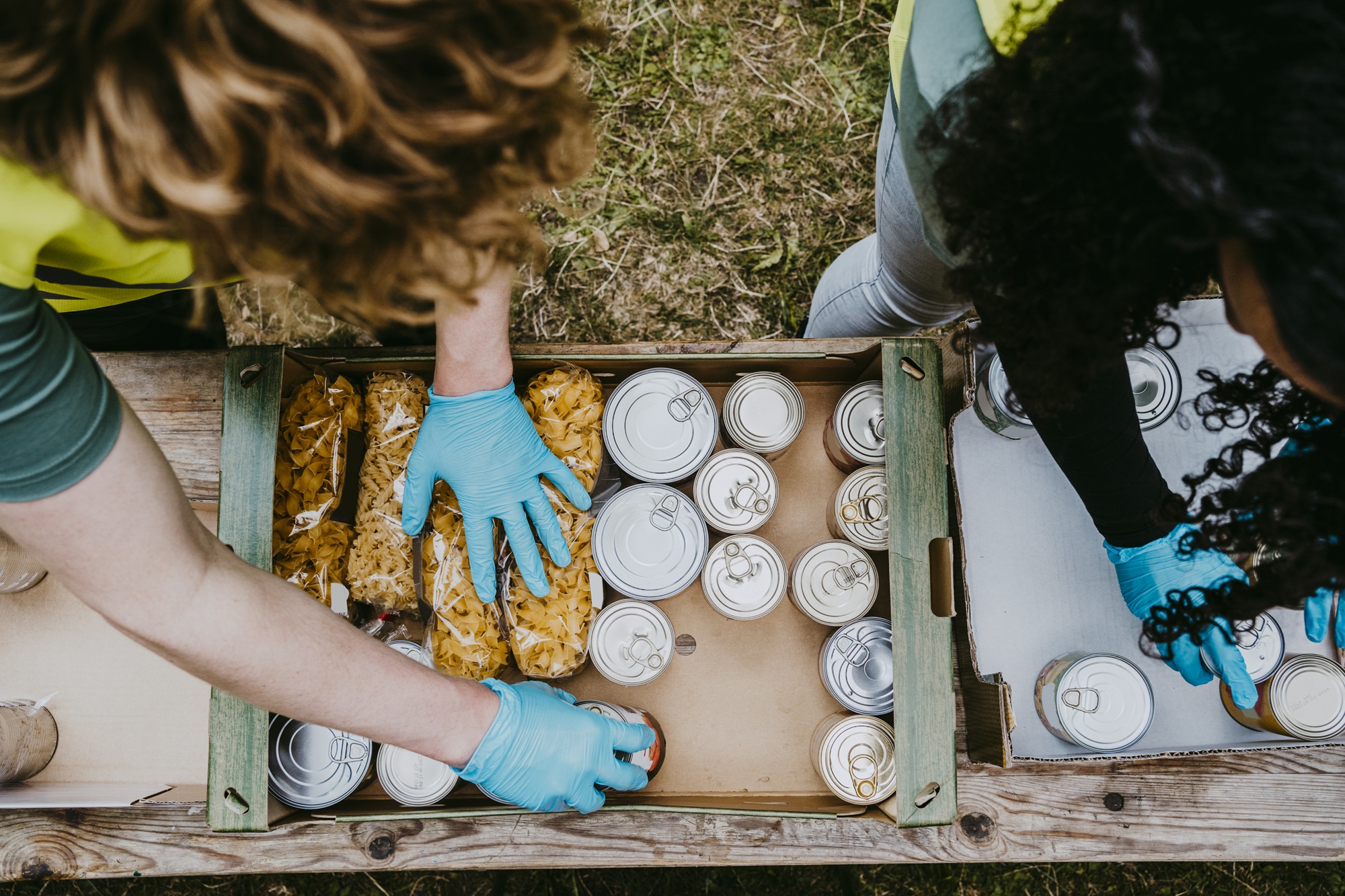
window.__IS_SSR__=true
window.__INITIAL_STATE__={
"attachmentsReducer": {
"audio_0": {
"type": "attachments",
"id": "audio_0",
"imgSizes": {
"kqedFullSize": {
"file": "https://ww2.kqed.org/news/wp-content/themes/KQED-unified/img/audio_bgs/background0.jpg"
}
}
},
"audio_1": {
"type": "attachments",
"id": "audio_1",
"imgSizes": {
"kqedFullSize": {
"file": "https://ww2.kqed.org/news/wp-content/themes/KQED-unified/img/audio_bgs/background1.jpg"
}
}
},
"audio_2": {
"type": "attachments",
"id": "audio_2",
"imgSizes": {
"kqedFullSize": {
"file": "https://ww2.kqed.org/news/wp-content/themes/KQED-unified/img/audio_bgs/background2.jpg"
}
}
},
"audio_3": {
"type": "attachments",
"id": "audio_3",
"imgSizes": {
"kqedFullSize": {
"file": "https://ww2.kqed.org/news/wp-content/themes/KQED-unified/img/audio_bgs/background3.jpg"
}
}
},
"audio_4": {
"type": "attachments",
"id": "audio_4",
"imgSizes": {
"kqedFullSize": {
"file": "https://ww2.kqed.org/news/wp-content/themes/KQED-unified/img/audio_bgs/background4.jpg"
}
}
},
"placeholder": {
"type": "attachments",
"id": "placeholder",
"imgSizes": {
"thumbnail": {
"file": "https://cdn.kqed.org/wp-content/uploads/2024/12/KQED-Default-Image-816638274-2000x1333-1-160x107.jpg",
"width": 160,
"height": 107,
"mimeType": "image/jpeg"
},
"medium": {
"file": "https://cdn.kqed.org/wp-content/uploads/2024/12/KQED-Default-Image-816638274-2000x1333-1-800x533.jpg",
"width": 800,
"height": 533,
"mimeType": "image/jpeg"
},
"medium_large": {
"file": "https://cdn.kqed.org/wp-content/uploads/2024/12/KQED-Default-Image-816638274-2000x1333-1-768x512.jpg",
"width": 768,
"height": 512,
"mimeType": "image/jpeg"
},
"large": {
"file": "https://cdn.kqed.org/wp-content/uploads/2024/12/KQED-Default-Image-816638274-2000x1333-1-1020x680.jpg",
"width": 1020,
"height": 680,
"mimeType": "image/jpeg"
},
"1536x1536": {
"file": "https://cdn.kqed.org/wp-content/uploads/2024/12/KQED-Default-Image-816638274-2000x1333-1-1536x1024.jpg",
"width": 1536,
"height": 1024,
"mimeType": "image/jpeg"
},
"fd-lrg": {
"file": "https://cdn.kqed.org/wp-content/uploads/2024/12/KQED-Default-Image-816638274-2000x1333-1-1536x1024.jpg",
"width": 1536,
"height": 1024,
"mimeType": "image/jpeg"
},
"fd-med": {
"file": "https://cdn.kqed.org/wp-content/uploads/2024/12/KQED-Default-Image-816638274-2000x1333-1-1020x680.jpg",
"width": 1020,
"height": 680,
"mimeType": "image/jpeg"
},
"fd-sm": {
"file": "https://cdn.kqed.org/wp-content/uploads/2024/12/KQED-Default-Image-816638274-2000x1333-1-800x533.jpg",
"width": 800,
"height": 533,
"mimeType": "image/jpeg"
},
"post-thumbnail": {
"file": "https://cdn.kqed.org/wp-content/uploads/2024/12/KQED-Default-Image-816638274-2000x1333-1-672x372.jpg",
"width": 672,
"height": 372,
"mimeType": "image/jpeg"
},
"twentyfourteen-full-width": {
"file": "https://cdn.kqed.org/wp-content/uploads/2024/12/KQED-Default-Image-816638274-2000x1333-1-1038x576.jpg",
"width": 1038,
"height": 576,
"mimeType": "image/jpeg"
},
"xxsmall": {
"file": "https://cdn.kqed.org/wp-content/uploads/2024/12/KQED-Default-Image-816638274-2000x1333-1-160x107.jpg",
"width": 160,
"height": 107,
"mimeType": "image/jpeg"
},
"xsmall": {
"file": "https://cdn.kqed.org/wp-content/uploads/2024/12/KQED-Default-Image-816638274-2000x1333-1-672x372.jpg",
"width": 672,
"height": 372,
"mimeType": "image/jpeg"
},
"small": {
"file": "https://cdn.kqed.org/wp-content/uploads/2024/12/KQED-Default-Image-816638274-2000x1333-1-672x372.jpg",
"width": 672,
"height": 372,
"mimeType": "image/jpeg"
},
"xlarge": {
"file": "https://cdn.kqed.org/wp-content/uploads/2024/12/KQED-Default-Image-816638274-2000x1333-1-1020x680.jpg",
"width": 1020,
"height": 680,
"mimeType": "image/jpeg"
},
"full-width": {
"file": "https://cdn.kqed.org/wp-content/uploads/2024/12/KQED-Default-Image-816638274-2000x1333-1-1920x1280.jpg",
"width": 1920,
"height": 1280,
"mimeType": "image/jpeg"
},
"guest-author-32": {
"file": "https://cdn.kqed.org/wp-content/uploads/2025/01/KQED-Default-Image-816638274-1333x1333-1-160x160.jpg",
"width": 32,
"height": 32,
"mimeType": "image/jpeg"
},
"guest-author-50": {
"file": "https://cdn.kqed.org/wp-content/uploads/2025/01/KQED-Default-Image-816638274-1333x1333-1-160x160.jpg",
"width": 50,
"height": 50,
"mimeType": "image/jpeg"
},
"guest-author-64": {
"file": "https://cdn.kqed.org/wp-content/uploads/2025/01/KQED-Default-Image-816638274-1333x1333-1-160x160.jpg",
"width": 64,
"height": 64,
"mimeType": "image/jpeg"
},
"guest-author-96": {
"file": "https://cdn.kqed.org/wp-content/uploads/2025/01/KQED-Default-Image-816638274-1333x1333-1-160x160.jpg",
"width": 96,
"height": 96,
"mimeType": "image/jpeg"
},
"guest-author-128": {
"file": "https://cdn.kqed.org/wp-content/uploads/2025/01/KQED-Default-Image-816638274-1333x1333-1-160x160.jpg",
"width": 128,
"height": 128,
"mimeType": "image/jpeg"
},
"detail": {
"file": "https://cdn.kqed.org/wp-content/uploads/2025/01/KQED-Default-Image-816638274-1333x1333-1-160x160.jpg",
"width": 160,
"height": 160,
"mimeType": "image/jpeg"
},
"kqedFullSize": {
"file": "https://cdn.kqed.org/wp-content/uploads/2024/12/KQED-Default-Image-816638274-2000x1333-1.jpg",
"width": 2000,
"height": 1333
}
}
},
"news_12062022": {
"type": "attachments",
"id": "news_12062022",
"meta": {
"index": "attachments_1716263798",
"site": "news",
"id": "12062022",
"found": true
},
"title": "Male and female friends arranging food in cardboard boxes",
"publishDate": 1761758018,
"status": "inherit",
"parent": 12062018,
"modified": 1761758123,
"caption": "As millions of Californians prepare to go without food benefits in November due to the government shutdown, here’s how you can support local food banks.",
"credit": "Maskot/Getty Images",
"altTag": null,
"description": null,
"imgSizes": {
"thumbnail": {
"file": "https://cdn.kqed.org/wp-content/uploads/sites/10/2025/10/FoodPantryGetty1-160x107.jpg",
"width": 160,
"height": 107,
"mimeType": "image/jpeg"
},
"1536x1536": {
"file": "https://cdn.kqed.org/wp-content/uploads/sites/10/2025/10/FoodPantryGetty1-1536x1024.jpg",
"width": 1536,
"height": 1024,
"mimeType": "image/jpeg"
},
"post-thumbnail": {
"file": "https://cdn.kqed.org/wp-content/uploads/sites/10/2025/10/FoodPantryGetty1-672x372.jpg",
"width": 672,
"height": 372,
"mimeType": "image/jpeg"
},
"twentyfourteen-full-width": {
"file": "https://cdn.kqed.org/wp-content/uploads/sites/10/2025/10/FoodPantryGetty1-1038x576.jpg",
"width": 1038,
"height": 576,
"mimeType": "image/jpeg"
},
"npr-cds-wide": {
"file": "https://cdn.kqed.org/wp-content/uploads/sites/10/2025/10/FoodPantryGetty1-1600x900.jpg",
"width": 1600,
"height": 900,
"mimeType": "image/jpeg"
},
"kqedFullSize": {
"file": "https://cdn.kqed.org/wp-content/uploads/sites/10/2025/10/FoodPantryGetty1.jpg",
"width": 2000,
"height": 1333
}
},
"isLoading": false,
"fetchFailed": false
},
"news_12043126": {
"type": "attachments",
"id": "news_12043126",
"meta": {
"index": "attachments_1716263798",
"site": "news",
"id": "12043126",
"found": true
},
"title": "013_KQED_SanFranciscoMarinFoodBank_03182020_9229_qed",
"publishDate": 1749235559,
"status": "inherit",
"parent": 12043122,
"modified": 1749235572,
"caption": "Volunteers work to sort donated food at the San Francisco-Marin Food Bank in San Francisco's Dogpatch neighborhood on Wednesday, Mar. 18, 2020.",
"credit": "Beth LaBerge/KQED",
"altTag": null,
"description": null,
"imgSizes": {
"thumbnail": {
"file": "https://cdn.kqed.org/wp-content/uploads/sites/10/2025/06/013_KQED_SanFranciscoMarinFoodBank_03182020_9229_qed-160x107.jpg",
"width": 160,
"height": 107,
"mimeType": "image/jpeg"
},
"1536x1536": {
"file": "https://cdn.kqed.org/wp-content/uploads/sites/10/2025/06/013_KQED_SanFranciscoMarinFoodBank_03182020_9229_qed-1536x1024.jpg",
"width": 1536,
"height": 1024,
"mimeType": "image/jpeg"
},
"post-thumbnail": {
"file": "https://cdn.kqed.org/wp-content/uploads/sites/10/2025/06/013_KQED_SanFranciscoMarinFoodBank_03182020_9229_qed-672x372.jpg",
"width": 672,
"height": 372,
"mimeType": "image/jpeg"
},
"twentyfourteen-full-width": {
"file": "https://cdn.kqed.org/wp-content/uploads/sites/10/2025/06/013_KQED_SanFranciscoMarinFoodBank_03182020_9229_qed-1038x576.jpg",
"width": 1038,
"height": 576,
"mimeType": "image/jpeg"
},
"kqedFullSize": {
"file": "https://cdn.kqed.org/wp-content/uploads/sites/10/2025/06/013_KQED_SanFranciscoMarinFoodBank_03182020_9229_qed.jpg",
"width": 2000,
"height": 1333
}
},
"isLoading": false,
"fetchFailed": false
},
"news_12060772": {
"type": "attachments",
"id": "news_12060772",
"meta": {
"index": "attachments_1716263798",
"site": "news",
"id": "12060772",
"found": true
},
"title": "SNAP and EBT Accepted here sign. SNAP and Food Stamps provide nutrition benefits to supplement the budgets of disadvantaged families.",
"publishDate": 1761001618,
"status": "inherit",
"parent": 12060770,
"modified": 1761001667,
"caption": "SNAP and EBT Accepted here sign. SNAP and Food Stamps provide nutrition benefits to supplement the budgets of disadvantaged families.",
"credit": "Jet City Image/iStock Editorial via Getty Images Plus",
"altTag": null,
"description": null,
"imgSizes": {
"thumbnail": {
"file": "https://cdn.kqed.org/wp-content/uploads/sites/10/2025/10/SNAPGetty-160x107.jpg",
"width": 160,
"height": 107,
"mimeType": "image/jpeg"
},
"1536x1536": {
"file": "https://cdn.kqed.org/wp-content/uploads/sites/10/2025/10/SNAPGetty-1536x1024.jpg",
"width": 1536,
"height": 1024,
"mimeType": "image/jpeg"
},
"post-thumbnail": {
"file": "https://cdn.kqed.org/wp-content/uploads/sites/10/2025/10/SNAPGetty-672x372.jpg",
"width": 672,
"height": 372,
"mimeType": "image/jpeg"
},
"twentyfourteen-full-width": {
"file": "https://cdn.kqed.org/wp-content/uploads/sites/10/2025/10/SNAPGetty-1038x576.jpg",
"width": 1038,
"height": 576,
"mimeType": "image/jpeg"
},
"kqedFullSize": {
"file": "https://cdn.kqed.org/wp-content/uploads/sites/10/2025/10/SNAPGetty.jpg",
"width": 2000,
"height": 1333
}
},
"isLoading": false,
"fetchFailed": false
},
"news_12061008": {
"type": "attachments",
"id": "news_12061008",
"meta": {
"index": "attachments_1716263798",
"site": "news",
"id": "12061008",
"found": true
},
"title": "Close-up view of unrecognizable single dad with baby at kitchen counter feeding milk bottle to newborn.",
"publishDate": 1761152469,
"status": "inherit",
"parent": 12061005,
"modified": 1761767630,
"caption": "The Women, Infants, & Children Supplemental Nutrition Program (known as WIC) — which provides support to low-income families with young children — is expected to stay operational during the ongoing government shutdown. \n",
"credit": "Vera Vita/Getty Images",
"altTag": null,
"description": null,
"imgSizes": {
"medium": {
"file": "https://cdn.kqed.org/wp-content/uploads/sites/10/2025/10/GettyImages-1457114961-2000x1333.jpg",
"width": 2000,
"height": 1333,
"mimeType": "image/jpeg"
},
"large": {
"file": "https://cdn.kqed.org/wp-content/uploads/sites/10/2025/10/GettyImages-1457114961-2000x1333.jpg",
"width": 2000,
"height": 1333,
"mimeType": "image/jpeg"
},
"thumbnail": {
"file": "https://cdn.kqed.org/wp-content/uploads/sites/10/2025/10/GettyImages-1457114961-160x107.jpg",
"width": 160,
"height": 107,
"mimeType": "image/jpeg"
},
"1536x1536": {
"file": "https://cdn.kqed.org/wp-content/uploads/sites/10/2025/10/GettyImages-1457114961-1536x1024.jpg",
"width": 1536,
"height": 1024,
"mimeType": "image/jpeg"
},
"2048x2048": {
"file": "https://cdn.kqed.org/wp-content/uploads/sites/10/2025/10/GettyImages-1457114961-2048x1365.jpg",
"width": 2048,
"height": 1365,
"mimeType": "image/jpeg"
},
"post-thumbnail": {
"file": "https://cdn.kqed.org/wp-content/uploads/sites/10/2025/10/GettyImages-1457114961-672x372.jpg",
"width": 672,
"height": 372,
"mimeType": "image/jpeg"
},
"twentyfourteen-full-width": {
"file": "https://cdn.kqed.org/wp-content/uploads/sites/10/2025/10/GettyImages-1457114961-1038x576.jpg",
"width": 1038,
"height": 576,
"mimeType": "image/jpeg"
},
"full-width": {
"file": "https://cdn.kqed.org/wp-content/uploads/sites/10/2025/10/GettyImages-1457114961-2000x1333.jpg",
"width": 2000,
"height": 1333,
"mimeType": "image/jpeg"
},
"kqedFullSize": {
"file": "https://cdn.kqed.org/wp-content/uploads/sites/10/2025/10/GettyImages-1457114961-scaled-e1761152533545.jpg",
"width": 2000,
"height": 1334
}
},
"isLoading": false,
"fetchFailed": false
},
"news_12009337": {
"type": "attachments",
"id": "news_12009337",
"meta": {
"index": "attachments_1716263798",
"site": "news",
"id": "12009337",
"found": true
},
"title": "California Budget",
"publishDate": 1728925641,
"status": "inherit",
"parent": 12009333,
"modified": 1728950262,
"caption": "California Gov. Gavin Newsom answers a reporter's question about his revised 2024–25 state budget during a news conference in Sacramento on May 10, 2024.",
"credit": "Rich Pedroncelli/AP Photo",
"altTag": null,
"description": null,
"imgSizes": {
"medium": {
"file": "https://cdn.kqed.org/wp-content/uploads/sites/10/2024/10/GavinNewsom2024AP-800x533.jpg",
"width": 800,
"height": 533,
"mimeType": "image/jpeg"
},
"large": {
"file": "https://cdn.kqed.org/wp-content/uploads/sites/10/2024/10/GavinNewsom2024AP-1020x680.jpg",
"width": 1020,
"height": 680,
"mimeType": "image/jpeg"
},
"thumbnail": {
"file": "https://cdn.kqed.org/wp-content/uploads/sites/10/2024/10/GavinNewsom2024AP-160x107.jpg",
"width": 160,
"height": 107,
"mimeType": "image/jpeg"
},
"1536x1536": {
"file": "https://cdn.kqed.org/wp-content/uploads/sites/10/2024/10/GavinNewsom2024AP-1536x1024.jpg",
"width": 1536,
"height": 1024,
"mimeType": "image/jpeg"
},
"post-thumbnail": {
"file": "https://cdn.kqed.org/wp-content/uploads/sites/10/2024/10/GavinNewsom2024AP-672x372.jpg",
"width": 672,
"height": 372,
"mimeType": "image/jpeg"
},
"twentyfourteen-full-width": {
"file": "https://cdn.kqed.org/wp-content/uploads/sites/10/2024/10/GavinNewsom2024AP-1038x576.jpg",
"width": 1038,
"height": 576,
"mimeType": "image/jpeg"
},
"full-width": {
"file": "https://cdn.kqed.org/wp-content/uploads/sites/10/2024/10/GavinNewsom2024AP-1920x1280.jpg",
"width": 1920,
"height": 1280,
"mimeType": "image/jpeg"
},
"kqedFullSize": {
"file": "https://cdn.kqed.org/wp-content/uploads/sites/10/2024/10/GavinNewsom2024AP.jpg",
"width": 2000,
"height": 1333
}
},
"isLoading": false,
"fetchFailed": false
},
"news_12060313": {
"type": "attachments",
"id": "news_12060313",
"meta": {
"index": "attachments_1716263798",
"site": "news",
"id": "12060313",
"found": true
},
"title": "251016-DUBAICHOCOLATES-09-BL-KQED",
"publishDate": 1760723984,
"status": "inherit",
"parent": 12060700,
"modified": 1760985460,
"caption": "Malena Lopez-Maggi, owner and chocolatier, holds a box of Dubai chocolates and a handful of pistachios at The Xocolate Bar in Berkeley on Oct. 16, 2025.",
"credit": "Beth LaBerge/KQED",
"altTag": null,
"description": null,
"imgSizes": {
"thumbnail": {
"file": "https://cdn.kqed.org/wp-content/uploads/sites/10/2025/10/251016-DUBAICHOCOLATES-09-BL-KQED-160x107.jpg",
"width": 160,
"height": 107,
"mimeType": "image/jpeg"
},
"1536x1536": {
"file": "https://cdn.kqed.org/wp-content/uploads/sites/10/2025/10/251016-DUBAICHOCOLATES-09-BL-KQED-1536x1024.jpg",
"width": 1536,
"height": 1024,
"mimeType": "image/jpeg"
},
"post-thumbnail": {
"file": "https://cdn.kqed.org/wp-content/uploads/sites/10/2025/10/251016-DUBAICHOCOLATES-09-BL-KQED-672x372.jpg",
"width": 672,
"height": 372,
"mimeType": "image/jpeg"
},
"twentyfourteen-full-width": {
"file": "https://cdn.kqed.org/wp-content/uploads/sites/10/2025/10/251016-DUBAICHOCOLATES-09-BL-KQED-1038x576.jpg",
"width": 1038,
"height": 576,
"mimeType": "image/jpeg"
},
"kqedFullSize": {
"file": "https://cdn.kqed.org/wp-content/uploads/sites/10/2025/10/251016-DUBAICHOCOLATES-09-BL-KQED.jpg",
"width": 2000,
"height": 1333
}
},
"isLoading": false,
"fetchFailed": false
},
"news_12060904": {
"type": "attachments",
"id": "news_12060904",
"meta": {
"index": "attachments_1716263798",
"site": "news",
"id": "12060904",
"found": true
},
"title": "Flying bats",
"publishDate": 1761082354,
"status": "inherit",
"parent": 12060830,
"modified": 1761082590,
"caption": "Flying bats",
"credit": "Photo by Johner Images/Getty",
"altTag": null,
"description": null,
"imgSizes": {
"medium": {
"file": "https://cdn.kqed.org/wp-content/uploads/sites/10/2025/10/GettyImages-763168441-2000x1333.jpg",
"width": 2000,
"height": 1333,
"mimeType": "image/jpeg"
},
"large": {
"file": "https://cdn.kqed.org/wp-content/uploads/sites/10/2025/10/GettyImages-763168441-2000x1333.jpg",
"width": 2000,
"height": 1333,
"mimeType": "image/jpeg"
},
"thumbnail": {
"file": "https://cdn.kqed.org/wp-content/uploads/sites/10/2025/10/GettyImages-763168441-160x107.jpg",
"width": 160,
"height": 107,
"mimeType": "image/jpeg"
},
"1536x1536": {
"file": "https://cdn.kqed.org/wp-content/uploads/sites/10/2025/10/GettyImages-763168441-1536x1024.jpg",
"width": 1536,
"height": 1024,
"mimeType": "image/jpeg"
},
"2048x2048": {
"file": "https://cdn.kqed.org/wp-content/uploads/sites/10/2025/10/GettyImages-763168441-2048x1365.jpg",
"width": 2048,
"height": 1365,
"mimeType": "image/jpeg"
},
"post-thumbnail": {
"file": "https://cdn.kqed.org/wp-content/uploads/sites/10/2025/10/GettyImages-763168441-672x372.jpg",
"width": 672,
"height": 372,
"mimeType": "image/jpeg"
},
"twentyfourteen-full-width": {
"file": "https://cdn.kqed.org/wp-content/uploads/sites/10/2025/10/GettyImages-763168441-1038x576.jpg",
"width": 1038,
"height": 576,
"mimeType": "image/jpeg"
},
"full-width": {
"file": "https://cdn.kqed.org/wp-content/uploads/sites/10/2025/10/GettyImages-763168441-2000x1333.jpg",
"width": 2000,
"height": 1333,
"mimeType": "image/jpeg"
},
"kqedFullSize": {
"file": "https://cdn.kqed.org/wp-content/uploads/sites/10/2025/10/GettyImages-763168441-scaled.jpg",
"width": 2560,
"height": 1707
}
},
"isLoading": false,
"fetchFailed": false
},
"news_12060933": {
"type": "attachments",
"id": "news_12060933",
"meta": {
"index": "attachments_1716263798",
"site": "news",
"id": "12060933",
"found": true
},
"title": "US-POLITICS-ENVIRONMENT-NATURE-PARKS-PROTEST",
"publishDate": 1761088344,
"status": "inherit",
"parent": 12060911,
"modified": 1761088400,
"caption": "People demonstrate during a protest against federal employee layoffs at Yosemite National Park, California on March 1, 2025.",
"credit": "Laure Andrillon/AFP via Getty Images",
"altTag": null,
"description": null,
"imgSizes": {
"thumbnail": {
"file": "https://cdn.kqed.org/wp-content/uploads/sites/10/2025/10/NationalParkServiceGetty-160x107.jpg",
"width": 160,
"height": 107,
"mimeType": "image/jpeg"
},
"1536x1536": {
"file": "https://cdn.kqed.org/wp-content/uploads/sites/10/2025/10/NationalParkServiceGetty-1536x1025.jpg",
"width": 1536,
"height": 1025,
"mimeType": "image/jpeg"
},
"post-thumbnail": {
"file": "https://cdn.kqed.org/wp-content/uploads/sites/10/2025/10/NationalParkServiceGetty-672x372.jpg",
"width": 672,
"height": 372,
"mimeType": "image/jpeg"
},
"twentyfourteen-full-width": {
"file": "https://cdn.kqed.org/wp-content/uploads/sites/10/2025/10/NationalParkServiceGetty-1038x576.jpg",
"width": 1038,
"height": 576,
"mimeType": "image/jpeg"
},
"kqedFullSize": {
"file": "https://cdn.kqed.org/wp-content/uploads/sites/10/2025/10/NationalParkServiceGetty.jpg",
"width": 2000,
"height": 1335
}
},
"isLoading": false,
"fetchFailed": false
},
"news_12060836": {
"type": "attachments",
"id": "news_12060836",
"meta": {
"index": "attachments_1716263798",
"site": "news",
"id": "12060836",
"found": true
},
"title": "251021-DIWALI PARIVAR-NK-04-KQED",
"publishDate": 1761068607,
"status": "inherit",
"parent": 0,
"modified": 1761069354,
"caption": "Kaj (left) dances during the Diwali celebrations at Parivar Bay Area in San Francisco on Oct. 20, 2025.",
"credit": "Nisa Khan/KQED",
"altTag": null,
"description": null,
"imgSizes": {
"thumbnail": {
"file": "https://cdn.kqed.org/wp-content/uploads/sites/10/2025/10/251021-DIWALI-PARIVAR-NK-04-KQED-160x107.jpg",
"width": 160,
"height": 107,
"mimeType": "image/jpeg"
},
"1536x1536": {
"file": "https://cdn.kqed.org/wp-content/uploads/sites/10/2025/10/251021-DIWALI-PARIVAR-NK-04-KQED-1536x1024.jpg",
"width": 1536,
"height": 1024,
"mimeType": "image/jpeg"
},
"post-thumbnail": {
"file": "https://cdn.kqed.org/wp-content/uploads/sites/10/2025/10/251021-DIWALI-PARIVAR-NK-04-KQED-672x372.jpg",
"width": 672,
"height": 372,
"mimeType": "image/jpeg"
},
"twentyfourteen-full-width": {
"file": "https://cdn.kqed.org/wp-content/uploads/sites/10/2025/10/251021-DIWALI-PARIVAR-NK-04-KQED-1038x576.jpg",
"width": 1038,
"height": 576,
"mimeType": "image/jpeg"
},
"kqedFullSize": {
"file": "https://cdn.kqed.org/wp-content/uploads/sites/10/2025/10/251021-DIWALI-PARIVAR-NK-04-KQED.jpg",
"width": 2000,
"height": 1333
}
},
"isLoading": false,
"fetchFailed": false
},
"news_11869564": {
"type": "attachments",
"id": "news_11869564",
"meta": {
"index": "attachments_1716263798",
"site": "news",
"id": "11869564",
"found": true
},
"parent": 11869522,
"imgSizes": {
"twentyfourteen-full-width": {
"file": "https://ww2.kqed.org/app/uploads/sites/10/2021/04/RS45669_004_KQED_Berkeley_PollingPlace_11012020-qut-1038x576.jpg",
"width": 1038,
"mimeType": "image/jpeg",
"height": 576
},
"thumbnail": {
"file": "https://ww2.kqed.org/app/uploads/sites/10/2021/04/RS45669_004_KQED_Berkeley_PollingPlace_11012020-qut-160x107.jpg",
"width": 160,
"mimeType": "image/jpeg",
"height": 107
},
"post-thumbnail": {
"file": "https://ww2.kqed.org/app/uploads/sites/10/2021/04/RS45669_004_KQED_Berkeley_PollingPlace_11012020-qut-672x372.jpg",
"width": 672,
"mimeType": "image/jpeg",
"height": 372
},
"kqedFullSize": {
"file": "https://ww2.kqed.org/app/uploads/sites/10/2021/04/RS45669_004_KQED_Berkeley_PollingPlace_11012020-qut.jpg",
"width": 1920,
"height": 1280
},
"large": {
"file": "https://ww2.kqed.org/app/uploads/sites/10/2021/04/RS45669_004_KQED_Berkeley_PollingPlace_11012020-qut-1020x680.jpg",
"width": 1020,
"mimeType": "image/jpeg",
"height": 680
},
"1536x1536": {
"file": "https://ww2.kqed.org/app/uploads/sites/10/2021/04/RS45669_004_KQED_Berkeley_PollingPlace_11012020-qut-1536x1024.jpg",
"width": 1536,
"mimeType": "image/jpeg",
"height": 1024
},
"medium": {
"file": "https://ww2.kqed.org/app/uploads/sites/10/2021/04/RS45669_004_KQED_Berkeley_PollingPlace_11012020-qut-800x533.jpg",
"width": 800,
"mimeType": "image/jpeg",
"height": 533
}
},
"publishDate": 1618442276,
"modified": 1618453933,
"caption": "A UC Berkeley student drops off a mail-in ballot at the official ballot dropbox on the campus on Nov. 1, 2020.",
"description": null,
"title": "RS45669_004_KQED_Berkeley_PollingPlace_11012020-qut",
"credit": "Beth LaBerge/KQED",
"status": "inherit",
"altTag": null,
"isLoading": false,
"fetchFailed": false
},
"news_11908239": {
"type": "attachments",
"id": "news_11908239",
"meta": {
"index": "attachments_1716263798",
"site": "news",
"id": "11908239",
"found": true
},
"title": "IMG_9034",
"publishDate": 1647370736,
"status": "inherit",
"parent": 11906012,
"modified": 1760730990,
"caption": "An Aztec dancer looks above the trees on 24th Street, during a blessing of the altars on 24th and Folsom streets to start Día de los Muertos in the Mission District, San Francisco, on Sunday, Nov. 1, 2020.",
"credit": "Sebastian Miño-Bucheli/KQED",
"altTag": "A person wearing a beaded and multicolored blouse stands in the foreground, wearing a mask. A plume of feathers in black, blue, yellow and white fan out behind their head.",
"description": null,
"imgSizes": {
"medium": {
"file": "https://cdn.kqed.org/wp-content/uploads/sites/10/2022/03/IMG_9034-800x576.jpg",
"width": 800,
"height": 576,
"mimeType": "image/jpeg"
},
"large": {
"file": "https://cdn.kqed.org/wp-content/uploads/sites/10/2022/03/IMG_9034-1020x735.jpg",
"width": 1020,
"height": 735,
"mimeType": "image/jpeg"
},
"thumbnail": {
"file": "https://cdn.kqed.org/wp-content/uploads/sites/10/2022/03/IMG_9034-160x115.jpg",
"width": 160,
"height": 115,
"mimeType": "image/jpeg"
},
"1536x1536": {
"file": "https://cdn.kqed.org/wp-content/uploads/sites/10/2022/03/IMG_9034-1536x1106.jpg",
"width": 1536,
"height": 1106,
"mimeType": "image/jpeg"
},
"2048x2048": {
"file": "https://cdn.kqed.org/wp-content/uploads/sites/10/2022/03/IMG_9034-2048x1475.jpg",
"width": 2048,
"height": 1475,
"mimeType": "image/jpeg"
},
"post-thumbnail": {
"file": "https://cdn.kqed.org/wp-content/uploads/sites/10/2022/03/IMG_9034-672x372.jpg",
"width": 672,
"height": 372,
"mimeType": "image/jpeg"
},
"twentyfourteen-full-width": {
"file": "https://cdn.kqed.org/wp-content/uploads/sites/10/2022/03/IMG_9034-1038x576.jpg",
"width": 1038,
"height": 576,
"mimeType": "image/jpeg"
},
"full-width": {
"file": "https://cdn.kqed.org/wp-content/uploads/sites/10/2022/03/IMG_9034-1920x1383.jpg",
"width": 1920,
"height": 1383,
"mimeType": "image/jpeg"
},
"kqedFullSize": {
"file": "https://cdn.kqed.org/wp-content/uploads/sites/10/2022/03/IMG_9034-scaled.jpg",
"width": 2560,
"height": 1844
}
},
"isLoading": false,
"fetchFailed": false
},
"news_12011413": {
"type": "attachments",
"id": "news_12011413",
"meta": {
"index": "attachments_1716263798",
"site": "news",
"id": "12011413",
"found": true
},
"title": "020_KQED_SanFrancisco_Election2020_TanyaYule_10092020_qed",
"publishDate": 1730152325,
"status": "inherit",
"parent": 12011386,
"modified": 1730152383,
"caption": "A San Francisco resident hands their mail-in ballot to USPS employee Elmer Padilla on Oct. 9, 2020.",
"credit": "Beth LaBerge/KQED",
"altTag": "A postal worker on the street, wheeling a wagon, is handed a mail-in ballot.",
"description": null,
"imgSizes": {
"medium": {
"file": "https://cdn.kqed.org/wp-content/uploads/sites/10/2024/10/020_KQED_SanFrancisco_Election2020_TanyaYule_10092020_qed-800x533.jpg",
"width": 800,
"height": 533,
"mimeType": "image/jpeg"
},
"large": {
"file": "https://cdn.kqed.org/wp-content/uploads/sites/10/2024/10/020_KQED_SanFrancisco_Election2020_TanyaYule_10092020_qed-1020x680.jpg",
"width": 1020,
"height": 680,
"mimeType": "image/jpeg"
},
"thumbnail": {
"file": "https://cdn.kqed.org/wp-content/uploads/sites/10/2024/10/020_KQED_SanFrancisco_Election2020_TanyaYule_10092020_qed-160x107.jpg",
"width": 160,
"height": 107,
"mimeType": "image/jpeg"
},
"1536x1536": {
"file": "https://cdn.kqed.org/wp-content/uploads/sites/10/2024/10/020_KQED_SanFrancisco_Election2020_TanyaYule_10092020_qed-1536x1024.jpg",
"width": 1536,
"height": 1024,
"mimeType": "image/jpeg"
},
"post-thumbnail": {
"file": "https://cdn.kqed.org/wp-content/uploads/sites/10/2024/10/020_KQED_SanFrancisco_Election2020_TanyaYule_10092020_qed-672x372.jpg",
"width": 672,
"height": 372,
"mimeType": "image/jpeg"
},
"twentyfourteen-full-width": {
"file": "https://cdn.kqed.org/wp-content/uploads/sites/10/2024/10/020_KQED_SanFrancisco_Election2020_TanyaYule_10092020_qed-1038x576.jpg",
"width": 1038,
"height": 576,
"mimeType": "image/jpeg"
},
"full-width": {
"file": "https://cdn.kqed.org/wp-content/uploads/sites/10/2024/10/020_KQED_SanFrancisco_Election2020_TanyaYule_10092020_qed-1920x1280.jpg",
"width": 1920,
"height": 1280,
"mimeType": "image/jpeg"
},
"kqedFullSize": {
"file": "https://cdn.kqed.org/wp-content/uploads/sites/10/2024/10/020_KQED_SanFrancisco_Election2020_TanyaYule_10092020_qed.jpg",
"width": 2000,
"height": 1333
}
},
"isLoading": false,
"fetchFailed": false
}
},
"audioPlayerReducer": {
"postId": "stream_live",
"isPaused": true,
"isPlaying": false,
"pfsActive": false,
"pledgeModalIsOpen": true,
"playerDrawerIsOpen": false,
"liveAudioPlayStartedAt": 0,
"liveAudioPlayContext": ""
},
"authorsReducer": {
"gmarzorati": {
"type": "authors",
"id": "227",
"meta": {
"index": "authors_1716337520",
"id": "227",
"found": true
},
"name": "Guy Marzorati",
"firstName": "Guy",
"lastName": "Marzorati",
"slug": "gmarzorati",
"email": "gmarzorati@KQED.org",
"display_author_email": true,
"staff_mastheads": [
"news"
],
"title": "Correspondent",
"bio": "Guy Marzorati is a correspondent on KQED's California Politics and Government Desk, based in San Jose. A graduate of Santa Clara University, Guy joined KQED in 2013. He reports on state and local politics and produces KQED's digital voter guide.",
"avatar": "https://secure.gravatar.com/avatar/e7038b8dbfd55b104369b76b1cd0b9de?s=600&d=blank&r=g",
"twitter": "guymarzorati",
"facebook": null,
"instagram": null,
"linkedin": null,
"sites": [
{
"site": "",
"roles": [
"editor"
]
},
{
"site": "news",
"roles": [
"editor"
]
},
{
"site": "science",
"roles": [
"editor"
]
},
{
"site": "forum",
"roles": [
"editor"
]
},
{
"site": "elections",
"roles": [
"editor"
]
},
{
"site": "liveblog",
"roles": [
"editor"
]
}
],
"headData": {
"title": "Guy Marzorati | KQED",
"description": "Correspondent",
"ogImgSrc": "https://secure.gravatar.com/avatar/e7038b8dbfd55b104369b76b1cd0b9de?s=600&d=blank&r=g",
"twImgSrc": "https://secure.gravatar.com/avatar/e7038b8dbfd55b104369b76b1cd0b9de?s=600&d=blank&r=g"
},
"isLoading": false,
"link": "/author/gmarzorati"
},
"carlysevern": {
"type": "authors",
"id": "3243",
"meta": {
"index": "authors_1716337520",
"id": "3243",
"found": true
},
"name": "Carly Severn",
"firstName": "Carly",
"lastName": "Severn",
"slug": "carlysevern",
"email": "csevern@kqed.org",
"display_author_email": false,
"staff_mastheads": [
"news"
],
"title": "Senior Editor, Audience News ",
"bio": "Carly is KQED's Senior Editor of Audience News on the Digital News team, and has reported for the California Report Magazine, Bay Curious and KQED Arts. She's formerly the host of \u003ca href=\"http://ww2.kqed.org/pop/category/the-cooler/\" rel=\"noopener noreferrer\">The Cooler\u003c/a> podcast.",
"avatar": "https://secure.gravatar.com/avatar/54037bf5c128fe678f0ef26cec97a93f2e7f220a22d7285703328f12c42c1b1d?s=600&d=blank&r=g",
"twitter": "teacupinthebay",
"bluesky": null,
"facebook": null,
"instagram": null,
"linkedin": null,
"sites": [
{
"site": "",
"roles": [
"editor"
]
},
{
"site": "arts",
"roles": [
"editor"
]
},
{
"site": "news",
"roles": [
"administrator"
]
},
{
"site": "pop",
"roles": [
"editor"
]
},
{
"site": "futureofyou",
"roles": [
"editor"
]
},
{
"site": "about",
"roles": [
"administrator"
]
},
{
"site": "mindshift",
"roles": [
"editor"
]
},
{
"site": "bayareabites",
"roles": [
"editor"
]
},
{
"site": "stateofhealth",
"roles": [
"editor"
]
},
{
"site": "science",
"roles": [
"editor"
]
},
{
"site": "food",
"roles": [
"contributor"
]
},
{
"site": "forum",
"roles": [
"editor"
]
},
{
"site": "perspectives",
"roles": [
"administrator"
]
},
{
"site": "liveblog",
"roles": [
"editor"
]
}
],
"headData": {
"title": "Carly Severn | KQED",
"description": "Senior Editor, Audience News ",
"ogImgSrc": "https://secure.gravatar.com/avatar/54037bf5c128fe678f0ef26cec97a93f2e7f220a22d7285703328f12c42c1b1d?s=600&d=blank&r=g",
"twImgSrc": "https://secure.gravatar.com/avatar/54037bf5c128fe678f0ef26cec97a93f2e7f220a22d7285703328f12c42c1b1d?s=600&d=blank&r=g"
},
"isLoading": false,
"link": "/author/carlysevern"
},
"ccabreralomeli": {
"type": "authors",
"id": "11708",
"meta": {
"index": "authors_1716337520",
"id": "11708",
"found": true
},
"name": "Carlos Cabrera-Lomelí",
"firstName": "Carlos",
"lastName": "Cabrera-Lomelí",
"slug": "ccabreralomeli",
"email": "ccabreralomeli@KQED.org",
"display_author_email": true,
"staff_mastheads": [
"news"
],
"title": "Community Reporter",
"bio": "Carlos Cabrera-Lomelí is a community reporter with KQED's digital engagement team. He also reports and co-produces for KQED's bilingual news hub KQED en Español. He grew up in San Francisco's Mission District and has previously worked with Univision, 48 Hills and REFORMA in Mexico City.",
"avatar": "https://secure.gravatar.com/avatar/c309be9665e484f887b818c89e273ecc673004f426f36b24d00a4d813a2e0518?s=600&d=blank&r=g",
"twitter": "@LomeliCabrera",
"bluesky": null,
"facebook": null,
"instagram": null,
"linkedin": null,
"sites": [
{
"site": "arts",
"roles": [
"editor"
]
},
{
"site": "news",
"roles": [
"editor"
]
},
{
"site": "about",
"roles": [
"editor"
]
},
{
"site": "science",
"roles": [
"editor"
]
},
{
"site": "perspectives",
"roles": [
"editor"
]
},
{
"site": "elections",
"roles": [
"editor"
]
},
{
"site": "liveblog",
"roles": [
"contributor"
]
}
],
"headData": {
"title": "Carlos Cabrera-Lomelí | KQED",
"description": "Community Reporter",
"ogImgSrc": "https://secure.gravatar.com/avatar/c309be9665e484f887b818c89e273ecc673004f426f36b24d00a4d813a2e0518?s=600&d=blank&r=g",
"twImgSrc": "https://secure.gravatar.com/avatar/c309be9665e484f887b818c89e273ecc673004f426f36b24d00a4d813a2e0518?s=600&d=blank&r=g"
},
"isLoading": false,
"link": "/author/ccabreralomeli"
},
"nnavarro": {
"type": "authors",
"id": "11756",
"meta": {
"index": "authors_1716337520",
"id": "11756",
"found": true
},
"name": "Natalia Navarro",
"firstName": "Natalia",
"lastName": "Navarro",
"slug": "nnavarro",
"email": "nnavarro@kqed.org",
"display_author_email": true,
"staff_mastheads": [
"news"
],
"title": "Afternoon News Anchor",
"bio": "Natalia Navarro is KQED's afternoon radio news anchor. She came to KQED in 2021 from Colorado Public Radio, where she was a reporter and host. She has received several awards for her work covering daily and breaking news from professional organizations such as the San Francisco Press Club, Society of Professional Journalists and the Colorado Broadcasters Association. Natalia is originally from Tucson, Arizona, where she got her start in journalism writing for the Arizona Daily Star, Arizona Public Media and the Tucson Weekly. Natalia earned her bachelor's degree in journalism and economics, and her master's degree in journalism from the University of Arizona.",
"avatar": "https://secure.gravatar.com/avatar/a2bdb19fd9520bdea295a2d5f9b2ad65ec51cf0bf559fb1cc041d3a0a04d62ad?s=600&d=blank&r=g",
"twitter": "@NataliaVNavarro",
"bluesky": null,
"facebook": null,
"instagram": null,
"linkedin": null,
"sites": [
{
"site": "news",
"roles": [
"editor"
]
}
],
"headData": {
"title": "Natalia Navarro | KQED",
"description": "Afternoon News Anchor",
"ogImgSrc": "https://secure.gravatar.com/avatar/a2bdb19fd9520bdea295a2d5f9b2ad65ec51cf0bf559fb1cc041d3a0a04d62ad?s=600&d=blank&r=g",
"twImgSrc": "https://secure.gravatar.com/avatar/a2bdb19fd9520bdea295a2d5f9b2ad65ec51cf0bf559fb1cc041d3a0a04d62ad?s=600&d=blank&r=g"
},
"isLoading": false,
"link": "/author/nnavarro"
},
"nkhan": {
"type": "authors",
"id": "11867",
"meta": {
"index": "authors_1716337520",
"id": "11867",
"found": true
},
"name": "Nisa Khan",
"firstName": "Nisa",
"lastName": "Khan",
"slug": "nkhan",
"email": "nkhan@kqed.org",
"display_author_email": false,
"staff_mastheads": [],
"title": "KQED Contributor",
"bio": "Nisa Khan is a reporter for KQED's Audience News Desk. She was formerly a data reporter at Michigan Radio. She earned a Bachelor of Science in Information from the University of Michigan and a Master of Arts in Communication from Stanford University.",
"avatar": "https://secure.gravatar.com/avatar/8720459eef081ff64582b3506b124d58523e80e120704a0cbd9892533c914991?s=600&d=blank&r=g",
"twitter": "mnisakhan",
"bluesky": null,
"facebook": null,
"instagram": null,
"linkedin": null,
"sites": [
{
"site": "arts",
"roles": [
"editor"
]
},
{
"site": "news",
"roles": [
"editor"
]
},
{
"site": "science",
"roles": [
"editor",
"author"
]
},
{
"site": "forum",
"roles": [
"editor"
]
},
{
"site": "liveblog",
"roles": [
"contributor"
]
}
],
"headData": {
"title": "Nisa Khan | KQED",
"description": "KQED Contributor",
"ogImgSrc": "https://secure.gravatar.com/avatar/8720459eef081ff64582b3506b124d58523e80e120704a0cbd9892533c914991?s=600&d=blank&r=g",
"twImgSrc": "https://secure.gravatar.com/avatar/8720459eef081ff64582b3506b124d58523e80e120704a0cbd9892533c914991?s=600&d=blank&r=g"
},
"isLoading": false,
"link": "/author/nkhan"
},
"sarahwright": {
"type": "authors",
"id": "11956",
"meta": {
"index": "authors_1716337520",
"id": "11956",
"found": true
},
"name": "Sarah Wright",
"firstName": "Sarah",
"lastName": "Wright",
"slug": "sarahwright",
"email": "swright@kqed.org",
"display_author_email": true,
"staff_mastheads": [],
"title": "Outdoors Engagement Reporter",
"bio": "Sarah Wright is KQED's Outdoors Engagement Reporter. Originally from Lake Tahoe, she completed a thru-hike of the Pacific Crest Trail in 2019 and was a U.S. Fulbright Program grantee to Argentina in 2023. Her journalism has appeared in The Guardian, The San Francisco Standard, The Palo Alto Weekly and the Half Moon Bay Review.",
"avatar": "https://secure.gravatar.com/avatar/c161a3d6441865cba25e6db4fa561099ad665799e9432e34da2b84d7e371524c?s=600&d=blank&r=g",
"twitter": null,
"bluesky": null,
"facebook": null,
"instagram": null,
"linkedin": null,
"sites": [
{
"site": "arts",
"roles": [
"editor"
]
},
{
"site": "news",
"roles": [
"editor"
]
},
{
"site": "science",
"roles": [
"contributor",
"author"
]
},
{
"site": "forum",
"roles": [
"editor"
]
}
],
"headData": {
"title": "Sarah Wright | KQED",
"description": "Outdoors Engagement Reporter",
"ogImgSrc": "https://secure.gravatar.com/avatar/c161a3d6441865cba25e6db4fa561099ad665799e9432e34da2b84d7e371524c?s=600&d=blank&r=g",
"twImgSrc": "https://secure.gravatar.com/avatar/c161a3d6441865cba25e6db4fa561099ad665799e9432e34da2b84d7e371524c?s=600&d=blank&r=g"
},
"isLoading": false,
"link": "/author/sarahwright"
}
},
"pagesReducer": {
"news_category_guides-and-explainers": {
"type": "terms",
"id": "news_34168",
"meta": {
"index": "terms_1716263798",
"site": "news",
"id": "34168",
"score": 14.406026
},
"name": "Guides and Explainers",
"slug": "guides-and-explainers",
"taxonomy": "category",
"description": null,
"featImg": null,
"headData": {
"title": "Guides and Explainers Archives | KQED News",
"description": null,
"ogTitle": null,
"ogDescription": null,
"ogImgId": null,
"twTitle": null,
"twDescription": null,
"twImgId": null
},
"ttid": 34185,
"isLoading": false,
"title": "Guides and Explainers",
"pageMeta": {
"site": "news",
"WpPageTemplate": "page-topic-editorial",
"currentPage": 19
},
"blocks": [
{
"blockName": "kqed/post-list",
"attrs": {
"layout": "cardArticle2",
"query": "posts/news?category=guides-and-explainers",
"seeMore": false,
"paginated": true,
"page": 19
}
},
{
"blockName": "kqed/ad"
}
]
}
},
"pfsSessionReducer": {},
"postsReducer": {
"stream_live": {
"type": "live",
"id": "stream_live",
"audioUrl": "https://streams.kqed.org/kqedradio",
"title": "Live Stream",
"excerpt": "Live Stream information currently unavailable.",
"link": "/radio",
"featImg": "",
"label": {
"name": "KQED Live",
"link": "/"
}
},
"stream_kqedNewscast": {
"type": "posts",
"id": "stream_kqedNewscast",
"audioUrl": "https://www.kqed.org/.stream/anon/radio/RDnews/newscast.mp3?_=1",
"title": "KQED Newscast",
"featImg": "",
"label": {
"name": "88.5 FM",
"link": "/"
}
},
"news_12062018": {
"type": "posts",
"id": "news_12062018",
"meta": {
"index": "posts_1716263798",
"site": "news",
"id": "12062018",
"score": null,
"sort": [
1761764433000
]
},
"guestAuthors": [],
"slug": "how-to-volunteer-donate-food-bank-near-me-thanksgiving-free-meals-san-francisco-bay-area-snap-calfresh-delays-ebt-november-shutdown",
"title": "How to Best Support Your Local Food Bank During Shutdown SNAP Delays",
"publishDate": 1761764433,
"format": "standard",
"headTitle": "How to Best Support Your Local Food Bank During Shutdown SNAP Delays | KQED",
"labelTerm": {
"site": "news"
},
"content": "\u003cp>The \u003ca href=\"https://www.kqed.org/news/tag/government-shutdown\">government shutdown\u003c/a> has reached its second month. And the 5.5 million Californians who use CalFresh — the state’s version of the Supplemental Nutrition Assistance Program, formerly known as food stamps — have seen \u003ca href=\"https://www.kqed.org/news/12060770/snap-calfresh-food-stamps-government-shutdown-november-payments-ebt\">their November SNAP payments delayed\u003c/a>.\u003c/p>\n\u003cp>And it’s still unclear how SNAP payments will be distributed this month. On Nov. 3, President Donald Trump’s administration said it would \u003ca href=\"https://www.npr.org/2025/11/03/nx-s1-5596121/snap-food-benefits-trump-government-shutdown\">use the U.S. Department of Agriculture’s contingency fund to provide SNAP payments\u003c/a> in November after all, having previously claimed that it could not tap this fund.\u003c/p>\n\u003cp>[ad fullwidth]\u003c/p>\n\u003cp>But the White House warned that payments would still only be half of people’s regular benefits, and that there could be lengthy delays before EBT cards are reloaded. And on Nov. 4, \u003ca href=\"https://www.nytimes.com/live/2025/11/04/us/trump-shutdown-news#cities-nonprofits-food-stamp-snap-payments\">Trump again threatened to withhold SNAP payments\u003c/a> entirely — before a judge \u003ca href=\"https://apnews.com/live/donald-trump-news-updates-11-6-2025#0000019a-5af9-d003-addb-deffec620000\">ruled a second time that the White House must pay these benefits in full by Nov. 7\u003c/a>.\u003c/p>\n\u003cp>On Nov. 6, Gov. Gavin Newsom’s office confirmed that \u003ca href=\"https://www.gov.ca.gov/2025/11/06/californians-are-beginning-to-see-cash-on-their-snap-cards-following-major-win-against-the-trump-administration/\">some CalFresh recipients have begun to see benefits payments\u003c/a> arrive in full onto their EBT cards, but it’s not yet clear how these funds will continue to roll out, especially since \u003ca href=\"https://apnews.com/article/snap-food-government-shutdown-trump-a807e9f0c0a7213e203c074553dc1f9b\">the Trump administration asked a federal appeals court Friday to block the judge’s order\u003c/a>.\u003c/p>\n\u003cp>Around the Bay Area,\u003ca href=\"https://www.kqed.org/news/12061440/calfresh-snap-ebt-shutdown-find-food-banks-near-me-san-francisco-bay-area-alameda-oakland-contra-costa-newsom-national-guard\"> food banks\u003c/a> are working to meet the needs of thousands of people who have seen their access to food greatly reduced aleady, with the Thanksgiving holidays fast approaching.\u003c/p>\n\u003cp>And if you don’t need the services of a food bank right now, you might be wondering how to best support your local nonprofit providing food assistance to your neighbor, either by volunteering your time or donating to them financially.\u003c/p>\n\u003cp>Keep reading for how Bay Area food banks say you can most effectively support them during the shutdown. And remember: The quickest way to offer your support is by visiting an organization’s website and signing up there to volunteer or make a donation.\u003c/p>\n\u003cp>[ad fullwidth]\u003c/p>\n\u003ch2>Don’t feel you need to wait until the holidays to volunteer or donate\u003c/h2>\n\u003cp>“The holidays are definitely busier times when we tend to get more volunteers coming in,” said Elizabeth Gomez, vice president of impact at the \u003ca href=\"https://www.accfb.org/\">Alameda County Community Food Bank\u003c/a>. “But the truth is that we need volunteers every day of the year.”\u003c/p>\n\u003cp>And while the Thanksgiving holiday is a particularly popular time to volunteer at food banks around the country, SNAP payments are typically paid onto recipients’ EBT cards in the first ten days of the month — meaning that with the shutdown delays, many people’s urgency around accessing food will start early in November.\u003c/p>\n\u003cfigure id=\"attachment_12062023\" class=\"wp-caption aligncenter\" style=\"max-width: 2000px\">\u003cimg loading=\"lazy\" decoding=\"async\" class=\"wp-image-12062023 size-full\" src=\"https://cdn.kqed.org/wp-content/uploads/sites/10/2025/10/FoodPantryGetty2.jpg\" alt=\"\" width=\"2000\" height=\"1333\" srcset=\"https://cdn.kqed.org/wp-content/uploads/sites/10/2025/10/FoodPantryGetty2.jpg 2000w, https://cdn.kqed.org/wp-content/uploads/sites/10/2025/10/FoodPantryGetty2-160x107.jpg 160w, https://cdn.kqed.org/wp-content/uploads/sites/10/2025/10/FoodPantryGetty2-1536x1024.jpg 1536w\" sizes=\"auto, (max-width: 2000px) 100vw, 2000px\">\u003cfigcaption class=\"wp-caption-text\">Would-be volunteers should also seek out opportunities at smaller locations in their communities, such as schools, community centers, senior centers and soup kitchens. \u003ccite>(Maskot/Getty Images)\u003c/cite>\u003c/figcaption>\u003c/figure>\n\u003cp>ACCFB has already seen a 12% increase since July in people using its food distribution sites, Gomez said. And now, the CalFresh delays “couldn’t come at a worse time,” she said. “This is November: It’s a time for family, for food, for togetherness.”\u003c/p>\n\u003cp>Many people on CalFresh are particularly relying on these funds to feed their families at the holidays, noted Gomez, “especially during the winter months when not only our food prices go up, but electricity bills go up.”\u003c/p>\n\u003ch2>Be open to different volunteer roles …\u003c/h2>\n\u003cp>Food banks — and the programs they distribute to — have a wide variety of volunteer roles to be filled, from warehouse roles like stocking shelves, packing boxes and cleaning facilities to “front of house” opportunities where volunteers work directly with members of the public.\u003c/p>\n\u003cfigure id=\"attachment_11928374\" class=\"wp-caption aligncenter\" style=\"max-width: 1920px\">\u003cimg loading=\"lazy\" decoding=\"async\" class=\"size-full wp-image-11928374\" src=\"https://cdn.kqed.org/wp-content/uploads/sites/10/2022/10/RS42171_005_KQED_SanFranciscoMarinFoodBank_03182020_9168-qut.jpg\" alt=\"a volunteer sorts donated food for the SF Marin food bank\" width=\"1920\" height=\"1280\" srcset=\"https://cdn.kqed.org/wp-content/uploads/sites/10/2022/10/RS42171_005_KQED_SanFranciscoMarinFoodBank_03182020_9168-qut.jpg 1920w, https://cdn.kqed.org/wp-content/uploads/sites/10/2022/10/RS42171_005_KQED_SanFranciscoMarinFoodBank_03182020_9168-qut-800x533.jpg 800w, https://cdn.kqed.org/wp-content/uploads/sites/10/2022/10/RS42171_005_KQED_SanFranciscoMarinFoodBank_03182020_9168-qut-1020x680.jpg 1020w, https://cdn.kqed.org/wp-content/uploads/sites/10/2022/10/RS42171_005_KQED_SanFranciscoMarinFoodBank_03182020_9168-qut-160x107.jpg 160w, https://cdn.kqed.org/wp-content/uploads/sites/10/2022/10/RS42171_005_KQED_SanFranciscoMarinFoodBank_03182020_9168-qut-1536x1024.jpg 1536w\" sizes=\"auto, (max-width: 1920px) 100vw, 1920px\">\u003cfigcaption class=\"wp-caption-text\">Volunteers sort donated apples at the San Francisco-Marin Food Bank. The organization’s workers voted to unionize in 2020 following a growing sense among employees that management was ignoring institutional problems. \u003ccite>(Beth LaBerge/KQED)\u003c/cite>\u003c/figcaption>\u003c/figure>\n\u003cp>Different organizations may have different needs. Cody Jang, senior associate director of community engagement at the \u003ca href=\"https://www.sfmfoodbank.org/\">San Francisco-Marin Food Bank\u003c/a>, \u003ca href=\"https://www.kqed.org/news/12036573/volunteer-bay-area-non-profits-what-helps-opportunities\">told KQED earlier this year\u003c/a> that one of the organization’s biggest needs is for volunteers with a valid driver’s license and their own vehicle to deliver food door-to-door through\u003ca href=\"https://www.sfmfoodbank.org/programs/home-delivered-groceries-seniors/\"> the home-delivered grocery program\u003c/a>.\u003c/p>\n\u003cp>At \u003ca href=\"https://www.berkeleyfoodnetwork.org/\">Berkeley Food Network\u003c/a>, the most crucial volunteer role is that of greeter, executive director Andrew Crispin said: people who welcome clients, “letting them know what’s on the menu, letting them know that this is a safe space.”\u003c/p>\n\u003ch2>… and volunteering at different places\u003c/h2>\n\u003cp>Since\u003ca href=\"https://www.feedingamerica.org/hunger-blog/what-difference-between-food-bank-and-food-pantry\"> the SF-Marin Food Bank itself is “much more of a warehouse” \u003c/a>where “we get the food, we build a menu each week, and then we push it out to partners,” Jang also suggested would-be volunteers seek out opportunities at these smaller locations in their communities: “schools, community centers, senior centers, soup kitchens, all kinds of different places.”\u003c/p>\n\u003cp>Not only does donating volunteer hours to one of these smaller pantries help “with the chain of getting food to those in need,” your work there is more likely to impact your actual neighbors, Jang said.\u003c/p>\n\u003ch2>Know that donating money has greater impact than donating food\u003c/h2>\n\u003cp>‘We definitely need volunteers both at our distribution sites and at our warehouses, but also quite honestly, we need people’s financial support,” said Leslie Bacho, CEO of \u003ca href=\"https://www.shfb.org/\">Second Harvest of Silicon Valley\u003c/a>.[aside postID=news_12061440 hero='https://cdn.kqed.org/wp-content/uploads/sites/10/2025/06/013_KQED_SanFranciscoMarinFoodBank_03182020_9229_qed.jpg']Donating money rather than food gives food banks far more flexibility, as these nonprofits are able to negotiate special deals for the food they buy in bulk — at much better prices than you can access as a private customer at a store.\u003c/p>\n\u003cp>“We can really stretch people’s dollars far,” Bacho said. “And believe me, they are really needed in this moment.”\u003c/p>\n\u003cp>“For every dollar, we’re able to turn that into $2 of purchasing power,” ACCFB’s Gomez said.\u003c/p>\n\u003cp>“And especially at a time when CalFresh benefits are decreasing, we need to do everything that we can to secure additional funds to purchase nutritious food for our community.”\u003c/p>\n\u003ch2>See if your employer will match your donation\u003c/h2>\n\u003cp>Some companies will match whatever you donate to a food bank, so it’s worth inquiring with your employer. \u003ca href=\"https://donate.accfb.org/search/Donate\">ACCFB’s donation page \u003c/a>even allows you to type in your company’s name to see if they’ll match the amount you give.\u003c/p>\n\u003ch2>Be aware of any guidelines for donating food\u003c/h2>\n\u003cp>Food banks will typically welcome nonperishable, unopened food. And you’ll want to make sure your product can be accepted at the particular food bank you want to donate to.\u003c/p>\n\u003cp>For example, \u003ca href=\"https://www.accfb.org/wp-content/uploads/2025/05/Needed-Food-items-2025.pdf\">ACCFB has a list of foods “our community loves” \u003c/a>to guide food donations, which include:\u003c/p>\n\u003cp>[aside postID=news_12060770 hero='https://cdn.kqed.org/wp-content/uploads/sites/10/2025/10/SNAPGetty.jpg']\u003c/p>\n\u003cul>\n\u003cli>Ready-to-eat meals, especially in easy-open cans or pouches\u003c/li>\n\u003cli>Chilis, stews, ravioli and soups\u003c/li>\n\u003cli>Chicken, tuna and salmon\u003c/li>\n\u003cli>Snacks for children (like healthy lunch snacks, bars, and fruit or veggie pouches)\u003c/li>\n\u003cli>Nonperishable fruit (in cups, bowls or cans)\u003c/li>\n\u003cli>Peanut butter\u003c/li>\n\u003cli>Cereal (boxes or single-serve bowls)\u003c/li>\n\u003cli>Nutrition and protein bars\u003c/li>\n\u003c/ul>\n\u003cp>\u003ca href=\"https://www.accfb.org/wp-content/uploads/2021/10/ACCFB-General-Donation-Guidelines-new-logo-Oct21.pdf\">Items the food bank asks people \u003cem>not \u003c/em>to donate:\u003c/a>\u003c/p>\n\u003cul>\n\u003cli>Soda, carbonated drinks, energy drinks or alcohol\u003c/li>\n\u003cli>Items with major dents or damage\u003c/li>\n\u003cli>Produce that’s overripe, moldy, wilted or extremely bruised\u003c/li>\n\u003cli>Items that have been previously thawed\u003c/li>\n\u003cli>Ice cream\u003c/li>\n\u003c/ul>\n\u003cp>Some food banks may also accept products needed by the community, like detergent, period supplies, diapers or other personal care items, and \u003ca href=\"https://www.feedingamerica.org/hunger-blog/three-non-food-items-food\">Feeding America suggests \u003c/a>you contact your local organization directly to check.\u003c/p>\n\u003ch2>Host a food drive to collect physical donations …\u003c/h2>\n\u003cp>While food banks across the country paused their traditional food drives at the height of the COVID-19 pandemic, they’re once again an option for people wanting to support their local food bank with food donations.\u003c/p>\n\u003cfigure id=\"attachment_11953002\" class=\"wp-caption aligncenter\" style=\"max-width: 2000px\">\u003cimg loading=\"lazy\" decoding=\"async\" class=\"size-full wp-image-11953002\" src=\"https://cdn.kqed.org/wp-content/uploads/sites/10/2023/06/RS66300_230613-SFMarinFoodPantry-11-BL-KQED.jpg\" alt=\"A woman with white hair and a warm coat picks through a huge box of ears of corn in a paved outdoor area where lots of other people are also circulating.\" width=\"2000\" height=\"1333\" srcset=\"https://cdn.kqed.org/wp-content/uploads/sites/10/2023/06/RS66300_230613-SFMarinFoodPantry-11-BL-KQED.jpg 2000w, https://cdn.kqed.org/wp-content/uploads/sites/10/2023/06/RS66300_230613-SFMarinFoodPantry-11-BL-KQED-800x533.jpg 800w, https://cdn.kqed.org/wp-content/uploads/sites/10/2023/06/RS66300_230613-SFMarinFoodPantry-11-BL-KQED-1020x680.jpg 1020w, https://cdn.kqed.org/wp-content/uploads/sites/10/2023/06/RS66300_230613-SFMarinFoodPantry-11-BL-KQED-160x107.jpg 160w, https://cdn.kqed.org/wp-content/uploads/sites/10/2023/06/RS66300_230613-SFMarinFoodPantry-11-BL-KQED-1536x1024.jpg 1536w, https://cdn.kqed.org/wp-content/uploads/sites/10/2023/06/RS66300_230613-SFMarinFoodPantry-11-BL-KQED-1920x1280.jpg 1920w\" sizes=\"auto, (max-width: 2000px) 100vw, 2000px\">\u003cfigcaption class=\"wp-caption-text\">Volunteers distribute food items at a San Francisco-Marin Food Bank pop-up pantry in the Richmond District of San Francisco on June 13, 2023. \u003ccite>(Beth LaBerge/KQED)\u003c/cite>\u003c/figcaption>\u003c/figure>\n\u003cp>ACCFB also welcomes\u003ca href=\"https://www.accfb.org/get-involved/fundraise/food-drive/#large\"> “large-scale food drives”\u003c/a> in which groups like schools and larger businesses commit to collecting over 400 lbs. of food, i.e., at least three completely full food drive barrels.\u003c/p>\n\u003ch2>… or start a virtual food drive\u003c/h2>\n\u003cp>ACCFB has a tool that allows supporters to \u003ca href=\"https://donate.accfb.org/vfd\">host virtual food drives online\u003c/a>, inviting donors to “shop” for the food bank’s most needed fresh items, like milk, eggs and produce, which can’t be collected in a typical food drive’s barrels.\u003c/p>\n\u003cp>“Thanks to our bulk purchasing power, the money you’d spend in a grocery store to fill just one food drive barrel is enough to fill 3–4 virtual barrels,” ACCFB’s website said.\u003c/p>\n\u003cp>\u003cem>This story contains reporting from KQED’s \u003ca href=\"https://www.kqed.org/author/ffenzi\">Francesca Fenzi\u003c/a>.\u003c/em>\u003c/p>\n\u003cp>[ad floatright]\u003c/p>\n",
"blocks": [],
"excerpt": "As millions of Californians prepare to go without food benefits in November due to the government shutdown, here’s how you can support local food banks.",
"status": "publish",
"parent": 0,
"modified": 1762542465,
"stats": {
"hasAudio": false,
"hasVideo": false,
"hasChartOrMap": false,
"iframeSrcs": [],
"hasGoogleForm": false,
"hasGallery": false,
"hasHearkenModule": false,
"hasPolis": false,
"paragraphCount": 34,
"wordCount": 1535
},
"headData": {
"title": "How to Best Support Your Local Food Bank During Shutdown SNAP Delays | KQED",
"description": "As millions of Californians prepare to go without food benefits in November due to the government shutdown, here’s how you can support local food banks.",
"ogTitle": "",
"ogDescription": "",
"ogImgId": "",
"twTitle": "",
"twDescription": "",
"twImgId": "",
"schema": {
"@context": "https://schema.org",
"@type": "NewsArticle",
"headline": "How to Best Support Your Local Food Bank During Shutdown SNAP Delays",
"datePublished": "2025-10-29T12:00:33-07:00",
"dateModified": "2025-11-07T11:07:45-08:00",
"image": "https://cdn.kqed.org/wp-content/uploads/2020/02/KQED-OG-Image@1x.png",
"isAccessibleForFree": "True",
"publisher": {
"@type": "NewsMediaOrganization",
"@id": "https://www.kqed.org/#organization",
"name": "KQED",
"logo": "https://cdn.kqed.org/wp-content/uploads/2020/02/KQED-OG-Image@1x.png",
"url": "https://www.kqed.org",
"sameAs": [
"https://www.facebook.com/KQED",
"https://twitter.com/KQED",
"https://www.instagram.com/kqed/",
"https://www.tiktok.com/@kqedofficial",
"https://www.linkedin.com/company/kqed",
"https://www.youtube.com/channel/UCeC0IOo7i1P_61zVUWbJ4nw"
]
}
}
},
"primaryCategory": {
"termId": 34168,
"slug": "guides-and-explainers",
"name": "Guides and Explainers"
},
"sticky": false,
"nprStoryId": "kqed-12062018",
"templateType": "standard",
"featuredImageType": "standard",
"excludeFromSiteSearch": "Include",
"articleAge": "0",
"path": "/news/12062018/how-to-volunteer-donate-food-bank-near-me-thanksgiving-free-meals-san-francisco-bay-area-snap-calfresh-delays-ebt-november-shutdown",
"audioTrackLength": null,
"parsedContent": [
{
"type": "contentString",
"content": "\u003cdiv class=\"post-body\">\u003cp>\u003cp>The \u003ca href=\"https://www.kqed.org/news/tag/government-shutdown\">government shutdown\u003c/a> has reached its second month. And the 5.5 million Californians who use CalFresh — the state’s version of the Supplemental Nutrition Assistance Program, formerly known as food stamps — have seen \u003ca href=\"https://www.kqed.org/news/12060770/snap-calfresh-food-stamps-government-shutdown-november-payments-ebt\">their November SNAP payments delayed\u003c/a>.\u003c/p>\n\u003cp>And it’s still unclear how SNAP payments will be distributed this month. On Nov. 3, President Donald Trump’s administration said it would \u003ca href=\"https://www.npr.org/2025/11/03/nx-s1-5596121/snap-food-benefits-trump-government-shutdown\">use the U.S. Department of Agriculture’s contingency fund to provide SNAP payments\u003c/a> in November after all, having previously claimed that it could not tap this fund.\u003c/p>\n\u003cp>\u003c/p>\u003c/div>",
"attributes": {
"named": {},
"numeric": []
}
},
{
"type": "component",
"content": "",
"name": "ad",
"attributes": {
"named": {
"label": "fullwidth"
},
"numeric": [
"fullwidth"
]
}
},
{
"type": "contentString",
"content": "\u003cdiv class=\"post-body\">\u003cp>\u003c/p>\n\u003cp>But the White House warned that payments would still only be half of people’s regular benefits, and that there could be lengthy delays before EBT cards are reloaded. And on Nov. 4, \u003ca href=\"https://www.nytimes.com/live/2025/11/04/us/trump-shutdown-news#cities-nonprofits-food-stamp-snap-payments\">Trump again threatened to withhold SNAP payments\u003c/a> entirely — before a judge \u003ca href=\"https://apnews.com/live/donald-trump-news-updates-11-6-2025#0000019a-5af9-d003-addb-deffec620000\">ruled a second time that the White House must pay these benefits in full by Nov. 7\u003c/a>.\u003c/p>\n\u003cp>On Nov. 6, Gov. Gavin Newsom’s office confirmed that \u003ca href=\"https://www.gov.ca.gov/2025/11/06/californians-are-beginning-to-see-cash-on-their-snap-cards-following-major-win-against-the-trump-administration/\">some CalFresh recipients have begun to see benefits payments\u003c/a> arrive in full onto their EBT cards, but it’s not yet clear how these funds will continue to roll out, especially since \u003ca href=\"https://apnews.com/article/snap-food-government-shutdown-trump-a807e9f0c0a7213e203c074553dc1f9b\">the Trump administration asked a federal appeals court Friday to block the judge’s order\u003c/a>.\u003c/p>\n\u003cp>Around the Bay Area,\u003ca href=\"https://www.kqed.org/news/12061440/calfresh-snap-ebt-shutdown-find-food-banks-near-me-san-francisco-bay-area-alameda-oakland-contra-costa-newsom-national-guard\"> food banks\u003c/a> are working to meet the needs of thousands of people who have seen their access to food greatly reduced aleady, with the Thanksgiving holidays fast approaching.\u003c/p>\n\u003cp>And if you don’t need the services of a food bank right now, you might be wondering how to best support your local nonprofit providing food assistance to your neighbor, either by volunteering your time or donating to them financially.\u003c/p>\n\u003cp>Keep reading for how Bay Area food banks say you can most effectively support them during the shutdown. And remember: The quickest way to offer your support is by visiting an organization’s website and signing up there to volunteer or make a donation.\u003c/p>\n\u003cp>\u003c/p>\u003c/div>",
"attributes": {
"named": {},
"numeric": []
}
},
{
"type": "component",
"content": "",
"name": "ad",
"attributes": {
"named": {
"label": "fullwidth"
},
"numeric": [
"fullwidth"
]
}
},
{
"type": "contentString",
"content": "\u003cdiv class=\"post-body\">\u003cp>\u003c/p>\n\u003ch2>Don’t feel you need to wait until the holidays to volunteer or donate\u003c/h2>\n\u003cp>“The holidays are definitely busier times when we tend to get more volunteers coming in,” said Elizabeth Gomez, vice president of impact at the \u003ca href=\"https://www.accfb.org/\">Alameda County Community Food Bank\u003c/a>. “But the truth is that we need volunteers every day of the year.”\u003c/p>\n\u003cp>And while the Thanksgiving holiday is a particularly popular time to volunteer at food banks around the country, SNAP payments are typically paid onto recipients’ EBT cards in the first ten days of the month — meaning that with the shutdown delays, many people’s urgency around accessing food will start early in November.\u003c/p>\n\u003cfigure id=\"attachment_12062023\" class=\"wp-caption aligncenter\" style=\"max-width: 2000px\">\u003cimg loading=\"lazy\" decoding=\"async\" class=\"wp-image-12062023 size-full\" src=\"https://cdn.kqed.org/wp-content/uploads/sites/10/2025/10/FoodPantryGetty2.jpg\" alt=\"\" width=\"2000\" height=\"1333\" srcset=\"https://cdn.kqed.org/wp-content/uploads/sites/10/2025/10/FoodPantryGetty2.jpg 2000w, https://cdn.kqed.org/wp-content/uploads/sites/10/2025/10/FoodPantryGetty2-160x107.jpg 160w, https://cdn.kqed.org/wp-content/uploads/sites/10/2025/10/FoodPantryGetty2-1536x1024.jpg 1536w\" sizes=\"auto, (max-width: 2000px) 100vw, 2000px\">\u003cfigcaption class=\"wp-caption-text\">Would-be volunteers should also seek out opportunities at smaller locations in their communities, such as schools, community centers, senior centers and soup kitchens. \u003ccite>(Maskot/Getty Images)\u003c/cite>\u003c/figcaption>\u003c/figure>\n\u003cp>ACCFB has already seen a 12% increase since July in people using its food distribution sites, Gomez said. And now, the CalFresh delays “couldn’t come at a worse time,” she said. “This is November: It’s a time for family, for food, for togetherness.”\u003c/p>\n\u003cp>Many people on CalFresh are particularly relying on these funds to feed their families at the holidays, noted Gomez, “especially during the winter months when not only our food prices go up, but electricity bills go up.”\u003c/p>\n\u003ch2>Be open to different volunteer roles …\u003c/h2>\n\u003cp>Food banks — and the programs they distribute to — have a wide variety of volunteer roles to be filled, from warehouse roles like stocking shelves, packing boxes and cleaning facilities to “front of house” opportunities where volunteers work directly with members of the public.\u003c/p>\n\u003cfigure id=\"attachment_11928374\" class=\"wp-caption aligncenter\" style=\"max-width: 1920px\">\u003cimg loading=\"lazy\" decoding=\"async\" class=\"size-full wp-image-11928374\" src=\"https://cdn.kqed.org/wp-content/uploads/sites/10/2022/10/RS42171_005_KQED_SanFranciscoMarinFoodBank_03182020_9168-qut.jpg\" alt=\"a volunteer sorts donated food for the SF Marin food bank\" width=\"1920\" height=\"1280\" srcset=\"https://cdn.kqed.org/wp-content/uploads/sites/10/2022/10/RS42171_005_KQED_SanFranciscoMarinFoodBank_03182020_9168-qut.jpg 1920w, https://cdn.kqed.org/wp-content/uploads/sites/10/2022/10/RS42171_005_KQED_SanFranciscoMarinFoodBank_03182020_9168-qut-800x533.jpg 800w, https://cdn.kqed.org/wp-content/uploads/sites/10/2022/10/RS42171_005_KQED_SanFranciscoMarinFoodBank_03182020_9168-qut-1020x680.jpg 1020w, https://cdn.kqed.org/wp-content/uploads/sites/10/2022/10/RS42171_005_KQED_SanFranciscoMarinFoodBank_03182020_9168-qut-160x107.jpg 160w, https://cdn.kqed.org/wp-content/uploads/sites/10/2022/10/RS42171_005_KQED_SanFranciscoMarinFoodBank_03182020_9168-qut-1536x1024.jpg 1536w\" sizes=\"auto, (max-width: 1920px) 100vw, 1920px\">\u003cfigcaption class=\"wp-caption-text\">Volunteers sort donated apples at the San Francisco-Marin Food Bank. The organization’s workers voted to unionize in 2020 following a growing sense among employees that management was ignoring institutional problems. \u003ccite>(Beth LaBerge/KQED)\u003c/cite>\u003c/figcaption>\u003c/figure>\n\u003cp>Different organizations may have different needs. Cody Jang, senior associate director of community engagement at the \u003ca href=\"https://www.sfmfoodbank.org/\">San Francisco-Marin Food Bank\u003c/a>, \u003ca href=\"https://www.kqed.org/news/12036573/volunteer-bay-area-non-profits-what-helps-opportunities\">told KQED earlier this year\u003c/a> that one of the organization’s biggest needs is for volunteers with a valid driver’s license and their own vehicle to deliver food door-to-door through\u003ca href=\"https://www.sfmfoodbank.org/programs/home-delivered-groceries-seniors/\"> the home-delivered grocery program\u003c/a>.\u003c/p>\n\u003cp>At \u003ca href=\"https://www.berkeleyfoodnetwork.org/\">Berkeley Food Network\u003c/a>, the most crucial volunteer role is that of greeter, executive director Andrew Crispin said: people who welcome clients, “letting them know what’s on the menu, letting them know that this is a safe space.”\u003c/p>\n\u003ch2>… and volunteering at different places\u003c/h2>\n\u003cp>Since\u003ca href=\"https://www.feedingamerica.org/hunger-blog/what-difference-between-food-bank-and-food-pantry\"> the SF-Marin Food Bank itself is “much more of a warehouse” \u003c/a>where “we get the food, we build a menu each week, and then we push it out to partners,” Jang also suggested would-be volunteers seek out opportunities at these smaller locations in their communities: “schools, community centers, senior centers, soup kitchens, all kinds of different places.”\u003c/p>\n\u003cp>Not only does donating volunteer hours to one of these smaller pantries help “with the chain of getting food to those in need,” your work there is more likely to impact your actual neighbors, Jang said.\u003c/p>\n\u003ch2>Know that donating money has greater impact than donating food\u003c/h2>\n\u003cp>‘We definitely need volunteers both at our distribution sites and at our warehouses, but also quite honestly, we need people’s financial support,” said Leslie Bacho, CEO of \u003ca href=\"https://www.shfb.org/\">Second Harvest of Silicon Valley\u003c/a>.\u003c/p>\u003c/div>",
"attributes": {
"named": {},
"numeric": []
}
},
{
"type": "component",
"content": "",
"name": "aside",
"attributes": {
"named": {
"postid": "news_12061440",
"hero": "https://cdn.kqed.org/wp-content/uploads/sites/10/2025/06/013_KQED_SanFranciscoMarinFoodBank_03182020_9229_qed.jpg",
"label": ""
},
"numeric": []
}
},
{
"type": "contentString",
"content": "\u003cdiv class=\"post-body\">\u003cp>Donating money rather than food gives food banks far more flexibility, as these nonprofits are able to negotiate special deals for the food they buy in bulk — at much better prices than you can access as a private customer at a store.\u003c/p>\n\u003cp>“We can really stretch people’s dollars far,” Bacho said. “And believe me, they are really needed in this moment.”\u003c/p>\n\u003cp>“For every dollar, we’re able to turn that into $2 of purchasing power,” ACCFB’s Gomez said.\u003c/p>\n\u003cp>“And especially at a time when CalFresh benefits are decreasing, we need to do everything that we can to secure additional funds to purchase nutritious food for our community.”\u003c/p>\n\u003ch2>See if your employer will match your donation\u003c/h2>\n\u003cp>Some companies will match whatever you donate to a food bank, so it’s worth inquiring with your employer. \u003ca href=\"https://donate.accfb.org/search/Donate\">ACCFB’s donation page \u003c/a>even allows you to type in your company’s name to see if they’ll match the amount you give.\u003c/p>\n\u003ch2>Be aware of any guidelines for donating food\u003c/h2>\n\u003cp>Food banks will typically welcome nonperishable, unopened food. And you’ll want to make sure your product can be accepted at the particular food bank you want to donate to.\u003c/p>\n\u003cp>For example, \u003ca href=\"https://www.accfb.org/wp-content/uploads/2025/05/Needed-Food-items-2025.pdf\">ACCFB has a list of foods “our community loves” \u003c/a>to guide food donations, which include:\u003c/p>\n\u003cp>\u003c/p>\u003c/div>",
"attributes": {
"named": {},
"numeric": []
}
},
{
"type": "component",
"content": "",
"name": "aside",
"attributes": {
"named": {
"postid": "news_12060770",
"hero": "https://cdn.kqed.org/wp-content/uploads/sites/10/2025/10/SNAPGetty.jpg",
"label": ""
},
"numeric": []
}
},
{
"type": "contentString",
"content": "\u003cdiv class=\"post-body\">\u003cp>\u003c/p>\n\u003cul>\n\u003cli>Ready-to-eat meals, especially in easy-open cans or pouches\u003c/li>\n\u003cli>Chilis, stews, ravioli and soups\u003c/li>\n\u003cli>Chicken, tuna and salmon\u003c/li>\n\u003cli>Snacks for children (like healthy lunch snacks, bars, and fruit or veggie pouches)\u003c/li>\n\u003cli>Nonperishable fruit (in cups, bowls or cans)\u003c/li>\n\u003cli>Peanut butter\u003c/li>\n\u003cli>Cereal (boxes or single-serve bowls)\u003c/li>\n\u003cli>Nutrition and protein bars\u003c/li>\n\u003c/ul>\n\u003cp>\u003ca href=\"https://www.accfb.org/wp-content/uploads/2021/10/ACCFB-General-Donation-Guidelines-new-logo-Oct21.pdf\">Items the food bank asks people \u003cem>not \u003c/em>to donate:\u003c/a>\u003c/p>\n\u003cul>\n\u003cli>Soda, carbonated drinks, energy drinks or alcohol\u003c/li>\n\u003cli>Items with major dents or damage\u003c/li>\n\u003cli>Produce that’s overripe, moldy, wilted or extremely bruised\u003c/li>\n\u003cli>Items that have been previously thawed\u003c/li>\n\u003cli>Ice cream\u003c/li>\n\u003c/ul>\n\u003cp>Some food banks may also accept products needed by the community, like detergent, period supplies, diapers or other personal care items, and \u003ca href=\"https://www.feedingamerica.org/hunger-blog/three-non-food-items-food\">Feeding America suggests \u003c/a>you contact your local organization directly to check.\u003c/p>\n\u003ch2>Host a food drive to collect physical donations …\u003c/h2>\n\u003cp>While food banks across the country paused their traditional food drives at the height of the COVID-19 pandemic, they’re once again an option for people wanting to support their local food bank with food donations.\u003c/p>\n\u003cfigure id=\"attachment_11953002\" class=\"wp-caption aligncenter\" style=\"max-width: 2000px\">\u003cimg loading=\"lazy\" decoding=\"async\" class=\"size-full wp-image-11953002\" src=\"https://cdn.kqed.org/wp-content/uploads/sites/10/2023/06/RS66300_230613-SFMarinFoodPantry-11-BL-KQED.jpg\" alt=\"A woman with white hair and a warm coat picks through a huge box of ears of corn in a paved outdoor area where lots of other people are also circulating.\" width=\"2000\" height=\"1333\" srcset=\"https://cdn.kqed.org/wp-content/uploads/sites/10/2023/06/RS66300_230613-SFMarinFoodPantry-11-BL-KQED.jpg 2000w, https://cdn.kqed.org/wp-content/uploads/sites/10/2023/06/RS66300_230613-SFMarinFoodPantry-11-BL-KQED-800x533.jpg 800w, https://cdn.kqed.org/wp-content/uploads/sites/10/2023/06/RS66300_230613-SFMarinFoodPantry-11-BL-KQED-1020x680.jpg 1020w, https://cdn.kqed.org/wp-content/uploads/sites/10/2023/06/RS66300_230613-SFMarinFoodPantry-11-BL-KQED-160x107.jpg 160w, https://cdn.kqed.org/wp-content/uploads/sites/10/2023/06/RS66300_230613-SFMarinFoodPantry-11-BL-KQED-1536x1024.jpg 1536w, https://cdn.kqed.org/wp-content/uploads/sites/10/2023/06/RS66300_230613-SFMarinFoodPantry-11-BL-KQED-1920x1280.jpg 1920w\" sizes=\"auto, (max-width: 2000px) 100vw, 2000px\">\u003cfigcaption class=\"wp-caption-text\">Volunteers distribute food items at a San Francisco-Marin Food Bank pop-up pantry in the Richmond District of San Francisco on June 13, 2023. \u003ccite>(Beth LaBerge/KQED)\u003c/cite>\u003c/figcaption>\u003c/figure>\n\u003cp>ACCFB also welcomes\u003ca href=\"https://www.accfb.org/get-involved/fundraise/food-drive/#large\"> “large-scale food drives”\u003c/a> in which groups like schools and larger businesses commit to collecting over 400 lbs. of food, i.e., at least three completely full food drive barrels.\u003c/p>\n\u003ch2>… or start a virtual food drive\u003c/h2>\n\u003cp>ACCFB has a tool that allows supporters to \u003ca href=\"https://donate.accfb.org/vfd\">host virtual food drives online\u003c/a>, inviting donors to “shop” for the food bank’s most needed fresh items, like milk, eggs and produce, which can’t be collected in a typical food drive’s barrels.\u003c/p>\n\u003cp>“Thanks to our bulk purchasing power, the money you’d spend in a grocery store to fill just one food drive barrel is enough to fill 3–4 virtual barrels,” ACCFB’s website said.\u003c/p>\n\u003cp>\u003cem>This story contains reporting from KQED’s \u003ca href=\"https://www.kqed.org/author/ffenzi\">Francesca Fenzi\u003c/a>.\u003c/em>\u003c/p>\n\u003cp>\u003c/p>\u003c/div>",
"attributes": {
"named": {},
"numeric": []
}
},
{
"type": "component",
"content": "",
"name": "ad",
"attributes": {
"named": {
"label": "floatright"
},
"numeric": [
"floatright"
]
}
},
{
"type": "contentString",
"content": "\u003cdiv class=\"post-body\">\u003cp>\u003c/p>\n\u003c/div>\u003c/p>",
"attributes": {
"named": {},
"numeric": []
}
}
],
"link": "/news/12062018/how-to-volunteer-donate-food-bank-near-me-thanksgiving-free-meals-san-francisco-bay-area-snap-calfresh-delays-ebt-november-shutdown",
"authors": [
"3243"
],
"categories": [
"news_31795",
"news_24114",
"news_34168",
"news_457",
"news_28250",
"news_8",
"news_13"
],
"tags": [
"news_32707",
"news_36020",
"news_22578",
"news_18538",
"news_29806",
"news_35888",
"news_23122",
"news_20337",
"news_21602",
"news_1204",
"news_17968",
"news_22992"
],
"featImg": "news_12062022",
"label": "news"
},
"news_12061440": {
"type": "posts",
"id": "news_12061440",
"meta": {
"index": "posts_1716263798",
"site": "news",
"id": "12061440",
"score": null,
"sort": [
1761329719000
]
},
"guestAuthors": [],
"slug": "calfresh-snap-ebt-shutdown-find-food-banks-near-me-san-francisco-bay-area-alameda-oakland-contra-costa-newsom-national-guard",
"title": "How to Find a Food Bank or Pantry Near You in the San Francisco Bay Area",
"publishDate": 1761329719,
"format": "standard",
"headTitle": "How to Find a Food Bank or Pantry Near You in the San Francisco Bay Area | KQED",
"labelTerm": {
"site": "news"
},
"content": "\u003cp>\u003cem>\u003ca href=\"https://www.kqed.org/news/12062427/como-encontrar-un-banco-de-alimentos-o-despensa-cerca-de-usted-en-el-area-de-la-bahia\">Leer en español\u003c/a>\u003c/em>\u003c/p>\n\u003cp>If you’re one of the 5.5 million Californians who use CalFresh — the state’s version of the Supplemental Nutrition Assistance Program, sometimes referred to as food stamps — you’ll have seen \u003ca href=\"https://www.kqed.org/news/12060770/snap-calfresh-food-stamps-government-shutdown-november-payments-ebt\">your November SNAP payments on your EBT card delayed \u003c/a>due to the \u003ca href=\"https://www.kqed.org/news/tag/government-shutdown\">ongoing federal government shutdown\u003c/a>, according to the state.\u003c/p>\n\u003cp>On Nov. 3, President Donald Trump’s administration said it would \u003ca href=\"https://www.npr.org/2025/11/03/nx-s1-5596121/snap-food-benefits-trump-government-shutdown\">use the U.S. Department of Agriculture’s contingency fund to provide SNAP payments\u003c/a> in November after all, having previously claimed that it could not tap this fund.\u003c/p>\n\u003cp>[ad fullwidth]\u003c/p>\n\u003cp>But the White House warned that payments would still only be half of people’s regular benefits, and that there could be lengthy delays before EBT cards are reloaded. And on Nov. 4, \u003ca href=\"https://www.nytimes.com/live/2025/11/04/us/trump-shutdown-news#cities-nonprofits-food-stamp-snap-payments\">Trump again threatened to withhold SNAP payments\u003c/a> entirely — before a judge \u003ca href=\"https://apnews.com/live/donald-trump-news-updates-11-6-2025#0000019a-5af9-d003-addb-deffec620000\">ruled a second time that the White House must pay these benefits in full by Nov. 7\u003c/a>.\u003c/p>\n\u003cp>On Nov. 6, Gov. Gavin Newsom’s office confirmed that \u003ca href=\"https://www.gov.ca.gov/2025/11/06/californians-are-beginning-to-see-cash-on-their-snap-cards-following-major-win-against-the-trump-administration/\">some CalFresh recipients have begun to see benefits payments\u003c/a> arrive in full onto their EBT cards, but it’s not yet clear how these funds will continue to roll out, especially since \u003ca href=\"https://apnews.com/article/snap-food-government-shutdown-trump-a807e9f0c0a7213e203c074553dc1f9b\">the Trump administration asked a federal appeals court on Nov. 7 to block the judge’s order\u003c/a>.\u003c/p>\n\u003cp>Around the state, food banks are working to meet the needs of people who have already seen their access to food greatly reduced with the Thanksgiving holidays fast approaching.\u003c/p>\n\u003cp>[ad fullwidth]\u003c/p>\n\u003cp>\u003cstrong>Jump straight to:\u003c/strong>\u003c/p>\n\u003cul>\n\u003cli>\u003cstrong>\u003ca href=\"#find-food-bank-near-me\">Where to find a food bank near you\u003c/a>\u003c/strong>\u003c/li>\n\u003cli>\u003cstrong>\u003ca href=\"#Whattoknow\">What to know about your first food bank visit\u003c/a>\u003c/strong>\u003c/li>\n\u003cli>\u003cstrong>\u003ca href=\"#find-free-food-shutdown\">Where to find other sources of free food during the shutdown\u003c/a>\u003c/strong>\u003c/li>\n\u003c/ul>\n\u003cp>\u003ca href=\"https://public.tableau.com/app/profile/california.department.of.social.services/viz/CFdashboard-PUBLIC/Home\">Hundreds of thousands of people on CalFresh\u003c/a> live in the Bay Area, with the largest number of participants in Alameda County — and \u003ca href=\"https://www.accfb.org/\">the Alameda County Community Food Bank\u003c/a> has especially braced for a surge in usage.\u003c/p>\n\u003cp>ACCFB has already seen a 12% increase since July in people using their food distribution sites, said Elizabeth Gomez, the food bank’s vice president of impact. And the CalFresh delays “couldn’t come at a worse time,” she said. “This is November: It’s a time for family, for food, for togetherness.”\u003c/p>\n\u003cp>Many people on CalFresh are particularly relying on these funds to feed their families at the holidays, noted Gomez, “especially during the winter months when not only our food prices go up, but electricity bills go up.”\u003c/p>\n\u003cul>\n\u003cli>\u003cstrong>Tell us: \u003ca href=\"#snap-calfresh-ebt-share\">Will your family be affected by the CalFresh delays?\u003c/a>\u003c/strong>\u003c/li>\n\u003c/ul>\n\u003cp>“There’s no other word that I can describe this as, but catastrophic,” said Gomez. “This is terrible for our communities and for people that rely on CalFresh benefits as a critical source.”\u003c/p>\n\u003cp>“Unfortunately, food insecurity is already at an all-time high in Silicon Valley and in the Bay Area in general,” said Leslie Bacho, CEO of \u003ca href=\"https://www.shfb.org/\">Second Harvest of Silicon Valley\u003c/a>. “It’s in fact higher than the national average, and that’s due to the incredibly high cost of living here.”\u003c/p>\n\u003cp>Bacho said the current situation mirrors the jump in demand she and her colleagues saw in 2023, when \u003ca href=\"https://www.kqed.org/news/11943420/your-calfresh-benefits-will-drop-in-april-heres-what-you-can-do\">COVID-19 era emergency allotments were removed from SNAP benefits\u003c/a>. “That’s really concerning, because we already are serving 1 in 6 of our neighbors,” she said.\u003c/p>\n\u003cp>“We’re back up to serving the same number of people we served at the height of the pandemic, about a half million people a month,” said Bacho.\u003c/p>\n\u003cfigure id=\"attachment_11969784\" class=\"wp-caption aligncenter\" style=\"max-width: 2000px\">\u003ca href=\"https://cdn.kqed.org/wp-content/uploads/sites/10/2023/12/060723-Food-Bank-SKN-CM_12.jpg\">\u003cimg loading=\"lazy\" decoding=\"async\" class=\"size-full wp-image-11969784\" src=\"https://cdn.kqed.org/wp-content/uploads/sites/10/2023/12/060723-Food-Bank-SKN-CM_12.jpg\" alt=\"Two arms place a bag of food in to the back of a vehicle.\" width=\"2000\" height=\"1333\" srcset=\"https://cdn.kqed.org/wp-content/uploads/sites/10/2023/12/060723-Food-Bank-SKN-CM_12.jpg 2000w, https://cdn.kqed.org/wp-content/uploads/sites/10/2023/12/060723-Food-Bank-SKN-CM_12-800x533.jpg 800w, https://cdn.kqed.org/wp-content/uploads/sites/10/2023/12/060723-Food-Bank-SKN-CM_12-1020x680.jpg 1020w, https://cdn.kqed.org/wp-content/uploads/sites/10/2023/12/060723-Food-Bank-SKN-CM_12-160x107.jpg 160w, https://cdn.kqed.org/wp-content/uploads/sites/10/2023/12/060723-Food-Bank-SKN-CM_12-1536x1024.jpg 1536w, https://cdn.kqed.org/wp-content/uploads/sites/10/2023/12/060723-Food-Bank-SKN-CM_12-1920x1280.jpg 1920w\" sizes=\"auto, (max-width: 2000px) 100vw, 2000px\">\u003c/a>\u003cfigcaption class=\"wp-caption-text\">Food Bank of Contra Costa and Solano volunteers and staff load groceries into cars in Vallejo on June 7, 2023. \u003ccite>(Shelby Knowles/CalMatters)\u003c/cite>\u003c/figcaption>\u003c/figure>\n\u003cp>Keep reading for where to find a food bank or food pantry near you at this time, as well as what staff want you to know about using a food bank if it’s your first time. You can also see \u003ca href=\"https://www.kqed.org/arts/13982957/snap-calfresh-ebt-november-shutdown-meals-food-assistance-san-francisco-bay-area\">our list of Bay Area restaurants offering free or discounted meals\u003c/a> to families using CalFresh during the shutdown.\u003c/p>\n\u003cp>(And if you’d like to support your local food bank at this time,\u003ca href=\"https://www.kqed.org/news/12062018/how-to-volunteer-donate-food-bank-near-me-thanksgiving-free-meals-san-francisco-bay-area-snap-calfresh-delays-ebt-november-shutdown\"> read our guide to how to effectively donate your time or your money right now\u003c/a>.)\u003c/p>\n\u003ch2>\u003ca id=\"Whattoknow\">\u003c/a>What to know about your first food bank visit\u003c/h2>\n\u003cp>\u003cstrong>You’ll typically pick up food itself from a food \u003cem>pantry\u003c/em> rather than a food bank\u003c/strong>\u003c/p>\n\u003cp>Although the two terms are often used interchangeably, \u003ca href=\"https://www.feedingamerica.org/hunger-blog/what-difference-between-food-bank-and-food-pantry\">a food bank is usually where food is stored in a warehouse\u003c/a>, to be delivered to local food programs, which include food pantries.\u003c/p>\n\u003cp>But don’t worry too much about the difference, as food banks specialize in helping connect you to where to actually physically pick up the food itself, and will be clear with you about the best locations near you to do so.\u003c/p>\n\u003cp>\u003cstrong>Make the most of helplines and online “find food” tools\u003c/strong>\u003c/p>\n\u003cp>Many food banks have phone hotlines that can assist callers in finding food nearby. ACCFB’s helpline — 1-510-635-3663, open Mon-Fri 9 a.m.–4 p.m. — is available in multiple languages and promises to connect callers “to a source for groceries or a hot meal the same day you call us.” You can also search online using ACCFB’s \u003ca href=\"http://foodnow.net\">FoodNow.net\u003c/a> tool for food sources near you.\u003c/p>\n\u003cp>Second Harvest similarly has \u003ca href=\"https://www.shfb.org/get-food/?filter_mode=distribution/\">a Find Food online search tool\u003c/a>, and you can call their Food Connection helpline at 1-800-984-3663 (or email foodconnection@shfb.org.)\u003c/p>\n\u003cp>Helplines like ACCFB and Second Harvest’s can help you find other sources of food nearby beyond the bigger food banks. “Definitely utilize the resources in the community, like our food pantries, if you can go,” said Maria Gutierrez, outreach associate at ACCFB.\u003c/p>\n\u003cp>\u003cstrong>Be aware of any guidelines or limits on how many times you can visit\u003c/strong>\u003c/p>\n\u003cp>Different food banks and pantries may have different rules on how often a person can pick up food, although some have no limits.\u003c/p>\n\u003cp>“I know for most of the pantries that we refer clients to, they can go once or twice a month,” said Gutierrez.\u003c/p>\n\u003cp>\u003cstrong>Know about home delivery options\u003c/strong>\u003c/p>\n\u003cp>\u003ca href=\"https://www.foodnow.net/do-you-need-food-delivered-to-your-home/\">Some food banks, including ACCFB, will make home deliveries\u003c/a> if you’re physically unable to get to the food bank location. ACCFB says it’s seeing a significant increase in home delivery requests right now, which \u003ca href=\"https://www.sfchronicle.com/politics/article/bay-area-snap-benefits-21122988.php\">Alameda County Supervisor Nikki Fortunato Bas has attributed to fears many immigrants have\u003c/a> about leaving their homes amid\u003ca href=\"https://www.kqed.org/news/12061545/bay-area-spared-from-federal-immigration-enforcement-surge-officials-say\"> recent threats of an immigration crackdown\u003c/a>.\u003c/p>\n\u003cp>Food delivery app \u003ca href=\"https://about.doordash.com/en-us/news/snap-shutdown-announcement\">DoorDash is also waiving delivery and service fees for SNAP recipients\u003c/a> on one order from certain grocery stores. CalFresh users will need to link their EBT card to their DoorDash account to see the fees waived.\u003c/p>\n\u003cp>\u003cstrong>Don’t be deterred or feel you shouldn’t use a food bank \u003c/strong>\u003c/p>\n\u003cp>“I would say to not be afraid to ask for resources,” said Gutierrez. “I know that there’s a lot of stigma around utilizing these resources.”[aside postID=news_12060770 hero='https://cdn.kqed.org/wp-content/uploads/sites/10/2025/10/SNAPGetty.jpg']“Just go, take advantage of the resources that are available to you,” she advised. “Stay positive and in community.”\u003c/p>\n\u003cp>Gomez wants first-time visitors to food banks to know that staff and volunteers that work at food banks “are providing the assistance with love and empathy,” she said.\u003c/p>\n\u003cp>“There are a lot of people that have big hearts and are doing everything that we can to ensure that people don’t miss meals,” said Gomez.\u003c/p>\n\u003cp>Gomez also confirms that you won’t be asked about your documentation status in the U.S. when using ACCFB, and that you can request information via their hotline and the \u003ca href=\"http://foodnow.net\">FoodNow.net\u003c/a> tool anonymously.\u003c/p>\n\u003cp>\u003cstrong>You may see the California National Guard behind the scenes\u003c/strong>\u003c/p>\n\u003cp>Gov. Gavin Newsom has activated the California National Guard \u003ca href=\"https://www.kqed.org/news/12061030/california-national-guard-to-support-food-banks-as-federal-shutdown-drags-on\">to support some food banks around the state\u003c/a> during \u003ca href=\"https://www.kqed.org/news/12060770/snap-calfresh-food-stamps-government-shutdown-november-payments-ebt\">the federal government shutdown\u003c/a>. This is similar to how the National Guard were used to assist California food banks in March 2020 at the start of the COVID-19 pandemic, said Major General Matthew P. Beevers, adjutant general for the California National Guard. “The California Military Department, under the direction of the Governor’s Office, is proud to support food bank operations across the state,” said Beevers.\u003c/p>\n\u003cp>But food banks will have to request or agree to the state guard’s presence. And Assemblymember Alex Lee (D-San José), who chairs the state Legislature’s Human Services Committee with oversight of CalFresh policy, said that per Newsom’s office, the state guard “won’t be armed” when serving at food banks and will be more in behind-the-scenes logistical roles rather than being “civilian-facing.”\u003c/p>\n\u003cp>Lee said he also anticipated that the state guard would be “very few in numbers” at each food bank, because of the sheer number of organizations around the state needing help. And people there to use the food bank’s services “should not confuse [them] with federal troop deployment, federal agents, or ICE,” he said.\u003c/p>\n\u003cp>The California National Guard won’t be at every food bank, either. For example, Gomez confirms that right now, “ACCFB is not planning to utilize that resource.”\u003c/p>\n\u003ch2>\u003ca id=\"find-food-bank-near-me\">\u003c/a>Where can I find a food bank or food pantry near me?\u003c/h2>\n\u003cp>Remember, most food banks are not the actual site to get your meals, but rather a distributor to participating food pantries, organizations, nonprofits and churches.\u003c/p>\n\u003cp>Major food banks, like the \u003ca href=\"https://www.sfmfoodbank.org/workplace-giving/?ea.tracking.id=DigAd2526-PMG&utm_source=google&utm_medium=pmax&utm_campaign=evergreen&utm_content=workplacegiving&ea.tracking.id=DigAd2526-PMG&utm_source=google&utm_medium=pmax&utm_campaign=evergreen&gad_source=1&gad_campaignid=22903428179&gbraid=0AAAAACKCveNd07Igg9N0gD73ISiw1-uWD&gclid=CjwKCAjwpOfHBhAxEiwAm1SwErwV4xaFN_FEK7A9GBHjFfCEezDoE97Ft7G8ZkERCFXMNDrJVQO7YhoCKBsQAvD_BwE\">SF-Marin Food Bank\u003c/a> or the \u003ca href=\"https://www.cafoodbanks.org/our-members/\">California Association of Food Banks\u003c/a>, will likely have \u003ca href=\"https://foodlocator.sfmfoodbank.org/?_gl=1*1lbew87*_gcl_au*MTkzNzUwMDUyLjE3NjEyNDUwMzE.&_ga=2.54192875.2143041145.1761245031-1508876033.1761245031\">a tool online that can help you locate food resources\u003c/a> near you. These maps or search engines can list locations ranging from large operations to small community fridges.\u003c/p>\n\u003cfigure id=\"attachment_11953002\" class=\"wp-caption aligncenter\" style=\"max-width: 2000px\">\u003ca href=\"https://cdn.kqed.org/wp-content/uploads/sites/10/2023/06/RS66300_230613-SFMarinFoodPantry-11-BL-KQED.jpg\">\u003cimg loading=\"lazy\" decoding=\"async\" class=\"size-full wp-image-11953002\" src=\"https://cdn.kqed.org/wp-content/uploads/sites/10/2023/06/RS66300_230613-SFMarinFoodPantry-11-BL-KQED.jpg\" alt=\"A woman with white hair and a warm coat picks through a huge box of ears of corn in a paved outdoor area where lots of other people are also circulating.\" width=\"2000\" height=\"1333\" srcset=\"https://cdn.kqed.org/wp-content/uploads/sites/10/2023/06/RS66300_230613-SFMarinFoodPantry-11-BL-KQED.jpg 2000w, https://cdn.kqed.org/wp-content/uploads/sites/10/2023/06/RS66300_230613-SFMarinFoodPantry-11-BL-KQED-800x533.jpg 800w, https://cdn.kqed.org/wp-content/uploads/sites/10/2023/06/RS66300_230613-SFMarinFoodPantry-11-BL-KQED-1020x680.jpg 1020w, https://cdn.kqed.org/wp-content/uploads/sites/10/2023/06/RS66300_230613-SFMarinFoodPantry-11-BL-KQED-160x107.jpg 160w, https://cdn.kqed.org/wp-content/uploads/sites/10/2023/06/RS66300_230613-SFMarinFoodPantry-11-BL-KQED-1536x1024.jpg 1536w, https://cdn.kqed.org/wp-content/uploads/sites/10/2023/06/RS66300_230613-SFMarinFoodPantry-11-BL-KQED-1920x1280.jpg 1920w\" sizes=\"auto, (max-width: 2000px) 100vw, 2000px\">\u003c/a>\u003cfigcaption class=\"wp-caption-text\">Volunteers distribute food items at a San Francisco-Marin Food Bank pop-up pantry in the Richmond District of San Francisco on June 13, 2023. \u003ccite>(Beth LaBerge/KQED)\u003c/cite>\u003c/figcaption>\u003c/figure>\n\u003cp>You can also:\u003c/p>\n\u003cul>\n\u003cli>Use \u003ca href=\"https://www.cafoodbanks.org/our-members/\">the California Association of Food Banks’ online tool\u003c/a>, which lists all the major food banks in the state\u003c/li>\n\u003cli>\u003ca href=\"https://211ca.org/\">Call the state’s 211 hotline\u003c/a>.\u003c/li>\n\u003c/ul>\n\u003cp>Once you find a spot, be sure to check out the food bank or pantry online before heading out. Note what hours they are open, and for how long. Some locations are open to anyone and to walk-ins, but some may require people to register for a spot beforehand or live in a specific zip code.\u003c/p>\n\u003cp>Here are just some of the food banks and pantries around the Bay Area:\u003c/p>\n\u003cp>\u003cstrong>San Francisco\u003c/strong>\u003c/p>\n\u003cul>\n\u003cli>\u003ca href=\"https://www.sfmfoodbank.org/\">\u003cstrong>SF-Marin Food Bank\u003c/strong>\u003c/a> \u003ca href=\"https://www.sfmfoodbank.org/faq/\">does \u003cem>not\u003c/em> directly\u003c/a> provide food from its warehouse. Instead, it distributes food to participating pantries organizations and has \u003ca href=\"https://foodlocator.sfmfoodbank.org/?_gl=1*1lbew87*_gcl_au*MTkzNzUwMDUyLjE3NjEyNDUwMzE.&_ga=2.54192875.2143041145.1761245031-1508876033.1761245031\">a tool to locate food\u003c/a> resources near you.\u003c/li>\n\u003cli>\u003cstrong>\u003ca href=\"https://www.cityteam.org/get-help/san-francisco\">CityTeam San Francisco\u003c/a> \u003c/strong>also has \u003ca href=\"https://www.cityteam.org/get-help/san-francisco\">a searchable database \u003c/a>of places to find food and other types of support.\u003c/li>\n\u003cli>\u003ca href=\"https://www.stanthonysf.org/services/dining-room/\">\u003cstrong>St. Anthony’s Foundation\u003c/strong>\u003c/a> at 121 Golden Gate Ave.\u003c/li>\n\u003cli>\u003ca href=\"https://www.glide.org/programs/daily-free-meals/\">\u003cstrong>Glide Memorial Church\u003c/strong>\u003c/a> at 330 Ellis St.\u003c/li>\n\u003cli>\u003cstrong>\u003ca href=\"https://www.missionfoodhub.org/our-programs\">Mission Food Hub\u003c/a>\u003c/strong>, located at 701 Alabama St., provides groceries on Fridays to registered residents living in zip code 94110.\u003c/li>\n\u003cli>\u003ca href=\"https://richmondsf.org/food-security/\">\u003cstrong>The Richmond Neighborhood Center\u003c/strong>\u003c/a>, located in various spaces throughout the week, including George Peabody Elementary, Lafayette Elementary and The Richmond Neighborhood Center.\u003c/li>\n\u003c/ul>\n\u003cp>\u003cstrong>East Bay\u003c/strong>\u003c/p>\n\u003cul>\n\u003cli>\u003cstrong>\u003ca href=\"https://www.foodnow.net/find-a-food-pantry/\">Alameda County Community Food Bank\u003c/a> \u003c/strong>has \u003ca href=\"https://www.foodnow.net/find-a-food-pantry/\">a tool to find food resources\u003c/a> in the area. You can also call 510-635-3663 for any emergencies.\u003c/li>\n\u003cli>\u003cstrong>\u003ca href=\"https://www.foodbankccs.org/find-food/foodbycity/?_gl=1*3ajdlo*_up*MQ..*_ga*MjA5ODkyMDQ5NS4xNzYxMjQ2NjU0*_ga_8BLR9BK6YN*czE3NjEyNDY2NTMkbzEkZzAkdDE3NjEyNDY2NTMkajYwJGwwJGgw\">Food Bank of Contra Costa and Solano\u003c/a> \u003c/strong>has \u003ca href=\"https://www.foodbankccs.org/find-food/foodbycity/?_gl=1*3ajdlo*_up*MQ..*_ga*MjA5ODkyMDQ5NS4xNzYxMjQ2NjU0*_ga_8BLR9BK6YN*czE3NjEyNDY2NTMkbzEkZzAkdDE3NjEyNDY2NTMkajYwJGwwJGgw\">a searchable database\u003c/a>. You can also call for help at 855-309-3663.\u003c/li>\n\u003cli>\u003ca href=\"https://www.alamedafoodbank.org/get-food/\">\u003cstrong>Alameda Food Bank\u003c/strong>\u003c/a> at 677 W. Ranger Ave. in Alameda.\u003c/li>\n\u003cli>\u003cstrong>\u003ca href=\"https://loavesfishescc.org/need-a-meal/dining-room-locations/\">Loaves and Fishes of Contra Costa\u003c/a>\u003c/strong> at 835 Ferry St. in Martinez.\u003c/li>\n\u003cli>\u003ca href=\"https://loavesfishescc.org/need-a-meal/dining-room-locations/\">\u003cstrong>The American Legion Hall\u003c/strong>\u003c/a> at 403 West Sixth St. in Antioch.\u003c/li>\n\u003cli>\u003ca href=\"https://loavesfishescc.org/need-a-meal/dining-room-locations/\">\u003cstrong>The Redman-Pocahontas Hall\u003c/strong>\u003c/a> at 1403 Main St. in Oakley.\u003c/li>\n\u003cli>\u003ca href=\"https://loavesfishescc.org/need-a-meal/dining-room-locations/\">\u003cstrong>Saint Vincent de Paul\u003c/strong>\u003c/a> at 1415 Simpson Court in Pittsburg.\u003c/li>\n\u003cli>\u003ca href=\"https://loavesfishescc.org/need-a-meal/dining-room-locations/\">\u003cstrong>Trinity Center\u003c/strong>\u003c/a> at 1888 Trinity Ave. in Walnut Creek.\u003c/li>\n\u003c/ul>\n\u003cp>\u003cstrong>North Bay\u003c/strong>\u003c/p>\n\u003cul>\n\u003cli>\u003ca href=\"https://www.vinnies.org/need-help/hungry/\">\u003cstrong>St. Vincent de Paul Society of Marin County\u003c/strong>\u003c/a> at 820 B St. in San Rafael.\u003c/li>\n\u003cli>\u003ca href=\"https://www.canv.org/food-pantry/\">\u003cstrong>Community Action of Napa County Food Bank\u003c/strong>\u003c/a> delivers to partnering food pantries listed on \u003ca href=\"https://www.canv.org/food-pantry/\">its website.\u003c/a>\u003c/li>\n\u003cli>\u003ca href=\"https://getfood.refb.org/getfood.html\">\u003cstrong>Redwood Empire\u003c/strong>\u003c/a> has a searchable map on its website. People can also text “FOOD” to 707-353-3882 to get a list of options in Sonoma County.\u003c/li>\n\u003cli>\u003ca href=\"https://www.canv.org/food-pantry/\">\u003cstrong>Napa Food Pantry\u003c/strong>\u003c/a> at 938 Kaiser Road in Napa.\u003c/li>\n\u003cli>\u003ca href=\"https://www.canv.org/food-pantry/\">\u003cstrong>American Canyon Food Pantry\u003c/strong>\u003c/a> at 240 Rio Del Mar in American Canyon. There is another branch located at 300 Napa Junction Road.\u003c/li>\n\u003cli>\u003ca href=\"https://www.canv.org/food-pantry/\">\u003cstrong>Angwin Pantry\u003c/strong>\u003c/a> at 1 Angwin Ave. in Angwin.\u003c/li>\n\u003cli>\u003ca href=\"https://www.canv.org/food-pantry/\">\u003cstrong>North of Yountville Pantry\u003c/strong>\u003c/a> at 1777 Main St. in St. Helena.\u003c/li>\n\u003cli>\u003ca href=\"https://www.canv.org/food-pantry/\">\u003cstrong>Pope Valley Pantry\u003c/strong>\u003c/a> at 5800 Pope Valley / Chiles Road in Pope Valley.\u003c/li>\n\u003cli>\u003ca href=\"https://www.canv.org/food-pantry/\">\u003cstrong>Berryessa Pantry\u003c/strong>\u003c/a> at 6004 Monticello Road in Lake Berryessa.\u003c/li>\n\u003cli>\u003ca href=\"https://www.canv.org/food-pantry/\">\u003cstrong>Calistoga Pantry\u003c/strong>\u003c/a> at 1435 North Oak St. in Calistoga.\u003c/li>\n\u003c/ul>\n\u003cp>\u003cstrong>South Bay\u003c/strong>\u003c/p>\n\u003cul>\n\u003cli>\u003ca href=\"https://www.shfb.org/get-food/?filter_mode=distribution/\">\u003cstrong>Second Harvest of Silicon Valley\u003c/strong>\u003c/a> maintains \u003ca href=\"https://www.shfb.org/get-food/?filter_mode=distribution/\">a searchable map tool\u003c/a> to find food assistance in the area.\u003c/li>\n\u003cli>\u003cstrong>\u003ca href=\"https://www.marthas-kitchen.org/ourservices\">Martha’s Kitchen\u003c/a> \u003c/strong>at 749 Story Road in San José.\u003c/li>\n\u003cli>\u003cstrong>\u003ca href=\"https://www.marthas-kitchen.org/san-benito-county\">San Benito County Food Programs\u003c/a> \u003c/strong>has a list of locations specifically for seniors.\u003c/li>\n\u003cli>\u003ca href=\"https://siliconvalley.salvationarmy.org/silicon_valley/emmanuel-house/\">\u003cstrong>The Emmanuel House Program\u003c/strong>\u003c/a> at 405 N 4th St in San José.\u003c/li>\n\u003cli>\u003ca href=\"https://www.mtolive.org/projects-7\">\u003cstrong>Mt. Olive \u003c/strong>\u003c/a>at 605 Hamilton Ave. in Menlo Park.\u003c/li>\n\u003c/ul>\n\u003ch2>\u003ca id=\"find-free-food-shutdown\">\u003c/a>Where else to find food assistance during the shutdown\u003c/h2>\n\u003cp>\u003cstrong>Check if you’re eligible for food assistance through WIC \u003c/strong>\u003c/p>\n\u003cp>The Women, Infants and Children Supplemental Nutrition Program (WIC) provides food assistance to lower-income families who have young children or are expecting a new child, including grandparents. Like CalFresh, it’s federally funded and income-based, and you can receive WIC benefits on top of your CalFresh benefits — but unlike CalFresh, \u003ca href=\"https://www.kqed.org/news/12061005/wic-snap-shutdown-california-november-payments\">the state has confirmed that November WIC payments \u003cem>won’t \u003c/em>be affected during the shutdown\u003c/a>.\u003c/p>\n\u003cp>\u003ca href=\"https://myfamily.wic.ca.gov/Home/HowCanIGetWIC\">See if you qualify for WIC.\u003c/a>\u003c/p>\n\u003cp>\u003cstrong>Look for restaurants near you offering meals to CalFresh families\u003c/strong>\u003c/p>\n\u003cp>A growing number of\u003ca href=\"https://www.kqed.org/arts/13982957/snap-calfresh-ebt-november-shutdown-meals-food-assistance-san-francisco-bay-area\"> Bay Area restaurants are offering free or discounted meals\u003c/a> during the government shutdown to families using SNAP.\u003c/p>\n\u003cp>\u003cstrong>Get your existing EBT balance doubled at a farmer’s market\u003c/strong>\u003c/p>\n\u003cp>\u003ca href=\"https://marketmatch.org/about/how-it-works/\">The Market Match program\u003c/a> allows CalFresh users to show their EBT card at certain farmer’s markets and receive tokens for double their chosen dollar amount from the card to spend at the market. Use \u003ca href=\"https://ecologycenter.org/fmfinder/\">the Farmers’ Market Finder online tool\u003c/a> to find Bay Area locations which accept Market Match.\u003c/p>\n\u003cp>Be aware you’ll need to have existing funds left on your EBT card ahead of the November CalFresh delay, and have a plan for how you’ll best store fresh produce to preserve it — like freezing it.\u003c/p>\n\u003cp>\u003cstrong>Look at your county’s own food access programs\u003c/strong>\u003c/p>\n\u003cp>Bay Area counties have some food assistance options that are separate from nonprofit food banks, although sometimes they work together. Your county may provide locations where you can pick up free food, or offer other ways of getting free or low-cost meals that include delivery:\u003c/p>\n\u003cp>\u003cem>Food assistance from the City and County of San Francisco:\u003c/em>\u003c/p>\n\u003cul>\n\u003cli>\u003ca href=\"https://www.sfhsa.org/services/food/free-food-locations\">Free food locations offering both groceries and meals\u003c/a>\u003c/li>\n\u003cli>\u003ca href=\"https://www.sfhsa.org/services/disability-aging-services/groceries-meals\">Options for having meals delivered to your home\u003c/a>\u003c/li>\n\u003cli>\u003ca href=\"https://www.sfhsa.org/services/disability-aging/groceries-meals/community-meals\">Locations where you can find a community meal \u003c/a>\u003c/li>\n\u003cli>\u003ca href=\"https://www.sfchampss.org/our-program/\">Choosing Healthy Appetizing Meal Plan Solution for Seniors (CHAMPSS)\u003c/a>, a restaurant partnership that offers adults age 60 and older ways to eat subsidized meals at designated restaurants in San Francisco, with a suggested (optional) contribution of $5\u003c/li>\n\u003c/ul>\n\u003cp>\u003cem>Food assistance from Contra Costa County:\u003c/em>\u003c/p>\n\u003cul>\n\u003cli>\u003ca href=\"https://www.cchealth.org/health-and-safety-information/nutrition-and-healthy-living/get-food/food-assistance-for-everyone\">A food assistance program\u003c/a> that provides one member of lower-income households in the county a box of food every month\u003c/li>\n\u003cli>\u003ca href=\"https://www.cchealth.org/health-and-safety-information/nutrition-and-healthy-living/get-food/food-assistance-for-everyone\">The Community Produce Program\u003c/a> that offers one member of each household one or two bags of fresh fruits and vegetables, twice a month (own bag is required)\u003c/li>\n\u003c/ul>\n\u003cp>Contra Costa County residents can call (855) 309-FOOD (3663) for more information.\u003c/p>\n\u003cp>\u003cem>Food assistance from Alameda County:\u003c/em>\u003c/p>\n\u003cul>\n\u003cli>\u003ca href=\"https://foodnow.net/\">FoodNow.net\u003c/a>: A site managed with the Alameda County Community Food Bank that connects county residents to different food sources, including emergency groceries\u003c/li>\n\u003cli>\u003ca href=\"http://www.acgov.org/maps/food-services.htm\">Map of food services and distribution locations in Alameda County\u003c/a>\u003c/li>\n\u003cli>\u003ca href=\"https://www.alamedacountysocialservices.org/ex/our-services/Work-and-Money/General-Assistance/index\">General Assistance\u003c/a>: Cash aid for certain residents of Alameda County\u003c/li>\n\u003c/ul>\n\u003cp>\u003cem>Food assistance from Marin County:\u003c/em>\u003c/p>\n\u003cul>\n\u003cli>\u003ca href=\"https://www.marinhhs.org/resources/Food/Congregate-Meals\">Congregate meal options in Marin County\u003c/a>\u003c/li>\n\u003cli>\u003ca href=\"https://www.marinhhs.org/resources/Food/Food-Pantries\">Food pantry and distribution options in Marin County\u003c/a>\u003c/li>\n\u003cli>\u003ca href=\"https://www.marinhhs.org/resources/Food/Home-Delivered-Meals%2C-Food\">Home-delivered meals in Marin County\u003c/a>\u003c/li>\n\u003c/ul>\n\u003cp>\u003cem>Food assistance from San Mateo County:\u003c/em>\u003c/p>\n\u003cul>\n\u003cli>\u003ca href=\"https://www.smcgov.org/hsa/food-resources\">Food assistance resources\u003c/a> on offer within San Mateo\u003c/li>\n\u003c/ul>\n\u003cp>\u003cem>Food assistance from Napa County:\u003c/em>\u003c/p>\n\u003cul>\n\u003cli>\u003ca href=\"https://www.napacounty.gov/DocumentCenter/View/35354/Food-Resource-List_English_10-2024?bidId=\">A list of food services and distribution locations, including groceries, in Napa County (PDF)\u003c/a>\u003c/li>\n\u003cli>\u003ca href=\"https://www.canv.org/food-pantry/\">A list of Napa food pantries\u003c/a>\u003c/li>\n\u003c/ul>\n\u003cp>\u003cem>Food assistance options in Solano County:\u003c/em>\u003c/p>\n\u003cul>\n\u003cli>\u003ca href=\"https://www.solanocounty.gov/government/health-social-services-hss/employment-eligibility/cash-aid/general-assistance\">Assistance available during the government shutdown\u003c/a>, including food resources\u003c/li>\n\u003cli>\u003ca href=\"https://www.solanocounty.gov/government/health-social-services-hss/employment-eligibility/cash-aid/general-assistance\">General Assistance\u003c/a>: Cash aid for certain residents of Solano County\u003c/li>\n\u003c/ul>\n\u003cp>\u003cem>Food assistance options in Sonoma County:\u003c/em>\u003c/p>\n\u003cul>\n\u003cli>\u003ca href=\"https://sonomacounty.ca.gov/health-and-human-services/human-services/divisions-and-services/economic-assistance/food-and-nutrition-benefits/other-food-programs\">Meals and food service resources in Sonoma County\u003c/a>\u003c/li>\n\u003c/ul>\n\u003cp>\u003cem>Food assistance options in Santa Clara County:\u003c/em>\u003c/p>\n\u003cul>\n\u003cli>\u003ca href=\"https://socialservices.sccgov.org/food-assistance\">Food resources, including delivery, for older adults in Santa Clara County\u003c/a>\u003c/li>\n\u003c/ul>\n\u003ch2>\u003ca id=\"snap-calfresh-ebt-share\">\u003c/a>Want to share your story?\u003c/h2>\n\u003cp>https://docs.google.com/forms/d/e/1FAIpQLSep1AINaCxvNFFW4Pay4HnOcCYWtNZUaietXl2725dD7l6m9g/viewform?embedded=true\u003c/p>\n\u003cp>\u003cem>KQED’s \u003ca href=\"https://www.kqed.org/author/nvoynovskaya\">Nastia Voynovskaya\u003c/a> and Amanda Hernandez contributed reporting to this story.\u003c/em>\u003c/p>\n\u003cp>[ad floatright]\u003c/p>\n",
"blocks": [],
"excerpt": "With November CalFresh payments “delayed” due to the government shutdown, here’s where to find free food assistance in the Bay Area.\r\n",
"status": "publish",
"parent": 0,
"modified": 1762542737,
"stats": {
"hasAudio": false,
"hasVideo": false,
"hasChartOrMap": false,
"iframeSrcs": [],
"hasGoogleForm": true,
"hasGallery": false,
"hasHearkenModule": false,
"hasPolis": false,
"paragraphCount": 72,
"wordCount": 2879
},
"headData": {
"title": "How to Find a Food Bank or Pantry Near You in the San Francisco Bay Area | KQED",
"description": "With November CalFresh payments “delayed” due to the government shutdown, here’s where to find free food assistance in the Bay Area.\r\n",
"ogTitle": "",
"ogDescription": "",
"ogImgId": "",
"twTitle": "",
"twDescription": "",
"twImgId": "",
"schema": {
"@context": "https://schema.org",
"@type": "NewsArticle",
"headline": "How to Find a Food Bank or Pantry Near You in the San Francisco Bay Area",
"datePublished": "2025-10-24T11:15:19-07:00",
"dateModified": "2025-11-07T11:12:17-08:00",
"image": "https://cdn.kqed.org/wp-content/uploads/2020/02/KQED-OG-Image@1x.png",
"isAccessibleForFree": "True",
"publisher": {
"@type": "NewsMediaOrganization",
"@id": "https://www.kqed.org/#organization",
"name": "KQED",
"logo": "https://cdn.kqed.org/wp-content/uploads/2020/02/KQED-OG-Image@1x.png",
"url": "https://www.kqed.org",
"sameAs": [
"https://www.facebook.com/KQED",
"https://twitter.com/KQED",
"https://www.instagram.com/kqed/",
"https://www.tiktok.com/@kqedofficial",
"https://www.linkedin.com/company/kqed",
"https://www.youtube.com/channel/UCeC0IOo7i1P_61zVUWbJ4nw"
]
}
}
},
"primaryCategory": {
"termId": 457,
"slug": "health",
"name": "Health"
},
"sticky": false,
"nprStoryId": "kqed-12061440",
"templateType": "standard",
"featuredImageType": "standard",
"excludeFromSiteSearch": "Include",
"articleAge": "0",
"path": "/news/12061440/calfresh-snap-ebt-shutdown-find-food-banks-near-me-san-francisco-bay-area-alameda-oakland-contra-costa-newsom-national-guard",
"audioTrackLength": null,
"parsedContent": [
{
"type": "contentString",
"content": "\u003cdiv class=\"post-body\">\u003cp>\u003cp>\u003cem>\u003ca href=\"https://www.kqed.org/news/12062427/como-encontrar-un-banco-de-alimentos-o-despensa-cerca-de-usted-en-el-area-de-la-bahia\">Leer en español\u003c/a>\u003c/em>\u003c/p>\n\u003cp>If you’re one of the 5.5 million Californians who use CalFresh — the state’s version of the Supplemental Nutrition Assistance Program, sometimes referred to as food stamps — you’ll have seen \u003ca href=\"https://www.kqed.org/news/12060770/snap-calfresh-food-stamps-government-shutdown-november-payments-ebt\">your November SNAP payments on your EBT card delayed \u003c/a>due to the \u003ca href=\"https://www.kqed.org/news/tag/government-shutdown\">ongoing federal government shutdown\u003c/a>, according to the state.\u003c/p>\n\u003cp>On Nov. 3, President Donald Trump’s administration said it would \u003ca href=\"https://www.npr.org/2025/11/03/nx-s1-5596121/snap-food-benefits-trump-government-shutdown\">use the U.S. Department of Agriculture’s contingency fund to provide SNAP payments\u003c/a> in November after all, having previously claimed that it could not tap this fund.\u003c/p>\n\u003cp>\u003c/p>\u003c/div>",
"attributes": {
"named": {},
"numeric": []
}
},
{
"type": "component",
"content": "",
"name": "ad",
"attributes": {
"named": {
"label": "fullwidth"
},
"numeric": [
"fullwidth"
]
}
},
{
"type": "contentString",
"content": "\u003cdiv class=\"post-body\">\u003cp>\u003c/p>\n\u003cp>But the White House warned that payments would still only be half of people’s regular benefits, and that there could be lengthy delays before EBT cards are reloaded. And on Nov. 4, \u003ca href=\"https://www.nytimes.com/live/2025/11/04/us/trump-shutdown-news#cities-nonprofits-food-stamp-snap-payments\">Trump again threatened to withhold SNAP payments\u003c/a> entirely — before a judge \u003ca href=\"https://apnews.com/live/donald-trump-news-updates-11-6-2025#0000019a-5af9-d003-addb-deffec620000\">ruled a second time that the White House must pay these benefits in full by Nov. 7\u003c/a>.\u003c/p>\n\u003cp>On Nov. 6, Gov. Gavin Newsom’s office confirmed that \u003ca href=\"https://www.gov.ca.gov/2025/11/06/californians-are-beginning-to-see-cash-on-their-snap-cards-following-major-win-against-the-trump-administration/\">some CalFresh recipients have begun to see benefits payments\u003c/a> arrive in full onto their EBT cards, but it’s not yet clear how these funds will continue to roll out, especially since \u003ca href=\"https://apnews.com/article/snap-food-government-shutdown-trump-a807e9f0c0a7213e203c074553dc1f9b\">the Trump administration asked a federal appeals court on Nov. 7 to block the judge’s order\u003c/a>.\u003c/p>\n\u003cp>Around the state, food banks are working to meet the needs of people who have already seen their access to food greatly reduced with the Thanksgiving holidays fast approaching.\u003c/p>\n\u003cp>\u003c/p>\u003c/div>",
"attributes": {
"named": {},
"numeric": []
}
},
{
"type": "component",
"content": "",
"name": "ad",
"attributes": {
"named": {
"label": "fullwidth"
},
"numeric": [
"fullwidth"
]
}
},
{
"type": "contentString",
"content": "\u003cdiv class=\"post-body\">\u003cp>\u003c/p>\n\u003cp>\u003cstrong>Jump straight to:\u003c/strong>\u003c/p>\n\u003cul>\n\u003cli>\u003cstrong>\u003ca href=\"#find-food-bank-near-me\">Where to find a food bank near you\u003c/a>\u003c/strong>\u003c/li>\n\u003cli>\u003cstrong>\u003ca href=\"#Whattoknow\">What to know about your first food bank visit\u003c/a>\u003c/strong>\u003c/li>\n\u003cli>\u003cstrong>\u003ca href=\"#find-free-food-shutdown\">Where to find other sources of free food during the shutdown\u003c/a>\u003c/strong>\u003c/li>\n\u003c/ul>\n\u003cp>\u003ca href=\"https://public.tableau.com/app/profile/california.department.of.social.services/viz/CFdashboard-PUBLIC/Home\">Hundreds of thousands of people on CalFresh\u003c/a> live in the Bay Area, with the largest number of participants in Alameda County — and \u003ca href=\"https://www.accfb.org/\">the Alameda County Community Food Bank\u003c/a> has especially braced for a surge in usage.\u003c/p>\n\u003cp>ACCFB has already seen a 12% increase since July in people using their food distribution sites, said Elizabeth Gomez, the food bank’s vice president of impact. And the CalFresh delays “couldn’t come at a worse time,” she said. “This is November: It’s a time for family, for food, for togetherness.”\u003c/p>\n\u003cp>Many people on CalFresh are particularly relying on these funds to feed their families at the holidays, noted Gomez, “especially during the winter months when not only our food prices go up, but electricity bills go up.”\u003c/p>\n\u003cul>\n\u003cli>\u003cstrong>Tell us: \u003ca href=\"#snap-calfresh-ebt-share\">Will your family be affected by the CalFresh delays?\u003c/a>\u003c/strong>\u003c/li>\n\u003c/ul>\n\u003cp>“There’s no other word that I can describe this as, but catastrophic,” said Gomez. “This is terrible for our communities and for people that rely on CalFresh benefits as a critical source.”\u003c/p>\n\u003cp>“Unfortunately, food insecurity is already at an all-time high in Silicon Valley and in the Bay Area in general,” said Leslie Bacho, CEO of \u003ca href=\"https://www.shfb.org/\">Second Harvest of Silicon Valley\u003c/a>. “It’s in fact higher than the national average, and that’s due to the incredibly high cost of living here.”\u003c/p>\n\u003cp>Bacho said the current situation mirrors the jump in demand she and her colleagues saw in 2023, when \u003ca href=\"https://www.kqed.org/news/11943420/your-calfresh-benefits-will-drop-in-april-heres-what-you-can-do\">COVID-19 era emergency allotments were removed from SNAP benefits\u003c/a>. “That’s really concerning, because we already are serving 1 in 6 of our neighbors,” she said.\u003c/p>\n\u003cp>“We’re back up to serving the same number of people we served at the height of the pandemic, about a half million people a month,” said Bacho.\u003c/p>\n\u003cfigure id=\"attachment_11969784\" class=\"wp-caption aligncenter\" style=\"max-width: 2000px\">\u003ca href=\"https://cdn.kqed.org/wp-content/uploads/sites/10/2023/12/060723-Food-Bank-SKN-CM_12.jpg\">\u003cimg loading=\"lazy\" decoding=\"async\" class=\"size-full wp-image-11969784\" src=\"https://cdn.kqed.org/wp-content/uploads/sites/10/2023/12/060723-Food-Bank-SKN-CM_12.jpg\" alt=\"Two arms place a bag of food in to the back of a vehicle.\" width=\"2000\" height=\"1333\" srcset=\"https://cdn.kqed.org/wp-content/uploads/sites/10/2023/12/060723-Food-Bank-SKN-CM_12.jpg 2000w, https://cdn.kqed.org/wp-content/uploads/sites/10/2023/12/060723-Food-Bank-SKN-CM_12-800x533.jpg 800w, https://cdn.kqed.org/wp-content/uploads/sites/10/2023/12/060723-Food-Bank-SKN-CM_12-1020x680.jpg 1020w, https://cdn.kqed.org/wp-content/uploads/sites/10/2023/12/060723-Food-Bank-SKN-CM_12-160x107.jpg 160w, https://cdn.kqed.org/wp-content/uploads/sites/10/2023/12/060723-Food-Bank-SKN-CM_12-1536x1024.jpg 1536w, https://cdn.kqed.org/wp-content/uploads/sites/10/2023/12/060723-Food-Bank-SKN-CM_12-1920x1280.jpg 1920w\" sizes=\"auto, (max-width: 2000px) 100vw, 2000px\">\u003c/a>\u003cfigcaption class=\"wp-caption-text\">Food Bank of Contra Costa and Solano volunteers and staff load groceries into cars in Vallejo on June 7, 2023. \u003ccite>(Shelby Knowles/CalMatters)\u003c/cite>\u003c/figcaption>\u003c/figure>\n\u003cp>Keep reading for where to find a food bank or food pantry near you at this time, as well as what staff want you to know about using a food bank if it’s your first time. You can also see \u003ca href=\"https://www.kqed.org/arts/13982957/snap-calfresh-ebt-november-shutdown-meals-food-assistance-san-francisco-bay-area\">our list of Bay Area restaurants offering free or discounted meals\u003c/a> to families using CalFresh during the shutdown.\u003c/p>\n\u003cp>(And if you’d like to support your local food bank at this time,\u003ca href=\"https://www.kqed.org/news/12062018/how-to-volunteer-donate-food-bank-near-me-thanksgiving-free-meals-san-francisco-bay-area-snap-calfresh-delays-ebt-november-shutdown\"> read our guide to how to effectively donate your time or your money right now\u003c/a>.)\u003c/p>\n\u003ch2>\u003ca id=\"Whattoknow\">\u003c/a>What to know about your first food bank visit\u003c/h2>\n\u003cp>\u003cstrong>You’ll typically pick up food itself from a food \u003cem>pantry\u003c/em> rather than a food bank\u003c/strong>\u003c/p>\n\u003cp>Although the two terms are often used interchangeably, \u003ca href=\"https://www.feedingamerica.org/hunger-blog/what-difference-between-food-bank-and-food-pantry\">a food bank is usually where food is stored in a warehouse\u003c/a>, to be delivered to local food programs, which include food pantries.\u003c/p>\n\u003cp>But don’t worry too much about the difference, as food banks specialize in helping connect you to where to actually physically pick up the food itself, and will be clear with you about the best locations near you to do so.\u003c/p>\n\u003cp>\u003cstrong>Make the most of helplines and online “find food” tools\u003c/strong>\u003c/p>\n\u003cp>Many food banks have phone hotlines that can assist callers in finding food nearby. ACCFB’s helpline — 1-510-635-3663, open Mon-Fri 9 a.m.–4 p.m. — is available in multiple languages and promises to connect callers “to a source for groceries or a hot meal the same day you call us.” You can also search online using ACCFB’s \u003ca href=\"http://foodnow.net\">FoodNow.net\u003c/a> tool for food sources near you.\u003c/p>\n\u003cp>Second Harvest similarly has \u003ca href=\"https://www.shfb.org/get-food/?filter_mode=distribution/\">a Find Food online search tool\u003c/a>, and you can call their Food Connection helpline at 1-800-984-3663 (or email foodconnection@shfb.org.)\u003c/p>\n\u003cp>Helplines like ACCFB and Second Harvest’s can help you find other sources of food nearby beyond the bigger food banks. “Definitely utilize the resources in the community, like our food pantries, if you can go,” said Maria Gutierrez, outreach associate at ACCFB.\u003c/p>\n\u003cp>\u003cstrong>Be aware of any guidelines or limits on how many times you can visit\u003c/strong>\u003c/p>\n\u003cp>Different food banks and pantries may have different rules on how often a person can pick up food, although some have no limits.\u003c/p>\n\u003cp>“I know for most of the pantries that we refer clients to, they can go once or twice a month,” said Gutierrez.\u003c/p>\n\u003cp>\u003cstrong>Know about home delivery options\u003c/strong>\u003c/p>\n\u003cp>\u003ca href=\"https://www.foodnow.net/do-you-need-food-delivered-to-your-home/\">Some food banks, including ACCFB, will make home deliveries\u003c/a> if you’re physically unable to get to the food bank location. ACCFB says it’s seeing a significant increase in home delivery requests right now, which \u003ca href=\"https://www.sfchronicle.com/politics/article/bay-area-snap-benefits-21122988.php\">Alameda County Supervisor Nikki Fortunato Bas has attributed to fears many immigrants have\u003c/a> about leaving their homes amid\u003ca href=\"https://www.kqed.org/news/12061545/bay-area-spared-from-federal-immigration-enforcement-surge-officials-say\"> recent threats of an immigration crackdown\u003c/a>.\u003c/p>\n\u003cp>Food delivery app \u003ca href=\"https://about.doordash.com/en-us/news/snap-shutdown-announcement\">DoorDash is also waiving delivery and service fees for SNAP recipients\u003c/a> on one order from certain grocery stores. CalFresh users will need to link their EBT card to their DoorDash account to see the fees waived.\u003c/p>\n\u003cp>\u003cstrong>Don’t be deterred or feel you shouldn’t use a food bank \u003c/strong>\u003c/p>\n\u003cp>“I would say to not be afraid to ask for resources,” said Gutierrez. “I know that there’s a lot of stigma around utilizing these resources.”\u003c/p>\u003c/div>",
"attributes": {
"named": {},
"numeric": []
}
},
{
"type": "component",
"content": "",
"name": "aside",
"attributes": {
"named": {
"postid": "news_12060770",
"hero": "https://cdn.kqed.org/wp-content/uploads/sites/10/2025/10/SNAPGetty.jpg",
"label": ""
},
"numeric": []
}
},
{
"type": "contentString",
"content": "\u003cdiv class=\"post-body\">\u003cp>“Just go, take advantage of the resources that are available to you,” she advised. “Stay positive and in community.”\u003c/p>\n\u003cp>Gomez wants first-time visitors to food banks to know that staff and volunteers that work at food banks “are providing the assistance with love and empathy,” she said.\u003c/p>\n\u003cp>“There are a lot of people that have big hearts and are doing everything that we can to ensure that people don’t miss meals,” said Gomez.\u003c/p>\n\u003cp>Gomez also confirms that you won’t be asked about your documentation status in the U.S. when using ACCFB, and that you can request information via their hotline and the \u003ca href=\"http://foodnow.net\">FoodNow.net\u003c/a> tool anonymously.\u003c/p>\n\u003cp>\u003cstrong>You may see the California National Guard behind the scenes\u003c/strong>\u003c/p>\n\u003cp>Gov. Gavin Newsom has activated the California National Guard \u003ca href=\"https://www.kqed.org/news/12061030/california-national-guard-to-support-food-banks-as-federal-shutdown-drags-on\">to support some food banks around the state\u003c/a> during \u003ca href=\"https://www.kqed.org/news/12060770/snap-calfresh-food-stamps-government-shutdown-november-payments-ebt\">the federal government shutdown\u003c/a>. This is similar to how the National Guard were used to assist California food banks in March 2020 at the start of the COVID-19 pandemic, said Major General Matthew P. Beevers, adjutant general for the California National Guard. “The California Military Department, under the direction of the Governor’s Office, is proud to support food bank operations across the state,” said Beevers.\u003c/p>\n\u003cp>But food banks will have to request or agree to the state guard’s presence. And Assemblymember Alex Lee (D-San José), who chairs the state Legislature’s Human Services Committee with oversight of CalFresh policy, said that per Newsom’s office, the state guard “won’t be armed” when serving at food banks and will be more in behind-the-scenes logistical roles rather than being “civilian-facing.”\u003c/p>\n\u003cp>Lee said he also anticipated that the state guard would be “very few in numbers” at each food bank, because of the sheer number of organizations around the state needing help. And people there to use the food bank’s services “should not confuse [them] with federal troop deployment, federal agents, or ICE,” he said.\u003c/p>\n\u003cp>The California National Guard won’t be at every food bank, either. For example, Gomez confirms that right now, “ACCFB is not planning to utilize that resource.”\u003c/p>\n\u003ch2>\u003ca id=\"find-food-bank-near-me\">\u003c/a>Where can I find a food bank or food pantry near me?\u003c/h2>\n\u003cp>Remember, most food banks are not the actual site to get your meals, but rather a distributor to participating food pantries, organizations, nonprofits and churches.\u003c/p>\n\u003cp>Major food banks, like the \u003ca href=\"https://www.sfmfoodbank.org/workplace-giving/?ea.tracking.id=DigAd2526-PMG&utm_source=google&utm_medium=pmax&utm_campaign=evergreen&utm_content=workplacegiving&ea.tracking.id=DigAd2526-PMG&utm_source=google&utm_medium=pmax&utm_campaign=evergreen&gad_source=1&gad_campaignid=22903428179&gbraid=0AAAAACKCveNd07Igg9N0gD73ISiw1-uWD&gclid=CjwKCAjwpOfHBhAxEiwAm1SwErwV4xaFN_FEK7A9GBHjFfCEezDoE97Ft7G8ZkERCFXMNDrJVQO7YhoCKBsQAvD_BwE\">SF-Marin Food Bank\u003c/a> or the \u003ca href=\"https://www.cafoodbanks.org/our-members/\">California Association of Food Banks\u003c/a>, will likely have \u003ca href=\"https://foodlocator.sfmfoodbank.org/?_gl=1*1lbew87*_gcl_au*MTkzNzUwMDUyLjE3NjEyNDUwMzE.&_ga=2.54192875.2143041145.1761245031-1508876033.1761245031\">a tool online that can help you locate food resources\u003c/a> near you. These maps or search engines can list locations ranging from large operations to small community fridges.\u003c/p>\n\u003cfigure id=\"attachment_11953002\" class=\"wp-caption aligncenter\" style=\"max-width: 2000px\">\u003ca href=\"https://cdn.kqed.org/wp-content/uploads/sites/10/2023/06/RS66300_230613-SFMarinFoodPantry-11-BL-KQED.jpg\">\u003cimg loading=\"lazy\" decoding=\"async\" class=\"size-full wp-image-11953002\" src=\"https://cdn.kqed.org/wp-content/uploads/sites/10/2023/06/RS66300_230613-SFMarinFoodPantry-11-BL-KQED.jpg\" alt=\"A woman with white hair and a warm coat picks through a huge box of ears of corn in a paved outdoor area where lots of other people are also circulating.\" width=\"2000\" height=\"1333\" srcset=\"https://cdn.kqed.org/wp-content/uploads/sites/10/2023/06/RS66300_230613-SFMarinFoodPantry-11-BL-KQED.jpg 2000w, https://cdn.kqed.org/wp-content/uploads/sites/10/2023/06/RS66300_230613-SFMarinFoodPantry-11-BL-KQED-800x533.jpg 800w, https://cdn.kqed.org/wp-content/uploads/sites/10/2023/06/RS66300_230613-SFMarinFoodPantry-11-BL-KQED-1020x680.jpg 1020w, https://cdn.kqed.org/wp-content/uploads/sites/10/2023/06/RS66300_230613-SFMarinFoodPantry-11-BL-KQED-160x107.jpg 160w, https://cdn.kqed.org/wp-content/uploads/sites/10/2023/06/RS66300_230613-SFMarinFoodPantry-11-BL-KQED-1536x1024.jpg 1536w, https://cdn.kqed.org/wp-content/uploads/sites/10/2023/06/RS66300_230613-SFMarinFoodPantry-11-BL-KQED-1920x1280.jpg 1920w\" sizes=\"auto, (max-width: 2000px) 100vw, 2000px\">\u003c/a>\u003cfigcaption class=\"wp-caption-text\">Volunteers distribute food items at a San Francisco-Marin Food Bank pop-up pantry in the Richmond District of San Francisco on June 13, 2023. \u003ccite>(Beth LaBerge/KQED)\u003c/cite>\u003c/figcaption>\u003c/figure>\n\u003cp>You can also:\u003c/p>\n\u003cul>\n\u003cli>Use \u003ca href=\"https://www.cafoodbanks.org/our-members/\">the California Association of Food Banks’ online tool\u003c/a>, which lists all the major food banks in the state\u003c/li>\n\u003cli>\u003ca href=\"https://211ca.org/\">Call the state’s 211 hotline\u003c/a>.\u003c/li>\n\u003c/ul>\n\u003cp>Once you find a spot, be sure to check out the food bank or pantry online before heading out. Note what hours they are open, and for how long. Some locations are open to anyone and to walk-ins, but some may require people to register for a spot beforehand or live in a specific zip code.\u003c/p>\n\u003cp>Here are just some of the food banks and pantries around the Bay Area:\u003c/p>\n\u003cp>\u003cstrong>San Francisco\u003c/strong>\u003c/p>\n\u003cul>\n\u003cli>\u003ca href=\"https://www.sfmfoodbank.org/\">\u003cstrong>SF-Marin Food Bank\u003c/strong>\u003c/a> \u003ca href=\"https://www.sfmfoodbank.org/faq/\">does \u003cem>not\u003c/em> directly\u003c/a> provide food from its warehouse. Instead, it distributes food to participating pantries organizations and has \u003ca href=\"https://foodlocator.sfmfoodbank.org/?_gl=1*1lbew87*_gcl_au*MTkzNzUwMDUyLjE3NjEyNDUwMzE.&_ga=2.54192875.2143041145.1761245031-1508876033.1761245031\">a tool to locate food\u003c/a> resources near you.\u003c/li>\n\u003cli>\u003cstrong>\u003ca href=\"https://www.cityteam.org/get-help/san-francisco\">CityTeam San Francisco\u003c/a> \u003c/strong>also has \u003ca href=\"https://www.cityteam.org/get-help/san-francisco\">a searchable database \u003c/a>of places to find food and other types of support.\u003c/li>\n\u003cli>\u003ca href=\"https://www.stanthonysf.org/services/dining-room/\">\u003cstrong>St. Anthony’s Foundation\u003c/strong>\u003c/a> at 121 Golden Gate Ave.\u003c/li>\n\u003cli>\u003ca href=\"https://www.glide.org/programs/daily-free-meals/\">\u003cstrong>Glide Memorial Church\u003c/strong>\u003c/a> at 330 Ellis St.\u003c/li>\n\u003cli>\u003cstrong>\u003ca href=\"https://www.missionfoodhub.org/our-programs\">Mission Food Hub\u003c/a>\u003c/strong>, located at 701 Alabama St., provides groceries on Fridays to registered residents living in zip code 94110.\u003c/li>\n\u003cli>\u003ca href=\"https://richmondsf.org/food-security/\">\u003cstrong>The Richmond Neighborhood Center\u003c/strong>\u003c/a>, located in various spaces throughout the week, including George Peabody Elementary, Lafayette Elementary and The Richmond Neighborhood Center.\u003c/li>\n\u003c/ul>\n\u003cp>\u003cstrong>East Bay\u003c/strong>\u003c/p>\n\u003cul>\n\u003cli>\u003cstrong>\u003ca href=\"https://www.foodnow.net/find-a-food-pantry/\">Alameda County Community Food Bank\u003c/a> \u003c/strong>has \u003ca href=\"https://www.foodnow.net/find-a-food-pantry/\">a tool to find food resources\u003c/a> in the area. You can also call 510-635-3663 for any emergencies.\u003c/li>\n\u003cli>\u003cstrong>\u003ca href=\"https://www.foodbankccs.org/find-food/foodbycity/?_gl=1*3ajdlo*_up*MQ..*_ga*MjA5ODkyMDQ5NS4xNzYxMjQ2NjU0*_ga_8BLR9BK6YN*czE3NjEyNDY2NTMkbzEkZzAkdDE3NjEyNDY2NTMkajYwJGwwJGgw\">Food Bank of Contra Costa and Solano\u003c/a> \u003c/strong>has \u003ca href=\"https://www.foodbankccs.org/find-food/foodbycity/?_gl=1*3ajdlo*_up*MQ..*_ga*MjA5ODkyMDQ5NS4xNzYxMjQ2NjU0*_ga_8BLR9BK6YN*czE3NjEyNDY2NTMkbzEkZzAkdDE3NjEyNDY2NTMkajYwJGwwJGgw\">a searchable database\u003c/a>. You can also call for help at 855-309-3663.\u003c/li>\n\u003cli>\u003ca href=\"https://www.alamedafoodbank.org/get-food/\">\u003cstrong>Alameda Food Bank\u003c/strong>\u003c/a> at 677 W. Ranger Ave. in Alameda.\u003c/li>\n\u003cli>\u003cstrong>\u003ca href=\"https://loavesfishescc.org/need-a-meal/dining-room-locations/\">Loaves and Fishes of Contra Costa\u003c/a>\u003c/strong> at 835 Ferry St. in Martinez.\u003c/li>\n\u003cli>\u003ca href=\"https://loavesfishescc.org/need-a-meal/dining-room-locations/\">\u003cstrong>The American Legion Hall\u003c/strong>\u003c/a> at 403 West Sixth St. in Antioch.\u003c/li>\n\u003cli>\u003ca href=\"https://loavesfishescc.org/need-a-meal/dining-room-locations/\">\u003cstrong>The Redman-Pocahontas Hall\u003c/strong>\u003c/a> at 1403 Main St. in Oakley.\u003c/li>\n\u003cli>\u003ca href=\"https://loavesfishescc.org/need-a-meal/dining-room-locations/\">\u003cstrong>Saint Vincent de Paul\u003c/strong>\u003c/a> at 1415 Simpson Court in Pittsburg.\u003c/li>\n\u003cli>\u003ca href=\"https://loavesfishescc.org/need-a-meal/dining-room-locations/\">\u003cstrong>Trinity Center\u003c/strong>\u003c/a> at 1888 Trinity Ave. in Walnut Creek.\u003c/li>\n\u003c/ul>\n\u003cp>\u003cstrong>North Bay\u003c/strong>\u003c/p>\n\u003cul>\n\u003cli>\u003ca href=\"https://www.vinnies.org/need-help/hungry/\">\u003cstrong>St. Vincent de Paul Society of Marin County\u003c/strong>\u003c/a> at 820 B St. in San Rafael.\u003c/li>\n\u003cli>\u003ca href=\"https://www.canv.org/food-pantry/\">\u003cstrong>Community Action of Napa County Food Bank\u003c/strong>\u003c/a> delivers to partnering food pantries listed on \u003ca href=\"https://www.canv.org/food-pantry/\">its website.\u003c/a>\u003c/li>\n\u003cli>\u003ca href=\"https://getfood.refb.org/getfood.html\">\u003cstrong>Redwood Empire\u003c/strong>\u003c/a> has a searchable map on its website. People can also text “FOOD” to 707-353-3882 to get a list of options in Sonoma County.\u003c/li>\n\u003cli>\u003ca href=\"https://www.canv.org/food-pantry/\">\u003cstrong>Napa Food Pantry\u003c/strong>\u003c/a> at 938 Kaiser Road in Napa.\u003c/li>\n\u003cli>\u003ca href=\"https://www.canv.org/food-pantry/\">\u003cstrong>American Canyon Food Pantry\u003c/strong>\u003c/a> at 240 Rio Del Mar in American Canyon. There is another branch located at 300 Napa Junction Road.\u003c/li>\n\u003cli>\u003ca href=\"https://www.canv.org/food-pantry/\">\u003cstrong>Angwin Pantry\u003c/strong>\u003c/a> at 1 Angwin Ave. in Angwin.\u003c/li>\n\u003cli>\u003ca href=\"https://www.canv.org/food-pantry/\">\u003cstrong>North of Yountville Pantry\u003c/strong>\u003c/a> at 1777 Main St. in St. Helena.\u003c/li>\n\u003cli>\u003ca href=\"https://www.canv.org/food-pantry/\">\u003cstrong>Pope Valley Pantry\u003c/strong>\u003c/a> at 5800 Pope Valley / Chiles Road in Pope Valley.\u003c/li>\n\u003cli>\u003ca href=\"https://www.canv.org/food-pantry/\">\u003cstrong>Berryessa Pantry\u003c/strong>\u003c/a> at 6004 Monticello Road in Lake Berryessa.\u003c/li>\n\u003cli>\u003ca href=\"https://www.canv.org/food-pantry/\">\u003cstrong>Calistoga Pantry\u003c/strong>\u003c/a> at 1435 North Oak St. in Calistoga.\u003c/li>\n\u003c/ul>\n\u003cp>\u003cstrong>South Bay\u003c/strong>\u003c/p>\n\u003cul>\n\u003cli>\u003ca href=\"https://www.shfb.org/get-food/?filter_mode=distribution/\">\u003cstrong>Second Harvest of Silicon Valley\u003c/strong>\u003c/a> maintains \u003ca href=\"https://www.shfb.org/get-food/?filter_mode=distribution/\">a searchable map tool\u003c/a> to find food assistance in the area.\u003c/li>\n\u003cli>\u003cstrong>\u003ca href=\"https://www.marthas-kitchen.org/ourservices\">Martha’s Kitchen\u003c/a> \u003c/strong>at 749 Story Road in San José.\u003c/li>\n\u003cli>\u003cstrong>\u003ca href=\"https://www.marthas-kitchen.org/san-benito-county\">San Benito County Food Programs\u003c/a> \u003c/strong>has a list of locations specifically for seniors.\u003c/li>\n\u003cli>\u003ca href=\"https://siliconvalley.salvationarmy.org/silicon_valley/emmanuel-house/\">\u003cstrong>The Emmanuel House Program\u003c/strong>\u003c/a> at 405 N 4th St in San José.\u003c/li>\n\u003cli>\u003ca href=\"https://www.mtolive.org/projects-7\">\u003cstrong>Mt. Olive \u003c/strong>\u003c/a>at 605 Hamilton Ave. in Menlo Park.\u003c/li>\n\u003c/ul>\n\u003ch2>\u003ca id=\"find-free-food-shutdown\">\u003c/a>Where else to find food assistance during the shutdown\u003c/h2>\n\u003cp>\u003cstrong>Check if you’re eligible for food assistance through WIC \u003c/strong>\u003c/p>\n\u003cp>The Women, Infants and Children Supplemental Nutrition Program (WIC) provides food assistance to lower-income families who have young children or are expecting a new child, including grandparents. Like CalFresh, it’s federally funded and income-based, and you can receive WIC benefits on top of your CalFresh benefits — but unlike CalFresh, \u003ca href=\"https://www.kqed.org/news/12061005/wic-snap-shutdown-california-november-payments\">the state has confirmed that November WIC payments \u003cem>won’t \u003c/em>be affected during the shutdown\u003c/a>.\u003c/p>\n\u003cp>\u003ca href=\"https://myfamily.wic.ca.gov/Home/HowCanIGetWIC\">See if you qualify for WIC.\u003c/a>\u003c/p>\n\u003cp>\u003cstrong>Look for restaurants near you offering meals to CalFresh families\u003c/strong>\u003c/p>\n\u003cp>A growing number of\u003ca href=\"https://www.kqed.org/arts/13982957/snap-calfresh-ebt-november-shutdown-meals-food-assistance-san-francisco-bay-area\"> Bay Area restaurants are offering free or discounted meals\u003c/a> during the government shutdown to families using SNAP.\u003c/p>\n\u003cp>\u003cstrong>Get your existing EBT balance doubled at a farmer’s market\u003c/strong>\u003c/p>\n\u003cp>\u003ca href=\"https://marketmatch.org/about/how-it-works/\">The Market Match program\u003c/a> allows CalFresh users to show their EBT card at certain farmer’s markets and receive tokens for double their chosen dollar amount from the card to spend at the market. Use \u003ca href=\"https://ecologycenter.org/fmfinder/\">the Farmers’ Market Finder online tool\u003c/a> to find Bay Area locations which accept Market Match.\u003c/p>\n\u003cp>Be aware you’ll need to have existing funds left on your EBT card ahead of the November CalFresh delay, and have a plan for how you’ll best store fresh produce to preserve it — like freezing it.\u003c/p>\n\u003cp>\u003cstrong>Look at your county’s own food access programs\u003c/strong>\u003c/p>\n\u003cp>Bay Area counties have some food assistance options that are separate from nonprofit food banks, although sometimes they work together. Your county may provide locations where you can pick up free food, or offer other ways of getting free or low-cost meals that include delivery:\u003c/p>\n\u003cp>\u003cem>Food assistance from the City and County of San Francisco:\u003c/em>\u003c/p>\n\u003cul>\n\u003cli>\u003ca href=\"https://www.sfhsa.org/services/food/free-food-locations\">Free food locations offering both groceries and meals\u003c/a>\u003c/li>\n\u003cli>\u003ca href=\"https://www.sfhsa.org/services/disability-aging-services/groceries-meals\">Options for having meals delivered to your home\u003c/a>\u003c/li>\n\u003cli>\u003ca href=\"https://www.sfhsa.org/services/disability-aging/groceries-meals/community-meals\">Locations where you can find a community meal \u003c/a>\u003c/li>\n\u003cli>\u003ca href=\"https://www.sfchampss.org/our-program/\">Choosing Healthy Appetizing Meal Plan Solution for Seniors (CHAMPSS)\u003c/a>, a restaurant partnership that offers adults age 60 and older ways to eat subsidized meals at designated restaurants in San Francisco, with a suggested (optional) contribution of $5\u003c/li>\n\u003c/ul>\n\u003cp>\u003cem>Food assistance from Contra Costa County:\u003c/em>\u003c/p>\n\u003cul>\n\u003cli>\u003ca href=\"https://www.cchealth.org/health-and-safety-information/nutrition-and-healthy-living/get-food/food-assistance-for-everyone\">A food assistance program\u003c/a> that provides one member of lower-income households in the county a box of food every month\u003c/li>\n\u003cli>\u003ca href=\"https://www.cchealth.org/health-and-safety-information/nutrition-and-healthy-living/get-food/food-assistance-for-everyone\">The Community Produce Program\u003c/a> that offers one member of each household one or two bags of fresh fruits and vegetables, twice a month (own bag is required)\u003c/li>\n\u003c/ul>\n\u003cp>Contra Costa County residents can call (855) 309-FOOD (3663) for more information.\u003c/p>\n\u003cp>\u003cem>Food assistance from Alameda County:\u003c/em>\u003c/p>\n\u003cul>\n\u003cli>\u003ca href=\"https://foodnow.net/\">FoodNow.net\u003c/a>: A site managed with the Alameda County Community Food Bank that connects county residents to different food sources, including emergency groceries\u003c/li>\n\u003cli>\u003ca href=\"http://www.acgov.org/maps/food-services.htm\">Map of food services and distribution locations in Alameda County\u003c/a>\u003c/li>\n\u003cli>\u003ca href=\"https://www.alamedacountysocialservices.org/ex/our-services/Work-and-Money/General-Assistance/index\">General Assistance\u003c/a>: Cash aid for certain residents of Alameda County\u003c/li>\n\u003c/ul>\n\u003cp>\u003cem>Food assistance from Marin County:\u003c/em>\u003c/p>\n\u003cul>\n\u003cli>\u003ca href=\"https://www.marinhhs.org/resources/Food/Congregate-Meals\">Congregate meal options in Marin County\u003c/a>\u003c/li>\n\u003cli>\u003ca href=\"https://www.marinhhs.org/resources/Food/Food-Pantries\">Food pantry and distribution options in Marin County\u003c/a>\u003c/li>\n\u003cli>\u003ca href=\"https://www.marinhhs.org/resources/Food/Home-Delivered-Meals%2C-Food\">Home-delivered meals in Marin County\u003c/a>\u003c/li>\n\u003c/ul>\n\u003cp>\u003cem>Food assistance from San Mateo County:\u003c/em>\u003c/p>\n\u003cul>\n\u003cli>\u003ca href=\"https://www.smcgov.org/hsa/food-resources\">Food assistance resources\u003c/a> on offer within San Mateo\u003c/li>\n\u003c/ul>\n\u003cp>\u003cem>Food assistance from Napa County:\u003c/em>\u003c/p>\n\u003cul>\n\u003cli>\u003ca href=\"https://www.napacounty.gov/DocumentCenter/View/35354/Food-Resource-List_English_10-2024?bidId=\">A list of food services and distribution locations, including groceries, in Napa County (PDF)\u003c/a>\u003c/li>\n\u003cli>\u003ca href=\"https://www.canv.org/food-pantry/\">A list of Napa food pantries\u003c/a>\u003c/li>\n\u003c/ul>\n\u003cp>\u003cem>Food assistance options in Solano County:\u003c/em>\u003c/p>\n\u003cul>\n\u003cli>\u003ca href=\"https://www.solanocounty.gov/government/health-social-services-hss/employment-eligibility/cash-aid/general-assistance\">Assistance available during the government shutdown\u003c/a>, including food resources\u003c/li>\n\u003cli>\u003ca href=\"https://www.solanocounty.gov/government/health-social-services-hss/employment-eligibility/cash-aid/general-assistance\">General Assistance\u003c/a>: Cash aid for certain residents of Solano County\u003c/li>\n\u003c/ul>\n\u003cp>\u003cem>Food assistance options in Sonoma County:\u003c/em>\u003c/p>\n\u003cul>\n\u003cli>\u003ca href=\"https://sonomacounty.ca.gov/health-and-human-services/human-services/divisions-and-services/economic-assistance/food-and-nutrition-benefits/other-food-programs\">Meals and food service resources in Sonoma County\u003c/a>\u003c/li>\n\u003c/ul>\n\u003cp>\u003cem>Food assistance options in Santa Clara County:\u003c/em>\u003c/p>\n\u003cul>\n\u003cli>\u003ca href=\"https://socialservices.sccgov.org/food-assistance\">Food resources, including delivery, for older adults in Santa Clara County\u003c/a>\u003c/li>\n\u003c/ul>\n\u003ch2>\u003ca id=\"snap-calfresh-ebt-share\">\u003c/a>Want to share your story?\u003c/h2>\u003c/p>\u003cp>\u003cdiv class='utils-parseShortcode-shortcodes-__shortcodes__shortcodeWrapper'>\n \u003ciframe\n src='https://docs.google.com/forms/d/e/1FAIpQLSep1AINaCxvNFFW4Pay4HnOcCYWtNZUaietXl2725dD7l6m9g/viewform?embedded=true?embedded=true'\n title='https://docs.google.com/forms/d/e/1FAIpQLSep1AINaCxvNFFW4Pay4HnOcCYWtNZUaietXl2725dD7l6m9g/viewform?embedded=true'\n width='760' height='500'\n frameborder='0'\n marginheight='0' marginwidth='0'>\u003c/iframe>\u003c/div>\u003c/p>\u003cp>\u003cp>\u003cem>KQED’s \u003ca href=\"https://www.kqed.org/author/nvoynovskaya\">Nastia Voynovskaya\u003c/a> and Amanda Hernandez contributed reporting to this story.\u003c/em>\u003c/p>\n\u003cp>\u003c/p>\u003c/div>",
"attributes": {
"named": {},
"numeric": []
}
},
{
"type": "component",
"content": "",
"name": "ad",
"attributes": {
"named": {
"label": "floatright"
},
"numeric": [
"floatright"
]
}
},
{
"type": "contentString",
"content": "\u003cdiv class=\"post-body\">\u003cp>\u003c/p>\n\u003c/div>\u003c/p>",
"attributes": {
"named": {},
"numeric": []
}
}
],
"link": "/news/12061440/calfresh-snap-ebt-shutdown-find-food-banks-near-me-san-francisco-bay-area-alameda-oakland-contra-costa-newsom-national-guard",
"authors": [
"3243",
"11867"
],
"categories": [
"news_31795",
"news_34168",
"news_457",
"news_28250",
"news_8",
"news_13"
],
"tags": [
"news_32707",
"news_36020",
"news_22578",
"news_18538",
"news_29806",
"news_18545",
"news_35888",
"news_23122",
"news_21602",
"news_1204",
"news_18543",
"news_35118",
"news_2605",
"news_22992"
],
"featImg": "news_12043126",
"label": "news"
},
"news_12060770": {
"type": "posts",
"id": "news_12060770",
"meta": {
"index": "posts_1716263798",
"site": "news",
"id": "12060770",
"score": null,
"sort": [
1761264943000
]
},
"guestAuthors": [],
"slug": "snap-calfresh-food-stamps-government-shutdown-november-payments-ebt",
"title": "CalFresh Benefits Will Be 'Delayed' in November by Shutdown. Here's What to Know",
"publishDate": 1761264943,
"format": "standard",
"headTitle": "CalFresh Benefits Will Be ‘Delayed’ in November by Shutdown. Here’s What to Know | KQED",
"labelTerm": {
"site": "news"
},
"content": "\u003cp>As \u003ca href=\"https://www.kqed.org/news/tag/government-shutdown\">the federal government shutdown\u003c/a> enters its second month, with no sign of ending any time soon, \u003ca href=\"https://www.ers.usda.gov/data-products/chart-gallery/chart-detail?chartId=55416\">around 42 million people in the United States\u003c/a> have already \u003ca href=\"https://www.politico.com/news/2025/11/01/millions-lose-food-aid-snap-trump-shutdown-00632404\">gone without their food benefits \u003c/a>from the Supplemental Nutrition Assistance Program, or SNAP.\u003c/p>\n\u003cp>On Nov. 6, Gov. Gavin Newsom’s office confirmed that \u003ca href=\"https://www.gov.ca.gov/2025/11/06/californians-are-beginning-to-see-cash-on-their-snap-cards-following-major-win-against-the-trump-administration/\">some CalFresh recipients \u003cem>have\u003c/em> begun to see benefits payments\u003c/a> arrive in full onto their EBT cards, after a judge \u003ca href=\"https://apnews.com/live/donald-trump-news-updates-11-6-2025#0000019a-5af9-d003-addb-deffec620000\">ruled a second time that the White House must pay these benefits\u003c/a> in full by Nov. 7. \u003ca href=\"https://www.fns.usda.gov/snap/updated-supplemental-nutrition-assistance-program-snap-november-benefit-issuance\">The U.S. Department of Agriculture announced\u003c/a> it will comply with the court order and start sending out full November SNAP benefits.\u003c/p>\n\u003cp>But it’s not yet clear how these funds will continue to roll out, especially since \u003ca href=\"https://apnews.com/article/snap-food-government-shutdown-trump-a807e9f0c0a7213e203c074553dc1f9b\">the Trump administration asked a federal appeals court on Nov. 7 to block the judge’s order\u003c/a>, and has \u003ca href=\"https://www.nytimes.com/live/2025/11/07/us/trump-news-shutdown?smid=nytcore-ios-share&referringSource=articleShare\">now appealed to the Supreme Court\u003c/a> after that request was denied.\u003c/p>\n\u003cp>[ad fullwidth]\u003c/p>\n\u003cp>How we got here: On Oct. 25, \u003ca href=\"https://www.fns.usda.gov/snap/supplemental-nutrition-assistance-program\">the USDA posted a notice to its site \u003c/a>stating that “the well has run dry” and “At this time, there will be no benefits issued November 01.”\u003c/p>\n\u003cp>On Nov. 3, President Donald Trump’s administration said it would \u003ca href=\"https://www.npr.org/2025/11/03/nx-s1-5596121/snap-food-benefits-trump-government-shutdown\">use the USDA’s contingency fund to provide SNAP payments\u003c/a> in November after all, having previously claimed that it could not tap this fund.\u003c/p>\n\u003cp>But the White House warned that payments would still only be half of people’s regular benefits, and that there could be lengthy delays before EBT cards are reloaded. And on Nov. 4, \u003ca href=\"https://www.nytimes.com/live/2025/11/04/us/trump-shutdown-news#cities-nonprofits-food-stamp-snap-payments\">Trump again threatened to withhold SNAP payments\u003c/a> entirely — before the judge \u003ca href=\"https://apnews.com/live/donald-trump-news-updates-11-6-2025#0000019a-5af9-d003-addb-deffec620000\">ruled that the White House must pay these benefits in full\u003c/a>.\u003c/p>\n\u003cp>\u003ca href=\"https://www.kqed.org/news/12062034/san-francisco-will-cover-full-snap-benefits-for-november-amid-federal-shutdown\">San Francisco mayor Daniel Lurie announced Oct. 29\u003c/a> that the city’s roughly 112,000 residents on SNAP will have their benefits covered in November through an $18 million public-private partnership.\u003c/p>\n\u003cp>In the week of Nov. 3, the city’s Human Services Agency will mail instructions to CalFresh users on how they can access pre-paid gift cards that will cover that month’s benefits.\u003c/p>\n\u003cp>\u003ca href=\"https://www.ktvu.com/news/grocery-debit-cards-going-107000-contra-costa-county-calfresh-recipients\">Contra Costa County has also announced plans\u003c/a> to provide alternative funding for its CalFresh users through grocery debit cards.\u003c/p>\n\u003cp>[ad fullwidth]\u003c/p>\n\u003cp>According to June state data, there are \u003ca href=\"https://public.tableau.com/app/profile/california.department.of.social.services/viz/CFdashboard-PUBLIC/Home\">5.5 million Californians on CalFresh\u003c/a>, the food nutrition program that supports lower-income residents and families. These include hundreds of thousands of people living in the Bay Area, where Alameda County has the highest share — 176,133 — of people using CalFresh.\u003c/p>\n\u003cul>\n\u003cli>\u003cstrong>Jump straight to: \u003ca href=\"#calfresh-ebt-snap-shutdown-delay\">What people on CalFresh should know right now\u003c/a>\u003c/strong>\u003c/li>\n\u003c/ul>\n\u003cp>USDA manages \u003ca href=\"https://calfresh.guide/how-the-calfresh-program-is-structured/\">SNAP on the national level\u003c/a> and handles the costs of all benefits distributed to participants through Electronic Benefit Transfer (EBT) cards using federal dollars. [aside postID=news_12061440 hero='https://cdn.kqed.org/wp-content/uploads/sites/10/2025/06/013_KQED_SanFranciscoMarinFoodBank_03182020_9229_qed.jpg']\u003c/p>\n\u003cp>All CalFresh enrollees will see their payments affected in November, but people newly enrolling in the program have already been affected and gone without October payments.\u003c/p>\n\u003cp>“If you signed up in the month of October, you’re more than likely not going to receive any CalFresh benefits for the month of October, nor likely November,” said Assemblymember Alex Lee, who chairs the state Legislature’s Human Services Committee with oversight of CalFresh policy.\u003c/p>\n\u003ch2>\u003ca id=\"calfresh-ebt-snap-shutdown-delay\">\u003c/a>What should people on CalFresh know right now?\u003c/h2>\n\u003cp>With so much uncertainty at the federal level, it’s not yet known what this SNAP “delay” could look like, and whether payments could still come through sometime in November on a later schedule.\u003c/p>\n\u003cp>As for CalFresh payments being back-issued when the government eventually reopens, “we’re not sure about retroactivity on certain things,” cautioned Lee.\u003c/p>\n\u003cul>\n\u003cli>\u003cstrong>Tell us: \u003ca href=\"#snap-calfresh-ebt-share\">Will your family be affected by the CalFresh delays?\u003c/a>\u003c/strong>\u003c/li>\n\u003c/ul>\n\u003cp>During the last government shutdown — the longest in U.S. history, lasting \u003ca href=\"https://www.theguardian.com/us-news/2025/oct/20/government-shutdown-republicans-longest-history\">35 days\u003c/a> from December 2018 to January 2019 during Trump’s first term — \u003ca href=\"https://www.cnn.com/2025/10/18/politics/snap-food-stamps-november-government-shutdown\">USDA initially said SNAP benefits would run out \u003c/a>by the end of January 2019. But February 2019 SNAP benefits were ultimately \u003ca href=\"https://www.crfb.org/papers/government-shutdowns-qa-everything-you-should-know\">distributed early\u003c/a> at the end of January, although food stamp beneficiaries then had to wait until March for the next round of payments.[aside postID=news_12061005 hero='https://cdn.kqed.org/wp-content/uploads/sites/10/2025/10/GettyImages-1457114961-2000x1333.jpg']\u003c/p>\n\u003cp>\u003ca href=\"https://www.bloomberg.com/news/articles/2025-10-23/firestorm-over-food-stamps-erupts-with-funds-set-to-expire\">According to reporting by Bloomberg\u003c/a>, this time around CalFresh recipients will still be able to use any benefits on their Electronic Benefit Transfer (EBT) cards in November, if they have leftover funds in their account. And the state says that “as of now, \u003ca href=\"https://www.cdss.ca.gov/benefits-services/food-nutrition-services/calfresh/calfresh-frequently-asked-questions\">you will be able to use your EBT card\u003c/a> with your existing benefits as usual through the federal government shutdown.”\u003c/p>\n\u003cp>But Lee warned that CalFresh users should ultimately decide what’s right for them and their families, when it comes to spending down their funds now to stock up ahead of November or to save that money.\u003c/p>\n\u003cp>He also warned of the risk that layoffs and furloughs among the federal workers who manage SNAP’s IT systems could potentially impact the EBT system over the coming weeks. While CalFresh users “may still be able to use their EBT cards for the time being, they will probably come to a point … probably relatively soon where that system won’t function,” said Lee.\u003c/p>\n\u003cp>Newsom’s Monday statement also warned of “further stress on local food banks” as the Thanksgiving holiday draws closer. On Wednesday, Newsom announced that he would be \u003ca href=\"https://www.gov.ca.gov/2025/10/22/california-to-deploy-national-guard-to-support-food-banks-fast-track-funding-as-trumps-shutdown-strips-families-of-food-benefits/\">“fast-tracking upwards of $80 million in state support”\u003c/a> for food banks during the shutdown.\u003c/p>\n\u003cp>You can \u003ca href=\"https://www.cafoodbanks.org/find-food/\">use the state’s tool to find a food bank near you\u003c/a> and \u003ca href=\"https://cdss.ca.gov/benefits-services/food-nutrition-services/calfresh/calfresh-frequently-asked-questions\">monitor the latest updates on CalFresh delays on the Department of Social Services site.\u003c/a>\u003c/p>\n\u003cp>You can also learn about \u003ca href=\"https://www.kqed.org/arts/13982957/snap-calfresh-ebt-november-shutdown-meals-food-assistance-san-francisco-bay-area\">restaurants near you offering free and discounted meals to CalFresh recipients\u003c/a> during the shutdown.\u003c/p>\n\u003ch2>Fears about hunger amid SNAP delays\u003c/h2>\n\u003cp>In California, seniors and children make up 63.2% of SNAP users, according to state data from last year. “More than likely, you know someone or you are someone that has needed CalFresh,” said Lee.\u003c/p>\n\u003cp>Advocates have expressed deep concern at the idea of CalFresh benefits being stopped or delayed in November because of the shutdown.\u003c/p>\n\u003cp>“CalFresh is a lifeline for more than 5 million Californians, including 2 million children,” said Shimica Gaskins, the president and CEO of End Child Poverty California. “It is unconscionable that families are just days away from major consequences to their November food benefits.”\u003c/p>\n\u003cp>Gaskins said that “even brief periods of hunger for children cause physical and psychological damage that brings lifelong harms to their growth and development,” and urged the USDA to “follow the law that SNAP is a federal entitlement, drawing on the contingency fund and any other resources, and direct states to issue full November benefits as soon as possible.”\u003c/p>\n\u003cfigure id=\"attachment_11792620\" class=\"wp-caption aligncenter\" style=\"max-width: 1920px\">\u003cimg loading=\"lazy\" decoding=\"async\" class=\"wp-image-11792620 size-full\" src=\"https://cdn.kqed.org/wp-content/uploads/sites/10/2019/12/ap_17271692702067-ea1b97e98e157d598fa245d9c752f917e6c25c57-e1576950264238.jpg\" alt=\"\" width=\"1920\" height=\"1440\">\u003cfigcaption class=\"wp-caption-text\">According to June state data, there are 5.5 million Californians on CalFresh, the food nutrition program that supports lower-income residents and families. \u003ccite>(Danny Moloshok/AP Photo)\u003c/cite>\u003c/figcaption>\u003c/figure>\n\u003ch2>How did we get here?\u003c/h2>\n\u003cp>According to \u003ca href=\"https://static.politico.com/f5/80/bc6534ea40138384f2dd885c83c5/snap-november-2025-issuance-file-guidance.pdf\">a letter obtained by Politico\u003c/a> dated Oct. 10, the United States Department of Agriculture \u003ca href=\"https://subscriber.politicopro.com/article/2025/10/snap-could-run-out-of-federal-support-within-weeks-trump-administration-warns-00604276\">warned state nutrition agencies\u003c/a> that it will run out of money if the shutdown continues to November.\u003c/p>\n\u003cp>USDA Acting Associate Administrator Ronald Ward wrote that “SNAP has funding available for benefits and operations through the month of October.”[aside postID=news_12058260 hero='https://cdn.kqed.org/wp-content/uploads/sites/10/2025/10/GettyImages-903911876-2000x1333.jpg']However, “if the current lapse in appropriations continues, there will be insufficient funds to pay full November SNAP benefits for approximately 42 million individuals across the Nation,” wrote Ward.\u003c/p>\n\u003cp>The letter instructed state agencies to delay sending November benefit issuance files to vendors, who then disperse funds to people on SNAP — which includes people on CalFresh in California.\u003c/p>\n\u003cp>Agriculture Secretary Brooke Rollins told reporters at the White House on Oct. 16 that \u003ca href=\"https://www.cnn.com/2025/10/18/politics/snap-food-stamps-november-government-shutdown\">SNAP would run out of money in two weeks\u003c/a> if the shutdown continued.\u003c/p>\n\u003cp>On Oct. 24, Axios reported that a memo from USDA stated \u003ca href=\"https://www.axios.com/2025/10/24/gov-shutdown-snap-payments-emergency-funds\">the agency wouldn’t use emergency money from its contingency funds\u003c/a> to pay for SNAP during the shutdown.\u003c/p>\n\u003cp>A banner message on the state’s \u003ca href=\"https://www.cdss.ca.gov/\">Department of Social Services website\u003c/a> attributes the shutdown to \u003ca href=\"https://www.cdss.ca.gov/\">“the failures of the President and Congress to continue government funding”\u003c/a> and warns Californians visiting government websites like \u003ca href=\"http://www.hhs.gov\">hhs.gov\u003c/a> for more information to “be wary of potential highly partisan political messaging while visiting federal government websites” — a response to\u003ca href=\"https://www.npr.org/2025/09/30/nx-s1-5558393/government-shutdown-trump-ethics-hatch-act\"> language posted to the official websites of various federal agencies\u003c/a> that refers to \u003ca href=\"https://apnews.com/live/donald-trump-news-updates-10-1-2025#00000199-a08e-de91-adfb-b8cf52820000\">“the Radical Left Democrat shutdown.”\u003c/a>\u003c/p>\n\u003cfigure id=\"attachment_11665754\" class=\"wp-caption aligncenter\" style=\"max-width: 1920px\">\u003cimg loading=\"lazy\" decoding=\"async\" class=\"size-full wp-image-11665754\" src=\"https://cdn.kqed.org/wp-content/uploads/sites/10/2018/05/ap_280051064851_custom-4b2f9763a560df0f3638e47794a33a8e40090371-e1525207334845.jpg\" alt=\"A box of food prepared at a food bank distribution in Petaluma. California ranks near the bottom in enrolling people for food assistance. To change that, it's taking lessons from its robust Medi-Cal health insurance program, which targets much the same population.\" width=\"1920\" height=\"1275\">\u003cfigcaption class=\"wp-caption-text\">A box of food prepared at a food bank distribution in Petaluma. \u003ccite>(Eric Risberg/AP)\u003c/cite>\u003c/figcaption>\u003c/figure>\n\u003ch2>How are other programs affected by the shutdown?\u003c/h2>\n\u003cp>On Oct. 10, \u003ca href=\"https://www.kqed.org/news/12061005/wic-snap-shutdown-california-november-payments\">the Women, Infants & Children Supplemental Nutrition Program (WIC)\u003c/a> received \u003ca href=\"https://apnews.com/article/government-shutdown-wic-food-a6d66fa0ce3d02257b5b43a79355b1bf\">a $300 million infusion\u003c/a> from President Donald Trump’s administration — which the White House said came from \u003ca href=\"https://apnews.com/article/government-shutdown-wic-food-a6d66fa0ce3d02257b5b43a79355b1bf\">unspent tariff revenue from the last fiscal year\u003c/a>. The California Department of Public Health has confirmed that \u003ca href=\"https://www.kqed.org/news/12061005/wic-snap-shutdown-california-november-payments\">these additional funds are allowing WIC to continue through the shutdown\u003c/a>, through at least Nov. 30.\u003c/p>\n\u003cp>WIC provides food assistance to lower-income families who have young children or are expecting a new child, including grandparents. Like CalFresh, it’s federally funded and income-based, but you can receive WIC benefits on top of your CalFresh benefits. \u003ca href=\"https://myfamily.wic.ca.gov/Home/HowCanIGetWIC\">See if you qualify for WIC.\u003c/a>\u003c/p>\n\u003cp>The state says \u003ca href=\"https://benefitscal.com/Dashboard/DBANN\">it expects “to fund CalWORKs [Temporary Assistance for Needy Families] benefits for November 2025,”\u003c/a> but that “a continued federal government shutdown will put December 2025 CalWORKs benefits at risk.”\u003c/p>\n\u003cp>The BenefitsCal website also warns that while “no immediate disruptions to Medi-Cal are expected, an extended federal shutdown lasting past December 2025 could impact the program.”\u003c/p>\n\u003cp>\u003ca href=\"https://www.kqed.org/news/12058260/will-my-social-security-be-affected-by-the-government-shutdown\">Social Security payments remain unaffected\u003c/a> during the shutdown.\u003c/p>\n\u003ch2>\u003ca id=\"snap-calfresh-ebt-share\">\u003c/a>Want to share your story?\u003c/h2>\n\u003cp>https://docs.google.com/forms/d/e/1FAIpQLSep1AINaCxvNFFW4Pay4HnOcCYWtNZUaietXl2725dD7l6m9g/viewform?embedded=true\u003c/p>\n\u003cp>[ad floatright]\u003c/p>\n",
"blocks": [],
"excerpt": "The 5.5 million people statewide using SNAP benefits — called CalFresh in California — will see their November payments delayed, according to the Department of Social Services. Here's what to know. ",
"status": "publish",
"parent": 0,
"modified": 1762561066,
"stats": {
"hasAudio": false,
"hasVideo": false,
"hasChartOrMap": false,
"iframeSrcs": [],
"hasGoogleForm": true,
"hasGallery": false,
"hasHearkenModule": false,
"hasPolis": false,
"paragraphCount": 40,
"wordCount": 1716
},
"headData": {
"title": "CalFresh Benefits Will Be 'Delayed' in November by Shutdown. Here's What to Know | KQED",
"description": "The 5.5 million people statewide using SNAP benefits — called CalFresh in California — will see their November payments delayed, according to the Department of Social Services. Here's what to know. ",
"ogTitle": "",
"ogDescription": "",
"ogImgId": "",
"twTitle": "",
"twDescription": "",
"twImgId": "",
"schema": {
"@context": "https://schema.org",
"@type": "NewsArticle",
"headline": "CalFresh Benefits Will Be 'Delayed' in November by Shutdown. Here's What to Know",
"datePublished": "2025-10-23T17:15:43-07:00",
"dateModified": "2025-11-07T16:17:46-08:00",
"image": "https://cdn.kqed.org/wp-content/uploads/2020/02/KQED-OG-Image@1x.png",
"isAccessibleForFree": "True",
"publisher": {
"@type": "NewsMediaOrganization",
"@id": "https://www.kqed.org/#organization",
"name": "KQED",
"logo": "https://cdn.kqed.org/wp-content/uploads/2020/02/KQED-OG-Image@1x.png",
"url": "https://www.kqed.org",
"sameAs": [
"https://www.facebook.com/KQED",
"https://twitter.com/KQED",
"https://www.instagram.com/kqed/",
"https://www.tiktok.com/@kqedofficial",
"https://www.linkedin.com/company/kqed",
"https://www.youtube.com/channel/UCeC0IOo7i1P_61zVUWbJ4nw"
]
}
}
},
"primaryCategory": {
"termId": 34168,
"slug": "guides-and-explainers",
"name": "Guides and Explainers"
},
"sticky": false,
"nprStoryId": "kqed-12060770",
"templateType": "standard",
"featuredImageType": "standard",
"excludeFromSiteSearch": "Include",
"articleAge": "0",
"path": "/news/12060770/snap-calfresh-food-stamps-government-shutdown-november-payments-ebt",
"audioTrackLength": null,
"parsedContent": [
{
"type": "contentString",
"content": "\u003cdiv class=\"post-body\">\u003cp>\u003cp>As \u003ca href=\"https://www.kqed.org/news/tag/government-shutdown\">the federal government shutdown\u003c/a> enters its second month, with no sign of ending any time soon, \u003ca href=\"https://www.ers.usda.gov/data-products/chart-gallery/chart-detail?chartId=55416\">around 42 million people in the United States\u003c/a> have already \u003ca href=\"https://www.politico.com/news/2025/11/01/millions-lose-food-aid-snap-trump-shutdown-00632404\">gone without their food benefits \u003c/a>from the Supplemental Nutrition Assistance Program, or SNAP.\u003c/p>\n\u003cp>On Nov. 6, Gov. Gavin Newsom’s office confirmed that \u003ca href=\"https://www.gov.ca.gov/2025/11/06/californians-are-beginning-to-see-cash-on-their-snap-cards-following-major-win-against-the-trump-administration/\">some CalFresh recipients \u003cem>have\u003c/em> begun to see benefits payments\u003c/a> arrive in full onto their EBT cards, after a judge \u003ca href=\"https://apnews.com/live/donald-trump-news-updates-11-6-2025#0000019a-5af9-d003-addb-deffec620000\">ruled a second time that the White House must pay these benefits\u003c/a> in full by Nov. 7. \u003ca href=\"https://www.fns.usda.gov/snap/updated-supplemental-nutrition-assistance-program-snap-november-benefit-issuance\">The U.S. Department of Agriculture announced\u003c/a> it will comply with the court order and start sending out full November SNAP benefits.\u003c/p>\n\u003cp>But it’s not yet clear how these funds will continue to roll out, especially since \u003ca href=\"https://apnews.com/article/snap-food-government-shutdown-trump-a807e9f0c0a7213e203c074553dc1f9b\">the Trump administration asked a federal appeals court on Nov. 7 to block the judge’s order\u003c/a>, and has \u003ca href=\"https://www.nytimes.com/live/2025/11/07/us/trump-news-shutdown?smid=nytcore-ios-share&referringSource=articleShare\">now appealed to the Supreme Court\u003c/a> after that request was denied.\u003c/p>\n\u003cp>\u003c/p>\u003c/div>",
"attributes": {
"named": {},
"numeric": []
}
},
{
"type": "component",
"content": "",
"name": "ad",
"attributes": {
"named": {
"label": "fullwidth"
},
"numeric": [
"fullwidth"
]
}
},
{
"type": "contentString",
"content": "\u003cdiv class=\"post-body\">\u003cp>\u003c/p>\n\u003cp>How we got here: On Oct. 25, \u003ca href=\"https://www.fns.usda.gov/snap/supplemental-nutrition-assistance-program\">the USDA posted a notice to its site \u003c/a>stating that “the well has run dry” and “At this time, there will be no benefits issued November 01.”\u003c/p>\n\u003cp>On Nov. 3, President Donald Trump’s administration said it would \u003ca href=\"https://www.npr.org/2025/11/03/nx-s1-5596121/snap-food-benefits-trump-government-shutdown\">use the USDA’s contingency fund to provide SNAP payments\u003c/a> in November after all, having previously claimed that it could not tap this fund.\u003c/p>\n\u003cp>But the White House warned that payments would still only be half of people’s regular benefits, and that there could be lengthy delays before EBT cards are reloaded. And on Nov. 4, \u003ca href=\"https://www.nytimes.com/live/2025/11/04/us/trump-shutdown-news#cities-nonprofits-food-stamp-snap-payments\">Trump again threatened to withhold SNAP payments\u003c/a> entirely — before the judge \u003ca href=\"https://apnews.com/live/donald-trump-news-updates-11-6-2025#0000019a-5af9-d003-addb-deffec620000\">ruled that the White House must pay these benefits in full\u003c/a>.\u003c/p>\n\u003cp>\u003ca href=\"https://www.kqed.org/news/12062034/san-francisco-will-cover-full-snap-benefits-for-november-amid-federal-shutdown\">San Francisco mayor Daniel Lurie announced Oct. 29\u003c/a> that the city’s roughly 112,000 residents on SNAP will have their benefits covered in November through an $18 million public-private partnership.\u003c/p>\n\u003cp>In the week of Nov. 3, the city’s Human Services Agency will mail instructions to CalFresh users on how they can access pre-paid gift cards that will cover that month’s benefits.\u003c/p>\n\u003cp>\u003ca href=\"https://www.ktvu.com/news/grocery-debit-cards-going-107000-contra-costa-county-calfresh-recipients\">Contra Costa County has also announced plans\u003c/a> to provide alternative funding for its CalFresh users through grocery debit cards.\u003c/p>\n\u003cp>\u003c/p>\u003c/div>",
"attributes": {
"named": {},
"numeric": []
}
},
{
"type": "component",
"content": "",
"name": "ad",
"attributes": {
"named": {
"label": "fullwidth"
},
"numeric": [
"fullwidth"
]
}
},
{
"type": "contentString",
"content": "\u003cdiv class=\"post-body\">\u003cp>\u003c/p>\n\u003cp>According to June state data, there are \u003ca href=\"https://public.tableau.com/app/profile/california.department.of.social.services/viz/CFdashboard-PUBLIC/Home\">5.5 million Californians on CalFresh\u003c/a>, the food nutrition program that supports lower-income residents and families. These include hundreds of thousands of people living in the Bay Area, where Alameda County has the highest share — 176,133 — of people using CalFresh.\u003c/p>\n\u003cul>\n\u003cli>\u003cstrong>Jump straight to: \u003ca href=\"#calfresh-ebt-snap-shutdown-delay\">What people on CalFresh should know right now\u003c/a>\u003c/strong>\u003c/li>\n\u003c/ul>\n\u003cp>USDA manages \u003ca href=\"https://calfresh.guide/how-the-calfresh-program-is-structured/\">SNAP on the national level\u003c/a> and handles the costs of all benefits distributed to participants through Electronic Benefit Transfer (EBT) cards using federal dollars. \u003c/p>\u003c/div>",
"attributes": {
"named": {},
"numeric": []
}
},
{
"type": "component",
"content": "",
"name": "aside",
"attributes": {
"named": {
"postid": "news_12061440",
"hero": "https://cdn.kqed.org/wp-content/uploads/sites/10/2025/06/013_KQED_SanFranciscoMarinFoodBank_03182020_9229_qed.jpg",
"label": ""
},
"numeric": []
}
},
{
"type": "contentString",
"content": "\u003cdiv class=\"post-body\">\u003cp>\u003c/p>\n\u003cp>All CalFresh enrollees will see their payments affected in November, but people newly enrolling in the program have already been affected and gone without October payments.\u003c/p>\n\u003cp>“If you signed up in the month of October, you’re more than likely not going to receive any CalFresh benefits for the month of October, nor likely November,” said Assemblymember Alex Lee, who chairs the state Legislature’s Human Services Committee with oversight of CalFresh policy.\u003c/p>\n\u003ch2>\u003ca id=\"calfresh-ebt-snap-shutdown-delay\">\u003c/a>What should people on CalFresh know right now?\u003c/h2>\n\u003cp>With so much uncertainty at the federal level, it’s not yet known what this SNAP “delay” could look like, and whether payments could still come through sometime in November on a later schedule.\u003c/p>\n\u003cp>As for CalFresh payments being back-issued when the government eventually reopens, “we’re not sure about retroactivity on certain things,” cautioned Lee.\u003c/p>\n\u003cul>\n\u003cli>\u003cstrong>Tell us: \u003ca href=\"#snap-calfresh-ebt-share\">Will your family be affected by the CalFresh delays?\u003c/a>\u003c/strong>\u003c/li>\n\u003c/ul>\n\u003cp>During the last government shutdown — the longest in U.S. history, lasting \u003ca href=\"https://www.theguardian.com/us-news/2025/oct/20/government-shutdown-republicans-longest-history\">35 days\u003c/a> from December 2018 to January 2019 during Trump’s first term — \u003ca href=\"https://www.cnn.com/2025/10/18/politics/snap-food-stamps-november-government-shutdown\">USDA initially said SNAP benefits would run out \u003c/a>by the end of January 2019. But February 2019 SNAP benefits were ultimately \u003ca href=\"https://www.crfb.org/papers/government-shutdowns-qa-everything-you-should-know\">distributed early\u003c/a> at the end of January, although food stamp beneficiaries then had to wait until March for the next round of payments.\u003c/p>\u003c/div>",
"attributes": {
"named": {},
"numeric": []
}
},
{
"type": "component",
"content": "",
"name": "aside",
"attributes": {
"named": {
"postid": "news_12061005",
"hero": "https://cdn.kqed.org/wp-content/uploads/sites/10/2025/10/GettyImages-1457114961-2000x1333.jpg",
"label": ""
},
"numeric": []
}
},
{
"type": "contentString",
"content": "\u003cdiv class=\"post-body\">\u003cp>\u003c/p>\n\u003cp>\u003ca href=\"https://www.bloomberg.com/news/articles/2025-10-23/firestorm-over-food-stamps-erupts-with-funds-set-to-expire\">According to reporting by Bloomberg\u003c/a>, this time around CalFresh recipients will still be able to use any benefits on their Electronic Benefit Transfer (EBT) cards in November, if they have leftover funds in their account. And the state says that “as of now, \u003ca href=\"https://www.cdss.ca.gov/benefits-services/food-nutrition-services/calfresh/calfresh-frequently-asked-questions\">you will be able to use your EBT card\u003c/a> with your existing benefits as usual through the federal government shutdown.”\u003c/p>\n\u003cp>But Lee warned that CalFresh users should ultimately decide what’s right for them and their families, when it comes to spending down their funds now to stock up ahead of November or to save that money.\u003c/p>\n\u003cp>He also warned of the risk that layoffs and furloughs among the federal workers who manage SNAP’s IT systems could potentially impact the EBT system over the coming weeks. While CalFresh users “may still be able to use their EBT cards for the time being, they will probably come to a point … probably relatively soon where that system won’t function,” said Lee.\u003c/p>\n\u003cp>Newsom’s Monday statement also warned of “further stress on local food banks” as the Thanksgiving holiday draws closer. On Wednesday, Newsom announced that he would be \u003ca href=\"https://www.gov.ca.gov/2025/10/22/california-to-deploy-national-guard-to-support-food-banks-fast-track-funding-as-trumps-shutdown-strips-families-of-food-benefits/\">“fast-tracking upwards of $80 million in state support”\u003c/a> for food banks during the shutdown.\u003c/p>\n\u003cp>You can \u003ca href=\"https://www.cafoodbanks.org/find-food/\">use the state’s tool to find a food bank near you\u003c/a> and \u003ca href=\"https://cdss.ca.gov/benefits-services/food-nutrition-services/calfresh/calfresh-frequently-asked-questions\">monitor the latest updates on CalFresh delays on the Department of Social Services site.\u003c/a>\u003c/p>\n\u003cp>You can also learn about \u003ca href=\"https://www.kqed.org/arts/13982957/snap-calfresh-ebt-november-shutdown-meals-food-assistance-san-francisco-bay-area\">restaurants near you offering free and discounted meals to CalFresh recipients\u003c/a> during the shutdown.\u003c/p>\n\u003ch2>Fears about hunger amid SNAP delays\u003c/h2>\n\u003cp>In California, seniors and children make up 63.2% of SNAP users, according to state data from last year. “More than likely, you know someone or you are someone that has needed CalFresh,” said Lee.\u003c/p>\n\u003cp>Advocates have expressed deep concern at the idea of CalFresh benefits being stopped or delayed in November because of the shutdown.\u003c/p>\n\u003cp>“CalFresh is a lifeline for more than 5 million Californians, including 2 million children,” said Shimica Gaskins, the president and CEO of End Child Poverty California. “It is unconscionable that families are just days away from major consequences to their November food benefits.”\u003c/p>\n\u003cp>Gaskins said that “even brief periods of hunger for children cause physical and psychological damage that brings lifelong harms to their growth and development,” and urged the USDA to “follow the law that SNAP is a federal entitlement, drawing on the contingency fund and any other resources, and direct states to issue full November benefits as soon as possible.”\u003c/p>\n\u003cfigure id=\"attachment_11792620\" class=\"wp-caption aligncenter\" style=\"max-width: 1920px\">\u003cimg loading=\"lazy\" decoding=\"async\" class=\"wp-image-11792620 size-full\" src=\"https://cdn.kqed.org/wp-content/uploads/sites/10/2019/12/ap_17271692702067-ea1b97e98e157d598fa245d9c752f917e6c25c57-e1576950264238.jpg\" alt=\"\" width=\"1920\" height=\"1440\">\u003cfigcaption class=\"wp-caption-text\">According to June state data, there are 5.5 million Californians on CalFresh, the food nutrition program that supports lower-income residents and families. \u003ccite>(Danny Moloshok/AP Photo)\u003c/cite>\u003c/figcaption>\u003c/figure>\n\u003ch2>How did we get here?\u003c/h2>\n\u003cp>According to \u003ca href=\"https://static.politico.com/f5/80/bc6534ea40138384f2dd885c83c5/snap-november-2025-issuance-file-guidance.pdf\">a letter obtained by Politico\u003c/a> dated Oct. 10, the United States Department of Agriculture \u003ca href=\"https://subscriber.politicopro.com/article/2025/10/snap-could-run-out-of-federal-support-within-weeks-trump-administration-warns-00604276\">warned state nutrition agencies\u003c/a> that it will run out of money if the shutdown continues to November.\u003c/p>\n\u003cp>USDA Acting Associate Administrator Ronald Ward wrote that “SNAP has funding available for benefits and operations through the month of October.”\u003c/p>\u003c/div>",
"attributes": {
"named": {},
"numeric": []
}
},
{
"type": "component",
"content": "",
"name": "aside",
"attributes": {
"named": {
"postid": "news_12058260",
"hero": "https://cdn.kqed.org/wp-content/uploads/sites/10/2025/10/GettyImages-903911876-2000x1333.jpg",
"label": ""
},
"numeric": []
}
},
{
"type": "contentString",
"content": "\u003cdiv class=\"post-body\">\u003cp>However, “if the current lapse in appropriations continues, there will be insufficient funds to pay full November SNAP benefits for approximately 42 million individuals across the Nation,” wrote Ward.\u003c/p>\n\u003cp>The letter instructed state agencies to delay sending November benefit issuance files to vendors, who then disperse funds to people on SNAP — which includes people on CalFresh in California.\u003c/p>\n\u003cp>Agriculture Secretary Brooke Rollins told reporters at the White House on Oct. 16 that \u003ca href=\"https://www.cnn.com/2025/10/18/politics/snap-food-stamps-november-government-shutdown\">SNAP would run out of money in two weeks\u003c/a> if the shutdown continued.\u003c/p>\n\u003cp>On Oct. 24, Axios reported that a memo from USDA stated \u003ca href=\"https://www.axios.com/2025/10/24/gov-shutdown-snap-payments-emergency-funds\">the agency wouldn’t use emergency money from its contingency funds\u003c/a> to pay for SNAP during the shutdown.\u003c/p>\n\u003cp>A banner message on the state’s \u003ca href=\"https://www.cdss.ca.gov/\">Department of Social Services website\u003c/a> attributes the shutdown to \u003ca href=\"https://www.cdss.ca.gov/\">“the failures of the President and Congress to continue government funding”\u003c/a> and warns Californians visiting government websites like \u003ca href=\"http://www.hhs.gov\">hhs.gov\u003c/a> for more information to “be wary of potential highly partisan political messaging while visiting federal government websites” — a response to\u003ca href=\"https://www.npr.org/2025/09/30/nx-s1-5558393/government-shutdown-trump-ethics-hatch-act\"> language posted to the official websites of various federal agencies\u003c/a> that refers to \u003ca href=\"https://apnews.com/live/donald-trump-news-updates-10-1-2025#00000199-a08e-de91-adfb-b8cf52820000\">“the Radical Left Democrat shutdown.”\u003c/a>\u003c/p>\n\u003cfigure id=\"attachment_11665754\" class=\"wp-caption aligncenter\" style=\"max-width: 1920px\">\u003cimg loading=\"lazy\" decoding=\"async\" class=\"size-full wp-image-11665754\" src=\"https://cdn.kqed.org/wp-content/uploads/sites/10/2018/05/ap_280051064851_custom-4b2f9763a560df0f3638e47794a33a8e40090371-e1525207334845.jpg\" alt=\"A box of food prepared at a food bank distribution in Petaluma. California ranks near the bottom in enrolling people for food assistance. To change that, it's taking lessons from its robust Medi-Cal health insurance program, which targets much the same population.\" width=\"1920\" height=\"1275\">\u003cfigcaption class=\"wp-caption-text\">A box of food prepared at a food bank distribution in Petaluma. \u003ccite>(Eric Risberg/AP)\u003c/cite>\u003c/figcaption>\u003c/figure>\n\u003ch2>How are other programs affected by the shutdown?\u003c/h2>\n\u003cp>On Oct. 10, \u003ca href=\"https://www.kqed.org/news/12061005/wic-snap-shutdown-california-november-payments\">the Women, Infants & Children Supplemental Nutrition Program (WIC)\u003c/a> received \u003ca href=\"https://apnews.com/article/government-shutdown-wic-food-a6d66fa0ce3d02257b5b43a79355b1bf\">a $300 million infusion\u003c/a> from President Donald Trump’s administration — which the White House said came from \u003ca href=\"https://apnews.com/article/government-shutdown-wic-food-a6d66fa0ce3d02257b5b43a79355b1bf\">unspent tariff revenue from the last fiscal year\u003c/a>. The California Department of Public Health has confirmed that \u003ca href=\"https://www.kqed.org/news/12061005/wic-snap-shutdown-california-november-payments\">these additional funds are allowing WIC to continue through the shutdown\u003c/a>, through at least Nov. 30.\u003c/p>\n\u003cp>WIC provides food assistance to lower-income families who have young children or are expecting a new child, including grandparents. Like CalFresh, it’s federally funded and income-based, but you can receive WIC benefits on top of your CalFresh benefits. \u003ca href=\"https://myfamily.wic.ca.gov/Home/HowCanIGetWIC\">See if you qualify for WIC.\u003c/a>\u003c/p>\n\u003cp>The state says \u003ca href=\"https://benefitscal.com/Dashboard/DBANN\">it expects “to fund CalWORKs [Temporary Assistance for Needy Families] benefits for November 2025,”\u003c/a> but that “a continued federal government shutdown will put December 2025 CalWORKs benefits at risk.”\u003c/p>\n\u003cp>The BenefitsCal website also warns that while “no immediate disruptions to Medi-Cal are expected, an extended federal shutdown lasting past December 2025 could impact the program.”\u003c/p>\n\u003cp>\u003ca href=\"https://www.kqed.org/news/12058260/will-my-social-security-be-affected-by-the-government-shutdown\">Social Security payments remain unaffected\u003c/a> during the shutdown.\u003c/p>\n\u003ch2>\u003ca id=\"snap-calfresh-ebt-share\">\u003c/a>Want to share your story?\u003c/h2>\u003c/p>\u003cp>\u003cdiv class='utils-parseShortcode-shortcodes-__shortcodes__shortcodeWrapper'>\n \u003ciframe\n src='https://docs.google.com/forms/d/e/1FAIpQLSep1AINaCxvNFFW4Pay4HnOcCYWtNZUaietXl2725dD7l6m9g/viewform?embedded=true?embedded=true'\n title='https://docs.google.com/forms/d/e/1FAIpQLSep1AINaCxvNFFW4Pay4HnOcCYWtNZUaietXl2725dD7l6m9g/viewform?embedded=true'\n width='760' height='500'\n frameborder='0'\n marginheight='0' marginwidth='0'>\u003c/iframe>\u003c/div>\u003c/p>\u003cp>\u003cp>\u003c/p>\u003c/div>",
"attributes": {
"named": {},
"numeric": []
}
},
{
"type": "component",
"content": "",
"name": "ad",
"attributes": {
"named": {
"label": "floatright"
},
"numeric": [
"floatright"
]
}
},
{
"type": "contentString",
"content": "\u003cdiv class=\"post-body\">\u003cp>\u003c/p>\n\u003c/div>\u003c/p>",
"attributes": {
"named": {},
"numeric": []
}
}
],
"link": "/news/12060770/snap-calfresh-food-stamps-government-shutdown-november-payments-ebt",
"authors": [
"11867",
"3243"
],
"categories": [
"news_31795",
"news_34168",
"news_457",
"news_28250",
"news_8",
"news_13"
],
"tags": [
"news_32707",
"news_36020",
"news_22578",
"news_18538",
"news_29806",
"news_18545",
"news_35888",
"news_23122",
"news_21602",
"news_1204",
"news_18543",
"news_35118",
"news_2605",
"news_22992"
],
"featImg": "news_12060772",
"label": "news"
},
"news_12061005": {
"type": "posts",
"id": "news_12061005",
"meta": {
"index": "posts_1716263798",
"site": "news",
"id": "12061005",
"score": null,
"sort": [
1761155507000
]
},
"guestAuthors": [],
"slug": "wic-snap-shutdown-california-november-payments",
"title": "With SNAP in Shutdown Jeopardy, WIC Program for Families With Young Children Safe for Now",
"publishDate": 1761155507,
"format": "standard",
"headTitle": "With SNAP in Shutdown Jeopardy, WIC Program for Families With Young Children Safe for Now | KQED",
"labelTerm": {
"site": "news"
},
"content": "\u003cp>With the \u003ca href=\"https://www.kqed.org/news/tag/government-shutdown\">federal government shutdown\u003c/a> now in its third week, and with no signs of ending anytime soon, Californians who use national social services programs are becoming increasingly concerned about the impacts on their benefits.\u003c/p>\n\u003cp>On Monday, Gov. Gavin Newsom warned that the shutdown “will \u003ca href=\"https://www.kqed.org/news/12060770/snap-calfresh-food-stamps-government-shutdown-november-payments-ebt\">likely delay food benefits” in November for people using CalFresh\u003c/a> — California’s version of the Supplemental Nutrition Assistance Program (SNAP), formerly known as food stamps — “if President Trump and Congress do not reopen the federal government by October 23, or take action to fund benefits.”\u003c/p>\n\u003cul>\n\u003cli>\u003cstrong>\u003ca href=\"#DoIneed\">Jump straight to: Do I need to do anything right now if I’m on WIC?\u003c/a>\u003c/strong>\u003c/li>\n\u003c/ul>\n\u003cp>[ad fullwidth]\u003cbr>\nAnother federally funded initiative that’s been the cause of concern during the shutdown is the\u003ca href=\"https://www.sfhsa.org/services/food/women-infants-children-supplemental-nutrition-program-wic\"> Women, Infants, & Children Supplemental Nutrition Program\u003c/a> (WIC), which provides support to low-income families with young children or who are expecting a child. WIC helps parents receive food assistance to \u003ca href=\"https://myfamily.wic.ca.gov/WAFL\">purchase items like fresh fruits and vegetables, milk, formula and baby food\u003c/a>, as well as offering \u003ca href=\"https://myfamily.wic.ca.gov/Home/HowWICHelps\">infant nutrition aid, including free breastfeeding support.\u003c/a>\u003c/p>\n\u003cp>But for now, the California Department of Public Health confirms that families using WIC can at least be assured that \u003ca href=\"https://myfamily.wic.ca.gov/Home/FederalBudget\">these particular benefits should stay in place throughout November\u003c/a>.\u003c/p>\n\u003cfigure id=\"attachment_12061018\" class=\"wp-caption aligncenter\" style=\"max-width: 2560px\">\u003ca href=\"https://cdn.kqed.org/wp-content/uploads/sites/10/2025/10/GettyImages-1031437072-scaled.jpg\">\u003cimg loading=\"lazy\" decoding=\"async\" class=\"size-full wp-image-12061018\" src=\"https://cdn.kqed.org/wp-content/uploads/sites/10/2025/10/GettyImages-1031437072-scaled.jpg\" alt=\"\" width=\"2560\" height=\"1707\">\u003c/a>\u003cfigcaption class=\"wp-caption-text\">WIC helps parents receive food assistance to purchase items like fresh fruits and vegetables, milk, formula and baby food, as well as offering infant nutrition aid, including free breastfeeding support. The program is expected to stay operational during the shutdown. \u003ccite>(Photo by Rawpixel/iStock / Getty Images Plus)\u003c/cite>\u003c/figcaption>\u003c/figure>\n\u003cp>“We project to remain fully operational through November 30, assuming no unexpected changes at the federal government level,” CDPH said in a statement on Wednesday.\u003c/p>\n\u003cp>A huge number of Californians depend on WIC. According to CDPH, \u003ca href=\"https://www.cdph.ca.gov/Programs/CFH/DWICSN/Pages/AboutWIC/ProgramOverview.aspx\">the program serves approximately 1 million participants statewide each month\u003c/a>. Additionally, around “60 percent of all California resident births in a given year are eligible for the WIC program,” CDPH said.\u003c/p>\n\u003ch2>How is WIC funded?\u003c/h2>\n\u003cp>WIC is handled by the United States Department of Agriculture (USDA). The program is \u003ca href=\"https://www.cdph.ca.gov/Programs/CFH/DWICSN/Pages/ResearchandData/WICProgramCostInfo.aspx\">funded by different sources of money\u003c/a>, including money granted by Congress, reallocations of unspent funds from the year prior and rebates from infant formula manufacturers. States can also use \u003ca href=\"https://www.cnn.com/2025/10/07/politics/tariff-revenue-federal-food-aid\">their own funds\u003c/a> to supplement their WIC program.\u003c/p>\n\u003cp>With the USDA’s $150 million contingency fund for WIC \u003ca href=\"https://www.politico.com/live-updates/2025/10/10/congress/usda-wic-tariff-revenue-nutrition-benefits-trump-00600666\">quickly\u003c/a> \u003ca href=\"https://www.pbs.org/newshour/nation/government-shutdown-threatens-wic-food-program-used-by-millions-of-families\">used up by states in the first week of the shutdown\u003c/a>, on Oct. 10, the WIC program received \u003ca href=\"https://apnews.com/article/government-shutdown-wic-food-a6d66fa0ce3d02257b5b43a79355b1bf\">a $300 million infusion\u003c/a> from President Donald Trump’s administration — which the White House said came from \u003ca href=\"https://apnews.com/article/government-shutdown-wic-food-a6d66fa0ce3d02257b5b43a79355b1bf\">unspent tariff revenue from the last fiscal year\u003c/a>. CDPH said these additional funds are allowing WIC to continue through the shutdown.[aside postID=news_12060770 hero='https://cdn.kqed.org/wp-content/uploads/sites/10/2025/10/SNAPGetty.jpg']However, some \u003ca href=\"https://washingtonstatestandard.com/2025/10/01/wa-nutrition-program-for-babies-mothers-at-risk-in-shutdown/\">states facing financial difficulties, like Washington\u003c/a>, may still struggle to continue their WIC program in the coming weeks. “Several [states] are set to run out of funds to pay for WIC benefits on November 1 and may need to start making contingency plans as early as next week,” read \u003ca href=\"https://www.nwica.org/press-releases/national-wic-association-urges-additional-funding-to-prevent-disruption-in-wic-on-november-1\">an Oct. 21 statement\u003c/a> from Georgia Machell, the president of the National WIC Association.\u003c/p>\n\u003cp>“NWA is calling on the White House to make additional emergency funds available to avoid a short-term crisis for the millions of American families who count on WIC while Congress negotiates full-year funding for FY 2026,” Machell said.\u003c/p>\n\u003cp>And while WIC is expected to stay afloat in California, the state may still face a difficult road ahead. Sarah Diaz, a coordinator with the California WIC Association, said about half of the families in the WIC program also receive support from CalFresh, meaning that half a million of those people could\u003ca href=\"https://www.kqed.org/news/12060770/snap-calfresh-food-stamps-government-shutdown-november-payments-ebt\"> potentially see their SNAP payments stop in November during the shutdown\u003c/a>.\u003c/p>\n\u003ch2>\u003ca id=\"DoIneed\">\u003c/a>What to do right now if you’re on WIC\u003c/h2>\n\u003cp>CDPH said that the agency “continues to monitor the federal budget situation and the potential impact of a government shutdown on the WIC program.”\u003c/p>\n\u003cp>When it comes to the shutdown, “things can always change depending on different variables and USDA actions,” Diaz said. “But right now, the expectation is that WIC should continue operations in November and participants should continue coming in.”\u003c/p>\n\u003cp>This means people in California should still keep their appointments, use their WIC cards at stores and apply for benefits, she said. Diaz added there could be some “interruptions” if the “shutdown continues for a really extended period,” but for now, “nothing has changed.”\u003c/p>\n\u003cp>Government employees who have been furloughed during the shutdown may also be eligible for WIC benefits since \u003ca href=\"https://myfamily.wic.ca.gov/Home/FederalBudget\">“even temporary changes in income can make you qualify\u003c/a>,” Diaz said.\u003c/p>\n\u003cp>\u003ca href=\"https://myfamily.wic.ca.gov/Home/FederalBudget\">See the latest updates about WIC in California.\u003c/a>\u003c/p>\n\u003cp>\u003cem>This story contains reporting from KQED’s \u003c/em>\u003ca href=\"https://www.kqed.org/author/carlysevern\">\u003cem>Carly Severn\u003c/em>\u003c/a>\u003cem>.\u003c/em>\u003c/p>\n\u003cp>\u003c/p>\n",
"blocks": [],
"excerpt": "The Women, Infants and Children Supplemental Nutrition Program — which provides support to low-income families with young children — is expected to stay operational during the ongoing government shutdown, at least through November. ",
"status": "publish",
"parent": 0,
"modified": 1761760137,
"stats": {
"hasAudio": false,
"hasVideo": false,
"hasChartOrMap": false,
"iframeSrcs": [],
"hasGoogleForm": false,
"hasGallery": false,
"hasHearkenModule": false,
"hasPolis": false,
"paragraphCount": 17,
"wordCount": 825
},
"headData": {
"title": "With SNAP in Shutdown Jeopardy, WIC Program for Families With Young Children Safe for Now | KQED",
"description": "The Women, Infants and Children Supplemental Nutrition Program — which provides support to low-income families with young children — is expected to stay operational during the ongoing government shutdown, at least through November. ",
"ogTitle": "",
"ogDescription": "",
"ogImgId": "",
"twTitle": "",
"twDescription": "",
"twImgId": "",
"schema": {
"@context": "https://schema.org",
"@type": "NewsArticle",
"headline": "With SNAP in Shutdown Jeopardy, WIC Program for Families With Young Children Safe for Now",
"datePublished": "2025-10-22T10:51:47-07:00",
"dateModified": "2025-10-29T10:48:57-07:00",
"image": "https://cdn.kqed.org/wp-content/uploads/2020/02/KQED-OG-Image@1x.png",
"isAccessibleForFree": "True",
"publisher": {
"@type": "NewsMediaOrganization",
"@id": "https://www.kqed.org/#organization",
"name": "KQED",
"logo": "https://cdn.kqed.org/wp-content/uploads/2020/02/KQED-OG-Image@1x.png",
"url": "https://www.kqed.org",
"sameAs": [
"https://www.facebook.com/KQED",
"https://twitter.com/KQED",
"https://www.instagram.com/kqed/",
"https://www.tiktok.com/@kqedofficial",
"https://www.linkedin.com/company/kqed",
"https://www.youtube.com/channel/UCeC0IOo7i1P_61zVUWbJ4nw"
]
}
}
},
"primaryCategory": {
"termId": 457,
"slug": "health",
"name": "Health"
},
"sticky": false,
"nprStoryId": "kqed-12061005",
"templateType": "standard",
"featuredImageType": "standard",
"excludeFromSiteSearch": "Include",
"articleAge": "0",
"path": "/news/12061005/wic-snap-shutdown-california-november-payments",
"audioTrackLength": null,
"parsedContent": [
{
"type": "contentString",
"content": "\u003cdiv class=\"post-body\">\u003cp>\u003cp>With the \u003ca href=\"https://www.kqed.org/news/tag/government-shutdown\">federal government shutdown\u003c/a> now in its third week, and with no signs of ending anytime soon, Californians who use national social services programs are becoming increasingly concerned about the impacts on their benefits.\u003c/p>\n\u003cp>On Monday, Gov. Gavin Newsom warned that the shutdown “will \u003ca href=\"https://www.kqed.org/news/12060770/snap-calfresh-food-stamps-government-shutdown-november-payments-ebt\">likely delay food benefits” in November for people using CalFresh\u003c/a> — California’s version of the Supplemental Nutrition Assistance Program (SNAP), formerly known as food stamps — “if President Trump and Congress do not reopen the federal government by October 23, or take action to fund benefits.”\u003c/p>\n\u003cul>\n\u003cli>\u003cstrong>\u003ca href=\"#DoIneed\">Jump straight to: Do I need to do anything right now if I’m on WIC?\u003c/a>\u003c/strong>\u003c/li>\n\u003c/ul>\n\u003cp>\u003c/p>\u003c/div>",
"attributes": {
"named": {},
"numeric": []
}
},
{
"type": "component",
"content": "",
"name": "ad",
"attributes": {
"named": {
"label": "fullwidth"
},
"numeric": [
"fullwidth"
]
}
},
{
"type": "contentString",
"content": "\u003cdiv class=\"post-body\">\u003cp>\u003cbr>\nAnother federally funded initiative that’s been the cause of concern during the shutdown is the\u003ca href=\"https://www.sfhsa.org/services/food/women-infants-children-supplemental-nutrition-program-wic\"> Women, Infants, & Children Supplemental Nutrition Program\u003c/a> (WIC), which provides support to low-income families with young children or who are expecting a child. WIC helps parents receive food assistance to \u003ca href=\"https://myfamily.wic.ca.gov/WAFL\">purchase items like fresh fruits and vegetables, milk, formula and baby food\u003c/a>, as well as offering \u003ca href=\"https://myfamily.wic.ca.gov/Home/HowWICHelps\">infant nutrition aid, including free breastfeeding support.\u003c/a>\u003c/p>\n\u003cp>But for now, the California Department of Public Health confirms that families using WIC can at least be assured that \u003ca href=\"https://myfamily.wic.ca.gov/Home/FederalBudget\">these particular benefits should stay in place throughout November\u003c/a>.\u003c/p>\n\u003cfigure id=\"attachment_12061018\" class=\"wp-caption aligncenter\" style=\"max-width: 2560px\">\u003ca href=\"https://cdn.kqed.org/wp-content/uploads/sites/10/2025/10/GettyImages-1031437072-scaled.jpg\">\u003cimg loading=\"lazy\" decoding=\"async\" class=\"size-full wp-image-12061018\" src=\"https://cdn.kqed.org/wp-content/uploads/sites/10/2025/10/GettyImages-1031437072-scaled.jpg\" alt=\"\" width=\"2560\" height=\"1707\">\u003c/a>\u003cfigcaption class=\"wp-caption-text\">WIC helps parents receive food assistance to purchase items like fresh fruits and vegetables, milk, formula and baby food, as well as offering infant nutrition aid, including free breastfeeding support. The program is expected to stay operational during the shutdown. \u003ccite>(Photo by Rawpixel/iStock / Getty Images Plus)\u003c/cite>\u003c/figcaption>\u003c/figure>\n\u003cp>“We project to remain fully operational through November 30, assuming no unexpected changes at the federal government level,” CDPH said in a statement on Wednesday.\u003c/p>\n\u003cp>A huge number of Californians depend on WIC. According to CDPH, \u003ca href=\"https://www.cdph.ca.gov/Programs/CFH/DWICSN/Pages/AboutWIC/ProgramOverview.aspx\">the program serves approximately 1 million participants statewide each month\u003c/a>. Additionally, around “60 percent of all California resident births in a given year are eligible for the WIC program,” CDPH said.\u003c/p>\n\u003ch2>How is WIC funded?\u003c/h2>\n\u003cp>WIC is handled by the United States Department of Agriculture (USDA). The program is \u003ca href=\"https://www.cdph.ca.gov/Programs/CFH/DWICSN/Pages/ResearchandData/WICProgramCostInfo.aspx\">funded by different sources of money\u003c/a>, including money granted by Congress, reallocations of unspent funds from the year prior and rebates from infant formula manufacturers. States can also use \u003ca href=\"https://www.cnn.com/2025/10/07/politics/tariff-revenue-federal-food-aid\">their own funds\u003c/a> to supplement their WIC program.\u003c/p>\n\u003cp>With the USDA’s $150 million contingency fund for WIC \u003ca href=\"https://www.politico.com/live-updates/2025/10/10/congress/usda-wic-tariff-revenue-nutrition-benefits-trump-00600666\">quickly\u003c/a> \u003ca href=\"https://www.pbs.org/newshour/nation/government-shutdown-threatens-wic-food-program-used-by-millions-of-families\">used up by states in the first week of the shutdown\u003c/a>, on Oct. 10, the WIC program received \u003ca href=\"https://apnews.com/article/government-shutdown-wic-food-a6d66fa0ce3d02257b5b43a79355b1bf\">a $300 million infusion\u003c/a> from President Donald Trump’s administration — which the White House said came from \u003ca href=\"https://apnews.com/article/government-shutdown-wic-food-a6d66fa0ce3d02257b5b43a79355b1bf\">unspent tariff revenue from the last fiscal year\u003c/a>. CDPH said these additional funds are allowing WIC to continue through the shutdown.\u003c/p>\u003c/div>",
"attributes": {
"named": {},
"numeric": []
}
},
{
"type": "component",
"content": "",
"name": "aside",
"attributes": {
"named": {
"postid": "news_12060770",
"hero": "https://cdn.kqed.org/wp-content/uploads/sites/10/2025/10/SNAPGetty.jpg",
"label": ""
},
"numeric": []
}
},
{
"type": "contentString",
"content": "\u003cdiv class=\"post-body\">\u003cp>However, some \u003ca href=\"https://washingtonstatestandard.com/2025/10/01/wa-nutrition-program-for-babies-mothers-at-risk-in-shutdown/\">states facing financial difficulties, like Washington\u003c/a>, may still struggle to continue their WIC program in the coming weeks. “Several [states] are set to run out of funds to pay for WIC benefits on November 1 and may need to start making contingency plans as early as next week,” read \u003ca href=\"https://www.nwica.org/press-releases/national-wic-association-urges-additional-funding-to-prevent-disruption-in-wic-on-november-1\">an Oct. 21 statement\u003c/a> from Georgia Machell, the president of the National WIC Association.\u003c/p>\n\u003cp>“NWA is calling on the White House to make additional emergency funds available to avoid a short-term crisis for the millions of American families who count on WIC while Congress negotiates full-year funding for FY 2026,” Machell said.\u003c/p>\n\u003cp>And while WIC is expected to stay afloat in California, the state may still face a difficult road ahead. Sarah Diaz, a coordinator with the California WIC Association, said about half of the families in the WIC program also receive support from CalFresh, meaning that half a million of those people could\u003ca href=\"https://www.kqed.org/news/12060770/snap-calfresh-food-stamps-government-shutdown-november-payments-ebt\"> potentially see their SNAP payments stop in November during the shutdown\u003c/a>.\u003c/p>\n\u003ch2>\u003ca id=\"DoIneed\">\u003c/a>What to do right now if you’re on WIC\u003c/h2>\n\u003cp>CDPH said that the agency “continues to monitor the federal budget situation and the potential impact of a government shutdown on the WIC program.”\u003c/p>\n\u003cp>When it comes to the shutdown, “things can always change depending on different variables and USDA actions,” Diaz said. “But right now, the expectation is that WIC should continue operations in November and participants should continue coming in.”\u003c/p>\n\u003cp>This means people in California should still keep their appointments, use their WIC cards at stores and apply for benefits, she said. Diaz added there could be some “interruptions” if the “shutdown continues for a really extended period,” but for now, “nothing has changed.”\u003c/p>\n\u003cp>Government employees who have been furloughed during the shutdown may also be eligible for WIC benefits since \u003ca href=\"https://myfamily.wic.ca.gov/Home/FederalBudget\">“even temporary changes in income can make you qualify\u003c/a>,” Diaz said.\u003c/p>\n\u003cp>\u003ca href=\"https://myfamily.wic.ca.gov/Home/FederalBudget\">See the latest updates about WIC in California.\u003c/a>\u003c/p>\n\u003cp>\u003cem>This story contains reporting from KQED’s \u003c/em>\u003ca href=\"https://www.kqed.org/author/carlysevern\">\u003cem>Carly Severn\u003c/em>\u003c/a>\u003cem>.\u003c/em>\u003c/p>\n\u003cp>\u003c/p>\n\u003c/div>\u003c/p>",
"attributes": {
"named": {},
"numeric": []
}
}
],
"link": "/news/12061005/wic-snap-shutdown-california-november-payments",
"authors": [
"11867"
],
"categories": [
"news_31795",
"news_34168",
"news_457",
"news_28250",
"news_8",
"news_13"
],
"tags": [
"news_32707",
"news_36020",
"news_18538",
"news_18545",
"news_35888",
"news_23122",
"news_21602",
"news_1204",
"news_18543"
],
"featImg": "news_12061008",
"label": "news"
},
"news_12060369": {
"type": "posts",
"id": "news_12060369",
"meta": {
"index": "posts_1716263798",
"site": "news",
"id": "12060369",
"score": null,
"sort": [
1761151759000
]
},
"guestAuthors": [],
"slug": "tracking-newsoms-record-on-pro-lgbtq-laws-signed-and-vetoed-this-session",
"title": "Tracking Newsom’s Record on Pro-LGBTQ+ Laws Signed and Vetoed This Session",
"publishDate": 1761151759,
"format": "standard",
"headTitle": "Tracking Newsom’s Record on Pro-LGBTQ+ Laws Signed and Vetoed This Session | KQED",
"labelTerm": {
"site": "news"
},
"content": "\u003cp>As \u003ca href=\"https://www.kqed.org/news/tag/gavin-newsom\">Gov. Gavin Newsom\u003c/a>’s national profile rises and as he considers a presidential campaign, some LGBTQ+ advocates\u003ca href=\"https://www.kqed.org/news/12033818/lgbtq-activists-rally-at-newsoms-home-demand-stronger-trans-rights-commitment\"> have questioned the governor’s commitment\u003c/a> to queer and transgender constituents.\u003c/p>\n\u003cp>That’s given statements about transgender people on his podcast, \u003ca href=\"https://www.youtube.com/watch?v=9XJ6rQDRKGA\">\u003cem>This is Gavin Newsom\u003c/em>\u003c/a>, and a conversation with the late conservative activist Charlie Kirk, in which Newsom called it “deeply unfair” to allow transgender athletes to participate in girls’ sports.\u003c/p>\n\u003cp>But Evan Low, former assemblymember and CEO of the LGBTQ+ Victory Fund, a political PAC promoting LGBTQ+ progressives, says Newsom is still a staunch ally of the community, one who helped secure marriage equality in the state as well as civil rights protections for adoption, hospital visitation and the workplace.\u003c/p>\n\u003cp>[ad fullwidth]\u003c/p>\n\u003cp>“He has that track record and that history and that should not be lost on members of the community,” Low said. “All of these things happened because we were able to build bridges [and] build coalitions versus that of an overly simplistic polarization of infighting.”\u003c/p>\n\u003cp>So, what was Newsom’s record in this latest legislative update?\u003c/p>\n\u003ch2>What legislation did Newsom sign supporting LGBTQ+ Californians?\u003c/h2>\n\u003col>\n\u003cli>\u003ca href=\"https://leginfo.legislature.ca.gov/faces/billNavClient.xhtml?bill_id=202520260AB82\">AB 82\u003c/a>: This law expands current privacy protections for reproductive health care providers and patients to also include gender-affirming health care providers and patients. California won’t assist other states in investigating patients or doctors for providing reproductive health care like abortion or gender‑affirming care.\u003c/li>\n\u003cli>\u003ca href=\"https://leginfo.legislature.ca.gov/faces/billNavClient.xhtml?bill_id=202520260AB678\">AB 678\u003c/a>: This new law makes a change to a group that recommends solutions to homelessness to the state government. The Interagency Council on Homelessness now must coordinate with representatives from LGBTQ+ communities to better serve queer people experiencing homelessness.\u003c/li>\n\u003cli>\u003ca href=\"https://leginfo.legislature.ca.gov/faces/billNavClient.xhtml?bill_id=202520260AB727\">AB 727\u003c/a> An existing law, which went into effect this summer, requires schools to print the 988 Suicide and Crisis Lifeline on student ID cards for grades 7 and up. This law will expand that rule to include the phone number and text line for the LGBTQ+ suicide-prevention hotline from the Trevor Project.\u003c/li>\n\u003cli>\u003ca href=\"https://leginfo.legislature.ca.gov/faces/billNavClient.xhtml?bill_id=202520260AB822\">AB 822\u003c/a> This new law extends the Commission on the State of Hate for an additional four years. It is intended to help state agencies, law enforcement and the public stay informed about hate crime trends.\u003c/li>\n\u003cli>\u003ca href=\"https://leginfo.legislature.ca.gov/faces/billNavClient.xhtml?bill_id=202520260AB1084\">AB 1084\u003c/a> The law makes the process of changing legal documents (name, gender or sex identifier) faster and less burdensome, especially for adults. For minors who want to change their name or gender marker on their birth certificate or ID, as long as all living parents sign forms, there doesn’t need to be a hearing to approve it.\u003c/li>\n\u003cli>\u003ca href=\"https://leginfo.legislature.ca.gov/faces/billNavClient.xhtml?bill_id=202520260AB1487\">AB 1487\u003c/a> The bill renames a fund that offers grants for programs aimed at improving health care access for gender nonconforming people. It also broadens its scope to serve younger people and immigrants.\u003c/li>\n\u003cli>\u003ca href=\"https://leginfo.legislature.ca.gov/faces/billNavClient.xhtml?bill_id=202520260SB59\">SB 59\u003c/a> This means that when someone files a legal petition to change their name or their gender marker on an official document in California, the court records are kept confidential. Previously, those protections applied only to minors, but this law immediately extends them, with the goal of minimizing the risk that court records could be used to out someone.\u003c/li>\n\u003cli>\u003ca href=\"https://leginfo.legislature.ca.gov/faces/billNavClient.xhtml?bill_id=202520260SB278\">SB 278\u003c/a> The bill allows health care providers to share some anonymized HIV test results without written consent. The administrators of Medi-Cal plans say they need the data in order to identify gaps in care. Patients can opt out.\u003c/li>\n\u003cli>\u003ca href=\"https://leginfo.legislature.ca.gov/faces/billNavClient.xhtml?bill_id=202520260SB450\">SB 450\u003c/a> The law protects adoption rights for LGBTQ+ parents. It means LGBTQ+ adoptive parents who leave California for a state with less inclusive adoption laws won’t lose their parental rights to children born in California.\u003c/li>\n\u003cli>\u003ca href=\"https://leginfo.legislature.ca.gov/faces/billNavClient.xhtml?bill_id=202520260SB497\">SB 497\u003c/a> The law bans health care providers from disclosing medical records related to gender‑affirming care services in response to civil or criminal actions under other states’ laws.\u003c/li>\n\u003cli>\u003ca href=\"https://leginfo.legislature.ca.gov/faces/billNavClient.xhtml?bill_id=202520260SB504\">SB 504\u003c/a> aims to improve how quickly HIV cases are tracked and treated in California by allowing health care providers to share identifying information about a person with HIV with local public health agencies — when necessary — to connect the person with care. It still limits who can access this information and specifies when sharing the information is actually necessary.\u003c/li>\n\u003cli>\u003ca href=\"https://leginfo.legislature.ca.gov/faces/billNavClient.xhtml?bill_id=202520260SB590\">SB 590\u003c/a> expands existing laws around paid family leave to include chosen family members. That means LGBTQ+ people can designate a non-blood-related person to be considered a family member so they can receive benefits while caring for that person.\u003c/li>\n\u003c/ol>\n\u003ch2>What bills did Newsom veto?\u003c/h2>\n\u003cp>Newsom vetoed two notable health care access bills, including one — \u003ca href=\"https://leginfo.legislature.ca.gov/faces/billNavClient.xhtml?bill_id=202520260SB418\">SB 418\u003c/a> — which would have offered an additional safeguard for people who receive hormone therapy to access treatments without disruption, amid federal attacks on gender affirming care.\u003c/p>\n\u003cp>“At a time when transgender people are being singled out for targeted discrimination, removal of their health care, and denial of their existence, it is heartbreaking that this bill was vetoed,” said state Sen. Caroline Menjivar, D-San Fernando, who wrote the bill, in a statement. “SB 418 was the most tangible and effective legislative tool introduced this year to help [Transgender Gender Diverse, and Intersex] folks weather this political storm.”\u003c/p>\n\u003cfigure id=\"attachment_12050964\" class=\"wp-caption aligncenter\" style=\"max-width: 2000px\">\u003cimg loading=\"lazy\" decoding=\"async\" class=\"size-full wp-image-12050964\" src=\"https://cdn.kqed.org/wp-content/uploads/sites/10/2025/08/20250725_KaiserTransProtest_GC-1_qed.jpg\" alt=\"\" width=\"2000\" height=\"1333\" srcset=\"https://cdn.kqed.org/wp-content/uploads/sites/10/2025/08/20250725_KaiserTransProtest_GC-1_qed.jpg 2000w, https://cdn.kqed.org/wp-content/uploads/sites/10/2025/08/20250725_KaiserTransProtest_GC-1_qed-160x107.jpg 160w, https://cdn.kqed.org/wp-content/uploads/sites/10/2025/08/20250725_KaiserTransProtest_GC-1_qed-1536x1024.jpg 1536w\" sizes=\"auto, (max-width: 2000px) 100vw, 2000px\">\u003cfigcaption class=\"wp-caption-text\">Union nurses and community supporters rally outside of Kaiser Permanente, honoring transgender patients affected by Kaiser’s decision to halt gender-affirming care to minors, on July 25, 2025. \u003ccite>(Gina Castro/KQED)\u003c/cite>\u003c/figcaption>\u003c/figure>\n\u003cp>In Newsom’s veto statement, he said he supported the intent of protecting access to treatment, but thought the bill risked raising already high health insurance premiums. Craig Pulsipher, legislative director for Equality California, a co-sponsor of both vetoed bills, pushed back against the governor’s answer.\u003c/p>\n\u003cp>“The data and analysis on this bill show that the impact on health insurance premiums would be negligible,” Pulsipher said.[aside postID=news_12025068 hero='https://cdn.kqed.org/wp-content/uploads/sites/10/2025/01/IMG_5742-1020x680.jpg']“The governor’s decision leaves trans Californians and many others who rely on hormone therapy vulnerable to treatment disruptions at a time when they are facing really extreme attacks from the federal government.”\u003c/p>\n\u003cp>Newsom rejected \u003ca href=\"https://leginfo.legislature.ca.gov/faces/billTextClient.xhtml?bill_id=202520260AB554\">AB 554\u003c/a> for a similar reason. It would have required most private health plans in California to cover antiretroviral drugs, devices, or products like PrEP without delays in access caused by plans requiring prior authorization, step therapy, or cost‑sharing.\u003c/p>\n\u003cp>Medi-Cal managed care plans would have been exempt, but in his veto message, Newsom raised concerns about increased costs to health plans under cost-sharing provisions in the Affordable Care Act.\u003c/p>\n\u003cp>“We have seen many attacks from the Trump administration, including from the U.S. Health Secretary RFK Jr., threatening to fire members of a federal body that makes recommendations around preventive healthcare,” Pulsipher said. “We are extremely concerned about the impact of those actions in California on access to PrEP, which is a really important medication to prevent HIV.”\u003c/p>\n\u003cp>Pulsipher said he plans to address the governor’s concerns and reintroduce both bills next legislative session.\u003c/p>\n\u003cp>[ad floatright]\u003c/p>\n",
"blocks": [],
"excerpt": "KQED tracked some noteworthy bills proposed by California’s LGBTQ+ advocates to see how Gov. Gavin Newsom’s approach might change this year. ",
"status": "publish",
"parent": 0,
"modified": 1761171239,
"stats": {
"hasAudio": false,
"hasVideo": false,
"hasChartOrMap": false,
"iframeSrcs": [],
"hasGoogleForm": false,
"hasGallery": false,
"hasHearkenModule": false,
"hasPolis": false,
"paragraphCount": 15,
"wordCount": 1175
},
"headData": {
"title": "Tracking Newsom’s Record on Pro-LGBTQ+ Laws Signed and Vetoed This Session | KQED",
"description": "KQED tracked some noteworthy bills proposed by California’s LGBTQ+ advocates to see how Gov. Gavin Newsom’s approach might change this year. ",
"ogTitle": "",
"ogDescription": "",
"ogImgId": "",
"twTitle": "",
"twDescription": "",
"twImgId": "",
"schema": {
"@context": "https://schema.org",
"@type": "NewsArticle",
"headline": "Tracking Newsom’s Record on Pro-LGBTQ+ Laws Signed and Vetoed This Session",
"datePublished": "2025-10-22T09:49:19-07:00",
"dateModified": "2025-10-22T15:13:59-07:00",
"image": "https://cdn.kqed.org/wp-content/uploads/2020/02/KQED-OG-Image@1x.png",
"isAccessibleForFree": "True",
"publisher": {
"@type": "NewsMediaOrganization",
"@id": "https://www.kqed.org/#organization",
"name": "KQED",
"logo": "https://cdn.kqed.org/wp-content/uploads/2020/02/KQED-OG-Image@1x.png",
"url": "https://www.kqed.org",
"sameAs": [
"https://www.facebook.com/KQED",
"https://twitter.com/KQED",
"https://www.instagram.com/kqed/",
"https://www.tiktok.com/@kqedofficial",
"https://www.linkedin.com/company/kqed",
"https://www.youtube.com/channel/UCeC0IOo7i1P_61zVUWbJ4nw"
]
}
}
},
"primaryCategory": {
"termId": 13,
"slug": "politics",
"name": "Politics"
},
"sticky": false,
"nprStoryId": "kqed-12060369",
"templateType": "standard",
"featuredImageType": "standard",
"excludeFromSiteSearch": "Include",
"articleAge": "0",
"path": "/news/12060369/tracking-newsoms-record-on-pro-lgbtq-laws-signed-and-vetoed-this-session",
"audioTrackLength": null,
"parsedContent": [
{
"type": "contentString",
"content": "\u003cdiv class=\"post-body\">\u003cp>\u003cp>As \u003ca href=\"https://www.kqed.org/news/tag/gavin-newsom\">Gov. Gavin Newsom\u003c/a>’s national profile rises and as he considers a presidential campaign, some LGBTQ+ advocates\u003ca href=\"https://www.kqed.org/news/12033818/lgbtq-activists-rally-at-newsoms-home-demand-stronger-trans-rights-commitment\"> have questioned the governor’s commitment\u003c/a> to queer and transgender constituents.\u003c/p>\n\u003cp>That’s given statements about transgender people on his podcast, \u003ca href=\"https://www.youtube.com/watch?v=9XJ6rQDRKGA\">\u003cem>This is Gavin Newsom\u003c/em>\u003c/a>, and a conversation with the late conservative activist Charlie Kirk, in which Newsom called it “deeply unfair” to allow transgender athletes to participate in girls’ sports.\u003c/p>\n\u003cp>But Evan Low, former assemblymember and CEO of the LGBTQ+ Victory Fund, a political PAC promoting LGBTQ+ progressives, says Newsom is still a staunch ally of the community, one who helped secure marriage equality in the state as well as civil rights protections for adoption, hospital visitation and the workplace.\u003c/p>\n\u003cp>\u003c/p>\u003c/div>",
"attributes": {
"named": {},
"numeric": []
}
},
{
"type": "component",
"content": "",
"name": "ad",
"attributes": {
"named": {
"label": "fullwidth"
},
"numeric": [
"fullwidth"
]
}
},
{
"type": "contentString",
"content": "\u003cdiv class=\"post-body\">\u003cp>\u003c/p>\n\u003cp>“He has that track record and that history and that should not be lost on members of the community,” Low said. “All of these things happened because we were able to build bridges [and] build coalitions versus that of an overly simplistic polarization of infighting.”\u003c/p>\n\u003cp>So, what was Newsom’s record in this latest legislative update?\u003c/p>\n\u003ch2>What legislation did Newsom sign supporting LGBTQ+ Californians?\u003c/h2>\n\u003col>\n\u003cli>\u003ca href=\"https://leginfo.legislature.ca.gov/faces/billNavClient.xhtml?bill_id=202520260AB82\">AB 82\u003c/a>: This law expands current privacy protections for reproductive health care providers and patients to also include gender-affirming health care providers and patients. California won’t assist other states in investigating patients or doctors for providing reproductive health care like abortion or gender‑affirming care.\u003c/li>\n\u003cli>\u003ca href=\"https://leginfo.legislature.ca.gov/faces/billNavClient.xhtml?bill_id=202520260AB678\">AB 678\u003c/a>: This new law makes a change to a group that recommends solutions to homelessness to the state government. The Interagency Council on Homelessness now must coordinate with representatives from LGBTQ+ communities to better serve queer people experiencing homelessness.\u003c/li>\n\u003cli>\u003ca href=\"https://leginfo.legislature.ca.gov/faces/billNavClient.xhtml?bill_id=202520260AB727\">AB 727\u003c/a> An existing law, which went into effect this summer, requires schools to print the 988 Suicide and Crisis Lifeline on student ID cards for grades 7 and up. This law will expand that rule to include the phone number and text line for the LGBTQ+ suicide-prevention hotline from the Trevor Project.\u003c/li>\n\u003cli>\u003ca href=\"https://leginfo.legislature.ca.gov/faces/billNavClient.xhtml?bill_id=202520260AB822\">AB 822\u003c/a> This new law extends the Commission on the State of Hate for an additional four years. It is intended to help state agencies, law enforcement and the public stay informed about hate crime trends.\u003c/li>\n\u003cli>\u003ca href=\"https://leginfo.legislature.ca.gov/faces/billNavClient.xhtml?bill_id=202520260AB1084\">AB 1084\u003c/a> The law makes the process of changing legal documents (name, gender or sex identifier) faster and less burdensome, especially for adults. For minors who want to change their name or gender marker on their birth certificate or ID, as long as all living parents sign forms, there doesn’t need to be a hearing to approve it.\u003c/li>\n\u003cli>\u003ca href=\"https://leginfo.legislature.ca.gov/faces/billNavClient.xhtml?bill_id=202520260AB1487\">AB 1487\u003c/a> The bill renames a fund that offers grants for programs aimed at improving health care access for gender nonconforming people. It also broadens its scope to serve younger people and immigrants.\u003c/li>\n\u003cli>\u003ca href=\"https://leginfo.legislature.ca.gov/faces/billNavClient.xhtml?bill_id=202520260SB59\">SB 59\u003c/a> This means that when someone files a legal petition to change their name or their gender marker on an official document in California, the court records are kept confidential. Previously, those protections applied only to minors, but this law immediately extends them, with the goal of minimizing the risk that court records could be used to out someone.\u003c/li>\n\u003cli>\u003ca href=\"https://leginfo.legislature.ca.gov/faces/billNavClient.xhtml?bill_id=202520260SB278\">SB 278\u003c/a> The bill allows health care providers to share some anonymized HIV test results without written consent. The administrators of Medi-Cal plans say they need the data in order to identify gaps in care. Patients can opt out.\u003c/li>\n\u003cli>\u003ca href=\"https://leginfo.legislature.ca.gov/faces/billNavClient.xhtml?bill_id=202520260SB450\">SB 450\u003c/a> The law protects adoption rights for LGBTQ+ parents. It means LGBTQ+ adoptive parents who leave California for a state with less inclusive adoption laws won’t lose their parental rights to children born in California.\u003c/li>\n\u003cli>\u003ca href=\"https://leginfo.legislature.ca.gov/faces/billNavClient.xhtml?bill_id=202520260SB497\">SB 497\u003c/a> The law bans health care providers from disclosing medical records related to gender‑affirming care services in response to civil or criminal actions under other states’ laws.\u003c/li>\n\u003cli>\u003ca href=\"https://leginfo.legislature.ca.gov/faces/billNavClient.xhtml?bill_id=202520260SB504\">SB 504\u003c/a> aims to improve how quickly HIV cases are tracked and treated in California by allowing health care providers to share identifying information about a person with HIV with local public health agencies — when necessary — to connect the person with care. It still limits who can access this information and specifies when sharing the information is actually necessary.\u003c/li>\n\u003cli>\u003ca href=\"https://leginfo.legislature.ca.gov/faces/billNavClient.xhtml?bill_id=202520260SB590\">SB 590\u003c/a> expands existing laws around paid family leave to include chosen family members. That means LGBTQ+ people can designate a non-blood-related person to be considered a family member so they can receive benefits while caring for that person.\u003c/li>\n\u003c/ol>\n\u003ch2>What bills did Newsom veto?\u003c/h2>\n\u003cp>Newsom vetoed two notable health care access bills, including one — \u003ca href=\"https://leginfo.legislature.ca.gov/faces/billNavClient.xhtml?bill_id=202520260SB418\">SB 418\u003c/a> — which would have offered an additional safeguard for people who receive hormone therapy to access treatments without disruption, amid federal attacks on gender affirming care.\u003c/p>\n\u003cp>“At a time when transgender people are being singled out for targeted discrimination, removal of their health care, and denial of their existence, it is heartbreaking that this bill was vetoed,” said state Sen. Caroline Menjivar, D-San Fernando, who wrote the bill, in a statement. “SB 418 was the most tangible and effective legislative tool introduced this year to help [Transgender Gender Diverse, and Intersex] folks weather this political storm.”\u003c/p>\n\u003cfigure id=\"attachment_12050964\" class=\"wp-caption aligncenter\" style=\"max-width: 2000px\">\u003cimg loading=\"lazy\" decoding=\"async\" class=\"size-full wp-image-12050964\" src=\"https://cdn.kqed.org/wp-content/uploads/sites/10/2025/08/20250725_KaiserTransProtest_GC-1_qed.jpg\" alt=\"\" width=\"2000\" height=\"1333\" srcset=\"https://cdn.kqed.org/wp-content/uploads/sites/10/2025/08/20250725_KaiserTransProtest_GC-1_qed.jpg 2000w, https://cdn.kqed.org/wp-content/uploads/sites/10/2025/08/20250725_KaiserTransProtest_GC-1_qed-160x107.jpg 160w, https://cdn.kqed.org/wp-content/uploads/sites/10/2025/08/20250725_KaiserTransProtest_GC-1_qed-1536x1024.jpg 1536w\" sizes=\"auto, (max-width: 2000px) 100vw, 2000px\">\u003cfigcaption class=\"wp-caption-text\">Union nurses and community supporters rally outside of Kaiser Permanente, honoring transgender patients affected by Kaiser’s decision to halt gender-affirming care to minors, on July 25, 2025. \u003ccite>(Gina Castro/KQED)\u003c/cite>\u003c/figcaption>\u003c/figure>\n\u003cp>In Newsom’s veto statement, he said he supported the intent of protecting access to treatment, but thought the bill risked raising already high health insurance premiums. Craig Pulsipher, legislative director for Equality California, a co-sponsor of both vetoed bills, pushed back against the governor’s answer.\u003c/p>\n\u003cp>“The data and analysis on this bill show that the impact on health insurance premiums would be negligible,” Pulsipher said.\u003c/p>\u003c/div>",
"attributes": {
"named": {},
"numeric": []
}
},
{
"type": "component",
"content": "",
"name": "aside",
"attributes": {
"named": {
"postid": "news_12025068",
"hero": "https://cdn.kqed.org/wp-content/uploads/sites/10/2025/01/IMG_5742-1020x680.jpg",
"label": ""
},
"numeric": []
}
},
{
"type": "contentString",
"content": "\u003cdiv class=\"post-body\">\u003cp>“The governor’s decision leaves trans Californians and many others who rely on hormone therapy vulnerable to treatment disruptions at a time when they are facing really extreme attacks from the federal government.”\u003c/p>\n\u003cp>Newsom rejected \u003ca href=\"https://leginfo.legislature.ca.gov/faces/billTextClient.xhtml?bill_id=202520260AB554\">AB 554\u003c/a> for a similar reason. It would have required most private health plans in California to cover antiretroviral drugs, devices, or products like PrEP without delays in access caused by plans requiring prior authorization, step therapy, or cost‑sharing.\u003c/p>\n\u003cp>Medi-Cal managed care plans would have been exempt, but in his veto message, Newsom raised concerns about increased costs to health plans under cost-sharing provisions in the Affordable Care Act.\u003c/p>\n\u003cp>“We have seen many attacks from the Trump administration, including from the U.S. Health Secretary RFK Jr., threatening to fire members of a federal body that makes recommendations around preventive healthcare,” Pulsipher said. “We are extremely concerned about the impact of those actions in California on access to PrEP, which is a really important medication to prevent HIV.”\u003c/p>\n\u003cp>Pulsipher said he plans to address the governor’s concerns and reintroduce both bills next legislative session.\u003c/p>\n\u003cp>\u003c/p>\u003c/div>",
"attributes": {
"named": {},
"numeric": []
}
},
{
"type": "component",
"content": "",
"name": "ad",
"attributes": {
"named": {
"label": "floatright"
},
"numeric": [
"floatright"
]
}
},
{
"type": "contentString",
"content": "\u003cdiv class=\"post-body\">\u003cp>\u003c/p>\n\u003c/div>\u003c/p>",
"attributes": {
"named": {},
"numeric": []
}
}
],
"link": "/news/12060369/tracking-newsoms-record-on-pro-lgbtq-laws-signed-and-vetoed-this-session",
"authors": [
"11756"
],
"categories": [
"news_31795",
"news_34168",
"news_457",
"news_6188",
"news_8",
"news_13"
],
"tags": [
"news_32707",
"news_1323",
"news_16",
"news_35118",
"news_34036",
"news_2960",
"news_20004",
"news_19345",
"news_17996",
"news_29111"
],
"featImg": "news_12009337",
"label": "news"
},
"news_12060700": {
"type": "posts",
"id": "news_12060700",
"meta": {
"index": "posts_1716263798",
"site": "news",
"id": "12060700",
"score": null,
"sort": [
1761141652000
]
},
"guestAuthors": [],
"slug": "dubai-chocolate-recipe-pistachios-climate-change-california",
"title": "Pistachios and Climate Change: Inside Dubai Chocolate Is a Very California Story",
"publishDate": 1761141652,
"format": "standard",
"headTitle": "Pistachios and Climate Change: Inside Dubai Chocolate Is a Very California Story | KQED",
"labelTerm": {
"site": "news"
},
"content": "\u003cp>The warm and velvety smell of cacao permeates every corner of The Xocolate Bar, an independent chocolate shop in \u003ca href=\"https://www.kqed.org/news/tag/berkeley\">Berkeley.\u003c/a>\u003c/p>\n\u003cp>In the kitchen, you’ll also detect the aroma of freshly ground pistachios, as owner Malena López-Maggi blends these crunchy green gems down to a rich and silky butter — all in pursuit of the tastiest “Dubai chocolate” bar she can conjure.\u003c/p>\n\u003cp>This crunchy, gooey and savory combination of chocolate, pistachio cream, tahini and \u003ca href=\"https://en.wikipedia.org/wiki/Kadayif\">kataifi\u003c/a> — has become \u003ca href=\"https://www.bbc.com/travel/article/20250502-how-dubai-chocolate-conquered-the-world\">a worldwide culinary phenomenon\u003c/a> since United Arab Emirates-based chocolatier Sarah Hamouda \u003ca href=\"https://www.falstaff.com/en/news/falstaff-exclusive-an-interview-with-sarah-hamouda-creator-of-dubai-chocolate\">first crafted the recipe\u003c/a> in 2021. In the years since, influencers from \u003ca href=\"https://www.tiktok.com/@huda/video/7397490808200482078\">all over the world\u003c/a> have posted videos of themselves \u003ca href=\"https://www.tiktok.com/@mariavehera257/video/7313986849104481538\">savoring Dubai chocolate\u003c/a>, which has now become synonymous with a certain feeling of epicurean luxury.\u003c/p>\n\u003cp>[ad fullwidth]\u003c/p>\n\u003cp>You have to \u003cem>taste \u003c/em>Dubai chocolate to understand why it’s become such a social media phenomenon, López-Maggi says. “The kataifi is nice and toasty, then you mix it with really creamy pistachio butter and shove it into a thick chocolate shell. When you bite it, it’s audibly crunchy — an \u003ca href=\"https://www.youtube.com/watch?v=ZCDtnBewXHM\">ASMR-type of sound\u003c/a>.”\u003c/p>\n\u003cp>As demand for Hamoud’s creation has skyrocketed — 1.2 million bars were sold \u003ca href=\"https://www.cnbc.com/2025/05/31/walmart-shake-shack-trader-joes-dubai-chocolate.html\">at Dubai’s airport alone in April\u003c/a> — the concoction has been used in everything from \u003ca href=\"https://www.ghirardelli.com/stores/sf-original\">sundaes\u003c/a> at San Francisco’s Ghirardelli Square to \u003ca href=\"https://secretlosangeles.com/matcha-labubu-dubai-chocolate-la/\">edible Labubus\u003c/a>.\u003c/p>\n\u003cfigure id=\"attachment_12060312\" class=\"wp-caption aligncenter\" style=\"max-width: 2000px\">\u003ca href=\"https://cdn.kqed.org/wp-content/uploads/sites/10/2025/10/251016-DUBAICHOCOLATES-05-BL-KQED.jpg\">\u003cimg loading=\"lazy\" decoding=\"async\" class=\"size-full wp-image-12060312\" src=\"https://cdn.kqed.org/wp-content/uploads/sites/10/2025/10/251016-DUBAICHOCOLATES-05-BL-KQED.jpg\" alt=\"\" width=\"2000\" height=\"1333\" srcset=\"https://cdn.kqed.org/wp-content/uploads/sites/10/2025/10/251016-DUBAICHOCOLATES-05-BL-KQED.jpg 2000w, https://cdn.kqed.org/wp-content/uploads/sites/10/2025/10/251016-DUBAICHOCOLATES-05-BL-KQED-160x107.jpg 160w, https://cdn.kqed.org/wp-content/uploads/sites/10/2025/10/251016-DUBAICHOCOLATES-05-BL-KQED-1536x1024.jpg 1536w\" sizes=\"auto, (max-width: 2000px) 100vw, 2000px\">\u003c/a>\u003cfigcaption class=\"wp-caption-text\">Malena Lopez-Maggi, owner and chocolatier, at The Xocolate Bar in Berkeley on Oct. 16, 2025. She co-founded the chocolate business in 2006 and is known for crafting artisanal, plant-based chocolates. \u003ccite>(Beth LaBerge/KQED)\u003c/cite>\u003c/figcaption>\u003c/figure>\n\u003cp>López-Maggi says she didn’t jump on the Dubai chocolate craze when she first saw it on her social media feed last year. “We thought this was going to blow over quickly — ‘it’s a TikTok trend,’” she recalls.\u003c/p>\n\u003cp>But unlike other online fads of the 2020s, the allure of this sweet treat has far from faded. With customers coming into her stores every week looking for Dubai chocolate, López-Maggi crafted her own recipe earlier this year. And for one key ingredient — the pistachios that give the chocolate bar its bright-green accents — she turned not to her previous Italian suppliers but to California’s Central Valley.\u003c/p>\n\u003cp>When you savor a chocolate treat mixed with pistachio in the United States, while you may just see Dubai’s name on the label it’s actually rural California towns — Mendota, Coalinga, Wasco, Chowchilla, to name a few — that harvest \u003ca href=\"https://acpistachios.wpenginepowered.com/wp-content/uploads/2025/01/2024-Pistachio-Statistics.pdf\">over 98% of pistachios\u003c/a> grown nationally. And sourcing her pistachios so close to home helped López-Maggi cut costs when the \u003ca href=\"https://tradingeconomics.com/commodity/cocoa\">price of cocoa quadrupled\u003c/a> in just a few years due to ongoing \u003ca href=\"https://www.reuters.com/markets/commodities/ivory-coasts-mid-crop-cocoa-output-expected-drop-around-40-due-long-drought-2025-03-18/\">drought conditions in West Africa\u003c/a>.\u003c/p>\n\u003cp>As Dubai chocolate’s popularity soars, so has \u003ca href=\"https://acpistachios.wpenginepowered.com/wp-content/uploads/2024/09/08-2024-Inventory-Shipment-Tons.pdf\">the demand\u003c/a> for this unassuming nut that for decades has quietly thrived in the heat of the Central Valley and provided a livelihood to generations of rural and immigrant communities. But while the state’s pistachio growers and chocolatiers have big dreams of what could come from this culinary phenomenon, California faces a dryer, hotter future that could soon put all of that to the test.\u003c/p>\n\u003ch2>The view from pistachio country\u003c/h2>\n\u003cp>Walking between the rows of pistachio trees in a Fresno County orchard, dressed in a black cowboy hat and boots, William Bordeau points out the large machine moving from tree to tree — clamping onto each’s trunk and vigorously shaking thousands of ripe nuts from its branches.\u003c/p>\n\u003cp>Standing in this orchard, the long-tailed machine — known as a tree shaker — feels like it’s conjuring earthquakes with each jolt. Ripe pistachios rain down into large containers and within hours, the tree shaker can collect up to 3,000 pounds of nuts.[aside postID=news_12050185 hero='https://cdn.kqed.org/wp-content/uploads/sites/10/2025/07/CAT-%E2%80%94-Save-or-Scroll-with-Daysia-Tolentino-and-Moises-Mendez-II.png']Bordeau has been a U.S. Marine, a casino manager and a schoolteacher, but says that pistachio grower is one of the most satisfying jobs he’s had. There may be more money in other industries, he adds, “but you don’t feel like you’re giving back to society like you do when you’re providing safe, affordable, nutritious food.”\u003c/p>\n\u003cp>Born in the small town of Coalinga to a family that’s lived in the Central Valley for four generations, Bordeau has worked with all kinds of crops. “This is some of the most productive land in the world,” he says.\u003c/p>\n\u003cp>But pistachios are tricky. A tree must first grow for about seven years until it’s ready to yield nuts that can be sold on the market.\u003c/p>\n\u003cp>For many farmers, that’s too long. But those who do wait get to reap the rewards: a crop that can live on significantly less water than its more popular cousin, almonds. “This is a hardy plant,” Bordeau says. “Pistachios are very drought tolerant.”\u003c/p>\n\u003cp>Pistachios are native to the deserts of Central Asia, and the long, dry Central Valley summers pack enough heat, comparatively, for them to grow. Only Iran — where farmers have been growing them for millennia — rivals how much California can produce: Just last year, the Golden State harvested \u003ca href=\"https://acpistachios.wpenginepowered.com/wp-content/uploads/2025/01/2024-Pistachio-Statistics.pdf\">over a billion pounds\u003c/a> of this little green nut.\u003c/p>\n\u003cp>“Historically, pistachios have been seen more as a snack,” Bordeau says. “But we also want it to be something you can have in all these wonderful dishes, like Dubai chocolate.”\u003c/p>\n\u003ch2>No water, no pistachios\u003c/h2>\n\u003cp>How much water a California farmer can use is determined by \u003ca href=\"https://sgma.water.ca.gov/portal/gsa/all\">a local water district\u003c/a> that keeps track of available groundwater and distributes it accordingly. But those agencies have limits — and \u003ca href=\"https://water.ca.gov/programs/groundwater-management/sgma-groundwater-management\">state law\u003c/a> requires them to hand out only as much water as underground aquifers can handle without running dry over time.\u003c/p>\n\u003cp>So if California has a dry year when aquifers are running low, farmers like Bordeau receive a much smaller allocation, regardless of market demand for the crop they’re growing. And water from the Sacramento-San Joaquin Delta — the only other source of water for many pistachio farms — is controlled by \u003ca href=\"https://www.congress.gov/crs-product/R45342\">federal regulators\u003c/a> that cut water deliveries if they threaten \u003ca href=\"https://www.opb.org/article/2022/12/15/some-of-america-s-biggest-vegetable-growers-fought-for-water-then-the-water-ran-out/\">the survival of wildlife in the Delta\u003c/a>.\u003c/p>\n\u003cfigure id=\"attachment_12059863\" class=\"wp-caption aligncenter\" style=\"max-width: 2000px\">\u003ca href=\"https://cdn.kqed.org/wp-content/uploads/sites/10/2025/10/251007-PISTACHIOS-05-BL-KQED.jpg\">\u003cimg loading=\"lazy\" decoding=\"async\" class=\"size-full wp-image-12059863\" src=\"https://cdn.kqed.org/wp-content/uploads/sites/10/2025/10/251007-PISTACHIOS-05-BL-KQED.jpg\" alt=\"\" width=\"2000\" height=\"1333\" srcset=\"https://cdn.kqed.org/wp-content/uploads/sites/10/2025/10/251007-PISTACHIOS-05-BL-KQED.jpg 2000w, https://cdn.kqed.org/wp-content/uploads/sites/10/2025/10/251007-PISTACHIOS-05-BL-KQED-160x107.jpg 160w, https://cdn.kqed.org/wp-content/uploads/sites/10/2025/10/251007-PISTACHIOS-05-BL-KQED-1536x1024.jpg 1536w\" sizes=\"auto, (max-width: 2000px) 100vw, 2000px\">\u003c/a>\u003cfigcaption class=\"wp-caption-text\">Workers run a machine that shakes pistachio trees during harvest at Joe Coelho’s family orchard in Coalinga, Calif., on Oct. 7, 2025. \u003ccite>(Beth LaBerge/KQED)\u003c/cite>\u003c/figcaption>\u003c/figure>\n\u003cp>While pistachios may be less water-dependent than other crops, “if we’re not allocated any water, we can’t farm,” says Bordeau, who also sits on the board of directors of the Westlands Water District, the largest agricultural water agency in the U.S.. “We need to invest in our water infrastructure: reservoirs, conveyance mechanisms and canals.”\u003c/p>\n\u003cp>It’s a paradox wrapped in gold foil: the key ingredients of Dubai chocolate — \u003ca href=\"https://www.cbsnews.com/news/climate-change-cacao-crops-west-africa/\">cacao\u003c/a> and pistachios — are both highly vulnerable to climate change, a crisis partly fueled by greenhouse gas emissions. And the United Arab Emirates, home to Dubai, ranks among the \u003ca href=\"https://edgar.jrc.ec.europa.eu/report_2023#emissions_table\">world’s top emitters\u003c/a> on a per capita basis. On a warmer planet, farmers will need more water to keep growing these crops.\u003c/p>\n\u003cp>At the state level, Gov. Gavin Newsom \u003ca href=\"https://www.gov.ca.gov/2025/05/14/governor-newsoms-budget-calls-for-fast-track-of-critical-water-infrastructure-project/?utm_source=chatgpt.com\">is betting big\u003c/a> on the controversial $20 billion Delta Conveyance Project, which would move more water from the state’s northern half through a tunnel to then distribute to other regions. And even President Donald Trump has stepped into California’s water woes, \u003ca href=\"https://www.whitehouse.gov/presidential-actions/2025/01/putting-people-over-fish-stopping-radical-environmentalism-to-provide-water-to-southern-california/\">ordering his administration\u003c/a> on his first day back in the White House to “route more water” from reservoirs in the Delta to the Central Valley — an action many state officials \u003ca href=\"https://washingtonpost.com/climate-environment/2025/03/07/trump-water-release-california-fires/\">labeled as a publicity stunt\u003c/a>.[aside postID=news_12050185 hero='https://cdn.kqed.org/wp-content/uploads/sites/10/2025/07/CAT-%E2%80%94-Save-or-Scroll-with-Daysia-Tolentino-and-Moises-Mendez-II.png']But researchers warn that due to climate change, California faces a future where droughts will become \u003ca href=\"https://climateresilience.ca.gov/overview/impacts.html/\">more frequent and longer\u003c/a>. Warmer temperatures could \u003ca href=\"https://www.ars.usda.gov/research/publications/publication/?seqNo115=396645\">also increase soil salinity\u003c/a> — how much salt is in the ground — and push farmers to use more water to counteract it.\u003c/p>\n\u003cp>In order to make every single drop of water count, growers have teamed up with environmentalists to design \u003ca href=\"https://www.youtube.com/watch?v=2wVcVLxMZHg&list=UU7g5TlGMzbT59xGXfyUciVQ&index=5\">more efficient irrigation methods\u003c/a> and in some instances, abandoning more water-intensive crops. But a drought that lasts multiple years could strain even pistachios, which can normally weather more saline conditions, says Phoebe Gordon, orchard systems advisor at the UC Agriculture and Natural Resources unit.\u003c/p>\n\u003cp>“How long can you keep on irrigating these trees under limited water conditions and have them continue to perform, to be able to pay the bills?” asks Gordon.\u003c/p>\n\u003cp>“Yield will decline — that is absolutely not a question,” she says.\u003c/p>\n\u003ch2>The melting point\u003c/h2>\n\u003cp>Outside of the Central Valley, climate change is coming for the other parts of your Dubai chocolate bar, too.\u003c/p>\n\u003cp>When droughts in West Africa caused cocoa prices to skyrocket earlier this year, Bay Area chocolatier López-Maggi had to let go half of her staff and shut down her wholesale business, which supplied over 400 retail stores.\u003c/p>\n\u003cfigure id=\"attachment_12060311\" class=\"wp-caption aligncenter\" style=\"max-width: 2000px\">\u003ca href=\"https://cdn.kqed.org/wp-content/uploads/sites/10/2025/10/251016-DUBAICHOCOLATES-02-BL-KQED.jpg\">\u003cimg loading=\"lazy\" decoding=\"async\" class=\"size-full wp-image-12060311\" src=\"https://cdn.kqed.org/wp-content/uploads/sites/10/2025/10/251016-DUBAICHOCOLATES-02-BL-KQED.jpg\" alt=\"\" width=\"2000\" height=\"1333\" srcset=\"https://cdn.kqed.org/wp-content/uploads/sites/10/2025/10/251016-DUBAICHOCOLATES-02-BL-KQED.jpg 2000w, https://cdn.kqed.org/wp-content/uploads/sites/10/2025/10/251016-DUBAICHOCOLATES-02-BL-KQED-160x107.jpg 160w, https://cdn.kqed.org/wp-content/uploads/sites/10/2025/10/251016-DUBAICHOCOLATES-02-BL-KQED-1536x1024.jpg 1536w\" sizes=\"auto, (max-width: 2000px) 100vw, 2000px\">\u003c/a>\u003cfigcaption class=\"wp-caption-text\">Boxes of Dubai chocolates sit on the shelf at The Xocolate Bar in Berkeley on Oct. 16, 2025. \u003ccite>(Beth LaBerge/KQED)\u003c/cite>\u003c/figcaption>\u003c/figure>\n\u003cp>“Wholesale margins are already so thin that when your ingredient prices more than double — I mean, people are only willing to pay a certain amount for food,” she says. “So many of my colleagues went out of business.”\u003c/p>\n\u003cp>Cocoa prices are slowly coming back down to Earth, but López-Maggi is preparing for a future where climate change permanently alters the chocolate supply chain. In response to these fluctuating costs, big brands like Hershey’s and Mars are already marketing products \u003ca href=\"https://www.bloomberg.com/news/articles/2024-02-29/rising-cocoa-prices-drive-mars-hersey-to-use-less-chocolate\">with less chocolate content\u003c/a>, or substituting it with cheaper alternatives like palm oil.\u003c/p>\n\u003cp>But nothing can replace the best ingredients, López-Maggi says. “Chocolate, it’s \u003ca href=\"https://exhibits.library.cornell.edu/chocolate-food-of-the-gods/feature/theobroma-cacao-food-of-the-gods\">called \u003cem>theobroma cacao\u003c/em>\u003c/a> for a reason: food of the gods,” she says. “There’s all these special magic things about chocolate you just can’t fake.”\u003c/p>\n\u003cp>Back in the Central Valley, it’s farmworkers who are the first to feel the consequences when there’s not enough water here.\u003c/p>\n\u003cfigure id=\"attachment_12059868\" class=\"wp-caption aligncenter\" style=\"max-width: 2000px\">\u003ca href=\"https://cdn.kqed.org/wp-content/uploads/sites/10/2025/10/251007-PISTACHIOS-23-BL-KQED.jpg\">\u003cimg loading=\"lazy\" decoding=\"async\" class=\"size-full wp-image-12059868\" src=\"https://cdn.kqed.org/wp-content/uploads/sites/10/2025/10/251007-PISTACHIOS-23-BL-KQED.jpg\" alt=\"\" width=\"2000\" height=\"1333\" srcset=\"https://cdn.kqed.org/wp-content/uploads/sites/10/2025/10/251007-PISTACHIOS-23-BL-KQED.jpg 2000w, https://cdn.kqed.org/wp-content/uploads/sites/10/2025/10/251007-PISTACHIOS-23-BL-KQED-160x107.jpg 160w, https://cdn.kqed.org/wp-content/uploads/sites/10/2025/10/251007-PISTACHIOS-23-BL-KQED-1536x1024.jpg 1536w\" sizes=\"auto, (max-width: 2000px) 100vw, 2000px\">\u003c/a>\u003cfigcaption class=\"wp-caption-text\">Pistachio trees line the road at Joe Coelho’s family orchard in Coalinga, Calif., on Oct. 7, 2025. \u003ccite>(Beth LaBerge/KQED)\u003c/cite>\u003c/figcaption>\u003c/figure>\n\u003cp>“When we plant less, that equals less jobs for people,” says Joe Coelho, a Fresno County farmer and director of sustainability and member outreach for the industry group American Pistachio Growers. Many people who work his fields are from the small town of Mendota, a community where over 90% of residents are Latino. A large proportion of residents have recently arrived from El Salvador and about a third live below the federal poverty line.\u003c/p>\n\u003cp>According to the \u003ca href=\"https://data.census.gov/profile/Mendota_city,_California?g=160XX00US0646828\">latest Census data\u003c/a>, around half of Mendota residents are unemployed — a number that can spike dramatically during drought years.\u003c/p>\n\u003cp>“These are our friends, our family. I’ve spent years of my life bleeding in the fields with these people,” says Coelho, who grew up on a farm in nearby Riverdale. “Agriculture is the backbone of life out here in the Central Valley.”\u003c/p>\n\u003cp>Coelho first met fellow pistachio grower Bordeau when they were both in their teens. Decades later, the two have their own families and farms. They can talk about almost anything for hours: pistachios, new irrigation technologies and the heat from the Central Valley sun, which quickly evaporates any drop of water that falls on the soil here.\u003c/p>\n\u003cp>“We’re trying to find a way that we can still succeed,” Bordeau says. “Solutions exist, man.”\u003c/p>\n\u003cp>[ad floatright]\u003c/p>\n",
"blocks": [],
"excerpt": "Pistachios, a key ingredient in Dubai chocolate, thrives in California’s Central Valley. But climate change could change it all.",
"status": "publish",
"parent": 0,
"modified": 1761171247,
"stats": {
"hasAudio": false,
"hasVideo": false,
"hasChartOrMap": false,
"iframeSrcs": [],
"hasGoogleForm": false,
"hasGallery": false,
"hasHearkenModule": false,
"hasPolis": false,
"paragraphCount": 37,
"wordCount": 2040
},
"headData": {
"title": "Pistachios and Climate Change: Inside Dubai Chocolate Is a Very California Story | KQED",
"description": "Pistachios, a key ingredient in Dubai chocolate, thrives in California’s Central Valley. But climate change could change it all.",
"ogTitle": "",
"ogDescription": "",
"ogImgId": "",
"twTitle": "",
"twDescription": "",
"twImgId": "",
"schema": {
"@context": "https://schema.org",
"@type": "NewsArticle",
"headline": "Pistachios and Climate Change: Inside Dubai Chocolate Is a Very California Story",
"datePublished": "2025-10-22T07:00:52-07:00",
"dateModified": "2025-10-22T15:14:07-07:00",
"image": "https://cdn.kqed.org/wp-content/uploads/2020/02/KQED-OG-Image@1x.png",
"isAccessibleForFree": "True",
"publisher": {
"@type": "NewsMediaOrganization",
"@id": "https://www.kqed.org/#organization",
"name": "KQED",
"logo": "https://cdn.kqed.org/wp-content/uploads/2020/02/KQED-OG-Image@1x.png",
"url": "https://www.kqed.org",
"sameAs": [
"https://www.facebook.com/KQED",
"https://twitter.com/KQED",
"https://www.instagram.com/kqed/",
"https://www.tiktok.com/@kqedofficial",
"https://www.linkedin.com/company/kqed",
"https://www.youtube.com/channel/UCeC0IOo7i1P_61zVUWbJ4nw"
]
}
}
},
"primaryCategory": {
"termId": 34165,
"slug": "climate",
"name": "Climate"
},
"sticky": false,
"nprStoryId": "kqed-12060700",
"templateType": "standard",
"featuredImageType": "standard",
"excludeFromSiteSearch": "Include",
"articleAge": "0",
"path": "/news/12060700/dubai-chocolate-recipe-pistachios-climate-change-california",
"audioTrackLength": null,
"parsedContent": [
{
"type": "contentString",
"content": "\u003cdiv class=\"post-body\">\u003cp>\u003cp>The warm and velvety smell of cacao permeates every corner of The Xocolate Bar, an independent chocolate shop in \u003ca href=\"https://www.kqed.org/news/tag/berkeley\">Berkeley.\u003c/a>\u003c/p>\n\u003cp>In the kitchen, you’ll also detect the aroma of freshly ground pistachios, as owner Malena López-Maggi blends these crunchy green gems down to a rich and silky butter — all in pursuit of the tastiest “Dubai chocolate” bar she can conjure.\u003c/p>\n\u003cp>This crunchy, gooey and savory combination of chocolate, pistachio cream, tahini and \u003ca href=\"https://en.wikipedia.org/wiki/Kadayif\">kataifi\u003c/a> — has become \u003ca href=\"https://www.bbc.com/travel/article/20250502-how-dubai-chocolate-conquered-the-world\">a worldwide culinary phenomenon\u003c/a> since United Arab Emirates-based chocolatier Sarah Hamouda \u003ca href=\"https://www.falstaff.com/en/news/falstaff-exclusive-an-interview-with-sarah-hamouda-creator-of-dubai-chocolate\">first crafted the recipe\u003c/a> in 2021. In the years since, influencers from \u003ca href=\"https://www.tiktok.com/@huda/video/7397490808200482078\">all over the world\u003c/a> have posted videos of themselves \u003ca href=\"https://www.tiktok.com/@mariavehera257/video/7313986849104481538\">savoring Dubai chocolate\u003c/a>, which has now become synonymous with a certain feeling of epicurean luxury.\u003c/p>\n\u003cp>\u003c/p>\u003c/div>",
"attributes": {
"named": {},
"numeric": []
}
},
{
"type": "component",
"content": "",
"name": "ad",
"attributes": {
"named": {
"label": "fullwidth"
},
"numeric": [
"fullwidth"
]
}
},
{
"type": "contentString",
"content": "\u003cdiv class=\"post-body\">\u003cp>\u003c/p>\n\u003cp>You have to \u003cem>taste \u003c/em>Dubai chocolate to understand why it’s become such a social media phenomenon, López-Maggi says. “The kataifi is nice and toasty, then you mix it with really creamy pistachio butter and shove it into a thick chocolate shell. When you bite it, it’s audibly crunchy — an \u003ca href=\"https://www.youtube.com/watch?v=ZCDtnBewXHM\">ASMR-type of sound\u003c/a>.”\u003c/p>\n\u003cp>As demand for Hamoud’s creation has skyrocketed — 1.2 million bars were sold \u003ca href=\"https://www.cnbc.com/2025/05/31/walmart-shake-shack-trader-joes-dubai-chocolate.html\">at Dubai’s airport alone in April\u003c/a> — the concoction has been used in everything from \u003ca href=\"https://www.ghirardelli.com/stores/sf-original\">sundaes\u003c/a> at San Francisco’s Ghirardelli Square to \u003ca href=\"https://secretlosangeles.com/matcha-labubu-dubai-chocolate-la/\">edible Labubus\u003c/a>.\u003c/p>\n\u003cfigure id=\"attachment_12060312\" class=\"wp-caption aligncenter\" style=\"max-width: 2000px\">\u003ca href=\"https://cdn.kqed.org/wp-content/uploads/sites/10/2025/10/251016-DUBAICHOCOLATES-05-BL-KQED.jpg\">\u003cimg loading=\"lazy\" decoding=\"async\" class=\"size-full wp-image-12060312\" src=\"https://cdn.kqed.org/wp-content/uploads/sites/10/2025/10/251016-DUBAICHOCOLATES-05-BL-KQED.jpg\" alt=\"\" width=\"2000\" height=\"1333\" srcset=\"https://cdn.kqed.org/wp-content/uploads/sites/10/2025/10/251016-DUBAICHOCOLATES-05-BL-KQED.jpg 2000w, https://cdn.kqed.org/wp-content/uploads/sites/10/2025/10/251016-DUBAICHOCOLATES-05-BL-KQED-160x107.jpg 160w, https://cdn.kqed.org/wp-content/uploads/sites/10/2025/10/251016-DUBAICHOCOLATES-05-BL-KQED-1536x1024.jpg 1536w\" sizes=\"auto, (max-width: 2000px) 100vw, 2000px\">\u003c/a>\u003cfigcaption class=\"wp-caption-text\">Malena Lopez-Maggi, owner and chocolatier, at The Xocolate Bar in Berkeley on Oct. 16, 2025. She co-founded the chocolate business in 2006 and is known for crafting artisanal, plant-based chocolates. \u003ccite>(Beth LaBerge/KQED)\u003c/cite>\u003c/figcaption>\u003c/figure>\n\u003cp>López-Maggi says she didn’t jump on the Dubai chocolate craze when she first saw it on her social media feed last year. “We thought this was going to blow over quickly — ‘it’s a TikTok trend,’” she recalls.\u003c/p>\n\u003cp>But unlike other online fads of the 2020s, the allure of this sweet treat has far from faded. With customers coming into her stores every week looking for Dubai chocolate, López-Maggi crafted her own recipe earlier this year. And for one key ingredient — the pistachios that give the chocolate bar its bright-green accents — she turned not to her previous Italian suppliers but to California’s Central Valley.\u003c/p>\n\u003cp>When you savor a chocolate treat mixed with pistachio in the United States, while you may just see Dubai’s name on the label it’s actually rural California towns — Mendota, Coalinga, Wasco, Chowchilla, to name a few — that harvest \u003ca href=\"https://acpistachios.wpenginepowered.com/wp-content/uploads/2025/01/2024-Pistachio-Statistics.pdf\">over 98% of pistachios\u003c/a> grown nationally. And sourcing her pistachios so close to home helped López-Maggi cut costs when the \u003ca href=\"https://tradingeconomics.com/commodity/cocoa\">price of cocoa quadrupled\u003c/a> in just a few years due to ongoing \u003ca href=\"https://www.reuters.com/markets/commodities/ivory-coasts-mid-crop-cocoa-output-expected-drop-around-40-due-long-drought-2025-03-18/\">drought conditions in West Africa\u003c/a>.\u003c/p>\n\u003cp>As Dubai chocolate’s popularity soars, so has \u003ca href=\"https://acpistachios.wpenginepowered.com/wp-content/uploads/2024/09/08-2024-Inventory-Shipment-Tons.pdf\">the demand\u003c/a> for this unassuming nut that for decades has quietly thrived in the heat of the Central Valley and provided a livelihood to generations of rural and immigrant communities. But while the state’s pistachio growers and chocolatiers have big dreams of what could come from this culinary phenomenon, California faces a dryer, hotter future that could soon put all of that to the test.\u003c/p>\n\u003ch2>The view from pistachio country\u003c/h2>\n\u003cp>Walking between the rows of pistachio trees in a Fresno County orchard, dressed in a black cowboy hat and boots, William Bordeau points out the large machine moving from tree to tree — clamping onto each’s trunk and vigorously shaking thousands of ripe nuts from its branches.\u003c/p>\n\u003cp>Standing in this orchard, the long-tailed machine — known as a tree shaker — feels like it’s conjuring earthquakes with each jolt. Ripe pistachios rain down into large containers and within hours, the tree shaker can collect up to 3,000 pounds of nuts.\u003c/p>\u003c/div>",
"attributes": {
"named": {},
"numeric": []
}
},
{
"type": "component",
"content": "",
"name": "aside",
"attributes": {
"named": {
"postid": "news_12050185",
"hero": "https://cdn.kqed.org/wp-content/uploads/sites/10/2025/07/CAT-%E2%80%94-Save-or-Scroll-with-Daysia-Tolentino-and-Moises-Mendez-II.png",
"label": ""
},
"numeric": []
}
},
{
"type": "contentString",
"content": "\u003cdiv class=\"post-body\">\u003cp>Bordeau has been a U.S. Marine, a casino manager and a schoolteacher, but says that pistachio grower is one of the most satisfying jobs he’s had. There may be more money in other industries, he adds, “but you don’t feel like you’re giving back to society like you do when you’re providing safe, affordable, nutritious food.”\u003c/p>\n\u003cp>Born in the small town of Coalinga to a family that’s lived in the Central Valley for four generations, Bordeau has worked with all kinds of crops. “This is some of the most productive land in the world,” he says.\u003c/p>\n\u003cp>But pistachios are tricky. A tree must first grow for about seven years until it’s ready to yield nuts that can be sold on the market.\u003c/p>\n\u003cp>For many farmers, that’s too long. But those who do wait get to reap the rewards: a crop that can live on significantly less water than its more popular cousin, almonds. “This is a hardy plant,” Bordeau says. “Pistachios are very drought tolerant.”\u003c/p>\n\u003cp>Pistachios are native to the deserts of Central Asia, and the long, dry Central Valley summers pack enough heat, comparatively, for them to grow. Only Iran — where farmers have been growing them for millennia — rivals how much California can produce: Just last year, the Golden State harvested \u003ca href=\"https://acpistachios.wpenginepowered.com/wp-content/uploads/2025/01/2024-Pistachio-Statistics.pdf\">over a billion pounds\u003c/a> of this little green nut.\u003c/p>\n\u003cp>“Historically, pistachios have been seen more as a snack,” Bordeau says. “But we also want it to be something you can have in all these wonderful dishes, like Dubai chocolate.”\u003c/p>\n\u003ch2>No water, no pistachios\u003c/h2>\n\u003cp>How much water a California farmer can use is determined by \u003ca href=\"https://sgma.water.ca.gov/portal/gsa/all\">a local water district\u003c/a> that keeps track of available groundwater and distributes it accordingly. But those agencies have limits — and \u003ca href=\"https://water.ca.gov/programs/groundwater-management/sgma-groundwater-management\">state law\u003c/a> requires them to hand out only as much water as underground aquifers can handle without running dry over time.\u003c/p>\n\u003cp>So if California has a dry year when aquifers are running low, farmers like Bordeau receive a much smaller allocation, regardless of market demand for the crop they’re growing. And water from the Sacramento-San Joaquin Delta — the only other source of water for many pistachio farms — is controlled by \u003ca href=\"https://www.congress.gov/crs-product/R45342\">federal regulators\u003c/a> that cut water deliveries if they threaten \u003ca href=\"https://www.opb.org/article/2022/12/15/some-of-america-s-biggest-vegetable-growers-fought-for-water-then-the-water-ran-out/\">the survival of wildlife in the Delta\u003c/a>.\u003c/p>\n\u003cfigure id=\"attachment_12059863\" class=\"wp-caption aligncenter\" style=\"max-width: 2000px\">\u003ca href=\"https://cdn.kqed.org/wp-content/uploads/sites/10/2025/10/251007-PISTACHIOS-05-BL-KQED.jpg\">\u003cimg loading=\"lazy\" decoding=\"async\" class=\"size-full wp-image-12059863\" src=\"https://cdn.kqed.org/wp-content/uploads/sites/10/2025/10/251007-PISTACHIOS-05-BL-KQED.jpg\" alt=\"\" width=\"2000\" height=\"1333\" srcset=\"https://cdn.kqed.org/wp-content/uploads/sites/10/2025/10/251007-PISTACHIOS-05-BL-KQED.jpg 2000w, https://cdn.kqed.org/wp-content/uploads/sites/10/2025/10/251007-PISTACHIOS-05-BL-KQED-160x107.jpg 160w, https://cdn.kqed.org/wp-content/uploads/sites/10/2025/10/251007-PISTACHIOS-05-BL-KQED-1536x1024.jpg 1536w\" sizes=\"auto, (max-width: 2000px) 100vw, 2000px\">\u003c/a>\u003cfigcaption class=\"wp-caption-text\">Workers run a machine that shakes pistachio trees during harvest at Joe Coelho’s family orchard in Coalinga, Calif., on Oct. 7, 2025. \u003ccite>(Beth LaBerge/KQED)\u003c/cite>\u003c/figcaption>\u003c/figure>\n\u003cp>While pistachios may be less water-dependent than other crops, “if we’re not allocated any water, we can’t farm,” says Bordeau, who also sits on the board of directors of the Westlands Water District, the largest agricultural water agency in the U.S.. “We need to invest in our water infrastructure: reservoirs, conveyance mechanisms and canals.”\u003c/p>\n\u003cp>It’s a paradox wrapped in gold foil: the key ingredients of Dubai chocolate — \u003ca href=\"https://www.cbsnews.com/news/climate-change-cacao-crops-west-africa/\">cacao\u003c/a> and pistachios — are both highly vulnerable to climate change, a crisis partly fueled by greenhouse gas emissions. And the United Arab Emirates, home to Dubai, ranks among the \u003ca href=\"https://edgar.jrc.ec.europa.eu/report_2023#emissions_table\">world’s top emitters\u003c/a> on a per capita basis. On a warmer planet, farmers will need more water to keep growing these crops.\u003c/p>\n\u003cp>At the state level, Gov. Gavin Newsom \u003ca href=\"https://www.gov.ca.gov/2025/05/14/governor-newsoms-budget-calls-for-fast-track-of-critical-water-infrastructure-project/?utm_source=chatgpt.com\">is betting big\u003c/a> on the controversial $20 billion Delta Conveyance Project, which would move more water from the state’s northern half through a tunnel to then distribute to other regions. And even President Donald Trump has stepped into California’s water woes, \u003ca href=\"https://www.whitehouse.gov/presidential-actions/2025/01/putting-people-over-fish-stopping-radical-environmentalism-to-provide-water-to-southern-california/\">ordering his administration\u003c/a> on his first day back in the White House to “route more water” from reservoirs in the Delta to the Central Valley — an action many state officials \u003ca href=\"https://washingtonpost.com/climate-environment/2025/03/07/trump-water-release-california-fires/\">labeled as a publicity stunt\u003c/a>.\u003c/p>\u003c/div>",
"attributes": {
"named": {},
"numeric": []
}
},
{
"type": "component",
"content": "",
"name": "aside",
"attributes": {
"named": {
"postid": "news_12050185",
"hero": "https://cdn.kqed.org/wp-content/uploads/sites/10/2025/07/CAT-%E2%80%94-Save-or-Scroll-with-Daysia-Tolentino-and-Moises-Mendez-II.png",
"label": ""
},
"numeric": []
}
},
{
"type": "contentString",
"content": "\u003cdiv class=\"post-body\">\u003cp>But researchers warn that due to climate change, California faces a future where droughts will become \u003ca href=\"https://climateresilience.ca.gov/overview/impacts.html/\">more frequent and longer\u003c/a>. Warmer temperatures could \u003ca href=\"https://www.ars.usda.gov/research/publications/publication/?seqNo115=396645\">also increase soil salinity\u003c/a> — how much salt is in the ground — and push farmers to use more water to counteract it.\u003c/p>\n\u003cp>In order to make every single drop of water count, growers have teamed up with environmentalists to design \u003ca href=\"https://www.youtube.com/watch?v=2wVcVLxMZHg&list=UU7g5TlGMzbT59xGXfyUciVQ&index=5\">more efficient irrigation methods\u003c/a> and in some instances, abandoning more water-intensive crops. But a drought that lasts multiple years could strain even pistachios, which can normally weather more saline conditions, says Phoebe Gordon, orchard systems advisor at the UC Agriculture and Natural Resources unit.\u003c/p>\n\u003cp>“How long can you keep on irrigating these trees under limited water conditions and have them continue to perform, to be able to pay the bills?” asks Gordon.\u003c/p>\n\u003cp>“Yield will decline — that is absolutely not a question,” she says.\u003c/p>\n\u003ch2>The melting point\u003c/h2>\n\u003cp>Outside of the Central Valley, climate change is coming for the other parts of your Dubai chocolate bar, too.\u003c/p>\n\u003cp>When droughts in West Africa caused cocoa prices to skyrocket earlier this year, Bay Area chocolatier López-Maggi had to let go half of her staff and shut down her wholesale business, which supplied over 400 retail stores.\u003c/p>\n\u003cfigure id=\"attachment_12060311\" class=\"wp-caption aligncenter\" style=\"max-width: 2000px\">\u003ca href=\"https://cdn.kqed.org/wp-content/uploads/sites/10/2025/10/251016-DUBAICHOCOLATES-02-BL-KQED.jpg\">\u003cimg loading=\"lazy\" decoding=\"async\" class=\"size-full wp-image-12060311\" src=\"https://cdn.kqed.org/wp-content/uploads/sites/10/2025/10/251016-DUBAICHOCOLATES-02-BL-KQED.jpg\" alt=\"\" width=\"2000\" height=\"1333\" srcset=\"https://cdn.kqed.org/wp-content/uploads/sites/10/2025/10/251016-DUBAICHOCOLATES-02-BL-KQED.jpg 2000w, https://cdn.kqed.org/wp-content/uploads/sites/10/2025/10/251016-DUBAICHOCOLATES-02-BL-KQED-160x107.jpg 160w, https://cdn.kqed.org/wp-content/uploads/sites/10/2025/10/251016-DUBAICHOCOLATES-02-BL-KQED-1536x1024.jpg 1536w\" sizes=\"auto, (max-width: 2000px) 100vw, 2000px\">\u003c/a>\u003cfigcaption class=\"wp-caption-text\">Boxes of Dubai chocolates sit on the shelf at The Xocolate Bar in Berkeley on Oct. 16, 2025. \u003ccite>(Beth LaBerge/KQED)\u003c/cite>\u003c/figcaption>\u003c/figure>\n\u003cp>“Wholesale margins are already so thin that when your ingredient prices more than double — I mean, people are only willing to pay a certain amount for food,” she says. “So many of my colleagues went out of business.”\u003c/p>\n\u003cp>Cocoa prices are slowly coming back down to Earth, but López-Maggi is preparing for a future where climate change permanently alters the chocolate supply chain. In response to these fluctuating costs, big brands like Hershey’s and Mars are already marketing products \u003ca href=\"https://www.bloomberg.com/news/articles/2024-02-29/rising-cocoa-prices-drive-mars-hersey-to-use-less-chocolate\">with less chocolate content\u003c/a>, or substituting it with cheaper alternatives like palm oil.\u003c/p>\n\u003cp>But nothing can replace the best ingredients, López-Maggi says. “Chocolate, it’s \u003ca href=\"https://exhibits.library.cornell.edu/chocolate-food-of-the-gods/feature/theobroma-cacao-food-of-the-gods\">called \u003cem>theobroma cacao\u003c/em>\u003c/a> for a reason: food of the gods,” she says. “There’s all these special magic things about chocolate you just can’t fake.”\u003c/p>\n\u003cp>Back in the Central Valley, it’s farmworkers who are the first to feel the consequences when there’s not enough water here.\u003c/p>\n\u003cfigure id=\"attachment_12059868\" class=\"wp-caption aligncenter\" style=\"max-width: 2000px\">\u003ca href=\"https://cdn.kqed.org/wp-content/uploads/sites/10/2025/10/251007-PISTACHIOS-23-BL-KQED.jpg\">\u003cimg loading=\"lazy\" decoding=\"async\" class=\"size-full wp-image-12059868\" src=\"https://cdn.kqed.org/wp-content/uploads/sites/10/2025/10/251007-PISTACHIOS-23-BL-KQED.jpg\" alt=\"\" width=\"2000\" height=\"1333\" srcset=\"https://cdn.kqed.org/wp-content/uploads/sites/10/2025/10/251007-PISTACHIOS-23-BL-KQED.jpg 2000w, https://cdn.kqed.org/wp-content/uploads/sites/10/2025/10/251007-PISTACHIOS-23-BL-KQED-160x107.jpg 160w, https://cdn.kqed.org/wp-content/uploads/sites/10/2025/10/251007-PISTACHIOS-23-BL-KQED-1536x1024.jpg 1536w\" sizes=\"auto, (max-width: 2000px) 100vw, 2000px\">\u003c/a>\u003cfigcaption class=\"wp-caption-text\">Pistachio trees line the road at Joe Coelho’s family orchard in Coalinga, Calif., on Oct. 7, 2025. \u003ccite>(Beth LaBerge/KQED)\u003c/cite>\u003c/figcaption>\u003c/figure>\n\u003cp>“When we plant less, that equals less jobs for people,” says Joe Coelho, a Fresno County farmer and director of sustainability and member outreach for the industry group American Pistachio Growers. Many people who work his fields are from the small town of Mendota, a community where over 90% of residents are Latino. A large proportion of residents have recently arrived from El Salvador and about a third live below the federal poverty line.\u003c/p>\n\u003cp>According to the \u003ca href=\"https://data.census.gov/profile/Mendota_city,_California?g=160XX00US0646828\">latest Census data\u003c/a>, around half of Mendota residents are unemployed — a number that can spike dramatically during drought years.\u003c/p>\n\u003cp>“These are our friends, our family. I’ve spent years of my life bleeding in the fields with these people,” says Coelho, who grew up on a farm in nearby Riverdale. “Agriculture is the backbone of life out here in the Central Valley.”\u003c/p>\n\u003cp>Coelho first met fellow pistachio grower Bordeau when they were both in their teens. Decades later, the two have their own families and farms. They can talk about almost anything for hours: pistachios, new irrigation technologies and the heat from the Central Valley sun, which quickly evaporates any drop of water that falls on the soil here.\u003c/p>\n\u003cp>“We’re trying to find a way that we can still succeed,” Bordeau says. “Solutions exist, man.”\u003c/p>\n\u003cp>\u003c/p>\u003c/div>",
"attributes": {
"named": {},
"numeric": []
}
},
{
"type": "component",
"content": "",
"name": "ad",
"attributes": {
"named": {
"label": "floatright"
},
"numeric": [
"floatright"
]
}
},
{
"type": "contentString",
"content": "\u003cdiv class=\"post-body\">\u003cp>\u003c/p>\n\u003c/div>\u003c/p>",
"attributes": {
"named": {},
"numeric": []
}
}
],
"link": "/news/12060700/dubai-chocolate-recipe-pistachios-climate-change-california",
"authors": [
"11708"
],
"categories": [
"news_223",
"news_31795",
"news_34165",
"news_24114",
"news_34168",
"news_28250",
"news_8"
],
"tags": [
"news_32707",
"news_1386",
"news_24312",
"news_255",
"news_35888",
"news_27626"
],
"featImg": "news_12060313",
"label": "news"
},
"news_12060830": {
"type": "posts",
"id": "news_12060830",
"meta": {
"index": "posts_1716263798",
"site": "news",
"id": "12060830",
"score": null,
"sort": [
1761130846000
]
},
"guestAuthors": [],
"slug": "halloween-things-to-do-october-bay-area-outdoors-hikes-spooky-season",
"title": "Tunnels, Ghosts, Bats and Boats: 6 Ideas for Spooky Season Outdoors in the Bay",
"publishDate": 1761130846,
"format": "standard",
"headTitle": "Tunnels, Ghosts, Bats and Boats: 6 Ideas for Spooky Season Outdoors in the Bay | KQED",
"labelTerm": {
"site": "news"
},
"content": "\u003cp>With Halloween around the corner, and spooky season in full swing, now is the best time to explore the Bay Area’s darkest, eeriest and downright scariest spots outdoors that might make you squirm — or at least elicit some pleasing chills.\u003c/p>\n\u003cp>From haunted-feeling hikes and tunnels to neighborhood ghost tours and creepy critters, keep reading for our pre-Halloween outdoor recommendations for making the most of the season.\u003c/p>\n\u003cp>\u003cstrong>Jump straight to where to discover:\u003c/strong>\u003c/p>\n\u003cul>\n\u003cli>\u003cstrong>\u003ca href=\"#Localcemeteries\">Local cemeteries\u003c/a>\u003c/strong>\u003c/li>\n\u003cli>\u003cstrong>\u003ca href=\"#Batsinnature\">Bats in nature\u003c/a>\u003c/strong>\u003c/li>\n\u003cli>\u003cstrong>\u003ca href=\"#Tunnelsandcaves\">Tunnels and caves\u003c/a>\u003c/strong>\u003c/li>\n\u003cli>\u003cstrong>\u003ca href=\"#Bayareaghosts\">Bay Area ghosts\u003c/a>\u003c/strong>\u003c/li>\n\u003cli>\u003cstrong>\u003ca href=\"#Localcritters\">Local critters\u003c/a>\u003c/strong>\u003c/li>\n\u003cli>\u003cstrong>\u003ca href=\"#Spookyphotoshootopportunities\">Spooky photoshoot opportunities\u003c/a>\u003c/strong>\u003c/li>\n\u003c/ul>\n\u003cp>[ad fullwidth]\u003c/p>\n\u003ch2>\u003ca id=\"Batsinnature\">\u003c/a>Go bat watching\u003c/h2>\n\u003cp>While this year’s UC Berkeley Botanical Garden’s “\u003ca href=\"https://botanicalgarden.berkeley.edu/event/bay-area-bats/\">Bay Area Bats” event\u003c/a> is already full, you still have the chance to see the spooky creatures yourself in the wild.\u003c/p>\n\u003cp>The closest place to spot bats is near Livermore at \u003ca href=\"https://www.kqed.org/science/7130/habitats-for-bats-kids-build-homes-for-east-bays-thriving-bat-population\">Del Valle Regional Park\u003c/a>, where hundreds of these animals munch on insects all night long. \u003ca href=\"https://www.7x7.com/where-to-go-bat-watching-in-the-bay-area-2096256783.html\">Some say\u003c/a> they can even be spotted in San Francisco, in Golden Gate Park at Blue Heron Lake or even at Lake Merced.[aside postID=arts_13979698 hero='https://cdn.kqed.org/wp-content/uploads/sites/2/2025/09/UCB-hike-1536x1054.png']And while \u003ca href=\"https://www.parks.ca.gov/?page_id=465\">Olompali State Historic Park\u003c/a> in Novato is known for its annual “\u003ca href=\"https://visitnovato.com/event/olompali-bat-night/\">Bat Night\u003c/a>” event in summer, with eight types of bats living in the park, you stand a good chance of seeing them here in the fall too.\u003cbr>\nAnd don’t forget about the \u003ca href=\"https://www.kqed.org/quest/22006/science-on-the-spot-bats-beneath-us\">iconic bats of Yolo County\u003c/a> near Davis, where the animals take flight at sunset every evening from underneath the Yolo Causeway bridge.\u003c/p>\n\u003cp>If you’re willing to travel even further into true bat territory, consider making the trip to \u003ca href=\"https://www.nps.gov/pinn/learn/nature/bats.htm\">Pinnacles National Park\u003c/a> in the Central Valley. There, you can explore caves where bats hibernate and raise their young. Just be sure to \u003ca href=\"https://www.nps.gov/pinn/planyourvisit/cavestatus.htm\">check on the status\u003c/a> of the caves before you go, as they close seasonally to protect the creatures.\u003c/p>\n\u003cp>Pro tip: To maximize your chances of seeing bats, remember they’re nocturnal and love water (especially the insects that lakes attract). But don’t ever touch the animals: not only are they a \u003ca href=\"https://www.smcmvcd.org/bats\">protected species in California\u003c/a>, they’re more likely than other animals to \u003ca href=\"https://www.science.org/content/article/bats-really-do-harbor-more-dangerous-viruses-other-species\">carry diseases\u003c/a> that are dangerous to humans.\u003c/p>\n\u003ch2>\u003ca id=\"Localcemeteries\">\u003c/a>Visit a cemetery (respectfully)\u003c/h2>\n\u003cp>The Bay Area is home to the city of Colma, known affectionately as the “City of Souls,” owing to the fact that \u003ca href=\"https://www.kqed.org/news/10779164/why-are-so-many-dead-people-in-colma-and-so-few-in-san-francisco\">most of San Francisco’s graves were relocated there \u003c/a>in the late 19th and early 20th centuries. So if you’re looking to roam and reflect among the headstones, head to any one of the city’s \u003ca href=\"https://www.colma.ca.gov/cemetery-contacts-locations/\">16 cemeteries\u003c/a>: the oldest and largest of which is the \u003ca href=\"https://sfcathcems.org/holy-cross-colma/\">Holy Cross Catholic Cemetery\u003c/a>, spanning 300 acres.\u003c/p>\n\u003cp>There are also a number of other atmospheric and unique cemeteries across the city and Bay Area. In the city proper, you can still visit the \u003ca href=\"https://www.cem.va.gov/cems/nchp/sanfrancisco.asp\">San Francisco National Cemetery\u003c/a> in the Presidio. Or, for a birds-eye view, head to \u003ca href=\"https://www.kqed.org/news/12054079/best-hikes-san-francisco-presidio-views-trails-hiking\">Cemetery Overlook\u003c/a> for unobstructed views of the Golden Gate Bridge — a perfect hike on a foggy evening at dusk, even when the bridge itself is shrouded by mist. There’s also a \u003ca href=\"https://www.kqed.org/news/12009656/the-presidio-pet-cemetery-a-resting-place-for-furry-friends\">pet cemetery in the Presidio\u003c/a>, where you can visit with companions of the past.\u003c/p>\n\u003cfigure id=\"attachment_12009678\" class=\"wp-caption aligncenter\" style=\"max-width: 2000px\">\u003ca href=\"https://cdn.kqed.org/wp-content/uploads/sites/10/2024/10/241016-PRESIDIO-PET-CEMETERY-MD-05-KQED.jpg\">\u003cimg loading=\"lazy\" decoding=\"async\" class=\"size-full wp-image-12009678\" src=\"https://cdn.kqed.org/wp-content/uploads/sites/10/2024/10/241016-PRESIDIO-PET-CEMETERY-MD-05-KQED.jpg\" alt=\"Tombstones in a cemetery.\" width=\"2000\" height=\"1333\" srcset=\"https://cdn.kqed.org/wp-content/uploads/sites/10/2024/10/241016-PRESIDIO-PET-CEMETERY-MD-05-KQED.jpg 2000w, https://cdn.kqed.org/wp-content/uploads/sites/10/2024/10/241016-PRESIDIO-PET-CEMETERY-MD-05-KQED-800x533.jpg 800w, https://cdn.kqed.org/wp-content/uploads/sites/10/2024/10/241016-PRESIDIO-PET-CEMETERY-MD-05-KQED-1020x680.jpg 1020w, https://cdn.kqed.org/wp-content/uploads/sites/10/2024/10/241016-PRESIDIO-PET-CEMETERY-MD-05-KQED-160x107.jpg 160w, https://cdn.kqed.org/wp-content/uploads/sites/10/2024/10/241016-PRESIDIO-PET-CEMETERY-MD-05-KQED-1536x1024.jpg 1536w, https://cdn.kqed.org/wp-content/uploads/sites/10/2024/10/241016-PRESIDIO-PET-CEMETERY-MD-05-KQED-1920x1280.jpg 1920w\" sizes=\"auto, (max-width: 2000px) 100vw, 2000px\">\u003c/a>\u003cfigcaption class=\"wp-caption-text\">Tombstones at the Presidio of San Francisco Pet Cemetery in San Francisco on Oct. 16, 2024. \u003ccite>(Martin do Nascimento/KQED)\u003c/cite>\u003c/figcaption>\u003c/figure>\n\u003cp>\u003ca href=\"https://www.kqed.org/news/11914175/the-only-place-you-can-leave-your-heart-forever-in-san-francisco-the-inner-richmonds-palace-of-ashes\">The San Francisco Columbarium\u003c/a> in the Laurel Heights neighborhood is open to the public and adorned with stained glass, a soaring rotunda and several sculptures and fountains. More than 8,000 people are interned there, including gay rights leader and politician \u003ca href=\"https://www.kqed.org/news/tag/harvey-milk\">Harvey Milk\u003c/a>.\u003c/p>\n\u003cp>For more cemeteries with views, try the \u003ca href=\"https://www.mountainviewcemetery.org/\">Piedmont cemetery\u003c/a> or \u003ca href=\"https://www.skylawnmemorialpark.com/?utm_source=google&utm_medium=cpc&utm_ven=ib&utm_kw=brand&campid=22372724787&agid=175776669583&adid=741873217167&term=kwd-2225399559821&network=g&gad_source=1&gad_campaignid=22372724787&gbraid=0AAAAACxqlIXDxxpsVl-S54TzMxp5sMZWT&gclid=CjwKCAjwu9fHBhAWEiwAzGRC_804iEaFlkxth5pB8aHaZsNpBmsawf4sH87kIv6tDzSrAbbp2xV0ARoCNP8QAvD_BwE\">Skylawn Memorial Park\u003c/a> on Skyline Drive near Half Moon Bay. Or, if you’re feeling more adventurous, \u003ca href=\"https://www.alltrails.com/trail/us/california/nortonville-and-black-diamond-loop\">take an almost-6-mile hike\u003c/a> to \u003ca href=\"https://www.ebparks.org/sites/default/files/black_diamond_rose_hill_brochure.pdf\">Rose Hill Cemetery\u003c/a> in the \u003ca href=\"https://www.ebparks.org/parks/black-diamond\">Black Diamond Mines Regional Preserve\u003c/a> in Antioch.\u003c/p>\n\u003cp>Just remember: If you’re planning on visiting any of these cemeteries, be sure to respect the sanctity of these spaces — these are the resting places of peoples’ loved ones, after all. In that vein, make sure you’re aware of other visitors who may be visiting to honor passed family and friends.\u003c/p>\n\u003ch2>\u003ca id=\"Tunnelsandcaves\">\u003c/a>Explore local tunnels — safely\u003c/h2>\n\u003cp>Eager to go underground? And no — we’re not talking about the BART or Muni tunnels (which you should obviously never venture into, except while riding transit).\u003c/p>\n\u003cp>While the Bay Area has fewer mysterious tunnels than \u003ca href=\"https://www.theguardian.com/cities/gallery/2014/may/30/underground-cities-in-pictures\">other, older metropolitan areas\u003c/a>, what we \u003cem>do \u003c/em>have are coastlines — with cliff areas where tunnels open up seasonally, like those that tend to \u003ca href=\"https://www.kqed.org/news/12041355/what-is-that-massive-tunnel-on-the-beach-south-of-fort-funston\">crop up around Fort Funston\u003c/a> and \u003ca href=\"https://www.sfgate.com/obscuresf/article/historic-tunnel-at-SF-Sutro-Baths-16988820.php\">Sutro Baths\u003c/a>.\u003c/p>\n\u003cfigure id=\"attachment_10936320\" class=\"wp-caption aligncenter\" style=\"max-width: 3000px\">\u003ca href=\"https://cdn.kqed.org/wp-content/uploads/sites/10/2016/04/23992229385_6dd9eac96c_o-e1761074667713.jpg\">\u003cimg loading=\"lazy\" decoding=\"async\" class=\"size-full wp-image-10936320\" src=\"https://cdn.kqed.org/wp-content/uploads/sites/10/2016/04/23992229385_6dd9eac96c_o-e1761074667713.jpg\" alt=\"\" width=\"3000\" height=\"2000\">\u003c/a>\u003cfigcaption class=\"wp-caption-text\">Once a thriving water park, the Sutro Baths are now just ruins. \u003ccite>(Derek Bruff )\u003c/cite>\u003c/figcaption>\u003c/figure>\n\u003cp>If you’re looking for a longer hike, in the East Bay, check out the \u003ca href=\"https://www.ebparks.org/sites/default/files/indian-joe-nature-trail-to-flag-hilltrail-sunol-regional-wilderness.pdf\">Indian Joe Cave Rocks\u003c/a> at \u003ca href=\"https://www.ebparks.org/parks/sunol\">Sunol Wilderness Regional Preserve,\u003c/a> popular with hikers and climbers for their basalt rocks that tower overhead.\u003c/p>\n\u003cp>Or head to the Marin Headlands, where old bunkers like \u003ca href=\"https://www.nps.gov/goga/learn/historyculture/battery-townsley.htm\">Battery Townsley\u003c/a> hid top-secret guns during World War I. The battery is open to the public for tours from 12 p.m. to 4 p.m. on the first Sunday of every month.\u003c/p>\n\u003cp>We cannot emphasize this enough — if you’re going to go tunnel exploring, be safe. If you’re on the coast, always research the tides beforehand, as you don’t want to ever get stuck in or near a tunnel. Always bring a light and don’t trespass — \u003cem>especially \u003c/em>into \u003ca href=\"https://www.kqed.org/news/11782405/tunnels-under-san-francisco-inside-the-dark-dangerous-world-of-the-sewers\">San Francisco’s vast sewer network\u003c/a>, which can contain lethal levels of toxic gases.\u003c/p>\n\u003ch2>\u003ca id=\"Bayareaghosts\">\u003c/a>Find ghosts\u003c/h2>\n\u003cp>\u003ca href=\"https://www.kqed.org/arts/13936965/san-francisco-ghost-tours-true-crime-history-halloween\">Ghost tours in the Bay Area are aplenty,\u003c/a> but this one in \u003ca href=\"https://www.sfghosthunt.com/\">San Francisco’s Pacific Heights\u003c/a> neighborhood is especially apt for those who want their ghosts with a hefty side of history.[aside postID=arts_13982172 hero='https://cdn.kqed.org/wp-content/uploads/sites/10/2025/10/carrie.jpg']You won’t just learn about \u003ca href=\"https://www.kqed.org/news/11700225/the-ghost-of-a-legend-how-a-san-francisco-civil-rights-icon-was-made-a-monster\">the supposed hauntings of the area \u003c/a>— you’ll also become immersed in the complex lives of the early San Franciscans who are rumored to still occupy the neighborhood.\u003c/p>\n\u003cp>You could also opt to make contact with the spirit world all by yourself. The \u003ca href=\"https://uss-hornet.org/\">USS Hornet\u003c/a>, once a World War II Navy aircraft carrier that was also used to recover the Apollo 11 and 12 crafts, is now a museum docked in Alameda, \u003ca href=\"https://www.kqed.org/news/12011685/the-uss-hornet-in-alameda-is-a-destination-for-paranormal-enthusiasts-and-you-can-spend-the-night-there\">which is also apparently quite haunted\u003c/a>. You can also stay inside it overnight … if you dare.\u003c/p>\n\u003cp>\u003ca href=\"https://www.kqed.org/arts/13879301/5-haunted-bay-area-locations-to-scare-people-into-social-distancing\">Another possible haunted stay\u003c/a>? \u003ca href=\"https://sfstandard.com/2023/09/21/berkeley-claremont-hotel-ghost-tour-halloween/\">The Claremont Hotel\u003c/a> in Berkeley, where \u003ca href=\"https://www.hauntedrooms.com/california/haunted-places/haunted-hotels/claremont-hotel-berkeley\">reports \u003c/a>of children crying, smells of smoke rumored to be from \u003ca href=\"https://www.mercurynews.com/2011/11/04/claremont-hotel-is-a-towering-east-bay-landmark/\">the 1901 fire that burned down the original hotel structure\u003c/a> and ghostly apparitions have all been reported. The Claremont is now offering \u003ca href=\"https://claremontresortandclub.com/claremont_event/haunted-history-tours/\">haunted tours\u003c/a> during the month of October.\u003c/p>\n\u003ch2>\u003ca id=\"Localcritters\">\u003c/a>Hang out with spooky critters\u003c/h2>\n\u003cp>Eager to spend the fall season with some uncanny creatures? The \u003ca href=\"https://www.eastbayvivarium.org/\">East Bay Vivarium\u003c/a> is your best bet for reptiles and other creepy crawlers. While their \u003ca href=\"https://www.kqed.org/arts/13977949/two-headed-kingsnake-berkeley-east-bay-vivarium-angel-zeke-birthday\">two-headed kingsnake recently passed away,\u003c/a> there are plenty of other snakes and slithery animals to behold at the Berkeley reptile shop.\u003c/p>\n\u003cp>Out in the wild, \u003ca href=\"https://lindsaywildlife.org/events/tarantula-scorpion-hike-2/\">hikers recommend Mt. Diablo\u003c/a> for tarantula, scorpion and reptile viewing. Mid-October is the peak of \u003ca href=\"https://www.kqed.org/science/1984392/its-tarantula-mating-season-in-the-bay-area-heres-where-to-see-some-fuzzy-friends\">tarantula mating season\u003c/a>, so head to grassy oak woodlands like Del Valle, Sunol or \u003ca href=\"https://www.parks.ca.gov/?page_id=561\">Henry Coe State Park\u003c/a> to catch a glimpse of the creepy crawlies.\u003c/p>\n\u003cfigure id=\"attachment_11702084\" class=\"wp-caption aligncenter\" style=\"max-width: 1200px\">\u003ca href=\"https://cdn.kqed.org/wp-content/uploads/sites/10/2018/10/RS33468_bat-wide-usgs.jpg\">\u003cimg loading=\"lazy\" decoding=\"async\" class=\"size-full wp-image-11702084\" src=\"https://cdn.kqed.org/wp-content/uploads/sites/10/2018/10/RS33468_bat-wide-usgs.jpg\" alt=\"\" width=\"1200\" height=\"380\" srcset=\"https://cdn.kqed.org/wp-content/uploads/sites/10/2018/10/RS33468_bat-wide-usgs.jpg 1200w, https://cdn.kqed.org/wp-content/uploads/sites/10/2018/10/RS33468_bat-wide-usgs-160x51.jpg 160w, https://cdn.kqed.org/wp-content/uploads/sites/10/2018/10/RS33468_bat-wide-usgs-800x253.jpg 800w, https://cdn.kqed.org/wp-content/uploads/sites/10/2018/10/RS33468_bat-wide-usgs-1020x323.jpg 1020w, https://cdn.kqed.org/wp-content/uploads/sites/10/2018/10/RS33468_bat-wide-usgs-1180x374.jpg 1180w, https://cdn.kqed.org/wp-content/uploads/sites/10/2018/10/RS33468_bat-wide-usgs-960x304.jpg 960w, https://cdn.kqed.org/wp-content/uploads/sites/10/2018/10/RS33468_bat-wide-usgs-240x76.jpg 240w, https://cdn.kqed.org/wp-content/uploads/sites/10/2018/10/RS33468_bat-wide-usgs-375x119.jpg 375w, https://cdn.kqed.org/wp-content/uploads/sites/10/2018/10/RS33468_bat-wide-usgs-520x165.jpg 520w\" sizes=\"auto, (max-width: 1200px) 100vw, 1200px\">\u003c/a>\u003cfigcaption class=\"wp-caption-text\">Bats flying over Marin County. Novato is known for its annual Bat Night event in summer, but with eight types of bats living in the park you stand a good chance of seeing them there in the fall too. \u003ccite>(USGS)\u003c/cite>\u003c/figcaption>\u003c/figure>\n\u003cp>\u003ca href=\"https://www.kqed.org/science/1996099/best-bay-area-hikes-for-spotting-banana-slugs-newts-and-ladybugs-after-the-rain\">Looking for newts, slugs or ladybugs\u003c/a>? These creatures are more active in the spring, but can be seen after any rainstorm at nearby parks like \u003ca href=\"https://www.ebparks.org/parks/tilden\">Tilden Regional Park\u003c/a> and \u003ca href=\"https://www.parks.ca.gov/?page_id=546\">Henry Cowell Redwoods State Park.\u003c/a>\u003c/p>\n\u003ch2>\u003ca id=\"Spookyphotoshootopportunities\">\u003c/a>And finally… Get some good spooky photos\u003c/h2>\n\u003cp>Just want to get an Instagram-worthy photo of the Bay Area in its prime during spooky season? Don’t worry, \u003ca href=\"https://www.kqed.org/news/12049568/best-bay-area-hikes-for-cold-gloomy-weather\">we’ve got you covered\u003c/a>: We’ve got a roundup of \u003ca href=\"https://www.kqed.org/news/12049568/best-bay-area-hikes-for-cold-gloomy-weather\">best-seen-in-the-gloom spots,\u003c/a> including the eerie abandoned boat rotting in Tomales Bay, the towering eucalyptus trees of Quarry Park in El Granada and the daring cliffsides of Devil’s Slide.\u003c/p>\n\u003cp>Not on the list, but still worth a visit for their atmospheric vibes: The \u003ca href=\"https://www.nps.gov/places/point-reyes-cypress-tree-tunnel.htm\">Cypress Tree Tunnel \u003c/a>in Point Reyes and the \u003ca href=\"https://www.nps.gov/goga/learn/historyculture/sutro-baths.htm\">ruins at Sutro Baths\u003c/a> — both of which are Bay Area outdoor highlights, no matter the season.\u003c/p>\n\u003cp>[ad floatright]\u003c/p>\n",
"blocks": [],
"excerpt": "Looking for fall activities to get into a Halloween mood in the Bay Area? We have several ideas for things to do in the last days of October.",
"status": "publish",
"parent": 0,
"modified": 1764966138,
"stats": {
"hasAudio": false,
"hasVideo": false,
"hasChartOrMap": false,
"iframeSrcs": [],
"hasGoogleForm": false,
"hasGallery": false,
"hasHearkenModule": false,
"hasPolis": false,
"paragraphCount": 27,
"wordCount": 1459
},
"headData": {
"title": "Tunnels, Ghosts, Bats and Boats: 6 Ideas for Spooky Season Outdoors in the Bay | KQED",
"description": "Looking for fall activities to get into a Halloween mood in the Bay Area? We have several ideas for things to do in the last days of October.",
"ogTitle": "",
"ogDescription": "",
"ogImgId": "",
"twTitle": "",
"twDescription": "",
"twImgId": "",
"schema": {
"@context": "https://schema.org",
"@type": "NewsArticle",
"headline": "Tunnels, Ghosts, Bats and Boats: 6 Ideas for Spooky Season Outdoors in the Bay",
"datePublished": "2025-10-22T04:00:46-07:00",
"dateModified": "2025-12-05T12:22:18-08:00",
"image": "https://cdn.kqed.org/wp-content/uploads/2020/02/KQED-OG-Image@1x.png",
"isAccessibleForFree": "True",
"publisher": {
"@type": "NewsMediaOrganization",
"@id": "https://www.kqed.org/#organization",
"name": "KQED",
"logo": "https://cdn.kqed.org/wp-content/uploads/2020/02/KQED-OG-Image@1x.png",
"url": "https://www.kqed.org",
"sameAs": [
"https://www.facebook.com/KQED",
"https://twitter.com/KQED",
"https://www.instagram.com/kqed/",
"https://www.tiktok.com/@kqedofficial",
"https://www.linkedin.com/company/kqed",
"https://www.youtube.com/channel/UCeC0IOo7i1P_61zVUWbJ4nw"
]
}
}
},
"primaryCategory": {
"termId": 19906,
"slug": "environment",
"name": "Environment"
},
"sticky": false,
"nprStoryId": "kqed-12060830",
"templateType": "standard",
"featuredImageType": "standard",
"excludeFromSiteSearch": "Include",
"articleAge": "0",
"path": "/news/12060830/halloween-things-to-do-october-bay-area-outdoors-hikes-spooky-season",
"audioTrackLength": null,
"parsedContent": [
{
"type": "contentString",
"content": "\u003cdiv class=\"post-body\">\u003cp>\u003cp>With Halloween around the corner, and spooky season in full swing, now is the best time to explore the Bay Area’s darkest, eeriest and downright scariest spots outdoors that might make you squirm — or at least elicit some pleasing chills.\u003c/p>\n\u003cp>From haunted-feeling hikes and tunnels to neighborhood ghost tours and creepy critters, keep reading for our pre-Halloween outdoor recommendations for making the most of the season.\u003c/p>\n\u003cp>\u003cstrong>Jump straight to where to discover:\u003c/strong>\u003c/p>\n\u003cul>\n\u003cli>\u003cstrong>\u003ca href=\"#Localcemeteries\">Local cemeteries\u003c/a>\u003c/strong>\u003c/li>\n\u003cli>\u003cstrong>\u003ca href=\"#Batsinnature\">Bats in nature\u003c/a>\u003c/strong>\u003c/li>\n\u003cli>\u003cstrong>\u003ca href=\"#Tunnelsandcaves\">Tunnels and caves\u003c/a>\u003c/strong>\u003c/li>\n\u003cli>\u003cstrong>\u003ca href=\"#Bayareaghosts\">Bay Area ghosts\u003c/a>\u003c/strong>\u003c/li>\n\u003cli>\u003cstrong>\u003ca href=\"#Localcritters\">Local critters\u003c/a>\u003c/strong>\u003c/li>\n\u003cli>\u003cstrong>\u003ca href=\"#Spookyphotoshootopportunities\">Spooky photoshoot opportunities\u003c/a>\u003c/strong>\u003c/li>\n\u003c/ul>\n\u003cp>\u003c/p>\u003c/div>",
"attributes": {
"named": {},
"numeric": []
}
},
{
"type": "component",
"content": "",
"name": "ad",
"attributes": {
"named": {
"label": "fullwidth"
},
"numeric": [
"fullwidth"
]
}
},
{
"type": "contentString",
"content": "\u003cdiv class=\"post-body\">\u003cp>\u003c/p>\n\u003ch2>\u003ca id=\"Batsinnature\">\u003c/a>Go bat watching\u003c/h2>\n\u003cp>While this year’s UC Berkeley Botanical Garden’s “\u003ca href=\"https://botanicalgarden.berkeley.edu/event/bay-area-bats/\">Bay Area Bats” event\u003c/a> is already full, you still have the chance to see the spooky creatures yourself in the wild.\u003c/p>\n\u003cp>The closest place to spot bats is near Livermore at \u003ca href=\"https://www.kqed.org/science/7130/habitats-for-bats-kids-build-homes-for-east-bays-thriving-bat-population\">Del Valle Regional Park\u003c/a>, where hundreds of these animals munch on insects all night long. \u003ca href=\"https://www.7x7.com/where-to-go-bat-watching-in-the-bay-area-2096256783.html\">Some say\u003c/a> they can even be spotted in San Francisco, in Golden Gate Park at Blue Heron Lake or even at Lake Merced.\u003c/p>\u003c/div>",
"attributes": {
"named": {},
"numeric": []
}
},
{
"type": "component",
"content": "",
"name": "aside",
"attributes": {
"named": {
"postid": "arts_13979698",
"hero": "https://cdn.kqed.org/wp-content/uploads/sites/2/2025/09/UCB-hike-1536x1054.png",
"label": ""
},
"numeric": []
}
},
{
"type": "contentString",
"content": "\u003cdiv class=\"post-body\">\u003cp>And while \u003ca href=\"https://www.parks.ca.gov/?page_id=465\">Olompali State Historic Park\u003c/a> in Novato is known for its annual “\u003ca href=\"https://visitnovato.com/event/olompali-bat-night/\">Bat Night\u003c/a>” event in summer, with eight types of bats living in the park, you stand a good chance of seeing them here in the fall too.\u003cbr>\nAnd don’t forget about the \u003ca href=\"https://www.kqed.org/quest/22006/science-on-the-spot-bats-beneath-us\">iconic bats of Yolo County\u003c/a> near Davis, where the animals take flight at sunset every evening from underneath the Yolo Causeway bridge.\u003c/p>\n\u003cp>If you’re willing to travel even further into true bat territory, consider making the trip to \u003ca href=\"https://www.nps.gov/pinn/learn/nature/bats.htm\">Pinnacles National Park\u003c/a> in the Central Valley. There, you can explore caves where bats hibernate and raise their young. Just be sure to \u003ca href=\"https://www.nps.gov/pinn/planyourvisit/cavestatus.htm\">check on the status\u003c/a> of the caves before you go, as they close seasonally to protect the creatures.\u003c/p>\n\u003cp>Pro tip: To maximize your chances of seeing bats, remember they’re nocturnal and love water (especially the insects that lakes attract). But don’t ever touch the animals: not only are they a \u003ca href=\"https://www.smcmvcd.org/bats\">protected species in California\u003c/a>, they’re more likely than other animals to \u003ca href=\"https://www.science.org/content/article/bats-really-do-harbor-more-dangerous-viruses-other-species\">carry diseases\u003c/a> that are dangerous to humans.\u003c/p>\n\u003ch2>\u003ca id=\"Localcemeteries\">\u003c/a>Visit a cemetery (respectfully)\u003c/h2>\n\u003cp>The Bay Area is home to the city of Colma, known affectionately as the “City of Souls,” owing to the fact that \u003ca href=\"https://www.kqed.org/news/10779164/why-are-so-many-dead-people-in-colma-and-so-few-in-san-francisco\">most of San Francisco’s graves were relocated there \u003c/a>in the late 19th and early 20th centuries. So if you’re looking to roam and reflect among the headstones, head to any one of the city’s \u003ca href=\"https://www.colma.ca.gov/cemetery-contacts-locations/\">16 cemeteries\u003c/a>: the oldest and largest of which is the \u003ca href=\"https://sfcathcems.org/holy-cross-colma/\">Holy Cross Catholic Cemetery\u003c/a>, spanning 300 acres.\u003c/p>\n\u003cp>There are also a number of other atmospheric and unique cemeteries across the city and Bay Area. In the city proper, you can still visit the \u003ca href=\"https://www.cem.va.gov/cems/nchp/sanfrancisco.asp\">San Francisco National Cemetery\u003c/a> in the Presidio. Or, for a birds-eye view, head to \u003ca href=\"https://www.kqed.org/news/12054079/best-hikes-san-francisco-presidio-views-trails-hiking\">Cemetery Overlook\u003c/a> for unobstructed views of the Golden Gate Bridge — a perfect hike on a foggy evening at dusk, even when the bridge itself is shrouded by mist. There’s also a \u003ca href=\"https://www.kqed.org/news/12009656/the-presidio-pet-cemetery-a-resting-place-for-furry-friends\">pet cemetery in the Presidio\u003c/a>, where you can visit with companions of the past.\u003c/p>\n\u003cfigure id=\"attachment_12009678\" class=\"wp-caption aligncenter\" style=\"max-width: 2000px\">\u003ca href=\"https://cdn.kqed.org/wp-content/uploads/sites/10/2024/10/241016-PRESIDIO-PET-CEMETERY-MD-05-KQED.jpg\">\u003cimg loading=\"lazy\" decoding=\"async\" class=\"size-full wp-image-12009678\" src=\"https://cdn.kqed.org/wp-content/uploads/sites/10/2024/10/241016-PRESIDIO-PET-CEMETERY-MD-05-KQED.jpg\" alt=\"Tombstones in a cemetery.\" width=\"2000\" height=\"1333\" srcset=\"https://cdn.kqed.org/wp-content/uploads/sites/10/2024/10/241016-PRESIDIO-PET-CEMETERY-MD-05-KQED.jpg 2000w, https://cdn.kqed.org/wp-content/uploads/sites/10/2024/10/241016-PRESIDIO-PET-CEMETERY-MD-05-KQED-800x533.jpg 800w, https://cdn.kqed.org/wp-content/uploads/sites/10/2024/10/241016-PRESIDIO-PET-CEMETERY-MD-05-KQED-1020x680.jpg 1020w, https://cdn.kqed.org/wp-content/uploads/sites/10/2024/10/241016-PRESIDIO-PET-CEMETERY-MD-05-KQED-160x107.jpg 160w, https://cdn.kqed.org/wp-content/uploads/sites/10/2024/10/241016-PRESIDIO-PET-CEMETERY-MD-05-KQED-1536x1024.jpg 1536w, https://cdn.kqed.org/wp-content/uploads/sites/10/2024/10/241016-PRESIDIO-PET-CEMETERY-MD-05-KQED-1920x1280.jpg 1920w\" sizes=\"auto, (max-width: 2000px) 100vw, 2000px\">\u003c/a>\u003cfigcaption class=\"wp-caption-text\">Tombstones at the Presidio of San Francisco Pet Cemetery in San Francisco on Oct. 16, 2024. \u003ccite>(Martin do Nascimento/KQED)\u003c/cite>\u003c/figcaption>\u003c/figure>\n\u003cp>\u003ca href=\"https://www.kqed.org/news/11914175/the-only-place-you-can-leave-your-heart-forever-in-san-francisco-the-inner-richmonds-palace-of-ashes\">The San Francisco Columbarium\u003c/a> in the Laurel Heights neighborhood is open to the public and adorned with stained glass, a soaring rotunda and several sculptures and fountains. More than 8,000 people are interned there, including gay rights leader and politician \u003ca href=\"https://www.kqed.org/news/tag/harvey-milk\">Harvey Milk\u003c/a>.\u003c/p>\n\u003cp>For more cemeteries with views, try the \u003ca href=\"https://www.mountainviewcemetery.org/\">Piedmont cemetery\u003c/a> or \u003ca href=\"https://www.skylawnmemorialpark.com/?utm_source=google&utm_medium=cpc&utm_ven=ib&utm_kw=brand&campid=22372724787&agid=175776669583&adid=741873217167&term=kwd-2225399559821&network=g&gad_source=1&gad_campaignid=22372724787&gbraid=0AAAAACxqlIXDxxpsVl-S54TzMxp5sMZWT&gclid=CjwKCAjwu9fHBhAWEiwAzGRC_804iEaFlkxth5pB8aHaZsNpBmsawf4sH87kIv6tDzSrAbbp2xV0ARoCNP8QAvD_BwE\">Skylawn Memorial Park\u003c/a> on Skyline Drive near Half Moon Bay. Or, if you’re feeling more adventurous, \u003ca href=\"https://www.alltrails.com/trail/us/california/nortonville-and-black-diamond-loop\">take an almost-6-mile hike\u003c/a> to \u003ca href=\"https://www.ebparks.org/sites/default/files/black_diamond_rose_hill_brochure.pdf\">Rose Hill Cemetery\u003c/a> in the \u003ca href=\"https://www.ebparks.org/parks/black-diamond\">Black Diamond Mines Regional Preserve\u003c/a> in Antioch.\u003c/p>\n\u003cp>Just remember: If you’re planning on visiting any of these cemeteries, be sure to respect the sanctity of these spaces — these are the resting places of peoples’ loved ones, after all. In that vein, make sure you’re aware of other visitors who may be visiting to honor passed family and friends.\u003c/p>\n\u003ch2>\u003ca id=\"Tunnelsandcaves\">\u003c/a>Explore local tunnels — safely\u003c/h2>\n\u003cp>Eager to go underground? And no — we’re not talking about the BART or Muni tunnels (which you should obviously never venture into, except while riding transit).\u003c/p>\n\u003cp>While the Bay Area has fewer mysterious tunnels than \u003ca href=\"https://www.theguardian.com/cities/gallery/2014/may/30/underground-cities-in-pictures\">other, older metropolitan areas\u003c/a>, what we \u003cem>do \u003c/em>have are coastlines — with cliff areas where tunnels open up seasonally, like those that tend to \u003ca href=\"https://www.kqed.org/news/12041355/what-is-that-massive-tunnel-on-the-beach-south-of-fort-funston\">crop up around Fort Funston\u003c/a> and \u003ca href=\"https://www.sfgate.com/obscuresf/article/historic-tunnel-at-SF-Sutro-Baths-16988820.php\">Sutro Baths\u003c/a>.\u003c/p>\n\u003cfigure id=\"attachment_10936320\" class=\"wp-caption aligncenter\" style=\"max-width: 3000px\">\u003ca href=\"https://cdn.kqed.org/wp-content/uploads/sites/10/2016/04/23992229385_6dd9eac96c_o-e1761074667713.jpg\">\u003cimg loading=\"lazy\" decoding=\"async\" class=\"size-full wp-image-10936320\" src=\"https://cdn.kqed.org/wp-content/uploads/sites/10/2016/04/23992229385_6dd9eac96c_o-e1761074667713.jpg\" alt=\"\" width=\"3000\" height=\"2000\">\u003c/a>\u003cfigcaption class=\"wp-caption-text\">Once a thriving water park, the Sutro Baths are now just ruins. \u003ccite>(Derek Bruff )\u003c/cite>\u003c/figcaption>\u003c/figure>\n\u003cp>If you’re looking for a longer hike, in the East Bay, check out the \u003ca href=\"https://www.ebparks.org/sites/default/files/indian-joe-nature-trail-to-flag-hilltrail-sunol-regional-wilderness.pdf\">Indian Joe Cave Rocks\u003c/a> at \u003ca href=\"https://www.ebparks.org/parks/sunol\">Sunol Wilderness Regional Preserve,\u003c/a> popular with hikers and climbers for their basalt rocks that tower overhead.\u003c/p>\n\u003cp>Or head to the Marin Headlands, where old bunkers like \u003ca href=\"https://www.nps.gov/goga/learn/historyculture/battery-townsley.htm\">Battery Townsley\u003c/a> hid top-secret guns during World War I. The battery is open to the public for tours from 12 p.m. to 4 p.m. on the first Sunday of every month.\u003c/p>\n\u003cp>We cannot emphasize this enough — if you’re going to go tunnel exploring, be safe. If you’re on the coast, always research the tides beforehand, as you don’t want to ever get stuck in or near a tunnel. Always bring a light and don’t trespass — \u003cem>especially \u003c/em>into \u003ca href=\"https://www.kqed.org/news/11782405/tunnels-under-san-francisco-inside-the-dark-dangerous-world-of-the-sewers\">San Francisco’s vast sewer network\u003c/a>, which can contain lethal levels of toxic gases.\u003c/p>\n\u003ch2>\u003ca id=\"Bayareaghosts\">\u003c/a>Find ghosts\u003c/h2>\n\u003cp>\u003ca href=\"https://www.kqed.org/arts/13936965/san-francisco-ghost-tours-true-crime-history-halloween\">Ghost tours in the Bay Area are aplenty,\u003c/a> but this one in \u003ca href=\"https://www.sfghosthunt.com/\">San Francisco’s Pacific Heights\u003c/a> neighborhood is especially apt for those who want their ghosts with a hefty side of history.\u003c/p>\u003c/div>",
"attributes": {
"named": {},
"numeric": []
}
},
{
"type": "component",
"content": "",
"name": "aside",
"attributes": {
"named": {
"postid": "arts_13982172",
"hero": "https://cdn.kqed.org/wp-content/uploads/sites/10/2025/10/carrie.jpg",
"label": ""
},
"numeric": []
}
},
{
"type": "contentString",
"content": "\u003cdiv class=\"post-body\">\u003cp>You won’t just learn about \u003ca href=\"https://www.kqed.org/news/11700225/the-ghost-of-a-legend-how-a-san-francisco-civil-rights-icon-was-made-a-monster\">the supposed hauntings of the area \u003c/a>— you’ll also become immersed in the complex lives of the early San Franciscans who are rumored to still occupy the neighborhood.\u003c/p>\n\u003cp>You could also opt to make contact with the spirit world all by yourself. The \u003ca href=\"https://uss-hornet.org/\">USS Hornet\u003c/a>, once a World War II Navy aircraft carrier that was also used to recover the Apollo 11 and 12 crafts, is now a museum docked in Alameda, \u003ca href=\"https://www.kqed.org/news/12011685/the-uss-hornet-in-alameda-is-a-destination-for-paranormal-enthusiasts-and-you-can-spend-the-night-there\">which is also apparently quite haunted\u003c/a>. You can also stay inside it overnight … if you dare.\u003c/p>\n\u003cp>\u003ca href=\"https://www.kqed.org/arts/13879301/5-haunted-bay-area-locations-to-scare-people-into-social-distancing\">Another possible haunted stay\u003c/a>? \u003ca href=\"https://sfstandard.com/2023/09/21/berkeley-claremont-hotel-ghost-tour-halloween/\">The Claremont Hotel\u003c/a> in Berkeley, where \u003ca href=\"https://www.hauntedrooms.com/california/haunted-places/haunted-hotels/claremont-hotel-berkeley\">reports \u003c/a>of children crying, smells of smoke rumored to be from \u003ca href=\"https://www.mercurynews.com/2011/11/04/claremont-hotel-is-a-towering-east-bay-landmark/\">the 1901 fire that burned down the original hotel structure\u003c/a> and ghostly apparitions have all been reported. The Claremont is now offering \u003ca href=\"https://claremontresortandclub.com/claremont_event/haunted-history-tours/\">haunted tours\u003c/a> during the month of October.\u003c/p>\n\u003ch2>\u003ca id=\"Localcritters\">\u003c/a>Hang out with spooky critters\u003c/h2>\n\u003cp>Eager to spend the fall season with some uncanny creatures? The \u003ca href=\"https://www.eastbayvivarium.org/\">East Bay Vivarium\u003c/a> is your best bet for reptiles and other creepy crawlers. While their \u003ca href=\"https://www.kqed.org/arts/13977949/two-headed-kingsnake-berkeley-east-bay-vivarium-angel-zeke-birthday\">two-headed kingsnake recently passed away,\u003c/a> there are plenty of other snakes and slithery animals to behold at the Berkeley reptile shop.\u003c/p>\n\u003cp>Out in the wild, \u003ca href=\"https://lindsaywildlife.org/events/tarantula-scorpion-hike-2/\">hikers recommend Mt. Diablo\u003c/a> for tarantula, scorpion and reptile viewing. Mid-October is the peak of \u003ca href=\"https://www.kqed.org/science/1984392/its-tarantula-mating-season-in-the-bay-area-heres-where-to-see-some-fuzzy-friends\">tarantula mating season\u003c/a>, so head to grassy oak woodlands like Del Valle, Sunol or \u003ca href=\"https://www.parks.ca.gov/?page_id=561\">Henry Coe State Park\u003c/a> to catch a glimpse of the creepy crawlies.\u003c/p>\n\u003cfigure id=\"attachment_11702084\" class=\"wp-caption aligncenter\" style=\"max-width: 1200px\">\u003ca href=\"https://cdn.kqed.org/wp-content/uploads/sites/10/2018/10/RS33468_bat-wide-usgs.jpg\">\u003cimg loading=\"lazy\" decoding=\"async\" class=\"size-full wp-image-11702084\" src=\"https://cdn.kqed.org/wp-content/uploads/sites/10/2018/10/RS33468_bat-wide-usgs.jpg\" alt=\"\" width=\"1200\" height=\"380\" srcset=\"https://cdn.kqed.org/wp-content/uploads/sites/10/2018/10/RS33468_bat-wide-usgs.jpg 1200w, https://cdn.kqed.org/wp-content/uploads/sites/10/2018/10/RS33468_bat-wide-usgs-160x51.jpg 160w, https://cdn.kqed.org/wp-content/uploads/sites/10/2018/10/RS33468_bat-wide-usgs-800x253.jpg 800w, https://cdn.kqed.org/wp-content/uploads/sites/10/2018/10/RS33468_bat-wide-usgs-1020x323.jpg 1020w, https://cdn.kqed.org/wp-content/uploads/sites/10/2018/10/RS33468_bat-wide-usgs-1180x374.jpg 1180w, https://cdn.kqed.org/wp-content/uploads/sites/10/2018/10/RS33468_bat-wide-usgs-960x304.jpg 960w, https://cdn.kqed.org/wp-content/uploads/sites/10/2018/10/RS33468_bat-wide-usgs-240x76.jpg 240w, https://cdn.kqed.org/wp-content/uploads/sites/10/2018/10/RS33468_bat-wide-usgs-375x119.jpg 375w, https://cdn.kqed.org/wp-content/uploads/sites/10/2018/10/RS33468_bat-wide-usgs-520x165.jpg 520w\" sizes=\"auto, (max-width: 1200px) 100vw, 1200px\">\u003c/a>\u003cfigcaption class=\"wp-caption-text\">Bats flying over Marin County. Novato is known for its annual Bat Night event in summer, but with eight types of bats living in the park you stand a good chance of seeing them there in the fall too. \u003ccite>(USGS)\u003c/cite>\u003c/figcaption>\u003c/figure>\n\u003cp>\u003ca href=\"https://www.kqed.org/science/1996099/best-bay-area-hikes-for-spotting-banana-slugs-newts-and-ladybugs-after-the-rain\">Looking for newts, slugs or ladybugs\u003c/a>? These creatures are more active in the spring, but can be seen after any rainstorm at nearby parks like \u003ca href=\"https://www.ebparks.org/parks/tilden\">Tilden Regional Park\u003c/a> and \u003ca href=\"https://www.parks.ca.gov/?page_id=546\">Henry Cowell Redwoods State Park.\u003c/a>\u003c/p>\n\u003ch2>\u003ca id=\"Spookyphotoshootopportunities\">\u003c/a>And finally… Get some good spooky photos\u003c/h2>\n\u003cp>Just want to get an Instagram-worthy photo of the Bay Area in its prime during spooky season? Don’t worry, \u003ca href=\"https://www.kqed.org/news/12049568/best-bay-area-hikes-for-cold-gloomy-weather\">we’ve got you covered\u003c/a>: We’ve got a roundup of \u003ca href=\"https://www.kqed.org/news/12049568/best-bay-area-hikes-for-cold-gloomy-weather\">best-seen-in-the-gloom spots,\u003c/a> including the eerie abandoned boat rotting in Tomales Bay, the towering eucalyptus trees of Quarry Park in El Granada and the daring cliffsides of Devil’s Slide.\u003c/p>\n\u003cp>Not on the list, but still worth a visit for their atmospheric vibes: The \u003ca href=\"https://www.nps.gov/places/point-reyes-cypress-tree-tunnel.htm\">Cypress Tree Tunnel \u003c/a>in Point Reyes and the \u003ca href=\"https://www.nps.gov/goga/learn/historyculture/sutro-baths.htm\">ruins at Sutro Baths\u003c/a> — both of which are Bay Area outdoor highlights, no matter the season.\u003c/p>\n\u003cp>\u003c/p>\u003c/div>",
"attributes": {
"named": {},
"numeric": []
}
},
{
"type": "component",
"content": "",
"name": "ad",
"attributes": {
"named": {
"label": "floatright"
},
"numeric": [
"floatright"
]
}
},
{
"type": "contentString",
"content": "\u003cdiv class=\"post-body\">\u003cp>\u003c/p>\n\u003c/div>\u003c/p>",
"attributes": {
"named": {},
"numeric": []
}
}
],
"link": "/news/12060830/halloween-things-to-do-october-bay-area-outdoors-hikes-spooky-season",
"authors": [
"11956"
],
"categories": [
"news_223",
"news_31795",
"news_19906",
"news_34168",
"news_8"
],
"tags": [
"news_32707",
"news_1386",
"news_18538",
"news_34081",
"news_18816",
"news_26702",
"news_32749"
],
"featImg": "news_12060904",
"label": "news"
},
"news_12060911": {
"type": "posts",
"id": "news_12060911",
"meta": {
"index": "posts_1716263798",
"site": "news",
"id": "12060911",
"score": null,
"sort": [
1761088555000
]
},
"guestAuthors": [],
"slug": "new-trump-layoffs-could-put-hundreds-more-national-park-service-employees-on-the-chopping-block",
"title": "New Trump Layoffs Could Put Hundreds More National Park Service Employees on the Chopping Block",
"publishDate": 1761088555,
"format": "standard",
"headTitle": "New Trump Layoffs Could Put Hundreds More National Park Service Employees on the Chopping Block | KQED",
"labelTerm": {
"site": "news"
},
"content": "\u003cp>The Department of the Interior plans to lay off at least 272 additional \u003ca href=\"https://www.kqed.org/news/tag/national-parks-service\">National Park Service\u003c/a> employees, according to a court filing published Monday.\u003c/p>\n\u003cp>\u003ca href=\"https://storage.courtlistener.com/recap/gov.uscourts.cand.457131/gov.uscourts.cand.457131.71.2.pdf\">The filing, \u003c/a>from the U.S. District Court for the Northern District of California, San Francisco Division, outlines the DOI’s plans, which include the proposed elimination of 2,050 positions within the agency across 89 units.\u003c/p>\n\u003cp>That includes more than 450 potentially affected employees from the Bureau of Land Management and nearly 150 staff from the U.S. Fish and Wildlife Service.\u003c/p>\n\u003cp>[ad fullwidth]\u003c/p>\n\u003cp>And the planned firings outlined in the order may just be the start, said Kati Schmidt, communications director for the \u003ca href=\"https://www.npca.org/articles/11135-court-filings-reveal-secretary-burgum-s-plans-to-terminate-key-national\">National Parks Conservation Association\u003c/a>.\u003c/p>\n\u003cp>The numbers come out of a court document filed in relation to the \u003ca href=\"https://www.kqed.org/news/12060025/sf-judge-blocks-trumps-politically-motivated-layoffs-of-federal-workers-during-shutdown\">U.S. District Judge Susan Illston’s decision\u003c/a> to grant unions representing federal workers a temporary restraining order as part of their lawsuit aimed at halting the Trump administration’s move to lay off 4,000 federal employees during the \u003ca href=\"https://www.kqed.org/news/tag/government-shutdown\">ongoing government shutdown.\u003c/a>\u003c/p>\n\u003cfigure id=\"attachment_12029489\" class=\"wp-caption aligncenter\" style=\"max-width: 2000px\">\u003cimg loading=\"lazy\" decoding=\"async\" class=\"size-full wp-image-12029489\" src=\"https://cdn.kqed.org/wp-content/uploads/sites/10/2025/03/CaliforniaPublicLandsGetty1.jpg\" alt=\"\" width=\"2000\" height=\"1335\" srcset=\"https://cdn.kqed.org/wp-content/uploads/sites/10/2025/03/CaliforniaPublicLandsGetty1.jpg 2000w, https://cdn.kqed.org/wp-content/uploads/sites/10/2025/03/CaliforniaPublicLandsGetty1-800x534.jpg 800w, https://cdn.kqed.org/wp-content/uploads/sites/10/2025/03/CaliforniaPublicLandsGetty1-1020x681.jpg 1020w, https://cdn.kqed.org/wp-content/uploads/sites/10/2025/03/CaliforniaPublicLandsGetty1-160x107.jpg 160w, https://cdn.kqed.org/wp-content/uploads/sites/10/2025/03/CaliforniaPublicLandsGetty1-1536x1025.jpg 1536w, https://cdn.kqed.org/wp-content/uploads/sites/10/2025/03/CaliforniaPublicLandsGetty1-1920x1282.jpg 1920w\" sizes=\"auto, (max-width: 2000px) 100vw, 2000px\">\u003cfigcaption class=\"wp-caption-text\">A volunteer for the National Park Service welcomes visitors at the Exploration Center in Yosemite Valley, at Yosemite National Park on March 1, 2025. \u003ccite>(Laure Andrillon/AFP via Getty)\u003c/cite>\u003c/figcaption>\u003c/figure>\n\u003cp>But Schmidt cautioned that the information provided in the court filing may not even represent all of the staff who are at risk — including those not represented by the unions involved.\u003c/p>\n\u003cp>“The overall number of planned staff reductions is likely much larger,” she warned.\u003c/p>\n\u003cp>Schmidt said that right now, since it’s unclear how many parks staff aren’t represented by the unions in this particular case — or how many unions representing park staff are as yet uninvolved — the exact number of additional workers who could be affected by these layoffs remains unknown.[aside postID=news_12060120 hero='https://cdn.kqed.org/wp-content/uploads/sites/10/2025/10/YosemiteGetty3.jpg']Since the start of President Donald Trump’s second term in January, the National Park Service has lost 24% of its permanent staff, according to\u003ca href=\"https://www.npca.org/articles/9551-staffing-crisis-at-national-parks-reaches-breaking-point-new-data-shows-24\"> estimates\u003c/a> from the National Parks Conservation Association.\u003c/p>\n\u003cp>“This court filing confirms our worst fears,” NPCA President and CEO Theresa Pierno wrote in a statement on the group’s website. “No matter the size, any additional cuts to the Park Service will be devastating.”\u003c/p>\n\u003cp>In an email to KQED, a DOI spokesperson confirmed these plans for layoffs within the agency “predate” the shutdown.\u003c/p>\n\u003cp>NPCA’s Schmidt said the stalling of the shutdown-related layoffs due to the court order currently also prevents the DOI layoffs from being enacted until the shutdown ends — or a higher court steps in.\u003c/p>\n\u003cp>In late August, federal park workers at Yosemite and Sequoia & Kings Canyon National Parks \u003ca href=\"https://www.kqed.org/news/12054083/yosemite-sequoia-and-kings-canyon-workers-unionize-amid-fears-of-further-firings\">unionized under the National Federation of Federal Employees \u003c/a>— one of the unions whose members the order protects.\u003c/p>\n\u003cp>\u003c/p>\n",
"blocks": [],
"excerpt": "The Department of the Interior revealed plans to lay off more than 2,000 employees across 89 units, with potentially more ahead.",
"status": "publish",
"parent": 0,
"modified": 1761760207,
"stats": {
"hasAudio": false,
"hasVideo": false,
"hasChartOrMap": false,
"iframeSrcs": [],
"hasGoogleForm": false,
"hasGallery": false,
"hasHearkenModule": false,
"hasPolis": false,
"paragraphCount": 14,
"wordCount": 483
},
"headData": {
"title": "New Trump Layoffs Could Put Hundreds More National Park Service Employees on the Chopping Block | KQED",
"description": "The Department of the Interior revealed plans to lay off more than 2,000 employees across 89 units, with potentially more ahead.",
"ogTitle": "",
"ogDescription": "",
"ogImgId": "",
"twTitle": "",
"twDescription": "",
"twImgId": "",
"schema": {
"@context": "https://schema.org",
"@type": "NewsArticle",
"headline": "New Trump Layoffs Could Put Hundreds More National Park Service Employees on the Chopping Block",
"datePublished": "2025-10-21T16:15:55-07:00",
"dateModified": "2025-10-29T10:50:07-07:00",
"image": "https://cdn.kqed.org/wp-content/uploads/2020/02/KQED-OG-Image@1x.png",
"isAccessibleForFree": "True",
"publisher": {
"@type": "NewsMediaOrganization",
"@id": "https://www.kqed.org/#organization",
"name": "KQED",
"logo": "https://cdn.kqed.org/wp-content/uploads/2020/02/KQED-OG-Image@1x.png",
"url": "https://www.kqed.org",
"sameAs": [
"https://www.facebook.com/KQED",
"https://twitter.com/KQED",
"https://www.instagram.com/kqed/",
"https://www.tiktok.com/@kqedofficial",
"https://www.linkedin.com/company/kqed",
"https://www.youtube.com/channel/UCeC0IOo7i1P_61zVUWbJ4nw"
]
}
}
},
"primaryCategory": {
"termId": 34551,
"slug": "labor",
"name": "Labor"
},
"sticky": false,
"nprStoryId": "kqed-12060911",
"templateType": "standard",
"featuredImageType": "standard",
"excludeFromSiteSearch": "Include",
"articleAge": "0",
"path": "/news/12060911/new-trump-layoffs-could-put-hundreds-more-national-park-service-employees-on-the-chopping-block",
"audioTrackLength": null,
"parsedContent": [
{
"type": "contentString",
"content": "\u003cdiv class=\"post-body\">\u003cp>\u003cp>The Department of the Interior plans to lay off at least 272 additional \u003ca href=\"https://www.kqed.org/news/tag/national-parks-service\">National Park Service\u003c/a> employees, according to a court filing published Monday.\u003c/p>\n\u003cp>\u003ca href=\"https://storage.courtlistener.com/recap/gov.uscourts.cand.457131/gov.uscourts.cand.457131.71.2.pdf\">The filing, \u003c/a>from the U.S. District Court for the Northern District of California, San Francisco Division, outlines the DOI’s plans, which include the proposed elimination of 2,050 positions within the agency across 89 units.\u003c/p>\n\u003cp>That includes more than 450 potentially affected employees from the Bureau of Land Management and nearly 150 staff from the U.S. Fish and Wildlife Service.\u003c/p>\n\u003cp>\u003c/p>\u003c/div>",
"attributes": {
"named": {},
"numeric": []
}
},
{
"type": "component",
"content": "",
"name": "ad",
"attributes": {
"named": {
"label": "fullwidth"
},
"numeric": [
"fullwidth"
]
}
},
{
"type": "contentString",
"content": "\u003cdiv class=\"post-body\">\u003cp>\u003c/p>\n\u003cp>And the planned firings outlined in the order may just be the start, said Kati Schmidt, communications director for the \u003ca href=\"https://www.npca.org/articles/11135-court-filings-reveal-secretary-burgum-s-plans-to-terminate-key-national\">National Parks Conservation Association\u003c/a>.\u003c/p>\n\u003cp>The numbers come out of a court document filed in relation to the \u003ca href=\"https://www.kqed.org/news/12060025/sf-judge-blocks-trumps-politically-motivated-layoffs-of-federal-workers-during-shutdown\">U.S. District Judge Susan Illston’s decision\u003c/a> to grant unions representing federal workers a temporary restraining order as part of their lawsuit aimed at halting the Trump administration’s move to lay off 4,000 federal employees during the \u003ca href=\"https://www.kqed.org/news/tag/government-shutdown\">ongoing government shutdown.\u003c/a>\u003c/p>\n\u003cfigure id=\"attachment_12029489\" class=\"wp-caption aligncenter\" style=\"max-width: 2000px\">\u003cimg loading=\"lazy\" decoding=\"async\" class=\"size-full wp-image-12029489\" src=\"https://cdn.kqed.org/wp-content/uploads/sites/10/2025/03/CaliforniaPublicLandsGetty1.jpg\" alt=\"\" width=\"2000\" height=\"1335\" srcset=\"https://cdn.kqed.org/wp-content/uploads/sites/10/2025/03/CaliforniaPublicLandsGetty1.jpg 2000w, https://cdn.kqed.org/wp-content/uploads/sites/10/2025/03/CaliforniaPublicLandsGetty1-800x534.jpg 800w, https://cdn.kqed.org/wp-content/uploads/sites/10/2025/03/CaliforniaPublicLandsGetty1-1020x681.jpg 1020w, https://cdn.kqed.org/wp-content/uploads/sites/10/2025/03/CaliforniaPublicLandsGetty1-160x107.jpg 160w, https://cdn.kqed.org/wp-content/uploads/sites/10/2025/03/CaliforniaPublicLandsGetty1-1536x1025.jpg 1536w, https://cdn.kqed.org/wp-content/uploads/sites/10/2025/03/CaliforniaPublicLandsGetty1-1920x1282.jpg 1920w\" sizes=\"auto, (max-width: 2000px) 100vw, 2000px\">\u003cfigcaption class=\"wp-caption-text\">A volunteer for the National Park Service welcomes visitors at the Exploration Center in Yosemite Valley, at Yosemite National Park on March 1, 2025. \u003ccite>(Laure Andrillon/AFP via Getty)\u003c/cite>\u003c/figcaption>\u003c/figure>\n\u003cp>But Schmidt cautioned that the information provided in the court filing may not even represent all of the staff who are at risk — including those not represented by the unions involved.\u003c/p>\n\u003cp>“The overall number of planned staff reductions is likely much larger,” she warned.\u003c/p>\n\u003cp>Schmidt said that right now, since it’s unclear how many parks staff aren’t represented by the unions in this particular case — or how many unions representing park staff are as yet uninvolved — the exact number of additional workers who could be affected by these layoffs remains unknown.\u003c/p>\u003c/div>",
"attributes": {
"named": {},
"numeric": []
}
},
{
"type": "component",
"content": "",
"name": "aside",
"attributes": {
"named": {
"postid": "news_12060120",
"hero": "https://cdn.kqed.org/wp-content/uploads/sites/10/2025/10/YosemiteGetty3.jpg",
"label": ""
},
"numeric": []
}
},
{
"type": "contentString",
"content": "\u003cdiv class=\"post-body\">\u003cp>Since the start of President Donald Trump’s second term in January, the National Park Service has lost 24% of its permanent staff, according to\u003ca href=\"https://www.npca.org/articles/9551-staffing-crisis-at-national-parks-reaches-breaking-point-new-data-shows-24\"> estimates\u003c/a> from the National Parks Conservation Association.\u003c/p>\n\u003cp>“This court filing confirms our worst fears,” NPCA President and CEO Theresa Pierno wrote in a statement on the group’s website. “No matter the size, any additional cuts to the Park Service will be devastating.”\u003c/p>\n\u003cp>In an email to KQED, a DOI spokesperson confirmed these plans for layoffs within the agency “predate” the shutdown.\u003c/p>\n\u003cp>NPCA’s Schmidt said the stalling of the shutdown-related layoffs due to the court order currently also prevents the DOI layoffs from being enacted until the shutdown ends — or a higher court steps in.\u003c/p>\n\u003cp>In late August, federal park workers at Yosemite and Sequoia & Kings Canyon National Parks \u003ca href=\"https://www.kqed.org/news/12054083/yosemite-sequoia-and-kings-canyon-workers-unionize-amid-fears-of-further-firings\">unionized under the National Federation of Federal Employees \u003c/a>— one of the unions whose members the order protects.\u003c/p>\n\u003cp>\u003c/p>\n\u003c/div>\u003c/p>",
"attributes": {
"named": {},
"numeric": []
}
}
],
"link": "/news/12060911/new-trump-layoffs-could-put-hundreds-more-national-park-service-employees-on-the-chopping-block",
"authors": [
"11956"
],
"categories": [
"news_31795",
"news_34168",
"news_34551",
"news_8",
"news_13"
],
"tags": [
"news_32707",
"news_36020",
"news_18538",
"news_1204",
"news_19904",
"news_352",
"news_35725"
],
"featImg": "news_12060933",
"label": "news"
},
"news_12060818": {
"type": "posts",
"id": "news_12060818",
"meta": {
"index": "posts_1716263798",
"site": "news",
"id": "12060818",
"score": null,
"sort": [
1761073616000
]
},
"guestAuthors": [],
"slug": "we-are-home-center-supporting-transgender-immigrants-opens-in-sf-during-diwali",
"title": "‘We Are Home.’ Center Supporting Transgender Immigrants Opens in SF During Diwali",
"publishDate": 1761073616,
"format": "standard",
"headTitle": "‘We Are Home.’ Center Supporting Transgender Immigrants Opens in SF During Diwali | KQED",
"labelTerm": {
"site": "news"
},
"content": "\u003cp>Throughout the night, Anjali Rimi held back tears.\u003c/p>\n\u003cp>For six years, she has led Parivar Bay Area, an organization centered on and supporting \u003ca href=\"https://link.ucop.edu/2019/10/14/exploring-the-history-of-gender-expression/\">Hijrah and Kinnar \u003c/a>people in the United States and across the globe.\u003c/p>\n\u003cp>On Oct. 20, during \u003ca href=\"https://www.kqed.org/news/12058893/happy-diwali-2025-events-san-francisco-bay-area-parties\">Diwali\u003c/a> and in a packed, brightly decorated office full of long-time friends, family and supporters, Rimi was able to cut the ribbon and officially open a physical space that Parivar can call home.\u003c/p>\n\u003cp>[ad fullwidth]\u003c/p>\n\u003cp>“I’m feeling very grateful,” she said to KQED. “We have tried many times to see if we can actually have a place where we can belong, we can be ourselves. And being in this physical space, it gives us that rooting.”\u003c/p>\n\u003cp>“It also looks at our existence as one that is formidable when we are being erased as human beings.”\u003c/p>\n\u003cp>Parivar \u003ca href=\"https://www.parivarbayarea.net/\">describes itself\u003c/a> as the nation’s first and only trans-led organization centering Indian, South Asian and Global South transgender, gender-diverse and intersex immigrants and asylees.\u003c/p>\n\u003cfigure id=\"attachment_12060833\" class=\"wp-caption aligncenter\" style=\"max-width: 2000px\">\u003cimg loading=\"lazy\" decoding=\"async\" class=\"size-full wp-image-12060833\" src=\"https://cdn.kqed.org/wp-content/uploads/sites/10/2025/10/251021-DIWALI-PARIVAR-NK-01-KQED.jpg\" alt=\"\" width=\"2000\" height=\"1333\" srcset=\"https://cdn.kqed.org/wp-content/uploads/sites/10/2025/10/251021-DIWALI-PARIVAR-NK-01-KQED.jpg 2000w, https://cdn.kqed.org/wp-content/uploads/sites/10/2025/10/251021-DIWALI-PARIVAR-NK-01-KQED-160x107.jpg 160w, https://cdn.kqed.org/wp-content/uploads/sites/10/2025/10/251021-DIWALI-PARIVAR-NK-01-KQED-1536x1024.jpg 1536w\" sizes=\"auto, (max-width: 2000px) 100vw, 2000px\">\u003cfigcaption class=\"wp-caption-text\">Parivar Bay Area, an organization centering Indian, South Asian and Global South transgender, gender-diverse and intersex immigrants and asylees, opens its doors in San Francisco on Oct. 20, during Diwali. \u003ccite>(Nisa Khan/KQED)\u003c/cite>\u003c/figcaption>\u003c/figure>\n\u003cp>The center aims to provide resources like legal assistance and \u003ca href=\"https://www.parivarbayarea.net/community-building\">leadership training\u003c/a>. Parivar’s long-term goal is to become an official nonprofit.\u003c/p>\n\u003cp>Parivar’s Director of Strategy Phanny Lun said it is “difficult for anyone right now to be transgender.” While right-leaning figures have been targeting transgender people for years, the Trump administration has intensified\u003ca href=\"https://www.kqed.org/arts/13977169/transgender-history-bay-area-san-francisco-lgbtq-trans-bay\"> anti-trans policies\u003c/a> on \u003ca href=\"https://www.kqed.org/news/12050945/dangerous-how-a-top-civil-rights-attorney-describes-attack-on-trans-health-care\">a federal level\u003c/a>.\u003c/p>\n\u003cp>Shortly after his inauguration, President Donald Trump issued \u003ca href=\"https://www.whitehouse.gov/presidential-actions/2025/01/defending-women-from-gender-ideology-extremism-and-restoring-biological-truth-to-the-federal-government/\">an executive order\u003c/a> stating that it “is the policy of the United States to recognize two sexes, male and female.”[aside postID=news_12058893 hero='https://cdn.kqed.org/wp-content/uploads/sites/10/2025/10/DiwaliIndiaGetty1.jpg']It’s why — in the midst of a politically turbulent time — a space like Parivar is “refreshing.”\u003c/p>\n\u003cp>“It’s knowing that there’s community and support. That’s a really big thing — and making sure that our community knows that there are services out there for us,” Lun said. “Not just doom and gloom, based on what the media and those who are anti-trans [are saying.]”\u003c/p>\n\u003cp>“The conversation is very, ‘There’s nothing for you. There’s nothing.’ That’s not true … It’s very important for those who are immigrants and trans to know that they have a place and a group that will be of assistance to them.”\u003c/p>\n\u003cp>The new office is located near downtown San Francisco, close to City Hall, and its grand opening on Monday was attended by a host of public officials, like District 8 Supervisor Rafael Mandelman, director of the city’s Office of Transgender Initiatives, Honey Mahogany and representatives from the office of District 5 Supervisor Bilal Mahmood and Mayor Daniel Lurie.\u003c/p>\n\u003cp>“[Rimi has] always brought more depth to our board,” said Suzanne Ford, executive director of San Francisco Pride, at Parivar’s Diwali debut. “We’ve been in this fight together for a long time.”\u003c/p>\n\u003ch2>Addressing a broad need\u003c/h2>\n\u003cp>Rimi, who herself immigrated from India, emphasized that the center offers legal support for immigrants from any country — especially those who are in the gender minority and have had difficulty accessing culturally knowledgeable services.\u003c/p>\n\u003cp>A lack of translation services is a common challenge. But sometimes there is “the lawyer himself or herself or themselves having transphobia that’s inherent” that can prevent transgender immigrants from having their case “be presented powerfully and strongly for approvals.’\u003c/p>\n\u003cfigure id=\"attachment_12060834\" class=\"wp-caption aligncenter\" style=\"max-width: 2000px\">\u003cimg loading=\"lazy\" decoding=\"async\" class=\"wp-image-12060834 size-full\" src=\"https://cdn.kqed.org/wp-content/uploads/sites/10/2025/10/251021-DIWALI-PARIVAR-NK-02-KQED.jpg\" alt=\"\" width=\"2000\" height=\"1333\" srcset=\"https://cdn.kqed.org/wp-content/uploads/sites/10/2025/10/251021-DIWALI-PARIVAR-NK-02-KQED.jpg 2000w, https://cdn.kqed.org/wp-content/uploads/sites/10/2025/10/251021-DIWALI-PARIVAR-NK-02-KQED-160x107.jpg 160w, https://cdn.kqed.org/wp-content/uploads/sites/10/2025/10/251021-DIWALI-PARIVAR-NK-02-KQED-1536x1024.jpg 1536w\" sizes=\"auto, (max-width: 2000px) 100vw, 2000px\">\u003cfigcaption class=\"wp-caption-text\">Public officials participate in a ribbon-cutting ceremony for Parivar’s grand opening in San Francisco on Oct. 20. \u003ccite>(Nisa Khan/KQED)\u003c/cite>\u003c/figcaption>\u003c/figure>\n\u003cp>Parivar strives to fill those gaps by centering a legal network of pro or low-bono services — like immigration-focused firm \u003ca href=\"https://okanlaw.com/\">Okan Law\u003c/a> — that can assist trans immigrants in citizenship, green card and work permit cases.\u003c/p>\n\u003cp>“Literally two blocks from here, I was homeless for [3 to 4] months, and then I became stateless, and then I ended up leaving the country,” Rimi said. “I built myself up, and through legal immigration, I came back into the country.”\u003c/p>\n\u003cp>Rimi explained that her story proves that there is “a broad need for our transgender immigrants and asylees that is literally not met.”[aside postID=news_12058796 hero='https://cdn.kqed.org/wp-content/uploads/sites/10/2025/09/250913-NIMISHAAUNTY00688_TV-KQED.jpg']The mission to center trans and gender-diverse immigrants especially resonated with J Jha, who was granted asylum in 2017. They said that San Francisco was their “city of refuge.”\u003c/p>\n\u003cp>“I didn’t come to America as a trans person. America allowed me to blossom into my full, authentic self, and realized this imagination can be brought to reality because I am safe here.”\u003c/p>\n\u003cp>Jha said it made them angry to see “any immigrant of any class or race being mistreated.”\u003c/p>\n\u003cp>The need for support is even greater, following the Trump administration’s ramped-up immigration enforcement in the country, which has especially targeted undocumented individuals.\u003c/p>\n\u003cp>Among his actions are announcing \u003ca href=\"https://www.kqed.org/news/12058586/silicon-valley-dreams-at-risk-current-h-1bs-sidestep-trumps-100k-fee-for-now\">exorbitant fees on H1-B visa holders\u003c/a>, allowing \u003ca href=\"https://www.kqed.org/news/12055606/how-ice-is-using-your-data-and-what-you-can-do-about-it\">data to be shared across agencies\u003c/a> and \u003ca href=\"https://www.kqed.org/news/12059894/alameda-county-approves-3-5-million-to-scale-up-immigrant-defense-amid-ice-surge\">bolstering the budget\u003c/a> of Immigration and Customs Enforcement. ICE arrests have sparked a wildfire of fear across the country, especially with circulating reports of \u003ca href=\"https://www.kqed.org/news/12060135/families-once-torn-apart-at-border-face-renewed-threat-of-separation\">families being torn apart\u003c/a>, \u003ca href=\"https://www.kqed.org/news/12058936/masking-bill-fuels-california-legal-battle-over-federal-immigration-agents\">masked officers\u003c/a>, potential due process \u003ca href=\"https://www.msnbc.com/opinion/msnbc-opinion/ice-memo-deportation-due-process-six-hours-rcna218745\">violations\u003c/a> and the detention of \u003ca href=\"https://www.propublica.org/article/immigration-dhs-american-citizens-arrested-detained-against-will\">U.S. citizens\u003c/a>.\u003c/p>\n\u003cp>“It is really important that while we advocate for immigrant rights, we also look at immigrant care,” Jha said. “What happens when the battle for legal status is going on? How do we nourish our folks?”\u003c/p>\n\u003cp>These are “hugely important” aspects to keep in mind for people who are “fighting for their life … with immigration, with the society and with their own self.”\u003c/p>\n\u003ch2>Celebrating togetherness\u003c/h2>\n\u003cp>For Rimi, Parivar is rooted in Indian and South Asian culture.\u003c/p>\n\u003cp>“You will see me in TL with my bindi, with my sari and all of that because I believe that’s how it can inspire others to be themselves,” Rimi said.\u003c/p>\n\u003cp>And she couldn’t think of a better way to open the space than during Diwali — the Festival of Lights observed by Hindus, Jains, Sikhs and Buddhists.\u003c/p>\n\u003cfigure id=\"attachment_12060835\" class=\"wp-caption aligncenter\" style=\"max-width: 2000px\">\u003cimg loading=\"lazy\" decoding=\"async\" class=\"size-full wp-image-12060835\" src=\"https://cdn.kqed.org/wp-content/uploads/sites/10/2025/10/251021-DIWALI-PARIVAR-NK-03-KQED.jpg\" alt=\"\" width=\"2000\" height=\"1333\" srcset=\"https://cdn.kqed.org/wp-content/uploads/sites/10/2025/10/251021-DIWALI-PARIVAR-NK-03-KQED.jpg 2000w, https://cdn.kqed.org/wp-content/uploads/sites/10/2025/10/251021-DIWALI-PARIVAR-NK-03-KQED-160x107.jpg 160w, https://cdn.kqed.org/wp-content/uploads/sites/10/2025/10/251021-DIWALI-PARIVAR-NK-03-KQED-1536x1024.jpg 1536w\" sizes=\"auto, (max-width: 2000px) 100vw, 2000px\">\u003cfigcaption class=\"wp-caption-text\">Berkeley resident Alfred Twu lights a candle during the Diwali celebration at Parivar Bay Area in San Francisco on Oct. 20, 2025. \u003ccite>(Nisa Khan/KQED)\u003c/cite>\u003c/figcaption>\u003c/figure>\n\u003cp>Earlier this month, California became \u003ca href=\"https://www.kqed.org/news/12058893/happy-diwali-2025-events-san-francisco-bay-area-parties\">the third state in the nation\u003c/a> to officially recognize Diwali as a state holiday. The bill, signed by Gov. Gavin Newsom, would allow community colleges and public schools to close for the holiday. State employees can also take paid time off.\u003c/p>\n\u003cp>A resolution is also being presented to the San Francisco Board of Supervisors on Tuesday to \u003ca href=\"https://sfgov.legistar.com/LegislationDetail.aspx?ID=7697879&GUID=BCDDEC82-CFE1-4746-BCFD-D6872F944D1C\">celebrate Diwali\u003c/a> in the city.\u003c/p>\n\u003cp>“Diwali to me is togetherness,” Rimi said. “It is also devotion, rooted in connecting back to the feminine energy.”\u003c/p>\n\u003cp>“That is the energy that has helped us be ourselves.”\u003c/p>\n\u003cp>[ad floatright]\u003c/p>\n",
"blocks": [],
"excerpt": "Parivar Bay Area, a transgender-led organization that supports gender-diverse immigrants, opened in downtown San Francisco during Diwali. ",
"status": "publish",
"parent": 0,
"modified": 1761076443,
"stats": {
"hasAudio": false,
"hasVideo": false,
"hasChartOrMap": false,
"iframeSrcs": [],
"hasGoogleForm": false,
"hasGallery": false,
"hasHearkenModule": false,
"hasPolis": false,
"paragraphCount": 33,
"wordCount": 1242
},
"headData": {
"title": "‘We Are Home.’ Center Supporting Transgender Immigrants Opens in SF During Diwali | KQED",
"description": "Parivar Bay Area, a transgender-led organization that supports gender-diverse immigrants, opened in downtown San Francisco during Diwali. ",
"ogTitle": "",
"ogDescription": "",
"ogImgId": "",
"twTitle": "",
"twDescription": "",
"twImgId": "",
"schema": {
"@context": "https://schema.org",
"@type": "NewsArticle",
"headline": "‘We Are Home.’ Center Supporting Transgender Immigrants Opens in SF During Diwali",
"datePublished": "2025-10-21T12:06:56-07:00",
"dateModified": "2025-10-21T12:54:03-07:00",
"image": "https://cdn.kqed.org/wp-content/uploads/2020/02/KQED-OG-Image@1x.png",
"isAccessibleForFree": "True",
"publisher": {
"@type": "NewsMediaOrganization",
"@id": "https://www.kqed.org/#organization",
"name": "KQED",
"logo": "https://cdn.kqed.org/wp-content/uploads/2020/02/KQED-OG-Image@1x.png",
"url": "https://www.kqed.org",
"sameAs": [
"https://www.facebook.com/KQED",
"https://twitter.com/KQED",
"https://www.instagram.com/kqed/",
"https://www.tiktok.com/@kqedofficial",
"https://www.linkedin.com/company/kqed",
"https://www.youtube.com/channel/UCeC0IOo7i1P_61zVUWbJ4nw"
]
}
}
},
"primaryCategory": {
"termId": 223,
"slug": "arts-and-culture",
"name": "Arts and Culture"
},
"sticky": false,
"nprStoryId": "kqed-12060818",
"templateType": "standard",
"featuredImageType": "standard",
"excludeFromSiteSearch": "Include",
"articleAge": "0",
"path": "/news/12060818/we-are-home-center-supporting-transgender-immigrants-opens-in-sf-during-diwali",
"audioTrackLength": null,
"parsedContent": [
{
"type": "contentString",
"content": "\u003cdiv class=\"post-body\">\u003cp>\u003cp>Throughout the night, Anjali Rimi held back tears.\u003c/p>\n\u003cp>For six years, she has led Parivar Bay Area, an organization centered on and supporting \u003ca href=\"https://link.ucop.edu/2019/10/14/exploring-the-history-of-gender-expression/\">Hijrah and Kinnar \u003c/a>people in the United States and across the globe.\u003c/p>\n\u003cp>On Oct. 20, during \u003ca href=\"https://www.kqed.org/news/12058893/happy-diwali-2025-events-san-francisco-bay-area-parties\">Diwali\u003c/a> and in a packed, brightly decorated office full of long-time friends, family and supporters, Rimi was able to cut the ribbon and officially open a physical space that Parivar can call home.\u003c/p>\n\u003cp>\u003c/p>\u003c/div>",
"attributes": {
"named": {},
"numeric": []
}
},
{
"type": "component",
"content": "",
"name": "ad",
"attributes": {
"named": {
"label": "fullwidth"
},
"numeric": [
"fullwidth"
]
}
},
{
"type": "contentString",
"content": "\u003cdiv class=\"post-body\">\u003cp>\u003c/p>\n\u003cp>“I’m feeling very grateful,” she said to KQED. “We have tried many times to see if we can actually have a place where we can belong, we can be ourselves. And being in this physical space, it gives us that rooting.”\u003c/p>\n\u003cp>“It also looks at our existence as one that is formidable when we are being erased as human beings.”\u003c/p>\n\u003cp>Parivar \u003ca href=\"https://www.parivarbayarea.net/\">describes itself\u003c/a> as the nation’s first and only trans-led organization centering Indian, South Asian and Global South transgender, gender-diverse and intersex immigrants and asylees.\u003c/p>\n\u003cfigure id=\"attachment_12060833\" class=\"wp-caption aligncenter\" style=\"max-width: 2000px\">\u003cimg loading=\"lazy\" decoding=\"async\" class=\"size-full wp-image-12060833\" src=\"https://cdn.kqed.org/wp-content/uploads/sites/10/2025/10/251021-DIWALI-PARIVAR-NK-01-KQED.jpg\" alt=\"\" width=\"2000\" height=\"1333\" srcset=\"https://cdn.kqed.org/wp-content/uploads/sites/10/2025/10/251021-DIWALI-PARIVAR-NK-01-KQED.jpg 2000w, https://cdn.kqed.org/wp-content/uploads/sites/10/2025/10/251021-DIWALI-PARIVAR-NK-01-KQED-160x107.jpg 160w, https://cdn.kqed.org/wp-content/uploads/sites/10/2025/10/251021-DIWALI-PARIVAR-NK-01-KQED-1536x1024.jpg 1536w\" sizes=\"auto, (max-width: 2000px) 100vw, 2000px\">\u003cfigcaption class=\"wp-caption-text\">Parivar Bay Area, an organization centering Indian, South Asian and Global South transgender, gender-diverse and intersex immigrants and asylees, opens its doors in San Francisco on Oct. 20, during Diwali. \u003ccite>(Nisa Khan/KQED)\u003c/cite>\u003c/figcaption>\u003c/figure>\n\u003cp>The center aims to provide resources like legal assistance and \u003ca href=\"https://www.parivarbayarea.net/community-building\">leadership training\u003c/a>. Parivar’s long-term goal is to become an official nonprofit.\u003c/p>\n\u003cp>Parivar’s Director of Strategy Phanny Lun said it is “difficult for anyone right now to be transgender.” While right-leaning figures have been targeting transgender people for years, the Trump administration has intensified\u003ca href=\"https://www.kqed.org/arts/13977169/transgender-history-bay-area-san-francisco-lgbtq-trans-bay\"> anti-trans policies\u003c/a> on \u003ca href=\"https://www.kqed.org/news/12050945/dangerous-how-a-top-civil-rights-attorney-describes-attack-on-trans-health-care\">a federal level\u003c/a>.\u003c/p>\n\u003cp>Shortly after his inauguration, President Donald Trump issued \u003ca href=\"https://www.whitehouse.gov/presidential-actions/2025/01/defending-women-from-gender-ideology-extremism-and-restoring-biological-truth-to-the-federal-government/\">an executive order\u003c/a> stating that it “is the policy of the United States to recognize two sexes, male and female.”\u003c/p>\u003c/div>",
"attributes": {
"named": {},
"numeric": []
}
},
{
"type": "component",
"content": "",
"name": "aside",
"attributes": {
"named": {
"postid": "news_12058893",
"hero": "https://cdn.kqed.org/wp-content/uploads/sites/10/2025/10/DiwaliIndiaGetty1.jpg",
"label": ""
},
"numeric": []
}
},
{
"type": "contentString",
"content": "\u003cdiv class=\"post-body\">\u003cp>It’s why — in the midst of a politically turbulent time — a space like Parivar is “refreshing.”\u003c/p>\n\u003cp>“It’s knowing that there’s community and support. That’s a really big thing — and making sure that our community knows that there are services out there for us,” Lun said. “Not just doom and gloom, based on what the media and those who are anti-trans [are saying.]”\u003c/p>\n\u003cp>“The conversation is very, ‘There’s nothing for you. There’s nothing.’ That’s not true … It’s very important for those who are immigrants and trans to know that they have a place and a group that will be of assistance to them.”\u003c/p>\n\u003cp>The new office is located near downtown San Francisco, close to City Hall, and its grand opening on Monday was attended by a host of public officials, like District 8 Supervisor Rafael Mandelman, director of the city’s Office of Transgender Initiatives, Honey Mahogany and representatives from the office of District 5 Supervisor Bilal Mahmood and Mayor Daniel Lurie.\u003c/p>\n\u003cp>“[Rimi has] always brought more depth to our board,” said Suzanne Ford, executive director of San Francisco Pride, at Parivar’s Diwali debut. “We’ve been in this fight together for a long time.”\u003c/p>\n\u003ch2>Addressing a broad need\u003c/h2>\n\u003cp>Rimi, who herself immigrated from India, emphasized that the center offers legal support for immigrants from any country — especially those who are in the gender minority and have had difficulty accessing culturally knowledgeable services.\u003c/p>\n\u003cp>A lack of translation services is a common challenge. But sometimes there is “the lawyer himself or herself or themselves having transphobia that’s inherent” that can prevent transgender immigrants from having their case “be presented powerfully and strongly for approvals.’\u003c/p>\n\u003cfigure id=\"attachment_12060834\" class=\"wp-caption aligncenter\" style=\"max-width: 2000px\">\u003cimg loading=\"lazy\" decoding=\"async\" class=\"wp-image-12060834 size-full\" src=\"https://cdn.kqed.org/wp-content/uploads/sites/10/2025/10/251021-DIWALI-PARIVAR-NK-02-KQED.jpg\" alt=\"\" width=\"2000\" height=\"1333\" srcset=\"https://cdn.kqed.org/wp-content/uploads/sites/10/2025/10/251021-DIWALI-PARIVAR-NK-02-KQED.jpg 2000w, https://cdn.kqed.org/wp-content/uploads/sites/10/2025/10/251021-DIWALI-PARIVAR-NK-02-KQED-160x107.jpg 160w, https://cdn.kqed.org/wp-content/uploads/sites/10/2025/10/251021-DIWALI-PARIVAR-NK-02-KQED-1536x1024.jpg 1536w\" sizes=\"auto, (max-width: 2000px) 100vw, 2000px\">\u003cfigcaption class=\"wp-caption-text\">Public officials participate in a ribbon-cutting ceremony for Parivar’s grand opening in San Francisco on Oct. 20. \u003ccite>(Nisa Khan/KQED)\u003c/cite>\u003c/figcaption>\u003c/figure>\n\u003cp>Parivar strives to fill those gaps by centering a legal network of pro or low-bono services — like immigration-focused firm \u003ca href=\"https://okanlaw.com/\">Okan Law\u003c/a> — that can assist trans immigrants in citizenship, green card and work permit cases.\u003c/p>\n\u003cp>“Literally two blocks from here, I was homeless for [3 to 4] months, and then I became stateless, and then I ended up leaving the country,” Rimi said. “I built myself up, and through legal immigration, I came back into the country.”\u003c/p>\n\u003cp>Rimi explained that her story proves that there is “a broad need for our transgender immigrants and asylees that is literally not met.”\u003c/p>\u003c/div>",
"attributes": {
"named": {},
"numeric": []
}
},
{
"type": "component",
"content": "",
"name": "aside",
"attributes": {
"named": {
"postid": "news_12058796",
"hero": "https://cdn.kqed.org/wp-content/uploads/sites/10/2025/09/250913-NIMISHAAUNTY00688_TV-KQED.jpg",
"label": ""
},
"numeric": []
}
},
{
"type": "contentString",
"content": "\u003cdiv class=\"post-body\">\u003cp>The mission to center trans and gender-diverse immigrants especially resonated with J Jha, who was granted asylum in 2017. They said that San Francisco was their “city of refuge.”\u003c/p>\n\u003cp>“I didn’t come to America as a trans person. America allowed me to blossom into my full, authentic self, and realized this imagination can be brought to reality because I am safe here.”\u003c/p>\n\u003cp>Jha said it made them angry to see “any immigrant of any class or race being mistreated.”\u003c/p>\n\u003cp>The need for support is even greater, following the Trump administration’s ramped-up immigration enforcement in the country, which has especially targeted undocumented individuals.\u003c/p>\n\u003cp>Among his actions are announcing \u003ca href=\"https://www.kqed.org/news/12058586/silicon-valley-dreams-at-risk-current-h-1bs-sidestep-trumps-100k-fee-for-now\">exorbitant fees on H1-B visa holders\u003c/a>, allowing \u003ca href=\"https://www.kqed.org/news/12055606/how-ice-is-using-your-data-and-what-you-can-do-about-it\">data to be shared across agencies\u003c/a> and \u003ca href=\"https://www.kqed.org/news/12059894/alameda-county-approves-3-5-million-to-scale-up-immigrant-defense-amid-ice-surge\">bolstering the budget\u003c/a> of Immigration and Customs Enforcement. ICE arrests have sparked a wildfire of fear across the country, especially with circulating reports of \u003ca href=\"https://www.kqed.org/news/12060135/families-once-torn-apart-at-border-face-renewed-threat-of-separation\">families being torn apart\u003c/a>, \u003ca href=\"https://www.kqed.org/news/12058936/masking-bill-fuels-california-legal-battle-over-federal-immigration-agents\">masked officers\u003c/a>, potential due process \u003ca href=\"https://www.msnbc.com/opinion/msnbc-opinion/ice-memo-deportation-due-process-six-hours-rcna218745\">violations\u003c/a> and the detention of \u003ca href=\"https://www.propublica.org/article/immigration-dhs-american-citizens-arrested-detained-against-will\">U.S. citizens\u003c/a>.\u003c/p>\n\u003cp>“It is really important that while we advocate for immigrant rights, we also look at immigrant care,” Jha said. “What happens when the battle for legal status is going on? How do we nourish our folks?”\u003c/p>\n\u003cp>These are “hugely important” aspects to keep in mind for people who are “fighting for their life … with immigration, with the society and with their own self.”\u003c/p>\n\u003ch2>Celebrating togetherness\u003c/h2>\n\u003cp>For Rimi, Parivar is rooted in Indian and South Asian culture.\u003c/p>\n\u003cp>“You will see me in TL with my bindi, with my sari and all of that because I believe that’s how it can inspire others to be themselves,” Rimi said.\u003c/p>\n\u003cp>And she couldn’t think of a better way to open the space than during Diwali — the Festival of Lights observed by Hindus, Jains, Sikhs and Buddhists.\u003c/p>\n\u003cfigure id=\"attachment_12060835\" class=\"wp-caption aligncenter\" style=\"max-width: 2000px\">\u003cimg loading=\"lazy\" decoding=\"async\" class=\"size-full wp-image-12060835\" src=\"https://cdn.kqed.org/wp-content/uploads/sites/10/2025/10/251021-DIWALI-PARIVAR-NK-03-KQED.jpg\" alt=\"\" width=\"2000\" height=\"1333\" srcset=\"https://cdn.kqed.org/wp-content/uploads/sites/10/2025/10/251021-DIWALI-PARIVAR-NK-03-KQED.jpg 2000w, https://cdn.kqed.org/wp-content/uploads/sites/10/2025/10/251021-DIWALI-PARIVAR-NK-03-KQED-160x107.jpg 160w, https://cdn.kqed.org/wp-content/uploads/sites/10/2025/10/251021-DIWALI-PARIVAR-NK-03-KQED-1536x1024.jpg 1536w\" sizes=\"auto, (max-width: 2000px) 100vw, 2000px\">\u003cfigcaption class=\"wp-caption-text\">Berkeley resident Alfred Twu lights a candle during the Diwali celebration at Parivar Bay Area in San Francisco on Oct. 20, 2025. \u003ccite>(Nisa Khan/KQED)\u003c/cite>\u003c/figcaption>\u003c/figure>\n\u003cp>Earlier this month, California became \u003ca href=\"https://www.kqed.org/news/12058893/happy-diwali-2025-events-san-francisco-bay-area-parties\">the third state in the nation\u003c/a> to officially recognize Diwali as a state holiday. The bill, signed by Gov. Gavin Newsom, would allow community colleges and public schools to close for the holiday. State employees can also take paid time off.\u003c/p>\n\u003cp>A resolution is also being presented to the San Francisco Board of Supervisors on Tuesday to \u003ca href=\"https://sfgov.legistar.com/LegislationDetail.aspx?ID=7697879&GUID=BCDDEC82-CFE1-4746-BCFD-D6872F944D1C\">celebrate Diwali\u003c/a> in the city.\u003c/p>\n\u003cp>“Diwali to me is togetherness,” Rimi said. “It is also devotion, rooted in connecting back to the feminine energy.”\u003c/p>\n\u003cp>“That is the energy that has helped us be ourselves.”\u003c/p>\n\u003cp>\u003c/p>\u003c/div>",
"attributes": {
"named": {},
"numeric": []
}
},
{
"type": "component",
"content": "",
"name": "ad",
"attributes": {
"named": {
"label": "floatright"
},
"numeric": [
"floatright"
]
}
},
{
"type": "contentString",
"content": "\u003cdiv class=\"post-body\">\u003cp>\u003c/p>\n\u003c/div>\u003c/p>",
"attributes": {
"named": {},
"numeric": []
}
}
],
"link": "/news/12060818/we-are-home-center-supporting-transgender-immigrants-opens-in-sf-during-diwali",
"authors": [
"11867"
],
"categories": [
"news_29992",
"news_223",
"news_34168",
"news_28250",
"news_8"
],
"tags": [
"news_19133",
"news_32662",
"news_1386",
"news_35951"
],
"featImg": "news_12060836",
"label": "news"
},
"news_12058837": {
"type": "posts",
"id": "news_12058837",
"meta": {
"index": "posts_1716263798",
"site": "news",
"id": "12058837",
"score": null,
"sort": [
1760984747000
]
},
"guestAuthors": [],
"slug": "election-2025-am-i-registered-to-vote-check-voter-registration-prop-50",
"title": "Election 2025: Monday is Your Last Day to Register Online to Vote",
"publishDate": 1760984747,
"format": "standard",
"headTitle": "Election 2025: Monday is Your Last Day to Register Online to Vote | KQED",
"labelTerm": {
"site": "news"
},
"content": "\u003cp>Monday, Oct. 20 is the last day to register online to \u003ca href=\"https://www.kqed.org/news/12058811/election-2025-ballot-dropoff-near-me-early-voting-where-is-my-polling-place\">vote in the Nov. 4 election\u003c/a> — or to re-register online, if you need to update your voter registration details.\u003c/p>\n\u003cp>But if you miss this deadline, don’t worry. You have several options for registering or re-registering in person all the way through Nov. 4 itself, your last day to vote.\u003c/p>\n\u003cp>[ad fullwidth]\u003c/p>\n\u003cp>Here’s what to know about checking your voter registration, from the Oct. 20 deadline to how to make sure election officials have your correct mailing address. You can also jump straight to:\u003c/p>\n\u003cul>\n\u003cli>\u003cstrong>\u003ca href=\"#register-to-vote-first-time\">I want to register to vote for the first time\u003c/a>\u003c/strong>\u003c/li>\n\u003cli>\u003cstrong>\u003ca href=\"#change-address-voter-registration\">What should I do if I’ve moved to a new address?\u003c/a>\u003c/strong>\u003c/li>\n\u003cli>\u003cstrong>\u003ca href=\"#change-name-voter-registration\">I changed my name — how do I update my voter registration?\u003c/a>\u003c/strong>\u003c/li>\n\u003cli>\u003cstrong>\u003ca href=\"#when-will-my-ballot-arrive\">When will my ballot arrive?\u003c/a>\u003c/strong>\u003c/li>\n\u003c/ul>\n\u003ch2>I’m almost certain I’m registered to vote, but how can I check?\u003c/h2>\n\u003cp>You can check your voter registration status at \u003ca href=\"https://voterstatus.sos.ca.gov/\">voterstatus.sos.ca.gov\u003c/a>, which will show whether you’re registered to vote and the address associated with your registration.[aside postID='news_12058811,news_12058818,news_12060171' label='More Election Explainers']\u003c/p>\n\u003cp>If your voter registration is active and your address and name are up to date, your ballot should have arrived by now. You can use \u003ca href=\"https://voterstatus.sos.ca.gov/\">voterstatus.sos.ca.gov\u003c/a> to check when your ballot was mailed.\u003c/p>\n\u003cp>You can also use \u003ca href=\"https://california.ballottrax.net/voter/\">the Where’s My Ballot?\u003c/a> tool to check whether your ballot was sent out, and read \u003ca href=\"https://www.kqed.org/news/12060171/ballot-missing-election-2025-hasnt-arrived-yet-replacement\">our guide on what to do if your ballot never showed up.\u003c/a>\u003c/p>\n\u003ch2>What are some reasons I might need to update my voter registration?\u003c/h2>\n\u003cp>Updating your voter registration is also known as “re-registering” to vote — because to update elements of your voter record at \u003ca href=\"https://registertovote.ca.gov/\">registertovote.ca.gov\u003c/a>, you’ll need to register to vote \u003cem>again\u003c/em> as if you were making a new application.\u003c/p>\n\u003cp>As a general rule, you’ll definitely need to re-register if your name or address has changed. But if registering to vote when you know you’re already registered feels weird, don’t worry: this won’t be seen as you trying to fraudulently register to vote twice or anything like that.\u003c/p>\n\u003cp>Because your voter registration is tied to your social security number and your driver’s license/state ID card number, your new voter registration will be matched with your \u003cem>existing\u003c/em> voter registration and your details will be updated. There will also be a section on the form where you can provide any previous addresses and names you’ve been registered to vote under.\u003c/p>\n\u003cp>If you want to change your party preference, you’ll also need to re-register to do that.\u003c/p>\n\u003cp>For smaller changes, your county may allow you to submit a Voter Action Form by mail or online. For example, if San Francisco residents want to make minor changes to their voter registration, they can use \u003ca href=\"https://www.sfelections.org/tools/regupdate/regupd.php\">a form from the San Francisco Department of Elections\u003c/a> to determine whether they can do so online. \u003ca href=\"#countylist\">Find your Bay Area county elections office’s website and contact details\u003c/a>.\u003c/p>\n\u003cp>You should update your voter registration if:\u003c/p>\n\u003cp>\u003cstrong>\u003ca id=\"change-address-voter-registration\">\u003c/a>If you have moved to a new address within California\u003c/strong>\u003c/p>\n\u003cp>If your old address is on your voter registration, then your mail-in ballot will automatically be sent to that address — not your new one. Your voter registration will only reflect your new address if you’ve manually updated it or \u003ca href=\"https://www.sos.ca.gov/elections/frequently-asked-questions\">if you’ve updated your address with the DMV.\u003c/a>\u003c/p>\n\u003cp>Register to vote with your new address at \u003ca href=\"https://registertovote.ca.gov/\">registertovote.ca.gov\u003c/a>.\u003c/p>\n\u003cp>The state says that you can also send a signed letter to your current county elections official to let them know you’ve moved, along with your date of birth and current address. \u003ca href=\"#countylist\">Find your Bay Area county elections office’s website and contact details\u003c/a>.\u003c/p>\n\u003cfigure id=\"attachment_12012691\" class=\"wp-caption alignnone\" style=\"max-width: 2000px\">\u003cimg loading=\"lazy\" decoding=\"async\" class=\"size-full wp-image-12012691\" src=\"https://cdn.kqed.org/wp-content/uploads/sites/10/2024/11/241105-ELECTIONDAY-14-BL-KQED.jpg\" alt=\"\" width=\"2000\" height=\"1333\" srcset=\"https://cdn.kqed.org/wp-content/uploads/sites/10/2024/11/241105-ELECTIONDAY-14-BL-KQED.jpg 2000w, https://cdn.kqed.org/wp-content/uploads/sites/10/2024/11/241105-ELECTIONDAY-14-BL-KQED-800x533.jpg 800w, https://cdn.kqed.org/wp-content/uploads/sites/10/2024/11/241105-ELECTIONDAY-14-BL-KQED-1020x680.jpg 1020w, https://cdn.kqed.org/wp-content/uploads/sites/10/2024/11/241105-ELECTIONDAY-14-BL-KQED-160x107.jpg 160w, https://cdn.kqed.org/wp-content/uploads/sites/10/2024/11/241105-ELECTIONDAY-14-BL-KQED-1536x1024.jpg 1536w, https://cdn.kqed.org/wp-content/uploads/sites/10/2024/11/241105-ELECTIONDAY-14-BL-KQED-1920x1280.jpg 1920w\" sizes=\"auto, (max-width: 2000px) 100vw, 2000px\">\u003cfigcaption class=\"wp-caption-text\">Voters drop off their ballots on Election Day at City Hall in San Francisco on Nov. 5, 2024. \u003ccite>(Beth LaBerge/KQED)\u003c/cite>\u003c/figcaption>\u003c/figure>\n\u003cp>\u003ca id=\"change-name-voter-registration\">\u003c/a>\u003cstrong>If you have legally changed your name\u003c/strong>\u003c/p>\n\u003cp>You’ll need to re-register to vote with your new name. One important thing: Before you do that, the Secretary of State recommends that you \u003ca href=\"https://www.sos.ca.gov/elections/frequently-asked-questions\">update your California driver’s license or identification card with the DMV \u003cem>first.\u003c/em>\u003c/a>\u003c/p>\n\u003cp>This is because when you register to vote online, your county elections office electronically requests a copy of the signature the DMV currently has for you. And if you haven’t updated your signature with the DMV, the signature the agency sends to your county elections office will be the signature for your previous name, not your new one, and your registration will be rejected. \u003ca href=\"https://www.dmv.ca.gov/portal/driver-licenses-identification-cards/updating-information-on-your-driver-license-or-identification-dl-id-card/\">Read how to update your signature with the DMV.\u003c/a>\u003c/p>\n\u003cp>What if you aren’t able to update your details with the DMV first? The state recommends you select “decline” on the application when asked to use your DMV signature to register to vote — but you’ll have to hit “print” and sign the paper application, which you’ll mail.\u003c/p>\n\u003cp>Register to vote with your new name at \u003ca href=\"https://registertovote.ca.gov/\">registertovote.ca.gov\u003c/a>.\u003c/p>\n\u003cp>\u003cstrong>If you haven’t voted in a while\u003c/strong>\u003c/p>\n\u003cp>“In general,” says the Secretary of State’s office, you’ll stay registered to vote for as long as you remain at the same address you’re registered with — but “\u003ca href=\"https://www.sos.ca.gov/elections/frequently-asked-questions\">there are cases in which voter registration can be canceled\u003c/a> if a voter has not voted in several consecutive general elections.”\u003c/p>\n\u003cp>So if your ballot doesn’t arrive in October, and you suspect it might be because you haven’t voted in many years, contact your county’s elections office ASAP. \u003ca href=\"#countylist\">Jump straight to our list of Bay Area county elections offices\u003c/a>.\u003c/p>\n\u003ch2>When is my last chance to update my voter registration?\u003c/h2>\n\u003cp>If you forget to re-register with your new address or name, and your ballot is sent out in October to the wrong address or without your current name, don’t worry. As long as you update your voter registration online at \u003ca href=\"https://registertovote.ca.gov/\">registertovote.ca.gov \u003c/a>before the Oct. 20 deadline, your county will just cancel the ballot that went to your old address and send you a new one.\u003c/p>\n\u003cp>And if things get hectic in October and you miss the Oct. 20 deadline, you can still update your voter registration — you’ll just have to do it in person at that stage.\u003c/p>\n\u003cp>Go to \u003ca href=\"#countylist\">your county elections office \u003c/a>or an open voting location and ask to register in person via Same Day Registration (also called conditional registration). You can do this up until when polls close at 8 p.m. on Election Day, Nov. 4.\u003c/p>\n\u003cfigure id=\"attachment_12012700\" class=\"wp-caption alignnone\" style=\"max-width: 2000px\">\u003cimg loading=\"lazy\" decoding=\"async\" class=\"size-full wp-image-12012700\" src=\"https://cdn.kqed.org/wp-content/uploads/sites/10/2024/11/241105-ELECTION-DAY-ALLEN-TEMPLE-MD-03-KQED.jpg\" alt=\"\" width=\"2000\" height=\"1333\" srcset=\"https://cdn.kqed.org/wp-content/uploads/sites/10/2024/11/241105-ELECTION-DAY-ALLEN-TEMPLE-MD-03-KQED.jpg 2000w, https://cdn.kqed.org/wp-content/uploads/sites/10/2024/11/241105-ELECTION-DAY-ALLEN-TEMPLE-MD-03-KQED-800x533.jpg 800w, https://cdn.kqed.org/wp-content/uploads/sites/10/2024/11/241105-ELECTION-DAY-ALLEN-TEMPLE-MD-03-KQED-1020x680.jpg 1020w, https://cdn.kqed.org/wp-content/uploads/sites/10/2024/11/241105-ELECTION-DAY-ALLEN-TEMPLE-MD-03-KQED-160x107.jpg 160w, https://cdn.kqed.org/wp-content/uploads/sites/10/2024/11/241105-ELECTION-DAY-ALLEN-TEMPLE-MD-03-KQED-1536x1024.jpg 1536w, https://cdn.kqed.org/wp-content/uploads/sites/10/2024/11/241105-ELECTION-DAY-ALLEN-TEMPLE-MD-03-KQED-1920x1280.jpg 1920w\" sizes=\"auto, (max-width: 2000px) 100vw, 2000px\">\u003cfigcaption class=\"wp-caption-text\">Voters fill out their ballots at Allen Temple Baptist Church in Oakland on Nov. 5, 2024. \u003ccite>(Martin do Nascimento/KQED)\u003c/cite>\u003c/figcaption>\u003c/figure>\n\u003ch2>\u003ca id=\"register-to-vote-first-time\">\u003c/a>How can I register to vote for the first time?\u003c/h2>\n\u003cp>You can register to vote if you’re:\u003c/p>\n\u003cul>\n\u003cli>A United States citizen and a resident of California,\u003c/li>\n\u003cli>18 years old or older on Election Day\u003c/li>\n\u003c/ul>\n\u003cp>People who are currently serving a state or federal prison term for a felony conviction cannot vote or register to vote.\u003c/p>\n\u003cp>You can register to vote online at \u003ca href=\"https://registertovote.ca.gov/\">registertovote.ca.gov \u003c/a>before the Oct. 20 deadline. After that, you can register to vote in person at\u003ca href=\"#countylist\"> your county elections office \u003c/a>or an open voting location, where you can register through Same Day Registration (also called conditional registration). You can do this up until when polls close at 8 p.m. on Election Day.\u003c/p>\n\u003cp>If you’re unhoused or have no fixed address, you can still register to vote by providing a description of the place where you spend most of your time if you don’t have a street address, including cross streets. You can \u003ca href=\"https://registertovote.ca.gov/\">register to vote this way via online application\u003c/a> before Oct. 20 or on the paper voter registration application you can pick up at any Department of Motor Vehicles field office, or many post offices, public libraries, government offices or \u003ca href=\"https://www.sos.ca.gov/elections/voting-resources/county-elections-offices\">your county elections office\u003c/a> by request (where you can also use Same Day Registration in person.)\u003c/p>\n\u003ch2>\u003ca id=\"when-will-my-ballot-arrive\">\u003c/a>When will my ballot arrive?\u003c/h2>\n\u003cp>Every registered voter in California will automatically receive a ballot in the mail, and by this point you should have received yours if you were correctly registered to vote.\u003c/p>\n\u003cp>Oct. 6 was the deadline for Bay Area counties to \u003cem>start\u003c/em> mailing ballots, though many started several days earlier. This means your ballot will most likely have arrived in early to mid-October.\u003c/p>\n\u003cp>You can use both \u003ca href=\"https://voterstatus.sos.ca.gov/\">voterstatus.sos.ca.gov\u003c/a> and the state’s \u003ca href=\"https://california.ballottrax.net/voter/\">Where’s My Ballot? \u003c/a>tool to check whether your ballot has been sent out. And if your ballot is still missing, don’t worry: You have options. \u003ca href=\"https://www.kqed.org/news/12060171/ballot-missing-election-2025-hasnt-arrived-yet-replacement\">Read our guide for what to do if your Election 2025 ballot doesn’t show up.\u003c/a>\u003c/p>\n\u003cp>You can use the ballot to cast your vote or you can forget it and request a fresh one at a voting location. The one that arrived in the mail will be canceled.\u003c/p>\n\u003ch2>\u003ca id=\"countylist\">\u003c/a>How can I contact my county directly about voting?\u003c/h2>\n\u003cp>Across the Bay Area, elections officials are encouraging voters to reach out — early — with any questions or concerns. Here’s the contact information for your county:\u003c/p>\n\u003cul>\n\u003cli>\u003cstrong>\u003ca href=\"https://www.acvote.org/index\">Alameda\u003c/a>\u003c/strong>: For information about voting by mail, registration and polling place lookup, call 510-267-8683.\u003c/li>\n\u003cli>\u003cstrong>\u003ca href=\"https://www.cocovote.us/\">Contra Costa\u003c/a>\u003c/strong>: Call 925-335-7800 or email voter.services@vote.cccounty.us.\u003c/li>\n\u003cli>\u003cstrong>\u003ca href=\"https://www.marincounty.org/depts/rv\">Marin\u003c/a>\u003c/strong>: Call 415-473-6456 or go to the Marin County elections webpage to \u003ca href=\"https://www.marincounty.org/depts/rv/contact-us\">send a form email\u003c/a>.\u003c/li>\n\u003cli>\u003cstrong>\u003ca href=\"https://www.countyofnapa.org/396/Elections\">Napa\u003c/a>\u003c/strong>: Call 707-253-4321 or email the elections office at elections@countyofnapa.org.\u003c/li>\n\u003cli>\u003cstrong>\u003ca href=\"https://sfelections.sfgov.org/\">San Francisco\u003c/a>\u003c/strong>: Call 415-554-4375 or email sfvote@sfgov.org.\u003c/li>\n\u003cli>\u003cstrong>\u003ca href=\"https://www.smcacre.org/elections\">San Mateo\u003c/a>\u003c/strong>: Call 888-762-8683 or email registrar@smcacre.org.\u003c/li>\n\u003cli>\u003ca href=\"https://www.sccgov.org/sites/rov/Pages/Registrar-of-Voters.aspx\">\u003cstrong>Santa Clara\u003c/strong>\u003c/a>: Call toll-free at 866-430-VOTE (8683) or email registrar@rov.sccgov.org.\u003c/li>\n\u003cli>\u003cstrong>\u003ca href=\"https://www.solanocounty.com/depts/rov/default.asp\">Solano\u003c/a>\u003c/strong>\u003cstrong>: \u003c/strong>Call 707-784-6675 or 888-933-VOTE (8683). You can also email elections@solanocounty.com.\u003c/li>\n\u003cli>\u003cstrong>\u003ca href=\"https://sonomacounty.ca.gov/CRA/Registrar-of-Voters/\">Sonoma\u003c/a>\u003c/strong>: Call 707-565-6800 or toll-free at 800-750-8683.\u003c/li>\n\u003c/ul>\n\u003cp>The state also has a full list of \u003ca href=\"https://www.sos.ca.gov/elections/voting-resources/county-elections-offices/\">every county elections office in California\u003c/a>.\u003c/p>\n\u003cp>[ad floatright]\u003c/p>\n",
"blocks": [],
"excerpt": "The Nov. 4 election is around the corner. Here's how to make sure you're correctly registered to vote in California, and what to do if you miss it the deadline to register online.",
"status": "publish",
"parent": 0,
"modified": 1760985091,
"stats": {
"hasAudio": false,
"hasVideo": false,
"hasChartOrMap": false,
"iframeSrcs": [],
"hasGoogleForm": false,
"hasGallery": false,
"hasHearkenModule": false,
"hasPolis": false,
"paragraphCount": 39,
"wordCount": 1724
},
"headData": {
"title": "Election 2025: Monday is Your Last Day to Register Online to Vote | KQED",
"description": "The Nov. 4 election is around the corner. Here's how to make sure you're correctly registered to vote in California, and what to do if you miss it the deadline to register online.",
"ogTitle": "",
"ogDescription": "",
"ogImgId": "",
"twTitle": "",
"twDescription": "",
"twImgId": "",
"schema": {
"@context": "https://schema.org",
"@type": "NewsArticle",
"headline": "Election 2025: Monday is Your Last Day to Register Online to Vote",
"datePublished": "2025-10-20T11:25:47-07:00",
"dateModified": "2025-10-20T11:31:31-07:00",
"image": "https://cdn.kqed.org/wp-content/uploads/2020/02/KQED-OG-Image@1x.png",
"isAccessibleForFree": "True",
"publisher": {
"@type": "NewsMediaOrganization",
"@id": "https://www.kqed.org/#organization",
"name": "KQED",
"logo": "https://cdn.kqed.org/wp-content/uploads/2020/02/KQED-OG-Image@1x.png",
"url": "https://www.kqed.org",
"sameAs": [
"https://www.facebook.com/KQED",
"https://twitter.com/KQED",
"https://www.instagram.com/kqed/",
"https://www.tiktok.com/@kqedofficial",
"https://www.linkedin.com/company/kqed",
"https://www.youtube.com/channel/UCeC0IOo7i1P_61zVUWbJ4nw"
]
}
}
},
"primaryCategory": {
"termId": 34168,
"slug": "guides-and-explainers",
"name": "Guides and Explainers"
},
"sticky": false,
"nprStoryId": "kqed-12058837",
"templateType": "standard",
"featuredImageType": "standard",
"excludeFromSiteSearch": "Include",
"articleAge": "0",
"path": "/news/12058837/election-2025-am-i-registered-to-vote-check-voter-registration-prop-50",
"audioTrackLength": null,
"parsedContent": [
{
"type": "contentString",
"content": "\u003cdiv class=\"post-body\">\u003cp>\u003cp>Monday, Oct. 20 is the last day to register online to \u003ca href=\"https://www.kqed.org/news/12058811/election-2025-ballot-dropoff-near-me-early-voting-where-is-my-polling-place\">vote in the Nov. 4 election\u003c/a> — or to re-register online, if you need to update your voter registration details.\u003c/p>\n\u003cp>But if you miss this deadline, don’t worry. You have several options for registering or re-registering in person all the way through Nov. 4 itself, your last day to vote.\u003c/p>\n\u003cp>\u003c/p>\u003c/div>",
"attributes": {
"named": {},
"numeric": []
}
},
{
"type": "component",
"content": "",
"name": "ad",
"attributes": {
"named": {
"label": "fullwidth"
},
"numeric": [
"fullwidth"
]
}
},
{
"type": "contentString",
"content": "\u003cdiv class=\"post-body\">\u003cp>\u003c/p>\n\u003cp>Here’s what to know about checking your voter registration, from the Oct. 20 deadline to how to make sure election officials have your correct mailing address. You can also jump straight to:\u003c/p>\n\u003cul>\n\u003cli>\u003cstrong>\u003ca href=\"#register-to-vote-first-time\">I want to register to vote for the first time\u003c/a>\u003c/strong>\u003c/li>\n\u003cli>\u003cstrong>\u003ca href=\"#change-address-voter-registration\">What should I do if I’ve moved to a new address?\u003c/a>\u003c/strong>\u003c/li>\n\u003cli>\u003cstrong>\u003ca href=\"#change-name-voter-registration\">I changed my name — how do I update my voter registration?\u003c/a>\u003c/strong>\u003c/li>\n\u003cli>\u003cstrong>\u003ca href=\"#when-will-my-ballot-arrive\">When will my ballot arrive?\u003c/a>\u003c/strong>\u003c/li>\n\u003c/ul>\n\u003ch2>I’m almost certain I’m registered to vote, but how can I check?\u003c/h2>\n\u003cp>You can check your voter registration status at \u003ca href=\"https://voterstatus.sos.ca.gov/\">voterstatus.sos.ca.gov\u003c/a>, which will show whether you’re registered to vote and the address associated with your registration.\u003c/p>\u003c/div>",
"attributes": {
"named": {},
"numeric": []
}
},
{
"type": "component",
"content": "",
"name": "aside",
"attributes": {
"named": {
"postid": "news_12058811,news_12058818,news_12060171",
"label": "More Election Explainers "
},
"numeric": []
}
},
{
"type": "contentString",
"content": "\u003cdiv class=\"post-body\">\u003cp>\u003c/p>\n\u003cp>If your voter registration is active and your address and name are up to date, your ballot should have arrived by now. You can use \u003ca href=\"https://voterstatus.sos.ca.gov/\">voterstatus.sos.ca.gov\u003c/a> to check when your ballot was mailed.\u003c/p>\n\u003cp>You can also use \u003ca href=\"https://california.ballottrax.net/voter/\">the Where’s My Ballot?\u003c/a> tool to check whether your ballot was sent out, and read \u003ca href=\"https://www.kqed.org/news/12060171/ballot-missing-election-2025-hasnt-arrived-yet-replacement\">our guide on what to do if your ballot never showed up.\u003c/a>\u003c/p>\n\u003ch2>What are some reasons I might need to update my voter registration?\u003c/h2>\n\u003cp>Updating your voter registration is also known as “re-registering” to vote — because to update elements of your voter record at \u003ca href=\"https://registertovote.ca.gov/\">registertovote.ca.gov\u003c/a>, you’ll need to register to vote \u003cem>again\u003c/em> as if you were making a new application.\u003c/p>\n\u003cp>As a general rule, you’ll definitely need to re-register if your name or address has changed. But if registering to vote when you know you’re already registered feels weird, don’t worry: this won’t be seen as you trying to fraudulently register to vote twice or anything like that.\u003c/p>\n\u003cp>Because your voter registration is tied to your social security number and your driver’s license/state ID card number, your new voter registration will be matched with your \u003cem>existing\u003c/em> voter registration and your details will be updated. There will also be a section on the form where you can provide any previous addresses and names you’ve been registered to vote under.\u003c/p>\n\u003cp>If you want to change your party preference, you’ll also need to re-register to do that.\u003c/p>\n\u003cp>For smaller changes, your county may allow you to submit a Voter Action Form by mail or online. For example, if San Francisco residents want to make minor changes to their voter registration, they can use \u003ca href=\"https://www.sfelections.org/tools/regupdate/regupd.php\">a form from the San Francisco Department of Elections\u003c/a> to determine whether they can do so online. \u003ca href=\"#countylist\">Find your Bay Area county elections office’s website and contact details\u003c/a>.\u003c/p>\n\u003cp>You should update your voter registration if:\u003c/p>\n\u003cp>\u003cstrong>\u003ca id=\"change-address-voter-registration\">\u003c/a>If you have moved to a new address within California\u003c/strong>\u003c/p>\n\u003cp>If your old address is on your voter registration, then your mail-in ballot will automatically be sent to that address — not your new one. Your voter registration will only reflect your new address if you’ve manually updated it or \u003ca href=\"https://www.sos.ca.gov/elections/frequently-asked-questions\">if you’ve updated your address with the DMV.\u003c/a>\u003c/p>\n\u003cp>Register to vote with your new address at \u003ca href=\"https://registertovote.ca.gov/\">registertovote.ca.gov\u003c/a>.\u003c/p>\n\u003cp>The state says that you can also send a signed letter to your current county elections official to let them know you’ve moved, along with your date of birth and current address. \u003ca href=\"#countylist\">Find your Bay Area county elections office’s website and contact details\u003c/a>.\u003c/p>\n\u003cfigure id=\"attachment_12012691\" class=\"wp-caption alignnone\" style=\"max-width: 2000px\">\u003cimg loading=\"lazy\" decoding=\"async\" class=\"size-full wp-image-12012691\" src=\"https://cdn.kqed.org/wp-content/uploads/sites/10/2024/11/241105-ELECTIONDAY-14-BL-KQED.jpg\" alt=\"\" width=\"2000\" height=\"1333\" srcset=\"https://cdn.kqed.org/wp-content/uploads/sites/10/2024/11/241105-ELECTIONDAY-14-BL-KQED.jpg 2000w, https://cdn.kqed.org/wp-content/uploads/sites/10/2024/11/241105-ELECTIONDAY-14-BL-KQED-800x533.jpg 800w, https://cdn.kqed.org/wp-content/uploads/sites/10/2024/11/241105-ELECTIONDAY-14-BL-KQED-1020x680.jpg 1020w, https://cdn.kqed.org/wp-content/uploads/sites/10/2024/11/241105-ELECTIONDAY-14-BL-KQED-160x107.jpg 160w, https://cdn.kqed.org/wp-content/uploads/sites/10/2024/11/241105-ELECTIONDAY-14-BL-KQED-1536x1024.jpg 1536w, https://cdn.kqed.org/wp-content/uploads/sites/10/2024/11/241105-ELECTIONDAY-14-BL-KQED-1920x1280.jpg 1920w\" sizes=\"auto, (max-width: 2000px) 100vw, 2000px\">\u003cfigcaption class=\"wp-caption-text\">Voters drop off their ballots on Election Day at City Hall in San Francisco on Nov. 5, 2024. \u003ccite>(Beth LaBerge/KQED)\u003c/cite>\u003c/figcaption>\u003c/figure>\n\u003cp>\u003ca id=\"change-name-voter-registration\">\u003c/a>\u003cstrong>If you have legally changed your name\u003c/strong>\u003c/p>\n\u003cp>You’ll need to re-register to vote with your new name. One important thing: Before you do that, the Secretary of State recommends that you \u003ca href=\"https://www.sos.ca.gov/elections/frequently-asked-questions\">update your California driver’s license or identification card with the DMV \u003cem>first.\u003c/em>\u003c/a>\u003c/p>\n\u003cp>This is because when you register to vote online, your county elections office electronically requests a copy of the signature the DMV currently has for you. And if you haven’t updated your signature with the DMV, the signature the agency sends to your county elections office will be the signature for your previous name, not your new one, and your registration will be rejected. \u003ca href=\"https://www.dmv.ca.gov/portal/driver-licenses-identification-cards/updating-information-on-your-driver-license-or-identification-dl-id-card/\">Read how to update your signature with the DMV.\u003c/a>\u003c/p>\n\u003cp>What if you aren’t able to update your details with the DMV first? The state recommends you select “decline” on the application when asked to use your DMV signature to register to vote — but you’ll have to hit “print” and sign the paper application, which you’ll mail.\u003c/p>\n\u003cp>Register to vote with your new name at \u003ca href=\"https://registertovote.ca.gov/\">registertovote.ca.gov\u003c/a>.\u003c/p>\n\u003cp>\u003cstrong>If you haven’t voted in a while\u003c/strong>\u003c/p>\n\u003cp>“In general,” says the Secretary of State’s office, you’ll stay registered to vote for as long as you remain at the same address you’re registered with — but “\u003ca href=\"https://www.sos.ca.gov/elections/frequently-asked-questions\">there are cases in which voter registration can be canceled\u003c/a> if a voter has not voted in several consecutive general elections.”\u003c/p>\n\u003cp>So if your ballot doesn’t arrive in October, and you suspect it might be because you haven’t voted in many years, contact your county’s elections office ASAP. \u003ca href=\"#countylist\">Jump straight to our list of Bay Area county elections offices\u003c/a>.\u003c/p>\n\u003ch2>When is my last chance to update my voter registration?\u003c/h2>\n\u003cp>If you forget to re-register with your new address or name, and your ballot is sent out in October to the wrong address or without your current name, don’t worry. As long as you update your voter registration online at \u003ca href=\"https://registertovote.ca.gov/\">registertovote.ca.gov \u003c/a>before the Oct. 20 deadline, your county will just cancel the ballot that went to your old address and send you a new one.\u003c/p>\n\u003cp>And if things get hectic in October and you miss the Oct. 20 deadline, you can still update your voter registration — you’ll just have to do it in person at that stage.\u003c/p>\n\u003cp>Go to \u003ca href=\"#countylist\">your county elections office \u003c/a>or an open voting location and ask to register in person via Same Day Registration (also called conditional registration). You can do this up until when polls close at 8 p.m. on Election Day, Nov. 4.\u003c/p>\n\u003cfigure id=\"attachment_12012700\" class=\"wp-caption alignnone\" style=\"max-width: 2000px\">\u003cimg loading=\"lazy\" decoding=\"async\" class=\"size-full wp-image-12012700\" src=\"https://cdn.kqed.org/wp-content/uploads/sites/10/2024/11/241105-ELECTION-DAY-ALLEN-TEMPLE-MD-03-KQED.jpg\" alt=\"\" width=\"2000\" height=\"1333\" srcset=\"https://cdn.kqed.org/wp-content/uploads/sites/10/2024/11/241105-ELECTION-DAY-ALLEN-TEMPLE-MD-03-KQED.jpg 2000w, https://cdn.kqed.org/wp-content/uploads/sites/10/2024/11/241105-ELECTION-DAY-ALLEN-TEMPLE-MD-03-KQED-800x533.jpg 800w, https://cdn.kqed.org/wp-content/uploads/sites/10/2024/11/241105-ELECTION-DAY-ALLEN-TEMPLE-MD-03-KQED-1020x680.jpg 1020w, https://cdn.kqed.org/wp-content/uploads/sites/10/2024/11/241105-ELECTION-DAY-ALLEN-TEMPLE-MD-03-KQED-160x107.jpg 160w, https://cdn.kqed.org/wp-content/uploads/sites/10/2024/11/241105-ELECTION-DAY-ALLEN-TEMPLE-MD-03-KQED-1536x1024.jpg 1536w, https://cdn.kqed.org/wp-content/uploads/sites/10/2024/11/241105-ELECTION-DAY-ALLEN-TEMPLE-MD-03-KQED-1920x1280.jpg 1920w\" sizes=\"auto, (max-width: 2000px) 100vw, 2000px\">\u003cfigcaption class=\"wp-caption-text\">Voters fill out their ballots at Allen Temple Baptist Church in Oakland on Nov. 5, 2024. \u003ccite>(Martin do Nascimento/KQED)\u003c/cite>\u003c/figcaption>\u003c/figure>\n\u003ch2>\u003ca id=\"register-to-vote-first-time\">\u003c/a>How can I register to vote for the first time?\u003c/h2>\n\u003cp>You can register to vote if you’re:\u003c/p>\n\u003cul>\n\u003cli>A United States citizen and a resident of California,\u003c/li>\n\u003cli>18 years old or older on Election Day\u003c/li>\n\u003c/ul>\n\u003cp>People who are currently serving a state or federal prison term for a felony conviction cannot vote or register to vote.\u003c/p>\n\u003cp>You can register to vote online at \u003ca href=\"https://registertovote.ca.gov/\">registertovote.ca.gov \u003c/a>before the Oct. 20 deadline. After that, you can register to vote in person at\u003ca href=\"#countylist\"> your county elections office \u003c/a>or an open voting location, where you can register through Same Day Registration (also called conditional registration). You can do this up until when polls close at 8 p.m. on Election Day.\u003c/p>\n\u003cp>If you’re unhoused or have no fixed address, you can still register to vote by providing a description of the place where you spend most of your time if you don’t have a street address, including cross streets. You can \u003ca href=\"https://registertovote.ca.gov/\">register to vote this way via online application\u003c/a> before Oct. 20 or on the paper voter registration application you can pick up at any Department of Motor Vehicles field office, or many post offices, public libraries, government offices or \u003ca href=\"https://www.sos.ca.gov/elections/voting-resources/county-elections-offices\">your county elections office\u003c/a> by request (where you can also use Same Day Registration in person.)\u003c/p>\n\u003ch2>\u003ca id=\"when-will-my-ballot-arrive\">\u003c/a>When will my ballot arrive?\u003c/h2>\n\u003cp>Every registered voter in California will automatically receive a ballot in the mail, and by this point you should have received yours if you were correctly registered to vote.\u003c/p>\n\u003cp>Oct. 6 was the deadline for Bay Area counties to \u003cem>start\u003c/em> mailing ballots, though many started several days earlier. This means your ballot will most likely have arrived in early to mid-October.\u003c/p>\n\u003cp>You can use both \u003ca href=\"https://voterstatus.sos.ca.gov/\">voterstatus.sos.ca.gov\u003c/a> and the state’s \u003ca href=\"https://california.ballottrax.net/voter/\">Where’s My Ballot? \u003c/a>tool to check whether your ballot has been sent out. And if your ballot is still missing, don’t worry: You have options. \u003ca href=\"https://www.kqed.org/news/12060171/ballot-missing-election-2025-hasnt-arrived-yet-replacement\">Read our guide for what to do if your Election 2025 ballot doesn’t show up.\u003c/a>\u003c/p>\n\u003cp>You can use the ballot to cast your vote or you can forget it and request a fresh one at a voting location. The one that arrived in the mail will be canceled.\u003c/p>\n\u003ch2>\u003ca id=\"countylist\">\u003c/a>How can I contact my county directly about voting?\u003c/h2>\n\u003cp>Across the Bay Area, elections officials are encouraging voters to reach out — early — with any questions or concerns. Here’s the contact information for your county:\u003c/p>\n\u003cul>\n\u003cli>\u003cstrong>\u003ca href=\"https://www.acvote.org/index\">Alameda\u003c/a>\u003c/strong>: For information about voting by mail, registration and polling place lookup, call 510-267-8683.\u003c/li>\n\u003cli>\u003cstrong>\u003ca href=\"https://www.cocovote.us/\">Contra Costa\u003c/a>\u003c/strong>: Call 925-335-7800 or email voter.services@vote.cccounty.us.\u003c/li>\n\u003cli>\u003cstrong>\u003ca href=\"https://www.marincounty.org/depts/rv\">Marin\u003c/a>\u003c/strong>: Call 415-473-6456 or go to the Marin County elections webpage to \u003ca href=\"https://www.marincounty.org/depts/rv/contact-us\">send a form email\u003c/a>.\u003c/li>\n\u003cli>\u003cstrong>\u003ca href=\"https://www.countyofnapa.org/396/Elections\">Napa\u003c/a>\u003c/strong>: Call 707-253-4321 or email the elections office at elections@countyofnapa.org.\u003c/li>\n\u003cli>\u003cstrong>\u003ca href=\"https://sfelections.sfgov.org/\">San Francisco\u003c/a>\u003c/strong>: Call 415-554-4375 or email sfvote@sfgov.org.\u003c/li>\n\u003cli>\u003cstrong>\u003ca href=\"https://www.smcacre.org/elections\">San Mateo\u003c/a>\u003c/strong>: Call 888-762-8683 or email registrar@smcacre.org.\u003c/li>\n\u003cli>\u003ca href=\"https://www.sccgov.org/sites/rov/Pages/Registrar-of-Voters.aspx\">\u003cstrong>Santa Clara\u003c/strong>\u003c/a>: Call toll-free at 866-430-VOTE (8683) or email registrar@rov.sccgov.org.\u003c/li>\n\u003cli>\u003cstrong>\u003ca href=\"https://www.solanocounty.com/depts/rov/default.asp\">Solano\u003c/a>\u003c/strong>\u003cstrong>: \u003c/strong>Call 707-784-6675 or 888-933-VOTE (8683). You can also email elections@solanocounty.com.\u003c/li>\n\u003cli>\u003cstrong>\u003ca href=\"https://sonomacounty.ca.gov/CRA/Registrar-of-Voters/\">Sonoma\u003c/a>\u003c/strong>: Call 707-565-6800 or toll-free at 800-750-8683.\u003c/li>\n\u003c/ul>\n\u003cp>The state also has a full list of \u003ca href=\"https://www.sos.ca.gov/elections/voting-resources/county-elections-offices/\">every county elections office in California\u003c/a>.\u003c/p>\n\u003cp>\u003c/p>\u003c/div>",
"attributes": {
"named": {},
"numeric": []
}
},
{
"type": "component",
"content": "",
"name": "ad",
"attributes": {
"named": {
"label": "floatright"
},
"numeric": [
"floatright"
]
}
},
{
"type": "contentString",
"content": "\u003cdiv class=\"post-body\">\u003cp>\u003c/p>\n\u003c/div>\u003c/p>",
"attributes": {
"named": {},
"numeric": []
}
}
],
"link": "/news/12058837/election-2025-am-i-registered-to-vote-check-voter-registration-prop-50",
"authors": [
"3243"
],
"categories": [
"news_34168",
"news_8",
"news_13"
],
"tags": [
"news_32707",
"news_18538",
"news_35929",
"news_28639",
"news_17968",
"news_2027"
],
"featImg": "news_11869564",
"label": "news"
},
"news_12060264": {
"type": "posts",
"id": "news_12060264",
"meta": {
"index": "posts_1716263798",
"site": "news",
"id": "12060264",
"score": null,
"sort": [
1760958041000
]
},
"guestAuthors": [],
"slug": "2025-dia-de-los-muertos-events-around-the-bay-area",
"title": "2025 Día de los Muertos Events Around the Bay Area",
"publishDate": 1760958041,
"format": "standard",
"headTitle": "2025 Día de los Muertos Events Around the Bay Area | KQED",
"labelTerm": {
"site": "news"
},
"content": "\u003cp>\u003cem>\u003ca href=\"https://www.kqed.org/news/12061160/celebraciones-del-dia-de-muertos-2025-en-el-area-de-la-bahia\">Leer en español\u003c/a>\u003c/em>\u003c/p>\n\u003cp>The bright petals of \u003ca href=\"https://www.npr.org/2021/10/30/1050726374/why-marigolds-or-cempasuchil-are-the-iconic-flower-of-dia-de-los-muertos\">cempasúchil\u003c/a>. The candles that illuminate photographs of loved ones who have passed on. And the warmth that comes with eating delicious tamales.\u003c/p>\n\u003cp>At home and in community spaces, the Bay Area is preparing for Día de los Muertos, traditionally celebrated on Nov. 1 and 2 — which this year falls on a weekend.\u003c/p>\n\u003cp>For centuries, families in Mexico and several other Latin American countries have gathered at this time to honor the dead, from generations past to those recently lost.\u003c/p>\n\u003cp>[ad fullwidth]\u003c/p>\n\u003cp>Photos are placed on ofrendas: colorful handmade altars that hold the favorite food or drink of a late loved one, alongside carefully detailed sugar skulls and plenty of marigolds.\u003c/p>\n\u003cp>\u003cstrong>Jump straight to details of major events:\u003c/strong>\u003c/p>\n\u003cul>\n\u003cli>\u003cstrong>\u003ca href=\"#OaklandDiadelosMuertosFestival\">Oakland Día de los Muertos Festival\u003c/a>\u003c/strong>\u003c/li>\n\u003cli>\u003cstrong>\u003ca href=\"#DayoftheDeadFestivalofAltarsinSanFrancisco\">Day of the Dead Festival of Altars in San Francisco\u003c/a>\u003c/strong>\u003c/li>\n\u003cli>\u003cstrong>\u003ca href=\"#DayoftheDeadRitualProcessioninSanFrancisco\">Day of the Dead Ritual Procession in San Francisco\u003c/a>\u003c/strong>\u003c/li>\n\u003c/ul>\n\u003cp>Thanks to the Bay Area’s large Latino diaspora, there are multiple community celebrations for Día de los Muertos held across the region that are family-friendly and open to all — including those who are just starting to learn more about this tradition.\u003c/p>\n\u003cp>Keep in mind that some events are high-energy celebrations with spaces for dancing and socializing, while others are more solemn occasions that include traditional blessings and spoken word.\u003c/p>\n\u003ch2>\u003ca id=\"OaklandDiadelosMuertosFestival\">\u003c/a>Oakland Día de los Muertos Festival\u003c/h2>\n\u003cp>\u003cstrong>Sunday, Nov. 2\u003c/strong>\u003c/p>\n\u003cp>In terms of attendance — and sheer scale of production — this is by far the biggest celebration for Día de los Muertos in the Bay Area. On Sunday, Nov. 2, nine blocks along International Boulevard in the city’s Fruitvale neighborhood will fill up with giant ofrendas created by local artists, \u003ca href=\"https://www.kqed.org/news/12001199/the-provocative-and-flamboyant-origins-of-lowriding\">lowriders\u003c/a>, live music stages and dozens of booths from community groups as well as local government agencies.\u003c/p>\n\u003cp>Celebrating its 30th anniversary this year, \u003ca href=\"https://diaoakland.com/\">Oakland’s Día de los Muertos Festival\u003c/a> is known to be a place to dance to live banda for hours and reunite with friends you haven’t seen in years — as well as being an event that firmly defends public spaces for immigrant families. This year’s theme is “Aquí Estamos y No Nos Vamos”: “We are here and we are not leaving.”\u003c/p>\n\u003cfigure id=\"attachment_12060282\" class=\"wp-caption aligncenter\" style=\"max-width: 1995px\">\u003cimg loading=\"lazy\" decoding=\"async\" class=\"size-full wp-image-12060282\" src=\"https://cdn.kqed.org/wp-content/uploads/sites/10/2025/10/Dia_photo.jpg\" alt=\"\" width=\"1995\" height=\"998\" srcset=\"https://cdn.kqed.org/wp-content/uploads/sites/10/2025/10/Dia_photo.jpg 1995w, https://cdn.kqed.org/wp-content/uploads/sites/10/2025/10/Dia_photo-160x80.jpg 160w, https://cdn.kqed.org/wp-content/uploads/sites/10/2025/10/Dia_photo-1536x768.jpg 1536w\" sizes=\"auto, (max-width: 1995px) 100vw, 1995px\">\u003cfigcaption class=\"wp-caption-text\">A map of Oakland’s Día de los Muertos Festival on International Blvd.\u003c/figcaption>\u003c/figure>\n\u003ch2>\u003ca id=\"DayoftheDeadFestivalofAltarsinSanFrancisco\">\u003c/a>Day of the Dead Festival of Altars in San Francisco\u003c/h2>\n\u003cp>\u003cstrong>Sunday, Nov. 2\u003c/strong>\u003c/p>\n\u003cp>For more than 20 years, families have gathered in San Francisco’s Potrero Del Sol Park to install intricately decorated large-scale ofrendas. While honoring loved ones, many of these also address larger political and social questions — like the federal government’s immigration policy or Israel’s invasion of Gaza.\u003c/p>\n\u003cfigure id=\"attachment_11894973\" class=\"wp-caption aligncenter\" style=\"max-width: 1920px\">\u003cimg loading=\"lazy\" decoding=\"async\" class=\"size-full wp-image-11894973\" src=\"https://cdn.kqed.org/wp-content/uploads/sites/10/2021/11/RS52341_022_SanFrancisco_DiadelosMuertos_11022021-qut.jpg\" alt=\"A collage of photos with pink, green, and yellow paper flowers stands next a small mortar that carries burning sage. A few candles are nearby.\" width=\"1920\" height=\"1280\" srcset=\"https://cdn.kqed.org/wp-content/uploads/sites/10/2021/11/RS52341_022_SanFrancisco_DiadelosMuertos_11022021-qut.jpg 1920w, https://cdn.kqed.org/wp-content/uploads/sites/10/2021/11/RS52341_022_SanFrancisco_DiadelosMuertos_11022021-qut-800x533.jpg 800w, https://cdn.kqed.org/wp-content/uploads/sites/10/2021/11/RS52341_022_SanFrancisco_DiadelosMuertos_11022021-qut-1020x680.jpg 1020w, https://cdn.kqed.org/wp-content/uploads/sites/10/2021/11/RS52341_022_SanFrancisco_DiadelosMuertos_11022021-qut-160x107.jpg 160w, https://cdn.kqed.org/wp-content/uploads/sites/10/2021/11/RS52341_022_SanFrancisco_DiadelosMuertos_11022021-qut-1536x1024.jpg 1536w\" sizes=\"auto, (max-width: 1920px) 100vw, 1920px\">\u003cfigcaption class=\"wp-caption-text\">An altar made by the Young Women’s Freedom Center for people lost to police brutality and gender violence, as well as people who passed through the program, at a Dia de los Muertos celebration in San Francisco’s Mission District on Nov. 2, 2021. \u003ccite>(Beth LaBerge/KQED)\u003c/cite>\u003c/figcaption>\u003c/figure>\n\u003cp>Installations will take place from 8 a.m. to 9 p.m. on Nov. 2. You can enter the park through any entrance and walk through the space to observe the ofrendas.\u003c/p>\n\u003cp>At noon, there will be a ceremony, and at 5 p.m., musical performances and poetry readings will begin.\u003c/p>\n\u003cp>\u003ca href=\"https://www.dayofthedeadsf.org/festival-of-altars/#honorsection\">You can also sign up to make your own ofrenda.\u003c/a>\u003c/p>\n\u003ch2>\u003ca id=\"DayoftheDeadRitualProcessioninSanFrancisco\">\u003c/a>Day of the Dead Ritual Procession in San Francisco\u003c/h2>\n\u003cp>\u003cstrong>Sunday, Nov. 2 \u003c/strong>\u003c/p>\n\u003cp>Just a block away from the ofrendas in Potrero Del Sol Park, musicians, artists and culture keepers will march down 24th Street, with thousands of families gathering on the sidewalk to watch.\u003c/p>\n\u003cp>Organized by the community group El Collectivo del Rescate Cultural de La Mission — or Collective to Rescue the Mission’s Culture —ofrendas, cempasúchil and vendors selling handmade crafts fill up almost every block at this event.\u003c/p>\n\u003cfigure id=\"attachment_11894972\" class=\"wp-caption aligncenter\" style=\"max-width: 1920px\">\u003cimg loading=\"lazy\" decoding=\"async\" class=\"size-full wp-image-11894972\" src=\"https://cdn.kqed.org/wp-content/uploads/sites/10/2021/11/RS52357_037_SanFrancisco_DiadelosMuertos_11022021-qut.jpg\" alt=\"Two people wear face paint and flowers in their hair and look at the camera.\" width=\"1920\" height=\"1280\" srcset=\"https://cdn.kqed.org/wp-content/uploads/sites/10/2021/11/RS52357_037_SanFrancisco_DiadelosMuertos_11022021-qut.jpg 1920w, https://cdn.kqed.org/wp-content/uploads/sites/10/2021/11/RS52357_037_SanFrancisco_DiadelosMuertos_11022021-qut-800x533.jpg 800w, https://cdn.kqed.org/wp-content/uploads/sites/10/2021/11/RS52357_037_SanFrancisco_DiadelosMuertos_11022021-qut-1020x680.jpg 1020w, https://cdn.kqed.org/wp-content/uploads/sites/10/2021/11/RS52357_037_SanFrancisco_DiadelosMuertos_11022021-qut-160x107.jpg 160w, https://cdn.kqed.org/wp-content/uploads/sites/10/2021/11/RS52357_037_SanFrancisco_DiadelosMuertos_11022021-qut-1536x1024.jpg 1536w\" sizes=\"auto, (max-width: 1920px) 100vw, 1920px\">\u003cfigcaption class=\"wp-caption-text\">Mariah Cativo (left) and Lucy Molina pause for a portrait as they walk along 24th Street in San Francisco’s Mission District during a Dia de los Muertos celebration on Nov. 2, 2021. \u003ccite>(Beth LaBerge/KQED)\u003c/cite>\u003c/figcaption>\u003c/figure>\n\u003cp>And while some parts of the procession are quieter and solemn, there will be live bands, dance groups and lowriders moving through too, with performances all over the Mission District through the night.\u003c/p>\n\u003cp>The procession begins at 7 p.m. on Nov. 2 on the corner of 22nd and Bryant Street, then moves to 24th Street, where marchers will stay until they reach Mission Street. At each main intersection, Aztec dancers leading the procession will pause to perform a ritual dance.\u003c/p>\n\u003ch2>\u003ca id=\"DiadelosMuertosattheChildrensDiscoveryMuseumofSanJose\">\u003c/a>Día de los Muertos at the Children’s Discovery Museum of San José\u003c/h2>\n\u003cp>\u003cstrong>Saturday, Nov. 1\u003c/strong>\u003c/p>\n\u003cp>On Nov. 1, the Children’s Discovery Museum in downtown San José will host a family-friendly Día de los Muertos event from 9:30 a.m. to 4:30 p.m.\u003c/p>\n\u003cp>There will be storytelling for children, sand painting, performances by giant skeleton puppets and a procession that interacts with museum installations, including its mammoth skeleton.\u003c/p>\n\u003cp>\u003ca href=\"https://14945.blackbaudhosting.com/14945/page.aspx?pid=196&tab=2&txobjid=196b56dd-e8aa-4160-bb0e-66cae3f3ed91\">Tickets are $18 for both adults and children.\u003c/a>\u003c/p>\n\u003ch2>Tenderloin Street Fair’s Dia de Muertos Celebration, San Francisco\u003c/h2>\n\u003cp>\u003cstrong>Saturday, Nov. 1\u003c/strong>\u003c/p>\n\u003cp>San Francisco’s Tenderloin district is throwing \u003ca href=\"https://www.eventbrite.com/e/tenderloin-street-fair-presents-dia-de-muertos-celebration-2025-tickets-1712459505479?aff=oddtdtcreator\">a free family street fair on Nov. 1 from 2 p.m. to 8 p.m. for Día de los Muertos\u003c/a>, which will offer ofrendas, face painting, Aztec dance, live music and local vendors,\u003c/p>\n\u003cp>There’ll also be a “kids zone” with lucha libre matches, bounce houses and a petting zoo.\u003c/p>\n\u003cp>Tickets are free, but you can \u003ca href=\"https://www.eventbrite.com/e/tenderloin-street-fair-presents-dia-de-muertos-celebration-2025-tickets-1712459505479?aff=oddtdtcreator\">RSVP to receive a free screenprint from Evolved SF\u003c/a> when you arrive (while supplies last.)\u003c/p>\n\u003ch2>Baile de los Muertos at the Mission Cultural Center for Latino Arts, San Francisco\u003c/h2>\n\u003cp>\u003cstrong>Friday, Oct. 31\u003c/strong>\u003c/p>\n\u003cp>Known for its annual exhibition of ofrendas that runs for most of November, \u003ca href=\"https://www.instagram.com/p/DP3z59YgdAD/\">MCCLA is also throwing a dance party\u003c/a> in San Francisco’s Mission District, a block away from 24th Mission BART station, on Oct. 31 from 7 p.m. to 11 p.m.\u003c/p>\n\u003cp>This “perreo fest” will also include plenty of different contests, including competitions for best costume and catrina. Entrance is $5 for ages 16 and up.\u003c/p>\n\u003cp>\u003ca href=\"https://static1.squarespace.com/static/63cb3cd8c3f4173105d0917a/t/68f179aa46ba0625b4da642f/1760655789718/DOTD+-+All+Events+-+IG.jpg\">MCCLA will be hosting other Día de los Muertos programming\u003c/a> throughout October and November.\u003c/p>\n\u003ch2>Redwood City’s Día de los Muertos Celebration\u003c/h2>\n\u003cp>\u003cstrong>Sunday, Nov. 2\u003c/strong>\u003c/p>\n\u003cp>\u003ca href=\"https://casacirculocultural.org/adult-initiative/dia-de-los-muertos/\">The biggest Día de los Muertos celebration in San Mateo County\u003c/a> takes place this year in Redwood City’s Courthouse Square on Nov. 2 from 3 p.m. to 8:30 p.m.\u003c/p>\n\u003cp>Dance and musical performances will fill the square, with a special emphasis placed this year on the traditions from the Mexican state of Puebla. Volunteers at the face-painting booth will be painting traditional skull designs on guests.\u003c/p>\n\u003cp>The San Mateo County History Museum will also be open at this time and families can step inside to decorate sugar skulls and make their own papel picado decorations.\u003c/p>\n\u003ch2>Healdsburg’s Día de los Muertos Celebration\u003c/h2>\n\u003cp>\u003cstrong>Sunday, Oct. 26\u003c/strong>\u003c/p>\n\u003cp>Community group Corazón Healdsburg will host \u003ca href=\"https://www.facebook.com/events/974029314866436\">a Día de los Muertos celebration\u003c/a> in the city’s main plaza on Oct. 26 from noon to 6 p.m.\u003c/p>\n\u003cp>Families are welcome to bring photos of loved ones to add to the communal ofrenda. There will be plenty of live music, dance performances and face painting throughout the day.\u003c/p>\n\u003cp>[ad floatright]\u003c/p>\n",
"blocks": [],
"excerpt": "Where to honor Día de los Muertos on Nov. 1 and 2 this year in San Francisco, Oakland and San José.",
"status": "publish",
"parent": 0,
"modified": 1761250341,
"stats": {
"hasAudio": false,
"hasVideo": false,
"hasChartOrMap": false,
"iframeSrcs": [],
"hasGoogleForm": false,
"hasGallery": false,
"hasHearkenModule": false,
"hasPolis": false,
"paragraphCount": 42,
"wordCount": 1284
},
"headData": {
"title": "2025 Día de los Muertos Events Around the Bay Area | KQED",
"description": "Where to honor Día de los Muertos on Nov. 1 and 2 this year in San Francisco, Oakland and San José.",
"ogTitle": "",
"ogDescription": "",
"ogImgId": "",
"twTitle": "",
"twDescription": "",
"twImgId": "",
"schema": {
"@context": "https://schema.org",
"@type": "NewsArticle",
"headline": "2025 Día de los Muertos Events Around the Bay Area",
"datePublished": "2025-10-20T04:00:41-07:00",
"dateModified": "2025-10-23T13:12:21-07:00",
"image": "https://cdn.kqed.org/wp-content/uploads/2020/02/KQED-OG-Image@1x.png",
"isAccessibleForFree": "True",
"publisher": {
"@type": "NewsMediaOrganization",
"@id": "https://www.kqed.org/#organization",
"name": "KQED",
"logo": "https://cdn.kqed.org/wp-content/uploads/2020/02/KQED-OG-Image@1x.png",
"url": "https://www.kqed.org",
"sameAs": [
"https://www.facebook.com/KQED",
"https://twitter.com/KQED",
"https://www.instagram.com/kqed/",
"https://www.tiktok.com/@kqedofficial",
"https://www.linkedin.com/company/kqed",
"https://www.youtube.com/channel/UCeC0IOo7i1P_61zVUWbJ4nw"
]
}
}
},
"primaryCategory": {
"termId": 34168,
"slug": "guides-and-explainers",
"name": "Guides and Explainers"
},
"sticky": false,
"nprStoryId": "kqed-12060264",
"templateType": "standard",
"featuredImageType": "standard",
"excludeFromSiteSearch": "Include",
"articleAge": "0",
"path": "/news/12060264/2025-dia-de-los-muertos-events-around-the-bay-area",
"audioTrackLength": null,
"parsedContent": [
{
"type": "contentString",
"content": "\u003cdiv class=\"post-body\">\u003cp>\u003cp>\u003cem>\u003ca href=\"https://www.kqed.org/news/12061160/celebraciones-del-dia-de-muertos-2025-en-el-area-de-la-bahia\">Leer en español\u003c/a>\u003c/em>\u003c/p>\n\u003cp>The bright petals of \u003ca href=\"https://www.npr.org/2021/10/30/1050726374/why-marigolds-or-cempasuchil-are-the-iconic-flower-of-dia-de-los-muertos\">cempasúchil\u003c/a>. The candles that illuminate photographs of loved ones who have passed on. And the warmth that comes with eating delicious tamales.\u003c/p>\n\u003cp>At home and in community spaces, the Bay Area is preparing for Día de los Muertos, traditionally celebrated on Nov. 1 and 2 — which this year falls on a weekend.\u003c/p>\n\u003cp>For centuries, families in Mexico and several other Latin American countries have gathered at this time to honor the dead, from generations past to those recently lost.\u003c/p>\n\u003cp>\u003c/p>\u003c/div>",
"attributes": {
"named": {},
"numeric": []
}
},
{
"type": "component",
"content": "",
"name": "ad",
"attributes": {
"named": {
"label": "fullwidth"
},
"numeric": [
"fullwidth"
]
}
},
{
"type": "contentString",
"content": "\u003cdiv class=\"post-body\">\u003cp>\u003c/p>\n\u003cp>Photos are placed on ofrendas: colorful handmade altars that hold the favorite food or drink of a late loved one, alongside carefully detailed sugar skulls and plenty of marigolds.\u003c/p>\n\u003cp>\u003cstrong>Jump straight to details of major events:\u003c/strong>\u003c/p>\n\u003cul>\n\u003cli>\u003cstrong>\u003ca href=\"#OaklandDiadelosMuertosFestival\">Oakland Día de los Muertos Festival\u003c/a>\u003c/strong>\u003c/li>\n\u003cli>\u003cstrong>\u003ca href=\"#DayoftheDeadFestivalofAltarsinSanFrancisco\">Day of the Dead Festival of Altars in San Francisco\u003c/a>\u003c/strong>\u003c/li>\n\u003cli>\u003cstrong>\u003ca href=\"#DayoftheDeadRitualProcessioninSanFrancisco\">Day of the Dead Ritual Procession in San Francisco\u003c/a>\u003c/strong>\u003c/li>\n\u003c/ul>\n\u003cp>Thanks to the Bay Area’s large Latino diaspora, there are multiple community celebrations for Día de los Muertos held across the region that are family-friendly and open to all — including those who are just starting to learn more about this tradition.\u003c/p>\n\u003cp>Keep in mind that some events are high-energy celebrations with spaces for dancing and socializing, while others are more solemn occasions that include traditional blessings and spoken word.\u003c/p>\n\u003ch2>\u003ca id=\"OaklandDiadelosMuertosFestival\">\u003c/a>Oakland Día de los Muertos Festival\u003c/h2>\n\u003cp>\u003cstrong>Sunday, Nov. 2\u003c/strong>\u003c/p>\n\u003cp>In terms of attendance — and sheer scale of production — this is by far the biggest celebration for Día de los Muertos in the Bay Area. On Sunday, Nov. 2, nine blocks along International Boulevard in the city’s Fruitvale neighborhood will fill up with giant ofrendas created by local artists, \u003ca href=\"https://www.kqed.org/news/12001199/the-provocative-and-flamboyant-origins-of-lowriding\">lowriders\u003c/a>, live music stages and dozens of booths from community groups as well as local government agencies.\u003c/p>\n\u003cp>Celebrating its 30th anniversary this year, \u003ca href=\"https://diaoakland.com/\">Oakland’s Día de los Muertos Festival\u003c/a> is known to be a place to dance to live banda for hours and reunite with friends you haven’t seen in years — as well as being an event that firmly defends public spaces for immigrant families. This year’s theme is “Aquí Estamos y No Nos Vamos”: “We are here and we are not leaving.”\u003c/p>\n\u003cfigure id=\"attachment_12060282\" class=\"wp-caption aligncenter\" style=\"max-width: 1995px\">\u003cimg loading=\"lazy\" decoding=\"async\" class=\"size-full wp-image-12060282\" src=\"https://cdn.kqed.org/wp-content/uploads/sites/10/2025/10/Dia_photo.jpg\" alt=\"\" width=\"1995\" height=\"998\" srcset=\"https://cdn.kqed.org/wp-content/uploads/sites/10/2025/10/Dia_photo.jpg 1995w, https://cdn.kqed.org/wp-content/uploads/sites/10/2025/10/Dia_photo-160x80.jpg 160w, https://cdn.kqed.org/wp-content/uploads/sites/10/2025/10/Dia_photo-1536x768.jpg 1536w\" sizes=\"auto, (max-width: 1995px) 100vw, 1995px\">\u003cfigcaption class=\"wp-caption-text\">A map of Oakland’s Día de los Muertos Festival on International Blvd.\u003c/figcaption>\u003c/figure>\n\u003ch2>\u003ca id=\"DayoftheDeadFestivalofAltarsinSanFrancisco\">\u003c/a>Day of the Dead Festival of Altars in San Francisco\u003c/h2>\n\u003cp>\u003cstrong>Sunday, Nov. 2\u003c/strong>\u003c/p>\n\u003cp>For more than 20 years, families have gathered in San Francisco’s Potrero Del Sol Park to install intricately decorated large-scale ofrendas. While honoring loved ones, many of these also address larger political and social questions — like the federal government’s immigration policy or Israel’s invasion of Gaza.\u003c/p>\n\u003cfigure id=\"attachment_11894973\" class=\"wp-caption aligncenter\" style=\"max-width: 1920px\">\u003cimg loading=\"lazy\" decoding=\"async\" class=\"size-full wp-image-11894973\" src=\"https://cdn.kqed.org/wp-content/uploads/sites/10/2021/11/RS52341_022_SanFrancisco_DiadelosMuertos_11022021-qut.jpg\" alt=\"A collage of photos with pink, green, and yellow paper flowers stands next a small mortar that carries burning sage. A few candles are nearby.\" width=\"1920\" height=\"1280\" srcset=\"https://cdn.kqed.org/wp-content/uploads/sites/10/2021/11/RS52341_022_SanFrancisco_DiadelosMuertos_11022021-qut.jpg 1920w, https://cdn.kqed.org/wp-content/uploads/sites/10/2021/11/RS52341_022_SanFrancisco_DiadelosMuertos_11022021-qut-800x533.jpg 800w, https://cdn.kqed.org/wp-content/uploads/sites/10/2021/11/RS52341_022_SanFrancisco_DiadelosMuertos_11022021-qut-1020x680.jpg 1020w, https://cdn.kqed.org/wp-content/uploads/sites/10/2021/11/RS52341_022_SanFrancisco_DiadelosMuertos_11022021-qut-160x107.jpg 160w, https://cdn.kqed.org/wp-content/uploads/sites/10/2021/11/RS52341_022_SanFrancisco_DiadelosMuertos_11022021-qut-1536x1024.jpg 1536w\" sizes=\"auto, (max-width: 1920px) 100vw, 1920px\">\u003cfigcaption class=\"wp-caption-text\">An altar made by the Young Women’s Freedom Center for people lost to police brutality and gender violence, as well as people who passed through the program, at a Dia de los Muertos celebration in San Francisco’s Mission District on Nov. 2, 2021. \u003ccite>(Beth LaBerge/KQED)\u003c/cite>\u003c/figcaption>\u003c/figure>\n\u003cp>Installations will take place from 8 a.m. to 9 p.m. on Nov. 2. You can enter the park through any entrance and walk through the space to observe the ofrendas.\u003c/p>\n\u003cp>At noon, there will be a ceremony, and at 5 p.m., musical performances and poetry readings will begin.\u003c/p>\n\u003cp>\u003ca href=\"https://www.dayofthedeadsf.org/festival-of-altars/#honorsection\">You can also sign up to make your own ofrenda.\u003c/a>\u003c/p>\n\u003ch2>\u003ca id=\"DayoftheDeadRitualProcessioninSanFrancisco\">\u003c/a>Day of the Dead Ritual Procession in San Francisco\u003c/h2>\n\u003cp>\u003cstrong>Sunday, Nov. 2 \u003c/strong>\u003c/p>\n\u003cp>Just a block away from the ofrendas in Potrero Del Sol Park, musicians, artists and culture keepers will march down 24th Street, with thousands of families gathering on the sidewalk to watch.\u003c/p>\n\u003cp>Organized by the community group El Collectivo del Rescate Cultural de La Mission — or Collective to Rescue the Mission’s Culture —ofrendas, cempasúchil and vendors selling handmade crafts fill up almost every block at this event.\u003c/p>\n\u003cfigure id=\"attachment_11894972\" class=\"wp-caption aligncenter\" style=\"max-width: 1920px\">\u003cimg loading=\"lazy\" decoding=\"async\" class=\"size-full wp-image-11894972\" src=\"https://cdn.kqed.org/wp-content/uploads/sites/10/2021/11/RS52357_037_SanFrancisco_DiadelosMuertos_11022021-qut.jpg\" alt=\"Two people wear face paint and flowers in their hair and look at the camera.\" width=\"1920\" height=\"1280\" srcset=\"https://cdn.kqed.org/wp-content/uploads/sites/10/2021/11/RS52357_037_SanFrancisco_DiadelosMuertos_11022021-qut.jpg 1920w, https://cdn.kqed.org/wp-content/uploads/sites/10/2021/11/RS52357_037_SanFrancisco_DiadelosMuertos_11022021-qut-800x533.jpg 800w, https://cdn.kqed.org/wp-content/uploads/sites/10/2021/11/RS52357_037_SanFrancisco_DiadelosMuertos_11022021-qut-1020x680.jpg 1020w, https://cdn.kqed.org/wp-content/uploads/sites/10/2021/11/RS52357_037_SanFrancisco_DiadelosMuertos_11022021-qut-160x107.jpg 160w, https://cdn.kqed.org/wp-content/uploads/sites/10/2021/11/RS52357_037_SanFrancisco_DiadelosMuertos_11022021-qut-1536x1024.jpg 1536w\" sizes=\"auto, (max-width: 1920px) 100vw, 1920px\">\u003cfigcaption class=\"wp-caption-text\">Mariah Cativo (left) and Lucy Molina pause for a portrait as they walk along 24th Street in San Francisco’s Mission District during a Dia de los Muertos celebration on Nov. 2, 2021. \u003ccite>(Beth LaBerge/KQED)\u003c/cite>\u003c/figcaption>\u003c/figure>\n\u003cp>And while some parts of the procession are quieter and solemn, there will be live bands, dance groups and lowriders moving through too, with performances all over the Mission District through the night.\u003c/p>\n\u003cp>The procession begins at 7 p.m. on Nov. 2 on the corner of 22nd and Bryant Street, then moves to 24th Street, where marchers will stay until they reach Mission Street. At each main intersection, Aztec dancers leading the procession will pause to perform a ritual dance.\u003c/p>\n\u003ch2>\u003ca id=\"DiadelosMuertosattheChildrensDiscoveryMuseumofSanJose\">\u003c/a>Día de los Muertos at the Children’s Discovery Museum of San José\u003c/h2>\n\u003cp>\u003cstrong>Saturday, Nov. 1\u003c/strong>\u003c/p>\n\u003cp>On Nov. 1, the Children’s Discovery Museum in downtown San José will host a family-friendly Día de los Muertos event from 9:30 a.m. to 4:30 p.m.\u003c/p>\n\u003cp>There will be storytelling for children, sand painting, performances by giant skeleton puppets and a procession that interacts with museum installations, including its mammoth skeleton.\u003c/p>\n\u003cp>\u003ca href=\"https://14945.blackbaudhosting.com/14945/page.aspx?pid=196&tab=2&txobjid=196b56dd-e8aa-4160-bb0e-66cae3f3ed91\">Tickets are $18 for both adults and children.\u003c/a>\u003c/p>\n\u003ch2>Tenderloin Street Fair’s Dia de Muertos Celebration, San Francisco\u003c/h2>\n\u003cp>\u003cstrong>Saturday, Nov. 1\u003c/strong>\u003c/p>\n\u003cp>San Francisco’s Tenderloin district is throwing \u003ca href=\"https://www.eventbrite.com/e/tenderloin-street-fair-presents-dia-de-muertos-celebration-2025-tickets-1712459505479?aff=oddtdtcreator\">a free family street fair on Nov. 1 from 2 p.m. to 8 p.m. for Día de los Muertos\u003c/a>, which will offer ofrendas, face painting, Aztec dance, live music and local vendors,\u003c/p>\n\u003cp>There’ll also be a “kids zone” with lucha libre matches, bounce houses and a petting zoo.\u003c/p>\n\u003cp>Tickets are free, but you can \u003ca href=\"https://www.eventbrite.com/e/tenderloin-street-fair-presents-dia-de-muertos-celebration-2025-tickets-1712459505479?aff=oddtdtcreator\">RSVP to receive a free screenprint from Evolved SF\u003c/a> when you arrive (while supplies last.)\u003c/p>\n\u003ch2>Baile de los Muertos at the Mission Cultural Center for Latino Arts, San Francisco\u003c/h2>\n\u003cp>\u003cstrong>Friday, Oct. 31\u003c/strong>\u003c/p>\n\u003cp>Known for its annual exhibition of ofrendas that runs for most of November, \u003ca href=\"https://www.instagram.com/p/DP3z59YgdAD/\">MCCLA is also throwing a dance party\u003c/a> in San Francisco’s Mission District, a block away from 24th Mission BART station, on Oct. 31 from 7 p.m. to 11 p.m.\u003c/p>\n\u003cp>This “perreo fest” will also include plenty of different contests, including competitions for best costume and catrina. Entrance is $5 for ages 16 and up.\u003c/p>\n\u003cp>\u003ca href=\"https://static1.squarespace.com/static/63cb3cd8c3f4173105d0917a/t/68f179aa46ba0625b4da642f/1760655789718/DOTD+-+All+Events+-+IG.jpg\">MCCLA will be hosting other Día de los Muertos programming\u003c/a> throughout October and November.\u003c/p>\n\u003ch2>Redwood City’s Día de los Muertos Celebration\u003c/h2>\n\u003cp>\u003cstrong>Sunday, Nov. 2\u003c/strong>\u003c/p>\n\u003cp>\u003ca href=\"https://casacirculocultural.org/adult-initiative/dia-de-los-muertos/\">The biggest Día de los Muertos celebration in San Mateo County\u003c/a> takes place this year in Redwood City’s Courthouse Square on Nov. 2 from 3 p.m. to 8:30 p.m.\u003c/p>\n\u003cp>Dance and musical performances will fill the square, with a special emphasis placed this year on the traditions from the Mexican state of Puebla. Volunteers at the face-painting booth will be painting traditional skull designs on guests.\u003c/p>\n\u003cp>The San Mateo County History Museum will also be open at this time and families can step inside to decorate sugar skulls and make their own papel picado decorations.\u003c/p>\n\u003ch2>Healdsburg’s Día de los Muertos Celebration\u003c/h2>\n\u003cp>\u003cstrong>Sunday, Oct. 26\u003c/strong>\u003c/p>\n\u003cp>Community group Corazón Healdsburg will host \u003ca href=\"https://www.facebook.com/events/974029314866436\">a Día de los Muertos celebration\u003c/a> in the city’s main plaza on Oct. 26 from noon to 6 p.m.\u003c/p>\n\u003cp>Families are welcome to bring photos of loved ones to add to the communal ofrenda. There will be plenty of live music, dance performances and face painting throughout the day.\u003c/p>\n\u003cp>\u003c/p>\u003c/div>",
"attributes": {
"named": {},
"numeric": []
}
},
{
"type": "component",
"content": "",
"name": "ad",
"attributes": {
"named": {
"label": "floatright"
},
"numeric": [
"floatright"
]
}
},
{
"type": "contentString",
"content": "\u003cdiv class=\"post-body\">\u003cp>\u003c/p>\n\u003c/div>\u003c/p>",
"attributes": {
"named": {},
"numeric": []
}
}
],
"link": "/news/12060264/2025-dia-de-los-muertos-events-around-the-bay-area",
"authors": [
"11708"
],
"categories": [
"news_223",
"news_34168",
"news_28250",
"news_8"
],
"tags": [
"news_32707",
"news_1386",
"news_20132",
"news_34081",
"news_35888",
"news_27626",
"news_31420",
"news_29792",
"news_17996"
],
"featImg": "news_11908239",
"label": "news"
},
"news_12060171": {
"type": "posts",
"id": "news_12060171",
"meta": {
"index": "posts_1716263798",
"site": "news",
"id": "12060171",
"score": null,
"sort": [
1760958033000
]
},
"guestAuthors": [],
"slug": "ballot-missing-election-2025-hasnt-arrived-yet-replacement",
"title": "My Election 2025 Ballot Hasn't Arrived Yet. What Should I Do?",
"publishDate": 1760958033,
"format": "standard",
"headTitle": "My Election 2025 Ballot Hasn’t Arrived Yet. What Should I Do? | KQED",
"labelTerm": {
"site": "news"
},
"content": "\u003cp>Election Day — your last day to \u003ca href=\"https://www.kqed.org/voterguide/california\">vote\u003c/a> — is less than two weeks away, on Tuesday, Nov. 4. And every registered California voter will receive a mail-in ballot.\u003c/p>\n\u003cp>But what if your ballot still hasn’t shown up yet?\u003c/p>\n\u003cp>The deadline for Bay Area counties to start mailing out their ballots was Oct. 6, but don’t panic if there’s no sign of your ballot in your mailbox as it may still be making its way to you.\u003c/p>\n\u003cp>And even if something \u003cem>has\u003c/em> gone wrong, you have time — and several options — to fix things and make sure you get to cast your vote by the time polls close at 8 p.m. on Nov. 4.\u003c/p>\n\u003cp>Looking for information about what’s on your ballot instead? \u003ca href=\"https://www.kqed.org/electionsnews\">Take a look at KQED’s election guides\u003c/a>, including information about \u003ca href=\"https://www.kqed.org/proposition-50\">Proposition 50\u003c/a>, which would redraw California’s congressional district lines.\u003c/p>\n\u003cp>And if you’ve made a mistake on your ballot, we also have a guide to \u003ca href=\"https://www.kqed.org/news/12058818/how-to-correct-fix-mistake-on-ballot-election-2025-prop-50\">how to address different kinds of ballot — and signature — goofs.\u003c/a>\u003c/p>\n\u003cp>\u003cstrong>Jump straight to:\u003c/strong>\u003c/p>\n\u003cul>\n\u003cli>\u003cstrong>\u003ca href=\"#ballot-sent-wrong-address\">My ballot was sent to the wrong address\u003c/a>\u003c/strong>\u003c/li>\n\u003cli>\u003cstrong>\u003ca href=\"#ballot-missing\">I think my ballot got lost in the mail\u003c/a>\u003c/strong>\u003c/li>\n\u003c/ul>\n\u003ch2>First, check if your voter registration is correct — and if your ballot was actually sent out\u003c/h2>\n\u003cp>\u003ca href=\"https://voterstatus.sos.ca.gov/\">Input your details on the secretary of state’s voter status page\u003c/a> to check your registration status.\u003c/p>\n\u003cp>This site will show whether you’re correctly registered to vote and to which address. It should also show whether your ballot was mailed out. \u003ca href=\"https://www.kqed.org/news/12058837/election-2025-am-i-registered-to-vote-check-voter-registration-prop-50\">Read our guide to making sure you’re correctly registered to vote.\u003c/a>\u003c/p>\n\u003cp>You can also use \u003ca href=\"https://california.ballottrax.net/voter/\">the Where’s My Ballot? Tool\u003c/a> to check whether your ballot has been sent.\u003c/p>\n\u003cp>Finding out if your voter registration is correct will help you determine next steps in getting your ballot.\u003c/p>\n\u003cfigure id=\"attachment_12024173\" class=\"wp-caption alignnone\" style=\"max-width: 2000px\">\u003cimg loading=\"lazy\" decoding=\"async\" class=\"wp-image-12024173 size-full\" src=\"https://cdn.kqed.org/wp-content/uploads/sites/10/2025/01/110524-Election-Fresno_LV_CM_20.jpg\" alt=\"A hand places a pieces of paper in the ballot box.\" width=\"2000\" height=\"1333\" srcset=\"https://cdn.kqed.org/wp-content/uploads/sites/10/2025/01/110524-Election-Fresno_LV_CM_20.jpg 2000w, https://cdn.kqed.org/wp-content/uploads/sites/10/2025/01/110524-Election-Fresno_LV_CM_20-800x533.jpg 800w, https://cdn.kqed.org/wp-content/uploads/sites/10/2025/01/110524-Election-Fresno_LV_CM_20-1020x680.jpg 1020w, https://cdn.kqed.org/wp-content/uploads/sites/10/2025/01/110524-Election-Fresno_LV_CM_20-160x107.jpg 160w, https://cdn.kqed.org/wp-content/uploads/sites/10/2025/01/110524-Election-Fresno_LV_CM_20-1536x1024.jpg 1536w, https://cdn.kqed.org/wp-content/uploads/sites/10/2025/01/110524-Election-Fresno_LV_CM_20-1920x1280.jpg 1920w\" sizes=\"auto, (max-width: 2000px) 100vw, 2000px\">\u003cfigcaption class=\"wp-caption-text\">A voter casts their mail-in ballot at a polling site at Fresno City College in Fresno on Nov. 5, 2024. \u003ccite>(Larry Valenzuela/CalMatters/CatchLight Local)\u003c/cite>\u003c/figcaption>\u003c/figure>\n\u003ch2>\u003ca id=\"ballot-sent-wrong-address\">\u003c/a>If your ballot was sent to the wrong address\u003c/h2>\n\u003cp>If it turns out your ballot was missing because your voter registration wasn’t updated, don’t feel bad — people move all the time and forget to update their registrations accordingly.\u003c/p>\n\u003cp>The deadline to update your voter registration online using \u003ca href=\"https://voterstatus.sos.ca.gov/\">the secretary of state’s voter status page\u003c/a> is Oct. 20. But if you miss that date, you can still \u003ca href=\"https://www.kqed.org/news/12058837/election-2025-am-i-registered-to-vote-check-voter-registration-prop-50\">re-register with your new address in person through Same Day Registration (also called “conditional registration”.) \u003c/a>You can do this in person right up until when polls close on 8 p.m. on Election Day, Nov. 4.\u003c/p>\n\u003cp>You can re-register to vote at\u003ca href=\"https://www.kqed.org/news/12058837/election-2025-am-i-registered-to-vote-check-voter-registration-prop-50\"> your county elections office during business hours\u003c/a>, which is now open for early voting. You can also ask for Same Day Registration at an open voting location near you when many early voting locations open around the Bay Area on Oct. 25. \u003ca href=\"https://www.kqed.org/news/12058811/election-2025-ballot-dropoff-near-me-early-voting-where-is-my-polling-place\">Read more about how to find your closest voting location.\u003c/a>\u003c/p>\n\u003cp>When you do this, your county will cancel the ballot that went to your old address and give you a new one to vote with.\u003c/p>\n\u003cp>\u003ca href=\"https://www.kqed.org/news/12058811/election-2025-ballot-dropoff-near-me-early-voting-where-is-my-polling-place\">Read more about registering (or re-registering) to vote in person.\u003c/a>\u003c/p>\n\u003ch2>\u003ca id=\"ballot-missing\">\u003c/a>If your voter registration address was correct but your ballot never showed up\u003c/h2>\n\u003cp>If it’s more than six days before Election Day, you can just \u003ca href=\"https://www.sos.ca.gov/elections/voting-resources/county-elections-offices\">call your county elections office \u003c/a>and ask them to send a new ballot. Scroll to the bottom of this story to find your Bay Area county elections office.\u003c/p>\n\u003cp>Your county elections office won’t mail you a ballot six days or less before Election Day because it can’t be sure the ballot will reach you in time. So, if you’re trying to get a ballot in the immediate run-up to Election Day, go to your county elections office in person and request one at the counter.\u003c/p>\n\u003cp>Your county elections office is also open as of Oct. 6 for early voting through Election Day, so you could also go there and vote in person at the same time. \u003ca href=\"https://caearlyvoting.sos.ca.gov/\">More early voting locations will be opening throughout October.\u003c/a>\u003c/p>\n\u003cp>And remember, if you’re \u003cem>not\u003c/em> actually registered to vote or need to re-register to update details like your address or your legal name, you always have the option of \u003ca href=\"https://www.sos.ca.gov/elections/voter-registration/same-day-reg\">Same Day Registration\u003c/a> at an open voting location, where you can then fill out and submit your ballot, too.\u003c/p>\n\u003ch2>If your ballot showed up but it has your former name on it\u003c/h2>\n\u003cp>If you’ve legally changed your name since you last voted in California, you’ll need to re-register to vote with your current (new) name.\u003c/p>\n\u003cp>The deadline to update your voter registration online using \u003ca href=\"https://voterstatus.sos.ca.gov/\">the secretary of state’s voter status page\u003c/a> is Monday (Oct. 20), and if you miss that date you’ll need to \u003ca href=\"https://www.kqed.org/news/12010355/last-chance-to-register-to-vote-california-deadline-election-2024-same-day-conditional-registration#deadline-to-register-to-vote\">re-register with your new address in person through Same Day Registration (also called “conditional registration.”) \u003c/a>You can do this in person right up until when polls close on 8 p.m. on Election Day.\u003c/p>\n\u003cp>You can re-register to vote at\u003ca href=\"https://www.kqed.org/news/12058837/election-2025-am-i-registered-to-vote-check-voter-registration-prop-50\"> your county elections office during business hours\u003c/a>, which is now open for early voting. You can also ask for Same Day Registration at an open voting location near you when many early voting locations open around the Bay Area on Oct. 25. \u003ca href=\"https://www.kqed.org/news/12058837/election-2025-am-i-registered-to-vote-check-voter-registration-prop-50\">Read more about how to find your closest voting location.\u003c/a>\u003c/p>\n\u003cp>When you do this, your county will cancel the ballot that went to your old address and give you a new one to vote with.\u003c/p>\n\u003cp>\u003ca href=\"https://www.kqed.org/news/12058837/election-2025-am-i-registered-to-vote-check-voter-registration-prop-50\">Read more about registering (or re-registering) to vote in person.\u003c/a>\u003c/p>\n\u003cp>[ad fullwidth]\u003c/p>\n\u003ch2>\u003ca id=\"contact\">\u003c/a>How to contact your county directly\u003c/h2>\n\u003cp>Across the Bay Area, elections officials are encouraging voters to reach out — early — with any questions or concerns. Here’s the contact information for your county:\u003c/p>\n\u003cul>\n\u003cli>\u003cstrong>\u003ca href=\"https://www.acvote.org/index\">Alameda\u003c/a>\u003c/strong>: For information about voting by mail, registration and polling place lookup, call 510-267-8683.\u003c/li>\n\u003cli>\u003cstrong>\u003ca href=\"https://www.cocovote.us\">Contra Costa\u003c/a>\u003c/strong>: Call 925-335-7800 or email voter.services@vote.cccounty.us.\u003c/li>\n\u003cli>\u003cstrong>\u003ca href=\"https://www.marincounty.org/depts/rv\">Marin\u003c/a>\u003c/strong>: Call 415-473-6456 or go to the Marin County elections webpage to \u003ca href=\"https://www.marincounty.org/depts/rv/contact-us\">send a form email\u003c/a>.\u003c/li>\n\u003cli>\u003cstrong>\u003ca href=\"https://www.countyofnapa.org/396/Elections\">Napa\u003c/a>\u003c/strong>: Call 707-253-4321 or email the elections office at elections@countyofnapa.org.\u003c/li>\n\u003cli>\u003cstrong>\u003ca href=\"https://sfelections.sfgov.org\">San Francisco\u003c/a>\u003c/strong>: Call 415-554-4375 or email sfvote@sfgov.org.\u003c/li>\n\u003cli>\u003cstrong>\u003ca href=\"https://www.smcacre.org/elections\">San Mateo\u003c/a>\u003c/strong>: Call 888-762-8683 or email registrar@smcacre.org.\u003c/li>\n\u003cli>\u003ca href=\"https://www.sccgov.org/sites/rov/Pages/Registrar-of-Voters.aspx\">\u003cstrong>Santa Clara\u003c/strong>\u003c/a>: Call toll-free at 866-430-VOTE (8683) or email registrar@rov.sccgov.org.\u003c/li>\n\u003cli>\u003cstrong>\u003ca href=\"https://www.solanocounty.com/depts/rov/default.asp\">Solano\u003c/a>\u003c/strong>\u003cstrong>: \u003c/strong>Call 707-784-6675 or 888-933-VOTE (8683). You can also email elections@solanocounty.com.\u003c/li>\n\u003cli>\u003cstrong>\u003ca href=\"https://sonomacounty.ca.gov/CRA/Registrar-of-Voters/\">Sonoma\u003c/a>\u003c/strong>: Call 707-565-6800 or toll-free at 800-750-8683.\u003c/li>\n\u003c/ul>\n\u003cp>The state also has a full list of \u003ca href=\"https://www.sos.ca.gov/elections/voting-resources/county-elections-offices/\">every county elections office in California\u003c/a>.\u003c/p>\n\u003cp>Bookmark \u003ca href=\"https://www.sos.ca.gov/elections/upcoming-elections/statewide-special-nov-4-2025\">the state’s full list of deadlines for the 2025 California Special Election\u003c/a>.\u003c/p>\n\u003cp>[ad floatright]\u003c/p>\n",
"blocks": [],
"excerpt": "If you're worried your mail-in ballot has gone missing, here's how to check — and how to make sure your vote is counted in the 2025 California election.",
"status": "publish",
"parent": 0,
"modified": 1760734141,
"stats": {
"hasAudio": false,
"hasVideo": false,
"hasChartOrMap": false,
"iframeSrcs": [],
"hasGoogleForm": false,
"hasGallery": false,
"hasHearkenModule": false,
"hasPolis": false,
"paragraphCount": 30,
"wordCount": 1172
},
"headData": {
"title": "My Election 2025 Ballot Hasn't Arrived Yet. What Should I Do? | KQED",
"description": "If you're worried your mail-in ballot has gone missing, here's how to check — and how to make sure your vote is counted in the 2025 California election.",
"ogTitle": "",
"ogDescription": "",
"ogImgId": "",
"twTitle": "",
"twDescription": "",
"twImgId": "",
"schema": {
"@context": "https://schema.org",
"@type": "NewsArticle",
"headline": "My Election 2025 Ballot Hasn't Arrived Yet. What Should I Do?",
"datePublished": "2025-10-20T04:00:33-07:00",
"dateModified": "2025-10-17T13:49:01-07:00",
"image": "https://cdn.kqed.org/wp-content/uploads/2020/02/KQED-OG-Image@1x.png",
"isAccessibleForFree": "True",
"publisher": {
"@type": "NewsMediaOrganization",
"@id": "https://www.kqed.org/#organization",
"name": "KQED",
"logo": "https://cdn.kqed.org/wp-content/uploads/2020/02/KQED-OG-Image@1x.png",
"url": "https://www.kqed.org",
"sameAs": [
"https://www.facebook.com/KQED",
"https://twitter.com/KQED",
"https://www.instagram.com/kqed/",
"https://www.tiktok.com/@kqedofficial",
"https://www.linkedin.com/company/kqed",
"https://www.youtube.com/channel/UCeC0IOo7i1P_61zVUWbJ4nw"
]
}
}
},
"primaryCategory": {
"termId": 13,
"slug": "politics",
"name": "Politics"
},
"sticky": false,
"templateType": "standard",
"featuredImageType": "standard",
"excludeFromSiteSearch": "Include",
"articleAge": "0",
"path": "/news/12060171/ballot-missing-election-2025-hasnt-arrived-yet-replacement",
"audioTrackLength": null,
"parsedContent": [
{
"type": "contentString",
"content": "\u003cdiv class=\"post-body\">\u003cp>\u003cp>Election Day — your last day to \u003ca href=\"https://www.kqed.org/voterguide/california\">vote\u003c/a> — is less than two weeks away, on Tuesday, Nov. 4. And every registered California voter will receive a mail-in ballot.\u003c/p>\n\u003cp>But what if your ballot still hasn’t shown up yet?\u003c/p>\n\u003cp>The deadline for Bay Area counties to start mailing out their ballots was Oct. 6, but don’t panic if there’s no sign of your ballot in your mailbox as it may still be making its way to you.\u003c/p>\n\u003cp>And even if something \u003cem>has\u003c/em> gone wrong, you have time — and several options — to fix things and make sure you get to cast your vote by the time polls close at 8 p.m. on Nov. 4.\u003c/p>\n\u003cp>Looking for information about what’s on your ballot instead? \u003ca href=\"https://www.kqed.org/electionsnews\">Take a look at KQED’s election guides\u003c/a>, including information about \u003ca href=\"https://www.kqed.org/proposition-50\">Proposition 50\u003c/a>, which would redraw California’s congressional district lines.\u003c/p>\n\u003cp>And if you’ve made a mistake on your ballot, we also have a guide to \u003ca href=\"https://www.kqed.org/news/12058818/how-to-correct-fix-mistake-on-ballot-election-2025-prop-50\">how to address different kinds of ballot — and signature — goofs.\u003c/a>\u003c/p>\n\u003cp>\u003cstrong>Jump straight to:\u003c/strong>\u003c/p>\n\u003cul>\n\u003cli>\u003cstrong>\u003ca href=\"#ballot-sent-wrong-address\">My ballot was sent to the wrong address\u003c/a>\u003c/strong>\u003c/li>\n\u003cli>\u003cstrong>\u003ca href=\"#ballot-missing\">I think my ballot got lost in the mail\u003c/a>\u003c/strong>\u003c/li>\n\u003c/ul>\n\u003ch2>First, check if your voter registration is correct — and if your ballot was actually sent out\u003c/h2>\n\u003cp>\u003ca href=\"https://voterstatus.sos.ca.gov/\">Input your details on the secretary of state’s voter status page\u003c/a> to check your registration status.\u003c/p>\n\u003cp>This site will show whether you’re correctly registered to vote and to which address. It should also show whether your ballot was mailed out. \u003ca href=\"https://www.kqed.org/news/12058837/election-2025-am-i-registered-to-vote-check-voter-registration-prop-50\">Read our guide to making sure you’re correctly registered to vote.\u003c/a>\u003c/p>\n\u003cp>You can also use \u003ca href=\"https://california.ballottrax.net/voter/\">the Where’s My Ballot? Tool\u003c/a> to check whether your ballot has been sent.\u003c/p>\n\u003cp>Finding out if your voter registration is correct will help you determine next steps in getting your ballot.\u003c/p>\n\u003cfigure id=\"attachment_12024173\" class=\"wp-caption alignnone\" style=\"max-width: 2000px\">\u003cimg loading=\"lazy\" decoding=\"async\" class=\"wp-image-12024173 size-full\" src=\"https://cdn.kqed.org/wp-content/uploads/sites/10/2025/01/110524-Election-Fresno_LV_CM_20.jpg\" alt=\"A hand places a pieces of paper in the ballot box.\" width=\"2000\" height=\"1333\" srcset=\"https://cdn.kqed.org/wp-content/uploads/sites/10/2025/01/110524-Election-Fresno_LV_CM_20.jpg 2000w, https://cdn.kqed.org/wp-content/uploads/sites/10/2025/01/110524-Election-Fresno_LV_CM_20-800x533.jpg 800w, https://cdn.kqed.org/wp-content/uploads/sites/10/2025/01/110524-Election-Fresno_LV_CM_20-1020x680.jpg 1020w, https://cdn.kqed.org/wp-content/uploads/sites/10/2025/01/110524-Election-Fresno_LV_CM_20-160x107.jpg 160w, https://cdn.kqed.org/wp-content/uploads/sites/10/2025/01/110524-Election-Fresno_LV_CM_20-1536x1024.jpg 1536w, https://cdn.kqed.org/wp-content/uploads/sites/10/2025/01/110524-Election-Fresno_LV_CM_20-1920x1280.jpg 1920w\" sizes=\"auto, (max-width: 2000px) 100vw, 2000px\">\u003cfigcaption class=\"wp-caption-text\">A voter casts their mail-in ballot at a polling site at Fresno City College in Fresno on Nov. 5, 2024. \u003ccite>(Larry Valenzuela/CalMatters/CatchLight Local)\u003c/cite>\u003c/figcaption>\u003c/figure>\n\u003ch2>\u003ca id=\"ballot-sent-wrong-address\">\u003c/a>If your ballot was sent to the wrong address\u003c/h2>\n\u003cp>If it turns out your ballot was missing because your voter registration wasn’t updated, don’t feel bad — people move all the time and forget to update their registrations accordingly.\u003c/p>\n\u003cp>The deadline to update your voter registration online using \u003ca href=\"https://voterstatus.sos.ca.gov/\">the secretary of state’s voter status page\u003c/a> is Oct. 20. But if you miss that date, you can still \u003ca href=\"https://www.kqed.org/news/12058837/election-2025-am-i-registered-to-vote-check-voter-registration-prop-50\">re-register with your new address in person through Same Day Registration (also called “conditional registration”.) \u003c/a>You can do this in person right up until when polls close on 8 p.m. on Election Day, Nov. 4.\u003c/p>\n\u003cp>You can re-register to vote at\u003ca href=\"https://www.kqed.org/news/12058837/election-2025-am-i-registered-to-vote-check-voter-registration-prop-50\"> your county elections office during business hours\u003c/a>, which is now open for early voting. You can also ask for Same Day Registration at an open voting location near you when many early voting locations open around the Bay Area on Oct. 25. \u003ca href=\"https://www.kqed.org/news/12058811/election-2025-ballot-dropoff-near-me-early-voting-where-is-my-polling-place\">Read more about how to find your closest voting location.\u003c/a>\u003c/p>\n\u003cp>When you do this, your county will cancel the ballot that went to your old address and give you a new one to vote with.\u003c/p>\n\u003cp>\u003ca href=\"https://www.kqed.org/news/12058811/election-2025-ballot-dropoff-near-me-early-voting-where-is-my-polling-place\">Read more about registering (or re-registering) to vote in person.\u003c/a>\u003c/p>\n\u003ch2>\u003ca id=\"ballot-missing\">\u003c/a>If your voter registration address was correct but your ballot never showed up\u003c/h2>\n\u003cp>If it’s more than six days before Election Day, you can just \u003ca href=\"https://www.sos.ca.gov/elections/voting-resources/county-elections-offices\">call your county elections office \u003c/a>and ask them to send a new ballot. Scroll to the bottom of this story to find your Bay Area county elections office.\u003c/p>\n\u003cp>Your county elections office won’t mail you a ballot six days or less before Election Day because it can’t be sure the ballot will reach you in time. So, if you’re trying to get a ballot in the immediate run-up to Election Day, go to your county elections office in person and request one at the counter.\u003c/p>\n\u003cp>Your county elections office is also open as of Oct. 6 for early voting through Election Day, so you could also go there and vote in person at the same time. \u003ca href=\"https://caearlyvoting.sos.ca.gov/\">More early voting locations will be opening throughout October.\u003c/a>\u003c/p>\n\u003cp>And remember, if you’re \u003cem>not\u003c/em> actually registered to vote or need to re-register to update details like your address or your legal name, you always have the option of \u003ca href=\"https://www.sos.ca.gov/elections/voter-registration/same-day-reg\">Same Day Registration\u003c/a> at an open voting location, where you can then fill out and submit your ballot, too.\u003c/p>\n\u003ch2>If your ballot showed up but it has your former name on it\u003c/h2>\n\u003cp>If you’ve legally changed your name since you last voted in California, you’ll need to re-register to vote with your current (new) name.\u003c/p>\n\u003cp>The deadline to update your voter registration online using \u003ca href=\"https://voterstatus.sos.ca.gov/\">the secretary of state’s voter status page\u003c/a> is Monday (Oct. 20), and if you miss that date you’ll need to \u003ca href=\"https://www.kqed.org/news/12010355/last-chance-to-register-to-vote-california-deadline-election-2024-same-day-conditional-registration#deadline-to-register-to-vote\">re-register with your new address in person through Same Day Registration (also called “conditional registration.”) \u003c/a>You can do this in person right up until when polls close on 8 p.m. on Election Day.\u003c/p>\n\u003cp>You can re-register to vote at\u003ca href=\"https://www.kqed.org/news/12058837/election-2025-am-i-registered-to-vote-check-voter-registration-prop-50\"> your county elections office during business hours\u003c/a>, which is now open for early voting. You can also ask for Same Day Registration at an open voting location near you when many early voting locations open around the Bay Area on Oct. 25. \u003ca href=\"https://www.kqed.org/news/12058837/election-2025-am-i-registered-to-vote-check-voter-registration-prop-50\">Read more about how to find your closest voting location.\u003c/a>\u003c/p>\n\u003cp>When you do this, your county will cancel the ballot that went to your old address and give you a new one to vote with.\u003c/p>\n\u003cp>\u003ca href=\"https://www.kqed.org/news/12058837/election-2025-am-i-registered-to-vote-check-voter-registration-prop-50\">Read more about registering (or re-registering) to vote in person.\u003c/a>\u003c/p>\n\u003cp>\u003c/p>\u003c/div>",
"attributes": {
"named": {},
"numeric": []
}
},
{
"type": "component",
"content": "",
"name": "ad",
"attributes": {
"named": {
"label": "fullwidth"
},
"numeric": [
"fullwidth"
]
}
},
{
"type": "contentString",
"content": "\u003cdiv class=\"post-body\">\u003cp>\u003c/p>\n\u003ch2>\u003ca id=\"contact\">\u003c/a>How to contact your county directly\u003c/h2>\n\u003cp>Across the Bay Area, elections officials are encouraging voters to reach out — early — with any questions or concerns. Here’s the contact information for your county:\u003c/p>\n\u003cul>\n\u003cli>\u003cstrong>\u003ca href=\"https://www.acvote.org/index\">Alameda\u003c/a>\u003c/strong>: For information about voting by mail, registration and polling place lookup, call 510-267-8683.\u003c/li>\n\u003cli>\u003cstrong>\u003ca href=\"https://www.cocovote.us\">Contra Costa\u003c/a>\u003c/strong>: Call 925-335-7800 or email voter.services@vote.cccounty.us.\u003c/li>\n\u003cli>\u003cstrong>\u003ca href=\"https://www.marincounty.org/depts/rv\">Marin\u003c/a>\u003c/strong>: Call 415-473-6456 or go to the Marin County elections webpage to \u003ca href=\"https://www.marincounty.org/depts/rv/contact-us\">send a form email\u003c/a>.\u003c/li>\n\u003cli>\u003cstrong>\u003ca href=\"https://www.countyofnapa.org/396/Elections\">Napa\u003c/a>\u003c/strong>: Call 707-253-4321 or email the elections office at elections@countyofnapa.org.\u003c/li>\n\u003cli>\u003cstrong>\u003ca href=\"https://sfelections.sfgov.org\">San Francisco\u003c/a>\u003c/strong>: Call 415-554-4375 or email sfvote@sfgov.org.\u003c/li>\n\u003cli>\u003cstrong>\u003ca href=\"https://www.smcacre.org/elections\">San Mateo\u003c/a>\u003c/strong>: Call 888-762-8683 or email registrar@smcacre.org.\u003c/li>\n\u003cli>\u003ca href=\"https://www.sccgov.org/sites/rov/Pages/Registrar-of-Voters.aspx\">\u003cstrong>Santa Clara\u003c/strong>\u003c/a>: Call toll-free at 866-430-VOTE (8683) or email registrar@rov.sccgov.org.\u003c/li>\n\u003cli>\u003cstrong>\u003ca href=\"https://www.solanocounty.com/depts/rov/default.asp\">Solano\u003c/a>\u003c/strong>\u003cstrong>: \u003c/strong>Call 707-784-6675 or 888-933-VOTE (8683). You can also email elections@solanocounty.com.\u003c/li>\n\u003cli>\u003cstrong>\u003ca href=\"https://sonomacounty.ca.gov/CRA/Registrar-of-Voters/\">Sonoma\u003c/a>\u003c/strong>: Call 707-565-6800 or toll-free at 800-750-8683.\u003c/li>\n\u003c/ul>\n\u003cp>The state also has a full list of \u003ca href=\"https://www.sos.ca.gov/elections/voting-resources/county-elections-offices/\">every county elections office in California\u003c/a>.\u003c/p>\n\u003cp>Bookmark \u003ca href=\"https://www.sos.ca.gov/elections/upcoming-elections/statewide-special-nov-4-2025\">the state’s full list of deadlines for the 2025 California Special Election\u003c/a>.\u003c/p>\n\u003cp>\u003c/p>\u003c/div>",
"attributes": {
"named": {},
"numeric": []
}
},
{
"type": "component",
"content": "",
"name": "ad",
"attributes": {
"named": {
"label": "floatright"
},
"numeric": [
"floatright"
]
}
},
{
"type": "contentString",
"content": "\u003cdiv class=\"post-body\">\u003cp>\u003c/p>\n\u003c/div>\u003c/p>",
"attributes": {
"named": {},
"numeric": []
}
}
],
"link": "/news/12060171/ballot-missing-election-2025-hasnt-arrived-yet-replacement",
"authors": [
"3243",
"227"
],
"categories": [
"news_34168",
"news_8",
"news_13"
],
"tags": [
"news_32707",
"news_18538",
"news_35929",
"news_28639",
"news_28403",
"news_17968",
"news_2027"
],
"featImg": "news_12011413",
"label": "news"
}
},
"podcastsReducer": {
"isFetching": false,
"fetchFailed": false,
"hasFetched": false,
"podcasts": {}
},
"radioProgramsReducer": {
"isFetching": false,
"fetchFailed": false,
"hasFetched": false,
"radioPrograms": {}
},
"radioSearchSegmentsReducer": {},
"programsReducer": {
"all-things-considered": {
"id": "all-things-considered",
"title": "All Things Considered",
"info": "Every weekday, \u003cem>All Things Considered\u003c/em> hosts Robert Siegel, Audie Cornish, Ari Shapiro, and Kelly McEvers present the program's trademark mix of news, interviews, commentaries, reviews, and offbeat features. Michel Martin hosts on the weekends.",
"airtime": "MON-FRI 1pm-2pm, 4:30pm-6:30pm\u003cbr />SAT-SUN 5pm-6pm",
"imageSrc": "https://cdn.kqed.org/wp-content/uploads/2024/04/All-Things-Considered-Podcast-Tile-360x360-1.jpg",
"officialWebsiteLink": "https://www.npr.org/programs/all-things-considered/",
"meta": {
"site": "news",
"source": "npr"
},
"link": "/radio/program/all-things-considered"
},
"american-suburb-podcast": {
"id": "american-suburb-podcast",
"title": "American Suburb: The Podcast",
"tagline": "The flip side of gentrification, told through one town",
"info": "Gentrification is changing cities across America, forcing people from neighborhoods they have long called home. Call them the displaced. Now those priced out of the Bay Area are looking for a better life in an unlikely place. American Suburb follows this migration to one California town along the Delta, 45 miles from San Francisco. But is this once sleepy suburb ready for them?",
"imageSrc": "https://cdn.kqed.org/wp-content/uploads/2024/04/American-Suburb-Podcast-Tile-703x703-1.jpg",
"officialWebsiteLink": "/news/series/american-suburb-podcast",
"meta": {
"site": "news",
"source": "kqed",
"order": 19
},
"link": "/news/series/american-suburb-podcast/",
"subscribe": {
"npr": "https://rpb3r.app.goo.gl/RBrW",
"apple": "https://itunes.apple.com/WebObjects/MZStore.woa/wa/viewPodcast?mt=2&id=1287748328",
"tuneIn": "https://tunein.com/radio/American-Suburb-p1086805/",
"rss": "https://ww2.kqed.org/news/series/american-suburb-podcast/feed/podcast",
"google": "https://podcasts.google.com/feed/aHR0cHM6Ly9mZWVkcy5tZWdhcGhvbmUuZm0vS1FJTkMzMDExODgxNjA5"
}
},
"baycurious": {
"id": "baycurious",
"title": "Bay Curious",
"tagline": "Exploring the Bay Area, one question at a time",
"info": "KQED’s new podcast, Bay Curious, gets to the bottom of the mysteries — both profound and peculiar — that give the Bay Area its unique identity. And we’ll do it with your help! You ask the questions. You decide what Bay Curious investigates. And you join us on the journey to find the answers.",
"imageSrc": "https://cdn.kqed.org/wp-content/uploads/2024/04/Bay-Curious-Podcast-Tile-703x703-1.jpg",
"imageAlt": "KQED Bay Curious",
"officialWebsiteLink": "/news/series/baycurious",
"meta": {
"site": "news",
"source": "kqed",
"order": 3
},
"link": "/podcasts/baycurious",
"subscribe": {
"apple": "https://podcasts.apple.com/us/podcast/bay-curious/id1172473406",
"npr": "https://www.npr.org/podcasts/500557090/bay-curious",
"rss": "https://ww2.kqed.org/news/category/bay-curious-podcast/feed/podcast",
"amazon": "https://music.amazon.com/podcasts/9a90d476-aa04-455d-9a4c-0871ed6216d4/bay-curious",
"stitcher": "https://www.stitcher.com/podcast/kqed/bay-curious",
"spotify": "https://open.spotify.com/show/6O76IdmhixfijmhTZLIJ8k"
}
},
"bbc-world-service": {
"id": "bbc-world-service",
"title": "BBC World Service",
"info": "The day's top stories from BBC News compiled twice daily in the week, once at weekends.",
"airtime": "MON-FRI 9pm-10pm, TUE-FRI 1am-2am",
"imageSrc": "https://cdn.kqed.org/wp-content/uploads/2024/04/BBC-World-Service-Podcast-Tile-360x360-1.jpg",
"officialWebsiteLink": "https://www.bbc.co.uk/sounds/play/live:bbc_world_service",
"meta": {
"site": "news",
"source": "BBC World Service"
},
"link": "/radio/program/bbc-world-service",
"subscribe": {
"apple": "https://itunes.apple.com/us/podcast/global-news-podcast/id135067274?mt=2",
"tuneIn": "https://tunein.com/radio/BBC-World-Service-p455581/",
"rss": "https://podcasts.files.bbci.co.uk/p02nq0gn.rss"
}
},
"californiareport": {
"id": "californiareport",
"title": "The California Report",
"tagline": "California, day by day",
"info": "KQED’s statewide radio news program providing daily coverage of issues, trends and public policy decisions.",
"imageSrc": "https://cdn.kqed.org/wp-content/uploads/2024/04/The-California-Report-Podcast-Tile-703x703-1.jpg",
"imageAlt": "KQED The California Report",
"officialWebsiteLink": "/californiareport",
"meta": {
"site": "news",
"source": "kqed",
"order": 8
},
"link": "/californiareport",
"subscribe": {
"apple": "https://podcasts.apple.com/us/podcast/kqeds-the-california-report/id79681292",
"amazon": "https://music.amazon.com/podcasts/26099305-72af-4542-9dde-ac1807fe36d5/kqed-s-the-california-report",
"npr": "https://www.npr.org/podcasts/432285393/the-california-report",
"stitcher": "https://www.stitcher.com/podcast/kqedfm-kqeds-the-california-report-podcast-8838",
"rss": "https://ww2.kqed.org/news/tag/tcram/feed/podcast"
}
},
"californiareportmagazine": {
"id": "californiareportmagazine",
"title": "The California Report Magazine",
"tagline": "Your state, your stories",
"info": "Every week, The California Report Magazine takes you on a road trip for the ears: to visit the places and meet the people who make California unique. The in-depth storytelling podcast from the California Report.",
"airtime": "FRI 4:30pm-5pm, 6:30pm-7pm, 11pm-11:30pm",
"imageSrc": "https://cdn.kqed.org/wp-content/uploads/2024/04/The-California-Report-Magazine-Podcast-Tile-703x703-1.jpg",
"imageAlt": "KQED The California Report Magazine",
"officialWebsiteLink": "/californiareportmagazine",
"meta": {
"site": "news",
"source": "kqed",
"order": 10
},
"link": "/californiareportmagazine",
"subscribe": {
"apple": "https://podcasts.apple.com/us/podcast/the-california-report-magazine/id1314750545",
"google": "https://podcasts.google.com/feed/aHR0cHM6Ly9mZWVkcy5tZWdhcGhvbmUuZm0vS1FJTkM3NjkwNjk1OTAz",
"npr": "https://www.npr.org/podcasts/564733126/the-california-report-magazine",
"stitcher": "https://www.stitcher.com/podcast/kqed/the-california-report-magazine",
"rss": "https://ww2.kqed.org/news/tag/tcrmag/feed/podcast"
}
},
"city-arts": {
"id": "city-arts",
"title": "City Arts & Lectures",
"info": "A one-hour radio program to hear celebrated writers, artists and thinkers address contemporary ideas and values, often discussing the creative process. Please note: tapes or transcripts are not available",
"imageSrc": "https://ww2.kqed.org/radio/wp-content/uploads/sites/50/2018/05/cityartsandlecture-300x300.jpg",
"officialWebsiteLink": "https://www.cityarts.net/",
"airtime": "SUN 1pm-2pm, TUE 10pm, WED 1am",
"meta": {
"site": "news",
"source": "City Arts & Lectures"
},
"link": "https://www.cityarts.net",
"subscribe": {
"tuneIn": "https://tunein.com/radio/City-Arts-and-Lectures-p692/",
"rss": "https://www.cityarts.net/feed/"
}
},
"closealltabs": {
"id": "closealltabs",
"title": "Close All Tabs",
"tagline": "Your irreverent guide to the trends redefining our world",
"info": "Close All Tabs breaks down how digital culture shapes our world through thoughtful insights and irreverent humor.",
"imageSrc": "https://cdn.kqed.org/wp-content/uploads/2025/02/CAT_2_Tile-scaled.jpg",
"imageAlt": "KQED Close All Tabs",
"officialWebsiteLink": "/podcasts/closealltabs",
"meta": {
"site": "news",
"source": "kqed",
"order": 1
},
"link": "/podcasts/closealltabs",
"subscribe": {
"apple": "https://podcasts.apple.com/us/podcast/close-all-tabs/id214663465",
"rss": "https://feeds.megaphone.fm/KQINC6993880386",
"amazon": "https://music.amazon.com/podcasts/92d9d4ac-67a3-4eed-b10a-fb45d45b1ef2/close-all-tabs",
"spotify": "https://open.spotify.com/show/6LAJFHnGK1pYXYzv6SIol6?si=deb0cae19813417c"
}
},
"code-switch-life-kit": {
"id": "code-switch-life-kit",
"title": "Code Switch / Life Kit",
"info": "\u003cem>Code Switch\u003c/em>, which listeners will hear in the first part of the hour, has fearless and much-needed conversations about race. Hosted by journalists of color, the show tackles the subject of race head-on, exploring how it impacts every part of society — from politics and pop culture to history, sports and more.\u003cbr />\u003cbr />\u003cem>Life Kit\u003c/em>, which will be in the second part of the hour, guides you through spaces and feelings no one prepares you for — from finances to mental health, from workplace microaggressions to imposter syndrome, from relationships to parenting. The show features experts with real world experience and shares their knowledge. Because everyone needs a little help being human.\u003cbr />\u003cbr />\u003ca href=\"https://www.npr.org/podcasts/510312/codeswitch\">\u003cem>Code Switch\u003c/em> offical site and podcast\u003c/a>\u003cbr />\u003ca href=\"https://www.npr.org/lifekit\">\u003cem>Life Kit\u003c/em> offical site and podcast\u003c/a>\u003cbr />",
"airtime": "SUN 9pm-10pm",
"imageSrc": "https://cdn.kqed.org/wp-content/uploads/2024/04/Code-Switch-Life-Kit-Podcast-Tile-360x360-1.jpg",
"meta": {
"site": "radio",
"source": "npr"
},
"link": "/radio/program/code-switch-life-kit",
"subscribe": {
"apple": "https://podcasts.apple.com/podcast/1112190608?mt=2&at=11l79Y&ct=nprdirectory",
"google": "https://podcasts.google.com/feed/aHR0cHM6Ly93d3cubnByLm9yZy9yc3MvcG9kY2FzdC5waHA_aWQ9NTEwMzEy",
"spotify": "https://open.spotify.com/show/3bExJ9JQpkwNhoHvaIIuyV",
"rss": "https://feeds.npr.org/510312/podcast.xml"
}
},
"commonwealth-club": {
"id": "commonwealth-club",
"title": "Commonwealth Club of California Podcast",
"info": "The Commonwealth Club of California is the nation's oldest and largest public affairs forum. As a non-partisan forum, The Club brings to the public airwaves diverse viewpoints on important topics. The Club's weekly radio broadcast - the oldest in the U.S., dating back to 1924 - is carried across the nation on public radio stations and is now podcasting. Our website archive features audio of our recent programs, as well as selected speeches from our long and distinguished history. This podcast feed is usually updated twice a week and is always un-edited.",
"airtime": "THU 10pm, FRI 1am",
"imageSrc": "https://cdn.kqed.org/wp-content/uploads/2024/04/Commonwealth-Club-Podcast-Tile-360x360-1.jpg",
"officialWebsiteLink": "https://www.commonwealthclub.org/podcasts",
"meta": {
"site": "news",
"source": "Commonwealth Club of California"
},
"link": "/radio/program/commonwealth-club",
"subscribe": {
"apple": "https://itunes.apple.com/us/podcast/commonwealth-club-of-california-podcast/id976334034?mt=2",
"google": "https://podcasts.google.com/feed/aHR0cDovL3d3dy5jb21tb253ZWFsdGhjbHViLm9yZy9hdWRpby9wb2RjYXN0L3dlZWtseS54bWw",
"tuneIn": "https://tunein.com/radio/Commonwealth-Club-of-California-p1060/"
}
},
"forum": {
"id": "forum",
"title": "Forum",
"tagline": "The conversation starts here",
"info": "KQED’s live call-in program discussing local, state, national and international issues, as well as in-depth interviews.",
"airtime": "MON-FRI 9am-11am, 10pm-11pm",
"imageSrc": "https://cdn.kqed.org/wp-content/uploads/2024/04/Forum-Podcast-Tile-703x703-1.jpg",
"imageAlt": "KQED Forum with Mina Kim and Alexis Madrigal",
"officialWebsiteLink": "/forum",
"meta": {
"site": "news",
"source": "kqed",
"order": 9
},
"link": "/forum",
"subscribe": {
"apple": "https://podcasts.apple.com/us/podcast/kqeds-forum/id73329719",
"google": "https://podcasts.google.com/feed/aHR0cHM6Ly9mZWVkcy5tZWdhcGhvbmUuZm0vS1FJTkM5NTU3MzgxNjMz",
"npr": "https://www.npr.org/podcasts/432307980/forum",
"stitcher": "https://www.stitcher.com/podcast/kqedfm-kqeds-forum-podcast",
"rss": "https://feeds.megaphone.fm/KQINC9557381633"
}
},
"freakonomics-radio": {
"id": "freakonomics-radio",
"title": "Freakonomics Radio",
"info": "Freakonomics Radio is a one-hour award-winning podcast and public-radio project hosted by Stephen Dubner, with co-author Steve Levitt as a regular guest. It is produced in partnership with WNYC.",
"imageSrc": "https://ww2.kqed.org/news/wp-content/uploads/sites/10/2018/05/freakonomicsRadio.png",
"officialWebsiteLink": "http://freakonomics.com/",
"airtime": "SUN 1am-2am, SAT 3pm-4pm",
"meta": {
"site": "radio",
"source": "WNYC"
},
"link": "/radio/program/freakonomics-radio",
"subscribe": {
"npr": "https://rpb3r.app.goo.gl/4s8b",
"apple": "https://itunes.apple.com/us/podcast/freakonomics-radio/id354668519",
"tuneIn": "https://tunein.com/podcasts/WNYC-Podcasts/Freakonomics-Radio-p272293/",
"rss": "https://feeds.feedburner.com/freakonomicsradio"
}
},
"fresh-air": {
"id": "fresh-air",
"title": "Fresh Air",
"info": "Hosted by Terry Gross, \u003cem>Fresh Air from WHYY\u003c/em> is the Peabody Award-winning weekday magazine of contemporary arts and issues. One of public radio's most popular programs, Fresh Air features intimate conversations with today's biggest luminaries.",
"airtime": "MON-FRI 7pm-8pm",
"imageSrc": "https://cdn.kqed.org/wp-content/uploads/2024/04/Fresh-Air-Podcast-Tile-360x360-1.jpg",
"officialWebsiteLink": "https://www.npr.org/programs/fresh-air/",
"meta": {
"site": "radio",
"source": "npr"
},
"link": "/radio/program/fresh-air",
"subscribe": {
"npr": "https://rpb3r.app.goo.gl/4s8b",
"apple": "https://itunes.apple.com/WebObjects/MZStore.woa/wa/viewPodcast?s=143441&mt=2&id=214089682&at=11l79Y&ct=nprdirectory",
"tuneIn": "https://tunein.com/radio/Fresh-Air-p17/",
"rss": "https://feeds.npr.org/381444908/podcast.xml"
}
},
"here-and-now": {
"id": "here-and-now",
"title": "Here & Now",
"info": "A live production of NPR and WBUR Boston, in collaboration with stations across the country, Here & Now reflects the fluid world of news as it's happening in the middle of the day, with timely, in-depth news, interviews and conversation. Hosted by Robin Young, Jeremy Hobson and Tonya Mosley.",
"airtime": "MON-THU 11am-12pm",
"imageSrc": "https://cdn.kqed.org/wp-content/uploads/2024/04/Here-And-Now-Podcast-Tile-360x360-1.jpg",
"officialWebsiteLink": "http://www.wbur.org/hereandnow",
"meta": {
"site": "news",
"source": "npr"
},
"link": "/radio/program/here-and-now",
"subsdcribe": {
"apple": "https://itunes.apple.com/WebObjects/MZStore.woa/wa/viewPodcast?mt=2&id=426698661",
"tuneIn": "https://tunein.com/radio/Here--Now-p211/",
"rss": "https://feeds.npr.org/510051/podcast.xml"
}
},
"hidden-brain": {
"id": "hidden-brain",
"title": "Hidden Brain",
"info": "Shankar Vedantam uses science and storytelling to reveal the unconscious patterns that drive human behavior, shape our choices and direct our relationships.",
"imageSrc": "https://ww2.kqed.org/radio/wp-content/uploads/sites/50/2018/05/hiddenbrain.jpg",
"officialWebsiteLink": "https://www.npr.org/series/423302056/hidden-brain",
"airtime": "SUN 7pm-8pm",
"meta": {
"site": "news",
"source": "NPR"
},
"link": "/radio/program/hidden-brain",
"subscribe": {
"apple": "https://itunes.apple.com/us/podcast/hidden-brain/id1028908750?mt=2",
"tuneIn": "https://tunein.com/podcasts/Science-Podcasts/Hidden-Brain-p787503/",
"rss": "https://feeds.npr.org/510308/podcast.xml"
}
},
"how-i-built-this": {
"id": "how-i-built-this",
"title": "How I Built This with Guy Raz",
"info": "Guy Raz dives into the stories behind some of the world's best known companies. How I Built This weaves a narrative journey about innovators, entrepreneurs and idealists—and the movements they built.",
"imageSrc": "https://ww2.kqed.org/news/wp-content/uploads/sites/10/2018/05/howIBuiltThis.png",
"officialWebsiteLink": "https://www.npr.org/podcasts/510313/how-i-built-this",
"airtime": "SUN 7:30pm-8pm",
"meta": {
"site": "news",
"source": "npr"
},
"link": "/radio/program/how-i-built-this",
"subscribe": {
"npr": "https://rpb3r.app.goo.gl/3zxy",
"apple": "https://itunes.apple.com/us/podcast/how-i-built-this-with-guy-raz/id1150510297?mt=2",
"tuneIn": "https://tunein.com/podcasts/Arts--Culture-Podcasts/How-I-Built-This-p910896/",
"rss": "https://feeds.npr.org/510313/podcast.xml"
}
},
"hyphenacion": {
"id": "hyphenacion",
"title": "Hyphenación",
"tagline": "Where conversation and cultura meet",
"info": "What kind of no sabo word is Hyphenación? For us, it’s about living within a hyphenation. Like being a third-gen Mexican-American from the Texas border now living that Bay Area Chicano life. Like Xorje! Each week we bring together a couple of hyphenated Latinos to talk all about personal life choices: family, careers, relationships, belonging … everything is on the table. ",
"imageSrc": "https://cdn.kqed.org/wp-content/uploads/2025/03/Hyphenacion_FinalAssets_PodcastTile.png",
"imageAlt": "KQED Hyphenación",
"officialWebsiteLink": "/podcasts/hyphenacion",
"meta": {
"site": "news",
"source": "kqed",
"order": 15
},
"link": "/podcasts/hyphenacion",
"subscribe": {
"apple": "https://podcasts.apple.com/us/podcast/hyphenaci%C3%B3n/id1191591838",
"spotify": "https://open.spotify.com/show/2p3Fifq96nw9BPcmFdIq0o?si=39209f7b25774f38",
"youtube": "https://www.youtube.com/c/kqedarts",
"amazon": "https://music.amazon.com/podcasts/6c3dd23c-93fb-4aab-97ba-1725fa6315f1/hyphenaci%C3%B3n",
"rss": "https://feeds.megaphone.fm/KQINC2275451163"
}
},
"jerrybrown": {
"id": "jerrybrown",
"title": "The Political Mind of Jerry Brown",
"tagline": "Lessons from a lifetime in politics",
"info": "The Political Mind of Jerry Brown brings listeners the wisdom of the former Governor, Mayor, and presidential candidate. Scott Shafer interviewed Brown for more than 40 hours, covering the former governor's life and half-century in the political game – and Brown has some lessons he'd like to share. ",
"imageSrc": "https://cdn.kqed.org/wp-content/uploads/2024/04/The-Political-Mind-of-Jerry-Brown-Podcast-Tile-703x703-1.jpg",
"imageAlt": "KQED The Political Mind of Jerry Brown",
"officialWebsiteLink": "/podcasts/jerrybrown",
"meta": {
"site": "news",
"source": "kqed",
"order": 18
},
"link": "/podcasts/jerrybrown",
"subscribe": {
"npr": "https://www.npr.org/podcasts/790253322/the-political-mind-of-jerry-brown",
"apple": "https://itunes.apple.com/us/podcast/id1492194549",
"rss": "https://ww2.kqed.org/news/series/jerrybrown/feed/podcast/",
"tuneIn": "http://tun.in/pjGcK",
"stitcher": "https://www.stitcher.com/podcast/kqed/the-political-mind-of-jerry-brown",
"spotify": "https://open.spotify.com/show/54C1dmuyFyKMFttY6X2j6r?si=K8SgRCoISNK6ZbjpXrX5-w",
"amazon": "https://music.amazon.com/podcasts/44420f75-3b0e-4301-ab3b-16da6b09e543/the-political-mind-of-jerry-brown"
}
},
"latino-usa": {
"id": "latino-usa",
"title": "Latino USA",
"airtime": "MON 1am-2am, SUN 6pm-7pm",
"info": "Latino USA, the radio journal of news and culture, is the only national, English-language radio program produced from a Latino perspective.",
"imageSrc": "https://ww2.kqed.org/radio/wp-content/uploads/sites/50/2018/04/latinoUsa.jpg",
"officialWebsiteLink": "http://latinousa.org/",
"meta": {
"site": "news",
"source": "npr"
},
"link": "/radio/program/latino-usa",
"subscribe": {
"npr": "https://rpb3r.app.goo.gl/xtTd",
"apple": "https://itunes.apple.com/WebObjects/MZStore.woa/wa/viewPodcast?s=143441&mt=2&id=79681317&at=11l79Y&ct=nprdirectory",
"tuneIn": "https://tunein.com/radio/Latino-USA-p621/",
"rss": "https://feeds.npr.org/510016/podcast.xml"
}
},
"marketplace": {
"id": "marketplace",
"title": "Marketplace",
"info": "Our flagship program, helmed by Kai Ryssdal, examines what the day in money delivered, through stories, conversations, newsworthy numbers and more. Updated Monday through Friday at about 3:30 p.m. PT.",
"airtime": "MON-FRI 4pm-4:30pm, MON-WED 6:30pm-7pm",
"imageSrc": "https://cdn.kqed.org/wp-content/uploads/2024/04/Marketplace-Podcast-Tile-360x360-1.jpg",
"officialWebsiteLink": "https://www.marketplace.org/",
"meta": {
"site": "news",
"source": "American Public Media"
},
"link": "/radio/program/marketplace",
"subscribe": {
"apple": "https://itunes.apple.com/WebObjects/MZStore.woa/wa/viewPodcast?s=143441&mt=2&id=201853034&at=11l79Y&ct=nprdirectory",
"tuneIn": "https://tunein.com/radio/APM-Marketplace-p88/",
"rss": "https://feeds.publicradio.org/public_feeds/marketplace-pm/rss/rss"
}
},
"masters-of-scale": {
"id": "masters-of-scale",
"title": "Masters of Scale",
"info": "Masters of Scale is an original podcast in which LinkedIn co-founder and Greylock Partner Reid Hoffman sets out to describe and prove theories that explain how great entrepreneurs take their companies from zero to a gazillion in ingenious fashion.",
"airtime": "Every other Wednesday June 12 through October 16 at 8pm (repeats Thursdays at 2am)",
"imageSrc": "https://cdn.kqed.org/wp-content/uploads/2024/04/Masters-of-Scale-Podcast-Tile-360x360-1.jpg",
"officialWebsiteLink": "https://mastersofscale.com/",
"meta": {
"site": "radio",
"source": "WaitWhat"
},
"link": "/radio/program/masters-of-scale",
"subscribe": {
"apple": "http://mastersofscale.app.link/",
"rss": "https://rss.art19.com/masters-of-scale"
}
},
"mindshift": {
"id": "mindshift",
"title": "MindShift",
"tagline": "A podcast about the future of learning and how we raise our kids",
"info": "The MindShift podcast explores the innovations in education that are shaping how kids learn. Hosts Ki Sung and Katrina Schwartz introduce listeners to educators, researchers, parents and students who are developing effective ways to improve how kids learn. We cover topics like how fed-up administrators are developing surprising tactics to deal with classroom disruptions; how listening to podcasts are helping kids develop reading skills; the consequences of overparenting; and why interdisciplinary learning can engage students on all ends of the traditional achievement spectrum. This podcast is part of the MindShift education site, a division of KQED News. KQED is an NPR/PBS member station based in San Francisco. You can also visit the MindShift website for episodes and supplemental blog posts or tweet us \u003ca href=\"https://twitter.com/MindShiftKQED\">@MindShiftKQED\u003c/a> or visit us at \u003ca href=\"/mindshift\">MindShift.KQED.org\u003c/a>",
"imageSrc": "https://cdn.kqed.org/wp-content/uploads/2024/04/Mindshift-Podcast-Tile-703x703-1.jpg",
"imageAlt": "KQED MindShift: How We Will Learn",
"officialWebsiteLink": "/mindshift/",
"meta": {
"site": "news",
"source": "kqed",
"order": 12
},
"link": "/podcasts/mindshift",
"subscribe": {
"apple": "https://podcasts.apple.com/us/podcast/mindshift-podcast/id1078765985",
"google": "https://podcasts.google.com/feed/aHR0cHM6Ly9mZWVkcy5tZWdhcGhvbmUuZm0vS1FJTkM1NzY0NjAwNDI5",
"npr": "https://www.npr.org/podcasts/464615685/mind-shift-podcast",
"stitcher": "https://www.stitcher.com/podcast/kqed/stories-teachers-share",
"spotify": "https://open.spotify.com/show/0MxSpNYZKNprFLCl7eEtyx"
}
},
"morning-edition": {
"id": "morning-edition",
"title": "Morning Edition",
"info": "\u003cem>Morning Edition\u003c/em> takes listeners around the country and the world with multi-faceted stories and commentaries every weekday. Hosts Steve Inskeep, David Greene and Rachel Martin bring you the latest breaking news and features to prepare you for the day.",
"airtime": "MON-FRI 3am-9am",
"imageSrc": "https://cdn.kqed.org/wp-content/uploads/2024/04/Morning-Edition-Podcast-Tile-360x360-1.jpg",
"officialWebsiteLink": "https://www.npr.org/programs/morning-edition/",
"meta": {
"site": "news",
"source": "npr"
},
"link": "/radio/program/morning-edition"
},
"onourwatch": {
"id": "onourwatch",
"title": "On Our Watch",
"tagline": "Deeply-reported investigative journalism",
"info": "For decades, the process for how police police themselves has been inconsistent – if not opaque. In some states, like California, these proceedings were completely hidden. After a new police transparency law unsealed scores of internal affairs files, our reporters set out to examine these cases and the shadow world of police discipline. On Our Watch brings listeners into the rooms where officers are questioned and witnesses are interrogated to find out who this system is really protecting. Is it the officers, or the public they've sworn to serve?",
"imageSrc": "https://cdn.kqed.org/wp-content/uploads/2024/04/On-Our-Watch-Podcast-Tile-703x703-1.jpg",
"imageAlt": "On Our Watch from NPR and KQED",
"officialWebsiteLink": "/podcasts/onourwatch",
"meta": {
"site": "news",
"source": "kqed",
"order": 11
},
"link": "/podcasts/onourwatch",
"subscribe": {
"apple": "https://podcasts.apple.com/podcast/id1567098962",
"google": "https://podcasts.google.com/feed/aHR0cHM6Ly9mZWVkcy5ucHIub3JnLzUxMDM2MC9wb2RjYXN0LnhtbD9zYz1nb29nbGVwb2RjYXN0cw",
"npr": "https://rpb3r.app.goo.gl/onourwatch",
"spotify": "https://open.spotify.com/show/0OLWoyizopu6tY1XiuX70x",
"tuneIn": "https://tunein.com/radio/On-Our-Watch-p1436229/",
"stitcher": "https://www.stitcher.com/show/on-our-watch",
"rss": "https://feeds.npr.org/510360/podcast.xml"
}
},
"on-the-media": {
"id": "on-the-media",
"title": "On The Media",
"info": "Our weekly podcast explores how the media 'sausage' is made, casts an incisive eye on fluctuations in the marketplace of ideas, and examines threats to the freedom of information and expression in America and abroad. For one hour a week, the show tries to lift the veil from the process of \"making media,\" especially news media, because it's through that lens that we see the world and the world sees us",
"airtime": "SUN 2pm-3pm, MON 12am-1am",
"imageSrc": "https://ww2.kqed.org/radio/wp-content/uploads/sites/50/2018/04/onTheMedia.png",
"officialWebsiteLink": "https://www.wnycstudios.org/shows/otm",
"meta": {
"site": "news",
"source": "wnyc"
},
"link": "/radio/program/on-the-media",
"subscribe": {
"apple": "https://itunes.apple.com/us/podcast/on-the-media/id73330715?mt=2",
"tuneIn": "https://tunein.com/radio/On-the-Media-p69/",
"rss": "http://feeds.wnyc.org/onthemedia"
}
},
"pbs-newshour": {
"id": "pbs-newshour",
"title": "PBS NewsHour",
"info": "Analysis, background reports and updates from the PBS NewsHour putting today's news in context.",
"airtime": "MON-FRI 3pm-4pm",
"imageSrc": "https://cdn.kqed.org/wp-content/uploads/2024/04/PBS-News-Hour-Podcast-Tile-360x360-1.jpg",
"officialWebsiteLink": "https://www.pbs.org/newshour/",
"meta": {
"site": "news",
"source": "pbs"
},
"link": "/radio/program/pbs-newshour",
"subscribe": {
"apple": "https://itunes.apple.com/us/podcast/pbs-newshour-full-show/id394432287?mt=2",
"tuneIn": "https://tunein.com/radio/PBS-NewsHour---Full-Show-p425698/",
"rss": "https://www.pbs.org/newshour/feeds/rss/podcasts/show"
}
},
"perspectives": {
"id": "perspectives",
"title": "Perspectives",
"tagline": "KQED's series of daily listener commentaries since 1991",
"info": "KQED's series of daily listener commentaries since 1991.",
"imageSrc": "https://cdn.kqed.org/wp-content/uploads/2025/01/Perspectives_Tile_Final.jpg",
"imageAlt": "KQED Perspectives",
"officialWebsiteLink": "/perspectives/",
"meta": {
"site": "radio",
"source": "kqed",
"order": 14
},
"link": "/perspectives",
"subscribe": {
"apple": "https://podcasts.apple.com/us/podcast/id73801135",
"npr": "https://www.npr.org/podcasts/432309616/perspectives",
"rss": "https://ww2.kqed.org/perspectives/category/perspectives/feed/",
"google": "https://podcasts.google.com/feed/aHR0cHM6Ly93dzIua3FlZC5vcmcvcGVyc3BlY3RpdmVzL2NhdGVnb3J5L3BlcnNwZWN0aXZlcy9mZWVkLw"
}
},
"planet-money": {
"id": "planet-money",
"title": "Planet Money",
"info": "The economy explained. Imagine you could call up a friend and say, Meet me at the bar and tell me what's going on with the economy. Now imagine that's actually a fun evening.",
"airtime": "SUN 3pm-4pm",
"imageSrc": "https://ww2.kqed.org/radio/wp-content/uploads/sites/50/2018/04/planetmoney.jpg",
"officialWebsiteLink": "https://www.npr.org/sections/money/",
"meta": {
"site": "news",
"source": "npr"
},
"link": "/radio/program/planet-money",
"subscribe": {
"npr": "https://rpb3r.app.goo.gl/M4f5",
"apple": "https://itunes.apple.com/us/podcast/planet-money/id290783428?mt=2",
"tuneIn": "https://tunein.com/podcasts/Business--Economics-Podcasts/Planet-Money-p164680/",
"rss": "https://feeds.npr.org/510289/podcast.xml"
}
},
"politicalbreakdown": {
"id": "politicalbreakdown",
"title": "Political Breakdown",
"tagline": "Politics from a personal perspective",
"info": "Political Breakdown is a new series that explores the political intersection of California and the nation. Each week hosts Scott Shafer and Marisa Lagos are joined with a new special guest to unpack politics -- with personality — and offer an insider’s glimpse at how politics happens.",
"airtime": "THU 6:30pm-7pm",
"imageSrc": "https://cdn.kqed.org/wp-content/uploads/2024/04/Political-Breakdown-2024-Podcast-Tile-703x703-1.jpg",
"imageAlt": "KQED Political Breakdown",
"officialWebsiteLink": "/podcasts/politicalbreakdown",
"meta": {
"site": "radio",
"source": "kqed",
"order": 5
},
"link": "/podcasts/politicalbreakdown",
"subscribe": {
"apple": "https://podcasts.apple.com/us/podcast/political-breakdown/id1327641087",
"amazon": "https://music.amazon.com/podcasts/e0c2d153-ad36-4c8d-901d-f1da6a724824/political-breakdown",
"npr": "https://www.npr.org/podcasts/572155894/political-breakdown",
"stitcher": "https://www.stitcher.com/podcast/kqed/political-breakdown",
"spotify": "https://open.spotify.com/show/07RVyIjIdk2WDuVehvBMoN",
"rss": "https://ww2.kqed.org/news/tag/political-breakdown/feed/podcast"
}
},
"possible": {
"id": "possible",
"title": "Possible",
"info": "Possible is hosted by entrepreneur Reid Hoffman and writer Aria Finger. Together in Possible, Hoffman and Finger lead enlightening discussions about building a brighter collective future. The show features interviews with visionary guests like Trevor Noah, Sam Altman and Janette Sadik-Khan. Possible paints an optimistic portrait of the world we can create through science, policy, business, art and our shared humanity. It asks: What if everything goes right for once? How can we get there? Each episode also includes a short fiction story generated by advanced AI GPT-4, serving as a thought-provoking springboard to speculate how humanity could leverage technology for good.",
"airtime": "SUN 2pm",
"imageSrc": "https://cdn.kqed.org/wp-content/uploads/2024/04/Possible-Podcast-Tile-360x360-1.jpg",
"officialWebsiteLink": "https://www.possible.fm/",
"meta": {
"site": "news",
"source": "Possible"
},
"link": "/radio/program/possible",
"subscribe": {
"apple": "https://podcasts.apple.com/us/podcast/possible/id1677184070",
"spotify": "https://open.spotify.com/show/730YpdUSNlMyPQwNnyjp4k"
}
},
"pri-the-world": {
"id": "pri-the-world",
"title": "PRI's The World: Latest Edition",
"info": "Each weekday, host Marco Werman and his team of producers bring you the world's most interesting stories in an hour of radio that reminds us just how small our planet really is.",
"airtime": "MON-FRI 2pm-3pm",
"imageSrc": "https://cdn.kqed.org/wp-content/uploads/2024/04/The-World-Podcast-Tile-360x360-1.jpg",
"officialWebsiteLink": "https://www.pri.org/programs/the-world",
"meta": {
"site": "news",
"source": "PRI"
},
"link": "/radio/program/pri-the-world",
"subscribe": {
"apple": "https://itunes.apple.com/us/podcast/pris-the-world-latest-edition/id278196007?mt=2",
"tuneIn": "https://tunein.com/podcasts/News--Politics-Podcasts/PRIs-The-World-p24/",
"rss": "http://feeds.feedburner.com/pri/theworld"
}
},
"radiolab": {
"id": "radiolab",
"title": "Radiolab",
"info": "A two-time Peabody Award-winner, Radiolab is an investigation told through sounds and stories, and centered around one big idea. In the Radiolab world, information sounds like music and science and culture collide. Hosted by Jad Abumrad and Robert Krulwich, the show is designed for listeners who demand skepticism, but appreciate wonder. WNYC Studios is the producer of other leading podcasts including Freakonomics Radio, Death, Sex & Money, On the Media and many more.",
"airtime": "SUN 12am-1am, SAT 2pm-3pm",
"imageSrc": "https://ww2.kqed.org/radio/wp-content/uploads/sites/50/2018/04/radiolab1400.png",
"officialWebsiteLink": "https://www.wnycstudios.org/shows/radiolab/",
"meta": {
"site": "science",
"source": "WNYC"
},
"link": "/radio/program/radiolab",
"subscribe": {
"apple": "https://itunes.apple.com/us/podcast/radiolab/id152249110?mt=2",
"tuneIn": "https://tunein.com/radio/RadioLab-p68032/",
"rss": "https://feeds.wnyc.org/radiolab"
}
},
"reveal": {
"id": "reveal",
"title": "Reveal",
"info": "Created by The Center for Investigative Reporting and PRX, Reveal is public radios first one-hour weekly radio show and podcast dedicated to investigative reporting. Credible, fact based and without a partisan agenda, Reveal combines the power and artistry of driveway moment storytelling with data-rich reporting on critically important issues. The result is stories that inform and inspire, arming our listeners with information to right injustices, hold the powerful accountable and improve lives.Reveal is hosted by Al Letson and showcases the award-winning work of CIR and newsrooms large and small across the nation. In a radio and podcast market crowded with choices, Reveal focuses on important and often surprising stories that illuminate the world for our listeners.",
"airtime": "SAT 4pm-5pm",
"imageSrc": "https://ww2.kqed.org/radio/wp-content/uploads/sites/50/2018/04/reveal300px.png",
"officialWebsiteLink": "https://www.revealnews.org/episodes/",
"meta": {
"site": "news",
"source": "npr"
},
"link": "/radio/program/reveal",
"subscribe": {
"apple": "https://itunes.apple.com/us/podcast/reveal/id886009669",
"tuneIn": "https://tunein.com/radio/Reveal-p679597/",
"rss": "http://feeds.revealradio.org/revealpodcast"
}
},
"rightnowish": {
"id": "rightnowish",
"title": "Rightnowish",
"tagline": "Art is where you find it",
"info": "Rightnowish digs into life in the Bay Area right now… ish. Journalist Pendarvis Harshaw takes us to galleries painted on the sides of liquor stores in West Oakland. We'll dance in warehouses in the Bayview, make smoothies with kids in South Berkeley, and listen to classical music in a 1984 Cutlass Supreme in Richmond. Every week, Pen talks to movers and shakers about how the Bay Area shapes what they create, and how they shape the place we call home.",
"imageSrc": "https://cdn.kqed.org/wp-content/uploads/2024/04/Rightnowish-Podcast-Tile-500x500-1.jpg",
"imageAlt": "KQED Rightnowish with Pendarvis Harshaw",
"officialWebsiteLink": "/podcasts/rightnowish",
"meta": {
"site": "arts",
"source": "kqed",
"order": 16
},
"link": "/podcasts/rightnowish",
"subscribe": {
"npr": "https://www.npr.org/podcasts/721590300/rightnowish",
"rss": "https://ww2.kqed.org/arts/programs/rightnowish/feed/podcast",
"apple": "https://podcasts.apple.com/us/podcast/rightnowish/id1482187648",
"stitcher": "https://www.stitcher.com/podcast/kqed/rightnowish",
"google": "https://podcasts.google.com/feed/aHR0cHM6Ly9mZWVkcy5tZWdhcGhvbmUuZm0vS1FJTkMxMjU5MTY3NDc4",
"spotify": "https://open.spotify.com/show/7kEJuafTzTVan7B78ttz1I"
}
},
"science-friday": {
"id": "science-friday",
"title": "Science Friday",
"info": "Science Friday is a weekly science talk show, broadcast live over public radio stations nationwide. Each week, the show focuses on science topics that are in the news and tries to bring an educated, balanced discussion to bear on the scientific issues at hand. Panels of expert guests join host Ira Flatow, a veteran science journalist, to discuss science and to take questions from listeners during the call-in portion of the program.",
"airtime": "FRI 11am-1pm",
"imageSrc": "https://cdn.kqed.org/wp-content/uploads/2024/04/Science-Friday-Podcast-Tile-360x360-1.jpg",
"officialWebsiteLink": "https://www.wnycstudios.org/shows/science-friday",
"meta": {
"site": "news",
"source": "npr"
},
"link": "/radio/program/science-friday",
"subscribe": {
"apple": "https://itunes.apple.com/WebObjects/MZStore.woa/wa/viewPodcast?s=143441&mt=2&id=73329284&at=11l79Y&ct=nprdirectory",
"tuneIn": "https://tunein.com/radio/Science-Friday-p394/",
"rss": "http://feeds.wnyc.org/science-friday"
}
},
"snap-judgment": {
"id": "snap-judgment",
"title": "Snap Judgment",
"tagline": "Real stories with killer beats",
"info": "The Snap Judgment radio show and podcast mixes real stories with killer beats to produce cinematic, dramatic radio. Snap's musical brand of storytelling dares listeners to see the world through the eyes of another. This is storytelling... with a BEAT!! Snap first aired on public radio stations nationwide in July 2010. Today, Snap Judgment airs on over 450 public radio stations and is brought to the airwaves by KQED & PRX.",
"airtime": "SAT 1pm-2pm, 9pm-10pm",
"imageSrc": "https://cdn.kqed.org/wp-content/uploads/2024/05/Snap-Judgment-Podcast-Tile-703x703-1.jpg",
"imageAlt": "KQED Snap Judgment",
"officialWebsiteLink": "https://snapjudgment.org",
"meta": {
"site": "arts",
"source": "kqed",
"order": 4
},
"link": "https://snapjudgment.org",
"subscribe": {
"apple": "https://podcasts.apple.com/us/podcast/snap-judgment/id283657561",
"npr": "https://www.npr.org/podcasts/449018144/snap-judgment",
"stitcher": "https://www.pandora.com/podcast/snap-judgment/PC:241?source=stitcher-sunset",
"spotify": "https://open.spotify.com/show/3Cct7ZWmxHNAtLgBTqjC5v",
"rss": "https://snap.feed.snapjudgment.org/"
}
},
"soldout": {
"id": "soldout",
"title": "SOLD OUT: Rethinking Housing in America",
"tagline": "A new future for housing",
"info": "Sold Out: Rethinking Housing in America",
"imageSrc": "https://cdn.kqed.org/wp-content/uploads/2024/04/Sold-Out-Podcast-Tile-703x703-1.jpg",
"imageAlt": "KQED Sold Out: Rethinking Housing in America",
"officialWebsiteLink": "/podcasts/soldout",
"meta": {
"site": "news",
"source": "kqed",
"order": 13
},
"link": "/podcasts/soldout",
"subscribe": {
"npr": "https://www.npr.org/podcasts/911586047/s-o-l-d-o-u-t-a-new-future-for-housing",
"apple": "https://podcasts.apple.com/us/podcast/introducing-sold-out-rethinking-housing-in-america/id1531354937",
"rss": "https://feeds.megaphone.fm/soldout",
"spotify": "https://open.spotify.com/show/38dTBSk2ISFoPiyYNoKn1X",
"stitcher": "https://www.stitcher.com/podcast/kqed/sold-out-rethinking-housing-in-america",
"tunein": "https://tunein.com/radio/SOLD-OUT-Rethinking-Housing-in-America-p1365871/"
}
},
"spooked": {
"id": "spooked",
"title": "Spooked",
"tagline": "True-life supernatural stories",
"info": "",
"imageSrc": "https://cdn.kqed.org/wp-content/uploads/2024/10/Spooked-Podcast-Tile-703x703-1.jpg",
"imageAlt": "KQED Spooked",
"officialWebsiteLink": "https://spookedpodcast.org/",
"meta": {
"site": "news",
"source": "kqed",
"order": 7
},
"link": "https://spookedpodcast.org/",
"subscribe": {
"apple": "https://podcasts.apple.com/us/podcast/spooked/id1279361017",
"npr": "https://www.npr.org/podcasts/549547848/snap-judgment-presents-spooked",
"spotify": "https://open.spotify.com/show/76571Rfl3m7PLJQZKQIGCT",
"rss": "https://feeds.simplecast.com/TBotaapn"
}
},
"tech-nation": {
"id": "tech-nation",
"title": "Tech Nation Radio Podcast",
"info": "Tech Nation is a weekly public radio program, hosted by Dr. Moira Gunn. Founded in 1993, it has grown from a simple interview show to a multi-faceted production, featuring conversations with noted technology and science leaders, and a weekly science and technology-related commentary.",
"airtime": "FRI 10pm",
"imageSrc": "https://cdn.kqed.org/wp-content/uploads/2024/04/Tech-Nation-Radio-Podcast-Tile-360x360-1.jpg",
"officialWebsiteLink": "http://technation.podomatic.com/",
"meta": {
"site": "science",
"source": "Tech Nation Media"
},
"link": "/radio/program/tech-nation",
"subscribe": {
"rss": "https://technation.podomatic.com/rss2.xml"
}
},
"ted-radio-hour": {
"id": "ted-radio-hour",
"title": "TED Radio Hour",
"info": "The TED Radio Hour is a journey through fascinating ideas, astonishing inventions, fresh approaches to old problems, and new ways to think and create.",
"airtime": "SUN 3pm-4pm, SAT 10pm-11pm",
"imageSrc": "https://ww2.kqed.org/radio/wp-content/uploads/sites/50/2018/04/tedRadioHour.jpg",
"officialWebsiteLink": "https://www.npr.org/programs/ted-radio-hour/?showDate=2018-06-22",
"meta": {
"site": "news",
"source": "npr"
},
"link": "/radio/program/ted-radio-hour",
"subscribe": {
"npr": "https://rpb3r.app.goo.gl/8vsS",
"apple": "https://itunes.apple.com/WebObjects/MZStore.woa/wa/viewPodcast?s=143441&mt=2&id=523121474&at=11l79Y&ct=nprdirectory",
"tuneIn": "https://tunein.com/radio/TED-Radio-Hour-p418021/",
"rss": "https://feeds.npr.org/510298/podcast.xml"
}
},
"thebay": {
"id": "thebay",
"title": "The Bay",
"tagline": "Local news to keep you rooted",
"info": "Host Devin Katayama walks you through the biggest story of the day with reporters and newsmakers.",
"imageSrc": "https://cdn.kqed.org/wp-content/uploads/2024/04/The-Bay-Podcast-Tile-703x703-1.jpg",
"imageAlt": "KQED The Bay",
"officialWebsiteLink": "/podcasts/thebay",
"meta": {
"site": "radio",
"source": "kqed",
"order": 2
},
"link": "/podcasts/thebay",
"subscribe": {
"apple": "https://podcasts.apple.com/us/podcast/the-bay/id1350043452",
"amazon": "https://music.amazon.com/podcasts/d800ea4c-7a2c-42f2-b861-edaf78a5db0b/the-bay",
"npr": "https://www.npr.org/podcasts/586725995/the-bay",
"stitcher": "https://www.stitcher.com/podcast/kqed/the-bay",
"spotify": "https://open.spotify.com/show/4BIKBKIujizLHlIlBNaAqQ",
"rss": "https://feeds.megaphone.fm/KQINC8259786327"
}
},
"thelatest": {
"id": "thelatest",
"title": "The Latest",
"tagline": "Trusted local news in real time",
"info": "",
"imageSrc": "https://cdn.kqed.org/wp-content/uploads/2025/05/The-Latest-2025-Podcast-Tile-703x703-1.jpg",
"imageAlt": "KQED The Latest",
"officialWebsiteLink": "/thelatest",
"meta": {
"site": "news",
"source": "kqed",
"order": 6
},
"link": "/thelatest",
"subscribe": {
"apple": "https://podcasts.apple.com/us/podcast/the-latest-from-kqed/id1197721799",
"npr": "https://www.npr.org/podcasts/1257949365/the-latest-from-k-q-e-d",
"spotify": "https://open.spotify.com/show/5KIIXMgM9GTi5AepwOYvIZ?si=bd3053fec7244dba",
"rss": "https://feeds.megaphone.fm/KQINC9137121918"
}
},
"theleap": {
"id": "theleap",
"title": "The Leap",
"tagline": "What if you closed your eyes, and jumped?",
"info": "Stories about people making dramatic, risky changes, told by award-winning public radio reporter Judy Campbell.",
"imageSrc": "https://cdn.kqed.org/wp-content/uploads/2024/04/The-Leap-Podcast-Tile-703x703-1.jpg",
"imageAlt": "KQED The Leap",
"officialWebsiteLink": "/podcasts/theleap",
"meta": {
"site": "news",
"source": "kqed",
"order": 17
},
"link": "/podcasts/theleap",
"subscribe": {
"apple": "https://podcasts.apple.com/us/podcast/the-leap/id1046668171",
"npr": "https://www.npr.org/podcasts/447248267/the-leap",
"stitcher": "https://www.stitcher.com/podcast/kqed/the-leap",
"spotify": "https://open.spotify.com/show/3sSlVHHzU0ytLwuGs1SD1U",
"rss": "https://ww2.kqed.org/news/programs/the-leap/feed/podcast"
}
},
"the-moth-radio-hour": {
"id": "the-moth-radio-hour",
"title": "The Moth Radio Hour",
"info": "Since its launch in 1997, The Moth has presented thousands of true stories, told live and without notes, to standing-room-only crowds worldwide. Moth storytellers stand alone, under a spotlight, with only a microphone and a roomful of strangers. The storyteller and the audience embark on a high-wire act of shared experience which is both terrifying and exhilarating. Since 2008, The Moth podcast has featured many of our favorite stories told live on Moth stages around the country. For information on all of our programs and live events, visit themoth.org.",
"airtime": "SAT 8pm-9pm and SUN 11am-12pm",
"imageSrc": "https://ww2.kqed.org/radio/wp-content/uploads/sites/50/2018/04/theMoth.jpg",
"officialWebsiteLink": "https://themoth.org/",
"meta": {
"site": "arts",
"source": "prx"
},
"link": "/radio/program/the-moth-radio-hour",
"subscribe": {
"apple": "https://itunes.apple.com/us/podcast/the-moth-podcast/id275699983?mt=2",
"tuneIn": "https://tunein.com/radio/The-Moth-p273888/",
"rss": "http://feeds.themoth.org/themothpodcast"
}
},
"the-new-yorker-radio-hour": {
"id": "the-new-yorker-radio-hour",
"title": "The New Yorker Radio Hour",
"info": "The New Yorker Radio Hour is a weekly program presented by the magazine's editor, David Remnick, and produced by WNYC Studios and The New Yorker. Each episode features a diverse mix of interviews, profiles, storytelling, and an occasional burst of humor inspired by the magazine, and shaped by its writers, artists, and editors. This isn't a radio version of a magazine, but something all its own, reflecting the rich possibilities of audio storytelling and conversation. Theme music for the show was composed and performed by Merrill Garbus of tUnE-YArDs.",
"airtime": "SAT 10am-11am",
"imageSrc": "https://cdn.kqed.org/wp-content/uploads/2024/04/The-New-Yorker-Podcast-Tile-360x360-1.jpg",
"officialWebsiteLink": "https://www.wnycstudios.org/shows/tnyradiohour",
"meta": {
"site": "arts",
"source": "WNYC"
},
"link": "/radio/program/the-new-yorker-radio-hour",
"subscribe": {
"apple": "https://itunes.apple.com/us/podcast/id1050430296",
"tuneIn": "https://tunein.com/podcasts/WNYC-Podcasts/New-Yorker-Radio-Hour-p803804/",
"rss": "https://feeds.feedburner.com/newyorkerradiohour"
}
},
"the-sam-sanders-show": {
"id": "the-sam-sanders-show",
"title": "The Sam Sanders Show",
"info": "One of public radio's most dynamic voices, Sam Sanders helped launch The NPR Politics Podcast and hosted NPR's hit show It's Been A Minute. Now, the award-winning host returns with something brand new, The Sam Sanders Show. Every week, Sam Sanders and friends dig into the culture that shapes our lives: what's driving the biggest trends, how artists really think, and even the memes you can't stop scrolling past. Sam is beloved for his way of unpacking the world and bringing you up close to fresh currents and engaging conversations. The Sam Sanders Show is smart, funny and always a good time.",
"airtime": "FRI 12-1pm AND SAT 11am-12pm",
"imageSrc": "https://cdn.kqed.org/wp-content/uploads/2025/11/The-Sam-Sanders-Show-Podcast-Tile-400x400-1.jpg",
"officialWebsiteLink": "https://www.kcrw.com/shows/the-sam-sanders-show/latest",
"meta": {
"site": "arts",
"source": "KCRW"
},
"link": "https://www.kcrw.com/shows/the-sam-sanders-show/latest",
"subscribe": {
"rss": "https://feed.cdnstream1.com/zjb/feed/download/ac/28/59/ac28594c-e1d0-4231-8728-61865cdc80e8.xml"
}
},
"the-splendid-table": {
"id": "the-splendid-table",
"title": "The Splendid Table",
"info": "\u003cem>The Splendid Table\u003c/em> hosts our nation's conversations about cooking, sustainability and food culture.",
"imageSrc": "https://cdn.kqed.org/wp-content/uploads/2024/04/The-Splendid-Table-Podcast-Tile-360x360-1.jpg",
"officialWebsiteLink": "https://www.splendidtable.org/",
"airtime": "SUN 10-11 pm",
"meta": {
"site": "radio",
"source": "npr"
},
"link": "/radio/program/the-splendid-table"
},
"this-american-life": {
"id": "this-american-life",
"title": "This American Life",
"info": "This American Life is a weekly public radio show, heard by 2.2 million people on more than 500 stations. Another 2.5 million people download the weekly podcast. It is hosted by Ira Glass, produced in collaboration with Chicago Public Media, delivered to stations by PRX The Public Radio Exchange, and has won all of the major broadcasting awards.",
"airtime": "SAT 12pm-1pm, 7pm-8pm",
"imageSrc": "https://ww2.kqed.org/radio/wp-content/uploads/sites/50/2018/04/thisAmericanLife.png",
"officialWebsiteLink": "https://www.thisamericanlife.org/",
"meta": {
"site": "news",
"source": "wbez"
},
"link": "/radio/program/this-american-life",
"subscribe": {
"apple": "https://itunes.apple.com/WebObjects/MZStore.woa/wa/viewPodcast?s=143441&mt=2&id=201671138&at=11l79Y&ct=nprdirectory",
"rss": "https://www.thisamericanlife.org/podcast/rss.xml"
}
},
"tinydeskradio": {
"id": "tinydeskradio",
"title": "Tiny Desk Radio",
"info": "We're bringing the best of Tiny Desk to the airwaves, only on public radio.",
"airtime": "SUN 8pm and SAT 9pm",
"imageSrc": "https://cdn.kqed.org/wp-content/uploads/2025/04/300x300-For-Member-Station-Logo-Tiny-Desk-Radio-@2x.png",
"officialWebsiteLink": "https://www.npr.org/series/g-s1-52030/tiny-desk-radio",
"meta": {
"site": "news",
"source": "npr"
},
"link": "/radio/program/tinydeskradio",
"subscribe": {
"rss": "https://feeds.npr.org/g-s1-52030/rss.xml"
}
},
"wait-wait-dont-tell-me": {
"id": "wait-wait-dont-tell-me",
"title": "Wait Wait... Don't Tell Me!",
"info": "Peter Sagal and Bill Kurtis host the weekly NPR News quiz show alongside some of the best and brightest news and entertainment personalities.",
"airtime": "SUN 10am-11am, SAT 11am-12pm, SAT 6pm-7pm",
"imageSrc": "https://cdn.kqed.org/wp-content/uploads/2024/04/Wait-Wait-Podcast-Tile-300x300-1.jpg",
"officialWebsiteLink": "https://www.npr.org/programs/wait-wait-dont-tell-me/",
"meta": {
"site": "news",
"source": "npr"
},
"link": "/radio/program/wait-wait-dont-tell-me",
"subscribe": {
"npr": "https://rpb3r.app.goo.gl/Xogv",
"apple": "https://itunes.apple.com/WebObjects/MZStore.woa/wa/viewPodcast?s=143441&mt=2&id=121493804&at=11l79Y&ct=nprdirectory",
"tuneIn": "https://tunein.com/radio/Wait-Wait-Dont-Tell-Me-p46/",
"rss": "https://feeds.npr.org/344098539/podcast.xml"
}
},
"weekend-edition-saturday": {
"id": "weekend-edition-saturday",
"title": "Weekend Edition Saturday",
"info": "Weekend Edition Saturday wraps up the week's news and offers a mix of analysis and features on a wide range of topics, including arts, sports, entertainment, and human interest stories. The two-hour program is hosted by NPR's Peabody Award-winning Scott Simon.",
"airtime": "SAT 5am-10am",
"imageSrc": "https://cdn.kqed.org/wp-content/uploads/2024/04/Weekend-Edition-Podcast-Tile-360x360-1.jpg",
"officialWebsiteLink": "https://www.npr.org/programs/weekend-edition-saturday/",
"meta": {
"site": "news",
"source": "npr"
},
"link": "/radio/program/weekend-edition-saturday"
},
"weekend-edition-sunday": {
"id": "weekend-edition-sunday",
"title": "Weekend Edition Sunday",
"info": "Weekend Edition Sunday features interviews with newsmakers, artists, scientists, politicians, musicians, writers, theologians and historians. The program has covered news events from Nelson Mandela's 1990 release from a South African prison to the capture of Saddam Hussein.",
"airtime": "SUN 5am-10am",
"imageSrc": "https://cdn.kqed.org/wp-content/uploads/2024/04/Weekend-Edition-Podcast-Tile-360x360-1.jpg",
"officialWebsiteLink": "https://www.npr.org/programs/weekend-edition-sunday/",
"meta": {
"site": "news",
"source": "npr"
},
"link": "/radio/program/weekend-edition-sunday"
}
},
"racesReducer": {},
"racesGenElectionReducer": {},
"racesGenElection2026Reducer": {},
"radioSchedulesReducer": {},
"listsReducer": {
"posts/news?category=guides-and-explainers": {
"isFetching": false,
"latestQuery": {
"from": 216,
"size": 12
},
"vitalsOnly": false,
"totalRequested": 12,
"isLoading": false,
"isLoadingMore": true,
"total": {
"value": 439,
"relation": "eq"
},
"items": [
"news_12062018",
"news_12061440",
"news_12060770",
"news_12061005",
"news_12060369",
"news_12060700",
"news_12060830",
"news_12060911",
"news_12060818",
"news_12058837",
"news_12060264",
"news_12060171"
],
"complete": true
}
},
"recallGuideReducer": {
"intros": {},
"policy": {},
"candidates": {}
},
"savedArticleReducer": {
"articles": [],
"status": {}
},
"newslettersReducer": {
"isFetching": false,
"fetchFailed": false,
"hasFetched": false,
"newsletters": {},
"isSubscribing": false,
"isUnsubscribing": false,
"subscribedNewsletters": {}
},
"termsReducer": {
"about": {
"name": "About",
"type": "terms",
"id": "about",
"slug": "about",
"link": "/about",
"taxonomy": "site"
},
"arts": {
"name": "Arts & Culture",
"grouping": [
"arts",
"pop",
"trulyca"
],
"description": "KQED Arts provides daily in-depth coverage of the Bay Area's music, art, film, performing arts, literature and arts news, as well as cultural commentary and criticism.",
"type": "terms",
"id": "arts",
"slug": "arts",
"link": "/arts",
"taxonomy": "site"
},
"artschool": {
"name": "Art School",
"parent": "arts",
"type": "terms",
"id": "artschool",
"slug": "artschool",
"link": "/artschool",
"taxonomy": "site"
},
"bayareabites": {
"name": "KQED food",
"grouping": [
"food",
"bayareabites",
"checkplease"
],
"parent": "food",
"type": "terms",
"id": "bayareabites",
"slug": "bayareabites",
"link": "/food",
"taxonomy": "site"
},
"bayareahiphop": {
"name": "Bay Area Hiphop",
"type": "terms",
"id": "bayareahiphop",
"slug": "bayareahiphop",
"link": "/bayareahiphop",
"taxonomy": "site"
},
"campaign21": {
"name": "Campaign 21",
"type": "terms",
"id": "campaign21",
"slug": "campaign21",
"link": "/campaign21",
"taxonomy": "site"
},
"careers": {
"name": "Careers",
"type": "terms",
"id": "careers",
"slug": "careers",
"link": "/careers",
"taxonomy": "site"
},
"checkplease": {
"name": "KQED food",
"grouping": [
"food",
"bayareabites",
"checkplease"
],
"parent": "food",
"type": "terms",
"id": "checkplease",
"slug": "checkplease",
"link": "/food",
"taxonomy": "site"
},
"education": {
"name": "Education",
"grouping": [
"education"
],
"type": "terms",
"id": "education",
"slug": "education",
"link": "/education",
"taxonomy": "site"
},
"elections": {
"name": "Elections",
"type": "terms",
"id": "elections",
"slug": "elections",
"link": "/elections",
"taxonomy": "site"
},
"events": {
"name": "Events",
"type": "terms",
"id": "events",
"slug": "events",
"link": "/events",
"taxonomy": "site"
},
"event": {
"name": "Event",
"alias": "events",
"type": "terms",
"id": "event",
"slug": "event",
"link": "/event",
"taxonomy": "site"
},
"filmschoolshorts": {
"name": "Film School Shorts",
"type": "terms",
"id": "filmschoolshorts",
"slug": "filmschoolshorts",
"link": "/filmschoolshorts",
"taxonomy": "site"
},
"food": {
"name": "KQED food",
"grouping": [
"food",
"bayareabites",
"checkplease"
],
"type": "terms",
"id": "food",
"slug": "food",
"link": "/food",
"taxonomy": "site"
},
"forum": {
"name": "Forum",
"relatedContentQuery": "posts/forum?",
"parent": "news",
"type": "terms",
"id": "forum",
"slug": "forum",
"link": "/forum",
"taxonomy": "site"
},
"futureofyou": {
"name": "Future of You",
"grouping": [
"science",
"futureofyou"
],
"parent": "science",
"type": "terms",
"id": "futureofyou",
"slug": "futureofyou",
"link": "/futureofyou",
"taxonomy": "site"
},
"jpepinheart": {
"name": "KQED food",
"relatedContentQuery": "posts/food,bayareabites,checkplease",
"parent": "food",
"type": "terms",
"id": "jpepinheart",
"slug": "jpepinheart",
"link": "/food",
"taxonomy": "site"
},
"liveblog": {
"name": "Live Blog",
"type": "terms",
"id": "liveblog",
"slug": "liveblog",
"link": "/liveblog",
"taxonomy": "site"
},
"livetv": {
"name": "Live TV",
"parent": "tv",
"type": "terms",
"id": "livetv",
"slug": "livetv",
"link": "/livetv",
"taxonomy": "site"
},
"lowdown": {
"name": "The Lowdown",
"relatedContentQuery": "posts/lowdown?",
"parent": "news",
"type": "terms",
"id": "lowdown",
"slug": "lowdown",
"link": "/lowdown",
"taxonomy": "site"
},
"mindshift": {
"name": "Mindshift",
"parent": "news",
"description": "MindShift explores the future of education by highlighting the innovative – and sometimes counterintuitive – ways educators and parents are helping all children succeed.",
"type": "terms",
"id": "mindshift",
"slug": "mindshift",
"link": "/mindshift",
"taxonomy": "site"
},
"news": {
"name": "News",
"grouping": [
"news",
"forum"
],
"type": "terms",
"id": "news",
"slug": "news",
"link": "/news",
"taxonomy": "site"
},
"newsletters": {
"name": "newsletters",
"type": "terms",
"id": "newsletters",
"slug": "newsletters",
"link": "/newsletters",
"taxonomy": "site"
},
"perspectives": {
"name": "Perspectives",
"parent": "radio",
"type": "terms",
"id": "perspectives",
"slug": "perspectives",
"link": "/perspectives",
"taxonomy": "site"
},
"podcasts": {
"name": "Podcasts",
"type": "terms",
"id": "podcasts",
"slug": "podcasts",
"link": "/podcasts",
"taxonomy": "site"
},
"pop": {
"name": "Pop",
"parent": "arts",
"type": "terms",
"id": "pop",
"slug": "pop",
"link": "/pop",
"taxonomy": "site"
},
"pressroom": {
"name": "Pressroom",
"type": "terms",
"id": "pressroom",
"slug": "pressroom",
"link": "/pressroom",
"taxonomy": "site"
},
"quest": {
"name": "Quest",
"parent": "science",
"type": "terms",
"id": "quest",
"slug": "quest",
"link": "/quest",
"taxonomy": "site"
},
"radio": {
"name": "Radio",
"grouping": [
"forum",
"perspectives"
],
"description": "Listen to KQED Public Radio – home of Forum and The California Report – on 88.5 FM in San Francisco, 89.3 FM in Sacramento, 88.3 FM in Santa Rosa and 88.1 FM in Martinez.",
"type": "terms",
"id": "radio",
"slug": "radio",
"link": "/radio",
"taxonomy": "site"
},
"root": {
"name": "KQED",
"image": "https://ww2.kqed.org/app/uploads/2020/02/KQED-OG-Image@1x.png",
"imageWidth": 1200,
"imageHeight": 630,
"headData": {
"title": "KQED | News, Radio, Podcasts, TV | Public Media for Northern California",
"description": "KQED provides public radio, television, and independent reporting on issues that matter to the Bay Area. We’re the NPR and PBS member station for Northern California."
},
"type": "terms",
"id": "root",
"slug": "root",
"link": "/root",
"taxonomy": "site"
},
"science": {
"name": "Science",
"grouping": [
"science",
"futureofyou"
],
"description": "KQED Science brings you award-winning science and environment coverage from the Bay Area and beyond.",
"type": "terms",
"id": "science",
"slug": "science",
"link": "/science",
"taxonomy": "site"
},
"stateofhealth": {
"name": "State of Health",
"parent": "science",
"type": "terms",
"id": "stateofhealth",
"slug": "stateofhealth",
"link": "/stateofhealth",
"taxonomy": "site"
},
"support": {
"name": "Support",
"type": "terms",
"id": "support",
"slug": "support",
"link": "/support",
"taxonomy": "site"
},
"thedolist": {
"name": "The Do List",
"parent": "arts",
"type": "terms",
"id": "thedolist",
"slug": "thedolist",
"link": "/thedolist",
"taxonomy": "site"
},
"trulyca": {
"name": "Truly CA",
"grouping": [
"arts",
"pop",
"trulyca"
],
"parent": "arts",
"type": "terms",
"id": "trulyca",
"slug": "trulyca",
"link": "/trulyca",
"taxonomy": "site"
},
"tv": {
"name": "TV",
"type": "terms",
"id": "tv",
"slug": "tv",
"link": "/tv",
"taxonomy": "site"
},
"voterguide": {
"name": "Voter Guide",
"parent": "elections",
"alias": "elections",
"type": "terms",
"id": "voterguide",
"slug": "voterguide",
"link": "/voterguide",
"taxonomy": "site"
},
"guiaelectoral": {
"name": "Guia Electoral",
"parent": "elections",
"alias": "elections",
"type": "terms",
"id": "guiaelectoral",
"slug": "guiaelectoral",
"link": "/guiaelectoral",
"taxonomy": "site"
},
"news_category_guides-and-explainers": {
"isLoading": true
},
"news_34168": {
"type": "terms",
"id": "news_34168",
"meta": {
"index": "terms_1716263798",
"site": "news",
"id": "34168",
"found": true
},
"relationships": {},
"name": "Guides and Explainers",
"slug": "guides-and-explainers",
"taxonomy": "category",
"description": null,
"featImg": null,
"headData": {
"title": "Guides and Explainers Archives | KQED News",
"description": null,
"ogTitle": null,
"ogDescription": null,
"ogImgId": null,
"twTitle": null,
"twDescription": null,
"twImgId": null
},
"ttid": 34185,
"isLoading": false,
"link": "/news/category/guides-and-explainers"
},
"news_31795": {
"type": "terms",
"id": "news_31795",
"meta": {
"index": "terms_1716263798",
"site": "news",
"id": "31795",
"found": true
},
"relationships": {},
"featImg": null,
"name": "California",
"description": null,
"taxonomy": "category",
"headData": {
"twImgId": null,
"twTitle": null,
"ogTitle": null,
"ogImgId": null,
"twDescription": null,
"description": null,
"title": "California Archives | KQED News",
"ogDescription": null
},
"ttid": 31812,
"slug": "california",
"isLoading": false,
"link": "/news/category/california"
},
"news_24114": {
"type": "terms",
"id": "news_24114",
"meta": {
"index": "terms_1716263798",
"site": "news",
"id": "24114",
"found": true
},
"relationships": {},
"featImg": null,
"name": "Food",
"description": null,
"taxonomy": "category",
"headData": {
"twImgId": null,
"twTitle": null,
"ogTitle": null,
"ogImgId": null,
"twDescription": null,
"description": null,
"title": "Food Archives | KQED News",
"ogDescription": null
},
"ttid": 24131,
"slug": "food",
"isLoading": false,
"link": "/news/category/food"
},
"news_457": {
"type": "terms",
"id": "news_457",
"meta": {
"index": "terms_1716263798",
"site": "news",
"id": "457",
"found": true
},
"relationships": {},
"featImg": null,
"name": "Health",
"description": null,
"taxonomy": "category",
"headData": {
"twImgId": null,
"twTitle": null,
"ogTitle": null,
"ogImgId": null,
"twDescription": null,
"description": null,
"title": "Health Archives | KQED News",
"ogDescription": null
},
"ttid": 16998,
"slug": "health",
"isLoading": false,
"link": "/news/category/health"
},
"news_28250": {
"type": "terms",
"id": "news_28250",
"meta": {
"index": "terms_1716263798",
"site": "news",
"id": "28250",
"found": true
},
"relationships": {},
"featImg": null,
"name": "Local",
"description": null,
"taxonomy": "category",
"headData": {
"twImgId": null,
"twTitle": null,
"ogTitle": null,
"ogImgId": null,
"twDescription": null,
"description": null,
"title": "Local Archives | KQED News",
"ogDescription": null
},
"ttid": 28267,
"slug": "local",
"isLoading": false,
"link": "/news/category/local"
},
"news_8": {
"type": "terms",
"id": "news_8",
"meta": {
"index": "terms_1716263798",
"site": "news",
"id": "8",
"found": true
},
"relationships": {},
"featImg": null,
"name": "News",
"description": null,
"taxonomy": "category",
"headData": {
"twImgId": null,
"twTitle": null,
"ogTitle": null,
"ogImgId": null,
"twDescription": null,
"description": null,
"title": "News Archives | KQED News",
"ogDescription": null
},
"ttid": 8,
"slug": "news",
"isLoading": false,
"link": "/news/category/news"
},
"news_13": {
"type": "terms",
"id": "news_13",
"meta": {
"index": "terms_1716263798",
"site": "news",
"id": "13",
"found": true
},
"relationships": {},
"name": "Politics",
"slug": "politics",
"taxonomy": "category",
"description": null,
"featImg": null,
"headData": {
"title": "Politics | KQED News",
"description": null,
"ogTitle": null,
"ogDescription": null,
"ogImgId": null,
"twTitle": null,
"twDescription": null,
"twImgId": null
},
"ttid": 13,
"isLoading": false,
"link": "/news/category/politics"
},
"news_32707": {
"type": "terms",
"id": "news_32707",
"meta": {
"index": "terms_1716263798",
"site": "news",
"id": "32707",
"found": true
},
"relationships": {},
"featImg": null,
"name": "audience-news",
"description": null,
"taxonomy": "tag",
"headData": {
"twImgId": null,
"twTitle": null,
"ogTitle": null,
"ogImgId": null,
"twDescription": null,
"description": null,
"title": "audience-news Archives | KQED News",
"ogDescription": null
},
"ttid": 32724,
"slug": "audience-news",
"isLoading": false,
"link": "/news/tag/audience-news"
},
"news_36020": {
"type": "terms",
"id": "news_36020",
"meta": {
"index": "terms_1716263798",
"site": "news",
"id": "36020",
"found": true
},
"relationships": {},
"name": "audience-shutdown",
"slug": "audience-shutdown",
"taxonomy": "tag",
"description": null,
"featImg": null,
"headData": {
"title": "audience-shutdown | KQED News",
"description": null,
"ogTitle": null,
"ogDescription": null,
"ogImgId": null,
"twTitle": null,
"twDescription": null,
"twImgId": null
},
"ttid": 36037,
"isLoading": false,
"link": "/news/tag/audience-shutdown"
},
"news_22578": {
"type": "terms",
"id": "news_22578",
"meta": {
"index": "terms_1716263798",
"site": "news",
"id": "22578",
"found": true
},
"relationships": {},
"featImg": null,
"name": "CalFresh",
"description": null,
"taxonomy": "tag",
"headData": {
"twImgId": null,
"twTitle": null,
"ogTitle": null,
"ogImgId": null,
"twDescription": null,
"description": null,
"title": "CalFresh Archives | KQED News",
"ogDescription": null
},
"ttid": 22595,
"slug": "calfresh",
"isLoading": false,
"link": "/news/tag/calfresh"
},
"news_18538": {
"type": "terms",
"id": "news_18538",
"meta": {
"index": "terms_1716263798",
"site": "news",
"id": "18538",
"found": true
},
"relationships": {},
"featImg": null,
"name": "California",
"description": null,
"taxonomy": "tag",
"headData": {
"twImgId": null,
"twTitle": null,
"ogTitle": null,
"ogImgId": null,
"twDescription": null,
"description": null,
"title": "California Archives | KQED News",
"ogDescription": null
},
"ttid": 31,
"slug": "california",
"isLoading": false,
"link": "/news/tag/california"
},
"news_29806": {
"type": "terms",
"id": "news_29806",
"meta": {
"index": "terms_1716263798",
"site": "news",
"id": "29806",
"found": true
},
"relationships": {},
"name": "EBT",
"slug": "ebt",
"taxonomy": "tag",
"description": null,
"featImg": null,
"headData": {
"title": "EBT | KQED News",
"description": null,
"ogTitle": null,
"ogDescription": null,
"ogImgId": null,
"twTitle": null,
"twDescription": null,
"twImgId": null,
"metaRobotsNoIndex": "noindex"
},
"ttid": 29823,
"isLoading": false,
"link": "/news/tag/ebt"
},
"news_35888": {
"type": "terms",
"id": "news_35888",
"meta": {
"index": "terms_1716263798",
"site": "news",
"id": "35888",
"found": true
},
"relationships": {},
"name": "featured-audience-news",
"slug": "featured-audience-news",
"taxonomy": "tag",
"description": null,
"featImg": null,
"headData": {
"title": "featured-audience-news | KQED News",
"description": null,
"ogTitle": null,
"ogDescription": null,
"ogImgId": null,
"twTitle": null,
"twDescription": null,
"twImgId": null
},
"ttid": 35905,
"isLoading": false,
"link": "/news/tag/featured-audience-news"
},
"news_23122": {
"type": "terms",
"id": "news_23122",
"meta": {
"index": "terms_1716263798",
"site": "news",
"id": "23122",
"found": true
},
"relationships": {},
"featImg": null,
"name": "food assistance",
"description": null,
"taxonomy": "tag",
"headData": {
"twImgId": null,
"twTitle": null,
"ogTitle": null,
"ogImgId": null,
"twDescription": null,
"description": null,
"title": "food assistance Archives | KQED News",
"ogDescription": null
},
"ttid": 23139,
"slug": "food-assistance",
"isLoading": false,
"link": "/news/tag/food-assistance"
},
"news_20337": {
"type": "terms",
"id": "news_20337",
"meta": {
"index": "terms_1716263798",
"site": "news",
"id": "20337",
"found": true
},
"relationships": {},
"featImg": null,
"name": "food banks",
"description": null,
"taxonomy": "tag",
"headData": {
"twImgId": null,
"twTitle": null,
"ogTitle": null,
"ogImgId": null,
"twDescription": null,
"description": null,
"title": "food banks Archives | KQED News",
"ogDescription": null
},
"ttid": 20354,
"slug": "food-banks",
"isLoading": false,
"link": "/news/tag/food-banks"
},
"news_21602": {
"type": "terms",
"id": "news_21602",
"meta": {
"index": "terms_1716263798",
"site": "news",
"id": "21602",
"found": true
},
"relationships": {},
"featImg": null,
"name": "food insecurity",
"description": null,
"taxonomy": "tag",
"headData": {
"twImgId": null,
"twTitle": null,
"ogTitle": null,
"ogImgId": null,
"twDescription": null,
"description": null,
"title": "food insecurity Archives | KQED News",
"ogDescription": null
},
"ttid": 21619,
"slug": "food-insecurity",
"isLoading": false,
"link": "/news/tag/food-insecurity"
},
"news_1204": {
"type": "terms",
"id": "news_1204",
"meta": {
"index": "terms_1716263798",
"site": "news",
"id": "1204",
"found": true
},
"relationships": {},
"featImg": null,
"name": "government shutdown",
"description": null,
"taxonomy": "tag",
"headData": {
"twImgId": null,
"twTitle": null,
"ogTitle": null,
"ogImgId": null,
"twDescription": null,
"description": null,
"title": "government shutdown Archives | KQED News",
"ogDescription": null
},
"ttid": 1216,
"slug": "government-shutdown",
"isLoading": false,
"link": "/news/tag/government-shutdown"
},
"news_17968": {
"type": "terms",
"id": "news_17968",
"meta": {
"index": "terms_1716263798",
"site": "news",
"id": "17968",
"found": true
},
"relationships": {},
"name": "Politics",
"slug": "politics",
"taxonomy": "tag",
"description": null,
"featImg": null,
"headData": {
"title": "Politics | KQED News",
"description": null,
"ogTitle": null,
"ogDescription": null,
"ogImgId": null,
"twTitle": null,
"twDescription": null,
"twImgId": null
},
"ttid": 18002,
"isLoading": false,
"link": "/news/tag/politics"
},
"news_22992": {
"type": "terms",
"id": "news_22992",
"meta": {
"index": "terms_1716263798",
"site": "news",
"id": "22992",
"found": true
},
"relationships": {},
"featImg": null,
"name": "snap",
"description": null,
"taxonomy": "tag",
"headData": {
"twImgId": null,
"twTitle": null,
"ogTitle": null,
"ogImgId": null,
"twDescription": null,
"description": null,
"title": "snap Archives | KQED News",
"ogDescription": null
},
"ttid": 23009,
"slug": "snap",
"isLoading": false,
"link": "/news/tag/snap"
},
"news_33735": {
"type": "terms",
"id": "news_33735",
"meta": {
"index": "terms_1716263798",
"site": "news",
"id": "33735",
"found": true
},
"relationships": {},
"featImg": null,
"name": "Food and Drink",
"description": null,
"taxonomy": "interest",
"headData": {
"twImgId": null,
"twTitle": null,
"ogTitle": null,
"ogImgId": null,
"twDescription": null,
"description": null,
"title": "Food and Drink Archives | KQED News",
"ogDescription": null
},
"ttid": 33752,
"slug": "food-and-drink",
"isLoading": false,
"link": "/news/interest/food-and-drink"
},
"news_33747": {
"type": "terms",
"id": "news_33747",
"meta": {
"index": "terms_1716263798",
"site": "news",
"id": "33747",
"found": true
},
"relationships": {},
"featImg": null,
"name": "Health",
"description": null,
"taxonomy": "interest",
"headData": {
"twImgId": null,
"twTitle": null,
"ogTitle": null,
"ogImgId": null,
"twDescription": null,
"description": null,
"title": "Health Archives | KQED News",
"ogDescription": null
},
"ttid": 33764,
"slug": "health",
"isLoading": false,
"link": "/news/interest/health"
},
"news_33733": {
"type": "terms",
"id": "news_33733",
"meta": {
"index": "terms_1716263798",
"site": "news",
"id": "33733",
"found": true
},
"relationships": {},
"featImg": null,
"name": "News",
"description": null,
"taxonomy": "interest",
"headData": {
"twImgId": null,
"twTitle": null,
"ogTitle": null,
"ogImgId": null,
"twDescription": null,
"description": null,
"title": "News Archives | KQED News",
"ogDescription": null
},
"ttid": 33750,
"slug": "news",
"isLoading": false,
"link": "/news/interest/news"
},
"news_18545": {
"type": "terms",
"id": "news_18545",
"meta": {
"index": "terms_1716263798",
"site": "news",
"id": "18545",
"found": true
},
"relationships": {},
"featImg": null,
"name": "Economy",
"description": null,
"taxonomy": "tag",
"headData": {
"twImgId": null,
"twTitle": null,
"ogTitle": null,
"ogImgId": null,
"twDescription": null,
"description": null,
"title": "Economy Archives | KQED News",
"ogDescription": null
},
"ttid": 1771,
"slug": "economy",
"isLoading": false,
"link": "/news/tag/economy"
},
"news_18543": {
"type": "terms",
"id": "news_18543",
"meta": {
"index": "terms_1716263798",
"site": "news",
"id": "18543",
"found": true
},
"relationships": {},
"featImg": null,
"name": "Health",
"description": null,
"taxonomy": "tag",
"headData": {
"twImgId": null,
"twTitle": null,
"ogTitle": null,
"ogImgId": null,
"twDescription": null,
"description": null,
"title": "Health Archives | KQED News",
"ogDescription": null
},
"ttid": 466,
"slug": "health",
"isLoading": false,
"link": "/news/tag/health"
},
"news_35118": {
"type": "terms",
"id": "news_35118",
"meta": {
"index": "terms_1716263798",
"site": "news",
"id": "35118",
"found": true
},
"relationships": {},
"name": "health care",
"slug": "health-care",
"taxonomy": "tag",
"description": null,
"featImg": null,
"headData": {
"title": "health care | KQED News",
"description": null,
"ogTitle": null,
"ogDescription": null,
"ogImgId": null,
"twTitle": null,
"twDescription": null,
"twImgId": null
},
"ttid": 35135,
"isLoading": false,
"link": "/news/tag/health-care"
},
"news_2605": {
"type": "terms",
"id": "news_2605",
"meta": {
"index": "terms_1716263798",
"site": "news",
"id": "2605",
"found": true
},
"relationships": {},
"featImg": null,
"name": "Medi-Cal",
"description": null,
"taxonomy": "tag",
"headData": {
"twImgId": null,
"twTitle": null,
"ogTitle": null,
"ogImgId": null,
"twDescription": null,
"description": null,
"title": "Medi-Cal Archives | KQED News",
"ogDescription": null
},
"ttid": 2621,
"slug": "medi-cal",
"isLoading": false,
"link": "/news/tag/medi-cal"
},
"news_33734": {
"type": "terms",
"id": "news_33734",
"meta": {
"index": "terms_1716263798",
"site": "news",
"id": "33734",
"found": true
},
"relationships": {},
"featImg": null,
"name": "Local Politics",
"description": null,
"taxonomy": "interest",
"headData": {
"twImgId": null,
"twTitle": null,
"ogTitle": null,
"ogImgId": null,
"twDescription": null,
"description": null,
"title": "Local Politics Archives | KQED News",
"ogDescription": null
},
"ttid": 33751,
"slug": "local-politics",
"isLoading": false,
"link": "/news/interest/local-politics"
},
"news_33738": {
"type": "terms",
"id": "news_33738",
"meta": {
"index": "terms_1716263798",
"site": "news",
"id": "33738",
"found": true
},
"relationships": {},
"featImg": null,
"name": "California",
"description": null,
"taxonomy": "interest",
"headData": {
"twImgId": null,
"twTitle": null,
"ogTitle": null,
"ogImgId": null,
"twDescription": null,
"description": null,
"title": "California Archives | KQED News",
"ogDescription": null
},
"ttid": 33755,
"slug": "california",
"isLoading": false,
"link": "/news/interest/california"
},
"news_6188": {
"type": "terms",
"id": "news_6188",
"meta": {
"index": "terms_1716263798",
"site": "news",
"id": "6188",
"found": true
},
"relationships": {},
"featImg": null,
"name": "Law and Justice",
"description": null,
"taxonomy": "category",
"headData": {
"twImgId": null,
"twTitle": null,
"ogTitle": null,
"ogImgId": null,
"twDescription": null,
"description": null,
"title": "Law and Justice Archives | KQED News",
"ogDescription": null
},
"ttid": 6212,
"slug": "law-and-justice",
"isLoading": false,
"link": "/news/category/law-and-justice"
},
"news_1323": {
"type": "terms",
"id": "news_1323",
"meta": {
"index": "terms_1716263798",
"site": "news",
"id": "1323",
"found": true
},
"relationships": {},
"featImg": null,
"name": "Donald Trump",
"description": null,
"taxonomy": "tag",
"headData": {
"twImgId": null,
"twTitle": null,
"ogTitle": null,
"ogImgId": null,
"twDescription": null,
"description": null,
"title": "Donald Trump Archives | KQED News",
"ogDescription": null
},
"ttid": 1335,
"slug": "donald-trump",
"isLoading": false,
"link": "/news/tag/donald-trump"
},
"news_16": {
"type": "terms",
"id": "news_16",
"meta": {
"index": "terms_1716263798",
"site": "news",
"id": "16",
"found": true
},
"relationships": {},
"featImg": null,
"name": "Gavin Newsom",
"description": null,
"taxonomy": "tag",
"headData": {
"twImgId": null,
"twTitle": null,
"ogTitle": null,
"ogImgId": null,
"twDescription": null,
"description": null,
"title": "Gavin Newsom Archives | KQED News",
"ogDescription": null
},
"ttid": 16,
"slug": "gavin-newsom",
"isLoading": false,
"link": "/news/tag/gavin-newsom"
},
"news_34036": {
"type": "terms",
"id": "news_34036",
"meta": {
"index": "terms_1716263798",
"site": "news",
"id": "34036",
"found": true
},
"relationships": {},
"featImg": null,
"name": "HIV",
"description": null,
"taxonomy": "tag",
"headData": {
"twImgId": null,
"twTitle": null,
"ogTitle": null,
"ogImgId": null,
"twDescription": null,
"description": null,
"title": "HIV Archives | KQED News",
"ogDescription": null
},
"ttid": 34053,
"slug": "hiv",
"isLoading": false,
"link": "/news/tag/hiv"
},
"news_2960": {
"type": "terms",
"id": "news_2960",
"meta": {
"index": "terms_1716263798",
"site": "news",
"id": "2960",
"found": true
},
"relationships": {},
"featImg": null,
"name": "legislation",
"description": null,
"taxonomy": "tag",
"headData": {
"twImgId": null,
"twTitle": null,
"ogTitle": null,
"ogImgId": null,
"twDescription": null,
"description": null,
"title": "legislation Archives | KQED News",
"ogDescription": null
},
"ttid": 2978,
"slug": "legislation",
"isLoading": false,
"link": "/news/tag/legislation"
},
"news_20004": {
"type": "terms",
"id": "news_20004",
"meta": {
"index": "terms_1716263798",
"site": "news",
"id": "20004",
"found": true
},
"relationships": {},
"featImg": null,
"name": "LGBTQ",
"description": null,
"taxonomy": "tag",
"headData": {
"twImgId": null,
"twTitle": null,
"ogTitle": null,
"ogImgId": null,
"twDescription": null,
"description": null,
"title": "LGBTQ Archives | KQED News",
"ogDescription": null
},
"ttid": 20021,
"slug": "lgbtq",
"isLoading": false,
"link": "/news/tag/lgbtq"
},
"news_19345": {
"type": "terms",
"id": "news_19345",
"meta": {
"index": "terms_1716263798",
"site": "news",
"id": "19345",
"found": true
},
"relationships": {},
"featImg": null,
"name": "LGBTQ rights",
"description": null,
"taxonomy": "tag",
"headData": {
"twImgId": null,
"twTitle": null,
"ogTitle": null,
"ogImgId": null,
"twDescription": null,
"description": null,
"title": "LGBTQ rights Archives | KQED News",
"ogDescription": null
},
"ttid": 19362,
"slug": "lgbtq-rights",
"isLoading": false,
"link": "/news/tag/lgbtq-rights"
},
"news_17996": {
"type": "terms",
"id": "news_17996",
"meta": {
"index": "terms_1716263798",
"site": "news",
"id": "17996",
"found": true
},
"relationships": {},
"featImg": null,
"name": "News",
"description": null,
"taxonomy": "tag",
"headData": {
"twImgId": null,
"twTitle": null,
"ogTitle": null,
"ogImgId": null,
"twDescription": null,
"description": null,
"title": "News Archives | KQED News",
"ogDescription": null
},
"ttid": 18030,
"slug": "news",
"isLoading": false,
"link": "/news/tag/news"
},
"news_29111": {
"type": "terms",
"id": "news_29111",
"meta": {
"index": "terms_1716263798",
"site": "news",
"id": "29111",
"found": true
},
"relationships": {},
"name": "Presidential Election",
"slug": "presidential-election",
"taxonomy": "tag",
"description": null,
"featImg": null,
"headData": {
"title": "Presidential Election Archives | KQED News",
"description": null,
"ogTitle": null,
"ogDescription": null,
"ogImgId": null,
"twTitle": null,
"twDescription": null,
"twImgId": null
},
"ttid": 29128,
"isLoading": false,
"link": "/news/tag/presidential-election"
},
"news_223": {
"type": "terms",
"id": "news_223",
"meta": {
"index": "terms_1716263798",
"site": "news",
"id": "223",
"found": true
},
"relationships": {},
"featImg": null,
"name": "Arts and Culture",
"description": null,
"taxonomy": "category",
"headData": {
"twImgId": null,
"twTitle": null,
"ogTitle": null,
"ogImgId": null,
"twDescription": null,
"description": null,
"title": "Arts and Culture Archives | KQED News",
"ogDescription": null
},
"ttid": 231,
"slug": "arts-and-culture",
"isLoading": false,
"link": "/news/category/arts-and-culture"
},
"news_34165": {
"type": "terms",
"id": "news_34165",
"meta": {
"index": "terms_1716263798",
"site": "news",
"id": "34165",
"found": true
},
"relationships": {},
"name": "Climate",
"slug": "climate",
"taxonomy": "category",
"description": null,
"featImg": null,
"headData": {
"title": "Climate Archives | KQED News",
"description": null,
"ogTitle": null,
"ogDescription": null,
"ogImgId": null,
"twTitle": null,
"twDescription": null,
"twImgId": null
},
"ttid": 34182,
"isLoading": false,
"link": "/news/category/climate"
},
"news_1386": {
"type": "terms",
"id": "news_1386",
"meta": {
"index": "terms_1716263798",
"site": "news",
"id": "1386",
"found": true
},
"relationships": {},
"featImg": null,
"name": "Bay Area",
"description": null,
"taxonomy": "tag",
"headData": {
"twImgId": null,
"twTitle": null,
"ogTitle": null,
"ogImgId": null,
"twDescription": null,
"description": null,
"title": "Bay Area Archives | KQED News",
"ogDescription": null
},
"ttid": 1398,
"slug": "bay-area",
"isLoading": false,
"link": "/news/tag/bay-area"
},
"news_24312": {
"type": "terms",
"id": "news_24312",
"meta": {
"index": "terms_1716263798",
"site": "news",
"id": "24312",
"found": true
},
"relationships": {},
"featImg": null,
"name": "Bay Area Food",
"description": null,
"taxonomy": "tag",
"headData": {
"twImgId": null,
"twTitle": null,
"ogTitle": null,
"ogImgId": null,
"twDescription": null,
"description": null,
"title": "Bay Area Food Archives | KQED News",
"ogDescription": null
},
"ttid": 24329,
"slug": "bay-area-food",
"isLoading": false,
"link": "/news/tag/bay-area-food"
},
"news_255": {
"type": "terms",
"id": "news_255",
"meta": {
"index": "terms_1716263798",
"site": "news",
"id": "255",
"found": true
},
"relationships": {},
"featImg": null,
"name": "climate change",
"description": null,
"taxonomy": "tag",
"headData": {
"twImgId": null,
"twTitle": null,
"ogTitle": null,
"ogImgId": null,
"twDescription": null,
"description": null,
"title": "climate change Archives | KQED News",
"ogDescription": null
},
"ttid": 263,
"slug": "climate-change",
"isLoading": false,
"link": "/news/tag/climate-change"
},
"news_27626": {
"type": "terms",
"id": "news_27626",
"meta": {
"index": "terms_1716263798",
"site": "news",
"id": "27626",
"found": true
},
"relationships": {},
"featImg": null,
"name": "featured-news",
"description": null,
"taxonomy": "tag",
"headData": {
"twImgId": null,
"twTitle": null,
"ogTitle": null,
"ogImgId": null,
"twDescription": null,
"description": null,
"title": "featured-news Archives | KQED News",
"ogDescription": null
},
"ttid": 27643,
"slug": "featured-news",
"isLoading": false,
"link": "/news/tag/featured-news"
},
"news_33750": {
"type": "terms",
"id": "news_33750",
"meta": {
"index": "terms_1716263798",
"site": "news",
"id": "33750",
"found": true
},
"relationships": {},
"featImg": null,
"name": "Climate",
"description": null,
"taxonomy": "interest",
"headData": {
"twImgId": null,
"twTitle": null,
"ogTitle": null,
"ogImgId": null,
"twDescription": null,
"description": null,
"title": "Climate Archives | KQED News",
"ogDescription": null
},
"ttid": 33767,
"slug": "climate",
"isLoading": false,
"link": "/news/interest/climate"
},
"news_19906": {
"type": "terms",
"id": "news_19906",
"meta": {
"index": "terms_1716263798",
"site": "news",
"id": "19906",
"found": true
},
"relationships": {},
"featImg": null,
"name": "Environment",
"description": null,
"taxonomy": "category",
"headData": {
"twImgId": null,
"twTitle": null,
"ogTitle": null,
"ogImgId": null,
"twDescription": null,
"description": null,
"title": "Environment Archives | KQED News",
"ogDescription": null
},
"ttid": 19923,
"slug": "environment",
"isLoading": false,
"link": "/news/category/environment"
},
"news_34081": {
"type": "terms",
"id": "news_34081",
"meta": {
"index": "terms_1716263798",
"site": "news",
"id": "34081",
"found": true
},
"relationships": {},
"featImg": null,
"name": "events",
"description": null,
"taxonomy": "tag",
"headData": {
"twImgId": null,
"twTitle": null,
"ogTitle": null,
"ogImgId": null,
"twDescription": null,
"description": null,
"title": "events Archives | KQED News",
"ogDescription": null
},
"ttid": 34098,
"slug": "events",
"isLoading": false,
"link": "/news/tag/events"
},
"news_18816": {
"type": "terms",
"id": "news_18816",
"meta": {
"index": "terms_1716263798",
"site": "news",
"id": "18816",
"found": true
},
"relationships": {},
"featImg": null,
"name": "Halloween",
"description": null,
"taxonomy": "tag",
"headData": {
"twImgId": null,
"twTitle": null,
"ogTitle": null,
"ogImgId": null,
"twDescription": null,
"description": null,
"title": "Halloween Archives | KQED News",
"ogDescription": null
},
"ttid": 18833,
"slug": "halloween",
"isLoading": false,
"link": "/news/tag/halloween"
},
"news_26702": {
"type": "terms",
"id": "news_26702",
"meta": {
"index": "terms_1716263798",
"site": "news",
"id": "26702",
"found": true
},
"relationships": {},
"featImg": null,
"name": "KQED guides",
"description": null,
"taxonomy": "tag",
"headData": {
"twImgId": null,
"twTitle": null,
"ogTitle": null,
"ogImgId": null,
"twDescription": null,
"description": null,
"title": "KQED guides Archives | KQED News",
"ogDescription": null
},
"ttid": 26719,
"slug": "kqed-guides",
"isLoading": false,
"link": "/news/tag/kqed-guides"
},
"news_32749": {
"type": "terms",
"id": "news_32749",
"meta": {
"index": "terms_1716263798",
"site": "news",
"id": "32749",
"found": true
},
"relationships": {},
"featImg": null,
"name": "spooky",
"description": null,
"taxonomy": "tag",
"headData": {
"twImgId": null,
"twTitle": null,
"ogTitle": null,
"ogImgId": null,
"twDescription": null,
"description": null,
"title": "spooky Archives | KQED News",
"ogDescription": null
},
"ttid": 32766,
"slug": "spooky",
"isLoading": false,
"link": "/news/tag/spooky"
},
"news_33749": {
"type": "terms",
"id": "news_33749",
"meta": {
"index": "terms_1716263798",
"site": "news",
"id": "33749",
"found": true
},
"relationships": {},
"featImg": null,
"name": "Entertainment",
"description": null,
"taxonomy": "interest",
"headData": {
"twImgId": null,
"twTitle": null,
"ogTitle": null,
"ogImgId": null,
"twDescription": null,
"description": null,
"title": "Entertainment Archives | KQED News",
"ogDescription": null
},
"ttid": 33766,
"slug": "entertainment",
"isLoading": false,
"link": "/news/interest/entertainment"
},
"news_34551": {
"type": "terms",
"id": "news_34551",
"meta": {
"index": "terms_1716263798",
"site": "news",
"id": "34551",
"found": true
},
"relationships": {},
"name": "Labor",
"slug": "labor",
"taxonomy": "category",
"description": "We examine worker safety, workplace regulation, employment trends and union organizing.",
"featImg": null,
"headData": {
"title": "Labor | KQED News",
"description": "We examine worker safety, workplace regulation, employment trends and union organizing.",
"ogTitle": null,
"ogDescription": null,
"ogImgId": null,
"twTitle": null,
"twDescription": null,
"twImgId": null
},
"ttid": 34568,
"isLoading": false,
"link": "/news/category/labor"
},
"news_19904": {
"type": "terms",
"id": "news_19904",
"meta": {
"index": "terms_1716263798",
"site": "news",
"id": "19904",
"found": true
},
"relationships": {},
"name": "Labor",
"slug": "labor",
"taxonomy": "tag",
"description": null,
"featImg": null,
"headData": {
"title": "Labor | KQED News",
"description": null,
"ogTitle": null,
"ogDescription": null,
"ogImgId": null,
"twTitle": null,
"twDescription": null,
"twImgId": null
},
"ttid": 19921,
"isLoading": false,
"link": "/news/tag/labor"
},
"news_352": {
"type": "terms",
"id": "news_352",
"meta": {
"index": "terms_1716263798",
"site": "news",
"id": "352",
"found": true
},
"relationships": {},
"featImg": null,
"name": "layoffs",
"description": null,
"taxonomy": "tag",
"headData": {
"twImgId": null,
"twTitle": null,
"ogTitle": null,
"ogImgId": null,
"twDescription": null,
"description": null,
"title": "layoffs Archives | KQED News",
"ogDescription": null
},
"ttid": 360,
"slug": "layoffs",
"isLoading": false,
"link": "/news/tag/layoffs"
},
"news_35725": {
"type": "terms",
"id": "news_35725",
"meta": {
"index": "terms_1716263798",
"site": "news",
"id": "35725",
"found": true
},
"relationships": {},
"name": "National Parks Service",
"slug": "national-parks-service",
"taxonomy": "tag",
"description": null,
"featImg": null,
"headData": {
"title": "National Parks Service | KQED News",
"description": null,
"ogTitle": null,
"ogDescription": null,
"ogImgId": null,
"twTitle": null,
"twDescription": null,
"twImgId": null
},
"ttid": 35742,
"isLoading": false,
"link": "/news/tag/national-parks-service"
},
"news_29992": {
"type": "terms",
"id": "news_29992",
"meta": {
"index": "terms_1716263798",
"site": "news",
"id": "29992",
"found": true
},
"relationships": {},
"featImg": null,
"name": "Arts",
"description": null,
"taxonomy": "category",
"headData": {
"twImgId": null,
"twTitle": null,
"ogTitle": null,
"ogImgId": null,
"twDescription": null,
"description": null,
"title": "Arts Archives | KQED News",
"ogDescription": null
},
"ttid": 30009,
"slug": "arts",
"isLoading": false,
"link": "/news/category/arts"
},
"news_19133": {
"type": "terms",
"id": "news_19133",
"meta": {
"index": "terms_1716263798",
"site": "news",
"id": "19133",
"found": true
},
"relationships": {},
"featImg": null,
"name": "Arts",
"description": null,
"taxonomy": "tag",
"headData": {
"twImgId": null,
"twTitle": null,
"ogTitle": null,
"ogImgId": null,
"twDescription": null,
"description": null,
"title": "Arts Archives | KQED News",
"ogDescription": null
},
"ttid": 19150,
"slug": "arts",
"isLoading": false,
"link": "/news/tag/arts"
},
"news_32662": {
"type": "terms",
"id": "news_32662",
"meta": {
"index": "terms_1716263798",
"site": "news",
"id": "32662",
"found": true
},
"relationships": {},
"featImg": null,
"name": "arts and culture",
"description": null,
"taxonomy": "tag",
"headData": {
"twImgId": null,
"twTitle": null,
"ogTitle": null,
"ogImgId": null,
"twDescription": null,
"description": null,
"title": "arts and culture Archives | KQED News",
"ogDescription": null
},
"ttid": 32679,
"slug": "arts-and-culture",
"isLoading": false,
"link": "/news/tag/arts-and-culture"
},
"news_35951": {
"type": "terms",
"id": "news_35951",
"meta": {
"index": "terms_1716263798",
"site": "news",
"id": "35951",
"found": true
},
"relationships": {},
"name": "Diwali",
"slug": "diwali",
"taxonomy": "tag",
"description": null,
"featImg": null,
"headData": {
"title": "Diwali | KQED News",
"description": null,
"ogTitle": null,
"ogDescription": null,
"ogImgId": null,
"twTitle": null,
"twDescription": null,
"twImgId": null
},
"ttid": 35968,
"isLoading": false,
"link": "/news/tag/diwali"
},
"news_33736": {
"type": "terms",
"id": "news_33736",
"meta": {
"index": "terms_1716263798",
"site": "news",
"id": "33736",
"found": true
},
"relationships": {},
"featImg": null,
"name": "Arts and Culture",
"description": null,
"taxonomy": "interest",
"headData": {
"twImgId": null,
"twTitle": null,
"ogTitle": null,
"ogImgId": null,
"twDescription": null,
"description": null,
"title": "Arts and Culture Archives | KQED News",
"ogDescription": null
},
"ttid": 33753,
"slug": "arts-and-culture",
"isLoading": false,
"link": "/news/interest/arts-and-culture"
},
"news_33740": {
"type": "terms",
"id": "news_33740",
"meta": {
"index": "terms_1716263798",
"site": "news",
"id": "33740",
"found": true
},
"relationships": {},
"featImg": null,
"name": "Events",
"description": null,
"taxonomy": "interest",
"headData": {
"twImgId": null,
"twTitle": null,
"ogTitle": null,
"ogImgId": null,
"twDescription": null,
"description": null,
"title": "Events Archives | KQED News",
"ogDescription": null
},
"ttid": 33757,
"slug": "events",
"isLoading": false,
"link": "/news/interest/events"
},
"news_35929": {
"type": "terms",
"id": "news_35929",
"meta": {
"index": "terms_1716263798",
"site": "news",
"id": "35929",
"found": true
},
"relationships": {},
"name": "Election 2025",
"slug": "election-2025",
"taxonomy": "tag",
"description": null,
"featImg": null,
"headData": {
"title": "Election 2025 | KQED News",
"description": null,
"ogTitle": null,
"ogDescription": null,
"ogImgId": null,
"twTitle": null,
"twDescription": null,
"twImgId": null
},
"ttid": 35946,
"isLoading": false,
"link": "/news/tag/election-2025"
},
"news_28639": {
"type": "terms",
"id": "news_28639",
"meta": {
"index": "terms_1716263798",
"site": "news",
"id": "28639",
"found": true
},
"relationships": {},
"featImg": null,
"name": "Election Explainers",
"description": null,
"taxonomy": "tag",
"headData": {
"twImgId": null,
"twTitle": null,
"ogTitle": null,
"ogImgId": null,
"twDescription": null,
"description": null,
"title": "Election Explainers Archives | KQED News",
"ogDescription": null
},
"ttid": 28656,
"slug": "election-explainers",
"isLoading": false,
"link": "/news/tag/election-explainers"
},
"news_2027": {
"type": "terms",
"id": "news_2027",
"meta": {
"index": "terms_1716263798",
"site": "news",
"id": "2027",
"found": true
},
"relationships": {},
"featImg": null,
"name": "voting",
"description": null,
"taxonomy": "tag",
"headData": {
"twImgId": null,
"twTitle": null,
"ogTitle": null,
"ogImgId": null,
"twDescription": null,
"description": null,
"title": "voting Archives | KQED News",
"ogDescription": null
},
"ttid": 2042,
"slug": "voting",
"isLoading": false,
"link": "/news/tag/voting"
},
"news_20132": {
"type": "terms",
"id": "news_20132",
"meta": {
"index": "terms_1716263798",
"site": "news",
"id": "20132",
"found": true
},
"relationships": {},
"featImg": null,
"name": "Dia de Los Muertos",
"description": null,
"taxonomy": "tag",
"headData": {
"twImgId": null,
"twTitle": null,
"ogTitle": null,
"ogImgId": null,
"twDescription": null,
"description": null,
"title": "Dia de Los Muertos Archives | KQED News",
"ogDescription": null
},
"ttid": 20149,
"slug": "dia-de-los-muertos",
"isLoading": false,
"link": "/news/tag/dia-de-los-muertos"
},
"news_31420": {
"type": "terms",
"id": "news_31420",
"meta": {
"index": "terms_1716263798",
"site": "news",
"id": "31420",
"found": true
},
"relationships": {},
"featImg": null,
"name": "latino community",
"description": null,
"taxonomy": "tag",
"headData": {
"twImgId": null,
"twTitle": null,
"ogTitle": null,
"ogImgId": null,
"twDescription": null,
"description": null,
"title": "latino community Archives | KQED News",
"ogDescription": null
},
"ttid": 31437,
"slug": "latino-community",
"isLoading": false,
"link": "/news/tag/latino-community"
},
"news_29792": {
"type": "terms",
"id": "news_29792",
"meta": {
"index": "terms_1716263798",
"site": "news",
"id": "29792",
"found": true
},
"relationships": {},
"name": "lowrider",
"slug": "lowrider",
"taxonomy": "tag",
"description": null,
"featImg": null,
"headData": {
"title": "lowrider | KQED News",
"description": null,
"ogTitle": null,
"ogDescription": null,
"ogImgId": null,
"twTitle": null,
"twDescription": null,
"twImgId": null,
"metaRobotsNoIndex": "noindex"
},
"ttid": 29809,
"isLoading": false,
"link": "/news/tag/lowrider"
},
"news_28403": {
"type": "terms",
"id": "news_28403",
"meta": {
"index": "terms_1716263798",
"site": "news",
"id": "28403",
"found": true
},
"relationships": {},
"featImg": null,
"name": "mail-in voting",
"description": null,
"taxonomy": "tag",
"headData": {
"twImgId": null,
"twTitle": null,
"ogTitle": null,
"ogImgId": null,
"twDescription": null,
"description": null,
"title": "mail-in voting Archives | KQED News",
"ogDescription": null
},
"ttid": 28420,
"slug": "mail-in-voting",
"isLoading": false,
"link": "/news/tag/mail-in-voting"
}
},
"userPermissionsReducer": {
"wpLoggedIn": false
},
"eventsReducer": {},
"fssReducer": {},
"tvDailyScheduleReducer": {},
"tvWeeklyScheduleReducer": {},
"tvPrimetimeScheduleReducer": {},
"tvMonthlyScheduleReducer": {},
"userAccountReducer": {
"user": {
"email": null,
"emailStatus": "EMAIL_UNVALIDATED",
"loggedStatus": "LOGGED_OUT",
"loggingChecked": false,
"articles": [],
"firstName": null,
"lastName": null,
"phoneNumber": null,
"fetchingMembership": false,
"membershipError": false,
"memberships": [
{
"id": null,
"startDate": null,
"firstName": null,
"lastName": null,
"familyNumber": null,
"memberNumber": null,
"memberSince": null,
"expirationDate": null,
"pfsEligible": false,
"isSustaining": false,
"membershipLevel": "Prospect",
"membershipStatus": "Non Member",
"lastGiftDate": null,
"renewalDate": null,
"lastDonationAmount": null
}
]
},
"authModal": {
"isOpen": false,
"view": "LANDING_VIEW"
},
"error": null
},
"youthMediaReducer": {},
"checkPleaseReducer": {
"filterData": {
"region": {
"key": "Restaurant Region",
"filters": [
"Any Region"
]
},
"cuisine": {
"key": "Restaurant Cuisine",
"filters": [
"Any Cuisine"
]
}
},
"restaurantDataById": {},
"restaurantIdsSorted": [],
"error": null
},
"userAgentReducer": {
"userAgent": "Mozilla/5.0 AppleWebKit/537.36 (KHTML, like Gecko; compatible; ClaudeBot/1.0; +claudebot@anthropic.com)",
"isBot": true
},
"requestOutcomesReducer": {
"notFound": []
}
}