window.__IS_SSR__=true
window.__INITIAL_STATE__={
"attachmentsReducer": {
"audio_0": {
"type": "attachments",
"id": "audio_0",
"imgSizes": {
"kqedFullSize": {
"file": "https://ww2.kqed.org/news/wp-content/themes/KQED-unified/img/audio_bgs/background0.jpg"
}
}
},
"audio_1": {
"type": "attachments",
"id": "audio_1",
"imgSizes": {
"kqedFullSize": {
"file": "https://ww2.kqed.org/news/wp-content/themes/KQED-unified/img/audio_bgs/background1.jpg"
}
}
},
"audio_2": {
"type": "attachments",
"id": "audio_2",
"imgSizes": {
"kqedFullSize": {
"file": "https://ww2.kqed.org/news/wp-content/themes/KQED-unified/img/audio_bgs/background2.jpg"
}
}
},
"audio_3": {
"type": "attachments",
"id": "audio_3",
"imgSizes": {
"kqedFullSize": {
"file": "https://ww2.kqed.org/news/wp-content/themes/KQED-unified/img/audio_bgs/background3.jpg"
}
}
},
"audio_4": {
"type": "attachments",
"id": "audio_4",
"imgSizes": {
"kqedFullSize": {
"file": "https://ww2.kqed.org/news/wp-content/themes/KQED-unified/img/audio_bgs/background4.jpg"
}
}
},
"placeholder": {
"type": "attachments",
"id": "placeholder",
"imgSizes": {
"thumbnail": {
"file": "https://cdn.kqed.org/wp-content/uploads/2024/12/KQED-Default-Image-816638274-2000x1333-1-160x107.jpg",
"width": 160,
"height": 107,
"mimeType": "image/jpeg"
},
"medium": {
"file": "https://cdn.kqed.org/wp-content/uploads/2024/12/KQED-Default-Image-816638274-2000x1333-1-800x533.jpg",
"width": 800,
"height": 533,
"mimeType": "image/jpeg"
},
"medium_large": {
"file": "https://cdn.kqed.org/wp-content/uploads/2024/12/KQED-Default-Image-816638274-2000x1333-1-768x512.jpg",
"width": 768,
"height": 512,
"mimeType": "image/jpeg"
},
"large": {
"file": "https://cdn.kqed.org/wp-content/uploads/2024/12/KQED-Default-Image-816638274-2000x1333-1-1020x680.jpg",
"width": 1020,
"height": 680,
"mimeType": "image/jpeg"
},
"1536x1536": {
"file": "https://cdn.kqed.org/wp-content/uploads/2024/12/KQED-Default-Image-816638274-2000x1333-1-1536x1024.jpg",
"width": 1536,
"height": 1024,
"mimeType": "image/jpeg"
},
"fd-lrg": {
"file": "https://cdn.kqed.org/wp-content/uploads/2024/12/KQED-Default-Image-816638274-2000x1333-1-1536x1024.jpg",
"width": 1536,
"height": 1024,
"mimeType": "image/jpeg"
},
"fd-med": {
"file": "https://cdn.kqed.org/wp-content/uploads/2024/12/KQED-Default-Image-816638274-2000x1333-1-1020x680.jpg",
"width": 1020,
"height": 680,
"mimeType": "image/jpeg"
},
"fd-sm": {
"file": "https://cdn.kqed.org/wp-content/uploads/2024/12/KQED-Default-Image-816638274-2000x1333-1-800x533.jpg",
"width": 800,
"height": 533,
"mimeType": "image/jpeg"
},
"post-thumbnail": {
"file": "https://cdn.kqed.org/wp-content/uploads/2024/12/KQED-Default-Image-816638274-2000x1333-1-672x372.jpg",
"width": 672,
"height": 372,
"mimeType": "image/jpeg"
},
"twentyfourteen-full-width": {
"file": "https://cdn.kqed.org/wp-content/uploads/2024/12/KQED-Default-Image-816638274-2000x1333-1-1038x576.jpg",
"width": 1038,
"height": 576,
"mimeType": "image/jpeg"
},
"xxsmall": {
"file": "https://cdn.kqed.org/wp-content/uploads/2024/12/KQED-Default-Image-816638274-2000x1333-1-160x107.jpg",
"width": 160,
"height": 107,
"mimeType": "image/jpeg"
},
"xsmall": {
"file": "https://cdn.kqed.org/wp-content/uploads/2024/12/KQED-Default-Image-816638274-2000x1333-1-672x372.jpg",
"width": 672,
"height": 372,
"mimeType": "image/jpeg"
},
"small": {
"file": "https://cdn.kqed.org/wp-content/uploads/2024/12/KQED-Default-Image-816638274-2000x1333-1-672x372.jpg",
"width": 672,
"height": 372,
"mimeType": "image/jpeg"
},
"xlarge": {
"file": "https://cdn.kqed.org/wp-content/uploads/2024/12/KQED-Default-Image-816638274-2000x1333-1-1020x680.jpg",
"width": 1020,
"height": 680,
"mimeType": "image/jpeg"
},
"full-width": {
"file": "https://cdn.kqed.org/wp-content/uploads/2024/12/KQED-Default-Image-816638274-2000x1333-1-1920x1280.jpg",
"width": 1920,
"height": 1280,
"mimeType": "image/jpeg"
},
"guest-author-32": {
"file": "https://cdn.kqed.org/wp-content/uploads/2025/01/KQED-Default-Image-816638274-1333x1333-1-160x160.jpg",
"width": 32,
"height": 32,
"mimeType": "image/jpeg"
},
"guest-author-50": {
"file": "https://cdn.kqed.org/wp-content/uploads/2025/01/KQED-Default-Image-816638274-1333x1333-1-160x160.jpg",
"width": 50,
"height": 50,
"mimeType": "image/jpeg"
},
"guest-author-64": {
"file": "https://cdn.kqed.org/wp-content/uploads/2025/01/KQED-Default-Image-816638274-1333x1333-1-160x160.jpg",
"width": 64,
"height": 64,
"mimeType": "image/jpeg"
},
"guest-author-96": {
"file": "https://cdn.kqed.org/wp-content/uploads/2025/01/KQED-Default-Image-816638274-1333x1333-1-160x160.jpg",
"width": 96,
"height": 96,
"mimeType": "image/jpeg"
},
"guest-author-128": {
"file": "https://cdn.kqed.org/wp-content/uploads/2025/01/KQED-Default-Image-816638274-1333x1333-1-160x160.jpg",
"width": 128,
"height": 128,
"mimeType": "image/jpeg"
},
"detail": {
"file": "https://cdn.kqed.org/wp-content/uploads/2025/01/KQED-Default-Image-816638274-1333x1333-1-160x160.jpg",
"width": 160,
"height": 160,
"mimeType": "image/jpeg"
},
"kqedFullSize": {
"file": "https://cdn.kqed.org/wp-content/uploads/2024/12/KQED-Default-Image-816638274-2000x1333-1.jpg",
"width": 2000,
"height": 1333
}
}
},
"news_11967146": {
"type": "attachments",
"id": "news_11967146",
"meta": {
"index": "attachments_1716263798",
"site": "news",
"id": "11967146",
"found": true
},
"parent": 11967137,
"imgSizes": {
"twentyfourteen-full-width": {
"file": "https://cdn.kqed.org/wp-content/uploads/sites/10/2023/11/IMG_0498-1038x576.jpg",
"width": 1038,
"mimeType": "image/jpeg",
"height": 576
},
"thumbnail": {
"file": "https://cdn.kqed.org/wp-content/uploads/sites/10/2023/11/IMG_0498-160x103.jpg",
"width": 160,
"mimeType": "image/jpeg",
"height": 103
},
"post-thumbnail": {
"file": "https://cdn.kqed.org/wp-content/uploads/sites/10/2023/11/IMG_0498-672x372.jpg",
"width": 672,
"mimeType": "image/jpeg",
"height": 372
},
"kqedFullSize": {
"file": "https://cdn.kqed.org/wp-content/uploads/sites/10/2023/11/IMG_0498.jpg",
"width": 1920,
"height": 1240
},
"large": {
"file": "https://cdn.kqed.org/wp-content/uploads/sites/10/2023/11/IMG_0498-1020x659.jpg",
"width": 1020,
"mimeType": "image/jpeg",
"height": 659
},
"1536x1536": {
"file": "https://cdn.kqed.org/wp-content/uploads/sites/10/2023/11/IMG_0498-1536x992.jpg",
"width": 1536,
"mimeType": "image/jpeg",
"height": 992
},
"medium": {
"file": "https://cdn.kqed.org/wp-content/uploads/sites/10/2023/11/IMG_0498-800x517.jpg",
"width": 800,
"mimeType": "image/jpeg",
"height": 517
}
},
"publishDate": 1699905649,
"modified": 1703013410,
"caption": "When family conflicts at the holiday table seem inevitable, how can you react?",
"description": null,
"title": "holidays-2023",
"credit": "Anna Vignet/KQED",
"status": "inherit",
"altTag": "An illustration in red, orange and yellow tones, showing silverware and broken plates surrounded by speech bubbles",
"isLoading": false,
"fetchFailed": false
},
"news_12064950": {
"type": "attachments",
"id": "news_12064950",
"meta": {
"index": "attachments_1716263798",
"site": "news",
"id": "12064950",
"found": true
},
"title": "Sugar Bowl 2 johnjackson3_2-5-2025_ME",
"publishDate": 1763674177,
"status": "inherit",
"parent": 12064944,
"modified": 1763674439,
"caption": "What are the options for Bay Area skiers or snowboarders who still want all the convenience of a resort without breaking the bank on a pass?",
"credit": "Courtesy of Sugar Bowl Resort",
"altTag": null,
"description": null,
"imgSizes": {
"thumbnail": {
"file": "https://cdn.kqed.org/wp-content/uploads/sites/10/2025/11/Sugar-Bowl-2-johnjackson3_2-5-2025_ME-160x107.png",
"width": 160,
"height": 107,
"mimeType": "image/png"
},
"1536x1536": {
"file": "https://cdn.kqed.org/wp-content/uploads/sites/10/2025/11/Sugar-Bowl-2-johnjackson3_2-5-2025_ME-1536x1024.png",
"width": 1536,
"height": 1024,
"mimeType": "image/png"
},
"post-thumbnail": {
"file": "https://cdn.kqed.org/wp-content/uploads/sites/10/2025/11/Sugar-Bowl-2-johnjackson3_2-5-2025_ME-672x372.png",
"width": 672,
"height": 372,
"mimeType": "image/png"
},
"twentyfourteen-full-width": {
"file": "https://cdn.kqed.org/wp-content/uploads/sites/10/2025/11/Sugar-Bowl-2-johnjackson3_2-5-2025_ME-1038x576.png",
"width": 1038,
"height": 576,
"mimeType": "image/png"
},
"npr-cds-wide": {
"file": "https://cdn.kqed.org/wp-content/uploads/sites/10/2025/11/Sugar-Bowl-2-johnjackson3_2-5-2025_ME-1200x675.png",
"width": 1200,
"height": 675,
"mimeType": "image/png"
},
"kqedFullSize": {
"file": "https://cdn.kqed.org/wp-content/uploads/sites/10/2025/11/Sugar-Bowl-2-johnjackson3_2-5-2025_ME.png",
"width": 1920,
"height": 1280
}
},
"isLoading": false,
"fetchFailed": false
},
"news_12064541": {
"type": "attachments",
"id": "news_12064541",
"meta": {
"index": "attachments_1716263798",
"site": "news",
"id": "12064541",
"found": true
},
"title": "Bar-Tipping_2",
"publishDate": 1763486635,
"status": "inherit",
"parent": 12064432,
"modified": 1763491305,
"caption": "We talked to bartenders — and looked at the data — to understand how a standard drink tip has shifted. ",
"credit": "Darren Tu/KQED",
"altTag": "An illustration of a bartender mixing a drink inside a martini glass. Below the glass are lots of different people enjoying each other's company.",
"description": null,
"imgSizes": {
"thumbnail": {
"file": "https://cdn.kqed.org/wp-content/uploads/sites/10/2025/11/Bar-Tipping_2-160x103.jpg",
"width": 160,
"height": 103,
"mimeType": "image/jpeg"
},
"1536x1536": {
"file": "https://cdn.kqed.org/wp-content/uploads/sites/10/2025/11/Bar-Tipping_2-1536x992.jpg",
"width": 1536,
"height": 992,
"mimeType": "image/jpeg"
},
"post-thumbnail": {
"file": "https://cdn.kqed.org/wp-content/uploads/sites/10/2025/11/Bar-Tipping_2-672x372.jpg",
"width": 672,
"height": 372,
"mimeType": "image/jpeg"
},
"twentyfourteen-full-width": {
"file": "https://cdn.kqed.org/wp-content/uploads/sites/10/2025/11/Bar-Tipping_2-1038x576.jpg",
"width": 1038,
"height": 576,
"mimeType": "image/jpeg"
},
"npr-cds-wide": {
"file": "https://cdn.kqed.org/wp-content/uploads/sites/10/2025/11/Bar-Tipping_2-1200x675.jpg",
"width": 1200,
"height": 675,
"mimeType": "image/jpeg"
},
"kqedFullSize": {
"file": "https://cdn.kqed.org/wp-content/uploads/sites/10/2025/11/Bar-Tipping_2.jpg",
"width": 1920,
"height": 1240
}
},
"isLoading": false,
"fetchFailed": false
},
"news_12064294": {
"type": "attachments",
"id": "news_12064294",
"meta": {
"index": "attachments_1716263798",
"site": "news",
"id": "12064294",
"found": true
},
"title": "Tent under Ponderosa Pine (Pinus ponderosa) in winter, Yosemite, California, USA",
"publishDate": 1763400504,
"status": "inherit",
"parent": 12064291,
"modified": 1763400556,
"caption": "A tent under Ponderosa Pine during winter in Yosemite, California.",
"credit": "Good is Love/Getty Images",
"altTag": null,
"description": null,
"imgSizes": {
"thumbnail": {
"file": "https://cdn.kqed.org/wp-content/uploads/sites/10/2025/11/SnowCampingGetty1-160x106.jpg",
"width": 160,
"height": 106,
"mimeType": "image/jpeg"
},
"1536x1536": {
"file": "https://cdn.kqed.org/wp-content/uploads/sites/10/2025/11/SnowCampingGetty1-1536x1021.jpg",
"width": 1536,
"height": 1021,
"mimeType": "image/jpeg"
},
"post-thumbnail": {
"file": "https://cdn.kqed.org/wp-content/uploads/sites/10/2025/11/SnowCampingGetty1-672x372.jpg",
"width": 672,
"height": 372,
"mimeType": "image/jpeg"
},
"twentyfourteen-full-width": {
"file": "https://cdn.kqed.org/wp-content/uploads/sites/10/2025/11/SnowCampingGetty1-1038x576.jpg",
"width": 1038,
"height": 576,
"mimeType": "image/jpeg"
},
"npr-cds-wide": {
"file": "https://cdn.kqed.org/wp-content/uploads/sites/10/2025/11/SnowCampingGetty1-1200x675.jpg",
"width": 1200,
"height": 675,
"mimeType": "image/jpeg"
},
"kqedFullSize": {
"file": "https://cdn.kqed.org/wp-content/uploads/sites/10/2025/11/SnowCampingGetty1.jpg",
"width": 2000,
"height": 1330
}
},
"isLoading": false,
"fetchFailed": false
},
"news_12064559": {
"type": "attachments",
"id": "news_12064559",
"meta": {
"index": "attachments_1716263798",
"site": "news",
"id": "12064559",
"found": true
},
"title": "Thanksgiving Turkeys Delivered To Bay Area Food Bank",
"publishDate": 1763488669,
"status": "inherit",
"parent": 12064551,
"modified": 1763494840,
"caption": "A donated Foster Farms turkey is held during a press conference at the SF-Marin Food Bank on Nov 8, 2021, in San Francisco, California. ",
"credit": "Photo by Justin Sullivan/Getty Images",
"altTag": null,
"description": null,
"imgSizes": {
"medium": {
"file": "https://cdn.kqed.org/wp-content/uploads/sites/10/2025/11/GettyImages-1352132356-2000x1333.jpg",
"width": 2000,
"height": 1333,
"mimeType": "image/jpeg"
},
"large": {
"file": "https://cdn.kqed.org/wp-content/uploads/sites/10/2025/11/GettyImages-1352132356-2000x1333.jpg",
"width": 2000,
"height": 1333,
"mimeType": "image/jpeg"
},
"thumbnail": {
"file": "https://cdn.kqed.org/wp-content/uploads/sites/10/2025/11/GettyImages-1352132356-160x107.jpg",
"width": 160,
"height": 107,
"mimeType": "image/jpeg"
},
"1536x1536": {
"file": "https://cdn.kqed.org/wp-content/uploads/sites/10/2025/11/GettyImages-1352132356-1536x1024.jpg",
"width": 1536,
"height": 1024,
"mimeType": "image/jpeg"
},
"2048x2048": {
"file": "https://cdn.kqed.org/wp-content/uploads/sites/10/2025/11/GettyImages-1352132356-2048x1365.jpg",
"width": 2048,
"height": 1365,
"mimeType": "image/jpeg"
},
"post-thumbnail": {
"file": "https://cdn.kqed.org/wp-content/uploads/sites/10/2025/11/GettyImages-1352132356-672x372.jpg",
"width": 672,
"height": 372,
"mimeType": "image/jpeg"
},
"twentyfourteen-full-width": {
"file": "https://cdn.kqed.org/wp-content/uploads/sites/10/2025/11/GettyImages-1352132356-1038x576.jpg",
"width": 1038,
"height": 576,
"mimeType": "image/jpeg"
},
"full-width": {
"file": "https://cdn.kqed.org/wp-content/uploads/sites/10/2025/11/GettyImages-1352132356-2000x1333.jpg",
"width": 2000,
"height": 1333,
"mimeType": "image/jpeg"
},
"npr-cds-wide": {
"file": "https://cdn.kqed.org/wp-content/uploads/sites/10/2025/11/GettyImages-1352132356-1200x675.jpg",
"width": 1200,
"height": 675,
"mimeType": "image/jpeg"
},
"kqedFullSize": {
"file": "https://cdn.kqed.org/wp-content/uploads/sites/10/2025/11/GettyImages-1352132356-scaled-e1763488723616.jpg",
"width": 2000,
"height": 1334
}
},
"isLoading": false,
"fetchFailed": false
},
"news_11996276": {
"type": "attachments",
"id": "news_11996276",
"meta": {
"index": "attachments_1716263798",
"site": "news",
"id": "11996276",
"found": true
},
"title": "gun-violence-mental-health",
"publishDate": 1721336381,
"status": "inherit",
"parent": 11996268,
"modified": 1721342038,
"caption": "Where can survivors of gun violence find support in the Bay Area?",
"credit": "Jordan Lye/Getty Images",
"altTag": "A person stands against a wall in shadow, their face obscured.",
"description": null,
"imgSizes": {
"medium": {
"file": "https://cdn.kqed.org/wp-content/uploads/sites/10/2024/07/GettyImages-1470234174-800x533.png",
"width": 800,
"height": 533,
"mimeType": "image/png"
},
"large": {
"file": "https://cdn.kqed.org/wp-content/uploads/sites/10/2024/07/GettyImages-1470234174-1020x680.png",
"width": 1020,
"height": 680,
"mimeType": "image/png"
},
"thumbnail": {
"file": "https://cdn.kqed.org/wp-content/uploads/sites/10/2024/07/GettyImages-1470234174-160x107.png",
"width": 160,
"height": 107,
"mimeType": "image/png"
},
"1536x1536": {
"file": "https://cdn.kqed.org/wp-content/uploads/sites/10/2024/07/GettyImages-1470234174-1536x1024.png",
"width": 1536,
"height": 1024,
"mimeType": "image/png"
},
"post-thumbnail": {
"file": "https://cdn.kqed.org/wp-content/uploads/sites/10/2024/07/GettyImages-1470234174-672x372.png",
"width": 672,
"height": 372,
"mimeType": "image/png"
},
"twentyfourteen-full-width": {
"file": "https://cdn.kqed.org/wp-content/uploads/sites/10/2024/07/GettyImages-1470234174-1038x576.png",
"width": 1038,
"height": 576,
"mimeType": "image/png"
},
"kqedFullSize": {
"file": "https://cdn.kqed.org/wp-content/uploads/sites/10/2024/07/GettyImages-1470234174.png",
"width": 1920,
"height": 1280
}
},
"isLoading": false,
"fetchFailed": false
},
"news_12062563": {
"type": "attachments",
"id": "news_12062563",
"meta": {
"index": "attachments_1716263798",
"site": "news",
"id": "12062563",
"found": true
},
"title": "251031-SFMARINFOODBANK-03-BL-KQED",
"publishDate": 1761943576,
"status": "inherit",
"parent": 12062685,
"modified": 1762280668,
"caption": "Filmark Bernante (left) and Megan Feria inspect produce while sorting it into boxes at the San Francisco‑Marin Food Bank warehouse in San Francisco on Oct. 31, 2025.",
"credit": "Beth LaBerge/KQED",
"altTag": null,
"description": null,
"imgSizes": {
"thumbnail": {
"file": "https://cdn.kqed.org/wp-content/uploads/sites/10/2025/10/251031-SFMARINFOODBANK-03-BL-KQED-160x107.jpg",
"width": 160,
"height": 107,
"mimeType": "image/jpeg"
},
"1536x1536": {
"file": "https://cdn.kqed.org/wp-content/uploads/sites/10/2025/10/251031-SFMARINFOODBANK-03-BL-KQED-1536x1024.jpg",
"width": 1536,
"height": 1024,
"mimeType": "image/jpeg"
},
"post-thumbnail": {
"file": "https://cdn.kqed.org/wp-content/uploads/sites/10/2025/10/251031-SFMARINFOODBANK-03-BL-KQED-672x372.jpg",
"width": 672,
"height": 372,
"mimeType": "image/jpeg"
},
"twentyfourteen-full-width": {
"file": "https://cdn.kqed.org/wp-content/uploads/sites/10/2025/10/251031-SFMARINFOODBANK-03-BL-KQED-1038x576.jpg",
"width": 1038,
"height": 576,
"mimeType": "image/jpeg"
},
"npr-cds-wide": {
"file": "https://cdn.kqed.org/wp-content/uploads/sites/10/2025/10/251031-SFMARINFOODBANK-03-BL-KQED-1200x675.jpg",
"width": 1200,
"height": 675,
"mimeType": "image/jpeg"
},
"kqedFullSize": {
"file": "https://cdn.kqed.org/wp-content/uploads/sites/10/2025/10/251031-SFMARINFOODBANK-03-BL-KQED.jpg",
"width": 2000,
"height": 1333
}
},
"isLoading": false,
"fetchFailed": false
},
"news_12063252": {
"type": "attachments",
"id": "news_12063252",
"meta": {
"index": "attachments_1716263798",
"site": "news",
"id": "12063252",
"found": true
},
"title": "Delays And Cancellations Continue To Plague Airline Industry Heading Into Holiday Weekend",
"publishDate": 1762461535,
"status": "inherit",
"parent": 12063192,
"modified": 1762461575,
"caption": "Travelers line up to check in for United Airlines flights at San Francisco International Airport on July 1, 2022 ,in San Francisco, California. ",
"credit": "Justin Sullivan/Getty Images",
"altTag": null,
"description": null,
"imgSizes": {
"thumbnail": {
"file": "https://cdn.kqed.org/wp-content/uploads/sites/10/2025/11/SFODelaysGetty3-160x107.jpg",
"width": 160,
"height": 107,
"mimeType": "image/jpeg"
},
"1536x1536": {
"file": "https://cdn.kqed.org/wp-content/uploads/sites/10/2025/11/SFODelaysGetty3-1536x1024.jpg",
"width": 1536,
"height": 1024,
"mimeType": "image/jpeg"
},
"post-thumbnail": {
"file": "https://cdn.kqed.org/wp-content/uploads/sites/10/2025/11/SFODelaysGetty3-672x372.jpg",
"width": 672,
"height": 372,
"mimeType": "image/jpeg"
},
"twentyfourteen-full-width": {
"file": "https://cdn.kqed.org/wp-content/uploads/sites/10/2025/11/SFODelaysGetty3-1038x576.jpg",
"width": 1038,
"height": 576,
"mimeType": "image/jpeg"
},
"npr-cds-wide": {
"file": "https://cdn.kqed.org/wp-content/uploads/sites/10/2025/11/SFODelaysGetty3-1200x675.jpg",
"width": 1200,
"height": 675,
"mimeType": "image/jpeg"
},
"kqedFullSize": {
"file": "https://cdn.kqed.org/wp-content/uploads/sites/10/2025/11/SFODelaysGetty3.jpg",
"width": 2000,
"height": 1333
}
},
"isLoading": false,
"fetchFailed": false
},
"news_12062739": {
"type": "attachments",
"id": "news_12062739",
"meta": {
"index": "attachments_1716263798",
"site": "news",
"id": "12062739",
"found": true
},
"title": "Em-J Staples and her sons August and Mo in San Rafael on Nov. 3, 2025.",
"publishDate": 1762275434,
"status": "inherit",
"parent": 0,
"modified": 1762294787,
"caption": "Em-J Staples and her sons, August and Mo, in San Rafael on Nov. 3, 2025.",
"credit": "Martin do Nascimento/KQED",
"altTag": null,
"description": null,
"imgSizes": {
"thumbnail": {
"file": "https://cdn.kqed.org/wp-content/uploads/sites/10/2025/11/251103-SNAP-RECIPIENTS-MD-03-KQED-160x107.jpg",
"width": 160,
"height": 107,
"mimeType": "image/jpeg"
},
"1536x1536": {
"file": "https://cdn.kqed.org/wp-content/uploads/sites/10/2025/11/251103-SNAP-RECIPIENTS-MD-03-KQED-1536x1025.jpg",
"width": 1536,
"height": 1025,
"mimeType": "image/jpeg"
},
"post-thumbnail": {
"file": "https://cdn.kqed.org/wp-content/uploads/sites/10/2025/11/251103-SNAP-RECIPIENTS-MD-03-KQED-672x372.jpg",
"width": 672,
"height": 372,
"mimeType": "image/jpeg"
},
"twentyfourteen-full-width": {
"file": "https://cdn.kqed.org/wp-content/uploads/sites/10/2025/11/251103-SNAP-RECIPIENTS-MD-03-KQED-1038x576.jpg",
"width": 1038,
"height": 576,
"mimeType": "image/jpeg"
},
"npr-cds-wide": {
"file": "https://cdn.kqed.org/wp-content/uploads/sites/10/2025/11/251103-SNAP-RECIPIENTS-MD-03-KQED-1200x675.jpg",
"width": 1200,
"height": 675,
"mimeType": "image/jpeg"
},
"kqedFullSize": {
"file": "https://cdn.kqed.org/wp-content/uploads/sites/10/2025/11/251103-SNAP-RECIPIENTS-MD-03-KQED.jpg",
"width": 2000,
"height": 1334
}
},
"isLoading": false,
"fetchFailed": false
},
"news_12012695": {
"type": "attachments",
"id": "news_12012695",
"meta": {
"index": "attachments_1716263798",
"site": "news",
"id": "12012695",
"found": true
},
"title": "241105-ELECTIONDAY-39-BL-KQED",
"publishDate": 1730832352,
"status": "inherit",
"parent": 0,
"modified": 1730832369,
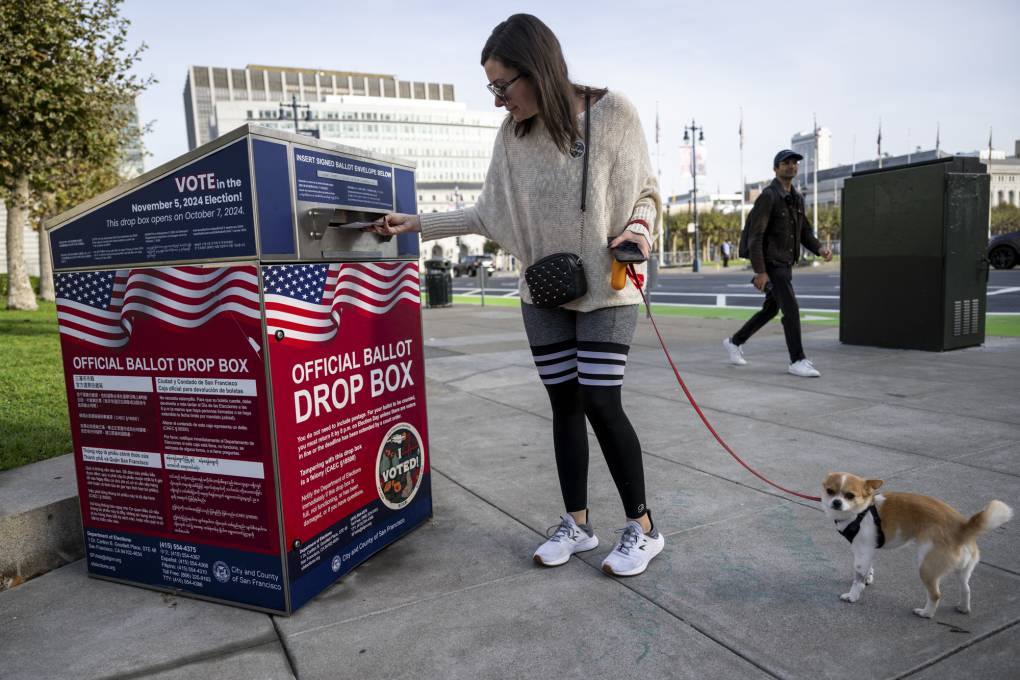
"caption": "Allison Reicher drops off her ballot at a dropbox outside of City Hall in San Francisco on Nov. 5, 2024, with her dog Luna.",
"credit": "Beth LaBerge/KQED",
"altTag": null,
"description": null,
"imgSizes": {
"medium": {
"file": "https://cdn.kqed.org/wp-content/uploads/sites/10/2024/11/241105-ELECTIONDAY-39-BL-KQED-800x533.jpg",
"width": 800,
"height": 533,
"mimeType": "image/jpeg"
},
"large": {
"file": "https://cdn.kqed.org/wp-content/uploads/sites/10/2024/11/241105-ELECTIONDAY-39-BL-KQED-1020x680.jpg",
"width": 1020,
"height": 680,
"mimeType": "image/jpeg"
},
"thumbnail": {
"file": "https://cdn.kqed.org/wp-content/uploads/sites/10/2024/11/241105-ELECTIONDAY-39-BL-KQED-160x107.jpg",
"width": 160,
"height": 107,
"mimeType": "image/jpeg"
},
"1536x1536": {
"file": "https://cdn.kqed.org/wp-content/uploads/sites/10/2024/11/241105-ELECTIONDAY-39-BL-KQED-1536x1024.jpg",
"width": 1536,
"height": 1024,
"mimeType": "image/jpeg"
},
"post-thumbnail": {
"file": "https://cdn.kqed.org/wp-content/uploads/sites/10/2024/11/241105-ELECTIONDAY-39-BL-KQED-672x372.jpg",
"width": 672,
"height": 372,
"mimeType": "image/jpeg"
},
"twentyfourteen-full-width": {
"file": "https://cdn.kqed.org/wp-content/uploads/sites/10/2024/11/241105-ELECTIONDAY-39-BL-KQED-1038x576.jpg",
"width": 1038,
"height": 576,
"mimeType": "image/jpeg"
},
"full-width": {
"file": "https://cdn.kqed.org/wp-content/uploads/sites/10/2024/11/241105-ELECTIONDAY-39-BL-KQED-1920x1280.jpg",
"width": 1920,
"height": 1280,
"mimeType": "image/jpeg"
},
"kqedFullSize": {
"file": "https://cdn.kqed.org/wp-content/uploads/sites/10/2024/11/241105-ELECTIONDAY-39-BL-KQED.jpg",
"width": 2000,
"height": 1333
}
},
"isLoading": false,
"fetchFailed": false
},
"news_12055809": {
"type": "attachments",
"id": "news_12055809",
"meta": {
"index": "attachments_1716263798",
"site": "news",
"id": "12055809",
"found": true
},
"title": "250912-TRUMPSSIGNAGEORDER-17-BL-KQED",
"publishDate": 1757714615,
"status": "inherit",
"parent": 0,
"modified": 1757714774,
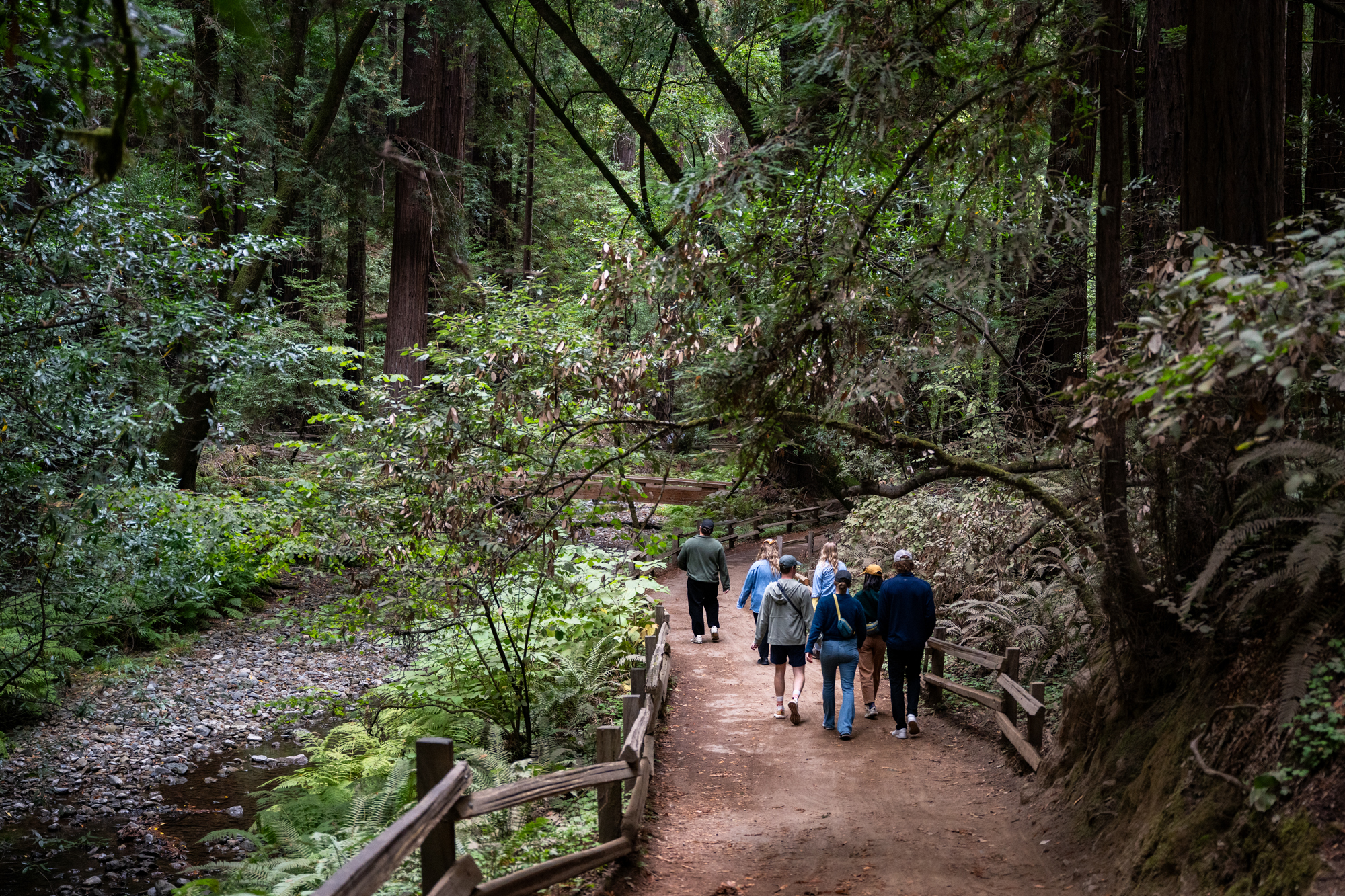
"caption": "Hikers walk through Muir Woods National Monument on Sept. 12, 2025. Part of the Golden Gate National Recreation Area, the monument protects one of the last old-growth coast redwood forests in the Bay Area.",
"credit": "Beth LaBerge/KQED",
"altTag": null,
"description": null,
"imgSizes": {
"thumbnail": {
"file": "https://cdn.kqed.org/wp-content/uploads/sites/10/2025/09/250912-TRUMPSSIGNAGEORDER-17-BL-KQED-160x107.jpg",
"width": 160,
"height": 107,
"mimeType": "image/jpeg"
},
"1536x1536": {
"file": "https://cdn.kqed.org/wp-content/uploads/sites/10/2025/09/250912-TRUMPSSIGNAGEORDER-17-BL-KQED-1536x1024.jpg",
"width": 1536,
"height": 1024,
"mimeType": "image/jpeg"
},
"post-thumbnail": {
"file": "https://cdn.kqed.org/wp-content/uploads/sites/10/2025/09/250912-TRUMPSSIGNAGEORDER-17-BL-KQED-672x372.jpg",
"width": 672,
"height": 372,
"mimeType": "image/jpeg"
},
"twentyfourteen-full-width": {
"file": "https://cdn.kqed.org/wp-content/uploads/sites/10/2025/09/250912-TRUMPSSIGNAGEORDER-17-BL-KQED-1038x576.jpg",
"width": 1038,
"height": 576,
"mimeType": "image/jpeg"
},
"kqedFullSize": {
"file": "https://cdn.kqed.org/wp-content/uploads/sites/10/2025/09/250912-TRUMPSSIGNAGEORDER-17-BL-KQED.jpg",
"width": 2000,
"height": 1333
}
},
"isLoading": false,
"fetchFailed": false
},
"news_12056813": {
"type": "attachments",
"id": "news_12056813",
"meta": {
"index": "attachments_1716263798",
"site": "news",
"id": "12056813",
"found": true
},
"title": "holt_286_4870.jpg",
"publishDate": 1758301557,
"status": "inherit",
"parent": 12056776,
"modified": 1758308245,
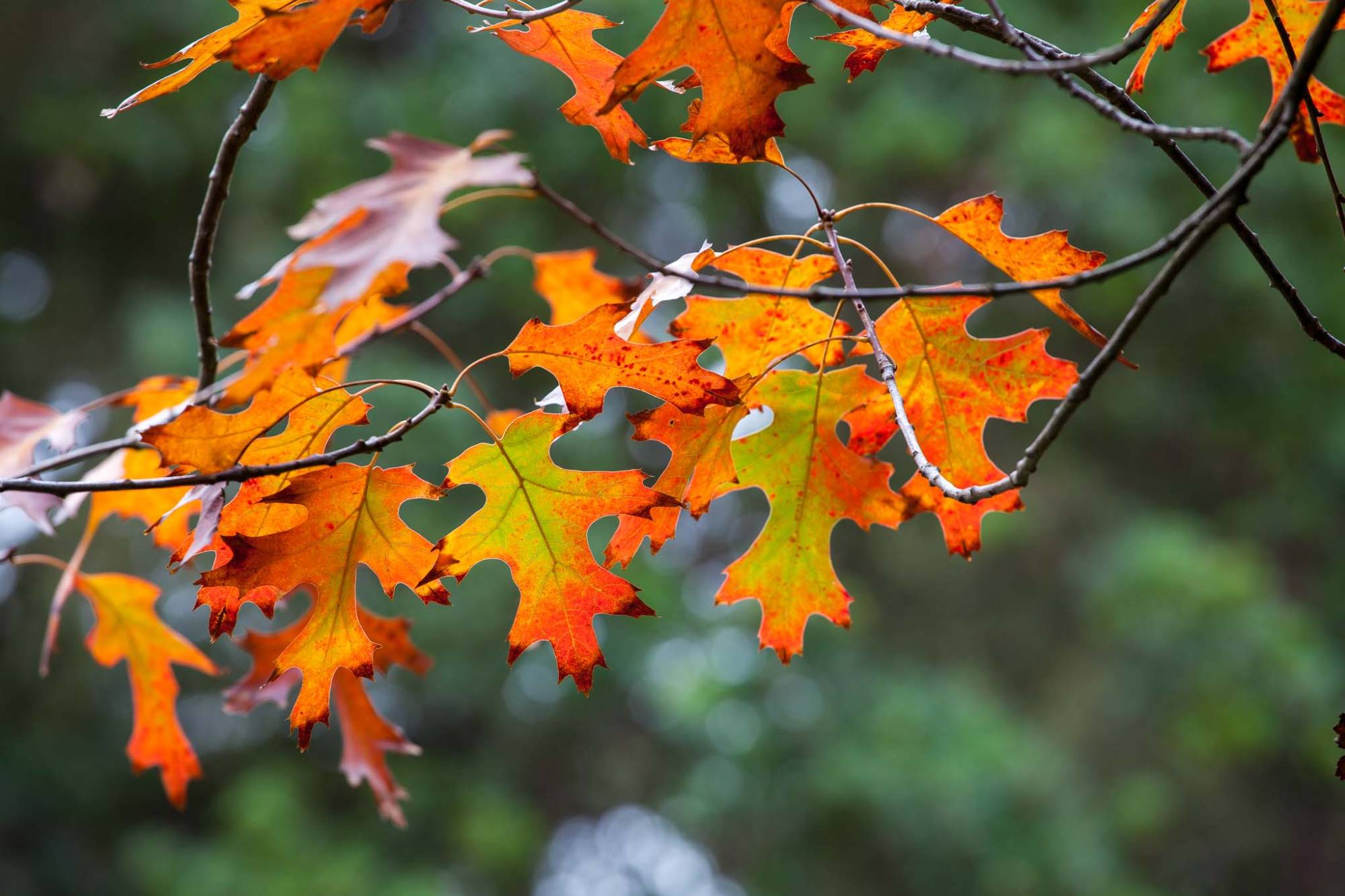
"caption": "Quercus rubra, a Northern Red Oak tree with leaves in fall color in San Francisco's Botanical Garden.",
"credit": "Courtesy of Saxon Holt",
"altTag": null,
"description": null,
"imgSizes": {
"medium": {
"file": "https://cdn.kqed.org/wp-content/uploads/sites/10/2025/09/holt_286_4870-2000x1333.jpg",
"width": 2000,
"height": 1333,
"mimeType": "image/jpeg"
},
"large": {
"file": "https://cdn.kqed.org/wp-content/uploads/sites/10/2025/09/holt_286_4870-2000x1333.jpg",
"width": 2000,
"height": 1333,
"mimeType": "image/jpeg"
},
"thumbnail": {
"file": "https://cdn.kqed.org/wp-content/uploads/sites/10/2025/09/holt_286_4870-160x107.jpg",
"width": 160,
"height": 107,
"mimeType": "image/jpeg"
},
"1536x1536": {
"file": "https://cdn.kqed.org/wp-content/uploads/sites/10/2025/09/holt_286_4870-1536x1024.jpg",
"width": 1536,
"height": 1024,
"mimeType": "image/jpeg"
},
"post-thumbnail": {
"file": "https://cdn.kqed.org/wp-content/uploads/sites/10/2025/09/holt_286_4870-672x372.jpg",
"width": 672,
"height": 372,
"mimeType": "image/jpeg"
},
"twentyfourteen-full-width": {
"file": "https://cdn.kqed.org/wp-content/uploads/sites/10/2025/09/holt_286_4870-1038x576.jpg",
"width": 1038,
"height": 576,
"mimeType": "image/jpeg"
},
"full-width": {
"file": "https://cdn.kqed.org/wp-content/uploads/sites/10/2025/09/holt_286_4870-2000x1333.jpg",
"width": 2000,
"height": 1333,
"mimeType": "image/jpeg"
},
"kqedFullSize": {
"file": "https://cdn.kqed.org/wp-content/uploads/sites/10/2025/09/holt_286_4870-e1758301572353.jpg",
"width": 2000,
"height": 1333
}
},
"isLoading": false,
"fetchFailed": false
}
},
"audioPlayerReducer": {
"postId": "stream_live",
"isPaused": true,
"isPlaying": false,
"pfsActive": false,
"pledgeModalIsOpen": true,
"playerDrawerIsOpen": false,
"liveAudioPlayStartedAt": 0,
"liveAudioPlayContext": ""
},
"authorsReducer": {
"gmarzorati": {
"type": "authors",
"id": "227",
"meta": {
"index": "authors_1716337520",
"id": "227",
"found": true
},
"name": "Guy Marzorati",
"firstName": "Guy",
"lastName": "Marzorati",
"slug": "gmarzorati",
"email": "gmarzorati@KQED.org",
"display_author_email": true,
"staff_mastheads": [
"news"
],
"title": "Correspondent",
"bio": "Guy Marzorati is a correspondent on KQED's California Politics and Government Desk, based in San Jose. A graduate of Santa Clara University, Guy joined KQED in 2013. He reports on state and local politics and produces KQED's digital voter guide.",
"avatar": "https://secure.gravatar.com/avatar/e7038b8dbfd55b104369b76b1cd0b9de?s=600&d=blank&r=g",
"twitter": "guymarzorati",
"facebook": null,
"instagram": null,
"linkedin": null,
"sites": [
{
"site": "",
"roles": [
"editor"
]
},
{
"site": "news",
"roles": [
"editor"
]
},
{
"site": "science",
"roles": [
"editor"
]
},
{
"site": "forum",
"roles": [
"editor"
]
},
{
"site": "elections",
"roles": [
"editor"
]
},
{
"site": "liveblog",
"roles": [
"editor"
]
}
],
"headData": {
"title": "Guy Marzorati | KQED",
"description": "Correspondent",
"ogImgSrc": "https://secure.gravatar.com/avatar/e7038b8dbfd55b104369b76b1cd0b9de?s=600&d=blank&r=g",
"twImgSrc": "https://secure.gravatar.com/avatar/e7038b8dbfd55b104369b76b1cd0b9de?s=600&d=blank&r=g"
},
"isLoading": false,
"link": "/author/gmarzorati"
},
"carlysevern": {
"type": "authors",
"id": "3243",
"meta": {
"index": "authors_1716337520",
"id": "3243",
"found": true
},
"name": "Carly Severn",
"firstName": "Carly",
"lastName": "Severn",
"slug": "carlysevern",
"email": "csevern@kqed.org",
"display_author_email": false,
"staff_mastheads": [
"news"
],
"title": "Senior Editor, Audience News ",
"bio": "Carly is KQED's Senior Editor of Audience News on the Digital News team, and has reported for the California Report Magazine, Bay Curious and KQED Arts. She's formerly the host of \u003ca href=\"http://ww2.kqed.org/pop/category/the-cooler/\" rel=\"noopener noreferrer\">The Cooler\u003c/a> podcast.",
"avatar": "https://secure.gravatar.com/avatar/54037bf5c128fe678f0ef26cec97a93f2e7f220a22d7285703328f12c42c1b1d?s=600&d=blank&r=g",
"twitter": "teacupinthebay",
"bluesky": null,
"facebook": null,
"instagram": null,
"linkedin": null,
"sites": [
{
"site": "",
"roles": [
"editor"
]
},
{
"site": "arts",
"roles": [
"editor"
]
},
{
"site": "news",
"roles": [
"administrator"
]
},
{
"site": "pop",
"roles": [
"editor"
]
},
{
"site": "futureofyou",
"roles": [
"editor"
]
},
{
"site": "about",
"roles": [
"administrator"
]
},
{
"site": "mindshift",
"roles": [
"editor"
]
},
{
"site": "bayareabites",
"roles": [
"editor"
]
},
{
"site": "stateofhealth",
"roles": [
"editor"
]
},
{
"site": "science",
"roles": [
"editor"
]
},
{
"site": "food",
"roles": [
"contributor"
]
},
{
"site": "forum",
"roles": [
"editor"
]
},
{
"site": "perspectives",
"roles": [
"administrator"
]
},
{
"site": "liveblog",
"roles": [
"editor"
]
}
],
"headData": {
"title": "Carly Severn | KQED",
"description": "Senior Editor, Audience News ",
"ogImgSrc": "https://secure.gravatar.com/avatar/54037bf5c128fe678f0ef26cec97a93f2e7f220a22d7285703328f12c42c1b1d?s=600&d=blank&r=g",
"twImgSrc": "https://secure.gravatar.com/avatar/54037bf5c128fe678f0ef26cec97a93f2e7f220a22d7285703328f12c42c1b1d?s=600&d=blank&r=g"
},
"isLoading": false,
"link": "/author/carlysevern"
},
"ccabreralomeli": {
"type": "authors",
"id": "11708",
"meta": {
"index": "authors_1716337520",
"id": "11708",
"found": true
},
"name": "Carlos Cabrera-Lomelí",
"firstName": "Carlos",
"lastName": "Cabrera-Lomelí",
"slug": "ccabreralomeli",
"email": "ccabreralomeli@KQED.org",
"display_author_email": true,
"staff_mastheads": [
"news"
],
"title": "Community Reporter",
"bio": "Carlos Cabrera-Lomelí is a community reporter with KQED's digital engagement team. He also reports and co-produces for KQED's bilingual news hub KQED en Español. He grew up in San Francisco's Mission District and has previously worked with Univision, 48 Hills and REFORMA in Mexico City.",
"avatar": "https://secure.gravatar.com/avatar/c309be9665e484f887b818c89e273ecc673004f426f36b24d00a4d813a2e0518?s=600&d=blank&r=g",
"twitter": "@LomeliCabrera",
"bluesky": null,
"facebook": null,
"instagram": null,
"linkedin": null,
"sites": [
{
"site": "arts",
"roles": [
"editor"
]
},
{
"site": "news",
"roles": [
"editor"
]
},
{
"site": "about",
"roles": [
"editor"
]
},
{
"site": "science",
"roles": [
"editor"
]
},
{
"site": "perspectives",
"roles": [
"editor"
]
},
{
"site": "elections",
"roles": [
"editor"
]
},
{
"site": "liveblog",
"roles": [
"contributor"
]
}
],
"headData": {
"title": "Carlos Cabrera-Lomelí | KQED",
"description": "Community Reporter",
"ogImgSrc": "https://secure.gravatar.com/avatar/c309be9665e484f887b818c89e273ecc673004f426f36b24d00a4d813a2e0518?s=600&d=blank&r=g",
"twImgSrc": "https://secure.gravatar.com/avatar/c309be9665e484f887b818c89e273ecc673004f426f36b24d00a4d813a2e0518?s=600&d=blank&r=g"
},
"isLoading": false,
"link": "/author/ccabreralomeli"
},
"sjohnson": {
"type": "authors",
"id": "11840",
"meta": {
"index": "authors_1716337520",
"id": "11840",
"found": true
},
"name": "Sydney Johnson",
"firstName": "Sydney",
"lastName": "Johnson",
"slug": "sjohnson",
"email": "sjohnson@kqed.org",
"display_author_email": false,
"staff_mastheads": [
"news"
],
"title": "KQED Reporter",
"bio": "Sydney Johnson is a general assignment reporter at KQED. She previously reported on public health and city government at the San Francisco Examiner, and before that, she covered statewide education policy for EdSource. Her reporting has won multiple local, state and national awards. Sydney is a graduate of the University of California, Berkeley and lives in San Francisco.",
"avatar": "https://secure.gravatar.com/avatar/97855f2719b72ad6190b7c535fe642c8?s=600&d=blank&r=g",
"twitter": "sydneyfjohnson",
"facebook": null,
"instagram": null,
"linkedin": null,
"sites": [
{
"site": "news",
"roles": [
"editor"
]
}
],
"headData": {
"title": "Sydney Johnson | KQED",
"description": "KQED Reporter",
"ogImgSrc": "https://secure.gravatar.com/avatar/97855f2719b72ad6190b7c535fe642c8?s=600&d=blank&r=g",
"twImgSrc": "https://secure.gravatar.com/avatar/97855f2719b72ad6190b7c535fe642c8?s=600&d=blank&r=g"
},
"isLoading": false,
"link": "/author/sjohnson"
},
"nkhan": {
"type": "authors",
"id": "11867",
"meta": {
"index": "authors_1716337520",
"id": "11867",
"found": true
},
"name": "Nisa Khan",
"firstName": "Nisa",
"lastName": "Khan",
"slug": "nkhan",
"email": "nkhan@kqed.org",
"display_author_email": false,
"staff_mastheads": [],
"title": "KQED Contributor",
"bio": "Nisa Khan is a reporter for KQED's Audience News Desk. She was formerly a data reporter at Michigan Radio. She earned a Bachelor of Science in Information from the University of Michigan and a Master of Arts in Communication from Stanford University.",
"avatar": "https://secure.gravatar.com/avatar/8720459eef081ff64582b3506b124d58523e80e120704a0cbd9892533c914991?s=600&d=blank&r=g",
"twitter": "mnisakhan",
"bluesky": null,
"facebook": null,
"instagram": null,
"linkedin": null,
"sites": [
{
"site": "arts",
"roles": [
"editor"
]
},
{
"site": "news",
"roles": [
"editor"
]
},
{
"site": "science",
"roles": [
"editor",
"author"
]
},
{
"site": "forum",
"roles": [
"editor"
]
},
{
"site": "liveblog",
"roles": [
"contributor"
]
}
],
"headData": {
"title": "Nisa Khan | KQED",
"description": "KQED Contributor",
"ogImgSrc": "https://secure.gravatar.com/avatar/8720459eef081ff64582b3506b124d58523e80e120704a0cbd9892533c914991?s=600&d=blank&r=g",
"twImgSrc": "https://secure.gravatar.com/avatar/8720459eef081ff64582b3506b124d58523e80e120704a0cbd9892533c914991?s=600&d=blank&r=g"
},
"isLoading": false,
"link": "/author/nkhan"
},
"sarahwright": {
"type": "authors",
"id": "11956",
"meta": {
"index": "authors_1716337520",
"id": "11956",
"found": true
},
"name": "Sarah Wright",
"firstName": "Sarah",
"lastName": "Wright",
"slug": "sarahwright",
"email": "swright@kqed.org",
"display_author_email": true,
"staff_mastheads": [],
"title": "Outdoors Engagement Reporter",
"bio": "Sarah Wright is KQED's Outdoors Engagement Reporter. Originally from Lake Tahoe, she completed a thru-hike of the Pacific Crest Trail in 2019 and was a U.S. Fulbright Program grantee to Argentina in 2023. Her journalism has appeared in The Guardian, The San Francisco Standard, The Palo Alto Weekly and the Half Moon Bay Review.",
"avatar": "https://secure.gravatar.com/avatar/c161a3d6441865cba25e6db4fa561099ad665799e9432e34da2b84d7e371524c?s=600&d=blank&r=g",
"twitter": null,
"bluesky": null,
"facebook": null,
"instagram": null,
"linkedin": null,
"sites": [
{
"site": "arts",
"roles": [
"editor"
]
},
{
"site": "news",
"roles": [
"editor"
]
},
{
"site": "science",
"roles": [
"contributor",
"author"
]
},
{
"site": "forum",
"roles": [
"editor"
]
}
],
"headData": {
"title": "Sarah Wright | KQED",
"description": "Outdoors Engagement Reporter",
"ogImgSrc": "https://secure.gravatar.com/avatar/c161a3d6441865cba25e6db4fa561099ad665799e9432e34da2b84d7e371524c?s=600&d=blank&r=g",
"twImgSrc": "https://secure.gravatar.com/avatar/c161a3d6441865cba25e6db4fa561099ad665799e9432e34da2b84d7e371524c?s=600&d=blank&r=g"
},
"isLoading": false,
"link": "/author/sarahwright"
}
},
"pagesReducer": {
"news_category_guides-and-explainers": {
"type": "terms",
"id": "news_34168",
"meta": {
"index": "terms_1716263798",
"site": "news",
"id": "34168",
"score": 14.406026
},
"name": "Guides and Explainers",
"slug": "guides-and-explainers",
"taxonomy": "category",
"description": null,
"featImg": null,
"headData": {
"title": "Guides and Explainers Archives | KQED News",
"description": null,
"ogTitle": null,
"ogDescription": null,
"ogImgId": null,
"twTitle": null,
"twDescription": null,
"twImgId": null
},
"ttid": 34185,
"isLoading": false,
"title": "Guides and Explainers",
"pageMeta": {
"site": "news",
"WpPageTemplate": "page-topic-editorial",
"currentPage": 18
},
"blocks": [
{
"blockName": "kqed/post-list",
"attrs": {
"layout": "cardArticle2",
"query": "posts/news?category=guides-and-explainers",
"seeMore": false,
"paginated": true,
"page": 18
}
},
{
"blockName": "kqed/ad"
}
]
}
},
"pfsSessionReducer": {},
"postsReducer": {
"stream_live": {
"type": "live",
"id": "stream_live",
"audioUrl": "https://streams.kqed.org/kqedradio",
"title": "Live Stream",
"excerpt": "Live Stream information currently unavailable.",
"link": "/radio",
"featImg": "",
"label": {
"name": "KQED Live",
"link": "/"
}
},
"stream_kqedNewscast": {
"type": "posts",
"id": "stream_kqedNewscast",
"audioUrl": "https://www.kqed.org/.stream/anon/radio/RDnews/newscast.mp3?_=1",
"title": "KQED Newscast",
"featImg": "",
"label": {
"name": "88.5 FM",
"link": "/"
}
},
"news_11967137": {
"type": "posts",
"id": "news_11967137",
"meta": {
"index": "posts_1716263798",
"site": "news",
"id": "11967137",
"score": null,
"sort": [
1764014125000
]
},
"guestAuthors": [],
"slug": "how-to-handle-hard-conversations-with-family-this-holiday-season",
"title": "Dreading Difficult Family Conversations This Holiday Season? Ideas for Navigating Tough Topics",
"publishDate": 1764014125,
"format": "standard",
"headTitle": "Dreading Difficult Family Conversations This Holiday Season? Ideas for Navigating Tough Topics | KQED",
"labelTerm": {
"site": "news"
},
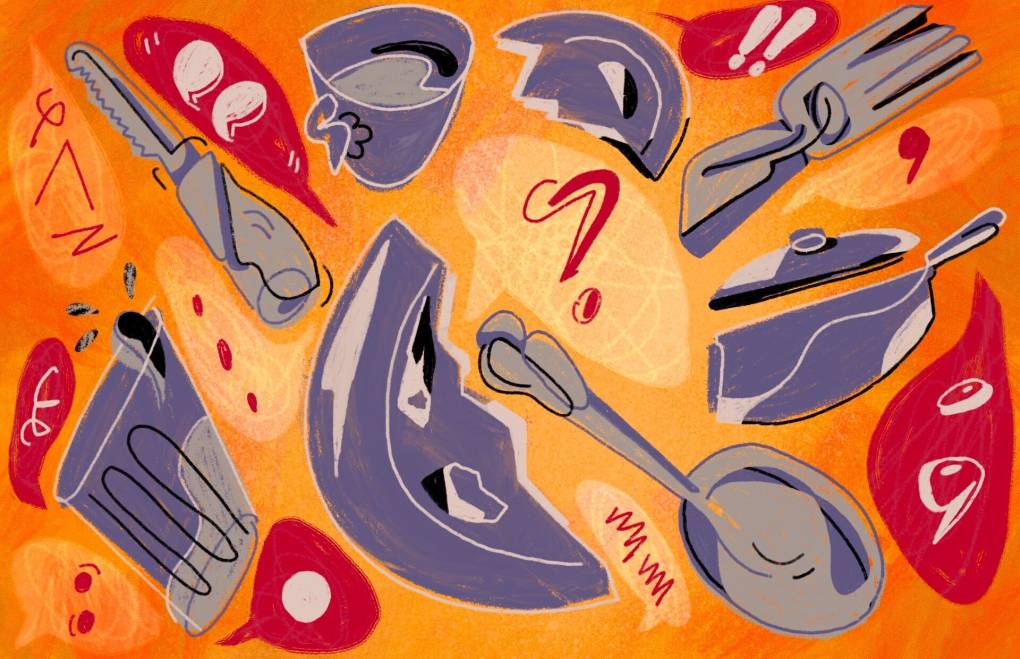
"content": "\u003cp>Disagreement can be one of the hardest things to prepare for when visiting with loved ones — especially during intense and polarizing political climates.\u003c/p>\n\u003cp>But there are ways to make the experience a little smoother, said family therapists, who shared their ideas with KQED for what to do when conversations around the dinner table go awry.\u003c/p>\n\u003cp>“I see this in my practice all the time,” said Dr. Sarah Crouch, a clinical psychologist and director of San Francisco’s Whole Family Therapy Program. “It’s super common for families that everyone in a family may have a different opinion from another family member. And it is distressing.”\u003c/p>\n\u003cp>Marriage and family therapist Tiffany Totah said that at this time of year, existing family tensions can start to bubble.\u003c/p>\n\u003cp>“As therapists, we help our clients gear up for family holidays even without any external political situations,” said Totah, who also runs group therapy circles for Bay Area Arab communities. “Even though we are in a very difficult time for many communities right now, families can have challenges around the holidays for a lot of reasons.”\u003c/p>\n\u003ch2>Why family conflict can cut so deep\u003c/h2>\n\u003cp>Despite how ubiquitous family fights may be, they can feel isolating in the moment they occur.\u003c/p>\n\u003cp>Crouch said that’s because, from a very young age, we develop deep emotional connections to our caregivers as a means of survival. When friction develops — be it over current events, family trauma or something entirely different — it can threaten our innate sense of security and safety.[pullquote size='medium' align='right' citation=\"Tiffany Totah, marriage and family therapist\"]‘Even though we are in a very difficult time for many communities right now, families can have challenges around the holidays for a lot of reasons.’[/pullquote]\u003c/p>\n\u003cp>“Staying emotionally connected to our family members is actually a very critical human need that we have,” Crouch said. “If intense family discussions lead to disconnection, people storming away from the table, that is truly distressing and makes people want to avoid it.”\u003c/p>\n\u003cp>Events unfolding around the 2024 holidays may pose specific challenges, like heated arguments across generations about the November election in the United States, or the ongoing \u003ca href=\"https://www.kqed.org/news/tag/gaza\">the Israel-Hamas war\u003c/a>. But while differences in ideology or opinion often spark clashes between family members, experts who spoke to KQED about these types of arguments stressed that conversations are more likely to spiral when individuals feel their beliefs — and their identity — are consequently being rejected by their family.\u003c/p>\n\u003cp>Of course, Crouch said, there is always the option not to engage, and no one should be obligated to put themselves in a situation that could be harmful or even dangerous. (To that end, check out KQED’s 2020 \u003ca href=\"https://www.kqed.org/news/11846759/saying-no-to-a-covid-thanksgiving-holidays-how-to-break-it-to-family-or-friends\">guide to diplomatically declining a family visit over the holidays, even at short notice.\u003c/a>)\u003c/p>\n\u003cp>For those who want to spend time with loved ones but have trepidations about doing so, we’ve gathered support and guidance from Bay Area family therapists on getting through the holiday season when conflict seems imminent.\u003c/p>\n\u003ch2>Prepare yourself for potential disagreement\u003c/h2>\n\u003cp>Allen Choi, a therapist with the East Bay Center for Teen and Family Therapy, said the first place to start when emotionally preparing for a difficult visit home is to check in with yourself.\u003c/p>\n\u003cp>“We can’t control other people. So the first step is knowing yourself and understanding patterns within you,” Choi said.\u003c/p>\n\u003cp>Some questions to reflect on before your visit could include:\u003c/p>\n\u003cul>\n\u003cli>What is the pattern happening?\u003c/li>\n\u003cli>When someone disagrees with me, how uncomfortable do I feel?\u003c/li>\n\u003cli>What about disagreement with this person upsets me? Why do I want them to agree?\u003c/li>\n\u003cli>How well am \u003cem>I\u003c/em> listening when conflict arises?\u003c/li>\n\u003c/ul>\n\u003cp>The second step, Choi said, is knowing your limits and when to disengage.\u003c/p>\n\u003cp>“It’s okay to be honest if you can’t handle a conversation,” Choi said. “Draw a boundary for yourself. You can take a step back. There are a lot of other ways to connect with family.”\u003c/p>\n\u003cp>Some families and cultures have stronger obligations to be present at gatherings, Totah said. To that end, allowing permission to take a break or miss an event is an important way to prepare.[pullquote size='medium' align='right' citation=\"Allen Choi, therapist\"]‘We can’t control other people. So the first step is knowing yourself and understanding patterns within you.’[/pullquote]\u003c/p>\n\u003cp>“I always start with ‘Where are you at, and what is your capacity for managing the intensity,’” Totah recommended.\u003c/p>\n\u003cp>“More often than not, it’s about helping clients get permission to say, ‘You know, I think I’m going to sit this one out.’ Or ‘I’ll do this one, but maybe not the next.’”\u003c/p>\n\u003ch2>Recognize when facts alone won’t help — and try another tack\u003c/h2>\n\u003cp>Fights within families are often highly emotionally charged. That doesn’t mean facts don’t matter — they certainly do.\u003c/p>\n\u003cp>But coming to a family gathering armed with a list of talking points is more likely to put people on the defensive than foster fruitful conversation, let alone get someone to agree with you, Crouch said.\u003c/p>\n\u003cp>When it’s possible, Choi recommends offering an olive branch of sorts. Most importantly, listen with curiosity in those difficult conversations and try to intake the information by showing what you have heard to help slow escalation and show intentions — even if there’s disagreement.\u003c/p>\n\u003cp>This could look like:\u003c/p>\n\u003cul>\n\u003cli>Repeating something they said back to them\u003c/li>\n\u003cli>Asking a follow-up question\u003c/li>\n\u003cli>Even validating slivers of information you might find you agree with.\u003c/li>\n\u003c/ul>\n\u003cp>That isn’t the same thing as staying silent to keep the peace, Crouch said. Rather, it’s about being more attuned to when it’s an appropriate time to debate.\u003c/p>\n\u003cp>“If our minds are calm enough that we are having a rational conversation, then I think facts are great. But when people start getting charged, it’s more about the emotional experience of, ‘Do I matter enough for you to listen to me, and do my ideas matter?’” Crouch said.\u003c/p>\n\u003cp>[ad fullwidth]\u003c/p>\n\u003ch2>Have a plan in mind for if somebody offends you\u003c/h2>\n\u003cp>For people with the bandwidth to go home, Totah recommends having a plan to disengage when relatives are not receptive to a two-way conversation — especially if they have a history of making you uncomfortable or worse.\u003c/p>\n\u003cp>“Let’s identify the individuals who may be more triggering for you than others. Maybe it’s an uncle, or aunt, or mother, or father — that just their presence can create an intense emotional reaction within somebody,” Totah said. “We try to create as much safety for the person by distracting activities, giving themselves permission to leave and [identifying] support systems within the family.”[pullquote size='medium' align='right' citation=\"Dr. Sarah Crouch, clinical psychologist\"]‘If intense family discussions lead to disconnection, people storming away from the table, that is truly distressing and makes people want to avoid it.’[/pullquote]\u003c/p>\n\u003cp>Shutting down can be a common response to fighting with loved ones, according to Robyn Bloom, a therapist and director of adult services at Jewish Family and Children’s Services in San Francisco.\u003c/p>\n\u003cp>But it can also later lead to regret — for not standing up for oneself or sharing your opinion and allowing others to take over. Or, as Bloom put it, “At what point does silence equal self-betrayal?”\u003c/p>\n\u003cp>With her clients, Bloom encourages them to anticipate conflict and develop a plan beforehand, keeping the plan flexible.\u003c/p>\n\u003cp>Either before your gathering or amid a heated moment, try sharing your intention, Bloom added.\u003c/p>\n\u003cp>“You can simply say, ‘What’s most important to me here is that we can connect and enjoy our time together. If things start to feel out of sync, can we take a step back together?” Bloom said. “Have that conversation. Acknowledge that things can be hard, but your intention and desire is to feel more connected at the end of the day.”\u003c/p>\n\u003cp>This isn’t you staying silent — but instead finding a way to hit ‘pause’ on the argument.\u003c/p>\n\u003ch2>Know how to reduce your physical stress in heated moments\u003c/h2>\n\u003cp>When we get upset, our bodies notice. We might feel a tightening in our chest, our head is getting warmer, a shaky feeling or loss of appetite.\u003c/p>\n\u003cp>Practicing self-soothing is an important skill for those moments to re-regulate the nervous system, allowing us to stay present and engaged when we want to be. Here are a few ways to put this into practice:\u003c/p>\n\u003cp>\u003cstrong>Listen to your body\u003c/strong>\u003c/p>\n\u003cp>“Identifying what’s happening in the body is a good regulator because it takes you a bit out of your head and the argument and points you to what the sensations in your body are,” Choi said.\u003c/p>\n\u003cp>\u003cstrong>Calm your system\u003c/strong>\u003c/p>\n\u003cp>Slow, deep breathing in through the nose and out through the mouth is a proven method for calming down.\u003c/p>\n\u003cp>Light tapping on your chest can also have a soothing effect, Choi said, or a temple massage.\u003c/p>\n\u003cp>\u003cstrong>Watch what you put in your body\u003c/strong>\u003c/p>\n\u003cp>Bloom also reminds that drinking alcohol can add another tricky element to heated family arguments during holiday gatherings. She suggests being conscious of how substances impact our own (and others) behavior and using that information when determining whether engaging on a topic is worth it or not.\u003c/p>\n\u003cp>Totah recommends having an ice-cold glass of water handy. The cold temperature triggers a response that can slow the brain down, she said — helping slow the brain down for thoughtful discourse rather than a knee-jerk reaction.\u003c/p>\n\u003cp>“People are trying to wrap their minds around making sense of everything in their own way,” Totah said. “That’s difficult when your nervous system is overactivated. It inhibits clarity.”\u003c/p>\n\u003cp>\u003cstrong>Remember: You can get up and leave\u003c/strong>\u003c/p>\n\u003cp>“It’s okay to excuse oneself from that mess of a conversation that’s not going anywhere,” Crouch said.\u003c/p>\n\u003ch2>Emphasize community — and lead with compassion\u003c/h2>\n\u003cp>Totah underscores that it is important to discuss difficult topics and events. But her hope with clients is that these conversations can come from a place of trying to move forward together.\u003c/p>\n\u003cp>“We need to speak up about what’s happening irrespective of where people are, whether it’s COVID or the election or what’s happening now in Israel and Gaza,” she said. “Let’s not speak of the division and the sides, but how we are all human beings and how we can move forward in a way that minimizes damage. Not just collectively but within our families. It starts with us.”[pullquote size='medium' align='right' citation=\"Tiffany Totah, marriage and family therapist\"]‘As inflammatory or entrenched as some things are, can you find it in your mind to say ‘That does not have to be my experience’?’[/pullquote]\u003c/p>\n\u003cp>She also underscores how, within families, people will view situations from their own generational lens and traumas.\u003c/p>\n\u003cp>“Your parents and grandparents are seeing things from a whole other perspective. How can we find empathy?” Totah said. “As inflammatory or entrenched as some things are, can you find it in your mind to say, ‘That does not have to be my experience’? And ‘Can I allow them to have their experience?’”\u003c/p>\n\u003ch2>Ask yourself: What do you hope to get from being with family over the holidays?\u003c/h2>\n\u003cp>Choi recommends taking inventory of our goals for spending time with family and entering potentially triggering environments. Some questions to ask yourself could be:\u003c/p>\n\u003cul>\n\u003cli>How am I hoping to feel after this visit?\u003c/li>\n\u003cli>What are things I’m looking forward to sharing with the people I’m visiting?\u003c/li>\n\u003c/ul>\n\u003cp>“Everyone has a different relationship to family. Assuming you want to be there with family, take a step back and understand why you are doing it. Maybe you enjoy the food, the holiday, the people?” Choi told KQED.\u003c/p>\n\u003cp>“Take the greater perspective of what’s actually going on, which is hopefully some connection and care and relaxation for the holidays.”\u003c/p>\n\u003cp>\u003cem>This story was originally published on Nov. 22, 2023.\u003c/em>\u003c/p>\n\u003cp>[ad floatright]\u003c/p>\n",
"blocks": [],
"excerpt": "Family tensions can be sparked by tough topics, especially during the holidays. Therapists share ways to de-escalate tough moments and prioritize mental health.",
"status": "publish",
"parent": 0,
"modified": 1764108488,
"stats": {
"hasAudio": false,
"hasVideo": false,
"hasChartOrMap": false,
"iframeSrcs": [],
"hasGoogleForm": false,
"hasGallery": false,
"hasHearkenModule": false,
"hasPolis": false,
"paragraphCount": 56,
"wordCount": 2108
},
"headData": {
"title": "Navigating Difficult Family Conversations This Holiday Season | KQED",
"description": "Family gatherings can bring up challenging topics. Learn strategies from therapists to handle tough conversations with loved ones during the holidays.",
"ogTitle": "",
"ogDescription": "",
"ogImgId": "",
"twTitle": "",
"twDescription": "",
"twImgId": "",
"socialTitle": "Navigating Difficult Family Conversations This Holiday Season | KQED",
"socialDescription": "Family gatherings can bring up challenging topics. Learn strategies from therapists to handle tough conversations with loved ones during the holidays.",
"schema": {
"@context": "https://schema.org",
"@type": "NewsArticle",
"headline": "Dreading Difficult Family Conversations This Holiday Season? Ideas for Navigating Tough Topics",
"datePublished": "2025-11-24T11:55:25-08:00",
"dateModified": "2025-11-25T14:08:08-08:00",
"image": "https://cdn.kqed.org/wp-content/uploads/2020/02/KQED-OG-Image@1x.png",
"isAccessibleForFree": "True",
"publisher": {
"@type": "NewsMediaOrganization",
"@id": "https://www.kqed.org/#organization",
"name": "KQED",
"logo": "https://cdn.kqed.org/wp-content/uploads/2020/02/KQED-OG-Image@1x.png",
"url": "https://www.kqed.org",
"sameAs": [
"https://www.facebook.com/KQED",
"https://twitter.com/KQED",
"https://www.instagram.com/kqed/",
"https://www.tiktok.com/@kqedofficial",
"https://www.linkedin.com/company/kqed",
"https://www.youtube.com/channel/UCeC0IOo7i1P_61zVUWbJ4nw"
]
}
}
},
"primaryCategory": {
"termId": 8,
"slug": "news",
"name": "News"
},
"sticky": false,
"templateType": "standard",
"featuredImageType": "standard",
"excludeFromSiteSearch": "Include",
"articleAge": "0",
"path": "/news/11967137/how-to-handle-hard-conversations-with-family-this-holiday-season",
"audioTrackLength": null,
"parsedContent": [
{
"type": "contentString",
"content": "\u003cdiv class=\"post-body\">\u003cp>\u003cp>Disagreement can be one of the hardest things to prepare for when visiting with loved ones — especially during intense and polarizing political climates.\u003c/p>\n\u003cp>But there are ways to make the experience a little smoother, said family therapists, who shared their ideas with KQED for what to do when conversations around the dinner table go awry.\u003c/p>\n\u003cp>“I see this in my practice all the time,” said Dr. Sarah Crouch, a clinical psychologist and director of San Francisco’s Whole Family Therapy Program. “It’s super common for families that everyone in a family may have a different opinion from another family member. And it is distressing.”\u003c/p>\n\u003cp>Marriage and family therapist Tiffany Totah said that at this time of year, existing family tensions can start to bubble.\u003c/p>\n\u003cp>“As therapists, we help our clients gear up for family holidays even without any external political situations,” said Totah, who also runs group therapy circles for Bay Area Arab communities. “Even though we are in a very difficult time for many communities right now, families can have challenges around the holidays for a lot of reasons.”\u003c/p>\n\u003ch2>Why family conflict can cut so deep\u003c/h2>\n\u003cp>Despite how ubiquitous family fights may be, they can feel isolating in the moment they occur.\u003c/p>\n\u003cp>Crouch said that’s because, from a very young age, we develop deep emotional connections to our caregivers as a means of survival. When friction develops — be it over current events, family trauma or something entirely different — it can threaten our innate sense of security and safety.\u003c/p>\u003c/div>",
"attributes": {
"named": {},
"numeric": []
}
},
{
"type": "component",
"content": "‘Even though we are in a very difficult time for many communities right now, families can have challenges around the holidays for a lot of reasons.’",
"name": "pullquote",
"attributes": {
"named": {
"size": "medium",
"align": "right",
"citation": "Tiffany Totah, marriage and family therapist",
"label": ""
},
"numeric": []
}
},
{
"type": "contentString",
"content": "\u003cdiv class=\"post-body\">\u003cp>\u003c/p>\n\u003cp>“Staying emotionally connected to our family members is actually a very critical human need that we have,” Crouch said. “If intense family discussions lead to disconnection, people storming away from the table, that is truly distressing and makes people want to avoid it.”\u003c/p>\n\u003cp>Events unfolding around the 2024 holidays may pose specific challenges, like heated arguments across generations about the November election in the United States, or the ongoing \u003ca href=\"https://www.kqed.org/news/tag/gaza\">the Israel-Hamas war\u003c/a>. But while differences in ideology or opinion often spark clashes between family members, experts who spoke to KQED about these types of arguments stressed that conversations are more likely to spiral when individuals feel their beliefs — and their identity — are consequently being rejected by their family.\u003c/p>\n\u003cp>Of course, Crouch said, there is always the option not to engage, and no one should be obligated to put themselves in a situation that could be harmful or even dangerous. (To that end, check out KQED’s 2020 \u003ca href=\"https://www.kqed.org/news/11846759/saying-no-to-a-covid-thanksgiving-holidays-how-to-break-it-to-family-or-friends\">guide to diplomatically declining a family visit over the holidays, even at short notice.\u003c/a>)\u003c/p>\n\u003cp>For those who want to spend time with loved ones but have trepidations about doing so, we’ve gathered support and guidance from Bay Area family therapists on getting through the holiday season when conflict seems imminent.\u003c/p>\n\u003ch2>Prepare yourself for potential disagreement\u003c/h2>\n\u003cp>Allen Choi, a therapist with the East Bay Center for Teen and Family Therapy, said the first place to start when emotionally preparing for a difficult visit home is to check in with yourself.\u003c/p>\n\u003cp>“We can’t control other people. So the first step is knowing yourself and understanding patterns within you,” Choi said.\u003c/p>\n\u003cp>Some questions to reflect on before your visit could include:\u003c/p>\n\u003cul>\n\u003cli>What is the pattern happening?\u003c/li>\n\u003cli>When someone disagrees with me, how uncomfortable do I feel?\u003c/li>\n\u003cli>What about disagreement with this person upsets me? Why do I want them to agree?\u003c/li>\n\u003cli>How well am \u003cem>I\u003c/em> listening when conflict arises?\u003c/li>\n\u003c/ul>\n\u003cp>The second step, Choi said, is knowing your limits and when to disengage.\u003c/p>\n\u003cp>“It’s okay to be honest if you can’t handle a conversation,” Choi said. “Draw a boundary for yourself. You can take a step back. There are a lot of other ways to connect with family.”\u003c/p>\n\u003cp>Some families and cultures have stronger obligations to be present at gatherings, Totah said. To that end, allowing permission to take a break or miss an event is an important way to prepare.\u003c/p>\u003c/div>",
"attributes": {
"named": {},
"numeric": []
}
},
{
"type": "component",
"content": "‘We can’t control other people. So the first step is knowing yourself and understanding patterns within you.’",
"name": "pullquote",
"attributes": {
"named": {
"size": "medium",
"align": "right",
"citation": "Allen Choi, therapist",
"label": ""
},
"numeric": []
}
},
{
"type": "contentString",
"content": "\u003cdiv class=\"post-body\">\u003cp>\u003c/p>\n\u003cp>“I always start with ‘Where are you at, and what is your capacity for managing the intensity,’” Totah recommended.\u003c/p>\n\u003cp>“More often than not, it’s about helping clients get permission to say, ‘You know, I think I’m going to sit this one out.’ Or ‘I’ll do this one, but maybe not the next.’”\u003c/p>\n\u003ch2>Recognize when facts alone won’t help — and try another tack\u003c/h2>\n\u003cp>Fights within families are often highly emotionally charged. That doesn’t mean facts don’t matter — they certainly do.\u003c/p>\n\u003cp>But coming to a family gathering armed with a list of talking points is more likely to put people on the defensive than foster fruitful conversation, let alone get someone to agree with you, Crouch said.\u003c/p>\n\u003cp>When it’s possible, Choi recommends offering an olive branch of sorts. Most importantly, listen with curiosity in those difficult conversations and try to intake the information by showing what you have heard to help slow escalation and show intentions — even if there’s disagreement.\u003c/p>\n\u003cp>This could look like:\u003c/p>\n\u003cul>\n\u003cli>Repeating something they said back to them\u003c/li>\n\u003cli>Asking a follow-up question\u003c/li>\n\u003cli>Even validating slivers of information you might find you agree with.\u003c/li>\n\u003c/ul>\n\u003cp>That isn’t the same thing as staying silent to keep the peace, Crouch said. Rather, it’s about being more attuned to when it’s an appropriate time to debate.\u003c/p>\n\u003cp>“If our minds are calm enough that we are having a rational conversation, then I think facts are great. But when people start getting charged, it’s more about the emotional experience of, ‘Do I matter enough for you to listen to me, and do my ideas matter?’” Crouch said.\u003c/p>\n\u003cp>\u003c/p>\u003c/div>",
"attributes": {
"named": {},
"numeric": []
}
},
{
"type": "component",
"content": "",
"name": "ad",
"attributes": {
"named": {
"label": "fullwidth"
},
"numeric": [
"fullwidth"
]
}
},
{
"type": "contentString",
"content": "\u003cdiv class=\"post-body\">\u003cp>\u003c/p>\n\u003ch2>Have a plan in mind for if somebody offends you\u003c/h2>\n\u003cp>For people with the bandwidth to go home, Totah recommends having a plan to disengage when relatives are not receptive to a two-way conversation — especially if they have a history of making you uncomfortable or worse.\u003c/p>\n\u003cp>“Let’s identify the individuals who may be more triggering for you than others. Maybe it’s an uncle, or aunt, or mother, or father — that just their presence can create an intense emotional reaction within somebody,” Totah said. “We try to create as much safety for the person by distracting activities, giving themselves permission to leave and [identifying] support systems within the family.”\u003c/p>\u003c/div>",
"attributes": {
"named": {},
"numeric": []
}
},
{
"type": "component",
"content": "‘If intense family discussions lead to disconnection, people storming away from the table, that is truly distressing and makes people want to avoid it.’",
"name": "pullquote",
"attributes": {
"named": {
"size": "medium",
"align": "right",
"citation": "Dr. Sarah Crouch, clinical psychologist",
"label": ""
},
"numeric": []
}
},
{
"type": "contentString",
"content": "\u003cdiv class=\"post-body\">\u003cp>\u003c/p>\n\u003cp>Shutting down can be a common response to fighting with loved ones, according to Robyn Bloom, a therapist and director of adult services at Jewish Family and Children’s Services in San Francisco.\u003c/p>\n\u003cp>But it can also later lead to regret — for not standing up for oneself or sharing your opinion and allowing others to take over. Or, as Bloom put it, “At what point does silence equal self-betrayal?”\u003c/p>\n\u003cp>With her clients, Bloom encourages them to anticipate conflict and develop a plan beforehand, keeping the plan flexible.\u003c/p>\n\u003cp>Either before your gathering or amid a heated moment, try sharing your intention, Bloom added.\u003c/p>\n\u003cp>“You can simply say, ‘What’s most important to me here is that we can connect and enjoy our time together. If things start to feel out of sync, can we take a step back together?” Bloom said. “Have that conversation. Acknowledge that things can be hard, but your intention and desire is to feel more connected at the end of the day.”\u003c/p>\n\u003cp>This isn’t you staying silent — but instead finding a way to hit ‘pause’ on the argument.\u003c/p>\n\u003ch2>Know how to reduce your physical stress in heated moments\u003c/h2>\n\u003cp>When we get upset, our bodies notice. We might feel a tightening in our chest, our head is getting warmer, a shaky feeling or loss of appetite.\u003c/p>\n\u003cp>Practicing self-soothing is an important skill for those moments to re-regulate the nervous system, allowing us to stay present and engaged when we want to be. Here are a few ways to put this into practice:\u003c/p>\n\u003cp>\u003cstrong>Listen to your body\u003c/strong>\u003c/p>\n\u003cp>“Identifying what’s happening in the body is a good regulator because it takes you a bit out of your head and the argument and points you to what the sensations in your body are,” Choi said.\u003c/p>\n\u003cp>\u003cstrong>Calm your system\u003c/strong>\u003c/p>\n\u003cp>Slow, deep breathing in through the nose and out through the mouth is a proven method for calming down.\u003c/p>\n\u003cp>Light tapping on your chest can also have a soothing effect, Choi said, or a temple massage.\u003c/p>\n\u003cp>\u003cstrong>Watch what you put in your body\u003c/strong>\u003c/p>\n\u003cp>Bloom also reminds that drinking alcohol can add another tricky element to heated family arguments during holiday gatherings. She suggests being conscious of how substances impact our own (and others) behavior and using that information when determining whether engaging on a topic is worth it or not.\u003c/p>\n\u003cp>Totah recommends having an ice-cold glass of water handy. The cold temperature triggers a response that can slow the brain down, she said — helping slow the brain down for thoughtful discourse rather than a knee-jerk reaction.\u003c/p>\n\u003cp>“People are trying to wrap their minds around making sense of everything in their own way,” Totah said. “That’s difficult when your nervous system is overactivated. It inhibits clarity.”\u003c/p>\n\u003cp>\u003cstrong>Remember: You can get up and leave\u003c/strong>\u003c/p>\n\u003cp>“It’s okay to excuse oneself from that mess of a conversation that’s not going anywhere,” Crouch said.\u003c/p>\n\u003ch2>Emphasize community — and lead with compassion\u003c/h2>\n\u003cp>Totah underscores that it is important to discuss difficult topics and events. But her hope with clients is that these conversations can come from a place of trying to move forward together.\u003c/p>\n\u003cp>“We need to speak up about what’s happening irrespective of where people are, whether it’s COVID or the election or what’s happening now in Israel and Gaza,” she said. “Let’s not speak of the division and the sides, but how we are all human beings and how we can move forward in a way that minimizes damage. Not just collectively but within our families. It starts with us.”\u003c/p>\u003c/div>",
"attributes": {
"named": {},
"numeric": []
}
},
{
"type": "component",
"content": "‘As inflammatory or entrenched as some things are, can you find it in your mind to say ‘That does not have to be my experience’?’",
"name": "pullquote",
"attributes": {
"named": {
"size": "medium",
"align": "right",
"citation": "Tiffany Totah, marriage and family therapist",
"label": ""
},
"numeric": []
}
},
{
"type": "contentString",
"content": "\u003cdiv class=\"post-body\">\u003cp>\u003c/p>\n\u003cp>She also underscores how, within families, people will view situations from their own generational lens and traumas.\u003c/p>\n\u003cp>“Your parents and grandparents are seeing things from a whole other perspective. How can we find empathy?” Totah said. “As inflammatory or entrenched as some things are, can you find it in your mind to say, ‘That does not have to be my experience’? And ‘Can I allow them to have their experience?’”\u003c/p>\n\u003ch2>Ask yourself: What do you hope to get from being with family over the holidays?\u003c/h2>\n\u003cp>Choi recommends taking inventory of our goals for spending time with family and entering potentially triggering environments. Some questions to ask yourself could be:\u003c/p>\n\u003cul>\n\u003cli>How am I hoping to feel after this visit?\u003c/li>\n\u003cli>What are things I’m looking forward to sharing with the people I’m visiting?\u003c/li>\n\u003c/ul>\n\u003cp>“Everyone has a different relationship to family. Assuming you want to be there with family, take a step back and understand why you are doing it. Maybe you enjoy the food, the holiday, the people?” Choi told KQED.\u003c/p>\n\u003cp>“Take the greater perspective of what’s actually going on, which is hopefully some connection and care and relaxation for the holidays.”\u003c/p>\n\u003cp>\u003cem>This story was originally published on Nov. 22, 2023.\u003c/em>\u003c/p>\n\u003cp>\u003c/p>\u003c/div>",
"attributes": {
"named": {},
"numeric": []
}
},
{
"type": "component",
"content": "",
"name": "ad",
"attributes": {
"named": {
"label": "floatright"
},
"numeric": [
"floatright"
]
}
},
{
"type": "contentString",
"content": "\u003cdiv class=\"post-body\">\u003cp>\u003c/p>\n\u003c/div>\u003c/p>",
"attributes": {
"named": {},
"numeric": []
}
}
],
"link": "/news/11967137/how-to-handle-hard-conversations-with-family-this-holiday-season",
"authors": [
"11840"
],
"categories": [
"news_34168",
"news_8"
],
"tags": [
"news_32707",
"news_35888",
"news_293"
],
"featImg": "news_11967146",
"label": "news"
},
"news_12064955": {
"type": "posts",
"id": "news_12064955",
"meta": {
"index": "posts_1716263798",
"site": "news",
"id": "12064955",
"score": null,
"sort": [
1763812852000
]
},
"guestAuthors": [],
"slug": "is-it-possible-to-ski-tahoe-without-spending-a-fortune",
"title": "Is it Possible to Ski Tahoe Without Spending a Fortune?",
"publishDate": 1763812852,
"format": "standard",
"headTitle": "Is it Possible to Ski Tahoe Without Spending a Fortune? | KQED",
"labelTerm": {
"site": "news"
},
"content": "\u003cp>If you’ve spent any time around the \u003ca href=\"https://www.kqed.org/news/tag/tahoe\">Tahoe\u003c/a> region in the last few years, you’ll know: Skiing and snowboarding have gotten \u003cem>really \u003c/em>expensive. And a huge part of those costs are the resort passes themselves, which offer access to the mountain.\u003c/p>\n\u003cp>As ski season rapidly approaches, companies like \u003ca href=\"https://www.ikonpass.com/en/shop-passes/ikon-pass\">Ikon\u003c/a> and \u003ca href=\"https://www.epicpass.com/pass-results/passes.aspx?ef_id=Cj0KCQiAq7HIBhDoARIsAOATDxD4QLmZDRZiFd723Lspb1wUR7E057a7jaLrYfjfJgLaZPtaQsiPPmUaAmYnEALw_wcB:G:s&s_kwcid=AL!11600!3!780941002272!e!!g!!epic%20pass%20tahoe!22264120545!180590021732&CMPID=PPC&gad_source=1&gad_campaignid=22264120545&gbraid=0AAAAADQhkiBbM5W5bM1u7D0uZyVqkuxW3&gclid=Cj0KCQiAq7HIBhDoARIsAOATDxD4QLmZDRZiFd723Lspb1wUR7E057a7jaLrYfjfJgLaZPtaQsiPPmUaAmYnEALw_wcB\">Epic\u003c/a> — which represent the biggest resorts in the Lake Tahoe region — will be ending their multi-resort pass sales around early to mid-December. For the 2025–26 season, a full Ikon pass offering unlimited access at 18 resorts worldwide, including Palisades Tahoe and Sierra-at-Tahoe, is a steep $1,519. The Epic Pass, which includes unrestricted access to 42 resorts, including Tahoe’s Heavenly, Northstar and Kirkwood, is $1,185. And both Ikon and Epic’s pass prices have increased with each passing year.\u003c/p>\n\u003cp>The costs of these passes have driven many skiers and snowboarders into the backcountry, outside of the resorts’ boundaries. But backcountry skiing, while free of pass costs, also requires \u003ca href=\"https://www.kqed.org/news/11972590/with-tahoe-winter-storm-warning-this-weekend-what-to-know-about-avalanche-risk\">a considerable degree of navigation and safety knowledge, including avalanche training\u003c/a>.\u003c/p>\n\u003cp>[ad fullwidth]\u003c/p>\n\u003cp>So, what are the options for Bay Area skiers or snowboarders who still want all the convenience of a resort without breaking the bank on a pass, or battling the crowds and traffic of the larger Tahoe destinations?\u003c/p>\n\u003cp>Keep reading for our alternatives to the major resort passes on offer this winter. And remember: If you’re thinking about any of these options, you’re better off buying sooner rather than later, as some resorts sell out of season passes — or raise their prices further as the season looms closer.\u003c/p>\n\u003cp>\u003cstrong>Jump straight to:\u003c/strong>\u003c/p>\n\u003cul>\n\u003cli>\u003cstrong>\u003ca href=\"#Findalearntoskiprogramthatincludespasscosts\">Find a learn-to-ski program that includes pass costs\u003c/a>\u003c/strong>\u003c/li>\n\u003cli>\u003cstrong>\u003ca href=\"#Discoveralternativepassesforresortsfurtherafield\">Discover ‘alternative’ passes for resorts further afield\u003c/a>\u003c/strong>\u003c/li>\n\u003cli>\u003cstrong>\u003ca href=\"#Howtogetdiscountsonthebigresortpasses\">How to get discounts on the big resort passes\u003c/a>\u003c/strong>\u003c/li>\n\u003c/ul>\n\u003ch2>Find cheaper passes — and a different vibe — at Tahoe’s independent resorts\u003c/h2>\n\u003cp>Luckily for Bay Area residents, Tahoe has a wealth of ski resorts — each with its own charm and strengths. So you might consider buying a season pass to a mountain that’s independent of the big companies like Vail.\u003c/p>\n\u003cp>For high-level skiers, \u003ca href=\"https://www.sugarbowl.com/home\">Sugar Bowl Ski Resort\u003c/a> near Donner Pass, \u003ca href=\"https://skirose.com/\">Mt. Rose Ski Tahoe\u003c/a> on the way to Reno, \u003ca href=\"https://www.diamondpeak.com/?utm_source=google&utm_medium=sem&utm_campaign=Google-IVGID-DP-Evergreen-SEM-25/26&utm_id=RSA&utm_term=Evergreen&utm_content=paidmedia&utm_source=google&utm_medium=sem&utm_campaign=Google-IVGID-DP-Evergreen-SEM-25/26&utm_id=RSA&utm_term=Evergreen&utm_content=paidmedia&gad_source=1&gad_campaignid=23138431652&gbraid=0AAAABALTMWiQcCU1eh1-QKGgmoGcgjdx1&gclid=Cj0KCQiAq7HIBhDoARIsAOATDxBFYqTWKi8qH5Zbyw8ma893nO65uFPJFFpWW9XtWPdEtnUF3DyEJagaAvHsEALw_wcB\">Diamond Peak Ski Resort\u003c/a> in Incline Village and \u003ca href=\"https://skihomewood.com/\">Homewood Mountain Resort\u003c/a> on the lake’s West Shore — reopening this year after being closed last season — are all great options.\u003c/p>\n\u003cp>Jon Slaughter, director of marketing for Sugar Bowl, said lots of skiers choose his mountain because it’s among the closest to the Bay Area — reducing the travel time for commuters significantly. And being near the top of Donner Summit has another perk: Lots of snowfall, bringing an average of around 500 inches per year.\u003c/p>\n\u003cfigure id=\"attachment_12064952\" class=\"wp-caption aligncenter\" style=\"max-width: 1920px\">\u003cimg loading=\"lazy\" decoding=\"async\" class=\"size-full wp-image-12064952\" src=\"https://cdn.kqed.org/wp-content/uploads/sites/10/2025/11/Sugar-Bowl-1-barta_g_DSC1224.png\" alt=\"\" width=\"1920\" height=\"1280\" srcset=\"https://cdn.kqed.org/wp-content/uploads/sites/10/2025/11/Sugar-Bowl-1-barta_g_DSC1224.png 1920w, https://cdn.kqed.org/wp-content/uploads/sites/10/2025/11/Sugar-Bowl-1-barta_g_DSC1224-160x107.png 160w, https://cdn.kqed.org/wp-content/uploads/sites/10/2025/11/Sugar-Bowl-1-barta_g_DSC1224-1536x1024.png 1536w\" sizes=\"auto, (max-width: 1920px) 100vw, 1920px\">\u003cfigcaption class=\"wp-caption-text\">Sugar Bowl is among the closest ski resorts to the Bay Area, reducing the travel time for commuters significantly. \u003ccite>(Courtesy of Sugar Bowl Resort)\u003c/cite>\u003c/figcaption>\u003c/figure>\n\u003cp>“Storms basically push up against the crest of the Sierra, and before they dump over, they just dump snow right on Sugar Bowl,” he said.\u003c/p>\n\u003cp>Slaughter also lauded the resort’s diverse terrain options and advanced areas that are sectioned off so skiers of all levels have something to enjoy.\u003c/p>\n\u003cp>“I have two 10-year-olds and I’m happy to just let them go ski wherever, and I’m not worried about it,” he said.\u003c/p>\n\u003cp>A \u003ca href=\"https://shop.sugarbowl.com/s/season-pass\">full adult season pass\u003c/a> at Sugar Bowl this year still goes for $1,400, exceeding even the costs of the Epic Pass. But the resort also offers discounted passes, including a $600 option that only allows for midweek skiing, a midweek three-day pass option for $300, and an anytime three-pack pass for $600.\u003c/p>\n\u003cp>Another plus of Sugar Bowl? The mountain is independently owned by the local community, creating a “spirit” that is felt across the mountain, Slaughter said. “There’s just a different feeling when you’re here versus some of the other resorts in the area,” he said.[aside postID=news_11937204 hero='https://cdn.kqed.org/wp-content/uploads/sites/10/2024/02/GettyImages-2013486739-1020x765-1-672x372.jpg']That’s also the case for Diamond Peak in Incline Village, which is owned and managed by the Incline Village General Improvement District: essentially the town’s government and utility wrapped into one.\u003c/p>\n\u003cp>The community-owned resort is celebrating its 60th anniversary this year, and all its events — including the annual \u003ca href=\"https://www.diamondpeak.com/event/dummy-downhill/\">Dummy Downhill\u003c/a> and \u003ca href=\"https://www.diamondpeak.com/event/ullr-fest/\">Ullr Fest\u003c/a> — will be “retro” themed in honor of the anniversary, Paul Raymore, Diamond Peak’s marketing and communications manager, said.\u003c/p>\n\u003cp>A full adult season pass to Diamond Peak is $733, and passholders can also get a trio of \u003ca href=\"https://www.diamondpeak.com/tickets-passes-rentals/season-passes/reciprocal-partners/\">bonus days to 50 similarly sized resorts\u003c/a> nationwide. They also sell a three-day pass and a $1,300 transferable pass for large families or businesses for their employees, as well as a \u003ca href=\"https://www.diamondpeak.com/tickets-passes-rentals/special-offers/\">Parent Interchangeable Lift Ticket\u003c/a> for parents of young kids who may want to take turns on the slopes versus the lodge for the day. In honor of this year’s anniversary, \u003ca href=\"https://www.diamondpeak.com/event/60th-anniversary-60-days/\">$60 lift tickets\u003c/a> will also be available on select days.\u003c/p>\n\u003cp>Raymore said Diamond Peak’s layout, which funnels all skiers down to the main base lodge, makes it great for families or groups with differing skill levels since it’s “almost impossible to get lost,” by allowing folks “to ski potentially different runs, but all meet up at the bottom.”\u003c/p>\n\u003cp>And unlike the major resorts full of local and traveling passholders, “the lift lines at Diamond Peak never get out of hand,” he said. “If you are able to come midweek, non-holiday, it’s almost like a private ski resort experience.”\u003c/p>\n\u003cp>Want an even smaller, even more “local” Tahoe experience? Try an adult pass at \u003ca href=\"https://www.tahoedonner.com/skiseasonpasses/?gad_source=1&gad_campaignid=23138916203&gbraid=0AAAAADpsX2kvwb1UE-ORFwkCE4g_Hf5vu&gclid=Cj0KCQiAq7HIBhDoARIsAOATDxBI25iih3z9PaKfW6kcQ260Vd93xWsTuPkOS1OCjHlhGXQfe3JKSX0aApxhEALw_wcB\">Tahoe Donner \u003c/a>($408), \u003ca href=\"https://www.donnerskiranch.com/\">Donner Ski Ranch\u003c/a> ($600), \u003ca href=\"https://www.skisodasprings.com/\">Soda Springs\u003c/a> ($340), or \u003ca href=\"https://www.skytavern.org/\">Sky Tavern \u003c/a>($275).\u003c/p>\n\u003ch2>\u003ca id=\"Findalearntoskiprogramthatincludespasscosts\">\u003c/a>Enroll in a learn-to-ski program that includes a pass\u003c/h2>\n\u003cp>While Palisades Tahoe will be teeming with Ikon Pass holders this winter, its sister mountain, Alpine Meadows, has far fewer crowds — and also offers a unique opportunity for anyone still learning to ski who wants to get as many days in as possible this year.\u003c/p>\n\u003cp>The \u003ca href=\"https://www.palisadestahoe.com/plan-your-visit/snowboard-ski-lessons/camps-clinics-and-seasonal-programs/perfect-progression-program\">Perfect Progression Program\u003c/a> is for first-timer adults and costs $799 for three half-day beginner ski or snowboard lessons, which include beginner lift tickets, rentals and lunch. But the real kicker is this: Upon completion of your three lessons, you’ll get a \u003cem>full \u003c/em>season pass to use across both Alpine and Palisades — plus half off additional group lessons all season long. The only way to enroll in this under-the-radar program is to call the resort at 1-800-403-0206.\u003c/p>\n\u003cfigure id=\"attachment_12064962\" class=\"wp-caption aligncenter\" style=\"max-width: 1920px\">\u003cimg loading=\"lazy\" decoding=\"async\" class=\"size-full wp-image-12064962\" src=\"https://cdn.kqed.org/wp-content/uploads/sites/10/2025/11/Dodge-Ridge-1.png\" alt=\"\" width=\"1920\" height=\"1280\" srcset=\"https://cdn.kqed.org/wp-content/uploads/sites/10/2025/11/Dodge-Ridge-1.png 1920w, https://cdn.kqed.org/wp-content/uploads/sites/10/2025/11/Dodge-Ridge-1-160x107.png 160w, https://cdn.kqed.org/wp-content/uploads/sites/10/2025/11/Dodge-Ridge-1-1536x1024.png 1536w\" sizes=\"auto, (max-width: 1920px) 100vw, 1920px\">\u003cfigcaption class=\"wp-caption-text\">Dodge Ridge Mountain Resort is one of the smaller Central Sierra resorts offered on the Cali Pass. \u003ccite>(Courtesy of Dodge Ridge Mountain Resort)\u003c/cite>\u003c/figcaption>\u003c/figure>\n\u003cp>Patrick Lacey, spokesperson for Palisades Tahoe, said the program is intended to get brand-new skiers and snowboarders on the right track from the very beginning — while avoiding the risks of injury, both physical and emotional.\u003c/p>\n\u003cp>“You never teach your significant other how to ski,” Lacey said. “That either ends up in a divorce or a breakup. And you can avoid a medical bill in the future if you are skiing and riding the correct way.”\u003c/p>\n\u003cp>Boreal offers a similar program, called “\u003ca href=\"https://www.rideboreal.com/lessons/group-lessons/take-3-ride-free/\">Take 3 Ride Free\u003c/a>,” which offers new skiers and snowboarders three beginner lessons, including rentals and lift tickets for three days, along with a free season pass upon completion of the final lesson. The cost of Boreal’s program is $419.\u003c/p>\n\u003cp>Boreal’s is the deal recommended by Tim Pham, founder of \u003ca href=\"https://www.snowpals.org/\">SnowPals\u003c/a>, a platform that connects Bay Area skiers and snow enthusiasts who want to share rides, ski leases or days out on the mountain.\u003c/p>\n\u003cp>“Boreal is so easy to get to,” Pham said. “It’s like, the first resort that you see when you get off 80, and is great on a powder day.”\u003c/p>\n\u003ch2>\u003ca id=\"Discoveralternativepassesforresortsfurtherafield\">\u003c/a>Discover further-flung resorts (and lower prices) with an ‘alternative’ ski pass bundle\u003c/h2>\n\u003cp>If you’re the type of skier who thrives at a small local resort, Pham also recommends the \u003ca href=\"https://www.powderalliance.com/\">Powder Alliance\u003c/a>, \u003ca href=\"https://www.indyskipass.com/\">Indy Pass\u003c/a> or \u003ca href=\"https://www.thecalipass.com/\">Cali Pass\u003c/a>. The $789 adult Cali Pass gives you unlimited access to several Central Sierra resorts — \u003ca href=\"https://www.bearvalley.com/\">Bear Valley Mountain Resort\u003c/a>, \u003ca href=\"https://dodgeridge.com/\">Dodge Ridge Mountain Resort\u003c/a> and \u003ca href=\"https://www.skichinapeak.com/\">China Peak Mountain Resort\u003c/a> — plus \u003ca href=\"https://www.mthigh.com/site\">Mountain High Resorts\u003c/a> in Southern California. Plus, you get three days each at 14 more small resorts around the West, including Sierra-at-Tahoe.\u003c/p>\n\u003cp>While some of the partner resorts are more tailored toward beginners, “these resorts have expert runs too,” Pham said. “They may not have a double black diamond, but they have pretty challenging terrain too.”\u003c/p>\n\u003cfigure id=\"attachment_12064963\" class=\"wp-caption aligncenter\" style=\"max-width: 1920px\">\u003cimg loading=\"lazy\" decoding=\"async\" class=\"size-full wp-image-12064963\" src=\"https://cdn.kqed.org/wp-content/uploads/sites/10/2025/11/Bear-Valley-1.png\" alt=\"\" width=\"1920\" height=\"1280\" srcset=\"https://cdn.kqed.org/wp-content/uploads/sites/10/2025/11/Bear-Valley-1.png 1920w, https://cdn.kqed.org/wp-content/uploads/sites/10/2025/11/Bear-Valley-1-160x107.png 160w, https://cdn.kqed.org/wp-content/uploads/sites/10/2025/11/Bear-Valley-1-1536x1024.png 1536w\" sizes=\"auto, (max-width: 1920px) 100vw, 1920px\">\u003cfigcaption class=\"wp-caption-text\">Bear Valley Mountain Resort is one of the smaller Central Sierra resorts offered on the Cali Pass. \u003ccite>(Courtesy of Bear Valley Mountain Resort)\u003c/cite>\u003c/figcaption>\u003c/figure>\n\u003cp>John McColly, vice president of sales and marketing for the Cali Pass, said the idea grew out of the older \u003ca href=\"https://www.powderalliance.com/\">Powder Alliance\u003c/a>.\u003c/p>\n\u003cp>“We were all friends” at the smaller resorts, McColly said. “We said, ‘Hey, we need to come up with something to battle these big multi-mega passes that are starting to pop up.’”\u003c/p>\n\u003cp>McColly said the Cali Pass is ideal for beginners and experts alike looking for skiing that’s accessible and affordable, “people that want to enjoy the mountain, to get up, get away from the crowds, experience amazing powder and a real skiing experience without all the frills, the fluff.”[aside postID=news_11972590 hero='https://cdn.kqed.org/wp-content/uploads/sites/10/2024/01/GettyImages-1358858502-1020x507.jpg']The \u003ca href=\"https://mountaincollective.com/\">Mountain Collective\u003c/a> is another pass bundle that’s less popular than Ikon or Epic. For $729, it offers just two days at each resort, included but without any blackout dates.\u003c/p>\n\u003cp>This pass is likely best for travelers who want to go to a new destination each weekend they ski and don’t balk at hours spent on the road to do so.\u003c/p>\n\u003cp>Sugar Bowl is the only Tahoe resort on the Mountain Collective pass, but Slaughter said if you buy a Sugar Bowl pass, it also includes 50% off at any Mountain Collective resort — so you could visit locations like Sun Valley in Idaho or Alta in Utah for a discounted weekend away.\u003c/p>\n\u003cp>Skiers “don’t have to buy anything extra for that,” he said. “That’s just a perk of being at Sugar Bowl.”\u003c/p>\n\u003cp>Just like the major passes, however, these ones also rise in price the longer you wait, and are at risk of selling out before the season starts.\u003c/p>\n\u003ch2>\u003ca id=\"Howtogetdiscountsonthebigresortpasses\">\u003c/a>Dig into the big resorts’ discounted passes\u003c/h2>\n\u003cp>If you’re dead set on getting to visit Tahoe’s largest and busiest resorts, you can always get a limited version of an Ikon or Epic pass.\u003c/p>\n\u003cp>Both companies offer discounted passes that exclude “peak dates” like during the Christmas and New Year’s holidays, Martin Luther King Jr. Day and Presidents Day. Epic’s “\u003ca href=\"https://www.epicpass.com/Passes/Epic-Local-Pass.aspx\">Local Pass\u003c/a>” is currently going for $920, while Ikon’s “\u003ca href=\"https://www.ikonpass.com/en/shop-passes/ikon-base-pass\">Base Pass\u003c/a>” version is $1,099.\u003c/p>\n\u003cfigure id=\"attachment_12064965\" class=\"wp-caption aligncenter\" style=\"max-width: 1920px\">\u003cimg loading=\"lazy\" decoding=\"async\" class=\"size-full wp-image-12064965\" src=\"https://cdn.kqed.org/wp-content/uploads/sites/10/2025/11/Bear-Valley-2.png\" alt=\"\" width=\"1920\" height=\"1279\" srcset=\"https://cdn.kqed.org/wp-content/uploads/sites/10/2025/11/Bear-Valley-2.png 1920w, https://cdn.kqed.org/wp-content/uploads/sites/10/2025/11/Bear-Valley-2-160x107.png 160w, https://cdn.kqed.org/wp-content/uploads/sites/10/2025/11/Bear-Valley-2-1536x1023.png 1536w\" sizes=\"auto, (max-width: 1920px) 100vw, 1920px\">\u003cfigcaption class=\"wp-caption-text\">Bear Valley Mountain Resort is one of the smaller Central Sierra resorts offered on the Cali Pass. \u003ccite>(Courtesy of Bear Valley Mountain Resort)\u003c/cite>\u003c/figcaption>\u003c/figure>\n\u003cp>While you may miss out on some three-day weekend skiing with these options, they can be ideal for anyone already deterred by crowds and traffic, or who don’t have a traditional 9–5 weekday workweek.\u003c/p>\n\u003cp>Plus, you can always purchase those highly coveted holiday weekend tickets at a discounted rate if you change your mind.\u003c/p>\n\u003cp>Perhaps most useful to Bay Area residents, this year, Epic is selling a “\u003ca href=\"https://www.epicpass.com/Passes/Tahoe-Value-Pass.aspx\">Tahoe Value Pass\u003c/a>” for $649 that allows access to Heavenly except on holidays, and Northstar and Kirkwood outside of Saturdays and holidays. But you’ll have to make a decision quickly, because Epic is ending pass sales on Dec. 4.\u003c/p>\n\u003ch2>Don’t want to commit to a pass? Make some friends and share Buddy Passes\u003c/h2>\n\u003cp>By joining a group like Pham’s Snow Pals, you can find like-minded skiers who may be willing to share their “Buddy Passes” that come with their own passes.\u003c/p>\n\u003cp>Buddy tickets typically grant around 25% off on day rates to non-passholders. Snow Pals requires a one-time $20 membership fee, but once you’re in, you’ll have access to a message board full of Bay Area residents looking for ski companions and willing to share their access.\u003c/p>\n\u003cp>“Skiing is an expensive sport, so we tried to get people together to ride share and also share lodging to cut down the cost,” Pham said.\u003c/p>\n\u003cp>“That’s the benefit of joining a group — you benefit from the discount.”\u003c/p>\n\u003cp>[ad floatright]\u003c/p>\n",
"blocks": [],
"excerpt": null,
"status": "publish",
"parent": 0,
"modified": 1763681332,
"stats": {
"hasAudio": false,
"hasVideo": false,
"hasChartOrMap": false,
"iframeSrcs": [],
"hasGoogleForm": false,
"hasGallery": false,
"hasHearkenModule": false,
"hasPolis": false,
"paragraphCount": 46,
"wordCount": 2227
},
"headData": {
"title": "Is it Possible to Ski Tahoe Without Spending a Fortune? | KQED",
"description": "If you’ve spent any time around the Tahoe region in the last few years, you’ll know: Skiing and snowboarding have gotten really expensive. And a huge part of those costs are the resort passes themselves, which offer access to the mountain. As ski season rapidly approaches, companies like Ikon and Epic — which represent the",
"ogTitle": "",
"ogDescription": "",
"ogImgId": "",
"twTitle": "",
"twDescription": "",
"twImgId": "",
"schema": {
"@context": "https://schema.org",
"@type": "NewsArticle",
"headline": "Is it Possible to Ski Tahoe Without Spending a Fortune?",
"datePublished": "2025-11-22T04:00:52-08:00",
"dateModified": "2025-11-20T15:28:52-08:00",
"image": "https://cdn.kqed.org/wp-content/uploads/2020/02/KQED-OG-Image@1x.png",
"isAccessibleForFree": "True",
"publisher": {
"@type": "NewsMediaOrganization",
"@id": "https://www.kqed.org/#organization",
"name": "KQED",
"logo": "https://cdn.kqed.org/wp-content/uploads/2020/02/KQED-OG-Image@1x.png",
"url": "https://www.kqed.org",
"sameAs": [
"https://www.facebook.com/KQED",
"https://twitter.com/KQED",
"https://www.instagram.com/kqed/",
"https://www.tiktok.com/@kqedofficial",
"https://www.linkedin.com/company/kqed",
"https://www.youtube.com/channel/UCeC0IOo7i1P_61zVUWbJ4nw"
]
}
}
},
"primaryCategory": {
"termId": 34168,
"slug": "guides-and-explainers",
"name": "Guides and Explainers"
},
"sticky": false,
"templateType": "standard",
"featuredImageType": "standard",
"excludeFromSiteSearch": "Include",
"articleAge": "0",
"path": "/news/12064955/is-it-possible-to-ski-tahoe-without-spending-a-fortune",
"audioTrackLength": null,
"parsedContent": [
{
"type": "contentString",
"content": "\u003cdiv class=\"post-body\">\u003cp>\u003cp>If you’ve spent any time around the \u003ca href=\"https://www.kqed.org/news/tag/tahoe\">Tahoe\u003c/a> region in the last few years, you’ll know: Skiing and snowboarding have gotten \u003cem>really \u003c/em>expensive. And a huge part of those costs are the resort passes themselves, which offer access to the mountain.\u003c/p>\n\u003cp>As ski season rapidly approaches, companies like \u003ca href=\"https://www.ikonpass.com/en/shop-passes/ikon-pass\">Ikon\u003c/a> and \u003ca href=\"https://www.epicpass.com/pass-results/passes.aspx?ef_id=Cj0KCQiAq7HIBhDoARIsAOATDxD4QLmZDRZiFd723Lspb1wUR7E057a7jaLrYfjfJgLaZPtaQsiPPmUaAmYnEALw_wcB:G:s&s_kwcid=AL!11600!3!780941002272!e!!g!!epic%20pass%20tahoe!22264120545!180590021732&CMPID=PPC&gad_source=1&gad_campaignid=22264120545&gbraid=0AAAAADQhkiBbM5W5bM1u7D0uZyVqkuxW3&gclid=Cj0KCQiAq7HIBhDoARIsAOATDxD4QLmZDRZiFd723Lspb1wUR7E057a7jaLrYfjfJgLaZPtaQsiPPmUaAmYnEALw_wcB\">Epic\u003c/a> — which represent the biggest resorts in the Lake Tahoe region — will be ending their multi-resort pass sales around early to mid-December. For the 2025–26 season, a full Ikon pass offering unlimited access at 18 resorts worldwide, including Palisades Tahoe and Sierra-at-Tahoe, is a steep $1,519. The Epic Pass, which includes unrestricted access to 42 resorts, including Tahoe’s Heavenly, Northstar and Kirkwood, is $1,185. And both Ikon and Epic’s pass prices have increased with each passing year.\u003c/p>\n\u003cp>The costs of these passes have driven many skiers and snowboarders into the backcountry, outside of the resorts’ boundaries. But backcountry skiing, while free of pass costs, also requires \u003ca href=\"https://www.kqed.org/news/11972590/with-tahoe-winter-storm-warning-this-weekend-what-to-know-about-avalanche-risk\">a considerable degree of navigation and safety knowledge, including avalanche training\u003c/a>.\u003c/p>\n\u003cp>\u003c/p>\u003c/div>",
"attributes": {
"named": {},
"numeric": []
}
},
{
"type": "component",
"content": "",
"name": "ad",
"attributes": {
"named": {
"label": "fullwidth"
},
"numeric": [
"fullwidth"
]
}
},
{
"type": "contentString",
"content": "\u003cdiv class=\"post-body\">\u003cp>\u003c/p>\n\u003cp>So, what are the options for Bay Area skiers or snowboarders who still want all the convenience of a resort without breaking the bank on a pass, or battling the crowds and traffic of the larger Tahoe destinations?\u003c/p>\n\u003cp>Keep reading for our alternatives to the major resort passes on offer this winter. And remember: If you’re thinking about any of these options, you’re better off buying sooner rather than later, as some resorts sell out of season passes — or raise their prices further as the season looms closer.\u003c/p>\n\u003cp>\u003cstrong>Jump straight to:\u003c/strong>\u003c/p>\n\u003cul>\n\u003cli>\u003cstrong>\u003ca href=\"#Findalearntoskiprogramthatincludespasscosts\">Find a learn-to-ski program that includes pass costs\u003c/a>\u003c/strong>\u003c/li>\n\u003cli>\u003cstrong>\u003ca href=\"#Discoveralternativepassesforresortsfurtherafield\">Discover ‘alternative’ passes for resorts further afield\u003c/a>\u003c/strong>\u003c/li>\n\u003cli>\u003cstrong>\u003ca href=\"#Howtogetdiscountsonthebigresortpasses\">How to get discounts on the big resort passes\u003c/a>\u003c/strong>\u003c/li>\n\u003c/ul>\n\u003ch2>Find cheaper passes — and a different vibe — at Tahoe’s independent resorts\u003c/h2>\n\u003cp>Luckily for Bay Area residents, Tahoe has a wealth of ski resorts — each with its own charm and strengths. So you might consider buying a season pass to a mountain that’s independent of the big companies like Vail.\u003c/p>\n\u003cp>For high-level skiers, \u003ca href=\"https://www.sugarbowl.com/home\">Sugar Bowl Ski Resort\u003c/a> near Donner Pass, \u003ca href=\"https://skirose.com/\">Mt. Rose Ski Tahoe\u003c/a> on the way to Reno, \u003ca href=\"https://www.diamondpeak.com/?utm_source=google&utm_medium=sem&utm_campaign=Google-IVGID-DP-Evergreen-SEM-25/26&utm_id=RSA&utm_term=Evergreen&utm_content=paidmedia&utm_source=google&utm_medium=sem&utm_campaign=Google-IVGID-DP-Evergreen-SEM-25/26&utm_id=RSA&utm_term=Evergreen&utm_content=paidmedia&gad_source=1&gad_campaignid=23138431652&gbraid=0AAAABALTMWiQcCU1eh1-QKGgmoGcgjdx1&gclid=Cj0KCQiAq7HIBhDoARIsAOATDxBFYqTWKi8qH5Zbyw8ma893nO65uFPJFFpWW9XtWPdEtnUF3DyEJagaAvHsEALw_wcB\">Diamond Peak Ski Resort\u003c/a> in Incline Village and \u003ca href=\"https://skihomewood.com/\">Homewood Mountain Resort\u003c/a> on the lake’s West Shore — reopening this year after being closed last season — are all great options.\u003c/p>\n\u003cp>Jon Slaughter, director of marketing for Sugar Bowl, said lots of skiers choose his mountain because it’s among the closest to the Bay Area — reducing the travel time for commuters significantly. And being near the top of Donner Summit has another perk: Lots of snowfall, bringing an average of around 500 inches per year.\u003c/p>\n\u003cfigure id=\"attachment_12064952\" class=\"wp-caption aligncenter\" style=\"max-width: 1920px\">\u003cimg loading=\"lazy\" decoding=\"async\" class=\"size-full wp-image-12064952\" src=\"https://cdn.kqed.org/wp-content/uploads/sites/10/2025/11/Sugar-Bowl-1-barta_g_DSC1224.png\" alt=\"\" width=\"1920\" height=\"1280\" srcset=\"https://cdn.kqed.org/wp-content/uploads/sites/10/2025/11/Sugar-Bowl-1-barta_g_DSC1224.png 1920w, https://cdn.kqed.org/wp-content/uploads/sites/10/2025/11/Sugar-Bowl-1-barta_g_DSC1224-160x107.png 160w, https://cdn.kqed.org/wp-content/uploads/sites/10/2025/11/Sugar-Bowl-1-barta_g_DSC1224-1536x1024.png 1536w\" sizes=\"auto, (max-width: 1920px) 100vw, 1920px\">\u003cfigcaption class=\"wp-caption-text\">Sugar Bowl is among the closest ski resorts to the Bay Area, reducing the travel time for commuters significantly. \u003ccite>(Courtesy of Sugar Bowl Resort)\u003c/cite>\u003c/figcaption>\u003c/figure>\n\u003cp>“Storms basically push up against the crest of the Sierra, and before they dump over, they just dump snow right on Sugar Bowl,” he said.\u003c/p>\n\u003cp>Slaughter also lauded the resort’s diverse terrain options and advanced areas that are sectioned off so skiers of all levels have something to enjoy.\u003c/p>\n\u003cp>“I have two 10-year-olds and I’m happy to just let them go ski wherever, and I’m not worried about it,” he said.\u003c/p>\n\u003cp>A \u003ca href=\"https://shop.sugarbowl.com/s/season-pass\">full adult season pass\u003c/a> at Sugar Bowl this year still goes for $1,400, exceeding even the costs of the Epic Pass. But the resort also offers discounted passes, including a $600 option that only allows for midweek skiing, a midweek three-day pass option for $300, and an anytime three-pack pass for $600.\u003c/p>\n\u003cp>Another plus of Sugar Bowl? The mountain is independently owned by the local community, creating a “spirit” that is felt across the mountain, Slaughter said. “There’s just a different feeling when you’re here versus some of the other resorts in the area,” he said.\u003c/p>\u003c/div>",
"attributes": {
"named": {},
"numeric": []
}
},
{
"type": "component",
"content": "",
"name": "aside",
"attributes": {
"named": {
"postid": "news_11937204",
"hero": "https://cdn.kqed.org/wp-content/uploads/sites/10/2024/02/GettyImages-2013486739-1020x765-1-672x372.jpg",
"label": ""
},
"numeric": []
}
},
{
"type": "contentString",
"content": "\u003cdiv class=\"post-body\">\u003cp>That’s also the case for Diamond Peak in Incline Village, which is owned and managed by the Incline Village General Improvement District: essentially the town’s government and utility wrapped into one.\u003c/p>\n\u003cp>The community-owned resort is celebrating its 60th anniversary this year, and all its events — including the annual \u003ca href=\"https://www.diamondpeak.com/event/dummy-downhill/\">Dummy Downhill\u003c/a> and \u003ca href=\"https://www.diamondpeak.com/event/ullr-fest/\">Ullr Fest\u003c/a> — will be “retro” themed in honor of the anniversary, Paul Raymore, Diamond Peak’s marketing and communications manager, said.\u003c/p>\n\u003cp>A full adult season pass to Diamond Peak is $733, and passholders can also get a trio of \u003ca href=\"https://www.diamondpeak.com/tickets-passes-rentals/season-passes/reciprocal-partners/\">bonus days to 50 similarly sized resorts\u003c/a> nationwide. They also sell a three-day pass and a $1,300 transferable pass for large families or businesses for their employees, as well as a \u003ca href=\"https://www.diamondpeak.com/tickets-passes-rentals/special-offers/\">Parent Interchangeable Lift Ticket\u003c/a> for parents of young kids who may want to take turns on the slopes versus the lodge for the day. In honor of this year’s anniversary, \u003ca href=\"https://www.diamondpeak.com/event/60th-anniversary-60-days/\">$60 lift tickets\u003c/a> will also be available on select days.\u003c/p>\n\u003cp>Raymore said Diamond Peak’s layout, which funnels all skiers down to the main base lodge, makes it great for families or groups with differing skill levels since it’s “almost impossible to get lost,” by allowing folks “to ski potentially different runs, but all meet up at the bottom.”\u003c/p>\n\u003cp>And unlike the major resorts full of local and traveling passholders, “the lift lines at Diamond Peak never get out of hand,” he said. “If you are able to come midweek, non-holiday, it’s almost like a private ski resort experience.”\u003c/p>\n\u003cp>Want an even smaller, even more “local” Tahoe experience? Try an adult pass at \u003ca href=\"https://www.tahoedonner.com/skiseasonpasses/?gad_source=1&gad_campaignid=23138916203&gbraid=0AAAAADpsX2kvwb1UE-ORFwkCE4g_Hf5vu&gclid=Cj0KCQiAq7HIBhDoARIsAOATDxBI25iih3z9PaKfW6kcQ260Vd93xWsTuPkOS1OCjHlhGXQfe3JKSX0aApxhEALw_wcB\">Tahoe Donner \u003c/a>($408), \u003ca href=\"https://www.donnerskiranch.com/\">Donner Ski Ranch\u003c/a> ($600), \u003ca href=\"https://www.skisodasprings.com/\">Soda Springs\u003c/a> ($340), or \u003ca href=\"https://www.skytavern.org/\">Sky Tavern \u003c/a>($275).\u003c/p>\n\u003ch2>\u003ca id=\"Findalearntoskiprogramthatincludespasscosts\">\u003c/a>Enroll in a learn-to-ski program that includes a pass\u003c/h2>\n\u003cp>While Palisades Tahoe will be teeming with Ikon Pass holders this winter, its sister mountain, Alpine Meadows, has far fewer crowds — and also offers a unique opportunity for anyone still learning to ski who wants to get as many days in as possible this year.\u003c/p>\n\u003cp>The \u003ca href=\"https://www.palisadestahoe.com/plan-your-visit/snowboard-ski-lessons/camps-clinics-and-seasonal-programs/perfect-progression-program\">Perfect Progression Program\u003c/a> is for first-timer adults and costs $799 for three half-day beginner ski or snowboard lessons, which include beginner lift tickets, rentals and lunch. But the real kicker is this: Upon completion of your three lessons, you’ll get a \u003cem>full \u003c/em>season pass to use across both Alpine and Palisades — plus half off additional group lessons all season long. The only way to enroll in this under-the-radar program is to call the resort at 1-800-403-0206.\u003c/p>\n\u003cfigure id=\"attachment_12064962\" class=\"wp-caption aligncenter\" style=\"max-width: 1920px\">\u003cimg loading=\"lazy\" decoding=\"async\" class=\"size-full wp-image-12064962\" src=\"https://cdn.kqed.org/wp-content/uploads/sites/10/2025/11/Dodge-Ridge-1.png\" alt=\"\" width=\"1920\" height=\"1280\" srcset=\"https://cdn.kqed.org/wp-content/uploads/sites/10/2025/11/Dodge-Ridge-1.png 1920w, https://cdn.kqed.org/wp-content/uploads/sites/10/2025/11/Dodge-Ridge-1-160x107.png 160w, https://cdn.kqed.org/wp-content/uploads/sites/10/2025/11/Dodge-Ridge-1-1536x1024.png 1536w\" sizes=\"auto, (max-width: 1920px) 100vw, 1920px\">\u003cfigcaption class=\"wp-caption-text\">Dodge Ridge Mountain Resort is one of the smaller Central Sierra resorts offered on the Cali Pass. \u003ccite>(Courtesy of Dodge Ridge Mountain Resort)\u003c/cite>\u003c/figcaption>\u003c/figure>\n\u003cp>Patrick Lacey, spokesperson for Palisades Tahoe, said the program is intended to get brand-new skiers and snowboarders on the right track from the very beginning — while avoiding the risks of injury, both physical and emotional.\u003c/p>\n\u003cp>“You never teach your significant other how to ski,” Lacey said. “That either ends up in a divorce or a breakup. And you can avoid a medical bill in the future if you are skiing and riding the correct way.”\u003c/p>\n\u003cp>Boreal offers a similar program, called “\u003ca href=\"https://www.rideboreal.com/lessons/group-lessons/take-3-ride-free/\">Take 3 Ride Free\u003c/a>,” which offers new skiers and snowboarders three beginner lessons, including rentals and lift tickets for three days, along with a free season pass upon completion of the final lesson. The cost of Boreal’s program is $419.\u003c/p>\n\u003cp>Boreal’s is the deal recommended by Tim Pham, founder of \u003ca href=\"https://www.snowpals.org/\">SnowPals\u003c/a>, a platform that connects Bay Area skiers and snow enthusiasts who want to share rides, ski leases or days out on the mountain.\u003c/p>\n\u003cp>“Boreal is so easy to get to,” Pham said. “It’s like, the first resort that you see when you get off 80, and is great on a powder day.”\u003c/p>\n\u003ch2>\u003ca id=\"Discoveralternativepassesforresortsfurtherafield\">\u003c/a>Discover further-flung resorts (and lower prices) with an ‘alternative’ ski pass bundle\u003c/h2>\n\u003cp>If you’re the type of skier who thrives at a small local resort, Pham also recommends the \u003ca href=\"https://www.powderalliance.com/\">Powder Alliance\u003c/a>, \u003ca href=\"https://www.indyskipass.com/\">Indy Pass\u003c/a> or \u003ca href=\"https://www.thecalipass.com/\">Cali Pass\u003c/a>. The $789 adult Cali Pass gives you unlimited access to several Central Sierra resorts — \u003ca href=\"https://www.bearvalley.com/\">Bear Valley Mountain Resort\u003c/a>, \u003ca href=\"https://dodgeridge.com/\">Dodge Ridge Mountain Resort\u003c/a> and \u003ca href=\"https://www.skichinapeak.com/\">China Peak Mountain Resort\u003c/a> — plus \u003ca href=\"https://www.mthigh.com/site\">Mountain High Resorts\u003c/a> in Southern California. Plus, you get three days each at 14 more small resorts around the West, including Sierra-at-Tahoe.\u003c/p>\n\u003cp>While some of the partner resorts are more tailored toward beginners, “these resorts have expert runs too,” Pham said. “They may not have a double black diamond, but they have pretty challenging terrain too.”\u003c/p>\n\u003cfigure id=\"attachment_12064963\" class=\"wp-caption aligncenter\" style=\"max-width: 1920px\">\u003cimg loading=\"lazy\" decoding=\"async\" class=\"size-full wp-image-12064963\" src=\"https://cdn.kqed.org/wp-content/uploads/sites/10/2025/11/Bear-Valley-1.png\" alt=\"\" width=\"1920\" height=\"1280\" srcset=\"https://cdn.kqed.org/wp-content/uploads/sites/10/2025/11/Bear-Valley-1.png 1920w, https://cdn.kqed.org/wp-content/uploads/sites/10/2025/11/Bear-Valley-1-160x107.png 160w, https://cdn.kqed.org/wp-content/uploads/sites/10/2025/11/Bear-Valley-1-1536x1024.png 1536w\" sizes=\"auto, (max-width: 1920px) 100vw, 1920px\">\u003cfigcaption class=\"wp-caption-text\">Bear Valley Mountain Resort is one of the smaller Central Sierra resorts offered on the Cali Pass. \u003ccite>(Courtesy of Bear Valley Mountain Resort)\u003c/cite>\u003c/figcaption>\u003c/figure>\n\u003cp>John McColly, vice president of sales and marketing for the Cali Pass, said the idea grew out of the older \u003ca href=\"https://www.powderalliance.com/\">Powder Alliance\u003c/a>.\u003c/p>\n\u003cp>“We were all friends” at the smaller resorts, McColly said. “We said, ‘Hey, we need to come up with something to battle these big multi-mega passes that are starting to pop up.’”\u003c/p>\n\u003cp>McColly said the Cali Pass is ideal for beginners and experts alike looking for skiing that’s accessible and affordable, “people that want to enjoy the mountain, to get up, get away from the crowds, experience amazing powder and a real skiing experience without all the frills, the fluff.”\u003c/p>\u003c/div>",
"attributes": {
"named": {},
"numeric": []
}
},
{
"type": "component",
"content": "",
"name": "aside",
"attributes": {
"named": {
"postid": "news_11972590",
"hero": "https://cdn.kqed.org/wp-content/uploads/sites/10/2024/01/GettyImages-1358858502-1020x507.jpg",
"label": ""
},
"numeric": []
}
},
{
"type": "contentString",
"content": "\u003cdiv class=\"post-body\">\u003cp>The \u003ca href=\"https://mountaincollective.com/\">Mountain Collective\u003c/a> is another pass bundle that’s less popular than Ikon or Epic. For $729, it offers just two days at each resort, included but without any blackout dates.\u003c/p>\n\u003cp>This pass is likely best for travelers who want to go to a new destination each weekend they ski and don’t balk at hours spent on the road to do so.\u003c/p>\n\u003cp>Sugar Bowl is the only Tahoe resort on the Mountain Collective pass, but Slaughter said if you buy a Sugar Bowl pass, it also includes 50% off at any Mountain Collective resort — so you could visit locations like Sun Valley in Idaho or Alta in Utah for a discounted weekend away.\u003c/p>\n\u003cp>Skiers “don’t have to buy anything extra for that,” he said. “That’s just a perk of being at Sugar Bowl.”\u003c/p>\n\u003cp>Just like the major passes, however, these ones also rise in price the longer you wait, and are at risk of selling out before the season starts.\u003c/p>\n\u003ch2>\u003ca id=\"Howtogetdiscountsonthebigresortpasses\">\u003c/a>Dig into the big resorts’ discounted passes\u003c/h2>\n\u003cp>If you’re dead set on getting to visit Tahoe’s largest and busiest resorts, you can always get a limited version of an Ikon or Epic pass.\u003c/p>\n\u003cp>Both companies offer discounted passes that exclude “peak dates” like during the Christmas and New Year’s holidays, Martin Luther King Jr. Day and Presidents Day. Epic’s “\u003ca href=\"https://www.epicpass.com/Passes/Epic-Local-Pass.aspx\">Local Pass\u003c/a>” is currently going for $920, while Ikon’s “\u003ca href=\"https://www.ikonpass.com/en/shop-passes/ikon-base-pass\">Base Pass\u003c/a>” version is $1,099.\u003c/p>\n\u003cfigure id=\"attachment_12064965\" class=\"wp-caption aligncenter\" style=\"max-width: 1920px\">\u003cimg loading=\"lazy\" decoding=\"async\" class=\"size-full wp-image-12064965\" src=\"https://cdn.kqed.org/wp-content/uploads/sites/10/2025/11/Bear-Valley-2.png\" alt=\"\" width=\"1920\" height=\"1279\" srcset=\"https://cdn.kqed.org/wp-content/uploads/sites/10/2025/11/Bear-Valley-2.png 1920w, https://cdn.kqed.org/wp-content/uploads/sites/10/2025/11/Bear-Valley-2-160x107.png 160w, https://cdn.kqed.org/wp-content/uploads/sites/10/2025/11/Bear-Valley-2-1536x1023.png 1536w\" sizes=\"auto, (max-width: 1920px) 100vw, 1920px\">\u003cfigcaption class=\"wp-caption-text\">Bear Valley Mountain Resort is one of the smaller Central Sierra resorts offered on the Cali Pass. \u003ccite>(Courtesy of Bear Valley Mountain Resort)\u003c/cite>\u003c/figcaption>\u003c/figure>\n\u003cp>While you may miss out on some three-day weekend skiing with these options, they can be ideal for anyone already deterred by crowds and traffic, or who don’t have a traditional 9–5 weekday workweek.\u003c/p>\n\u003cp>Plus, you can always purchase those highly coveted holiday weekend tickets at a discounted rate if you change your mind.\u003c/p>\n\u003cp>Perhaps most useful to Bay Area residents, this year, Epic is selling a “\u003ca href=\"https://www.epicpass.com/Passes/Tahoe-Value-Pass.aspx\">Tahoe Value Pass\u003c/a>” for $649 that allows access to Heavenly except on holidays, and Northstar and Kirkwood outside of Saturdays and holidays. But you’ll have to make a decision quickly, because Epic is ending pass sales on Dec. 4.\u003c/p>\n\u003ch2>Don’t want to commit to a pass? Make some friends and share Buddy Passes\u003c/h2>\n\u003cp>By joining a group like Pham’s Snow Pals, you can find like-minded skiers who may be willing to share their “Buddy Passes” that come with their own passes.\u003c/p>\n\u003cp>Buddy tickets typically grant around 25% off on day rates to non-passholders. Snow Pals requires a one-time $20 membership fee, but once you’re in, you’ll have access to a message board full of Bay Area residents looking for ski companions and willing to share their access.\u003c/p>\n\u003cp>“Skiing is an expensive sport, so we tried to get people together to ride share and also share lodging to cut down the cost,” Pham said.\u003c/p>\n\u003cp>“That’s the benefit of joining a group — you benefit from the discount.”\u003c/p>\n\u003cp>\u003c/p>\u003c/div>",
"attributes": {
"named": {},
"numeric": []
}
},
{
"type": "component",
"content": "",
"name": "ad",
"attributes": {
"named": {
"label": "floatright"
},
"numeric": [
"floatright"
]
}
},
{
"type": "contentString",
"content": "\u003cdiv class=\"post-body\">\u003cp>\u003c/p>\n\u003c/div>\u003c/p>",
"attributes": {
"named": {},
"numeric": []
}
}
],
"link": "/news/12064955/is-it-possible-to-ski-tahoe-without-spending-a-fortune",
"authors": [
"11956"
],
"categories": [
"news_31795",
"news_34168",
"news_8",
"news_10"
],
"tags": [
"news_32707",
"news_1386",
"news_18538",
"news_35888",
"news_27626",
"news_1430",
"news_466",
"news_34078",
"news_29871",
"news_1855"
],
"featImg": "news_12064950",
"label": "news"
},
"news_12064432": {
"type": "posts",
"id": "news_12064432",
"meta": {
"index": "posts_1716263798",
"site": "news",
"id": "12064432",
"score": null,
"sort": [
1763578813000
]
},
"guestAuthors": [],
"slug": "how-much-should-you-tip-for-a-drink-at-a-bar-in-the-bay-area",
"title": "How Much Should You Tip for a Drink at a Bar in the Bay Area?",
"publishDate": 1763578813,
"format": "standard",
"headTitle": "How Much Should You Tip for a Drink at a Bar in the Bay Area? | KQED",
"labelTerm": {
"site": "news"
},
"content": "\u003cp>You had dinner at a \u003ca href=\"https://www.kqed.org/food\">restaurant\u003c/a> and the check has just landed on your table. How much you’ll tip probably seems intuitive: between \u003ca href=\"https://www.foodandwine.com/the-only-tipping-guide-you-will-ever-need-6825830\">18% to 25% \u003c/a>of your final bill, depending on the quality of service you received.\u003c/p>\n\u003cp>But when it comes to a night out at a bar, how much should you tip for drinks in 2025?\u003c/p>\n\u003cp>Putting a dollar down for each drink you ordered probably sounds familiar to folks who’ve been going out for a while.\u003c/p>\n\u003cp>[ad fullwidth]\u003c/p>\n\u003cp>And yes, “usually at a dive bar, it’s normal to leave a dollar or two if you order a beer or a well shot,” said Marissa Maldonado, a bartender in San Francisco’s Castro District who’s worked in the service industry for decades.\u003c/p>\n\u003cp>But in most other situations, Maldonado said, what’s considered a baseline tip at bars has changed since the outbreak of the COVID-19 pandemic. And the bar professionals across the Bay Area that KQED spoke to — with experience across dive, cocktail and sports bars — confirmed that 20% of the total bill has become the standard bar tip in the region.\u003c/p>\n\u003cfigure id=\"attachment_12064542\" class=\"wp-caption aligncenter\" style=\"max-width: 1920px\">\u003ca href=\"https://cdn.kqed.org/wp-content/uploads/sites/10/2025/11/Bart-Tipping_Body_2.jpg\">\u003cimg loading=\"lazy\" decoding=\"async\" class=\"size-full wp-image-12064542\" src=\"https://cdn.kqed.org/wp-content/uploads/sites/10/2025/11/Bart-Tipping_Body_2.jpg\" alt=\"\" width=\"1920\" height=\"1240\" srcset=\"https://cdn.kqed.org/wp-content/uploads/sites/10/2025/11/Bart-Tipping_Body_2.jpg 1920w, https://cdn.kqed.org/wp-content/uploads/sites/10/2025/11/Bart-Tipping_Body_2-160x103.jpg 160w, https://cdn.kqed.org/wp-content/uploads/sites/10/2025/11/Bart-Tipping_Body_2-1536x992.jpg 1536w\" sizes=\"auto, (max-width: 1920px) 100vw, 1920px\">\u003c/a>\u003cfigcaption class=\"wp-caption-text\">Even if there’s still some debate among customers about what kind of tips should be expected at the bar, there are a few core principles bartenders say you can apply to determine what kind of tip is expected. \u003ccite>(Darren Tu/KQED)\u003c/cite>\u003c/figcaption>\u003c/figure>\n\u003cp>The transition from “a dollar or two per drink” to a percentage tip has gained momentum in the last five years. More businesses have \u003ca href=\"https://www.bbc.com/worklife/article/20231016-the-dark-side-of-touch-screen-tipping\">adopted point of sale technology\u003c/a> that lets patrons pay a percentage on their card before heading out, leaving behind the days when you \u003cem>needed\u003c/em> to have a cash tip ready.\u003c/p>\n\u003cp>How we tip has changed, but for folks on the other side of the bar, the value of tipping has not. We looked at the history and data of tipping in the Bay Area — along with the experiences of bartenders — to better understand what’s changed in how and why we compensate service when going out for drinks.\u003c/p>\n\u003ch2>How tipping habits have shifted\u003c/h2>\n\u003cp>The online consumer discourse around \u003ca href=\"https://www.cnbc.com/2023/04/01/how-tipping-in-the-united-states-got-out-of-control.html\">“tipflation”\u003c/a> — the idea that customers feel more pressure to tip higher and more often — often points the finger at the widespread adoption of POS technology. But data shows that tipping has actually \u003cem>slumped \u003c/em>in recent years.\u003c/p>\n\u003cp>Before the pandemic, the monthly average tip at food and beverage establishments — known in the industry as F&B — across the region hovered slightly above 14%, at Bay Area businesses that use POS technology from the company Square (data below). This average also includes restaurant workers, who usually receive \u003ca href=\"https://squareup.com/us/en/press/summer-restaurant-report-2025\">fewer tips than bartenders\u003c/a>, according to Square’s own data.\u003c/p>\n\u003cp>\u003ca href=\"https://cdn.kqed.org/wp-content/uploads/sites/10/2025/11/tippingsquare20192025-1.png\">\u003cimg loading=\"lazy\" decoding=\"async\" class=\"aligncenter size-full wp-image-12065041\" src=\"https://cdn.kqed.org/wp-content/uploads/sites/10/2025/11/tippingsquare20192025-1.png\" alt=\"\" width=\"1130\" height=\"636\" srcset=\"https://cdn.kqed.org/wp-content/uploads/sites/10/2025/11/tippingsquare20192025-1.png 1130w, https://cdn.kqed.org/wp-content/uploads/sites/10/2025/11/tippingsquare20192025-1-160x90.png 160w\" sizes=\"auto, (max-width: 1130px) 100vw, 1130px\">\u003c/a>\u003c/p>\n\u003cp>When COVID-19 restrictions forced bars and restaurants to limit operations in 2020, patrons started tipping more. By April 2020, the average tip at F&B businesses in San Francisco had increased to roughly 16.5%: up more than two percentage points from the previous year.\u003c/p>\n\u003cp>But after that peak, F&B tipping has slowly decreased. Data from Square shows that the monthly average for the Bay Area in June 2025 was 14.22% — lower than it was at any time in 2019. Nationally, tipping across all F&B establishments has not grown in the past year.\u003c/p>\n\u003cp>This trend coincides with \u003ca href=\"https://www.kqed.org/news/12036654/2025-recession-indicator-meme-us-economy\">a decline in consumer confidence\u003c/a> — how individual consumers feel about the overall direction of the economy. Tips make about a quarter of what F&B workers make in income, a Square spokesperson said, so lower tips “can signal deeper labor market challenges.” And as tips have declined since the pandemic, grocery prices have gone up \u003ca href=\"https://www.kqed.org/news/12056768/grocery-prices-have-jumped-up-and-theres-no-relief-in-sight\">by almost 30%\u003c/a> and Bay Area rent prices \u003ca href=\"https://www.sfchronicle.com/realestate/article/rent-cost-burden-bay-area-21067582.php\">have rebounded\u003c/a>.\u003c/p>\n\u003cp>“Once people felt things were going back to normal [after the height of the pandemic]l, tips started to go down across the board,” said Erika Carig, a bar professional in Santa Clara County for the last decade. “But we are still doing this work.”\u003c/p>\n\u003cp>“The quality of our service has not gone down,” she said.\u003c/p>\n\u003ch2>A brief history of tipping\u003c/h2>\n\u003cp>For over a century, service industry workers in the United States have depended on voluntary tips from customers to make a living.\u003c/p>\n\u003cp>After the Civil War, formerly enslaved Black Americans \u003ca href=\"https://time.com/5404475/history-tipping-american-restaurants-civil-war/\">sought jobs across different industries\u003c/a>, including restaurants and the growing railroad network. But many employers, knowing that they could easily exploit Black workers, \u003ca href=\"https://www.cnbc.com/2023/11/30/how-tipping-came-to-the-us.html\">offered a cruel bargain\u003c/a>: a job, but with little to no pay. Some businesses even formally built tips \u003ca href=\"https://www.history.com/articles/pullman-porters\">into their payment structure\u003c/a>.[aside postID=news_12060700 hero='https://cdn.kqed.org/wp-content/uploads/sites/10/2025/10/251016-DUBAICHOCOLATES-09-BL-KQED.jpg']“Tipping is rooted in a lot of racism,” said Aleka Ross, a San Francisco-based bar professional with service experience on both the West and East Coasts. “Employers didn’t want to pay Black Americans what they were owed … how they got around that was tipping.”\u003c/p>\n\u003cp>By 1966, it became \u003ca href=\"https://www.congress.gov/committee-report/116th-congress/house-report/150/1\">federal policy\u003c/a> to pay service workers less than the minimum wage, as long as tips made up the difference. Businesses could now pay their employees less and customers, in turn, would now be partly responsible for ensuring fair compensation.\u003c/p>\n\u003cp>And like any other form of income, Uncle Sam wanted his share. For decades, the Internal Revenue Service has expected service workers to report tips in their annual tax returns — and \u003ca href=\"https://www.irs.gov/pub/irs-prior/f4070--2005.pdf\">submit extra paperwork\u003c/a>.\u003c/p>\n\u003cp>But big changes could be coming: after Congress passed the One Big Beautiful Bill Act earlier this year, the IRS \u003ca href=\"https://www.irs.gov/newsroom/treasury-irs-issue-guidance-listing-occupations-where-workers-customarily-and-regularly-receive-tips-under-the-one-big-beautiful-bill\">is now considering\u003c/a> allowing workers making less than $150,000 to deduct up to $25,000 in tips per year on federal taxes.\u003c/p>\n\u003ch2>Making a living at the bar\u003c/h2>\n\u003cp>In most of the country, the federal minimum wage for tipped workers is \u003ca href=\"https://www.dol.gov/agencies/whd/state/minimum-wage/tipped\">$2.13 an hour\u003c/a>, compared to $7.25 an hour in almost all other industries — and employers can even deduct meals and lodging from that amount.\u003c/p>\n\u003cp>California, however, has its own state-mandated minimum wage of \u003ca href=\"https://www.dir.ca.gov/dlse/minimum_wage.htm\">$16.50 an hour\u003c/a>. Individual cities like San Francisco — which mandates an hourly rate of $19.18 — go even higher.\u003c/p>\n\u003cfigure id=\"attachment_12064544\" class=\"wp-caption aligncenter\" style=\"max-width: 1920px\">\u003ca href=\"https://cdn.kqed.org/wp-content/uploads/sites/10/2025/11/Bar-Tipping_Body_3.jpg\">\u003cimg loading=\"lazy\" decoding=\"async\" class=\"size-full wp-image-12064544\" src=\"https://cdn.kqed.org/wp-content/uploads/sites/10/2025/11/Bar-Tipping_Body_3.jpg\" alt=\"\" width=\"1920\" height=\"1240\" srcset=\"https://cdn.kqed.org/wp-content/uploads/sites/10/2025/11/Bar-Tipping_Body_3.jpg 1920w, https://cdn.kqed.org/wp-content/uploads/sites/10/2025/11/Bar-Tipping_Body_3-160x103.jpg 160w, https://cdn.kqed.org/wp-content/uploads/sites/10/2025/11/Bar-Tipping_Body_3-1536x992.jpg 1536w\" sizes=\"auto, (max-width: 1920px) 100vw, 1920px\">\u003c/a>\u003cfigcaption class=\"wp-caption-text\">For over a century, service industry workers in the United States have depended on voluntary tips from customers to make a living. \u003ccite>(Darren Tu/KQED)\u003c/cite>\u003c/figcaption>\u003c/figure>\n\u003cp>“But we still rely on tips to make a livable wage,” said Ila Sangupta, an independent bar professional living in San Francisco. Without tips, Sangupta said, she would not be able to afford to live in the city where she works.\u003c/p>\n\u003cp>Other bartenders KQED spoke with shared that despite qualifying for minimum-wage rates, they still have to work multiple jobs to cover essential needs, like healthcare coverage or child care. San Francisco requires employers with at least 20 employees to spend \u003ca href=\"https://www.sf.gov/information--health-care-security-ordinance\">a certain amount on workers’ healthcare\u003c/a>, but almost everywhere else in California, businesses are only required to provide health insurance benefits \u003ca href=\"https://legalaidatwork.org/factsheet/health-insurance-employment/\">when they have 50 or more full-time employees\u003c/a>.\u003c/p>\n\u003cp>And \u003ca href=\"https://www.cbpp.org/research/food-assistance/snap-helps-millions-of-workers-in-low-paying-jobs\">recent data\u003c/a> shows that 27.6% of workers nationwide receiving SNAP benefits (also known as food stamps) are employed in the service industry — by far the largest group with this support. And when the recent federal government shutdown \u003ca href=\"https://www.kqed.org/news/12060770/snap-calfresh-food-stamps-government-shutdown-november-payments-ebt\">affected SNAP funds\u003c/a> at the start of November, that also impacted thousands of bar and restaurant workers.\u003c/p>\n\u003cp>“It’s hard to work in this industry,” said Carig from Santa Clara County, “and not get paid a livable wage.”\u003c/p>\n\u003ch2>What bartenders want you to know about tipping\u003c/h2>\n\u003cp>Even if there’s still some debate among customers about what kind of tips should be expected at the bar, there are a few core principles bartenders say you can apply to determine what kind of tip is expected — and is fairest.\u003c/p>\n\u003cp>\u003cstrong>How fancy are your drinks?\u003c/strong>\u003c/p>\n\u003cp>Bartenders KQED spoke with suggested you could first consider how elaborate your drinks were, as this usually tracks with how much time and attention your bartender gave you.\u003c/p>\n\u003cp>“Does the drink have at least two or more touches? Does it have a garnish? Am I cooling a glass?” Ross said. “I hope the client can understand the service and time I’m dedicating to making a great cocktail.”\u003c/p>\n\u003cp>\u003cstrong>How big — and demanding — is your party?\u003c/strong>\u003c/p>\n\u003cp>Serving bigger parties also requires more of the bartender’s service.\u003c/p>\n\u003cp>“A bigger tip sounds great in a situation where you see that we’re taking extra care of you or you have a larger party that has a bunch of different requests,” Sangupta said. “If you’re making 15 espresso martinis, it’s a lot of work for a bartender to do versus 15 vodka sodas.”\u003c/p>\n\u003cp>If you or your friends were a bit \u003cem>too \u003c/em>rowdy, it’s also a good idea to take that into account, say professionals — especially if your bartender had to work extra to accommodate you.\u003c/p>\n\u003cfigure id=\"attachment_12064546\" class=\"wp-caption aligncenter\" style=\"max-width: 1920px\">\u003ca href=\"https://cdn.kqed.org/wp-content/uploads/sites/10/2025/11/Bar-Tipping_Body_1.jpg\">\u003cimg loading=\"lazy\" decoding=\"async\" class=\"size-full wp-image-12064546\" src=\"https://cdn.kqed.org/wp-content/uploads/sites/10/2025/11/Bar-Tipping_Body_1.jpg\" alt=\"\" width=\"1920\" height=\"1240\" srcset=\"https://cdn.kqed.org/wp-content/uploads/sites/10/2025/11/Bar-Tipping_Body_1.jpg 1920w, https://cdn.kqed.org/wp-content/uploads/sites/10/2025/11/Bar-Tipping_Body_1-160x103.jpg 160w, https://cdn.kqed.org/wp-content/uploads/sites/10/2025/11/Bar-Tipping_Body_1-1536x992.jpg 1536w\" sizes=\"auto, (max-width: 1920px) 100vw, 1920px\">\u003c/a>\u003cfigcaption class=\"wp-caption-text\">The transition from “a dollar or two per drink” to a percentage tip has gained momentum in the last five years. \u003ccite>(Darren Tu/KQED)\u003c/cite>\u003c/figcaption>\u003c/figure>\n\u003cp>“If you come in drunk with your friends during last call, I don’t mind making you a drink,” said Carig from Santa Clara County. “But people need to be mindful about the way that they’re treating workers and the energy they’re giving to workers.”\u003c/p>\n\u003cp>“And that shows all the way through to when you sign off on your check,” she said.\u003c/p>\n\u003cp>\u003cstrong>What kind of service did you receive?\u003c/strong>\u003c/p>\n\u003cp>“Tipping doesn’t go from your pocket to the owner of the establishment,” Maldonado said. “It’s thanking that person who has a smile on their face and giving great service and doing it quickly.”\u003c/p>\n\u003cp>In this vein, it’s still helpful to think about bar tipping as you do in restaurants — and also factoring in that, like servers, bartenders still deal with unique situations. If you’re at a busy dive bar and your drink is taking a while, keep in mind there may only be one bartender working that night.\u003c/p>\n\u003cp>\u003cstrong>… and cash is king.\u003c/strong>\u003c/p>\n\u003cp>And while they acknowledged that it’s not always available, most bartenders KQED spoke with mentioned that cash is more convenient for tipping because tips on a card usually are passed on by employers later in the pay period.\u003c/p>\n\u003cp>[ad floatright]\u003c/p>\n",
"blocks": [],
"excerpt": "We talked to bartenders — and looked at the data — to understand how a standard drink tip has shifted. \r\n",
"status": "publish",
"parent": 0,
"modified": 1767830377,
"stats": {
"hasAudio": false,
"hasVideo": false,
"hasChartOrMap": false,
"iframeSrcs": [],
"hasGoogleForm": false,
"hasGallery": false,
"hasHearkenModule": false,
"hasPolis": false,
"paragraphCount": 43,
"wordCount": 1787
},
"headData": {
"title": "How Much Should You Tip for a Drink at a Bar in the Bay Area? | KQED",
"description": "We talked to bartenders — and looked at the data — to understand how a standard drink tip has shifted. \r\n",
"ogTitle": "",
"ogDescription": "",
"ogImgId": "",
"twTitle": "",
"twDescription": "",
"twImgId": "",
"schema": {
"@context": "https://schema.org",
"@type": "NewsArticle",
"headline": "How Much Should You Tip for a Drink at a Bar in the Bay Area?",
"datePublished": "2025-11-19T11:00:13-08:00",
"dateModified": "2026-01-07T15:59:37-08:00",
"image": "https://cdn.kqed.org/wp-content/uploads/2020/02/KQED-OG-Image@1x.png",
"isAccessibleForFree": "True",
"publisher": {
"@type": "NewsMediaOrganization",
"@id": "https://www.kqed.org/#organization",
"name": "KQED",
"logo": "https://cdn.kqed.org/wp-content/uploads/2020/02/KQED-OG-Image@1x.png",
"url": "https://www.kqed.org",
"sameAs": [
"https://www.facebook.com/KQED",
"https://twitter.com/KQED",
"https://www.instagram.com/kqed/",
"https://www.tiktok.com/@kqedofficial",
"https://www.linkedin.com/company/kqed",
"https://www.youtube.com/channel/UCeC0IOo7i1P_61zVUWbJ4nw"
]
}
}
},
"primaryCategory": {
"termId": 24114,
"slug": "food",
"name": "Food"
},
"sticky": false,
"nprStoryId": "kqed-12064432",
"templateType": "standard",
"featuredImageType": "standard",
"excludeFromSiteSearch": "Include",
"articleAge": "0",
"path": "/news/12064432/how-much-should-you-tip-for-a-drink-at-a-bar-in-the-bay-area",
"audioTrackLength": null,
"parsedContent": [
{
"type": "contentString",
"content": "\u003cdiv class=\"post-body\">\u003cp>\u003cp>You had dinner at a \u003ca href=\"https://www.kqed.org/food\">restaurant\u003c/a> and the check has just landed on your table. How much you’ll tip probably seems intuitive: between \u003ca href=\"https://www.foodandwine.com/the-only-tipping-guide-you-will-ever-need-6825830\">18% to 25% \u003c/a>of your final bill, depending on the quality of service you received.\u003c/p>\n\u003cp>But when it comes to a night out at a bar, how much should you tip for drinks in 2025?\u003c/p>\n\u003cp>Putting a dollar down for each drink you ordered probably sounds familiar to folks who’ve been going out for a while.\u003c/p>\n\u003cp>\u003c/p>\u003c/div>",
"attributes": {
"named": {},
"numeric": []
}
},
{
"type": "component",
"content": "",
"name": "ad",
"attributes": {
"named": {
"label": "fullwidth"
},
"numeric": [
"fullwidth"
]
}
},
{
"type": "contentString",
"content": "\u003cdiv class=\"post-body\">\u003cp>\u003c/p>\n\u003cp>And yes, “usually at a dive bar, it’s normal to leave a dollar or two if you order a beer or a well shot,” said Marissa Maldonado, a bartender in San Francisco’s Castro District who’s worked in the service industry for decades.\u003c/p>\n\u003cp>But in most other situations, Maldonado said, what’s considered a baseline tip at bars has changed since the outbreak of the COVID-19 pandemic. And the bar professionals across the Bay Area that KQED spoke to — with experience across dive, cocktail and sports bars — confirmed that 20% of the total bill has become the standard bar tip in the region.\u003c/p>\n\u003cfigure id=\"attachment_12064542\" class=\"wp-caption aligncenter\" style=\"max-width: 1920px\">\u003ca href=\"https://cdn.kqed.org/wp-content/uploads/sites/10/2025/11/Bart-Tipping_Body_2.jpg\">\u003cimg loading=\"lazy\" decoding=\"async\" class=\"size-full wp-image-12064542\" src=\"https://cdn.kqed.org/wp-content/uploads/sites/10/2025/11/Bart-Tipping_Body_2.jpg\" alt=\"\" width=\"1920\" height=\"1240\" srcset=\"https://cdn.kqed.org/wp-content/uploads/sites/10/2025/11/Bart-Tipping_Body_2.jpg 1920w, https://cdn.kqed.org/wp-content/uploads/sites/10/2025/11/Bart-Tipping_Body_2-160x103.jpg 160w, https://cdn.kqed.org/wp-content/uploads/sites/10/2025/11/Bart-Tipping_Body_2-1536x992.jpg 1536w\" sizes=\"auto, (max-width: 1920px) 100vw, 1920px\">\u003c/a>\u003cfigcaption class=\"wp-caption-text\">Even if there’s still some debate among customers about what kind of tips should be expected at the bar, there are a few core principles bartenders say you can apply to determine what kind of tip is expected. \u003ccite>(Darren Tu/KQED)\u003c/cite>\u003c/figcaption>\u003c/figure>\n\u003cp>The transition from “a dollar or two per drink” to a percentage tip has gained momentum in the last five years. More businesses have \u003ca href=\"https://www.bbc.com/worklife/article/20231016-the-dark-side-of-touch-screen-tipping\">adopted point of sale technology\u003c/a> that lets patrons pay a percentage on their card before heading out, leaving behind the days when you \u003cem>needed\u003c/em> to have a cash tip ready.\u003c/p>\n\u003cp>How we tip has changed, but for folks on the other side of the bar, the value of tipping has not. We looked at the history and data of tipping in the Bay Area — along with the experiences of bartenders — to better understand what’s changed in how and why we compensate service when going out for drinks.\u003c/p>\n\u003ch2>How tipping habits have shifted\u003c/h2>\n\u003cp>The online consumer discourse around \u003ca href=\"https://www.cnbc.com/2023/04/01/how-tipping-in-the-united-states-got-out-of-control.html\">“tipflation”\u003c/a> — the idea that customers feel more pressure to tip higher and more often — often points the finger at the widespread adoption of POS technology. But data shows that tipping has actually \u003cem>slumped \u003c/em>in recent years.\u003c/p>\n\u003cp>Before the pandemic, the monthly average tip at food and beverage establishments — known in the industry as F&B — across the region hovered slightly above 14%, at Bay Area businesses that use POS technology from the company Square (data below). This average also includes restaurant workers, who usually receive \u003ca href=\"https://squareup.com/us/en/press/summer-restaurant-report-2025\">fewer tips than bartenders\u003c/a>, according to Square’s own data.\u003c/p>\n\u003cp>\u003ca href=\"https://cdn.kqed.org/wp-content/uploads/sites/10/2025/11/tippingsquare20192025-1.png\">\u003cimg loading=\"lazy\" decoding=\"async\" class=\"aligncenter size-full wp-image-12065041\" src=\"https://cdn.kqed.org/wp-content/uploads/sites/10/2025/11/tippingsquare20192025-1.png\" alt=\"\" width=\"1130\" height=\"636\" srcset=\"https://cdn.kqed.org/wp-content/uploads/sites/10/2025/11/tippingsquare20192025-1.png 1130w, https://cdn.kqed.org/wp-content/uploads/sites/10/2025/11/tippingsquare20192025-1-160x90.png 160w\" sizes=\"auto, (max-width: 1130px) 100vw, 1130px\">\u003c/a>\u003c/p>\n\u003cp>When COVID-19 restrictions forced bars and restaurants to limit operations in 2020, patrons started tipping more. By April 2020, the average tip at F&B businesses in San Francisco had increased to roughly 16.5%: up more than two percentage points from the previous year.\u003c/p>\n\u003cp>But after that peak, F&B tipping has slowly decreased. Data from Square shows that the monthly average for the Bay Area in June 2025 was 14.22% — lower than it was at any time in 2019. Nationally, tipping across all F&B establishments has not grown in the past year.\u003c/p>\n\u003cp>This trend coincides with \u003ca href=\"https://www.kqed.org/news/12036654/2025-recession-indicator-meme-us-economy\">a decline in consumer confidence\u003c/a> — how individual consumers feel about the overall direction of the economy. Tips make about a quarter of what F&B workers make in income, a Square spokesperson said, so lower tips “can signal deeper labor market challenges.” And as tips have declined since the pandemic, grocery prices have gone up \u003ca href=\"https://www.kqed.org/news/12056768/grocery-prices-have-jumped-up-and-theres-no-relief-in-sight\">by almost 30%\u003c/a> and Bay Area rent prices \u003ca href=\"https://www.sfchronicle.com/realestate/article/rent-cost-burden-bay-area-21067582.php\">have rebounded\u003c/a>.\u003c/p>\n\u003cp>“Once people felt things were going back to normal [after the height of the pandemic]l, tips started to go down across the board,” said Erika Carig, a bar professional in Santa Clara County for the last decade. “But we are still doing this work.”\u003c/p>\n\u003cp>“The quality of our service has not gone down,” she said.\u003c/p>\n\u003ch2>A brief history of tipping\u003c/h2>\n\u003cp>For over a century, service industry workers in the United States have depended on voluntary tips from customers to make a living.\u003c/p>\n\u003cp>After the Civil War, formerly enslaved Black Americans \u003ca href=\"https://time.com/5404475/history-tipping-american-restaurants-civil-war/\">sought jobs across different industries\u003c/a>, including restaurants and the growing railroad network. But many employers, knowing that they could easily exploit Black workers, \u003ca href=\"https://www.cnbc.com/2023/11/30/how-tipping-came-to-the-us.html\">offered a cruel bargain\u003c/a>: a job, but with little to no pay. Some businesses even formally built tips \u003ca href=\"https://www.history.com/articles/pullman-porters\">into their payment structure\u003c/a>.\u003c/p>\u003c/div>",
"attributes": {
"named": {},
"numeric": []
}
},
{
"type": "component",
"content": "",
"name": "aside",
"attributes": {
"named": {
"postid": "news_12060700",
"hero": "https://cdn.kqed.org/wp-content/uploads/sites/10/2025/10/251016-DUBAICHOCOLATES-09-BL-KQED.jpg",
"label": ""
},
"numeric": []
}
},
{
"type": "contentString",
"content": "\u003cdiv class=\"post-body\">\u003cp>“Tipping is rooted in a lot of racism,” said Aleka Ross, a San Francisco-based bar professional with service experience on both the West and East Coasts. “Employers didn’t want to pay Black Americans what they were owed … how they got around that was tipping.”\u003c/p>\n\u003cp>By 1966, it became \u003ca href=\"https://www.congress.gov/committee-report/116th-congress/house-report/150/1\">federal policy\u003c/a> to pay service workers less than the minimum wage, as long as tips made up the difference. Businesses could now pay their employees less and customers, in turn, would now be partly responsible for ensuring fair compensation.\u003c/p>\n\u003cp>And like any other form of income, Uncle Sam wanted his share. For decades, the Internal Revenue Service has expected service workers to report tips in their annual tax returns — and \u003ca href=\"https://www.irs.gov/pub/irs-prior/f4070--2005.pdf\">submit extra paperwork\u003c/a>.\u003c/p>\n\u003cp>But big changes could be coming: after Congress passed the One Big Beautiful Bill Act earlier this year, the IRS \u003ca href=\"https://www.irs.gov/newsroom/treasury-irs-issue-guidance-listing-occupations-where-workers-customarily-and-regularly-receive-tips-under-the-one-big-beautiful-bill\">is now considering\u003c/a> allowing workers making less than $150,000 to deduct up to $25,000 in tips per year on federal taxes.\u003c/p>\n\u003ch2>Making a living at the bar\u003c/h2>\n\u003cp>In most of the country, the federal minimum wage for tipped workers is \u003ca href=\"https://www.dol.gov/agencies/whd/state/minimum-wage/tipped\">$2.13 an hour\u003c/a>, compared to $7.25 an hour in almost all other industries — and employers can even deduct meals and lodging from that amount.\u003c/p>\n\u003cp>California, however, has its own state-mandated minimum wage of \u003ca href=\"https://www.dir.ca.gov/dlse/minimum_wage.htm\">$16.50 an hour\u003c/a>. Individual cities like San Francisco — which mandates an hourly rate of $19.18 — go even higher.\u003c/p>\n\u003cfigure id=\"attachment_12064544\" class=\"wp-caption aligncenter\" style=\"max-width: 1920px\">\u003ca href=\"https://cdn.kqed.org/wp-content/uploads/sites/10/2025/11/Bar-Tipping_Body_3.jpg\">\u003cimg loading=\"lazy\" decoding=\"async\" class=\"size-full wp-image-12064544\" src=\"https://cdn.kqed.org/wp-content/uploads/sites/10/2025/11/Bar-Tipping_Body_3.jpg\" alt=\"\" width=\"1920\" height=\"1240\" srcset=\"https://cdn.kqed.org/wp-content/uploads/sites/10/2025/11/Bar-Tipping_Body_3.jpg 1920w, https://cdn.kqed.org/wp-content/uploads/sites/10/2025/11/Bar-Tipping_Body_3-160x103.jpg 160w, https://cdn.kqed.org/wp-content/uploads/sites/10/2025/11/Bar-Tipping_Body_3-1536x992.jpg 1536w\" sizes=\"auto, (max-width: 1920px) 100vw, 1920px\">\u003c/a>\u003cfigcaption class=\"wp-caption-text\">For over a century, service industry workers in the United States have depended on voluntary tips from customers to make a living. \u003ccite>(Darren Tu/KQED)\u003c/cite>\u003c/figcaption>\u003c/figure>\n\u003cp>“But we still rely on tips to make a livable wage,” said Ila Sangupta, an independent bar professional living in San Francisco. Without tips, Sangupta said, she would not be able to afford to live in the city where she works.\u003c/p>\n\u003cp>Other bartenders KQED spoke with shared that despite qualifying for minimum-wage rates, they still have to work multiple jobs to cover essential needs, like healthcare coverage or child care. San Francisco requires employers with at least 20 employees to spend \u003ca href=\"https://www.sf.gov/information--health-care-security-ordinance\">a certain amount on workers’ healthcare\u003c/a>, but almost everywhere else in California, businesses are only required to provide health insurance benefits \u003ca href=\"https://legalaidatwork.org/factsheet/health-insurance-employment/\">when they have 50 or more full-time employees\u003c/a>.\u003c/p>\n\u003cp>And \u003ca href=\"https://www.cbpp.org/research/food-assistance/snap-helps-millions-of-workers-in-low-paying-jobs\">recent data\u003c/a> shows that 27.6% of workers nationwide receiving SNAP benefits (also known as food stamps) are employed in the service industry — by far the largest group with this support. And when the recent federal government shutdown \u003ca href=\"https://www.kqed.org/news/12060770/snap-calfresh-food-stamps-government-shutdown-november-payments-ebt\">affected SNAP funds\u003c/a> at the start of November, that also impacted thousands of bar and restaurant workers.\u003c/p>\n\u003cp>“It’s hard to work in this industry,” said Carig from Santa Clara County, “and not get paid a livable wage.”\u003c/p>\n\u003ch2>What bartenders want you to know about tipping\u003c/h2>\n\u003cp>Even if there’s still some debate among customers about what kind of tips should be expected at the bar, there are a few core principles bartenders say you can apply to determine what kind of tip is expected — and is fairest.\u003c/p>\n\u003cp>\u003cstrong>How fancy are your drinks?\u003c/strong>\u003c/p>\n\u003cp>Bartenders KQED spoke with suggested you could first consider how elaborate your drinks were, as this usually tracks with how much time and attention your bartender gave you.\u003c/p>\n\u003cp>“Does the drink have at least two or more touches? Does it have a garnish? Am I cooling a glass?” Ross said. “I hope the client can understand the service and time I’m dedicating to making a great cocktail.”\u003c/p>\n\u003cp>\u003cstrong>How big — and demanding — is your party?\u003c/strong>\u003c/p>\n\u003cp>Serving bigger parties also requires more of the bartender’s service.\u003c/p>\n\u003cp>“A bigger tip sounds great in a situation where you see that we’re taking extra care of you or you have a larger party that has a bunch of different requests,” Sangupta said. “If you’re making 15 espresso martinis, it’s a lot of work for a bartender to do versus 15 vodka sodas.”\u003c/p>\n\u003cp>If you or your friends were a bit \u003cem>too \u003c/em>rowdy, it’s also a good idea to take that into account, say professionals — especially if your bartender had to work extra to accommodate you.\u003c/p>\n\u003cfigure id=\"attachment_12064546\" class=\"wp-caption aligncenter\" style=\"max-width: 1920px\">\u003ca href=\"https://cdn.kqed.org/wp-content/uploads/sites/10/2025/11/Bar-Tipping_Body_1.jpg\">\u003cimg loading=\"lazy\" decoding=\"async\" class=\"size-full wp-image-12064546\" src=\"https://cdn.kqed.org/wp-content/uploads/sites/10/2025/11/Bar-Tipping_Body_1.jpg\" alt=\"\" width=\"1920\" height=\"1240\" srcset=\"https://cdn.kqed.org/wp-content/uploads/sites/10/2025/11/Bar-Tipping_Body_1.jpg 1920w, https://cdn.kqed.org/wp-content/uploads/sites/10/2025/11/Bar-Tipping_Body_1-160x103.jpg 160w, https://cdn.kqed.org/wp-content/uploads/sites/10/2025/11/Bar-Tipping_Body_1-1536x992.jpg 1536w\" sizes=\"auto, (max-width: 1920px) 100vw, 1920px\">\u003c/a>\u003cfigcaption class=\"wp-caption-text\">The transition from “a dollar or two per drink” to a percentage tip has gained momentum in the last five years. \u003ccite>(Darren Tu/KQED)\u003c/cite>\u003c/figcaption>\u003c/figure>\n\u003cp>“If you come in drunk with your friends during last call, I don’t mind making you a drink,” said Carig from Santa Clara County. “But people need to be mindful about the way that they’re treating workers and the energy they’re giving to workers.”\u003c/p>\n\u003cp>“And that shows all the way through to when you sign off on your check,” she said.\u003c/p>\n\u003cp>\u003cstrong>What kind of service did you receive?\u003c/strong>\u003c/p>\n\u003cp>“Tipping doesn’t go from your pocket to the owner of the establishment,” Maldonado said. “It’s thanking that person who has a smile on their face and giving great service and doing it quickly.”\u003c/p>\n\u003cp>In this vein, it’s still helpful to think about bar tipping as you do in restaurants — and also factoring in that, like servers, bartenders still deal with unique situations. If you’re at a busy dive bar and your drink is taking a while, keep in mind there may only be one bartender working that night.\u003c/p>\n\u003cp>\u003cstrong>… and cash is king.\u003c/strong>\u003c/p>\n\u003cp>And while they acknowledged that it’s not always available, most bartenders KQED spoke with mentioned that cash is more convenient for tipping because tips on a card usually are passed on by employers later in the pay period.\u003c/p>\n\u003cp>\u003c/p>\u003c/div>",
"attributes": {
"named": {},
"numeric": []
}
},
{
"type": "component",
"content": "",
"name": "ad",
"attributes": {
"named": {
"label": "floatright"
},
"numeric": [
"floatright"
]
}
},
{
"type": "contentString",
"content": "\u003cdiv class=\"post-body\">\u003cp>\u003c/p>\n\u003c/div>\u003c/p>",
"attributes": {
"named": {},
"numeric": []
}
}
],
"link": "/news/12064432/how-much-should-you-tip-for-a-drink-at-a-bar-in-the-bay-area",
"authors": [
"11708"
],
"categories": [
"news_223",
"news_1758",
"news_24114",
"news_34168",
"news_28250",
"news_8"
],
"tags": [
"news_26598",
"news_20353",
"news_24312",
"news_34283",
"news_59",
"news_38"
],
"featImg": "news_12064541",
"label": "news"
},
"news_12064291": {
"type": "posts",
"id": "news_12064291",
"meta": {
"index": "posts_1716263798",
"site": "news",
"id": "12064291",
"score": null,
"sort": [
1763553614000
]
},
"guestAuthors": [],
"slug": "winter-camping-reservations-where-to-go-campsites-near-san-francisco-bay-area",
"title": "Yes, Winter Camping Is Worth It — and Here’s Where to Go",
"publishDate": 1763553614,
"format": "standard",
"headTitle": "Yes, Winter Camping Is Worth It — and Here’s Where to Go | KQED",
"labelTerm": {
"site": "news"
},
"content": "\u003cp>Summer may be long over, but what if I told you that camping in the wintertime in \u003ca href=\"https://www.kqed.org/news/tag/california\">California\u003c/a> can be just as magical as in the warmer months — or even more so?\u003c/p>\n\u003cp>And you don’t even have to embark upon camping in snow, like you might be envisioning. While that’s certainly available if you want it, there are also a wealth of incredible campsites right here in the Bay Area — or close at hand — where the weather isn’t even all that cold in winter.\u003c/p>\n\u003cp>From firsthand experience, I can tell you that it doesn’t take much to convert your normal summer setup to a winter one — and it’s also much easier to get reservations to hard-to-get spots during the winter months.\u003c/p>\n\u003cp>[ad fullwidth]\u003c/p>\n\u003cp>“It can be a lot of fun as long as you come prepared,” said Lillie Oravetz, a state park interpreter II at \u003ca href=\"https://www.parks.ca.gov/?page_id=551\">Calaveras Big Trees State Park\u003c/a> in Calaveras and Tuolumne counties. “You’re gonna get cold, but it’s really beautiful.”\u003c/p>\n\u003cp>Read on for tips from the experts, or jump straight to five great winter camping spots to start planning your winter excursion now. And remember: If you read this and the idea of pitching your tent in the colder months still doesn’t appeal, you can always \u003ca href=\"https://www.kqed.org/news/12044161/bay-area-camping-alternatives-glamping-yurts-cabins-big-sur\">go glamping instead.\u003c/a>\u003c/p>\n\u003cp>\u003cstrong>Jump straight to:\u003c/strong>\u003c/p>\n\u003cul>\n\u003cli>\u003cstrong>\u003ca href=\"#Yourwintercampingequipmentchecklist\">Your winter camping equipment checklist\u003c/a>\u003c/strong>\u003c/li>\n\u003cli>\u003cstrong>\u003ca href=\"#5greatwintercampgroundsneartheBayArea\">5 great winter campgrounds near the Bay Area\u003c/a>\u003c/strong>\u003c/li>\n\u003c/ul>\n\u003ch2>Expert tips on planning a successful winter camping trip\u003c/h2>\n\u003cp>\u003cstrong>Tip: For warmer winter climates, head to the coast — but still check the weather forecast\u003c/strong>\u003c/p>\n\u003cp>Therese Cools, park aide for \u003ca href=\"http://parks.ca.gov/?page_id=451\">Sonoma Coast State Park\u003c/a>, said the Sonoma Coast can get some of its best weather in the winter, with blue skies overhead and less wind than usual.\u003c/p>\n\u003cp>But be aware: That area does get heavy rains starting in January, so don’t forget to check the weather forecast ahead of time.\u003c/p>\n\u003cfigure id=\"attachment_12064308\" class=\"wp-caption aligncenter\" style=\"max-width: 1920px\">\u003cimg loading=\"lazy\" decoding=\"async\" class=\"size-full wp-image-12064308\" src=\"https://cdn.kqed.org/wp-content/uploads/sites/10/2025/11/Costanoa-camping.png\" alt=\"\" width=\"1920\" height=\"1280\" srcset=\"https://cdn.kqed.org/wp-content/uploads/sites/10/2025/11/Costanoa-camping.png 1920w, https://cdn.kqed.org/wp-content/uploads/sites/10/2025/11/Costanoa-camping-160x107.png 160w, https://cdn.kqed.org/wp-content/uploads/sites/10/2025/11/Costanoa-camping-1536x1024.png 1536w\" sizes=\"auto, (max-width: 1920px) 100vw, 1920px\">\u003cfigcaption class=\"wp-caption-text\">Costanoa Lodge & Camp offers year-round hot showers, hot meals and even a sauna. \u003ccite>(Courtesy of Costanoa Lodge & Camp)\u003c/cite>\u003c/figcaption>\u003c/figure>\n\u003cp>“If it’s raining heavily, it’s not a great place” for camping, Cools said, “But when there’s not a storm coming through, it’s beautiful.”\u003c/p>\n\u003cp>November is also crabbing season on the coast, so if you’d like a fresh catch, come this month. Or for a front seat for \u003ca href=\"https://www.bodegabay.com/tides/what-is-a-king-tide/\">California’s famed King Tides\u003c/a>, plan your trip for January, she said.\u003c/p>\n\u003cp>Wintertime isn’t the best for water sports, so unless you’re an expert, you may want to leave your surfboard at home and plan to stay out of the ocean altogether. But you should bring your binoculars, as there’s a wealth of seabirds and other wildlife to explore on the Sonoma Coast, many of which spend the \u003ca href=\"https://www.parks.ca.gov/pages/451/files/SonomaCoastSPFinalWebLayout2017.pdf\">winter on the coast in large flocks.\u003c/a>\u003c/p>\n\u003cp>\u003cstrong>Tip: Unless you’re ready for snow, avoid the mountains\u003c/strong>\u003c/p>\n\u003cp>If you’re planning on heading to higher ground, know it’s likely to snow. In Calaveras, which is 4,600 feet above sea level, “it’s pretty unpredictable when we will get snow,” Oravetz said — “but we can guarantee at \u003cem>some \u003c/em>point there’ll be snow.”\u003c/p>\n\u003cp>And conditions can change rapidly at high elevations, so don’t just check the weather once a few weeks out, Oravetz warned. Double check the forecast regularly, “a couple of days in advance” for a more accurate forecast, she cautioned.\u003c/p>\n\u003cp>Don’t forget: No matter where you’re going, but especially if you are planning to go up high in elevation, be sure to check nighttime temperatures ahead of time and be prepared for below-freezing nights.\u003c/p>\n\u003cp>\u003cstrong>Tip: Make a plan — and a plan B\u003c/strong>\u003c/p>\n\u003cp>Rachel Borick, operations manager at private campground \u003ca href=\"https://www.costanoa.com/\">Costanoa\u003c/a> on the San Mateo County coast, said her number one piece of advice for winter camping is: “Be prepared and always have a backup plan.”[aside postID=news_11972590 hero='https://cdn.kqed.org/wp-content/uploads/sites/10/2024/01/GettyImages-1358858502-1020x507.jpg']On the coast, that might mean preparing for heavy rains in the winter. In the mountains, you’ll need to prepare for snow and below-freezing conditions as well.\u003c/p>\n\u003cp>But even “a rainy day spent in a tent with the right supplies can be more memorable than a perfectly sunny day on the trails,” she said. “Having an open mind and leaning in to what Mother Nature provides is vital.”\u003c/p>\n\u003cp>Know where you’re going and what you’re planning to do, but make sure you have other options in case your trailhead is no longer accessible — or if \u003ca href=\"https://www.kqed.org/news/11937204/lake-tahoe-weather-forecast-road-conditions-snow-chains\">winter weather makes travel downright unsafe\u003c/a>. Take note of towns with services like gas stations and hotels near your camping destination, just in case you need to bail on your plans outright and hunker down.\u003c/p>\n\u003cp>Don’t forget that many campgrounds and wilderness areas have no cellphone service — so in winter, it’s especially important to know your exit routes and bailout points ahead of time.\u003c/p>\n\u003cp>\u003cstrong>Tip: Bring layers\u003c/strong>\u003c/p>\n\u003cp>No matter where you’re going, remember to bring waterproof and windproof gear.\u003c/p>\n\u003cp>Calaveras’ Oravetz went one step further and advised campers to come prepared for almost \u003cem>any \u003c/em>weather. “Sometimes it might snow, but then be pretty warm the next day, and we don’t want people to overheat,” she cautioned\u003c/p>\n\u003cp>Brian Low is the general manager at \u003ca href=\"https://www.club.urbandiversion.com/\">Club Urban Diversion,\u003c/a> a Bay Area-based social club that organizes all sorts of outdoor trips, including winter camping. Low said his winter packing list varies by location, but “no matter what the forecast is showing, you’re always going to want to pack some sort of rain gear,” he said. And don’t forget insulating layers to go underneath for warmth, too, urged Low.\u003c/p>\n\u003cp>Layers are the most efficient way to pack for winter camping “because it’s easy to either layer up to get warmer, or easy to take off layers to adjust your body heat to make sure that you’re not getting too warm or too cold,” he said.\u003c/p>\n\u003cfigure id=\"attachment_12064309\" class=\"wp-caption aligncenter\" style=\"max-width: 1920px\">\u003cimg loading=\"lazy\" decoding=\"async\" class=\"size-full wp-image-12064309\" src=\"https://cdn.kqed.org/wp-content/uploads/sites/10/2025/11/Sierra-snow-camping.png\" alt=\"\" width=\"1920\" height=\"1297\" srcset=\"https://cdn.kqed.org/wp-content/uploads/sites/10/2025/11/Sierra-snow-camping.png 1920w, https://cdn.kqed.org/wp-content/uploads/sites/10/2025/11/Sierra-snow-camping-160x108.png 160w, https://cdn.kqed.org/wp-content/uploads/sites/10/2025/11/Sierra-snow-camping-1536x1038.png 1536w\" sizes=\"auto, (max-width: 1920px) 100vw, 1920px\">\u003cfigcaption class=\"wp-caption-text\">A camper digs out a tent site from snow in the Sierra Nevada, on the Tahoe Rim Trail. \u003ccite>(Courtesy of Brian Low)\u003c/cite>\u003c/figcaption>\u003c/figure>\n\u003cp>\u003cstrong>Tip: Pack smart, and bring backup gear\u003c/strong>\u003c/p>\n\u003cp>Calaveras’ Oravetz said starting in November, anyone traveling up to the higher elevations should bring chains for their car, “just in case.” That goes for extra fuel in your car, too.\u003c/p>\n\u003cp>“You could come up for a couple of days here or go further up the mountain, and then a snowstorm comes in,” she said.\u003c/p>\n\u003cp>If you’re parking on the side of the road and not at a campsite, be aware of \u003ca href=\"https://www.kqed.org/news/11972590/with-tahoe-winter-storm-warning-this-weekend-what-to-know-about-avalanche-risk\">potential avalanche areas\u003c/a> and snowplow routes. Low warned — you don’t want to return to your car only to find it buried.\u003c/p>\n\u003cp>Low said some auto shops like Les Schwab even allow you to buy chains and return them at the end of the season for a full refund if you never end up using them. You can \u003ca href=\"https://dot.ca.gov/travel/winter-driving-tips/chain-controls\">check chain controls\u003c/a> online and learn how to properly install chains on \u003ca href=\"https://quickmap.dot.ca.gov/\">Caltrans’s website\u003c/a>, and read more about \u003ca href=\"https://www.kqed.org/news/11937204/lake-tahoe-weather-forecast-road-conditions-snow-chains\">preparing to drive in wintry conditions with our KQED guide\u003c/a>.[aside postID=news_11937204 hero='https://cdn.kqed.org/wp-content/uploads/sites/10/2024/02/GettyImages-2013486739-1020x765-1-672x372.jpg']Bring or plan to store extra water, Oravetz said, since the pipes at some campgrounds, like Calaveras’, can freeze, so the only available water is at a central location. And remember that even in the winter, you need to \u003ca href=\"https://www.kqed.org/news/12002429/california-camping-tahoe-yosemite-bears-safety-what-to-do-bear-spray\">store your food safely away from bears \u003c/a>in bear canisters or food lockers provided at each campsite.\u003c/p>\n\u003cp>The upside? There shouldn’t be too many bugs in the winter, so you can leave your DEET at home. But remember that the sun sets early in the winter, so make sure to \u003ca href=\"https://www.kqed.org/news/12040242/start-backpacking-trails-bay-area-near-me-permits#backpacking-gear\">bring ample light and something to do \u003c/a>during the night hours, like a deck of cards or a book to read.\u003c/p>\n\u003cp>Staying warm at night is important, Low said — and one way to stay toasty that might surprise you is to get up and out of your tent as soon as you realize you have to pee.\u003c/p>\n\u003cp>That’s because your body is sending energy to your bladder that could otherwise be used to keep you warm, he said.\u003c/p>\n\u003cp>“It’s a lot better to just actually bite the bullet, get out of your tent, put on your shoes and just go pee,” he said. “At the end of the day, you’ll be a lot happier because you’ll sleep better, you’ll be warmer.”\u003c/p>\n\u003cp>Just remember that even in winter, you have to properly dispose of any and all waste — that includes any trash, food waste and especially poop — as \u003cem>anything \u003c/em>buried in snow is \u003ca href=\"https://www.kqed.org/science/1995954/at-hidden-tahoe-lab-scientists-learn-the-art-of-measuring-snow\">headed for a waterway come spring. \u003c/a>\u003c/p>\n\u003cp>In general, if you have any questions — or are at all worried about winter camping — you can always call ahead to the campground or wilderness area for advice on that particular spot.\u003c/p>\n\u003cp>“Winters, especially snow camping, can be very intimidating for people just because of the temperatures,” Low said. “But with the right gear list and the right techniques, then you can really have an amazing time.”\u003c/p>\n\u003ch2>\u003ca id=\"Yourwintercampingequipmentchecklist\">\u003c/a>Your winter and snow camping gear checklist\u003c/h2>\n\u003cp>As an expert in \u003ca href=\"https://www.rei.com/learn/expert-advice/winter-camping.html\">winter camping\u003c/a>, Low recommends bringing these items for your next cold-weather or snow trip:\u003c/p>\n\u003cp>\u003cstrong>A zero-degree sleeping bag, or warmer\u003c/strong>\u003c/p>\n\u003cp>Remember:\u003ca href=\"https://seatosummit.eu/blogs/technical-features/sleeping-bag-temperature-ratings-explained?srsltid=AfmBOoq8aSMfu00UzxMidRbQTDFIPJwqxUtbJFjMSDxLe_JBQzMxRtj9\"> the ratings on sleeping bags\u003c/a> tell you the temperature at which it will keep you \u003cem>alive\u003c/em>, not comfortable: “Generally speaking, you want a zero-degree bag for anywhere that it’s going to be below 30 degrees,” Low said. “It’s better to have a bag that is a little too warm and not warm enough.”\u003c/p>\n\u003cfigure id=\"attachment_12064310\" class=\"wp-caption aligncenter\" style=\"max-width: 1939px\">\u003cimg loading=\"lazy\" decoding=\"async\" class=\"size-full wp-image-12064310\" src=\"https://cdn.kqed.org/wp-content/uploads/sites/10/2025/11/Pescadero-Creek-Memorial-Park.png\" alt=\"\" width=\"1939\" height=\"1280\" srcset=\"https://cdn.kqed.org/wp-content/uploads/sites/10/2025/11/Pescadero-Creek-Memorial-Park.png 1939w, https://cdn.kqed.org/wp-content/uploads/sites/10/2025/11/Pescadero-Creek-Memorial-Park-160x106.png 160w, https://cdn.kqed.org/wp-content/uploads/sites/10/2025/11/Pescadero-Creek-Memorial-Park-1536x1014.png 1536w\" sizes=\"auto, (max-width: 1939px) 100vw, 1939px\">\u003cfigcaption class=\"wp-caption-text\">Pescadero Creek in San Mateo County’s Memorial Park, which maintains an all-year campground. \u003ccite>(Courtesy of San Mateo County Parks Department)\u003c/cite>\u003c/figcaption>\u003c/figure>\n\u003cp>If you’re still worried about warmth, a \u003cstrong>sleeping bag liner\u003c/strong> can add five or 10 degrees of warmth to the bag you might already have.\u003c/p>\n\u003cp>\u003cstrong>Synthetic or wool clothing to hike and sleep in\u003c/strong>\u003c/p>\n\u003cp>Forget cotton, Low said, because once you sweat in it, or it gets wet, cotton takes a really long time to dry out. If you’re backpacking or going for a long hike, abide by the saying “be bold, start cold” by peeling off layers before they get drenched in sweat.\u003c/p>\n\u003cp>And if you’ve just gotten back from a hike and are overly warm, take that opportunity to remove any sweaty items and change into your warmest clothes, including a beanie and gloves — to best retain your body heat all evening long.\u003c/p>\n\u003cp>\u003cstrong>Sunglasses \u003c/strong>\u003c/p>\n\u003cp>So you can avoid \u003ca href=\"https://www.aao.org/eye-health/diseases/photokeratitis-snow-blindness\">snow blindness\u003c/a> when it’s sunny out.\u003c/p>\n\u003cp>\u003cstrong>A first aid kit \u003c/strong>\u003c/p>\n\u003cp>… and knowledge of not only what’s in it, but how to use it.\u003c/p>\n\u003cp>\u003cstrong>A bear canister \u003c/strong>\u003c/p>\n\u003cp>For food storage, if one is required, where you’re camping.\u003c/p>\n\u003cp>\u003cstrong>A \u003c/strong>\u003ca href=\"https://www.rei.com/learn/expert-advice/how-to-choose-backpacking-fuel.html\">\u003cstrong>liquid fuel stove\u003c/strong>\u003c/a>\u003cstrong> \u003c/strong>\u003c/p>\n\u003cp>Low recommends this type of stove over a more typical backpacking gas fuel stove because the fuel canister will maintain its pressure and perform better at cold temperatures.\u003c/p>\n\u003cp>In addition to cooking, you can use your stove to melt snow for drinking water, but remember to find a clean, undisturbed patch of snow — and to be extra safe, you can always boil the water before drinking it.\u003c/p>\n\u003cp>\u003cstrong>Microspikes, crampons or snowshoes\u003c/strong>\u003c/p>\n\u003cp>For traction underfoot, \u003ca href=\"https://www.backpacker.com/skills/beginner-skills/choosing-between-microspikes-crampons-snowshoes-for-winter-hikes/\">depending on your activity.\u003c/a> Low said he loves using microspikes for walking around camp in slippery conditions because they keep you on your feet while not being as clunky as snowshoes.\u003c/p>\n\u003cp>\u003cstrong>Lots of food\u003c/strong>\u003c/p>\n\u003cp>Eating a good amount of calories will keep you warm, and cooking up a hot meal of fresh — not dehydrated — food can make your evening that much more enjoyable, Low said.\u003c/p>\n\u003cp>\u003cstrong>A doubled-up sleeping pad\u003c/strong>\u003c/p>\n\u003cp>Low said that one of his guiding colleagues — who’s summited Denali, the highest mountain in North America — swears by putting an inflatable pad underneath a foam pad for the warmest night’s sleep. (Don’t forget to check the “\u003ca href=\"https://www.switchbacktravel.com/info/sleeping-pad-r-value\">R value\u003c/a>” of any pad you bring — that will tell you its warmth).\u003c/p>\n\u003cp>Low even recommends inflating your pad with a small pump instead of blowing it up by mouth, to keep out condensation, which can freeze inside your pad.\u003c/p>\n\u003cp>\u003cstrong>A small shovel\u003c/strong>\u003c/p>\n\u003cp>If the snow is deep where you’re camping, bring something with which you can dig out a seating area, kitchen and even a trash bag-lined toilet to use, as recommended by Low.\u003c/p>\n\u003cp>\u003cstrong>Any durable tent \u003c/strong>\u003c/p>\n\u003cp>\u003cstrong>Any model \u003c/strong>will do, Low said — even \u003ca href=\"https://winterbackpacking.com/3-season-vs-4-season-tents/\">\u003cstrong>a three-season tent\u003c/strong>\u003c/a>, so long as heavy snow isn’t in the forecast. When to consider a four-season tent instead: If you know you’ll be out in a heavy storm with the risk of high winds, or snowfall that could pile up and break your tent poles.\u003c/p>\n\u003cp>\u003cstrong>A Nalgene-style water bottle \u003c/strong>\u003c/p>\n\u003cp>Before going to bed, a bottle like this can be filled up with boiling water, screwed nice and tight and placed inside your sleeping bag to act as a heater. Just remember to wrap it in a sock, so you don’t get burned by accident.\u003c/p>\n\u003cp>\u003cstrong>Hand and toe warmers\u003c/strong>\u003c/p>\n\u003cp>Typically used by skiers, these are perfect for placing inside clothes or a sleeping bag for warmth.\u003c/p>\n\u003cp>\u003cstrong>Plastic bags\u003c/strong>\u003c/p>\n\u003cp>Use these to keep your socks dry in your boots, if they’re not as waterproof as they need to be.\u003c/p>\n\u003cp>\u003ca href=\"https://www.rei.com/learn/expert-advice/gaiters.html\">\u003cstrong>Gaiters\u003c/strong>\u003c/a>\u003c/p>\n\u003cp>To keep snow out of low-cut shoes.\u003c/p>\n\u003ch2>\u003ca id=\"5greatwintercampgroundsneartheBayArea\">\u003c/a>5 beautiful wintertime camping spots to try this year\u003c/h2>\n\u003cp>\u003cstrong>Sonoma Coast State Park\u003c/strong>\u003c/p>\n\u003cp>Both \u003ca href=\"https://www.sonomacounty.com/profiles/bodega-dunes-campground/\">Bodega Dunes\u003c/a> and \u003ca href=\"https://www.sonomacounty.com/profiles/wrights-beach-campgrounds/\">Wright’s Beach\u003c/a> at \u003ca href=\"https://www.parks.ca.gov/?page_id=451\">Sonoma Coast State Park\u003c/a> are open all winter long to campers and RVers, although they don’t have hookups. Campsites start at $45 per night and reservations can be made on \u003ca href=\"https://reservecalifornia.com/Web/\">ReserveCalifornia.\u003c/a> Both campgrounds allow campfires all year round.\u003c/p>\n\u003cp>Park aid Cools said while Wright’s Beach fills up more quickly, Bodega Dunes tends to have more availability on winter weekends — and weekday reservations are easy to get in the winter.\u003c/p>\n\u003cfigure id=\"attachment_12064314\" class=\"wp-caption aligncenter\" style=\"max-width: 1920px\">\u003cimg loading=\"lazy\" decoding=\"async\" class=\"size-full wp-image-12064314\" src=\"https://cdn.kqed.org/wp-content/uploads/sites/10/2025/11/Homestead-Trail-Memorial-Park.png\" alt=\"\" width=\"1920\" height=\"1276\" srcset=\"https://cdn.kqed.org/wp-content/uploads/sites/10/2025/11/Homestead-Trail-Memorial-Park.png 1920w, https://cdn.kqed.org/wp-content/uploads/sites/10/2025/11/Homestead-Trail-Memorial-Park-160x106.png 160w, https://cdn.kqed.org/wp-content/uploads/sites/10/2025/11/Homestead-Trail-Memorial-Park-1536x1021.png 1536w\" sizes=\"auto, (max-width: 1920px) 100vw, 1920px\">\u003cfigcaption class=\"wp-caption-text\">The Homestead Trail in San Mateo County’s Memorial Park, which maintains an all-year campground. \u003ccite>(Courtesy of San Mateo County Parks Department)\u003c/cite>\u003c/figcaption>\u003c/figure>\n\u003cp>“During the winter, the Sonoma Coast can be really nice with blue skies — and it tends to be less windy,” she said.\u003c/p>\n\u003cp>\u003cstrong>Yosemite National Park\u003c/strong>\u003c/p>\n\u003cp>Itching to experience \u003ca href=\"https://www.nps.gov/yose/planyourvisit/winter.htm\">Yosemite\u003c/a> without the craziness of summer crowds? Winter might be your best bet.\u003c/p>\n\u003cp>“I love to go to Yosemite in the wintertime,” Low said. “It is so beautiful, and you can get a piece of Yosemite all to yourself without a person in sight.”\u003c/p>\n\u003cp>Tioga Road and the road to Glacier Point — and much of the upper areas of the park — close during the early months of winter. But if you want to soak in the snow-dusted granite walls from Yosemite Valley, you can \u003ca href=\"https://www.nps.gov/yose/planyourvisit/camping.htm\">make a reservation (typically $35 per night) or try your luck at first-come, first-served campgrounds\u003c/a> in the park.\u003c/p>\n\u003cp>Or, take Low’s suggestion and get a wilderness permit to \u003ca href=\"https://www.alltrails.com/trail/us/california/dewey-point-trail--4\">backpack into Dewey Point\u003c/a> or along any route off Glacier Point Road once the first five miles of road to Badger Pass Ski Area are plowed (check the \u003ca href=\"https://www.nps.gov/yose/planyourvisit/conditions.htm\">park website \u003c/a>or call 209-372-0200 for status updates) and the rest is groomed for cross-country skiing.\u003c/p>\n\u003cp>Just remember: \u003ca href=\"https://www.nps.gov/yose/planyourvisit/wildwinter.htm\">You must camp at least one mile away from any plowed road. \u003c/a>\u003c/p>\n\u003cp>“How often do you get to go to a place that’s as busy as Yosemite and camp in a spot where there’s not another soul around for as far as you can see?” Low said. “Waking up to see Half Dome or to see El Cap and watching the sun rise on the dawn wall while having a cup of coffee or tea is spectacular.”\u003c/p>\n\u003cp>\u003cstrong>Calaveras Big Trees State Park\u003c/strong>\u003c/p>\n\u003cp>Located on Highway 4 in the Sierra Nevada range, \u003ca href=\"https://www.parks.ca.gov/?page_id=551\">Calaveras Big Trees State Park\u003c/a> — known for its massive sequoia trees — is open all year round. That said, some camp spots and parts of the park \u003ca href=\"https://www.parks.ca.gov/pages/551/files/CalaverasSkiCampgrdFlyerLR.pdf\">close to cars\u003c/a> after the first significant snowfall or by Dec. 1, Oravetz said. This includes Parkway Road, which closes off access to the Stanislaus River and two groves of big trees, plus a couple of picnic areas and some camping. But those areas are still accessible to snowshoers and cross-country skiers, she said — so your sense of adventure could be rewarded by having these beautiful areas devoid of summer crowds.\u003c/p>\n\u003cp>Oravetz recommends the \u003ca class=\"c-link\" href=\"https://www.alltrails.com/trail/us/california/calaveras-north-grove-trail\" target=\"_blank\" rel=\"noopener noreferrer\" data-stringify-link=\"https://www.alltrails.com/trail/us/california/calaveras-north-grove-trail\" data-sk=\"tooltip_parent\">North Grove Trail\u003c/a> for visitors looking to wander among the big trees on snowshoes or cross-country skis.\u003c/p>\n\u003cp>“The snow is beautiful against the giant sequoias,” she said.\u003c/p>\n\u003cp>But be warned, the trail is popular with visitors and locals alike, and can get quite busy between Christmas and the New Year.\u003c/p>\n\u003cp>That area is not open to general snowplay, so Oravetz recommends heading to \u003ca class=\"c-link\" href=\"https://www.parks.ca.gov/?page_id=22403\" target=\"_blank\" rel=\"noopener noreferrer\" data-stringify-link=\"https://www.parks.ca.gov/?page_id=22403\" data-sk=\"tooltip_parent\">Parkway Road\u003c/a> instead to sled, build snowmen or start a snowball fight.\u003c/p>\n\u003cp>Reservations for family campsites are $35 and can be made on \u003ca class=\"c-link\" href=\"http://reservecalifornia.com/\" target=\"_blank\" rel=\"noopener noreferrer\" data-stringify-link=\"http://ReserveCalifornia.com\" data-sk=\"tooltip_parent\">ReserveCalifornia.com\u003c/a>.\u003c/p>\n\u003cp>\u003cstrong>San Mateo’s Memorial Park\u003c/strong>\u003c/p>\n\u003cp>Among the redwoods of \u003ca href=\"https://www.smcgov.org/parks/memorial-park\">Memorial Park\u003c/a> in San Mateo County, the \u003ca href=\"https://www.smcgov.org/parks/facility/family-camping-memorial-park\">Azalea Flat\u003c/a> campground stays open all year long while other nearby camping areas close for the winter. RVs, trailers and campfires are allowed, and buying wood to burn at the park is recommended to avoid spreading bugs from park to park, said Carla Schoof, spokesperson for San Mateo County Parks Department.\u003c/p>\n\u003cp>Schoof said while the park gets crowded in summer, it’s not so full in the winter, which can make it feel extra peaceful.\u003c/p>\n\u003cp>“It’s relatively easy to get to, but you really do feel like you’re far away,” she said. “You are deep in the Santa Cruz Mountain Range, surrounded by redwoods.”\u003c/p>\n\u003cp>Plus, the nearby towns of Loma Mar and Pescadero offer opportunities to get supplies and explore — which may be extra necessary in the winter, when Memorial Park’s camp store is closed, she said.\u003c/p>\n\u003cp>At \u003ca href=\"https://www.smcgov.org/parks/memorial-park-history\">over a century old\u003c/a>, the park is “a special place to a lot of people … who’ve been going camping there since they were pretty small,” Schoof said.\u003c/p>\n\u003cp>Park rangers are happy to answer questions about park conditions and camping. They can be reached at 650-879-0238, Schoof said, and reservations can also be made \u003ca href=\"https://secure.itinio.com/sanmateo/memorial-park\">online\u003c/a> and are $32 per night in the off-season.\u003c/p>\n\u003cp>\u003cstrong>Costanoa Lodge & Camp\u003c/strong>\u003c/p>\n\u003cp>If you’d like a more bougie experience (and who could blame you?), the \u003ca href=\"https://www.costanoa.com/\">Costanoa\u003c/a> private campgrounds on the San Mateo County coast are known for their “failproof camping,” Borick, the camping and glamping resort’s operations manager, said.\u003c/p>\n\u003cp>But still, prepare for anything: “You could end up with a full storm, huddled with your campmates, hot cocoa in hand, with a story to tell — or out on a muddy trail with the spectacular view of a clear winter’s day, she said.\u003c/p>\n\u003cp>“Having a beach all to yourself, or the top of a viewpoint with the silence surrounding you, can be truly worth the invigoration of a winter camping trip,” Borick said.\u003c/p>\n\u003cp>And the winter season brings abundant bird migrations and elephant seal pupping at nearby \u003ca href=\"https://www.parks.ca.gov/?page_id=523\">Año Nuevo State Park\u003c/a> that can even be heard from the property, Borick said.\u003c/p>\n\u003cp>In any case, the private campground has year-round hot showers, hot meals and even a sauna. And if you get tired of braving the elements, you can always \u003ca href=\"https://reservations.costanoa.com/costanoa/?dl_cd=eyJrdiI6IktWX2MxYTExZjBhZTg2Y2M1YTQ3ZmJkNGY4MDExYmMwN2ViIiwiYWNjSWQiOiJhYzZmZWEyZi1hMjcxLTRlNmUtOTUxNy00YTQxNzMwYWJiNjEiLCJpc1ByZXZpZXciOmZhbHNlLCJleHAiOjE3NjIyMTc5MzQyMzd9&_gl=1*utn68e*_ga*Nzc2NzI0MTM5LjE3NjIyMDUwNTI.*_ga_GZX22LK6FD*czE3NjIyMTY4MTgkbzIkZzEkdDE3NjIyMTc5MTYkajYwJGwwJGgw\">upgrade to a glamping tent, cabin or a room in the lodge. \u003c/a>\u003c/p>\n\u003cp>[ad floatright]\u003c/p>\n",
"blocks": [],
"excerpt": "Whether you want actual snow or not, here are expert tips to make your cold-weather camping trip memorable — plus five great winter campgrounds.",
"status": "publish",
"parent": 0,
"modified": 1764964521,
"stats": {
"hasAudio": false,
"hasVideo": false,
"hasChartOrMap": false,
"iframeSrcs": [],
"hasGoogleForm": false,
"hasGallery": false,
"hasHearkenModule": false,
"hasPolis": false,
"paragraphCount": 106,
"wordCount": 3447
},
"headData": {
"title": "Yes, Winter Camping Is Worth It — and Here’s Where to Go | KQED",
"description": "Whether you want actual snow or not, here are expert tips to make your cold-weather camping trip memorable — plus five great winter campgrounds.",
"ogTitle": "",
"ogDescription": "",
"ogImgId": "",
"twTitle": "",
"twDescription": "",
"twImgId": "",
"schema": {
"@context": "https://schema.org",
"@type": "NewsArticle",
"headline": "Yes, Winter Camping Is Worth It — and Here’s Where to Go",
"datePublished": "2025-11-19T04:00:14-08:00",
"dateModified": "2025-12-05T11:55:21-08:00",
"image": "https://cdn.kqed.org/wp-content/uploads/2020/02/KQED-OG-Image@1x.png",
"isAccessibleForFree": "True",
"publisher": {
"@type": "NewsMediaOrganization",
"@id": "https://www.kqed.org/#organization",
"name": "KQED",
"logo": "https://cdn.kqed.org/wp-content/uploads/2020/02/KQED-OG-Image@1x.png",
"url": "https://www.kqed.org",
"sameAs": [
"https://www.facebook.com/KQED",
"https://twitter.com/KQED",
"https://www.instagram.com/kqed/",
"https://www.tiktok.com/@kqedofficial",
"https://www.linkedin.com/company/kqed",
"https://www.youtube.com/channel/UCeC0IOo7i1P_61zVUWbJ4nw"
]
}
}
},
"primaryCategory": {
"termId": 34168,
"slug": "guides-and-explainers",
"name": "Guides and Explainers"
},
"sticky": false,
"nprStoryId": "kqed-12064291",
"templateType": "standard",
"featuredImageType": "standard",
"excludeFromSiteSearch": "Include",
"articleAge": "0",
"path": "/news/12064291/winter-camping-reservations-where-to-go-campsites-near-san-francisco-bay-area",
"audioTrackLength": null,
"parsedContent": [
{
"type": "contentString",
"content": "\u003cdiv class=\"post-body\">\u003cp>\u003cp>Summer may be long over, but what if I told you that camping in the wintertime in \u003ca href=\"https://www.kqed.org/news/tag/california\">California\u003c/a> can be just as magical as in the warmer months — or even more so?\u003c/p>\n\u003cp>And you don’t even have to embark upon camping in snow, like you might be envisioning. While that’s certainly available if you want it, there are also a wealth of incredible campsites right here in the Bay Area — or close at hand — where the weather isn’t even all that cold in winter.\u003c/p>\n\u003cp>From firsthand experience, I can tell you that it doesn’t take much to convert your normal summer setup to a winter one — and it’s also much easier to get reservations to hard-to-get spots during the winter months.\u003c/p>\n\u003cp>\u003c/p>\u003c/div>",
"attributes": {
"named": {},
"numeric": []
}
},
{
"type": "component",
"content": "",
"name": "ad",
"attributes": {
"named": {
"label": "fullwidth"
},
"numeric": [
"fullwidth"
]
}
},
{
"type": "contentString",
"content": "\u003cdiv class=\"post-body\">\u003cp>\u003c/p>\n\u003cp>“It can be a lot of fun as long as you come prepared,” said Lillie Oravetz, a state park interpreter II at \u003ca href=\"https://www.parks.ca.gov/?page_id=551\">Calaveras Big Trees State Park\u003c/a> in Calaveras and Tuolumne counties. “You’re gonna get cold, but it’s really beautiful.”\u003c/p>\n\u003cp>Read on for tips from the experts, or jump straight to five great winter camping spots to start planning your winter excursion now. And remember: If you read this and the idea of pitching your tent in the colder months still doesn’t appeal, you can always \u003ca href=\"https://www.kqed.org/news/12044161/bay-area-camping-alternatives-glamping-yurts-cabins-big-sur\">go glamping instead.\u003c/a>\u003c/p>\n\u003cp>\u003cstrong>Jump straight to:\u003c/strong>\u003c/p>\n\u003cul>\n\u003cli>\u003cstrong>\u003ca href=\"#Yourwintercampingequipmentchecklist\">Your winter camping equipment checklist\u003c/a>\u003c/strong>\u003c/li>\n\u003cli>\u003cstrong>\u003ca href=\"#5greatwintercampgroundsneartheBayArea\">5 great winter campgrounds near the Bay Area\u003c/a>\u003c/strong>\u003c/li>\n\u003c/ul>\n\u003ch2>Expert tips on planning a successful winter camping trip\u003c/h2>\n\u003cp>\u003cstrong>Tip: For warmer winter climates, head to the coast — but still check the weather forecast\u003c/strong>\u003c/p>\n\u003cp>Therese Cools, park aide for \u003ca href=\"http://parks.ca.gov/?page_id=451\">Sonoma Coast State Park\u003c/a>, said the Sonoma Coast can get some of its best weather in the winter, with blue skies overhead and less wind than usual.\u003c/p>\n\u003cp>But be aware: That area does get heavy rains starting in January, so don’t forget to check the weather forecast ahead of time.\u003c/p>\n\u003cfigure id=\"attachment_12064308\" class=\"wp-caption aligncenter\" style=\"max-width: 1920px\">\u003cimg loading=\"lazy\" decoding=\"async\" class=\"size-full wp-image-12064308\" src=\"https://cdn.kqed.org/wp-content/uploads/sites/10/2025/11/Costanoa-camping.png\" alt=\"\" width=\"1920\" height=\"1280\" srcset=\"https://cdn.kqed.org/wp-content/uploads/sites/10/2025/11/Costanoa-camping.png 1920w, https://cdn.kqed.org/wp-content/uploads/sites/10/2025/11/Costanoa-camping-160x107.png 160w, https://cdn.kqed.org/wp-content/uploads/sites/10/2025/11/Costanoa-camping-1536x1024.png 1536w\" sizes=\"auto, (max-width: 1920px) 100vw, 1920px\">\u003cfigcaption class=\"wp-caption-text\">Costanoa Lodge & Camp offers year-round hot showers, hot meals and even a sauna. \u003ccite>(Courtesy of Costanoa Lodge & Camp)\u003c/cite>\u003c/figcaption>\u003c/figure>\n\u003cp>“If it’s raining heavily, it’s not a great place” for camping, Cools said, “But when there’s not a storm coming through, it’s beautiful.”\u003c/p>\n\u003cp>November is also crabbing season on the coast, so if you’d like a fresh catch, come this month. Or for a front seat for \u003ca href=\"https://www.bodegabay.com/tides/what-is-a-king-tide/\">California’s famed King Tides\u003c/a>, plan your trip for January, she said.\u003c/p>\n\u003cp>Wintertime isn’t the best for water sports, so unless you’re an expert, you may want to leave your surfboard at home and plan to stay out of the ocean altogether. But you should bring your binoculars, as there’s a wealth of seabirds and other wildlife to explore on the Sonoma Coast, many of which spend the \u003ca href=\"https://www.parks.ca.gov/pages/451/files/SonomaCoastSPFinalWebLayout2017.pdf\">winter on the coast in large flocks.\u003c/a>\u003c/p>\n\u003cp>\u003cstrong>Tip: Unless you’re ready for snow, avoid the mountains\u003c/strong>\u003c/p>\n\u003cp>If you’re planning on heading to higher ground, know it’s likely to snow. In Calaveras, which is 4,600 feet above sea level, “it’s pretty unpredictable when we will get snow,” Oravetz said — “but we can guarantee at \u003cem>some \u003c/em>point there’ll be snow.”\u003c/p>\n\u003cp>And conditions can change rapidly at high elevations, so don’t just check the weather once a few weeks out, Oravetz warned. Double check the forecast regularly, “a couple of days in advance” for a more accurate forecast, she cautioned.\u003c/p>\n\u003cp>Don’t forget: No matter where you’re going, but especially if you are planning to go up high in elevation, be sure to check nighttime temperatures ahead of time and be prepared for below-freezing nights.\u003c/p>\n\u003cp>\u003cstrong>Tip: Make a plan — and a plan B\u003c/strong>\u003c/p>\n\u003cp>Rachel Borick, operations manager at private campground \u003ca href=\"https://www.costanoa.com/\">Costanoa\u003c/a> on the San Mateo County coast, said her number one piece of advice for winter camping is: “Be prepared and always have a backup plan.”\u003c/p>\u003c/div>",
"attributes": {
"named": {},
"numeric": []
}
},
{
"type": "component",
"content": "",
"name": "aside",
"attributes": {
"named": {
"postid": "news_11972590",
"hero": "https://cdn.kqed.org/wp-content/uploads/sites/10/2024/01/GettyImages-1358858502-1020x507.jpg",
"label": ""
},
"numeric": []
}
},
{
"type": "contentString",
"content": "\u003cdiv class=\"post-body\">\u003cp>On the coast, that might mean preparing for heavy rains in the winter. In the mountains, you’ll need to prepare for snow and below-freezing conditions as well.\u003c/p>\n\u003cp>But even “a rainy day spent in a tent with the right supplies can be more memorable than a perfectly sunny day on the trails,” she said. “Having an open mind and leaning in to what Mother Nature provides is vital.”\u003c/p>\n\u003cp>Know where you’re going and what you’re planning to do, but make sure you have other options in case your trailhead is no longer accessible — or if \u003ca href=\"https://www.kqed.org/news/11937204/lake-tahoe-weather-forecast-road-conditions-snow-chains\">winter weather makes travel downright unsafe\u003c/a>. Take note of towns with services like gas stations and hotels near your camping destination, just in case you need to bail on your plans outright and hunker down.\u003c/p>\n\u003cp>Don’t forget that many campgrounds and wilderness areas have no cellphone service — so in winter, it’s especially important to know your exit routes and bailout points ahead of time.\u003c/p>\n\u003cp>\u003cstrong>Tip: Bring layers\u003c/strong>\u003c/p>\n\u003cp>No matter where you’re going, remember to bring waterproof and windproof gear.\u003c/p>\n\u003cp>Calaveras’ Oravetz went one step further and advised campers to come prepared for almost \u003cem>any \u003c/em>weather. “Sometimes it might snow, but then be pretty warm the next day, and we don’t want people to overheat,” she cautioned\u003c/p>\n\u003cp>Brian Low is the general manager at \u003ca href=\"https://www.club.urbandiversion.com/\">Club Urban Diversion,\u003c/a> a Bay Area-based social club that organizes all sorts of outdoor trips, including winter camping. Low said his winter packing list varies by location, but “no matter what the forecast is showing, you’re always going to want to pack some sort of rain gear,” he said. And don’t forget insulating layers to go underneath for warmth, too, urged Low.\u003c/p>\n\u003cp>Layers are the most efficient way to pack for winter camping “because it’s easy to either layer up to get warmer, or easy to take off layers to adjust your body heat to make sure that you’re not getting too warm or too cold,” he said.\u003c/p>\n\u003cfigure id=\"attachment_12064309\" class=\"wp-caption aligncenter\" style=\"max-width: 1920px\">\u003cimg loading=\"lazy\" decoding=\"async\" class=\"size-full wp-image-12064309\" src=\"https://cdn.kqed.org/wp-content/uploads/sites/10/2025/11/Sierra-snow-camping.png\" alt=\"\" width=\"1920\" height=\"1297\" srcset=\"https://cdn.kqed.org/wp-content/uploads/sites/10/2025/11/Sierra-snow-camping.png 1920w, https://cdn.kqed.org/wp-content/uploads/sites/10/2025/11/Sierra-snow-camping-160x108.png 160w, https://cdn.kqed.org/wp-content/uploads/sites/10/2025/11/Sierra-snow-camping-1536x1038.png 1536w\" sizes=\"auto, (max-width: 1920px) 100vw, 1920px\">\u003cfigcaption class=\"wp-caption-text\">A camper digs out a tent site from snow in the Sierra Nevada, on the Tahoe Rim Trail. \u003ccite>(Courtesy of Brian Low)\u003c/cite>\u003c/figcaption>\u003c/figure>\n\u003cp>\u003cstrong>Tip: Pack smart, and bring backup gear\u003c/strong>\u003c/p>\n\u003cp>Calaveras’ Oravetz said starting in November, anyone traveling up to the higher elevations should bring chains for their car, “just in case.” That goes for extra fuel in your car, too.\u003c/p>\n\u003cp>“You could come up for a couple of days here or go further up the mountain, and then a snowstorm comes in,” she said.\u003c/p>\n\u003cp>If you’re parking on the side of the road and not at a campsite, be aware of \u003ca href=\"https://www.kqed.org/news/11972590/with-tahoe-winter-storm-warning-this-weekend-what-to-know-about-avalanche-risk\">potential avalanche areas\u003c/a> and snowplow routes. Low warned — you don’t want to return to your car only to find it buried.\u003c/p>\n\u003cp>Low said some auto shops like Les Schwab even allow you to buy chains and return them at the end of the season for a full refund if you never end up using them. You can \u003ca href=\"https://dot.ca.gov/travel/winter-driving-tips/chain-controls\">check chain controls\u003c/a> online and learn how to properly install chains on \u003ca href=\"https://quickmap.dot.ca.gov/\">Caltrans’s website\u003c/a>, and read more about \u003ca href=\"https://www.kqed.org/news/11937204/lake-tahoe-weather-forecast-road-conditions-snow-chains\">preparing to drive in wintry conditions with our KQED guide\u003c/a>.\u003c/p>\u003c/div>",
"attributes": {
"named": {},
"numeric": []
}
},
{
"type": "component",
"content": "",
"name": "aside",
"attributes": {
"named": {
"postid": "news_11937204",
"hero": "https://cdn.kqed.org/wp-content/uploads/sites/10/2024/02/GettyImages-2013486739-1020x765-1-672x372.jpg",
"label": ""
},
"numeric": []
}
},
{
"type": "contentString",
"content": "\u003cdiv class=\"post-body\">\u003cp>Bring or plan to store extra water, Oravetz said, since the pipes at some campgrounds, like Calaveras’, can freeze, so the only available water is at a central location. And remember that even in the winter, you need to \u003ca href=\"https://www.kqed.org/news/12002429/california-camping-tahoe-yosemite-bears-safety-what-to-do-bear-spray\">store your food safely away from bears \u003c/a>in bear canisters or food lockers provided at each campsite.\u003c/p>\n\u003cp>The upside? There shouldn’t be too many bugs in the winter, so you can leave your DEET at home. But remember that the sun sets early in the winter, so make sure to \u003ca href=\"https://www.kqed.org/news/12040242/start-backpacking-trails-bay-area-near-me-permits#backpacking-gear\">bring ample light and something to do \u003c/a>during the night hours, like a deck of cards or a book to read.\u003c/p>\n\u003cp>Staying warm at night is important, Low said — and one way to stay toasty that might surprise you is to get up and out of your tent as soon as you realize you have to pee.\u003c/p>\n\u003cp>That’s because your body is sending energy to your bladder that could otherwise be used to keep you warm, he said.\u003c/p>\n\u003cp>“It’s a lot better to just actually bite the bullet, get out of your tent, put on your shoes and just go pee,” he said. “At the end of the day, you’ll be a lot happier because you’ll sleep better, you’ll be warmer.”\u003c/p>\n\u003cp>Just remember that even in winter, you have to properly dispose of any and all waste — that includes any trash, food waste and especially poop — as \u003cem>anything \u003c/em>buried in snow is \u003ca href=\"https://www.kqed.org/science/1995954/at-hidden-tahoe-lab-scientists-learn-the-art-of-measuring-snow\">headed for a waterway come spring. \u003c/a>\u003c/p>\n\u003cp>In general, if you have any questions — or are at all worried about winter camping — you can always call ahead to the campground or wilderness area for advice on that particular spot.\u003c/p>\n\u003cp>“Winters, especially snow camping, can be very intimidating for people just because of the temperatures,” Low said. “But with the right gear list and the right techniques, then you can really have an amazing time.”\u003c/p>\n\u003ch2>\u003ca id=\"Yourwintercampingequipmentchecklist\">\u003c/a>Your winter and snow camping gear checklist\u003c/h2>\n\u003cp>As an expert in \u003ca href=\"https://www.rei.com/learn/expert-advice/winter-camping.html\">winter camping\u003c/a>, Low recommends bringing these items for your next cold-weather or snow trip:\u003c/p>\n\u003cp>\u003cstrong>A zero-degree sleeping bag, or warmer\u003c/strong>\u003c/p>\n\u003cp>Remember:\u003ca href=\"https://seatosummit.eu/blogs/technical-features/sleeping-bag-temperature-ratings-explained?srsltid=AfmBOoq8aSMfu00UzxMidRbQTDFIPJwqxUtbJFjMSDxLe_JBQzMxRtj9\"> the ratings on sleeping bags\u003c/a> tell you the temperature at which it will keep you \u003cem>alive\u003c/em>, not comfortable: “Generally speaking, you want a zero-degree bag for anywhere that it’s going to be below 30 degrees,” Low said. “It’s better to have a bag that is a little too warm and not warm enough.”\u003c/p>\n\u003cfigure id=\"attachment_12064310\" class=\"wp-caption aligncenter\" style=\"max-width: 1939px\">\u003cimg loading=\"lazy\" decoding=\"async\" class=\"size-full wp-image-12064310\" src=\"https://cdn.kqed.org/wp-content/uploads/sites/10/2025/11/Pescadero-Creek-Memorial-Park.png\" alt=\"\" width=\"1939\" height=\"1280\" srcset=\"https://cdn.kqed.org/wp-content/uploads/sites/10/2025/11/Pescadero-Creek-Memorial-Park.png 1939w, https://cdn.kqed.org/wp-content/uploads/sites/10/2025/11/Pescadero-Creek-Memorial-Park-160x106.png 160w, https://cdn.kqed.org/wp-content/uploads/sites/10/2025/11/Pescadero-Creek-Memorial-Park-1536x1014.png 1536w\" sizes=\"auto, (max-width: 1939px) 100vw, 1939px\">\u003cfigcaption class=\"wp-caption-text\">Pescadero Creek in San Mateo County’s Memorial Park, which maintains an all-year campground. \u003ccite>(Courtesy of San Mateo County Parks Department)\u003c/cite>\u003c/figcaption>\u003c/figure>\n\u003cp>If you’re still worried about warmth, a \u003cstrong>sleeping bag liner\u003c/strong> can add five or 10 degrees of warmth to the bag you might already have.\u003c/p>\n\u003cp>\u003cstrong>Synthetic or wool clothing to hike and sleep in\u003c/strong>\u003c/p>\n\u003cp>Forget cotton, Low said, because once you sweat in it, or it gets wet, cotton takes a really long time to dry out. If you’re backpacking or going for a long hike, abide by the saying “be bold, start cold” by peeling off layers before they get drenched in sweat.\u003c/p>\n\u003cp>And if you’ve just gotten back from a hike and are overly warm, take that opportunity to remove any sweaty items and change into your warmest clothes, including a beanie and gloves — to best retain your body heat all evening long.\u003c/p>\n\u003cp>\u003cstrong>Sunglasses \u003c/strong>\u003c/p>\n\u003cp>So you can avoid \u003ca href=\"https://www.aao.org/eye-health/diseases/photokeratitis-snow-blindness\">snow blindness\u003c/a> when it’s sunny out.\u003c/p>\n\u003cp>\u003cstrong>A first aid kit \u003c/strong>\u003c/p>\n\u003cp>… and knowledge of not only what’s in it, but how to use it.\u003c/p>\n\u003cp>\u003cstrong>A bear canister \u003c/strong>\u003c/p>\n\u003cp>For food storage, if one is required, where you’re camping.\u003c/p>\n\u003cp>\u003cstrong>A \u003c/strong>\u003ca href=\"https://www.rei.com/learn/expert-advice/how-to-choose-backpacking-fuel.html\">\u003cstrong>liquid fuel stove\u003c/strong>\u003c/a>\u003cstrong> \u003c/strong>\u003c/p>\n\u003cp>Low recommends this type of stove over a more typical backpacking gas fuel stove because the fuel canister will maintain its pressure and perform better at cold temperatures.\u003c/p>\n\u003cp>In addition to cooking, you can use your stove to melt snow for drinking water, but remember to find a clean, undisturbed patch of snow — and to be extra safe, you can always boil the water before drinking it.\u003c/p>\n\u003cp>\u003cstrong>Microspikes, crampons or snowshoes\u003c/strong>\u003c/p>\n\u003cp>For traction underfoot, \u003ca href=\"https://www.backpacker.com/skills/beginner-skills/choosing-between-microspikes-crampons-snowshoes-for-winter-hikes/\">depending on your activity.\u003c/a> Low said he loves using microspikes for walking around camp in slippery conditions because they keep you on your feet while not being as clunky as snowshoes.\u003c/p>\n\u003cp>\u003cstrong>Lots of food\u003c/strong>\u003c/p>\n\u003cp>Eating a good amount of calories will keep you warm, and cooking up a hot meal of fresh — not dehydrated — food can make your evening that much more enjoyable, Low said.\u003c/p>\n\u003cp>\u003cstrong>A doubled-up sleeping pad\u003c/strong>\u003c/p>\n\u003cp>Low said that one of his guiding colleagues — who’s summited Denali, the highest mountain in North America — swears by putting an inflatable pad underneath a foam pad for the warmest night’s sleep. (Don’t forget to check the “\u003ca href=\"https://www.switchbacktravel.com/info/sleeping-pad-r-value\">R value\u003c/a>” of any pad you bring — that will tell you its warmth).\u003c/p>\n\u003cp>Low even recommends inflating your pad with a small pump instead of blowing it up by mouth, to keep out condensation, which can freeze inside your pad.\u003c/p>\n\u003cp>\u003cstrong>A small shovel\u003c/strong>\u003c/p>\n\u003cp>If the snow is deep where you’re camping, bring something with which you can dig out a seating area, kitchen and even a trash bag-lined toilet to use, as recommended by Low.\u003c/p>\n\u003cp>\u003cstrong>Any durable tent \u003c/strong>\u003c/p>\n\u003cp>\u003cstrong>Any model \u003c/strong>will do, Low said — even \u003ca href=\"https://winterbackpacking.com/3-season-vs-4-season-tents/\">\u003cstrong>a three-season tent\u003c/strong>\u003c/a>, so long as heavy snow isn’t in the forecast. When to consider a four-season tent instead: If you know you’ll be out in a heavy storm with the risk of high winds, or snowfall that could pile up and break your tent poles.\u003c/p>\n\u003cp>\u003cstrong>A Nalgene-style water bottle \u003c/strong>\u003c/p>\n\u003cp>Before going to bed, a bottle like this can be filled up with boiling water, screwed nice and tight and placed inside your sleeping bag to act as a heater. Just remember to wrap it in a sock, so you don’t get burned by accident.\u003c/p>\n\u003cp>\u003cstrong>Hand and toe warmers\u003c/strong>\u003c/p>\n\u003cp>Typically used by skiers, these are perfect for placing inside clothes or a sleeping bag for warmth.\u003c/p>\n\u003cp>\u003cstrong>Plastic bags\u003c/strong>\u003c/p>\n\u003cp>Use these to keep your socks dry in your boots, if they’re not as waterproof as they need to be.\u003c/p>\n\u003cp>\u003ca href=\"https://www.rei.com/learn/expert-advice/gaiters.html\">\u003cstrong>Gaiters\u003c/strong>\u003c/a>\u003c/p>\n\u003cp>To keep snow out of low-cut shoes.\u003c/p>\n\u003ch2>\u003ca id=\"5greatwintercampgroundsneartheBayArea\">\u003c/a>5 beautiful wintertime camping spots to try this year\u003c/h2>\n\u003cp>\u003cstrong>Sonoma Coast State Park\u003c/strong>\u003c/p>\n\u003cp>Both \u003ca href=\"https://www.sonomacounty.com/profiles/bodega-dunes-campground/\">Bodega Dunes\u003c/a> and \u003ca href=\"https://www.sonomacounty.com/profiles/wrights-beach-campgrounds/\">Wright’s Beach\u003c/a> at \u003ca href=\"https://www.parks.ca.gov/?page_id=451\">Sonoma Coast State Park\u003c/a> are open all winter long to campers and RVers, although they don’t have hookups. Campsites start at $45 per night and reservations can be made on \u003ca href=\"https://reservecalifornia.com/Web/\">ReserveCalifornia.\u003c/a> Both campgrounds allow campfires all year round.\u003c/p>\n\u003cp>Park aid Cools said while Wright’s Beach fills up more quickly, Bodega Dunes tends to have more availability on winter weekends — and weekday reservations are easy to get in the winter.\u003c/p>\n\u003cfigure id=\"attachment_12064314\" class=\"wp-caption aligncenter\" style=\"max-width: 1920px\">\u003cimg loading=\"lazy\" decoding=\"async\" class=\"size-full wp-image-12064314\" src=\"https://cdn.kqed.org/wp-content/uploads/sites/10/2025/11/Homestead-Trail-Memorial-Park.png\" alt=\"\" width=\"1920\" height=\"1276\" srcset=\"https://cdn.kqed.org/wp-content/uploads/sites/10/2025/11/Homestead-Trail-Memorial-Park.png 1920w, https://cdn.kqed.org/wp-content/uploads/sites/10/2025/11/Homestead-Trail-Memorial-Park-160x106.png 160w, https://cdn.kqed.org/wp-content/uploads/sites/10/2025/11/Homestead-Trail-Memorial-Park-1536x1021.png 1536w\" sizes=\"auto, (max-width: 1920px) 100vw, 1920px\">\u003cfigcaption class=\"wp-caption-text\">The Homestead Trail in San Mateo County’s Memorial Park, which maintains an all-year campground. \u003ccite>(Courtesy of San Mateo County Parks Department)\u003c/cite>\u003c/figcaption>\u003c/figure>\n\u003cp>“During the winter, the Sonoma Coast can be really nice with blue skies — and it tends to be less windy,” she said.\u003c/p>\n\u003cp>\u003cstrong>Yosemite National Park\u003c/strong>\u003c/p>\n\u003cp>Itching to experience \u003ca href=\"https://www.nps.gov/yose/planyourvisit/winter.htm\">Yosemite\u003c/a> without the craziness of summer crowds? Winter might be your best bet.\u003c/p>\n\u003cp>“I love to go to Yosemite in the wintertime,” Low said. “It is so beautiful, and you can get a piece of Yosemite all to yourself without a person in sight.”\u003c/p>\n\u003cp>Tioga Road and the road to Glacier Point — and much of the upper areas of the park — close during the early months of winter. But if you want to soak in the snow-dusted granite walls from Yosemite Valley, you can \u003ca href=\"https://www.nps.gov/yose/planyourvisit/camping.htm\">make a reservation (typically $35 per night) or try your luck at first-come, first-served campgrounds\u003c/a> in the park.\u003c/p>\n\u003cp>Or, take Low’s suggestion and get a wilderness permit to \u003ca href=\"https://www.alltrails.com/trail/us/california/dewey-point-trail--4\">backpack into Dewey Point\u003c/a> or along any route off Glacier Point Road once the first five miles of road to Badger Pass Ski Area are plowed (check the \u003ca href=\"https://www.nps.gov/yose/planyourvisit/conditions.htm\">park website \u003c/a>or call 209-372-0200 for status updates) and the rest is groomed for cross-country skiing.\u003c/p>\n\u003cp>Just remember: \u003ca href=\"https://www.nps.gov/yose/planyourvisit/wildwinter.htm\">You must camp at least one mile away from any plowed road. \u003c/a>\u003c/p>\n\u003cp>“How often do you get to go to a place that’s as busy as Yosemite and camp in a spot where there’s not another soul around for as far as you can see?” Low said. “Waking up to see Half Dome or to see El Cap and watching the sun rise on the dawn wall while having a cup of coffee or tea is spectacular.”\u003c/p>\n\u003cp>\u003cstrong>Calaveras Big Trees State Park\u003c/strong>\u003c/p>\n\u003cp>Located on Highway 4 in the Sierra Nevada range, \u003ca href=\"https://www.parks.ca.gov/?page_id=551\">Calaveras Big Trees State Park\u003c/a> — known for its massive sequoia trees — is open all year round. That said, some camp spots and parts of the park \u003ca href=\"https://www.parks.ca.gov/pages/551/files/CalaverasSkiCampgrdFlyerLR.pdf\">close to cars\u003c/a> after the first significant snowfall or by Dec. 1, Oravetz said. This includes Parkway Road, which closes off access to the Stanislaus River and two groves of big trees, plus a couple of picnic areas and some camping. But those areas are still accessible to snowshoers and cross-country skiers, she said — so your sense of adventure could be rewarded by having these beautiful areas devoid of summer crowds.\u003c/p>\n\u003cp>Oravetz recommends the \u003ca class=\"c-link\" href=\"https://www.alltrails.com/trail/us/california/calaveras-north-grove-trail\" target=\"_blank\" rel=\"noopener noreferrer\" data-stringify-link=\"https://www.alltrails.com/trail/us/california/calaveras-north-grove-trail\" data-sk=\"tooltip_parent\">North Grove Trail\u003c/a> for visitors looking to wander among the big trees on snowshoes or cross-country skis.\u003c/p>\n\u003cp>“The snow is beautiful against the giant sequoias,” she said.\u003c/p>\n\u003cp>But be warned, the trail is popular with visitors and locals alike, and can get quite busy between Christmas and the New Year.\u003c/p>\n\u003cp>That area is not open to general snowplay, so Oravetz recommends heading to \u003ca class=\"c-link\" href=\"https://www.parks.ca.gov/?page_id=22403\" target=\"_blank\" rel=\"noopener noreferrer\" data-stringify-link=\"https://www.parks.ca.gov/?page_id=22403\" data-sk=\"tooltip_parent\">Parkway Road\u003c/a> instead to sled, build snowmen or start a snowball fight.\u003c/p>\n\u003cp>Reservations for family campsites are $35 and can be made on \u003ca class=\"c-link\" href=\"http://reservecalifornia.com/\" target=\"_blank\" rel=\"noopener noreferrer\" data-stringify-link=\"http://ReserveCalifornia.com\" data-sk=\"tooltip_parent\">ReserveCalifornia.com\u003c/a>.\u003c/p>\n\u003cp>\u003cstrong>San Mateo’s Memorial Park\u003c/strong>\u003c/p>\n\u003cp>Among the redwoods of \u003ca href=\"https://www.smcgov.org/parks/memorial-park\">Memorial Park\u003c/a> in San Mateo County, the \u003ca href=\"https://www.smcgov.org/parks/facility/family-camping-memorial-park\">Azalea Flat\u003c/a> campground stays open all year long while other nearby camping areas close for the winter. RVs, trailers and campfires are allowed, and buying wood to burn at the park is recommended to avoid spreading bugs from park to park, said Carla Schoof, spokesperson for San Mateo County Parks Department.\u003c/p>\n\u003cp>Schoof said while the park gets crowded in summer, it’s not so full in the winter, which can make it feel extra peaceful.\u003c/p>\n\u003cp>“It’s relatively easy to get to, but you really do feel like you’re far away,” she said. “You are deep in the Santa Cruz Mountain Range, surrounded by redwoods.”\u003c/p>\n\u003cp>Plus, the nearby towns of Loma Mar and Pescadero offer opportunities to get supplies and explore — which may be extra necessary in the winter, when Memorial Park’s camp store is closed, she said.\u003c/p>\n\u003cp>At \u003ca href=\"https://www.smcgov.org/parks/memorial-park-history\">over a century old\u003c/a>, the park is “a special place to a lot of people … who’ve been going camping there since they were pretty small,” Schoof said.\u003c/p>\n\u003cp>Park rangers are happy to answer questions about park conditions and camping. They can be reached at 650-879-0238, Schoof said, and reservations can also be made \u003ca href=\"https://secure.itinio.com/sanmateo/memorial-park\">online\u003c/a> and are $32 per night in the off-season.\u003c/p>\n\u003cp>\u003cstrong>Costanoa Lodge & Camp\u003c/strong>\u003c/p>\n\u003cp>If you’d like a more bougie experience (and who could blame you?), the \u003ca href=\"https://www.costanoa.com/\">Costanoa\u003c/a> private campgrounds on the San Mateo County coast are known for their “failproof camping,” Borick, the camping and glamping resort’s operations manager, said.\u003c/p>\n\u003cp>But still, prepare for anything: “You could end up with a full storm, huddled with your campmates, hot cocoa in hand, with a story to tell — or out on a muddy trail with the spectacular view of a clear winter’s day, she said.\u003c/p>\n\u003cp>“Having a beach all to yourself, or the top of a viewpoint with the silence surrounding you, can be truly worth the invigoration of a winter camping trip,” Borick said.\u003c/p>\n\u003cp>And the winter season brings abundant bird migrations and elephant seal pupping at nearby \u003ca href=\"https://www.parks.ca.gov/?page_id=523\">Año Nuevo State Park\u003c/a> that can even be heard from the property, Borick said.\u003c/p>\n\u003cp>In any case, the private campground has year-round hot showers, hot meals and even a sauna. And if you get tired of braving the elements, you can always \u003ca href=\"https://reservations.costanoa.com/costanoa/?dl_cd=eyJrdiI6IktWX2MxYTExZjBhZTg2Y2M1YTQ3ZmJkNGY4MDExYmMwN2ViIiwiYWNjSWQiOiJhYzZmZWEyZi1hMjcxLTRlNmUtOTUxNy00YTQxNzMwYWJiNjEiLCJpc1ByZXZpZXciOmZhbHNlLCJleHAiOjE3NjIyMTc5MzQyMzd9&_gl=1*utn68e*_ga*Nzc2NzI0MTM5LjE3NjIyMDUwNTI.*_ga_GZX22LK6FD*czE3NjIyMTY4MTgkbzIkZzEkdDE3NjIyMTc5MTYkajYwJGwwJGgw\">upgrade to a glamping tent, cabin or a room in the lodge. \u003c/a>\u003c/p>\n\u003cp>\u003c/p>\u003c/div>",
"attributes": {
"named": {},
"numeric": []
}
},
{
"type": "component",
"content": "",
"name": "ad",
"attributes": {
"named": {
"label": "floatright"
},
"numeric": [
"floatright"
]
}
},
{
"type": "contentString",
"content": "\u003cdiv class=\"post-body\">\u003cp>\u003c/p>\n\u003c/div>\u003c/p>",
"attributes": {
"named": {},
"numeric": []
}
}
],
"link": "/news/12064291/winter-camping-reservations-where-to-go-campsites-near-san-francisco-bay-area",
"authors": [
"11956"
],
"categories": [
"news_31795",
"news_34168",
"news_28250",
"news_8"
],
"tags": [
"news_32707",
"news_1386",
"news_18538",
"news_24345",
"news_35888",
"news_17925",
"news_1430",
"news_21950",
"news_466",
"news_4981",
"news_35737",
"news_1855",
"news_3868",
"news_4746"
],
"featImg": "news_12064294",
"label": "news"
},
"news_12064551": {
"type": "posts",
"id": "news_12064551",
"meta": {
"index": "posts_1716263798",
"site": "news",
"id": "12064551",
"score": null,
"sort": [
1763496005000
]
},
"guestAuthors": [],
"slug": "where-to-find-free-meals-thanksgiving-2025-bay-area-near-me",
"title": "Where to Find Free Thanksgiving 2025 Meals in the Bay Area",
"publishDate": 1763496005,
"format": "standard",
"headTitle": "Where to Find Free Thanksgiving 2025 Meals in the Bay Area | KQED",
"labelTerm": {},
"content": "\u003cp>The Thanksgiving holiday can be an anxious time for people facing \u003ca href=\"https://www.kqed.org/news/12063723/food-insecurity-on-campus-how-snap-is-a-lifeline-for-many-students\">food insecurity\u003c/a>.\u003c/p>\n\u003cp>But this year, the run-up to the holiday season has been even more fraught, as hundreds of thousands of Bay Area residents receiving benefits through the Supplemental Nutrition Assistance Program — known as CalFresh in the state — saw their\u003ca href=\"https://www.kqed.org/news/12060770/snap-calfresh-food-stamps-government-shutdown-november-payments-ebt\"> payments delayed during the now-ended government shutdown\u003c/a>. Federal employees in the region also went without pay during the shutdown, \u003ca href=\"https://www.kqed.org/news/12061440/calfresh-snap-ebt-shutdown-find-food-banks-near-me-san-francisco-bay-area-alameda-oakland-contra-costa-newsom-national-guard\">causing demand at Bay Area food banks to soar\u003c/a>.\u003c/p>\n\u003cul>\n\u003cli>\u003cstrong>\u003ca href=\"#Foodbank\">Jump straight to: Where to find a food bank this Thanksgiving\u003c/a>\u003c/strong>\u003c/li>\n\u003c/ul>\n\u003cp>[ad fullwidth]\u003c/p>\n\u003cp>While CalFresh benefits have finally been restored, many local families remain food insecure as Thanksgiving approaches. And in response, organizations around the Bay Area are getting ready to provide meals to people who need them this holiday season, from hot food to distribution boxes for use at home.\u003c/p>\n\u003cp>“Everyone is welcome to come — it doesn’t matter what zip code you live in or what your situation is,” Demone Carter, director of community engagement at Sacred Heart Community Services, told KQED in 2024. This San José-based nonprofit offers a food box distribution each Thanksgiving.\u003c/p>\n\u003cfigure id=\"attachment_11953001\" class=\"wp-caption aligncenter\" style=\"max-width: 2000px\">\u003ca href=\"https://cdn.kqed.org/wp-content/uploads/sites/10/2023/06/RS66299_230613-SFMarinFoodPantry-09-BL-KQED.jpg\">\u003cimg loading=\"lazy\" decoding=\"async\" class=\"size-full wp-image-11953001\" src=\"https://cdn.kqed.org/wp-content/uploads/sites/10/2023/06/RS66299_230613-SFMarinFoodPantry-09-BL-KQED.jpg\" alt=\"Stacked brown cardboard boxes of cauliflower and sweet potatoes in a paved outdoor area.\" width=\"2000\" height=\"1333\" srcset=\"https://cdn.kqed.org/wp-content/uploads/sites/10/2023/06/RS66299_230613-SFMarinFoodPantry-09-BL-KQED.jpg 2000w, https://cdn.kqed.org/wp-content/uploads/sites/10/2023/06/RS66299_230613-SFMarinFoodPantry-09-BL-KQED-800x533.jpg 800w, https://cdn.kqed.org/wp-content/uploads/sites/10/2023/06/RS66299_230613-SFMarinFoodPantry-09-BL-KQED-1020x680.jpg 1020w, https://cdn.kqed.org/wp-content/uploads/sites/10/2023/06/RS66299_230613-SFMarinFoodPantry-09-BL-KQED-160x107.jpg 160w, https://cdn.kqed.org/wp-content/uploads/sites/10/2023/06/RS66299_230613-SFMarinFoodPantry-09-BL-KQED-1536x1024.jpg 1536w, https://cdn.kqed.org/wp-content/uploads/sites/10/2023/06/RS66299_230613-SFMarinFoodPantry-09-BL-KQED-1920x1280.jpg 1920w\" sizes=\"auto, (max-width: 2000px) 100vw, 2000px\">\u003c/a>\u003cfigcaption class=\"wp-caption-text\">Boxes of vegetables await distribution at a San Francisco-Marin Food Bank pop-up pantry in the Richmond District of San Francisco on June 13, 2023. Volunteers at food pantries often help set up, build grocery bags, distribute food, check in participants, manage the line, and help with other tasks as needed. \u003ccite>(Beth LaBerge/KQED)\u003c/cite>\u003c/figcaption>\u003c/figure>\n\u003cp>Keep reading for a list of more places that are offering either hot meals or food boxes to the community this Thanksgiving week — or jump straight to where to find:\u003c/p>\n\u003cp>\u003cstrong>Jump straight to where to find Thanksgiving meals: \u003c/strong>\u003c/p>\n\u003cul>\n\u003cli>\u003cstrong>\u003ca href=\"#sanfrancisco\">Free Thanksgiving meals in San Francisco\u003cbr>\n\u003c/a>\u003c/strong>\u003c/li>\n\u003cli>\u003cstrong>\u003ca href=\"#eastbay\">Free Thanksgiving meals in the East Bay\u003c/a>\u003c/strong>\u003c/li>\n\u003cli>\u003cstrong>\u003ca href=\"#southbay\">Free Thanksgiving meals in the South Bay and Peninsula\u003cbr>\n\u003c/a>\u003c/strong>\u003c/li>\n\u003c/ul>\n\u003cp>If you’re hoping to volunteer with one of these organizations this Thanksgiving, look for “For volunteers” below.\u003c/p>\n\u003cp>Keep in mind that not all groups listed below will serve their Thanksgiving meals on Thursday, but rather a day or two before. We’ll continue to update the list as we find more information.\u003c/p>\n\u003ch2>\u003ca id=\"Foodbank\">\u003c/a>Looking for a food bank near you instead?\u003c/h2>\n\u003cp>For community members who prefer to take food home on their own schedule, the Bay Area’s food banks and pantries have already begun gearing up to meet community needs for Thanksgiving — after already dealing with several weeks of soaring demand due to the shutdown and SNAP delays.\u003c/p>\n\u003cp>Calls to the Alameda County Community Food Bank’s hotline skyrocketed in November, said Michael Altfest, the organization’s director of community engagement and marketing — with roughly a third of calls coming from people who hadn’t used a food bank before. The shutdown created “an extraordinary situation,” Altfest said, “and we’ve seen in the past that when there is an emergency like this, it typically hits the more vulnerable communities harder, and it takes them longer to recover from it.”[aside postID=news_12062018 hero='https://cdn.kqed.org/wp-content/uploads/sites/10/2025/10/FoodPantryGetty1.jpg']ACCFB is among the local food banks offering specialty food items as Thanksgiving approaches, based on requests from the community. This year, these items include over 100,000 whole chickens, corn meal, grits, masa, stuffing, fresh cranberries, stock and an increased amount of fresh produce.\u003c/p>\n\u003cp>Although the two terms are often used interchangeably, \u003ca href=\"https://www.feedingamerica.org/hunger-blog/what-difference-between-food-bank-and-food-pantry\">a food bank like ACCFB is usually where food is stored in a warehouse\u003c/a>, to be delivered to local food programs, which include food pantries. But don’t worry too much about the difference, as food banks specialize in helping connect you to where to actually physically pick up the food itself, and will be clear with you about the best locations near you to do so.\u003c/p>\n\u003cp>Many food banks have phone hotlines that can assist you in finding food nearby this holiday season. ACCFB’s helpline — 1-510-635-3663, open Monday through Friday 9 a.m.–4 p.m. — is available in multiple languages and promises to connect callers “to a source for groceries or a hot meal the same day you call us.” You can also search online using ACCFB’s \u003ca href=\"http://foodnow.net/\">FoodNow.net\u003c/a> tool for food sources near you.\u003c/p>\n\u003cp>The SF-Marin Food Bank has \u003ca href=\"https://foodlocator.sfmfoodbank.org/?_gl=1*3xmc3d*_gcl_aw*R0NMLjE3NjM2Njk3OTMuQ2p3S0NBaUFsZnZJQmhBNkVpd0FjRXJweVdOclRrU0dQc25ON1FkMTktTF9DcjI1YnI3RFRyeS1YUkIwM3RsY0xmaDZRcUw3RmxMS1V4b0NHMzRRQXZEX0J3RQ..*_gcl_au*MTAyODY0MTk3MC4xNzYxNjg5MjU3&_ga=2.164845503.1219262661.1763669793-1779016062.1761689258&_gac=1.229238510.1763669793.CjwKCAiAlfvIBhA6EiwAcErpyWNrTkSGPsnN7Qd19-L_Cr25br7DTry-XRB03tlcLfh6QqL7FlLKUxoCG34QAvD_BwE\">a Food Locator tool \u003c/a>to help you find food assistance in San Francisco and Marin, including monthly food boxes for seniors and one-time emergency food. You can also contact their San Francisco office at 415-824-3663 and their Marin office at 415-824-3663.\u003c/p>\n\u003cp>San José’s Second Harvest has \u003ca href=\"https://www.shfb.org/get-food/?filter_mode=distribution/\">a Find Food online search tool\u003c/a>, and you can call their Food Connection helpline at 1-800-984-3663 (or email foodconnection@shfb.org).\u003c/p>\n\u003cp>Bear in mind that many food banks and their distribution sites may be closed over the Thanksgiving holiday itself. \u003ca href=\"https://www.kqed.org/news/12061440/calfresh-snap-ebt-shutdown-find-food-banks-near-me-san-francisco-bay-area-alameda-oakland-contra-costa-newsom-national-guard\">Find a food bank near you in the Bay Area.\u003c/a>\u003c/p>\n\u003cp>\u003cem>For volunteers:\u003c/em> Sign-ups for Thanksgiving Day itself are always popular, and ACCFB’s volunteer shifts for the holiday are completely booked — although Altfest recommends checking for cancellations if you’re determined. At this stage of the year, “we’re really encouraging people to look to January, February and March for volunteering,” Altfest said.\u003c/p>\n\u003cp>If you’re looking to support your local food bank with donations, giving money rather than food itself gives these organizations far more flexibility, as they’re able to negotiate special deals for the food they buy in bulk, at much better prices than you can access as a private customer at a store. \u003ca href=\"https://www.kqed.org/news/12062018/how-to-volunteer-donate-food-bank-near-me-thanksgiving-free-meals-san-francisco-bay-area-snap-calfresh-delays-ebt-november-shutdown\">Read more tips on how to support your local food bank this Thanksgiving.\u003c/a>\u003c/p>\n\u003ch2>\u003ca id=\"sanfrancisco\">\u003c/a>Thanksgiving meals in San Francisco\u003c/h2>\n\u003cp>\u003cstrong>Martin de Porres House of Hospitality, 225 Potrero Ave.\u003c/strong>\u003c/p>\n\u003cp>A late \u003ca href=\"https://martindeporres.org/\">morning meal\u003c/a> will be served on Thanksgiving Day, Thursday, Nov. 27, between 9 a.m. and 2:30 p.m.\u003c/p>\n\u003cp>\u003cem>For volunteers: \u003c/em>While the organization has enough volunteers to serve the Thanksgiving meal, people are encouraged to bring a homemade pie to their annual Thanksgiving Pie Drop-Off on Tuesday, Nov. 25, from 4 p.m. to 6:30 p.m.\u003c/p>\n\u003cp>\u003cstrong>St. Anthony’s Dining Room, 121 Golden Gate Ave.\u003c/strong>\u003c/p>\n\u003cp>Celebrating its 75th year in the Tenderloin, \u003ca href=\"https://www.stanthonysf.org/75-years-of-love-and-community-in-the-tenderloin-this-thanksgiving/\">St. Anthony Foundation\u003c/a> plans to serve more than 2,000 Thanksgiving meals on Thanksgiving Day, Thursday, Nov. 27, between 10 a.m. and 1:30 p.m. this year. Doors will open at 7 a.m. for coffee and pastries.\u003c/p>\n\u003cp>\u003cstrong>GLIDE, 330 Ellis St.\u003c/strong>\u003c/p>\n\u003cp>Following a celebration at Glide Memorial Church, \u003ca href=\"https://www.glide.org/holidays-at-glide/\">Thanksgiving meals\u003c/a> of ham, turkey and all the fixings will be served on Thanksgiving Day, Thursday, Nov. 27, from 11 a.m. to 2 p.m.\u003c/p>\n\u003cp>\u003cem>For volunteers: \u003c/em>The church is accepting donations of frozen turkeys on Nov. 25 and 26 from 11 a.m. to 5:30 p.m.\u003c/p>\n\u003cp>\u003cstrong>CityTeam, 164 Sixth St.\u003c/strong>\u003c/p>\n\u003cp>Warm meals will be available for pickup on Thanksgiving Day, Thursday, Nov. 27, from 8 a.m. to noon.\u003c/p>\n\u003cp>On Nov. 26, a \u003ca href=\"https://www.instagram.com/cityteamsf/\">Thanksgiving Eve brunch\u003c/a> will be served from 11 a.m. to 2 p.m. while supplies last.\u003c/p>\n\u003cp>\u003cem>For volunteers: \u003c/em>Community members are welcome to bring sides and desserts and help with distribution on Thanksgiving Day from 7 a.m. to 10 a.m.\u003c/p>\n\u003ch2>\u003ca id=\"eastbay\">\u003c/a>Thanksgiving meals in the East Bay\u003c/h2>\n\u003cp>\u003cstrong>East Oakland Collective, 7800 MacArthur Blvd., Oakland\u003c/strong>\u003c/p>\n\u003cp>\u003ca href=\"https://www.instagram.com/p/DRIBOdcDyBD/\">Free Thanksgiving\u003c/a> staples and turkeys will be available for pickup on Thursday, Nov. 20, from 10:30 a.m. to 1:30 p.m. while supplies last.\u003c/p>\n\u003cp>Expect wait times and lines. First-come, first-served — no advanced registration required.\u003c/p>\n\u003cp>\u003cstrong>Lake Merritt United Methodist Church, enter either at 1330 Lakeshore Ave. or 1255 First Ave., Oakland\u003c/strong>\u003c/p>\n\u003cp>Warm meals, which include turkey, will be served on Thanksgiving Day, Thursday, Nov. 27, between noon and 1:30 p.m. for the 40th annual meal this year.\u003c/p>\n\u003cp>\u003cem>For volunteers:\u003c/em> \u003ca href=\"https://www.signupgenius.com/go/20F0F45A5A72AA3F49-58766683-2026#/\">Complete a sign-up form online\u003c/a>.\u003c/p>\n\u003ch2>\u003ca id=\"southbay\">\u003c/a>Thanksgiving meals on the Peninsula and South Bay\u003c/h2>\n\u003cp>\u003cstrong>Sacred Heart Community Service, 1381 S. First St., San José\u003c/strong>\u003c/p>\n\u003cp>Food boxes will be distributed on Monday, Nov. 24, from 9 a.m. to 4 p.m., Tuesday, Nov. 25, from 9 a.m. to 6 p.m. and Wednesday, Nov. 26, from 9 a.m. to 3 p.m. No appointment is required, but you do need to \u003ca href=\"https://www.sacredheartcs.org/new-member\">sign up to become a member here.\u003c/a>\u003c/p>\n\u003cp>\u003cstrong>Martha’s Kitchen, 749 Story Road, San José\u003c/strong>\u003c/p>\n\u003cp>Thanksgiving dine-in meals will be available from 4 p.m. to 5 p.m. on Tuesday, Nov. 25, and Wednesday, Nov. 26. Preregistration is \u003ca href=\"https://www.marthas-kitchen.org/ourservices\">available online\u003c/a>.\u003c/p>\n\u003cp>\u003cstrong>Salvation Army, 200 West Fifth St., Gilroy\u003c/strong>\u003c/p>\n\u003cp>Residents of the 95020, 95046 and 95037 zip codes can get drive-through food supplies on Tuesday, Nov. 25, at 9 a.m. and a hot Thanksgiving lunch at noon on Wednesday, Nov. 26.\u003c/p>\n\u003cp>\u003cem>For volunteers:\u003c/em> The organization expects to feed 250 families, and is \u003ca href=\"https://gilroy.salvationarmy.org/\">accepting donations and volunteers for both days online\u003c/a>.\u003c/p>\n\u003cp>\u003cstrong>Samaritan House Martin Luther King Center, 725 Monte Diablo Ave., San Mateo\u003c/strong>\u003c/p>\n\u003cp>The whole community is invited to a \u003ca href=\"https://samaritanhousesanmateo.org/\">Thanksgiving Day meal\u003c/a> from 11:30 a.m. to 3:30 p.m. on Thursday, Nov. 27, with all the fixings, music and raffles.\u003c/p>\n\u003cp>[ad floatright]\u003c/p>\n",
"blocks": [],
"excerpt": "Organizations from the East to the South Bay will provide free, warm meals to those in need on Thanksgiving and the days leading up to the holiday.",
"status": "publish",
"parent": 0,
"modified": 1764965223,
"stats": {
"hasAudio": false,
"hasVideo": false,
"hasChartOrMap": false,
"iframeSrcs": [],
"hasGoogleForm": false,
"hasGallery": false,
"hasHearkenModule": false,
"hasPolis": false,
"paragraphCount": 46,
"wordCount": 1570
},
"headData": {
"title": "Where to Find Free Thanksgiving 2025 Meals in the Bay Area | KQED",
"description": "Organizations from the East to the South Bay will provide free, warm meals to those in need on Thanksgiving and the days leading up to the holiday.",
"ogTitle": "",
"ogDescription": "",
"ogImgId": "",
"twTitle": "",
"twDescription": "",
"twImgId": "",
"schema": {
"@context": "https://schema.org",
"@type": "NewsArticle",
"headline": "Where to Find Free Thanksgiving 2025 Meals in the Bay Area",
"datePublished": "2025-11-18T12:00:05-08:00",
"dateModified": "2025-12-05T12:07:03-08:00",
"image": "https://cdn.kqed.org/wp-content/uploads/2020/02/KQED-OG-Image@1x.png",
"isAccessibleForFree": "True",
"publisher": {
"@type": "NewsMediaOrganization",
"@id": "https://www.kqed.org/#organization",
"name": "KQED",
"logo": "https://cdn.kqed.org/wp-content/uploads/2020/02/KQED-OG-Image@1x.png",
"url": "https://www.kqed.org",
"sameAs": [
"https://www.facebook.com/KQED",
"https://twitter.com/KQED",
"https://www.instagram.com/kqed/",
"https://www.tiktok.com/@kqedofficial",
"https://www.linkedin.com/company/kqed",
"https://www.youtube.com/channel/UCeC0IOo7i1P_61zVUWbJ4nw"
]
}
}
},
"primaryCategory": {
"termId": 24114,
"slug": "food",
"name": "Food"
},
"source": "Food",
"sourceUrl": "https://www.kqed.org/food",
"sticky": false,
"nprStoryId": "kqed-12064551",
"templateType": "standard",
"featuredImageType": "standard",
"excludeFromSiteSearch": "Include",
"articleAge": "0",
"path": "/news/12064551/where-to-find-free-meals-thanksgiving-2025-bay-area-near-me",
"audioTrackLength": null,
"parsedContent": [
{
"type": "contentString",
"content": "\u003cdiv class=\"post-body\">\u003cp>\u003cp>The Thanksgiving holiday can be an anxious time for people facing \u003ca href=\"https://www.kqed.org/news/12063723/food-insecurity-on-campus-how-snap-is-a-lifeline-for-many-students\">food insecurity\u003c/a>.\u003c/p>\n\u003cp>But this year, the run-up to the holiday season has been even more fraught, as hundreds of thousands of Bay Area residents receiving benefits through the Supplemental Nutrition Assistance Program — known as CalFresh in the state — saw their\u003ca href=\"https://www.kqed.org/news/12060770/snap-calfresh-food-stamps-government-shutdown-november-payments-ebt\"> payments delayed during the now-ended government shutdown\u003c/a>. Federal employees in the region also went without pay during the shutdown, \u003ca href=\"https://www.kqed.org/news/12061440/calfresh-snap-ebt-shutdown-find-food-banks-near-me-san-francisco-bay-area-alameda-oakland-contra-costa-newsom-national-guard\">causing demand at Bay Area food banks to soar\u003c/a>.\u003c/p>\n\u003cul>\n\u003cli>\u003cstrong>\u003ca href=\"#Foodbank\">Jump straight to: Where to find a food bank this Thanksgiving\u003c/a>\u003c/strong>\u003c/li>\n\u003c/ul>\n\u003cp>\u003c/p>\u003c/div>",
"attributes": {
"named": {},
"numeric": []
}
},
{
"type": "component",
"content": "",
"name": "ad",
"attributes": {
"named": {
"label": "fullwidth"
},
"numeric": [
"fullwidth"
]
}
},
{
"type": "contentString",
"content": "\u003cdiv class=\"post-body\">\u003cp>\u003c/p>\n\u003cp>While CalFresh benefits have finally been restored, many local families remain food insecure as Thanksgiving approaches. And in response, organizations around the Bay Area are getting ready to provide meals to people who need them this holiday season, from hot food to distribution boxes for use at home.\u003c/p>\n\u003cp>“Everyone is welcome to come — it doesn’t matter what zip code you live in or what your situation is,” Demone Carter, director of community engagement at Sacred Heart Community Services, told KQED in 2024. This San José-based nonprofit offers a food box distribution each Thanksgiving.\u003c/p>\n\u003cfigure id=\"attachment_11953001\" class=\"wp-caption aligncenter\" style=\"max-width: 2000px\">\u003ca href=\"https://cdn.kqed.org/wp-content/uploads/sites/10/2023/06/RS66299_230613-SFMarinFoodPantry-09-BL-KQED.jpg\">\u003cimg loading=\"lazy\" decoding=\"async\" class=\"size-full wp-image-11953001\" src=\"https://cdn.kqed.org/wp-content/uploads/sites/10/2023/06/RS66299_230613-SFMarinFoodPantry-09-BL-KQED.jpg\" alt=\"Stacked brown cardboard boxes of cauliflower and sweet potatoes in a paved outdoor area.\" width=\"2000\" height=\"1333\" srcset=\"https://cdn.kqed.org/wp-content/uploads/sites/10/2023/06/RS66299_230613-SFMarinFoodPantry-09-BL-KQED.jpg 2000w, https://cdn.kqed.org/wp-content/uploads/sites/10/2023/06/RS66299_230613-SFMarinFoodPantry-09-BL-KQED-800x533.jpg 800w, https://cdn.kqed.org/wp-content/uploads/sites/10/2023/06/RS66299_230613-SFMarinFoodPantry-09-BL-KQED-1020x680.jpg 1020w, https://cdn.kqed.org/wp-content/uploads/sites/10/2023/06/RS66299_230613-SFMarinFoodPantry-09-BL-KQED-160x107.jpg 160w, https://cdn.kqed.org/wp-content/uploads/sites/10/2023/06/RS66299_230613-SFMarinFoodPantry-09-BL-KQED-1536x1024.jpg 1536w, https://cdn.kqed.org/wp-content/uploads/sites/10/2023/06/RS66299_230613-SFMarinFoodPantry-09-BL-KQED-1920x1280.jpg 1920w\" sizes=\"auto, (max-width: 2000px) 100vw, 2000px\">\u003c/a>\u003cfigcaption class=\"wp-caption-text\">Boxes of vegetables await distribution at a San Francisco-Marin Food Bank pop-up pantry in the Richmond District of San Francisco on June 13, 2023. Volunteers at food pantries often help set up, build grocery bags, distribute food, check in participants, manage the line, and help with other tasks as needed. \u003ccite>(Beth LaBerge/KQED)\u003c/cite>\u003c/figcaption>\u003c/figure>\n\u003cp>Keep reading for a list of more places that are offering either hot meals or food boxes to the community this Thanksgiving week — or jump straight to where to find:\u003c/p>\n\u003cp>\u003cstrong>Jump straight to where to find Thanksgiving meals: \u003c/strong>\u003c/p>\n\u003cul>\n\u003cli>\u003cstrong>\u003ca href=\"#sanfrancisco\">Free Thanksgiving meals in San Francisco\u003cbr>\n\u003c/a>\u003c/strong>\u003c/li>\n\u003cli>\u003cstrong>\u003ca href=\"#eastbay\">Free Thanksgiving meals in the East Bay\u003c/a>\u003c/strong>\u003c/li>\n\u003cli>\u003cstrong>\u003ca href=\"#southbay\">Free Thanksgiving meals in the South Bay and Peninsula\u003cbr>\n\u003c/a>\u003c/strong>\u003c/li>\n\u003c/ul>\n\u003cp>If you’re hoping to volunteer with one of these organizations this Thanksgiving, look for “For volunteers” below.\u003c/p>\n\u003cp>Keep in mind that not all groups listed below will serve their Thanksgiving meals on Thursday, but rather a day or two before. We’ll continue to update the list as we find more information.\u003c/p>\n\u003ch2>\u003ca id=\"Foodbank\">\u003c/a>Looking for a food bank near you instead?\u003c/h2>\n\u003cp>For community members who prefer to take food home on their own schedule, the Bay Area’s food banks and pantries have already begun gearing up to meet community needs for Thanksgiving — after already dealing with several weeks of soaring demand due to the shutdown and SNAP delays.\u003c/p>\n\u003cp>Calls to the Alameda County Community Food Bank’s hotline skyrocketed in November, said Michael Altfest, the organization’s director of community engagement and marketing — with roughly a third of calls coming from people who hadn’t used a food bank before. The shutdown created “an extraordinary situation,” Altfest said, “and we’ve seen in the past that when there is an emergency like this, it typically hits the more vulnerable communities harder, and it takes them longer to recover from it.”\u003c/p>\u003c/div>",
"attributes": {
"named": {},
"numeric": []
}
},
{
"type": "component",
"content": "",
"name": "aside",
"attributes": {
"named": {
"postid": "news_12062018",
"hero": "https://cdn.kqed.org/wp-content/uploads/sites/10/2025/10/FoodPantryGetty1.jpg",
"label": ""
},
"numeric": []
}
},
{
"type": "contentString",
"content": "\u003cdiv class=\"post-body\">\u003cp>ACCFB is among the local food banks offering specialty food items as Thanksgiving approaches, based on requests from the community. This year, these items include over 100,000 whole chickens, corn meal, grits, masa, stuffing, fresh cranberries, stock and an increased amount of fresh produce.\u003c/p>\n\u003cp>Although the two terms are often used interchangeably, \u003ca href=\"https://www.feedingamerica.org/hunger-blog/what-difference-between-food-bank-and-food-pantry\">a food bank like ACCFB is usually where food is stored in a warehouse\u003c/a>, to be delivered to local food programs, which include food pantries. But don’t worry too much about the difference, as food banks specialize in helping connect you to where to actually physically pick up the food itself, and will be clear with you about the best locations near you to do so.\u003c/p>\n\u003cp>Many food banks have phone hotlines that can assist you in finding food nearby this holiday season. ACCFB’s helpline — 1-510-635-3663, open Monday through Friday 9 a.m.–4 p.m. — is available in multiple languages and promises to connect callers “to a source for groceries or a hot meal the same day you call us.” You can also search online using ACCFB’s \u003ca href=\"http://foodnow.net/\">FoodNow.net\u003c/a> tool for food sources near you.\u003c/p>\n\u003cp>The SF-Marin Food Bank has \u003ca href=\"https://foodlocator.sfmfoodbank.org/?_gl=1*3xmc3d*_gcl_aw*R0NMLjE3NjM2Njk3OTMuQ2p3S0NBaUFsZnZJQmhBNkVpd0FjRXJweVdOclRrU0dQc25ON1FkMTktTF9DcjI1YnI3RFRyeS1YUkIwM3RsY0xmaDZRcUw3RmxMS1V4b0NHMzRRQXZEX0J3RQ..*_gcl_au*MTAyODY0MTk3MC4xNzYxNjg5MjU3&_ga=2.164845503.1219262661.1763669793-1779016062.1761689258&_gac=1.229238510.1763669793.CjwKCAiAlfvIBhA6EiwAcErpyWNrTkSGPsnN7Qd19-L_Cr25br7DTry-XRB03tlcLfh6QqL7FlLKUxoCG34QAvD_BwE\">a Food Locator tool \u003c/a>to help you find food assistance in San Francisco and Marin, including monthly food boxes for seniors and one-time emergency food. You can also contact their San Francisco office at 415-824-3663 and their Marin office at 415-824-3663.\u003c/p>\n\u003cp>San José’s Second Harvest has \u003ca href=\"https://www.shfb.org/get-food/?filter_mode=distribution/\">a Find Food online search tool\u003c/a>, and you can call their Food Connection helpline at 1-800-984-3663 (or email foodconnection@shfb.org).\u003c/p>\n\u003cp>Bear in mind that many food banks and their distribution sites may be closed over the Thanksgiving holiday itself. \u003ca href=\"https://www.kqed.org/news/12061440/calfresh-snap-ebt-shutdown-find-food-banks-near-me-san-francisco-bay-area-alameda-oakland-contra-costa-newsom-national-guard\">Find a food bank near you in the Bay Area.\u003c/a>\u003c/p>\n\u003cp>\u003cem>For volunteers:\u003c/em> Sign-ups for Thanksgiving Day itself are always popular, and ACCFB’s volunteer shifts for the holiday are completely booked — although Altfest recommends checking for cancellations if you’re determined. At this stage of the year, “we’re really encouraging people to look to January, February and March for volunteering,” Altfest said.\u003c/p>\n\u003cp>If you’re looking to support your local food bank with donations, giving money rather than food itself gives these organizations far more flexibility, as they’re able to negotiate special deals for the food they buy in bulk, at much better prices than you can access as a private customer at a store. \u003ca href=\"https://www.kqed.org/news/12062018/how-to-volunteer-donate-food-bank-near-me-thanksgiving-free-meals-san-francisco-bay-area-snap-calfresh-delays-ebt-november-shutdown\">Read more tips on how to support your local food bank this Thanksgiving.\u003c/a>\u003c/p>\n\u003ch2>\u003ca id=\"sanfrancisco\">\u003c/a>Thanksgiving meals in San Francisco\u003c/h2>\n\u003cp>\u003cstrong>Martin de Porres House of Hospitality, 225 Potrero Ave.\u003c/strong>\u003c/p>\n\u003cp>A late \u003ca href=\"https://martindeporres.org/\">morning meal\u003c/a> will be served on Thanksgiving Day, Thursday, Nov. 27, between 9 a.m. and 2:30 p.m.\u003c/p>\n\u003cp>\u003cem>For volunteers: \u003c/em>While the organization has enough volunteers to serve the Thanksgiving meal, people are encouraged to bring a homemade pie to their annual Thanksgiving Pie Drop-Off on Tuesday, Nov. 25, from 4 p.m. to 6:30 p.m.\u003c/p>\n\u003cp>\u003cstrong>St. Anthony’s Dining Room, 121 Golden Gate Ave.\u003c/strong>\u003c/p>\n\u003cp>Celebrating its 75th year in the Tenderloin, \u003ca href=\"https://www.stanthonysf.org/75-years-of-love-and-community-in-the-tenderloin-this-thanksgiving/\">St. Anthony Foundation\u003c/a> plans to serve more than 2,000 Thanksgiving meals on Thanksgiving Day, Thursday, Nov. 27, between 10 a.m. and 1:30 p.m. this year. Doors will open at 7 a.m. for coffee and pastries.\u003c/p>\n\u003cp>\u003cstrong>GLIDE, 330 Ellis St.\u003c/strong>\u003c/p>\n\u003cp>Following a celebration at Glide Memorial Church, \u003ca href=\"https://www.glide.org/holidays-at-glide/\">Thanksgiving meals\u003c/a> of ham, turkey and all the fixings will be served on Thanksgiving Day, Thursday, Nov. 27, from 11 a.m. to 2 p.m.\u003c/p>\n\u003cp>\u003cem>For volunteers: \u003c/em>The church is accepting donations of frozen turkeys on Nov. 25 and 26 from 11 a.m. to 5:30 p.m.\u003c/p>\n\u003cp>\u003cstrong>CityTeam, 164 Sixth St.\u003c/strong>\u003c/p>\n\u003cp>Warm meals will be available for pickup on Thanksgiving Day, Thursday, Nov. 27, from 8 a.m. to noon.\u003c/p>\n\u003cp>On Nov. 26, a \u003ca href=\"https://www.instagram.com/cityteamsf/\">Thanksgiving Eve brunch\u003c/a> will be served from 11 a.m. to 2 p.m. while supplies last.\u003c/p>\n\u003cp>\u003cem>For volunteers: \u003c/em>Community members are welcome to bring sides and desserts and help with distribution on Thanksgiving Day from 7 a.m. to 10 a.m.\u003c/p>\n\u003ch2>\u003ca id=\"eastbay\">\u003c/a>Thanksgiving meals in the East Bay\u003c/h2>\n\u003cp>\u003cstrong>East Oakland Collective, 7800 MacArthur Blvd., Oakland\u003c/strong>\u003c/p>\n\u003cp>\u003ca href=\"https://www.instagram.com/p/DRIBOdcDyBD/\">Free Thanksgiving\u003c/a> staples and turkeys will be available for pickup on Thursday, Nov. 20, from 10:30 a.m. to 1:30 p.m. while supplies last.\u003c/p>\n\u003cp>Expect wait times and lines. First-come, first-served — no advanced registration required.\u003c/p>\n\u003cp>\u003cstrong>Lake Merritt United Methodist Church, enter either at 1330 Lakeshore Ave. or 1255 First Ave., Oakland\u003c/strong>\u003c/p>\n\u003cp>Warm meals, which include turkey, will be served on Thanksgiving Day, Thursday, Nov. 27, between noon and 1:30 p.m. for the 40th annual meal this year.\u003c/p>\n\u003cp>\u003cem>For volunteers:\u003c/em> \u003ca href=\"https://www.signupgenius.com/go/20F0F45A5A72AA3F49-58766683-2026#/\">Complete a sign-up form online\u003c/a>.\u003c/p>\n\u003ch2>\u003ca id=\"southbay\">\u003c/a>Thanksgiving meals on the Peninsula and South Bay\u003c/h2>\n\u003cp>\u003cstrong>Sacred Heart Community Service, 1381 S. First St., San José\u003c/strong>\u003c/p>\n\u003cp>Food boxes will be distributed on Monday, Nov. 24, from 9 a.m. to 4 p.m., Tuesday, Nov. 25, from 9 a.m. to 6 p.m. and Wednesday, Nov. 26, from 9 a.m. to 3 p.m. No appointment is required, but you do need to \u003ca href=\"https://www.sacredheartcs.org/new-member\">sign up to become a member here.\u003c/a>\u003c/p>\n\u003cp>\u003cstrong>Martha’s Kitchen, 749 Story Road, San José\u003c/strong>\u003c/p>\n\u003cp>Thanksgiving dine-in meals will be available from 4 p.m. to 5 p.m. on Tuesday, Nov. 25, and Wednesday, Nov. 26. Preregistration is \u003ca href=\"https://www.marthas-kitchen.org/ourservices\">available online\u003c/a>.\u003c/p>\n\u003cp>\u003cstrong>Salvation Army, 200 West Fifth St., Gilroy\u003c/strong>\u003c/p>\n\u003cp>Residents of the 95020, 95046 and 95037 zip codes can get drive-through food supplies on Tuesday, Nov. 25, at 9 a.m. and a hot Thanksgiving lunch at noon on Wednesday, Nov. 26.\u003c/p>\n\u003cp>\u003cem>For volunteers:\u003c/em> The organization expects to feed 250 families, and is \u003ca href=\"https://gilroy.salvationarmy.org/\">accepting donations and volunteers for both days online\u003c/a>.\u003c/p>\n\u003cp>\u003cstrong>Samaritan House Martin Luther King Center, 725 Monte Diablo Ave., San Mateo\u003c/strong>\u003c/p>\n\u003cp>The whole community is invited to a \u003ca href=\"https://samaritanhousesanmateo.org/\">Thanksgiving Day meal\u003c/a> from 11:30 a.m. to 3:30 p.m. on Thursday, Nov. 27, with all the fixings, music and raffles.\u003c/p>\n\u003cp>\u003c/p>\u003c/div>",
"attributes": {
"named": {},
"numeric": []
}
},
{
"type": "component",
"content": "",
"name": "ad",
"attributes": {
"named": {
"label": "floatright"
},
"numeric": [
"floatright"
]
}
},
{
"type": "contentString",
"content": "\u003cdiv class=\"post-body\">\u003cp>\u003c/p>\n\u003c/div>\u003c/p>",
"attributes": {
"named": {},
"numeric": []
}
}
],
"link": "/news/12064551/where-to-find-free-meals-thanksgiving-2025-bay-area-near-me",
"authors": [
"11708",
"3243",
"11956"
],
"categories": [
"news_24114",
"news_34168",
"news_28250",
"news_8"
],
"tags": [
"news_32707",
"news_22578",
"news_18545",
"news_21602",
"news_26702",
"news_293"
],
"featImg": "news_12064559",
"label": "source_news_12064551"
},
"news_11996268": {
"type": "posts",
"id": "news_11996268",
"meta": {
"index": "posts_1716263798",
"site": "news",
"id": "11996268",
"score": null,
"sort": [
1763146547000
]
},
"guestAuthors": [],
"slug": "gun-violence-mental-health-support-compensation-bay-area",
"title": "From Mental Health to Compensation Funds, Where Can Gun Violence Survivors Find Support in the Bay Area?",
"publishDate": 1763146547,
"format": "image",
"headTitle": "From Mental Health to Compensation Funds, Where Can Gun Violence Survivors Find Support in the Bay Area? | KQED",
"labelTerm": {
"site": "news"
},
"content": "\u003cp>This week, two separate shootings on school property took place in Oakland, placing campuses on temporary lockdown.\u003c/p>\n\u003cp>On Friday, Laney College athletic director and longtime football coach \u003ca href=\"https://www.kqed.org/news/12064112/suspect-arrested-in-shooting-of-oakland-laney-college-coach-john-beam\">John Beam died after being shot on campus Thursday\u003c/a>, Oakland police said.\u003c/p>\n\u003cp>Just days earlier, \u003ca href=\"https://www.kqed.org/news/12063886/at-least-1-person-shot-at-oaklands-skyline-high-school\">a young person was shot at Skyline High School\u003c/a>, and two minors were taken into custody.\u003c/p>\n\u003cp>“We must continue confronting the ongoing gun violence crisis that is robbing our community of safety and stealing futures,” said Oakland mayor Barbara Lee on Thursday. “This is a moment for our community to come together and address this violence with urgency.”\u003c/p>\n\u003cp>[ad fullwidth]\u003c/p>\n\u003cp>As \u003ca href=\"https://www.pewresearch.org/short-reads/2023/09/13/key-facts-about-americans-and-guns/\">firearms remain a stronghold in American culture and politics\u003c/a>, \u003ca href=\"https://www.npr.org/2023/06/29/1184731316/gun-violence-epidemic-suicide-mass-shooting-public-health-emergency-chicago\">gun violence continues to be an epidemic\u003c/a> that makes the United States \u003ca href=\"https://www.nytimes.com/2022/05/26/briefing/guns-america-shooting-deaths.html\">an outlier compared to other countries\u003c/a> when it comes to the number of people injured and killed by others with guns. And while California’s \u003ca href=\"https://oag.ca.gov/system/files/media/OGVP-Data-Report-2022.pdf\">rate of firearm-related mortality\u003c/a> is lower than the United States as a whole, with \u003ca href=\"https://www.kqed.org/news/12050674/california-democrats-could-ban-sale-of-new-glocks-one-of-the-most-popular-handguns\">some steps\u003c/a> of \u003ca href=\"https://www.kqed.org/news/12049635/court-strikes-down-california-ammunition-background-check-law\">varying success\u003c/a> towards curbing access, gun violence continues to impact the state — and the people of the Bay Area.\u003c/p>\n\u003cp>As of November 2025, at least 950 people in California have been killed this year by gun violence — which includes murder, accidental incidents and suicide — according to \u003ca href=\"https://www.gunviolencearchive.org/\">data from the Gun Violence Archive\u003c/a>. While tragedy has struck communities of varying backgrounds, \u003ca href=\"https://everytownresearch.org/issue/impact-of-gun-violence-on-historically-marginalized-communities/\">gun violence disproportionately affects communities of color\u003c/a>, \u003ca href=\"https://oag.ca.gov/system/files/media/OGVP-Data-Report-2022.pdf\">particularly Black and Latino people\u003c/a>.\u003c/p>\n\u003cp>An \u003ca href=\"https://oag.ca.gov/system/files/media/OGVP-Data-Report-2022.pdf\">August 2023 report\u003c/a> by the California Department of Justice found that “gun homicide caused 38% of deaths among Black teenage males over [2020-2021], compared to 4% of deaths among white teenage males.” From 2019 to 2021, California authorities also found that there was a 2% increase in the number of domestic violence calls, with an 80% increase in firearms being used or threatened.\u003c/p>\n\u003cp>Gun violence, whether it kills or not, can also ripple outward and bring trauma to many others around it — whether that’s the people who survive being shot, the loved ones of those who’ve died or folks who witness a shooting or are in the surrounding area when it happens. And surviving gun violence like this is “a lifelong journey,” said Keenon James, the director of Everytown Survivor Network, a survivors’ group that advocates for gun violence prevention.\u003c/p>\n\u003cp>“It’s not as if it’s something that you get over in a year or some period of time,” said James, who was a child when \u003ca href=\"https://www.everytown.org/press/everytown-taps-keenon-james-as-director-of-the-everytown-survivor-network/\">his own brother was shot and killed in Takoma Park, Maryland, 30 years ago\u003c/a>. “The timetable is unknown, and it varies for everyone.”\u003c/p>\n\u003cp>So, if you’ve been impacted by gun violence yourself, where can you find support around the Bay Area? Keep reading for a list of resources that can offer assistance to survivors.\u003c/p>\n\u003cp>\u003cb>Jump straight to:\u003c/b>\u003c/p>\n\u003cul>\n\u003cli>\u003cstrong>\u003ca href=\"#gunviolencesupport\">Which centers and hotlines offer support to gun violence survivors?\u003c/a>\u003c/strong>\u003c/li>\n\u003cli>\u003cstrong>\u003ca href=\"#victimscompensationcalifornia\">How can survivors apply for potential compensation?\u003c/a>\u003c/strong>\u003c/li>\n\u003c/ul>\n\u003ch2>Where can you find support after gun violence\u003c/h2>\n\u003cp>\u003cb>Go at your own pace …\u003c/b>\u003c/p>\n\u003cp>First of all, don’t discount your need for support just because the gun violence in question wasn’t recent. Everytown Survivor Network’s James emphasizes that trauma “may manifest later on” and can be stirred up by “something that occurs later in life that makes you think back to that instance.”\u003c/p>\n\u003cp>“Going through that type of experience definitely changes your life,” he said, and you should seek the kind of support that feels best for you and your circumstances.\u003c/p>\n\u003cp>\u003cb>… and be open to different sources of potential healing\u003c/b>\u003c/p>\n\u003cp>Meaningful support after experiencing gun violence might not always take the form you — or others in your life — might expect.\u003c/p>\n\u003cp>\u003ca href=\"https://www.kqed.org/news/10779105/eight-months-after-in-custody-death-a-brother-still-hunts-for-answers\">Derrick Benson\u003c/a>, a resource coordinator at Oakland-based advocacy organization \u003ca href=\"https://www.antipoliceterrorproject.org/\">Anti Police-Terror Project\u003c/a> (APTP), told KQED after the Juneteenth tragedy that healing can look like many different things. For example, \u003ca href=\"https://www.instagram.com/antipoliceterrorproject/p/C8dWgjdPrwW/?hl=en\">APTP pointed to organizations that provided acupuncture or herbal foot soaks\u003c/a> — both of which were offered at their Healing Portal event directly after the shooting.\u003c/p>\n\u003cp>James said some people may also find respite in advocacy work, as “most gun violence survivors are focused on making their community safer.”\u003c/p>\n\u003cp>“Advocacy allows us to make sure someone’s loved one continues to have a voice, that they’re remembered, and they’re not forgotten, ” he said.\u003c/p>\n\u003cp>\u003cb>\u003ca id=\"gunviolencesupport\">\u003c/a>Reach out to local support centers\u003c/b>\u003c/p>\n\u003cp>The following is a non-exhaustive list of locations and hotlines around the Bay Area offering mental health support to people who have survived gun violence.\u003c/p>\n\u003cp>Remember that costs and types of services offered can sometimes change, so be sure to clarify with these resources directly to ensure you’re getting what you need (and what you expect).\u003c/p>\n\u003cul>\n\u003cli>\u003ca href=\"https://victims.ca.gov/board/trauma-recovery-centers/\">California’s Trauma Recovery Centers\u003c/a> (free)\u003c/li>\n\u003cli>\u003ca href=\"https://everytownsupportfund.org/everytown-survivor-network/\">Everytown Survivor Network\u003c/a> (free)\u003c/li>\n\u003cli>\u003ca href=\"https://www.peoplesprograms.com/health-clinic\">People’s Program\u003c/a> (free)\u003c/li>\n\u003cli>\u003ca href=\"https://www.antipoliceterrorproject.org/mh-first-oakland\">MH First Oakland\u003c/a> (free)\u003c/li>\n\u003cli>\u003ca href=\"https://suicidepreventionlifeline.org/\">National Suicide Prevention Lifeline\u003c/a>: 988 (free)\u003c/li>\n\u003cli>\u003ca href=\"https://www.nimh.nih.gov/health/find-help\">National Institute of Mental Health\u003c/a>: 866-615-6464 (free)\u003c/li>\n\u003cli>\u003ca href=\"https://www.crisistextline.org/\">Crisis Text Line\u003c/a>: Text HOME to 741741 (free)\u003c/li>\n\u003cli>\u003ca href=\"https://www.cocofamilyjustice.org/\">Family Justice Center\u003c/a> (free)\u003c/li>\n\u003cli>\u003ca href=\"https://womensbuilding.org/twb-annual-report/\">The Women’s Building\u003c/a> (free or low-cost)\u003c/li>\n\u003cli>\u003ca href=\"https://stevefund.org/crisistextline/\">Steve Fund\u003c/a>: STEVE to 741741 (For young people of color)\u003c/li>\n\u003cli>\u003ca href=\"http://www.bayareatrauma.com/\">Bay Area Trauma Center\u003c/a> (standard fee ranges from \u003ca href=\"https://www.bayareatrauma.com/trauma-center-fees.html\">$150–$300 for a 50-minute session\u003c/a>, or whatever your insurance plan is. If you are a victim of a crime, it could possibly be free through the state — more on this below)\u003c/li>\n\u003cli>\u003ca href=\"http://www.traumarecoveryclinic.org/\">Bay Area Trauma Recovery Clinical Services\u003c/a> (dependent on income for individual therapy, but ranges from $30–$150. Group therapy is $160; \u003ca href=\"https://www.traumarecoveryclinic.org/fees.html\">does not take insurance\u003c/a>)\u003c/li>\n\u003c/ul>\n\u003cp>You can also consult \u003ca href=\"https://victims.ca.gov/for-victims/get-help/\">CalVCB\u003c/a>’s or \u003ca href=\"https://211bayarea.org/topics/mental-health/\">211’s\u003c/a> database, which includes county-specific assistance, support and counseling. The database lists resources across the Bay Area. Your \u003ca href=\"https://www.bscc.ca.gov/s_cpgpcalvipgrant/\">county or city\u003c/a> may also have a \u003ca href=\"https://www.oaklandca.gov/Public-Safety-Streets/Crime-Prevention/Violence-Prevention\">violence prevention program\u003c/a>, which often includes contacts to \u003ca href=\"https://www.oaklandca.gov/files/assets/city/v/1/violence-prevention/documents/dvp-funded-services-brochure_healing_06.22.24.pdf\">knowledgeable and funded organizations\u003c/a>.\u003c/p>\n\u003cp>In 2020, KQED published a \u003ca href=\"https://www.kqed.org/arts/13881725/where-to-find-affordable-culturally-competent-therapy-in-bay-area-and-beyond\">guide to finding culturally competent therapy in the Bay Area\u003c/a> that addressed the needs this kind of inequity creates.\u003c/p>\n\u003cfigure id=\"attachment_11939606\" class=\"wp-caption alignnone\" style=\"max-width: 1920px\">\u003cimg loading=\"lazy\" decoding=\"async\" class=\"size-full wp-image-11939606\" src=\"https://cdn.kqed.org/wp-content/uploads/sites/10/2023/01/027_KQED_HMBMassShootingVigil_01272023.jpg\" alt=\"An Asian man in a blue jacket holds a candle as he looks up, with other mourners around him.\" width=\"1920\" height=\"1280\" srcset=\"https://cdn.kqed.org/wp-content/uploads/sites/10/2023/01/027_KQED_HMBMassShootingVigil_01272023.jpg 1920w, https://cdn.kqed.org/wp-content/uploads/sites/10/2023/01/027_KQED_HMBMassShootingVigil_01272023-800x533.jpg 800w, https://cdn.kqed.org/wp-content/uploads/sites/10/2023/01/027_KQED_HMBMassShootingVigil_01272023-1020x680.jpg 1020w, https://cdn.kqed.org/wp-content/uploads/sites/10/2023/01/027_KQED_HMBMassShootingVigil_01272023-160x107.jpg 160w, https://cdn.kqed.org/wp-content/uploads/sites/10/2023/01/027_KQED_HMBMassShootingVigil_01272023-1536x1024.jpg 1536w\" sizes=\"auto, (max-width: 1920px) 100vw, 1920px\">\u003cfigcaption class=\"wp-caption-text\">Friends and family of the Half Moon Bay mass shooting victims listen to speakers during a vigil in Half Moon Bay on Jan. 27, 2023. \u003ccite>(Beth LaBerge/KQED)\u003c/cite>\u003c/figcaption>\u003c/figure>\n\u003cp>\u003cb>Seek support from your health care provider (if you’re comfortable doing so)\u003c/b>\u003c/p>\n\u003cp>Not everyone feels comfortable asking for support within the medical profession, Benson said.\u003c/p>\n\u003cp>He noted that for many communities, especially Black and brown folks, going to the hospital or doctor’s can be “kind of iffy” due to the ongoing impacts of the history of \u003ca href=\"https://www.webmd.com/diabetes/features/minority-medical-distrust\">bias and racism in medicine\u003c/a> in the United States.\u003c/p>\n\u003cp>If you do decide to go to your primary care doctor, NPR has a guide on \u003ca href=\"https://www.npr.org/2019/07/03/738497630/how-to-get-the-best-from-your-doctor\">advocating for yourself during the appointment\u003c/a>, which includes advice like coming prepared with \u003ca href=\"https://www.npr.org/transcripts/1172843588\">a list of priorities you want to discuss\u003c/a> and be \u003ca href=\"https://www.npr.org/sections/health-shots/2019/07/08/739039046/how-to-pick-a-doctor-or-break-up-with-one\">ready to leave a doctor\u003c/a> who does not appear to be listening to you.\u003c/p>\n\u003cp>California also has \u003ca href=\"https://www.opa.ca.gov/\">a state office dedicated to patient advocacy\u003c/a>, where you can find \u003ca href=\"https://www.opa.ca.gov/FilingComplaints/ConsumerAssistanceResourcesByCounty/\">county-specific resources\u003c/a> and \u003ca href=\"https://www.opa.ca.gov/filingcomplaints/resources_san_francisco/\">assistance\u003c/a>.\u003c/p>\n\u003cp>For those who don’t feel comfortable seeking support from their health care provider, community organizations — like \u003ca href=\"https://www.antipoliceterrorproject.org/new-events/2023/1/13/healing-justice-portal-at-tha-peoples-house\">APTP’s pop-up healing portals\u003c/a> — can alternatively help guide families to the resources they need for healing, Benson said.\u003c/p>\n\u003ch2>\u003ca id=\"victimscompensationcalifornia\">\u003c/a>How does compensation for gun violence survivors work?\u003c/h2>\n\u003cp>Each state has its own \u003ca href=\"https://everytownsupportfund.org/everytown-survivor-network/resources-for-victims-and-survivors-of-gun-violence/crime-victim-compensation-financial-assistance-after-a-crime/\">Crime Victim Compensation Program\u003c/a>, which is a board that may be able to provide financial support for victims of various crimes, including gun violence and their families. In California, that program is called the \u003ca href=\"https://victims.ca.gov/board/\">California Victim Compensation Board\u003c/a>, or CalVCB. Your county may also have its own \u003ca href=\"https://www.sacda.org/victim-services/victim-witness-assistance-program/\">Victim Witness Assistance Center,\u003c/a> which could offer support to survivors of violence.\u003c/p>\n\u003cp>Everytown Survivor Network’s James urged people to turn to the funding that could be available to them, like state funding or supportive organizations. “There are many opportunities available, and I encourage people to take advantage of that opportunity to look into them,” he said — recommending that you “see what’s available, what might suit you and what might be accessible to you based on your health care needs, what your health coverage and benefits may be.”\u003c/p>\n\u003cp>In \u003ca href=\"https://victims.ca.gov/uploads/2024/04/Media_FactSheet_locked.pdf\">the CalVCB’s 2022–23 fiscal year\u003c/a>, the program received 39,000 applications and provided $49.7 million in compensation, with assault claims accounting for the largest share of the assistance provided. These funds cover services like burials (2023’s largest expense), income loss and relocation.\u003c/p>\n\u003cp>The application and \u003ca href=\"https://victims.ca.gov/for-victims/how-compensation-works/\">instructions for applying for compensation\u003c/a> can be found on \u003ca href=\"https://online.victims.ca.gov/\">CalVCB’s website\u003c/a>. There is also a \u003ca href=\"https://victims.ca.gov/forms/?vcb_service=&vcb_language=&search_keyword=samaritan\">Good Samaritan Compensation\u003c/a> application for those who attempted to help in a crisis and suffered personal injury, property damage or even death as a result..\u003c/p>\n\u003cp>You must \u003ca href=\"https://victims.ca.gov/for-victims/how-compensation-works/\">apply for compensation within seven years of the crime\u003c/a>, although it’s possible to \u003ca href=\"https://victims.ca.gov/uploads/2021/07/Late-Filing-Consideration-Form.8.10.2020.pdf\">file for a consideration\u003c/a>. Applications take around 90 days to process.\u003c/p>\n\u003cp>\u003cb>Who is eligible for compensation as a gun violence survivor?\u003c/b>\u003c/p>\n\u003cp>You must be a California resident at the time of the crime. You could also be someone who was victimized in California but not a \u003ci>resident \u003c/i>of California. You do not need to be a U.S. citizen to be eligible.\u003c/p>\n\u003cp>CalVCB also said that people who \u003ca href=\"https://victims.ca.gov/for-victims/who-is-eligible/\">“do not cooperate with police and the court in the investigation, arrest and trial of the person who committed the crime”\u003c/a> may not be eligible — although exceptions could be considered in cases like domestic violence, sexual assault or child abuse.\u003c/p>\n\u003cp>\u003cb>What kind of crime can CalVCB compensate for?\u003c/b>\u003c/p>\n\u003cp>\u003ca href=\"https://victims.ca.gov/for-victims/who-is-eligible/\">The crime must involve physical injury\u003c/a>, emotional injury due to the threat of physical injury or death. There may be some cases where emotional injury alone may apply, like child abandonment, and may also include witnesses to crimes or family members.\u003c/p>\n\u003cp>Examples of the types of crime covered include assault, hate crimes, human trafficking, online harassment, robbery and driving under the influence.\u003c/p>\n\u003cp>Those who are \u003ci>not \u003c/i>eligible for compensation include people who committed the crime or were involved in the events leading up to the crime. It also includes those who committed a felony at the time of the crime, but the website does state that \u003ca href=\"https://victims.ca.gov/for-victims/who-is-eligible/\">“exceptions may be considered.”\u003c/a>\u003c/p>\n\u003cp>\u003cb>What exactly can be covered by this kind of compensation?\u003c/b>\u003c/p>\n\u003cp>\u003ca href=\"https://victims.ca.gov/uploads/2024/07/Compensation-Benefit-Reference-Guide_ENG_06.24_locked_EG.pdf\">CalVCB has a detailed spreadsheet (link to PDF)\u003c/a> dedicated to the types of situations it has reimbursed before, which includes:\u003c/p>\n\u003cul>\n\u003cli>Medical and dental treatment\u003c/li>\n\u003cli>Mental health treatment\u003c/li>\n\u003cli>Funeral and burial\u003c/li>\n\u003cli>Home security installation\u003c/li>\n\u003cli>Relocation (for example, moving to a new neighborhood)\u003c/li>\n\u003cli>Crime scene clean-up\u003c/li>\n\u003c/ul>\n\u003cp>There are limitations on funds awarded. Dollar amount-wise, the most a person can be eligible for is up to $70,000, and funeral costs are \u003ca href=\"https://victims.ca.gov/uploads/2017/01/Compensation-Benefit-Reference-Guide_ENG_01.23.pdf\">capped at $12,818 (link to PDF).\u003c/a>\u003c/p>\n\u003cp>For \u003ca href=\"https://victims.ca.gov/for-victims/what-is-covered/\">medical expenses\u003c/a>, CalVCB has several reimbursement options, largely based on the current Medicare rates for services.\u003c/p>\n\u003cp>\u003ca href=\"https://victims.ca.gov/for-victims/what-is-covered/\">Mental health treatment reimbursement\u003c/a> is also based on the victim’s relation to the crime, meaning \u003ca href=\"https://victims.ca.gov/uploads/2017/01/Compensation-Benefit-Reference-Guide_ENG_01.23.pdf\">the direct victim would get more hours in a therapy session\u003c/a> than, for example, a family member.\u003c/p>\n\u003cp>\u003cb>Where can I seek help with the compensation application process?\u003c/b>\u003c/p>\n\u003cp>The administrative process can be undoubtedly daunting — and complex. Luckily, there are \u003ca href=\"https://victims.ca.gov/for-advocates/\">victim advocates who can help people go through their applications\u003c/a>. And while James said he would like to see this administrative burden on victims greatly reduced, people can turn to support groups and networks — who will most likely have someone who went through the same process — to get advice on navigating the system.\u003c/p>\n\u003cp>“You have others who have gone through that experience that can help prepare you to ask the questions that you may not have thought of, but also explain things that may be [new] information,” James said.\u003c/p>\n\u003cp>“Because, unfortunately, as our gun violence problem continues to go on, our survivor network is going to continue to be needed until we’re able to address this fully,” he said.\u003c/p>\n\u003cp>\u003cem>KQED’s \u003ca href=\"https://www.kqed.org/author/jlara\">Juan Carlos Lara\u003c/a>, \u003ca href=\"https://www.kqed.org/author/jservantez\">Jared Servantez\u003c/a> and \u003ca href=\"https://www.kqed.org/author/kdebenedetti\">Katie DeBenedetti\u003c/a> contributed to this story.\u003c/em>\u003c/p>\n\u003cp>[ad floatright]\u003c/p>\n",
"blocks": [],
"excerpt": "Surviving gun violence takes many forms. Here’s where people who’ve been impacted by gun violence can find support locally.",
"status": "publish",
"parent": 0,
"modified": 1764966379,
"stats": {
"hasAudio": false,
"hasVideo": false,
"hasChartOrMap": false,
"iframeSrcs": [],
"hasGoogleForm": false,
"hasGallery": false,
"hasHearkenModule": false,
"hasPolis": false,
"paragraphCount": 54,
"wordCount": 2045
},
"headData": {
"title": "From Mental Health to Compensation Funds, Where Can Gun Violence Survivors Find Support in the Bay Area? | KQED",
"description": "Surviving gun violence takes many forms. Here’s where people who’ve been impacted by gun violence can find support locally.",
"ogTitle": "",
"ogDescription": "",
"ogImgId": "",
"twTitle": "",
"twDescription": "",
"twImgId": "",
"schema": {
"@context": "https://schema.org",
"@type": "NewsArticle",
"headline": "From Mental Health to Compensation Funds, Where Can Gun Violence Survivors Find Support in the Bay Area?",
"datePublished": "2025-11-14T10:55:47-08:00",
"dateModified": "2025-12-05T12:26:19-08:00",
"image": "https://cdn.kqed.org/wp-content/uploads/2020/02/KQED-OG-Image@1x.png",
"isAccessibleForFree": "True",
"publisher": {
"@type": "NewsMediaOrganization",
"@id": "https://www.kqed.org/#organization",
"name": "KQED",
"logo": "https://cdn.kqed.org/wp-content/uploads/2020/02/KQED-OG-Image@1x.png",
"url": "https://www.kqed.org",
"sameAs": [
"https://www.facebook.com/KQED",
"https://twitter.com/KQED",
"https://www.instagram.com/kqed/",
"https://www.tiktok.com/@kqedofficial",
"https://www.linkedin.com/company/kqed",
"https://www.youtube.com/channel/UCeC0IOo7i1P_61zVUWbJ4nw"
]
}
}
},
"primaryCategory": {
"termId": 34168,
"slug": "guides-and-explainers",
"name": "Guides and Explainers"
},
"sticky": false,
"nprStoryId": "kqed-11996268",
"templateType": "standard",
"featuredImageType": "standard",
"excludeFromSiteSearch": "Include",
"articleAge": "0",
"path": "/news/11996268/gun-violence-mental-health-support-compensation-bay-area",
"audioTrackLength": null,
"parsedContent": [
{
"type": "contentString",
"content": "\u003cdiv class=\"post-body\">\u003cp>\u003cp>This week, two separate shootings on school property took place in Oakland, placing campuses on temporary lockdown.\u003c/p>\n\u003cp>On Friday, Laney College athletic director and longtime football coach \u003ca href=\"https://www.kqed.org/news/12064112/suspect-arrested-in-shooting-of-oakland-laney-college-coach-john-beam\">John Beam died after being shot on campus Thursday\u003c/a>, Oakland police said.\u003c/p>\n\u003cp>Just days earlier, \u003ca href=\"https://www.kqed.org/news/12063886/at-least-1-person-shot-at-oaklands-skyline-high-school\">a young person was shot at Skyline High School\u003c/a>, and two minors were taken into custody.\u003c/p>\n\u003cp>“We must continue confronting the ongoing gun violence crisis that is robbing our community of safety and stealing futures,” said Oakland mayor Barbara Lee on Thursday. “This is a moment for our community to come together and address this violence with urgency.”\u003c/p>\n\u003cp>\u003c/p>\u003c/div>",
"attributes": {
"named": {},
"numeric": []
}
},
{
"type": "component",
"content": "",
"name": "ad",
"attributes": {
"named": {
"label": "fullwidth"
},
"numeric": [
"fullwidth"
]
}
},
{
"type": "contentString",
"content": "\u003cdiv class=\"post-body\">\u003cp>\u003c/p>\n\u003cp>As \u003ca href=\"https://www.pewresearch.org/short-reads/2023/09/13/key-facts-about-americans-and-guns/\">firearms remain a stronghold in American culture and politics\u003c/a>, \u003ca href=\"https://www.npr.org/2023/06/29/1184731316/gun-violence-epidemic-suicide-mass-shooting-public-health-emergency-chicago\">gun violence continues to be an epidemic\u003c/a> that makes the United States \u003ca href=\"https://www.nytimes.com/2022/05/26/briefing/guns-america-shooting-deaths.html\">an outlier compared to other countries\u003c/a> when it comes to the number of people injured and killed by others with guns. And while California’s \u003ca href=\"https://oag.ca.gov/system/files/media/OGVP-Data-Report-2022.pdf\">rate of firearm-related mortality\u003c/a> is lower than the United States as a whole, with \u003ca href=\"https://www.kqed.org/news/12050674/california-democrats-could-ban-sale-of-new-glocks-one-of-the-most-popular-handguns\">some steps\u003c/a> of \u003ca href=\"https://www.kqed.org/news/12049635/court-strikes-down-california-ammunition-background-check-law\">varying success\u003c/a> towards curbing access, gun violence continues to impact the state — and the people of the Bay Area.\u003c/p>\n\u003cp>As of November 2025, at least 950 people in California have been killed this year by gun violence — which includes murder, accidental incidents and suicide — according to \u003ca href=\"https://www.gunviolencearchive.org/\">data from the Gun Violence Archive\u003c/a>. While tragedy has struck communities of varying backgrounds, \u003ca href=\"https://everytownresearch.org/issue/impact-of-gun-violence-on-historically-marginalized-communities/\">gun violence disproportionately affects communities of color\u003c/a>, \u003ca href=\"https://oag.ca.gov/system/files/media/OGVP-Data-Report-2022.pdf\">particularly Black and Latino people\u003c/a>.\u003c/p>\n\u003cp>An \u003ca href=\"https://oag.ca.gov/system/files/media/OGVP-Data-Report-2022.pdf\">August 2023 report\u003c/a> by the California Department of Justice found that “gun homicide caused 38% of deaths among Black teenage males over [2020-2021], compared to 4% of deaths among white teenage males.” From 2019 to 2021, California authorities also found that there was a 2% increase in the number of domestic violence calls, with an 80% increase in firearms being used or threatened.\u003c/p>\n\u003cp>Gun violence, whether it kills or not, can also ripple outward and bring trauma to many others around it — whether that’s the people who survive being shot, the loved ones of those who’ve died or folks who witness a shooting or are in the surrounding area when it happens. And surviving gun violence like this is “a lifelong journey,” said Keenon James, the director of Everytown Survivor Network, a survivors’ group that advocates for gun violence prevention.\u003c/p>\n\u003cp>“It’s not as if it’s something that you get over in a year or some period of time,” said James, who was a child when \u003ca href=\"https://www.everytown.org/press/everytown-taps-keenon-james-as-director-of-the-everytown-survivor-network/\">his own brother was shot and killed in Takoma Park, Maryland, 30 years ago\u003c/a>. “The timetable is unknown, and it varies for everyone.”\u003c/p>\n\u003cp>So, if you’ve been impacted by gun violence yourself, where can you find support around the Bay Area? Keep reading for a list of resources that can offer assistance to survivors.\u003c/p>\n\u003cp>\u003cb>Jump straight to:\u003c/b>\u003c/p>\n\u003cul>\n\u003cli>\u003cstrong>\u003ca href=\"#gunviolencesupport\">Which centers and hotlines offer support to gun violence survivors?\u003c/a>\u003c/strong>\u003c/li>\n\u003cli>\u003cstrong>\u003ca href=\"#victimscompensationcalifornia\">How can survivors apply for potential compensation?\u003c/a>\u003c/strong>\u003c/li>\n\u003c/ul>\n\u003ch2>Where can you find support after gun violence\u003c/h2>\n\u003cp>\u003cb>Go at your own pace …\u003c/b>\u003c/p>\n\u003cp>First of all, don’t discount your need for support just because the gun violence in question wasn’t recent. Everytown Survivor Network’s James emphasizes that trauma “may manifest later on” and can be stirred up by “something that occurs later in life that makes you think back to that instance.”\u003c/p>\n\u003cp>“Going through that type of experience definitely changes your life,” he said, and you should seek the kind of support that feels best for you and your circumstances.\u003c/p>\n\u003cp>\u003cb>… and be open to different sources of potential healing\u003c/b>\u003c/p>\n\u003cp>Meaningful support after experiencing gun violence might not always take the form you — or others in your life — might expect.\u003c/p>\n\u003cp>\u003ca href=\"https://www.kqed.org/news/10779105/eight-months-after-in-custody-death-a-brother-still-hunts-for-answers\">Derrick Benson\u003c/a>, a resource coordinator at Oakland-based advocacy organization \u003ca href=\"https://www.antipoliceterrorproject.org/\">Anti Police-Terror Project\u003c/a> (APTP), told KQED after the Juneteenth tragedy that healing can look like many different things. For example, \u003ca href=\"https://www.instagram.com/antipoliceterrorproject/p/C8dWgjdPrwW/?hl=en\">APTP pointed to organizations that provided acupuncture or herbal foot soaks\u003c/a> — both of which were offered at their Healing Portal event directly after the shooting.\u003c/p>\n\u003cp>James said some people may also find respite in advocacy work, as “most gun violence survivors are focused on making their community safer.”\u003c/p>\n\u003cp>“Advocacy allows us to make sure someone’s loved one continues to have a voice, that they’re remembered, and they’re not forgotten, ” he said.\u003c/p>\n\u003cp>\u003cb>\u003ca id=\"gunviolencesupport\">\u003c/a>Reach out to local support centers\u003c/b>\u003c/p>\n\u003cp>The following is a non-exhaustive list of locations and hotlines around the Bay Area offering mental health support to people who have survived gun violence.\u003c/p>\n\u003cp>Remember that costs and types of services offered can sometimes change, so be sure to clarify with these resources directly to ensure you’re getting what you need (and what you expect).\u003c/p>\n\u003cul>\n\u003cli>\u003ca href=\"https://victims.ca.gov/board/trauma-recovery-centers/\">California’s Trauma Recovery Centers\u003c/a> (free)\u003c/li>\n\u003cli>\u003ca href=\"https://everytownsupportfund.org/everytown-survivor-network/\">Everytown Survivor Network\u003c/a> (free)\u003c/li>\n\u003cli>\u003ca href=\"https://www.peoplesprograms.com/health-clinic\">People’s Program\u003c/a> (free)\u003c/li>\n\u003cli>\u003ca href=\"https://www.antipoliceterrorproject.org/mh-first-oakland\">MH First Oakland\u003c/a> (free)\u003c/li>\n\u003cli>\u003ca href=\"https://suicidepreventionlifeline.org/\">National Suicide Prevention Lifeline\u003c/a>: 988 (free)\u003c/li>\n\u003cli>\u003ca href=\"https://www.nimh.nih.gov/health/find-help\">National Institute of Mental Health\u003c/a>: 866-615-6464 (free)\u003c/li>\n\u003cli>\u003ca href=\"https://www.crisistextline.org/\">Crisis Text Line\u003c/a>: Text HOME to 741741 (free)\u003c/li>\n\u003cli>\u003ca href=\"https://www.cocofamilyjustice.org/\">Family Justice Center\u003c/a> (free)\u003c/li>\n\u003cli>\u003ca href=\"https://womensbuilding.org/twb-annual-report/\">The Women’s Building\u003c/a> (free or low-cost)\u003c/li>\n\u003cli>\u003ca href=\"https://stevefund.org/crisistextline/\">Steve Fund\u003c/a>: STEVE to 741741 (For young people of color)\u003c/li>\n\u003cli>\u003ca href=\"http://www.bayareatrauma.com/\">Bay Area Trauma Center\u003c/a> (standard fee ranges from \u003ca href=\"https://www.bayareatrauma.com/trauma-center-fees.html\">$150–$300 for a 50-minute session\u003c/a>, or whatever your insurance plan is. If you are a victim of a crime, it could possibly be free through the state — more on this below)\u003c/li>\n\u003cli>\u003ca href=\"http://www.traumarecoveryclinic.org/\">Bay Area Trauma Recovery Clinical Services\u003c/a> (dependent on income for individual therapy, but ranges from $30–$150. Group therapy is $160; \u003ca href=\"https://www.traumarecoveryclinic.org/fees.html\">does not take insurance\u003c/a>)\u003c/li>\n\u003c/ul>\n\u003cp>You can also consult \u003ca href=\"https://victims.ca.gov/for-victims/get-help/\">CalVCB\u003c/a>’s or \u003ca href=\"https://211bayarea.org/topics/mental-health/\">211’s\u003c/a> database, which includes county-specific assistance, support and counseling. The database lists resources across the Bay Area. Your \u003ca href=\"https://www.bscc.ca.gov/s_cpgpcalvipgrant/\">county or city\u003c/a> may also have a \u003ca href=\"https://www.oaklandca.gov/Public-Safety-Streets/Crime-Prevention/Violence-Prevention\">violence prevention program\u003c/a>, which often includes contacts to \u003ca href=\"https://www.oaklandca.gov/files/assets/city/v/1/violence-prevention/documents/dvp-funded-services-brochure_healing_06.22.24.pdf\">knowledgeable and funded organizations\u003c/a>.\u003c/p>\n\u003cp>In 2020, KQED published a \u003ca href=\"https://www.kqed.org/arts/13881725/where-to-find-affordable-culturally-competent-therapy-in-bay-area-and-beyond\">guide to finding culturally competent therapy in the Bay Area\u003c/a> that addressed the needs this kind of inequity creates.\u003c/p>\n\u003cfigure id=\"attachment_11939606\" class=\"wp-caption alignnone\" style=\"max-width: 1920px\">\u003cimg loading=\"lazy\" decoding=\"async\" class=\"size-full wp-image-11939606\" src=\"https://cdn.kqed.org/wp-content/uploads/sites/10/2023/01/027_KQED_HMBMassShootingVigil_01272023.jpg\" alt=\"An Asian man in a blue jacket holds a candle as he looks up, with other mourners around him.\" width=\"1920\" height=\"1280\" srcset=\"https://cdn.kqed.org/wp-content/uploads/sites/10/2023/01/027_KQED_HMBMassShootingVigil_01272023.jpg 1920w, https://cdn.kqed.org/wp-content/uploads/sites/10/2023/01/027_KQED_HMBMassShootingVigil_01272023-800x533.jpg 800w, https://cdn.kqed.org/wp-content/uploads/sites/10/2023/01/027_KQED_HMBMassShootingVigil_01272023-1020x680.jpg 1020w, https://cdn.kqed.org/wp-content/uploads/sites/10/2023/01/027_KQED_HMBMassShootingVigil_01272023-160x107.jpg 160w, https://cdn.kqed.org/wp-content/uploads/sites/10/2023/01/027_KQED_HMBMassShootingVigil_01272023-1536x1024.jpg 1536w\" sizes=\"auto, (max-width: 1920px) 100vw, 1920px\">\u003cfigcaption class=\"wp-caption-text\">Friends and family of the Half Moon Bay mass shooting victims listen to speakers during a vigil in Half Moon Bay on Jan. 27, 2023. \u003ccite>(Beth LaBerge/KQED)\u003c/cite>\u003c/figcaption>\u003c/figure>\n\u003cp>\u003cb>Seek support from your health care provider (if you’re comfortable doing so)\u003c/b>\u003c/p>\n\u003cp>Not everyone feels comfortable asking for support within the medical profession, Benson said.\u003c/p>\n\u003cp>He noted that for many communities, especially Black and brown folks, going to the hospital or doctor’s can be “kind of iffy” due to the ongoing impacts of the history of \u003ca href=\"https://www.webmd.com/diabetes/features/minority-medical-distrust\">bias and racism in medicine\u003c/a> in the United States.\u003c/p>\n\u003cp>If you do decide to go to your primary care doctor, NPR has a guide on \u003ca href=\"https://www.npr.org/2019/07/03/738497630/how-to-get-the-best-from-your-doctor\">advocating for yourself during the appointment\u003c/a>, which includes advice like coming prepared with \u003ca href=\"https://www.npr.org/transcripts/1172843588\">a list of priorities you want to discuss\u003c/a> and be \u003ca href=\"https://www.npr.org/sections/health-shots/2019/07/08/739039046/how-to-pick-a-doctor-or-break-up-with-one\">ready to leave a doctor\u003c/a> who does not appear to be listening to you.\u003c/p>\n\u003cp>California also has \u003ca href=\"https://www.opa.ca.gov/\">a state office dedicated to patient advocacy\u003c/a>, where you can find \u003ca href=\"https://www.opa.ca.gov/FilingComplaints/ConsumerAssistanceResourcesByCounty/\">county-specific resources\u003c/a> and \u003ca href=\"https://www.opa.ca.gov/filingcomplaints/resources_san_francisco/\">assistance\u003c/a>.\u003c/p>\n\u003cp>For those who don’t feel comfortable seeking support from their health care provider, community organizations — like \u003ca href=\"https://www.antipoliceterrorproject.org/new-events/2023/1/13/healing-justice-portal-at-tha-peoples-house\">APTP’s pop-up healing portals\u003c/a> — can alternatively help guide families to the resources they need for healing, Benson said.\u003c/p>\n\u003ch2>\u003ca id=\"victimscompensationcalifornia\">\u003c/a>How does compensation for gun violence survivors work?\u003c/h2>\n\u003cp>Each state has its own \u003ca href=\"https://everytownsupportfund.org/everytown-survivor-network/resources-for-victims-and-survivors-of-gun-violence/crime-victim-compensation-financial-assistance-after-a-crime/\">Crime Victim Compensation Program\u003c/a>, which is a board that may be able to provide financial support for victims of various crimes, including gun violence and their families. In California, that program is called the \u003ca href=\"https://victims.ca.gov/board/\">California Victim Compensation Board\u003c/a>, or CalVCB. Your county may also have its own \u003ca href=\"https://www.sacda.org/victim-services/victim-witness-assistance-program/\">Victim Witness Assistance Center,\u003c/a> which could offer support to survivors of violence.\u003c/p>\n\u003cp>Everytown Survivor Network’s James urged people to turn to the funding that could be available to them, like state funding or supportive organizations. “There are many opportunities available, and I encourage people to take advantage of that opportunity to look into them,” he said — recommending that you “see what’s available, what might suit you and what might be accessible to you based on your health care needs, what your health coverage and benefits may be.”\u003c/p>\n\u003cp>In \u003ca href=\"https://victims.ca.gov/uploads/2024/04/Media_FactSheet_locked.pdf\">the CalVCB’s 2022–23 fiscal year\u003c/a>, the program received 39,000 applications and provided $49.7 million in compensation, with assault claims accounting for the largest share of the assistance provided. These funds cover services like burials (2023’s largest expense), income loss and relocation.\u003c/p>\n\u003cp>The application and \u003ca href=\"https://victims.ca.gov/for-victims/how-compensation-works/\">instructions for applying for compensation\u003c/a> can be found on \u003ca href=\"https://online.victims.ca.gov/\">CalVCB’s website\u003c/a>. There is also a \u003ca href=\"https://victims.ca.gov/forms/?vcb_service=&vcb_language=&search_keyword=samaritan\">Good Samaritan Compensation\u003c/a> application for those who attempted to help in a crisis and suffered personal injury, property damage or even death as a result..\u003c/p>\n\u003cp>You must \u003ca href=\"https://victims.ca.gov/for-victims/how-compensation-works/\">apply for compensation within seven years of the crime\u003c/a>, although it’s possible to \u003ca href=\"https://victims.ca.gov/uploads/2021/07/Late-Filing-Consideration-Form.8.10.2020.pdf\">file for a consideration\u003c/a>. Applications take around 90 days to process.\u003c/p>\n\u003cp>\u003cb>Who is eligible for compensation as a gun violence survivor?\u003c/b>\u003c/p>\n\u003cp>You must be a California resident at the time of the crime. You could also be someone who was victimized in California but not a \u003ci>resident \u003c/i>of California. You do not need to be a U.S. citizen to be eligible.\u003c/p>\n\u003cp>CalVCB also said that people who \u003ca href=\"https://victims.ca.gov/for-victims/who-is-eligible/\">“do not cooperate with police and the court in the investigation, arrest and trial of the person who committed the crime”\u003c/a> may not be eligible — although exceptions could be considered in cases like domestic violence, sexual assault or child abuse.\u003c/p>\n\u003cp>\u003cb>What kind of crime can CalVCB compensate for?\u003c/b>\u003c/p>\n\u003cp>\u003ca href=\"https://victims.ca.gov/for-victims/who-is-eligible/\">The crime must involve physical injury\u003c/a>, emotional injury due to the threat of physical injury or death. There may be some cases where emotional injury alone may apply, like child abandonment, and may also include witnesses to crimes or family members.\u003c/p>\n\u003cp>Examples of the types of crime covered include assault, hate crimes, human trafficking, online harassment, robbery and driving under the influence.\u003c/p>\n\u003cp>Those who are \u003ci>not \u003c/i>eligible for compensation include people who committed the crime or were involved in the events leading up to the crime. It also includes those who committed a felony at the time of the crime, but the website does state that \u003ca href=\"https://victims.ca.gov/for-victims/who-is-eligible/\">“exceptions may be considered.”\u003c/a>\u003c/p>\n\u003cp>\u003cb>What exactly can be covered by this kind of compensation?\u003c/b>\u003c/p>\n\u003cp>\u003ca href=\"https://victims.ca.gov/uploads/2024/07/Compensation-Benefit-Reference-Guide_ENG_06.24_locked_EG.pdf\">CalVCB has a detailed spreadsheet (link to PDF)\u003c/a> dedicated to the types of situations it has reimbursed before, which includes:\u003c/p>\n\u003cul>\n\u003cli>Medical and dental treatment\u003c/li>\n\u003cli>Mental health treatment\u003c/li>\n\u003cli>Funeral and burial\u003c/li>\n\u003cli>Home security installation\u003c/li>\n\u003cli>Relocation (for example, moving to a new neighborhood)\u003c/li>\n\u003cli>Crime scene clean-up\u003c/li>\n\u003c/ul>\n\u003cp>There are limitations on funds awarded. Dollar amount-wise, the most a person can be eligible for is up to $70,000, and funeral costs are \u003ca href=\"https://victims.ca.gov/uploads/2017/01/Compensation-Benefit-Reference-Guide_ENG_01.23.pdf\">capped at $12,818 (link to PDF).\u003c/a>\u003c/p>\n\u003cp>For \u003ca href=\"https://victims.ca.gov/for-victims/what-is-covered/\">medical expenses\u003c/a>, CalVCB has several reimbursement options, largely based on the current Medicare rates for services.\u003c/p>\n\u003cp>\u003ca href=\"https://victims.ca.gov/for-victims/what-is-covered/\">Mental health treatment reimbursement\u003c/a> is also based on the victim’s relation to the crime, meaning \u003ca href=\"https://victims.ca.gov/uploads/2017/01/Compensation-Benefit-Reference-Guide_ENG_01.23.pdf\">the direct victim would get more hours in a therapy session\u003c/a> than, for example, a family member.\u003c/p>\n\u003cp>\u003cb>Where can I seek help with the compensation application process?\u003c/b>\u003c/p>\n\u003cp>The administrative process can be undoubtedly daunting — and complex. Luckily, there are \u003ca href=\"https://victims.ca.gov/for-advocates/\">victim advocates who can help people go through their applications\u003c/a>. And while James said he would like to see this administrative burden on victims greatly reduced, people can turn to support groups and networks — who will most likely have someone who went through the same process — to get advice on navigating the system.\u003c/p>\n\u003cp>“You have others who have gone through that experience that can help prepare you to ask the questions that you may not have thought of, but also explain things that may be [new] information,” James said.\u003c/p>\n\u003cp>“Because, unfortunately, as our gun violence problem continues to go on, our survivor network is going to continue to be needed until we’re able to address this fully,” he said.\u003c/p>\n\u003cp>\u003cem>KQED’s \u003ca href=\"https://www.kqed.org/author/jlara\">Juan Carlos Lara\u003c/a>, \u003ca href=\"https://www.kqed.org/author/jservantez\">Jared Servantez\u003c/a> and \u003ca href=\"https://www.kqed.org/author/kdebenedetti\">Katie DeBenedetti\u003c/a> contributed to this story.\u003c/em>\u003c/p>\n\u003cp>\u003c/p>\u003c/div>",
"attributes": {
"named": {},
"numeric": []
}
},
{
"type": "component",
"content": "",
"name": "ad",
"attributes": {
"named": {
"label": "floatright"
},
"numeric": [
"floatright"
]
}
},
{
"type": "contentString",
"content": "\u003cdiv class=\"post-body\">\u003cp>\u003c/p>\n\u003c/div>\u003c/p>",
"attributes": {
"named": {},
"numeric": []
}
}
],
"link": "/news/11996268/gun-violence-mental-health-support-compensation-bay-area",
"authors": [
"11867"
],
"categories": [
"news_34168",
"news_457",
"news_8"
],
"tags": [
"news_32707",
"news_4750",
"news_2795",
"news_2109",
"news_2138"
],
"featImg": "news_11996276",
"label": "news"
},
"news_12062743": {
"type": "posts",
"id": "news_12062743",
"meta": {
"index": "posts_1716263798",
"site": "news",
"id": "12062743",
"score": null,
"sort": [
1762473918000
]
},
"guestAuthors": [],
"slug": "shutdown-san-francisco-sf-cal-fresh-snap-november-grocery-card-ebt-meals-prepaid-debit-contra-costa",
"title": "How San Francisco and Contra Costa SNAP Users Can Find Prepaid Grocery Cards",
"publishDate": 1762473918,
"format": "standard",
"headTitle": "How San Francisco and Contra Costa SNAP Users Can Find Prepaid Grocery Cards | KQED",
"labelTerm": {
"site": "news"
},
"content": "\u003cp>More than 644,000 Bay Area residents who use CalFresh — the state’s version of the Supplemental Nutrition Assistance Program, sometimes referred to as food stamps — have been \u003ca href=\"https://www.kqed.org/news/12061440/calfresh-snap-ebt-shutdown-find-food-banks-near-me-san-francisco-bay-area-alameda-oakland-contra-costa-newsom-national-guard\">hit by a delay in November SNAP payments\u003c/a> due to the \u003ca href=\"https://www.kqed.org/news/tag/government-shutdown\">ongoing federal government shutdown.\u003c/a>\u003c/p>\n\u003cp>But in \u003ca href=\"https://www.kqed.org/news/12062034/san-francisco-will-cover-full-snap-benefits-for-november-amid-federal-shutdown\">San Francisco \u003c/a>and Contra Costa County, residents will be receiving prepaid cards this month to cover at least some of their missing food funds.\u003c/p>\n\u003cp>The money will come at a time when it’s still unclear how soon SNAP payments will be distributed this month. On Thursday, Gov. Gavin Newsom’s office confirmed that \u003ca href=\"https://www.gov.ca.gov/2025/11/06/californians-are-beginning-to-see-cash-on-their-snap-cards-following-major-win-against-the-trump-administration/\">some CalFresh recipients have begun to see benefits payments\u003c/a> arrive in full onto their EBT cards, after a judge \u003ca href=\"https://apnews.com/live/donald-trump-news-updates-11-6-2025#0000019a-5af9-d003-addb-deffec620000\">ruled a second time that the White House must pay these benefits\u003c/a> in full by Friday. \u003ca href=\"https://www.fns.usda.gov/snap/updated-supplemental-nutrition-assistance-program-snap-november-benefit-issuance\">The U.S. Department of Agriculture also announced\u003c/a> Friday it will comply with the court order and start sending out full November SNAP benefits.\u003c/p>\n\u003cp>[ad fullwidth]\u003c/p>\n\u003cp>But it’s still not known exactly how these funds will continue to roll out, especially since \u003ca href=\"https://apnews.com/article/snap-food-government-shutdown-trump-a807e9f0c0a7213e203c074553dc1f9b\">the Trump administration asked a federal appeals court on Friday to block the judge’s order\u003c/a>, and has \u003ca href=\"https://www.nytimes.com/live/2025/11/07/us/trump-news-shutdown?smid=nytcore-ios-share&referringSource=articleShare\">now appealed to the Supreme Court\u003c/a> after that request was denied.\u003c/p>\n\u003cp>Amid all this uncertainty, if you’re on CalFresh and you live in San Francisco or Contra Costa County, here’s what to know about getting your prepaid card — from how to activate it to how much money the card will contain.\u003c/p>\n\u003cul>\n\u003cli>\u003cstrong>Jump straight to: \u003ca href=\"#HowContraCostaresidentsonCalFreshcanaccesstheirdebitcard\">How Contra Costa residents on CalFresh can access their debit card\u003c/a>\u003c/strong>\u003c/li>\n\u003c/ul>\n\u003ch2>I’m a San Francisco resident using CalFresh. When will my prepaid grocery card arrive?\u003c/h2>\n\u003cp>Roughly 112,000 people in San Francisco receive benefits through CalFresh.\u003c/p>\n\u003cp>According to the San Francisco Human Services Agency, all SNAP recipients in San Francisco will receive a letter in the mail this week — the first week of November — with instructions on how to receive their grocery card.\u003c/p>\n\u003cfigure id=\"attachment_12062567\" class=\"wp-caption aligncenter\" style=\"max-width: 2000px\">\u003cimg loading=\"lazy\" decoding=\"async\" class=\"size-full wp-image-12062567\" src=\"https://cdn.kqed.org/wp-content/uploads/sites/10/2025/10/251031-SFMARINFOODBANK-24-BL-KQED.jpg\" alt=\"\" width=\"2000\" height=\"1333\" srcset=\"https://cdn.kqed.org/wp-content/uploads/sites/10/2025/10/251031-SFMARINFOODBANK-24-BL-KQED.jpg 2000w, https://cdn.kqed.org/wp-content/uploads/sites/10/2025/10/251031-SFMARINFOODBANK-24-BL-KQED-160x107.jpg 160w, https://cdn.kqed.org/wp-content/uploads/sites/10/2025/10/251031-SFMARINFOODBANK-24-BL-KQED-1536x1024.jpg 1536w\" sizes=\"auto, (max-width: 2000px) 100vw, 2000px\">\u003cfigcaption class=\"wp-caption-text\">Workers sort fresh produce into boxes at the San Francisco‑Marin Food Bank warehouse in San Francisco on Oct. 31, 2025. \u003ccite>(Beth LaBerge/KQED)\u003c/cite>\u003c/figcaption>\u003c/figure>\n\u003cp>Trent Rhorer, executive director of the SFHSA, said that if you’re a CalFresh user living in San Francisco, your letter will most likely arrive on Wednesday.\u003c/p>\n\u003cp>You don’t need to contact the city to request your card — it’ll be mailed out automatically to you,\u003ca href=\"https://www.sfhsa.org/calfresh-emergency-grocery-card-program/calfresh-emergency-grocery-card-program-frequently-asked-questions\"> as long as you were signed up for CalFresh by the end of October.\u003c/a>\u003c/p>\n\u003cp>A SFHSA spokesperson told KQED that the agency isn’t publicizing the details of the instructions contained in the letter, “to help prevent fraud.”\u003c/p>\n\u003ch2>What if I don’t have a fixed address within San Francisco?\u003c/h2>\n\u003cp>An estimated 5,000–6,000 people experiencing homelessness in San Francisco use CalFresh, Rhorer said.\u003c/p>\n\u003cp>If you’re unhoused or currently living in a shelter, and if you have your mail delivered via general delivery to the Hyde St. post office, your letter about the grocery card will be delivered to that location, Rhorer said.\u003c/p>\n\u003cfigure id=\"attachment_12062568\" class=\"wp-caption aligncenter\" style=\"max-width: 2000px\">\u003cimg loading=\"lazy\" decoding=\"async\" class=\"size-full wp-image-12062568\" src=\"https://cdn.kqed.org/wp-content/uploads/sites/10/2025/10/251031-SFMARINFOODBANK-26-BL-KQED.jpg\" alt=\"\" width=\"2000\" height=\"1333\" srcset=\"https://cdn.kqed.org/wp-content/uploads/sites/10/2025/10/251031-SFMARINFOODBANK-26-BL-KQED.jpg 2000w, https://cdn.kqed.org/wp-content/uploads/sites/10/2025/10/251031-SFMARINFOODBANK-26-BL-KQED-160x107.jpg 160w, https://cdn.kqed.org/wp-content/uploads/sites/10/2025/10/251031-SFMARINFOODBANK-26-BL-KQED-1536x1024.jpg 1536w\" sizes=\"auto, (max-width: 2000px) 100vw, 2000px\">\u003cfigcaption class=\"wp-caption-text\">Workers sort fresh produce into boxes at the San Francisco‑Marin Food Bank warehouse in San Francisco on Oct. 31, 2025. \u003ccite>(Beth LaBerge/KQED)\u003c/cite>\u003c/figcaption>\u003c/figure>\n\u003cp>Alternatively, he said, you can speak to staff at the San Francisco community support agency, homeless shelter or Navigation Center you use, and they’ll be able to help you activate the card too.\u003c/p>\n\u003cp>“You don’t need to receive the letter to activate the card,” Rhorer said, since “you can actually call the call center with your personal identifying information, and they can activate the digital card right there.” Support staff at these agencies and shelters will provide the correct phone number for you to call.\u003c/p>\n\u003ch2>How can I access my grocery card?\u003c/h2>\n\u003cp>You won’t receive the actual grocery card itself in the mail. Instead, the letter will contain an activation code, which will be unique to you and which will allow you to access a digital gift card either online or by phone, Rhorer said.\u003c/p>\n\u003cp>You’ll then be able to load your card funds onto your phone through Apple Wallet or Google Play, he said. If you prefer, you can request a physical card in the mail, but this will take 5–7 business days to arrive, SFHSA said.\u003c/p>\n\u003cp>Only one card will be sent to San Francisco CalFresh users, and you’ll have to \u003ca href=\"https://www.sfhsa.org/calfresh-emergency-grocery-card-program/calfresh-emergency-grocery-card-program-frequently-asked-questions\">activate your card by Dec. 31 \u003c/a>for it to remain valid.\u003c/p>\n\u003ch2>What kind of information will I have to provide to access my card?\u003c/h2>\n\u003cp>You should follow the instructions in the letter to activate your card either online or through a call center, when you’ll be prompted to “enter personal identifying information,” Rhorer said.\u003c/p>\n\u003cfigure id=\"attachment_12062569\" class=\"wp-caption aligncenter\" style=\"max-width: 2000px\">\u003cimg loading=\"lazy\" decoding=\"async\" class=\"size-full wp-image-12062569\" src=\"https://cdn.kqed.org/wp-content/uploads/sites/10/2025/10/251031-SFMARINFOODBANK-28-BL-KQED.jpg\" alt=\"\" width=\"2000\" height=\"1333\" srcset=\"https://cdn.kqed.org/wp-content/uploads/sites/10/2025/10/251031-SFMARINFOODBANK-28-BL-KQED.jpg 2000w, https://cdn.kqed.org/wp-content/uploads/sites/10/2025/10/251031-SFMARINFOODBANK-28-BL-KQED-160x107.jpg 160w, https://cdn.kqed.org/wp-content/uploads/sites/10/2025/10/251031-SFMARINFOODBANK-28-BL-KQED-1536x1024.jpg 1536w\" sizes=\"auto, (max-width: 2000px) 100vw, 2000px\">\u003cfigcaption class=\"wp-caption-text\">Maria Gudmundsdottir sorts fresh produce into boxes at the San Francisco‑Marin Food Bank warehouse in San Francisco on Oct. 31, 2025. \u003ccite>(Beth LaBerge/KQED)\u003c/cite>\u003c/figcaption>\u003c/figure>\n\u003cp>This means that if your letter was stolen by someone else who attempted to use your activation code to access your gift card, they still won’t know your personal information to be able to complete the process, he said.\u003c/p>\n\u003cp>You’ll never be asked for your bank account details or Social Security information to redeem the grocery card, SFHSA said.\u003c/p>\n\u003ch2>Once I have my virtual or physical card, how do I spend the funds?\u003c/h2>\n\u003cp>SFHSA said that you’ll be able to use the prepaid grocery card at grocery stores and “most markets that accept EBT.”\u003c/p>\n\u003cp>“The replacement card will\u003ca href=\"https://www.sfhsa.org/services/food/calfresh/using-calfresh\"> work exactly as their CalFresh EBT card would have worked\u003c/a>,” Rhorer said.\u003c/p>\n\u003cp>Like EBT, your card’s funds “cannot be used to purchase sugary or alcoholic beverages or tobacco products,” SFHSA said.\u003c/p>\n\u003cp>[aside postID=arts_13982957 hero='https://cdn.kqed.org/wp-content/uploads/sites/2/2024/11/monster-pho-free-event-1020x947.jpg']\u003c/p>\n\u003ch2>How much money will I get through my prepaid grocery card?\u003c/h2>\n\u003cp>One thing to note: the amount on your grocery card might not match the amount you’d have normally received in November through your CalFresh benefits.\u003c/p>\n\u003cp>That’s because how much each household receives on their card has been calculated “based on the average CalFresh benefit amount for households of a similar size to yours,” SFHSA said.\u003c/p>\n\u003cp>\u003cstrong>The amount you’ll see on your card:\u003c/strong>\u003c/p>\n\u003cul>\n\u003cli> For a 1–2 person household: $200\u003c/li>\n\u003cli> For a 3–4 person household: $350\u003c/li>\n\u003cli> For a household with 5 or more people: $500\u003c/li>\n\u003c/ul>\n\u003cp>“Some households might get a little bit more in the gift card” than their regular EBT funds, Rhorer said — but “some households might get a little less.”\u003c/p>\n\u003ch2>Can I still use my card if the government shutdown ends or partial SNAP benefits are paid this month?\u003c/h2>\n\u003cp>Yes. The grocery card program is intended to “help offset the impact of federal actions that have delayed the reloading of EBT cards for CalFresh recipients,” SFHSA said, and \u003ca href=\"https://www.sfhsa.org/calfresh-emergency-grocery-card-program/calfresh-emergency-grocery-card-program-frequently-asked-questions\">will move ahead regardless \u003c/a>of what happens this month at the federal level.\u003c/p>\n\u003cp>Rhorer said that even if the federal government releases partial SNAP funds this month, he suspects that this might happen “maybe in mid-November or late November” — which would still be some time after CalFresh payments were meant to arrive, in the first 10 days of the month, and after San Francisco CalFresh households have accessed their prepaid gift cards.\u003c/p>\n\u003cfigure id=\"attachment_12060772\" class=\"wp-caption aligncenter\" style=\"max-width: 2000px\">\u003cimg loading=\"lazy\" decoding=\"async\" class=\"size-full wp-image-12060772\" src=\"https://cdn.kqed.org/wp-content/uploads/sites/10/2025/10/SNAPGetty.jpg\" alt=\"\" width=\"2000\" height=\"1333\" srcset=\"https://cdn.kqed.org/wp-content/uploads/sites/10/2025/10/SNAPGetty.jpg 2000w, https://cdn.kqed.org/wp-content/uploads/sites/10/2025/10/SNAPGetty-160x107.jpg 160w, https://cdn.kqed.org/wp-content/uploads/sites/10/2025/10/SNAPGetty-1536x1024.jpg 1536w\" sizes=\"auto, (max-width: 2000px) 100vw, 2000px\">\u003cfigcaption class=\"wp-caption-text\">SNAP and EBT Accepted here sign. SNAP and Food Stamps provide nutrition benefits to supplement the budgets of disadvantaged families. \u003ccite>(Jet City Image/iStock Editorial via Getty Images Plus)\u003c/cite>\u003c/figcaption>\u003c/figure>\n\u003cp>“So, hopefully, at the end of the day, the households are certainly made whole for their benefits in November,” Rhorer said. “And perhaps many households will receive a little bit more than they otherwise would have received.”\u003c/p>\n\u003cp>Even if the federal government announces the imminent release of SNAP dollars, “It’s going to be a 7–10 day delay,” he said. “We want people to be able to put food on the table.”\u003c/p>\n\u003ch2>What should I do if my card doesn’t arrive?\u003c/h2>\n\u003cp>A SFHSA spokesperson told KQED by email that if you’re a San Francisco resident receiving CalFresh and you don’t receive your letter by Monday, Nov. 10, reach out to the agency’s CalFresh call center at 855-355-5757.\u003c/p>\n\u003cp>You can \u003ca href=\"https://www.sfhsa.org/contact-us\">contact SFHSA directly by phone or email\u003c/a>, or \u003ca href=\"https://www.sfhsa.org/contact-us/locations\">visit an SFHSA office in person\u003c/a>.\u003c/p>\n\u003cp>For general questions about the grocery cards, San Francisco CalFresh users can call 3-1-1, according to SFHSA.\u003c/p>\n\u003ch2>\u003ca id=\"HowContraCostaresidentsonCalFreshcanaccesstheirdebitcard\">\u003c/a>I’m a Contra Costa County resident using CalFresh. When can I access my debit card?\u003c/h2>\n\u003cp>More than 65,000 households in Contra Costa County rely on CalFresh.\u003c/p>\n\u003cp>Starting Monday, Nov. 10, Contra Costa residents on SNAP can \u003ca href=\"https://ehsd.org/2025/11/05/county-declares-emergency-over-calfresh-funding-disruption-due-to-federal-shutdown/\">pick up a debit card in person from one of the county’s Employment and Human Services Department buildings\u003c/a>, located at:\u003c/p>\n\u003cul>\n\u003cli>1305 Macdonald Ave., Richmond\u003c/li>\n\u003cli>151 Linus Pauling Drive, Hercules\u003c/li>\n\u003cli>400 Ellinwood Way, Pleasant Hill\u003c/li>\n\u003cli>4545 Delta Fair Blvd., Antioch\u003c/li>\n\u003c/ul>\n\u003cfigure id=\"attachment_11953001\" class=\"wp-caption aligncenter\" style=\"max-width: 2000px\">\u003cimg loading=\"lazy\" decoding=\"async\" class=\"size-full wp-image-11953001\" src=\"https://cdn.kqed.org/wp-content/uploads/sites/10/2023/06/RS66299_230613-SFMarinFoodPantry-09-BL-KQED.jpg\" alt=\"Stacked brown cardboard boxes of cauliflower and sweet potatoes in a paved outdoor area.\" width=\"2000\" height=\"1333\" srcset=\"https://cdn.kqed.org/wp-content/uploads/sites/10/2023/06/RS66299_230613-SFMarinFoodPantry-09-BL-KQED.jpg 2000w, https://cdn.kqed.org/wp-content/uploads/sites/10/2023/06/RS66299_230613-SFMarinFoodPantry-09-BL-KQED-800x533.jpg 800w, https://cdn.kqed.org/wp-content/uploads/sites/10/2023/06/RS66299_230613-SFMarinFoodPantry-09-BL-KQED-1020x680.jpg 1020w, https://cdn.kqed.org/wp-content/uploads/sites/10/2023/06/RS66299_230613-SFMarinFoodPantry-09-BL-KQED-160x107.jpg 160w, https://cdn.kqed.org/wp-content/uploads/sites/10/2023/06/RS66299_230613-SFMarinFoodPantry-09-BL-KQED-1536x1024.jpg 1536w, https://cdn.kqed.org/wp-content/uploads/sites/10/2023/06/RS66299_230613-SFMarinFoodPantry-09-BL-KQED-1920x1280.jpg 1920w\" sizes=\"auto, (max-width: 2000px) 100vw, 2000px\">\u003cfigcaption class=\"wp-caption-text\">Boxes of vegetables await distribution at a San Francisco-Marin Food Bank pop-up pantry in the Richmond District of San Francisco on June 13, 2023. Volunteers at food pantries often help set up, build grocery bags, distribute food, check in participants, manage the line, and help with other tasks as needed. \u003ccite>(Beth LaBerge/KQED)\u003c/cite>\u003c/figcaption>\u003c/figure>\n\u003cp>Cards can be picked up every day starting Monday, between 7 a.m. and 7 p.m. The last day to pick up a debit card is Saturday, Nov. 15.\u003c/p>\n\u003cp>Angela Bullock-Hayes, director of the Workforce Services Bureau for the Contra Costa County Employment and Human Services Department, said that county residents will first receive a text message inviting them to an appointment at one of these locations — “to address shorter wait times, we hope.”\u003c/p>\n\u003cp>But if an appointment time isn’t convenient, “people are welcome to come whenever they need to, because we want to make sure that people have access to food,” she said.\u003c/p>\n\u003ch2>What if I can’t pick up my Contra Costa debit card in person that week?\u003c/h2>\n\u003cp>If circumstances mean you can’t come to one of those four offices to collect your card, you should \u003ca href=\"https://ehsd.org/overview/contact/\">contact the Contra Costa County Employment and Human Services Department\u003c/a> to arrange an alternative.\u003c/p>\n\u003cp>“We will provide support,” Bullock-Hayes said.\u003c/p>\n\u003ch2>What kind of information will I have to provide to access my debit card?\u003c/h2>\n\u003cp>You should bring your EBT card and a form of ID to pick up your Contra Costa debit card, Bullock-Hayes said.\u003c/p>\n\u003cp>Unlike San Francisco, which is only providing prepaid cards to residents who were already using CalFresh by October, Contra Costa County will also provide cards to residents who are eligible for CalFresh but who aren’t already signed up — after helping them apply for SNAP.\u003c/p>\n\u003ch2>Once I have my virtual or physical card, how do I spend the funds?\u003c/h2>\n\u003cp>After a Contra Costa County resident has picked up their physical grocery card, they should be able to “go to the grocery stores or [other] resources to purchase foods right away,” Bullock-Hayes said.\u003c/p>\n\u003cp>You’ll be able to use your debit card like you would have used your EBT card, and “it can be used at any retailer that sells food, and those retailers that usually carry and accept EBT cards,” she said.\u003c/p>\n\u003cp>As for which foods and items you can purchase using the debit card, Bullock-Hayes said you’ll be informed about those stipulations when you first access your debit card, which “will outline how the card should be used.”\u003c/p>\n\u003cp>[aside postID=news_12062018 hero='https://cdn.kqed.org/wp-content/uploads/sites/10/2025/10/FoodPantryGetty1.jpg']\u003c/p>\n\u003ch2>How much money will I get through my debit card?\u003c/h2>\n\u003cp>The dollar amount on your debit card will likely not match the amount you’d have normally received in November through your CalFresh benefits in Contra Costa, and will be based on household size.\u003c/p>\n\u003cp>Previously, \u003ca href=\"https://www.kqed.org/news/12062817/more-bay-area-counties-join-push-to-send-prepaid-grocery-cards-amid-federal-snap-lapse\">the county had planned to initially load the debit cards with 50% of the available funds\u003c/a> and reload the cards every week. But now, Contra Costa CalFresh recipients will have the full benefit amount available on their debit card when they pick it up, which is intended to last two weeks, Bullock-Hayes said.\u003c/p>\n\u003cp>But don’t throw your debit card away once you’ve used up the funds, she said. “After the two weeks, we will need to evaluate the status of the federal shutdown and what information we receive,” Bullock-Hayes said. “If additional benefits are available, then we will be able to add those to the cards.”\u003c/p>\n\u003ch2>Can I still use my card if the government shutdown ends or partial SNAP benefits are paid this month?\u003c/h2>\n\u003cp>Yes. “We are planning to move forward with issuing the cards and giving the money to residents to use,” said Bullock-Hayes, and the county has no plans to stop card usage if there are further developments at the federal level.\u003c/p>\n\u003cp>“We want people to go out and use the … benefits for the food that they need,” she said.\u003c/p>\n\u003cp>\u003cem>KQED’s \u003c/em>\u003ca href=\"https://www.kqed.org/author/aemslie\">\u003cem>Alex Emslie\u003c/em>\u003c/a>\u003cem> and \u003c/em>\u003ca href=\"https://www.kqed.org/author/kdebenedetti\">\u003cem>Katie DeBenedetti\u003c/em>\u003c/a>\u003cem> contributed to this report.\u003c/em>\u003c/p>\n\u003cp>[ad floatright]\u003c/p>\n",
"blocks": [],
"excerpt": "With November’s SNAP payments delayed, San Francisco — and now Contra Costa County — will cover the missing funds for CalFresh users in the city. Here’s how to redeem your grocery card.",
"status": "publish",
"parent": 0,
"modified": 1767830505,
"stats": {
"hasAudio": false,
"hasVideo": false,
"hasChartOrMap": false,
"iframeSrcs": [],
"hasGoogleForm": false,
"hasGallery": false,
"hasHearkenModule": false,
"hasPolis": false,
"paragraphCount": 56,
"wordCount": 2279
},
"headData": {
"title": "How San Francisco and Contra Costa SNAP Users Can Find Prepaid Grocery Cards | KQED",
"description": "With November’s SNAP payments delayed, San Francisco — and now Contra Costa County — will cover the missing funds for CalFresh users in the city. Here’s how to redeem your grocery card.",
"ogTitle": "",
"ogDescription": "",
"ogImgId": "",
"twTitle": "",
"twDescription": "",
"twImgId": "",
"schema": {
"@context": "https://schema.org",
"@type": "NewsArticle",
"headline": "How San Francisco and Contra Costa SNAP Users Can Find Prepaid Grocery Cards",
"datePublished": "2025-11-06T16:05:18-08:00",
"dateModified": "2026-01-07T16:01:45-08:00",
"image": "https://cdn.kqed.org/wp-content/uploads/2020/02/KQED-OG-Image@1x.png",
"isAccessibleForFree": "True",
"publisher": {
"@type": "NewsMediaOrganization",
"@id": "https://www.kqed.org/#organization",
"name": "KQED",
"logo": "https://cdn.kqed.org/wp-content/uploads/2020/02/KQED-OG-Image@1x.png",
"url": "https://www.kqed.org",
"sameAs": [
"https://www.facebook.com/KQED",
"https://twitter.com/KQED",
"https://www.instagram.com/kqed/",
"https://www.tiktok.com/@kqedofficial",
"https://www.linkedin.com/company/kqed",
"https://www.youtube.com/channel/UCeC0IOo7i1P_61zVUWbJ4nw"
]
}
}
},
"primaryCategory": {
"termId": 34168,
"slug": "guides-and-explainers",
"name": "Guides and Explainers"
},
"sticky": false,
"nprStoryId": "kqed-12062743",
"templateType": "standard",
"featuredImageType": "standard",
"excludeFromSiteSearch": "Include",
"articleAge": "0",
"path": "/news/12062743/shutdown-san-francisco-sf-cal-fresh-snap-november-grocery-card-ebt-meals-prepaid-debit-contra-costa",
"audioTrackLength": null,
"parsedContent": [
{
"type": "contentString",
"content": "\u003cdiv class=\"post-body\">\u003cp>\u003cp>More than 644,000 Bay Area residents who use CalFresh — the state’s version of the Supplemental Nutrition Assistance Program, sometimes referred to as food stamps — have been \u003ca href=\"https://www.kqed.org/news/12061440/calfresh-snap-ebt-shutdown-find-food-banks-near-me-san-francisco-bay-area-alameda-oakland-contra-costa-newsom-national-guard\">hit by a delay in November SNAP payments\u003c/a> due to the \u003ca href=\"https://www.kqed.org/news/tag/government-shutdown\">ongoing federal government shutdown.\u003c/a>\u003c/p>\n\u003cp>But in \u003ca href=\"https://www.kqed.org/news/12062034/san-francisco-will-cover-full-snap-benefits-for-november-amid-federal-shutdown\">San Francisco \u003c/a>and Contra Costa County, residents will be receiving prepaid cards this month to cover at least some of their missing food funds.\u003c/p>\n\u003cp>The money will come at a time when it’s still unclear how soon SNAP payments will be distributed this month. On Thursday, Gov. Gavin Newsom’s office confirmed that \u003ca href=\"https://www.gov.ca.gov/2025/11/06/californians-are-beginning-to-see-cash-on-their-snap-cards-following-major-win-against-the-trump-administration/\">some CalFresh recipients have begun to see benefits payments\u003c/a> arrive in full onto their EBT cards, after a judge \u003ca href=\"https://apnews.com/live/donald-trump-news-updates-11-6-2025#0000019a-5af9-d003-addb-deffec620000\">ruled a second time that the White House must pay these benefits\u003c/a> in full by Friday. \u003ca href=\"https://www.fns.usda.gov/snap/updated-supplemental-nutrition-assistance-program-snap-november-benefit-issuance\">The U.S. Department of Agriculture also announced\u003c/a> Friday it will comply with the court order and start sending out full November SNAP benefits.\u003c/p>\n\u003cp>\u003c/p>\u003c/div>",
"attributes": {
"named": {},
"numeric": []
}
},
{
"type": "component",
"content": "",
"name": "ad",
"attributes": {
"named": {
"label": "fullwidth"
},
"numeric": [
"fullwidth"
]
}
},
{
"type": "contentString",
"content": "\u003cdiv class=\"post-body\">\u003cp>\u003c/p>\n\u003cp>But it’s still not known exactly how these funds will continue to roll out, especially since \u003ca href=\"https://apnews.com/article/snap-food-government-shutdown-trump-a807e9f0c0a7213e203c074553dc1f9b\">the Trump administration asked a federal appeals court on Friday to block the judge’s order\u003c/a>, and has \u003ca href=\"https://www.nytimes.com/live/2025/11/07/us/trump-news-shutdown?smid=nytcore-ios-share&referringSource=articleShare\">now appealed to the Supreme Court\u003c/a> after that request was denied.\u003c/p>\n\u003cp>Amid all this uncertainty, if you’re on CalFresh and you live in San Francisco or Contra Costa County, here’s what to know about getting your prepaid card — from how to activate it to how much money the card will contain.\u003c/p>\n\u003cul>\n\u003cli>\u003cstrong>Jump straight to: \u003ca href=\"#HowContraCostaresidentsonCalFreshcanaccesstheirdebitcard\">How Contra Costa residents on CalFresh can access their debit card\u003c/a>\u003c/strong>\u003c/li>\n\u003c/ul>\n\u003ch2>I’m a San Francisco resident using CalFresh. When will my prepaid grocery card arrive?\u003c/h2>\n\u003cp>Roughly 112,000 people in San Francisco receive benefits through CalFresh.\u003c/p>\n\u003cp>According to the San Francisco Human Services Agency, all SNAP recipients in San Francisco will receive a letter in the mail this week — the first week of November — with instructions on how to receive their grocery card.\u003c/p>\n\u003cfigure id=\"attachment_12062567\" class=\"wp-caption aligncenter\" style=\"max-width: 2000px\">\u003cimg loading=\"lazy\" decoding=\"async\" class=\"size-full wp-image-12062567\" src=\"https://cdn.kqed.org/wp-content/uploads/sites/10/2025/10/251031-SFMARINFOODBANK-24-BL-KQED.jpg\" alt=\"\" width=\"2000\" height=\"1333\" srcset=\"https://cdn.kqed.org/wp-content/uploads/sites/10/2025/10/251031-SFMARINFOODBANK-24-BL-KQED.jpg 2000w, https://cdn.kqed.org/wp-content/uploads/sites/10/2025/10/251031-SFMARINFOODBANK-24-BL-KQED-160x107.jpg 160w, https://cdn.kqed.org/wp-content/uploads/sites/10/2025/10/251031-SFMARINFOODBANK-24-BL-KQED-1536x1024.jpg 1536w\" sizes=\"auto, (max-width: 2000px) 100vw, 2000px\">\u003cfigcaption class=\"wp-caption-text\">Workers sort fresh produce into boxes at the San Francisco‑Marin Food Bank warehouse in San Francisco on Oct. 31, 2025. \u003ccite>(Beth LaBerge/KQED)\u003c/cite>\u003c/figcaption>\u003c/figure>\n\u003cp>Trent Rhorer, executive director of the SFHSA, said that if you’re a CalFresh user living in San Francisco, your letter will most likely arrive on Wednesday.\u003c/p>\n\u003cp>You don’t need to contact the city to request your card — it’ll be mailed out automatically to you,\u003ca href=\"https://www.sfhsa.org/calfresh-emergency-grocery-card-program/calfresh-emergency-grocery-card-program-frequently-asked-questions\"> as long as you were signed up for CalFresh by the end of October.\u003c/a>\u003c/p>\n\u003cp>A SFHSA spokesperson told KQED that the agency isn’t publicizing the details of the instructions contained in the letter, “to help prevent fraud.”\u003c/p>\n\u003ch2>What if I don’t have a fixed address within San Francisco?\u003c/h2>\n\u003cp>An estimated 5,000–6,000 people experiencing homelessness in San Francisco use CalFresh, Rhorer said.\u003c/p>\n\u003cp>If you’re unhoused or currently living in a shelter, and if you have your mail delivered via general delivery to the Hyde St. post office, your letter about the grocery card will be delivered to that location, Rhorer said.\u003c/p>\n\u003cfigure id=\"attachment_12062568\" class=\"wp-caption aligncenter\" style=\"max-width: 2000px\">\u003cimg loading=\"lazy\" decoding=\"async\" class=\"size-full wp-image-12062568\" src=\"https://cdn.kqed.org/wp-content/uploads/sites/10/2025/10/251031-SFMARINFOODBANK-26-BL-KQED.jpg\" alt=\"\" width=\"2000\" height=\"1333\" srcset=\"https://cdn.kqed.org/wp-content/uploads/sites/10/2025/10/251031-SFMARINFOODBANK-26-BL-KQED.jpg 2000w, https://cdn.kqed.org/wp-content/uploads/sites/10/2025/10/251031-SFMARINFOODBANK-26-BL-KQED-160x107.jpg 160w, https://cdn.kqed.org/wp-content/uploads/sites/10/2025/10/251031-SFMARINFOODBANK-26-BL-KQED-1536x1024.jpg 1536w\" sizes=\"auto, (max-width: 2000px) 100vw, 2000px\">\u003cfigcaption class=\"wp-caption-text\">Workers sort fresh produce into boxes at the San Francisco‑Marin Food Bank warehouse in San Francisco on Oct. 31, 2025. \u003ccite>(Beth LaBerge/KQED)\u003c/cite>\u003c/figcaption>\u003c/figure>\n\u003cp>Alternatively, he said, you can speak to staff at the San Francisco community support agency, homeless shelter or Navigation Center you use, and they’ll be able to help you activate the card too.\u003c/p>\n\u003cp>“You don’t need to receive the letter to activate the card,” Rhorer said, since “you can actually call the call center with your personal identifying information, and they can activate the digital card right there.” Support staff at these agencies and shelters will provide the correct phone number for you to call.\u003c/p>\n\u003ch2>How can I access my grocery card?\u003c/h2>\n\u003cp>You won’t receive the actual grocery card itself in the mail. Instead, the letter will contain an activation code, which will be unique to you and which will allow you to access a digital gift card either online or by phone, Rhorer said.\u003c/p>\n\u003cp>You’ll then be able to load your card funds onto your phone through Apple Wallet or Google Play, he said. If you prefer, you can request a physical card in the mail, but this will take 5–7 business days to arrive, SFHSA said.\u003c/p>\n\u003cp>Only one card will be sent to San Francisco CalFresh users, and you’ll have to \u003ca href=\"https://www.sfhsa.org/calfresh-emergency-grocery-card-program/calfresh-emergency-grocery-card-program-frequently-asked-questions\">activate your card by Dec. 31 \u003c/a>for it to remain valid.\u003c/p>\n\u003ch2>What kind of information will I have to provide to access my card?\u003c/h2>\n\u003cp>You should follow the instructions in the letter to activate your card either online or through a call center, when you’ll be prompted to “enter personal identifying information,” Rhorer said.\u003c/p>\n\u003cfigure id=\"attachment_12062569\" class=\"wp-caption aligncenter\" style=\"max-width: 2000px\">\u003cimg loading=\"lazy\" decoding=\"async\" class=\"size-full wp-image-12062569\" src=\"https://cdn.kqed.org/wp-content/uploads/sites/10/2025/10/251031-SFMARINFOODBANK-28-BL-KQED.jpg\" alt=\"\" width=\"2000\" height=\"1333\" srcset=\"https://cdn.kqed.org/wp-content/uploads/sites/10/2025/10/251031-SFMARINFOODBANK-28-BL-KQED.jpg 2000w, https://cdn.kqed.org/wp-content/uploads/sites/10/2025/10/251031-SFMARINFOODBANK-28-BL-KQED-160x107.jpg 160w, https://cdn.kqed.org/wp-content/uploads/sites/10/2025/10/251031-SFMARINFOODBANK-28-BL-KQED-1536x1024.jpg 1536w\" sizes=\"auto, (max-width: 2000px) 100vw, 2000px\">\u003cfigcaption class=\"wp-caption-text\">Maria Gudmundsdottir sorts fresh produce into boxes at the San Francisco‑Marin Food Bank warehouse in San Francisco on Oct. 31, 2025. \u003ccite>(Beth LaBerge/KQED)\u003c/cite>\u003c/figcaption>\u003c/figure>\n\u003cp>This means that if your letter was stolen by someone else who attempted to use your activation code to access your gift card, they still won’t know your personal information to be able to complete the process, he said.\u003c/p>\n\u003cp>You’ll never be asked for your bank account details or Social Security information to redeem the grocery card, SFHSA said.\u003c/p>\n\u003ch2>Once I have my virtual or physical card, how do I spend the funds?\u003c/h2>\n\u003cp>SFHSA said that you’ll be able to use the prepaid grocery card at grocery stores and “most markets that accept EBT.”\u003c/p>\n\u003cp>“The replacement card will\u003ca href=\"https://www.sfhsa.org/services/food/calfresh/using-calfresh\"> work exactly as their CalFresh EBT card would have worked\u003c/a>,” Rhorer said.\u003c/p>\n\u003cp>Like EBT, your card’s funds “cannot be used to purchase sugary or alcoholic beverages or tobacco products,” SFHSA said.\u003c/p>\n\u003cp>\u003c/p>\u003c/div>",
"attributes": {
"named": {},
"numeric": []
}
},
{
"type": "component",
"content": "",
"name": "aside",
"attributes": {
"named": {
"postid": "arts_13982957",
"hero": "https://cdn.kqed.org/wp-content/uploads/sites/2/2024/11/monster-pho-free-event-1020x947.jpg",
"label": ""
},
"numeric": []
}
},
{
"type": "contentString",
"content": "\u003cdiv class=\"post-body\">\u003cp>\u003c/p>\n\u003ch2>How much money will I get through my prepaid grocery card?\u003c/h2>\n\u003cp>One thing to note: the amount on your grocery card might not match the amount you’d have normally received in November through your CalFresh benefits.\u003c/p>\n\u003cp>That’s because how much each household receives on their card has been calculated “based on the average CalFresh benefit amount for households of a similar size to yours,” SFHSA said.\u003c/p>\n\u003cp>\u003cstrong>The amount you’ll see on your card:\u003c/strong>\u003c/p>\n\u003cul>\n\u003cli> For a 1–2 person household: $200\u003c/li>\n\u003cli> For a 3–4 person household: $350\u003c/li>\n\u003cli> For a household with 5 or more people: $500\u003c/li>\n\u003c/ul>\n\u003cp>“Some households might get a little bit more in the gift card” than their regular EBT funds, Rhorer said — but “some households might get a little less.”\u003c/p>\n\u003ch2>Can I still use my card if the government shutdown ends or partial SNAP benefits are paid this month?\u003c/h2>\n\u003cp>Yes. The grocery card program is intended to “help offset the impact of federal actions that have delayed the reloading of EBT cards for CalFresh recipients,” SFHSA said, and \u003ca href=\"https://www.sfhsa.org/calfresh-emergency-grocery-card-program/calfresh-emergency-grocery-card-program-frequently-asked-questions\">will move ahead regardless \u003c/a>of what happens this month at the federal level.\u003c/p>\n\u003cp>Rhorer said that even if the federal government releases partial SNAP funds this month, he suspects that this might happen “maybe in mid-November or late November” — which would still be some time after CalFresh payments were meant to arrive, in the first 10 days of the month, and after San Francisco CalFresh households have accessed their prepaid gift cards.\u003c/p>\n\u003cfigure id=\"attachment_12060772\" class=\"wp-caption aligncenter\" style=\"max-width: 2000px\">\u003cimg loading=\"lazy\" decoding=\"async\" class=\"size-full wp-image-12060772\" src=\"https://cdn.kqed.org/wp-content/uploads/sites/10/2025/10/SNAPGetty.jpg\" alt=\"\" width=\"2000\" height=\"1333\" srcset=\"https://cdn.kqed.org/wp-content/uploads/sites/10/2025/10/SNAPGetty.jpg 2000w, https://cdn.kqed.org/wp-content/uploads/sites/10/2025/10/SNAPGetty-160x107.jpg 160w, https://cdn.kqed.org/wp-content/uploads/sites/10/2025/10/SNAPGetty-1536x1024.jpg 1536w\" sizes=\"auto, (max-width: 2000px) 100vw, 2000px\">\u003cfigcaption class=\"wp-caption-text\">SNAP and EBT Accepted here sign. SNAP and Food Stamps provide nutrition benefits to supplement the budgets of disadvantaged families. \u003ccite>(Jet City Image/iStock Editorial via Getty Images Plus)\u003c/cite>\u003c/figcaption>\u003c/figure>\n\u003cp>“So, hopefully, at the end of the day, the households are certainly made whole for their benefits in November,” Rhorer said. “And perhaps many households will receive a little bit more than they otherwise would have received.”\u003c/p>\n\u003cp>Even if the federal government announces the imminent release of SNAP dollars, “It’s going to be a 7–10 day delay,” he said. “We want people to be able to put food on the table.”\u003c/p>\n\u003ch2>What should I do if my card doesn’t arrive?\u003c/h2>\n\u003cp>A SFHSA spokesperson told KQED by email that if you’re a San Francisco resident receiving CalFresh and you don’t receive your letter by Monday, Nov. 10, reach out to the agency’s CalFresh call center at 855-355-5757.\u003c/p>\n\u003cp>You can \u003ca href=\"https://www.sfhsa.org/contact-us\">contact SFHSA directly by phone or email\u003c/a>, or \u003ca href=\"https://www.sfhsa.org/contact-us/locations\">visit an SFHSA office in person\u003c/a>.\u003c/p>\n\u003cp>For general questions about the grocery cards, San Francisco CalFresh users can call 3-1-1, according to SFHSA.\u003c/p>\n\u003ch2>\u003ca id=\"HowContraCostaresidentsonCalFreshcanaccesstheirdebitcard\">\u003c/a>I’m a Contra Costa County resident using CalFresh. When can I access my debit card?\u003c/h2>\n\u003cp>More than 65,000 households in Contra Costa County rely on CalFresh.\u003c/p>\n\u003cp>Starting Monday, Nov. 10, Contra Costa residents on SNAP can \u003ca href=\"https://ehsd.org/2025/11/05/county-declares-emergency-over-calfresh-funding-disruption-due-to-federal-shutdown/\">pick up a debit card in person from one of the county’s Employment and Human Services Department buildings\u003c/a>, located at:\u003c/p>\n\u003cul>\n\u003cli>1305 Macdonald Ave., Richmond\u003c/li>\n\u003cli>151 Linus Pauling Drive, Hercules\u003c/li>\n\u003cli>400 Ellinwood Way, Pleasant Hill\u003c/li>\n\u003cli>4545 Delta Fair Blvd., Antioch\u003c/li>\n\u003c/ul>\n\u003cfigure id=\"attachment_11953001\" class=\"wp-caption aligncenter\" style=\"max-width: 2000px\">\u003cimg loading=\"lazy\" decoding=\"async\" class=\"size-full wp-image-11953001\" src=\"https://cdn.kqed.org/wp-content/uploads/sites/10/2023/06/RS66299_230613-SFMarinFoodPantry-09-BL-KQED.jpg\" alt=\"Stacked brown cardboard boxes of cauliflower and sweet potatoes in a paved outdoor area.\" width=\"2000\" height=\"1333\" srcset=\"https://cdn.kqed.org/wp-content/uploads/sites/10/2023/06/RS66299_230613-SFMarinFoodPantry-09-BL-KQED.jpg 2000w, https://cdn.kqed.org/wp-content/uploads/sites/10/2023/06/RS66299_230613-SFMarinFoodPantry-09-BL-KQED-800x533.jpg 800w, https://cdn.kqed.org/wp-content/uploads/sites/10/2023/06/RS66299_230613-SFMarinFoodPantry-09-BL-KQED-1020x680.jpg 1020w, https://cdn.kqed.org/wp-content/uploads/sites/10/2023/06/RS66299_230613-SFMarinFoodPantry-09-BL-KQED-160x107.jpg 160w, https://cdn.kqed.org/wp-content/uploads/sites/10/2023/06/RS66299_230613-SFMarinFoodPantry-09-BL-KQED-1536x1024.jpg 1536w, https://cdn.kqed.org/wp-content/uploads/sites/10/2023/06/RS66299_230613-SFMarinFoodPantry-09-BL-KQED-1920x1280.jpg 1920w\" sizes=\"auto, (max-width: 2000px) 100vw, 2000px\">\u003cfigcaption class=\"wp-caption-text\">Boxes of vegetables await distribution at a San Francisco-Marin Food Bank pop-up pantry in the Richmond District of San Francisco on June 13, 2023. Volunteers at food pantries often help set up, build grocery bags, distribute food, check in participants, manage the line, and help with other tasks as needed. \u003ccite>(Beth LaBerge/KQED)\u003c/cite>\u003c/figcaption>\u003c/figure>\n\u003cp>Cards can be picked up every day starting Monday, between 7 a.m. and 7 p.m. The last day to pick up a debit card is Saturday, Nov. 15.\u003c/p>\n\u003cp>Angela Bullock-Hayes, director of the Workforce Services Bureau for the Contra Costa County Employment and Human Services Department, said that county residents will first receive a text message inviting them to an appointment at one of these locations — “to address shorter wait times, we hope.”\u003c/p>\n\u003cp>But if an appointment time isn’t convenient, “people are welcome to come whenever they need to, because we want to make sure that people have access to food,” she said.\u003c/p>\n\u003ch2>What if I can’t pick up my Contra Costa debit card in person that week?\u003c/h2>\n\u003cp>If circumstances mean you can’t come to one of those four offices to collect your card, you should \u003ca href=\"https://ehsd.org/overview/contact/\">contact the Contra Costa County Employment and Human Services Department\u003c/a> to arrange an alternative.\u003c/p>\n\u003cp>“We will provide support,” Bullock-Hayes said.\u003c/p>\n\u003ch2>What kind of information will I have to provide to access my debit card?\u003c/h2>\n\u003cp>You should bring your EBT card and a form of ID to pick up your Contra Costa debit card, Bullock-Hayes said.\u003c/p>\n\u003cp>Unlike San Francisco, which is only providing prepaid cards to residents who were already using CalFresh by October, Contra Costa County will also provide cards to residents who are eligible for CalFresh but who aren’t already signed up — after helping them apply for SNAP.\u003c/p>\n\u003ch2>Once I have my virtual or physical card, how do I spend the funds?\u003c/h2>\n\u003cp>After a Contra Costa County resident has picked up their physical grocery card, they should be able to “go to the grocery stores or [other] resources to purchase foods right away,” Bullock-Hayes said.\u003c/p>\n\u003cp>You’ll be able to use your debit card like you would have used your EBT card, and “it can be used at any retailer that sells food, and those retailers that usually carry and accept EBT cards,” she said.\u003c/p>\n\u003cp>As for which foods and items you can purchase using the debit card, Bullock-Hayes said you’ll be informed about those stipulations when you first access your debit card, which “will outline how the card should be used.”\u003c/p>\n\u003cp>\u003c/p>\u003c/div>",
"attributes": {
"named": {},
"numeric": []
}
},
{
"type": "component",
"content": "",
"name": "aside",
"attributes": {
"named": {
"postid": "news_12062018",
"hero": "https://cdn.kqed.org/wp-content/uploads/sites/10/2025/10/FoodPantryGetty1.jpg",
"label": ""
},
"numeric": []
}
},
{
"type": "contentString",
"content": "\u003cdiv class=\"post-body\">\u003cp>\u003c/p>\n\u003ch2>How much money will I get through my debit card?\u003c/h2>\n\u003cp>The dollar amount on your debit card will likely not match the amount you’d have normally received in November through your CalFresh benefits in Contra Costa, and will be based on household size.\u003c/p>\n\u003cp>Previously, \u003ca href=\"https://www.kqed.org/news/12062817/more-bay-area-counties-join-push-to-send-prepaid-grocery-cards-amid-federal-snap-lapse\">the county had planned to initially load the debit cards with 50% of the available funds\u003c/a> and reload the cards every week. But now, Contra Costa CalFresh recipients will have the full benefit amount available on their debit card when they pick it up, which is intended to last two weeks, Bullock-Hayes said.\u003c/p>\n\u003cp>But don’t throw your debit card away once you’ve used up the funds, she said. “After the two weeks, we will need to evaluate the status of the federal shutdown and what information we receive,” Bullock-Hayes said. “If additional benefits are available, then we will be able to add those to the cards.”\u003c/p>\n\u003ch2>Can I still use my card if the government shutdown ends or partial SNAP benefits are paid this month?\u003c/h2>\n\u003cp>Yes. “We are planning to move forward with issuing the cards and giving the money to residents to use,” said Bullock-Hayes, and the county has no plans to stop card usage if there are further developments at the federal level.\u003c/p>\n\u003cp>“We want people to go out and use the … benefits for the food that they need,” she said.\u003c/p>\n\u003cp>\u003cem>KQED’s \u003c/em>\u003ca href=\"https://www.kqed.org/author/aemslie\">\u003cem>Alex Emslie\u003c/em>\u003c/a>\u003cem> and \u003c/em>\u003ca href=\"https://www.kqed.org/author/kdebenedetti\">\u003cem>Katie DeBenedetti\u003c/em>\u003c/a>\u003cem> contributed to this report.\u003c/em>\u003c/p>\n\u003cp>\u003c/p>\u003c/div>",
"attributes": {
"named": {},
"numeric": []
}
},
{
"type": "component",
"content": "",
"name": "ad",
"attributes": {
"named": {
"label": "floatright"
},
"numeric": [
"floatright"
]
}
},
{
"type": "contentString",
"content": "\u003cdiv class=\"post-body\">\u003cp>\u003c/p>\n\u003c/div>\u003c/p>",
"attributes": {
"named": {},
"numeric": []
}
}
],
"link": "/news/12062743/shutdown-san-francisco-sf-cal-fresh-snap-november-grocery-card-ebt-meals-prepaid-debit-contra-costa",
"authors": [
"3243"
],
"categories": [
"news_31795",
"news_1758",
"news_24114",
"news_34168",
"news_457",
"news_28250",
"news_8"
],
"tags": [
"news_26598",
"news_32707",
"news_36020",
"news_1386",
"news_22578",
"news_18538",
"news_1467",
"news_29806",
"news_18545",
"news_23333",
"news_35888",
"news_333",
"news_23122",
"news_20337",
"news_21602",
"news_1204",
"news_17968",
"news_38",
"news_22992"
],
"featImg": "news_12062563",
"label": "news"
},
"news_12063192": {
"type": "posts",
"id": "news_12063192",
"meta": {
"index": "posts_1716263798",
"site": "news",
"id": "12063192",
"score": null,
"sort": [
1762464174000
]
},
"guestAuthors": [],
"slug": "faa-reducing-cutting-flights-cancellations-sfo-oak-delays-government-shutdown-refund-check-flight-status",
"title": "Flying Soon? What to Know About Shutdown Flight Cancellations",
"publishDate": 1762464174,
"format": "standard",
"headTitle": "Flying Soon? What to Know About Shutdown Flight Cancellations | KQED",
"labelTerm": {
"site": "news"
},
"content": "\u003cp>\u003ca href=\"https://www.kqed.org/news/12063196/sfo-delays-could-worsen-under-trump-plans-to-cut-air-traffic-in-us-by-10\">President Donald Trump’s plan to reduce air traffic by 10%\u003c/a> across the country starting Friday is already impacting Bay Area airports — and a total of 40 major airports nationwide.\u003c/p>\n\u003cp>Flight cancellations have already begun after the Federal Aviation Administration announced on Wednesday its intention to cut flights across “high-volume” markets to relieve pressure on air traffic controllers who are working without pay during \u003ca href=\"https://www.kqed.org/news/tag/government-shutdown\">the government shutdown\u003c/a>, and who’ve been increasingly calling off work. The move also comes as the Trump administration is ramping up pressure on Democrats in Congress to end the shutdown.\u003c/p>\n\u003cp>Ahead of the Veterans Day holiday weekend, dozens of flights out of both San Francisco International and Oakland San Francisco Bay International have already been canceled, according to the airports, and those numbers are likely to grow.\u003c/p>\n\u003cp>[ad fullwidth]\u003c/p>\n\u003cp>So if you’re planning to fly soon out of the Bay Area, what should you know — especially as the busy Thanksgiving travel period approaches?\u003c/p>\n\u003cp>Keep reading for what we know right now about flight cancellations during the federal government shutdown.\u003c/p>\n\u003cp>\u003cstrong>Jump straight to: \u003c/strong>\u003c/p>\n\u003cul>\n\u003cli>\u003cstrong>\u003ca href=\"#HowcanIfindoutifmyflightisaffected\">How can I find out if my flight is affected?\u003c/a>\u003cbr>\n\u003c/strong>\u003c/li>\n\u003cli>\u003cstrong>\u003ca href=\"#ShouldIbeworriedaboutThanksgivingtravelatthisstage\">Should I be worried about Thanksgiving travel at this stage?\u003c/a>\u003c/strong>\u003c/li>\n\u003c/ul>\n\u003ch2>Which airports will be affected?\u003c/h2>\n\u003cp>\u003ca href=\"https://apnews.com/article/faa-government-shutdown-flight-cuts-airports-list-a11237fe6d6e14bed0935930dffed72e\">According to a list distributed to airlines\u003c/a> by the FAA and seen by the Associated Press, 40 of the busiest airports around the U.S. would be subject to flight cancellations.\u003c/p>\n\u003cp>In the Bay Area, this would include San Francisco International Airport (SFO) and Oakland San Francisco Bay Airport (OAK).\u003c/p>\n\u003cfigure id=\"attachment_11985763\" class=\"wp-caption aligncenter\" style=\"max-width: 1920px\">\u003cimg loading=\"lazy\" decoding=\"async\" class=\"size-full wp-image-11985763\" src=\"https://cdn.kqed.org/wp-content/uploads/sites/10/2024/05/240412-OAKAirport-011-BL_qut.jpg\" alt=\"\" width=\"1920\" height=\"1280\" srcset=\"https://cdn.kqed.org/wp-content/uploads/sites/10/2024/05/240412-OAKAirport-011-BL_qut.jpg 1920w, https://cdn.kqed.org/wp-content/uploads/sites/10/2024/05/240412-OAKAirport-011-BL_qut-800x533.jpg 800w, https://cdn.kqed.org/wp-content/uploads/sites/10/2024/05/240412-OAKAirport-011-BL_qut-1020x680.jpg 1020w, https://cdn.kqed.org/wp-content/uploads/sites/10/2024/05/240412-OAKAirport-011-BL_qut-160x107.jpg 160w, https://cdn.kqed.org/wp-content/uploads/sites/10/2024/05/240412-OAKAirport-011-BL_qut-1536x1024.jpg 1536w\" sizes=\"auto, (max-width: 1920px) 100vw, 1920px\">\u003cfigcaption class=\"wp-caption-text\">Passengers walk into Oakland International Airport in Oakland on April 12, 2024. \u003ccite>(Beth LaBerge/KQED)\u003c/cite>\u003c/figcaption>\u003c/figure>\n\u003cp>The other California airports affected would be:\u003c/p>\n\u003cul>\n\u003cli>Los Angeles International Airport (LAX)\u003c/li>\n\u003cli>Ontario International Airport (ONT)\u003c/li>\n\u003cli>San Diego International Airport (SAN)\u003c/li>\n\u003c/ul>\n\u003ch2>Which kinds of flights will be canceled?\u003c/h2>\n\u003cp>\u003ca href=\"https://abcnews.go.com/US/flight-capacity-reduced-10-40-major-airports-faa/story?id=127235525\">According to an anonymous source who spoke to ABC News\u003c/a>, only domestic flights will be subject to cancellations, and international routes will be unaffected.\u003c/p>\n\u003cp>Airlines may handle the reduction in flights differently. On Wednesday, \u003ca href=\"https://www.united.com/en/us/newsroom/announcements/cision-125419\">United CEO Scott Kirby confirmed the airline would maintain international flights\u003c/a>, as well as \u003ca href=\"https://www.oag.com/blog/what-are-airport-hubs-and-what-is-their-significance-in-the-travel-industry-today\">“hub-to-hub” routes\u003c/a> between high-volume major airports, and\u003ca href=\"https://apnews.com/article/government-shutdown-travel-delays-canceled-flights-38bd3f9d066b064b5f2aa248864fe13b\"> focus the cuts on smaller regional routes \u003c/a>that use smaller planes like 737s.\u003c/p>\n\u003cp>“\u003ca href=\"https://news.delta.com/delta-cares-customers-reduces-flights-beginning-nov-7-compliance-faa-directive\">Delta expects to operate the vast majority of our flights as scheduled\u003c/a>, including all long-haul international service, and will work to minimize customer impact while keeping safety our top priority,” according to a statement by the airline.\u003c/p>\n\u003ch2>\u003ca id=\"HowcanIfindoutifmyflightisaffected\">\u003c/a>How can I find out if my flight is affected?\u003c/h2>\n\u003cp>Passengers should start to be notified about cancellations on Thursday. Airlines said they would try to minimize the impact on customers, some of whom will see weekend travel plans disrupted with little notice.[aside postID=news_12063196 hero='https://cdn.kqed.org/wp-content/uploads/sites/10/2025/11/SFODelaysGetty.jpg']SFO spokesperson Doug Yakel said that airlines would be handling the administration’s order to reduce flight traffic individually, and suggested passengers reach out directly to their airlines for information.\u003c/p>\n\u003cp>In its statement,\u003ca href=\"https://news.delta.com/delta-cares-customers-reduces-flights-beginning-nov-7-compliance-faa-directive\"> Delta said the airline would provide additional flexibility \u003c/a>for travelers to cancel or refund their flights when flying through impacted airports.\u003c/p>\n\u003cp>Make sure you’re signed up for email and text alerts from your airline if you’re traveling soon, so you can stay up-to-date with any cancellations — and be sure to check your flight status long before you leave for the airport.\u003c/p>\n\u003cp>You can also use tools like \u003ca href=\"https://www.flightaware.com/\">FlightAware.com\u003c/a> to track cancelations, as well as the FAA’s \u003ca href=\"https://nasstatus.faa.gov/\">National Airspace System Status\u003c/a> site which allows passengers to see “active airport events” that might affect their flight — including staffing issues and weather.\u003c/p>\n\u003ch2>What should I do if my flight is canceled?\u003c/h2>\n\u003cp>If you are already at the airport, it is time to find another flight.\u003c/p>\n\u003cp>Airlines will rebook you on a later flight for no additional charge. You can ask to be booked on another airline, but airlines aren’t required to put you on another carrier’s flight.\u003c/p>\n\u003cp>This process is, unfortunately, often hit or miss — but you might consider also asking if there are any alternative flight options at different, nearby airports.\u003c/p>\n\u003ch2>Will I be refunded or get compensation?\u003c/h2>\n\u003cp>If your flight is canceled and you no longer want to take the trip, or have found another way of getting to your destination, the airline is legally required to refund your money, even if you bought a nonrefundable ticket.\u003c/p>\n\u003cfigure id=\"attachment_12063251\" class=\"wp-caption aligncenter\" style=\"max-width: 2000px\">\u003cimg loading=\"lazy\" decoding=\"async\" class=\"size-full wp-image-12063251\" src=\"https://cdn.kqed.org/wp-content/uploads/sites/10/2025/11/SFODelaysGetty2.jpg\" alt=\"\" width=\"2000\" height=\"1419\" srcset=\"https://cdn.kqed.org/wp-content/uploads/sites/10/2025/11/SFODelaysGetty2.jpg 2000w, https://cdn.kqed.org/wp-content/uploads/sites/10/2025/11/SFODelaysGetty2-160x114.jpg 160w, https://cdn.kqed.org/wp-content/uploads/sites/10/2025/11/SFODelaysGetty2-1536x1090.jpg 1536w\" sizes=\"auto, (max-width: 2000px) 100vw, 2000px\">\u003cfigcaption class=\"wp-caption-text\">Passengers sleep while waiting for their flight at Terminal 3 of San Francisco International Airport on July 20, 2017, in San Francisco, California. \u003ccite>(Liz Hafalia/The San Francisco Chronicle via Getty Images)\u003c/cite>\u003c/figcaption>\u003c/figure>\n\u003cp>United, Delta Air Lines and American Airlines have said they will offer refunds to passengers who opt not to fly — even if they purchased tickets that aren’t normally refundable.\u003c/p>\n\u003cp>U.S. airlines are not required to pay additional cash compensation and cover lodging and meals for passengers who are stranded, even if a flight cancellation or a severe delay is the airline’s fault.\u003c/p>\n\u003ch2>Even if my flight isn’t canceled, what should I know about flying right now?\u003c/h2>\n\u003cp>Over the last month, the government shutdown has caused delays due to staffing issues at airports across the country.\u003c/p>\n\u003cfigure id=\"attachment_12050041\" class=\"wp-caption aligncenter\" style=\"max-width: 2000px\">\u003cimg loading=\"lazy\" decoding=\"async\" class=\"size-full wp-image-12050041\" src=\"https://cdn.kqed.org/wp-content/uploads/sites/10/2025/07/DeltaSFOGetty.jpg\" alt=\"\" width=\"2000\" height=\"1332\" srcset=\"https://cdn.kqed.org/wp-content/uploads/sites/10/2025/07/DeltaSFOGetty.jpg 2000w, https://cdn.kqed.org/wp-content/uploads/sites/10/2025/07/DeltaSFOGetty-160x107.jpg 160w, https://cdn.kqed.org/wp-content/uploads/sites/10/2025/07/DeltaSFOGetty-1536x1023.jpg 1536w\" sizes=\"auto, (max-width: 2000px) 100vw, 2000px\">\u003cfigcaption class=\"wp-caption-text\">A Delta Airlines plane lands at San Francisco International Airport (SFO) in San Francisco, California, on July 24, 2025. \u003ccite>(Tayfun Coskun/Anadolu via Getty Images)\u003c/cite>\u003c/figcaption>\u003c/figure>\n\u003cp>Transportation Security Administration staff are federal workers — except at SFO, where they’re private contractors working for TSA, who are still being paid during the shutdown — so you should plan for potentially long security lines and give yourself extra time to make your flight, as a rule.\u003c/p>\n\u003cp>Read our guide on\u003ca href=\"https://www.kqed.org/news/12058887/flight-delays-government-shutdown-air-traffic-controllers-sfo-oak-sjc\"> how to check for staffing-related flight delays during the shutdown.\u003c/a>\u003c/p>\n\u003ch2>How long could this go on? \u003ca id=\"ShouldIbeworriedaboutThanksgivingtravelatthisstage\">\u003c/a>Should I be worried about Thanksgiving travel?\u003c/h2>\n\u003cp>\u003ca href=\"https://www.npr.org/2025/11/06/nx-s1-5599582/government-shutdown-airport-thanksgiving-travel\">Aviation and travel experts told \u003cem>NPR\u003c/em>\u003c/a> that travelers can expect more delays and cancellations — as well as longer TSA lines — if the shutdown does not end before Thanksgiving.[aside postID=news_12058887 hero='https://cdn.kqed.org/wp-content/uploads/sites/10/2019/09/GettyImages-1173446702-1-1020x685.jpg']“During one of the busiest times of the year, an awful lot of folks are gonna get stranded,” said William J. McGee, a senior fellow for aviation and travel at anti-monopoly group the American Economic Liberties Project.\u003c/p>\n\u003cp>The days around Thanksgiving are some of the busiest times to travel, with the Sunday after Thanksgiving 2024 setting \u003ca href=\"https://www.facebook.com/watch/?v=942921390529380\">a record of nearly 3.09 million passengers screened by TSA.\u003c/a>\u003c/p>\n\u003cp>Katy Nastro, a representative of flight deals app Going, told NPR that anyone who hasn’t yet purchased their Thanksgiving flights should \u003ca href=\"https://www.npr.org/2025/11/06/nx-s1-5599582/government-shutdown-airport-thanksgiving-travel\">choose tickets that offer flight credits.\u003c/a>\u003c/p>\n\u003cp>Travelers should also consider opting for nonstop flights and early departures to minimize possible disruption, she said.\u003c/p>\n\u003ch2>Has something like this ever happened before?\u003c/h2>\n\u003cp>“I’m not aware in my 35-year history in the aviation market where we’ve had a situation where we’re taking these kinds of measures,” FAA administrator Bryan Bedford said Wednesday. “We’re in new territory in terms of government shutdowns.”\u003c/p>\n\u003cp>Until this week, the 2018–19 government shutdown was the longest in history. Disruptions to air travel have been widely credited as the impetus to finally end that shutdown, with Trump backing a stopgap spending bill to end that shutdown after \u003ca href=\"https://www.cnn.com/2019/02/06/politics/ten-air-traffic-controllers-shutdown\">air traffic controllers coordinated a sickout \u003c/a>that paused travel through LaGuardia Airport in New York and impacted several major airports.\u003c/p>\n\u003cp>\u003cem>This story contains reporting from KQED’s \u003ca href=\"https://www.kqed.org/author/kdebenedetti\">Katie DeBenedetti\u003c/a> and \u003ca href=\"https://apnews.com/\">The Associated Press\u003c/a>. \u003c/em>\u003c/p>\n\u003cp>\u003cem>Nov. 7: A previous version of this story said more than 700 flights were canceled at the San Francisco and Oakland airports Friday. That figure represents the total number of cancellations across the country. So far on Friday, San Francisco and Oakland have seen about 50 canceled flights.\u003c/em>\u003c/p>\n\u003cp>[ad floatright]\u003c/p>\n",
"blocks": [],
"excerpt": "As airlines plan to cancel flights to reduce air traffic across the country, here’s what to find out if your flight is canceled — and what to do about it.",
"status": "publish",
"parent": 0,
"modified": 1762541572,
"stats": {
"hasAudio": false,
"hasVideo": false,
"hasChartOrMap": false,
"iframeSrcs": [],
"hasGoogleForm": false,
"hasGallery": false,
"hasHearkenModule": false,
"hasPolis": false,
"paragraphCount": 35,
"wordCount": 1345
},
"headData": {
"title": "Flying Soon? What to Know About Shutdown Flight Cancellations | KQED",
"description": "As airlines plan to cancel flights to reduce air traffic across the country, here’s what to find out if your flight is canceled — and what to do about it.",
"ogTitle": "",
"ogDescription": "",
"ogImgId": "",
"twTitle": "",
"twDescription": "",
"twImgId": "",
"schema": {
"@context": "https://schema.org",
"@type": "NewsArticle",
"headline": "Flying Soon? What to Know About Shutdown Flight Cancellations",
"datePublished": "2025-11-06T13:22:54-08:00",
"dateModified": "2025-11-07T10:52:52-08:00",
"image": "https://cdn.kqed.org/wp-content/uploads/2020/02/KQED-OG-Image@1x.png",
"isAccessibleForFree": "True",
"publisher": {
"@type": "NewsMediaOrganization",
"@id": "https://www.kqed.org/#organization",
"name": "KQED",
"logo": "https://cdn.kqed.org/wp-content/uploads/2020/02/KQED-OG-Image@1x.png",
"url": "https://www.kqed.org",
"sameAs": [
"https://www.facebook.com/KQED",
"https://twitter.com/KQED",
"https://www.instagram.com/kqed/",
"https://www.tiktok.com/@kqedofficial",
"https://www.linkedin.com/company/kqed",
"https://www.youtube.com/channel/UCeC0IOo7i1P_61zVUWbJ4nw"
]
}
}
},
"primaryCategory": {
"termId": 34168,
"slug": "guides-and-explainers",
"name": "Guides and Explainers"
},
"sticky": false,
"nprStoryId": "kqed-12063192",
"templateType": "standard",
"featuredImageType": "standard",
"excludeFromSiteSearch": "Include",
"articleAge": "0",
"path": "/news/12063192/faa-reducing-cutting-flights-cancellations-sfo-oak-delays-government-shutdown-refund-check-flight-status",
"audioTrackLength": null,
"parsedContent": [
{
"type": "contentString",
"content": "\u003cdiv class=\"post-body\">\u003cp>\u003cp>\u003ca href=\"https://www.kqed.org/news/12063196/sfo-delays-could-worsen-under-trump-plans-to-cut-air-traffic-in-us-by-10\">President Donald Trump’s plan to reduce air traffic by 10%\u003c/a> across the country starting Friday is already impacting Bay Area airports — and a total of 40 major airports nationwide.\u003c/p>\n\u003cp>Flight cancellations have already begun after the Federal Aviation Administration announced on Wednesday its intention to cut flights across “high-volume” markets to relieve pressure on air traffic controllers who are working without pay during \u003ca href=\"https://www.kqed.org/news/tag/government-shutdown\">the government shutdown\u003c/a>, and who’ve been increasingly calling off work. The move also comes as the Trump administration is ramping up pressure on Democrats in Congress to end the shutdown.\u003c/p>\n\u003cp>Ahead of the Veterans Day holiday weekend, dozens of flights out of both San Francisco International and Oakland San Francisco Bay International have already been canceled, according to the airports, and those numbers are likely to grow.\u003c/p>\n\u003cp>\u003c/p>\u003c/div>",
"attributes": {
"named": {},
"numeric": []
}
},
{
"type": "component",
"content": "",
"name": "ad",
"attributes": {
"named": {
"label": "fullwidth"
},
"numeric": [
"fullwidth"
]
}
},
{
"type": "contentString",
"content": "\u003cdiv class=\"post-body\">\u003cp>\u003c/p>\n\u003cp>So if you’re planning to fly soon out of the Bay Area, what should you know — especially as the busy Thanksgiving travel period approaches?\u003c/p>\n\u003cp>Keep reading for what we know right now about flight cancellations during the federal government shutdown.\u003c/p>\n\u003cp>\u003cstrong>Jump straight to: \u003c/strong>\u003c/p>\n\u003cul>\n\u003cli>\u003cstrong>\u003ca href=\"#HowcanIfindoutifmyflightisaffected\">How can I find out if my flight is affected?\u003c/a>\u003cbr>\n\u003c/strong>\u003c/li>\n\u003cli>\u003cstrong>\u003ca href=\"#ShouldIbeworriedaboutThanksgivingtravelatthisstage\">Should I be worried about Thanksgiving travel at this stage?\u003c/a>\u003c/strong>\u003c/li>\n\u003c/ul>\n\u003ch2>Which airports will be affected?\u003c/h2>\n\u003cp>\u003ca href=\"https://apnews.com/article/faa-government-shutdown-flight-cuts-airports-list-a11237fe6d6e14bed0935930dffed72e\">According to a list distributed to airlines\u003c/a> by the FAA and seen by the Associated Press, 40 of the busiest airports around the U.S. would be subject to flight cancellations.\u003c/p>\n\u003cp>In the Bay Area, this would include San Francisco International Airport (SFO) and Oakland San Francisco Bay Airport (OAK).\u003c/p>\n\u003cfigure id=\"attachment_11985763\" class=\"wp-caption aligncenter\" style=\"max-width: 1920px\">\u003cimg loading=\"lazy\" decoding=\"async\" class=\"size-full wp-image-11985763\" src=\"https://cdn.kqed.org/wp-content/uploads/sites/10/2024/05/240412-OAKAirport-011-BL_qut.jpg\" alt=\"\" width=\"1920\" height=\"1280\" srcset=\"https://cdn.kqed.org/wp-content/uploads/sites/10/2024/05/240412-OAKAirport-011-BL_qut.jpg 1920w, https://cdn.kqed.org/wp-content/uploads/sites/10/2024/05/240412-OAKAirport-011-BL_qut-800x533.jpg 800w, https://cdn.kqed.org/wp-content/uploads/sites/10/2024/05/240412-OAKAirport-011-BL_qut-1020x680.jpg 1020w, https://cdn.kqed.org/wp-content/uploads/sites/10/2024/05/240412-OAKAirport-011-BL_qut-160x107.jpg 160w, https://cdn.kqed.org/wp-content/uploads/sites/10/2024/05/240412-OAKAirport-011-BL_qut-1536x1024.jpg 1536w\" sizes=\"auto, (max-width: 1920px) 100vw, 1920px\">\u003cfigcaption class=\"wp-caption-text\">Passengers walk into Oakland International Airport in Oakland on April 12, 2024. \u003ccite>(Beth LaBerge/KQED)\u003c/cite>\u003c/figcaption>\u003c/figure>\n\u003cp>The other California airports affected would be:\u003c/p>\n\u003cul>\n\u003cli>Los Angeles International Airport (LAX)\u003c/li>\n\u003cli>Ontario International Airport (ONT)\u003c/li>\n\u003cli>San Diego International Airport (SAN)\u003c/li>\n\u003c/ul>\n\u003ch2>Which kinds of flights will be canceled?\u003c/h2>\n\u003cp>\u003ca href=\"https://abcnews.go.com/US/flight-capacity-reduced-10-40-major-airports-faa/story?id=127235525\">According to an anonymous source who spoke to ABC News\u003c/a>, only domestic flights will be subject to cancellations, and international routes will be unaffected.\u003c/p>\n\u003cp>Airlines may handle the reduction in flights differently. On Wednesday, \u003ca href=\"https://www.united.com/en/us/newsroom/announcements/cision-125419\">United CEO Scott Kirby confirmed the airline would maintain international flights\u003c/a>, as well as \u003ca href=\"https://www.oag.com/blog/what-are-airport-hubs-and-what-is-their-significance-in-the-travel-industry-today\">“hub-to-hub” routes\u003c/a> between high-volume major airports, and\u003ca href=\"https://apnews.com/article/government-shutdown-travel-delays-canceled-flights-38bd3f9d066b064b5f2aa248864fe13b\"> focus the cuts on smaller regional routes \u003c/a>that use smaller planes like 737s.\u003c/p>\n\u003cp>“\u003ca href=\"https://news.delta.com/delta-cares-customers-reduces-flights-beginning-nov-7-compliance-faa-directive\">Delta expects to operate the vast majority of our flights as scheduled\u003c/a>, including all long-haul international service, and will work to minimize customer impact while keeping safety our top priority,” according to a statement by the airline.\u003c/p>\n\u003ch2>\u003ca id=\"HowcanIfindoutifmyflightisaffected\">\u003c/a>How can I find out if my flight is affected?\u003c/h2>\n\u003cp>Passengers should start to be notified about cancellations on Thursday. Airlines said they would try to minimize the impact on customers, some of whom will see weekend travel plans disrupted with little notice.\u003c/p>\u003c/div>",
"attributes": {
"named": {},
"numeric": []
}
},
{
"type": "component",
"content": "",
"name": "aside",
"attributes": {
"named": {
"postid": "news_12063196",
"hero": "https://cdn.kqed.org/wp-content/uploads/sites/10/2025/11/SFODelaysGetty.jpg",
"label": ""
},
"numeric": []
}
},
{
"type": "contentString",
"content": "\u003cdiv class=\"post-body\">\u003cp>SFO spokesperson Doug Yakel said that airlines would be handling the administration’s order to reduce flight traffic individually, and suggested passengers reach out directly to their airlines for information.\u003c/p>\n\u003cp>In its statement,\u003ca href=\"https://news.delta.com/delta-cares-customers-reduces-flights-beginning-nov-7-compliance-faa-directive\"> Delta said the airline would provide additional flexibility \u003c/a>for travelers to cancel or refund their flights when flying through impacted airports.\u003c/p>\n\u003cp>Make sure you’re signed up for email and text alerts from your airline if you’re traveling soon, so you can stay up-to-date with any cancellations — and be sure to check your flight status long before you leave for the airport.\u003c/p>\n\u003cp>You can also use tools like \u003ca href=\"https://www.flightaware.com/\">FlightAware.com\u003c/a> to track cancelations, as well as the FAA’s \u003ca href=\"https://nasstatus.faa.gov/\">National Airspace System Status\u003c/a> site which allows passengers to see “active airport events” that might affect their flight — including staffing issues and weather.\u003c/p>\n\u003ch2>What should I do if my flight is canceled?\u003c/h2>\n\u003cp>If you are already at the airport, it is time to find another flight.\u003c/p>\n\u003cp>Airlines will rebook you on a later flight for no additional charge. You can ask to be booked on another airline, but airlines aren’t required to put you on another carrier’s flight.\u003c/p>\n\u003cp>This process is, unfortunately, often hit or miss — but you might consider also asking if there are any alternative flight options at different, nearby airports.\u003c/p>\n\u003ch2>Will I be refunded or get compensation?\u003c/h2>\n\u003cp>If your flight is canceled and you no longer want to take the trip, or have found another way of getting to your destination, the airline is legally required to refund your money, even if you bought a nonrefundable ticket.\u003c/p>\n\u003cfigure id=\"attachment_12063251\" class=\"wp-caption aligncenter\" style=\"max-width: 2000px\">\u003cimg loading=\"lazy\" decoding=\"async\" class=\"size-full wp-image-12063251\" src=\"https://cdn.kqed.org/wp-content/uploads/sites/10/2025/11/SFODelaysGetty2.jpg\" alt=\"\" width=\"2000\" height=\"1419\" srcset=\"https://cdn.kqed.org/wp-content/uploads/sites/10/2025/11/SFODelaysGetty2.jpg 2000w, https://cdn.kqed.org/wp-content/uploads/sites/10/2025/11/SFODelaysGetty2-160x114.jpg 160w, https://cdn.kqed.org/wp-content/uploads/sites/10/2025/11/SFODelaysGetty2-1536x1090.jpg 1536w\" sizes=\"auto, (max-width: 2000px) 100vw, 2000px\">\u003cfigcaption class=\"wp-caption-text\">Passengers sleep while waiting for their flight at Terminal 3 of San Francisco International Airport on July 20, 2017, in San Francisco, California. \u003ccite>(Liz Hafalia/The San Francisco Chronicle via Getty Images)\u003c/cite>\u003c/figcaption>\u003c/figure>\n\u003cp>United, Delta Air Lines and American Airlines have said they will offer refunds to passengers who opt not to fly — even if they purchased tickets that aren’t normally refundable.\u003c/p>\n\u003cp>U.S. airlines are not required to pay additional cash compensation and cover lodging and meals for passengers who are stranded, even if a flight cancellation or a severe delay is the airline’s fault.\u003c/p>\n\u003ch2>Even if my flight isn’t canceled, what should I know about flying right now?\u003c/h2>\n\u003cp>Over the last month, the government shutdown has caused delays due to staffing issues at airports across the country.\u003c/p>\n\u003cfigure id=\"attachment_12050041\" class=\"wp-caption aligncenter\" style=\"max-width: 2000px\">\u003cimg loading=\"lazy\" decoding=\"async\" class=\"size-full wp-image-12050041\" src=\"https://cdn.kqed.org/wp-content/uploads/sites/10/2025/07/DeltaSFOGetty.jpg\" alt=\"\" width=\"2000\" height=\"1332\" srcset=\"https://cdn.kqed.org/wp-content/uploads/sites/10/2025/07/DeltaSFOGetty.jpg 2000w, https://cdn.kqed.org/wp-content/uploads/sites/10/2025/07/DeltaSFOGetty-160x107.jpg 160w, https://cdn.kqed.org/wp-content/uploads/sites/10/2025/07/DeltaSFOGetty-1536x1023.jpg 1536w\" sizes=\"auto, (max-width: 2000px) 100vw, 2000px\">\u003cfigcaption class=\"wp-caption-text\">A Delta Airlines plane lands at San Francisco International Airport (SFO) in San Francisco, California, on July 24, 2025. \u003ccite>(Tayfun Coskun/Anadolu via Getty Images)\u003c/cite>\u003c/figcaption>\u003c/figure>\n\u003cp>Transportation Security Administration staff are federal workers — except at SFO, where they’re private contractors working for TSA, who are still being paid during the shutdown — so you should plan for potentially long security lines and give yourself extra time to make your flight, as a rule.\u003c/p>\n\u003cp>Read our guide on\u003ca href=\"https://www.kqed.org/news/12058887/flight-delays-government-shutdown-air-traffic-controllers-sfo-oak-sjc\"> how to check for staffing-related flight delays during the shutdown.\u003c/a>\u003c/p>\n\u003ch2>How long could this go on? \u003ca id=\"ShouldIbeworriedaboutThanksgivingtravelatthisstage\">\u003c/a>Should I be worried about Thanksgiving travel?\u003c/h2>\n\u003cp>\u003ca href=\"https://www.npr.org/2025/11/06/nx-s1-5599582/government-shutdown-airport-thanksgiving-travel\">Aviation and travel experts told \u003cem>NPR\u003c/em>\u003c/a> that travelers can expect more delays and cancellations — as well as longer TSA lines — if the shutdown does not end before Thanksgiving.\u003c/p>\u003c/div>",
"attributes": {
"named": {},
"numeric": []
}
},
{
"type": "component",
"content": "",
"name": "aside",
"attributes": {
"named": {
"postid": "news_12058887",
"hero": "https://cdn.kqed.org/wp-content/uploads/sites/10/2019/09/GettyImages-1173446702-1-1020x685.jpg",
"label": ""
},
"numeric": []
}
},
{
"type": "contentString",
"content": "\u003cdiv class=\"post-body\">\u003cp>“During one of the busiest times of the year, an awful lot of folks are gonna get stranded,” said William J. McGee, a senior fellow for aviation and travel at anti-monopoly group the American Economic Liberties Project.\u003c/p>\n\u003cp>The days around Thanksgiving are some of the busiest times to travel, with the Sunday after Thanksgiving 2024 setting \u003ca href=\"https://www.facebook.com/watch/?v=942921390529380\">a record of nearly 3.09 million passengers screened by TSA.\u003c/a>\u003c/p>\n\u003cp>Katy Nastro, a representative of flight deals app Going, told NPR that anyone who hasn’t yet purchased their Thanksgiving flights should \u003ca href=\"https://www.npr.org/2025/11/06/nx-s1-5599582/government-shutdown-airport-thanksgiving-travel\">choose tickets that offer flight credits.\u003c/a>\u003c/p>\n\u003cp>Travelers should also consider opting for nonstop flights and early departures to minimize possible disruption, she said.\u003c/p>\n\u003ch2>Has something like this ever happened before?\u003c/h2>\n\u003cp>“I’m not aware in my 35-year history in the aviation market where we’ve had a situation where we’re taking these kinds of measures,” FAA administrator Bryan Bedford said Wednesday. “We’re in new territory in terms of government shutdowns.”\u003c/p>\n\u003cp>Until this week, the 2018–19 government shutdown was the longest in history. Disruptions to air travel have been widely credited as the impetus to finally end that shutdown, with Trump backing a stopgap spending bill to end that shutdown after \u003ca href=\"https://www.cnn.com/2019/02/06/politics/ten-air-traffic-controllers-shutdown\">air traffic controllers coordinated a sickout \u003c/a>that paused travel through LaGuardia Airport in New York and impacted several major airports.\u003c/p>\n\u003cp>\u003cem>This story contains reporting from KQED’s \u003ca href=\"https://www.kqed.org/author/kdebenedetti\">Katie DeBenedetti\u003c/a> and \u003ca href=\"https://apnews.com/\">The Associated Press\u003c/a>. \u003c/em>\u003c/p>\n\u003cp>\u003cem>Nov. 7: A previous version of this story said more than 700 flights were canceled at the San Francisco and Oakland airports Friday. That figure represents the total number of cancellations across the country. So far on Friday, San Francisco and Oakland have seen about 50 canceled flights.\u003c/em>\u003c/p>\n\u003cp>\u003c/p>\u003c/div>",
"attributes": {
"named": {},
"numeric": []
}
},
{
"type": "component",
"content": "",
"name": "ad",
"attributes": {
"named": {
"label": "floatright"
},
"numeric": [
"floatright"
]
}
},
{
"type": "contentString",
"content": "\u003cdiv class=\"post-body\">\u003cp>\u003c/p>\n\u003c/div>\u003c/p>",
"attributes": {
"named": {},
"numeric": []
}
}
],
"link": "/news/12063192/faa-reducing-cutting-flights-cancellations-sfo-oak-delays-government-shutdown-refund-check-flight-status",
"authors": [
"3243"
],
"categories": [
"news_31795",
"news_34168",
"news_28250",
"news_8",
"news_13",
"news_1397"
],
"tags": [
"news_20281",
"news_32707",
"news_36020",
"news_1386",
"news_18538",
"news_1323",
"news_35888",
"news_1204",
"news_17968",
"news_22456",
"news_38",
"news_2767",
"news_451",
"news_20517",
"news_1855"
],
"featImg": "news_12063252",
"label": "news"
},
"news_12062685": {
"type": "posts",
"id": "news_12062685",
"meta": {
"index": "posts_1716263798",
"site": "news",
"id": "12062685",
"score": null,
"sort": [
1762283194000
]
},
"guestAuthors": [],
"slug": "eating-for-survival-with-november-snap-delays-how-will-bay-area-families-cope",
"title": "‘Eating For Survival’: With November SNAP Delays, How Will Bay Area Families Cope?",
"publishDate": 1762283194,
"format": "standard",
"headTitle": "‘Eating For Survival’: With November SNAP Delays, How Will Bay Area Families Cope? | KQED",
"labelTerm": {
"site": "news"
},
"content": "\u003cp>When Em-J Staples heard that her family wouldn’t receive their food benefits at the start of the month through \u003ca href=\"https://www.kqed.org/news/12060770/snap-calfresh-food-stamps-government-shutdown-november-payments-ebt\">the Supplemental Nutrition Assistance Program\u003c/a>, she was shocked.\u003c/p>\n\u003cp>“I guess I never thought it would actually come to the point that it says it’s running out,” she said.\u003c/p>\n\u003cp>The government shutdown, now in its second month, meant that the people using the federally funded SNAP program — sometimes still referred to as food stamps and known in California as CalFresh — would face unspecified “delays” in their November payments. Around the Bay Area, where more than 644,000 people receive SNAP benefits, households like Staples’ found themselves planning how they’d cope with not having enough money for food.\u003c/p>\n\u003cp>[ad fullwidth]\u003c/p>\n\u003cp>Staples, who lives in San Rafael and previously “worked in Big Tech and startups,” lost her job at the same time while she was pregnant with her second child, now 6 months old. While her husband still works as a teacher and musician, Staples describes her family as feeling like part of a “broken middle” — and CalFresh has allowed them to keep accessing fresh, nutritious food.\u003c/p>\n\u003cp>On Monday, President Donald Trump’s administration said it would \u003ca href=\"https://www.npr.org/2025/11/03/nx-s1-5596121/snap-food-benefits-trump-government-shutdown\">use the U.S. Department of Agriculture’s contingency fund\u003c/a> to provide SNAP payments in November, after \u003ca href=\"https://www.kqed.org/news/12062530/judges-order-the-trump-administration-to-use-contingency-funds-for-snap-payments-during-the-shutdown\">two federal judges ruled Friday\u003c/a> that the administration must continue to fund food benefits.\u003c/p>\n\u003cp>But the White House warned that payments would only be half of people’s regular benefits, and there could still be lengthy delays before EBT cards are reloaded, the administration said. And on Tuesday, \u003ca href=\"https://www.nytimes.com/live/2025/11/04/us/trump-shutdown-news#cities-nonprofits-food-stamp-snap-payments\">Trump threatened to once again withhold SNAP payments\u003c/a> entirely.\u003c/p>\n\u003cp>CalFresh benefits are paid to recipients over the first 10 days of the month, and Staples’ family was meant to receive theirs on the first. For Staples, the imminent impact on the holidays is something she’s already “grieving.”\u003c/p>\n\u003cfigure id=\"attachment_11953002\" class=\"wp-caption aligncenter\" style=\"max-width: 2000px\">\u003ca href=\"https://cdn.kqed.org/wp-content/uploads/sites/10/2023/06/RS66300_230613-SFMarinFoodPantry-11-BL-KQED.jpg\">\u003cimg loading=\"lazy\" decoding=\"async\" class=\"size-full wp-image-11953002\" src=\"https://cdn.kqed.org/wp-content/uploads/sites/10/2023/06/RS66300_230613-SFMarinFoodPantry-11-BL-KQED.jpg\" alt=\"A woman with white hair and a warm coat picks through a huge box of ears of corn in a paved outdoor area where lots of other people are also circulating.\" width=\"2000\" height=\"1333\" srcset=\"https://cdn.kqed.org/wp-content/uploads/sites/10/2023/06/RS66300_230613-SFMarinFoodPantry-11-BL-KQED.jpg 2000w, https://cdn.kqed.org/wp-content/uploads/sites/10/2023/06/RS66300_230613-SFMarinFoodPantry-11-BL-KQED-800x533.jpg 800w, https://cdn.kqed.org/wp-content/uploads/sites/10/2023/06/RS66300_230613-SFMarinFoodPantry-11-BL-KQED-1020x680.jpg 1020w, https://cdn.kqed.org/wp-content/uploads/sites/10/2023/06/RS66300_230613-SFMarinFoodPantry-11-BL-KQED-160x107.jpg 160w, https://cdn.kqed.org/wp-content/uploads/sites/10/2023/06/RS66300_230613-SFMarinFoodPantry-11-BL-KQED-1536x1024.jpg 1536w, https://cdn.kqed.org/wp-content/uploads/sites/10/2023/06/RS66300_230613-SFMarinFoodPantry-11-BL-KQED-1920x1280.jpg 1920w\" sizes=\"auto, (max-width: 2000px) 100vw, 2000px\">\u003c/a>\u003cfigcaption class=\"wp-caption-text\">Volunteers distribute food items at a San Francisco-Marin Food Bank pop-up pantry in the Richmond District of San Francisco on June 13, 2023. \u003ccite>(Beth LaBerge/KQED)\u003c/cite>\u003c/figcaption>\u003c/figure>\n\u003cp>“I’m still working through that, I guess, if I’m being honest,” she said. “Because I was excited about having a beautiful Thanksgiving … and I just don’t know now. That uncertainty is obviously really stressful, and I’m figuring out what I’m going to do.”\u003c/p>\n\u003cp>Staples said her family will use the services of nearby food banks, but “it’s the worst timing,” she said — not least because her 6-month-old child just began to eat solids a week ago. “I’ve been breastfeeding, but now I’m buying for another child,” she said.\u003c/p>\n\u003cp>“Tough times are temporary, and that’s what I’m believing in,” Staples said.\u003c/p>\n\u003ch2>‘Using as little as I can’\u003c/h2>\n\u003cp>Roughly 5.5 million Californians use CalFresh, according to June data from the state — including 2 million children. In the Bay Area, the highest share of SNAP recipients lives in Alameda County.\u003c/p>\n\u003cp>To be eligible for CalFresh, households must usually have a total gross monthly income less than or equal to 200% of the federal poverty level. For a family of four,\u003ca href=\"https://aspe.hhs.gov/sites/default/files/documents/dd73d4f00d8a819d10b2fdb70d254f7b/detailed-guidelines-2025.pdf\"> that means a household income of $64,300 or less.\u003c/a> A person living alone must earn $31,300 or less to qualify for CalFresh.[aside postID=news_12062018 hero='https://cdn.kqed.org/wp-content/uploads/sites/10/2025/10/FoodPantryGetty1.jpg']Many SNAP recipients describe difficulties securing the food they need that existed even before the November delays were announced.\u003c/p>\n\u003cp>Retired teacher January Handl, who lives in Glen Ellen, received CalFresh benefits of $200 a month before the delays hit. “But if my Social Security goes up with cost of living, they bring my CalFresh down,” she said.\u003c/p>\n\u003cp>Even with her regular CalFresh funds, Handl describes a constant state of vigilance over prices and stretching a household budget. Most people on SNAP “are really careful with our food budgets,” she said. “We have to be, right? So we do buy in bulk. We do buy on sale.”\u003c/p>\n\u003cp>And with \u003ca href=\"https://www.npr.org/2025/09/19/nx-s1-5539547/grocery-prices-tariffs-food-inflation\">ever-rising grocery prices\u003c/a>, certain foods are rationed or off-limits for Handl. “I mean, forget eggs,” she said. “That used to be a cheap source of protein for me.” Coffee, as well, is “a luxury now” for Handl.\u003c/p>\n\u003cp>UC Berkeley transfer student LisaMarie Fusco, who is disabled, described herself as “broken-hearted” by the SNAP delays. Fusco already relies on home deliveries from the Berkeley Food Network. “I’m so amazed they do deliveries,” she said in praise of the food bank’s services. “My goal is to get through this somehow, with leaning on the Berkeley Food Network.”\u003c/p>\n\u003cp>But “the food stamp administration has been such a problem for me,” said Fusco, who described having “no access” to her online SNAP account for years due to technical issues in the system. “They don’t make it easy for you.”\u003c/p>\n\u003cp>San Francisco resident Helen Tran has been waiting for her CalFresh benefits to resume ever since she recertified her eligibility back in August \u003cspan style=\"font-weight: 400\">—\u003c/span> and was counting on SNAP backpayments from this period finally coming through in November. Having been told “about a month ago” that funds would soon appear on her EBT card, “then they said every time they try to process it, there would be an error, and they weren’t sure what the error was,” Tran said.\u003c/p>\n\u003cp>After her mother — who also uses SNAP — had a stroke in June, Tran quit work to care for her. With Tran in San Francisco and her mother in Oakland, “my money is going towards gas a lot more than it is anything else,” she said — and given her longstanding CalFresh payment delays, “I’m basically paying everything out of pocket.”\u003c/p>\n\u003cp>Tran is nervous that with her administrative issues, she won’t receive \u003ca href=\"https://www.kqed.org/news/12062034/san-francisco-will-cover-full-snap-benefits-for-november-amid-federal-shutdown\">the grocery cards that San Francisco mayor Daniel Lurie has promised\u003c/a> the city’s SNAP recipients this month — and the closest food pantries to her all have waitlists, she said.\u003c/p>\n\u003cfigure id=\"attachment_12062725\" class=\"wp-caption aligncenter\" style=\"max-width: 2000px\">\u003ca href=\"https://cdn.kqed.org/wp-content/uploads/sites/10/2025/11/251103-SOLANO-FREE-FOOD-01-KQED-1_1.jpg\">\u003cimg loading=\"lazy\" decoding=\"async\" class=\"size-full wp-image-12062725\" src=\"https://cdn.kqed.org/wp-content/uploads/sites/10/2025/11/251103-SOLANO-FREE-FOOD-01-KQED-1_1.jpg\" alt=\"\" width=\"2000\" height=\"1334\" srcset=\"https://cdn.kqed.org/wp-content/uploads/sites/10/2025/11/251103-SOLANO-FREE-FOOD-01-KQED-1_1.jpg 2000w, https://cdn.kqed.org/wp-content/uploads/sites/10/2025/11/251103-SOLANO-FREE-FOOD-01-KQED-1_1-160x107.jpg 160w, https://cdn.kqed.org/wp-content/uploads/sites/10/2025/11/251103-SOLANO-FREE-FOOD-01-KQED-1_1-1536x1025.jpg 1536w\" sizes=\"auto, (max-width: 2000px) 100vw, 2000px\">\u003c/a>\u003cfigcaption class=\"wp-caption-text\">Natalie DeNicholas inspects food donations at the Food is Free Solano facility at the Solano County Fairgrounds on Nov. 3, 2025. \u003ccite>(Martin do Nascimento/KQED)\u003c/cite>\u003c/figcaption>\u003c/figure>\n\u003cp>So with three children of her own to feed, Tran said she’ll keep borrowing money from her siblings to make it through this period, “saving as much as I can by using as little as I can.”\u003c/p>\n\u003cp>“With our culture, the older siblings are supposed to be the ones to take care of the younger siblings,” she said. “I feel bad and a little embarrassed that I have to ask my sister for help. But at this time, anything helps at this point.”\u003c/p>\n\u003ch2>‘We’re eating for survival’\u003c/h2>\n\u003cp>Shantesha Fluker’s plan to get her family through November’s SNAP delays involves “buying foods that can stretch” —“a lot of beans and rice, a lot of spaghetti without meat,” she said.\u003c/p>\n\u003cp>Fluker, a West Oakland community advocate with two children, had to leave her job recently for medical reasons. And while she’s “pretty sure” her children are aware of this month’s lack of SNAP funds from social media, Fluker said she didn’t want it to impact them.[aside postID=news_12062743 hero='https://cdn.kqed.org/wp-content/uploads/sites/10/2025/10/251031-SFMARINFOODBANK-03-BL-KQED.jpg']“I’m going to try to do my best to make sure that … it isn’t such a difference for them,” she said. “That means also utilizing local area food banks and just being creative with the way that we cook.\u003c/p>\n\u003cp>“If we have to eat beans and rice and cornbread for three days, that’s what we’re going to have to do — or don’t eat,” she said. “We’re eating for survival, not necessarily for, you know, the taste.”\u003c/p>\n\u003cp>SNAP recipients are already working out the other sacrifices they’ll make this month to be able to eat. Fluker anticipates she won’t be able to pay her cellphone bill. Handl plans to keep the heating off in her home, “because PG&E here is so expensive.”\u003c/p>\n\u003cp>“We wear sweaters and pile up the blankets, because that’s one way we can save a little bit,” she said.\u003c/p>\n\u003cp>Berkeley student Fusco plans to take out an emergency loan to cover her food expenses this month — a situation she feels is especially unfair.\u003c/p>\n\u003cp>“I shouldn’t have to be taking out a damn loan,” she said.\u003c/p>\n\u003cp>And while \u003ca href=\"https://www.kqed.org/news/12061440/calfresh-snap-ebt-shutdown-find-food-banks-near-me-san-francisco-bay-area-alameda-oakland-contra-costa-newsom-national-guard\">the Bay Area’s food banks\u003c/a> have already become a lifeline for many during the shutdown, these places can’t answer every specific nutritional need — especially for those with medical conditions.\u003c/p>\n\u003cp>Fluker’s adult child is diabetic, “so obviously with that, I have to cook differently in a more healthy manner … the type of foods that I have to prepare for her are a little bit more expensive,” she said.\u003c/p>\n\u003cp>Handl also requires a specific diet due to her autoimmune issues — and using food banks is “not the same as getting to shop for what you eat,” she said. And while she appreciates the lack of judgment for being on SNAP, she’s felt that when using food banks in the past, “I won’t necessarily get the food that I need for my specialized diet,” Handl said.\u003c/p>\n\u003ch2>‘Look out for one another’\u003c/h2>\n\u003cp>San Rafael’s Staples said the anxiety and stigma SNAP users often feel can seem particularly acute in the Bay Area, with its high cost of living — and stark income inequality between CalFresh recipients and the highest earners in their region.\u003c/p>\n\u003cp>“It took me a month of feeling uncomfortable shopping at the farmers market with my [EBT] tokens and feeling judged, even though probably no one saw anything of it,” she said. “This is Marin County. There’s a lot of that floating around; it’s like this unspoken level hierarchy of who can afford what.”\u003c/p>\n\u003cfigure id=\"attachment_12062564\" class=\"wp-caption aligncenter\" style=\"max-width: 2000px\">\u003ca href=\"https://cdn.kqed.org/wp-content/uploads/sites/10/2025/10/251031-SFMARINFOODBANK-11-BL-KQED.jpg\">\u003cimg loading=\"lazy\" decoding=\"async\" class=\"size-full wp-image-12062564\" src=\"https://cdn.kqed.org/wp-content/uploads/sites/10/2025/10/251031-SFMARINFOODBANK-11-BL-KQED.jpg\" alt=\"\" width=\"2000\" height=\"1333\" srcset=\"https://cdn.kqed.org/wp-content/uploads/sites/10/2025/10/251031-SFMARINFOODBANK-11-BL-KQED.jpg 2000w, https://cdn.kqed.org/wp-content/uploads/sites/10/2025/10/251031-SFMARINFOODBANK-11-BL-KQED-160x107.jpg 160w, https://cdn.kqed.org/wp-content/uploads/sites/10/2025/10/251031-SFMARINFOODBANK-11-BL-KQED-1536x1024.jpg 1536w\" sizes=\"auto, (max-width: 2000px) 100vw, 2000px\">\u003c/a>\u003cfigcaption class=\"wp-caption-text\">Filmark Bernante (left) and Megan Feria sort fresh produce into boxes at the San Francisco‑Marin Food Bank warehouse in San Francisco on Oct. 31, 2025. \u003ccite>(Beth LaBerge/KQED)\u003c/cite>\u003c/figcaption>\u003c/figure>\n\u003cp>Handl, who remembers weeping the first time she applied for SNAP, said she now wants to talk publicly about being a CalFresh recipient to raise awareness of just how widespread its usage is around the state. “To me, it’s trying to use my white privilege to get people to realize that the people on SNAP aren’t trying to cheat anybody out of anything,” she said. “They’re not lazy. They’re often working one to two full-time jobs, and it’s not enough.”\u003c/p>\n\u003cp>“I just want to shake people and say, ‘Any one of us can be disabled in a moment’ … ‘Any one of us can be bankrupted with medical fees,’” she said. “We more live on the edge than we realize,” she said.\u003c/p>\n\u003cp>Fluker also hears stereotypes about people on SNAP benefits, many of them directed at Black and brown people — like assumptions that “we buy a lot of processed foods and a lot of junk foods with them,” she said.\u003c/p>\n\u003cp>But “I frequent the stores just as much as other members in my community,” Fluker said. “We try to cook as best as possible.”\u003c/p>\n\u003cp>“What keeps me going is knowing that there are other people doing it with me,” Fusco, the Cal student, said. “It does help having a community.”\u003c/p>\n\u003cp>It’s a sentiment Fluker echoed. “It’s stressful,” she said. “But we, as a people, we just have to go through the motions and look out for one another — and do the best that we can.”\u003c/p>\n\u003cp>[ad floatright]\u003c/p>\n",
"blocks": [],
"excerpt": "As the Trump administration threatens to withhold SNAP payments despite a court order, hundreds of thousands of Bay Area residents using CalFresh are planning for uncertainty.",
"status": "publish",
"parent": 0,
"modified": 1762297149,
"stats": {
"hasAudio": false,
"hasVideo": false,
"hasChartOrMap": false,
"iframeSrcs": [],
"hasGoogleForm": false,
"hasGallery": false,
"hasHearkenModule": false,
"hasPolis": false,
"paragraphCount": 42,
"wordCount": 2119
},
"headData": {
"title": "‘Eating For Survival’: With November SNAP Delays, How Will Bay Area Families Cope? | KQED",
"description": "As the Trump administration threatens to withhold SNAP payments despite a court order, hundreds of thousands of Bay Area residents using CalFresh are planning for uncertainty.",
"ogTitle": "",
"ogDescription": "",
"ogImgId": "",
"twTitle": "",
"twDescription": "",
"twImgId": "",
"schema": {
"@context": "https://schema.org",
"@type": "NewsArticle",
"headline": "‘Eating For Survival’: With November SNAP Delays, How Will Bay Area Families Cope?",
"datePublished": "2025-11-04T11:06:34-08:00",
"dateModified": "2025-11-04T14:59:09-08:00",
"image": "https://cdn.kqed.org/wp-content/uploads/2020/02/KQED-OG-Image@1x.png",
"isAccessibleForFree": "True",
"publisher": {
"@type": "NewsMediaOrganization",
"@id": "https://www.kqed.org/#organization",
"name": "KQED",
"logo": "https://cdn.kqed.org/wp-content/uploads/2020/02/KQED-OG-Image@1x.png",
"url": "https://www.kqed.org",
"sameAs": [
"https://www.facebook.com/KQED",
"https://twitter.com/KQED",
"https://www.instagram.com/kqed/",
"https://www.tiktok.com/@kqedofficial",
"https://www.linkedin.com/company/kqed",
"https://www.youtube.com/channel/UCeC0IOo7i1P_61zVUWbJ4nw"
]
}
}
},
"primaryCategory": {
"termId": 8,
"slug": "news",
"name": "News"
},
"sticky": false,
"nprStoryId": "kqed-12062685",
"templateType": "standard",
"featuredImageType": "standard",
"excludeFromSiteSearch": "Include",
"articleAge": "0",
"path": "/news/12062685/eating-for-survival-with-november-snap-delays-how-will-bay-area-families-cope",
"audioTrackLength": null,
"parsedContent": [
{
"type": "contentString",
"content": "\u003cdiv class=\"post-body\">\u003cp>\u003cp>When Em-J Staples heard that her family wouldn’t receive their food benefits at the start of the month through \u003ca href=\"https://www.kqed.org/news/12060770/snap-calfresh-food-stamps-government-shutdown-november-payments-ebt\">the Supplemental Nutrition Assistance Program\u003c/a>, she was shocked.\u003c/p>\n\u003cp>“I guess I never thought it would actually come to the point that it says it’s running out,” she said.\u003c/p>\n\u003cp>The government shutdown, now in its second month, meant that the people using the federally funded SNAP program — sometimes still referred to as food stamps and known in California as CalFresh — would face unspecified “delays” in their November payments. Around the Bay Area, where more than 644,000 people receive SNAP benefits, households like Staples’ found themselves planning how they’d cope with not having enough money for food.\u003c/p>\n\u003cp>\u003c/p>\u003c/div>",
"attributes": {
"named": {},
"numeric": []
}
},
{
"type": "component",
"content": "",
"name": "ad",
"attributes": {
"named": {
"label": "fullwidth"
},
"numeric": [
"fullwidth"
]
}
},
{
"type": "contentString",
"content": "\u003cdiv class=\"post-body\">\u003cp>\u003c/p>\n\u003cp>Staples, who lives in San Rafael and previously “worked in Big Tech and startups,” lost her job at the same time while she was pregnant with her second child, now 6 months old. While her husband still works as a teacher and musician, Staples describes her family as feeling like part of a “broken middle” — and CalFresh has allowed them to keep accessing fresh, nutritious food.\u003c/p>\n\u003cp>On Monday, President Donald Trump’s administration said it would \u003ca href=\"https://www.npr.org/2025/11/03/nx-s1-5596121/snap-food-benefits-trump-government-shutdown\">use the U.S. Department of Agriculture’s contingency fund\u003c/a> to provide SNAP payments in November, after \u003ca href=\"https://www.kqed.org/news/12062530/judges-order-the-trump-administration-to-use-contingency-funds-for-snap-payments-during-the-shutdown\">two federal judges ruled Friday\u003c/a> that the administration must continue to fund food benefits.\u003c/p>\n\u003cp>But the White House warned that payments would only be half of people’s regular benefits, and there could still be lengthy delays before EBT cards are reloaded, the administration said. And on Tuesday, \u003ca href=\"https://www.nytimes.com/live/2025/11/04/us/trump-shutdown-news#cities-nonprofits-food-stamp-snap-payments\">Trump threatened to once again withhold SNAP payments\u003c/a> entirely.\u003c/p>\n\u003cp>CalFresh benefits are paid to recipients over the first 10 days of the month, and Staples’ family was meant to receive theirs on the first. For Staples, the imminent impact on the holidays is something she’s already “grieving.”\u003c/p>\n\u003cfigure id=\"attachment_11953002\" class=\"wp-caption aligncenter\" style=\"max-width: 2000px\">\u003ca href=\"https://cdn.kqed.org/wp-content/uploads/sites/10/2023/06/RS66300_230613-SFMarinFoodPantry-11-BL-KQED.jpg\">\u003cimg loading=\"lazy\" decoding=\"async\" class=\"size-full wp-image-11953002\" src=\"https://cdn.kqed.org/wp-content/uploads/sites/10/2023/06/RS66300_230613-SFMarinFoodPantry-11-BL-KQED.jpg\" alt=\"A woman with white hair and a warm coat picks through a huge box of ears of corn in a paved outdoor area where lots of other people are also circulating.\" width=\"2000\" height=\"1333\" srcset=\"https://cdn.kqed.org/wp-content/uploads/sites/10/2023/06/RS66300_230613-SFMarinFoodPantry-11-BL-KQED.jpg 2000w, https://cdn.kqed.org/wp-content/uploads/sites/10/2023/06/RS66300_230613-SFMarinFoodPantry-11-BL-KQED-800x533.jpg 800w, https://cdn.kqed.org/wp-content/uploads/sites/10/2023/06/RS66300_230613-SFMarinFoodPantry-11-BL-KQED-1020x680.jpg 1020w, https://cdn.kqed.org/wp-content/uploads/sites/10/2023/06/RS66300_230613-SFMarinFoodPantry-11-BL-KQED-160x107.jpg 160w, https://cdn.kqed.org/wp-content/uploads/sites/10/2023/06/RS66300_230613-SFMarinFoodPantry-11-BL-KQED-1536x1024.jpg 1536w, https://cdn.kqed.org/wp-content/uploads/sites/10/2023/06/RS66300_230613-SFMarinFoodPantry-11-BL-KQED-1920x1280.jpg 1920w\" sizes=\"auto, (max-width: 2000px) 100vw, 2000px\">\u003c/a>\u003cfigcaption class=\"wp-caption-text\">Volunteers distribute food items at a San Francisco-Marin Food Bank pop-up pantry in the Richmond District of San Francisco on June 13, 2023. \u003ccite>(Beth LaBerge/KQED)\u003c/cite>\u003c/figcaption>\u003c/figure>\n\u003cp>“I’m still working through that, I guess, if I’m being honest,” she said. “Because I was excited about having a beautiful Thanksgiving … and I just don’t know now. That uncertainty is obviously really stressful, and I’m figuring out what I’m going to do.”\u003c/p>\n\u003cp>Staples said her family will use the services of nearby food banks, but “it’s the worst timing,” she said — not least because her 6-month-old child just began to eat solids a week ago. “I’ve been breastfeeding, but now I’m buying for another child,” she said.\u003c/p>\n\u003cp>“Tough times are temporary, and that’s what I’m believing in,” Staples said.\u003c/p>\n\u003ch2>‘Using as little as I can’\u003c/h2>\n\u003cp>Roughly 5.5 million Californians use CalFresh, according to June data from the state — including 2 million children. In the Bay Area, the highest share of SNAP recipients lives in Alameda County.\u003c/p>\n\u003cp>To be eligible for CalFresh, households must usually have a total gross monthly income less than or equal to 200% of the federal poverty level. For a family of four,\u003ca href=\"https://aspe.hhs.gov/sites/default/files/documents/dd73d4f00d8a819d10b2fdb70d254f7b/detailed-guidelines-2025.pdf\"> that means a household income of $64,300 or less.\u003c/a> A person living alone must earn $31,300 or less to qualify for CalFresh.\u003c/p>\u003c/div>",
"attributes": {
"named": {},
"numeric": []
}
},
{
"type": "component",
"content": "",
"name": "aside",
"attributes": {
"named": {
"postid": "news_12062018",
"hero": "https://cdn.kqed.org/wp-content/uploads/sites/10/2025/10/FoodPantryGetty1.jpg",
"label": ""
},
"numeric": []
}
},
{
"type": "contentString",
"content": "\u003cdiv class=\"post-body\">\u003cp>Many SNAP recipients describe difficulties securing the food they need that existed even before the November delays were announced.\u003c/p>\n\u003cp>Retired teacher January Handl, who lives in Glen Ellen, received CalFresh benefits of $200 a month before the delays hit. “But if my Social Security goes up with cost of living, they bring my CalFresh down,” she said.\u003c/p>\n\u003cp>Even with her regular CalFresh funds, Handl describes a constant state of vigilance over prices and stretching a household budget. Most people on SNAP “are really careful with our food budgets,” she said. “We have to be, right? So we do buy in bulk. We do buy on sale.”\u003c/p>\n\u003cp>And with \u003ca href=\"https://www.npr.org/2025/09/19/nx-s1-5539547/grocery-prices-tariffs-food-inflation\">ever-rising grocery prices\u003c/a>, certain foods are rationed or off-limits for Handl. “I mean, forget eggs,” she said. “That used to be a cheap source of protein for me.” Coffee, as well, is “a luxury now” for Handl.\u003c/p>\n\u003cp>UC Berkeley transfer student LisaMarie Fusco, who is disabled, described herself as “broken-hearted” by the SNAP delays. Fusco already relies on home deliveries from the Berkeley Food Network. “I’m so amazed they do deliveries,” she said in praise of the food bank’s services. “My goal is to get through this somehow, with leaning on the Berkeley Food Network.”\u003c/p>\n\u003cp>But “the food stamp administration has been such a problem for me,” said Fusco, who described having “no access” to her online SNAP account for years due to technical issues in the system. “They don’t make it easy for you.”\u003c/p>\n\u003cp>San Francisco resident Helen Tran has been waiting for her CalFresh benefits to resume ever since she recertified her eligibility back in August \u003cspan style=\"font-weight: 400\">—\u003c/span> and was counting on SNAP backpayments from this period finally coming through in November. Having been told “about a month ago” that funds would soon appear on her EBT card, “then they said every time they try to process it, there would be an error, and they weren’t sure what the error was,” Tran said.\u003c/p>\n\u003cp>After her mother — who also uses SNAP — had a stroke in June, Tran quit work to care for her. With Tran in San Francisco and her mother in Oakland, “my money is going towards gas a lot more than it is anything else,” she said — and given her longstanding CalFresh payment delays, “I’m basically paying everything out of pocket.”\u003c/p>\n\u003cp>Tran is nervous that with her administrative issues, she won’t receive \u003ca href=\"https://www.kqed.org/news/12062034/san-francisco-will-cover-full-snap-benefits-for-november-amid-federal-shutdown\">the grocery cards that San Francisco mayor Daniel Lurie has promised\u003c/a> the city’s SNAP recipients this month — and the closest food pantries to her all have waitlists, she said.\u003c/p>\n\u003cfigure id=\"attachment_12062725\" class=\"wp-caption aligncenter\" style=\"max-width: 2000px\">\u003ca href=\"https://cdn.kqed.org/wp-content/uploads/sites/10/2025/11/251103-SOLANO-FREE-FOOD-01-KQED-1_1.jpg\">\u003cimg loading=\"lazy\" decoding=\"async\" class=\"size-full wp-image-12062725\" src=\"https://cdn.kqed.org/wp-content/uploads/sites/10/2025/11/251103-SOLANO-FREE-FOOD-01-KQED-1_1.jpg\" alt=\"\" width=\"2000\" height=\"1334\" srcset=\"https://cdn.kqed.org/wp-content/uploads/sites/10/2025/11/251103-SOLANO-FREE-FOOD-01-KQED-1_1.jpg 2000w, https://cdn.kqed.org/wp-content/uploads/sites/10/2025/11/251103-SOLANO-FREE-FOOD-01-KQED-1_1-160x107.jpg 160w, https://cdn.kqed.org/wp-content/uploads/sites/10/2025/11/251103-SOLANO-FREE-FOOD-01-KQED-1_1-1536x1025.jpg 1536w\" sizes=\"auto, (max-width: 2000px) 100vw, 2000px\">\u003c/a>\u003cfigcaption class=\"wp-caption-text\">Natalie DeNicholas inspects food donations at the Food is Free Solano facility at the Solano County Fairgrounds on Nov. 3, 2025. \u003ccite>(Martin do Nascimento/KQED)\u003c/cite>\u003c/figcaption>\u003c/figure>\n\u003cp>So with three children of her own to feed, Tran said she’ll keep borrowing money from her siblings to make it through this period, “saving as much as I can by using as little as I can.”\u003c/p>\n\u003cp>“With our culture, the older siblings are supposed to be the ones to take care of the younger siblings,” she said. “I feel bad and a little embarrassed that I have to ask my sister for help. But at this time, anything helps at this point.”\u003c/p>\n\u003ch2>‘We’re eating for survival’\u003c/h2>\n\u003cp>Shantesha Fluker’s plan to get her family through November’s SNAP delays involves “buying foods that can stretch” —“a lot of beans and rice, a lot of spaghetti without meat,” she said.\u003c/p>\n\u003cp>Fluker, a West Oakland community advocate with two children, had to leave her job recently for medical reasons. And while she’s “pretty sure” her children are aware of this month’s lack of SNAP funds from social media, Fluker said she didn’t want it to impact them.\u003c/p>\u003c/div>",
"attributes": {
"named": {},
"numeric": []
}
},
{
"type": "component",
"content": "",
"name": "aside",
"attributes": {
"named": {
"postid": "news_12062743",
"hero": "https://cdn.kqed.org/wp-content/uploads/sites/10/2025/10/251031-SFMARINFOODBANK-03-BL-KQED.jpg",
"label": ""
},
"numeric": []
}
},
{
"type": "contentString",
"content": "\u003cdiv class=\"post-body\">\u003cp>“I’m going to try to do my best to make sure that … it isn’t such a difference for them,” she said. “That means also utilizing local area food banks and just being creative with the way that we cook.\u003c/p>\n\u003cp>“If we have to eat beans and rice and cornbread for three days, that’s what we’re going to have to do — or don’t eat,” she said. “We’re eating for survival, not necessarily for, you know, the taste.”\u003c/p>\n\u003cp>SNAP recipients are already working out the other sacrifices they’ll make this month to be able to eat. Fluker anticipates she won’t be able to pay her cellphone bill. Handl plans to keep the heating off in her home, “because PG&E here is so expensive.”\u003c/p>\n\u003cp>“We wear sweaters and pile up the blankets, because that’s one way we can save a little bit,” she said.\u003c/p>\n\u003cp>Berkeley student Fusco plans to take out an emergency loan to cover her food expenses this month — a situation she feels is especially unfair.\u003c/p>\n\u003cp>“I shouldn’t have to be taking out a damn loan,” she said.\u003c/p>\n\u003cp>And while \u003ca href=\"https://www.kqed.org/news/12061440/calfresh-snap-ebt-shutdown-find-food-banks-near-me-san-francisco-bay-area-alameda-oakland-contra-costa-newsom-national-guard\">the Bay Area’s food banks\u003c/a> have already become a lifeline for many during the shutdown, these places can’t answer every specific nutritional need — especially for those with medical conditions.\u003c/p>\n\u003cp>Fluker’s adult child is diabetic, “so obviously with that, I have to cook differently in a more healthy manner … the type of foods that I have to prepare for her are a little bit more expensive,” she said.\u003c/p>\n\u003cp>Handl also requires a specific diet due to her autoimmune issues — and using food banks is “not the same as getting to shop for what you eat,” she said. And while she appreciates the lack of judgment for being on SNAP, she’s felt that when using food banks in the past, “I won’t necessarily get the food that I need for my specialized diet,” Handl said.\u003c/p>\n\u003ch2>‘Look out for one another’\u003c/h2>\n\u003cp>San Rafael’s Staples said the anxiety and stigma SNAP users often feel can seem particularly acute in the Bay Area, with its high cost of living — and stark income inequality between CalFresh recipients and the highest earners in their region.\u003c/p>\n\u003cp>“It took me a month of feeling uncomfortable shopping at the farmers market with my [EBT] tokens and feeling judged, even though probably no one saw anything of it,” she said. “This is Marin County. There’s a lot of that floating around; it’s like this unspoken level hierarchy of who can afford what.”\u003c/p>\n\u003cfigure id=\"attachment_12062564\" class=\"wp-caption aligncenter\" style=\"max-width: 2000px\">\u003ca href=\"https://cdn.kqed.org/wp-content/uploads/sites/10/2025/10/251031-SFMARINFOODBANK-11-BL-KQED.jpg\">\u003cimg loading=\"lazy\" decoding=\"async\" class=\"size-full wp-image-12062564\" src=\"https://cdn.kqed.org/wp-content/uploads/sites/10/2025/10/251031-SFMARINFOODBANK-11-BL-KQED.jpg\" alt=\"\" width=\"2000\" height=\"1333\" srcset=\"https://cdn.kqed.org/wp-content/uploads/sites/10/2025/10/251031-SFMARINFOODBANK-11-BL-KQED.jpg 2000w, https://cdn.kqed.org/wp-content/uploads/sites/10/2025/10/251031-SFMARINFOODBANK-11-BL-KQED-160x107.jpg 160w, https://cdn.kqed.org/wp-content/uploads/sites/10/2025/10/251031-SFMARINFOODBANK-11-BL-KQED-1536x1024.jpg 1536w\" sizes=\"auto, (max-width: 2000px) 100vw, 2000px\">\u003c/a>\u003cfigcaption class=\"wp-caption-text\">Filmark Bernante (left) and Megan Feria sort fresh produce into boxes at the San Francisco‑Marin Food Bank warehouse in San Francisco on Oct. 31, 2025. \u003ccite>(Beth LaBerge/KQED)\u003c/cite>\u003c/figcaption>\u003c/figure>\n\u003cp>Handl, who remembers weeping the first time she applied for SNAP, said she now wants to talk publicly about being a CalFresh recipient to raise awareness of just how widespread its usage is around the state. “To me, it’s trying to use my white privilege to get people to realize that the people on SNAP aren’t trying to cheat anybody out of anything,” she said. “They’re not lazy. They’re often working one to two full-time jobs, and it’s not enough.”\u003c/p>\n\u003cp>“I just want to shake people and say, ‘Any one of us can be disabled in a moment’ … ‘Any one of us can be bankrupted with medical fees,’” she said. “We more live on the edge than we realize,” she said.\u003c/p>\n\u003cp>Fluker also hears stereotypes about people on SNAP benefits, many of them directed at Black and brown people — like assumptions that “we buy a lot of processed foods and a lot of junk foods with them,” she said.\u003c/p>\n\u003cp>But “I frequent the stores just as much as other members in my community,” Fluker said. “We try to cook as best as possible.”\u003c/p>\n\u003cp>“What keeps me going is knowing that there are other people doing it with me,” Fusco, the Cal student, said. “It does help having a community.”\u003c/p>\n\u003cp>It’s a sentiment Fluker echoed. “It’s stressful,” she said. “But we, as a people, we just have to go through the motions and look out for one another — and do the best that we can.”\u003c/p>\n\u003cp>\u003c/p>\u003c/div>",
"attributes": {
"named": {},
"numeric": []
}
},
{
"type": "component",
"content": "",
"name": "ad",
"attributes": {
"named": {
"label": "floatright"
},
"numeric": [
"floatright"
]
}
},
{
"type": "contentString",
"content": "\u003cdiv class=\"post-body\">\u003cp>\u003c/p>\n\u003c/div>\u003c/p>",
"attributes": {
"named": {},
"numeric": []
}
}
],
"link": "/news/12062685/eating-for-survival-with-november-snap-delays-how-will-bay-area-families-cope",
"authors": [
"3243"
],
"categories": [
"news_31795",
"news_1758",
"news_24114",
"news_34168",
"news_457",
"news_8"
],
"tags": [
"news_32707",
"news_36020",
"news_1323",
"news_35888",
"news_21602",
"news_1204",
"news_17996",
"news_1861",
"news_22992"
],
"featImg": "news_12062739",
"label": "news"
},
"news_12058811": {
"type": "posts",
"id": "news_12058811",
"meta": {
"index": "posts_1716263798",
"site": "news",
"id": "12058811",
"score": null,
"sort": [
1762270215000
]
},
"guestAuthors": [],
"slug": "election-2025-where-drop-off-my-ballot-near-me-early-voting-where-is-my-polling-place-prop-50",
"title": "Election 2025: Where Can I Drop Off My Ballot, Vote Early or Find My Polling Place on Election Day?",
"publishDate": 1762270215,
"format": "standard",
"headTitle": "Election 2025: Where Can I Drop Off My Ballot, Vote Early or Find My Polling Place on Election Day? | KQED",
"labelTerm": {
"site": "news"
},
"content": "\u003cp>\u003ca href=\"https://www.kqed.org/news/12060643/elecciones-2025-sepa-donde-votar-or-entregar-su-boleta-en-california\">\u003cem>Leer en español\u003c/em>\u003c/a>\u003c/p>\n\u003cp>It’s Election Day, Tuesday, Nov. 4: your last day to vote in \u003ca href=\"https://www.kqed.org/politics\">the 2025 election\u003c/a>.\u003c/p>\n\u003cp>Every registered voter in California should have received their mail-in ballot, and you have several options for where to cast your vote Tuesday.\u003c/p>\n\u003cp>[ad fullwidth]\u003c/p>\n\u003cp>Keep reading if you’re a Bay Area resident wondering where to drop off your completed mail-in ballot or where you can vote in person — or how to find your polling place on Election Day.\u003c/p>\n\u003cp>And if you’re looking for last-minute information about what’s on your ballot, take a look at KQED’s guides to:\u003c/p>\n\u003cul>\n\u003cli>\u003ca href=\"https://www.kqed.org/proposition-50\">Proposition 50\u003c/a>, which proposes redrawing California’s congressional district lines (for all California voters)\u003c/li>\n\u003cli>\u003ca href=\"https://www.kqed.org/measure-a\">Measure A,\u003c/a> which proposes Santa Clara County increases its sales tax to fund county services (for Santa Clara voters only.)\u003c/li>\n\u003c/ul>\n\u003cp>\u003cstrong>Jump straight to: \u003c/strong>\u003c/p>\n\u003cul>\n\u003cli>\u003cstrong>\u003ca href=\"#where-early-vote-ballot-dropoff\">How to find my closest voting location or ballot drop-off\u003c/a>\u003c/strong>\u003c/li>\n\u003cli>\u003cstrong>\u003ca href=\"#where-is-my-polling-place\">How to find my polling place on Election Day\u003c/a>\u003c/strong>\u003c/li>\n\u003cli>\u003cstrong>\u003ca href=\"#contact-my-county-elections-office\">How to contact my county directly about voting\u003c/a>\u003c/strong>\u003c/li>\n\u003c/ul>\n\u003cp>If you’re concerned you might have made a mistake when filling out your ballot, you can read our guide to \u003ca href=\"https://www.kqed.org/news/12058818/how-to-correct-fix-mistake-on-ballot-election-2025-prop-50\">addressing common errors on your ballot (\u003cem>before\u003c/em> you mail it)\u003c/a> — and find out how to get a fresh ballot or vote in person if you really messed up.\u003c/p>\n\u003ch2>Can I mail my ballot through the Postal Service?\u003c/h2>\n\u003cp>Yes, you can still mail your completed ballot via the U.S. Postal Service at any regular collection box. The envelope is postage paid, so it doesn’t require a stamp, and it’ll be counted as long as it’s \u003ca href=\"https://www.sos.ca.gov/elections\">postmarked by Election Day and arrives at your county registrar’s office by Nov. 11.\u003c/a>[aside postID='news_12058837,news_12060171,news_12058818' label='More Election Guides']\u003c/p>\n\u003cp>If you’re planning to mail your ballot on Election Day itself, be \u003cem>very\u003c/em> sure you don’t miss the last collection time for that specific mailbox (which at many locations is 5 p.m. or earlier).\u003c/p>\n\u003cp>You also shouldn’t drop off your ballot on Election Day at a post office that’s already closed. Doing either of these things will mean your ballot will not be postmarked on Election Day and won’t be counted when it reaches your county’s election office.\u003c/p>\n\u003ch2>Can I drop off my ballot in a drop box or at a voting location?\u003c/h2>\n\u003cp>Once you complete your mail-in ballot, you can drop it off at an official drop box or voting location instead of mailing it via a U.S. Postal Service collection box. Jump to where to find your\u003ca href=\"#where-early-vote-ballot-dropoff\"> nearest drop box\u003c/a> (or voting location, when they open.)\u003c/p>\n\u003cp>A few reasons you might prefer to hand-deliver your completed ballot:\u003c/p>\n\u003cul>\n\u003cli>\u003cstrong>Peace of mind:\u003c/strong> There’s a satisfaction that comes with knowing your ballot should now travel straight to your county elections office rather than going through USPS collection and sorting for delivery\u003c/li>\n\u003cli>\u003cstrong>Timing:\u003c/strong> If it’s Election Day itself, using a drop box or a voting location to drop off your ballot is the best way to be sure it’ll reach your county elections office in time to be counted\u003c/li>\n\u003cli>\u003cstrong>Assistance:\u003c/strong> If you drop off your ballot at a voting location during operating hours and you have a few lingering questions about your ballot or the process, chances are good that you’ll find someone there to help answer them\u003c/li>\n\u003c/ul>\n\u003cp>Regardless of how you deliver it, you can \u003ca href=\"https://california.ballottrax.net/voter/\">sign up to track your ballot’s progress with the “Where’s My Ballot?” online tool\u003c/a> and be reassured it’s on its way to being counted.\u003c/p>\n\u003cp>And if your ballot never showed up, \u003ca href=\"https://www.kqed.org/news/12060171/ballot-missing-election-2025-hasnt-arrived-yet-replacement\">read more about what to do if your ballot has gone missing.\u003c/a> You still have time to get your ballot and cast your vote on Election Day.\u003c/p>\n\u003cfigure id=\"attachment_11841859\" class=\"wp-caption alignnone\" style=\"max-width: 1920px\">\u003cimg loading=\"lazy\" decoding=\"async\" class=\"wp-image-11841859 size-full\" src=\"https://ww2.kqed.org/app/uploads/sites/10/2020/10/RS45273_002_KQED_ElectionStockPhotos_JoshYule_10062020-qut.jpg\" alt=\"Hand holding ballot drops it in red cardboard ballot box\" width=\"1920\" height=\"1280\" srcset=\"https://cdn.kqed.org/wp-content/uploads/sites/10/2020/10/RS45273_002_KQED_ElectionStockPhotos_JoshYule_10062020-qut.jpg 1920w, https://cdn.kqed.org/wp-content/uploads/sites/10/2020/10/RS45273_002_KQED_ElectionStockPhotos_JoshYule_10062020-qut-800x533.jpg 800w, https://cdn.kqed.org/wp-content/uploads/sites/10/2020/10/RS45273_002_KQED_ElectionStockPhotos_JoshYule_10062020-qut-1020x680.jpg 1020w, https://cdn.kqed.org/wp-content/uploads/sites/10/2020/10/RS45273_002_KQED_ElectionStockPhotos_JoshYule_10062020-qut-160x107.jpg 160w, https://cdn.kqed.org/wp-content/uploads/sites/10/2020/10/RS45273_002_KQED_ElectionStockPhotos_JoshYule_10062020-qut-1536x1024.jpg 1536w\" sizes=\"auto, (max-width: 1920px) 100vw, 1920px\">\u003cfigcaption class=\"wp-caption-text\">A San Francisco resident drops off a mail-in ballot at a voting center near City Hall on Oct. 6, 2020. \u003ccite>(Beth LaBerge/KQED)\u003c/cite>\u003c/figcaption>\u003c/figure>\n\u003ch2>\u003ca id=\"where-is-my-polling-place\">\u003c/a>\u003cstrong>Where can I vote in person on Election Day?\u003c/strong>\u003c/h2>\n\u003cp>On Election Day, in-person voting is still available at every county registrar’s office (also known as your county’s elections office) in the Bay Area. If you’re a San Francisco voter, this location will be City Hall. \u003ca href=\"https://www.sos.ca.gov/elections/voting-resources/county-elections-offices\">Find your county registrar’s office and opening hours.\u003c/a>\u003c/p>\n\u003cp>Check your mail-in ballot to see where you can vote and whether you’ve been assigned a specific polling place.\u003c/p>\n\u003cp>\u003cstrong>If you live in San Francisco, Contra Costa or Solano counties:\u003c/strong>\u003c/p>\n\u003cp>You are assigned a specific polling place, though Contra Costa County election officials say they can process your ballot no matter where you show up to vote.\u003c/p>\n\u003cp>But even if you live in a county that assigns you a particular polling place, you can still vote at \u003ca href=\"https://www.sos.ca.gov/elections/voting-resources/county-elections-offices\">your county registrar’s office\u003c/a>.\u003c/p>\n\u003cp>\u003cstrong>If you live in Alameda, Marin, Napa, San Mateo, Santa Clara or Sonoma counties:\u003c/strong>\u003c/p>\n\u003cp>You can vote at any voting location — known as Vote Centers — including your county registrar’s office.\u003c/p>\n\u003cp>You can \u003ca href=\"https://caearlyvoting.sos.ca.gov/\">find your voting location through the state’s lookup tool\u003c/a>.\u003c/p>\n\u003cp>\u003cstrong>Do I need to bring my ballot with me?\u003c/strong>\u003c/p>\n\u003cp>If you’d like to cast a ballot in person, it’s a good idea to bring the blank ballot you were mailed, as some counties may require you to vote provisionally if you don’t bring it. If you’re issued a new ballot when you vote in person, any ballot you left at home will be canceled.[aside label=\"2025 California Special Election\" link1='https://www.kqed.org/proposition-50,Learn about Proposition 50' hero=https://cdn.kqed.org/wp-content/uploads/2025/09/Aside-2025-Special-Election-Voter-Guide-Proposition-50-1200x675-1.png]\u003c/p>\n\u003cp>Provisional votes are subject to extra checks — confirming that you’re actually registered to vote in California, or that you didn’t already complete and mail your ballot — and this extra layer of confirmation takes time. That means that although your vote will eventually be counted, it might not be tallied on Election Day itself.\u003c/p>\n\u003ch2>I still need to register to vote. Can I do this on Election Day?\u003c/h2>\n\u003cp>Yes, but the deadline to register to vote online at \u003ca href=\"https://registertovote.ca.gov/\">registertovote.ca.gov\u003c/a> was Oct. 20, so at this point you need to \u003ca href=\"https://www.sos.ca.gov/elections/upcoming-elections/pres-prim-march-2024?mc_cid=638980d345&mc_eid=b5c444f6a0\">register in person\u003c/a> at your county elections office or any open voting location through the \u003ca href=\"https://www.sos.ca.gov/elections/voter-registration/same-day-reg/\">same-day registration\u003c/a>, also known as conditional voter registration.\u003c/p>\n\u003cp>This system enables you to fill out and submit your ballot then and there, up until when polls close at 8 p.m. on Election Day. \u003ca href=\"https://www.kqed.org/news/12058837/election-2025-am-i-registered-to-vote-check-voter-registration-prop-50\">Read more about how registering (or re-registering) to vote in person works.\u003c/a>\u003c/p>\n\u003cp>In addition to voter registration, many voting locations also offer replacement ballots, accessible voting machines and language assistance.\u003c/p>\n\u003ch2>\u003ca id=\"where-early-vote-ballot-dropoff\">\u003c/a>\u003cstrong>How can I find my voting location or ballot drop-off?\u003c/strong>\u003c/h2>\n\u003cul>\n\u003cli>Visit the \u003ca href=\"https://caearlyvoting.sos.ca.gov/\">state of California lookup tool\u003c/a>, where you will:\n\u003cul>\n\u003cli>Enter your county (adding your city or ZIP code will give more localized results, but it’s optional)\u003c/li>\n\u003cli>Check the “Early Voting” and/or “Drop Off Location” boxes\u003c/li>\n\u003cli>Hit “Search” to see all the early voting and drop-off locations in that area\u003c/li>\n\u003c/ul>\n\u003c/li>\n\u003c/ul>\n\u003cp>Remember that in-person voting hours may differ by location, and some locations may not be open every day.\u003c/p>\n\u003ch2>\u003ca id=\"contact-my-county-elections-office\">\u003c/a>How can I contact my county directly about voting?\u003c/h2>\n\u003cp>Across the Bay Area, elections officials are encouraging voters to reach out — early — with any questions or concerns. Here’s the contact information for your county:\u003c/p>\n\u003cul>\n\u003cli>\u003cstrong>\u003ca href=\"https://www.acvote.org/index\">Alameda\u003c/a>\u003c/strong>: For information about voting by mail, registration and polling place lookup, call 510-267-8683.\u003c/li>\n\u003cli>\u003cstrong>\u003ca href=\"https://www.cocovote.us/\">Contra Costa\u003c/a>\u003c/strong>: Call 925-335-7800 or email voter.services@vote.cccounty.us.\u003c/li>\n\u003cli>\u003cstrong>\u003ca href=\"https://www.marincounty.org/depts/rv\">Marin\u003c/a>\u003c/strong>: Call 415-473-6456 or go to the Marin County elections webpage to \u003ca href=\"https://www.marincounty.org/depts/rv/contact-us\">send a form email\u003c/a>.\u003c/li>\n\u003cli>\u003cstrong>\u003ca href=\"https://www.countyofnapa.org/396/Elections\">Napa\u003c/a>\u003c/strong>: Call 707-253-4321 or email the elections office at elections@countyofnapa.org.\u003c/li>\n\u003cli>\u003cstrong>\u003ca href=\"https://sfelections.sfgov.org/\">San Francisco\u003c/a>\u003c/strong>: Call 415-554-4375 or email sfvote@sfgov.org.\u003c/li>\n\u003cli>\u003cstrong>\u003ca href=\"https://www.smcacre.org/elections\">San Mateo\u003c/a>\u003c/strong>: Call 888-762-8683 or email registrar@smcacre.org.\u003c/li>\n\u003cli>\u003ca href=\"https://www.sccgov.org/sites/rov/Pages/Registrar-of-Voters.aspx\">\u003cstrong>Santa Clara\u003c/strong>\u003c/a>: Call toll-free at 866-430-VOTE (8683) or email registrar@rov.sccgov.org.\u003c/li>\n\u003cli>\u003cstrong>\u003ca href=\"https://www.solanocounty.com/depts/rov/default.asp\">Solano\u003c/a>\u003c/strong>\u003cstrong>: \u003c/strong>Call 707-784-6675 or 888-933-VOTE (8683). You can also email elections@solanocounty.com.\u003c/li>\n\u003cli>\u003cstrong>\u003ca href=\"https://sonomacounty.ca.gov/CRA/Registrar-of-Voters/\">Sonoma\u003c/a>\u003c/strong>: Call 707-565-6800 or toll-free at 800-750-8683.\u003c/li>\n\u003c/ul>\n\u003cp>The state also has a full list of \u003ca href=\"https://www.sos.ca.gov/elections/voting-resources/county-elections-offices/\">every county elections office in California\u003c/a>.\u003c/p>\n\u003cp>[ad floatright]\u003c/p>\n",
"blocks": [],
"excerpt": "It's Election Day. Here's where to drop off your Election 2025 mail-in ballot, how to find a voting location near you and what to do if your ballot never showed up.",
"status": "publish",
"parent": 0,
"modified": 1762270888,
"stats": {
"hasAudio": false,
"hasVideo": false,
"hasChartOrMap": false,
"iframeSrcs": [],
"hasGoogleForm": false,
"hasGallery": false,
"hasHearkenModule": false,
"hasPolis": false,
"paragraphCount": 33,
"wordCount": 1443
},
"headData": {
"title": "Election 2025: Where Can I Drop Off My Ballot, Vote Early or Find My Polling Place on Election Day? | KQED",
"description": "Early voting in California has begun. Here's how to find your early voting location, or where to drop off your mail-in ballot.",
"ogTitle": "",
"ogDescription": "",
"ogImgId": "",
"twTitle": "",
"twDescription": "",
"twImgId": "",
"socialDescription": "Early voting in California has begun. Here's how to find your early voting location, or where to drop off your mail-in ballot.",
"schema": {
"@context": "https://schema.org",
"@type": "NewsArticle",
"headline": "Election 2025: Where Can I Drop Off My Ballot, Vote Early or Find My Polling Place on Election Day?",
"datePublished": "2025-11-04T07:30:15-08:00",
"dateModified": "2025-11-04T07:41:28-08:00",
"image": "https://cdn.kqed.org/wp-content/uploads/2020/02/KQED-OG-Image@1x.png",
"isAccessibleForFree": "True",
"publisher": {
"@type": "NewsMediaOrganization",
"@id": "https://www.kqed.org/#organization",
"name": "KQED",
"logo": "https://cdn.kqed.org/wp-content/uploads/2020/02/KQED-OG-Image@1x.png",
"url": "https://www.kqed.org",
"sameAs": [
"https://www.facebook.com/KQED",
"https://twitter.com/KQED",
"https://www.instagram.com/kqed/",
"https://www.tiktok.com/@kqedofficial",
"https://www.linkedin.com/company/kqed",
"https://www.youtube.com/channel/UCeC0IOo7i1P_61zVUWbJ4nw"
]
}
}
},
"primaryCategory": {
"termId": 34168,
"slug": "guides-and-explainers",
"name": "Guides and Explainers"
},
"sticky": false,
"WpOldSlug": "election-2025-ballot-dropoff-near-me-early-voting-where-is-my-polling-place",
"templateType": "standard",
"featuredImageType": "standard",
"excludeFromSiteSearch": "Include",
"articleAge": "0",
"path": "/news/12058811/election-2025-where-drop-off-my-ballot-near-me-early-voting-where-is-my-polling-place-prop-50",
"audioTrackLength": null,
"parsedContent": [
{
"type": "contentString",
"content": "\u003cdiv class=\"post-body\">\u003cp>\u003cp>\u003ca href=\"https://www.kqed.org/news/12060643/elecciones-2025-sepa-donde-votar-or-entregar-su-boleta-en-california\">\u003cem>Leer en español\u003c/em>\u003c/a>\u003c/p>\n\u003cp>It’s Election Day, Tuesday, Nov. 4: your last day to vote in \u003ca href=\"https://www.kqed.org/politics\">the 2025 election\u003c/a>.\u003c/p>\n\u003cp>Every registered voter in California should have received their mail-in ballot, and you have several options for where to cast your vote Tuesday.\u003c/p>\n\u003cp>\u003c/p>\u003c/div>",
"attributes": {
"named": {},
"numeric": []
}
},
{
"type": "component",
"content": "",
"name": "ad",
"attributes": {
"named": {
"label": "fullwidth"
},
"numeric": [
"fullwidth"
]
}
},
{
"type": "contentString",
"content": "\u003cdiv class=\"post-body\">\u003cp>\u003c/p>\n\u003cp>Keep reading if you’re a Bay Area resident wondering where to drop off your completed mail-in ballot or where you can vote in person — or how to find your polling place on Election Day.\u003c/p>\n\u003cp>And if you’re looking for last-minute information about what’s on your ballot, take a look at KQED’s guides to:\u003c/p>\n\u003cul>\n\u003cli>\u003ca href=\"https://www.kqed.org/proposition-50\">Proposition 50\u003c/a>, which proposes redrawing California’s congressional district lines (for all California voters)\u003c/li>\n\u003cli>\u003ca href=\"https://www.kqed.org/measure-a\">Measure A,\u003c/a> which proposes Santa Clara County increases its sales tax to fund county services (for Santa Clara voters only.)\u003c/li>\n\u003c/ul>\n\u003cp>\u003cstrong>Jump straight to: \u003c/strong>\u003c/p>\n\u003cul>\n\u003cli>\u003cstrong>\u003ca href=\"#where-early-vote-ballot-dropoff\">How to find my closest voting location or ballot drop-off\u003c/a>\u003c/strong>\u003c/li>\n\u003cli>\u003cstrong>\u003ca href=\"#where-is-my-polling-place\">How to find my polling place on Election Day\u003c/a>\u003c/strong>\u003c/li>\n\u003cli>\u003cstrong>\u003ca href=\"#contact-my-county-elections-office\">How to contact my county directly about voting\u003c/a>\u003c/strong>\u003c/li>\n\u003c/ul>\n\u003cp>If you’re concerned you might have made a mistake when filling out your ballot, you can read our guide to \u003ca href=\"https://www.kqed.org/news/12058818/how-to-correct-fix-mistake-on-ballot-election-2025-prop-50\">addressing common errors on your ballot (\u003cem>before\u003c/em> you mail it)\u003c/a> — and find out how to get a fresh ballot or vote in person if you really messed up.\u003c/p>\n\u003ch2>Can I mail my ballot through the Postal Service?\u003c/h2>\n\u003cp>Yes, you can still mail your completed ballot via the U.S. Postal Service at any regular collection box. The envelope is postage paid, so it doesn’t require a stamp, and it’ll be counted as long as it’s \u003ca href=\"https://www.sos.ca.gov/elections\">postmarked by Election Day and arrives at your county registrar’s office by Nov. 11.\u003c/a>\u003c/p>\u003c/div>",
"attributes": {
"named": {},
"numeric": []
}
},
{
"type": "component",
"content": "",
"name": "aside",
"attributes": {
"named": {
"postid": "news_12058837,news_12060171,news_12058818",
"label": "More Election Guides "
},
"numeric": []
}
},
{
"type": "contentString",
"content": "\u003cdiv class=\"post-body\">\u003cp>\u003c/p>\n\u003cp>If you’re planning to mail your ballot on Election Day itself, be \u003cem>very\u003c/em> sure you don’t miss the last collection time for that specific mailbox (which at many locations is 5 p.m. or earlier).\u003c/p>\n\u003cp>You also shouldn’t drop off your ballot on Election Day at a post office that’s already closed. Doing either of these things will mean your ballot will not be postmarked on Election Day and won’t be counted when it reaches your county’s election office.\u003c/p>\n\u003ch2>Can I drop off my ballot in a drop box or at a voting location?\u003c/h2>\n\u003cp>Once you complete your mail-in ballot, you can drop it off at an official drop box or voting location instead of mailing it via a U.S. Postal Service collection box. Jump to where to find your\u003ca href=\"#where-early-vote-ballot-dropoff\"> nearest drop box\u003c/a> (or voting location, when they open.)\u003c/p>\n\u003cp>A few reasons you might prefer to hand-deliver your completed ballot:\u003c/p>\n\u003cul>\n\u003cli>\u003cstrong>Peace of mind:\u003c/strong> There’s a satisfaction that comes with knowing your ballot should now travel straight to your county elections office rather than going through USPS collection and sorting for delivery\u003c/li>\n\u003cli>\u003cstrong>Timing:\u003c/strong> If it’s Election Day itself, using a drop box or a voting location to drop off your ballot is the best way to be sure it’ll reach your county elections office in time to be counted\u003c/li>\n\u003cli>\u003cstrong>Assistance:\u003c/strong> If you drop off your ballot at a voting location during operating hours and you have a few lingering questions about your ballot or the process, chances are good that you’ll find someone there to help answer them\u003c/li>\n\u003c/ul>\n\u003cp>Regardless of how you deliver it, you can \u003ca href=\"https://california.ballottrax.net/voter/\">sign up to track your ballot’s progress with the “Where’s My Ballot?” online tool\u003c/a> and be reassured it’s on its way to being counted.\u003c/p>\n\u003cp>And if your ballot never showed up, \u003ca href=\"https://www.kqed.org/news/12060171/ballot-missing-election-2025-hasnt-arrived-yet-replacement\">read more about what to do if your ballot has gone missing.\u003c/a> You still have time to get your ballot and cast your vote on Election Day.\u003c/p>\n\u003cfigure id=\"attachment_11841859\" class=\"wp-caption alignnone\" style=\"max-width: 1920px\">\u003cimg loading=\"lazy\" decoding=\"async\" class=\"wp-image-11841859 size-full\" src=\"https://ww2.kqed.org/app/uploads/sites/10/2020/10/RS45273_002_KQED_ElectionStockPhotos_JoshYule_10062020-qut.jpg\" alt=\"Hand holding ballot drops it in red cardboard ballot box\" width=\"1920\" height=\"1280\" srcset=\"https://cdn.kqed.org/wp-content/uploads/sites/10/2020/10/RS45273_002_KQED_ElectionStockPhotos_JoshYule_10062020-qut.jpg 1920w, https://cdn.kqed.org/wp-content/uploads/sites/10/2020/10/RS45273_002_KQED_ElectionStockPhotos_JoshYule_10062020-qut-800x533.jpg 800w, https://cdn.kqed.org/wp-content/uploads/sites/10/2020/10/RS45273_002_KQED_ElectionStockPhotos_JoshYule_10062020-qut-1020x680.jpg 1020w, https://cdn.kqed.org/wp-content/uploads/sites/10/2020/10/RS45273_002_KQED_ElectionStockPhotos_JoshYule_10062020-qut-160x107.jpg 160w, https://cdn.kqed.org/wp-content/uploads/sites/10/2020/10/RS45273_002_KQED_ElectionStockPhotos_JoshYule_10062020-qut-1536x1024.jpg 1536w\" sizes=\"auto, (max-width: 1920px) 100vw, 1920px\">\u003cfigcaption class=\"wp-caption-text\">A San Francisco resident drops off a mail-in ballot at a voting center near City Hall on Oct. 6, 2020. \u003ccite>(Beth LaBerge/KQED)\u003c/cite>\u003c/figcaption>\u003c/figure>\n\u003ch2>\u003ca id=\"where-is-my-polling-place\">\u003c/a>\u003cstrong>Where can I vote in person on Election Day?\u003c/strong>\u003c/h2>\n\u003cp>On Election Day, in-person voting is still available at every county registrar’s office (also known as your county’s elections office) in the Bay Area. If you’re a San Francisco voter, this location will be City Hall. \u003ca href=\"https://www.sos.ca.gov/elections/voting-resources/county-elections-offices\">Find your county registrar’s office and opening hours.\u003c/a>\u003c/p>\n\u003cp>Check your mail-in ballot to see where you can vote and whether you’ve been assigned a specific polling place.\u003c/p>\n\u003cp>\u003cstrong>If you live in San Francisco, Contra Costa or Solano counties:\u003c/strong>\u003c/p>\n\u003cp>You are assigned a specific polling place, though Contra Costa County election officials say they can process your ballot no matter where you show up to vote.\u003c/p>\n\u003cp>But even if you live in a county that assigns you a particular polling place, you can still vote at \u003ca href=\"https://www.sos.ca.gov/elections/voting-resources/county-elections-offices\">your county registrar’s office\u003c/a>.\u003c/p>\n\u003cp>\u003cstrong>If you live in Alameda, Marin, Napa, San Mateo, Santa Clara or Sonoma counties:\u003c/strong>\u003c/p>\n\u003cp>You can vote at any voting location — known as Vote Centers — including your county registrar’s office.\u003c/p>\n\u003cp>You can \u003ca href=\"https://caearlyvoting.sos.ca.gov/\">find your voting location through the state’s lookup tool\u003c/a>.\u003c/p>\n\u003cp>\u003cstrong>Do I need to bring my ballot with me?\u003c/strong>\u003c/p>\n\u003cp>If you’d like to cast a ballot in person, it’s a good idea to bring the blank ballot you were mailed, as some counties may require you to vote provisionally if you don’t bring it. If you’re issued a new ballot when you vote in person, any ballot you left at home will be canceled.\u003c/p>\u003c/div>",
"attributes": {
"named": {},
"numeric": []
}
},
{
"type": "component",
"content": "",
"name": "aside",
"attributes": {
"named": {
"label": "2025 California Special Election ",
"link1": "https://www.kqed.org/proposition-50,Learn about Proposition 50",
"hero": "https://cdn.kqed.org/wp-content/uploads/2025/09/Aside-2025-Special-Election-Voter-Guide-Proposition-50-1200x675-1.png"
},
"numeric": []
}
},
{
"type": "contentString",
"content": "\u003cdiv class=\"post-body\">\u003cp>\u003c/p>\n\u003cp>Provisional votes are subject to extra checks — confirming that you’re actually registered to vote in California, or that you didn’t already complete and mail your ballot — and this extra layer of confirmation takes time. That means that although your vote will eventually be counted, it might not be tallied on Election Day itself.\u003c/p>\n\u003ch2>I still need to register to vote. Can I do this on Election Day?\u003c/h2>\n\u003cp>Yes, but the deadline to register to vote online at \u003ca href=\"https://registertovote.ca.gov/\">registertovote.ca.gov\u003c/a> was Oct. 20, so at this point you need to \u003ca href=\"https://www.sos.ca.gov/elections/upcoming-elections/pres-prim-march-2024?mc_cid=638980d345&mc_eid=b5c444f6a0\">register in person\u003c/a> at your county elections office or any open voting location through the \u003ca href=\"https://www.sos.ca.gov/elections/voter-registration/same-day-reg/\">same-day registration\u003c/a>, also known as conditional voter registration.\u003c/p>\n\u003cp>This system enables you to fill out and submit your ballot then and there, up until when polls close at 8 p.m. on Election Day. \u003ca href=\"https://www.kqed.org/news/12058837/election-2025-am-i-registered-to-vote-check-voter-registration-prop-50\">Read more about how registering (or re-registering) to vote in person works.\u003c/a>\u003c/p>\n\u003cp>In addition to voter registration, many voting locations also offer replacement ballots, accessible voting machines and language assistance.\u003c/p>\n\u003ch2>\u003ca id=\"where-early-vote-ballot-dropoff\">\u003c/a>\u003cstrong>How can I find my voting location or ballot drop-off?\u003c/strong>\u003c/h2>\n\u003cul>\n\u003cli>Visit the \u003ca href=\"https://caearlyvoting.sos.ca.gov/\">state of California lookup tool\u003c/a>, where you will:\n\u003cul>\n\u003cli>Enter your county (adding your city or ZIP code will give more localized results, but it’s optional)\u003c/li>\n\u003cli>Check the “Early Voting” and/or “Drop Off Location” boxes\u003c/li>\n\u003cli>Hit “Search” to see all the early voting and drop-off locations in that area\u003c/li>\n\u003c/ul>\n\u003c/li>\n\u003c/ul>\n\u003cp>Remember that in-person voting hours may differ by location, and some locations may not be open every day.\u003c/p>\n\u003ch2>\u003ca id=\"contact-my-county-elections-office\">\u003c/a>How can I contact my county directly about voting?\u003c/h2>\n\u003cp>Across the Bay Area, elections officials are encouraging voters to reach out — early — with any questions or concerns. Here’s the contact information for your county:\u003c/p>\n\u003cul>\n\u003cli>\u003cstrong>\u003ca href=\"https://www.acvote.org/index\">Alameda\u003c/a>\u003c/strong>: For information about voting by mail, registration and polling place lookup, call 510-267-8683.\u003c/li>\n\u003cli>\u003cstrong>\u003ca href=\"https://www.cocovote.us/\">Contra Costa\u003c/a>\u003c/strong>: Call 925-335-7800 or email voter.services@vote.cccounty.us.\u003c/li>\n\u003cli>\u003cstrong>\u003ca href=\"https://www.marincounty.org/depts/rv\">Marin\u003c/a>\u003c/strong>: Call 415-473-6456 or go to the Marin County elections webpage to \u003ca href=\"https://www.marincounty.org/depts/rv/contact-us\">send a form email\u003c/a>.\u003c/li>\n\u003cli>\u003cstrong>\u003ca href=\"https://www.countyofnapa.org/396/Elections\">Napa\u003c/a>\u003c/strong>: Call 707-253-4321 or email the elections office at elections@countyofnapa.org.\u003c/li>\n\u003cli>\u003cstrong>\u003ca href=\"https://sfelections.sfgov.org/\">San Francisco\u003c/a>\u003c/strong>: Call 415-554-4375 or email sfvote@sfgov.org.\u003c/li>\n\u003cli>\u003cstrong>\u003ca href=\"https://www.smcacre.org/elections\">San Mateo\u003c/a>\u003c/strong>: Call 888-762-8683 or email registrar@smcacre.org.\u003c/li>\n\u003cli>\u003ca href=\"https://www.sccgov.org/sites/rov/Pages/Registrar-of-Voters.aspx\">\u003cstrong>Santa Clara\u003c/strong>\u003c/a>: Call toll-free at 866-430-VOTE (8683) or email registrar@rov.sccgov.org.\u003c/li>\n\u003cli>\u003cstrong>\u003ca href=\"https://www.solanocounty.com/depts/rov/default.asp\">Solano\u003c/a>\u003c/strong>\u003cstrong>: \u003c/strong>Call 707-784-6675 or 888-933-VOTE (8683). You can also email elections@solanocounty.com.\u003c/li>\n\u003cli>\u003cstrong>\u003ca href=\"https://sonomacounty.ca.gov/CRA/Registrar-of-Voters/\">Sonoma\u003c/a>\u003c/strong>: Call 707-565-6800 or toll-free at 800-750-8683.\u003c/li>\n\u003c/ul>\n\u003cp>The state also has a full list of \u003ca href=\"https://www.sos.ca.gov/elections/voting-resources/county-elections-offices/\">every county elections office in California\u003c/a>.\u003c/p>\n\u003cp>\u003c/p>\u003c/div>",
"attributes": {
"named": {},
"numeric": []
}
},
{
"type": "component",
"content": "",
"name": "ad",
"attributes": {
"named": {
"label": "floatright"
},
"numeric": [
"floatright"
]
}
},
{
"type": "contentString",
"content": "\u003cdiv class=\"post-body\">\u003cp>\u003c/p>\n\u003c/div>\u003c/p>",
"attributes": {
"named": {},
"numeric": []
}
}
],
"link": "/news/12058811/election-2025-where-drop-off-my-ballot-near-me-early-voting-where-is-my-polling-place-prop-50",
"authors": [
"3243",
"227"
],
"categories": [
"news_34168",
"news_8",
"news_13"
],
"tags": [
"news_32707",
"news_18538",
"news_35929",
"news_28639",
"news_17968",
"news_27808",
"news_2027"
],
"featImg": "news_12012695",
"label": "news"
},
"news_12061286": {
"type": "posts",
"id": "news_12061286",
"meta": {
"index": "posts_1716263798",
"site": "news",
"id": "12061286",
"score": null,
"sort": [
1761939654000
]
},
"guestAuthors": [],
"slug": "muir-woods-reopens-amid-government-shutdown-temporarily",
"title": "Muir Woods to Remain Open Another 10 Days During Government Shutdown",
"publishDate": 1761939654,
"format": "standard",
"headTitle": "Muir Woods to Remain Open Another 10 Days During Government Shutdown | KQED",
"labelTerm": {
"site": "news"
},
"content": "\u003cp>After being initially closed for several weeks as a result of \u003ca href=\"https://www.kqed.org/news/tag/government-shutdown\">the ongoing federal government shutdown,\u003c/a> \u003ca href=\"https://www.kqed.org/news/12058298/at-muir-woods-tourists-heartbroken-over-national-park-closure-during-shutdown\">Muir Woods National Monument will remain temporarily open \u003c/a>through Nov. 12.\u003c/p>\n\u003cp>\u003ca href=\"https://www.kqed.org/news/12061286/muir-woods-reopens-amid-government-shutdown-temporarily\">The park was reopened on Oct. 23\u003c/a> after several companies associated with the park made donations to the National Park Service, and has seen its temporary reopening extended.\u003c/p>\n\u003cp>[ad fullwidth]\u003c/p>\n\u003cp>Due to \u003ca href=\"https://www.kqed.org/science/1999035/rain-on-me-bay-area-braces-for-a-wet-and-windy-atmospheric-river-storm\">anticipated rain and winds,\u003c/a> Muir Woods will close for one day on Wednesday, Nov. 5, according to Faycal Bouaddallah, owner of tour company Must See Tours — one of the groups continuing to fund the park’s reopened operations during the shutdown.\u003c/p>\n\u003cp>“Since it’s financed with private money, [NPS is] thinking that it’s better to keep it closed that day — because if they bring staff that day and we cannot open the park, people won’t be able to come.” Bouaddallah said, noting that Muir Woods’ temporary reopening will be extended through Nov. 12 to account for this week’s one-day closure.\u003c/p>\n\u003cp>The NPS confirmed in an email to KQED last week that short-term donations like this one have been keeping some parks open during the shutdown “in several states.”\u003c/p>\n\u003cp>The park’s reopening through private funds is permitted by the NPS’s \u003ca href=\"https://www.doi.gov/sites/default/files/documents/2025-09/doi-nps-lapse-plan2025930508.pdf\">shutdown plan,\u003c/a> and is the same funding model being used to keep \u003ca href=\"https://www.kqed.org/news/12058592/alcatraz-island-is-open-again-after-several-false-starts\">Alcatraz Island open.\u003c/a>\u003c/p>\n\u003ch2>The costs of reopening Muir Woods\u003c/h2>\n\u003cp>According to Bouaddallah, company \u003ca href=\"https://goexplorus.com/\">ExplorUS\u003c/a> — which operates the \u003ca href=\"https://muirwoodstradingcompany.com/\">Muir Woods Trading Company\u003c/a> and park cafe — teamed up with \u003ca href=\"https://www.mustsee.world/\">Must See Tours\u003c/a> to offer the first round of funding which enabled the park to reopen on Oct. 23.\u003c/p>\n\u003cp>Bouaddallah said he reached out to other tour operators in the park, as well as other major Bay Area-based companies, to ask for help funding the costs of keeping Muir Woods open and staffed: now around $3,800 per day.\u003c/p>\n\u003cp>Ultimately, he said, his company and ExplorUS were the only ones willing to fund an extension of the reopening.\u003c/p>\n\u003cp>He also just published a \u003ca href=\"https://www.gofundme.com/f/keep-muir-woods-open-during-government-shutdown\">GoFundMe\u003c/a> page, which as of Tuesday has raised nearly $3,500: almost enough to fund one day of operations, “which is amazing,” he said.\u003c/p>\n\u003cp>During the shutdown, Bouddallah said he plans to redirect as many of the proceeds from his company’s tours as possible into donations to keep Muir Woods open — as well as money from special T-shirt and audio tour sales.\u003c/p>\n\u003cp>Bouddallah said he doesn’t expect to make up the money in the short-term, but after seven years operating in Muir Woods, and with federal workers needing the park to be open to get paid, he felt the need to step up and help out.\u003c/p>\n\u003cp>“For the books, it’s a total disaster,” he said. “We don’t make that money back at all. It was a way to give back.”\u003c/p>\n\u003cp>When Muir Woods was first reopened on Oct, 23, the Golden Gate National Parks Conservancy told KQED that in addition to the Muir Woods Trading Company and Must See Tours, “operational support” during the park would also be provided by ACE Parking.\u003c/p>\n\u003cp>When contacted for confirmation if the company was associated with the extension of Muir Woods’ reopening as well, a spokesperson for ACE told KQED they were “not at liberty to discuss the details,” and referred all comment to NPS, who did not reply.\u003c/p>\n\u003ch2>Reopening the redwoods\u003c/h2>\n\u003cp>The initial reopening was confirmed in a memo that Sally Golub, acting chief of business management at Golden Gate National Recreation Area, sent to companies operating in the park.\u003c/p>\n\u003cp>“We’re grateful to see Muir Woods remain open a little longer,” Christine Lehnertz, Conservancy president & CEO, told KQED by email on Oct. 31. “This moment speaks to the dedication of our partners and the deep care our community has for these places.”\u003c/p>\n\u003cp>“But it also reminds us that these are temporary solutions. Parks need lasting support to stay open and resilient for generations to come,” she said.\u003c/p>\n\u003cp>During this temporary reopening, the usual $15 entrance fee remains waived. \u003ca href=\"https://gomuirwoods.com/\">Parking and shuttle reservations\u003c/a> are once again required.\u003c/p>\n\u003cp>The visitor center will remain open during this extended period, along with the Muir Woods Trading Company, which manages the park’s gift shop and cafe. Rangers are on-site and providing programs, the memo said.[aside postID=news_12060911 hero='https://cdn.kqed.org/wp-content/uploads/sites/10/2025/10/NationalParkServiceGetty.jpg']\u003c/p>\n\u003cp>Lehnertz told KQED that the park is currently being staffed by interpretive rangers, reflecting a focus on the “visitor experience.”\u003c/p>\n\u003cp>Meanwhile, other NPS staff like park biologists and natural resource experts remain furloughed, so it’s still not possible to know the extent of any damage to the park during the shutdown, she said.\u003c/p>\n\u003cp>“It’s a little bit like having a monster under the bed,” said Lehnertz. “The monster’s not there until you look.”\u003c/p>\n\u003cp>Brian Huber, owner of San Francisco Jeep Tours, which operates trips to the park, said the park’s reopening had been in the works for the last several weeks.\u003c/p>\n\u003cp>While his company isn’t currently donating money to the Muir Woods reopening, Huber says he was part of a group of business owners that volunteered to provide funds toward the estimated $4,700 per day required to initially keep Muir Woods open.\u003c/p>\n\u003cp>During Muir Woods’ closure, Huber said his company redirected their Jeeps to Mill Valley and Mt. Tamalpais, while other companies with buses went to \u003ca href=\"https://www.parks.ca.gov/?page_id=450\">Armstrong Redwoods State Natural Reserve\u003c/a> in Sonoma County, but “that’s a two-and-a-half-hour addition.”\u003c/p>\n\u003cp>“People come from all over the world to go to it, so we’re excited they can go again,” he said.\u003c/p>\n\u003cp>\u003c/p>\n",
"blocks": [],
"excerpt": "After three weeks of closure during the shutdown, Muir Woods' temporary reopening is now being extended through Nov. 11.",
"status": "publish",
"parent": 0,
"modified": 1764964577,
"stats": {
"hasAudio": false,
"hasVideo": false,
"hasChartOrMap": false,
"iframeSrcs": [],
"hasGoogleForm": false,
"hasGallery": false,
"hasHearkenModule": false,
"hasPolis": false,
"paragraphCount": 29,
"wordCount": 992
},
"headData": {
"title": "Muir Woods to Remain Open Another 10 Days During Government Shutdown | KQED",
"description": "After three weeks of closure during the shutdown, Muir Woods' temporary reopening is now being extended through Nov. 11.",
"ogTitle": "",
"ogDescription": "",
"ogImgId": "",
"twTitle": "",
"twDescription": "",
"twImgId": "",
"schema": {
"@context": "https://schema.org",
"@type": "NewsArticle",
"headline": "Muir Woods to Remain Open Another 10 Days During Government Shutdown",
"datePublished": "2025-10-31T12:40:54-07:00",
"dateModified": "2025-12-05T11:56:17-08:00",
"image": "https://cdn.kqed.org/wp-content/uploads/2020/02/KQED-OG-Image@1x.png",
"isAccessibleForFree": "True",
"publisher": {
"@type": "NewsMediaOrganization",
"@id": "https://www.kqed.org/#organization",
"name": "KQED",
"logo": "https://cdn.kqed.org/wp-content/uploads/2020/02/KQED-OG-Image@1x.png",
"url": "https://www.kqed.org",
"sameAs": [
"https://www.facebook.com/KQED",
"https://twitter.com/KQED",
"https://www.instagram.com/kqed/",
"https://www.tiktok.com/@kqedofficial",
"https://www.linkedin.com/company/kqed",
"https://www.youtube.com/channel/UCeC0IOo7i1P_61zVUWbJ4nw"
]
}
}
},
"primaryCategory": {
"termId": 34168,
"slug": "guides-and-explainers",
"name": "Guides and Explainers"
},
"sticky": false,
"nprStoryId": "kqed-12061286",
"templateType": "standard",
"featuredImageType": "standard",
"excludeFromSiteSearch": "Include",
"articleAge": "0",
"path": "/news/12061286/muir-woods-reopens-amid-government-shutdown-temporarily",
"audioTrackLength": null,
"parsedContent": [
{
"type": "contentString",
"content": "\u003cdiv class=\"post-body\">\u003cp>\u003cp>After being initially closed for several weeks as a result of \u003ca href=\"https://www.kqed.org/news/tag/government-shutdown\">the ongoing federal government shutdown,\u003c/a> \u003ca href=\"https://www.kqed.org/news/12058298/at-muir-woods-tourists-heartbroken-over-national-park-closure-during-shutdown\">Muir Woods National Monument will remain temporarily open \u003c/a>through Nov. 12.\u003c/p>\n\u003cp>\u003ca href=\"https://www.kqed.org/news/12061286/muir-woods-reopens-amid-government-shutdown-temporarily\">The park was reopened on Oct. 23\u003c/a> after several companies associated with the park made donations to the National Park Service, and has seen its temporary reopening extended.\u003c/p>\n\u003cp>\u003c/p>\u003c/div>",
"attributes": {
"named": {},
"numeric": []
}
},
{
"type": "component",
"content": "",
"name": "ad",
"attributes": {
"named": {
"label": "fullwidth"
},
"numeric": [
"fullwidth"
]
}
},
{
"type": "contentString",
"content": "\u003cdiv class=\"post-body\">\u003cp>\u003c/p>\n\u003cp>Due to \u003ca href=\"https://www.kqed.org/science/1999035/rain-on-me-bay-area-braces-for-a-wet-and-windy-atmospheric-river-storm\">anticipated rain and winds,\u003c/a> Muir Woods will close for one day on Wednesday, Nov. 5, according to Faycal Bouaddallah, owner of tour company Must See Tours — one of the groups continuing to fund the park’s reopened operations during the shutdown.\u003c/p>\n\u003cp>“Since it’s financed with private money, [NPS is] thinking that it’s better to keep it closed that day — because if they bring staff that day and we cannot open the park, people won’t be able to come.” Bouaddallah said, noting that Muir Woods’ temporary reopening will be extended through Nov. 12 to account for this week’s one-day closure.\u003c/p>\n\u003cp>The NPS confirmed in an email to KQED last week that short-term donations like this one have been keeping some parks open during the shutdown “in several states.”\u003c/p>\n\u003cp>The park’s reopening through private funds is permitted by the NPS’s \u003ca href=\"https://www.doi.gov/sites/default/files/documents/2025-09/doi-nps-lapse-plan2025930508.pdf\">shutdown plan,\u003c/a> and is the same funding model being used to keep \u003ca href=\"https://www.kqed.org/news/12058592/alcatraz-island-is-open-again-after-several-false-starts\">Alcatraz Island open.\u003c/a>\u003c/p>\n\u003ch2>The costs of reopening Muir Woods\u003c/h2>\n\u003cp>According to Bouaddallah, company \u003ca href=\"https://goexplorus.com/\">ExplorUS\u003c/a> — which operates the \u003ca href=\"https://muirwoodstradingcompany.com/\">Muir Woods Trading Company\u003c/a> and park cafe — teamed up with \u003ca href=\"https://www.mustsee.world/\">Must See Tours\u003c/a> to offer the first round of funding which enabled the park to reopen on Oct. 23.\u003c/p>\n\u003cp>Bouaddallah said he reached out to other tour operators in the park, as well as other major Bay Area-based companies, to ask for help funding the costs of keeping Muir Woods open and staffed: now around $3,800 per day.\u003c/p>\n\u003cp>Ultimately, he said, his company and ExplorUS were the only ones willing to fund an extension of the reopening.\u003c/p>\n\u003cp>He also just published a \u003ca href=\"https://www.gofundme.com/f/keep-muir-woods-open-during-government-shutdown\">GoFundMe\u003c/a> page, which as of Tuesday has raised nearly $3,500: almost enough to fund one day of operations, “which is amazing,” he said.\u003c/p>\n\u003cp>During the shutdown, Bouddallah said he plans to redirect as many of the proceeds from his company’s tours as possible into donations to keep Muir Woods open — as well as money from special T-shirt and audio tour sales.\u003c/p>\n\u003cp>Bouddallah said he doesn’t expect to make up the money in the short-term, but after seven years operating in Muir Woods, and with federal workers needing the park to be open to get paid, he felt the need to step up and help out.\u003c/p>\n\u003cp>“For the books, it’s a total disaster,” he said. “We don’t make that money back at all. It was a way to give back.”\u003c/p>\n\u003cp>When Muir Woods was first reopened on Oct, 23, the Golden Gate National Parks Conservancy told KQED that in addition to the Muir Woods Trading Company and Must See Tours, “operational support” during the park would also be provided by ACE Parking.\u003c/p>\n\u003cp>When contacted for confirmation if the company was associated with the extension of Muir Woods’ reopening as well, a spokesperson for ACE told KQED they were “not at liberty to discuss the details,” and referred all comment to NPS, who did not reply.\u003c/p>\n\u003ch2>Reopening the redwoods\u003c/h2>\n\u003cp>The initial reopening was confirmed in a memo that Sally Golub, acting chief of business management at Golden Gate National Recreation Area, sent to companies operating in the park.\u003c/p>\n\u003cp>“We’re grateful to see Muir Woods remain open a little longer,” Christine Lehnertz, Conservancy president & CEO, told KQED by email on Oct. 31. “This moment speaks to the dedication of our partners and the deep care our community has for these places.”\u003c/p>\n\u003cp>“But it also reminds us that these are temporary solutions. Parks need lasting support to stay open and resilient for generations to come,” she said.\u003c/p>\n\u003cp>During this temporary reopening, the usual $15 entrance fee remains waived. \u003ca href=\"https://gomuirwoods.com/\">Parking and shuttle reservations\u003c/a> are once again required.\u003c/p>\n\u003cp>The visitor center will remain open during this extended period, along with the Muir Woods Trading Company, which manages the park’s gift shop and cafe. Rangers are on-site and providing programs, the memo said.\u003c/p>\u003c/div>",
"attributes": {
"named": {},
"numeric": []
}
},
{
"type": "component",
"content": "",
"name": "aside",
"attributes": {
"named": {
"postid": "news_12060911",
"hero": "https://cdn.kqed.org/wp-content/uploads/sites/10/2025/10/NationalParkServiceGetty.jpg",
"label": ""
},
"numeric": []
}
},
{
"type": "contentString",
"content": "\u003cdiv class=\"post-body\">\u003cp>\u003c/p>\n\u003cp>Lehnertz told KQED that the park is currently being staffed by interpretive rangers, reflecting a focus on the “visitor experience.”\u003c/p>\n\u003cp>Meanwhile, other NPS staff like park biologists and natural resource experts remain furloughed, so it’s still not possible to know the extent of any damage to the park during the shutdown, she said.\u003c/p>\n\u003cp>“It’s a little bit like having a monster under the bed,” said Lehnertz. “The monster’s not there until you look.”\u003c/p>\n\u003cp>Brian Huber, owner of San Francisco Jeep Tours, which operates trips to the park, said the park’s reopening had been in the works for the last several weeks.\u003c/p>\n\u003cp>While his company isn’t currently donating money to the Muir Woods reopening, Huber says he was part of a group of business owners that volunteered to provide funds toward the estimated $4,700 per day required to initially keep Muir Woods open.\u003c/p>\n\u003cp>During Muir Woods’ closure, Huber said his company redirected their Jeeps to Mill Valley and Mt. Tamalpais, while other companies with buses went to \u003ca href=\"https://www.parks.ca.gov/?page_id=450\">Armstrong Redwoods State Natural Reserve\u003c/a> in Sonoma County, but “that’s a two-and-a-half-hour addition.”\u003c/p>\n\u003cp>“People come from all over the world to go to it, so we’re excited they can go again,” he said.\u003c/p>\n\u003cp>\u003c/p>\n\u003c/div>\u003c/p>",
"attributes": {
"named": {},
"numeric": []
}
}
],
"link": "/news/12061286/muir-woods-reopens-amid-government-shutdown-temporarily",
"authors": [
"11956"
],
"categories": [
"news_31795",
"news_34168",
"news_8",
"news_13"
],
"tags": [
"news_32707",
"news_36020",
"news_24345",
"news_35888",
"news_1204",
"news_3971",
"news_17898",
"news_2715",
"news_2905",
"news_1419",
"news_1855"
],
"featImg": "news_12055809",
"label": "news"
},
"news_12056776": {
"type": "posts",
"id": "news_12056776",
"meta": {
"index": "posts_1716263798",
"site": "news",
"id": "12056776",
"score": null,
"sort": [
1761850203000
]
},
"guestAuthors": [],
"slug": "san-francisco-bay-area-fall-foliage-near-me-map-colors-clocks-go-back",
"title": "Where to See Bay Area Fall Foliage Near You",
"publishDate": 1761850203,
"format": "standard",
"headTitle": "Where to See Bay Area Fall Foliage Near You | KQED",
"labelTerm": {
"site": "news"
},
"content": "\u003cp>\u003ca href=\"https://apnews.com/article/daylight-saving-time-health-effects-body-b67f3f0c00774851514c7fc80913c7c4\">The clocks “fall back” this weekend, \u003c/a>at 2 a.m. on Sunday, Nov. 2.\u003c/p>\n\u003cp>And along with crisper weather, \u003ca href=\"https://www.kqed.org/arts/13979698/10-best-bay-area-san-francisco-oakland-san-jose-halloween-events-guide-2025\" target=\"_blank\" rel=\"noopener\">Halloween\u003c/a> candy and thoughts of the holidays, this time of year brings another autumnal pleasure: seeking out fall foliage.\u003c/p>\n\u003cp>In the Bay Area, the yellows, oranges and reds don’t truly hit their peaks until November, \u003ca href=\"https://californiafallcolor.com/2025/09/01/2025-predictions/\" target=\"_blank\" rel=\"noopener\">according to this year’s predictions\u003c/a>. So with October almost over, now’s the time to text the group chat to make plans for the perfect fall picnic — surrounded by the best colors the Bay has to offer.\u003c/p>\n\u003cp>[ad fullwidth]\u003c/p>\n\u003cp>And we’ve since done the work for you on this one on \u003cem>where \u003c/em>to go — keep reading for five ideas for the ideal autumn gathering.\u003c/p>\n\u003cp>Jump straight to:\u003c/p>\n\u003cul>\n\u003cli>\u003ca href=\"#CruisealongtheSilveradoTrail\">Cruise along the Silverado Trail\u003c/a>\u003c/li>\n\u003cli>\u003ca href=\"#SoakinthespectacleofSanFranciscosgardens\">Soak in the spectacle of San Francisco’s gardens\u003c/a>\u003c/li>\n\u003cli>\u003ca href=\"#TakethescenicrouteinSonomaCounty\">Take the scenic route in Sonoma County\u003c/a>\u003c/li>\n\u003cli>\u003ca href=\"#GetlostinLivermoressycamoregroves\">Get lost in Livermore’s sycamore groves\u003c/a>\u003c/li>\n\u003cli>\u003ca href=\"#FurtherafieldExplorenewcornersofSantaCruzCounty\">Further afield: Explore new corners of Santa Cruz County\u003c/a>\u003c/li>\n\u003c/ul>\n\u003ch2>\u003cstrong>\u003ca id=\"CruisealongtheSilveradoTrail\">\u003c/a>Explore Napa’s Silverado Trail\u003c/strong>\u003c/h2>\n\u003cp>“Folks call us every fall asking: ‘Where can we hike and \u003ca href=\"https://www.visit-vermont.com/state/foliage/\" target=\"_blank\" rel=\"noopener\">find Vermont\u003c/a>?’” said Ryan Ayers, who works in community relations and outreach for Napa County Regional Park and Open Space District.\u003c/p>\n\u003cp>The reality is that “most of the native plants we have are not good for color change,” he said.\u003c/p>\n\u003cfigure id=\"attachment_12056790\" class=\"wp-caption aligncenter\" style=\"max-width: 2000px\">\u003cimg loading=\"lazy\" decoding=\"async\" class=\"size-full wp-image-12056790\" src=\"https://cdn.kqed.org/wp-content/uploads/sites/10/2025/09/Moore-Creek-Park-Conn-Peak-Trail-Sunset-scaled-e1758300678271.jpg\" alt=\"\" width=\"2000\" height=\"1500\">\u003cfigcaption class=\"wp-caption-text\">The sun sets on Conn Peak trail in Napa’s Moore Creek park. \u003ccite>(Courtesy of the Napa Open Space District)\u003c/cite>\u003c/figcaption>\u003c/figure>\n\u003cp>But there \u003cem>is \u003c/em>one iconic Bay Area plant that does create a spectacular rainbow of fall colors, Ayers said: The grapevines that make up the region’s iconic vineyards.\u003c/p>\n\u003cp>To get the best view of the changing colorscape, take a drive up \u003ca href=\"https://www.visitcalifornia.com/experience/napa-valleys-silverado-trail/\" target=\"_blank\" rel=\"noopener\">Napa’s Silverado Trail\u003c/a>, the affectionate nickname for the road running parallel to Highway 29 from San Francisco to Calistoga, and pass winery after winery blanketing the hills. The 29-mile scenic road winds through the valley, passing by some of the most famous wineries in the world.[aside postID=news_12049568 hero='https://cdn.kqed.org/wp-content/uploads/sites/10/2025/07/Fog-2.png']If you’re looking for a hike amid the foliage, Ayers suggested heading to Moore Creek Park for a \u003ca href=\"https://napaoutdoors.org/wp-content/uploads/2022/03/Moore-Creek-Hennessey-brochure-Nov-18-2021-COLOR.pdf\" target=\"_blank\" rel=\"noopener\">jaunt along the Moore Creek Trail\u003c/a> — and, if you’re feeling extra ambitious, all the way to a “top secret swimming hole,” he said.\u003c/p>\n\u003cp>“There’s not a bad walk anywhere in there,” Ayers said of the park.\u003c/p>\n\u003cp>\u003cem>Picnicking pointers: \u003c/em>Stop on the way and grab upscale to-go fare at \u003ca href=\"https://www.stationsh.com/\" target=\"_blank\" rel=\"noopener\">Station St. Helena\u003c/a>, or a full deli sandwich at \u003ca href=\"https://www.giugnis.com/\" target=\"_blank\" rel=\"noopener\">Giugnis\u003c/a>, a Saint Helena staple that’s been \u003ca href=\"https://www.giugnis.com/\" target=\"_blank\" rel=\"noopener\">open since 1911. \u003c/a>\u003c/p>\n\u003cp>Then, Ayers suggested heading to \u003ca href=\"https://www.parks.ca.gov/?page_id=477\" target=\"_blank\" rel=\"noopener\">Bothe-Napa Valley State Park\u003c/a>, where you’ll find a spacious picnic area where you can enjoy your meal. For the history buffs or spooky season enthusiasts, nearby the picnic area is the historic\u003ca href=\"https://www.atlasobscura.com/places/calistoga-pioneer-cemetery\"> Pioneer Cemetery\u003c/a>, where early Napa Valley settlers — including survivors of the \u003ca href=\"https://www.kqed.org/news/11844011/donner-party-pt-1\" target=\"_blank\" rel=\"noopener\">infamous Donner Party\u003c/a> — are buried.\u003c/p>\n\u003ch2>\u003cstrong>\u003ca id=\"SoakinthespectacleofSanFranciscosgardens\">\u003c/a>Find peace in San Francisco’s gardens\u003c/strong>\u003c/h2>\n\u003cp>When searching for fall colors, it’ll help to know your trees — and the \u003ca href=\"https://hgic.clemson.edu/the-history-of-the-ginkgo-tree/\" target=\"_blank\" rel=\"noopener\">ginkgo\u003c/a> is one of the key species that’s near-guaranteed to turn a brilliant yellow each fall.\u003c/p>\n\u003cp>Luckily for San Franciscans looking for a tranquil picnic spot, the \u003ca href=\"https://gggp.org/japanese-tea-garden/\" target=\"_blank\" rel=\"noopener\">Japanese Tea Garden\u003c/a> is full of ginkgos on display — and it’s even free for city residents to visit.\u003c/p>\n\u003cp>“Some of them are starting to turn a little bit yellow now, and they will peak usually close to Thanksgiving,” garden supervisor Steven Pitsenbarger said. Gingkos can continue their colorful displays into December and “even into early January,” he said.\u003c/p>\n\u003cfigure id=\"attachment_12056797\" class=\"wp-caption aligncenter\" style=\"max-width: 2000px\">\u003cimg loading=\"lazy\" decoding=\"async\" class=\"size-full wp-image-12056797\" src=\"https://cdn.kqed.org/wp-content/uploads/sites/10/2025/09/holt_901_516-scaled-e1758300905811.jpg\" alt=\"\" width=\"2000\" height=\"1406\">\u003cfigcaption class=\"wp-caption-text\">Autumn in Japanese Tea Garden in Gardens of Golden Gate Park, San Francisco, California. \u003ccite>(Courtesy of Saxon Holt)\u003c/cite>\u003c/figcaption>\u003c/figure>\n\u003cp>“A hotter summer and a colder winter will make more dramatic colors,” Pitsenbarger said — but although the Bay Area’s more temperate seasonal shifts can mean less dramatic fall changes than you’d see elsewhere, “even so, we still will always have some color,” he said.\u003c/p>\n\u003cp>That’s true, too, for the maples in the garden, many of which were planted this year \u003ca href=\"https://sfrecpark.org/CivicAlerts.aspx?AID=1986\" target=\"_blank\" rel=\"noopener\">along a new pathway\u003c/a>, and will turn colors ranging from yellow to orange to red — and even deep purple.\u003c/p>\n\u003cp>Just a few steps away is the \u003ca href=\"https://gggp.org/san-francisco-botanical-garden/\" target=\"_blank\" rel=\"noopener\">San Francisco Botanical Garden\u003c/a>, whose Temperate Asia area and Moon Viewing Garden boast cherry, beech and alder trees, among other autumn staples, said Brendan Lange, spokesperson for Gardens of Golden Gate Park.\u003c/p>\n\u003cfigure id=\"attachment_12056799\" class=\"wp-caption aligncenter\" style=\"max-width: 2000px\">\u003cimg loading=\"lazy\" decoding=\"async\" class=\"size-full wp-image-12056799\" src=\"https://cdn.kqed.org/wp-content/uploads/sites/10/2025/09/Moon-View-e1758300999218.jpg\" alt=\"\" width=\"2000\" height=\"1265\">\u003cfigcaption class=\"wp-caption-text\">Platform viewing deck over pond in Moon Viewing Garden in San Francisco Botanical Garden with fall foliage color in Japanese Maple trees. \u003ccite>(Courtesy of Saxon Holt)\u003c/cite>\u003c/figcaption>\u003c/figure>\n\u003cp>\u003cem>Picnicking pointers: \u003c/em>The Botanical Garden is the perfect place to sit with a picnic, with its wealth of nooks and crannies — or you could spread out on the Great Meadow near the garden’s eastern entrance.\u003c/p>\n\u003cp>While you can’t bring your own food into the Japanese Tea Garden, there is a tea house inside where you can enjoy a warm beverage and light snacks while taking in the view. Despite being just 4 acres, the garden can get quite crowded, but Pitsenbarger said they have regulars who come every week who “notice all the subtle changes that happen throughout the year.” Meanwhile, other visitors will arrive, ”find a spot in the garden and hang out, and just watch and see how the earth turns around them,” he said.\u003c/p>\n\u003cp>“One of the better ways to experience the garden is to sit and kind of absorb things,” Pitsenbarger said.\u003c/p>\n\u003ch2>\u003cstrong>\u003ca id=\"TakethescenicrouteinSonomaCounty\">\u003c/a>Go for a scenic stroll in Sonoma County\u003c/strong>\u003c/h2>\n\u003cp>Like Ayers, Sonoma County Regional Parks spokesperson Sarah Campbell was sure to manage the expectations of visitors who might be hoping to find East Coast-like fall colors in Sonoma County. “What people have in mind isn’t necessarily what you’ll find,” she said.\u003c/p>\n\u003cp>But casual walkers or bikers can still find fall vibes on the \u003ca href=\"https://parks.sonomacounty.ca.gov/visit/find-a-park/west-county-regional-trail\" target=\"_blank\" rel=\"noopener\">West County Regional Trail\u003c/a>, a 5-mile paved wheelchair and stroller-accessible walkway that takes you the scenic route over wetlands, by farms and vineyards, and spits you out in the charming small town of Sebastopol.\u003c/p>\n\u003cp>The town is full of gems, from Florence Avenue’s \u003ca href=\"https://www.abc10.com/article/entertainment/television/programs/backroads/junk-art-of-sebastopol/103-2fe9c24b-bcc7-4bb8-a7fd-72da00162e15\" target=\"_blank\" rel=\"noopener\">“Junk Art”\u003c/a> and countless antique and craft boutiques downtown to \u003ca href=\"https://thebarlow.net/\" target=\"_blank\" rel=\"noopener\">a 12-acre outdoor artists’ and artisans’ marketplace\u003c/a>.\u003c/p>\n\u003cfigure id=\"attachment_12056803\" class=\"wp-caption aligncenter\" style=\"max-width: 2000px\">\u003cimg loading=\"lazy\" decoding=\"async\" class=\"size-full wp-image-12056803\" src=\"https://cdn.kqed.org/wp-content/uploads/sites/10/2025/09/Shiloh-Ranch-Big-Leaf-Maple-Trail-scaled-e1758301114292.jpg\" alt=\"\" width=\"2000\" height=\"1334\">\u003cfigcaption class=\"wp-caption-text\">Shiloh Ranch Big Leaf Maple Trail in Sonoma County, California. \u003ccite>(Courtesy of the Sonoma County Regional Parks)\u003c/cite>\u003c/figcaption>\u003c/figure>\n\u003cp>The rest of Sonoma County boasts a number of \u003ca href=\"https://parks.sonomacounty.ca.gov/learn/blog/perfect-sonoma-county-fall-hikes\" target=\"_blank\" rel=\"noopener\">fall-friendly hiking areas\u003c/a>, Campbell said, including the Big Leaf Trail at \u003ca href=\"https://parks.sonomacounty.ca.gov/visit/find-a-park/shiloh-ranch-regional-park\" target=\"_blank\" rel=\"noopener\">Shiloh Ranch Regional Park\u003c/a> — be prepared, this one is “rugged,” she said. There’s also \u003ca href=\"https://parks.sonomacounty.ca.gov/visit/find-a-park/riverfront-regional-park\">Riverfront Regional Park\u003c/a>, with views of the Russian River and several small lakes.\u003c/p>\n\u003cp>\u003cem>Picnicking pointers: \u003c/em>While the Gravenstein Apple Fair, featuring the world-famous Sonoma native fruit, is behind us, \u003ca href=\"https://www.sebastopolfarmersmarket.org/\" target=\"_blank\" rel=\"noopener\">the Sebastopol farmers market runs all year long on Sundays\u003c/a> and will easily fill your picnic basket.\u003c/p>\n\u003cp>After you’ve got the goods, you can head to \u003ca href=\"https://parks.sonomacounty.ca.gov/visit/find-a-park/ragle-ranch-regional-park\" target=\"_blank\" rel=\"noopener\">Ragle Ranch Regional Park\u003c/a> to enjoy your meal, and maybe even catch a glimpse of wildlife along Atascadero Creek.\u003c/p>\n\u003ch2>\u003cstrong>\u003ca id=\"GetlostinLivermoressycamoregroves\">\u003c/a>Soak in the big leaves at Sycamore Grove Park in Livermore\u003c/strong>\u003c/h2>\n\u003cp>For stunning — and colorful — sycamore trees, look no further than Livermore in Alameda County, where they’re abundant at \u003ca href=\"https://www.larpd.org/sycamore-grove-park\" target=\"_blank\" rel=\"noopener\">Sycamore Grove Park. \u003c/a>\u003c/p>\n\u003cp>Sycamore trees “have a wide range on their bigger leaves, so it goes from yellow to orange-ish, almost a little red,” said park ranger and field supervisor Seth Eddings from Livermore Area Recreation and Park District’s Open Space team. “Not too much red, but a little bit.”\u003c/p>\n\u003cp>But it’s not just the trees that are abundant at Sycamore. The sweeping grasslands are a sight to behold, Eddings said, as is the wildlife — the park’s nature area has a wealth of wild animals, from bobcats and badgers to owls and mountain lions. And even, if you’re lucky, “if river otters: “My theory is if you see a river otter, they let you see them,” he said. “They’re very elusive animals.”\u003c/p>\n\u003cp>Eddings will host a free ranger talk on the \u003ca href=\"https://www.larpd.org/2025-09-27-ranger-program-cats-of-sycamore\" target=\"_blank\" rel=\"noopener\">wild cats of Sycamore\u003c/a> at the end of the month.\u003c/p>\n\u003cp>\u003cem>Picnicking pointers: \u003c/em>The park offers two picnic areas on either side of the park — one off Wetmore Road and the other off Arroyo Road. The \u003ca href=\"https://www.larpd.org/picnic-rentals\" target=\"_blank\" rel=\"noopener\">larger sites near the ranger station can even be reserved\u003c/a> for bigger private events.\u003c/p>\n\u003cp>Stop in downtown Livermore on your way for a spread of lunch options, or detour to locals’ favorite \u003ca href=\"https://places.singleplatform.com/ofelias-kitchen/menu?ref=google\" target=\"_blank\" rel=\"noopener\">Ofelia’s Kitchen\u003c/a> for true cafe staples.\u003c/p>\n\u003ch2>\u003cstrong>\u003ca id=\"FurtherafieldExplorenewcornersofSantaCruzCounty\">\u003c/a>Further afield: Grab some grub in Santa Cruz County’s Aptos\u003c/strong>\u003c/h2>\n\u003cp>The \u003ca href=\"https://www.parks.ca.gov/?page_id=666\" target=\"_blank\" rel=\"noopener\">Forest of Nisene Marks State Park\u003c/a> in Santa Cruz County is best known for its evergreen redwoods. But it also follows a \u003ca href=\"https://www.nps.gov/articles/000/nrca_glca_2021_riparian.htm\" target=\"_blank\" rel=\"noopener\">riparian \u003c/a>corridor that features the big leaf maple, as well as sycamore, box elders, willows and cottonwoods, “that all have some great fall color,” said Sarah Shea, parks superintendent for Santa Cruz County Parks.\u003c/p>\n\u003cp>The park’s trails reach all the way south to the town of Aptos, whose \u003ca href=\"https://parks.santacruzcountyca.gov/Home/ExploreOurParksBeaches/AllCountyParks/AptosVillageCountyPark.aspx\" target=\"_blank\" rel=\"noopener\">Village Park\u003c/a>, Shea said, is a great spot to catch the fall colors and sit down with your picnic.\u003c/p>\n\u003cfigure id=\"attachment_12056786\" class=\"wp-caption aligncenter\" style=\"max-width: 2000px\">\u003cimg loading=\"lazy\" decoding=\"async\" class=\"wp-image-12056786 size-full\" src=\"https://cdn.kqed.org/wp-content/uploads/sites/10/2025/09/AptosVillage-DeviPridePhotography079-scaled-e1758300501457.jpg\" alt=\"\" width=\"2000\" height=\"1334\">\u003cfigcaption class=\"wp-caption-text\">A girl explores the forest floor at Aptos Village in Santa Cruz County. \u003ccite>(Courtesy of Devi Pride)\u003c/cite>\u003c/figcaption>\u003c/figure>\n\u003cp>For a full-day scenic journey, you can \u003ca href=\"https://www.alltrails.com/trail/us/california/maple-falls-via-the-bridge-creek-trail-and-aptos-creek-road\" target=\"_blank\" rel=\"noopener\">venture up Maple Falls,\u003c/a> a 7–8 mile hike that takes you over creeks (and former creeks, where you can see \u003ca href=\"https://www.santacruz.org/blog/spotlight-on-parks-forest-of-nisene-marks/\" target=\"_blank\" rel=\"noopener\">fossilized seashells\u003c/a>), through dense redwoods and fern forests and all the way up to a 30-foot waterfall.\u003c/p>\n\u003cp>\u003cem>Picnicking pointers:\u003c/em> Within walking distance of the Aptos’ downtown area, the Aptos Village County Park is a great option for lunch, Shea said.\u003c/p>\n\u003cp>“It’s just down below the village, and so there’s lots of opportunities to grab a picnic and then head down to the park,” she said. If you want some local grub, check out \u003ca href=\"https://www.deluxefoodsofaptos.com/\" target=\"_blank\" rel=\"noopener\">Deluxe Foods\u003c/a> or any of the \u003ca href=\"https://www.instagram.com/thepalmdeliaptos/?hl=en\" target=\"_blank\" rel=\"noopener\">handful\u003c/a> of delis in the area for top-tier to-go eats.\u003c/p>\n\u003cp>Most importantly: Don’t forget to stop at \u003ca href=\"https://mariannesicecream.com/\" target=\"_blank\" rel=\"noopener\">Marianne’s Ice Cream\u003c/a> on the way out to taste iconic fall flavors like pumpkin and maple nut.\u003c/p>\n\u003cp>[ad floatright]\u003c/p>\n",
"blocks": [],
"excerpt": "With the peak for autumnal colors just around the corner, check out five of the Bay Area’s best spots to get the most out of this fall.",
"status": "publish",
"parent": 0,
"modified": 1764966107,
"stats": {
"hasAudio": false,
"hasVideo": false,
"hasChartOrMap": false,
"iframeSrcs": [],
"hasGoogleForm": false,
"hasGallery": false,
"hasHearkenModule": false,
"hasPolis": false,
"paragraphCount": 41,
"wordCount": 1791
},
"headData": {
"title": "Where to See Bay Area Fall Foliage Near You | KQED",
"description": "With the peak for autumnal colors just around the corner, check out five of the Bay Area’s best spots to get the most out of this fall.",
"ogTitle": "",
"ogDescription": "",
"ogImgId": "",
"twTitle": "",
"twDescription": "",
"twImgId": "",
"schema": {
"@context": "https://schema.org",
"@type": "NewsArticle",
"headline": "Where to See Bay Area Fall Foliage Near You",
"datePublished": "2025-10-30T11:50:03-07:00",
"dateModified": "2025-12-05T12:21:47-08:00",
"image": "https://cdn.kqed.org/wp-content/uploads/2020/02/KQED-OG-Image@1x.png",
"isAccessibleForFree": "True",
"publisher": {
"@type": "NewsMediaOrganization",
"@id": "https://www.kqed.org/#organization",
"name": "KQED",
"logo": "https://cdn.kqed.org/wp-content/uploads/2020/02/KQED-OG-Image@1x.png",
"url": "https://www.kqed.org",
"sameAs": [
"https://www.facebook.com/KQED",
"https://twitter.com/KQED",
"https://www.instagram.com/kqed/",
"https://www.tiktok.com/@kqedofficial",
"https://www.linkedin.com/company/kqed",
"https://www.youtube.com/channel/UCeC0IOo7i1P_61zVUWbJ4nw"
]
}
}
},
"primaryCategory": {
"termId": 34168,
"slug": "guides-and-explainers",
"name": "Guides and Explainers"
},
"sticky": false,
"WpOldSlug": "bay-area-fall-foliage-guide-make-your-leaf-peeping-plans-now",
"nprStoryId": "kqed-12056776",
"templateType": "standard",
"featuredImageType": "standard",
"excludeFromSiteSearch": "Include",
"articleAge": "0",
"path": "/news/12056776/san-francisco-bay-area-fall-foliage-near-me-map-colors-clocks-go-back",
"audioTrackLength": null,
"parsedContent": [
{
"type": "contentString",
"content": "\u003cdiv class=\"post-body\">\u003cp>\u003cp>\u003ca href=\"https://apnews.com/article/daylight-saving-time-health-effects-body-b67f3f0c00774851514c7fc80913c7c4\">The clocks “fall back” this weekend, \u003c/a>at 2 a.m. on Sunday, Nov. 2.\u003c/p>\n\u003cp>And along with crisper weather, \u003ca href=\"https://www.kqed.org/arts/13979698/10-best-bay-area-san-francisco-oakland-san-jose-halloween-events-guide-2025\" target=\"_blank\" rel=\"noopener\">Halloween\u003c/a> candy and thoughts of the holidays, this time of year brings another autumnal pleasure: seeking out fall foliage.\u003c/p>\n\u003cp>In the Bay Area, the yellows, oranges and reds don’t truly hit their peaks until November, \u003ca href=\"https://californiafallcolor.com/2025/09/01/2025-predictions/\" target=\"_blank\" rel=\"noopener\">according to this year’s predictions\u003c/a>. So with October almost over, now’s the time to text the group chat to make plans for the perfect fall picnic — surrounded by the best colors the Bay has to offer.\u003c/p>\n\u003cp>\u003c/p>\u003c/div>",
"attributes": {
"named": {},
"numeric": []
}
},
{
"type": "component",
"content": "",
"name": "ad",
"attributes": {
"named": {
"label": "fullwidth"
},
"numeric": [
"fullwidth"
]
}
},
{
"type": "contentString",
"content": "\u003cdiv class=\"post-body\">\u003cp>\u003c/p>\n\u003cp>And we’ve since done the work for you on this one on \u003cem>where \u003c/em>to go — keep reading for five ideas for the ideal autumn gathering.\u003c/p>\n\u003cp>Jump straight to:\u003c/p>\n\u003cul>\n\u003cli>\u003ca href=\"#CruisealongtheSilveradoTrail\">Cruise along the Silverado Trail\u003c/a>\u003c/li>\n\u003cli>\u003ca href=\"#SoakinthespectacleofSanFranciscosgardens\">Soak in the spectacle of San Francisco’s gardens\u003c/a>\u003c/li>\n\u003cli>\u003ca href=\"#TakethescenicrouteinSonomaCounty\">Take the scenic route in Sonoma County\u003c/a>\u003c/li>\n\u003cli>\u003ca href=\"#GetlostinLivermoressycamoregroves\">Get lost in Livermore’s sycamore groves\u003c/a>\u003c/li>\n\u003cli>\u003ca href=\"#FurtherafieldExplorenewcornersofSantaCruzCounty\">Further afield: Explore new corners of Santa Cruz County\u003c/a>\u003c/li>\n\u003c/ul>\n\u003ch2>\u003cstrong>\u003ca id=\"CruisealongtheSilveradoTrail\">\u003c/a>Explore Napa’s Silverado Trail\u003c/strong>\u003c/h2>\n\u003cp>“Folks call us every fall asking: ‘Where can we hike and \u003ca href=\"https://www.visit-vermont.com/state/foliage/\" target=\"_blank\" rel=\"noopener\">find Vermont\u003c/a>?’” said Ryan Ayers, who works in community relations and outreach for Napa County Regional Park and Open Space District.\u003c/p>\n\u003cp>The reality is that “most of the native plants we have are not good for color change,” he said.\u003c/p>\n\u003cfigure id=\"attachment_12056790\" class=\"wp-caption aligncenter\" style=\"max-width: 2000px\">\u003cimg loading=\"lazy\" decoding=\"async\" class=\"size-full wp-image-12056790\" src=\"https://cdn.kqed.org/wp-content/uploads/sites/10/2025/09/Moore-Creek-Park-Conn-Peak-Trail-Sunset-scaled-e1758300678271.jpg\" alt=\"\" width=\"2000\" height=\"1500\">\u003cfigcaption class=\"wp-caption-text\">The sun sets on Conn Peak trail in Napa’s Moore Creek park. \u003ccite>(Courtesy of the Napa Open Space District)\u003c/cite>\u003c/figcaption>\u003c/figure>\n\u003cp>But there \u003cem>is \u003c/em>one iconic Bay Area plant that does create a spectacular rainbow of fall colors, Ayers said: The grapevines that make up the region’s iconic vineyards.\u003c/p>\n\u003cp>To get the best view of the changing colorscape, take a drive up \u003ca href=\"https://www.visitcalifornia.com/experience/napa-valleys-silverado-trail/\" target=\"_blank\" rel=\"noopener\">Napa’s Silverado Trail\u003c/a>, the affectionate nickname for the road running parallel to Highway 29 from San Francisco to Calistoga, and pass winery after winery blanketing the hills. The 29-mile scenic road winds through the valley, passing by some of the most famous wineries in the world.\u003c/p>\u003c/div>",
"attributes": {
"named": {},
"numeric": []
}
},
{
"type": "component",
"content": "",
"name": "aside",
"attributes": {
"named": {
"postid": "news_12049568",
"hero": "https://cdn.kqed.org/wp-content/uploads/sites/10/2025/07/Fog-2.png",
"label": ""
},
"numeric": []
}
},
{
"type": "contentString",
"content": "\u003cdiv class=\"post-body\">\u003cp>If you’re looking for a hike amid the foliage, Ayers suggested heading to Moore Creek Park for a \u003ca href=\"https://napaoutdoors.org/wp-content/uploads/2022/03/Moore-Creek-Hennessey-brochure-Nov-18-2021-COLOR.pdf\" target=\"_blank\" rel=\"noopener\">jaunt along the Moore Creek Trail\u003c/a> — and, if you’re feeling extra ambitious, all the way to a “top secret swimming hole,” he said.\u003c/p>\n\u003cp>“There’s not a bad walk anywhere in there,” Ayers said of the park.\u003c/p>\n\u003cp>\u003cem>Picnicking pointers: \u003c/em>Stop on the way and grab upscale to-go fare at \u003ca href=\"https://www.stationsh.com/\" target=\"_blank\" rel=\"noopener\">Station St. Helena\u003c/a>, or a full deli sandwich at \u003ca href=\"https://www.giugnis.com/\" target=\"_blank\" rel=\"noopener\">Giugnis\u003c/a>, a Saint Helena staple that’s been \u003ca href=\"https://www.giugnis.com/\" target=\"_blank\" rel=\"noopener\">open since 1911. \u003c/a>\u003c/p>\n\u003cp>Then, Ayers suggested heading to \u003ca href=\"https://www.parks.ca.gov/?page_id=477\" target=\"_blank\" rel=\"noopener\">Bothe-Napa Valley State Park\u003c/a>, where you’ll find a spacious picnic area where you can enjoy your meal. For the history buffs or spooky season enthusiasts, nearby the picnic area is the historic\u003ca href=\"https://www.atlasobscura.com/places/calistoga-pioneer-cemetery\"> Pioneer Cemetery\u003c/a>, where early Napa Valley settlers — including survivors of the \u003ca href=\"https://www.kqed.org/news/11844011/donner-party-pt-1\" target=\"_blank\" rel=\"noopener\">infamous Donner Party\u003c/a> — are buried.\u003c/p>\n\u003ch2>\u003cstrong>\u003ca id=\"SoakinthespectacleofSanFranciscosgardens\">\u003c/a>Find peace in San Francisco’s gardens\u003c/strong>\u003c/h2>\n\u003cp>When searching for fall colors, it’ll help to know your trees — and the \u003ca href=\"https://hgic.clemson.edu/the-history-of-the-ginkgo-tree/\" target=\"_blank\" rel=\"noopener\">ginkgo\u003c/a> is one of the key species that’s near-guaranteed to turn a brilliant yellow each fall.\u003c/p>\n\u003cp>Luckily for San Franciscans looking for a tranquil picnic spot, the \u003ca href=\"https://gggp.org/japanese-tea-garden/\" target=\"_blank\" rel=\"noopener\">Japanese Tea Garden\u003c/a> is full of ginkgos on display — and it’s even free for city residents to visit.\u003c/p>\n\u003cp>“Some of them are starting to turn a little bit yellow now, and they will peak usually close to Thanksgiving,” garden supervisor Steven Pitsenbarger said. Gingkos can continue their colorful displays into December and “even into early January,” he said.\u003c/p>\n\u003cfigure id=\"attachment_12056797\" class=\"wp-caption aligncenter\" style=\"max-width: 2000px\">\u003cimg loading=\"lazy\" decoding=\"async\" class=\"size-full wp-image-12056797\" src=\"https://cdn.kqed.org/wp-content/uploads/sites/10/2025/09/holt_901_516-scaled-e1758300905811.jpg\" alt=\"\" width=\"2000\" height=\"1406\">\u003cfigcaption class=\"wp-caption-text\">Autumn in Japanese Tea Garden in Gardens of Golden Gate Park, San Francisco, California. \u003ccite>(Courtesy of Saxon Holt)\u003c/cite>\u003c/figcaption>\u003c/figure>\n\u003cp>“A hotter summer and a colder winter will make more dramatic colors,” Pitsenbarger said — but although the Bay Area’s more temperate seasonal shifts can mean less dramatic fall changes than you’d see elsewhere, “even so, we still will always have some color,” he said.\u003c/p>\n\u003cp>That’s true, too, for the maples in the garden, many of which were planted this year \u003ca href=\"https://sfrecpark.org/CivicAlerts.aspx?AID=1986\" target=\"_blank\" rel=\"noopener\">along a new pathway\u003c/a>, and will turn colors ranging from yellow to orange to red — and even deep purple.\u003c/p>\n\u003cp>Just a few steps away is the \u003ca href=\"https://gggp.org/san-francisco-botanical-garden/\" target=\"_blank\" rel=\"noopener\">San Francisco Botanical Garden\u003c/a>, whose Temperate Asia area and Moon Viewing Garden boast cherry, beech and alder trees, among other autumn staples, said Brendan Lange, spokesperson for Gardens of Golden Gate Park.\u003c/p>\n\u003cfigure id=\"attachment_12056799\" class=\"wp-caption aligncenter\" style=\"max-width: 2000px\">\u003cimg loading=\"lazy\" decoding=\"async\" class=\"size-full wp-image-12056799\" src=\"https://cdn.kqed.org/wp-content/uploads/sites/10/2025/09/Moon-View-e1758300999218.jpg\" alt=\"\" width=\"2000\" height=\"1265\">\u003cfigcaption class=\"wp-caption-text\">Platform viewing deck over pond in Moon Viewing Garden in San Francisco Botanical Garden with fall foliage color in Japanese Maple trees. \u003ccite>(Courtesy of Saxon Holt)\u003c/cite>\u003c/figcaption>\u003c/figure>\n\u003cp>\u003cem>Picnicking pointers: \u003c/em>The Botanical Garden is the perfect place to sit with a picnic, with its wealth of nooks and crannies — or you could spread out on the Great Meadow near the garden’s eastern entrance.\u003c/p>\n\u003cp>While you can’t bring your own food into the Japanese Tea Garden, there is a tea house inside where you can enjoy a warm beverage and light snacks while taking in the view. Despite being just 4 acres, the garden can get quite crowded, but Pitsenbarger said they have regulars who come every week who “notice all the subtle changes that happen throughout the year.” Meanwhile, other visitors will arrive, ”find a spot in the garden and hang out, and just watch and see how the earth turns around them,” he said.\u003c/p>\n\u003cp>“One of the better ways to experience the garden is to sit and kind of absorb things,” Pitsenbarger said.\u003c/p>\n\u003ch2>\u003cstrong>\u003ca id=\"TakethescenicrouteinSonomaCounty\">\u003c/a>Go for a scenic stroll in Sonoma County\u003c/strong>\u003c/h2>\n\u003cp>Like Ayers, Sonoma County Regional Parks spokesperson Sarah Campbell was sure to manage the expectations of visitors who might be hoping to find East Coast-like fall colors in Sonoma County. “What people have in mind isn’t necessarily what you’ll find,” she said.\u003c/p>\n\u003cp>But casual walkers or bikers can still find fall vibes on the \u003ca href=\"https://parks.sonomacounty.ca.gov/visit/find-a-park/west-county-regional-trail\" target=\"_blank\" rel=\"noopener\">West County Regional Trail\u003c/a>, a 5-mile paved wheelchair and stroller-accessible walkway that takes you the scenic route over wetlands, by farms and vineyards, and spits you out in the charming small town of Sebastopol.\u003c/p>\n\u003cp>The town is full of gems, from Florence Avenue’s \u003ca href=\"https://www.abc10.com/article/entertainment/television/programs/backroads/junk-art-of-sebastopol/103-2fe9c24b-bcc7-4bb8-a7fd-72da00162e15\" target=\"_blank\" rel=\"noopener\">“Junk Art”\u003c/a> and countless antique and craft boutiques downtown to \u003ca href=\"https://thebarlow.net/\" target=\"_blank\" rel=\"noopener\">a 12-acre outdoor artists’ and artisans’ marketplace\u003c/a>.\u003c/p>\n\u003cfigure id=\"attachment_12056803\" class=\"wp-caption aligncenter\" style=\"max-width: 2000px\">\u003cimg loading=\"lazy\" decoding=\"async\" class=\"size-full wp-image-12056803\" src=\"https://cdn.kqed.org/wp-content/uploads/sites/10/2025/09/Shiloh-Ranch-Big-Leaf-Maple-Trail-scaled-e1758301114292.jpg\" alt=\"\" width=\"2000\" height=\"1334\">\u003cfigcaption class=\"wp-caption-text\">Shiloh Ranch Big Leaf Maple Trail in Sonoma County, California. \u003ccite>(Courtesy of the Sonoma County Regional Parks)\u003c/cite>\u003c/figcaption>\u003c/figure>\n\u003cp>The rest of Sonoma County boasts a number of \u003ca href=\"https://parks.sonomacounty.ca.gov/learn/blog/perfect-sonoma-county-fall-hikes\" target=\"_blank\" rel=\"noopener\">fall-friendly hiking areas\u003c/a>, Campbell said, including the Big Leaf Trail at \u003ca href=\"https://parks.sonomacounty.ca.gov/visit/find-a-park/shiloh-ranch-regional-park\" target=\"_blank\" rel=\"noopener\">Shiloh Ranch Regional Park\u003c/a> — be prepared, this one is “rugged,” she said. There’s also \u003ca href=\"https://parks.sonomacounty.ca.gov/visit/find-a-park/riverfront-regional-park\">Riverfront Regional Park\u003c/a>, with views of the Russian River and several small lakes.\u003c/p>\n\u003cp>\u003cem>Picnicking pointers: \u003c/em>While the Gravenstein Apple Fair, featuring the world-famous Sonoma native fruit, is behind us, \u003ca href=\"https://www.sebastopolfarmersmarket.org/\" target=\"_blank\" rel=\"noopener\">the Sebastopol farmers market runs all year long on Sundays\u003c/a> and will easily fill your picnic basket.\u003c/p>\n\u003cp>After you’ve got the goods, you can head to \u003ca href=\"https://parks.sonomacounty.ca.gov/visit/find-a-park/ragle-ranch-regional-park\" target=\"_blank\" rel=\"noopener\">Ragle Ranch Regional Park\u003c/a> to enjoy your meal, and maybe even catch a glimpse of wildlife along Atascadero Creek.\u003c/p>\n\u003ch2>\u003cstrong>\u003ca id=\"GetlostinLivermoressycamoregroves\">\u003c/a>Soak in the big leaves at Sycamore Grove Park in Livermore\u003c/strong>\u003c/h2>\n\u003cp>For stunning — and colorful — sycamore trees, look no further than Livermore in Alameda County, where they’re abundant at \u003ca href=\"https://www.larpd.org/sycamore-grove-park\" target=\"_blank\" rel=\"noopener\">Sycamore Grove Park. \u003c/a>\u003c/p>\n\u003cp>Sycamore trees “have a wide range on their bigger leaves, so it goes from yellow to orange-ish, almost a little red,” said park ranger and field supervisor Seth Eddings from Livermore Area Recreation and Park District’s Open Space team. “Not too much red, but a little bit.”\u003c/p>\n\u003cp>But it’s not just the trees that are abundant at Sycamore. The sweeping grasslands are a sight to behold, Eddings said, as is the wildlife — the park’s nature area has a wealth of wild animals, from bobcats and badgers to owls and mountain lions. And even, if you’re lucky, “if river otters: “My theory is if you see a river otter, they let you see them,” he said. “They’re very elusive animals.”\u003c/p>\n\u003cp>Eddings will host a free ranger talk on the \u003ca href=\"https://www.larpd.org/2025-09-27-ranger-program-cats-of-sycamore\" target=\"_blank\" rel=\"noopener\">wild cats of Sycamore\u003c/a> at the end of the month.\u003c/p>\n\u003cp>\u003cem>Picnicking pointers: \u003c/em>The park offers two picnic areas on either side of the park — one off Wetmore Road and the other off Arroyo Road. The \u003ca href=\"https://www.larpd.org/picnic-rentals\" target=\"_blank\" rel=\"noopener\">larger sites near the ranger station can even be reserved\u003c/a> for bigger private events.\u003c/p>\n\u003cp>Stop in downtown Livermore on your way for a spread of lunch options, or detour to locals’ favorite \u003ca href=\"https://places.singleplatform.com/ofelias-kitchen/menu?ref=google\" target=\"_blank\" rel=\"noopener\">Ofelia’s Kitchen\u003c/a> for true cafe staples.\u003c/p>\n\u003ch2>\u003cstrong>\u003ca id=\"FurtherafieldExplorenewcornersofSantaCruzCounty\">\u003c/a>Further afield: Grab some grub in Santa Cruz County’s Aptos\u003c/strong>\u003c/h2>\n\u003cp>The \u003ca href=\"https://www.parks.ca.gov/?page_id=666\" target=\"_blank\" rel=\"noopener\">Forest of Nisene Marks State Park\u003c/a> in Santa Cruz County is best known for its evergreen redwoods. But it also follows a \u003ca href=\"https://www.nps.gov/articles/000/nrca_glca_2021_riparian.htm\" target=\"_blank\" rel=\"noopener\">riparian \u003c/a>corridor that features the big leaf maple, as well as sycamore, box elders, willows and cottonwoods, “that all have some great fall color,” said Sarah Shea, parks superintendent for Santa Cruz County Parks.\u003c/p>\n\u003cp>The park’s trails reach all the way south to the town of Aptos, whose \u003ca href=\"https://parks.santacruzcountyca.gov/Home/ExploreOurParksBeaches/AllCountyParks/AptosVillageCountyPark.aspx\" target=\"_blank\" rel=\"noopener\">Village Park\u003c/a>, Shea said, is a great spot to catch the fall colors and sit down with your picnic.\u003c/p>\n\u003cfigure id=\"attachment_12056786\" class=\"wp-caption aligncenter\" style=\"max-width: 2000px\">\u003cimg loading=\"lazy\" decoding=\"async\" class=\"wp-image-12056786 size-full\" src=\"https://cdn.kqed.org/wp-content/uploads/sites/10/2025/09/AptosVillage-DeviPridePhotography079-scaled-e1758300501457.jpg\" alt=\"\" width=\"2000\" height=\"1334\">\u003cfigcaption class=\"wp-caption-text\">A girl explores the forest floor at Aptos Village in Santa Cruz County. \u003ccite>(Courtesy of Devi Pride)\u003c/cite>\u003c/figcaption>\u003c/figure>\n\u003cp>For a full-day scenic journey, you can \u003ca href=\"https://www.alltrails.com/trail/us/california/maple-falls-via-the-bridge-creek-trail-and-aptos-creek-road\" target=\"_blank\" rel=\"noopener\">venture up Maple Falls,\u003c/a> a 7–8 mile hike that takes you over creeks (and former creeks, where you can see \u003ca href=\"https://www.santacruz.org/blog/spotlight-on-parks-forest-of-nisene-marks/\" target=\"_blank\" rel=\"noopener\">fossilized seashells\u003c/a>), through dense redwoods and fern forests and all the way up to a 30-foot waterfall.\u003c/p>\n\u003cp>\u003cem>Picnicking pointers:\u003c/em> Within walking distance of the Aptos’ downtown area, the Aptos Village County Park is a great option for lunch, Shea said.\u003c/p>\n\u003cp>“It’s just down below the village, and so there’s lots of opportunities to grab a picnic and then head down to the park,” she said. If you want some local grub, check out \u003ca href=\"https://www.deluxefoodsofaptos.com/\" target=\"_blank\" rel=\"noopener\">Deluxe Foods\u003c/a> or any of the \u003ca href=\"https://www.instagram.com/thepalmdeliaptos/?hl=en\" target=\"_blank\" rel=\"noopener\">handful\u003c/a> of delis in the area for top-tier to-go eats.\u003c/p>\n\u003cp>Most importantly: Don’t forget to stop at \u003ca href=\"https://mariannesicecream.com/\" target=\"_blank\" rel=\"noopener\">Marianne’s Ice Cream\u003c/a> on the way out to taste iconic fall flavors like pumpkin and maple nut.\u003c/p>\n\u003cp>\u003c/p>\u003c/div>",
"attributes": {
"named": {},
"numeric": []
}
},
{
"type": "component",
"content": "",
"name": "ad",
"attributes": {
"named": {
"label": "floatright"
},
"numeric": [
"floatright"
]
}
},
{
"type": "contentString",
"content": "\u003cdiv class=\"post-body\">\u003cp>\u003c/p>\n\u003c/div>\u003c/p>",
"attributes": {
"named": {},
"numeric": []
}
}
],
"link": "/news/12056776/san-francisco-bay-area-fall-foliage-near-me-map-colors-clocks-go-back",
"authors": [
"11956"
],
"categories": [
"news_31795",
"news_34165",
"news_19906",
"news_34168",
"news_28250"
],
"tags": [
"news_32707",
"news_18538",
"news_34081",
"news_35769",
"news_17925",
"news_804",
"news_2520",
"news_17996",
"news_721",
"news_4981",
"news_1855"
],
"featImg": "news_12056813",
"label": "news"
}
},
"podcastsReducer": {
"isFetching": false,
"fetchFailed": false,
"hasFetched": false,
"podcasts": {}
},
"radioProgramsReducer": {
"isFetching": false,
"fetchFailed": false,
"hasFetched": false,
"radioPrograms": {}
},
"radioSearchSegmentsReducer": {},
"programsReducer": {
"all-things-considered": {
"id": "all-things-considered",
"title": "All Things Considered",
"info": "Every weekday, \u003cem>All Things Considered\u003c/em> hosts Robert Siegel, Audie Cornish, Ari Shapiro, and Kelly McEvers present the program's trademark mix of news, interviews, commentaries, reviews, and offbeat features. Michel Martin hosts on the weekends.",
"airtime": "MON-FRI 1pm-2pm, 4:30pm-6:30pm\u003cbr />SAT-SUN 5pm-6pm",
"imageSrc": "https://cdn.kqed.org/wp-content/uploads/2024/04/All-Things-Considered-Podcast-Tile-360x360-1.jpg",
"officialWebsiteLink": "https://www.npr.org/programs/all-things-considered/",
"meta": {
"site": "news",
"source": "npr"
},
"link": "/radio/program/all-things-considered"
},
"american-suburb-podcast": {
"id": "american-suburb-podcast",
"title": "American Suburb: The Podcast",
"tagline": "The flip side of gentrification, told through one town",
"info": "Gentrification is changing cities across America, forcing people from neighborhoods they have long called home. Call them the displaced. Now those priced out of the Bay Area are looking for a better life in an unlikely place. American Suburb follows this migration to one California town along the Delta, 45 miles from San Francisco. But is this once sleepy suburb ready for them?",
"imageSrc": "https://cdn.kqed.org/wp-content/uploads/2024/04/American-Suburb-Podcast-Tile-703x703-1.jpg",
"officialWebsiteLink": "/news/series/american-suburb-podcast",
"meta": {
"site": "news",
"source": "kqed",
"order": 19
},
"link": "/news/series/american-suburb-podcast/",
"subscribe": {
"npr": "https://rpb3r.app.goo.gl/RBrW",
"apple": "https://itunes.apple.com/WebObjects/MZStore.woa/wa/viewPodcast?mt=2&id=1287748328",
"tuneIn": "https://tunein.com/radio/American-Suburb-p1086805/",
"rss": "https://ww2.kqed.org/news/series/american-suburb-podcast/feed/podcast",
"google": "https://podcasts.google.com/feed/aHR0cHM6Ly9mZWVkcy5tZWdhcGhvbmUuZm0vS1FJTkMzMDExODgxNjA5"
}
},
"baycurious": {
"id": "baycurious",
"title": "Bay Curious",
"tagline": "Exploring the Bay Area, one question at a time",
"info": "KQED’s new podcast, Bay Curious, gets to the bottom of the mysteries — both profound and peculiar — that give the Bay Area its unique identity. And we’ll do it with your help! You ask the questions. You decide what Bay Curious investigates. And you join us on the journey to find the answers.",
"imageSrc": "https://cdn.kqed.org/wp-content/uploads/2024/04/Bay-Curious-Podcast-Tile-703x703-1.jpg",
"imageAlt": "KQED Bay Curious",
"officialWebsiteLink": "/news/series/baycurious",
"meta": {
"site": "news",
"source": "kqed",
"order": 3
},
"link": "/podcasts/baycurious",
"subscribe": {
"apple": "https://podcasts.apple.com/us/podcast/bay-curious/id1172473406",
"npr": "https://www.npr.org/podcasts/500557090/bay-curious",
"rss": "https://ww2.kqed.org/news/category/bay-curious-podcast/feed/podcast",
"amazon": "https://music.amazon.com/podcasts/9a90d476-aa04-455d-9a4c-0871ed6216d4/bay-curious",
"stitcher": "https://www.stitcher.com/podcast/kqed/bay-curious",
"spotify": "https://open.spotify.com/show/6O76IdmhixfijmhTZLIJ8k"
}
},
"bbc-world-service": {
"id": "bbc-world-service",
"title": "BBC World Service",
"info": "The day's top stories from BBC News compiled twice daily in the week, once at weekends.",
"airtime": "MON-FRI 9pm-10pm, TUE-FRI 1am-2am",
"imageSrc": "https://cdn.kqed.org/wp-content/uploads/2024/04/BBC-World-Service-Podcast-Tile-360x360-1.jpg",
"officialWebsiteLink": "https://www.bbc.co.uk/sounds/play/live:bbc_world_service",
"meta": {
"site": "news",
"source": "BBC World Service"
},
"link": "/radio/program/bbc-world-service",
"subscribe": {
"apple": "https://itunes.apple.com/us/podcast/global-news-podcast/id135067274?mt=2",
"tuneIn": "https://tunein.com/radio/BBC-World-Service-p455581/",
"rss": "https://podcasts.files.bbci.co.uk/p02nq0gn.rss"
}
},
"californiareport": {
"id": "californiareport",
"title": "The California Report",
"tagline": "California, day by day",
"info": "KQED’s statewide radio news program providing daily coverage of issues, trends and public policy decisions.",
"imageSrc": "https://cdn.kqed.org/wp-content/uploads/2024/04/The-California-Report-Podcast-Tile-703x703-1.jpg",
"imageAlt": "KQED The California Report",
"officialWebsiteLink": "/californiareport",
"meta": {
"site": "news",
"source": "kqed",
"order": 8
},
"link": "/californiareport",
"subscribe": {
"apple": "https://podcasts.apple.com/us/podcast/kqeds-the-california-report/id79681292",
"amazon": "https://music.amazon.com/podcasts/26099305-72af-4542-9dde-ac1807fe36d5/kqed-s-the-california-report",
"npr": "https://www.npr.org/podcasts/432285393/the-california-report",
"stitcher": "https://www.stitcher.com/podcast/kqedfm-kqeds-the-california-report-podcast-8838",
"rss": "https://ww2.kqed.org/news/tag/tcram/feed/podcast"
}
},
"californiareportmagazine": {
"id": "californiareportmagazine",
"title": "The California Report Magazine",
"tagline": "Your state, your stories",
"info": "Every week, The California Report Magazine takes you on a road trip for the ears: to visit the places and meet the people who make California unique. The in-depth storytelling podcast from the California Report.",
"airtime": "FRI 4:30pm-5pm, 6:30pm-7pm, 11pm-11:30pm",
"imageSrc": "https://cdn.kqed.org/wp-content/uploads/2024/04/The-California-Report-Magazine-Podcast-Tile-703x703-1.jpg",
"imageAlt": "KQED The California Report Magazine",
"officialWebsiteLink": "/californiareportmagazine",
"meta": {
"site": "news",
"source": "kqed",
"order": 10
},
"link": "/californiareportmagazine",
"subscribe": {
"apple": "https://podcasts.apple.com/us/podcast/the-california-report-magazine/id1314750545",
"google": "https://podcasts.google.com/feed/aHR0cHM6Ly9mZWVkcy5tZWdhcGhvbmUuZm0vS1FJTkM3NjkwNjk1OTAz",
"npr": "https://www.npr.org/podcasts/564733126/the-california-report-magazine",
"stitcher": "https://www.stitcher.com/podcast/kqed/the-california-report-magazine",
"rss": "https://ww2.kqed.org/news/tag/tcrmag/feed/podcast"
}
},
"city-arts": {
"id": "city-arts",
"title": "City Arts & Lectures",
"info": "A one-hour radio program to hear celebrated writers, artists and thinkers address contemporary ideas and values, often discussing the creative process. Please note: tapes or transcripts are not available",
"imageSrc": "https://ww2.kqed.org/radio/wp-content/uploads/sites/50/2018/05/cityartsandlecture-300x300.jpg",
"officialWebsiteLink": "https://www.cityarts.net/",
"airtime": "SUN 1pm-2pm, TUE 10pm, WED 1am",
"meta": {
"site": "news",
"source": "City Arts & Lectures"
},
"link": "https://www.cityarts.net",
"subscribe": {
"tuneIn": "https://tunein.com/radio/City-Arts-and-Lectures-p692/",
"rss": "https://www.cityarts.net/feed/"
}
},
"closealltabs": {
"id": "closealltabs",
"title": "Close All Tabs",
"tagline": "Your irreverent guide to the trends redefining our world",
"info": "Close All Tabs breaks down how digital culture shapes our world through thoughtful insights and irreverent humor.",
"imageSrc": "https://cdn.kqed.org/wp-content/uploads/2025/02/CAT_2_Tile-scaled.jpg",
"imageAlt": "KQED Close All Tabs",
"officialWebsiteLink": "/podcasts/closealltabs",
"meta": {
"site": "news",
"source": "kqed",
"order": 1
},
"link": "/podcasts/closealltabs",
"subscribe": {
"apple": "https://podcasts.apple.com/us/podcast/close-all-tabs/id214663465",
"rss": "https://feeds.megaphone.fm/KQINC6993880386",
"amazon": "https://music.amazon.com/podcasts/92d9d4ac-67a3-4eed-b10a-fb45d45b1ef2/close-all-tabs",
"spotify": "https://open.spotify.com/show/6LAJFHnGK1pYXYzv6SIol6?si=deb0cae19813417c"
}
},
"code-switch-life-kit": {
"id": "code-switch-life-kit",
"title": "Code Switch / Life Kit",
"info": "\u003cem>Code Switch\u003c/em>, which listeners will hear in the first part of the hour, has fearless and much-needed conversations about race. Hosted by journalists of color, the show tackles the subject of race head-on, exploring how it impacts every part of society — from politics and pop culture to history, sports and more.\u003cbr />\u003cbr />\u003cem>Life Kit\u003c/em>, which will be in the second part of the hour, guides you through spaces and feelings no one prepares you for — from finances to mental health, from workplace microaggressions to imposter syndrome, from relationships to parenting. The show features experts with real world experience and shares their knowledge. Because everyone needs a little help being human.\u003cbr />\u003cbr />\u003ca href=\"https://www.npr.org/podcasts/510312/codeswitch\">\u003cem>Code Switch\u003c/em> offical site and podcast\u003c/a>\u003cbr />\u003ca href=\"https://www.npr.org/lifekit\">\u003cem>Life Kit\u003c/em> offical site and podcast\u003c/a>\u003cbr />",
"airtime": "SUN 9pm-10pm",
"imageSrc": "https://cdn.kqed.org/wp-content/uploads/2024/04/Code-Switch-Life-Kit-Podcast-Tile-360x360-1.jpg",
"meta": {
"site": "radio",
"source": "npr"
},
"link": "/radio/program/code-switch-life-kit",
"subscribe": {
"apple": "https://podcasts.apple.com/podcast/1112190608?mt=2&at=11l79Y&ct=nprdirectory",
"google": "https://podcasts.google.com/feed/aHR0cHM6Ly93d3cubnByLm9yZy9yc3MvcG9kY2FzdC5waHA_aWQ9NTEwMzEy",
"spotify": "https://open.spotify.com/show/3bExJ9JQpkwNhoHvaIIuyV",
"rss": "https://feeds.npr.org/510312/podcast.xml"
}
},
"commonwealth-club": {
"id": "commonwealth-club",
"title": "Commonwealth Club of California Podcast",
"info": "The Commonwealth Club of California is the nation's oldest and largest public affairs forum. As a non-partisan forum, The Club brings to the public airwaves diverse viewpoints on important topics. The Club's weekly radio broadcast - the oldest in the U.S., dating back to 1924 - is carried across the nation on public radio stations and is now podcasting. Our website archive features audio of our recent programs, as well as selected speeches from our long and distinguished history. This podcast feed is usually updated twice a week and is always un-edited.",
"airtime": "THU 10pm, FRI 1am",
"imageSrc": "https://cdn.kqed.org/wp-content/uploads/2024/04/Commonwealth-Club-Podcast-Tile-360x360-1.jpg",
"officialWebsiteLink": "https://www.commonwealthclub.org/podcasts",
"meta": {
"site": "news",
"source": "Commonwealth Club of California"
},
"link": "/radio/program/commonwealth-club",
"subscribe": {
"apple": "https://itunes.apple.com/us/podcast/commonwealth-club-of-california-podcast/id976334034?mt=2",
"google": "https://podcasts.google.com/feed/aHR0cDovL3d3dy5jb21tb253ZWFsdGhjbHViLm9yZy9hdWRpby9wb2RjYXN0L3dlZWtseS54bWw",
"tuneIn": "https://tunein.com/radio/Commonwealth-Club-of-California-p1060/"
}
},
"forum": {
"id": "forum",
"title": "Forum",
"tagline": "The conversation starts here",
"info": "KQED’s live call-in program discussing local, state, national and international issues, as well as in-depth interviews.",
"airtime": "MON-FRI 9am-11am, 10pm-11pm",
"imageSrc": "https://cdn.kqed.org/wp-content/uploads/2024/04/Forum-Podcast-Tile-703x703-1.jpg",
"imageAlt": "KQED Forum with Mina Kim and Alexis Madrigal",
"officialWebsiteLink": "/forum",
"meta": {
"site": "news",
"source": "kqed",
"order": 9
},
"link": "/forum",
"subscribe": {
"apple": "https://podcasts.apple.com/us/podcast/kqeds-forum/id73329719",
"google": "https://podcasts.google.com/feed/aHR0cHM6Ly9mZWVkcy5tZWdhcGhvbmUuZm0vS1FJTkM5NTU3MzgxNjMz",
"npr": "https://www.npr.org/podcasts/432307980/forum",
"stitcher": "https://www.stitcher.com/podcast/kqedfm-kqeds-forum-podcast",
"rss": "https://feeds.megaphone.fm/KQINC9557381633"
}
},
"freakonomics-radio": {
"id": "freakonomics-radio",
"title": "Freakonomics Radio",
"info": "Freakonomics Radio is a one-hour award-winning podcast and public-radio project hosted by Stephen Dubner, with co-author Steve Levitt as a regular guest. It is produced in partnership with WNYC.",
"imageSrc": "https://ww2.kqed.org/news/wp-content/uploads/sites/10/2018/05/freakonomicsRadio.png",
"officialWebsiteLink": "http://freakonomics.com/",
"airtime": "SUN 1am-2am, SAT 3pm-4pm",
"meta": {
"site": "radio",
"source": "WNYC"
},
"link": "/radio/program/freakonomics-radio",
"subscribe": {
"npr": "https://rpb3r.app.goo.gl/4s8b",
"apple": "https://itunes.apple.com/us/podcast/freakonomics-radio/id354668519",
"tuneIn": "https://tunein.com/podcasts/WNYC-Podcasts/Freakonomics-Radio-p272293/",
"rss": "https://feeds.feedburner.com/freakonomicsradio"
}
},
"fresh-air": {
"id": "fresh-air",
"title": "Fresh Air",
"info": "Hosted by Terry Gross, \u003cem>Fresh Air from WHYY\u003c/em> is the Peabody Award-winning weekday magazine of contemporary arts and issues. One of public radio's most popular programs, Fresh Air features intimate conversations with today's biggest luminaries.",
"airtime": "MON-FRI 7pm-8pm",
"imageSrc": "https://cdn.kqed.org/wp-content/uploads/2024/04/Fresh-Air-Podcast-Tile-360x360-1.jpg",
"officialWebsiteLink": "https://www.npr.org/programs/fresh-air/",
"meta": {
"site": "radio",
"source": "npr"
},
"link": "/radio/program/fresh-air",
"subscribe": {
"npr": "https://rpb3r.app.goo.gl/4s8b",
"apple": "https://itunes.apple.com/WebObjects/MZStore.woa/wa/viewPodcast?s=143441&mt=2&id=214089682&at=11l79Y&ct=nprdirectory",
"tuneIn": "https://tunein.com/radio/Fresh-Air-p17/",
"rss": "https://feeds.npr.org/381444908/podcast.xml"
}
},
"here-and-now": {
"id": "here-and-now",
"title": "Here & Now",
"info": "A live production of NPR and WBUR Boston, in collaboration with stations across the country, Here & Now reflects the fluid world of news as it's happening in the middle of the day, with timely, in-depth news, interviews and conversation. Hosted by Robin Young, Jeremy Hobson and Tonya Mosley.",
"airtime": "MON-THU 11am-12pm",
"imageSrc": "https://cdn.kqed.org/wp-content/uploads/2024/04/Here-And-Now-Podcast-Tile-360x360-1.jpg",
"officialWebsiteLink": "http://www.wbur.org/hereandnow",
"meta": {
"site": "news",
"source": "npr"
},
"link": "/radio/program/here-and-now",
"subsdcribe": {
"apple": "https://itunes.apple.com/WebObjects/MZStore.woa/wa/viewPodcast?mt=2&id=426698661",
"tuneIn": "https://tunein.com/radio/Here--Now-p211/",
"rss": "https://feeds.npr.org/510051/podcast.xml"
}
},
"hidden-brain": {
"id": "hidden-brain",
"title": "Hidden Brain",
"info": "Shankar Vedantam uses science and storytelling to reveal the unconscious patterns that drive human behavior, shape our choices and direct our relationships.",
"imageSrc": "https://ww2.kqed.org/radio/wp-content/uploads/sites/50/2018/05/hiddenbrain.jpg",
"officialWebsiteLink": "https://www.npr.org/series/423302056/hidden-brain",
"airtime": "SUN 7pm-8pm",
"meta": {
"site": "news",
"source": "NPR"
},
"link": "/radio/program/hidden-brain",
"subscribe": {
"apple": "https://itunes.apple.com/us/podcast/hidden-brain/id1028908750?mt=2",
"tuneIn": "https://tunein.com/podcasts/Science-Podcasts/Hidden-Brain-p787503/",
"rss": "https://feeds.npr.org/510308/podcast.xml"
}
},
"how-i-built-this": {
"id": "how-i-built-this",
"title": "How I Built This with Guy Raz",
"info": "Guy Raz dives into the stories behind some of the world's best known companies. How I Built This weaves a narrative journey about innovators, entrepreneurs and idealists—and the movements they built.",
"imageSrc": "https://ww2.kqed.org/news/wp-content/uploads/sites/10/2018/05/howIBuiltThis.png",
"officialWebsiteLink": "https://www.npr.org/podcasts/510313/how-i-built-this",
"airtime": "SUN 7:30pm-8pm",
"meta": {
"site": "news",
"source": "npr"
},
"link": "/radio/program/how-i-built-this",
"subscribe": {
"npr": "https://rpb3r.app.goo.gl/3zxy",
"apple": "https://itunes.apple.com/us/podcast/how-i-built-this-with-guy-raz/id1150510297?mt=2",
"tuneIn": "https://tunein.com/podcasts/Arts--Culture-Podcasts/How-I-Built-This-p910896/",
"rss": "https://feeds.npr.org/510313/podcast.xml"
}
},
"hyphenacion": {
"id": "hyphenacion",
"title": "Hyphenación",
"tagline": "Where conversation and cultura meet",
"info": "What kind of no sabo word is Hyphenación? For us, it’s about living within a hyphenation. Like being a third-gen Mexican-American from the Texas border now living that Bay Area Chicano life. Like Xorje! Each week we bring together a couple of hyphenated Latinos to talk all about personal life choices: family, careers, relationships, belonging … everything is on the table. ",
"imageSrc": "https://cdn.kqed.org/wp-content/uploads/2025/03/Hyphenacion_FinalAssets_PodcastTile.png",
"imageAlt": "KQED Hyphenación",
"officialWebsiteLink": "/podcasts/hyphenacion",
"meta": {
"site": "news",
"source": "kqed",
"order": 15
},
"link": "/podcasts/hyphenacion",
"subscribe": {
"apple": "https://podcasts.apple.com/us/podcast/hyphenaci%C3%B3n/id1191591838",
"spotify": "https://open.spotify.com/show/2p3Fifq96nw9BPcmFdIq0o?si=39209f7b25774f38",
"youtube": "https://www.youtube.com/c/kqedarts",
"amazon": "https://music.amazon.com/podcasts/6c3dd23c-93fb-4aab-97ba-1725fa6315f1/hyphenaci%C3%B3n",
"rss": "https://feeds.megaphone.fm/KQINC2275451163"
}
},
"jerrybrown": {
"id": "jerrybrown",
"title": "The Political Mind of Jerry Brown",
"tagline": "Lessons from a lifetime in politics",
"info": "The Political Mind of Jerry Brown brings listeners the wisdom of the former Governor, Mayor, and presidential candidate. Scott Shafer interviewed Brown for more than 40 hours, covering the former governor's life and half-century in the political game – and Brown has some lessons he'd like to share. ",
"imageSrc": "https://cdn.kqed.org/wp-content/uploads/2024/04/The-Political-Mind-of-Jerry-Brown-Podcast-Tile-703x703-1.jpg",
"imageAlt": "KQED The Political Mind of Jerry Brown",
"officialWebsiteLink": "/podcasts/jerrybrown",
"meta": {
"site": "news",
"source": "kqed",
"order": 18
},
"link": "/podcasts/jerrybrown",
"subscribe": {
"npr": "https://www.npr.org/podcasts/790253322/the-political-mind-of-jerry-brown",
"apple": "https://itunes.apple.com/us/podcast/id1492194549",
"rss": "https://ww2.kqed.org/news/series/jerrybrown/feed/podcast/",
"tuneIn": "http://tun.in/pjGcK",
"stitcher": "https://www.stitcher.com/podcast/kqed/the-political-mind-of-jerry-brown",
"spotify": "https://open.spotify.com/show/54C1dmuyFyKMFttY6X2j6r?si=K8SgRCoISNK6ZbjpXrX5-w",
"amazon": "https://music.amazon.com/podcasts/44420f75-3b0e-4301-ab3b-16da6b09e543/the-political-mind-of-jerry-brown"
}
},
"latino-usa": {
"id": "latino-usa",
"title": "Latino USA",
"airtime": "MON 1am-2am, SUN 6pm-7pm",
"info": "Latino USA, the radio journal of news and culture, is the only national, English-language radio program produced from a Latino perspective.",
"imageSrc": "https://ww2.kqed.org/radio/wp-content/uploads/sites/50/2018/04/latinoUsa.jpg",
"officialWebsiteLink": "http://latinousa.org/",
"meta": {
"site": "news",
"source": "npr"
},
"link": "/radio/program/latino-usa",
"subscribe": {
"npr": "https://rpb3r.app.goo.gl/xtTd",
"apple": "https://itunes.apple.com/WebObjects/MZStore.woa/wa/viewPodcast?s=143441&mt=2&id=79681317&at=11l79Y&ct=nprdirectory",
"tuneIn": "https://tunein.com/radio/Latino-USA-p621/",
"rss": "https://feeds.npr.org/510016/podcast.xml"
}
},
"marketplace": {
"id": "marketplace",
"title": "Marketplace",
"info": "Our flagship program, helmed by Kai Ryssdal, examines what the day in money delivered, through stories, conversations, newsworthy numbers and more. Updated Monday through Friday at about 3:30 p.m. PT.",
"airtime": "MON-FRI 4pm-4:30pm, MON-WED 6:30pm-7pm",
"imageSrc": "https://cdn.kqed.org/wp-content/uploads/2024/04/Marketplace-Podcast-Tile-360x360-1.jpg",
"officialWebsiteLink": "https://www.marketplace.org/",
"meta": {
"site": "news",
"source": "American Public Media"
},
"link": "/radio/program/marketplace",
"subscribe": {
"apple": "https://itunes.apple.com/WebObjects/MZStore.woa/wa/viewPodcast?s=143441&mt=2&id=201853034&at=11l79Y&ct=nprdirectory",
"tuneIn": "https://tunein.com/radio/APM-Marketplace-p88/",
"rss": "https://feeds.publicradio.org/public_feeds/marketplace-pm/rss/rss"
}
},
"masters-of-scale": {
"id": "masters-of-scale",
"title": "Masters of Scale",
"info": "Masters of Scale is an original podcast in which LinkedIn co-founder and Greylock Partner Reid Hoffman sets out to describe and prove theories that explain how great entrepreneurs take their companies from zero to a gazillion in ingenious fashion.",
"airtime": "Every other Wednesday June 12 through October 16 at 8pm (repeats Thursdays at 2am)",
"imageSrc": "https://cdn.kqed.org/wp-content/uploads/2024/04/Masters-of-Scale-Podcast-Tile-360x360-1.jpg",
"officialWebsiteLink": "https://mastersofscale.com/",
"meta": {
"site": "radio",
"source": "WaitWhat"
},
"link": "/radio/program/masters-of-scale",
"subscribe": {
"apple": "http://mastersofscale.app.link/",
"rss": "https://rss.art19.com/masters-of-scale"
}
},
"mindshift": {
"id": "mindshift",
"title": "MindShift",
"tagline": "A podcast about the future of learning and how we raise our kids",
"info": "The MindShift podcast explores the innovations in education that are shaping how kids learn. Hosts Ki Sung and Katrina Schwartz introduce listeners to educators, researchers, parents and students who are developing effective ways to improve how kids learn. We cover topics like how fed-up administrators are developing surprising tactics to deal with classroom disruptions; how listening to podcasts are helping kids develop reading skills; the consequences of overparenting; and why interdisciplinary learning can engage students on all ends of the traditional achievement spectrum. This podcast is part of the MindShift education site, a division of KQED News. KQED is an NPR/PBS member station based in San Francisco. You can also visit the MindShift website for episodes and supplemental blog posts or tweet us \u003ca href=\"https://twitter.com/MindShiftKQED\">@MindShiftKQED\u003c/a> or visit us at \u003ca href=\"/mindshift\">MindShift.KQED.org\u003c/a>",
"imageSrc": "https://cdn.kqed.org/wp-content/uploads/2024/04/Mindshift-Podcast-Tile-703x703-1.jpg",
"imageAlt": "KQED MindShift: How We Will Learn",
"officialWebsiteLink": "/mindshift/",
"meta": {
"site": "news",
"source": "kqed",
"order": 12
},
"link": "/podcasts/mindshift",
"subscribe": {
"apple": "https://podcasts.apple.com/us/podcast/mindshift-podcast/id1078765985",
"google": "https://podcasts.google.com/feed/aHR0cHM6Ly9mZWVkcy5tZWdhcGhvbmUuZm0vS1FJTkM1NzY0NjAwNDI5",
"npr": "https://www.npr.org/podcasts/464615685/mind-shift-podcast",
"stitcher": "https://www.stitcher.com/podcast/kqed/stories-teachers-share",
"spotify": "https://open.spotify.com/show/0MxSpNYZKNprFLCl7eEtyx"
}
},
"morning-edition": {
"id": "morning-edition",
"title": "Morning Edition",
"info": "\u003cem>Morning Edition\u003c/em> takes listeners around the country and the world with multi-faceted stories and commentaries every weekday. Hosts Steve Inskeep, David Greene and Rachel Martin bring you the latest breaking news and features to prepare you for the day.",
"airtime": "MON-FRI 3am-9am",
"imageSrc": "https://cdn.kqed.org/wp-content/uploads/2024/04/Morning-Edition-Podcast-Tile-360x360-1.jpg",
"officialWebsiteLink": "https://www.npr.org/programs/morning-edition/",
"meta": {
"site": "news",
"source": "npr"
},
"link": "/radio/program/morning-edition"
},
"onourwatch": {
"id": "onourwatch",
"title": "On Our Watch",
"tagline": "Deeply-reported investigative journalism",
"info": "For decades, the process for how police police themselves has been inconsistent – if not opaque. In some states, like California, these proceedings were completely hidden. After a new police transparency law unsealed scores of internal affairs files, our reporters set out to examine these cases and the shadow world of police discipline. On Our Watch brings listeners into the rooms where officers are questioned and witnesses are interrogated to find out who this system is really protecting. Is it the officers, or the public they've sworn to serve?",
"imageSrc": "https://cdn.kqed.org/wp-content/uploads/2024/04/On-Our-Watch-Podcast-Tile-703x703-1.jpg",
"imageAlt": "On Our Watch from NPR and KQED",
"officialWebsiteLink": "/podcasts/onourwatch",
"meta": {
"site": "news",
"source": "kqed",
"order": 11
},
"link": "/podcasts/onourwatch",
"subscribe": {
"apple": "https://podcasts.apple.com/podcast/id1567098962",
"google": "https://podcasts.google.com/feed/aHR0cHM6Ly9mZWVkcy5ucHIub3JnLzUxMDM2MC9wb2RjYXN0LnhtbD9zYz1nb29nbGVwb2RjYXN0cw",
"npr": "https://rpb3r.app.goo.gl/onourwatch",
"spotify": "https://open.spotify.com/show/0OLWoyizopu6tY1XiuX70x",
"tuneIn": "https://tunein.com/radio/On-Our-Watch-p1436229/",
"stitcher": "https://www.stitcher.com/show/on-our-watch",
"rss": "https://feeds.npr.org/510360/podcast.xml"
}
},
"on-the-media": {
"id": "on-the-media",
"title": "On The Media",
"info": "Our weekly podcast explores how the media 'sausage' is made, casts an incisive eye on fluctuations in the marketplace of ideas, and examines threats to the freedom of information and expression in America and abroad. For one hour a week, the show tries to lift the veil from the process of \"making media,\" especially news media, because it's through that lens that we see the world and the world sees us",
"airtime": "SUN 2pm-3pm, MON 12am-1am",
"imageSrc": "https://ww2.kqed.org/radio/wp-content/uploads/sites/50/2018/04/onTheMedia.png",
"officialWebsiteLink": "https://www.wnycstudios.org/shows/otm",
"meta": {
"site": "news",
"source": "wnyc"
},
"link": "/radio/program/on-the-media",
"subscribe": {
"apple": "https://itunes.apple.com/us/podcast/on-the-media/id73330715?mt=2",
"tuneIn": "https://tunein.com/radio/On-the-Media-p69/",
"rss": "http://feeds.wnyc.org/onthemedia"
}
},
"pbs-newshour": {
"id": "pbs-newshour",
"title": "PBS NewsHour",
"info": "Analysis, background reports and updates from the PBS NewsHour putting today's news in context.",
"airtime": "MON-FRI 3pm-4pm",
"imageSrc": "https://cdn.kqed.org/wp-content/uploads/2024/04/PBS-News-Hour-Podcast-Tile-360x360-1.jpg",
"officialWebsiteLink": "https://www.pbs.org/newshour/",
"meta": {
"site": "news",
"source": "pbs"
},
"link": "/radio/program/pbs-newshour",
"subscribe": {
"apple": "https://itunes.apple.com/us/podcast/pbs-newshour-full-show/id394432287?mt=2",
"tuneIn": "https://tunein.com/radio/PBS-NewsHour---Full-Show-p425698/",
"rss": "https://www.pbs.org/newshour/feeds/rss/podcasts/show"
}
},
"perspectives": {
"id": "perspectives",
"title": "Perspectives",
"tagline": "KQED's series of daily listener commentaries since 1991",
"info": "KQED's series of daily listener commentaries since 1991.",
"imageSrc": "https://cdn.kqed.org/wp-content/uploads/2025/01/Perspectives_Tile_Final.jpg",
"imageAlt": "KQED Perspectives",
"officialWebsiteLink": "/perspectives/",
"meta": {
"site": "radio",
"source": "kqed",
"order": 14
},
"link": "/perspectives",
"subscribe": {
"apple": "https://podcasts.apple.com/us/podcast/id73801135",
"npr": "https://www.npr.org/podcasts/432309616/perspectives",
"rss": "https://ww2.kqed.org/perspectives/category/perspectives/feed/",
"google": "https://podcasts.google.com/feed/aHR0cHM6Ly93dzIua3FlZC5vcmcvcGVyc3BlY3RpdmVzL2NhdGVnb3J5L3BlcnNwZWN0aXZlcy9mZWVkLw"
}
},
"planet-money": {
"id": "planet-money",
"title": "Planet Money",
"info": "The economy explained. Imagine you could call up a friend and say, Meet me at the bar and tell me what's going on with the economy. Now imagine that's actually a fun evening.",
"airtime": "SUN 3pm-4pm",
"imageSrc": "https://ww2.kqed.org/radio/wp-content/uploads/sites/50/2018/04/planetmoney.jpg",
"officialWebsiteLink": "https://www.npr.org/sections/money/",
"meta": {
"site": "news",
"source": "npr"
},
"link": "/radio/program/planet-money",
"subscribe": {
"npr": "https://rpb3r.app.goo.gl/M4f5",
"apple": "https://itunes.apple.com/us/podcast/planet-money/id290783428?mt=2",
"tuneIn": "https://tunein.com/podcasts/Business--Economics-Podcasts/Planet-Money-p164680/",
"rss": "https://feeds.npr.org/510289/podcast.xml"
}
},
"politicalbreakdown": {
"id": "politicalbreakdown",
"title": "Political Breakdown",
"tagline": "Politics from a personal perspective",
"info": "Political Breakdown is a new series that explores the political intersection of California and the nation. Each week hosts Scott Shafer and Marisa Lagos are joined with a new special guest to unpack politics -- with personality — and offer an insider’s glimpse at how politics happens.",
"airtime": "THU 6:30pm-7pm",
"imageSrc": "https://cdn.kqed.org/wp-content/uploads/2024/04/Political-Breakdown-2024-Podcast-Tile-703x703-1.jpg",
"imageAlt": "KQED Political Breakdown",
"officialWebsiteLink": "/podcasts/politicalbreakdown",
"meta": {
"site": "radio",
"source": "kqed",
"order": 5
},
"link": "/podcasts/politicalbreakdown",
"subscribe": {
"apple": "https://podcasts.apple.com/us/podcast/political-breakdown/id1327641087",
"amazon": "https://music.amazon.com/podcasts/e0c2d153-ad36-4c8d-901d-f1da6a724824/political-breakdown",
"npr": "https://www.npr.org/podcasts/572155894/political-breakdown",
"stitcher": "https://www.stitcher.com/podcast/kqed/political-breakdown",
"spotify": "https://open.spotify.com/show/07RVyIjIdk2WDuVehvBMoN",
"rss": "https://ww2.kqed.org/news/tag/political-breakdown/feed/podcast"
}
},
"possible": {
"id": "possible",
"title": "Possible",
"info": "Possible is hosted by entrepreneur Reid Hoffman and writer Aria Finger. Together in Possible, Hoffman and Finger lead enlightening discussions about building a brighter collective future. The show features interviews with visionary guests like Trevor Noah, Sam Altman and Janette Sadik-Khan. Possible paints an optimistic portrait of the world we can create through science, policy, business, art and our shared humanity. It asks: What if everything goes right for once? How can we get there? Each episode also includes a short fiction story generated by advanced AI GPT-4, serving as a thought-provoking springboard to speculate how humanity could leverage technology for good.",
"airtime": "SUN 2pm",
"imageSrc": "https://cdn.kqed.org/wp-content/uploads/2024/04/Possible-Podcast-Tile-360x360-1.jpg",
"officialWebsiteLink": "https://www.possible.fm/",
"meta": {
"site": "news",
"source": "Possible"
},
"link": "/radio/program/possible",
"subscribe": {
"apple": "https://podcasts.apple.com/us/podcast/possible/id1677184070",
"spotify": "https://open.spotify.com/show/730YpdUSNlMyPQwNnyjp4k"
}
},
"pri-the-world": {
"id": "pri-the-world",
"title": "PRI's The World: Latest Edition",
"info": "Each weekday, host Marco Werman and his team of producers bring you the world's most interesting stories in an hour of radio that reminds us just how small our planet really is.",
"airtime": "MON-FRI 2pm-3pm",
"imageSrc": "https://cdn.kqed.org/wp-content/uploads/2024/04/The-World-Podcast-Tile-360x360-1.jpg",
"officialWebsiteLink": "https://www.pri.org/programs/the-world",
"meta": {
"site": "news",
"source": "PRI"
},
"link": "/radio/program/pri-the-world",
"subscribe": {
"apple": "https://itunes.apple.com/us/podcast/pris-the-world-latest-edition/id278196007?mt=2",
"tuneIn": "https://tunein.com/podcasts/News--Politics-Podcasts/PRIs-The-World-p24/",
"rss": "http://feeds.feedburner.com/pri/theworld"
}
},
"radiolab": {
"id": "radiolab",
"title": "Radiolab",
"info": "A two-time Peabody Award-winner, Radiolab is an investigation told through sounds and stories, and centered around one big idea. In the Radiolab world, information sounds like music and science and culture collide. Hosted by Jad Abumrad and Robert Krulwich, the show is designed for listeners who demand skepticism, but appreciate wonder. WNYC Studios is the producer of other leading podcasts including Freakonomics Radio, Death, Sex & Money, On the Media and many more.",
"airtime": "SUN 12am-1am, SAT 2pm-3pm",
"imageSrc": "https://ww2.kqed.org/radio/wp-content/uploads/sites/50/2018/04/radiolab1400.png",
"officialWebsiteLink": "https://www.wnycstudios.org/shows/radiolab/",
"meta": {
"site": "science",
"source": "WNYC"
},
"link": "/radio/program/radiolab",
"subscribe": {
"apple": "https://itunes.apple.com/us/podcast/radiolab/id152249110?mt=2",
"tuneIn": "https://tunein.com/radio/RadioLab-p68032/",
"rss": "https://feeds.wnyc.org/radiolab"
}
},
"reveal": {
"id": "reveal",
"title": "Reveal",
"info": "Created by The Center for Investigative Reporting and PRX, Reveal is public radios first one-hour weekly radio show and podcast dedicated to investigative reporting. Credible, fact based and without a partisan agenda, Reveal combines the power and artistry of driveway moment storytelling with data-rich reporting on critically important issues. The result is stories that inform and inspire, arming our listeners with information to right injustices, hold the powerful accountable and improve lives.Reveal is hosted by Al Letson and showcases the award-winning work of CIR and newsrooms large and small across the nation. In a radio and podcast market crowded with choices, Reveal focuses on important and often surprising stories that illuminate the world for our listeners.",
"airtime": "SAT 4pm-5pm",
"imageSrc": "https://ww2.kqed.org/radio/wp-content/uploads/sites/50/2018/04/reveal300px.png",
"officialWebsiteLink": "https://www.revealnews.org/episodes/",
"meta": {
"site": "news",
"source": "npr"
},
"link": "/radio/program/reveal",
"subscribe": {
"apple": "https://itunes.apple.com/us/podcast/reveal/id886009669",
"tuneIn": "https://tunein.com/radio/Reveal-p679597/",
"rss": "http://feeds.revealradio.org/revealpodcast"
}
},
"rightnowish": {
"id": "rightnowish",
"title": "Rightnowish",
"tagline": "Art is where you find it",
"info": "Rightnowish digs into life in the Bay Area right now… ish. Journalist Pendarvis Harshaw takes us to galleries painted on the sides of liquor stores in West Oakland. We'll dance in warehouses in the Bayview, make smoothies with kids in South Berkeley, and listen to classical music in a 1984 Cutlass Supreme in Richmond. Every week, Pen talks to movers and shakers about how the Bay Area shapes what they create, and how they shape the place we call home.",
"imageSrc": "https://cdn.kqed.org/wp-content/uploads/2024/04/Rightnowish-Podcast-Tile-500x500-1.jpg",
"imageAlt": "KQED Rightnowish with Pendarvis Harshaw",
"officialWebsiteLink": "/podcasts/rightnowish",
"meta": {
"site": "arts",
"source": "kqed",
"order": 16
},
"link": "/podcasts/rightnowish",
"subscribe": {
"npr": "https://www.npr.org/podcasts/721590300/rightnowish",
"rss": "https://ww2.kqed.org/arts/programs/rightnowish/feed/podcast",
"apple": "https://podcasts.apple.com/us/podcast/rightnowish/id1482187648",
"stitcher": "https://www.stitcher.com/podcast/kqed/rightnowish",
"google": "https://podcasts.google.com/feed/aHR0cHM6Ly9mZWVkcy5tZWdhcGhvbmUuZm0vS1FJTkMxMjU5MTY3NDc4",
"spotify": "https://open.spotify.com/show/7kEJuafTzTVan7B78ttz1I"
}
},
"science-friday": {
"id": "science-friday",
"title": "Science Friday",
"info": "Science Friday is a weekly science talk show, broadcast live over public radio stations nationwide. Each week, the show focuses on science topics that are in the news and tries to bring an educated, balanced discussion to bear on the scientific issues at hand. Panels of expert guests join host Ira Flatow, a veteran science journalist, to discuss science and to take questions from listeners during the call-in portion of the program.",
"airtime": "FRI 11am-1pm",
"imageSrc": "https://cdn.kqed.org/wp-content/uploads/2024/04/Science-Friday-Podcast-Tile-360x360-1.jpg",
"officialWebsiteLink": "https://www.wnycstudios.org/shows/science-friday",
"meta": {
"site": "news",
"source": "npr"
},
"link": "/radio/program/science-friday",
"subscribe": {
"apple": "https://itunes.apple.com/WebObjects/MZStore.woa/wa/viewPodcast?s=143441&mt=2&id=73329284&at=11l79Y&ct=nprdirectory",
"tuneIn": "https://tunein.com/radio/Science-Friday-p394/",
"rss": "http://feeds.wnyc.org/science-friday"
}
},
"snap-judgment": {
"id": "snap-judgment",
"title": "Snap Judgment",
"tagline": "Real stories with killer beats",
"info": "The Snap Judgment radio show and podcast mixes real stories with killer beats to produce cinematic, dramatic radio. Snap's musical brand of storytelling dares listeners to see the world through the eyes of another. This is storytelling... with a BEAT!! Snap first aired on public radio stations nationwide in July 2010. Today, Snap Judgment airs on over 450 public radio stations and is brought to the airwaves by KQED & PRX.",
"airtime": "SAT 1pm-2pm, 9pm-10pm",
"imageSrc": "https://cdn.kqed.org/wp-content/uploads/2024/05/Snap-Judgment-Podcast-Tile-703x703-1.jpg",
"imageAlt": "KQED Snap Judgment",
"officialWebsiteLink": "https://snapjudgment.org",
"meta": {
"site": "arts",
"source": "kqed",
"order": 4
},
"link": "https://snapjudgment.org",
"subscribe": {
"apple": "https://podcasts.apple.com/us/podcast/snap-judgment/id283657561",
"npr": "https://www.npr.org/podcasts/449018144/snap-judgment",
"stitcher": "https://www.pandora.com/podcast/snap-judgment/PC:241?source=stitcher-sunset",
"spotify": "https://open.spotify.com/show/3Cct7ZWmxHNAtLgBTqjC5v",
"rss": "https://snap.feed.snapjudgment.org/"
}
},
"soldout": {
"id": "soldout",
"title": "SOLD OUT: Rethinking Housing in America",
"tagline": "A new future for housing",
"info": "Sold Out: Rethinking Housing in America",
"imageSrc": "https://cdn.kqed.org/wp-content/uploads/2024/04/Sold-Out-Podcast-Tile-703x703-1.jpg",
"imageAlt": "KQED Sold Out: Rethinking Housing in America",
"officialWebsiteLink": "/podcasts/soldout",
"meta": {
"site": "news",
"source": "kqed",
"order": 13
},
"link": "/podcasts/soldout",
"subscribe": {
"npr": "https://www.npr.org/podcasts/911586047/s-o-l-d-o-u-t-a-new-future-for-housing",
"apple": "https://podcasts.apple.com/us/podcast/introducing-sold-out-rethinking-housing-in-america/id1531354937",
"rss": "https://feeds.megaphone.fm/soldout",
"spotify": "https://open.spotify.com/show/38dTBSk2ISFoPiyYNoKn1X",
"stitcher": "https://www.stitcher.com/podcast/kqed/sold-out-rethinking-housing-in-america",
"tunein": "https://tunein.com/radio/SOLD-OUT-Rethinking-Housing-in-America-p1365871/"
}
},
"spooked": {
"id": "spooked",
"title": "Spooked",
"tagline": "True-life supernatural stories",
"info": "",
"imageSrc": "https://cdn.kqed.org/wp-content/uploads/2024/10/Spooked-Podcast-Tile-703x703-1.jpg",
"imageAlt": "KQED Spooked",
"officialWebsiteLink": "https://spookedpodcast.org/",
"meta": {
"site": "news",
"source": "kqed",
"order": 7
},
"link": "https://spookedpodcast.org/",
"subscribe": {
"apple": "https://podcasts.apple.com/us/podcast/spooked/id1279361017",
"npr": "https://www.npr.org/podcasts/549547848/snap-judgment-presents-spooked",
"spotify": "https://open.spotify.com/show/76571Rfl3m7PLJQZKQIGCT",
"rss": "https://feeds.simplecast.com/TBotaapn"
}
},
"tech-nation": {
"id": "tech-nation",
"title": "Tech Nation Radio Podcast",
"info": "Tech Nation is a weekly public radio program, hosted by Dr. Moira Gunn. Founded in 1993, it has grown from a simple interview show to a multi-faceted production, featuring conversations with noted technology and science leaders, and a weekly science and technology-related commentary.",
"airtime": "FRI 10pm",
"imageSrc": "https://cdn.kqed.org/wp-content/uploads/2024/04/Tech-Nation-Radio-Podcast-Tile-360x360-1.jpg",
"officialWebsiteLink": "http://technation.podomatic.com/",
"meta": {
"site": "science",
"source": "Tech Nation Media"
},
"link": "/radio/program/tech-nation",
"subscribe": {
"rss": "https://technation.podomatic.com/rss2.xml"
}
},
"ted-radio-hour": {
"id": "ted-radio-hour",
"title": "TED Radio Hour",
"info": "The TED Radio Hour is a journey through fascinating ideas, astonishing inventions, fresh approaches to old problems, and new ways to think and create.",
"airtime": "SUN 3pm-4pm, SAT 10pm-11pm",
"imageSrc": "https://ww2.kqed.org/radio/wp-content/uploads/sites/50/2018/04/tedRadioHour.jpg",
"officialWebsiteLink": "https://www.npr.org/programs/ted-radio-hour/?showDate=2018-06-22",
"meta": {
"site": "news",
"source": "npr"
},
"link": "/radio/program/ted-radio-hour",
"subscribe": {
"npr": "https://rpb3r.app.goo.gl/8vsS",
"apple": "https://itunes.apple.com/WebObjects/MZStore.woa/wa/viewPodcast?s=143441&mt=2&id=523121474&at=11l79Y&ct=nprdirectory",
"tuneIn": "https://tunein.com/radio/TED-Radio-Hour-p418021/",
"rss": "https://feeds.npr.org/510298/podcast.xml"
}
},
"thebay": {
"id": "thebay",
"title": "The Bay",
"tagline": "Local news to keep you rooted",
"info": "Host Devin Katayama walks you through the biggest story of the day with reporters and newsmakers.",
"imageSrc": "https://cdn.kqed.org/wp-content/uploads/2024/04/The-Bay-Podcast-Tile-703x703-1.jpg",
"imageAlt": "KQED The Bay",
"officialWebsiteLink": "/podcasts/thebay",
"meta": {
"site": "radio",
"source": "kqed",
"order": 2
},
"link": "/podcasts/thebay",
"subscribe": {
"apple": "https://podcasts.apple.com/us/podcast/the-bay/id1350043452",
"amazon": "https://music.amazon.com/podcasts/d800ea4c-7a2c-42f2-b861-edaf78a5db0b/the-bay",
"npr": "https://www.npr.org/podcasts/586725995/the-bay",
"stitcher": "https://www.stitcher.com/podcast/kqed/the-bay",
"spotify": "https://open.spotify.com/show/4BIKBKIujizLHlIlBNaAqQ",
"rss": "https://feeds.megaphone.fm/KQINC8259786327"
}
},
"thelatest": {
"id": "thelatest",
"title": "The Latest",
"tagline": "Trusted local news in real time",
"info": "",
"imageSrc": "https://cdn.kqed.org/wp-content/uploads/2025/05/The-Latest-2025-Podcast-Tile-703x703-1.jpg",
"imageAlt": "KQED The Latest",
"officialWebsiteLink": "/thelatest",
"meta": {
"site": "news",
"source": "kqed",
"order": 6
},
"link": "/thelatest",
"subscribe": {
"apple": "https://podcasts.apple.com/us/podcast/the-latest-from-kqed/id1197721799",
"npr": "https://www.npr.org/podcasts/1257949365/the-latest-from-k-q-e-d",
"spotify": "https://open.spotify.com/show/5KIIXMgM9GTi5AepwOYvIZ?si=bd3053fec7244dba",
"rss": "https://feeds.megaphone.fm/KQINC9137121918"
}
},
"theleap": {
"id": "theleap",
"title": "The Leap",
"tagline": "What if you closed your eyes, and jumped?",
"info": "Stories about people making dramatic, risky changes, told by award-winning public radio reporter Judy Campbell.",
"imageSrc": "https://cdn.kqed.org/wp-content/uploads/2024/04/The-Leap-Podcast-Tile-703x703-1.jpg",
"imageAlt": "KQED The Leap",
"officialWebsiteLink": "/podcasts/theleap",
"meta": {
"site": "news",
"source": "kqed",
"order": 17
},
"link": "/podcasts/theleap",
"subscribe": {
"apple": "https://podcasts.apple.com/us/podcast/the-leap/id1046668171",
"npr": "https://www.npr.org/podcasts/447248267/the-leap",
"stitcher": "https://www.stitcher.com/podcast/kqed/the-leap",
"spotify": "https://open.spotify.com/show/3sSlVHHzU0ytLwuGs1SD1U",
"rss": "https://ww2.kqed.org/news/programs/the-leap/feed/podcast"
}
},
"the-moth-radio-hour": {
"id": "the-moth-radio-hour",
"title": "The Moth Radio Hour",
"info": "Since its launch in 1997, The Moth has presented thousands of true stories, told live and without notes, to standing-room-only crowds worldwide. Moth storytellers stand alone, under a spotlight, with only a microphone and a roomful of strangers. The storyteller and the audience embark on a high-wire act of shared experience which is both terrifying and exhilarating. Since 2008, The Moth podcast has featured many of our favorite stories told live on Moth stages around the country. For information on all of our programs and live events, visit themoth.org.",
"airtime": "SAT 8pm-9pm and SUN 11am-12pm",
"imageSrc": "https://ww2.kqed.org/radio/wp-content/uploads/sites/50/2018/04/theMoth.jpg",
"officialWebsiteLink": "https://themoth.org/",
"meta": {
"site": "arts",
"source": "prx"
},
"link": "/radio/program/the-moth-radio-hour",
"subscribe": {
"apple": "https://itunes.apple.com/us/podcast/the-moth-podcast/id275699983?mt=2",
"tuneIn": "https://tunein.com/radio/The-Moth-p273888/",
"rss": "http://feeds.themoth.org/themothpodcast"
}
},
"the-new-yorker-radio-hour": {
"id": "the-new-yorker-radio-hour",
"title": "The New Yorker Radio Hour",
"info": "The New Yorker Radio Hour is a weekly program presented by the magazine's editor, David Remnick, and produced by WNYC Studios and The New Yorker. Each episode features a diverse mix of interviews, profiles, storytelling, and an occasional burst of humor inspired by the magazine, and shaped by its writers, artists, and editors. This isn't a radio version of a magazine, but something all its own, reflecting the rich possibilities of audio storytelling and conversation. Theme music for the show was composed and performed by Merrill Garbus of tUnE-YArDs.",
"airtime": "SAT 10am-11am",
"imageSrc": "https://cdn.kqed.org/wp-content/uploads/2024/04/The-New-Yorker-Podcast-Tile-360x360-1.jpg",
"officialWebsiteLink": "https://www.wnycstudios.org/shows/tnyradiohour",
"meta": {
"site": "arts",
"source": "WNYC"
},
"link": "/radio/program/the-new-yorker-radio-hour",
"subscribe": {
"apple": "https://itunes.apple.com/us/podcast/id1050430296",
"tuneIn": "https://tunein.com/podcasts/WNYC-Podcasts/New-Yorker-Radio-Hour-p803804/",
"rss": "https://feeds.feedburner.com/newyorkerradiohour"
}
},
"the-sam-sanders-show": {
"id": "the-sam-sanders-show",
"title": "The Sam Sanders Show",
"info": "One of public radio's most dynamic voices, Sam Sanders helped launch The NPR Politics Podcast and hosted NPR's hit show It's Been A Minute. Now, the award-winning host returns with something brand new, The Sam Sanders Show. Every week, Sam Sanders and friends dig into the culture that shapes our lives: what's driving the biggest trends, how artists really think, and even the memes you can't stop scrolling past. Sam is beloved for his way of unpacking the world and bringing you up close to fresh currents and engaging conversations. The Sam Sanders Show is smart, funny and always a good time.",
"airtime": "FRI 12-1pm AND SAT 11am-12pm",
"imageSrc": "https://cdn.kqed.org/wp-content/uploads/2025/11/The-Sam-Sanders-Show-Podcast-Tile-400x400-1.jpg",
"officialWebsiteLink": "https://www.kcrw.com/shows/the-sam-sanders-show/latest",
"meta": {
"site": "arts",
"source": "KCRW"
},
"link": "https://www.kcrw.com/shows/the-sam-sanders-show/latest",
"subscribe": {
"rss": "https://feed.cdnstream1.com/zjb/feed/download/ac/28/59/ac28594c-e1d0-4231-8728-61865cdc80e8.xml"
}
},
"the-splendid-table": {
"id": "the-splendid-table",
"title": "The Splendid Table",
"info": "\u003cem>The Splendid Table\u003c/em> hosts our nation's conversations about cooking, sustainability and food culture.",
"imageSrc": "https://cdn.kqed.org/wp-content/uploads/2024/04/The-Splendid-Table-Podcast-Tile-360x360-1.jpg",
"officialWebsiteLink": "https://www.splendidtable.org/",
"airtime": "SUN 10-11 pm",
"meta": {
"site": "radio",
"source": "npr"
},
"link": "/radio/program/the-splendid-table"
},
"this-american-life": {
"id": "this-american-life",
"title": "This American Life",
"info": "This American Life is a weekly public radio show, heard by 2.2 million people on more than 500 stations. Another 2.5 million people download the weekly podcast. It is hosted by Ira Glass, produced in collaboration with Chicago Public Media, delivered to stations by PRX The Public Radio Exchange, and has won all of the major broadcasting awards.",
"airtime": "SAT 12pm-1pm, 7pm-8pm",
"imageSrc": "https://ww2.kqed.org/radio/wp-content/uploads/sites/50/2018/04/thisAmericanLife.png",
"officialWebsiteLink": "https://www.thisamericanlife.org/",
"meta": {
"site": "news",
"source": "wbez"
},
"link": "/radio/program/this-american-life",
"subscribe": {
"apple": "https://itunes.apple.com/WebObjects/MZStore.woa/wa/viewPodcast?s=143441&mt=2&id=201671138&at=11l79Y&ct=nprdirectory",
"rss": "https://www.thisamericanlife.org/podcast/rss.xml"
}
},
"tinydeskradio": {
"id": "tinydeskradio",
"title": "Tiny Desk Radio",
"info": "We're bringing the best of Tiny Desk to the airwaves, only on public radio.",
"airtime": "SUN 8pm and SAT 9pm",
"imageSrc": "https://cdn.kqed.org/wp-content/uploads/2025/04/300x300-For-Member-Station-Logo-Tiny-Desk-Radio-@2x.png",
"officialWebsiteLink": "https://www.npr.org/series/g-s1-52030/tiny-desk-radio",
"meta": {
"site": "news",
"source": "npr"
},
"link": "/radio/program/tinydeskradio",
"subscribe": {
"rss": "https://feeds.npr.org/g-s1-52030/rss.xml"
}
},
"wait-wait-dont-tell-me": {
"id": "wait-wait-dont-tell-me",
"title": "Wait Wait... Don't Tell Me!",
"info": "Peter Sagal and Bill Kurtis host the weekly NPR News quiz show alongside some of the best and brightest news and entertainment personalities.",
"airtime": "SUN 10am-11am, SAT 11am-12pm, SAT 6pm-7pm",
"imageSrc": "https://cdn.kqed.org/wp-content/uploads/2024/04/Wait-Wait-Podcast-Tile-300x300-1.jpg",
"officialWebsiteLink": "https://www.npr.org/programs/wait-wait-dont-tell-me/",
"meta": {
"site": "news",
"source": "npr"
},
"link": "/radio/program/wait-wait-dont-tell-me",
"subscribe": {
"npr": "https://rpb3r.app.goo.gl/Xogv",
"apple": "https://itunes.apple.com/WebObjects/MZStore.woa/wa/viewPodcast?s=143441&mt=2&id=121493804&at=11l79Y&ct=nprdirectory",
"tuneIn": "https://tunein.com/radio/Wait-Wait-Dont-Tell-Me-p46/",
"rss": "https://feeds.npr.org/344098539/podcast.xml"
}
},
"weekend-edition-saturday": {
"id": "weekend-edition-saturday",
"title": "Weekend Edition Saturday",
"info": "Weekend Edition Saturday wraps up the week's news and offers a mix of analysis and features on a wide range of topics, including arts, sports, entertainment, and human interest stories. The two-hour program is hosted by NPR's Peabody Award-winning Scott Simon.",
"airtime": "SAT 5am-10am",
"imageSrc": "https://cdn.kqed.org/wp-content/uploads/2024/04/Weekend-Edition-Podcast-Tile-360x360-1.jpg",
"officialWebsiteLink": "https://www.npr.org/programs/weekend-edition-saturday/",
"meta": {
"site": "news",
"source": "npr"
},
"link": "/radio/program/weekend-edition-saturday"
},
"weekend-edition-sunday": {
"id": "weekend-edition-sunday",
"title": "Weekend Edition Sunday",
"info": "Weekend Edition Sunday features interviews with newsmakers, artists, scientists, politicians, musicians, writers, theologians and historians. The program has covered news events from Nelson Mandela's 1990 release from a South African prison to the capture of Saddam Hussein.",
"airtime": "SUN 5am-10am",
"imageSrc": "https://cdn.kqed.org/wp-content/uploads/2024/04/Weekend-Edition-Podcast-Tile-360x360-1.jpg",
"officialWebsiteLink": "https://www.npr.org/programs/weekend-edition-sunday/",
"meta": {
"site": "news",
"source": "npr"
},
"link": "/radio/program/weekend-edition-sunday"
}
},
"racesReducer": {},
"racesGenElectionReducer": {},
"racesGenElection2026Reducer": {},
"radioSchedulesReducer": {},
"listsReducer": {
"posts/news?category=guides-and-explainers": {
"isFetching": false,
"latestQuery": {
"from": 204,
"size": 12
},
"vitalsOnly": false,
"totalRequested": 12,
"isLoading": false,
"isLoadingMore": true,
"total": {
"value": 439,
"relation": "eq"
},
"items": [
"news_11967137",
"news_12064955",
"news_12064432",
"news_12064291",
"news_12064551",
"news_11996268",
"news_12062743",
"news_12063192",
"news_12062685",
"news_12058811",
"news_12061286",
"news_12056776"
],
"complete": true
}
},
"recallGuideReducer": {
"intros": {},
"policy": {},
"candidates": {}
},
"savedArticleReducer": {
"articles": [],
"status": {}
},
"newslettersReducer": {
"isFetching": false,
"fetchFailed": false,
"hasFetched": false,
"newsletters": {},
"isSubscribing": false,
"isUnsubscribing": false,
"subscribedNewsletters": {}
},
"termsReducer": {
"about": {
"name": "About",
"type": "terms",
"id": "about",
"slug": "about",
"link": "/about",
"taxonomy": "site"
},
"arts": {
"name": "Arts & Culture",
"grouping": [
"arts",
"pop",
"trulyca"
],
"description": "KQED Arts provides daily in-depth coverage of the Bay Area's music, art, film, performing arts, literature and arts news, as well as cultural commentary and criticism.",
"type": "terms",
"id": "arts",
"slug": "arts",
"link": "/arts",
"taxonomy": "site"
},
"artschool": {
"name": "Art School",
"parent": "arts",
"type": "terms",
"id": "artschool",
"slug": "artschool",
"link": "/artschool",
"taxonomy": "site"
},
"bayareabites": {
"name": "KQED food",
"grouping": [
"food",
"bayareabites",
"checkplease"
],
"parent": "food",
"type": "terms",
"id": "bayareabites",
"slug": "bayareabites",
"link": "/food",
"taxonomy": "site"
},
"bayareahiphop": {
"name": "Bay Area Hiphop",
"type": "terms",
"id": "bayareahiphop",
"slug": "bayareahiphop",
"link": "/bayareahiphop",
"taxonomy": "site"
},
"campaign21": {
"name": "Campaign 21",
"type": "terms",
"id": "campaign21",
"slug": "campaign21",
"link": "/campaign21",
"taxonomy": "site"
},
"careers": {
"name": "Careers",
"type": "terms",
"id": "careers",
"slug": "careers",
"link": "/careers",
"taxonomy": "site"
},
"checkplease": {
"name": "KQED food",
"grouping": [
"food",
"bayareabites",
"checkplease"
],
"parent": "food",
"type": "terms",
"id": "checkplease",
"slug": "checkplease",
"link": "/food",
"taxonomy": "site"
},
"education": {
"name": "Education",
"grouping": [
"education"
],
"type": "terms",
"id": "education",
"slug": "education",
"link": "/education",
"taxonomy": "site"
},
"elections": {
"name": "Elections",
"type": "terms",
"id": "elections",
"slug": "elections",
"link": "/elections",
"taxonomy": "site"
},
"events": {
"name": "Events",
"type": "terms",
"id": "events",
"slug": "events",
"link": "/events",
"taxonomy": "site"
},
"event": {
"name": "Event",
"alias": "events",
"type": "terms",
"id": "event",
"slug": "event",
"link": "/event",
"taxonomy": "site"
},
"filmschoolshorts": {
"name": "Film School Shorts",
"type": "terms",
"id": "filmschoolshorts",
"slug": "filmschoolshorts",
"link": "/filmschoolshorts",
"taxonomy": "site"
},
"food": {
"name": "KQED food",
"grouping": [
"food",
"bayareabites",
"checkplease"
],
"type": "terms",
"id": "food",
"slug": "food",
"link": "/food",
"taxonomy": "site"
},
"forum": {
"name": "Forum",
"relatedContentQuery": "posts/forum?",
"parent": "news",
"type": "terms",
"id": "forum",
"slug": "forum",
"link": "/forum",
"taxonomy": "site"
},
"futureofyou": {
"name": "Future of You",
"grouping": [
"science",
"futureofyou"
],
"parent": "science",
"type": "terms",
"id": "futureofyou",
"slug": "futureofyou",
"link": "/futureofyou",
"taxonomy": "site"
},
"jpepinheart": {
"name": "KQED food",
"relatedContentQuery": "posts/food,bayareabites,checkplease",
"parent": "food",
"type": "terms",
"id": "jpepinheart",
"slug": "jpepinheart",
"link": "/food",
"taxonomy": "site"
},
"liveblog": {
"name": "Live Blog",
"type": "terms",
"id": "liveblog",
"slug": "liveblog",
"link": "/liveblog",
"taxonomy": "site"
},
"livetv": {
"name": "Live TV",
"parent": "tv",
"type": "terms",
"id": "livetv",
"slug": "livetv",
"link": "/livetv",
"taxonomy": "site"
},
"lowdown": {
"name": "The Lowdown",
"relatedContentQuery": "posts/lowdown?",
"parent": "news",
"type": "terms",
"id": "lowdown",
"slug": "lowdown",
"link": "/lowdown",
"taxonomy": "site"
},
"mindshift": {
"name": "Mindshift",
"parent": "news",
"description": "MindShift explores the future of education by highlighting the innovative – and sometimes counterintuitive – ways educators and parents are helping all children succeed.",
"type": "terms",
"id": "mindshift",
"slug": "mindshift",
"link": "/mindshift",
"taxonomy": "site"
},
"news": {
"name": "News",
"grouping": [
"news",
"forum"
],
"type": "terms",
"id": "news",
"slug": "news",
"link": "/news",
"taxonomy": "site"
},
"newsletters": {
"name": "newsletters",
"type": "terms",
"id": "newsletters",
"slug": "newsletters",
"link": "/newsletters",
"taxonomy": "site"
},
"perspectives": {
"name": "Perspectives",
"parent": "radio",
"type": "terms",
"id": "perspectives",
"slug": "perspectives",
"link": "/perspectives",
"taxonomy": "site"
},
"podcasts": {
"name": "Podcasts",
"type": "terms",
"id": "podcasts",
"slug": "podcasts",
"link": "/podcasts",
"taxonomy": "site"
},
"pop": {
"name": "Pop",
"parent": "arts",
"type": "terms",
"id": "pop",
"slug": "pop",
"link": "/pop",
"taxonomy": "site"
},
"pressroom": {
"name": "Pressroom",
"type": "terms",
"id": "pressroom",
"slug": "pressroom",
"link": "/pressroom",
"taxonomy": "site"
},
"quest": {
"name": "Quest",
"parent": "science",
"type": "terms",
"id": "quest",
"slug": "quest",
"link": "/quest",
"taxonomy": "site"
},
"radio": {
"name": "Radio",
"grouping": [
"forum",
"perspectives"
],
"description": "Listen to KQED Public Radio – home of Forum and The California Report – on 88.5 FM in San Francisco, 89.3 FM in Sacramento, 88.3 FM in Santa Rosa and 88.1 FM in Martinez.",
"type": "terms",
"id": "radio",
"slug": "radio",
"link": "/radio",
"taxonomy": "site"
},
"root": {
"name": "KQED",
"image": "https://ww2.kqed.org/app/uploads/2020/02/KQED-OG-Image@1x.png",
"imageWidth": 1200,
"imageHeight": 630,
"headData": {
"title": "KQED | News, Radio, Podcasts, TV | Public Media for Northern California",
"description": "KQED provides public radio, television, and independent reporting on issues that matter to the Bay Area. We’re the NPR and PBS member station for Northern California."
},
"type": "terms",
"id": "root",
"slug": "root",
"link": "/root",
"taxonomy": "site"
},
"science": {
"name": "Science",
"grouping": [
"science",
"futureofyou"
],
"description": "KQED Science brings you award-winning science and environment coverage from the Bay Area and beyond.",
"type": "terms",
"id": "science",
"slug": "science",
"link": "/science",
"taxonomy": "site"
},
"stateofhealth": {
"name": "State of Health",
"parent": "science",
"type": "terms",
"id": "stateofhealth",
"slug": "stateofhealth",
"link": "/stateofhealth",
"taxonomy": "site"
},
"support": {
"name": "Support",
"type": "terms",
"id": "support",
"slug": "support",
"link": "/support",
"taxonomy": "site"
},
"thedolist": {
"name": "The Do List",
"parent": "arts",
"type": "terms",
"id": "thedolist",
"slug": "thedolist",
"link": "/thedolist",
"taxonomy": "site"
},
"trulyca": {
"name": "Truly CA",
"grouping": [
"arts",
"pop",
"trulyca"
],
"parent": "arts",
"type": "terms",
"id": "trulyca",
"slug": "trulyca",
"link": "/trulyca",
"taxonomy": "site"
},
"tv": {
"name": "TV",
"type": "terms",
"id": "tv",
"slug": "tv",
"link": "/tv",
"taxonomy": "site"
},
"voterguide": {
"name": "Voter Guide",
"parent": "elections",
"alias": "elections",
"type": "terms",
"id": "voterguide",
"slug": "voterguide",
"link": "/voterguide",
"taxonomy": "site"
},
"guiaelectoral": {
"name": "Guia Electoral",
"parent": "elections",
"alias": "elections",
"type": "terms",
"id": "guiaelectoral",
"slug": "guiaelectoral",
"link": "/guiaelectoral",
"taxonomy": "site"
},
"news_category_guides-and-explainers": {
"isLoading": true
},
"news_34168": {
"type": "terms",
"id": "news_34168",
"meta": {
"index": "terms_1716263798",
"site": "news",
"id": "34168",
"found": true
},
"relationships": {},
"name": "Guides and Explainers",
"slug": "guides-and-explainers",
"taxonomy": "category",
"description": null,
"featImg": null,
"headData": {
"title": "Guides and Explainers Archives | KQED News",
"description": null,
"ogTitle": null,
"ogDescription": null,
"ogImgId": null,
"twTitle": null,
"twDescription": null,
"twImgId": null
},
"ttid": 34185,
"isLoading": false,
"link": "/news/category/guides-and-explainers"
},
"source_news_12064551": {
"type": "terms",
"id": "source_news_12064551",
"meta": {
"override": true
},
"name": "Food",
"link": "https://www.kqed.org/food",
"isLoading": false
},
"news_8": {
"type": "terms",
"id": "news_8",
"meta": {
"index": "terms_1716263798",
"site": "news",
"id": "8",
"found": true
},
"relationships": {},
"featImg": null,
"name": "News",
"description": null,
"taxonomy": "category",
"headData": {
"twImgId": null,
"twTitle": null,
"ogTitle": null,
"ogImgId": null,
"twDescription": null,
"description": null,
"title": "News Archives | KQED News",
"ogDescription": null
},
"ttid": 8,
"slug": "news",
"isLoading": false,
"link": "/news/category/news"
},
"news_32707": {
"type": "terms",
"id": "news_32707",
"meta": {
"index": "terms_1716263798",
"site": "news",
"id": "32707",
"found": true
},
"relationships": {},
"featImg": null,
"name": "audience-news",
"description": null,
"taxonomy": "tag",
"headData": {
"twImgId": null,
"twTitle": null,
"ogTitle": null,
"ogImgId": null,
"twDescription": null,
"description": null,
"title": "audience-news Archives | KQED News",
"ogDescription": null
},
"ttid": 32724,
"slug": "audience-news",
"isLoading": false,
"link": "/news/tag/audience-news"
},
"news_35888": {
"type": "terms",
"id": "news_35888",
"meta": {
"index": "terms_1716263798",
"site": "news",
"id": "35888",
"found": true
},
"relationships": {},
"name": "featured-audience-news",
"slug": "featured-audience-news",
"taxonomy": "tag",
"description": null,
"featImg": null,
"headData": {
"title": "featured-audience-news | KQED News",
"description": null,
"ogTitle": null,
"ogDescription": null,
"ogImgId": null,
"twTitle": null,
"twDescription": null,
"twImgId": null
},
"ttid": 35905,
"isLoading": false,
"link": "/news/tag/featured-audience-news"
},
"news_293": {
"type": "terms",
"id": "news_293",
"meta": {
"index": "terms_1716263798",
"site": "news",
"id": "293",
"found": true
},
"relationships": {},
"featImg": null,
"name": "Thanksgiving",
"description": null,
"taxonomy": "tag",
"headData": {
"twImgId": null,
"twTitle": null,
"ogTitle": null,
"ogImgId": null,
"twDescription": null,
"description": null,
"title": "Thanksgiving Archives | KQED News",
"ogDescription": null
},
"ttid": 301,
"slug": "thanksgiving",
"isLoading": false,
"link": "/news/tag/thanksgiving"
},
"news_31795": {
"type": "terms",
"id": "news_31795",
"meta": {
"index": "terms_1716263798",
"site": "news",
"id": "31795",
"found": true
},
"relationships": {},
"featImg": null,
"name": "California",
"description": null,
"taxonomy": "category",
"headData": {
"twImgId": null,
"twTitle": null,
"ogTitle": null,
"ogImgId": null,
"twDescription": null,
"description": null,
"title": "California Archives | KQED News",
"ogDescription": null
},
"ttid": 31812,
"slug": "california",
"isLoading": false,
"link": "/news/category/california"
},
"news_10": {
"type": "terms",
"id": "news_10",
"meta": {
"index": "terms_1716263798",
"site": "news",
"id": "10",
"found": true
},
"relationships": {},
"featImg": null,
"name": "Sports",
"description": null,
"taxonomy": "category",
"headData": {
"twImgId": null,
"twTitle": null,
"ogTitle": null,
"ogImgId": null,
"twDescription": null,
"description": null,
"title": "Sports Archives | KQED News",
"ogDescription": null
},
"ttid": 10,
"slug": "sports",
"isLoading": false,
"link": "/news/category/sports"
},
"news_1386": {
"type": "terms",
"id": "news_1386",
"meta": {
"index": "terms_1716263798",
"site": "news",
"id": "1386",
"found": true
},
"relationships": {},
"featImg": null,
"name": "Bay Area",
"description": null,
"taxonomy": "tag",
"headData": {
"twImgId": null,
"twTitle": null,
"ogTitle": null,
"ogImgId": null,
"twDescription": null,
"description": null,
"title": "Bay Area Archives | KQED News",
"ogDescription": null
},
"ttid": 1398,
"slug": "bay-area",
"isLoading": false,
"link": "/news/tag/bay-area"
},
"news_18538": {
"type": "terms",
"id": "news_18538",
"meta": {
"index": "terms_1716263798",
"site": "news",
"id": "18538",
"found": true
},
"relationships": {},
"featImg": null,
"name": "California",
"description": null,
"taxonomy": "tag",
"headData": {
"twImgId": null,
"twTitle": null,
"ogTitle": null,
"ogImgId": null,
"twDescription": null,
"description": null,
"title": "California Archives | KQED News",
"ogDescription": null
},
"ttid": 31,
"slug": "california",
"isLoading": false,
"link": "/news/tag/california"
},
"news_27626": {
"type": "terms",
"id": "news_27626",
"meta": {
"index": "terms_1716263798",
"site": "news",
"id": "27626",
"found": true
},
"relationships": {},
"featImg": null,
"name": "featured-news",
"description": null,
"taxonomy": "tag",
"headData": {
"twImgId": null,
"twTitle": null,
"ogTitle": null,
"ogImgId": null,
"twDescription": null,
"description": null,
"title": "featured-news Archives | KQED News",
"ogDescription": null
},
"ttid": 27643,
"slug": "featured-news",
"isLoading": false,
"link": "/news/tag/featured-news"
},
"news_1430": {
"type": "terms",
"id": "news_1430",
"meta": {
"index": "terms_1716263798",
"site": "news",
"id": "1430",
"found": true
},
"relationships": {},
"featImg": null,
"name": "Lake Tahoe",
"description": null,
"taxonomy": "tag",
"headData": {
"twImgId": null,
"twTitle": null,
"ogTitle": null,
"ogImgId": null,
"twDescription": null,
"description": null,
"title": "Lake Tahoe Archives | KQED News",
"ogDescription": null
},
"ttid": 1442,
"slug": "lake-tahoe",
"isLoading": false,
"link": "/news/tag/lake-tahoe"
},
"news_466": {
"type": "terms",
"id": "news_466",
"meta": {
"index": "terms_1716263798",
"site": "news",
"id": "466",
"found": true
},
"relationships": {},
"featImg": null,
"name": "snow",
"description": null,
"taxonomy": "tag",
"headData": {
"twImgId": null,
"twTitle": null,
"ogTitle": null,
"ogImgId": null,
"twDescription": null,
"description": null,
"title": "snow Archives | KQED News",
"ogDescription": null
},
"ttid": 475,
"slug": "snow",
"isLoading": false,
"link": "/news/tag/snow"
},
"news_34078": {
"type": "terms",
"id": "news_34078",
"meta": {
"index": "terms_1716263798",
"site": "news",
"id": "34078",
"found": true
},
"relationships": {},
"featImg": null,
"name": "sports",
"description": null,
"taxonomy": "tag",
"headData": {
"twImgId": null,
"twTitle": null,
"ogTitle": null,
"ogImgId": null,
"twDescription": null,
"description": null,
"title": "sports Archives | KQED News",
"ogDescription": null
},
"ttid": 34095,
"slug": "sports",
"isLoading": false,
"link": "/news/tag/sports"
},
"news_29871": {
"type": "terms",
"id": "news_29871",
"meta": {
"index": "terms_1716263798",
"site": "news",
"id": "29871",
"found": true
},
"relationships": {},
"featImg": null,
"name": "tahoe",
"description": null,
"taxonomy": "tag",
"headData": {
"twImgId": null,
"twTitle": null,
"ogTitle": null,
"ogImgId": null,
"twDescription": null,
"description": null,
"title": "tahoe Archives | KQED News",
"ogDescription": null
},
"ttid": 29888,
"slug": "tahoe",
"isLoading": false,
"link": "/news/tag/tahoe"
},
"news_1855": {
"type": "terms",
"id": "news_1855",
"meta": {
"index": "terms_1716263798",
"site": "news",
"id": "1855",
"found": true
},
"relationships": {},
"featImg": null,
"name": "travel",
"description": null,
"taxonomy": "tag",
"headData": {
"twImgId": null,
"twTitle": null,
"ogTitle": null,
"ogImgId": null,
"twDescription": null,
"description": null,
"title": "travel Archives | KQED News",
"ogDescription": null
},
"ttid": 1870,
"slug": "travel",
"isLoading": false,
"link": "/news/tag/travel"
},
"news_33738": {
"type": "terms",
"id": "news_33738",
"meta": {
"index": "terms_1716263798",
"site": "news",
"id": "33738",
"found": true
},
"relationships": {},
"featImg": null,
"name": "California",
"description": null,
"taxonomy": "interest",
"headData": {
"twImgId": null,
"twTitle": null,
"ogTitle": null,
"ogImgId": null,
"twDescription": null,
"description": null,
"title": "California Archives | KQED News",
"ogDescription": null
},
"ttid": 33755,
"slug": "california",
"isLoading": false,
"link": "/news/interest/california"
},
"news_33749": {
"type": "terms",
"id": "news_33749",
"meta": {
"index": "terms_1716263798",
"site": "news",
"id": "33749",
"found": true
},
"relationships": {},
"featImg": null,
"name": "Entertainment",
"description": null,
"taxonomy": "interest",
"headData": {
"twImgId": null,
"twTitle": null,
"ogTitle": null,
"ogImgId": null,
"twDescription": null,
"description": null,
"title": "Entertainment Archives | KQED News",
"ogDescription": null
},
"ttid": 33766,
"slug": "entertainment",
"isLoading": false,
"link": "/news/interest/entertainment"
},
"news_33733": {
"type": "terms",
"id": "news_33733",
"meta": {
"index": "terms_1716263798",
"site": "news",
"id": "33733",
"found": true
},
"relationships": {},
"featImg": null,
"name": "News",
"description": null,
"taxonomy": "interest",
"headData": {
"twImgId": null,
"twTitle": null,
"ogTitle": null,
"ogImgId": null,
"twDescription": null,
"description": null,
"title": "News Archives | KQED News",
"ogDescription": null
},
"ttid": 33750,
"slug": "news",
"isLoading": false,
"link": "/news/interest/news"
},
"news_223": {
"type": "terms",
"id": "news_223",
"meta": {
"index": "terms_1716263798",
"site": "news",
"id": "223",
"found": true
},
"relationships": {},
"featImg": null,
"name": "Arts and Culture",
"description": null,
"taxonomy": "category",
"headData": {
"twImgId": null,
"twTitle": null,
"ogTitle": null,
"ogImgId": null,
"twDescription": null,
"description": null,
"title": "Arts and Culture Archives | KQED News",
"ogDescription": null
},
"ttid": 231,
"slug": "arts-and-culture",
"isLoading": false,
"link": "/news/category/arts-and-culture"
},
"news_1758": {
"type": "terms",
"id": "news_1758",
"meta": {
"index": "terms_1716263798",
"site": "news",
"id": "1758",
"found": true
},
"relationships": {},
"featImg": null,
"name": "Economy",
"description": null,
"taxonomy": "category",
"headData": {
"twImgId": null,
"twTitle": null,
"ogTitle": null,
"ogImgId": null,
"twDescription": null,
"description": "Full coverage of the economy",
"title": "Economy Archives | KQED News",
"ogDescription": null
},
"ttid": 2648,
"slug": "economy",
"isLoading": false,
"link": "/news/category/economy"
},
"news_24114": {
"type": "terms",
"id": "news_24114",
"meta": {
"index": "terms_1716263798",
"site": "news",
"id": "24114",
"found": true
},
"relationships": {},
"featImg": null,
"name": "Food",
"description": null,
"taxonomy": "category",
"headData": {
"twImgId": null,
"twTitle": null,
"ogTitle": null,
"ogImgId": null,
"twDescription": null,
"description": null,
"title": "Food Archives | KQED News",
"ogDescription": null
},
"ttid": 24131,
"slug": "food",
"isLoading": false,
"link": "/news/category/food"
},
"news_28250": {
"type": "terms",
"id": "news_28250",
"meta": {
"index": "terms_1716263798",
"site": "news",
"id": "28250",
"found": true
},
"relationships": {},
"featImg": null,
"name": "Local",
"description": null,
"taxonomy": "category",
"headData": {
"twImgId": null,
"twTitle": null,
"ogTitle": null,
"ogImgId": null,
"twDescription": null,
"description": null,
"title": "Local Archives | KQED News",
"ogDescription": null
},
"ttid": 28267,
"slug": "local",
"isLoading": false,
"link": "/news/category/local"
},
"news_26598": {
"type": "terms",
"id": "news_26598",
"meta": {
"index": "terms_1716263798",
"site": "news",
"id": "26598",
"found": true
},
"relationships": {},
"name": "affordability",
"slug": "affordability",
"taxonomy": "tag",
"description": null,
"featImg": null,
"headData": {
"title": "affordability | KQED News",
"description": null,
"ogTitle": null,
"ogDescription": null,
"ogImgId": null,
"twTitle": null,
"twDescription": null,
"twImgId": null,
"metaRobotsNoIndex": "noindex"
},
"ttid": 26615,
"isLoading": false,
"link": "/news/tag/affordability"
},
"news_20353": {
"type": "terms",
"id": "news_20353",
"meta": {
"index": "terms_1716263798",
"site": "news",
"id": "20353",
"found": true
},
"relationships": {},
"name": "alcohol",
"slug": "alcohol",
"taxonomy": "tag",
"description": null,
"featImg": null,
"headData": {
"title": "alcohol | KQED News",
"description": null,
"ogTitle": null,
"ogDescription": null,
"ogImgId": null,
"twTitle": null,
"twDescription": null,
"twImgId": null,
"metaRobotsNoIndex": "noindex"
},
"ttid": 20370,
"isLoading": false,
"link": "/news/tag/alcohol"
},
"news_24312": {
"type": "terms",
"id": "news_24312",
"meta": {
"index": "terms_1716263798",
"site": "news",
"id": "24312",
"found": true
},
"relationships": {},
"featImg": null,
"name": "Bay Area Food",
"description": null,
"taxonomy": "tag",
"headData": {
"twImgId": null,
"twTitle": null,
"ogTitle": null,
"ogImgId": null,
"twDescription": null,
"description": null,
"title": "Bay Area Food Archives | KQED News",
"ogDescription": null
},
"ttid": 24329,
"slug": "bay-area-food",
"isLoading": false,
"link": "/news/tag/bay-area-food"
},
"news_34283": {
"type": "terms",
"id": "news_34283",
"meta": {
"index": "terms_1716263798",
"site": "news",
"id": "34283",
"found": true
},
"relationships": {},
"name": "food prices",
"slug": "food-prices",
"taxonomy": "tag",
"description": null,
"featImg": null,
"headData": {
"title": "food prices Archives | KQED News",
"description": null,
"ogTitle": null,
"ogDescription": null,
"ogImgId": null,
"twTitle": null,
"twDescription": null,
"twImgId": null
},
"ttid": 34300,
"isLoading": false,
"link": "/news/tag/food-prices"
},
"news_59": {
"type": "terms",
"id": "news_59",
"meta": {
"index": "terms_1716263798",
"site": "news",
"id": "59",
"found": true
},
"relationships": {},
"featImg": null,
"name": "night life",
"description": null,
"taxonomy": "tag",
"headData": {
"twImgId": null,
"twTitle": null,
"ogTitle": null,
"ogImgId": null,
"twDescription": null,
"description": null,
"title": "night life Archives | KQED News",
"ogDescription": null
},
"ttid": 60,
"slug": "night-life",
"isLoading": false,
"link": "/news/tag/night-life"
},
"news_38": {
"type": "terms",
"id": "news_38",
"meta": {
"index": "terms_1716263798",
"site": "news",
"id": "38",
"found": true
},
"relationships": {},
"featImg": null,
"name": "San Francisco",
"description": null,
"taxonomy": "tag",
"headData": {
"twImgId": null,
"twTitle": null,
"ogTitle": null,
"ogImgId": null,
"twDescription": null,
"description": null,
"title": "San Francisco Archives | KQED News",
"ogDescription": null
},
"ttid": 58,
"slug": "san-francisco",
"isLoading": false,
"link": "/news/tag/san-francisco"
},
"news_33736": {
"type": "terms",
"id": "news_33736",
"meta": {
"index": "terms_1716263798",
"site": "news",
"id": "33736",
"found": true
},
"relationships": {},
"featImg": null,
"name": "Arts and Culture",
"description": null,
"taxonomy": "interest",
"headData": {
"twImgId": null,
"twTitle": null,
"ogTitle": null,
"ogImgId": null,
"twDescription": null,
"description": null,
"title": "Arts and Culture Archives | KQED News",
"ogDescription": null
},
"ttid": 33753,
"slug": "arts-and-culture",
"isLoading": false,
"link": "/news/interest/arts-and-culture"
},
"news_33729": {
"type": "terms",
"id": "news_33729",
"meta": {
"index": "terms_1716263798",
"site": "news",
"id": "33729",
"found": true
},
"relationships": {},
"featImg": null,
"name": "San Francisco",
"description": null,
"taxonomy": "interest",
"headData": {
"twImgId": null,
"twTitle": null,
"ogTitle": null,
"ogImgId": null,
"twDescription": null,
"description": null,
"title": "San Francisco Archives | KQED News",
"ogDescription": null
},
"ttid": 33746,
"slug": "san-francisco",
"isLoading": false,
"link": "/news/interest/san-francisco"
},
"news_24345": {
"type": "terms",
"id": "news_24345",
"meta": {
"index": "terms_1716263798",
"site": "news",
"id": "24345",
"found": true
},
"relationships": {},
"featImg": null,
"name": "California State Parks",
"description": null,
"taxonomy": "tag",
"headData": {
"twImgId": null,
"twTitle": null,
"ogTitle": null,
"ogImgId": null,
"twDescription": null,
"description": null,
"title": "California State Parks Archives | KQED News",
"ogDescription": null
},
"ttid": 24362,
"slug": "california-state-parks",
"isLoading": false,
"link": "/news/tag/california-state-parks"
},
"news_17925": {
"type": "terms",
"id": "news_17925",
"meta": {
"index": "terms_1716263798",
"site": "news",
"id": "17925",
"found": true
},
"relationships": {},
"featImg": null,
"name": "hiking",
"description": null,
"taxonomy": "tag",
"headData": {
"twImgId": null,
"twTitle": null,
"ogTitle": null,
"ogImgId": null,
"twDescription": null,
"description": null,
"title": "hiking Archives | KQED News",
"ogDescription": null
},
"ttid": 17959,
"slug": "hiking",
"isLoading": false,
"link": "/news/tag/hiking"
},
"news_21950": {
"type": "terms",
"id": "news_21950",
"meta": {
"index": "terms_1716263798",
"site": "news",
"id": "21950",
"found": true
},
"relationships": {},
"featImg": null,
"name": "nature",
"description": null,
"taxonomy": "tag",
"headData": {
"twImgId": null,
"twTitle": null,
"ogTitle": null,
"ogImgId": null,
"twDescription": null,
"description": null,
"title": "nature Archives | KQED News",
"ogDescription": null
},
"ttid": 21967,
"slug": "nature",
"isLoading": false,
"link": "/news/tag/nature"
},
"news_4981": {
"type": "terms",
"id": "news_4981",
"meta": {
"index": "terms_1716263798",
"site": "news",
"id": "4981",
"found": true
},
"relationships": {},
"featImg": null,
"name": "Sonoma County",
"description": null,
"taxonomy": "tag",
"headData": {
"twImgId": null,
"twTitle": null,
"ogTitle": null,
"ogImgId": null,
"twDescription": null,
"description": null,
"title": "Sonoma County Archives | KQED News",
"ogDescription": null
},
"ttid": 5000,
"slug": "sonoma-county",
"isLoading": false,
"link": "/news/tag/sonoma-county"
},
"news_35737": {
"type": "terms",
"id": "news_35737",
"meta": {
"index": "terms_1716263798",
"site": "news",
"id": "35737",
"found": true
},
"relationships": {},
"name": "Tahoe Summit",
"slug": "tahoe-summit",
"taxonomy": "tag",
"description": null,
"featImg": null,
"headData": {
"title": "Tahoe Summit | KQED News",
"description": null,
"ogTitle": null,
"ogDescription": null,
"ogImgId": null,
"twTitle": null,
"twDescription": null,
"twImgId": null
},
"ttid": 35754,
"isLoading": false,
"link": "/news/tag/tahoe-summit"
},
"news_3868": {
"type": "terms",
"id": "news_3868",
"meta": {
"index": "terms_1716263798",
"site": "news",
"id": "3868",
"found": true
},
"relationships": {},
"featImg": null,
"name": "winter",
"description": null,
"taxonomy": "tag",
"headData": {
"twImgId": null,
"twTitle": null,
"ogTitle": null,
"ogImgId": null,
"twDescription": null,
"description": null,
"title": "winter Archives | KQED News",
"ogDescription": null
},
"ttid": 3887,
"slug": "winter",
"isLoading": false,
"link": "/news/tag/winter"
},
"news_4746": {
"type": "terms",
"id": "news_4746",
"meta": {
"index": "terms_1716263798",
"site": "news",
"id": "4746",
"found": true
},
"relationships": {},
"featImg": null,
"name": "Yosemite National Park",
"description": null,
"taxonomy": "tag",
"headData": {
"twImgId": null,
"twTitle": null,
"ogTitle": null,
"ogImgId": null,
"twDescription": null,
"description": null,
"title": "Yosemite National Park Archives | KQED News",
"ogDescription": null
},
"ttid": 4765,
"slug": "yosemite-national-park",
"isLoading": false,
"link": "/news/tag/yosemite-national-park"
},
"news_22578": {
"type": "terms",
"id": "news_22578",
"meta": {
"index": "terms_1716263798",
"site": "news",
"id": "22578",
"found": true
},
"relationships": {},
"featImg": null,
"name": "CalFresh",
"description": null,
"taxonomy": "tag",
"headData": {
"twImgId": null,
"twTitle": null,
"ogTitle": null,
"ogImgId": null,
"twDescription": null,
"description": null,
"title": "CalFresh Archives | KQED News",
"ogDescription": null
},
"ttid": 22595,
"slug": "calfresh",
"isLoading": false,
"link": "/news/tag/calfresh"
},
"news_18545": {
"type": "terms",
"id": "news_18545",
"meta": {
"index": "terms_1716263798",
"site": "news",
"id": "18545",
"found": true
},
"relationships": {},
"featImg": null,
"name": "Economy",
"description": null,
"taxonomy": "tag",
"headData": {
"twImgId": null,
"twTitle": null,
"ogTitle": null,
"ogImgId": null,
"twDescription": null,
"description": null,
"title": "Economy Archives | KQED News",
"ogDescription": null
},
"ttid": 1771,
"slug": "economy",
"isLoading": false,
"link": "/news/tag/economy"
},
"news_21602": {
"type": "terms",
"id": "news_21602",
"meta": {
"index": "terms_1716263798",
"site": "news",
"id": "21602",
"found": true
},
"relationships": {},
"featImg": null,
"name": "food insecurity",
"description": null,
"taxonomy": "tag",
"headData": {
"twImgId": null,
"twTitle": null,
"ogTitle": null,
"ogImgId": null,
"twDescription": null,
"description": null,
"title": "food insecurity Archives | KQED News",
"ogDescription": null
},
"ttid": 21619,
"slug": "food-insecurity",
"isLoading": false,
"link": "/news/tag/food-insecurity"
},
"news_26702": {
"type": "terms",
"id": "news_26702",
"meta": {
"index": "terms_1716263798",
"site": "news",
"id": "26702",
"found": true
},
"relationships": {},
"featImg": null,
"name": "KQED guides",
"description": null,
"taxonomy": "tag",
"headData": {
"twImgId": null,
"twTitle": null,
"ogTitle": null,
"ogImgId": null,
"twDescription": null,
"description": null,
"title": "KQED guides Archives | KQED News",
"ogDescription": null
},
"ttid": 26719,
"slug": "kqed-guides",
"isLoading": false,
"link": "/news/tag/kqed-guides"
},
"news_33741": {
"type": "terms",
"id": "news_33741",
"meta": {
"index": "terms_1716263798",
"site": "news",
"id": "33741",
"found": true
},
"relationships": {},
"featImg": null,
"name": "East Bay",
"description": null,
"taxonomy": "interest",
"headData": {
"twImgId": null,
"twTitle": null,
"ogTitle": null,
"ogImgId": null,
"twDescription": null,
"description": null,
"title": "East Bay Archives | KQED News",
"ogDescription": null
},
"ttid": 33758,
"slug": "east-bay",
"isLoading": false,
"link": "/news/interest/east-bay"
},
"news_33735": {
"type": "terms",
"id": "news_33735",
"meta": {
"index": "terms_1716263798",
"site": "news",
"id": "33735",
"found": true
},
"relationships": {},
"featImg": null,
"name": "Food and Drink",
"description": null,
"taxonomy": "interest",
"headData": {
"twImgId": null,
"twTitle": null,
"ogTitle": null,
"ogImgId": null,
"twDescription": null,
"description": null,
"title": "Food and Drink Archives | KQED News",
"ogDescription": null
},
"ttid": 33752,
"slug": "food-and-drink",
"isLoading": false,
"link": "/news/interest/food-and-drink"
},
"news_33730": {
"type": "terms",
"id": "news_33730",
"meta": {
"index": "terms_1716263798",
"site": "news",
"id": "33730",
"found": true
},
"relationships": {},
"featImg": null,
"name": "Oakland",
"description": null,
"taxonomy": "interest",
"headData": {
"twImgId": null,
"twTitle": null,
"ogTitle": null,
"ogImgId": null,
"twDescription": null,
"description": null,
"title": "Oakland Archives | KQED News",
"ogDescription": null
},
"ttid": 33747,
"slug": "oakland",
"isLoading": false,
"link": "/news/interest/oakland"
},
"news_33731": {
"type": "terms",
"id": "news_33731",
"meta": {
"index": "terms_1716263798",
"site": "news",
"id": "33731",
"found": true
},
"relationships": {},
"featImg": null,
"name": "South Bay",
"description": null,
"taxonomy": "interest",
"headData": {
"twImgId": null,
"twTitle": null,
"ogTitle": null,
"ogImgId": null,
"twDescription": null,
"description": null,
"title": "South Bay Archives | KQED News",
"ogDescription": null
},
"ttid": 33748,
"slug": "south-bay",
"isLoading": false,
"link": "/news/interest/south-bay"
},
"news_457": {
"type": "terms",
"id": "news_457",
"meta": {
"index": "terms_1716263798",
"site": "news",
"id": "457",
"found": true
},
"relationships": {},
"featImg": null,
"name": "Health",
"description": null,
"taxonomy": "category",
"headData": {
"twImgId": null,
"twTitle": null,
"ogTitle": null,
"ogImgId": null,
"twDescription": null,
"description": null,
"title": "Health Archives | KQED News",
"ogDescription": null
},
"ttid": 16998,
"slug": "health",
"isLoading": false,
"link": "/news/category/health"
},
"news_4750": {
"type": "terms",
"id": "news_4750",
"meta": {
"index": "terms_1716263798",
"site": "news",
"id": "4750",
"found": true
},
"relationships": {},
"featImg": null,
"name": "civil rights",
"description": null,
"taxonomy": "tag",
"headData": {
"twImgId": null,
"twTitle": null,
"ogTitle": null,
"ogImgId": null,
"twDescription": null,
"description": null,
"title": "civil rights Archives | KQED News",
"ogDescription": null
},
"ttid": 4769,
"slug": "civil-rights",
"isLoading": false,
"link": "/news/tag/civil-rights"
},
"news_2795": {
"type": "terms",
"id": "news_2795",
"meta": {
"index": "terms_1716263798",
"site": "news",
"id": "2795",
"found": true
},
"relationships": {},
"featImg": null,
"name": "gun control",
"description": null,
"taxonomy": "tag",
"headData": {
"twImgId": null,
"twTitle": null,
"ogTitle": null,
"ogImgId": null,
"twDescription": null,
"description": null,
"title": "gun control Archives | KQED News",
"ogDescription": null
},
"ttid": 2813,
"slug": "gun-control",
"isLoading": false,
"link": "/news/tag/gun-control"
},
"news_2109": {
"type": "terms",
"id": "news_2109",
"meta": {
"index": "terms_1716263798",
"site": "news",
"id": "2109",
"found": true
},
"relationships": {},
"featImg": null,
"name": "mental health",
"description": null,
"taxonomy": "tag",
"headData": {
"twImgId": null,
"twTitle": null,
"ogTitle": null,
"ogImgId": null,
"twDescription": null,
"description": null,
"title": "mental health Archives | KQED News",
"ogDescription": null
},
"ttid": 2124,
"slug": "mental-health",
"isLoading": false,
"link": "/news/tag/mental-health"
},
"news_2138": {
"type": "terms",
"id": "news_2138",
"meta": {
"index": "terms_1716263798",
"site": "news",
"id": "2138",
"found": true
},
"relationships": {},
"featImg": null,
"name": "trauma",
"description": null,
"taxonomy": "tag",
"headData": {
"twImgId": null,
"twTitle": null,
"ogTitle": null,
"ogImgId": null,
"twDescription": null,
"description": null,
"title": "trauma Archives | KQED News",
"ogDescription": null
},
"ttid": 2153,
"slug": "trauma",
"isLoading": false,
"link": "/news/tag/trauma"
},
"news_33745": {
"type": "terms",
"id": "news_33745",
"meta": {
"index": "terms_1716263798",
"site": "news",
"id": "33745",
"found": true
},
"relationships": {},
"featImg": null,
"name": "Criminal Justice",
"description": null,
"taxonomy": "interest",
"headData": {
"twImgId": null,
"twTitle": null,
"ogTitle": null,
"ogImgId": null,
"twDescription": null,
"description": null,
"title": "Criminal Justice Archives | KQED News",
"ogDescription": null
},
"ttid": 33762,
"slug": "criminal-justice",
"isLoading": false,
"link": "/news/interest/criminal-justice"
},
"news_36020": {
"type": "terms",
"id": "news_36020",
"meta": {
"index": "terms_1716263798",
"site": "news",
"id": "36020",
"found": true
},
"relationships": {},
"name": "audience-shutdown",
"slug": "audience-shutdown",
"taxonomy": "tag",
"description": null,
"featImg": null,
"headData": {
"title": "audience-shutdown | KQED News",
"description": null,
"ogTitle": null,
"ogDescription": null,
"ogImgId": null,
"twTitle": null,
"twDescription": null,
"twImgId": null
},
"ttid": 36037,
"isLoading": false,
"link": "/news/tag/audience-shutdown"
},
"news_1467": {
"type": "terms",
"id": "news_1467",
"meta": {
"index": "terms_1716263798",
"site": "news",
"id": "1467",
"found": true
},
"relationships": {},
"featImg": null,
"name": "Contra Costa County",
"description": null,
"taxonomy": "tag",
"headData": {
"twImgId": null,
"twTitle": null,
"ogTitle": null,
"ogImgId": null,
"twDescription": null,
"description": null,
"title": "Contra Costa County Archives | KQED News",
"ogDescription": null
},
"ttid": 1479,
"slug": "contra-costa-county",
"isLoading": false,
"link": "/news/tag/contra-costa-county"
},
"news_29806": {
"type": "terms",
"id": "news_29806",
"meta": {
"index": "terms_1716263798",
"site": "news",
"id": "29806",
"found": true
},
"relationships": {},
"name": "EBT",
"slug": "ebt",
"taxonomy": "tag",
"description": null,
"featImg": null,
"headData": {
"title": "EBT | KQED News",
"description": null,
"ogTitle": null,
"ogDescription": null,
"ogImgId": null,
"twTitle": null,
"twDescription": null,
"twImgId": null,
"metaRobotsNoIndex": "noindex"
},
"ttid": 29823,
"isLoading": false,
"link": "/news/tag/ebt"
},
"news_23333": {
"type": "terms",
"id": "news_23333",
"meta": {
"index": "terms_1716263798",
"site": "news",
"id": "23333",
"found": true
},
"relationships": {},
"featImg": null,
"name": "families",
"description": null,
"taxonomy": "tag",
"headData": {
"twImgId": null,
"twTitle": null,
"ogTitle": null,
"ogImgId": null,
"twDescription": null,
"description": null,
"title": "families Archives | KQED News",
"ogDescription": null
},
"ttid": 23350,
"slug": "families",
"isLoading": false,
"link": "/news/tag/families"
},
"news_333": {
"type": "terms",
"id": "news_333",
"meta": {
"index": "terms_1716263798",
"site": "news",
"id": "333",
"found": true
},
"relationships": {},
"featImg": null,
"name": "Food",
"description": null,
"taxonomy": "tag",
"headData": {
"twImgId": null,
"twTitle": null,
"ogTitle": null,
"ogImgId": null,
"twDescription": null,
"description": null,
"title": "Food Archives | KQED News",
"ogDescription": null
},
"ttid": 341,
"slug": "food",
"isLoading": false,
"link": "/news/tag/food"
},
"news_23122": {
"type": "terms",
"id": "news_23122",
"meta": {
"index": "terms_1716263798",
"site": "news",
"id": "23122",
"found": true
},
"relationships": {},
"featImg": null,
"name": "food assistance",
"description": null,
"taxonomy": "tag",
"headData": {
"twImgId": null,
"twTitle": null,
"ogTitle": null,
"ogImgId": null,
"twDescription": null,
"description": null,
"title": "food assistance Archives | KQED News",
"ogDescription": null
},
"ttid": 23139,
"slug": "food-assistance",
"isLoading": false,
"link": "/news/tag/food-assistance"
},
"news_20337": {
"type": "terms",
"id": "news_20337",
"meta": {
"index": "terms_1716263798",
"site": "news",
"id": "20337",
"found": true
},
"relationships": {},
"featImg": null,
"name": "food banks",
"description": null,
"taxonomy": "tag",
"headData": {
"twImgId": null,
"twTitle": null,
"ogTitle": null,
"ogImgId": null,
"twDescription": null,
"description": null,
"title": "food banks Archives | KQED News",
"ogDescription": null
},
"ttid": 20354,
"slug": "food-banks",
"isLoading": false,
"link": "/news/tag/food-banks"
},
"news_1204": {
"type": "terms",
"id": "news_1204",
"meta": {
"index": "terms_1716263798",
"site": "news",
"id": "1204",
"found": true
},
"relationships": {},
"featImg": null,
"name": "government shutdown",
"description": null,
"taxonomy": "tag",
"headData": {
"twImgId": null,
"twTitle": null,
"ogTitle": null,
"ogImgId": null,
"twDescription": null,
"description": null,
"title": "government shutdown Archives | KQED News",
"ogDescription": null
},
"ttid": 1216,
"slug": "government-shutdown",
"isLoading": false,
"link": "/news/tag/government-shutdown"
},
"news_17968": {
"type": "terms",
"id": "news_17968",
"meta": {
"index": "terms_1716263798",
"site": "news",
"id": "17968",
"found": true
},
"relationships": {},
"name": "Politics",
"slug": "politics",
"taxonomy": "tag",
"description": null,
"featImg": null,
"headData": {
"title": "Politics | KQED News",
"description": null,
"ogTitle": null,
"ogDescription": null,
"ogImgId": null,
"twTitle": null,
"twDescription": null,
"twImgId": null
},
"ttid": 18002,
"isLoading": false,
"link": "/news/tag/politics"
},
"news_22992": {
"type": "terms",
"id": "news_22992",
"meta": {
"index": "terms_1716263798",
"site": "news",
"id": "22992",
"found": true
},
"relationships": {},
"featImg": null,
"name": "snap",
"description": null,
"taxonomy": "tag",
"headData": {
"twImgId": null,
"twTitle": null,
"ogTitle": null,
"ogImgId": null,
"twDescription": null,
"description": null,
"title": "snap Archives | KQED News",
"ogDescription": null
},
"ttid": 23009,
"slug": "snap",
"isLoading": false,
"link": "/news/tag/snap"
},
"news_33747": {
"type": "terms",
"id": "news_33747",
"meta": {
"index": "terms_1716263798",
"site": "news",
"id": "33747",
"found": true
},
"relationships": {},
"featImg": null,
"name": "Health",
"description": null,
"taxonomy": "interest",
"headData": {
"twImgId": null,
"twTitle": null,
"ogTitle": null,
"ogImgId": null,
"twDescription": null,
"description": null,
"title": "Health Archives | KQED News",
"ogDescription": null
},
"ttid": 33764,
"slug": "health",
"isLoading": false,
"link": "/news/interest/health"
},
"news_13": {
"type": "terms",
"id": "news_13",
"meta": {
"index": "terms_1716263798",
"site": "news",
"id": "13",
"found": true
},
"relationships": {},
"name": "Politics",
"slug": "politics",
"taxonomy": "category",
"description": null,
"featImg": null,
"headData": {
"title": "Politics | KQED News",
"description": null,
"ogTitle": null,
"ogDescription": null,
"ogImgId": null,
"twTitle": null,
"twDescription": null,
"twImgId": null
},
"ttid": 13,
"isLoading": false,
"link": "/news/category/politics"
},
"news_1397": {
"type": "terms",
"id": "news_1397",
"meta": {
"index": "terms_1716263798",
"site": "news",
"id": "1397",
"found": true
},
"relationships": {},
"featImg": null,
"name": "Transportation",
"description": null,
"taxonomy": "category",
"headData": {
"twImgId": null,
"twTitle": null,
"ogTitle": null,
"ogImgId": null,
"twDescription": null,
"description": null,
"title": "Transportation Archives | KQED News",
"ogDescription": null
},
"ttid": 1409,
"slug": "transportation",
"isLoading": false,
"link": "/news/category/transportation"
},
"news_20281": {
"type": "terms",
"id": "news_20281",
"meta": {
"index": "terms_1716263798",
"site": "news",
"id": "20281",
"found": true
},
"relationships": {},
"featImg": null,
"name": "air travel",
"description": null,
"taxonomy": "tag",
"headData": {
"twImgId": null,
"twTitle": null,
"ogTitle": null,
"ogImgId": null,
"twDescription": null,
"description": null,
"title": "air travel Archives | KQED News",
"ogDescription": null
},
"ttid": 20298,
"slug": "air-travel",
"isLoading": false,
"link": "/news/tag/air-travel"
},
"news_1323": {
"type": "terms",
"id": "news_1323",
"meta": {
"index": "terms_1716263798",
"site": "news",
"id": "1323",
"found": true
},
"relationships": {},
"featImg": null,
"name": "Donald Trump",
"description": null,
"taxonomy": "tag",
"headData": {
"twImgId": null,
"twTitle": null,
"ogTitle": null,
"ogImgId": null,
"twDescription": null,
"description": null,
"title": "Donald Trump Archives | KQED News",
"ogDescription": null
},
"ttid": 1335,
"slug": "donald-trump",
"isLoading": false,
"link": "/news/tag/donald-trump"
},
"news_22456": {
"type": "terms",
"id": "news_22456",
"meta": {
"index": "terms_1716263798",
"site": "news",
"id": "22456",
"found": true
},
"relationships": {},
"featImg": null,
"name": "public safety",
"description": null,
"taxonomy": "tag",
"headData": {
"twImgId": null,
"twTitle": null,
"ogTitle": null,
"ogImgId": null,
"twDescription": null,
"description": null,
"title": "public safety Archives | KQED News",
"ogDescription": null
},
"ttid": 22473,
"slug": "public-safety",
"isLoading": false,
"link": "/news/tag/public-safety"
},
"news_2767": {
"type": "terms",
"id": "news_2767",
"meta": {
"index": "terms_1716263798",
"site": "news",
"id": "2767",
"found": true
},
"relationships": {},
"featImg": null,
"name": "San Francisco international Airport",
"description": null,
"taxonomy": "tag",
"headData": {
"twImgId": null,
"twTitle": null,
"ogTitle": null,
"ogImgId": null,
"twDescription": null,
"description": null,
"title": "San Francisco international Airport Archives | KQED News",
"ogDescription": null
},
"ttid": 2785,
"slug": "san-francisco-international-airport",
"isLoading": false,
"link": "/news/tag/san-francisco-international-airport"
},
"news_451": {
"type": "terms",
"id": "news_451",
"meta": {
"index": "terms_1716263798",
"site": "news",
"id": "451",
"found": true
},
"relationships": {},
"featImg": null,
"name": "SFO",
"description": null,
"taxonomy": "tag",
"headData": {
"twImgId": null,
"twTitle": null,
"ogTitle": null,
"ogImgId": null,
"twDescription": null,
"description": null,
"title": "SFO Archives | KQED News",
"ogDescription": null
},
"ttid": 460,
"slug": "sfo",
"isLoading": false,
"link": "/news/tag/sfo"
},
"news_20517": {
"type": "terms",
"id": "news_20517",
"meta": {
"index": "terms_1716263798",
"site": "news",
"id": "20517",
"found": true
},
"relationships": {},
"featImg": null,
"name": "transportation",
"description": null,
"taxonomy": "tag",
"headData": {
"twImgId": null,
"twTitle": null,
"ogTitle": null,
"ogImgId": null,
"twDescription": null,
"description": null,
"title": "transportation Archives | KQED News",
"ogDescription": null
},
"ttid": 20534,
"slug": "transportation",
"isLoading": false,
"link": "/news/tag/transportation"
},
"news_33734": {
"type": "terms",
"id": "news_33734",
"meta": {
"index": "terms_1716263798",
"site": "news",
"id": "33734",
"found": true
},
"relationships": {},
"featImg": null,
"name": "Local Politics",
"description": null,
"taxonomy": "interest",
"headData": {
"twImgId": null,
"twTitle": null,
"ogTitle": null,
"ogImgId": null,
"twDescription": null,
"description": null,
"title": "Local Politics Archives | KQED News",
"ogDescription": null
},
"ttid": 33751,
"slug": "local-politics",
"isLoading": false,
"link": "/news/interest/local-politics"
},
"news_17996": {
"type": "terms",
"id": "news_17996",
"meta": {
"index": "terms_1716263798",
"site": "news",
"id": "17996",
"found": true
},
"relationships": {},
"featImg": null,
"name": "News",
"description": null,
"taxonomy": "tag",
"headData": {
"twImgId": null,
"twTitle": null,
"ogTitle": null,
"ogImgId": null,
"twDescription": null,
"description": null,
"title": "News Archives | KQED News",
"ogDescription": null
},
"ttid": 18030,
"slug": "news",
"isLoading": false,
"link": "/news/tag/news"
},
"news_1861": {
"type": "terms",
"id": "news_1861",
"meta": {
"index": "terms_1716263798",
"site": "news",
"id": "1861",
"found": true
},
"relationships": {},
"featImg": null,
"name": "San Francisco Bay",
"description": null,
"taxonomy": "tag",
"headData": {
"twImgId": null,
"twTitle": null,
"ogTitle": null,
"ogImgId": null,
"twDescription": null,
"description": null,
"title": "San Francisco Bay Archives | KQED News",
"ogDescription": null
},
"ttid": 1876,
"slug": "san-francisco-bay",
"isLoading": false,
"link": "/news/tag/san-francisco-bay"
},
"news_35929": {
"type": "terms",
"id": "news_35929",
"meta": {
"index": "terms_1716263798",
"site": "news",
"id": "35929",
"found": true
},
"relationships": {},
"name": "Election 2025",
"slug": "election-2025",
"taxonomy": "tag",
"description": null,
"featImg": null,
"headData": {
"title": "Election 2025 | KQED News",
"description": null,
"ogTitle": null,
"ogDescription": null,
"ogImgId": null,
"twTitle": null,
"twDescription": null,
"twImgId": null
},
"ttid": 35946,
"isLoading": false,
"link": "/news/tag/election-2025"
},
"news_28639": {
"type": "terms",
"id": "news_28639",
"meta": {
"index": "terms_1716263798",
"site": "news",
"id": "28639",
"found": true
},
"relationships": {},
"featImg": null,
"name": "Election Explainers",
"description": null,
"taxonomy": "tag",
"headData": {
"twImgId": null,
"twTitle": null,
"ogTitle": null,
"ogImgId": null,
"twDescription": null,
"description": null,
"title": "Election Explainers Archives | KQED News",
"ogDescription": null
},
"ttid": 28656,
"slug": "election-explainers",
"isLoading": false,
"link": "/news/tag/election-explainers"
},
"news_27808": {
"type": "terms",
"id": "news_27808",
"meta": {
"index": "terms_1716263798",
"site": "news",
"id": "27808",
"found": true
},
"relationships": {},
"featImg": null,
"name": "resource",
"description": null,
"taxonomy": "tag",
"headData": {
"twImgId": null,
"twTitle": null,
"ogTitle": null,
"ogImgId": null,
"twDescription": null,
"description": null,
"title": "resource Archives | KQED News",
"ogDescription": null
},
"ttid": 27825,
"slug": "resource",
"isLoading": false,
"link": "/news/tag/resource"
},
"news_2027": {
"type": "terms",
"id": "news_2027",
"meta": {
"index": "terms_1716263798",
"site": "news",
"id": "2027",
"found": true
},
"relationships": {},
"featImg": null,
"name": "voting",
"description": null,
"taxonomy": "tag",
"headData": {
"twImgId": null,
"twTitle": null,
"ogTitle": null,
"ogImgId": null,
"twDescription": null,
"description": null,
"title": "voting Archives | KQED News",
"ogDescription": null
},
"ttid": 2042,
"slug": "voting",
"isLoading": false,
"link": "/news/tag/voting"
},
"news_3971": {
"type": "terms",
"id": "news_3971",
"meta": {
"index": "terms_1716263798",
"site": "news",
"id": "3971",
"found": true
},
"relationships": {},
"featImg": null,
"name": "muir woods",
"description": null,
"taxonomy": "tag",
"headData": {
"twImgId": null,
"twTitle": null,
"ogTitle": null,
"ogImgId": null,
"twDescription": null,
"description": null,
"title": "muir woods Archives | KQED News",
"ogDescription": null
},
"ttid": 3990,
"slug": "muir-woods",
"isLoading": false,
"link": "/news/tag/muir-woods"
},
"news_17898": {
"type": "terms",
"id": "news_17898",
"meta": {
"index": "terms_1716263798",
"site": "news",
"id": "17898",
"found": true
},
"relationships": {},
"featImg": null,
"name": "National Park Service",
"description": null,
"taxonomy": "tag",
"headData": {
"twImgId": null,
"twTitle": null,
"ogTitle": null,
"ogImgId": null,
"twDescription": null,
"description": null,
"title": "National Park Service Archives | KQED News",
"ogDescription": null
},
"ttid": 17932,
"slug": "national-park-service",
"isLoading": false,
"link": "/news/tag/national-park-service"
},
"news_2715": {
"type": "terms",
"id": "news_2715",
"meta": {
"index": "terms_1716263798",
"site": "news",
"id": "2715",
"found": true
},
"relationships": {},
"featImg": null,
"name": "national parks",
"description": null,
"taxonomy": "tag",
"headData": {
"twImgId": null,
"twTitle": null,
"ogTitle": null,
"ogImgId": null,
"twDescription": null,
"description": null,
"title": "national parks Archives | KQED News",
"ogDescription": null
},
"ttid": 2733,
"slug": "national-parks",
"isLoading": false,
"link": "/news/tag/national-parks"
},
"news_2905": {
"type": "terms",
"id": "news_2905",
"meta": {
"index": "terms_1716263798",
"site": "news",
"id": "2905",
"found": true
},
"relationships": {},
"featImg": null,
"name": "parks",
"description": null,
"taxonomy": "tag",
"headData": {
"twImgId": null,
"twTitle": null,
"ogTitle": null,
"ogImgId": null,
"twDescription": null,
"description": null,
"title": "parks Archives | KQED News",
"ogDescription": null
},
"ttid": 2923,
"slug": "parks",
"isLoading": false,
"link": "/news/tag/parks"
},
"news_1419": {
"type": "terms",
"id": "news_1419",
"meta": {
"index": "terms_1716263798",
"site": "news",
"id": "1419",
"found": true
},
"relationships": {},
"featImg": null,
"name": "state parks",
"description": null,
"taxonomy": "tag",
"headData": {
"twImgId": null,
"twTitle": null,
"ogTitle": null,
"ogImgId": null,
"twDescription": null,
"description": null,
"title": "state parks Archives | KQED News",
"ogDescription": null
},
"ttid": 1431,
"slug": "state-parks",
"isLoading": false,
"link": "/news/tag/state-parks"
},
"news_34165": {
"type": "terms",
"id": "news_34165",
"meta": {
"index": "terms_1716263798",
"site": "news",
"id": "34165",
"found": true
},
"relationships": {},
"name": "Climate",
"slug": "climate",
"taxonomy": "category",
"description": null,
"featImg": null,
"headData": {
"title": "Climate Archives | KQED News",
"description": null,
"ogTitle": null,
"ogDescription": null,
"ogImgId": null,
"twTitle": null,
"twDescription": null,
"twImgId": null
},
"ttid": 34182,
"isLoading": false,
"link": "/news/category/climate"
},
"news_19906": {
"type": "terms",
"id": "news_19906",
"meta": {
"index": "terms_1716263798",
"site": "news",
"id": "19906",
"found": true
},
"relationships": {},
"featImg": null,
"name": "Environment",
"description": null,
"taxonomy": "category",
"headData": {
"twImgId": null,
"twTitle": null,
"ogTitle": null,
"ogImgId": null,
"twDescription": null,
"description": null,
"title": "Environment Archives | KQED News",
"ogDescription": null
},
"ttid": 19923,
"slug": "environment",
"isLoading": false,
"link": "/news/category/environment"
},
"news_34081": {
"type": "terms",
"id": "news_34081",
"meta": {
"index": "terms_1716263798",
"site": "news",
"id": "34081",
"found": true
},
"relationships": {},
"featImg": null,
"name": "events",
"description": null,
"taxonomy": "tag",
"headData": {
"twImgId": null,
"twTitle": null,
"ogTitle": null,
"ogImgId": null,
"twDescription": null,
"description": null,
"title": "events Archives | KQED News",
"ogDescription": null
},
"ttid": 34098,
"slug": "events",
"isLoading": false,
"link": "/news/tag/events"
},
"news_35769": {
"type": "terms",
"id": "news_35769",
"meta": {
"index": "terms_1716263798",
"site": "news",
"id": "35769",
"found": true
},
"relationships": {},
"name": "Fall Guide 2025",
"slug": "fall-guide-2025",
"taxonomy": "tag",
"description": null,
"featImg": null,
"headData": {
"title": "Fall Guide 2025 | KQED News",
"description": null,
"ogTitle": null,
"ogDescription": null,
"ogImgId": null,
"twTitle": null,
"twDescription": null,
"twImgId": null
},
"ttid": 35786,
"isLoading": false,
"link": "/news/tag/fall-guide-2025"
},
"news_804": {
"type": "terms",
"id": "news_804",
"meta": {
"index": "terms_1716263798",
"site": "news",
"id": "804",
"found": true
},
"relationships": {},
"featImg": null,
"name": "Livermore",
"description": null,
"taxonomy": "tag",
"headData": {
"twImgId": null,
"twTitle": null,
"ogTitle": null,
"ogImgId": null,
"twDescription": null,
"description": null,
"title": "Livermore Archives | KQED News",
"ogDescription": null
},
"ttid": 814,
"slug": "livermore",
"isLoading": false,
"link": "/news/tag/livermore"
},
"news_2520": {
"type": "terms",
"id": "news_2520",
"meta": {
"index": "terms_1716263798",
"site": "news",
"id": "2520",
"found": true
},
"relationships": {},
"featImg": null,
"name": "Napa",
"description": null,
"taxonomy": "tag",
"headData": {
"twImgId": null,
"twTitle": null,
"ogTitle": null,
"ogImgId": null,
"twDescription": null,
"description": null,
"title": "Napa Archives | KQED News",
"ogDescription": null
},
"ttid": 2535,
"slug": "napa",
"isLoading": false,
"link": "/news/tag/napa"
},
"news_721": {
"type": "terms",
"id": "news_721",
"meta": {
"index": "terms_1716263798",
"site": "news",
"id": "721",
"found": true
},
"relationships": {},
"featImg": null,
"name": "Santa Cruz",
"description": null,
"taxonomy": "tag",
"headData": {
"twImgId": null,
"twTitle": null,
"ogTitle": null,
"ogImgId": null,
"twDescription": null,
"description": null,
"title": "Santa Cruz Archives | KQED News",
"ogDescription": null
},
"ttid": 730,
"slug": "santa-cruz",
"isLoading": false,
"link": "/news/tag/santa-cruz"
},
"news_33750": {
"type": "terms",
"id": "news_33750",
"meta": {
"index": "terms_1716263798",
"site": "news",
"id": "33750",
"found": true
},
"relationships": {},
"featImg": null,
"name": "Climate",
"description": null,
"taxonomy": "interest",
"headData": {
"twImgId": null,
"twTitle": null,
"ogTitle": null,
"ogImgId": null,
"twDescription": null,
"description": null,
"title": "Climate Archives | KQED News",
"ogDescription": null
},
"ttid": 33767,
"slug": "climate",
"isLoading": false,
"link": "/news/interest/climate"
}
},
"userPermissionsReducer": {
"wpLoggedIn": false
},
"eventsReducer": {},
"fssReducer": {},
"tvDailyScheduleReducer": {},
"tvWeeklyScheduleReducer": {},
"tvPrimetimeScheduleReducer": {},
"tvMonthlyScheduleReducer": {},
"userAccountReducer": {
"user": {
"email": null,
"emailStatus": "EMAIL_UNVALIDATED",
"loggedStatus": "LOGGED_OUT",
"loggingChecked": false,
"articles": [],
"firstName": null,
"lastName": null,
"phoneNumber": null,
"fetchingMembership": false,
"membershipError": false,
"memberships": [
{
"id": null,
"startDate": null,
"firstName": null,
"lastName": null,
"familyNumber": null,
"memberNumber": null,
"memberSince": null,
"expirationDate": null,
"pfsEligible": false,
"isSustaining": false,
"membershipLevel": "Prospect",
"membershipStatus": "Non Member",
"lastGiftDate": null,
"renewalDate": null,
"lastDonationAmount": null
}
]
},
"authModal": {
"isOpen": false,
"view": "LANDING_VIEW"
},
"error": null
},
"youthMediaReducer": {},
"checkPleaseReducer": {
"filterData": {
"region": {
"key": "Restaurant Region",
"filters": [
"Any Region"
]
},
"cuisine": {
"key": "Restaurant Cuisine",
"filters": [
"Any Cuisine"
]
}
},
"restaurantDataById": {},
"restaurantIdsSorted": [],
"error": null
},
"userAgentReducer": {
"userAgent": "Mozilla/5.0 AppleWebKit/537.36 (KHTML, like Gecko; compatible; ClaudeBot/1.0; +claudebot@anthropic.com)",
"isBot": true
},
"requestOutcomesReducer": {
"notFound": []
}
}