window.__IS_SSR__=true
window.__INITIAL_STATE__={
"attachmentsReducer": {
"audio_0": {
"type": "attachments",
"id": "audio_0",
"imgSizes": {
"kqedFullSize": {
"file": "https://ww2.kqed.org/news/wp-content/themes/KQED-unified/img/audio_bgs/background0.jpg"
}
}
},
"audio_1": {
"type": "attachments",
"id": "audio_1",
"imgSizes": {
"kqedFullSize": {
"file": "https://ww2.kqed.org/news/wp-content/themes/KQED-unified/img/audio_bgs/background1.jpg"
}
}
},
"audio_2": {
"type": "attachments",
"id": "audio_2",
"imgSizes": {
"kqedFullSize": {
"file": "https://ww2.kqed.org/news/wp-content/themes/KQED-unified/img/audio_bgs/background2.jpg"
}
}
},
"audio_3": {
"type": "attachments",
"id": "audio_3",
"imgSizes": {
"kqedFullSize": {
"file": "https://ww2.kqed.org/news/wp-content/themes/KQED-unified/img/audio_bgs/background3.jpg"
}
}
},
"audio_4": {
"type": "attachments",
"id": "audio_4",
"imgSizes": {
"kqedFullSize": {
"file": "https://ww2.kqed.org/news/wp-content/themes/KQED-unified/img/audio_bgs/background4.jpg"
}
}
},
"placeholder": {
"type": "attachments",
"id": "placeholder",
"imgSizes": {
"thumbnail": {
"file": "https://cdn.kqed.org/wp-content/uploads/2024/12/KQED-Default-Image-816638274-2000x1333-1-160x107.jpg",
"width": 160,
"height": 107,
"mimeType": "image/jpeg"
},
"medium": {
"file": "https://cdn.kqed.org/wp-content/uploads/2024/12/KQED-Default-Image-816638274-2000x1333-1-800x533.jpg",
"width": 800,
"height": 533,
"mimeType": "image/jpeg"
},
"medium_large": {
"file": "https://cdn.kqed.org/wp-content/uploads/2024/12/KQED-Default-Image-816638274-2000x1333-1-768x512.jpg",
"width": 768,
"height": 512,
"mimeType": "image/jpeg"
},
"large": {
"file": "https://cdn.kqed.org/wp-content/uploads/2024/12/KQED-Default-Image-816638274-2000x1333-1-1020x680.jpg",
"width": 1020,
"height": 680,
"mimeType": "image/jpeg"
},
"1536x1536": {
"file": "https://cdn.kqed.org/wp-content/uploads/2024/12/KQED-Default-Image-816638274-2000x1333-1-1536x1024.jpg",
"width": 1536,
"height": 1024,
"mimeType": "image/jpeg"
},
"fd-lrg": {
"file": "https://cdn.kqed.org/wp-content/uploads/2024/12/KQED-Default-Image-816638274-2000x1333-1-1536x1024.jpg",
"width": 1536,
"height": 1024,
"mimeType": "image/jpeg"
},
"fd-med": {
"file": "https://cdn.kqed.org/wp-content/uploads/2024/12/KQED-Default-Image-816638274-2000x1333-1-1020x680.jpg",
"width": 1020,
"height": 680,
"mimeType": "image/jpeg"
},
"fd-sm": {
"file": "https://cdn.kqed.org/wp-content/uploads/2024/12/KQED-Default-Image-816638274-2000x1333-1-800x533.jpg",
"width": 800,
"height": 533,
"mimeType": "image/jpeg"
},
"post-thumbnail": {
"file": "https://cdn.kqed.org/wp-content/uploads/2024/12/KQED-Default-Image-816638274-2000x1333-1-672x372.jpg",
"width": 672,
"height": 372,
"mimeType": "image/jpeg"
},
"twentyfourteen-full-width": {
"file": "https://cdn.kqed.org/wp-content/uploads/2024/12/KQED-Default-Image-816638274-2000x1333-1-1038x576.jpg",
"width": 1038,
"height": 576,
"mimeType": "image/jpeg"
},
"xxsmall": {
"file": "https://cdn.kqed.org/wp-content/uploads/2024/12/KQED-Default-Image-816638274-2000x1333-1-160x107.jpg",
"width": 160,
"height": 107,
"mimeType": "image/jpeg"
},
"xsmall": {
"file": "https://cdn.kqed.org/wp-content/uploads/2024/12/KQED-Default-Image-816638274-2000x1333-1-672x372.jpg",
"width": 672,
"height": 372,
"mimeType": "image/jpeg"
},
"small": {
"file": "https://cdn.kqed.org/wp-content/uploads/2024/12/KQED-Default-Image-816638274-2000x1333-1-672x372.jpg",
"width": 672,
"height": 372,
"mimeType": "image/jpeg"
},
"xlarge": {
"file": "https://cdn.kqed.org/wp-content/uploads/2024/12/KQED-Default-Image-816638274-2000x1333-1-1020x680.jpg",
"width": 1020,
"height": 680,
"mimeType": "image/jpeg"
},
"full-width": {
"file": "https://cdn.kqed.org/wp-content/uploads/2024/12/KQED-Default-Image-816638274-2000x1333-1-1920x1280.jpg",
"width": 1920,
"height": 1280,
"mimeType": "image/jpeg"
},
"guest-author-32": {
"file": "https://cdn.kqed.org/wp-content/uploads/2025/01/KQED-Default-Image-816638274-1333x1333-1-160x160.jpg",
"width": 32,
"height": 32,
"mimeType": "image/jpeg"
},
"guest-author-50": {
"file": "https://cdn.kqed.org/wp-content/uploads/2025/01/KQED-Default-Image-816638274-1333x1333-1-160x160.jpg",
"width": 50,
"height": 50,
"mimeType": "image/jpeg"
},
"guest-author-64": {
"file": "https://cdn.kqed.org/wp-content/uploads/2025/01/KQED-Default-Image-816638274-1333x1333-1-160x160.jpg",
"width": 64,
"height": 64,
"mimeType": "image/jpeg"
},
"guest-author-96": {
"file": "https://cdn.kqed.org/wp-content/uploads/2025/01/KQED-Default-Image-816638274-1333x1333-1-160x160.jpg",
"width": 96,
"height": 96,
"mimeType": "image/jpeg"
},
"guest-author-128": {
"file": "https://cdn.kqed.org/wp-content/uploads/2025/01/KQED-Default-Image-816638274-1333x1333-1-160x160.jpg",
"width": 128,
"height": 128,
"mimeType": "image/jpeg"
},
"detail": {
"file": "https://cdn.kqed.org/wp-content/uploads/2025/01/KQED-Default-Image-816638274-1333x1333-1-160x160.jpg",
"width": 160,
"height": 160,
"mimeType": "image/jpeg"
},
"kqedFullSize": {
"file": "https://cdn.kqed.org/wp-content/uploads/2024/12/KQED-Default-Image-816638274-2000x1333-1.jpg",
"width": 2000,
"height": 1333
}
}
},
"news_11501694": {
"type": "attachments",
"id": "news_11501694",
"meta": {
"index": "attachments_1716263798",
"site": "news",
"id": "11501694",
"found": true
},
"parent": 11501627,
"imgSizes": {
"small": {
"file": "https://ww2.kqed.org/app/uploads/sites/10/2017/06/dreamstime_xl_12753809-1280x640-520x260.jpg",
"width": 520,
"mimeType": "image/jpeg",
"height": 260
},
"twentyfourteen-full-width": {
"file": "https://ww2.kqed.org/app/uploads/sites/10/2017/06/dreamstime_xl_12753809-1280x640-1038x576.jpg",
"width": 1038,
"mimeType": "image/jpeg",
"height": 576
},
"thumbnail": {
"file": "https://ww2.kqed.org/app/uploads/sites/10/2017/06/dreamstime_xl_12753809-1280x640-160x80.jpg",
"width": 160,
"mimeType": "image/jpeg",
"height": 80
},
"fd-sm": {
"file": "https://ww2.kqed.org/app/uploads/sites/10/2017/06/dreamstime_xl_12753809-1280x640-960x480.jpg",
"width": 960,
"mimeType": "image/jpeg",
"height": 480
},
"post-thumbnail": {
"file": "https://ww2.kqed.org/app/uploads/sites/10/2017/06/dreamstime_xl_12753809-1280x640-672x372.jpg",
"width": 672,
"mimeType": "image/jpeg",
"height": 372
},
"xsmall": {
"file": "https://ww2.kqed.org/app/uploads/sites/10/2017/06/dreamstime_xl_12753809-1280x640-375x188.jpg",
"width": 375,
"mimeType": "image/jpeg",
"height": 188
},
"kqedFullSize": {
"file": "https://ww2.kqed.org/app/uploads/sites/10/2017/06/dreamstime_xl_12753809-1280x640.jpg",
"width": 1280,
"height": 640
},
"large": {
"file": "https://ww2.kqed.org/app/uploads/sites/10/2017/06/dreamstime_xl_12753809-1280x640-1020x510.jpg",
"width": 1020,
"mimeType": "image/jpeg",
"height": 510
},
"xlarge": {
"file": "https://ww2.kqed.org/app/uploads/sites/10/2017/06/dreamstime_xl_12753809-1280x640-1180x590.jpg",
"width": 1180,
"mimeType": "image/jpeg",
"height": 590
},
"guest-author-50": {
"file": "https://ww2.kqed.org/app/uploads/sites/10/2017/06/dreamstime_xl_12753809-1280x640-50x50.jpg",
"width": 50,
"mimeType": "image/jpeg",
"height": 50
},
"guest-author-96": {
"file": "https://ww2.kqed.org/app/uploads/sites/10/2017/06/dreamstime_xl_12753809-1280x640-96x96.jpg",
"width": 96,
"mimeType": "image/jpeg",
"height": 96
},
"medium": {
"file": "https://ww2.kqed.org/app/uploads/sites/10/2017/06/dreamstime_xl_12753809-1280x640-800x400.jpg",
"width": 800,
"mimeType": "image/jpeg",
"height": 400
},
"guest-author-64": {
"file": "https://ww2.kqed.org/app/uploads/sites/10/2017/06/dreamstime_xl_12753809-1280x640-64x64.jpg",
"width": 64,
"mimeType": "image/jpeg",
"height": 64
},
"guest-author-32": {
"file": "https://ww2.kqed.org/app/uploads/sites/10/2017/06/dreamstime_xl_12753809-1280x640-32x32.jpg",
"width": 32,
"mimeType": "image/jpeg",
"height": 32
},
"fd-med": {
"file": "https://ww2.kqed.org/app/uploads/sites/10/2017/06/dreamstime_xl_12753809-1280x640-1180x590.jpg",
"width": 1180,
"mimeType": "image/jpeg",
"height": 590
},
"detail": {
"file": "https://ww2.kqed.org/app/uploads/sites/10/2017/06/dreamstime_xl_12753809-1280x640-150x150.jpg",
"width": 150,
"mimeType": "image/jpeg",
"height": 150
},
"guest-author-128": {
"file": "https://ww2.kqed.org/app/uploads/sites/10/2017/06/dreamstime_xl_12753809-1280x640-128x128.jpg",
"width": 128,
"mimeType": "image/jpeg",
"height": 128
},
"xxsmall": {
"file": "https://ww2.kqed.org/app/uploads/sites/10/2017/06/dreamstime_xl_12753809-1280x640-240x120.jpg",
"width": 240,
"mimeType": "image/jpeg",
"height": 120
}
},
"publishDate": 1497031454,
"modified": 1497031487,
"caption": "African-American boys trailed their female counterparts by a considerable margin on state reading tests",
"description": null,
"title": "dreamstime_xl_12753809-1280x640",
"credit": "Iofoto via Dreamstime",
"status": "inherit",
"isLoading": false,
"fetchFailed": false
},
"news_11489244": {
"type": "attachments",
"id": "news_11489244",
"meta": {
"index": "attachments_1716263798",
"site": "news",
"id": "11489244",
"found": true
},
"parent": 11475645,
"imgSizes": {
"small": {
"file": "https://ww2.kqed.org/app/uploads/sites/10/2017/05/SyrianRefugeeKidMain-520x428.jpg",
"width": 520,
"mimeType": "image/jpeg",
"height": 428
},
"twentyfourteen-full-width": {
"file": "https://ww2.kqed.org/app/uploads/sites/10/2017/05/SyrianRefugeeKidMain-1038x576.jpg",
"width": 1038,
"mimeType": "image/jpeg",
"height": 576
},
"thumbnail": {
"file": "https://ww2.kqed.org/app/uploads/sites/10/2017/05/SyrianRefugeeKidMain-160x132.jpg",
"width": 160,
"mimeType": "image/jpeg",
"height": 132
},
"fd-sm": {
"file": "https://ww2.kqed.org/app/uploads/sites/10/2017/05/SyrianRefugeeKidMain-960x791.jpg",
"width": 960,
"mimeType": "image/jpeg",
"height": 791
},
"post-thumbnail": {
"file": "https://ww2.kqed.org/app/uploads/sites/10/2017/05/SyrianRefugeeKidMain-672x372.jpg",
"width": 672,
"mimeType": "image/jpeg",
"height": 372
},
"xsmall": {
"file": "https://ww2.kqed.org/app/uploads/sites/10/2017/05/SyrianRefugeeKidMain-375x309.jpg",
"width": 375,
"mimeType": "image/jpeg",
"height": 309
},
"kqedFullSize": {
"file": "https://ww2.kqed.org/app/uploads/sites/10/2017/05/SyrianRefugeeKidMain.jpg",
"width": 1920,
"height": 1582
},
"large": {
"file": "https://ww2.kqed.org/app/uploads/sites/10/2017/05/SyrianRefugeeKidMain-1020x840.jpg",
"width": 1020,
"mimeType": "image/jpeg",
"height": 840
},
"xlarge": {
"file": "https://ww2.kqed.org/app/uploads/sites/10/2017/05/SyrianRefugeeKidMain-1180x972.jpg",
"width": 1180,
"mimeType": "image/jpeg",
"height": 972
},
"guest-author-50": {
"file": "https://ww2.kqed.org/app/uploads/sites/10/2017/05/SyrianRefugeeKidMain-50x50.jpg",
"width": 50,
"mimeType": "image/jpeg",
"height": 50
},
"guest-author-96": {
"file": "https://ww2.kqed.org/app/uploads/sites/10/2017/05/SyrianRefugeeKidMain-96x96.jpg",
"width": 96,
"mimeType": "image/jpeg",
"height": 96
},
"medium": {
"file": "https://ww2.kqed.org/app/uploads/sites/10/2017/05/SyrianRefugeeKidMain-800x659.jpg",
"width": 800,
"mimeType": "image/jpeg",
"height": 659
},
"guest-author-64": {
"file": "https://ww2.kqed.org/app/uploads/sites/10/2017/05/SyrianRefugeeKidMain-64x64.jpg",
"width": 64,
"mimeType": "image/jpeg",
"height": 64
},
"guest-author-32": {
"file": "https://ww2.kqed.org/app/uploads/sites/10/2017/05/SyrianRefugeeKidMain-32x32.jpg",
"width": 32,
"mimeType": "image/jpeg",
"height": 32
},
"fd-lrg": {
"file": "https://ww2.kqed.org/app/uploads/sites/10/2017/05/SyrianRefugeeKidMain-1920x1582.jpg",
"width": 1920,
"mimeType": "image/jpeg",
"height": 1582
},
"fd-med": {
"file": "https://ww2.kqed.org/app/uploads/sites/10/2017/05/SyrianRefugeeKidMain-1180x972.jpg",
"width": 1180,
"mimeType": "image/jpeg",
"height": 972
},
"full-width": {
"file": "https://ww2.kqed.org/app/uploads/sites/10/2017/05/SyrianRefugeeKidMain-1920x1582.jpg",
"width": 1920,
"mimeType": "image/jpeg",
"height": 1582
},
"detail": {
"file": "https://ww2.kqed.org/app/uploads/sites/10/2017/05/SyrianRefugeeKidMain-150x150.jpg",
"width": 150,
"mimeType": "image/jpeg",
"height": 150
},
"guest-author-128": {
"file": "https://ww2.kqed.org/app/uploads/sites/10/2017/05/SyrianRefugeeKidMain-128x128.jpg",
"width": 128,
"mimeType": "image/jpeg",
"height": 128
},
"xxsmall": {
"file": "https://ww2.kqed.org/app/uploads/sites/10/2017/05/SyrianRefugeeKidMain-240x198.jpg",
"width": 240,
"mimeType": "image/jpeg",
"height": 198
}
},
"publishDate": 1496344118,
"modified": 1496438138,
"caption": "Volunteer Layla Darwish worries about the effects of war on Syrian refugee children, some of whom have been wounded, burned or witnessed violence.",
"description": "Volunteer Layla Darwish worries about the effects of war on Syrian refugee children, some of whom have been wounded, burned or witnessed violence.",
"title": "SyrianRefugeeKidMain",
"credit": "Courtesy Layla Darwish",
"status": "inherit",
"isLoading": false,
"fetchFailed": false
},
"news_11490797": {
"type": "attachments",
"id": "news_11490797",
"meta": {
"index": "attachments_1716263798",
"site": "news",
"id": "11490797",
"found": true
},
"parent": 11490657,
"imgSizes": {
"small": {
"file": "https://ww2.kqed.org/app/uploads/sites/10/2017/06/Vinay_SpellingBee-qut-520x269.jpg",
"width": 520,
"mimeType": "image/jpeg",
"height": 269
},
"twentyfourteen-full-width": {
"file": "https://ww2.kqed.org/app/uploads/sites/10/2017/06/Vinay_SpellingBee-qut-1038x576.jpg",
"width": 1038,
"mimeType": "image/jpeg",
"height": 576
},
"thumbnail": {
"file": "https://ww2.kqed.org/app/uploads/sites/10/2017/06/Vinay_SpellingBee-qut-160x83.jpg",
"width": 160,
"mimeType": "image/jpeg",
"height": 83
},
"fd-sm": {
"file": "https://ww2.kqed.org/app/uploads/sites/10/2017/06/Vinay_SpellingBee-qut-960x497.jpg",
"width": 960,
"mimeType": "image/jpeg",
"height": 497
},
"post-thumbnail": {
"file": "https://ww2.kqed.org/app/uploads/sites/10/2017/06/Vinay_SpellingBee-qut-672x372.jpg",
"width": 672,
"mimeType": "image/jpeg",
"height": 372
},
"xsmall": {
"file": "https://ww2.kqed.org/app/uploads/sites/10/2017/06/Vinay_SpellingBee-qut-375x194.jpg",
"width": 375,
"mimeType": "image/jpeg",
"height": 194
},
"kqedFullSize": {
"file": "https://ww2.kqed.org/app/uploads/sites/10/2017/06/Vinay_SpellingBee-qut.jpg",
"width": 1920,
"height": 993
},
"large": {
"file": "https://ww2.kqed.org/app/uploads/sites/10/2017/06/Vinay_SpellingBee-qut-1020x528.jpg",
"width": 1020,
"mimeType": "image/jpeg",
"height": 528
},
"xlarge": {
"file": "https://ww2.kqed.org/app/uploads/sites/10/2017/06/Vinay_SpellingBee-qut-1180x610.jpg",
"width": 1180,
"mimeType": "image/jpeg",
"height": 610
},
"guest-author-50": {
"file": "https://ww2.kqed.org/app/uploads/sites/10/2017/06/Vinay_SpellingBee-qut-50x50.jpg",
"width": 50,
"mimeType": "image/jpeg",
"height": 50
},
"guest-author-96": {
"file": "https://ww2.kqed.org/app/uploads/sites/10/2017/06/Vinay_SpellingBee-qut-96x96.jpg",
"width": 96,
"mimeType": "image/jpeg",
"height": 96
},
"medium": {
"file": "https://ww2.kqed.org/app/uploads/sites/10/2017/06/Vinay_SpellingBee-qut-800x414.jpg",
"width": 800,
"mimeType": "image/jpeg",
"height": 414
},
"guest-author-64": {
"file": "https://ww2.kqed.org/app/uploads/sites/10/2017/06/Vinay_SpellingBee-qut-64x64.jpg",
"width": 64,
"mimeType": "image/jpeg",
"height": 64
},
"guest-author-32": {
"file": "https://ww2.kqed.org/app/uploads/sites/10/2017/06/Vinay_SpellingBee-qut-32x32.jpg",
"width": 32,
"mimeType": "image/jpeg",
"height": 32
},
"fd-lrg": {
"file": "https://ww2.kqed.org/app/uploads/sites/10/2017/06/Vinay_SpellingBee-qut-1920x993.jpg",
"width": 1920,
"mimeType": "image/jpeg",
"height": 993
},
"fd-med": {
"file": "https://ww2.kqed.org/app/uploads/sites/10/2017/06/Vinay_SpellingBee-qut-1180x610.jpg",
"width": 1180,
"mimeType": "image/jpeg",
"height": 610
},
"full-width": {
"file": "https://ww2.kqed.org/app/uploads/sites/10/2017/06/Vinay_SpellingBee-qut-1920x993.jpg",
"width": 1920,
"mimeType": "image/jpeg",
"height": 993
},
"detail": {
"file": "https://ww2.kqed.org/app/uploads/sites/10/2017/06/Vinay_SpellingBee-qut-150x150.jpg",
"width": 150,
"mimeType": "image/jpeg",
"height": 150
},
"guest-author-128": {
"file": "https://ww2.kqed.org/app/uploads/sites/10/2017/06/Vinay_SpellingBee-qut-128x128.jpg",
"width": 128,
"mimeType": "image/jpeg",
"height": 128
},
"xxsmall": {
"file": "https://ww2.kqed.org/app/uploads/sites/10/2017/06/Vinay_SpellingBee-qut-240x124.jpg",
"width": 240,
"mimeType": "image/jpeg",
"height": 124
}
},
"publishDate": 1496425297,
"modified": 1496440974,
"caption": "Ananya Vinay, 12, of Fresno, California, gets a kiss from her mom, Anu Pama Poliyedathpp, after winning the 2017 Scripps National Spelling Bee on June 1, 2017, in Oxon Hill, Maryland. ",
"description": null,
"title": "Vinay_SpellingBee-qut",
"credit": "Mark Wilson/Getty Images",
"status": "inherit",
"isLoading": false,
"fetchFailed": false
},
"news_11465545": {
"type": "attachments",
"id": "news_11465545",
"meta": {
"index": "attachments_1716263798",
"site": "news",
"id": "11465545",
"found": true
},
"parent": 11465542,
"imgSizes": {
"small": {
"file": "https://ww2.kqed.org/app/uploads/sites/10/2017/05/EngStudents-520x376.jpg",
"width": 520,
"mimeType": "image/jpeg",
"height": 376
},
"twentyfourteen-full-width": {
"file": "https://ww2.kqed.org/app/uploads/sites/10/2017/05/EngStudents-1038x576.jpg",
"width": 1038,
"mimeType": "image/jpeg",
"height": 576
},
"thumbnail": {
"file": "https://ww2.kqed.org/app/uploads/sites/10/2017/05/EngStudents-160x116.jpg",
"width": 160,
"mimeType": "image/jpeg",
"height": 116
},
"fd-sm": {
"file": "https://ww2.kqed.org/app/uploads/sites/10/2017/05/EngStudents-960x695.jpg",
"width": 960,
"mimeType": "image/jpeg",
"height": 695
},
"post-thumbnail": {
"file": "https://ww2.kqed.org/app/uploads/sites/10/2017/05/EngStudents-672x372.jpg",
"width": 672,
"mimeType": "image/jpeg",
"height": 372
},
"xsmall": {
"file": "https://ww2.kqed.org/app/uploads/sites/10/2017/05/EngStudents-375x271.jpg",
"width": 375,
"mimeType": "image/jpeg",
"height": 271
},
"kqedFullSize": {
"file": "https://ww2.kqed.org/app/uploads/sites/10/2017/05/EngStudents.jpg",
"width": 1920,
"height": 1389
},
"large": {
"file": "https://ww2.kqed.org/app/uploads/sites/10/2017/05/EngStudents-1020x738.jpg",
"width": 1020,
"mimeType": "image/jpeg",
"height": 738
},
"xlarge": {
"file": "https://ww2.kqed.org/app/uploads/sites/10/2017/05/EngStudents-1180x854.jpg",
"width": 1180,
"mimeType": "image/jpeg",
"height": 854
},
"guest-author-50": {
"file": "https://ww2.kqed.org/app/uploads/sites/10/2017/05/EngStudents-50x50.jpg",
"width": 50,
"mimeType": "image/jpeg",
"height": 50
},
"guest-author-96": {
"file": "https://ww2.kqed.org/app/uploads/sites/10/2017/05/EngStudents-96x96.jpg",
"width": 96,
"mimeType": "image/jpeg",
"height": 96
},
"medium": {
"file": "https://ww2.kqed.org/app/uploads/sites/10/2017/05/EngStudents-800x579.jpg",
"width": 800,
"mimeType": "image/jpeg",
"height": 579
},
"guest-author-64": {
"file": "https://ww2.kqed.org/app/uploads/sites/10/2017/05/EngStudents-64x64.jpg",
"width": 64,
"mimeType": "image/jpeg",
"height": 64
},
"guest-author-32": {
"file": "https://ww2.kqed.org/app/uploads/sites/10/2017/05/EngStudents-32x32.jpg",
"width": 32,
"mimeType": "image/jpeg",
"height": 32
},
"fd-lrg": {
"file": "https://ww2.kqed.org/app/uploads/sites/10/2017/05/EngStudents-1920x1389.jpg",
"width": 1920,
"mimeType": "image/jpeg",
"height": 1389
},
"fd-med": {
"file": "https://ww2.kqed.org/app/uploads/sites/10/2017/05/EngStudents-1180x854.jpg",
"width": 1180,
"mimeType": "image/jpeg",
"height": 854
},
"full-width": {
"file": "https://ww2.kqed.org/app/uploads/sites/10/2017/05/EngStudents-1920x1389.jpg",
"width": 1920,
"mimeType": "image/jpeg",
"height": 1389
},
"detail": {
"file": "https://ww2.kqed.org/app/uploads/sites/10/2017/05/EngStudents-150x150.jpg",
"width": 150,
"mimeType": "image/jpeg",
"height": 150
},
"guest-author-128": {
"file": "https://ww2.kqed.org/app/uploads/sites/10/2017/05/EngStudents-128x128.jpg",
"width": 128,
"mimeType": "image/jpeg",
"height": 128
},
"xxsmall": {
"file": "https://ww2.kqed.org/app/uploads/sites/10/2017/05/EngStudents-240x174.jpg",
"width": 240,
"mimeType": "image/jpeg",
"height": 174
}
},
"publishDate": 1495154731,
"modified": 1495154799,
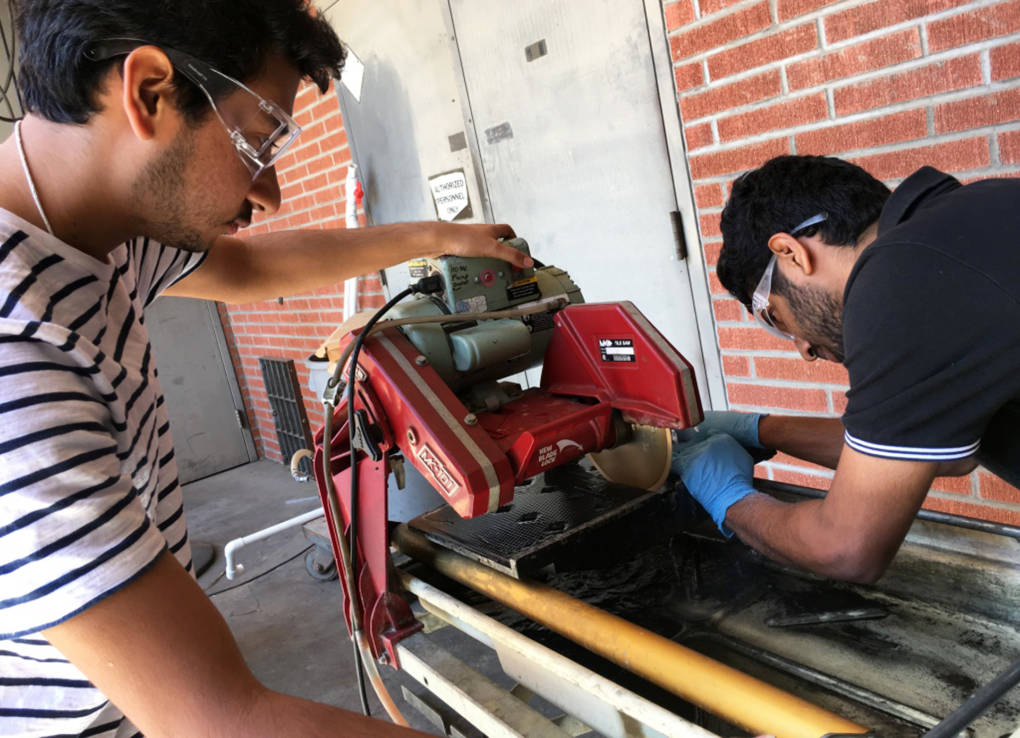
"caption": "Graduate engineering students Manoj Sampangi Ram (L) and Skanda Rai are originally from India and study at California State University, Long Beach on student visas.",
"description": "Graduate engineering students Manoj Sampangi Ram (L) and Skanda Rai are originally from India and study at California State University, Long Beach on student visas.",
"title": "EngStudents",
"credit": "Adolfo Guzman-Lopez/KPCC",
"status": "inherit",
"isLoading": false,
"fetchFailed": false
},
"news_11465071": {
"type": "attachments",
"id": "news_11465071",
"meta": {
"index": "attachments_1716263798",
"site": "news",
"id": "11465071",
"found": true
},
"parent": 11465066,
"imgSizes": {
"small": {
"file": "https://ww2.kqed.org/app/uploads/sites/10/2017/05/Napolitano-520x346.jpg",
"width": 520,
"mimeType": "image/jpeg",
"height": 346
},
"twentyfourteen-full-width": {
"file": "https://ww2.kqed.org/app/uploads/sites/10/2017/05/Napolitano-1038x576.jpg",
"width": 1038,
"mimeType": "image/jpeg",
"height": 576
},
"thumbnail": {
"file": "https://ww2.kqed.org/app/uploads/sites/10/2017/05/Napolitano-160x107.jpg",
"width": 160,
"mimeType": "image/jpeg",
"height": 107
},
"fd-sm": {
"file": "https://ww2.kqed.org/app/uploads/sites/10/2017/05/Napolitano-960x639.jpg",
"width": 960,
"mimeType": "image/jpeg",
"height": 639
},
"post-thumbnail": {
"file": "https://ww2.kqed.org/app/uploads/sites/10/2017/05/Napolitano-672x372.jpg",
"width": 672,
"mimeType": "image/jpeg",
"height": 372
},
"xsmall": {
"file": "https://ww2.kqed.org/app/uploads/sites/10/2017/05/Napolitano-375x250.jpg",
"width": 375,
"mimeType": "image/jpeg",
"height": 250
},
"kqedFullSize": {
"file": "https://ww2.kqed.org/app/uploads/sites/10/2017/05/Napolitano.jpg",
"width": 1920,
"height": 1278
},
"large": {
"file": "https://ww2.kqed.org/app/uploads/sites/10/2017/05/Napolitano-1020x679.jpg",
"width": 1020,
"mimeType": "image/jpeg",
"height": 679
},
"xlarge": {
"file": "https://ww2.kqed.org/app/uploads/sites/10/2017/05/Napolitano-1180x785.jpg",
"width": 1180,
"mimeType": "image/jpeg",
"height": 785
},
"guest-author-50": {
"file": "https://ww2.kqed.org/app/uploads/sites/10/2017/05/Napolitano-50x50.jpg",
"width": 50,
"mimeType": "image/jpeg",
"height": 50
},
"guest-author-96": {
"file": "https://ww2.kqed.org/app/uploads/sites/10/2017/05/Napolitano-96x96.jpg",
"width": 96,
"mimeType": "image/jpeg",
"height": 96
},
"medium": {
"file": "https://ww2.kqed.org/app/uploads/sites/10/2017/05/Napolitano-800x533.jpg",
"width": 800,
"mimeType": "image/jpeg",
"height": 533
},
"guest-author-64": {
"file": "https://ww2.kqed.org/app/uploads/sites/10/2017/05/Napolitano-64x64.jpg",
"width": 64,
"mimeType": "image/jpeg",
"height": 64
},
"guest-author-32": {
"file": "https://ww2.kqed.org/app/uploads/sites/10/2017/05/Napolitano-32x32.jpg",
"width": 32,
"mimeType": "image/jpeg",
"height": 32
},
"fd-lrg": {
"file": "https://ww2.kqed.org/app/uploads/sites/10/2017/05/Napolitano-1920x1278.jpg",
"width": 1920,
"mimeType": "image/jpeg",
"height": 1278
},
"fd-med": {
"file": "https://ww2.kqed.org/app/uploads/sites/10/2017/05/Napolitano-1180x785.jpg",
"width": 1180,
"mimeType": "image/jpeg",
"height": 785
},
"full-width": {
"file": "https://ww2.kqed.org/app/uploads/sites/10/2017/05/Napolitano-1920x1278.jpg",
"width": 1920,
"mimeType": "image/jpeg",
"height": 1278
},
"detail": {
"file": "https://ww2.kqed.org/app/uploads/sites/10/2017/05/Napolitano-150x150.jpg",
"width": 150,
"mimeType": "image/jpeg",
"height": 150
},
"guest-author-128": {
"file": "https://ww2.kqed.org/app/uploads/sites/10/2017/05/Napolitano-128x128.jpg",
"width": 128,
"mimeType": "image/jpeg",
"height": 128
},
"xxsmall": {
"file": "https://ww2.kqed.org/app/uploads/sites/10/2017/05/Napolitano-240x160.jpg",
"width": 240,
"mimeType": "image/jpeg",
"height": 160
}
},
"publishDate": 1495135351,
"modified": 1495135403,
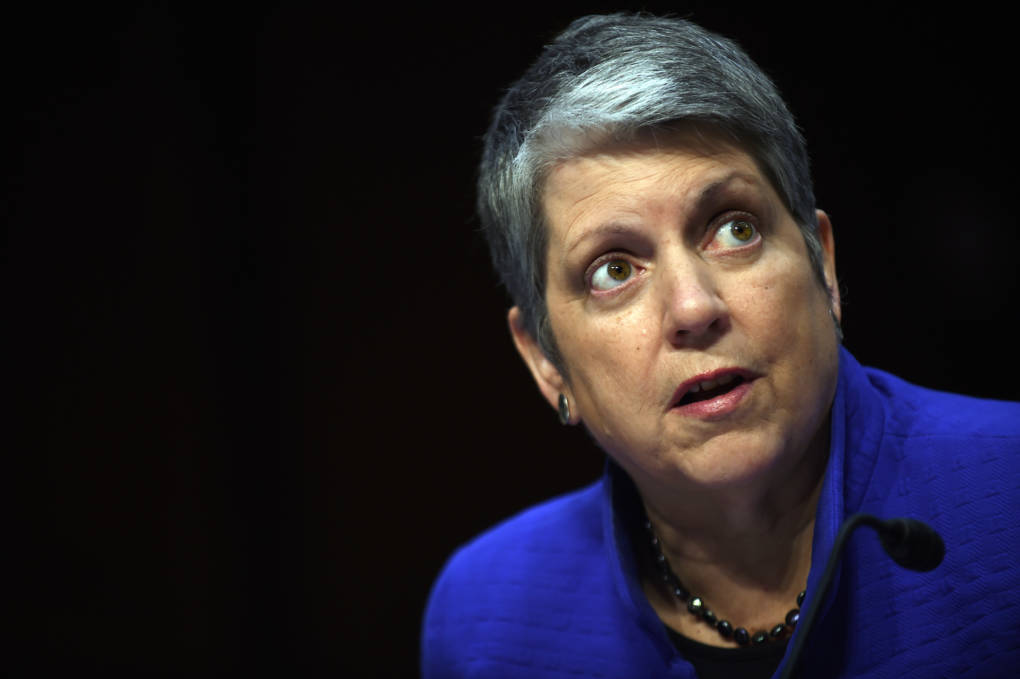
"caption": "University of California President Janet Napolitano.",
"description": "University of California President Janet Napolitano.",
"title": "Napolitano",
"credit": "Astrid Riecken/Getty Images",
"status": "inherit",
"isLoading": false,
"fetchFailed": false
},
"news_11461636": {
"type": "attachments",
"id": "news_11461636",
"meta": {
"index": "attachments_1716263798",
"site": "news",
"id": "11461636",
"found": true
},
"parent": 11461330,
"imgSizes": {
"small": {
"file": "https://ww2.kqed.org/app/uploads/sites/10/2017/05/RS25383_Stokes-2-qut-520x397.jpg",
"width": 520,
"mimeType": "image/jpeg",
"height": 397
},
"twentyfourteen-full-width": {
"file": "https://ww2.kqed.org/app/uploads/sites/10/2017/05/RS25383_Stokes-2-qut-1038x576.jpg",
"width": 1038,
"mimeType": "image/jpeg",
"height": 576
},
"thumbnail": {
"file": "https://ww2.kqed.org/app/uploads/sites/10/2017/05/RS25383_Stokes-2-qut-160x122.jpg",
"width": 160,
"mimeType": "image/jpeg",
"height": 122
},
"fd-sm": {
"file": "https://ww2.kqed.org/app/uploads/sites/10/2017/05/RS25383_Stokes-2-qut-960x734.jpg",
"width": 960,
"mimeType": "image/jpeg",
"height": 734
},
"post-thumbnail": {
"file": "https://ww2.kqed.org/app/uploads/sites/10/2017/05/RS25383_Stokes-2-qut-672x372.jpg",
"width": 672,
"mimeType": "image/jpeg",
"height": 372
},
"xsmall": {
"file": "https://ww2.kqed.org/app/uploads/sites/10/2017/05/RS25383_Stokes-2-qut-375x287.jpg",
"width": 375,
"mimeType": "image/jpeg",
"height": 287
},
"kqedFullSize": {
"file": "https://ww2.kqed.org/app/uploads/sites/10/2017/05/RS25383_Stokes-2-qut.jpg",
"width": 1920,
"height": 1467
},
"large": {
"file": "https://ww2.kqed.org/app/uploads/sites/10/2017/05/RS25383_Stokes-2-qut-1020x779.jpg",
"width": 1020,
"mimeType": "image/jpeg",
"height": 779
},
"xlarge": {
"file": "https://ww2.kqed.org/app/uploads/sites/10/2017/05/RS25383_Stokes-2-qut-1180x902.jpg",
"width": 1180,
"mimeType": "image/jpeg",
"height": 902
},
"guest-author-50": {
"file": "https://ww2.kqed.org/app/uploads/sites/10/2017/05/RS25383_Stokes-2-qut-50x50.jpg",
"width": 50,
"mimeType": "image/jpeg",
"height": 50
},
"guest-author-96": {
"file": "https://ww2.kqed.org/app/uploads/sites/10/2017/05/RS25383_Stokes-2-qut-96x96.jpg",
"width": 96,
"mimeType": "image/jpeg",
"height": 96
},
"medium": {
"file": "https://ww2.kqed.org/app/uploads/sites/10/2017/05/RS25383_Stokes-2-qut-800x611.jpg",
"width": 800,
"mimeType": "image/jpeg",
"height": 611
},
"guest-author-64": {
"file": "https://ww2.kqed.org/app/uploads/sites/10/2017/05/RS25383_Stokes-2-qut-64x64.jpg",
"width": 64,
"mimeType": "image/jpeg",
"height": 64
},
"guest-author-32": {
"file": "https://ww2.kqed.org/app/uploads/sites/10/2017/05/RS25383_Stokes-2-qut-32x32.jpg",
"width": 32,
"mimeType": "image/jpeg",
"height": 32
},
"fd-lrg": {
"file": "https://ww2.kqed.org/app/uploads/sites/10/2017/05/RS25383_Stokes-2-qut-1920x1467.jpg",
"width": 1920,
"mimeType": "image/jpeg",
"height": 1467
},
"fd-med": {
"file": "https://ww2.kqed.org/app/uploads/sites/10/2017/05/RS25383_Stokes-2-qut-1180x902.jpg",
"width": 1180,
"mimeType": "image/jpeg",
"height": 902
},
"full-width": {
"file": "https://ww2.kqed.org/app/uploads/sites/10/2017/05/RS25383_Stokes-2-qut-1920x1467.jpg",
"width": 1920,
"mimeType": "image/jpeg",
"height": 1467
},
"detail": {
"file": "https://ww2.kqed.org/app/uploads/sites/10/2017/05/RS25383_Stokes-2-qut-150x150.jpg",
"width": 150,
"mimeType": "image/jpeg",
"height": 150
},
"guest-author-128": {
"file": "https://ww2.kqed.org/app/uploads/sites/10/2017/05/RS25383_Stokes-2-qut-128x128.jpg",
"width": 128,
"mimeType": "image/jpeg",
"height": 128
},
"xxsmall": {
"file": "https://ww2.kqed.org/app/uploads/sites/10/2017/05/RS25383_Stokes-2-qut-240x183.jpg",
"width": 240,
"mimeType": "image/jpeg",
"height": 183
}
},
"publishDate": 1494978694,
"modified": 1495048018,
"caption": "There are 116 students enrolled at Ánimo Florence-Firestone Middle School, an independent charter school in Los Angeles which opened this year with the help of a federal charter school grant.",
"description": "There are 116 students enrolled at Ánimo Florence-Firestone Middle School, an independent charter school in Los Angeles which opened this year with the help of a federal charter school grant.",
"title": "RS25383_Stokes-2-qut",
"credit": "Kyle Stokes/KPCC",
"status": "inherit",
"isLoading": false,
"fetchFailed": false
},
"news_11463063": {
"type": "attachments",
"id": "news_11463063",
"meta": {
"index": "attachments_1716263798",
"site": "news",
"id": "11463063",
"found": true
},
"parent": 11461239,
"imgSizes": {
"small": {
"file": "https://ww2.kqed.org/app/uploads/sites/10/2017/05/BishopsSchool2-520x342.jpg",
"width": 520,
"mimeType": "image/jpeg",
"height": 342
},
"twentyfourteen-full-width": {
"file": "https://ww2.kqed.org/app/uploads/sites/10/2017/05/BishopsSchool2-1038x576.jpg",
"width": 1038,
"mimeType": "image/jpeg",
"height": 576
},
"thumbnail": {
"file": "https://ww2.kqed.org/app/uploads/sites/10/2017/05/BishopsSchool2-160x105.jpg",
"width": 160,
"mimeType": "image/jpeg",
"height": 105
},
"fd-sm": {
"file": "https://ww2.kqed.org/app/uploads/sites/10/2017/05/BishopsSchool2-960x631.jpg",
"width": 960,
"mimeType": "image/jpeg",
"height": 631
},
"post-thumbnail": {
"file": "https://ww2.kqed.org/app/uploads/sites/10/2017/05/BishopsSchool2-672x372.jpg",
"width": 672,
"mimeType": "image/jpeg",
"height": 372
},
"xsmall": {
"file": "https://ww2.kqed.org/app/uploads/sites/10/2017/05/BishopsSchool2-375x246.jpg",
"width": 375,
"mimeType": "image/jpeg",
"height": 246
},
"kqedFullSize": {
"file": "https://ww2.kqed.org/app/uploads/sites/10/2017/05/BishopsSchool2.jpg",
"width": 1920,
"height": 1262
},
"large": {
"file": "https://ww2.kqed.org/app/uploads/sites/10/2017/05/BishopsSchool2-1020x670.jpg",
"width": 1020,
"mimeType": "image/jpeg",
"height": 670
},
"xlarge": {
"file": "https://ww2.kqed.org/app/uploads/sites/10/2017/05/BishopsSchool2-1180x776.jpg",
"width": 1180,
"mimeType": "image/jpeg",
"height": 776
},
"guest-author-50": {
"file": "https://ww2.kqed.org/app/uploads/sites/10/2017/05/BishopsSchool2-50x50.jpg",
"width": 50,
"mimeType": "image/jpeg",
"height": 50
},
"guest-author-96": {
"file": "https://ww2.kqed.org/app/uploads/sites/10/2017/05/BishopsSchool2-96x96.jpg",
"width": 96,
"mimeType": "image/jpeg",
"height": 96
},
"medium": {
"file": "https://ww2.kqed.org/app/uploads/sites/10/2017/05/BishopsSchool2-800x526.jpg",
"width": 800,
"mimeType": "image/jpeg",
"height": 526
},
"guest-author-64": {
"file": "https://ww2.kqed.org/app/uploads/sites/10/2017/05/BishopsSchool2-64x64.jpg",
"width": 64,
"mimeType": "image/jpeg",
"height": 64
},
"guest-author-32": {
"file": "https://ww2.kqed.org/app/uploads/sites/10/2017/05/BishopsSchool2-32x32.jpg",
"width": 32,
"mimeType": "image/jpeg",
"height": 32
},
"fd-lrg": {
"file": "https://ww2.kqed.org/app/uploads/sites/10/2017/05/BishopsSchool2-1920x1262.jpg",
"width": 1920,
"mimeType": "image/jpeg",
"height": 1262
},
"fd-med": {
"file": "https://ww2.kqed.org/app/uploads/sites/10/2017/05/BishopsSchool2-1180x776.jpg",
"width": 1180,
"mimeType": "image/jpeg",
"height": 776
},
"full-width": {
"file": "https://ww2.kqed.org/app/uploads/sites/10/2017/05/BishopsSchool2-1920x1262.jpg",
"width": 1920,
"mimeType": "image/jpeg",
"height": 1262
},
"detail": {
"file": "https://ww2.kqed.org/app/uploads/sites/10/2017/05/BishopsSchool2-150x150.jpg",
"width": 150,
"mimeType": "image/jpeg",
"height": 150
},
"guest-author-128": {
"file": "https://ww2.kqed.org/app/uploads/sites/10/2017/05/BishopsSchool2-128x128.jpg",
"width": 128,
"mimeType": "image/jpeg",
"height": 128
},
"xxsmall": {
"file": "https://ww2.kqed.org/app/uploads/sites/10/2017/05/BishopsSchool2-240x158.jpg",
"width": 240,
"mimeType": "image/jpeg",
"height": 158
}
},
"publishDate": 1495045952,
"modified": 1495045983,
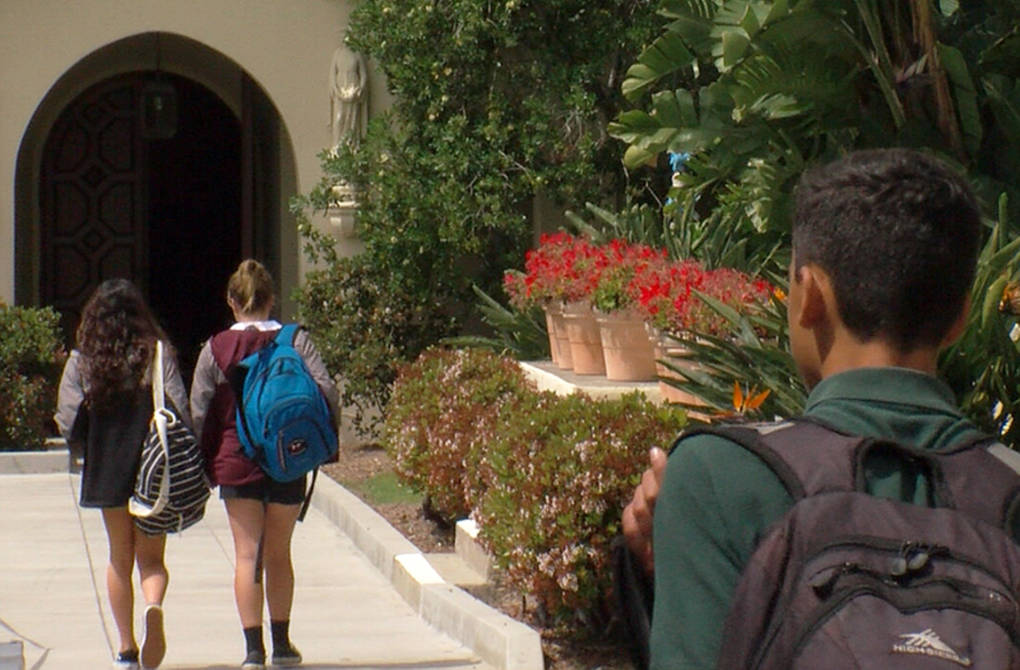
"caption": "Students walk on the campus of The Bishop's School in La Jolla.",
"description": "Students walk on the campus of The Bishop's School in La Jolla.",
"title": "BishopsSchool2",
"credit": "Matthew Bowler/KPBS",
"status": "inherit",
"isLoading": false,
"fetchFailed": false
},
"news_11461026": {
"type": "attachments",
"id": "news_11461026",
"meta": {
"index": "attachments_1716263798",
"site": "news",
"id": "11461026",
"found": true
},
"parent": 11459245,
"imgSizes": {
"small": {
"file": "https://ww2.kqed.org/app/uploads/sites/10/2017/05/EmeryFam-520x298.jpg",
"width": 520,
"mimeType": "image/jpeg",
"height": 298
},
"twentyfourteen-full-width": {
"file": "https://ww2.kqed.org/app/uploads/sites/10/2017/05/EmeryFam-1038x576.jpg",
"width": 1038,
"mimeType": "image/jpeg",
"height": 576
},
"thumbnail": {
"file": "https://ww2.kqed.org/app/uploads/sites/10/2017/05/EmeryFam-160x92.jpg",
"width": 160,
"mimeType": "image/jpeg",
"height": 92
},
"fd-sm": {
"file": "https://ww2.kqed.org/app/uploads/sites/10/2017/05/EmeryFam-960x551.jpg",
"width": 960,
"mimeType": "image/jpeg",
"height": 551
},
"post-thumbnail": {
"file": "https://ww2.kqed.org/app/uploads/sites/10/2017/05/EmeryFam-672x372.jpg",
"width": 672,
"mimeType": "image/jpeg",
"height": 372
},
"xsmall": {
"file": "https://ww2.kqed.org/app/uploads/sites/10/2017/05/EmeryFam-375x215.jpg",
"width": 375,
"mimeType": "image/jpeg",
"height": 215
},
"kqedFullSize": {
"file": "https://ww2.kqed.org/app/uploads/sites/10/2017/05/EmeryFam.jpg",
"width": 1920,
"height": 1101
},
"large": {
"file": "https://ww2.kqed.org/app/uploads/sites/10/2017/05/EmeryFam-1020x585.jpg",
"width": 1020,
"mimeType": "image/jpeg",
"height": 585
},
"xlarge": {
"file": "https://ww2.kqed.org/app/uploads/sites/10/2017/05/EmeryFam-1180x677.jpg",
"width": 1180,
"mimeType": "image/jpeg",
"height": 677
},
"guest-author-50": {
"file": "https://ww2.kqed.org/app/uploads/sites/10/2017/05/EmeryFam-50x50.jpg",
"width": 50,
"mimeType": "image/jpeg",
"height": 50
},
"guest-author-96": {
"file": "https://ww2.kqed.org/app/uploads/sites/10/2017/05/EmeryFam-96x96.jpg",
"width": 96,
"mimeType": "image/jpeg",
"height": 96
},
"medium": {
"file": "https://ww2.kqed.org/app/uploads/sites/10/2017/05/EmeryFam-800x459.jpg",
"width": 800,
"mimeType": "image/jpeg",
"height": 459
},
"guest-author-64": {
"file": "https://ww2.kqed.org/app/uploads/sites/10/2017/05/EmeryFam-64x64.jpg",
"width": 64,
"mimeType": "image/jpeg",
"height": 64
},
"guest-author-32": {
"file": "https://ww2.kqed.org/app/uploads/sites/10/2017/05/EmeryFam-32x32.jpg",
"width": 32,
"mimeType": "image/jpeg",
"height": 32
},
"fd-lrg": {
"file": "https://ww2.kqed.org/app/uploads/sites/10/2017/05/EmeryFam-1920x1101.jpg",
"width": 1920,
"mimeType": "image/jpeg",
"height": 1101
},
"fd-med": {
"file": "https://ww2.kqed.org/app/uploads/sites/10/2017/05/EmeryFam-1180x677.jpg",
"width": 1180,
"mimeType": "image/jpeg",
"height": 677
},
"full-width": {
"file": "https://ww2.kqed.org/app/uploads/sites/10/2017/05/EmeryFam-1920x1101.jpg",
"width": 1920,
"mimeType": "image/jpeg",
"height": 1101
},
"detail": {
"file": "https://ww2.kqed.org/app/uploads/sites/10/2017/05/EmeryFam-150x150.jpg",
"width": 150,
"mimeType": "image/jpeg",
"height": 150
},
"guest-author-128": {
"file": "https://ww2.kqed.org/app/uploads/sites/10/2017/05/EmeryFam-128x128.jpg",
"width": 128,
"mimeType": "image/jpeg",
"height": 128
},
"xxsmall": {
"file": "https://ww2.kqed.org/app/uploads/sites/10/2017/05/EmeryFam-240x138.jpg",
"width": 240,
"mimeType": "image/jpeg",
"height": 138
}
},
"publishDate": 1494957193,
"modified": 1494957221,
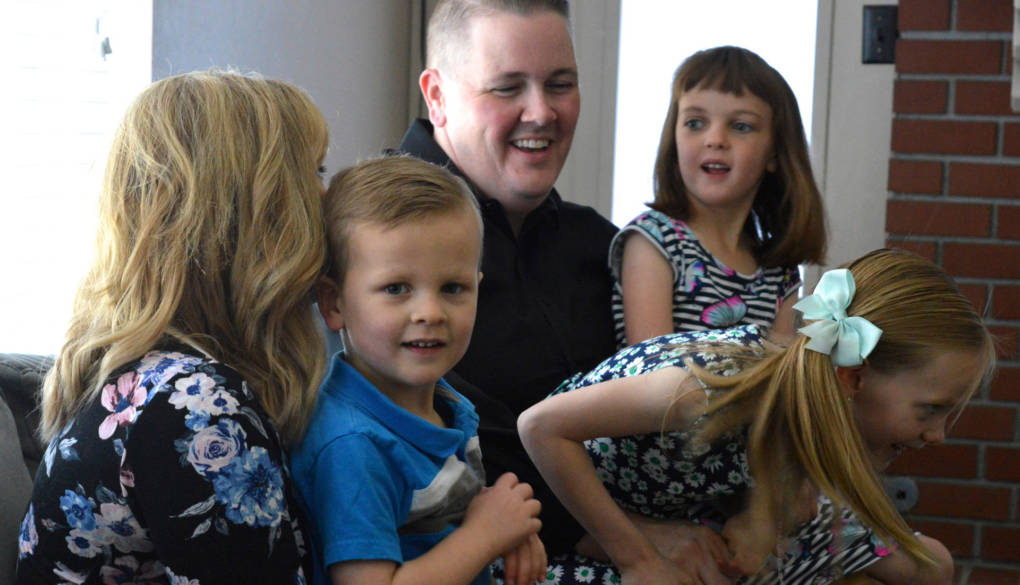
"caption": "The Emery family relaxes in the family room of their Carson City home. Parents Melanie and Nick turned to a Christian private school after a frustrating experience at their local public school.",
"description": "The Emery family relaxes in the family room of their Carson City home. Parents Melanie and Nick turned to a Christian private school after a frustrating experience at their local public school.",
"title": "EmeryFam",
"credit": "Gabriel Salcedo/KQED ",
"status": "inherit",
"isLoading": false,
"fetchFailed": false
},
"news_11454617": {
"type": "attachments",
"id": "news_11454617",
"meta": {
"index": "attachments_1716263798",
"site": "news",
"id": "11454617",
"found": true
},
"parent": 11452311,
"imgSizes": {
"small": {
"file": "https://ww2.kqed.org/app/uploads/sites/10/2017/05/TrumpDevos-520x347.jpg",
"width": 520,
"mimeType": "image/jpeg",
"height": 347
},
"twentyfourteen-full-width": {
"file": "https://ww2.kqed.org/app/uploads/sites/10/2017/05/TrumpDevos-1038x576.jpg",
"width": 1038,
"mimeType": "image/jpeg",
"height": 576
},
"thumbnail": {
"file": "https://ww2.kqed.org/app/uploads/sites/10/2017/05/TrumpDevos-160x107.jpg",
"width": 160,
"mimeType": "image/jpeg",
"height": 107
},
"fd-sm": {
"file": "https://ww2.kqed.org/app/uploads/sites/10/2017/05/TrumpDevos-960x640.jpg",
"width": 960,
"mimeType": "image/jpeg",
"height": 640
},
"post-thumbnail": {
"file": "https://ww2.kqed.org/app/uploads/sites/10/2017/05/TrumpDevos-672x372.jpg",
"width": 672,
"mimeType": "image/jpeg",
"height": 372
},
"xsmall": {
"file": "https://ww2.kqed.org/app/uploads/sites/10/2017/05/TrumpDevos-375x250.jpg",
"width": 375,
"mimeType": "image/jpeg",
"height": 250
},
"kqedFullSize": {
"file": "https://ww2.kqed.org/app/uploads/sites/10/2017/05/TrumpDevos.jpg",
"width": 1920,
"height": 1280
},
"large": {
"file": "https://ww2.kqed.org/app/uploads/sites/10/2017/05/TrumpDevos-1020x680.jpg",
"width": 1020,
"mimeType": "image/jpeg",
"height": 680
},
"xlarge": {
"file": "https://ww2.kqed.org/app/uploads/sites/10/2017/05/TrumpDevos-1180x787.jpg",
"width": 1180,
"mimeType": "image/jpeg",
"height": 787
},
"guest-author-50": {
"file": "https://ww2.kqed.org/app/uploads/sites/10/2017/05/TrumpDevos-50x50.jpg",
"width": 50,
"mimeType": "image/jpeg",
"height": 50
},
"guest-author-96": {
"file": "https://ww2.kqed.org/app/uploads/sites/10/2017/05/TrumpDevos-96x96.jpg",
"width": 96,
"mimeType": "image/jpeg",
"height": 96
},
"medium": {
"file": "https://ww2.kqed.org/app/uploads/sites/10/2017/05/TrumpDevos-800x533.jpg",
"width": 800,
"mimeType": "image/jpeg",
"height": 533
},
"guest-author-64": {
"file": "https://ww2.kqed.org/app/uploads/sites/10/2017/05/TrumpDevos-64x64.jpg",
"width": 64,
"mimeType": "image/jpeg",
"height": 64
},
"guest-author-32": {
"file": "https://ww2.kqed.org/app/uploads/sites/10/2017/05/TrumpDevos-32x32.jpg",
"width": 32,
"mimeType": "image/jpeg",
"height": 32
},
"fd-lrg": {
"file": "https://ww2.kqed.org/app/uploads/sites/10/2017/05/TrumpDevos-1920x1280.jpg",
"width": 1920,
"mimeType": "image/jpeg",
"height": 1280
},
"fd-med": {
"file": "https://ww2.kqed.org/app/uploads/sites/10/2017/05/TrumpDevos-1180x787.jpg",
"width": 1180,
"mimeType": "image/jpeg",
"height": 787
},
"full-width": {
"file": "https://ww2.kqed.org/app/uploads/sites/10/2017/05/TrumpDevos-1920x1280.jpg",
"width": 1920,
"mimeType": "image/jpeg",
"height": 1280
},
"detail": {
"file": "https://ww2.kqed.org/app/uploads/sites/10/2017/05/TrumpDevos-150x150.jpg",
"width": 150,
"mimeType": "image/jpeg",
"height": 150
},
"guest-author-128": {
"file": "https://ww2.kqed.org/app/uploads/sites/10/2017/05/TrumpDevos-128x128.jpg",
"width": 128,
"mimeType": "image/jpeg",
"height": 128
},
"xxsmall": {
"file": "https://ww2.kqed.org/app/uploads/sites/10/2017/05/TrumpDevos-240x160.jpg",
"width": 240,
"mimeType": "image/jpeg",
"height": 160
}
},
"publishDate": 1494631565,
"modified": 1494631688,
"caption": "Education Secretary Betsy DeVos (C) and President Trump attend a parent-teacher conference listening session at the White House on Feb. 14, 2017.",
"description": "Education Secretary Betsy DeVos (C) and President Trump attend a parent-teacher conference listening session at the White House on Feb. 14, 2017.",
"title": "TrumpDevos",
"credit": "Alex Wong/Getty Images",
"status": "inherit",
"isLoading": false,
"fetchFailed": false
},
"news_11452501": {
"type": "attachments",
"id": "news_11452501",
"meta": {
"index": "attachments_1716263798",
"site": "news",
"id": "11452501",
"found": true
},
"parent": 11448633,
"imgSizes": {
"small": {
"file": "https://ww2.kqed.org/app/uploads/sites/10/2017/05/BrownRevise2-520x340.jpg",
"width": 520,
"mimeType": "image/jpeg",
"height": 340
},
"twentyfourteen-full-width": {
"file": "https://ww2.kqed.org/app/uploads/sites/10/2017/05/BrownRevise2-1038x576.jpg",
"width": 1038,
"mimeType": "image/jpeg",
"height": 576
},
"thumbnail": {
"file": "https://ww2.kqed.org/app/uploads/sites/10/2017/05/BrownRevise2-160x105.jpg",
"width": 160,
"mimeType": "image/jpeg",
"height": 105
},
"fd-sm": {
"file": "https://ww2.kqed.org/app/uploads/sites/10/2017/05/BrownRevise2-960x627.jpg",
"width": 960,
"mimeType": "image/jpeg",
"height": 627
},
"post-thumbnail": {
"file": "https://ww2.kqed.org/app/uploads/sites/10/2017/05/BrownRevise2-672x372.jpg",
"width": 672,
"mimeType": "image/jpeg",
"height": 372
},
"xsmall": {
"file": "https://ww2.kqed.org/app/uploads/sites/10/2017/05/BrownRevise2-375x245.jpg",
"width": 375,
"mimeType": "image/jpeg",
"height": 245
},
"kqedFullSize": {
"file": "https://ww2.kqed.org/app/uploads/sites/10/2017/05/BrownRevise2.jpg",
"width": 1920,
"height": 1254
},
"large": {
"file": "https://ww2.kqed.org/app/uploads/sites/10/2017/05/BrownRevise2-1020x666.jpg",
"width": 1020,
"mimeType": "image/jpeg",
"height": 666
},
"xlarge": {
"file": "https://ww2.kqed.org/app/uploads/sites/10/2017/05/BrownRevise2-1180x771.jpg",
"width": 1180,
"mimeType": "image/jpeg",
"height": 771
},
"guest-author-50": {
"file": "https://ww2.kqed.org/app/uploads/sites/10/2017/05/BrownRevise2-50x50.jpg",
"width": 50,
"mimeType": "image/jpeg",
"height": 50
},
"guest-author-96": {
"file": "https://ww2.kqed.org/app/uploads/sites/10/2017/05/BrownRevise2-96x96.jpg",
"width": 96,
"mimeType": "image/jpeg",
"height": 96
},
"medium": {
"file": "https://ww2.kqed.org/app/uploads/sites/10/2017/05/BrownRevise2-800x523.jpg",
"width": 800,
"mimeType": "image/jpeg",
"height": 523
},
"guest-author-64": {
"file": "https://ww2.kqed.org/app/uploads/sites/10/2017/05/BrownRevise2-64x64.jpg",
"width": 64,
"mimeType": "image/jpeg",
"height": 64
},
"guest-author-32": {
"file": "https://ww2.kqed.org/app/uploads/sites/10/2017/05/BrownRevise2-32x32.jpg",
"width": 32,
"mimeType": "image/jpeg",
"height": 32
},
"fd-lrg": {
"file": "https://ww2.kqed.org/app/uploads/sites/10/2017/05/BrownRevise2-1920x1254.jpg",
"width": 1920,
"mimeType": "image/jpeg",
"height": 1254
},
"fd-med": {
"file": "https://ww2.kqed.org/app/uploads/sites/10/2017/05/BrownRevise2-1180x771.jpg",
"width": 1180,
"mimeType": "image/jpeg",
"height": 771
},
"full-width": {
"file": "https://ww2.kqed.org/app/uploads/sites/10/2017/05/BrownRevise2-1920x1254.jpg",
"width": 1920,
"mimeType": "image/jpeg",
"height": 1254
},
"detail": {
"file": "https://ww2.kqed.org/app/uploads/sites/10/2017/05/BrownRevise2-150x150.jpg",
"width": 150,
"mimeType": "image/jpeg",
"height": 150
},
"guest-author-128": {
"file": "https://ww2.kqed.org/app/uploads/sites/10/2017/05/BrownRevise2-128x128.jpg",
"width": 128,
"mimeType": "image/jpeg",
"height": 128
},
"xxsmall": {
"file": "https://ww2.kqed.org/app/uploads/sites/10/2017/05/BrownRevise2-240x157.jpg",
"width": 240,
"mimeType": "image/jpeg",
"height": 157
}
},
"publishDate": 1494530369,
"modified": 1494546820,
"caption": "Gov. Jerry Brown speaks at a news conference where he revealed his revised budget on May 11, 2017, in Sacramento.",
"description": "Gov. Jerry Brown speaks at a news conference where he revealed his revised budget on May 11, 2017 in Sacramento.",
"title": "BrownRevise2",
"credit": "Justin Sullivan/Getty Images",
"status": "inherit",
"isLoading": false,
"fetchFailed": false
},
"news_11048166": {
"type": "attachments",
"id": "news_11048166",
"meta": {
"index": "attachments_1716263798",
"site": "news",
"id": "11048166",
"found": true
},
"parent": 11048124,
"imgSizes": {
"twentyfourteen-full-width": {
"file": "https://ww2.kqed.org/app/uploads/sites/10/2016/08/RS1394_57641874-1038x576.jpg",
"width": 1038,
"mimeType": "image/jpeg",
"height": 576
},
"thumbnail": {
"file": "https://ww2.kqed.org/app/uploads/sites/10/2016/08/RS1394_57641874-400x266.jpg",
"width": 400,
"mimeType": "image/jpeg",
"height": 266
},
"fd-sm": {
"file": "https://ww2.kqed.org/app/uploads/sites/10/2016/08/RS1394_57641874-960x638.jpg",
"width": 960,
"mimeType": "image/jpeg",
"height": 638
},
"post-thumbnail": {
"file": "https://ww2.kqed.org/app/uploads/sites/10/2016/08/RS1394_57641874-672x372.jpg",
"width": 672,
"mimeType": "image/jpeg",
"height": 372
},
"kqedFullSize": {
"file": "https://ww2.kqed.org/app/uploads/sites/10/2016/08/RS1394_57641874.jpg",
"width": 3000,
"height": 1995
},
"large": {
"file": "https://ww2.kqed.org/app/uploads/sites/10/2016/08/RS1394_57641874-1920x1277.jpg",
"width": 1920,
"mimeType": "image/jpeg",
"height": 1277
},
"guest-author-50": {
"file": "https://ww2.kqed.org/app/uploads/sites/10/2016/08/RS1394_57641874-50x50.jpg",
"width": 50,
"mimeType": "image/jpeg",
"height": 50
},
"guest-author-96": {
"file": "https://ww2.kqed.org/app/uploads/sites/10/2016/08/RS1394_57641874-96x96.jpg",
"width": 96,
"mimeType": "image/jpeg",
"height": 96
},
"medium": {
"file": "https://ww2.kqed.org/app/uploads/sites/10/2016/08/RS1394_57641874-800x532.jpg",
"width": 800,
"mimeType": "image/jpeg",
"height": 532
},
"guest-author-64": {
"file": "https://ww2.kqed.org/app/uploads/sites/10/2016/08/RS1394_57641874-64x64.jpg",
"width": 64,
"mimeType": "image/jpeg",
"height": 64
},
"guest-author-32": {
"file": "https://ww2.kqed.org/app/uploads/sites/10/2016/08/RS1394_57641874-32x32.jpg",
"width": 32,
"mimeType": "image/jpeg",
"height": 32
},
"jmtc-small-thumb": {
"file": "https://ww2.kqed.org/app/uploads/sites/10/2016/08/RS1394_57641874-280x150.jpg",
"width": 280,
"mimeType": "image/jpeg",
"height": 150
},
"fd-lrg": {
"file": "https://ww2.kqed.org/app/uploads/sites/10/2016/08/RS1394_57641874-1920x1277.jpg",
"width": 1920,
"mimeType": "image/jpeg",
"height": 1277
},
"fd-med": {
"file": "https://ww2.kqed.org/app/uploads/sites/10/2016/08/RS1394_57641874-1180x785.jpg",
"width": 1180,
"mimeType": "image/jpeg",
"height": 785
},
"detail": {
"file": "https://ww2.kqed.org/app/uploads/sites/10/2016/08/RS1394_57641874-150x150.jpg",
"width": 150,
"mimeType": "image/jpeg",
"height": 150
},
"guest-author-128": {
"file": "https://ww2.kqed.org/app/uploads/sites/10/2016/08/RS1394_57641874-128x128.jpg",
"width": 128,
"mimeType": "image/jpeg",
"height": 128
}
},
"publishDate": 1470947892,
"modified": 1494483683,
"caption": null,
"description": null,
"title": "California Town A 'Sanctuary' For Illegal Immigrants",
"credit": "David McNew/Getty Images",
"status": "inherit",
"isLoading": false,
"fetchFailed": false
},
"news_11442422": {
"type": "attachments",
"id": "news_11442422",
"meta": {
"index": "attachments_1716263798",
"site": "news",
"id": "11442422",
"found": true
},
"parent": 11442103,
"imgSizes": {
"small": {
"file": "https://ww2.kqed.org/app/uploads/sites/10/2017/05/IMG_1634-520x390.jpg",
"width": 520,
"mimeType": "image/jpeg",
"height": 390
},
"twentyfourteen-full-width": {
"file": "https://ww2.kqed.org/app/uploads/sites/10/2017/05/IMG_1634-1038x576.jpg",
"width": 1038,
"mimeType": "image/jpeg",
"height": 576
},
"thumbnail": {
"file": "https://ww2.kqed.org/app/uploads/sites/10/2017/05/IMG_1634-160x120.jpg",
"width": 160,
"mimeType": "image/jpeg",
"height": 120
},
"fd-sm": {
"file": "https://ww2.kqed.org/app/uploads/sites/10/2017/05/IMG_1634-960x720.jpg",
"width": 960,
"mimeType": "image/jpeg",
"height": 720
},
"post-thumbnail": {
"file": "https://ww2.kqed.org/app/uploads/sites/10/2017/05/IMG_1634-672x372.jpg",
"width": 672,
"mimeType": "image/jpeg",
"height": 372
},
"xsmall": {
"file": "https://ww2.kqed.org/app/uploads/sites/10/2017/05/IMG_1634-375x281.jpg",
"width": 375,
"mimeType": "image/jpeg",
"height": 281
},
"kqedFullSize": {
"file": "https://ww2.kqed.org/app/uploads/sites/10/2017/05/IMG_1634.jpg",
"width": 2048,
"height": 1536
},
"large": {
"file": "https://ww2.kqed.org/app/uploads/sites/10/2017/05/IMG_1634-1020x765.jpg",
"width": 1020,
"mimeType": "image/jpeg",
"height": 765
},
"xlarge": {
"file": "https://ww2.kqed.org/app/uploads/sites/10/2017/05/IMG_1634-1180x885.jpg",
"width": 1180,
"mimeType": "image/jpeg",
"height": 885
},
"guest-author-50": {
"file": "https://ww2.kqed.org/app/uploads/sites/10/2017/05/IMG_1634-50x50.jpg",
"width": 50,
"mimeType": "image/jpeg",
"height": 50
},
"guest-author-96": {
"file": "https://ww2.kqed.org/app/uploads/sites/10/2017/05/IMG_1634-96x96.jpg",
"width": 96,
"mimeType": "image/jpeg",
"height": 96
},
"medium": {
"file": "https://ww2.kqed.org/app/uploads/sites/10/2017/05/IMG_1634-800x600.jpg",
"width": 800,
"mimeType": "image/jpeg",
"height": 600
},
"guest-author-64": {
"file": "https://ww2.kqed.org/app/uploads/sites/10/2017/05/IMG_1634-64x64.jpg",
"width": 64,
"mimeType": "image/jpeg",
"height": 64
},
"guest-author-32": {
"file": "https://ww2.kqed.org/app/uploads/sites/10/2017/05/IMG_1634-32x32.jpg",
"width": 32,
"mimeType": "image/jpeg",
"height": 32
},
"fd-lrg": {
"file": "https://ww2.kqed.org/app/uploads/sites/10/2017/05/IMG_1634-1920x1440.jpg",
"width": 1920,
"mimeType": "image/jpeg",
"height": 1440
},
"fd-med": {
"file": "https://ww2.kqed.org/app/uploads/sites/10/2017/05/IMG_1634-1180x885.jpg",
"width": 1180,
"mimeType": "image/jpeg",
"height": 885
},
"full-width": {
"file": "https://ww2.kqed.org/app/uploads/sites/10/2017/05/IMG_1634-1920x1440.jpg",
"width": 1920,
"mimeType": "image/jpeg",
"height": 1440
},
"detail": {
"file": "https://ww2.kqed.org/app/uploads/sites/10/2017/05/IMG_1634-150x150.jpg",
"width": 150,
"mimeType": "image/jpeg",
"height": 150
},
"guest-author-128": {
"file": "https://ww2.kqed.org/app/uploads/sites/10/2017/05/IMG_1634-128x128.jpg",
"width": 128,
"mimeType": "image/jpeg",
"height": 128
},
"xxsmall": {
"file": "https://ww2.kqed.org/app/uploads/sites/10/2017/05/IMG_1634-240x180.jpg",
"width": 240,
"mimeType": "image/jpeg",
"height": 180
}
},
"publishDate": 1494032913,
"modified": 1543441802,
"caption": "A formerly sanctioned homeless encampment at 35th and Peralta streets that was cleared in 2017 after a fire broke out.",
"description": null,
"title": "IMG_1634",
"credit": "Devin Katayama/KQED",
"status": "inherit",
"isLoading": false,
"fetchFailed": false
}
},
"audioPlayerReducer": {
"postId": "stream_live",
"isPaused": true,
"isPlaying": false,
"pfsActive": false,
"pledgeModalIsOpen": true,
"playerDrawerIsOpen": false,
"liveAudioPlayStartedAt": 0,
"liveAudioPlayContext": ""
},
"authorsReducer": {
"byline_news_11501627": {
"type": "authors",
"id": "byline_news_11501627",
"meta": {
"override": true
},
"slug": "byline_news_11501627",
"name": "Matt Levin\u003cbr>\u003cstrong>\u003ca href=\"https://calmatters.org/articles/data-exclusive-75-of-black-california-boys-dont-meet-reading-standards/\">CALMatters\u003c/a>\u003c/strong>",
"isLoading": false
},
"byline_news_11465542": {
"type": "authors",
"id": "byline_news_11465542",
"meta": {
"override": true
},
"slug": "byline_news_11465542",
"name": "\u003cstrong>\u003ca href=\"http://www.scpr.org/about/people/staff/adolfo-guzman-lopez\">Adolfo Guzman-Lopez\u003c/a>\u003cbr>\u003ca href=\"http://www.scpr.org/\">KPCC\u003c/a>\u003c/strong>",
"isLoading": false
},
"byline_news_11465066": {
"type": "authors",
"id": "byline_news_11465066",
"meta": {
"override": true
},
"slug": "byline_news_11465066",
"name": "Janie Har \u003cbr> Associated Press",
"isLoading": false
},
"byline_news_11461330": {
"type": "authors",
"id": "byline_news_11461330",
"meta": {
"override": true
},
"slug": "byline_news_11461330",
"name": "\u003cstrong>\u003ca href=\"http://www.scpr.org/about/people/staff/kyle-stokes\">Kyle Stokes\u003c/a>\u003cbr>\u003ca href=\"http://www.scpr.org/\">KPCC\u003c/a>\u003c/strong>",
"isLoading": false
},
"byline_news_11461239": {
"type": "authors",
"id": "byline_news_11461239",
"meta": {
"override": true
},
"slug": "byline_news_11461239",
"name": "\u003cstrong>\u003ca href=\"http://www.kpbs.org/staff/megan-burks/\">Megan Burks\u003c/a>\u003cbr>\u003ca href=\"http://www.kpbs.org/\">KPBS\u003c/a>\u003c/strong>",
"isLoading": false
},
"aliceldaniel": {
"type": "authors",
"id": "208",
"meta": {
"index": "authors_1716337520",
"id": "208",
"found": true
},
"name": "Alice Daniel",
"firstName": "Alice",
"lastName": "Daniel",
"slug": "aliceldaniel",
"email": "adaniel@kqed.org",
"display_author_email": false,
"staff_mastheads": [],
"title": null,
"bio": "Alice Daniel loves the listening aspect of reporting because she gets to briefly walk in other people’s shoes. She has rappelled down into caves and gone up in helicopters for KQED’s The California Report but her favorite place to pursue a story is the High Sierra or any family-run bakery, of course. Alice has a masters in journalism from Columbia University and teaches at Fresno State. She is a California Healthline Regional Correspondent and a frequent contributor to Success magazine. In her free time, she skis and hikes, throws pottery, practices piano and looks out the window.",
"avatar": "https://secure.gravatar.com/avatar/e611aa06593b114a67f9f123a8e875ad?s=600&d=blank&r=g",
"twitter": null,
"facebook": null,
"instagram": null,
"linkedin": null,
"sites": [
{
"site": "news",
"roles": [
"author"
]
},
{
"site": "stateofhealth",
"roles": [
"author"
]
}
],
"headData": {
"title": "Alice Daniel | KQED",
"description": null,
"ogImgSrc": "https://secure.gravatar.com/avatar/e611aa06593b114a67f9f123a8e875ad?s=600&d=blank&r=g",
"twImgSrc": "https://secure.gravatar.com/avatar/e611aa06593b114a67f9f123a8e875ad?s=600&d=blank&r=g"
},
"isLoading": false,
"link": "/author/aliceldaniel"
},
"anatintocalis": {
"type": "authors",
"id": "211",
"meta": {
"index": "authors_1716337520",
"id": "211",
"found": true
},
"name": "Ana Tintocalis",
"firstName": "Ana",
"lastName": "Tintocalis",
"slug": "anatintocalis",
"email": "atintocalis@kqed.org",
"display_author_email": false,
"staff_mastheads": [],
"title": null,
"bio": null,
"avatar": "https://secure.gravatar.com/avatar/722c50f51f04eff38fa0e5a3f1d29450?s=600&d=blank&r=g",
"twitter": null,
"facebook": null,
"instagram": null,
"linkedin": null,
"sites": [
{
"site": "news",
"roles": [
"subscriber"
]
},
{
"site": "stateofhealth",
"roles": [
"subscriber"
]
}
],
"headData": {
"title": "Ana Tintocalis | KQED",
"description": null,
"ogImgSrc": "https://secure.gravatar.com/avatar/722c50f51f04eff38fa0e5a3f1d29450?s=600&d=blank&r=g",
"twImgSrc": "https://secure.gravatar.com/avatar/722c50f51f04eff38fa0e5a3f1d29450?s=600&d=blank&r=g"
},
"isLoading": false,
"link": "/author/anatintocalis"
},
"scottshafer": {
"type": "authors",
"id": "255",
"meta": {
"index": "authors_1716337520",
"id": "255",
"found": true
},
"name": "Scott Shafer",
"firstName": "Scott",
"lastName": "Shafer",
"slug": "scottshafer",
"email": "sshafer@kqed.org",
"display_author_email": false,
"staff_mastheads": [
"news"
],
"title": "KQED Contributor",
"bio": "Scott Shafer is a senior editor with the KQED Politics and Government desk. He is co-host of Political Breakdown, the award-winning radio show and podcast with a personal take on the world of politics. Scott came to KQED in 1998 to host the statewide\u003cem> California Report\u003c/em>. Prior to that he had extended stints in politics and government\u003cem>.\u003c/em> He uses that inside experience at KQED in his, reporting, hosting and analysis for the politics desk. Scott collaborated \u003cem>Political Breakdown a\u003c/em>nd on \u003cem>The Political Mind of Jerry Brown, \u003c/em>an eight-part series about the life and extraordinary political career of the former governor. For fun, he plays water polo with the San Francisco Tsunami.",
"avatar": "https://secure.gravatar.com/avatar/a62ebae45b79d7aed1a39a0e3bf68104?s=600&d=blank&r=g",
"twitter": "scottshafer",
"bluesky": null,
"facebook": null,
"instagram": null,
"linkedin": null,
"sites": [
{
"site": "news",
"roles": [
"editor"
]
},
{
"site": "stateofhealth",
"roles": [
"author"
]
},
{
"site": "science",
"roles": [
"author"
]
},
{
"site": "forum",
"roles": [
"subscriber"
]
},
{
"site": "liveblog",
"roles": [
"author"
]
}
],
"headData": {
"title": "Scott Shafer | KQED",
"description": "KQED Contributor",
"ogImgSrc": "https://secure.gravatar.com/avatar/a62ebae45b79d7aed1a39a0e3bf68104?s=600&d=blank&r=g",
"twImgSrc": "https://secure.gravatar.com/avatar/a62ebae45b79d7aed1a39a0e3bf68104?s=600&d=blank&r=g"
},
"isLoading": false,
"link": "/author/scottshafer"
},
"mlagos": {
"type": "authors",
"id": "3239",
"meta": {
"index": "authors_1716337520",
"id": "3239",
"found": true
},
"name": "Marisa Lagos",
"firstName": "Marisa",
"lastName": "Lagos",
"slug": "mlagos",
"email": "mlagos@kqed.org",
"display_author_email": false,
"staff_mastheads": [
"news"
],
"title": "KQED Contributor",
"bio": "Marisa Lagos is a correspondent for KQED’s California Politics and Government Desk and co-hosts the award-winning show and podcast, Political Breakdown. At KQED, Lagos also conducts reporting, analysis and investigations into state, local and national politics for radio, TV, online and onstage. In 2022, she and co-host, Scott Shafer, moderated the only gubernatorial debate in California. In 2020, the \u003ci>Washington Post\u003c/i> named her one of the top political journalists in California; she was nominated for a Peabody and won several other awards for her work investigating the 2017 California wildfires. She has worked at the \u003ci>San Francisco Chronicle\u003c/i>, \u003ci>San Francisco Examiner\u003c/i> and \u003ci>Los Angeles Times\u003c/i>. A UC Santa Barbara graduate, she lives in San Francisco with her two sons and husband.",
"avatar": "https://secure.gravatar.com/avatar/a261a0d3696fc066871ef96b85b5e7d2?s=600&d=blank&r=g",
"twitter": "@mlagos",
"facebook": null,
"instagram": null,
"linkedin": null,
"sites": [
{
"site": "arts",
"roles": [
"author"
]
},
{
"site": "news",
"roles": [
"editor"
]
},
{
"site": "science",
"roles": [
"editor"
]
},
{
"site": "forum",
"roles": [
"author"
]
},
{
"site": "liveblog",
"roles": [
"author"
]
}
],
"headData": {
"title": "Marisa Lagos | KQED",
"description": "KQED Contributor",
"ogImgSrc": "https://secure.gravatar.com/avatar/a261a0d3696fc066871ef96b85b5e7d2?s=600&d=blank&r=g",
"twImgSrc": "https://secure.gravatar.com/avatar/a261a0d3696fc066871ef96b85b5e7d2?s=600&d=blank&r=g"
},
"isLoading": false,
"link": "/author/mlagos"
},
"dkatayama": {
"type": "authors",
"id": "7240",
"meta": {
"index": "authors_1716337520",
"id": "7240",
"found": true
},
"name": "Devin Katayama",
"firstName": "Devin",
"lastName": "Katayama",
"slug": "dkatayama",
"email": "dkatayama@kqed.org",
"display_author_email": true,
"staff_mastheads": [
"news"
],
"title": "Editor of Talent and Development",
"bio": "Devin Katayama is former Editor of Talent and Development for KQED. He supported our internship program and on-call staff by looking for equitable opportunities to improve the newsroom.\r\n\r\nHe previously hosted The Bay and American Suburb podcasts from KQED News. Prior to returning to the Bay Area in 2015, Devin was the education reporter for WFPL in Louisville and worked as a producer with radio stations in Chicago and Portland, OR. His work has appeared on NPR’s \u003cem>Morning Edition, All Things Considered, The Takeaway\u003c/em> and \u003cem>Here and Now.\u003c/em>\r\n\r\nDevin earned his MA in Journalism from Columbia College Chicago, where he was a Follett Fellow and the recipient of the 2011 Studs Terkel Community Media Workshop Scholarship for his story on Chicago's homeless youth. He won WBUR's 2014 Daniel Schorr award and a regional RTNDA Edward R. Murrow Award for his documentary \"At Risk\" that looked at issues facing some of Louisville's students. Devin has also received numerous local awards from the Associated Press and the Society of Professional Journalists.",
"avatar": "https://secure.gravatar.com/avatar/d0d2978a31002fb2de107921a8e18405?s=600&d=blank&r=g",
"twitter": "RadioDevin",
"facebook": null,
"instagram": null,
"linkedin": null,
"sites": [
{
"site": "arts",
"roles": []
},
{
"site": "news",
"roles": [
"author"
]
},
{
"site": "stateofhealth",
"roles": [
"author"
]
},
{
"site": "forum",
"roles": [
"editor"
]
},
{
"site": "perspectives",
"roles": [
"editor"
]
}
],
"headData": {
"title": "Devin Katayama | KQED",
"description": "Editor of Talent and Development",
"ogImgSrc": "https://secure.gravatar.com/avatar/d0d2978a31002fb2de107921a8e18405?s=600&d=blank&r=g",
"twImgSrc": "https://secure.gravatar.com/avatar/d0d2978a31002fb2de107921a8e18405?s=600&d=blank&r=g"
},
"isLoading": false,
"link": "/author/dkatayama"
},
"ecruzguevarra": {
"type": "authors",
"id": "8654",
"meta": {
"index": "authors_1716337520",
"id": "8654",
"found": true
},
"name": "Ericka Cruz Guevarra",
"firstName": "Ericka",
"lastName": "Cruz Guevarra",
"slug": "ecruzguevarra",
"email": "ecruzguevarra@kqed.org",
"display_author_email": true,
"staff_mastheads": [
"news"
],
"title": "Producer, The Bay Podcast",
"bio": "Ericka Cruz Guevarra is host of \u003ca href=\"https://www.kqed.org/podcasts/thebay\">\u003cem>The Bay\u003c/em>\u003c/a> podcast at KQED. Before host, she was the show’s producer. Her work in that capacity includes a three-part reported series on policing in Vallejo, which won a 2020 excellence in journalism award from the Society of Professional Journalists. Ericka has worked as a breaking news reporter at Oregon Public Broadcasting, helped produce the Code Switch podcast, and was KQED’s inaugural Raul Ramirez Diversity Fund intern. She’s also an alumna of NPR’s Next Generation Radio program. Send her an email if you have strong feelings about whether Fairfield and Suisun City are the Bay. Ericka is represented by SAG-AFTRA.",
"avatar": "https://secure.gravatar.com/avatar/accefc1de4bafc7e234b69bcb9b6f6536c130fd84709bc3069ef11a78787e1bb?s=600&d=blank&r=g",
"twitter": "NotoriousECG",
"bluesky": null,
"facebook": null,
"instagram": null,
"linkedin": null,
"sites": [
{
"site": "arts",
"roles": [
"subscriber"
]
},
{
"site": "news",
"roles": [
"editor",
"manage_categories"
]
},
{
"site": "futureofyou",
"roles": [
"subscriber"
]
},
{
"site": "stateofhealth",
"roles": [
"subscriber"
]
},
{
"site": "science",
"roles": [
"editor"
]
},
{
"site": "forum",
"roles": [
"subscriber"
]
}
],
"headData": {
"title": "Ericka Cruz Guevarra | KQED",
"description": "Producer, The Bay Podcast",
"ogImgSrc": "https://secure.gravatar.com/avatar/accefc1de4bafc7e234b69bcb9b6f6536c130fd84709bc3069ef11a78787e1bb?s=600&d=blank&r=g",
"twImgSrc": "https://secure.gravatar.com/avatar/accefc1de4bafc7e234b69bcb9b6f6536c130fd84709bc3069ef11a78787e1bb?s=600&d=blank&r=g"
},
"isLoading": false,
"link": "/author/ecruzguevarra"
}
},
"pagesReducer": {
"news_category_education": {
"type": "terms",
"id": "news_18540",
"meta": {
"index": "terms_1716263798",
"site": "news",
"id": "18540",
"score": 10.973221
},
"featImg": null,
"name": "Education",
"description": null,
"taxonomy": "category",
"headData": {
"twImgId": null,
"twTitle": null,
"ogTitle": null,
"ogImgId": null,
"twDescription": null,
"description": null,
"title": "Education Archives | KQED News",
"ogDescription": null
},
"ttid": 2595,
"slug": "education",
"isLoading": false,
"title": "Education",
"pageMeta": {
"site": "news",
"WpPageTemplate": "page-topic-editorial",
"currentPage": 147
},
"blocks": [
{
"blockName": "kqed/post-list",
"attrs": {
"layout": "cardArticle2",
"query": "posts/news?category=education",
"seeMore": false,
"paginated": true,
"page": 147
}
},
{
"blockName": "kqed/ad"
}
]
}
},
"pfsSessionReducer": {},
"postsReducer": {
"stream_live": {
"type": "live",
"id": "stream_live",
"audioUrl": "https://streams.kqed.org/kqedradio",
"title": "Live Stream",
"excerpt": "Live Stream information currently unavailable.",
"link": "/radio",
"featImg": "",
"label": {
"name": "KQED Live",
"link": "/"
}
},
"stream_kqedNewscast": {
"type": "posts",
"id": "stream_kqedNewscast",
"audioUrl": "https://www.kqed.org/.stream/anon/radio/RDnews/newscast.mp3?_=1",
"title": "KQED Newscast",
"featImg": "",
"label": {
"name": "88.5 FM",
"link": "/"
}
},
"news_11501627": {
"type": "posts",
"id": "news_11501627",
"meta": {
"index": "posts_1716263798",
"site": "news",
"id": "11501627",
"score": null,
"sort": [
1497031586000
]
},
"parent": 0,
"labelTerm": {},
"blocks": [],
"publishDate": 1497031586,
"format": "standard",
"disqusTitle": "Data Show Boys Consistently Score Lower on Reading Tests, But There's No Clear Explanation",
"title": "Data Show Boys Consistently Score Lower on Reading Tests, But There's No Clear Explanation",
"headTitle": "The California Report | KQED News",
"content": "\u003cp>Three of four African-American boys in California classrooms failed to meet reading and writing standards on the most recent round of testing, according to data obtained from the state Department of Education and analyzed by CALmatters.\u003c/p>\n\u003cp>More than half of black boys scored in the lowest category on the English portion of the test, trailing their female counterparts. The disparity reflects a stubbornly persistent gender gap in reading and writing scores that stretches across ethnic groups.\u003c/p>\n\u003cp>Posted below, the data provide a unique glimpse of how gender interacts with race and class in mastery of basic reading, writing and listening skills tested on state exams. While California publishes \u003ca href=\"http://caaspp.cde.ca.gov/sb2016/Search\">separate figures\u003c/a> on the performance of various ethnic and economic groups, it does not make public a more detailed breakdown of how boys and girls are performing within those groups. State officials say they do not sort the data that way because of complexity, cost and time constraints.\u003c/p>\n\u003cp>[AfAmBoys1]\u003c/p>\n\u003cp>Unlike in math, where \u003ca href=\"https://calmatters.org/articles/california-students-heres-one-test-score-gap-that-isnt-closing/\">girls have caught up to boys\u003c/a> in California and elsewhere, female students in general maintain a sizable lead over their male classmates in the language arts. While \u003ca href=\"http://www.women.ca.gov/STEM.aspx\">initiatives\u003c/a> to encourage girls to learn math and science have received considerable publicity, the gender reading gap is viewed less as a problem warranting action.\u003c/p>\n\u003cp>[ad fullwidth]\u003c/p>\n\u003cp>“I wouldn’t put this in the same category of severity or concern as other achievement gaps,” said Tom Loveless, an education researcher for the Brookings Institution, a public policy think tank in Washington, D.C. “But there needs to be greater awareness of this.”\u003c/p>\n\u003cp>The gap spans all grade levels. Boys in high school score better than those in grade school, but girls outperform them by consistent margins at every age. And a higher family income does not appear to even things out.\u003c/p>\n\u003cp>The gap is not unique to California. In states that administer the same standardized exam as California, girls outscore boys by similar margins. In international reading comprehension exams, girls best boys in nearly every country and at nearly every age.\u003c/p>\n\u003cp>The phenomenon is nevertheless worrisome because it may compound other educational disparities California has attempted to close for decades, without success.\u003c/p>\n\u003cp>“If boys don’t read as well as girls, and if that persists all the way through K-12, it means when you reach certain thresholds like college, it places the males at a disadvantage,” says Loveless. “The ability to read well has a lot to do with the ability to get into college and the ability to do well while you’re in college.”\u003c/p>\n\u003ch3>What explains the poor scores? And why doesn’t the state provide more detailed data?\u003c/h3>\n\u003cp>Certainly scores aren’t the only educational area in which black boys trail their peers. African-American boys are more likely to be suspended and drop out of school than other demographic groups, in California and elsewhere.\u003c/p>\n\u003cp>But the reading data is sobering. As early as fourth grade, for example, nearly 80 percent of black boys failed to meet state reading standards. Of all ethnic groups for which the state collects data, black boys trailed black girls by the widest margin.\u003c/p>\n\u003cp>[AfAmBoys2]\u003c/p>\n\u003cp>“Part of this may be structural, in having texts that aren’t relevant to the experiences and legacy of African-American boys,” said Chris Chatmon, founding executive director of the African-American Male Achievement program at the Oakland Unified School District. “When a lot of the curriculum you have access to isn’t familiar, or doesn’t acknowledge your past or your present, you have a tendency not to be engaged with it or want to read it.”\u003c/p>\n\u003cp>While the state makes it relatively easy for parents to look up the test scores of African-Americans at local schools, the data is not broken down by gender. So it may be difficult to identify schools where black boys are performing well, as well as schools that are struggling.\u003c/p>\n\u003cp>“The state should report this data,” Ryan Smith, executive director of the education reform advocacy group Ed Trust-West, said via email. “One of the consistent things we find in our research is that schools and districts closing gaps for students of color tend to do more with data, not less.”\u003c/p>\n\u003cp>The data limitation is not unique to California—detail is lacking in many other states’ public-facing test results. A spokeswoman for the California Department of Education said producing more detailed data is under consideration, but “schools and districts already have the capacity to create student results by all kinds of cross-tabulations.”\u003c/p>\n\u003cp>[AfAmBoys3]\u003c/p>\n\u003ch3>Are girls inherently better readers? Isn’t that what they used to say about boys being better at math? What does the research say?\u003c/h3>\n\u003cp>Education researchers have multiple theories about why girls routinely outperform boys on reading and writing tasks.\u003c/p>\n\u003cp>Loveless explains three main schools of thought. One longstanding explanation—that some hidden biological difference in development makes girls inherently better readers and writers—still has support in some quarters.\u003c/p>\n\u003cp>“That there is something about the male and female brains–that we’re just hardwired differently—if that’s really true, …at that point it’s doubtful we’re really going to be able to fix it,” he says.\u003c/p>\n\u003cp>However, the supposition that “hardwiring” made boys superior in math and science has appeared to fade over time, as girls in California and elsewhere have matched boys on standardized tests.\u003c/p>\n\u003cp>A second explanation holds that cultural norms involving masculinity and reading may be at play—that it’s not considered manly to read and write or even excel academically. Several studies have shown that boys increasingly see school as a female pursuit and that various cultural cues depict reading and writing as feminine activity.\u003c/p>\n\u003cp>But the consistency of the gender gap internationally and over time casts doubt on that explanation. In cultures as varied as Finland’s and Japan’s, girls still score better on standardized tests.\u003c/p>\n\u003cp>Finally, many point to how schools are structured—a lack of sufficient recess to allow high-energy boys to blow off steam, reading materials unrelated to male interests and a predominantly female teaching workforce. But Loveless cautions that those arguments stem less from empirical research and more from old-fashioned stereotypes.\u003c/p>\n\u003cp>And again the gap persists in foreign education systems, many of which are radically different from ours. In addition, international and state reading tests are routinely tested for gender bias.\u003c/p>\n\u003cp>That leaves researchers like Loveless without a conclusive answer.\u003c/p>\n\u003cp>For its part, the California Department of Education is noncommittal on whether the gender reading gap is worthy of the administration’s attention. Differences between boys and girls still pale in comparison to differences found by race, ethnicity and class.\u003c/p>\n\u003cp>“There have often been gender gaps in performance,” a department spokesman said by email. “These gaps show up in different ways depending on what is being measured.…Some gender gaps are more noticeable within certain race/ethnicities.”\u003c/p>\n\u003cp>\u003cstrong>\u003cem>Click the link below to download the data yourself. The workbook includes test results for boys and girls, broken down by ethnicity, economic status and grade, for the English portion of the 2016 Smarter Balanced exam. For definitions of specific terms, please consult the Department of Education’s \u003ca href=\"http://caaspp.cde.ca.gov/sb2016/UnderstandingCAASPPReports\" target=\"_blank\" rel=\"noopener noreferrer\">guide to interpreting exam scores\u003c/a>.\u003c/em> \u003c/strong>\u003c/p>\n\u003cp>[ad floatright]\u003c/p>\n\u003cp>\u003ca href=\"https://calmatters.org/wp-content/uploads/Data_for_Posting.xlsx?x35230\" target=\"_blank\" rel=\"noopener noreferrer\">Download the data\u003c/a>\u003c/p>\n\n",
"disqusIdentifier": "11501627 https://ww2.kqed.org/news/?p=11501627",
"disqusUrl": "https://ww2.kqed.org/news/2017/06/09/data-exclusive-75-percent-of-black-california-boys-dont-meet-state-reading-standards/",
"stats": {
"hasVideo": false,
"hasChartOrMap": false,
"hasAudio": false,
"hasPolis": false,
"wordCount": 1262,
"hasGoogleForm": false,
"hasGallery": false,
"hasHearkenModule": false,
"iframeSrcs": [],
"paragraphCount": 33
},
"modified": 1497050770,
"excerpt": "The data is sobering. Of all ethnic groups for which the state collects data, black boys trailed black girls by the widest margin.",
"headData": {
"twImgId": "",
"twTitle": "",
"ogTitle": "",
"ogImgId": "",
"twDescription": "",
"description": "The data is sobering. Of all ethnic groups for which the state collects data, black boys trailed black girls by the widest margin.",
"title": "Data Show Boys Consistently Score Lower on Reading Tests, But There's No Clear Explanation | KQED",
"ogDescription": "",
"schema": {
"@context": "https://schema.org",
"@type": "NewsArticle",
"headline": "Data Show Boys Consistently Score Lower on Reading Tests, But There's No Clear Explanation",
"datePublished": "2017-06-09T11:06:26-07:00",
"dateModified": "2017-06-09T16:26:10-07:00",
"image": "https://cdn.kqed.org/wp-content/uploads/2020/02/KQED-OG-Image@1x.png",
"isAccessibleForFree": "True",
"publisher": {
"@type": "NewsMediaOrganization",
"@id": "https://www.kqed.org/#organization",
"name": "KQED",
"logo": "https://cdn.kqed.org/wp-content/uploads/2020/02/KQED-OG-Image@1x.png",
"url": "https://www.kqed.org",
"sameAs": [
"https://www.facebook.com/KQED",
"https://twitter.com/KQED",
"https://www.instagram.com/kqed/",
"https://www.tiktok.com/@kqedofficial",
"https://www.linkedin.com/company/kqed",
"https://www.youtube.com/channel/UCeC0IOo7i1P_61zVUWbJ4nw"
]
}
}
},
"guestAuthors": [],
"slug": "data-exclusive-75-percent-of-black-california-boys-dont-meet-state-reading-standards",
"status": "publish",
"sourceUrl": "https://calmatters.org/articles/data-exclusive-75-of-black-california-boys-dont-meet-reading-standards/",
"nprByline": "Matt Levin\u003cbr>\u003cstrong>\u003ca href=\"https://calmatters.org/articles/data-exclusive-75-of-black-california-boys-dont-meet-reading-standards/\">CALMatters\u003c/a>\u003c/strong>",
"source": "CALMatters",
"path": "/news/11501627/data-exclusive-75-percent-of-black-california-boys-dont-meet-state-reading-standards",
"audioTrackLength": null,
"parsedContent": [
{
"type": "contentString",
"content": "\u003cdiv class=\"post-body\">\u003cp>\u003cp>Three of four African-American boys in California classrooms failed to meet reading and writing standards on the most recent round of testing, according to data obtained from the state Department of Education and analyzed by CALmatters.\u003c/p>\n\u003cp>More than half of black boys scored in the lowest category on the English portion of the test, trailing their female counterparts. The disparity reflects a stubbornly persistent gender gap in reading and writing scores that stretches across ethnic groups.\u003c/p>\n\u003cp>Posted below, the data provide a unique glimpse of how gender interacts with race and class in mastery of basic reading, writing and listening skills tested on state exams. While California publishes \u003ca href=\"http://caaspp.cde.ca.gov/sb2016/Search\">separate figures\u003c/a> on the performance of various ethnic and economic groups, it does not make public a more detailed breakdown of how boys and girls are performing within those groups. State officials say they do not sort the data that way because of complexity, cost and time constraints.\u003c/p>\n\u003cp>[AfAmBoys1]\u003c/p>\n\u003cp>Unlike in math, where \u003ca href=\"https://calmatters.org/articles/california-students-heres-one-test-score-gap-that-isnt-closing/\">girls have caught up to boys\u003c/a> in California and elsewhere, female students in general maintain a sizable lead over their male classmates in the language arts. While \u003ca href=\"http://www.women.ca.gov/STEM.aspx\">initiatives\u003c/a> to encourage girls to learn math and science have received considerable publicity, the gender reading gap is viewed less as a problem warranting action.\u003c/p>\n\u003cp>\u003c/p>\u003c/div>",
"attributes": {
"named": {},
"numeric": []
}
},
{
"type": "component",
"content": "",
"name": "ad",
"attributes": {
"named": {
"label": "fullwidth"
},
"numeric": [
"fullwidth"
]
}
},
{
"type": "contentString",
"content": "\u003cdiv class=\"post-body\">\u003cp>\u003c/p>\n\u003cp>“I wouldn’t put this in the same category of severity or concern as other achievement gaps,” said Tom Loveless, an education researcher for the Brookings Institution, a public policy think tank in Washington, D.C. “But there needs to be greater awareness of this.”\u003c/p>\n\u003cp>The gap spans all grade levels. Boys in high school score better than those in grade school, but girls outperform them by consistent margins at every age. And a higher family income does not appear to even things out.\u003c/p>\n\u003cp>The gap is not unique to California. In states that administer the same standardized exam as California, girls outscore boys by similar margins. In international reading comprehension exams, girls best boys in nearly every country and at nearly every age.\u003c/p>\n\u003cp>The phenomenon is nevertheless worrisome because it may compound other educational disparities California has attempted to close for decades, without success.\u003c/p>\n\u003cp>“If boys don’t read as well as girls, and if that persists all the way through K-12, it means when you reach certain thresholds like college, it places the males at a disadvantage,” says Loveless. “The ability to read well has a lot to do with the ability to get into college and the ability to do well while you’re in college.”\u003c/p>\n\u003ch3>What explains the poor scores? And why doesn’t the state provide more detailed data?\u003c/h3>\n\u003cp>Certainly scores aren’t the only educational area in which black boys trail their peers. African-American boys are more likely to be suspended and drop out of school than other demographic groups, in California and elsewhere.\u003c/p>\n\u003cp>But the reading data is sobering. As early as fourth grade, for example, nearly 80 percent of black boys failed to meet state reading standards. Of all ethnic groups for which the state collects data, black boys trailed black girls by the widest margin.\u003c/p>\n\u003cp>[AfAmBoys2]\u003c/p>\n\u003cp>“Part of this may be structural, in having texts that aren’t relevant to the experiences and legacy of African-American boys,” said Chris Chatmon, founding executive director of the African-American Male Achievement program at the Oakland Unified School District. “When a lot of the curriculum you have access to isn’t familiar, or doesn’t acknowledge your past or your present, you have a tendency not to be engaged with it or want to read it.”\u003c/p>\n\u003cp>While the state makes it relatively easy for parents to look up the test scores of African-Americans at local schools, the data is not broken down by gender. So it may be difficult to identify schools where black boys are performing well, as well as schools that are struggling.\u003c/p>\n\u003cp>“The state should report this data,” Ryan Smith, executive director of the education reform advocacy group Ed Trust-West, said via email. “One of the consistent things we find in our research is that schools and districts closing gaps for students of color tend to do more with data, not less.”\u003c/p>\n\u003cp>The data limitation is not unique to California—detail is lacking in many other states’ public-facing test results. A spokeswoman for the California Department of Education said producing more detailed data is under consideration, but “schools and districts already have the capacity to create student results by all kinds of cross-tabulations.”\u003c/p>\n\u003cp>[AfAmBoys3]\u003c/p>\n\u003ch3>Are girls inherently better readers? Isn’t that what they used to say about boys being better at math? What does the research say?\u003c/h3>\n\u003cp>Education researchers have multiple theories about why girls routinely outperform boys on reading and writing tasks.\u003c/p>\n\u003cp>Loveless explains three main schools of thought. One longstanding explanation—that some hidden biological difference in development makes girls inherently better readers and writers—still has support in some quarters.\u003c/p>\n\u003cp>“That there is something about the male and female brains–that we’re just hardwired differently—if that’s really true, …at that point it’s doubtful we’re really going to be able to fix it,” he says.\u003c/p>\n\u003cp>However, the supposition that “hardwiring” made boys superior in math and science has appeared to fade over time, as girls in California and elsewhere have matched boys on standardized tests.\u003c/p>\n\u003cp>A second explanation holds that cultural norms involving masculinity and reading may be at play—that it’s not considered manly to read and write or even excel academically. Several studies have shown that boys increasingly see school as a female pursuit and that various cultural cues depict reading and writing as feminine activity.\u003c/p>\n\u003cp>But the consistency of the gender gap internationally and over time casts doubt on that explanation. In cultures as varied as Finland’s and Japan’s, girls still score better on standardized tests.\u003c/p>\n\u003cp>Finally, many point to how schools are structured—a lack of sufficient recess to allow high-energy boys to blow off steam, reading materials unrelated to male interests and a predominantly female teaching workforce. But Loveless cautions that those arguments stem less from empirical research and more from old-fashioned stereotypes.\u003c/p>\n\u003cp>And again the gap persists in foreign education systems, many of which are radically different from ours. In addition, international and state reading tests are routinely tested for gender bias.\u003c/p>\n\u003cp>That leaves researchers like Loveless without a conclusive answer.\u003c/p>\n\u003cp>For its part, the California Department of Education is noncommittal on whether the gender reading gap is worthy of the administration’s attention. Differences between boys and girls still pale in comparison to differences found by race, ethnicity and class.\u003c/p>\n\u003cp>“There have often been gender gaps in performance,” a department spokesman said by email. “These gaps show up in different ways depending on what is being measured.…Some gender gaps are more noticeable within certain race/ethnicities.”\u003c/p>\n\u003cp>\u003cstrong>\u003cem>Click the link below to download the data yourself. The workbook includes test results for boys and girls, broken down by ethnicity, economic status and grade, for the English portion of the 2016 Smarter Balanced exam. For definitions of specific terms, please consult the Department of Education’s \u003ca href=\"http://caaspp.cde.ca.gov/sb2016/UnderstandingCAASPPReports\" target=\"_blank\" rel=\"noopener noreferrer\">guide to interpreting exam scores\u003c/a>.\u003c/em> \u003c/strong>\u003c/p>\n\u003cp>\u003c/p>\u003c/div>",
"attributes": {
"named": {},
"numeric": []
}
},
{
"type": "component",
"content": "",
"name": "ad",
"attributes": {
"named": {
"label": "floatright"
},
"numeric": [
"floatright"
]
}
},
{
"type": "contentString",
"content": "\u003cdiv class=\"post-body\">\u003cp>\u003c/p>\n\u003cp>\u003ca href=\"https://calmatters.org/wp-content/uploads/Data_for_Posting.xlsx?x35230\" target=\"_blank\" rel=\"noopener noreferrer\">Download the data\u003c/a>\u003c/p>\n\n\u003c/div>\u003c/p>",
"attributes": {
"named": {},
"numeric": []
}
}
],
"link": "/news/11501627/data-exclusive-75-percent-of-black-california-boys-dont-meet-state-reading-standards",
"authors": [
"byline_news_11501627"
],
"programs": [
"news_72"
],
"categories": [
"news_18540"
],
"tags": [
"news_6385",
"news_2998",
"news_17286"
],
"affiliates": [
"news_18481"
],
"featImg": "news_11501694",
"label": "source_news_11501627"
},
"news_11475645": {
"type": "posts",
"id": "news_11475645",
"meta": {
"index": "posts_1716263798",
"site": "news",
"id": "11475645",
"score": null,
"sort": [
1496441132000
]
},
"guestAuthors": [],
"slug": "without-funds-a-scramble-to-assist-syrian-refugee-migration-to-fresno",
"title": "Without Funds, a Scramble to Assist Syrian Refugee Migration to Fresno",
"publishDate": 1496441132,
"format": "standard",
"headTitle": "Without Funds, a Scramble to Assist Syrian Refugee Migration to Fresno | KQED",
"labelTerm": {
"term": 72,
"site": "news"
},
"content": "\u003cp>When Kathleen Chavoor-Bergen learned there were Syrians in Fresno, she immediately volunteered to help out. She’s Armenian-American, so she understands something about war and displacement. Her own grandparents survived the Armenian genocide by fleeing to Aleppo, Syria.\u003c/p>\n\u003cp>“If it wasn’t for Aleppo, I wouldn’t be here today,” says Chavoor-Bergen.\u003c/p>\n\u003cp>She’s translated that gratitude into befriending several Syrian refugee families in Fresno. “It’s really the least I can do. They [Syrians in Aleppo] opened their arms to my family, and now I’m opening my arms to theirs.”\u003c/p>\n\u003cp>Chavoor-Bergen is also educating the community. She educates public school counselors about the recent migration of Syrian refugees to Fresno. She wants the counselors to understand that more than half of displaced Syrians are children, most under the age of 12. Many of them are now enrolled in Fresno schools — some have been wounded, burned or have witnessed violence.\u003c/p>\n\u003cp>[contextly_sidebar id=”yxMMQW1TUkVyzN8En1rmwTVtsyTfoXNe”]\u003c/p>\n\u003cp>“They’ve endured the destruction of their homes and communities, survived forced displacement. Part of the complexity of their trauma is that it went from their home maybe in Aleppo to the [refugee] camps and the extreme vetting process,” Chavoor-Bergen says.\u003c/p>\n\u003cp>[ad fullwidth]\u003c/p>\n\u003cp>And on to resettlement areas like San Diego, Sacramento and Turlock. Now, some of those families are deciding on their own to move to Fresno. Housing is cheaper here, and there’s a large and welcoming Arab-American community.\u003c/p>\n\u003cp>But Fresno is not a resettlement city — meaning it receives no federal funding to help refugees start over — so volunteers and advocacy groups are scrambling to keep up.\u003c/p>\n\u003cp>[audio src=\"http://www.kqed.org/.stream/anon/radio/tcr/2017/05/2017-05-31c-tcr.mp3\" Image=\"https://u.s.kqed.net/2017/06/02/RefugeeKidforPlayer.jpg\" Title=\"Without Federal Funds, a Scramble to Assist Syrian Refugee Migration to Fresno\" program=\"The California Report\"]\u003c/p>\n\u003cp>Take Layla Darwish. She has a part-time job with \u003ca href=\"https://www.firminc.org/\">Fresno Interdenominational Refugee Ministries (FIRM)\u003c/a> to help Syrians interpret their new landscape. But for Darwish, part time means \u003ci>all\u003c/i> her waking hours.\u003c/p>\n\u003cp>On her own, Darwish started a tutoring program where volunteers help kids with homework.\u003c/p>\n\u003cp>She looks up from the sidewalk and greets a Syrian woman yelling down to her from her second-floor apartment. Darwish just saw her yesterday, but the woman clearly misses her.\u003c/p>\n\u003cp>“She said, ‘I haven’t seen you in a long time,’ ” says Darwish, translating. “So that’s quite common. A lot of them are kind of territorial. They want you to spend more time with them.”\u003c/p>\n\u003cp>In this 16-unit apartment complex, there are 41 children, and on any given day, you can hear them laughing and yelling and chasing each other in the courtyard.\u003c/p>\n\u003caside class=\"pullquote alignright\">‘Working with Syrians has taken a huge amount of our capacity. The dollars are very challenging, and it’s also because it’s a polarizing issue. I’ve spoken at places that blatantly do not agree with the work we’re doing.’\u003ccite>FIRM Executive Director Zack Darrah\u003c/cite>\u003c/aside>\n\u003cp>Ray Harris, 22, is a member of the only family here that’s not Syrian. He says he likes his neighbors.\u003c/p>\n\u003cp>“They show a lot of love, man. They bring you food and everything,” he says. He adds that he uses \u003ca href=\"https://translate.google.com/\">Google translate \u003c/a>to communicate with them.\u003c/p>\n\u003cp>Next door to Harris, Mohammed Bachan tells Darwish that life is better for refugees here in America. He has five kids, and he now works as a mechanic — in Syria he had a car dealership.\u003c/p>\n\u003cp>When he and his family first moved to Fresno, they were scared.\u003c/p>\n\u003cp>“Because they didn’t know where to start,’ Darwish says. “In the beginning there was a local mosque that helped them just network with people. And then once FIRM came in, we started taking them to the DMV to get their permits, their driving lessons.”\u003c/p>\n\u003cp>A few decades ago, this neighborhood was teeming with Hmong refugees. The rents are still cheap, about $450 for a two-bedroom unit. But it isn’t always safe.\u003c/p>\n\u003cp>“There have been a number of attacks from the neighborhood gangs, anywhere from throwing stones to knives. The police have been called lately,” she says. “One of my colleagues was patrolling the neighborhood until 12 at night. They just want to live here in peace.”\u003c/p>\n\u003cp>[contextly_sidebar id=”9NX2GpzxchqOeLAT7GCWS5d0wKAWMgcg”]\u003c/p>\n\u003cp>FIRM Executive Director Zack Darrah says he’s partnering with local Islamic cultural centers, churches and advocacy groups to help Syrians find better housing, cars and jobs. About 200 Syrians have migrated to Fresno, most in the past year, and Darrah expects more.\u003c/p>\n\u003cp>“I’ve gotten calls from Indiana, from Florida, from Texas, San Diego and San Jose,” he says.\u003c/p>\n\u003cp>Fresno is used to having refugees: Hmong and other groups make up about 10 percent of the city’s population. But helping refugees is tricky without resettlement funds, says Darrah.\u003c/p>\n\u003cp>“Working with Syrians has taken just a huge amount of our capacity. The dollars are very challenging, and it’s also because it’s a polarizing issue. I’ve spoken at places that blatantly do not agree with the work we’re doing,” he says. “I’ve spoken to churches that do not agree with what we’re doing as a Christian organization. [[They say]] ‘why are we working with Muslims and why are we serving these other folks and why are they even here’?”\u003c/p>\n\u003cfigure id=\"attachment_11489252\" class=\"wp-caption alignright\" style=\"max-width: 800px\">\u003cimg loading=\"lazy\" decoding=\"async\" class=\"size-medium wp-image-11489252\" src=\"https://ww2.kqed.org/news/wp-content/uploads/sites/10/2017/05/Wasan-800x1087.jpg\" alt=\"Interpreter Wasan Abu-Baker is guided by her own immigrant experience in helping Syrian refugees.\" width=\"800\" height=\"1087\" srcset=\"https://cdn.kqed.org/wp-content/uploads/sites/10/2017/05/Wasan-800x1087.jpg 800w, https://cdn.kqed.org/wp-content/uploads/sites/10/2017/05/Wasan-160x217.jpg 160w, https://cdn.kqed.org/wp-content/uploads/sites/10/2017/05/Wasan-1020x1386.jpg 1020w, https://cdn.kqed.org/wp-content/uploads/sites/10/2017/05/Wasan.jpg 1920w, https://cdn.kqed.org/wp-content/uploads/sites/10/2017/05/Wasan-1180x1603.jpg 1180w, https://cdn.kqed.org/wp-content/uploads/sites/10/2017/05/Wasan-960x1305.jpg 960w, https://cdn.kqed.org/wp-content/uploads/sites/10/2017/05/Wasan-240x326.jpg 240w, https://cdn.kqed.org/wp-content/uploads/sites/10/2017/05/Wasan-375x510.jpg 375w, https://cdn.kqed.org/wp-content/uploads/sites/10/2017/05/Wasan-520x707.jpg 520w\" sizes=\"(max-width: 800px) 100vw, 800px\">\u003cfigcaption class=\"wp-caption-text\">Interpreter Wasan Abu-Baker is guided by her own immigrant experience in helping Syrian refugees. \u003ccite>(Courtesy Wasan Abu-Baker)\u003c/cite>\u003c/figcaption>\u003c/figure>\n\u003cp>And these families have already been through so much trauma, he says. They are starting from scratch, finding jobs, learning English, enrolling their kids in schools.\u003c/p>\n\u003cp>And on top of that, some of them have experienced extreme prejudice.\u003c/p>\n\u003cp>“We want to protect them, make them feel safe,” says Darrah. “But we have to be clear with families that not everyone does. These are unfortunate conversations to have with refugees who have just left a horrendous situation. Many have lost family and suffered terribly, and they come here to us and we have to talk with them about taking safety precautions!”\u003c/p>\n\u003cp>Fortunately, FIRM did get a county grant to hire three part-time employees to interpret for and assist Syrian refugees. Wasan Abu-Baker is one of those interpreters. But she was helping Syrians long before she was hired by FIRM, taking them to medical appointments, the mosque and the grocery store.\u003c/p>\n\u003cp>She, too, left a war-torn place to come to the United States from Palestine after marrying an American citizen. And now, she not only works for FIRM but she’s also doing a community engagement project as a fellow for the Tamejavi Cultural Organizing Fellowship Program at the \u003ca href=\"http://www.tamejavi.org/pvi.php\">Pan Valley Institute\u003c/a>. The goal is to learn about her Muslim community in Fresno and empower the community through leadership, cultural organizing and art.\u003c/p>\n\u003cp>She says the project has opened her eyes to the many gifts Syrian refugees and asylum seekers have to offer. “I found out we have a lot of hidden artists in our community,” she says. “But we need to share that with other communities so they know what we have as Muslims here.”\u003c/p>\n\u003cp>Recently, as part of her project, she brought a Syrian interior designer who does elaborate paintings on ceramics to a crafts store to pick out some paints and paintbrushes. The artist was surprised by the number of choices available.\u003c/p>\n\u003cp>“In our country, only once choice,” she tells Abu-Baker. “I know!” Abu-Baker says. “This is what I learn. This country, a lot of choices.”\u003c/p>\n\u003cp>[ad floatright]\u003c/p>\n\u003cp>Choices that Abu-Baker hopes will make the lives of Syrian refugees easier in Fresno.\u003c/p>\n\n",
"blocks": [],
"excerpt": "Fresno's large, welcoming Arab-American community draws Syrian refugees -- but it's a big challenge without resettlement support from the government.",
"status": "publish",
"parent": 0,
"modified": 1721152226,
"stats": {
"hasAudio": true,
"hasVideo": false,
"hasChartOrMap": false,
"iframeSrcs": [],
"hasGoogleForm": false,
"hasGallery": false,
"hasHearkenModule": false,
"hasPolis": false,
"paragraphCount": 36,
"wordCount": 1358
},
"headData": {
"title": "Without Funds, a Scramble to Assist Syrian Refugee Migration to Fresno | KQED",
"description": "Fresno's large, welcoming Arab-American community draws Syrian refugees -- but it's a big challenge without resettlement support from the government.",
"ogTitle": "",
"ogDescription": "",
"ogImgId": "",
"twTitle": "",
"twDescription": "",
"twImgId": "",
"schema": {
"@context": "https://schema.org",
"@type": "NewsArticle",
"headline": "Without Funds, a Scramble to Assist Syrian Refugee Migration to Fresno",
"datePublished": "2017-06-02T15:05:32-07:00",
"dateModified": "2024-07-16T10:50:26-07:00",
"image": "https://cdn.kqed.org/wp-content/uploads/2020/02/KQED-OG-Image@1x.png",
"isAccessibleForFree": "True",
"publisher": {
"@type": "NewsMediaOrganization",
"@id": "https://www.kqed.org/#organization",
"name": "KQED",
"logo": "https://cdn.kqed.org/wp-content/uploads/2020/02/KQED-OG-Image@1x.png",
"url": "https://www.kqed.org",
"sameAs": [
"https://www.facebook.com/KQED",
"https://twitter.com/KQED",
"https://www.instagram.com/kqed/",
"https://www.tiktok.com/@kqedofficial",
"https://www.linkedin.com/company/kqed",
"https://www.youtube.com/channel/UCeC0IOo7i1P_61zVUWbJ4nw"
]
}
}
},
"audioUrl": "http://www.kqed.org/.stream/anon/radio/tcr/2017/05/2017-05-31c-tcr.mp3",
"guestFields": "0",
"sticky": false,
"path": "/news/11475645/without-funds-a-scramble-to-assist-syrian-refugee-migration-to-fresno",
"audioDuration": null,
"audioTrackLength": null,
"parsedContent": [
{
"type": "contentString",
"content": "\u003cdiv class=\"post-body\">\u003cp>\u003cp>When Kathleen Chavoor-Bergen learned there were Syrians in Fresno, she immediately volunteered to help out. She’s Armenian-American, so she understands something about war and displacement. Her own grandparents survived the Armenian genocide by fleeing to Aleppo, Syria.\u003c/p>\n\u003cp>“If it wasn’t for Aleppo, I wouldn’t be here today,” says Chavoor-Bergen.\u003c/p>\n\u003cp>She’s translated that gratitude into befriending several Syrian refugee families in Fresno. “It’s really the least I can do. They [Syrians in Aleppo] opened their arms to my family, and now I’m opening my arms to theirs.”\u003c/p>\n\u003cp>Chavoor-Bergen is also educating the community. She educates public school counselors about the recent migration of Syrian refugees to Fresno. She wants the counselors to understand that more than half of displaced Syrians are children, most under the age of 12. Many of them are now enrolled in Fresno schools — some have been wounded, burned or have witnessed violence.\u003c/p>\n\u003cp>\u003c/p>\u003cp>\u003c/p>\u003cp>\u003c/p>\n\u003cp>“They’ve endured the destruction of their homes and communities, survived forced displacement. Part of the complexity of their trauma is that it went from their home maybe in Aleppo to the [refugee] camps and the extreme vetting process,” Chavoor-Bergen says.\u003c/p>\n\u003cp>\u003c/p>\u003c/div>",
"attributes": {
"named": {},
"numeric": []
}
},
{
"type": "component",
"content": "",
"name": "ad",
"attributes": {
"named": {
"label": "fullwidth"
},
"numeric": [
"fullwidth"
]
}
},
{
"type": "contentString",
"content": "\u003cdiv class=\"post-body\">\u003cp>\u003c/p>\n\u003cp>And on to resettlement areas like San Diego, Sacramento and Turlock. Now, some of those families are deciding on their own to move to Fresno. Housing is cheaper here, and there’s a large and welcoming Arab-American community.\u003c/p>\n\u003cp>But Fresno is not a resettlement city — meaning it receives no federal funding to help refugees start over — so volunteers and advocacy groups are scrambling to keep up.\u003c/p>\n\u003cp>\u003c/p>\u003c/div>",
"attributes": {
"named": {},
"numeric": []
}
},
{
"type": "component",
"content": "",
"name": "audio",
"attributes": {
"named": {
"src": "http://www.kqed.org/.stream/anon/radio/tcr/2017/05/2017-05-31c-tcr.mp3",
"image": "https://u.s.kqed.net/2017/06/02/RefugeeKidforPlayer.jpg",
"title": "Without Federal Funds, a Scramble to Assist Syrian Refugee Migration to Fresno",
"program": "The California Report",
"label": ""
},
"numeric": []
}
},
{
"type": "contentString",
"content": "\u003cdiv class=\"post-body\">\u003cp>\u003c/p>\n\u003cp>Take Layla Darwish. She has a part-time job with \u003ca href=\"https://www.firminc.org/\">Fresno Interdenominational Refugee Ministries (FIRM)\u003c/a> to help Syrians interpret their new landscape. But for Darwish, part time means \u003ci>all\u003c/i> her waking hours.\u003c/p>\n\u003cp>On her own, Darwish started a tutoring program where volunteers help kids with homework.\u003c/p>\n\u003cp>She looks up from the sidewalk and greets a Syrian woman yelling down to her from her second-floor apartment. Darwish just saw her yesterday, but the woman clearly misses her.\u003c/p>\n\u003cp>“She said, ‘I haven’t seen you in a long time,’ ” says Darwish, translating. “So that’s quite common. A lot of them are kind of territorial. They want you to spend more time with them.”\u003c/p>\n\u003cp>In this 16-unit apartment complex, there are 41 children, and on any given day, you can hear them laughing and yelling and chasing each other in the courtyard.\u003c/p>\n\u003caside class=\"pullquote alignright\">‘Working with Syrians has taken a huge amount of our capacity. The dollars are very challenging, and it’s also because it’s a polarizing issue. I’ve spoken at places that blatantly do not agree with the work we’re doing.’\u003ccite>FIRM Executive Director Zack Darrah\u003c/cite>\u003c/aside>\n\u003cp>Ray Harris, 22, is a member of the only family here that’s not Syrian. He says he likes his neighbors.\u003c/p>\n\u003cp>“They show a lot of love, man. They bring you food and everything,” he says. He adds that he uses \u003ca href=\"https://translate.google.com/\">Google translate \u003c/a>to communicate with them.\u003c/p>\n\u003cp>Next door to Harris, Mohammed Bachan tells Darwish that life is better for refugees here in America. He has five kids, and he now works as a mechanic — in Syria he had a car dealership.\u003c/p>\n\u003cp>When he and his family first moved to Fresno, they were scared.\u003c/p>\n\u003cp>“Because they didn’t know where to start,’ Darwish says. “In the beginning there was a local mosque that helped them just network with people. And then once FIRM came in, we started taking them to the DMV to get their permits, their driving lessons.”\u003c/p>\n\u003cp>A few decades ago, this neighborhood was teeming with Hmong refugees. The rents are still cheap, about $450 for a two-bedroom unit. But it isn’t always safe.\u003c/p>\n\u003cp>“There have been a number of attacks from the neighborhood gangs, anywhere from throwing stones to knives. The police have been called lately,” she says. “One of my colleagues was patrolling the neighborhood until 12 at night. They just want to live here in peace.”\u003c/p>\n\u003cp>\u003c/p>\u003cp>\u003c/p>\u003cp>\u003c/p>\n\u003cp>FIRM Executive Director Zack Darrah says he’s partnering with local Islamic cultural centers, churches and advocacy groups to help Syrians find better housing, cars and jobs. About 200 Syrians have migrated to Fresno, most in the past year, and Darrah expects more.\u003c/p>\n\u003cp>“I’ve gotten calls from Indiana, from Florida, from Texas, San Diego and San Jose,” he says.\u003c/p>\n\u003cp>Fresno is used to having refugees: Hmong and other groups make up about 10 percent of the city’s population. But helping refugees is tricky without resettlement funds, says Darrah.\u003c/p>\n\u003cp>“Working with Syrians has taken just a huge amount of our capacity. The dollars are very challenging, and it’s also because it’s a polarizing issue. I’ve spoken at places that blatantly do not agree with the work we’re doing,” he says. “I’ve spoken to churches that do not agree with what we’re doing as a Christian organization. [[They say]] ‘why are we working with Muslims and why are we serving these other folks and why are they even here’?”\u003c/p>\n\u003cfigure id=\"attachment_11489252\" class=\"wp-caption alignright\" style=\"max-width: 800px\">\u003cimg loading=\"lazy\" decoding=\"async\" class=\"size-medium wp-image-11489252\" src=\"https://ww2.kqed.org/news/wp-content/uploads/sites/10/2017/05/Wasan-800x1087.jpg\" alt=\"Interpreter Wasan Abu-Baker is guided by her own immigrant experience in helping Syrian refugees.\" width=\"800\" height=\"1087\" srcset=\"https://cdn.kqed.org/wp-content/uploads/sites/10/2017/05/Wasan-800x1087.jpg 800w, https://cdn.kqed.org/wp-content/uploads/sites/10/2017/05/Wasan-160x217.jpg 160w, https://cdn.kqed.org/wp-content/uploads/sites/10/2017/05/Wasan-1020x1386.jpg 1020w, https://cdn.kqed.org/wp-content/uploads/sites/10/2017/05/Wasan.jpg 1920w, https://cdn.kqed.org/wp-content/uploads/sites/10/2017/05/Wasan-1180x1603.jpg 1180w, https://cdn.kqed.org/wp-content/uploads/sites/10/2017/05/Wasan-960x1305.jpg 960w, https://cdn.kqed.org/wp-content/uploads/sites/10/2017/05/Wasan-240x326.jpg 240w, https://cdn.kqed.org/wp-content/uploads/sites/10/2017/05/Wasan-375x510.jpg 375w, https://cdn.kqed.org/wp-content/uploads/sites/10/2017/05/Wasan-520x707.jpg 520w\" sizes=\"(max-width: 800px) 100vw, 800px\">\u003cfigcaption class=\"wp-caption-text\">Interpreter Wasan Abu-Baker is guided by her own immigrant experience in helping Syrian refugees. \u003ccite>(Courtesy Wasan Abu-Baker)\u003c/cite>\u003c/figcaption>\u003c/figure>\n\u003cp>And these families have already been through so much trauma, he says. They are starting from scratch, finding jobs, learning English, enrolling their kids in schools.\u003c/p>\n\u003cp>And on top of that, some of them have experienced extreme prejudice.\u003c/p>\n\u003cp>“We want to protect them, make them feel safe,” says Darrah. “But we have to be clear with families that not everyone does. These are unfortunate conversations to have with refugees who have just left a horrendous situation. Many have lost family and suffered terribly, and they come here to us and we have to talk with them about taking safety precautions!”\u003c/p>\n\u003cp>Fortunately, FIRM did get a county grant to hire three part-time employees to interpret for and assist Syrian refugees. Wasan Abu-Baker is one of those interpreters. But she was helping Syrians long before she was hired by FIRM, taking them to medical appointments, the mosque and the grocery store.\u003c/p>\n\u003cp>She, too, left a war-torn place to come to the United States from Palestine after marrying an American citizen. And now, she not only works for FIRM but she’s also doing a community engagement project as a fellow for the Tamejavi Cultural Organizing Fellowship Program at the \u003ca href=\"http://www.tamejavi.org/pvi.php\">Pan Valley Institute\u003c/a>. The goal is to learn about her Muslim community in Fresno and empower the community through leadership, cultural organizing and art.\u003c/p>\n\u003cp>She says the project has opened her eyes to the many gifts Syrian refugees and asylum seekers have to offer. “I found out we have a lot of hidden artists in our community,” she says. “But we need to share that with other communities so they know what we have as Muslims here.”\u003c/p>\n\u003cp>Recently, as part of her project, she brought a Syrian interior designer who does elaborate paintings on ceramics to a crafts store to pick out some paints and paintbrushes. The artist was surprised by the number of choices available.\u003c/p>\n\u003cp>“In our country, only once choice,” she tells Abu-Baker. “I know!” Abu-Baker says. “This is what I learn. This country, a lot of choices.”\u003c/p>\n\u003cp>\u003c/p>\u003c/div>",
"attributes": {
"named": {},
"numeric": []
}
},
{
"type": "component",
"content": "",
"name": "ad",
"attributes": {
"named": {
"label": "floatright"
},
"numeric": [
"floatright"
]
}
},
{
"type": "contentString",
"content": "\u003cdiv class=\"post-body\">\u003cp>\u003c/p>\n\u003cp>Choices that Abu-Baker hopes will make the lives of Syrian refugees easier in Fresno.\u003c/p>\n\n\u003c/div>\u003c/p>",
"attributes": {
"named": {},
"numeric": []
}
}
],
"link": "/news/11475645/without-funds-a-scramble-to-assist-syrian-refugee-migration-to-fresno",
"authors": [
"208"
],
"programs": [
"news_72"
],
"categories": [
"news_18540",
"news_6266",
"news_1169",
"news_6188",
"news_8"
],
"tags": [
"news_37",
"news_20202",
"news_17286"
],
"featImg": "news_11489244",
"label": "news_72"
},
"news_11490657": {
"type": "posts",
"id": "news_11490657",
"meta": {
"index": "posts_1716263798",
"site": "news",
"id": "11490657",
"score": null,
"sort": [
1496423707000
]
},
"parent": 0,
"labelTerm": {
"site": "news",
"term": 72
},
"blocks": [],
"publishDate": 1496423707,
"format": "image",
"disqusTitle": "PHOTOS: Fresno Girl Wins Scripps National Spelling Bee",
"title": "PHOTOS: Fresno Girl Wins Scripps National Spelling Bee",
"headTitle": "The California Report | KQED News",
"content": "\u003cp>\"Marocain.\"\u003c/p>\n\u003cp>It \u003cem>could \u003c/em>just be the word for a dress fabric of ribbed crepe, made of silk or wool or both.\u003c/p>\n\u003cp>But it's not.\u003c/p>\n\u003cp>It's the word that broke an intense streak of ties -- the word that brought 12-year-old Ananya Vinay from Fresno, California, the youngest finalist at the Scripps National Spelling Bee in Oxon Hill, Maryland, to victory.\u003c/p>\n\u003cp>\"It was kind of intense,\" Vinay \u003ca href=\"http://spellingbee.com/blog/#!/some-words-our-winner?nid=1419\">said\u003c/a> in an interview after beating eighth-grader Rohan Rajeev from Oklahoma. Vinay and Rajeev competed in 21 rounds before Rohan stumbled on the word \"marram.\"\u003c/p>\n\u003cp>[ad fullwidth]\u003c/p>\n\u003cp>Vinay took home $40,000 in cash, a $2,500 savings bond and, of course, a collection of reference books.\u003c/p>\n\u003cp>Vinay's philosophy is a simple one: \"If you try your best, you're a winner.\"\u003c/p>\n\u003cp>In case you were wondering what her favorite word was, try spelling this one: spizzerinctum. Definition: ambition to succeed.\u003c/p>\n\u003cp>“It motivates me,” she said. “I hope I get a word I know and I just keep going.\"\u003c/p>\n\u003cp>\u003c/p>\n\u003cp>The road to the spelling championship is full of highs and lows. Here are more photos from the Scripps National Spelling Bee in Oxon Hill, Maryland.\u003c/p>\n\u003cfigure id=\"attachment_11490708\" class=\"wp-caption aligncenter\" style=\"max-width: 640px\">\u003cimg class=\"size-large wp-image-11490708\" src=\"https://ww2.kqed.org/news/wp-content/uploads/sites/10/2017/06/GettyImages-691352680-1020x795.jpg\" alt=\"\" width=\"640\" height=\"499\" srcset=\"https://ww2.kqed.org/app/uploads/sites/10/2017/06/GettyImages-691352680-1020x795.jpg 1020w, https://ww2.kqed.org/app/uploads/sites/10/2017/06/GettyImages-691352680-160x125.jpg 160w, https://ww2.kqed.org/app/uploads/sites/10/2017/06/GettyImages-691352680-800x623.jpg 800w, https://ww2.kqed.org/app/uploads/sites/10/2017/06/GettyImages-691352680-1920x1496.jpg 1920w, https://ww2.kqed.org/app/uploads/sites/10/2017/06/GettyImages-691352680-1180x919.jpg 1180w, https://ww2.kqed.org/app/uploads/sites/10/2017/06/GettyImages-691352680-960x748.jpg 960w, https://ww2.kqed.org/app/uploads/sites/10/2017/06/GettyImages-691352680-240x187.jpg 240w, https://ww2.kqed.org/app/uploads/sites/10/2017/06/GettyImages-691352680-375x292.jpg 375w, https://ww2.kqed.org/app/uploads/sites/10/2017/06/GettyImages-691352680-520x405.jpg 520w\" sizes=\"(max-width: 640px) 100vw, 640px\">\u003cfigcaption class=\"wp-caption-text\">Rohan Rajeev, 14, waits to hear if Ananya Vinay of Fresno, California, spells \"marocain\" correctly to win the 2017 Scripps National Spelling Bee. \u003ccite>(Mark Wilson/Getty Images)\u003c/cite>\u003c/figcaption>\u003c/figure>\n\u003cfigure id=\"attachment_11490663\" class=\"wp-caption aligncenter\" style=\"max-width: 640px\">\u003cimg class=\"size-large wp-image-11490663\" src=\"https://ww2.kqed.org/news/wp-content/uploads/sites/10/2017/06/GettyImages-691349380-1020x755.jpg\" alt=\"\" width=\"640\" height=\"474\" srcset=\"https://ww2.kqed.org/app/uploads/sites/10/2017/06/GettyImages-691349380-1020x755.jpg 1020w, https://ww2.kqed.org/app/uploads/sites/10/2017/06/GettyImages-691349380-160x119.jpg 160w, https://ww2.kqed.org/app/uploads/sites/10/2017/06/GettyImages-691349380-800x593.jpg 800w, https://ww2.kqed.org/app/uploads/sites/10/2017/06/GettyImages-691349380-1920x1422.jpg 1920w, https://ww2.kqed.org/app/uploads/sites/10/2017/06/GettyImages-691349380-1180x874.jpg 1180w, https://ww2.kqed.org/app/uploads/sites/10/2017/06/GettyImages-691349380-960x711.jpg 960w, https://ww2.kqed.org/app/uploads/sites/10/2017/06/GettyImages-691349380-240x178.jpg 240w, https://ww2.kqed.org/app/uploads/sites/10/2017/06/GettyImages-691349380-375x278.jpg 375w, https://ww2.kqed.org/app/uploads/sites/10/2017/06/GettyImages-691349380-520x385.jpg 520w\" sizes=\"(max-width: 640px) 100vw, 640px\">\u003cfigcaption class=\"wp-caption-text\">Ananya Vinay of Fresno, California, with her trophy. \u003ccite>(Mark Wilson/Getty Images)\u003c/cite>\u003c/figcaption>\u003c/figure>\n\u003cfigure id=\"attachment_11490662\" class=\"wp-caption aligncenter\" style=\"max-width: 640px\">\u003cimg class=\"size-large wp-image-11490662\" src=\"https://ww2.kqed.org/news/wp-content/uploads/sites/10/2017/06/GettyImages-691201248-1020x740.jpg\" alt=\"\" width=\"640\" height=\"464\" srcset=\"https://ww2.kqed.org/app/uploads/sites/10/2017/06/GettyImages-691201248-1020x740.jpg 1020w, https://ww2.kqed.org/app/uploads/sites/10/2017/06/GettyImages-691201248-160x116.jpg 160w, https://ww2.kqed.org/app/uploads/sites/10/2017/06/GettyImages-691201248-800x581.jpg 800w, https://ww2.kqed.org/app/uploads/sites/10/2017/06/GettyImages-691201248-1920x1393.jpg 1920w, https://ww2.kqed.org/app/uploads/sites/10/2017/06/GettyImages-691201248-1180x856.jpg 1180w, https://ww2.kqed.org/app/uploads/sites/10/2017/06/GettyImages-691201248-960x697.jpg 960w, https://ww2.kqed.org/app/uploads/sites/10/2017/06/GettyImages-691201248-240x174.jpg 240w, https://ww2.kqed.org/app/uploads/sites/10/2017/06/GettyImages-691201248-375x272.jpg 375w, https://ww2.kqed.org/app/uploads/sites/10/2017/06/GettyImages-691201248-520x377.jpg 520w\" sizes=\"(max-width: 640px) 100vw, 640px\">\u003cfigcaption class=\"wp-caption-text\">Samhita Sandhya Kumar of Gold River, California, reacts after spelling her word correctly during the final round of the 2017 Scripps National Spelling Bee. \u003ccite>(Mark Wilson/Getty Images)\u003c/cite>\u003c/figcaption>\u003c/figure>\n\u003cfigure id=\"attachment_11490661\" class=\"wp-caption aligncenter\" style=\"max-width: 640px\">\u003cimg class=\"size-large wp-image-11490661\" src=\"https://ww2.kqed.org/news/wp-content/uploads/sites/10/2017/06/GettyImages-690973242-1020x679.jpg\" alt=\"\" width=\"640\" height=\"426\" srcset=\"https://ww2.kqed.org/app/uploads/sites/10/2017/06/GettyImages-690973242-1020x679.jpg 1020w, https://ww2.kqed.org/app/uploads/sites/10/2017/06/GettyImages-690973242-160x107.jpg 160w, https://ww2.kqed.org/app/uploads/sites/10/2017/06/GettyImages-690973242-800x533.jpg 800w, https://ww2.kqed.org/app/uploads/sites/10/2017/06/GettyImages-690973242-1920x1278.jpg 1920w, https://ww2.kqed.org/app/uploads/sites/10/2017/06/GettyImages-690973242-1180x785.jpg 1180w, https://ww2.kqed.org/app/uploads/sites/10/2017/06/GettyImages-690973242-960x639.jpg 960w, https://ww2.kqed.org/app/uploads/sites/10/2017/06/GettyImages-690973242-240x160.jpg 240w, https://ww2.kqed.org/app/uploads/sites/10/2017/06/GettyImages-690973242-375x250.jpg 375w, https://ww2.kqed.org/app/uploads/sites/10/2017/06/GettyImages-690973242-520x346.jpg 520w\" sizes=\"(max-width: 640px) 100vw, 640px\">\u003cfigcaption class=\"wp-caption-text\">Grace Jones (L) of New Carlisle, Indiana, and Asha Chauhan (R) of Elmwood Park, New Jersey, wait on stage during round three of the 2017 Scripps National Spelling Bee. \u003ccite>(Alex Wong/Getty Images)\u003c/cite>\u003c/figcaption>\u003c/figure>\n\u003cfigure id=\"attachment_11490660\" class=\"wp-caption aligncenter\" style=\"max-width: 640px\">\u003cimg class=\"size-large wp-image-11490660\" src=\"https://ww2.kqed.org/news/wp-content/uploads/sites/10/2017/06/GettyImages-690950736-1020x695.jpg\" alt=\"\" width=\"640\" height=\"436\">\u003cfigcaption class=\"wp-caption-text\">Ben Lenger of Niwot, Colorado, yawns as he waits on stage during round two. \u003ccite>(Alex Wong/Getty Images)\u003c/cite>\u003c/figcaption>\u003c/figure>\n\u003cfigure id=\"attachment_11490659\" class=\"wp-caption aligncenter\" style=\"max-width: 640px\">\u003cimg class=\"size-large wp-image-11490659\" src=\"https://ww2.kqed.org/news/wp-content/uploads/sites/10/2017/06/GettyImages-690924026-1020x680.jpg\" alt=\"\" width=\"640\" height=\"427\" srcset=\"https://ww2.kqed.org/app/uploads/sites/10/2017/06/GettyImages-690924026-1020x680.jpg 1020w, https://ww2.kqed.org/app/uploads/sites/10/2017/06/GettyImages-690924026-160x107.jpg 160w, https://ww2.kqed.org/app/uploads/sites/10/2017/06/GettyImages-690924026-800x533.jpg 800w, https://ww2.kqed.org/app/uploads/sites/10/2017/06/GettyImages-690924026-1920x1280.jpg 1920w, https://ww2.kqed.org/app/uploads/sites/10/2017/06/GettyImages-690924026-1180x787.jpg 1180w, https://ww2.kqed.org/app/uploads/sites/10/2017/06/GettyImages-690924026-960x640.jpg 960w, https://ww2.kqed.org/app/uploads/sites/10/2017/06/GettyImages-690924026-240x160.jpg 240w, https://ww2.kqed.org/app/uploads/sites/10/2017/06/GettyImages-690924026-375x250.jpg 375w, https://ww2.kqed.org/app/uploads/sites/10/2017/06/GettyImages-690924026-520x347.jpg 520w\" sizes=\"(max-width: 640px) 100vw, 640px\">\u003cfigcaption class=\"wp-caption-text\">A parent takes pictures of competitors on stage. \u003ccite>(Alex Wong/Getty Images)\u003c/cite>\u003c/figcaption>\u003c/figure>\n\n",
"disqusIdentifier": "11490657 https://ww2.kqed.org/news/?p=11490657",
"disqusUrl": "https://ww2.kqed.org/news/2017/06/02/photos-fresno-girl-wins-scripps-national-spelling-bee/",
"stats": {
"hasVideo": false,
"hasChartOrMap": false,
"hasAudio": false,
"hasPolis": false,
"wordCount": 342,
"hasGoogleForm": false,
"hasGallery": false,
"hasHearkenModule": false,
"iframeSrcs": [],
"paragraphCount": 12
},
"modified": 1496447217,
"excerpt": "'Marocain' could just be the word for a dress fabric of ribbed crepe, made of silk or wool or both, but it's not -- it's the word that broke a streak of ties.",
"headData": {
"twImgId": "",
"twTitle": "",
"ogTitle": "",
"ogImgId": "",
"twDescription": "",
"description": "'Marocain' could just be the word for a dress fabric of ribbed crepe, made of silk or wool or both, but it's not -- it's the word that broke a streak of ties.",
"title": "PHOTOS: Fresno Girl Wins Scripps National Spelling Bee | KQED",
"ogDescription": "",
"schema": {
"@context": "https://schema.org",
"@type": "NewsArticle",
"headline": "PHOTOS: Fresno Girl Wins Scripps National Spelling Bee",
"datePublished": "2017-06-02T10:15:07-07:00",
"dateModified": "2017-06-02T16:46:57-07:00",
"image": "https://cdn.kqed.org/wp-content/uploads/2020/02/KQED-OG-Image@1x.png",
"isAccessibleForFree": "True",
"publisher": {
"@type": "NewsMediaOrganization",
"@id": "https://www.kqed.org/#organization",
"name": "KQED",
"logo": "https://cdn.kqed.org/wp-content/uploads/2020/02/KQED-OG-Image@1x.png",
"url": "https://www.kqed.org",
"sameAs": [
"https://www.facebook.com/KQED",
"https://twitter.com/KQED",
"https://www.instagram.com/kqed/",
"https://www.tiktok.com/@kqedofficial",
"https://www.linkedin.com/company/kqed",
"https://www.youtube.com/channel/UCeC0IOo7i1P_61zVUWbJ4nw"
]
}
}
},
"guestAuthors": [],
"slug": "photos-fresno-girl-wins-scripps-national-spelling-bee",
"status": "publish",
"path": "/news/11490657/photos-fresno-girl-wins-scripps-national-spelling-bee",
"audioTrackLength": null,
"parsedContent": [
{
"type": "contentString",
"content": "\u003cdiv class=\"post-body\">\u003cp>\u003cp>\"Marocain.\"\u003c/p>\n\u003cp>It \u003cem>could \u003c/em>just be the word for a dress fabric of ribbed crepe, made of silk or wool or both.\u003c/p>\n\u003cp>But it's not.\u003c/p>\n\u003cp>It's the word that broke an intense streak of ties -- the word that brought 12-year-old Ananya Vinay from Fresno, California, the youngest finalist at the Scripps National Spelling Bee in Oxon Hill, Maryland, to victory.\u003c/p>\n\u003cp>\"It was kind of intense,\" Vinay \u003ca href=\"http://spellingbee.com/blog/#!/some-words-our-winner?nid=1419\">said\u003c/a> in an interview after beating eighth-grader Rohan Rajeev from Oklahoma. Vinay and Rajeev competed in 21 rounds before Rohan stumbled on the word \"marram.\"\u003c/p>\n\u003cp>\u003c/p>\u003c/div>",
"attributes": {
"named": {},
"numeric": []
}
},
{
"type": "component",
"content": "",
"name": "ad",
"attributes": {
"named": {
"label": "fullwidth"
},
"numeric": [
"fullwidth"
]
}
},
{
"type": "contentString",
"content": "\u003cdiv class=\"post-body\">\u003cp>\u003c/p>\n\u003cp>Vinay took home $40,000 in cash, a $2,500 savings bond and, of course, a collection of reference books.\u003c/p>\n\u003cp>Vinay's philosophy is a simple one: \"If you try your best, you're a winner.\"\u003c/p>\n\u003cp>In case you were wondering what her favorite word was, try spelling this one: spizzerinctum. Definition: ambition to succeed.\u003c/p>\n\u003cp>“It motivates me,” she said. “I hope I get a word I know and I just keep going.\"\u003c/p>\n\u003cp>\u003c/p>\n\u003cp>The road to the spelling championship is full of highs and lows. Here are more photos from the Scripps National Spelling Bee in Oxon Hill, Maryland.\u003c/p>\n\u003cfigure id=\"attachment_11490708\" class=\"wp-caption aligncenter\" style=\"max-width: 640px\">\u003cimg class=\"size-large wp-image-11490708\" src=\"https://ww2.kqed.org/news/wp-content/uploads/sites/10/2017/06/GettyImages-691352680-1020x795.jpg\" alt=\"\" width=\"640\" height=\"499\" srcset=\"https://ww2.kqed.org/app/uploads/sites/10/2017/06/GettyImages-691352680-1020x795.jpg 1020w, https://ww2.kqed.org/app/uploads/sites/10/2017/06/GettyImages-691352680-160x125.jpg 160w, https://ww2.kqed.org/app/uploads/sites/10/2017/06/GettyImages-691352680-800x623.jpg 800w, https://ww2.kqed.org/app/uploads/sites/10/2017/06/GettyImages-691352680-1920x1496.jpg 1920w, https://ww2.kqed.org/app/uploads/sites/10/2017/06/GettyImages-691352680-1180x919.jpg 1180w, https://ww2.kqed.org/app/uploads/sites/10/2017/06/GettyImages-691352680-960x748.jpg 960w, https://ww2.kqed.org/app/uploads/sites/10/2017/06/GettyImages-691352680-240x187.jpg 240w, https://ww2.kqed.org/app/uploads/sites/10/2017/06/GettyImages-691352680-375x292.jpg 375w, https://ww2.kqed.org/app/uploads/sites/10/2017/06/GettyImages-691352680-520x405.jpg 520w\" sizes=\"(max-width: 640px) 100vw, 640px\">\u003cfigcaption class=\"wp-caption-text\">Rohan Rajeev, 14, waits to hear if Ananya Vinay of Fresno, California, spells \"marocain\" correctly to win the 2017 Scripps National Spelling Bee. \u003ccite>(Mark Wilson/Getty Images)\u003c/cite>\u003c/figcaption>\u003c/figure>\n\u003cfigure id=\"attachment_11490663\" class=\"wp-caption aligncenter\" style=\"max-width: 640px\">\u003cimg class=\"size-large wp-image-11490663\" src=\"https://ww2.kqed.org/news/wp-content/uploads/sites/10/2017/06/GettyImages-691349380-1020x755.jpg\" alt=\"\" width=\"640\" height=\"474\" srcset=\"https://ww2.kqed.org/app/uploads/sites/10/2017/06/GettyImages-691349380-1020x755.jpg 1020w, https://ww2.kqed.org/app/uploads/sites/10/2017/06/GettyImages-691349380-160x119.jpg 160w, https://ww2.kqed.org/app/uploads/sites/10/2017/06/GettyImages-691349380-800x593.jpg 800w, https://ww2.kqed.org/app/uploads/sites/10/2017/06/GettyImages-691349380-1920x1422.jpg 1920w, https://ww2.kqed.org/app/uploads/sites/10/2017/06/GettyImages-691349380-1180x874.jpg 1180w, https://ww2.kqed.org/app/uploads/sites/10/2017/06/GettyImages-691349380-960x711.jpg 960w, https://ww2.kqed.org/app/uploads/sites/10/2017/06/GettyImages-691349380-240x178.jpg 240w, https://ww2.kqed.org/app/uploads/sites/10/2017/06/GettyImages-691349380-375x278.jpg 375w, https://ww2.kqed.org/app/uploads/sites/10/2017/06/GettyImages-691349380-520x385.jpg 520w\" sizes=\"(max-width: 640px) 100vw, 640px\">\u003cfigcaption class=\"wp-caption-text\">Ananya Vinay of Fresno, California, with her trophy. \u003ccite>(Mark Wilson/Getty Images)\u003c/cite>\u003c/figcaption>\u003c/figure>\n\u003cfigure id=\"attachment_11490662\" class=\"wp-caption aligncenter\" style=\"max-width: 640px\">\u003cimg class=\"size-large wp-image-11490662\" src=\"https://ww2.kqed.org/news/wp-content/uploads/sites/10/2017/06/GettyImages-691201248-1020x740.jpg\" alt=\"\" width=\"640\" height=\"464\" srcset=\"https://ww2.kqed.org/app/uploads/sites/10/2017/06/GettyImages-691201248-1020x740.jpg 1020w, https://ww2.kqed.org/app/uploads/sites/10/2017/06/GettyImages-691201248-160x116.jpg 160w, https://ww2.kqed.org/app/uploads/sites/10/2017/06/GettyImages-691201248-800x581.jpg 800w, https://ww2.kqed.org/app/uploads/sites/10/2017/06/GettyImages-691201248-1920x1393.jpg 1920w, https://ww2.kqed.org/app/uploads/sites/10/2017/06/GettyImages-691201248-1180x856.jpg 1180w, https://ww2.kqed.org/app/uploads/sites/10/2017/06/GettyImages-691201248-960x697.jpg 960w, https://ww2.kqed.org/app/uploads/sites/10/2017/06/GettyImages-691201248-240x174.jpg 240w, https://ww2.kqed.org/app/uploads/sites/10/2017/06/GettyImages-691201248-375x272.jpg 375w, https://ww2.kqed.org/app/uploads/sites/10/2017/06/GettyImages-691201248-520x377.jpg 520w\" sizes=\"(max-width: 640px) 100vw, 640px\">\u003cfigcaption class=\"wp-caption-text\">Samhita Sandhya Kumar of Gold River, California, reacts after spelling her word correctly during the final round of the 2017 Scripps National Spelling Bee. \u003ccite>(Mark Wilson/Getty Images)\u003c/cite>\u003c/figcaption>\u003c/figure>\n\u003cfigure id=\"attachment_11490661\" class=\"wp-caption aligncenter\" style=\"max-width: 640px\">\u003cimg class=\"size-large wp-image-11490661\" src=\"https://ww2.kqed.org/news/wp-content/uploads/sites/10/2017/06/GettyImages-690973242-1020x679.jpg\" alt=\"\" width=\"640\" height=\"426\" srcset=\"https://ww2.kqed.org/app/uploads/sites/10/2017/06/GettyImages-690973242-1020x679.jpg 1020w, https://ww2.kqed.org/app/uploads/sites/10/2017/06/GettyImages-690973242-160x107.jpg 160w, https://ww2.kqed.org/app/uploads/sites/10/2017/06/GettyImages-690973242-800x533.jpg 800w, https://ww2.kqed.org/app/uploads/sites/10/2017/06/GettyImages-690973242-1920x1278.jpg 1920w, https://ww2.kqed.org/app/uploads/sites/10/2017/06/GettyImages-690973242-1180x785.jpg 1180w, https://ww2.kqed.org/app/uploads/sites/10/2017/06/GettyImages-690973242-960x639.jpg 960w, https://ww2.kqed.org/app/uploads/sites/10/2017/06/GettyImages-690973242-240x160.jpg 240w, https://ww2.kqed.org/app/uploads/sites/10/2017/06/GettyImages-690973242-375x250.jpg 375w, https://ww2.kqed.org/app/uploads/sites/10/2017/06/GettyImages-690973242-520x346.jpg 520w\" sizes=\"(max-width: 640px) 100vw, 640px\">\u003cfigcaption class=\"wp-caption-text\">Grace Jones (L) of New Carlisle, Indiana, and Asha Chauhan (R) of Elmwood Park, New Jersey, wait on stage during round three of the 2017 Scripps National Spelling Bee. \u003ccite>(Alex Wong/Getty Images)\u003c/cite>\u003c/figcaption>\u003c/figure>\n\u003cfigure id=\"attachment_11490660\" class=\"wp-caption aligncenter\" style=\"max-width: 640px\">\u003cimg class=\"size-large wp-image-11490660\" src=\"https://ww2.kqed.org/news/wp-content/uploads/sites/10/2017/06/GettyImages-690950736-1020x695.jpg\" alt=\"\" width=\"640\" height=\"436\">\u003cfigcaption class=\"wp-caption-text\">Ben Lenger of Niwot, Colorado, yawns as he waits on stage during round two. \u003ccite>(Alex Wong/Getty Images)\u003c/cite>\u003c/figcaption>\u003c/figure>\n\u003cfigure id=\"attachment_11490659\" class=\"wp-caption aligncenter\" style=\"max-width: 640px\">\u003cimg class=\"size-large wp-image-11490659\" src=\"https://ww2.kqed.org/news/wp-content/uploads/sites/10/2017/06/GettyImages-690924026-1020x680.jpg\" alt=\"\" width=\"640\" height=\"427\" srcset=\"https://ww2.kqed.org/app/uploads/sites/10/2017/06/GettyImages-690924026-1020x680.jpg 1020w, https://ww2.kqed.org/app/uploads/sites/10/2017/06/GettyImages-690924026-160x107.jpg 160w, https://ww2.kqed.org/app/uploads/sites/10/2017/06/GettyImages-690924026-800x533.jpg 800w, https://ww2.kqed.org/app/uploads/sites/10/2017/06/GettyImages-690924026-1920x1280.jpg 1920w, https://ww2.kqed.org/app/uploads/sites/10/2017/06/GettyImages-690924026-1180x787.jpg 1180w, https://ww2.kqed.org/app/uploads/sites/10/2017/06/GettyImages-690924026-960x640.jpg 960w, https://ww2.kqed.org/app/uploads/sites/10/2017/06/GettyImages-690924026-240x160.jpg 240w, https://ww2.kqed.org/app/uploads/sites/10/2017/06/GettyImages-690924026-375x250.jpg 375w, https://ww2.kqed.org/app/uploads/sites/10/2017/06/GettyImages-690924026-520x347.jpg 520w\" sizes=\"(max-width: 640px) 100vw, 640px\">\u003cfigcaption class=\"wp-caption-text\">A parent takes pictures of competitors on stage. \u003ccite>(Alex Wong/Getty Images)\u003c/cite>\u003c/figcaption>\u003c/figure>\n\n\u003c/div>\u003c/p>",
"attributes": {
"named": {},
"numeric": []
}
}
],
"link": "/news/11490657/photos-fresno-girl-wins-scripps-national-spelling-bee",
"authors": [
"8654"
],
"programs": [
"news_6944",
"news_72"
],
"categories": [
"news_18540",
"news_8"
],
"tags": [
"news_20013",
"news_37"
],
"featImg": "news_11490797",
"label": "news_72"
},
"news_11465542": {
"type": "posts",
"id": "news_11465542",
"meta": {
"index": "posts_1716263798",
"site": "news",
"id": "11465542",
"score": null,
"sort": [
1495179932000
]
},
"guestAuthors": [],
"slug": "the-trump-effect-on-colleges-fewer-international-students-applying",
"title": "The Trump Effect on Colleges? Fewer International Students Applying",
"publishDate": 1495179932,
"format": "audio",
"headTitle": "The Trump Effect on Colleges? Fewer International Students Applying | KQED",
"labelTerm": {
"term": 72,
"site": "news"
},
"content": "\u003cp>\u003ci>This story is part of our series “\u003ca href=\"https://ww2.kqed.org/news/tag/trump-ed/\" target=\"_blank\" rel=\"noopener\">Trump Ed\u003c/a>,” exploring how President Trump’s proposed federal education policies could impact California schools. The series was produced in collaboration with reporters from \u003ca href=\"http://www.kpbs.org/\" target=\"_blank\" rel=\"noopener noreferrer\">KPBS\u003c/a>, \u003ca href=\"http://www.scpr.org/\" target=\"_blank\" rel=\"noopener noreferrer\">KPCC\u003c/a> and \u003ca href=\"https://calmatters.org/\" target=\"_blank\" rel=\"noopener noreferrer\">CALmatters\u003c/a>.\u003c/i>\u003c/p>\n\u003cp>Admissions officials at Cal State Long Beach were struck recently when they got their latest batch of applications on April 1.\u003c/p>\n\u003cp>While there was a slight increase in the number of undergraduate applications received, the decline in graduate applications from some countries was in the double digits: 42 percent drop from India, 9 percent drop from China and a 24 percent drop from Iran.\u003c/p>\n\u003cp>“Certainly that number is significant, and we didn’t anticipate that large of a drop in those applications for graduate studies,” said Terrence Graham, the campus’s executive director of International Programs.\u003c/p>\n\u003cp>[contextly_sidebar id=”2NqWOgOwUWg1S13hNMm3jiGnYWGf753U”]\u003c/p>\n\u003cp>California State University Fullerton and UC Riverside are seeing similar drops, also from some of the same countries. The University of California \u003ca href=\"http://www.ucop.edu/institutional-research-academic-planning/_files/factsheets/2017/fall-2017-applications-table2.1-v2.pdf\">saw a drop systemwide\u003c/a>.\u003c/p>\n\u003cp>[ad fullwidth]\u003c/p>\n\u003cp>Graham says his staff heard from applicants wanting to know about violence toward foreigners and about White House policies that could make it harder for them to get a job in the U.S. after graduation.\u003c/p>\n\u003cp>“We did get emails from concerned students from India saying, ‘Should I finish my application? Is there any point in me planning to come?'” Graham said. “We have heard from students from Iran[…] concerns certainly there with a lot of the rhetoric about [President Trump’s travel ban].”\u003c/p>\n\u003cp>The application decline could be an early warning to higher education institutions about enrollment declines that could dampen the amount of tuition they collect each year. Many international students enroll in engineering and business majors. College administrators say these American industries could be weakened as colleges graduate fewer professionals.\u003c/p>\n\u003caside class=\"pullquote alignright\">‘The workforce will be impacted [because] we have relied on foreign-born American-educated graduates in industry and in the faculty ranks in the academy.’\u003ccite>Forouzan Golshani, dean of the College of Engineering, Cal State Long Beach\u003c/cite>\u003c/aside>\n\u003cp>Seventy percent of the graduate students in engineering at Cal State Long Beach are international students. Some of them echo the concerns heard by university staff.\u003c/p>\n\u003cp>Manoj Sampangi Ram — a native of Bangalore, India — is in the first year of the engineering master’s program that teaches students how to design and manufacture parts for industries such as aerospace. In the fall he talked to friends in India who wanted to follow in his footsteps at an American university.\u003c/p>\n\u003cp>“When Trump won they all backed out. Because his rules are very strict, H-1B for students,” Sampangi Ram said.\u003c/p>\n\u003cp>He’s talking about the visa that allows foreigners to stay and work in the U.S. for a limited amount of time. President Trump has pledged to enact limits on the H-1B visa, and that worries Sampangi Ram.\u003c/p>\n\u003cp>[contextly_sidebar id=”KF8SIyRMjI2iMXINUdUmnzz4XAmKLXVT”]\u003c/p>\n\u003cp>The application drop at Cal State Long Beach appears to also be happening at campuses in different parts of the nation.\u003c/p>\n\u003cp>In April, the American Association of Collegiate Registrars and Admissions Officers released results of \u003ca href=\"http://www.aacrao.org/docs/default-source/TrendTopic/Immigration/final-report.pdf?sfvrsn=0\">a survey of 294 college admission officials.\u003c/a>\u003c/p>\n\u003cp>Nearly 40 percent of the institutions represented in the survey reported a drop in applications from international students. According to the report, there are more than 100,000 students from the Middle East enrolled in U.S. higher education, while nearly half a million students from China and India study here.\u003c/p>\n\u003cp>According to the survey, students who want to study in U.S. universities said they’re concerned that U.S. embassies and consulates will deny them student visas and that the U.S. is becoming less welcoming to foreigners. They also worry the U.S. government will modify visas to restrict travel and employment.\u003c/p>\n\u003cp>The results, the association said, are early warnings of potential declines rather than definitive proof that fewer students from abroad will enroll in U.S. universities.\u003c/p>\n\u003cp>[contextly_sidebar id=”RficXbjs0VeVRdiHVBPo6xtfdUoLZASx”]\u003c/p>\n\u003cp>At Cal State Long Beach, officials said a drop in foreign student enrollment could reduce class offerings and mean fewer graduates in careers that are key to the U.S. economy.\u003c/p>\n\u003cp>“The workforce will be impacted much more significantly,” said Forouzan Golshani, dean of the College of Engineering. “The reason is that we have relied on foreign-born American-educated graduates in industry and in the faculty ranks in the academy.”\u003c/p>\n\u003cp>That’s because, he said, so few American-born public school students pursue advanced degrees in science, technology, engineering and math.\u003c/p>\n\u003cp>If foreign applications continue to drop, Golshani said, American public schools will need to do a better job getting students interested in science, technology, engineering and math careers.\u003c/p>\n\u003cp>Cal State Long Beach’s international student office has decided to take action on a couple of fronts. They’ve \u003ca href=\"https://www.youtube.com/watch?v=FlCZPm-4_Hc\">created videos\u003c/a> to send overseas applicants the message that Southern California is a tolerant place where they are welcome.\u003c/p>\n\u003cp>https://www.youtube.com/watch?v=FlCZPm-4_Hc\u003c/p>\n\u003cp>This campus has nearly 2,000 students from abroad earning a degree, one of the highest number among all 23 Cal State universities. International students pay about double in tuition and fees compared to a California resident.\u003c/p>\n\u003cp>To counter the expected drop in international student enrollment, Cal State Long Beach is sending recruiters to places they rarely go.\u003c/p>\n\u003cp>“Latin America, for example, looking at Africa, looking at some other regions that we might not have been putting as many resources into so that we’re less susceptible to those political ups and downs that are part of this business,” said executive director Terrence Graham.\u003c/p>\n\u003cp>\u003c/p>\n\u003cp>But even in those countries, he said, his staff will likely get similar questions about whether it’s safe to study in the U.S. and whether government policies will allow them to stay and work after graduation.\u003c/p>\n\n",
"blocks": [],
"excerpt": "Applicants are concerned about violence toward foreigners, and about White House policies that could make it harder for them to get a job in the U.S. after graduation.",
"status": "publish",
"parent": 0,
"modified": 1721110286,
"stats": {
"hasAudio": false,
"hasVideo": true,
"hasChartOrMap": false,
"iframeSrcs": [],
"hasGoogleForm": false,
"hasGallery": false,
"hasHearkenModule": false,
"hasPolis": false,
"paragraphCount": 31,
"wordCount": 999
},
"headData": {
"title": "The Trump Effect on Colleges? Fewer International Students Applying | KQED",
"description": "Applicants are concerned about violence toward foreigners, and about White House policies that could make it harder for them to get a job in the U.S. after graduation.",
"ogTitle": "",
"ogDescription": "",
"ogImgId": "",
"twTitle": "",
"twDescription": "",
"twImgId": "",
"schema": {
"@context": "https://schema.org",
"@type": "NewsArticle",
"headline": "The Trump Effect on Colleges? Fewer International Students Applying",
"datePublished": "2017-05-19T00:45:32-07:00",
"dateModified": "2024-07-15T23:11:26-07:00",
"image": "https://cdn.kqed.org/wp-content/uploads/2020/02/KQED-OG-Image@1x.png",
"isAccessibleForFree": "True",
"publisher": {
"@type": "NewsMediaOrganization",
"@id": "https://www.kqed.org/#organization",
"name": "KQED",
"logo": "https://cdn.kqed.org/wp-content/uploads/2020/02/KQED-OG-Image@1x.png",
"url": "https://www.kqed.org",
"sameAs": [
"https://www.facebook.com/KQED",
"https://twitter.com/KQED",
"https://www.instagram.com/kqed/",
"https://www.tiktok.com/@kqedofficial",
"https://www.linkedin.com/company/kqed",
"https://www.youtube.com/channel/UCeC0IOo7i1P_61zVUWbJ4nw"
]
}
}
},
"audioUrl": "http://www.kqed.org/.stream/anon/radio/tcr/2017/05/2017-05-19a-tcr.mp3",
"guestFields": "0",
"sticky": false,
"nprByline": "\u003cstrong>\u003ca href=\"http://www.scpr.org/about/people/staff/adolfo-guzman-lopez\">Adolfo Guzman-Lopez\u003c/a>\u003cbr>\u003ca href=\"http://www.scpr.org/\">KPCC\u003c/a>\u003c/strong>",
"path": "/news/11465542/the-trump-effect-on-colleges-fewer-international-students-applying",
"audioTrackLength": null,
"parsedContent": [
{
"type": "contentString",
"content": "\u003cdiv class=\"post-body\">\u003cp>\u003cp>\u003ci>This story is part of our series “\u003ca href=\"https://ww2.kqed.org/news/tag/trump-ed/\" target=\"_blank\" rel=\"noopener\">Trump Ed\u003c/a>,” exploring how President Trump’s proposed federal education policies could impact California schools. The series was produced in collaboration with reporters from \u003ca href=\"http://www.kpbs.org/\" target=\"_blank\" rel=\"noopener noreferrer\">KPBS\u003c/a>, \u003ca href=\"http://www.scpr.org/\" target=\"_blank\" rel=\"noopener noreferrer\">KPCC\u003c/a> and \u003ca href=\"https://calmatters.org/\" target=\"_blank\" rel=\"noopener noreferrer\">CALmatters\u003c/a>.\u003c/i>\u003c/p>\n\u003cp>Admissions officials at Cal State Long Beach were struck recently when they got their latest batch of applications on April 1.\u003c/p>\n\u003cp>While there was a slight increase in the number of undergraduate applications received, the decline in graduate applications from some countries was in the double digits: 42 percent drop from India, 9 percent drop from China and a 24 percent drop from Iran.\u003c/p>\n\u003cp>“Certainly that number is significant, and we didn’t anticipate that large of a drop in those applications for graduate studies,” said Terrence Graham, the campus’s executive director of International Programs.\u003c/p>\n\u003cp>\u003c/p>\u003cp>\u003c/p>\u003cp>\u003c/p>\n\u003cp>California State University Fullerton and UC Riverside are seeing similar drops, also from some of the same countries. The University of California \u003ca href=\"http://www.ucop.edu/institutional-research-academic-planning/_files/factsheets/2017/fall-2017-applications-table2.1-v2.pdf\">saw a drop systemwide\u003c/a>.\u003c/p>\n\u003cp>\u003c/p>\u003c/div>",
"attributes": {
"named": {},
"numeric": []
}
},
{
"type": "component",
"content": "",
"name": "ad",
"attributes": {
"named": {
"label": "fullwidth"
},
"numeric": [
"fullwidth"
]
}
},
{
"type": "contentString",
"content": "\u003cdiv class=\"post-body\">\u003cp>\u003c/p>\n\u003cp>Graham says his staff heard from applicants wanting to know about violence toward foreigners and about White House policies that could make it harder for them to get a job in the U.S. after graduation.\u003c/p>\n\u003cp>“We did get emails from concerned students from India saying, ‘Should I finish my application? Is there any point in me planning to come?'” Graham said. “We have heard from students from Iran[…] concerns certainly there with a lot of the rhetoric about [President Trump’s travel ban].”\u003c/p>\n\u003cp>The application decline could be an early warning to higher education institutions about enrollment declines that could dampen the amount of tuition they collect each year. Many international students enroll in engineering and business majors. College administrators say these American industries could be weakened as colleges graduate fewer professionals.\u003c/p>\n\u003caside class=\"pullquote alignright\">‘The workforce will be impacted [because] we have relied on foreign-born American-educated graduates in industry and in the faculty ranks in the academy.’\u003ccite>Forouzan Golshani, dean of the College of Engineering, Cal State Long Beach\u003c/cite>\u003c/aside>\n\u003cp>Seventy percent of the graduate students in engineering at Cal State Long Beach are international students. Some of them echo the concerns heard by university staff.\u003c/p>\n\u003cp>Manoj Sampangi Ram — a native of Bangalore, India — is in the first year of the engineering master’s program that teaches students how to design and manufacture parts for industries such as aerospace. In the fall he talked to friends in India who wanted to follow in his footsteps at an American university.\u003c/p>\n\u003cp>“When Trump won they all backed out. Because his rules are very strict, H-1B for students,” Sampangi Ram said.\u003c/p>\n\u003cp>He’s talking about the visa that allows foreigners to stay and work in the U.S. for a limited amount of time. President Trump has pledged to enact limits on the H-1B visa, and that worries Sampangi Ram.\u003c/p>\n\u003cp>\u003c/p>\u003cp>\u003c/p>\u003cp>\u003c/p>\n\u003cp>The application drop at Cal State Long Beach appears to also be happening at campuses in different parts of the nation.\u003c/p>\n\u003cp>In April, the American Association of Collegiate Registrars and Admissions Officers released results of \u003ca href=\"http://www.aacrao.org/docs/default-source/TrendTopic/Immigration/final-report.pdf?sfvrsn=0\">a survey of 294 college admission officials.\u003c/a>\u003c/p>\n\u003cp>Nearly 40 percent of the institutions represented in the survey reported a drop in applications from international students. According to the report, there are more than 100,000 students from the Middle East enrolled in U.S. higher education, while nearly half a million students from China and India study here.\u003c/p>\n\u003cp>According to the survey, students who want to study in U.S. universities said they’re concerned that U.S. embassies and consulates will deny them student visas and that the U.S. is becoming less welcoming to foreigners. They also worry the U.S. government will modify visas to restrict travel and employment.\u003c/p>\n\u003cp>The results, the association said, are early warnings of potential declines rather than definitive proof that fewer students from abroad will enroll in U.S. universities.\u003c/p>\n\u003cp>\u003c/p>\u003cp>\u003c/p>\u003cp>\u003c/p>\n\u003cp>At Cal State Long Beach, officials said a drop in foreign student enrollment could reduce class offerings and mean fewer graduates in careers that are key to the U.S. economy.\u003c/p>\n\u003cp>“The workforce will be impacted much more significantly,” said Forouzan Golshani, dean of the College of Engineering. “The reason is that we have relied on foreign-born American-educated graduates in industry and in the faculty ranks in the academy.”\u003c/p>\n\u003cp>That’s because, he said, so few American-born public school students pursue advanced degrees in science, technology, engineering and math.\u003c/p>\n\u003cp>If foreign applications continue to drop, Golshani said, American public schools will need to do a better job getting students interested in science, technology, engineering and math careers.\u003c/p>\n\u003cp>Cal State Long Beach’s international student office has decided to take action on a couple of fronts. They’ve \u003ca href=\"https://www.youtube.com/watch?v=FlCZPm-4_Hc\">created videos\u003c/a> to send overseas applicants the message that Southern California is a tolerant place where they are welcome.\u003c/p>\u003c/p>\u003cp>\u003cspan class='utils-parseShortcode-shortcodes-__youtubeShortcode__embedYoutube'>\n \u003cspan class='utils-parseShortcode-shortcodes-__youtubeShortcode__embedYoutubeInside'>\n \u003ciframe\n loading='lazy'\n class='utils-parseShortcode-shortcodes-__youtubeShortcode__youtubePlayer'\n type='text/html'\n src='//www.youtube.com/embed/FlCZPm-4_Hc'\n title='//www.youtube.com/embed/FlCZPm-4_Hc'\n allowfullscreen='true'\n style='border:0;'>\u003c/iframe>\n \u003c/span>\n \u003c/span>\u003c/p>\u003cp>\u003cp>This campus has nearly 2,000 students from abroad earning a degree, one of the highest number among all 23 Cal State universities. International students pay about double in tuition and fees compared to a California resident.\u003c/p>\n\u003cp>To counter the expected drop in international student enrollment, Cal State Long Beach is sending recruiters to places they rarely go.\u003c/p>\n\u003cp>“Latin America, for example, looking at Africa, looking at some other regions that we might not have been putting as many resources into so that we’re less susceptible to those political ups and downs that are part of this business,” said executive director Terrence Graham.\u003c/p>\n\u003cp>\u003c/p>\n\u003cp>But even in those countries, he said, his staff will likely get similar questions about whether it’s safe to study in the U.S. and whether government policies will allow them to stay and work after graduation.\u003c/p>\n\n\u003c/div>\u003c/p>",
"attributes": {
"named": {},
"numeric": []
}
}
],
"link": "/news/11465542/the-trump-effect-on-colleges-fewer-international-students-applying",
"authors": [
"byline_news_11465542"
],
"programs": [
"news_6944",
"news_72"
],
"categories": [
"news_18540",
"news_1169",
"news_8",
"news_13"
],
"tags": [
"news_1323",
"news_20526",
"news_17286"
],
"affiliates": [
"news_18481",
"news_7054",
"news_7055"
],
"featImg": "news_11465545",
"label": "news_72"
},
"news_11465066": {
"type": "posts",
"id": "news_11465066",
"meta": {
"index": "posts_1716263798",
"site": "news",
"id": "11465066",
"score": null,
"sort": [
1495136577000
]
},
"parent": 0,
"labelTerm": {
"site": "news",
"term": 72
},
"blocks": [],
"publishDate": 1495136577,
"format": "standard",
"disqusTitle": "UC Regents Commit to Audit Recommendations, Praise Napolitano",
"title": "UC Regents Commit to Audit Recommendations, Praise Napolitano",
"headTitle": "The California Report | KQED News",
"content": "\u003cp>The University of California Board of Regents vowed to implement audit recommendations to improve the budgeting practices of the president's office following a stinging state audit, but took pains to praise President Janet Napolitano and even question the report's findings.\u003c/p>\n\u003cp>State Auditor Elaine Howle briefed the UC Board of Regents Thursday on findings that administrators \u003ca href=\"https://ww2.kqed.org/news/2017/05/03/uc-president-napolitano-apologizes-for-interfering-with-state-audit/\" target=\"_blank\" rel=\"noopener noreferrer\">failed to disclose $175 million\u003c/a> it had saved by spending less than budgeted and requesting increases based on previous years' overestimated budgets.\u003c/p>\n\u003cp>[contextly_sidebar id=\"m8GkZcHDRqOeUgduaBKfdwkbwnr4Cd8V\"]\u003c/p>\n\u003cp>Howle said she meant no disrespect to Napolitano, a former U.S. secretary of Homeland Security, but her job was to survey budgeting process and practices.\u003c/p>\n\u003cp>\"And the Office of the President is not doing a good job,\" she said.\u003c/p>\n\u003cp>[ad fullwidth]\u003c/p>\n\u003cp>Napolitano disputed findings that her office hid $175 million and said much of the money is committed to systemwide university programs, leaving a much smaller amount -- about $38 million -- in reserve for unexpected expenses.\u003c/p>\n\u003cp>Still, she and the board have committed to implementing the audit's 33 recommendations to improve transparency and spell out policy.\u003c/p>\n\u003cp>Protesters \u003ca href=\"http://www.latimes.com/local/lanow/la-me-uc-regents-meeting-20170517-story.html\" target=\"_blank\" rel=\"noopener noreferrer\">disrupted the UC regents meeting on Wednesday\u003c/a>, saying UC should have avoided a tuition hike if the Office of the President had extra money stashed away.\u003c/p>\n\u003cp>The audit drew bipartisan legislative ire and prompted Gov. Jerry Brown \u003ca href=\"https://ww2.kqed.org/news/2017/05/11/browns-new-budget-stays-cautious-holds-ucs-feet-to-the-fire-on-reform/\" target=\"_blank\" rel=\"noopener noreferrer\">to withhold $50 million from the UC system's budget\u003c/a> to \"hold their feet to the fire.\"\u003c/p>\n\u003cp>[contextly_sidebar id=\"Ir42kyw7OyZCTz34P4AXgLHlAgrLA3Mt\"]\u003c/p>\n\u003cp>Some board members complained about poor press coverage, and thanked the auditor for clarifying that the president's office did not commit malfeasance.\u003c/p>\n\u003cp>\"I was delighted when I found out we had the possibility of Janet Napolitano as our president. I'm still delighted. She has a record of being someone of great character who is visionary and gets things done,\" said Regent Norman J. Pattiz to Howle.\u003c/p>\n\u003cp>\"I think, frankly, you lucked out that the president agreed to all of them.\"\u003c/p>\n\u003cp>Howle also criticized the president's office for intentionally interfering with the audit by screening survey responses of individual campuses. Napolitano has apologized for the way her office handled the investigation.\u003c/p>\n\u003cp>The governing board of one of the most prestigious public university systems in the country also is scheduled to vote on a proposal to \u003ca href=\"https://ww2.kqed.org/news/2017/03/07/uc-proposes-first-enrollment-cap-on-out-of-state-students/\" target=\"_blank\" rel=\"noopener noreferrer\">cap out-of-state undergraduate enrollment\u003c/a> at 18 percent.\u003c/p>\n\u003cp>This is a touchy subject for a public university system that benefits from higher out-of-state tuition but hears complaints from California undergraduates who say they are being squeezed from coveted spots by wealthier nonresidents.\u003c/p>\n\u003cp>State lawmakers last year withheld $18.5 million unless the system adopted a cap.\u003c/p>\n\u003cp>\u003c/p>\n\u003cp>Four popular campuses that currently exceed the 18 percent cap will be allowed a higher cap pegged to next year's enrollment. Those campuses include UC Berkeley at 24 percent; UC San Diego and UCLA at 23 percent; and UC Irvine at 19 percent.\u003c/p>\n\n",
"disqusIdentifier": "11465066 https://ww2.kqed.org/news/?p=11465066",
"disqusUrl": "https://ww2.kqed.org/news/2017/05/18/uc-regents-commit-to-audit-recommendations-praise-napolitano/",
"stats": {
"hasVideo": false,
"hasChartOrMap": false,
"hasAudio": false,
"hasPolis": false,
"wordCount": 477,
"hasGoogleForm": false,
"hasGallery": false,
"hasHearkenModule": false,
"iframeSrcs": [],
"paragraphCount": 20
},
"modified": 1495147193,
"excerpt": "They vowed to improve the budget practices of the president's office after a stinging audit, but took pains to praise the UC president and even question the report's findings.",
"headData": {
"twImgId": "",
"twTitle": "",
"ogTitle": "",
"ogImgId": "",
"twDescription": "",
"description": "They vowed to improve the budget practices of the president's office after a stinging audit, but took pains to praise the UC president and even question the report's findings.",
"title": "UC Regents Commit to Audit Recommendations, Praise Napolitano | KQED",
"ogDescription": "",
"schema": {
"@context": "https://schema.org",
"@type": "NewsArticle",
"headline": "UC Regents Commit to Audit Recommendations, Praise Napolitano",
"datePublished": "2017-05-18T12:42:57-07:00",
"dateModified": "2017-05-18T15:39:53-07:00",
"image": "https://cdn.kqed.org/wp-content/uploads/2020/02/KQED-OG-Image@1x.png",
"isAccessibleForFree": "True",
"publisher": {
"@type": "NewsMediaOrganization",
"@id": "https://www.kqed.org/#organization",
"name": "KQED",
"logo": "https://cdn.kqed.org/wp-content/uploads/2020/02/KQED-OG-Image@1x.png",
"url": "https://www.kqed.org",
"sameAs": [
"https://www.facebook.com/KQED",
"https://twitter.com/KQED",
"https://www.instagram.com/kqed/",
"https://www.tiktok.com/@kqedofficial",
"https://www.linkedin.com/company/kqed",
"https://www.youtube.com/channel/UCeC0IOo7i1P_61zVUWbJ4nw"
]
}
}
},
"guestAuthors": [],
"slug": "uc-regents-commit-to-audit-recommendations-praise-napolitano",
"status": "publish",
"nprByline": "Janie Har \u003cbr> Associated Press",
"path": "/news/11465066/uc-regents-commit-to-audit-recommendations-praise-napolitano",
"audioTrackLength": null,
"parsedContent": [
{
"type": "contentString",
"content": "\u003cdiv class=\"post-body\">\u003cp>\u003cp>The University of California Board of Regents vowed to implement audit recommendations to improve the budgeting practices of the president's office following a stinging state audit, but took pains to praise President Janet Napolitano and even question the report's findings.\u003c/p>\n\u003cp>State Auditor Elaine Howle briefed the UC Board of Regents Thursday on findings that administrators \u003ca href=\"https://ww2.kqed.org/news/2017/05/03/uc-president-napolitano-apologizes-for-interfering-with-state-audit/\" target=\"_blank\" rel=\"noopener noreferrer\">failed to disclose $175 million\u003c/a> it had saved by spending less than budgeted and requesting increases based on previous years' overestimated budgets.\u003c/p>\n\u003cp>\u003c/p>\u003cp>\u003c/p>\u003cp>\u003c/p>\n\u003cp>Howle said she meant no disrespect to Napolitano, a former U.S. secretary of Homeland Security, but her job was to survey budgeting process and practices.\u003c/p>\n\u003cp>\"And the Office of the President is not doing a good job,\" she said.\u003c/p>\n\u003cp>\u003c/p>\u003c/div>",
"attributes": {
"named": {},
"numeric": []
}
},
{
"type": "component",
"content": "",
"name": "ad",
"attributes": {
"named": {
"label": "fullwidth"
},
"numeric": [
"fullwidth"
]
}
},
{
"type": "contentString",
"content": "\u003cdiv class=\"post-body\">\u003cp>\u003c/p>\n\u003cp>Napolitano disputed findings that her office hid $175 million and said much of the money is committed to systemwide university programs, leaving a much smaller amount -- about $38 million -- in reserve for unexpected expenses.\u003c/p>\n\u003cp>Still, she and the board have committed to implementing the audit's 33 recommendations to improve transparency and spell out policy.\u003c/p>\n\u003cp>Protesters \u003ca href=\"http://www.latimes.com/local/lanow/la-me-uc-regents-meeting-20170517-story.html\" target=\"_blank\" rel=\"noopener noreferrer\">disrupted the UC regents meeting on Wednesday\u003c/a>, saying UC should have avoided a tuition hike if the Office of the President had extra money stashed away.\u003c/p>\n\u003cp>The audit drew bipartisan legislative ire and prompted Gov. Jerry Brown \u003ca href=\"https://ww2.kqed.org/news/2017/05/11/browns-new-budget-stays-cautious-holds-ucs-feet-to-the-fire-on-reform/\" target=\"_blank\" rel=\"noopener noreferrer\">to withhold $50 million from the UC system's budget\u003c/a> to \"hold their feet to the fire.\"\u003c/p>\n\u003cp>\u003c/p>\u003cp>\u003c/p>\u003cp>\u003c/p>\n\u003cp>Some board members complained about poor press coverage, and thanked the auditor for clarifying that the president's office did not commit malfeasance.\u003c/p>\n\u003cp>\"I was delighted when I found out we had the possibility of Janet Napolitano as our president. I'm still delighted. She has a record of being someone of great character who is visionary and gets things done,\" said Regent Norman J. Pattiz to Howle.\u003c/p>\n\u003cp>\"I think, frankly, you lucked out that the president agreed to all of them.\"\u003c/p>\n\u003cp>Howle also criticized the president's office for intentionally interfering with the audit by screening survey responses of individual campuses. Napolitano has apologized for the way her office handled the investigation.\u003c/p>\n\u003cp>The governing board of one of the most prestigious public university systems in the country also is scheduled to vote on a proposal to \u003ca href=\"https://ww2.kqed.org/news/2017/03/07/uc-proposes-first-enrollment-cap-on-out-of-state-students/\" target=\"_blank\" rel=\"noopener noreferrer\">cap out-of-state undergraduate enrollment\u003c/a> at 18 percent.\u003c/p>\n\u003cp>This is a touchy subject for a public university system that benefits from higher out-of-state tuition but hears complaints from California undergraduates who say they are being squeezed from coveted spots by wealthier nonresidents.\u003c/p>\n\u003cp>State lawmakers last year withheld $18.5 million unless the system adopted a cap.\u003c/p>\n\u003cp>\u003c/p>\n\u003cp>Four popular campuses that currently exceed the 18 percent cap will be allowed a higher cap pegged to next year's enrollment. Those campuses include UC Berkeley at 24 percent; UC San Diego and UCLA at 23 percent; and UC Irvine at 19 percent.\u003c/p>\n\n\u003c/div>\u003c/p>",
"attributes": {
"named": {},
"numeric": []
}
}
],
"link": "/news/11465066/uc-regents-commit-to-audit-recommendations-praise-napolitano",
"authors": [
"byline_news_11465066"
],
"programs": [
"news_6944",
"news_72"
],
"categories": [
"news_18540",
"news_8"
],
"tags": [
"news_1790",
"news_17286",
"news_2100",
"news_206"
],
"featImg": "news_11465071",
"label": "news_72"
},
"news_11461330": {
"type": "posts",
"id": "news_11461330",
"meta": {
"index": "posts_1716263798",
"site": "news",
"id": "11461330",
"score": null,
"sort": [
1495090906000
]
},
"guestAuthors": [],
"slug": "trump-backs-california-charter-schools-but-the-feeling-isnt-mutual",
"title": "Trump Backs California Charter Schools, But the Feeling Isn't Mutual",
"publishDate": 1495090906,
"format": "audio",
"headTitle": "Trump Backs California Charter Schools, But the Feeling Isn’t Mutual | KQED",
"labelTerm": {
"term": 72,
"site": "news"
},
"content": "\u003cp>\u003ci>This story is part of our series “\u003ca href=\"https://ww2.kqed.org/news/tag/trump-ed/\" target=\"_blank\" rel=\"noopener\">Trump Ed\u003c/a>,” exploring how President Trump’s proposed federal education policies could impact California schools. The series was produced in collaboration with reporters from \u003ca href=\"http://www.kpbs.org/\" target=\"_blank\" rel=\"noopener noreferrer\">KPBS\u003c/a>, \u003ca href=\"http://www.scpr.org/\" target=\"_blank\" rel=\"noopener noreferrer\">KPCC\u003c/a> and \u003ca href=\"https://calmatters.org/\" target=\"_blank\" rel=\"noopener noreferrer\">CALmatters\u003c/a>.\u003c/i>\u003c/p>\n\u003cp>As principal of a charter high school in South Los Angeles, Joshua Hartford said families would ask him the same question over and over again: “When are you opening a middle school?”\u003c/p>\n\u003cp>Hartford works for \u003ca href=\"http://greendot.org/\" target=\"_blank\" rel=\"noopener noreferrer\">Green Dot Public Schools\u003c/a>, the leading charter school operator in Los Angeles, and one of the top three largest in the nation.\u003c/p>\n\u003cp>[contextly_sidebar id=”xgQK5IQGEdWT4bw6sluYpkPfcdElHSR4″]\u003c/p>\n\u003cp>He finally asked Green Dot executives if they would consider opening a middle school in one of L.A. County’s poorest areas — the \u003ca href=\"http://maps.latimes.com/neighborhoods/neighborhood/florence-firestone/\">Florence-Firestone neighborhood\u003c/a>.\u003c/p>\n\u003cp>[ad fullwidth]\u003c/p>\n\u003cp>Fast-forward to this school year.\u003c/p>\n\u003cp>Green Dot’s \u003ca href=\"http://ca.greendot.org/florence-firestone/\">Ánimo Florence-Firestone Middle School\u003c/a> made its debut with 116 students enrolled.\u003c/p>\n\u003cp>Hartford traded his high school principal role to manage the campus.\u003c/p>\n\u003cp>“[Parents] kept asking, ‘What can you do for my child who’s in the seventh grade right now?’” he said. “I decided I’d better do something about it.”\u003c/p>\n\u003cfigure id=\"attachment_11461632\" class=\"wp-caption aligncenter\" style=\"max-width: 800px\">\u003cimg loading=\"lazy\" decoding=\"async\" src=\"https://ww2.kqed.org/news/wp-content/uploads/sites/10/2017/05/RS25385_Stokes-4-qut-800x533.jpg\" alt=\"Andrew Osterhaus, a teacher at Ánimo Florence-Firestone Middle School in South Los Angeles, introduces a lesson in his science class. The campus is operated by Green Dot Public Schools, the leading charter school operator in L.A. \" width=\"800\" height=\"533\" class=\"size-medium wp-image-11461632\" srcset=\"https://cdn.kqed.org/wp-content/uploads/sites/10/2017/05/RS25385_Stokes-4-qut-800x533.jpg 800w, https://cdn.kqed.org/wp-content/uploads/sites/10/2017/05/RS25385_Stokes-4-qut-160x107.jpg 160w, https://cdn.kqed.org/wp-content/uploads/sites/10/2017/05/RS25385_Stokes-4-qut-1020x680.jpg 1020w, https://cdn.kqed.org/wp-content/uploads/sites/10/2017/05/RS25385_Stokes-4-qut.jpg 1920w, https://cdn.kqed.org/wp-content/uploads/sites/10/2017/05/RS25385_Stokes-4-qut-1180x787.jpg 1180w, https://cdn.kqed.org/wp-content/uploads/sites/10/2017/05/RS25385_Stokes-4-qut-960x640.jpg 960w, https://cdn.kqed.org/wp-content/uploads/sites/10/2017/05/RS25385_Stokes-4-qut-240x160.jpg 240w, https://cdn.kqed.org/wp-content/uploads/sites/10/2017/05/RS25385_Stokes-4-qut-375x250.jpg 375w, https://cdn.kqed.org/wp-content/uploads/sites/10/2017/05/RS25385_Stokes-4-qut-520x347.jpg 520w\" sizes=\"(max-width: 800px) 100vw, 800px\">\u003cfigcaption class=\"wp-caption-text\">Andrew Osterhaus, a teacher at Ánimo Florence-Firestone Middle School in South Los Angeles, introduces a lesson in his science class. The campus is operated by Green Dot Public Schools, the leading charter school operator in L.A. \u003ccite>(Kyle Stokes/KPCC)\u003c/cite>\u003c/figcaption>\u003c/figure>\n\u003cp>Ánimo Florence-Firestone was established with help from the federal government.\u003c/p>\n\u003cp>In 2014, Green Dot won a $14 million \u003ca href=\"https://www.ed.gov/news/press-releases/us-department-education-awards-397-million-grants-expand-high-quality-charter-sc\">grant from the Obama administration\u003c/a>, allowing it to open or expand 20 schools in three states.\u003c/p>\n\u003cp>President Trump now wants to bolster that federal support for independent charter schools.\u003c/p>\n\u003cp>[contextly_sidebar id=”N4uVpHxqQ7idGBMFgr1n8oPOfIllhE9q”]\u003c/p>\n\u003cp>In his \u003ca href=\"https://www.whitehouse.gov/sites/whitehouse.gov/files/omb/budget/fy2018/2018_blueprint.pdf\">2017-2018 proposed education budget\u003c/a>, Trump proposes $500 million to help charter school organizations like Green Dot establish or expand campuses throughout the country.\u003c/p>\n\u003cp>At the same time, he’s proposing to slash federal funding for long-established after school programs, early learning initiatives and teacher preparation and retention.\u003c/p>\n\u003cfigure id=\"attachment_11461637\" class=\"wp-caption aligncenter\" style=\"max-width: 800px\">\u003cimg loading=\"lazy\" decoding=\"async\" class=\"size-medium wp-image-11461637\" src=\"https://ww2.kqed.org/news/wp-content/uploads/sites/10/2017/05/RS25382_Stokes-1-qut-800x533.jpg\" alt=\"\" width=\"800\" height=\"533\" srcset=\"https://cdn.kqed.org/wp-content/uploads/sites/10/2017/05/RS25382_Stokes-1-qut-800x533.jpg 800w, https://cdn.kqed.org/wp-content/uploads/sites/10/2017/05/RS25382_Stokes-1-qut-160x107.jpg 160w, https://cdn.kqed.org/wp-content/uploads/sites/10/2017/05/RS25382_Stokes-1-qut-1020x680.jpg 1020w, https://cdn.kqed.org/wp-content/uploads/sites/10/2017/05/RS25382_Stokes-1-qut.jpg 1920w, https://cdn.kqed.org/wp-content/uploads/sites/10/2017/05/RS25382_Stokes-1-qut-1180x787.jpg 1180w, https://cdn.kqed.org/wp-content/uploads/sites/10/2017/05/RS25382_Stokes-1-qut-960x640.jpg 960w, https://cdn.kqed.org/wp-content/uploads/sites/10/2017/05/RS25382_Stokes-1-qut-240x160.jpg 240w, https://cdn.kqed.org/wp-content/uploads/sites/10/2017/05/RS25382_Stokes-1-qut-375x250.jpg 375w, https://cdn.kqed.org/wp-content/uploads/sites/10/2017/05/RS25382_Stokes-1-qut-520x347.jpg 520w\" sizes=\"(max-width: 800px) 100vw, 800px\">\u003cfigcaption class=\"wp-caption-text\">Ánimo Florence-Firestone Middle School currently operates out of portable classroom buildings within the Los Angeles Unified School District. The independent charter is one of 228 charters in L.A. \u003ccite>(Kyle Stokes/KPCC)\u003c/cite>\u003c/figcaption>\u003c/figure>\n\u003cp>“Next to philanthropy, the federal government has been one of the steadiest and best friends of charter schools,” said Nina Rees, president and CEO of the \u003ca href=\"http://www.publiccharters.org/\">National Association for Public Charter Schools\u003c/a>.\u003c/p>\n\u003cp>With 228 independent charter schools, L.A. is currently home to more charters than any city in the nation.\u003c/p>\n\u003cp>However, Green Dot administrators say creating more charter schools from scratch will require a lot more federal funding.\u003c/p>\n\u003cp>[contextly_sidebar id=”QepUFZiTM8l2ANcmmFUocR2b8WvLLrkZ”]\u003c/p>\n\u003cp>“Five-hundred million [is a] big number, but it still is relatively small compared to the money locally that has to happen to get schools off the ground,” said Chad Soleo, Green Dot Public Schools’ vice president of advancement.\u003c/p>\n\u003cp>Soleo said opening just one charter school can cost up to $3 million — which covers facilities, technology, furniture, textbooks and other curricular materials.\u003c/p>\n\u003cp>Because federal charter school grants only cover a small portion of that amount, charter operators have to rely heavily on philanthropy to make up the difference.\u003c/p>\n\u003cp>Another factor that could impede Trump’s charter school plan: L.A. politics.\u003c/p>\n\u003cp>Charter expansion is already a deeply divisive issue in the \u003ca href=\"http://home.lausd.net/\">L.A. Unified School District\u003c/a>.\u003c/p>\n\u003cfigure id=\"attachment_11462825\" class=\"wp-caption aligncenter\" style=\"max-width: 800px\">\u003cimg loading=\"lazy\" decoding=\"async\" class=\"size-medium wp-image-11462825\" src=\"https://ww2.kqed.org/news/wp-content/uploads/sites/10/2017/05/RS25386_Stokes-5-qut-2-800x533.jpg\" alt=\"\" width=\"800\" height=\"533\" srcset=\"https://cdn.kqed.org/wp-content/uploads/sites/10/2017/05/RS25386_Stokes-5-qut-2-800x533.jpg 800w, https://cdn.kqed.org/wp-content/uploads/sites/10/2017/05/RS25386_Stokes-5-qut-2-160x107.jpg 160w, https://cdn.kqed.org/wp-content/uploads/sites/10/2017/05/RS25386_Stokes-5-qut-2-1020x680.jpg 1020w, https://cdn.kqed.org/wp-content/uploads/sites/10/2017/05/RS25386_Stokes-5-qut-2.jpg 1920w, https://cdn.kqed.org/wp-content/uploads/sites/10/2017/05/RS25386_Stokes-5-qut-2-1180x787.jpg 1180w, https://cdn.kqed.org/wp-content/uploads/sites/10/2017/05/RS25386_Stokes-5-qut-2-960x640.jpg 960w, https://cdn.kqed.org/wp-content/uploads/sites/10/2017/05/RS25386_Stokes-5-qut-2-240x160.jpg 240w, https://cdn.kqed.org/wp-content/uploads/sites/10/2017/05/RS25386_Stokes-5-qut-2-375x250.jpg 375w, https://cdn.kqed.org/wp-content/uploads/sites/10/2017/05/RS25386_Stokes-5-qut-2-520x347.jpg 520w\" sizes=\"(max-width: 800px) 100vw, 800px\">\u003cfigcaption class=\"wp-caption-text\">Ánimo Florence-Firestone Middle School in South Los Angeles is operated Green Dot Public Schools, the leading independent charter school operator in L.A. The organization would be eligible for more federal funding under President Trump’s proposed education budget. \u003ccite>(Kyle Stokes/KPCC)\u003c/cite>\u003c/figcaption>\u003c/figure>\n\u003cp>The situation reached a boiling point in 2015 when the pro-charter \u003ca href=\"http://broadfoundation.org/\">Eli and Edythe Broad Foundation\u003c/a> outlined a strategy to drastically expand L.A.’s charter school sector.\u003c/p>\n\u003cp>Public school supporters — including\u003ca href=\"http://www.utla.net/\"> L.A. teachers unions\u003c/a> — waged war, saying charters leech money and students from traditional public schools.\u003c/p>\n\u003cp>The plan generated backlash, and philanthropists have since changed their strategy.\u003c/p>\n\u003cp>Trump’s call for charter school expansion has evoked the same fear.\u003c/p>\n\u003cp>[contextly_sidebar id=”cfnyLE4U3n8CaWuZS4NYxu3TFItK6PoV”]\u003c/p>\n\u003cp>On the eve of the president’s inauguration in January, hundreds of protesters at Grand View Boulevard Elementary in L.A. Unified expressed their dismay over Trump’s advocacy of private school vouchers and charter schools.\u003c/p>\n\u003cp>Nine-year-old Luna Cruz had special message for Trump.\u003c/p>\n\u003cp>“You need to stop… trying to turn public schools into charters.”\u003c/p>\n\u003cp>But not all charter school leaders are on board with Trump, who’s unpopular in deep-blue L.A.\u003c/p>\n\u003cfigure id=\"attachment_11462826\" class=\"wp-caption aligncenter\" style=\"max-width: 800px\">\u003cimg loading=\"lazy\" decoding=\"async\" class=\"size-medium wp-image-11462826\" src=\"https://ww2.kqed.org/news/wp-content/uploads/sites/10/2017/05/RS25384_Stokes-3-qut-800x533.jpg\" alt=\"\" width=\"800\" height=\"533\" srcset=\"https://cdn.kqed.org/wp-content/uploads/sites/10/2017/05/RS25384_Stokes-3-qut-800x533.jpg 800w, https://cdn.kqed.org/wp-content/uploads/sites/10/2017/05/RS25384_Stokes-3-qut-160x107.jpg 160w, https://cdn.kqed.org/wp-content/uploads/sites/10/2017/05/RS25384_Stokes-3-qut-1020x680.jpg 1020w, https://cdn.kqed.org/wp-content/uploads/sites/10/2017/05/RS25384_Stokes-3-qut.jpg 1920w, https://cdn.kqed.org/wp-content/uploads/sites/10/2017/05/RS25384_Stokes-3-qut-1180x787.jpg 1180w, https://cdn.kqed.org/wp-content/uploads/sites/10/2017/05/RS25384_Stokes-3-qut-960x640.jpg 960w, https://cdn.kqed.org/wp-content/uploads/sites/10/2017/05/RS25384_Stokes-3-qut-240x160.jpg 240w, https://cdn.kqed.org/wp-content/uploads/sites/10/2017/05/RS25384_Stokes-3-qut-375x250.jpg 375w, https://cdn.kqed.org/wp-content/uploads/sites/10/2017/05/RS25384_Stokes-3-qut-520x347.jpg 520w\" sizes=\"(max-width: 800px) 100vw, 800px\">\u003cfigcaption class=\"wp-caption-text\">Andrew Osterhaus, a teacher at Ánimo Florence-Firestone Middle School in South Los Angeles, assists a student in his science class. Osterhaus has been a teacher in L.A. since 2001. \u003ccite>(Kyle Stokes/KPCC)\u003c/cite>\u003c/figcaption>\u003c/figure>\n\u003cp>Some worry the president’s support could prove toxic by galvanizing even more charter school opponents.\u003c/p>\n\u003cp>“It would be much more valuable for me, frankly, if [the president] just said he hates charter schools,” said Caprice Young, chief executive officer and superintendent of the\u003ca href=\"http://www.magnoliapublicschools.org/#\"> Magnolia network of charter schools\u003c/a>. “The fact that Trump supports charter schools gives the opposition… an opportunity to equate charter schools with the things that Trump cares about, that most Californians are opposed to.”\u003c/p>\n\u003cp>Some charter school groups have begun pushing back.\u003c/p>\n\u003cp>In March, several executives of charter school chains with big presences in California — including Green Dot — \u003ca href=\"https://www.usatoday.com/story/opinion/2017/03/28/trump-education-budget-needs-work-charter-school-ceos-column/99705262/\"> co-signed an op-ed in USA Today\u003c/a> saying they couldn’t support Trump’s budget.\u003c/p>\n\u003cp>\u003c/p>\n\u003cp>The executives wrote they could not abide by modest increases to federal charter grant programs while broader education programs took deep cuts.\u003c/p>\n\n",
"blocks": [],
"excerpt": "Some charter school leaders worry President Trump's support could galvanize even more charter school opponents.",
"status": "publish",
"parent": 0,
"modified": 1721110291,
"stats": {
"hasAudio": false,
"hasVideo": false,
"hasChartOrMap": false,
"iframeSrcs": [],
"hasGoogleForm": false,
"hasGallery": false,
"hasHearkenModule": false,
"hasPolis": false,
"paragraphCount": 40,
"wordCount": 978
},
"headData": {
"title": "Trump Backs California Charter Schools, But the Feeling Isn't Mutual | KQED",
"description": "Some charter school leaders worry President Trump's support could galvanize even more charter school opponents.",
"ogTitle": "",
"ogDescription": "",
"ogImgId": "",
"twTitle": "",
"twDescription": "",
"twImgId": "",
"schema": {
"@context": "https://schema.org",
"@type": "NewsArticle",
"headline": "Trump Backs California Charter Schools, But the Feeling Isn't Mutual",
"datePublished": "2017-05-18T00:01:46-07:00",
"dateModified": "2024-07-15T23:11:31-07:00",
"image": "https://cdn.kqed.org/wp-content/uploads/2020/02/KQED-OG-Image@1x.png",
"isAccessibleForFree": "True",
"publisher": {
"@type": "NewsMediaOrganization",
"@id": "https://www.kqed.org/#organization",
"name": "KQED",
"logo": "https://cdn.kqed.org/wp-content/uploads/2020/02/KQED-OG-Image@1x.png",
"url": "https://www.kqed.org",
"sameAs": [
"https://www.facebook.com/KQED",
"https://twitter.com/KQED",
"https://www.instagram.com/kqed/",
"https://www.tiktok.com/@kqedofficial",
"https://www.linkedin.com/company/kqed",
"https://www.youtube.com/channel/UCeC0IOo7i1P_61zVUWbJ4nw"
]
}
}
},
"audioUrl": "http://www.kqed.org/.stream/anon/radio/tcr/2017/05/2017-05-18c-tcr.mp3",
"guestFields": "0",
"sticky": false,
"nprByline": "\u003cstrong>\u003ca href=\"http://www.scpr.org/about/people/staff/kyle-stokes\">Kyle Stokes\u003c/a>\u003cbr>\u003ca href=\"http://www.scpr.org/\">KPCC\u003c/a>\u003c/strong>",
"path": "/news/11461330/trump-backs-california-charter-schools-but-the-feeling-isnt-mutual",
"audioTrackLength": null,
"parsedContent": [
{
"type": "contentString",
"content": "\u003cdiv class=\"post-body\">\u003cp>\u003cp>\u003ci>This story is part of our series “\u003ca href=\"https://ww2.kqed.org/news/tag/trump-ed/\" target=\"_blank\" rel=\"noopener\">Trump Ed\u003c/a>,” exploring how President Trump’s proposed federal education policies could impact California schools. The series was produced in collaboration with reporters from \u003ca href=\"http://www.kpbs.org/\" target=\"_blank\" rel=\"noopener noreferrer\">KPBS\u003c/a>, \u003ca href=\"http://www.scpr.org/\" target=\"_blank\" rel=\"noopener noreferrer\">KPCC\u003c/a> and \u003ca href=\"https://calmatters.org/\" target=\"_blank\" rel=\"noopener noreferrer\">CALmatters\u003c/a>.\u003c/i>\u003c/p>\n\u003cp>As principal of a charter high school in South Los Angeles, Joshua Hartford said families would ask him the same question over and over again: “When are you opening a middle school?”\u003c/p>\n\u003cp>Hartford works for \u003ca href=\"http://greendot.org/\" target=\"_blank\" rel=\"noopener noreferrer\">Green Dot Public Schools\u003c/a>, the leading charter school operator in Los Angeles, and one of the top three largest in the nation.\u003c/p>\n\u003cp>\u003c/p>\u003cp>\u003c/p>\u003cp>\u003c/p>\n\u003cp>He finally asked Green Dot executives if they would consider opening a middle school in one of L.A. County’s poorest areas — the \u003ca href=\"http://maps.latimes.com/neighborhoods/neighborhood/florence-firestone/\">Florence-Firestone neighborhood\u003c/a>.\u003c/p>\n\u003cp>\u003c/p>\u003c/div>",
"attributes": {
"named": {},
"numeric": []
}
},
{
"type": "component",
"content": "",
"name": "ad",
"attributes": {
"named": {
"label": "fullwidth"
},
"numeric": [
"fullwidth"
]
}
},
{
"type": "contentString",
"content": "\u003cdiv class=\"post-body\">\u003cp>\u003c/p>\n\u003cp>Fast-forward to this school year.\u003c/p>\n\u003cp>Green Dot’s \u003ca href=\"http://ca.greendot.org/florence-firestone/\">Ánimo Florence-Firestone Middle School\u003c/a> made its debut with 116 students enrolled.\u003c/p>\n\u003cp>Hartford traded his high school principal role to manage the campus.\u003c/p>\n\u003cp>“[Parents] kept asking, ‘What can you do for my child who’s in the seventh grade right now?’” he said. “I decided I’d better do something about it.”\u003c/p>\n\u003cfigure id=\"attachment_11461632\" class=\"wp-caption aligncenter\" style=\"max-width: 800px\">\u003cimg loading=\"lazy\" decoding=\"async\" src=\"https://ww2.kqed.org/news/wp-content/uploads/sites/10/2017/05/RS25385_Stokes-4-qut-800x533.jpg\" alt=\"Andrew Osterhaus, a teacher at Ánimo Florence-Firestone Middle School in South Los Angeles, introduces a lesson in his science class. The campus is operated by Green Dot Public Schools, the leading charter school operator in L.A. \" width=\"800\" height=\"533\" class=\"size-medium wp-image-11461632\" srcset=\"https://cdn.kqed.org/wp-content/uploads/sites/10/2017/05/RS25385_Stokes-4-qut-800x533.jpg 800w, https://cdn.kqed.org/wp-content/uploads/sites/10/2017/05/RS25385_Stokes-4-qut-160x107.jpg 160w, https://cdn.kqed.org/wp-content/uploads/sites/10/2017/05/RS25385_Stokes-4-qut-1020x680.jpg 1020w, https://cdn.kqed.org/wp-content/uploads/sites/10/2017/05/RS25385_Stokes-4-qut.jpg 1920w, https://cdn.kqed.org/wp-content/uploads/sites/10/2017/05/RS25385_Stokes-4-qut-1180x787.jpg 1180w, https://cdn.kqed.org/wp-content/uploads/sites/10/2017/05/RS25385_Stokes-4-qut-960x640.jpg 960w, https://cdn.kqed.org/wp-content/uploads/sites/10/2017/05/RS25385_Stokes-4-qut-240x160.jpg 240w, https://cdn.kqed.org/wp-content/uploads/sites/10/2017/05/RS25385_Stokes-4-qut-375x250.jpg 375w, https://cdn.kqed.org/wp-content/uploads/sites/10/2017/05/RS25385_Stokes-4-qut-520x347.jpg 520w\" sizes=\"(max-width: 800px) 100vw, 800px\">\u003cfigcaption class=\"wp-caption-text\">Andrew Osterhaus, a teacher at Ánimo Florence-Firestone Middle School in South Los Angeles, introduces a lesson in his science class. The campus is operated by Green Dot Public Schools, the leading charter school operator in L.A. \u003ccite>(Kyle Stokes/KPCC)\u003c/cite>\u003c/figcaption>\u003c/figure>\n\u003cp>Ánimo Florence-Firestone was established with help from the federal government.\u003c/p>\n\u003cp>In 2014, Green Dot won a $14 million \u003ca href=\"https://www.ed.gov/news/press-releases/us-department-education-awards-397-million-grants-expand-high-quality-charter-sc\">grant from the Obama administration\u003c/a>, allowing it to open or expand 20 schools in three states.\u003c/p>\n\u003cp>President Trump now wants to bolster that federal support for independent charter schools.\u003c/p>\n\u003cp>\u003c/p>\u003cp>\u003c/p>\u003cp>\u003c/p>\n\u003cp>In his \u003ca href=\"https://www.whitehouse.gov/sites/whitehouse.gov/files/omb/budget/fy2018/2018_blueprint.pdf\">2017-2018 proposed education budget\u003c/a>, Trump proposes $500 million to help charter school organizations like Green Dot establish or expand campuses throughout the country.\u003c/p>\n\u003cp>At the same time, he’s proposing to slash federal funding for long-established after school programs, early learning initiatives and teacher preparation and retention.\u003c/p>\n\u003cfigure id=\"attachment_11461637\" class=\"wp-caption aligncenter\" style=\"max-width: 800px\">\u003cimg loading=\"lazy\" decoding=\"async\" class=\"size-medium wp-image-11461637\" src=\"https://ww2.kqed.org/news/wp-content/uploads/sites/10/2017/05/RS25382_Stokes-1-qut-800x533.jpg\" alt=\"\" width=\"800\" height=\"533\" srcset=\"https://cdn.kqed.org/wp-content/uploads/sites/10/2017/05/RS25382_Stokes-1-qut-800x533.jpg 800w, https://cdn.kqed.org/wp-content/uploads/sites/10/2017/05/RS25382_Stokes-1-qut-160x107.jpg 160w, https://cdn.kqed.org/wp-content/uploads/sites/10/2017/05/RS25382_Stokes-1-qut-1020x680.jpg 1020w, https://cdn.kqed.org/wp-content/uploads/sites/10/2017/05/RS25382_Stokes-1-qut.jpg 1920w, https://cdn.kqed.org/wp-content/uploads/sites/10/2017/05/RS25382_Stokes-1-qut-1180x787.jpg 1180w, https://cdn.kqed.org/wp-content/uploads/sites/10/2017/05/RS25382_Stokes-1-qut-960x640.jpg 960w, https://cdn.kqed.org/wp-content/uploads/sites/10/2017/05/RS25382_Stokes-1-qut-240x160.jpg 240w, https://cdn.kqed.org/wp-content/uploads/sites/10/2017/05/RS25382_Stokes-1-qut-375x250.jpg 375w, https://cdn.kqed.org/wp-content/uploads/sites/10/2017/05/RS25382_Stokes-1-qut-520x347.jpg 520w\" sizes=\"(max-width: 800px) 100vw, 800px\">\u003cfigcaption class=\"wp-caption-text\">Ánimo Florence-Firestone Middle School currently operates out of portable classroom buildings within the Los Angeles Unified School District. The independent charter is one of 228 charters in L.A. \u003ccite>(Kyle Stokes/KPCC)\u003c/cite>\u003c/figcaption>\u003c/figure>\n\u003cp>“Next to philanthropy, the federal government has been one of the steadiest and best friends of charter schools,” said Nina Rees, president and CEO of the \u003ca href=\"http://www.publiccharters.org/\">National Association for Public Charter Schools\u003c/a>.\u003c/p>\n\u003cp>With 228 independent charter schools, L.A. is currently home to more charters than any city in the nation.\u003c/p>\n\u003cp>However, Green Dot administrators say creating more charter schools from scratch will require a lot more federal funding.\u003c/p>\n\u003cp>\u003c/p>\u003cp>\u003c/p>\u003cp>\u003c/p>\n\u003cp>“Five-hundred million [is a] big number, but it still is relatively small compared to the money locally that has to happen to get schools off the ground,” said Chad Soleo, Green Dot Public Schools’ vice president of advancement.\u003c/p>\n\u003cp>Soleo said opening just one charter school can cost up to $3 million — which covers facilities, technology, furniture, textbooks and other curricular materials.\u003c/p>\n\u003cp>Because federal charter school grants only cover a small portion of that amount, charter operators have to rely heavily on philanthropy to make up the difference.\u003c/p>\n\u003cp>Another factor that could impede Trump’s charter school plan: L.A. politics.\u003c/p>\n\u003cp>Charter expansion is already a deeply divisive issue in the \u003ca href=\"http://home.lausd.net/\">L.A. Unified School District\u003c/a>.\u003c/p>\n\u003cfigure id=\"attachment_11462825\" class=\"wp-caption aligncenter\" style=\"max-width: 800px\">\u003cimg loading=\"lazy\" decoding=\"async\" class=\"size-medium wp-image-11462825\" src=\"https://ww2.kqed.org/news/wp-content/uploads/sites/10/2017/05/RS25386_Stokes-5-qut-2-800x533.jpg\" alt=\"\" width=\"800\" height=\"533\" srcset=\"https://cdn.kqed.org/wp-content/uploads/sites/10/2017/05/RS25386_Stokes-5-qut-2-800x533.jpg 800w, https://cdn.kqed.org/wp-content/uploads/sites/10/2017/05/RS25386_Stokes-5-qut-2-160x107.jpg 160w, https://cdn.kqed.org/wp-content/uploads/sites/10/2017/05/RS25386_Stokes-5-qut-2-1020x680.jpg 1020w, https://cdn.kqed.org/wp-content/uploads/sites/10/2017/05/RS25386_Stokes-5-qut-2.jpg 1920w, https://cdn.kqed.org/wp-content/uploads/sites/10/2017/05/RS25386_Stokes-5-qut-2-1180x787.jpg 1180w, https://cdn.kqed.org/wp-content/uploads/sites/10/2017/05/RS25386_Stokes-5-qut-2-960x640.jpg 960w, https://cdn.kqed.org/wp-content/uploads/sites/10/2017/05/RS25386_Stokes-5-qut-2-240x160.jpg 240w, https://cdn.kqed.org/wp-content/uploads/sites/10/2017/05/RS25386_Stokes-5-qut-2-375x250.jpg 375w, https://cdn.kqed.org/wp-content/uploads/sites/10/2017/05/RS25386_Stokes-5-qut-2-520x347.jpg 520w\" sizes=\"(max-width: 800px) 100vw, 800px\">\u003cfigcaption class=\"wp-caption-text\">Ánimo Florence-Firestone Middle School in South Los Angeles is operated Green Dot Public Schools, the leading independent charter school operator in L.A. The organization would be eligible for more federal funding under President Trump’s proposed education budget. \u003ccite>(Kyle Stokes/KPCC)\u003c/cite>\u003c/figcaption>\u003c/figure>\n\u003cp>The situation reached a boiling point in 2015 when the pro-charter \u003ca href=\"http://broadfoundation.org/\">Eli and Edythe Broad Foundation\u003c/a> outlined a strategy to drastically expand L.A.’s charter school sector.\u003c/p>\n\u003cp>Public school supporters — including\u003ca href=\"http://www.utla.net/\"> L.A. teachers unions\u003c/a> — waged war, saying charters leech money and students from traditional public schools.\u003c/p>\n\u003cp>The plan generated backlash, and philanthropists have since changed their strategy.\u003c/p>\n\u003cp>Trump’s call for charter school expansion has evoked the same fear.\u003c/p>\n\u003cp>\u003c/p>\u003cp>\u003c/p>\u003cp>\u003c/p>\n\u003cp>On the eve of the president’s inauguration in January, hundreds of protesters at Grand View Boulevard Elementary in L.A. Unified expressed their dismay over Trump’s advocacy of private school vouchers and charter schools.\u003c/p>\n\u003cp>Nine-year-old Luna Cruz had special message for Trump.\u003c/p>\n\u003cp>“You need to stop… trying to turn public schools into charters.”\u003c/p>\n\u003cp>But not all charter school leaders are on board with Trump, who’s unpopular in deep-blue L.A.\u003c/p>\n\u003cfigure id=\"attachment_11462826\" class=\"wp-caption aligncenter\" style=\"max-width: 800px\">\u003cimg loading=\"lazy\" decoding=\"async\" class=\"size-medium wp-image-11462826\" src=\"https://ww2.kqed.org/news/wp-content/uploads/sites/10/2017/05/RS25384_Stokes-3-qut-800x533.jpg\" alt=\"\" width=\"800\" height=\"533\" srcset=\"https://cdn.kqed.org/wp-content/uploads/sites/10/2017/05/RS25384_Stokes-3-qut-800x533.jpg 800w, https://cdn.kqed.org/wp-content/uploads/sites/10/2017/05/RS25384_Stokes-3-qut-160x107.jpg 160w, https://cdn.kqed.org/wp-content/uploads/sites/10/2017/05/RS25384_Stokes-3-qut-1020x680.jpg 1020w, https://cdn.kqed.org/wp-content/uploads/sites/10/2017/05/RS25384_Stokes-3-qut.jpg 1920w, https://cdn.kqed.org/wp-content/uploads/sites/10/2017/05/RS25384_Stokes-3-qut-1180x787.jpg 1180w, https://cdn.kqed.org/wp-content/uploads/sites/10/2017/05/RS25384_Stokes-3-qut-960x640.jpg 960w, https://cdn.kqed.org/wp-content/uploads/sites/10/2017/05/RS25384_Stokes-3-qut-240x160.jpg 240w, https://cdn.kqed.org/wp-content/uploads/sites/10/2017/05/RS25384_Stokes-3-qut-375x250.jpg 375w, https://cdn.kqed.org/wp-content/uploads/sites/10/2017/05/RS25384_Stokes-3-qut-520x347.jpg 520w\" sizes=\"(max-width: 800px) 100vw, 800px\">\u003cfigcaption class=\"wp-caption-text\">Andrew Osterhaus, a teacher at Ánimo Florence-Firestone Middle School in South Los Angeles, assists a student in his science class. Osterhaus has been a teacher in L.A. since 2001. \u003ccite>(Kyle Stokes/KPCC)\u003c/cite>\u003c/figcaption>\u003c/figure>\n\u003cp>Some worry the president’s support could prove toxic by galvanizing even more charter school opponents.\u003c/p>\n\u003cp>“It would be much more valuable for me, frankly, if [the president] just said he hates charter schools,” said Caprice Young, chief executive officer and superintendent of the\u003ca href=\"http://www.magnoliapublicschools.org/#\"> Magnolia network of charter schools\u003c/a>. “The fact that Trump supports charter schools gives the opposition… an opportunity to equate charter schools with the things that Trump cares about, that most Californians are opposed to.”\u003c/p>\n\u003cp>Some charter school groups have begun pushing back.\u003c/p>\n\u003cp>In March, several executives of charter school chains with big presences in California — including Green Dot — \u003ca href=\"https://www.usatoday.com/story/opinion/2017/03/28/trump-education-budget-needs-work-charter-school-ceos-column/99705262/\"> co-signed an op-ed in USA Today\u003c/a> saying they couldn’t support Trump’s budget.\u003c/p>\n\u003cp>\u003c/p>\n\u003cp>The executives wrote they could not abide by modest increases to federal charter grant programs while broader education programs took deep cuts.\u003c/p>\n\n\u003c/div>\u003c/p>",
"attributes": {
"named": {},
"numeric": []
}
}
],
"link": "/news/11461330/trump-backs-california-charter-schools-but-the-feeling-isnt-mutual",
"authors": [
"byline_news_11461330"
],
"programs": [
"news_6944",
"news_72"
],
"categories": [
"news_18540",
"news_8",
"news_13"
],
"tags": [
"news_19655",
"news_1323",
"news_20516",
"news_20515",
"news_17286",
"news_17041"
],
"affiliates": [
"news_18481",
"news_7054",
"news_7055"
],
"featImg": "news_11461636",
"label": "news_72"
},
"news_11461239": {
"type": "posts",
"id": "news_11461239",
"meta": {
"index": "posts_1716263798",
"site": "news",
"id": "11461239",
"score": null,
"sort": [
1495042252000
]
},
"guestAuthors": [],
"slug": "think-vouchers-would-be-a-ticket-to-top-schools-not-in-san-diego",
"title": "Think Vouchers Would Be a Ticket to Top Schools? Not in San Diego",
"publishDate": 1495042252,
"format": "audio",
"headTitle": "Think Vouchers Would Be a Ticket to Top Schools? Not in San Diego | KQED",
"labelTerm": {
"term": 72,
"site": "news"
},
"content": "\u003cp>\u003ci>This story is part of our series “\u003ca href=\"https://ww2.kqed.org/news/tag/trump-ed/\" target=\"_blank\" rel=\"noopener\">Trump Ed\u003c/a>,” exploring how President Trump’s proposed federal education policies could impact California schools. The series was produced in collaboration with reporters from \u003ca href=\"http://www.kpbs.org/\" target=\"_blank\" rel=\"noopener noreferrer\">KPBS\u003c/a>, \u003ca href=\"http://www.scpr.org/\" target=\"_blank\" rel=\"noopener noreferrer\">KPCC\u003c/a> and \u003ca href=\"https://calmatters.org/\" target=\"_blank\" rel=\"noopener noreferrer\">CALmatters\u003c/a>.\u003c/i>\u003c/p>\n\u003cp>Education Secretary Betsy DeVos \u003ca href=\"https://www.washingtonpost.com/news/answer-sheet/wp/2017/03/29/devos-picking-a-school-should-be-like-choosing-among-uber-lyft-or-a-taxi/?utm_term=.ceaff4f40ad8\">has compared\u003c/a> private schools to the ride-hailing app Uber and public schools to traditional taxis. Where one’s sleek and nimble, she says, the other is rickety and slow to change.\u003c/p>\n\u003cp>Her \u003ca href=\"http://www.npr.org/sections/ed/2016/12/07/504451460/school-choice-101-what-it-is-how-it-works-and-does-it-work\">school voucher proposal\u003c/a> — giving parents direct federal dollars to send their children to a private school of their choice — is meant to change all of that that through market competition. But parents hoping for a slick ride for their kid’s education might want to think again.\u003c/p>\n\u003cp>\u003ca href=\"http://www.kpbs.org/news/2016/jul/25/san-diego-taxi-union-wants-city-better-regulate-ub/\">Also like Uber\u003c/a>, the schools most likely to gain from the new administration’s policies are wary of the government regulation that may come with federally funded vouchers. And that makes many private schools unlikely foes of the vouchers many thought would help parents pay for a private school option.\u003c/p>\n\u003cp>[contextly_sidebar id=”1wOy219OXnij8PAISNr7slTiQ7YSXipG”]\u003c/p>\n\u003cp>“An independent school is just that. We are independent,” said Kim Cooper, director of admissions at \u003ca href=\"https://www.bishops.com/page\">The Bishop’s School\u003c/a> in La Jolla.\u003c/p>\n\u003cp>[ad fullwidth]\u003c/p>\n\u003cp>While Bishop’s board has not yet weighed in on vouchers, the \u003ca href=\"https://www.nais.org/\">National Association of Independent Schools\u003c/a> says the vast majority of its members are unlikely to accept them. Very few do in states that already have such programs.\u003c/p>\n\u003cp>Of the handful of San Diego independent schools KPBS surveyed, none said they would take vouchers. That closes any new doors a federal voucher program might open to San Diego’s most coveted schools.\u003c/p>\n\u003ch3>‘If it ain’t broke…’\u003c/h3>\n\u003cp>If private schools are to school choice what Uber is to ride hailing, then Bishop’s is a luxury Uber Black. The 108-year-old campus is filled with the scent of flowers, chirping birds and rich history. Open the door to a classroom and it is like your favorite college professor’s office — full of books, ephemera and great discussion.\u003c/p>\n\u003cp>The classrooms are small like an office, too, built to perfectly fit about a dozen students around an oval table. The school enrolls 800 students and keeps a lengthy waiting list.\u003c/p>\n\u003cfigure id=\"attachment_11461252\" class=\"wp-caption aligncenter\" style=\"max-width: 800px\">\u003cimg loading=\"lazy\" decoding=\"async\" class=\"size-medium wp-image-11461252\" src=\"https://ww2.kqed.org/news/wp-content/uploads/sites/10/2017/05/BishopsClassroom-800x432.jpg\" alt=\"Students sit around a table in their English class at The Bishop's School.\" width=\"800\" height=\"432\" srcset=\"https://cdn.kqed.org/wp-content/uploads/sites/10/2017/05/BishopsClassroom-800x432.jpg 800w, https://cdn.kqed.org/wp-content/uploads/sites/10/2017/05/BishopsClassroom-160x86.jpg 160w, https://cdn.kqed.org/wp-content/uploads/sites/10/2017/05/BishopsClassroom-1020x550.jpg 1020w, https://cdn.kqed.org/wp-content/uploads/sites/10/2017/05/BishopsClassroom.jpg 1920w, https://cdn.kqed.org/wp-content/uploads/sites/10/2017/05/BishopsClassroom-1180x637.jpg 1180w, https://cdn.kqed.org/wp-content/uploads/sites/10/2017/05/BishopsClassroom-960x518.jpg 960w, https://cdn.kqed.org/wp-content/uploads/sites/10/2017/05/BishopsClassroom-240x130.jpg 240w, https://cdn.kqed.org/wp-content/uploads/sites/10/2017/05/BishopsClassroom-375x202.jpg 375w, https://cdn.kqed.org/wp-content/uploads/sites/10/2017/05/BishopsClassroom-520x281.jpg 520w\" sizes=\"(max-width: 800px) 100vw, 800px\">\u003cfigcaption class=\"wp-caption-text\">Students sit around a table in their English class at The Bishop’s School. \u003ccite>(Nicholas McVicker/KPBS)\u003c/cite>\u003c/figcaption>\u003c/figure>\n\u003cp>“You really have the opportunity to really engage with your teachers to really experience that learning,” said Tamika Lipford, who graduated from Bishop’s in 2005 and went on to become a military prosecutor.\u003c/p>\n\u003cp>She recently came back to the school to give the keynote address at its annual fundraiser, which brought in $1 million for tuition assistance. Each year, Bishop’s awards $3 million in financial aid to 20 percent of its students. It costs more than $33,000 a year to attend.\u003c/p>\n\u003cp>Lipford was herself a financial aid recipient. One of seven children, she expected to go to El Camino High School in Oceanside before Bishop’s basketball coach recruited her.\u003c/p>\n\u003cp>“There’s a stark difference between where I went to middle school, Martin Luther King Middle School, and the actual high school I would have gone to, El Camino.” Lipford said. “The focus there would have been on athletics, not so much on academics. Whereas, at Bishop’s the focus is on academics and making sure you excel in that area, and then having athletics come second.”\u003c/p>\n\u003cp>Lipford said that focus was a result of small class sizes, personalized instruction and daily contact with an adviser. She said she worries throwing a school choice initiative into the mix would ruin all that.\u003c/p>\n\u003cp>Cooper, the admission’s director, agrees.\u003c/p>\n\u003cp>“We have an admission process and that process is to enroll the most qualified students who would fulfill the mission of our school and be mission-appropriate. That’s where our focus is, not on affordability,” she said, adding that the school’s fundraising efforts allow it to recruit diverse students from all socioeconomic backgrounds.\u003c/p>\n\u003cp>https://www.youtube.com/watch?v=6Kb6nWYahp0\u003c/p>\n\u003ch3>Wary of Regulation\u003c/h3>\n\u003cp>Myra McGovern, the vice president of media for NAIS, said Bishop’s has reason to believe a voucher program might change things on campus. She said vouchers could come with regulatory strings attached.\u003c/p>\n\u003cp>Some \u003ca href=\"http://blogs.edweek.org/edweek/campaign-k-12/2017/05/trump_praises_dc_vouchers_graduation.html\">existing voucher programs\u003c/a> require student beneficiaries to take standardized tests. Schools worry that may bleed into curriculum by encouraging schools to “teach to the test.” And vouchers are often awarded through lotteries, complicating a system whereby independent schools first admit students whom they believe will excel in their school model and then figure out financial aid later.\u003c/p>\n\u003cp>McGovern added that independent schools have even less incentive to take vouchers because they likely wouldn’t cover the full cost of tuition.\u003c/p>\n\u003cp>So would parents gain access for their children anywhere under a voucher program?\u003c/p>\n\u003ch3>Parochial Schools in Need of Fixing\u003c/h3>\n\u003cp>The Spanish archways and chirping birds at \u003ca href=\"http://69.167.141.143/~bsps2013/\">Blessed Sacrament Catholic School\u003c/a> in San Diego’s urban core echo those at Bishop’s. But look closer and you’ll see an abandoned preschool playground and peeling paint on a statue of the Virgin Mary.\u003c/p>\n\u003cfigure id=\"attachment_11461256\" class=\"wp-caption aligncenter\" style=\"max-width: 800px\">\u003cimg loading=\"lazy\" decoding=\"async\" class=\"size-medium wp-image-11461256\" src=\"https://ww2.kqed.org/news/wp-content/uploads/sites/10/2017/05/CrackedVirginMary-800x448.jpg\" alt=\"A statue of the Virgin Mary at Blessed Sacrament Catholic School.\" width=\"800\" height=\"448\" srcset=\"https://cdn.kqed.org/wp-content/uploads/sites/10/2017/05/CrackedVirginMary-800x448.jpg 800w, https://cdn.kqed.org/wp-content/uploads/sites/10/2017/05/CrackedVirginMary-160x90.jpg 160w, https://cdn.kqed.org/wp-content/uploads/sites/10/2017/05/CrackedVirginMary-1020x571.jpg 1020w, https://cdn.kqed.org/wp-content/uploads/sites/10/2017/05/CrackedVirginMary.jpg 1920w, https://cdn.kqed.org/wp-content/uploads/sites/10/2017/05/CrackedVirginMary-1180x661.jpg 1180w, https://cdn.kqed.org/wp-content/uploads/sites/10/2017/05/CrackedVirginMary-960x538.jpg 960w, https://cdn.kqed.org/wp-content/uploads/sites/10/2017/05/CrackedVirginMary-240x134.jpg 240w, https://cdn.kqed.org/wp-content/uploads/sites/10/2017/05/CrackedVirginMary-375x210.jpg 375w, https://cdn.kqed.org/wp-content/uploads/sites/10/2017/05/CrackedVirginMary-520x291.jpg 520w\" sizes=\"(max-width: 800px) 100vw, 800px\">\u003cfigcaption class=\"wp-caption-text\">A statue of the Virgin Mary at Blessed Sacrament Catholic School. \u003ccite>(Nicholas McVicker/KPBS)\u003c/cite>\u003c/figcaption>\u003c/figure>\n\u003cp>“This was, at one time, one of our powerhouse Catholic schools,” said John Galvan, the head of schools for the \u003ca href=\"http://www.sdcatholic.org/\">Catholic Diocese of San Diego County\u003c/a>. “Founded in 1947, it currently has 114 students.”\u003c/p>\n\u003cp>That’s about half its capacity.\u003c/p>\n\u003cp>On a tour of the school, Galvan stops at the trophy case. The years etched in brass stop around 2005.\u003c/p>\n\u003cp>“Blessed Sacrament is in a position where they don’t have enough students to field sports teams,” Galvan said. “And what’s ironic about that is you have two Hall of Famers — college basketball with \u003ca href=\"http://www.billwalton.com/\">Bill Walton\u003c/a> and \u003ca href=\"https://philmickelson.com/\">Phil Mickelson\u003c/a>, a professional golfer — they both graduated from this school.”\u003c/p>\n\u003cp>[contextly_sidebar id=”66E6KaaEWReUThEdjhQXoeAAhKDYIH4X”]\u003c/p>\n\u003cp>Galvan says it’s the cost. A lot of families \u003ca href=\"http://www.sdcatholic.org/Portals/0/pdf/EducationInsert_B_web.pdf\">cannot afford\u003c/a> to pay $5,000 a year for elementary school and $15,000 for high school. The diocese has a financial aid fund filled by parishioners, but it taps out at $1 million. Last year, Galvan calculated there was $16 million in need.\u003c/p>\n\u003cp>“Historically, parish schools were built in this country to serve poor, immigrant families,” Galvan said. “The parochial model in its current form, in most cases, cannot survive.”\u003c/p>\n\u003cp>Galvan is not comfortable saying his schools would accept vouchers without seeing a plan on paper, but they are the ones most likely to. They have \u003ca href=\"http://www.kpbs.org/news/2015/jan/13/san-diego-diocese-searches-way-keep-schools-afloat/\">experienced a sharp decline\u003c/a> in enrollment nationwide, so they have the space. And they already take federal education dollars for low-income children and professional development, so vouchers are not as far of a stretch.\u003c/p>\n\u003cp>Galvan said school choice, generally, is good for parochial schools — and for parents.\u003c/p>\n\u003cp>“The value of Catholic education — moral and character development, leadership development, a sense of responsibility ethos for others, a safe, caring environment where students are known and loved — those are all reasons why our families choose our schools,” Galvan said, adding that nearly all of his students graduate high school on time, many going on to impressive universities. “So with the question of school choice, that’s something we certainly advocate.”\u003c/p>\n\u003cp>Still, Galvan is hesitant to give vouchers his blessing for fear of government influence. He and his colleagues in the \u003ca href=\"http://www.cacatholic.org/\">California Catholic Conference\u003c/a>, the lobbying arm of the Catholic community, favor \u003ca href=\"http://www.npr.org/sections/ed/2017/03/01/517917450/trump-highlighted-this-unusual-school-choice-idea-last-night\">tax credit scholarships\u003c/a>. That is what they are lobbying for in Sacramento — tax credits that incentivize donations to a private scholarship fund.\u003c/p>\n\u003cfigure id=\"attachment_11461259\" class=\"wp-caption aligncenter\" style=\"max-width: 800px\">\u003cimg loading=\"lazy\" decoding=\"async\" class=\"size-medium wp-image-11461259\" src=\"https://ww2.kqed.org/news/wp-content/uploads/sites/10/2017/05/Tamika-800x450.jpg\" alt=\"Tamika Lipford stands in The Bishop's School gym.\" width=\"800\" height=\"450\" srcset=\"https://cdn.kqed.org/wp-content/uploads/sites/10/2017/05/Tamika-800x450.jpg 800w, https://cdn.kqed.org/wp-content/uploads/sites/10/2017/05/Tamika-160x90.jpg 160w, https://cdn.kqed.org/wp-content/uploads/sites/10/2017/05/Tamika-1020x574.jpg 1020w, https://cdn.kqed.org/wp-content/uploads/sites/10/2017/05/Tamika.jpg 1920w, https://cdn.kqed.org/wp-content/uploads/sites/10/2017/05/Tamika-1180x664.jpg 1180w, https://cdn.kqed.org/wp-content/uploads/sites/10/2017/05/Tamika-960x541.jpg 960w, https://cdn.kqed.org/wp-content/uploads/sites/10/2017/05/Tamika-240x135.jpg 240w, https://cdn.kqed.org/wp-content/uploads/sites/10/2017/05/Tamika-375x211.jpg 375w, https://cdn.kqed.org/wp-content/uploads/sites/10/2017/05/Tamika-520x293.jpg 520w\" sizes=\"(max-width: 800px) 100vw, 800px\">\u003cfigcaption class=\"wp-caption-text\">Tamika Lipford stands in The Bishop’s School gym. \u003ccite>(Matthew Bowler/KPBS)\u003c/cite>\u003c/figcaption>\u003c/figure>\n\u003ch3>What About Public Schools?\u003c/h3>\n\u003cp>Back at Bishop’s, Tamika Lipford shares her vision for how to give more children the successful education she received.\u003c/p>\n\u003cp>“I think that it would probably be appropriate to bring public schools up to the caliber of Bishop’s, just so any individual student that is in a public school actually has the opportunity,” Lipford said.\u003c/p>\n\u003cp>Keri Peckham, a lead organizer on Bishop’s spring fundraiser, underscored the current need at public schools. She also helped organize the fundraiser for her children’s school in the Poway Unified School District (they are too young to attend Bishop’s). The top item on their wish list was a physical education teacher, she said.\u003c/p>\n\u003cp>[ad floatright]\u003c/p>\n\u003cp>Despite pushback from parents, public schools and even private schools, President Trump and Education Secretary DeVos continue to push for a voucher program. Meanwhile, Congress is looking at tax credits that could gain more traction among private schools and voters.\u003c/p>\n\n",
"blocks": [],
"excerpt": "Some private schools are wary of regulation -- and that makes them unlikely foes of the vouchers many thought would help parents pay for a private school option.",
"status": "publish",
"parent": 0,
"modified": 1721110296,
"stats": {
"hasAudio": false,
"hasVideo": true,
"hasChartOrMap": false,
"iframeSrcs": [],
"hasGoogleForm": false,
"hasGallery": false,
"hasHearkenModule": false,
"hasPolis": false,
"paragraphCount": 39,
"wordCount": 1504
},
"headData": {
"title": "Think Vouchers Would Be a Ticket to Top Schools? Not in San Diego | KQED",
"description": "Some private schools are wary of regulation -- and that makes them unlikely foes of the vouchers many thought would help parents pay for a private school option.",
"ogTitle": "",
"ogDescription": "",
"ogImgId": "",
"twTitle": "",
"twDescription": "",
"twImgId": "",
"schema": {
"@context": "https://schema.org",
"@type": "NewsArticle",
"headline": "Think Vouchers Would Be a Ticket to Top Schools? Not in San Diego",
"datePublished": "2017-05-17T10:30:52-07:00",
"dateModified": "2024-07-15T23:11:36-07:00",
"image": "https://cdn.kqed.org/wp-content/uploads/2020/02/KQED-OG-Image@1x.png",
"isAccessibleForFree": "True",
"publisher": {
"@type": "NewsMediaOrganization",
"@id": "https://www.kqed.org/#organization",
"name": "KQED",
"logo": "https://cdn.kqed.org/wp-content/uploads/2020/02/KQED-OG-Image@1x.png",
"url": "https://www.kqed.org",
"sameAs": [
"https://www.facebook.com/KQED",
"https://twitter.com/KQED",
"https://www.instagram.com/kqed/",
"https://www.tiktok.com/@kqedofficial",
"https://www.linkedin.com/company/kqed",
"https://www.youtube.com/channel/UCeC0IOo7i1P_61zVUWbJ4nw"
]
}
}
},
"audioUrl": "http://www.kqed.org/.stream/anon/radio/tcr/2017/05/2017-05-17c-tcr.mp3",
"guestFields": "0",
"sticky": false,
"nprByline": "\u003cstrong>\u003ca href=\"http://www.kpbs.org/staff/megan-burks/\">Megan Burks\u003c/a>\u003cbr>\u003ca href=\"http://www.kpbs.org/\">KPBS\u003c/a>\u003c/strong>",
"path": "/news/11461239/think-vouchers-would-be-a-ticket-to-top-schools-not-in-san-diego",
"audioTrackLength": null,
"parsedContent": [
{
"type": "contentString",
"content": "\u003cdiv class=\"post-body\">\u003cp>\u003cp>\u003ci>This story is part of our series “\u003ca href=\"https://ww2.kqed.org/news/tag/trump-ed/\" target=\"_blank\" rel=\"noopener\">Trump Ed\u003c/a>,” exploring how President Trump’s proposed federal education policies could impact California schools. The series was produced in collaboration with reporters from \u003ca href=\"http://www.kpbs.org/\" target=\"_blank\" rel=\"noopener noreferrer\">KPBS\u003c/a>, \u003ca href=\"http://www.scpr.org/\" target=\"_blank\" rel=\"noopener noreferrer\">KPCC\u003c/a> and \u003ca href=\"https://calmatters.org/\" target=\"_blank\" rel=\"noopener noreferrer\">CALmatters\u003c/a>.\u003c/i>\u003c/p>\n\u003cp>Education Secretary Betsy DeVos \u003ca href=\"https://www.washingtonpost.com/news/answer-sheet/wp/2017/03/29/devos-picking-a-school-should-be-like-choosing-among-uber-lyft-or-a-taxi/?utm_term=.ceaff4f40ad8\">has compared\u003c/a> private schools to the ride-hailing app Uber and public schools to traditional taxis. Where one’s sleek and nimble, she says, the other is rickety and slow to change.\u003c/p>\n\u003cp>Her \u003ca href=\"http://www.npr.org/sections/ed/2016/12/07/504451460/school-choice-101-what-it-is-how-it-works-and-does-it-work\">school voucher proposal\u003c/a> — giving parents direct federal dollars to send their children to a private school of their choice — is meant to change all of that that through market competition. But parents hoping for a slick ride for their kid’s education might want to think again.\u003c/p>\n\u003cp>\u003ca href=\"http://www.kpbs.org/news/2016/jul/25/san-diego-taxi-union-wants-city-better-regulate-ub/\">Also like Uber\u003c/a>, the schools most likely to gain from the new administration’s policies are wary of the government regulation that may come with federally funded vouchers. And that makes many private schools unlikely foes of the vouchers many thought would help parents pay for a private school option.\u003c/p>\n\u003cp>\u003c/p>\u003cp>\u003c/p>\u003cp>\u003c/p>\n\u003cp>“An independent school is just that. We are independent,” said Kim Cooper, director of admissions at \u003ca href=\"https://www.bishops.com/page\">The Bishop’s School\u003c/a> in La Jolla.\u003c/p>\n\u003cp>\u003c/p>\u003c/div>",
"attributes": {
"named": {},
"numeric": []
}
},
{
"type": "component",
"content": "",
"name": "ad",
"attributes": {
"named": {
"label": "fullwidth"
},
"numeric": [
"fullwidth"
]
}
},
{
"type": "contentString",
"content": "\u003cdiv class=\"post-body\">\u003cp>\u003c/p>\n\u003cp>While Bishop’s board has not yet weighed in on vouchers, the \u003ca href=\"https://www.nais.org/\">National Association of Independent Schools\u003c/a> says the vast majority of its members are unlikely to accept them. Very few do in states that already have such programs.\u003c/p>\n\u003cp>Of the handful of San Diego independent schools KPBS surveyed, none said they would take vouchers. That closes any new doors a federal voucher program might open to San Diego’s most coveted schools.\u003c/p>\n\u003ch3>‘If it ain’t broke…’\u003c/h3>\n\u003cp>If private schools are to school choice what Uber is to ride hailing, then Bishop’s is a luxury Uber Black. The 108-year-old campus is filled with the scent of flowers, chirping birds and rich history. Open the door to a classroom and it is like your favorite college professor’s office — full of books, ephemera and great discussion.\u003c/p>\n\u003cp>The classrooms are small like an office, too, built to perfectly fit about a dozen students around an oval table. The school enrolls 800 students and keeps a lengthy waiting list.\u003c/p>\n\u003cfigure id=\"attachment_11461252\" class=\"wp-caption aligncenter\" style=\"max-width: 800px\">\u003cimg loading=\"lazy\" decoding=\"async\" class=\"size-medium wp-image-11461252\" src=\"https://ww2.kqed.org/news/wp-content/uploads/sites/10/2017/05/BishopsClassroom-800x432.jpg\" alt=\"Students sit around a table in their English class at The Bishop's School.\" width=\"800\" height=\"432\" srcset=\"https://cdn.kqed.org/wp-content/uploads/sites/10/2017/05/BishopsClassroom-800x432.jpg 800w, https://cdn.kqed.org/wp-content/uploads/sites/10/2017/05/BishopsClassroom-160x86.jpg 160w, https://cdn.kqed.org/wp-content/uploads/sites/10/2017/05/BishopsClassroom-1020x550.jpg 1020w, https://cdn.kqed.org/wp-content/uploads/sites/10/2017/05/BishopsClassroom.jpg 1920w, https://cdn.kqed.org/wp-content/uploads/sites/10/2017/05/BishopsClassroom-1180x637.jpg 1180w, https://cdn.kqed.org/wp-content/uploads/sites/10/2017/05/BishopsClassroom-960x518.jpg 960w, https://cdn.kqed.org/wp-content/uploads/sites/10/2017/05/BishopsClassroom-240x130.jpg 240w, https://cdn.kqed.org/wp-content/uploads/sites/10/2017/05/BishopsClassroom-375x202.jpg 375w, https://cdn.kqed.org/wp-content/uploads/sites/10/2017/05/BishopsClassroom-520x281.jpg 520w\" sizes=\"(max-width: 800px) 100vw, 800px\">\u003cfigcaption class=\"wp-caption-text\">Students sit around a table in their English class at The Bishop’s School. \u003ccite>(Nicholas McVicker/KPBS)\u003c/cite>\u003c/figcaption>\u003c/figure>\n\u003cp>“You really have the opportunity to really engage with your teachers to really experience that learning,” said Tamika Lipford, who graduated from Bishop’s in 2005 and went on to become a military prosecutor.\u003c/p>\n\u003cp>She recently came back to the school to give the keynote address at its annual fundraiser, which brought in $1 million for tuition assistance. Each year, Bishop’s awards $3 million in financial aid to 20 percent of its students. It costs more than $33,000 a year to attend.\u003c/p>\n\u003cp>Lipford was herself a financial aid recipient. One of seven children, she expected to go to El Camino High School in Oceanside before Bishop’s basketball coach recruited her.\u003c/p>\n\u003cp>“There’s a stark difference between where I went to middle school, Martin Luther King Middle School, and the actual high school I would have gone to, El Camino.” Lipford said. “The focus there would have been on athletics, not so much on academics. Whereas, at Bishop’s the focus is on academics and making sure you excel in that area, and then having athletics come second.”\u003c/p>\n\u003cp>Lipford said that focus was a result of small class sizes, personalized instruction and daily contact with an adviser. She said she worries throwing a school choice initiative into the mix would ruin all that.\u003c/p>\n\u003cp>Cooper, the admission’s director, agrees.\u003c/p>\n\u003cp>“We have an admission process and that process is to enroll the most qualified students who would fulfill the mission of our school and be mission-appropriate. That’s where our focus is, not on affordability,” she said, adding that the school’s fundraising efforts allow it to recruit diverse students from all socioeconomic backgrounds.\u003c/p>\u003c/p>\u003cp>\u003cspan class='utils-parseShortcode-shortcodes-__youtubeShortcode__embedYoutube'>\n \u003cspan class='utils-parseShortcode-shortcodes-__youtubeShortcode__embedYoutubeInside'>\n \u003ciframe\n loading='lazy'\n class='utils-parseShortcode-shortcodes-__youtubeShortcode__youtubePlayer'\n type='text/html'\n src='//www.youtube.com/embed/6Kb6nWYahp0'\n title='//www.youtube.com/embed/6Kb6nWYahp0'\n allowfullscreen='true'\n style='border:0;'>\u003c/iframe>\n \u003c/span>\n \u003c/span>\u003c/p>\u003cp>\u003ch3>Wary of Regulation\u003c/h3>\n\u003cp>Myra McGovern, the vice president of media for NAIS, said Bishop’s has reason to believe a voucher program might change things on campus. She said vouchers could come with regulatory strings attached.\u003c/p>\n\u003cp>Some \u003ca href=\"http://blogs.edweek.org/edweek/campaign-k-12/2017/05/trump_praises_dc_vouchers_graduation.html\">existing voucher programs\u003c/a> require student beneficiaries to take standardized tests. Schools worry that may bleed into curriculum by encouraging schools to “teach to the test.” And vouchers are often awarded through lotteries, complicating a system whereby independent schools first admit students whom they believe will excel in their school model and then figure out financial aid later.\u003c/p>\n\u003cp>McGovern added that independent schools have even less incentive to take vouchers because they likely wouldn’t cover the full cost of tuition.\u003c/p>\n\u003cp>So would parents gain access for their children anywhere under a voucher program?\u003c/p>\n\u003ch3>Parochial Schools in Need of Fixing\u003c/h3>\n\u003cp>The Spanish archways and chirping birds at \u003ca href=\"http://69.167.141.143/~bsps2013/\">Blessed Sacrament Catholic School\u003c/a> in San Diego’s urban core echo those at Bishop’s. But look closer and you’ll see an abandoned preschool playground and peeling paint on a statue of the Virgin Mary.\u003c/p>\n\u003cfigure id=\"attachment_11461256\" class=\"wp-caption aligncenter\" style=\"max-width: 800px\">\u003cimg loading=\"lazy\" decoding=\"async\" class=\"size-medium wp-image-11461256\" src=\"https://ww2.kqed.org/news/wp-content/uploads/sites/10/2017/05/CrackedVirginMary-800x448.jpg\" alt=\"A statue of the Virgin Mary at Blessed Sacrament Catholic School.\" width=\"800\" height=\"448\" srcset=\"https://cdn.kqed.org/wp-content/uploads/sites/10/2017/05/CrackedVirginMary-800x448.jpg 800w, https://cdn.kqed.org/wp-content/uploads/sites/10/2017/05/CrackedVirginMary-160x90.jpg 160w, https://cdn.kqed.org/wp-content/uploads/sites/10/2017/05/CrackedVirginMary-1020x571.jpg 1020w, https://cdn.kqed.org/wp-content/uploads/sites/10/2017/05/CrackedVirginMary.jpg 1920w, https://cdn.kqed.org/wp-content/uploads/sites/10/2017/05/CrackedVirginMary-1180x661.jpg 1180w, https://cdn.kqed.org/wp-content/uploads/sites/10/2017/05/CrackedVirginMary-960x538.jpg 960w, https://cdn.kqed.org/wp-content/uploads/sites/10/2017/05/CrackedVirginMary-240x134.jpg 240w, https://cdn.kqed.org/wp-content/uploads/sites/10/2017/05/CrackedVirginMary-375x210.jpg 375w, https://cdn.kqed.org/wp-content/uploads/sites/10/2017/05/CrackedVirginMary-520x291.jpg 520w\" sizes=\"(max-width: 800px) 100vw, 800px\">\u003cfigcaption class=\"wp-caption-text\">A statue of the Virgin Mary at Blessed Sacrament Catholic School. \u003ccite>(Nicholas McVicker/KPBS)\u003c/cite>\u003c/figcaption>\u003c/figure>\n\u003cp>“This was, at one time, one of our powerhouse Catholic schools,” said John Galvan, the head of schools for the \u003ca href=\"http://www.sdcatholic.org/\">Catholic Diocese of San Diego County\u003c/a>. “Founded in 1947, it currently has 114 students.”\u003c/p>\n\u003cp>That’s about half its capacity.\u003c/p>\n\u003cp>On a tour of the school, Galvan stops at the trophy case. The years etched in brass stop around 2005.\u003c/p>\n\u003cp>“Blessed Sacrament is in a position where they don’t have enough students to field sports teams,” Galvan said. “And what’s ironic about that is you have two Hall of Famers — college basketball with \u003ca href=\"http://www.billwalton.com/\">Bill Walton\u003c/a> and \u003ca href=\"https://philmickelson.com/\">Phil Mickelson\u003c/a>, a professional golfer — they both graduated from this school.”\u003c/p>\n\u003cp>\u003c/p>\u003cp>\u003c/p>\u003cp>\u003c/p>\n\u003cp>Galvan says it’s the cost. A lot of families \u003ca href=\"http://www.sdcatholic.org/Portals/0/pdf/EducationInsert_B_web.pdf\">cannot afford\u003c/a> to pay $5,000 a year for elementary school and $15,000 for high school. The diocese has a financial aid fund filled by parishioners, but it taps out at $1 million. Last year, Galvan calculated there was $16 million in need.\u003c/p>\n\u003cp>“Historically, parish schools were built in this country to serve poor, immigrant families,” Galvan said. “The parochial model in its current form, in most cases, cannot survive.”\u003c/p>\n\u003cp>Galvan is not comfortable saying his schools would accept vouchers without seeing a plan on paper, but they are the ones most likely to. They have \u003ca href=\"http://www.kpbs.org/news/2015/jan/13/san-diego-diocese-searches-way-keep-schools-afloat/\">experienced a sharp decline\u003c/a> in enrollment nationwide, so they have the space. And they already take federal education dollars for low-income children and professional development, so vouchers are not as far of a stretch.\u003c/p>\n\u003cp>Galvan said school choice, generally, is good for parochial schools — and for parents.\u003c/p>\n\u003cp>“The value of Catholic education — moral and character development, leadership development, a sense of responsibility ethos for others, a safe, caring environment where students are known and loved — those are all reasons why our families choose our schools,” Galvan said, adding that nearly all of his students graduate high school on time, many going on to impressive universities. “So with the question of school choice, that’s something we certainly advocate.”\u003c/p>\n\u003cp>Still, Galvan is hesitant to give vouchers his blessing for fear of government influence. He and his colleagues in the \u003ca href=\"http://www.cacatholic.org/\">California Catholic Conference\u003c/a>, the lobbying arm of the Catholic community, favor \u003ca href=\"http://www.npr.org/sections/ed/2017/03/01/517917450/trump-highlighted-this-unusual-school-choice-idea-last-night\">tax credit scholarships\u003c/a>. That is what they are lobbying for in Sacramento — tax credits that incentivize donations to a private scholarship fund.\u003c/p>\n\u003cfigure id=\"attachment_11461259\" class=\"wp-caption aligncenter\" style=\"max-width: 800px\">\u003cimg loading=\"lazy\" decoding=\"async\" class=\"size-medium wp-image-11461259\" src=\"https://ww2.kqed.org/news/wp-content/uploads/sites/10/2017/05/Tamika-800x450.jpg\" alt=\"Tamika Lipford stands in The Bishop's School gym.\" width=\"800\" height=\"450\" srcset=\"https://cdn.kqed.org/wp-content/uploads/sites/10/2017/05/Tamika-800x450.jpg 800w, https://cdn.kqed.org/wp-content/uploads/sites/10/2017/05/Tamika-160x90.jpg 160w, https://cdn.kqed.org/wp-content/uploads/sites/10/2017/05/Tamika-1020x574.jpg 1020w, https://cdn.kqed.org/wp-content/uploads/sites/10/2017/05/Tamika.jpg 1920w, https://cdn.kqed.org/wp-content/uploads/sites/10/2017/05/Tamika-1180x664.jpg 1180w, https://cdn.kqed.org/wp-content/uploads/sites/10/2017/05/Tamika-960x541.jpg 960w, https://cdn.kqed.org/wp-content/uploads/sites/10/2017/05/Tamika-240x135.jpg 240w, https://cdn.kqed.org/wp-content/uploads/sites/10/2017/05/Tamika-375x211.jpg 375w, https://cdn.kqed.org/wp-content/uploads/sites/10/2017/05/Tamika-520x293.jpg 520w\" sizes=\"(max-width: 800px) 100vw, 800px\">\u003cfigcaption class=\"wp-caption-text\">Tamika Lipford stands in The Bishop’s School gym. \u003ccite>(Matthew Bowler/KPBS)\u003c/cite>\u003c/figcaption>\u003c/figure>\n\u003ch3>What About Public Schools?\u003c/h3>\n\u003cp>Back at Bishop’s, Tamika Lipford shares her vision for how to give more children the successful education she received.\u003c/p>\n\u003cp>“I think that it would probably be appropriate to bring public schools up to the caliber of Bishop’s, just so any individual student that is in a public school actually has the opportunity,” Lipford said.\u003c/p>\n\u003cp>Keri Peckham, a lead organizer on Bishop’s spring fundraiser, underscored the current need at public schools. She also helped organize the fundraiser for her children’s school in the Poway Unified School District (they are too young to attend Bishop’s). The top item on their wish list was a physical education teacher, she said.\u003c/p>\n\u003cp>\u003c/p>\u003c/div>",
"attributes": {
"named": {},
"numeric": []
}
},
{
"type": "component",
"content": "",
"name": "ad",
"attributes": {
"named": {
"label": "floatright"
},
"numeric": [
"floatright"
]
}
},
{
"type": "contentString",
"content": "\u003cdiv class=\"post-body\">\u003cp>\u003c/p>\n\u003cp>Despite pushback from parents, public schools and even private schools, President Trump and Education Secretary DeVos continue to push for a voucher program. Meanwhile, Congress is looking at tax credits that could gain more traction among private schools and voters.\u003c/p>\n\n\u003c/div>\u003c/p>",
"attributes": {
"named": {},
"numeric": []
}
}
],
"link": "/news/11461239/think-vouchers-would-be-a-ticket-to-top-schools-not-in-san-diego",
"authors": [
"byline_news_11461239"
],
"programs": [
"news_6944",
"news_72"
],
"categories": [
"news_18540",
"news_8",
"news_13"
],
"tags": [
"news_20504",
"news_1323",
"news_20515",
"news_17286",
"news_17041"
],
"affiliates": [
"news_18481",
"news_7054",
"news_7055"
],
"featImg": "news_11463063",
"label": "news_72"
},
"news_11459245": {
"type": "posts",
"id": "news_11459245",
"meta": {
"index": "posts_1716263798",
"site": "news",
"id": "11459245",
"score": null,
"sort": [
1494939005000
]
},
"guestAuthors": [],
"slug": "is-this-nevada-familys-school-choice-a-lesson-for-california",
"title": "Is This Nevada Family's School Choice a Lesson for California?",
"publishDate": 1494939005,
"format": "audio",
"headTitle": "Is This Nevada Family’s School Choice a Lesson for California? | KQED",
"labelTerm": {
"term": 72,
"site": "news"
},
"content": "\u003cp>\u003ci>This story is part of our series “\u003ca href=\"https://ww2.kqed.org/news/tag/trump-ed/\" target=\"_blank\" rel=\"noopener\">Trump Ed\u003c/a>,” exploring how President Trump’s proposed federal education policies could impact California schools. The series was produced in collaboration with reporters from \u003ca href=\"http://www.kpbs.org/\" target=\"_blank\" rel=\"noopener noreferrer\">KPBS\u003c/a>, \u003ca href=\"http://www.scpr.org/\" target=\"_blank\" rel=\"noopener noreferrer\">KPCC\u003c/a> and \u003ca href=\"https://calmatters.org/\" target=\"_blank\" rel=\"noopener noreferrer\">CALmatters\u003c/a>.\u003c/i>\u003c/p>\n\u003cp>Private school feels out of reach for many Californians — but what if a nonprofit organization offered to foot the bill?\u003c/p>\n\u003cp>Some states already do this through tax credit scholarships, an approach President Trump and Education Secretary Betsy DeVos want to make accessible to families across the country.\u003c/p>\n\u003cp>In California, however, the state Legislature has \u003ca href=\"https://www.ij.org/images/pdf_folder/school_choice/50statereport/states/california.pdf\" target=\"_blank\" rel=\"noopener noreferrer\">rejected tax credit scholarships\u003c/a>, saying it hurts public schools and violates the separation of church and state.\u003c/p>\n\u003cp>[contextly_sidebar id=”hueMXO9HYkwk7yB45qJKCKWjugtSg29H”]\u003c/p>\n\u003cp>One of California’s neighboring states — Nevada — \u003ca href=\"http://www.doe.nv.gov/Private_Schools/Nevada_Choice_Scholarship_Program/\">has adopted this option\u003c/a>.\u003c/p>\n\u003cp>[ad fullwidth]\u003c/p>\n\u003cp>The Emery family is one of hundreds of families receiving these special grants.\u003c/p>\n\u003cp>“I never ever thought my children would go to a private school. We just always thought they would go to their public school,” says Melanie Emery.\u003c/p>\n\u003cp>The Emerys live in Carson City, the state’s rural capital about 30 miles east of Lake Tahoe. Their three children — Nevaeh, 8, Grace, 6, and Josiah, 3 — are adopted.\u003c/p>\n\u003cfigure id=\"attachment_11459835\" class=\"wp-caption aligncenter\" style=\"max-width: 800px\">\u003cimg loading=\"lazy\" decoding=\"async\" class=\"size-medium wp-image-11459835\" src=\"https://ww2.kqed.org/news/wp-content/uploads/sites/10/2017/05/ClimbinonDad-800x545.jpg\" alt=\"Nick Emery plays around with his oldest daughter Nevaeh, 8, at their Carson City home. She's one of three adopted children in the Emery household.\" width=\"800\" height=\"545\" srcset=\"https://cdn.kqed.org/wp-content/uploads/sites/10/2017/05/ClimbinonDad-800x545.jpg 800w, https://cdn.kqed.org/wp-content/uploads/sites/10/2017/05/ClimbinonDad-160x109.jpg 160w, https://cdn.kqed.org/wp-content/uploads/sites/10/2017/05/ClimbinonDad-1020x695.jpg 1020w, https://cdn.kqed.org/wp-content/uploads/sites/10/2017/05/ClimbinonDad.jpg 1920w, https://cdn.kqed.org/wp-content/uploads/sites/10/2017/05/ClimbinonDad-1180x804.jpg 1180w, https://cdn.kqed.org/wp-content/uploads/sites/10/2017/05/ClimbinonDad-960x655.jpg 960w, https://cdn.kqed.org/wp-content/uploads/sites/10/2017/05/ClimbinonDad-240x164.jpg 240w, https://cdn.kqed.org/wp-content/uploads/sites/10/2017/05/ClimbinonDad-375x256.jpg 375w, https://cdn.kqed.org/wp-content/uploads/sites/10/2017/05/ClimbinonDad-520x355.jpg 520w\" sizes=\"(max-width: 800px) 100vw, 800px\">\u003cfigcaption class=\"wp-caption-text\">Nick Emery plays around with his oldest daughter Nevaeh, 8, at their Carson City home. She’s one of three adopted children in the Emery household. \u003ccite>(Gabriel Salcedo/KQED)\u003c/cite>\u003c/figcaption>\u003c/figure>\n\u003cp>Like many families, Melanie and her husband, Nick Emery, turned to their neighborhood public school when it came time to enroll their oldest daughter in kindergarten.\u003c/p>\n\u003cp>But Melanie says it just didn’t feel right.\u003c/p>\n\u003cp>“I just knew in my heart that this was not a fit for our daughter,” she recalls.\u003c/p>\n\u003cp>\u003ca href=\"http://www.doe.nv.gov/\">Nevada public schools\u003c/a> are among the lowest-performing in the nation, and many underperforming schools are located in rural communities.\u003c/p>\n\u003cp>Melanie recalls there were nearly 40 kids in each class at the local campus.\u003c/p>\n\u003cp>She says teachers didn’t seem properly trained, classwork wasn’t challenging and she didn’t feel a sense of school community.\u003c/p>\n\u003cp>“I was just so worried about her,” she says.\u003c/p>\n\u003cfigure id=\"attachment_11459346\" class=\"wp-caption aligncenter\" style=\"max-width: 800px\">\u003cimg loading=\"lazy\" decoding=\"async\" class=\"wp-image-11459346 size-medium\" src=\"https://ww2.kqed.org/news/wp-content/uploads/sites/10/2017/05/RS25347_DSC_0667-qut-800x563.jpg\" alt=\"\" width=\"800\" height=\"563\" srcset=\"https://cdn.kqed.org/wp-content/uploads/sites/10/2017/05/RS25347_DSC_0667-qut-800x563.jpg 800w, https://cdn.kqed.org/wp-content/uploads/sites/10/2017/05/RS25347_DSC_0667-qut-160x113.jpg 160w, https://cdn.kqed.org/wp-content/uploads/sites/10/2017/05/RS25347_DSC_0667-qut-1020x717.jpg 1020w, https://cdn.kqed.org/wp-content/uploads/sites/10/2017/05/RS25347_DSC_0667-qut.jpg 1920w, https://cdn.kqed.org/wp-content/uploads/sites/10/2017/05/RS25347_DSC_0667-qut-1180x830.jpg 1180w, https://cdn.kqed.org/wp-content/uploads/sites/10/2017/05/RS25347_DSC_0667-qut-960x675.jpg 960w, https://cdn.kqed.org/wp-content/uploads/sites/10/2017/05/RS25347_DSC_0667-qut-240x169.jpg 240w, https://cdn.kqed.org/wp-content/uploads/sites/10/2017/05/RS25347_DSC_0667-qut-375x264.jpg 375w, https://cdn.kqed.org/wp-content/uploads/sites/10/2017/05/RS25347_DSC_0667-qut-520x366.jpg 520w\" sizes=\"(max-width: 800px) 100vw, 800px\">\u003cfigcaption class=\"wp-caption-text\">Nevaeh Emery briefly attended a local public school in Carson City before her parents decided it wasn’t the best fit for her needs. She now attends a private Christian school using a tax credit scholarship. \u003ccite>(Gabriel Salcedo/KQED)\u003c/cite>\u003c/figcaption>\u003c/figure>\n\u003cp>The family’s request to transfer to another school was denied, and the next school district was about 50 miles away.\u003c/p>\n\u003cp>“We felt trapped,” Nick Emery says. “That can’t be our reality. That can’t be their reality.”\u003c/p>\n\u003cp>In desperation, they turned to what’s called a tax credit scholarship — a school choice option offered in 16 other states, including Florida and Arizona.\u003c/p>\n\u003cp>[contextly_sidebar id=”cuV0oZsqFZ2kxlAs0cs2qFJFooQxdb6H”]\u003c/p>\n\u003cp>To be clear, these special scholarships are not \u003ca href=\"http://www.ncsl.org/research/education/school-choice-vouchers.aspx\">school vouchers\u003c/a>, which often get mired in legal challenges because they’re funded through taxpayer money.\u003c/p>\n\u003cp>\u003ca href=\"http://www.ncsl.org/research/education/school-choice-scholarship-tax-credits.aspx\">Tax credit scholarships\u003c/a> are made up of private donations.\u003c/p>\n\u003cp>Individuals and businesses donate to nonprofits that specialize in these grants and, in return, get sizable tax breaks. Families looking for public school alternatives apply for these scholarships and, if selected, can use them at certain private schools.\u003c/p>\n\u003cp>Nevada adopted this school choice option about two years ago, following a public outcry for more options.\u003c/p>\n\u003cp>But these tax credit scholarships are controversial.\u003c/p>\n\u003cfigure id=\"attachment_11459353\" class=\"wp-caption aligncenter\" style=\"max-width: 800px\">\u003cimg loading=\"lazy\" decoding=\"async\" class=\"size-medium wp-image-11459353\" src=\"https://ww2.kqed.org/news/wp-content/uploads/sites/10/2017/05/RS25351_DSC_2320-qut-800x555.jpg\" alt=\"\" width=\"800\" height=\"555\" srcset=\"https://cdn.kqed.org/wp-content/uploads/sites/10/2017/05/RS25351_DSC_2320-qut-800x555.jpg 800w, https://cdn.kqed.org/wp-content/uploads/sites/10/2017/05/RS25351_DSC_2320-qut-160x111.jpg 160w, https://cdn.kqed.org/wp-content/uploads/sites/10/2017/05/RS25351_DSC_2320-qut-1020x707.jpg 1020w, https://cdn.kqed.org/wp-content/uploads/sites/10/2017/05/RS25351_DSC_2320-qut.jpg 1920w, https://cdn.kqed.org/wp-content/uploads/sites/10/2017/05/RS25351_DSC_2320-qut-1180x818.jpg 1180w, https://cdn.kqed.org/wp-content/uploads/sites/10/2017/05/RS25351_DSC_2320-qut-960x666.jpg 960w, https://cdn.kqed.org/wp-content/uploads/sites/10/2017/05/RS25351_DSC_2320-qut-240x166.jpg 240w, https://cdn.kqed.org/wp-content/uploads/sites/10/2017/05/RS25351_DSC_2320-qut-375x260.jpg 375w, https://cdn.kqed.org/wp-content/uploads/sites/10/2017/05/RS25351_DSC_2320-qut-520x360.jpg 520w\" sizes=\"(max-width: 800px) 100vw, 800px\">\u003cfigcaption class=\"wp-caption-text\">Nevaeh Emery, 8, plays the piano in the family room of her Carson City home. She is one of three adopted children in the Emery household. \u003ccite>(Gabriel Salcedo/KQED)\u003c/cite>\u003c/figcaption>\u003c/figure>\n\u003cp>California is one of 37 states that have a statute written into their constitutions that prohibits the use of public dollars going to religious causes — for example, parochial school tuition.\u003c/p>\n\u003cp>Critics in the Golden State also say these scholarships are a workaround to school vouchers, but that they have the same effect: Take students and money away from local public schools.\u003c/p>\n\u003cp>They say these grants don’t necessarily get to the kids who need them the most, because often there’s no income threshold, so low-income families sometimes compete with middle-class families.\u003c/p>\n\u003cp>Also, private tax credit scholarships don’t always cover the full cost of tuition, leaving families in a precarious position from year to year.\u003c/p>\n\u003cp>For the Emery family, tuition at the private Christian school Nevaeh and Grace now attend costs roughly $10,000 combined, which is fully covered by the tax credit scholarships they received this year.\u003c/p>\n\u003cfigure id=\"attachment_11459350\" class=\"wp-caption aligncenter\" style=\"max-width: 800px\">\u003cimg loading=\"lazy\" decoding=\"async\" class=\"size-medium wp-image-11459350\" src=\"https://ww2.kqed.org/news/wp-content/uploads/sites/10/2017/05/RS25350_DSC_0702-qut-800x582.jpg\" alt=\"\" width=\"800\" height=\"582\" srcset=\"https://cdn.kqed.org/wp-content/uploads/sites/10/2017/05/RS25350_DSC_0702-qut-800x582.jpg 800w, https://cdn.kqed.org/wp-content/uploads/sites/10/2017/05/RS25350_DSC_0702-qut-160x116.jpg 160w, https://cdn.kqed.org/wp-content/uploads/sites/10/2017/05/RS25350_DSC_0702-qut-1020x742.jpg 1020w, https://cdn.kqed.org/wp-content/uploads/sites/10/2017/05/RS25350_DSC_0702-qut.jpg 1920w, https://cdn.kqed.org/wp-content/uploads/sites/10/2017/05/RS25350_DSC_0702-qut-1180x859.jpg 1180w, https://cdn.kqed.org/wp-content/uploads/sites/10/2017/05/RS25350_DSC_0702-qut-960x699.jpg 960w, https://cdn.kqed.org/wp-content/uploads/sites/10/2017/05/RS25350_DSC_0702-qut-240x175.jpg 240w, https://cdn.kqed.org/wp-content/uploads/sites/10/2017/05/RS25350_DSC_0702-qut-375x273.jpg 375w, https://cdn.kqed.org/wp-content/uploads/sites/10/2017/05/RS25350_DSC_0702-qut-520x378.jpg 520w\" sizes=\"(max-width: 800px) 100vw, 800px\">\u003cfigcaption class=\"wp-caption-text\">Melanie Emery hugs her two adopted daughters Grace, 6 (left) and Nevaeh, 8 (right). Roughly $10,000 in private school tuition is now covered for both daughters under a school choice option offered by Nevada. \u003ccite>(Gabriel Salcedo/KQED)\u003c/cite>\u003c/figcaption>\u003c/figure>\n\u003cp>Melanie and Nick say they could not afford that on his meager salary as a pastor, which is why they’re thankful Nevada and other states do give families the option and resources to make this choice.\u003c/p>\n\u003cp>“There are people across the nation who also believe in equipping families to make the best choice, and it’s a movement,” Nick says. “People are rising up and saying, ‘We want to do what’s best in every community, every neighborhood, and for every person.’ ”\u003c/p>\n\u003cp>They say their daughters’ new school has helped the girls overcome social and emotional problems stemming from early experiences with their birth parents.\u003c/p>\n\u003cp>“It feels more like a family,” Melanie says. “As far as testing goes, it does test head-and-shoulders above the other schools.”\u003c/p>\n\u003cp>“Yet it’s still teaching to the same standards that are required of the public schools,” Nick adds. “The teachers have found a way to make it work, and to make it work well.”\u003c/p>\n\u003cp>At this point, it’s unclear how the Trump administration could force a tax credit system on every state.\u003c/p>\n\u003cp>\u003c/p>\n\u003cp>If that happens, most educators in California say they’ll fight back.\u003c/p>\n\n",
"blocks": [],
"excerpt": "Dissatisfied with their only public school option, the Emery family used a tax credit scholarship to afford a private Christian school — an option California has rejected.",
"status": "publish",
"parent": 0,
"modified": 1721110301,
"stats": {
"hasAudio": false,
"hasVideo": false,
"hasChartOrMap": false,
"iframeSrcs": [],
"hasGoogleForm": false,
"hasGallery": false,
"hasHearkenModule": false,
"hasPolis": false,
"paragraphCount": 39,
"wordCount": 1017
},
"headData": {
"title": "Is This Nevada Family's School Choice a Lesson for California? | KQED",
"description": "Dissatisfied with their only public school option, the Emery family used a tax credit scholarship to afford a private Christian school — an option California has rejected.",
"ogTitle": "",
"ogDescription": "",
"ogImgId": "",
"twTitle": "",
"twDescription": "",
"twImgId": "",
"schema": {
"@context": "https://schema.org",
"@type": "NewsArticle",
"headline": "Is This Nevada Family's School Choice a Lesson for California?",
"datePublished": "2017-05-16T05:50:05-07:00",
"dateModified": "2024-07-15T23:11:41-07:00",
"image": "https://cdn.kqed.org/wp-content/uploads/2020/02/KQED-OG-Image@1x.png",
"isAccessibleForFree": "True",
"publisher": {
"@type": "NewsMediaOrganization",
"@id": "https://www.kqed.org/#organization",
"name": "KQED",
"logo": "https://cdn.kqed.org/wp-content/uploads/2020/02/KQED-OG-Image@1x.png",
"url": "https://www.kqed.org",
"sameAs": [
"https://www.facebook.com/KQED",
"https://twitter.com/KQED",
"https://www.instagram.com/kqed/",
"https://www.tiktok.com/@kqedofficial",
"https://www.linkedin.com/company/kqed",
"https://www.youtube.com/channel/UCeC0IOo7i1P_61zVUWbJ4nw"
]
}
}
},
"audioUrl": "http://www.kqed.org/.stream/anon/radio/tcr/2017/05/2017-05-16b-tcr.mp3",
"guestFields": "0",
"sticky": false,
"path": "/news/11459245/is-this-nevada-familys-school-choice-a-lesson-for-california",
"audioTrackLength": null,
"parsedContent": [
{
"type": "contentString",
"content": "\u003cdiv class=\"post-body\">\u003cp>\u003cp>\u003ci>This story is part of our series “\u003ca href=\"https://ww2.kqed.org/news/tag/trump-ed/\" target=\"_blank\" rel=\"noopener\">Trump Ed\u003c/a>,” exploring how President Trump’s proposed federal education policies could impact California schools. The series was produced in collaboration with reporters from \u003ca href=\"http://www.kpbs.org/\" target=\"_blank\" rel=\"noopener noreferrer\">KPBS\u003c/a>, \u003ca href=\"http://www.scpr.org/\" target=\"_blank\" rel=\"noopener noreferrer\">KPCC\u003c/a> and \u003ca href=\"https://calmatters.org/\" target=\"_blank\" rel=\"noopener noreferrer\">CALmatters\u003c/a>.\u003c/i>\u003c/p>\n\u003cp>Private school feels out of reach for many Californians — but what if a nonprofit organization offered to foot the bill?\u003c/p>\n\u003cp>Some states already do this through tax credit scholarships, an approach President Trump and Education Secretary Betsy DeVos want to make accessible to families across the country.\u003c/p>\n\u003cp>In California, however, the state Legislature has \u003ca href=\"https://www.ij.org/images/pdf_folder/school_choice/50statereport/states/california.pdf\" target=\"_blank\" rel=\"noopener noreferrer\">rejected tax credit scholarships\u003c/a>, saying it hurts public schools and violates the separation of church and state.\u003c/p>\n\u003cp>\u003c/p>\u003cp>\u003c/p>\u003cp>\u003c/p>\n\u003cp>One of California’s neighboring states — Nevada — \u003ca href=\"http://www.doe.nv.gov/Private_Schools/Nevada_Choice_Scholarship_Program/\">has adopted this option\u003c/a>.\u003c/p>\n\u003cp>\u003c/p>\u003c/div>",
"attributes": {
"named": {},
"numeric": []
}
},
{
"type": "component",
"content": "",
"name": "ad",
"attributes": {
"named": {
"label": "fullwidth"
},
"numeric": [
"fullwidth"
]
}
},
{
"type": "contentString",
"content": "\u003cdiv class=\"post-body\">\u003cp>\u003c/p>\n\u003cp>The Emery family is one of hundreds of families receiving these special grants.\u003c/p>\n\u003cp>“I never ever thought my children would go to a private school. We just always thought they would go to their public school,” says Melanie Emery.\u003c/p>\n\u003cp>The Emerys live in Carson City, the state’s rural capital about 30 miles east of Lake Tahoe. Their three children — Nevaeh, 8, Grace, 6, and Josiah, 3 — are adopted.\u003c/p>\n\u003cfigure id=\"attachment_11459835\" class=\"wp-caption aligncenter\" style=\"max-width: 800px\">\u003cimg loading=\"lazy\" decoding=\"async\" class=\"size-medium wp-image-11459835\" src=\"https://ww2.kqed.org/news/wp-content/uploads/sites/10/2017/05/ClimbinonDad-800x545.jpg\" alt=\"Nick Emery plays around with his oldest daughter Nevaeh, 8, at their Carson City home. She's one of three adopted children in the Emery household.\" width=\"800\" height=\"545\" srcset=\"https://cdn.kqed.org/wp-content/uploads/sites/10/2017/05/ClimbinonDad-800x545.jpg 800w, https://cdn.kqed.org/wp-content/uploads/sites/10/2017/05/ClimbinonDad-160x109.jpg 160w, https://cdn.kqed.org/wp-content/uploads/sites/10/2017/05/ClimbinonDad-1020x695.jpg 1020w, https://cdn.kqed.org/wp-content/uploads/sites/10/2017/05/ClimbinonDad.jpg 1920w, https://cdn.kqed.org/wp-content/uploads/sites/10/2017/05/ClimbinonDad-1180x804.jpg 1180w, https://cdn.kqed.org/wp-content/uploads/sites/10/2017/05/ClimbinonDad-960x655.jpg 960w, https://cdn.kqed.org/wp-content/uploads/sites/10/2017/05/ClimbinonDad-240x164.jpg 240w, https://cdn.kqed.org/wp-content/uploads/sites/10/2017/05/ClimbinonDad-375x256.jpg 375w, https://cdn.kqed.org/wp-content/uploads/sites/10/2017/05/ClimbinonDad-520x355.jpg 520w\" sizes=\"(max-width: 800px) 100vw, 800px\">\u003cfigcaption class=\"wp-caption-text\">Nick Emery plays around with his oldest daughter Nevaeh, 8, at their Carson City home. She’s one of three adopted children in the Emery household. \u003ccite>(Gabriel Salcedo/KQED)\u003c/cite>\u003c/figcaption>\u003c/figure>\n\u003cp>Like many families, Melanie and her husband, Nick Emery, turned to their neighborhood public school when it came time to enroll their oldest daughter in kindergarten.\u003c/p>\n\u003cp>But Melanie says it just didn’t feel right.\u003c/p>\n\u003cp>“I just knew in my heart that this was not a fit for our daughter,” she recalls.\u003c/p>\n\u003cp>\u003ca href=\"http://www.doe.nv.gov/\">Nevada public schools\u003c/a> are among the lowest-performing in the nation, and many underperforming schools are located in rural communities.\u003c/p>\n\u003cp>Melanie recalls there were nearly 40 kids in each class at the local campus.\u003c/p>\n\u003cp>She says teachers didn’t seem properly trained, classwork wasn’t challenging and she didn’t feel a sense of school community.\u003c/p>\n\u003cp>“I was just so worried about her,” she says.\u003c/p>\n\u003cfigure id=\"attachment_11459346\" class=\"wp-caption aligncenter\" style=\"max-width: 800px\">\u003cimg loading=\"lazy\" decoding=\"async\" class=\"wp-image-11459346 size-medium\" src=\"https://ww2.kqed.org/news/wp-content/uploads/sites/10/2017/05/RS25347_DSC_0667-qut-800x563.jpg\" alt=\"\" width=\"800\" height=\"563\" srcset=\"https://cdn.kqed.org/wp-content/uploads/sites/10/2017/05/RS25347_DSC_0667-qut-800x563.jpg 800w, https://cdn.kqed.org/wp-content/uploads/sites/10/2017/05/RS25347_DSC_0667-qut-160x113.jpg 160w, https://cdn.kqed.org/wp-content/uploads/sites/10/2017/05/RS25347_DSC_0667-qut-1020x717.jpg 1020w, https://cdn.kqed.org/wp-content/uploads/sites/10/2017/05/RS25347_DSC_0667-qut.jpg 1920w, https://cdn.kqed.org/wp-content/uploads/sites/10/2017/05/RS25347_DSC_0667-qut-1180x830.jpg 1180w, https://cdn.kqed.org/wp-content/uploads/sites/10/2017/05/RS25347_DSC_0667-qut-960x675.jpg 960w, https://cdn.kqed.org/wp-content/uploads/sites/10/2017/05/RS25347_DSC_0667-qut-240x169.jpg 240w, https://cdn.kqed.org/wp-content/uploads/sites/10/2017/05/RS25347_DSC_0667-qut-375x264.jpg 375w, https://cdn.kqed.org/wp-content/uploads/sites/10/2017/05/RS25347_DSC_0667-qut-520x366.jpg 520w\" sizes=\"(max-width: 800px) 100vw, 800px\">\u003cfigcaption class=\"wp-caption-text\">Nevaeh Emery briefly attended a local public school in Carson City before her parents decided it wasn’t the best fit for her needs. She now attends a private Christian school using a tax credit scholarship. \u003ccite>(Gabriel Salcedo/KQED)\u003c/cite>\u003c/figcaption>\u003c/figure>\n\u003cp>The family’s request to transfer to another school was denied, and the next school district was about 50 miles away.\u003c/p>\n\u003cp>“We felt trapped,” Nick Emery says. “That can’t be our reality. That can’t be their reality.”\u003c/p>\n\u003cp>In desperation, they turned to what’s called a tax credit scholarship — a school choice option offered in 16 other states, including Florida and Arizona.\u003c/p>\n\u003cp>\u003c/p>\u003cp>\u003c/p>\u003cp>\u003c/p>\n\u003cp>To be clear, these special scholarships are not \u003ca href=\"http://www.ncsl.org/research/education/school-choice-vouchers.aspx\">school vouchers\u003c/a>, which often get mired in legal challenges because they’re funded through taxpayer money.\u003c/p>\n\u003cp>\u003ca href=\"http://www.ncsl.org/research/education/school-choice-scholarship-tax-credits.aspx\">Tax credit scholarships\u003c/a> are made up of private donations.\u003c/p>\n\u003cp>Individuals and businesses donate to nonprofits that specialize in these grants and, in return, get sizable tax breaks. Families looking for public school alternatives apply for these scholarships and, if selected, can use them at certain private schools.\u003c/p>\n\u003cp>Nevada adopted this school choice option about two years ago, following a public outcry for more options.\u003c/p>\n\u003cp>But these tax credit scholarships are controversial.\u003c/p>\n\u003cfigure id=\"attachment_11459353\" class=\"wp-caption aligncenter\" style=\"max-width: 800px\">\u003cimg loading=\"lazy\" decoding=\"async\" class=\"size-medium wp-image-11459353\" src=\"https://ww2.kqed.org/news/wp-content/uploads/sites/10/2017/05/RS25351_DSC_2320-qut-800x555.jpg\" alt=\"\" width=\"800\" height=\"555\" srcset=\"https://cdn.kqed.org/wp-content/uploads/sites/10/2017/05/RS25351_DSC_2320-qut-800x555.jpg 800w, https://cdn.kqed.org/wp-content/uploads/sites/10/2017/05/RS25351_DSC_2320-qut-160x111.jpg 160w, https://cdn.kqed.org/wp-content/uploads/sites/10/2017/05/RS25351_DSC_2320-qut-1020x707.jpg 1020w, https://cdn.kqed.org/wp-content/uploads/sites/10/2017/05/RS25351_DSC_2320-qut.jpg 1920w, https://cdn.kqed.org/wp-content/uploads/sites/10/2017/05/RS25351_DSC_2320-qut-1180x818.jpg 1180w, https://cdn.kqed.org/wp-content/uploads/sites/10/2017/05/RS25351_DSC_2320-qut-960x666.jpg 960w, https://cdn.kqed.org/wp-content/uploads/sites/10/2017/05/RS25351_DSC_2320-qut-240x166.jpg 240w, https://cdn.kqed.org/wp-content/uploads/sites/10/2017/05/RS25351_DSC_2320-qut-375x260.jpg 375w, https://cdn.kqed.org/wp-content/uploads/sites/10/2017/05/RS25351_DSC_2320-qut-520x360.jpg 520w\" sizes=\"(max-width: 800px) 100vw, 800px\">\u003cfigcaption class=\"wp-caption-text\">Nevaeh Emery, 8, plays the piano in the family room of her Carson City home. She is one of three adopted children in the Emery household. \u003ccite>(Gabriel Salcedo/KQED)\u003c/cite>\u003c/figcaption>\u003c/figure>\n\u003cp>California is one of 37 states that have a statute written into their constitutions that prohibits the use of public dollars going to religious causes — for example, parochial school tuition.\u003c/p>\n\u003cp>Critics in the Golden State also say these scholarships are a workaround to school vouchers, but that they have the same effect: Take students and money away from local public schools.\u003c/p>\n\u003cp>They say these grants don’t necessarily get to the kids who need them the most, because often there’s no income threshold, so low-income families sometimes compete with middle-class families.\u003c/p>\n\u003cp>Also, private tax credit scholarships don’t always cover the full cost of tuition, leaving families in a precarious position from year to year.\u003c/p>\n\u003cp>For the Emery family, tuition at the private Christian school Nevaeh and Grace now attend costs roughly $10,000 combined, which is fully covered by the tax credit scholarships they received this year.\u003c/p>\n\u003cfigure id=\"attachment_11459350\" class=\"wp-caption aligncenter\" style=\"max-width: 800px\">\u003cimg loading=\"lazy\" decoding=\"async\" class=\"size-medium wp-image-11459350\" src=\"https://ww2.kqed.org/news/wp-content/uploads/sites/10/2017/05/RS25350_DSC_0702-qut-800x582.jpg\" alt=\"\" width=\"800\" height=\"582\" srcset=\"https://cdn.kqed.org/wp-content/uploads/sites/10/2017/05/RS25350_DSC_0702-qut-800x582.jpg 800w, https://cdn.kqed.org/wp-content/uploads/sites/10/2017/05/RS25350_DSC_0702-qut-160x116.jpg 160w, https://cdn.kqed.org/wp-content/uploads/sites/10/2017/05/RS25350_DSC_0702-qut-1020x742.jpg 1020w, https://cdn.kqed.org/wp-content/uploads/sites/10/2017/05/RS25350_DSC_0702-qut.jpg 1920w, https://cdn.kqed.org/wp-content/uploads/sites/10/2017/05/RS25350_DSC_0702-qut-1180x859.jpg 1180w, https://cdn.kqed.org/wp-content/uploads/sites/10/2017/05/RS25350_DSC_0702-qut-960x699.jpg 960w, https://cdn.kqed.org/wp-content/uploads/sites/10/2017/05/RS25350_DSC_0702-qut-240x175.jpg 240w, https://cdn.kqed.org/wp-content/uploads/sites/10/2017/05/RS25350_DSC_0702-qut-375x273.jpg 375w, https://cdn.kqed.org/wp-content/uploads/sites/10/2017/05/RS25350_DSC_0702-qut-520x378.jpg 520w\" sizes=\"(max-width: 800px) 100vw, 800px\">\u003cfigcaption class=\"wp-caption-text\">Melanie Emery hugs her two adopted daughters Grace, 6 (left) and Nevaeh, 8 (right). Roughly $10,000 in private school tuition is now covered for both daughters under a school choice option offered by Nevada. \u003ccite>(Gabriel Salcedo/KQED)\u003c/cite>\u003c/figcaption>\u003c/figure>\n\u003cp>Melanie and Nick say they could not afford that on his meager salary as a pastor, which is why they’re thankful Nevada and other states do give families the option and resources to make this choice.\u003c/p>\n\u003cp>“There are people across the nation who also believe in equipping families to make the best choice, and it’s a movement,” Nick says. “People are rising up and saying, ‘We want to do what’s best in every community, every neighborhood, and for every person.’ ”\u003c/p>\n\u003cp>They say their daughters’ new school has helped the girls overcome social and emotional problems stemming from early experiences with their birth parents.\u003c/p>\n\u003cp>“It feels more like a family,” Melanie says. “As far as testing goes, it does test head-and-shoulders above the other schools.”\u003c/p>\n\u003cp>“Yet it’s still teaching to the same standards that are required of the public schools,” Nick adds. “The teachers have found a way to make it work, and to make it work well.”\u003c/p>\n\u003cp>At this point, it’s unclear how the Trump administration could force a tax credit system on every state.\u003c/p>\n\u003cp>\u003c/p>\n\u003cp>If that happens, most educators in California say they’ll fight back.\u003c/p>\n\n\u003c/div>\u003c/p>",
"attributes": {
"named": {},
"numeric": []
}
}
],
"link": "/news/11459245/is-this-nevada-familys-school-choice-a-lesson-for-california",
"authors": [
"211"
],
"programs": [
"news_6944",
"news_72"
],
"categories": [
"news_18540",
"news_8",
"news_13"
],
"tags": [
"news_20504",
"news_1323",
"news_20515",
"news_17286",
"news_17041"
],
"affiliates": [
"news_18481",
"news_7054",
"news_7055"
],
"featImg": "news_11461026",
"label": "news_72"
},
"news_11452311": {
"type": "posts",
"id": "news_11452311",
"meta": {
"index": "posts_1716263798",
"site": "news",
"id": "11452311",
"score": null,
"sort": [
1494831951000
]
},
"guestAuthors": [],
"slug": "how-could-trump-impact-california-schools-a-cheat-sheet",
"title": "How Could Trump Impact California Schools? A Cheat Sheet",
"publishDate": 1494831951,
"format": "audio",
"headTitle": "How Could Trump Impact California Schools? A Cheat Sheet | KQED",
"labelTerm": {
"term": 72,
"site": "news"
},
"content": "\u003cp>\u003cem>KQED teamed up with KPCC in Los Angeles, KPBS in San Diego and CALmatters to produce a series called “\u003ca href=\"https://ww2.kqed.org/news/tag/trump-ed/\" target=\"_blank\" rel=\"noopener\">Trump ED\u003c/a>,” exploring the intersection between President Trump’s proposed federal education policies and how they might impact California schools.\u003c/em>\u003c/p>\n\u003ch3>Trump has pledged to expand ‘school choice.’ Do most California families have access to school choice now?\u003c/h3>\n\u003cp>California offers “school choice” options in the form of \u003ca href=\"http://www.cde.ca.gov/sp/cs/\" target=\"_blank\" rel=\"noopener noreferrer\">charter schools\u003c/a>,\u003ca href=\"http://www.cde.ca.gov/sp/eo/mt/index.asp\" target=\"_blank\" rel=\"noopener noreferrer\"> magnet schools\u003c/a> and \u003ca href=\"http://www.cde.ca.gov/sp/eo/op/\">open enrollment policies\u003c/a>. Of these options, the majority of California families opt for charter schools, which are public schools that operate independently from school districts, giving them greater flexibility when it comes to hiring and curriculum.\u003c/p>\n\u003cp>\u003ca href=\"http://www.ccsa.org/understanding/numbers/\">California has the most charter schools\u003c/a> and charter school students in the United States — and that number is expected to grow if President Trump’s \u003ca href=\"https://www.whitehouse.gov/sites/whitehouse.gov/files/omb/budget/fy2018/2018_blueprint.pdf\">federal education spending plan\u003c/a> is approved by Congress.\u003c/p>\n\u003cp>[contextly_sidebar id=”6YFwWXlUo5QYxRX1aYkYli973IevpATM”]\u003c/p>\n\u003cp>Trump wants to boost the federal charter school grant program — currently funded at $333 million — by an additional $168 million. These grants allow state and charter organizations to start new charters and expand existing ones.\u003c/p>\n\u003cp>[ad fullwidth]\u003c/p>\n\u003cp>Some charter school advocates in California welcome that support, while others worry Trump’s support of charters — backed by \u003ca href=\"https://www2.ed.gov/news/staff/bios/devos.html?src=hp\">U.S. Secretary of Education Betsy DeVos\u003c/a> — might prove toxic and end up bolstering local opposition to charter schools.\u003c/p>\n\u003ch3>Will Trump give California public schools more money? Or take funding away?\u003c/h3>\n\u003cp>Trump wants to do both.\u003c/p>\n\u003cp>The president’s proposed 2017-18 budget calls for a historic $1.4 billion federal investment in school choice, including new money for private school vouchers and charter schools, as well as directing $1 billion to follow students to the school of their choice.\u003c/p>\n\u003cp>That infusion of school choice cash is far smaller than the $20 billion investment he proposed on the campaign trail, but it still represents a big shift in federal priorities.\u003c/p>\n\u003cp>At the same time, he’s proposing to slash federal funding for long-established after school programs, early learning initiatives and teacher preparation and retention.\u003c/p>\n\u003cp>[contextly_sidebar id=”j6YcLp3S5SKHMnEvzH19LUIKDBiztGXZ”]\u003c/p>\n\u003cp>Because California is one of the largest states with the most public school students, Trump’s plan would result in a loss of hundreds of millions of federal dollars.\u003c/p>\n\u003cp>Trump also doesn’t plan to increase funding for special education programs under the \u003ca href=\"http://idea.ed.gov/\">Individuals with Disabilities Education Act (IDEA)\u003c/a>. Special education advocates have been pushing for more federal support because special education programs are costly, forcing state and school districts to make up the difference.\u003c/p>\n\u003ch3>Some local teachers unions say Trump wants to ‘privatize’ public schools. What does that mean? Will he do it?\u003c/h3>\n\u003cp>President Trump has made it clear he wants to create a private school choice program at the federal level, which would offer American families alternatives if they don’t want to send their children to local public schools.\u003c/p>\n\u003cp>California’s \u003ca href=\"https://www.ij.org/images/pdf_folder/school_choice/50statereport/states/california.pdf\">Constitution prohibits private school choice programs\u003c/a>. However, more than a dozen other states do support them — the most popular programs being school vouchers and tax credit scholarships.\u003c/p>\n\u003cp>As such, these are the two options Trump wants to make the centerpiece of his education agenda, which is outlined in his proposed 2017-18 budget. But restructuring the country’s public school system to allow for more private school choice is likely to face legal challenges and hurdles from Democratic-controlled states.\u003c/p>\n\u003cp>U.S. Education Secretary Betsy DeVos has said she will not impose a federal school choice program on states, which leaves many unanswered questions.\u003c/p>\n\u003ch3>What’s the difference between a school voucher and a tax credit scholarship?\u003c/h3>\n\u003cp>\u003ca href=\"http://www.ncsl.org/research/education/school-choice-vouchers.aspx\">School vouchers\u003c/a> are publicly funded coupons set aside by a state.\u003c/p>\n\u003cp>Qualifying families can use vouchers to pay for the private school of their choice, whether it’s a parochial or independent school. But critics point out vouchers may not cover the full cost of tuition, leaving many low-income families in a precarious position from year to year.\u003c/p>\n\u003cp>Critics also say vouchers rob public schools of state funding, making it difficult for them to improve the quality of education.\u003c/p>\n\u003cp>\u003ca href=\"http://www.ncsl.org/research/education/school-choice-scholarship-tax-credits.aspx\">Tax credit scholarships\u003c/a> on the other hand are funded through individuals and businesses who donate to nonprofits specializing in these grants. In return, those individuals and businesses get tax breaks.\u003c/p>\n\u003cp>Families must apply for tax credit scholarships, which can only be used at private schools that accept them.\u003c/p>\n\u003cp>Critics say — much like vouchers — tax credit scholarships don’t always cover the full cost of tuition, and the most disadvantaged families are often competing with middle class families to secure the grants.\u003c/p>\n\u003cp>Additionally, private schools don’t have to adhere to the same kind of accountability rules that public schools must follow — and private schools can also be selective in who they admit.\u003c/p>\n\u003cp>So even if a family has secured a tax-credit scholarship, their child isn’t guaranteed a seat in class.\u003c/p>\n\u003ch3>Can I start exploring private schools in California as an option for my child?\u003c/h3>\n\u003cp>California — along with 35 other states — adheres to what’s called the \u003ca href=\"https://www.ij.org/images/pdf_folder/school_choice/50statereport/states/california.pdf\">Blaine Amendment\u003c/a>, a statute written into the state Constitution which sets strict limits on public dollars going to religious causes, i.e. parochial school tuition, in this instance.\u003c/p>\n\u003cp>As a result, the Golden State prohibits the use of tax credit scholarships or school vouchers, so families cannot leverage these options in looking for private school alternatives.\u003c/p>\n\u003cp>State lawmakers could adopt another statute which would override the Blaine amendment — but that’s not likely to happen in deep-blue California which is a strong defender of its public school system.\u003c/p>\n\u003cp>Of course, all that could change if Trump imposes a private school choice program on states.\u003c/p>\n\u003cp>\u003c/p>\n\u003cp>A recent public opinion poll found more Californians are interested in the idea of school vouchers, with roughly 60 percent of residents liking the concept.\u003c/p>\n\n",
"blocks": [],
"excerpt": "California is likely to push back aggressively on much of Trump's education reform agenda. So what does that mean for the state’s schools, both public and private?",
"status": "publish",
"parent": 0,
"modified": 1721110305,
"stats": {
"hasAudio": false,
"hasVideo": false,
"hasChartOrMap": false,
"iframeSrcs": [],
"hasGoogleForm": false,
"hasGallery": false,
"hasHearkenModule": false,
"hasPolis": false,
"paragraphCount": 32,
"wordCount": 996
},
"headData": {
"title": "How Could Trump Impact California Schools? A Cheat Sheet | KQED",
"description": "California is likely to push back aggressively on much of Trump's education reform agenda. So what does that mean for the state’s schools, both public and private?",
"ogTitle": "",
"ogDescription": "",
"ogImgId": "",
"twTitle": "",
"twDescription": "",
"twImgId": "",
"schema": {
"@context": "https://schema.org",
"@type": "NewsArticle",
"headline": "How Could Trump Impact California Schools? A Cheat Sheet",
"datePublished": "2017-05-15T00:05:51-07:00",
"dateModified": "2024-07-15T23:11:45-07:00",
"image": "https://cdn.kqed.org/wp-content/uploads/2020/02/KQED-OG-Image@1x.png",
"isAccessibleForFree": "True",
"publisher": {
"@type": "NewsMediaOrganization",
"@id": "https://www.kqed.org/#organization",
"name": "KQED",
"logo": "https://cdn.kqed.org/wp-content/uploads/2020/02/KQED-OG-Image@1x.png",
"url": "https://www.kqed.org",
"sameAs": [
"https://www.facebook.com/KQED",
"https://twitter.com/KQED",
"https://www.instagram.com/kqed/",
"https://www.tiktok.com/@kqedofficial",
"https://www.linkedin.com/company/kqed",
"https://www.youtube.com/channel/UCeC0IOo7i1P_61zVUWbJ4nw"
]
}
}
},
"audioUrl": "http://www.kqed.org/.stream/anon/radio/tcr/2017/05/2017-05-15c-tcr.mp3",
"guestFields": "0",
"sticky": false,
"path": "/news/11452311/how-could-trump-impact-california-schools-a-cheat-sheet",
"audioTrackLength": null,
"parsedContent": [
{
"type": "contentString",
"content": "\u003cdiv class=\"post-body\">\u003cp>\u003cp>\u003cem>KQED teamed up with KPCC in Los Angeles, KPBS in San Diego and CALmatters to produce a series called “\u003ca href=\"https://ww2.kqed.org/news/tag/trump-ed/\" target=\"_blank\" rel=\"noopener\">Trump ED\u003c/a>,” exploring the intersection between President Trump’s proposed federal education policies and how they might impact California schools.\u003c/em>\u003c/p>\n\u003ch3>Trump has pledged to expand ‘school choice.’ Do most California families have access to school choice now?\u003c/h3>\n\u003cp>California offers “school choice” options in the form of \u003ca href=\"http://www.cde.ca.gov/sp/cs/\" target=\"_blank\" rel=\"noopener noreferrer\">charter schools\u003c/a>,\u003ca href=\"http://www.cde.ca.gov/sp/eo/mt/index.asp\" target=\"_blank\" rel=\"noopener noreferrer\"> magnet schools\u003c/a> and \u003ca href=\"http://www.cde.ca.gov/sp/eo/op/\">open enrollment policies\u003c/a>. Of these options, the majority of California families opt for charter schools, which are public schools that operate independently from school districts, giving them greater flexibility when it comes to hiring and curriculum.\u003c/p>\n\u003cp>\u003ca href=\"http://www.ccsa.org/understanding/numbers/\">California has the most charter schools\u003c/a> and charter school students in the United States — and that number is expected to grow if President Trump’s \u003ca href=\"https://www.whitehouse.gov/sites/whitehouse.gov/files/omb/budget/fy2018/2018_blueprint.pdf\">federal education spending plan\u003c/a> is approved by Congress.\u003c/p>\n\u003cp>\u003c/p>\u003cp>\u003c/p>\u003cp>\u003c/p>\n\u003cp>Trump wants to boost the federal charter school grant program — currently funded at $333 million — by an additional $168 million. These grants allow state and charter organizations to start new charters and expand existing ones.\u003c/p>\n\u003cp>\u003c/p>\u003c/div>",
"attributes": {
"named": {},
"numeric": []
}
},
{
"type": "component",
"content": "",
"name": "ad",
"attributes": {
"named": {
"label": "fullwidth"
},
"numeric": [
"fullwidth"
]
}
},
{
"type": "contentString",
"content": "\u003cdiv class=\"post-body\">\u003cp>\u003c/p>\n\u003cp>Some charter school advocates in California welcome that support, while others worry Trump’s support of charters — backed by \u003ca href=\"https://www2.ed.gov/news/staff/bios/devos.html?src=hp\">U.S. Secretary of Education Betsy DeVos\u003c/a> — might prove toxic and end up bolstering local opposition to charter schools.\u003c/p>\n\u003ch3>Will Trump give California public schools more money? Or take funding away?\u003c/h3>\n\u003cp>Trump wants to do both.\u003c/p>\n\u003cp>The president’s proposed 2017-18 budget calls for a historic $1.4 billion federal investment in school choice, including new money for private school vouchers and charter schools, as well as directing $1 billion to follow students to the school of their choice.\u003c/p>\n\u003cp>That infusion of school choice cash is far smaller than the $20 billion investment he proposed on the campaign trail, but it still represents a big shift in federal priorities.\u003c/p>\n\u003cp>At the same time, he’s proposing to slash federal funding for long-established after school programs, early learning initiatives and teacher preparation and retention.\u003c/p>\n\u003cp>\u003c/p>\u003cp>\u003c/p>\u003cp>\u003c/p>\n\u003cp>Because California is one of the largest states with the most public school students, Trump’s plan would result in a loss of hundreds of millions of federal dollars.\u003c/p>\n\u003cp>Trump also doesn’t plan to increase funding for special education programs under the \u003ca href=\"http://idea.ed.gov/\">Individuals with Disabilities Education Act (IDEA)\u003c/a>. Special education advocates have been pushing for more federal support because special education programs are costly, forcing state and school districts to make up the difference.\u003c/p>\n\u003ch3>Some local teachers unions say Trump wants to ‘privatize’ public schools. What does that mean? Will he do it?\u003c/h3>\n\u003cp>President Trump has made it clear he wants to create a private school choice program at the federal level, which would offer American families alternatives if they don’t want to send their children to local public schools.\u003c/p>\n\u003cp>California’s \u003ca href=\"https://www.ij.org/images/pdf_folder/school_choice/50statereport/states/california.pdf\">Constitution prohibits private school choice programs\u003c/a>. However, more than a dozen other states do support them — the most popular programs being school vouchers and tax credit scholarships.\u003c/p>\n\u003cp>As such, these are the two options Trump wants to make the centerpiece of his education agenda, which is outlined in his proposed 2017-18 budget. But restructuring the country’s public school system to allow for more private school choice is likely to face legal challenges and hurdles from Democratic-controlled states.\u003c/p>\n\u003cp>U.S. Education Secretary Betsy DeVos has said she will not impose a federal school choice program on states, which leaves many unanswered questions.\u003c/p>\n\u003ch3>What’s the difference between a school voucher and a tax credit scholarship?\u003c/h3>\n\u003cp>\u003ca href=\"http://www.ncsl.org/research/education/school-choice-vouchers.aspx\">School vouchers\u003c/a> are publicly funded coupons set aside by a state.\u003c/p>\n\u003cp>Qualifying families can use vouchers to pay for the private school of their choice, whether it’s a parochial or independent school. But critics point out vouchers may not cover the full cost of tuition, leaving many low-income families in a precarious position from year to year.\u003c/p>\n\u003cp>Critics also say vouchers rob public schools of state funding, making it difficult for them to improve the quality of education.\u003c/p>\n\u003cp>\u003ca href=\"http://www.ncsl.org/research/education/school-choice-scholarship-tax-credits.aspx\">Tax credit scholarships\u003c/a> on the other hand are funded through individuals and businesses who donate to nonprofits specializing in these grants. In return, those individuals and businesses get tax breaks.\u003c/p>\n\u003cp>Families must apply for tax credit scholarships, which can only be used at private schools that accept them.\u003c/p>\n\u003cp>Critics say — much like vouchers — tax credit scholarships don’t always cover the full cost of tuition, and the most disadvantaged families are often competing with middle class families to secure the grants.\u003c/p>\n\u003cp>Additionally, private schools don’t have to adhere to the same kind of accountability rules that public schools must follow — and private schools can also be selective in who they admit.\u003c/p>\n\u003cp>So even if a family has secured a tax-credit scholarship, their child isn’t guaranteed a seat in class.\u003c/p>\n\u003ch3>Can I start exploring private schools in California as an option for my child?\u003c/h3>\n\u003cp>California — along with 35 other states — adheres to what’s called the \u003ca href=\"https://www.ij.org/images/pdf_folder/school_choice/50statereport/states/california.pdf\">Blaine Amendment\u003c/a>, a statute written into the state Constitution which sets strict limits on public dollars going to religious causes, i.e. parochial school tuition, in this instance.\u003c/p>\n\u003cp>As a result, the Golden State prohibits the use of tax credit scholarships or school vouchers, so families cannot leverage these options in looking for private school alternatives.\u003c/p>\n\u003cp>State lawmakers could adopt another statute which would override the Blaine amendment — but that’s not likely to happen in deep-blue California which is a strong defender of its public school system.\u003c/p>\n\u003cp>Of course, all that could change if Trump imposes a private school choice program on states.\u003c/p>\n\u003cp>\u003c/p>\n\u003cp>A recent public opinion poll found more Californians are interested in the idea of school vouchers, with roughly 60 percent of residents liking the concept.\u003c/p>\n\n\u003c/div>\u003c/p>",
"attributes": {
"named": {},
"numeric": []
}
}
],
"link": "/news/11452311/how-could-trump-impact-california-schools-a-cheat-sheet",
"authors": [
"211"
],
"programs": [
"news_72"
],
"categories": [
"news_18540",
"news_8",
"news_13"
],
"tags": [
"news_20504",
"news_1323",
"news_19542",
"news_20516",
"news_20515",
"news_17286",
"news_17041"
],
"affiliates": [
"news_18481",
"news_7054",
"news_7055"
],
"featImg": "news_11454617",
"label": "news_72"
},
"news_11448633": {
"type": "posts",
"id": "news_11448633",
"meta": {
"index": "posts_1716263798",
"site": "news",
"id": "11448633",
"score": null,
"sort": [
1494527864000
]
},
"parent": 0,
"labelTerm": {
"site": "news",
"term": 72
},
"blocks": [],
"publishDate": 1494527864,
"format": "image",
"disqusTitle": "Brown's New Budget Stays Cautious, Holds UC’s ‘Feet to the Fire’ on Reform",
"title": "Brown's New Budget Stays Cautious, Holds UC’s ‘Feet to the Fire’ on Reform",
"headTitle": "The California Report | KQED News",
"content": "\u003cp>Gov. Jerry Brown unveiled an \u003ca href=\"http://www.ebudget.ca.gov/FullBudgetSummary.pdf\" target=\"_blank\" rel=\"noopener noreferrer\">updated state budget\u003c/a> Thursday with $124 billion in general fund spending, reflecting an improved revenue picture since January.\u003c/p>\n\u003cp>But the governor noted that despite the slightly higher revenues, the \"May Revise\" revenue projections are still lower than last year's expectations. The additional revenue comes mostly from stronger personal income tax receipts due to the strong stock market.\u003c/p>\n\u003cp>With the additional revenue, the $1.6 billion shortfall included in the governor's January budget has fallen to about $400 million.\u003c/p>\n\u003cp>Unlike his earlier proposal, this one includes funding for Democrats' favorite priorities, such as continued increases for child care providers and dental benefits for Medi-Cal recipients.\u003c/p>\n\u003cp>As always, the governor saw the revenue glass as half empty, rather than half full, and cautioned about higher spending.\u003c/p>\n\u003caside class=\"pullquote alignright\">'They made a mistake and they'll have to do penance for it.'\u003ccite>Gov. Jerry Brown, on California Republicans who voted for 'Trumpcare'\u003c/cite>\u003c/aside>\n\u003cp>\"In the coming year I don’t think more spending will be possible,\" Brown said, noting pressures from Washington and concerns about a future downturn in the economy.\u003c/p>\n\u003cp>[ad fullwidth]\u003c/p>\n\u003cp>\"This is not rhetoric, this is reality,\" Brown said. \"There's only so many cookies in the jar, unless you can go get another tax.\"\u003c/p>\n\u003cp>The governor cautioned about a potentially dire impact to the state budget from \"Trumpcare,\" the Republican health care plan. But he refused to say how he'd respond to such cuts.\u003c/p>\n\u003cp>\"You're not going to get an answer because what you'd have to do is ugly,\" Brown said, vowing instead to fight those changes in Washington.\u003c/p>\n\u003cp>Asked about California Republicans \u003ca href=\"https://ww2.kqed.org/news/2017/05/04/how-your-california-rep-voted-on-gop-health-care-bill/\" target=\"_blank\" rel=\"noopener noreferrer\">who voted for the GOP health plan\u003c/a>, Brown said, \"They made a mistake and they'll have to do penance for it.\"\u003c/p>\n\u003cfigure id=\"attachment_11452505\" class=\"wp-caption aligncenter\" style=\"max-width: 800px\">\u003cimg class=\"size-medium wp-image-11452505\" src=\"https://ww2.kqed.org/news/wp-content/uploads/sites/10/2017/05/TrumpcareGraph-800x570.jpg\" alt=\"Gov. Brown stands next to a chart indicating the potential fiscal impacts of 'Trumpcare' on California on May 11, 2017.\" width=\"800\" height=\"570\" srcset=\"https://ww2.kqed.org/app/uploads/sites/10/2017/05/TrumpcareGraph-800x570.jpg 800w, https://ww2.kqed.org/app/uploads/sites/10/2017/05/TrumpcareGraph-160x114.jpg 160w, https://ww2.kqed.org/app/uploads/sites/10/2017/05/TrumpcareGraph-1020x726.jpg 1020w, https://ww2.kqed.org/app/uploads/sites/10/2017/05/TrumpcareGraph.jpg 1920w, https://ww2.kqed.org/app/uploads/sites/10/2017/05/TrumpcareGraph-1180x840.jpg 1180w, https://ww2.kqed.org/app/uploads/sites/10/2017/05/TrumpcareGraph-960x684.jpg 960w, https://ww2.kqed.org/app/uploads/sites/10/2017/05/TrumpcareGraph-240x171.jpg 240w, https://ww2.kqed.org/app/uploads/sites/10/2017/05/TrumpcareGraph-375x267.jpg 375w, https://ww2.kqed.org/app/uploads/sites/10/2017/05/TrumpcareGraph-520x370.jpg 520w\" sizes=\"(max-width: 800px) 100vw, 800px\">\u003cfigcaption class=\"wp-caption-text\">Gov. Jerry Brown stands next to a chart indicating the potential fiscal impacts of 'Trumpcare' on California on May 11, 2017. \u003ccite>(Justin Sullivan/Getty Images)\u003c/cite>\u003c/figcaption>\u003c/figure>\n\u003cp>In response to a \u003ca href=\"https://ww2.kqed.org/news/2017/05/03/uc-president-napolitano-apologizes-for-interfering-with-state-audit/\" target=\"_blank\" rel=\"noopener noreferrer\">recent state audit\u003c/a> of the University of California, Brown's budget sequesters $50 million earmarked for UC \"to hold their feet to the fire\" until the university implements reforms outlined by the audit.\u003c/p>\n\u003cp>Republicans in the Legislature were not enthusiastic about the revised budget.\u003c/p>\n\u003cp>\"Unfortunately, this proposal fails to move California in the right direction,\" said Assembly Republican Leader Chad Mayes (R-Yucca Valley).\u003c/p>\n\u003cp>[contextly_sidebar id=\"SjVNBaZvbimA2lI9iwnmspg9oIyyi8U6\"]\u003c/p>\n\u003cp>\"Voters recently approved taxes specifically to fund increased access to health and dental care and to support our schools. But this budget pulls a bait and switch, sending that money to the general fund while ignoring our health and dental care needs and eliminating programs like Career Technical Education in our schools,\" Mayes said.\u003c/p>\n\u003cp>Jay Obernolte (R-Hesperia), vice chair of the Assembly Budget Committee, was slightly more positive.\u003c/p>\n\u003cp>“In light of the uncertainty facing California, the governor’s budget proposal makes some responsible choices,\" he said. \"In particular, I am pleased that we are beginning to pay down the $200 billion of unfunded pension retiree health care liabilities.\"\u003c/p>\n\u003cp>But Obernolte criticized the governor's priorities for use of the \u003ca href=\"https://ww2.kqed.org/news/2016/11/09/voters-approve-2-tobacco-tax-but-remain-mixed-on-other-health-measures/\" target=\"_blank\" rel=\"noopener noreferrer\">tobacco tax increase\u003c/a> approved last year by voters.\u003c/p>\n\u003cp>\"I am concerned that the governor’s plan ignores the will of the voters by redirecting that money to the general fund for other purposes,\" he said.\u003c/p>\n\u003cp>In January, \u003ca href=\"https://ww2.kqed.org/news/2017/01/10/governor-jerry-brown-says-state-should-plan-for-rainy-budget-days/\">Brown spent much of his budget unveiling\u003c/a> by warning of the state's volatile tax structure and sounding a note of caution about the potential fiscal impacts that a Republican-controlled Congress and White House could bring California's bottom line. He proposed pausing some planned spending increases to education, eliminating a $400 million fund for affordable housing and halting $300 million in planned spending to modernize state office buildings.\u003c/p>\n\u003cp>[contextly_sidebar id=\"MJWku5kXSHO3FFhMEN8FCZVOddAMRPtX\"]\u003c/p>\n\u003cp>Controversially, he also proposed halting new enrollment in a higher education scholarship fund that was championed by the Assembly several years ago. The revised budget does not restore that funding.\u003c/p>\n\u003cp>Housing, child care and higher education spending are among the issues some Democratic lawmakers have cited as priorities recently. The Women's Caucus vowed to fight any cuts to child care expansion, and today issued statements praising the new budget for restoring earlier cuts aimed at child care providers.\u003c/p>\n\u003cp>Under a budget deal cut between lawmakers and the governor last year, the state is supposed to add thousands of new slots for state-funded preschool and increase reimbursement rates for child care providers over the next several years.\u003c/p>\n\u003cp>In recent years, much of the budget disagreements between lawmakers and Brown have centered on the Democratic governor's cautious revenue estimates, and Democratic lawmakers' desires to reinvest in social and welfare services cut deeply during the last recession. But this year, the uncertainty surrounding federal health care funding has added to the pressure.\u003c/p>\n\u003cp>Other potential points of conflict with lawmakers and interest groups include:\u003c/p>\n\u003cul>\n\u003cli>Whether the governor digs in on his interpretation of Proposition 56, a $2-a-pack tax on cigarettes passed by voters last year. In January, Brown proposed using the bulk of the $1.8 billion in increased funds to pay for normal cost increases to the state's Medi-Cal program; proponents of Proposition 56 think the money should be used to expand Medi-Cal services.\u003c/li>\n\u003cli>What happens with the state's cap-and-trade program in the coming months, a key component of the state's plans to reduce carbon emissions to 1990 levels by 2020, and to 40 percent below 1990 levels by 2030.\u003c/li>\n\u003c/ul>\n\u003cp>The governor reiterated Thursday that about half the funds from cap and trade go to mitigate the impact of pollution on low-income communities.\u003c/p>\n\u003cp>\u003c/p>\n\u003cp>The constitutional deadline for passing the budget is June 15, but with the passage of \u003ca href=\"https://ballotpedia.org/California_Proposition_54,_Public_Display_of_Legislative_Bills_Prior_to_Vote_(2016)\" target=\"_blank\" rel=\"noopener noreferrer\">Proposition 54 \u003c/a>it will have to be in print 72 hours before legislators vote on it.\u003c/p>\n\n",
"disqusIdentifier": "11448633 https://ww2.kqed.org/news/?p=11448633",
"disqusUrl": "https://ww2.kqed.org/news/2017/05/11/browns-new-budget-stays-cautious-holds-ucs-feet-to-the-fire-on-reform/",
"stats": {
"hasVideo": false,
"hasChartOrMap": false,
"hasAudio": false,
"hasPolis": false,
"wordCount": 988,
"hasGoogleForm": false,
"hasGallery": false,
"hasHearkenModule": false,
"iframeSrcs": [],
"paragraphCount": 30
},
"modified": 1494546901,
"excerpt": "Governor says substantial new spending won't be possible in coming years. His budget also withholds $50 million for UC until reforms outlined by an audit are implemented.",
"headData": {
"twImgId": "",
"twTitle": "",
"ogTitle": "",
"ogImgId": "",
"twDescription": "",
"description": "Governor says substantial new spending won't be possible in coming years. His budget also withholds $50 million for UC until reforms outlined by an audit are implemented.",
"title": "Brown's New Budget Stays Cautious, Holds UC’s ‘Feet to the Fire’ on Reform | KQED",
"ogDescription": "",
"schema": {
"@context": "https://schema.org",
"@type": "NewsArticle",
"headline": "Brown's New Budget Stays Cautious, Holds UC’s ‘Feet to the Fire’ on Reform",
"datePublished": "2017-05-11T11:37:44-07:00",
"dateModified": "2017-05-11T16:55:01-07:00",
"image": "https://cdn.kqed.org/wp-content/uploads/2020/02/KQED-OG-Image@1x.png",
"isAccessibleForFree": "True",
"publisher": {
"@type": "NewsMediaOrganization",
"@id": "https://www.kqed.org/#organization",
"name": "KQED",
"logo": "https://cdn.kqed.org/wp-content/uploads/2020/02/KQED-OG-Image@1x.png",
"url": "https://www.kqed.org",
"sameAs": [
"https://www.facebook.com/KQED",
"https://twitter.com/KQED",
"https://www.instagram.com/kqed/",
"https://www.tiktok.com/@kqedofficial",
"https://www.linkedin.com/company/kqed",
"https://www.youtube.com/channel/UCeC0IOo7i1P_61zVUWbJ4nw"
]
}
}
},
"guestAuthors": [],
"slug": "browns-new-budget-stays-cautious-holds-ucs-feet-to-the-fire-on-reform",
"status": "publish",
"path": "/news/11448633/browns-new-budget-stays-cautious-holds-ucs-feet-to-the-fire-on-reform",
"audioTrackLength": null,
"parsedContent": [
{
"type": "contentString",
"content": "\u003cdiv class=\"post-body\">\u003cp>\u003cp>Gov. Jerry Brown unveiled an \u003ca href=\"http://www.ebudget.ca.gov/FullBudgetSummary.pdf\" target=\"_blank\" rel=\"noopener noreferrer\">updated state budget\u003c/a> Thursday with $124 billion in general fund spending, reflecting an improved revenue picture since January.\u003c/p>\n\u003cp>But the governor noted that despite the slightly higher revenues, the \"May Revise\" revenue projections are still lower than last year's expectations. The additional revenue comes mostly from stronger personal income tax receipts due to the strong stock market.\u003c/p>\n\u003cp>With the additional revenue, the $1.6 billion shortfall included in the governor's January budget has fallen to about $400 million.\u003c/p>\n\u003cp>Unlike his earlier proposal, this one includes funding for Democrats' favorite priorities, such as continued increases for child care providers and dental benefits for Medi-Cal recipients.\u003c/p>\n\u003cp>As always, the governor saw the revenue glass as half empty, rather than half full, and cautioned about higher spending.\u003c/p>\n\u003caside class=\"pullquote alignright\">'They made a mistake and they'll have to do penance for it.'\u003ccite>Gov. Jerry Brown, on California Republicans who voted for 'Trumpcare'\u003c/cite>\u003c/aside>\n\u003cp>\"In the coming year I don’t think more spending will be possible,\" Brown said, noting pressures from Washington and concerns about a future downturn in the economy.\u003c/p>\n\u003cp>\u003c/p>\u003c/div>",
"attributes": {
"named": {},
"numeric": []
}
},
{
"type": "component",
"content": "",
"name": "ad",
"attributes": {
"named": {
"label": "fullwidth"
},
"numeric": [
"fullwidth"
]
}
},
{
"type": "contentString",
"content": "\u003cdiv class=\"post-body\">\u003cp>\u003c/p>\n\u003cp>\"This is not rhetoric, this is reality,\" Brown said. \"There's only so many cookies in the jar, unless you can go get another tax.\"\u003c/p>\n\u003cp>The governor cautioned about a potentially dire impact to the state budget from \"Trumpcare,\" the Republican health care plan. But he refused to say how he'd respond to such cuts.\u003c/p>\n\u003cp>\"You're not going to get an answer because what you'd have to do is ugly,\" Brown said, vowing instead to fight those changes in Washington.\u003c/p>\n\u003cp>Asked about California Republicans \u003ca href=\"https://ww2.kqed.org/news/2017/05/04/how-your-california-rep-voted-on-gop-health-care-bill/\" target=\"_blank\" rel=\"noopener noreferrer\">who voted for the GOP health plan\u003c/a>, Brown said, \"They made a mistake and they'll have to do penance for it.\"\u003c/p>\n\u003cfigure id=\"attachment_11452505\" class=\"wp-caption aligncenter\" style=\"max-width: 800px\">\u003cimg class=\"size-medium wp-image-11452505\" src=\"https://ww2.kqed.org/news/wp-content/uploads/sites/10/2017/05/TrumpcareGraph-800x570.jpg\" alt=\"Gov. Brown stands next to a chart indicating the potential fiscal impacts of 'Trumpcare' on California on May 11, 2017.\" width=\"800\" height=\"570\" srcset=\"https://ww2.kqed.org/app/uploads/sites/10/2017/05/TrumpcareGraph-800x570.jpg 800w, https://ww2.kqed.org/app/uploads/sites/10/2017/05/TrumpcareGraph-160x114.jpg 160w, https://ww2.kqed.org/app/uploads/sites/10/2017/05/TrumpcareGraph-1020x726.jpg 1020w, https://ww2.kqed.org/app/uploads/sites/10/2017/05/TrumpcareGraph.jpg 1920w, https://ww2.kqed.org/app/uploads/sites/10/2017/05/TrumpcareGraph-1180x840.jpg 1180w, https://ww2.kqed.org/app/uploads/sites/10/2017/05/TrumpcareGraph-960x684.jpg 960w, https://ww2.kqed.org/app/uploads/sites/10/2017/05/TrumpcareGraph-240x171.jpg 240w, https://ww2.kqed.org/app/uploads/sites/10/2017/05/TrumpcareGraph-375x267.jpg 375w, https://ww2.kqed.org/app/uploads/sites/10/2017/05/TrumpcareGraph-520x370.jpg 520w\" sizes=\"(max-width: 800px) 100vw, 800px\">\u003cfigcaption class=\"wp-caption-text\">Gov. Jerry Brown stands next to a chart indicating the potential fiscal impacts of 'Trumpcare' on California on May 11, 2017. \u003ccite>(Justin Sullivan/Getty Images)\u003c/cite>\u003c/figcaption>\u003c/figure>\n\u003cp>In response to a \u003ca href=\"https://ww2.kqed.org/news/2017/05/03/uc-president-napolitano-apologizes-for-interfering-with-state-audit/\" target=\"_blank\" rel=\"noopener noreferrer\">recent state audit\u003c/a> of the University of California, Brown's budget sequesters $50 million earmarked for UC \"to hold their feet to the fire\" until the university implements reforms outlined by the audit.\u003c/p>\n\u003cp>Republicans in the Legislature were not enthusiastic about the revised budget.\u003c/p>\n\u003cp>\"Unfortunately, this proposal fails to move California in the right direction,\" said Assembly Republican Leader Chad Mayes (R-Yucca Valley).\u003c/p>\n\u003cp>\u003c/p>\u003cp>\u003c/p>\u003cp>\u003c/p>\n\u003cp>\"Voters recently approved taxes specifically to fund increased access to health and dental care and to support our schools. But this budget pulls a bait and switch, sending that money to the general fund while ignoring our health and dental care needs and eliminating programs like Career Technical Education in our schools,\" Mayes said.\u003c/p>\n\u003cp>Jay Obernolte (R-Hesperia), vice chair of the Assembly Budget Committee, was slightly more positive.\u003c/p>\n\u003cp>“In light of the uncertainty facing California, the governor’s budget proposal makes some responsible choices,\" he said. \"In particular, I am pleased that we are beginning to pay down the $200 billion of unfunded pension retiree health care liabilities.\"\u003c/p>\n\u003cp>But Obernolte criticized the governor's priorities for use of the \u003ca href=\"https://ww2.kqed.org/news/2016/11/09/voters-approve-2-tobacco-tax-but-remain-mixed-on-other-health-measures/\" target=\"_blank\" rel=\"noopener noreferrer\">tobacco tax increase\u003c/a> approved last year by voters.\u003c/p>\n\u003cp>\"I am concerned that the governor’s plan ignores the will of the voters by redirecting that money to the general fund for other purposes,\" he said.\u003c/p>\n\u003cp>In January, \u003ca href=\"https://ww2.kqed.org/news/2017/01/10/governor-jerry-brown-says-state-should-plan-for-rainy-budget-days/\">Brown spent much of his budget unveiling\u003c/a> by warning of the state's volatile tax structure and sounding a note of caution about the potential fiscal impacts that a Republican-controlled Congress and White House could bring California's bottom line. He proposed pausing some planned spending increases to education, eliminating a $400 million fund for affordable housing and halting $300 million in planned spending to modernize state office buildings.\u003c/p>\n\u003cp>\u003c/p>\u003cp>\u003c/p>\u003cp>\u003c/p>\n\u003cp>Controversially, he also proposed halting new enrollment in a higher education scholarship fund that was championed by the Assembly several years ago. The revised budget does not restore that funding.\u003c/p>\n\u003cp>Housing, child care and higher education spending are among the issues some Democratic lawmakers have cited as priorities recently. The Women's Caucus vowed to fight any cuts to child care expansion, and today issued statements praising the new budget for restoring earlier cuts aimed at child care providers.\u003c/p>\n\u003cp>Under a budget deal cut between lawmakers and the governor last year, the state is supposed to add thousands of new slots for state-funded preschool and increase reimbursement rates for child care providers over the next several years.\u003c/p>\n\u003cp>In recent years, much of the budget disagreements between lawmakers and Brown have centered on the Democratic governor's cautious revenue estimates, and Democratic lawmakers' desires to reinvest in social and welfare services cut deeply during the last recession. But this year, the uncertainty surrounding federal health care funding has added to the pressure.\u003c/p>\n\u003cp>Other potential points of conflict with lawmakers and interest groups include:\u003c/p>\n\u003cul>\n\u003cli>Whether the governor digs in on his interpretation of Proposition 56, a $2-a-pack tax on cigarettes passed by voters last year. In January, Brown proposed using the bulk of the $1.8 billion in increased funds to pay for normal cost increases to the state's Medi-Cal program; proponents of Proposition 56 think the money should be used to expand Medi-Cal services.\u003c/li>\n\u003cli>What happens with the state's cap-and-trade program in the coming months, a key component of the state's plans to reduce carbon emissions to 1990 levels by 2020, and to 40 percent below 1990 levels by 2030.\u003c/li>\n\u003c/ul>\n\u003cp>The governor reiterated Thursday that about half the funds from cap and trade go to mitigate the impact of pollution on low-income communities.\u003c/p>\n\u003cp>\u003c/p>\n\u003cp>The constitutional deadline for passing the budget is June 15, but with the passage of \u003ca href=\"https://ballotpedia.org/California_Proposition_54,_Public_Display_of_Legislative_Bills_Prior_to_Vote_(2016)\" target=\"_blank\" rel=\"noopener noreferrer\">Proposition 54 \u003c/a>it will have to be in print 72 hours before legislators vote on it.\u003c/p>\n\n\u003c/div>\u003c/p>",
"attributes": {
"named": {},
"numeric": []
}
}
],
"link": "/news/11448633/browns-new-budget-stays-cautious-holds-ucs-feet-to-the-fire-on-reform",
"authors": [
"3239",
"255"
],
"programs": [
"news_6944",
"news_72"
],
"categories": [
"news_18540",
"news_457",
"news_1169",
"news_6188",
"news_8",
"news_13"
],
"tags": [
"news_30",
"news_70",
"news_17286",
"news_17041"
],
"featImg": "news_11452501",
"label": "news_72"
},
"news_11450486": {
"type": "posts",
"id": "news_11450486",
"meta": {
"index": "posts_1716263798",
"site": "news",
"id": "11450486",
"score": null,
"sort": [
1494507549000
]
},
"parent": 0,
"labelTerm": {
"site": "news",
"term": 6944
},
"blocks": [],
"publishDate": 1494507549,
"format": "standard",
"disqusTitle": "Oakland Chooses Longtime OUSD Educator As Its Next Superintendent",
"title": "Oakland Chooses Longtime OUSD Educator As Its Next Superintendent",
"headTitle": "News Fix | KQED News",
"content": "\u003cp>The finalist for superintendent of the Oakland Unified School District is city native Kyla Johnson-Trammell.\u003c/p>\n\u003cp>OUSD school board chair James Harris made the announcement at Wednesday night's meeting.\u003c/p>\n\u003cp>Johnson-Trammell grew up in Oakland, where she also attended public school. She is currently the interim deputy superintendent, but has served OUSD for more than 18 years as a teacher, principal and administrator.\u003c/p>\n\u003cp>\"You have someone before you who embodies what it means to be of this town,\" said Harris.\u003c/p>\n\u003cfigure id=\"attachment_11452316\" class=\"wp-caption alignright\" style=\"max-width: 800px\">\u003ca href=\"https://ww2.kqed.org/news/wp-content/uploads/sites/10/2017/05/920x920.jpg\">\u003cimg class=\"size-medium wp-image-11452316\" src=\"https://ww2.kqed.org/news/wp-content/uploads/sites/10/2017/05/920x920-800x450.jpg\" alt=\"\" width=\"800\" height=\"450\" srcset=\"https://ww2.kqed.org/app/uploads/sites/10/2017/05/920x920-800x450.jpg 800w, https://ww2.kqed.org/app/uploads/sites/10/2017/05/920x920-160x90.jpg 160w, https://ww2.kqed.org/app/uploads/sites/10/2017/05/920x920-240x135.jpg 240w, https://ww2.kqed.org/app/uploads/sites/10/2017/05/920x920-375x211.jpg 375w, https://ww2.kqed.org/app/uploads/sites/10/2017/05/920x920-520x292.jpg 520w, https://ww2.kqed.org/app/uploads/sites/10/2017/05/920x920.jpg 920w\" sizes=\"(max-width: 800px) 100vw, 800px\">\u003c/a>\u003cfigcaption class=\"wp-caption-text\">OUSD Superintendent Finalist Kyla Johnson-Trammell \u003ccite>(Courtesy of Oakland Unified)\u003c/cite>\u003c/figcaption>\u003c/figure>\n\u003cp>Johnson-Trammell replaces Antwan Wilson, who announced last November he was leaving OUSD to become school chancellor of D.C. Public Schools. While a national search for Wilson's replacement was conducted, the district was run by interim superintendent Devin Dillon.\u003c/p>\n\u003cp>[ad fullwidth]\u003c/p>\n\u003cp>Johnson-Trammell was not present at Wednesday's meeting, but in a prepared statement she said: “I am honored by this opportunity to guide such an important organization in my hometown. To lead the teachers and staff of OUSD has been a dream of mine since I first stepped into a classroom as a professional.\"\u003c/p>\n\u003cp>OUSD received \u003ca href=\"http://www.ousd.org/superintendentsearch\">35 applications\u003c/a>. They included 21 local candidates from Oakland and the rest of the Bay Area, 10 from out of state and four from other parts of California. That list was narrowed down to a smaller pool of candidates, who were then interviewed last month by a community panel.\u003c/p>\n\u003cp>Some, like community activist Mike Hutchinson, have criticized the search process for lacking transparency.\u003c/p>\n\u003cp>\"No matter who is superintendent, it's going to be really hard for them to get the community to buy in because we've been excluded from the process,\" Hutchinson said before Johnson-Trammell was named.\u003c/p>\n\u003cp>\u003c/p>\n\u003cp>The school board needs to vote on the superintendent's contract in the coming weeks. Johnson-Trammell would begin on July 1.\u003c/p>\n\n",
"disqusIdentifier": "11450486 https://ww2.kqed.org/news/?p=11450486",
"disqusUrl": "https://ww2.kqed.org/news/2017/05/11/oakland-chooses-longtime-ousd-educator-as-its-next-superintendent/",
"stats": {
"hasVideo": false,
"hasChartOrMap": false,
"hasAudio": false,
"hasPolis": false,
"wordCount": 321,
"hasGoogleForm": false,
"hasGallery": false,
"hasHearkenModule": false,
"iframeSrcs": [],
"paragraphCount": 12
},
"modified": 1494548556,
"excerpt": "Kyla Johnson-Trammell has more than 18 years serving Oakland public schools. For some that's not enough.",
"headData": {
"twImgId": "",
"twTitle": "",
"ogTitle": "",
"ogImgId": "",
"twDescription": "",
"description": "Kyla Johnson-Trammell has more than 18 years serving Oakland public schools. For some that's not enough.",
"title": "Oakland Chooses Longtime OUSD Educator As Its Next Superintendent | KQED",
"ogDescription": "",
"schema": {
"@context": "https://schema.org",
"@type": "NewsArticle",
"headline": "Oakland Chooses Longtime OUSD Educator As Its Next Superintendent",
"datePublished": "2017-05-11T05:59:09-07:00",
"dateModified": "2017-05-11T17:22:36-07:00",
"image": "https://cdn.kqed.org/wp-content/uploads/2020/02/KQED-OG-Image@1x.png",
"isAccessibleForFree": "True",
"publisher": {
"@type": "NewsMediaOrganization",
"@id": "https://www.kqed.org/#organization",
"name": "KQED",
"logo": "https://cdn.kqed.org/wp-content/uploads/2020/02/KQED-OG-Image@1x.png",
"url": "https://www.kqed.org",
"sameAs": [
"https://www.facebook.com/KQED",
"https://twitter.com/KQED",
"https://www.instagram.com/kqed/",
"https://www.tiktok.com/@kqedofficial",
"https://www.linkedin.com/company/kqed",
"https://www.youtube.com/channel/UCeC0IOo7i1P_61zVUWbJ4nw"
]
}
}
},
"guestAuthors": [],
"slug": "oakland-chooses-longtime-ousd-educator-as-its-next-superintendent",
"status": "publish",
"path": "/news/11450486/oakland-chooses-longtime-ousd-educator-as-its-next-superintendent",
"audioTrackLength": null,
"parsedContent": [
{
"type": "contentString",
"content": "\u003cdiv class=\"post-body\">\u003cp>\u003cp>The finalist for superintendent of the Oakland Unified School District is city native Kyla Johnson-Trammell.\u003c/p>\n\u003cp>OUSD school board chair James Harris made the announcement at Wednesday night's meeting.\u003c/p>\n\u003cp>Johnson-Trammell grew up in Oakland, where she also attended public school. She is currently the interim deputy superintendent, but has served OUSD for more than 18 years as a teacher, principal and administrator.\u003c/p>\n\u003cp>\"You have someone before you who embodies what it means to be of this town,\" said Harris.\u003c/p>\n\u003cfigure id=\"attachment_11452316\" class=\"wp-caption alignright\" style=\"max-width: 800px\">\u003ca href=\"https://ww2.kqed.org/news/wp-content/uploads/sites/10/2017/05/920x920.jpg\">\u003cimg class=\"size-medium wp-image-11452316\" src=\"https://ww2.kqed.org/news/wp-content/uploads/sites/10/2017/05/920x920-800x450.jpg\" alt=\"\" width=\"800\" height=\"450\" srcset=\"https://ww2.kqed.org/app/uploads/sites/10/2017/05/920x920-800x450.jpg 800w, https://ww2.kqed.org/app/uploads/sites/10/2017/05/920x920-160x90.jpg 160w, https://ww2.kqed.org/app/uploads/sites/10/2017/05/920x920-240x135.jpg 240w, https://ww2.kqed.org/app/uploads/sites/10/2017/05/920x920-375x211.jpg 375w, https://ww2.kqed.org/app/uploads/sites/10/2017/05/920x920-520x292.jpg 520w, https://ww2.kqed.org/app/uploads/sites/10/2017/05/920x920.jpg 920w\" sizes=\"(max-width: 800px) 100vw, 800px\">\u003c/a>\u003cfigcaption class=\"wp-caption-text\">OUSD Superintendent Finalist Kyla Johnson-Trammell \u003ccite>(Courtesy of Oakland Unified)\u003c/cite>\u003c/figcaption>\u003c/figure>\n\u003cp>Johnson-Trammell replaces Antwan Wilson, who announced last November he was leaving OUSD to become school chancellor of D.C. Public Schools. While a national search for Wilson's replacement was conducted, the district was run by interim superintendent Devin Dillon.\u003c/p>\n\u003cp>\u003c/p>\u003c/div>",
"attributes": {
"named": {},
"numeric": []
}
},
{
"type": "component",
"content": "",
"name": "ad",
"attributes": {
"named": {
"label": "fullwidth"
},
"numeric": [
"fullwidth"
]
}
},
{
"type": "contentString",
"content": "\u003cdiv class=\"post-body\">\u003cp>\u003c/p>\n\u003cp>Johnson-Trammell was not present at Wednesday's meeting, but in a prepared statement she said: “I am honored by this opportunity to guide such an important organization in my hometown. To lead the teachers and staff of OUSD has been a dream of mine since I first stepped into a classroom as a professional.\"\u003c/p>\n\u003cp>OUSD received \u003ca href=\"http://www.ousd.org/superintendentsearch\">35 applications\u003c/a>. They included 21 local candidates from Oakland and the rest of the Bay Area, 10 from out of state and four from other parts of California. That list was narrowed down to a smaller pool of candidates, who were then interviewed last month by a community panel.\u003c/p>\n\u003cp>Some, like community activist Mike Hutchinson, have criticized the search process for lacking transparency.\u003c/p>\n\u003cp>\"No matter who is superintendent, it's going to be really hard for them to get the community to buy in because we've been excluded from the process,\" Hutchinson said before Johnson-Trammell was named.\u003c/p>\n\u003cp>\u003c/p>\n\u003cp>The school board needs to vote on the superintendent's contract in the coming weeks. Johnson-Trammell would begin on July 1.\u003c/p>\n\n\u003c/div>\u003c/p>",
"attributes": {
"named": {},
"numeric": []
}
}
],
"link": "/news/11450486/oakland-chooses-longtime-ousd-educator-as-its-next-superintendent",
"authors": [
"7240"
],
"programs": [
"news_6944"
],
"categories": [
"news_18540",
"news_8",
"news_13"
],
"featImg": "news_11048166",
"label": "news_6944"
},
"news_11442103": {
"type": "posts",
"id": "news_11442103",
"meta": {
"index": "posts_1716263798",
"site": "news",
"id": "11442103",
"score": null,
"sort": [
1494283936000
]
},
"guestAuthors": [],
"slug": "oaklands-sanctioned-homeless-camp-project-ends-on-sad-note",
"title": "Oakland's Sanctioned Homeless Camp Project Ends on 'Sad' Note",
"publishDate": 1494283936,
"format": "standard",
"headTitle": "Oakland’s Sanctioned Homeless Camp Project Ends on ‘Sad’ Note | KQED",
"labelTerm": {
"term": 6944,
"site": "news"
},
"content": "\u003cp>\u003cem>Updated Tuesday, 12:00 p.m.\u003c/em>\u003c/p>\n\u003cp>The underpass that Oakland officials dedicated as a sanctioned homeless encampment was cleared on Friday after a fire broke out earlier in the week, bringing a sour end to the project at a time when cities around the Bay Area have struggled to deal with homelessness.\u003c/p>\n\u003cp>More than a dozen residents stood by while homeless advocates, police, a council member and city representative discussed next steps — clearing the site at 35th and Peralta streets near the Emeryville border.\u003c/p>\n\u003cp>“We’ve spent two Christmases out here. That’s two years accumulating things like clothes and a lot of stuff,” said Mario Clemente. “We all respect one another. No fights or violence. We just want community.”\u003c/p>\n\u003cp>Despite hundreds of millions of dollars and decades of fighting homelessness, the Bay Area is struggling to find ways to build programs that work. The same month San Francisco received $100 million to reduce chronic homelessness — its largest ever private donation for the cause — this city-sanctioned encampment in Oakland was cleared out, bringing attention to the ever-present long-term problem that remains: no permanent housing.\u003c/p>\n\u003cp>[ad fullwidth]\u003c/p>\n\u003cp>[contextly_sidebar id=”hqslKgOpS6jpmleE4Btf07maAey57CrZ”]\u003c/p>\n\u003cp>Oakland began piloting the six-month $130,000 project last October. A small section of street was blocked off to create the tent community. The city and county partnered to bring health services like portable bathrooms and garbage pickup, while trying to find around 40 people housing through case management. But more people kept showing up, said Joe DeVries, assistant to the city administrator.\u003c/p>\n\u003cp>“We made it very clear to the individuals that had moved in that we didn’t have housing for them, we didn’t have intensive case management services for them,” he said.\u003c/p>\n\u003cp>Of the original residents, around 30 of them are currently in housing thanks to the city, according to Councilwoman Lynette Gibson McElhaney, who represents District 1, where the sanctioned camp is located. Some of the remaining residents will receive temporary shelter.\u003c/p>\n\u003cp>The camp wasn’t intended to be a permanent solution. But McElhaney said the failure to replicate the model elsewhere, the inability to manage extra residents moving in, and two recent fires that caused the city to close the camp is a “sad” ending.\u003c/p>\n\u003cp>“This is not an elegant ending. This is a crisis ending,” she said.\u003c/p>\n\u003cfigure id=\"attachment_11442435\" class=\"wp-caption alignright\" style=\"max-width: 800px\">\u003cimg loading=\"lazy\" decoding=\"async\" class=\"size-medium wp-image-11442435\" src=\"https://ww2.kqed.org/news/wp-content/uploads/sites/10/2017/05/IMG_1637-800x600.jpg\" alt=\"\" width=\"800\" height=\"600\" srcset=\"https://cdn.kqed.org/wp-content/uploads/sites/10/2017/05/IMG_1637-800x600.jpg 800w, https://cdn.kqed.org/wp-content/uploads/sites/10/2017/05/IMG_1637-160x120.jpg 160w, https://cdn.kqed.org/wp-content/uploads/sites/10/2017/05/IMG_1637-1020x765.jpg 1020w, https://cdn.kqed.org/wp-content/uploads/sites/10/2017/05/IMG_1637-1920x1440.jpg 1920w, https://cdn.kqed.org/wp-content/uploads/sites/10/2017/05/IMG_1637-1180x885.jpg 1180w, https://cdn.kqed.org/wp-content/uploads/sites/10/2017/05/IMG_1637-960x720.jpg 960w, https://cdn.kqed.org/wp-content/uploads/sites/10/2017/05/IMG_1637-240x180.jpg 240w, https://cdn.kqed.org/wp-content/uploads/sites/10/2017/05/IMG_1637-375x281.jpg 375w, https://cdn.kqed.org/wp-content/uploads/sites/10/2017/05/IMG_1637-520x390.jpg 520w, https://cdn.kqed.org/wp-content/uploads/sites/10/2017/05/IMG_1637.jpg 2048w\" sizes=\"auto, (max-width: 800px) 100vw, 800px\">\u003cfigcaption class=\"wp-caption-text\">Sonny Dawkins has been living at the encampment at 35th and Peralta streets since July 2006. \u003ccite>(Devin Katayama/KQED)\u003c/cite>\u003c/figcaption>\u003c/figure>\n\u003cp>Sonny Dawkins has been living in the camp since last July. He doesn’t feel like he should have to move and calls himself a resident of that particular camp.\u003c/p>\n\u003cp>“If you go somewhere else, to another campsite, you might not be welcome there,” he said.\u003c/p>\n\u003cp>Council members have expressed interest in additional funding for homeless services now that budget talks have begun. Oakland also has tens of thousands of dollars to invest in homeless services, which will be discussed later this month in a city council committee, said DeVries.\u003c/p>\n\u003cp>“The way to solve this problem is through more housing and we don’t have it. And that’s a reality that the entire Bay Area, in fact the entire West Coast region is facing.”\u003c/p>\n\u003cp>\u003c/p>\n\u003cp>\u003cem>This post has been updated.\u003c/em>\u003c/p>\n\n",
"blocks": [],
"excerpt": "Dozens of homeless residents were served, but many more need help.",
"status": "publish",
"parent": 0,
"modified": 1740517796,
"stats": {
"hasAudio": false,
"hasVideo": false,
"hasChartOrMap": false,
"iframeSrcs": [],
"hasGoogleForm": false,
"hasGallery": false,
"hasHearkenModule": false,
"hasPolis": false,
"paragraphCount": 18,
"wordCount": 574
},
"headData": {
"title": "Oakland's Sanctioned Homeless Camp Project Ends on 'Sad' Note | KQED",
"description": "Dozens of homeless residents were served, but many more need help.",
"ogTitle": "",
"ogDescription": "",
"ogImgId": "",
"twTitle": "",
"twDescription": "",
"twImgId": "",
"schema": {
"@context": "https://schema.org",
"@type": "NewsArticle",
"headline": "Oakland's Sanctioned Homeless Camp Project Ends on 'Sad' Note",
"datePublished": "2017-05-08T15:52:16-07:00",
"dateModified": "2025-02-25T13:09:56-08:00",
"image": "https://cdn.kqed.org/wp-content/uploads/2020/02/KQED-OG-Image@1x.png",
"isAccessibleForFree": "True",
"publisher": {
"@type": "NewsMediaOrganization",
"@id": "https://www.kqed.org/#organization",
"name": "KQED",
"logo": "https://cdn.kqed.org/wp-content/uploads/2020/02/KQED-OG-Image@1x.png",
"url": "https://www.kqed.org",
"sameAs": [
"https://www.facebook.com/KQED",
"https://twitter.com/KQED",
"https://www.instagram.com/kqed/",
"https://www.tiktok.com/@kqedofficial",
"https://www.linkedin.com/company/kqed",
"https://www.youtube.com/channel/UCeC0IOo7i1P_61zVUWbJ4nw"
]
}
}
},
"sticky": false,
"path": "/news/11442103/oaklands-sanctioned-homeless-camp-project-ends-on-sad-note",
"audioTrackLength": null,
"parsedContent": [
{
"type": "contentString",
"content": "\u003cdiv class=\"post-body\">\u003cp>\u003cp>\u003cem>Updated Tuesday, 12:00 p.m.\u003c/em>\u003c/p>\n\u003cp>The underpass that Oakland officials dedicated as a sanctioned homeless encampment was cleared on Friday after a fire broke out earlier in the week, bringing a sour end to the project at a time when cities around the Bay Area have struggled to deal with homelessness.\u003c/p>\n\u003cp>More than a dozen residents stood by while homeless advocates, police, a council member and city representative discussed next steps — clearing the site at 35th and Peralta streets near the Emeryville border.\u003c/p>\n\u003cp>“We’ve spent two Christmases out here. That’s two years accumulating things like clothes and a lot of stuff,” said Mario Clemente. “We all respect one another. No fights or violence. We just want community.”\u003c/p>\n\u003cp>Despite hundreds of millions of dollars and decades of fighting homelessness, the Bay Area is struggling to find ways to build programs that work. The same month San Francisco received $100 million to reduce chronic homelessness — its largest ever private donation for the cause — this city-sanctioned encampment in Oakland was cleared out, bringing attention to the ever-present long-term problem that remains: no permanent housing.\u003c/p>\n\u003cp>\u003c/p>\u003c/div>",
"attributes": {
"named": {},
"numeric": []
}
},
{
"type": "component",
"content": "",
"name": "ad",
"attributes": {
"named": {
"label": "fullwidth"
},
"numeric": [
"fullwidth"
]
}
},
{
"type": "contentString",
"content": "\u003cdiv class=\"post-body\">\u003cp>\u003c/p>\n\u003cp>\u003c/p>\u003cp>\u003c/p>\u003cp>\u003c/p>\n\u003cp>Oakland began piloting the six-month $130,000 project last October. A small section of street was blocked off to create the tent community. The city and county partnered to bring health services like portable bathrooms and garbage pickup, while trying to find around 40 people housing through case management. But more people kept showing up, said Joe DeVries, assistant to the city administrator.\u003c/p>\n\u003cp>“We made it very clear to the individuals that had moved in that we didn’t have housing for them, we didn’t have intensive case management services for them,” he said.\u003c/p>\n\u003cp>Of the original residents, around 30 of them are currently in housing thanks to the city, according to Councilwoman Lynette Gibson McElhaney, who represents District 1, where the sanctioned camp is located. Some of the remaining residents will receive temporary shelter.\u003c/p>\n\u003cp>The camp wasn’t intended to be a permanent solution. But McElhaney said the failure to replicate the model elsewhere, the inability to manage extra residents moving in, and two recent fires that caused the city to close the camp is a “sad” ending.\u003c/p>\n\u003cp>“This is not an elegant ending. This is a crisis ending,” she said.\u003c/p>\n\u003cfigure id=\"attachment_11442435\" class=\"wp-caption alignright\" style=\"max-width: 800px\">\u003cimg loading=\"lazy\" decoding=\"async\" class=\"size-medium wp-image-11442435\" src=\"https://ww2.kqed.org/news/wp-content/uploads/sites/10/2017/05/IMG_1637-800x600.jpg\" alt=\"\" width=\"800\" height=\"600\" srcset=\"https://cdn.kqed.org/wp-content/uploads/sites/10/2017/05/IMG_1637-800x600.jpg 800w, https://cdn.kqed.org/wp-content/uploads/sites/10/2017/05/IMG_1637-160x120.jpg 160w, https://cdn.kqed.org/wp-content/uploads/sites/10/2017/05/IMG_1637-1020x765.jpg 1020w, https://cdn.kqed.org/wp-content/uploads/sites/10/2017/05/IMG_1637-1920x1440.jpg 1920w, https://cdn.kqed.org/wp-content/uploads/sites/10/2017/05/IMG_1637-1180x885.jpg 1180w, https://cdn.kqed.org/wp-content/uploads/sites/10/2017/05/IMG_1637-960x720.jpg 960w, https://cdn.kqed.org/wp-content/uploads/sites/10/2017/05/IMG_1637-240x180.jpg 240w, https://cdn.kqed.org/wp-content/uploads/sites/10/2017/05/IMG_1637-375x281.jpg 375w, https://cdn.kqed.org/wp-content/uploads/sites/10/2017/05/IMG_1637-520x390.jpg 520w, https://cdn.kqed.org/wp-content/uploads/sites/10/2017/05/IMG_1637.jpg 2048w\" sizes=\"auto, (max-width: 800px) 100vw, 800px\">\u003cfigcaption class=\"wp-caption-text\">Sonny Dawkins has been living at the encampment at 35th and Peralta streets since July 2006. \u003ccite>(Devin Katayama/KQED)\u003c/cite>\u003c/figcaption>\u003c/figure>\n\u003cp>Sonny Dawkins has been living in the camp since last July. He doesn’t feel like he should have to move and calls himself a resident of that particular camp.\u003c/p>\n\u003cp>“If you go somewhere else, to another campsite, you might not be welcome there,” he said.\u003c/p>\n\u003cp>Council members have expressed interest in additional funding for homeless services now that budget talks have begun. Oakland also has tens of thousands of dollars to invest in homeless services, which will be discussed later this month in a city council committee, said DeVries.\u003c/p>\n\u003cp>“The way to solve this problem is through more housing and we don’t have it. And that’s a reality that the entire Bay Area, in fact the entire West Coast region is facing.”\u003c/p>\n\u003cp>\u003c/p>\n\u003cp>\u003cem>This post has been updated.\u003c/em>\u003c/p>\n\n\u003c/div>\u003c/p>",
"attributes": {
"named": {},
"numeric": []
}
}
],
"link": "/news/11442103/oaklands-sanctioned-homeless-camp-project-ends-on-sad-note",
"authors": [
"7240"
],
"programs": [
"news_6944"
],
"series": [
"news_19491"
],
"categories": [
"news_18540",
"news_6266",
"news_8"
],
"tags": [
"news_20013",
"news_4020"
],
"featImg": "news_11442422",
"label": "news_6944"
}
},
"podcastsReducer": {
"isFetching": false,
"fetchFailed": false,
"hasFetched": false,
"podcasts": {}
},
"radioProgramsReducer": {
"isFetching": false,
"fetchFailed": false,
"hasFetched": false,
"radioPrograms": {}
},
"radioSearchSegmentsReducer": {},
"programsReducer": {
"all-things-considered": {
"id": "all-things-considered",
"title": "All Things Considered",
"info": "Every weekday, \u003cem>All Things Considered\u003c/em> hosts Robert Siegel, Audie Cornish, Ari Shapiro, and Kelly McEvers present the program's trademark mix of news, interviews, commentaries, reviews, and offbeat features. Michel Martin hosts on the weekends.",
"airtime": "MON-FRI 1pm-2pm, 4:30pm-6:30pm\u003cbr />SAT-SUN 5pm-6pm",
"imageSrc": "https://cdn.kqed.org/wp-content/uploads/2024/04/All-Things-Considered-Podcast-Tile-360x360-1.jpg",
"officialWebsiteLink": "https://www.npr.org/programs/all-things-considered/",
"meta": {
"site": "news",
"source": "npr"
},
"link": "/radio/program/all-things-considered"
},
"american-suburb-podcast": {
"id": "american-suburb-podcast",
"title": "American Suburb: The Podcast",
"tagline": "The flip side of gentrification, told through one town",
"info": "Gentrification is changing cities across America, forcing people from neighborhoods they have long called home. Call them the displaced. Now those priced out of the Bay Area are looking for a better life in an unlikely place. American Suburb follows this migration to one California town along the Delta, 45 miles from San Francisco. But is this once sleepy suburb ready for them?",
"imageSrc": "https://cdn.kqed.org/wp-content/uploads/2024/04/American-Suburb-Podcast-Tile-703x703-1.jpg",
"officialWebsiteLink": "/news/series/american-suburb-podcast",
"meta": {
"site": "news",
"source": "kqed",
"order": 19
},
"link": "/news/series/american-suburb-podcast/",
"subscribe": {
"npr": "https://rpb3r.app.goo.gl/RBrW",
"apple": "https://itunes.apple.com/WebObjects/MZStore.woa/wa/viewPodcast?mt=2&id=1287748328",
"tuneIn": "https://tunein.com/radio/American-Suburb-p1086805/",
"rss": "https://ww2.kqed.org/news/series/american-suburb-podcast/feed/podcast",
"google": "https://podcasts.google.com/feed/aHR0cHM6Ly9mZWVkcy5tZWdhcGhvbmUuZm0vS1FJTkMzMDExODgxNjA5"
}
},
"baycurious": {
"id": "baycurious",
"title": "Bay Curious",
"tagline": "Exploring the Bay Area, one question at a time",
"info": "KQED’s new podcast, Bay Curious, gets to the bottom of the mysteries — both profound and peculiar — that give the Bay Area its unique identity. And we’ll do it with your help! You ask the questions. You decide what Bay Curious investigates. And you join us on the journey to find the answers.",
"imageSrc": "https://cdn.kqed.org/wp-content/uploads/2024/04/Bay-Curious-Podcast-Tile-703x703-1.jpg",
"imageAlt": "KQED Bay Curious",
"officialWebsiteLink": "/news/series/baycurious",
"meta": {
"site": "news",
"source": "kqed",
"order": 3
},
"link": "/podcasts/baycurious",
"subscribe": {
"apple": "https://podcasts.apple.com/us/podcast/bay-curious/id1172473406",
"npr": "https://www.npr.org/podcasts/500557090/bay-curious",
"rss": "https://ww2.kqed.org/news/category/bay-curious-podcast/feed/podcast",
"amazon": "https://music.amazon.com/podcasts/9a90d476-aa04-455d-9a4c-0871ed6216d4/bay-curious",
"stitcher": "https://www.stitcher.com/podcast/kqed/bay-curious",
"spotify": "https://open.spotify.com/show/6O76IdmhixfijmhTZLIJ8k"
}
},
"bbc-world-service": {
"id": "bbc-world-service",
"title": "BBC World Service",
"info": "The day's top stories from BBC News compiled twice daily in the week, once at weekends.",
"airtime": "MON-FRI 9pm-10pm, TUE-FRI 1am-2am",
"imageSrc": "https://cdn.kqed.org/wp-content/uploads/2024/04/BBC-World-Service-Podcast-Tile-360x360-1.jpg",
"officialWebsiteLink": "https://www.bbc.co.uk/sounds/play/live:bbc_world_service",
"meta": {
"site": "news",
"source": "BBC World Service"
},
"link": "/radio/program/bbc-world-service",
"subscribe": {
"apple": "https://itunes.apple.com/us/podcast/global-news-podcast/id135067274?mt=2",
"tuneIn": "https://tunein.com/radio/BBC-World-Service-p455581/",
"rss": "https://podcasts.files.bbci.co.uk/p02nq0gn.rss"
}
},
"californiareport": {
"id": "californiareport",
"title": "The California Report",
"tagline": "California, day by day",
"info": "KQED’s statewide radio news program providing daily coverage of issues, trends and public policy decisions.",
"imageSrc": "https://cdn.kqed.org/wp-content/uploads/2024/04/The-California-Report-Podcast-Tile-703x703-1.jpg",
"imageAlt": "KQED The California Report",
"officialWebsiteLink": "/californiareport",
"meta": {
"site": "news",
"source": "kqed",
"order": 8
},
"link": "/californiareport",
"subscribe": {
"apple": "https://podcasts.apple.com/us/podcast/kqeds-the-california-report/id79681292",
"amazon": "https://music.amazon.com/podcasts/26099305-72af-4542-9dde-ac1807fe36d5/kqed-s-the-california-report",
"npr": "https://www.npr.org/podcasts/432285393/the-california-report",
"stitcher": "https://www.stitcher.com/podcast/kqedfm-kqeds-the-california-report-podcast-8838",
"rss": "https://ww2.kqed.org/news/tag/tcram/feed/podcast"
}
},
"californiareportmagazine": {
"id": "californiareportmagazine",
"title": "The California Report Magazine",
"tagline": "Your state, your stories",
"info": "Every week, The California Report Magazine takes you on a road trip for the ears: to visit the places and meet the people who make California unique. The in-depth storytelling podcast from the California Report.",
"airtime": "FRI 4:30pm-5pm, 6:30pm-7pm, 11pm-11:30pm",
"imageSrc": "https://cdn.kqed.org/wp-content/uploads/2024/04/The-California-Report-Magazine-Podcast-Tile-703x703-1.jpg",
"imageAlt": "KQED The California Report Magazine",
"officialWebsiteLink": "/californiareportmagazine",
"meta": {
"site": "news",
"source": "kqed",
"order": 10
},
"link": "/californiareportmagazine",
"subscribe": {
"apple": "https://podcasts.apple.com/us/podcast/the-california-report-magazine/id1314750545",
"google": "https://podcasts.google.com/feed/aHR0cHM6Ly9mZWVkcy5tZWdhcGhvbmUuZm0vS1FJTkM3NjkwNjk1OTAz",
"npr": "https://www.npr.org/podcasts/564733126/the-california-report-magazine",
"stitcher": "https://www.stitcher.com/podcast/kqed/the-california-report-magazine",
"rss": "https://ww2.kqed.org/news/tag/tcrmag/feed/podcast"
}
},
"city-arts": {
"id": "city-arts",
"title": "City Arts & Lectures",
"info": "A one-hour radio program to hear celebrated writers, artists and thinkers address contemporary ideas and values, often discussing the creative process. Please note: tapes or transcripts are not available",
"imageSrc": "https://ww2.kqed.org/radio/wp-content/uploads/sites/50/2018/05/cityartsandlecture-300x300.jpg",
"officialWebsiteLink": "https://www.cityarts.net/",
"airtime": "SUN 1pm-2pm, TUE 10pm, WED 1am",
"meta": {
"site": "news",
"source": "City Arts & Lectures"
},
"link": "https://www.cityarts.net",
"subscribe": {
"tuneIn": "https://tunein.com/radio/City-Arts-and-Lectures-p692/",
"rss": "https://www.cityarts.net/feed/"
}
},
"closealltabs": {
"id": "closealltabs",
"title": "Close All Tabs",
"tagline": "Your irreverent guide to the trends redefining our world",
"info": "Close All Tabs breaks down how digital culture shapes our world through thoughtful insights and irreverent humor.",
"imageSrc": "https://cdn.kqed.org/wp-content/uploads/2025/02/CAT_2_Tile-scaled.jpg",
"imageAlt": "KQED Close All Tabs",
"officialWebsiteLink": "/podcasts/closealltabs",
"meta": {
"site": "news",
"source": "kqed",
"order": 1
},
"link": "/podcasts/closealltabs",
"subscribe": {
"apple": "https://podcasts.apple.com/us/podcast/close-all-tabs/id214663465",
"rss": "https://feeds.megaphone.fm/KQINC6993880386",
"amazon": "https://music.amazon.com/podcasts/92d9d4ac-67a3-4eed-b10a-fb45d45b1ef2/close-all-tabs",
"spotify": "https://open.spotify.com/show/6LAJFHnGK1pYXYzv6SIol6?si=deb0cae19813417c"
}
},
"code-switch-life-kit": {
"id": "code-switch-life-kit",
"title": "Code Switch / Life Kit",
"info": "\u003cem>Code Switch\u003c/em>, which listeners will hear in the first part of the hour, has fearless and much-needed conversations about race. Hosted by journalists of color, the show tackles the subject of race head-on, exploring how it impacts every part of society — from politics and pop culture to history, sports and more.\u003cbr />\u003cbr />\u003cem>Life Kit\u003c/em>, which will be in the second part of the hour, guides you through spaces and feelings no one prepares you for — from finances to mental health, from workplace microaggressions to imposter syndrome, from relationships to parenting. The show features experts with real world experience and shares their knowledge. Because everyone needs a little help being human.\u003cbr />\u003cbr />\u003ca href=\"https://www.npr.org/podcasts/510312/codeswitch\">\u003cem>Code Switch\u003c/em> offical site and podcast\u003c/a>\u003cbr />\u003ca href=\"https://www.npr.org/lifekit\">\u003cem>Life Kit\u003c/em> offical site and podcast\u003c/a>\u003cbr />",
"airtime": "SUN 9pm-10pm",
"imageSrc": "https://cdn.kqed.org/wp-content/uploads/2024/04/Code-Switch-Life-Kit-Podcast-Tile-360x360-1.jpg",
"meta": {
"site": "radio",
"source": "npr"
},
"link": "/radio/program/code-switch-life-kit",
"subscribe": {
"apple": "https://podcasts.apple.com/podcast/1112190608?mt=2&at=11l79Y&ct=nprdirectory",
"google": "https://podcasts.google.com/feed/aHR0cHM6Ly93d3cubnByLm9yZy9yc3MvcG9kY2FzdC5waHA_aWQ9NTEwMzEy",
"spotify": "https://open.spotify.com/show/3bExJ9JQpkwNhoHvaIIuyV",
"rss": "https://feeds.npr.org/510312/podcast.xml"
}
},
"commonwealth-club": {
"id": "commonwealth-club",
"title": "Commonwealth Club of California Podcast",
"info": "The Commonwealth Club of California is the nation's oldest and largest public affairs forum. As a non-partisan forum, The Club brings to the public airwaves diverse viewpoints on important topics. The Club's weekly radio broadcast - the oldest in the U.S., dating back to 1924 - is carried across the nation on public radio stations and is now podcasting. Our website archive features audio of our recent programs, as well as selected speeches from our long and distinguished history. This podcast feed is usually updated twice a week and is always un-edited.",
"airtime": "THU 10pm, FRI 1am",
"imageSrc": "https://cdn.kqed.org/wp-content/uploads/2024/04/Commonwealth-Club-Podcast-Tile-360x360-1.jpg",
"officialWebsiteLink": "https://www.commonwealthclub.org/podcasts",
"meta": {
"site": "news",
"source": "Commonwealth Club of California"
},
"link": "/radio/program/commonwealth-club",
"subscribe": {
"apple": "https://itunes.apple.com/us/podcast/commonwealth-club-of-california-podcast/id976334034?mt=2",
"google": "https://podcasts.google.com/feed/aHR0cDovL3d3dy5jb21tb253ZWFsdGhjbHViLm9yZy9hdWRpby9wb2RjYXN0L3dlZWtseS54bWw",
"tuneIn": "https://tunein.com/radio/Commonwealth-Club-of-California-p1060/"
}
},
"forum": {
"id": "forum",
"title": "Forum",
"tagline": "The conversation starts here",
"info": "KQED’s live call-in program discussing local, state, national and international issues, as well as in-depth interviews.",
"airtime": "MON-FRI 9am-11am, 10pm-11pm",
"imageSrc": "https://cdn.kqed.org/wp-content/uploads/2024/04/Forum-Podcast-Tile-703x703-1.jpg",
"imageAlt": "KQED Forum with Mina Kim and Alexis Madrigal",
"officialWebsiteLink": "/forum",
"meta": {
"site": "news",
"source": "kqed",
"order": 9
},
"link": "/forum",
"subscribe": {
"apple": "https://podcasts.apple.com/us/podcast/kqeds-forum/id73329719",
"google": "https://podcasts.google.com/feed/aHR0cHM6Ly9mZWVkcy5tZWdhcGhvbmUuZm0vS1FJTkM5NTU3MzgxNjMz",
"npr": "https://www.npr.org/podcasts/432307980/forum",
"stitcher": "https://www.stitcher.com/podcast/kqedfm-kqeds-forum-podcast",
"rss": "https://feeds.megaphone.fm/KQINC9557381633"
}
},
"freakonomics-radio": {
"id": "freakonomics-radio",
"title": "Freakonomics Radio",
"info": "Freakonomics Radio is a one-hour award-winning podcast and public-radio project hosted by Stephen Dubner, with co-author Steve Levitt as a regular guest. It is produced in partnership with WNYC.",
"imageSrc": "https://ww2.kqed.org/news/wp-content/uploads/sites/10/2018/05/freakonomicsRadio.png",
"officialWebsiteLink": "http://freakonomics.com/",
"airtime": "SUN 1am-2am, SAT 3pm-4pm",
"meta": {
"site": "radio",
"source": "WNYC"
},
"link": "/radio/program/freakonomics-radio",
"subscribe": {
"npr": "https://rpb3r.app.goo.gl/4s8b",
"apple": "https://itunes.apple.com/us/podcast/freakonomics-radio/id354668519",
"tuneIn": "https://tunein.com/podcasts/WNYC-Podcasts/Freakonomics-Radio-p272293/",
"rss": "https://feeds.feedburner.com/freakonomicsradio"
}
},
"fresh-air": {
"id": "fresh-air",
"title": "Fresh Air",
"info": "Hosted by Terry Gross, \u003cem>Fresh Air from WHYY\u003c/em> is the Peabody Award-winning weekday magazine of contemporary arts and issues. One of public radio's most popular programs, Fresh Air features intimate conversations with today's biggest luminaries.",
"airtime": "MON-FRI 7pm-8pm",
"imageSrc": "https://cdn.kqed.org/wp-content/uploads/2024/04/Fresh-Air-Podcast-Tile-360x360-1.jpg",
"officialWebsiteLink": "https://www.npr.org/programs/fresh-air/",
"meta": {
"site": "radio",
"source": "npr"
},
"link": "/radio/program/fresh-air",
"subscribe": {
"npr": "https://rpb3r.app.goo.gl/4s8b",
"apple": "https://itunes.apple.com/WebObjects/MZStore.woa/wa/viewPodcast?s=143441&mt=2&id=214089682&at=11l79Y&ct=nprdirectory",
"tuneIn": "https://tunein.com/radio/Fresh-Air-p17/",
"rss": "https://feeds.npr.org/381444908/podcast.xml"
}
},
"here-and-now": {
"id": "here-and-now",
"title": "Here & Now",
"info": "A live production of NPR and WBUR Boston, in collaboration with stations across the country, Here & Now reflects the fluid world of news as it's happening in the middle of the day, with timely, in-depth news, interviews and conversation. Hosted by Robin Young, Jeremy Hobson and Tonya Mosley.",
"airtime": "MON-THU 11am-12pm",
"imageSrc": "https://cdn.kqed.org/wp-content/uploads/2024/04/Here-And-Now-Podcast-Tile-360x360-1.jpg",
"officialWebsiteLink": "http://www.wbur.org/hereandnow",
"meta": {
"site": "news",
"source": "npr"
},
"link": "/radio/program/here-and-now",
"subsdcribe": {
"apple": "https://itunes.apple.com/WebObjects/MZStore.woa/wa/viewPodcast?mt=2&id=426698661",
"tuneIn": "https://tunein.com/radio/Here--Now-p211/",
"rss": "https://feeds.npr.org/510051/podcast.xml"
}
},
"hidden-brain": {
"id": "hidden-brain",
"title": "Hidden Brain",
"info": "Shankar Vedantam uses science and storytelling to reveal the unconscious patterns that drive human behavior, shape our choices and direct our relationships.",
"imageSrc": "https://ww2.kqed.org/radio/wp-content/uploads/sites/50/2018/05/hiddenbrain.jpg",
"officialWebsiteLink": "https://www.npr.org/series/423302056/hidden-brain",
"airtime": "SUN 7pm-8pm",
"meta": {
"site": "news",
"source": "NPR"
},
"link": "/radio/program/hidden-brain",
"subscribe": {
"apple": "https://itunes.apple.com/us/podcast/hidden-brain/id1028908750?mt=2",
"tuneIn": "https://tunein.com/podcasts/Science-Podcasts/Hidden-Brain-p787503/",
"rss": "https://feeds.npr.org/510308/podcast.xml"
}
},
"how-i-built-this": {
"id": "how-i-built-this",
"title": "How I Built This with Guy Raz",
"info": "Guy Raz dives into the stories behind some of the world's best known companies. How I Built This weaves a narrative journey about innovators, entrepreneurs and idealists—and the movements they built.",
"imageSrc": "https://ww2.kqed.org/news/wp-content/uploads/sites/10/2018/05/howIBuiltThis.png",
"officialWebsiteLink": "https://www.npr.org/podcasts/510313/how-i-built-this",
"airtime": "SUN 7:30pm-8pm",
"meta": {
"site": "news",
"source": "npr"
},
"link": "/radio/program/how-i-built-this",
"subscribe": {
"npr": "https://rpb3r.app.goo.gl/3zxy",
"apple": "https://itunes.apple.com/us/podcast/how-i-built-this-with-guy-raz/id1150510297?mt=2",
"tuneIn": "https://tunein.com/podcasts/Arts--Culture-Podcasts/How-I-Built-This-p910896/",
"rss": "https://feeds.npr.org/510313/podcast.xml"
}
},
"hyphenacion": {
"id": "hyphenacion",
"title": "Hyphenación",
"tagline": "Where conversation and cultura meet",
"info": "What kind of no sabo word is Hyphenación? For us, it’s about living within a hyphenation. Like being a third-gen Mexican-American from the Texas border now living that Bay Area Chicano life. Like Xorje! Each week we bring together a couple of hyphenated Latinos to talk all about personal life choices: family, careers, relationships, belonging … everything is on the table. ",
"imageSrc": "https://cdn.kqed.org/wp-content/uploads/2025/03/Hyphenacion_FinalAssets_PodcastTile.png",
"imageAlt": "KQED Hyphenación",
"officialWebsiteLink": "/podcasts/hyphenacion",
"meta": {
"site": "news",
"source": "kqed",
"order": 15
},
"link": "/podcasts/hyphenacion",
"subscribe": {
"apple": "https://podcasts.apple.com/us/podcast/hyphenaci%C3%B3n/id1191591838",
"spotify": "https://open.spotify.com/show/2p3Fifq96nw9BPcmFdIq0o?si=39209f7b25774f38",
"youtube": "https://www.youtube.com/c/kqedarts",
"amazon": "https://music.amazon.com/podcasts/6c3dd23c-93fb-4aab-97ba-1725fa6315f1/hyphenaci%C3%B3n",
"rss": "https://feeds.megaphone.fm/KQINC2275451163"
}
},
"jerrybrown": {
"id": "jerrybrown",
"title": "The Political Mind of Jerry Brown",
"tagline": "Lessons from a lifetime in politics",
"info": "The Political Mind of Jerry Brown brings listeners the wisdom of the former Governor, Mayor, and presidential candidate. Scott Shafer interviewed Brown for more than 40 hours, covering the former governor's life and half-century in the political game – and Brown has some lessons he'd like to share. ",
"imageSrc": "https://cdn.kqed.org/wp-content/uploads/2024/04/The-Political-Mind-of-Jerry-Brown-Podcast-Tile-703x703-1.jpg",
"imageAlt": "KQED The Political Mind of Jerry Brown",
"officialWebsiteLink": "/podcasts/jerrybrown",
"meta": {
"site": "news",
"source": "kqed",
"order": 18
},
"link": "/podcasts/jerrybrown",
"subscribe": {
"npr": "https://www.npr.org/podcasts/790253322/the-political-mind-of-jerry-brown",
"apple": "https://itunes.apple.com/us/podcast/id1492194549",
"rss": "https://ww2.kqed.org/news/series/jerrybrown/feed/podcast/",
"tuneIn": "http://tun.in/pjGcK",
"stitcher": "https://www.stitcher.com/podcast/kqed/the-political-mind-of-jerry-brown",
"spotify": "https://open.spotify.com/show/54C1dmuyFyKMFttY6X2j6r?si=K8SgRCoISNK6ZbjpXrX5-w",
"amazon": "https://music.amazon.com/podcasts/44420f75-3b0e-4301-ab3b-16da6b09e543/the-political-mind-of-jerry-brown"
}
},
"latino-usa": {
"id": "latino-usa",
"title": "Latino USA",
"airtime": "MON 1am-2am, SUN 6pm-7pm",
"info": "Latino USA, the radio journal of news and culture, is the only national, English-language radio program produced from a Latino perspective.",
"imageSrc": "https://ww2.kqed.org/radio/wp-content/uploads/sites/50/2018/04/latinoUsa.jpg",
"officialWebsiteLink": "http://latinousa.org/",
"meta": {
"site": "news",
"source": "npr"
},
"link": "/radio/program/latino-usa",
"subscribe": {
"npr": "https://rpb3r.app.goo.gl/xtTd",
"apple": "https://itunes.apple.com/WebObjects/MZStore.woa/wa/viewPodcast?s=143441&mt=2&id=79681317&at=11l79Y&ct=nprdirectory",
"tuneIn": "https://tunein.com/radio/Latino-USA-p621/",
"rss": "https://feeds.npr.org/510016/podcast.xml"
}
},
"marketplace": {
"id": "marketplace",
"title": "Marketplace",
"info": "Our flagship program, helmed by Kai Ryssdal, examines what the day in money delivered, through stories, conversations, newsworthy numbers and more. Updated Monday through Friday at about 3:30 p.m. PT.",
"airtime": "MON-FRI 4pm-4:30pm, MON-WED 6:30pm-7pm",
"imageSrc": "https://cdn.kqed.org/wp-content/uploads/2024/04/Marketplace-Podcast-Tile-360x360-1.jpg",
"officialWebsiteLink": "https://www.marketplace.org/",
"meta": {
"site": "news",
"source": "American Public Media"
},
"link": "/radio/program/marketplace",
"subscribe": {
"apple": "https://itunes.apple.com/WebObjects/MZStore.woa/wa/viewPodcast?s=143441&mt=2&id=201853034&at=11l79Y&ct=nprdirectory",
"tuneIn": "https://tunein.com/radio/APM-Marketplace-p88/",
"rss": "https://feeds.publicradio.org/public_feeds/marketplace-pm/rss/rss"
}
},
"masters-of-scale": {
"id": "masters-of-scale",
"title": "Masters of Scale",
"info": "Masters of Scale is an original podcast in which LinkedIn co-founder and Greylock Partner Reid Hoffman sets out to describe and prove theories that explain how great entrepreneurs take their companies from zero to a gazillion in ingenious fashion.",
"airtime": "Every other Wednesday June 12 through October 16 at 8pm (repeats Thursdays at 2am)",
"imageSrc": "https://cdn.kqed.org/wp-content/uploads/2024/04/Masters-of-Scale-Podcast-Tile-360x360-1.jpg",
"officialWebsiteLink": "https://mastersofscale.com/",
"meta": {
"site": "radio",
"source": "WaitWhat"
},
"link": "/radio/program/masters-of-scale",
"subscribe": {
"apple": "http://mastersofscale.app.link/",
"rss": "https://rss.art19.com/masters-of-scale"
}
},
"mindshift": {
"id": "mindshift",
"title": "MindShift",
"tagline": "A podcast about the future of learning and how we raise our kids",
"info": "The MindShift podcast explores the innovations in education that are shaping how kids learn. Hosts Ki Sung and Katrina Schwartz introduce listeners to educators, researchers, parents and students who are developing effective ways to improve how kids learn. We cover topics like how fed-up administrators are developing surprising tactics to deal with classroom disruptions; how listening to podcasts are helping kids develop reading skills; the consequences of overparenting; and why interdisciplinary learning can engage students on all ends of the traditional achievement spectrum. This podcast is part of the MindShift education site, a division of KQED News. KQED is an NPR/PBS member station based in San Francisco. You can also visit the MindShift website for episodes and supplemental blog posts or tweet us \u003ca href=\"https://twitter.com/MindShiftKQED\">@MindShiftKQED\u003c/a> or visit us at \u003ca href=\"/mindshift\">MindShift.KQED.org\u003c/a>",
"imageSrc": "https://cdn.kqed.org/wp-content/uploads/2024/04/Mindshift-Podcast-Tile-703x703-1.jpg",
"imageAlt": "KQED MindShift: How We Will Learn",
"officialWebsiteLink": "/mindshift/",
"meta": {
"site": "news",
"source": "kqed",
"order": 12
},
"link": "/podcasts/mindshift",
"subscribe": {
"apple": "https://podcasts.apple.com/us/podcast/mindshift-podcast/id1078765985",
"google": "https://podcasts.google.com/feed/aHR0cHM6Ly9mZWVkcy5tZWdhcGhvbmUuZm0vS1FJTkM1NzY0NjAwNDI5",
"npr": "https://www.npr.org/podcasts/464615685/mind-shift-podcast",
"stitcher": "https://www.stitcher.com/podcast/kqed/stories-teachers-share",
"spotify": "https://open.spotify.com/show/0MxSpNYZKNprFLCl7eEtyx"
}
},
"morning-edition": {
"id": "morning-edition",
"title": "Morning Edition",
"info": "\u003cem>Morning Edition\u003c/em> takes listeners around the country and the world with multi-faceted stories and commentaries every weekday. Hosts Steve Inskeep, David Greene and Rachel Martin bring you the latest breaking news and features to prepare you for the day.",
"airtime": "MON-FRI 3am-9am",
"imageSrc": "https://cdn.kqed.org/wp-content/uploads/2024/04/Morning-Edition-Podcast-Tile-360x360-1.jpg",
"officialWebsiteLink": "https://www.npr.org/programs/morning-edition/",
"meta": {
"site": "news",
"source": "npr"
},
"link": "/radio/program/morning-edition"
},
"onourwatch": {
"id": "onourwatch",
"title": "On Our Watch",
"tagline": "Deeply-reported investigative journalism",
"info": "For decades, the process for how police police themselves has been inconsistent – if not opaque. In some states, like California, these proceedings were completely hidden. After a new police transparency law unsealed scores of internal affairs files, our reporters set out to examine these cases and the shadow world of police discipline. On Our Watch brings listeners into the rooms where officers are questioned and witnesses are interrogated to find out who this system is really protecting. Is it the officers, or the public they've sworn to serve?",
"imageSrc": "https://cdn.kqed.org/wp-content/uploads/2024/04/On-Our-Watch-Podcast-Tile-703x703-1.jpg",
"imageAlt": "On Our Watch from NPR and KQED",
"officialWebsiteLink": "/podcasts/onourwatch",
"meta": {
"site": "news",
"source": "kqed",
"order": 11
},
"link": "/podcasts/onourwatch",
"subscribe": {
"apple": "https://podcasts.apple.com/podcast/id1567098962",
"google": "https://podcasts.google.com/feed/aHR0cHM6Ly9mZWVkcy5ucHIub3JnLzUxMDM2MC9wb2RjYXN0LnhtbD9zYz1nb29nbGVwb2RjYXN0cw",
"npr": "https://rpb3r.app.goo.gl/onourwatch",
"spotify": "https://open.spotify.com/show/0OLWoyizopu6tY1XiuX70x",
"tuneIn": "https://tunein.com/radio/On-Our-Watch-p1436229/",
"stitcher": "https://www.stitcher.com/show/on-our-watch",
"rss": "https://feeds.npr.org/510360/podcast.xml"
}
},
"on-the-media": {
"id": "on-the-media",
"title": "On The Media",
"info": "Our weekly podcast explores how the media 'sausage' is made, casts an incisive eye on fluctuations in the marketplace of ideas, and examines threats to the freedom of information and expression in America and abroad. For one hour a week, the show tries to lift the veil from the process of \"making media,\" especially news media, because it's through that lens that we see the world and the world sees us",
"airtime": "SUN 2pm-3pm, MON 12am-1am",
"imageSrc": "https://ww2.kqed.org/radio/wp-content/uploads/sites/50/2018/04/onTheMedia.png",
"officialWebsiteLink": "https://www.wnycstudios.org/shows/otm",
"meta": {
"site": "news",
"source": "wnyc"
},
"link": "/radio/program/on-the-media",
"subscribe": {
"apple": "https://itunes.apple.com/us/podcast/on-the-media/id73330715?mt=2",
"tuneIn": "https://tunein.com/radio/On-the-Media-p69/",
"rss": "http://feeds.wnyc.org/onthemedia"
}
},
"pbs-newshour": {
"id": "pbs-newshour",
"title": "PBS NewsHour",
"info": "Analysis, background reports and updates from the PBS NewsHour putting today's news in context.",
"airtime": "MON-FRI 3pm-4pm",
"imageSrc": "https://cdn.kqed.org/wp-content/uploads/2024/04/PBS-News-Hour-Podcast-Tile-360x360-1.jpg",
"officialWebsiteLink": "https://www.pbs.org/newshour/",
"meta": {
"site": "news",
"source": "pbs"
},
"link": "/radio/program/pbs-newshour",
"subscribe": {
"apple": "https://itunes.apple.com/us/podcast/pbs-newshour-full-show/id394432287?mt=2",
"tuneIn": "https://tunein.com/radio/PBS-NewsHour---Full-Show-p425698/",
"rss": "https://www.pbs.org/newshour/feeds/rss/podcasts/show"
}
},
"perspectives": {
"id": "perspectives",
"title": "Perspectives",
"tagline": "KQED's series of daily listener commentaries since 1991",
"info": "KQED's series of daily listener commentaries since 1991.",
"imageSrc": "https://cdn.kqed.org/wp-content/uploads/2025/01/Perspectives_Tile_Final.jpg",
"imageAlt": "KQED Perspectives",
"officialWebsiteLink": "/perspectives/",
"meta": {
"site": "radio",
"source": "kqed",
"order": 14
},
"link": "/perspectives",
"subscribe": {
"apple": "https://podcasts.apple.com/us/podcast/id73801135",
"npr": "https://www.npr.org/podcasts/432309616/perspectives",
"rss": "https://ww2.kqed.org/perspectives/category/perspectives/feed/",
"google": "https://podcasts.google.com/feed/aHR0cHM6Ly93dzIua3FlZC5vcmcvcGVyc3BlY3RpdmVzL2NhdGVnb3J5L3BlcnNwZWN0aXZlcy9mZWVkLw"
}
},
"planet-money": {
"id": "planet-money",
"title": "Planet Money",
"info": "The economy explained. Imagine you could call up a friend and say, Meet me at the bar and tell me what's going on with the economy. Now imagine that's actually a fun evening.",
"airtime": "SUN 3pm-4pm",
"imageSrc": "https://ww2.kqed.org/radio/wp-content/uploads/sites/50/2018/04/planetmoney.jpg",
"officialWebsiteLink": "https://www.npr.org/sections/money/",
"meta": {
"site": "news",
"source": "npr"
},
"link": "/radio/program/planet-money",
"subscribe": {
"npr": "https://rpb3r.app.goo.gl/M4f5",
"apple": "https://itunes.apple.com/us/podcast/planet-money/id290783428?mt=2",
"tuneIn": "https://tunein.com/podcasts/Business--Economics-Podcasts/Planet-Money-p164680/",
"rss": "https://feeds.npr.org/510289/podcast.xml"
}
},
"politicalbreakdown": {
"id": "politicalbreakdown",
"title": "Political Breakdown",
"tagline": "Politics from a personal perspective",
"info": "Political Breakdown is a new series that explores the political intersection of California and the nation. Each week hosts Scott Shafer and Marisa Lagos are joined with a new special guest to unpack politics -- with personality — and offer an insider’s glimpse at how politics happens.",
"airtime": "THU 6:30pm-7pm",
"imageSrc": "https://cdn.kqed.org/wp-content/uploads/2024/04/Political-Breakdown-2024-Podcast-Tile-703x703-1.jpg",
"imageAlt": "KQED Political Breakdown",
"officialWebsiteLink": "/podcasts/politicalbreakdown",
"meta": {
"site": "radio",
"source": "kqed",
"order": 5
},
"link": "/podcasts/politicalbreakdown",
"subscribe": {
"apple": "https://podcasts.apple.com/us/podcast/political-breakdown/id1327641087",
"amazon": "https://music.amazon.com/podcasts/e0c2d153-ad36-4c8d-901d-f1da6a724824/political-breakdown",
"npr": "https://www.npr.org/podcasts/572155894/political-breakdown",
"stitcher": "https://www.stitcher.com/podcast/kqed/political-breakdown",
"spotify": "https://open.spotify.com/show/07RVyIjIdk2WDuVehvBMoN",
"rss": "https://ww2.kqed.org/news/tag/political-breakdown/feed/podcast"
}
},
"possible": {
"id": "possible",
"title": "Possible",
"info": "Possible is hosted by entrepreneur Reid Hoffman and writer Aria Finger. Together in Possible, Hoffman and Finger lead enlightening discussions about building a brighter collective future. The show features interviews with visionary guests like Trevor Noah, Sam Altman and Janette Sadik-Khan. Possible paints an optimistic portrait of the world we can create through science, policy, business, art and our shared humanity. It asks: What if everything goes right for once? How can we get there? Each episode also includes a short fiction story generated by advanced AI GPT-4, serving as a thought-provoking springboard to speculate how humanity could leverage technology for good.",
"airtime": "SUN 2pm",
"imageSrc": "https://cdn.kqed.org/wp-content/uploads/2024/04/Possible-Podcast-Tile-360x360-1.jpg",
"officialWebsiteLink": "https://www.possible.fm/",
"meta": {
"site": "news",
"source": "Possible"
},
"link": "/radio/program/possible",
"subscribe": {
"apple": "https://podcasts.apple.com/us/podcast/possible/id1677184070",
"spotify": "https://open.spotify.com/show/730YpdUSNlMyPQwNnyjp4k"
}
},
"pri-the-world": {
"id": "pri-the-world",
"title": "PRI's The World: Latest Edition",
"info": "Each weekday, host Marco Werman and his team of producers bring you the world's most interesting stories in an hour of radio that reminds us just how small our planet really is.",
"airtime": "MON-FRI 2pm-3pm",
"imageSrc": "https://cdn.kqed.org/wp-content/uploads/2024/04/The-World-Podcast-Tile-360x360-1.jpg",
"officialWebsiteLink": "https://www.pri.org/programs/the-world",
"meta": {
"site": "news",
"source": "PRI"
},
"link": "/radio/program/pri-the-world",
"subscribe": {
"apple": "https://itunes.apple.com/us/podcast/pris-the-world-latest-edition/id278196007?mt=2",
"tuneIn": "https://tunein.com/podcasts/News--Politics-Podcasts/PRIs-The-World-p24/",
"rss": "http://feeds.feedburner.com/pri/theworld"
}
},
"radiolab": {
"id": "radiolab",
"title": "Radiolab",
"info": "A two-time Peabody Award-winner, Radiolab is an investigation told through sounds and stories, and centered around one big idea. In the Radiolab world, information sounds like music and science and culture collide. Hosted by Jad Abumrad and Robert Krulwich, the show is designed for listeners who demand skepticism, but appreciate wonder. WNYC Studios is the producer of other leading podcasts including Freakonomics Radio, Death, Sex & Money, On the Media and many more.",
"airtime": "SUN 12am-1am, SAT 2pm-3pm",
"imageSrc": "https://ww2.kqed.org/radio/wp-content/uploads/sites/50/2018/04/radiolab1400.png",
"officialWebsiteLink": "https://www.wnycstudios.org/shows/radiolab/",
"meta": {
"site": "science",
"source": "WNYC"
},
"link": "/radio/program/radiolab",
"subscribe": {
"apple": "https://itunes.apple.com/us/podcast/radiolab/id152249110?mt=2",
"tuneIn": "https://tunein.com/radio/RadioLab-p68032/",
"rss": "https://feeds.wnyc.org/radiolab"
}
},
"reveal": {
"id": "reveal",
"title": "Reveal",
"info": "Created by The Center for Investigative Reporting and PRX, Reveal is public radios first one-hour weekly radio show and podcast dedicated to investigative reporting. Credible, fact based and without a partisan agenda, Reveal combines the power and artistry of driveway moment storytelling with data-rich reporting on critically important issues. The result is stories that inform and inspire, arming our listeners with information to right injustices, hold the powerful accountable and improve lives.Reveal is hosted by Al Letson and showcases the award-winning work of CIR and newsrooms large and small across the nation. In a radio and podcast market crowded with choices, Reveal focuses on important and often surprising stories that illuminate the world for our listeners.",
"airtime": "SAT 4pm-5pm",
"imageSrc": "https://ww2.kqed.org/radio/wp-content/uploads/sites/50/2018/04/reveal300px.png",
"officialWebsiteLink": "https://www.revealnews.org/episodes/",
"meta": {
"site": "news",
"source": "npr"
},
"link": "/radio/program/reveal",
"subscribe": {
"apple": "https://itunes.apple.com/us/podcast/reveal/id886009669",
"tuneIn": "https://tunein.com/radio/Reveal-p679597/",
"rss": "http://feeds.revealradio.org/revealpodcast"
}
},
"rightnowish": {
"id": "rightnowish",
"title": "Rightnowish",
"tagline": "Art is where you find it",
"info": "Rightnowish digs into life in the Bay Area right now… ish. Journalist Pendarvis Harshaw takes us to galleries painted on the sides of liquor stores in West Oakland. We'll dance in warehouses in the Bayview, make smoothies with kids in South Berkeley, and listen to classical music in a 1984 Cutlass Supreme in Richmond. Every week, Pen talks to movers and shakers about how the Bay Area shapes what they create, and how they shape the place we call home.",
"imageSrc": "https://cdn.kqed.org/wp-content/uploads/2024/04/Rightnowish-Podcast-Tile-500x500-1.jpg",
"imageAlt": "KQED Rightnowish with Pendarvis Harshaw",
"officialWebsiteLink": "/podcasts/rightnowish",
"meta": {
"site": "arts",
"source": "kqed",
"order": 16
},
"link": "/podcasts/rightnowish",
"subscribe": {
"npr": "https://www.npr.org/podcasts/721590300/rightnowish",
"rss": "https://ww2.kqed.org/arts/programs/rightnowish/feed/podcast",
"apple": "https://podcasts.apple.com/us/podcast/rightnowish/id1482187648",
"stitcher": "https://www.stitcher.com/podcast/kqed/rightnowish",
"google": "https://podcasts.google.com/feed/aHR0cHM6Ly9mZWVkcy5tZWdhcGhvbmUuZm0vS1FJTkMxMjU5MTY3NDc4",
"spotify": "https://open.spotify.com/show/7kEJuafTzTVan7B78ttz1I"
}
},
"science-friday": {
"id": "science-friday",
"title": "Science Friday",
"info": "Science Friday is a weekly science talk show, broadcast live over public radio stations nationwide. Each week, the show focuses on science topics that are in the news and tries to bring an educated, balanced discussion to bear on the scientific issues at hand. Panels of expert guests join host Ira Flatow, a veteran science journalist, to discuss science and to take questions from listeners during the call-in portion of the program.",
"airtime": "FRI 11am-1pm",
"imageSrc": "https://cdn.kqed.org/wp-content/uploads/2024/04/Science-Friday-Podcast-Tile-360x360-1.jpg",
"officialWebsiteLink": "https://www.wnycstudios.org/shows/science-friday",
"meta": {
"site": "news",
"source": "npr"
},
"link": "/radio/program/science-friday",
"subscribe": {
"apple": "https://itunes.apple.com/WebObjects/MZStore.woa/wa/viewPodcast?s=143441&mt=2&id=73329284&at=11l79Y&ct=nprdirectory",
"tuneIn": "https://tunein.com/radio/Science-Friday-p394/",
"rss": "http://feeds.wnyc.org/science-friday"
}
},
"snap-judgment": {
"id": "snap-judgment",
"title": "Snap Judgment",
"tagline": "Real stories with killer beats",
"info": "The Snap Judgment radio show and podcast mixes real stories with killer beats to produce cinematic, dramatic radio. Snap's musical brand of storytelling dares listeners to see the world through the eyes of another. This is storytelling... with a BEAT!! Snap first aired on public radio stations nationwide in July 2010. Today, Snap Judgment airs on over 450 public radio stations and is brought to the airwaves by KQED & PRX.",
"airtime": "SAT 1pm-2pm, 9pm-10pm",
"imageSrc": "https://cdn.kqed.org/wp-content/uploads/2024/05/Snap-Judgment-Podcast-Tile-703x703-1.jpg",
"imageAlt": "KQED Snap Judgment",
"officialWebsiteLink": "https://snapjudgment.org",
"meta": {
"site": "arts",
"source": "kqed",
"order": 4
},
"link": "https://snapjudgment.org",
"subscribe": {
"apple": "https://podcasts.apple.com/us/podcast/snap-judgment/id283657561",
"npr": "https://www.npr.org/podcasts/449018144/snap-judgment",
"stitcher": "https://www.pandora.com/podcast/snap-judgment/PC:241?source=stitcher-sunset",
"spotify": "https://open.spotify.com/show/3Cct7ZWmxHNAtLgBTqjC5v",
"rss": "https://snap.feed.snapjudgment.org/"
}
},
"soldout": {
"id": "soldout",
"title": "SOLD OUT: Rethinking Housing in America",
"tagline": "A new future for housing",
"info": "Sold Out: Rethinking Housing in America",
"imageSrc": "https://cdn.kqed.org/wp-content/uploads/2024/04/Sold-Out-Podcast-Tile-703x703-1.jpg",
"imageAlt": "KQED Sold Out: Rethinking Housing in America",
"officialWebsiteLink": "/podcasts/soldout",
"meta": {
"site": "news",
"source": "kqed",
"order": 13
},
"link": "/podcasts/soldout",
"subscribe": {
"npr": "https://www.npr.org/podcasts/911586047/s-o-l-d-o-u-t-a-new-future-for-housing",
"apple": "https://podcasts.apple.com/us/podcast/introducing-sold-out-rethinking-housing-in-america/id1531354937",
"rss": "https://feeds.megaphone.fm/soldout",
"spotify": "https://open.spotify.com/show/38dTBSk2ISFoPiyYNoKn1X",
"stitcher": "https://www.stitcher.com/podcast/kqed/sold-out-rethinking-housing-in-america",
"tunein": "https://tunein.com/radio/SOLD-OUT-Rethinking-Housing-in-America-p1365871/"
}
},
"spooked": {
"id": "spooked",
"title": "Spooked",
"tagline": "True-life supernatural stories",
"info": "",
"imageSrc": "https://cdn.kqed.org/wp-content/uploads/2024/10/Spooked-Podcast-Tile-703x703-1.jpg",
"imageAlt": "KQED Spooked",
"officialWebsiteLink": "https://spookedpodcast.org/",
"meta": {
"site": "news",
"source": "kqed",
"order": 7
},
"link": "https://spookedpodcast.org/",
"subscribe": {
"apple": "https://podcasts.apple.com/us/podcast/spooked/id1279361017",
"npr": "https://www.npr.org/podcasts/549547848/snap-judgment-presents-spooked",
"spotify": "https://open.spotify.com/show/76571Rfl3m7PLJQZKQIGCT",
"rss": "https://feeds.simplecast.com/TBotaapn"
}
},
"tech-nation": {
"id": "tech-nation",
"title": "Tech Nation Radio Podcast",
"info": "Tech Nation is a weekly public radio program, hosted by Dr. Moira Gunn. Founded in 1993, it has grown from a simple interview show to a multi-faceted production, featuring conversations with noted technology and science leaders, and a weekly science and technology-related commentary.",
"airtime": "FRI 10pm",
"imageSrc": "https://cdn.kqed.org/wp-content/uploads/2024/04/Tech-Nation-Radio-Podcast-Tile-360x360-1.jpg",
"officialWebsiteLink": "http://technation.podomatic.com/",
"meta": {
"site": "science",
"source": "Tech Nation Media"
},
"link": "/radio/program/tech-nation",
"subscribe": {
"rss": "https://technation.podomatic.com/rss2.xml"
}
},
"ted-radio-hour": {
"id": "ted-radio-hour",
"title": "TED Radio Hour",
"info": "The TED Radio Hour is a journey through fascinating ideas, astonishing inventions, fresh approaches to old problems, and new ways to think and create.",
"airtime": "SUN 3pm-4pm, SAT 10pm-11pm",
"imageSrc": "https://ww2.kqed.org/radio/wp-content/uploads/sites/50/2018/04/tedRadioHour.jpg",
"officialWebsiteLink": "https://www.npr.org/programs/ted-radio-hour/?showDate=2018-06-22",
"meta": {
"site": "news",
"source": "npr"
},
"link": "/radio/program/ted-radio-hour",
"subscribe": {
"npr": "https://rpb3r.app.goo.gl/8vsS",
"apple": "https://itunes.apple.com/WebObjects/MZStore.woa/wa/viewPodcast?s=143441&mt=2&id=523121474&at=11l79Y&ct=nprdirectory",
"tuneIn": "https://tunein.com/radio/TED-Radio-Hour-p418021/",
"rss": "https://feeds.npr.org/510298/podcast.xml"
}
},
"thebay": {
"id": "thebay",
"title": "The Bay",
"tagline": "Local news to keep you rooted",
"info": "Host Devin Katayama walks you through the biggest story of the day with reporters and newsmakers.",
"imageSrc": "https://cdn.kqed.org/wp-content/uploads/2024/04/The-Bay-Podcast-Tile-703x703-1.jpg",
"imageAlt": "KQED The Bay",
"officialWebsiteLink": "/podcasts/thebay",
"meta": {
"site": "radio",
"source": "kqed",
"order": 2
},
"link": "/podcasts/thebay",
"subscribe": {
"apple": "https://podcasts.apple.com/us/podcast/the-bay/id1350043452",
"amazon": "https://music.amazon.com/podcasts/d800ea4c-7a2c-42f2-b861-edaf78a5db0b/the-bay",
"npr": "https://www.npr.org/podcasts/586725995/the-bay",
"stitcher": "https://www.stitcher.com/podcast/kqed/the-bay",
"spotify": "https://open.spotify.com/show/4BIKBKIujizLHlIlBNaAqQ",
"rss": "https://feeds.megaphone.fm/KQINC8259786327"
}
},
"thelatest": {
"id": "thelatest",
"title": "The Latest",
"tagline": "Trusted local news in real time",
"info": "",
"imageSrc": "https://cdn.kqed.org/wp-content/uploads/2025/05/The-Latest-2025-Podcast-Tile-703x703-1.jpg",
"imageAlt": "KQED The Latest",
"officialWebsiteLink": "/thelatest",
"meta": {
"site": "news",
"source": "kqed",
"order": 6
},
"link": "/thelatest",
"subscribe": {
"apple": "https://podcasts.apple.com/us/podcast/the-latest-from-kqed/id1197721799",
"npr": "https://www.npr.org/podcasts/1257949365/the-latest-from-k-q-e-d",
"spotify": "https://open.spotify.com/show/5KIIXMgM9GTi5AepwOYvIZ?si=bd3053fec7244dba",
"rss": "https://feeds.megaphone.fm/KQINC9137121918"
}
},
"theleap": {
"id": "theleap",
"title": "The Leap",
"tagline": "What if you closed your eyes, and jumped?",
"info": "Stories about people making dramatic, risky changes, told by award-winning public radio reporter Judy Campbell.",
"imageSrc": "https://cdn.kqed.org/wp-content/uploads/2024/04/The-Leap-Podcast-Tile-703x703-1.jpg",
"imageAlt": "KQED The Leap",
"officialWebsiteLink": "/podcasts/theleap",
"meta": {
"site": "news",
"source": "kqed",
"order": 17
},
"link": "/podcasts/theleap",
"subscribe": {
"apple": "https://podcasts.apple.com/us/podcast/the-leap/id1046668171",
"npr": "https://www.npr.org/podcasts/447248267/the-leap",
"stitcher": "https://www.stitcher.com/podcast/kqed/the-leap",
"spotify": "https://open.spotify.com/show/3sSlVHHzU0ytLwuGs1SD1U",
"rss": "https://ww2.kqed.org/news/programs/the-leap/feed/podcast"
}
},
"the-moth-radio-hour": {
"id": "the-moth-radio-hour",
"title": "The Moth Radio Hour",
"info": "Since its launch in 1997, The Moth has presented thousands of true stories, told live and without notes, to standing-room-only crowds worldwide. Moth storytellers stand alone, under a spotlight, with only a microphone and a roomful of strangers. The storyteller and the audience embark on a high-wire act of shared experience which is both terrifying and exhilarating. Since 2008, The Moth podcast has featured many of our favorite stories told live on Moth stages around the country. For information on all of our programs and live events, visit themoth.org.",
"airtime": "SAT 8pm-9pm and SUN 11am-12pm",
"imageSrc": "https://ww2.kqed.org/radio/wp-content/uploads/sites/50/2018/04/theMoth.jpg",
"officialWebsiteLink": "https://themoth.org/",
"meta": {
"site": "arts",
"source": "prx"
},
"link": "/radio/program/the-moth-radio-hour",
"subscribe": {
"apple": "https://itunes.apple.com/us/podcast/the-moth-podcast/id275699983?mt=2",
"tuneIn": "https://tunein.com/radio/The-Moth-p273888/",
"rss": "http://feeds.themoth.org/themothpodcast"
}
},
"the-new-yorker-radio-hour": {
"id": "the-new-yorker-radio-hour",
"title": "The New Yorker Radio Hour",
"info": "The New Yorker Radio Hour is a weekly program presented by the magazine's editor, David Remnick, and produced by WNYC Studios and The New Yorker. Each episode features a diverse mix of interviews, profiles, storytelling, and an occasional burst of humor inspired by the magazine, and shaped by its writers, artists, and editors. This isn't a radio version of a magazine, but something all its own, reflecting the rich possibilities of audio storytelling and conversation. Theme music for the show was composed and performed by Merrill Garbus of tUnE-YArDs.",
"airtime": "SAT 10am-11am",
"imageSrc": "https://cdn.kqed.org/wp-content/uploads/2024/04/The-New-Yorker-Podcast-Tile-360x360-1.jpg",
"officialWebsiteLink": "https://www.wnycstudios.org/shows/tnyradiohour",
"meta": {
"site": "arts",
"source": "WNYC"
},
"link": "/radio/program/the-new-yorker-radio-hour",
"subscribe": {
"apple": "https://itunes.apple.com/us/podcast/id1050430296",
"tuneIn": "https://tunein.com/podcasts/WNYC-Podcasts/New-Yorker-Radio-Hour-p803804/",
"rss": "https://feeds.feedburner.com/newyorkerradiohour"
}
},
"the-sam-sanders-show": {
"id": "the-sam-sanders-show",
"title": "The Sam Sanders Show",
"info": "One of public radio's most dynamic voices, Sam Sanders helped launch The NPR Politics Podcast and hosted NPR's hit show It's Been A Minute. Now, the award-winning host returns with something brand new, The Sam Sanders Show. Every week, Sam Sanders and friends dig into the culture that shapes our lives: what's driving the biggest trends, how artists really think, and even the memes you can't stop scrolling past. Sam is beloved for his way of unpacking the world and bringing you up close to fresh currents and engaging conversations. The Sam Sanders Show is smart, funny and always a good time.",
"airtime": "FRI 12-1pm AND SAT 11am-12pm",
"imageSrc": "https://cdn.kqed.org/wp-content/uploads/2025/11/The-Sam-Sanders-Show-Podcast-Tile-400x400-1.jpg",
"officialWebsiteLink": "https://www.kcrw.com/shows/the-sam-sanders-show/latest",
"meta": {
"site": "arts",
"source": "KCRW"
},
"link": "https://www.kcrw.com/shows/the-sam-sanders-show/latest",
"subscribe": {
"rss": "https://feed.cdnstream1.com/zjb/feed/download/ac/28/59/ac28594c-e1d0-4231-8728-61865cdc80e8.xml"
}
},
"the-splendid-table": {
"id": "the-splendid-table",
"title": "The Splendid Table",
"info": "\u003cem>The Splendid Table\u003c/em> hosts our nation's conversations about cooking, sustainability and food culture.",
"imageSrc": "https://cdn.kqed.org/wp-content/uploads/2024/04/The-Splendid-Table-Podcast-Tile-360x360-1.jpg",
"officialWebsiteLink": "https://www.splendidtable.org/",
"airtime": "SUN 10-11 pm",
"meta": {
"site": "radio",
"source": "npr"
},
"link": "/radio/program/the-splendid-table"
},
"this-american-life": {
"id": "this-american-life",
"title": "This American Life",
"info": "This American Life is a weekly public radio show, heard by 2.2 million people on more than 500 stations. Another 2.5 million people download the weekly podcast. It is hosted by Ira Glass, produced in collaboration with Chicago Public Media, delivered to stations by PRX The Public Radio Exchange, and has won all of the major broadcasting awards.",
"airtime": "SAT 12pm-1pm, 7pm-8pm",
"imageSrc": "https://ww2.kqed.org/radio/wp-content/uploads/sites/50/2018/04/thisAmericanLife.png",
"officialWebsiteLink": "https://www.thisamericanlife.org/",
"meta": {
"site": "news",
"source": "wbez"
},
"link": "/radio/program/this-american-life",
"subscribe": {
"apple": "https://itunes.apple.com/WebObjects/MZStore.woa/wa/viewPodcast?s=143441&mt=2&id=201671138&at=11l79Y&ct=nprdirectory",
"rss": "https://www.thisamericanlife.org/podcast/rss.xml"
}
},
"tinydeskradio": {
"id": "tinydeskradio",
"title": "Tiny Desk Radio",
"info": "We're bringing the best of Tiny Desk to the airwaves, only on public radio.",
"airtime": "SUN 8pm and SAT 9pm",
"imageSrc": "https://cdn.kqed.org/wp-content/uploads/2025/04/300x300-For-Member-Station-Logo-Tiny-Desk-Radio-@2x.png",
"officialWebsiteLink": "https://www.npr.org/series/g-s1-52030/tiny-desk-radio",
"meta": {
"site": "news",
"source": "npr"
},
"link": "/radio/program/tinydeskradio",
"subscribe": {
"rss": "https://feeds.npr.org/g-s1-52030/rss.xml"
}
},
"wait-wait-dont-tell-me": {
"id": "wait-wait-dont-tell-me",
"title": "Wait Wait... Don't Tell Me!",
"info": "Peter Sagal and Bill Kurtis host the weekly NPR News quiz show alongside some of the best and brightest news and entertainment personalities.",
"airtime": "SUN 10am-11am, SAT 11am-12pm, SAT 6pm-7pm",
"imageSrc": "https://cdn.kqed.org/wp-content/uploads/2024/04/Wait-Wait-Podcast-Tile-300x300-1.jpg",
"officialWebsiteLink": "https://www.npr.org/programs/wait-wait-dont-tell-me/",
"meta": {
"site": "news",
"source": "npr"
},
"link": "/radio/program/wait-wait-dont-tell-me",
"subscribe": {
"npr": "https://rpb3r.app.goo.gl/Xogv",
"apple": "https://itunes.apple.com/WebObjects/MZStore.woa/wa/viewPodcast?s=143441&mt=2&id=121493804&at=11l79Y&ct=nprdirectory",
"tuneIn": "https://tunein.com/radio/Wait-Wait-Dont-Tell-Me-p46/",
"rss": "https://feeds.npr.org/344098539/podcast.xml"
}
},
"weekend-edition-saturday": {
"id": "weekend-edition-saturday",
"title": "Weekend Edition Saturday",
"info": "Weekend Edition Saturday wraps up the week's news and offers a mix of analysis and features on a wide range of topics, including arts, sports, entertainment, and human interest stories. The two-hour program is hosted by NPR's Peabody Award-winning Scott Simon.",
"airtime": "SAT 5am-10am",
"imageSrc": "https://cdn.kqed.org/wp-content/uploads/2024/04/Weekend-Edition-Podcast-Tile-360x360-1.jpg",
"officialWebsiteLink": "https://www.npr.org/programs/weekend-edition-saturday/",
"meta": {
"site": "news",
"source": "npr"
},
"link": "/radio/program/weekend-edition-saturday"
},
"weekend-edition-sunday": {
"id": "weekend-edition-sunday",
"title": "Weekend Edition Sunday",
"info": "Weekend Edition Sunday features interviews with newsmakers, artists, scientists, politicians, musicians, writers, theologians and historians. The program has covered news events from Nelson Mandela's 1990 release from a South African prison to the capture of Saddam Hussein.",
"airtime": "SUN 5am-10am",
"imageSrc": "https://cdn.kqed.org/wp-content/uploads/2024/04/Weekend-Edition-Podcast-Tile-360x360-1.jpg",
"officialWebsiteLink": "https://www.npr.org/programs/weekend-edition-sunday/",
"meta": {
"site": "news",
"source": "npr"
},
"link": "/radio/program/weekend-edition-sunday"
}
},
"racesReducer": {},
"racesGenElectionReducer": {},
"racesGenElection2026Reducer": {},
"racesGenElection2026PresidentialReducer": {},
"radioSchedulesReducer": {},
"listsReducer": {
"posts/news?category=education": {
"isFetching": false,
"latestQuery": {
"from": 1752,
"size": 12
},
"vitalsOnly": false,
"totalRequested": 12,
"isLoading": false,
"isLoadingMore": true,
"total": {
"value": 2621,
"relation": "eq"
},
"items": [
"news_11501627",
"news_11475645",
"news_11490657",
"news_11465542",
"news_11465066",
"news_11461330",
"news_11461239",
"news_11459245",
"news_11452311",
"news_11448633",
"news_11450486",
"news_11442103"
],
"complete": true
}
},
"recallGuideReducer": {
"intros": {},
"policy": {},
"candidates": {}
},
"savedArticleReducer": {
"articles": [],
"status": {}
},
"newslettersReducer": {
"isFetching": false,
"fetchFailed": false,
"hasFetched": false,
"newsletters": {},
"isSubscribing": false,
"isUnsubscribing": false,
"subscribedNewsletters": {}
},
"termsReducer": {
"about": {
"name": "About",
"type": "terms",
"id": "about",
"slug": "about",
"link": "/about",
"taxonomy": "site"
},
"arts": {
"name": "Arts & Culture",
"grouping": [
"arts",
"pop",
"trulyca"
],
"description": "KQED Arts provides daily in-depth coverage of the Bay Area's music, art, film, performing arts, literature and arts news, as well as cultural commentary and criticism.",
"type": "terms",
"id": "arts",
"slug": "arts",
"link": "/arts",
"taxonomy": "site"
},
"artschool": {
"name": "Art School",
"parent": "arts",
"type": "terms",
"id": "artschool",
"slug": "artschool",
"link": "/artschool",
"taxonomy": "site"
},
"bayareabites": {
"name": "KQED food",
"grouping": [
"food",
"bayareabites",
"checkplease"
],
"parent": "food",
"type": "terms",
"id": "bayareabites",
"slug": "bayareabites",
"link": "/food",
"taxonomy": "site"
},
"bayareahiphop": {
"name": "Bay Area Hiphop",
"type": "terms",
"id": "bayareahiphop",
"slug": "bayareahiphop",
"link": "/bayareahiphop",
"taxonomy": "site"
},
"campaign21": {
"name": "Campaign 21",
"type": "terms",
"id": "campaign21",
"slug": "campaign21",
"link": "/campaign21",
"taxonomy": "site"
},
"careers": {
"name": "Careers",
"type": "terms",
"id": "careers",
"slug": "careers",
"link": "/careers",
"taxonomy": "site"
},
"checkplease": {
"name": "KQED food",
"grouping": [
"food",
"bayareabites",
"checkplease"
],
"parent": "food",
"type": "terms",
"id": "checkplease",
"slug": "checkplease",
"link": "/food",
"taxonomy": "site"
},
"education": {
"name": "Education",
"grouping": [
"education"
],
"type": "terms",
"id": "education",
"slug": "education",
"link": "/education",
"taxonomy": "site"
},
"elections": {
"name": "Elections",
"type": "terms",
"id": "elections",
"slug": "elections",
"link": "/elections",
"taxonomy": "site"
},
"events": {
"name": "Events",
"type": "terms",
"id": "events",
"slug": "events",
"link": "/events",
"taxonomy": "site"
},
"event": {
"name": "Event",
"alias": "events",
"type": "terms",
"id": "event",
"slug": "event",
"link": "/event",
"taxonomy": "site"
},
"filmschoolshorts": {
"name": "Film School Shorts",
"type": "terms",
"id": "filmschoolshorts",
"slug": "filmschoolshorts",
"link": "/filmschoolshorts",
"taxonomy": "site"
},
"food": {
"name": "KQED food",
"grouping": [
"food",
"bayareabites",
"checkplease"
],
"type": "terms",
"id": "food",
"slug": "food",
"link": "/food",
"taxonomy": "site"
},
"forum": {
"name": "Forum",
"relatedContentQuery": "posts/forum?",
"parent": "news",
"type": "terms",
"id": "forum",
"slug": "forum",
"link": "/forum",
"taxonomy": "site"
},
"futureofyou": {
"name": "Future of You",
"grouping": [
"science",
"futureofyou"
],
"parent": "science",
"type": "terms",
"id": "futureofyou",
"slug": "futureofyou",
"link": "/futureofyou",
"taxonomy": "site"
},
"jpepinheart": {
"name": "KQED food",
"relatedContentQuery": "posts/food,bayareabites,checkplease",
"parent": "food",
"type": "terms",
"id": "jpepinheart",
"slug": "jpepinheart",
"link": "/food",
"taxonomy": "site"
},
"liveblog": {
"name": "Live Blog",
"type": "terms",
"id": "liveblog",
"slug": "liveblog",
"link": "/liveblog",
"taxonomy": "site"
},
"livetv": {
"name": "Live TV",
"parent": "tv",
"type": "terms",
"id": "livetv",
"slug": "livetv",
"link": "/livetv",
"taxonomy": "site"
},
"lowdown": {
"name": "The Lowdown",
"relatedContentQuery": "posts/lowdown?",
"parent": "news",
"type": "terms",
"id": "lowdown",
"slug": "lowdown",
"link": "/lowdown",
"taxonomy": "site"
},
"mindshift": {
"name": "Mindshift",
"parent": "news",
"description": "MindShift explores the future of education by highlighting the innovative – and sometimes counterintuitive – ways educators and parents are helping all children succeed.",
"type": "terms",
"id": "mindshift",
"slug": "mindshift",
"link": "/mindshift",
"taxonomy": "site"
},
"news": {
"name": "News",
"grouping": [
"news",
"forum"
],
"type": "terms",
"id": "news",
"slug": "news",
"link": "/news",
"taxonomy": "site"
},
"newsletters": {
"name": "newsletters",
"type": "terms",
"id": "newsletters",
"slug": "newsletters",
"link": "/newsletters",
"taxonomy": "site"
},
"perspectives": {
"name": "Perspectives",
"parent": "radio",
"type": "terms",
"id": "perspectives",
"slug": "perspectives",
"link": "/perspectives",
"taxonomy": "site"
},
"podcasts": {
"name": "Podcasts",
"type": "terms",
"id": "podcasts",
"slug": "podcasts",
"link": "/podcasts",
"taxonomy": "site"
},
"pop": {
"name": "Pop",
"parent": "arts",
"type": "terms",
"id": "pop",
"slug": "pop",
"link": "/pop",
"taxonomy": "site"
},
"pressroom": {
"name": "Pressroom",
"type": "terms",
"id": "pressroom",
"slug": "pressroom",
"link": "/pressroom",
"taxonomy": "site"
},
"quest": {
"name": "Quest",
"parent": "science",
"type": "terms",
"id": "quest",
"slug": "quest",
"link": "/quest",
"taxonomy": "site"
},
"radio": {
"name": "Radio",
"grouping": [
"forum",
"perspectives"
],
"description": "Listen to KQED Public Radio – home of Forum and The California Report – on 88.5 FM in San Francisco, 89.3 FM in Sacramento, 88.3 FM in Santa Rosa and 88.1 FM in Martinez.",
"type": "terms",
"id": "radio",
"slug": "radio",
"link": "/radio",
"taxonomy": "site"
},
"root": {
"name": "KQED",
"image": "https://ww2.kqed.org/app/uploads/2020/02/KQED-OG-Image@1x.png",
"imageWidth": 1200,
"imageHeight": 630,
"headData": {
"title": "KQED | News, Radio, Podcasts, TV | Public Media for Northern California",
"description": "KQED provides public radio, television, and independent reporting on issues that matter to the Bay Area. We’re the NPR and PBS member station for Northern California."
},
"type": "terms",
"id": "root",
"slug": "root",
"link": "/root",
"taxonomy": "site"
},
"science": {
"name": "Science",
"grouping": [
"science",
"futureofyou"
],
"description": "KQED Science brings you award-winning science and environment coverage from the Bay Area and beyond.",
"type": "terms",
"id": "science",
"slug": "science",
"link": "/science",
"taxonomy": "site"
},
"stateofhealth": {
"name": "State of Health",
"parent": "science",
"type": "terms",
"id": "stateofhealth",
"slug": "stateofhealth",
"link": "/stateofhealth",
"taxonomy": "site"
},
"support": {
"name": "Support",
"type": "terms",
"id": "support",
"slug": "support",
"link": "/support",
"taxonomy": "site"
},
"thedolist": {
"name": "The Do List",
"parent": "arts",
"type": "terms",
"id": "thedolist",
"slug": "thedolist",
"link": "/thedolist",
"taxonomy": "site"
},
"trulyca": {
"name": "Truly CA",
"grouping": [
"arts",
"pop",
"trulyca"
],
"parent": "arts",
"type": "terms",
"id": "trulyca",
"slug": "trulyca",
"link": "/trulyca",
"taxonomy": "site"
},
"tv": {
"name": "TV",
"type": "terms",
"id": "tv",
"slug": "tv",
"link": "/tv",
"taxonomy": "site"
},
"voterguide": {
"name": "Voter Guide",
"parent": "elections",
"alias": "elections",
"type": "terms",
"id": "voterguide",
"slug": "voterguide",
"link": "/voterguide",
"taxonomy": "site"
},
"guiaelectoral": {
"name": "Guia Electoral",
"parent": "elections",
"alias": "elections",
"type": "terms",
"id": "guiaelectoral",
"slug": "guiaelectoral",
"link": "/guiaelectoral",
"taxonomy": "site"
},
"news_category_education": {
"isLoading": true
},
"news_18540": {
"type": "terms",
"id": "news_18540",
"meta": {
"index": "terms_1716263798",
"site": "news",
"id": "18540",
"found": true
},
"relationships": {},
"featImg": null,
"name": "Education",
"description": null,
"taxonomy": "category",
"headData": {
"twImgId": null,
"twTitle": null,
"ogTitle": null,
"ogImgId": null,
"twDescription": null,
"description": null,
"title": "Education Archives | KQED News",
"ogDescription": null
},
"ttid": 2595,
"slug": "education",
"isLoading": false,
"link": "/news/category/education"
},
"source_news_11501627": {
"type": "terms",
"id": "source_news_11501627",
"meta": {
"override": true
},
"name": "CALMatters",
"link": "https://calmatters.org/articles/data-exclusive-75-of-black-california-boys-dont-meet-reading-standards/",
"isLoading": false
},
"news_72": {
"type": "terms",
"id": "news_72",
"meta": {
"index": "terms_1716263798",
"site": "news",
"id": "72",
"found": true
},
"relationships": {},
"featImg": "https://ww2.kqed.org/app/uploads/sites/10/2014/10/TCR-2-Logo-Web-Banners-03.png",
"name": "The California Report",
"description": null,
"taxonomy": "program",
"headData": {
"twImgId": null,
"twTitle": null,
"ogTitle": null,
"ogImgId": null,
"twDescription": null,
"description": null,
"title": "The California Report Archives | KQED News",
"ogDescription": null
},
"ttid": 6969,
"slug": "the-california-report",
"isLoading": false,
"link": "/news/program/the-california-report"
},
"news_6385": {
"type": "terms",
"id": "news_6385",
"meta": {
"index": "terms_1716263798",
"site": "news",
"id": "6385",
"found": true
},
"relationships": {},
"featImg": null,
"name": "African Americans",
"description": null,
"taxonomy": "tag",
"headData": {
"twImgId": null,
"twTitle": null,
"ogTitle": null,
"ogImgId": null,
"twDescription": null,
"description": null,
"title": "African Americans Archives | KQED News",
"ogDescription": null
},
"ttid": 6409,
"slug": "african-americans",
"isLoading": false,
"link": "/news/tag/african-americans"
},
"news_2998": {
"type": "terms",
"id": "news_2998",
"meta": {
"index": "terms_1716263798",
"site": "news",
"id": "2998",
"found": true
},
"relationships": {},
"featImg": null,
"name": "schools",
"description": null,
"taxonomy": "tag",
"headData": {
"twImgId": null,
"twTitle": null,
"ogTitle": null,
"ogImgId": null,
"twDescription": null,
"description": null,
"title": "schools Archives | KQED News",
"ogDescription": null
},
"ttid": 3016,
"slug": "schools",
"isLoading": false,
"link": "/news/tag/schools"
},
"news_17286": {
"type": "terms",
"id": "news_17286",
"meta": {
"index": "terms_1716263798",
"site": "news",
"id": "17286",
"found": true
},
"relationships": {},
"featImg": null,
"name": "tcr",
"description": null,
"taxonomy": "tag",
"headData": {
"twImgId": null,
"twTitle": null,
"ogTitle": null,
"ogImgId": null,
"twDescription": null,
"description": null,
"title": "tcr Archives | KQED News",
"ogDescription": null
},
"ttid": 17318,
"slug": "tcr",
"isLoading": false,
"link": "/news/tag/tcr"
},
"news_18481": {
"type": "terms",
"id": "news_18481",
"meta": {
"index": "terms_1716263798",
"site": "news",
"id": "18481",
"found": true
},
"relationships": {},
"featImg": null,
"name": "CALmatters",
"description": null,
"taxonomy": "affiliate",
"headData": {
"twImgId": null,
"twTitle": null,
"ogTitle": null,
"ogImgId": null,
"twDescription": null,
"description": null,
"title": "CALmatters Archives | KQED Arts",
"ogDescription": null
},
"ttid": 18515,
"slug": "calmatters",
"isLoading": false,
"link": "/news/affiliate/calmatters"
},
"news_6266": {
"type": "terms",
"id": "news_6266",
"meta": {
"index": "terms_1716263798",
"site": "news",
"id": "6266",
"found": true
},
"relationships": {},
"featImg": null,
"name": "Housing",
"description": null,
"taxonomy": "category",
"headData": {
"twImgId": null,
"twTitle": null,
"ogTitle": null,
"ogImgId": null,
"twDescription": null,
"description": null,
"title": "Housing Archives | KQED News",
"ogDescription": null
},
"ttid": 6290,
"slug": "housing",
"isLoading": false,
"link": "/news/category/housing"
},
"news_1169": {
"type": "terms",
"id": "news_1169",
"meta": {
"index": "terms_1716263798",
"site": "news",
"id": "1169",
"found": true
},
"relationships": {},
"featImg": null,
"name": "Immigration",
"description": null,
"taxonomy": "category",
"headData": {
"twImgId": null,
"twTitle": null,
"ogTitle": null,
"ogImgId": null,
"twDescription": null,
"description": null,
"title": "Immigration Archives | KQED News",
"ogDescription": null
},
"ttid": 1180,
"slug": "immigration",
"isLoading": false,
"link": "/news/category/immigration"
},
"news_6188": {
"type": "terms",
"id": "news_6188",
"meta": {
"index": "terms_1716263798",
"site": "news",
"id": "6188",
"found": true
},
"relationships": {},
"featImg": null,
"name": "Law and Justice",
"description": null,
"taxonomy": "category",
"headData": {
"twImgId": null,
"twTitle": null,
"ogTitle": null,
"ogImgId": null,
"twDescription": null,
"description": null,
"title": "Law and Justice Archives | KQED News",
"ogDescription": null
},
"ttid": 6212,
"slug": "law-and-justice",
"isLoading": false,
"link": "/news/category/law-and-justice"
},
"news_8": {
"type": "terms",
"id": "news_8",
"meta": {
"index": "terms_1716263798",
"site": "news",
"id": "8",
"found": true
},
"relationships": {},
"featImg": null,
"name": "News",
"description": null,
"taxonomy": "category",
"headData": {
"twImgId": null,
"twTitle": null,
"ogTitle": null,
"ogImgId": null,
"twDescription": null,
"description": null,
"title": "News Archives | KQED News",
"ogDescription": null
},
"ttid": 8,
"slug": "news",
"isLoading": false,
"link": "/news/category/news"
},
"news_37": {
"type": "terms",
"id": "news_37",
"meta": {
"index": "terms_1716263798",
"site": "news",
"id": "37",
"found": true
},
"relationships": {},
"featImg": null,
"name": "Fresno",
"description": null,
"taxonomy": "tag",
"headData": {
"twImgId": null,
"twTitle": null,
"ogTitle": null,
"ogImgId": null,
"twDescription": null,
"description": null,
"title": "Fresno Archives | KQED News",
"ogDescription": null
},
"ttid": 37,
"slug": "fresno",
"isLoading": false,
"link": "/news/tag/fresno"
},
"news_20202": {
"type": "terms",
"id": "news_20202",
"meta": {
"index": "terms_1716263798",
"site": "news",
"id": "20202",
"found": true
},
"relationships": {},
"featImg": null,
"name": "immigration",
"description": null,
"taxonomy": "tag",
"headData": {
"twImgId": null,
"twTitle": null,
"ogTitle": null,
"ogImgId": null,
"twDescription": null,
"description": null,
"title": "immigration Archives | KQED News",
"ogDescription": null
},
"ttid": 20219,
"slug": "immigration",
"isLoading": false,
"link": "/news/tag/immigration"
},
"news_6944": {
"type": "terms",
"id": "news_6944",
"meta": {
"index": "terms_1716263798",
"site": "news",
"id": "6944",
"found": true
},
"relationships": {},
"featImg": "https://ww2.kqed.org/app/uploads/sites/10/2014/10/News-Fix-Logo-Web-Banners-04.png",
"name": "News Fix",
"description": null,
"taxonomy": "program",
"headData": {
"twImgId": null,
"twTitle": null,
"ogTitle": null,
"ogImgId": null,
"twDescription": null,
"description": "The News Fix is a daily news podcast from KQED that breaks down the latest headlines and provides in-depth analysis of the stories that matter to the Bay Area.",
"title": "News Fix - Daily Dose of Bay Area News | KQED",
"ogDescription": null
},
"ttid": 6968,
"slug": "news-fix",
"isLoading": false,
"link": "/news/program/news-fix"
},
"news_20013": {
"type": "terms",
"id": "news_20013",
"meta": {
"index": "terms_1716263798",
"site": "news",
"id": "20013",
"found": true
},
"relationships": {},
"featImg": null,
"name": "education",
"description": null,
"taxonomy": "tag",
"headData": {
"twImgId": null,
"twTitle": null,
"ogTitle": null,
"ogImgId": null,
"twDescription": null,
"description": null,
"title": "education Archives | KQED News",
"ogDescription": null
},
"ttid": 20030,
"slug": "education",
"isLoading": false,
"link": "/news/tag/education"
},
"news_13": {
"type": "terms",
"id": "news_13",
"meta": {
"index": "terms_1716263798",
"site": "news",
"id": "13",
"found": true
},
"relationships": {},
"name": "Politics",
"slug": "politics",
"taxonomy": "category",
"description": null,
"featImg": null,
"headData": {
"title": "Politics | KQED News",
"description": null,
"ogTitle": null,
"ogDescription": null,
"ogImgId": null,
"twTitle": null,
"twDescription": null,
"twImgId": null
},
"ttid": 13,
"isLoading": false,
"link": "/news/category/politics"
},
"news_1323": {
"type": "terms",
"id": "news_1323",
"meta": {
"index": "terms_1716263798",
"site": "news",
"id": "1323",
"found": true
},
"relationships": {},
"featImg": null,
"name": "Donald Trump",
"description": null,
"taxonomy": "tag",
"headData": {
"twImgId": null,
"twTitle": null,
"ogTitle": null,
"ogImgId": null,
"twDescription": null,
"description": null,
"title": "Donald Trump Archives | KQED News",
"ogDescription": null
},
"ttid": 1335,
"slug": "donald-trump",
"isLoading": false,
"link": "/news/tag/donald-trump"
},
"news_20526": {
"type": "terms",
"id": "news_20526",
"meta": {
"index": "terms_1716263798",
"site": "news",
"id": "20526",
"found": true
},
"relationships": {},
"featImg": null,
"name": "H-1B visas",
"description": null,
"taxonomy": "tag",
"headData": {
"twImgId": null,
"twTitle": null,
"ogTitle": null,
"ogImgId": null,
"twDescription": null,
"description": null,
"title": "H-1B visas Archives | KQED News",
"ogDescription": null
},
"ttid": 20543,
"slug": "h-1b-visas",
"isLoading": false,
"link": "/news/tag/h-1b-visas"
},
"news_7054": {
"type": "terms",
"id": "news_7054",
"meta": {
"index": "terms_1716263798",
"site": "news",
"id": "7054",
"found": true
},
"relationships": {},
"featImg": null,
"name": "KPBS",
"description": null,
"taxonomy": "affiliate",
"headData": {
"twImgId": null,
"twTitle": null,
"ogTitle": null,
"ogImgId": null,
"twDescription": null,
"description": null,
"title": "KPBS Archives | KQED Arts",
"ogDescription": null
},
"ttid": 7081,
"slug": "kpbs",
"isLoading": false,
"link": "/news/affiliate/kpbs"
},
"news_7055": {
"type": "terms",
"id": "news_7055",
"meta": {
"index": "terms_1716263798",
"site": "news",
"id": "7055",
"found": true
},
"relationships": {},
"featImg": null,
"name": "KPCC",
"description": null,
"taxonomy": "affiliate",
"headData": {
"twImgId": null,
"twTitle": null,
"ogTitle": null,
"ogImgId": null,
"twDescription": null,
"description": null,
"title": "KPCC Archives | KQED Arts",
"ogDescription": null
},
"ttid": 7082,
"slug": "kpcc",
"isLoading": false,
"link": "/news/affiliate/kpcc"
},
"news_1790": {
"type": "terms",
"id": "news_1790",
"meta": {
"index": "terms_1716263798",
"site": "news",
"id": "1790",
"found": true
},
"relationships": {},
"featImg": null,
"name": "Janet Napolitano",
"description": null,
"taxonomy": "tag",
"headData": {
"twImgId": null,
"twTitle": null,
"ogTitle": null,
"ogImgId": null,
"twDescription": null,
"description": null,
"title": "Janet Napolitano Archives | KQED News",
"ogDescription": null
},
"ttid": 1805,
"slug": "janet-napolitano",
"isLoading": false,
"link": "/news/tag/janet-napolitano"
},
"news_2100": {
"type": "terms",
"id": "news_2100",
"meta": {
"index": "terms_1716263798",
"site": "news",
"id": "2100",
"found": true
},
"relationships": {},
"featImg": null,
"name": "UC regents",
"description": null,
"taxonomy": "tag",
"headData": {
"twImgId": null,
"twTitle": null,
"ogTitle": null,
"ogImgId": null,
"twDescription": null,
"description": null,
"title": "UC regents Archives | KQED News",
"ogDescription": null
},
"ttid": 2115,
"slug": "uc-regents",
"isLoading": false,
"link": "/news/tag/uc-regents"
},
"news_206": {
"type": "terms",
"id": "news_206",
"meta": {
"index": "terms_1716263798",
"site": "news",
"id": "206",
"found": true
},
"relationships": {},
"featImg": null,
"name": "University of California",
"description": null,
"taxonomy": "tag",
"headData": {
"twImgId": null,
"twTitle": null,
"ogTitle": null,
"ogImgId": null,
"twDescription": null,
"description": null,
"title": "University of California Archives | KQED News",
"ogDescription": null
},
"ttid": 214,
"slug": "university-of-california",
"isLoading": false,
"link": "/news/tag/university-of-california"
},
"news_19655": {
"type": "terms",
"id": "news_19655",
"meta": {
"index": "terms_1716263798",
"site": "news",
"id": "19655",
"found": true
},
"relationships": {},
"featImg": null,
"name": "charter schools",
"description": null,
"taxonomy": "tag",
"headData": {
"twImgId": null,
"twTitle": null,
"ogTitle": null,
"ogImgId": null,
"twDescription": null,
"description": null,
"title": "charter schools Archives | KQED News",
"ogDescription": null
},
"ttid": 19672,
"slug": "charter-schools",
"isLoading": false,
"link": "/news/tag/charter-schools"
},
"news_20516": {
"type": "terms",
"id": "news_20516",
"meta": {
"index": "terms_1716263798",
"site": "news",
"id": "20516",
"found": true
},
"relationships": {},
"featImg": null,
"name": "public schools",
"description": null,
"taxonomy": "tag",
"headData": {
"twImgId": null,
"twTitle": null,
"ogTitle": null,
"ogImgId": null,
"twDescription": null,
"description": null,
"title": "public schools Archives | KQED News",
"ogDescription": null
},
"ttid": 20533,
"slug": "public-schools",
"isLoading": false,
"link": "/news/tag/public-schools"
},
"news_20515": {
"type": "terms",
"id": "news_20515",
"meta": {
"index": "terms_1716263798",
"site": "news",
"id": "20515",
"found": true
},
"relationships": {},
"featImg": null,
"name": "school choice",
"description": null,
"taxonomy": "tag",
"headData": {
"twImgId": null,
"twTitle": null,
"ogTitle": null,
"ogImgId": null,
"twDescription": null,
"description": null,
"title": "school choice Archives | KQED News",
"ogDescription": null
},
"ttid": 20532,
"slug": "school-choice",
"isLoading": false,
"link": "/news/tag/school-choice"
},
"news_17041": {
"type": "terms",
"id": "news_17041",
"meta": {
"index": "terms_1716263798",
"site": "news",
"id": "17041",
"found": true
},
"relationships": {},
"featImg": null,
"name": "the-california-report-featured",
"description": null,
"taxonomy": "tag",
"headData": {
"twImgId": null,
"twTitle": null,
"ogTitle": null,
"ogImgId": null,
"twDescription": null,
"description": null,
"title": "the-california-report-featured Archives | KQED News",
"ogDescription": null
},
"ttid": 17067,
"slug": "the-california-report-featured",
"isLoading": false,
"link": "/news/tag/the-california-report-featured"
},
"news_20504": {
"type": "terms",
"id": "news_20504",
"meta": {
"index": "terms_1716263798",
"site": "news",
"id": "20504",
"found": true
},
"relationships": {},
"featImg": null,
"name": "Betsy DeVos",
"description": null,
"taxonomy": "tag",
"headData": {
"twImgId": null,
"twTitle": null,
"ogTitle": null,
"ogImgId": null,
"twDescription": null,
"description": null,
"title": "Betsy DeVos Archives | KQED News",
"ogDescription": null
},
"ttid": 20521,
"slug": "betsy-devos",
"isLoading": false,
"link": "/news/tag/betsy-devos"
},
"news_19542": {
"type": "terms",
"id": "news_19542",
"meta": {
"index": "terms_1716263798",
"site": "news",
"id": "19542",
"found": true
},
"relationships": {},
"featImg": null,
"name": "featured",
"description": null,
"taxonomy": "tag",
"headData": {
"twImgId": null,
"twTitle": null,
"ogTitle": null,
"ogImgId": null,
"twDescription": null,
"description": null,
"title": "featured Archives | KQED News",
"ogDescription": null
},
"ttid": 19559,
"slug": "featured",
"isLoading": false,
"link": "/news/tag/featured"
},
"news_457": {
"type": "terms",
"id": "news_457",
"meta": {
"index": "terms_1716263798",
"site": "news",
"id": "457",
"found": true
},
"relationships": {},
"featImg": null,
"name": "Health",
"description": null,
"taxonomy": "category",
"headData": {
"twImgId": null,
"twTitle": null,
"ogTitle": null,
"ogImgId": null,
"twDescription": null,
"description": null,
"title": "Health Archives | KQED News",
"ogDescription": null
},
"ttid": 16998,
"slug": "health",
"isLoading": false,
"link": "/news/category/health"
},
"news_30": {
"type": "terms",
"id": "news_30",
"meta": {
"index": "terms_1716263798",
"site": "news",
"id": "30",
"found": true
},
"relationships": {},
"featImg": null,
"name": "Jerry Brown",
"description": null,
"taxonomy": "tag",
"headData": {
"twImgId": null,
"twTitle": null,
"ogTitle": null,
"ogImgId": null,
"twDescription": null,
"description": null,
"title": "Jerry Brown Archives | KQED News",
"ogDescription": null
},
"ttid": 30,
"slug": "jerry-brown",
"isLoading": false,
"link": "/news/tag/jerry-brown"
},
"news_70": {
"type": "terms",
"id": "news_70",
"meta": {
"index": "terms_1716263798",
"site": "news",
"id": "70",
"found": true
},
"relationships": {},
"featImg": null,
"name": "state budget",
"description": null,
"taxonomy": "tag",
"headData": {
"twImgId": null,
"twTitle": null,
"ogTitle": null,
"ogImgId": null,
"twDescription": null,
"description": null,
"title": "state budget Archives | KQED News",
"ogDescription": null
},
"ttid": 71,
"slug": "state-budget",
"isLoading": false,
"link": "/news/tag/state-budget"
},
"news_19491": {
"type": "terms",
"id": "news_19491",
"meta": {
"index": "terms_1716263798",
"site": "news",
"id": "19491",
"found": true
},
"relationships": {},
"featImg": "https://ww2.kqed.org/app/uploads/sites/10/2016/06/SFHomeless_long_Horizontal-02-e1467163328567.png",
"name": "SF Homeless Project",
"description": "Thousands of people are homeless in San Francisco, and even more throughout the Bay Area. Despite years of concern and millions of dollars of investment, the problem persists.\r\n\r\nWho are the people who live on the streets and on the edge of homelessness? Why have we failed to create lasting change? And are there solutions that offer hope for the future? \u003cstrong>As part of a collaboration with dozens of Bay Area news organizations, KQED is exploring these questions, and more.\u003c/strong>",
"taxonomy": "series",
"headData": {
"twImgId": null,
"twTitle": null,
"ogTitle": null,
"ogImgId": null,
"twDescription": null,
"description": "KQED's SF Homeless Project is an in-depth look at homelessness in SF. We explore the causes, the challenges, and the efforts being made to address this crisis.",
"title": "SF Homeless Project: Diving into Homelessness in SF | KQED",
"ogDescription": null
},
"ttid": 19508,
"slug": "sf-homeless-project",
"isLoading": false,
"link": "/news/series/sf-homeless-project"
},
"news_4020": {
"type": "terms",
"id": "news_4020",
"meta": {
"index": "terms_1716263798",
"site": "news",
"id": "4020",
"found": true
},
"relationships": {},
"name": "Homelessness",
"slug": "homelessness",
"taxonomy": "tag",
"description": null,
"featImg": null,
"headData": {
"title": "Homelessness | KQED News",
"description": null,
"ogTitle": null,
"ogDescription": null,
"ogImgId": null,
"twTitle": null,
"twDescription": null,
"twImgId": null,
"metaRobotsNoIndex": "index"
},
"ttid": 4039,
"isLoading": false,
"link": "/news/tag/homelessness"
}
},
"userPermissionsReducer": {
"wpLoggedIn": false
},
"eventsReducer": {},
"fssReducer": {},
"tvDailyScheduleReducer": {},
"tvWeeklyScheduleReducer": {},
"tvPrimetimeScheduleReducer": {},
"tvMonthlyScheduleReducer": {},
"userAccountReducer": {
"user": {
"email": null,
"emailStatus": "EMAIL_UNVALIDATED",
"loggedStatus": "LOGGED_OUT",
"loggingChecked": false,
"articles": [],
"firstName": null,
"lastName": null,
"phoneNumber": null,
"fetchingMembership": false,
"membershipError": false,
"memberships": [
{
"id": null,
"startDate": null,
"firstName": null,
"lastName": null,
"familyNumber": null,
"memberNumber": null,
"memberSince": null,
"expirationDate": null,
"pfsEligible": false,
"isSustaining": false,
"membershipLevel": "Prospect",
"membershipStatus": "Non Member",
"lastGiftDate": null,
"renewalDate": null,
"lastDonationAmount": null
}
]
},
"authModal": {
"isOpen": false,
"view": "LANDING_VIEW"
},
"error": null
},
"youthMediaReducer": {},
"checkPleaseReducer": {
"filterData": {
"region": {
"key": "Restaurant Region",
"filters": [
"Any Region"
]
},
"cuisine": {
"key": "Restaurant Cuisine",
"filters": [
"Any Cuisine"
]
}
},
"restaurantDataById": {},
"restaurantIdsSorted": [],
"error": null
},
"userAgentReducer": {
"userAgent": "Mozilla/5.0 AppleWebKit/537.36 (KHTML, like Gecko; compatible; ClaudeBot/1.0; +claudebot@anthropic.com)",
"isBot": true
},
"requestOutcomesReducer": {
"notFound": []
}
}