window.__IS_SSR__=true
window.__INITIAL_STATE__={
"attachmentsReducer": {
"audio_0": {
"type": "attachments",
"id": "audio_0",
"imgSizes": {
"kqedFullSize": {
"file": "https://ww2.kqed.org/news/wp-content/themes/KQED-unified/img/audio_bgs/background0.jpg"
}
}
},
"audio_1": {
"type": "attachments",
"id": "audio_1",
"imgSizes": {
"kqedFullSize": {
"file": "https://ww2.kqed.org/news/wp-content/themes/KQED-unified/img/audio_bgs/background1.jpg"
}
}
},
"audio_2": {
"type": "attachments",
"id": "audio_2",
"imgSizes": {
"kqedFullSize": {
"file": "https://ww2.kqed.org/news/wp-content/themes/KQED-unified/img/audio_bgs/background2.jpg"
}
}
},
"audio_3": {
"type": "attachments",
"id": "audio_3",
"imgSizes": {
"kqedFullSize": {
"file": "https://ww2.kqed.org/news/wp-content/themes/KQED-unified/img/audio_bgs/background3.jpg"
}
}
},
"audio_4": {
"type": "attachments",
"id": "audio_4",
"imgSizes": {
"kqedFullSize": {
"file": "https://ww2.kqed.org/news/wp-content/themes/KQED-unified/img/audio_bgs/background4.jpg"
}
}
},
"placeholder": {
"type": "attachments",
"id": "placeholder",
"imgSizes": {
"thumbnail": {
"file": "https://cdn.kqed.org/wp-content/uploads/2024/12/KQED-Default-Image-816638274-2000x1333-1-160x107.jpg",
"width": 160,
"height": 107,
"mimeType": "image/jpeg"
},
"medium": {
"file": "https://cdn.kqed.org/wp-content/uploads/2024/12/KQED-Default-Image-816638274-2000x1333-1-800x533.jpg",
"width": 800,
"height": 533,
"mimeType": "image/jpeg"
},
"medium_large": {
"file": "https://cdn.kqed.org/wp-content/uploads/2024/12/KQED-Default-Image-816638274-2000x1333-1-768x512.jpg",
"width": 768,
"height": 512,
"mimeType": "image/jpeg"
},
"large": {
"file": "https://cdn.kqed.org/wp-content/uploads/2024/12/KQED-Default-Image-816638274-2000x1333-1-1020x680.jpg",
"width": 1020,
"height": 680,
"mimeType": "image/jpeg"
},
"1536x1536": {
"file": "https://cdn.kqed.org/wp-content/uploads/2024/12/KQED-Default-Image-816638274-2000x1333-1-1536x1024.jpg",
"width": 1536,
"height": 1024,
"mimeType": "image/jpeg"
},
"fd-lrg": {
"file": "https://cdn.kqed.org/wp-content/uploads/2024/12/KQED-Default-Image-816638274-2000x1333-1-1536x1024.jpg",
"width": 1536,
"height": 1024,
"mimeType": "image/jpeg"
},
"fd-med": {
"file": "https://cdn.kqed.org/wp-content/uploads/2024/12/KQED-Default-Image-816638274-2000x1333-1-1020x680.jpg",
"width": 1020,
"height": 680,
"mimeType": "image/jpeg"
},
"fd-sm": {
"file": "https://cdn.kqed.org/wp-content/uploads/2024/12/KQED-Default-Image-816638274-2000x1333-1-800x533.jpg",
"width": 800,
"height": 533,
"mimeType": "image/jpeg"
},
"post-thumbnail": {
"file": "https://cdn.kqed.org/wp-content/uploads/2024/12/KQED-Default-Image-816638274-2000x1333-1-672x372.jpg",
"width": 672,
"height": 372,
"mimeType": "image/jpeg"
},
"twentyfourteen-full-width": {
"file": "https://cdn.kqed.org/wp-content/uploads/2024/12/KQED-Default-Image-816638274-2000x1333-1-1038x576.jpg",
"width": 1038,
"height": 576,
"mimeType": "image/jpeg"
},
"xxsmall": {
"file": "https://cdn.kqed.org/wp-content/uploads/2024/12/KQED-Default-Image-816638274-2000x1333-1-160x107.jpg",
"width": 160,
"height": 107,
"mimeType": "image/jpeg"
},
"xsmall": {
"file": "https://cdn.kqed.org/wp-content/uploads/2024/12/KQED-Default-Image-816638274-2000x1333-1-672x372.jpg",
"width": 672,
"height": 372,
"mimeType": "image/jpeg"
},
"small": {
"file": "https://cdn.kqed.org/wp-content/uploads/2024/12/KQED-Default-Image-816638274-2000x1333-1-672x372.jpg",
"width": 672,
"height": 372,
"mimeType": "image/jpeg"
},
"xlarge": {
"file": "https://cdn.kqed.org/wp-content/uploads/2024/12/KQED-Default-Image-816638274-2000x1333-1-1020x680.jpg",
"width": 1020,
"height": 680,
"mimeType": "image/jpeg"
},
"full-width": {
"file": "https://cdn.kqed.org/wp-content/uploads/2024/12/KQED-Default-Image-816638274-2000x1333-1-1920x1280.jpg",
"width": 1920,
"height": 1280,
"mimeType": "image/jpeg"
},
"guest-author-32": {
"file": "https://cdn.kqed.org/wp-content/uploads/2025/01/KQED-Default-Image-816638274-1333x1333-1-160x160.jpg",
"width": 32,
"height": 32,
"mimeType": "image/jpeg"
},
"guest-author-50": {
"file": "https://cdn.kqed.org/wp-content/uploads/2025/01/KQED-Default-Image-816638274-1333x1333-1-160x160.jpg",
"width": 50,
"height": 50,
"mimeType": "image/jpeg"
},
"guest-author-64": {
"file": "https://cdn.kqed.org/wp-content/uploads/2025/01/KQED-Default-Image-816638274-1333x1333-1-160x160.jpg",
"width": 64,
"height": 64,
"mimeType": "image/jpeg"
},
"guest-author-96": {
"file": "https://cdn.kqed.org/wp-content/uploads/2025/01/KQED-Default-Image-816638274-1333x1333-1-160x160.jpg",
"width": 96,
"height": 96,
"mimeType": "image/jpeg"
},
"guest-author-128": {
"file": "https://cdn.kqed.org/wp-content/uploads/2025/01/KQED-Default-Image-816638274-1333x1333-1-160x160.jpg",
"width": 128,
"height": 128,
"mimeType": "image/jpeg"
},
"detail": {
"file": "https://cdn.kqed.org/wp-content/uploads/2025/01/KQED-Default-Image-816638274-1333x1333-1-160x160.jpg",
"width": 160,
"height": 160,
"mimeType": "image/jpeg"
},
"kqedFullSize": {
"file": "https://cdn.kqed.org/wp-content/uploads/2024/12/KQED-Default-Image-816638274-2000x1333-1.jpg",
"width": 2000,
"height": 1333
}
}
},
"news_11906967": {
"type": "attachments",
"id": "news_11906967",
"meta": {
"index": "attachments_1716263798",
"site": "news",
"id": "11906967",
"found": true
},
"parent": 11906253,
"imgSizes": {
"twentyfourteen-full-width": {
"file": "https://ww2.kqed.org/app/uploads/sites/10/2022/03/GettyImages-1368114541-1-1024x576.jpg",
"width": 1024,
"mimeType": "image/jpeg",
"height": 576
},
"thumbnail": {
"file": "https://ww2.kqed.org/app/uploads/sites/10/2022/03/GettyImages-1368114541-1-160x107.jpg",
"width": 160,
"mimeType": "image/jpeg",
"height": 107
},
"post-thumbnail": {
"file": "https://ww2.kqed.org/app/uploads/sites/10/2022/03/GettyImages-1368114541-1-672x372.jpg",
"width": 672,
"mimeType": "image/jpeg",
"height": 372
},
"kqedFullSize": {
"file": "https://ww2.kqed.org/app/uploads/sites/10/2022/03/GettyImages-1368114541-1.jpg",
"width": 1024,
"height": 683
},
"large": {
"file": "https://ww2.kqed.org/app/uploads/sites/10/2022/03/GettyImages-1368114541-1-1020x680.jpg",
"width": 1020,
"mimeType": "image/jpeg",
"height": 680
},
"medium": {
"file": "https://ww2.kqed.org/app/uploads/sites/10/2022/03/GettyImages-1368114541-1-800x534.jpg",
"width": 800,
"mimeType": "image/jpeg",
"height": 534
}
},
"publishDate": 1646184158,
"modified": 1646248279,
"caption": "Oakland police officers prepare to put up caution tape outside the scene of a shooting at Kume Spa on Feb. 1, 2022, in Oakland.",
"description": null,
"title": "SFChronicleNews",
"credit": "Gabrielle Lurie/San Francisco Chronicle via Getty Images",
"status": "inherit",
"altTag": "Police officers put up yellow caution tape outside a spa.",
"isLoading": false,
"fetchFailed": false
},
"news_11875997": {
"type": "attachments",
"id": "news_11875997",
"meta": {
"index": "attachments_1716263798",
"site": "news",
"id": "11875997",
"found": true
},
"parent": 11875968,
"imgSizes": {
"twentyfourteen-full-width": {
"file": "https://ww2.kqed.org/app/uploads/sites/10/2021/05/1235_01-open-bars-1038x576.png",
"width": 1038,
"mimeType": "image/png",
"height": 576
},
"thumbnail": {
"file": "https://ww2.kqed.org/app/uploads/sites/10/2021/05/1235_01-open-bars-160x90.png",
"width": 160,
"mimeType": "image/png",
"height": 90
},
"post-thumbnail": {
"file": "https://ww2.kqed.org/app/uploads/sites/10/2021/05/1235_01-open-bars-672x372.png",
"width": 672,
"mimeType": "image/png",
"height": 372
},
"kqedFullSize": {
"file": "https://ww2.kqed.org/app/uploads/sites/10/2021/05/1235_01-open-bars.png",
"width": 1674,
"height": 940
},
"large": {
"file": "https://ww2.kqed.org/app/uploads/sites/10/2021/05/1235_01-open-bars-1020x573.png",
"width": 1020,
"mimeType": "image/png",
"height": 573
},
"1536x1536": {
"file": "https://ww2.kqed.org/app/uploads/sites/10/2021/05/1235_01-open-bars-1536x863.png",
"width": 1536,
"mimeType": "image/png",
"height": 863
},
"medium": {
"file": "https://ww2.kqed.org/app/uploads/sites/10/2021/05/1235_01-open-bars-800x449.png",
"width": 800,
"mimeType": "image/png",
"height": 449
}
},
"publishDate": 1622245279,
"modified": 1643659427,
"caption": "San Quentin is the oldest state prison in California. Gov. Gavin Newsom is moving to dismantle the nation's largest death row by moving all condemned inmates to other prisons within two years. The goal is to turn the section of San Quentin State Prison into \"a positive, healing environment.\" ",
"description": "San Quentin is the oldest state prison in California. In some parts of the prison, cell doors are bars, not solid, and five floors share an open atrium. ",
"title": "San Quentin tiers with open bars",
"credit": "Monica Lam/KQED",
"status": "inherit",
"altTag": "San Quentin tiers with open bars",
"isLoading": false,
"fetchFailed": false
},
"news_11902112": {
"type": "attachments",
"id": "news_11902112",
"meta": {
"index": "attachments_1716263798",
"site": "news",
"id": "11902112",
"found": true
},
"parent": 11901952,
"imgSizes": {
"twentyfourteen-full-width": {
"file": "https://ww2.kqed.org/app/uploads/sites/10/2022/01/Alwin-Smith-full-photo-e1642659828587-1038x576.png",
"width": 1038,
"mimeType": "image/png",
"height": 576
},
"thumbnail": {
"file": "https://ww2.kqed.org/app/uploads/sites/10/2022/01/Alwin-Smith-full-photo-e1642659828587-160x116.png",
"width": 160,
"mimeType": "image/png",
"height": 116
},
"post-thumbnail": {
"file": "https://ww2.kqed.org/app/uploads/sites/10/2022/01/Alwin-Smith-full-photo-e1642659828587-672x372.png",
"width": 672,
"mimeType": "image/png",
"height": 372
},
"kqedFullSize": {
"file": "https://ww2.kqed.org/app/uploads/sites/10/2022/01/Alwin-Smith-full-photo-e1642659828587.png",
"width": 1723,
"height": 1252
},
"large": {
"file": "https://ww2.kqed.org/app/uploads/sites/10/2022/01/Alwin-Smith-full-photo-e1642659828587-1020x741.png",
"width": 1020,
"mimeType": "image/png",
"height": 741
},
"1536x1536": {
"file": "https://ww2.kqed.org/app/uploads/sites/10/2022/01/Alwin-Smith-full-photo-e1642659828587-1536x1116.png",
"width": 1536,
"mimeType": "image/png",
"height": 1116
},
"medium": {
"file": "https://ww2.kqed.org/app/uploads/sites/10/2022/01/Alwin-Smith-full-photo-e1642659828587-800x581.png",
"width": 800,
"mimeType": "image/png",
"height": 581
}
},
"publishDate": 1642659129,
"modified": 1642704043,
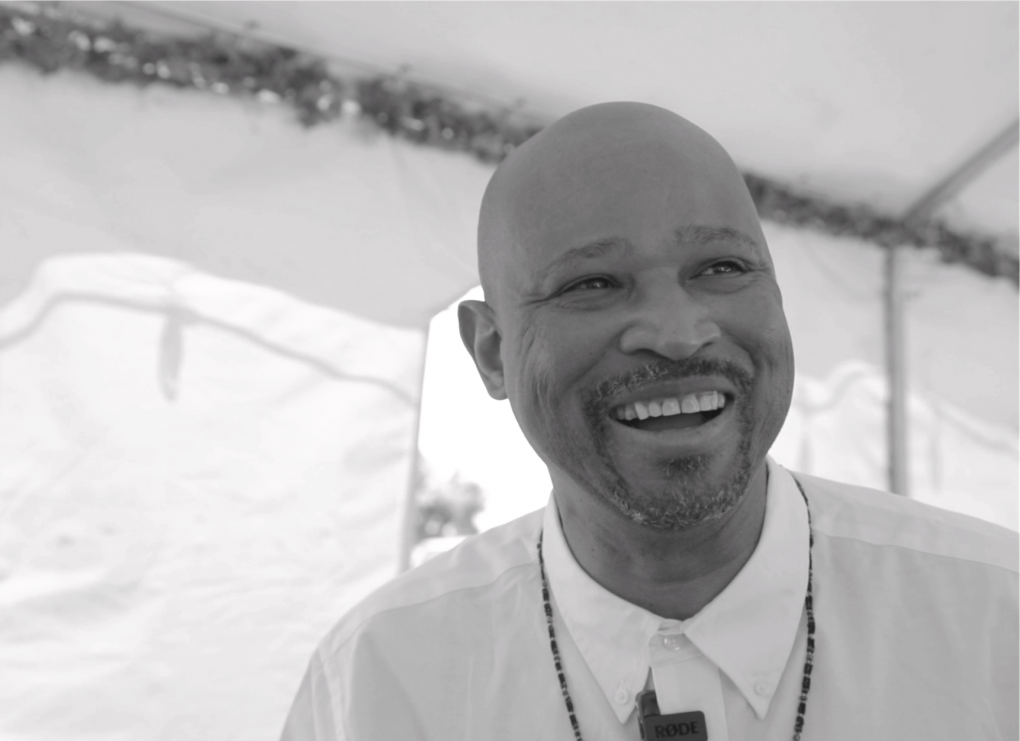
"caption": "Alwin Smith at the church where he works in Riverside County. Smith, who had been serving a life sentence, was released from prison in July 2021, after the Riverside County district attorney asked a judge to resentence him.",
"description": null,
"title": "Alwin Smith full photo",
"credit": "Courtesy of For the People",
"status": "inherit",
"altTag": "A man smiling in a black-and-white photo.",
"isLoading": false,
"fetchFailed": false
},
"news_11897612": {
"type": "attachments",
"id": "news_11897612",
"meta": {
"index": "attachments_1716263798",
"site": "news",
"id": "11897612",
"found": true
},
"parent": 11897603,
"imgSizes": {
"twentyfourteen-full-width": {
"file": "https://ww2.kqed.org/app/uploads/sites/10/2021/11/amicus_112921_final-1038x576.png",
"width": 1038,
"mimeType": "image/png",
"height": 576
},
"thumbnail": {
"file": "https://ww2.kqed.org/app/uploads/sites/10/2021/11/amicus_112921_final-160x103.png",
"width": 160,
"mimeType": "image/png",
"height": 103
},
"post-thumbnail": {
"file": "https://ww2.kqed.org/app/uploads/sites/10/2021/11/amicus_112921_final-672x372.png",
"width": 672,
"mimeType": "image/png",
"height": 372
},
"kqedFullSize": {
"file": "https://ww2.kqed.org/app/uploads/sites/10/2021/11/amicus_112921_final.png",
"width": 1920,
"height": 1231
},
"large": {
"file": "https://ww2.kqed.org/app/uploads/sites/10/2021/11/amicus_112921_final-1020x654.png",
"width": 1020,
"mimeType": "image/png",
"height": 654
},
"1536x1536": {
"file": "https://ww2.kqed.org/app/uploads/sites/10/2021/11/amicus_112921_final-1536x985.png",
"width": 1536,
"mimeType": "image/png",
"height": 985
},
"medium": {
"file": "https://ww2.kqed.org/app/uploads/sites/10/2021/11/amicus_112921_final-800x513.png",
"width": 800,
"mimeType": "image/png",
"height": 513
}
},
"publishDate": 1638224217,
"modified": 1638224297,
"caption": null,
"description": null,
"title": "amicus_112921_final",
"credit": null,
"status": "inherit",
"altTag": "Cartoon: a prison guard holding a \"no vax mandate\" sign is arm in arm with a COVID-19 character and Gov. Newsom. The governor holds a briefcase of money from the prison guards union. Caption is \"Amicus Covidae, friend of covid.\"",
"isLoading": false,
"fetchFailed": false
},
"news_11873321": {
"type": "attachments",
"id": "news_11873321",
"meta": {
"index": "attachments_1716263798",
"site": "news",
"id": "11873321",
"found": true
},
"parent": 11873313,
"imgSizes": {
"twentyfourteen-full-width": {
"file": "https://ww2.kqed.org/app/uploads/sites/10/2021/05/RS21213_GettyImages-589931494-qut-1038x576.jpeg",
"width": 1038,
"mimeType": "image/jpeg",
"height": 576
},
"thumbnail": {
"file": "https://ww2.kqed.org/app/uploads/sites/10/2021/05/RS21213_GettyImages-589931494-qut-160x109.jpeg",
"width": 160,
"mimeType": "image/jpeg",
"height": 109
},
"post-thumbnail": {
"file": "https://ww2.kqed.org/app/uploads/sites/10/2021/05/RS21213_GettyImages-589931494-qut-672x372.jpeg",
"width": 672,
"mimeType": "image/jpeg",
"height": 372
},
"kqedFullSize": {
"file": "https://ww2.kqed.org/app/uploads/sites/10/2021/05/RS21213_GettyImages-589931494-qut.jpeg",
"width": 1920,
"height": 1305
},
"large": {
"file": "https://ww2.kqed.org/app/uploads/sites/10/2021/05/RS21213_GettyImages-589931494-qut-1020x693.jpeg",
"width": 1020,
"mimeType": "image/jpeg",
"height": 693
},
"1536x1536": {
"file": "https://ww2.kqed.org/app/uploads/sites/10/2021/05/RS21213_GettyImages-589931494-qut-1536x1044.jpeg",
"width": 1536,
"mimeType": "image/jpeg",
"height": 1044
},
"medium": {
"file": "https://ww2.kqed.org/app/uploads/sites/10/2021/05/RS21213_GettyImages-589931494-qut-800x544.jpeg",
"width": 800,
"mimeType": "image/jpeg",
"height": 544
}
},
"publishDate": 1620844690,
"modified": 1632853516,
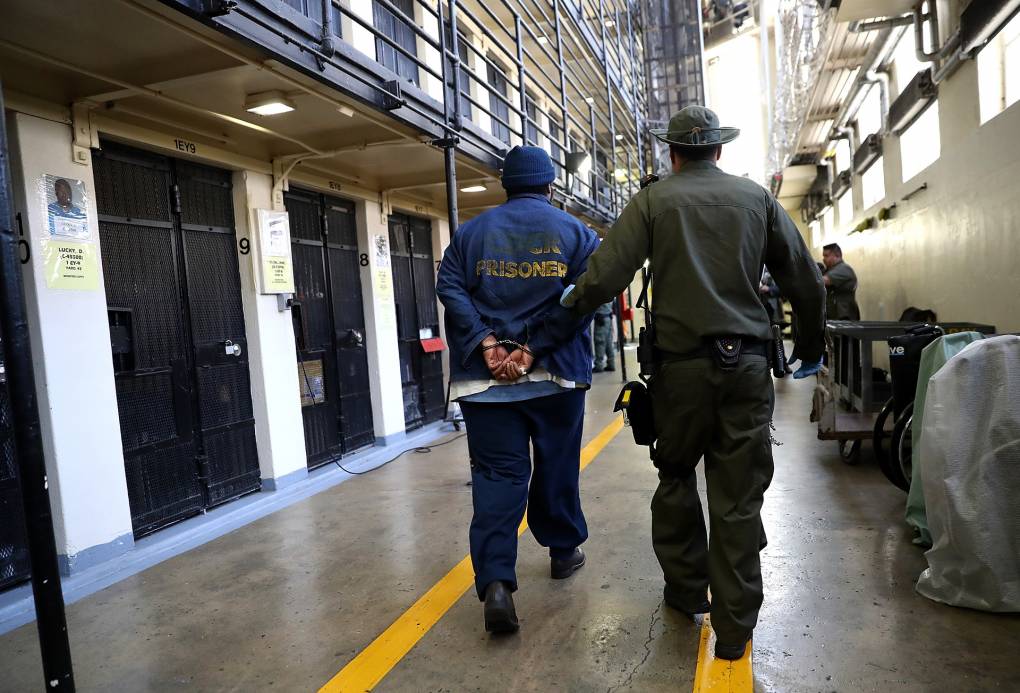
"caption": "An armed California Department of Corrections and Rehabilitation officer escorts an incarcerated person at San Quentin State Prison's death row on Aug. 15, 2016.",
"description": null,
"title": "RS21213_GettyImages-589931494-qut",
"credit": "Justin Sullivan/Getty Images",
"status": "inherit",
"altTag": "A man in a green uniform and hat leads another in a blue jacket with yellow lettering by his hands shackled behind his back.",
"isLoading": false,
"fetchFailed": false
},
"news_11889587": {
"type": "attachments",
"id": "news_11889587",
"meta": {
"index": "attachments_1716263798",
"site": "news",
"id": "11889587",
"found": true
},
"parent": 11889586,
"imgSizes": {
"twentyfourteen-full-width": {
"file": "https://ww2.kqed.org/app/uploads/sites/10/2021/09/GettyImages-1307637767-1038x576.jpg",
"width": 1038,
"mimeType": "image/jpeg",
"height": 576
},
"thumbnail": {
"file": "https://ww2.kqed.org/app/uploads/sites/10/2021/09/GettyImages-1307637767-160x107.jpg",
"width": 160,
"mimeType": "image/jpeg",
"height": 107
},
"post-thumbnail": {
"file": "https://ww2.kqed.org/app/uploads/sites/10/2021/09/GettyImages-1307637767-672x372.jpg",
"width": 672,
"mimeType": "image/jpeg",
"height": 372
},
"kqedFullSize": {
"file": "https://ww2.kqed.org/app/uploads/sites/10/2021/09/GettyImages-1307637767-scaled.jpg",
"width": 2560,
"height": 1706
},
"2048x2048": {
"file": "https://ww2.kqed.org/app/uploads/sites/10/2021/09/GettyImages-1307637767-2048x1365.jpg",
"width": 2048,
"mimeType": "image/jpeg",
"height": 1365
},
"large": {
"file": "https://ww2.kqed.org/app/uploads/sites/10/2021/09/GettyImages-1307637767-1020x680.jpg",
"width": 1020,
"mimeType": "image/jpeg",
"height": 680
},
"1536x1536": {
"file": "https://ww2.kqed.org/app/uploads/sites/10/2021/09/GettyImages-1307637767-1536x1024.jpg",
"width": 1536,
"mimeType": "image/jpeg",
"height": 1024
},
"full-width": {
"file": "https://ww2.kqed.org/app/uploads/sites/10/2021/09/GettyImages-1307637767-1920x1280.jpg",
"width": 1920,
"mimeType": "image/jpeg",
"height": 1280
},
"medium": {
"file": "https://ww2.kqed.org/app/uploads/sites/10/2021/09/GettyImages-1307637767-800x533.jpg",
"width": 800,
"mimeType": "image/jpeg",
"height": 533
}
},
"publishDate": 1632356545,
"modified": 1632421326,
"caption": "Pedestrians wait to cross the street as a San Francisco police officer stands guard on Grant Avenue in Chinatown on March 17, 2021, in San Francisco.",
"description": "Pedestrians wait to cross the street as a San Francisco police officer stands guard on Grant Avenue in Chinatown on March 17, 2021 in San Francisco, California.",
"title": "Asian Communities Respond To Recent Rise In Hate Crimes",
"credit": "Justin Sullivan/Getty Images",
"status": "inherit",
"altTag": "A police officer in a black face covering leans against his car door as a man with two small kids stands on the other side of the car.",
"isLoading": false,
"fetchFailed": false
},
"news_11882321": {
"type": "attachments",
"id": "news_11882321",
"meta": {
"index": "attachments_1716263798",
"site": "news",
"id": "11882321",
"found": true
},
"parent": 11882320,
"imgSizes": {
"twentyfourteen-full-width": {
"file": "https://ww2.kqed.org/app/uploads/sites/10/2021/07/kennard-fam-1038x576.jpeg",
"width": 1038,
"mimeType": "image/jpeg",
"height": 576
},
"thumbnail": {
"file": "https://ww2.kqed.org/app/uploads/sites/10/2021/07/kennard-fam-160x107.jpeg",
"width": 160,
"mimeType": "image/jpeg",
"height": 107
},
"post-thumbnail": {
"file": "https://ww2.kqed.org/app/uploads/sites/10/2021/07/kennard-fam-672x372.jpeg",
"width": 672,
"mimeType": "image/jpeg",
"height": 372
},
"kqedFullSize": {
"file": "https://ww2.kqed.org/app/uploads/sites/10/2021/07/kennard-fam.jpeg",
"width": 1800,
"height": 1201
},
"large": {
"file": "https://ww2.kqed.org/app/uploads/sites/10/2021/07/kennard-fam-1020x681.jpeg",
"width": 1020,
"mimeType": "image/jpeg",
"height": 681
},
"1536x1536": {
"file": "https://ww2.kqed.org/app/uploads/sites/10/2021/07/kennard-fam-1536x1025.jpeg",
"width": 1536,
"mimeType": "image/jpeg",
"height": 1025
},
"medium": {
"file": "https://ww2.kqed.org/app/uploads/sites/10/2021/07/kennard-fam-800x534.jpeg",
"width": 800,
"mimeType": "image/jpeg",
"height": 534
}
},
"publishDate": 1627079144,
"modified": 1627325301,
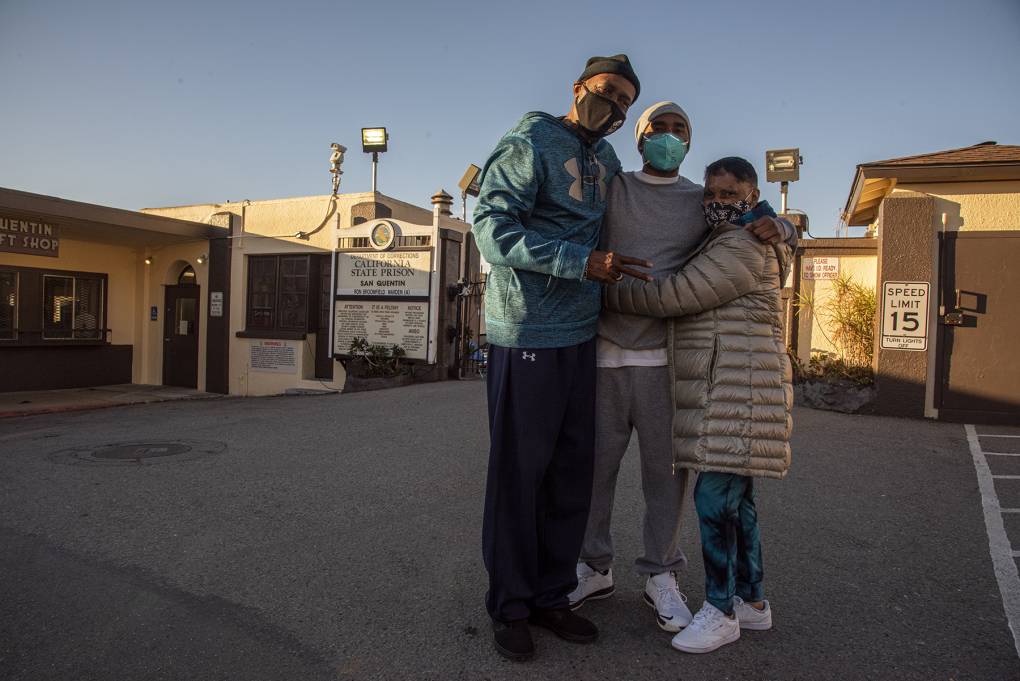
"caption": "Kennard 'Isaiah' Love (center) with his family in December 2020 after his release from San Quentin State Prison. Charged with armed robbery in 2007, at the age of 19, he was sentenced to 28 years in prison, but resentenced and released after 13 years. ",
"description": "Kennard 'Isaiah' Love (center) with his family in December 2020 after his release from San Quentin State Prison. Charged with armed robbery in 2007, at the age of 19, he was sentenced to 28 years in prison, but resentenced and released after 13 years. ",
"title": "kennard fam",
"credit": "Courtesy of For The People",
"status": "inherit",
"altTag": null,
"isLoading": false,
"fetchFailed": false
},
"news_11865547": {
"type": "attachments",
"id": "news_11865547",
"meta": {
"index": "attachments_1716263798",
"site": "news",
"id": "11865547",
"found": true
},
"parent": 11864483,
"imgSizes": {
"twentyfourteen-full-width": {
"file": "https://ww2.kqed.org/app/uploads/sites/10/2021/03/lopez-family-3-1038x576.jpg",
"width": 1038,
"mimeType": "image/jpeg",
"height": 576
},
"thumbnail": {
"file": "https://ww2.kqed.org/app/uploads/sites/10/2021/03/lopez-family-3-160x90.jpg",
"width": 160,
"mimeType": "image/jpeg",
"height": 90
},
"post-thumbnail": {
"file": "https://ww2.kqed.org/app/uploads/sites/10/2021/03/lopez-family-3-672x372.jpg",
"width": 672,
"mimeType": "image/jpeg",
"height": 372
},
"kqedFullSize": {
"file": "https://ww2.kqed.org/app/uploads/sites/10/2021/03/lopez-family-3.jpg",
"width": 1600,
"height": 900
},
"large": {
"file": "https://ww2.kqed.org/app/uploads/sites/10/2021/03/lopez-family-3-1020x574.jpg",
"width": 1020,
"mimeType": "image/jpeg",
"height": 574
},
"1536x1536": {
"file": "https://ww2.kqed.org/app/uploads/sites/10/2021/03/lopez-family-3-1536x864.jpg",
"width": 1536,
"mimeType": "image/jpeg",
"height": 864
},
"medium": {
"file": "https://ww2.kqed.org/app/uploads/sites/10/2021/03/lopez-family-3-800x450.jpg",
"width": 800,
"mimeType": "image/jpeg",
"height": 450
}
},
"publishDate": 1616111441,
"modified": 1616126157,
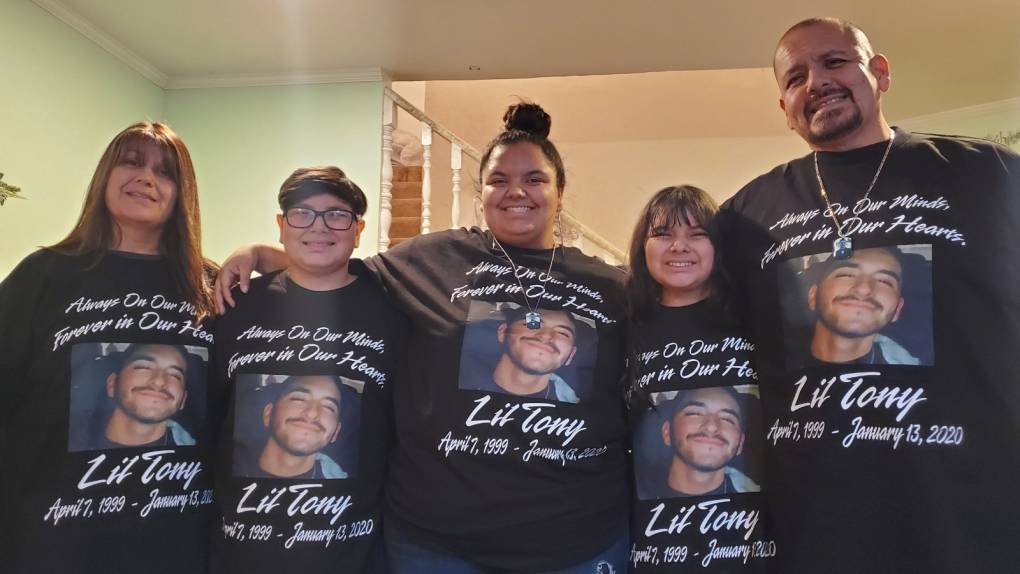
"caption": "Terry Lopez (left) and Tony Lopez (right), with their three remaining children, wear T-shirts in remembrance of their son 'Lil Tony,' who was shot and killed in early 2020.",
"description": null,
"title": "lopez family 3",
"credit": "Courtesy of the Lopez family",
"status": "inherit",
"altTag": null,
"isLoading": false,
"fetchFailed": false
},
"news_11861403": {
"type": "attachments",
"id": "news_11861403",
"meta": {
"index": "attachments_1716263798",
"site": "news",
"id": "11861403",
"found": true
},
"parent": 11861367,
"imgSizes": {
"apple_news_ca_landscape_5_5": {
"file": "https://ww2.kqed.org/app/uploads/sites/10/2021/02/RS26107_jail-hallway-with-bars-01-11-17-qut-1044x783.jpg",
"width": 1044,
"mimeType": "image/jpeg",
"height": 783
},
"apple_news_ca_square_4_0": {
"file": "https://ww2.kqed.org/app/uploads/sites/10/2021/02/RS26107_jail-hallway-with-bars-01-11-17-qut-470x470.jpg",
"width": 470,
"mimeType": "image/jpeg",
"height": 470
},
"twentyfourteen-full-width": {
"file": "https://ww2.kqed.org/app/uploads/sites/10/2021/02/RS26107_jail-hallway-with-bars-01-11-17-qut-1038x576.jpg",
"width": 1038,
"mimeType": "image/jpeg",
"height": 576
},
"thumbnail": {
"file": "https://ww2.kqed.org/app/uploads/sites/10/2021/02/RS26107_jail-hallway-with-bars-01-11-17-qut-160x90.jpg",
"width": 160,
"mimeType": "image/jpeg",
"height": 90
},
"post-thumbnail": {
"file": "https://ww2.kqed.org/app/uploads/sites/10/2021/02/RS26107_jail-hallway-with-bars-01-11-17-qut-672x372.jpg",
"width": 672,
"mimeType": "image/jpeg",
"height": 372
},
"kqedFullSize": {
"file": "https://ww2.kqed.org/app/uploads/sites/10/2021/02/RS26107_jail-hallway-with-bars-01-11-17-qut.jpg",
"width": 1920,
"height": 1080
},
"apple_news_ca_landscape_4_7": {
"file": "https://ww2.kqed.org/app/uploads/sites/10/2021/02/RS26107_jail-hallway-with-bars-01-11-17-qut-632x474.jpg",
"width": 632,
"mimeType": "image/jpeg",
"height": 474
},
"large": {
"file": "https://ww2.kqed.org/app/uploads/sites/10/2021/02/RS26107_jail-hallway-with-bars-01-11-17-qut-1020x574.jpg",
"width": 1020,
"mimeType": "image/jpeg",
"height": 574
},
"apple_news_ca_landscape_4_0": {
"file": "https://ww2.kqed.org/app/uploads/sites/10/2021/02/RS26107_jail-hallway-with-bars-01-11-17-qut-536x402.jpg",
"width": 536,
"mimeType": "image/jpeg",
"height": 402
},
"apple_news_ca_portrait_12_9": {
"file": "https://ww2.kqed.org/app/uploads/sites/10/2021/02/RS26107_jail-hallway-with-bars-01-11-17-qut-1122x1080.jpg",
"width": 1122,
"mimeType": "image/jpeg",
"height": 1080
},
"medium": {
"file": "https://ww2.kqed.org/app/uploads/sites/10/2021/02/RS26107_jail-hallway-with-bars-01-11-17-qut-800x450.jpg",
"width": 800,
"mimeType": "image/jpeg",
"height": 450
},
"apple_news_ca_portrait_4_0": {
"file": "https://ww2.kqed.org/app/uploads/sites/10/2021/02/RS26107_jail-hallway-with-bars-01-11-17-qut-354x472.jpg",
"width": 354,
"mimeType": "image/jpeg",
"height": 472
},
"apple_news_ca_portrait_9_7": {
"file": "https://ww2.kqed.org/app/uploads/sites/10/2021/02/RS26107_jail-hallway-with-bars-01-11-17-qut-840x1080.jpg",
"width": 840,
"mimeType": "image/jpeg",
"height": 1080
},
"apple_news_ca_landscape_12_9": {
"file": "https://ww2.kqed.org/app/uploads/sites/10/2021/02/RS26107_jail-hallway-with-bars-01-11-17-qut-1832x1080.jpg",
"width": 1832,
"mimeType": "image/jpeg",
"height": 1080
},
"apple_news_ca_square_9_7": {
"file": "https://ww2.kqed.org/app/uploads/sites/10/2021/02/RS26107_jail-hallway-with-bars-01-11-17-qut-1104x1080.jpg",
"width": 1104,
"mimeType": "image/jpeg",
"height": 1080
},
"1536x1536": {
"file": "https://ww2.kqed.org/app/uploads/sites/10/2021/02/RS26107_jail-hallway-with-bars-01-11-17-qut-1536x864.jpg",
"width": 1536,
"mimeType": "image/jpeg",
"height": 864
},
"apple_news_ca_portrait_4_7": {
"file": "https://ww2.kqed.org/app/uploads/sites/10/2021/02/RS26107_jail-hallway-with-bars-01-11-17-qut-414x552.jpg",
"width": 414,
"mimeType": "image/jpeg",
"height": 552
},
"apple_news_ca_square_12_9": {
"file": "https://ww2.kqed.org/app/uploads/sites/10/2021/02/RS26107_jail-hallway-with-bars-01-11-17-qut-1472x1080.jpg",
"width": 1472,
"mimeType": "image/jpeg",
"height": 1080
},
"apple_news_ca_portrait_5_5": {
"file": "https://ww2.kqed.org/app/uploads/sites/10/2021/02/RS26107_jail-hallway-with-bars-01-11-17-qut-687x916.jpg",
"width": 687,
"mimeType": "image/jpeg",
"height": 916
},
"apple_news_ca_square_4_7": {
"file": "https://ww2.kqed.org/app/uploads/sites/10/2021/02/RS26107_jail-hallway-with-bars-01-11-17-qut-550x550.jpg",
"width": 550,
"mimeType": "image/jpeg",
"height": 550
},
"apple_news_ca_landscape_9_7": {
"file": "https://ww2.kqed.org/app/uploads/sites/10/2021/02/RS26107_jail-hallway-with-bars-01-11-17-qut-1376x1032.jpg",
"width": 1376,
"mimeType": "image/jpeg",
"height": 1032
},
"apple_news_ca_square_5_5": {
"file": "https://ww2.kqed.org/app/uploads/sites/10/2021/02/RS26107_jail-hallway-with-bars-01-11-17-qut-912x912.jpg",
"width": 912,
"mimeType": "image/jpeg",
"height": 912
}
},
"publishDate": 1613785026,
"modified": 1670595655,
"caption": null,
"description": "A corridor inside the Yuba County Jail, one of two California facilities a U.S. district judge called a 'tinderbox' of COVID-19 risk for the ICE detainees held there.",
"title": "RS26107_jail-hallway-with-bars-01-11-17-qut",
"credit": "Courtesy Rosen Bien Galvan & Grunfeld LLP",
"status": "inherit",
"altTag": "Yuba County Jail",
"isLoading": false,
"fetchFailed": false
},
"news_11846089": {
"type": "attachments",
"id": "news_11846089",
"meta": {
"index": "attachments_1716263798",
"site": "news",
"id": "11846089",
"found": true
},
"parent": 11845935,
"imgSizes": {
"apple_news_ca_square_4_0": {
"file": "https://ww2.kqed.org/app/uploads/sites/10/2020/11/GettyImages-1212731101-1-470x470.jpg",
"width": 470,
"mimeType": "image/jpeg",
"height": 470
},
"thumbnail": {
"file": "https://ww2.kqed.org/app/uploads/sites/10/2020/11/GettyImages-1212731101-1-160x89.jpg",
"width": 160,
"mimeType": "image/jpeg",
"height": 89
},
"post-thumbnail": {
"file": "https://ww2.kqed.org/app/uploads/sites/10/2020/11/GettyImages-1212731101-1-672x372.jpg",
"width": 672,
"mimeType": "image/jpeg",
"height": 372
},
"kqedFullSize": {
"file": "https://ww2.kqed.org/app/uploads/sites/10/2020/11/GettyImages-1212731101-1.jpg",
"width": 1024,
"height": 572
},
"apple_news_ca_landscape_4_7": {
"file": "https://ww2.kqed.org/app/uploads/sites/10/2020/11/GettyImages-1212731101-1-632x474.jpg",
"width": 632,
"mimeType": "image/jpeg",
"height": 474
},
"large": {
"file": "https://ww2.kqed.org/app/uploads/sites/10/2020/11/GettyImages-1212731101-1-1020x570.jpg",
"width": 1020,
"mimeType": "image/jpeg",
"height": 570
},
"apple_news_ca_landscape_4_0": {
"file": "https://ww2.kqed.org/app/uploads/sites/10/2020/11/GettyImages-1212731101-1-536x402.jpg",
"width": 536,
"mimeType": "image/jpeg",
"height": 402
},
"medium": {
"file": "https://ww2.kqed.org/app/uploads/sites/10/2020/11/GettyImages-1212731101-1-800x447.jpg",
"width": 800,
"mimeType": "image/jpeg",
"height": 447
},
"apple_news_ca_portrait_4_0": {
"file": "https://ww2.kqed.org/app/uploads/sites/10/2020/11/GettyImages-1212731101-1-354x472.jpg",
"width": 354,
"mimeType": "image/jpeg",
"height": 472
},
"apple_news_ca_portrait_9_7": {
"file": "https://ww2.kqed.org/app/uploads/sites/10/2020/11/GettyImages-1212731101-1-840x572.jpg",
"width": 840,
"mimeType": "image/jpeg",
"height": 572
},
"apple_news_ca_portrait_4_7": {
"file": "https://ww2.kqed.org/app/uploads/sites/10/2020/11/GettyImages-1212731101-1-414x552.jpg",
"width": 414,
"mimeType": "image/jpeg",
"height": 552
},
"apple_news_ca_portrait_5_5": {
"file": "https://ww2.kqed.org/app/uploads/sites/10/2020/11/GettyImages-1212731101-1-687x572.jpg",
"width": 687,
"mimeType": "image/jpeg",
"height": 572
},
"apple_news_ca_square_4_7": {
"file": "https://ww2.kqed.org/app/uploads/sites/10/2020/11/GettyImages-1212731101-1-550x550.jpg",
"width": 550,
"mimeType": "image/jpeg",
"height": 550
},
"apple_news_ca_square_5_5": {
"file": "https://ww2.kqed.org/app/uploads/sites/10/2020/11/GettyImages-1212731101-1-912x572.jpg",
"width": 912,
"mimeType": "image/jpeg",
"height": 572
}
},
"publishDate": 1604622172,
"modified": 1604622276,
"caption": "A man jogs past a row of telephone booths in front of the Los Angeles County Men's Central Jail on May 11, 2020.",
"description": null,
"title": "US-HEALTH-VIRUS",
"credit": "Frederic J. Brown/AFP via Getty Images",
"status": "inherit",
"isLoading": false,
"fetchFailed": false
},
"news_11843434": {
"type": "attachments",
"id": "news_11843434",
"meta": {
"index": "attachments_1716263798",
"site": "news",
"id": "11843434",
"found": true
},
"parent": 11843335,
"imgSizes": {
"apple_news_ca_square_4_0": {
"file": "https://ww2.kqed.org/app/uploads/sites/10/2020/10/1920_Avenal-470x470.jpg",
"width": 470,
"mimeType": "image/jpeg",
"height": 470
},
"thumbnail": {
"file": "https://ww2.kqed.org/app/uploads/sites/10/2020/10/1920_Avenal-160x90.jpg",
"width": 160,
"mimeType": "image/jpeg",
"height": 90
},
"post-thumbnail": {
"file": "https://ww2.kqed.org/app/uploads/sites/10/2020/10/1920_Avenal-672x372.jpg",
"width": 672,
"mimeType": "image/jpeg",
"height": 372
},
"kqedFullSize": {
"file": "https://ww2.kqed.org/app/uploads/sites/10/2020/10/1920_Avenal.jpg",
"width": 1023,
"height": 576
},
"apple_news_ca_landscape_4_7": {
"file": "https://ww2.kqed.org/app/uploads/sites/10/2020/10/1920_Avenal-632x474.jpg",
"width": 632,
"mimeType": "image/jpeg",
"height": 474
},
"large": {
"file": "https://ww2.kqed.org/app/uploads/sites/10/2020/10/1920_Avenal-1020x574.jpg",
"width": 1020,
"mimeType": "image/jpeg",
"height": 574
},
"apple_news_ca_landscape_4_0": {
"file": "https://ww2.kqed.org/app/uploads/sites/10/2020/10/1920_Avenal-536x402.jpg",
"width": 536,
"mimeType": "image/jpeg",
"height": 402
},
"medium": {
"file": "https://ww2.kqed.org/app/uploads/sites/10/2020/10/1920_Avenal-800x450.jpg",
"width": 800,
"mimeType": "image/jpeg",
"height": 450
},
"apple_news_ca_portrait_4_0": {
"file": "https://ww2.kqed.org/app/uploads/sites/10/2020/10/1920_Avenal-354x472.jpg",
"width": 354,
"mimeType": "image/jpeg",
"height": 472
},
"apple_news_ca_portrait_9_7": {
"file": "https://ww2.kqed.org/app/uploads/sites/10/2020/10/1920_Avenal-840x576.jpg",
"width": 840,
"mimeType": "image/jpeg",
"height": 576
},
"apple_news_ca_portrait_4_7": {
"file": "https://ww2.kqed.org/app/uploads/sites/10/2020/10/1920_Avenal-414x552.jpg",
"width": 414,
"mimeType": "image/jpeg",
"height": 552
},
"apple_news_ca_portrait_5_5": {
"file": "https://ww2.kqed.org/app/uploads/sites/10/2020/10/1920_Avenal-687x576.jpg",
"width": 687,
"mimeType": "image/jpeg",
"height": 576
},
"apple_news_ca_square_4_7": {
"file": "https://ww2.kqed.org/app/uploads/sites/10/2020/10/1920_Avenal-550x550.jpg",
"width": 550,
"mimeType": "image/jpeg",
"height": 550
},
"apple_news_ca_square_5_5": {
"file": "https://ww2.kqed.org/app/uploads/sites/10/2020/10/1920_Avenal-912x576.jpg",
"width": 912,
"mimeType": "image/jpeg",
"height": 576
}
},
"publishDate": 1603417815,
"modified": 1603417922,
"caption": "The advocacy group Families United to End Life Without Parole organized a protest at Avenal State Prison on June 6 to demand better living conditions and early releases for medically vulnerable inmates amidst the ongoing COVID-19 pandemic.",
"description": null,
"title": "1920_Avenal",
"credit": "Courtesy of Families United to End Life Without Parole",
"status": "inherit",
"isLoading": false,
"fetchFailed": false
},
"news_11841580": {
"type": "attachments",
"id": "news_11841580",
"meta": {
"index": "attachments_1716263798",
"site": "news",
"id": "11841580",
"found": true
},
"parent": 11841579,
"imgSizes": {
"apple_news_ca_landscape_5_5": {
"file": "https://ww2.kqed.org/app/uploads/sites/10/2020/10/iStock-1170519918-1044x783.jpg",
"width": 1044,
"mimeType": "image/jpeg",
"height": 783
},
"apple_news_ca_square_4_0": {
"file": "https://ww2.kqed.org/app/uploads/sites/10/2020/10/iStock-1170519918-470x470.jpg",
"width": 470,
"mimeType": "image/jpeg",
"height": 470
},
"twentyfourteen-full-width": {
"file": "https://ww2.kqed.org/app/uploads/sites/10/2020/10/iStock-1170519918-1038x576.jpg",
"width": 1038,
"mimeType": "image/jpeg",
"height": 576
},
"thumbnail": {
"file": "https://ww2.kqed.org/app/uploads/sites/10/2020/10/iStock-1170519918-160x107.jpg",
"width": 160,
"mimeType": "image/jpeg",
"height": 107
},
"post-thumbnail": {
"file": "https://ww2.kqed.org/app/uploads/sites/10/2020/10/iStock-1170519918-672x372.jpg",
"width": 672,
"mimeType": "image/jpeg",
"height": 372
},
"kqedFullSize": {
"file": "https://ww2.kqed.org/app/uploads/sites/10/2020/10/iStock-1170519918.jpg",
"width": 1920,
"height": 1280
},
"apple_news_ca_landscape_4_7": {
"file": "https://ww2.kqed.org/app/uploads/sites/10/2020/10/iStock-1170519918-632x474.jpg",
"width": 632,
"mimeType": "image/jpeg",
"height": 474
},
"large": {
"file": "https://ww2.kqed.org/app/uploads/sites/10/2020/10/iStock-1170519918-1020x680.jpg",
"width": 1020,
"mimeType": "image/jpeg",
"height": 680
},
"apple_news_ca_landscape_4_0": {
"file": "https://ww2.kqed.org/app/uploads/sites/10/2020/10/iStock-1170519918-536x402.jpg",
"width": 536,
"mimeType": "image/jpeg",
"height": 402
},
"apple_news_ca_portrait_12_9": {
"file": "https://ww2.kqed.org/app/uploads/sites/10/2020/10/iStock-1170519918-1122x1280.jpg",
"width": 1122,
"mimeType": "image/jpeg",
"height": 1280
},
"medium": {
"file": "https://ww2.kqed.org/app/uploads/sites/10/2020/10/iStock-1170519918-800x533.jpg",
"width": 800,
"mimeType": "image/jpeg",
"height": 533
},
"apple_news_ca_portrait_4_0": {
"file": "https://ww2.kqed.org/app/uploads/sites/10/2020/10/iStock-1170519918-354x472.jpg",
"width": 354,
"mimeType": "image/jpeg",
"height": 472
},
"apple_news_ca_portrait_9_7": {
"file": "https://ww2.kqed.org/app/uploads/sites/10/2020/10/iStock-1170519918-840x1120.jpg",
"width": 840,
"mimeType": "image/jpeg",
"height": 1120
},
"apple_news_ca_landscape_12_9": {
"file": "https://ww2.kqed.org/app/uploads/sites/10/2020/10/iStock-1170519918-1832x1280.jpg",
"width": 1832,
"mimeType": "image/jpeg",
"height": 1280
},
"apple_news_ca_square_9_7": {
"file": "https://ww2.kqed.org/app/uploads/sites/10/2020/10/iStock-1170519918-1104x1104.jpg",
"width": 1104,
"mimeType": "image/jpeg",
"height": 1104
},
"1536x1536": {
"file": "https://ww2.kqed.org/app/uploads/sites/10/2020/10/iStock-1170519918-1536x1024.jpg",
"width": 1536,
"mimeType": "image/jpeg",
"height": 1024
},
"apple_news_ca_portrait_4_7": {
"file": "https://ww2.kqed.org/app/uploads/sites/10/2020/10/iStock-1170519918-414x552.jpg",
"width": 414,
"mimeType": "image/jpeg",
"height": 552
},
"apple_news_ca_square_12_9": {
"file": "https://ww2.kqed.org/app/uploads/sites/10/2020/10/iStock-1170519918-1472x1280.jpg",
"width": 1472,
"mimeType": "image/jpeg",
"height": 1280
},
"apple_news_ca_portrait_5_5": {
"file": "https://ww2.kqed.org/app/uploads/sites/10/2020/10/iStock-1170519918-687x916.jpg",
"width": 687,
"mimeType": "image/jpeg",
"height": 916
},
"apple_news_ca_square_4_7": {
"file": "https://ww2.kqed.org/app/uploads/sites/10/2020/10/iStock-1170519918-550x550.jpg",
"width": 550,
"mimeType": "image/jpeg",
"height": 550
},
"apple_news_ca_landscape_9_7": {
"file": "https://ww2.kqed.org/app/uploads/sites/10/2020/10/iStock-1170519918-1376x1032.jpg",
"width": 1376,
"mimeType": "image/jpeg",
"height": 1032
},
"apple_news_ca_square_5_5": {
"file": "https://ww2.kqed.org/app/uploads/sites/10/2020/10/iStock-1170519918-912x912.jpg",
"width": 912,
"mimeType": "image/jpeg",
"height": 912
}
},
"publishDate": 1602197570,
"modified": 1602197674,
"caption": "Proposition 20 would make some people convicted of felonies ineligible for early parole, among other things. ",
"description": "High Angle View Of Judge Gavel And handcuffs.",
"title": null,
"credit": "artisteer/iStock photos",
"status": "inherit",
"isLoading": false,
"fetchFailed": false
}
},
"audioPlayerReducer": {
"postId": "stream_live",
"isPaused": true,
"isPlaying": false,
"pfsActive": false,
"pledgeModalIsOpen": true,
"playerDrawerIsOpen": false,
"liveAudioPlayStartedAt": 0,
"liveAudioPlayContext": ""
},
"authorsReducer": {
"byline_news_11903391": {
"type": "authors",
"id": "byline_news_11903391",
"meta": {
"override": true
},
"slug": "byline_news_11903391",
"name": "Don Thompson \u003cbr> The Associated Press",
"isLoading": false
},
"byline_news_11890132": {
"type": "authors",
"id": "byline_news_11890132",
"meta": {
"override": true
},
"slug": "byline_news_11890132",
"name": "Don Thompson\u003cbr>Associated Press",
"isLoading": false
},
"byline_news_11889586": {
"type": "authors",
"id": "byline_news_11889586",
"meta": {
"override": true
},
"slug": "byline_news_11889586",
"name": "The Associated Press",
"isLoading": false
},
"byline_news_11843335": {
"type": "authors",
"id": "byline_news_11843335",
"meta": {
"override": true
},
"slug": "byline_news_11843335",
"name": "\u003ca href=\"https://www.kvpr.org/people/kerry-klein\">Kerry Klein\u003c/a> \u003cbr> Valley Public Radio",
"isLoading": false
},
"ohubertallen": {
"type": "authors",
"id": "102",
"meta": {
"index": "authors_1716337520",
"id": "102",
"found": true
},
"name": "Olivia Allen-Price",
"firstName": "Olivia",
"lastName": "Allen-Price",
"slug": "ohubertallen",
"email": "oallenprice@kqed.org",
"display_author_email": false,
"staff_mastheads": [
"news"
],
"title": "Senior Editor",
"bio": "Olivia Allen-Price is senior editor and host of the award-winning Bay Curious podcast. Prior to joining KQED in 2013, Olivia worked at The Baltimore Sun and The Virginian-Pilot in Norfolk, Va. She holds degrees in journalism and political science from Elon University. Her work has earned awards from the Society of Professional Journalists, the Hearst Foundation and Hearken. She loves to talk about running and curly hair.\r\n\r\nFollow: \u003ca href=\"https://twitter.com/oallenprice\">@oallenprice\u003c/a>\r\nEmail: \u003ca href=\"mailto:oallenprice@kqed.org\">oallenprice@kqed.org\u003c/a>",
"avatar": "https://secure.gravatar.com/avatar/07f7803c1f6be56f3be58ef276dfa64dce898502e0554408ef4858451a8294f7?s=600&d=blank&r=g",
"twitter": "oallenprice",
"bluesky": null,
"facebook": null,
"instagram": null,
"linkedin": null,
"sites": [
{
"site": "",
"roles": [
"editor"
]
},
{
"site": "arts",
"roles": [
"subscriber"
]
},
{
"site": "news",
"roles": [
"administrator"
]
},
{
"site": "pop",
"roles": [
"administrator"
]
},
{
"site": "bayareabites",
"roles": [
"contributor"
]
},
{
"site": "stateofhealth",
"roles": [
"administrator"
]
},
{
"site": "science",
"roles": [
"editor"
]
}
],
"headData": {
"title": "Olivia Allen-Price | KQED",
"description": "Senior Editor",
"ogImgSrc": "https://secure.gravatar.com/avatar/07f7803c1f6be56f3be58ef276dfa64dce898502e0554408ef4858451a8294f7?s=600&d=blank&r=g",
"twImgSrc": "https://secure.gravatar.com/avatar/07f7803c1f6be56f3be58ef276dfa64dce898502e0554408ef4858451a8294f7?s=600&d=blank&r=g"
},
"isLoading": false,
"link": "/author/ohubertallen"
},
"katrinaschwartz": {
"type": "authors",
"id": "234",
"meta": {
"index": "authors_1716337520",
"id": "234",
"found": true
},
"name": "Katrina Schwartz",
"firstName": "Katrina",
"lastName": "Schwartz",
"slug": "katrinaschwartz",
"email": "kschwartz@kqed.org",
"display_author_email": false,
"staff_mastheads": [
"news"
],
"title": "Producer",
"bio": "Katrina Schwartz is a journalist based in San Francisco. She's worked at KPCC public radio in LA and has reported on air and online for KQED since 2010. She covered how teaching and learning is changing for MindShift between 2012 and 2020. She is the co-host of the MindShift podcast and now produces KQED's Bay Curious podcast.",
"avatar": "https://secure.gravatar.com/avatar/edb4ee79070447a018538c9aae6eeecf28786515b8a0c30e43b6b7dce5aa44c8?s=600&d=blank&r=g",
"twitter": "kschwart",
"bluesky": null,
"facebook": null,
"instagram": null,
"linkedin": null,
"sites": [
{
"site": "",
"roles": [
"editor"
]
},
{
"site": "news",
"roles": [
"editor"
]
},
{
"site": "mindshift",
"roles": [
"administrator"
]
},
{
"site": "stateofhealth",
"roles": [
"author"
]
},
{
"site": "science",
"roles": [
"editor"
]
}
],
"headData": {
"title": "Katrina Schwartz | KQED",
"description": "Producer",
"ogImgSrc": "https://secure.gravatar.com/avatar/edb4ee79070447a018538c9aae6eeecf28786515b8a0c30e43b6b7dce5aa44c8?s=600&d=blank&r=g",
"twImgSrc": "https://secure.gravatar.com/avatar/edb4ee79070447a018538c9aae6eeecf28786515b8a0c30e43b6b7dce5aa44c8?s=600&d=blank&r=g"
},
"isLoading": false,
"link": "/author/katrinaschwartz"
},
"tychehendricks": {
"type": "authors",
"id": "259",
"meta": {
"index": "authors_1716337520",
"id": "259",
"found": true
},
"name": "Tyche Hendricks",
"firstName": "Tyche",
"lastName": "Hendricks",
"slug": "tychehendricks",
"email": "thendricks@kqed.org",
"display_author_email": true,
"staff_mastheads": [
"news"
],
"title": "KQED Senior Editor, Immigration",
"bio": "\u003cspan style=\"font-weight: 400;\">Tyche Hendricks is KQED’s senior editor for immigration, leading coverage of the policy and politics that affect California’s immigrant communities. Her work for KQED’s radio and online audiences is also carried on NPR and other national outlets. She has been recognized with awards from the Radio and Television News Directors Association, the Society for Professional Journalists; the Education Writers Association; the Best of the West and the National Federation of Community Broadcasters. Before joining KQED in 2010, Tyche spent more than a dozen years as a newspaper reporter, notably at the \u003c/span>\u003ci>\u003cspan style=\"font-weight: 400;\">San Francisco Chronicle\u003c/span>\u003c/i>\u003cspan style=\"font-weight: 400;\">. At different times she has covered criminal justice, government and politics and urban planning. Tyche has taught in the MFA Creative Writing program at the University of San Francisco and at UC Berkeley’s Graduate School of Journalism, where she was co-director of a national immigration symposium for professional journalists. She is the author of \u003c/span>\u003ci>\u003cspan style=\"font-weight: 400;\">The Wind Doesn't Need a Passport: Stories from the U.S.-Mexico Borderlands\u003c/span>\u003c/i>\u003cspan style=\"font-weight: 400;\"> (University of California Press). \u003c/span>",
"avatar": "https://secure.gravatar.com/avatar/b8ee458e2731c2d43df86882ce17267e?s=600&d=blank&r=g",
"twitter": "tychehendricks",
"facebook": null,
"instagram": null,
"linkedin": null,
"sites": [
{
"site": "news",
"roles": [
"editor"
]
},
{
"site": "stateofhealth",
"roles": [
"editor"
]
}
],
"headData": {
"title": "Tyche Hendricks | KQED",
"description": "KQED Senior Editor, Immigration",
"ogImgSrc": "https://secure.gravatar.com/avatar/b8ee458e2731c2d43df86882ce17267e?s=600&d=blank&r=g",
"twImgSrc": "https://secure.gravatar.com/avatar/b8ee458e2731c2d43df86882ce17267e?s=600&d=blank&r=g"
},
"isLoading": false,
"link": "/author/tychehendricks"
},
"matthewgreen": {
"type": "authors",
"id": "1263",
"meta": {
"index": "authors_1716337520",
"id": "1263",
"found": true
},
"name": "Matthew Green",
"firstName": "Matthew",
"lastName": "Green",
"slug": "matthewgreen",
"email": "mgreen@kqed.org",
"display_author_email": false,
"staff_mastheads": [],
"title": "KQED Editor/Reporter",
"bio": "Matthew Green is a digital media producer for KQED News. He previously produced \u003ca href=\"http://www.kqed.org/lowdown\">The Lowdown\u003c/a>, KQED’s multimedia news education blog. Matthew's written for numerous Bay Area publications, including the Oakland Tribune and San Francisco Chronicle. He also taught journalism classes at Fremont High School in East Oakland.\r\n\r\nEmail: mgreen@kqed.org; Twitter: @MGreenKQED",
"avatar": "https://secure.gravatar.com/avatar/3bf498d1267ca02c8494f33d8cfc575e?s=600&d=blank&r=g",
"twitter": "MGreenKQED",
"facebook": null,
"instagram": null,
"linkedin": null,
"sites": [
{
"site": "news",
"roles": []
},
{
"site": "lowdown",
"roles": []
},
{
"site": "science",
"roles": []
},
{
"site": "education",
"roles": []
},
{
"site": "quest",
"roles": []
},
{
"site": "liveblog",
"roles": []
}
],
"headData": {
"title": "Matthew Green | KQED",
"description": "KQED Editor/Reporter",
"ogImgSrc": "https://secure.gravatar.com/avatar/3bf498d1267ca02c8494f33d8cfc575e?s=600&d=blank&r=g",
"twImgSrc": "https://secure.gravatar.com/avatar/3bf498d1267ca02c8494f33d8cfc575e?s=600&d=blank&r=g"
},
"isLoading": false,
"link": "/author/matthewgreen"
},
"markfiore": {
"type": "authors",
"id": "3236",
"meta": {
"index": "authors_1716337520",
"id": "3236",
"found": true
},
"name": "Mark Fiore",
"firstName": "Mark",
"lastName": "Fiore",
"slug": "markfiore",
"email": "mark@markfiore.com",
"display_author_email": false,
"staff_mastheads": [
"news"
],
"title": "KQED News Cartoonist",
"bio": "\u003ca href=\"http://www.MarkFiore.com\">MarkFiore.com\u003c/a> | \u003ca href=\"https://twitter.com/markfiore\">Follow on Twitter\u003c/a> | \u003ca href=\"https://www.facebook.com/pages/Mark-Fiore-Animated-Political-Cartoons/94451707396?ref=bookmarks\">Facebook\u003c/a> | \u003ca href=\"mailto:mark@markfiore.com\">email\u003c/a>\r\n\r\nPulitzer Prize-winner, Mark Fiore, who the Wall Street Journal has called “the undisputed guru of the form,” creates animated political cartoons in San Francisco, where his work has been featured regularly on the San Francisco Chronicle’s web site, SFGate.com. His work has appeared on Newsweek.com, Slate.com, CBSNews.com, MotherJones.com, DailyKos.com and NPR’s web site. Fiore’s political animation has appeared on CNN, Frontline, Bill Moyers Journal, Salon.com and cable and broadcast outlets across the globe.\r\n\r\nBeginning his professional life by drawing traditional political cartoons for newspapers, Fiore’s work appeared in publications ranging from the Washington Post to the Los Angeles Times. In the late 1990s, he began to experiment with animating political cartoons and, after a short stint at the San Jose Mercury News as their staff cartoonist, Fiore devoted all his energies to animation.\r\nGrowing up in California, Fiore also spent a good portion of his life in the backwoods of Idaho. It was this combination that shaped him politically. Mark majored in political science at Colorado College, where, in a perfect send-off for a cartoonist, he received his diploma in 1991 as commencement speaker Dick Cheney smiled approvingly.\r\nMark Fiore was awarded the Pulitzer Prize for political cartooning in 2010, a Robert F. Kennedy Journalism Award in 2004 and has twice received an Online Journalism Award for commentary from the Online News Association (2002, 2008). Fiore has received two awards for his work in new media from the National Cartoonists Society (2001, 2002), and in 2006 received The James Madison Freedom of Information Award from The Society of Professional Journalists.",
"avatar": "https://secure.gravatar.com/avatar/fc4e2a612b15b67bad0c6f0e1db4ca9b?s=600&d=blank&r=g",
"twitter": "MarkFiore",
"facebook": null,
"instagram": "https://www.instagram.com/markfiore/?hl=en",
"linkedin": null,
"sites": [
{
"site": "arts",
"roles": [
"contributor"
]
},
{
"site": "news",
"roles": [
"editor"
]
},
{
"site": "futureofyou",
"roles": [
"editor"
]
},
{
"site": "science",
"roles": [
"editor"
]
}
],
"headData": {
"title": "Mark Fiore | KQED",
"description": "KQED News Cartoonist",
"ogImgSrc": "https://secure.gravatar.com/avatar/fc4e2a612b15b67bad0c6f0e1db4ca9b?s=600&d=blank&r=g",
"twImgSrc": "https://secure.gravatar.com/avatar/fc4e2a612b15b67bad0c6f0e1db4ca9b?s=600&d=blank&r=g"
},
"isLoading": false,
"link": "/author/markfiore"
},
"mlagos": {
"type": "authors",
"id": "3239",
"meta": {
"index": "authors_1716337520",
"id": "3239",
"found": true
},
"name": "Marisa Lagos",
"firstName": "Marisa",
"lastName": "Lagos",
"slug": "mlagos",
"email": "mlagos@kqed.org",
"display_author_email": false,
"staff_mastheads": [
"news"
],
"title": "KQED Contributor",
"bio": "Marisa Lagos is a correspondent for KQED’s California Politics and Government Desk and co-hosts the award-winning show and podcast, Political Breakdown. At KQED, Lagos also conducts reporting, analysis and investigations into state, local and national politics for radio, TV, online and onstage. In 2022, she and co-host, Scott Shafer, moderated the only gubernatorial debate in California. In 2020, the \u003ci>Washington Post\u003c/i> named her one of the top political journalists in California; she was nominated for a Peabody and won several other awards for her work investigating the 2017 California wildfires. She has worked at the \u003ci>San Francisco Chronicle\u003c/i>, \u003ci>San Francisco Examiner\u003c/i> and \u003ci>Los Angeles Times\u003c/i>. A UC Santa Barbara graduate, she lives in San Francisco with her two sons and husband.",
"avatar": "https://secure.gravatar.com/avatar/a261a0d3696fc066871ef96b85b5e7d2?s=600&d=blank&r=g",
"twitter": "@mlagos",
"facebook": null,
"instagram": null,
"linkedin": null,
"sites": [
{
"site": "arts",
"roles": [
"author"
]
},
{
"site": "news",
"roles": [
"editor"
]
},
{
"site": "science",
"roles": [
"editor"
]
},
{
"site": "forum",
"roles": [
"author"
]
},
{
"site": "liveblog",
"roles": [
"author"
]
}
],
"headData": {
"title": "Marisa Lagos | KQED",
"description": "KQED Contributor",
"ogImgSrc": "https://secure.gravatar.com/avatar/a261a0d3696fc066871ef96b85b5e7d2?s=600&d=blank&r=g",
"twImgSrc": "https://secure.gravatar.com/avatar/a261a0d3696fc066871ef96b85b5e7d2?s=600&d=blank&r=g"
},
"isLoading": false,
"link": "/author/mlagos"
}
},
"pagesReducer": {
"news_category_criminal-justice": {
"type": "terms",
"id": "news_34167",
"meta": {
"index": "terms_1716263798",
"site": "news",
"id": "34167",
"score": 11.18808
},
"name": "Criminal Justice",
"slug": "criminal-justice",
"taxonomy": "category",
"description": null,
"featImg": null,
"headData": {
"title": "Criminal Justice Archives | KQED News",
"description": null,
"ogTitle": null,
"ogDescription": null,
"ogImgId": null,
"twTitle": null,
"twDescription": null,
"twImgId": null
},
"ttid": 34184,
"isLoading": false,
"title": "Criminal Justice",
"pageMeta": {
"site": "news",
"WpPageTemplate": "page-topic-editorial",
"currentPage": 45
},
"blocks": [
{
"blockName": "kqed/post-list",
"attrs": {
"layout": "cardArticle2",
"query": "posts/news?category=criminal-justice",
"seeMore": false,
"paginated": true,
"page": 45
}
},
{
"blockName": "kqed/ad"
}
]
}
},
"pfsSessionReducer": {},
"postsReducer": {
"stream_live": {
"type": "live",
"id": "stream_live",
"audioUrl": "https://streams.kqed.org/kqedradio",
"title": "Live Stream",
"excerpt": "Live Stream information currently unavailable.",
"link": "/radio",
"featImg": "",
"label": {
"name": "KQED Live",
"link": "/"
}
},
"stream_kqedNewscast": {
"type": "posts",
"id": "stream_kqedNewscast",
"audioUrl": "https://www.kqed.org/.stream/anon/radio/RDnews/newscast.mp3?_=1",
"title": "KQED Newscast",
"featImg": "",
"label": {
"name": "88.5 FM",
"link": "/"
}
},
"news_11906253": {
"type": "posts",
"id": "news_11906253",
"meta": {
"index": "posts_1716263798",
"site": "news",
"id": "11906253",
"score": null,
"sort": [
1646229600000
]
},
"guestAuthors": [],
"slug": "violent-crime-soared-during-the-pandemic-but-does-the-political-debate-reflect-the-data",
"title": "Violent Crime Soared During the Pandemic. But Does the Political Debate Reflect the Data?",
"publishDate": 1646229600,
"format": "standard",
"headTitle": "Violent Crime Soared During the Pandemic. But Does the Political Debate Reflect the Data? | KQED",
"labelTerm": {
"site": "news"
},
"content": "\u003cp>With major national and statewide increases in murders since the start of the pandemic, crime is shaping up to be a big political football in 2022. In California, it’s already dominating debate in the race for attorney general, and has largely fueled the recall attempts of at least two reform-minded county district attorneys.\u003c/p>\n\u003cp>Politicians and activists are seizing on the issue for good reason: \u003ca href=\"https://www.latimes.com/california/story/2022-02-15/gavin-newsom-poll-job-approval-crime-fears\">Polls show voters being increasingly concerned\u003c/a> about crime in their communities.\u003c/p>\n\u003cp>While this is often framed as a red-versus-blue debate, the data shows much broader trends — like the increase in murders — playing out across the nation, regardless of the political makeup or the individual policies of a particular city, county or state. Nationally, there was an \u003ca href=\"https://www.npr.org/2021/09/27/1040904770/fbi-data-murder-increase-2020\">unprecedented spike in murders\u003c/a> in 2020 — up nearly 30% over 2019, marking the largest single-year increase ever recorded in the U.S.\u003c/p>\n\u003cp>\u003c!-- iframe plugin v.4.3 wordpress.org/plugins/iframe/ -->\u003cbr>\n\u003ciframe loading=\"lazy\" title=\"CA Violent and Property Crime Rates, 1966-2020\" aria-label=\"Interactive line chart\" id=\"datawrapper-chart-ACith\" src=\"https://datawrapper.dwcdn.net/ACith/3/\" scrolling=\"no\" frameborder=\"0\" style=\"border: none;\" width=\"800\" height=\"549\" data-external=\"1\" class=\"iframe-class\">\u003c/iframe>\u003c/p>\n\u003cp>But despite that troubling surge, the national murder rate appeared to begin receding in 2021. Meanwhile violent crime overall — and homicides in particular — remains at or near record lows throughout the U.S. The same is true in California\u003c/p>\n\u003cp>[ad fullwidth]\u003c/p>\n\u003cp>“I think 2020 was an outlier. California was not an outlier,” said Steven Raphael, an economist at UC Berkeley’s Goldman School of Public Policy. “There doesn’t appear to be much that’s happening here that didn’t happen in the rest of the country as well.”\u003c/p>\n\u003ch2>\u003cstrong>Bearing the brunt \u003c/strong>\u003c/h2>\n\u003cp>Republicans, law enforcement officials and other critics of the criminal justice reforms California has made over the past decade are seizing on recent high-profile property and hate crimes and murders to attack those efforts.\u003c/p>\n\u003cp>But Richard Rosenfeld, a criminologist at the University of Missouri-St. Louis, said there’s no connection between spikes in murders and the political ideology of an individual prosecutor. And there’s also no proof, he said, that states that have embraced reforms like shorter prison sentences are seeing more violence than other states.\u003c/p>\n\u003cp>He noted the uniform uptick in murders across states in 2020.\u003c/p>\n\u003cp>“When you see nearly every city go up like we did in 2020, it’s really difficult under those conditions to attribute the increase to any particular policy in any particular city,” he said. “Everybody was going up.”\u003c/p>\n\u003cp>Rosenfeld pointed to a key factor that hasn’t changed over time and tracks across the nation: Men of color, particularly Black men, are the most likely to be victims of murder.\u003c/p>\n\u003cp>“The overall level of violence, and homicide in particular, has gone way up in the last couple of years [since the pandemic began]. But the communities and the population groups that suffer most — and have historically — from high levels of violence, haven’t changed,” he said. “It’s young men of color. It’s disadvantaged communities of color that have borne the brunt of the increase.”\u003cbr>\n[pullquote align=\"right\" size=\"medium\" citation=\"Richard Rosenfeld, criminologist, University of Missouri-St. Louis\"]‘When you see nearly every city go up like we did in 2020, it’s really difficult under those conditions to attribute the increase to any particular policy in any particular city.’[/pullquote]“So we’re not seeing a spreading out of violence to other population groups — the elderly, for example — or into affluent communities,” he added. What we’re seeing is an intensification of the violence in the very communities where historically it’s been quite high.”\u003c/p>\n\u003cp>Jasmine Hardison has experienced that heartbreaking reality firsthand — it’s her job to show up at the scene of homicides in Oakland, and help family members and other survivors cope. Hardison lost her own son to gun violence in 2016 and now works for Youth ALIVE!, a violence prevention nonprofit in the city, as program coordinator for the Khadafy Washington Project.\u003c/p>\n\u003cp>Oakland, which has long struggled with gun violence,\u003ca href=\"https://www.sfchronicle.com/crime/article/Charts-show-where-homicides-are-spiking-most-in-16942387.php\"> recorded the biggest jump in murders in the Bay Area during the pandemic\u003c/a> — an increase that actually began in the city pre-pandemic, in 2019, and continued to rise into 2021. The 2021 per-capita murder rate in Oakland dwarfs that of any other city in the region — it’s nearly double the rate of the next closest cities, Richmond and Vallejo, according to data tabulated by The San Francisco Chronicle.\u003c/p>\n\u003cp>Hardison said there’s no one factor that seems to be driving Oakland’s increase in violence — though she notes it’s disproportionately affecting the same Black and Brown communities that have long borne the brunt of crime spikes.\u003c/p>\n\u003cp>She doesn’t believe that more or fewer police on the streets is the answer. Instead, she said she’d like to see officers work more closely with the community.\u003c/p>\n\u003cp>“I do think that we need to build better relationships,” Hardison said, “because a lot of times [the police department] doesn’t even have that interaction with the community until there’s a homicide. And then at that time, everyone is pretty much treated like a criminal.”\u003c/p>\n\u003ch2>\u003cstrong>Not as simple as left or right politics\u003c/strong>\u003c/h2>\n\u003cp>Hardison’s observations speak to what some see as the oversimplification of the issue — one they say both sides in the political debate are getting wrong.\u003c/p>\n\u003cp>“We appear to be coming down off just a truly momentous increase in violence that can’t be washed away by reformers,” Rosenfeld said. “It can’t be willy-nilly attributed to progressive policies. It’s far more widespread than either of those explanations can handle.”\u003c/p>\n\u003cp>Rosenfeld said the current political debate over crime is dismaying because both progressives and conservatives are guilty of reducing a complex and tragic situation to political talking points.\u003c/p>\n\u003cp>“On the one hand, we have people who would abolish the police, whatever that could possibly mean, or greatly defund the police,” he said. “On the other hand, we have those who argue that every time there’s a crime increase, it just has to be related to the election of a progressive prosecutor or the appointment of a progressive police chief or liberals run amok in the policy circles in the city.”\u003c/p>\n\u003cp>To understand this debate in California, you need to look back at how things have changed the past few decades. Until about 10 years ago, California embraced a more conservative, law-and-order approach to criminal justice that leaned heavily on long prison sentences and resulted in overcrowded state prisons. After a \u003ca href=\"https://www.npr.org/2011/05/23/136579580/california-is-ordered-to-cut-its-prison-population\">U.S. Supreme Court decision\u003c/a> ordering the state to reduce its prison population, Democratic state leaders began passing reforms aimed at lowering the number of inmates and stressing rehabilitation over punishment.\u003c/p>\n\u003cp>\u003c!-- iframe plugin v.4.3 wordpress.org/plugins/iframe/ -->\u003cbr>\n\u003ciframe loading=\"lazy\" title=\"Violent Crime Rate in U.S. and California\" aria-label=\"Interactive line chart\" id=\"datawrapper-chart-nLoM7\" src=\"https://datawrapper.dwcdn.net/nLoM7/9/\" scrolling=\"no\" frameborder=\"0\" style=\"border: none;\" width=\"800\" height=\"549\" data-external=\"1\" class=\"iframe-class\">\u003c/iframe>\u003c/p>\n\u003cp>Much of the backlash against those changes comes from law enforcement and the state’s Republican politicians. For example, police and conservatives have long pushed back against the \u003ca href=\"https://www.courts.ca.gov/prop47.htm\">changes instituted by Proposition 47\u003c/a>. The ballot measure, passed by voters in 2014, made most drug possessions a misdemeanor instead of a felony, and directed the state to use the savings (from not imprisoning as many people) on rehabilitation programs. It also brought California in line with most other states by increasing the threshold for misdemeanor shoplifting from $450 to $900.\u003c/p>\n\u003cp>As brazen shoplifting instances were caught on camera this past year, many opponents of the measure blamed it as a driving factor, saying criminals were taking advantage of what they call the state’s more lenient laws. Critics have also linked reforms like Proposition 47 to violent crime increases.\u003c/p>\n\u003ch2>The rural-urban divide\u003c/h2>\n\u003cp>But statewide data in California reveals that pandemic-related spikes in violence did not spare rural, conservative communities, which in some instances actually experienced relatively larger increases in violent crime during the pandemic than did urban centers with more progressive criminal justice policies.\u003c/p>\n\u003cp>In California, three tiny rural, conservative counties — Mono, Modoc and Tehama — experienced the largest jumps in per capita murders between 2019 and 2020 (although the actual numbers of murders and other violent crime incidents were still relatively low, as these counties have tiny populations).\u003c/p>\n\u003cp>Meanwhile, Los Angeles and San Francisco counties — where the progressive-minded top prosecutors are both facing recall attempts — did not see huge spikes in violence.\u003c/p>\n\u003cp>\u003c!-- iframe plugin v.4.3 wordpress.org/plugins/iframe/ -->\u003cbr>\n\u003ciframe loading=\"lazy\" title=\"Violent Crime Rate per County, 2019-2020\" aria-label=\"Map\" id=\"datawrapper-chart-RLInh\" src=\"https://datawrapper.dwcdn.net/RLInh/4/\" scrolling=\"no\" frameborder=\"0\" style=\"border: none;\" width=\"1000\" height=\"817\" class=\"iframe-class\">\u003c/iframe>\u003c/p>\n\u003cp>In larger urban areas, the biggest per capita increases in murders were in Vallejo, Inglewood and San Bernardino — which represent a mix of political leanings.\u003c/p>\n\u003cp>Rosenfeld and other criminologists say the broader homicide trends are likely driven by a confluence of factors, including the economic woes and broader social disruptions brought on by the pandemic, as well as social unrest sparked in 2020 by the murder of George Floyd. He also attributed the uptick to a pullback in policing due to COVID-19 concerns, staffing shortages and political pressure against aggressive policing practices. Increases in drug sales and use and, possibly, increased access to guns also played a role, he said.\u003c/p>\n\u003ch2>\u003cstrong>What history tells us\u003c/strong>\u003c/h2>\n\u003cp>Criminologists say that many factors over the past two years that were related to or caused by the pandemic have historically been linked to an increase in violence.\u003c/p>\n\u003cp>Among them: the wild fluctuations in the economy since the pandemic began, which hit communities of color especially hard, as well as the nationwide increase in drug use, particularly methamphetamines and fentanyl.\u003c/p>\n\u003cp>“We know that beginning in the mid ’60s and since then, economic conditions have played a role [in violent crime rates] — in particular, inflation,” Rosenfeld said, noting that as inflation stabilized, so, too, did crime rates. “The crack-cocaine era [of the 1980s and 1990s] saw an increase in violent crime associated with the drug markets of the time. And in research I’ve done and published, the opioid epidemic has also pushed up homicide rates in U.S. counties.”\u003c/p>\n\u003cp>But there are also factors that are less understood. Take the nationwide racial justice protests in the summer of 2020 that coincided with the increase in homicides. Researchers have tracked since the 1960s the correlation between social unrest — often sparked by conflicts with police — and violent crime, Rosenfeld said.\u003c/p>\n\u003cp>[aside label=\"Related Coverage\" tag=\"criminal-justice\"]It was particularly evident after the 2014 unrest in Ferguson, Missouri, sparked by the killing of Michael Brown — a young Black man — by a white police officer, he noted.\u003c/p>\n\u003cp>“And then we saw homicide rates move up very abruptly immediately after George Floyd was killed in that video that went viral in 2020,” he said. “The connection between widespread social unrest and increases in violent crime, that connection is pretty solid.”\u003c/p>\n\u003cp>But why that connection exists isn’t fully understood.\u003c/p>\n\u003cp>UC Berkeley’s Raphael noted that homicides generally increase in summer months, when the weather is warmer, the days are longer, and kids are out of school. But he agreed that the rapid spike in homicides in the summer of 2020 was well beyond seasonal fluctuations.\u003c/p>\n\u003cp>“It was certainly the case that the increase in homicide seemed to correspond with the murder of George Floyd and the protests that occurred,” he said. “The timing suggests that something happened, whether it was people unwilling to cooperate with the police or just a general sense of … social malaise that was leading to more violence, or police being more apprehensive.”\u003c/p>\n\u003ch2>The policing factor\u003c/h2>\n\u003cp>That gets to another factor: policing. While there’s not a lot of research showing a direct connection between crime rates and the length of criminal sentences pursued by prosecutors, there is evidence that suggests police presence can drive down crime, especially, said Rosenfeld, if that policing is targeted at high-risk spots or individuals likely to engage in violence or to become victims.\u003c/p>\n\u003cp>“There does appear to be an impact, that when you have more police presence, there’s lower crime rates,” Raphael added.\u003c/p>\n\u003cp>While “defund the police” was a major liberal rallying cry during the summer of 2020 — with many Democratic leaders pledging to reduce police budgets — most of those cuts never ultimately materialized, even in liberal cities like San Francisco.\u003c/p>\n\u003cp>Even so, many police departments have seen huge numbers of retirements and attrition, rendering them understaffed.\u003c/p>\n\u003cp>Rosenfeld said tackling endemic violence will require those critical of law enforcement and those in law enforcement to work together.\u003c/p>\n\u003cfigure id=\"attachment_11906965\" class=\"wp-caption aligncenter\" style=\"max-width: 1920px\">\u003ca href=\"https://ww2.kqed.org/app/uploads/sites/10/2022/03/IMG_7035-scaled-e1646183999545.jpg\">\u003cimg loading=\"lazy\" decoding=\"async\" class=\"wp-image-11906965 size-full\" src=\"https://ww2.kqed.org/app/uploads/sites/10/2022/03/IMG_7035-scaled-e1646183999545.jpg\" alt=\"A woman sits at a table against a brick wall.\" width=\"1920\" height=\"1440\">\u003c/a>\u003cfigcaption class=\"wp-caption-text\">Jasmine Hardison, a violence interrupter for Youth ALIVE!, in Oakland on Feb. 14, 2022. \u003ccite>(Marisa Lago/KQED)\u003c/cite>\u003c/figcaption>\u003c/figure>\n\u003cp>“If police-community relationships were improved, people would be more likely to cooperate with the police when [they] are attempting to investigate crime,” he said. “That cooperation would lead to higher arrest rates and more and more and more successful prosecutions, and that could help to bring down crime.”\u003c/p>\n\u003cp>Jasmine Hardison, the Oakland violence response worker, said she and her colleagues at Youth ALIVE! will continue to not only support victims, but also work to interrupt the violence.\u003c/p>\n\u003cp>“It’s really critical that families get this type of service because when you’re faced with a crisis like this, you don’t know what to do. You don’t know where to turn,” she said.\u003c/p>\n\u003cp>Hardison said her hope is that police and the court system can provide those families justice.\u003c/p>\n\u003cp>She said most families need financial assistance, as well as help with the logistics of laying a loved one to rest. They often need help connecting with grief counselors and other mental health support. But sometimes, they also need help making sure the cycle of violence doesn’t continue.\u003c/p>\n\u003cp>[ad floatright]\u003c/p>\n\u003cp>“We’ve encountered families that when we get to the scene, there is a lot of hostility — which is to be expected,” Hardison said. “And that’s a time when our violence interrupters approach families and offer that mediation … in hopes that families don’t go out, you know, and try to retaliate.”\u003c/p>\n\n",
"blocks": [],
"excerpt": "Many criminologists say crime spikes have little to do with liberal or conservative policies, and argue that both sides of the political debate are misguided.",
"status": "publish",
"parent": 0,
"modified": 1740702543,
"stats": {
"hasAudio": false,
"hasVideo": false,
"hasChartOrMap": true,
"iframeSrcs": [
"https://datawrapper.dwcdn.net/ACith/3/",
"https://datawrapper.dwcdn.net/nLoM7/9/",
"https://datawrapper.dwcdn.net/RLInh/4/"
],
"hasGoogleForm": false,
"hasGallery": false,
"hasHearkenModule": false,
"hasPolis": false,
"paragraphCount": 53,
"wordCount": 2385
},
"headData": {
"title": "Violent Crime Soared During the Pandemic. But Does the Political Debate Reflect the Data? | KQED",
"description": "Many criminologists say crime spikes have little to do with liberal or conservative policies, and argue that both sides of the political debate are misguided.",
"ogTitle": "",
"ogDescription": "",
"ogImgId": "",
"twTitle": "",
"twDescription": "",
"twImgId": "",
"schema": {
"@context": "https://schema.org",
"@type": "NewsArticle",
"headline": "Violent Crime Soared During the Pandemic. But Does the Political Debate Reflect the Data?",
"datePublished": "2022-03-02T06:00:00-08:00",
"dateModified": "2025-02-27T16:29:03-08:00",
"image": "https://cdn.kqed.org/wp-content/uploads/2020/02/KQED-OG-Image@1x.png",
"isAccessibleForFree": "True",
"publisher": {
"@type": "NewsMediaOrganization",
"@id": "https://www.kqed.org/#organization",
"name": "KQED",
"logo": "https://cdn.kqed.org/wp-content/uploads/2020/02/KQED-OG-Image@1x.png",
"url": "https://www.kqed.org",
"sameAs": [
"https://www.facebook.com/KQED",
"https://twitter.com/KQED",
"https://www.instagram.com/kqed/",
"https://www.tiktok.com/@kqedofficial",
"https://www.linkedin.com/company/kqed",
"https://www.youtube.com/channel/UCeC0IOo7i1P_61zVUWbJ4nw"
]
}
}
},
"audioUrl": "https://traffic.omny.fm/d/clips/0af137ef-751e-4b19-a055-aaef00d2d578/ffca7e9f-6831-41c5-bcaf-aaef00f5a073/977599ba-e41f-4ee5-b6cd-ae4b01106ebe/audio.mp3",
"sticky": false,
"templateType": "standard",
"featuredImageType": "standard",
"excludeFromSiteSearch": "Include",
"articleAge": "0",
"path": "/news/11906253/violent-crime-soared-during-the-pandemic-but-does-the-political-debate-reflect-the-data",
"audioTrackLength": null,
"parsedContent": [
{
"type": "contentString",
"content": "\u003cdiv class=\"post-body\">\u003cp>\u003cp>With major national and statewide increases in murders since the start of the pandemic, crime is shaping up to be a big political football in 2022. In California, it’s already dominating debate in the race for attorney general, and has largely fueled the recall attempts of at least two reform-minded county district attorneys.\u003c/p>\n\u003cp>Politicians and activists are seizing on the issue for good reason: \u003ca href=\"https://www.latimes.com/california/story/2022-02-15/gavin-newsom-poll-job-approval-crime-fears\">Polls show voters being increasingly concerned\u003c/a> about crime in their communities.\u003c/p>\n\u003cp>While this is often framed as a red-versus-blue debate, the data shows much broader trends — like the increase in murders — playing out across the nation, regardless of the political makeup or the individual policies of a particular city, county or state. Nationally, there was an \u003ca href=\"https://www.npr.org/2021/09/27/1040904770/fbi-data-murder-increase-2020\">unprecedented spike in murders\u003c/a> in 2020 — up nearly 30% over 2019, marking the largest single-year increase ever recorded in the U.S.\u003c/p>\n\u003cp>\u003c!-- iframe plugin v.4.3 wordpress.org/plugins/iframe/ -->\u003cbr>\n\u003ciframe loading=\"lazy\" title=\"CA Violent and Property Crime Rates, 1966-2020\" aria-label=\"Interactive line chart\" id=\"datawrapper-chart-ACith\" src=\"https://datawrapper.dwcdn.net/ACith/3/\" scrolling=\"no\" frameborder=\"0\" style=\"border: none;\" width=\"800\" height=\"549\" data-external=\"1\" class=\"iframe-class\">\u003c/iframe>\u003c/p>\n\u003cp>But despite that troubling surge, the national murder rate appeared to begin receding in 2021. Meanwhile violent crime overall — and homicides in particular — remains at or near record lows throughout the U.S. The same is true in California\u003c/p>\n\u003cp>\u003c/p>\u003c/div>",
"attributes": {
"named": {},
"numeric": []
}
},
{
"type": "component",
"content": "",
"name": "ad",
"attributes": {
"named": {
"label": "fullwidth"
},
"numeric": [
"fullwidth"
]
}
},
{
"type": "contentString",
"content": "\u003cdiv class=\"post-body\">\u003cp>\u003c/p>\n\u003cp>“I think 2020 was an outlier. California was not an outlier,” said Steven Raphael, an economist at UC Berkeley’s Goldman School of Public Policy. “There doesn’t appear to be much that’s happening here that didn’t happen in the rest of the country as well.”\u003c/p>\n\u003ch2>\u003cstrong>Bearing the brunt \u003c/strong>\u003c/h2>\n\u003cp>Republicans, law enforcement officials and other critics of the criminal justice reforms California has made over the past decade are seizing on recent high-profile property and hate crimes and murders to attack those efforts.\u003c/p>\n\u003cp>But Richard Rosenfeld, a criminologist at the University of Missouri-St. Louis, said there’s no connection between spikes in murders and the political ideology of an individual prosecutor. And there’s also no proof, he said, that states that have embraced reforms like shorter prison sentences are seeing more violence than other states.\u003c/p>\n\u003cp>He noted the uniform uptick in murders across states in 2020.\u003c/p>\n\u003cp>“When you see nearly every city go up like we did in 2020, it’s really difficult under those conditions to attribute the increase to any particular policy in any particular city,” he said. “Everybody was going up.”\u003c/p>\n\u003cp>Rosenfeld pointed to a key factor that hasn’t changed over time and tracks across the nation: Men of color, particularly Black men, are the most likely to be victims of murder.\u003c/p>\n\u003cp>“The overall level of violence, and homicide in particular, has gone way up in the last couple of years [since the pandemic began]. But the communities and the population groups that suffer most — and have historically — from high levels of violence, haven’t changed,” he said. “It’s young men of color. It’s disadvantaged communities of color that have borne the brunt of the increase.”\u003cbr>\n\u003c/p>\u003c/div>",
"attributes": {
"named": {},
"numeric": []
}
},
{
"type": "component",
"content": "‘When you see nearly every city go up like we did in 2020, it’s really difficult under those conditions to attribute the increase to any particular policy in any particular city.’",
"name": "pullquote",
"attributes": {
"named": {
"align": "right",
"size": "medium",
"citation": "Richard Rosenfeld, criminologist, University of Missouri-St. Louis",
"label": ""
},
"numeric": []
}
},
{
"type": "contentString",
"content": "\u003cdiv class=\"post-body\">\u003cp>“So we’re not seeing a spreading out of violence to other population groups — the elderly, for example — or into affluent communities,” he added. What we’re seeing is an intensification of the violence in the very communities where historically it’s been quite high.”\u003c/p>\n\u003cp>Jasmine Hardison has experienced that heartbreaking reality firsthand — it’s her job to show up at the scene of homicides in Oakland, and help family members and other survivors cope. Hardison lost her own son to gun violence in 2016 and now works for Youth ALIVE!, a violence prevention nonprofit in the city, as program coordinator for the Khadafy Washington Project.\u003c/p>\n\u003cp>Oakland, which has long struggled with gun violence,\u003ca href=\"https://www.sfchronicle.com/crime/article/Charts-show-where-homicides-are-spiking-most-in-16942387.php\"> recorded the biggest jump in murders in the Bay Area during the pandemic\u003c/a> — an increase that actually began in the city pre-pandemic, in 2019, and continued to rise into 2021. The 2021 per-capita murder rate in Oakland dwarfs that of any other city in the region — it’s nearly double the rate of the next closest cities, Richmond and Vallejo, according to data tabulated by The San Francisco Chronicle.\u003c/p>\n\u003cp>Hardison said there’s no one factor that seems to be driving Oakland’s increase in violence — though she notes it’s disproportionately affecting the same Black and Brown communities that have long borne the brunt of crime spikes.\u003c/p>\n\u003cp>She doesn’t believe that more or fewer police on the streets is the answer. Instead, she said she’d like to see officers work more closely with the community.\u003c/p>\n\u003cp>“I do think that we need to build better relationships,” Hardison said, “because a lot of times [the police department] doesn’t even have that interaction with the community until there’s a homicide. And then at that time, everyone is pretty much treated like a criminal.”\u003c/p>\n\u003ch2>\u003cstrong>Not as simple as left or right politics\u003c/strong>\u003c/h2>\n\u003cp>Hardison’s observations speak to what some see as the oversimplification of the issue — one they say both sides in the political debate are getting wrong.\u003c/p>\n\u003cp>“We appear to be coming down off just a truly momentous increase in violence that can’t be washed away by reformers,” Rosenfeld said. “It can’t be willy-nilly attributed to progressive policies. It’s far more widespread than either of those explanations can handle.”\u003c/p>\n\u003cp>Rosenfeld said the current political debate over crime is dismaying because both progressives and conservatives are guilty of reducing a complex and tragic situation to political talking points.\u003c/p>\n\u003cp>“On the one hand, we have people who would abolish the police, whatever that could possibly mean, or greatly defund the police,” he said. “On the other hand, we have those who argue that every time there’s a crime increase, it just has to be related to the election of a progressive prosecutor or the appointment of a progressive police chief or liberals run amok in the policy circles in the city.”\u003c/p>\n\u003cp>To understand this debate in California, you need to look back at how things have changed the past few decades. Until about 10 years ago, California embraced a more conservative, law-and-order approach to criminal justice that leaned heavily on long prison sentences and resulted in overcrowded state prisons. After a \u003ca href=\"https://www.npr.org/2011/05/23/136579580/california-is-ordered-to-cut-its-prison-population\">U.S. Supreme Court decision\u003c/a> ordering the state to reduce its prison population, Democratic state leaders began passing reforms aimed at lowering the number of inmates and stressing rehabilitation over punishment.\u003c/p>\n\u003cp>\u003c!-- iframe plugin v.4.3 wordpress.org/plugins/iframe/ -->\u003cbr>\n\u003ciframe loading=\"lazy\" title=\"Violent Crime Rate in U.S. and California\" aria-label=\"Interactive line chart\" id=\"datawrapper-chart-nLoM7\" src=\"https://datawrapper.dwcdn.net/nLoM7/9/\" scrolling=\"no\" frameborder=\"0\" style=\"border: none;\" width=\"800\" height=\"549\" data-external=\"1\" class=\"iframe-class\">\u003c/iframe>\u003c/p>\n\u003cp>Much of the backlash against those changes comes from law enforcement and the state’s Republican politicians. For example, police and conservatives have long pushed back against the \u003ca href=\"https://www.courts.ca.gov/prop47.htm\">changes instituted by Proposition 47\u003c/a>. The ballot measure, passed by voters in 2014, made most drug possessions a misdemeanor instead of a felony, and directed the state to use the savings (from not imprisoning as many people) on rehabilitation programs. It also brought California in line with most other states by increasing the threshold for misdemeanor shoplifting from $450 to $900.\u003c/p>\n\u003cp>As brazen shoplifting instances were caught on camera this past year, many opponents of the measure blamed it as a driving factor, saying criminals were taking advantage of what they call the state’s more lenient laws. Critics have also linked reforms like Proposition 47 to violent crime increases.\u003c/p>\n\u003ch2>The rural-urban divide\u003c/h2>\n\u003cp>But statewide data in California reveals that pandemic-related spikes in violence did not spare rural, conservative communities, which in some instances actually experienced relatively larger increases in violent crime during the pandemic than did urban centers with more progressive criminal justice policies.\u003c/p>\n\u003cp>In California, three tiny rural, conservative counties — Mono, Modoc and Tehama — experienced the largest jumps in per capita murders between 2019 and 2020 (although the actual numbers of murders and other violent crime incidents were still relatively low, as these counties have tiny populations).\u003c/p>\n\u003cp>Meanwhile, Los Angeles and San Francisco counties — where the progressive-minded top prosecutors are both facing recall attempts — did not see huge spikes in violence.\u003c/p>\n\u003cp>\u003c!-- iframe plugin v.4.3 wordpress.org/plugins/iframe/ -->\u003cbr>\n\u003ciframe loading=\"lazy\" title=\"Violent Crime Rate per County, 2019-2020\" aria-label=\"Map\" id=\"datawrapper-chart-RLInh\" src=\"https://datawrapper.dwcdn.net/RLInh/4/\" scrolling=\"no\" frameborder=\"0\" style=\"border: none;\" width=\"1000\" height=\"817\" class=\"iframe-class\">\u003c/iframe>\u003c/p>\n\u003cp>In larger urban areas, the biggest per capita increases in murders were in Vallejo, Inglewood and San Bernardino — which represent a mix of political leanings.\u003c/p>\n\u003cp>Rosenfeld and other criminologists say the broader homicide trends are likely driven by a confluence of factors, including the economic woes and broader social disruptions brought on by the pandemic, as well as social unrest sparked in 2020 by the murder of George Floyd. He also attributed the uptick to a pullback in policing due to COVID-19 concerns, staffing shortages and political pressure against aggressive policing practices. Increases in drug sales and use and, possibly, increased access to guns also played a role, he said.\u003c/p>\n\u003ch2>\u003cstrong>What history tells us\u003c/strong>\u003c/h2>\n\u003cp>Criminologists say that many factors over the past two years that were related to or caused by the pandemic have historically been linked to an increase in violence.\u003c/p>\n\u003cp>Among them: the wild fluctuations in the economy since the pandemic began, which hit communities of color especially hard, as well as the nationwide increase in drug use, particularly methamphetamines and fentanyl.\u003c/p>\n\u003cp>“We know that beginning in the mid ’60s and since then, economic conditions have played a role [in violent crime rates] — in particular, inflation,” Rosenfeld said, noting that as inflation stabilized, so, too, did crime rates. “The crack-cocaine era [of the 1980s and 1990s] saw an increase in violent crime associated with the drug markets of the time. And in research I’ve done and published, the opioid epidemic has also pushed up homicide rates in U.S. counties.”\u003c/p>\n\u003cp>But there are also factors that are less understood. Take the nationwide racial justice protests in the summer of 2020 that coincided with the increase in homicides. Researchers have tracked since the 1960s the correlation between social unrest — often sparked by conflicts with police — and violent crime, Rosenfeld said.\u003c/p>\n\u003cp>\u003c/p>\u003c/div>",
"attributes": {
"named": {},
"numeric": []
}
},
{
"type": "component",
"content": "",
"name": "aside",
"attributes": {
"named": {
"label": "Related Coverage ",
"tag": "criminal-justice"
},
"numeric": []
}
},
{
"type": "contentString",
"content": "\u003cdiv class=\"post-body\">\u003cp>It was particularly evident after the 2014 unrest in Ferguson, Missouri, sparked by the killing of Michael Brown — a young Black man — by a white police officer, he noted.\u003c/p>\n\u003cp>“And then we saw homicide rates move up very abruptly immediately after George Floyd was killed in that video that went viral in 2020,” he said. “The connection between widespread social unrest and increases in violent crime, that connection is pretty solid.”\u003c/p>\n\u003cp>But why that connection exists isn’t fully understood.\u003c/p>\n\u003cp>UC Berkeley’s Raphael noted that homicides generally increase in summer months, when the weather is warmer, the days are longer, and kids are out of school. But he agreed that the rapid spike in homicides in the summer of 2020 was well beyond seasonal fluctuations.\u003c/p>\n\u003cp>“It was certainly the case that the increase in homicide seemed to correspond with the murder of George Floyd and the protests that occurred,” he said. “The timing suggests that something happened, whether it was people unwilling to cooperate with the police or just a general sense of … social malaise that was leading to more violence, or police being more apprehensive.”\u003c/p>\n\u003ch2>The policing factor\u003c/h2>\n\u003cp>That gets to another factor: policing. While there’s not a lot of research showing a direct connection between crime rates and the length of criminal sentences pursued by prosecutors, there is evidence that suggests police presence can drive down crime, especially, said Rosenfeld, if that policing is targeted at high-risk spots or individuals likely to engage in violence or to become victims.\u003c/p>\n\u003cp>“There does appear to be an impact, that when you have more police presence, there’s lower crime rates,” Raphael added.\u003c/p>\n\u003cp>While “defund the police” was a major liberal rallying cry during the summer of 2020 — with many Democratic leaders pledging to reduce police budgets — most of those cuts never ultimately materialized, even in liberal cities like San Francisco.\u003c/p>\n\u003cp>Even so, many police departments have seen huge numbers of retirements and attrition, rendering them understaffed.\u003c/p>\n\u003cp>Rosenfeld said tackling endemic violence will require those critical of law enforcement and those in law enforcement to work together.\u003c/p>\n\u003cfigure id=\"attachment_11906965\" class=\"wp-caption aligncenter\" style=\"max-width: 1920px\">\u003ca href=\"https://ww2.kqed.org/app/uploads/sites/10/2022/03/IMG_7035-scaled-e1646183999545.jpg\">\u003cimg loading=\"lazy\" decoding=\"async\" class=\"wp-image-11906965 size-full\" src=\"https://ww2.kqed.org/app/uploads/sites/10/2022/03/IMG_7035-scaled-e1646183999545.jpg\" alt=\"A woman sits at a table against a brick wall.\" width=\"1920\" height=\"1440\">\u003c/a>\u003cfigcaption class=\"wp-caption-text\">Jasmine Hardison, a violence interrupter for Youth ALIVE!, in Oakland on Feb. 14, 2022. \u003ccite>(Marisa Lago/KQED)\u003c/cite>\u003c/figcaption>\u003c/figure>\n\u003cp>“If police-community relationships were improved, people would be more likely to cooperate with the police when [they] are attempting to investigate crime,” he said. “That cooperation would lead to higher arrest rates and more and more and more successful prosecutions, and that could help to bring down crime.”\u003c/p>\n\u003cp>Jasmine Hardison, the Oakland violence response worker, said she and her colleagues at Youth ALIVE! will continue to not only support victims, but also work to interrupt the violence.\u003c/p>\n\u003cp>“It’s really critical that families get this type of service because when you’re faced with a crisis like this, you don’t know what to do. You don’t know where to turn,” she said.\u003c/p>\n\u003cp>Hardison said her hope is that police and the court system can provide those families justice.\u003c/p>\n\u003cp>She said most families need financial assistance, as well as help with the logistics of laying a loved one to rest. They often need help connecting with grief counselors and other mental health support. But sometimes, they also need help making sure the cycle of violence doesn’t continue.\u003c/p>\n\u003cp>\u003c/p>\u003c/div>",
"attributes": {
"named": {},
"numeric": []
}
},
{
"type": "component",
"content": "",
"name": "ad",
"attributes": {
"named": {
"label": "floatright"
},
"numeric": [
"floatright"
]
}
},
{
"type": "contentString",
"content": "\u003cdiv class=\"post-body\">\u003cp>\u003c/p>\n\u003cp>“We’ve encountered families that when we get to the scene, there is a lot of hostility — which is to be expected,” Hardison said. “And that’s a time when our violence interrupters approach families and offer that mediation … in hopes that families don’t go out, you know, and try to retaliate.”\u003c/p>\n\n\u003c/div>\u003c/p>",
"attributes": {
"named": {},
"numeric": []
}
}
],
"link": "/news/11906253/violent-crime-soared-during-the-pandemic-but-does-the-political-debate-reflect-the-data",
"authors": [
"3239"
],
"categories": [
"news_34167",
"news_6188",
"news_8"
],
"tags": [
"news_17725",
"news_27626",
"news_20625"
],
"featImg": "news_11906967",
"label": "news"
},
"news_11903391": {
"type": "posts",
"id": "news_11903391",
"meta": {
"index": "posts_1716263798",
"site": "news",
"id": "11903391",
"score": null,
"sort": [
1643655607000
]
},
"guestAuthors": [],
"slug": "california-moves-to-dismantle-death-row-at-san-quentin",
"title": "California Moves to Dismantle Death Row at San Quentin",
"publishDate": 1643655607,
"format": "standard",
"headTitle": "California Moves to Dismantle Death Row at San Quentin | KQED",
"labelTerm": {
"site": "news"
},
"content": "\u003cp>Gov. Gavin Newsom, who three years ago placed a moratorium on executions, now is moving to dismantle the United States’ largest death row by moving all condemned inmates to other prisons within two years.\u003c/p>\n\u003cp>The goal is to turn the section at San Quentin State Prison into a “positive, healing environment.” Newsom said Monday it’s an outgrowth of his opposition to what he believes is a deeply flawed system, one that “gets my blood boiling.”\u003c/p>\n\u003cp>“The prospect of your ending up on death row has more to do with your wealth and race than it does your guilt or innocence,” he said. “We talk about justice, we preach justice, but as a nation, we don’t practice it on death row.”\u003c/p>\n\u003cp>[pullquote align=\"right\" size=\"medium\" citation=\"Gov. Gavin Newsom\"]‘The prospect of your ending up on death row has more to do with your wealth and race than it does your guilt or innocence.’[/pullquote]California, which last carried out an execution in 2006, is one of 28 states that maintain death rows, along with the U.S. government, according to the Death Penalty Information Center.\u003c/p>\n\u003cp>While other states like Illinois have abolished executions, California is merging its condemned inmates into the general prison population with no expectation that any will face execution anytime in the near future.\u003c/p>\n\u003cp>“We are starting the process of closing death row to repurpose and transform the current housing units into something innovative and anchored in rehabilitation,” California Department of Corrections and Rehabilitation spokesperson Vicky Waters told The Associated Press.\u003c/p>\n\u003cp>Oregon similarly transferred its much smaller condemned population to other inmate housing two years ago.\u003c/p>\n\u003cp>Newsom imposed a moratorium on executions in 2019 and shut down the state’s execution chamber at San Quentin, north of San Francisco. Now his administration is turning on its head a 2016 voter-approved initiative intended to expedite executions by capitalizing on one provision that allows inmates to be moved off death row.\u003c/p>\n\u003cp>“The underlying motive of the administration is to mainstream as many of these condemned murderers as possible,” said Michael Rushford, president of the Criminal Justice Legal Foundation, which backed the initiative. “Our objective was to speed up the process.”\u003c/p>\n\u003cp>He added he doesn’t think victims are happy with the administration’s decision.\u003c/p>\n\u003cp>“They’re moving condemned murderers into facilities that are going to make their lives better and offer them more amenities, while the victims still mourn the death of their family member,” Rushford said.\u003cbr>\n[ad fullwidth]\u003cbr>\nNewsom said voters approved the move, though he doubts many understood the provision.\u003c/p>\n\u003cp>“When they affirmed the death penalty, they also affirmed a responsibility … to actually move that population on death row out and to get them working,” Newsom said.\u003c/p>\n\u003cp>Newsom is “pouring more salt on the wounds of the victims,” countered Crime Victims United president Nina Salarno. “He’s usurping the law.’”\u003c/p>\n\u003cp>Actor Mike Farrell, president of the group Death Penalty Focus, which opposes the death penalty, said he is thrilled with the idea but concerned by transfers he said could turn condemned inmates into “very ripe targets” for other prisoners.\u003c/p>\n\u003cp>“We’re talking about people who have been in a specific kind of isolation for decades,” living with the prospect of execution, Farrell said. “To simply move them without very serious consideration of their needs, their personal issues, their psychological state and their safety would be a hideous mistake.”\u003c/p>\n\u003cp>[pullquote align=\"right\" size=\"medium\" citation=\"Mike Farrell, actor and president, Death Penalty Focus\"]‘We’re talking about people who have been in a specific kind of isolation for decades.’[/pullquote]Corrections officials began a voluntary two-year pilot program in January 2020 that as of Friday had moved 116 of the state’s 673 condemned male inmates to one of seven other prisons that have maximum security facilities and are surrounded by lethal electrified fences.\u003c/p>\n\u003cp>They intend to submit permanent proposed regulations within weeks that would make the transfers mandatory and “allow for the repurposing of all death row housing units,” Waters said.\u003c/p>\n\u003cp>The ballot measure approved six years ago also required condemned inmates to participate in prison jobs, with 70% of the money going to restitution for their victims, and corrections officials said that’s their goal with the transfers. By the end of last year, more than $49,000 in restitution had been collected under the pilot program.\u003c/p>\n\u003cp>Newsom’s proposed budget for the fiscal year starting July 1 seeks $1.5 million to find new uses for the vacant condemned housing.\u003c/p>\n\u003cp>[aside postID=\"news_11900595\" hero=\"https://ww2.kqed.org/app/uploads/sites/10/2021/10/RS44233_GettyImages-1253314486-qut-1020x664.jpg\"]It notes that death row and its supporting activities are in the same area as facilities used for rehabilitation programs for medium-security San Quentin inmates. The money would be used to hire a consultant to “develop options for [the] space focused on creating a positive, healing environment to provide increased rehabilitative, educational and health care opportunities.”\u003c/p>\n\u003cp>San Quentin’s never-used $853,000 execution chamber is in a separate area of the prison, and there are no plans to “repurpose” that area, Waters said.\u003c/p>\n\u003cp>California voters supported the death penalty in 2012 and 2016. An advisory panel to Newsom and lawmakers, the Committee on Revision of the Penal Code, in November became the latest to recommend repealing the death penalty, calling it “beyond repair.”\u003c/p>\n\u003cp>Under the state’s transfer program, condemned inmates moved to other prisons can be housed in solitary or disciplinary confinement if officials decide they cannot be safely housed with others, although they are supposed to be interspersed with other inmates. Inmates on death row are housed one to a cell, but the transferred inmates can be housed with others if it’s deemed safe.\u003c/p>\n\u003cp>“There have been no safety concerns, and no major disciplinary issues have occurred,” Waters said.\u003c/p>\n\u003cp>[aside label ='Related Coverage' tag='gavin-newsom']When it comes to jobs and other rehabilitation activities, condemned inmates outside death row are treated similarly to inmates serving sentences of life without parole. That includes a variety of jobs such as maintenance and administrative duties, according to prison officials.\u003c/p>\n\u003cp>The condemned inmates are counted more often and are constantly supervised during activities, officials said.\u003c/p>\n\u003cp>Before they are moved, they are “carefully screened to determine whether they can safely participate in the program,” according to the department. That includes things like each inmate’s security level; medical, psychiatric and other needs; their behavior; safety concerns and notoriety.\u003c/p>\n\u003cp>Female condemned inmates are housed at the Central California Women’s Facility in Chowchilla. They can transfer to less restrictive housing within the same prison, and eight of the 21 have done so.\u003cbr>\n[ad fullwidth]\u003c/p>\n\u003cp>[ad floatright]\u003c/p>\n",
"blocks": [],
"excerpt": "State officials announced on Monday their intention to dismantle the death row at San Quentin, the largest in the United States, by moving all condemned inmates to other prisons.",
"status": "publish",
"parent": 0,
"modified": 1738778207,
"stats": {
"hasAudio": false,
"hasVideo": false,
"hasChartOrMap": false,
"iframeSrcs": [],
"hasGoogleForm": false,
"hasGallery": false,
"hasHearkenModule": false,
"hasPolis": false,
"paragraphCount": 29,
"wordCount": 1179
},
"headData": {
"title": "California Moves to Dismantle Death Row at San Quentin | KQED",
"description": "State officials announced on Monday their intention to dismantle the death row at San Quentin, the largest in the United States, by moving all condemned inmates to other prisons.",
"ogTitle": "",
"ogDescription": "",
"ogImgId": "",
"twTitle": "",
"twDescription": "",
"twImgId": "",
"schema": {
"@context": "https://schema.org",
"@type": "NewsArticle",
"headline": "California Moves to Dismantle Death Row at San Quentin",
"datePublished": "2022-01-31T11:00:07-08:00",
"dateModified": "2025-02-05T09:56:47-08:00",
"image": "https://cdn.kqed.org/wp-content/uploads/2020/02/KQED-OG-Image@1x.png",
"isAccessibleForFree": "True",
"publisher": {
"@type": "NewsMediaOrganization",
"@id": "https://www.kqed.org/#organization",
"name": "KQED",
"logo": "https://cdn.kqed.org/wp-content/uploads/2020/02/KQED-OG-Image@1x.png",
"url": "https://www.kqed.org",
"sameAs": [
"https://www.facebook.com/KQED",
"https://twitter.com/KQED",
"https://www.instagram.com/kqed/",
"https://www.tiktok.com/@kqedofficial",
"https://www.linkedin.com/company/kqed",
"https://www.youtube.com/channel/UCeC0IOo7i1P_61zVUWbJ4nw"
]
}
}
},
"sticky": false,
"nprByline": "Don Thompson \u003cbr> The Associated Press",
"excludeFromSiteSearch": "Include",
"showOnAuthorArchivePages": "No",
"path": "/news/11903391/california-moves-to-dismantle-death-row-at-san-quentin",
"audioTrackLength": null,
"parsedContent": [
{
"type": "contentString",
"content": "\u003cdiv class=\"post-body\">\u003cp>\u003cp>Gov. Gavin Newsom, who three years ago placed a moratorium on executions, now is moving to dismantle the United States’ largest death row by moving all condemned inmates to other prisons within two years.\u003c/p>\n\u003cp>The goal is to turn the section at San Quentin State Prison into a “positive, healing environment.” Newsom said Monday it’s an outgrowth of his opposition to what he believes is a deeply flawed system, one that “gets my blood boiling.”\u003c/p>\n\u003cp>“The prospect of your ending up on death row has more to do with your wealth and race than it does your guilt or innocence,” he said. “We talk about justice, we preach justice, but as a nation, we don’t practice it on death row.”\u003c/p>\n\u003cp>\u003c/p>\u003c/div>",
"attributes": {
"named": {},
"numeric": []
}
},
{
"type": "component",
"content": "‘The prospect of your ending up on death row has more to do with your wealth and race than it does your guilt or innocence.’",
"name": "pullquote",
"attributes": {
"named": {
"align": "right",
"size": "medium",
"citation": "Gov. Gavin Newsom",
"label": ""
},
"numeric": []
}
},
{
"type": "contentString",
"content": "\u003cdiv class=\"post-body\">\u003cp>California, which last carried out an execution in 2006, is one of 28 states that maintain death rows, along with the U.S. government, according to the Death Penalty Information Center.\u003c/p>\n\u003cp>While other states like Illinois have abolished executions, California is merging its condemned inmates into the general prison population with no expectation that any will face execution anytime in the near future.\u003c/p>\n\u003cp>“We are starting the process of closing death row to repurpose and transform the current housing units into something innovative and anchored in rehabilitation,” California Department of Corrections and Rehabilitation spokesperson Vicky Waters told The Associated Press.\u003c/p>\n\u003cp>Oregon similarly transferred its much smaller condemned population to other inmate housing two years ago.\u003c/p>\n\u003cp>Newsom imposed a moratorium on executions in 2019 and shut down the state’s execution chamber at San Quentin, north of San Francisco. Now his administration is turning on its head a 2016 voter-approved initiative intended to expedite executions by capitalizing on one provision that allows inmates to be moved off death row.\u003c/p>\n\u003cp>“The underlying motive of the administration is to mainstream as many of these condemned murderers as possible,” said Michael Rushford, president of the Criminal Justice Legal Foundation, which backed the initiative. “Our objective was to speed up the process.”\u003c/p>\n\u003cp>He added he doesn’t think victims are happy with the administration’s decision.\u003c/p>\n\u003cp>“They’re moving condemned murderers into facilities that are going to make their lives better and offer them more amenities, while the victims still mourn the death of their family member,” Rushford said.\u003cbr>\n\u003c/p>\u003c/div>",
"attributes": {
"named": {},
"numeric": []
}
},
{
"type": "component",
"content": "",
"name": "ad",
"attributes": {
"named": {
"label": "fullwidth"
},
"numeric": [
"fullwidth"
]
}
},
{
"type": "contentString",
"content": "\u003cdiv class=\"post-body\">\u003cp>\u003cbr>\nNewsom said voters approved the move, though he doubts many understood the provision.\u003c/p>\n\u003cp>“When they affirmed the death penalty, they also affirmed a responsibility … to actually move that population on death row out and to get them working,” Newsom said.\u003c/p>\n\u003cp>Newsom is “pouring more salt on the wounds of the victims,” countered Crime Victims United president Nina Salarno. “He’s usurping the law.’”\u003c/p>\n\u003cp>Actor Mike Farrell, president of the group Death Penalty Focus, which opposes the death penalty, said he is thrilled with the idea but concerned by transfers he said could turn condemned inmates into “very ripe targets” for other prisoners.\u003c/p>\n\u003cp>“We’re talking about people who have been in a specific kind of isolation for decades,” living with the prospect of execution, Farrell said. “To simply move them without very serious consideration of their needs, their personal issues, their psychological state and their safety would be a hideous mistake.”\u003c/p>\n\u003cp>\u003c/p>\u003c/div>",
"attributes": {
"named": {},
"numeric": []
}
},
{
"type": "component",
"content": "‘We’re talking about people who have been in a specific kind of isolation for decades.’",
"name": "pullquote",
"attributes": {
"named": {
"align": "right",
"size": "medium",
"citation": "Mike Farrell, actor and president, Death Penalty Focus",
"label": ""
},
"numeric": []
}
},
{
"type": "contentString",
"content": "\u003cdiv class=\"post-body\">\u003cp>Corrections officials began a voluntary two-year pilot program in January 2020 that as of Friday had moved 116 of the state’s 673 condemned male inmates to one of seven other prisons that have maximum security facilities and are surrounded by lethal electrified fences.\u003c/p>\n\u003cp>They intend to submit permanent proposed regulations within weeks that would make the transfers mandatory and “allow for the repurposing of all death row housing units,” Waters said.\u003c/p>\n\u003cp>The ballot measure approved six years ago also required condemned inmates to participate in prison jobs, with 70% of the money going to restitution for their victims, and corrections officials said that’s their goal with the transfers. By the end of last year, more than $49,000 in restitution had been collected under the pilot program.\u003c/p>\n\u003cp>Newsom’s proposed budget for the fiscal year starting July 1 seeks $1.5 million to find new uses for the vacant condemned housing.\u003c/p>\n\u003cp>\u003c/p>\u003c/div>",
"attributes": {
"named": {},
"numeric": []
}
},
{
"type": "component",
"content": "",
"name": "aside",
"attributes": {
"named": {
"postid": "news_11900595",
"hero": "https://ww2.kqed.org/app/uploads/sites/10/2021/10/RS44233_GettyImages-1253314486-qut-1020x664.jpg",
"label": ""
},
"numeric": []
}
},
{
"type": "contentString",
"content": "\u003cdiv class=\"post-body\">\u003cp>It notes that death row and its supporting activities are in the same area as facilities used for rehabilitation programs for medium-security San Quentin inmates. The money would be used to hire a consultant to “develop options for [the] space focused on creating a positive, healing environment to provide increased rehabilitative, educational and health care opportunities.”\u003c/p>\n\u003cp>San Quentin’s never-used $853,000 execution chamber is in a separate area of the prison, and there are no plans to “repurpose” that area, Waters said.\u003c/p>\n\u003cp>California voters supported the death penalty in 2012 and 2016. An advisory panel to Newsom and lawmakers, the Committee on Revision of the Penal Code, in November became the latest to recommend repealing the death penalty, calling it “beyond repair.”\u003c/p>\n\u003cp>Under the state’s transfer program, condemned inmates moved to other prisons can be housed in solitary or disciplinary confinement if officials decide they cannot be safely housed with others, although they are supposed to be interspersed with other inmates. Inmates on death row are housed one to a cell, but the transferred inmates can be housed with others if it’s deemed safe.\u003c/p>\n\u003cp>“There have been no safety concerns, and no major disciplinary issues have occurred,” Waters said.\u003c/p>\n\u003cp>\u003c/p>\u003c/div>",
"attributes": {
"named": {},
"numeric": []
}
},
{
"type": "component",
"content": "",
"name": "aside",
"attributes": {
"named": {
"label": "Related Coverage ",
"tag": "gavin-newsom"
},
"numeric": []
}
},
{
"type": "contentString",
"content": "\u003cdiv class=\"post-body\">\u003cp>When it comes to jobs and other rehabilitation activities, condemned inmates outside death row are treated similarly to inmates serving sentences of life without parole. That includes a variety of jobs such as maintenance and administrative duties, according to prison officials.\u003c/p>\n\u003cp>The condemned inmates are counted more often and are constantly supervised during activities, officials said.\u003c/p>\n\u003cp>Before they are moved, they are “carefully screened to determine whether they can safely participate in the program,” according to the department. That includes things like each inmate’s security level; medical, psychiatric and other needs; their behavior; safety concerns and notoriety.\u003c/p>\n\u003cp>Female condemned inmates are housed at the Central California Women’s Facility in Chowchilla. They can transfer to less restrictive housing within the same prison, and eight of the 21 have done so.\u003cbr>\n\u003c/p>\u003c/div>",
"attributes": {
"named": {},
"numeric": []
}
},
{
"type": "component",
"content": "",
"name": "ad",
"attributes": {
"named": {
"label": "fullwidth"
},
"numeric": [
"fullwidth"
]
}
},
{
"type": "contentString",
"content": "\u003cdiv class=\"post-body\">\u003cp>\u003c/p>\n\u003cp>\u003c/p>\u003c/div>",
"attributes": {
"named": {},
"numeric": []
}
},
{
"type": "component",
"content": "",
"name": "ad",
"attributes": {
"named": {
"label": "floatright"
},
"numeric": [
"floatright"
]
}
},
{
"type": "contentString",
"content": "\u003cdiv class=\"post-body\">\u003cp>\u003c/p>\n\u003c/div>\u003c/p>",
"attributes": {
"named": {},
"numeric": []
}
}
],
"link": "/news/11903391/california-moves-to-dismantle-death-row-at-san-quentin",
"authors": [
"byline_news_11903391"
],
"categories": [
"news_34167",
"news_6188",
"news_28250",
"news_8"
],
"tags": [
"news_616",
"news_20126",
"news_17725",
"news_18282",
"news_18972",
"news_19954",
"news_3729",
"news_1471",
"news_486",
"news_23"
],
"featImg": "news_11875997",
"label": "news"
},
"news_11901952": {
"type": "posts",
"id": "news_11901952",
"meta": {
"index": "posts_1716263798",
"site": "news",
"id": "11901952",
"score": null,
"sort": [
1642687232000
]
},
"guestAuthors": [],
"slug": "why-a-california-program-allowing-prosecutors-to-shorten-prison-sentences-is-catching-on-in-red-and-blue-counties",
"title": "Why a California Program Allowing Prosecutors to Shorten Prison Sentences Is Catching on in Red and Blue Counties",
"publishDate": 1642687232,
"format": "audio",
"headTitle": "Why a California Program Allowing Prosecutors to Shorten Prison Sentences Is Catching on in Red and Blue Counties | KQED",
"labelTerm": {
"term": 72,
"site": "news"
},
"content": "\u003cp>Alwin Smith was 30 years old when he received his third strike and a sentence to die in state prison.\u003c/p>\n\u003cp>Years of struggling with drug addiction caught up with him in 2000, when he was arrested in Riverside County for robbery and possession of drugs.\u003c/p>\n\u003cp>“When I first got sentenced, I was sentenced to 25 years to life for each one of those. And they gave me 15 more years — five years for each prior offense,” he said. “So I ended up with 65 years to life. … That’s a sentence that, can’t nobody do it. I mean, you ain’t gonna never complete the sentence.”\u003c/p>\n\u003cp>Smith would spend the next two decades in three different state prisons. For the first six years, at Corcoran State Prison, he said he had very little access to drug treatment or other rehabilitation services. But in 2007, he was sent to California Men’s Colony in San Luis Obispo, where he started going to church and soon began attending classes and programs the church offered.\u003c/p>\n\u003cp>“Now I’m starting to understand some things about my behavior. You know, the one thing, the one factor in my life, is alcohol and drug abuse — that’s the thing that continuously had guided my steps,” Smith said. “It was the driving force behind my actions and decisions.”\u003c/p>\n\u003cp>[ad fullwidth]\u003c/p>\n\u003cp>Smith wasn’t just helping himself — over the coming years, he would become a leader, helping other men embrace faith and sobriety at both the Men’s Colony and Soledad State Prison, where he was transferred in 2011.\u003c/p>\n\u003cp>But still, his 65-year-to-life sentence remained — until an unlikely coalition, including Riverside County’s Republican district attorney, joined forces to secure his release.\u003c/p>\n\u003cp>Hillary Blout helped create the system that made Smith’s release possible. A former San Francisco prosecutor, Blout now heads \u003ca href=\"https://www.fortheppl.org/\">For the People\u003c/a>, an Oakland-based criminal justice reform nonprofit.\u003c/p>\n\u003cp>“I just believed that there was a way that we could get prosecutors to be part of the solution,” Blout said. “I knew that prosecutors believe that there were people in prison that didn’t need to be there, I knew that they agreed that people can change, and that there were people that were serving sentences not based on current-day practices.”\u003c/p>\n\u003cp>Blout helped write \u003ca href=\"https://leginfo.legislature.ca.gov/faces/billTextClient.xhtml?bill_id=201720180AB2942\">a 2018 California law\u003c/a> that enabled district attorneys to bring certain exemplary people in prison back to court and request they be resentenced.\u003c/p>\n\u003cp>“It started with a couple of conversations with some elected prosecutors in California. They agreed: Yeah, if we had a law like this, we’d use it. We’d use it in a safe way,” Blout said. “We would be methodical about it. But yeah, we absolutely would get people out of prison if you showed they didn’t need to be there anymore.”\u003c/p>\n\u003cp>For the People works with prosecutors, public defenders and other groups to find the right cases; so far more than 100 people in California prisons have been released through the program since the legislation went into effect in 2019, and Blout estimates another 26,000 could safely reenter society.[aside label=\"Related Coverage\" tag=\"criminal-justice-reform\"]Last year, Blout’s group\u003ca href=\"https://www.kqed.org/news/11882320/new-state-funding-boosts-prosecutor-led-resentencing-efforts-in-california\"> helped secure $18 million in state funding\u003c/a> for DAs in \u003ca href=\"https://static1.squarespace.com/static/5d44c4376e48120001a8b1d3/t/60f20eb61147e5557d91ae9a/1626476214277/Latest+-+Fact+Sheet++California+County+Resentencing+Pilot+Program+%281%29.pdf\">nine counties, including San Francisco, Santa Clara and Contra Costa\u003c/a>, to help pay for the work of identifying and seeking the release of more eligible people in prison. She says the state could eventually save hundreds of millions of dollars through safe resentencing.\u003c/p>\n\u003cp>For the People also has successfully pushed to pass similar laws in \u003ca href=\"https://app.leg.wa.gov/billsummary?Year=2019&BillNumber=6164\">Washington\u003c/a>, \u003ca href=\"https://www.oregonlive.com/politics/2021/06/bill-allowing-das-and-prisoners-to-ask-court-to-review-sentence-conviction-heads-to-governors-desk.html\">Oregon\u003c/a> and \u003ca href=\"https://www.thetelegraph.com/news/article/Illinois-passes-new-law-prohibiting-police-from-16317669.php'\">Illinois\u003c/a>.\u003c/p>\n\u003cp>It’s a rare good-news, bipartisan story in a policy area that’s historically been marked by bitter disagreement. Democratic state leaders have been pushing criminal justice reform in California in earnest for about a decade, following a lawsuit over state prison crowding that eventually led the U.S. Supreme Court to order the state to reduce the number of people locked up. But most of those reforms remain unpopular among law enforcement officials and Republican leaders.\u003c/p>\n\u003cp>While this program sounds like a natural fit for progressive prosecutors already committed to reform, it’s notable that it’s also being embraced by some more traditionally law-and-order DA’s offices — like the one in Yolo County, just west of Sacramento.\u003c/p>\n\u003cp>Jonathan Raven, the county’s chief deputy district attorney, has worked in law enforcement for 25 years. A decade ago, when Raven started working in this office, “we viewed every case as a nail,” he said.\u003c/p>\n\u003cp>“And if you have a nail with the tool, you’re going to use a hammer. And we realize now that they’re all there, all sorts of other tools in the box that we can use to achieve justice.”\u003c/p>\n\u003cp>The new law, Raven said, allows his office both to reconsider sentences that may have been too long from the start and to revisit cases in which people have demonstrated they’ve had a true personal transformation in prison.\u003c/p>\n\u003cp>Raven said his office always works with an eye to public safety and ensuring victims’ voices are part of the resentencing conversation. His office has so far resentenced nine people through the program, most of whom were immediately released, he said.\u003c/p>\n\u003cp>“It’s real stories and real people and real lives. And the thing about sentencing someone to prison — it’s a lot of power that we have, and there’s such an effect on so many people,” he said. “So it’s extremely satisfying to see someone who has earned an early release, you know, get out early.”\u003c/p>\n\u003cp>In Alwin Smith’s case, he walked free in July. He’s now back in Riverside County, working at a Costco and interning at a church, where he helps provide meals and showers to the homeless, and speaks to middle school students about his story.\u003c/p>\n\u003cp>In the long term, Smith said, he just wants to continue to help others.\u003c/p>\n\u003cp>[ad floatright]\u003c/p>\n\u003cp>“I’m working a great job at a great company and I’m giving back. But I want more of the giving back … and to continue to grow and learn,” he said. “So I’m seeing where the Lord is going to lead me and take me in that process.”\u003c/p>\n\n",
"blocks": [],
"excerpt": "A growing number of liberal and conservative prosecutors are embracing a 2018 state law that allows prosecutors to request early release for certain people serving long prison sentences.",
"status": "publish",
"parent": 0,
"modified": 1730494464,
"stats": {
"hasAudio": false,
"hasVideo": false,
"hasChartOrMap": false,
"iframeSrcs": [],
"hasGoogleForm": false,
"hasGallery": false,
"hasHearkenModule": false,
"hasPolis": false,
"paragraphCount": 25,
"wordCount": 1120
},
"headData": {
"title": "Why a California Program Allowing Prosecutors to Shorten Prison Sentences Is Catching on in Red and Blue Counties | KQED",
"description": "A growing number of liberal and conservative prosecutors are embracing a 2018 state law that allows prosecutors to request early release for certain people serving long prison sentences.",
"ogTitle": "",
"ogDescription": "",
"ogImgId": "",
"twTitle": "",
"twDescription": "",
"twImgId": "",
"schema": {
"@context": "https://schema.org",
"@type": "NewsArticle",
"headline": "Why a California Program Allowing Prosecutors to Shorten Prison Sentences Is Catching on in Red and Blue Counties",
"datePublished": "2022-01-20T06:00:32-08:00",
"dateModified": "2024-11-01T13:54:24-07:00",
"image": "https://cdn.kqed.org/wp-content/uploads/2020/02/KQED-OG-Image@1x.png",
"isAccessibleForFree": "True",
"publisher": {
"@type": "NewsMediaOrganization",
"@id": "https://www.kqed.org/#organization",
"name": "KQED",
"logo": "https://cdn.kqed.org/wp-content/uploads/2020/02/KQED-OG-Image@1x.png",
"url": "https://www.kqed.org",
"sameAs": [
"https://www.facebook.com/KQED",
"https://twitter.com/KQED",
"https://www.instagram.com/kqed/",
"https://www.tiktok.com/@kqedofficial",
"https://www.linkedin.com/company/kqed",
"https://www.youtube.com/channel/UCeC0IOo7i1P_61zVUWbJ4nw"
]
}
}
},
"audioUrl": "https://traffic.omny.fm/d/clips/0af137ef-751e-4b19-a055-aaef00d2d578/ffca7e9f-6831-41c5-bcaf-aaef00f5a073/3c1bb8cf-4367-4a6c-9893-ae2301117dde/audio.mp3",
"sticky": false,
"excludeFromSiteSearch": "Include",
"path": "/news/11901952/why-a-california-program-allowing-prosecutors-to-shorten-prison-sentences-is-catching-on-in-red-and-blue-counties",
"audioTrackLength": null,
"parsedContent": [
{
"type": "contentString",
"content": "\u003cdiv class=\"post-body\">\u003cp>\u003cp>Alwin Smith was 30 years old when he received his third strike and a sentence to die in state prison.\u003c/p>\n\u003cp>Years of struggling with drug addiction caught up with him in 2000, when he was arrested in Riverside County for robbery and possession of drugs.\u003c/p>\n\u003cp>“When I first got sentenced, I was sentenced to 25 years to life for each one of those. And they gave me 15 more years — five years for each prior offense,” he said. “So I ended up with 65 years to life. … That’s a sentence that, can’t nobody do it. I mean, you ain’t gonna never complete the sentence.”\u003c/p>\n\u003cp>Smith would spend the next two decades in three different state prisons. For the first six years, at Corcoran State Prison, he said he had very little access to drug treatment or other rehabilitation services. But in 2007, he was sent to California Men’s Colony in San Luis Obispo, where he started going to church and soon began attending classes and programs the church offered.\u003c/p>\n\u003cp>“Now I’m starting to understand some things about my behavior. You know, the one thing, the one factor in my life, is alcohol and drug abuse — that’s the thing that continuously had guided my steps,” Smith said. “It was the driving force behind my actions and decisions.”\u003c/p>\n\u003cp>\u003c/p>\u003c/div>",
"attributes": {
"named": {},
"numeric": []
}
},
{
"type": "component",
"content": "",
"name": "ad",
"attributes": {
"named": {
"label": "fullwidth"
},
"numeric": [
"fullwidth"
]
}
},
{
"type": "contentString",
"content": "\u003cdiv class=\"post-body\">\u003cp>\u003c/p>\n\u003cp>Smith wasn’t just helping himself — over the coming years, he would become a leader, helping other men embrace faith and sobriety at both the Men’s Colony and Soledad State Prison, where he was transferred in 2011.\u003c/p>\n\u003cp>But still, his 65-year-to-life sentence remained — until an unlikely coalition, including Riverside County’s Republican district attorney, joined forces to secure his release.\u003c/p>\n\u003cp>Hillary Blout helped create the system that made Smith’s release possible. A former San Francisco prosecutor, Blout now heads \u003ca href=\"https://www.fortheppl.org/\">For the People\u003c/a>, an Oakland-based criminal justice reform nonprofit.\u003c/p>\n\u003cp>“I just believed that there was a way that we could get prosecutors to be part of the solution,” Blout said. “I knew that prosecutors believe that there were people in prison that didn’t need to be there, I knew that they agreed that people can change, and that there were people that were serving sentences not based on current-day practices.”\u003c/p>\n\u003cp>Blout helped write \u003ca href=\"https://leginfo.legislature.ca.gov/faces/billTextClient.xhtml?bill_id=201720180AB2942\">a 2018 California law\u003c/a> that enabled district attorneys to bring certain exemplary people in prison back to court and request they be resentenced.\u003c/p>\n\u003cp>“It started with a couple of conversations with some elected prosecutors in California. They agreed: Yeah, if we had a law like this, we’d use it. We’d use it in a safe way,” Blout said. “We would be methodical about it. But yeah, we absolutely would get people out of prison if you showed they didn’t need to be there anymore.”\u003c/p>\n\u003cp>For the People works with prosecutors, public defenders and other groups to find the right cases; so far more than 100 people in California prisons have been released through the program since the legislation went into effect in 2019, and Blout estimates another 26,000 could safely reenter society.\u003c/p>\u003c/div>",
"attributes": {
"named": {},
"numeric": []
}
},
{
"type": "component",
"content": "",
"name": "aside",
"attributes": {
"named": {
"label": "Related Coverage ",
"tag": "criminal-justice-reform"
},
"numeric": []
}
},
{
"type": "contentString",
"content": "\u003cdiv class=\"post-body\">\u003cp>Last year, Blout’s group\u003ca href=\"https://www.kqed.org/news/11882320/new-state-funding-boosts-prosecutor-led-resentencing-efforts-in-california\"> helped secure $18 million in state funding\u003c/a> for DAs in \u003ca href=\"https://static1.squarespace.com/static/5d44c4376e48120001a8b1d3/t/60f20eb61147e5557d91ae9a/1626476214277/Latest+-+Fact+Sheet++California+County+Resentencing+Pilot+Program+%281%29.pdf\">nine counties, including San Francisco, Santa Clara and Contra Costa\u003c/a>, to help pay for the work of identifying and seeking the release of more eligible people in prison. She says the state could eventually save hundreds of millions of dollars through safe resentencing.\u003c/p>\n\u003cp>For the People also has successfully pushed to pass similar laws in \u003ca href=\"https://app.leg.wa.gov/billsummary?Year=2019&BillNumber=6164\">Washington\u003c/a>, \u003ca href=\"https://www.oregonlive.com/politics/2021/06/bill-allowing-das-and-prisoners-to-ask-court-to-review-sentence-conviction-heads-to-governors-desk.html\">Oregon\u003c/a> and \u003ca href=\"https://www.thetelegraph.com/news/article/Illinois-passes-new-law-prohibiting-police-from-16317669.php'\">Illinois\u003c/a>.\u003c/p>\n\u003cp>It’s a rare good-news, bipartisan story in a policy area that’s historically been marked by bitter disagreement. Democratic state leaders have been pushing criminal justice reform in California in earnest for about a decade, following a lawsuit over state prison crowding that eventually led the U.S. Supreme Court to order the state to reduce the number of people locked up. But most of those reforms remain unpopular among law enforcement officials and Republican leaders.\u003c/p>\n\u003cp>While this program sounds like a natural fit for progressive prosecutors already committed to reform, it’s notable that it’s also being embraced by some more traditionally law-and-order DA’s offices — like the one in Yolo County, just west of Sacramento.\u003c/p>\n\u003cp>Jonathan Raven, the county’s chief deputy district attorney, has worked in law enforcement for 25 years. A decade ago, when Raven started working in this office, “we viewed every case as a nail,” he said.\u003c/p>\n\u003cp>“And if you have a nail with the tool, you’re going to use a hammer. And we realize now that they’re all there, all sorts of other tools in the box that we can use to achieve justice.”\u003c/p>\n\u003cp>The new law, Raven said, allows his office both to reconsider sentences that may have been too long from the start and to revisit cases in which people have demonstrated they’ve had a true personal transformation in prison.\u003c/p>\n\u003cp>Raven said his office always works with an eye to public safety and ensuring victims’ voices are part of the resentencing conversation. His office has so far resentenced nine people through the program, most of whom were immediately released, he said.\u003c/p>\n\u003cp>“It’s real stories and real people and real lives. And the thing about sentencing someone to prison — it’s a lot of power that we have, and there’s such an effect on so many people,” he said. “So it’s extremely satisfying to see someone who has earned an early release, you know, get out early.”\u003c/p>\n\u003cp>In Alwin Smith’s case, he walked free in July. He’s now back in Riverside County, working at a Costco and interning at a church, where he helps provide meals and showers to the homeless, and speaks to middle school students about his story.\u003c/p>\n\u003cp>In the long term, Smith said, he just wants to continue to help others.\u003c/p>\n\u003cp>\u003c/p>\u003c/div>",
"attributes": {
"named": {},
"numeric": []
}
},
{
"type": "component",
"content": "",
"name": "ad",
"attributes": {
"named": {
"label": "floatright"
},
"numeric": [
"floatright"
]
}
},
{
"type": "contentString",
"content": "\u003cdiv class=\"post-body\">\u003cp>\u003c/p>\n\u003cp>“I’m working a great job at a great company and I’m giving back. But I want more of the giving back … and to continue to grow and learn,” he said. “So I’m seeing where the Lord is going to lead me and take me in that process.”\u003c/p>\n\n\u003c/div>\u003c/p>",
"attributes": {
"named": {},
"numeric": []
}
}
],
"link": "/news/11901952/why-a-california-program-allowing-prosecutors-to-shorten-prison-sentences-is-catching-on-in-red-and-blue-counties",
"authors": [
"3239"
],
"programs": [
"news_72"
],
"categories": [
"news_34167",
"news_6188",
"news_8",
"news_33520",
"news_13"
],
"tags": [
"news_3149",
"news_17725",
"news_21479",
"news_2960",
"news_20859",
"news_23623"
],
"featImg": "news_11902112",
"label": "news_72"
},
"news_11897603": {
"type": "posts",
"id": "news_11897603",
"meta": {
"index": "posts_1716263798",
"site": "news",
"id": "11897603",
"score": null,
"sort": [
1638230738000
]
},
"guestAuthors": [],
"slug": "courtroom-bffs",
"title": "Courtroom BFFs",
"publishDate": 1638230738,
"format": "aside",
"headTitle": "Courtroom BFFs | KQED",
"labelTerm": {
"term": 18515,
"site": "news"
},
"content": "\u003cp>\u003ca href=\"https://ww2.kqed.org/app/uploads/sites/10/2021/11/amicus_112921_final.png\">\u003cimg loading=\"lazy\" decoding=\"async\" class=\"alignnone size-full wp-image-11897612\" src=\"https://ww2.kqed.org/app/uploads/sites/10/2021/11/amicus_112921_final.png\" alt='Cartoon: a prison guard holding a \"no vax mandate\" sign is arm in arm with a COVID-19 character and Gov. Newsom. The governor holds a briefcase of money from the prison guards union. Caption is \"Amicus Covidae, friend of covid.\"' width=\"1920\" height=\"1231\" srcset=\"https://cdn.kqed.org/wp-content/uploads/sites/10/2021/11/amicus_112921_final.png 1920w, https://cdn.kqed.org/wp-content/uploads/sites/10/2021/11/amicus_112921_final-800x513.png 800w, https://cdn.kqed.org/wp-content/uploads/sites/10/2021/11/amicus_112921_final-1020x654.png 1020w, https://cdn.kqed.org/wp-content/uploads/sites/10/2021/11/amicus_112921_final-160x103.png 160w, https://cdn.kqed.org/wp-content/uploads/sites/10/2021/11/amicus_112921_final-1536x985.png 1536w\" sizes=\"auto, (max-width: 1920px) 100vw, 1920px\">\u003c/a>\u003c/p>\n\u003cp>Handing Gov. Gavin Newsom and the prison guards union a temporary victory, the \u003ca href=\"https://bit.ly/fioreprisonvaccinemandate\">9th Circuit Court of Appeals on Friday blocked a COVID-19 vaccine mandate for prison workers\u003c/a> from taking effect.\u003c/p>\n\u003cp>You read that right: Newsom and the California Correctional Peace Officers Association have been on the same side in court, fighting against mandatory vaccines for people who work in prisons — even as the virus has infected more than half of the state’s incarcerated population since the pandemic began last year.\u003c/p>\n\u003cp>Meanwhile, our pro-science governor has pushed vaccine mandates … unless you’re in the \u003ca href=\"https://calmatters.org/justice/criminal-justice/2021/09/covid-vaccine-mandate-prison-guards-california/?mc_cid=0ef88bd688&mc_eid=d3b9709405\">union that oh-so-coincidentally gave him a million and a half dollars\u003c/a> to fend off the recent effort to recall him.\u003c/p>\n\u003cp>How’s that for some clear (as mud) public health messaging?\u003c/p>\n\u003cp>[ad fullwidth]\u003c/p>\n\u003cp>\u003c/p>\n",
"blocks": [],
"excerpt": "Handing Gov. Gavin Newsom and the prison guards union a temporary victory, the 9th Circuit Court of Appeals on Friday blocked a vaccine mandate for prison workers from taking effect.",
"status": "publish",
"parent": 0,
"modified": 1740615368,
"stats": {
"hasAudio": false,
"hasVideo": false,
"hasChartOrMap": false,
"iframeSrcs": [],
"hasGoogleForm": false,
"hasGallery": false,
"hasHearkenModule": false,
"hasPolis": false,
"paragraphCount": 7,
"wordCount": 137
},
"headData": {
"title": "Courtroom BFFs | KQED",
"description": "Handing Gov. Gavin Newsom and the prison guards union a temporary victory, the 9th Circuit Court of Appeals on Friday blocked a vaccine mandate for prison workers from taking effect.",
"ogTitle": "",
"ogDescription": "",
"ogImgId": "",
"twTitle": "",
"twDescription": "",
"twImgId": "",
"schema": {
"@context": "https://schema.org",
"@type": "NewsArticle",
"headline": "Courtroom BFFs",
"datePublished": "2021-11-29T16:05:38-08:00",
"dateModified": "2025-02-26T16:16:08-08:00",
"image": "https://cdn.kqed.org/wp-content/uploads/2020/02/KQED-OG-Image@1x.png",
"isAccessibleForFree": "True",
"publisher": {
"@type": "NewsMediaOrganization",
"@id": "https://www.kqed.org/#organization",
"name": "KQED",
"logo": "https://cdn.kqed.org/wp-content/uploads/2020/02/KQED-OG-Image@1x.png",
"url": "https://www.kqed.org",
"sameAs": [
"https://www.facebook.com/KQED",
"https://twitter.com/KQED",
"https://www.instagram.com/kqed/",
"https://www.tiktok.com/@kqedofficial",
"https://www.linkedin.com/company/kqed",
"https://www.youtube.com/channel/UCeC0IOo7i1P_61zVUWbJ4nw"
]
}
}
},
"sticky": false,
"excludeFromSiteSearch": "Include",
"path": "/news/11897603/courtroom-bffs",
"audioTrackLength": null,
"parsedContent": [
{
"type": "contentString",
"content": "\u003cdiv class=\"post-body\">\u003cp>\u003cp>\u003ca href=\"https://ww2.kqed.org/app/uploads/sites/10/2021/11/amicus_112921_final.png\">\u003cimg loading=\"lazy\" decoding=\"async\" class=\"alignnone size-full wp-image-11897612\" src=\"https://ww2.kqed.org/app/uploads/sites/10/2021/11/amicus_112921_final.png\" alt='Cartoon: a prison guard holding a \"no vax mandate\" sign is arm in arm with a COVID-19 character and Gov. Newsom. The governor holds a briefcase of money from the prison guards union. Caption is \"Amicus Covidae, friend of covid.\"' width=\"1920\" height=\"1231\" srcset=\"https://cdn.kqed.org/wp-content/uploads/sites/10/2021/11/amicus_112921_final.png 1920w, https://cdn.kqed.org/wp-content/uploads/sites/10/2021/11/amicus_112921_final-800x513.png 800w, https://cdn.kqed.org/wp-content/uploads/sites/10/2021/11/amicus_112921_final-1020x654.png 1020w, https://cdn.kqed.org/wp-content/uploads/sites/10/2021/11/amicus_112921_final-160x103.png 160w, https://cdn.kqed.org/wp-content/uploads/sites/10/2021/11/amicus_112921_final-1536x985.png 1536w\" sizes=\"auto, (max-width: 1920px) 100vw, 1920px\">\u003c/a>\u003c/p>\n\u003cp>Handing Gov. Gavin Newsom and the prison guards union a temporary victory, the \u003ca href=\"https://bit.ly/fioreprisonvaccinemandate\">9th Circuit Court of Appeals on Friday blocked a COVID-19 vaccine mandate for prison workers\u003c/a> from taking effect.\u003c/p>\n\u003cp>You read that right: Newsom and the California Correctional Peace Officers Association have been on the same side in court, fighting against mandatory vaccines for people who work in prisons — even as the virus has infected more than half of the state’s incarcerated population since the pandemic began last year.\u003c/p>\n\u003cp>Meanwhile, our pro-science governor has pushed vaccine mandates … unless you’re in the \u003ca href=\"https://calmatters.org/justice/criminal-justice/2021/09/covid-vaccine-mandate-prison-guards-california/?mc_cid=0ef88bd688&mc_eid=d3b9709405\">union that oh-so-coincidentally gave him a million and a half dollars\u003c/a> to fend off the recent effort to recall him.\u003c/p>\n\u003cp>How’s that for some clear (as mud) public health messaging?\u003c/p>\n\u003cp>\u003c/p>\u003c/div>",
"attributes": {
"named": {},
"numeric": []
}
},
{
"type": "component",
"content": "",
"name": "ad",
"attributes": {
"named": {
"label": "fullwidth"
},
"numeric": [
"fullwidth"
]
}
},
{
"type": "contentString",
"content": "\u003cdiv class=\"post-body\">\u003cp>\u003c/p>\n\u003cp>\u003c/p>\n\u003c/div>\u003c/p>",
"attributes": {
"named": {},
"numeric": []
}
}
],
"link": "/news/11897603/courtroom-bffs",
"authors": [
"3236"
],
"series": [
"news_18515"
],
"categories": [
"news_34167",
"news_457",
"news_6188",
"news_8",
"news_13"
],
"tags": [
"news_26658",
"news_1628",
"news_616",
"news_1629",
"news_27350",
"news_28801",
"news_27504",
"news_17725",
"news_16",
"news_20949",
"news_27660",
"news_1471"
],
"featImg": "news_11897612",
"label": "news_18515"
},
"news_11890132": {
"type": "posts",
"id": "news_11890132",
"meta": {
"index": "posts_1716263798",
"site": "news",
"id": "11890132",
"score": null,
"sort": [
1632792326000
]
},
"guestAuthors": [],
"slug": "federal-judge-requires-vaccines-for-california-prison-staff",
"title": "Federal Judge Requires Vaccines for California Prison Staff",
"publishDate": 1632792326,
"format": "standard",
"headTitle": "Federal Judge Requires Vaccines for California Prison Staff | KQED",
"labelTerm": {
"site": "news"
},
"content": "\u003cp>A federal judge on Monday ordered that all employees entering California prisons be vaccinated or have a religious or medical exemption, as he tries to head off another coronavirus outbreak like the one that killed 28 incarcerated people and a correctional officer at San Quentin State Prison last year.\u003c/p>\n\u003cp>Incarcerated people who want in-person visits or who work outside prisons, including incarcerated firefighters, must also be fully vaccinated or have a religious or medical exemption.\u003c/p>\n\u003cp>The prison guards union said it may appeal the mandate.\u003c/p>\n\u003cp>More than 50,000 people incarcerated in California have been infected and at least 240 have died since the start of the pandemic.\u003c/p>\n\u003cp>“All agree that a mandatory staff vaccination policy would lower the risk of preventable death and serious medical consequences among incarcerated persons,” \u003ca href=\"https://www.documentcloud.org/documents/21069751-plata-vax-ruling\">wrote U.S. District Judge Jon Tigar\u003c/a>. “And no one has identified any remedy that will produce anything close to the same benefit.”\u003c/p>\n\u003cp>[ad fullwidth]\u003c/p>\n\u003cp>He said state officials “have taken many commendable steps” but he is acting “because they refuse to do what the undisputed evidence requires.”\u003c/p>\n\u003cp>Tigar has broad authority to direct medical care within California prisons under a long-running lawsuit over poor health care. He accepted the recommendation of his federal receiver, J. Clark Kelso, who has operational control.\u003c/p>\n\u003cp>“Once the virus enters a facility, it is very difficult to contain, and the dominant route by which it enters a prison is through infected staff,” the judge reasoned.\u003c/p>\n\u003cp>[aside label=\"Related Stories\" tag=\"california-prisons\"]\u003c/p>\n\u003cp>As of Monday, there were 218 active infections in incarcerated people, 129 of them at North Kern State Prison near Bakersfield. Wasco State Prison in the same county had 32 infected incarcerated people, but only one other prison has double-digit infections.\u003c/p>\n\u003cp>Statewide, there were 357 active employee infections; thirty-nine employees have died, including three this month.\u003c/p>\n\u003cp>The California Correctional Peace Officers Association has said the mandate could create staff shortages if employees refuse to comply.\u003c/p>\n\u003cp>“We’ve undertaken an aggressive, voluntary vaccination program and we still believe the voluntary approach is the best way forward. We are looking into our legal options to address this order,” union President Glen Stailey said in a statement.\u003c/p>\n\u003cp>Rita Lomio, an attorney with the nonprofit Prison Law Office that sought the order, said she doesn’t see a plausible ground for the union to appeal the mandate because there is “such a clear factual and legal basis for it.”\u003c/p>\n\u003cp>“We think it’s terrific. We think it’s needed,” said Lomio.\u003c/p>\n\u003cp>Lomio also said she hopes prison officials will take the order seriously.\u003c/p>\n\u003cp>“If you’re going to be doing this important work that puts you in close contact with people who are extremely high risk of getting very sick or dying from the disease, you need to be vaccinated,” said Lomio.\u003c/p>\n\u003cp>Colorado, Illinois, Oregon, Massachusetts, Washington, Nevada, New Mexico and all federal prisons already have similar mandates, she said, but California was the first to force a court order.\u003c/p>\n\u003cp>[pullquote size='medium' align='right' citation=\"Spokeswoman Dana Simas, California Department of Corrections and Rehabilitation\"]‘We respectfully disagree with the finding of deliberate indifference, as the department has long embraced [voluntary] vaccinations.’[/pullquote]\u003c/p>\n\u003cp>The move was opposed by the state’s prison agency and Gov. Gavin Newsom, whose administration had ordered vaccinations or testing for all state employees, including correctional employees. Tigar’s order does away with the frequent testing option.\u003c/p>\n\u003cp>The administration is “evaluating the court’s order at this time to determine next steps,” corrections department spokesperson Dana Simas said in an email. “We respectfully disagree with the finding of deliberate indifference, as the department has long embraced [voluntary] vaccinations” and was one of the first to provide them to incarcerated people and staff at the end of last year.\u003c/p>\n\u003cp>Almost all of California’s 99,000 incarcerated people have been offered the vaccine and 76% are fully vaccinated, she said. Among employees, 57% are fully vaccinated.\u003c/p>\n\u003cp>Tigar said that includes about 42% of correctional officers systemwide, but vaccination rates vary; at one prison, the rate is just 18%. At several prisons, rates among all employees are in the 30% range, he said.\u003c/p>\n\u003cp>The judge gave Kelso, the federal receiver, and prison officials two weeks to say how they will comply with his order. He also told Kelso to consider other ways to increase the vaccination rate among incarcerated people, including a possible mandatory vaccination policy for all incarcerated people.\u003c/p>\n\u003cp>\u003c/p>\n\u003cp>\u003cem>KQED’s Alex Emslie contributed to this report.\u003c/em>\u003c/p>\n\n",
"blocks": [],
"excerpt": "More than 50,000 people incarcerated in California prisons have been infected, and at least 240 have died, since the start of the pandemic.",
"status": "publish",
"parent": 0,
"modified": 1740699517,
"stats": {
"hasAudio": false,
"hasVideo": false,
"hasChartOrMap": false,
"iframeSrcs": [],
"hasGoogleForm": false,
"hasGallery": false,
"hasHearkenModule": false,
"hasPolis": false,
"paragraphCount": 27,
"wordCount": 782
},
"headData": {
"title": "Federal Judge Requires Vaccines for California Prison Staff | KQED",
"description": "More than 50,000 people incarcerated in California prisons have been infected, and at least 240 have died, since the start of the pandemic.",
"ogTitle": "",
"ogDescription": "",
"ogImgId": "",
"twTitle": "",
"twDescription": "",
"twImgId": "",
"schema": {
"@context": "https://schema.org",
"@type": "NewsArticle",
"headline": "Federal Judge Requires Vaccines for California Prison Staff",
"datePublished": "2021-09-27T18:25:26-07:00",
"dateModified": "2025-02-27T15:38:37-08:00",
"image": "https://cdn.kqed.org/wp-content/uploads/2020/02/KQED-OG-Image@1x.png",
"isAccessibleForFree": "True",
"publisher": {
"@type": "NewsMediaOrganization",
"@id": "https://www.kqed.org/#organization",
"name": "KQED",
"logo": "https://cdn.kqed.org/wp-content/uploads/2020/02/KQED-OG-Image@1x.png",
"url": "https://www.kqed.org",
"sameAs": [
"https://www.facebook.com/KQED",
"https://twitter.com/KQED",
"https://www.instagram.com/kqed/",
"https://www.tiktok.com/@kqedofficial",
"https://www.linkedin.com/company/kqed",
"https://www.youtube.com/channel/UCeC0IOo7i1P_61zVUWbJ4nw"
]
}
}
},
"audioUrl": "https://traffic.omny.fm/d/clips/0af137ef-751e-4b19-a055-aaef00d2d578/ffca7e9f-6831-41c5-bcaf-aaef00f5a073/4743b8bd-2b7b-43e5-b62a-adb10183d606/audio.mp3",
"sticky": false,
"nprByline": "Don Thompson\u003cbr>Associated Press",
"path": "/news/11890132/federal-judge-requires-vaccines-for-california-prison-staff",
"audioTrackLength": null,
"parsedContent": [
{
"type": "contentString",
"content": "\u003cdiv class=\"post-body\">\u003cp>\u003cp>A federal judge on Monday ordered that all employees entering California prisons be vaccinated or have a religious or medical exemption, as he tries to head off another coronavirus outbreak like the one that killed 28 incarcerated people and a correctional officer at San Quentin State Prison last year.\u003c/p>\n\u003cp>Incarcerated people who want in-person visits or who work outside prisons, including incarcerated firefighters, must also be fully vaccinated or have a religious or medical exemption.\u003c/p>\n\u003cp>The prison guards union said it may appeal the mandate.\u003c/p>\n\u003cp>More than 50,000 people incarcerated in California have been infected and at least 240 have died since the start of the pandemic.\u003c/p>\n\u003cp>“All agree that a mandatory staff vaccination policy would lower the risk of preventable death and serious medical consequences among incarcerated persons,” \u003ca href=\"https://www.documentcloud.org/documents/21069751-plata-vax-ruling\">wrote U.S. District Judge Jon Tigar\u003c/a>. “And no one has identified any remedy that will produce anything close to the same benefit.”\u003c/p>\n\u003cp>\u003c/p>\u003c/div>",
"attributes": {
"named": {},
"numeric": []
}
},
{
"type": "component",
"content": "",
"name": "ad",
"attributes": {
"named": {
"label": "fullwidth"
},
"numeric": [
"fullwidth"
]
}
},
{
"type": "contentString",
"content": "\u003cdiv class=\"post-body\">\u003cp>\u003c/p>\n\u003cp>He said state officials “have taken many commendable steps” but he is acting “because they refuse to do what the undisputed evidence requires.”\u003c/p>\n\u003cp>Tigar has broad authority to direct medical care within California prisons under a long-running lawsuit over poor health care. He accepted the recommendation of his federal receiver, J. Clark Kelso, who has operational control.\u003c/p>\n\u003cp>“Once the virus enters a facility, it is very difficult to contain, and the dominant route by which it enters a prison is through infected staff,” the judge reasoned.\u003c/p>\n\u003cp>\u003c/p>\u003c/div>",
"attributes": {
"named": {},
"numeric": []
}
},
{
"type": "component",
"content": "",
"name": "aside",
"attributes": {
"named": {
"label": "Related Stories ",
"tag": "california-prisons"
},
"numeric": []
}
},
{
"type": "contentString",
"content": "\u003cdiv class=\"post-body\">\u003cp>\u003c/p>\n\u003cp>As of Monday, there were 218 active infections in incarcerated people, 129 of them at North Kern State Prison near Bakersfield. Wasco State Prison in the same county had 32 infected incarcerated people, but only one other prison has double-digit infections.\u003c/p>\n\u003cp>Statewide, there were 357 active employee infections; thirty-nine employees have died, including three this month.\u003c/p>\n\u003cp>The California Correctional Peace Officers Association has said the mandate could create staff shortages if employees refuse to comply.\u003c/p>\n\u003cp>“We’ve undertaken an aggressive, voluntary vaccination program and we still believe the voluntary approach is the best way forward. We are looking into our legal options to address this order,” union President Glen Stailey said in a statement.\u003c/p>\n\u003cp>Rita Lomio, an attorney with the nonprofit Prison Law Office that sought the order, said she doesn’t see a plausible ground for the union to appeal the mandate because there is “such a clear factual and legal basis for it.”\u003c/p>\n\u003cp>“We think it’s terrific. We think it’s needed,” said Lomio.\u003c/p>\n\u003cp>Lomio also said she hopes prison officials will take the order seriously.\u003c/p>\n\u003cp>“If you’re going to be doing this important work that puts you in close contact with people who are extremely high risk of getting very sick or dying from the disease, you need to be vaccinated,” said Lomio.\u003c/p>\n\u003cp>Colorado, Illinois, Oregon, Massachusetts, Washington, Nevada, New Mexico and all federal prisons already have similar mandates, she said, but California was the first to force a court order.\u003c/p>\n\u003cp>\u003c/p>\u003c/div>",
"attributes": {
"named": {},
"numeric": []
}
},
{
"type": "component",
"content": "‘We respectfully disagree with the finding of deliberate indifference, as the department has long embraced [voluntary] vaccinations.’",
"name": "pullquote",
"attributes": {
"named": {
"size": "medium",
"align": "right",
"citation": "Spokeswoman Dana Simas, California Department of Corrections and Rehabilitation",
"label": ""
},
"numeric": []
}
},
{
"type": "contentString",
"content": "\u003cdiv class=\"post-body\">\u003cp>\u003c/p>\n\u003cp>The move was opposed by the state’s prison agency and Gov. Gavin Newsom, whose administration had ordered vaccinations or testing for all state employees, including correctional employees. Tigar’s order does away with the frequent testing option.\u003c/p>\n\u003cp>The administration is “evaluating the court’s order at this time to determine next steps,” corrections department spokesperson Dana Simas said in an email. “We respectfully disagree with the finding of deliberate indifference, as the department has long embraced [voluntary] vaccinations” and was one of the first to provide them to incarcerated people and staff at the end of last year.\u003c/p>\n\u003cp>Almost all of California’s 99,000 incarcerated people have been offered the vaccine and 76% are fully vaccinated, she said. Among employees, 57% are fully vaccinated.\u003c/p>\n\u003cp>Tigar said that includes about 42% of correctional officers systemwide, but vaccination rates vary; at one prison, the rate is just 18%. At several prisons, rates among all employees are in the 30% range, he said.\u003c/p>\n\u003cp>The judge gave Kelso, the federal receiver, and prison officials two weeks to say how they will comply with his order. He also told Kelso to consider other ways to increase the vaccination rate among incarcerated people, including a possible mandatory vaccination policy for all incarcerated people.\u003c/p>\n\u003cp>\u003c/p>\n\u003cp>\u003cem>KQED’s Alex Emslie contributed to this report.\u003c/em>\u003c/p>\n\n\u003c/div>\u003c/p>",
"attributes": {
"named": {},
"numeric": []
}
}
],
"link": "/news/11890132/federal-judge-requires-vaccines-for-california-prison-staff",
"authors": [
"byline_news_11890132"
],
"categories": [
"news_34167",
"news_457",
"news_8"
],
"tags": [
"news_26658",
"news_27350",
"news_27980",
"news_17725",
"news_1471",
"news_981"
],
"featImg": "news_11873321",
"label": "news"
},
"news_11889586": {
"type": "posts",
"id": "news_11889586",
"meta": {
"index": "posts_1716263798",
"site": "news",
"id": "11889586",
"score": null,
"sort": [
1632358794000
]
},
"guestAuthors": [],
"slug": "dont-take-our-kindness-for-weakness-sfpd-unveils-strategy-to-reduce-retail-shoplifting",
"title": "'Don't Take Our Kindness for Weakness': SFPD Unveils Strategy to Reduce Retail Shoplifting",
"publishDate": 1632358794,
"format": "standard",
"headTitle": "‘Don’t Take Our Kindness for Weakness’: SFPD Unveils Strategy to Reduce Retail Shoplifting | KQED",
"labelTerm": {
"site": "news"
},
"content": "\u003cp>The mayor and police chief of San Francisco announced Wednesday they’ll dedicate more police, beef up coordination and make it easier to report shoplifters in an attempt to crack down on brazen commercial thieving that has added to the city’s reputation as soft on crime.\u003c/p>\n\u003cp>[pullquote align=\"right\" size=\"medium\" citation=\"William Scott, SFPD Chief\"]‘We’re not going to arrest everybody, although we’d like to.’[/pullquote]Mayor London Breed said at a news conference that organized shoplifting results in closed pharmacies and markets, hurting people who rely on those establishments for work, medication and food. She said that while San Francisco is known for its compassion, stealing will not be tolerated.\u003c/p>\n\u003cp>“We care about criminal justice reform. We care about second chances. We care about making sure that people are not wrongly accused,” she said. “But don’t take our kindness for weakness, our compassion for weakness.”\u003cbr>\n[ad fullwidth]\u003cbr>\nThe frustration and fear have been fueled by widely circulating images of shoplifting caught on video. This summer, shoplifters in masks carrying armfuls of designer handbags sprinted from a downtown Neiman Marcus department store and into getaway cars. In June, a masked man was caught on video at a Walgreens, stuffing items into a trash bag before cruising out of the store on a bicycle.\u003c/p>\n\u003cp>[pullquote align=\"right\" size=\"medium\" citation=\"Mano Raju, Public defender of San Francisco\"]‘[This] may shift the target, but it will not impact financially motivated crime.’[/pullquote]The Walgreens shoplifting suspect has been arrested and officers continue investigating and arresting other suspects, said San Francisco Police Chief William Scott. But they need to do more to alleviate the fear and make San Francisco a welcoming place as it emerges from the pandemic, he said.\u003c/p>\n\u003cp>SFPD’s organized retail crime unit will increase from two to six investigators, and an ambassador program of retired officers will increase from eight to 25 people tasked with patrolling high-profile commercial areas. The department is working to make it easier for retailers to report theft and created a post for a dedicated retail theft coordinator.\u003c/p>\n\u003cp>“We’re not going to arrest everybody, although we’d like to,” said Scott. “But just know that you don’t get a free pass when you come to this city and commit those types of crimes.”\u003c/p>\n\u003cp>[aside label ='Related Coverage' tag='criminal-justice']San Francisco’s public defender, Mano Raju, said bulking up on “failed approaches” won’t bring about meaningful change.\u003c/p>\n\u003cp>“It may shift the target, but it will not impact financially motivated crime generally,” he said in a statement. “We need to focus our resources to treat the source of the problem.”\u003c/p>\n\u003cp>Crime overall is up 2% this year compared with the same time period last year. The police department recorded just over 19,000 reports of larceny theft this year, compared with more than 25,500 last year and 42,000 in 2019.\u003c/p>\n\u003cp>Scott said he expects shoplifting numbers to go up as it becomes easier to report cases.\u003cbr>\n[ad fullwidth]\u003c/p>\n\u003cp>\u003c/p>\n",
"blocks": [],
"excerpt": "Mayor London Breed said on Wednesday that organized shoplifting results in closed pharmacies and markets and declared stealing will not be tolerated. But criminal justice advocates say that increasing policing may not be an effective strategy.",
"status": "publish",
"parent": 0,
"modified": 1730494472,
"stats": {
"hasAudio": false,
"hasVideo": false,
"hasChartOrMap": false,
"iframeSrcs": [],
"hasGoogleForm": false,
"hasGallery": false,
"hasHearkenModule": false,
"hasPolis": false,
"paragraphCount": 11,
"wordCount": 533
},
"headData": {
"title": "'Don't Take Our Kindness for Weakness': SFPD Unveils Strategy to Reduce Retail Shoplifting | KQED",
"description": "Mayor London Breed said on Wednesday that organized shoplifting results in closed pharmacies and markets and declared stealing will not be tolerated. But criminal justice advocates say that increasing policing may not be an effective strategy.",
"ogTitle": "",
"ogDescription": "",
"ogImgId": "",
"twTitle": "",
"twDescription": "",
"twImgId": "",
"schema": {
"@context": "https://schema.org",
"@type": "NewsArticle",
"headline": "'Don't Take Our Kindness for Weakness': SFPD Unveils Strategy to Reduce Retail Shoplifting",
"datePublished": "2021-09-22T17:59:54-07:00",
"dateModified": "2024-11-01T13:54:32-07:00",
"image": "https://cdn.kqed.org/wp-content/uploads/2020/02/KQED-OG-Image@1x.png",
"isAccessibleForFree": "True",
"publisher": {
"@type": "NewsMediaOrganization",
"@id": "https://www.kqed.org/#organization",
"name": "KQED",
"logo": "https://cdn.kqed.org/wp-content/uploads/2020/02/KQED-OG-Image@1x.png",
"url": "https://www.kqed.org",
"sameAs": [
"https://www.facebook.com/KQED",
"https://twitter.com/KQED",
"https://www.instagram.com/kqed/",
"https://www.tiktok.com/@kqedofficial",
"https://www.linkedin.com/company/kqed",
"https://www.youtube.com/channel/UCeC0IOo7i1P_61zVUWbJ4nw"
]
}
}
},
"sticky": false,
"nprByline": "The Associated Press",
"path": "/news/11889586/dont-take-our-kindness-for-weakness-sfpd-unveils-strategy-to-reduce-retail-shoplifting",
"audioTrackLength": null,
"parsedContent": [
{
"type": "contentString",
"content": "\u003cdiv class=\"post-body\">\u003cp>\u003cp>The mayor and police chief of San Francisco announced Wednesday they’ll dedicate more police, beef up coordination and make it easier to report shoplifters in an attempt to crack down on brazen commercial thieving that has added to the city’s reputation as soft on crime.\u003c/p>\n\u003cp>\u003c/p>\u003c/div>",
"attributes": {
"named": {},
"numeric": []
}
},
{
"type": "component",
"content": "‘We’re not going to arrest everybody, although we’d like to.’",
"name": "pullquote",
"attributes": {
"named": {
"align": "right",
"size": "medium",
"citation": "William Scott, SFPD Chief",
"label": ""
},
"numeric": []
}
},
{
"type": "contentString",
"content": "\u003cdiv class=\"post-body\">\u003cp>Mayor London Breed said at a news conference that organized shoplifting results in closed pharmacies and markets, hurting people who rely on those establishments for work, medication and food. She said that while San Francisco is known for its compassion, stealing will not be tolerated.\u003c/p>\n\u003cp>“We care about criminal justice reform. We care about second chances. We care about making sure that people are not wrongly accused,” she said. “But don’t take our kindness for weakness, our compassion for weakness.”\u003cbr>\n\u003c/p>\u003c/div>",
"attributes": {
"named": {},
"numeric": []
}
},
{
"type": "component",
"content": "",
"name": "ad",
"attributes": {
"named": {
"label": "fullwidth"
},
"numeric": [
"fullwidth"
]
}
},
{
"type": "contentString",
"content": "\u003cdiv class=\"post-body\">\u003cp>\u003cbr>\nThe frustration and fear have been fueled by widely circulating images of shoplifting caught on video. This summer, shoplifters in masks carrying armfuls of designer handbags sprinted from a downtown Neiman Marcus department store and into getaway cars. In June, a masked man was caught on video at a Walgreens, stuffing items into a trash bag before cruising out of the store on a bicycle.\u003c/p>\n\u003cp>\u003c/p>\u003c/div>",
"attributes": {
"named": {},
"numeric": []
}
},
{
"type": "component",
"content": "‘[This] may shift the target, but it will not impact financially motivated crime.’",
"name": "pullquote",
"attributes": {
"named": {
"align": "right",
"size": "medium",
"citation": "Mano Raju, Public defender of San Francisco",
"label": ""
},
"numeric": []
}
},
{
"type": "contentString",
"content": "\u003cdiv class=\"post-body\">\u003cp>The Walgreens shoplifting suspect has been arrested and officers continue investigating and arresting other suspects, said San Francisco Police Chief William Scott. But they need to do more to alleviate the fear and make San Francisco a welcoming place as it emerges from the pandemic, he said.\u003c/p>\n\u003cp>SFPD’s organized retail crime unit will increase from two to six investigators, and an ambassador program of retired officers will increase from eight to 25 people tasked with patrolling high-profile commercial areas. The department is working to make it easier for retailers to report theft and created a post for a dedicated retail theft coordinator.\u003c/p>\n\u003cp>“We’re not going to arrest everybody, although we’d like to,” said Scott. “But just know that you don’t get a free pass when you come to this city and commit those types of crimes.”\u003c/p>\n\u003cp>\u003c/p>\u003c/div>",
"attributes": {
"named": {},
"numeric": []
}
},
{
"type": "component",
"content": "",
"name": "aside",
"attributes": {
"named": {
"label": "Related Coverage ",
"tag": "criminal-justice"
},
"numeric": []
}
},
{
"type": "contentString",
"content": "\u003cdiv class=\"post-body\">\u003cp>San Francisco’s public defender, Mano Raju, said bulking up on “failed approaches” won’t bring about meaningful change.\u003c/p>\n\u003cp>“It may shift the target, but it will not impact financially motivated crime generally,” he said in a statement. “We need to focus our resources to treat the source of the problem.”\u003c/p>\n\u003cp>Crime overall is up 2% this year compared with the same time period last year. The police department recorded just over 19,000 reports of larceny theft this year, compared with more than 25,500 last year and 42,000 in 2019.\u003c/p>\n\u003cp>Scott said he expects shoplifting numbers to go up as it becomes easier to report cases.\u003cbr>\n\u003c/p>\u003c/div>",
"attributes": {
"named": {},
"numeric": []
}
},
{
"type": "component",
"content": "",
"name": "ad",
"attributes": {
"named": {
"label": "fullwidth"
},
"numeric": [
"fullwidth"
]
}
},
{
"type": "contentString",
"content": "\u003cdiv class=\"post-body\">\u003cp>\u003c/p>\n\u003cp>\u003c/p>\n\u003c/div>\u003c/p>",
"attributes": {
"named": {},
"numeric": []
}
}
],
"link": "/news/11889586/dont-take-our-kindness-for-weakness-sfpd-unveils-strategy-to-reduce-retail-shoplifting",
"authors": [
"byline_news_11889586"
],
"categories": [
"news_34167",
"news_6188",
"news_8"
],
"tags": [
"news_17725",
"news_6931",
"news_38",
"news_545",
"news_20331",
"news_20441"
],
"featImg": "news_11889587",
"label": "news"
},
"news_11882320": {
"type": "posts",
"id": "news_11882320",
"meta": {
"index": "posts_1716263798",
"site": "news",
"id": "11882320",
"score": null,
"sort": [
1627325388000
]
},
"guestAuthors": [],
"slug": "new-state-funding-boosts-prosecutor-led-resentencing-efforts-in-california",
"title": "New State Funding Boosts Prosecutor-Led Resentencing Efforts in California",
"publishDate": 1627325388,
"format": "audio",
"headTitle": "New State Funding Boosts Prosecutor-Led Resentencing Efforts in California | KQED",
"labelTerm": {
"site": "news"
},
"content": "\u003cp>A new state-funded program encourages district attorneys to resentence some incarcerated people serving long prison terms that many now consider excessive.\u003c/p>\n\u003cp>Nine DAs throughout California — including those in San Francisco, Santa Clara and Contra Costa counties — will receive a portion of an $18 million pot earmarked in the recently approved state budget to help identify inmates who are no longer deemed a public safety risk, but still have years left behind bars.\u003c/p>\n\u003cp>“Most prosecutors agree that if a person has transformed their life and there’s no justification for having them incarcerated, then they should be out,” said Hillary Blout, executive director of \u003ca href=\"https://www.fortheppl.org/\">For The People\u003c/a>, a sentencing reform group that is working with the DAs to help identify eligible inmates.\u003c/p>\n\u003cp>“That prosecutor can bring the case back to the court and essentially say, ‘Your honor, our agency asked you to send this person away and we’re here now asking you to send this person home,’ ” Blout said.\u003c/p>\n\u003cp>[pullquote align=\"right\" size=\"medium\" citation=\"Hillary Blout, executive director of For The People\"]‘Most prosecutors agree that if a person has transformed their life and there’s no justification for having them incarcerated, then they should be out.’[/pullquote]The funding is intended to implement \u003ca href=\"https://leginfo.legislature.ca.gov/faces/billTextClient.xhtml?bill_id=201720180AB2942\">Assembly Bill 2942\u003c/a>, a 2018 law that Blout helped draft, which allows district attorneys to recommend that courts reconsider old cases and issue new, lighter sentences — including for people convicted of violent crimes years ago.\u003c/p>\n\u003cp>Some 75 incarcerated people in California have so far been resentenced under the law, according to Blout. In most cases, it’s led to their near-immediate release from prison and reentry back into their communities on parole.\u003c/p>\n\u003cp>That includes about 50 people from San Francisco alone, according to Arcelia Hurtado, chief of the post-conviction unit in the San Francisco DA’s Office. She said her staff is working with the Public Defender’s Office and community groups to review the sentences of the nearly 200 people from San Francisco who have already served over 20 years — about a third of the current prison population from the city. Some of those cases, she added, are women who committed violent crimes against their abusers.\u003c/p>\n\u003cp>“Many years ago, courts just didn’t hear that information or just didn’t give it proper weight,” Hurtado said, noting that her office will likely use the new state funding to hire a dedicated team to review the cases and develop a strong reentry program for people who are released.\u003c/p>\n\u003cp>[ad fullwidth]The state’s investment in the program signals a shift away from the harsh sentencing policies of past decades, when laws like mandatory minimums and three strikes sparked an explosion in the prison population, mushrooming from about 50,000 inmates in 1985 to a peak of 173,000 in 2006.\u003c/p>\n\u003cp>“Our legacy in California has not been a great one in terms of our investment in building prisons and then filling them with people,” Blout said, noting the disproportionate impact that’s had on people of color.\u003c/p>\n\u003cp>But in recent years, the state has advanced a slew of criminal justice reforms aimed at reducing the prison population.\u003c/p>\n\u003cp>“But by and large, with all of those efforts, it historically had been prosecutors that were seen as the barrier to really being able to see the promise of these initiatives,” said Blout, who worked for years as a prosecutor in the San Francisco DA’s Office. “I think that if we’re ever going to get our system to a place where we are effectively implementing all of the different laws at our disposal, we have to have one of the most powerful actors in the criminal justice system involved, and that’s prosecutors.”\u003c/p>\n\u003cp>\u003c!-- iframe plugin v.4.3 wordpress.org/plugins/iframe/ -->\u003cbr>\n\u003ciframe loading=\"lazy\" src=\"https://omny.fm/shows/kqed-segmented-audio/bay-area-counties-participate-in-pilot-program-to/embed?style=cover\" frameborder=\"0\" width=\"100%\" height=\"180\" scrolling=\"yes\" class=\"iframe-class\">\u003c/iframe>\u003c/p>\n\u003cp>The nine DA’s offices in the pilot program, which also include Los Angeles, Merced, San Diego, Humboldt, Riverside and Yolo counties, were chosen to reflect California’s diverse geography and demographics, Blout said, and to show that the model can be applied across the state and the country. In just the last year, two other states — \u003ca href=\"https://www.oregonlive.com/politics/2021/06/bill-allowing-das-and-prisoners-to-ask-court-to-review-sentence-conviction-heads-to-governors-desk.html\">Oregon\u003c/a> and \u003ca href=\"https://www.thetelegraph.com/news/article/Illinois-passes-new-law-prohibiting-police-from-16317669.php'\">Illinois\u003c/a> — have followed California’s lead, passing similar resentencing laws. Washington State \u003ca href=\"https://app.leg.wa.gov/billsummary?Year=2019&BillNumber=6164\">passed its own version\u003c/a> in 2020.\u003c/p>\n\u003cp>After AB 2942 went into effect in 2019, Blout’s organization began working directly with the Santa Clara County District Attorney’s Office to begin reviewing cases and develop risk-assessment protocols.\u003c/p>\n\u003cp>[aside label=\"related coverage\" tag=\"criminal-justice-reform\"]\u003ca href=\"https://www.mercurynews.com/2021/05/08/see-the-chapters-that-still-have-to-be-written-san-jose-mans-redemption-held-up-as-testament-to-landmark-prison-reform-law/\">Kennard Love\u003c/a>, from San Jose, was one of the inmates who quickly rose to the top of the list of eligible participants. In 2007, at the age of 19, he was convicted of multiple armed robberies and sentenced to 28 years in prison.\u003c/p>\n\u003cp>At San Quentin State Prison, he earned associate’s degrees in business, behavioral and social science, and math and joined \u003ca href=\"https://thelastmile.org/\">The Last Mile\u003c/a> program, which teaches computer coding to prisoners.\u003c/p>\n\u003cp>Working with Silicon Valley De-Bug, a criminal justice reform organization that helps support incarcerated people, Blout’s group advocated for Love, and in December 2020, the Santa Clara DA’s Office recommended to a court that he be resentenced. Within days, he walked out prison, on parole.\u003c/p>\n\u003cp>“He decided to make a change in his life,” said Santa Clara County District Attorney Jeffrey Rosen, who oversaw the resentencing effort. “I want to reward and incentivize other inmates to make that change, because that change is good for them and it’s good for our community, because somebody who’s now not a criminal, not robbing, not stealing means that there are fewer crime victims.”\u003c/p>\n\u003cp>Rosen’s office has successfully petitioned to have 12 people resentenced since 2019 – a relatively modest figure that he said reflects the time it takes to carefully evaluate cases and do thorough risk assessments to guarantee public safety. And despite the inherently politically fraught business of releasing people from prison early, particularly those convicted of violent offenses, Rosen said he hasn’t yet faced much pushback.\u003c/p>\n\u003cp>“Of course, this isn’t something we do lightly. We talk to victims’ families,” Rosen said. “And sometimes victims are very supportive of the early release. Sometimes they don’t care so much one way or another, they’ve moved on. And sometimes they’re concerned. I haven’t had a victim say, ‘Oh, absolutely not. That person should rot in prison forever.’ ”\u003c/p>\n\u003cp>The resentencing program, Rosen added, is a validation of his job as a prosecutor.\u003c/p>\n\u003cp>“Our commitment is to do justice. And it doesn’t end after the conviction,” he said. “And while there certainly are cases we prosecuted where we think a person was not sentenced to enough time in prison, certainly we must acknowledge that there’s cases where someone was sentenced to too long in prison. And this law is an opportunity for us to redress that and to provide a fuller justice.”\u003c/p>\n\u003cp>[ad floatright]\u003c/p>\n",
"blocks": [],
"excerpt": "The funding is intended to implement a 2018 state law allowing district attorneys to recommend that courts reconsider old cases and issue new, lighter sentences.",
"status": "publish",
"parent": 0,
"modified": 1738782763,
"stats": {
"hasAudio": false,
"hasVideo": false,
"hasChartOrMap": false,
"iframeSrcs": [],
"hasGoogleForm": false,
"hasGallery": false,
"hasHearkenModule": false,
"hasPolis": false,
"paragraphCount": 24,
"wordCount": 1211
},
"headData": {
"title": "New State Funding Boosts Prosecutor-Led Resentencing Efforts in California | KQED",
"description": "The funding is intended to implement a 2018 state law allowing district attorneys to recommend that courts reconsider old cases and issue new, lighter sentences.",
"ogTitle": "",
"ogDescription": "",
"ogImgId": "",
"twTitle": "",
"twDescription": "",
"twImgId": "",
"schema": {
"@context": "https://schema.org",
"@type": "NewsArticle",
"headline": "New State Funding Boosts Prosecutor-Led Resentencing Efforts in California",
"datePublished": "2021-07-26T11:49:48-07:00",
"dateModified": "2025-02-05T11:12:43-08:00",
"image": "https://cdn.kqed.org/wp-content/uploads/2020/02/KQED-OG-Image@1x.png",
"isAccessibleForFree": "True",
"publisher": {
"@type": "NewsMediaOrganization",
"@id": "https://www.kqed.org/#organization",
"name": "KQED",
"logo": "https://cdn.kqed.org/wp-content/uploads/2020/02/KQED-OG-Image@1x.png",
"url": "https://www.kqed.org",
"sameAs": [
"https://www.facebook.com/KQED",
"https://twitter.com/KQED",
"https://www.instagram.com/kqed/",
"https://www.tiktok.com/@kqedofficial",
"https://www.linkedin.com/company/kqed",
"https://www.youtube.com/channel/UCeC0IOo7i1P_61zVUWbJ4nw"
]
}
}
},
"audioUrl": "https://www.kqed.org/.stream/anon/radio/RDnews/2021/07/Sentencing.mp3",
"sticky": false,
"excludeFromSiteSearch": "Include",
"path": "/news/11882320/new-state-funding-boosts-prosecutor-led-resentencing-efforts-in-california",
"audioTrackLength": null,
"parsedContent": [
{
"type": "contentString",
"content": "\u003cdiv class=\"post-body\">\u003cp>\u003cp>A new state-funded program encourages district attorneys to resentence some incarcerated people serving long prison terms that many now consider excessive.\u003c/p>\n\u003cp>Nine DAs throughout California — including those in San Francisco, Santa Clara and Contra Costa counties — will receive a portion of an $18 million pot earmarked in the recently approved state budget to help identify inmates who are no longer deemed a public safety risk, but still have years left behind bars.\u003c/p>\n\u003cp>“Most prosecutors agree that if a person has transformed their life and there’s no justification for having them incarcerated, then they should be out,” said Hillary Blout, executive director of \u003ca href=\"https://www.fortheppl.org/\">For The People\u003c/a>, a sentencing reform group that is working with the DAs to help identify eligible inmates.\u003c/p>\n\u003cp>“That prosecutor can bring the case back to the court and essentially say, ‘Your honor, our agency asked you to send this person away and we’re here now asking you to send this person home,’ ” Blout said.\u003c/p>\n\u003cp>\u003c/p>\u003c/div>",
"attributes": {
"named": {},
"numeric": []
}
},
{
"type": "component",
"content": "‘Most prosecutors agree that if a person has transformed their life and there’s no justification for having them incarcerated, then they should be out.’",
"name": "pullquote",
"attributes": {
"named": {
"align": "right",
"size": "medium",
"citation": "Hillary Blout, executive director of For The People",
"label": ""
},
"numeric": []
}
},
{
"type": "contentString",
"content": "\u003cdiv class=\"post-body\">\u003cp>The funding is intended to implement \u003ca href=\"https://leginfo.legislature.ca.gov/faces/billTextClient.xhtml?bill_id=201720180AB2942\">Assembly Bill 2942\u003c/a>, a 2018 law that Blout helped draft, which allows district attorneys to recommend that courts reconsider old cases and issue new, lighter sentences — including for people convicted of violent crimes years ago.\u003c/p>\n\u003cp>Some 75 incarcerated people in California have so far been resentenced under the law, according to Blout. In most cases, it’s led to their near-immediate release from prison and reentry back into their communities on parole.\u003c/p>\n\u003cp>That includes about 50 people from San Francisco alone, according to Arcelia Hurtado, chief of the post-conviction unit in the San Francisco DA’s Office. She said her staff is working with the Public Defender’s Office and community groups to review the sentences of the nearly 200 people from San Francisco who have already served over 20 years — about a third of the current prison population from the city. Some of those cases, she added, are women who committed violent crimes against their abusers.\u003c/p>\n\u003cp>“Many years ago, courts just didn’t hear that information or just didn’t give it proper weight,” Hurtado said, noting that her office will likely use the new state funding to hire a dedicated team to review the cases and develop a strong reentry program for people who are released.\u003c/p>\n\u003cp>\u003c/p>\u003c/div>",
"attributes": {
"named": {},
"numeric": []
}
},
{
"type": "component",
"content": "",
"name": "ad",
"attributes": {
"named": {
"label": "fullwidth"
},
"numeric": [
"fullwidth"
]
}
},
{
"type": "contentString",
"content": "\u003cdiv class=\"post-body\">\u003cp>The state’s investment in the program signals a shift away from the harsh sentencing policies of past decades, when laws like mandatory minimums and three strikes sparked an explosion in the prison population, mushrooming from about 50,000 inmates in 1985 to a peak of 173,000 in 2006.\u003c/p>\n\u003cp>“Our legacy in California has not been a great one in terms of our investment in building prisons and then filling them with people,” Blout said, noting the disproportionate impact that’s had on people of color.\u003c/p>\n\u003cp>But in recent years, the state has advanced a slew of criminal justice reforms aimed at reducing the prison population.\u003c/p>\n\u003cp>“But by and large, with all of those efforts, it historically had been prosecutors that were seen as the barrier to really being able to see the promise of these initiatives,” said Blout, who worked for years as a prosecutor in the San Francisco DA’s Office. “I think that if we’re ever going to get our system to a place where we are effectively implementing all of the different laws at our disposal, we have to have one of the most powerful actors in the criminal justice system involved, and that’s prosecutors.”\u003c/p>\n\u003cp>\u003c!-- iframe plugin v.4.3 wordpress.org/plugins/iframe/ -->\u003cbr>\n\u003ciframe loading=\"lazy\" src=\"https://omny.fm/shows/kqed-segmented-audio/bay-area-counties-participate-in-pilot-program-to/embed?style=cover\" frameborder=\"0\" width=\"100%\" height=\"180\" scrolling=\"yes\" class=\"iframe-class\">\u003c/iframe>\u003c/p>\n\u003cp>The nine DA’s offices in the pilot program, which also include Los Angeles, Merced, San Diego, Humboldt, Riverside and Yolo counties, were chosen to reflect California’s diverse geography and demographics, Blout said, and to show that the model can be applied across the state and the country. In just the last year, two other states — \u003ca href=\"https://www.oregonlive.com/politics/2021/06/bill-allowing-das-and-prisoners-to-ask-court-to-review-sentence-conviction-heads-to-governors-desk.html\">Oregon\u003c/a> and \u003ca href=\"https://www.thetelegraph.com/news/article/Illinois-passes-new-law-prohibiting-police-from-16317669.php'\">Illinois\u003c/a> — have followed California’s lead, passing similar resentencing laws. Washington State \u003ca href=\"https://app.leg.wa.gov/billsummary?Year=2019&BillNumber=6164\">passed its own version\u003c/a> in 2020.\u003c/p>\n\u003cp>After AB 2942 went into effect in 2019, Blout’s organization began working directly with the Santa Clara County District Attorney’s Office to begin reviewing cases and develop risk-assessment protocols.\u003c/p>\n\u003cp>\u003c/p>\u003c/div>",
"attributes": {
"named": {},
"numeric": []
}
},
{
"type": "component",
"content": "",
"name": "aside",
"attributes": {
"named": {
"label": "related coverage ",
"tag": "criminal-justice-reform"
},
"numeric": []
}
},
{
"type": "contentString",
"content": "\u003cdiv class=\"post-body\">\u003cp>\u003ca href=\"https://www.mercurynews.com/2021/05/08/see-the-chapters-that-still-have-to-be-written-san-jose-mans-redemption-held-up-as-testament-to-landmark-prison-reform-law/\">Kennard Love\u003c/a>, from San Jose, was one of the inmates who quickly rose to the top of the list of eligible participants. In 2007, at the age of 19, he was convicted of multiple armed robberies and sentenced to 28 years in prison.\u003c/p>\n\u003cp>At San Quentin State Prison, he earned associate’s degrees in business, behavioral and social science, and math and joined \u003ca href=\"https://thelastmile.org/\">The Last Mile\u003c/a> program, which teaches computer coding to prisoners.\u003c/p>\n\u003cp>Working with Silicon Valley De-Bug, a criminal justice reform organization that helps support incarcerated people, Blout’s group advocated for Love, and in December 2020, the Santa Clara DA’s Office recommended to a court that he be resentenced. Within days, he walked out prison, on parole.\u003c/p>\n\u003cp>“He decided to make a change in his life,” said Santa Clara County District Attorney Jeffrey Rosen, who oversaw the resentencing effort. “I want to reward and incentivize other inmates to make that change, because that change is good for them and it’s good for our community, because somebody who’s now not a criminal, not robbing, not stealing means that there are fewer crime victims.”\u003c/p>\n\u003cp>Rosen’s office has successfully petitioned to have 12 people resentenced since 2019 – a relatively modest figure that he said reflects the time it takes to carefully evaluate cases and do thorough risk assessments to guarantee public safety. And despite the inherently politically fraught business of releasing people from prison early, particularly those convicted of violent offenses, Rosen said he hasn’t yet faced much pushback.\u003c/p>\n\u003cp>“Of course, this isn’t something we do lightly. We talk to victims’ families,” Rosen said. “And sometimes victims are very supportive of the early release. Sometimes they don’t care so much one way or another, they’ve moved on. And sometimes they’re concerned. I haven’t had a victim say, ‘Oh, absolutely not. That person should rot in prison forever.’ ”\u003c/p>\n\u003cp>The resentencing program, Rosen added, is a validation of his job as a prosecutor.\u003c/p>\n\u003cp>“Our commitment is to do justice. And it doesn’t end after the conviction,” he said. “And while there certainly are cases we prosecuted where we think a person was not sentenced to enough time in prison, certainly we must acknowledge that there’s cases where someone was sentenced to too long in prison. And this law is an opportunity for us to redress that and to provide a fuller justice.”\u003c/p>\n\u003cp>\u003c/p>\u003c/div>",
"attributes": {
"named": {},
"numeric": []
}
},
{
"type": "component",
"content": "",
"name": "ad",
"attributes": {
"named": {
"label": "floatright"
},
"numeric": [
"floatright"
]
}
},
{
"type": "contentString",
"content": "\u003cdiv class=\"post-body\">\u003cp>\u003c/p>\n\u003c/div>\u003c/p>",
"attributes": {
"named": {},
"numeric": []
}
}
],
"link": "/news/11882320/new-state-funding-boosts-prosecutor-led-resentencing-efforts-in-california",
"authors": [
"1263"
],
"categories": [
"news_34167",
"news_6188",
"news_8",
"news_13"
],
"tags": [
"news_18538",
"news_17725",
"news_21479",
"news_2842",
"news_1471",
"news_2688"
],
"featImg": "news_11882321",
"label": "news"
},
"news_11864483": {
"type": "posts",
"id": "news_11864483",
"meta": {
"index": "posts_1716263798",
"site": "news",
"id": "11864483",
"score": null,
"sort": [
1616155240000
]
},
"guestAuthors": [],
"slug": "what-do-victims-want-new-california-justice-reforms-expose-divide-among-crime-survivors",
"title": "What Do Victims Want? New California Justice Reforms Expose Divide Among Crime Survivors",
"publishDate": 1616155240,
"format": "standard",
"headTitle": "What Do Victims Want? New California Justice Reforms Expose Divide Among Crime Survivors | KQED",
"labelTerm": {
"site": "news"
},
"content": "\u003cp>On Jan. 13, 2020, Tony and Terry Lopez’s world came crashing down around them: Their 20-year-old son, whom they called Lil Tony, had been shot in Los Angeles’ San Fernando Valley.\u003c/p>\n\u003cp>He died the next day. A year later, his family said the loss remains unbearable. The motive for the killing remains unclear.\u003c/p>\n\u003cp>“He was such a beautiful soul. He had a great personality. Everybody was drawn to him,” said Terry Lopez. “He liked to make people laugh. He was goofy. You know, we’re a goofy family.”\u003c/p>\n\u003cp>[pullquote align=\"right\" size=\"medium\" citation=\"Nina Salarno Besselman, executive director of Crime Victims United\"]‘I think when somebody’s been a victim of a crime, they do want to see justice done.’[/pullquote]Ten months later, two brothers were arrested by Los Angeles officials. Jackie Lacey, Los Angeles County’s tough-on-crime district attorney at the time, charged one of the brothers, the 16-year-old alleged shooter, in adult court.\u003c/p>\n\u003cp>The Lopezes believed he could face decades in prison.\u003c/p>\n\u003cp>But then, at the end of the year, a new district attorney, George Gascón, was sworn in. He’d campaigned on a reform agenda, promising to decrease incarceration, and once in office immediately moved to limit the harsh sentencing practices of his predecessor.\u003c/p>\n\u003cp>“When he got sworn in, they automatically put a halt to any juveniles being transferred to adult court,” said Tony Lopez.\u003c/p>\n\u003cp>That change — keeping the alleged shooter in juvenile court — means that even if the teen is convicted, he’ll face a much shorter sentence. Under state law, people charged with crimes in juvenile court can only serve until their 25th birthday, and can also qualify before that for early release. The idea is that young people’s brains are still developing and they should be given a chance at reform rather than locked up for life.\u003c/p>\n\u003cp>Tony Lopez said the family was devastated.\u003c/p>\n\u003cp>“Imagine committing murder, even if you get the max time, which is to the age 25, which is nine years, but to be let out from three to five years is like totally a slap in our face,” he said, noting that he understands the concept of rehabilitation, but not when someone’s life is lost.\u003c/p>\n\u003cp>“Where is the justice for Lil Tony, you know, where’s the justice for the next Lil Tony?” he said.\u003c/p>\n\u003cp>The Lopez family feels burned by Gascón’s new policies, but the truth is, this debate spans far beyond Los Angeles. California has been moving to restrict long prison sentences for the past decade, and recent law changes have taken particular aim at limiting juvenile punishment.\u003c/p>\n\u003cp>[ad fullwidth]The changes have sparked debates about what victims want and need — and who should represent them. Do they want the government to focus on punishment? Or should the focus be crime prevention, rehabilitation and support services for survivors of crime?\u003c/p>\n\u003cp>Those who have traditionally advocated for crime victims in California believe Gascón and others are forgetting about the central role of the justice system.\u003c/p>\n\u003cp>“I think when somebody’s been a victim of a crime, they do want to see justice done,” said Nina Salarno Besselman, a prosecutor and executive director of the three-decades old Crime Victims United, and also a survivor of violent crime — her sister was murdered in 1979.\u003c/p>\n\u003cp>Salarno Besselman’s group has historically been aligned with law enforcement, and helped push many of the state’s tough-on-crime laws, including the harsher sentences for juvenile offenders that are now being rethought by prosecutors like Gascón and a host of state lawmakers and voters.\u003c/p>\n\u003cp>“There’s an accountability and a justice component that seems to be getting forgotten these days,” she said.\u003c/p>\n\u003cp>[aside label=\"related coverage\" tag=\"criminal-justice\"]For a long time, Salarno Besselman and her group were among the loudest voices advocating for survivors of crime. But in recent years, other groups have emerged with a different approach focused less on prison sentences and more on crime prevention, rehabilitation and support services for crime survivors.\u003c/p>\n\u003cp>Tinisch Hollins is executive director of Californians for Safety and Justice, a pro-reform advocacy group that has built out a national network of more than 10,000 crime survivors.\u003c/p>\n\u003cp>Hollins is herself a survivor: Two of her brothers were killed by gun violence over the past decade in the largely Black San Francisco neighborhood they grew up in.\u003c/p>\n\u003cp>“I come from a community where the majority of us are not recognized as crime victims at all, or survivors at all,” she said.\u003c/p>\n\u003cp>Hollins, who is a strong supporter of the kind of criminal justice reforms that leaders like Gascón are pushing for, noted that most victims don’t get any chance to demand accountability: No arrests have been made in the majority of violent crimes — including both of her brothers’ murders — over the last decade, according to state crime data.\u003c/p>\n\u003cp>“So I think it’s critical for us to have a voice in this conversation. Black and brown communities and disadvantaged communities experience the bulk of trauma and crime and violence. And they’re the least resourced. We’re the least resourced, the least responded to,” she said.\u003c/p>\n\u003cp>Hollins said local governments have historically responded to crime and violence in those communities with more policing, which leads to more people being caught up in the criminal justice system. A \u003ca href=\"https://safeandjust.org/wp-content/uploads/February-2021-LA-Survivor-Poll.pdf\">recent survey\u003c/a> her group commissioned in Los Angeles County of more than 700 survivors of violent crime showed that most support changes to the justice system, with greater focus on rehabilitating offenders and preventing future crime, and less on simply punishing people.\u003c/p>\n\u003cp>And what survivors really want, Hollins said, is help.\u003c/p>\n\u003cp>The poll found that most survivors don’t get the support they need after experiencing a violent crime, whether that be help navigating the justice system, financial assistance to help with medical costs, property damage or lost income, or broader help like mental health counseling.\u003c/p>\n\u003cp>“I go back to my moment of losing my brothers. And, you know what we needed most for that moment? What we needed were people that were compassionate. We needed people that could give us the insight and understanding of how the system works or doesn’t work,” she said.\u003c/p>\n\u003cp>Hollins believes the poll findings show that the victims’ rights conversation has been co-opted by law enforcement and more privileged Californians who don’t suffer from either the bulk of victimization or the consequences of having community members locked up in prison.[pullquote align=\"right\" size=\"medium\" citation=\"Tinisch Hollins, executive director of Californians for Safety and Justice\"]‘Black and brown communities and disadvantaged communities experience the bulk of trauma and crime and violence. And they’re the least resourced.’[/pullquote]“A lot of the traditional victims’ advocates have outright said that people of color, people from our communities and those who have intersections with the criminal justice system, whether they have friends or family members who have had contact, that they don’t deserve to identify themselves as crime survivors or crime victims,” Hollins said.\u003c/p>\n\u003cp>But in Los Angeles, critics of Gascón say that the sudden shift in policies there are leaving all mourning families in the dark.\u003c/p>\n\u003cp>Retired L.A. prosecutor Kathy Cady is one of a dozen or so former deputy DAs who have been volunteering to represent families — including the Lopez’s — in court when Gascón’s office moves to reduce criminal charges.\u003c/p>\n\u003cp>She said those on the other side of this debate are right to advocate for more victims’ services, but that shouldn’t be a substitute for appropriate consequences.\u003c/p>\n\u003cp>“Part of what victims want is they want to make sure that people are held accountable. And being held accountable doesn’t mean that you all of a sudden just get, you know, charges or allegations dropped,” Cady said.\u003c/p>\n\u003cp>Gascón said he understands the Lopezes and other crime survivors are hurting, and that he does believe in holding offenders accountable.\u003c/p>\n\u003cp>“There is no question that when we lose a child or a husband or wife or brother or sister, those are devastating events,” he said.\u003c/p>\n\u003cp>But Gascón said that past efforts to enact harsh sentences haven’t left communities safer; they’ve only created more victims, left families without parents and packed state prisons.\u003c/p>\n\u003cp>Gascón said he wants to enlist the help of a wide range of survivors’ voices to shape local policy, and has put together a victims’ advisory board to help.\u003c/p>\n\u003cp>“We have become very accustomed to equating the harm reduction or mitigation of pain, if you will, with inflicting pain and punishment on the other side,” he said. “And unfortunately, that’s gotten us to where we are today.”\u003c/p>\n\u003cp>[ad floatright]\u003c/p>\n",
"blocks": [],
"excerpt": "A new generation of district attorneys and lawmakers in California are pushing for criminal justice reforms to lower incarceration rates and change the state's harsh sentencing practices — a move that's spurring a major divide among violent crime survivors. ",
"status": "publish",
"parent": 0,
"modified": 1730494483,
"stats": {
"hasAudio": false,
"hasVideo": false,
"hasChartOrMap": false,
"iframeSrcs": [],
"hasGoogleForm": false,
"hasGallery": false,
"hasHearkenModule": false,
"hasPolis": false,
"paragraphCount": 38,
"wordCount": 1551
},
"headData": {
"title": "What Do Victims Want? New California Justice Reforms Expose Divide Among Crime Survivors | KQED",
"description": "A new generation of district attorneys and lawmakers in California are pushing for criminal justice reforms to lower incarceration rates and change the state's harsh sentencing practices — a move that's spurring a major divide among violent crime survivors. ",
"ogTitle": "",
"ogDescription": "",
"ogImgId": "",
"twTitle": "",
"twDescription": "",
"twImgId": "",
"schema": {
"@context": "https://schema.org",
"@type": "NewsArticle",
"headline": "What Do Victims Want? New California Justice Reforms Expose Divide Among Crime Survivors",
"datePublished": "2021-03-19T05:00:40-07:00",
"dateModified": "2024-11-01T13:54:43-07:00",
"image": "https://cdn.kqed.org/wp-content/uploads/2020/02/KQED-OG-Image@1x.png",
"isAccessibleForFree": "True",
"publisher": {
"@type": "NewsMediaOrganization",
"@id": "https://www.kqed.org/#organization",
"name": "KQED",
"logo": "https://cdn.kqed.org/wp-content/uploads/2020/02/KQED-OG-Image@1x.png",
"url": "https://www.kqed.org",
"sameAs": [
"https://www.facebook.com/KQED",
"https://twitter.com/KQED",
"https://www.instagram.com/kqed/",
"https://www.tiktok.com/@kqedofficial",
"https://www.linkedin.com/company/kqed",
"https://www.youtube.com/channel/UCeC0IOo7i1P_61zVUWbJ4nw"
]
}
}
},
"audioUrl": "https://traffic.omny.fm/d/clips/0af137ef-751e-4b19-a055-aaef00d2d578/ffca7e9f-6831-4[…]f-aaef00f5a073/5e129aed-ad10-415f-a58a-acf30107d765/audio.mp3",
"sticky": false,
"path": "/news/11864483/what-do-victims-want-new-california-justice-reforms-expose-divide-among-crime-survivors",
"audioTrackLength": null,
"parsedContent": [
{
"type": "contentString",
"content": "\u003cdiv class=\"post-body\">\u003cp>\u003cp>On Jan. 13, 2020, Tony and Terry Lopez’s world came crashing down around them: Their 20-year-old son, whom they called Lil Tony, had been shot in Los Angeles’ San Fernando Valley.\u003c/p>\n\u003cp>He died the next day. A year later, his family said the loss remains unbearable. The motive for the killing remains unclear.\u003c/p>\n\u003cp>“He was such a beautiful soul. He had a great personality. Everybody was drawn to him,” said Terry Lopez. “He liked to make people laugh. He was goofy. You know, we’re a goofy family.”\u003c/p>\n\u003cp>\u003c/p>\u003c/div>",
"attributes": {
"named": {},
"numeric": []
}
},
{
"type": "component",
"content": "‘I think when somebody’s been a victim of a crime, they do want to see justice done.’",
"name": "pullquote",
"attributes": {
"named": {
"align": "right",
"size": "medium",
"citation": "Nina Salarno Besselman, executive director of Crime Victims United",
"label": ""
},
"numeric": []
}
},
{
"type": "contentString",
"content": "\u003cdiv class=\"post-body\">\u003cp>Ten months later, two brothers were arrested by Los Angeles officials. Jackie Lacey, Los Angeles County’s tough-on-crime district attorney at the time, charged one of the brothers, the 16-year-old alleged shooter, in adult court.\u003c/p>\n\u003cp>The Lopezes believed he could face decades in prison.\u003c/p>\n\u003cp>But then, at the end of the year, a new district attorney, George Gascón, was sworn in. He’d campaigned on a reform agenda, promising to decrease incarceration, and once in office immediately moved to limit the harsh sentencing practices of his predecessor.\u003c/p>\n\u003cp>“When he got sworn in, they automatically put a halt to any juveniles being transferred to adult court,” said Tony Lopez.\u003c/p>\n\u003cp>That change — keeping the alleged shooter in juvenile court — means that even if the teen is convicted, he’ll face a much shorter sentence. Under state law, people charged with crimes in juvenile court can only serve until their 25th birthday, and can also qualify before that for early release. The idea is that young people’s brains are still developing and they should be given a chance at reform rather than locked up for life.\u003c/p>\n\u003cp>Tony Lopez said the family was devastated.\u003c/p>\n\u003cp>“Imagine committing murder, even if you get the max time, which is to the age 25, which is nine years, but to be let out from three to five years is like totally a slap in our face,” he said, noting that he understands the concept of rehabilitation, but not when someone’s life is lost.\u003c/p>\n\u003cp>“Where is the justice for Lil Tony, you know, where’s the justice for the next Lil Tony?” he said.\u003c/p>\n\u003cp>The Lopez family feels burned by Gascón’s new policies, but the truth is, this debate spans far beyond Los Angeles. California has been moving to restrict long prison sentences for the past decade, and recent law changes have taken particular aim at limiting juvenile punishment.\u003c/p>\n\u003cp>\u003c/p>\u003c/div>",
"attributes": {
"named": {},
"numeric": []
}
},
{
"type": "component",
"content": "",
"name": "ad",
"attributes": {
"named": {
"label": "fullwidth"
},
"numeric": [
"fullwidth"
]
}
},
{
"type": "contentString",
"content": "\u003cdiv class=\"post-body\">\u003cp>The changes have sparked debates about what victims want and need — and who should represent them. Do they want the government to focus on punishment? Or should the focus be crime prevention, rehabilitation and support services for survivors of crime?\u003c/p>\n\u003cp>Those who have traditionally advocated for crime victims in California believe Gascón and others are forgetting about the central role of the justice system.\u003c/p>\n\u003cp>“I think when somebody’s been a victim of a crime, they do want to see justice done,” said Nina Salarno Besselman, a prosecutor and executive director of the three-decades old Crime Victims United, and also a survivor of violent crime — her sister was murdered in 1979.\u003c/p>\n\u003cp>Salarno Besselman’s group has historically been aligned with law enforcement, and helped push many of the state’s tough-on-crime laws, including the harsher sentences for juvenile offenders that are now being rethought by prosecutors like Gascón and a host of state lawmakers and voters.\u003c/p>\n\u003cp>“There’s an accountability and a justice component that seems to be getting forgotten these days,” she said.\u003c/p>\n\u003cp>\u003c/p>\u003c/div>",
"attributes": {
"named": {},
"numeric": []
}
},
{
"type": "component",
"content": "",
"name": "aside",
"attributes": {
"named": {
"label": "related coverage ",
"tag": "criminal-justice"
},
"numeric": []
}
},
{
"type": "contentString",
"content": "\u003cdiv class=\"post-body\">\u003cp>For a long time, Salarno Besselman and her group were among the loudest voices advocating for survivors of crime. But in recent years, other groups have emerged with a different approach focused less on prison sentences and more on crime prevention, rehabilitation and support services for crime survivors.\u003c/p>\n\u003cp>Tinisch Hollins is executive director of Californians for Safety and Justice, a pro-reform advocacy group that has built out a national network of more than 10,000 crime survivors.\u003c/p>\n\u003cp>Hollins is herself a survivor: Two of her brothers were killed by gun violence over the past decade in the largely Black San Francisco neighborhood they grew up in.\u003c/p>\n\u003cp>“I come from a community where the majority of us are not recognized as crime victims at all, or survivors at all,” she said.\u003c/p>\n\u003cp>Hollins, who is a strong supporter of the kind of criminal justice reforms that leaders like Gascón are pushing for, noted that most victims don’t get any chance to demand accountability: No arrests have been made in the majority of violent crimes — including both of her brothers’ murders — over the last decade, according to state crime data.\u003c/p>\n\u003cp>“So I think it’s critical for us to have a voice in this conversation. Black and brown communities and disadvantaged communities experience the bulk of trauma and crime and violence. And they’re the least resourced. We’re the least resourced, the least responded to,” she said.\u003c/p>\n\u003cp>Hollins said local governments have historically responded to crime and violence in those communities with more policing, which leads to more people being caught up in the criminal justice system. A \u003ca href=\"https://safeandjust.org/wp-content/uploads/February-2021-LA-Survivor-Poll.pdf\">recent survey\u003c/a> her group commissioned in Los Angeles County of more than 700 survivors of violent crime showed that most support changes to the justice system, with greater focus on rehabilitating offenders and preventing future crime, and less on simply punishing people.\u003c/p>\n\u003cp>And what survivors really want, Hollins said, is help.\u003c/p>\n\u003cp>The poll found that most survivors don’t get the support they need after experiencing a violent crime, whether that be help navigating the justice system, financial assistance to help with medical costs, property damage or lost income, or broader help like mental health counseling.\u003c/p>\n\u003cp>“I go back to my moment of losing my brothers. And, you know what we needed most for that moment? What we needed were people that were compassionate. We needed people that could give us the insight and understanding of how the system works or doesn’t work,” she said.\u003c/p>\n\u003cp>Hollins believes the poll findings show that the victims’ rights conversation has been co-opted by law enforcement and more privileged Californians who don’t suffer from either the bulk of victimization or the consequences of having community members locked up in prison.\u003c/p>\u003c/div>",
"attributes": {
"named": {},
"numeric": []
}
},
{
"type": "component",
"content": "‘Black and brown communities and disadvantaged communities experience the bulk of trauma and crime and violence. And they’re the least resourced.’",
"name": "pullquote",
"attributes": {
"named": {
"align": "right",
"size": "medium",
"citation": "Tinisch Hollins, executive director of Californians for Safety and Justice",
"label": ""
},
"numeric": []
}
},
{
"type": "contentString",
"content": "\u003cdiv class=\"post-body\">\u003cp>“A lot of the traditional victims’ advocates have outright said that people of color, people from our communities and those who have intersections with the criminal justice system, whether they have friends or family members who have had contact, that they don’t deserve to identify themselves as crime survivors or crime victims,” Hollins said.\u003c/p>\n\u003cp>But in Los Angeles, critics of Gascón say that the sudden shift in policies there are leaving all mourning families in the dark.\u003c/p>\n\u003cp>Retired L.A. prosecutor Kathy Cady is one of a dozen or so former deputy DAs who have been volunteering to represent families — including the Lopez’s — in court when Gascón’s office moves to reduce criminal charges.\u003c/p>\n\u003cp>She said those on the other side of this debate are right to advocate for more victims’ services, but that shouldn’t be a substitute for appropriate consequences.\u003c/p>\n\u003cp>“Part of what victims want is they want to make sure that people are held accountable. And being held accountable doesn’t mean that you all of a sudden just get, you know, charges or allegations dropped,” Cady said.\u003c/p>\n\u003cp>Gascón said he understands the Lopezes and other crime survivors are hurting, and that he does believe in holding offenders accountable.\u003c/p>\n\u003cp>“There is no question that when we lose a child or a husband or wife or brother or sister, those are devastating events,” he said.\u003c/p>\n\u003cp>But Gascón said that past efforts to enact harsh sentences haven’t left communities safer; they’ve only created more victims, left families without parents and packed state prisons.\u003c/p>\n\u003cp>Gascón said he wants to enlist the help of a wide range of survivors’ voices to shape local policy, and has put together a victims’ advisory board to help.\u003c/p>\n\u003cp>“We have become very accustomed to equating the harm reduction or mitigation of pain, if you will, with inflicting pain and punishment on the other side,” he said. “And unfortunately, that’s gotten us to where we are today.”\u003c/p>\n\u003cp>\u003c/p>\u003c/div>",
"attributes": {
"named": {},
"numeric": []
}
},
{
"type": "component",
"content": "",
"name": "ad",
"attributes": {
"named": {
"label": "floatright"
},
"numeric": [
"floatright"
]
}
},
{
"type": "contentString",
"content": "\u003cdiv class=\"post-body\">\u003cp>\u003c/p>\n\u003c/div>\u003c/p>",
"attributes": {
"named": {},
"numeric": []
}
}
],
"link": "/news/11864483/what-do-victims-want-new-california-justice-reforms-expose-divide-among-crime-survivors",
"authors": [
"3239"
],
"categories": [
"news_34167",
"news_6188",
"news_8",
"news_13"
],
"tags": [
"news_17626",
"news_17725",
"news_27626",
"news_546"
],
"featImg": "news_11865547",
"label": "news"
},
"news_11861367": {
"type": "posts",
"id": "news_11861367",
"meta": {
"index": "posts_1716263798",
"site": "news",
"id": "11861367",
"score": null,
"sort": [
1613785578000
]
},
"guestAuthors": [],
"slug": "judge-was-right-to-protect-ice-detainees-from-covid-19-tinderbox-court-rules",
"title": "Judge Was Right to Protect ICE Detainees From COVID-19 'Tinderbox,' Court Rules",
"publishDate": 1613785578,
"format": "standard",
"headTitle": "Judge Was Right to Protect ICE Detainees From COVID-19 ‘Tinderbox,’ Court Rules | KQED",
"labelTerm": {
"site": "news"
},
"content": "\u003cp>Immigrants who sued to be released from detention during the COVID-19 pandemic have won support from a federal appeals court in San Francisco. A three-judge panel of the 9th U.S. Circuit Court of Appeals agreed Thursday afternoon that conditions in two California facilities were so hazardous they likely violated the Constitution.\u003c/p>\n\u003cp>Last spring, \u003ca href=\"https://www.kqed.org/news/11813475/sf-public-defender-sues-for-release-of-ice-detainees-to-reduce-crowding\">the detainees sued\u003c/a> U.S. Immigration and Customs Enforcement, saying the impossibility of social distancing and the lack of COVID-19 testing and measures like masks and disinfectant put them at risk of illness and death.\u003c/p>\n\u003cp>U.S. District Judge Vince Chhabria agreed, calling crowded conditions a “tinderbox” at the Yuba County Jail and the privately run Mesa Verde ICE Processing Facility in Bakersfield.\u003c/p>\n\u003cp>Chhabria issued a series of injunctions \u003ca href=\"https://www.kqed.org/news/11832472/people-are-terrified-sf-judge-orders-covid-19-testing-at-ice-facility\">to force ICE to improve\u003c/a> the conditions of confinement. And he reviewed scores of bail applications, eventually releasing more than 130 people from the two facilities.\u003c/p>\n\u003cp>The Trump administration and the private prison company GEO Group appealed, saying the judge lacked authority to remedy conditions or release detainees.\u003c/p>\n\u003cp>[ad fullwidth]\u003c/p>\n\u003cp>In an unpublished ruling Thursday, the 9th U.S. Circuit Court of Appeals disagreed, saying that Chhabria had acted properly and that the plaintiffs had shown they were likely to succeed in proving that detention conditions in April violated their right to due process under the Fifth Amendment to the U.S. Constitution.\u003c/p>\n\u003cp>Citing an earlier decision, the three judges – Marsha Berzon, Morgan Christen and Bridget Bade – wrote, “The Fifth Amendment requires the government to provide conditions of reasonable health and safety to people in its custody.”\u003c/p>\n\u003cp>Ultimately the Mesa Verde facility suffered an outbreak of COVID-19 in August, and the Yuba County Jail was hit by the virus in December. Almost 70 detained immigrants eventually contracted COVID-19 at the two facilities, \u003ca href=\"https://www.ice.gov/coronavirus#detStat\">according to ICE\u003c/a>. Those who got sick included \u003ca href=\"https://www.kqed.org/news/11856995/they-didnt-listen-to-us-ice-detainee-who-waged-hunger-strikes-for-covid-19-protections-gets-virus\">one man who had participated in hunger strikes\u003c/a> to draw attention to COVID-19 risks at Yuba County Jail.\u003c/p>\n\u003cp>[aside postID=news_11856995 hero='https://ww2.kqed.org/app/uploads/sites/10/2021/01/Herrera-1020x771.jpg']Bree Bernwanger, a senior attorney with the Lawyers’ Committee for Civil Rights of the San Francisco Bay Area, argued the case. She said the 9th Circuit’s ruling is a reminder that ICE officials must prioritize the safety of people in their custody over the agency’s interest in detaining them.\u003c/p>\n\u003cp>“ICE violates the Constitution when it subjects people to an unreasonable risk of harm in detention,” she said. “And the risk of contracting COVID is a serious one that is constitutionally protected.”\u003c/p>\n\u003cp>Bernwanger also noted that ICE detention is a form of civil custody, meant to hold people facing possible deportation if they are a danger to the public or unlikely to appear in immigration court as scheduled.\u003c/p>\n\u003cp>She said the fact that those who were let free are back in their homes, safe from the pandemic, and with only rare allegations that any of them violated the court order for their release shows that ICE detention is largely unnecessary.\u003c/p>\n\u003cp>“ICE detention is a sham,” Bernwanger said. “It hasn’t been keeping anyone safer. It’s actually just been more dangerous to our communities.”\u003c/p>\n\u003cp>An ICE spokesman said the agency is currently reviewing the 9th Circuit’s decision and has no further comment because the matter is in litigation.\u003c/p>\n\u003cp>\u003c/p>\n\u003cp>The 9th Circuit panel referred the case to a mediation program to work out next steps, noting that conditions in ICE detention have changed considerably in recent months, as the pandemic progressed and Chhabria ordered additional protections.\u003c/p>\n\n",
"blocks": [],
"excerpt": "Crowded conditions and ICE’s lack of action posed grave health risks that likely violated the constitutional rights of detained immigrants, the 9th U.S. Circuit Court of Appeals ruled.",
"status": "publish",
"parent": 0,
"modified": 1738715767,
"stats": {
"hasAudio": false,
"hasVideo": false,
"hasChartOrMap": false,
"iframeSrcs": [],
"hasGoogleForm": false,
"hasGallery": false,
"hasHearkenModule": false,
"hasPolis": false,
"paragraphCount": 17,
"wordCount": 611
},
"headData": {
"title": "Judge Was Right to Protect ICE Detainees From COVID-19 'Tinderbox,' Court Rules | KQED",
"description": "Crowded conditions and ICE’s lack of action posed grave health risks that likely violated the constitutional rights of detained immigrants, the 9th U.S. Circuit Court of Appeals ruled.",
"ogTitle": "",
"ogDescription": "",
"ogImgId": "",
"twTitle": "",
"twDescription": "",
"twImgId": "",
"schema": {
"@context": "https://schema.org",
"@type": "NewsArticle",
"headline": "Judge Was Right to Protect ICE Detainees From COVID-19 'Tinderbox,' Court Rules",
"datePublished": "2021-02-19T17:46:18-08:00",
"dateModified": "2025-02-04T16:36:07-08:00",
"image": "https://cdn.kqed.org/wp-content/uploads/2020/02/KQED-OG-Image@1x.png",
"isAccessibleForFree": "True",
"publisher": {
"@type": "NewsMediaOrganization",
"@id": "https://www.kqed.org/#organization",
"name": "KQED",
"logo": "https://cdn.kqed.org/wp-content/uploads/2020/02/KQED-OG-Image@1x.png",
"url": "https://www.kqed.org",
"sameAs": [
"https://www.facebook.com/KQED",
"https://twitter.com/KQED",
"https://www.instagram.com/kqed/",
"https://www.tiktok.com/@kqedofficial",
"https://www.linkedin.com/company/kqed",
"https://www.youtube.com/channel/UCeC0IOo7i1P_61zVUWbJ4nw"
]
}
}
},
"audioUrl": "https://www.kqed.org/.stream/anon/radio/RDnews/2021/02/HendricksImmigrantDetentionRuling20210219.mp3",
"sticky": false,
"path": "/news/11861367/judge-was-right-to-protect-ice-detainees-from-covid-19-tinderbox-court-rules",
"audioTrackLength": null,
"parsedContent": [
{
"type": "contentString",
"content": "\u003cdiv class=\"post-body\">\u003cp>\u003cp>Immigrants who sued to be released from detention during the COVID-19 pandemic have won support from a federal appeals court in San Francisco. A three-judge panel of the 9th U.S. Circuit Court of Appeals agreed Thursday afternoon that conditions in two California facilities were so hazardous they likely violated the Constitution.\u003c/p>\n\u003cp>Last spring, \u003ca href=\"https://www.kqed.org/news/11813475/sf-public-defender-sues-for-release-of-ice-detainees-to-reduce-crowding\">the detainees sued\u003c/a> U.S. Immigration and Customs Enforcement, saying the impossibility of social distancing and the lack of COVID-19 testing and measures like masks and disinfectant put them at risk of illness and death.\u003c/p>\n\u003cp>U.S. District Judge Vince Chhabria agreed, calling crowded conditions a “tinderbox” at the Yuba County Jail and the privately run Mesa Verde ICE Processing Facility in Bakersfield.\u003c/p>\n\u003cp>Chhabria issued a series of injunctions \u003ca href=\"https://www.kqed.org/news/11832472/people-are-terrified-sf-judge-orders-covid-19-testing-at-ice-facility\">to force ICE to improve\u003c/a> the conditions of confinement. And he reviewed scores of bail applications, eventually releasing more than 130 people from the two facilities.\u003c/p>\n\u003cp>The Trump administration and the private prison company GEO Group appealed, saying the judge lacked authority to remedy conditions or release detainees.\u003c/p>\n\u003cp>\u003c/p>\u003c/div>",
"attributes": {
"named": {},
"numeric": []
}
},
{
"type": "component",
"content": "",
"name": "ad",
"attributes": {
"named": {
"label": "fullwidth"
},
"numeric": [
"fullwidth"
]
}
},
{
"type": "contentString",
"content": "\u003cdiv class=\"post-body\">\u003cp>\u003c/p>\n\u003cp>In an unpublished ruling Thursday, the 9th U.S. Circuit Court of Appeals disagreed, saying that Chhabria had acted properly and that the plaintiffs had shown they were likely to succeed in proving that detention conditions in April violated their right to due process under the Fifth Amendment to the U.S. Constitution.\u003c/p>\n\u003cp>Citing an earlier decision, the three judges – Marsha Berzon, Morgan Christen and Bridget Bade – wrote, “The Fifth Amendment requires the government to provide conditions of reasonable health and safety to people in its custody.”\u003c/p>\n\u003cp>Ultimately the Mesa Verde facility suffered an outbreak of COVID-19 in August, and the Yuba County Jail was hit by the virus in December. Almost 70 detained immigrants eventually contracted COVID-19 at the two facilities, \u003ca href=\"https://www.ice.gov/coronavirus#detStat\">according to ICE\u003c/a>. Those who got sick included \u003ca href=\"https://www.kqed.org/news/11856995/they-didnt-listen-to-us-ice-detainee-who-waged-hunger-strikes-for-covid-19-protections-gets-virus\">one man who had participated in hunger strikes\u003c/a> to draw attention to COVID-19 risks at Yuba County Jail.\u003c/p>\n\u003cp>\u003c/p>\u003c/div>",
"attributes": {
"named": {},
"numeric": []
}
},
{
"type": "component",
"content": "",
"name": "aside",
"attributes": {
"named": {
"postid": "news_11856995",
"hero": "https://ww2.kqed.org/app/uploads/sites/10/2021/01/Herrera-1020x771.jpg",
"label": ""
},
"numeric": []
}
},
{
"type": "contentString",
"content": "\u003cdiv class=\"post-body\">\u003cp>Bree Bernwanger, a senior attorney with the Lawyers’ Committee for Civil Rights of the San Francisco Bay Area, argued the case. She said the 9th Circuit’s ruling is a reminder that ICE officials must prioritize the safety of people in their custody over the agency’s interest in detaining them.\u003c/p>\n\u003cp>“ICE violates the Constitution when it subjects people to an unreasonable risk of harm in detention,” she said. “And the risk of contracting COVID is a serious one that is constitutionally protected.”\u003c/p>\n\u003cp>Bernwanger also noted that ICE detention is a form of civil custody, meant to hold people facing possible deportation if they are a danger to the public or unlikely to appear in immigration court as scheduled.\u003c/p>\n\u003cp>She said the fact that those who were let free are back in their homes, safe from the pandemic, and with only rare allegations that any of them violated the court order for their release shows that ICE detention is largely unnecessary.\u003c/p>\n\u003cp>“ICE detention is a sham,” Bernwanger said. “It hasn’t been keeping anyone safer. It’s actually just been more dangerous to our communities.”\u003c/p>\n\u003cp>An ICE spokesman said the agency is currently reviewing the 9th Circuit’s decision and has no further comment because the matter is in litigation.\u003c/p>\n\u003cp>\u003c/p>\n\u003cp>The 9th Circuit panel referred the case to a mediation program to work out next steps, noting that conditions in ICE detention have changed considerably in recent months, as the pandemic progressed and Chhabria ordered additional protections.\u003c/p>\n\n\u003c/div>\u003c/p>",
"attributes": {
"named": {},
"numeric": []
}
}
],
"link": "/news/11861367/judge-was-right-to-protect-ice-detainees-from-covid-19-tinderbox-court-rules",
"authors": [
"259"
],
"categories": [
"news_34167",
"news_1169",
"news_6188",
"news_8"
],
"tags": [
"news_4863",
"news_27350",
"news_27504",
"news_17725",
"news_21027",
"news_6884",
"news_20202",
"news_27797",
"news_20530",
"news_27660",
"news_17907",
"news_25025"
],
"featImg": "news_11861403",
"label": "news"
},
"news_11845935": {
"type": "posts",
"id": "news_11845935",
"meta": {
"index": "posts_1716263798",
"site": "news",
"id": "11845935",
"score": null,
"sort": [
1604622535000
]
},
"guestAuthors": [],
"slug": "criminal-justice-reformers-clock-big-wins-in-california",
"title": "Criminal Justice Reformers Clock Big Wins in California",
"publishDate": 1604622535,
"format": "audio",
"headTitle": "Criminal Justice Reformers Clock Big Wins in California | KQED",
"labelTerm": {
"term": 72,
"site": "news"
},
"content": "\u003cp>Ever since California started embracing changes to its criminal sentencing system a decade ago, police and prosecutors have pushed back, arguing that the reforms went too far and undermined public safety, and that voters who approved them didn’t really know what they were doing.\u003c/p>\n\u003cp>This year, opponents of reform went back to the electorate with \u003ca href=\"https://www.kqed.org/news/11841579/prop-20-asks-should-california-rollback-recent-criminal-justice-reforms-transcript\">Proposition 20\u003c/a>, which would have made it easier to put some people in jail for theft, while making it harder for thousands of state prisoners to qualify for parole consideration.\u003c/p>\n\u003cp>[pullquote align=\"right\" size=\"medium\" citation=\"Kate Chatfield, policy director of the Justice Collaborative\"]‘The voters are so much further along on this issue than the California Legislature or any Legislature in the country.’[/pullquote]\u003c/p>\n\u003cp>“And it wasn’t even close,” said Kate Chatfield, policy director at the pro-reform Justice Collaborative.\u003c/p>\n\u003cp>She’s right — Proposition 20 has been trailing by double digits since Tuesday as the ballots continue to be tallied.\u003c/p>\n\u003cp>Chatfield says supporters of the measure — largely law enforcement groups — used the traditional law and order playbook, which worked in decades past.\u003c/p>\n\u003cp>“They used all their usual cards in the deck. You know, ‘crime is increasing.’ The fear-based mailers, the phony arguments,” she said.\u003c/p>\n\u003cp>“The voters saw through them. I mean, the voters just were not persuaded,” Chatfield added. “And that to me was very, very hopeful that we may have turned this corner.”\u003c/p>\n\u003cp>[ad fullwidth]Proposition 20 wasn’t the only big win. Statewide, voters also gave people on parole the right to vote. And at the local level\u003ca href=\"https://www.kqed.org/news/11844487/bay-area-police-accountability-measures-draw-strong-support-across-the-board\">, a half dozen Bay Area cities passed police accountability measures\u003c/a>.\u003c/p>\n\u003cp>Meanwhile, in Los Angeles, the progressive district attorney candidate, George Gascón, \u003ca href=\"https://www.latimes.com/california/story/2020-11-05/election-2020-la-county-george-gascon-jackie-lacey-district-attorney-race\">appears to have defeated\u003c/a> his rival, current District Attorney Jackie Lacey, who was backed by law enforcement.\u003c/p>\n\u003cp>Jay Jordan, executive director of the pro-reform group Californians for Safety and Justice, says the message from voters is clear: They support rehabilitation and other alternatives to incarceration, not more jails and prisons.\u003c/p>\n\u003cp>He noted that Proposition 20 \u003ca href=\"https://electionresults.sos.ca.gov/returns/maps/ballot-measures/prop/20\">lost in 50 of the state’s 58 counties\u003c/a>, including reliably red ones.\u003c/p>\n\u003cp>“No longer can you just tell California voters anything,” said Jordan, whose organization wrote one of the reform measures that Proposition 20 sought to roll back.\u003c/p>\n\u003cp>In this era, Jordan said, campaigns are “going to have to make the case. And, you know, the case for more prisons and more prison spending is just not one that California voters are willing to accept.”\u003c/p>\n\u003cp>[aside label=\"related coverage\" tag=\"criminal-justice-reform\"]But Jordan’s group did suffer one big loss:\u003ca href=\"https://www.kqed.org/news/11842445/prop-25-asks-should-california-get-rid-of-money-bail-transcript\"> Proposition 25,\u003c/a> which would have ended money bail in California, was defeated after a well-funded campaign by the bail industry and law enforcement. Those groups got a boost from an unexpected source — \u003ca href=\"https://www.kqed.org/news/11841209/proposition-25-would-end-cash-bail-so-why-are-some-progressive-groups-against-it\">progressive civil rights groups, who argued that the measure’s proposed replacement for bail was unfair\u003c/a> and could lead to more people being locked up.\u003c/p>\n\u003cp>Mike Gatto, a consultant for the No on 25 campaign, says voters understood it was deeply flawed.\u003c/p>\n\u003cp>“I think that the historic coalition that came together to oppose it sent a clear message to the Legislature that the people of the state want them to do better,” said Gatto, a former Democratic state lawmaker.\u003c/p>\n\u003cp>But Gatto rejects the notion that the electorate sent a broader message of increased support for criminal reform, arguing that Proposition 20 — the tough-on-crime measure, which he supported — was defeated simply because its backers were outspent.\u003c/p>\n\u003cp>Generally, Gatto adds, he doesn’t see a surge of anti-law enforcement sentiment among California voters.\u003c/p>\n\u003cp>Chatfield disagrees. A former defense attorney who has worked on these issues for two decades, she says while the bail measure was complicated because of opposition from both the left and right, the rest of the statewide and local criminal justice outcomes in this election should send a message to state leaders that the public is ready to go even farther on reform.\u003c/p>\n\u003cp>“The voters are so much further along on this issue than the California Legislature or any Legislature in the country,” she said.\u003c/p>\n\u003cp>Chatfield, Jordan and others hope the state Legislature, which \u003ca href=\"https://calmatters.org/justice/2020/09/california-lawmakers-failed-to-enact-police-reform/\">failed to pass several police reform measures this past summer\u003c/a>, will hear that message and be willing to embrace reforms to both policing and criminal sentencing in 2021.\u003c/p>\n\u003cp>\u003c/p>\n",
"blocks": [],
"excerpt": "Criminal justice reform advocates say California voters this election sent lawmakers a strong message that they want to go even farther on reform.",
"status": "publish",
"parent": 0,
"modified": 1730494502,
"stats": {
"hasAudio": false,
"hasVideo": false,
"hasChartOrMap": false,
"iframeSrcs": [],
"hasGoogleForm": false,
"hasGallery": false,
"hasHearkenModule": false,
"hasPolis": false,
"paragraphCount": 23,
"wordCount": 756
},
"headData": {
"title": "Criminal Justice Reformers Clock Big Wins in California | KQED",
"description": "Criminal justice reform advocates say California voters this election sent lawmakers a strong message that they want to go even farther on reform.",
"ogTitle": "",
"ogDescription": "",
"ogImgId": "",
"twTitle": "",
"twDescription": "",
"twImgId": "",
"schema": {
"@context": "https://schema.org",
"@type": "NewsArticle",
"headline": "Criminal Justice Reformers Clock Big Wins in California",
"datePublished": "2020-11-05T16:28:55-08:00",
"dateModified": "2024-11-01T13:55:02-07:00",
"image": "https://cdn.kqed.org/wp-content/uploads/2020/02/KQED-OG-Image@1x.png",
"isAccessibleForFree": "True",
"publisher": {
"@type": "NewsMediaOrganization",
"@id": "https://www.kqed.org/#organization",
"name": "KQED",
"logo": "https://cdn.kqed.org/wp-content/uploads/2020/02/KQED-OG-Image@1x.png",
"url": "https://www.kqed.org",
"sameAs": [
"https://www.facebook.com/KQED",
"https://twitter.com/KQED",
"https://www.instagram.com/kqed/",
"https://www.tiktok.com/@kqedofficial",
"https://www.linkedin.com/company/kqed",
"https://www.youtube.com/channel/UCeC0IOo7i1P_61zVUWbJ4nw"
]
}
}
},
"audioUrl": "https://traffic.omny.fm/d/clips/0af137ef-751e-4b19-a055-aaef00d2d578/ffca7e9f-6831-41c5-bcaf-aaef00f5a073/ada53821-99a9-44a5-8520-ac6b00f7a52c/audio.mp3",
"sticky": false,
"path": "/news/11845935/criminal-justice-reformers-clock-big-wins-in-california",
"audioTrackLength": null,
"parsedContent": [
{
"type": "contentString",
"content": "\u003cdiv class=\"post-body\">\u003cp>\u003cp>Ever since California started embracing changes to its criminal sentencing system a decade ago, police and prosecutors have pushed back, arguing that the reforms went too far and undermined public safety, and that voters who approved them didn’t really know what they were doing.\u003c/p>\n\u003cp>This year, opponents of reform went back to the electorate with \u003ca href=\"https://www.kqed.org/news/11841579/prop-20-asks-should-california-rollback-recent-criminal-justice-reforms-transcript\">Proposition 20\u003c/a>, which would have made it easier to put some people in jail for theft, while making it harder for thousands of state prisoners to qualify for parole consideration.\u003c/p>\n\u003cp>\u003c/p>\u003c/div>",
"attributes": {
"named": {},
"numeric": []
}
},
{
"type": "component",
"content": "‘The voters are so much further along on this issue than the California Legislature or any Legislature in the country.’",
"name": "pullquote",
"attributes": {
"named": {
"align": "right",
"size": "medium",
"citation": "Kate Chatfield, policy director of the Justice Collaborative",
"label": ""
},
"numeric": []
}
},
{
"type": "contentString",
"content": "\u003cdiv class=\"post-body\">\u003cp>\u003c/p>\n\u003cp>“And it wasn’t even close,” said Kate Chatfield, policy director at the pro-reform Justice Collaborative.\u003c/p>\n\u003cp>She’s right — Proposition 20 has been trailing by double digits since Tuesday as the ballots continue to be tallied.\u003c/p>\n\u003cp>Chatfield says supporters of the measure — largely law enforcement groups — used the traditional law and order playbook, which worked in decades past.\u003c/p>\n\u003cp>“They used all their usual cards in the deck. You know, ‘crime is increasing.’ The fear-based mailers, the phony arguments,” she said.\u003c/p>\n\u003cp>“The voters saw through them. I mean, the voters just were not persuaded,” Chatfield added. “And that to me was very, very hopeful that we may have turned this corner.”\u003c/p>\n\u003cp>\u003c/p>\u003c/div>",
"attributes": {
"named": {},
"numeric": []
}
},
{
"type": "component",
"content": "",
"name": "ad",
"attributes": {
"named": {
"label": "fullwidth"
},
"numeric": [
"fullwidth"
]
}
},
{
"type": "contentString",
"content": "\u003cdiv class=\"post-body\">\u003cp>Proposition 20 wasn’t the only big win. Statewide, voters also gave people on parole the right to vote. And at the local level\u003ca href=\"https://www.kqed.org/news/11844487/bay-area-police-accountability-measures-draw-strong-support-across-the-board\">, a half dozen Bay Area cities passed police accountability measures\u003c/a>.\u003c/p>\n\u003cp>Meanwhile, in Los Angeles, the progressive district attorney candidate, George Gascón, \u003ca href=\"https://www.latimes.com/california/story/2020-11-05/election-2020-la-county-george-gascon-jackie-lacey-district-attorney-race\">appears to have defeated\u003c/a> his rival, current District Attorney Jackie Lacey, who was backed by law enforcement.\u003c/p>\n\u003cp>Jay Jordan, executive director of the pro-reform group Californians for Safety and Justice, says the message from voters is clear: They support rehabilitation and other alternatives to incarceration, not more jails and prisons.\u003c/p>\n\u003cp>He noted that Proposition 20 \u003ca href=\"https://electionresults.sos.ca.gov/returns/maps/ballot-measures/prop/20\">lost in 50 of the state’s 58 counties\u003c/a>, including reliably red ones.\u003c/p>\n\u003cp>“No longer can you just tell California voters anything,” said Jordan, whose organization wrote one of the reform measures that Proposition 20 sought to roll back.\u003c/p>\n\u003cp>In this era, Jordan said, campaigns are “going to have to make the case. And, you know, the case for more prisons and more prison spending is just not one that California voters are willing to accept.”\u003c/p>\n\u003cp>\u003c/p>\u003c/div>",
"attributes": {
"named": {},
"numeric": []
}
},
{
"type": "component",
"content": "",
"name": "aside",
"attributes": {
"named": {
"label": "related coverage ",
"tag": "criminal-justice-reform"
},
"numeric": []
}
},
{
"type": "contentString",
"content": "\u003cdiv class=\"post-body\">\u003cp>But Jordan’s group did suffer one big loss:\u003ca href=\"https://www.kqed.org/news/11842445/prop-25-asks-should-california-get-rid-of-money-bail-transcript\"> Proposition 25,\u003c/a> which would have ended money bail in California, was defeated after a well-funded campaign by the bail industry and law enforcement. Those groups got a boost from an unexpected source — \u003ca href=\"https://www.kqed.org/news/11841209/proposition-25-would-end-cash-bail-so-why-are-some-progressive-groups-against-it\">progressive civil rights groups, who argued that the measure’s proposed replacement for bail was unfair\u003c/a> and could lead to more people being locked up.\u003c/p>\n\u003cp>Mike Gatto, a consultant for the No on 25 campaign, says voters understood it was deeply flawed.\u003c/p>\n\u003cp>“I think that the historic coalition that came together to oppose it sent a clear message to the Legislature that the people of the state want them to do better,” said Gatto, a former Democratic state lawmaker.\u003c/p>\n\u003cp>But Gatto rejects the notion that the electorate sent a broader message of increased support for criminal reform, arguing that Proposition 20 — the tough-on-crime measure, which he supported — was defeated simply because its backers were outspent.\u003c/p>\n\u003cp>Generally, Gatto adds, he doesn’t see a surge of anti-law enforcement sentiment among California voters.\u003c/p>\n\u003cp>Chatfield disagrees. A former defense attorney who has worked on these issues for two decades, she says while the bail measure was complicated because of opposition from both the left and right, the rest of the statewide and local criminal justice outcomes in this election should send a message to state leaders that the public is ready to go even farther on reform.\u003c/p>\n\u003cp>“The voters are so much further along on this issue than the California Legislature or any Legislature in the country,” she said.\u003c/p>\n\u003cp>Chatfield, Jordan and others hope the state Legislature, which \u003ca href=\"https://calmatters.org/justice/2020/09/california-lawmakers-failed-to-enact-police-reform/\">failed to pass several police reform measures this past summer\u003c/a>, will hear that message and be willing to embrace reforms to both policing and criminal sentencing in 2021.\u003c/p>\n\u003cp>\u003c/p>\n\u003c/div>\u003c/p>",
"attributes": {
"named": {},
"numeric": []
}
}
],
"link": "/news/11845935/criminal-justice-reformers-clock-big-wins-in-california",
"authors": [
"3239"
],
"programs": [
"news_72"
],
"categories": [
"news_34167",
"news_6188",
"news_8",
"news_33520",
"news_13"
],
"tags": [
"news_17725",
"news_28756",
"news_27626",
"news_17968",
"news_283",
"news_145"
],
"featImg": "news_11846089",
"label": "news_72"
},
"news_11843335": {
"type": "posts",
"id": "news_11843335",
"meta": {
"index": "posts_1716263798",
"site": "news",
"id": "11843335",
"score": null,
"sort": [
1603494170000
]
},
"guestAuthors": [],
"slug": "in-californias-prison-with-the-worst-covid-19-outbreak-men-say-their-mental-health-is-suffering",
"title": "In California's Prison With the Worst COVID-19 Outbreak, Men Say Their Mental Health Is Suffering",
"publishDate": 1603494170,
"format": "standard",
"headTitle": "In California’s Prison With the Worst COVID-19 Outbreak, Men Say Their Mental Health Is Suffering | KQED",
"labelTerm": {
"site": "news"
},
"content": "\u003cp>At first, John Walker wasn’t scared of COVID-19. But that changed in May when the virus infiltrated Avenal State Prison, where he’s been incarcerated for a year.\u003c/p>\n\u003cp>“I was in the block on Alpha yard that got the COVID first,” he said. “One person came in positive and then it spread around like wildfire.”\u003c/p>\n\u003cp>Some of the \u003ca href=\"https://www.nytimes.com/interactive/2020/us/coronavirus-us-cases.html\" target=\"_blank\" rel=\"noopener noreferrer\">largest COVID-19 clusters in the country\u003c/a> are in California’s jails and prisons. At the top of the list is Avenal, located in rural Kings County in the San Joaquin Valley.\u003c/p>\n\u003cp>Walker eventually became one of the \u003ca href=\"https://www.cdcr.ca.gov/covid19/population-status-tracking/\" target=\"_blank\" rel=\"noopener noreferrer\">nearly 3,000 incarcerated men\u003c/a> and \u003ca href=\"https://www.cdcr.ca.gov/covid19/cdcr-cchcs-covid-19-status/\" target=\"_blank\" rel=\"noopener noreferrer\">300 employees\u003c/a> at the prison to contract the virus. Although his case was mild, others were not so fortunate.\u003c/p>\n\u003cp>Avenal’s incarcerated men say they don’t feel safe. With bunkbeds, social distancing for the prison’s 3,500 current inmates is nearly impossible, and the men must often work as janitors in each other’s living spaces. On top of that, dorm assignments keep changing. Family visits and education programs have been halted indefinitely.\u003c/p>\n\u003cp>As officials have struggled to contain the outbreak and policies continually shift, those incarcerated have said the prison’s handling of the virus has been chaotic. Walker said that’s not only taking a toll on their safety, but also their mental health.\u003c/p>\n\u003cp>“This prison has changed their mind dozens of times, and the inmates are victims of it,” Walker said. “They can’t get settled, they can’t relax, the mental health department is filled with cases of people with anxiety and depression over all this crap.”\u003c/p>\n\u003cp>[ad fullwidth]\u003c/p>\n\u003cp>Since March, prison administrators have responded to the pandemic with a \u003ca href=\"https://www.cdcr.ca.gov/covid19/covid-19-response-efforts/#CFC\" target=\"_blank\" rel=\"noopener noreferrer\">variety of safety precautions\u003c/a>. They have rearranged living spaces and limited intermingling among inmates living in different buildings. Staff and the incarcerated population must wear face coverings, and hand sanitizer dispensers have been hung throughout the facility. Gyms and other facilities have been repurposed to house inmates at various stages of the quarantine process.\u003c/p>\n\u003cfigure id=\"attachment_11843436\" class=\"wp-caption alignright\" style=\"max-width: 505px\">\u003cimg loading=\"lazy\" decoding=\"async\" class=\"size-full wp-image-11843436\" src=\"https://ww2.kqed.org/app/uploads/sites/10/2020/10/Benitez1.jpeg\" alt=\"\" width=\"505\" height=\"742\" srcset=\"https://cdn.kqed.org/wp-content/uploads/sites/10/2020/10/Benitez1.jpeg 505w, https://cdn.kqed.org/wp-content/uploads/sites/10/2020/10/Benitez1-160x235.jpeg 160w\" sizes=\"auto, (max-width: 505px) 100vw, 505px\">\u003cfigcaption class=\"wp-caption-text\">Jacob Benitez, incarcerate at Avenal State Prison, said administrators have not been as up-front about the prison’s pandemic response as his inmate-elected Men’s Advisory Council would like. \u003ccite>(Courtesy of Lorina Benitez)\u003c/cite>\u003c/figcaption>\u003c/figure>\n\u003cp>Still, Ed Welker, also incarcerated at Avenal, said it’s impossible to keep up with the changes. After he caught the virus, he was moved to different dorms — twice — while suffering from severe fatigue and a persistent migraine. Although he and other residents of his building were moved according to their exposure and testing status, Welker said they were given little notice before moving.\u003c/p>\n\u003cp>“Everything is kept secret, they’ll come to you and they’ll say ‘Hey, pack your stuff, you’re moving,’” he said. Welker said when he asked why, he was told, “Because Sacramento says you’re moving.”\u003c/p>\n\u003cp>And the men say officials aren’t sharing enough information about the prison’s plan for managing the outbreak.\u003c/p>\n\u003cp>Jacob Benitez is an elected member of a Men’s Advisory Council made up of incarcerated representatives from throughout the prison. It’s one of the prison population’s few direct lines of communication with administrators. But since March, he said, meetings have been sporadic.\u003c/p>\n\u003cp>“This is a big entity that we’re facing, can we at least get some transparency?” he asked.\u003c/p>\n\u003cp>Many men have said they rely on their loved ones on the outside as their news sources, even when it comes to information from other parts of the prison.\u003c/p>\n\u003cp>“Wives on all six yards all communicate well with one another,” said Michelle Tran. Her husband Thai Tran is incarcerated at Avenal.\u003c/p>\n\u003cp>“If something’s going on, somebody will ask a question or send out something on Facebook to where we all can interact with one another,” Tran said. Unlike the Men’s Advisory Council behind bars, an Inmate Family Council — made up mostly of spouses — meets with prison representatives once a week.\u003c/p>\n\u003cfigure id=\"attachment_11843440\" class=\"wp-caption alignnone\" style=\"max-width: 800px\">\u003cimg loading=\"lazy\" decoding=\"async\" class=\"size-medium wp-image-11843440\" src=\"https://ww2.kqed.org/app/uploads/sites/10/2020/10/MichelleThaiTranAvenal-800x566.jpg\" alt=\"\" width=\"800\" height=\"566\" srcset=\"https://cdn.kqed.org/wp-content/uploads/sites/10/2020/10/MichelleThaiTranAvenal-800x566.jpg 800w, https://cdn.kqed.org/wp-content/uploads/sites/10/2020/10/MichelleThaiTranAvenal-1020x722.jpg 1020w, https://cdn.kqed.org/wp-content/uploads/sites/10/2020/10/MichelleThaiTranAvenal-160x113.jpg 160w, https://cdn.kqed.org/wp-content/uploads/sites/10/2020/10/MichelleThaiTranAvenal-1536x1087.jpg 1536w, https://cdn.kqed.org/wp-content/uploads/sites/10/2020/10/MichelleThaiTranAvenal.jpg 1589w\" sizes=\"auto, (max-width: 800px) 100vw, 800px\">\u003cfigcaption class=\"wp-caption-text\">Michelle Tran, whose husband Thai Tran is incarcerated at Avenal State Prison, said her network of spouses on the outside often knows more about what’s happening within the prison’s walls than their husbands do. \u003ccite>(Courtesy of Michelle Tran)\u003c/cite>\u003c/figcaption>\u003c/figure>\n\u003cp>Don Specter, executive director of the Prison Law Office said that traditionally correctional administrators “don’t do the best job of communicating with the people who are incarcerated there.” Specter is currently involved in a number of lawsuits advocating for better medical and mental health care for those incarcerated in California’s state prisons.\u003c/p>\n\u003cp>The absence of information about the prison’s handling of the virus, combined with the lack of control people experience in confinement, “creates an incredible amount of anxiety,” Specter said.\u003c/p>\n\u003cp>The anxiety inmates are feeling can have very real consequences, according to UC Merced psychology professor Jennifer Howell. Her research on the effects of the pandemic in the U.S. and China has revealed high amounts of chronic stress and disrupted sleep, which not only affect eating and exercise, but can also impair immune function, cognition and long-term health. And that’s in communities outside of prison. Howell says the effects are likely much worse for those who are confined.\u003c/p>\n\u003cp>“That kind of environment, where you have a very fixed schedule, where you’re not necessarily in control over how much space you have from other people, when you’re not necessarily in control of government policies that you are sort of being told what to do, I imagine it’s just exacerbating these effects incredibly,” she said.\u003c/p>\n\u003cp>[aside postID=news_11835340,news_11836868 label='Related Coverage']A representative with the California Department of Corrections and Rehabilitation (CDCR) wrote that up-to-date information on the pandemic airs on television channels throughout the state prison system.\u003c/p>\n\u003cp>“Posters and handouts have also been distributed and put up for display on topics such as social distancing, proper handwashing and COVID-19 warning signs,” an email statement said.\u003c/p>\n\u003cp>The agency also said that all inmates get mental health check-ins during daily COVID-19 screenings with nurses, and although the prison has paused some group treatment programs, it has increased its use of telehealth services.\u003c/p>\n\u003cp>“The well-being and safety of the incarcerated population and staff within CDCR … is our top priority,” the statement read. “We understand how vitally important it is to deliver comprehensive mental health services within our institutions at all times, but especially during these extraordinary times of heightened uncertainty.”\u003c/p>\n\u003cp>Many men said they’d feel better if only they could visit with their loved ones. Although the prison has discounted a messaging service used by incarcerated people and their loved ones, and offered a few free call days each month, the men at Avenal have had no face-to-face contact with family or friends for months.\u003c/p>\n\u003cp>Jacob Benitez said not seeing his wife since March is wearing on his marriage.\u003c/p>\n\u003cp>“Just last night I was talking to my wife and she told me that she forgot my face, she forgot what I look like,” he said. “It does put a strain on your relationship.”\u003c/p>\n\u003cp>That’s why Benitez said his inmate council is fighting for video visits as one way to alleviate stress.\u003c/p>\n\u003cp>[ad floatright]\u003c/p>\n",
"blocks": [],
"excerpt": "Some of the largest COVID-19 clusters in the country are in California’s jails and prisons. At the top of the list is Avenal, located in rural Kings County in the San Joaquin Valley.",
"status": "publish",
"parent": 0,
"modified": 1738778270,
"stats": {
"hasAudio": false,
"hasVideo": false,
"hasChartOrMap": false,
"iframeSrcs": [],
"hasGoogleForm": false,
"hasGallery": false,
"hasHearkenModule": false,
"hasPolis": false,
"paragraphCount": 30,
"wordCount": 1275
},
"headData": {
"title": "In California's Prison With the Worst COVID-19 Outbreak, Men Say Their Mental Health Is Suffering | KQED",
"description": "Some of the largest COVID-19 clusters in the country are in California’s jails and prisons. At the top of the list is Avenal, located in rural Kings County in the San Joaquin Valley.",
"ogTitle": "",
"ogDescription": "",
"ogImgId": "",
"twTitle": "",
"twDescription": "",
"twImgId": "",
"schema": {
"@context": "https://schema.org",
"@type": "NewsArticle",
"headline": "In California's Prison With the Worst COVID-19 Outbreak, Men Say Their Mental Health Is Suffering",
"datePublished": "2020-10-23T16:02:50-07:00",
"dateModified": "2025-02-05T09:57:50-08:00",
"image": "https://cdn.kqed.org/wp-content/uploads/2020/02/KQED-OG-Image@1x.png",
"isAccessibleForFree": "True",
"publisher": {
"@type": "NewsMediaOrganization",
"@id": "https://www.kqed.org/#organization",
"name": "KQED",
"logo": "https://cdn.kqed.org/wp-content/uploads/2020/02/KQED-OG-Image@1x.png",
"url": "https://www.kqed.org",
"sameAs": [
"https://www.facebook.com/KQED",
"https://twitter.com/KQED",
"https://www.instagram.com/kqed/",
"https://www.tiktok.com/@kqedofficial",
"https://www.linkedin.com/company/kqed",
"https://www.youtube.com/channel/UCeC0IOo7i1P_61zVUWbJ4nw"
]
}
}
},
"sticky": false,
"nprByline": "\u003ca href=\"https://www.kvpr.org/people/kerry-klein\">Kerry Klein\u003c/a> \u003cbr> Valley Public Radio",
"path": "/news/11843335/in-californias-prison-with-the-worst-covid-19-outbreak-men-say-their-mental-health-is-suffering",
"audioTrackLength": null,
"parsedContent": [
{
"type": "contentString",
"content": "\u003cdiv class=\"post-body\">\u003cp>\u003cp>At first, John Walker wasn’t scared of COVID-19. But that changed in May when the virus infiltrated Avenal State Prison, where he’s been incarcerated for a year.\u003c/p>\n\u003cp>“I was in the block on Alpha yard that got the COVID first,” he said. “One person came in positive and then it spread around like wildfire.”\u003c/p>\n\u003cp>Some of the \u003ca href=\"https://www.nytimes.com/interactive/2020/us/coronavirus-us-cases.html\" target=\"_blank\" rel=\"noopener noreferrer\">largest COVID-19 clusters in the country\u003c/a> are in California’s jails and prisons. At the top of the list is Avenal, located in rural Kings County in the San Joaquin Valley.\u003c/p>\n\u003cp>Walker eventually became one of the \u003ca href=\"https://www.cdcr.ca.gov/covid19/population-status-tracking/\" target=\"_blank\" rel=\"noopener noreferrer\">nearly 3,000 incarcerated men\u003c/a> and \u003ca href=\"https://www.cdcr.ca.gov/covid19/cdcr-cchcs-covid-19-status/\" target=\"_blank\" rel=\"noopener noreferrer\">300 employees\u003c/a> at the prison to contract the virus. Although his case was mild, others were not so fortunate.\u003c/p>\n\u003cp>Avenal’s incarcerated men say they don’t feel safe. With bunkbeds, social distancing for the prison’s 3,500 current inmates is nearly impossible, and the men must often work as janitors in each other’s living spaces. On top of that, dorm assignments keep changing. Family visits and education programs have been halted indefinitely.\u003c/p>\n\u003cp>As officials have struggled to contain the outbreak and policies continually shift, those incarcerated have said the prison’s handling of the virus has been chaotic. Walker said that’s not only taking a toll on their safety, but also their mental health.\u003c/p>\n\u003cp>“This prison has changed their mind dozens of times, and the inmates are victims of it,” Walker said. “They can’t get settled, they can’t relax, the mental health department is filled with cases of people with anxiety and depression over all this crap.”\u003c/p>\n\u003cp>\u003c/p>\u003c/div>",
"attributes": {
"named": {},
"numeric": []
}
},
{
"type": "component",
"content": "",
"name": "ad",
"attributes": {
"named": {
"label": "fullwidth"
},
"numeric": [
"fullwidth"
]
}
},
{
"type": "contentString",
"content": "\u003cdiv class=\"post-body\">\u003cp>\u003c/p>\n\u003cp>Since March, prison administrators have responded to the pandemic with a \u003ca href=\"https://www.cdcr.ca.gov/covid19/covid-19-response-efforts/#CFC\" target=\"_blank\" rel=\"noopener noreferrer\">variety of safety precautions\u003c/a>. They have rearranged living spaces and limited intermingling among inmates living in different buildings. Staff and the incarcerated population must wear face coverings, and hand sanitizer dispensers have been hung throughout the facility. Gyms and other facilities have been repurposed to house inmates at various stages of the quarantine process.\u003c/p>\n\u003cfigure id=\"attachment_11843436\" class=\"wp-caption alignright\" style=\"max-width: 505px\">\u003cimg loading=\"lazy\" decoding=\"async\" class=\"size-full wp-image-11843436\" src=\"https://ww2.kqed.org/app/uploads/sites/10/2020/10/Benitez1.jpeg\" alt=\"\" width=\"505\" height=\"742\" srcset=\"https://cdn.kqed.org/wp-content/uploads/sites/10/2020/10/Benitez1.jpeg 505w, https://cdn.kqed.org/wp-content/uploads/sites/10/2020/10/Benitez1-160x235.jpeg 160w\" sizes=\"auto, (max-width: 505px) 100vw, 505px\">\u003cfigcaption class=\"wp-caption-text\">Jacob Benitez, incarcerate at Avenal State Prison, said administrators have not been as up-front about the prison’s pandemic response as his inmate-elected Men’s Advisory Council would like. \u003ccite>(Courtesy of Lorina Benitez)\u003c/cite>\u003c/figcaption>\u003c/figure>\n\u003cp>Still, Ed Welker, also incarcerated at Avenal, said it’s impossible to keep up with the changes. After he caught the virus, he was moved to different dorms — twice — while suffering from severe fatigue and a persistent migraine. Although he and other residents of his building were moved according to their exposure and testing status, Welker said they were given little notice before moving.\u003c/p>\n\u003cp>“Everything is kept secret, they’ll come to you and they’ll say ‘Hey, pack your stuff, you’re moving,’” he said. Welker said when he asked why, he was told, “Because Sacramento says you’re moving.”\u003c/p>\n\u003cp>And the men say officials aren’t sharing enough information about the prison’s plan for managing the outbreak.\u003c/p>\n\u003cp>Jacob Benitez is an elected member of a Men’s Advisory Council made up of incarcerated representatives from throughout the prison. It’s one of the prison population’s few direct lines of communication with administrators. But since March, he said, meetings have been sporadic.\u003c/p>\n\u003cp>“This is a big entity that we’re facing, can we at least get some transparency?” he asked.\u003c/p>\n\u003cp>Many men have said they rely on their loved ones on the outside as their news sources, even when it comes to information from other parts of the prison.\u003c/p>\n\u003cp>“Wives on all six yards all communicate well with one another,” said Michelle Tran. Her husband Thai Tran is incarcerated at Avenal.\u003c/p>\n\u003cp>“If something’s going on, somebody will ask a question or send out something on Facebook to where we all can interact with one another,” Tran said. Unlike the Men’s Advisory Council behind bars, an Inmate Family Council — made up mostly of spouses — meets with prison representatives once a week.\u003c/p>\n\u003cfigure id=\"attachment_11843440\" class=\"wp-caption alignnone\" style=\"max-width: 800px\">\u003cimg loading=\"lazy\" decoding=\"async\" class=\"size-medium wp-image-11843440\" src=\"https://ww2.kqed.org/app/uploads/sites/10/2020/10/MichelleThaiTranAvenal-800x566.jpg\" alt=\"\" width=\"800\" height=\"566\" srcset=\"https://cdn.kqed.org/wp-content/uploads/sites/10/2020/10/MichelleThaiTranAvenal-800x566.jpg 800w, https://cdn.kqed.org/wp-content/uploads/sites/10/2020/10/MichelleThaiTranAvenal-1020x722.jpg 1020w, https://cdn.kqed.org/wp-content/uploads/sites/10/2020/10/MichelleThaiTranAvenal-160x113.jpg 160w, https://cdn.kqed.org/wp-content/uploads/sites/10/2020/10/MichelleThaiTranAvenal-1536x1087.jpg 1536w, https://cdn.kqed.org/wp-content/uploads/sites/10/2020/10/MichelleThaiTranAvenal.jpg 1589w\" sizes=\"auto, (max-width: 800px) 100vw, 800px\">\u003cfigcaption class=\"wp-caption-text\">Michelle Tran, whose husband Thai Tran is incarcerated at Avenal State Prison, said her network of spouses on the outside often knows more about what’s happening within the prison’s walls than their husbands do. \u003ccite>(Courtesy of Michelle Tran)\u003c/cite>\u003c/figcaption>\u003c/figure>\n\u003cp>Don Specter, executive director of the Prison Law Office said that traditionally correctional administrators “don’t do the best job of communicating with the people who are incarcerated there.” Specter is currently involved in a number of lawsuits advocating for better medical and mental health care for those incarcerated in California’s state prisons.\u003c/p>\n\u003cp>The absence of information about the prison’s handling of the virus, combined with the lack of control people experience in confinement, “creates an incredible amount of anxiety,” Specter said.\u003c/p>\n\u003cp>The anxiety inmates are feeling can have very real consequences, according to UC Merced psychology professor Jennifer Howell. Her research on the effects of the pandemic in the U.S. and China has revealed high amounts of chronic stress and disrupted sleep, which not only affect eating and exercise, but can also impair immune function, cognition and long-term health. And that’s in communities outside of prison. Howell says the effects are likely much worse for those who are confined.\u003c/p>\n\u003cp>“That kind of environment, where you have a very fixed schedule, where you’re not necessarily in control over how much space you have from other people, when you’re not necessarily in control of government policies that you are sort of being told what to do, I imagine it’s just exacerbating these effects incredibly,” she said.\u003c/p>\n\u003cp>\u003c/p>\u003c/div>",
"attributes": {
"named": {},
"numeric": []
}
},
{
"type": "component",
"content": "",
"name": "aside",
"attributes": {
"named": {
"postid": "news_11835340,news_11836868",
"label": "Related Coverage "
},
"numeric": []
}
},
{
"type": "contentString",
"content": "\u003cdiv class=\"post-body\">\u003cp>A representative with the California Department of Corrections and Rehabilitation (CDCR) wrote that up-to-date information on the pandemic airs on television channels throughout the state prison system.\u003c/p>\n\u003cp>“Posters and handouts have also been distributed and put up for display on topics such as social distancing, proper handwashing and COVID-19 warning signs,” an email statement said.\u003c/p>\n\u003cp>The agency also said that all inmates get mental health check-ins during daily COVID-19 screenings with nurses, and although the prison has paused some group treatment programs, it has increased its use of telehealth services.\u003c/p>\n\u003cp>“The well-being and safety of the incarcerated population and staff within CDCR … is our top priority,” the statement read. “We understand how vitally important it is to deliver comprehensive mental health services within our institutions at all times, but especially during these extraordinary times of heightened uncertainty.”\u003c/p>\n\u003cp>Many men said they’d feel better if only they could visit with their loved ones. Although the prison has discounted a messaging service used by incarcerated people and their loved ones, and offered a few free call days each month, the men at Avenal have had no face-to-face contact with family or friends for months.\u003c/p>\n\u003cp>Jacob Benitez said not seeing his wife since March is wearing on his marriage.\u003c/p>\n\u003cp>“Just last night I was talking to my wife and she told me that she forgot my face, she forgot what I look like,” he said. “It does put a strain on your relationship.”\u003c/p>\n\u003cp>That’s why Benitez said his inmate council is fighting for video visits as one way to alleviate stress.\u003c/p>\n\u003cp>\u003c/p>\u003c/div>",
"attributes": {
"named": {},
"numeric": []
}
},
{
"type": "component",
"content": "",
"name": "ad",
"attributes": {
"named": {
"label": "floatright"
},
"numeric": [
"floatright"
]
}
},
{
"type": "contentString",
"content": "\u003cdiv class=\"post-body\">\u003cp>\u003c/p>\n\u003c/div>\u003c/p>",
"attributes": {
"named": {},
"numeric": []
}
}
],
"link": "/news/11843335/in-californias-prison-with-the-worst-covid-19-outbreak-men-say-their-mental-health-is-suffering",
"authors": [
"byline_news_11843335"
],
"categories": [
"news_34167",
"news_457",
"news_1169",
"news_6188",
"news_8"
],
"tags": [
"news_28846",
"news_18538",
"news_1629",
"news_27350",
"news_27504",
"news_17725",
"news_2842",
"news_1471"
],
"featImg": "news_11843434",
"label": "news"
},
"news_11841579": {
"type": "posts",
"id": "news_11841579",
"meta": {
"index": "posts_1716263798",
"site": "news",
"id": "11841579",
"score": null,
"sort": [
1602237619000
]
},
"guestAuthors": [],
"slug": "prop-20-asks-should-california-rollback-recent-criminal-justice-reforms-transcript",
"title": "Prop. 20 Asks: Should California Rollback Recent Criminal Justice Reforms? (Transcript)",
"publishDate": 1602237619,
"format": "standard",
"headTitle": "Prop. 20 Asks: Should California Rollback Recent Criminal Justice Reforms? (Transcript) | KQED",
"labelTerm": {},
"content": "\u003cp>\u003cem>We’re explaining the 12 propositions on the California ballot in our series, \u003ca href=\"https://www.kqed.org/propfest\">Bay Curious Prop Fest\u003c/a> (psst, check out the \u003ca href=\"https://open.spotify.com/show/6O76IdmhixfijmhTZLIJ8k?si=t9N5QWyuSOqBrXf6r-EUqw\">podcast\u003c/a> if you haven’t already). Today we take on Proposition 20, which revisits some recently passed legislation aimed at reducing California’s inmate population. \u003c/em>\u003c/p>\n\u003cp>\u003ciframe loading=\"lazy\" src=\"https://playlist.megaphone.fm?e=KQINC1788378647&light=true\" width=\"100%\" height=\"200\" frameborder=\"0\" scrolling=\"no\">\u003c/iframe>\u003c/p>\n\u003ch2>Transcript\u003c/h2>\n\u003cp>\u003cstrong>Olivia Allen-Price\u003c/strong> [00:00:00] Hello. Hello. Happy Friday, everybody. \u003ca href=\"https://www.kqed.org/author/ohubertallen\">Olivia Allen-Price\u003c/a> here, and you’re tuned in to our \u003ca href=\"https://www.kqed.org/propfest\">Bay Curious Prop Fest\u003c/a> series. Twelve statewide propositions. Twelve days. Let’s go.\u003c/p>\n\u003cp>\u003cstrong>Olivia Allen-Price\u003c/strong> [00:00:14] \u003ca href=\"https://voterguide.sos.ca.gov/propositions/20/\">Proposition 20\u003c/a> would walk back some changes made to the state’s criminal justice law over the past decade. Here’s how you’ll see it on your ballot:.\u003c/p>\n\u003cp>\u003cstrong>Voice 1\u003c/strong> [00:00:22] Proposition 20 restricts parole for nonviolent offenders, authorizes felony sentences for certain offenses currently treated only as misdemeanors, and requires DNA samples from people convicted of specified misdemeanors.\u003c/p>\n\u003cp>[ad fullwidth]\u003c/p>\n\u003cp>\u003cstrong>Olivia Allen-Price\u003c/strong> [00:00:38] Yes, this one has a lot of pieces to it. We’ll unpack it all today on the show. It’s Prop 20, the criminal sentencing prop.\u003c/p>\n\u003cp>\u003cstrong>Olivia Allen-Price\u003c/strong> [00:00:52] Hey, everyone. Just a quick programing note in this episode, we discuss violent crime, including rape.\u003c/p>\n\u003cp>\u003cstrong>Olivia Allen-Price\u003c/strong> [00:00:59] Here to talk Prop 20 with us is \u003ca href=\"https://www.kqed.org/author/mlagos\">Marisa Lagos\u003c/a>, KQED politics correspondent and co-host of the Political Breakdown podcast. Good morning, Marisa.\u003c/p>\n\u003cp>\u003cstrong>Marisa Lagos\u003c/strong> [00:01:07] Morning, Olivia.\u003c/p>\n\u003cp>\u003cstrong>Olivia Allen-Price\u003c/strong> [00:01:08] So, what is Prop 20 about? Why are we even voting on this?\u003c/p>\n\u003cp>\u003cstrong>Marisa Lagos\u003c/strong> [00:01:12] There has been a lot of reforms in California over the past decade or so around criminal justice, and most of them were really aimed at reducing the prison population and giving people more opportunities for rehabilitation. It was sort of a reversal of the tough on crime push that we saw largely in the 1990s. And a lot of those changes have been very controversial among law enforcement. They were not pleased, particularly with two ballot measures that voters passed in 2014 and 2016. And I would say, kind of top level, Proposition 20 is aimed at rolling back some of the key portions of those ballot measures, and essentially making it harder for a lot of people to get out of prison and potentially easier for DA’s [District Attorneys] to send a lot of people to jail.\u003c/p>\n\u003cp>\u003cstrong>Olivia Allen-Price\u003c/strong> [00:01:59] Now, let’s get into some of those ballot measures, because I feel like I was just voting on this, you know, during the last presidential election. You know, so, what were some those reforms? And you what happened there?\u003c/p>\n\u003cp>[baycuriouspodcastinfo]\u003c/p>\n\u003cp>\u003cstrong>Marisa Lagos\u003c/strong> [00:02:09] Yeah. I mean, in 2011, as Governor Jerry Brown took office, the U.S. Supreme Court ruled in favor of a very long standing lawsuit that essentially challenged California’s – the way it was treating prisoners. And what the courts found was that essentially California’s prisons were so overcrowded that it was resulting in inmates dying – at one point, at a rate of like one person a day, I believe. And the court said, you, California, have to find a way to reduce the number of people in your prisons or essentially the courts are just gonna open up the doors and let prisoners out, you know, willy nilly. And so the state kind of embarked on a series of reforms. The first one, it was passed in the legislature in 2011. It’s called realignment. It was kind of the building block for some of these later reforms.\u003c/p>\n\u003cp>\u003cstrong>Olivia Allen-Price\u003c/strong> [00:02:55] Right. Yeah. So, a lot of us will probably remember realignment. That is when the state changed the punishment for many crimes so that people convicted were sent to jail instead of prison. But, Marisa that was just the beginning of reforms, right?\u003c/p>\n\u003cp>\u003cstrong>Marisa Lagos\u003c/strong> [00:03:09] Sort of parallel to that, we have seen a real awakening around racial justice and criminal justice in California. It started to really shift public opinion and the kind of tough on crime mantra that really dominated the day during the 1990s started to slip. And I think voters were more willing to take a chance and try some new things because a lot of people felt like what was being done wasn’t working and we were just kind of burning up public funds.\u003c/p>\n\u003cp>\u003cstrong>Olivia Allen-Price\u003c/strong> [00:03:41] All right, so public opinion is, is moving on some these big topics. How did they take advantage of that to bring about some reforms?\u003c/p>\n\u003cp>\u003cstrong>Marisa Lagos\u003c/strong> [00:03:48] Yes, so first, there was a ballot measure in 2014. This was Proposition 47. It essentially made a lot of felonies, misdemeanors. So if you had a simple drug possession arrest on your record, if you were caught shoplifting less than $900 worth of merchandise, instead of getting charged with a felony, you could get charged with a misdemeanor.\u003c/p>\n\u003cp>\u003cstrong>Olivia Allen-Price\u003c/strong> [00:04:08] All right. So that means fewer people are being sent to prison, which should mean the state saved some money here, right? What happens to the extra cash?\u003c/p>\n\u003cp>\u003cstrong>Marisa Lagos\u003c/strong> [00:04:17] It also had a provision saying, we’re going to take the savings from those lower prison and jail populations and actually put them right back into programs that will hopefully help prevent future crimes by supporting communities and kids, and rehabilitating people who have been in prison, and by spending more money on victim services. So, this was really an attempt to sort of shift the narrative and the actual money flow away from incarceration and back in to rehabilitation.\u003c/p>\n\u003cp>\u003cstrong>Olivia Allen-Price\u003c/strong> [00:04:46] All right, so that’s one set of reforms, but you said there were more.\u003c/p>\n\u003cp>\u003cstrong>Marisa Lagos\u003c/strong> [00:04:50] The second measure was actually written by Jerry Brown. I think there was a sense that they had gone as far as they could in the legislature to help reduce the prison population and that they needed to ask voters to change the law so that far more felons could go before the parole board earlier. So this was a, was a measure that really allowed a broader class of prison inmates to potentially apply for rehabilitative programs and then asked the parole board to release them early. It didn’t guarantee any early releases, but it has resulted in thousands of inmates getting out, you know, in some cases years before they would have even been eligible to ask for that release.\u003c/p>\n\u003cp>\u003cstrong>Olivia Allen-Price\u003c/strong> [00:05:34] And then we get from those to where we are today, voting on Prop 20, our criminal sentencing prop. Marissa, I understand that Prop 20 would change four things. Let’s start in on what it would do.\u003c/p>\n\u003cp>\u003cstrong>Marisa Lagos\u003c/strong> [00:05:47] Broadly, this is a ballot measure written by law enforcement – from their perspective, fixing some of the problems with those earlier reforms. It would reduce the number of people eligible to go before the parole board by bringing in a whole bigger group of crimes, sort of doubling the list of people that are just ineligible to ask for early parole.\u003c/p>\n\u003cp>\u003cstrong>Olivia Allen-Price\u003c/strong> [00:06:09] OK, that’s the first part. What’s the second thing it does?\u003c/p>\n\u003cp>\u003cstrong>Marisa Lagos\u003c/strong> [00:06:12] It would also make it a lot easier to charge people with felony theft by lowering back the dollar threshold. So, this would say instead of $900 it’s at $450.\u003c/p>\n\u003cp>\u003cstrong>Olivia Allen-Price\u003c/strong> [00:06:23] And the third thing?\u003c/p>\n\u003cp>\u003cstrong>Marisa Lagos\u003c/strong> [00:06:24] It would also kind of, I would say, tie the board of parole hearings, hands a little bit more by requiring them to look a lot more broadly at an inmate’s history when they’re considering release.\u003c/p>\n\u003cp>\u003cstrong>Marisa Lagos\u003c/strong> [00:06:38] And finally, and I would say this might be the least controversial aspect of it, it would reinstate DNA collection for people who have been convicted of a long list of misdemeanors. Right now, if you, if you get a misdemeanor conviction they do not collect your DNA and put it in the state and federal database.\u003c/p>\n\u003cp>\u003cstrong>Olivia Allen-Price\u003c/strong> [00:07:00] And I know you’ve been talking with folks on both sides of this issue. You know, give me a broad sense of what people are saying on the yes side.\u003c/p>\n\u003cp>\u003cstrong>Marisa Lagos\u003c/strong> [00:07:07] So, this is broadly supported by the kind of typical law and order groups that you might expect to be pushing harsher criminal sentencing laws. We’re talking police unions, we’re talking some of the more conservative prosecutors in the state. Even one victims group that was really instrumental in the 90s in pushing things like three strikes. They basically say that the reforms of the past decade or so went too far, that violent offenders are getting out of prison who shouldn’t be.\u003c/p>\n\u003cp>\u003cstrong>Olivia Allen-Price\u003c/strong> [00:07:36] One of those earlier reform measures that passed relied on a list that the state has that delineates which crimes are considered violent. People convicted of those violent crimes were not eligible for early parole. But if someone’s crime wasn’t on that list, they technically were.\u003c/p>\n\u003cp>\u003cstrong>Marisa Lagos\u003c/strong> [00:07:52] So that is a pretty limited list. It does include things like murder and rape, but there’s some specifics within the code, like rape of an unconscious person isn’t included on that list. And so Richard Temple, the consultant for the yes side, says that essentially voters were misled by \u003ca href=\"https://www.cdcr.ca.gov/proposition57/\">Prop 57\u003c/a> and some of these other reforms.\u003c/p>\n\u003cp>\u003cstrong>Richard Temple clip\u003c/strong> [00:08:12] It was designed for nonviolent offenders. That’s what voters were told – that’s what the governor promised, even afterwards, if there was any situation his administration would fix it by regulations. Both did not happen. So, there are violent crimes that under California law are not classified as violence, and therefore these criminals are allowed early release, which is not what Proposition 57 promised.\u003c/p>\n\u003cp>\u003cstrong>Marisa Lagos\u003c/strong> [00:08:36] I think folks pushing some of these earlier reforms didn’t talk very deeply about what which statute, you know, would be considered a violent offense versus which wouldn’t. But the parole board still has a lot of discretion here, it’s largely made up of former law enforcement officials. And what the other side would say to that is, well, it’s very unusual that you would be in prison for just, say, rape of an unconscious person. There’s probably other charges, and the parole board is going to look at the whole picture, not just go kind of by the nitty gritty of what the statutes say.\u003c/p>\n\u003cp>\u003cstrong>Olivia Allen-Price\u003c/strong> [00:09:09] And what about those who are lining up against it? What do they think?\u003c/p>\n\u003cp>\u003cstrong>Marisa Lagos\u003c/strong> [00:09:12] So, the biggest name is Governor Jerry Brown, who helped draft some of these earlier reforms that this would roll back. But this is kind of also a who’s who of the Democratic establishment, including the current governor, Gavin Newsom. And additionally, a lot of the public employee unions and other big kind of left leaning labor organizations. There’s also some groups representing victims that are against this measure. And these are folks who have tried to kind of reframe the discussion around who is a victim, who is a survivor of crime – they more represent communities of color, people who maybe live in places where, yes, they’ve been victims of crime, but they or their family members have also been accused of crimes. And they see healing needs to happen at the community level and worry that locking more people up won’t actually help victims, but actually hurt them by taking money away from victim services.\u003c/p>\n\u003cp>[aside label=\"KQED’s 2020 California Voter Guide\" link1=\"https://www.kqed.org/voterguide/,All the State Props, All the Bay Area Measures\" hero=https://ww2.kqed.org/app/uploads/2020/10/KQED-Election-2020-Aside-CA-Voter-Guide.png]\u003c/p>\n\u003cp>\u003cstrong>Olivia Allen-Price\u003c/strong> [00:10:04] I think I find it pretty interesting that some of the, you know, people that you spoke with are victims of crimes that I would have assumed would have been in favor of keeping people in prison longer, but they actually come out on the other side of things. Why is that?\u003c/p>\n\u003cp>\u003cstrong>Marisa Lagos\u003c/strong> [00:10:19] Take someone like Sophora Acheson, she’s executive director of \u003ca href=\"https://www.rubysplace.org/\">Ruby’s Place\u003c/a>, it’s a domestic violence shelter. She was on a call recently where she talked about being a survivor of child sexual abuse and domestic violence. And, you know, she felt like the idea that sending somebody who harms you to prison is not actually a long term solution.\u003c/p>\n\u003cp>\u003cstrong>Sophora Acheson\u003c/strong> [00:10:41] It provided temporary sense of safety when the person that caused me harm was in jail, but it didn’t change their behavior. And where the healing really came in for me is from the services, from counseling, from shelter, from case management. And also the rehabilitation services of those that caused harm.\u003c/p>\n\u003cp>\u003cstrong>Marisa Lagos\u003c/strong> [00:11:07] I think that they are really a new voice in this whole debate that has been dominated for a long time by people who really favored a harsher approach.\u003c/p>\n\u003cp>\u003cstrong>Olivia Allen-Price\u003c/strong> [00:11:20] And let’s talk a little bit about the spending on this campaign. What have you seen so far?\u003c/p>\n\u003cp>\u003cstrong>Marisa Lagos\u003c/strong> [00:11:24] Proposition 20 is being far outspent and outraised so far by their opponents. They have about a million and a half in the bank, and they have not really raised a ton of money this year. On the other hand, you have, you know, Governor Jerry Brown putting a million dollars into defeating this measure. You also have some foundations and other sort of good government and civil rights groups who have put money into it. And so, the no side actually has over five million dollars in the bank, and I think we’re going to see them being, like, ramping up their campaign.\u003c/p>\n\u003cp>\u003cstrong>Olivia Allen-Price\u003c/strong> [00:11:57] All right. Well, politics correspondent Marisa Lagos, thanks for your help.\u003c/p>\n\u003cp>\u003cstrong>Marisa Lagos\u003c/strong> [00:12:01] My pleasure.\u003c/p>\n\u003cp>\u003cstrong>Olivia Allen-Price\u003c/strong> [00:12:04] A quick recap: A vote yes on Proposition 20 says you want to take early parole away as an option for some crimes. Recategorize certain types of theft and fraud crimes, so they could be charged as a misdemeanor or a felony instead, of just as a misdemeanor. And require DNA collection from people convicted of certain misdemeanors. A no vote means you think the current laws should stand.\u003c/p>\n\u003cp>\u003cstrong>Olivia Allen-Price\u003c/strong> [00:12:32] We’ll be back Monday with more Bay Curious Prop Fest. Some big ones are still on deck; props that deal with rent control, how companies like Uber and Lyft classify their workers, and whether or not California jails should use cash bail. Bay Curious Prop Fest is produced by \u003ca href=\"https://www.kqed.org/author/katrinaschwartz\">Katrina Schwartz\u003c/a>, Rob Speight and me, Olivia Allen-Price, with help from all of our smart friends in the KQED newsroom. You can find audio and transcripts of these episodes at \u003ca href=\"https://www.kqed.org/propfest\">Bay Curiou.org/PropFest.\u003c/a>\u003c/p>\n\u003cp>\u003cstrong>Olivia Allen-Price\u003c/strong> [00:13:07] If you want to learn more about the local measures on your ballot around the Bay Area, I highly recommend \u003ca href=\"https://www.kqed.org/voterguide\">KQED’s Voter Guide\u003c/a>. You can select the county where you live and see all sorts of interesting stuff about what’s on the ballot there. Find it at \u003ca href=\"https://www.kqed.org/voterguide\">KQED.org/elections\u003c/a>.\u003c/p>\n\u003cp>[ad floatright]\u003c/p>\n\u003cp>\u003cstrong>Olivia Allen-Price\u003c/strong> [00:13:25] Bay Curious is made in San Francisco at member supported KQED. Thanks so much for listening, and I hope you all have a great weekend.\u003c/p>\n\n",
"blocks": [],
"excerpt": "Did Californians go too far with recent criminal justice reforms? The proponents of Prop 20 say yes. ",
"status": "publish",
"parent": 0,
"modified": 1730494508,
"stats": {
"hasAudio": true,
"hasVideo": false,
"hasChartOrMap": false,
"iframeSrcs": [],
"hasGoogleForm": false,
"hasGallery": false,
"hasHearkenModule": false,
"hasPolis": false,
"paragraphCount": 52,
"wordCount": 2749
},
"headData": {
"title": "Prop. 20 Asks: Should California Rollback Recent Criminal Justice Reforms? (Transcript) | KQED",
"description": "Did Californians go too far with recent criminal justice reforms? The proponents of Prop 20 say yes. ",
"ogTitle": "",
"ogDescription": "",
"ogImgId": "",
"twTitle": "",
"twDescription": "",
"twImgId": "",
"schema": {
"@context": "https://schema.org",
"@type": "NewsArticle",
"headline": "Prop. 20 Asks: Should California Rollback Recent Criminal Justice Reforms? (Transcript)",
"datePublished": "2020-10-09T03:00:19-07:00",
"dateModified": "2024-11-01T13:55:08-07:00",
"image": "https://cdn.kqed.org/wp-content/uploads/2020/02/KQED-OG-Image@1x.png",
"isAccessibleForFree": "True",
"publisher": {
"@type": "NewsMediaOrganization",
"@id": "https://www.kqed.org/#organization",
"name": "KQED",
"logo": "https://cdn.kqed.org/wp-content/uploads/2020/02/KQED-OG-Image@1x.png",
"url": "https://www.kqed.org",
"sameAs": [
"https://www.facebook.com/KQED",
"https://twitter.com/KQED",
"https://www.instagram.com/kqed/",
"https://www.tiktok.com/@kqedofficial",
"https://www.linkedin.com/company/kqed",
"https://www.youtube.com/channel/UCeC0IOo7i1P_61zVUWbJ4nw"
]
}
}
},
"source": "Bay Curious",
"sourceUrl": "http://baycurious.org/",
"audioUrl": "https://www.podtrac.com/pts/redirect.mp3/traffic.megaphone.fm/KQINC1788378647.mp3",
"sticky": false,
"path": "/news/11841579/prop-20-asks-should-california-rollback-recent-criminal-justice-reforms-transcript",
"audioTrackLength": null,
"parsedContent": [
{
"type": "contentString",
"content": "\u003cdiv class=\"post-body\">\u003cp>\u003cp>\u003cem>We’re explaining the 12 propositions on the California ballot in our series, \u003ca href=\"https://www.kqed.org/propfest\">Bay Curious Prop Fest\u003c/a> (psst, check out the \u003ca href=\"https://open.spotify.com/show/6O76IdmhixfijmhTZLIJ8k?si=t9N5QWyuSOqBrXf6r-EUqw\">podcast\u003c/a> if you haven’t already). Today we take on Proposition 20, which revisits some recently passed legislation aimed at reducing California’s inmate population. \u003c/em>\u003c/p>\n\u003cp>\u003ciframe loading=\"lazy\" src=\"https://playlist.megaphone.fm?e=KQINC1788378647&light=true\" width=\"100%\" height=\"200\" frameborder=\"0\" scrolling=\"no\">\u003c/iframe>\u003c/p>\n\u003ch2>Transcript\u003c/h2>\n\u003cp>\u003cstrong>Olivia Allen-Price\u003c/strong> [00:00:00] Hello. Hello. Happy Friday, everybody. \u003ca href=\"https://www.kqed.org/author/ohubertallen\">Olivia Allen-Price\u003c/a> here, and you’re tuned in to our \u003ca href=\"https://www.kqed.org/propfest\">Bay Curious Prop Fest\u003c/a> series. Twelve statewide propositions. Twelve days. Let’s go.\u003c/p>\n\u003cp>\u003cstrong>Olivia Allen-Price\u003c/strong> [00:00:14] \u003ca href=\"https://voterguide.sos.ca.gov/propositions/20/\">Proposition 20\u003c/a> would walk back some changes made to the state’s criminal justice law over the past decade. Here’s how you’ll see it on your ballot:.\u003c/p>\n\u003cp>\u003cstrong>Voice 1\u003c/strong> [00:00:22] Proposition 20 restricts parole for nonviolent offenders, authorizes felony sentences for certain offenses currently treated only as misdemeanors, and requires DNA samples from people convicted of specified misdemeanors.\u003c/p>\n\u003cp>\u003c/p>\u003c/div>",
"attributes": {
"named": {},
"numeric": []
}
},
{
"type": "component",
"content": "",
"name": "ad",
"attributes": {
"named": {
"label": "fullwidth"
},
"numeric": [
"fullwidth"
]
}
},
{
"type": "contentString",
"content": "\u003cdiv class=\"post-body\">\u003cp>\u003c/p>\n\u003cp>\u003cstrong>Olivia Allen-Price\u003c/strong> [00:00:38] Yes, this one has a lot of pieces to it. We’ll unpack it all today on the show. It’s Prop 20, the criminal sentencing prop.\u003c/p>\n\u003cp>\u003cstrong>Olivia Allen-Price\u003c/strong> [00:00:52] Hey, everyone. Just a quick programing note in this episode, we discuss violent crime, including rape.\u003c/p>\n\u003cp>\u003cstrong>Olivia Allen-Price\u003c/strong> [00:00:59] Here to talk Prop 20 with us is \u003ca href=\"https://www.kqed.org/author/mlagos\">Marisa Lagos\u003c/a>, KQED politics correspondent and co-host of the Political Breakdown podcast. Good morning, Marisa.\u003c/p>\n\u003cp>\u003cstrong>Marisa Lagos\u003c/strong> [00:01:07] Morning, Olivia.\u003c/p>\n\u003cp>\u003cstrong>Olivia Allen-Price\u003c/strong> [00:01:08] So, what is Prop 20 about? Why are we even voting on this?\u003c/p>\n\u003cp>\u003cstrong>Marisa Lagos\u003c/strong> [00:01:12] There has been a lot of reforms in California over the past decade or so around criminal justice, and most of them were really aimed at reducing the prison population and giving people more opportunities for rehabilitation. It was sort of a reversal of the tough on crime push that we saw largely in the 1990s. And a lot of those changes have been very controversial among law enforcement. They were not pleased, particularly with two ballot measures that voters passed in 2014 and 2016. And I would say, kind of top level, Proposition 20 is aimed at rolling back some of the key portions of those ballot measures, and essentially making it harder for a lot of people to get out of prison and potentially easier for DA’s [District Attorneys] to send a lot of people to jail.\u003c/p>\n\u003cp>\u003cstrong>Olivia Allen-Price\u003c/strong> [00:01:59] Now, let’s get into some of those ballot measures, because I feel like I was just voting on this, you know, during the last presidential election. You know, so, what were some those reforms? And you what happened there?\u003c/p>\n\u003cp>\u003c/p>\u003cp>\u003caside class=\"alignleft utils-parseShortcode-shortcodes-__bayCuriousPodcastShortcode__bayCurious\">\u003cimg src=https://cdn.kqed.org/wp-content/uploads/2023/02/bayCuriousLogo.png alt=\"Bay Curious Podcast\" loading=\"lazy\" />\n \u003ca href=\"/news/series/baycurious\">Bay Curious\u003c/a> is a podcast that answers your questions about the Bay Area.\n Subscribe on \u003ca href=\"https://itunes.apple.com/us/podcast/bay-curious/id1172473406\" target=\"_blank\" rel=\"noopener noreferrer\">Apple Podcasts\u003c/a>,\n \u003ca href=\"http://www.npr.org/podcasts/500557090/bay-curious\" target=\"_blank\" rel=\"noopener noreferrer\">NPR One\u003c/a> or your favorite podcast platform.\u003c/aside>\u003c/p>\u003cp>\u003c/p>\n\u003cp>\u003cstrong>Marisa Lagos\u003c/strong> [00:02:09] Yeah. I mean, in 2011, as Governor Jerry Brown took office, the U.S. Supreme Court ruled in favor of a very long standing lawsuit that essentially challenged California’s – the way it was treating prisoners. And what the courts found was that essentially California’s prisons were so overcrowded that it was resulting in inmates dying – at one point, at a rate of like one person a day, I believe. And the court said, you, California, have to find a way to reduce the number of people in your prisons or essentially the courts are just gonna open up the doors and let prisoners out, you know, willy nilly. And so the state kind of embarked on a series of reforms. The first one, it was passed in the legislature in 2011. It’s called realignment. It was kind of the building block for some of these later reforms.\u003c/p>\n\u003cp>\u003cstrong>Olivia Allen-Price\u003c/strong> [00:02:55] Right. Yeah. So, a lot of us will probably remember realignment. That is when the state changed the punishment for many crimes so that people convicted were sent to jail instead of prison. But, Marisa that was just the beginning of reforms, right?\u003c/p>\n\u003cp>\u003cstrong>Marisa Lagos\u003c/strong> [00:03:09] Sort of parallel to that, we have seen a real awakening around racial justice and criminal justice in California. It started to really shift public opinion and the kind of tough on crime mantra that really dominated the day during the 1990s started to slip. And I think voters were more willing to take a chance and try some new things because a lot of people felt like what was being done wasn’t working and we were just kind of burning up public funds.\u003c/p>\n\u003cp>\u003cstrong>Olivia Allen-Price\u003c/strong> [00:03:41] All right, so public opinion is, is moving on some these big topics. How did they take advantage of that to bring about some reforms?\u003c/p>\n\u003cp>\u003cstrong>Marisa Lagos\u003c/strong> [00:03:48] Yes, so first, there was a ballot measure in 2014. This was Proposition 47. It essentially made a lot of felonies, misdemeanors. So if you had a simple drug possession arrest on your record, if you were caught shoplifting less than $900 worth of merchandise, instead of getting charged with a felony, you could get charged with a misdemeanor.\u003c/p>\n\u003cp>\u003cstrong>Olivia Allen-Price\u003c/strong> [00:04:08] All right. So that means fewer people are being sent to prison, which should mean the state saved some money here, right? What happens to the extra cash?\u003c/p>\n\u003cp>\u003cstrong>Marisa Lagos\u003c/strong> [00:04:17] It also had a provision saying, we’re going to take the savings from those lower prison and jail populations and actually put them right back into programs that will hopefully help prevent future crimes by supporting communities and kids, and rehabilitating people who have been in prison, and by spending more money on victim services. So, this was really an attempt to sort of shift the narrative and the actual money flow away from incarceration and back in to rehabilitation.\u003c/p>\n\u003cp>\u003cstrong>Olivia Allen-Price\u003c/strong> [00:04:46] All right, so that’s one set of reforms, but you said there were more.\u003c/p>\n\u003cp>\u003cstrong>Marisa Lagos\u003c/strong> [00:04:50] The second measure was actually written by Jerry Brown. I think there was a sense that they had gone as far as they could in the legislature to help reduce the prison population and that they needed to ask voters to change the law so that far more felons could go before the parole board earlier. So this was a, was a measure that really allowed a broader class of prison inmates to potentially apply for rehabilitative programs and then asked the parole board to release them early. It didn’t guarantee any early releases, but it has resulted in thousands of inmates getting out, you know, in some cases years before they would have even been eligible to ask for that release.\u003c/p>\n\u003cp>\u003cstrong>Olivia Allen-Price\u003c/strong> [00:05:34] And then we get from those to where we are today, voting on Prop 20, our criminal sentencing prop. Marissa, I understand that Prop 20 would change four things. Let’s start in on what it would do.\u003c/p>\n\u003cp>\u003cstrong>Marisa Lagos\u003c/strong> [00:05:47] Broadly, this is a ballot measure written by law enforcement – from their perspective, fixing some of the problems with those earlier reforms. It would reduce the number of people eligible to go before the parole board by bringing in a whole bigger group of crimes, sort of doubling the list of people that are just ineligible to ask for early parole.\u003c/p>\n\u003cp>\u003cstrong>Olivia Allen-Price\u003c/strong> [00:06:09] OK, that’s the first part. What’s the second thing it does?\u003c/p>\n\u003cp>\u003cstrong>Marisa Lagos\u003c/strong> [00:06:12] It would also make it a lot easier to charge people with felony theft by lowering back the dollar threshold. So, this would say instead of $900 it’s at $450.\u003c/p>\n\u003cp>\u003cstrong>Olivia Allen-Price\u003c/strong> [00:06:23] And the third thing?\u003c/p>\n\u003cp>\u003cstrong>Marisa Lagos\u003c/strong> [00:06:24] It would also kind of, I would say, tie the board of parole hearings, hands a little bit more by requiring them to look a lot more broadly at an inmate’s history when they’re considering release.\u003c/p>\n\u003cp>\u003cstrong>Marisa Lagos\u003c/strong> [00:06:38] And finally, and I would say this might be the least controversial aspect of it, it would reinstate DNA collection for people who have been convicted of a long list of misdemeanors. Right now, if you, if you get a misdemeanor conviction they do not collect your DNA and put it in the state and federal database.\u003c/p>\n\u003cp>\u003cstrong>Olivia Allen-Price\u003c/strong> [00:07:00] And I know you’ve been talking with folks on both sides of this issue. You know, give me a broad sense of what people are saying on the yes side.\u003c/p>\n\u003cp>\u003cstrong>Marisa Lagos\u003c/strong> [00:07:07] So, this is broadly supported by the kind of typical law and order groups that you might expect to be pushing harsher criminal sentencing laws. We’re talking police unions, we’re talking some of the more conservative prosecutors in the state. Even one victims group that was really instrumental in the 90s in pushing things like three strikes. They basically say that the reforms of the past decade or so went too far, that violent offenders are getting out of prison who shouldn’t be.\u003c/p>\n\u003cp>\u003cstrong>Olivia Allen-Price\u003c/strong> [00:07:36] One of those earlier reform measures that passed relied on a list that the state has that delineates which crimes are considered violent. People convicted of those violent crimes were not eligible for early parole. But if someone’s crime wasn’t on that list, they technically were.\u003c/p>\n\u003cp>\u003cstrong>Marisa Lagos\u003c/strong> [00:07:52] So that is a pretty limited list. It does include things like murder and rape, but there’s some specifics within the code, like rape of an unconscious person isn’t included on that list. And so Richard Temple, the consultant for the yes side, says that essentially voters were misled by \u003ca href=\"https://www.cdcr.ca.gov/proposition57/\">Prop 57\u003c/a> and some of these other reforms.\u003c/p>\n\u003cp>\u003cstrong>Richard Temple clip\u003c/strong> [00:08:12] It was designed for nonviolent offenders. That’s what voters were told – that’s what the governor promised, even afterwards, if there was any situation his administration would fix it by regulations. Both did not happen. So, there are violent crimes that under California law are not classified as violence, and therefore these criminals are allowed early release, which is not what Proposition 57 promised.\u003c/p>\n\u003cp>\u003cstrong>Marisa Lagos\u003c/strong> [00:08:36] I think folks pushing some of these earlier reforms didn’t talk very deeply about what which statute, you know, would be considered a violent offense versus which wouldn’t. But the parole board still has a lot of discretion here, it’s largely made up of former law enforcement officials. And what the other side would say to that is, well, it’s very unusual that you would be in prison for just, say, rape of an unconscious person. There’s probably other charges, and the parole board is going to look at the whole picture, not just go kind of by the nitty gritty of what the statutes say.\u003c/p>\n\u003cp>\u003cstrong>Olivia Allen-Price\u003c/strong> [00:09:09] And what about those who are lining up against it? What do they think?\u003c/p>\n\u003cp>\u003cstrong>Marisa Lagos\u003c/strong> [00:09:12] So, the biggest name is Governor Jerry Brown, who helped draft some of these earlier reforms that this would roll back. But this is kind of also a who’s who of the Democratic establishment, including the current governor, Gavin Newsom. And additionally, a lot of the public employee unions and other big kind of left leaning labor organizations. There’s also some groups representing victims that are against this measure. And these are folks who have tried to kind of reframe the discussion around who is a victim, who is a survivor of crime – they more represent communities of color, people who maybe live in places where, yes, they’ve been victims of crime, but they or their family members have also been accused of crimes. And they see healing needs to happen at the community level and worry that locking more people up won’t actually help victims, but actually hurt them by taking money away from victim services.\u003c/p>\n\u003cp>\u003c/p>\u003c/div>",
"attributes": {
"named": {},
"numeric": []
}
},
{
"type": "component",
"content": "",
"name": "aside",
"attributes": {
"named": {
"label": "KQEDs 2020 California Voter Guide ",
"link1": "https://www.kqed.org/voterguide/,All the State Props, All the Bay Area Measures",
"hero": "https://ww2.kqed.org/app/uploads/2020/10/KQED-Election-2020-Aside-CA-Voter-Guide.png"
},
"numeric": []
}
},
{
"type": "contentString",
"content": "\u003cdiv class=\"post-body\">\u003cp>\u003c/p>\n\u003cp>\u003cstrong>Olivia Allen-Price\u003c/strong> [00:10:04] I think I find it pretty interesting that some of the, you know, people that you spoke with are victims of crimes that I would have assumed would have been in favor of keeping people in prison longer, but they actually come out on the other side of things. Why is that?\u003c/p>\n\u003cp>\u003cstrong>Marisa Lagos\u003c/strong> [00:10:19] Take someone like Sophora Acheson, she’s executive director of \u003ca href=\"https://www.rubysplace.org/\">Ruby’s Place\u003c/a>, it’s a domestic violence shelter. She was on a call recently where she talked about being a survivor of child sexual abuse and domestic violence. And, you know, she felt like the idea that sending somebody who harms you to prison is not actually a long term solution.\u003c/p>\n\u003cp>\u003cstrong>Sophora Acheson\u003c/strong> [00:10:41] It provided temporary sense of safety when the person that caused me harm was in jail, but it didn’t change their behavior. And where the healing really came in for me is from the services, from counseling, from shelter, from case management. And also the rehabilitation services of those that caused harm.\u003c/p>\n\u003cp>\u003cstrong>Marisa Lagos\u003c/strong> [00:11:07] I think that they are really a new voice in this whole debate that has been dominated for a long time by people who really favored a harsher approach.\u003c/p>\n\u003cp>\u003cstrong>Olivia Allen-Price\u003c/strong> [00:11:20] And let’s talk a little bit about the spending on this campaign. What have you seen so far?\u003c/p>\n\u003cp>\u003cstrong>Marisa Lagos\u003c/strong> [00:11:24] Proposition 20 is being far outspent and outraised so far by their opponents. They have about a million and a half in the bank, and they have not really raised a ton of money this year. On the other hand, you have, you know, Governor Jerry Brown putting a million dollars into defeating this measure. You also have some foundations and other sort of good government and civil rights groups who have put money into it. And so, the no side actually has over five million dollars in the bank, and I think we’re going to see them being, like, ramping up their campaign.\u003c/p>\n\u003cp>\u003cstrong>Olivia Allen-Price\u003c/strong> [00:11:57] All right. Well, politics correspondent Marisa Lagos, thanks for your help.\u003c/p>\n\u003cp>\u003cstrong>Marisa Lagos\u003c/strong> [00:12:01] My pleasure.\u003c/p>\n\u003cp>\u003cstrong>Olivia Allen-Price\u003c/strong> [00:12:04] A quick recap: A vote yes on Proposition 20 says you want to take early parole away as an option for some crimes. Recategorize certain types of theft and fraud crimes, so they could be charged as a misdemeanor or a felony instead, of just as a misdemeanor. And require DNA collection from people convicted of certain misdemeanors. A no vote means you think the current laws should stand.\u003c/p>\n\u003cp>\u003cstrong>Olivia Allen-Price\u003c/strong> [00:12:32] We’ll be back Monday with more Bay Curious Prop Fest. Some big ones are still on deck; props that deal with rent control, how companies like Uber and Lyft classify their workers, and whether or not California jails should use cash bail. Bay Curious Prop Fest is produced by \u003ca href=\"https://www.kqed.org/author/katrinaschwartz\">Katrina Schwartz\u003c/a>, Rob Speight and me, Olivia Allen-Price, with help from all of our smart friends in the KQED newsroom. You can find audio and transcripts of these episodes at \u003ca href=\"https://www.kqed.org/propfest\">Bay Curiou.org/PropFest.\u003c/a>\u003c/p>\n\u003cp>\u003cstrong>Olivia Allen-Price\u003c/strong> [00:13:07] If you want to learn more about the local measures on your ballot around the Bay Area, I highly recommend \u003ca href=\"https://www.kqed.org/voterguide\">KQED’s Voter Guide\u003c/a>. You can select the county where you live and see all sorts of interesting stuff about what’s on the ballot there. Find it at \u003ca href=\"https://www.kqed.org/voterguide\">KQED.org/elections\u003c/a>.\u003c/p>\n\u003cp>\u003c/p>\u003c/div>",
"attributes": {
"named": {},
"numeric": []
}
},
{
"type": "component",
"content": "",
"name": "ad",
"attributes": {
"named": {
"label": "floatright"
},
"numeric": [
"floatright"
]
}
},
{
"type": "contentString",
"content": "\u003cdiv class=\"post-body\">\u003cp>\u003c/p>\n\u003cp>\u003cstrong>Olivia Allen-Price\u003c/strong> [00:13:25] Bay Curious is made in San Francisco at member supported KQED. Thanks so much for listening, and I hope you all have a great weekend.\u003c/p>\n\n\u003c/div>\u003c/p>",
"attributes": {
"named": {},
"numeric": []
}
}
],
"link": "/news/11841579/prop-20-asks-should-california-rollback-recent-criminal-justice-reforms-transcript",
"authors": [
"3239",
"234",
"102"
],
"programs": [
"news_28779",
"news_34552",
"news_33523"
],
"series": [
"news_17986"
],
"categories": [
"news_34167",
"news_8",
"news_33520",
"news_13"
],
"tags": [
"news_28606",
"news_17725",
"news_28756"
],
"featImg": "news_11841580",
"label": "source_news_11841579"
}
},
"podcastsReducer": {
"isFetching": false,
"fetchFailed": false,
"hasFetched": false,
"podcasts": {}
},
"radioProgramsReducer": {
"isFetching": false,
"fetchFailed": false,
"hasFetched": false,
"radioPrograms": {}
},
"radioSearchSegmentsReducer": {},
"programsReducer": {
"all-things-considered": {
"id": "all-things-considered",
"title": "All Things Considered",
"info": "Every weekday, \u003cem>All Things Considered\u003c/em> hosts Robert Siegel, Audie Cornish, Ari Shapiro, and Kelly McEvers present the program's trademark mix of news, interviews, commentaries, reviews, and offbeat features. Michel Martin hosts on the weekends.",
"airtime": "MON-FRI 1pm-2pm, 4:30pm-6:30pm\u003cbr />SAT-SUN 5pm-6pm",
"imageSrc": "https://cdn.kqed.org/wp-content/uploads/2024/04/All-Things-Considered-Podcast-Tile-360x360-1.jpg",
"officialWebsiteLink": "https://www.npr.org/programs/all-things-considered/",
"meta": {
"site": "news",
"source": "npr"
},
"link": "/radio/program/all-things-considered"
},
"american-suburb-podcast": {
"id": "american-suburb-podcast",
"title": "American Suburb: The Podcast",
"tagline": "The flip side of gentrification, told through one town",
"info": "Gentrification is changing cities across America, forcing people from neighborhoods they have long called home. Call them the displaced. Now those priced out of the Bay Area are looking for a better life in an unlikely place. American Suburb follows this migration to one California town along the Delta, 45 miles from San Francisco. But is this once sleepy suburb ready for them?",
"imageSrc": "https://cdn.kqed.org/wp-content/uploads/2024/04/American-Suburb-Podcast-Tile-703x703-1.jpg",
"officialWebsiteLink": "/news/series/american-suburb-podcast",
"meta": {
"site": "news",
"source": "kqed",
"order": 19
},
"link": "/news/series/american-suburb-podcast/",
"subscribe": {
"npr": "https://rpb3r.app.goo.gl/RBrW",
"apple": "https://itunes.apple.com/WebObjects/MZStore.woa/wa/viewPodcast?mt=2&id=1287748328",
"tuneIn": "https://tunein.com/radio/American-Suburb-p1086805/",
"rss": "https://ww2.kqed.org/news/series/american-suburb-podcast/feed/podcast",
"google": "https://podcasts.google.com/feed/aHR0cHM6Ly9mZWVkcy5tZWdhcGhvbmUuZm0vS1FJTkMzMDExODgxNjA5"
}
},
"baycurious": {
"id": "baycurious",
"title": "Bay Curious",
"tagline": "Exploring the Bay Area, one question at a time",
"info": "KQED’s new podcast, Bay Curious, gets to the bottom of the mysteries — both profound and peculiar — that give the Bay Area its unique identity. And we’ll do it with your help! You ask the questions. You decide what Bay Curious investigates. And you join us on the journey to find the answers.",
"imageSrc": "https://cdn.kqed.org/wp-content/uploads/2024/04/Bay-Curious-Podcast-Tile-703x703-1.jpg",
"imageAlt": "KQED Bay Curious",
"officialWebsiteLink": "/news/series/baycurious",
"meta": {
"site": "news",
"source": "kqed",
"order": 3
},
"link": "/podcasts/baycurious",
"subscribe": {
"apple": "https://podcasts.apple.com/us/podcast/bay-curious/id1172473406",
"npr": "https://www.npr.org/podcasts/500557090/bay-curious",
"rss": "https://ww2.kqed.org/news/category/bay-curious-podcast/feed/podcast",
"amazon": "https://music.amazon.com/podcasts/9a90d476-aa04-455d-9a4c-0871ed6216d4/bay-curious",
"stitcher": "https://www.stitcher.com/podcast/kqed/bay-curious",
"spotify": "https://open.spotify.com/show/6O76IdmhixfijmhTZLIJ8k"
}
},
"bbc-world-service": {
"id": "bbc-world-service",
"title": "BBC World Service",
"info": "The day's top stories from BBC News compiled twice daily in the week, once at weekends.",
"airtime": "MON-FRI 9pm-10pm, TUE-FRI 1am-2am",
"imageSrc": "https://cdn.kqed.org/wp-content/uploads/2024/04/BBC-World-Service-Podcast-Tile-360x360-1.jpg",
"officialWebsiteLink": "https://www.bbc.co.uk/sounds/play/live:bbc_world_service",
"meta": {
"site": "news",
"source": "BBC World Service"
},
"link": "/radio/program/bbc-world-service",
"subscribe": {
"apple": "https://itunes.apple.com/us/podcast/global-news-podcast/id135067274?mt=2",
"tuneIn": "https://tunein.com/radio/BBC-World-Service-p455581/",
"rss": "https://podcasts.files.bbci.co.uk/p02nq0gn.rss"
}
},
"californiareport": {
"id": "californiareport",
"title": "The California Report",
"tagline": "California, day by day",
"info": "KQED’s statewide radio news program providing daily coverage of issues, trends and public policy decisions.",
"imageSrc": "https://cdn.kqed.org/wp-content/uploads/2024/04/The-California-Report-Podcast-Tile-703x703-1.jpg",
"imageAlt": "KQED The California Report",
"officialWebsiteLink": "/californiareport",
"meta": {
"site": "news",
"source": "kqed",
"order": 8
},
"link": "/californiareport",
"subscribe": {
"apple": "https://podcasts.apple.com/us/podcast/kqeds-the-california-report/id79681292",
"amazon": "https://music.amazon.com/podcasts/26099305-72af-4542-9dde-ac1807fe36d5/kqed-s-the-california-report",
"npr": "https://www.npr.org/podcasts/432285393/the-california-report",
"stitcher": "https://www.stitcher.com/podcast/kqedfm-kqeds-the-california-report-podcast-8838",
"rss": "https://ww2.kqed.org/news/tag/tcram/feed/podcast"
}
},
"californiareportmagazine": {
"id": "californiareportmagazine",
"title": "The California Report Magazine",
"tagline": "Your state, your stories",
"info": "Every week, The California Report Magazine takes you on a road trip for the ears: to visit the places and meet the people who make California unique. The in-depth storytelling podcast from the California Report.",
"airtime": "FRI 4:30pm-5pm, 6:30pm-7pm, 11pm-11:30pm",
"imageSrc": "https://cdn.kqed.org/wp-content/uploads/2024/04/The-California-Report-Magazine-Podcast-Tile-703x703-1.jpg",
"imageAlt": "KQED The California Report Magazine",
"officialWebsiteLink": "/californiareportmagazine",
"meta": {
"site": "news",
"source": "kqed",
"order": 10
},
"link": "/californiareportmagazine",
"subscribe": {
"apple": "https://podcasts.apple.com/us/podcast/the-california-report-magazine/id1314750545",
"google": "https://podcasts.google.com/feed/aHR0cHM6Ly9mZWVkcy5tZWdhcGhvbmUuZm0vS1FJTkM3NjkwNjk1OTAz",
"npr": "https://www.npr.org/podcasts/564733126/the-california-report-magazine",
"stitcher": "https://www.stitcher.com/podcast/kqed/the-california-report-magazine",
"rss": "https://ww2.kqed.org/news/tag/tcrmag/feed/podcast"
}
},
"city-arts": {
"id": "city-arts",
"title": "City Arts & Lectures",
"info": "A one-hour radio program to hear celebrated writers, artists and thinkers address contemporary ideas and values, often discussing the creative process. Please note: tapes or transcripts are not available",
"imageSrc": "https://ww2.kqed.org/radio/wp-content/uploads/sites/50/2018/05/cityartsandlecture-300x300.jpg",
"officialWebsiteLink": "https://www.cityarts.net/",
"airtime": "SUN 1pm-2pm, TUE 10pm, WED 1am",
"meta": {
"site": "news",
"source": "City Arts & Lectures"
},
"link": "https://www.cityarts.net",
"subscribe": {
"tuneIn": "https://tunein.com/radio/City-Arts-and-Lectures-p692/",
"rss": "https://www.cityarts.net/feed/"
}
},
"closealltabs": {
"id": "closealltabs",
"title": "Close All Tabs",
"tagline": "Your irreverent guide to the trends redefining our world",
"info": "Close All Tabs breaks down how digital culture shapes our world through thoughtful insights and irreverent humor.",
"imageSrc": "https://cdn.kqed.org/wp-content/uploads/2025/02/CAT_2_Tile-scaled.jpg",
"imageAlt": "KQED Close All Tabs",
"officialWebsiteLink": "/podcasts/closealltabs",
"meta": {
"site": "news",
"source": "kqed",
"order": 1
},
"link": "/podcasts/closealltabs",
"subscribe": {
"apple": "https://podcasts.apple.com/us/podcast/close-all-tabs/id214663465",
"rss": "https://feeds.megaphone.fm/KQINC6993880386",
"amazon": "https://music.amazon.com/podcasts/92d9d4ac-67a3-4eed-b10a-fb45d45b1ef2/close-all-tabs",
"spotify": "https://open.spotify.com/show/6LAJFHnGK1pYXYzv6SIol6?si=deb0cae19813417c"
}
},
"code-switch-life-kit": {
"id": "code-switch-life-kit",
"title": "Code Switch / Life Kit",
"info": "\u003cem>Code Switch\u003c/em>, which listeners will hear in the first part of the hour, has fearless and much-needed conversations about race. Hosted by journalists of color, the show tackles the subject of race head-on, exploring how it impacts every part of society — from politics and pop culture to history, sports and more.\u003cbr />\u003cbr />\u003cem>Life Kit\u003c/em>, which will be in the second part of the hour, guides you through spaces and feelings no one prepares you for — from finances to mental health, from workplace microaggressions to imposter syndrome, from relationships to parenting. The show features experts with real world experience and shares their knowledge. Because everyone needs a little help being human.\u003cbr />\u003cbr />\u003ca href=\"https://www.npr.org/podcasts/510312/codeswitch\">\u003cem>Code Switch\u003c/em> offical site and podcast\u003c/a>\u003cbr />\u003ca href=\"https://www.npr.org/lifekit\">\u003cem>Life Kit\u003c/em> offical site and podcast\u003c/a>\u003cbr />",
"airtime": "SUN 9pm-10pm",
"imageSrc": "https://cdn.kqed.org/wp-content/uploads/2024/04/Code-Switch-Life-Kit-Podcast-Tile-360x360-1.jpg",
"meta": {
"site": "radio",
"source": "npr"
},
"link": "/radio/program/code-switch-life-kit",
"subscribe": {
"apple": "https://podcasts.apple.com/podcast/1112190608?mt=2&at=11l79Y&ct=nprdirectory",
"google": "https://podcasts.google.com/feed/aHR0cHM6Ly93d3cubnByLm9yZy9yc3MvcG9kY2FzdC5waHA_aWQ9NTEwMzEy",
"spotify": "https://open.spotify.com/show/3bExJ9JQpkwNhoHvaIIuyV",
"rss": "https://feeds.npr.org/510312/podcast.xml"
}
},
"commonwealth-club": {
"id": "commonwealth-club",
"title": "Commonwealth Club of California Podcast",
"info": "The Commonwealth Club of California is the nation's oldest and largest public affairs forum. As a non-partisan forum, The Club brings to the public airwaves diverse viewpoints on important topics. The Club's weekly radio broadcast - the oldest in the U.S., dating back to 1924 - is carried across the nation on public radio stations and is now podcasting. Our website archive features audio of our recent programs, as well as selected speeches from our long and distinguished history. This podcast feed is usually updated twice a week and is always un-edited.",
"airtime": "THU 10pm, FRI 1am",
"imageSrc": "https://cdn.kqed.org/wp-content/uploads/2024/04/Commonwealth-Club-Podcast-Tile-360x360-1.jpg",
"officialWebsiteLink": "https://www.commonwealthclub.org/podcasts",
"meta": {
"site": "news",
"source": "Commonwealth Club of California"
},
"link": "/radio/program/commonwealth-club",
"subscribe": {
"apple": "https://itunes.apple.com/us/podcast/commonwealth-club-of-california-podcast/id976334034?mt=2",
"google": "https://podcasts.google.com/feed/aHR0cDovL3d3dy5jb21tb253ZWFsdGhjbHViLm9yZy9hdWRpby9wb2RjYXN0L3dlZWtseS54bWw",
"tuneIn": "https://tunein.com/radio/Commonwealth-Club-of-California-p1060/"
}
},
"forum": {
"id": "forum",
"title": "Forum",
"tagline": "The conversation starts here",
"info": "KQED’s live call-in program discussing local, state, national and international issues, as well as in-depth interviews.",
"airtime": "MON-FRI 9am-11am, 10pm-11pm",
"imageSrc": "https://cdn.kqed.org/wp-content/uploads/2024/04/Forum-Podcast-Tile-703x703-1.jpg",
"imageAlt": "KQED Forum with Mina Kim and Alexis Madrigal",
"officialWebsiteLink": "/forum",
"meta": {
"site": "news",
"source": "kqed",
"order": 9
},
"link": "/forum",
"subscribe": {
"apple": "https://podcasts.apple.com/us/podcast/kqeds-forum/id73329719",
"google": "https://podcasts.google.com/feed/aHR0cHM6Ly9mZWVkcy5tZWdhcGhvbmUuZm0vS1FJTkM5NTU3MzgxNjMz",
"npr": "https://www.npr.org/podcasts/432307980/forum",
"stitcher": "https://www.stitcher.com/podcast/kqedfm-kqeds-forum-podcast",
"rss": "https://feeds.megaphone.fm/KQINC9557381633"
}
},
"freakonomics-radio": {
"id": "freakonomics-radio",
"title": "Freakonomics Radio",
"info": "Freakonomics Radio is a one-hour award-winning podcast and public-radio project hosted by Stephen Dubner, with co-author Steve Levitt as a regular guest. It is produced in partnership with WNYC.",
"imageSrc": "https://ww2.kqed.org/news/wp-content/uploads/sites/10/2018/05/freakonomicsRadio.png",
"officialWebsiteLink": "http://freakonomics.com/",
"airtime": "SUN 1am-2am, SAT 3pm-4pm",
"meta": {
"site": "radio",
"source": "WNYC"
},
"link": "/radio/program/freakonomics-radio",
"subscribe": {
"npr": "https://rpb3r.app.goo.gl/4s8b",
"apple": "https://itunes.apple.com/us/podcast/freakonomics-radio/id354668519",
"tuneIn": "https://tunein.com/podcasts/WNYC-Podcasts/Freakonomics-Radio-p272293/",
"rss": "https://feeds.feedburner.com/freakonomicsradio"
}
},
"fresh-air": {
"id": "fresh-air",
"title": "Fresh Air",
"info": "Hosted by Terry Gross, \u003cem>Fresh Air from WHYY\u003c/em> is the Peabody Award-winning weekday magazine of contemporary arts and issues. One of public radio's most popular programs, Fresh Air features intimate conversations with today's biggest luminaries.",
"airtime": "MON-FRI 7pm-8pm",
"imageSrc": "https://cdn.kqed.org/wp-content/uploads/2024/04/Fresh-Air-Podcast-Tile-360x360-1.jpg",
"officialWebsiteLink": "https://www.npr.org/programs/fresh-air/",
"meta": {
"site": "radio",
"source": "npr"
},
"link": "/radio/program/fresh-air",
"subscribe": {
"npr": "https://rpb3r.app.goo.gl/4s8b",
"apple": "https://itunes.apple.com/WebObjects/MZStore.woa/wa/viewPodcast?s=143441&mt=2&id=214089682&at=11l79Y&ct=nprdirectory",
"tuneIn": "https://tunein.com/radio/Fresh-Air-p17/",
"rss": "https://feeds.npr.org/381444908/podcast.xml"
}
},
"here-and-now": {
"id": "here-and-now",
"title": "Here & Now",
"info": "A live production of NPR and WBUR Boston, in collaboration with stations across the country, Here & Now reflects the fluid world of news as it's happening in the middle of the day, with timely, in-depth news, interviews and conversation. Hosted by Robin Young, Jeremy Hobson and Tonya Mosley.",
"airtime": "MON-THU 11am-12pm",
"imageSrc": "https://cdn.kqed.org/wp-content/uploads/2024/04/Here-And-Now-Podcast-Tile-360x360-1.jpg",
"officialWebsiteLink": "http://www.wbur.org/hereandnow",
"meta": {
"site": "news",
"source": "npr"
},
"link": "/radio/program/here-and-now",
"subsdcribe": {
"apple": "https://itunes.apple.com/WebObjects/MZStore.woa/wa/viewPodcast?mt=2&id=426698661",
"tuneIn": "https://tunein.com/radio/Here--Now-p211/",
"rss": "https://feeds.npr.org/510051/podcast.xml"
}
},
"hidden-brain": {
"id": "hidden-brain",
"title": "Hidden Brain",
"info": "Shankar Vedantam uses science and storytelling to reveal the unconscious patterns that drive human behavior, shape our choices and direct our relationships.",
"imageSrc": "https://ww2.kqed.org/radio/wp-content/uploads/sites/50/2018/05/hiddenbrain.jpg",
"officialWebsiteLink": "https://www.npr.org/series/423302056/hidden-brain",
"airtime": "SUN 7pm-8pm",
"meta": {
"site": "news",
"source": "NPR"
},
"link": "/radio/program/hidden-brain",
"subscribe": {
"apple": "https://itunes.apple.com/us/podcast/hidden-brain/id1028908750?mt=2",
"tuneIn": "https://tunein.com/podcasts/Science-Podcasts/Hidden-Brain-p787503/",
"rss": "https://feeds.npr.org/510308/podcast.xml"
}
},
"how-i-built-this": {
"id": "how-i-built-this",
"title": "How I Built This with Guy Raz",
"info": "Guy Raz dives into the stories behind some of the world's best known companies. How I Built This weaves a narrative journey about innovators, entrepreneurs and idealists—and the movements they built.",
"imageSrc": "https://ww2.kqed.org/news/wp-content/uploads/sites/10/2018/05/howIBuiltThis.png",
"officialWebsiteLink": "https://www.npr.org/podcasts/510313/how-i-built-this",
"airtime": "SUN 7:30pm-8pm",
"meta": {
"site": "news",
"source": "npr"
},
"link": "/radio/program/how-i-built-this",
"subscribe": {
"npr": "https://rpb3r.app.goo.gl/3zxy",
"apple": "https://itunes.apple.com/us/podcast/how-i-built-this-with-guy-raz/id1150510297?mt=2",
"tuneIn": "https://tunein.com/podcasts/Arts--Culture-Podcasts/How-I-Built-This-p910896/",
"rss": "https://feeds.npr.org/510313/podcast.xml"
}
},
"hyphenacion": {
"id": "hyphenacion",
"title": "Hyphenación",
"tagline": "Where conversation and cultura meet",
"info": "What kind of no sabo word is Hyphenación? For us, it’s about living within a hyphenation. Like being a third-gen Mexican-American from the Texas border now living that Bay Area Chicano life. Like Xorje! Each week we bring together a couple of hyphenated Latinos to talk all about personal life choices: family, careers, relationships, belonging … everything is on the table. ",
"imageSrc": "https://cdn.kqed.org/wp-content/uploads/2025/03/Hyphenacion_FinalAssets_PodcastTile.png",
"imageAlt": "KQED Hyphenación",
"officialWebsiteLink": "/podcasts/hyphenacion",
"meta": {
"site": "news",
"source": "kqed",
"order": 15
},
"link": "/podcasts/hyphenacion",
"subscribe": {
"apple": "https://podcasts.apple.com/us/podcast/hyphenaci%C3%B3n/id1191591838",
"spotify": "https://open.spotify.com/show/2p3Fifq96nw9BPcmFdIq0o?si=39209f7b25774f38",
"youtube": "https://www.youtube.com/c/kqedarts",
"amazon": "https://music.amazon.com/podcasts/6c3dd23c-93fb-4aab-97ba-1725fa6315f1/hyphenaci%C3%B3n",
"rss": "https://feeds.megaphone.fm/KQINC2275451163"
}
},
"jerrybrown": {
"id": "jerrybrown",
"title": "The Political Mind of Jerry Brown",
"tagline": "Lessons from a lifetime in politics",
"info": "The Political Mind of Jerry Brown brings listeners the wisdom of the former Governor, Mayor, and presidential candidate. Scott Shafer interviewed Brown for more than 40 hours, covering the former governor's life and half-century in the political game – and Brown has some lessons he'd like to share. ",
"imageSrc": "https://cdn.kqed.org/wp-content/uploads/2024/04/The-Political-Mind-of-Jerry-Brown-Podcast-Tile-703x703-1.jpg",
"imageAlt": "KQED The Political Mind of Jerry Brown",
"officialWebsiteLink": "/podcasts/jerrybrown",
"meta": {
"site": "news",
"source": "kqed",
"order": 18
},
"link": "/podcasts/jerrybrown",
"subscribe": {
"npr": "https://www.npr.org/podcasts/790253322/the-political-mind-of-jerry-brown",
"apple": "https://itunes.apple.com/us/podcast/id1492194549",
"rss": "https://ww2.kqed.org/news/series/jerrybrown/feed/podcast/",
"tuneIn": "http://tun.in/pjGcK",
"stitcher": "https://www.stitcher.com/podcast/kqed/the-political-mind-of-jerry-brown",
"spotify": "https://open.spotify.com/show/54C1dmuyFyKMFttY6X2j6r?si=K8SgRCoISNK6ZbjpXrX5-w",
"amazon": "https://music.amazon.com/podcasts/44420f75-3b0e-4301-ab3b-16da6b09e543/the-political-mind-of-jerry-brown"
}
},
"latino-usa": {
"id": "latino-usa",
"title": "Latino USA",
"airtime": "MON 1am-2am, SUN 6pm-7pm",
"info": "Latino USA, the radio journal of news and culture, is the only national, English-language radio program produced from a Latino perspective.",
"imageSrc": "https://ww2.kqed.org/radio/wp-content/uploads/sites/50/2018/04/latinoUsa.jpg",
"officialWebsiteLink": "http://latinousa.org/",
"meta": {
"site": "news",
"source": "npr"
},
"link": "/radio/program/latino-usa",
"subscribe": {
"npr": "https://rpb3r.app.goo.gl/xtTd",
"apple": "https://itunes.apple.com/WebObjects/MZStore.woa/wa/viewPodcast?s=143441&mt=2&id=79681317&at=11l79Y&ct=nprdirectory",
"tuneIn": "https://tunein.com/radio/Latino-USA-p621/",
"rss": "https://feeds.npr.org/510016/podcast.xml"
}
},
"marketplace": {
"id": "marketplace",
"title": "Marketplace",
"info": "Our flagship program, helmed by Kai Ryssdal, examines what the day in money delivered, through stories, conversations, newsworthy numbers and more. Updated Monday through Friday at about 3:30 p.m. PT.",
"airtime": "MON-FRI 4pm-4:30pm, MON-WED 6:30pm-7pm",
"imageSrc": "https://cdn.kqed.org/wp-content/uploads/2024/04/Marketplace-Podcast-Tile-360x360-1.jpg",
"officialWebsiteLink": "https://www.marketplace.org/",
"meta": {
"site": "news",
"source": "American Public Media"
},
"link": "/radio/program/marketplace",
"subscribe": {
"apple": "https://itunes.apple.com/WebObjects/MZStore.woa/wa/viewPodcast?s=143441&mt=2&id=201853034&at=11l79Y&ct=nprdirectory",
"tuneIn": "https://tunein.com/radio/APM-Marketplace-p88/",
"rss": "https://feeds.publicradio.org/public_feeds/marketplace-pm/rss/rss"
}
},
"masters-of-scale": {
"id": "masters-of-scale",
"title": "Masters of Scale",
"info": "Masters of Scale is an original podcast in which LinkedIn co-founder and Greylock Partner Reid Hoffman sets out to describe and prove theories that explain how great entrepreneurs take their companies from zero to a gazillion in ingenious fashion.",
"airtime": "Every other Wednesday June 12 through October 16 at 8pm (repeats Thursdays at 2am)",
"imageSrc": "https://cdn.kqed.org/wp-content/uploads/2024/04/Masters-of-Scale-Podcast-Tile-360x360-1.jpg",
"officialWebsiteLink": "https://mastersofscale.com/",
"meta": {
"site": "radio",
"source": "WaitWhat"
},
"link": "/radio/program/masters-of-scale",
"subscribe": {
"apple": "http://mastersofscale.app.link/",
"rss": "https://rss.art19.com/masters-of-scale"
}
},
"mindshift": {
"id": "mindshift",
"title": "MindShift",
"tagline": "A podcast about the future of learning and how we raise our kids",
"info": "The MindShift podcast explores the innovations in education that are shaping how kids learn. Hosts Ki Sung and Katrina Schwartz introduce listeners to educators, researchers, parents and students who are developing effective ways to improve how kids learn. We cover topics like how fed-up administrators are developing surprising tactics to deal with classroom disruptions; how listening to podcasts are helping kids develop reading skills; the consequences of overparenting; and why interdisciplinary learning can engage students on all ends of the traditional achievement spectrum. This podcast is part of the MindShift education site, a division of KQED News. KQED is an NPR/PBS member station based in San Francisco. You can also visit the MindShift website for episodes and supplemental blog posts or tweet us \u003ca href=\"https://twitter.com/MindShiftKQED\">@MindShiftKQED\u003c/a> or visit us at \u003ca href=\"/mindshift\">MindShift.KQED.org\u003c/a>",
"imageSrc": "https://cdn.kqed.org/wp-content/uploads/2024/04/Mindshift-Podcast-Tile-703x703-1.jpg",
"imageAlt": "KQED MindShift: How We Will Learn",
"officialWebsiteLink": "/mindshift/",
"meta": {
"site": "news",
"source": "kqed",
"order": 12
},
"link": "/podcasts/mindshift",
"subscribe": {
"apple": "https://podcasts.apple.com/us/podcast/mindshift-podcast/id1078765985",
"google": "https://podcasts.google.com/feed/aHR0cHM6Ly9mZWVkcy5tZWdhcGhvbmUuZm0vS1FJTkM1NzY0NjAwNDI5",
"npr": "https://www.npr.org/podcasts/464615685/mind-shift-podcast",
"stitcher": "https://www.stitcher.com/podcast/kqed/stories-teachers-share",
"spotify": "https://open.spotify.com/show/0MxSpNYZKNprFLCl7eEtyx"
}
},
"morning-edition": {
"id": "morning-edition",
"title": "Morning Edition",
"info": "\u003cem>Morning Edition\u003c/em> takes listeners around the country and the world with multi-faceted stories and commentaries every weekday. Hosts Steve Inskeep, David Greene and Rachel Martin bring you the latest breaking news and features to prepare you for the day.",
"airtime": "MON-FRI 3am-9am",
"imageSrc": "https://cdn.kqed.org/wp-content/uploads/2024/04/Morning-Edition-Podcast-Tile-360x360-1.jpg",
"officialWebsiteLink": "https://www.npr.org/programs/morning-edition/",
"meta": {
"site": "news",
"source": "npr"
},
"link": "/radio/program/morning-edition"
},
"onourwatch": {
"id": "onourwatch",
"title": "On Our Watch",
"tagline": "Deeply-reported investigative journalism",
"info": "For decades, the process for how police police themselves has been inconsistent – if not opaque. In some states, like California, these proceedings were completely hidden. After a new police transparency law unsealed scores of internal affairs files, our reporters set out to examine these cases and the shadow world of police discipline. On Our Watch brings listeners into the rooms where officers are questioned and witnesses are interrogated to find out who this system is really protecting. Is it the officers, or the public they've sworn to serve?",
"imageSrc": "https://cdn.kqed.org/wp-content/uploads/2024/04/On-Our-Watch-Podcast-Tile-703x703-1.jpg",
"imageAlt": "On Our Watch from NPR and KQED",
"officialWebsiteLink": "/podcasts/onourwatch",
"meta": {
"site": "news",
"source": "kqed",
"order": 11
},
"link": "/podcasts/onourwatch",
"subscribe": {
"apple": "https://podcasts.apple.com/podcast/id1567098962",
"google": "https://podcasts.google.com/feed/aHR0cHM6Ly9mZWVkcy5ucHIub3JnLzUxMDM2MC9wb2RjYXN0LnhtbD9zYz1nb29nbGVwb2RjYXN0cw",
"npr": "https://rpb3r.app.goo.gl/onourwatch",
"spotify": "https://open.spotify.com/show/0OLWoyizopu6tY1XiuX70x",
"tuneIn": "https://tunein.com/radio/On-Our-Watch-p1436229/",
"stitcher": "https://www.stitcher.com/show/on-our-watch",
"rss": "https://feeds.npr.org/510360/podcast.xml"
}
},
"on-the-media": {
"id": "on-the-media",
"title": "On The Media",
"info": "Our weekly podcast explores how the media 'sausage' is made, casts an incisive eye on fluctuations in the marketplace of ideas, and examines threats to the freedom of information and expression in America and abroad. For one hour a week, the show tries to lift the veil from the process of \"making media,\" especially news media, because it's through that lens that we see the world and the world sees us",
"airtime": "SUN 2pm-3pm, MON 12am-1am",
"imageSrc": "https://ww2.kqed.org/radio/wp-content/uploads/sites/50/2018/04/onTheMedia.png",
"officialWebsiteLink": "https://www.wnycstudios.org/shows/otm",
"meta": {
"site": "news",
"source": "wnyc"
},
"link": "/radio/program/on-the-media",
"subscribe": {
"apple": "https://itunes.apple.com/us/podcast/on-the-media/id73330715?mt=2",
"tuneIn": "https://tunein.com/radio/On-the-Media-p69/",
"rss": "http://feeds.wnyc.org/onthemedia"
}
},
"pbs-newshour": {
"id": "pbs-newshour",
"title": "PBS NewsHour",
"info": "Analysis, background reports and updates from the PBS NewsHour putting today's news in context.",
"airtime": "MON-FRI 3pm-4pm",
"imageSrc": "https://cdn.kqed.org/wp-content/uploads/2024/04/PBS-News-Hour-Podcast-Tile-360x360-1.jpg",
"officialWebsiteLink": "https://www.pbs.org/newshour/",
"meta": {
"site": "news",
"source": "pbs"
},
"link": "/radio/program/pbs-newshour",
"subscribe": {
"apple": "https://itunes.apple.com/us/podcast/pbs-newshour-full-show/id394432287?mt=2",
"tuneIn": "https://tunein.com/radio/PBS-NewsHour---Full-Show-p425698/",
"rss": "https://www.pbs.org/newshour/feeds/rss/podcasts/show"
}
},
"perspectives": {
"id": "perspectives",
"title": "Perspectives",
"tagline": "KQED's series of daily listener commentaries since 1991",
"info": "KQED's series of daily listener commentaries since 1991.",
"imageSrc": "https://cdn.kqed.org/wp-content/uploads/2025/01/Perspectives_Tile_Final.jpg",
"imageAlt": "KQED Perspectives",
"officialWebsiteLink": "/perspectives/",
"meta": {
"site": "radio",
"source": "kqed",
"order": 14
},
"link": "/perspectives",
"subscribe": {
"apple": "https://podcasts.apple.com/us/podcast/id73801135",
"npr": "https://www.npr.org/podcasts/432309616/perspectives",
"rss": "https://ww2.kqed.org/perspectives/category/perspectives/feed/",
"google": "https://podcasts.google.com/feed/aHR0cHM6Ly93dzIua3FlZC5vcmcvcGVyc3BlY3RpdmVzL2NhdGVnb3J5L3BlcnNwZWN0aXZlcy9mZWVkLw"
}
},
"planet-money": {
"id": "planet-money",
"title": "Planet Money",
"info": "The economy explained. Imagine you could call up a friend and say, Meet me at the bar and tell me what's going on with the economy. Now imagine that's actually a fun evening.",
"airtime": "SUN 3pm-4pm",
"imageSrc": "https://ww2.kqed.org/radio/wp-content/uploads/sites/50/2018/04/planetmoney.jpg",
"officialWebsiteLink": "https://www.npr.org/sections/money/",
"meta": {
"site": "news",
"source": "npr"
},
"link": "/radio/program/planet-money",
"subscribe": {
"npr": "https://rpb3r.app.goo.gl/M4f5",
"apple": "https://itunes.apple.com/us/podcast/planet-money/id290783428?mt=2",
"tuneIn": "https://tunein.com/podcasts/Business--Economics-Podcasts/Planet-Money-p164680/",
"rss": "https://feeds.npr.org/510289/podcast.xml"
}
},
"politicalbreakdown": {
"id": "politicalbreakdown",
"title": "Political Breakdown",
"tagline": "Politics from a personal perspective",
"info": "Political Breakdown is a new series that explores the political intersection of California and the nation. Each week hosts Scott Shafer and Marisa Lagos are joined with a new special guest to unpack politics -- with personality — and offer an insider’s glimpse at how politics happens.",
"airtime": "THU 6:30pm-7pm",
"imageSrc": "https://cdn.kqed.org/wp-content/uploads/2024/04/Political-Breakdown-2024-Podcast-Tile-703x703-1.jpg",
"imageAlt": "KQED Political Breakdown",
"officialWebsiteLink": "/podcasts/politicalbreakdown",
"meta": {
"site": "radio",
"source": "kqed",
"order": 5
},
"link": "/podcasts/politicalbreakdown",
"subscribe": {
"apple": "https://podcasts.apple.com/us/podcast/political-breakdown/id1327641087",
"amazon": "https://music.amazon.com/podcasts/e0c2d153-ad36-4c8d-901d-f1da6a724824/political-breakdown",
"npr": "https://www.npr.org/podcasts/572155894/political-breakdown",
"stitcher": "https://www.stitcher.com/podcast/kqed/political-breakdown",
"spotify": "https://open.spotify.com/show/07RVyIjIdk2WDuVehvBMoN",
"rss": "https://ww2.kqed.org/news/tag/political-breakdown/feed/podcast"
}
},
"possible": {
"id": "possible",
"title": "Possible",
"info": "Possible is hosted by entrepreneur Reid Hoffman and writer Aria Finger. Together in Possible, Hoffman and Finger lead enlightening discussions about building a brighter collective future. The show features interviews with visionary guests like Trevor Noah, Sam Altman and Janette Sadik-Khan. Possible paints an optimistic portrait of the world we can create through science, policy, business, art and our shared humanity. It asks: What if everything goes right for once? How can we get there? Each episode also includes a short fiction story generated by advanced AI GPT-4, serving as a thought-provoking springboard to speculate how humanity could leverage technology for good.",
"airtime": "SUN 2pm",
"imageSrc": "https://cdn.kqed.org/wp-content/uploads/2024/04/Possible-Podcast-Tile-360x360-1.jpg",
"officialWebsiteLink": "https://www.possible.fm/",
"meta": {
"site": "news",
"source": "Possible"
},
"link": "/radio/program/possible",
"subscribe": {
"apple": "https://podcasts.apple.com/us/podcast/possible/id1677184070",
"spotify": "https://open.spotify.com/show/730YpdUSNlMyPQwNnyjp4k"
}
},
"pri-the-world": {
"id": "pri-the-world",
"title": "PRI's The World: Latest Edition",
"info": "Each weekday, host Marco Werman and his team of producers bring you the world's most interesting stories in an hour of radio that reminds us just how small our planet really is.",
"airtime": "MON-FRI 2pm-3pm",
"imageSrc": "https://cdn.kqed.org/wp-content/uploads/2024/04/The-World-Podcast-Tile-360x360-1.jpg",
"officialWebsiteLink": "https://www.pri.org/programs/the-world",
"meta": {
"site": "news",
"source": "PRI"
},
"link": "/radio/program/pri-the-world",
"subscribe": {
"apple": "https://itunes.apple.com/us/podcast/pris-the-world-latest-edition/id278196007?mt=2",
"tuneIn": "https://tunein.com/podcasts/News--Politics-Podcasts/PRIs-The-World-p24/",
"rss": "http://feeds.feedburner.com/pri/theworld"
}
},
"radiolab": {
"id": "radiolab",
"title": "Radiolab",
"info": "A two-time Peabody Award-winner, Radiolab is an investigation told through sounds and stories, and centered around one big idea. In the Radiolab world, information sounds like music and science and culture collide. Hosted by Jad Abumrad and Robert Krulwich, the show is designed for listeners who demand skepticism, but appreciate wonder. WNYC Studios is the producer of other leading podcasts including Freakonomics Radio, Death, Sex & Money, On the Media and many more.",
"airtime": "SUN 12am-1am, SAT 2pm-3pm",
"imageSrc": "https://ww2.kqed.org/radio/wp-content/uploads/sites/50/2018/04/radiolab1400.png",
"officialWebsiteLink": "https://www.wnycstudios.org/shows/radiolab/",
"meta": {
"site": "science",
"source": "WNYC"
},
"link": "/radio/program/radiolab",
"subscribe": {
"apple": "https://itunes.apple.com/us/podcast/radiolab/id152249110?mt=2",
"tuneIn": "https://tunein.com/radio/RadioLab-p68032/",
"rss": "https://feeds.wnyc.org/radiolab"
}
},
"reveal": {
"id": "reveal",
"title": "Reveal",
"info": "Created by The Center for Investigative Reporting and PRX, Reveal is public radios first one-hour weekly radio show and podcast dedicated to investigative reporting. Credible, fact based and without a partisan agenda, Reveal combines the power and artistry of driveway moment storytelling with data-rich reporting on critically important issues. The result is stories that inform and inspire, arming our listeners with information to right injustices, hold the powerful accountable and improve lives.Reveal is hosted by Al Letson and showcases the award-winning work of CIR and newsrooms large and small across the nation. In a radio and podcast market crowded with choices, Reveal focuses on important and often surprising stories that illuminate the world for our listeners.",
"airtime": "SAT 4pm-5pm",
"imageSrc": "https://ww2.kqed.org/radio/wp-content/uploads/sites/50/2018/04/reveal300px.png",
"officialWebsiteLink": "https://www.revealnews.org/episodes/",
"meta": {
"site": "news",
"source": "npr"
},
"link": "/radio/program/reveal",
"subscribe": {
"apple": "https://itunes.apple.com/us/podcast/reveal/id886009669",
"tuneIn": "https://tunein.com/radio/Reveal-p679597/",
"rss": "http://feeds.revealradio.org/revealpodcast"
}
},
"rightnowish": {
"id": "rightnowish",
"title": "Rightnowish",
"tagline": "Art is where you find it",
"info": "Rightnowish digs into life in the Bay Area right now… ish. Journalist Pendarvis Harshaw takes us to galleries painted on the sides of liquor stores in West Oakland. We'll dance in warehouses in the Bayview, make smoothies with kids in South Berkeley, and listen to classical music in a 1984 Cutlass Supreme in Richmond. Every week, Pen talks to movers and shakers about how the Bay Area shapes what they create, and how they shape the place we call home.",
"imageSrc": "https://cdn.kqed.org/wp-content/uploads/2024/04/Rightnowish-Podcast-Tile-500x500-1.jpg",
"imageAlt": "KQED Rightnowish with Pendarvis Harshaw",
"officialWebsiteLink": "/podcasts/rightnowish",
"meta": {
"site": "arts",
"source": "kqed",
"order": 16
},
"link": "/podcasts/rightnowish",
"subscribe": {
"npr": "https://www.npr.org/podcasts/721590300/rightnowish",
"rss": "https://ww2.kqed.org/arts/programs/rightnowish/feed/podcast",
"apple": "https://podcasts.apple.com/us/podcast/rightnowish/id1482187648",
"stitcher": "https://www.stitcher.com/podcast/kqed/rightnowish",
"google": "https://podcasts.google.com/feed/aHR0cHM6Ly9mZWVkcy5tZWdhcGhvbmUuZm0vS1FJTkMxMjU5MTY3NDc4",
"spotify": "https://open.spotify.com/show/7kEJuafTzTVan7B78ttz1I"
}
},
"science-friday": {
"id": "science-friday",
"title": "Science Friday",
"info": "Science Friday is a weekly science talk show, broadcast live over public radio stations nationwide. Each week, the show focuses on science topics that are in the news and tries to bring an educated, balanced discussion to bear on the scientific issues at hand. Panels of expert guests join host Ira Flatow, a veteran science journalist, to discuss science and to take questions from listeners during the call-in portion of the program.",
"airtime": "FRI 11am-1pm",
"imageSrc": "https://cdn.kqed.org/wp-content/uploads/2024/04/Science-Friday-Podcast-Tile-360x360-1.jpg",
"officialWebsiteLink": "https://www.wnycstudios.org/shows/science-friday",
"meta": {
"site": "news",
"source": "npr"
},
"link": "/radio/program/science-friday",
"subscribe": {
"apple": "https://itunes.apple.com/WebObjects/MZStore.woa/wa/viewPodcast?s=143441&mt=2&id=73329284&at=11l79Y&ct=nprdirectory",
"tuneIn": "https://tunein.com/radio/Science-Friday-p394/",
"rss": "http://feeds.wnyc.org/science-friday"
}
},
"snap-judgment": {
"id": "snap-judgment",
"title": "Snap Judgment",
"tagline": "Real stories with killer beats",
"info": "The Snap Judgment radio show and podcast mixes real stories with killer beats to produce cinematic, dramatic radio. Snap's musical brand of storytelling dares listeners to see the world through the eyes of another. This is storytelling... with a BEAT!! Snap first aired on public radio stations nationwide in July 2010. Today, Snap Judgment airs on over 450 public radio stations and is brought to the airwaves by KQED & PRX.",
"airtime": "SAT 1pm-2pm, 9pm-10pm",
"imageSrc": "https://cdn.kqed.org/wp-content/uploads/2024/05/Snap-Judgment-Podcast-Tile-703x703-1.jpg",
"imageAlt": "KQED Snap Judgment",
"officialWebsiteLink": "https://snapjudgment.org",
"meta": {
"site": "arts",
"source": "kqed",
"order": 4
},
"link": "https://snapjudgment.org",
"subscribe": {
"apple": "https://podcasts.apple.com/us/podcast/snap-judgment/id283657561",
"npr": "https://www.npr.org/podcasts/449018144/snap-judgment",
"stitcher": "https://www.pandora.com/podcast/snap-judgment/PC:241?source=stitcher-sunset",
"spotify": "https://open.spotify.com/show/3Cct7ZWmxHNAtLgBTqjC5v",
"rss": "https://snap.feed.snapjudgment.org/"
}
},
"soldout": {
"id": "soldout",
"title": "SOLD OUT: Rethinking Housing in America",
"tagline": "A new future for housing",
"info": "Sold Out: Rethinking Housing in America",
"imageSrc": "https://cdn.kqed.org/wp-content/uploads/2024/04/Sold-Out-Podcast-Tile-703x703-1.jpg",
"imageAlt": "KQED Sold Out: Rethinking Housing in America",
"officialWebsiteLink": "/podcasts/soldout",
"meta": {
"site": "news",
"source": "kqed",
"order": 13
},
"link": "/podcasts/soldout",
"subscribe": {
"npr": "https://www.npr.org/podcasts/911586047/s-o-l-d-o-u-t-a-new-future-for-housing",
"apple": "https://podcasts.apple.com/us/podcast/introducing-sold-out-rethinking-housing-in-america/id1531354937",
"rss": "https://feeds.megaphone.fm/soldout",
"spotify": "https://open.spotify.com/show/38dTBSk2ISFoPiyYNoKn1X",
"stitcher": "https://www.stitcher.com/podcast/kqed/sold-out-rethinking-housing-in-america",
"tunein": "https://tunein.com/radio/SOLD-OUT-Rethinking-Housing-in-America-p1365871/"
}
},
"spooked": {
"id": "spooked",
"title": "Spooked",
"tagline": "True-life supernatural stories",
"info": "",
"imageSrc": "https://cdn.kqed.org/wp-content/uploads/2024/10/Spooked-Podcast-Tile-703x703-1.jpg",
"imageAlt": "KQED Spooked",
"officialWebsiteLink": "https://spookedpodcast.org/",
"meta": {
"site": "news",
"source": "kqed",
"order": 7
},
"link": "https://spookedpodcast.org/",
"subscribe": {
"apple": "https://podcasts.apple.com/us/podcast/spooked/id1279361017",
"npr": "https://www.npr.org/podcasts/549547848/snap-judgment-presents-spooked",
"spotify": "https://open.spotify.com/show/76571Rfl3m7PLJQZKQIGCT",
"rss": "https://feeds.simplecast.com/TBotaapn"
}
},
"tech-nation": {
"id": "tech-nation",
"title": "Tech Nation Radio Podcast",
"info": "Tech Nation is a weekly public radio program, hosted by Dr. Moira Gunn. Founded in 1993, it has grown from a simple interview show to a multi-faceted production, featuring conversations with noted technology and science leaders, and a weekly science and technology-related commentary.",
"airtime": "FRI 10pm",
"imageSrc": "https://cdn.kqed.org/wp-content/uploads/2024/04/Tech-Nation-Radio-Podcast-Tile-360x360-1.jpg",
"officialWebsiteLink": "http://technation.podomatic.com/",
"meta": {
"site": "science",
"source": "Tech Nation Media"
},
"link": "/radio/program/tech-nation",
"subscribe": {
"rss": "https://technation.podomatic.com/rss2.xml"
}
},
"ted-radio-hour": {
"id": "ted-radio-hour",
"title": "TED Radio Hour",
"info": "The TED Radio Hour is a journey through fascinating ideas, astonishing inventions, fresh approaches to old problems, and new ways to think and create.",
"airtime": "SUN 3pm-4pm, SAT 10pm-11pm",
"imageSrc": "https://ww2.kqed.org/radio/wp-content/uploads/sites/50/2018/04/tedRadioHour.jpg",
"officialWebsiteLink": "https://www.npr.org/programs/ted-radio-hour/?showDate=2018-06-22",
"meta": {
"site": "news",
"source": "npr"
},
"link": "/radio/program/ted-radio-hour",
"subscribe": {
"npr": "https://rpb3r.app.goo.gl/8vsS",
"apple": "https://itunes.apple.com/WebObjects/MZStore.woa/wa/viewPodcast?s=143441&mt=2&id=523121474&at=11l79Y&ct=nprdirectory",
"tuneIn": "https://tunein.com/radio/TED-Radio-Hour-p418021/",
"rss": "https://feeds.npr.org/510298/podcast.xml"
}
},
"thebay": {
"id": "thebay",
"title": "The Bay",
"tagline": "Local news to keep you rooted",
"info": "Host Devin Katayama walks you through the biggest story of the day with reporters and newsmakers.",
"imageSrc": "https://cdn.kqed.org/wp-content/uploads/2024/04/The-Bay-Podcast-Tile-703x703-1.jpg",
"imageAlt": "KQED The Bay",
"officialWebsiteLink": "/podcasts/thebay",
"meta": {
"site": "radio",
"source": "kqed",
"order": 2
},
"link": "/podcasts/thebay",
"subscribe": {
"apple": "https://podcasts.apple.com/us/podcast/the-bay/id1350043452",
"amazon": "https://music.amazon.com/podcasts/d800ea4c-7a2c-42f2-b861-edaf78a5db0b/the-bay",
"npr": "https://www.npr.org/podcasts/586725995/the-bay",
"stitcher": "https://www.stitcher.com/podcast/kqed/the-bay",
"spotify": "https://open.spotify.com/show/4BIKBKIujizLHlIlBNaAqQ",
"rss": "https://feeds.megaphone.fm/KQINC8259786327"
}
},
"thelatest": {
"id": "thelatest",
"title": "The Latest",
"tagline": "Trusted local news in real time",
"info": "",
"imageSrc": "https://cdn.kqed.org/wp-content/uploads/2025/05/The-Latest-2025-Podcast-Tile-703x703-1.jpg",
"imageAlt": "KQED The Latest",
"officialWebsiteLink": "/thelatest",
"meta": {
"site": "news",
"source": "kqed",
"order": 6
},
"link": "/thelatest",
"subscribe": {
"apple": "https://podcasts.apple.com/us/podcast/the-latest-from-kqed/id1197721799",
"npr": "https://www.npr.org/podcasts/1257949365/the-latest-from-k-q-e-d",
"spotify": "https://open.spotify.com/show/5KIIXMgM9GTi5AepwOYvIZ?si=bd3053fec7244dba",
"rss": "https://feeds.megaphone.fm/KQINC9137121918"
}
},
"theleap": {
"id": "theleap",
"title": "The Leap",
"tagline": "What if you closed your eyes, and jumped?",
"info": "Stories about people making dramatic, risky changes, told by award-winning public radio reporter Judy Campbell.",
"imageSrc": "https://cdn.kqed.org/wp-content/uploads/2024/04/The-Leap-Podcast-Tile-703x703-1.jpg",
"imageAlt": "KQED The Leap",
"officialWebsiteLink": "/podcasts/theleap",
"meta": {
"site": "news",
"source": "kqed",
"order": 17
},
"link": "/podcasts/theleap",
"subscribe": {
"apple": "https://podcasts.apple.com/us/podcast/the-leap/id1046668171",
"npr": "https://www.npr.org/podcasts/447248267/the-leap",
"stitcher": "https://www.stitcher.com/podcast/kqed/the-leap",
"spotify": "https://open.spotify.com/show/3sSlVHHzU0ytLwuGs1SD1U",
"rss": "https://ww2.kqed.org/news/programs/the-leap/feed/podcast"
}
},
"the-moth-radio-hour": {
"id": "the-moth-radio-hour",
"title": "The Moth Radio Hour",
"info": "Since its launch in 1997, The Moth has presented thousands of true stories, told live and without notes, to standing-room-only crowds worldwide. Moth storytellers stand alone, under a spotlight, with only a microphone and a roomful of strangers. The storyteller and the audience embark on a high-wire act of shared experience which is both terrifying and exhilarating. Since 2008, The Moth podcast has featured many of our favorite stories told live on Moth stages around the country. For information on all of our programs and live events, visit themoth.org.",
"airtime": "SAT 8pm-9pm and SUN 11am-12pm",
"imageSrc": "https://ww2.kqed.org/radio/wp-content/uploads/sites/50/2018/04/theMoth.jpg",
"officialWebsiteLink": "https://themoth.org/",
"meta": {
"site": "arts",
"source": "prx"
},
"link": "/radio/program/the-moth-radio-hour",
"subscribe": {
"apple": "https://itunes.apple.com/us/podcast/the-moth-podcast/id275699983?mt=2",
"tuneIn": "https://tunein.com/radio/The-Moth-p273888/",
"rss": "http://feeds.themoth.org/themothpodcast"
}
},
"the-new-yorker-radio-hour": {
"id": "the-new-yorker-radio-hour",
"title": "The New Yorker Radio Hour",
"info": "The New Yorker Radio Hour is a weekly program presented by the magazine's editor, David Remnick, and produced by WNYC Studios and The New Yorker. Each episode features a diverse mix of interviews, profiles, storytelling, and an occasional burst of humor inspired by the magazine, and shaped by its writers, artists, and editors. This isn't a radio version of a magazine, but something all its own, reflecting the rich possibilities of audio storytelling and conversation. Theme music for the show was composed and performed by Merrill Garbus of tUnE-YArDs.",
"airtime": "SAT 10am-11am",
"imageSrc": "https://cdn.kqed.org/wp-content/uploads/2024/04/The-New-Yorker-Podcast-Tile-360x360-1.jpg",
"officialWebsiteLink": "https://www.wnycstudios.org/shows/tnyradiohour",
"meta": {
"site": "arts",
"source": "WNYC"
},
"link": "/radio/program/the-new-yorker-radio-hour",
"subscribe": {
"apple": "https://itunes.apple.com/us/podcast/id1050430296",
"tuneIn": "https://tunein.com/podcasts/WNYC-Podcasts/New-Yorker-Radio-Hour-p803804/",
"rss": "https://feeds.feedburner.com/newyorkerradiohour"
}
},
"the-sam-sanders-show": {
"id": "the-sam-sanders-show",
"title": "The Sam Sanders Show",
"info": "One of public radio's most dynamic voices, Sam Sanders helped launch The NPR Politics Podcast and hosted NPR's hit show It's Been A Minute. Now, the award-winning host returns with something brand new, The Sam Sanders Show. Every week, Sam Sanders and friends dig into the culture that shapes our lives: what's driving the biggest trends, how artists really think, and even the memes you can't stop scrolling past. Sam is beloved for his way of unpacking the world and bringing you up close to fresh currents and engaging conversations. The Sam Sanders Show is smart, funny and always a good time.",
"airtime": "FRI 12-1pm AND SAT 11am-12pm",
"imageSrc": "https://cdn.kqed.org/wp-content/uploads/2025/11/The-Sam-Sanders-Show-Podcast-Tile-400x400-1.jpg",
"officialWebsiteLink": "https://www.kcrw.com/shows/the-sam-sanders-show/latest",
"meta": {
"site": "arts",
"source": "KCRW"
},
"link": "https://www.kcrw.com/shows/the-sam-sanders-show/latest",
"subscribe": {
"rss": "https://feed.cdnstream1.com/zjb/feed/download/ac/28/59/ac28594c-e1d0-4231-8728-61865cdc80e8.xml"
}
},
"the-splendid-table": {
"id": "the-splendid-table",
"title": "The Splendid Table",
"info": "\u003cem>The Splendid Table\u003c/em> hosts our nation's conversations about cooking, sustainability and food culture.",
"imageSrc": "https://cdn.kqed.org/wp-content/uploads/2024/04/The-Splendid-Table-Podcast-Tile-360x360-1.jpg",
"officialWebsiteLink": "https://www.splendidtable.org/",
"airtime": "SUN 10-11 pm",
"meta": {
"site": "radio",
"source": "npr"
},
"link": "/radio/program/the-splendid-table"
},
"this-american-life": {
"id": "this-american-life",
"title": "This American Life",
"info": "This American Life is a weekly public radio show, heard by 2.2 million people on more than 500 stations. Another 2.5 million people download the weekly podcast. It is hosted by Ira Glass, produced in collaboration with Chicago Public Media, delivered to stations by PRX The Public Radio Exchange, and has won all of the major broadcasting awards.",
"airtime": "SAT 12pm-1pm, 7pm-8pm",
"imageSrc": "https://ww2.kqed.org/radio/wp-content/uploads/sites/50/2018/04/thisAmericanLife.png",
"officialWebsiteLink": "https://www.thisamericanlife.org/",
"meta": {
"site": "news",
"source": "wbez"
},
"link": "/radio/program/this-american-life",
"subscribe": {
"apple": "https://itunes.apple.com/WebObjects/MZStore.woa/wa/viewPodcast?s=143441&mt=2&id=201671138&at=11l79Y&ct=nprdirectory",
"rss": "https://www.thisamericanlife.org/podcast/rss.xml"
}
},
"tinydeskradio": {
"id": "tinydeskradio",
"title": "Tiny Desk Radio",
"info": "We're bringing the best of Tiny Desk to the airwaves, only on public radio.",
"airtime": "SUN 8pm and SAT 9pm",
"imageSrc": "https://cdn.kqed.org/wp-content/uploads/2025/04/300x300-For-Member-Station-Logo-Tiny-Desk-Radio-@2x.png",
"officialWebsiteLink": "https://www.npr.org/series/g-s1-52030/tiny-desk-radio",
"meta": {
"site": "news",
"source": "npr"
},
"link": "/radio/program/tinydeskradio",
"subscribe": {
"rss": "https://feeds.npr.org/g-s1-52030/rss.xml"
}
},
"wait-wait-dont-tell-me": {
"id": "wait-wait-dont-tell-me",
"title": "Wait Wait... Don't Tell Me!",
"info": "Peter Sagal and Bill Kurtis host the weekly NPR News quiz show alongside some of the best and brightest news and entertainment personalities.",
"airtime": "SUN 10am-11am, SAT 11am-12pm, SAT 6pm-7pm",
"imageSrc": "https://cdn.kqed.org/wp-content/uploads/2024/04/Wait-Wait-Podcast-Tile-300x300-1.jpg",
"officialWebsiteLink": "https://www.npr.org/programs/wait-wait-dont-tell-me/",
"meta": {
"site": "news",
"source": "npr"
},
"link": "/radio/program/wait-wait-dont-tell-me",
"subscribe": {
"npr": "https://rpb3r.app.goo.gl/Xogv",
"apple": "https://itunes.apple.com/WebObjects/MZStore.woa/wa/viewPodcast?s=143441&mt=2&id=121493804&at=11l79Y&ct=nprdirectory",
"tuneIn": "https://tunein.com/radio/Wait-Wait-Dont-Tell-Me-p46/",
"rss": "https://feeds.npr.org/344098539/podcast.xml"
}
},
"weekend-edition-saturday": {
"id": "weekend-edition-saturday",
"title": "Weekend Edition Saturday",
"info": "Weekend Edition Saturday wraps up the week's news and offers a mix of analysis and features on a wide range of topics, including arts, sports, entertainment, and human interest stories. The two-hour program is hosted by NPR's Peabody Award-winning Scott Simon.",
"airtime": "SAT 5am-10am",
"imageSrc": "https://cdn.kqed.org/wp-content/uploads/2024/04/Weekend-Edition-Podcast-Tile-360x360-1.jpg",
"officialWebsiteLink": "https://www.npr.org/programs/weekend-edition-saturday/",
"meta": {
"site": "news",
"source": "npr"
},
"link": "/radio/program/weekend-edition-saturday"
},
"weekend-edition-sunday": {
"id": "weekend-edition-sunday",
"title": "Weekend Edition Sunday",
"info": "Weekend Edition Sunday features interviews with newsmakers, artists, scientists, politicians, musicians, writers, theologians and historians. The program has covered news events from Nelson Mandela's 1990 release from a South African prison to the capture of Saddam Hussein.",
"airtime": "SUN 5am-10am",
"imageSrc": "https://cdn.kqed.org/wp-content/uploads/2024/04/Weekend-Edition-Podcast-Tile-360x360-1.jpg",
"officialWebsiteLink": "https://www.npr.org/programs/weekend-edition-sunday/",
"meta": {
"site": "news",
"source": "npr"
},
"link": "/radio/program/weekend-edition-sunday"
}
},
"racesReducer": {},
"racesGenElectionReducer": {},
"racesGenElection2026Reducer": {},
"racesGenElection2026PresidentialReducer": {},
"radioSchedulesReducer": {},
"listsReducer": {
"posts/news?category=criminal-justice": {
"isFetching": false,
"latestQuery": {
"from": 528,
"size": 12
},
"vitalsOnly": false,
"totalRequested": 12,
"isLoading": false,
"isLoadingMore": true,
"total": {
"value": 577,
"relation": "eq"
},
"items": [
"news_11906253",
"news_11903391",
"news_11901952",
"news_11897603",
"news_11890132",
"news_11889586",
"news_11882320",
"news_11864483",
"news_11861367",
"news_11845935",
"news_11843335",
"news_11841579"
],
"complete": true
}
},
"recallGuideReducer": {
"intros": {},
"policy": {},
"candidates": {}
},
"savedArticleReducer": {
"articles": [],
"status": {}
},
"newslettersReducer": {
"isFetching": false,
"fetchFailed": false,
"hasFetched": false,
"newsletters": {},
"isSubscribing": false,
"isUnsubscribing": false,
"subscribedNewsletters": {}
},
"termsReducer": {
"about": {
"name": "About",
"type": "terms",
"id": "about",
"slug": "about",
"link": "/about",
"taxonomy": "site"
},
"arts": {
"name": "Arts & Culture",
"grouping": [
"arts",
"pop",
"trulyca"
],
"description": "KQED Arts provides daily in-depth coverage of the Bay Area's music, art, film, performing arts, literature and arts news, as well as cultural commentary and criticism.",
"type": "terms",
"id": "arts",
"slug": "arts",
"link": "/arts",
"taxonomy": "site"
},
"artschool": {
"name": "Art School",
"parent": "arts",
"type": "terms",
"id": "artschool",
"slug": "artschool",
"link": "/artschool",
"taxonomy": "site"
},
"bayareabites": {
"name": "KQED food",
"grouping": [
"food",
"bayareabites",
"checkplease"
],
"parent": "food",
"type": "terms",
"id": "bayareabites",
"slug": "bayareabites",
"link": "/food",
"taxonomy": "site"
},
"bayareahiphop": {
"name": "Bay Area Hiphop",
"type": "terms",
"id": "bayareahiphop",
"slug": "bayareahiphop",
"link": "/bayareahiphop",
"taxonomy": "site"
},
"campaign21": {
"name": "Campaign 21",
"type": "terms",
"id": "campaign21",
"slug": "campaign21",
"link": "/campaign21",
"taxonomy": "site"
},
"careers": {
"name": "Careers",
"type": "terms",
"id": "careers",
"slug": "careers",
"link": "/careers",
"taxonomy": "site"
},
"checkplease": {
"name": "KQED food",
"grouping": [
"food",
"bayareabites",
"checkplease"
],
"parent": "food",
"type": "terms",
"id": "checkplease",
"slug": "checkplease",
"link": "/food",
"taxonomy": "site"
},
"education": {
"name": "Education",
"grouping": [
"education"
],
"type": "terms",
"id": "education",
"slug": "education",
"link": "/education",
"taxonomy": "site"
},
"elections": {
"name": "Elections",
"type": "terms",
"id": "elections",
"slug": "elections",
"link": "/elections",
"taxonomy": "site"
},
"events": {
"name": "Events",
"type": "terms",
"id": "events",
"slug": "events",
"link": "/events",
"taxonomy": "site"
},
"event": {
"name": "Event",
"alias": "events",
"type": "terms",
"id": "event",
"slug": "event",
"link": "/event",
"taxonomy": "site"
},
"filmschoolshorts": {
"name": "Film School Shorts",
"type": "terms",
"id": "filmschoolshorts",
"slug": "filmschoolshorts",
"link": "/filmschoolshorts",
"taxonomy": "site"
},
"food": {
"name": "KQED food",
"grouping": [
"food",
"bayareabites",
"checkplease"
],
"type": "terms",
"id": "food",
"slug": "food",
"link": "/food",
"taxonomy": "site"
},
"forum": {
"name": "Forum",
"relatedContentQuery": "posts/forum?",
"parent": "news",
"type": "terms",
"id": "forum",
"slug": "forum",
"link": "/forum",
"taxonomy": "site"
},
"futureofyou": {
"name": "Future of You",
"grouping": [
"science",
"futureofyou"
],
"parent": "science",
"type": "terms",
"id": "futureofyou",
"slug": "futureofyou",
"link": "/futureofyou",
"taxonomy": "site"
},
"jpepinheart": {
"name": "KQED food",
"relatedContentQuery": "posts/food,bayareabites,checkplease",
"parent": "food",
"type": "terms",
"id": "jpepinheart",
"slug": "jpepinheart",
"link": "/food",
"taxonomy": "site"
},
"liveblog": {
"name": "Live Blog",
"type": "terms",
"id": "liveblog",
"slug": "liveblog",
"link": "/liveblog",
"taxonomy": "site"
},
"livetv": {
"name": "Live TV",
"parent": "tv",
"type": "terms",
"id": "livetv",
"slug": "livetv",
"link": "/livetv",
"taxonomy": "site"
},
"lowdown": {
"name": "The Lowdown",
"relatedContentQuery": "posts/lowdown?",
"parent": "news",
"type": "terms",
"id": "lowdown",
"slug": "lowdown",
"link": "/lowdown",
"taxonomy": "site"
},
"mindshift": {
"name": "Mindshift",
"parent": "news",
"description": "MindShift explores the future of education by highlighting the innovative – and sometimes counterintuitive – ways educators and parents are helping all children succeed.",
"type": "terms",
"id": "mindshift",
"slug": "mindshift",
"link": "/mindshift",
"taxonomy": "site"
},
"news": {
"name": "News",
"grouping": [
"news",
"forum"
],
"type": "terms",
"id": "news",
"slug": "news",
"link": "/news",
"taxonomy": "site"
},
"newsletters": {
"name": "newsletters",
"type": "terms",
"id": "newsletters",
"slug": "newsletters",
"link": "/newsletters",
"taxonomy": "site"
},
"perspectives": {
"name": "Perspectives",
"parent": "radio",
"type": "terms",
"id": "perspectives",
"slug": "perspectives",
"link": "/perspectives",
"taxonomy": "site"
},
"podcasts": {
"name": "Podcasts",
"type": "terms",
"id": "podcasts",
"slug": "podcasts",
"link": "/podcasts",
"taxonomy": "site"
},
"pop": {
"name": "Pop",
"parent": "arts",
"type": "terms",
"id": "pop",
"slug": "pop",
"link": "/pop",
"taxonomy": "site"
},
"pressroom": {
"name": "Pressroom",
"type": "terms",
"id": "pressroom",
"slug": "pressroom",
"link": "/pressroom",
"taxonomy": "site"
},
"quest": {
"name": "Quest",
"parent": "science",
"type": "terms",
"id": "quest",
"slug": "quest",
"link": "/quest",
"taxonomy": "site"
},
"radio": {
"name": "Radio",
"grouping": [
"forum",
"perspectives"
],
"description": "Listen to KQED Public Radio – home of Forum and The California Report – on 88.5 FM in San Francisco, 89.3 FM in Sacramento, 88.3 FM in Santa Rosa and 88.1 FM in Martinez.",
"type": "terms",
"id": "radio",
"slug": "radio",
"link": "/radio",
"taxonomy": "site"
},
"root": {
"name": "KQED",
"image": "https://ww2.kqed.org/app/uploads/2020/02/KQED-OG-Image@1x.png",
"imageWidth": 1200,
"imageHeight": 630,
"headData": {
"title": "KQED | News, Radio, Podcasts, TV | Public Media for Northern California",
"description": "KQED provides public radio, television, and independent reporting on issues that matter to the Bay Area. We’re the NPR and PBS member station for Northern California."
},
"type": "terms",
"id": "root",
"slug": "root",
"link": "/root",
"taxonomy": "site"
},
"science": {
"name": "Science",
"grouping": [
"science",
"futureofyou"
],
"description": "KQED Science brings you award-winning science and environment coverage from the Bay Area and beyond.",
"type": "terms",
"id": "science",
"slug": "science",
"link": "/science",
"taxonomy": "site"
},
"stateofhealth": {
"name": "State of Health",
"parent": "science",
"type": "terms",
"id": "stateofhealth",
"slug": "stateofhealth",
"link": "/stateofhealth",
"taxonomy": "site"
},
"support": {
"name": "Support",
"type": "terms",
"id": "support",
"slug": "support",
"link": "/support",
"taxonomy": "site"
},
"thedolist": {
"name": "The Do List",
"parent": "arts",
"type": "terms",
"id": "thedolist",
"slug": "thedolist",
"link": "/thedolist",
"taxonomy": "site"
},
"trulyca": {
"name": "Truly CA",
"grouping": [
"arts",
"pop",
"trulyca"
],
"parent": "arts",
"type": "terms",
"id": "trulyca",
"slug": "trulyca",
"link": "/trulyca",
"taxonomy": "site"
},
"tv": {
"name": "TV",
"type": "terms",
"id": "tv",
"slug": "tv",
"link": "/tv",
"taxonomy": "site"
},
"voterguide": {
"name": "Voter Guide",
"parent": "elections",
"alias": "elections",
"type": "terms",
"id": "voterguide",
"slug": "voterguide",
"link": "/voterguide",
"taxonomy": "site"
},
"guiaelectoral": {
"name": "Guia Electoral",
"parent": "elections",
"alias": "elections",
"type": "terms",
"id": "guiaelectoral",
"slug": "guiaelectoral",
"link": "/guiaelectoral",
"taxonomy": "site"
},
"news_category_criminal-justice": {
"isLoading": true
},
"news_34167": {
"type": "terms",
"id": "news_34167",
"meta": {
"index": "terms_1716263798",
"site": "news",
"id": "34167",
"found": true
},
"relationships": {},
"name": "Criminal Justice",
"slug": "criminal-justice",
"taxonomy": "category",
"description": null,
"featImg": null,
"headData": {
"title": "Criminal Justice Archives | KQED News",
"description": null,
"ogTitle": null,
"ogDescription": null,
"ogImgId": null,
"twTitle": null,
"twDescription": null,
"twImgId": null
},
"ttid": 34184,
"isLoading": false,
"link": "/news/category/criminal-justice"
},
"source_news_11841579": {
"type": "terms",
"id": "source_news_11841579",
"meta": {
"override": true
},
"name": "Bay Curious",
"link": "http://baycurious.org/",
"isLoading": false
},
"news_6188": {
"type": "terms",
"id": "news_6188",
"meta": {
"index": "terms_1716263798",
"site": "news",
"id": "6188",
"found": true
},
"relationships": {},
"featImg": null,
"name": "Law and Justice",
"description": null,
"taxonomy": "category",
"headData": {
"twImgId": null,
"twTitle": null,
"ogTitle": null,
"ogImgId": null,
"twDescription": null,
"description": null,
"title": "Law and Justice Archives | KQED News",
"ogDescription": null
},
"ttid": 6212,
"slug": "law-and-justice",
"isLoading": false,
"link": "/news/category/law-and-justice"
},
"news_8": {
"type": "terms",
"id": "news_8",
"meta": {
"index": "terms_1716263798",
"site": "news",
"id": "8",
"found": true
},
"relationships": {},
"featImg": null,
"name": "News",
"description": null,
"taxonomy": "category",
"headData": {
"twImgId": null,
"twTitle": null,
"ogTitle": null,
"ogImgId": null,
"twDescription": null,
"description": null,
"title": "News Archives | KQED News",
"ogDescription": null
},
"ttid": 8,
"slug": "news",
"isLoading": false,
"link": "/news/category/news"
},
"news_17725": {
"type": "terms",
"id": "news_17725",
"meta": {
"index": "terms_1716263798",
"site": "news",
"id": "17725",
"found": true
},
"relationships": {},
"featImg": null,
"name": "criminal justice",
"description": null,
"taxonomy": "tag",
"headData": {
"twImgId": null,
"twTitle": null,
"ogTitle": null,
"ogImgId": null,
"twDescription": null,
"description": null,
"title": "criminal justice Archives | KQED News",
"ogDescription": null
},
"ttid": 17759,
"slug": "criminal-justice",
"isLoading": false,
"link": "/news/tag/criminal-justice"
},
"news_27626": {
"type": "terms",
"id": "news_27626",
"meta": {
"index": "terms_1716263798",
"site": "news",
"id": "27626",
"found": true
},
"relationships": {},
"featImg": null,
"name": "featured-news",
"description": null,
"taxonomy": "tag",
"headData": {
"twImgId": null,
"twTitle": null,
"ogTitle": null,
"ogImgId": null,
"twDescription": null,
"description": null,
"title": "featured-news Archives | KQED News",
"ogDescription": null
},
"ttid": 27643,
"slug": "featured-news",
"isLoading": false,
"link": "/news/tag/featured-news"
},
"news_20625": {
"type": "terms",
"id": "news_20625",
"meta": {
"index": "terms_1716263798",
"site": "news",
"id": "20625",
"found": true
},
"relationships": {},
"featImg": null,
"name": "policing",
"description": null,
"taxonomy": "tag",
"headData": {
"twImgId": null,
"twTitle": null,
"ogTitle": null,
"ogImgId": null,
"twDescription": null,
"description": null,
"title": "policing Archives | KQED News",
"ogDescription": null
},
"ttid": 20642,
"slug": "policing",
"isLoading": false,
"link": "/news/tag/policing"
},
"news_28250": {
"type": "terms",
"id": "news_28250",
"meta": {
"index": "terms_1716263798",
"site": "news",
"id": "28250",
"found": true
},
"relationships": {},
"featImg": null,
"name": "Local",
"description": null,
"taxonomy": "category",
"headData": {
"twImgId": null,
"twTitle": null,
"ogTitle": null,
"ogImgId": null,
"twDescription": null,
"description": null,
"title": "Local Archives | KQED News",
"ogDescription": null
},
"ttid": 28267,
"slug": "local",
"isLoading": false,
"link": "/news/category/local"
},
"news_616": {
"type": "terms",
"id": "news_616",
"meta": {
"index": "terms_1716263798",
"site": "news",
"id": "616",
"found": true
},
"relationships": {},
"featImg": null,
"name": "California prisons",
"description": null,
"taxonomy": "tag",
"headData": {
"twImgId": null,
"twTitle": null,
"ogTitle": null,
"ogImgId": null,
"twDescription": null,
"description": null,
"title": "California prisons Archives | KQED News",
"ogDescription": null
},
"ttid": 625,
"slug": "california-prisons",
"isLoading": false,
"link": "/news/tag/california-prisons"
},
"news_20126": {
"type": "terms",
"id": "news_20126",
"meta": {
"index": "terms_1716263798",
"site": "news",
"id": "20126",
"found": true
},
"relationships": {},
"featImg": null,
"name": "capital punishment",
"description": null,
"taxonomy": "tag",
"headData": {
"twImgId": null,
"twTitle": null,
"ogTitle": null,
"ogImgId": null,
"twDescription": null,
"description": null,
"title": "capital punishment Archives | KQED News",
"ogDescription": null
},
"ttid": 20143,
"slug": "capital-punishment",
"isLoading": false,
"link": "/news/tag/capital-punishment"
},
"news_18282": {
"type": "terms",
"id": "news_18282",
"meta": {
"index": "terms_1716263798",
"site": "news",
"id": "18282",
"found": true
},
"relationships": {},
"featImg": null,
"name": "death penalty",
"description": null,
"taxonomy": "tag",
"headData": {
"twImgId": null,
"twTitle": null,
"ogTitle": null,
"ogImgId": null,
"twDescription": null,
"description": null,
"title": "death penalty Archives | KQED News",
"ogDescription": null
},
"ttid": 18316,
"slug": "death-penalty",
"isLoading": false,
"link": "/news/tag/death-penalty"
},
"news_18972": {
"type": "terms",
"id": "news_18972",
"meta": {
"index": "terms_1716263798",
"site": "news",
"id": "18972",
"found": true
},
"relationships": {},
"featImg": null,
"name": "death row",
"description": null,
"taxonomy": "tag",
"headData": {
"twImgId": null,
"twTitle": null,
"ogTitle": null,
"ogImgId": null,
"twDescription": null,
"description": null,
"title": "death row Archives | KQED News",
"ogDescription": null
},
"ttid": 18989,
"slug": "death-row",
"isLoading": false,
"link": "/news/tag/death-row"
},
"news_19954": {
"type": "terms",
"id": "news_19954",
"meta": {
"index": "terms_1716263798",
"site": "news",
"id": "19954",
"found": true
},
"relationships": {},
"featImg": null,
"name": "Law and Justice",
"description": null,
"taxonomy": "tag",
"headData": {
"twImgId": null,
"twTitle": null,
"ogTitle": null,
"ogImgId": null,
"twDescription": null,
"description": null,
"title": "Law and Justice Archives | KQED News",
"ogDescription": null
},
"ttid": 19971,
"slug": "law-and-justice",
"isLoading": false,
"link": "/news/tag/law-and-justice"
},
"news_3729": {
"type": "terms",
"id": "news_3729",
"meta": {
"index": "terms_1716263798",
"site": "news",
"id": "3729",
"found": true
},
"relationships": {},
"featImg": null,
"name": "Marin County",
"description": null,
"taxonomy": "tag",
"headData": {
"twImgId": null,
"twTitle": null,
"ogTitle": null,
"ogImgId": null,
"twDescription": null,
"description": null,
"title": "Marin County Archives | KQED News",
"ogDescription": null
},
"ttid": 3747,
"slug": "marin-county",
"isLoading": false,
"link": "/news/tag/marin-county"
},
"news_1471": {
"type": "terms",
"id": "news_1471",
"meta": {
"index": "terms_1716263798",
"site": "news",
"id": "1471",
"found": true
},
"relationships": {},
"featImg": null,
"name": "prisons",
"description": null,
"taxonomy": "tag",
"headData": {
"twImgId": null,
"twTitle": null,
"ogTitle": null,
"ogImgId": null,
"twDescription": null,
"description": null,
"title": "prisons Archives | KQED News",
"ogDescription": null
},
"ttid": 1483,
"slug": "prisons",
"isLoading": false,
"link": "/news/tag/prisons"
},
"news_486": {
"type": "terms",
"id": "news_486",
"meta": {
"index": "terms_1716263798",
"site": "news",
"id": "486",
"found": true
},
"relationships": {},
"featImg": null,
"name": "San Quentin",
"description": null,
"taxonomy": "tag",
"headData": {
"twImgId": null,
"twTitle": null,
"ogTitle": null,
"ogImgId": null,
"twDescription": null,
"description": null,
"title": "San Quentin Archives | KQED News",
"ogDescription": null
},
"ttid": 495,
"slug": "san-quentin",
"isLoading": false,
"link": "/news/tag/san-quentin"
},
"news_23": {
"type": "terms",
"id": "news_23",
"meta": {
"index": "terms_1716263798",
"site": "news",
"id": "23",
"found": true
},
"relationships": {},
"featImg": null,
"name": "San Quentin State Prison",
"description": null,
"taxonomy": "tag",
"headData": {
"twImgId": null,
"twTitle": null,
"ogTitle": null,
"ogImgId": null,
"twDescription": null,
"description": null,
"title": "San Quentin State Prison Archives | KQED News",
"ogDescription": null
},
"ttid": 23,
"slug": "san-quentin-state-prison",
"isLoading": false,
"link": "/news/tag/san-quentin-state-prison"
},
"news_72": {
"type": "terms",
"id": "news_72",
"meta": {
"index": "terms_1716263798",
"site": "news",
"id": "72",
"found": true
},
"relationships": {},
"featImg": "https://ww2.kqed.org/app/uploads/sites/10/2014/10/TCR-2-Logo-Web-Banners-03.png",
"name": "The California Report",
"description": null,
"taxonomy": "program",
"headData": {
"twImgId": null,
"twTitle": null,
"ogTitle": null,
"ogImgId": null,
"twDescription": null,
"description": null,
"title": "The California Report Archives | KQED News",
"ogDescription": null
},
"ttid": 6969,
"slug": "the-california-report",
"isLoading": false,
"link": "/news/program/the-california-report"
},
"news_33520": {
"type": "terms",
"id": "news_33520",
"meta": {
"index": "terms_1716263798",
"site": "news",
"id": "33520",
"found": true
},
"relationships": {},
"featImg": null,
"name": "Podcast",
"description": null,
"taxonomy": "category",
"headData": {
"twImgId": null,
"twTitle": null,
"ogTitle": null,
"ogImgId": null,
"twDescription": null,
"description": null,
"title": "Podcast Archives | KQED News",
"ogDescription": null
},
"ttid": 33537,
"slug": "podcast",
"isLoading": false,
"link": "/news/category/podcast"
},
"news_13": {
"type": "terms",
"id": "news_13",
"meta": {
"index": "terms_1716263798",
"site": "news",
"id": "13",
"found": true
},
"relationships": {},
"name": "Politics",
"slug": "politics",
"taxonomy": "category",
"description": null,
"featImg": null,
"headData": {
"title": "Politics | KQED News",
"description": null,
"ogTitle": null,
"ogDescription": null,
"ogImgId": null,
"twTitle": null,
"twDescription": null,
"twImgId": null
},
"ttid": 13,
"isLoading": false,
"link": "/news/category/politics"
},
"news_3149": {
"type": "terms",
"id": "news_3149",
"meta": {
"index": "terms_1716263798",
"site": "news",
"id": "3149",
"found": true
},
"relationships": {},
"featImg": null,
"name": "California State Prison",
"description": null,
"taxonomy": "tag",
"headData": {
"twImgId": null,
"twTitle": null,
"ogTitle": null,
"ogImgId": null,
"twDescription": null,
"description": null,
"title": "California State Prison Archives | KQED News",
"ogDescription": null
},
"ttid": 3167,
"slug": "california-state-prison",
"isLoading": false,
"link": "/news/tag/california-state-prison"
},
"news_21479": {
"type": "terms",
"id": "news_21479",
"meta": {
"index": "terms_1716263798",
"site": "news",
"id": "21479",
"found": true
},
"relationships": {},
"featImg": null,
"name": "District Attorney",
"description": null,
"taxonomy": "tag",
"headData": {
"twImgId": null,
"twTitle": null,
"ogTitle": null,
"ogImgId": null,
"twDescription": null,
"description": null,
"title": "District Attorney Archives | KQED News",
"ogDescription": null
},
"ttid": 21496,
"slug": "district-attorney",
"isLoading": false,
"link": "/news/tag/district-attorney"
},
"news_2960": {
"type": "terms",
"id": "news_2960",
"meta": {
"index": "terms_1716263798",
"site": "news",
"id": "2960",
"found": true
},
"relationships": {},
"featImg": null,
"name": "legislation",
"description": null,
"taxonomy": "tag",
"headData": {
"twImgId": null,
"twTitle": null,
"ogTitle": null,
"ogImgId": null,
"twDescription": null,
"description": null,
"title": "legislation Archives | KQED News",
"ogDescription": null
},
"ttid": 2978,
"slug": "legislation",
"isLoading": false,
"link": "/news/tag/legislation"
},
"news_20859": {
"type": "terms",
"id": "news_20859",
"meta": {
"index": "terms_1716263798",
"site": "news",
"id": "20859",
"found": true
},
"relationships": {},
"featImg": null,
"name": "Riverside County",
"description": null,
"taxonomy": "tag",
"headData": {
"twImgId": null,
"twTitle": null,
"ogTitle": null,
"ogImgId": null,
"twDescription": null,
"description": null,
"title": "Riverside County Archives | KQED News",
"ogDescription": null
},
"ttid": 20876,
"slug": "riverside-county",
"isLoading": false,
"link": "/news/tag/riverside-county"
},
"news_23623": {
"type": "terms",
"id": "news_23623",
"meta": {
"index": "terms_1716263798",
"site": "news",
"id": "23623",
"found": true
},
"relationships": {},
"featImg": null,
"name": "yolo county",
"description": null,
"taxonomy": "tag",
"headData": {
"twImgId": null,
"twTitle": null,
"ogTitle": null,
"ogImgId": null,
"twDescription": null,
"description": null,
"title": "yolo county Archives | KQED News",
"ogDescription": null
},
"ttid": 23640,
"slug": "yolo-county",
"isLoading": false,
"link": "/news/tag/yolo-county"
},
"news_18515": {
"type": "terms",
"id": "news_18515",
"meta": {
"index": "terms_1716263798",
"site": "news",
"id": "18515",
"found": true
},
"relationships": {},
"featImg": "https://ww2.kqed.org/app/uploads/sites/10/2015/09/DrawnBayHeader.jpg",
"name": "Mark Fiore: Drawn to the Bay",
"description": "\"Mark Fiore: Drawn to the Bay\" is a look at the Bay Area through the eyes of a longtime local cartoonist. Sometimes current, sometimes quirky, always interesting and engaging, you can find Drawn to the Bay here and on KQED’s Facebook, Twitter and Instagram feeds Monday through Friday. Mark Fiore is a Pulitzer Prize-winning political animator and cartoonist who hatched in California before the Intertubes were even invented.\r\n",
"taxonomy": "series",
"headData": {
"twImgId": null,
"twTitle": null,
"ogTitle": null,
"ogImgId": null,
"twDescription": null,
"description": "\"Mark Fiore: Drawn to the Bay\" is a look at the Bay Area through the eyes of a longtime local cartoonist. Sometimes current, sometimes quirky, always interesting and engaging, you can find Drawn to the Bay here and on KQED’s Facebook, Twitter and Instagram feeds Monday through Friday. Mark Fiore is a Pulitzer Prize-winning political animator and cartoonist who hatched in California before the Intertubes were even invented.",
"title": "Mark Fiore: Drawn to the Bay Archives | KQED News",
"ogDescription": null
},
"ttid": 18549,
"slug": "mark-fiore-drawn-to-the-bay",
"isLoading": false,
"link": "/news/series/mark-fiore-drawn-to-the-bay"
},
"news_457": {
"type": "terms",
"id": "news_457",
"meta": {
"index": "terms_1716263798",
"site": "news",
"id": "457",
"found": true
},
"relationships": {},
"featImg": null,
"name": "Health",
"description": null,
"taxonomy": "category",
"headData": {
"twImgId": null,
"twTitle": null,
"ogTitle": null,
"ogImgId": null,
"twDescription": null,
"description": null,
"title": "Health Archives | KQED News",
"ogDescription": null
},
"ttid": 16998,
"slug": "health",
"isLoading": false,
"link": "/news/category/health"
},
"news_26658": {
"type": "terms",
"id": "news_26658",
"meta": {
"index": "terms_1716263798",
"site": "news",
"id": "26658",
"found": true
},
"relationships": {},
"featImg": null,
"name": "California Department of Correction and Rehabilitation",
"description": null,
"taxonomy": "tag",
"headData": {
"twImgId": null,
"twTitle": null,
"ogTitle": null,
"ogImgId": null,
"twDescription": null,
"description": null,
"title": "California Department of Correction and Rehabilitation Archives | KQED News",
"ogDescription": null
},
"ttid": 26675,
"slug": "california-department-of-correction-and-rehabilitation",
"isLoading": false,
"link": "/news/tag/california-department-of-correction-and-rehabilitation"
},
"news_1628": {
"type": "terms",
"id": "news_1628",
"meta": {
"index": "terms_1716263798",
"site": "news",
"id": "1628",
"found": true
},
"relationships": {},
"featImg": null,
"name": "California Department of Corrections and Rehabilitation",
"description": null,
"taxonomy": "tag",
"headData": {
"twImgId": null,
"twTitle": null,
"ogTitle": null,
"ogImgId": null,
"twDescription": null,
"description": null,
"title": "California Department of Corrections and Rehabilitation Archives | KQED News",
"ogDescription": null
},
"ttid": 1640,
"slug": "california-department-of-corrections-and-rehabilitation",
"isLoading": false,
"link": "/news/tag/california-department-of-corrections-and-rehabilitation"
},
"news_1629": {
"type": "terms",
"id": "news_1629",
"meta": {
"index": "terms_1716263798",
"site": "news",
"id": "1629",
"found": true
},
"relationships": {},
"featImg": null,
"name": "CDCR",
"description": null,
"taxonomy": "tag",
"headData": {
"twImgId": null,
"twTitle": null,
"ogTitle": null,
"ogImgId": null,
"twDescription": null,
"description": null,
"title": "CDCR Archives | KQED News",
"ogDescription": null
},
"ttid": 1641,
"slug": "cdcr",
"isLoading": false,
"link": "/news/tag/cdcr"
},
"news_27350": {
"type": "terms",
"id": "news_27350",
"meta": {
"index": "terms_1716263798",
"site": "news",
"id": "27350",
"found": true
},
"relationships": {},
"featImg": null,
"name": "coronavirus",
"description": null,
"taxonomy": "tag",
"headData": {
"twImgId": null,
"twTitle": null,
"ogTitle": null,
"ogImgId": null,
"twDescription": null,
"description": null,
"title": "coronavirus Archives | KQED News",
"ogDescription": null
},
"ttid": 27367,
"slug": "coronavirus",
"isLoading": false,
"link": "/news/tag/coronavirus"
},
"news_28801": {
"type": "terms",
"id": "news_28801",
"meta": {
"index": "terms_1716263798",
"site": "news",
"id": "28801",
"found": true
},
"relationships": {},
"name": "COVID vaccines",
"slug": "covid-vaccines",
"taxonomy": "tag",
"description": null,
"featImg": null,
"headData": {
"title": "COVID vaccines | KQED News",
"description": null,
"ogTitle": null,
"ogDescription": null,
"ogImgId": null,
"twTitle": null,
"twDescription": null,
"twImgId": null
},
"ttid": 28818,
"isLoading": false,
"link": "/news/tag/covid-vaccines"
},
"news_27504": {
"type": "terms",
"id": "news_27504",
"meta": {
"index": "terms_1716263798",
"site": "news",
"id": "27504",
"found": true
},
"relationships": {},
"featImg": null,
"name": "covid-19",
"description": null,
"taxonomy": "tag",
"headData": {
"twImgId": null,
"twTitle": null,
"ogTitle": null,
"ogImgId": null,
"twDescription": null,
"description": null,
"title": "covid-19 Archives | KQED News",
"ogDescription": null
},
"ttid": 27521,
"slug": "covid-19",
"isLoading": false,
"link": "/news/tag/covid-19"
},
"news_16": {
"type": "terms",
"id": "news_16",
"meta": {
"index": "terms_1716263798",
"site": "news",
"id": "16",
"found": true
},
"relationships": {},
"featImg": null,
"name": "Gavin Newsom",
"description": null,
"taxonomy": "tag",
"headData": {
"twImgId": null,
"twTitle": null,
"ogTitle": null,
"ogImgId": null,
"twDescription": null,
"description": null,
"title": "Gavin Newsom Archives | KQED News",
"ogDescription": null
},
"ttid": 16,
"slug": "gavin-newsom",
"isLoading": false,
"link": "/news/tag/gavin-newsom"
},
"news_20949": {
"type": "terms",
"id": "news_20949",
"meta": {
"index": "terms_1716263798",
"site": "news",
"id": "20949",
"found": true
},
"relationships": {},
"featImg": null,
"name": "mark-fiore-drawn-to-the-bay-featured",
"description": null,
"taxonomy": "tag",
"headData": {
"twImgId": null,
"twTitle": null,
"ogTitle": null,
"ogImgId": null,
"twDescription": null,
"description": null,
"title": "mark-fiore-drawn-to-the-bay-featured Archives | KQED News",
"ogDescription": null
},
"ttid": 20966,
"slug": "mark-fiore-drawn-to-the-bay-featured",
"isLoading": false,
"link": "/news/tag/mark-fiore-drawn-to-the-bay-featured"
},
"news_27660": {
"type": "terms",
"id": "news_27660",
"meta": {
"index": "terms_1716263798",
"site": "news",
"id": "27660",
"found": true
},
"relationships": {},
"featImg": null,
"name": "pandemic",
"description": null,
"taxonomy": "tag",
"headData": {
"twImgId": null,
"twTitle": null,
"ogTitle": null,
"ogImgId": null,
"twDescription": null,
"description": null,
"title": "pandemic Archives | KQED News",
"ogDescription": null
},
"ttid": 27677,
"slug": "pandemic",
"isLoading": false,
"link": "/news/tag/pandemic"
},
"news_27980": {
"type": "terms",
"id": "news_27980",
"meta": {
"index": "terms_1716263798",
"site": "news",
"id": "27980",
"found": true
},
"relationships": {},
"featImg": null,
"name": "Coronavirus deaths",
"description": null,
"taxonomy": "tag",
"headData": {
"twImgId": null,
"twTitle": null,
"ogTitle": null,
"ogImgId": null,
"twDescription": null,
"description": null,
"title": "Coronavirus deaths Archives | KQED News",
"ogDescription": null
},
"ttid": 27997,
"slug": "coronavirus-deaths",
"isLoading": false,
"link": "/news/tag/coronavirus-deaths"
},
"news_981": {
"type": "terms",
"id": "news_981",
"meta": {
"index": "terms_1716263798",
"site": "news",
"id": "981",
"found": true
},
"relationships": {},
"name": "Vaccines",
"slug": "vaccines",
"taxonomy": "tag",
"description": null,
"featImg": null,
"headData": {
"title": "Vaccines | KQED News",
"description": null,
"ogTitle": null,
"ogDescription": null,
"ogImgId": null,
"twTitle": null,
"twDescription": null,
"twImgId": null
},
"ttid": 991,
"isLoading": false,
"link": "/news/tag/vaccines"
},
"news_6931": {
"type": "terms",
"id": "news_6931",
"meta": {
"index": "terms_1716263798",
"site": "news",
"id": "6931",
"found": true
},
"relationships": {},
"featImg": null,
"name": "London Breed",
"description": null,
"taxonomy": "tag",
"headData": {
"twImgId": null,
"twTitle": null,
"ogTitle": null,
"ogImgId": null,
"twDescription": null,
"description": null,
"title": "London Breed Archives | KQED News",
"ogDescription": null
},
"ttid": 6955,
"slug": "london-breed",
"isLoading": false,
"link": "/news/tag/london-breed"
},
"news_38": {
"type": "terms",
"id": "news_38",
"meta": {
"index": "terms_1716263798",
"site": "news",
"id": "38",
"found": true
},
"relationships": {},
"featImg": null,
"name": "San Francisco",
"description": null,
"taxonomy": "tag",
"headData": {
"twImgId": null,
"twTitle": null,
"ogTitle": null,
"ogImgId": null,
"twDescription": null,
"description": null,
"title": "San Francisco Archives | KQED News",
"ogDescription": null
},
"ttid": 58,
"slug": "san-francisco",
"isLoading": false,
"link": "/news/tag/san-francisco"
},
"news_545": {
"type": "terms",
"id": "news_545",
"meta": {
"index": "terms_1716263798",
"site": "news",
"id": "545",
"found": true
},
"relationships": {},
"featImg": null,
"name": "San Francisco Police Department",
"description": null,
"taxonomy": "tag",
"headData": {
"twImgId": null,
"twTitle": null,
"ogTitle": null,
"ogImgId": null,
"twDescription": null,
"description": null,
"title": "San Francisco Police Department Archives | KQED News",
"ogDescription": null
},
"ttid": 554,
"slug": "san-francisco-police-department",
"isLoading": false,
"link": "/news/tag/san-francisco-police-department"
},
"news_20331": {
"type": "terms",
"id": "news_20331",
"meta": {
"index": "terms_1716263798",
"site": "news",
"id": "20331",
"found": true
},
"relationships": {},
"featImg": null,
"name": "SFPD",
"description": null,
"taxonomy": "tag",
"headData": {
"twImgId": null,
"twTitle": null,
"ogTitle": null,
"ogImgId": null,
"twDescription": null,
"description": null,
"title": "SFPD Archives | KQED News",
"ogDescription": null
},
"ttid": 20348,
"slug": "sfpd",
"isLoading": false,
"link": "/news/tag/sfpd"
},
"news_20441": {
"type": "terms",
"id": "news_20441",
"meta": {
"index": "terms_1716263798",
"site": "news",
"id": "20441",
"found": true
},
"relationships": {},
"featImg": null,
"name": "William Scott",
"description": null,
"taxonomy": "tag",
"headData": {
"twImgId": null,
"twTitle": null,
"ogTitle": null,
"ogImgId": null,
"twDescription": null,
"description": null,
"title": "William Scott Archives | KQED News",
"ogDescription": null
},
"ttid": 20458,
"slug": "william-scott",
"isLoading": false,
"link": "/news/tag/william-scott"
},
"news_18538": {
"type": "terms",
"id": "news_18538",
"meta": {
"index": "terms_1716263798",
"site": "news",
"id": "18538",
"found": true
},
"relationships": {},
"featImg": null,
"name": "California",
"description": null,
"taxonomy": "tag",
"headData": {
"twImgId": null,
"twTitle": null,
"ogTitle": null,
"ogImgId": null,
"twDescription": null,
"description": null,
"title": "California Archives | KQED News",
"ogDescription": null
},
"ttid": 31,
"slug": "california",
"isLoading": false,
"link": "/news/tag/california"
},
"news_2842": {
"type": "terms",
"id": "news_2842",
"meta": {
"index": "terms_1716263798",
"site": "news",
"id": "2842",
"found": true
},
"relationships": {},
"featImg": null,
"name": "incarceration",
"description": null,
"taxonomy": "tag",
"headData": {
"twImgId": null,
"twTitle": null,
"ogTitle": null,
"ogImgId": null,
"twDescription": null,
"description": null,
"title": "incarceration Archives | KQED News",
"ogDescription": null
},
"ttid": 2860,
"slug": "incarceration",
"isLoading": false,
"link": "/news/tag/incarceration"
},
"news_2688": {
"type": "terms",
"id": "news_2688",
"meta": {
"index": "terms_1716263798",
"site": "news",
"id": "2688",
"found": true
},
"relationships": {},
"featImg": null,
"name": "sentencing",
"description": null,
"taxonomy": "tag",
"headData": {
"twImgId": null,
"twTitle": null,
"ogTitle": null,
"ogImgId": null,
"twDescription": null,
"description": null,
"title": "sentencing Archives | KQED News",
"ogDescription": null
},
"ttid": 2705,
"slug": "sentencing",
"isLoading": false,
"link": "/news/tag/sentencing"
},
"news_17626": {
"type": "terms",
"id": "news_17626",
"meta": {
"index": "terms_1716263798",
"site": "news",
"id": "17626",
"found": true
},
"relationships": {},
"featImg": null,
"name": "crime",
"description": null,
"taxonomy": "tag",
"headData": {
"twImgId": null,
"twTitle": null,
"ogTitle": null,
"ogImgId": null,
"twDescription": null,
"description": null,
"title": "crime Archives | KQED News",
"ogDescription": null
},
"ttid": 17660,
"slug": "crime",
"isLoading": false,
"link": "/news/tag/crime"
},
"news_546": {
"type": "terms",
"id": "news_546",
"meta": {
"index": "terms_1716263798",
"site": "news",
"id": "546",
"found": true
},
"relationships": {},
"featImg": null,
"name": "George Gascon",
"description": null,
"taxonomy": "tag",
"headData": {
"twImgId": null,
"twTitle": null,
"ogTitle": null,
"ogImgId": null,
"twDescription": null,
"description": null,
"title": "George Gascon Archives | KQED News",
"ogDescription": null
},
"ttid": 555,
"slug": "george-gascon",
"isLoading": false,
"link": "/news/tag/george-gascon"
},
"news_1169": {
"type": "terms",
"id": "news_1169",
"meta": {
"index": "terms_1716263798",
"site": "news",
"id": "1169",
"found": true
},
"relationships": {},
"featImg": null,
"name": "Immigration",
"description": null,
"taxonomy": "category",
"headData": {
"twImgId": null,
"twTitle": null,
"ogTitle": null,
"ogImgId": null,
"twDescription": null,
"description": null,
"title": "Immigration Archives | KQED News",
"ogDescription": null
},
"ttid": 1180,
"slug": "immigration",
"isLoading": false,
"link": "/news/category/immigration"
},
"news_4863": {
"type": "terms",
"id": "news_4863",
"meta": {
"index": "terms_1716263798",
"site": "news",
"id": "4863",
"found": true
},
"relationships": {},
"name": "9th U.S. Circuit Court of Appeals",
"slug": "9th-u-s-circuit-court-of-appeals",
"taxonomy": "tag",
"description": null,
"featImg": null,
"headData": {
"title": "9th U.S. Circuit Court of Appeals | KQED News",
"description": null,
"ogTitle": null,
"ogDescription": null,
"ogImgId": null,
"twTitle": null,
"twDescription": null,
"twImgId": null,
"metaRobotsNoIndex": "noindex"
},
"ttid": 4882,
"isLoading": false,
"link": "/news/tag/9th-u-s-circuit-court-of-appeals"
},
"news_21027": {
"type": "terms",
"id": "news_21027",
"meta": {
"index": "terms_1716263798",
"site": "news",
"id": "21027",
"found": true
},
"relationships": {},
"featImg": null,
"name": "ICE",
"description": null,
"taxonomy": "tag",
"headData": {
"twImgId": null,
"twTitle": null,
"ogTitle": null,
"ogImgId": null,
"twDescription": null,
"description": null,
"title": "ICE Archives | KQED News",
"ogDescription": null
},
"ttid": 21044,
"slug": "ice",
"isLoading": false,
"link": "/news/tag/ice"
},
"news_6884": {
"type": "terms",
"id": "news_6884",
"meta": {
"index": "terms_1716263798",
"site": "news",
"id": "6884",
"found": true
},
"relationships": {},
"featImg": null,
"name": "ICE detention",
"description": null,
"taxonomy": "tag",
"headData": {
"twImgId": null,
"twTitle": null,
"ogTitle": null,
"ogImgId": null,
"twDescription": null,
"description": null,
"title": "ICE detention Archives | KQED News",
"ogDescription": null
},
"ttid": 6908,
"slug": "ice-detention",
"isLoading": false,
"link": "/news/tag/ice-detention"
},
"news_20202": {
"type": "terms",
"id": "news_20202",
"meta": {
"index": "terms_1716263798",
"site": "news",
"id": "20202",
"found": true
},
"relationships": {},
"featImg": null,
"name": "immigration",
"description": null,
"taxonomy": "tag",
"headData": {
"twImgId": null,
"twTitle": null,
"ogTitle": null,
"ogImgId": null,
"twDescription": null,
"description": null,
"title": "immigration Archives | KQED News",
"ogDescription": null
},
"ttid": 20219,
"slug": "immigration",
"isLoading": false,
"link": "/news/tag/immigration"
},
"news_27797": {
"type": "terms",
"id": "news_27797",
"meta": {
"index": "terms_1716263798",
"site": "news",
"id": "27797",
"found": true
},
"relationships": {},
"featImg": null,
"name": "Mesa Verde",
"description": null,
"taxonomy": "tag",
"headData": {
"twImgId": null,
"twTitle": null,
"ogTitle": null,
"ogImgId": null,
"twDescription": null,
"description": null,
"title": "Mesa Verde Archives | KQED News",
"ogDescription": null
},
"ttid": 27814,
"slug": "mesa-verde",
"isLoading": false,
"link": "/news/tag/mesa-verde"
},
"news_20530": {
"type": "terms",
"id": "news_20530",
"meta": {
"index": "terms_1716263798",
"site": "news",
"id": "20530",
"found": true
},
"relationships": {},
"featImg": null,
"name": "ninth circuit",
"description": null,
"taxonomy": "tag",
"headData": {
"twImgId": null,
"twTitle": null,
"ogTitle": null,
"ogImgId": null,
"twDescription": null,
"description": null,
"title": "ninth circuit Archives | KQED News",
"ogDescription": null
},
"ttid": 20547,
"slug": "ninth-circuit",
"isLoading": false,
"link": "/news/tag/ninth-circuit"
},
"news_17907": {
"type": "terms",
"id": "news_17907",
"meta": {
"index": "terms_1716263798",
"site": "news",
"id": "17907",
"found": true
},
"relationships": {},
"featImg": null,
"name": "U.S. 9th Circuit Court of Appeals",
"description": null,
"taxonomy": "tag",
"headData": {
"twImgId": null,
"twTitle": null,
"ogTitle": null,
"ogImgId": null,
"twDescription": null,
"description": null,
"title": "U.S. 9th Circuit Court of Appeals Archives | KQED News",
"ogDescription": null
},
"ttid": 17941,
"slug": "u-s-9th-circuit-court-of-appeals",
"isLoading": false,
"link": "/news/tag/u-s-9th-circuit-court-of-appeals"
},
"news_25025": {
"type": "terms",
"id": "news_25025",
"meta": {
"index": "terms_1716263798",
"site": "news",
"id": "25025",
"found": true
},
"relationships": {},
"featImg": null,
"name": "Yuba County Jail",
"description": null,
"taxonomy": "tag",
"headData": {
"twImgId": null,
"twTitle": null,
"ogTitle": null,
"ogImgId": null,
"twDescription": null,
"description": null,
"title": "Yuba County Jail Archives | KQED News",
"ogDescription": null
},
"ttid": 25042,
"slug": "yuba-county-jail",
"isLoading": false,
"link": "/news/tag/yuba-county-jail"
},
"news_28756": {
"type": "terms",
"id": "news_28756",
"meta": {
"index": "terms_1716263798",
"site": "news",
"id": "28756",
"found": true
},
"relationships": {},
"name": "Election 2020",
"slug": "election-2020",
"taxonomy": "tag",
"description": null,
"featImg": null,
"headData": {
"title": "Election 2020 | KQED News",
"description": null,
"ogTitle": null,
"ogDescription": null,
"ogImgId": null,
"twTitle": null,
"twDescription": null,
"twImgId": null
},
"ttid": 28773,
"isLoading": false,
"link": "/news/tag/election-2020"
},
"news_17968": {
"type": "terms",
"id": "news_17968",
"meta": {
"index": "terms_1716263798",
"site": "news",
"id": "17968",
"found": true
},
"relationships": {},
"name": "Politics",
"slug": "politics",
"taxonomy": "tag",
"description": null,
"featImg": null,
"headData": {
"title": "Politics | KQED News",
"description": null,
"ogTitle": null,
"ogDescription": null,
"ogImgId": null,
"twTitle": null,
"twDescription": null,
"twImgId": null
},
"ttid": 18002,
"isLoading": false,
"link": "/news/tag/politics"
},
"news_283": {
"type": "terms",
"id": "news_283",
"meta": {
"index": "terms_1716263798",
"site": "news",
"id": "283",
"found": true
},
"relationships": {},
"featImg": null,
"name": "Proposition 20",
"description": null,
"taxonomy": "tag",
"headData": {
"twImgId": null,
"twTitle": null,
"ogTitle": null,
"ogImgId": null,
"twDescription": null,
"description": null,
"title": "Proposition 20 Archives | KQED News",
"ogDescription": null
},
"ttid": 291,
"slug": "proposition-20",
"isLoading": false,
"link": "/news/tag/proposition-20"
},
"news_145": {
"type": "terms",
"id": "news_145",
"meta": {
"index": "terms_1716263798",
"site": "news",
"id": "145",
"found": true
},
"relationships": {},
"featImg": null,
"name": "Proposition 25",
"description": null,
"taxonomy": "tag",
"headData": {
"twImgId": null,
"twTitle": null,
"ogTitle": null,
"ogImgId": null,
"twDescription": null,
"description": null,
"title": "Proposition 25 Archives | KQED News",
"ogDescription": null
},
"ttid": 151,
"slug": "proposition-25",
"isLoading": false,
"link": "/news/tag/proposition-25"
},
"news_28846": {
"type": "terms",
"id": "news_28846",
"meta": {
"index": "terms_1716263798",
"site": "news",
"id": "28846",
"found": true
},
"relationships": {},
"name": "avenal state prison",
"slug": "avenal-state-prison",
"taxonomy": "tag",
"description": null,
"featImg": null,
"headData": {
"title": "avenal state prison | KQED News",
"description": null,
"ogTitle": null,
"ogDescription": null,
"ogImgId": null,
"twTitle": null,
"twDescription": null,
"twImgId": null,
"metaRobotsNoIndex": "noindex"
},
"ttid": 28863,
"isLoading": false,
"link": "/news/tag/avenal-state-prison"
},
"news_28779": {
"type": "terms",
"id": "news_28779",
"meta": {
"index": "terms_1716263798",
"site": "news",
"id": "28779",
"found": true
},
"relationships": {},
"featImg": null,
"name": "The Bay",
"description": null,
"taxonomy": "program",
"headData": {
"twImgId": null,
"twTitle": null,
"ogTitle": null,
"ogImgId": null,
"twDescription": null,
"description": "The Bay is a daily news and culture program from KQED that covers the latest headlines, trends, and stories that matter to the Bay Area.",
"title": "The Bay Area Archives | KQED",
"ogDescription": null
},
"ttid": 28796,
"slug": "the-bay",
"isLoading": false,
"link": "/news/program/the-bay"
},
"news_34552": {
"type": "terms",
"id": "news_34552",
"meta": {
"index": "terms_1716263798",
"site": "news",
"id": "34552",
"found": true
},
"relationships": {},
"name": "baycurious",
"slug": "baycurious",
"taxonomy": "program",
"description": null,
"featImg": null,
"headData": {
"title": "baycurious | KQED News",
"description": null,
"ogTitle": null,
"ogDescription": null,
"ogImgId": null,
"twTitle": null,
"twDescription": null,
"twImgId": null
},
"ttid": 34569,
"isLoading": false,
"link": "/news/program/baycurious"
},
"news_33523": {
"type": "terms",
"id": "news_33523",
"meta": {
"index": "terms_1716263798",
"site": "news",
"id": "33523",
"found": true
},
"relationships": {},
"featImg": null,
"name": "Bay Curious",
"description": null,
"taxonomy": "program",
"headData": {
"twImgId": null,
"twTitle": null,
"ogTitle": null,
"ogImgId": null,
"twDescription": null,
"description": null,
"title": "Bay Curious Archives | KQED News",
"ogDescription": null
},
"ttid": 33540,
"slug": "bay-curious",
"isLoading": false,
"link": "/news/program/bay-curious"
},
"news_17986": {
"type": "terms",
"id": "news_17986",
"meta": {
"index": "terms_1716263798",
"site": "news",
"id": "17986",
"found": true
},
"relationships": {},
"featImg": "https://ww2.kqed.org/app/uploads/sites/10/2016/11/BayCuriousLogoFinal01-e1493662037229.png",
"name": "Bay Curious",
"description": "\u003ch2>A podcast exploring the Bay Area one question at a time\u003c/h2>\r\n\r\n\u003caside>\r\n\u003cdiv style=\"width: 100%; padding-right: 20px;\">\r\n\r\nKQED’s \u003cstrong>Bay Curious\u003c/strong> gets to the bottom of the mysteries — both profound and peculiar — that give the Bay Area its unique identity. And we’ll do it with your help! You ask the questions. You decide what Bay Curious investigates. And you join us on the journey to find the answers.\r\n\u003cbr />\r\n\u003cspan class=\"alignleft\">\u003ca href=\"https://itunes.apple.com/us/podcast/id1172473406\">\u003cimg width=\"75px\" src=\"https://ww2.kqed.org/news/wp-content/uploads/sites/10/2016/11/DownloadOniTunes_100x100.png\">\u003c/a> \u003ca href=\"https://goo.gl/app/playmusic?ibi=com.google.PlayMusic&isi=691797987&ius=googleplaymusic&link=https://play.google.com/music/m/Ipi2mc5aqfen4nr2daayiziiyuy?t%3DBay_Curious\">\u003cimg width=\"75px\" src=\"https://ww2.kqed.org/news/wp-content/uploads/sites/10/2016/11/Google_Play_100x100.png\">\u003c/a>\u003c/span>\u003c/div>\r\n\u003c/aside> \r\n\u003ch2>What's your question?\u003c/h2>\r\n\u003cdiv id=\"huxq6\" class=\"curiosity-module\" data-pym-src=\"//modules.wearehearken.com/kqed/curiosity_modules/133\">\u003c/div>\r\n\u003cscript src=\"//assets.wearehearken.com/production/thirdparty/p.m.js\">\u003c/script>\r\n\u003ch2>Bay Curious monthly newsletter\u003c/h2>\r\nWe're launching it soon! \u003ca href=\"https://docs.google.com/forms/d/e/1FAIpQLSdEtzbyNbSQkRHCCAkKhoGiAl3Bd0zWxhk0ZseJ1KH_o_ZDjQ/viewform\" target=\"_blank\">Sign up\u003c/a> so you don't miss it when it drops.\r\n",
"taxonomy": "series",
"headData": {
"twImgId": null,
"twTitle": null,
"ogTitle": null,
"ogImgId": null,
"twDescription": null,
"description": "A podcast exploring the Bay Area one question at a time KQED’s Bay Curious gets to the bottom of the mysteries — both profound and peculiar — that give the Bay Area its unique identity. And we’ll do it with your help! You ask the questions. You decide what Bay Curious investigates. And you join us on the journey to find the answers. What's your question? Bay Curious monthly newsletter We're launching it soon! Sign up so you don't miss it when it drops.",
"title": "Bay Curious Archives | KQED News",
"ogDescription": null
},
"ttid": 18020,
"slug": "baycurious",
"isLoading": false,
"link": "/news/series/baycurious"
},
"news_28606": {
"type": "terms",
"id": "news_28606",
"meta": {
"index": "terms_1716263798",
"site": "news",
"id": "28606",
"found": true
},
"relationships": {},
"featImg": null,
"name": "Bay Curious Prop Fest",
"description": null,
"taxonomy": "tag",
"headData": {
"twImgId": null,
"twTitle": null,
"ogTitle": null,
"ogImgId": null,
"twDescription": null,
"description": null,
"title": "Bay Curious Prop Fest Archives | KQED News",
"ogDescription": null
},
"ttid": 28623,
"slug": "bay-curious-prop-fest",
"isLoading": false,
"link": "/news/tag/bay-curious-prop-fest"
}
},
"userPermissionsReducer": {
"wpLoggedIn": false
},
"eventsReducer": {},
"fssReducer": {},
"tvDailyScheduleReducer": {},
"tvWeeklyScheduleReducer": {},
"tvPrimetimeScheduleReducer": {},
"tvMonthlyScheduleReducer": {},
"userAccountReducer": {
"user": {
"email": null,
"emailStatus": "EMAIL_UNVALIDATED",
"loggedStatus": "LOGGED_OUT",
"loggingChecked": false,
"articles": [],
"firstName": null,
"lastName": null,
"phoneNumber": null,
"fetchingMembership": false,
"membershipError": false,
"memberships": [
{
"id": null,
"startDate": null,
"firstName": null,
"lastName": null,
"familyNumber": null,
"memberNumber": null,
"memberSince": null,
"expirationDate": null,
"pfsEligible": false,
"isSustaining": false,
"membershipLevel": "Prospect",
"membershipStatus": "Non Member",
"lastGiftDate": null,
"renewalDate": null,
"lastDonationAmount": null
}
]
},
"authModal": {
"isOpen": false,
"view": "LANDING_VIEW"
},
"error": null
},
"youthMediaReducer": {},
"checkPleaseReducer": {
"filterData": {
"region": {
"key": "Restaurant Region",
"filters": [
"Any Region"
]
},
"cuisine": {
"key": "Restaurant Cuisine",
"filters": [
"Any Cuisine"
]
}
},
"restaurantDataById": {},
"restaurantIdsSorted": [],
"error": null
},
"userAgentReducer": {
"userAgent": "Mozilla/5.0 AppleWebKit/537.36 (KHTML, like Gecko; compatible; ClaudeBot/1.0; +claudebot@anthropic.com)",
"isBot": true
},
"requestOutcomesReducer": {
"notFound": []
}
}