window.__IS_SSR__=true
window.__INITIAL_STATE__={
"attachmentsReducer": {
"audio_0": {
"type": "attachments",
"id": "audio_0",
"imgSizes": {
"kqedFullSize": {
"file": "https://ww2.kqed.org/news/wp-content/themes/KQED-unified/img/audio_bgs/background0.jpg"
}
}
},
"audio_1": {
"type": "attachments",
"id": "audio_1",
"imgSizes": {
"kqedFullSize": {
"file": "https://ww2.kqed.org/news/wp-content/themes/KQED-unified/img/audio_bgs/background1.jpg"
}
}
},
"audio_2": {
"type": "attachments",
"id": "audio_2",
"imgSizes": {
"kqedFullSize": {
"file": "https://ww2.kqed.org/news/wp-content/themes/KQED-unified/img/audio_bgs/background2.jpg"
}
}
},
"audio_3": {
"type": "attachments",
"id": "audio_3",
"imgSizes": {
"kqedFullSize": {
"file": "https://ww2.kqed.org/news/wp-content/themes/KQED-unified/img/audio_bgs/background3.jpg"
}
}
},
"audio_4": {
"type": "attachments",
"id": "audio_4",
"imgSizes": {
"kqedFullSize": {
"file": "https://ww2.kqed.org/news/wp-content/themes/KQED-unified/img/audio_bgs/background4.jpg"
}
}
},
"placeholder": {
"type": "attachments",
"id": "placeholder",
"imgSizes": {
"thumbnail": {
"file": "https://cdn.kqed.org/wp-content/uploads/2024/12/KQED-Default-Image-816638274-2000x1333-1-160x107.jpg",
"width": 160,
"height": 107,
"mimeType": "image/jpeg"
},
"medium": {
"file": "https://cdn.kqed.org/wp-content/uploads/2024/12/KQED-Default-Image-816638274-2000x1333-1-800x533.jpg",
"width": 800,
"height": 533,
"mimeType": "image/jpeg"
},
"medium_large": {
"file": "https://cdn.kqed.org/wp-content/uploads/2024/12/KQED-Default-Image-816638274-2000x1333-1-768x512.jpg",
"width": 768,
"height": 512,
"mimeType": "image/jpeg"
},
"large": {
"file": "https://cdn.kqed.org/wp-content/uploads/2024/12/KQED-Default-Image-816638274-2000x1333-1-1020x680.jpg",
"width": 1020,
"height": 680,
"mimeType": "image/jpeg"
},
"1536x1536": {
"file": "https://cdn.kqed.org/wp-content/uploads/2024/12/KQED-Default-Image-816638274-2000x1333-1-1536x1024.jpg",
"width": 1536,
"height": 1024,
"mimeType": "image/jpeg"
},
"fd-lrg": {
"file": "https://cdn.kqed.org/wp-content/uploads/2024/12/KQED-Default-Image-816638274-2000x1333-1-1536x1024.jpg",
"width": 1536,
"height": 1024,
"mimeType": "image/jpeg"
},
"fd-med": {
"file": "https://cdn.kqed.org/wp-content/uploads/2024/12/KQED-Default-Image-816638274-2000x1333-1-1020x680.jpg",
"width": 1020,
"height": 680,
"mimeType": "image/jpeg"
},
"fd-sm": {
"file": "https://cdn.kqed.org/wp-content/uploads/2024/12/KQED-Default-Image-816638274-2000x1333-1-800x533.jpg",
"width": 800,
"height": 533,
"mimeType": "image/jpeg"
},
"post-thumbnail": {
"file": "https://cdn.kqed.org/wp-content/uploads/2024/12/KQED-Default-Image-816638274-2000x1333-1-672x372.jpg",
"width": 672,
"height": 372,
"mimeType": "image/jpeg"
},
"twentyfourteen-full-width": {
"file": "https://cdn.kqed.org/wp-content/uploads/2024/12/KQED-Default-Image-816638274-2000x1333-1-1038x576.jpg",
"width": 1038,
"height": 576,
"mimeType": "image/jpeg"
},
"xxsmall": {
"file": "https://cdn.kqed.org/wp-content/uploads/2024/12/KQED-Default-Image-816638274-2000x1333-1-160x107.jpg",
"width": 160,
"height": 107,
"mimeType": "image/jpeg"
},
"xsmall": {
"file": "https://cdn.kqed.org/wp-content/uploads/2024/12/KQED-Default-Image-816638274-2000x1333-1-672x372.jpg",
"width": 672,
"height": 372,
"mimeType": "image/jpeg"
},
"small": {
"file": "https://cdn.kqed.org/wp-content/uploads/2024/12/KQED-Default-Image-816638274-2000x1333-1-672x372.jpg",
"width": 672,
"height": 372,
"mimeType": "image/jpeg"
},
"xlarge": {
"file": "https://cdn.kqed.org/wp-content/uploads/2024/12/KQED-Default-Image-816638274-2000x1333-1-1020x680.jpg",
"width": 1020,
"height": 680,
"mimeType": "image/jpeg"
},
"full-width": {
"file": "https://cdn.kqed.org/wp-content/uploads/2024/12/KQED-Default-Image-816638274-2000x1333-1-1920x1280.jpg",
"width": 1920,
"height": 1280,
"mimeType": "image/jpeg"
},
"guest-author-32": {
"file": "https://cdn.kqed.org/wp-content/uploads/2025/01/KQED-Default-Image-816638274-1333x1333-1-160x160.jpg",
"width": 32,
"height": 32,
"mimeType": "image/jpeg"
},
"guest-author-50": {
"file": "https://cdn.kqed.org/wp-content/uploads/2025/01/KQED-Default-Image-816638274-1333x1333-1-160x160.jpg",
"width": 50,
"height": 50,
"mimeType": "image/jpeg"
},
"guest-author-64": {
"file": "https://cdn.kqed.org/wp-content/uploads/2025/01/KQED-Default-Image-816638274-1333x1333-1-160x160.jpg",
"width": 64,
"height": 64,
"mimeType": "image/jpeg"
},
"guest-author-96": {
"file": "https://cdn.kqed.org/wp-content/uploads/2025/01/KQED-Default-Image-816638274-1333x1333-1-160x160.jpg",
"width": 96,
"height": 96,
"mimeType": "image/jpeg"
},
"guest-author-128": {
"file": "https://cdn.kqed.org/wp-content/uploads/2025/01/KQED-Default-Image-816638274-1333x1333-1-160x160.jpg",
"width": 128,
"height": 128,
"mimeType": "image/jpeg"
},
"detail": {
"file": "https://cdn.kqed.org/wp-content/uploads/2025/01/KQED-Default-Image-816638274-1333x1333-1-160x160.jpg",
"width": 160,
"height": 160,
"mimeType": "image/jpeg"
},
"kqedFullSize": {
"file": "https://cdn.kqed.org/wp-content/uploads/2024/12/KQED-Default-Image-816638274-2000x1333-1.jpg",
"width": 2000,
"height": 1333
}
}
},
"news_11976355": {
"type": "attachments",
"id": "news_11976355",
"meta": {
"index": "attachments_1716263798",
"site": "news",
"id": "11976355",
"found": true
},
"parent": 11976332,
"imgSizes": {
"twentyfourteen-full-width": {
"file": "https://cdn.kqed.org/wp-content/uploads/sites/10/2024/02/OOW-S2-—-Ep3-Val-holding-Valentino-Photo1920x1080-1038x576.png",
"width": 1038,
"mimeType": "image/png",
"height": 576
},
"thumbnail": {
"file": "https://cdn.kqed.org/wp-content/uploads/sites/10/2024/02/OOW-S2-—-Ep3-Val-holding-Valentino-Photo1920x1080-160x90.png",
"width": 160,
"mimeType": "image/png",
"height": 90
},
"post-thumbnail": {
"file": "https://cdn.kqed.org/wp-content/uploads/sites/10/2024/02/OOW-S2-—-Ep3-Val-holding-Valentino-Photo1920x1080-672x372.png",
"width": 672,
"mimeType": "image/png",
"height": 372
},
"kqedFullSize": {
"file": "https://cdn.kqed.org/wp-content/uploads/sites/10/2024/02/OOW-S2-—-Ep3-Val-holding-Valentino-Photo1920x1080.png?ver=1708394613",
"width": 1920,
"height": 1080
},
"large": {
"file": "https://cdn.kqed.org/wp-content/uploads/sites/10/2024/02/OOW-S2-—-Ep3-Val-holding-Valentino-Photo1920x1080-1020x574.png",
"width": 1020,
"mimeType": "image/png",
"height": 574
},
"1536x1536": {
"file": "https://cdn.kqed.org/wp-content/uploads/sites/10/2024/02/OOW-S2-—-Ep3-Val-holding-Valentino-Photo1920x1080-1536x864.png",
"width": 1536,
"mimeType": "image/png",
"height": 864
},
"medium": {
"file": "https://cdn.kqed.org/wp-content/uploads/sites/10/2024/02/OOW-S2-—-Ep3-Val-holding-Valentino-Photo1920x1080-800x450.png",
"width": 800,
"mimeType": "image/png",
"height": 450
}
},
"publishDate": 1708394369,
"modified": 1712653398,
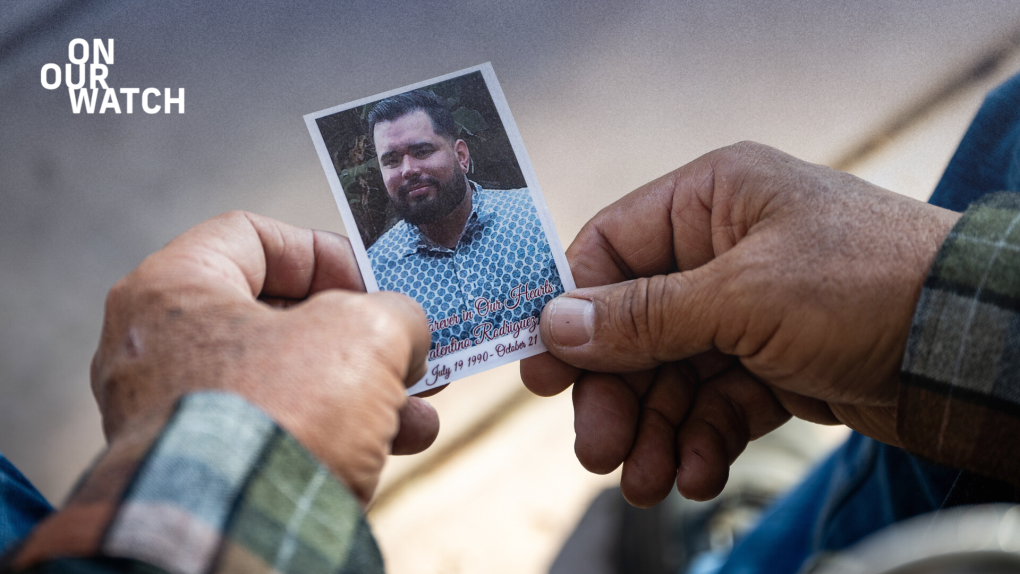
"caption": "Valentino Rodriguez Sr. holds a photo of his son Valentino at his home in Sacramento on Nov. 30, 2023. Valentino Rodriquez Jr was a correctional officer at California State Prison, Sacramento, before he died in October 2020 of an accidental fentanyl overdose after complaining of harassment and threats from officers at the prison.",
"description": null,
"title": "OOW S2 — Ep3 Val holding Valentino Photo(1920x1080)",
"credit": "Beth LaBerge",
"status": "inherit",
"altTag": "A man's hands hold a small photo of a young latino man with a black beard wearing a blue patterned shirt.",
"isLoading": false,
"fetchFailed": false
},
"news_11975765": {
"type": "attachments",
"id": "news_11975765",
"meta": {
"index": "attachments_1716263798",
"site": "news",
"id": "11975765",
"found": true
},
"parent": 11975753,
"imgSizes": {
"twentyfourteen-full-width": {
"file": "https://cdn.kqed.org/wp-content/uploads/sites/10/2024/02/GettyImages-1346413227-1038x576.jpg",
"width": 1038,
"mimeType": "image/jpeg",
"height": 576
},
"thumbnail": {
"file": "https://cdn.kqed.org/wp-content/uploads/sites/10/2024/02/GettyImages-1346413227-160x107.jpg",
"width": 160,
"mimeType": "image/jpeg",
"height": 107
},
"post-thumbnail": {
"file": "https://cdn.kqed.org/wp-content/uploads/sites/10/2024/02/GettyImages-1346413227-672x372.jpg",
"width": 672,
"mimeType": "image/jpeg",
"height": 372
},
"kqedFullSize": {
"file": "https://cdn.kqed.org/wp-content/uploads/sites/10/2024/02/GettyImages-1346413227-scaled.jpg",
"width": 2560,
"height": 1707
},
"2048x2048": {
"file": "https://cdn.kqed.org/wp-content/uploads/sites/10/2024/02/GettyImages-1346413227-2048x1365.jpg",
"width": 2048,
"mimeType": "image/jpeg",
"height": 1365
},
"large": {
"file": "https://cdn.kqed.org/wp-content/uploads/sites/10/2024/02/GettyImages-1346413227-1020x680.jpg",
"width": 1020,
"mimeType": "image/jpeg",
"height": 680
},
"1536x1536": {
"file": "https://cdn.kqed.org/wp-content/uploads/sites/10/2024/02/GettyImages-1346413227-1536x1024.jpg",
"width": 1536,
"mimeType": "image/jpeg",
"height": 1024
},
"full-width": {
"file": "https://cdn.kqed.org/wp-content/uploads/sites/10/2024/02/GettyImages-1346413227-1920x1280.jpg",
"width": 1920,
"mimeType": "image/jpeg",
"height": 1280
},
"medium": {
"file": "https://cdn.kqed.org/wp-content/uploads/sites/10/2024/02/GettyImages-1346413227-800x533.jpg",
"width": 800,
"mimeType": "image/jpeg",
"height": 533
}
},
"publishDate": 1707863945,
"modified": 1707863945,
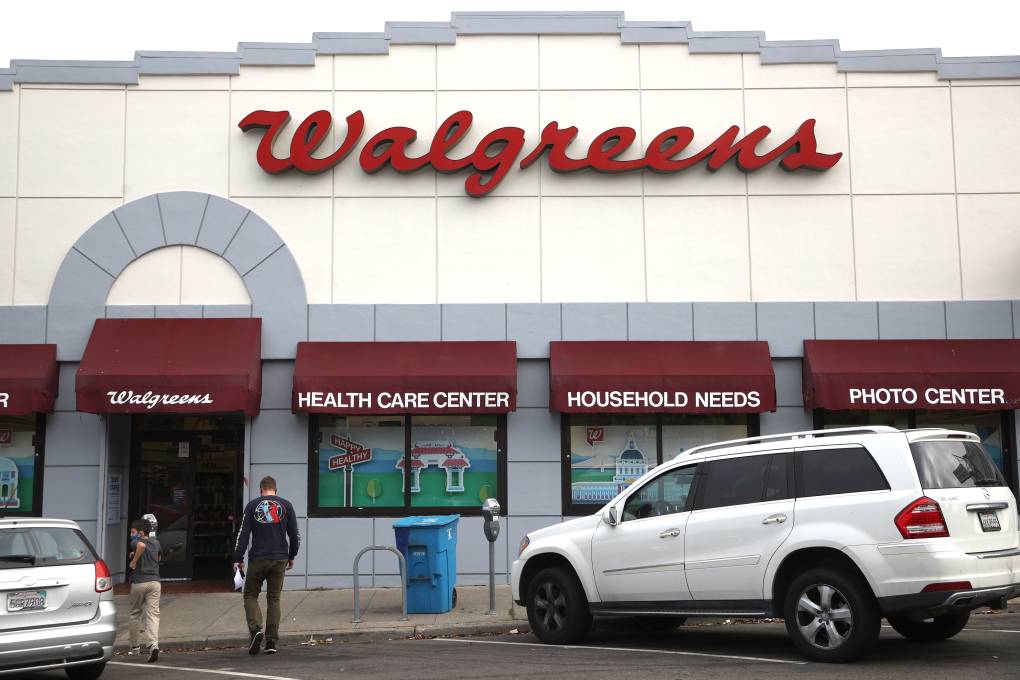
"caption": "SAN FRANCISCO, CALIFORNIA - OCTOBER 13: Pedestrians walk by a Walgreens store that is set to be closed in the coming weeks on October 13, 2021 in San Francisco, California. Walgreens announced plans to close five of its San Francisco stores due to organized retail shoplifting that has plagued its stores in the city. The retail pharmacy chain has already shuttered 10 stores in the city since 2019. (Photo by Justin Sullivan/Getty Images)",
"description": null,
"title": "Walgreens To Close Five San Francisco Locations After Rampant Shoplifting",
"credit": null,
"status": "inherit",
"altTag": null,
"isLoading": false,
"fetchFailed": false
},
"news_11975634": {
"type": "attachments",
"id": "news_11975634",
"meta": {
"index": "attachments_1716263798",
"site": "news",
"id": "11975634",
"found": true
},
"parent": 0,
"imgSizes": {
"twentyfourteen-full-width": {
"file": "https://cdn.kqed.org/wp-content/uploads/sites/10/2024/02/OOW-S2-—-Valentino-and-Mimy-Wedding-1920x1080-1-1038x576.png",
"width": 1038,
"mimeType": "image/png",
"height": 576
},
"thumbnail": {
"file": "https://cdn.kqed.org/wp-content/uploads/sites/10/2024/02/OOW-S2-—-Valentino-and-Mimy-Wedding-1920x1080-1-160x90.png",
"width": 160,
"mimeType": "image/png",
"height": 90
},
"post-thumbnail": {
"file": "https://cdn.kqed.org/wp-content/uploads/sites/10/2024/02/OOW-S2-—-Valentino-and-Mimy-Wedding-1920x1080-1-672x372.png",
"width": 672,
"mimeType": "image/png",
"height": 372
},
"kqedFullSize": {
"file": "https://cdn.kqed.org/wp-content/uploads/sites/10/2024/02/OOW-S2-—-Valentino-and-Mimy-Wedding-1920x1080-1.png",
"width": 1920,
"height": 1080
},
"large": {
"file": "https://cdn.kqed.org/wp-content/uploads/sites/10/2024/02/OOW-S2-—-Valentino-and-Mimy-Wedding-1920x1080-1-1020x574.png",
"width": 1020,
"mimeType": "image/png",
"height": 574
},
"1536x1536": {
"file": "https://cdn.kqed.org/wp-content/uploads/sites/10/2024/02/OOW-S2-—-Valentino-and-Mimy-Wedding-1920x1080-1-1536x864.png",
"width": 1536,
"mimeType": "image/png",
"height": 864
},
"medium": {
"file": "https://cdn.kqed.org/wp-content/uploads/sites/10/2024/02/OOW-S2-—-Valentino-and-Mimy-Wedding-1920x1080-1-800x450.png",
"width": 800,
"mimeType": "image/png",
"height": 450
}
},
"publishDate": 1707785160,
"modified": 1707795087,
"caption": "Valentino and Mimy Rodriguez stand together on the dais of a cathedral in downtown Sacramento.",
"description": null,
"title": "OOW S2 — Valentino and Mimy Wedding",
"credit": null,
"status": "inherit",
"altTag": "A man wearing a dark suit and a woman wearing a white wedding dress stand next to each other on the steps of a dais inside a cathedral. They are facing with their backs towards the camera, the man on the left and the woman on the right. The cathedral is ornately decorated with gold crosses, latin words embossed in gold stretching across a wooden beam and archway above the couple. An officiant stands before them, a man with gray hair and goatee and glasses. The wooden pews are filled with people.",
"isLoading": false,
"fetchFailed": false
},
"news_11974761": {
"type": "attachments",
"id": "news_11974761",
"meta": {
"index": "attachments_1716263798",
"site": "news",
"id": "11974761",
"found": true
},
"parent": 11974730,
"imgSizes": {
"twentyfourteen-full-width": {
"file": "https://cdn.kqed.org/wp-content/uploads/sites/10/2024/02/Episode-1_WP-white-logo-top-1038x576.png",
"width": 1038,
"mimeType": "image/png",
"height": 576
},
"thumbnail": {
"file": "https://cdn.kqed.org/wp-content/uploads/sites/10/2024/02/Episode-1_WP-white-logo-top-160x90.png",
"width": 160,
"mimeType": "image/png",
"height": 90
},
"post-thumbnail": {
"file": "https://cdn.kqed.org/wp-content/uploads/sites/10/2024/02/Episode-1_WP-white-logo-top-672x372.png",
"width": 672,
"mimeType": "image/png",
"height": 372
},
"kqedFullSize": {
"file": "https://cdn.kqed.org/wp-content/uploads/sites/10/2024/02/Episode-1_WP-white-logo-top.png",
"width": 1920,
"height": 1080
},
"large": {
"file": "https://cdn.kqed.org/wp-content/uploads/sites/10/2024/02/Episode-1_WP-white-logo-top-1020x574.png",
"width": 1020,
"mimeType": "image/png",
"height": 574
},
"1536x1536": {
"file": "https://cdn.kqed.org/wp-content/uploads/sites/10/2024/02/Episode-1_WP-white-logo-top-1536x864.png",
"width": 1536,
"mimeType": "image/png",
"height": 864
},
"medium": {
"file": "https://cdn.kqed.org/wp-content/uploads/sites/10/2024/02/Episode-1_WP-white-logo-top-800x450.png",
"width": 800,
"mimeType": "image/png",
"height": 450
}
},
"publishDate": 1707174253,
"modified": 1707174285,
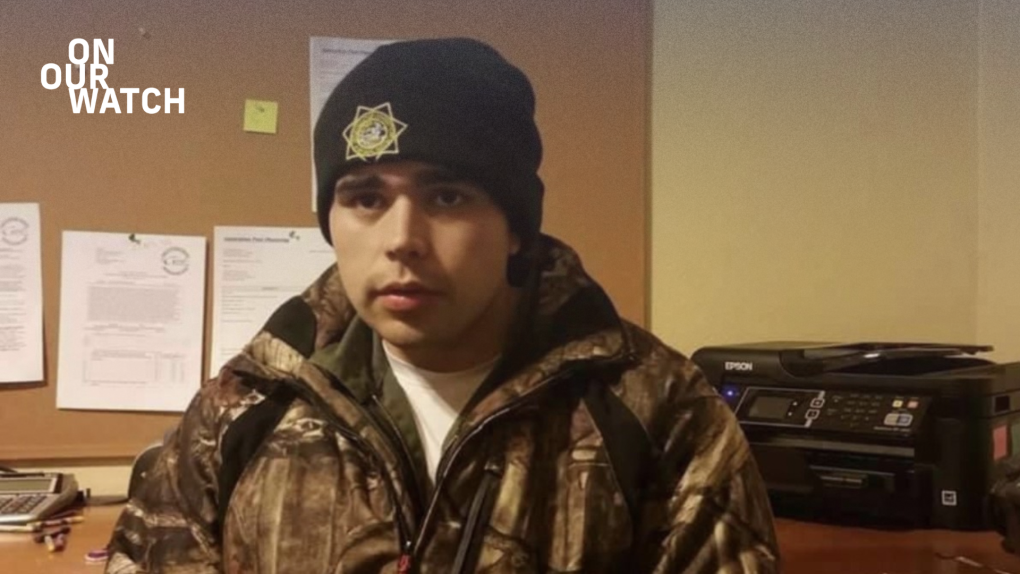
"caption": "Correctional Officer Valentino Rodriguez poses for a photo while on duty at California State Prison Sacramento, or \"New Folsom.\"",
"description": null,
"title": "Episode 1_WP white logo top",
"credit": null,
"status": "inherit",
"altTag": "A young man looks at the camera, wearing an official Department of Corrections beanie and a patterned jacket over his uniform. He sits in a nondescript office in front of a bulletin board and a printer.",
"isLoading": false,
"fetchFailed": false
},
"news_11972312": {
"type": "attachments",
"id": "news_11972312",
"meta": {
"index": "attachments_1716263798",
"site": "news",
"id": "11972312",
"found": true
},
"parent": 11972346,
"imgSizes": {
"twentyfourteen-full-width": {
"file": "https://cdn.kqed.org/wp-content/uploads/sites/10/2024/01/240111-FCI-DUBLIN-MD-01-KQED-1038x576.jpg",
"width": 1038,
"mimeType": "image/jpeg",
"height": 576
},
"thumbnail": {
"file": "https://cdn.kqed.org/wp-content/uploads/sites/10/2024/01/240111-FCI-DUBLIN-MD-01-KQED-160x107.jpg",
"width": 160,
"mimeType": "image/jpeg",
"height": 107
},
"post-thumbnail": {
"file": "https://cdn.kqed.org/wp-content/uploads/sites/10/2024/01/240111-FCI-DUBLIN-MD-01-KQED-672x372.jpg",
"width": 672,
"mimeType": "image/jpeg",
"height": 372
},
"kqedFullSize": {
"file": "https://cdn.kqed.org/wp-content/uploads/sites/10/2024/01/240111-FCI-DUBLIN-MD-01-KQED.jpg",
"width": 2000,
"height": 1333
},
"large": {
"file": "https://cdn.kqed.org/wp-content/uploads/sites/10/2024/01/240111-FCI-DUBLIN-MD-01-KQED-1020x680.jpg",
"width": 1020,
"mimeType": "image/jpeg",
"height": 680
},
"1536x1536": {
"file": "https://cdn.kqed.org/wp-content/uploads/sites/10/2024/01/240111-FCI-DUBLIN-MD-01-KQED-1536x1024.jpg",
"width": 1536,
"mimeType": "image/jpeg",
"height": 1024
},
"full-width": {
"file": "https://cdn.kqed.org/wp-content/uploads/sites/10/2024/01/240111-FCI-DUBLIN-MD-01-KQED-1920x1280.jpg",
"width": 1920,
"mimeType": "image/jpeg",
"height": 1280
},
"medium": {
"file": "https://cdn.kqed.org/wp-content/uploads/sites/10/2024/01/240111-FCI-DUBLIN-MD-01-KQED-800x533.jpg",
"width": 800,
"mimeType": "image/jpeg",
"height": 533
}
},
"publishDate": 1704995172,
"modified": 1705007659,
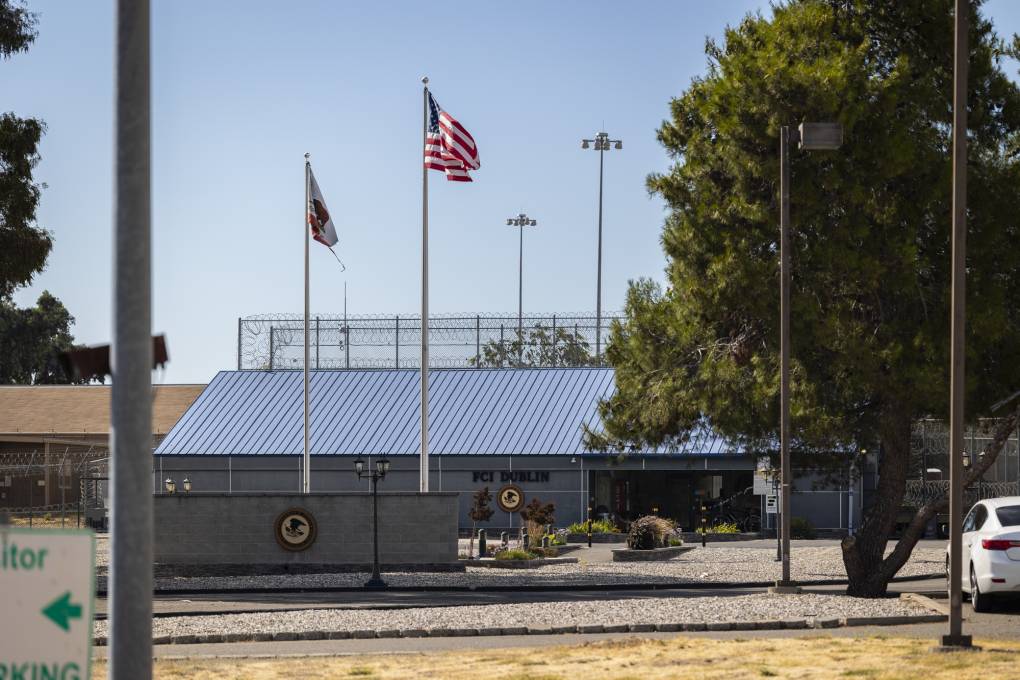
"caption": "Federal Correctional Institution Dublin, a women's prison in the East Bay, on Aug. 16, 2023.",
"description": null,
"title": "240111-FCI DUBLIN-MD-01-KQED",
"credit": "Martin do Nascimento/KQED",
"status": "inherit",
"altTag": "FCI Dublin Women's Prison in Dublin on Aug. 16, 2023.",
"isLoading": false,
"fetchFailed": false
},
"news_11971803": {
"type": "attachments",
"id": "news_11971803",
"meta": {
"index": "attachments_1716263798",
"site": "news",
"id": "11971803",
"found": true
},
"parent": 11971786,
"imgSizes": {
"twentyfourteen-full-width": {
"file": "https://cdn.kqed.org/wp-content/uploads/sites/10/2024/01/230816-Dublin-Womens-Prison-Suit-MD-01-qut-1038x576.jpg",
"width": 1038,
"mimeType": "image/jpeg",
"height": 576
},
"thumbnail": {
"file": "https://cdn.kqed.org/wp-content/uploads/sites/10/2024/01/230816-Dublin-Womens-Prison-Suit-MD-01-qut-160x107.jpg",
"width": 160,
"mimeType": "image/jpeg",
"height": 107
},
"post-thumbnail": {
"file": "https://cdn.kqed.org/wp-content/uploads/sites/10/2024/01/230816-Dublin-Womens-Prison-Suit-MD-01-qut-672x372.jpg",
"width": 672,
"mimeType": "image/jpeg",
"height": 372
},
"kqedFullSize": {
"file": "https://cdn.kqed.org/wp-content/uploads/sites/10/2024/01/230816-Dublin-Womens-Prison-Suit-MD-01-qut.jpg",
"width": 1920,
"height": 1280
},
"large": {
"file": "https://cdn.kqed.org/wp-content/uploads/sites/10/2024/01/230816-Dublin-Womens-Prison-Suit-MD-01-qut-1020x680.jpg",
"width": 1020,
"mimeType": "image/jpeg",
"height": 680
},
"1536x1536": {
"file": "https://cdn.kqed.org/wp-content/uploads/sites/10/2024/01/230816-Dublin-Womens-Prison-Suit-MD-01-qut-1536x1024.jpg",
"width": 1536,
"mimeType": "image/jpeg",
"height": 1024
},
"medium": {
"file": "https://cdn.kqed.org/wp-content/uploads/sites/10/2024/01/230816-Dublin-Womens-Prison-Suit-MD-01-qut-800x533.jpg",
"width": 800,
"mimeType": "image/jpeg",
"height": 533
}
},
"publishDate": 1704493562,
"modified": 1704505248,
"caption": "On Jan. 5, currently incarcerated women testified in federal court before US District Judge Yvonne Gonzalez Rogers that they have difficulty accessing medical and mental health care and face retaliation if they report staff misconduct.",
"description": null,
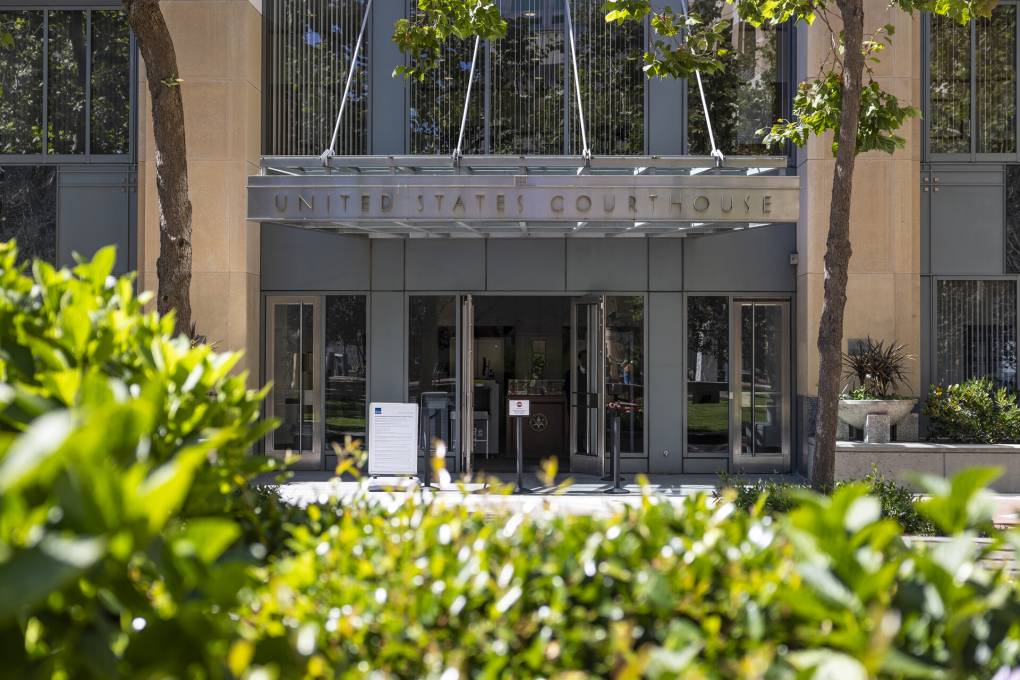
"title": "The Federal Courthouse in Oakland on Aug. 16, 2023.",
"credit": "Martin do Nascimento/KQED",
"status": "inherit",
"altTag": "A federal building is pictured.",
"isLoading": false,
"fetchFailed": false
},
"news_11964041": {
"type": "attachments",
"id": "news_11964041",
"meta": {
"index": "attachments_1716263798",
"site": "news",
"id": "11964041",
"found": true
},
"parent": 0,
"imgSizes": {
"twentyfourteen-full-width": {
"file": "https://ww2.kqed.org/app/uploads/sites/10/2023/10/IMG_0434-1038x576.jpg",
"width": 1038,
"mimeType": "image/jpeg",
"height": 576
},
"thumbnail": {
"file": "https://ww2.kqed.org/app/uploads/sites/10/2023/10/IMG_0434-160x103.jpg",
"width": 160,
"mimeType": "image/jpeg",
"height": 103
},
"post-thumbnail": {
"file": "https://ww2.kqed.org/app/uploads/sites/10/2023/10/IMG_0434-672x372.jpg",
"width": 672,
"mimeType": "image/jpeg",
"height": 372
},
"kqedFullSize": {
"file": "https://ww2.kqed.org/app/uploads/sites/10/2023/10/IMG_0434.jpg",
"width": 1920,
"height": 1240
},
"large": {
"file": "https://ww2.kqed.org/app/uploads/sites/10/2023/10/IMG_0434-1020x659.jpg",
"width": 1020,
"mimeType": "image/jpeg",
"height": 659
},
"1536x1536": {
"file": "https://ww2.kqed.org/app/uploads/sites/10/2023/10/IMG_0434-1536x992.jpg",
"width": 1536,
"mimeType": "image/jpeg",
"height": 992
},
"medium": {
"file": "https://ww2.kqed.org/app/uploads/sites/10/2023/10/IMG_0434-800x517.jpg",
"width": 800,
"mimeType": "image/jpeg",
"height": 517
}
},
"publishDate": 1696981622,
"modified": 1697050132,
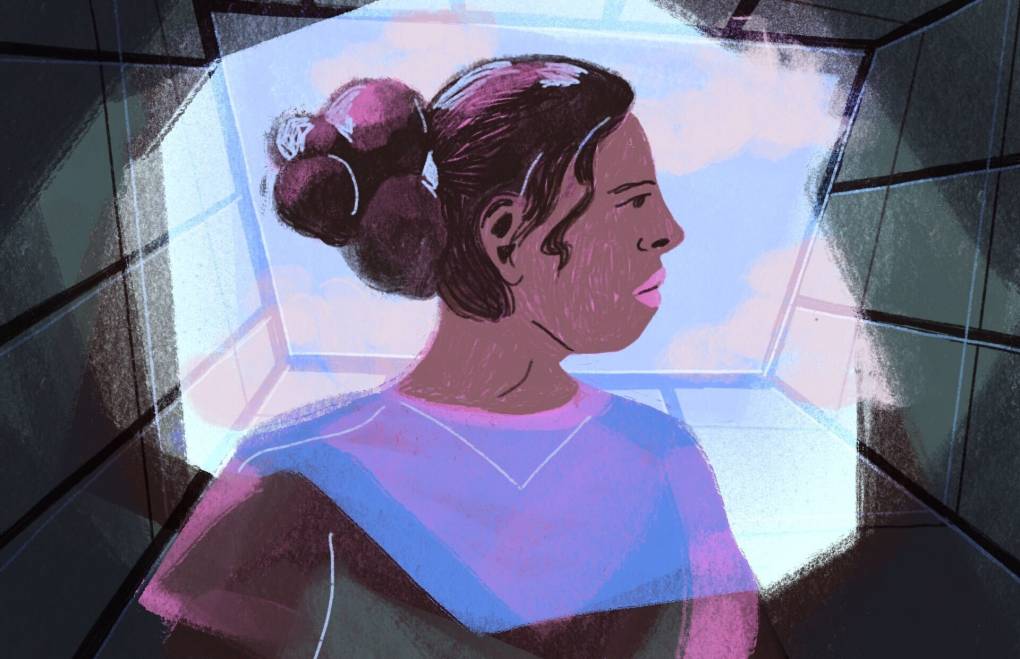
"caption": "A recent state law aims to make prison safer for transgender people. But for many trans women it hasn’t worked out that way.",
"description": null,
"title": "IMG_0434",
"credit": "Anna Vignet/KQED",
"status": "inherit",
"altTag": "An illustration of a Black woman with her hair tied back in a bun. It's a side profile shot of her upper torso and face. She is trapped within enclosing walls and shadows surround her. Her face is solemn.",
"isLoading": false,
"fetchFailed": false
},
"news_11959817": {
"type": "attachments",
"id": "news_11959817",
"meta": {
"index": "attachments_1716263798",
"site": "news",
"id": "11959817",
"found": true
},
"title": "Car break-ins in San Francisco",
"publishDate": 1693520828,
"status": "inherit",
"parent": 11959799,
"modified": 1770323243,
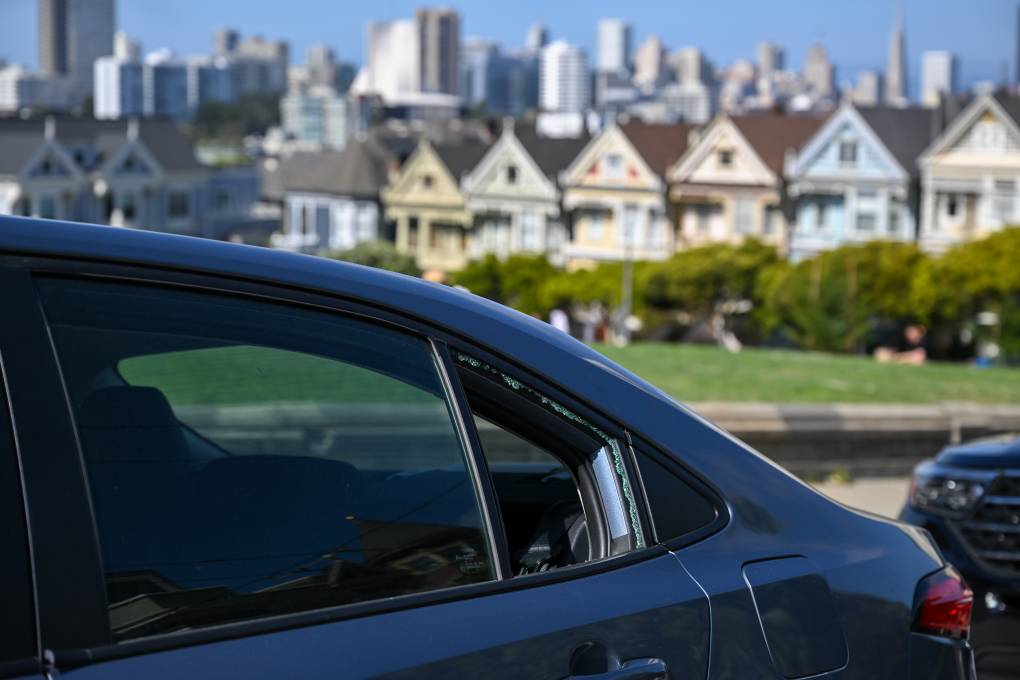
"caption": "A car with a broken window at San Francisco's Alamo Square on June 16, 2023. According to law enforcement, sightseeing areas like Alamo Square, along with Lombard Street and Fisherman's Wharf, see a lot of car break-ins — informally known by many residents as \"bipping.\"",
"credit": "Tayfun Coskun/Anadolu Agency via Getty Images",
"altTag": "A car is parked next to a large park with a view of the San Francisco skyline. The rear window on the left side of the car has been shattered.",
"description": null,
"imgSizes": {
"medium": {
"file": "https://cdn.kqed.org/wp-content/uploads/sites/10/2023/08/GettyImages-1258762861-1-1-800x533.jpg",
"width": 800,
"height": 533,
"mimeType": "image/jpeg"
},
"large": {
"file": "https://cdn.kqed.org/wp-content/uploads/sites/10/2023/08/GettyImages-1258762861-1-1-1020x680.jpg",
"width": 1020,
"height": 680,
"mimeType": "image/jpeg"
},
"thumbnail": {
"file": "https://cdn.kqed.org/wp-content/uploads/sites/10/2023/08/GettyImages-1258762861-1-1-160x107.jpg",
"width": 160,
"height": 107,
"mimeType": "image/jpeg"
},
"1536x1536": {
"file": "https://cdn.kqed.org/wp-content/uploads/sites/10/2023/08/GettyImages-1258762861-1-1-1536x1024.jpg",
"width": 1536,
"height": 1024,
"mimeType": "image/jpeg"
},
"2048x2048": {
"file": "https://cdn.kqed.org/wp-content/uploads/sites/10/2023/08/GettyImages-1258762861-1-1-2048x1365.jpg",
"width": 2048,
"height": 1365,
"mimeType": "image/jpeg"
},
"post-thumbnail": {
"file": "https://cdn.kqed.org/wp-content/uploads/sites/10/2023/08/GettyImages-1258762861-1-1-672x372.jpg",
"width": 672,
"height": 372,
"mimeType": "image/jpeg"
},
"twentyfourteen-full-width": {
"file": "https://cdn.kqed.org/wp-content/uploads/sites/10/2023/08/GettyImages-1258762861-1-1-1038x576.jpg",
"width": 1038,
"height": 576,
"mimeType": "image/jpeg"
},
"full-width": {
"file": "https://cdn.kqed.org/wp-content/uploads/sites/10/2023/08/GettyImages-1258762861-1-1-1920x1280.jpg",
"width": 1920,
"height": 1280,
"mimeType": "image/jpeg"
},
"kqedFullSize": {
"file": "https://cdn.kqed.org/wp-content/uploads/sites/10/2023/08/GettyImages-1258762861-1-1-scaled-e1770323218973.jpg",
"width": 2000,
"height": 1334
}
},
"isLoading": false,
"fetchFailed": false
},
"news_11958472": {
"type": "attachments",
"id": "news_11958472",
"meta": {
"index": "attachments_1716263798",
"site": "news",
"id": "11958472",
"found": true
},
"parent": 0,
"imgSizes": {
"twentyfourteen-full-width": {
"file": "https://ww2.kqed.org/app/uploads/sites/10/2023/08/081723-CAR-BREAK-IN-BIPPED-AV-KQED-1038x576.jpg",
"width": 1038,
"mimeType": "image/jpeg",
"height": 576
},
"thumbnail": {
"file": "https://ww2.kqed.org/app/uploads/sites/10/2023/08/081723-CAR-BREAK-IN-BIPPED-AV-KQED-160x107.jpg",
"width": 160,
"mimeType": "image/jpeg",
"height": 107
},
"post-thumbnail": {
"file": "https://ww2.kqed.org/app/uploads/sites/10/2023/08/081723-CAR-BREAK-IN-BIPPED-AV-KQED-672x372.jpg",
"width": 672,
"mimeType": "image/jpeg",
"height": 372
},
"kqedFullSize": {
"file": "https://ww2.kqed.org/app/uploads/sites/10/2023/08/081723-CAR-BREAK-IN-BIPPED-AV-KQED.jpg",
"width": 1920,
"height": 1280
},
"large": {
"file": "https://ww2.kqed.org/app/uploads/sites/10/2023/08/081723-CAR-BREAK-IN-BIPPED-AV-KQED-1020x680.jpg",
"width": 1020,
"mimeType": "image/jpeg",
"height": 680
},
"1536x1536": {
"file": "https://ww2.kqed.org/app/uploads/sites/10/2023/08/081723-CAR-BREAK-IN-BIPPED-AV-KQED-1536x1024.jpg",
"width": 1536,
"mimeType": "image/jpeg",
"height": 1024
},
"medium": {
"file": "https://ww2.kqed.org/app/uploads/sites/10/2023/08/081723-CAR-BREAK-IN-BIPPED-AV-KQED-800x533.jpg",
"width": 800,
"mimeType": "image/jpeg",
"height": 533
}
},
"publishDate": 1692290014,
"modified": 1693506121,
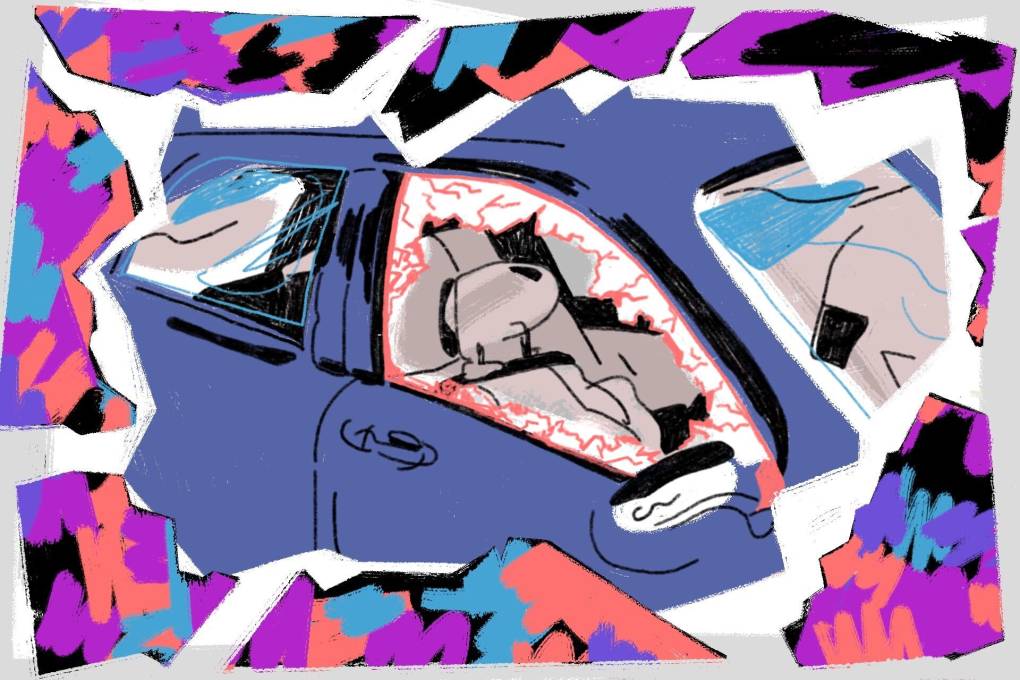
"caption": "Having your car windows smashed by thieves looking for items to steal now feels like a frustrating rite of passage in the Bay Area. Car break-ins have become so prevalent that some residents refer to them by the unofficial term, 'bipping.'",
"description": null,
"title": "081723-CAR BREAK IN BIPPED-AV-KQED",
"credit": "Illustration by Anna Vignet/KQED",
"status": "inherit",
"altTag": "An illustration of the exterior of a car, from the front passenger seat. The window has been shattered and the space around the car has been filled up with the drawings of broken glass shards.",
"isLoading": false,
"fetchFailed": false
},
"news_11955693": {
"type": "attachments",
"id": "news_11955693",
"meta": {
"index": "attachments_1716263798",
"site": "news",
"id": "11955693",
"found": true
},
"parent": 11955680,
"imgSizes": {
"twentyfourteen-full-width": {
"file": "https://ww2.kqed.org/app/uploads/sites/10/2023/07/GettyImages-180517172-1038x576.jpg",
"width": 1038,
"mimeType": "image/jpeg",
"height": 576
},
"thumbnail": {
"file": "https://ww2.kqed.org/app/uploads/sites/10/2023/07/GettyImages-180517172-160x107.jpg",
"width": 160,
"mimeType": "image/jpeg",
"height": 107
},
"post-thumbnail": {
"file": "https://ww2.kqed.org/app/uploads/sites/10/2023/07/GettyImages-180517172-672x372.jpg",
"width": 672,
"mimeType": "image/jpeg",
"height": 372
},
"kqedFullSize": {
"file": "https://ww2.kqed.org/app/uploads/sites/10/2023/07/GettyImages-180517172-scaled.jpg",
"width": 2560,
"height": 1707
},
"2048x2048": {
"file": "https://ww2.kqed.org/app/uploads/sites/10/2023/07/GettyImages-180517172-2048x1365.jpg",
"width": 2048,
"mimeType": "image/jpeg",
"height": 1365
},
"large": {
"file": "https://ww2.kqed.org/app/uploads/sites/10/2023/07/GettyImages-180517172-1020x680.jpg",
"width": 1020,
"mimeType": "image/jpeg",
"height": 680
},
"1536x1536": {
"file": "https://ww2.kqed.org/app/uploads/sites/10/2023/07/GettyImages-180517172-1536x1024.jpg",
"width": 1536,
"mimeType": "image/jpeg",
"height": 1024
},
"full-width": {
"file": "https://ww2.kqed.org/app/uploads/sites/10/2023/07/GettyImages-180517172-1920x1280.jpg",
"width": 1920,
"mimeType": "image/jpeg",
"height": 1280
},
"medium": {
"file": "https://ww2.kqed.org/app/uploads/sites/10/2023/07/GettyImages-180517172-800x533.jpg",
"width": 800,
"mimeType": "image/jpeg",
"height": 533
}
},
"publishDate": 1689298370,
"modified": 1689356122,
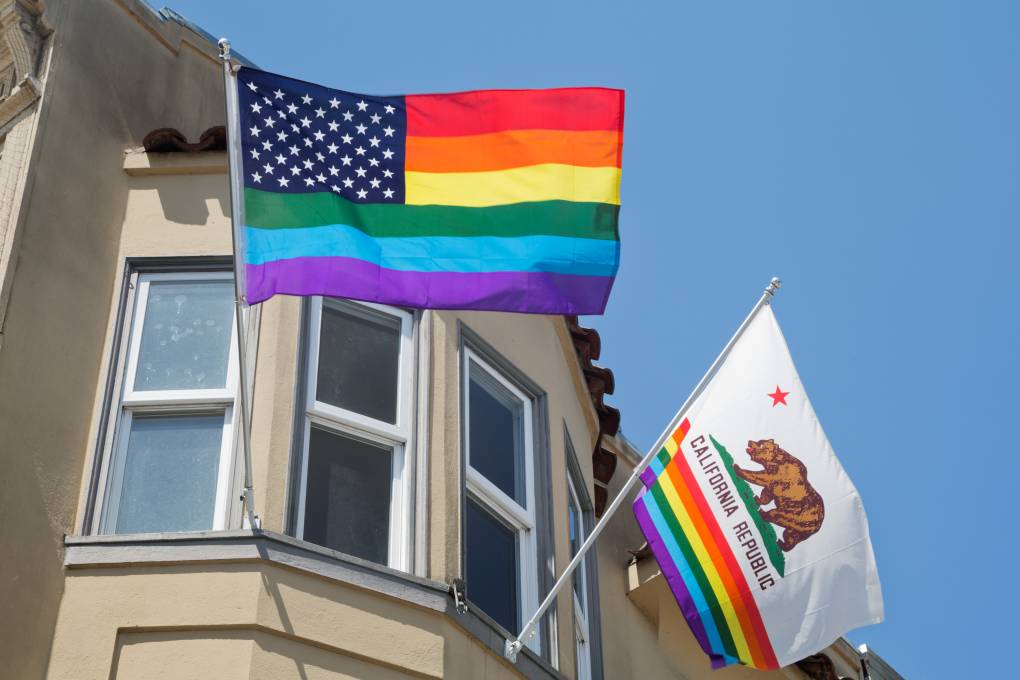
"caption": "In a defeat for gay rights, the Supreme Court's conservative majority ruled that a Christian graphic artist who wants to design wedding websites can refuse to work with same-sex couples. Here's what you can expect in the short and long term.",
"description": null,
"title": "Flags in the Castro",
"credit": "Manakin/Getty Images",
"status": "inherit",
"altTag": "Two flags hang from the bay window of a home. One flag is the California state flag with the rainbow flag on the lower half and the other flag is the US flag with the stripes replaced with a rainbow.",
"isLoading": false,
"fetchFailed": false
},
"news_11955214": {
"type": "attachments",
"id": "news_11955214",
"meta": {
"index": "attachments_1716263798",
"site": "news",
"id": "11955214",
"found": true
},
"parent": 11955206,
"imgSizes": {
"twentyfourteen-full-width": {
"file": "https://ww2.kqed.org/app/uploads/sites/10/2023/07/GettyImages-1322014635-1024x576.jpg",
"width": 1024,
"mimeType": "image/jpeg",
"height": 576
},
"thumbnail": {
"file": "https://ww2.kqed.org/app/uploads/sites/10/2023/07/GettyImages-1322014635-160x107.jpg",
"width": 160,
"mimeType": "image/jpeg",
"height": 107
},
"post-thumbnail": {
"file": "https://ww2.kqed.org/app/uploads/sites/10/2023/07/GettyImages-1322014635-672x372.jpg",
"width": 672,
"mimeType": "image/jpeg",
"height": 372
},
"kqedFullSize": {
"file": "https://ww2.kqed.org/app/uploads/sites/10/2023/07/GettyImages-1322014635.jpg",
"width": 1024,
"height": 683
},
"large": {
"file": "https://ww2.kqed.org/app/uploads/sites/10/2023/07/GettyImages-1322014635-1020x680.jpg",
"width": 1020,
"mimeType": "image/jpeg",
"height": 680
},
"medium": {
"file": "https://ww2.kqed.org/app/uploads/sites/10/2023/07/GettyImages-1322014635-800x534.jpg",
"width": 800,
"mimeType": "image/jpeg",
"height": 534
}
},
"publishDate": 1688767371,
"modified": 1688769462,
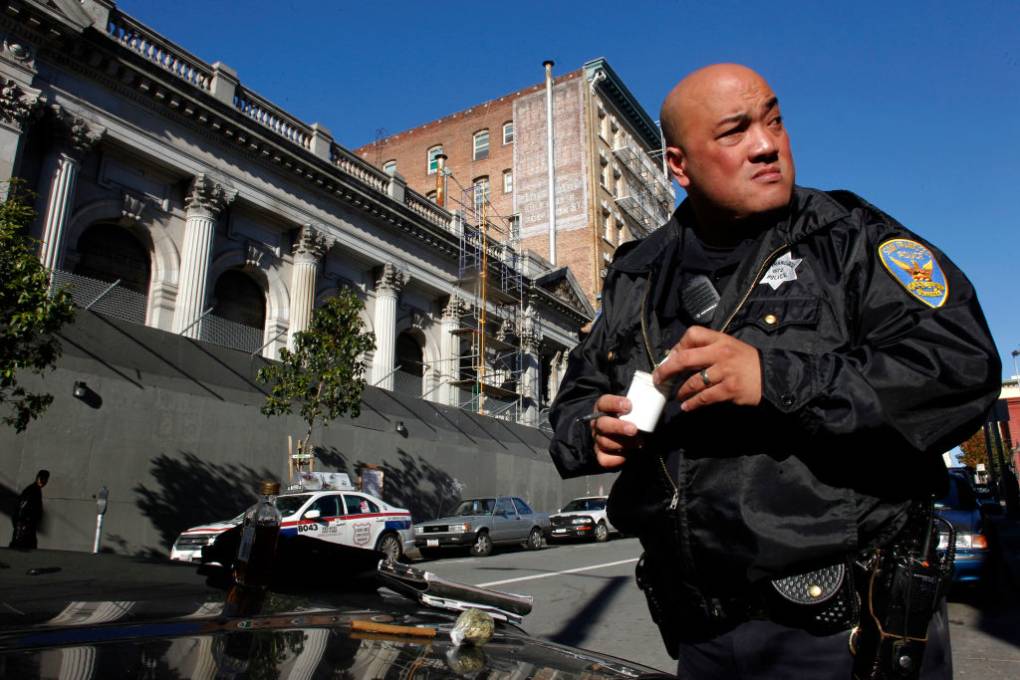
"caption": "Officer Louis Wong with the San Francisco Police Department with a jar of marijuana as he prepares to arrest a young man for drug possession in the Tenderloin neighborhood of San Francisco on Jan. 2, 2013.",
"description": null,
"title": "Officer Louis Wong with the San Francisco Police Department with a jar of marijuana as he prepares to arrest a young man for drug possession in the Tenderloin neighborhood of San Francisco, Calif. on Wednesday Jan. 2, 2013.",
"credit": "Michael Macor/The San Francisco Chronicle via Getty Images",
"status": "inherit",
"altTag": null,
"isLoading": false,
"fetchFailed": false
},
"news_11948106": {
"type": "attachments",
"id": "news_11948106",
"meta": {
"index": "attachments_1716263798",
"site": "news",
"id": "11948106",
"found": true
},
"parent": 0,
"imgSizes": {
"twentyfourteen-full-width": {
"file": "https://ww2.kqed.org/app/uploads/sites/10/2023/04/RS28905_GettyImages-678967-qut-1038x576.jpg",
"width": 1038,
"mimeType": "image/jpeg",
"height": 576
},
"thumbnail": {
"file": "https://ww2.kqed.org/app/uploads/sites/10/2023/04/RS28905_GettyImages-678967-qut-160x110.jpg",
"width": 160,
"mimeType": "image/jpeg",
"height": 110
},
"post-thumbnail": {
"file": "https://ww2.kqed.org/app/uploads/sites/10/2023/04/RS28905_GettyImages-678967-qut-672x372.jpg",
"width": 672,
"mimeType": "image/jpeg",
"height": 372
},
"kqedFullSize": {
"file": "https://ww2.kqed.org/app/uploads/sites/10/2023/04/RS28905_GettyImages-678967-qut.jpg",
"width": 1920,
"height": 1320
},
"large": {
"file": "https://ww2.kqed.org/app/uploads/sites/10/2023/04/RS28905_GettyImages-678967-qut-1020x701.jpg",
"width": 1020,
"mimeType": "image/jpeg",
"height": 701
},
"1536x1536": {
"file": "https://ww2.kqed.org/app/uploads/sites/10/2023/04/RS28905_GettyImages-678967-qut-1536x1056.jpg",
"width": 1536,
"mimeType": "image/jpeg",
"height": 1056
},
"medium": {
"file": "https://ww2.kqed.org/app/uploads/sites/10/2023/04/RS28905_GettyImages-678967-qut-800x550.jpg",
"width": 800,
"mimeType": "image/jpeg",
"height": 550
}
},
"publishDate": 1682724819,
"modified": 1682730769,
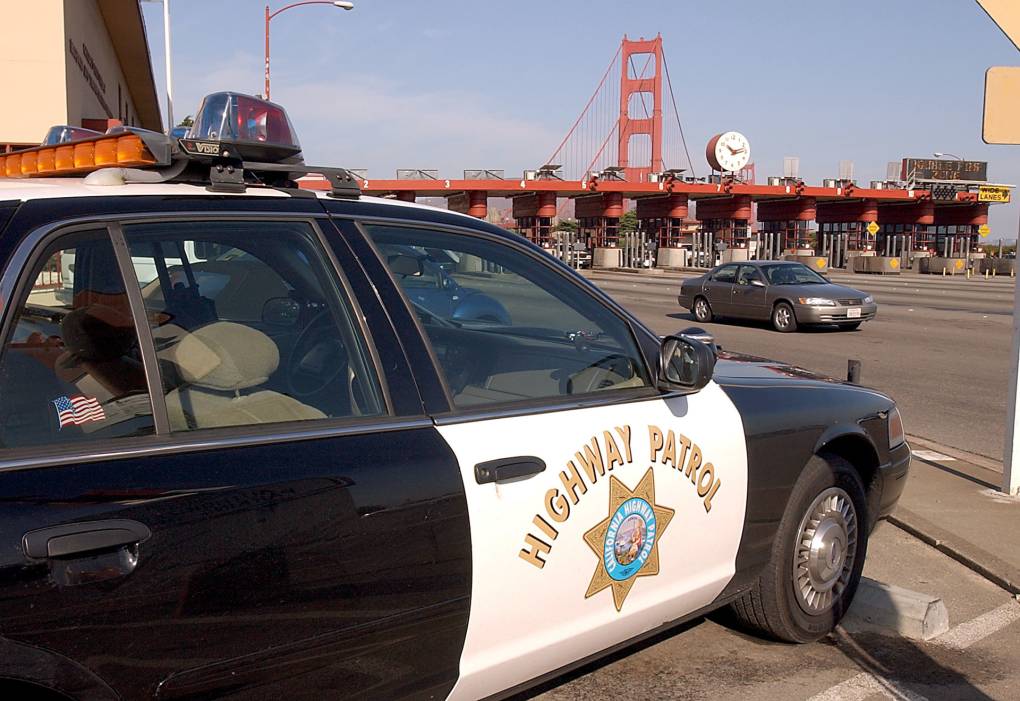
"caption": "A California Highway Patrol car stands guard at the Golden Gate Bridge toll plaza on Nov. 2, 2001, in San Francisco. Gov. Gavin Newsom is utilizing the CHP and the National Guard to fight the city's fentanyl crisis.",
"description": null,
"title": "Golden Gate Bridge Security",
"credit": "Justin Sullivan/Getty Images",
"status": "inherit",
"altTag": "A black and white California High Patrol vehicle is parked near the Golden Gate Bridge in San Francisco. A gray car passes through the toll bridge.",
"isLoading": false,
"fetchFailed": false
}
},
"audioPlayerReducer": {
"postId": "stream_live",
"isPaused": true,
"isPlaying": false,
"pfsActive": false,
"pledgeModalIsOpen": true,
"playerDrawerIsOpen": false,
"liveAudioPlayStartedAt": 0,
"liveAudioPlayContext": ""
},
"authorsReducer": {
"byline_news_11964027": {
"type": "authors",
"id": "byline_news_11964027",
"meta": {
"override": true
},
"slug": "byline_news_11964027",
"name": "\u003ca href=\"https://www.novemberinmysoul.com/about/#62b093f21c801819ce513743\">Lee Romney and Jenny Johnson\u003c/a>",
"isLoading": false
},
"scottshafer": {
"type": "authors",
"id": "255",
"meta": {
"index": "authors_1716337520",
"id": "255",
"found": true
},
"name": "Scott Shafer",
"firstName": "Scott",
"lastName": "Shafer",
"slug": "scottshafer",
"email": "sshafer@kqed.org",
"display_author_email": false,
"staff_mastheads": [
"news"
],
"title": "KQED Contributor",
"bio": "Scott Shafer is a senior editor with the KQED Politics and Government desk. He is co-host of Political Breakdown, the award-winning radio show and podcast with a personal take on the world of politics. Scott came to KQED in 1998 to host the statewide\u003cem> California Report\u003c/em>. Prior to that he had extended stints in politics and government\u003cem>.\u003c/em> He uses that inside experience at KQED in his, reporting, hosting and analysis for the politics desk. Scott collaborated \u003cem>Political Breakdown a\u003c/em>nd on \u003cem>The Political Mind of Jerry Brown, \u003c/em>an eight-part series about the life and extraordinary political career of the former governor. For fun, he plays water polo with the San Francisco Tsunami.",
"avatar": "https://secure.gravatar.com/avatar/a62ebae45b79d7aed1a39a0e3bf68104?s=600&d=blank&r=g",
"twitter": "scottshafer",
"bluesky": null,
"facebook": null,
"instagram": null,
"linkedin": null,
"sites": [
{
"site": "news",
"roles": [
"editor"
]
},
{
"site": "stateofhealth",
"roles": [
"author"
]
},
{
"site": "science",
"roles": [
"author"
]
},
{
"site": "forum",
"roles": [
"subscriber"
]
},
{
"site": "liveblog",
"roles": [
"author"
]
}
],
"headData": {
"title": "Scott Shafer | KQED",
"description": "KQED Contributor",
"ogImgSrc": "https://secure.gravatar.com/avatar/a62ebae45b79d7aed1a39a0e3bf68104?s=600&d=blank&r=g",
"twImgSrc": "https://secure.gravatar.com/avatar/a62ebae45b79d7aed1a39a0e3bf68104?s=600&d=blank&r=g"
},
"isLoading": false,
"link": "/author/scottshafer"
},
"adembosky": {
"type": "authors",
"id": "3205",
"meta": {
"index": "authors_1716337520",
"id": "3205",
"found": true
},
"name": "April Dembosky",
"firstName": "April",
"lastName": "Dembosky",
"slug": "adembosky",
"email": "adembosky@kqed.org",
"display_author_email": false,
"staff_mastheads": [
"news",
"science"
],
"title": "KQED Health Correspondent",
"bio": "April Dembosky is the health correspondent for KQED News and a regular contributor to NPR. She specializes in covering altered states of mind, from postpartum depression to methamphetamine-induced psychosis to the insanity defense. Her investigative series on insurance companies sidestepping mental health laws won multiple awards, including first place in beat reporting from the national Association of Health Care Journalists. She is the recipient of numerous other prizes and fellowships, including a national Edward R. Murrow award for investigative reporting, a Society of Professional Journalists award for long-form storytelling, and a Carter Center Fellowship for Mental Health Journalism.\r\n\r\nDembosky reported and produced \u003cem>Soundtrack of Silence\u003c/em>, an audio documentary about music and memory that is currently being made into a feature film by Paramount Pictures.\r\n\r\nBefore joining KQED in 2013, Dembosky covered technology and Silicon Valley for \u003cem>The Financial Times of London,\u003c/em> and contributed business and arts stories to \u003cem>Marketplace \u003c/em>and \u003cem>The New York Times.\u003c/em> She got her undergraduate degree in philosophy from Smith College and her master's in journalism from the University of California, Berkeley. She is a classically trained violinist and proud alum of the first symphony orchestra at Burning Man.",
"avatar": "https://secure.gravatar.com/avatar/ef92999be4ceb9ea60701e7dc276f813?s=600&d=blank&r=g",
"twitter": "adembosky",
"facebook": null,
"instagram": null,
"linkedin": null,
"sites": [
{
"site": "arts",
"roles": [
"author"
]
},
{
"site": "news",
"roles": [
"editor"
]
},
{
"site": "futureofyou",
"roles": [
"author"
]
},
{
"site": "stateofhealth",
"roles": [
"editor"
]
},
{
"site": "science",
"roles": [
"editor"
]
},
{
"site": "forum",
"roles": [
"editor"
]
}
],
"headData": {
"title": "April Dembosky | KQED",
"description": "KQED Health Correspondent",
"ogImgSrc": "https://secure.gravatar.com/avatar/ef92999be4ceb9ea60701e7dc276f813?s=600&d=blank&r=g",
"twImgSrc": "https://secure.gravatar.com/avatar/ef92999be4ceb9ea60701e7dc276f813?s=600&d=blank&r=g"
},
"isLoading": false,
"link": "/author/adembosky"
},
"mlagos": {
"type": "authors",
"id": "3239",
"meta": {
"index": "authors_1716337520",
"id": "3239",
"found": true
},
"name": "Marisa Lagos",
"firstName": "Marisa",
"lastName": "Lagos",
"slug": "mlagos",
"email": "mlagos@kqed.org",
"display_author_email": false,
"staff_mastheads": [
"news"
],
"title": "KQED Contributor",
"bio": "Marisa Lagos is a correspondent for KQED’s California Politics and Government Desk and co-hosts the award-winning show and podcast, Political Breakdown. At KQED, Lagos also conducts reporting, analysis and investigations into state, local and national politics for radio, TV, online and onstage. In 2022, she and co-host, Scott Shafer, moderated the only gubernatorial debate in California. In 2020, the \u003ci>Washington Post\u003c/i> named her one of the top political journalists in California; she was nominated for a Peabody and won several other awards for her work investigating the 2017 California wildfires. She has worked at the \u003ci>San Francisco Chronicle\u003c/i>, \u003ci>San Francisco Examiner\u003c/i> and \u003ci>Los Angeles Times\u003c/i>. A UC Santa Barbara graduate, she lives in San Francisco with her two sons and husband.",
"avatar": "https://secure.gravatar.com/avatar/a261a0d3696fc066871ef96b85b5e7d2?s=600&d=blank&r=g",
"twitter": "@mlagos",
"facebook": null,
"instagram": null,
"linkedin": null,
"sites": [
{
"site": "arts",
"roles": [
"author"
]
},
{
"site": "news",
"roles": [
"editor"
]
},
{
"site": "science",
"roles": [
"editor"
]
},
{
"site": "forum",
"roles": [
"author"
]
},
{
"site": "liveblog",
"roles": [
"author"
]
}
],
"headData": {
"title": "Marisa Lagos | KQED",
"description": "KQED Contributor",
"ogImgSrc": "https://secure.gravatar.com/avatar/a261a0d3696fc066871ef96b85b5e7d2?s=600&d=blank&r=g",
"twImgSrc": "https://secure.gravatar.com/avatar/a261a0d3696fc066871ef96b85b5e7d2?s=600&d=blank&r=g"
},
"isLoading": false,
"link": "/author/mlagos"
},
"carlysevern": {
"type": "authors",
"id": "3243",
"meta": {
"index": "authors_1716337520",
"id": "3243",
"found": true
},
"name": "Carly Severn",
"firstName": "Carly",
"lastName": "Severn",
"slug": "carlysevern",
"email": "csevern@kqed.org",
"display_author_email": false,
"staff_mastheads": [
"news"
],
"title": "Senior Editor, Audience News ",
"bio": "Carly is KQED's Senior Editor of Audience News on the Digital News team, and has reported for the California Report Magazine, Bay Curious and KQED Arts. She's formerly the host of \u003ca href=\"http://ww2.kqed.org/pop/category/the-cooler/\" rel=\"noopener noreferrer\">The Cooler\u003c/a> podcast.",
"avatar": "https://secure.gravatar.com/avatar/54037bf5c128fe678f0ef26cec97a93f2e7f220a22d7285703328f12c42c1b1d?s=600&d=blank&r=g",
"twitter": "teacupinthebay",
"bluesky": null,
"facebook": null,
"instagram": null,
"linkedin": null,
"sites": [
{
"site": "",
"roles": [
"editor"
]
},
{
"site": "arts",
"roles": [
"editor"
]
},
{
"site": "news",
"roles": [
"administrator"
]
},
{
"site": "pop",
"roles": [
"editor"
]
},
{
"site": "futureofyou",
"roles": [
"editor"
]
},
{
"site": "about",
"roles": [
"administrator"
]
},
{
"site": "mindshift",
"roles": [
"editor"
]
},
{
"site": "bayareabites",
"roles": [
"editor"
]
},
{
"site": "stateofhealth",
"roles": [
"editor"
]
},
{
"site": "science",
"roles": [
"editor"
]
},
{
"site": "food",
"roles": [
"contributor"
]
},
{
"site": "forum",
"roles": [
"editor"
]
},
{
"site": "perspectives",
"roles": [
"administrator"
]
},
{
"site": "liveblog",
"roles": [
"editor"
]
}
],
"headData": {
"title": "Carly Severn | KQED",
"description": "Senior Editor, Audience News ",
"ogImgSrc": "https://secure.gravatar.com/avatar/54037bf5c128fe678f0ef26cec97a93f2e7f220a22d7285703328f12c42c1b1d?s=600&d=blank&r=g",
"twImgSrc": "https://secure.gravatar.com/avatar/54037bf5c128fe678f0ef26cec97a93f2e7f220a22d7285703328f12c42c1b1d?s=600&d=blank&r=g"
},
"isLoading": false,
"link": "/author/carlysevern"
},
"jsmall": {
"type": "authors",
"id": "6625",
"meta": {
"index": "authors_1716337520",
"id": "6625",
"found": true
},
"name": "Julie Small",
"firstName": "Julie",
"lastName": "Small",
"slug": "jsmall",
"email": "jsmall@kqed.org",
"display_author_email": true,
"staff_mastheads": [
"news"
],
"title": "KQED Contributor",
"bio": "Julie Small reports on criminal justice and immigration.\r\n\r\nShe was part of a team at KQED awarded a regional 2019 Edward R. Murrow award for continuing coverage of the Trump Administration's family separation policy.\r\n\r\nThe Society for Professional Journalists recognized Julie's 2018 \u003ca href=\"https://www.kqed.org/news/11636262/the-officer-tased-him-31-times-the-sheriff-called-his-death-an-accident\">reporting\u003c/a> on the San Joaquin County Sheriff's \u003ca href=\"https://www.kqed.org/news/11634689/autopsy-doctors-sheriff-overrode-death-findings-to-protect-law-enforcement\">interference\u003c/a> in death investigations with an Excellence in Journalism Award for Ongoing Coverage.\r\n\r\nJulie's\u003ca href=\"https://www.kqed.org/news/11039666/two-mentally-ill-inmates-died-one-month-in-santa-clara\"> reporting\u003c/a> with Lisa Pickoff-White on the treatment of mentally ill offenders in California jails earned a 2017 regional Edward R. Murrow Award for news reporting and an investigative reporting award from the SPJ of Northern California.\r\n\r\nBefore joining KQED, Julie covered government and politics in Sacramento for Southern California Public Radio (SCPR). Her 2010 \u003ca href=\"https://www.scpr.org/specials/prisonmedical/\">series\u003c/a> on lapses in California’s prison medical care also won a regional Edward R. Murrow Award for investigative reporting and a Golden Mic Award from the RTNDA of Southern California.\r\n\r\nJulie began her career in journalism in 2000 as the deputy foreign editor for public radio's \u003cem>Marketplace, \u003c/em>while earning her master's degree in journalism from USC’s Annenberg School of Communication.",
"avatar": "https://secure.gravatar.com/avatar/4baedf201468df97be97c2a9dd7585d0?s=600&d=blank&r=g",
"twitter": "@SmallRadio2",
"facebook": null,
"instagram": null,
"linkedin": null,
"sites": [
{
"site": "news",
"roles": [
"editor"
]
},
{
"site": "stateofhealth",
"roles": [
"author"
]
},
{
"site": "science",
"roles": [
"author"
]
}
],
"headData": {
"title": "Julie Small | KQED",
"description": "KQED Contributor",
"ogImgSrc": "https://secure.gravatar.com/avatar/4baedf201468df97be97c2a9dd7585d0?s=600&d=blank&r=g",
"twImgSrc": "https://secure.gravatar.com/avatar/4baedf201468df97be97c2a9dd7585d0?s=600&d=blank&r=g"
},
"isLoading": false,
"link": "/author/jsmall"
},
"slewis": {
"type": "authors",
"id": "8676",
"meta": {
"index": "authors_1716337520",
"id": "8676",
"found": true
},
"name": "Sukey Lewis",
"firstName": "Sukey",
"lastName": "Lewis",
"slug": "slewis",
"email": "slewis@kqed.org",
"display_author_email": true,
"staff_mastheads": [
"news"
],
"title": "KQED Contributor",
"bio": "Sukey Lewis is a criminal justice reporter and host of \u003cem>On Our Watch\u003c/em>, a new podcast from NPR and KQED about the shadow world of police discipline. In 2018, she co-founded the California Reporting Project, a coalition of newsrooms across the state focused on obtaining previously sealed internal affairs records from law enforcement. In addition to her reporting on police accountability, Sukey has investigated the bail bonds industry, California's wildfires and the high cost of prison phone calls. Sukey earned a master's degree in journalism from the University of California at Berkeley. Send news tips to slewis@kqed.org.",
"avatar": "https://secure.gravatar.com/avatar/03fd6b21024f99d8b0a1966654586de7?s=600&d=blank&r=g",
"twitter": "SukeyLewis",
"facebook": null,
"instagram": null,
"linkedin": null,
"sites": [
{
"site": "news",
"roles": [
"author",
"edit_others_posts"
]
}
],
"headData": {
"title": "Sukey Lewis | KQED",
"description": "KQED Contributor",
"ogImgSrc": "https://secure.gravatar.com/avatar/03fd6b21024f99d8b0a1966654586de7?s=600&d=blank&r=g",
"twImgSrc": "https://secure.gravatar.com/avatar/03fd6b21024f99d8b0a1966654586de7?s=600&d=blank&r=g"
},
"isLoading": false,
"link": "/author/slewis"
},
"sjohnson": {
"type": "authors",
"id": "11840",
"meta": {
"index": "authors_1716337520",
"id": "11840",
"found": true
},
"name": "Sydney Johnson",
"firstName": "Sydney",
"lastName": "Johnson",
"slug": "sjohnson",
"email": "sjohnson@kqed.org",
"display_author_email": false,
"staff_mastheads": [
"news"
],
"title": "KQED Reporter",
"bio": "Sydney Johnson is a general assignment reporter at KQED. She previously reported on public health and city government at the San Francisco Examiner, and before that, she covered statewide education policy for EdSource. Her reporting has won multiple local, state and national awards. Sydney is a graduate of the University of California, Berkeley and lives in San Francisco.",
"avatar": "https://secure.gravatar.com/avatar/97855f2719b72ad6190b7c535fe642c8?s=600&d=blank&r=g",
"twitter": "sydneyfjohnson",
"facebook": null,
"instagram": null,
"linkedin": null,
"sites": [
{
"site": "news",
"roles": [
"editor"
]
}
],
"headData": {
"title": "Sydney Johnson | KQED",
"description": "KQED Reporter",
"ogImgSrc": "https://secure.gravatar.com/avatar/97855f2719b72ad6190b7c535fe642c8?s=600&d=blank&r=g",
"twImgSrc": "https://secure.gravatar.com/avatar/97855f2719b72ad6190b7c535fe642c8?s=600&d=blank&r=g"
},
"isLoading": false,
"link": "/author/sjohnson"
},
"nkhan": {
"type": "authors",
"id": "11867",
"meta": {
"index": "authors_1716337520",
"id": "11867",
"found": true
},
"name": "Nisa Khan",
"firstName": "Nisa",
"lastName": "Khan",
"slug": "nkhan",
"email": "nkhan@kqed.org",
"display_author_email": false,
"staff_mastheads": [],
"title": "KQED Contributor",
"bio": "Nisa Khan is a reporter for KQED's Audience News Desk. She was formerly a data reporter at Michigan Radio. She earned a Bachelor of Science in Information from the University of Michigan and a Master of Arts in Communication from Stanford University.",
"avatar": "https://secure.gravatar.com/avatar/8720459eef081ff64582b3506b124d58523e80e120704a0cbd9892533c914991?s=600&d=blank&r=g",
"twitter": "mnisakhan",
"bluesky": null,
"facebook": null,
"instagram": null,
"linkedin": null,
"sites": [
{
"site": "arts",
"roles": [
"editor"
]
},
{
"site": "news",
"roles": [
"editor"
]
},
{
"site": "science",
"roles": [
"editor",
"author"
]
},
{
"site": "forum",
"roles": [
"editor"
]
},
{
"site": "liveblog",
"roles": [
"contributor"
]
}
],
"headData": {
"title": "Nisa Khan | KQED",
"description": "KQED Contributor",
"ogImgSrc": "https://secure.gravatar.com/avatar/8720459eef081ff64582b3506b124d58523e80e120704a0cbd9892533c914991?s=600&d=blank&r=g",
"twImgSrc": "https://secure.gravatar.com/avatar/8720459eef081ff64582b3506b124d58523e80e120704a0cbd9892533c914991?s=600&d=blank&r=g"
},
"isLoading": false,
"link": "/author/nkhan"
}
},
"pagesReducer": {
"news_category_criminal-justice": {
"type": "terms",
"id": "news_34167",
"meta": {
"index": "terms_1716263798",
"site": "news",
"id": "34167",
"score": 11.188038
},
"name": "Criminal Justice",
"slug": "criminal-justice",
"taxonomy": "category",
"description": null,
"featImg": null,
"headData": {
"title": "Criminal Justice Archives | KQED News",
"description": null,
"ogTitle": null,
"ogDescription": null,
"ogImgId": null,
"twTitle": null,
"twDescription": null,
"twImgId": null
},
"ttid": 34184,
"isLoading": false,
"title": "Criminal Justice",
"pageMeta": {
"site": "news",
"WpPageTemplate": "page-topic-editorial",
"currentPage": 43
},
"blocks": [
{
"blockName": "kqed/post-list",
"attrs": {
"layout": "cardArticle2",
"query": "posts/news?category=criminal-justice",
"seeMore": false,
"paginated": true,
"page": 43
}
},
{
"blockName": "kqed/ad"
}
]
}
},
"pfsSessionReducer": {},
"postsReducer": {
"stream_live": {
"type": "live",
"id": "stream_live",
"audioUrl": "https://streams.kqed.org/kqedradio",
"title": "Live Stream",
"excerpt": "Live Stream information currently unavailable.",
"link": "/radio",
"featImg": "",
"label": {
"name": "KQED Live",
"link": "/"
}
},
"stream_kqedNewscast": {
"type": "posts",
"id": "stream_kqedNewscast",
"audioUrl": "https://www.kqed.org/.stream/anon/radio/RDnews/newscast.mp3?_=1",
"title": "KQED Newscast",
"featImg": "",
"label": {
"name": "88.5 FM",
"link": "/"
}
},
"news_11976332": {
"type": "posts",
"id": "news_11976332",
"meta": {
"index": "posts_1716263798",
"site": "news",
"id": "11976332",
"score": null,
"sort": [
1708426852000
]
},
"guestAuthors": [],
"slug": "3-superhero-s2-new-folsom",
"title": "3. Superhero | S2: New Folsom",
"publishDate": 1708426852,
"format": "audio",
"headTitle": "3. Superhero | S2: New Folsom | KQED",
"labelTerm": {
"term": 33521,
"site": "news"
},
"content": "\u003cp>\u003ca href=\"#episode-transcript\">\u003ci>\u003cspan style=\"font-weight: 400\">View the full episode transcript.\u003c/span>\u003c/i>\u003c/a>\u003c/p>\n\u003cp>\u003cspan style=\"font-weight: 400\">Valentino’s unexpected death just days after a confidential meeting with the prison’s warden leaves his grieving father with a tangle of questions and suspicions. When law enforcement and prison leadership fail to act, Val Sr. finds an ally in Sgt. Kevin Steele, a senior officer who’d taken Valentino under his wing. The two men have a shared mission–to find justice for Valentino. \u003c/span>\u003c/p>\n\u003ch5 id=\"embed-code\" class=\"inconsolata\">\n\u003c!-- iframe plugin v.4.3 wordpress.org/plugins/iframe/ -->\u003cbr>\n\u003ciframe loading=\"lazy\" frameborder=\"0\" height=\"200\" scrolling=\"no\" src=\"https://playlist.megaphone.fm/?e=KQINC6682214865\" width=\"100%\" class=\"iframe-class\">\u003c/iframe>\u003cbr>\n\u003c/h5>\n\u003cp> \u003c/p>\n\u003cp>\u003cb>Resources\u003c/b>\u003c/p>\n\u003cp>\u003cspan style=\"font-weight: 400\">If you are currently in crisis, you can dial 988 [U.S.] to reach the National Suicide and Crisis Lifeline.\u003c/span>\u003c/p>\n\u003cp>\u003ca href=\"https://www.samhsa.gov/find-help/national-helpline\">\u003cspan style=\"font-weight: 400\">SAMHSA National Help Line\u003c/span>\u003c/a>\u003cbr>\n\u003ca href=\"https://988lifeline.org/\">\u003cspan style=\"font-weight: 400\">988 Suicide and Crisis Lifeline\u003c/span>\u003c/a>\u003cbr>\n\u003ca href=\"https://www.nami.org/help\">\u003cspan style=\"font-weight: 400\">NAMI (National Alliance on Mental Illness) Helpline\u003c/span>\u003c/a>\u003cbr>\n\u003ca href=\"https://www.hhs.gov/programs/prevention-and-wellness/mental-health-substance-abuse/index.html\">US Health and Human Services\u003c/a>\u003cbr>\n\u003ca href=\"https://warmline.org/warmdir.html\">\u003cspan style=\"font-weight: 400\">Warmline Directory\u003c/span>\u003c/a>\u003c/p>\n\u003cp> \u003c/p>\n\u003cp>\u003ci>\u003cspan style=\"font-weight: 400\">The \u003c/span>\u003c/i>\u003ca href=\"https://journalism.berkeley.edu/programs/mj/investigative-reporting/\">\u003ci>\u003cspan style=\"font-weight: 400\">Investigative Reporting Program\u003c/span>\u003c/i>\u003c/a>\u003ci>\u003cspan style=\"font-weight: 400\"> at UC Berkeley’s Graduate School of Journalism was a key partner in making Season 2 of On Our Watch.\u003c/span>\u003c/i>\u003c/p>\n\u003cp>\u003ci>\u003cspan style=\"font-weight: 400\">The records obtained for this project are part of the\u003c/span>\u003c/i>\u003ca href=\"https://projects.scpr.org/california-reporting-project/\">\u003ci>\u003cspan style=\"font-weight: 400\"> California Reporting Project\u003c/span>\u003c/i>\u003c/a>\u003ci>\u003cspan style=\"font-weight: 400\">, a coalition of news organizations in California. If you have tips or feedback about this series please reach out to us at \u003c/span>\u003c/i>\u003ca href=\"mailto:onourwatch@kqed.org\">\u003ci>\u003cspan style=\"font-weight: 400\">onourwatch@kqed.org\u003c/span>\u003c/i>\u003c/a>\u003ci>\u003cspan style=\"font-weight: 400\">. \u003c/span>\u003c/i>\u003c/p>\n\u003cp>[ad fullwidth]\u003c/p>\n\u003cp> \u003c/p>\n\u003ch2 id=\"episode-transcript\">Episode Transcript\u003c/h2>\n\u003cp> \u003c/p>\n\u003cp>\u003cb>Producer: \u003c/b>Before we start, I just wanted to give you a heads up that this episode references drug use and a violent homicide. If you or someone you know needs support, we’ve got links to resources in the episode description.\u003c/p>\n\u003cp>\u003cb>Sukey Lewis:\u003c/b> Nine days after Valentino Rodriguez died, Valentino’s family held a viewing and then a memorial mass.\u003c/p>\n\u003cp>\u003cb>Valentino Rodriguez, Sr:\u003c/b> We had mass outside, underneath a big oak tree at the local, uh, grammar Catholic school.\u003c/p>\n\u003cp>\u003cb>Sukey Lewis: \u003c/b>After the mass, Val Sr. and his other son, Gregory, and some of the other guys in the family, carried the casket to the hearse.\u003c/p>\n\u003cp>\u003cb>Valentino Rodriguez, Sr:\u003c/b> We put him inside and then we took our gloves off and left them on the casket with a flower. I could’ve sat there all day. Even though he was in that box, I knew he was there, I knew he was close, yeah.\u003c/p>\n\u003cp>\u003cb>Mimy Rodriguez:\u003c/b> And then we had, a- a celebration of life after, but we had that celebration of life at the same place where we had our wedding.\u003c/p>\n\u003cp>\u003cb>Sukey Lewis:\u003c/b> Family and friends were there, setting up food and talking to each other.\u003c/p>\n\u003cp>\u003cb>Mimy Rodriguez:\u003c/b> I just remember just sitting there. Like with my arms crossed, just looking into the crowd like… I was dancing right there with him, you know?\u003c/p>\n\u003cp>\u003cb>Sukey Lewis:\u003c/b> It was difficult to wrap her head around.\u003c/p>\n\u003cp>\u003cb>Mimy Rodriguez:\u003c/b> I just- just looked past all of it, just like, what are we celebrating? And I was just so hurt and I went home and just screamed.\u003c/p>\n\u003cp>\u003cb>Sukey Lewis:\u003c/b> Val Sr. tells my colleague Julie Small he was also overwhelmed.\u003c/p>\n\u003cp>\u003cb>Valentino Rodriguez, Sr:\u003c/b> I- I ended up finding my way to a corner, away from people and just a small group of cousins and friends and they opened up a bottle of tequila and I just drank and then, uh, after that I didn’t feel anything, you know. And- and that was helpful.\u003c/p>\n\u003cp>\u003cb>Julie Small:\u003c/b> When did you first see Sergeant Steele?\u003c/p>\n\u003cp>\u003cb>Valentino Rodriguez, Sr:\u003c/b> After they closed the casket. Uh, people were sort of lining up to hug us. You know, I noticed I’d seen somebody out of place.\u003c/p>\n\u003cp>\u003cb>Sukey Lewis:\u003c/b> A man, bald, with piercing blue eyes stood a little ways back in the line and Val Sr. had the sense that he was intent on getting to the front.\u003c/p>\n\u003cp>\u003cb>Valentino Rodriguez, Sr:\u003c/b> As he got- as he got closer, I- I could see his face was sad. Uh, but he just seemed so strong, you know, coming up. I- I still didn’t know his name, but he grabbed my shoulders and- and he said, “If you need me for anything, I can help you.”\u003c/p>\n\u003cp>\u003ci>[Theme song]\u003c/i>\u003c/p>\n\u003cp>\u003cb>Sukey Lewis:\u003c/b> When a death is so unexpected and its timing feels so coincidental, it’s bound to raise questions. Some of them are big and unknowable, but there are others that do have answers. In the days after his son’s funeral, Val Sr. began to look for them and what he didn’t know yet is that he’d find a partner in that pursuit, a man who also wanted justice for Valentino, but whose mission also went far beyond that. I’m Sukey Lewis. This is \u003ci>On Our Watch\u003c/i> Season Two: New Folsom.\u003c/p>\n\u003cp>\u003ci>[Music break]\u003c/i>\u003c/p>\n\u003cp>A couple weeks after the funeral, the results of the coroner’s investigation had come back. It determined that Valentino had accidentally overdosed on fentanyl and notes smoking paraphernalia was found at the scene. But to Val Sr., that just answered the question of what killed him, but not why or where the lethal drug had come from.\u003c/p>\n\u003cp>\u003cb>Valentino Rodriguez, Sr:\u003c/b> My agenda was to find out the source of the fentanyl, where it came from.\u003c/p>\n\u003cp>\u003cb>Sukey Lewis:\u003c/b> Val Sr., with help from his wife Erma, started going through Valentino’s phone records, tracking where he went on the last day of his life, and all the people he spoke to.\u003c/p>\n\u003cp>\u003cb>Valentino Rodriguez, Sr:\u003c/b> I had her identify every number, whether they were clients of Val’s from our company or friends or whoever. I just wanted his track, uh, what he was doing, uh, 24 hours before that and all the way up to his death.\u003c/p>\n\u003cp>\u003cem>[Music]\u003c/em>\u003c/p>\n\u003cp>\u003cb>Sukey Lewis:\u003c/b> In his living room, Val Sr. shows me the call log from Valentino’s phone provider. It’s got Erma’s handwriting on it, where she’s written people’s names next to the phone numbers they were able to identify.\u003c/p>\n\u003cp>So, who’s [redacted]?\u003c/p>\n\u003cp>\u003cb>Valentino Rodriguez, Sr:\u003c/b> A guy in the neighborhood.\u003c/p>\n\u003cp>\u003cb>Sukey Lewis:\u003c/b> What was his- What was his relationship with-\u003c/p>\n\u003cp>\u003cb>Valentino Rodriguez, Sr:\u003c/b> He sells- he sells drugs\u003c/p>\n\u003cp>\u003cb>Sukey Lewis:\u003c/b> Oh really?\u003c/p>\n\u003cp>\u003cb>Valentino Rodriguez, Sr:\u003c/b> That’s why I went to visit him. Yeah.\u003c/p>\n\u003cp>\u003cb>Sukey Lewis:\u003c/b> This guy I’m asking Val Sr. about was a man who lived nearby who’d known Valentino for a long time. He’d even been invited to the wedding, but according to Val Sr., and according to text messages in Valentino’s phone, he was also someone who could get you pain pills. This man did not agree to go on the record with us, and because these are potentially criminal allegations, we’ll just call him a guy from the neighborhood. On the last day of his life, Valentino made six short calls to this guy’s number.\u003c/p>\n\u003cp>\u003cb>Valentino Rodriguez, Sr:\u003c/b> You can see they’re all-\u003c/p>\n\u003cp>\u003cb>Sukey Lewis:\u003c/b> Mm-hmm.\u003c/p>\n\u003cp>\u003cb>Valentino Rodriguez, Sr:\u003c/b> … One minute, one minute like-\u003c/p>\n\u003cp>\u003cb>Sukey Lewis:\u003c/b> Yeah.\u003c/p>\n\u003cp>Val Sr. thinks maybe he couldn’t get through and he tried someone else.\u003c/p>\n\u003cp>\u003cb>Valentino Rodriguez, Sr:\u003c/b> He calls this number here.\u003c/p>\n\u003cp>\u003cb>Sukey Lewis:\u003c/b> All right.\u003c/p>\n\u003cp>\u003cb>Valentino Rodriguez, Sr:\u003c/b> It’s a burn phone.\u003c/p>\n\u003cp>\u003cb>Sukey Lewis:\u003c/b> He calls it a burner phone, but we don’t actually know if that’s true. We do know these calls came in from numbers that were not in Valentino’s contacts. We tried calling these numbers too, and one goes to a generic voicemail. We left a message, but no one got back to us. The other was associated with the nearby Air Force base, but we weren’t able to identify why anyone would be calling him from that number. These calls — to the guy from the neighborhood, from unknown numbers — for Val Sr., these were clues that could lead to the source of the fentanyl, but he needed help.\u003c/p>\n\u003cp>\u003cb>Valentino Rodriguez, Sr:\u003c/b> The West Sacramento Police Department were the first people that I tried to push to find out where this came from. I needed someone to search his phone records, burn phones. Where did this come from?\u003c/p>\n\u003cp>\u003cb>Sukey Lewis:\u003c/b> He thought the police, who had collected evidence the night Valentino died – you know, Ring cameras, his medication, his gun – would be looking on the streets for the source of the fentanyl. But there was another possibility that Val Sr. couldn’t shake.\u003c/p>\n\u003cp>\u003ci>[Dramatic music]\u003c/i>\u003c/p>\n\u003cp>\u003cb>Valentino Rodriguez, Sr:\u003c/b> If it didn’t come from the street then where’d it come from?\u003c/p>\n\u003cp>\u003cb>Sukey Lewis:\u003c/b> Had the fentanyl come from someone at the prison? And as Val Sr. went through Valentino phone himself, it was this possibility that seemed to gain more and more weight. He read through his son’s texts and there was the harassment and slurs, but he also found messages between Valentino and other officers that appeared to be about secrets being kept, evidence lockers being left open, an emoji of a red and yellow pill. We still don’t know exactly what these text messages meant, but Val Sr. couldn’t help wondering, was this evidence that other officers knew about Valentino’s drug problem and used it as leverage in some way? And who else knew that Valentino had been in the warden’s office just days before he died? Val Sr. knew at least one person who did, Sergeant Kevin Steele, the man who’d hugged him at his son’s funeral and offered to help, the man who’d also texted Valentino on the last day of his life.\u003c/p>\n\u003cp>\u003cb>Valentino Rodriguez, Sr:\u003c/b> So, I remember sitting in my office, trying to concentrate on working.\u003c/p>\n\u003cp>\u003cb>Sukey Lewis:\u003c/b> He tells my colleague Julie that he decided to send Steele a text.\u003c/p>\n\u003cp>\u003cb>Valentino Rodriguez, Sr:\u003c/b> So I asked him, “Are you still running the race?”\u003c/p>\n\u003cp>\u003cb>Julie Small:\u003c/b> What were you thinking when you first sent Steele that text message?\u003c/p>\n\u003cp>\u003cb>Valentino Rodriguez, Sr:\u003c/b> It meant that Kevin found out that Val had came forward to turn in some, uh, information of corruption, um, that there’s two sides over there and Val talks about the two sides and he talks about it in that- in that text message, that he doesn’t want anyone on this side or that side to know that he came forward.\u003c/p>\n\u003cp>\u003cb>Sukey Lewis:\u003c/b> That text message goes on. Valentino says, “It took a lot out of me to relive the truth.” In reply, Steele writes, “Dude, you are my superhero. It is bad right now. Stay strong, I got you. Steele.”\u003c/p>\n\u003cp>Reading these text messages after Valentino’s death, Val Sr. didn’t yet know exactly who was on the other side, but it appeared at least Steele was on the side of his son.\u003c/p>\n\u003cp>\u003cb>Julie Small:\u003c/b> Could you trust Sergeant Steele when you first met him?\u003c/p>\n\u003cp>\u003cb>Valentino Rodriguez, Sr:\u003c/b> My feelers came up right away. I just couldn’t find any reason not to. I- I had just realized that whether I trust him or not, this is a way for me to, uh, get my voice over there, you know.\u003c/p>\n\u003cp>\u003cb>Julie Small:\u003c/b> Over where?\u003c/p>\n\u003cp>\u003cb>Valentino Rodriguez, Sr:\u003c/b> To that prison. I’m gonna start by talking to somebody ’cause nobody’s talking to me.\u003c/p>\n\u003cp>\u003cb>Sukey Lewis:\u003c/b> Val Sr. says that day in his office, Steele texted him back right away, “Valentino’s voice will never be silenced. I promise.” And Steele again offered his help.\u003c/p>\n\u003cp>\u003cb>Valentino Rodriguez, Sr:\u003c/b> He always said that he would facilitate anything I needed, you know, as far as who to contact.\u003c/p>\n\u003cp>\u003cem>[Music]\u003c/em>\u003c/p>\n\u003cp>\u003cb>Sukey Lewis:\u003c/b> Steele had worked for CDCR for about 20 years when he met Val Sr., and he’d risen to the rank of sergeant and was in the Investigative Services Unit, The Squad at New Folsom. People who worked with him say he was really respected and he had a lot of responsibilities, from drug testing officers to leading annual trainings.\u003c/p>\n\u003cp>\u003cb>Valentino Rodriguez, Sr:\u003c/b> He used to tell me that he would get there, uh, 30 minutes before to start working and wouldn’t even clock in. He said, “Val I just- I just love my job.”\u003c/p>\n\u003cp>\u003cb>Sukey Lewis:\u003c/b> He also had a lot of connections. As part of his role in the ISU prepping criminal cases and evidence, he communicated with the district attorney’s office, the FBI, and the prison’s internal affairs team on big investigations. This world of the prison and law enforcement that Val Sr. was just dipping his toe in, it was the water that Steele swam in every day, and so when someone from CDCR got in touch, Val Sr. turned to Steele to help him decide who to trust.\u003c/p>\n\u003cp>\u003cb>Valentino Rodriguez, Sr:\u003c/b> I asked him who Chris McGraw was.\u003c/p>\n\u003cp>\u003cb>Sukey Lewis:\u003c/b> Over text, Steele told him McGraw is a special agent from CDCR’s office of internal affairs and not just a local guy from New Folsom, but from headquarters.\u003c/p>\n\u003cp>\u003cb>Valentino Rodriguez, Sr:\u003c/b> I asked him, “Are they good guys?” Because I didn’t know who to reach out to or who to turn to.\u003c/p>\n\u003cp>\u003cb>Sukey Lewis:\u003c/b> Steele responded, “Yes, that is the best course to move forward. Steele” Just a note in case you’ve noticed, yes, Steele signs his text messages.\u003c/p>\n\u003cp>\u003cb>Valentino Rodriguez, Sr:\u003c/b> He said they were- they were- they were good guys and I just told him, “I’m- I’m trusting you, Steele.”\u003c/p>\n\u003cp>\u003cb>Sukey Lewis:\u003c/b> With Steele’s assurance, Val Sr. talked to McGraw, who he says told him to file a formal written complaint.\u003c/p>\n\u003cp>\u003cb>Valentino Rodriguez, Sr:\u003c/b> He told me that, “The first thing you have to do is send a complaint, that way you’ll have, uh, rights.”\u003c/p>\n\u003cp>\u003cb>Sukey Lewis:\u003c/b> McGraw did not respond to our request for comment. Val Sr. says he gave McGraw a digital copy of his son’s phone. Internal affairs would focus on the allegation that officers in the ISU discriminated against Valentino and harassed him, which could result in discipline or firing, or even a criminal referral if investigators found officers broke the law. Steele also put Val Sr. in contact with another agency, the FBI.\u003c/p>\n\u003cp>\u003cb>Valentino Rodriguez, Sr:\u003c/b> Kevin gave me some cards and said, “Hey, you need to talk to this guy Val, he’ll help you.”\u003c/p>\n\u003cp>\u003cb>Sukey Lewis:\u003c/b> If there was a public corruption element to Valentino’s case, if somehow Valentino had been targeted by other officers aiming to silence him, if officers abused their position for their own gain in some other way, the FBI would be the ones to look into it. In December, Val Sr. handed off Valentino’s physical phone to an FBI agent named Sean Lister.\u003c/p>\n\u003cp>\u003cb>Valentino Rodriguez, Sr:\u003c/b> I straight up told him, “I feel that the fentanyl was sent to get rid of him because he knew of a lot of bad things.” And he goes, “That would be interesting.” I says, “Well, it would be interesting, but very hard to prove.”\u003c/p>\n\u003cp>\u003cb>Sukey Lewis:\u003c/b> Val Sr. says he got the sense the FBI weren’t really that interested in his son’s case, but Steele had a lot of faith in both internal affairs and the feds.\u003c/p>\n\u003cp>\u003cb>Valentino Rodriguez, Sr:\u003c/b> He always thought that they were gonna do something right, and in my mind I was thinking, “No, no they’re not.”\u003c/p>\n\u003cp>\u003cb>Sukey Lewis:\u003c/b> But at this point, Val Sr. has communicated with three different agencies about different aspects of the case. He’d spoken to the West Sacramento Police to see if they were looking for the source of the fentanyl on the street, he’d filed a formal written complaint about Valentino’s harassment with the office of internal affairs, and he’d handed the phone to the FBI. If there was a public corruption element, the FBI could investigate.\u003c/p>\n\u003cp>\u003cb>Valentino Rodriguez, Sr:\u003c/b> One day Kevin told me, “Hey, Val.” I go, “Yeah.” He goes, “You know, this story’s much bigger than your son.” And I says, “I know. I realize that.”\u003c/p>\n\u003cp>\u003ci>[Music]\u003c/i>\u003c/p>\n\u003cp>\u003cb>Sukey Lewis:\u003c/b> And Steele started to share with Val Sr. what he’d been communicating about with the FBI.\u003c/p>\n\u003cp>\u003cb>Valentino Rodriguez, Sr:\u003c/b> His biggest agenda was that homicide that took place.\u003c/p>\n\u003cp>\u003cb>Sukey Lewis:\u003c/b> The stabbing of Luis Giovanny Aguilar in the day room, that video that Valentino had shown his dad at the Christmas party.\u003c/p>\n\u003cp>\u003cb>Valentino Rodriguez, Sr:\u003c/b> Kevin told me that he told Sean Lister that that was a perfect murder.\u003c/p>\n\u003cp>\u003cb>Sukey Lewis:\u003c/b> The FBI special agent Sean Lister.\u003c/p>\n\u003cp>\u003cb>Valentino Rodriguez, Sr:\u003c/b> And I was thinking in my head, “What? My son?” But Kevin told me, no, um, the perfect murder was this homicide that had happened on — the B8 homicide he called it.\u003c/p>\n\u003cp>\u003cb>Sukey Lewis:\u003c/b> Steele called it the B8 homicide because that was the name of the housing unit at New Folsom where it happened. We reached out to Special Agent Lister, but he declined to comment on the case. The FBI says they can’t comment, but an agent did confirm the investigation is still pending.\u003c/p>\n\u003cp>\u003ci>[Ad break]\u003c/i>\u003c/p>\n\u003cp>\u003cb>Sukey Lewis:\u003c/b> To understand some of the reasons why Sergeant Kevin Steele may have thought the homicide of Luis Giovanny Aguilar was worth reporting to the FBI, Julie and I got on a Zoom call with this woman.\u003c/p>\n\u003cp>\u003cb>Zoom voice:\u003c/b> Recording in progress.\u003c/p>\n\u003cp>\u003cb>Claudia Bohorquez:\u003c/b> My name is Claudia Bohorquez and, um, I’m an, an attorney. Luis Giovanny Aguilar is, uh, my, my client’s son.\u003c/p>\n\u003cp>\u003cb>Sukey Lewis:\u003c/b> Aguilar’s mother is pursuing a lawsuit against prison officials, including the officers who were on duty in the unit that day.\u003c/p>\n\u003cp>\u003cb>Claudia Bohorquez:\u003c/b> Either they weren’t there or they were deliberately indifferent, they didn’t care, uh, what was going on, or as we alleged, they, they planned it. They were part of it.\u003c/p>\n\u003cp>\u003cb>Sukey Lewis:\u003c/b> In court filings, prison officials deny these allegations. A CDCR spokesperson said there is an active investigation involving outside law enforcement, and that the agency cannot comment on this case. At the time, B8 was a super high security segregation unit, the type that is often used to hold people who are considered especially violent or dangerous, or as a punishment for people who’ve committed new crimes while in prison. They’re generally held in solitary cells.\u003c/p>\n\u003cp>\u003cb>Claudia Bohorquez:\u003c/b> Anytime they’re out of their cell they’re handcuffed, they’re shackled.\u003c/p>\n\u003cp>\u003cb>Sukey Lewis:\u003c/b> Claudia explains the day of the murder.\u003c/p>\n\u003cp>\u003cb>Claudia Bohorquez:\u003c/b> Basically, on that day, December 12th, 2019…\u003c/p>\n\u003cp>\u003cb>Sukey Lewis:\u003c/b> Three men…\u003c/p>\n\u003cp>\u003cb>Claudia Bohorquez:\u003c/b> Mr. Aguilar and the other two inmates who, who participated in the stabbing, Anthony Rodriguez and Cody Taylor…\u003c/p>\n\u003cp>\u003cb>Sukey Lewis:\u003c/b> …Were brought down the stairs from their cells on the second tier of the unit into the day room, an open area with fixed desks and chairs on the first floor, outside the lower tier cells. All three were shackled by their ankles to metal chairs.\u003c/p>\n\u003cp>\u003cb>Claudia Bohorquez:\u003c/b> Our allegation is that the two inmates, Rodriguez and Taylor, uh, were able to uncuff themselves, free themselves, and that they ran up, uh, or walked up the stairs to, um, another cell that was on the second floor and retrieved weapons.\u003c/p>\n\u003cp>\u003cb>Sukey Lewis:\u003c/b> They got makeshift metal knives from the cell of a man named Dion Green who was a shot caller in the prison. Taylor and Rodriguez then came back down the stairs.\u003c/p>\n\u003cp>\u003cb>Claudia Bohorquez:\u003c/b> And, um, proceeded to stab my client to death fif- more than 55 times.\u003c/p>\n\u003cp>\u003cb>Sukey Lewis:\u003c/b> And no officer used deadly force to stop them.\u003c/p>\n\u003cp>\u003ci>[Music ends]\u003c/i>\u003c/p>\n\u003cp>\u003cb>Sukey Lewis:\u003c/b> The lawsuit that Claudia filed claims Aguilar was targeted by officers in retaliation for attacking a guard about a week before he was killed. And there are three big pieces of evidence or arguments the lawsuit relies on to back up its allegations: what I call the rumor, the practice run, and the Britt case. First off, there was the rumor. The lawsuit claims that officers spread a rumor that Aguilar was a child sex offender.\u003c/p>\n\u003cp>\u003cb>Claudia Bohorquez:\u003c/b> It’s common knowledge that, um, inmates that go in as child molesters and sex offenders get treated [laughs] very badly in prison. They don’t like sex offenders, they especially don’t like child sex offenders.\u003c/p>\n\u003cp>\u003cb>Sukey Lewis:\u003c/b> The lawsuit alleges that officers did this on purpose to put a target on Aguilar’s back.\u003c/p>\n\u003cp>\u003cb>Claudia Bohorquez:\u003c/b> “How do we get some inmates to help us out and get this guy Aguilar? Well, let’s tell them he’s a sex offender, then they’ll go, go along with it.”\u003c/p>\n\u003cp>\u003cb>Sukey Lewis:\u003c/b> Prison officials have denied that officers spread this rumor in court filings. And to be clear, Aguilar was in prison for stealing a vehicle and fleeing police. He also had an earlier conviction for domestic violence. But our review of his criminal record from CDCR found no convictions for child molestation or sexual offenses. Secondly, there was the practice run.\u003c/p>\n\u003cp>\u003ci>[Dramatic music]\u003c/i>\u003c/p>\n\u003cp>\u003cb>Claudia Bohorquez:\u003c/b> One of the inmates who actually, who was one of the inmates that stabbed my client, he, a week earlier, in the same day room, had taken off his restraints from the day room, the chair, and gone upstairs, um, and come back down. And, um…\u003c/p>\n\u003cp>\u003cb>Sukey Lewis:\u003c/b> So basically like, “Okay, I’m gonna try this, see what happens if I take off my restraints and go up and get it.” Or something?\u003c/p>\n\u003cp>\u003cb>Claudia Bohorquez:\u003c/b> Yeah. Uh, yeah, I can’t really explain it other than it was done, and again, no repercussions seem to have come from it.\u003c/p>\n\u003cp>\u003cb>Sukey Lewis:\u003c/b> This was captured by surveillance cameras in the unit according to sources who have seen the video. A man slipping out of his shackles in full view of the control booth. Again, this is in a restricted unit where no one’s allowed to go anywhere without an officer escort and restraints.\u003c/p>\n\u003cp>The final big anomaly Claudia references in this suit is the Britt Case, an incident that at the very least should’ve put prison officials on notice. Two months before the Aguilar murder, the same three men, Taylor, Rodriguez and Green coordinated a nearly identical attempted murder of a man named Michael Britt. Taylor and Rodriguez slipped their shackles and stabbed him repeatedly in the day room. Dion Green claimed responsibility, saying he ordered the hit. Britt was an enemy of his.\u003c/p>\n\u003cp>\u003cb>Claudia Bohorquez:\u003c/b> Britt was, he wasn’t killed, but he was assaulted very badly.\u003c/p>\n\u003cp>\u003cb>Sukey Lewis:\u003c/b> By the same guys. And so, have you… do you have any idea, like, how they were allowed to remain together at the same facility?\u003c/p>\n\u003cp>\u003cb>Claudia Bohorquez:\u003c/b> No. (laughs)\u003c/p>\n\u003cp>\u003cb>Sukey Lewis:\u003c/b> This was kind of shocking. These three men had clearly conspired to kill someone and proven they could outsmart the security measures, even in a restricted unit like this. But the prison didn’t separate the men or move them to a different area. A CDCR spokesperson told me that they have a robust system to keep enemies apart, and that as a general matter, they do separate people they identify as crime partners. CDCR would not comment on why this did not happen in this case.\u003c/p>\n\u003cp>\u003cb>Claudia Bohorquez:\u003c/b> This was horrific, this was unfair, this should’ve never happened. It just should’ve never happened.\u003c/p>\n\u003cp>\u003cb>Sukey Lewis:\u003c/b> The lawsuit against CDCR is ongoing.\u003c/p>\n\u003cp>\u003ci>[Music]\u003c/i>\u003c/p>\n\u003cp>From internal records and what he told Val Sr., it seems like Steele had gotten involved in the case as he usually did. It was his job to prep the evidence for criminal charges against Green, Rodriguez and Taylor for the district attorney. The official explanation that was reflected in Valentino’s report was that it was a gang killing. But as Steele looked through the evidence and talked to the suspects, he began to discover these anomalies and have doubts about that as a motive. And it seems like Steele did what he always did, he reported what he was finding to prison leaders and to the FBI. But now, more than a year after the murder, he told Val Sr. he was frustrated. Prison officials weren’t taking his allegations seriously.\u003c/p>\n\u003cp>\u003cb>Valentino Rodriguez, Sr:\u003c/b> Sometimes he was so, uh, passionate about what was going on, and angry, that he couldn’t bottle it and he would just tell me, and, and I would listen.\u003c/p>\n\u003cp>\u003cb>Sukey Lewis:\u003c/b> Val Sr. listened to him, but he says all these incidents and details of the homicide, that was all Steele’s agenda.\u003c/p>\n\u003cp>\u003cb>Valentino Rodriguez, Sr:\u003c/b> I’ll, I’ll be really honest, I, I just didn’t care. I… Mine was I wanna know why the hell Val wrote this.\u003c/p>\n\u003cp>\u003cb>Sukey Lewis:\u003c/b> It wasn’t unusual for someone in Valentino’s position to be tapped to write a report like this. But Val Sr. still questioned why he was picked on this particular case. There were other officers in the gang unit who’d collected evidence right after Aguilar was killed.\u003c/p>\n\u003cp>\u003cb>Valentino Rodriguez, Sr:\u003c/b> They had been here for 15 years, they are the ones that write this stuff. They were there that night, but they gave it to him. Why?\u003c/p>\n\u003cp>\u003cb>Sukey Lewis:\u003c/b> As Val Sr. learned more about the homicide from Steele, and the evidence of a potential conspiracy involving officers, he had to wonder if writing that report was connected to his son’s death.\u003c/p>\n\u003cp>\u003cb>Valentino Rodriguez, Sr:\u003c/b> Who told him to? You know, why did they encourage him to and congratulate him as airtight? I, I… That’s what I wanted to know.\u003c/p>\n\u003cp>\u003cb>Sukey Lewis:\u003c/b> What Val Sr. is referring to are these text messages on Valentino’s phone from two supervisors in the ISU. They appear to be coaching him about how to establish the connection between the homicide and the gang motive. Once he turns the report in, his boss texts again saying gang investigators were happy with this report and had called it, quote, “airtight.”\u003c/p>\n\u003cp>\u003ci>[Music]\u003c/i>\u003c/p>\n\u003cp>From one angle, these texts could be innocent, just a boss giving their subordinate direction and encouragement. But to Val Sr., everything was beginning to look suspect.\u003c/p>\n\u003cp>\u003cb>Valentino Rodriguez, Sr:\u003c/b> My son’s passing was very coincidental and it benefited some really bad people.\u003c/p>\n\u003cp>\u003cb>Sukey Lewis:\u003c/b> Because if Valentino had inside knowledge that officers played a role in Aguilar’s homicide, that knowledge died with him.\u003c/p>\n\u003cp>\u003ci>[Ad break]\u003c/i>\u003c/p>\n\u003cp>After Valentino Rodriguez died, his wife Mimy couldn’t stay in their house. But bit by bit, she did start the hard task of going through their stuff.\u003c/p>\n\u003cp>\u003cb>Mimy Rodriguez: \u003c/b>A friend of mine at the time, she came with me to the house to help just clear things out. I mean, we just found so many empty baggies, and I was just, I was distraught, and she was shocked. It was right in front of me, but I didn’t, I didn’t know what I was looking for, little plastic twisted up baggies that were ripped at the end. There was so many of them, and I just remember being so angry at myself, like, why didn’t I see this before? Why didn’t I notice something? Why didn’t I push more?\u003c/p>\n\u003cp>\u003cb>Sukey Lewis:\u003c/b> Another time, she and Valentino’s sister Monique had a plan to rip out the old carpets in the house.\u003c/p>\n\u003cp>\u003cb>Mimy Rodriguez:\u003c/b> That day I felt like crap, and I texted her, I said, “Monique, I’m so sorry, I, I, I can’t go today. It’s just been hard.” And she texted back like, “It’s okay. It’s hard every day.” But she went and ripped it up, and I remember the carpets were thrown out on the side of the house, and there’s a sliding door there, and I went out there just to look at the carpets. There was a little balloon there, a little black balloon.\u003c/p>\n\u003cp>And I was like, “What the heck? What is this?” So I grab it and I open it because I’m curious, and there’s just white powder in there, and I got scared. So I call Val Sr. and I go, “I found something.” And he goes, “What is it?” And he immediately came to the house, and I showed him, I was like, “What is this?” He’s like, “Where did you find it?” And I was like, “It was, it was sitting blank- just right there on the floor next to the carpets.”\u003c/p>\n\u003cp>\u003cb>Sukey Lewis:\u003c/b> She gave Val Sr. the balloon along with some white pills she’d found while cleaning out the kitchen.\u003c/p>\n\u003cp>\u003cb>Mimy Rodriguez:\u003c/b> They were slid all the way in the corner in the back of, like, a box of oatmeal that was unopened.\u003c/p>\n\u003cp>\u003cb>Sukey Lewis:\u003c/b> To Val Sr., the pills, the black balloon, it all looked like evidence, evidence from the prison or evidence that might be tied to his son’s death. Thanks to his son’s work as an investigator, Val Sr. knew that in prison, drugs are often wrapped in balloons into little packages called bindles that can be passed from person to person, swallowed and then later fished out of the toilet, hopefully still protected by the plastic balloon.\u003c/p>\n\u003cp>When he died, Valentino hadn’t worked at the prison for nine months, so what was he doing with this bindle in his house? Val Sr. says he went to the three different agencies he believed were investigating different aspects of his son’s death: CDCR, the West Sacramento Police Department, and the FBI.\u003c/p>\n\u003cp>\u003cb>Valentino Rodriguez, Sr:\u003c/b> I told each one of them that I, I found this, this drug bindle, it’s from the prison. “Well, how do you know?” “Because my son’s… that’s what he did.”\u003c/p>\n\u003cp>\u003cb>Julie Small:\u003c/b> Did anybody take, um, possession of the bindle? No agency that was investigating-\u003c/p>\n\u003cp>\u003cb>Valentino Rodriguez, Sr:\u003c/b> They don’t even wanna talk about it.\u003c/p>\n\u003cp>\u003ci>[Music]\u003c/i>\u003c/p>\n\u003cp>I, I remember it was in, in the a- in the afternoon at work. Erma had run in with her phone and said, “Val, Val, I got him on the phone,” because I, I wasn’t having any luck with anybody.\u003c/p>\n\u003cp>\u003cb>Sukey Lewis:\u003c/b> It was the West Sacramento Police Chief on the phone. Val Sr. asked the chief what they were doing. Had they made any progress finding the source of the fentanyl? But the chief said his department wasn’t investigating.\u003c/p>\n\u003cp>\u003cb>Valentino Rodriguez, Sr:\u003c/b> I began to get emotional on the phone and I told him, “You guys don’t care about him, he was a whistleblower, this is what happened, that was what happened.” And he goes, “Val, we do care about your son.”\u003c/p>\n\u003cp>\u003cb>Sukey Lewis:\u003c/b> We spoke to the West Sacramento Police Chief later and he confirmed that he spoke with Val Sr., but they have very different memories of what was said in this conversation. According to what Val Sr. remembers…\u003c/p>\n\u003cp>\u003cb>Valentino Rodriguez, Sr:\u003c/b> That’s when he told me, “I was told not to investigate this,” plain and simple. I’m not gonna lie about that. Um, I says, “Well, so there’s not, uh, there’s not an investigation?” He goes, “Not, not with us.”\u003c/p>\n\u003cp>\u003cb>Sukey Lewis:\u003c/b> According to the chief, he never said they were told not to investigate. The police had not found any evidence of a crime at the scene, and their policy at the time was not to do a further investigation of accidental overdose cases.\u003c/p>\n\u003cp>\u003cb>Valentino Rodriguez, Sr:\u003c/b> I says, “So just look for the source of the fentanyl. I can do that. I have everything, you know, I have his phone records.” And that’s when he told me, “Val, they’re not looking on the streets.”\u003c/p>\n\u003cp>\u003cb>Julie Small:\u003c/b> What did it mean to you when the police chief said, “They’re not looking on the streets”?\u003c/p>\n\u003cp>\u003cb>Valentino Rodriguez, Sr:\u003c/b> That meant exactly what I was thinking, that they’re looking into the prison to see if it came from there, that’s… that’s the way I took it.\u003c/p>\n\u003cp>\u003cb>Sukey Lewis:\u003c/b> Val Sr. took this to mean that they meant the Feds and Internal Affairs. And this statement from the chief was a signal that while the police investigation was closed, those agencies were still investigating his son’s death, and that those agencies thought the source of the fentanyl was inside New Folsom Prison.\u003c/p>\n\u003cp>The chief told us Val Sr. misunderstood him, that he meant something much more procedural, that the prison would not be the ones to look on the streets, that just wasn’t their jurisdiction. Without a recording of this call, it’s impossible to know whose version is accurate, but whatever was really said during this call, what Val Sr. took away from it, was an acknowledgement of his suspicions that everything he uncovered pointed back to New Folsom, and a belief that someone was still looking into the source of the fentanyl.\u003c/p>\n\u003cp>\u003cb>Valentino Rodriguez, Sr:\u003c/b> And I wept and I started talking. I says, “They… I think they killed him.” You know? “I think they sent that shit.”\u003c/p>\n\u003cp>\u003cb>Sukey Lewis:\u003c/b> Val Sr. really had no one to talk to about his suspicions and fears, except for Sergeant Steele. The two men had bonded over their shared grief, and they began to share other aspects of their lives. Steele told Val Sr. about his time in the military.\u003c/p>\n\u003cp>\u003cb>Valentino Rodriguez, Sr:\u003c/b> He served a couple of terms in Iraq.\u003c/p>\n\u003cp>\u003cb>Sukey Lewis:\u003c/b> They shared their faith.\u003c/p>\n\u003cp>\u003cb>Valentino Rodriguez, Sr:\u003c/b> He would send me scripture, I’d send him scripture.\u003c/p>\n\u003cp>\u003cb>Sukey Lewis:\u003c/b> And country music songs.\u003c/p>\n\u003cp>\u003cb>Valentino Rodriguez, Sr:\u003c/b> Um, He’s… He was like the complete package, and uh, we had, uh, a lot of stuff in common.\u003c/p>\n\u003cp>\u003cb>Sukey Lewis:\u003c/b>They’re around the same age, in their fifties, and both loved antique cars.\u003c/p>\n\u003cp>\u003cb>Valentino Rodriguez, Sr:\u003c/b> He used to call me his kindred spirit all the time.\u003c/p>\n\u003cp>\u003cb>Sukey Lewis:\u003c/b> But, Val Sr. says there was an undercurrent to their relationship. He could feel that Steele was torn.\u003c/p>\n\u003cp>\u003cb>Valentino Rodriguez, Sr:\u003c/b> He was feeling that it was his civil duty to be, uh, on my side, my son’s side. I got the impression. But, at the same time, he was still an officer who- with Folsom Prison.\u003c/p>\n\u003cp>\u003cb>Sukey Lewis:\u003c/b> And that conflict was heating up.\u003c/p>\n\u003cp>\u003cb>Chris McGraw:\u003c/b> Hi there, Sergeant Steele. Special Agent Chris McGraw, calling you again, February the 8th-\u003c/p>\n\u003cp>\u003cb>Sukey Lewis:\u003c/b> Since Valentino’s death, Steele had received multiple direct orders from the warden, and from that internal affairs agent, Chris McGraw.\u003c/p>\n\u003cp>\u003cb>Chris McGraw:\u003c/b> … to immediately seize all forms of communication with all members of the Rodriguez family, unless I am present or if I am participating in the communication along with you, uh-\u003c/p>\n\u003cp>\u003cb>Sukey Lewis:\u003c/b> CDCR did not want Steele talking to Val Sr., or anyone else in his family.\u003c/p>\n\u003cp>\u003cb>Chris McGraw:\u003c/b> … um, please review your email. I will send you a follow-up email.\u003c/p>\n\u003cp>\u003cb>Sukey Lewis:\u003c/b> This was an order that Steele disobeyed. And the reason we have this voicemail, is because he sent it to Val Sr..\u003c/p>\n\u003cp>\u003cb>Chris McGraw:\u003c/b> Uh, thank you so much, and have a good day.\u003c/p>\n\u003cp>\u003ci>[Music]\u003c/i>\u003c/p>\n\u003cp>\u003cb>Sukey Lewis:\u003c/b> That decision to stay in contact with Val Sr. in defiance of his superiors, would have far-reaching implications, for Steele’s job, and his life. And from what we know of Steele, it seems probable that he didn’t make that decision lightly. According to multiple people who knew him well, each of the steps that Steele took were governed by his exacting and deeply held principles, and feeling of duty.\u003c/p>\n\u003cp>\u003cb>Valentino Rodriguez, Sr:\u003c/b> He was an officer. He took an oath and he was just doing what an officer should do. You know, and be just, that was his job.\u003c/p>\n\u003cp>\u003cb>Sukey Lewis:\u003c/b> And as 2020 turned to 2021, that feeling of duty led him to do something radical.\u003c/p>\n\u003cp>On January 4th, he sent a memo to the warden. Here’s Julie.\u003c/p>\n\u003cp>\u003cb>Julie Small:\u003c/b> The subject line is, “ISU entrenched corruption and uninhibited harassment.”\u003c/p>\n\u003cp>\u003cb>Sukey Lewis:\u003c/b> It’s a document that we requested from CDCR, but so far, the agency has not disclosed it. But we did get a copy from Val Sr.. Steele shared it with him. It’s nine pages long, so we’re not gonna read all of it, but Steele talks about ISU staff claiming false overtime.\u003c/p>\n\u003cp>\u003cb>Julie Small:\u003c/b> “Rodriguez also shared details of how some of the ISU officers would plant drugs and weapons on inmates, in an effort to have to work overtime hours to finish the reports.”\u003c/p>\n\u003cp>\u003ci>[Driving music]\u003c/i>\u003c/p>\n\u003cp>\u003cb>Sukey Lewis:\u003c/b> And he writes that Valentino told him that ISU officers would threaten to plant drugs in places that would get him in trouble.\u003c/p>\n\u003cp>\u003cb>Julie Small:\u003c/b> “This was used as a point of leverage to keep CO Rodriguez from reporting this unscrupulous behaviors.”\u003c/p>\n\u003cp>\u003cb>Sukey Lewis:\u003c/b> He writes a lot about Valentino’s boss, Sergeant David Anderson, and how Steele also felt harassed and intimidated by him.\u003c/p>\n\u003cp>\u003cb>Julie Small:\u003c/b> “Sergeant Anderson called me a snake in front of other ISU IGI officers.”\u003c/p>\n\u003cp>\u003cb>Sukey Lewis:\u003c/b> Anderson did not respond to multiple requests for comment. But while significant, Steele’s allegations go far beyond the dysfunction of the ISU squad. It’s clear, Steele is a person who keeps track. Like a prosecutor building his case, he lays out these bullet points.\u003c/p>\n\u003cp>\u003cb>Julie Small:\u003c/b> “Inmates discovered at the hospital with injuries in consistency with-”\u003c/p>\n\u003cp>\u003cb>Sukey Lewis:\u003c/b> Incarcerated people with broken ribs, head injuries and busted teeth.\u003c/p>\n\u003cp>\u003cb>Julie Small:\u003c/b> “… for example, mental health staff, asphyxiation, carbon monoxide poisoning. Mail room staff, drug overdose and decease, suicidal staff, times two…”\u003c/p>\n\u003cp>\u003cb>Sukey Lewis:\u003c/b> An alarming number of employees in crisis.\u003c/p>\n\u003cp>\u003cb>Julie Small:\u003c/b> “… CSP Sacramento is sending more water instead of urine for testing than any other institution-”\u003c/p>\n\u003cp>\u003cb>Sukey Lewis:\u003c/b> A dangerously inadequate drug testing program.\u003c/p>\n\u003cp>\u003cb>Julie Small:\u003c/b> “…the 2019 B8 homicide inconsistencies were immediately-”\u003c/p>\n\u003cp>\u003cb>Sukey Lewis:\u003c/b> And the murder of Luis Giovanny Aguilar. The list touches on nearly every aspect of the institution. His language is forceful, he names names and points fingers.\u003c/p>\n\u003cp>\u003cb>Julie Small:\u003c/b> “You should consider the very likely possibility that during your superintendence of CSP Sacramento, more staff will be charged for criminal activity than any other institution within the state.”\u003c/p>\n\u003cp>\u003cb>Sukey Lewis:\u003c/b> CDCR said Warden Jeff Lynch cannot speak to us about personnel matters. A spokesperson said the agency takes all allegations of officer misconduct seriously and has a process to make sure all complaints are, “properly, fairly, and thoroughly reviewed.” They did not respond to specific questions about whether Steele’s allegations in this memo were investigated.\u003c/p>\n\u003cp>When Julie and I read through this memo, we were pretty stunned.\u003c/p>\n\u003cp>\u003cb>Sukey Lewis:\u003c/b> How startling of a document is this, in comparison, you know, to what you’ve seen over your years of reporting?\u003c/p>\n\u003cp>\u003cb>Julie Small:\u003c/b> I mean, the allegations about ordering murders are- are very shocking. To have an- a correctional officer, a high-ranking sergeant in an investigative unit, releasing this kind of, um, detailed report about misconduct, illegal activity, even murder, I don’t know of another time that that’s happened.\u003c/p>\n\u003cp>\u003cb>Sukey Lewis:\u003c/b> Mm-hmm.\u003c/p>\n\u003cp>\u003cb>Julie Small:\u003c/b> We’d been trying to understand the system from the outside, and it was amazing to discover there’d been someone trying to expose it from the inside, and he’d left behind this memo, like a map for us to follow.\u003c/p>\n\u003cp>\u003ci>[Music]\u003c/i>\u003c/p>\n\u003cp>\u003cstrong>Sukey Lewis:\u003c/strong> The first step was into our own files. We’d built up a database of hundreds of internal records and dozens of recordings, related to violent and even deadly use of force incidents. All the stuff that was supposed to be public record under a new transparency law, but that we’d spent the last four years fighting, and even suing for. When we cross-referenced the names from Steele’s memo with our database, we discovered that we had those cases in our files, and we realized that his memo could help us unlock the meaning of these incidents, the patterns that they showed.\u003c/p>\n\u003cp>There were three names in particular of incarcerated people who ended up in the hospital with injuries that didn’t make sense. We decided to try and contact them. One of them had died, but it looked like two of them were still in prison, and so I wrote to them.\u003c/p>\n\u003cp>“Dear Mr. Navaro.\u003c/p>\n\u003cp>Dear Mr. Uribe.\u003c/p>\n\u003cp>I’m a reported with the NPR station-\u003c/p>\n\u003cp>… I received some records from CDCR that detail an incident-\u003c/p>\n\u003cp>… badly injured on March 31st.-\u003c/p>\n\u003cp>… On May 2nd, 2017.\u003c/p>\n\u003cp>… Please give me a call on the number below, or send me a letter.”\u003c/p>\n\u003cp>I put these letters in the mail and hoped someone would call me back.\u003c/p>\n\u003cp>\u003cb>Julie Small:\u003c/b> Did Kevin know that handing him that memo would probably end his career?\u003c/p>\n\u003cp>\u003cb>Valentino Rodriguez, Sr:\u003c/b> He didn’t seem concerned when he sent that, he didn’t say, “Oh, man, this is gonna end my career.” He just felt that he was doing the right thing and there wasn’t a problem with it, to be really honest. So, he didn’t see beyond that.\u003c/p>\n\u003cp>\u003cb>Julie Small:\u003c/b> Mm-hmm.\u003c/p>\n\u003cp>\u003cb>Valentino Rodriguez, Sr:\u003c/b> And it was weird because I did. I definitely knew he was en- he was ending his- his career with CDCR. He had other priorities. He had other obligations, and that was to tell the truth. He just had tunnel vision for that.\u003c/p>\n\u003cp>\u003cb>Sukey Lewis:\u003c/b> Val Sr. remembers Steele reading the memo to him over the phone.\u003c/p>\n\u003cp>\u003cb>Valentino Rodriguez, Sr:\u003c/b> I says, “Holy smokes, this is very powerful. The walls are gonna fall, you know,” and it didn’t.\u003c/p>\n\u003cp>\u003ci>[Dramatic music]\u003c/i>\u003c/p>\n\u003cp>\u003cb>Sukey Lewis:\u003c/b> We don’t know exactly how the warden reacted when he got Steele’s memo in his inbox, but we do know Steele decided he was done with the institution, and it was time for him to leave. So he put together a plan, he was gonna move across the country, to Miller County in Missouri, a place he’d visited as a reserve officer for the Air Force. A place where he hoped no one could find him. But he wasn’t quitting, he’d accrued a ton of leave that he’d never taken. He’d use that up and then retire.\u003c/p>\n\u003cp>Before he left town, Val Sr. and his wife, Erma, invited Steele to come over to the house for a barbecue.\u003c/p>\n\u003cp>\u003cb>Erma Rodriguez:\u003c/b> We made tri-tip and we had our kids there, we gave him a little gift. He was there with his wife, Lily, and his dad. So, my parents were there, my mother-in-law and my kids, and we just sat around and talked and he was talking to everybody, and his wife was hugging everyone.\u003c/p>\n\u003cp>\u003cb>Valentino Rodriguez, Sr:\u003c/b> He just glowed, man. This is how he was, he was so polite and respectable and considerate. And he just moved around and I just, “Ah, I don’t have to talk to him,” ’cause he was just, like, just talking to everybody, so that was cool for me ’cause I was cooking, I was busy.\u003c/p>\n\u003cp>\u003cb>Sukey Lewis:\u003c/b> After they ate, Val Sr. presented him with a plaque that he’d had made. A clear pyramid with a photo of his son Valentino inside, and a brass name plate. Steele had always called Valentino a superhero.\u003c/p>\n\u003cp>\u003cb>Valentino Rodriguez, Sr:\u003c/b> So I put on here, “From your superhero, to my kindred spirit,” picture, and he cried, and then, uh, he had a hard time taking. (laughs) Uh, so then, he got in the- in the car and left after that.\u003c/p>\n\u003cp>\u003cb>Sukey Lewis:\u003c/b> Steele and his wife and their dogs made their way across the country to Miller County. The two men were now nearly 2000 miles away from each other, but in their talks on the phone, they grew even closer.\u003c/p>\n\u003cp>\u003cb>Valentino Rodriguez, Sr:\u003c/b> He would even tell me, “I love you,” you know, which was kind of odd for me, as a man. We just- I didn’t grow up- you know, throwing that word around. (laughs) I don’t think he did either, you know, but, uh, I remember one day I walked in and I had him on speakerphone and he goes, “I love you man,” and I go, “Oh, okay.” (laughs) And I hung up.\u003c/p>\n\u003cp>\u003cb>Sukey Lewis:\u003c/b> Erma overhead the whole thing.\u003c/p>\n\u003cp>\u003cb>Erma Rodriguez:\u003c/b> Like, “Why don’t you say, ‘I love you’ back?”\u003c/p>\n\u003cp>\u003cb>Valentino Rodriguez, Sr:\u003c/b> (laughs)\u003c/p>\n\u003cp>\u003cb>Erma Rodriguez:\u003c/b> “Uh, I’m just not that kind of person,” (laughs) and I just- he feels- yeah, he just feels weird. (laughs) I think you end up did saying it one time, didn’t you?\u003c/p>\n\u003cp>\u003cb>Valentino Rodriguez, Sr:\u003c/b> Yeah. I told him, um, and that felt funny, but I told him, “I love you buddy.” (laughs)\u003c/p>\n\u003cp>\u003cb>Erma Rodriguez:\u003c/b> (laughs)\u003c/p>\n\u003cp>\u003ci>[Music]\u003c/i>\u003c/p>\n\u003cp>\u003cb>Sukey Lewis:\u003c/b> In fact, Val Sr. was one of the few people who knew where Steele was living. Steele didn’t feel safe. He told people he was close to that after he’d confronted prison leaders with evidence he’d collected about officer misconduct, he’d been getting weird text messages, and vaguely threatening voicemails from unknown numbers.\u003c/p>\n\u003cp>In his calls with Val Sr., Steele talked about how easy it would be for his enemies to hire someone to kill him. But if they came, he was prepared. He had guns and two doberman pinschers. So those fears didn’t stop him, he’d left California, but he hadn’t abandoned his friend or their mission.\u003c/p>\n\u003cp>\u003cb>Valentino Rodriguez, Sr:\u003c/b> He assured me that he would be able to work laterally and do more outside the prison.\u003c/p>\n\u003cp>\u003cb>Sukey Lewis:\u003c/b> Mm.\u003c/p>\n\u003cp>\u003cb>Valentino Rodriguez, Sr:\u003c/b> And I didn’t understand what he meant by that.\u003c/p>\n\u003cp>\u003cb>Sukey Lewis:\u003c/b> In February 2021, Steele fired off another memo. This one addressed to the head of the entire state agency: Secretary Kathleen Allison. It’s about what he calls the corruption and failed leadership at New Folsom. This memo has fewer details, but the focus is on the inaction of higher-ups. How multiple supervisors were aware of the harassment Valentino received, and failed to do anything about it.\u003c/p>\n\u003cp>\u003cb>Julie Small:\u003c/b> “No staff member or person should have been the victim of what correctional officer Rodriguez endured at the hands of CSP Sacramento ISU office supervisors and staff members.”\u003c/p>\n\u003cp>\u003cb>Sukey Lewis:\u003c/b> And in his writing, you can really feel Steele’s frustration, and even more than that, the betrayal. He’d been a true believer.\u003c/p>\n\u003cp>\u003cb>Julie Small:\u003c/b> “I’m not a disgruntled employee seeking vengeance. Instead, I was a witness to an ISU which became engulfed in corruption and watched as integrity was forced to cower in terror and fear of retaliation.”\u003c/p>\n\u003cp>\u003ci>[Music]\u003c/i>\u003c/p>\n\u003cp>\u003cb>Sukey Lewis:\u003c/b> Around the same time this memo was sent, a notice was posted at the entrance gate of New Folsom prison. Beneath a photograph of Steele’s face, it states, “Effective immediately, Kevin Steele is not to be permitted on institution grounds.” CDCR did not respond to questions about why Steele was banned from the prison. Steele himself would come to find out he was under investigation by internal affairs. He felt he had no choice but to work outside the system he’d been a part of for 20 years.\u003c/p>\n\u003cp>\u003ci>[Ad break]\u003c/i>\u003c/p>\n\u003cp>The two men, Val Sr. and Kevin Steele, with their twin agendas, started working to expose the prison and put pressure on those supposedly ongoing investigations in another way, this time through the press.\u003c/p>\n\u003cp>\u003cb>Julie Small:\u003c/b> How did you come to that decision?\u003c/p>\n\u003cp>\u003cb>Valentino Rodriguez, Sr:\u003c/b> That was hard decision to make.\u003c/p>\n\u003cp>\u003cb>Sukey Lewis:\u003c/b> Val Sr. tells Julie, at first he wanted to give prison officials and law enforcement the chance to investigate.\u003c/p>\n\u003cp>\u003cb>Valentino Rodriguez, Sr:\u003c/b> So I waited, and then finally I just- I just got tired of waiting. So, I made the call.\u003c/p>\n\u003cp>\u003ci>[Music]\u003c/i>\u003c/p>\n\u003cp>\u003cb>Sukey Lewis:\u003c/b> He spoke to a newspaper reporter named Wes Venteicher, who worked at the local paper, The Sacramento Bee. He now writes for Politico. Wes says he’d covered prisons before, but this story was different.\u003c/p>\n\u003cp>\u003cb>Wes Venteicher:\u003c/b> It was certainly kind of one of the darkest places I’ve (laughs) gone as a reporter.\u003c/p>\n\u003cp>\u003cb>Sukey Lewis:\u003c/b> When you were going through this process and talking to people, you talked to correctional officers, you know, was it difficult to get people to go on the record for it because of fears, or…\u003c/p>\n\u003cp>\u003cb>Wes Venteicher:\u003c/b> Yes, of course. Uh, everybody’s really scared of retaliation, and that’s part of the whole story with Val. You know, some people described it as like a high-school-like atmosphere, where everybody knows everybody, and then, um, it’s really easy for someone to be shunned, and then that makes them, makes their work more dangerous and their job more dangerous. So, nobody who was s- an employed correctional officer, and even a couple of the retired ones I talked to were not willing to go on the record.\u003c/p>\n\u003cp>\u003cb>Sukey Lewis:\u003c/b> Wes says something that really stuck out to him, and that there just isn’t enough research on, is the long-term impact of doing this work.\u003c/p>\n\u003cp>\u003cb>Wes Venteicher:\u003c/b> One thing I had wanted to look into was just the pattern of the mental health treatment, and the medications that people are prescribed, and does anyone actually end up healing or getting better after suffering through some of this stuff? Or is there just this trail of broken former correctional officers out there?\u003c/p>\n\u003cp>\u003cb>Sukey Lewis:\u003c/b> We tell him this is something we are looking into. Wes’s article, titled Correctional Officer’s Death Exposes Hazing, Toxic Culture at California Prison, published in April of 2021. It’s how we first heard about Valentino’s death, and it goes into the discrimination that Valentino faced.\u003c/p>\n\u003cp>\u003cb>Valentino Rodriguez, Sr:\u003c/b> Once that article hit, Garland was walked off, and a lot of stuff started to happen over there.\u003c/p>\n\u003cp>\u003cb>Sukey Lewis:\u003c/b> Daniel Garland, the guy who’d called Valentino homophobic slurs, Marcus Jordan, the one who’d used the N-word, were both under investigation, along with other officers in the ISU. Steele texted, “Justice is beginning to simmer, Steele.” But Val Sr.’s response was a lot more measured.\u003c/p>\n\u003cp>\u003cb>Valentino Rodriguez, Sr:\u003c/b> I thought that, “Okay, that’s, uh, that’s nu- step one. That’s good. Everything else from here on out is going to be systematic. They’re doing something,” but they didn’t do shit after that. It was just like, “Here’s a piece of raw meat,” and that’s it.\u003c/p>\n\u003cp>\u003cb>Sukey Lewis:\u003c/b> That internal affairs investigation that had started with Chris McGraw, resulted in the dismissal of Marcus Jordan and Daniel Garland. Among other things, the department found their treatment of Valentino violated state employee laws and the department’s code of conduct. Two other guys on the squad got a 10% pay cut. One of them had called Valentino Half-Patch, and they’d both chimed in with derogatory texts in the group thread. But these four officers appealed their discipline. Like all correctional officers, they’d have access to an extensive appeals process and representation by union lawyers. The lawyer for those four officers declined to let us speak to her clients for this podcast.\u003c/p>\n\u003cp>She wrote in an email, “CDCR imposed excessive and unreasonable discipline against my clients for personal communications between work friends on their personal cell phones that took place almost entirely off duty.” And she said her clients are still fighting to overturn this discipline.\u003c/p>\n\u003cp>There was a big shakeup in the squad, and the institution reassigned basically all the officers who’d worked with Valentino. But the people who were really in charge, like Warden Jeff Lynch, remained in charge.\u003c/p>\n\u003cp>\u003cb>Julie Small:\u003c/b> What were you hoping would happen when the Sacramento Bee article came out?\u003c/p>\n\u003cp>\u003cb>Valentino Rodriguez, Sr:\u003c/b> I was hoping for what I’m hoping for now, closure, and everyone throws that J-word around, but just justice.\u003c/p>\n\u003cp>\u003ci>[Upbeat music]\u003c/i>\u003c/p>\n\u003cp>\u003cb>Sukey Lewis:\u003c/b> The article did get some important attention, though. A guy in the district attorney’s office for Yolo County, where West Sacramento is located and where Valentino died, saw his death by fentanyl as part of a pattern. Overdoses from the lethal drug were skyrocketing in the state.\u003c/p>\n\u003cp>\u003cb>Newscast:\u003c/b> Mostly from fentanyl overdoses, last year in California alone.\u003c/p>\n\u003cp>\u003cb>Sukey Lewis:\u003c/b> And in the county.\u003c/p>\n\u003cp>\u003cb>Newscast:\u003c/b> We’ve seen over a dozen people die of fentanyl-related overdoses in the last year-and-a-half.\u003c/p>\n\u003cp>\u003cb>Sukey Lewis:\u003c/b> In June, this is two months after the article came out in the paper, the DA’s office issued a press release.\u003c/p>\n\u003cp>\u003cb>Newscast:\u003c/b> DA Reisig compares it to DUI offenders who break the law again and kill someone in the process. They’ll be looking at…\u003c/p>\n\u003cp>\u003cb>Sukey Lewis:\u003c/b> They were changing their policy. Fentanyl deaths were now going to be investigated as potential homicides.\u003c/p>\n\u003cp>\u003cb>Newscast:\u003c/b> If you’re selling that drug knowing that it may be laced with fentanyl, and somebody dies, you should pay the price.\u003c/p>\n\u003cp>\u003cb>Newscast:\u003c/b> …a few grains of salt of fentanyl can kill you.\u003c/p>\n\u003cp>\u003cb>Newscast:\u003c/b> DA Jeff Reisig is confident the policy will hold up if challenged.\u003c/p>\n\u003cp>\u003cb>Sukey Lewis:\u003c/b> And these cases would be investigated by a special regional task force called Safe Streets, that involved the FBI, Sacramento County Law Enforcement, and a representative from the Yolo County DA’s Office. At the bottom of their release, the DA’s office included a photo of one of the victims of the recent uptick in fentanyl poisoning. It was Valentino Rodriguez, in his CDCR uniform, on the day he graduated from the academy.\u003c/p>\n\u003cp>The new FBI agent on the case, part of that Safe Streets task force, got in touch with Val Sr. via email. Quote-\u003c/p>\n\u003cp>\u003cb>Julie Small:\u003c/b> “We are looking into/investigating the death of your son with several groups inside the FBI, as well as our local agency partners. Being as there are several complications to your son’s passing, the investigation is going to be more complex and time-consuming.”\u003c/p>\n\u003cp>\u003cb>Valentino Rodriguez, Sr:\u003c/b> Initially, I was told, “This is a very complicated case. It’s going to take time. You need to be patient for several reasons.”\u003c/p>\n\u003cp>\u003cb>Sukey Lewis:\u003c/b> But just a little while later, Val Sr. says the agent called back and said he was closing his investigation.\u003c/p>\n\u003cp>\u003cb>Valentino Rodriguez, Sr:\u003c/b> I asked him why, he goes, “There’s nothing on the phone.” I says, “There’s all kinds of stuff on the phone.” He’s got phone records, he’s got two burn calls, I mean there’s all kinds of stuff.\u003c/p>\n\u003cp>\u003cb>Sukey Lewis:\u003c/b> In an email, the FBI said they could not comment on the Safe Streets task force or any potential investigation into Valentino’s death. Val Sr. felt like he was stuck in a game of hot potato, being passed from one agency to another.\u003c/p>\n\u003cp>\u003cb>Valentino Rodriguez, Sr:\u003c/b> This, all this is like, like overwhelming.\u003c/p>\n\u003cp>\u003cb>Sukey Lewis:\u003c/b> And this long journey of disappointments he’s been on, it’s part of why he’s agreed to talk to Julie and me, and share all the evidence he’s gathered, so we can try to figure out what’s going on here, and if there’s something law enforcement missed.\u003c/p>\n\u003cp>\u003cb>Julie Small:\u003c/b> Did you find the bindle ever?\u003c/p>\n\u003cp>\u003cb>Sukey Lewis:\u003c/b> On one of our trips to Val Sr.’s home in West Sacramento he goes to a bookshelf in his living room and he pulls out a plastic pill bottle. He hands it to Julie, who holds it up to the light.\u003c/p>\n\u003cp>\u003cb>Valentino Rodriguez, Sr:\u003c/b> So in there is, um, a balloon, small balloon-\u003c/p>\n\u003cp>\u003cb>Sukey Lewis:\u003c/b> Inside the bottle there’s a zip-lock baggie with a white pill and two capsules in it, and a small round package about the size of a nickel, wrapped in black plastic, which Val Sr. believes came from New Folsom.\u003c/p>\n\u003cp>\u003cb>Valentino Rodriguez, Sr:\u003c/b> … and then these baggies, which on Val’s phone, shows these are the way he, you would log into evidence.\u003c/p>\n\u003cp>\u003cstrong>Sukey Lewis:\u003c/strong> Mm-hmm.\u003c/p>\n\u003cp>\u003cb>Valentino Rodriguez, Sr:\u003c/b> I don’t know what’s inside the capsules.\u003c/p>\n\u003cp>\u003cb>Sukey Lewis:\u003c/b> Mm-hmm.\u003c/p>\n\u003cp>\u003cb>Julie Small:\u003c/b> Okay, well s- we’ll try to figure out what we can do to have this analyzed.\u003c/p>\n\u003cp>\u003cb>Valentino Rodriguez, Sr:\u003c/b> I’m curious what’s in the balloon.\u003c/p>\n\u003cp>\u003cb>Sukey Lewis:\u003c/b> We want to find out if what’s in the bindle or the pills matches the drugs in Valentino’s system when he died, so Julie and our producer, Steven Rascón, ship it off to a place that does forensic drug testing for law enforcement, and then we jump on a call.\u003c/p>\n\u003cp>\u003ci>[Sound FX – Zoom chime]\u003c/i>\u003c/p>\n\u003cp>So do you have to, um, like package this a certain way?\u003c/p>\n\u003cp>\u003cb>Julie Small:\u003c/b> Yeah. It gets a special packaging, double plastic zip-lock bags, and also the canister that you dropped it into, and twisted, and closed, and, um, yeah, and then bubble wrap around that.\u003c/p>\n\u003cp>\u003cb>Sukey Lewis:\u003c/b> All right, cool. So it’s on its way? It’s like literally in the mail on its way to the-\u003c/p>\n\u003cp>\u003cb>Julie Small:\u003c/b> Yes.\u003c/p>\n\u003cp>\u003cb>Steven Rascón:\u003c/b> Yeah, so that’s like you, we can cross that off, which is great.\u003c/p>\n\u003cp>\u003cb>Sukey Lewis:\u003c/b> That’s awesome.\u003c/p>\n\u003cp>The company says it’ll take 30 to 60 days to get the results back.\u003c/p>\n\u003cp>\u003ci>[Outro Music]\u003c/i>\u003c/p>\n\u003cp>Coming up next time, we start to get a sense of what it was like to be incarcerated at New Folsom.\u003c/p>\n\u003cp>\u003cb>Incarcerated Man:\u003c/b> They would cuff us, you know, handcuff us and beat us, you know? And, um, wasn’t a whole lot we could do.\u003c/p>\n\u003cp>\u003cb>Sukey Lewis:\u003c/b> And one of the guys I wrote to from Steele’s memo calls me back.\u003c/p>\n\u003cp>\u003cb>Incarcerated man:\u003c/b> You got to be strong, man. Come on, Sukey. If you let shit like this get to you, then, man, all this shit’s for nothing, man. You got to stay strong. Don’t worry about me. I can handle my own. You got to stay strong. You got to f- do this til the end, how they say like ’til the wheels fall off.\u003c/p>\n\u003cp>\u003cb>Sukey Lewis:\u003c/b> Finally, we get a deeper sense of Steele’s mission.\u003c/p>\n\u003cp>\u003cb>Woman:\u003c/b> The only good thing that kept me going, there was this, uh, officer. His name is Mr. Steele. If it wasn’t for him, my son wouldn’t be alive today.\u003c/p>\n\u003cp>\u003ci>[Credits Music]\u003c/i>\u003c/p>\n\u003cp>\u003cb>Sukey Lewis:\u003c/b> You’re listening to \u003ci>On Our Watch\u003c/i> Season 2, New Folsom, from KQED. If you have any tips or feedback about the series, you can email us at onourwatch@kqed.org. You can also leave us a review on Apple Podcasts.\u003c/p>\n\u003cp>This series is reported by me, Sukey Lewis, and Julie Small. It’s edited by Victoria Mauleón. It’s produced and scored by Steven Rascón and Chris Egusa. Sound design and mixing by Tarek Fouda. Jen Chien is KQED’s director of podcasts, and she executive produced the series. Meticulous fact-checking by Mark Betancourt.\u003c/p>\n\u003cp>Additional research for this episode by Kathleen Quinn and Laura Fitzgerald, students in the Investigative Reporting Program at UC Berkeley’s Graduate School of Journalism, whose chair, David Barstow, provided valuable support for the whole series.\u003c/p>\n\u003cp>Special thanks to Rahsaan Thomas of Ear Hustle, Sandhya Dirks of NPR, and KQED health correspondent April Dembosky. Original music by Ramtin Arablouei, including our theme song. Additional music from APM Music and Audio Network.\u003c/p>\n\u003cp>Funding for On Our Watch is provided in part by Arnold Ventures and the California Endowment. And thanks to KQED’s Otis R. Taylor Jr., Managing Editor of News and Enterprise, Ethan Toven-Lindsey, our vice president of news, and Chief Content Officer Holly Kernan.\u003c/p>\n\u003cp>Thanks for listening.\u003c/p>\n\u003cp>[ad floatright]\u003c/p>\n",
"blocks": [],
"excerpt": null,
"status": "publish",
"parent": 0,
"modified": 1726870739,
"stats": {
"hasAudio": true,
"hasVideo": false,
"hasChartOrMap": false,
"iframeSrcs": [],
"hasGoogleForm": false,
"hasGallery": false,
"hasHearkenModule": false,
"hasPolis": false,
"paragraphCount": 336,
"wordCount": 10399
},
"headData": {
"title": "3. Superhero | S2: New Folsom | KQED",
"description": "Valentino’s unexpected death just days after a confidential meeting with the prison’s warden leaves his grieving father with a tangle of questions and suspicions. When law enforcement and prison leadership fail to act, Val Sr. finds an ally in Sgt. Kevin Steele, a senior officer who’d taken Valentino under his wing. The two men have a shared mission–to find justice for Valentino. ",
"ogTitle": "",
"ogDescription": "",
"ogImgId": "",
"twTitle": "",
"twDescription": "",
"twImgId": "",
"socialDescription": "Valentino’s unexpected death just days after a confidential meeting with the prison’s warden leaves his grieving father with a tangle of questions and suspicions. When law enforcement and prison leadership fail to act, Val Sr. finds an ally in Sgt. Kevin Steele, a senior officer who’d taken Valentino under his wing. The two men have a shared mission–to find justice for Valentino. ",
"schema": {
"@context": "https://schema.org",
"@type": "NewsArticle",
"headline": "3. Superhero | S2: New Folsom",
"datePublished": "2024-02-20T03:00:52-08:00",
"dateModified": "2024-09-20T15:18:59-07:00",
"image": "https://cdn.kqed.org/wp-content/uploads/2020/02/KQED-OG-Image@1x.png",
"isAccessibleForFree": "True",
"publisher": {
"@type": "NewsMediaOrganization",
"@id": "https://www.kqed.org/#organization",
"name": "KQED",
"logo": "https://cdn.kqed.org/wp-content/uploads/2020/02/KQED-OG-Image@1x.png",
"url": "https://www.kqed.org",
"sameAs": [
"https://www.facebook.com/KQED",
"https://twitter.com/KQED",
"https://www.instagram.com/kqed/",
"https://www.tiktok.com/@kqedofficial",
"https://www.linkedin.com/company/kqed",
"https://www.youtube.com/channel/UCeC0IOo7i1P_61zVUWbJ4nw"
]
}
}
},
"audioUrl": "https://chrt.fm/track/G6C7C3/traffic.megaphone.fm/KQINC6682214865.mp3?updated=1708384938",
"sticky": false,
"excludeFromSiteSearch": "Include",
"articleAge": "0",
"path": "/news/11976332/3-superhero-s2-new-folsom",
"audioTrackLength": null,
"parsedContent": [
{
"type": "contentString",
"content": "\u003cdiv class=\"post-body\">\u003cp>\u003cp>\u003ca href=\"#episode-transcript\">\u003ci>\u003cspan style=\"font-weight: 400\">View the full episode transcript.\u003c/span>\u003c/i>\u003c/a>\u003c/p>\n\u003cp>\u003cspan style=\"font-weight: 400\">Valentino’s unexpected death just days after a confidential meeting with the prison’s warden leaves his grieving father with a tangle of questions and suspicions. When law enforcement and prison leadership fail to act, Val Sr. finds an ally in Sgt. Kevin Steele, a senior officer who’d taken Valentino under his wing. The two men have a shared mission–to find justice for Valentino. \u003c/span>\u003c/p>\n\u003ch5 id=\"embed-code\" class=\"inconsolata\">\n\u003c!-- iframe plugin v.4.3 wordpress.org/plugins/iframe/ -->\u003cbr>\n\u003ciframe loading=\"lazy\" frameborder=\"0\" height=\"200\" scrolling=\"no\" src=\"https://playlist.megaphone.fm/?e=KQINC6682214865\" width=\"100%\" class=\"iframe-class\">\u003c/iframe>\u003cbr>\n\u003c/h5>\n\u003cp> \u003c/p>\n\u003cp>\u003cb>Resources\u003c/b>\u003c/p>\n\u003cp>\u003cspan style=\"font-weight: 400\">If you are currently in crisis, you can dial 988 [U.S.] to reach the National Suicide and Crisis Lifeline.\u003c/span>\u003c/p>\n\u003cp>\u003ca href=\"https://www.samhsa.gov/find-help/national-helpline\">\u003cspan style=\"font-weight: 400\">SAMHSA National Help Line\u003c/span>\u003c/a>\u003cbr>\n\u003ca href=\"https://988lifeline.org/\">\u003cspan style=\"font-weight: 400\">988 Suicide and Crisis Lifeline\u003c/span>\u003c/a>\u003cbr>\n\u003ca href=\"https://www.nami.org/help\">\u003cspan style=\"font-weight: 400\">NAMI (National Alliance on Mental Illness) Helpline\u003c/span>\u003c/a>\u003cbr>\n\u003ca href=\"https://www.hhs.gov/programs/prevention-and-wellness/mental-health-substance-abuse/index.html\">US Health and Human Services\u003c/a>\u003cbr>\n\u003ca href=\"https://warmline.org/warmdir.html\">\u003cspan style=\"font-weight: 400\">Warmline Directory\u003c/span>\u003c/a>\u003c/p>\n\u003cp> \u003c/p>\n\u003cp>\u003ci>\u003cspan style=\"font-weight: 400\">The \u003c/span>\u003c/i>\u003ca href=\"https://journalism.berkeley.edu/programs/mj/investigative-reporting/\">\u003ci>\u003cspan style=\"font-weight: 400\">Investigative Reporting Program\u003c/span>\u003c/i>\u003c/a>\u003ci>\u003cspan style=\"font-weight: 400\"> at UC Berkeley’s Graduate School of Journalism was a key partner in making Season 2 of On Our Watch.\u003c/span>\u003c/i>\u003c/p>\n\u003cp>\u003ci>\u003cspan style=\"font-weight: 400\">The records obtained for this project are part of the\u003c/span>\u003c/i>\u003ca href=\"https://projects.scpr.org/california-reporting-project/\">\u003ci>\u003cspan style=\"font-weight: 400\"> California Reporting Project\u003c/span>\u003c/i>\u003c/a>\u003ci>\u003cspan style=\"font-weight: 400\">, a coalition of news organizations in California. If you have tips or feedback about this series please reach out to us at \u003c/span>\u003c/i>\u003ca href=\"mailto:onourwatch@kqed.org\">\u003ci>\u003cspan style=\"font-weight: 400\">onourwatch@kqed.org\u003c/span>\u003c/i>\u003c/a>\u003ci>\u003cspan style=\"font-weight: 400\">. \u003c/span>\u003c/i>\u003c/p>\n\u003cp>\u003c/p>\u003c/div>",
"attributes": {
"named": {},
"numeric": []
}
},
{
"type": "component",
"content": "",
"name": "ad",
"attributes": {
"named": {
"label": "fullwidth"
},
"numeric": [
"fullwidth"
]
}
},
{
"type": "contentString",
"content": "\u003cdiv class=\"post-body\">\u003c/div>",
"attributes": {
"named": {},
"numeric": []
}
},
{
"type": "contentString",
"content": "\u003cdiv class=\"post-content post-body\">\u003ch2 id=\"episode-transcript\">Episode Transcript\u003c/h2>\n\u003cp> \u003c/p>\n\u003cp>\u003cb>Producer: \u003c/b>Before we start, I just wanted to give you a heads up that this episode references drug use and a violent homicide. If you or someone you know needs support, we’ve got links to resources in the episode description.\u003c/p>\n\u003cp>\u003cb>Sukey Lewis:\u003c/b> Nine days after Valentino Rodriguez died, Valentino’s family held a viewing and then a memorial mass.\u003c/p>\n\u003cp>\u003cb>Valentino Rodriguez, Sr:\u003c/b> We had mass outside, underneath a big oak tree at the local, uh, grammar Catholic school.\u003c/p>\n\u003cp>\u003cb>Sukey Lewis: \u003c/b>After the mass, Val Sr. and his other son, Gregory, and some of the other guys in the family, carried the casket to the hearse.\u003c/p>\n\u003cp>\u003cb>Valentino Rodriguez, Sr:\u003c/b> We put him inside and then we took our gloves off and left them on the casket with a flower. I could’ve sat there all day. Even though he was in that box, I knew he was there, I knew he was close, yeah.\u003c/p>\n\u003cp>\u003cb>Mimy Rodriguez:\u003c/b> And then we had, a- a celebration of life after, but we had that celebration of life at the same place where we had our wedding.\u003c/p>\n\u003cp>\u003cb>Sukey Lewis:\u003c/b> Family and friends were there, setting up food and talking to each other.\u003c/p>\n\u003cp>\u003cb>Mimy Rodriguez:\u003c/b> I just remember just sitting there. Like with my arms crossed, just looking into the crowd like… I was dancing right there with him, you know?\u003c/p>\n\u003cp>\u003cb>Sukey Lewis:\u003c/b> It was difficult to wrap her head around.\u003c/p>\n\u003cp>\u003cb>Mimy Rodriguez:\u003c/b> I just- just looked past all of it, just like, what are we celebrating? And I was just so hurt and I went home and just screamed.\u003c/p>\n\u003cp>\u003cb>Sukey Lewis:\u003c/b> Val Sr. tells my colleague Julie Small he was also overwhelmed.\u003c/p>\n\u003cp>\u003cb>Valentino Rodriguez, Sr:\u003c/b> I- I ended up finding my way to a corner, away from people and just a small group of cousins and friends and they opened up a bottle of tequila and I just drank and then, uh, after that I didn’t feel anything, you know. And- and that was helpful.\u003c/p>\n\u003cp>\u003cb>Julie Small:\u003c/b> When did you first see Sergeant Steele?\u003c/p>\n\u003cp>\u003cb>Valentino Rodriguez, Sr:\u003c/b> After they closed the casket. Uh, people were sort of lining up to hug us. You know, I noticed I’d seen somebody out of place.\u003c/p>\n\u003cp>\u003cb>Sukey Lewis:\u003c/b> A man, bald, with piercing blue eyes stood a little ways back in the line and Val Sr. had the sense that he was intent on getting to the front.\u003c/p>\n\u003cp>\u003cb>Valentino Rodriguez, Sr:\u003c/b> As he got- as he got closer, I- I could see his face was sad. Uh, but he just seemed so strong, you know, coming up. I- I still didn’t know his name, but he grabbed my shoulders and- and he said, “If you need me for anything, I can help you.”\u003c/p>\n\u003cp>\u003ci>[Theme song]\u003c/i>\u003c/p>\n\u003cp>\u003cb>Sukey Lewis:\u003c/b> When a death is so unexpected and its timing feels so coincidental, it’s bound to raise questions. Some of them are big and unknowable, but there are others that do have answers. In the days after his son’s funeral, Val Sr. began to look for them and what he didn’t know yet is that he’d find a partner in that pursuit, a man who also wanted justice for Valentino, but whose mission also went far beyond that. I’m Sukey Lewis. This is \u003ci>On Our Watch\u003c/i> Season Two: New Folsom.\u003c/p>\n\u003cp>\u003ci>[Music break]\u003c/i>\u003c/p>\n\u003cp>A couple weeks after the funeral, the results of the coroner’s investigation had come back. It determined that Valentino had accidentally overdosed on fentanyl and notes smoking paraphernalia was found at the scene. But to Val Sr., that just answered the question of what killed him, but not why or where the lethal drug had come from.\u003c/p>\n\u003cp>\u003cb>Valentino Rodriguez, Sr:\u003c/b> My agenda was to find out the source of the fentanyl, where it came from.\u003c/p>\n\u003cp>\u003cb>Sukey Lewis:\u003c/b> Val Sr., with help from his wife Erma, started going through Valentino’s phone records, tracking where he went on the last day of his life, and all the people he spoke to.\u003c/p>\n\u003cp>\u003cb>Valentino Rodriguez, Sr:\u003c/b> I had her identify every number, whether they were clients of Val’s from our company or friends or whoever. I just wanted his track, uh, what he was doing, uh, 24 hours before that and all the way up to his death.\u003c/p>\n\u003cp>\u003cem>[Music]\u003c/em>\u003c/p>\n\u003cp>\u003cb>Sukey Lewis:\u003c/b> In his living room, Val Sr. shows me the call log from Valentino’s phone provider. It’s got Erma’s handwriting on it, where she’s written people’s names next to the phone numbers they were able to identify.\u003c/p>\n\u003cp>So, who’s [redacted]?\u003c/p>\n\u003cp>\u003cb>Valentino Rodriguez, Sr:\u003c/b> A guy in the neighborhood.\u003c/p>\n\u003cp>\u003cb>Sukey Lewis:\u003c/b> What was his- What was his relationship with-\u003c/p>\n\u003cp>\u003cb>Valentino Rodriguez, Sr:\u003c/b> He sells- he sells drugs\u003c/p>\n\u003cp>\u003cb>Sukey Lewis:\u003c/b> Oh really?\u003c/p>\n\u003cp>\u003cb>Valentino Rodriguez, Sr:\u003c/b> That’s why I went to visit him. Yeah.\u003c/p>\n\u003cp>\u003cb>Sukey Lewis:\u003c/b> This guy I’m asking Val Sr. about was a man who lived nearby who’d known Valentino for a long time. He’d even been invited to the wedding, but according to Val Sr., and according to text messages in Valentino’s phone, he was also someone who could get you pain pills. This man did not agree to go on the record with us, and because these are potentially criminal allegations, we’ll just call him a guy from the neighborhood. On the last day of his life, Valentino made six short calls to this guy’s number.\u003c/p>\n\u003cp>\u003cb>Valentino Rodriguez, Sr:\u003c/b> You can see they’re all-\u003c/p>\n\u003cp>\u003cb>Sukey Lewis:\u003c/b> Mm-hmm.\u003c/p>\n\u003cp>\u003cb>Valentino Rodriguez, Sr:\u003c/b> … One minute, one minute like-\u003c/p>\n\u003cp>\u003cb>Sukey Lewis:\u003c/b> Yeah.\u003c/p>\n\u003cp>Val Sr. thinks maybe he couldn’t get through and he tried someone else.\u003c/p>\n\u003cp>\u003cb>Valentino Rodriguez, Sr:\u003c/b> He calls this number here.\u003c/p>\n\u003cp>\u003cb>Sukey Lewis:\u003c/b> All right.\u003c/p>\n\u003cp>\u003cb>Valentino Rodriguez, Sr:\u003c/b> It’s a burn phone.\u003c/p>\n\u003cp>\u003cb>Sukey Lewis:\u003c/b> He calls it a burner phone, but we don’t actually know if that’s true. We do know these calls came in from numbers that were not in Valentino’s contacts. We tried calling these numbers too, and one goes to a generic voicemail. We left a message, but no one got back to us. The other was associated with the nearby Air Force base, but we weren’t able to identify why anyone would be calling him from that number. These calls — to the guy from the neighborhood, from unknown numbers — for Val Sr., these were clues that could lead to the source of the fentanyl, but he needed help.\u003c/p>\n\u003cp>\u003cb>Valentino Rodriguez, Sr:\u003c/b> The West Sacramento Police Department were the first people that I tried to push to find out where this came from. I needed someone to search his phone records, burn phones. Where did this come from?\u003c/p>\n\u003cp>\u003cb>Sukey Lewis:\u003c/b> He thought the police, who had collected evidence the night Valentino died – you know, Ring cameras, his medication, his gun – would be looking on the streets for the source of the fentanyl. But there was another possibility that Val Sr. couldn’t shake.\u003c/p>\n\u003cp>\u003ci>[Dramatic music]\u003c/i>\u003c/p>\n\u003cp>\u003cb>Valentino Rodriguez, Sr:\u003c/b> If it didn’t come from the street then where’d it come from?\u003c/p>\n\u003cp>\u003cb>Sukey Lewis:\u003c/b> Had the fentanyl come from someone at the prison? And as Val Sr. went through Valentino phone himself, it was this possibility that seemed to gain more and more weight. He read through his son’s texts and there was the harassment and slurs, but he also found messages between Valentino and other officers that appeared to be about secrets being kept, evidence lockers being left open, an emoji of a red and yellow pill. We still don’t know exactly what these text messages meant, but Val Sr. couldn’t help wondering, was this evidence that other officers knew about Valentino’s drug problem and used it as leverage in some way? And who else knew that Valentino had been in the warden’s office just days before he died? Val Sr. knew at least one person who did, Sergeant Kevin Steele, the man who’d hugged him at his son’s funeral and offered to help, the man who’d also texted Valentino on the last day of his life.\u003c/p>\n\u003cp>\u003cb>Valentino Rodriguez, Sr:\u003c/b> So, I remember sitting in my office, trying to concentrate on working.\u003c/p>\n\u003cp>\u003cb>Sukey Lewis:\u003c/b> He tells my colleague Julie that he decided to send Steele a text.\u003c/p>\n\u003cp>\u003cb>Valentino Rodriguez, Sr:\u003c/b> So I asked him, “Are you still running the race?”\u003c/p>\n\u003cp>\u003cb>Julie Small:\u003c/b> What were you thinking when you first sent Steele that text message?\u003c/p>\n\u003cp>\u003cb>Valentino Rodriguez, Sr:\u003c/b> It meant that Kevin found out that Val had came forward to turn in some, uh, information of corruption, um, that there’s two sides over there and Val talks about the two sides and he talks about it in that- in that text message, that he doesn’t want anyone on this side or that side to know that he came forward.\u003c/p>\n\u003cp>\u003cb>Sukey Lewis:\u003c/b> That text message goes on. Valentino says, “It took a lot out of me to relive the truth.” In reply, Steele writes, “Dude, you are my superhero. It is bad right now. Stay strong, I got you. Steele.”\u003c/p>\n\u003cp>Reading these text messages after Valentino’s death, Val Sr. didn’t yet know exactly who was on the other side, but it appeared at least Steele was on the side of his son.\u003c/p>\n\u003cp>\u003cb>Julie Small:\u003c/b> Could you trust Sergeant Steele when you first met him?\u003c/p>\n\u003cp>\u003cb>Valentino Rodriguez, Sr:\u003c/b> My feelers came up right away. I just couldn’t find any reason not to. I- I had just realized that whether I trust him or not, this is a way for me to, uh, get my voice over there, you know.\u003c/p>\n\u003cp>\u003cb>Julie Small:\u003c/b> Over where?\u003c/p>\n\u003cp>\u003cb>Valentino Rodriguez, Sr:\u003c/b> To that prison. I’m gonna start by talking to somebody ’cause nobody’s talking to me.\u003c/p>\n\u003cp>\u003cb>Sukey Lewis:\u003c/b> Val Sr. says that day in his office, Steele texted him back right away, “Valentino’s voice will never be silenced. I promise.” And Steele again offered his help.\u003c/p>\n\u003cp>\u003cb>Valentino Rodriguez, Sr:\u003c/b> He always said that he would facilitate anything I needed, you know, as far as who to contact.\u003c/p>\n\u003cp>\u003cem>[Music]\u003c/em>\u003c/p>\n\u003cp>\u003cb>Sukey Lewis:\u003c/b> Steele had worked for CDCR for about 20 years when he met Val Sr., and he’d risen to the rank of sergeant and was in the Investigative Services Unit, The Squad at New Folsom. People who worked with him say he was really respected and he had a lot of responsibilities, from drug testing officers to leading annual trainings.\u003c/p>\n\u003cp>\u003cb>Valentino Rodriguez, Sr:\u003c/b> He used to tell me that he would get there, uh, 30 minutes before to start working and wouldn’t even clock in. He said, “Val I just- I just love my job.”\u003c/p>\n\u003cp>\u003cb>Sukey Lewis:\u003c/b> He also had a lot of connections. As part of his role in the ISU prepping criminal cases and evidence, he communicated with the district attorney’s office, the FBI, and the prison’s internal affairs team on big investigations. This world of the prison and law enforcement that Val Sr. was just dipping his toe in, it was the water that Steele swam in every day, and so when someone from CDCR got in touch, Val Sr. turned to Steele to help him decide who to trust.\u003c/p>\n\u003cp>\u003cb>Valentino Rodriguez, Sr:\u003c/b> I asked him who Chris McGraw was.\u003c/p>\n\u003cp>\u003cb>Sukey Lewis:\u003c/b> Over text, Steele told him McGraw is a special agent from CDCR’s office of internal affairs and not just a local guy from New Folsom, but from headquarters.\u003c/p>\n\u003cp>\u003cb>Valentino Rodriguez, Sr:\u003c/b> I asked him, “Are they good guys?” Because I didn’t know who to reach out to or who to turn to.\u003c/p>\n\u003cp>\u003cb>Sukey Lewis:\u003c/b> Steele responded, “Yes, that is the best course to move forward. Steele” Just a note in case you’ve noticed, yes, Steele signs his text messages.\u003c/p>\n\u003cp>\u003cb>Valentino Rodriguez, Sr:\u003c/b> He said they were- they were- they were good guys and I just told him, “I’m- I’m trusting you, Steele.”\u003c/p>\n\u003cp>\u003cb>Sukey Lewis:\u003c/b> With Steele’s assurance, Val Sr. talked to McGraw, who he says told him to file a formal written complaint.\u003c/p>\n\u003cp>\u003cb>Valentino Rodriguez, Sr:\u003c/b> He told me that, “The first thing you have to do is send a complaint, that way you’ll have, uh, rights.”\u003c/p>\n\u003cp>\u003cb>Sukey Lewis:\u003c/b> McGraw did not respond to our request for comment. Val Sr. says he gave McGraw a digital copy of his son’s phone. Internal affairs would focus on the allegation that officers in the ISU discriminated against Valentino and harassed him, which could result in discipline or firing, or even a criminal referral if investigators found officers broke the law. Steele also put Val Sr. in contact with another agency, the FBI.\u003c/p>\n\u003cp>\u003cb>Valentino Rodriguez, Sr:\u003c/b> Kevin gave me some cards and said, “Hey, you need to talk to this guy Val, he’ll help you.”\u003c/p>\n\u003cp>\u003cb>Sukey Lewis:\u003c/b> If there was a public corruption element to Valentino’s case, if somehow Valentino had been targeted by other officers aiming to silence him, if officers abused their position for their own gain in some other way, the FBI would be the ones to look into it. In December, Val Sr. handed off Valentino’s physical phone to an FBI agent named Sean Lister.\u003c/p>\n\u003cp>\u003cb>Valentino Rodriguez, Sr:\u003c/b> I straight up told him, “I feel that the fentanyl was sent to get rid of him because he knew of a lot of bad things.” And he goes, “That would be interesting.” I says, “Well, it would be interesting, but very hard to prove.”\u003c/p>\n\u003cp>\u003cb>Sukey Lewis:\u003c/b> Val Sr. says he got the sense the FBI weren’t really that interested in his son’s case, but Steele had a lot of faith in both internal affairs and the feds.\u003c/p>\n\u003cp>\u003cb>Valentino Rodriguez, Sr:\u003c/b> He always thought that they were gonna do something right, and in my mind I was thinking, “No, no they’re not.”\u003c/p>\n\u003cp>\u003cb>Sukey Lewis:\u003c/b> But at this point, Val Sr. has communicated with three different agencies about different aspects of the case. He’d spoken to the West Sacramento Police to see if they were looking for the source of the fentanyl on the street, he’d filed a formal written complaint about Valentino’s harassment with the office of internal affairs, and he’d handed the phone to the FBI. If there was a public corruption element, the FBI could investigate.\u003c/p>\n\u003cp>\u003cb>Valentino Rodriguez, Sr:\u003c/b> One day Kevin told me, “Hey, Val.” I go, “Yeah.” He goes, “You know, this story’s much bigger than your son.” And I says, “I know. I realize that.”\u003c/p>\n\u003cp>\u003ci>[Music]\u003c/i>\u003c/p>\n\u003cp>\u003cb>Sukey Lewis:\u003c/b> And Steele started to share with Val Sr. what he’d been communicating about with the FBI.\u003c/p>\n\u003cp>\u003cb>Valentino Rodriguez, Sr:\u003c/b> His biggest agenda was that homicide that took place.\u003c/p>\n\u003cp>\u003cb>Sukey Lewis:\u003c/b> The stabbing of Luis Giovanny Aguilar in the day room, that video that Valentino had shown his dad at the Christmas party.\u003c/p>\n\u003cp>\u003cb>Valentino Rodriguez, Sr:\u003c/b> Kevin told me that he told Sean Lister that that was a perfect murder.\u003c/p>\n\u003cp>\u003cb>Sukey Lewis:\u003c/b> The FBI special agent Sean Lister.\u003c/p>\n\u003cp>\u003cb>Valentino Rodriguez, Sr:\u003c/b> And I was thinking in my head, “What? My son?” But Kevin told me, no, um, the perfect murder was this homicide that had happened on — the B8 homicide he called it.\u003c/p>\n\u003cp>\u003cb>Sukey Lewis:\u003c/b> Steele called it the B8 homicide because that was the name of the housing unit at New Folsom where it happened. We reached out to Special Agent Lister, but he declined to comment on the case. The FBI says they can’t comment, but an agent did confirm the investigation is still pending.\u003c/p>\n\u003cp>\u003ci>[Ad break]\u003c/i>\u003c/p>\n\u003cp>\u003cb>Sukey Lewis:\u003c/b> To understand some of the reasons why Sergeant Kevin Steele may have thought the homicide of Luis Giovanny Aguilar was worth reporting to the FBI, Julie and I got on a Zoom call with this woman.\u003c/p>\n\u003cp>\u003cb>Zoom voice:\u003c/b> Recording in progress.\u003c/p>\n\u003cp>\u003cb>Claudia Bohorquez:\u003c/b> My name is Claudia Bohorquez and, um, I’m an, an attorney. Luis Giovanny Aguilar is, uh, my, my client’s son.\u003c/p>\n\u003cp>\u003cb>Sukey Lewis:\u003c/b> Aguilar’s mother is pursuing a lawsuit against prison officials, including the officers who were on duty in the unit that day.\u003c/p>\n\u003cp>\u003cb>Claudia Bohorquez:\u003c/b> Either they weren’t there or they were deliberately indifferent, they didn’t care, uh, what was going on, or as we alleged, they, they planned it. They were part of it.\u003c/p>\n\u003cp>\u003cb>Sukey Lewis:\u003c/b> In court filings, prison officials deny these allegations. A CDCR spokesperson said there is an active investigation involving outside law enforcement, and that the agency cannot comment on this case. At the time, B8 was a super high security segregation unit, the type that is often used to hold people who are considered especially violent or dangerous, or as a punishment for people who’ve committed new crimes while in prison. They’re generally held in solitary cells.\u003c/p>\n\u003cp>\u003cb>Claudia Bohorquez:\u003c/b> Anytime they’re out of their cell they’re handcuffed, they’re shackled.\u003c/p>\n\u003cp>\u003cb>Sukey Lewis:\u003c/b> Claudia explains the day of the murder.\u003c/p>\n\u003cp>\u003cb>Claudia Bohorquez:\u003c/b> Basically, on that day, December 12th, 2019…\u003c/p>\n\u003cp>\u003cb>Sukey Lewis:\u003c/b> Three men…\u003c/p>\n\u003cp>\u003cb>Claudia Bohorquez:\u003c/b> Mr. Aguilar and the other two inmates who, who participated in the stabbing, Anthony Rodriguez and Cody Taylor…\u003c/p>\n\u003cp>\u003cb>Sukey Lewis:\u003c/b> …Were brought down the stairs from their cells on the second tier of the unit into the day room, an open area with fixed desks and chairs on the first floor, outside the lower tier cells. All three were shackled by their ankles to metal chairs.\u003c/p>\n\u003cp>\u003cb>Claudia Bohorquez:\u003c/b> Our allegation is that the two inmates, Rodriguez and Taylor, uh, were able to uncuff themselves, free themselves, and that they ran up, uh, or walked up the stairs to, um, another cell that was on the second floor and retrieved weapons.\u003c/p>\n\u003cp>\u003cb>Sukey Lewis:\u003c/b> They got makeshift metal knives from the cell of a man named Dion Green who was a shot caller in the prison. Taylor and Rodriguez then came back down the stairs.\u003c/p>\n\u003cp>\u003cb>Claudia Bohorquez:\u003c/b> And, um, proceeded to stab my client to death fif- more than 55 times.\u003c/p>\n\u003cp>\u003cb>Sukey Lewis:\u003c/b> And no officer used deadly force to stop them.\u003c/p>\n\u003cp>\u003ci>[Music ends]\u003c/i>\u003c/p>\n\u003cp>\u003cb>Sukey Lewis:\u003c/b> The lawsuit that Claudia filed claims Aguilar was targeted by officers in retaliation for attacking a guard about a week before he was killed. And there are three big pieces of evidence or arguments the lawsuit relies on to back up its allegations: what I call the rumor, the practice run, and the Britt case. First off, there was the rumor. The lawsuit claims that officers spread a rumor that Aguilar was a child sex offender.\u003c/p>\n\u003cp>\u003cb>Claudia Bohorquez:\u003c/b> It’s common knowledge that, um, inmates that go in as child molesters and sex offenders get treated [laughs] very badly in prison. They don’t like sex offenders, they especially don’t like child sex offenders.\u003c/p>\n\u003cp>\u003cb>Sukey Lewis:\u003c/b> The lawsuit alleges that officers did this on purpose to put a target on Aguilar’s back.\u003c/p>\n\u003cp>\u003cb>Claudia Bohorquez:\u003c/b> “How do we get some inmates to help us out and get this guy Aguilar? Well, let’s tell them he’s a sex offender, then they’ll go, go along with it.”\u003c/p>\n\u003cp>\u003cb>Sukey Lewis:\u003c/b> Prison officials have denied that officers spread this rumor in court filings. And to be clear, Aguilar was in prison for stealing a vehicle and fleeing police. He also had an earlier conviction for domestic violence. But our review of his criminal record from CDCR found no convictions for child molestation or sexual offenses. Secondly, there was the practice run.\u003c/p>\n\u003cp>\u003ci>[Dramatic music]\u003c/i>\u003c/p>\n\u003cp>\u003cb>Claudia Bohorquez:\u003c/b> One of the inmates who actually, who was one of the inmates that stabbed my client, he, a week earlier, in the same day room, had taken off his restraints from the day room, the chair, and gone upstairs, um, and come back down. And, um…\u003c/p>\n\u003cp>\u003cb>Sukey Lewis:\u003c/b> So basically like, “Okay, I’m gonna try this, see what happens if I take off my restraints and go up and get it.” Or something?\u003c/p>\n\u003cp>\u003cb>Claudia Bohorquez:\u003c/b> Yeah. Uh, yeah, I can’t really explain it other than it was done, and again, no repercussions seem to have come from it.\u003c/p>\n\u003cp>\u003cb>Sukey Lewis:\u003c/b> This was captured by surveillance cameras in the unit according to sources who have seen the video. A man slipping out of his shackles in full view of the control booth. Again, this is in a restricted unit where no one’s allowed to go anywhere without an officer escort and restraints.\u003c/p>\n\u003cp>The final big anomaly Claudia references in this suit is the Britt Case, an incident that at the very least should’ve put prison officials on notice. Two months before the Aguilar murder, the same three men, Taylor, Rodriguez and Green coordinated a nearly identical attempted murder of a man named Michael Britt. Taylor and Rodriguez slipped their shackles and stabbed him repeatedly in the day room. Dion Green claimed responsibility, saying he ordered the hit. Britt was an enemy of his.\u003c/p>\n\u003cp>\u003cb>Claudia Bohorquez:\u003c/b> Britt was, he wasn’t killed, but he was assaulted very badly.\u003c/p>\n\u003cp>\u003cb>Sukey Lewis:\u003c/b> By the same guys. And so, have you… do you have any idea, like, how they were allowed to remain together at the same facility?\u003c/p>\n\u003cp>\u003cb>Claudia Bohorquez:\u003c/b> No. (laughs)\u003c/p>\n\u003cp>\u003cb>Sukey Lewis:\u003c/b> This was kind of shocking. These three men had clearly conspired to kill someone and proven they could outsmart the security measures, even in a restricted unit like this. But the prison didn’t separate the men or move them to a different area. A CDCR spokesperson told me that they have a robust system to keep enemies apart, and that as a general matter, they do separate people they identify as crime partners. CDCR would not comment on why this did not happen in this case.\u003c/p>\n\u003cp>\u003cb>Claudia Bohorquez:\u003c/b> This was horrific, this was unfair, this should’ve never happened. It just should’ve never happened.\u003c/p>\n\u003cp>\u003cb>Sukey Lewis:\u003c/b> The lawsuit against CDCR is ongoing.\u003c/p>\n\u003cp>\u003ci>[Music]\u003c/i>\u003c/p>\n\u003cp>From internal records and what he told Val Sr., it seems like Steele had gotten involved in the case as he usually did. It was his job to prep the evidence for criminal charges against Green, Rodriguez and Taylor for the district attorney. The official explanation that was reflected in Valentino’s report was that it was a gang killing. But as Steele looked through the evidence and talked to the suspects, he began to discover these anomalies and have doubts about that as a motive. And it seems like Steele did what he always did, he reported what he was finding to prison leaders and to the FBI. But now, more than a year after the murder, he told Val Sr. he was frustrated. Prison officials weren’t taking his allegations seriously.\u003c/p>\n\u003cp>\u003cb>Valentino Rodriguez, Sr:\u003c/b> Sometimes he was so, uh, passionate about what was going on, and angry, that he couldn’t bottle it and he would just tell me, and, and I would listen.\u003c/p>\n\u003cp>\u003cb>Sukey Lewis:\u003c/b> Val Sr. listened to him, but he says all these incidents and details of the homicide, that was all Steele’s agenda.\u003c/p>\n\u003cp>\u003cb>Valentino Rodriguez, Sr:\u003c/b> I’ll, I’ll be really honest, I, I just didn’t care. I… Mine was I wanna know why the hell Val wrote this.\u003c/p>\n\u003cp>\u003cb>Sukey Lewis:\u003c/b> It wasn’t unusual for someone in Valentino’s position to be tapped to write a report like this. But Val Sr. still questioned why he was picked on this particular case. There were other officers in the gang unit who’d collected evidence right after Aguilar was killed.\u003c/p>\n\u003cp>\u003cb>Valentino Rodriguez, Sr:\u003c/b> They had been here for 15 years, they are the ones that write this stuff. They were there that night, but they gave it to him. Why?\u003c/p>\n\u003cp>\u003cb>Sukey Lewis:\u003c/b> As Val Sr. learned more about the homicide from Steele, and the evidence of a potential conspiracy involving officers, he had to wonder if writing that report was connected to his son’s death.\u003c/p>\n\u003cp>\u003cb>Valentino Rodriguez, Sr:\u003c/b> Who told him to? You know, why did they encourage him to and congratulate him as airtight? I, I… That’s what I wanted to know.\u003c/p>\n\u003cp>\u003cb>Sukey Lewis:\u003c/b> What Val Sr. is referring to are these text messages on Valentino’s phone from two supervisors in the ISU. They appear to be coaching him about how to establish the connection between the homicide and the gang motive. Once he turns the report in, his boss texts again saying gang investigators were happy with this report and had called it, quote, “airtight.”\u003c/p>\n\u003cp>\u003ci>[Music]\u003c/i>\u003c/p>\n\u003cp>From one angle, these texts could be innocent, just a boss giving their subordinate direction and encouragement. But to Val Sr., everything was beginning to look suspect.\u003c/p>\n\u003cp>\u003cb>Valentino Rodriguez, Sr:\u003c/b> My son’s passing was very coincidental and it benefited some really bad people.\u003c/p>\n\u003cp>\u003cb>Sukey Lewis:\u003c/b> Because if Valentino had inside knowledge that officers played a role in Aguilar’s homicide, that knowledge died with him.\u003c/p>\n\u003cp>\u003ci>[Ad break]\u003c/i>\u003c/p>\n\u003cp>After Valentino Rodriguez died, his wife Mimy couldn’t stay in their house. But bit by bit, she did start the hard task of going through their stuff.\u003c/p>\n\u003cp>\u003cb>Mimy Rodriguez: \u003c/b>A friend of mine at the time, she came with me to the house to help just clear things out. I mean, we just found so many empty baggies, and I was just, I was distraught, and she was shocked. It was right in front of me, but I didn’t, I didn’t know what I was looking for, little plastic twisted up baggies that were ripped at the end. There was so many of them, and I just remember being so angry at myself, like, why didn’t I see this before? Why didn’t I notice something? Why didn’t I push more?\u003c/p>\n\u003cp>\u003cb>Sukey Lewis:\u003c/b> Another time, she and Valentino’s sister Monique had a plan to rip out the old carpets in the house.\u003c/p>\n\u003cp>\u003cb>Mimy Rodriguez:\u003c/b> That day I felt like crap, and I texted her, I said, “Monique, I’m so sorry, I, I, I can’t go today. It’s just been hard.” And she texted back like, “It’s okay. It’s hard every day.” But she went and ripped it up, and I remember the carpets were thrown out on the side of the house, and there’s a sliding door there, and I went out there just to look at the carpets. There was a little balloon there, a little black balloon.\u003c/p>\n\u003cp>And I was like, “What the heck? What is this?” So I grab it and I open it because I’m curious, and there’s just white powder in there, and I got scared. So I call Val Sr. and I go, “I found something.” And he goes, “What is it?” And he immediately came to the house, and I showed him, I was like, “What is this?” He’s like, “Where did you find it?” And I was like, “It was, it was sitting blank- just right there on the floor next to the carpets.”\u003c/p>\n\u003cp>\u003cb>Sukey Lewis:\u003c/b> She gave Val Sr. the balloon along with some white pills she’d found while cleaning out the kitchen.\u003c/p>\n\u003cp>\u003cb>Mimy Rodriguez:\u003c/b> They were slid all the way in the corner in the back of, like, a box of oatmeal that was unopened.\u003c/p>\n\u003cp>\u003cb>Sukey Lewis:\u003c/b> To Val Sr., the pills, the black balloon, it all looked like evidence, evidence from the prison or evidence that might be tied to his son’s death. Thanks to his son’s work as an investigator, Val Sr. knew that in prison, drugs are often wrapped in balloons into little packages called bindles that can be passed from person to person, swallowed and then later fished out of the toilet, hopefully still protected by the plastic balloon.\u003c/p>\n\u003cp>When he died, Valentino hadn’t worked at the prison for nine months, so what was he doing with this bindle in his house? Val Sr. says he went to the three different agencies he believed were investigating different aspects of his son’s death: CDCR, the West Sacramento Police Department, and the FBI.\u003c/p>\n\u003cp>\u003cb>Valentino Rodriguez, Sr:\u003c/b> I told each one of them that I, I found this, this drug bindle, it’s from the prison. “Well, how do you know?” “Because my son’s… that’s what he did.”\u003c/p>\n\u003cp>\u003cb>Julie Small:\u003c/b> Did anybody take, um, possession of the bindle? No agency that was investigating-\u003c/p>\n\u003cp>\u003cb>Valentino Rodriguez, Sr:\u003c/b> They don’t even wanna talk about it.\u003c/p>\n\u003cp>\u003ci>[Music]\u003c/i>\u003c/p>\n\u003cp>I, I remember it was in, in the a- in the afternoon at work. Erma had run in with her phone and said, “Val, Val, I got him on the phone,” because I, I wasn’t having any luck with anybody.\u003c/p>\n\u003cp>\u003cb>Sukey Lewis:\u003c/b> It was the West Sacramento Police Chief on the phone. Val Sr. asked the chief what they were doing. Had they made any progress finding the source of the fentanyl? But the chief said his department wasn’t investigating.\u003c/p>\n\u003cp>\u003cb>Valentino Rodriguez, Sr:\u003c/b> I began to get emotional on the phone and I told him, “You guys don’t care about him, he was a whistleblower, this is what happened, that was what happened.” And he goes, “Val, we do care about your son.”\u003c/p>\n\u003cp>\u003cb>Sukey Lewis:\u003c/b> We spoke to the West Sacramento Police Chief later and he confirmed that he spoke with Val Sr., but they have very different memories of what was said in this conversation. According to what Val Sr. remembers…\u003c/p>\n\u003cp>\u003cb>Valentino Rodriguez, Sr:\u003c/b> That’s when he told me, “I was told not to investigate this,” plain and simple. I’m not gonna lie about that. Um, I says, “Well, so there’s not, uh, there’s not an investigation?” He goes, “Not, not with us.”\u003c/p>\n\u003cp>\u003cb>Sukey Lewis:\u003c/b> According to the chief, he never said they were told not to investigate. The police had not found any evidence of a crime at the scene, and their policy at the time was not to do a further investigation of accidental overdose cases.\u003c/p>\n\u003cp>\u003cb>Valentino Rodriguez, Sr:\u003c/b> I says, “So just look for the source of the fentanyl. I can do that. I have everything, you know, I have his phone records.” And that’s when he told me, “Val, they’re not looking on the streets.”\u003c/p>\n\u003cp>\u003cb>Julie Small:\u003c/b> What did it mean to you when the police chief said, “They’re not looking on the streets”?\u003c/p>\n\u003cp>\u003cb>Valentino Rodriguez, Sr:\u003c/b> That meant exactly what I was thinking, that they’re looking into the prison to see if it came from there, that’s… that’s the way I took it.\u003c/p>\n\u003cp>\u003cb>Sukey Lewis:\u003c/b> Val Sr. took this to mean that they meant the Feds and Internal Affairs. And this statement from the chief was a signal that while the police investigation was closed, those agencies were still investigating his son’s death, and that those agencies thought the source of the fentanyl was inside New Folsom Prison.\u003c/p>\n\u003cp>The chief told us Val Sr. misunderstood him, that he meant something much more procedural, that the prison would not be the ones to look on the streets, that just wasn’t their jurisdiction. Without a recording of this call, it’s impossible to know whose version is accurate, but whatever was really said during this call, what Val Sr. took away from it, was an acknowledgement of his suspicions that everything he uncovered pointed back to New Folsom, and a belief that someone was still looking into the source of the fentanyl.\u003c/p>\n\u003cp>\u003cb>Valentino Rodriguez, Sr:\u003c/b> And I wept and I started talking. I says, “They… I think they killed him.” You know? “I think they sent that shit.”\u003c/p>\n\u003cp>\u003cb>Sukey Lewis:\u003c/b> Val Sr. really had no one to talk to about his suspicions and fears, except for Sergeant Steele. The two men had bonded over their shared grief, and they began to share other aspects of their lives. Steele told Val Sr. about his time in the military.\u003c/p>\n\u003cp>\u003cb>Valentino Rodriguez, Sr:\u003c/b> He served a couple of terms in Iraq.\u003c/p>\n\u003cp>\u003cb>Sukey Lewis:\u003c/b> They shared their faith.\u003c/p>\n\u003cp>\u003cb>Valentino Rodriguez, Sr:\u003c/b> He would send me scripture, I’d send him scripture.\u003c/p>\n\u003cp>\u003cb>Sukey Lewis:\u003c/b> And country music songs.\u003c/p>\n\u003cp>\u003cb>Valentino Rodriguez, Sr:\u003c/b> Um, He’s… He was like the complete package, and uh, we had, uh, a lot of stuff in common.\u003c/p>\n\u003cp>\u003cb>Sukey Lewis:\u003c/b>They’re around the same age, in their fifties, and both loved antique cars.\u003c/p>\n\u003cp>\u003cb>Valentino Rodriguez, Sr:\u003c/b> He used to call me his kindred spirit all the time.\u003c/p>\n\u003cp>\u003cb>Sukey Lewis:\u003c/b> But, Val Sr. says there was an undercurrent to their relationship. He could feel that Steele was torn.\u003c/p>\n\u003cp>\u003cb>Valentino Rodriguez, Sr:\u003c/b> He was feeling that it was his civil duty to be, uh, on my side, my son’s side. I got the impression. But, at the same time, he was still an officer who- with Folsom Prison.\u003c/p>\n\u003cp>\u003cb>Sukey Lewis:\u003c/b> And that conflict was heating up.\u003c/p>\n\u003cp>\u003cb>Chris McGraw:\u003c/b> Hi there, Sergeant Steele. Special Agent Chris McGraw, calling you again, February the 8th-\u003c/p>\n\u003cp>\u003cb>Sukey Lewis:\u003c/b> Since Valentino’s death, Steele had received multiple direct orders from the warden, and from that internal affairs agent, Chris McGraw.\u003c/p>\n\u003cp>\u003cb>Chris McGraw:\u003c/b> … to immediately seize all forms of communication with all members of the Rodriguez family, unless I am present or if I am participating in the communication along with you, uh-\u003c/p>\n\u003cp>\u003cb>Sukey Lewis:\u003c/b> CDCR did not want Steele talking to Val Sr., or anyone else in his family.\u003c/p>\n\u003cp>\u003cb>Chris McGraw:\u003c/b> … um, please review your email. I will send you a follow-up email.\u003c/p>\n\u003cp>\u003cb>Sukey Lewis:\u003c/b> This was an order that Steele disobeyed. And the reason we have this voicemail, is because he sent it to Val Sr..\u003c/p>\n\u003cp>\u003cb>Chris McGraw:\u003c/b> Uh, thank you so much, and have a good day.\u003c/p>\n\u003cp>\u003ci>[Music]\u003c/i>\u003c/p>\n\u003cp>\u003cb>Sukey Lewis:\u003c/b> That decision to stay in contact with Val Sr. in defiance of his superiors, would have far-reaching implications, for Steele’s job, and his life. And from what we know of Steele, it seems probable that he didn’t make that decision lightly. According to multiple people who knew him well, each of the steps that Steele took were governed by his exacting and deeply held principles, and feeling of duty.\u003c/p>\n\u003cp>\u003cb>Valentino Rodriguez, Sr:\u003c/b> He was an officer. He took an oath and he was just doing what an officer should do. You know, and be just, that was his job.\u003c/p>\n\u003cp>\u003cb>Sukey Lewis:\u003c/b> And as 2020 turned to 2021, that feeling of duty led him to do something radical.\u003c/p>\n\u003cp>On January 4th, he sent a memo to the warden. Here’s Julie.\u003c/p>\n\u003cp>\u003cb>Julie Small:\u003c/b> The subject line is, “ISU entrenched corruption and uninhibited harassment.”\u003c/p>\n\u003cp>\u003cb>Sukey Lewis:\u003c/b> It’s a document that we requested from CDCR, but so far, the agency has not disclosed it. But we did get a copy from Val Sr.. Steele shared it with him. It’s nine pages long, so we’re not gonna read all of it, but Steele talks about ISU staff claiming false overtime.\u003c/p>\n\u003cp>\u003cb>Julie Small:\u003c/b> “Rodriguez also shared details of how some of the ISU officers would plant drugs and weapons on inmates, in an effort to have to work overtime hours to finish the reports.”\u003c/p>\n\u003cp>\u003ci>[Driving music]\u003c/i>\u003c/p>\n\u003cp>\u003cb>Sukey Lewis:\u003c/b> And he writes that Valentino told him that ISU officers would threaten to plant drugs in places that would get him in trouble.\u003c/p>\n\u003cp>\u003cb>Julie Small:\u003c/b> “This was used as a point of leverage to keep CO Rodriguez from reporting this unscrupulous behaviors.”\u003c/p>\n\u003cp>\u003cb>Sukey Lewis:\u003c/b> He writes a lot about Valentino’s boss, Sergeant David Anderson, and how Steele also felt harassed and intimidated by him.\u003c/p>\n\u003cp>\u003cb>Julie Small:\u003c/b> “Sergeant Anderson called me a snake in front of other ISU IGI officers.”\u003c/p>\n\u003cp>\u003cb>Sukey Lewis:\u003c/b> Anderson did not respond to multiple requests for comment. But while significant, Steele’s allegations go far beyond the dysfunction of the ISU squad. It’s clear, Steele is a person who keeps track. Like a prosecutor building his case, he lays out these bullet points.\u003c/p>\n\u003cp>\u003cb>Julie Small:\u003c/b> “Inmates discovered at the hospital with injuries in consistency with-”\u003c/p>\n\u003cp>\u003cb>Sukey Lewis:\u003c/b> Incarcerated people with broken ribs, head injuries and busted teeth.\u003c/p>\n\u003cp>\u003cb>Julie Small:\u003c/b> “… for example, mental health staff, asphyxiation, carbon monoxide poisoning. Mail room staff, drug overdose and decease, suicidal staff, times two…”\u003c/p>\n\u003cp>\u003cb>Sukey Lewis:\u003c/b> An alarming number of employees in crisis.\u003c/p>\n\u003cp>\u003cb>Julie Small:\u003c/b> “… CSP Sacramento is sending more water instead of urine for testing than any other institution-”\u003c/p>\n\u003cp>\u003cb>Sukey Lewis:\u003c/b> A dangerously inadequate drug testing program.\u003c/p>\n\u003cp>\u003cb>Julie Small:\u003c/b> “…the 2019 B8 homicide inconsistencies were immediately-”\u003c/p>\n\u003cp>\u003cb>Sukey Lewis:\u003c/b> And the murder of Luis Giovanny Aguilar. The list touches on nearly every aspect of the institution. His language is forceful, he names names and points fingers.\u003c/p>\n\u003cp>\u003cb>Julie Small:\u003c/b> “You should consider the very likely possibility that during your superintendence of CSP Sacramento, more staff will be charged for criminal activity than any other institution within the state.”\u003c/p>\n\u003cp>\u003cb>Sukey Lewis:\u003c/b> CDCR said Warden Jeff Lynch cannot speak to us about personnel matters. A spokesperson said the agency takes all allegations of officer misconduct seriously and has a process to make sure all complaints are, “properly, fairly, and thoroughly reviewed.” They did not respond to specific questions about whether Steele’s allegations in this memo were investigated.\u003c/p>\n\u003cp>When Julie and I read through this memo, we were pretty stunned.\u003c/p>\n\u003cp>\u003cb>Sukey Lewis:\u003c/b> How startling of a document is this, in comparison, you know, to what you’ve seen over your years of reporting?\u003c/p>\n\u003cp>\u003cb>Julie Small:\u003c/b> I mean, the allegations about ordering murders are- are very shocking. To have an- a correctional officer, a high-ranking sergeant in an investigative unit, releasing this kind of, um, detailed report about misconduct, illegal activity, even murder, I don’t know of another time that that’s happened.\u003c/p>\n\u003cp>\u003cb>Sukey Lewis:\u003c/b> Mm-hmm.\u003c/p>\n\u003cp>\u003cb>Julie Small:\u003c/b> We’d been trying to understand the system from the outside, and it was amazing to discover there’d been someone trying to expose it from the inside, and he’d left behind this memo, like a map for us to follow.\u003c/p>\n\u003cp>\u003ci>[Music]\u003c/i>\u003c/p>\n\u003cp>\u003cstrong>Sukey Lewis:\u003c/strong> The first step was into our own files. We’d built up a database of hundreds of internal records and dozens of recordings, related to violent and even deadly use of force incidents. All the stuff that was supposed to be public record under a new transparency law, but that we’d spent the last four years fighting, and even suing for. When we cross-referenced the names from Steele’s memo with our database, we discovered that we had those cases in our files, and we realized that his memo could help us unlock the meaning of these incidents, the patterns that they showed.\u003c/p>\n\u003cp>There were three names in particular of incarcerated people who ended up in the hospital with injuries that didn’t make sense. We decided to try and contact them. One of them had died, but it looked like two of them were still in prison, and so I wrote to them.\u003c/p>\n\u003cp>“Dear Mr. Navaro.\u003c/p>\n\u003cp>Dear Mr. Uribe.\u003c/p>\n\u003cp>I’m a reported with the NPR station-\u003c/p>\n\u003cp>… I received some records from CDCR that detail an incident-\u003c/p>\n\u003cp>… badly injured on March 31st.-\u003c/p>\n\u003cp>… On May 2nd, 2017.\u003c/p>\n\u003cp>… Please give me a call on the number below, or send me a letter.”\u003c/p>\n\u003cp>I put these letters in the mail and hoped someone would call me back.\u003c/p>\n\u003cp>\u003cb>Julie Small:\u003c/b> Did Kevin know that handing him that memo would probably end his career?\u003c/p>\n\u003cp>\u003cb>Valentino Rodriguez, Sr:\u003c/b> He didn’t seem concerned when he sent that, he didn’t say, “Oh, man, this is gonna end my career.” He just felt that he was doing the right thing and there wasn’t a problem with it, to be really honest. So, he didn’t see beyond that.\u003c/p>\n\u003cp>\u003cb>Julie Small:\u003c/b> Mm-hmm.\u003c/p>\n\u003cp>\u003cb>Valentino Rodriguez, Sr:\u003c/b> And it was weird because I did. I definitely knew he was en- he was ending his- his career with CDCR. He had other priorities. He had other obligations, and that was to tell the truth. He just had tunnel vision for that.\u003c/p>\n\u003cp>\u003cb>Sukey Lewis:\u003c/b> Val Sr. remembers Steele reading the memo to him over the phone.\u003c/p>\n\u003cp>\u003cb>Valentino Rodriguez, Sr:\u003c/b> I says, “Holy smokes, this is very powerful. The walls are gonna fall, you know,” and it didn’t.\u003c/p>\n\u003cp>\u003ci>[Dramatic music]\u003c/i>\u003c/p>\n\u003cp>\u003cb>Sukey Lewis:\u003c/b> We don’t know exactly how the warden reacted when he got Steele’s memo in his inbox, but we do know Steele decided he was done with the institution, and it was time for him to leave. So he put together a plan, he was gonna move across the country, to Miller County in Missouri, a place he’d visited as a reserve officer for the Air Force. A place where he hoped no one could find him. But he wasn’t quitting, he’d accrued a ton of leave that he’d never taken. He’d use that up and then retire.\u003c/p>\n\u003cp>Before he left town, Val Sr. and his wife, Erma, invited Steele to come over to the house for a barbecue.\u003c/p>\n\u003cp>\u003cb>Erma Rodriguez:\u003c/b> We made tri-tip and we had our kids there, we gave him a little gift. He was there with his wife, Lily, and his dad. So, my parents were there, my mother-in-law and my kids, and we just sat around and talked and he was talking to everybody, and his wife was hugging everyone.\u003c/p>\n\u003cp>\u003cb>Valentino Rodriguez, Sr:\u003c/b> He just glowed, man. This is how he was, he was so polite and respectable and considerate. And he just moved around and I just, “Ah, I don’t have to talk to him,” ’cause he was just, like, just talking to everybody, so that was cool for me ’cause I was cooking, I was busy.\u003c/p>\n\u003cp>\u003cb>Sukey Lewis:\u003c/b> After they ate, Val Sr. presented him with a plaque that he’d had made. A clear pyramid with a photo of his son Valentino inside, and a brass name plate. Steele had always called Valentino a superhero.\u003c/p>\n\u003cp>\u003cb>Valentino Rodriguez, Sr:\u003c/b> So I put on here, “From your superhero, to my kindred spirit,” picture, and he cried, and then, uh, he had a hard time taking. (laughs) Uh, so then, he got in the- in the car and left after that.\u003c/p>\n\u003cp>\u003cb>Sukey Lewis:\u003c/b> Steele and his wife and their dogs made their way across the country to Miller County. The two men were now nearly 2000 miles away from each other, but in their talks on the phone, they grew even closer.\u003c/p>\n\u003cp>\u003cb>Valentino Rodriguez, Sr:\u003c/b> He would even tell me, “I love you,” you know, which was kind of odd for me, as a man. We just- I didn’t grow up- you know, throwing that word around. (laughs) I don’t think he did either, you know, but, uh, I remember one day I walked in and I had him on speakerphone and he goes, “I love you man,” and I go, “Oh, okay.” (laughs) And I hung up.\u003c/p>\n\u003cp>\u003cb>Sukey Lewis:\u003c/b> Erma overhead the whole thing.\u003c/p>\n\u003cp>\u003cb>Erma Rodriguez:\u003c/b> Like, “Why don’t you say, ‘I love you’ back?”\u003c/p>\n\u003cp>\u003cb>Valentino Rodriguez, Sr:\u003c/b> (laughs)\u003c/p>\n\u003cp>\u003cb>Erma Rodriguez:\u003c/b> “Uh, I’m just not that kind of person,” (laughs) and I just- he feels- yeah, he just feels weird. (laughs) I think you end up did saying it one time, didn’t you?\u003c/p>\n\u003cp>\u003cb>Valentino Rodriguez, Sr:\u003c/b> Yeah. I told him, um, and that felt funny, but I told him, “I love you buddy.” (laughs)\u003c/p>\n\u003cp>\u003cb>Erma Rodriguez:\u003c/b> (laughs)\u003c/p>\n\u003cp>\u003ci>[Music]\u003c/i>\u003c/p>\n\u003cp>\u003cb>Sukey Lewis:\u003c/b> In fact, Val Sr. was one of the few people who knew where Steele was living. Steele didn’t feel safe. He told people he was close to that after he’d confronted prison leaders with evidence he’d collected about officer misconduct, he’d been getting weird text messages, and vaguely threatening voicemails from unknown numbers.\u003c/p>\n\u003cp>In his calls with Val Sr., Steele talked about how easy it would be for his enemies to hire someone to kill him. But if they came, he was prepared. He had guns and two doberman pinschers. So those fears didn’t stop him, he’d left California, but he hadn’t abandoned his friend or their mission.\u003c/p>\n\u003cp>\u003cb>Valentino Rodriguez, Sr:\u003c/b> He assured me that he would be able to work laterally and do more outside the prison.\u003c/p>\n\u003cp>\u003cb>Sukey Lewis:\u003c/b> Mm.\u003c/p>\n\u003cp>\u003cb>Valentino Rodriguez, Sr:\u003c/b> And I didn’t understand what he meant by that.\u003c/p>\n\u003cp>\u003cb>Sukey Lewis:\u003c/b> In February 2021, Steele fired off another memo. This one addressed to the head of the entire state agency: Secretary Kathleen Allison. It’s about what he calls the corruption and failed leadership at New Folsom. This memo has fewer details, but the focus is on the inaction of higher-ups. How multiple supervisors were aware of the harassment Valentino received, and failed to do anything about it.\u003c/p>\n\u003cp>\u003cb>Julie Small:\u003c/b> “No staff member or person should have been the victim of what correctional officer Rodriguez endured at the hands of CSP Sacramento ISU office supervisors and staff members.”\u003c/p>\n\u003cp>\u003cb>Sukey Lewis:\u003c/b> And in his writing, you can really feel Steele’s frustration, and even more than that, the betrayal. He’d been a true believer.\u003c/p>\n\u003cp>\u003cb>Julie Small:\u003c/b> “I’m not a disgruntled employee seeking vengeance. Instead, I was a witness to an ISU which became engulfed in corruption and watched as integrity was forced to cower in terror and fear of retaliation.”\u003c/p>\n\u003cp>\u003ci>[Music]\u003c/i>\u003c/p>\n\u003cp>\u003cb>Sukey Lewis:\u003c/b> Around the same time this memo was sent, a notice was posted at the entrance gate of New Folsom prison. Beneath a photograph of Steele’s face, it states, “Effective immediately, Kevin Steele is not to be permitted on institution grounds.” CDCR did not respond to questions about why Steele was banned from the prison. Steele himself would come to find out he was under investigation by internal affairs. He felt he had no choice but to work outside the system he’d been a part of for 20 years.\u003c/p>\n\u003cp>\u003ci>[Ad break]\u003c/i>\u003c/p>\n\u003cp>The two men, Val Sr. and Kevin Steele, with their twin agendas, started working to expose the prison and put pressure on those supposedly ongoing investigations in another way, this time through the press.\u003c/p>\n\u003cp>\u003cb>Julie Small:\u003c/b> How did you come to that decision?\u003c/p>\n\u003cp>\u003cb>Valentino Rodriguez, Sr:\u003c/b> That was hard decision to make.\u003c/p>\n\u003cp>\u003cb>Sukey Lewis:\u003c/b> Val Sr. tells Julie, at first he wanted to give prison officials and law enforcement the chance to investigate.\u003c/p>\n\u003cp>\u003cb>Valentino Rodriguez, Sr:\u003c/b> So I waited, and then finally I just- I just got tired of waiting. So, I made the call.\u003c/p>\n\u003cp>\u003ci>[Music]\u003c/i>\u003c/p>\n\u003cp>\u003cb>Sukey Lewis:\u003c/b> He spoke to a newspaper reporter named Wes Venteicher, who worked at the local paper, The Sacramento Bee. He now writes for Politico. Wes says he’d covered prisons before, but this story was different.\u003c/p>\n\u003cp>\u003cb>Wes Venteicher:\u003c/b> It was certainly kind of one of the darkest places I’ve (laughs) gone as a reporter.\u003c/p>\n\u003cp>\u003cb>Sukey Lewis:\u003c/b> When you were going through this process and talking to people, you talked to correctional officers, you know, was it difficult to get people to go on the record for it because of fears, or…\u003c/p>\n\u003cp>\u003cb>Wes Venteicher:\u003c/b> Yes, of course. Uh, everybody’s really scared of retaliation, and that’s part of the whole story with Val. You know, some people described it as like a high-school-like atmosphere, where everybody knows everybody, and then, um, it’s really easy for someone to be shunned, and then that makes them, makes their work more dangerous and their job more dangerous. So, nobody who was s- an employed correctional officer, and even a couple of the retired ones I talked to were not willing to go on the record.\u003c/p>\n\u003cp>\u003cb>Sukey Lewis:\u003c/b> Wes says something that really stuck out to him, and that there just isn’t enough research on, is the long-term impact of doing this work.\u003c/p>\n\u003cp>\u003cb>Wes Venteicher:\u003c/b> One thing I had wanted to look into was just the pattern of the mental health treatment, and the medications that people are prescribed, and does anyone actually end up healing or getting better after suffering through some of this stuff? Or is there just this trail of broken former correctional officers out there?\u003c/p>\n\u003cp>\u003cb>Sukey Lewis:\u003c/b> We tell him this is something we are looking into. Wes’s article, titled Correctional Officer’s Death Exposes Hazing, Toxic Culture at California Prison, published in April of 2021. It’s how we first heard about Valentino’s death, and it goes into the discrimination that Valentino faced.\u003c/p>\n\u003cp>\u003cb>Valentino Rodriguez, Sr:\u003c/b> Once that article hit, Garland was walked off, and a lot of stuff started to happen over there.\u003c/p>\n\u003cp>\u003cb>Sukey Lewis:\u003c/b> Daniel Garland, the guy who’d called Valentino homophobic slurs, Marcus Jordan, the one who’d used the N-word, were both under investigation, along with other officers in the ISU. Steele texted, “Justice is beginning to simmer, Steele.” But Val Sr.’s response was a lot more measured.\u003c/p>\n\u003cp>\u003cb>Valentino Rodriguez, Sr:\u003c/b> I thought that, “Okay, that’s, uh, that’s nu- step one. That’s good. Everything else from here on out is going to be systematic. They’re doing something,” but they didn’t do shit after that. It was just like, “Here’s a piece of raw meat,” and that’s it.\u003c/p>\n\u003cp>\u003cb>Sukey Lewis:\u003c/b> That internal affairs investigation that had started with Chris McGraw, resulted in the dismissal of Marcus Jordan and Daniel Garland. Among other things, the department found their treatment of Valentino violated state employee laws and the department’s code of conduct. Two other guys on the squad got a 10% pay cut. One of them had called Valentino Half-Patch, and they’d both chimed in with derogatory texts in the group thread. But these four officers appealed their discipline. Like all correctional officers, they’d have access to an extensive appeals process and representation by union lawyers. The lawyer for those four officers declined to let us speak to her clients for this podcast.\u003c/p>\n\u003cp>She wrote in an email, “CDCR imposed excessive and unreasonable discipline against my clients for personal communications between work friends on their personal cell phones that took place almost entirely off duty.” And she said her clients are still fighting to overturn this discipline.\u003c/p>\n\u003cp>There was a big shakeup in the squad, and the institution reassigned basically all the officers who’d worked with Valentino. But the people who were really in charge, like Warden Jeff Lynch, remained in charge.\u003c/p>\n\u003cp>\u003cb>Julie Small:\u003c/b> What were you hoping would happen when the Sacramento Bee article came out?\u003c/p>\n\u003cp>\u003cb>Valentino Rodriguez, Sr:\u003c/b> I was hoping for what I’m hoping for now, closure, and everyone throws that J-word around, but just justice.\u003c/p>\n\u003cp>\u003ci>[Upbeat music]\u003c/i>\u003c/p>\n\u003cp>\u003cb>Sukey Lewis:\u003c/b> The article did get some important attention, though. A guy in the district attorney’s office for Yolo County, where West Sacramento is located and where Valentino died, saw his death by fentanyl as part of a pattern. Overdoses from the lethal drug were skyrocketing in the state.\u003c/p>\n\u003cp>\u003cb>Newscast:\u003c/b> Mostly from fentanyl overdoses, last year in California alone.\u003c/p>\n\u003cp>\u003cb>Sukey Lewis:\u003c/b> And in the county.\u003c/p>\n\u003cp>\u003cb>Newscast:\u003c/b> We’ve seen over a dozen people die of fentanyl-related overdoses in the last year-and-a-half.\u003c/p>\n\u003cp>\u003cb>Sukey Lewis:\u003c/b> In June, this is two months after the article came out in the paper, the DA’s office issued a press release.\u003c/p>\n\u003cp>\u003cb>Newscast:\u003c/b> DA Reisig compares it to DUI offenders who break the law again and kill someone in the process. They’ll be looking at…\u003c/p>\n\u003cp>\u003cb>Sukey Lewis:\u003c/b> They were changing their policy. Fentanyl deaths were now going to be investigated as potential homicides.\u003c/p>\n\u003cp>\u003cb>Newscast:\u003c/b> If you’re selling that drug knowing that it may be laced with fentanyl, and somebody dies, you should pay the price.\u003c/p>\n\u003cp>\u003cb>Newscast:\u003c/b> …a few grains of salt of fentanyl can kill you.\u003c/p>\n\u003cp>\u003cb>Newscast:\u003c/b> DA Jeff Reisig is confident the policy will hold up if challenged.\u003c/p>\n\u003cp>\u003cb>Sukey Lewis:\u003c/b> And these cases would be investigated by a special regional task force called Safe Streets, that involved the FBI, Sacramento County Law Enforcement, and a representative from the Yolo County DA’s Office. At the bottom of their release, the DA’s office included a photo of one of the victims of the recent uptick in fentanyl poisoning. It was Valentino Rodriguez, in his CDCR uniform, on the day he graduated from the academy.\u003c/p>\n\u003cp>The new FBI agent on the case, part of that Safe Streets task force, got in touch with Val Sr. via email. Quote-\u003c/p>\n\u003cp>\u003cb>Julie Small:\u003c/b> “We are looking into/investigating the death of your son with several groups inside the FBI, as well as our local agency partners. Being as there are several complications to your son’s passing, the investigation is going to be more complex and time-consuming.”\u003c/p>\n\u003cp>\u003cb>Valentino Rodriguez, Sr:\u003c/b> Initially, I was told, “This is a very complicated case. It’s going to take time. You need to be patient for several reasons.”\u003c/p>\n\u003cp>\u003cb>Sukey Lewis:\u003c/b> But just a little while later, Val Sr. says the agent called back and said he was closing his investigation.\u003c/p>\n\u003cp>\u003cb>Valentino Rodriguez, Sr:\u003c/b> I asked him why, he goes, “There’s nothing on the phone.” I says, “There’s all kinds of stuff on the phone.” He’s got phone records, he’s got two burn calls, I mean there’s all kinds of stuff.\u003c/p>\n\u003cp>\u003cb>Sukey Lewis:\u003c/b> In an email, the FBI said they could not comment on the Safe Streets task force or any potential investigation into Valentino’s death. Val Sr. felt like he was stuck in a game of hot potato, being passed from one agency to another.\u003c/p>\n\u003cp>\u003cb>Valentino Rodriguez, Sr:\u003c/b> This, all this is like, like overwhelming.\u003c/p>\n\u003cp>\u003cb>Sukey Lewis:\u003c/b> And this long journey of disappointments he’s been on, it’s part of why he’s agreed to talk to Julie and me, and share all the evidence he’s gathered, so we can try to figure out what’s going on here, and if there’s something law enforcement missed.\u003c/p>\n\u003cp>\u003cb>Julie Small:\u003c/b> Did you find the bindle ever?\u003c/p>\n\u003cp>\u003cb>Sukey Lewis:\u003c/b> On one of our trips to Val Sr.’s home in West Sacramento he goes to a bookshelf in his living room and he pulls out a plastic pill bottle. He hands it to Julie, who holds it up to the light.\u003c/p>\n\u003cp>\u003cb>Valentino Rodriguez, Sr:\u003c/b> So in there is, um, a balloon, small balloon-\u003c/p>\n\u003cp>\u003cb>Sukey Lewis:\u003c/b> Inside the bottle there’s a zip-lock baggie with a white pill and two capsules in it, and a small round package about the size of a nickel, wrapped in black plastic, which Val Sr. believes came from New Folsom.\u003c/p>\n\u003cp>\u003cb>Valentino Rodriguez, Sr:\u003c/b> … and then these baggies, which on Val’s phone, shows these are the way he, you would log into evidence.\u003c/p>\n\u003cp>\u003cstrong>Sukey Lewis:\u003c/strong> Mm-hmm.\u003c/p>\n\u003cp>\u003cb>Valentino Rodriguez, Sr:\u003c/b> I don’t know what’s inside the capsules.\u003c/p>\n\u003cp>\u003cb>Sukey Lewis:\u003c/b> Mm-hmm.\u003c/p>\n\u003cp>\u003cb>Julie Small:\u003c/b> Okay, well s- we’ll try to figure out what we can do to have this analyzed.\u003c/p>\n\u003cp>\u003cb>Valentino Rodriguez, Sr:\u003c/b> I’m curious what’s in the balloon.\u003c/p>\n\u003cp>\u003cb>Sukey Lewis:\u003c/b> We want to find out if what’s in the bindle or the pills matches the drugs in Valentino’s system when he died, so Julie and our producer, Steven Rascón, ship it off to a place that does forensic drug testing for law enforcement, and then we jump on a call.\u003c/p>\n\u003cp>\u003ci>[Sound FX – Zoom chime]\u003c/i>\u003c/p>\n\u003cp>So do you have to, um, like package this a certain way?\u003c/p>\n\u003cp>\u003cb>Julie Small:\u003c/b> Yeah. It gets a special packaging, double plastic zip-lock bags, and also the canister that you dropped it into, and twisted, and closed, and, um, yeah, and then bubble wrap around that.\u003c/p>\n\u003cp>\u003cb>Sukey Lewis:\u003c/b> All right, cool. So it’s on its way? It’s like literally in the mail on its way to the-\u003c/p>\n\u003cp>\u003cb>Julie Small:\u003c/b> Yes.\u003c/p>\n\u003cp>\u003cb>Steven Rascón:\u003c/b> Yeah, so that’s like you, we can cross that off, which is great.\u003c/p>\n\u003cp>\u003cb>Sukey Lewis:\u003c/b> That’s awesome.\u003c/p>\n\u003cp>The company says it’ll take 30 to 60 days to get the results back.\u003c/p>\n\u003cp>\u003ci>[Outro Music]\u003c/i>\u003c/p>\n\u003cp>Coming up next time, we start to get a sense of what it was like to be incarcerated at New Folsom.\u003c/p>\n\u003cp>\u003cb>Incarcerated Man:\u003c/b> They would cuff us, you know, handcuff us and beat us, you know? And, um, wasn’t a whole lot we could do.\u003c/p>\n\u003cp>\u003cb>Sukey Lewis:\u003c/b> And one of the guys I wrote to from Steele’s memo calls me back.\u003c/p>\n\u003cp>\u003cb>Incarcerated man:\u003c/b> You got to be strong, man. Come on, Sukey. If you let shit like this get to you, then, man, all this shit’s for nothing, man. You got to stay strong. Don’t worry about me. I can handle my own. You got to stay strong. You got to f- do this til the end, how they say like ’til the wheels fall off.\u003c/p>\n\u003cp>\u003cb>Sukey Lewis:\u003c/b> Finally, we get a deeper sense of Steele’s mission.\u003c/p>\n\u003cp>\u003cb>Woman:\u003c/b> The only good thing that kept me going, there was this, uh, officer. His name is Mr. Steele. If it wasn’t for him, my son wouldn’t be alive today.\u003c/p>\n\u003cp>\u003ci>[Credits Music]\u003c/i>\u003c/p>\n\u003cp>\u003cb>Sukey Lewis:\u003c/b> You’re listening to \u003ci>On Our Watch\u003c/i> Season 2, New Folsom, from KQED. If you have any tips or feedback about the series, you can email us at onourwatch@kqed.org. You can also leave us a review on Apple Podcasts.\u003c/p>\n\u003cp>This series is reported by me, Sukey Lewis, and Julie Small. It’s edited by Victoria Mauleón. It’s produced and scored by Steven Rascón and Chris Egusa. Sound design and mixing by Tarek Fouda. Jen Chien is KQED’s director of podcasts, and she executive produced the series. Meticulous fact-checking by Mark Betancourt.\u003c/p>\n\u003cp>Additional research for this episode by Kathleen Quinn and Laura Fitzgerald, students in the Investigative Reporting Program at UC Berkeley’s Graduate School of Journalism, whose chair, David Barstow, provided valuable support for the whole series.\u003c/p>\n\u003cp>Special thanks to Rahsaan Thomas of Ear Hustle, Sandhya Dirks of NPR, and KQED health correspondent April Dembosky. Original music by Ramtin Arablouei, including our theme song. Additional music from APM Music and Audio Network.\u003c/p>\n\u003cp>Funding for On Our Watch is provided in part by Arnold Ventures and the California Endowment. And thanks to KQED’s Otis R. Taylor Jr., Managing Editor of News and Enterprise, Ethan Toven-Lindsey, our vice president of news, and Chief Content Officer Holly Kernan.\u003c/p>\n\u003cp>Thanks for listening.\u003c/p>\n\u003cp>\u003c/p>\n\u003c/div>"
}
],
"link": "/news/11976332/3-superhero-s2-new-folsom",
"authors": [
"8676",
"6625"
],
"programs": [
"news_33521"
],
"categories": [
"news_34167",
"news_6188",
"news_33520"
],
"tags": [
"news_18538",
"news_17725",
"news_29466",
"news_1471"
],
"featImg": "news_11976355",
"label": "news_33521"
},
"news_11975753": {
"type": "posts",
"id": "news_11975753",
"meta": {
"index": "posts_1716263798",
"site": "news",
"id": "11975753",
"score": null,
"sort": [
1707874254000
]
},
"guestAuthors": [],
"slug": "critics-say-prop-47-has-fueled-a-spike-in-property-crime-the-data-do-not-show-that",
"title": "Critics Say Prop. 47 Has Fueled a Spike In Property Crime. The Data Do Not Show That",
"publishDate": 1707874254,
"format": "audio",
"headTitle": "Critics Say Prop. 47 Has Fueled a Spike In Property Crime. The Data Do Not Show That | KQED",
"labelTerm": {},
"content": "\u003cp>\u003cspan style=\"font-weight: 400\">The 2014 criminal justice ballot measure Prop. 47 has been the subject of discussion, debate, criticism and pushback for years. \u003c/span>\u003cspan style=\"font-weight: 400\">C\u003c/span>\u003cspan style=\"font-weight: 400\">ritics \u003c/span>\u003cspan style=\"font-weight: 400\">blame \u003c/span>\u003cspan style=\"font-weight: 400\">Prop. 47 for what they say is a rise in property crimes like shoplifting — but is that real\u003c/span>\u003cspan style=\"font-weight: 400\">, or just perception? \u003c/span>\u003cspan style=\"font-weight: 400\">Would changing Prop. 47 to toughen penalties reduce high profile smash and grab crimes? Or does law enforcement already have the tools to prosecute that? \u003c/span>Marisa Lagos joins Scott Shafer to discuss what she found after months of reporting.\u003c/p>\n\u003cp>Read more: \u003ca href=\"https://www.kqed.org/news/11975692/prop-47s-impact-on-californias-criminal-justice-system\">Prop 47’s Impact on California’s Criminal Justice System\u003c/a>\u003c/p>\n\u003cp>[ad fullwidth]\u003c/p>\u003cp>\u003c/p>\n",
"blocks": [],
"excerpt": null,
"status": "publish",
"parent": 0,
"modified": 1730494429,
"stats": {
"hasAudio": false,
"hasVideo": false,
"hasChartOrMap": false,
"iframeSrcs": [],
"hasGoogleForm": false,
"hasGallery": false,
"hasHearkenModule": false,
"hasPolis": false,
"paragraphCount": 4,
"wordCount": 99
},
"headData": {
"title": "Critics Say Prop. 47 Has Fueled a Spike In Property Crime. The Data Do Not Show That | KQED",
"description": "The 2014 criminal justice ballot measure Prop. 47 has been the subject of discussion, debate, criticism and pushback for years. Critics blame Prop. 47 for what they say is a rise in property crimes like shoplifting — but is that real, or just perception? Would changing Prop. 47 to toughen penalties reduce high profile smash and grab crimes? Or does law enforcement already have the tools to prosecute that? Marisa Lagos joins Scott Shafer to discuss what she found after months of reporting. Read more: Prop 47's Impact on California’s Criminal Justice System",
"ogTitle": "",
"ogDescription": "",
"ogImgId": "",
"twTitle": "",
"twDescription": "",
"twImgId": "",
"schema": {
"@context": "https://schema.org",
"@type": "NewsArticle",
"headline": "Critics Say Prop. 47 Has Fueled a Spike In Property Crime. The Data Do Not Show That",
"datePublished": "2024-02-13T17:30:54-08:00",
"dateModified": "2024-11-01T13:53:49-07:00",
"image": "https://cdn.kqed.org/wp-content/uploads/2020/02/KQED-OG-Image@1x.png",
"isAccessibleForFree": "True",
"publisher": {
"@type": "NewsMediaOrganization",
"@id": "https://www.kqed.org/#organization",
"name": "KQED",
"logo": "https://cdn.kqed.org/wp-content/uploads/2020/02/KQED-OG-Image@1x.png",
"url": "https://www.kqed.org",
"sameAs": [
"https://www.facebook.com/KQED",
"https://twitter.com/KQED",
"https://www.instagram.com/kqed/",
"https://www.tiktok.com/@kqedofficial",
"https://www.linkedin.com/company/kqed",
"https://www.youtube.com/channel/UCeC0IOo7i1P_61zVUWbJ4nw"
]
}
}
},
"source": "Political Breakdown",
"audioUrl": "https://www.podtrac.com/pts/redirect.mp3/chrt.fm/track/G6C7C3/traffic.megaphone.fm/KQINC3252901735.mp3?updated=1707865467",
"sticky": false,
"excludeFromSiteSearch": "Include",
"articleAge": "0",
"path": "/news/11975753/critics-say-prop-47-has-fueled-a-spike-in-property-crime-the-data-do-not-show-that",
"audioTrackLength": null,
"parsedContent": [
{
"type": "contentString",
"content": "\u003cdiv class=\"post-body\">\u003cp>\u003cp>\u003cspan style=\"font-weight: 400\">The 2014 criminal justice ballot measure Prop. 47 has been the subject of discussion, debate, criticism and pushback for years. \u003c/span>\u003cspan style=\"font-weight: 400\">C\u003c/span>\u003cspan style=\"font-weight: 400\">ritics \u003c/span>\u003cspan style=\"font-weight: 400\">blame \u003c/span>\u003cspan style=\"font-weight: 400\">Prop. 47 for what they say is a rise in property crimes like shoplifting — but is that real\u003c/span>\u003cspan style=\"font-weight: 400\">, or just perception? \u003c/span>\u003cspan style=\"font-weight: 400\">Would changing Prop. 47 to toughen penalties reduce high profile smash and grab crimes? Or does law enforcement already have the tools to prosecute that? \u003c/span>Marisa Lagos joins Scott Shafer to discuss what she found after months of reporting.\u003c/p>\n\u003cp>Read more: \u003ca href=\"https://www.kqed.org/news/11975692/prop-47s-impact-on-californias-criminal-justice-system\">Prop 47’s Impact on California’s Criminal Justice System\u003c/a>\u003c/p>\n\u003cp>\u003c/p>\u003c/div>",
"attributes": {
"named": {},
"numeric": []
}
},
{
"type": "component",
"content": "",
"name": "ad",
"attributes": {
"named": {
"label": "fullwidth"
},
"numeric": [
"fullwidth"
]
}
},
{
"type": "contentString",
"content": "\u003cdiv class=\"post-body\">\u003cp>\u003c/p>\u003cp>\u003c/p>\n\u003c/div>\u003c/p>",
"attributes": {
"named": {},
"numeric": []
}
}
],
"link": "/news/11975753/critics-say-prop-47-has-fueled-a-spike-in-property-crime-the-data-do-not-show-that",
"authors": [
"255",
"3239"
],
"programs": [
"news_33544"
],
"categories": [
"news_34167",
"news_8",
"news_33520"
],
"tags": [
"news_17725",
"news_32839",
"news_22235",
"news_17968",
"news_18502"
],
"featImg": "news_11975765",
"label": "source_news_11975753"
},
"news_11975624": {
"type": "posts",
"id": "news_11975624",
"meta": {
"index": "posts_1716263798",
"site": "news",
"id": "11975624",
"score": null,
"sort": [
1707822007000
]
},
"guestAuthors": [],
"slug": "2-running-the-race-s2-new-folsom",
"title": "2. Running the Race | S2: New Folsom",
"publishDate": 1707822007,
"format": "audio",
"headTitle": "2. Running the Race | S2: New Folsom | KQED",
"labelTerm": {
"term": 33521,
"site": "news"
},
"content": "\u003cp>\u003ca href=\"#episode-transcript\">\u003ci>\u003cspan style=\"font-weight: 400\">View the full episode transcript.\u003c/span>\u003c/i>\u003c/a>\u003c/p>\n\u003cp>\u003cspan style=\"font-weight: 400\">Consumed with stress and fed up with how he’s being treated, Valentino Rodriguez reaches a breaking point at work. A veteran officer and mentor to Valentino starts looking into the murder that happened in the dayroom. Valentino and Mimy get married, then Valentino goes in for a final meeting with the warden of New Folsom. \u003c/span>\u003c/p>\n\u003cp>\u003c!-- iframe plugin v.4.3 wordpress.org/plugins/iframe/ -->\u003cbr>\n\u003ciframe loading=\"lazy\" frameborder=\"0\" height=\"200\" scrolling=\"no\" src=\"https://playlist.megaphone.fm/?e=KQINC3540456241\" width=\"100%\" class=\"iframe-class\">\u003c/iframe>\u003c/p>\n\u003cp>\u003cb>Resources\u003c/b>\u003c/p>\n\u003cp>\u003cspan style=\"font-weight: 400\">If you are currently in crisis, you can dial 988 [U.S.] to reach the National Suicide and Crisis Lifeline.\u003c/span>\u003c/p>\n\u003cp>\u003ca href=\"https://www.samhsa.gov/find-help/national-helpline\">\u003cspan style=\"font-weight: 400\">SAMHSA National Help Line\u003c/span>\u003c/a>\u003cbr>\n\u003ca href=\"https://988lifeline.org/\">\u003cspan style=\"font-weight: 400\">988 Suicide and Crisis Lifeline\u003c/span>\u003c/a>\u003cbr>\n\u003ca href=\"https://www.nami.org/help\">\u003cspan style=\"font-weight: 400\">NAMI (National Alliance on Mental Illness) Helpline\u003c/span>\u003c/a>\u003cbr>\n\u003ca href=\"https://www.hhs.gov/programs/prevention-and-wellness/mental-health-substance-abuse/index.html\">US Health and Human Services\u003c/a>\u003cbr>\n\u003ca href=\"https://warmline.org/warmdir.html\">\u003cspan style=\"font-weight: 400\">Warmline Directory\u003c/span>\u003c/a>\u003c/p>\n\u003cp> \u003c/p>\n\u003cp>\u003ci>\u003cspan style=\"font-weight: 400\">The \u003c/span>\u003c/i>\u003ca href=\"https://journalism.berkeley.edu/programs/mj/investigative-reporting/\">\u003ci>\u003cspan style=\"font-weight: 400\">Investigative Reporting Program\u003c/span>\u003c/i>\u003c/a>\u003ci>\u003cspan style=\"font-weight: 400\"> at UC Berkeley’s Graduate School of Journalism was a key partner in making Season 2 of On Our Watch. \u003c/span>\u003c/i>\u003ci>\u003cspan style=\"font-weight: 400\">The records obtained for this project are part of the\u003c/span>\u003c/i>\u003ca href=\"https://projects.scpr.org/california-reporting-project/\">\u003ci>\u003cspan style=\"font-weight: 400\"> California Reporting Project\u003c/span>\u003c/i>\u003c/a>\u003ci>\u003cspan style=\"font-weight: 400\">, a coalition of news organizations in California. \u003c/span>\u003c/i>\u003c/p>\n\u003cp>\u003ci>\u003cspan style=\"font-weight: 400\">If you have tips or feedback about this series please reach out to us at \u003c/span>\u003c/i>\u003ca href=\"mailto:onourwatch@kqed.org\">\u003ci>\u003cspan style=\"font-weight: 400\">onourwatch@kqed.org\u003c/span>\u003c/i>\u003c/a>\u003ci>\u003cspan style=\"font-weight: 400\">. \u003c/span>\u003c/i>\u003c/p>\n\u003cp>[ad fullwidth]\u003c/p>\n\u003cp> \u003c/p>\n\u003ch2 id=\"episode-transcript\">Episode Transcript\u003c/h2>\n\u003cp> \u003c/p>\n\u003cp>\u003cb>Producer:\u003c/b> Before we start, I just wanted to give you a heads-up that this episode references violent incidents, discriminatory language, and substance use disorder. We also talk about someone’s death by fentanyl poisoning. If you or someone you know needs support, we’ve got links to resources in the episode description.\u003c/p>\n\u003cp>\u003ci>[Music]\u003c/i>\u003c/p>\n\u003cp>\u003cb>Sukey Lewis:\u003c/b> Okay, so it’s me Sukey and Julie, and Steven, and we’re here at Julie’s house. Two days after, we saw Val and Erma and got the phone, and we’re just–\u003c/p>\n\u003cp>\u003cb>Sukey Lewis:\u003c/b> We’re back from our trip to West Sacramento where I first got to meet the parents of Officer Valentino Rodriguez. And our reporting team is clustered around a computer screen. We don’t know exactly what we’re gonna find on the hard drive that Val Senior handed over in his office.\u003c/p>\n\u003cp>\u003cb>Sukey Lewis: \u003c/b>Looking through kinda the materials that are on here that are many, many tens of gigabytes of information, um, and trying to figure out, like, what’s going on here.\u003c/p>\n\u003cp>\u003cb>Sukey Lewis:\u003c/b> It contains evidence he’s been able to put together over the past two years as he turned from grieving dad into an investigator trying to solve the riddle of his son’s death and how it might be connected to the place where he worked, New Folsom Prison.\u003c/p>\n\u003cp>\u003cb>Julie Small:\u003c/b> It’s a letter.\u003c/p>\n\u003cp>\u003cb>Sukey Lewis:\u003c/b> Yeah, yeah.\u003c/p>\n\u003cp>\u003cb>Julie Small:\u003c/b> Um, then a statement.\u003c/p>\n\u003cp>\u003cb>Sukey Lewis:\u003c/b> Also on the drive is what we’re looking at right now – a duplicate of Valentino’s cellphone, with messages going all the way back to 2017.\u003c/p>\n\u003cp>\u003cb>Steven Rascon:\u003c/b> Oh, incoming. Incoming, outgoing\u003c/p>\n\u003cp>\u003cb>Sukey Lewis:\u003c/b> Mm-hmm.\u003c/p>\n\u003cp>\u003cb>Sukey Lewis:\u003c/b> We’ve gotten hundreds of documents through public record requests. But they’re all steeped in official language, and some are so redacted they barely make sense. What Valentino’s phone promises is both so much more intimate and so much more telling.\u003c/p>\n\u003cp>\u003cb>Julie Small:\u003c/b> What is that? Holy shit.\u003c/p>\n\u003cp>\u003cb>Sukey Lewis:\u003c/b> About what it was like to work at New Folsom, but also about who Val was.\u003c/p>\n\u003cp>\u003cb>Valentino Rodriguez, Jr:\u003c/b> [sings] Super dog, super dog.\u003c/p>\n\u003cp>\u003cb>Sukey Lewis:\u003c/b> A guy who sings to his dog.\u003c/p>\n\u003cp>\u003cb>Valentino Rodriguez, Jr:\u003c/b> This is about Daisy the super dog\u003c/p>\n\u003cp>\u003cb>Valentino Rodriguez, Sr & Jr:\u003c/b> See you on the other side.\u003c/p>\n\u003cp>\u003cb>Valentino Rodriguez, Jr:\u003c/b> All right, let’s go.\u003c/p>\n\u003cp>\u003cb>Valentino Rodriguez, Sr:\u003c/b> Lean back. Look behind you\u003c/p>\n\u003cp>\u003cb>Sukey Lewis:\u003c/b> Zip lines with his dad.\u003c/p>\n\u003cp>\u003cb>Valentino Rodriguez, Sr: \u003c/b>This way.\u003c/p>\n\u003cp>\u003cb>Valentino Rodriguez, Jr: \u003c/b>Woo-hoo\u003c/p>\n\u003cp>\u003cb>Sukey Lewis:\u003c/b> A man who was loved.\u003c/p>\n\u003cp>\u003cb>Mimy Rodriguez:\u003c/b> Hello, my love, um, I’m gonna see you after work. Also, I’m-I’m gonna try to get off early so we can do something.\u003c/p>\n\u003cp>\u003cb>Sukey Lewis:\u003c/b> And we can see his text messages with the guys he worked with at the prison.\u003c/p>\n\u003cp>\u003cb>Julie Small: \u003c/b>Woah. It’s all of them, all the–\u003c/p>\n\u003cp>\u003cb>Sukey:\u003c/b> Oh, all right.\u003c/p>\n\u003cp>\u003cb>Julie Small:\u003c/b> Yeah, these are the group texts.\u003c/p>\n\u003cp>\u003cb>Sukey Lewis:\u003c/b> And one message jumps out at us.\u003c/p>\n\u003cp>\u003cb>Julie Small:\u003c/b> Interesting. When’s the date on that one?\u003c/p>\n\u003cp>\u003cb>Steven Rascon:\u003c/b> Okay.\u003c/p>\n\u003cp>\u003cb>Sukey Lewis:\u003c/b> It’s on the day, the day he died.\u003c/p>\n\u003cp>\u003cb>Steven Rascon:\u003c/b> Oh, he texted Steele the day he died.\u003c/p>\n\u003cp>\u003cb>Julie Small:\u003c/b> Wow.\u003c/p>\n\u003cp>\u003cb>Sukey Lewis: \u003c/b>I think it’s from Steele.\u003c/p>\n\u003cp>\u003cb>Julie Small:\u003c/b> Oh it’s from Steele.\u003c/p>\n\u003cp>\u003cb>Sukey Lewis:\u003c/b> Sergeant Kevin Steele, the Bruce Willis-looking, former military guy who was kind of a mentor to Valentino. Just hours before Valentino died, in October 2020, the sergeant reaches out with this cryptic message.\u003c/p>\n\u003cp>\u003cb>Sukey Lewis:\u003c/b> “I think you already know I did not set up the course, but I am running the race. Steele.”\u003c/p>\n\u003cp>\u003cb>Sukey Lewis:\u003c/b> Valentino Texts back.\u003c/p>\n\u003cp>\u003cb>Sukey Lewis:\u003c/b> “Awesome, I just hope that I am not mentioned at all to anyone, not even to those who know my involvement. Not even among people I trust. Iwish that for everyone on this side of the race, my name is left out of everything.” So, they’re talking in some kind of code, right? “I did not set up the course, but I am running the race.”\u003c/p>\n\u003cp>\u003cb>Julie Small:\u003c/b> Right.\u003c/p>\n\u003cp>\u003cb>Sukey Lewis:\u003c/b> But since both of these men have died, we’re going to have to figure out what these texts mean on our own.\u003c/p>\n\u003cp>\u003ci>[Theme music]\u003c/i>\u003c/p>\n\u003cp>\u003cb>Sukey Lewis:\u003c/b> As we sift through Valentino’s phone, his photos and videos, voice memos, and notes, along with the documents we’ve gotten from the prison, we’re hoping to find answers. What was Valentino going through? What would lead him to turn on his team? And what was the race he and Steele were running? And we’re also looking to understand the choices made by people in positions of power that he reached out to for help, people who were supposed to act and didn’t. I’m Sukey Lewis. This is \u003ci>On Our Watch,\u003c/i> Season 2: New Folsom.\u003c/p>\n\u003cp>\u003ci>[Music]\u003c/i>\u003c/p>\n\u003cp>\u003cb>Valentino Rodriguez, Sr:\u003c/b> You can read this so you get to know more about him.\u003c/p>\n\u003cp>\u003cb>Sukey Lewis:\u003c/b> Yeah.\u003c/p>\n\u003cp>\u003cb>Valentino Rodriguez, Sr:\u003c/b> What he was going through… but don’t-don’t copy this.\u003c/p>\n\u003cp>\u003cb>Sukey Lewis:\u003c/b> Okay.\u003c/p>\n\u003cp>\u003cb>Valentino Rodriguez, Sr: \u003c/b>Yeah, or use it maybe– I mean, you can like, uh–\u003c/p>\n\u003cp>\u003cb>Sukey Lewis:\u003c/b> We’d started looking into Valentino’s story to see if the death of this whistleblower was connected to all those cases we’d found showing off the charts’ use of force at New Folsom. But Val Senior was already way ahead of us in investigating his son’s death. So every few weeks, my co-reporter, Julie, would meet up with Val Senior to get more of the evidence he’d collected and she’d share what we were finding with him.\u003c/p>\n\u003cp>\u003cb>Julie Small: \u003c/b>So we’ve started a database of the guard’s names and then different allegations against them. And then-\u003c/p>\n\u003cp>\u003cb>Sukey Lewis:\u003c/b> Building this relationship with Val Senior has been tricky. He’s grieving and he feels like he was burned by other people who said they’d look into his son’s death and then dropped it.\u003c/p>\n\u003cp>\u003cb>Valentino Rodriguez, Sr: \u003c/b>Oh, I just-I just want this to work both ways–\u003c/p>\n\u003cp>\u003cb>Julie Small: \u003c/b>Right.\u003c/p>\n\u003cp>\u003cb>Valentino Rodriguez, Sr:\u003c/b> Right?\u003c/p>\n\u003cp>\u003cb>Julie Small:\u003c/b> Okay.\u003c/p>\n\u003cp>\u003cb>Valentino Rodriguez, Sr:\u003c/b> I need to know what you’re doing.\u003c/p>\n\u003cp>\u003cb>Julie Small:\u003c/b> Okay.\u003c/p>\n\u003cp>\u003cb>Valentino Rodriguez, Sr:\u003c/b> That’s all I’ve ever asked. I might even– I-I– nobody even knows we’re having these meetings other than my wife.\u003c/p>\n\u003cp>\u003cb>Sukey Lewis:\u003c/b> He says he’s not trying to swear our reporting, and it doesn’t seem like he is, but it does feel like he’s still testing us to see how serious we are about this investigation.\u003c/p>\n\u003cp>\u003cb>Valentino Rodriguez, Sr:\u003c/b> You go through stuff and you decide, right? I don’t want to paint a picture.\u003c/p>\n\u003cp>\u003cb>Julie Small:\u003c/b> Right.\u003c/p>\n\u003cp>\u003cb>Valentino Rodriguez, Sr:\u003c/b> I never have.\u003c/p>\n\u003cp>\u003cb>Julie Small:\u003c/b> Okay.\u003c/p>\n\u003cp>\u003cb>Valentino Rodriguez, Sr:\u003c/b> I’m not gonna bullshit nobody and, uh, ruin anyone’s lives. I just want-I just want the truth told, that– that’s all I’m doing.\u003c/p>\n\u003cp>\u003cb>Julie Small: \u003c/b>Yeah.\u003c/p>\n\u003cp>\u003cb>Sukey Lewis:\u003c/b> That’s what we want too, but after years of working as reporters, Julie and I both know the truth can be a really complicated thing. Take the harassment Valentino experienced from the squad. As we go through Valentino’s phone, we can see that he was called ugly names. But we can also see that Valentino sometimes used offensive language too, calling his gaming friend a homophobic slur or sending a GIF of a swinging penis.\u003c/p>\n\u003cp>These guys, ’cause they’re all guys on these text threads, work in a prison. Their conversations are dark and their jokes are not usually kind.\u003c/p>\n\u003cp>\u003ci>[Dramatic music] \u003c/i>\u003c/p>\n\u003cp>But there’s also a particular edge of nastiness to some of the other guys’ texts that feels different than Valentino’s off-color joking. One of our producers agreed to read some of them so you can hear what was being said. Heads up, it’s vulgar, but we’ve bleeped the slurs.\u003c/p>\n\u003cp>\u003cb>Producer: \u003c/b>“Is that the jizz from A Facility? Drink up. In your mouth, you f––. Tell your lady I said hi. You f––. Send a picture of your girl’s ass.”\u003c/p>\n\u003cp>\u003cb>Sukey Lewis: \u003c/b>Those messages are all from this one guy, Daniel Garland. And Valentino doesn’t usually take the bait, but there is this one time where you can see he just snaps. It starts with Valentino texting the group something totally innocuous: how to log in to a new HR system for vacation requests. He’s just being helpful. And Garland writes back-\u003c/p>\n\u003cp>\u003cb>Producer:\u003c/b> Who gives a fuck f––?!\u003c/p>\n\u003cp>\u003cb>Sukey Lewis:\u003c/b> That’s when Valentino loses it and says, “Go fuck yourself, you dumb shit.” And this is what Garland does in response. He sends this weird video to the group, and it’s of a guy who’s probably in his early 20s, in a black and red sweatshirt at what looks like the gym talking straight into the camera.\u003c/p>\n\u003cp>\u003cb>Garland’s Son:\u003c/b> If you ever get outta the pocket again I’m gonna slap your fat ass.\u003c/p>\n\u003cp>\u003cb>Valentino Rodriguez, Sr:\u003c/b> You ever get out of pocket again I’m gonna slap your fat ass. That was a flat-out threat. And when he got to work, uh, they laughed at him. They laughed about it.\u003c/p>\n\u003cp>\u003cb>Sukey Lewis:\u003c/b> The guy saying he was gonna slap Valentino was actually Garland’s son. For Valentino, this was the last straw. Garland had been insulting him since he joined the squad about a year earlier. CDCR does have a no-tolerance policy against discrimination and harassment, which these text messages fell outside the lines of. In an email, an attorney for Garland and some of the other officers in those text threads stated that her clients never bullied, hazed, or harassed Officer Rodriguez while he worked at the prison.\u003c/p>\n\u003cp>She said the officers coped with their stressful and violent workplace in different ways, but that they “Genuinely cared for and supported each other.” When Valentino first got that video from Garland’s son, he told his dad it wasn’t a big deal. But he told other people it really bothered him. It was clear he couldn’t take much more of this.\u003c/p>\n\u003cp>\u003cb>Valentino Rodriguez, Sr:\u003c/b> In the back of my head, I kept thinking all the time, “Well, the warden knows who he is. He’s gonna take care of him. There’s people that’ll take care of him. That’s-that’s not the case.\u003c/p>\n\u003cp>\u003ci>[Droning music]\u003c/i>\u003c/p>\n\u003cp>\u003cb>Sukey Lewis:\u003c/b> Just after the new year, January 2020, Valentino had a lot going on. He was pissed off at the team about the Garland incident and he was stressed about that gruesome stabbing that happened in the day room. The one with the video that he showed his dad, Valentino was still working on writing his reports for that. He’d worked so hard to get here, achieved his dream of being an investigator. But now all he could think about was quitting. He wrote this note into his phone.\u003c/p>\n\u003cp>\u003cb>Julie Small:\u003c/b> It’s entitled, “Reasons to Leave. Harassment, disrespect.”\u003c/p>\n\u003cp>\u003cb>Valentino Rodriguez, Sr: \u003c/b>“Disrespect, threats, whistleblower violations.”\u003c/p>\n\u003cp>\u003cb>Julie Small:\u003c/b> “Whistleblower violations.”\u003c/p>\n\u003cp>\u003cb>Valentino Rodriguez, Sr: \u003c/b>“Voted off team.”\u003c/p>\n\u003cp>\u003cb>Julie Small:\u003c/b> “Keep your mouth shut, or you’ll be fired. You do stupid work.”\u003c/p>\n\u003cp>\u003cb>Valentino Rodriguez, Sr:\u003c/b> “You do stupid work, they do important shit.”\u003c/p>\n\u003cp>\u003cb>Sukey Lewis:\u003c/b> Just so you know, in his text messages, Valentino complains that the person telling him to stay quiet and demeaning his work was his boss, the new head of the unit, a guy named Sergeant David Anderson. Anderson was also on some of the terrible text threads, so it doesn’t look like Valentino felt like he could turn to him to step in. Anderson did not respond to multiple requests for comment. Valentino’s reasons go on.\u003c/p>\n\u003cp>\u003cb>Valentino Rodriguez, Sr:\u003c/b> “Depressed.”\u003c/p>\n\u003cp>\u003cb>Julie Small:\u003c/b> “No money, bad health.”\u003c/p>\n\u003cp>\u003cb>Valentino Rodriguez, Sr:\u003c/b> I’ll work for Dad. Be happy.\u003c/p>\n\u003cp>\u003cb>Julie Small:\u003c/b> Be happy.\u003c/p>\n\u003cp>\u003ci>[Music]\u003c/i>\u003c/p>\n\u003cp>\u003cb>Sukey Lewis:\u003c/b> Around the same time that he wrote that note, he also texted a friend that he was getting out soon. He had a plan to stick around for a few months and then switch to a part-time position where he could work a few shifts and still get benefits. But a couple of weeks later, his plans to try and stick it out fell apart.\u003c/p>\n\u003cp>\u003cb>Mimy Rodriguez:\u003c/b> I remember him coming home and telling me that he broke down to the assistant warden.\u003c/p>\n\u003cp>\u003cb>Sukey Lewis:\u003c/b> That’s Mimy Rodriguez, Valentino’s wife.\u003c/p>\n\u003cp>\u003cb>Mimy Rodriguez:\u003c/b> And he was sobbing and he had told her how he felt about things and he felt just like everything was kind of closing in on him.\u003c/p>\n\u003cp>\u003cb>Sukey Lewis:\u003c/b> She tells Julie and me that Valentino had a really rough day at work. The person he fell apart in front of was Gena Jones, the chief deputy warden of the prison. She was in charge of the squad, the investigative services unit.\u003c/p>\n\u003cp>\u003cb>Mimy Rodriguez:\u003c/b> And I remember sitting on the couch with him and him saying, “I left work. I left, and it’s gone. I’m not gonna be there anymore. I broke down to the assistant warden.” And I guess he opened up to her about everything that was going on. I remember this very clearly. He said, “This is my identity.” He’s like, “I feel like I’ve given up on everything. I feel like I gave up on my job.” And I was like, “No, you didn’t give up. Valentino, you’re doing this for you.” He’s like, “No, I gave up. This is who I am, and I-I don’t know who I am anymore.”\u003c/p>\n\u003cp>\u003cb>Sukey Lewis:\u003c/b> Mimy says something else happened in this meeting too. She says Valentino made some serious allegations about his fellow officers.\u003c/p>\n\u003cp>\u003cb>Mimy Rodriguez:\u003c/b> That officers could have been planting drugs on inmates, could have been planting drugs on, uh, other officers. And I know that he was very nervous to talk to anybody because he didn’t want anyone to retaliate.\u003c/p>\n\u003cp>\u003cb>Sukey Lewis:\u003c/b> Mimy’s memory of this incident is all we have to go on, but this is important because from what we’ve been able to figure out, this would be the first time Valentino told higher-ups in charge of the investigative services unit that the squad, the very officers investigating crimes in the prison, might be committing serious misconduct. Mimy says at the time, she didn’t fully consider the implications of that—what kind of obligation to report or investigate that Valentino’s allegations might have triggered for Jones. But now she does.\u003c/p>\n\u003cp>\u003cb>Mimy Rodriguez:\u003c/b> I do believe that at that time, she had a right to say something or at least reported, mentioned something, write it down, document it, if anything, but from what I understand, nothing was even documented, which I find very interesting.\u003c/p>\n\u003cp>\u003cb>Sukey Lewis:\u003c/b> To be clear, Mimy says, Valentino also didn’t wanna make an official report. There’s an unwritten code among correctional officers: never tell on each other. But as a supervisor, Jones did have an explicit obligation to act immediately to stop the harassment.\u003c/p>\n\u003cp>\u003cb>Mimy Rodriguez:\u003c/b> I remember specifically saying, “Valentino, if-if-if these people are bothering you and hurting you, you need to report that.” But he was– he didn’t want it to go back to him. He didn’t want it to get traced back that he had said anything about the team or that, um, any type of retaliation could have happened to him or his work.\u003c/p>\n\u003cp>\u003cb>Sukey Lewis:\u003c/b> Now, everyone’s memory is imperfect and Mimy wasn’t in this meeting with Jones, so we don’t know for sure what he told her the day he broke down. But we did hear that this happened from another officer who didn’t wanna go on the record, but he confirmed that he’d also heard that Valentino had made these allegations to Jones.\u003c/p>\n\u003cp>We asked CDCR if Jones had been questioned about this incident or her knowledge of discriminatory behavior in the unit, but the agency declined to comment. We asked for an interview with Jones, but a CDCR spokeswoman declined stating that wardens can’t talk about personnel matters.\u003c/p>\n\u003cp>\u003ci>[Driving music]\u003c/i>\u003c/p>\n\u003cp>The only action we know for sure the chief deputy warden took was to put Valentino out on medical leave for stress. That worker’s compensation claim was tied to an incident that happened years earlier, back in 2017, where Valentino wound up in the hospital.\u003c/p>\n\u003cp>\u003cb>Captain:\u003c/b> Hey Rodriguez, just calling to see how you’re doing.\u003c/p>\n\u003cp>\u003cb>Sukey Lewis:\u003c/b> A captain left this voicemail on his phone.\u003c/p>\n\u003cp>\u003cb>Captain:\u003c/b> Good job toughing it out yesterday. But man, you need to take it easy. If, uh- if that really is a concussion, enjoy your time. Hopefully, uh, you catch up on any Netflix that you’re behind on.\u003c/p>\n\u003cp>\u003cb>Sukey Lewis:\u003c/b> He wasn’t in the squad yet. He was still just a regular officer. And one day after yard time, they were lining up the incarcerated people to search them and escort them back to their cells. Among them was this one guy named Amon Morrison.\u003c/p>\n\u003cp>\u003cb>Amon Morrison:\u003c/b> Hello?\u003c/p>\n\u003cp>\u003cb>Sukey Lewis:\u003c/b> Hi, is this Amon?\u003c/p>\n\u003cp>\u003cb>Amon Morrison:\u003c/b> It’s Amon.\u003c/p>\n\u003cp>\u003cb>Sukey Lewis:\u003c/b> Amon, sorry.\u003c/p>\n\u003cp>\u003cb>Sukey Lewis:\u003c/b> I actually tracked him down, a prison in Corcoran in central California. The call was really bad quality, but he says he had an illegal phone on him that day. So when they were lining him up to search him and take him back to his cell, he got paranoid and he ran.\u003c/p>\n\u003cp>\u003cb>Amon Morrison:\u003c/b> I had the phone, I got paranoid, and they’re like here. I’m like, “Man, I’m good.” And then, you know, I ran- where I was gonna go, I had no idea. I wasn’t even, you know what I’m saying? Like where I’m gonna go?\u003c/p>\n\u003cp>\u003cb>Sukey Lewis:\u003c/b> Of course, this is a prison. There’s nowhere to go. Valentino tried to tackle him and they both hit the wall.\u003c/p>\n\u003cp>\u003cb>Amon Morrison:\u003c/b> We both ran into the wall– when we both ran into the wall, I heard his head hit, well I hit my head like- like with a loud noise. It was like a “clunk,” like a–\u003c/p>\n\u003cp>\u003cb>Sukey Lewis:\u003c/b> “Clunk,” he says their heads hit the wall.\u003c/p>\n\u003cp>\u003cb>Amon Morrison:\u003c/b> I heard another like “clunk,” and it sounded like it could have been his head or whatever it was. I don’t know. I didn’t know the cause of it, but then I fell to the ground.\u003c/p>\n\u003cp>\u003cb>Sukey Lewis:\u003c/b> He fell on the ground. But Morrison and Valentino’s versions of this story are different. Valentino’s report, which we found a draft of on his phone, says that Morrison hit him with his elbow, knocking his head into the wall. Morrison says he never hit Valentino. He just panicked and ran. Still, he was charged with battery and assault.\u003c/p>\n\u003cp>\u003cb>Sukey Lewis:\u003c/b> And what– ’cause I know you were charged with assault with a deadly weapon, right? Like what was the deadly weapon?\u003c/p>\n\u003cp>\u003cb>Amon Morrison:\u003c/b> [laughs] I’m the deadly weapon. [laughs] I swear it’s like a game I like. I don’t, there is no deadly weapon!\u003c/p>\n\u003cp>\u003ci>[Music]\u003c/i>\u003c/p>\n\u003cp>\u003cb>Sukey Lewis:\u003c/b> We simply don’t know what exactly took place. But we do know Valentino went to the hospital with a concussion and that his report became the basis for criminal charges against Morrison, charges he’s still fighting.\u003c/p>\n\u003cp>\u003cb>Sukey Lewis:\u003c/b> All right, bye.\u003c/p>\n\u003cp>\u003cb>Amon Morrison:\u003c/b> All right, have a good day. Bye.\u003c/p>\n\u003cp>\u003cb>Sukey Lewis:\u003c/b> At first, the incident didn’t seem like that big of a deal to Valentino. Over text message, he sounds upbeat and he tells a friend that he’s been prescribed some medication for his injuries. “They gave me Norcos though, and Valium,” he texted. “Whoop whoop.” Norco contains the opioid Hydrocodone. Eventually, a psychologist diagnosed Valentino with anxiety and depression, and at some point he started having panic attacks. Looking at his medical records, his symptoms weren’t all because of this one altercation, though. He also witnessed terrible things at New Folsom—homicides and beatings. And along with the rejection and alienation he felt from his team, it seems like this created a powerful and traumatic feedback loop.\u003c/p>\n\u003cp>\u003ci>[Music]\u003c/i>\u003c/p>\n\u003cp>In January 2020, just before Valentino decided to leave the prison for stress, something else happened. One day Mimy came home from work and the house was completely dark.\u003c/p>\n\u003cp>\u003cb>Mimy Rodriguez:\u003c/b> He was just sick. Like it was the kind of sickness I’ve never seen. It didn’t look like the flu because he didn’t- he wasn’t throwing up the way a flu would make you throw up. But he was sweating and he was attempting to throw up and he was crying and he was upset. And I got scared and I didn’t know what was going on. And I told him we should go to the doctor. But he said, “No, it’s fine.”\u003c/p>\n\u003cp>\u003cb>Sukey Lewis:\u003c/b> The next day he wasn’t any better.\u003c/p>\n\u003cp>\u003cb>Mimy Rodriguez:\u003c/b> I look at him and I go, Valentino, what’s going on? You’re- I’ve never seen you like this. Tell me what’s going on. What finally made him open up to me is I said, “It looks like you have something to tell me, but you just don’t wanna tell me.” And then he just told me, “I’ve been struggling with something.”\u003c/p>\n\u003cp>\u003cb>Sukey Lewis:\u003c/b> He was in withdrawal. Like a lot of people affected by the opioid epidemic, Valentino had become dependent on pain pills. He’d dealt with this before, years earlier when he was in college. He called his parents for help and they got him into rehab. He told Mimy this time he felt like he could stop using on his own.\u003c/p>\n\u003cp>\u003cb>Mimy Rodriguez:\u003c/b> And my goal was like, “Okay, what can we do to get past this? This– you bringing this up to me, okay, great, how can we do this? Well, we have to go to therapy. We have to do these things.” At one point I was like, “Well, rehab?” Because I know that’s common, right? He was like, “No, it’s not that bad,” or “No, it’s not to that extent.”\u003c/p>\n\u003cp>\u003cb>Sukey Lewis:\u003c/b> In hindsight, after everything that happened, Mimy says she wishes she’d done things differently.\u003c/p>\n\u003cp>\u003cb>Mimy Rodriguez:\u003c/b> I wish I would’ve reached out to his parents ’cause he-he told me not to say anything, but I just wanted him to know that he can trust me and that I loved him and we were gonna get past this.\u003c/p>\n\u003cp>\u003cb>Sukey Lewis:\u003c/b> Mimy kept her word to Valentino. And though he was privately struggling, he presented a different face to most of his friends and family. His parents, Val Sr. and Erma, say they had no idea this was going on.\u003c/p>\n\u003cp>\u003ci>[Upbeat music]\u003c/i>\u003c/p>\n\u003cp>They were happy he was out of the prison and even better, he was coming to work with them at the family pool business.\u003c/p>\n\u003cp>\u003cb>Valentino Rodriguez, Sr:\u003c/b> When he quit over there, I just felt like I had him all to myself. He was coming here and working all the time with me and his brother, and, um, was always happy. He worked really hard. He was very thorough. My customers loved him.\u003c/p>\n\u003cp>\u003cb>Customer 1:\u003c/b> Hi, Valentino. You were out here and gave us a estimate to resurface our pool.\u003c/p>\n\u003cp>\u003cb>Customer 2:\u003c/b> Hi, Valentino.\u003c/p>\n\u003cp>\u003cb>Customer 3:\u003c/b> Hey, Valentino.\u003c/p>\n\u003cp>\u003cb>Customer 4:\u003c/b> Hey, Valentino.\u003c/p>\n\u003cp>\u003cb>Customer 5:\u003c/b> Just checking in to see if you were able to send off the quote for us for a pool replastering.\u003c/p>\n\u003cp>\u003cb>Customer 6:\u003c/b> I got the bid, I think I’d like to go with you.\u003c/p>\n\u003cp>\u003cb>Customer 7:\u003c/b> Your family finished our pool on Tuesday, it looks great.\u003c/p>\n\u003cp>\u003cb>Sukey Lewis:\u003c/b> Val Senior’s grandfather had gotten into the pool business years earlier and Val Sr. carried it on, creating generation pool plastering. Valentino’s mom, Erma, co-owns the business and largely runs the administrative side of things, and his younger brother, Gregory, is a skilled tradesman in plastering and pool construction. Val Sr. says Valentino’s specialty was sales.\u003c/p>\n\u003cp>\u003cb>Valentino Rodriguez, Sr:\u003c/b> When he’d come in the office, sometimes he’d tell me what he did all day at work and I would- I would joke with him and tell him to turn around and I’d pat him on the back.\u003c/p>\n\u003cp>\u003cb>Sukey Lewis:\u003c/b> Valentino loved getting his dad’s approval.\u003c/p>\n\u003cp>\u003cb>Valentino Rodriguez, Sr:\u003c/b> And he was just like, “Oh, that feels good, dad.” [laughter] I said, “All right.” [laughs] Yeah.\u003c/p>\n\u003cp>\u003cb>Sukey Lewis:\u003c/b> Then COVID-19 hit and there was the statewide shutdown. The pandemic was scary and things were uncertain, of course, but Val Senior remembers it as this golden time that he got to spend with his kids. None of them had anywhere else to go. Valentino would come over and they’d just hang out in the backyard and swim in the pool. Val Sr. says it was on one of these warm summer afternoons in 2020, Valentino was over at the house and they were barbecuing.\u003c/p>\n\u003cp>\u003cb>Valentino Rodriguez, Sr:\u003c/b> My world was just turning perfectly. Everything was just going good and we were swimming in the backyard and, you know, eating and just laughing.\u003c/p>\n\u003cp>\u003cb>Sukey Lewis:\u003c/b> But then he noticed he hadn’t seen Valentino for a couple of hours.\u003c/p>\n\u003cp>\u003cb>Valentino Rodriguez, Sr:\u003c/b> And I says, “Where-where’s– where the hell is Val at?” And he’s in front, he’s on the phone with the prison. I says, “What the hell do they want? He left that job.”\u003c/p>\n\u003cp>\u003cb>Sukey Lewis:\u003c/b> Valentino had been out of the prison for a few months.\u003c/p>\n\u003cp>\u003cb>Valentino Rodriguez, Sr:\u003c/b> So I walked out to the front and he was talking and talking, and I just looked at him and moments later, he-he came in the backyard and I said, “What-what’d the prison want?”\u003c/p>\n\u003cp>\u003cb>Sukey Lewis:\u003c/b> It was Sergeant Kevin Steele, his old mentor, who was still working in the investigative services unit at New Folsom.\u003c/p>\n\u003cp>\u003cb>Valentino Rodriguez, Sr:\u003c/b> He goes, “Oh man, dad,” and he told me about the Aguilar homicide. The video he showed me-\u003c/p>\n\u003cp>\u003cb>Sukey Lewis:\u003c/b> The one he showed him at the Christmas party—of the man, Luis Giovanny Aguilar, being stabbed while he was shackled in the day room.\u003c/p>\n\u003cp>\u003cb>Valentino Rodriguez, Sr:\u003c/b> It was, according to Kevin, was actually orchestrated by officers to get rid of that inmate.\u003c/p>\n\u003cp>\u003cb>Sukey Lewis:\u003c/b> What Valentino was telling his dad was that this guy, Sergeant Steele, had found evidence that officers had played a role in that brutal murder.\u003c/p>\n\u003cp>\u003cb>Valentino Rodriguez, Sr:\u003c/b> He said, “Kevin, unveiled this, uncovered this, and now those guys over there at the prison, they-they don’t like him too much because he’s-he’s turning in this information, this-this evidence.”\u003c/p>\n\u003cp>\u003cb>Sukey Lewis:\u003c/b> Clearly, Steele was making a really big allegation that officers set up a man to be murdered in prison. CDCR said it cannot comment on this case, and CDCR officials have denied these allegations in court filings. However, multiple sources have told us the FBI is investigating the incident and the prison is still facing a federal civil rights lawsuit from Aguilar’s family. We’re gonna talk to the people that Steele talked to and share the evidence we’ve uncovered in a later episode. We really wish we knew what Valentino knew about this incident and if this call from Steele was the first he’d heard of allegations about officers’ involvement in the killing, but we just don’t. It’s a crucial question because Val Senior would come to believe that his son’s death may not have been an accident—that his son was targeted at least in part for what he knew about this incident. To date, we have not uncovered any evidence that Valentino was purposely killed. But in order to help Val Senior understand what happened to his son, we also needed to understand how he came to believe this. At the time, Val Sr. says Valentino downplayed his role in the incident.\u003c/p>\n\u003cp>\u003cb>Valentino Rodriguez, Sr:\u003c/b> Are you gonna be in trouble for that? And he goes, “No, dad, I-I wasn’t there. I just did what they told me to do and wrote it the way they told me to.”\u003c/p>\n\u003cp>\u003cb>Sukey Lewis:\u003c/b> If Valentino did know something was off from the beginning, it’s not reflected in the reports that we’ve seen, which were leaked by a confidential source. In these documents, Valentino writes that Luis Giovanny Aguilar was in a prison gang and that he was killed by rival gang members. Aguilar’s family disputes this version of events. Valentino doesn’t write anything about guards being behind the murder.\u003c/p>\n\u003cp>\u003cb>Valentino Rodriguez, Sr:\u003c/b> I just stayed in my own lane and just continued on with my day and my own life. That’s Val’s world. Uh, he’s got it handled. The state of California’s got it handled. The warden’s got it handled. All that’s being taken care of… and it wasn’t- it wasn’t taken care of.\u003c/p>\n\u003cp>\u003ci>[Dramatic music]\u003c/i>\u003c/p>\n\u003cp>\u003cb>Sukey Lewis:\u003c/b> Val Senior says they never talked about the homicide again and he thought his son was doing fine.\u003c/p>\n\u003cp>\u003cb>Mimy Rodriguez:\u003c/b> He was doing really well for his dad, but I can tell that as much as he loved working for his father- ’cause he did, he loved his dad. He wanted– he missed his job.\u003c/p>\n\u003cp>\u003cb>Sukey Lewis:\u003c/b> At home, Mimy could tell Valentino was not fine.\u003c/p>\n\u003cp>\u003cb>Mimy Rodriguez:\u003c/b> He wasn’t at the prison physically, but mentally he was still there. He was still talking to people from the prison. He was still reaching out to people- people from the prison were reaching out to him, telling him what was going on within the prison. He-he had not at all let that go.\u003c/p>\n\u003cp>\u003cb>Sukey Lewis:\u003c/b> Mimy tells my reporting partner, Julie, that Valentino’s health at this time wasn’t good. His doctors were concerned about his blood pressure and he’d gained a lot of weight. She says he was also getting increasingly paranoid and frightened. He would rarely leave the house and even at home, he’d set up elaborate security devices.\u003c/p>\n\u003cp>\u003cb>Mimy Rodriguez:\u003c/b> He was nervous about anybody coming to the house. At one point, he had put things at the door, so if someone opened it you can hear the door open. He also– like he had a gun and he would sleep with it just to make sure. And I’m like, “What? Who’s coming?” And I would ask him, like, “Is everything okay? You know, who’s– who are you nervous about coming? What is going on?”\u003c/p>\n\u003cp>\u003cb>Julie Small:\u003c/b> Would he ever answer that question?\u003c/p>\n\u003cp>\u003cb>Mimy Rodriguez:\u003c/b> No. He would just tell me not to worry.\u003c/p>\n\u003cp>\u003cb>Sukey Lewis:\u003c/b> She did worry. But she also saw that he was taking steps to get help: seeing a therapist, taking medication, and trying to eat healthier.\u003c/p>\n\u003cp>\u003cb>Mimy Rodriguez:\u003c/b> I just kept reassuring him like, “Just let– let’s let this year pass. We’re almost there. Just breathe.”\u003c/p>\n\u003cp>\u003ci>[Upbeat music]\u003c/i>\u003c/p>\n\u003cp>\u003cb>Sukey Lewis:\u003c/b> Mimy was trying everything she could, and she thought maybe if they finally made things official, it could jumpstart their future together and they could leave behind the things that were holding him back. They’d been engaged for over two years now, but had put their wedding on hold because of COVID-19 restrictions. As the summer of 2020 went on, it looked like things might be opening up again and they decided to go for it.\u003c/p>\n\u003cp>\u003cb>Mimy Rodriguez:\u003c/b> We ended up just saying, eff it, we’re just gonna- we’re just gonna get married.\u003c/p>\n\u003cp>\u003cb>Sukey Lewis:\u003c/b> Even if they couldn’t have a huge gathering inside, they could have the reception at the family business on the patio and grassy lawn next to the warehouse.\u003c/p>\n\u003cp>\u003cb>Mimy Rodriguez:\u003c/b> They have a little– they have like an outside venue. They have a little patio, they have a little patch of grass. Like it’s a- it’s a really nice little spot.\u003c/p>\n\u003cp>\u003cb>Sukey Lewis:\u003c/b> They organize the wedding in a month.\u003c/p>\n\u003cp>\u003cb>Julie Small:\u003c/b> Full-size render… movies.\u003c/p>\n\u003cp>\u003cb>Sukey Lewis:\u003c/b> Okay, could we go back to the chats for a second?\u003c/p>\n\u003cp>\u003cb>Sukey Lewis:\u003c/b> As we look through Valentino’s phone from this time period, September, 2020, we can see it’s all a flurry of invitations: getting the taco guy to cater, a bachelor party near Lake Tahoe… But then we find a long text exchange that’s got a very different tone.\u003c/p>\n\u003cp>\u003cb>Julie Small:\u003c/b> Uh, this is the beginning of the conversation with Strohmaier. This is shorter, but, um–\u003c/p>\n\u003cp>\u003cb>Sukey Lewis:\u003c/b> Brandon Strohmaier is a Sergeant Valentino knew from the ISU squad, but from a different division. Importantly, Strohmaier worked in internal affairs.\u003c/p>\n\u003cp>\u003cb>Julie Small:\u003c/b> He tells him that he’s gonna get married. He is, you know, moving on and he’s just started therapy. And Strohmaier says, “It sounds great. You left a place that isn’t good for everyone, and I think you made a good decision that will benefit you in the future. Congrats on the marriage.”\u003c/p>\n\u003cp>\u003cb>Sukey Lewis:\u003c/b> In response, Valentino launches into all the stuff he’s kept in about his boss, Sergeant David Anderson.\u003c/p>\n\u003cp>\u003cb>Julie Small:\u003c/b> “Yeah, bro. I wasn’t happy. I wasn’t respected, and I was being fucked with like crazy by Anderson and the guys. Some unbelievable shit. Threatening to be fired with my job dangling in front of me daily, couldn’t get help, and had expectations placed on me way higher than everyone else. I kept it all to myself and tried to power through it, but at the end, it was too much. And it wasn’t worth losing my fiance or maybe even someday my life over.” Oh God.\u003c/p>\n\u003cp>\u003cb>Sukey Lewis:\u003c/b> Mmm.\u003c/p>\n\u003cp>\u003cb>Sukey Lewis:\u003c/b> This text thread goes on for pages. Valentino tells Strohmaier the homophobic slurs that Daniel Garland would call him and about how another guy named Marcus Jordan would also use the “N” word and call Black incarcerated people monkeys. And Valentino tells Strohmaier these guys would say explicit and demeaning things about Mimy too. That she was, “Sucking and fucking other men,” and repeat anti-Black, and misogynist stereotypes.”\u003c/p>\n\u003cp>\u003cb>Julie Small:\u003c/b> “I hated it, man. I loved the work. I loved the investigations. I loved winning. But I hate being in that office.”\u003c/p>\n\u003cp>\u003cb>Sukey Lewis:\u003c/b> He tells Strohmaier how Anderson threatened him.\u003c/p>\n\u003cp>\u003cb>Julie Small:\u003c/b> “If you say anything or open your mouth, I’ll fucking replace you like that.” Snap finger.\u003c/p>\n\u003cp>\u003cb>Sukey Lewis:\u003c/b> Again, Anderson has not responded to requests for comment. Over text, Strohmaier says he wishes he knew all this was going on. “I put zero blame on you,” Valentino texts back.\u003c/p>\n\u003cp>\u003cb>Julie Small:\u003c/b> “I’ll say this, though. That team is broken. There is shit they do, say, or don’t do that could cause everyone from the warden down to get the boot. It’s my fault for not standing up to begin with. I sold my pride for the job, and it wasn’t worth it.”\u003c/p>\n\u003cp>\u003cb>Sukey Lewis:\u003c/b> But he ends on a positive note.\u003c/p>\n\u003cp>\u003cb>Julie Small:\u003c/b> “My life’s good now, man. I’m a lot happier. My relationship is 1,000 times better than before. She’s happier. My family is happier. They had been worrying about me for a while. I’m moving forward.”\u003c/p>\n\u003cp>\u003cb>Sukey Lewis:\u003c/b> We check out the date on these messages.\u003c/p>\n\u003cp>\u003cb>Julie Small:\u003c/b> That’s 9/19/2020. So a month before– a month, and a day before he’s dead.\u003c/p>\n\u003cp>\u003cb>Sukey Lewis:\u003c/b> In her email, the lawyer for Jordan, Garland, and two other officers denied that her clients harassed Valentino. And she also said there are, “No allegations or findings that any conduct by my clients in any way contributed to Officer Rodriguez’s death.”\u003c/p>\n\u003cp>\u003ci>[Music]\u003c/i>\u003c/p>\n\u003cp>\u003cb>Emcee:\u003c/b> So it is my privilege to introduce to you Mr. And Mrs. Valentino and Irma Rodriguez. You may kiss the bride. Un beso.\u003c/p>\n\u003cp>\u003cb>Sukey Lewis:\u003c/b> On a hot day in early October, Valentino and Mimy, whose given name is actually Irma, just like his mom, got married.\u003c/p>\n\u003cp>\u003cb>Mimy Rodriguez:\u003c/b> I wore this big white ball gown with– it was– it had a cream undertone, and then it had, like white lace and it sparkled. It was- it was really nice.\u003c/p>\n\u003cp>\u003cb>Sukey Lewis:\u003c/b> Her long veil covered the dais steps in the cathedral in downtown Sacramento.\u003c/p>\n\u003cp>\u003cb>Mimy Rodriguez:\u003c/b> The church was beautiful. I mean, so many people showed up. My parents, were- they both walked me down the aisle, and then at the end of the aisle, I got to say, you know, I got to see his parents, and it was just nice.\u003c/p>\n\u003cp>\u003cb>Sukey Lewis:\u003c/b> Mimy and Valentino rode to the reception in one of Val Sr.’s classic cars, a ’64 Impala.\u003c/p>\n\u003cp>\u003cb>Emcee:\u003c/b> Ladies and gentlemen, it is an honor for me to introduce Irma and Valentino’s first dance as husband and wife.\u003c/p>\n\u003cp>\u003ci>[Music]\u003c/i>\u003c/p>\n\u003cp>\u003cb>Song: \u003c/b>I would need a million words\u003c/p>\n\u003cp>If I tried to define\u003c/p>\n\u003cp>All the things you mean to me, yeah\u003c/p>\n\u003cp>For you, I’d die a thousand lives\u003c/p>\n\u003cp>\u003cb>Mimy Rodriguez:\u003c/b> Our song was 17 by Pink Sweats. So I just wanted to commemorate how this song was us being young and in love. And I was gonna love him until the very end.\u003c/p>\n\u003cp>\u003ci>[Music]\u003c/i>\u003c/p>\n\u003cp>\u003cb>Song:\u003c/b> Special kind of energy\u003c/p>\n\u003cp>‘Cause love is born when hearts collide\u003c/p>\n\u003cp>Every time you touch me\u003c/p>\n\u003cp>You remind me that I’m still alive\u003c/p>\n\u003cp>\u003cb>Mimy Rodriguez:\u003c/b> He wrote me a letter the morning of our wedding and same thing, just I love you. And it was- it was beautiful. But the speech was amazing.\u003c/p>\n\u003cp>\u003ci>[Music]\u003c/i>\u003c/p>\n\u003cp>\u003cb>Song: \u003c/b>So promise you’ll never change\u003c/p>\n\u003cp>And I’ll always be the same\u003c/p>\n\u003cp>\u003cb>Valentino Rodriguez, Jr:\u003c/b> Check, check. I want to thank everyone for coming tonight.\u003c/p>\n\u003cp>\u003cb>Sukey Lewis:\u003c/b> In this video of their wedding reception, Valentino holds Mimy at his left aside.\u003c/p>\n\u003cp>\u003cb>Valentino Rodriguez, Jr:\u003c/b> I have a great partner in life. I couldn’t ask for anything different.\u003c/p>\n\u003cp>\u003cb>Sukey Lewis:\u003c/b> His arm wrapped around her, he’s wearing a burgundy shirt and a black vest.\u003c/p>\n\u003cp>\u003cb>Valentino Rodriguez, Jr:\u003c/b> You know, this-this whole wedding, I felt it strange that I wasn’t nervous or I wasn’t dreading the day. I was excited and I wanted it to happen. Uh, and it clicked with me when I was standing up there on the altar today that I’m right where I’m supposed to be in life.\u003c/p>\n\u003cp>\u003cb>Sukey Lewis:\u003c/b> Mimy leans her head into his shoulder. She’s changed out of the white gown into a dress covered in black lace.\u003c/p>\n\u003cp>\u003cb>Valentino Rodriguez, Jr:\u003c/b> I love you, Erma.\u003c/p>\n\u003cp>\u003cb>Mimy Rodriguez:\u003c/b> I love you too.\u003c/p>\n\u003cp>\u003cb>Valentino Rodriguez, Jr:\u003c/b> You are truly the love of my life. I’m excited to spend the rest of my life with you. I can’t wait to make babies, and see where the future goes. [cheering]\u003c/p>\n\u003cp>\u003cb>Sukey Lewis:\u003c/b> He hands her the mic.\u003c/p>\n\u003cp>\u003cb>Mimy Rodriguez:\u003c/b> You know, I– when I first met Val, I loved him. I’m going to be honest with every single one of you and just as my sister said she thought it was crazy but honestly I didn’t. I wake up every day and I look at him and I just– I don’t want to look at anyone else.\u003c/p>\n\u003cp>\u003cb>Valentino Rodriguez, Jr:\u003c/b> I told her on our third date, which was our third day knowing each other, that I loved her. So that’s how that’s how much I knew.\u003c/p>\n\u003cp>\u003cb>Mimy Rodriguez:\u003c/b> Yeah, he’s crazy.\u003c/p>\n\u003cp>\u003cb>Sukey Lewis:\u003c/b> Mimy thanks everyone including family members who came all the way from Mexico.\u003c/p>\n\u003cp>\u003cb>Mimy Rodriguez:\u003c/b> [Spanish language]\u003c/p>\n\u003cp>\u003cb>Sukey Lewis:\u003c/b> Valentino thanks Mimy’s family, and he thanks her friends for keeping her company when he couldn’t be there. And he toasts his parents.\u003c/p>\n\u003cp>\u003cb>Valentino Rodriguez, Jr:\u003c/b> It’s one of the first memories I have with my dad is us go– walking into a movie theater on a rainy day. A man taking off his jacket, holding it over his date’s head. And my dad stopped and said, “No matter what you do in life, I want that you to be a man like that, that cherishes your woman.” Please, have a good rest of the night. We’ll party until we run out of money for the DJ or we run out of alcohol. Cheers.\u003c/p>\n\u003cp>\u003ci>[Music]\u003c/i>\u003c/p>\n\u003cp>\u003cb>Mimy Rodriguez:\u003c/b> It was a perfect day. For a long time he was so stuck on the prison, and I think for that day specifically, it just kind of brought him into a place of, like, “I am getting married. I’m moving forward with my life.”\u003c/p>\n\u003cp>\u003cb>Sukey Lewis:\u003c/b> But less than two weeks after his wedding day, on October 15th, Valentino went back to New Folsom to meet with the warden, the man who’s the head of the whole prison, Jeff Lynch.\u003c/p>\n\u003cp>\u003cb>Mimy Rodriguez:\u003c/b> He told me that he went to go talk to the warden about all the corruption that was going on within the prison, at least within the officers that he was working with.\u003c/p>\n\u003cp>\u003ci>[Dramatic music]\u003c/i>\u003c/p>\n\u003cp>\u003cb>Sukey Lewis:\u003c/b> Strohmaier, that internal affairs sergeant, had forwarded that long text thread between him and Valentino with all the names and the slurs straight to the warden. Now, Valentino was in the warden’s office, telling him in person about the harassment he’d received.\u003c/p>\n\u003cp>\u003cb>Mimy Rodriguez:\u003c/b> He told me that he had told the warden about this one sergeant. I believe he was the sergeant of that team, how he put his hands around his neck. And he said, “I can make it look like an accident.”\u003c/p>\n\u003cp>\u003cb>Sukey Lewis:\u003c/b> We only have Mimy’s account of this specific allegation. But we do know that Valentino talked about threats from Sergeant Anderson and members with the squad. Documents and recorded testimony Warden Lynch later gave about this meeting largely corroborate Mimy’s account of what was discussed. Valentino told the warden that ISU officers planted contraband on incarcerated people.\u003c/p>\n\u003cp>\u003cb>Mimy Rodriguez:\u003c/b> He spoke to the warden for some time, so I’m assuming there was a lot more said.\u003c/p>\n\u003cp>\u003cb>Sukey Lewis:\u003c/b> CDCR did not respond to questions about this meeting and said the warden can’t comment on personnel matters. As Valentino was leaving the prison, he texted the internal affairs Sergeant Strohmaier, “Let me know how things turn out. Also, I’m not telling Steele or anyone I was up there.” “10/4,” Strohmaier responded. When Valentino got back home, Mimy says he seemed lighter, like a big weight had been lifted off his chest.\u003c/p>\n\u003cp>\u003cb>Mimy Rodriguez:\u003c/b> He felt confident that the warden was gonna help.\u003c/p>\n\u003cp>\u003cb>Julie Small:\u003c/b> Mhmm.\u003c/p>\n\u003cp>\u003cb>Mimy Rodriguez:\u003c/b> He was happy coming home.\u003c/p>\n\u003cp>\u003cb>Sukey Lewis:\u003c/b> And that evening after the prison, Valentino texted his dad.\u003c/p>\n\u003cp>\u003cb>Valentino Rodriguez, Sr:\u003c/b> Uh, October the 15th. And, um, he just texted me out of the blue, “I love you, pop.”\u003c/p>\n\u003cp>\u003cb>Sukey Lewis:\u003c/b> Val Sr. texted him back, “I love you too, kiddo.” Val senior says his son mentioned the meeting to him too. He says he told the warden everything.\u003c/p>\n\u003cp>\u003cb>Valentino Rodriguez, Sr:\u003c/b> And when he emphasized everything, he’d always say everything.\u003c/p>\n\u003cp>\u003cb>Sukey Lewis:\u003c/b> What Valentino meant by “everything,” we still don’t know. One thing we really wanted to know is did Valentino talk to the warden about the murder of Luis Giovanny Aguilar. But so far, none of the documents or testimony we’ve been able to get address this, and Mimy and Val Sr. say they don’t know. We do know that after the meeting, the warden had asked Valentino to write up all his allegations into an official report.\u003c/p>\n\u003cp>\u003cb>Mimy Rodriguez:\u003c/b> He was asked to write a memo, but he didn’t do it. He should have done it. But he never got a chance to write the memo.\u003c/p>\n\u003cp>\u003cb>Sukey Lewis:\u003c/b> Six days later, on October 21st, 2020, Mimy came home from having dinner with her girlfriends and found Valentino slumped over in the bathroom and called 911.\u003c/p>\n\u003cp>\u003cb>911 ER:\u003c/b> Edward 20. Edward 25.\u003c/p>\n\u003cp>\u003cb>911 Dispatch:\u003c/b> 20.\u003c/p>\n\u003cp>\u003cb>911 ER:\u003c/b> They’re saying this male is unconscious. We’re giving CPR instructions.\u003c/p>\n\u003cp>\u003cb>911 Dispatch: \u003c/b>Copy.\u003c/p>\n\u003cp>\u003cb>Sukey Lewis:\u003c/b> It was around nine o’clock at night, Val Sr. remembers. He was already in bed, watching TV after a long day.\u003c/p>\n\u003cp>\u003cb>Valentino Rodriguez, Sr:\u003c/b> The phone rings.\u003c/p>\n\u003cp>\u003cb>Sukey Lewis:\u003c/b> It’s his other son, Gregory. A friend had heard something on the police scanner and texted him.\u003c/p>\n\u003cp>\u003cb>Gregory Rodriguez:\u003c/b> I call my dad and I go, “Hey, uh, we need to go down to Val’s house.”\u003c/p>\n\u003cp>\u003cb>Valentino Rodriguez, Sr:\u003c/b> And he just says, “Dad, there’s something going on at Val’s.”\u003c/p>\n\u003cp>\u003cb>Gregory Rodriguez:\u003c/b> Goes, “What am I supposed to do?”\u003c/p>\n\u003cp>\u003cb>Valentino Rodriguez, Sr:\u003c/b> I didn’t feel panic or anything, I just stayed really quiet.\u003c/p>\n\u003cp>\u003cb>Gregory Rodriguez:\u003c/b> I go, “Dad, just pick me up. Let’s go.” He goes, “Okay.”\u003c/p>\n\u003cp>\u003cb>Valentino Rodriguez, Sr:\u003c/b> “Yeah, let’s-let’s go over there.”\u003c/p>\n\u003cp>\u003cb>Gregory Rodriguez:\u003c/b> We get there and, um-\u003c/p>\n\u003cp>\u003cb>Valentino Rodriguez, Sr:\u003c/b> And then an ambulance was leaving with the lights off. So I remember feeling relieved, like, “Oh, good, nobody got hurt.” So I started to pull up. It was really dark.\u003c/p>\n\u003cp>\u003cb>Gregory Rodriguez:\u003c/b> We get out and there’s a cop that meets us at the end of the driveway.\u003c/p>\n\u003cp>\u003cb>Valentino Rodriguez, Sr:\u003c/b> I asked, “Is Val here?” He says, “My sergeant will come on and talk to you.” So Greg says, “Come on man, tell us something.” He kind of grins.\u003c/p>\n\u003cp>\u003cb>Gregory Rodriguez:\u003c/b> My dad asked where Val was, and the cop used a term like he was dead.\u003c/p>\n\u003cp>\u003cb>Valentino Rodriguez, Sr:\u003c/b> Just says he’s deceased.\u003c/p>\n\u003cp>\u003cb>Gregory Rodriguez:\u003c/b> Right away, my dad just fell to the ground and I was in shock. You know, I just couldn’t believe it. Uh, when I say I couldn’t believe what I was hearing, it was literally I could not believe it.\u003c/p>\n\u003cp>\u003cb>Sukey Lewis:\u003c/b> Val Sr. thought his son’s body must have been in that ambulance.\u003c/p>\n\u003cp>\u003cb>Valentino Rodriguez, Sr:\u003c/b> Uh, I just started to think, “I need to tell my wife.”\u003c/p>\n\u003cp>\u003cb>Gregory Rodriguez:\u003c/b> I go, “Hey, just go home to mom.” I go, “I’ll stay here.” And I was there for about an hour by myself.\u003c/p>\n\u003cp>\u003cb>Valentino Rodriguez, Sr:\u003c/b> And I walked in and my wife was on the couch sitting on her legs, and she looked at me and she’s, “What happened?” And I-I just told her, “He died.” I didn’t know how else to say it. I remember standing there. She passed out. She woke up and she was crying, “Where is he? Let’s go see him at the hospital. Is he still alive?” And then I realized, I don’t even know where he’s at. And, uh, the phone rang, it was Greg, and he says, “Dad.” I go, “Yeah.” “Val’s here. He’s in the house.” I can’t remember who the heck was driving, but we drove.\u003c/p>\n\u003cp>\u003cb>Gregory Rodriguez:\u003c/b> My mom and dad and my sisters pulled up to the house and my mom took off running in the house and-\u003c/p>\n\u003cp>\u003cb>Valentino Rodriguez, Sr:\u003c/b> And there he was on the floor with his arms stretched out. And, uh, he was all purple. I just- I just looked at him, you know, and she jumped on him right away and started holding him, crying, saying, “He’s cold, you know, wake up, Val.” She was telling me to wake him up. I had to reach underneath her arms and-and pull her out.\u003c/p>\n\u003cp>\u003cb>Gregory Rodriguez:\u003c/b> Finally, she gets up and they take off.\u003c/p>\n\u003cp>\u003cb>Valentino Rodriguez, Sr:\u003c/b> On the way out, I looked at the cop and I says, “I-I want a full toxicology report.” And he says, “Oh, yeah.”\u003c/p>\n\u003cp>\u003cb>Sukey Lewis:\u003c/b> Eventually, they all went home and Valentino’s body was taken to the coroner so they could do an autopsy and start doing those tests. The coroner’s report notes that the house is still full of wrapped and unwrapped gifts from the couple’s wedding. Valentino’s mom has difficulty speaking about that night. It’s almost too much for her to put into words. And after they went home, she called his phone three times. She gave us permission to play one of the messages she left for him.\u003c/p>\n\u003cp>\u003cb>Erma Rodriguez:\u003c/b> “Val, you can come back. I know you can. Please. Please. Please, come back. Please.” [crying]\u003c/p>\n\u003cp>\u003ci>[Music]\u003c/i>\u003c/p>\n\u003cp>\u003cb>Sukey Lewis:\u003c/b> After Valentino’s death, calls of condolence came in and people stopped by the shop, but there was one call in particular that Val Sr. kept waiting for.\u003c/p>\n\u003cp>\u003cb>Valentino Rodriguez, Sr:\u003c/b> It didn’t ring like-like it never happened. And I says, “Man, this is really weird. It’s like, I haven’t got a phone call from the prison?” I was under this stupid impression that the warden would call me and say, “Hey, you know, I’m sorry about your son. Um, he was a good man. We’re gonna make sure we’re gonna find out.” You know, nothing. It was just-just complete silence.\u003c/p>\n\u003cp>\u003cb>Sukey Lewis:\u003c/b> The warden never called.\u003c/p>\n\u003cp>\u003ci>[Theme music]\u003c/i>\u003c/p>\n\u003cp>\u003cb>Sukey Lewis:\u003c/b> Coming up next time, Val Sr. reaches out to a source inside New Folsom.\u003c/p>\n\u003cp>\u003cb>Valentino Rodriguez, Sr:\u003c/b> I text him and I asked him, “Are you still running the race?” He said, “What race?”\u003c/p>\n\u003cp>\u003cb>CDCR Agent:\u003c/b> You are hereby directed to cease all communication with any and all employees of California State Prison Sacramento regarding Correctional Officer Valentino Rodriguez.\u003c/p>\n\u003cp>\u003cb>Julie Small:\u003c/b> The allegation is about ordering murders are-are very shocking. To have a correctional officer, a high-ranking sergeant in an investigative unit, releasing this kind of, uh, detailed report about misconduct, illegal activity, even murder. I don’t Know of another time that that’s happened.\u003c/p>\n\u003cp>\u003ci>[Credits music]\u003c/i>\u003c/p>\n\u003cp>\u003cb>Sukey Lewis:\u003c/b> You’re listening to On Our Watch Season Two: New Folsom from KQED.\u003c/p>\n\u003cp>If you have any tips or feedback about the series, you can email us at: onourwatch@kqed.org. You can also leave us a review in Apple podcasts.\u003c/p>\n\u003cp>The series is reported by me, Sukey Lewis, and Julie Small. It’s edited by Victoria Mauleon. It’s produced and scored by Steven Rascón and Chris Egusa. Sound design and mixing by Tarek Fouda. Jen Chien is KQED’s director of podcasts and she executive produced the series. Meticulous fact checking by Mark Betancourt. Additional research for this episode by Cayla Mihalovich, Kathleen Quinn, and Laura Fitzgerald—students in the Investigative Reporting Program at UC Berkeley’s Graduate School of Journalism, whose chair David Barstow provided valuable support to the whole series.\u003c/p>\n\u003cp>Special thanks to Rahsaan Thomas of Ear Hustle, Sandhya Dirks of NPR and KQED Health Correspondent April Dembosky.\u003c/p>\n\u003cp>Original music by Ramtin Arablouei, including our theme song. Additional music from APM Music and Audio Network.\u003c/p>\n\u003cp>Funding for On Our Watch is provided in part by Arnold Ventures and the California Endowment.\u003c/p>\n\u003cp>And thanks to KQED’s Otis R. Taylor Jr., Managing Editor of News and Enterprise, Ethan Tovan-Lindsey our Vice President of News, and chief content officer Holly Kernan.\u003c/p>\n\u003cp>Thanks for listening.\u003c/p>\n\u003cp>[ad floatright]\u003c/p>\n",
"blocks": [],
"excerpt": null,
"status": "publish",
"parent": 0,
"modified": 1726870742,
"stats": {
"hasAudio": true,
"hasVideo": false,
"hasChartOrMap": false,
"iframeSrcs": [],
"hasGoogleForm": false,
"hasGallery": false,
"hasHearkenModule": false,
"hasPolis": false,
"paragraphCount": 329,
"wordCount": 9363
},
"headData": {
"title": "2. Running the Race | S2: New Folsom | KQED",
"description": "Consumed with stress and fed up with how he’s being treated, Valentino Rodriguez reaches a breaking point at work. A veteran officer and mentor to Valentino starts looking into the murder that happened in the dayroom. Valentino and Mimy get married, then Valentino goes in for a final meeting with the warden of New Folsom. ",
"ogTitle": "",
"ogDescription": "",
"ogImgId": "",
"twTitle": "",
"twDescription": "",
"twImgId": "",
"socialDescription": "Consumed with stress and fed up with how he’s being treated, Valentino Rodriguez reaches a breaking point at work. A veteran officer and mentor to Valentino starts looking into the murder that happened in the dayroom. Valentino and Mimy get married, then Valentino goes in for a final meeting with the warden of New Folsom. ",
"schema": {
"@context": "https://schema.org",
"@type": "NewsArticle",
"headline": "2. Running the Race | S2: New Folsom",
"datePublished": "2024-02-13T03:00:07-08:00",
"dateModified": "2024-09-20T15:19:02-07:00",
"image": "https://cdn.kqed.org/wp-content/uploads/2020/02/KQED-OG-Image@1x.png",
"isAccessibleForFree": "True",
"publisher": {
"@type": "NewsMediaOrganization",
"@id": "https://www.kqed.org/#organization",
"name": "KQED",
"logo": "https://cdn.kqed.org/wp-content/uploads/2020/02/KQED-OG-Image@1x.png",
"url": "https://www.kqed.org",
"sameAs": [
"https://www.facebook.com/KQED",
"https://twitter.com/KQED",
"https://www.instagram.com/kqed/",
"https://www.tiktok.com/@kqedofficial",
"https://www.linkedin.com/company/kqed",
"https://www.youtube.com/channel/UCeC0IOo7i1P_61zVUWbJ4nw"
]
}
}
},
"audioUrl": "https://chrt.fm/track/G6C7C3/traffic.megaphone.fm/KQINC3540456241.mp3?updated=1707783117",
"sticky": false,
"excludeFromSiteSearch": "Include",
"articleAge": "0",
"path": "/news/11975624/2-running-the-race-s2-new-folsom",
"audioTrackLength": null,
"parsedContent": [
{
"type": "contentString",
"content": "\u003cdiv class=\"post-body\">\u003cp>\u003cp>\u003ca href=\"#episode-transcript\">\u003ci>\u003cspan style=\"font-weight: 400\">View the full episode transcript.\u003c/span>\u003c/i>\u003c/a>\u003c/p>\n\u003cp>\u003cspan style=\"font-weight: 400\">Consumed with stress and fed up with how he’s being treated, Valentino Rodriguez reaches a breaking point at work. A veteran officer and mentor to Valentino starts looking into the murder that happened in the dayroom. Valentino and Mimy get married, then Valentino goes in for a final meeting with the warden of New Folsom. \u003c/span>\u003c/p>\n\u003cp>\u003c!-- iframe plugin v.4.3 wordpress.org/plugins/iframe/ -->\u003cbr>\n\u003ciframe loading=\"lazy\" frameborder=\"0\" height=\"200\" scrolling=\"no\" src=\"https://playlist.megaphone.fm/?e=KQINC3540456241\" width=\"100%\" class=\"iframe-class\">\u003c/iframe>\u003c/p>\n\u003cp>\u003cb>Resources\u003c/b>\u003c/p>\n\u003cp>\u003cspan style=\"font-weight: 400\">If you are currently in crisis, you can dial 988 [U.S.] to reach the National Suicide and Crisis Lifeline.\u003c/span>\u003c/p>\n\u003cp>\u003ca href=\"https://www.samhsa.gov/find-help/national-helpline\">\u003cspan style=\"font-weight: 400\">SAMHSA National Help Line\u003c/span>\u003c/a>\u003cbr>\n\u003ca href=\"https://988lifeline.org/\">\u003cspan style=\"font-weight: 400\">988 Suicide and Crisis Lifeline\u003c/span>\u003c/a>\u003cbr>\n\u003ca href=\"https://www.nami.org/help\">\u003cspan style=\"font-weight: 400\">NAMI (National Alliance on Mental Illness) Helpline\u003c/span>\u003c/a>\u003cbr>\n\u003ca href=\"https://www.hhs.gov/programs/prevention-and-wellness/mental-health-substance-abuse/index.html\">US Health and Human Services\u003c/a>\u003cbr>\n\u003ca href=\"https://warmline.org/warmdir.html\">\u003cspan style=\"font-weight: 400\">Warmline Directory\u003c/span>\u003c/a>\u003c/p>\n\u003cp> \u003c/p>\n\u003cp>\u003ci>\u003cspan style=\"font-weight: 400\">The \u003c/span>\u003c/i>\u003ca href=\"https://journalism.berkeley.edu/programs/mj/investigative-reporting/\">\u003ci>\u003cspan style=\"font-weight: 400\">Investigative Reporting Program\u003c/span>\u003c/i>\u003c/a>\u003ci>\u003cspan style=\"font-weight: 400\"> at UC Berkeley’s Graduate School of Journalism was a key partner in making Season 2 of On Our Watch. \u003c/span>\u003c/i>\u003ci>\u003cspan style=\"font-weight: 400\">The records obtained for this project are part of the\u003c/span>\u003c/i>\u003ca href=\"https://projects.scpr.org/california-reporting-project/\">\u003ci>\u003cspan style=\"font-weight: 400\"> California Reporting Project\u003c/span>\u003c/i>\u003c/a>\u003ci>\u003cspan style=\"font-weight: 400\">, a coalition of news organizations in California. \u003c/span>\u003c/i>\u003c/p>\n\u003cp>\u003ci>\u003cspan style=\"font-weight: 400\">If you have tips or feedback about this series please reach out to us at \u003c/span>\u003c/i>\u003ca href=\"mailto:onourwatch@kqed.org\">\u003ci>\u003cspan style=\"font-weight: 400\">onourwatch@kqed.org\u003c/span>\u003c/i>\u003c/a>\u003ci>\u003cspan style=\"font-weight: 400\">. \u003c/span>\u003c/i>\u003c/p>\n\u003cp>\u003c/p>\u003c/div>",
"attributes": {
"named": {},
"numeric": []
}
},
{
"type": "component",
"content": "",
"name": "ad",
"attributes": {
"named": {
"label": "fullwidth"
},
"numeric": [
"fullwidth"
]
}
},
{
"type": "contentString",
"content": "\u003cdiv class=\"post-body\">\u003c/div>",
"attributes": {
"named": {},
"numeric": []
}
},
{
"type": "contentString",
"content": "\u003cdiv class=\"post-content post-body\">\u003ch2 id=\"episode-transcript\">Episode Transcript\u003c/h2>\n\u003cp> \u003c/p>\n\u003cp>\u003cb>Producer:\u003c/b> Before we start, I just wanted to give you a heads-up that this episode references violent incidents, discriminatory language, and substance use disorder. We also talk about someone’s death by fentanyl poisoning. If you or someone you know needs support, we’ve got links to resources in the episode description.\u003c/p>\n\u003cp>\u003ci>[Music]\u003c/i>\u003c/p>\n\u003cp>\u003cb>Sukey Lewis:\u003c/b> Okay, so it’s me Sukey and Julie, and Steven, and we’re here at Julie’s house. Two days after, we saw Val and Erma and got the phone, and we’re just–\u003c/p>\n\u003cp>\u003cb>Sukey Lewis:\u003c/b> We’re back from our trip to West Sacramento where I first got to meet the parents of Officer Valentino Rodriguez. And our reporting team is clustered around a computer screen. We don’t know exactly what we’re gonna find on the hard drive that Val Senior handed over in his office.\u003c/p>\n\u003cp>\u003cb>Sukey Lewis: \u003c/b>Looking through kinda the materials that are on here that are many, many tens of gigabytes of information, um, and trying to figure out, like, what’s going on here.\u003c/p>\n\u003cp>\u003cb>Sukey Lewis:\u003c/b> It contains evidence he’s been able to put together over the past two years as he turned from grieving dad into an investigator trying to solve the riddle of his son’s death and how it might be connected to the place where he worked, New Folsom Prison.\u003c/p>\n\u003cp>\u003cb>Julie Small:\u003c/b> It’s a letter.\u003c/p>\n\u003cp>\u003cb>Sukey Lewis:\u003c/b> Yeah, yeah.\u003c/p>\n\u003cp>\u003cb>Julie Small:\u003c/b> Um, then a statement.\u003c/p>\n\u003cp>\u003cb>Sukey Lewis:\u003c/b> Also on the drive is what we’re looking at right now – a duplicate of Valentino’s cellphone, with messages going all the way back to 2017.\u003c/p>\n\u003cp>\u003cb>Steven Rascon:\u003c/b> Oh, incoming. Incoming, outgoing\u003c/p>\n\u003cp>\u003cb>Sukey Lewis:\u003c/b> Mm-hmm.\u003c/p>\n\u003cp>\u003cb>Sukey Lewis:\u003c/b> We’ve gotten hundreds of documents through public record requests. But they’re all steeped in official language, and some are so redacted they barely make sense. What Valentino’s phone promises is both so much more intimate and so much more telling.\u003c/p>\n\u003cp>\u003cb>Julie Small:\u003c/b> What is that? Holy shit.\u003c/p>\n\u003cp>\u003cb>Sukey Lewis:\u003c/b> About what it was like to work at New Folsom, but also about who Val was.\u003c/p>\n\u003cp>\u003cb>Valentino Rodriguez, Jr:\u003c/b> [sings] Super dog, super dog.\u003c/p>\n\u003cp>\u003cb>Sukey Lewis:\u003c/b> A guy who sings to his dog.\u003c/p>\n\u003cp>\u003cb>Valentino Rodriguez, Jr:\u003c/b> This is about Daisy the super dog\u003c/p>\n\u003cp>\u003cb>Valentino Rodriguez, Sr & Jr:\u003c/b> See you on the other side.\u003c/p>\n\u003cp>\u003cb>Valentino Rodriguez, Jr:\u003c/b> All right, let’s go.\u003c/p>\n\u003cp>\u003cb>Valentino Rodriguez, Sr:\u003c/b> Lean back. Look behind you\u003c/p>\n\u003cp>\u003cb>Sukey Lewis:\u003c/b> Zip lines with his dad.\u003c/p>\n\u003cp>\u003cb>Valentino Rodriguez, Sr: \u003c/b>This way.\u003c/p>\n\u003cp>\u003cb>Valentino Rodriguez, Jr: \u003c/b>Woo-hoo\u003c/p>\n\u003cp>\u003cb>Sukey Lewis:\u003c/b> A man who was loved.\u003c/p>\n\u003cp>\u003cb>Mimy Rodriguez:\u003c/b> Hello, my love, um, I’m gonna see you after work. Also, I’m-I’m gonna try to get off early so we can do something.\u003c/p>\n\u003cp>\u003cb>Sukey Lewis:\u003c/b> And we can see his text messages with the guys he worked with at the prison.\u003c/p>\n\u003cp>\u003cb>Julie Small: \u003c/b>Woah. It’s all of them, all the–\u003c/p>\n\u003cp>\u003cb>Sukey:\u003c/b> Oh, all right.\u003c/p>\n\u003cp>\u003cb>Julie Small:\u003c/b> Yeah, these are the group texts.\u003c/p>\n\u003cp>\u003cb>Sukey Lewis:\u003c/b> And one message jumps out at us.\u003c/p>\n\u003cp>\u003cb>Julie Small:\u003c/b> Interesting. When’s the date on that one?\u003c/p>\n\u003cp>\u003cb>Steven Rascon:\u003c/b> Okay.\u003c/p>\n\u003cp>\u003cb>Sukey Lewis:\u003c/b> It’s on the day, the day he died.\u003c/p>\n\u003cp>\u003cb>Steven Rascon:\u003c/b> Oh, he texted Steele the day he died.\u003c/p>\n\u003cp>\u003cb>Julie Small:\u003c/b> Wow.\u003c/p>\n\u003cp>\u003cb>Sukey Lewis: \u003c/b>I think it’s from Steele.\u003c/p>\n\u003cp>\u003cb>Julie Small:\u003c/b> Oh it’s from Steele.\u003c/p>\n\u003cp>\u003cb>Sukey Lewis:\u003c/b> Sergeant Kevin Steele, the Bruce Willis-looking, former military guy who was kind of a mentor to Valentino. Just hours before Valentino died, in October 2020, the sergeant reaches out with this cryptic message.\u003c/p>\n\u003cp>\u003cb>Sukey Lewis:\u003c/b> “I think you already know I did not set up the course, but I am running the race. Steele.”\u003c/p>\n\u003cp>\u003cb>Sukey Lewis:\u003c/b> Valentino Texts back.\u003c/p>\n\u003cp>\u003cb>Sukey Lewis:\u003c/b> “Awesome, I just hope that I am not mentioned at all to anyone, not even to those who know my involvement. Not even among people I trust. Iwish that for everyone on this side of the race, my name is left out of everything.” So, they’re talking in some kind of code, right? “I did not set up the course, but I am running the race.”\u003c/p>\n\u003cp>\u003cb>Julie Small:\u003c/b> Right.\u003c/p>\n\u003cp>\u003cb>Sukey Lewis:\u003c/b> But since both of these men have died, we’re going to have to figure out what these texts mean on our own.\u003c/p>\n\u003cp>\u003ci>[Theme music]\u003c/i>\u003c/p>\n\u003cp>\u003cb>Sukey Lewis:\u003c/b> As we sift through Valentino’s phone, his photos and videos, voice memos, and notes, along with the documents we’ve gotten from the prison, we’re hoping to find answers. What was Valentino going through? What would lead him to turn on his team? And what was the race he and Steele were running? And we’re also looking to understand the choices made by people in positions of power that he reached out to for help, people who were supposed to act and didn’t. I’m Sukey Lewis. This is \u003ci>On Our Watch,\u003c/i> Season 2: New Folsom.\u003c/p>\n\u003cp>\u003ci>[Music]\u003c/i>\u003c/p>\n\u003cp>\u003cb>Valentino Rodriguez, Sr:\u003c/b> You can read this so you get to know more about him.\u003c/p>\n\u003cp>\u003cb>Sukey Lewis:\u003c/b> Yeah.\u003c/p>\n\u003cp>\u003cb>Valentino Rodriguez, Sr:\u003c/b> What he was going through… but don’t-don’t copy this.\u003c/p>\n\u003cp>\u003cb>Sukey Lewis:\u003c/b> Okay.\u003c/p>\n\u003cp>\u003cb>Valentino Rodriguez, Sr: \u003c/b>Yeah, or use it maybe– I mean, you can like, uh–\u003c/p>\n\u003cp>\u003cb>Sukey Lewis:\u003c/b> We’d started looking into Valentino’s story to see if the death of this whistleblower was connected to all those cases we’d found showing off the charts’ use of force at New Folsom. But Val Senior was already way ahead of us in investigating his son’s death. So every few weeks, my co-reporter, Julie, would meet up with Val Senior to get more of the evidence he’d collected and she’d share what we were finding with him.\u003c/p>\n\u003cp>\u003cb>Julie Small: \u003c/b>So we’ve started a database of the guard’s names and then different allegations against them. And then-\u003c/p>\n\u003cp>\u003cb>Sukey Lewis:\u003c/b> Building this relationship with Val Senior has been tricky. He’s grieving and he feels like he was burned by other people who said they’d look into his son’s death and then dropped it.\u003c/p>\n\u003cp>\u003cb>Valentino Rodriguez, Sr: \u003c/b>Oh, I just-I just want this to work both ways–\u003c/p>\n\u003cp>\u003cb>Julie Small: \u003c/b>Right.\u003c/p>\n\u003cp>\u003cb>Valentino Rodriguez, Sr:\u003c/b> Right?\u003c/p>\n\u003cp>\u003cb>Julie Small:\u003c/b> Okay.\u003c/p>\n\u003cp>\u003cb>Valentino Rodriguez, Sr:\u003c/b> I need to know what you’re doing.\u003c/p>\n\u003cp>\u003cb>Julie Small:\u003c/b> Okay.\u003c/p>\n\u003cp>\u003cb>Valentino Rodriguez, Sr:\u003c/b> That’s all I’ve ever asked. I might even– I-I– nobody even knows we’re having these meetings other than my wife.\u003c/p>\n\u003cp>\u003cb>Sukey Lewis:\u003c/b> He says he’s not trying to swear our reporting, and it doesn’t seem like he is, but it does feel like he’s still testing us to see how serious we are about this investigation.\u003c/p>\n\u003cp>\u003cb>Valentino Rodriguez, Sr:\u003c/b> You go through stuff and you decide, right? I don’t want to paint a picture.\u003c/p>\n\u003cp>\u003cb>Julie Small:\u003c/b> Right.\u003c/p>\n\u003cp>\u003cb>Valentino Rodriguez, Sr:\u003c/b> I never have.\u003c/p>\n\u003cp>\u003cb>Julie Small:\u003c/b> Okay.\u003c/p>\n\u003cp>\u003cb>Valentino Rodriguez, Sr:\u003c/b> I’m not gonna bullshit nobody and, uh, ruin anyone’s lives. I just want-I just want the truth told, that– that’s all I’m doing.\u003c/p>\n\u003cp>\u003cb>Julie Small: \u003c/b>Yeah.\u003c/p>\n\u003cp>\u003cb>Sukey Lewis:\u003c/b> That’s what we want too, but after years of working as reporters, Julie and I both know the truth can be a really complicated thing. Take the harassment Valentino experienced from the squad. As we go through Valentino’s phone, we can see that he was called ugly names. But we can also see that Valentino sometimes used offensive language too, calling his gaming friend a homophobic slur or sending a GIF of a swinging penis.\u003c/p>\n\u003cp>These guys, ’cause they’re all guys on these text threads, work in a prison. Their conversations are dark and their jokes are not usually kind.\u003c/p>\n\u003cp>\u003ci>[Dramatic music] \u003c/i>\u003c/p>\n\u003cp>But there’s also a particular edge of nastiness to some of the other guys’ texts that feels different than Valentino’s off-color joking. One of our producers agreed to read some of them so you can hear what was being said. Heads up, it’s vulgar, but we’ve bleeped the slurs.\u003c/p>\n\u003cp>\u003cb>Producer: \u003c/b>“Is that the jizz from A Facility? Drink up. In your mouth, you f––. Tell your lady I said hi. You f––. Send a picture of your girl’s ass.”\u003c/p>\n\u003cp>\u003cb>Sukey Lewis: \u003c/b>Those messages are all from this one guy, Daniel Garland. And Valentino doesn’t usually take the bait, but there is this one time where you can see he just snaps. It starts with Valentino texting the group something totally innocuous: how to log in to a new HR system for vacation requests. He’s just being helpful. And Garland writes back-\u003c/p>\n\u003cp>\u003cb>Producer:\u003c/b> Who gives a fuck f––?!\u003c/p>\n\u003cp>\u003cb>Sukey Lewis:\u003c/b> That’s when Valentino loses it and says, “Go fuck yourself, you dumb shit.” And this is what Garland does in response. He sends this weird video to the group, and it’s of a guy who’s probably in his early 20s, in a black and red sweatshirt at what looks like the gym talking straight into the camera.\u003c/p>\n\u003cp>\u003cb>Garland’s Son:\u003c/b> If you ever get outta the pocket again I’m gonna slap your fat ass.\u003c/p>\n\u003cp>\u003cb>Valentino Rodriguez, Sr:\u003c/b> You ever get out of pocket again I’m gonna slap your fat ass. That was a flat-out threat. And when he got to work, uh, they laughed at him. They laughed about it.\u003c/p>\n\u003cp>\u003cb>Sukey Lewis:\u003c/b> The guy saying he was gonna slap Valentino was actually Garland’s son. For Valentino, this was the last straw. Garland had been insulting him since he joined the squad about a year earlier. CDCR does have a no-tolerance policy against discrimination and harassment, which these text messages fell outside the lines of. In an email, an attorney for Garland and some of the other officers in those text threads stated that her clients never bullied, hazed, or harassed Officer Rodriguez while he worked at the prison.\u003c/p>\n\u003cp>She said the officers coped with their stressful and violent workplace in different ways, but that they “Genuinely cared for and supported each other.” When Valentino first got that video from Garland’s son, he told his dad it wasn’t a big deal. But he told other people it really bothered him. It was clear he couldn’t take much more of this.\u003c/p>\n\u003cp>\u003cb>Valentino Rodriguez, Sr:\u003c/b> In the back of my head, I kept thinking all the time, “Well, the warden knows who he is. He’s gonna take care of him. There’s people that’ll take care of him. That’s-that’s not the case.\u003c/p>\n\u003cp>\u003ci>[Droning music]\u003c/i>\u003c/p>\n\u003cp>\u003cb>Sukey Lewis:\u003c/b> Just after the new year, January 2020, Valentino had a lot going on. He was pissed off at the team about the Garland incident and he was stressed about that gruesome stabbing that happened in the day room. The one with the video that he showed his dad, Valentino was still working on writing his reports for that. He’d worked so hard to get here, achieved his dream of being an investigator. But now all he could think about was quitting. He wrote this note into his phone.\u003c/p>\n\u003cp>\u003cb>Julie Small:\u003c/b> It’s entitled, “Reasons to Leave. Harassment, disrespect.”\u003c/p>\n\u003cp>\u003cb>Valentino Rodriguez, Sr: \u003c/b>“Disrespect, threats, whistleblower violations.”\u003c/p>\n\u003cp>\u003cb>Julie Small:\u003c/b> “Whistleblower violations.”\u003c/p>\n\u003cp>\u003cb>Valentino Rodriguez, Sr: \u003c/b>“Voted off team.”\u003c/p>\n\u003cp>\u003cb>Julie Small:\u003c/b> “Keep your mouth shut, or you’ll be fired. You do stupid work.”\u003c/p>\n\u003cp>\u003cb>Valentino Rodriguez, Sr:\u003c/b> “You do stupid work, they do important shit.”\u003c/p>\n\u003cp>\u003cb>Sukey Lewis:\u003c/b> Just so you know, in his text messages, Valentino complains that the person telling him to stay quiet and demeaning his work was his boss, the new head of the unit, a guy named Sergeant David Anderson. Anderson was also on some of the terrible text threads, so it doesn’t look like Valentino felt like he could turn to him to step in. Anderson did not respond to multiple requests for comment. Valentino’s reasons go on.\u003c/p>\n\u003cp>\u003cb>Valentino Rodriguez, Sr:\u003c/b> “Depressed.”\u003c/p>\n\u003cp>\u003cb>Julie Small:\u003c/b> “No money, bad health.”\u003c/p>\n\u003cp>\u003cb>Valentino Rodriguez, Sr:\u003c/b> I’ll work for Dad. Be happy.\u003c/p>\n\u003cp>\u003cb>Julie Small:\u003c/b> Be happy.\u003c/p>\n\u003cp>\u003ci>[Music]\u003c/i>\u003c/p>\n\u003cp>\u003cb>Sukey Lewis:\u003c/b> Around the same time that he wrote that note, he also texted a friend that he was getting out soon. He had a plan to stick around for a few months and then switch to a part-time position where he could work a few shifts and still get benefits. But a couple of weeks later, his plans to try and stick it out fell apart.\u003c/p>\n\u003cp>\u003cb>Mimy Rodriguez:\u003c/b> I remember him coming home and telling me that he broke down to the assistant warden.\u003c/p>\n\u003cp>\u003cb>Sukey Lewis:\u003c/b> That’s Mimy Rodriguez, Valentino’s wife.\u003c/p>\n\u003cp>\u003cb>Mimy Rodriguez:\u003c/b> And he was sobbing and he had told her how he felt about things and he felt just like everything was kind of closing in on him.\u003c/p>\n\u003cp>\u003cb>Sukey Lewis:\u003c/b> She tells Julie and me that Valentino had a really rough day at work. The person he fell apart in front of was Gena Jones, the chief deputy warden of the prison. She was in charge of the squad, the investigative services unit.\u003c/p>\n\u003cp>\u003cb>Mimy Rodriguez:\u003c/b> And I remember sitting on the couch with him and him saying, “I left work. I left, and it’s gone. I’m not gonna be there anymore. I broke down to the assistant warden.” And I guess he opened up to her about everything that was going on. I remember this very clearly. He said, “This is my identity.” He’s like, “I feel like I’ve given up on everything. I feel like I gave up on my job.” And I was like, “No, you didn’t give up. Valentino, you’re doing this for you.” He’s like, “No, I gave up. This is who I am, and I-I don’t know who I am anymore.”\u003c/p>\n\u003cp>\u003cb>Sukey Lewis:\u003c/b> Mimy says something else happened in this meeting too. She says Valentino made some serious allegations about his fellow officers.\u003c/p>\n\u003cp>\u003cb>Mimy Rodriguez:\u003c/b> That officers could have been planting drugs on inmates, could have been planting drugs on, uh, other officers. And I know that he was very nervous to talk to anybody because he didn’t want anyone to retaliate.\u003c/p>\n\u003cp>\u003cb>Sukey Lewis:\u003c/b> Mimy’s memory of this incident is all we have to go on, but this is important because from what we’ve been able to figure out, this would be the first time Valentino told higher-ups in charge of the investigative services unit that the squad, the very officers investigating crimes in the prison, might be committing serious misconduct. Mimy says at the time, she didn’t fully consider the implications of that—what kind of obligation to report or investigate that Valentino’s allegations might have triggered for Jones. But now she does.\u003c/p>\n\u003cp>\u003cb>Mimy Rodriguez:\u003c/b> I do believe that at that time, she had a right to say something or at least reported, mentioned something, write it down, document it, if anything, but from what I understand, nothing was even documented, which I find very interesting.\u003c/p>\n\u003cp>\u003cb>Sukey Lewis:\u003c/b> To be clear, Mimy says, Valentino also didn’t wanna make an official report. There’s an unwritten code among correctional officers: never tell on each other. But as a supervisor, Jones did have an explicit obligation to act immediately to stop the harassment.\u003c/p>\n\u003cp>\u003cb>Mimy Rodriguez:\u003c/b> I remember specifically saying, “Valentino, if-if-if these people are bothering you and hurting you, you need to report that.” But he was– he didn’t want it to go back to him. He didn’t want it to get traced back that he had said anything about the team or that, um, any type of retaliation could have happened to him or his work.\u003c/p>\n\u003cp>\u003cb>Sukey Lewis:\u003c/b> Now, everyone’s memory is imperfect and Mimy wasn’t in this meeting with Jones, so we don’t know for sure what he told her the day he broke down. But we did hear that this happened from another officer who didn’t wanna go on the record, but he confirmed that he’d also heard that Valentino had made these allegations to Jones.\u003c/p>\n\u003cp>We asked CDCR if Jones had been questioned about this incident or her knowledge of discriminatory behavior in the unit, but the agency declined to comment. We asked for an interview with Jones, but a CDCR spokeswoman declined stating that wardens can’t talk about personnel matters.\u003c/p>\n\u003cp>\u003ci>[Driving music]\u003c/i>\u003c/p>\n\u003cp>The only action we know for sure the chief deputy warden took was to put Valentino out on medical leave for stress. That worker’s compensation claim was tied to an incident that happened years earlier, back in 2017, where Valentino wound up in the hospital.\u003c/p>\n\u003cp>\u003cb>Captain:\u003c/b> Hey Rodriguez, just calling to see how you’re doing.\u003c/p>\n\u003cp>\u003cb>Sukey Lewis:\u003c/b> A captain left this voicemail on his phone.\u003c/p>\n\u003cp>\u003cb>Captain:\u003c/b> Good job toughing it out yesterday. But man, you need to take it easy. If, uh- if that really is a concussion, enjoy your time. Hopefully, uh, you catch up on any Netflix that you’re behind on.\u003c/p>\n\u003cp>\u003cb>Sukey Lewis:\u003c/b> He wasn’t in the squad yet. He was still just a regular officer. And one day after yard time, they were lining up the incarcerated people to search them and escort them back to their cells. Among them was this one guy named Amon Morrison.\u003c/p>\n\u003cp>\u003cb>Amon Morrison:\u003c/b> Hello?\u003c/p>\n\u003cp>\u003cb>Sukey Lewis:\u003c/b> Hi, is this Amon?\u003c/p>\n\u003cp>\u003cb>Amon Morrison:\u003c/b> It’s Amon.\u003c/p>\n\u003cp>\u003cb>Sukey Lewis:\u003c/b> Amon, sorry.\u003c/p>\n\u003cp>\u003cb>Sukey Lewis:\u003c/b> I actually tracked him down, a prison in Corcoran in central California. The call was really bad quality, but he says he had an illegal phone on him that day. So when they were lining him up to search him and take him back to his cell, he got paranoid and he ran.\u003c/p>\n\u003cp>\u003cb>Amon Morrison:\u003c/b> I had the phone, I got paranoid, and they’re like here. I’m like, “Man, I’m good.” And then, you know, I ran- where I was gonna go, I had no idea. I wasn’t even, you know what I’m saying? Like where I’m gonna go?\u003c/p>\n\u003cp>\u003cb>Sukey Lewis:\u003c/b> Of course, this is a prison. There’s nowhere to go. Valentino tried to tackle him and they both hit the wall.\u003c/p>\n\u003cp>\u003cb>Amon Morrison:\u003c/b> We both ran into the wall– when we both ran into the wall, I heard his head hit, well I hit my head like- like with a loud noise. It was like a “clunk,” like a–\u003c/p>\n\u003cp>\u003cb>Sukey Lewis:\u003c/b> “Clunk,” he says their heads hit the wall.\u003c/p>\n\u003cp>\u003cb>Amon Morrison:\u003c/b> I heard another like “clunk,” and it sounded like it could have been his head or whatever it was. I don’t know. I didn’t know the cause of it, but then I fell to the ground.\u003c/p>\n\u003cp>\u003cb>Sukey Lewis:\u003c/b> He fell on the ground. But Morrison and Valentino’s versions of this story are different. Valentino’s report, which we found a draft of on his phone, says that Morrison hit him with his elbow, knocking his head into the wall. Morrison says he never hit Valentino. He just panicked and ran. Still, he was charged with battery and assault.\u003c/p>\n\u003cp>\u003cb>Sukey Lewis:\u003c/b> And what– ’cause I know you were charged with assault with a deadly weapon, right? Like what was the deadly weapon?\u003c/p>\n\u003cp>\u003cb>Amon Morrison:\u003c/b> [laughs] I’m the deadly weapon. [laughs] I swear it’s like a game I like. I don’t, there is no deadly weapon!\u003c/p>\n\u003cp>\u003ci>[Music]\u003c/i>\u003c/p>\n\u003cp>\u003cb>Sukey Lewis:\u003c/b> We simply don’t know what exactly took place. But we do know Valentino went to the hospital with a concussion and that his report became the basis for criminal charges against Morrison, charges he’s still fighting.\u003c/p>\n\u003cp>\u003cb>Sukey Lewis:\u003c/b> All right, bye.\u003c/p>\n\u003cp>\u003cb>Amon Morrison:\u003c/b> All right, have a good day. Bye.\u003c/p>\n\u003cp>\u003cb>Sukey Lewis:\u003c/b> At first, the incident didn’t seem like that big of a deal to Valentino. Over text message, he sounds upbeat and he tells a friend that he’s been prescribed some medication for his injuries. “They gave me Norcos though, and Valium,” he texted. “Whoop whoop.” Norco contains the opioid Hydrocodone. Eventually, a psychologist diagnosed Valentino with anxiety and depression, and at some point he started having panic attacks. Looking at his medical records, his symptoms weren’t all because of this one altercation, though. He also witnessed terrible things at New Folsom—homicides and beatings. And along with the rejection and alienation he felt from his team, it seems like this created a powerful and traumatic feedback loop.\u003c/p>\n\u003cp>\u003ci>[Music]\u003c/i>\u003c/p>\n\u003cp>In January 2020, just before Valentino decided to leave the prison for stress, something else happened. One day Mimy came home from work and the house was completely dark.\u003c/p>\n\u003cp>\u003cb>Mimy Rodriguez:\u003c/b> He was just sick. Like it was the kind of sickness I’ve never seen. It didn’t look like the flu because he didn’t- he wasn’t throwing up the way a flu would make you throw up. But he was sweating and he was attempting to throw up and he was crying and he was upset. And I got scared and I didn’t know what was going on. And I told him we should go to the doctor. But he said, “No, it’s fine.”\u003c/p>\n\u003cp>\u003cb>Sukey Lewis:\u003c/b> The next day he wasn’t any better.\u003c/p>\n\u003cp>\u003cb>Mimy Rodriguez:\u003c/b> I look at him and I go, Valentino, what’s going on? You’re- I’ve never seen you like this. Tell me what’s going on. What finally made him open up to me is I said, “It looks like you have something to tell me, but you just don’t wanna tell me.” And then he just told me, “I’ve been struggling with something.”\u003c/p>\n\u003cp>\u003cb>Sukey Lewis:\u003c/b> He was in withdrawal. Like a lot of people affected by the opioid epidemic, Valentino had become dependent on pain pills. He’d dealt with this before, years earlier when he was in college. He called his parents for help and they got him into rehab. He told Mimy this time he felt like he could stop using on his own.\u003c/p>\n\u003cp>\u003cb>Mimy Rodriguez:\u003c/b> And my goal was like, “Okay, what can we do to get past this? This– you bringing this up to me, okay, great, how can we do this? Well, we have to go to therapy. We have to do these things.” At one point I was like, “Well, rehab?” Because I know that’s common, right? He was like, “No, it’s not that bad,” or “No, it’s not to that extent.”\u003c/p>\n\u003cp>\u003cb>Sukey Lewis:\u003c/b> In hindsight, after everything that happened, Mimy says she wishes she’d done things differently.\u003c/p>\n\u003cp>\u003cb>Mimy Rodriguez:\u003c/b> I wish I would’ve reached out to his parents ’cause he-he told me not to say anything, but I just wanted him to know that he can trust me and that I loved him and we were gonna get past this.\u003c/p>\n\u003cp>\u003cb>Sukey Lewis:\u003c/b> Mimy kept her word to Valentino. And though he was privately struggling, he presented a different face to most of his friends and family. His parents, Val Sr. and Erma, say they had no idea this was going on.\u003c/p>\n\u003cp>\u003ci>[Upbeat music]\u003c/i>\u003c/p>\n\u003cp>They were happy he was out of the prison and even better, he was coming to work with them at the family pool business.\u003c/p>\n\u003cp>\u003cb>Valentino Rodriguez, Sr:\u003c/b> When he quit over there, I just felt like I had him all to myself. He was coming here and working all the time with me and his brother, and, um, was always happy. He worked really hard. He was very thorough. My customers loved him.\u003c/p>\n\u003cp>\u003cb>Customer 1:\u003c/b> Hi, Valentino. You were out here and gave us a estimate to resurface our pool.\u003c/p>\n\u003cp>\u003cb>Customer 2:\u003c/b> Hi, Valentino.\u003c/p>\n\u003cp>\u003cb>Customer 3:\u003c/b> Hey, Valentino.\u003c/p>\n\u003cp>\u003cb>Customer 4:\u003c/b> Hey, Valentino.\u003c/p>\n\u003cp>\u003cb>Customer 5:\u003c/b> Just checking in to see if you were able to send off the quote for us for a pool replastering.\u003c/p>\n\u003cp>\u003cb>Customer 6:\u003c/b> I got the bid, I think I’d like to go with you.\u003c/p>\n\u003cp>\u003cb>Customer 7:\u003c/b> Your family finished our pool on Tuesday, it looks great.\u003c/p>\n\u003cp>\u003cb>Sukey Lewis:\u003c/b> Val Senior’s grandfather had gotten into the pool business years earlier and Val Sr. carried it on, creating generation pool plastering. Valentino’s mom, Erma, co-owns the business and largely runs the administrative side of things, and his younger brother, Gregory, is a skilled tradesman in plastering and pool construction. Val Sr. says Valentino’s specialty was sales.\u003c/p>\n\u003cp>\u003cb>Valentino Rodriguez, Sr:\u003c/b> When he’d come in the office, sometimes he’d tell me what he did all day at work and I would- I would joke with him and tell him to turn around and I’d pat him on the back.\u003c/p>\n\u003cp>\u003cb>Sukey Lewis:\u003c/b> Valentino loved getting his dad’s approval.\u003c/p>\n\u003cp>\u003cb>Valentino Rodriguez, Sr:\u003c/b> And he was just like, “Oh, that feels good, dad.” [laughter] I said, “All right.” [laughs] Yeah.\u003c/p>\n\u003cp>\u003cb>Sukey Lewis:\u003c/b> Then COVID-19 hit and there was the statewide shutdown. The pandemic was scary and things were uncertain, of course, but Val Senior remembers it as this golden time that he got to spend with his kids. None of them had anywhere else to go. Valentino would come over and they’d just hang out in the backyard and swim in the pool. Val Sr. says it was on one of these warm summer afternoons in 2020, Valentino was over at the house and they were barbecuing.\u003c/p>\n\u003cp>\u003cb>Valentino Rodriguez, Sr:\u003c/b> My world was just turning perfectly. Everything was just going good and we were swimming in the backyard and, you know, eating and just laughing.\u003c/p>\n\u003cp>\u003cb>Sukey Lewis:\u003c/b> But then he noticed he hadn’t seen Valentino for a couple of hours.\u003c/p>\n\u003cp>\u003cb>Valentino Rodriguez, Sr:\u003c/b> And I says, “Where-where’s– where the hell is Val at?” And he’s in front, he’s on the phone with the prison. I says, “What the hell do they want? He left that job.”\u003c/p>\n\u003cp>\u003cb>Sukey Lewis:\u003c/b> Valentino had been out of the prison for a few months.\u003c/p>\n\u003cp>\u003cb>Valentino Rodriguez, Sr:\u003c/b> So I walked out to the front and he was talking and talking, and I just looked at him and moments later, he-he came in the backyard and I said, “What-what’d the prison want?”\u003c/p>\n\u003cp>\u003cb>Sukey Lewis:\u003c/b> It was Sergeant Kevin Steele, his old mentor, who was still working in the investigative services unit at New Folsom.\u003c/p>\n\u003cp>\u003cb>Valentino Rodriguez, Sr:\u003c/b> He goes, “Oh man, dad,” and he told me about the Aguilar homicide. The video he showed me-\u003c/p>\n\u003cp>\u003cb>Sukey Lewis:\u003c/b> The one he showed him at the Christmas party—of the man, Luis Giovanny Aguilar, being stabbed while he was shackled in the day room.\u003c/p>\n\u003cp>\u003cb>Valentino Rodriguez, Sr:\u003c/b> It was, according to Kevin, was actually orchestrated by officers to get rid of that inmate.\u003c/p>\n\u003cp>\u003cb>Sukey Lewis:\u003c/b> What Valentino was telling his dad was that this guy, Sergeant Steele, had found evidence that officers had played a role in that brutal murder.\u003c/p>\n\u003cp>\u003cb>Valentino Rodriguez, Sr:\u003c/b> He said, “Kevin, unveiled this, uncovered this, and now those guys over there at the prison, they-they don’t like him too much because he’s-he’s turning in this information, this-this evidence.”\u003c/p>\n\u003cp>\u003cb>Sukey Lewis:\u003c/b> Clearly, Steele was making a really big allegation that officers set up a man to be murdered in prison. CDCR said it cannot comment on this case, and CDCR officials have denied these allegations in court filings. However, multiple sources have told us the FBI is investigating the incident and the prison is still facing a federal civil rights lawsuit from Aguilar’s family. We’re gonna talk to the people that Steele talked to and share the evidence we’ve uncovered in a later episode. We really wish we knew what Valentino knew about this incident and if this call from Steele was the first he’d heard of allegations about officers’ involvement in the killing, but we just don’t. It’s a crucial question because Val Senior would come to believe that his son’s death may not have been an accident—that his son was targeted at least in part for what he knew about this incident. To date, we have not uncovered any evidence that Valentino was purposely killed. But in order to help Val Senior understand what happened to his son, we also needed to understand how he came to believe this. At the time, Val Sr. says Valentino downplayed his role in the incident.\u003c/p>\n\u003cp>\u003cb>Valentino Rodriguez, Sr:\u003c/b> Are you gonna be in trouble for that? And he goes, “No, dad, I-I wasn’t there. I just did what they told me to do and wrote it the way they told me to.”\u003c/p>\n\u003cp>\u003cb>Sukey Lewis:\u003c/b> If Valentino did know something was off from the beginning, it’s not reflected in the reports that we’ve seen, which were leaked by a confidential source. In these documents, Valentino writes that Luis Giovanny Aguilar was in a prison gang and that he was killed by rival gang members. Aguilar’s family disputes this version of events. Valentino doesn’t write anything about guards being behind the murder.\u003c/p>\n\u003cp>\u003cb>Valentino Rodriguez, Sr:\u003c/b> I just stayed in my own lane and just continued on with my day and my own life. That’s Val’s world. Uh, he’s got it handled. The state of California’s got it handled. The warden’s got it handled. All that’s being taken care of… and it wasn’t- it wasn’t taken care of.\u003c/p>\n\u003cp>\u003ci>[Dramatic music]\u003c/i>\u003c/p>\n\u003cp>\u003cb>Sukey Lewis:\u003c/b> Val Senior says they never talked about the homicide again and he thought his son was doing fine.\u003c/p>\n\u003cp>\u003cb>Mimy Rodriguez:\u003c/b> He was doing really well for his dad, but I can tell that as much as he loved working for his father- ’cause he did, he loved his dad. He wanted– he missed his job.\u003c/p>\n\u003cp>\u003cb>Sukey Lewis:\u003c/b> At home, Mimy could tell Valentino was not fine.\u003c/p>\n\u003cp>\u003cb>Mimy Rodriguez:\u003c/b> He wasn’t at the prison physically, but mentally he was still there. He was still talking to people from the prison. He was still reaching out to people- people from the prison were reaching out to him, telling him what was going on within the prison. He-he had not at all let that go.\u003c/p>\n\u003cp>\u003cb>Sukey Lewis:\u003c/b> Mimy tells my reporting partner, Julie, that Valentino’s health at this time wasn’t good. His doctors were concerned about his blood pressure and he’d gained a lot of weight. She says he was also getting increasingly paranoid and frightened. He would rarely leave the house and even at home, he’d set up elaborate security devices.\u003c/p>\n\u003cp>\u003cb>Mimy Rodriguez:\u003c/b> He was nervous about anybody coming to the house. At one point, he had put things at the door, so if someone opened it you can hear the door open. He also– like he had a gun and he would sleep with it just to make sure. And I’m like, “What? Who’s coming?” And I would ask him, like, “Is everything okay? You know, who’s– who are you nervous about coming? What is going on?”\u003c/p>\n\u003cp>\u003cb>Julie Small:\u003c/b> Would he ever answer that question?\u003c/p>\n\u003cp>\u003cb>Mimy Rodriguez:\u003c/b> No. He would just tell me not to worry.\u003c/p>\n\u003cp>\u003cb>Sukey Lewis:\u003c/b> She did worry. But she also saw that he was taking steps to get help: seeing a therapist, taking medication, and trying to eat healthier.\u003c/p>\n\u003cp>\u003cb>Mimy Rodriguez:\u003c/b> I just kept reassuring him like, “Just let– let’s let this year pass. We’re almost there. Just breathe.”\u003c/p>\n\u003cp>\u003ci>[Upbeat music]\u003c/i>\u003c/p>\n\u003cp>\u003cb>Sukey Lewis:\u003c/b> Mimy was trying everything she could, and she thought maybe if they finally made things official, it could jumpstart their future together and they could leave behind the things that were holding him back. They’d been engaged for over two years now, but had put their wedding on hold because of COVID-19 restrictions. As the summer of 2020 went on, it looked like things might be opening up again and they decided to go for it.\u003c/p>\n\u003cp>\u003cb>Mimy Rodriguez:\u003c/b> We ended up just saying, eff it, we’re just gonna- we’re just gonna get married.\u003c/p>\n\u003cp>\u003cb>Sukey Lewis:\u003c/b> Even if they couldn’t have a huge gathering inside, they could have the reception at the family business on the patio and grassy lawn next to the warehouse.\u003c/p>\n\u003cp>\u003cb>Mimy Rodriguez:\u003c/b> They have a little– they have like an outside venue. They have a little patio, they have a little patch of grass. Like it’s a- it’s a really nice little spot.\u003c/p>\n\u003cp>\u003cb>Sukey Lewis:\u003c/b> They organize the wedding in a month.\u003c/p>\n\u003cp>\u003cb>Julie Small:\u003c/b> Full-size render… movies.\u003c/p>\n\u003cp>\u003cb>Sukey Lewis:\u003c/b> Okay, could we go back to the chats for a second?\u003c/p>\n\u003cp>\u003cb>Sukey Lewis:\u003c/b> As we look through Valentino’s phone from this time period, September, 2020, we can see it’s all a flurry of invitations: getting the taco guy to cater, a bachelor party near Lake Tahoe… But then we find a long text exchange that’s got a very different tone.\u003c/p>\n\u003cp>\u003cb>Julie Small:\u003c/b> Uh, this is the beginning of the conversation with Strohmaier. This is shorter, but, um–\u003c/p>\n\u003cp>\u003cb>Sukey Lewis:\u003c/b> Brandon Strohmaier is a Sergeant Valentino knew from the ISU squad, but from a different division. Importantly, Strohmaier worked in internal affairs.\u003c/p>\n\u003cp>\u003cb>Julie Small:\u003c/b> He tells him that he’s gonna get married. He is, you know, moving on and he’s just started therapy. And Strohmaier says, “It sounds great. You left a place that isn’t good for everyone, and I think you made a good decision that will benefit you in the future. Congrats on the marriage.”\u003c/p>\n\u003cp>\u003cb>Sukey Lewis:\u003c/b> In response, Valentino launches into all the stuff he’s kept in about his boss, Sergeant David Anderson.\u003c/p>\n\u003cp>\u003cb>Julie Small:\u003c/b> “Yeah, bro. I wasn’t happy. I wasn’t respected, and I was being fucked with like crazy by Anderson and the guys. Some unbelievable shit. Threatening to be fired with my job dangling in front of me daily, couldn’t get help, and had expectations placed on me way higher than everyone else. I kept it all to myself and tried to power through it, but at the end, it was too much. And it wasn’t worth losing my fiance or maybe even someday my life over.” Oh God.\u003c/p>\n\u003cp>\u003cb>Sukey Lewis:\u003c/b> Mmm.\u003c/p>\n\u003cp>\u003cb>Sukey Lewis:\u003c/b> This text thread goes on for pages. Valentino tells Strohmaier the homophobic slurs that Daniel Garland would call him and about how another guy named Marcus Jordan would also use the “N” word and call Black incarcerated people monkeys. And Valentino tells Strohmaier these guys would say explicit and demeaning things about Mimy too. That she was, “Sucking and fucking other men,” and repeat anti-Black, and misogynist stereotypes.”\u003c/p>\n\u003cp>\u003cb>Julie Small:\u003c/b> “I hated it, man. I loved the work. I loved the investigations. I loved winning. But I hate being in that office.”\u003c/p>\n\u003cp>\u003cb>Sukey Lewis:\u003c/b> He tells Strohmaier how Anderson threatened him.\u003c/p>\n\u003cp>\u003cb>Julie Small:\u003c/b> “If you say anything or open your mouth, I’ll fucking replace you like that.” Snap finger.\u003c/p>\n\u003cp>\u003cb>Sukey Lewis:\u003c/b> Again, Anderson has not responded to requests for comment. Over text, Strohmaier says he wishes he knew all this was going on. “I put zero blame on you,” Valentino texts back.\u003c/p>\n\u003cp>\u003cb>Julie Small:\u003c/b> “I’ll say this, though. That team is broken. There is shit they do, say, or don’t do that could cause everyone from the warden down to get the boot. It’s my fault for not standing up to begin with. I sold my pride for the job, and it wasn’t worth it.”\u003c/p>\n\u003cp>\u003cb>Sukey Lewis:\u003c/b> But he ends on a positive note.\u003c/p>\n\u003cp>\u003cb>Julie Small:\u003c/b> “My life’s good now, man. I’m a lot happier. My relationship is 1,000 times better than before. She’s happier. My family is happier. They had been worrying about me for a while. I’m moving forward.”\u003c/p>\n\u003cp>\u003cb>Sukey Lewis:\u003c/b> We check out the date on these messages.\u003c/p>\n\u003cp>\u003cb>Julie Small:\u003c/b> That’s 9/19/2020. So a month before– a month, and a day before he’s dead.\u003c/p>\n\u003cp>\u003cb>Sukey Lewis:\u003c/b> In her email, the lawyer for Jordan, Garland, and two other officers denied that her clients harassed Valentino. And she also said there are, “No allegations or findings that any conduct by my clients in any way contributed to Officer Rodriguez’s death.”\u003c/p>\n\u003cp>\u003ci>[Music]\u003c/i>\u003c/p>\n\u003cp>\u003cb>Emcee:\u003c/b> So it is my privilege to introduce to you Mr. And Mrs. Valentino and Irma Rodriguez. You may kiss the bride. Un beso.\u003c/p>\n\u003cp>\u003cb>Sukey Lewis:\u003c/b> On a hot day in early October, Valentino and Mimy, whose given name is actually Irma, just like his mom, got married.\u003c/p>\n\u003cp>\u003cb>Mimy Rodriguez:\u003c/b> I wore this big white ball gown with– it was– it had a cream undertone, and then it had, like white lace and it sparkled. It was- it was really nice.\u003c/p>\n\u003cp>\u003cb>Sukey Lewis:\u003c/b> Her long veil covered the dais steps in the cathedral in downtown Sacramento.\u003c/p>\n\u003cp>\u003cb>Mimy Rodriguez:\u003c/b> The church was beautiful. I mean, so many people showed up. My parents, were- they both walked me down the aisle, and then at the end of the aisle, I got to say, you know, I got to see his parents, and it was just nice.\u003c/p>\n\u003cp>\u003cb>Sukey Lewis:\u003c/b> Mimy and Valentino rode to the reception in one of Val Sr.’s classic cars, a ’64 Impala.\u003c/p>\n\u003cp>\u003cb>Emcee:\u003c/b> Ladies and gentlemen, it is an honor for me to introduce Irma and Valentino’s first dance as husband and wife.\u003c/p>\n\u003cp>\u003ci>[Music]\u003c/i>\u003c/p>\n\u003cp>\u003cb>Song: \u003c/b>I would need a million words\u003c/p>\n\u003cp>If I tried to define\u003c/p>\n\u003cp>All the things you mean to me, yeah\u003c/p>\n\u003cp>For you, I’d die a thousand lives\u003c/p>\n\u003cp>\u003cb>Mimy Rodriguez:\u003c/b> Our song was 17 by Pink Sweats. So I just wanted to commemorate how this song was us being young and in love. And I was gonna love him until the very end.\u003c/p>\n\u003cp>\u003ci>[Music]\u003c/i>\u003c/p>\n\u003cp>\u003cb>Song:\u003c/b> Special kind of energy\u003c/p>\n\u003cp>‘Cause love is born when hearts collide\u003c/p>\n\u003cp>Every time you touch me\u003c/p>\n\u003cp>You remind me that I’m still alive\u003c/p>\n\u003cp>\u003cb>Mimy Rodriguez:\u003c/b> He wrote me a letter the morning of our wedding and same thing, just I love you. And it was- it was beautiful. But the speech was amazing.\u003c/p>\n\u003cp>\u003ci>[Music]\u003c/i>\u003c/p>\n\u003cp>\u003cb>Song: \u003c/b>So promise you’ll never change\u003c/p>\n\u003cp>And I’ll always be the same\u003c/p>\n\u003cp>\u003cb>Valentino Rodriguez, Jr:\u003c/b> Check, check. I want to thank everyone for coming tonight.\u003c/p>\n\u003cp>\u003cb>Sukey Lewis:\u003c/b> In this video of their wedding reception, Valentino holds Mimy at his left aside.\u003c/p>\n\u003cp>\u003cb>Valentino Rodriguez, Jr:\u003c/b> I have a great partner in life. I couldn’t ask for anything different.\u003c/p>\n\u003cp>\u003cb>Sukey Lewis:\u003c/b> His arm wrapped around her, he’s wearing a burgundy shirt and a black vest.\u003c/p>\n\u003cp>\u003cb>Valentino Rodriguez, Jr:\u003c/b> You know, this-this whole wedding, I felt it strange that I wasn’t nervous or I wasn’t dreading the day. I was excited and I wanted it to happen. Uh, and it clicked with me when I was standing up there on the altar today that I’m right where I’m supposed to be in life.\u003c/p>\n\u003cp>\u003cb>Sukey Lewis:\u003c/b> Mimy leans her head into his shoulder. She’s changed out of the white gown into a dress covered in black lace.\u003c/p>\n\u003cp>\u003cb>Valentino Rodriguez, Jr:\u003c/b> I love you, Erma.\u003c/p>\n\u003cp>\u003cb>Mimy Rodriguez:\u003c/b> I love you too.\u003c/p>\n\u003cp>\u003cb>Valentino Rodriguez, Jr:\u003c/b> You are truly the love of my life. I’m excited to spend the rest of my life with you. I can’t wait to make babies, and see where the future goes. [cheering]\u003c/p>\n\u003cp>\u003cb>Sukey Lewis:\u003c/b> He hands her the mic.\u003c/p>\n\u003cp>\u003cb>Mimy Rodriguez:\u003c/b> You know, I– when I first met Val, I loved him. I’m going to be honest with every single one of you and just as my sister said she thought it was crazy but honestly I didn’t. I wake up every day and I look at him and I just– I don’t want to look at anyone else.\u003c/p>\n\u003cp>\u003cb>Valentino Rodriguez, Jr:\u003c/b> I told her on our third date, which was our third day knowing each other, that I loved her. So that’s how that’s how much I knew.\u003c/p>\n\u003cp>\u003cb>Mimy Rodriguez:\u003c/b> Yeah, he’s crazy.\u003c/p>\n\u003cp>\u003cb>Sukey Lewis:\u003c/b> Mimy thanks everyone including family members who came all the way from Mexico.\u003c/p>\n\u003cp>\u003cb>Mimy Rodriguez:\u003c/b> [Spanish language]\u003c/p>\n\u003cp>\u003cb>Sukey Lewis:\u003c/b> Valentino thanks Mimy’s family, and he thanks her friends for keeping her company when he couldn’t be there. And he toasts his parents.\u003c/p>\n\u003cp>\u003cb>Valentino Rodriguez, Jr:\u003c/b> It’s one of the first memories I have with my dad is us go– walking into a movie theater on a rainy day. A man taking off his jacket, holding it over his date’s head. And my dad stopped and said, “No matter what you do in life, I want that you to be a man like that, that cherishes your woman.” Please, have a good rest of the night. We’ll party until we run out of money for the DJ or we run out of alcohol. Cheers.\u003c/p>\n\u003cp>\u003ci>[Music]\u003c/i>\u003c/p>\n\u003cp>\u003cb>Mimy Rodriguez:\u003c/b> It was a perfect day. For a long time he was so stuck on the prison, and I think for that day specifically, it just kind of brought him into a place of, like, “I am getting married. I’m moving forward with my life.”\u003c/p>\n\u003cp>\u003cb>Sukey Lewis:\u003c/b> But less than two weeks after his wedding day, on October 15th, Valentino went back to New Folsom to meet with the warden, the man who’s the head of the whole prison, Jeff Lynch.\u003c/p>\n\u003cp>\u003cb>Mimy Rodriguez:\u003c/b> He told me that he went to go talk to the warden about all the corruption that was going on within the prison, at least within the officers that he was working with.\u003c/p>\n\u003cp>\u003ci>[Dramatic music]\u003c/i>\u003c/p>\n\u003cp>\u003cb>Sukey Lewis:\u003c/b> Strohmaier, that internal affairs sergeant, had forwarded that long text thread between him and Valentino with all the names and the slurs straight to the warden. Now, Valentino was in the warden’s office, telling him in person about the harassment he’d received.\u003c/p>\n\u003cp>\u003cb>Mimy Rodriguez:\u003c/b> He told me that he had told the warden about this one sergeant. I believe he was the sergeant of that team, how he put his hands around his neck. And he said, “I can make it look like an accident.”\u003c/p>\n\u003cp>\u003cb>Sukey Lewis:\u003c/b> We only have Mimy’s account of this specific allegation. But we do know that Valentino talked about threats from Sergeant Anderson and members with the squad. Documents and recorded testimony Warden Lynch later gave about this meeting largely corroborate Mimy’s account of what was discussed. Valentino told the warden that ISU officers planted contraband on incarcerated people.\u003c/p>\n\u003cp>\u003cb>Mimy Rodriguez:\u003c/b> He spoke to the warden for some time, so I’m assuming there was a lot more said.\u003c/p>\n\u003cp>\u003cb>Sukey Lewis:\u003c/b> CDCR did not respond to questions about this meeting and said the warden can’t comment on personnel matters. As Valentino was leaving the prison, he texted the internal affairs Sergeant Strohmaier, “Let me know how things turn out. Also, I’m not telling Steele or anyone I was up there.” “10/4,” Strohmaier responded. When Valentino got back home, Mimy says he seemed lighter, like a big weight had been lifted off his chest.\u003c/p>\n\u003cp>\u003cb>Mimy Rodriguez:\u003c/b> He felt confident that the warden was gonna help.\u003c/p>\n\u003cp>\u003cb>Julie Small:\u003c/b> Mhmm.\u003c/p>\n\u003cp>\u003cb>Mimy Rodriguez:\u003c/b> He was happy coming home.\u003c/p>\n\u003cp>\u003cb>Sukey Lewis:\u003c/b> And that evening after the prison, Valentino texted his dad.\u003c/p>\n\u003cp>\u003cb>Valentino Rodriguez, Sr:\u003c/b> Uh, October the 15th. And, um, he just texted me out of the blue, “I love you, pop.”\u003c/p>\n\u003cp>\u003cb>Sukey Lewis:\u003c/b> Val Sr. texted him back, “I love you too, kiddo.” Val senior says his son mentioned the meeting to him too. He says he told the warden everything.\u003c/p>\n\u003cp>\u003cb>Valentino Rodriguez, Sr:\u003c/b> And when he emphasized everything, he’d always say everything.\u003c/p>\n\u003cp>\u003cb>Sukey Lewis:\u003c/b> What Valentino meant by “everything,” we still don’t know. One thing we really wanted to know is did Valentino talk to the warden about the murder of Luis Giovanny Aguilar. But so far, none of the documents or testimony we’ve been able to get address this, and Mimy and Val Sr. say they don’t know. We do know that after the meeting, the warden had asked Valentino to write up all his allegations into an official report.\u003c/p>\n\u003cp>\u003cb>Mimy Rodriguez:\u003c/b> He was asked to write a memo, but he didn’t do it. He should have done it. But he never got a chance to write the memo.\u003c/p>\n\u003cp>\u003cb>Sukey Lewis:\u003c/b> Six days later, on October 21st, 2020, Mimy came home from having dinner with her girlfriends and found Valentino slumped over in the bathroom and called 911.\u003c/p>\n\u003cp>\u003cb>911 ER:\u003c/b> Edward 20. Edward 25.\u003c/p>\n\u003cp>\u003cb>911 Dispatch:\u003c/b> 20.\u003c/p>\n\u003cp>\u003cb>911 ER:\u003c/b> They’re saying this male is unconscious. We’re giving CPR instructions.\u003c/p>\n\u003cp>\u003cb>911 Dispatch: \u003c/b>Copy.\u003c/p>\n\u003cp>\u003cb>Sukey Lewis:\u003c/b> It was around nine o’clock at night, Val Sr. remembers. He was already in bed, watching TV after a long day.\u003c/p>\n\u003cp>\u003cb>Valentino Rodriguez, Sr:\u003c/b> The phone rings.\u003c/p>\n\u003cp>\u003cb>Sukey Lewis:\u003c/b> It’s his other son, Gregory. A friend had heard something on the police scanner and texted him.\u003c/p>\n\u003cp>\u003cb>Gregory Rodriguez:\u003c/b> I call my dad and I go, “Hey, uh, we need to go down to Val’s house.”\u003c/p>\n\u003cp>\u003cb>Valentino Rodriguez, Sr:\u003c/b> And he just says, “Dad, there’s something going on at Val’s.”\u003c/p>\n\u003cp>\u003cb>Gregory Rodriguez:\u003c/b> Goes, “What am I supposed to do?”\u003c/p>\n\u003cp>\u003cb>Valentino Rodriguez, Sr:\u003c/b> I didn’t feel panic or anything, I just stayed really quiet.\u003c/p>\n\u003cp>\u003cb>Gregory Rodriguez:\u003c/b> I go, “Dad, just pick me up. Let’s go.” He goes, “Okay.”\u003c/p>\n\u003cp>\u003cb>Valentino Rodriguez, Sr:\u003c/b> “Yeah, let’s-let’s go over there.”\u003c/p>\n\u003cp>\u003cb>Gregory Rodriguez:\u003c/b> We get there and, um-\u003c/p>\n\u003cp>\u003cb>Valentino Rodriguez, Sr:\u003c/b> And then an ambulance was leaving with the lights off. So I remember feeling relieved, like, “Oh, good, nobody got hurt.” So I started to pull up. It was really dark.\u003c/p>\n\u003cp>\u003cb>Gregory Rodriguez:\u003c/b> We get out and there’s a cop that meets us at the end of the driveway.\u003c/p>\n\u003cp>\u003cb>Valentino Rodriguez, Sr:\u003c/b> I asked, “Is Val here?” He says, “My sergeant will come on and talk to you.” So Greg says, “Come on man, tell us something.” He kind of grins.\u003c/p>\n\u003cp>\u003cb>Gregory Rodriguez:\u003c/b> My dad asked where Val was, and the cop used a term like he was dead.\u003c/p>\n\u003cp>\u003cb>Valentino Rodriguez, Sr:\u003c/b> Just says he’s deceased.\u003c/p>\n\u003cp>\u003cb>Gregory Rodriguez:\u003c/b> Right away, my dad just fell to the ground and I was in shock. You know, I just couldn’t believe it. Uh, when I say I couldn’t believe what I was hearing, it was literally I could not believe it.\u003c/p>\n\u003cp>\u003cb>Sukey Lewis:\u003c/b> Val Sr. thought his son’s body must have been in that ambulance.\u003c/p>\n\u003cp>\u003cb>Valentino Rodriguez, Sr:\u003c/b> Uh, I just started to think, “I need to tell my wife.”\u003c/p>\n\u003cp>\u003cb>Gregory Rodriguez:\u003c/b> I go, “Hey, just go home to mom.” I go, “I’ll stay here.” And I was there for about an hour by myself.\u003c/p>\n\u003cp>\u003cb>Valentino Rodriguez, Sr:\u003c/b> And I walked in and my wife was on the couch sitting on her legs, and she looked at me and she’s, “What happened?” And I-I just told her, “He died.” I didn’t know how else to say it. I remember standing there. She passed out. She woke up and she was crying, “Where is he? Let’s go see him at the hospital. Is he still alive?” And then I realized, I don’t even know where he’s at. And, uh, the phone rang, it was Greg, and he says, “Dad.” I go, “Yeah.” “Val’s here. He’s in the house.” I can’t remember who the heck was driving, but we drove.\u003c/p>\n\u003cp>\u003cb>Gregory Rodriguez:\u003c/b> My mom and dad and my sisters pulled up to the house and my mom took off running in the house and-\u003c/p>\n\u003cp>\u003cb>Valentino Rodriguez, Sr:\u003c/b> And there he was on the floor with his arms stretched out. And, uh, he was all purple. I just- I just looked at him, you know, and she jumped on him right away and started holding him, crying, saying, “He’s cold, you know, wake up, Val.” She was telling me to wake him up. I had to reach underneath her arms and-and pull her out.\u003c/p>\n\u003cp>\u003cb>Gregory Rodriguez:\u003c/b> Finally, she gets up and they take off.\u003c/p>\n\u003cp>\u003cb>Valentino Rodriguez, Sr:\u003c/b> On the way out, I looked at the cop and I says, “I-I want a full toxicology report.” And he says, “Oh, yeah.”\u003c/p>\n\u003cp>\u003cb>Sukey Lewis:\u003c/b> Eventually, they all went home and Valentino’s body was taken to the coroner so they could do an autopsy and start doing those tests. The coroner’s report notes that the house is still full of wrapped and unwrapped gifts from the couple’s wedding. Valentino’s mom has difficulty speaking about that night. It’s almost too much for her to put into words. And after they went home, she called his phone three times. She gave us permission to play one of the messages she left for him.\u003c/p>\n\u003cp>\u003cb>Erma Rodriguez:\u003c/b> “Val, you can come back. I know you can. Please. Please. Please, come back. Please.” [crying]\u003c/p>\n\u003cp>\u003ci>[Music]\u003c/i>\u003c/p>\n\u003cp>\u003cb>Sukey Lewis:\u003c/b> After Valentino’s death, calls of condolence came in and people stopped by the shop, but there was one call in particular that Val Sr. kept waiting for.\u003c/p>\n\u003cp>\u003cb>Valentino Rodriguez, Sr:\u003c/b> It didn’t ring like-like it never happened. And I says, “Man, this is really weird. It’s like, I haven’t got a phone call from the prison?” I was under this stupid impression that the warden would call me and say, “Hey, you know, I’m sorry about your son. Um, he was a good man. We’re gonna make sure we’re gonna find out.” You know, nothing. It was just-just complete silence.\u003c/p>\n\u003cp>\u003cb>Sukey Lewis:\u003c/b> The warden never called.\u003c/p>\n\u003cp>\u003ci>[Theme music]\u003c/i>\u003c/p>\n\u003cp>\u003cb>Sukey Lewis:\u003c/b> Coming up next time, Val Sr. reaches out to a source inside New Folsom.\u003c/p>\n\u003cp>\u003cb>Valentino Rodriguez, Sr:\u003c/b> I text him and I asked him, “Are you still running the race?” He said, “What race?”\u003c/p>\n\u003cp>\u003cb>CDCR Agent:\u003c/b> You are hereby directed to cease all communication with any and all employees of California State Prison Sacramento regarding Correctional Officer Valentino Rodriguez.\u003c/p>\n\u003cp>\u003cb>Julie Small:\u003c/b> The allegation is about ordering murders are-are very shocking. To have a correctional officer, a high-ranking sergeant in an investigative unit, releasing this kind of, uh, detailed report about misconduct, illegal activity, even murder. I don’t Know of another time that that’s happened.\u003c/p>\n\u003cp>\u003ci>[Credits music]\u003c/i>\u003c/p>\n\u003cp>\u003cb>Sukey Lewis:\u003c/b> You’re listening to On Our Watch Season Two: New Folsom from KQED.\u003c/p>\n\u003cp>If you have any tips or feedback about the series, you can email us at: onourwatch@kqed.org. You can also leave us a review in Apple podcasts.\u003c/p>\n\u003cp>The series is reported by me, Sukey Lewis, and Julie Small. It’s edited by Victoria Mauleon. It’s produced and scored by Steven Rascón and Chris Egusa. Sound design and mixing by Tarek Fouda. Jen Chien is KQED’s director of podcasts and she executive produced the series. Meticulous fact checking by Mark Betancourt. Additional research for this episode by Cayla Mihalovich, Kathleen Quinn, and Laura Fitzgerald—students in the Investigative Reporting Program at UC Berkeley’s Graduate School of Journalism, whose chair David Barstow provided valuable support to the whole series.\u003c/p>\n\u003cp>Special thanks to Rahsaan Thomas of Ear Hustle, Sandhya Dirks of NPR and KQED Health Correspondent April Dembosky.\u003c/p>\n\u003cp>Original music by Ramtin Arablouei, including our theme song. Additional music from APM Music and Audio Network.\u003c/p>\n\u003cp>Funding for On Our Watch is provided in part by Arnold Ventures and the California Endowment.\u003c/p>\n\u003cp>And thanks to KQED’s Otis R. Taylor Jr., Managing Editor of News and Enterprise, Ethan Tovan-Lindsey our Vice President of News, and chief content officer Holly Kernan.\u003c/p>\n\u003cp>Thanks for listening.\u003c/p>\n\u003cp>\u003c/p>\n\u003c/div>"
}
],
"link": "/news/11975624/2-running-the-race-s2-new-folsom",
"authors": [
"8676",
"6625"
],
"programs": [
"news_33521"
],
"categories": [
"news_34167",
"news_6188",
"news_33520"
],
"tags": [
"news_18538",
"news_17725",
"news_29466",
"news_1471"
],
"featImg": "news_11975634",
"label": "news_33521"
},
"news_11974730": {
"type": "posts",
"id": "news_11974730",
"meta": {
"index": "posts_1716263798",
"site": "news",
"id": "11974730",
"score": null,
"sort": [
1707217211000
]
},
"guestAuthors": [],
"slug": "1-welcome-to-the-family-s2-new-folsom",
"title": "1. Welcome to the Family | S2: New Folsom",
"publishDate": 1707217211,
"format": "audio",
"headTitle": "1. Welcome to the Family | S2: New Folsom | KQED",
"labelTerm": {
"term": 33521,
"site": "news"
},
"content": "\u003cp>\u003ca href=\"#episode-transcript\">\u003ci>\u003cspan style=\"font-weight: 400\">View the full episode transcript.\u003c/span>\u003c/i>\u003c/a>\u003c/p>\n\u003cp>\u003cspan style=\"font-weight: 400\">Soon after correctional officer Valentino Rodriguez starts working at New Folsom prison, he gets caught up in a bad incident. An incarcerated man ends up in the hospital with horrific injuries, and the prison starts an investigation. Valentino feels pressured to back up his fellow officers’ version of the story, even though he thinks it might not be the truth. \u003c/span>\u003cspan style=\"font-weight: 400\">Then he gets an opportunity he’s dreamed of — to join an elite unit investigating crimes in the prison.\u003c/span>\u003c/p>\n\u003cp>\u003c!-- iframe plugin v.4.3 wordpress.org/plugins/iframe/ -->\u003cbr>\n\u003ciframe loading=\"lazy\" frameborder=\"0\" height=\"200\" scrolling=\"no\" src=\"https://playlist.megaphone.fm/?e=KQINC7715585512\" width=\"100%\" class=\"iframe-class\">\u003c/iframe>\u003c/p>\n\u003cp>\u003cb>Resources\u003c/b>\u003c/p>\n\u003cp>\u003cspan style=\"font-weight: 400\">If you are currently in crisis, you can dial 988 [U.S.] to reach the National Suicide and Crisis Lifeline.\u003c/span>\u003c/p>\n\u003cp>\u003ca href=\"https://www.samhsa.gov/find-help/national-helpline\">SAMHSA National Help Line\u003c/a>\u003cbr>\n\u003ca href=\"https://988lifeline.org/\">988 Suicide and Crisis Lifeline\u003c/a>\u003cbr>\n\u003ca href=\"https://www.nami.org/help\">NAMI (National Alliance on Mental Illness) Helpline\u003c/a>\u003cbr>\n\u003ca href=\"https://www.hhs.gov/programs/prevention-and-wellness/mental-health-substance-abuse/index.html\">US Health and Human Services\u003c/a>\u003cbr>\n\u003ca href=\"https://warmline.org/warmdir.html\">Warmline Directory\u003c/a>\u003c/p>\n\u003cp> \u003c/p>\n\u003cp>\u003ci>\u003cspan style=\"font-weight: 400\">The \u003c/span>\u003c/i>\u003ca href=\"https://journalism.berkeley.edu/programs/mj/investigative-reporting/\">\u003ci>\u003cspan style=\"font-weight: 400\">Investigative Reporting Program\u003c/span>\u003c/i>\u003c/a>\u003ci>\u003cspan style=\"font-weight: 400\"> at UC Berkeley’s Graduate School of Journalism was a key partner in making Season 2 of On Our Watch. \u003c/span>\u003c/i>\u003ci>\u003cspan style=\"font-weight: 400\">The records obtained for this project are part of the\u003c/span>\u003c/i>\u003ca href=\"https://projects.scpr.org/california-reporting-project/\">\u003ci>\u003cspan style=\"font-weight: 400\"> California Reporting Project\u003c/span>\u003c/i>\u003c/a>\u003ci>\u003cspan style=\"font-weight: 400\">, a coalition of news organizations in California. \u003c/span>\u003c/i>\u003c/p>\n\u003cp>[ad fullwidth]\u003c/p>\n\u003cp> \u003c/p>\n\u003ch2 id=\"episode-transcript\">Episode Transcript\u003c/h2>\n\u003cp> \u003c/p>\n\u003cp>\u003cstrong>Narrator: \u003c/strong>This is a series investigating some of the difficult things that happened to the people who live and work inside California’s prisons. So we wanted to give you a heads up that this episode touches on intense topics including substance use, state violence, and self-harm. If you need support, we’ve got links to resources in the episode description. The story begins with a death that is intense and upsetting.\u003c/p>\n\u003cp>\u003cstrong>Mimy Rodriguez: \u003c/strong>I park my car and I walk in the house and he’s not on the couch.\u003c/p>\n\u003cp>\u003cstrong>Sukey Lewis: \u003c/strong>On October 21st, 2020, Mimy Rodriguez came home from having dinner with her friends and called out to her husband, Valentino Rodriguez.\u003c/p>\n\u003cp>\u003cstrong>Mimy Rodriguez: \u003c/strong>So I go Val, Val where are you? And all the lights were on in the house. And I go into the kitchen, he’s not in the kitchen. So I go into our bedroom and he’s not in our bedroom. And I knew something was wrong. And, I go, Val? Val where are you? And I run into the bathroom and he’s just, he’s on his knees. He’s on his knees with his head up against the wall, hunched over. And I just scream. And I had my Airpods in. So I go Siri, call 911. So Siri calls 911.\u003c/p>\n\u003cp>\u003cstrong>911 Audio: \u003c/strong>20:45, 26 seconds, October 21, 2020. \u003cem>[phone dialing sounds]\u003c/em>\u003c/p>\n\u003cp>\u003cstrong>Mimy Rodriguez\u003c/strong>: [inaudible] Wake up baby, I love you. I love you.\u003c/p>\n\u003cp>\u003cstrong>911 Audio: \u003c/strong>911, what is your emergency.\u003c/p>\n\u003cp>\u003cstrong>Mimy Rodriguez:\u003c/strong> [inaudible]\u003c/p>\n\u003cp>\u003cstrong>911 Audio: \u003c/strong>Ma’am you have to give her the address, again.\u003c/p>\n\u003cp>\u003cstrong>Mimy Rodriguez:\u003c/strong> On the call, she’s like hello and I go, please– like please help me. I’m scared. I don’t know what to do. This has happened, he’s dead, please.\u003c/p>\n\u003cp>\u003cstrong>911 Audio: \u003c/strong>Please tell me what happened.\u003c/p>\n\u003cp>\u003cstrong>Mimy Rodriguez: \u003c/strong>And I’m screaming and I’m going to grab him. And I pull him back, and I put his head back and he has vomit coming out of his mouth.\u003c/p>\n\u003cp>\u003cstrong>Sukey Lewis: \u003c/strong>The 911 operator tells Mimy to perform CPR on him.\u003c/p>\n\u003cp>\u003cstrong>911 Audio:\u003c/strong> Hard and fast, twice per second. Okay, we want to make sure the chest comes up all the way in between pumps. Ok, we’re gonna do this 600 times until help can take over. We’re going to count together. Okay? 1234. One. Two. Three. Four.\u003c/p>\n\u003cp>\u003cstrong>Sukey Lewis: \u003c/strong>Valentino’s hands were purple and he wasn’t breathing.\u003c/p>\n\u003cp>\u003cstrong>911 Audio: \u003c/strong>Is that front door open, are they’re going to be able to get in to you? [Mimy inaudible] It is open? Okay. Keep going, keep doing the chest compressions. Is anybody else in the house with you? Keep going…\u003c/p>\n\u003cp>\u003cstrong>Mimy Rodriguez: \u003c/strong>Eventually the police came. I don’t know how fast. I think like two minutes, or three. But she kept telling me she’s like, they’re outside.\u003c/p>\n\u003cp>\u003cstrong>911 Audio: \u003c/strong>Great job just hang in there, one, two, three, four, one, two, three, they’re parking right now, they’re almost to you.\u003c/p>\n\u003cp>\u003cstrong>Mimy Rodriguez: \u003c/strong>And I was like, just open the door. Just come inside, please. Like seven officers ran in.\u003c/p>\n\u003cp>\u003cstrong>911 Audio: \u003c/strong>Please!\u003c/p>\n\u003cp>\u003cstrong>Mimy Rodriguez: \u003c/strong>And I was I was like, I’m in the bathroom. Help me. And I said, save him, please save him.\u003c/p>\n\u003cp>\u003cstrong>Sukey Lewis: \u003c/strong>The police pulled her out of the house and had her sit in the back of a squad car. They told her they needed to ask her some questions.\u003c/p>\n\u003cp>\u003cstrong>Mimy Rodriguez: \u003c/strong>The officer that was trying to talk to me was this lady, and she, she’s like, how? What happened? She goes, what do you, how did this happen? I was like, I don’t know, but it’s his job. And I just kept saying, it’s his job. This is all because of his job. She goes, where does he work? And I’m like, he works at CDCR.\u003c/p>\n\u003cp>\u003cstrong>Sukey Lewis: \u003c/strong>CDCR, the California Department of Corrections and Rehabilitation.\u003c/p>\n\u003cp>\u003cstrong>Mimy Rodriguez: \u003c/strong>\u003cem>[sobbing]\u003c/em> It’s this stupid job. It just, it just overtook his life, his thoughts, everything that like he stood for.\u003c/p>\n\u003cp>\u003cstrong>[THEME MUSIC]\u003c/strong>\u003c/p>\n\u003cp>\u003cstrong> \u003c/strong>\u003cstrong>Sukey Lewis: \u003c/strong>Correctional officer Valentino Rodriguez was 30 years old when he died. He’d worked for the department for about five years. Like a lot of officers, that time changed him, especially the time he spent inside the walls of this one prison, New Folsom. This is a story about that place, about broken promises and unwritten rules, and who gets hurt when the system that promises to keep us safe is bent on protecting itself. I’m Sukey Lewis. This is On Our watch, Season Two: New Folsom.\u003c/p>\n\u003cp>\u003cstrong>GPS:\u003c/strong> Go past these lights. Then at the next set. Turn left. Stay in the second lane…\u003c/p>\n\u003cp>\u003cstrong>Sukey Lewis: \u003c/strong>A little more than two years after Officer Valentino Rodriguez died, in December 2022, our reporting team went to go see his family.\u003c/p>\n\u003cp>\u003cstrong>GPS:\u003c/strong> Half a mile. Turn right.\u003c/p>\n\u003cp>\u003cstrong>Sukey Lewis: \u003c/strong>We’re driving from the Bay Area through rice paddies and apple orchards to West Sacramento, a city on the outskirts of the state capital.\u003c/p>\n\u003cp>\u003cstrong>Julie Small: \u003c/strong>Everything about this case just raises questions.\u003c/p>\n\u003cp>\u003cstrong>Sukey Lewis: \u003c/strong>That’s my co-reporter, Julie Small. The official cause of Valentino’s death was fentanyl intoxication. But his family, and especially his father, Val Sr, still aren’t satisfied with how it was investigated.\u003c/p>\n\u003cp>\u003cstrong>Julie Small: \u003c/strong>Maybe the answers are benign, but because they’re unanswered, I think, you know. Yeah. Makes you think the worst or it certainly, Val keeps going over and over in his head, Val Sr, trying to tie up the loose ends.\u003c/p>\n\u003cp>\u003cstrong>Sukey Lewis:\u003c/strong> We also think there might be more to the story of Valentino’s death because he was a whistleblower. He’d reported corruption and abuse by his fellow officers just days before he died.\u003c/p>\n\u003cp>\u003cstrong>Sukey Lewis: \u003c/strong>But they said no signs of…\u003c/p>\n\u003cp>\u003cstrong>Julie Small: \u003c/strong>No signs of foul play.\u003c/p>\n\u003cp>\u003cstrong>Sukey Lewis: \u003c/strong>Julie’s been talking to Val Sr for the past few months. It’s taken a while to gain his trust. Today, Steven Rascón, our producer, is along to record.\u003c/p>\n\u003cp>\u003cstrong>Steven Rascón: \u003c/strong>So today’s, like, an icebreaker?\u003c/p>\n\u003cp>\u003cstrong>Julie Small: \u003c/strong>I think so.\u003c/p>\n\u003cp>\u003cstrong>Sukey Lewis: \u003c/strong>It’s my first chance to meet Valentino’s parents, Valentino Rodriguez Sr. And his wife, Erma.\u003c/p>\n\u003cp>\u003cstrong>Steven Rascón: \u003c/strong>This one.\u003c/p>\n\u003cp>\u003cstrong>Julie Small:\u003c/strong> Are you rolling?\u003c/p>\n\u003cp>\u003cstrong>\u003cem>[greeting sounds]\u003c/em>\u003c/strong>\u003c/p>\n\u003cp>\u003cstrong>Sukey Lewis: \u003c/strong>Inside, the walls are covered with photos. They’ve got a good-looking family. Five grandchildren, at the time. And their four adult kids.\u003c/p>\n\u003cp>\u003cstrong>Erma Rodriguez: \u003c/strong>And one thing about them, all four of them, just sat there and talked, made fun of each other, and laughed.\u003c/p>\n\u003cp>\u003cstrong>Valentino Rodriguez Sr.: \u003c/strong>The kids were really close.\u003c/p>\n\u003cp>\u003cstrong>Sukey Lewis: \u003c/strong>In a couple weeks the family’s planning to get together. But of course, one of them will be missing: Valentino. It’ll be their third Christmas without him.\u003c/p>\n\u003cp>\u003cstrong>Erma Rodriguez: \u003c/strong>I was in the fog for a good year.\u003c/p>\n\u003cp>\u003cstrong>Valentino Rodriguez Sr.: \u003c/strong>It’s a different fog, now.\u003c/p>\n\u003cp>\u003cstrong>Sukey Lewis: \u003c/strong>For his dad, Valentino’s death started him on this search to find answers–from the police, the FBI, the prison. He wants to understand what happened to his son and why, and who’s responsible. But instead of finding answers, Val Sr just keeps finding more questions.\u003c/p>\n\u003cp>\u003cstrong>Valentino Rodriguez Sr.: \u003c/strong>This thing is just all tangled. I’m just trying to untangle it.\u003c/p>\n\u003cp>\u003cstrong>Sukey Lewis: \u003c/strong>Now, Val Senior says he feels like a stereotype out of a true crime series on TV. The grieving parent on a quest for justice.\u003c/p>\n\u003cp>\u003cstrong>Valentino Rodriguez Sr.: \u003c/strong>And here I am, in the driver’s seat. And uh, I couldn’t do it any other way. But I never wanted to be that person on TV. Right? Just consumed with it.\u003c/p>\n\u003cp>\u003cstrong>Sukey Lewis: \u003c/strong>Yeah. Would you, be able to tell us, like, your favorite story of your son?\u003c/p>\n\u003cp>\u003cstrong>Erma Rodriguez: \u003c/strong>Him? With him? There’s a lot. We have four kids, and they’re all completely different.\u003c/p>\n\u003cp>\u003cstrong>Sukey Lewis: \u003c/strong>Valentino was their second child and the oldest boy. As we sit around the dining room table, Erma pulls out some of the stuff she saved over the years: his first communion prayer book, a newspaper clipping from when he made student of the week.\u003c/p>\n\u003cp>\u003cstrong>Erma Rodriguez: \u003c/strong>I remember his third grade teacher said he was a very good writer. She told him one day he was going to be a writer, and she couldn’t wait to hear his stories because he used to like to write. I still have all those, with little pictures…\u003c/p>\n\u003cp>\u003cstrong>Sukey Lewis: \u003c/strong>Erma points out Valentino in a Little League team photo. He looks about 11 or 12. She says he wasn’t any good at baseball.\u003c/p>\n\u003cp>\u003cstrong>Erma Rodriguez: \u003c/strong>And he wasn’t very good at soccer either. And I had all four kids playing, so it was like every Saturday I’m driving around all over Sacramento taking them. And I tell him one day, why do you run around with your eyes closed? He’s like, I would pretend I was an airplane flying in the air. \u003cem>[laughter]\u003c/em>\u003c/p>\n\u003cp>\u003cstrong>Valentino Rodriguez Sr.: \u003c/strong>I remember when I used to watch him go wrestle. He’d always lose. But, after he was done, he’d be talking to the guy that beat him up. Yeah. Being friendly\u003c/p>\n\u003cp>\u003cstrong>Erma Rodriguez:\u003c/strong>Yeah. He’d be talking to them… \u003cem>[laughing]\u003c/em>\u003c/p>\n\u003cp>\u003cstrong>Sukey Lewis: \u003c/strong>They tell us this was typical Valentino. Goofy, dreamy, smart, eager to turn enemies into friends. After college, when he told them he was going to train to be a correctional officer, his parents were kind of surprised. They weren’t a law enforcement family. But he’d have job security and good benefits. Val Senior says he remembers the day his son graduated from the academy. It was May 1st, 2015, and he looked out over this ocean of young faces. His son was among the about 200 cadets sworn in that day.\u003c/p>\n\u003cp>\u003cstrong>Academy Ceremony: \u003c/strong>Raise your right hand and repeat after me.\u003c/p>\n\u003cp>\u003cstrong>Sukey Lewis: \u003c/strong>This is tape from a more recent graduation, reciting the same oath Valentino took.\u003c/p>\n\u003cp>\u003cstrong>Academy Ceremony: \u003c/strong>I, state your name, recognize the badge of my office. As a symbol of public faith.\u003c/p>\n\u003cp>\u003cstrong>Sukey Lewis: \u003c/strong>Photos from that day show Valentino in his Class A uniform– creases sharp, his hair neatly combed. They promise to protect the innocent.\u003c/p>\n\u003cp>\u003cstrong>Academy Ceremony: \u003c/strong>Dedicating myself before all present…\u003c/p>\n\u003cp>\u003cstrong>Sukey Lewis: \u003c/strong>To be honest. And to hold each other accountable.\u003c/p>\n\u003cp>\u003cstrong>Academy Ceremony: \u003c/strong>Congratulations, and welcome to the family. \u003cem>[applause]\u003c/em>\u003c/p>\n\u003cp>\u003cstrong>Sukey Lewis: \u003c/strong>One of Valentino’s first assignments was working on death row at San Quentin State Prison, the oldest prison in California. He’d often carpool to work with a bunch of other correctional officers. And on the way back, they’d get dropped off at In-N-Out Burger.\u003c/p>\n\u003cp>\u003cstrong>Mimy Rodriguez: \u003c/strong>I was a cashier, and he’d come in, in his little green suit. He’s so cute, and his little boots.\u003c/p>\n\u003cp>\u003cstrong>Sukey Lewis: \u003c/strong>That’s Mimy again, talking to my colleague Julie. She calls him cute, but Valentino was not a little man. He was five foot seven and at least 200 pounds, clean shaven, with dark hair and big brown eyes.\u003c/p>\n\u003cp>\u003cstrong>Mimy Rodriguez: \u003c/strong>So his order was a three by three ketchup only, no salt. With a cheese fry no salt, and then a large 7Up. So I knew his order from the moment… because, of course, you know, the cute guy comes in. I’m going to memorize his order!\u003c/p>\n\u003cp>\u003cstrong>Sukey Lewis: \u003c/strong>Mimy recognized Valentino from a party she’d gone to at his house, thrown by his brother Greg.\u003c/p>\n\u003cp>\u003cstrong>Mimy Rodriguez: \u003c/strong>I was like, oh, how are you? And he’s like, good. And I think in his mind he’s like, who is this girl? I know your brother! And he’s like, what? And he was just, hecka weirded out. And in my head it’s going great, right? But he started coming to In-N-Out more often, and I would give him free burgers or shakes, when my manager wasn’t looking.\u003c/p>\n\u003cp>\u003cstrong>Sukey Lewis: \u003c/strong>And they started messaging on Facebook.\u003c/p>\n\u003cp>\u003cstrong>Mimy Rodriguez: \u003c/strong>And he’s like, hey, I haven’t seen you. Like, did you switch jobs? And I’m like, oh, this boy texted me, or this boy messaged me. And I was like, hello, yes, hi! It was just me being all excited. He was a kid at heart, very playful.\u003c/p>\n\u003cp>\u003cstrong>Sukey Lewis: \u003c/strong>They’d play video games together and watch movies, and they liked introducing each other to new things: food, music or art… This one time they went out to a sip and paint night at a local spot.\u003c/p>\n\u003cp>\u003cstrong>Mimy Rodriguez:\u003c/strong> He was kind of nervous. I think he just, it was a new thing for him. But we had gone to a paint night with one of my coworkers, and, we went on a double date and he painted this really nice picture. It was supposed to be of a pelican at the end of a bridge, but he changed it. And it’s a painting of him and his dad.\u003c/p>\n\u003cp>\u003cstrong>Sukey Lewis: \u003c/strong>The scene is of the two of them from behind– a boy and his father, sitting side by side with their fishing poles in the water. Wispy white clouds over the horizon.\u003c/p>\n\u003cp>\u003cstrong>Mimy Rodriguez: \u003c/strong>And he gave it to his dad after we got back.\u003c/p>\n\u003cp>\u003cstrong>Sukey Lewis: \u003c/strong>Mimi says they fell hard for each other, and just two months after they started dating, her roommate moved out and she needed to find a new place to live.\u003c/p>\n\u003cp>\u003cstrong>Mimy Rodriguez: \u003c/strong>I was going to move into my brother’s house, but he was like, no, you should move in with me. And I’m like, no, this is kind of soon. And he’s like, come on, think about it.\u003c/p>\n\u003cp>\u003cstrong>Sukey Lewis: \u003c/strong>Valentino’s mom had helped him find a cute little house just about five miles away from their place in West Sacramento. Mimy moved in. And it was right around this time that Valentino got what he saw as a big break, an opportunity to work in a different prison.\u003c/p>\n\u003cp>\u003cstrong>Mimy Rodriguez: \u003c/strong>He specifically chose Folsom.\u003c/p>\n\u003cp>\u003cstrong>Sukey Lewis: \u003c/strong>The official name of New Folsom is California State Prison, Sacramento, or CSP SAC. It’s called New Folsom because it was built back in the 80s, next to the old Folsom Prison that was made famous by country singer Johnny Cash.\u003c/p>\n\u003cp>\u003cstrong>Johnny Cash: \u003c/strong>Okay. Hello, I’m Johnny Cash.\u003c/p>\n\u003cp>\u003cstrong>Sukey Lewis: \u003c/strong>He wrote a song called Folsom Prison Blues and then later recorded this performance live at the prison.\u003c/p>\n\u003cp>\u003cstrong>Johnny Cash:\u003c/strong> I hear the train coming, it’s rolling round the bed, and I ain’t seen the sunshine, since I don’t know when.\u003c/p>\n\u003cp>\u003cstrong>Sukey Lewis: \u003c/strong>You can actually see the guard towers of Old Folsom from New Folsom Prison. They’ve got a medieval castle kind of look to them. New Folsom, on the other hand, where Valentino was transferring to, has a more industrial, utilitarian look. A lot of razor wire and gray concrete. It’s a high security prison that the state set up to accommodate people with risky medical conditions and mental health needs. It also houses active gang members and people who’ve been convicted of some of the most serious crimes.\u003c/p>\n\u003cp>\u003cstrong>Mimy Rodriguez: \u003c/strong>He said he wanted to go there because it was the most…He said it was the most dangerous prison in California. But he described it as there was just a lot of, activity there with officers, with inmates, and he just wanted to be in there.\u003c/p>\n\u003cp>\u003cstrong>Sukey Lewis: \u003c/strong>There are a lot of infamous prisons in this country, and a fair number here in California. There’s San Quentin with its death row, the state’s first supermax, Pelican Bay. Corcoran, where in the 90s, officers allegedly set up gladiator style fights between rival gangs and then shot incarcerated people to stop the fights. But as we dug through a bunch of data and public records, we realized in the past decade, New Folsom has been the most violent prison in the state, and that violence is committed by people who are locked up, and officers. We found that in the six years after 2014, New Folsom officers used serious force, meaning they either badly injured someone or used deadly force, at a rate three times higher than any other prison in the state. This was stunning to us. CDCR declined our multiple requests to comment on this finding. I’ve done quite a bit of reporting on prisons, and Julie’s been reporting on prisons for even longer. New Folsom just wasn’t on our radar in the same way. We’ll dig into those numbers more later. But for now, it’s important to know that with just a year of experience as a correctional officer, this is the environment Valentino was walking into. Mimy says he was looking forward to it.\u003c/p>\n\u003cp>\u003cstrong>Mimy Rodriguez: \u003c/strong>He was excited to go into this prison. He was excited for the work. He was excited for what he was going to learn.\u003c/p>\n\u003cp>\u003cstrong>Sukey Lewis: \u003c/strong>He wanted to be an investigator in this elite squad called the ISU or the Investigative Services Unit. A prison is like its own city, and the ISU squad are like the police force of the prison. They’ve got a K-9 unit, a gang investigation unit, a prosecution division, and one for internal affairs to look into complaints of excessive force or allegations of officer corruption. Walking through New Folsom, the squad stood out. They had special black and green patches on their uniforms. And unlike regular officers, they could bring their cell phones into work. They could also go anywhere in the prison they wanted—total access. Valentino’s goal was to earn his patch and get into that squad. But first he had to pay his dues.\u003c/p>\n\u003cp>\u003cstrong>[break]\u003c/strong>\u003c/p>\n\u003cp>\u003cstrong>Sukey Lewis: \u003c/strong>Officer Valentino Rodriguez’s first assignment was working in the prison’s psychiatric unit, guarding one of the most vulnerable and difficult parts of the population: people with severe mental illnesses. I’ve talked to a number of people incarcerated in this unit, and it sounds like a really tough place to be. It can be very loud and chaotic. Sometimes the people in this unit are angry and confrontational, while others are simply terrified or heavily medicated. And officers like Valentino are required to get training in how to prevent incarcerated people from hurting each other and themselves. Valentino had been working at New Folsom and in this unit for just a few months when he got caught up in a really bad incident that Val Senior says was a turning point for him. An incarcerated man ended up in the hospital with broken bones and injuries to his face and head. So investigators started looking into how the man got those injuries. We were able to get the tapes and paperwork for that incident. Just to note, we noticed a lot of inconsistencies in what people say happened. The incarcerated man’s story changes a bit. One officer contradicts himself, and other officers have slightly different versions of the incident. You’ll also hear some places where the department has redacted the audio.\u003c/p>\n\u003cp>\u003cstrong>IA Agent\u003c/strong>: So what we’re going to talk about is on the 12th of August, Friday, you were involved in an incident which occurred. REDACTED your cell? Where you were at before?\u003c/p>\n\u003cp>\u003cstrong>C\u003c/strong>: Yes, sir.\u003c/p>\n\u003cp>\u003cstrong>Sukey Lewis: \u003c/strong>They’re looking into this incarcerated man’s allegations that officers caused his injuries, and then lied about it.\u003c/p>\n\u003cp>\u003cstrong>IA Agent:\u003c/strong> …you made the allegation, “While trying to hang myself, the COs came in and smashed my face into the wall.” Can you tell me about that? What you mean?\u003c/p>\n\u003cp>\u003cstrong>C: \u003c/strong>Well, the whole story?\u003c/p>\n\u003cp>\u003cstrong>Sukey Lewis: \u003c/strong>Because of some sensitive details about his mental health, we decided not to use this man’s name. I’m just going to call him by the initial of his last name, C. So C tells the investigators that it all started because of the meds he was taking.\u003c/p>\n\u003cp>\u003cstrong>C:\u003c/strong> I was having a hard time on medication. When I have a hard time on medication I have side effects of committing suicide.\u003c/p>\n\u003cp>\u003cstrong>Sukey Lewis: \u003c/strong>First C says he put his head in the toilet in his cell to try and drown himself. And then C told a passing officer that he was feeling suicidal.\u003c/p>\n\u003cp>\u003cstrong>C:\u003c/strong> He put uh, a sheet, like a suicide sheet…\u003c/p>\n\u003cp>\u003cstrong>Sukey Lewis: \u003c/strong>He says the officer handed him a sheet with a noose already tied in it.\u003c/p>\n\u003cp>\u003cstrong>C: \u003c/strong>…he threw it into my cell, he said, hang yourself. So I tried to hang myself in front of him.\u003c/p>\n\u003cp>\u003cstrong>Sukey Lewis: \u003c/strong>Officers have to follow really strict rules to prevent suicides. They have to check on people in their cells every 30 minutes. When someone says they’re suicidal, officers are supposed to call mental health services right away, and that person might even get moved to a different unit or checked into a hospital. To be clear, handing someone a noose would totally violate what officers are meant to do in this situation. No officers admitted giving him a noose. A responding officer tells investigators he was doing his rounds and saw C with the sheet already tied around his neck.\u003c/p>\n\u003cp>\u003cstrong>Officer: \u003c/strong>At that time, I opened the food port, gave him multiple orders to stop.\u003c/p>\n\u003cp>\u003cstrong>Sukey Lewis: \u003c/strong>When C doesn’t respond, the officer says he sprays him with pepper spray.\u003c/p>\n\u003cp>\u003cstrong>Officer\u003c/strong>\u003cstrong>:\u003c/strong> My intent was to have, to save his life from—stopping him, from actually choking himself, from killing himself.\u003c/p>\n\u003cp>\u003cstrong>Sukey Lewis:\u003c/strong> An officer gets C to come to the door to put handcuffs on him, and he’s shackled by his feet and behind his back. And then they escort him to what’s called a decontamination cell. It’s basically a cage the size of a phone booth that they can spray a hose into to wash the pepper spray off him.\u003c/p>\n\u003cp>\u003cstrong>C: \u003c/strong>And they just, boom! They just pushed me in there, and I hit my face against the back of the cell. I went like that, boom…\u003c/p>\n\u003cp>\u003cstrong>IA Agent: \u003c/strong>This injury, that’s right there across your nose?\u003c/p>\n\u003cp>\u003cstrong>C: \u003c/strong>[inaudible] Well I hit my head and the face, like that? Boom. And then my eye and then my face and then my neck.\u003c/p>\n\u003cp>\u003cstrong>Sukey Lewis: \u003c/strong>But the officers who were escorting him tell it differently.\u003c/p>\n\u003cp>\u003cstrong>Officer: \u003c/strong>He just kept trying to pull away. So I tightened my grip and, counseled him to not, not pull away from myself…\u003c/p>\n\u003cp>\u003cstrong>Sukey Lewis: \u003c/strong>The officer says C broke away from them and lunged toward the shower.\u003c/p>\n\u003cp>\u003cstrong>Officer: \u003c/strong>And then he ended up tripping over the, there’s a lip on that shower, tripping over the bottom lip, smashing in the back of the shower. And then I immediately closed the shower, locked it.\u003c/p>\n\u003cp>\u003cstrong>Sukey Lewis: \u003c/strong>Again, C denies this.\u003c/p>\n\u003cp>\u003cstrong>IA Agent: \u003c/strong>Were you resisting at all?\u003c/p>\n\u003cp>\u003cstrong>C: \u003c/strong>I wasn’t resisting at all!\u003c/p>\n\u003cp>\u003cstrong>IA Agent:\u003c/strong> You were just walking calmly?\u003c/p>\n\u003cp>\u003cstrong>C: \u003c/strong>I was walking calmly, yeah. I mean, I didn’t get the injuries from trying to hang myself. I got the injuries from him pushing me.\u003c/p>\n\u003cp>\u003cstrong>Sukey Lewis: \u003c/strong>So to recap, according to C, he was suicidal. An officer gave him a noose, pepper sprayed him and he was forcibly thrown into a cage and injured really badly. The version officers tell is that C already had the noose. They pepper sprayed him to save his life, and he got hurt— first when he fell from his bunk, and then again when he pulled away from them and tripped face-first into the shower cage. The last account of events I’m going to walk you through is Valentino’s, because he was one of the officers who responded that day. Here he is introducing himself on tape to an investigator with the Internal Affairs Department.\u003c/p>\n\u003cp>\u003cstrong>Valentino Rodriguez Jr.: \u003c/strong>Valentino Rodriguez, correctional officer, California Department of Corrections. Yeah. Sacramento State Prison.\u003c/p>\n\u003cp>\u003cstrong>Sukey Lewis: \u003c/strong>The agent tells Valentino he’s here as a witness.\u003c/p>\n\u003cp>\u003cstrong>IA Agent: \u003c/strong>Can you give me your account of that incident?\u003c/p>\n\u003cp>\u003cstrong>Valentino Rodriguez Jr.: \u003c/strong>Heard on the radio announcement that there was a, inmate, hanging inmate, attempted hanging in two block, in D section.\u003c/p>\n\u003cp>\u003cstrong>Sukey Lewis: \u003c/strong>Valentino says he put on his gloves and rushed to the cell.\u003c/p>\n\u003cp>\u003cstrong>Valentino Rodriguez Jr.: \u003c/strong>It was apparent that he was sprayed with OC, OC pepper spray because he had, you know, spitting up mucus and a little bit of blood on his face from, from being sprayed.\u003c/p>\n\u003cp>\u003cstrong>Sukey Lewis: \u003c/strong>As the two officers took C to hose off, they walked him past Valentino, who says he saw a little bump on C’s forehead.\u003c/p>\n\u003cp>\u003cstrong>IA Agent: \u003c/strong>Could you see blood on his clothing?\u003c/p>\n\u003cp>\u003cstrong>Valentino Rodriguez Jr.: \u003c/strong>I don’t remember. I don’t remember if I could at time.\u003c/p>\n\u003cp>\u003cstrong>IA Agent: \u003c/strong>Can you now?\u003c/p>\n\u003cp>\u003cstrong>Valentino Rodriguez Jr.: \u003c/strong>No.\u003c/p>\n\u003cp>\u003cstrong>Sukey Lewis: \u003c/strong>So C goes to the shower cage with really no major injuries that Valentino could see.\u003c/p>\n\u003cp>\u003cstrong>IA Agent: \u003c/strong>At what point did you observe an injury on him?\u003c/p>\n\u003cp>\u003cstrong>Valentino Rodriguez Jr.: \u003c/strong>When the water was turned off and I walked up to the cage to open it up. I observed, some injuries to the top of his head and across his face, I think. I believe it was across the face.\u003c/p>\n\u003cp>\u003cstrong>IA Agent: \u003c/strong>Okay. Can you tell me about, describe those injuries.\u003c/p>\n\u003cp>\u003cstrong>Valentino Rodriguez Jr.: \u003c/strong>They were two gashes, like, large, large gashes.\u003c/p>\n\u003cp>\u003cstrong>Sukey Lewis: \u003c/strong>Valentino was asked to photograph C’s injuries and then take him to get medical attention. We got those pictures that he took. The man’s face is partially blacked out, but you can see a five-inch gash across his forehead, and his cheek is split open from his nose to below his cheekbone.\u003c/p>\n\u003cp>\u003cstrong>IA Agent: \u003c/strong>Is there anything else you’d like to tell me which you have not already discussed during this interview? Before I turn off the recorder, I want to remind you.\u003c/p>\n\u003cp>\u003cstrong>Sukey Lewis: \u003c/strong>It’s a big deal any time an officer gets pulled into an investigation, even just as a witness. Because lying is a fire-able offense. We know Valentino told the people closest to him about this incident.\u003c/p>\n\u003cp>\u003cstrong>Valentino Rodriguez Sr.: \u003c/strong>I remember that when it happened, he was so scared for weeks.\u003c/p>\n\u003cp>\u003cstrong>Sukey Lewis: \u003c/strong>When we got this recording through a public records request to CDCR, it was one of the things we really wanted to share with Val Senior.\u003c/p>\n\u003cp>\u003cstrong>Julie Small: \u003c/strong>You want to hear it?\u003c/p>\n\u003cp>\u003cstrong>Valentino Rodriguez Sr.: \u003c/strong>Yeah.\u003c/p>\n\u003cp>\u003cstrong>Sukey Lewis: \u003c/strong>My co-reporter Julie Small sat down with him and pressed play on the recording.\u003c/p>\n\u003cp>\u003cstrong>IA Agent: \u003c/strong>It is December 9th, 2016.\u003c/p>\n\u003cp>\u003cstrong>Sukey Lewis: \u003c/strong>Val Senior had never heard this interview with his son before.\u003c/p>\n\u003cp>\u003cstrong>Valentino Rodriguez Jr.: \u003c/strong>Yeah, he had a bump, about an inch above his eye.\u003c/p>\n\u003cp>\u003cstrong>IA Agent: \u003c/strong>Okay, do you know which eye?\u003c/p>\n\u003cp>\u003cstrong>Valentino Rodriguez Jr.: \u003c/strong>I can’t recall.\u003c/p>\n\u003cp>\u003cstrong>Julie Small: \u003c/strong>\u003cem>[to Val Sr]\u003c/em> You’re making a face? Do you think that he’s telling the truth there?\u003c/p>\n\u003cp>\u003cstrong>Valentino Rodriguez Sr.: \u003c/strong>I think, because I know my son—he has a really good memory, is really detail-orientated. And for him not to remember which side the cut was on, and certain things, is just, to me… he sounds like he’s worried right there, scared.\u003c/p>\n\u003cp>\u003cstrong>Sukey Lewis: \u003c/strong>Valentino told him that what happened during the incident was different than what those officers wrote in their reports and told investigators. But he said he felt like he had to go along with their story.\u003c/p>\n\u003cp>\u003cstrong>Valentino Rodriguez Sr.: \u003c/strong>You should have seen his face when he’d come over. That broke my heart, man, because he had a job…And he told me, Dad, you have to, you have to tell the same story because you’re on a team. Yeah. And if you don’t, then you’re the odd man out.\u003c/p>\n\u003cp>\u003cstrong>Sukey Lewis: \u003c/strong>Mimy told us something similar.\u003c/p>\n\u003cp>\u003cstrong>Mimy Rodriguez: \u003c/strong>He was told, like, hey, you know, this is what we’re writing. And it’s important that all of us have the same story, and it’s important for all of us to be on the same page. And he told me how they never really specifically said, you must do it this way. You must write it this, you must do it that. It was more of like, this is what we are doing and this is how we’re going to do it. And this is what’s important for our team, so we can all be on the same page. He felt a lot of pressure, just cause he didn’t want to lose his job.\u003c/p>\n\u003cp>\u003cstrong>Sukey Lewis: \u003c/strong>CDCR did not respond to specific questions about this incident. A spokesperson did write in an email that the agency takes all allegations of employee misconduct seriously, and there is a new process for making sure complaints are, quote, “properly, fairly and thoroughly reviewed.” The spokesperson also pointed out that there is a new system of fixed and body cameras at New Folsom. So, we don’t know exactly what the truth is about this incident. What we do know is that C was severely injured. Medical reports show he received 27 stitches. His nose was broken, and his spine was fractured in three places. Ultimately, those in charge believed the officer’s story that C fractured his back when he slipped and fell off his bunk and injured his face and head when he lunged away from officers and landed on the metal rails of the decontamination shower. And that’s the story that Valentino chose to go along with, even though he told his father it wasn’t true. This wouldn’t be the last time Valentino felt compromised by his job.\u003c/p>\n\u003cp>\u003cstrong>[break]\u003c/strong>\u003c/p>\n\u003cp>\u003cstrong>Sukey Lewis: \u003c/strong>Mimy Rodriguez told my colleague Julie and me that working in the psychiatric unit really took a toll on Valentino.\u003c/p>\n\u003cp>\u003cstrong>Mimy Rodriguez: \u003c/strong>He would talk about how draining it was, and he would come home drained.\u003c/p>\n\u003cp>\u003cstrong>Julie Small: \u003c/strong>What did that look like to you?\u003c/p>\n\u003cp>\u003cstrong>Mimy Rodriguez:\u003c/strong> I mean, he would just drag his feet. He would drag his feet, come in and he didn’t want to eat. He would shower and just go to sleep. I mean, he was just quiet.\u003c/p>\n\u003cp>\u003cstrong>Sukey Lewis: \u003c/strong>He worked double shifts so he could get more days off in a row to recharge.\u003c/p>\n\u003cp>\u003cstrong>Mimy Rodriguez: \u003c/strong>That’s when he would talk more about work. And be like, Yeah, like, you know, it was a little stressful, and I’m dealing with this or I’m talking about this, but, you know, I’m happy to go in. And he was always very enthusiastic.\u003c/p>\n\u003cp>\u003cstrong>Sukey Lewis: \u003c/strong>About two and a half years after he’d gotten to New Folsom, late 2018, Valentino’s hard work looked like it was paying off. Remember the squad, that detective unit Valentino was aiming for? An officer there went on leave for PTSD, and there was a vacancy on the team. One of the supervisors who knew Valentino thought he’d be good at the job and gave him the chance to fill in.\u003c/p>\n\u003cp>\u003cstrong>Mimy Rodriguez: \u003c/strong>He was really excited for that, but he didn’t think he was going to get that opportunity.\u003c/p>\n\u003cp>\u003cstrong>Sukey Lewis: \u003c/strong>He’d made the squad. Working in the Security and Investigations unit, but on a temporary basis. To get the position permanently, he’d have to impress the right people.\u003c/p>\n\u003cp>\u003cstrong>Mimy Rodriguez: \u003c/strong>He’s like, yes, of course, like, I’ll do it. I mean, he was ready.\u003c/p>\n\u003cp>\u003cstrong>Sukey Lewis: \u003c/strong>Valentino called to let his parents know he got promoted.\u003c/p>\n\u003cp>\u003cstrong>Valentino Rodriguez Sr.: \u003c/strong>He called his mom first, and she told me that Val got a promotion.\u003c/p>\n\u003cp>\u003cstrong>Sukey Lewis: \u003c/strong>He told them it was a really good position, one that a lot of other people wanted, and that he was the youngest on the team.\u003c/p>\n\u003cp>\u003cstrong>Valentino Rodriguez Sr.: \u003c/strong>I asked him, how’s your, how was your first day? And he goes, it’s a bunch of older guys, Dad, that have been there. He called them OGs. I said, well, how did it go? He goes, they asked, who the fuck are you?\u003c/p>\n\u003cp>\u003cstrong>Sukey Lewis: \u003c/strong>So, from the very beginning, there was tension on the team. Some of the people he worked with felt like he’d skipped the line, that he hadn’t done enough to prove himself.\u003c/p>\n\u003cp>\u003cstrong>Mimy Rodriguez: \u003c/strong>There was one time where he had asked me to make little cheesecakes. There’s a little mini pie cheesecakes that I would make, and I made a bunch for the team and like nobody had them, nobody ate them. And they would just tell him like, no, we don’t want this or we don’t want that.\u003c/p>\n\u003cp>\u003cstrong>Sukey Lewis: \u003c/strong>At first he tried to earn their acceptance by just working really hard, trying to prove that he was up to the job.\u003c/p>\n\u003cp>\u003cstrong>Mimy Rodriguez\u003c/strong>: He just continued to just put his head down and work, and I think that’s what really bothered him, that he would just try to do the right thing, and it just didn’t seem like it was enough.\u003c/p>\n\u003cp>\u003cstrong>Sukey Lewis: \u003c/strong>Valentino was making busts and working cases, but to some of his coworkers, this might have made him seem like even more of a threat because higher ups were noticing his work. Valentino was getting a reputation for being a diligent investigator, thorough, and for writing really good reports. This was a big deal because paperwork, reports, are hugely important in prison. With 115,000 people incarcerated in the state’s prisons at the time, these reports are how the agency kept track of everybody. Officers need to document everything: gang affiliations, medical needs, disability status, history of suicide, fights with staff and so on. And these reports are also the basis for disciplinary action, like sending someone to solitary confinement or charging them with a new crime. These reports hold a lot of power, and it is a crime for an officer to falsify an official report. Valentino wanted to keep moving up in the system and expanding his skills as an investigator. On the weekends when he wasn’t working, he’d pay out of pocket to go to these training events and seminars. And during these trips, he became friends with a guy named Sergeant Kevin Steele. Steele passed away in 2021, so we couldn’t interview him, but Val Senior came to know him well.\u003c/p>\n\u003cp>\u003cstrong>Valentino Rodriguez Sr.: \u003c/strong> He was about 5’ 7”… my age, maybe a little bit older, he was in good shape. You know, he shaved his head and stood straight up.\u003c/p>\n\u003cp>\u003cstrong>Sukey Lewis: \u003c/strong>Picture a Bruce Willis type in his 50s, with intense bright blue eyes. He was a military veteran and a straight shooter. Sergeant Steele also worked in the ISU. He was senior to Valentino, but he was in a different division. He was in the prosecution division. It was his job to prepare cases for the district attorney to bring criminal charges.\u003c/p>\n\u003cp>\u003cstrong>Valentino Rodriguez Sr.: \u003c/strong>He was very good at speaking and writing. Very passionate about his job, and loyal. He was very, very important to that prison for a good reason.\u003c/p>\n\u003cp>\u003cstrong>Sukey Lewis: \u003c/strong>The two officers really respected each other. Both of them were kind of law enforcement nerds committed to going the extra mile. Valentino would testify in court for Steele’s cases. All that extra training meant he was a great expert witness. And Steele became one of the few people Valentino trusted—a mentor, and someone he called regularly for advice about criminal case protocol or how to handle evidence. Things with the other guys in his division, however, were getting worse.\u003c/p>\n\u003cp>\u003cstrong>Valentino Rodriguez Sr.: \u003c/strong>Sometimes he would text the guys for help and they’d have their own group text and they would like, they wouldn’t—they didn’t want to help him.\u003c/p>\n\u003cp>\u003cstrong>Sukey Lewis: \u003c/strong>Some of these group texts are pretty awful. They mock his weight and call him half-patch to remind him he’s still just a temporary member of the squad.\u003c/p>\n\u003cp>\u003cstrong>Julie Small: \u003c/strong>Are these things that you saw after he died? Only after?\u003c/p>\n\u003cp>\u003cstrong>Valentino Rodriguez Sr.: \u003c/strong>Mm-hm. He never, he never said, look Dad, look what they’re sending. He just never…\u003c/p>\n\u003cp>\u003cstrong>Sukey Lewis: \u003c/strong>But these messages would escalate even further before they stopped. The brotherhood, the family that Valentino had been promised at his academy graduation, was nowhere to be found.\u003c/p>\n\u003cp>\u003cstrong>Valentino Rodriguez Sr.: \u003c/strong>And he used to go in on weekends to, to work, because some of the team wasn’t there to harass him. Nobody was calling him names or anything or intimidate him anyway. So he liked going there on Saturdays. I know that, he told me. He used to go to work in the mornings, and then he told me he would go into the restroom to vomit because he felt so much anxiety.\u003c/p>\n\u003cp>\u003cstrong>Sukey Lewis: \u003c/strong>An attorney for these officers declined our request to interview her clients. But she said that any allegations that any of them bullied, hazed or harassed Valentino are false. Val Senior says he wouldn’t understand until much later, the full scope of what his son was going through, or of the things he was being asked to do in the name of this team. But he did notice a change come over his son. He wasn’t sleeping, and he gained 60 pounds over the course of the year he was in the ISU squad. Sometimes when they were hanging out, he’d get this blank look on his face.\u003c/p>\n\u003cp>\u003cstrong>Valentino Rodriguez Sr.: \u003c/strong>I could tell that he was starting to build this mental mechanism where he knew how to turn things off. You know, because I used to see him stare into space, you know, and then he’d snap out of it.\u003c/p>\n\u003cp>\u003cstrong>Sukey Lewis: \u003c/strong>And this distance was coming between Valentino and Mimy too.\u003c/p>\n\u003cp>\u003cstrong>Mimy Rodriguez: \u003c/strong>What really bothered me about his job was that he was never home.\u003c/p>\n\u003cp>\u003cstrong>Sukey Lewis: \u003c/strong>They were planning to get married and have kids, but more and more she felt like Valentino was always gone. There were the overtime shifts he had to work and the milestones in their life together were passing by without him.\u003c/p>\n\u003cp>\u003cstrong>Mimy Rodriguez: \u003c/strong>I understood that it was his job and it was a requirement. But what would frustrate me is that when I would ask him, like, why coudn’t you make it? Or why couldn’t you this. He would say, well, I asked for help and no one came to help me. And I would tell him, Valentino, we’re your family. Like, we love you. You know, if something happens to you, that job is just going to replace you. But how—we can’t replace you.\u003c/p>\n\u003cp>\u003cstrong>Sukey Lewis: \u003c/strong>She remembers one holiday, maybe Thanksgiving, where she went to his family’s house for dinner.\u003c/p>\n\u003cp>\u003cstrong>Mimy Rodriguez: \u003c/strong>I remember just sitting there waiting for him in his grandma’s house. Just waiting. He couldn’t show up.\u003c/p>\n\u003cp>\u003cstrong>Sukey Lewis: \u003c/strong>Once again, Valentino had to stay late working at the prison.\u003c/p>\n\u003cp>\u003cstrong>Mimy Rodriguez: \u003c/strong>Then it like, it just broke my heart because I just felt alone. I felt really lonely. His family—very nice. I mean, don’t get me wrong, very kind people, but—I don’t want to sit next to his grandma, per se, when I can just sit next to him.\u003c/p>\n\u003cp>\u003cstrong>Sukey Lewis: \u003c/strong>It was in the midst of these pressures—Valentino was overworked, the holidays were happening, and he felt ostracized by his team—that something major happened at the prison. Val Senior says he was at the family Christmas party. Everyone was having a good time, eating and drinking. They had a game of white elephant going and they were all laughing a lot. Valentino showed up late, straight from work around 10:00 at night, and as soon as he walked in the door, Val Senior knew something was wrong.\u003c/p>\n\u003cp>\u003cstrong>Valentino Rodriguez Sr.: \u003c/strong>And I could just see his face, just like something really bothering him. I seen that look on his face before, but it was really intense.\u003c/p>\n\u003cp>\u003cstrong>Sukey Lewis: \u003c/strong>Val Senior asked him what was going on.\u003c/p>\n\u003cp>\u003cstrong>Valentino Rodriguez Sr.: \u003c/strong>And that’s when he took his phone out and he showed me the video.\u003c/p>\n\u003cp>\u003cstrong>Sukey Lewis: \u003c/strong>The scene that Val Senior saw on his son’s cell phone was incredibly violent. A video taken by surveillance cameras in one of the most high-security housing units in New Folsom. The camera angle is from inside the control booth, which looks out on two tiers of cells. Right in front of the booth there’s an open area on the ground floor called a dayroom. In this dayroom, there are these metal desks in a semicircle with clear dividers in between them. In the video, Val Senior saw a man shackled to one of these chairs with two other guys standing over him.\u003c/p>\n\u003cp>\u003cstrong>Valentino Rodriguez Sr.: \u003c/strong>This guy, this kid’s being stabbed over and over and over, and he literally would shrug your shoulders and cover his neck when they were trying to stab him in the neck. And then they would go back down on the chest, and then he would try to cover his chest by concaving his chest inward, and then they’d go back to his neck and it was just back and forth. So finally the kid threw himself on the floor, and they proceeded to just stab him—to the point to where the knives were literally hitting the ground, because every time they pulled up, his body would go up with it\u003c/p>\n\u003cp>\u003cstrong>Sukey Lewis: \u003c/strong>The man on the floor was now lifeless. Val senior watched as two attackers painted his blood across their faces. But Valentino wanted his dad to notice something else.\u003c/p>\n\u003cp>\u003cstrong>Valentino Rodriguez Sr.: \u003c/strong>He had said, lookit, dad, the guy in the tower is not even aiming, and they’re using rubber bullets.\u003c/p>\n\u003cp>\u003cstrong>Sukey Lewis: \u003c/strong>Valentino was pointing out to his dad that the officer in the control booth didn’t use his rifle to immediately stop the deadly threat. He fired his less lethal weapon that shoots rounds made out of hard foam, and he fired it way too late.\u003c/p>\n\u003cp>\u003cstrong>Valentino Rodriguez Sr.: \u003c/strong>He goes, he’s supposed to use live rounds. I tried not to emphasize or talk about or look at it. I just wanted to go on to my little Christmas party. So I told him, you know, to put that thing away. [inaudible] And he just, like, did what he does, he snapped out of it.\u003c/p>\n\u003cp>\u003cstrong>Sukey Lewis: \u003c/strong>But that wasn’t all. Valentino was also instructed to write up a particular type of confidential report for statewide gang investigators. The report was supposed to lay out how the killing was tied to a dispute between rival gangs. A lot of questions would later be raised about that report and who was really behind the murder. CDCR said it cannot comment on the case because it’s part of an active investigation. Val Senior wonders about this murder, too. His son was found dead by fentanyl intoxication less than a year after this Christmas party, and he was one of the people who suspected there was something really wrong about what happened in that dayroom at New Folsom.\u003c/p>\n\u003cp>\u003cem>[sounds of things put down on a table]\u003c/em>\u003c/p>\n\u003cp>\u003cstrong>Julie Small: \u003c/strong>You have all of the laptop to follow along? I guess. How are we gonna do this?\u003c/p>\n\u003cp>\u003cstrong>Sukey Lewis: \u003c/strong>In Val Senior’s office, at his swimming pool construction company in Sacramento, hanging on the wall, he’s got that picture that Valentino painted of the two of them sitting side by side on the edge of the dock, fishing. Sometimes he says he can still feel his son close to him, by his side.\u003c/p>\n\u003cp>\u003cstrong>Valentino Rodriguez Sr.: \u003c/strong>He’s holding my hand. He just wants me to find, find peace. And, I find parts of peace, but not completely.\u003c/p>\n\u003cp>\u003cstrong>Sukey Lewis: \u003c/strong>When Valentino was a kid and Val Senior would come home from work, he says his son would run up and pull on the sleeve of his shirt.\u003c/p>\n\u003cp>\u003cstrong>Valentino Rodriguez Sr.: \u003c/strong>Dad, Dad, Dad, Dad… But, I just feel him tugging still, you know? Yeah. I owe that to him. And I’m going to go as far as I can. And then in the end, if nothing, there’s nothing—I tried. Right? I’ll find my answers when my time comes.\u003c/p>\n\u003cp>\u003cstrong>Sukey Lewis: \u003c/strong>Since his son’s death, Val Senior has been pulled into a new role. Now he’s become the investigator.\u003c/p>\n\u003cp>\u003cstrong>Valentino Rodriguez Sr.: \u003c/strong>…shows where they got moved to, where is it at, it’s different…\u003c/p>\n\u003cp>\u003cstrong>Sukey Lewis: \u003c/strong>As our little reporting team—Julie, Steven and I—crowd around the computer in his office Val Senior shows us the evidence he’s collected about the killing of that guy in the dayroom, a 29-year-old man named Luis Giovanny Aguilar. He’s still trying to understand how and if that murder connects to his son’s death.\u003c/p>\n\u003cp>\u003cstrong>Valentino Rodriguez Sr.: \u003c/strong>There was another…\u003c/p>\n\u003cp>\u003cstrong>Julie Small: \u003c/strong>Where did this come from?\u003c/p>\n\u003cp>\u003cstrong>Valentino Rodriguez Sr.: \u003c/strong>Just people were sending me stuff. Look at they’re…\u003c/p>\n\u003cp>\u003cstrong>Julie Small: \u003c/strong>Your secret source?\u003c/p>\n\u003cp>\u003cstrong>Valentino Rodriguez Sr.: \u003c/strong>All these different sources…\u003c/p>\n\u003cp>\u003cstrong>Sukey Lewis: \u003c/strong>It’s stuff from his confidential sources who work inside New Folsom. Val Senior drags and drops the folders on his computer, one by one, onto the hard drive that we’ve brought for just this purpose.\u003c/p>\n\u003cp>\u003cstrong>Sukey Lewis: \u003c/strong>We’ll do our best to try and keep you informed about our process.\u003c/p>\n\u003cp>\u003cstrong>Valentino Rodriguez Sr.: \u003c/strong>Is this one of the bigger stories you’ve done with podcast? Or one of the most confusing or difficult?\u003c/p>\n\u003cp>\u003cstrong>Sukey Lewis: \u003c/strong>Yeah, yeah. I mean, it’s a very, it’s a very complex story. But at the same time, I think it’s really like, a really important story. Yeah.\u003c/p>\n\u003cp>\u003cstrong>Sukey Lewis: \u003c/strong>I tell him we’re looking into this because his son’s story is part of something even larger. Since 2019, when a new transparency law went into effect here in California, Julie and I have been trying to get a clear picture of what the consequences are for correctional officers who use excessive force in prison, lie on their reports, or discriminate against their colleagues. That’s been a black box for decades, hidden by laws that were lobbied for by correctional officer and police unions. Now, we’ve gotten hundreds and hundreds of documents. Some of them are related to troubling use of force incidents, like the tapes you heard earlier. And as we went through them, we discovered that a really high number of these incidents had taken place at New Folsom. When we heard there was an officer who was blowing the whistle on misconduct there and then died, we knew we had to see if there was a connection, and the answer to that question could be among the evidence Val Senior was loading onto our hard drive.\u003c/p>\n\u003cp>\u003cstrong>Julie Small: \u003c/strong>What you’re offering, by what you have, or the content that you have, the text messages, combined with all the records that we’ve requested, we’ll be able to see into the prisons and how they function in a way that really hasn’t been done much…\u003c/p>\n\u003cp>\u003cstrong>Sukey Lewis: \u003c/strong>Or ever. These records were completely secret. And we are the first people to analyze them.\u003c/p>\n\u003cp>\u003cstrong>Sukey Lewis: \u003c/strong>As we walk out of his office… \u003cem>[sounds of leaving, saying bye]\u003c/em> Val Senior hands us back the hard drive.\u003c/p>\n\u003cp>\u003cstrong>Valentino Rodriguez Sr.: \u003c/strong>But, you know, lemme know what else comes up…\u003c/p>\n\u003cp>\u003cstrong>[Closing Theme Music]\u003c/strong>\u003c/p>\n\u003cp>\u003cstrong>Sukey Lewis: \u003c/strong>Coming up next time, Valentino reaches a breaking point at work.\u003c/p>\n\u003cp>\u003cstrong>Valentino Rodriguez Sr.: \u003c/strong>That was a flat-out threat. And when he got to work, they laughed at him.\u003c/p>\n\u003cp>\u003cstrong>Mimy Rodriguez: \u003c/strong>I remember this very clearly. He said, this is my identity. He’s like, I feel like I’ve given up on everything.\u003c/p>\n\u003cp>\u003cstrong>Sukey Lewis: \u003c/strong>And someone else starts looking into the murder in the dayroom and finding clues. Clues that point the finger not just at the two men with knives, but also at New Folsom itself.\u003c/p>\n\u003cp>\u003cstrong>Sukey Lewis: \u003c/strong>When’s the date on that one? Okay, that’s the day he died.\u003c/p>\n\u003cp>\u003cstrong>Steven Rascón: \u003c/strong>Oh, he texted Steele the day he died.\u003c/p>\n\u003cp>\u003cstrong>Julie Small: \u003c/strong>Wow…\u003c/p>\n\u003cp>\u003cstrong>Sukey Lewis: \u003c/strong>That’s from Steele.\u003c/p>\n\u003cp>\u003cstrong>Sukey Lewis: \u003c/strong>You’re listening to On Our Watch Season Two, New Folsom from KQED. If you have any tips or feedback about the series, you can email us at on our watch at KQED.org. You can also leave us a review in Apple Podcasts. The series is reported by me, Sukey Lewis, and Julie Small. It’s edited by Victoria Mauleon. It’s produced and scored by Steven Rascón and Chris Agusta. Sound design and mixing by Tarek Fouda. Jen Chien is KQED’s director of podcasts, and she executive produced the series. Meticulous fact checking by Mark Betancourt. Additional research by Cayla Mihalovich and Kathleen Quinn, students in the Investigative Reporting Program at UC Berkeley’s Graduate School of Journalism. Special thanks to Rahsaan Thomas of Ear Hustle, Sandhya Dirks of NPR, KQED health correspondent April Dembosky. And to our in-house counsel, Rebecca Hopkins. Original music by Ramtin Arablouei, including our theme song. Additional music from Cameron Fraser, APM Music and Audio Network. We got tremendous support from David Barstow, chair of the Investigative Reporting Program at UC Berkeley’s Graduate School of Journalism, and graduate students Julietta Bisharyan, William Jenkins, Armon Owlia, Vera Watt, and Junyao Yang.Thanks also to UC Berkeley’s Jeremy Rue and Amanda Glazer for their data analysis. The internal records highlighted in this podcast were obtained as part of the California Reporting Project. Funding for On Our Watch is provided in part by Arnold Ventures and the California Endowment. Thank you to our managing editor of News and Enterprise, Otis R. Taylor Junior, Ethan Toven-Lindsey, our vice president of news, and KQED chief content officer Holly Kernan. Thanks for listening.\u003c/p>\n\u003cp> \u003c/p>\n\u003cp>[ad floatright]\u003c/p>\n",
"blocks": [],
"excerpt": null,
"status": "publish",
"parent": 0,
"modified": 1726870748,
"stats": {
"hasAudio": true,
"hasVideo": false,
"hasChartOrMap": false,
"iframeSrcs": [],
"hasGoogleForm": false,
"hasGallery": false,
"hasHearkenModule": false,
"hasPolis": false,
"paragraphCount": 254,
"wordCount": 8965
},
"headData": {
"title": "1. Welcome to the Family | S2: New Folsom | KQED",
"description": "Soon after correctional officer Valentino Rodriguez starts working at New Folsom prison, he gets caught up in a bad incident. An incarcerated man ends up in the hospital with horrific injuries, and the prison starts an investigation. Valentino feels pressured to back up his fellow officers' version of the story, even though he thinks it might not be the truth. Then he gets an opportunity he's dreamed of — to join an elite unit investigating crimes in the prison.",
"ogTitle": "",
"ogDescription": "",
"ogImgId": "",
"twTitle": "",
"twDescription": "",
"twImgId": "",
"socialDescription": "Soon after correctional officer Valentino Rodriguez starts working at New Folsom prison, he gets caught up in a bad incident. An incarcerated man ends up in the hospital with horrific injuries, and the prison starts an investigation. Valentino feels pressured to back up his fellow officers' version of the story, even though he thinks it might not be the truth. Then he gets an opportunity he's dreamed of — to join an elite unit investigating crimes in the prison.",
"schema": {
"@context": "https://schema.org",
"@type": "NewsArticle",
"headline": "1. Welcome to the Family | S2: New Folsom",
"datePublished": "2024-02-06T03:00:11-08:00",
"dateModified": "2024-09-20T15:19:08-07:00",
"image": "https://cdn.kqed.org/wp-content/uploads/2020/02/KQED-OG-Image@1x.png",
"isAccessibleForFree": "True",
"publisher": {
"@type": "NewsMediaOrganization",
"@id": "https://www.kqed.org/#organization",
"name": "KQED",
"logo": "https://cdn.kqed.org/wp-content/uploads/2020/02/KQED-OG-Image@1x.png",
"url": "https://www.kqed.org",
"sameAs": [
"https://www.facebook.com/KQED",
"https://twitter.com/KQED",
"https://www.instagram.com/kqed/",
"https://www.tiktok.com/@kqedofficial",
"https://www.linkedin.com/company/kqed",
"https://www.youtube.com/channel/UCeC0IOo7i1P_61zVUWbJ4nw"
]
}
}
},
"audioUrl": "https://chrt.fm/track/G6C7C3/traffic.megaphone.fm/KQINC7715585512.mp3?updated=1707163606",
"sticky": false,
"excludeFromSiteSearch": "Include",
"articleAge": "0",
"path": "/news/11974730/1-welcome-to-the-family-s2-new-folsom",
"audioTrackLength": null,
"parsedContent": [
{
"type": "contentString",
"content": "\u003cdiv class=\"post-body\">\u003cp>\u003cp>\u003ca href=\"#episode-transcript\">\u003ci>\u003cspan style=\"font-weight: 400\">View the full episode transcript.\u003c/span>\u003c/i>\u003c/a>\u003c/p>\n\u003cp>\u003cspan style=\"font-weight: 400\">Soon after correctional officer Valentino Rodriguez starts working at New Folsom prison, he gets caught up in a bad incident. An incarcerated man ends up in the hospital with horrific injuries, and the prison starts an investigation. Valentino feels pressured to back up his fellow officers’ version of the story, even though he thinks it might not be the truth. \u003c/span>\u003cspan style=\"font-weight: 400\">Then he gets an opportunity he’s dreamed of — to join an elite unit investigating crimes in the prison.\u003c/span>\u003c/p>\n\u003cp>\u003c!-- iframe plugin v.4.3 wordpress.org/plugins/iframe/ -->\u003cbr>\n\u003ciframe loading=\"lazy\" frameborder=\"0\" height=\"200\" scrolling=\"no\" src=\"https://playlist.megaphone.fm/?e=KQINC7715585512\" width=\"100%\" class=\"iframe-class\">\u003c/iframe>\u003c/p>\n\u003cp>\u003cb>Resources\u003c/b>\u003c/p>\n\u003cp>\u003cspan style=\"font-weight: 400\">If you are currently in crisis, you can dial 988 [U.S.] to reach the National Suicide and Crisis Lifeline.\u003c/span>\u003c/p>\n\u003cp>\u003ca href=\"https://www.samhsa.gov/find-help/national-helpline\">SAMHSA National Help Line\u003c/a>\u003cbr>\n\u003ca href=\"https://988lifeline.org/\">988 Suicide and Crisis Lifeline\u003c/a>\u003cbr>\n\u003ca href=\"https://www.nami.org/help\">NAMI (National Alliance on Mental Illness) Helpline\u003c/a>\u003cbr>\n\u003ca href=\"https://www.hhs.gov/programs/prevention-and-wellness/mental-health-substance-abuse/index.html\">US Health and Human Services\u003c/a>\u003cbr>\n\u003ca href=\"https://warmline.org/warmdir.html\">Warmline Directory\u003c/a>\u003c/p>\n\u003cp> \u003c/p>\n\u003cp>\u003ci>\u003cspan style=\"font-weight: 400\">The \u003c/span>\u003c/i>\u003ca href=\"https://journalism.berkeley.edu/programs/mj/investigative-reporting/\">\u003ci>\u003cspan style=\"font-weight: 400\">Investigative Reporting Program\u003c/span>\u003c/i>\u003c/a>\u003ci>\u003cspan style=\"font-weight: 400\"> at UC Berkeley’s Graduate School of Journalism was a key partner in making Season 2 of On Our Watch. \u003c/span>\u003c/i>\u003ci>\u003cspan style=\"font-weight: 400\">The records obtained for this project are part of the\u003c/span>\u003c/i>\u003ca href=\"https://projects.scpr.org/california-reporting-project/\">\u003ci>\u003cspan style=\"font-weight: 400\"> California Reporting Project\u003c/span>\u003c/i>\u003c/a>\u003ci>\u003cspan style=\"font-weight: 400\">, a coalition of news organizations in California. \u003c/span>\u003c/i>\u003c/p>\n\u003cp>\u003c/p>\u003c/div>",
"attributes": {
"named": {},
"numeric": []
}
},
{
"type": "component",
"content": "",
"name": "ad",
"attributes": {
"named": {
"label": "fullwidth"
},
"numeric": [
"fullwidth"
]
}
},
{
"type": "contentString",
"content": "\u003cdiv class=\"post-body\">\u003c/div>",
"attributes": {
"named": {},
"numeric": []
}
},
{
"type": "contentString",
"content": "\u003cdiv class=\"post-content post-body\">\u003ch2 id=\"episode-transcript\">Episode Transcript\u003c/h2>\n\u003cp> \u003c/p>\n\u003cp>\u003cstrong>Narrator: \u003c/strong>This is a series investigating some of the difficult things that happened to the people who live and work inside California’s prisons. So we wanted to give you a heads up that this episode touches on intense topics including substance use, state violence, and self-harm. If you need support, we’ve got links to resources in the episode description. The story begins with a death that is intense and upsetting.\u003c/p>\n\u003cp>\u003cstrong>Mimy Rodriguez: \u003c/strong>I park my car and I walk in the house and he’s not on the couch.\u003c/p>\n\u003cp>\u003cstrong>Sukey Lewis: \u003c/strong>On October 21st, 2020, Mimy Rodriguez came home from having dinner with her friends and called out to her husband, Valentino Rodriguez.\u003c/p>\n\u003cp>\u003cstrong>Mimy Rodriguez: \u003c/strong>So I go Val, Val where are you? And all the lights were on in the house. And I go into the kitchen, he’s not in the kitchen. So I go into our bedroom and he’s not in our bedroom. And I knew something was wrong. And, I go, Val? Val where are you? And I run into the bathroom and he’s just, he’s on his knees. He’s on his knees with his head up against the wall, hunched over. And I just scream. And I had my Airpods in. So I go Siri, call 911. So Siri calls 911.\u003c/p>\n\u003cp>\u003cstrong>911 Audio: \u003c/strong>20:45, 26 seconds, October 21, 2020. \u003cem>[phone dialing sounds]\u003c/em>\u003c/p>\n\u003cp>\u003cstrong>Mimy Rodriguez\u003c/strong>: [inaudible] Wake up baby, I love you. I love you.\u003c/p>\n\u003cp>\u003cstrong>911 Audio: \u003c/strong>911, what is your emergency.\u003c/p>\n\u003cp>\u003cstrong>Mimy Rodriguez:\u003c/strong> [inaudible]\u003c/p>\n\u003cp>\u003cstrong>911 Audio: \u003c/strong>Ma’am you have to give her the address, again.\u003c/p>\n\u003cp>\u003cstrong>Mimy Rodriguez:\u003c/strong> On the call, she’s like hello and I go, please– like please help me. I’m scared. I don’t know what to do. This has happened, he’s dead, please.\u003c/p>\n\u003cp>\u003cstrong>911 Audio: \u003c/strong>Please tell me what happened.\u003c/p>\n\u003cp>\u003cstrong>Mimy Rodriguez: \u003c/strong>And I’m screaming and I’m going to grab him. And I pull him back, and I put his head back and he has vomit coming out of his mouth.\u003c/p>\n\u003cp>\u003cstrong>Sukey Lewis: \u003c/strong>The 911 operator tells Mimy to perform CPR on him.\u003c/p>\n\u003cp>\u003cstrong>911 Audio:\u003c/strong> Hard and fast, twice per second. Okay, we want to make sure the chest comes up all the way in between pumps. Ok, we’re gonna do this 600 times until help can take over. We’re going to count together. Okay? 1234. One. Two. Three. Four.\u003c/p>\n\u003cp>\u003cstrong>Sukey Lewis: \u003c/strong>Valentino’s hands were purple and he wasn’t breathing.\u003c/p>\n\u003cp>\u003cstrong>911 Audio: \u003c/strong>Is that front door open, are they’re going to be able to get in to you? [Mimy inaudible] It is open? Okay. Keep going, keep doing the chest compressions. Is anybody else in the house with you? Keep going…\u003c/p>\n\u003cp>\u003cstrong>Mimy Rodriguez: \u003c/strong>Eventually the police came. I don’t know how fast. I think like two minutes, or three. But she kept telling me she’s like, they’re outside.\u003c/p>\n\u003cp>\u003cstrong>911 Audio: \u003c/strong>Great job just hang in there, one, two, three, four, one, two, three, they’re parking right now, they’re almost to you.\u003c/p>\n\u003cp>\u003cstrong>Mimy Rodriguez: \u003c/strong>And I was like, just open the door. Just come inside, please. Like seven officers ran in.\u003c/p>\n\u003cp>\u003cstrong>911 Audio: \u003c/strong>Please!\u003c/p>\n\u003cp>\u003cstrong>Mimy Rodriguez: \u003c/strong>And I was I was like, I’m in the bathroom. Help me. And I said, save him, please save him.\u003c/p>\n\u003cp>\u003cstrong>Sukey Lewis: \u003c/strong>The police pulled her out of the house and had her sit in the back of a squad car. They told her they needed to ask her some questions.\u003c/p>\n\u003cp>\u003cstrong>Mimy Rodriguez: \u003c/strong>The officer that was trying to talk to me was this lady, and she, she’s like, how? What happened? She goes, what do you, how did this happen? I was like, I don’t know, but it’s his job. And I just kept saying, it’s his job. This is all because of his job. She goes, where does he work? And I’m like, he works at CDCR.\u003c/p>\n\u003cp>\u003cstrong>Sukey Lewis: \u003c/strong>CDCR, the California Department of Corrections and Rehabilitation.\u003c/p>\n\u003cp>\u003cstrong>Mimy Rodriguez: \u003c/strong>\u003cem>[sobbing]\u003c/em> It’s this stupid job. It just, it just overtook his life, his thoughts, everything that like he stood for.\u003c/p>\n\u003cp>\u003cstrong>[THEME MUSIC]\u003c/strong>\u003c/p>\n\u003cp>\u003cstrong> \u003c/strong>\u003cstrong>Sukey Lewis: \u003c/strong>Correctional officer Valentino Rodriguez was 30 years old when he died. He’d worked for the department for about five years. Like a lot of officers, that time changed him, especially the time he spent inside the walls of this one prison, New Folsom. This is a story about that place, about broken promises and unwritten rules, and who gets hurt when the system that promises to keep us safe is bent on protecting itself. I’m Sukey Lewis. This is On Our watch, Season Two: New Folsom.\u003c/p>\n\u003cp>\u003cstrong>GPS:\u003c/strong> Go past these lights. Then at the next set. Turn left. Stay in the second lane…\u003c/p>\n\u003cp>\u003cstrong>Sukey Lewis: \u003c/strong>A little more than two years after Officer Valentino Rodriguez died, in December 2022, our reporting team went to go see his family.\u003c/p>\n\u003cp>\u003cstrong>GPS:\u003c/strong> Half a mile. Turn right.\u003c/p>\n\u003cp>\u003cstrong>Sukey Lewis: \u003c/strong>We’re driving from the Bay Area through rice paddies and apple orchards to West Sacramento, a city on the outskirts of the state capital.\u003c/p>\n\u003cp>\u003cstrong>Julie Small: \u003c/strong>Everything about this case just raises questions.\u003c/p>\n\u003cp>\u003cstrong>Sukey Lewis: \u003c/strong>That’s my co-reporter, Julie Small. The official cause of Valentino’s death was fentanyl intoxication. But his family, and especially his father, Val Sr, still aren’t satisfied with how it was investigated.\u003c/p>\n\u003cp>\u003cstrong>Julie Small: \u003c/strong>Maybe the answers are benign, but because they’re unanswered, I think, you know. Yeah. Makes you think the worst or it certainly, Val keeps going over and over in his head, Val Sr, trying to tie up the loose ends.\u003c/p>\n\u003cp>\u003cstrong>Sukey Lewis:\u003c/strong> We also think there might be more to the story of Valentino’s death because he was a whistleblower. He’d reported corruption and abuse by his fellow officers just days before he died.\u003c/p>\n\u003cp>\u003cstrong>Sukey Lewis: \u003c/strong>But they said no signs of…\u003c/p>\n\u003cp>\u003cstrong>Julie Small: \u003c/strong>No signs of foul play.\u003c/p>\n\u003cp>\u003cstrong>Sukey Lewis: \u003c/strong>Julie’s been talking to Val Sr for the past few months. It’s taken a while to gain his trust. Today, Steven Rascón, our producer, is along to record.\u003c/p>\n\u003cp>\u003cstrong>Steven Rascón: \u003c/strong>So today’s, like, an icebreaker?\u003c/p>\n\u003cp>\u003cstrong>Julie Small: \u003c/strong>I think so.\u003c/p>\n\u003cp>\u003cstrong>Sukey Lewis: \u003c/strong>It’s my first chance to meet Valentino’s parents, Valentino Rodriguez Sr. And his wife, Erma.\u003c/p>\n\u003cp>\u003cstrong>Steven Rascón: \u003c/strong>This one.\u003c/p>\n\u003cp>\u003cstrong>Julie Small:\u003c/strong> Are you rolling?\u003c/p>\n\u003cp>\u003cstrong>\u003cem>[greeting sounds]\u003c/em>\u003c/strong>\u003c/p>\n\u003cp>\u003cstrong>Sukey Lewis: \u003c/strong>Inside, the walls are covered with photos. They’ve got a good-looking family. Five grandchildren, at the time. And their four adult kids.\u003c/p>\n\u003cp>\u003cstrong>Erma Rodriguez: \u003c/strong>And one thing about them, all four of them, just sat there and talked, made fun of each other, and laughed.\u003c/p>\n\u003cp>\u003cstrong>Valentino Rodriguez Sr.: \u003c/strong>The kids were really close.\u003c/p>\n\u003cp>\u003cstrong>Sukey Lewis: \u003c/strong>In a couple weeks the family’s planning to get together. But of course, one of them will be missing: Valentino. It’ll be their third Christmas without him.\u003c/p>\n\u003cp>\u003cstrong>Erma Rodriguez: \u003c/strong>I was in the fog for a good year.\u003c/p>\n\u003cp>\u003cstrong>Valentino Rodriguez Sr.: \u003c/strong>It’s a different fog, now.\u003c/p>\n\u003cp>\u003cstrong>Sukey Lewis: \u003c/strong>For his dad, Valentino’s death started him on this search to find answers–from the police, the FBI, the prison. He wants to understand what happened to his son and why, and who’s responsible. But instead of finding answers, Val Sr just keeps finding more questions.\u003c/p>\n\u003cp>\u003cstrong>Valentino Rodriguez Sr.: \u003c/strong>This thing is just all tangled. I’m just trying to untangle it.\u003c/p>\n\u003cp>\u003cstrong>Sukey Lewis: \u003c/strong>Now, Val Senior says he feels like a stereotype out of a true crime series on TV. The grieving parent on a quest for justice.\u003c/p>\n\u003cp>\u003cstrong>Valentino Rodriguez Sr.: \u003c/strong>And here I am, in the driver’s seat. And uh, I couldn’t do it any other way. But I never wanted to be that person on TV. Right? Just consumed with it.\u003c/p>\n\u003cp>\u003cstrong>Sukey Lewis: \u003c/strong>Yeah. Would you, be able to tell us, like, your favorite story of your son?\u003c/p>\n\u003cp>\u003cstrong>Erma Rodriguez: \u003c/strong>Him? With him? There’s a lot. We have four kids, and they’re all completely different.\u003c/p>\n\u003cp>\u003cstrong>Sukey Lewis: \u003c/strong>Valentino was their second child and the oldest boy. As we sit around the dining room table, Erma pulls out some of the stuff she saved over the years: his first communion prayer book, a newspaper clipping from when he made student of the week.\u003c/p>\n\u003cp>\u003cstrong>Erma Rodriguez: \u003c/strong>I remember his third grade teacher said he was a very good writer. She told him one day he was going to be a writer, and she couldn’t wait to hear his stories because he used to like to write. I still have all those, with little pictures…\u003c/p>\n\u003cp>\u003cstrong>Sukey Lewis: \u003c/strong>Erma points out Valentino in a Little League team photo. He looks about 11 or 12. She says he wasn’t any good at baseball.\u003c/p>\n\u003cp>\u003cstrong>Erma Rodriguez: \u003c/strong>And he wasn’t very good at soccer either. And I had all four kids playing, so it was like every Saturday I’m driving around all over Sacramento taking them. And I tell him one day, why do you run around with your eyes closed? He’s like, I would pretend I was an airplane flying in the air. \u003cem>[laughter]\u003c/em>\u003c/p>\n\u003cp>\u003cstrong>Valentino Rodriguez Sr.: \u003c/strong>I remember when I used to watch him go wrestle. He’d always lose. But, after he was done, he’d be talking to the guy that beat him up. Yeah. Being friendly\u003c/p>\n\u003cp>\u003cstrong>Erma Rodriguez:\u003c/strong>Yeah. He’d be talking to them… \u003cem>[laughing]\u003c/em>\u003c/p>\n\u003cp>\u003cstrong>Sukey Lewis: \u003c/strong>They tell us this was typical Valentino. Goofy, dreamy, smart, eager to turn enemies into friends. After college, when he told them he was going to train to be a correctional officer, his parents were kind of surprised. They weren’t a law enforcement family. But he’d have job security and good benefits. Val Senior says he remembers the day his son graduated from the academy. It was May 1st, 2015, and he looked out over this ocean of young faces. His son was among the about 200 cadets sworn in that day.\u003c/p>\n\u003cp>\u003cstrong>Academy Ceremony: \u003c/strong>Raise your right hand and repeat after me.\u003c/p>\n\u003cp>\u003cstrong>Sukey Lewis: \u003c/strong>This is tape from a more recent graduation, reciting the same oath Valentino took.\u003c/p>\n\u003cp>\u003cstrong>Academy Ceremony: \u003c/strong>I, state your name, recognize the badge of my office. As a symbol of public faith.\u003c/p>\n\u003cp>\u003cstrong>Sukey Lewis: \u003c/strong>Photos from that day show Valentino in his Class A uniform– creases sharp, his hair neatly combed. They promise to protect the innocent.\u003c/p>\n\u003cp>\u003cstrong>Academy Ceremony: \u003c/strong>Dedicating myself before all present…\u003c/p>\n\u003cp>\u003cstrong>Sukey Lewis: \u003c/strong>To be honest. And to hold each other accountable.\u003c/p>\n\u003cp>\u003cstrong>Academy Ceremony: \u003c/strong>Congratulations, and welcome to the family. \u003cem>[applause]\u003c/em>\u003c/p>\n\u003cp>\u003cstrong>Sukey Lewis: \u003c/strong>One of Valentino’s first assignments was working on death row at San Quentin State Prison, the oldest prison in California. He’d often carpool to work with a bunch of other correctional officers. And on the way back, they’d get dropped off at In-N-Out Burger.\u003c/p>\n\u003cp>\u003cstrong>Mimy Rodriguez: \u003c/strong>I was a cashier, and he’d come in, in his little green suit. He’s so cute, and his little boots.\u003c/p>\n\u003cp>\u003cstrong>Sukey Lewis: \u003c/strong>That’s Mimy again, talking to my colleague Julie. She calls him cute, but Valentino was not a little man. He was five foot seven and at least 200 pounds, clean shaven, with dark hair and big brown eyes.\u003c/p>\n\u003cp>\u003cstrong>Mimy Rodriguez: \u003c/strong>So his order was a three by three ketchup only, no salt. With a cheese fry no salt, and then a large 7Up. So I knew his order from the moment… because, of course, you know, the cute guy comes in. I’m going to memorize his order!\u003c/p>\n\u003cp>\u003cstrong>Sukey Lewis: \u003c/strong>Mimy recognized Valentino from a party she’d gone to at his house, thrown by his brother Greg.\u003c/p>\n\u003cp>\u003cstrong>Mimy Rodriguez: \u003c/strong>I was like, oh, how are you? And he’s like, good. And I think in his mind he’s like, who is this girl? I know your brother! And he’s like, what? And he was just, hecka weirded out. And in my head it’s going great, right? But he started coming to In-N-Out more often, and I would give him free burgers or shakes, when my manager wasn’t looking.\u003c/p>\n\u003cp>\u003cstrong>Sukey Lewis: \u003c/strong>And they started messaging on Facebook.\u003c/p>\n\u003cp>\u003cstrong>Mimy Rodriguez: \u003c/strong>And he’s like, hey, I haven’t seen you. Like, did you switch jobs? And I’m like, oh, this boy texted me, or this boy messaged me. And I was like, hello, yes, hi! It was just me being all excited. He was a kid at heart, very playful.\u003c/p>\n\u003cp>\u003cstrong>Sukey Lewis: \u003c/strong>They’d play video games together and watch movies, and they liked introducing each other to new things: food, music or art… This one time they went out to a sip and paint night at a local spot.\u003c/p>\n\u003cp>\u003cstrong>Mimy Rodriguez:\u003c/strong> He was kind of nervous. I think he just, it was a new thing for him. But we had gone to a paint night with one of my coworkers, and, we went on a double date and he painted this really nice picture. It was supposed to be of a pelican at the end of a bridge, but he changed it. And it’s a painting of him and his dad.\u003c/p>\n\u003cp>\u003cstrong>Sukey Lewis: \u003c/strong>The scene is of the two of them from behind– a boy and his father, sitting side by side with their fishing poles in the water. Wispy white clouds over the horizon.\u003c/p>\n\u003cp>\u003cstrong>Mimy Rodriguez: \u003c/strong>And he gave it to his dad after we got back.\u003c/p>\n\u003cp>\u003cstrong>Sukey Lewis: \u003c/strong>Mimi says they fell hard for each other, and just two months after they started dating, her roommate moved out and she needed to find a new place to live.\u003c/p>\n\u003cp>\u003cstrong>Mimy Rodriguez: \u003c/strong>I was going to move into my brother’s house, but he was like, no, you should move in with me. And I’m like, no, this is kind of soon. And he’s like, come on, think about it.\u003c/p>\n\u003cp>\u003cstrong>Sukey Lewis: \u003c/strong>Valentino’s mom had helped him find a cute little house just about five miles away from their place in West Sacramento. Mimy moved in. And it was right around this time that Valentino got what he saw as a big break, an opportunity to work in a different prison.\u003c/p>\n\u003cp>\u003cstrong>Mimy Rodriguez: \u003c/strong>He specifically chose Folsom.\u003c/p>\n\u003cp>\u003cstrong>Sukey Lewis: \u003c/strong>The official name of New Folsom is California State Prison, Sacramento, or CSP SAC. It’s called New Folsom because it was built back in the 80s, next to the old Folsom Prison that was made famous by country singer Johnny Cash.\u003c/p>\n\u003cp>\u003cstrong>Johnny Cash: \u003c/strong>Okay. Hello, I’m Johnny Cash.\u003c/p>\n\u003cp>\u003cstrong>Sukey Lewis: \u003c/strong>He wrote a song called Folsom Prison Blues and then later recorded this performance live at the prison.\u003c/p>\n\u003cp>\u003cstrong>Johnny Cash:\u003c/strong> I hear the train coming, it’s rolling round the bed, and I ain’t seen the sunshine, since I don’t know when.\u003c/p>\n\u003cp>\u003cstrong>Sukey Lewis: \u003c/strong>You can actually see the guard towers of Old Folsom from New Folsom Prison. They’ve got a medieval castle kind of look to them. New Folsom, on the other hand, where Valentino was transferring to, has a more industrial, utilitarian look. A lot of razor wire and gray concrete. It’s a high security prison that the state set up to accommodate people with risky medical conditions and mental health needs. It also houses active gang members and people who’ve been convicted of some of the most serious crimes.\u003c/p>\n\u003cp>\u003cstrong>Mimy Rodriguez: \u003c/strong>He said he wanted to go there because it was the most…He said it was the most dangerous prison in California. But he described it as there was just a lot of, activity there with officers, with inmates, and he just wanted to be in there.\u003c/p>\n\u003cp>\u003cstrong>Sukey Lewis: \u003c/strong>There are a lot of infamous prisons in this country, and a fair number here in California. There’s San Quentin with its death row, the state’s first supermax, Pelican Bay. Corcoran, where in the 90s, officers allegedly set up gladiator style fights between rival gangs and then shot incarcerated people to stop the fights. But as we dug through a bunch of data and public records, we realized in the past decade, New Folsom has been the most violent prison in the state, and that violence is committed by people who are locked up, and officers. We found that in the six years after 2014, New Folsom officers used serious force, meaning they either badly injured someone or used deadly force, at a rate three times higher than any other prison in the state. This was stunning to us. CDCR declined our multiple requests to comment on this finding. I’ve done quite a bit of reporting on prisons, and Julie’s been reporting on prisons for even longer. New Folsom just wasn’t on our radar in the same way. We’ll dig into those numbers more later. But for now, it’s important to know that with just a year of experience as a correctional officer, this is the environment Valentino was walking into. Mimy says he was looking forward to it.\u003c/p>\n\u003cp>\u003cstrong>Mimy Rodriguez: \u003c/strong>He was excited to go into this prison. He was excited for the work. He was excited for what he was going to learn.\u003c/p>\n\u003cp>\u003cstrong>Sukey Lewis: \u003c/strong>He wanted to be an investigator in this elite squad called the ISU or the Investigative Services Unit. A prison is like its own city, and the ISU squad are like the police force of the prison. They’ve got a K-9 unit, a gang investigation unit, a prosecution division, and one for internal affairs to look into complaints of excessive force or allegations of officer corruption. Walking through New Folsom, the squad stood out. They had special black and green patches on their uniforms. And unlike regular officers, they could bring their cell phones into work. They could also go anywhere in the prison they wanted—total access. Valentino’s goal was to earn his patch and get into that squad. But first he had to pay his dues.\u003c/p>\n\u003cp>\u003cstrong>[break]\u003c/strong>\u003c/p>\n\u003cp>\u003cstrong>Sukey Lewis: \u003c/strong>Officer Valentino Rodriguez’s first assignment was working in the prison’s psychiatric unit, guarding one of the most vulnerable and difficult parts of the population: people with severe mental illnesses. I’ve talked to a number of people incarcerated in this unit, and it sounds like a really tough place to be. It can be very loud and chaotic. Sometimes the people in this unit are angry and confrontational, while others are simply terrified or heavily medicated. And officers like Valentino are required to get training in how to prevent incarcerated people from hurting each other and themselves. Valentino had been working at New Folsom and in this unit for just a few months when he got caught up in a really bad incident that Val Senior says was a turning point for him. An incarcerated man ended up in the hospital with broken bones and injuries to his face and head. So investigators started looking into how the man got those injuries. We were able to get the tapes and paperwork for that incident. Just to note, we noticed a lot of inconsistencies in what people say happened. The incarcerated man’s story changes a bit. One officer contradicts himself, and other officers have slightly different versions of the incident. You’ll also hear some places where the department has redacted the audio.\u003c/p>\n\u003cp>\u003cstrong>IA Agent\u003c/strong>: So what we’re going to talk about is on the 12th of August, Friday, you were involved in an incident which occurred. REDACTED your cell? Where you were at before?\u003c/p>\n\u003cp>\u003cstrong>C\u003c/strong>: Yes, sir.\u003c/p>\n\u003cp>\u003cstrong>Sukey Lewis: \u003c/strong>They’re looking into this incarcerated man’s allegations that officers caused his injuries, and then lied about it.\u003c/p>\n\u003cp>\u003cstrong>IA Agent:\u003c/strong> …you made the allegation, “While trying to hang myself, the COs came in and smashed my face into the wall.” Can you tell me about that? What you mean?\u003c/p>\n\u003cp>\u003cstrong>C: \u003c/strong>Well, the whole story?\u003c/p>\n\u003cp>\u003cstrong>Sukey Lewis: \u003c/strong>Because of some sensitive details about his mental health, we decided not to use this man’s name. I’m just going to call him by the initial of his last name, C. So C tells the investigators that it all started because of the meds he was taking.\u003c/p>\n\u003cp>\u003cstrong>C:\u003c/strong> I was having a hard time on medication. When I have a hard time on medication I have side effects of committing suicide.\u003c/p>\n\u003cp>\u003cstrong>Sukey Lewis: \u003c/strong>First C says he put his head in the toilet in his cell to try and drown himself. And then C told a passing officer that he was feeling suicidal.\u003c/p>\n\u003cp>\u003cstrong>C:\u003c/strong> He put uh, a sheet, like a suicide sheet…\u003c/p>\n\u003cp>\u003cstrong>Sukey Lewis: \u003c/strong>He says the officer handed him a sheet with a noose already tied in it.\u003c/p>\n\u003cp>\u003cstrong>C: \u003c/strong>…he threw it into my cell, he said, hang yourself. So I tried to hang myself in front of him.\u003c/p>\n\u003cp>\u003cstrong>Sukey Lewis: \u003c/strong>Officers have to follow really strict rules to prevent suicides. They have to check on people in their cells every 30 minutes. When someone says they’re suicidal, officers are supposed to call mental health services right away, and that person might even get moved to a different unit or checked into a hospital. To be clear, handing someone a noose would totally violate what officers are meant to do in this situation. No officers admitted giving him a noose. A responding officer tells investigators he was doing his rounds and saw C with the sheet already tied around his neck.\u003c/p>\n\u003cp>\u003cstrong>Officer: \u003c/strong>At that time, I opened the food port, gave him multiple orders to stop.\u003c/p>\n\u003cp>\u003cstrong>Sukey Lewis: \u003c/strong>When C doesn’t respond, the officer says he sprays him with pepper spray.\u003c/p>\n\u003cp>\u003cstrong>Officer\u003c/strong>\u003cstrong>:\u003c/strong> My intent was to have, to save his life from—stopping him, from actually choking himself, from killing himself.\u003c/p>\n\u003cp>\u003cstrong>Sukey Lewis:\u003c/strong> An officer gets C to come to the door to put handcuffs on him, and he’s shackled by his feet and behind his back. And then they escort him to what’s called a decontamination cell. It’s basically a cage the size of a phone booth that they can spray a hose into to wash the pepper spray off him.\u003c/p>\n\u003cp>\u003cstrong>C: \u003c/strong>And they just, boom! They just pushed me in there, and I hit my face against the back of the cell. I went like that, boom…\u003c/p>\n\u003cp>\u003cstrong>IA Agent: \u003c/strong>This injury, that’s right there across your nose?\u003c/p>\n\u003cp>\u003cstrong>C: \u003c/strong>[inaudible] Well I hit my head and the face, like that? Boom. And then my eye and then my face and then my neck.\u003c/p>\n\u003cp>\u003cstrong>Sukey Lewis: \u003c/strong>But the officers who were escorting him tell it differently.\u003c/p>\n\u003cp>\u003cstrong>Officer: \u003c/strong>He just kept trying to pull away. So I tightened my grip and, counseled him to not, not pull away from myself…\u003c/p>\n\u003cp>\u003cstrong>Sukey Lewis: \u003c/strong>The officer says C broke away from them and lunged toward the shower.\u003c/p>\n\u003cp>\u003cstrong>Officer: \u003c/strong>And then he ended up tripping over the, there’s a lip on that shower, tripping over the bottom lip, smashing in the back of the shower. And then I immediately closed the shower, locked it.\u003c/p>\n\u003cp>\u003cstrong>Sukey Lewis: \u003c/strong>Again, C denies this.\u003c/p>\n\u003cp>\u003cstrong>IA Agent: \u003c/strong>Were you resisting at all?\u003c/p>\n\u003cp>\u003cstrong>C: \u003c/strong>I wasn’t resisting at all!\u003c/p>\n\u003cp>\u003cstrong>IA Agent:\u003c/strong> You were just walking calmly?\u003c/p>\n\u003cp>\u003cstrong>C: \u003c/strong>I was walking calmly, yeah. I mean, I didn’t get the injuries from trying to hang myself. I got the injuries from him pushing me.\u003c/p>\n\u003cp>\u003cstrong>Sukey Lewis: \u003c/strong>So to recap, according to C, he was suicidal. An officer gave him a noose, pepper sprayed him and he was forcibly thrown into a cage and injured really badly. The version officers tell is that C already had the noose. They pepper sprayed him to save his life, and he got hurt— first when he fell from his bunk, and then again when he pulled away from them and tripped face-first into the shower cage. The last account of events I’m going to walk you through is Valentino’s, because he was one of the officers who responded that day. Here he is introducing himself on tape to an investigator with the Internal Affairs Department.\u003c/p>\n\u003cp>\u003cstrong>Valentino Rodriguez Jr.: \u003c/strong>Valentino Rodriguez, correctional officer, California Department of Corrections. Yeah. Sacramento State Prison.\u003c/p>\n\u003cp>\u003cstrong>Sukey Lewis: \u003c/strong>The agent tells Valentino he’s here as a witness.\u003c/p>\n\u003cp>\u003cstrong>IA Agent: \u003c/strong>Can you give me your account of that incident?\u003c/p>\n\u003cp>\u003cstrong>Valentino Rodriguez Jr.: \u003c/strong>Heard on the radio announcement that there was a, inmate, hanging inmate, attempted hanging in two block, in D section.\u003c/p>\n\u003cp>\u003cstrong>Sukey Lewis: \u003c/strong>Valentino says he put on his gloves and rushed to the cell.\u003c/p>\n\u003cp>\u003cstrong>Valentino Rodriguez Jr.: \u003c/strong>It was apparent that he was sprayed with OC, OC pepper spray because he had, you know, spitting up mucus and a little bit of blood on his face from, from being sprayed.\u003c/p>\n\u003cp>\u003cstrong>Sukey Lewis: \u003c/strong>As the two officers took C to hose off, they walked him past Valentino, who says he saw a little bump on C’s forehead.\u003c/p>\n\u003cp>\u003cstrong>IA Agent: \u003c/strong>Could you see blood on his clothing?\u003c/p>\n\u003cp>\u003cstrong>Valentino Rodriguez Jr.: \u003c/strong>I don’t remember. I don’t remember if I could at time.\u003c/p>\n\u003cp>\u003cstrong>IA Agent: \u003c/strong>Can you now?\u003c/p>\n\u003cp>\u003cstrong>Valentino Rodriguez Jr.: \u003c/strong>No.\u003c/p>\n\u003cp>\u003cstrong>Sukey Lewis: \u003c/strong>So C goes to the shower cage with really no major injuries that Valentino could see.\u003c/p>\n\u003cp>\u003cstrong>IA Agent: \u003c/strong>At what point did you observe an injury on him?\u003c/p>\n\u003cp>\u003cstrong>Valentino Rodriguez Jr.: \u003c/strong>When the water was turned off and I walked up to the cage to open it up. I observed, some injuries to the top of his head and across his face, I think. I believe it was across the face.\u003c/p>\n\u003cp>\u003cstrong>IA Agent: \u003c/strong>Okay. Can you tell me about, describe those injuries.\u003c/p>\n\u003cp>\u003cstrong>Valentino Rodriguez Jr.: \u003c/strong>They were two gashes, like, large, large gashes.\u003c/p>\n\u003cp>\u003cstrong>Sukey Lewis: \u003c/strong>Valentino was asked to photograph C’s injuries and then take him to get medical attention. We got those pictures that he took. The man’s face is partially blacked out, but you can see a five-inch gash across his forehead, and his cheek is split open from his nose to below his cheekbone.\u003c/p>\n\u003cp>\u003cstrong>IA Agent: \u003c/strong>Is there anything else you’d like to tell me which you have not already discussed during this interview? Before I turn off the recorder, I want to remind you.\u003c/p>\n\u003cp>\u003cstrong>Sukey Lewis: \u003c/strong>It’s a big deal any time an officer gets pulled into an investigation, even just as a witness. Because lying is a fire-able offense. We know Valentino told the people closest to him about this incident.\u003c/p>\n\u003cp>\u003cstrong>Valentino Rodriguez Sr.: \u003c/strong>I remember that when it happened, he was so scared for weeks.\u003c/p>\n\u003cp>\u003cstrong>Sukey Lewis: \u003c/strong>When we got this recording through a public records request to CDCR, it was one of the things we really wanted to share with Val Senior.\u003c/p>\n\u003cp>\u003cstrong>Julie Small: \u003c/strong>You want to hear it?\u003c/p>\n\u003cp>\u003cstrong>Valentino Rodriguez Sr.: \u003c/strong>Yeah.\u003c/p>\n\u003cp>\u003cstrong>Sukey Lewis: \u003c/strong>My co-reporter Julie Small sat down with him and pressed play on the recording.\u003c/p>\n\u003cp>\u003cstrong>IA Agent: \u003c/strong>It is December 9th, 2016.\u003c/p>\n\u003cp>\u003cstrong>Sukey Lewis: \u003c/strong>Val Senior had never heard this interview with his son before.\u003c/p>\n\u003cp>\u003cstrong>Valentino Rodriguez Jr.: \u003c/strong>Yeah, he had a bump, about an inch above his eye.\u003c/p>\n\u003cp>\u003cstrong>IA Agent: \u003c/strong>Okay, do you know which eye?\u003c/p>\n\u003cp>\u003cstrong>Valentino Rodriguez Jr.: \u003c/strong>I can’t recall.\u003c/p>\n\u003cp>\u003cstrong>Julie Small: \u003c/strong>\u003cem>[to Val Sr]\u003c/em> You’re making a face? Do you think that he’s telling the truth there?\u003c/p>\n\u003cp>\u003cstrong>Valentino Rodriguez Sr.: \u003c/strong>I think, because I know my son—he has a really good memory, is really detail-orientated. And for him not to remember which side the cut was on, and certain things, is just, to me… he sounds like he’s worried right there, scared.\u003c/p>\n\u003cp>\u003cstrong>Sukey Lewis: \u003c/strong>Valentino told him that what happened during the incident was different than what those officers wrote in their reports and told investigators. But he said he felt like he had to go along with their story.\u003c/p>\n\u003cp>\u003cstrong>Valentino Rodriguez Sr.: \u003c/strong>You should have seen his face when he’d come over. That broke my heart, man, because he had a job…And he told me, Dad, you have to, you have to tell the same story because you’re on a team. Yeah. And if you don’t, then you’re the odd man out.\u003c/p>\n\u003cp>\u003cstrong>Sukey Lewis: \u003c/strong>Mimy told us something similar.\u003c/p>\n\u003cp>\u003cstrong>Mimy Rodriguez: \u003c/strong>He was told, like, hey, you know, this is what we’re writing. And it’s important that all of us have the same story, and it’s important for all of us to be on the same page. And he told me how they never really specifically said, you must do it this way. You must write it this, you must do it that. It was more of like, this is what we are doing and this is how we’re going to do it. And this is what’s important for our team, so we can all be on the same page. He felt a lot of pressure, just cause he didn’t want to lose his job.\u003c/p>\n\u003cp>\u003cstrong>Sukey Lewis: \u003c/strong>CDCR did not respond to specific questions about this incident. A spokesperson did write in an email that the agency takes all allegations of employee misconduct seriously, and there is a new process for making sure complaints are, quote, “properly, fairly and thoroughly reviewed.” The spokesperson also pointed out that there is a new system of fixed and body cameras at New Folsom. So, we don’t know exactly what the truth is about this incident. What we do know is that C was severely injured. Medical reports show he received 27 stitches. His nose was broken, and his spine was fractured in three places. Ultimately, those in charge believed the officer’s story that C fractured his back when he slipped and fell off his bunk and injured his face and head when he lunged away from officers and landed on the metal rails of the decontamination shower. And that’s the story that Valentino chose to go along with, even though he told his father it wasn’t true. This wouldn’t be the last time Valentino felt compromised by his job.\u003c/p>\n\u003cp>\u003cstrong>[break]\u003c/strong>\u003c/p>\n\u003cp>\u003cstrong>Sukey Lewis: \u003c/strong>Mimy Rodriguez told my colleague Julie and me that working in the psychiatric unit really took a toll on Valentino.\u003c/p>\n\u003cp>\u003cstrong>Mimy Rodriguez: \u003c/strong>He would talk about how draining it was, and he would come home drained.\u003c/p>\n\u003cp>\u003cstrong>Julie Small: \u003c/strong>What did that look like to you?\u003c/p>\n\u003cp>\u003cstrong>Mimy Rodriguez:\u003c/strong> I mean, he would just drag his feet. He would drag his feet, come in and he didn’t want to eat. He would shower and just go to sleep. I mean, he was just quiet.\u003c/p>\n\u003cp>\u003cstrong>Sukey Lewis: \u003c/strong>He worked double shifts so he could get more days off in a row to recharge.\u003c/p>\n\u003cp>\u003cstrong>Mimy Rodriguez: \u003c/strong>That’s when he would talk more about work. And be like, Yeah, like, you know, it was a little stressful, and I’m dealing with this or I’m talking about this, but, you know, I’m happy to go in. And he was always very enthusiastic.\u003c/p>\n\u003cp>\u003cstrong>Sukey Lewis: \u003c/strong>About two and a half years after he’d gotten to New Folsom, late 2018, Valentino’s hard work looked like it was paying off. Remember the squad, that detective unit Valentino was aiming for? An officer there went on leave for PTSD, and there was a vacancy on the team. One of the supervisors who knew Valentino thought he’d be good at the job and gave him the chance to fill in.\u003c/p>\n\u003cp>\u003cstrong>Mimy Rodriguez: \u003c/strong>He was really excited for that, but he didn’t think he was going to get that opportunity.\u003c/p>\n\u003cp>\u003cstrong>Sukey Lewis: \u003c/strong>He’d made the squad. Working in the Security and Investigations unit, but on a temporary basis. To get the position permanently, he’d have to impress the right people.\u003c/p>\n\u003cp>\u003cstrong>Mimy Rodriguez: \u003c/strong>He’s like, yes, of course, like, I’ll do it. I mean, he was ready.\u003c/p>\n\u003cp>\u003cstrong>Sukey Lewis: \u003c/strong>Valentino called to let his parents know he got promoted.\u003c/p>\n\u003cp>\u003cstrong>Valentino Rodriguez Sr.: \u003c/strong>He called his mom first, and she told me that Val got a promotion.\u003c/p>\n\u003cp>\u003cstrong>Sukey Lewis: \u003c/strong>He told them it was a really good position, one that a lot of other people wanted, and that he was the youngest on the team.\u003c/p>\n\u003cp>\u003cstrong>Valentino Rodriguez Sr.: \u003c/strong>I asked him, how’s your, how was your first day? And he goes, it’s a bunch of older guys, Dad, that have been there. He called them OGs. I said, well, how did it go? He goes, they asked, who the fuck are you?\u003c/p>\n\u003cp>\u003cstrong>Sukey Lewis: \u003c/strong>So, from the very beginning, there was tension on the team. Some of the people he worked with felt like he’d skipped the line, that he hadn’t done enough to prove himself.\u003c/p>\n\u003cp>\u003cstrong>Mimy Rodriguez: \u003c/strong>There was one time where he had asked me to make little cheesecakes. There’s a little mini pie cheesecakes that I would make, and I made a bunch for the team and like nobody had them, nobody ate them. And they would just tell him like, no, we don’t want this or we don’t want that.\u003c/p>\n\u003cp>\u003cstrong>Sukey Lewis: \u003c/strong>At first he tried to earn their acceptance by just working really hard, trying to prove that he was up to the job.\u003c/p>\n\u003cp>\u003cstrong>Mimy Rodriguez\u003c/strong>: He just continued to just put his head down and work, and I think that’s what really bothered him, that he would just try to do the right thing, and it just didn’t seem like it was enough.\u003c/p>\n\u003cp>\u003cstrong>Sukey Lewis: \u003c/strong>Valentino was making busts and working cases, but to some of his coworkers, this might have made him seem like even more of a threat because higher ups were noticing his work. Valentino was getting a reputation for being a diligent investigator, thorough, and for writing really good reports. This was a big deal because paperwork, reports, are hugely important in prison. With 115,000 people incarcerated in the state’s prisons at the time, these reports are how the agency kept track of everybody. Officers need to document everything: gang affiliations, medical needs, disability status, history of suicide, fights with staff and so on. And these reports are also the basis for disciplinary action, like sending someone to solitary confinement or charging them with a new crime. These reports hold a lot of power, and it is a crime for an officer to falsify an official report. Valentino wanted to keep moving up in the system and expanding his skills as an investigator. On the weekends when he wasn’t working, he’d pay out of pocket to go to these training events and seminars. And during these trips, he became friends with a guy named Sergeant Kevin Steele. Steele passed away in 2021, so we couldn’t interview him, but Val Senior came to know him well.\u003c/p>\n\u003cp>\u003cstrong>Valentino Rodriguez Sr.: \u003c/strong> He was about 5’ 7”… my age, maybe a little bit older, he was in good shape. You know, he shaved his head and stood straight up.\u003c/p>\n\u003cp>\u003cstrong>Sukey Lewis: \u003c/strong>Picture a Bruce Willis type in his 50s, with intense bright blue eyes. He was a military veteran and a straight shooter. Sergeant Steele also worked in the ISU. He was senior to Valentino, but he was in a different division. He was in the prosecution division. It was his job to prepare cases for the district attorney to bring criminal charges.\u003c/p>\n\u003cp>\u003cstrong>Valentino Rodriguez Sr.: \u003c/strong>He was very good at speaking and writing. Very passionate about his job, and loyal. He was very, very important to that prison for a good reason.\u003c/p>\n\u003cp>\u003cstrong>Sukey Lewis: \u003c/strong>The two officers really respected each other. Both of them were kind of law enforcement nerds committed to going the extra mile. Valentino would testify in court for Steele’s cases. All that extra training meant he was a great expert witness. And Steele became one of the few people Valentino trusted—a mentor, and someone he called regularly for advice about criminal case protocol or how to handle evidence. Things with the other guys in his division, however, were getting worse.\u003c/p>\n\u003cp>\u003cstrong>Valentino Rodriguez Sr.: \u003c/strong>Sometimes he would text the guys for help and they’d have their own group text and they would like, they wouldn’t—they didn’t want to help him.\u003c/p>\n\u003cp>\u003cstrong>Sukey Lewis: \u003c/strong>Some of these group texts are pretty awful. They mock his weight and call him half-patch to remind him he’s still just a temporary member of the squad.\u003c/p>\n\u003cp>\u003cstrong>Julie Small: \u003c/strong>Are these things that you saw after he died? Only after?\u003c/p>\n\u003cp>\u003cstrong>Valentino Rodriguez Sr.: \u003c/strong>Mm-hm. He never, he never said, look Dad, look what they’re sending. He just never…\u003c/p>\n\u003cp>\u003cstrong>Sukey Lewis: \u003c/strong>But these messages would escalate even further before they stopped. The brotherhood, the family that Valentino had been promised at his academy graduation, was nowhere to be found.\u003c/p>\n\u003cp>\u003cstrong>Valentino Rodriguez Sr.: \u003c/strong>And he used to go in on weekends to, to work, because some of the team wasn’t there to harass him. Nobody was calling him names or anything or intimidate him anyway. So he liked going there on Saturdays. I know that, he told me. He used to go to work in the mornings, and then he told me he would go into the restroom to vomit because he felt so much anxiety.\u003c/p>\n\u003cp>\u003cstrong>Sukey Lewis: \u003c/strong>An attorney for these officers declined our request to interview her clients. But she said that any allegations that any of them bullied, hazed or harassed Valentino are false. Val Senior says he wouldn’t understand until much later, the full scope of what his son was going through, or of the things he was being asked to do in the name of this team. But he did notice a change come over his son. He wasn’t sleeping, and he gained 60 pounds over the course of the year he was in the ISU squad. Sometimes when they were hanging out, he’d get this blank look on his face.\u003c/p>\n\u003cp>\u003cstrong>Valentino Rodriguez Sr.: \u003c/strong>I could tell that he was starting to build this mental mechanism where he knew how to turn things off. You know, because I used to see him stare into space, you know, and then he’d snap out of it.\u003c/p>\n\u003cp>\u003cstrong>Sukey Lewis: \u003c/strong>And this distance was coming between Valentino and Mimy too.\u003c/p>\n\u003cp>\u003cstrong>Mimy Rodriguez: \u003c/strong>What really bothered me about his job was that he was never home.\u003c/p>\n\u003cp>\u003cstrong>Sukey Lewis: \u003c/strong>They were planning to get married and have kids, but more and more she felt like Valentino was always gone. There were the overtime shifts he had to work and the milestones in their life together were passing by without him.\u003c/p>\n\u003cp>\u003cstrong>Mimy Rodriguez: \u003c/strong>I understood that it was his job and it was a requirement. But what would frustrate me is that when I would ask him, like, why coudn’t you make it? Or why couldn’t you this. He would say, well, I asked for help and no one came to help me. And I would tell him, Valentino, we’re your family. Like, we love you. You know, if something happens to you, that job is just going to replace you. But how—we can’t replace you.\u003c/p>\n\u003cp>\u003cstrong>Sukey Lewis: \u003c/strong>She remembers one holiday, maybe Thanksgiving, where she went to his family’s house for dinner.\u003c/p>\n\u003cp>\u003cstrong>Mimy Rodriguez: \u003c/strong>I remember just sitting there waiting for him in his grandma’s house. Just waiting. He couldn’t show up.\u003c/p>\n\u003cp>\u003cstrong>Sukey Lewis: \u003c/strong>Once again, Valentino had to stay late working at the prison.\u003c/p>\n\u003cp>\u003cstrong>Mimy Rodriguez: \u003c/strong>Then it like, it just broke my heart because I just felt alone. I felt really lonely. His family—very nice. I mean, don’t get me wrong, very kind people, but—I don’t want to sit next to his grandma, per se, when I can just sit next to him.\u003c/p>\n\u003cp>\u003cstrong>Sukey Lewis: \u003c/strong>It was in the midst of these pressures—Valentino was overworked, the holidays were happening, and he felt ostracized by his team—that something major happened at the prison. Val Senior says he was at the family Christmas party. Everyone was having a good time, eating and drinking. They had a game of white elephant going and they were all laughing a lot. Valentino showed up late, straight from work around 10:00 at night, and as soon as he walked in the door, Val Senior knew something was wrong.\u003c/p>\n\u003cp>\u003cstrong>Valentino Rodriguez Sr.: \u003c/strong>And I could just see his face, just like something really bothering him. I seen that look on his face before, but it was really intense.\u003c/p>\n\u003cp>\u003cstrong>Sukey Lewis: \u003c/strong>Val Senior asked him what was going on.\u003c/p>\n\u003cp>\u003cstrong>Valentino Rodriguez Sr.: \u003c/strong>And that’s when he took his phone out and he showed me the video.\u003c/p>\n\u003cp>\u003cstrong>Sukey Lewis: \u003c/strong>The scene that Val Senior saw on his son’s cell phone was incredibly violent. A video taken by surveillance cameras in one of the most high-security housing units in New Folsom. The camera angle is from inside the control booth, which looks out on two tiers of cells. Right in front of the booth there’s an open area on the ground floor called a dayroom. In this dayroom, there are these metal desks in a semicircle with clear dividers in between them. In the video, Val Senior saw a man shackled to one of these chairs with two other guys standing over him.\u003c/p>\n\u003cp>\u003cstrong>Valentino Rodriguez Sr.: \u003c/strong>This guy, this kid’s being stabbed over and over and over, and he literally would shrug your shoulders and cover his neck when they were trying to stab him in the neck. And then they would go back down on the chest, and then he would try to cover his chest by concaving his chest inward, and then they’d go back to his neck and it was just back and forth. So finally the kid threw himself on the floor, and they proceeded to just stab him—to the point to where the knives were literally hitting the ground, because every time they pulled up, his body would go up with it\u003c/p>\n\u003cp>\u003cstrong>Sukey Lewis: \u003c/strong>The man on the floor was now lifeless. Val senior watched as two attackers painted his blood across their faces. But Valentino wanted his dad to notice something else.\u003c/p>\n\u003cp>\u003cstrong>Valentino Rodriguez Sr.: \u003c/strong>He had said, lookit, dad, the guy in the tower is not even aiming, and they’re using rubber bullets.\u003c/p>\n\u003cp>\u003cstrong>Sukey Lewis: \u003c/strong>Valentino was pointing out to his dad that the officer in the control booth didn’t use his rifle to immediately stop the deadly threat. He fired his less lethal weapon that shoots rounds made out of hard foam, and he fired it way too late.\u003c/p>\n\u003cp>\u003cstrong>Valentino Rodriguez Sr.: \u003c/strong>He goes, he’s supposed to use live rounds. I tried not to emphasize or talk about or look at it. I just wanted to go on to my little Christmas party. So I told him, you know, to put that thing away. [inaudible] And he just, like, did what he does, he snapped out of it.\u003c/p>\n\u003cp>\u003cstrong>Sukey Lewis: \u003c/strong>But that wasn’t all. Valentino was also instructed to write up a particular type of confidential report for statewide gang investigators. The report was supposed to lay out how the killing was tied to a dispute between rival gangs. A lot of questions would later be raised about that report and who was really behind the murder. CDCR said it cannot comment on the case because it’s part of an active investigation. Val Senior wonders about this murder, too. His son was found dead by fentanyl intoxication less than a year after this Christmas party, and he was one of the people who suspected there was something really wrong about what happened in that dayroom at New Folsom.\u003c/p>\n\u003cp>\u003cem>[sounds of things put down on a table]\u003c/em>\u003c/p>\n\u003cp>\u003cstrong>Julie Small: \u003c/strong>You have all of the laptop to follow along? I guess. How are we gonna do this?\u003c/p>\n\u003cp>\u003cstrong>Sukey Lewis: \u003c/strong>In Val Senior’s office, at his swimming pool construction company in Sacramento, hanging on the wall, he’s got that picture that Valentino painted of the two of them sitting side by side on the edge of the dock, fishing. Sometimes he says he can still feel his son close to him, by his side.\u003c/p>\n\u003cp>\u003cstrong>Valentino Rodriguez Sr.: \u003c/strong>He’s holding my hand. He just wants me to find, find peace. And, I find parts of peace, but not completely.\u003c/p>\n\u003cp>\u003cstrong>Sukey Lewis: \u003c/strong>When Valentino was a kid and Val Senior would come home from work, he says his son would run up and pull on the sleeve of his shirt.\u003c/p>\n\u003cp>\u003cstrong>Valentino Rodriguez Sr.: \u003c/strong>Dad, Dad, Dad, Dad… But, I just feel him tugging still, you know? Yeah. I owe that to him. And I’m going to go as far as I can. And then in the end, if nothing, there’s nothing—I tried. Right? I’ll find my answers when my time comes.\u003c/p>\n\u003cp>\u003cstrong>Sukey Lewis: \u003c/strong>Since his son’s death, Val Senior has been pulled into a new role. Now he’s become the investigator.\u003c/p>\n\u003cp>\u003cstrong>Valentino Rodriguez Sr.: \u003c/strong>…shows where they got moved to, where is it at, it’s different…\u003c/p>\n\u003cp>\u003cstrong>Sukey Lewis: \u003c/strong>As our little reporting team—Julie, Steven and I—crowd around the computer in his office Val Senior shows us the evidence he’s collected about the killing of that guy in the dayroom, a 29-year-old man named Luis Giovanny Aguilar. He’s still trying to understand how and if that murder connects to his son’s death.\u003c/p>\n\u003cp>\u003cstrong>Valentino Rodriguez Sr.: \u003c/strong>There was another…\u003c/p>\n\u003cp>\u003cstrong>Julie Small: \u003c/strong>Where did this come from?\u003c/p>\n\u003cp>\u003cstrong>Valentino Rodriguez Sr.: \u003c/strong>Just people were sending me stuff. Look at they’re…\u003c/p>\n\u003cp>\u003cstrong>Julie Small: \u003c/strong>Your secret source?\u003c/p>\n\u003cp>\u003cstrong>Valentino Rodriguez Sr.: \u003c/strong>All these different sources…\u003c/p>\n\u003cp>\u003cstrong>Sukey Lewis: \u003c/strong>It’s stuff from his confidential sources who work inside New Folsom. Val Senior drags and drops the folders on his computer, one by one, onto the hard drive that we’ve brought for just this purpose.\u003c/p>\n\u003cp>\u003cstrong>Sukey Lewis: \u003c/strong>We’ll do our best to try and keep you informed about our process.\u003c/p>\n\u003cp>\u003cstrong>Valentino Rodriguez Sr.: \u003c/strong>Is this one of the bigger stories you’ve done with podcast? Or one of the most confusing or difficult?\u003c/p>\n\u003cp>\u003cstrong>Sukey Lewis: \u003c/strong>Yeah, yeah. I mean, it’s a very, it’s a very complex story. But at the same time, I think it’s really like, a really important story. Yeah.\u003c/p>\n\u003cp>\u003cstrong>Sukey Lewis: \u003c/strong>I tell him we’re looking into this because his son’s story is part of something even larger. Since 2019, when a new transparency law went into effect here in California, Julie and I have been trying to get a clear picture of what the consequences are for correctional officers who use excessive force in prison, lie on their reports, or discriminate against their colleagues. That’s been a black box for decades, hidden by laws that were lobbied for by correctional officer and police unions. Now, we’ve gotten hundreds and hundreds of documents. Some of them are related to troubling use of force incidents, like the tapes you heard earlier. And as we went through them, we discovered that a really high number of these incidents had taken place at New Folsom. When we heard there was an officer who was blowing the whistle on misconduct there and then died, we knew we had to see if there was a connection, and the answer to that question could be among the evidence Val Senior was loading onto our hard drive.\u003c/p>\n\u003cp>\u003cstrong>Julie Small: \u003c/strong>What you’re offering, by what you have, or the content that you have, the text messages, combined with all the records that we’ve requested, we’ll be able to see into the prisons and how they function in a way that really hasn’t been done much…\u003c/p>\n\u003cp>\u003cstrong>Sukey Lewis: \u003c/strong>Or ever. These records were completely secret. And we are the first people to analyze them.\u003c/p>\n\u003cp>\u003cstrong>Sukey Lewis: \u003c/strong>As we walk out of his office… \u003cem>[sounds of leaving, saying bye]\u003c/em> Val Senior hands us back the hard drive.\u003c/p>\n\u003cp>\u003cstrong>Valentino Rodriguez Sr.: \u003c/strong>But, you know, lemme know what else comes up…\u003c/p>\n\u003cp>\u003cstrong>[Closing Theme Music]\u003c/strong>\u003c/p>\n\u003cp>\u003cstrong>Sukey Lewis: \u003c/strong>Coming up next time, Valentino reaches a breaking point at work.\u003c/p>\n\u003cp>\u003cstrong>Valentino Rodriguez Sr.: \u003c/strong>That was a flat-out threat. And when he got to work, they laughed at him.\u003c/p>\n\u003cp>\u003cstrong>Mimy Rodriguez: \u003c/strong>I remember this very clearly. He said, this is my identity. He’s like, I feel like I’ve given up on everything.\u003c/p>\n\u003cp>\u003cstrong>Sukey Lewis: \u003c/strong>And someone else starts looking into the murder in the dayroom and finding clues. Clues that point the finger not just at the two men with knives, but also at New Folsom itself.\u003c/p>\n\u003cp>\u003cstrong>Sukey Lewis: \u003c/strong>When’s the date on that one? Okay, that’s the day he died.\u003c/p>\n\u003cp>\u003cstrong>Steven Rascón: \u003c/strong>Oh, he texted Steele the day he died.\u003c/p>\n\u003cp>\u003cstrong>Julie Small: \u003c/strong>Wow…\u003c/p>\n\u003cp>\u003cstrong>Sukey Lewis: \u003c/strong>That’s from Steele.\u003c/p>\n\u003cp>\u003cstrong>Sukey Lewis: \u003c/strong>You’re listening to On Our Watch Season Two, New Folsom from KQED. If you have any tips or feedback about the series, you can email us at on our watch at KQED.org. You can also leave us a review in Apple Podcasts. The series is reported by me, Sukey Lewis, and Julie Small. It’s edited by Victoria Mauleon. It’s produced and scored by Steven Rascón and Chris Agusta. Sound design and mixing by Tarek Fouda. Jen Chien is KQED’s director of podcasts, and she executive produced the series. Meticulous fact checking by Mark Betancourt. Additional research by Cayla Mihalovich and Kathleen Quinn, students in the Investigative Reporting Program at UC Berkeley’s Graduate School of Journalism. Special thanks to Rahsaan Thomas of Ear Hustle, Sandhya Dirks of NPR, KQED health correspondent April Dembosky. And to our in-house counsel, Rebecca Hopkins. Original music by Ramtin Arablouei, including our theme song. Additional music from Cameron Fraser, APM Music and Audio Network. We got tremendous support from David Barstow, chair of the Investigative Reporting Program at UC Berkeley’s Graduate School of Journalism, and graduate students Julietta Bisharyan, William Jenkins, Armon Owlia, Vera Watt, and Junyao Yang.Thanks also to UC Berkeley’s Jeremy Rue and Amanda Glazer for their data analysis. The internal records highlighted in this podcast were obtained as part of the California Reporting Project. Funding for On Our Watch is provided in part by Arnold Ventures and the California Endowment. Thank you to our managing editor of News and Enterprise, Otis R. Taylor Junior, Ethan Toven-Lindsey, our vice president of news, and KQED chief content officer Holly Kernan. Thanks for listening.\u003c/p>\n\u003cp> \u003c/p>\n\u003cp>\u003c/p>\n\u003c/div>"
}
],
"link": "/news/11974730/1-welcome-to-the-family-s2-new-folsom",
"authors": [
"8676",
"6625"
],
"programs": [
"news_33521"
],
"categories": [
"news_34167",
"news_6188",
"news_33520"
],
"tags": [
"news_18538",
"news_17725",
"news_29466",
"news_1471"
],
"featImg": "news_11974761",
"label": "news_33521"
},
"news_11972346": {
"type": "posts",
"id": "news_11972346",
"meta": {
"index": "posts_1716263798",
"site": "news",
"id": "11972346",
"score": null,
"sort": [
1705013643000
]
},
"guestAuthors": [],
"slug": "federal-oversight-of-dublin-womens-prison-highly-doubtful-despite-ongoing-abuse-allegations",
"title": "Fate of Infamous Dublin Women's Prison Now in Hands of Federal Judge",
"publishDate": 1705013643,
"format": "standard",
"headTitle": "Fate of Infamous Dublin Women’s Prison Now in Hands of Federal Judge | KQED",
"labelTerm": {
"site": "news"
},
"content": "\u003cp>A federal district judge is “highly doubtful” she will \u003ca href=\"https://www.kqed.org/news/11971511/judge-considers-federal-oversight-for-dublin-womens-prison-notorious-for-sexual-abuse\">order an independent monitor\u003c/a> to oversee a notorious East Bay women’s prison despite numerous allegations of misconduct.\u003c/p>\n\u003cp>That’s according to District Judge Yvonne Gonzalez Rogers, who recently held an evidentiary hearing to determine whether to order major changes at the notorious Federal Correctional Institution (FCI) Dublin, where incarcerated plaintiffs\u003ca href=\"https://www.kqed.org/news/11971786/theres-no-support-incarcerated-survivors-testify-in-east-bay-womens-prison-court-hearing,\"> say they have been victims of sexual abuse and retaliation\u003c/a>.\u003c/p>\n\u003cp>Gonzalez Rogers was active throughout the five-day hearing in Oakland that concluded earlier this week, asking hard questions of both prison administrators and the incarcerated women accusing staff of misconduct.\u003c/p>\n\u003cp>The judge issued several orders to prison officials to improve conditions at the low-security federal facility and even required two top administrators to review and reflect on the women’s testimony. But she nevertheless seemed unconvinced that the plaintiffs’ legal argument was strong enough to require further federal oversight of the embattled institution.[pullquote align=\"right\" size=\"medium\" citation= \"S.L., an incarcerated person at FCI Dublin\"]‘I can’t leave my room without feeling a sense of fear. The officers are so mean and make very degrading comments. I’ve been reporting and saying things and seeking help. But it’s not getting any better.”[/pullquote]“Whether it requires the massive relief you’re asking for is highly doubtful,” Gonzalez Rogers told attorneys for the plaintiffs after the hearing on Tuesday. She ordered both sides to submit briefs within the next few weeks and said she would decide after reviewing them whether to require any additional changes at the prison.\u003c/p>\n\u003cp>The hearing is the latest step in a broader potential \u003ca href=\"https://www.kqed.org/news/11958308/dublin-womens-prison-faces-class-action-lawsuit-over-sexual-abuse-scandal\">class-action lawsuit\u003c/a> filed in August 2023 on behalf of eight women currently incarcerated at the East Bay prison.\u003c/p>\n\u003cp>That lawsuit alleges that the Federal Bureau of Prisons (BOP) has been aware of the problems at FCI Dublin — which has become known as the “rape club” — for decades and that the issues there are systemic, not just the fault of some “bad apples,” as government attorneys have argued. In addition to third-party oversight of the prison — known as appointing a “special master” — plaintiffs’ attorneys are also demanding a jury trial and damages for emotional and physical abuse.\u003c/p>\n\u003cp>In recent years, about 45 inmates at the roughly 700-person women’s prison have filed charges of sexual misconduct, and at least \u003ca href=\"https://www.ktvu.com/news/8-correctional-officers-now-charged-with-sex-abuse-at-fci-dublin-7-found-guilty\">seven correctional \u003c/a>staff have already been convicted or pleaded guilty of abuse, including its \u003ca href=\"https://www.kqed.org/news/11934639/ex-warden-of-dublin-womens-prison-convicted-of-sexually-abusing-inmates\">former warden\u003c/a> and chaplain in 2022.\u003c/p>\n\u003cp>That’s left the culture of the prison “in shambles,” as Patrick Deveney, the new associate warden, put it. Trust at the facility has completely eroded, according to multiple staff members and incarcerated women who testified at the recent court hearing.\u003c/p>\n\u003cp>“I saw a group of staff that were reeling from what had transpired. Staff felt hurt, angry, confused, completely failed by the previous administration,” Alison Mulcahy, the prison’s chief psychologist, said in court this week. “Individuals in our custody survived a lot of horrific things. There was a lot of mistrust and distrust. It was very adversarial.”\u003c/p>\n\u003cp>But several of the nine prison employees who testified at the hearing said things are improving. The new administration said they have made it easier to report abuse, including setting up a new legal phone line that incarcerated women can use to contact lawyers more easily.\u003c/p>\n\u003cp>Even so, multiple women currently incarcerated at the prison testified that they have experienced ongoing retaliation from officers when they report abuse and said they have avoided reporting various instances of misconduct, fearing repercussions, like losing access to the commissary, jobs and phone or visitor time.[aside label=\"more on FCI Dublin\" tag=\"dublin-prison\"]Many incarcerated women who testified also said that after reporting abuse, they were denied appropriate medical care. Multiple women said they had been suicidal or attempted suicide, and despite notifying staff, could not get crucial medications and mental health care.\u003c/p>\n\u003cp>“I can’t leave my room without feeling a sense of fear. The officers are so mean and make very degrading comments,’” a woman identified as S.L., who is currently incarcerated at the prison, told the judge this week. “I’ve been reporting and saying things and seeking help. But it’s not getting any better.”\u003c/p>\n\u003cp>Another currently incarcerated woman, identified as C.A.H., testified in Spanish that after she reported being raped by a correctional officer, she was disciplined, threatened with solitary confinement, and denied her epilepsy medication. She said she is now having two to three seizures a week and suffering injuries and memory loss.\u003c/p>\n\u003cp>Mulcahy, the psychologist, came on staff in the fall of 2022, shortly after the warden, chaplain and several staff were found guilty of sexually abusing inmates. She said problems with medical and mental health care are largely due to understaffing and that several therapy groups in the prison currently have hundreds of people on their waitlists.\u003c/p>\n\u003cp>“I would love to run more groups and be fully staffed,” Mulcahy said. She added that some psychiatric medications that some incarcerated women may have received during previous confinements at state institutions are not permitted under federal prison policy.\u003c/p>\n\u003cp>Monte Wilson, the prison health services administrator, also testified about understaffing at the prison, noting that it is currently short two physicians and three mid-level health providers.\u003c/p>\n\u003cp>[ad fullwidth]\u003c/p>\n\u003cp>“It’s caused distrust in the medical process,” Wilson said in court on Monday, adding that there are only two physicians at the facility — for the more than 700 women incarcerated there. Witnesses testified that it can sometimes take up to 90 days to get even routine appointments with specialists, including oncologists, for cancer treatment.\u003c/p>\n\u003cp>Judge Gonzalez Rogers expressed concern about the way guards treated some suicidal women. She also grilled prison officials over their use of solitary confinement after hearing several incarcerated women describe how it had been used as a retaliatory measure.\u003c/p>\n\u003cp>Prison officials denied that allegation, arguing that they had resorted to solitary confinement in certain instances for safety reasons due to the lack of intermediate-level housing for those who needed protection from the general population.\u003c/p>\n\u003cp>“Let me tell you something. You’re going to have to figure it out, because I’m not going to tolerate it,” the judge told the associate warden, referring to the use of solitary confinement.\u003c/p>\n\u003cp>A number of women who testified also described other degrading forms of retaliation that occurred after meeting with their attorneys, like being strip-searched by guards and being watched as they went to the bathroom. While administrators said these practices are a matter of policy, the women said they were enforced against them selectively and only began happening in the last month as they were preparing for this hearing.\u003c/p>\n\u003cp>“All these atrocities that are taking place in retaliation, it is wrong,” said Robin Lucas, who survived sexual assault while incarcerated at FCI Dublin 30 years ago. Lucas was at the courthouse in support of survivors who had come forward to speak. “You’re here to pay your debt to society. If you did something wrong, you go to prison to do your time. That’s it.”\u003c/p>\n\u003cp>[ad floatright]\u003c/p>\n",
"blocks": [],
"excerpt": "After hearing five days of emotional testimony, the judge will soon decide whether to order major changes at the East Bay federal women's prison, where multiple officers have already been convicted of sexual assault in recent years.",
"status": "publish",
"parent": 0,
"modified": 1738778111,
"stats": {
"hasAudio": false,
"hasVideo": false,
"hasChartOrMap": false,
"iframeSrcs": [],
"hasGoogleForm": false,
"hasGallery": false,
"hasHearkenModule": false,
"hasPolis": false,
"paragraphCount": 24,
"wordCount": 1249
},
"headData": {
"title": "Fate of Infamous Dublin Women's Prison Now in Hands of Federal Judge | KQED",
"description": "After hearing five days of emotional testimony, the judge will soon decide whether to order major changes at the East Bay federal women's prison, where multiple officers have already been convicted of sexual assault in recent years.",
"ogTitle": "",
"ogDescription": "",
"ogImgId": "",
"twTitle": "",
"twDescription": "",
"twImgId": "",
"schema": {
"@context": "https://schema.org",
"@type": "NewsArticle",
"headline": "Fate of Infamous Dublin Women's Prison Now in Hands of Federal Judge",
"datePublished": "2024-01-11T14:54:03-08:00",
"dateModified": "2025-02-05T09:55:11-08:00",
"image": "https://cdn.kqed.org/wp-content/uploads/2020/02/KQED-OG-Image@1x.png",
"isAccessibleForFree": "True",
"publisher": {
"@type": "NewsMediaOrganization",
"@id": "https://www.kqed.org/#organization",
"name": "KQED",
"logo": "https://cdn.kqed.org/wp-content/uploads/2020/02/KQED-OG-Image@1x.png",
"url": "https://www.kqed.org",
"sameAs": [
"https://www.facebook.com/KQED",
"https://twitter.com/KQED",
"https://www.instagram.com/kqed/",
"https://www.tiktok.com/@kqedofficial",
"https://www.linkedin.com/company/kqed",
"https://www.youtube.com/channel/UCeC0IOo7i1P_61zVUWbJ4nw"
]
}
}
},
"audioUrl": "https://traffic.omny.fm/d/clips/0af137ef-751e-4b19-a055-aaef00d2d578/ffca7e9f-6831-41c5-bcaf-aaef00f5a073/05b0131f-d0cd-4efb-a963-b0f3001b42dd/audio.mp3",
"sticky": false,
"excludeFromSiteSearch": "Include",
"articleAge": "0",
"path": "/news/11972346/federal-oversight-of-dublin-womens-prison-highly-doubtful-despite-ongoing-abuse-allegations",
"audioTrackLength": null,
"parsedContent": [
{
"type": "contentString",
"content": "\u003cdiv class=\"post-body\">\u003cp>\u003cp>A federal district judge is “highly doubtful” she will \u003ca href=\"https://www.kqed.org/news/11971511/judge-considers-federal-oversight-for-dublin-womens-prison-notorious-for-sexual-abuse\">order an independent monitor\u003c/a> to oversee a notorious East Bay women’s prison despite numerous allegations of misconduct.\u003c/p>\n\u003cp>That’s according to District Judge Yvonne Gonzalez Rogers, who recently held an evidentiary hearing to determine whether to order major changes at the notorious Federal Correctional Institution (FCI) Dublin, where incarcerated plaintiffs\u003ca href=\"https://www.kqed.org/news/11971786/theres-no-support-incarcerated-survivors-testify-in-east-bay-womens-prison-court-hearing,\"> say they have been victims of sexual abuse and retaliation\u003c/a>.\u003c/p>\n\u003cp>Gonzalez Rogers was active throughout the five-day hearing in Oakland that concluded earlier this week, asking hard questions of both prison administrators and the incarcerated women accusing staff of misconduct.\u003c/p>\n\u003cp>The judge issued several orders to prison officials to improve conditions at the low-security federal facility and even required two top administrators to review and reflect on the women’s testimony. But she nevertheless seemed unconvinced that the plaintiffs’ legal argument was strong enough to require further federal oversight of the embattled institution.\u003c/p>\u003c/div>",
"attributes": {
"named": {},
"numeric": []
}
},
{
"type": "component",
"content": "‘I can’t leave my room without feeling a sense of fear. The officers are so mean and make very degrading comments. I’ve been reporting and saying things and seeking help. But it’s not getting any better.”",
"name": "pullquote",
"attributes": {
"named": {
"align": "right",
"size": "medium",
"citation": "S.L., an incarcerated person at FCI Dublin",
"label": ""
},
"numeric": []
}
},
{
"type": "contentString",
"content": "\u003cdiv class=\"post-body\">\u003cp>“Whether it requires the massive relief you’re asking for is highly doubtful,” Gonzalez Rogers told attorneys for the plaintiffs after the hearing on Tuesday. She ordered both sides to submit briefs within the next few weeks and said she would decide after reviewing them whether to require any additional changes at the prison.\u003c/p>\n\u003cp>The hearing is the latest step in a broader potential \u003ca href=\"https://www.kqed.org/news/11958308/dublin-womens-prison-faces-class-action-lawsuit-over-sexual-abuse-scandal\">class-action lawsuit\u003c/a> filed in August 2023 on behalf of eight women currently incarcerated at the East Bay prison.\u003c/p>\n\u003cp>That lawsuit alleges that the Federal Bureau of Prisons (BOP) has been aware of the problems at FCI Dublin — which has become known as the “rape club” — for decades and that the issues there are systemic, not just the fault of some “bad apples,” as government attorneys have argued. In addition to third-party oversight of the prison — known as appointing a “special master” — plaintiffs’ attorneys are also demanding a jury trial and damages for emotional and physical abuse.\u003c/p>\n\u003cp>In recent years, about 45 inmates at the roughly 700-person women’s prison have filed charges of sexual misconduct, and at least \u003ca href=\"https://www.ktvu.com/news/8-correctional-officers-now-charged-with-sex-abuse-at-fci-dublin-7-found-guilty\">seven correctional \u003c/a>staff have already been convicted or pleaded guilty of abuse, including its \u003ca href=\"https://www.kqed.org/news/11934639/ex-warden-of-dublin-womens-prison-convicted-of-sexually-abusing-inmates\">former warden\u003c/a> and chaplain in 2022.\u003c/p>\n\u003cp>That’s left the culture of the prison “in shambles,” as Patrick Deveney, the new associate warden, put it. Trust at the facility has completely eroded, according to multiple staff members and incarcerated women who testified at the recent court hearing.\u003c/p>\n\u003cp>“I saw a group of staff that were reeling from what had transpired. Staff felt hurt, angry, confused, completely failed by the previous administration,” Alison Mulcahy, the prison’s chief psychologist, said in court this week. “Individuals in our custody survived a lot of horrific things. There was a lot of mistrust and distrust. It was very adversarial.”\u003c/p>\n\u003cp>But several of the nine prison employees who testified at the hearing said things are improving. The new administration said they have made it easier to report abuse, including setting up a new legal phone line that incarcerated women can use to contact lawyers more easily.\u003c/p>\n\u003cp>Even so, multiple women currently incarcerated at the prison testified that they have experienced ongoing retaliation from officers when they report abuse and said they have avoided reporting various instances of misconduct, fearing repercussions, like losing access to the commissary, jobs and phone or visitor time.\u003c/p>\u003c/div>",
"attributes": {
"named": {},
"numeric": []
}
},
{
"type": "component",
"content": "",
"name": "aside",
"attributes": {
"named": {
"label": "more on FCI Dublin ",
"tag": "dublin-prison"
},
"numeric": []
}
},
{
"type": "contentString",
"content": "\u003cdiv class=\"post-body\">\u003cp>Many incarcerated women who testified also said that after reporting abuse, they were denied appropriate medical care. Multiple women said they had been suicidal or attempted suicide, and despite notifying staff, could not get crucial medications and mental health care.\u003c/p>\n\u003cp>“I can’t leave my room without feeling a sense of fear. The officers are so mean and make very degrading comments,’” a woman identified as S.L., who is currently incarcerated at the prison, told the judge this week. “I’ve been reporting and saying things and seeking help. But it’s not getting any better.”\u003c/p>\n\u003cp>Another currently incarcerated woman, identified as C.A.H., testified in Spanish that after she reported being raped by a correctional officer, she was disciplined, threatened with solitary confinement, and denied her epilepsy medication. She said she is now having two to three seizures a week and suffering injuries and memory loss.\u003c/p>\n\u003cp>Mulcahy, the psychologist, came on staff in the fall of 2022, shortly after the warden, chaplain and several staff were found guilty of sexually abusing inmates. She said problems with medical and mental health care are largely due to understaffing and that several therapy groups in the prison currently have hundreds of people on their waitlists.\u003c/p>\n\u003cp>“I would love to run more groups and be fully staffed,” Mulcahy said. She added that some psychiatric medications that some incarcerated women may have received during previous confinements at state institutions are not permitted under federal prison policy.\u003c/p>\n\u003cp>Monte Wilson, the prison health services administrator, also testified about understaffing at the prison, noting that it is currently short two physicians and three mid-level health providers.\u003c/p>\n\u003cp>\u003c/p>\u003c/div>",
"attributes": {
"named": {},
"numeric": []
}
},
{
"type": "component",
"content": "",
"name": "ad",
"attributes": {
"named": {
"label": "fullwidth"
},
"numeric": [
"fullwidth"
]
}
},
{
"type": "contentString",
"content": "\u003cdiv class=\"post-body\">\u003cp>\u003c/p>\n\u003cp>“It’s caused distrust in the medical process,” Wilson said in court on Monday, adding that there are only two physicians at the facility — for the more than 700 women incarcerated there. Witnesses testified that it can sometimes take up to 90 days to get even routine appointments with specialists, including oncologists, for cancer treatment.\u003c/p>\n\u003cp>Judge Gonzalez Rogers expressed concern about the way guards treated some suicidal women. She also grilled prison officials over their use of solitary confinement after hearing several incarcerated women describe how it had been used as a retaliatory measure.\u003c/p>\n\u003cp>Prison officials denied that allegation, arguing that they had resorted to solitary confinement in certain instances for safety reasons due to the lack of intermediate-level housing for those who needed protection from the general population.\u003c/p>\n\u003cp>“Let me tell you something. You’re going to have to figure it out, because I’m not going to tolerate it,” the judge told the associate warden, referring to the use of solitary confinement.\u003c/p>\n\u003cp>A number of women who testified also described other degrading forms of retaliation that occurred after meeting with their attorneys, like being strip-searched by guards and being watched as they went to the bathroom. While administrators said these practices are a matter of policy, the women said they were enforced against them selectively and only began happening in the last month as they were preparing for this hearing.\u003c/p>\n\u003cp>“All these atrocities that are taking place in retaliation, it is wrong,” said Robin Lucas, who survived sexual assault while incarcerated at FCI Dublin 30 years ago. Lucas was at the courthouse in support of survivors who had come forward to speak. “You’re here to pay your debt to society. If you did something wrong, you go to prison to do your time. That’s it.”\u003c/p>\n\u003cp>\u003c/p>\u003c/div>",
"attributes": {
"named": {},
"numeric": []
}
},
{
"type": "component",
"content": "",
"name": "ad",
"attributes": {
"named": {
"label": "floatright"
},
"numeric": [
"floatright"
]
}
},
{
"type": "contentString",
"content": "\u003cdiv class=\"post-body\">\u003cp>\u003c/p>\n\u003c/div>\u003c/p>",
"attributes": {
"named": {},
"numeric": []
}
}
],
"link": "/news/11972346/federal-oversight-of-dublin-womens-prison-highly-doubtful-despite-ongoing-abuse-allegations",
"authors": [
"11840",
"3205"
],
"categories": [
"news_34167",
"news_8"
],
"tags": [
"news_32044",
"news_17725",
"news_33723",
"news_1471"
],
"featImg": "news_11972312",
"label": "news"
},
"news_11971786": {
"type": "posts",
"id": "news_11971786",
"meta": {
"index": "posts_1716263798",
"site": "news",
"id": "11971786",
"score": null,
"sort": [
1704496129000
]
},
"guestAuthors": [],
"slug": "theres-no-support-incarcerated-survivors-testify-in-east-bay-womens-prison-court-hearing",
"title": "'There's No Support': Incarcerated Survivors Testify in East Bay Women's Prison Court Hearing",
"publishDate": 1704496129,
"format": "standard",
"headTitle": "‘There’s No Support’: Incarcerated Survivors Testify in East Bay Women’s Prison Court Hearing | KQED",
"labelTerm": {
"site": "news"
},
"content": "\u003cp>Survivors of sexual abuse at a federal East Bay women’s prison said inappropriate conduct and retaliation persist, multiple women incarcerated at the facility told a federal judge on Friday.\u003c/p>\n\u003cp>Federal Correctional Institution Dublin faces 45 civil lawsuits for sexual abuse and retaliation from people currently and formerly incarcerated at the prison. \u003ca href=\"https://www.justice.gov/usao-ndca/pr/two-more-dublin-federal-correctional-officers-plead-guilty-sexually-abusing-multiple\">Eight FCI Dublin correctional officers\u003c/a>, including the former warden, have been charged already. A federal judge is now considering whether to order changes at FCI Dublin, including requiring an external monitor. [pullquote size=\"medium\" align=\"right\" citation=\"K.D., an incarcerated survivor at FCI Dublin prison\"]‘I should be able to go tell someone when it makes me feel uncomfortable, and I was extremely punished for this.’[/pullquote]This week, currently incarcerated individuals testified before U.S. District Judge Yvonne Gonzalez Rogers that they have difficulty accessing medical and mental health care and face retaliation if they report staff misconduct.\u003c/p>\n\u003cp>“There’s no support to be sought out,” said K.D., who is currently incarcerated at the lower-security Dublin camp facility, during a public hearing on Friday.\u003c/p>\n\u003cp>K.D., whose full name was not used for privacy reasons, described an incident in September when a female guard allegedly “aggressively” patted her down and touched her breasts in a way that made her feel “violated.” K.D. reported the incident to the Department of Justice and then spoke to the psychologist on-site.\u003c/p>\n\u003cp>[ad fullwidth]\u003c/p>\n\u003cp>“She told me I could feel safe telling her and that it would not get back to my unit team, and it immediately got back to my unit team,” K.D. said. After the report, K.D. said officers took away her phone, email privileges and visitation rights, as well as access to the commissary.\u003c/p>\n\u003cp>“I should be able to go tell someone when it makes me feel uncomfortable, and I was extremely punished for this,” said K.D., adding that she didn’t appeal the restrictions out of fear of further retaliation.\u003c/p>\n\u003cp>The court previously found that multiple women were sent to the isolation unit after reporting sexual violence. Prison officials this week said that the response was intended to protect the women who were put in the segregated unit.\u003c/p>\n\u003cfigure id=\"attachment_11971807\" class=\"wp-caption aligncenter\" style=\"max-width: 1920px\">\u003cimg loading=\"lazy\" decoding=\"async\" class=\"wp-image-11971807 size-full\" src=\"https://cdn.kqed.org/wp-content/uploads/sites/10/2024/01/IMG_5279.jpg\" alt=\"Men in women in business attire stand outside a federal courthouse building and speak into a microphone at a press conference.\" width=\"1920\" height=\"1280\" srcset=\"https://cdn.kqed.org/wp-content/uploads/sites/10/2024/01/IMG_5279.jpg 1920w, https://cdn.kqed.org/wp-content/uploads/sites/10/2024/01/IMG_5279-800x533.jpg 800w, https://cdn.kqed.org/wp-content/uploads/sites/10/2024/01/IMG_5279-1020x680.jpg 1020w, https://cdn.kqed.org/wp-content/uploads/sites/10/2024/01/IMG_5279-160x107.jpg 160w, https://cdn.kqed.org/wp-content/uploads/sites/10/2024/01/IMG_5279-1536x1024.jpg 1536w\" sizes=\"auto, (max-width: 1920px) 100vw, 1920px\">\u003cfigcaption class=\"wp-caption-text\">Plaintiff attorney Oren Nimni (right), survivor Robin Lucas (second to right), and advocates with the California Coalition for Women Prisoners (left) speak in support of women incarcerated at FCI Dublin outside an Oakland federal courthouse on Friday, Jan. 5, 2024. \u003ccite>(Sydney Johnson/KQED)\u003c/cite>\u003c/figcaption>\u003c/figure>\n\u003cp>In August 2023, eight survivors of sexual abuse at FCI Dublin, along with the California Coalition for Women Prisoners, filed a \u003ca href=\"https://www.kqed.org/news/11958308/dublin-womens-prison-faces-class-action-lawsuit-over-sexual-abuse-scandal\">class-action lawsuit\u003c/a> against the Bureau of Prisons, FCI Dublin Officials and individual officers.\u003c/p>\n\u003cp>The plaintiffs are represented by firms Rights Behind Bars, the California Collaborative for Immigrant Justice and Rosen Bien Galvan & Grunfeld LLP. [pullquote size=\"medium\" align=\"right\" citation=\"Roberta, an incarcerated survivor at FCI Dublin prison\"]‘The repercussions for those of us who are left behind are real. For all that has happened — we are paying for it now.’[/pullquote]This week, Judge Gonzalez Rogers heard testimony from FCI Dublin staff and people incarcerated at the facility about whether abusive conditions have continued.\u003c/p>\n\u003cp>She is now considering whether to order temporary changes at the prison to address unsafe conditions that incarcerated survivors and their advocates said have festered due to a lack of independent oversight. That could include bringing in a third-party monitor, called a special master, to monitor progress at the facility — a first in the U.S. Bureau of Prisons history.\u003c/p>\n\u003cp>Survivors and advocates are also pushing for better off-site medical care, improved access to legal counsel and release for sexual assault survivors who are still behind bars. [aside label='More on Law and Justice' tag='womens-prison']Other incarcerated individuals at FCI Dublin said correctional officers have strip-searched them after reporting staff misconduct as punishment for coming forward.\u003c/p>\n\u003cp>“The way things are right now is not good, and somebody has to do something because the people in charge there are not,” said Roberta, who is currently incarcerated at the FCI Dublin prison. Roberta’s last name was not used for privacy reasons. “The repercussions for those of us who are left behind are real. For all that has happened — we are paying for it now.”\u003c/p>\n\u003cp>Beth Reese, the chief of internal affairs, testified on Thursday that strip searches after visits are a matter of policy. She said her investigators would not entertain cases of officers simply following policy.\u003c/p>\n\u003cp>Government attorneys originally planned to put four incarcerated people on the stand to defend the conditions at the prison. But only two ended up being transferred to the court on Thursday. One changed her mind, and one testified.\u003c/p>\n\u003cp>The sole individual who testified in support of the government said she had no complaints about the current conditions at the facility. She participates in programs and classes — and also revived her spiritual practice with the chaplain. She said she received prompt medical care for her high blood pressure and encountered no obstacles calling her lawyer.\u003c/p>\n\u003cp>She also said other incarcerated individuals tried to intimidate her about testifying for the government, saying her name was on a “snitch list.”\u003c/p>\n\u003cp>This week, the government also brought forward associate warden Patrick Deveney, who testified that “the institution was in shambles” when he arrived at FCI Dublin 18 months ago. Morale was low, communication was bad, and the culture was among the worst he had seen. [pullquote size=\"medium\" align=\"right\" citation=\"K.D., an incarcerated survivor at FCI Dublin prison\"]‘There are too many people scared to speak out. … women should not have to suffer like this.’[/pullquote]But, he claimed things are turning around. Deveney said that the facility has increased staffing and training. Allegations of sexual misconduct have gone up since Deveney was brought on, which he said is a good thing because more women believe they will be heard.\u003c/p>\n\u003cp>Most people incarcerated at the facility who testified this week said that’s not their experience.\u003c/p>\n\u003cp>K.D. said she’s seen at least four instances of sexual abuse by three different officers over the past year at her facility, even though several officials have been convicted and left the prison. But, she said she now fears retaliation and didn’t report the other incidents she witnessed.\u003c/p>\n\u003cp>“There are too many people scared to speak out. I’ve been in other prisons, and it’s not this way. Staff there covers up for each other and bully us,” K.D. said on Friday in court. “My daughter did not want me to [testify in court]. She thinks I’m risking being away from her for longer to do this. But I think it’s the right thing to do, and women should not have to suffer like this.”\u003c/p>\n\u003cp>\u003cem>KQED reporter \u003ca href=\"https://www.kqed.org/author/adembosky\">April Dembosky\u003c/a> contributed to this story. \u003c/em>\u003c/p>\n\u003cp>[ad floatright]\u003c/p>\n",
"blocks": [],
"excerpt": "A federal judge is now considering whether to order changes at FCI Dublin, including requiring an external monitor. ",
"status": "publish",
"parent": 0,
"modified": 1738778120,
"stats": {
"hasAudio": false,
"hasVideo": false,
"hasChartOrMap": false,
"iframeSrcs": [],
"hasGoogleForm": false,
"hasGallery": false,
"hasHearkenModule": false,
"hasPolis": false,
"paragraphCount": 23,
"wordCount": 1190
},
"headData": {
"title": "'There's No Support': Incarcerated Survivors Testify in East Bay Women's Prison Court Hearing | KQED",
"description": "A federal judge is now considering whether to order changes at FCI Dublin, including requiring an external monitor. ",
"ogTitle": "",
"ogDescription": "",
"ogImgId": "",
"twTitle": "",
"twDescription": "",
"twImgId": "",
"schema": {
"@context": "https://schema.org",
"@type": "NewsArticle",
"headline": "'There's No Support': Incarcerated Survivors Testify in East Bay Women's Prison Court Hearing",
"datePublished": "2024-01-05T15:08:49-08:00",
"dateModified": "2025-02-05T09:55:20-08:00",
"image": "https://cdn.kqed.org/wp-content/uploads/2020/02/KQED-OG-Image@1x.png",
"isAccessibleForFree": "True",
"publisher": {
"@type": "NewsMediaOrganization",
"@id": "https://www.kqed.org/#organization",
"name": "KQED",
"logo": "https://cdn.kqed.org/wp-content/uploads/2020/02/KQED-OG-Image@1x.png",
"url": "https://www.kqed.org",
"sameAs": [
"https://www.facebook.com/KQED",
"https://twitter.com/KQED",
"https://www.instagram.com/kqed/",
"https://www.tiktok.com/@kqedofficial",
"https://www.linkedin.com/company/kqed",
"https://www.youtube.com/channel/UCeC0IOo7i1P_61zVUWbJ4nw"
]
}
}
},
"sticky": false,
"excludeFromSiteSearch": "Include",
"articleAge": "0",
"path": "/news/11971786/theres-no-support-incarcerated-survivors-testify-in-east-bay-womens-prison-court-hearing",
"audioTrackLength": null,
"parsedContent": [
{
"type": "contentString",
"content": "\u003cdiv class=\"post-body\">\u003cp>\u003cp>Survivors of sexual abuse at a federal East Bay women’s prison said inappropriate conduct and retaliation persist, multiple women incarcerated at the facility told a federal judge on Friday.\u003c/p>\n\u003cp>Federal Correctional Institution Dublin faces 45 civil lawsuits for sexual abuse and retaliation from people currently and formerly incarcerated at the prison. \u003ca href=\"https://www.justice.gov/usao-ndca/pr/two-more-dublin-federal-correctional-officers-plead-guilty-sexually-abusing-multiple\">Eight FCI Dublin correctional officers\u003c/a>, including the former warden, have been charged already. A federal judge is now considering whether to order changes at FCI Dublin, including requiring an external monitor. \u003c/p>\u003c/div>",
"attributes": {
"named": {},
"numeric": []
}
},
{
"type": "component",
"content": "‘I should be able to go tell someone when it makes me feel uncomfortable, and I was extremely punished for this.’",
"name": "pullquote",
"attributes": {
"named": {
"size": "medium",
"align": "right",
"citation": "K.D., an incarcerated survivor at FCI Dublin prison",
"label": ""
},
"numeric": []
}
},
{
"type": "contentString",
"content": "\u003cdiv class=\"post-body\">\u003cp>This week, currently incarcerated individuals testified before U.S. District Judge Yvonne Gonzalez Rogers that they have difficulty accessing medical and mental health care and face retaliation if they report staff misconduct.\u003c/p>\n\u003cp>“There’s no support to be sought out,” said K.D., who is currently incarcerated at the lower-security Dublin camp facility, during a public hearing on Friday.\u003c/p>\n\u003cp>K.D., whose full name was not used for privacy reasons, described an incident in September when a female guard allegedly “aggressively” patted her down and touched her breasts in a way that made her feel “violated.” K.D. reported the incident to the Department of Justice and then spoke to the psychologist on-site.\u003c/p>\n\u003cp>\u003c/p>\u003c/div>",
"attributes": {
"named": {},
"numeric": []
}
},
{
"type": "component",
"content": "",
"name": "ad",
"attributes": {
"named": {
"label": "fullwidth"
},
"numeric": [
"fullwidth"
]
}
},
{
"type": "contentString",
"content": "\u003cdiv class=\"post-body\">\u003cp>\u003c/p>\n\u003cp>“She told me I could feel safe telling her and that it would not get back to my unit team, and it immediately got back to my unit team,” K.D. said. After the report, K.D. said officers took away her phone, email privileges and visitation rights, as well as access to the commissary.\u003c/p>\n\u003cp>“I should be able to go tell someone when it makes me feel uncomfortable, and I was extremely punished for this,” said K.D., adding that she didn’t appeal the restrictions out of fear of further retaliation.\u003c/p>\n\u003cp>The court previously found that multiple women were sent to the isolation unit after reporting sexual violence. Prison officials this week said that the response was intended to protect the women who were put in the segregated unit.\u003c/p>\n\u003cfigure id=\"attachment_11971807\" class=\"wp-caption aligncenter\" style=\"max-width: 1920px\">\u003cimg loading=\"lazy\" decoding=\"async\" class=\"wp-image-11971807 size-full\" src=\"https://cdn.kqed.org/wp-content/uploads/sites/10/2024/01/IMG_5279.jpg\" alt=\"Men in women in business attire stand outside a federal courthouse building and speak into a microphone at a press conference.\" width=\"1920\" height=\"1280\" srcset=\"https://cdn.kqed.org/wp-content/uploads/sites/10/2024/01/IMG_5279.jpg 1920w, https://cdn.kqed.org/wp-content/uploads/sites/10/2024/01/IMG_5279-800x533.jpg 800w, https://cdn.kqed.org/wp-content/uploads/sites/10/2024/01/IMG_5279-1020x680.jpg 1020w, https://cdn.kqed.org/wp-content/uploads/sites/10/2024/01/IMG_5279-160x107.jpg 160w, https://cdn.kqed.org/wp-content/uploads/sites/10/2024/01/IMG_5279-1536x1024.jpg 1536w\" sizes=\"auto, (max-width: 1920px) 100vw, 1920px\">\u003cfigcaption class=\"wp-caption-text\">Plaintiff attorney Oren Nimni (right), survivor Robin Lucas (second to right), and advocates with the California Coalition for Women Prisoners (left) speak in support of women incarcerated at FCI Dublin outside an Oakland federal courthouse on Friday, Jan. 5, 2024. \u003ccite>(Sydney Johnson/KQED)\u003c/cite>\u003c/figcaption>\u003c/figure>\n\u003cp>In August 2023, eight survivors of sexual abuse at FCI Dublin, along with the California Coalition for Women Prisoners, filed a \u003ca href=\"https://www.kqed.org/news/11958308/dublin-womens-prison-faces-class-action-lawsuit-over-sexual-abuse-scandal\">class-action lawsuit\u003c/a> against the Bureau of Prisons, FCI Dublin Officials and individual officers.\u003c/p>\n\u003cp>The plaintiffs are represented by firms Rights Behind Bars, the California Collaborative for Immigrant Justice and Rosen Bien Galvan & Grunfeld LLP. \u003c/p>\u003c/div>",
"attributes": {
"named": {},
"numeric": []
}
},
{
"type": "component",
"content": "‘The repercussions for those of us who are left behind are real. For all that has happened — we are paying for it now.’",
"name": "pullquote",
"attributes": {
"named": {
"size": "medium",
"align": "right",
"citation": "Roberta, an incarcerated survivor at FCI Dublin prison",
"label": ""
},
"numeric": []
}
},
{
"type": "contentString",
"content": "\u003cdiv class=\"post-body\">\u003cp>This week, Judge Gonzalez Rogers heard testimony from FCI Dublin staff and people incarcerated at the facility about whether abusive conditions have continued.\u003c/p>\n\u003cp>She is now considering whether to order temporary changes at the prison to address unsafe conditions that incarcerated survivors and their advocates said have festered due to a lack of independent oversight. That could include bringing in a third-party monitor, called a special master, to monitor progress at the facility — a first in the U.S. Bureau of Prisons history.\u003c/p>\n\u003cp>Survivors and advocates are also pushing for better off-site medical care, improved access to legal counsel and release for sexual assault survivors who are still behind bars. \u003c/p>\u003c/div>",
"attributes": {
"named": {},
"numeric": []
}
},
{
"type": "component",
"content": "",
"name": "aside",
"attributes": {
"named": {
"label": "More on Law and Justice ",
"tag": "womens-prison"
},
"numeric": []
}
},
{
"type": "contentString",
"content": "\u003cdiv class=\"post-body\">\u003cp>Other incarcerated individuals at FCI Dublin said correctional officers have strip-searched them after reporting staff misconduct as punishment for coming forward.\u003c/p>\n\u003cp>“The way things are right now is not good, and somebody has to do something because the people in charge there are not,” said Roberta, who is currently incarcerated at the FCI Dublin prison. Roberta’s last name was not used for privacy reasons. “The repercussions for those of us who are left behind are real. For all that has happened — we are paying for it now.”\u003c/p>\n\u003cp>Beth Reese, the chief of internal affairs, testified on Thursday that strip searches after visits are a matter of policy. She said her investigators would not entertain cases of officers simply following policy.\u003c/p>\n\u003cp>Government attorneys originally planned to put four incarcerated people on the stand to defend the conditions at the prison. But only two ended up being transferred to the court on Thursday. One changed her mind, and one testified.\u003c/p>\n\u003cp>The sole individual who testified in support of the government said she had no complaints about the current conditions at the facility. She participates in programs and classes — and also revived her spiritual practice with the chaplain. She said she received prompt medical care for her high blood pressure and encountered no obstacles calling her lawyer.\u003c/p>\n\u003cp>She also said other incarcerated individuals tried to intimidate her about testifying for the government, saying her name was on a “snitch list.”\u003c/p>\n\u003cp>This week, the government also brought forward associate warden Patrick Deveney, who testified that “the institution was in shambles” when he arrived at FCI Dublin 18 months ago. Morale was low, communication was bad, and the culture was among the worst he had seen. \u003c/p>\u003c/div>",
"attributes": {
"named": {},
"numeric": []
}
},
{
"type": "component",
"content": "‘There are too many people scared to speak out. … women should not have to suffer like this.’",
"name": "pullquote",
"attributes": {
"named": {
"size": "medium",
"align": "right",
"citation": "K.D., an incarcerated survivor at FCI Dublin prison",
"label": ""
},
"numeric": []
}
},
{
"type": "contentString",
"content": "\u003cdiv class=\"post-body\">\u003cp>But, he claimed things are turning around. Deveney said that the facility has increased staffing and training. Allegations of sexual misconduct have gone up since Deveney was brought on, which he said is a good thing because more women believe they will be heard.\u003c/p>\n\u003cp>Most people incarcerated at the facility who testified this week said that’s not their experience.\u003c/p>\n\u003cp>K.D. said she’s seen at least four instances of sexual abuse by three different officers over the past year at her facility, even though several officials have been convicted and left the prison. But, she said she now fears retaliation and didn’t report the other incidents she witnessed.\u003c/p>\n\u003cp>“There are too many people scared to speak out. I’ve been in other prisons, and it’s not this way. Staff there covers up for each other and bully us,” K.D. said on Friday in court. “My daughter did not want me to [testify in court]. She thinks I’m risking being away from her for longer to do this. But I think it’s the right thing to do, and women should not have to suffer like this.”\u003c/p>\n\u003cp>\u003cem>KQED reporter \u003ca href=\"https://www.kqed.org/author/adembosky\">April Dembosky\u003c/a> contributed to this story. \u003c/em>\u003c/p>\n\u003cp>\u003c/p>\u003c/div>",
"attributes": {
"named": {},
"numeric": []
}
},
{
"type": "component",
"content": "",
"name": "ad",
"attributes": {
"named": {
"label": "floatright"
},
"numeric": [
"floatright"
]
}
},
{
"type": "contentString",
"content": "\u003cdiv class=\"post-body\">\u003cp>\u003c/p>\n\u003c/div>\u003c/p>",
"attributes": {
"named": {},
"numeric": []
}
}
],
"link": "/news/11971786/theres-no-support-incarcerated-survivors-testify-in-east-bay-womens-prison-court-hearing",
"authors": [
"11840"
],
"categories": [
"news_34167",
"news_6188",
"news_8"
],
"tags": [
"news_17725",
"news_3543",
"news_27626",
"news_1471",
"news_1527",
"news_32043"
],
"featImg": "news_11971803",
"label": "news"
},
"news_11964027": {
"type": "posts",
"id": "news_11964027",
"meta": {
"index": "posts_1716263798",
"site": "news",
"id": "11964027",
"score": null,
"sort": [
1697209258000
]
},
"guestAuthors": [],
"slug": "california-prisons-fail-to-uphold-transgender-rights-despite-state-law",
"title": "California Prisons Fail to Uphold Transgender Rights Despite State Law",
"publishDate": 1697209258,
"format": "standard",
"headTitle": "California Prisons Fail to Uphold Transgender Rights Despite State Law | KQED",
"labelTerm": {
"term": 26731,
"site": "news"
},
"content": "\u003cp>\u003cem>Warning: There are descriptions of physical and sexual violence in this piece. Also, where legal names and chosen names differ, we’re using chosen names.\u003c/em>\u003c/p>\n\u003cp>[dropcap]S[/dropcap]yiaah Skylit had been stuck in solitary confinement at a maximum-security men’s prison for months when, in the fall of 2020, she got the news that gave her hope: Gov. Gavin Newsom had signed the \u003ca href=\"https://leginfo.legislature.ca.gov/faces/billTextClient.xhtml?bill_id=201920200SB132\">Transgender Respect, Agency and Dignity Act\u003c/a>.\u003c/p>\n\u003cp>Authored by state Sen. Scott Wiener (D-San Francisco), the law requires California prison staff to use the chosen pronouns of incarcerated people who are intersex or identify as nonbinary or transgender, as Skylit does.\u003c/p>\n\u003cp>It allows those incarcerated people to \u003ca href=\"https://www.cdcr.ca.gov/prea/sb-132-faqs/\">select a gender preference for the guards who search them\u003c/a>. Most significantly, it mandates that prison officials, under most circumstances, honor requests to be housed at the type of facility — male or female — that aligns with the incarcerated person’s gender identity.\u003c/p>\n\u003cp>For six years, the California Department of Corrections and Rehabilitation bounced Skylit from one men’s prison to another. At each, safety proved elusive. By 2020, she was isolated in a cell for her own protection after brutal attacks by people she was incarcerated with and, \u003ca href=\"https://www.documentcloud.org/documents/23991903-syiaahkvsp2ndamendedcomplaint2022-03-03\">a lawsuit alleges (PDF)\u003c/a>, by guards.\u003c/p>\n\u003cp>The prospect of serving out her remaining sentence in a women’s facility seemed nothing short of a miracle.\u003c/p>\n\u003cp>[ad fullwidth]\u003c/p>\n\u003cp>“For me, what it felt like was a sanctuary,” she said in one of several dozen interviews with KQED over the course of a year. “A place to be who you were meant to be without any retaliation, without any violence, without any judgment.”\u003c/p>\n\u003cp>Decades have passed since simply \u003ca href=\"https://www.kqed.org/news/11917624/how-a-young-gay-man-survived-one-of-the-darkest-eras-in-california-queer-history\">being LGBTQ+ was considered a crime and a mental illness\u003c/a>. But bias and marginalization still lead to high rates of criminalization, especially for \u003ca href=\"https://transequality.org/sites/default/files/docs/resources/NTDS_Report.pdf\">Black trans women (PDF)\u003c/a> like Skylit. Once incarcerated, harsh prison conditions take a serious toll on mental health.\u003c/p>\n\u003cp>\u003ca href=\"https://cpb-us-e2.wpmucdn.com/sites.uci.edu/dist/0/1149/files/2013/06/BulletinVol2Issue2.pdf\">Studies (PDF)\u003c/a>, \u003ca href=\"https://transequality.org/sites/default/files/docs/usts/USTS%20Full%20Report%20-%20FINAL%201.6.17.pdf\">surveys (PDF)\u003c/a> and \u003ca href=\"https://bjs.ojp.gov/content/pub/pdf/pdca15.pdf\">federal data (PDF)\u003c/a> show that trans women held in men’s prisons are sexually and physically assaulted at rates as much as 13 times higher than cisgender men. When they report assaults or fears for their safety, they’re often met with \u003ca href=\"https://www.documentcloud.org/documents/23991938-tni-coalition-letter-to-governor-newsom-71723pdf-2\">staff retaliation (PDF)\u003c/a>. It’s not uncommon for trans women to harm themselves — just to get to the safety of a prison mental health bed. Skylit had lived that, too.\u003c/p>\n\u003cp>[pullquote size=\"medium\" align=\"right\" citation=\"Syiaah Skylit, transgender woman in California prison\"]‘For me, what it felt like was a sanctuary. A place to be who you were meant to be without any retaliation, without any violence, without any judgment.’[/pullquote]The Transgender Respect, Agency and Dignity Act promised an end to those nightmares.\u003c/p>\n\u003cp>“No more having to hide in fear,” Skylit said. “No more having to be quiet about who I really am. I was excited. I couldn’t wait.”\u003c/p>\n\u003cp>This story is a result of a year-long investigation into the effectiveness of the legislation that aimed to reduce the trauma of transgender women in California’s prisons. KQED’s reporters interviewed a dozen incarcerated people and reviewed data along with several hundred pages of prison grievances, disciplinary records and legal filings. The reporting revealed that trans women like Skylit and many others transferred to a women’s prison under the new law have not found the sanctuary they were seeking.\u003c/p>\n\u003cp>For Skylit, the nightmares have only gotten worse.\u003c/p>\n\u003ch2>Living with secrets\u003c/h2>\n\u003cp>Skylit grew up in Compton. When she was 5, she and her siblings entered the foster care system after their mother suffered a mental health break. When Skylit was 14, her mother died by apparent suicide, and the following year, she said, “I tried to kill myself by running in front of a moving train.”\u003c/p>\n\u003cp>She was physically uninjured but sent to a psychiatric hospital. It wouldn’t be the last time she’d tried to take her own life.\u003c/p>\n\u003cfigure id=\"attachment_11964099\" class=\"wp-caption alignleft\" style=\"max-width: 800px\">\u003cimg loading=\"lazy\" decoding=\"async\" class=\"size-medium wp-image-11964099\" src=\"https://ww2.kqed.org/app/uploads/sites/10/2023/10/Free-Syiaah-social-KQED-800x949.jpg\" alt=\"\" width=\"800\" height=\"949\" srcset=\"https://cdn.kqed.org/wp-content/uploads/sites/10/2023/10/Free-Syiaah-social-KQED-800x949.jpg 800w, https://cdn.kqed.org/wp-content/uploads/sites/10/2023/10/Free-Syiaah-social-KQED-1020x1210.jpg 1020w, https://cdn.kqed.org/wp-content/uploads/sites/10/2023/10/Free-Syiaah-social-KQED-160x190.jpg 160w, https://cdn.kqed.org/wp-content/uploads/sites/10/2023/10/Free-Syiaah-social-KQED-1295x1536.jpg 1295w, https://cdn.kqed.org/wp-content/uploads/sites/10/2023/10/Free-Syiaah-social-KQED.jpg 1686w\" sizes=\"auto, (max-width: 800px) 100vw, 800px\">\u003cfigcaption class=\"wp-caption-text\">In August 2020, as Syiaah Skylit sat in solitary confinement at Kern Valley State Prison for her own protection, transgender advocates launched a Change.org campaign urging clemency for her. She helped with the design of the artwork. \u003ccite>(Courtesy of Syiaah Skylit, Micah Bazant and Freddie Francis)\u003c/cite>\u003c/figcaption>\u003c/figure>\n\u003cp>Skylit is a slight 5 feet, 5 inches tall with a big, dimpled smile. As a teen and living as a boy, she was bullied for being a flashy dresser, for the way she carried herself. She experimented with a gay relationship, but it left her feeling “confused.” The adults in her life were religious and viewed LGBTQ+ people as sinners. Her brothers were gang members. She did what they asked of her, she said, because “I didn’t want to look weak.”\u003c/p>\n\u003cp>“I couldn’t come out and be myself around people like my family and my friends that I grew up with,” Skylit said. “I grew up in a hard-ass neighborhood. That ain’t about to fly.”\u003c/p>\n\u003cp>Still, she harbored a secret she never shared with her brothers, one even she didn’t fully comprehend.\u003c/p>\n\u003cp>“I would dress up. I would put makeup on. All I understood as a person was, ‘Hey, I like this,’” she said. “So if I like this, why is it so bad? Am I a bad person?”\u003c/p>\n\u003cp>A stint in juvenile detention didn’t stop Skylit from setting her sights on a bright future. She finished high school on time, enrolled in community college, worked multiple jobs and, for a while, paid her rent. But anxiety, depression and drug use interrupted her stability. She’d already been homeless once when, facing eviction in 2012, she and a friend robbed a convenience store in San Bernardino County. It yielded little, so they robbed a Los Angeles County jewelry store — and got caught.\u003c/p>\n\u003cp>At 22, Skylit was facing criminal trials in both counties.\u003c/p>\n\u003cp>[pullquote size=\"medium\" align=\"right\" citation=\"Syiaah Skylit, transgender woman in California prison\"]‘I couldn’t come out and be myself around people like my family and my friends that I grew up with. I grew up in a hard-ass neighborhood. That ain’t about to fly.’[/pullquote]Her first stop was a San Bernardino County jail, where she came out as gay to get to the relative safety of what was then called the “alternative lifestyles tank.” According to a \u003ca href=\"https://www.documentcloud.org/documents/23999484-syiaah2015sanbernardinocolawsuit\">class-action lawsuit (DOC)\u003c/a>, the conditions were distressing: discrimination by staff and denial of basic services. Skylit, under her legal name, was among the named plaintiffs. A settlement led to \u003ca href=\"https://www.documentcloud.org/documents/24002812-sanbernardinoinjunctiverelief\">significant reforms (DOC)\u003c/a>. It was in that jail, she said, where she first learned to advocate for her rights, even in the face of retaliation.\u003c/p>\n\u003cp>It’s also where she first encountered openly transgender women and was blown away by their courage and joyful confidence. In their midst, Skylit said, she at last felt free of judgment, open to self-acceptance. Her next stop — a stint in the segregated LGBTQ+ tank at the Los Angeles County jail — only reinforced those feelings.\u003c/p>\n\u003cp>“That’s when I got a taste of all the ‘T’ and I was just living it,” she said of the ‘T’ for Transgender in the alphabet soup of LGBTQ+. “It was like discovering myself.”\u003c/p>\n\u003cp>She was sentenced to 16 years in prison. It may seem paradoxical, but incarceration gave Skylit breathing room to explore her gender identity. In court, she apologized to her robbery victims. Then, she made a promise to herself to use “every second, every minute” of her time inside “to really find out who I am. I mean, this is a once-in-a-lifetime opportunity that I felt I had.”\u003c/p>\n\u003cp>Skylit entered California’s prison system for men in December 2015. Soon, she chose her new name. “Syiaah” is an acronym — sexy, young, intelligent, ambitious, authentic and heroic. She picked “Sky” as “an inspiration to reach higher limits.” And “lit” is a nod to her hip-hop Compton roots “to be vibrant, live.”\u003c/p>\n\u003cp>“Put it together, it’s ‘I keep the sky lit’,” she said.\u003c/p>\n\u003cp>In keeping with the up-to-date \u003ca href=\"https://www.documentcloud.org/documents/24002874-ama-medical-spectrum-of-gender-d-295312\">medical (DOC)\u003c/a> and \u003ca href=\"https://www.psychiatry.org/psychiatrists/diversity/education/transgender-and-gender-nonconforming-patients\">psychiatric\u003c/a> understanding of gender identity, the Transgender Respect, Agency and Dignity Act doesn’t require incarcerated people to be on hormone replacement therapy or to be interested in gender-affirming surgeries to be transferred to housing that aligns with their sense of safety. During Skylit’s early years in prison, that wasn’t the case.\u003c/p>\n\u003cp>[aside postID=news_11957664 hero='https://ww2.kqed.org/app/uploads/sites/10/2023/08/110822-KernValleyPrison-LV_CM_04-1020x680.jpg']The California Department of Corrections and Rehabilitation \u003cem>did\u003c/em> consider such transfer requests. The federal Prison Rape Elimination Act had since 2012 \u003ca href=\"https://www.prearesourcecenter.org/frequently-asked-questions/does-policy-houses-transgender-or-intersex-inmates-based-exclusively\">forbidden\u003c/a> the department from housing prisoners based solely on external genital anatomy. But the CDCR did it on a case-by-case basis, and the tiny number granted all happened to be for trans women who’d had gender-affirming genital surgery.\u003c/p>\n\u003cp>Not everybody wants that. Gender identity and gender transition are deeply personal. Skylit’s records show she declared her transgender identity on a special CDCR form about a year after arrival — and soon after started \u003ca href=\"https://www.documentcloud.org/documents/24018578-skylit-2019-housing-complaint\">asking to be transferred to a women’s prison (DOC)\u003c/a>. That went nowhere. So Skylit worked to stay true to her transition, even as she was funneled through a series of men’s prisons.\u003c/p>\n\u003cp>“When I tapped into it, despite the long time I was facing, I was happy,” she said. “But that happiness turned into survival real fast.”\u003c/p>\n\u003ch2>Met by violence\u003c/h2>\n\u003cp>Almost immediately, Skylit’s gender identity and small stature made her a target. On several occasions, she said, correctional officers placed her in cells with large men who specifically requested her and then pressured her for sex. When she filed grievances in an attempt to switch cells or responded to physical assaults by fighting, she said, staff responded with Rule Violation Reports, known as RVRs.\u003c/p>\n\u003cp>“The more I would push back,” she said, “the more they would attack me with RVRs.”\u003c/p>\n\u003cp>Still, Skylit pressed on. She requested hormone replacement therapy, and by the time those treatments started, in 2018, she’d been moved to Mule Creek State Prison near the small Sierra foothills town of Ione. It’s one of a dozen or so facilities in the state designated as “transgender hubs.” That means, medical and mental services for trans prisoners are concentrated there, as are prison commissary items unavailable elsewhere, such as sports bras and makeup for trans women, and boxer shorts for trans men.\u003c/p>\n\u003cp>Skylit could finally stop MacGyvering her fashion looks. She could style her hair, wear makeup and earrings. On the prison yard, she said she found a sense of belonging with her trans sisters.\u003c/p>\n\u003cp>“We were out there,” she said. “Having fun, protecting each other.”\u003c/p>\n\u003cp>But even at men’s prisons designated as transgender hubs, trans women were mixed with cisgender men in common areas and their assigned cells. The truer Skylit felt to herself, she said, the greater the danger she experienced.\u003c/p>\n\u003cp>“Yeah, it’s OK to come out and you got a nice little outfit on, but guess what you just did?” she said. “You just called attention to yourself and now you have certain people who are making sexual advances towards you, and some of them don’t stop.”\u003c/p>\n\u003cp>Some of her trans sisters exchanged sex for safety. But even that was no guarantee of safety. Skylit wept while recounting how a close friend staggered out of her cell “with a huge gash in her skull, busted lip, trying to get out of the room that she placed herself in because she wanted to be \u003cem>herself\u003c/em>. And she couldn’t complain to the officers, because they’re not gonna do anything.”\u003c/p>\n\u003cp>[pullquote size=\"medium\" align=\"right\" citation=\"Syiaah Skylit, transgender woman in California prison\"]‘Either I’m gonna be who I wanna be or I’m gonna end up dead. Girl, I can’t be dead and be myself at the same time.’[/pullquote]So Skylit found herself facing a soul-crushing choice between her safety and her identity. Skylit drew a line against assault. That meant more fights and more disciplinary write-ups. The hormone treatments caused muscle weakness, so she made another compromise. She began stopping and starting the medications depending on the danger she was facing.\u003c/p>\n\u003cp>“Either I’m gonna be who I wanna be or I’m gonna end up dead,” she said. “Girl, I can’t be dead and be myself at the same time.”\u003c/p>\n\u003cp>As a survival strategy it made sense, but abruptly going on and off hormones brings on acute mood swings. It also heightens \u003ca href=\"https://www.psychiatry.org/psychiatrists/diversity/education/transgender-and-gender-nonconforming-patients/gender-dysphoria-diagnosis\">gender dysphoria\u003c/a>, a mental health diagnosis associated with distress a person can feel at being a gender other than the one assigned at birth. Skylit had experienced that for most of her life, as she hid her true gender identity, and it caused depression, anxiety and suicidal thoughts.\u003c/p>\n\u003cp>As Skylit juggled these stressors, prison officials transferred her again — this time to Kern Valley State Prison, a maximum-security facility in the Central Valley town of Delano that houses some of the state’s most violent offenders. Among them, transgender advocates \u003ca href=\"https://prisonhealth.news/2021/10/29/lgbtq-prison-testimonies-dakota-rose-in-california/\">note\u003c/a>, are gang members known to target LGBTQ+ people in prisons. That’s where she \u003ca href=\"https://sfbayview.com/2021/05/trans-woman-seeks-release-from-cdcr-custody-after-attacks/\">hit a new low\u003c/a>.\u003c/p>\n\u003cp>According to Skylit and a \u003ca href=\"https://www.documentcloud.org/documents/23991903-syiaahkvsp2ndamendedcomplaint2022-03-03\">lawsuit filed on her behalf (DOC),\u003c/a> she was assaulted twice by incarcerated men and witnessed gruesome attacks on two other trans women. Terrified, she says she asked to speak to a sergeant about her safety concerns. Instead, she alleges, two officers followed her into her cell. One pulled down her pants, ran a baton along her bottom and threatened to rape her with it.\u003c/p>\n\u003cp>“And I’m just sitting there like this can’t be real,” she said.\u003c/p>\n\u003cp>[aside postID=news_11954055 hero='https://ww2.kqed.org/app/uploads/sites/10/2023/06/230626-CALIFORNIA-PRISONERS-AP-RP-KQED-1020x735.jpg']That night, she drank from a bottle of laundry detergent in a desperate attempt to get sent to a mental health crisis unit. An officer stripped her of her clothes and left her lying naked in her cell next to the empty bottle. The next day, an officer pepper sprayed her at close range. Others beat her with batons. CDCR does not comment on active litigation. In legal filings, the named officers have denied wrongdoing.\u003c/p>\n\u003cp>Finally, Skylit said, a sergeant agreed to isolate her for her protection. That’s \u003ca href=\"https://www.vera.org/news/violence-torture-and-isolation-what-its-like-to-be-trans-in-prison\">a common fate for trans women\u003c/a>.\u003c/p>\n\u003cp>“It’s sad to be thankful for complete solitary confinement, isolation,” she said.\u003c/p>\n\u003cp>She would stay there for seven months.\u003c/p>\n\u003cp>Skylit had sought help from various attorneys. One responded. Jen Orthwein is a forensic psychologist who once treated transgender clients behind prison walls. They later co-founded a queer-owned law firm to challenge the harsh conditions they’d witnessed. Orthwein worked with other transgender advocates to launch a \u003ca href=\"https://www.change.org/p/gavin-newsom-call-for-the-immediate-release-of-syiaah-skylit-from-cdcr-custody-blacktranslivesmatter?utm_source=share_petition&utm_medium=custom_url&recruited_by_id=cc830240-3ea3-11e9-a4df-e5579d49cec9\">petition\u003c/a> for clemency on Skylit’s behalf.\u003c/p>\n\u003cp>Meanwhile, with colored pencils and paper, Skylit got to work crafting a series of illustrated \u003ca href=\"https://www.documentcloud.org/documents/24018571-its-a-colorful-world-by-syiaah-skylit\">children’s books (DOC)\u003c/a> featuring gender-non-conforming characters. Among them is a rainbow-colored kid named Unique, who is fully embraced by loving parents but bullied on the playground for delighting in toys conventionally meant for both boys and girls.\u003c/p>\n\u003cp>The project helped Skylit reimagine her traumatic past. She also hoped her books might make their way into the world and change the mindset of young readers “to where they’re not growing into hatred, but actually out of it.” She finished two, got started on a third. And that’s where she was when Orthewin gave her the good news. The Transgender Respect, Agency and Dignity Act was state law.\u003c/p>\n\u003cfigure id=\"attachment_11964104\" class=\"wp-caption aligncenter\" style=\"max-width: 800px\">\u003cimg loading=\"lazy\" decoding=\"async\" class=\"size-medium wp-image-11964104\" src=\"https://ww2.kqed.org/app/uploads/sites/10/2023/10/231011-ITS-A-COLORFUL-WORLD-2-KQED-800x533.jpg\" alt=\"Scans of two pages of drawing and text from a hand written book.\" width=\"800\" height=\"533\" srcset=\"https://cdn.kqed.org/wp-content/uploads/sites/10/2023/10/231011-ITS-A-COLORFUL-WORLD-2-KQED-800x533.jpg 800w, https://cdn.kqed.org/wp-content/uploads/sites/10/2023/10/231011-ITS-A-COLORFUL-WORLD-2-KQED-1020x680.jpg 1020w, https://cdn.kqed.org/wp-content/uploads/sites/10/2023/10/231011-ITS-A-COLORFUL-WORLD-2-KQED-160x107.jpg 160w, https://cdn.kqed.org/wp-content/uploads/sites/10/2023/10/231011-ITS-A-COLORFUL-WORLD-2-KQED-1536x1024.jpg 1536w, https://cdn.kqed.org/wp-content/uploads/sites/10/2023/10/231011-ITS-A-COLORFUL-WORLD-2-KQED-1920x1280.jpg 1920w, https://cdn.kqed.org/wp-content/uploads/sites/10/2023/10/231011-ITS-A-COLORFUL-WORLD-2-KQED.jpg 2000w\" sizes=\"auto, (max-width: 800px) 100vw, 800px\">\u003cfigcaption class=\"wp-caption-text\">Excerpts from ‘It’s a Colorful World.’ \u003ccite>(Courtesy of Syiaah Skylit)\u003c/cite>\u003c/figcaption>\u003c/figure>\n\u003cp>“It was like a prayer had been answered,” Skylit said. “Like, ‘This is it!’ This is going to be the beginning of Syiaah Skylit at her best, at completely being herself.”\u003c/p>\n\u003ch2>New perils\u003c/h2>\n\u003cp>Wiener’s bill was years in the making, and he’s quick to note that top CDCR officials were on board. They welcomed advocates to join a working group to brainstorm solutions to unsafe conditions and sought input directly from incarcerated transgender people. The Office of Inspector General detailed in \u003ca href=\"https://www.oig.ca.gov/wp-content/uploads/2020/09/Special-Review-Incarcerated-Transgender-Nonbinary-Intersex-Individuals.pdf\">a 2020 report (PDF)\u003c/a> the painful responses to those surveys.\u003c/p>\n\u003cp>Laws in \u003ca href=\"https://www.acluct.org/en/know-your-rights/know-your-rights-trans-people-who-are-incarcerated-connecticut\">Connecticut\u003c/a>, \u003ca href=\"https://www.documentcloud.org/documents/23991974-952-management-of-gender-diverse-and-intersex-inmates-final-version\">Rhode Island (DOC)\u003c/a> and \u003ca href=\"https://lgbtqbar.org/bar-news/tiproject/ma/\">Massachusetts\u003c/a> call for similar reforms, while \u003ca href=\"https://www.aclu-nj.org/en/press-releases/settlement-nj-civil-rights-suit-promises-necessary-reform-affirming-transgender\">New Jersey\u003c/a> has made comparable policy changes in response to litigation. But advocates who helped craft California’s law say it is the most expansive.\u003c/p>\n\u003cp>Wiener said in an interview that he knew at the start that the magnitude of changes mandated by the law required patience and that it would take time to implement. More recently, though, he’s grown deeply concerned about the way his legislation has played out on the ground. Because, he said, even with senior CDCR management on board, “the culture in the individual prisons is just so challenging that it doesn’t translate.”\u003c/p>\n\u003cfigure id=\"attachment_11964100\" class=\"wp-caption aligncenter\" style=\"max-width: 800px\">\u003cimg loading=\"lazy\" decoding=\"async\" class=\"size-medium wp-image-11964100\" src=\"https://ww2.kqed.org/app/uploads/sites/10/2023/10/SenWienerAtSanQuentinTransRemembranceDay-2019-KQED-800x539.jpg\" alt='A group of people, most wearing the same uniform of blue shirts and pants, stand together holding signs and joined by a person wearing a suit helping to hold a banner reading \"trans lives matter.\"' width=\"800\" height=\"539\" srcset=\"https://cdn.kqed.org/wp-content/uploads/sites/10/2023/10/SenWienerAtSanQuentinTransRemembranceDay-2019-KQED-800x539.jpg 800w, https://cdn.kqed.org/wp-content/uploads/sites/10/2023/10/SenWienerAtSanQuentinTransRemembranceDay-2019-KQED-1020x687.jpg 1020w, https://cdn.kqed.org/wp-content/uploads/sites/10/2023/10/SenWienerAtSanQuentinTransRemembranceDay-2019-KQED-160x108.jpg 160w, https://cdn.kqed.org/wp-content/uploads/sites/10/2023/10/SenWienerAtSanQuentinTransRemembranceDay-2019-KQED-1536x1035.jpg 1536w, https://cdn.kqed.org/wp-content/uploads/sites/10/2023/10/SenWienerAtSanQuentinTransRemembranceDay-2019-KQED-1920x1294.jpg 1920w, https://cdn.kqed.org/wp-content/uploads/sites/10/2023/10/SenWienerAtSanQuentinTransRemembranceDay-2019-KQED.jpg 2000w\" sizes=\"auto, (max-width: 800px) 100vw, 800px\">\u003cfigcaption class=\"wp-caption-text\">Sen. Scott Wiener (D-San Francisco) attends CDCR’s first Transgender Remembrance Day in 2019, organized jointly by trans and cisgender incarcerated people. Wiener had already authored the bill that would become the Transgender Respect, Agency and Dignity Act, with buy-in from top CDCR officials. \u003ccite>(California Department of Corrections and Rehabilitation)\u003c/cite>\u003c/figcaption>\u003c/figure>\n\u003cp>Officials chose the Central California Women’s Facility, or CCWF, in Chowchilla as the prison where all the trans women would go first. It’s a facility with a \u003ca href=\"https://prisonlaw.com/wp-content/uploads/2016/08/16.08.18-Prison-Law-Office-report-on-CCWF.pdf\">troubled history (PDF)\u003c/a> when it comes to staff accountability.\u003c/p>\n\u003cp>Of a dozen CCWF prisoners interviewed by KQED, all said they heard correctional staff express hostility to the new law even before the transfers began, warning the cisgender population that fakers and sexual predators were heading their way.\u003c/p>\n\u003cp>Tasha Brown, a cisgender woman, said she heard guards say, “The doors were going to be open for people to come in to violate us, to rape us.”\u003c/p>\n\u003cp>Tomas Green, a transgender man, said he heard guards “telling women here that the trans women were men and that they were gonna get raped.”\u003c/p>\n\u003cp>[aside postID=news_11936438 hero='https://ww2.kqed.org/app/uploads/sites/10/2022/12/1920px-CentralCaliforniaWomensFacility-1020x816.jpeg']Alexanne Danis, a cisgender woman, said she heard a lieutenant openly state that the transfers “don’t belong here, that they have to leave.”\u003c/p>\n\u003cp>Officers and fellow cisgender incarcerated people, Danis said, also spoke about driving the new transfers out, “saying that they were gonna stage stuff and that they were gonna make it sound worse than it was if anything did happen.”\u003c/p>\n\u003cp>Michelle Calvin was one of the first transgender women to arrive at CCWF. She helped work on Wiener’s legislation and has since transferred to the lower-security California Institution for Women. She heard the characterizations by staff that trans women were “gonna come over here and rape y’all and beat y’all up and take y’all stuff.”\u003c/p>\n\u003cp>The power to reverse the law, she heard officers tell incarcerated people, rested in their hands: “Take your house back. Take your prison back.”\u003c/p>\n\u003cp>Advocates who helped craft the law were well aware of this toxic environment. They say they pressed officials to allow them to hold a town hall at the women’s prison to defuse these narratives before the transfers began. It never happened.\u003c/p>\n\u003cp>Meanwhile, the trans women who began arriving in the first half of 2021 had no idea what they were stepping into.\u003c/p>\n\u003cp>Orthwein, Skylit’s attorney, was part of the working group that informed the new law and said key CDCR decisions around implementation proved harmful. The new arrivals were held in segregation for their first month. There, they were issued new prison identification numbers beginning with a distinctive two-letter combination. Instead of “some semblance of privacy about their transgender status,” which advocates had pressed for, this immediately outed them, feeding hostility and rejection.\u003c/p>\n\u003cp>CCWF houses people in dorms, as many as eight to a room. Without exception, the trans women interviewed by KQED said they have been refused entry to dorms by prisoners who viewed them as “men.”\u003c/p>\n\u003cp>On Skylit’s first day in the general population, in mid-July 2021, guards started writing her up for minor violations. Within a month, she was in solitary confinement, accused of having a consensual relationship with her cisgender female bunkmate.\u003c/p>\n\u003cp>Sex is against prison rules systemwide, but every CCWF prisoner interviewed for this piece said it’s extremely common, especially in women’s prisons.\u003c/p>\n\u003cp>[pullquote size=\"medium\" align=\"right\" citation=\"Tomas Green, transgender man in California prison\"]‘At the end of the day, we’re humans. I’m not saying every relationship in here is just peachy perfect, no. You have a lot of relationships in here that are toxic — fight, argue. But that’s life in the free world.’[/pullquote]“Yes, you’re not supposed to have sex but it happens. It’s natural and there’s nothing that’s gonna stop it from happening,” said Giovanni Gonzales, a transgender man who runs a group to educate peers about gender identity.\u003c/p>\n\u003cp>Relationships form quickly.\u003c/p>\n\u003cp>“At the end of the day, we’re humans,” Green said. “I’m not saying every relationship in here is just peachy perfect, no. You have a lot of relationships in here that are toxic — fight, argue. But that’s life in the free world.”\u003c/p>\n\u003cp>Still, while sex and intimacy may be universal, punishment is not.\u003c/p>\n\u003cp>Gonzales and Green said staff often turn a blind eye to cisgender women who couple up, especially if they express their gender in stereotypically feminine ways. If a transgender man is caught being amorous, they said, a rule violation is more likely. As for the trans women who were just arriving at CCWF, a harsher set of unwritten rules seemed to apply.\u003c/p>\n\u003cp>One cisgender couple in Skylit’s dorm had been having regular sex without consequence, she said. As Skylit was handcuffed and written up for her relationship, she asked an officer why she was going to isolation and the bunkmate wasn’t. He replied, “Because you’re a man and she’s a woman.”\u003c/p>\n\u003cp>At a hearing to discuss her situation, records show that Acting Warden Michael Pallares told her he would push to send her back to men’s prison. She claimed he was hostile, “calling me a predator, saying that I’m preying on women.”\u003c/p>\n\u003cp>In men’s prison, Skylit had lived in constant fear of sexual assault. Now \u003cem>she \u003c/em>was cast as a sexual predator. Her disciplinary paperwork relied on “confidential sources” to suggest she was faking her status because she “displays very masculine behavior when with the inmate population.”\u003c/p>\n\u003cp>In isolation, according to grievances and a government claim filed by Orthwein, Skylit’s gender identity was undermined. She had trouble accessing her hormones and was denied a razor for 40 days straight. She grew a full beard.\u003c/p>\n\u003cp>“People screaming at me, yelling at me, calling me a man, and I need to go back to the men’s prison,” she said. “‘Look at the hair on yo’ face.’ [I was] pleading, pleading, pleading, ‘Please give me a razor, please give me a razor,’ and denied every time.”\u003c/p>\n\u003cp>A psychologist misgendered Skylit in a report, yet \u003ca href=\"https://www.documentcloud.org/documents/24018435-psychologist-note-razors-clothing\">noted (DOC)\u003c/a> that an extended stay in isolation would likely increase her mental health symptoms.\u003c/p>\n\u003cp>In the months that followed, Skylit was sent multiple times to a mental health unit for being suicidal. She was bumped up to a more intensive level of mental health care. Yet she remained in solitary confinement for eight months. Then, without explanation, Pallares released her to the general population.\u003c/p>\n\u003cp>Her freedom wouldn’t last.\u003c/p>\n\u003ch2>‘What did you all do to our homegirl?’\u003c/h2>\n\u003cp>Skylit’s time in isolation had taken a toll. On the yard, she said she made enemies when she responded to threats and harassment with aggressive posturing and language. She said she tried not to engage, hanging out and playing cards every day with a couple of other trans women and one cisgender woman who was sweet on her.\u003c/p>\n\u003cp>“We would hold hands,” she said. “We would hug, we would kiss.”\u003c/p>\n\u003cp>Prison officials aren’t supposed to penalize trans women more harshly for breaking rules that cisgender prisoners also break, like the one forbidding any behavior that could lead to sex. But the atmosphere around these relationships, interviews and records reveal, was tense and complex.\u003c/p>\n\u003cp>While some cisgender women feared or lashed out at the new arrivals, others were eager to partner with them. Of a half-dozen transgender women at CCWF who were interviewed by KQED, the five who have not had gender-affirming genital surgery, said they’ve been subject to sexual advances.\u003c/p>\n\u003cp>[aside postID=news_11955680 hero='https://ww2.kqed.org/app/uploads/sites/10/2023/07/GettyImages-180517172-1020x680.jpg']Meanwhile, \u003ca href=\"https://www.documentcloud.org/documents/24016207-mossgroup-sb132-cdcr-assessment-report\">a report (DOC)\u003c/a> on the implementation of the new law commissioned by CDCR found that a “sexualized environment, including being sexually pressured or pursued,” was among the reasons given by transgender women who voluntarily returned to men’s prison. Other reasons included “hostile reception from staff or incarcerated individuals,” “false allegations to be removed from room” and “issues with getting hygiene items, such as razors.”\u003c/p>\n\u003cp>In men’s prison, Skylit said, consensual sex generally went unpunished. That made it hard for her to imagine just how much the bond with her new “bestie” would cost her.\u003c/p>\n\u003cp>On May 19, 2022, Skylit and her friends were on the yard drinking prison-made wine, disciplinary records show. Skylit and her girlfriend were kissing. A few minutes after Skylit went to use the porta-potty, she said, the girlfriend followed her in and started throwing up.\u003c/p>\n\u003cp>Skylit said she was holding her hair back when Calvin, one of the trans friends she played cards with, let her know a guard was approaching. Skylit stepped out and asked a couple of other people to check on the girlfriend.\u003c/p>\n\u003cp>They “opened the door and they say, ‘What did you all do to our homegirl? We don’t know what you two doing, we don’t know what’s going on over here,’” Skylit recounted. “And I said, ‘We just been drinking and she was in the thing throwing up.’ But now, it’s a commotion. It’s a crowd coming up.”\u003c/p>\n\u003cp>According to Skylit and two other witnesses, the girlfriend came out, and the guard scolded them. “She was like, ‘I’m OK bestie, I love you so much,’ and I hugged her and I walked away.”\u003c/p>\n\u003cp>Rumors about a rape started circulating. Skylit said she heard it “from like one or two people. It wasn’t \u003cem>big\u003c/em> until the next day.”\u003c/p>\n\u003cp>[pullquote size=\"medium\" align=\"right\" citation=\"Syiaah Skylit, transgender woman in California prison\"]‘They were surrounding me and pushing me and spitting on me and swinging at me.’[/pullquote]By then, a fictional narrative had taken shape: In those few moments inside the porta-potty, Skylit had committed rape, while Calvin stood guard. To be clear, prison officials never accused her of rape or sexual assault. The girlfriend told them — and KQED — that it never happened. Still, the rumors proved to be Skylit’s undoing.\u003c/p>\n\u003cp>That next day, according to Skylit and five witnesses, as she was returning from a mental health appointment, she was roughed up on the yard by 12 to 15 incarcerated people who called her “nothing but a rapist.”\u003c/p>\n\u003cp>“They were surrounding me and pushing me and spitting on me and swinging at me,” she said.\u003c/p>\n\u003cp>KQED obtained video of the incident through a public records request. There’s no audio, but the grainy image shows Skylit, who had a pass to be on the yard, doing an about-face as a group of incarcerated people in civilian clothes approached her. One appears to throw liquid at her. A few shove and punch her. She gets agitated. At one point, it’s clear that she’s yelling. But she mostly keeps her arms crossed. She never hits back. Still, she is the only one punished.\u003c/p>\n\u003cp>https://youtu.be/nS5qpi-NXfE\u003c/p>\n\u003cp>\u003cem>As Syiaah Skylit, wearing a long-sleeved white shirt under her prison blues, walked through the yard at Central California Women’s Facility in May 2022, she was accosted by incarcerated people who accused her of being a rapist. Courtesy of the California Department of Corrections and Rehabilitation.\u003c/em>\u003c/p>\n\u003cp>She’d been out of solitary confinement for just four weeks. She went right back in — and she hasn’t come out in more than a year.\u003c/p>\n\u003cp>A sergeant who, the video shows, does not walk out to the yard until Skylit is handcuffed, wrote her \u003ca href=\"https://www.documentcloud.org/documents/24018553-referring-to-sexual-intercourse-through-rape\">rule violation report (DOC)\u003c/a>. He states that he heard her yell, “I’m gonna f- you bitches,” and a few variations on that theme. Then, using her legal name, he adds an editorial aside: “It should be known that when [Skylit] mentioned f-, [Skylit] was referring to sexual intercourse through rape.”\u003c/p>\n\u003cp>CCWF initially accused Skylit of “threatening the life of a prisoner,” and referred her to the local district attorney for felony prosecution. It didn’t stick. Ultimately, her writeup was reduced to “behavior which could lead to violence.”\u003c/p>\n\u003cp>[pullquote size=\"medium\" align=\"right\" citation=\"Syiaah Skylit, transgender woman in California prison\"]‘It’s sad to be thankful for complete solitary confinement, isolation.’[/pullquote]In her defense, Skylit pointed to the video as evidence that she wasn’t the aggressor and that others had committed violence against \u003cem>her.\u003c/em> Records show that the senior hearing officer called the video “irrelevant.”\u003c/p>\n\u003cp>CDCR does not comment on specific incarcerated people. Asked to respond to the behavior of the sergeant, it said state regulations forbid discrimination by staff and grant incarcerated people the right to be treated “respectfully, impartially, and fairly by all employees.”\u003c/p>\n\u003cp>Skylit was far from alone in experiencing false allegations. Of the trans women at CCWF interviewed by KQED, each said they had been similarly targeted by others who were incarcerated and even by staff. Most were sent to solitary confinement pending investigations. Some were already there when they said they were framed.\u003c/p>\n\u003cp>Fancy Lipsey, records show, spent seven months in isolation after she was physically assaulted by other incarcerated people. As soon as she got out, a cisgender woman “went over to the officers and told them that I touched her vagina and her breasts in the dayroom.”\u003c/p>\n\u003cp>They reviewed the video on the spot “and saw that I was nowhere near this woman.” Still, they told Lipsey they were taking her back to solitary confinement. That’s when she cut her wrists, ending up on suicide watch instead.\u003c/p>\n\u003cp>Calvin said she was punished after a roommate “went up to the program office and said I supposedly choked” another cisgender woman in their dorm in the middle of the night. The allegation came days after the alleged assault, which no one witnessed or reported at the time. Calvin said it took months to clear her name.\u003c/p>\n\u003cp>Tremayne Carroll, a trans woman who uses a wheelchair, said that after she rebuffed sexual advances from a cisgender woman, that woman yelled to guards that Carroll had sexually assaulted her. When that went nowhere, the woman changed her story and said the two had had consensual sex.\u003c/p>\n\u003cp>Freddy Fox, an intersex prisoner who identifies as a trans woman and goes by “Foxy,” said she landed in solitary confinement after being assaulted. Alone in her cell in the weeks that followed, she was verbally harassed and accused of sexual impropriety.\u003c/p>\n\u003cp>“They would allege that I had exposed myself, then I’d have to go to the cameras to show that I did not expose myself,” Foxy said. The officers would then reduce the write-up to a lesser violation, she said, “but it’s still a sexual misconduct! That was the go-to thing in 2021 when we first arrived.”\u003c/p>\n\u003ch2>‘Porta-potty rapist’\u003c/h2>\n\u003cp>Skylit’s case stands out in one crucial way: The false rape allegation went viral. Her chosen and legal names ended up all \u003ca href=\"https://reduxx.info/exclusive-female-inmate-reports-rape-occurred-in-california-womens-prison/\">over the internet.\u003c/a> One outlet called her the perpetrator of a “\u003ca href=\"https://justthenews.com/government/courts-law/alleged-port-potty-rape-throws-harsh-glare-california-coed-prison-law-after\">port-a-potty rape\u003c/a>.”\u003c/p>\n\u003cp>That’s because, as soon as the Transgender Respect, Agency and Dignity Act went into effect, an anti-trans organization called the Women’s Liberation Front started working to roll it back.\u003c/p>\n\u003cp>In November 2021, it filed \u003ca href=\"https://www.documentcloud.org/documents/22276203-chandlervcdcrcomplaint\">a lawsuit (DOC)\u003c/a> in federal court alleging the law violates the constitutional rights of cisgender women by forcing them to be housed with trans women who still have male genitalia. Simply having them there, the pending suit alleges, “substantially” increases the risk “of sexual harassment, sexual assault, rape, and physical violence, and to psychological fear of such harms.”\u003c/p>\n\u003cp>The Women’s Liberation Front was looking for a villain. The rumors about Skylit fit its narrative perfectly. Even though there were no eyewitnesses, no prison investigation and a girlfriend who \u003ca href=\"https://www.documentcloud.org/documents/22276218-43-3-asia-davis-declaration\">said the rape never happened (DOC)\u003c/a>, attorneys for the organization gathered hearsay declarations. The attorney handed them over to anti-trans websites and \u003ca href=\"https://www.documentcloud.org/documents/22276220-decl-of-plaintiff-supporter-mimi-lee-alleging-rape-of-ad-in-opposition-to-dismissal-033113109979\">attached them to a motion in the legal docket (DOC)\u003c/a>, making the declarations public record.\u003c/p>\n\u003cp>On the tier in solitary confinement, the taunts of “porta-potty rapist” have been endless.\u003c/p>\n\u003cp>[aside label='More on LGBTQI+ Rights' tag='transgender-rights']“I tell people, stop calling me that,” Skylit said. “Then, I’m a problem because I say things like, ‘Well, if I’m a rapist, then you a rapist,’ and then it’s like, ‘Oh, now he’s a threat, he’s arguing, he’s aggressive.’ I’m in a cage. By myself.”\u003c/p>\n\u003cp>Skylit said cisgender incarcerated people have threatened to stab her, even chop off her penis. They’ve done it in front of officers without consequence. Yet just about every time she has erupted with verbal threats, she is written up. Prison officials have used the outbursts, and the enemies she’s made, as justification to keep her in solitary confinement, labeling her a “threat to the management and security of the institution.”\u003c/p>\n\u003cp>Some prisoners in solitary confinement — what CDCR calls restricted housing — are allowed cellmates for company. Skylit has had to cell alone. Some are allowed onto an open yard. But Skylit was designated a potential threat to others, so she has had to exercise in a cage that’s about 12-by-8 feet, often surrounded by other incarcerated people who insult her. When she attends her mental health groups, she is among those who must sit in a cage the size of a telephone booth called a “therapeutic module.”\u003c/p>\n\u003cp>Multiple \u003ca href=\"https://www.ncbi.nlm.nih.gov/pmc/articles/PMC6987940/\">studies \u003c/a>confirm how damaging long-term solitary confinement is to mental health. So it’s no surprise that Skylit has struggled. Records show she has harmed herself on several occasions, once punching the wall until her hand bled. After that incident, for a few weeks in August 2022, she was medicated against her will with high doses of antipsychotic drugs. Too drugged to mount a defense, she was found guilty of multiple rule violations.\u003c/p>\n\u003cp>A judge determined the prison violated her civil rights by force-medicating her. For Skylit, it was an important victory. But the whole experience eroded her faith in the prison mental health system. As the months ticked by, she went off all her medications — not just the hormones, but also the ones that treat depression, anxiety and post-traumatic stress disorder.\u003c/p>\n\u003ch2>Shattered trust\u003c/h2>\n\u003cp>It’s important to note that many cisgender incarcerated people at CCWF with histories of sexual victimization were truly scared of the newly arriving transgender women. Some still are. The fear-mongering from staff and outside anti-trans groups has not helped. But those fears appear to be unfounded.\u003c/p>\n\u003cp>KQED requested discipline data from CCWF. In the two years after the new law took effect, staff did not issue a single rule violation for physical or sexual violence to the trans women who came over from men’s prisons.\u003c/p>\n\u003cp>Meanwhile, write-ups for violence were common in the rest of the prison population, including for fighting, assault and battery on prisoners and staff, and even inciting a riot. The data also show that the new arrivals under the law were six times more likely than other CCWF prisoners to be punished for behavior that could lead to consensual sex.\u003c/p>\n\u003cp>As it happens, there was a violent predator at CCWF. Allegedly, there was more than one and they weren’t transgender women. They were cisgender men, employees of the state.\u003c/p>\n\u003cp>In May 2023, as Skylit struggled to hold onto herself in her solitary cell, she heard the news that Gregory Rodriguez, a longtime guard at CCWF, was facing a 96-count criminal complaint for allegedly sexually assaulting more than a dozen incarcerated women over the course of years.\u003c/p>\n\u003cp>He’d been allowed to retire in August 2022 while under investigation. In addition to those charges, six women filed lawsuits under Jane Roe or Jane Doe pseudonyms against Rodriguez in federal court, contending he lured them to a suite of offices where there are no cameras and forcibly raped them. One of these alleged assaults took place on May 20, 2022, the same day that the crowd surrounded Skylit and called \u003cem>her\u003c/em> a rapist.\u003c/p>\n\u003cp>CDCR \u003ca href=\"https://www.sacbee.com/news/local/crime/article280162624.html\">settled those suits\u003c/a> earlier this month for $3.7 million. More lawsuits have been filed alleging sexual assaults by CCWF employees. Four of the named victims are transgender women, Skylit among them. Her \u003ca href=\"https://www.documentcloud.org/documents/24018568-skylitsexabusecomplaintaug14_2023\">lawsuit (DOC)\u003c/a> contends that Rodriguez and Pallares, the warden who called her a predator, each demanded sexual favors from her in the spring of 2022 “for the purpose of humiliating, degrading and demeaning” her.\u003c/p>\n\u003cp>“For him to have me come into that room, it’s just so dirty,” Skylit said. “I feel dirty.”\u003c/p>\n\u003cp>Pallares was demoted in January after the Rodriguez scandal broke. Currently, an associate warden at Pleasant Valley State Prison, he declined comment. Prison officials wouldn’t say whether Pallares was under investigation. But in a statement, officials said CDCR investigates all sexual assault allegations, and “resolutely condemns any staff member who violates their oath and shatters the trust of the public.”\u003c/p>\n\u003cp>[pullquote size=\"medium\" align=\"right\" citation=\"Syiaah Skylit, transgender woman in California prison\"]‘I don’t even understand who I am anymore. I’m full of anger. Hatred, ooh, hatred is huge for me right now. I’m lost, I’m completely lost.’[/pullquote]The totality of Skylit’s experience has left \u003cem>her \u003c/em>shattered.\u003c/p>\n\u003cp>“They come to my door every day asking me if I want to take my hormones. No, I don’t want to take no hormones,” she told KQED in March after 10 months of isolation. “I don’t even understand who I am anymore. I’m full of anger. Hatred, ooh, hatred is huge for me right now. I’m lost, I’m completely lost.”\u003c/p>\n\u003cp>Spending more than two years in solitary confinement means she hasn’t had access to the kind of programming that would earn her good-time credits and earlier release, like school, work and vocational training. She has never laid a finger on another prisoner or an officer, but her disciplinary write-ups have nevertheless added more than a year to her original 16-year sentence.\u003c/p>\n\u003cp>Prison officials are again recommending that Skylit be returned to a men’s prison. It requires a hearing that’s already been postponed for 17 months. She’s flip-flopped on whether to go back voluntarily. Being stuck in a box is destroying her, she said, and getting back into the general population may help her get out sooner. But with being falsely labeled a rapist, she’s terrified.\u003c/p>\n\u003cp>“They will kill me,” she said.\u003c/p>\n\u003cp>If she does end up back in men’s prison, she shared in an emotional phone call, she plans to keep her gender identity secret. To prepare for the possibility, she started working out so she could fight for her life. She sold her earrings. And she cut off all her hair. She’d been growing it out for more than eight years, ever since those trans women in county jail lit a fire inside her.\u003c/p>\n\u003cp>Making herself “bald-headed” as she said, was a painful act of surrender.\u003c/p>\n\u003cp>Skylit also threw away the trans-friendly children’s books she’d worked so hard to bring to life.\u003c/p>\n\u003cp>“I told myself, I’m not gonna get emotional or emo with this stuff no more,” she said.\u003c/p>\n\u003ch2>A path forward\u003c/h2>\n\u003cp>California’s law was meant to protect transgender women, but the culture at CCWF and rising anti-trans fervor all over the country have exposed them to new traumas. Implementation has been slow. A \u003ca href=\"https://www.oig.ca.gov/wp-content/uploads/2023/08/Special-Review-No.-22-01.pdf\">report (PDF)\u003c/a> issued in late August by the current inspector general noted a “significant backlog” in transfer requests.\u003c/p>\n\u003cp>Of nearly 400 incarcerated people who’ve requested housing transfers under the law — the vast majority transgender women asking to move to women’s prison — more than 300 are still waiting for a committee to hear their case. Many live in daily fear of sexual and physical assault, said A.D. Lewis, an attorney who runs Trans Beyond Bars, a project for the Berkeley-based Prison Law Office.\u003c/p>\n\u003cp>A transgender man, Lewis regularly communicates with trans-incarcerated people.\u003c/p>\n\u003cp>The three dozen or so trans women who made it to CCWF — most during the first six months of implementation — are the vanguard. Many, like Skylit, have suffered. A small number have been transferred to the California Institution for Women, a lower security prison in San Bernardino County, where they say conditions are slightly better.\u003c/p>\n\u003cp>[pullquote size=\"medium\" align=\"right\" citation=\"Jen Orthwein, forensic psychologist, co-founder of Medina Orthwein LLP\"]‘These systems are so built to destroy people, and if they survive and get out, they’re not better and they’re often much worse.’[/pullquote]In a statement, CDCR said it is working to implement some of the changes \u003ca href=\"https://www.documentcloud.org/documents/24016207-mossgroup-sb132-cdcr-assessment-report\">recommended by outside consultants (DOC)\u003c/a> earlier this year and is committed to providing “a safe, humane, respectful and rehabilitative environment for all incarcerated people, including the transgender, non-binary and intersex community.”\u003c/p>\n\u003cp>Advocates acknowledge that the cycles of harm continue.\u003c/p>\n\u003cp>“Instead of respecting trans people’s self-determination and prioritizing their safety, as the law requires,” Lewis said, correctional staff and other incarcerated people have used it “to put a target on trans peoples’ back.”\u003c/p>\n\u003cp>Shortly after prison officials received KQED’s questions for this story in September, CCWF revoked all phone privileges for Skylit and others in solitary confinement. In an email to KQED after the initial publication of this story, a CDCR official said the revocation of phone privileges was a policy change ending what had been a temporary, more liberal phone privileges policy instituted in the early days of the COVID pandemic. \u003c/p>\n\u003cp>Skylit’s attorney worries about the impact of the trauma on her future.\u003c/p>\n\u003cp>“These systems are so built to destroy people, and if they survive and get out, they’re not better and they’re often much worse,” Orthwein said.\u003c/p>\n\u003cp>In a letter sent in July 2023 to Newsom, nearly two-dozen advocacy and legal organizations pressing for better treatment for transgender, nonbinary and intersex prisoners \u003ca href=\"https://www.documentcloud.org/documents/23991938-tni-coalition-letter-to-governor-newsom-71723pdf-2\">urged clemency (DOC)\u003c/a> for those who have experienced harm in prison.\u003c/p>\n\u003cp>Wiener, meanwhile, expressed deep frustration with the pace of implementation. In response to KQED’s findings, he said he was “horrified to hear how trans women are being treated in women’s prison, both by the prisons and by other inmates. The fact that they’re being treated harshly and slandered, called rapists when they’re not, it’s terrifying and we’re not going to just let this go.”\u003c/p>\n\u003cp>\u003cem>Lee Romney is a longtime journalist who spent 23 years at the \u003c/em>Los Angeles Times\u003cem>. Jennifer Johnson is a former career public defender who helped launch San Francisco’s Behavioral Health Court. This reporting, supported by the Fund for Investigative Journalism and the California Health Care Foundation, is part of a forthcoming podcast they’re co-creating. Called \u003c/em>\u003ca href=\"https://www.novemberinmysoul.com/\">\u003cem>November In My Soul\u003c/em>\u003c/a>\u003cem>, it explores the way bias makes its way into our intertwined mental health and criminal legal systems.\u003c/em>\u003c/p>\n\u003cp>\u003cem>This story has been updated.\u003c/em>\u003c/p>\n\u003cp>[ad floatright]\u003c/p>\n",
"blocks": [],
"excerpt": "California’s Transgender Respect, Agency and Dignity Act was meant to protect transgender people, but the culture at state prisons and rising anti-trans fervor throughout the country have exposed them to new traumas.",
"status": "publish",
"parent": 0,
"modified": 1738782735,
"stats": {
"hasAudio": false,
"hasVideo": false,
"hasChartOrMap": false,
"iframeSrcs": [],
"hasGoogleForm": false,
"hasGallery": false,
"hasHearkenModule": false,
"hasPolis": false,
"paragraphCount": 155,
"wordCount": 7792
},
"headData": {
"title": "California Prisons Fail to Uphold Transgender Rights Despite State Law | KQED",
"description": "California’s Transgender Respect, Agency and Dignity Act was meant to protect transgender people, but the culture at state prisons and rising anti-trans fervor throughout the country have exposed them to new traumas.",
"ogTitle": "",
"ogDescription": "",
"ogImgId": "",
"twTitle": "",
"twDescription": "",
"twImgId": "",
"schema": {
"@context": "https://schema.org",
"@type": "NewsArticle",
"headline": "California Prisons Fail to Uphold Transgender Rights Despite State Law",
"datePublished": "2023-10-13T08:00:58-07:00",
"dateModified": "2025-02-05T11:12:15-08:00",
"image": "https://cdn.kqed.org/wp-content/uploads/2020/02/KQED-OG-Image@1x.png",
"isAccessibleForFree": "True",
"publisher": {
"@type": "NewsMediaOrganization",
"@id": "https://www.kqed.org/#organization",
"name": "KQED",
"logo": "https://cdn.kqed.org/wp-content/uploads/2020/02/KQED-OG-Image@1x.png",
"url": "https://www.kqed.org",
"sameAs": [
"https://www.facebook.com/KQED",
"https://twitter.com/KQED",
"https://www.instagram.com/kqed/",
"https://www.tiktok.com/@kqedofficial",
"https://www.linkedin.com/company/kqed",
"https://www.youtube.com/channel/UCeC0IOo7i1P_61zVUWbJ4nw"
]
}
}
},
"audioUrl": "https://www.podtrac.com/pts/redirect.mp3/chrt.fm/track/G6C7C3/traffic.megaphone.fm/KQINC2105203052.mp3?updated=1697154277",
"sticky": false,
"nprByline": "\u003ca href=\"https://www.novemberinmysoul.com/about/#62b093f21c801819ce513743\">Lee Romney and Jenny Johnson\u003c/a>",
"excludeFromSiteSearch": "Include",
"showOnAuthorArchivePages": "No",
"articleAge": "0",
"path": "/news/11964027/california-prisons-fail-to-uphold-transgender-rights-despite-state-law",
"audioTrackLength": null,
"parsedContent": [
{
"type": "contentString",
"content": "\u003cdiv class=\"post-body\">\u003cp>\u003cp>\u003cem>Warning: There are descriptions of physical and sexual violence in this piece. Also, where legal names and chosen names differ, we’re using chosen names.\u003c/em>\u003c/p>\n\u003cp>\u003c/p>\u003cp>\u003cspan class=\"utils-parseShortcode-shortcodes-__dropcapShortcode__dropcap\">S\u003c/span>\u003c/p>\u003cp>yiaah Skylit had been stuck in solitary confinement at a maximum-security men’s prison for months when, in the fall of 2020, she got the news that gave her hope: Gov. Gavin Newsom had signed the \u003ca href=\"https://leginfo.legislature.ca.gov/faces/billTextClient.xhtml?bill_id=201920200SB132\">Transgender Respect, Agency and Dignity Act\u003c/a>.\u003c/p>\n\u003cp>Authored by state Sen. Scott Wiener (D-San Francisco), the law requires California prison staff to use the chosen pronouns of incarcerated people who are intersex or identify as nonbinary or transgender, as Skylit does.\u003c/p>\n\u003cp>It allows those incarcerated people to \u003ca href=\"https://www.cdcr.ca.gov/prea/sb-132-faqs/\">select a gender preference for the guards who search them\u003c/a>. Most significantly, it mandates that prison officials, under most circumstances, honor requests to be housed at the type of facility — male or female — that aligns with the incarcerated person’s gender identity.\u003c/p>\n\u003cp>For six years, the California Department of Corrections and Rehabilitation bounced Skylit from one men’s prison to another. At each, safety proved elusive. By 2020, she was isolated in a cell for her own protection after brutal attacks by people she was incarcerated with and, \u003ca href=\"https://www.documentcloud.org/documents/23991903-syiaahkvsp2ndamendedcomplaint2022-03-03\">a lawsuit alleges (PDF)\u003c/a>, by guards.\u003c/p>\n\u003cp>The prospect of serving out her remaining sentence in a women’s facility seemed nothing short of a miracle.\u003c/p>\n\u003cp>\u003c/p>\u003c/div>",
"attributes": {
"named": {},
"numeric": []
}
},
{
"type": "component",
"content": "",
"name": "ad",
"attributes": {
"named": {
"label": "fullwidth"
},
"numeric": [
"fullwidth"
]
}
},
{
"type": "contentString",
"content": "\u003cdiv class=\"post-body\">\u003cp>\u003c/p>\n\u003cp>“For me, what it felt like was a sanctuary,” she said in one of several dozen interviews with KQED over the course of a year. “A place to be who you were meant to be without any retaliation, without any violence, without any judgment.”\u003c/p>\n\u003cp>Decades have passed since simply \u003ca href=\"https://www.kqed.org/news/11917624/how-a-young-gay-man-survived-one-of-the-darkest-eras-in-california-queer-history\">being LGBTQ+ was considered a crime and a mental illness\u003c/a>. But bias and marginalization still lead to high rates of criminalization, especially for \u003ca href=\"https://transequality.org/sites/default/files/docs/resources/NTDS_Report.pdf\">Black trans women (PDF)\u003c/a> like Skylit. Once incarcerated, harsh prison conditions take a serious toll on mental health.\u003c/p>\n\u003cp>\u003ca href=\"https://cpb-us-e2.wpmucdn.com/sites.uci.edu/dist/0/1149/files/2013/06/BulletinVol2Issue2.pdf\">Studies (PDF)\u003c/a>, \u003ca href=\"https://transequality.org/sites/default/files/docs/usts/USTS%20Full%20Report%20-%20FINAL%201.6.17.pdf\">surveys (PDF)\u003c/a> and \u003ca href=\"https://bjs.ojp.gov/content/pub/pdf/pdca15.pdf\">federal data (PDF)\u003c/a> show that trans women held in men’s prisons are sexually and physically assaulted at rates as much as 13 times higher than cisgender men. When they report assaults or fears for their safety, they’re often met with \u003ca href=\"https://www.documentcloud.org/documents/23991938-tni-coalition-letter-to-governor-newsom-71723pdf-2\">staff retaliation (PDF)\u003c/a>. It’s not uncommon for trans women to harm themselves — just to get to the safety of a prison mental health bed. Skylit had lived that, too.\u003c/p>\n\u003cp>\u003c/p>\u003c/div>",
"attributes": {
"named": {},
"numeric": []
}
},
{
"type": "component",
"content": "‘For me, what it felt like was a sanctuary. A place to be who you were meant to be without any retaliation, without any violence, without any judgment.’",
"name": "pullquote",
"attributes": {
"named": {
"size": "medium",
"align": "right",
"citation": "Syiaah Skylit, transgender woman in California prison",
"label": ""
},
"numeric": []
}
},
{
"type": "contentString",
"content": "\u003cdiv class=\"post-body\">\u003cp>The Transgender Respect, Agency and Dignity Act promised an end to those nightmares.\u003c/p>\n\u003cp>“No more having to hide in fear,” Skylit said. “No more having to be quiet about who I really am. I was excited. I couldn’t wait.”\u003c/p>\n\u003cp>This story is a result of a year-long investigation into the effectiveness of the legislation that aimed to reduce the trauma of transgender women in California’s prisons. KQED’s reporters interviewed a dozen incarcerated people and reviewed data along with several hundred pages of prison grievances, disciplinary records and legal filings. The reporting revealed that trans women like Skylit and many others transferred to a women’s prison under the new law have not found the sanctuary they were seeking.\u003c/p>\n\u003cp>For Skylit, the nightmares have only gotten worse.\u003c/p>\n\u003ch2>Living with secrets\u003c/h2>\n\u003cp>Skylit grew up in Compton. When she was 5, she and her siblings entered the foster care system after their mother suffered a mental health break. When Skylit was 14, her mother died by apparent suicide, and the following year, she said, “I tried to kill myself by running in front of a moving train.”\u003c/p>\n\u003cp>She was physically uninjured but sent to a psychiatric hospital. It wouldn’t be the last time she’d tried to take her own life.\u003c/p>\n\u003cfigure id=\"attachment_11964099\" class=\"wp-caption alignleft\" style=\"max-width: 800px\">\u003cimg loading=\"lazy\" decoding=\"async\" class=\"size-medium wp-image-11964099\" src=\"https://ww2.kqed.org/app/uploads/sites/10/2023/10/Free-Syiaah-social-KQED-800x949.jpg\" alt=\"\" width=\"800\" height=\"949\" srcset=\"https://cdn.kqed.org/wp-content/uploads/sites/10/2023/10/Free-Syiaah-social-KQED-800x949.jpg 800w, https://cdn.kqed.org/wp-content/uploads/sites/10/2023/10/Free-Syiaah-social-KQED-1020x1210.jpg 1020w, https://cdn.kqed.org/wp-content/uploads/sites/10/2023/10/Free-Syiaah-social-KQED-160x190.jpg 160w, https://cdn.kqed.org/wp-content/uploads/sites/10/2023/10/Free-Syiaah-social-KQED-1295x1536.jpg 1295w, https://cdn.kqed.org/wp-content/uploads/sites/10/2023/10/Free-Syiaah-social-KQED.jpg 1686w\" sizes=\"auto, (max-width: 800px) 100vw, 800px\">\u003cfigcaption class=\"wp-caption-text\">In August 2020, as Syiaah Skylit sat in solitary confinement at Kern Valley State Prison for her own protection, transgender advocates launched a Change.org campaign urging clemency for her. She helped with the design of the artwork. \u003ccite>(Courtesy of Syiaah Skylit, Micah Bazant and Freddie Francis)\u003c/cite>\u003c/figcaption>\u003c/figure>\n\u003cp>Skylit is a slight 5 feet, 5 inches tall with a big, dimpled smile. As a teen and living as a boy, she was bullied for being a flashy dresser, for the way she carried herself. She experimented with a gay relationship, but it left her feeling “confused.” The adults in her life were religious and viewed LGBTQ+ people as sinners. Her brothers were gang members. She did what they asked of her, she said, because “I didn’t want to look weak.”\u003c/p>\n\u003cp>“I couldn’t come out and be myself around people like my family and my friends that I grew up with,” Skylit said. “I grew up in a hard-ass neighborhood. That ain’t about to fly.”\u003c/p>\n\u003cp>Still, she harbored a secret she never shared with her brothers, one even she didn’t fully comprehend.\u003c/p>\n\u003cp>“I would dress up. I would put makeup on. All I understood as a person was, ‘Hey, I like this,’” she said. “So if I like this, why is it so bad? Am I a bad person?”\u003c/p>\n\u003cp>A stint in juvenile detention didn’t stop Skylit from setting her sights on a bright future. She finished high school on time, enrolled in community college, worked multiple jobs and, for a while, paid her rent. But anxiety, depression and drug use interrupted her stability. She’d already been homeless once when, facing eviction in 2012, she and a friend robbed a convenience store in San Bernardino County. It yielded little, so they robbed a Los Angeles County jewelry store — and got caught.\u003c/p>\n\u003cp>At 22, Skylit was facing criminal trials in both counties.\u003c/p>\n\u003cp>\u003c/p>\u003c/div>",
"attributes": {
"named": {},
"numeric": []
}
},
{
"type": "component",
"content": "‘I couldn’t come out and be myself around people like my family and my friends that I grew up with. I grew up in a hard-ass neighborhood. That ain’t about to fly.’",
"name": "pullquote",
"attributes": {
"named": {
"size": "medium",
"align": "right",
"citation": "Syiaah Skylit, transgender woman in California prison",
"label": ""
},
"numeric": []
}
},
{
"type": "contentString",
"content": "\u003cdiv class=\"post-body\">\u003cp>Her first stop was a San Bernardino County jail, where she came out as gay to get to the relative safety of what was then called the “alternative lifestyles tank.” According to a \u003ca href=\"https://www.documentcloud.org/documents/23999484-syiaah2015sanbernardinocolawsuit\">class-action lawsuit (DOC)\u003c/a>, the conditions were distressing: discrimination by staff and denial of basic services. Skylit, under her legal name, was among the named plaintiffs. A settlement led to \u003ca href=\"https://www.documentcloud.org/documents/24002812-sanbernardinoinjunctiverelief\">significant reforms (DOC)\u003c/a>. It was in that jail, she said, where she first learned to advocate for her rights, even in the face of retaliation.\u003c/p>\n\u003cp>It’s also where she first encountered openly transgender women and was blown away by their courage and joyful confidence. In their midst, Skylit said, she at last felt free of judgment, open to self-acceptance. Her next stop — a stint in the segregated LGBTQ+ tank at the Los Angeles County jail — only reinforced those feelings.\u003c/p>\n\u003cp>“That’s when I got a taste of all the ‘T’ and I was just living it,” she said of the ‘T’ for Transgender in the alphabet soup of LGBTQ+. “It was like discovering myself.”\u003c/p>\n\u003cp>She was sentenced to 16 years in prison. It may seem paradoxical, but incarceration gave Skylit breathing room to explore her gender identity. In court, she apologized to her robbery victims. Then, she made a promise to herself to use “every second, every minute” of her time inside “to really find out who I am. I mean, this is a once-in-a-lifetime opportunity that I felt I had.”\u003c/p>\n\u003cp>Skylit entered California’s prison system for men in December 2015. Soon, she chose her new name. “Syiaah” is an acronym — sexy, young, intelligent, ambitious, authentic and heroic. She picked “Sky” as “an inspiration to reach higher limits.” And “lit” is a nod to her hip-hop Compton roots “to be vibrant, live.”\u003c/p>\n\u003cp>“Put it together, it’s ‘I keep the sky lit’,” she said.\u003c/p>\n\u003cp>In keeping with the up-to-date \u003ca href=\"https://www.documentcloud.org/documents/24002874-ama-medical-spectrum-of-gender-d-295312\">medical (DOC)\u003c/a> and \u003ca href=\"https://www.psychiatry.org/psychiatrists/diversity/education/transgender-and-gender-nonconforming-patients\">psychiatric\u003c/a> understanding of gender identity, the Transgender Respect, Agency and Dignity Act doesn’t require incarcerated people to be on hormone replacement therapy or to be interested in gender-affirming surgeries to be transferred to housing that aligns with their sense of safety. During Skylit’s early years in prison, that wasn’t the case.\u003c/p>\n\u003cp>\u003c/p>\u003c/div>",
"attributes": {
"named": {},
"numeric": []
}
},
{
"type": "component",
"content": "",
"name": "aside",
"attributes": {
"named": {
"postid": "news_11957664",
"hero": "https://ww2.kqed.org/app/uploads/sites/10/2023/08/110822-KernValleyPrison-LV_CM_04-1020x680.jpg",
"label": ""
},
"numeric": []
}
},
{
"type": "contentString",
"content": "\u003cdiv class=\"post-body\">\u003cp>The California Department of Corrections and Rehabilitation \u003cem>did\u003c/em> consider such transfer requests. The federal Prison Rape Elimination Act had since 2012 \u003ca href=\"https://www.prearesourcecenter.org/frequently-asked-questions/does-policy-houses-transgender-or-intersex-inmates-based-exclusively\">forbidden\u003c/a> the department from housing prisoners based solely on external genital anatomy. But the CDCR did it on a case-by-case basis, and the tiny number granted all happened to be for trans women who’d had gender-affirming genital surgery.\u003c/p>\n\u003cp>Not everybody wants that. Gender identity and gender transition are deeply personal. Skylit’s records show she declared her transgender identity on a special CDCR form about a year after arrival — and soon after started \u003ca href=\"https://www.documentcloud.org/documents/24018578-skylit-2019-housing-complaint\">asking to be transferred to a women’s prison (DOC)\u003c/a>. That went nowhere. So Skylit worked to stay true to her transition, even as she was funneled through a series of men’s prisons.\u003c/p>\n\u003cp>“When I tapped into it, despite the long time I was facing, I was happy,” she said. “But that happiness turned into survival real fast.”\u003c/p>\n\u003ch2>Met by violence\u003c/h2>\n\u003cp>Almost immediately, Skylit’s gender identity and small stature made her a target. On several occasions, she said, correctional officers placed her in cells with large men who specifically requested her and then pressured her for sex. When she filed grievances in an attempt to switch cells or responded to physical assaults by fighting, she said, staff responded with Rule Violation Reports, known as RVRs.\u003c/p>\n\u003cp>“The more I would push back,” she said, “the more they would attack me with RVRs.”\u003c/p>\n\u003cp>Still, Skylit pressed on. She requested hormone replacement therapy, and by the time those treatments started, in 2018, she’d been moved to Mule Creek State Prison near the small Sierra foothills town of Ione. It’s one of a dozen or so facilities in the state designated as “transgender hubs.” That means, medical and mental services for trans prisoners are concentrated there, as are prison commissary items unavailable elsewhere, such as sports bras and makeup for trans women, and boxer shorts for trans men.\u003c/p>\n\u003cp>Skylit could finally stop MacGyvering her fashion looks. She could style her hair, wear makeup and earrings. On the prison yard, she said she found a sense of belonging with her trans sisters.\u003c/p>\n\u003cp>“We were out there,” she said. “Having fun, protecting each other.”\u003c/p>\n\u003cp>But even at men’s prisons designated as transgender hubs, trans women were mixed with cisgender men in common areas and their assigned cells. The truer Skylit felt to herself, she said, the greater the danger she experienced.\u003c/p>\n\u003cp>“Yeah, it’s OK to come out and you got a nice little outfit on, but guess what you just did?” she said. “You just called attention to yourself and now you have certain people who are making sexual advances towards you, and some of them don’t stop.”\u003c/p>\n\u003cp>Some of her trans sisters exchanged sex for safety. But even that was no guarantee of safety. Skylit wept while recounting how a close friend staggered out of her cell “with a huge gash in her skull, busted lip, trying to get out of the room that she placed herself in because she wanted to be \u003cem>herself\u003c/em>. And she couldn’t complain to the officers, because they’re not gonna do anything.”\u003c/p>\n\u003cp>\u003c/p>\u003c/div>",
"attributes": {
"named": {},
"numeric": []
}
},
{
"type": "component",
"content": "‘Either I’m gonna be who I wanna be or I’m gonna end up dead. Girl, I can’t be dead and be myself at the same time.’",
"name": "pullquote",
"attributes": {
"named": {
"size": "medium",
"align": "right",
"citation": "Syiaah Skylit, transgender woman in California prison",
"label": ""
},
"numeric": []
}
},
{
"type": "contentString",
"content": "\u003cdiv class=\"post-body\">\u003cp>So Skylit found herself facing a soul-crushing choice between her safety and her identity. Skylit drew a line against assault. That meant more fights and more disciplinary write-ups. The hormone treatments caused muscle weakness, so she made another compromise. She began stopping and starting the medications depending on the danger she was facing.\u003c/p>\n\u003cp>“Either I’m gonna be who I wanna be or I’m gonna end up dead,” she said. “Girl, I can’t be dead and be myself at the same time.”\u003c/p>\n\u003cp>As a survival strategy it made sense, but abruptly going on and off hormones brings on acute mood swings. It also heightens \u003ca href=\"https://www.psychiatry.org/psychiatrists/diversity/education/transgender-and-gender-nonconforming-patients/gender-dysphoria-diagnosis\">gender dysphoria\u003c/a>, a mental health diagnosis associated with distress a person can feel at being a gender other than the one assigned at birth. Skylit had experienced that for most of her life, as she hid her true gender identity, and it caused depression, anxiety and suicidal thoughts.\u003c/p>\n\u003cp>As Skylit juggled these stressors, prison officials transferred her again — this time to Kern Valley State Prison, a maximum-security facility in the Central Valley town of Delano that houses some of the state’s most violent offenders. Among them, transgender advocates \u003ca href=\"https://prisonhealth.news/2021/10/29/lgbtq-prison-testimonies-dakota-rose-in-california/\">note\u003c/a>, are gang members known to target LGBTQ+ people in prisons. That’s where she \u003ca href=\"https://sfbayview.com/2021/05/trans-woman-seeks-release-from-cdcr-custody-after-attacks/\">hit a new low\u003c/a>.\u003c/p>\n\u003cp>According to Skylit and a \u003ca href=\"https://www.documentcloud.org/documents/23991903-syiaahkvsp2ndamendedcomplaint2022-03-03\">lawsuit filed on her behalf (DOC),\u003c/a> she was assaulted twice by incarcerated men and witnessed gruesome attacks on two other trans women. Terrified, she says she asked to speak to a sergeant about her safety concerns. Instead, she alleges, two officers followed her into her cell. One pulled down her pants, ran a baton along her bottom and threatened to rape her with it.\u003c/p>\n\u003cp>“And I’m just sitting there like this can’t be real,” she said.\u003c/p>\n\u003cp>\u003c/p>\u003c/div>",
"attributes": {
"named": {},
"numeric": []
}
},
{
"type": "component",
"content": "",
"name": "aside",
"attributes": {
"named": {
"postid": "news_11954055",
"hero": "https://ww2.kqed.org/app/uploads/sites/10/2023/06/230626-CALIFORNIA-PRISONERS-AP-RP-KQED-1020x735.jpg",
"label": ""
},
"numeric": []
}
},
{
"type": "contentString",
"content": "\u003cdiv class=\"post-body\">\u003cp>That night, she drank from a bottle of laundry detergent in a desperate attempt to get sent to a mental health crisis unit. An officer stripped her of her clothes and left her lying naked in her cell next to the empty bottle. The next day, an officer pepper sprayed her at close range. Others beat her with batons. CDCR does not comment on active litigation. In legal filings, the named officers have denied wrongdoing.\u003c/p>\n\u003cp>Finally, Skylit said, a sergeant agreed to isolate her for her protection. That’s \u003ca href=\"https://www.vera.org/news/violence-torture-and-isolation-what-its-like-to-be-trans-in-prison\">a common fate for trans women\u003c/a>.\u003c/p>\n\u003cp>“It’s sad to be thankful for complete solitary confinement, isolation,” she said.\u003c/p>\n\u003cp>She would stay there for seven months.\u003c/p>\n\u003cp>Skylit had sought help from various attorneys. One responded. Jen Orthwein is a forensic psychologist who once treated transgender clients behind prison walls. They later co-founded a queer-owned law firm to challenge the harsh conditions they’d witnessed. Orthwein worked with other transgender advocates to launch a \u003ca href=\"https://www.change.org/p/gavin-newsom-call-for-the-immediate-release-of-syiaah-skylit-from-cdcr-custody-blacktranslivesmatter?utm_source=share_petition&utm_medium=custom_url&recruited_by_id=cc830240-3ea3-11e9-a4df-e5579d49cec9\">petition\u003c/a> for clemency on Skylit’s behalf.\u003c/p>\n\u003cp>Meanwhile, with colored pencils and paper, Skylit got to work crafting a series of illustrated \u003ca href=\"https://www.documentcloud.org/documents/24018571-its-a-colorful-world-by-syiaah-skylit\">children’s books (DOC)\u003c/a> featuring gender-non-conforming characters. Among them is a rainbow-colored kid named Unique, who is fully embraced by loving parents but bullied on the playground for delighting in toys conventionally meant for both boys and girls.\u003c/p>\n\u003cp>The project helped Skylit reimagine her traumatic past. She also hoped her books might make their way into the world and change the mindset of young readers “to where they’re not growing into hatred, but actually out of it.” She finished two, got started on a third. And that’s where she was when Orthewin gave her the good news. The Transgender Respect, Agency and Dignity Act was state law.\u003c/p>\n\u003cfigure id=\"attachment_11964104\" class=\"wp-caption aligncenter\" style=\"max-width: 800px\">\u003cimg loading=\"lazy\" decoding=\"async\" class=\"size-medium wp-image-11964104\" src=\"https://ww2.kqed.org/app/uploads/sites/10/2023/10/231011-ITS-A-COLORFUL-WORLD-2-KQED-800x533.jpg\" alt=\"Scans of two pages of drawing and text from a hand written book.\" width=\"800\" height=\"533\" srcset=\"https://cdn.kqed.org/wp-content/uploads/sites/10/2023/10/231011-ITS-A-COLORFUL-WORLD-2-KQED-800x533.jpg 800w, https://cdn.kqed.org/wp-content/uploads/sites/10/2023/10/231011-ITS-A-COLORFUL-WORLD-2-KQED-1020x680.jpg 1020w, https://cdn.kqed.org/wp-content/uploads/sites/10/2023/10/231011-ITS-A-COLORFUL-WORLD-2-KQED-160x107.jpg 160w, https://cdn.kqed.org/wp-content/uploads/sites/10/2023/10/231011-ITS-A-COLORFUL-WORLD-2-KQED-1536x1024.jpg 1536w, https://cdn.kqed.org/wp-content/uploads/sites/10/2023/10/231011-ITS-A-COLORFUL-WORLD-2-KQED-1920x1280.jpg 1920w, https://cdn.kqed.org/wp-content/uploads/sites/10/2023/10/231011-ITS-A-COLORFUL-WORLD-2-KQED.jpg 2000w\" sizes=\"auto, (max-width: 800px) 100vw, 800px\">\u003cfigcaption class=\"wp-caption-text\">Excerpts from ‘It’s a Colorful World.’ \u003ccite>(Courtesy of Syiaah Skylit)\u003c/cite>\u003c/figcaption>\u003c/figure>\n\u003cp>“It was like a prayer had been answered,” Skylit said. “Like, ‘This is it!’ This is going to be the beginning of Syiaah Skylit at her best, at completely being herself.”\u003c/p>\n\u003ch2>New perils\u003c/h2>\n\u003cp>Wiener’s bill was years in the making, and he’s quick to note that top CDCR officials were on board. They welcomed advocates to join a working group to brainstorm solutions to unsafe conditions and sought input directly from incarcerated transgender people. The Office of Inspector General detailed in \u003ca href=\"https://www.oig.ca.gov/wp-content/uploads/2020/09/Special-Review-Incarcerated-Transgender-Nonbinary-Intersex-Individuals.pdf\">a 2020 report (PDF)\u003c/a> the painful responses to those surveys.\u003c/p>\n\u003cp>Laws in \u003ca href=\"https://www.acluct.org/en/know-your-rights/know-your-rights-trans-people-who-are-incarcerated-connecticut\">Connecticut\u003c/a>, \u003ca href=\"https://www.documentcloud.org/documents/23991974-952-management-of-gender-diverse-and-intersex-inmates-final-version\">Rhode Island (DOC)\u003c/a> and \u003ca href=\"https://lgbtqbar.org/bar-news/tiproject/ma/\">Massachusetts\u003c/a> call for similar reforms, while \u003ca href=\"https://www.aclu-nj.org/en/press-releases/settlement-nj-civil-rights-suit-promises-necessary-reform-affirming-transgender\">New Jersey\u003c/a> has made comparable policy changes in response to litigation. But advocates who helped craft California’s law say it is the most expansive.\u003c/p>\n\u003cp>Wiener said in an interview that he knew at the start that the magnitude of changes mandated by the law required patience and that it would take time to implement. More recently, though, he’s grown deeply concerned about the way his legislation has played out on the ground. Because, he said, even with senior CDCR management on board, “the culture in the individual prisons is just so challenging that it doesn’t translate.”\u003c/p>\n\u003cfigure id=\"attachment_11964100\" class=\"wp-caption aligncenter\" style=\"max-width: 800px\">\u003cimg loading=\"lazy\" decoding=\"async\" class=\"size-medium wp-image-11964100\" src=\"https://ww2.kqed.org/app/uploads/sites/10/2023/10/SenWienerAtSanQuentinTransRemembranceDay-2019-KQED-800x539.jpg\" alt='A group of people, most wearing the same uniform of blue shirts and pants, stand together holding signs and joined by a person wearing a suit helping to hold a banner reading \"trans lives matter.\"' width=\"800\" height=\"539\" srcset=\"https://cdn.kqed.org/wp-content/uploads/sites/10/2023/10/SenWienerAtSanQuentinTransRemembranceDay-2019-KQED-800x539.jpg 800w, https://cdn.kqed.org/wp-content/uploads/sites/10/2023/10/SenWienerAtSanQuentinTransRemembranceDay-2019-KQED-1020x687.jpg 1020w, https://cdn.kqed.org/wp-content/uploads/sites/10/2023/10/SenWienerAtSanQuentinTransRemembranceDay-2019-KQED-160x108.jpg 160w, https://cdn.kqed.org/wp-content/uploads/sites/10/2023/10/SenWienerAtSanQuentinTransRemembranceDay-2019-KQED-1536x1035.jpg 1536w, https://cdn.kqed.org/wp-content/uploads/sites/10/2023/10/SenWienerAtSanQuentinTransRemembranceDay-2019-KQED-1920x1294.jpg 1920w, https://cdn.kqed.org/wp-content/uploads/sites/10/2023/10/SenWienerAtSanQuentinTransRemembranceDay-2019-KQED.jpg 2000w\" sizes=\"auto, (max-width: 800px) 100vw, 800px\">\u003cfigcaption class=\"wp-caption-text\">Sen. Scott Wiener (D-San Francisco) attends CDCR’s first Transgender Remembrance Day in 2019, organized jointly by trans and cisgender incarcerated people. Wiener had already authored the bill that would become the Transgender Respect, Agency and Dignity Act, with buy-in from top CDCR officials. \u003ccite>(California Department of Corrections and Rehabilitation)\u003c/cite>\u003c/figcaption>\u003c/figure>\n\u003cp>Officials chose the Central California Women’s Facility, or CCWF, in Chowchilla as the prison where all the trans women would go first. It’s a facility with a \u003ca href=\"https://prisonlaw.com/wp-content/uploads/2016/08/16.08.18-Prison-Law-Office-report-on-CCWF.pdf\">troubled history (PDF)\u003c/a> when it comes to staff accountability.\u003c/p>\n\u003cp>Of a dozen CCWF prisoners interviewed by KQED, all said they heard correctional staff express hostility to the new law even before the transfers began, warning the cisgender population that fakers and sexual predators were heading their way.\u003c/p>\n\u003cp>Tasha Brown, a cisgender woman, said she heard guards say, “The doors were going to be open for people to come in to violate us, to rape us.”\u003c/p>\n\u003cp>Tomas Green, a transgender man, said he heard guards “telling women here that the trans women were men and that they were gonna get raped.”\u003c/p>\n\u003cp>\u003c/p>\u003c/div>",
"attributes": {
"named": {},
"numeric": []
}
},
{
"type": "component",
"content": "",
"name": "aside",
"attributes": {
"named": {
"postid": "news_11936438",
"hero": "https://ww2.kqed.org/app/uploads/sites/10/2022/12/1920px-CentralCaliforniaWomensFacility-1020x816.jpeg",
"label": ""
},
"numeric": []
}
},
{
"type": "contentString",
"content": "\u003cdiv class=\"post-body\">\u003cp>Alexanne Danis, a cisgender woman, said she heard a lieutenant openly state that the transfers “don’t belong here, that they have to leave.”\u003c/p>\n\u003cp>Officers and fellow cisgender incarcerated people, Danis said, also spoke about driving the new transfers out, “saying that they were gonna stage stuff and that they were gonna make it sound worse than it was if anything did happen.”\u003c/p>\n\u003cp>Michelle Calvin was one of the first transgender women to arrive at CCWF. She helped work on Wiener’s legislation and has since transferred to the lower-security California Institution for Women. She heard the characterizations by staff that trans women were “gonna come over here and rape y’all and beat y’all up and take y’all stuff.”\u003c/p>\n\u003cp>The power to reverse the law, she heard officers tell incarcerated people, rested in their hands: “Take your house back. Take your prison back.”\u003c/p>\n\u003cp>Advocates who helped craft the law were well aware of this toxic environment. They say they pressed officials to allow them to hold a town hall at the women’s prison to defuse these narratives before the transfers began. It never happened.\u003c/p>\n\u003cp>Meanwhile, the trans women who began arriving in the first half of 2021 had no idea what they were stepping into.\u003c/p>\n\u003cp>Orthwein, Skylit’s attorney, was part of the working group that informed the new law and said key CDCR decisions around implementation proved harmful. The new arrivals were held in segregation for their first month. There, they were issued new prison identification numbers beginning with a distinctive two-letter combination. Instead of “some semblance of privacy about their transgender status,” which advocates had pressed for, this immediately outed them, feeding hostility and rejection.\u003c/p>\n\u003cp>CCWF houses people in dorms, as many as eight to a room. Without exception, the trans women interviewed by KQED said they have been refused entry to dorms by prisoners who viewed them as “men.”\u003c/p>\n\u003cp>On Skylit’s first day in the general population, in mid-July 2021, guards started writing her up for minor violations. Within a month, she was in solitary confinement, accused of having a consensual relationship with her cisgender female bunkmate.\u003c/p>\n\u003cp>Sex is against prison rules systemwide, but every CCWF prisoner interviewed for this piece said it’s extremely common, especially in women’s prisons.\u003c/p>\n\u003cp>\u003c/p>\u003c/div>",
"attributes": {
"named": {},
"numeric": []
}
},
{
"type": "component",
"content": "‘At the end of the day, we’re humans. I’m not saying every relationship in here is just peachy perfect, no. You have a lot of relationships in here that are toxic — fight, argue. But that’s life in the free world.’",
"name": "pullquote",
"attributes": {
"named": {
"size": "medium",
"align": "right",
"citation": "Tomas Green, transgender man in California prison",
"label": ""
},
"numeric": []
}
},
{
"type": "contentString",
"content": "\u003cdiv class=\"post-body\">\u003cp>“Yes, you’re not supposed to have sex but it happens. It’s natural and there’s nothing that’s gonna stop it from happening,” said Giovanni Gonzales, a transgender man who runs a group to educate peers about gender identity.\u003c/p>\n\u003cp>Relationships form quickly.\u003c/p>\n\u003cp>“At the end of the day, we’re humans,” Green said. “I’m not saying every relationship in here is just peachy perfect, no. You have a lot of relationships in here that are toxic — fight, argue. But that’s life in the free world.”\u003c/p>\n\u003cp>Still, while sex and intimacy may be universal, punishment is not.\u003c/p>\n\u003cp>Gonzales and Green said staff often turn a blind eye to cisgender women who couple up, especially if they express their gender in stereotypically feminine ways. If a transgender man is caught being amorous, they said, a rule violation is more likely. As for the trans women who were just arriving at CCWF, a harsher set of unwritten rules seemed to apply.\u003c/p>\n\u003cp>One cisgender couple in Skylit’s dorm had been having regular sex without consequence, she said. As Skylit was handcuffed and written up for her relationship, she asked an officer why she was going to isolation and the bunkmate wasn’t. He replied, “Because you’re a man and she’s a woman.”\u003c/p>\n\u003cp>At a hearing to discuss her situation, records show that Acting Warden Michael Pallares told her he would push to send her back to men’s prison. She claimed he was hostile, “calling me a predator, saying that I’m preying on women.”\u003c/p>\n\u003cp>In men’s prison, Skylit had lived in constant fear of sexual assault. Now \u003cem>she \u003c/em>was cast as a sexual predator. Her disciplinary paperwork relied on “confidential sources” to suggest she was faking her status because she “displays very masculine behavior when with the inmate population.”\u003c/p>\n\u003cp>In isolation, according to grievances and a government claim filed by Orthwein, Skylit’s gender identity was undermined. She had trouble accessing her hormones and was denied a razor for 40 days straight. She grew a full beard.\u003c/p>\n\u003cp>“People screaming at me, yelling at me, calling me a man, and I need to go back to the men’s prison,” she said. “‘Look at the hair on yo’ face.’ [I was] pleading, pleading, pleading, ‘Please give me a razor, please give me a razor,’ and denied every time.”\u003c/p>\n\u003cp>A psychologist misgendered Skylit in a report, yet \u003ca href=\"https://www.documentcloud.org/documents/24018435-psychologist-note-razors-clothing\">noted (DOC)\u003c/a> that an extended stay in isolation would likely increase her mental health symptoms.\u003c/p>\n\u003cp>In the months that followed, Skylit was sent multiple times to a mental health unit for being suicidal. She was bumped up to a more intensive level of mental health care. Yet she remained in solitary confinement for eight months. Then, without explanation, Pallares released her to the general population.\u003c/p>\n\u003cp>Her freedom wouldn’t last.\u003c/p>\n\u003ch2>‘What did you all do to our homegirl?’\u003c/h2>\n\u003cp>Skylit’s time in isolation had taken a toll. On the yard, she said she made enemies when she responded to threats and harassment with aggressive posturing and language. She said she tried not to engage, hanging out and playing cards every day with a couple of other trans women and one cisgender woman who was sweet on her.\u003c/p>\n\u003cp>“We would hold hands,” she said. “We would hug, we would kiss.”\u003c/p>\n\u003cp>Prison officials aren’t supposed to penalize trans women more harshly for breaking rules that cisgender prisoners also break, like the one forbidding any behavior that could lead to sex. But the atmosphere around these relationships, interviews and records reveal, was tense and complex.\u003c/p>\n\u003cp>While some cisgender women feared or lashed out at the new arrivals, others were eager to partner with them. Of a half-dozen transgender women at CCWF who were interviewed by KQED, the five who have not had gender-affirming genital surgery, said they’ve been subject to sexual advances.\u003c/p>\n\u003cp>\u003c/p>\u003c/div>",
"attributes": {
"named": {},
"numeric": []
}
},
{
"type": "component",
"content": "",
"name": "aside",
"attributes": {
"named": {
"postid": "news_11955680",
"hero": "https://ww2.kqed.org/app/uploads/sites/10/2023/07/GettyImages-180517172-1020x680.jpg",
"label": ""
},
"numeric": []
}
},
{
"type": "contentString",
"content": "\u003cdiv class=\"post-body\">\u003cp>Meanwhile, \u003ca href=\"https://www.documentcloud.org/documents/24016207-mossgroup-sb132-cdcr-assessment-report\">a report (DOC)\u003c/a> on the implementation of the new law commissioned by CDCR found that a “sexualized environment, including being sexually pressured or pursued,” was among the reasons given by transgender women who voluntarily returned to men’s prison. Other reasons included “hostile reception from staff or incarcerated individuals,” “false allegations to be removed from room” and “issues with getting hygiene items, such as razors.”\u003c/p>\n\u003cp>In men’s prison, Skylit said, consensual sex generally went unpunished. That made it hard for her to imagine just how much the bond with her new “bestie” would cost her.\u003c/p>\n\u003cp>On May 19, 2022, Skylit and her friends were on the yard drinking prison-made wine, disciplinary records show. Skylit and her girlfriend were kissing. A few minutes after Skylit went to use the porta-potty, she said, the girlfriend followed her in and started throwing up.\u003c/p>\n\u003cp>Skylit said she was holding her hair back when Calvin, one of the trans friends she played cards with, let her know a guard was approaching. Skylit stepped out and asked a couple of other people to check on the girlfriend.\u003c/p>\n\u003cp>They “opened the door and they say, ‘What did you all do to our homegirl? We don’t know what you two doing, we don’t know what’s going on over here,’” Skylit recounted. “And I said, ‘We just been drinking and she was in the thing throwing up.’ But now, it’s a commotion. It’s a crowd coming up.”\u003c/p>\n\u003cp>According to Skylit and two other witnesses, the girlfriend came out, and the guard scolded them. “She was like, ‘I’m OK bestie, I love you so much,’ and I hugged her and I walked away.”\u003c/p>\n\u003cp>Rumors about a rape started circulating. Skylit said she heard it “from like one or two people. It wasn’t \u003cem>big\u003c/em> until the next day.”\u003c/p>\n\u003cp>\u003c/p>\u003c/div>",
"attributes": {
"named": {},
"numeric": []
}
},
{
"type": "component",
"content": "‘They were surrounding me and pushing me and spitting on me and swinging at me.’",
"name": "pullquote",
"attributes": {
"named": {
"size": "medium",
"align": "right",
"citation": "Syiaah Skylit, transgender woman in California prison",
"label": ""
},
"numeric": []
}
},
{
"type": "contentString",
"content": "\u003cdiv class=\"post-body\">\u003cp>By then, a fictional narrative had taken shape: In those few moments inside the porta-potty, Skylit had committed rape, while Calvin stood guard. To be clear, prison officials never accused her of rape or sexual assault. The girlfriend told them — and KQED — that it never happened. Still, the rumors proved to be Skylit’s undoing.\u003c/p>\n\u003cp>That next day, according to Skylit and five witnesses, as she was returning from a mental health appointment, she was roughed up on the yard by 12 to 15 incarcerated people who called her “nothing but a rapist.”\u003c/p>\n\u003cp>“They were surrounding me and pushing me and spitting on me and swinging at me,” she said.\u003c/p>\n\u003cp>KQED obtained video of the incident through a public records request. There’s no audio, but the grainy image shows Skylit, who had a pass to be on the yard, doing an about-face as a group of incarcerated people in civilian clothes approached her. One appears to throw liquid at her. A few shove and punch her. She gets agitated. At one point, it’s clear that she’s yelling. But she mostly keeps her arms crossed. She never hits back. Still, she is the only one punished.\u003c/p>\u003c/p>\u003cp>\u003cspan class='utils-parseShortcode-shortcodes-__youtubeShortcode__embedYoutube'>\n \u003cspan class='utils-parseShortcode-shortcodes-__youtubeShortcode__embedYoutubeInside'>\n \u003ciframe\n loading='lazy'\n class='utils-parseShortcode-shortcodes-__youtubeShortcode__youtubePlayer'\n type='text/html'\n src='//www.youtube.com/embed/nS5qpi-NXfE'\n title='//www.youtube.com/embed/nS5qpi-NXfE'\n allowfullscreen='true'\n style='border:0;'>\u003c/iframe>\n \u003c/span>\n \u003c/span>\u003c/p>\u003cp>\u003cp>\u003cem>As Syiaah Skylit, wearing a long-sleeved white shirt under her prison blues, walked through the yard at Central California Women’s Facility in May 2022, she was accosted by incarcerated people who accused her of being a rapist. Courtesy of the California Department of Corrections and Rehabilitation.\u003c/em>\u003c/p>\n\u003cp>She’d been out of solitary confinement for just four weeks. She went right back in — and she hasn’t come out in more than a year.\u003c/p>\n\u003cp>A sergeant who, the video shows, does not walk out to the yard until Skylit is handcuffed, wrote her \u003ca href=\"https://www.documentcloud.org/documents/24018553-referring-to-sexual-intercourse-through-rape\">rule violation report (DOC)\u003c/a>. He states that he heard her yell, “I’m gonna f- you bitches,” and a few variations on that theme. Then, using her legal name, he adds an editorial aside: “It should be known that when [Skylit] mentioned f-, [Skylit] was referring to sexual intercourse through rape.”\u003c/p>\n\u003cp>CCWF initially accused Skylit of “threatening the life of a prisoner,” and referred her to the local district attorney for felony prosecution. It didn’t stick. Ultimately, her writeup was reduced to “behavior which could lead to violence.”\u003c/p>\n\u003cp>\u003c/p>\u003c/div>",
"attributes": {
"named": {},
"numeric": []
}
},
{
"type": "component",
"content": "‘It’s sad to be thankful for complete solitary confinement, isolation.’",
"name": "pullquote",
"attributes": {
"named": {
"size": "medium",
"align": "right",
"citation": "Syiaah Skylit, transgender woman in California prison",
"label": ""
},
"numeric": []
}
},
{
"type": "contentString",
"content": "\u003cdiv class=\"post-body\">\u003cp>In her defense, Skylit pointed to the video as evidence that she wasn’t the aggressor and that others had committed violence against \u003cem>her.\u003c/em> Records show that the senior hearing officer called the video “irrelevant.”\u003c/p>\n\u003cp>CDCR does not comment on specific incarcerated people. Asked to respond to the behavior of the sergeant, it said state regulations forbid discrimination by staff and grant incarcerated people the right to be treated “respectfully, impartially, and fairly by all employees.”\u003c/p>\n\u003cp>Skylit was far from alone in experiencing false allegations. Of the trans women at CCWF interviewed by KQED, each said they had been similarly targeted by others who were incarcerated and even by staff. Most were sent to solitary confinement pending investigations. Some were already there when they said they were framed.\u003c/p>\n\u003cp>Fancy Lipsey, records show, spent seven months in isolation after she was physically assaulted by other incarcerated people. As soon as she got out, a cisgender woman “went over to the officers and told them that I touched her vagina and her breasts in the dayroom.”\u003c/p>\n\u003cp>They reviewed the video on the spot “and saw that I was nowhere near this woman.” Still, they told Lipsey they were taking her back to solitary confinement. That’s when she cut her wrists, ending up on suicide watch instead.\u003c/p>\n\u003cp>Calvin said she was punished after a roommate “went up to the program office and said I supposedly choked” another cisgender woman in their dorm in the middle of the night. The allegation came days after the alleged assault, which no one witnessed or reported at the time. Calvin said it took months to clear her name.\u003c/p>\n\u003cp>Tremayne Carroll, a trans woman who uses a wheelchair, said that after she rebuffed sexual advances from a cisgender woman, that woman yelled to guards that Carroll had sexually assaulted her. When that went nowhere, the woman changed her story and said the two had had consensual sex.\u003c/p>\n\u003cp>Freddy Fox, an intersex prisoner who identifies as a trans woman and goes by “Foxy,” said she landed in solitary confinement after being assaulted. Alone in her cell in the weeks that followed, she was verbally harassed and accused of sexual impropriety.\u003c/p>\n\u003cp>“They would allege that I had exposed myself, then I’d have to go to the cameras to show that I did not expose myself,” Foxy said. The officers would then reduce the write-up to a lesser violation, she said, “but it’s still a sexual misconduct! That was the go-to thing in 2021 when we first arrived.”\u003c/p>\n\u003ch2>‘Porta-potty rapist’\u003c/h2>\n\u003cp>Skylit’s case stands out in one crucial way: The false rape allegation went viral. Her chosen and legal names ended up all \u003ca href=\"https://reduxx.info/exclusive-female-inmate-reports-rape-occurred-in-california-womens-prison/\">over the internet.\u003c/a> One outlet called her the perpetrator of a “\u003ca href=\"https://justthenews.com/government/courts-law/alleged-port-potty-rape-throws-harsh-glare-california-coed-prison-law-after\">port-a-potty rape\u003c/a>.”\u003c/p>\n\u003cp>That’s because, as soon as the Transgender Respect, Agency and Dignity Act went into effect, an anti-trans organization called the Women’s Liberation Front started working to roll it back.\u003c/p>\n\u003cp>In November 2021, it filed \u003ca href=\"https://www.documentcloud.org/documents/22276203-chandlervcdcrcomplaint\">a lawsuit (DOC)\u003c/a> in federal court alleging the law violates the constitutional rights of cisgender women by forcing them to be housed with trans women who still have male genitalia. Simply having them there, the pending suit alleges, “substantially” increases the risk “of sexual harassment, sexual assault, rape, and physical violence, and to psychological fear of such harms.”\u003c/p>\n\u003cp>The Women’s Liberation Front was looking for a villain. The rumors about Skylit fit its narrative perfectly. Even though there were no eyewitnesses, no prison investigation and a girlfriend who \u003ca href=\"https://www.documentcloud.org/documents/22276218-43-3-asia-davis-declaration\">said the rape never happened (DOC)\u003c/a>, attorneys for the organization gathered hearsay declarations. The attorney handed them over to anti-trans websites and \u003ca href=\"https://www.documentcloud.org/documents/22276220-decl-of-plaintiff-supporter-mimi-lee-alleging-rape-of-ad-in-opposition-to-dismissal-033113109979\">attached them to a motion in the legal docket (DOC)\u003c/a>, making the declarations public record.\u003c/p>\n\u003cp>On the tier in solitary confinement, the taunts of “porta-potty rapist” have been endless.\u003c/p>\n\u003cp>\u003c/p>\u003c/div>",
"attributes": {
"named": {},
"numeric": []
}
},
{
"type": "component",
"content": "",
"name": "aside",
"attributes": {
"named": {
"label": "More on LGBTQI+ Rights ",
"tag": "transgender-rights"
},
"numeric": []
}
},
{
"type": "contentString",
"content": "\u003cdiv class=\"post-body\">\u003cp>“I tell people, stop calling me that,” Skylit said. “Then, I’m a problem because I say things like, ‘Well, if I’m a rapist, then you a rapist,’ and then it’s like, ‘Oh, now he’s a threat, he’s arguing, he’s aggressive.’ I’m in a cage. By myself.”\u003c/p>\n\u003cp>Skylit said cisgender incarcerated people have threatened to stab her, even chop off her penis. They’ve done it in front of officers without consequence. Yet just about every time she has erupted with verbal threats, she is written up. Prison officials have used the outbursts, and the enemies she’s made, as justification to keep her in solitary confinement, labeling her a “threat to the management and security of the institution.”\u003c/p>\n\u003cp>Some prisoners in solitary confinement — what CDCR calls restricted housing — are allowed cellmates for company. Skylit has had to cell alone. Some are allowed onto an open yard. But Skylit was designated a potential threat to others, so she has had to exercise in a cage that’s about 12-by-8 feet, often surrounded by other incarcerated people who insult her. When she attends her mental health groups, she is among those who must sit in a cage the size of a telephone booth called a “therapeutic module.”\u003c/p>\n\u003cp>Multiple \u003ca href=\"https://www.ncbi.nlm.nih.gov/pmc/articles/PMC6987940/\">studies \u003c/a>confirm how damaging long-term solitary confinement is to mental health. So it’s no surprise that Skylit has struggled. Records show she has harmed herself on several occasions, once punching the wall until her hand bled. After that incident, for a few weeks in August 2022, she was medicated against her will with high doses of antipsychotic drugs. Too drugged to mount a defense, she was found guilty of multiple rule violations.\u003c/p>\n\u003cp>A judge determined the prison violated her civil rights by force-medicating her. For Skylit, it was an important victory. But the whole experience eroded her faith in the prison mental health system. As the months ticked by, she went off all her medications — not just the hormones, but also the ones that treat depression, anxiety and post-traumatic stress disorder.\u003c/p>\n\u003ch2>Shattered trust\u003c/h2>\n\u003cp>It’s important to note that many cisgender incarcerated people at CCWF with histories of sexual victimization were truly scared of the newly arriving transgender women. Some still are. The fear-mongering from staff and outside anti-trans groups has not helped. But those fears appear to be unfounded.\u003c/p>\n\u003cp>KQED requested discipline data from CCWF. In the two years after the new law took effect, staff did not issue a single rule violation for physical or sexual violence to the trans women who came over from men’s prisons.\u003c/p>\n\u003cp>Meanwhile, write-ups for violence were common in the rest of the prison population, including for fighting, assault and battery on prisoners and staff, and even inciting a riot. The data also show that the new arrivals under the law were six times more likely than other CCWF prisoners to be punished for behavior that could lead to consensual sex.\u003c/p>\n\u003cp>As it happens, there was a violent predator at CCWF. Allegedly, there was more than one and they weren’t transgender women. They were cisgender men, employees of the state.\u003c/p>\n\u003cp>In May 2023, as Skylit struggled to hold onto herself in her solitary cell, she heard the news that Gregory Rodriguez, a longtime guard at CCWF, was facing a 96-count criminal complaint for allegedly sexually assaulting more than a dozen incarcerated women over the course of years.\u003c/p>\n\u003cp>He’d been allowed to retire in August 2022 while under investigation. In addition to those charges, six women filed lawsuits under Jane Roe or Jane Doe pseudonyms against Rodriguez in federal court, contending he lured them to a suite of offices where there are no cameras and forcibly raped them. One of these alleged assaults took place on May 20, 2022, the same day that the crowd surrounded Skylit and called \u003cem>her\u003c/em> a rapist.\u003c/p>\n\u003cp>CDCR \u003ca href=\"https://www.sacbee.com/news/local/crime/article280162624.html\">settled those suits\u003c/a> earlier this month for $3.7 million. More lawsuits have been filed alleging sexual assaults by CCWF employees. Four of the named victims are transgender women, Skylit among them. Her \u003ca href=\"https://www.documentcloud.org/documents/24018568-skylitsexabusecomplaintaug14_2023\">lawsuit (DOC)\u003c/a> contends that Rodriguez and Pallares, the warden who called her a predator, each demanded sexual favors from her in the spring of 2022 “for the purpose of humiliating, degrading and demeaning” her.\u003c/p>\n\u003cp>“For him to have me come into that room, it’s just so dirty,” Skylit said. “I feel dirty.”\u003c/p>\n\u003cp>Pallares was demoted in January after the Rodriguez scandal broke. Currently, an associate warden at Pleasant Valley State Prison, he declined comment. Prison officials wouldn’t say whether Pallares was under investigation. But in a statement, officials said CDCR investigates all sexual assault allegations, and “resolutely condemns any staff member who violates their oath and shatters the trust of the public.”\u003c/p>\n\u003cp>\u003c/p>\u003c/div>",
"attributes": {
"named": {},
"numeric": []
}
},
{
"type": "component",
"content": "‘I don’t even understand who I am anymore. I’m full of anger. Hatred, ooh, hatred is huge for me right now. I’m lost, I’m completely lost.’",
"name": "pullquote",
"attributes": {
"named": {
"size": "medium",
"align": "right",
"citation": "Syiaah Skylit, transgender woman in California prison",
"label": ""
},
"numeric": []
}
},
{
"type": "contentString",
"content": "\u003cdiv class=\"post-body\">\u003cp>The totality of Skylit’s experience has left \u003cem>her \u003c/em>shattered.\u003c/p>\n\u003cp>“They come to my door every day asking me if I want to take my hormones. No, I don’t want to take no hormones,” she told KQED in March after 10 months of isolation. “I don’t even understand who I am anymore. I’m full of anger. Hatred, ooh, hatred is huge for me right now. I’m lost, I’m completely lost.”\u003c/p>\n\u003cp>Spending more than two years in solitary confinement means she hasn’t had access to the kind of programming that would earn her good-time credits and earlier release, like school, work and vocational training. She has never laid a finger on another prisoner or an officer, but her disciplinary write-ups have nevertheless added more than a year to her original 16-year sentence.\u003c/p>\n\u003cp>Prison officials are again recommending that Skylit be returned to a men’s prison. It requires a hearing that’s already been postponed for 17 months. She’s flip-flopped on whether to go back voluntarily. Being stuck in a box is destroying her, she said, and getting back into the general population may help her get out sooner. But with being falsely labeled a rapist, she’s terrified.\u003c/p>\n\u003cp>“They will kill me,” she said.\u003c/p>\n\u003cp>If she does end up back in men’s prison, she shared in an emotional phone call, she plans to keep her gender identity secret. To prepare for the possibility, she started working out so she could fight for her life. She sold her earrings. And she cut off all her hair. She’d been growing it out for more than eight years, ever since those trans women in county jail lit a fire inside her.\u003c/p>\n\u003cp>Making herself “bald-headed” as she said, was a painful act of surrender.\u003c/p>\n\u003cp>Skylit also threw away the trans-friendly children’s books she’d worked so hard to bring to life.\u003c/p>\n\u003cp>“I told myself, I’m not gonna get emotional or emo with this stuff no more,” she said.\u003c/p>\n\u003ch2>A path forward\u003c/h2>\n\u003cp>California’s law was meant to protect transgender women, but the culture at CCWF and rising anti-trans fervor all over the country have exposed them to new traumas. Implementation has been slow. A \u003ca href=\"https://www.oig.ca.gov/wp-content/uploads/2023/08/Special-Review-No.-22-01.pdf\">report (PDF)\u003c/a> issued in late August by the current inspector general noted a “significant backlog” in transfer requests.\u003c/p>\n\u003cp>Of nearly 400 incarcerated people who’ve requested housing transfers under the law — the vast majority transgender women asking to move to women’s prison — more than 300 are still waiting for a committee to hear their case. Many live in daily fear of sexual and physical assault, said A.D. Lewis, an attorney who runs Trans Beyond Bars, a project for the Berkeley-based Prison Law Office.\u003c/p>\n\u003cp>A transgender man, Lewis regularly communicates with trans-incarcerated people.\u003c/p>\n\u003cp>The three dozen or so trans women who made it to CCWF — most during the first six months of implementation — are the vanguard. Many, like Skylit, have suffered. A small number have been transferred to the California Institution for Women, a lower security prison in San Bernardino County, where they say conditions are slightly better.\u003c/p>\n\u003cp>\u003c/p>\u003c/div>",
"attributes": {
"named": {},
"numeric": []
}
},
{
"type": "component",
"content": "‘These systems are so built to destroy people, and if they survive and get out, they’re not better and they’re often much worse.’",
"name": "pullquote",
"attributes": {
"named": {
"size": "medium",
"align": "right",
"citation": "Jen Orthwein, forensic psychologist, co-founder of Medina Orthwein LLP",
"label": ""
},
"numeric": []
}
},
{
"type": "contentString",
"content": "\u003cdiv class=\"post-body\">\u003cp>In a statement, CDCR said it is working to implement some of the changes \u003ca href=\"https://www.documentcloud.org/documents/24016207-mossgroup-sb132-cdcr-assessment-report\">recommended by outside consultants (DOC)\u003c/a> earlier this year and is committed to providing “a safe, humane, respectful and rehabilitative environment for all incarcerated people, including the transgender, non-binary and intersex community.”\u003c/p>\n\u003cp>Advocates acknowledge that the cycles of harm continue.\u003c/p>\n\u003cp>“Instead of respecting trans people’s self-determination and prioritizing their safety, as the law requires,” Lewis said, correctional staff and other incarcerated people have used it “to put a target on trans peoples’ back.”\u003c/p>\n\u003cp>Shortly after prison officials received KQED’s questions for this story in September, CCWF revoked all phone privileges for Skylit and others in solitary confinement. In an email to KQED after the initial publication of this story, a CDCR official said the revocation of phone privileges was a policy change ending what had been a temporary, more liberal phone privileges policy instituted in the early days of the COVID pandemic. \u003c/p>\n\u003cp>Skylit’s attorney worries about the impact of the trauma on her future.\u003c/p>\n\u003cp>“These systems are so built to destroy people, and if they survive and get out, they’re not better and they’re often much worse,” Orthwein said.\u003c/p>\n\u003cp>In a letter sent in July 2023 to Newsom, nearly two-dozen advocacy and legal organizations pressing for better treatment for transgender, nonbinary and intersex prisoners \u003ca href=\"https://www.documentcloud.org/documents/23991938-tni-coalition-letter-to-governor-newsom-71723pdf-2\">urged clemency (DOC)\u003c/a> for those who have experienced harm in prison.\u003c/p>\n\u003cp>Wiener, meanwhile, expressed deep frustration with the pace of implementation. In response to KQED’s findings, he said he was “horrified to hear how trans women are being treated in women’s prison, both by the prisons and by other inmates. The fact that they’re being treated harshly and slandered, called rapists when they’re not, it’s terrifying and we’re not going to just let this go.”\u003c/p>\n\u003cp>\u003cem>Lee Romney is a longtime journalist who spent 23 years at the \u003c/em>Los Angeles Times\u003cem>. Jennifer Johnson is a former career public defender who helped launch San Francisco’s Behavioral Health Court. This reporting, supported by the Fund for Investigative Journalism and the California Health Care Foundation, is part of a forthcoming podcast they’re co-creating. Called \u003c/em>\u003ca href=\"https://www.novemberinmysoul.com/\">\u003cem>November In My Soul\u003c/em>\u003c/a>\u003cem>, it explores the way bias makes its way into our intertwined mental health and criminal legal systems.\u003c/em>\u003c/p>\n\u003cp>\u003cem>This story has been updated.\u003c/em>\u003c/p>\n\u003cp>\u003c/p>\u003c/div>",
"attributes": {
"named": {},
"numeric": []
}
},
{
"type": "component",
"content": "",
"name": "ad",
"attributes": {
"named": {
"label": "floatright"
},
"numeric": [
"floatright"
]
}
},
{
"type": "contentString",
"content": "\u003cdiv class=\"post-body\">\u003cp>\u003c/p>\n\u003c/div>\u003c/p>",
"attributes": {
"named": {},
"numeric": []
}
}
],
"link": "/news/11964027/california-prisons-fail-to-uphold-transgender-rights-despite-state-law",
"authors": [
"byline_news_11964027"
],
"programs": [
"news_72",
"news_26731"
],
"categories": [
"news_34167",
"news_6188",
"news_8",
"news_33520"
],
"tags": [
"news_18538",
"news_616",
"news_3149",
"news_1629",
"news_17725",
"news_27626",
"news_20004",
"news_24732",
"news_116",
"news_1471",
"news_2717",
"news_1527",
"news_20851",
"news_30162",
"news_2486"
],
"featImg": "news_11964041",
"label": "news_26731"
},
"news_11959799": {
"type": "posts",
"id": "news_11959799",
"meta": {
"index": "posts_1716263798",
"site": "news",
"id": "11959799",
"score": null,
"sort": [
1693566058000
]
},
"guestAuthors": [],
"slug": "how-to-avoid-a-car-break-in-bay-area",
"title": "How to Avoid Car Break-Ins in the Bay Area: Expert Tips to Reduce Risk",
"publishDate": 1693566058,
"format": "standard",
"headTitle": "How to Avoid Car Break-Ins in the Bay Area: Expert Tips to Reduce Risk | KQED",
"labelTerm": {
"site": "news"
},
"content": "\u003cp>It’s the fear that looms large over every person who drives a vehicle in the San Francisco Bay Area. You leave your car — perhaps only for a few minutes — \u003ca href=\"https://www.kqed.org/news/11959477/car-break-ins-bay-area-glass-repair-what-to-do\">and return to a smashed window and your important belongings gone\u003c/a>.\u003c/p>\n\u003cp>Auto break-ins, \u003ca href=\"https://kmel.iheart.com/featured/g-biz/content/2022-10-27-this-is-what-it-looks-like-when-your-car-has-been-bipped-too-many-times/\">unofficially referred to as “getting bipped” by many in the Bay Area\u003c/a>, are frustratingly common in the region — so common that KQED has already published \u003ca href=\"https://www.kqed.org/news/11959477/car-break-ins-bay-area-glass-repair-what-to-do\">a step-by-step guide to what to do if your car is broken into\u003c/a>.[aside postID=\"news_11959477\" hero=\"https://ww2.kqed.org/app/uploads/sites/10/2023/08/081723-CAR-BREAK-IN-BIPPED-AV-KQED-1020x680.jpg\"]And now, in the second of our two-part series on coping with car break-ins, we’re looking at possible strategies for reducing your chances of getting bipped in the Bay Area. But let’s get one thing out of the way first. …\u003c/p>\n\u003ch2>You can do everything ‘right’ and still get bipped\u003c/h2>\n\u003cp>Unfortunately, a person can do \u003cem>everything\u003c/em> they can to reduce their risk of a break-in, and still suffer one in the Bay Area.\u003c/p>\n\u003cp>The amount of “smash and grab” break-ins that happen all over the Bay Area — many times in very busy places in broad daylight — show that bipping doesn’t just happen in dark alleyways or to careless drivers. Nor do break-ins only happen to newer or expensive-looking cars.\u003c/p>\n\u003cp>Opportunistic thieves can still target people who purposefully park in well-lit, crowded areas and who strip their cars of anything that looks remotely valuable in an attempt to foil a break-in. And break-ins happen to people who’ve lived in the Bay Area all their lives as well as first-time tourists. Sometimes, all your effort just doesn’t pay off — and it’s not your fault.\u003c/p>\n\u003cp>“It’s not ‘if’, it’s ‘when’ you’ll get your car broken into if you live in the Bay Area,” said Ladan Sobhani, co-owner of Berkeley repair shop Auto Glass Express. Sobhani spoke to KQED to share advice on how to prevent getting bipped and she has also written \u003ca href=\"https://bayareaautoglassexpress.com/6-tips-on-preventing-auto-break-ins/\">a list of tips to reduce your risks of a break-in\u003c/a>.\u003c/p>\n\u003cp>Sobhani estimates that “somewhere between 50% to 25%” of the work her shop does is related to auto break-ins. “As a South Berkeley resident who has experienced her share of break-ins,” she writes in \u003ca href=\"https://bayareaautoglassexpress.com/6-tips-on-preventing-auto-break-ins/\">her list of tips\u003c/a>, “I know that no matter how careful you are you can still be a victim of car vandalism.”\u003c/p>\n\u003cp>But that doesn’t mean you can’t still try. And we hope the following tips might help you even lower your risks.\u003c/p>\n\u003ch2>Be on guard in the areas — and tourist hotspots — most at risk for break-ins\u003c/h2>\n\u003cp>Some cities and neighborhoods see more auto break-ins than others — and San Francisco has become particularly notorious among tourists and residents alike.\u003c/p>\n\u003cp>The San Francisco Standard reported that from July 2022 to July 2023, \u003ca href=\"https://sfstandard.com/2023/07/17/san-francisco-car-break-in-epicenter-north-beach-tourists/\">there were 2,432 thefts from vehicles in the city’s North Beach neighborhood alone\u003c/a> — a 51% rise from the same 2018–2019 time period. The city’s Japantown neighborhood registered the second-highest number of break-ins, followed by the Presidio. You can also check out the \u003cem>San Francisco Chronicle\u003c/em>’s \u003ca href=\"https://www.sfchronicle.com/projects/sf-car-breakins/\">SF Car Break-In Tracker tool\u003c/a>, which shows the number of bips in any given neighborhood with data going as far back as 2018.\u003c/p>\n\u003cp>[ad fullwidth]\u003c/p>\n\u003ch2>Be especially wary around SFO or OAK airports — or on the way\u003c/h2>\n\u003cp>Car thieves are especially vigilant around airports, says Sobhani, because they know that cars stopping in this vicinity may contain luggage headed to or from a flight.\u003c/p>\n\u003cp>So if you’re catching a flight, she urges you to be particularly careful stopping off and leaving your car at coffee shops or fast food restaurants closest to the airport. “People get broken into there multiple times a day,” said Sobhani. Back in March, NBC Bay Area reported \u003ca href=\"https://www.nbcbayarea.com/news/local/east-bay/oakland-car-break-ins/3195436/\">the story of a couple who suffered two break-ins on the same day\u003c/a>, in the same parking lot of an In-N-Out near Oakland International Airport.\u003c/p>\n\u003cul>\n\u003cli>\u003cstrong>\u003ca href=\"#tellus\">Tell us: What else do you need an explainer on right now?\u003c/a>\u003c/strong>\u003c/li>\n\u003c/ul>\n\u003cp>Even if you’re not close to the airport, but you’re on the way there, stay vigilant in tourist areas and local beauty spots where you or your visitors might be stopping off on the way to the airport. Marina Greenwood, a Marina resident of five years, told KQED that break-ins near the Palace of Fine Arts, where tourists often stop for one last picture before heading out of the city, were commonplace.\u003c/p>\n\u003cp>“I can’t tell you how many times I’ve had a tourist come to my house asking if we have video surveillance because all of their passports have been stolen, and they’re on their way to the airport,” said Greenwood.\u003c/p>\n\u003cfigure id=\"attachment_11959822\" class=\"wp-caption aligncenter\" style=\"max-width: 2560px\">\u003cimg loading=\"lazy\" decoding=\"async\" class=\"size-full wp-image-11959822\" src=\"https://ww2.kqed.org/app/uploads/sites/10/2023/08/GettyImages-1258763135-scaled.jpg\" alt=\"The rear window of a car that is completely shattered.\" width=\"2560\" height=\"1707\" srcset=\"https://cdn.kqed.org/wp-content/uploads/sites/10/2023/08/GettyImages-1258763135-scaled.jpg 2560w, https://cdn.kqed.org/wp-content/uploads/sites/10/2023/08/GettyImages-1258763135-800x533.jpg 800w, https://cdn.kqed.org/wp-content/uploads/sites/10/2023/08/GettyImages-1258763135-1020x680.jpg 1020w, https://cdn.kqed.org/wp-content/uploads/sites/10/2023/08/GettyImages-1258763135-160x107.jpg 160w, https://cdn.kqed.org/wp-content/uploads/sites/10/2023/08/GettyImages-1258763135-1536x1024.jpg 1536w, https://cdn.kqed.org/wp-content/uploads/sites/10/2023/08/GettyImages-1258763135-2048x1365.jpg 2048w, https://cdn.kqed.org/wp-content/uploads/sites/10/2023/08/GettyImages-1258763135-1920x1280.jpg 1920w\" sizes=\"auto, (max-width: 2560px) 100vw, 2560px\">\u003cfigcaption class=\"wp-caption-text\">Even if you just leave behind a bag in your car that is completely empty, that bag could still be a reason for a thief to break your windows. \u003ccite>(ayfun Coskun/Anadolu Agency via Getty Images)\u003c/cite>\u003c/figcaption>\u003c/figure>\n\u003ch2>Never leave electronics in your car — even if you think they’re hidden\u003c/h2>\n\u003cp>One strategy used by many Bay Area residents is hiding important electronics somewhere inside the car where they are out of sight — but leaving anything in your car unattended still runs the risk of being stolen.\u003c/p>\n\u003cp>Both journalists and industry experts point out that \u003ca href=\"https://www.sfchronicle.com/bayarea/article/bluetooth-car-break-in-18257966.php\">thieves targeting cars now have access to technology that can detect Bluetooth devices in your car\u003c/a>, even if they’re hidden way out of sight.\u003c/p>\n\u003cp>In 2019, \u003ca href=\"https://www.wired.com/story/bluetooth-scanner-car-thefts/\">\u003cem>WIRED\u003c/em> magazine looked into this phenomenon and talked to security firm founder Jake Williams\u003c/a>, who said some devices emit a Bluetooth signal even when in sleep mode.\u003c/p>\n\u003cp>“A lot of that has to do with power savings; it depends on what sleep mode different laptops go into when the lid is closed,” Williams told \u003cem>WIRED\u003c/em>. “But I have little doubt that some thieves are using Bluetooth scanners to target devices. It’s trivial to use one, so it’s not like technical knowledge is a limiting factor.”\u003c/p>\n\u003cp>However, car security researcher Tim Strazzere also told \u003cem>WIRED\u003c/em> that he’s more likely to attribute such electronic thefts to a thief’s eyesight rather than their technology. “If I’m sitting in a parking lot and going to break into a car,” said Strazzere, “and I see someone get out of their car and put something in their trunk, then walk away, would I bother checking my iPhone to see if a Bluetooth beacon is beaconing from that trunk?”\u003c/p>\n\u003cp>“No. I’m going to smash the window two seconds after they’re out of view, take the bag, walk away, and look at it when I’m out of sight again. Save the time, go fast, grab everything.”\u003c/p>\n\u003cp>Why run the risk and leave any electronics in your car at all?\u003c/p>\n\u003ch2>Pay attention to what you leave in view — and don’t\u003c/h2>\n\u003cp>So you’ve taken out all your expensive electronics from your car. Should that cover you?\u003c/p>\n\u003cp>Sadly not. Auto shop owner Sobhani says you shouldn’t assume that thieves will only be tempted by expensive-looking stuff. In her \u003ca href=\"https://bayareaautoglassexpress.com/6-tips-on-preventing-auto-break-ins/\">list of tips for reducing your risks of a break-in\u003c/a>, Sobhani writes how “a bag with stinky gym clothes cost one customer the expensive back glass on her Prius,” and warns that a bag on display with nothing of value inside it is still a bag that a thief will deem worth breaking your window for.[aside label='More Guides from KQED' tag='audience-news']At a press conference held at San Francisco’s Palace of Fine Arts — a particular hotspot for bipping — on Aug. 24, SFPD Chief Bill Scott also warned against leaving luggage in your car, “even for a minute.” Many visitors (and residents chaperoning visitors) will leave their car for a moment to snap a photo, “and they get back and they [were] 50 yards away, and their stuff is gone.”\u003c/p>\n\u003cp>“This is not about victim shaming at all,” he said, “this is about just being smart. … when there’s nothing there, it makes it harder for crooks to do what they do.”\u003c/p>\n\u003cp>Leaving aux cables and other jacks on display can also signal to thieves that an electronic device could be close by in the car, Sobhani warns — even if it isn’t.\u003c/p>\n\u003cp>If you have a hatchback or station wagon, Sobhani advises you to keep your cargo cover open (or you can remove the cover entirely), and the trunk visibly empty. That’s because “one of the most commonly broken windows” she sees in her industry is the small quarter glass on hatchbacks, which thieves will break to be able to pull down a car’s back seat and see what’s in the cargo area.\u003c/p>\n\u003ch2>Assume you and your car are being watched\u003c/h2>\n\u003cp>Often, people will “go out of their way” to lock a purse and a bag in their trunk before leaving their car, says Sobhani — not realizing that someone was watching them do just this.\u003c/p>\n\u003cp>“Even if you don’t see anyone around (the suspicious look behind you doesn’t help), you should assume that someone with nefarious intentions saw you stash that purse in the trunk,” writes Sobhani, who also mentions that she’s seen this happen to hikers visiting spots like the Berkeley Marina, Tilden Park and other East Bay Regional Parks.\u003c/p>\n\u003cp>And don’t assume that just because you’re leaving your car for just a minute or two that this isn’t enough time for a thief to strike, and make off with your stuff. It absolutely is.\u003c/p>\n\u003cfigure id=\"attachment_11959823\" class=\"wp-caption aligncenter\" style=\"max-width: 2560px\">\u003cimg loading=\"lazy\" decoding=\"async\" class=\"size-full wp-image-11959823\" src=\"https://ww2.kqed.org/app/uploads/sites/10/2023/08/GettyImages-1258762975-scaled.jpg\" alt=\"Shattered glass from a car window covers a street sidewalk. There are two electric scooters parked nearby.\" width=\"2560\" height=\"1707\" srcset=\"https://cdn.kqed.org/wp-content/uploads/sites/10/2023/08/GettyImages-1258762975-scaled.jpg 2560w, https://cdn.kqed.org/wp-content/uploads/sites/10/2023/08/GettyImages-1258762975-800x533.jpg 800w, https://cdn.kqed.org/wp-content/uploads/sites/10/2023/08/GettyImages-1258762975-1020x680.jpg 1020w, https://cdn.kqed.org/wp-content/uploads/sites/10/2023/08/GettyImages-1258762975-160x107.jpg 160w, https://cdn.kqed.org/wp-content/uploads/sites/10/2023/08/GettyImages-1258762975-1536x1024.jpg 1536w, https://cdn.kqed.org/wp-content/uploads/sites/10/2023/08/GettyImages-1258762975-2048x1365.jpg 2048w, https://cdn.kqed.org/wp-content/uploads/sites/10/2023/08/GettyImages-1258762975-1920x1280.jpg 1920w\" sizes=\"auto, (max-width: 2560px) 100vw, 2560px\">\u003cfigcaption class=\"wp-caption-text\">Broken car-window-glass pieces are seen by a curb at San Francisco’s Alamo Square on June 16, 2023. Experts also warn that some thieves keep track of what vehicle owners place in their trunk after they park. ‘You should assume that someone with nefarious intentions saw you stash that purse in the trunk,’ writes car-shop owner Ladan Sobhani. \u003ccite>(Photo by Tayfun Coskun/Anadolu Agency via Getty Images)\u003c/cite>\u003c/figcaption>\u003c/figure>\n\u003ch2>Don’t let any ‘anti-theft’ measures make your car itself more steal-able\u003c/h2>\n\u003cp>Start asking around how folks in the Bay Area try to protect their own car from a robbery, and you might hear things like leaving your windows rolled down or car doors deliberately unlocked — in the hope that a thief might choose to rifle through an open car without breaking a window.\u003c/p>\n\u003cp>But Janet Ruiz, director of strategic communications at the \u003ca href=\"https://www.iii.org/\">Insurance Information Institute\u003c/a>, warns that, leaving your car essentially open could also just increase the likelihood that your car might get outright stolen instead.\u003c/p>\n\u003cp>“You really want to protect your car from being stolen,” said Ruiz who also recommends installing a car alarm “and maybe even cameras outside your home that point to your car, as well as keeping your doors and windows locked.” If you have a garage, she says, you’re better off parking your car inside that space — or in a well-lit area in front of your home, if you don’t have a garage.\u003c/p>\n\u003ch2>What is law enforcement doing to reduce car break-ins?\u003c/h2>\n\u003cp>At an Aug. 24 press conference held at San Francisco’s Palace of Fine Arts, police Chief Bill Scott shared that his department plans to increase the number of police officers — both in uniform and plain clothes — across the city to deter break-ins and catch thieves in the act. Popular sightseeing spots like Alamo Square, Lombard Street and Fisherman’s Wharf will now have more of what he referred to as “tourism deployment” of on-duty officers.\u003c/p>\n\u003cp>What new strategies will SFPD employ to counter thieves? Scott made it clear that he wasn’t “going to go into a whole lot of details, because by design we want the people who are breaking into cars to be caught.”[aside postID=\"news_11954507\" hero=\"https://ww2.kqed.org/app/uploads/sites/10/2023/06/RS66630_GettyImages-1369841386-qut-1020x680.jpg\"]But he did mention that the department will be using “bait cars” owned by SFPD that contain police property in order to catch burglars “Our best chance of making this problem get better is catching people, because these are very, very difficult crimes to solve,” said Scott.\u003c/p>\n\u003cp>Scott also encouraged residents who have been victims of a break-in \u003ca href=\"https://www.kqed.org/news/11959477/car-break-ins-bay-area-glass-repair-what-to-do\">to report what happened to the police\u003c/a>. Doing so gives authorities “an idea of where to put our resources,” he said. “We can’t solve problems that we don’t know about.”\u003c/p>\n\u003cp>And despite the presence of police officers in the area, the \u003cem>San Francisco Chronicle\u003c/em> reported that \u003ca href=\"https://www.sfchronicle.com/sf/article/car-break-ins-san-francisco-tourism-police-18328516.php\">a tourist’s rental car was broken into just around the corner from where the SFPD conference was held\u003c/a> — moments before officials were due to speak.\u003c/p>\n\u003cp>\u003cem>KQED’s Azul Dahlstrom-Eckman and Joe Fitzgerald Rodriguez contributed (\u003ca href=\"https://twitter.com/FitzTheReporter/status/1680715754872934400\">after the latter’s car got bipped\u003c/a> — sorry Joe!) to this story.\u003c/em>\u003c/p>\n\u003ch2>\u003ca id=\"tellus\">\u003c/a>Tell us: What else do you need information about?\u003c/h2>\n\u003cp>At KQED News, we know that it can sometimes be hard to track down the answers to navigate life in the Bay Area in 2023. We’ve published \u003ca href=\"https://www.kqed.org/news/tag/coronavirus-resources-and-explainers\">clear, practical explainers and guides about COVID\u003c/a>, \u003ca href=\"https://www.kqed.org/news/11936674/how-to-prepare-for-this-weeks-atmospheric-river-storm-sandbags-emergency-kits-and-more\">how to cope with intense winter weather\u003c/a> and \u003ca href=\"https://www.kqed.org/news/11821950/how-to-safely-attend-a-protest-in-the-bay-area\">how to exercise your right to protest safely\u003c/a>.\u003c/p>\n\u003cp>So tell us: What do you need to know more about? Tell us, and you could see your question answered online or on social media. What you submit will make our reporting stronger, and help us decide what to cover here on our site, and on KQED Public Radio, too.\u003c/p>\n\u003cp>[hearken id=\"10483\" src=\"https://modules.wearehearken.com/kqed/embed/10483.js\"]\u003c/p>\n\u003cp> \u003c/p>\n\u003cp>[ad floatright]\u003c/p>\n",
"blocks": [],
"excerpt": "The Bay Area, along with the rest of California, has seen a spike in car break-ins, also known as 'bipping.' Here are some strategies to hopefully reduce the risk of this happening to you.",
"status": "publish",
"parent": 0,
"modified": 1746622267,
"stats": {
"hasAudio": false,
"hasVideo": false,
"hasChartOrMap": false,
"iframeSrcs": [],
"hasGoogleForm": false,
"hasGallery": false,
"hasHearkenModule": true,
"hasPolis": false,
"paragraphCount": 42,
"wordCount": 2447
},
"headData": {
"title": "Car Break-Ins: Tips That Could Keep Your Vehicle Safe | KQED",
"description": "Car break-ins are a growing issue in the Bay Area. Find out what precautions can help reduce your risk and keep your vehicle secure.",
"ogTitle": "",
"ogDescription": "",
"ogImgId": "",
"twTitle": "",
"twDescription": "",
"twImgId": "",
"socialTitle": "Car Break-Ins: Tips That Could Keep Your Vehicle Safe | KQED",
"socialDescription": "Car break-ins are a growing issue in the Bay Area. Find out what precautions can help reduce your risk and keep your vehicle secure.",
"schema": {
"@context": "https://schema.org",
"@type": "NewsArticle",
"headline": "How to Avoid Car Break-Ins in the Bay Area: Expert Tips to Reduce Risk",
"datePublished": "2023-09-01T04:00:58-07:00",
"dateModified": "2025-05-07T05:51:07-07:00",
"image": "https://cdn.kqed.org/wp-content/uploads/2020/02/KQED-OG-Image@1x.png",
"isAccessibleForFree": "True",
"publisher": {
"@type": "NewsMediaOrganization",
"@id": "https://www.kqed.org/#organization",
"name": "KQED",
"logo": "https://cdn.kqed.org/wp-content/uploads/2020/02/KQED-OG-Image@1x.png",
"url": "https://www.kqed.org",
"sameAs": [
"https://www.facebook.com/KQED",
"https://twitter.com/KQED",
"https://www.instagram.com/kqed/",
"https://www.tiktok.com/@kqedofficial",
"https://www.linkedin.com/company/kqed",
"https://www.youtube.com/channel/UCeC0IOo7i1P_61zVUWbJ4nw"
]
}
}
},
"sticky": false,
"templateType": "standard",
"featuredImageType": "standard",
"excludeFromSiteSearch": "Include",
"articleAge": "0",
"path": "/news/11959799/how-to-avoid-a-car-break-in-bay-area",
"audioTrackLength": null,
"parsedContent": [
{
"type": "contentString",
"content": "\u003cdiv class=\"post-body\">\u003cp>\u003cp>It’s the fear that looms large over every person who drives a vehicle in the San Francisco Bay Area. You leave your car — perhaps only for a few minutes — \u003ca href=\"https://www.kqed.org/news/11959477/car-break-ins-bay-area-glass-repair-what-to-do\">and return to a smashed window and your important belongings gone\u003c/a>.\u003c/p>\n\u003cp>Auto break-ins, \u003ca href=\"https://kmel.iheart.com/featured/g-biz/content/2022-10-27-this-is-what-it-looks-like-when-your-car-has-been-bipped-too-many-times/\">unofficially referred to as “getting bipped” by many in the Bay Area\u003c/a>, are frustratingly common in the region — so common that KQED has already published \u003ca href=\"https://www.kqed.org/news/11959477/car-break-ins-bay-area-glass-repair-what-to-do\">a step-by-step guide to what to do if your car is broken into\u003c/a>.\u003c/p>\u003c/div>",
"attributes": {
"named": {},
"numeric": []
}
},
{
"type": "component",
"content": "",
"name": "aside",
"attributes": {
"named": {
"postid": "news_11959477",
"hero": "https://ww2.kqed.org/app/uploads/sites/10/2023/08/081723-CAR-BREAK-IN-BIPPED-AV-KQED-1020x680.jpg",
"label": ""
},
"numeric": []
}
},
{
"type": "contentString",
"content": "\u003cdiv class=\"post-body\">\u003cp>And now, in the second of our two-part series on coping with car break-ins, we’re looking at possible strategies for reducing your chances of getting bipped in the Bay Area. But let’s get one thing out of the way first. …\u003c/p>\n\u003ch2>You can do everything ‘right’ and still get bipped\u003c/h2>\n\u003cp>Unfortunately, a person can do \u003cem>everything\u003c/em> they can to reduce their risk of a break-in, and still suffer one in the Bay Area.\u003c/p>\n\u003cp>The amount of “smash and grab” break-ins that happen all over the Bay Area — many times in very busy places in broad daylight — show that bipping doesn’t just happen in dark alleyways or to careless drivers. Nor do break-ins only happen to newer or expensive-looking cars.\u003c/p>\n\u003cp>Opportunistic thieves can still target people who purposefully park in well-lit, crowded areas and who strip their cars of anything that looks remotely valuable in an attempt to foil a break-in. And break-ins happen to people who’ve lived in the Bay Area all their lives as well as first-time tourists. Sometimes, all your effort just doesn’t pay off — and it’s not your fault.\u003c/p>\n\u003cp>“It’s not ‘if’, it’s ‘when’ you’ll get your car broken into if you live in the Bay Area,” said Ladan Sobhani, co-owner of Berkeley repair shop Auto Glass Express. Sobhani spoke to KQED to share advice on how to prevent getting bipped and she has also written \u003ca href=\"https://bayareaautoglassexpress.com/6-tips-on-preventing-auto-break-ins/\">a list of tips to reduce your risks of a break-in\u003c/a>.\u003c/p>\n\u003cp>Sobhani estimates that “somewhere between 50% to 25%” of the work her shop does is related to auto break-ins. “As a South Berkeley resident who has experienced her share of break-ins,” she writes in \u003ca href=\"https://bayareaautoglassexpress.com/6-tips-on-preventing-auto-break-ins/\">her list of tips\u003c/a>, “I know that no matter how careful you are you can still be a victim of car vandalism.”\u003c/p>\n\u003cp>But that doesn’t mean you can’t still try. And we hope the following tips might help you even lower your risks.\u003c/p>\n\u003ch2>Be on guard in the areas — and tourist hotspots — most at risk for break-ins\u003c/h2>\n\u003cp>Some cities and neighborhoods see more auto break-ins than others — and San Francisco has become particularly notorious among tourists and residents alike.\u003c/p>\n\u003cp>The San Francisco Standard reported that from July 2022 to July 2023, \u003ca href=\"https://sfstandard.com/2023/07/17/san-francisco-car-break-in-epicenter-north-beach-tourists/\">there were 2,432 thefts from vehicles in the city’s North Beach neighborhood alone\u003c/a> — a 51% rise from the same 2018–2019 time period. The city’s Japantown neighborhood registered the second-highest number of break-ins, followed by the Presidio. You can also check out the \u003cem>San Francisco Chronicle\u003c/em>’s \u003ca href=\"https://www.sfchronicle.com/projects/sf-car-breakins/\">SF Car Break-In Tracker tool\u003c/a>, which shows the number of bips in any given neighborhood with data going as far back as 2018.\u003c/p>\n\u003cp>\u003c/p>\u003c/div>",
"attributes": {
"named": {},
"numeric": []
}
},
{
"type": "component",
"content": "",
"name": "ad",
"attributes": {
"named": {
"label": "fullwidth"
},
"numeric": [
"fullwidth"
]
}
},
{
"type": "contentString",
"content": "\u003cdiv class=\"post-body\">\u003cp>\u003c/p>\n\u003ch2>Be especially wary around SFO or OAK airports — or on the way\u003c/h2>\n\u003cp>Car thieves are especially vigilant around airports, says Sobhani, because they know that cars stopping in this vicinity may contain luggage headed to or from a flight.\u003c/p>\n\u003cp>So if you’re catching a flight, she urges you to be particularly careful stopping off and leaving your car at coffee shops or fast food restaurants closest to the airport. “People get broken into there multiple times a day,” said Sobhani. Back in March, NBC Bay Area reported \u003ca href=\"https://www.nbcbayarea.com/news/local/east-bay/oakland-car-break-ins/3195436/\">the story of a couple who suffered two break-ins on the same day\u003c/a>, in the same parking lot of an In-N-Out near Oakland International Airport.\u003c/p>\n\u003cul>\n\u003cli>\u003cstrong>\u003ca href=\"#tellus\">Tell us: What else do you need an explainer on right now?\u003c/a>\u003c/strong>\u003c/li>\n\u003c/ul>\n\u003cp>Even if you’re not close to the airport, but you’re on the way there, stay vigilant in tourist areas and local beauty spots where you or your visitors might be stopping off on the way to the airport. Marina Greenwood, a Marina resident of five years, told KQED that break-ins near the Palace of Fine Arts, where tourists often stop for one last picture before heading out of the city, were commonplace.\u003c/p>\n\u003cp>“I can’t tell you how many times I’ve had a tourist come to my house asking if we have video surveillance because all of their passports have been stolen, and they’re on their way to the airport,” said Greenwood.\u003c/p>\n\u003cfigure id=\"attachment_11959822\" class=\"wp-caption aligncenter\" style=\"max-width: 2560px\">\u003cimg loading=\"lazy\" decoding=\"async\" class=\"size-full wp-image-11959822\" src=\"https://ww2.kqed.org/app/uploads/sites/10/2023/08/GettyImages-1258763135-scaled.jpg\" alt=\"The rear window of a car that is completely shattered.\" width=\"2560\" height=\"1707\" srcset=\"https://cdn.kqed.org/wp-content/uploads/sites/10/2023/08/GettyImages-1258763135-scaled.jpg 2560w, https://cdn.kqed.org/wp-content/uploads/sites/10/2023/08/GettyImages-1258763135-800x533.jpg 800w, https://cdn.kqed.org/wp-content/uploads/sites/10/2023/08/GettyImages-1258763135-1020x680.jpg 1020w, https://cdn.kqed.org/wp-content/uploads/sites/10/2023/08/GettyImages-1258763135-160x107.jpg 160w, https://cdn.kqed.org/wp-content/uploads/sites/10/2023/08/GettyImages-1258763135-1536x1024.jpg 1536w, https://cdn.kqed.org/wp-content/uploads/sites/10/2023/08/GettyImages-1258763135-2048x1365.jpg 2048w, https://cdn.kqed.org/wp-content/uploads/sites/10/2023/08/GettyImages-1258763135-1920x1280.jpg 1920w\" sizes=\"auto, (max-width: 2560px) 100vw, 2560px\">\u003cfigcaption class=\"wp-caption-text\">Even if you just leave behind a bag in your car that is completely empty, that bag could still be a reason for a thief to break your windows. \u003ccite>(ayfun Coskun/Anadolu Agency via Getty Images)\u003c/cite>\u003c/figcaption>\u003c/figure>\n\u003ch2>Never leave electronics in your car — even if you think they’re hidden\u003c/h2>\n\u003cp>One strategy used by many Bay Area residents is hiding important electronics somewhere inside the car where they are out of sight — but leaving anything in your car unattended still runs the risk of being stolen.\u003c/p>\n\u003cp>Both journalists and industry experts point out that \u003ca href=\"https://www.sfchronicle.com/bayarea/article/bluetooth-car-break-in-18257966.php\">thieves targeting cars now have access to technology that can detect Bluetooth devices in your car\u003c/a>, even if they’re hidden way out of sight.\u003c/p>\n\u003cp>In 2019, \u003ca href=\"https://www.wired.com/story/bluetooth-scanner-car-thefts/\">\u003cem>WIRED\u003c/em> magazine looked into this phenomenon and talked to security firm founder Jake Williams\u003c/a>, who said some devices emit a Bluetooth signal even when in sleep mode.\u003c/p>\n\u003cp>“A lot of that has to do with power savings; it depends on what sleep mode different laptops go into when the lid is closed,” Williams told \u003cem>WIRED\u003c/em>. “But I have little doubt that some thieves are using Bluetooth scanners to target devices. It’s trivial to use one, so it’s not like technical knowledge is a limiting factor.”\u003c/p>\n\u003cp>However, car security researcher Tim Strazzere also told \u003cem>WIRED\u003c/em> that he’s more likely to attribute such electronic thefts to a thief’s eyesight rather than their technology. “If I’m sitting in a parking lot and going to break into a car,” said Strazzere, “and I see someone get out of their car and put something in their trunk, then walk away, would I bother checking my iPhone to see if a Bluetooth beacon is beaconing from that trunk?”\u003c/p>\n\u003cp>“No. I’m going to smash the window two seconds after they’re out of view, take the bag, walk away, and look at it when I’m out of sight again. Save the time, go fast, grab everything.”\u003c/p>\n\u003cp>Why run the risk and leave any electronics in your car at all?\u003c/p>\n\u003ch2>Pay attention to what you leave in view — and don’t\u003c/h2>\n\u003cp>So you’ve taken out all your expensive electronics from your car. Should that cover you?\u003c/p>\n\u003cp>Sadly not. Auto shop owner Sobhani says you shouldn’t assume that thieves will only be tempted by expensive-looking stuff. In her \u003ca href=\"https://bayareaautoglassexpress.com/6-tips-on-preventing-auto-break-ins/\">list of tips for reducing your risks of a break-in\u003c/a>, Sobhani writes how “a bag with stinky gym clothes cost one customer the expensive back glass on her Prius,” and warns that a bag on display with nothing of value inside it is still a bag that a thief will deem worth breaking your window for.\u003c/p>\u003c/div>",
"attributes": {
"named": {},
"numeric": []
}
},
{
"type": "component",
"content": "",
"name": "aside",
"attributes": {
"named": {
"label": "More Guides from KQED ",
"tag": "audience-news"
},
"numeric": []
}
},
{
"type": "contentString",
"content": "\u003cdiv class=\"post-body\">\u003cp>At a press conference held at San Francisco’s Palace of Fine Arts — a particular hotspot for bipping — on Aug. 24, SFPD Chief Bill Scott also warned against leaving luggage in your car, “even for a minute.” Many visitors (and residents chaperoning visitors) will leave their car for a moment to snap a photo, “and they get back and they [were] 50 yards away, and their stuff is gone.”\u003c/p>\n\u003cp>“This is not about victim shaming at all,” he said, “this is about just being smart. … when there’s nothing there, it makes it harder for crooks to do what they do.”\u003c/p>\n\u003cp>Leaving aux cables and other jacks on display can also signal to thieves that an electronic device could be close by in the car, Sobhani warns — even if it isn’t.\u003c/p>\n\u003cp>If you have a hatchback or station wagon, Sobhani advises you to keep your cargo cover open (or you can remove the cover entirely), and the trunk visibly empty. That’s because “one of the most commonly broken windows” she sees in her industry is the small quarter glass on hatchbacks, which thieves will break to be able to pull down a car’s back seat and see what’s in the cargo area.\u003c/p>\n\u003ch2>Assume you and your car are being watched\u003c/h2>\n\u003cp>Often, people will “go out of their way” to lock a purse and a bag in their trunk before leaving their car, says Sobhani — not realizing that someone was watching them do just this.\u003c/p>\n\u003cp>“Even if you don’t see anyone around (the suspicious look behind you doesn’t help), you should assume that someone with nefarious intentions saw you stash that purse in the trunk,” writes Sobhani, who also mentions that she’s seen this happen to hikers visiting spots like the Berkeley Marina, Tilden Park and other East Bay Regional Parks.\u003c/p>\n\u003cp>And don’t assume that just because you’re leaving your car for just a minute or two that this isn’t enough time for a thief to strike, and make off with your stuff. It absolutely is.\u003c/p>\n\u003cfigure id=\"attachment_11959823\" class=\"wp-caption aligncenter\" style=\"max-width: 2560px\">\u003cimg loading=\"lazy\" decoding=\"async\" class=\"size-full wp-image-11959823\" src=\"https://ww2.kqed.org/app/uploads/sites/10/2023/08/GettyImages-1258762975-scaled.jpg\" alt=\"Shattered glass from a car window covers a street sidewalk. There are two electric scooters parked nearby.\" width=\"2560\" height=\"1707\" srcset=\"https://cdn.kqed.org/wp-content/uploads/sites/10/2023/08/GettyImages-1258762975-scaled.jpg 2560w, https://cdn.kqed.org/wp-content/uploads/sites/10/2023/08/GettyImages-1258762975-800x533.jpg 800w, https://cdn.kqed.org/wp-content/uploads/sites/10/2023/08/GettyImages-1258762975-1020x680.jpg 1020w, https://cdn.kqed.org/wp-content/uploads/sites/10/2023/08/GettyImages-1258762975-160x107.jpg 160w, https://cdn.kqed.org/wp-content/uploads/sites/10/2023/08/GettyImages-1258762975-1536x1024.jpg 1536w, https://cdn.kqed.org/wp-content/uploads/sites/10/2023/08/GettyImages-1258762975-2048x1365.jpg 2048w, https://cdn.kqed.org/wp-content/uploads/sites/10/2023/08/GettyImages-1258762975-1920x1280.jpg 1920w\" sizes=\"auto, (max-width: 2560px) 100vw, 2560px\">\u003cfigcaption class=\"wp-caption-text\">Broken car-window-glass pieces are seen by a curb at San Francisco’s Alamo Square on June 16, 2023. Experts also warn that some thieves keep track of what vehicle owners place in their trunk after they park. ‘You should assume that someone with nefarious intentions saw you stash that purse in the trunk,’ writes car-shop owner Ladan Sobhani. \u003ccite>(Photo by Tayfun Coskun/Anadolu Agency via Getty Images)\u003c/cite>\u003c/figcaption>\u003c/figure>\n\u003ch2>Don’t let any ‘anti-theft’ measures make your car itself more steal-able\u003c/h2>\n\u003cp>Start asking around how folks in the Bay Area try to protect their own car from a robbery, and you might hear things like leaving your windows rolled down or car doors deliberately unlocked — in the hope that a thief might choose to rifle through an open car without breaking a window.\u003c/p>\n\u003cp>But Janet Ruiz, director of strategic communications at the \u003ca href=\"https://www.iii.org/\">Insurance Information Institute\u003c/a>, warns that, leaving your car essentially open could also just increase the likelihood that your car might get outright stolen instead.\u003c/p>\n\u003cp>“You really want to protect your car from being stolen,” said Ruiz who also recommends installing a car alarm “and maybe even cameras outside your home that point to your car, as well as keeping your doors and windows locked.” If you have a garage, she says, you’re better off parking your car inside that space — or in a well-lit area in front of your home, if you don’t have a garage.\u003c/p>\n\u003ch2>What is law enforcement doing to reduce car break-ins?\u003c/h2>\n\u003cp>At an Aug. 24 press conference held at San Francisco’s Palace of Fine Arts, police Chief Bill Scott shared that his department plans to increase the number of police officers — both in uniform and plain clothes — across the city to deter break-ins and catch thieves in the act. Popular sightseeing spots like Alamo Square, Lombard Street and Fisherman’s Wharf will now have more of what he referred to as “tourism deployment” of on-duty officers.\u003c/p>\n\u003cp>What new strategies will SFPD employ to counter thieves? Scott made it clear that he wasn’t “going to go into a whole lot of details, because by design we want the people who are breaking into cars to be caught.”\u003c/p>\u003c/div>",
"attributes": {
"named": {},
"numeric": []
}
},
{
"type": "component",
"content": "",
"name": "aside",
"attributes": {
"named": {
"postid": "news_11954507",
"hero": "https://ww2.kqed.org/app/uploads/sites/10/2023/06/RS66630_GettyImages-1369841386-qut-1020x680.jpg",
"label": ""
},
"numeric": []
}
},
{
"type": "contentString",
"content": "\u003cdiv class=\"post-body\">\u003cp>But he did mention that the department will be using “bait cars” owned by SFPD that contain police property in order to catch burglars “Our best chance of making this problem get better is catching people, because these are very, very difficult crimes to solve,” said Scott.\u003c/p>\n\u003cp>Scott also encouraged residents who have been victims of a break-in \u003ca href=\"https://www.kqed.org/news/11959477/car-break-ins-bay-area-glass-repair-what-to-do\">to report what happened to the police\u003c/a>. Doing so gives authorities “an idea of where to put our resources,” he said. “We can’t solve problems that we don’t know about.”\u003c/p>\n\u003cp>And despite the presence of police officers in the area, the \u003cem>San Francisco Chronicle\u003c/em> reported that \u003ca href=\"https://www.sfchronicle.com/sf/article/car-break-ins-san-francisco-tourism-police-18328516.php\">a tourist’s rental car was broken into just around the corner from where the SFPD conference was held\u003c/a> — moments before officials were due to speak.\u003c/p>\n\u003cp>\u003cem>KQED’s Azul Dahlstrom-Eckman and Joe Fitzgerald Rodriguez contributed (\u003ca href=\"https://twitter.com/FitzTheReporter/status/1680715754872934400\">after the latter’s car got bipped\u003c/a> — sorry Joe!) to this story.\u003c/em>\u003c/p>\n\u003ch2>\u003ca id=\"tellus\">\u003c/a>Tell us: What else do you need information about?\u003c/h2>\n\u003cp>At KQED News, we know that it can sometimes be hard to track down the answers to navigate life in the Bay Area in 2023. We’ve published \u003ca href=\"https://www.kqed.org/news/tag/coronavirus-resources-and-explainers\">clear, practical explainers and guides about COVID\u003c/a>, \u003ca href=\"https://www.kqed.org/news/11936674/how-to-prepare-for-this-weeks-atmospheric-river-storm-sandbags-emergency-kits-and-more\">how to cope with intense winter weather\u003c/a> and \u003ca href=\"https://www.kqed.org/news/11821950/how-to-safely-attend-a-protest-in-the-bay-area\">how to exercise your right to protest safely\u003c/a>.\u003c/p>\n\u003cp>So tell us: What do you need to know more about? Tell us, and you could see your question answered online or on social media. What you submit will make our reporting stronger, and help us decide what to cover here on our site, and on KQED Public Radio, too.\u003c/p>\n\u003cp>\u003c/p>\u003c/div>",
"attributes": {
"named": {},
"numeric": []
}
},
{
"type": "component",
"content": "",
"name": "hearken",
"attributes": {
"named": {
"id": "10483",
"src": "https://modules.wearehearken.com/kqed/embed/10483.js",
"label": ""
},
"numeric": []
}
},
{
"type": "contentString",
"content": "\u003cdiv class=\"post-body\">\u003cp>\u003c/p>\n\u003cp> \u003c/p>\n\u003cp>\u003c/p>\u003c/div>",
"attributes": {
"named": {},
"numeric": []
}
},
{
"type": "component",
"content": "",
"name": "ad",
"attributes": {
"named": {
"label": "floatright"
},
"numeric": [
"floatright"
]
}
},
{
"type": "contentString",
"content": "\u003cdiv class=\"post-body\">\u003cp>\u003c/p>\n\u003c/div>\u003c/p>",
"attributes": {
"named": {},
"numeric": []
}
}
],
"link": "/news/11959799/how-to-avoid-a-car-break-in-bay-area",
"authors": [
"3243",
"11867"
],
"categories": [
"news_34167",
"news_6188",
"news_8"
],
"tags": [
"news_32707",
"news_32949",
"news_25782",
"news_33102",
"news_33101",
"news_33105",
"news_33104",
"news_17626",
"news_17725",
"news_27626",
"news_26702",
"news_20331",
"news_4500"
],
"featImg": "news_11959817",
"label": "news"
},
"news_11959477": {
"type": "posts",
"id": "news_11959477",
"meta": {
"index": "posts_1716263798",
"site": "news",
"id": "11959477",
"score": null,
"sort": [
1693508401000
]
},
"guestAuthors": [],
"slug": "car-break-ins-bay-area-glass-repair-what-to-do",
"title": "How to Handle Car Break-Ins and Bay Area Glass Repair",
"publishDate": 1693508401,
"format": "standard",
"headTitle": "How to Handle Car Break-Ins and Bay Area Glass Repair | KQED",
"labelTerm": {
"site": "news"
},
"content": "\u003cul>\n\u003cli>\u003ca href=\"#now\">\u003cstrong>Jump to: My car was \u003cem>just\u003c/em> broken into. What should I do right now?\u003c/strong>\u003c/a>\u003c/li>\n\u003c/ul>\n\u003cp>If you’ve lived in the San Francisco Bay Area for any period of time, and you’ve never had your car broken into, you can count yourself among the lucky few.\u003c/p>\n\u003cp>At this point, having your car windows smashed by thieves looking for items to steal feels like a queasy rite of passage for residents. \u003ca href=\"https://kmel.iheart.com/featured/g-biz/content/2022-10-27-this-is-what-it-looks-like-when-your-car-has-been-bipped-too-many-times/\">You might have also heard it unofficially called “bipping.”\u003c/a>\u003c/p>\n\u003cp>“I would say somewhere between 50% to 25% of our volume is auto break-ins,” says Ladan Sobhani, the co-owner of Berkeley repair shop Auto Glass Express. In her experience, “it’s not ‘if’, it’s ‘when’ you’ll get your car broken into if you live in the Bay Area.”\u003c/p>\n\u003cp>And what if you don’t lose any personal belongings? A car break-in will still leave you stuck with broken windows, which could end up being quite expensive depending on your insurance and the level of your deductible.\u003c/p>\n\u003cp>We spoke to auto repair professional Sobhani as well as Janet Ruiz, Director of Strategic Communications at the \u003ca href=\"https://www.iii.org/\">Insurance Information Institute\u003c/a>, about what you need to know about having your car broken into in the Bay Area. So keep reading for advice on:\u003c/p>\n\u003cul>\n\u003cli>\u003ca href=\"#now\">\u003cstrong>What to do at the scene of the break-in\u003c/strong>\u003c/a>\u003c/li>\n\u003cli>\u003ca href=\"#insurance\">\u003cstrong>How to file an insurance claim\u003c/strong>\u003c/a>\u003c/li>\n\u003cli>\u003ca href=\"#driving\">\u003cstrong>Driving around with a broken window\u003c/strong>\u003c/a>\u003c/li>\n\u003cli>\u003ca href=\"#replacement\">\u003cstrong>How to find replacement glass ASAP\u003c/strong>\u003c/a>\u003c/li>\n\u003cli>\u003ca href=\"#costs\">\u003cstrong>Strategies to potentially reduce repair costs\u003c/strong>\u003c/a>\u003c/li>\n\u003c/ul>\n\u003cp>And if you’re looking for strategies to potentially reduce your chances of getting bipped again, \u003ca href=\"https://www.kqed.org/news/11959799/how-to-avoid-a-car-break-in-bay-area\">we also have a guide with some tips that could help keep your car safe\u003c/a>.\u003c/p>\n\u003ch2>What to do immediately after a car break-in\u003c/h2>\n\u003cp>\u003cstrong>\u003ca id=\"now\">\u003c/a>At the scene: Take photos of the damage.\u003c/strong>\u003c/p>\n\u003cp>You may feel angry or frustrated when you come back to your car and see it’s been broken into. Even if you discover nothing was taken from your car, this experience can feel extremely violating — whether it’s your first or your third break-in.\u003c/p>\n\u003cp>As much as you’re able, put aside your emotions temporarily, swing into action and start taking photos of your car with your cell phone. Taking photos of your car, says Ruiz from the Insurance Information Institute, is “the first thing you should do whenever you have a loss,” for insurance purposes.[aside postID=\"news_11959799\" hero=\"https://ww2.kqed.org/app/uploads/sites/10/2023/08/GettyImages-1258763135-1920x1280.jpg\"]Take as many clear photos of the damage as you can, including from outside the car and inside it too. If it’s dark, make sure to turn on your camera phone’s flash. If your hands are shaking — break-ins can be jarring, especially if it’s your first time — take a pause to calm yourself or ask someone else to take photos for you. You don’t want blurry, unclear photos for your insurance claim.\u003c/p>\n\u003cp>Tempered glass used in car windows usually shatters in a way that doesn’t create jagged, sharp pieces, so your risks of getting cut are low.\u003c/p>\n\u003cp>After you’ve taken photos, don’t stress too much about sweeping up all the broken glass from your back seat, as a glass repair shop will almost certainly be able to vacuum this glass up for you. Of course, if you need to transport passengers back home in your back seat — or have a car seat for a kid back there — you may want to do some brushing.\u003c/p>\n\u003cp>Whatever you do, just be careful when using any automatic or manual window controls after a break-in. You can accidentally dislodge and spread around even more broken glass doing this.\u003c/p>\n\u003cfigure id=\"attachment_11959511\" class=\"wp-caption aligncenter\" style=\"max-width: 2560px\">\u003cimg loading=\"lazy\" decoding=\"async\" class=\"size-full wp-image-11959511\" src=\"https://ww2.kqed.org/app/uploads/sites/10/2023/08/GettyImages-1258762922-scaled.jpg\" alt=\"A street in San Francisco lined with Victorian homes and cars. The camera is angled from a lower angle to focus on shards of shattered glass on the floor.\" width=\"2560\" height=\"1707\" srcset=\"https://cdn.kqed.org/wp-content/uploads/sites/10/2023/08/GettyImages-1258762922-scaled.jpg 2560w, https://cdn.kqed.org/wp-content/uploads/sites/10/2023/08/GettyImages-1258762922-800x533.jpg 800w, https://cdn.kqed.org/wp-content/uploads/sites/10/2023/08/GettyImages-1258762922-1020x680.jpg 1020w, https://cdn.kqed.org/wp-content/uploads/sites/10/2023/08/GettyImages-1258762922-160x107.jpg 160w, https://cdn.kqed.org/wp-content/uploads/sites/10/2023/08/GettyImages-1258762922-1536x1024.jpg 1536w, https://cdn.kqed.org/wp-content/uploads/sites/10/2023/08/GettyImages-1258762922-2048x1365.jpg 2048w, https://cdn.kqed.org/wp-content/uploads/sites/10/2023/08/GettyImages-1258762922-1920x1280.jpg 1920w\" sizes=\"auto, (max-width: 2560px) 100vw, 2560px\">\u003cfigcaption class=\"wp-caption-text\">Broken car-window-glass pieces are seen by a curb in Alamo Square on June 16, 2023. Tempered glass used in car windows usually shatters in a way that doesn’t create jagged, sharp pieces, so your risks of getting cut are low. \u003ccite>(Tayfun Coskun/Anadolu Agency via Getty Images)\u003c/cite>\u003c/figcaption>\u003c/figure>\n\u003cp>\u003cstrong>At the scene: Has your stuff been dumped nearby?\u003c/strong>\u003c/p>\n\u003cp>If your bags were snatched from your back seat or trunk, there’s a chance that the thieves may have rifled through them and then dumped anything they didn’t deem of value.\u003c/p>\n\u003cp>If you feel safe doing so, take a look on the street near your car and on streets nearby — particularly paying attention around bushes, hedges, trash cans and dumpsters — to see if any of your bags or items have been tossed there. It’s not guaranteed, but it’s worth a shot.\u003c/p>\n\u003cul>\n\u003cli>\u003cstrong>\u003ca href=\"#tellus\">Tell us: What else do you need an explainer on right now?\u003c/a>\u003c/strong>\u003c/li>\n\u003c/ul>\n\u003cp>Some people in the Bay Area \u003ca href=\"https://www.sfchronicle.com/crime/article/san-francisco-car-break-ins-18273219.php\">make it their mission to unofficially reunite owners with their stolen items\u003c/a> when they find them on the street, like Andrea Carla Michaels of \u003ca href=\"https://lostandfoundsanfranciscocom.godaddysites.com/\">LostandFoundSanFrancisco.com.\u003c/a> You could also check sites like Nextdoor.com, local Facebook groups and subreddits like r/sanfrancisco, r/oakland and r/bayarea to see if anyone has found your stuff and wants to help you reunite with it.\u003c/p>\n\u003cp>\u003cstrong>At the scene or after: File a police report.\u003c/strong>\u003c/p>\n\u003cp>If the thieves are long gone, and you aren’t injured, should you still file a police report? Yes.\u003c/p>\n\u003cp>For one thing, your insurer may require you to have a police report on hand in order to process your claim. Bay Area officials are also encouraging residents to report these crimes. Doing so gives authorities “an idea of where to put our resources,” said San Francisco Police Department Chief Bill Scott at a press conference held on Aug. 24. “We can’t solve problems that we don’t know about.”\u003c/p>\n\u003cp>You can usually file a police report one of several ways:\u003c/p>\n\u003cul>\n\u003cli>Call the police non-emergency line (do not call 911 to file a police report).\u003c/li>\n\u003cli>File a police report online — and make sure you save a copy for your records.\u003c/li>\n\u003cli>Call 3-1-1.\u003c/li>\n\u003c/ul>\n\u003cp>Remember: If you live in a different city, you should report the crime to the police department in the city in which the break-in occurred, not the one you live in.\u003c/p>\n\u003cp>You can also go in-person to a police station to file a report. In San Francisco, you can also ask station officers to check your vehicle for fingerprints. “Please have your car fingerprinted. Sometimes we get evidence,” said SFPD Chief Scott. “It’s hard, but sometimes we do.”\u003c/p>\n\u003cfigure id=\"attachment_11959701\" class=\"wp-caption aligncenter\" style=\"max-width: 2560px\">\u003cimg loading=\"lazy\" decoding=\"async\" class=\"size-full wp-image-11959701\" src=\"https://ww2.kqed.org/app/uploads/sites/10/2023/08/GettyImages-1604388955-scaled.jpg\" alt=\"An urban park surrounded by cars. One of them has a rear window smashed. A police car is parked nearby.\" width=\"2560\" height=\"1707\" srcset=\"https://cdn.kqed.org/wp-content/uploads/sites/10/2023/08/GettyImages-1604388955-scaled.jpg 2560w, https://cdn.kqed.org/wp-content/uploads/sites/10/2023/08/GettyImages-1604388955-800x533.jpg 800w, https://cdn.kqed.org/wp-content/uploads/sites/10/2023/08/GettyImages-1604388955-1020x680.jpg 1020w, https://cdn.kqed.org/wp-content/uploads/sites/10/2023/08/GettyImages-1604388955-160x107.jpg 160w, https://cdn.kqed.org/wp-content/uploads/sites/10/2023/08/GettyImages-1604388955-1536x1024.jpg 1536w, https://cdn.kqed.org/wp-content/uploads/sites/10/2023/08/GettyImages-1604388955-2048x1365.jpg 2048w, https://cdn.kqed.org/wp-content/uploads/sites/10/2023/08/GettyImages-1604388955-1920x1280.jpg 1920w\" sizes=\"auto, (max-width: 2560px) 100vw, 2560px\">\u003cfigcaption class=\"wp-caption-text\">If your car is broken into while you’re visiting a city, remember to file a police report in the city where the theft happened. If you are going to file an insurance claim for the broken glass or your stolen goods, you will most likely have to provide your insurer with a police report. \u003ccite>(Tayfun Coskun/Anadolu Agency via Getty Images)\u003c/cite>\u003c/figcaption>\u003c/figure>\n\u003cp>\u003cstrong>After: Think if any stolen items could compromise your personal safety or identity.\u003c/strong>\u003c/p>\n\u003cp>If documents containing any personal details were stolen, you could be at a higher risk for identity theft. The California Attorney General’s website \u003ca href=\"https://oag.ca.gov/idtheft/facts/top-ten\">has details on how to monitor your credit for free\u003c/a>.\u003c/p>\n\u003cp>If any credit or debit cards were among items stolen from your car, contact your bank immediately to have them canceled. You may also be prompted to list this theft on your police report.\u003c/p>\n\u003cp>If your house keys, entry keycards or garage opener to your building were stolen in a car break-in, you might strongly consider having the locks changed or those keycards wiped. This is especially important if thieves also took anything that would let them know your address, such as your insurance cards or vehicle registration.\u003c/p>\n\u003cp>\u003cstrong>After: If you had items stolen, start tracking down proof you owned them.\u003c/strong>\u003c/p>\n\u003cp>Insurance companies usually won’t just take your word on which items were stolen from your car. You’ll need to prove you actually bought them, with something like a receipt.\u003c/p>\n\u003cp>Unless you’re \u003cem>incredibly\u003c/em> organized, you might not have a drawer back at home full of receipts for every item of value you’ve ever purchased in your life. The Insurance Information Institute’s Ruiz recommends that you look through your checking account or your credit card statements, which will provide a record of the purchase. You can then take a screenshot of the transaction.\u003c/p>\n\u003cp>One tip for the future, says Ruiz, is to make time to do what she calls a “home inventory”: Walk around your home one day and snap photos or videos of everything you own. “Open doors, open closets — go in your garage,” she recommends and particularly focus on getting photos of all your electronics. If you have expensive stereo equipment fitted \u003cem>in\u003c/em> your car, you should photograph that too. These photos will act as a timestamped record you actually owned these items.\u003c/p>\n\u003cp>\u003cstrong>\u003ca id=\"driving\">\u003c/a>After: Driving your car with a broken window until you get repairs.\u003c/strong>\u003c/p>\n\u003cp>Driving with a broken car window only becomes illegal, \u003ca href=\"https://casetext.com/statute/california-codes/california-vehicle-code/division-12-equipment-of-vehicles/chapter-4-windshields-and-mirrors/section-26710-unlawful-operation-of-motor-vehicle-when-windshield-or-rear-window-in-defective-condition#:~:text=2023%20Legislative%20Session.-,Section%2026710%20%2D%20Unlawful%20operation%20of%20motor%20vehicle%20when%20windshield%20or,to%20the%20front%20or%20rear.\">according to Section 26710 of California’s Vehicle Code\u003c/a>, “when the windshield or rear window is in such a defective condition as to impair the driver’s vision either to the front or rear.” Thieves are usually likely to break your back side windows for their convenience and speed.[pullquote size='medium' align='right']Remember: After a break-in, be careful using your car’s window controls. You can accidentally dislodge and spread around broken glass doing this.[/pullquote]A repair shop will likely be able to seal up your broken car windows with “crash wrap,” a temporary adhesive film, says auto repair professional Sobhani — especially if you need to wait a little while on new glass.\u003c/p>\n\u003cp>But if you can’t get to a repair shop quickly and want to seal up the window yourself with film, a trash bag or cardboard, Sobhani recommends that you use blue painter’s tape — not duct tape or packing tape, “because that can really damage the paint on the car.”\u003c/p>\n\u003cfigure id=\"attachment_11959510\" class=\"wp-caption aligncenter\" style=\"max-width: 2560px\">\u003cimg loading=\"lazy\" decoding=\"async\" class=\"wp-image-11959510 size-full\" src=\"https://ww2.kqed.org/app/uploads/sites/10/2023/08/GettyImages-1298891986-scaled.jpg\" alt=\"A person uses a vacuum to sweep pieces of broken glass from the interior of a car. This is happening inside a car shop.\" width=\"2560\" height=\"1707\" srcset=\"https://cdn.kqed.org/wp-content/uploads/sites/10/2023/08/GettyImages-1298891986-scaled.jpg 2560w, https://cdn.kqed.org/wp-content/uploads/sites/10/2023/08/GettyImages-1298891986-800x533.jpg 800w, https://cdn.kqed.org/wp-content/uploads/sites/10/2023/08/GettyImages-1298891986-1020x680.jpg 1020w, https://cdn.kqed.org/wp-content/uploads/sites/10/2023/08/GettyImages-1298891986-160x107.jpg 160w, https://cdn.kqed.org/wp-content/uploads/sites/10/2023/08/GettyImages-1298891986-1536x1024.jpg 1536w, https://cdn.kqed.org/wp-content/uploads/sites/10/2023/08/GettyImages-1298891986-2048x1365.jpg 2048w, https://cdn.kqed.org/wp-content/uploads/sites/10/2023/08/GettyImages-1298891986-1920x1280.jpg 1920w\" sizes=\"auto, (max-width: 2560px) 100vw, 2560px\">\u003cfigcaption class=\"wp-caption-text\">When you first call your insurance provider to report the break-in, you’ll probably get a recommendation of where to get repairs. However, you are not required to choose the default repair service your insurer suggests — it’s your right, under the law. \u003ccite>(Michael Macor/San Francisco Chronicle via Getty Images)\u003c/cite>\u003c/figcaption>\u003c/figure>\n\u003ch2>Working with your insurance company to get your car windows fixed after a break-in\u003c/h2>\n\u003cp>\u003cstrong>\u003ca id=\"insurance\">\u003c/a>First, know what your policy covers.\u003c/strong>\u003c/p>\n\u003cp>After your car gets broken into, there are two types of insurance claims that you could file:\u003c/p>\n\u003cul>\n\u003cli>A claim for damages to your car, which is handled by your \u003cstrong>auto insurance\u003c/strong>.\u003c/li>\n\u003cli>A claim for any items stolen from your car in the break-in — that goes to your \u003cstrong>homeowner’s or renter’s insurance\u003c/strong>, if you have one.\u003c/li>\n\u003c/ul>\n\u003cp>As for what your policy actually covers, you’ll need to run that with your insurance provider, either by reading your policy itself or contacting your insurance agent. For example, Ruiz from the Insurance Information Institute says that some auto policies will offer broken glass repair as an “extra coverage” (also known as an add-on or endorsement on your policy) so you don’t have to pay a deductible for that specific service.\u003c/p>\n\u003cp>Basically, get in touch with your insurance provider as soon as possible after a break-in, to establish your policy details and kick off the process of getting your car fixed up. Who pays for what and how that happens will come later.\u003c/p>\n\u003cp>\u003cstrong>Know what your deductible is, and how it works.\u003c/strong>\u003c/p>\n\u003cp>The deductible on your policy is a minimum — a dollar amount that you’ll have to pay yourself, with no reimbursement, before your insurer will start paying anything.[aside label='Stay Prepared with KQED Guides' tag='audience-news']An example: Let’s say the deductible on your auto insurance policy is $500. Once you’ve got a quote for repair work after a break-in, those repairs will cost $700. This does not mean your insurer will pay $500 toward these repairs. Instead, this means that if you claim on your insurance for this repair, \u003cem>you’ll\u003c/em> have to pay $500 and your insurer will only pay $200.\u003c/p>\n\u003cp>Yes — in this situation you will have to cover the majority of the costs, even though you pay into your auto insurance plan every month for the exact purpose of covering damages to your car.\u003c/p>\n\u003cp>At her auto repair shop in Berkeley, Sobhani oftenly hears a misconception from customers: Many believe that the deductible is a yearly threshold. But the truth is that you have to cover the deductible every time you make a new claim on your insurance. “It’s not like, ‘Oh, you paid $500 so far this year and so now the next five auto repairs, glass repairs, are free,” said Sobhani. “It is per incident.”\u003c/p>\n\u003cp>Remember: Policies that are cheap to pay for each month (the premium) will nearly always have a high deductible — and conversely, policies with a higher monthly premium usually come with a lower deductible.\u003c/p>\n\u003cp>[ad fullwidth]\u003c/p>\n\u003cp>\u003cstrong>What about my personal items that were stolen?\u003c/strong>\u003c/p>\n\u003cp>“Renters’ insurance does cover stolen items from your vehicle,” said Ruiz from the Insurance Information Institute. This is when it will be very helpful to have any documentation you have that confirms you purchased the items that were stolen during the break-in.\u003c/p>\n\u003cp>Some insurers may apply limits on how much they will cover for each personal item you lost. An item might have cost you $500 new, but your insurance policy may only cover that kind of item up to a certain dollar amount. These limits apply to items like electronics, jewelry, furs and cash, says Ruiz.\u003c/p>\n\u003cfigure id=\"attachment_11959672\" class=\"wp-caption aligncenter\" style=\"max-width: 2560px\">\u003cimg loading=\"lazy\" decoding=\"async\" class=\"size-full wp-image-11959672\" src=\"https://ww2.kqed.org/app/uploads/sites/10/2023/08/GettyImages-1258762861-1-scaled.jpg\" alt=\"A car is parked next to a park. The rear window of the car has been smashed.\" width=\"2560\" height=\"1707\" srcset=\"https://cdn.kqed.org/wp-content/uploads/sites/10/2023/08/GettyImages-1258762861-1-scaled.jpg 2560w, https://cdn.kqed.org/wp-content/uploads/sites/10/2023/08/GettyImages-1258762861-1-800x533.jpg 800w, https://cdn.kqed.org/wp-content/uploads/sites/10/2023/08/GettyImages-1258762861-1-1020x680.jpg 1020w, https://cdn.kqed.org/wp-content/uploads/sites/10/2023/08/GettyImages-1258762861-1-160x107.jpg 160w, https://cdn.kqed.org/wp-content/uploads/sites/10/2023/08/GettyImages-1258762861-1-1536x1024.jpg 1536w, https://cdn.kqed.org/wp-content/uploads/sites/10/2023/08/GettyImages-1258762861-1-2048x1365.jpg 2048w, https://cdn.kqed.org/wp-content/uploads/sites/10/2023/08/GettyImages-1258762861-1-1920x1280.jpg 1920w\" sizes=\"auto, (max-width: 2560px) 100vw, 2560px\">\u003cfigcaption class=\"wp-caption-text\">A car with a broken window is seen in San Francisco’s Alamo Square on June 16, 2023. Thieves are usually likely to break your back side windows for their convenience and speed. \u003ccite>(Tayfun Coskun/Anadolu Agency via Getty Images)\u003c/cite>\u003c/figcaption>\u003c/figure>\n\u003cp>\u003cstrong>\u003ca id=\"costs\">\u003c/a>Get a quote for the cost of repairing your car windows.\u003c/strong>\u003c/p>\n\u003cp>In California, the law says that you can choose whichever repair shop you want to do your car’s glass or body repairs. The upside of this is that you can shop around to find the best price. The downside is: You have to spend time shopping around.\u003c/p>\n\u003cp>When you first call your insurance provider to report the break-in, you’ll probably get a recommendation of where to get repairs. However, you are not required to choose the default repair service your insurer suggests — whether you’re dissuaded by bad reviews, the price, \u003ca href=\"#replacement\">how long it’ll take for a particular service to source your glass\u003c/a> or you already have a relationship with a local glass-repair shop. (Or really, whatever reason you like — it’s your right, under the law.)\u003c/p>\n\u003cp>To find a local glass-repair shop and get their quote for your repair work, start by asking around for recommendations or reading reviews online on pages like Yelp or YourMechanic.[pullquote size='medium' align='right']Keep in mind: The make and age of your car can impact how much you have to pay or wait for repairs.[/pullquote]You may hear that certain repair shops are “in network” with an insurer. This usually means that this shop frequently works with that insurer to honor insurance claims, has experience in working directly with insurers on processing costs, or is otherwise considered a “partner” with an insurer. Regardless, in California you can still choose whichever repair shop you want to do your glass repairs after a break-in.\u003c/p>\n\u003cp>One possible reason a repair shop may not take your insurance is if an insurer’s reimbursement rates are just too low to cover any work done by that shop.\u003c/p>\n\u003cp>\u003cstrong>Make a decision on whether to claim on your insurance or not.\u003c/strong>\u003c/p>\n\u003cp>Once you’ve got a cost estimate for glass repairs, keep in mind just how high your deductible will be.\u003c/p>\n\u003cp>If your deductible is $600, but the repairs will cost $620, this means that your insurance would only pay only $20 even if you made a claim. In these types of situations, where the deductible is overwhelmingly bigger than what your policy will cover, consider what’s more practical for you: dealing with your insurer, or paying for all the expenses yourself out of pocket.[pullquote size='medium' align='right']Remember: Policies that are cheap to pay for each month will nearly always have a high deductible.[/pullquote]If you’re suffering multiple break-ins in a year, and each time your deductible is so high as to keep you from claiming on your insurance, you may consider revising your policy details to lower your deductible amount. Unfortunately, this will almost certainly mean higher premiums.\u003c/p>\n\u003cp>According to Ruiz from the Insurance Information Institute, two things can happen if you make multiple claims on your auto or homeowner’s insurance: “Your premiums could go up,” she said, or this could otherwise “signal the insurer that you’re not managing your parking of your vehicle, where you park, your security, etcetera.”\u003c/p>\n\u003cp>\u003cstrong>Insurance claims after a car break-in: Who pays upfront?\u003c/strong>\u003c/p>\n\u003cp>With some insurance claims, the glass repair shop you choose will be able to bill your insurer for the cost of repairs directly — meaning that, aside from your deductible, you don’t pay anything upfront. This is where the issue of whether you’ve chosen a repair shop that’s “in network” with your insurer may become relevant. This option may prevent you having to pay more up-front, but could potentially take more time, if a shop has to go back-and-forth with your insurer.\u003c/p>\n\u003cp>With other claims, some customers will pay all costs out of pocket and then work with their insurer afterwards to get reimbursed. This option could mean repairs getting done faster — potentially — but mean far more up-front costs for you.\u003c/p>\n\u003cp>Be sure to ask your insurer how payment will be handled for your claim, so you don’t get any surprises or an unexpected bill.\u003c/p>\n\u003cp>\u003cstrong>\u003ca id=\"replacement\">\u003c/a>Be prepared to wait for your glass repairs.\u003c/strong>\u003c/p>\n\u003cp>If getting your car fixed up as soon as possible is a matter of urgency — for example, because you need your car for work — you may decide to factor in how quickly a shop could repair your glass alongside the issue of cost.\u003c/p>\n\u003cp>And depending on what kind of car you have, you could be waiting \u003cem>a while\u003c/em>. Sobhani says that in particular, “the rear windows on the Hyundai and Kia are the ones that have been hardest to get” recently — something she says is in large part \u003ca href=\"https://apnews.com/article/hyundai-kia-tiktok-theft-stolen-8e0a353d24be0e7bce36e34c5e4dac51\">due to a security flaw in those brands that makes stealing them easier\u003c/a>. She also notes that in her experience with customers with brand new cars, the carmakers are “saving what’s available” for cars on the production line. On the other end of the spectrum, “really old cars” can be tough to quickly source glass for, said Sobhani.[aside postID=\"news_11954507\" hero=\"https://ww2.kqed.org/app/uploads/sites/10/2023/06/RS66630_GettyImages-1369841386-qut-1020x680.jpg\"]Being willing to have your car window repaired with \u003cem>used\u003c/em> glass — rather than new — could also potentially reduce the time it takes to get your vehicle fixed.\u003c/p>\n\u003cp>If you have to wait for a glass order, your repair shop may offer to hold onto your car for you until then. “Some of those people choose to just leave their cars here since we have a secure garage,” said Sobhani.\u003c/p>\n\u003cp>If being without your car for several days is not an option, the repair shop will likely be able to seal your car window up with crash wrap. Remember: If you opt to seal up your window yourself, \u003cem>don’t\u003c/em> use duct tape or packing tape, which can damage your car paint.\u003c/p>\n\u003cp>\u003cem>KQED’s Azul Dahlstrom-Eckman and Joe Fitzgerald Rodriguez contributed (\u003ca href=\"https://twitter.com/FitzTheReporter/status/1680715754872934400\">after the latter’s car got bipped\u003c/a> — sorry Joe!) to this story.\u003c/em>\u003c/p>\n\u003ch2>\u003ca id=\"tellus\">\u003c/a>Tell us: What else do you need information about?\u003c/h2>\n\u003cp>At KQED News, we know that it can sometimes be hard to track down the answers to navigate life in the Bay Area in 2023. We’ve published \u003ca href=\"https://www.kqed.org/news/tag/coronavirus-resources-and-explainers\">clear, practical explainers and guides about COVID\u003c/a>, \u003ca href=\"https://www.kqed.org/news/11936674/how-to-prepare-for-this-weeks-atmospheric-river-storm-sandbags-emergency-kits-and-more\">how to cope with intense winter weather\u003c/a> and \u003ca href=\"https://www.kqed.org/news/11821950/how-to-safely-attend-a-protest-in-the-bay-area\">how to exercise your right to protest safely\u003c/a>.\u003c/p>\n\u003cp>So tell us: What do you need to know more about? Tell us, and you could see your question answered online or on social media. What you submit will make our reporting stronger, and help us decide what to cover here on our site, and on KQED Public Radio, too.\u003c/p>\n\u003cp>[hearken id=\"10483\" src=\"https://modules.wearehearken.com/kqed/embed/10483.js\"]\u003c/p>\n\u003cp>[ad floatright]\u003c/p>\n",
"blocks": [],
"excerpt": "Thieves breaking your car windows — also known as 'bipping' — has become very common in the San Francisco Bay Area and other parts of California. Experts share what to do if this happens to you.",
"status": "publish",
"parent": 0,
"modified": 1746621645,
"stats": {
"hasAudio": false,
"hasVideo": false,
"hasChartOrMap": false,
"iframeSrcs": [],
"hasGoogleForm": false,
"hasGallery": false,
"hasHearkenModule": true,
"hasPolis": false,
"paragraphCount": 69,
"wordCount": 3577
},
"headData": {
"title": "Bay Area Car Break-In Guide: Insurance, Repairs & Next Steps | KQED",
"description": "Dealing with a car break-in? Learn immediate actions, how to file insurance claims, and find trusted auto glass repair shops in the Bay Area.",
"ogTitle": "",
"ogDescription": "",
"ogImgId": "",
"twTitle": "",
"twDescription": "",
"twImgId": "",
"socialTitle": "Bay Area Car Break-In Guide: Insurance, Repairs & Next Steps | KQED",
"socialDescription": "Dealing with a car break-in? Learn immediate actions, how to file insurance claims, and find trusted auto glass repair shops in the Bay Area.",
"schema": {
"@context": "https://schema.org",
"@type": "NewsArticle",
"headline": "How to Handle Car Break-Ins and Bay Area Glass Repair",
"datePublished": "2023-08-31T12:00:01-07:00",
"dateModified": "2025-05-07T05:40:45-07:00",
"image": "https://cdn.kqed.org/wp-content/uploads/2020/02/KQED-OG-Image@1x.png",
"isAccessibleForFree": "True",
"publisher": {
"@type": "NewsMediaOrganization",
"@id": "https://www.kqed.org/#organization",
"name": "KQED",
"logo": "https://cdn.kqed.org/wp-content/uploads/2020/02/KQED-OG-Image@1x.png",
"url": "https://www.kqed.org",
"sameAs": [
"https://www.facebook.com/KQED",
"https://twitter.com/KQED",
"https://www.instagram.com/kqed/",
"https://www.tiktok.com/@kqedofficial",
"https://www.linkedin.com/company/kqed",
"https://www.youtube.com/channel/UCeC0IOo7i1P_61zVUWbJ4nw"
]
}
}
},
"sticky": false,
"templateType": "standard",
"featuredImageType": "standard",
"excludeFromSiteSearch": "Include",
"articleAge": "0",
"path": "/news/11959477/car-break-ins-bay-area-glass-repair-what-to-do",
"audioTrackLength": null,
"parsedContent": [
{
"type": "contentString",
"content": "\u003cdiv class=\"post-body\">\u003cp>\u003cul>\n\u003cli>\u003ca href=\"#now\">\u003cstrong>Jump to: My car was \u003cem>just\u003c/em> broken into. What should I do right now?\u003c/strong>\u003c/a>\u003c/li>\n\u003c/ul>\n\u003cp>If you’ve lived in the San Francisco Bay Area for any period of time, and you’ve never had your car broken into, you can count yourself among the lucky few.\u003c/p>\n\u003cp>At this point, having your car windows smashed by thieves looking for items to steal feels like a queasy rite of passage for residents. \u003ca href=\"https://kmel.iheart.com/featured/g-biz/content/2022-10-27-this-is-what-it-looks-like-when-your-car-has-been-bipped-too-many-times/\">You might have also heard it unofficially called “bipping.”\u003c/a>\u003c/p>\n\u003cp>“I would say somewhere between 50% to 25% of our volume is auto break-ins,” says Ladan Sobhani, the co-owner of Berkeley repair shop Auto Glass Express. In her experience, “it’s not ‘if’, it’s ‘when’ you’ll get your car broken into if you live in the Bay Area.”\u003c/p>\n\u003cp>And what if you don’t lose any personal belongings? A car break-in will still leave you stuck with broken windows, which could end up being quite expensive depending on your insurance and the level of your deductible.\u003c/p>\n\u003cp>We spoke to auto repair professional Sobhani as well as Janet Ruiz, Director of Strategic Communications at the \u003ca href=\"https://www.iii.org/\">Insurance Information Institute\u003c/a>, about what you need to know about having your car broken into in the Bay Area. So keep reading for advice on:\u003c/p>\n\u003cul>\n\u003cli>\u003ca href=\"#now\">\u003cstrong>What to do at the scene of the break-in\u003c/strong>\u003c/a>\u003c/li>\n\u003cli>\u003ca href=\"#insurance\">\u003cstrong>How to file an insurance claim\u003c/strong>\u003c/a>\u003c/li>\n\u003cli>\u003ca href=\"#driving\">\u003cstrong>Driving around with a broken window\u003c/strong>\u003c/a>\u003c/li>\n\u003cli>\u003ca href=\"#replacement\">\u003cstrong>How to find replacement glass ASAP\u003c/strong>\u003c/a>\u003c/li>\n\u003cli>\u003ca href=\"#costs\">\u003cstrong>Strategies to potentially reduce repair costs\u003c/strong>\u003c/a>\u003c/li>\n\u003c/ul>\n\u003cp>And if you’re looking for strategies to potentially reduce your chances of getting bipped again, \u003ca href=\"https://www.kqed.org/news/11959799/how-to-avoid-a-car-break-in-bay-area\">we also have a guide with some tips that could help keep your car safe\u003c/a>.\u003c/p>\n\u003ch2>What to do immediately after a car break-in\u003c/h2>\n\u003cp>\u003cstrong>\u003ca id=\"now\">\u003c/a>At the scene: Take photos of the damage.\u003c/strong>\u003c/p>\n\u003cp>You may feel angry or frustrated when you come back to your car and see it’s been broken into. Even if you discover nothing was taken from your car, this experience can feel extremely violating — whether it’s your first or your third break-in.\u003c/p>\n\u003cp>As much as you’re able, put aside your emotions temporarily, swing into action and start taking photos of your car with your cell phone. Taking photos of your car, says Ruiz from the Insurance Information Institute, is “the first thing you should do whenever you have a loss,” for insurance purposes.\u003c/p>\u003c/div>",
"attributes": {
"named": {},
"numeric": []
}
},
{
"type": "component",
"content": "",
"name": "aside",
"attributes": {
"named": {
"postid": "news_11959799",
"hero": "https://ww2.kqed.org/app/uploads/sites/10/2023/08/GettyImages-1258763135-1920x1280.jpg",
"label": ""
},
"numeric": []
}
},
{
"type": "contentString",
"content": "\u003cdiv class=\"post-body\">\u003cp>Take as many clear photos of the damage as you can, including from outside the car and inside it too. If it’s dark, make sure to turn on your camera phone’s flash. If your hands are shaking — break-ins can be jarring, especially if it’s your first time — take a pause to calm yourself or ask someone else to take photos for you. You don’t want blurry, unclear photos for your insurance claim.\u003c/p>\n\u003cp>Tempered glass used in car windows usually shatters in a way that doesn’t create jagged, sharp pieces, so your risks of getting cut are low.\u003c/p>\n\u003cp>After you’ve taken photos, don’t stress too much about sweeping up all the broken glass from your back seat, as a glass repair shop will almost certainly be able to vacuum this glass up for you. Of course, if you need to transport passengers back home in your back seat — or have a car seat for a kid back there — you may want to do some brushing.\u003c/p>\n\u003cp>Whatever you do, just be careful when using any automatic or manual window controls after a break-in. You can accidentally dislodge and spread around even more broken glass doing this.\u003c/p>\n\u003cfigure id=\"attachment_11959511\" class=\"wp-caption aligncenter\" style=\"max-width: 2560px\">\u003cimg loading=\"lazy\" decoding=\"async\" class=\"size-full wp-image-11959511\" src=\"https://ww2.kqed.org/app/uploads/sites/10/2023/08/GettyImages-1258762922-scaled.jpg\" alt=\"A street in San Francisco lined with Victorian homes and cars. The camera is angled from a lower angle to focus on shards of shattered glass on the floor.\" width=\"2560\" height=\"1707\" srcset=\"https://cdn.kqed.org/wp-content/uploads/sites/10/2023/08/GettyImages-1258762922-scaled.jpg 2560w, https://cdn.kqed.org/wp-content/uploads/sites/10/2023/08/GettyImages-1258762922-800x533.jpg 800w, https://cdn.kqed.org/wp-content/uploads/sites/10/2023/08/GettyImages-1258762922-1020x680.jpg 1020w, https://cdn.kqed.org/wp-content/uploads/sites/10/2023/08/GettyImages-1258762922-160x107.jpg 160w, https://cdn.kqed.org/wp-content/uploads/sites/10/2023/08/GettyImages-1258762922-1536x1024.jpg 1536w, https://cdn.kqed.org/wp-content/uploads/sites/10/2023/08/GettyImages-1258762922-2048x1365.jpg 2048w, https://cdn.kqed.org/wp-content/uploads/sites/10/2023/08/GettyImages-1258762922-1920x1280.jpg 1920w\" sizes=\"auto, (max-width: 2560px) 100vw, 2560px\">\u003cfigcaption class=\"wp-caption-text\">Broken car-window-glass pieces are seen by a curb in Alamo Square on June 16, 2023. Tempered glass used in car windows usually shatters in a way that doesn’t create jagged, sharp pieces, so your risks of getting cut are low. \u003ccite>(Tayfun Coskun/Anadolu Agency via Getty Images)\u003c/cite>\u003c/figcaption>\u003c/figure>\n\u003cp>\u003cstrong>At the scene: Has your stuff been dumped nearby?\u003c/strong>\u003c/p>\n\u003cp>If your bags were snatched from your back seat or trunk, there’s a chance that the thieves may have rifled through them and then dumped anything they didn’t deem of value.\u003c/p>\n\u003cp>If you feel safe doing so, take a look on the street near your car and on streets nearby — particularly paying attention around bushes, hedges, trash cans and dumpsters — to see if any of your bags or items have been tossed there. It’s not guaranteed, but it’s worth a shot.\u003c/p>\n\u003cul>\n\u003cli>\u003cstrong>\u003ca href=\"#tellus\">Tell us: What else do you need an explainer on right now?\u003c/a>\u003c/strong>\u003c/li>\n\u003c/ul>\n\u003cp>Some people in the Bay Area \u003ca href=\"https://www.sfchronicle.com/crime/article/san-francisco-car-break-ins-18273219.php\">make it their mission to unofficially reunite owners with their stolen items\u003c/a> when they find them on the street, like Andrea Carla Michaels of \u003ca href=\"https://lostandfoundsanfranciscocom.godaddysites.com/\">LostandFoundSanFrancisco.com.\u003c/a> You could also check sites like Nextdoor.com, local Facebook groups and subreddits like r/sanfrancisco, r/oakland and r/bayarea to see if anyone has found your stuff and wants to help you reunite with it.\u003c/p>\n\u003cp>\u003cstrong>At the scene or after: File a police report.\u003c/strong>\u003c/p>\n\u003cp>If the thieves are long gone, and you aren’t injured, should you still file a police report? Yes.\u003c/p>\n\u003cp>For one thing, your insurer may require you to have a police report on hand in order to process your claim. Bay Area officials are also encouraging residents to report these crimes. Doing so gives authorities “an idea of where to put our resources,” said San Francisco Police Department Chief Bill Scott at a press conference held on Aug. 24. “We can’t solve problems that we don’t know about.”\u003c/p>\n\u003cp>You can usually file a police report one of several ways:\u003c/p>\n\u003cul>\n\u003cli>Call the police non-emergency line (do not call 911 to file a police report).\u003c/li>\n\u003cli>File a police report online — and make sure you save a copy for your records.\u003c/li>\n\u003cli>Call 3-1-1.\u003c/li>\n\u003c/ul>\n\u003cp>Remember: If you live in a different city, you should report the crime to the police department in the city in which the break-in occurred, not the one you live in.\u003c/p>\n\u003cp>You can also go in-person to a police station to file a report. In San Francisco, you can also ask station officers to check your vehicle for fingerprints. “Please have your car fingerprinted. Sometimes we get evidence,” said SFPD Chief Scott. “It’s hard, but sometimes we do.”\u003c/p>\n\u003cfigure id=\"attachment_11959701\" class=\"wp-caption aligncenter\" style=\"max-width: 2560px\">\u003cimg loading=\"lazy\" decoding=\"async\" class=\"size-full wp-image-11959701\" src=\"https://ww2.kqed.org/app/uploads/sites/10/2023/08/GettyImages-1604388955-scaled.jpg\" alt=\"An urban park surrounded by cars. One of them has a rear window smashed. A police car is parked nearby.\" width=\"2560\" height=\"1707\" srcset=\"https://cdn.kqed.org/wp-content/uploads/sites/10/2023/08/GettyImages-1604388955-scaled.jpg 2560w, https://cdn.kqed.org/wp-content/uploads/sites/10/2023/08/GettyImages-1604388955-800x533.jpg 800w, https://cdn.kqed.org/wp-content/uploads/sites/10/2023/08/GettyImages-1604388955-1020x680.jpg 1020w, https://cdn.kqed.org/wp-content/uploads/sites/10/2023/08/GettyImages-1604388955-160x107.jpg 160w, https://cdn.kqed.org/wp-content/uploads/sites/10/2023/08/GettyImages-1604388955-1536x1024.jpg 1536w, https://cdn.kqed.org/wp-content/uploads/sites/10/2023/08/GettyImages-1604388955-2048x1365.jpg 2048w, https://cdn.kqed.org/wp-content/uploads/sites/10/2023/08/GettyImages-1604388955-1920x1280.jpg 1920w\" sizes=\"auto, (max-width: 2560px) 100vw, 2560px\">\u003cfigcaption class=\"wp-caption-text\">If your car is broken into while you’re visiting a city, remember to file a police report in the city where the theft happened. If you are going to file an insurance claim for the broken glass or your stolen goods, you will most likely have to provide your insurer with a police report. \u003ccite>(Tayfun Coskun/Anadolu Agency via Getty Images)\u003c/cite>\u003c/figcaption>\u003c/figure>\n\u003cp>\u003cstrong>After: Think if any stolen items could compromise your personal safety or identity.\u003c/strong>\u003c/p>\n\u003cp>If documents containing any personal details were stolen, you could be at a higher risk for identity theft. The California Attorney General’s website \u003ca href=\"https://oag.ca.gov/idtheft/facts/top-ten\">has details on how to monitor your credit for free\u003c/a>.\u003c/p>\n\u003cp>If any credit or debit cards were among items stolen from your car, contact your bank immediately to have them canceled. You may also be prompted to list this theft on your police report.\u003c/p>\n\u003cp>If your house keys, entry keycards or garage opener to your building were stolen in a car break-in, you might strongly consider having the locks changed or those keycards wiped. This is especially important if thieves also took anything that would let them know your address, such as your insurance cards or vehicle registration.\u003c/p>\n\u003cp>\u003cstrong>After: If you had items stolen, start tracking down proof you owned them.\u003c/strong>\u003c/p>\n\u003cp>Insurance companies usually won’t just take your word on which items were stolen from your car. You’ll need to prove you actually bought them, with something like a receipt.\u003c/p>\n\u003cp>Unless you’re \u003cem>incredibly\u003c/em> organized, you might not have a drawer back at home full of receipts for every item of value you’ve ever purchased in your life. The Insurance Information Institute’s Ruiz recommends that you look through your checking account or your credit card statements, which will provide a record of the purchase. You can then take a screenshot of the transaction.\u003c/p>\n\u003cp>One tip for the future, says Ruiz, is to make time to do what she calls a “home inventory”: Walk around your home one day and snap photos or videos of everything you own. “Open doors, open closets — go in your garage,” she recommends and particularly focus on getting photos of all your electronics. If you have expensive stereo equipment fitted \u003cem>in\u003c/em> your car, you should photograph that too. These photos will act as a timestamped record you actually owned these items.\u003c/p>\n\u003cp>\u003cstrong>\u003ca id=\"driving\">\u003c/a>After: Driving your car with a broken window until you get repairs.\u003c/strong>\u003c/p>\n\u003cp>Driving with a broken car window only becomes illegal, \u003ca href=\"https://casetext.com/statute/california-codes/california-vehicle-code/division-12-equipment-of-vehicles/chapter-4-windshields-and-mirrors/section-26710-unlawful-operation-of-motor-vehicle-when-windshield-or-rear-window-in-defective-condition#:~:text=2023%20Legislative%20Session.-,Section%2026710%20%2D%20Unlawful%20operation%20of%20motor%20vehicle%20when%20windshield%20or,to%20the%20front%20or%20rear.\">according to Section 26710 of California’s Vehicle Code\u003c/a>, “when the windshield or rear window is in such a defective condition as to impair the driver’s vision either to the front or rear.” Thieves are usually likely to break your back side windows for their convenience and speed.\u003c/p>\u003c/div>",
"attributes": {
"named": {},
"numeric": []
}
},
{
"type": "component",
"content": "Remember: After a break-in, be careful using your car’s window controls. You can accidentally dislodge and spread around broken glass doing this.",
"name": "pullquote",
"attributes": {
"named": {
"size": "medium",
"align": "right",
"label": ""
},
"numeric": []
}
},
{
"type": "contentString",
"content": "\u003cdiv class=\"post-body\">\u003cp>A repair shop will likely be able to seal up your broken car windows with “crash wrap,” a temporary adhesive film, says auto repair professional Sobhani — especially if you need to wait a little while on new glass.\u003c/p>\n\u003cp>But if you can’t get to a repair shop quickly and want to seal up the window yourself with film, a trash bag or cardboard, Sobhani recommends that you use blue painter’s tape — not duct tape or packing tape, “because that can really damage the paint on the car.”\u003c/p>\n\u003cfigure id=\"attachment_11959510\" class=\"wp-caption aligncenter\" style=\"max-width: 2560px\">\u003cimg loading=\"lazy\" decoding=\"async\" class=\"wp-image-11959510 size-full\" src=\"https://ww2.kqed.org/app/uploads/sites/10/2023/08/GettyImages-1298891986-scaled.jpg\" alt=\"A person uses a vacuum to sweep pieces of broken glass from the interior of a car. This is happening inside a car shop.\" width=\"2560\" height=\"1707\" srcset=\"https://cdn.kqed.org/wp-content/uploads/sites/10/2023/08/GettyImages-1298891986-scaled.jpg 2560w, https://cdn.kqed.org/wp-content/uploads/sites/10/2023/08/GettyImages-1298891986-800x533.jpg 800w, https://cdn.kqed.org/wp-content/uploads/sites/10/2023/08/GettyImages-1298891986-1020x680.jpg 1020w, https://cdn.kqed.org/wp-content/uploads/sites/10/2023/08/GettyImages-1298891986-160x107.jpg 160w, https://cdn.kqed.org/wp-content/uploads/sites/10/2023/08/GettyImages-1298891986-1536x1024.jpg 1536w, https://cdn.kqed.org/wp-content/uploads/sites/10/2023/08/GettyImages-1298891986-2048x1365.jpg 2048w, https://cdn.kqed.org/wp-content/uploads/sites/10/2023/08/GettyImages-1298891986-1920x1280.jpg 1920w\" sizes=\"auto, (max-width: 2560px) 100vw, 2560px\">\u003cfigcaption class=\"wp-caption-text\">When you first call your insurance provider to report the break-in, you’ll probably get a recommendation of where to get repairs. However, you are not required to choose the default repair service your insurer suggests — it’s your right, under the law. \u003ccite>(Michael Macor/San Francisco Chronicle via Getty Images)\u003c/cite>\u003c/figcaption>\u003c/figure>\n\u003ch2>Working with your insurance company to get your car windows fixed after a break-in\u003c/h2>\n\u003cp>\u003cstrong>\u003ca id=\"insurance\">\u003c/a>First, know what your policy covers.\u003c/strong>\u003c/p>\n\u003cp>After your car gets broken into, there are two types of insurance claims that you could file:\u003c/p>\n\u003cul>\n\u003cli>A claim for damages to your car, which is handled by your \u003cstrong>auto insurance\u003c/strong>.\u003c/li>\n\u003cli>A claim for any items stolen from your car in the break-in — that goes to your \u003cstrong>homeowner’s or renter’s insurance\u003c/strong>, if you have one.\u003c/li>\n\u003c/ul>\n\u003cp>As for what your policy actually covers, you’ll need to run that with your insurance provider, either by reading your policy itself or contacting your insurance agent. For example, Ruiz from the Insurance Information Institute says that some auto policies will offer broken glass repair as an “extra coverage” (also known as an add-on or endorsement on your policy) so you don’t have to pay a deductible for that specific service.\u003c/p>\n\u003cp>Basically, get in touch with your insurance provider as soon as possible after a break-in, to establish your policy details and kick off the process of getting your car fixed up. Who pays for what and how that happens will come later.\u003c/p>\n\u003cp>\u003cstrong>Know what your deductible is, and how it works.\u003c/strong>\u003c/p>\n\u003cp>The deductible on your policy is a minimum — a dollar amount that you’ll have to pay yourself, with no reimbursement, before your insurer will start paying anything.\u003c/p>\u003c/div>",
"attributes": {
"named": {},
"numeric": []
}
},
{
"type": "component",
"content": "",
"name": "aside",
"attributes": {
"named": {
"label": "Stay Prepared with KQED Guides ",
"tag": "audience-news"
},
"numeric": []
}
},
{
"type": "contentString",
"content": "\u003cdiv class=\"post-body\">\u003cp>An example: Let’s say the deductible on your auto insurance policy is $500. Once you’ve got a quote for repair work after a break-in, those repairs will cost $700. This does not mean your insurer will pay $500 toward these repairs. Instead, this means that if you claim on your insurance for this repair, \u003cem>you’ll\u003c/em> have to pay $500 and your insurer will only pay $200.\u003c/p>\n\u003cp>Yes — in this situation you will have to cover the majority of the costs, even though you pay into your auto insurance plan every month for the exact purpose of covering damages to your car.\u003c/p>\n\u003cp>At her auto repair shop in Berkeley, Sobhani oftenly hears a misconception from customers: Many believe that the deductible is a yearly threshold. But the truth is that you have to cover the deductible every time you make a new claim on your insurance. “It’s not like, ‘Oh, you paid $500 so far this year and so now the next five auto repairs, glass repairs, are free,” said Sobhani. “It is per incident.”\u003c/p>\n\u003cp>Remember: Policies that are cheap to pay for each month (the premium) will nearly always have a high deductible — and conversely, policies with a higher monthly premium usually come with a lower deductible.\u003c/p>\n\u003cp>\u003c/p>\u003c/div>",
"attributes": {
"named": {},
"numeric": []
}
},
{
"type": "component",
"content": "",
"name": "ad",
"attributes": {
"named": {
"label": "fullwidth"
},
"numeric": [
"fullwidth"
]
}
},
{
"type": "contentString",
"content": "\u003cdiv class=\"post-body\">\u003cp>\u003c/p>\n\u003cp>\u003cstrong>What about my personal items that were stolen?\u003c/strong>\u003c/p>\n\u003cp>“Renters’ insurance does cover stolen items from your vehicle,” said Ruiz from the Insurance Information Institute. This is when it will be very helpful to have any documentation you have that confirms you purchased the items that were stolen during the break-in.\u003c/p>\n\u003cp>Some insurers may apply limits on how much they will cover for each personal item you lost. An item might have cost you $500 new, but your insurance policy may only cover that kind of item up to a certain dollar amount. These limits apply to items like electronics, jewelry, furs and cash, says Ruiz.\u003c/p>\n\u003cfigure id=\"attachment_11959672\" class=\"wp-caption aligncenter\" style=\"max-width: 2560px\">\u003cimg loading=\"lazy\" decoding=\"async\" class=\"size-full wp-image-11959672\" src=\"https://ww2.kqed.org/app/uploads/sites/10/2023/08/GettyImages-1258762861-1-scaled.jpg\" alt=\"A car is parked next to a park. The rear window of the car has been smashed.\" width=\"2560\" height=\"1707\" srcset=\"https://cdn.kqed.org/wp-content/uploads/sites/10/2023/08/GettyImages-1258762861-1-scaled.jpg 2560w, https://cdn.kqed.org/wp-content/uploads/sites/10/2023/08/GettyImages-1258762861-1-800x533.jpg 800w, https://cdn.kqed.org/wp-content/uploads/sites/10/2023/08/GettyImages-1258762861-1-1020x680.jpg 1020w, https://cdn.kqed.org/wp-content/uploads/sites/10/2023/08/GettyImages-1258762861-1-160x107.jpg 160w, https://cdn.kqed.org/wp-content/uploads/sites/10/2023/08/GettyImages-1258762861-1-1536x1024.jpg 1536w, https://cdn.kqed.org/wp-content/uploads/sites/10/2023/08/GettyImages-1258762861-1-2048x1365.jpg 2048w, https://cdn.kqed.org/wp-content/uploads/sites/10/2023/08/GettyImages-1258762861-1-1920x1280.jpg 1920w\" sizes=\"auto, (max-width: 2560px) 100vw, 2560px\">\u003cfigcaption class=\"wp-caption-text\">A car with a broken window is seen in San Francisco’s Alamo Square on June 16, 2023. Thieves are usually likely to break your back side windows for their convenience and speed. \u003ccite>(Tayfun Coskun/Anadolu Agency via Getty Images)\u003c/cite>\u003c/figcaption>\u003c/figure>\n\u003cp>\u003cstrong>\u003ca id=\"costs\">\u003c/a>Get a quote for the cost of repairing your car windows.\u003c/strong>\u003c/p>\n\u003cp>In California, the law says that you can choose whichever repair shop you want to do your car’s glass or body repairs. The upside of this is that you can shop around to find the best price. The downside is: You have to spend time shopping around.\u003c/p>\n\u003cp>When you first call your insurance provider to report the break-in, you’ll probably get a recommendation of where to get repairs. However, you are not required to choose the default repair service your insurer suggests — whether you’re dissuaded by bad reviews, the price, \u003ca href=\"#replacement\">how long it’ll take for a particular service to source your glass\u003c/a> or you already have a relationship with a local glass-repair shop. (Or really, whatever reason you like — it’s your right, under the law.)\u003c/p>\n\u003cp>To find a local glass-repair shop and get their quote for your repair work, start by asking around for recommendations or reading reviews online on pages like Yelp or YourMechanic.\u003c/p>\u003c/div>",
"attributes": {
"named": {},
"numeric": []
}
},
{
"type": "component",
"content": "Keep in mind: The make and age of your car can impact how much you have to pay or wait for repairs.",
"name": "pullquote",
"attributes": {
"named": {
"size": "medium",
"align": "right",
"label": ""
},
"numeric": []
}
},
{
"type": "contentString",
"content": "\u003cdiv class=\"post-body\">\u003cp>You may hear that certain repair shops are “in network” with an insurer. This usually means that this shop frequently works with that insurer to honor insurance claims, has experience in working directly with insurers on processing costs, or is otherwise considered a “partner” with an insurer. Regardless, in California you can still choose whichever repair shop you want to do your glass repairs after a break-in.\u003c/p>\n\u003cp>One possible reason a repair shop may not take your insurance is if an insurer’s reimbursement rates are just too low to cover any work done by that shop.\u003c/p>\n\u003cp>\u003cstrong>Make a decision on whether to claim on your insurance or not.\u003c/strong>\u003c/p>\n\u003cp>Once you’ve got a cost estimate for glass repairs, keep in mind just how high your deductible will be.\u003c/p>\n\u003cp>If your deductible is $600, but the repairs will cost $620, this means that your insurance would only pay only $20 even if you made a claim. In these types of situations, where the deductible is overwhelmingly bigger than what your policy will cover, consider what’s more practical for you: dealing with your insurer, or paying for all the expenses yourself out of pocket.\u003c/p>\u003c/div>",
"attributes": {
"named": {},
"numeric": []
}
},
{
"type": "component",
"content": "Remember: Policies that are cheap to pay for each month will nearly always have a high deductible.",
"name": "pullquote",
"attributes": {
"named": {
"size": "medium",
"align": "right",
"label": ""
},
"numeric": []
}
},
{
"type": "contentString",
"content": "\u003cdiv class=\"post-body\">\u003cp>If you’re suffering multiple break-ins in a year, and each time your deductible is so high as to keep you from claiming on your insurance, you may consider revising your policy details to lower your deductible amount. Unfortunately, this will almost certainly mean higher premiums.\u003c/p>\n\u003cp>According to Ruiz from the Insurance Information Institute, two things can happen if you make multiple claims on your auto or homeowner’s insurance: “Your premiums could go up,” she said, or this could otherwise “signal the insurer that you’re not managing your parking of your vehicle, where you park, your security, etcetera.”\u003c/p>\n\u003cp>\u003cstrong>Insurance claims after a car break-in: Who pays upfront?\u003c/strong>\u003c/p>\n\u003cp>With some insurance claims, the glass repair shop you choose will be able to bill your insurer for the cost of repairs directly — meaning that, aside from your deductible, you don’t pay anything upfront. This is where the issue of whether you’ve chosen a repair shop that’s “in network” with your insurer may become relevant. This option may prevent you having to pay more up-front, but could potentially take more time, if a shop has to go back-and-forth with your insurer.\u003c/p>\n\u003cp>With other claims, some customers will pay all costs out of pocket and then work with their insurer afterwards to get reimbursed. This option could mean repairs getting done faster — potentially — but mean far more up-front costs for you.\u003c/p>\n\u003cp>Be sure to ask your insurer how payment will be handled for your claim, so you don’t get any surprises or an unexpected bill.\u003c/p>\n\u003cp>\u003cstrong>\u003ca id=\"replacement\">\u003c/a>Be prepared to wait for your glass repairs.\u003c/strong>\u003c/p>\n\u003cp>If getting your car fixed up as soon as possible is a matter of urgency — for example, because you need your car for work — you may decide to factor in how quickly a shop could repair your glass alongside the issue of cost.\u003c/p>\n\u003cp>And depending on what kind of car you have, you could be waiting \u003cem>a while\u003c/em>. Sobhani says that in particular, “the rear windows on the Hyundai and Kia are the ones that have been hardest to get” recently — something she says is in large part \u003ca href=\"https://apnews.com/article/hyundai-kia-tiktok-theft-stolen-8e0a353d24be0e7bce36e34c5e4dac51\">due to a security flaw in those brands that makes stealing them easier\u003c/a>. She also notes that in her experience with customers with brand new cars, the carmakers are “saving what’s available” for cars on the production line. On the other end of the spectrum, “really old cars” can be tough to quickly source glass for, said Sobhani.\u003c/p>\u003c/div>",
"attributes": {
"named": {},
"numeric": []
}
},
{
"type": "component",
"content": "",
"name": "aside",
"attributes": {
"named": {
"postid": "news_11954507",
"hero": "https://ww2.kqed.org/app/uploads/sites/10/2023/06/RS66630_GettyImages-1369841386-qut-1020x680.jpg",
"label": ""
},
"numeric": []
}
},
{
"type": "contentString",
"content": "\u003cdiv class=\"post-body\">\u003cp>Being willing to have your car window repaired with \u003cem>used\u003c/em> glass — rather than new — could also potentially reduce the time it takes to get your vehicle fixed.\u003c/p>\n\u003cp>If you have to wait for a glass order, your repair shop may offer to hold onto your car for you until then. “Some of those people choose to just leave their cars here since we have a secure garage,” said Sobhani.\u003c/p>\n\u003cp>If being without your car for several days is not an option, the repair shop will likely be able to seal your car window up with crash wrap. Remember: If you opt to seal up your window yourself, \u003cem>don’t\u003c/em> use duct tape or packing tape, which can damage your car paint.\u003c/p>\n\u003cp>\u003cem>KQED’s Azul Dahlstrom-Eckman and Joe Fitzgerald Rodriguez contributed (\u003ca href=\"https://twitter.com/FitzTheReporter/status/1680715754872934400\">after the latter’s car got bipped\u003c/a> — sorry Joe!) to this story.\u003c/em>\u003c/p>\n\u003ch2>\u003ca id=\"tellus\">\u003c/a>Tell us: What else do you need information about?\u003c/h2>\n\u003cp>At KQED News, we know that it can sometimes be hard to track down the answers to navigate life in the Bay Area in 2023. We’ve published \u003ca href=\"https://www.kqed.org/news/tag/coronavirus-resources-and-explainers\">clear, practical explainers and guides about COVID\u003c/a>, \u003ca href=\"https://www.kqed.org/news/11936674/how-to-prepare-for-this-weeks-atmospheric-river-storm-sandbags-emergency-kits-and-more\">how to cope with intense winter weather\u003c/a> and \u003ca href=\"https://www.kqed.org/news/11821950/how-to-safely-attend-a-protest-in-the-bay-area\">how to exercise your right to protest safely\u003c/a>.\u003c/p>\n\u003cp>So tell us: What do you need to know more about? Tell us, and you could see your question answered online or on social media. What you submit will make our reporting stronger, and help us decide what to cover here on our site, and on KQED Public Radio, too.\u003c/p>\n\u003cp>\u003c/p>\u003c/div>",
"attributes": {
"named": {},
"numeric": []
}
},
{
"type": "component",
"content": "",
"name": "hearken",
"attributes": {
"named": {
"id": "10483",
"src": "https://modules.wearehearken.com/kqed/embed/10483.js",
"label": ""
},
"numeric": []
}
},
{
"type": "contentString",
"content": "\u003cdiv class=\"post-body\">\u003cp>\u003c/p>\n\u003cp>\u003c/p>\u003c/div>",
"attributes": {
"named": {},
"numeric": []
}
},
{
"type": "component",
"content": "",
"name": "ad",
"attributes": {
"named": {
"label": "floatright"
},
"numeric": [
"floatright"
]
}
},
{
"type": "contentString",
"content": "\u003cdiv class=\"post-body\">\u003cp>\u003c/p>\n\u003c/div>\u003c/p>",
"attributes": {
"named": {},
"numeric": []
}
}
],
"link": "/news/11959477/car-break-ins-bay-area-glass-repair-what-to-do",
"authors": [
"3243",
"11867"
],
"categories": [
"news_34167",
"news_6188",
"news_8"
],
"tags": [
"news_32707",
"news_32949",
"news_33102",
"news_33101",
"news_33105",
"news_33104",
"news_17626",
"news_17725",
"news_27626",
"news_26702",
"news_4500"
],
"featImg": "news_11958472",
"label": "news"
},
"news_11955680": {
"type": "posts",
"id": "news_11955680",
"meta": {
"index": "posts_1716263798",
"site": "news",
"id": "11955680",
"score": null,
"sort": [
1689356205000
]
},
"guestAuthors": [],
"slug": "explaining-303-creative-decision",
"title": "303 Creative: When Free Speech and LGBTQ+ Rights Collide",
"publishDate": 1689356205,
"format": "standard",
"headTitle": "303 Creative: When Free Speech and LGBTQ+ Rights Collide | KQED",
"labelTerm": {
"site": "news"
},
"content": "\u003cp>In the last days of June, \u003ca href=\"https://www.kqed.org/news/11954612/u-s-supreme-court-strikes-down-affirmative-action-barring-california-private-universities-from-considering-race-in-admissions\">the Supreme Court struck down affirmative action\u003c/a>, opened the door to LGBTQ+ discrimination and \u003ca href=\"https://www.kqed.org/news/11954741/supreme-court-student-loan-decision-how-affects-you\">outlawed the Biden administration’s plan to forgive student loans\u003c/a>. These are monumental rulings that directly affect people of color, queer folks, prospective college students and the 43 million Americans with federal student loans — leaving many devastated and fearful for the future.\u003c/p>\n\u003cp>In \u003ca href=\"https://www.kqed.org/news/tag/explaining-the-supreme-court\">our series explaining this summer’s Supreme Court decisions\u003c/a>, we’re unpacking how these rulings will affect you — and what can be done now. This explainer focuses on the case 303 Creative LLC v. Elenis — which saw the court rule in favor of a web designer who refused to make wedding websites for gay couples — and what it could mean for discrimination against LGBTQ+ folks in the United States.\u003c/p>\n\u003cp>KQED gathered legal and judicial insight on this ruling at a panel hosted at Manny’s, a community space in San Francisco. On this panel were:\u003c/p>\n\u003cul>\n\u003cli>\u003ca href=\"https://www.keker.com/Lawyers/courtney-j-liss\">Courtney Liss\u003c/a>, associate at San Francisco law firm Keker, Van Nest and Peters\u003c/li>\n\u003cli>\u003ca href=\"https://www.keker.com/Lawyers/Harris-Cody\">Cody Harris\u003c/a>, partner at Keker, Van Nest and Peters\u003c/li>\n\u003cli>\u003ca href=\"https://www.uchastings.edu/people/matt-coles/\">Matthew Coles\u003c/a>, professor of practice at UC Law San Francisco (formerly UC Hastings)\u003c/li>\n\u003c/ul>\n\u003ch2>What was the Supreme Court’s decision about LGBTQ+ discrimination?\u003c/h2>\n\u003cp>In a defeat for gay rights, the Supreme Court’s conservative majority ruled in 303 Creative LLC v. Elenis that a Christian graphic artist who designs wedding websites can refuse to work with same-sex couples.\u003c/p>\n\u003cul>\n\u003cli>\u003ca href=\"#tellus\">\u003cstrong>Tell us: What else do you need information about right now?\u003c/strong>\u003c/a>\u003c/li>\n\u003c/ul>\n\u003cp>Justice Sonia Sotomayor, one of the court’s liberal justices, wrote in a dissent that the decision’s effect is to “mark gays and lesbians for second-class status” and that the ruling opens the door to further discrimination. \u003ca href=\"https://www.npr.org/2023/06/30/1182121291/colorado-supreme-court-same-sex-marriage-decision\">Read more about the case from NPR\u003c/a> or read \u003ca href=\"https://www.supremecourt.gov/opinions/22pdf/21-476_c185.pdf\">the Supreme Court’s ruling (PDF)\u003c/a> for yourself.\u003c/p>\n\u003ch2>What will change for queer people in the US after this case?\u003c/h2>\n\u003cp>This ruling has opened the door for LGBTQ+ people to be discriminated against when requesting services from certain professionals, says UC Law San Francisco’s Coles, specifically in situations involving the use of words or the creation of images and films.\u003c/p>\n\u003cp>Why? Smith \u003ca href=\"https://www.supremecourt.gov/opinions/22pdf/21-476_c185.pdf\">framed her website services as “expressive in nature” (PDF)\u003c/a> because she designed them to be customized, original and intended “to communicate a particular message.” Consequently, other professionals operating what could be termed an “expressive business” could use this ruling to deny service to LGBTQ+ people as well.[aside label='Unpacking the Recent Supreme Court Decisions' tag='explaining-the-supreme-court']Coles’ advice to folks in the community? “Find out in advance whether this business has said that it doesn’t want to serve [queer people],” he said.\u003c/p>\n\u003cp>Practically, the website case now means that someone like Lorie Smith, the Colorado graphic designer, can refuse service to LGBTQ+ folks “without fear of government sanction on them,” said Harris of Keker, Van Nest and Peters.\u003c/p>\n\u003cp>Harris adds that hate speech laws as most people think of them — those that would make it a crime to say something hateful — don’t really exist. Hate speech is “awful and odious, and it makes me angry,” he said, “but it’s constitutional.”\u003c/p>\n\u003cp>[ad fullwidth]\u003c/p>\n\u003ch2>How was this case even won?\u003c/h2>\n\u003cp>Lorie Smith, the web designer involved in the case, was challenging her home state of Colorado’s public accommodations law — the type of law that, in most states, bars discrimination based on sexual orientation. Her claim was that the state was unconstitutionally forcing her to create a message she opposes because she can’t deny service to same-sex couples. The Supreme Court sided with Smith, ruling that forcing her to create websites for queer couples would violate her free speech rights under the Constitution’s First Amendment.\u003c/p>\n\u003cp>Smith should have lost her case on several fronts, said Coles — just one being that her website work “is commercial speech,” and not personal expression (free speech), because Smith “was being paid to write words for somebody else.” And it’s well-established, says Coles, that commercial speech is not as protected as other forms of speech.\u003c/p>\n\u003cp>The court ignored this analysis of the First Amendment in its ruling, says Coles. A majority of the justices, he adds, believe that if Smith created websites for same-sex couples, she would be forced to use words to celebrate things she does not want to celebrate.\u003c/p>\n\u003cp>Responding to \u003ca href=\"https://www.independent.co.uk/news/world/americas/us-politics/supreme-court-web-designer-fake-case-b2370226.html\">lingering questions over the legitimacy of this case\u003c/a> — namely, whether the web designer in question had ever really been asked to design a site for a gay wedding — Coles said he didn’t think it’s “a fake case.” The real question, he said, is whether the designer has taken steps to “start working on websites or not — and the answer is yes. She made a pretty decent showing in the court that she’d done a lot of research. She had models together.”\u003c/p>\n\u003cp>Notions of this being a “fake case” get away from the point, says Liss, of Van Nest and Peters. She stresses that this case is “an important door,” one that this court has chosen to open and go through by taking up the case in the first place.\u003c/p>\n\u003cfigure id=\"attachment_11955692\" class=\"wp-caption aligncenter\" style=\"max-width: 2560px\">\u003cimg loading=\"lazy\" decoding=\"async\" class=\"size-full wp-image-11955692\" src=\"https://ww2.kqed.org/app/uploads/sites/10/2023/07/GettyImages-972695008-scaled.jpg\" alt=\"A rainbow flag hangs over a government building.\" width=\"2560\" height=\"1707\">\u003cfigcaption class=\"wp-caption-text\">San Francisco-based attorney Courtney Liss advises businesses to make it very clear that they \u003cem>do\u003c/em> want to provide services to LGBTQ+ communities, with signs and clear website notices. ‘I personally do not want to go anywhere where I’m not welcome,’ she said. \u003ccite>(JasonDoiy/Getty Images)\u003c/cite>\u003c/figcaption>\u003c/figure>\n\u003ch2>What could the long-term ramifications of this case be?\u003c/h2>\n\u003cp>Coles says that what surprised him about the Supreme Court’s decision was that it did not draw upon the clause in the Constitution that protects people’s right to practice their religion. Instead, the ruling draws upon the free speech clause, “because [Lorie Smith] was involved in expressive conduct.”\u003c/p>\n\u003cp>Coles believes that the Court’s conservative justices disagree on how to interpret the free exercise-of-religion clause. But he cautions that there may come a day when the conservative justices privilege religious exemptions in their rulings. “And that religious exception to nondiscrimination laws is not going to be limited to expressive businesses,” he said.\u003c/p>\n\u003cp>“Run through the list of everything that we’ve managed to cover with our civil rights laws,” Coles said, referring to protections for race, religion, gender and disability. By itself, he said, 303 Creative LLC v. Elenis is “not going to completely eviscerate discrimination laws,” but he believes it “portends something in the future, which is a good deal worse.”\u003c/p>\n\u003ch2>How can you voice your opposition to this ruling?\u003c/h2>\n\u003cp>The Supreme Court’s recent raft of rulings against LGBTQ+ rights, affirmative action and student loan forgiveness has drawn vehement criticism sharply focused on the Court’s conservative supermajority. For example, in speaking out against the student loan decision, \u003ca href=\"https://www.kqed.org/news/11954741/supreme-court-student-loan-decision-how-affects-you\">U.S Rep. Barbara Lee (D-Calif.) called the body a “corrupt, right-wing court.”\u003c/a>\u003c/p>\n\u003cp>Criticism of the court’s rulings has also come from within, with Justice Sonia Sotomayor saying that the website designer ruling saw the Supreme Court “taking steps backward.”\u003c/p>\n\u003cp>“Today is a sad day in American constitutional law and in the lives of LGBT people,” she added. “The immediate, symbolic effect of the decision is to mark gays and lesbians for second-class status.”\u003c/p>\n\u003cp>[aside label='More Guides from KQED' tag='kqed-guides']Coles notes that at the end of the student loan decision, Justice Elena Kagan’s dissent features a “very pointed dialogue” that strongly criticizes the Supreme Court for what she sees as violations of the separation of powers in their ruling — and that Justice John Roberts’ reply bristles at the suggestion that the court is not legitimate.\u003c/p>\n\u003cp>“So I think they’re beginning to get sensitive to the notion that there’s a wide, ever-growing public belief that some of what they’re doing is not legitimate,” said Coles of the conservative justices. “It’s really important if you think what they’re doing is not legitimate, to keep voicing that.”\u003c/p>\n\u003cp>Liss urged people to “call your congresspeople and your other elected representatives” to express that, if so. You might also feel like this “legitimacy crisis” is sharpened, she says, by “\u003ca href=\"https://www.propublica.org/article/clarence-thomas-scotus-undisclosed-luxury-travel-gifts-crow\">the lack of standards that the Supreme Court holds themselves to in terms of accepting gifts\u003c/a>.”\u003c/p>\n\u003cp>On an everyday scale, Liss advises businesses to make it very clear that they \u003cem>do\u003c/em> want to provide services to LGBTQ+ communities, with signs and clear website notices.\u003c/p>\n\u003cp>“I personally do not want to go anywhere where I’m not welcome,” said Liss. “I don’t want to give a single dollar to someone who wouldn’t be excited to take my very gay dollar.”\u003c/p>\n\u003cp>\u003cem>This story contains reporting from The Associated Press.\u003c/em>\u003c/p>\n\u003ch2>\u003ca id=\"tellus\">\u003c/a>Tell us: What else do you need information about?\u003c/h2>\n\u003cp>At KQED News, we know that it can sometimes be hard to track down the answers to navigate life in the Bay Area in 2023. We’ve published \u003ca href=\"https://www.kqed.org/news/tag/coronavirus-resources-and-explainers\">clear, practical explainers and guides about COVID\u003c/a>, \u003ca href=\"https://www.kqed.org/news/11936674/how-to-prepare-for-this-weeks-atmospheric-river-storm-sandbags-emergency-kits-and-more\">how to cope with intense winter weather\u003c/a> and \u003ca href=\"https://www.kqed.org/news/11821950/how-to-safely-attend-a-protest-in-the-bay-area\">how to exercise your right to protest safely\u003c/a>.\u003c/p>\n\u003cp>So tell us: What do you need to know more about? Tell us, and you could see your question answered online or on social media. What you submit will make our reporting stronger, and help us decide what to cover here on our site, and on KQED Public Radio, too.\u003c/p>\n\u003cp>[hearken id=\"10483\" src=\"https://modules.wearehearken.com/kqed/embed/10483.js\"]\u003c/p>\n\u003cp>[ad fullwidth]\u003c/p>\n\u003cp>[ad floatright]\u003c/p>\n",
"blocks": [],
"excerpt": "What protections do LGBTQ+ people have in the US against discrimination after the latest Supreme Court ruling? The answers — and what to do about them — are in our guide.",
"status": "publish",
"parent": 0,
"modified": 1746618611,
"stats": {
"hasAudio": false,
"hasVideo": false,
"hasChartOrMap": false,
"iframeSrcs": [],
"hasGoogleForm": false,
"hasGallery": false,
"hasHearkenModule": true,
"hasPolis": false,
"paragraphCount": 32,
"wordCount": 1693
},
"headData": {
"title": "303 Creative Decision: LGBTQ+ Rights & Free Speech | KQED",
"description": "What does the 303 Creative decision mean for LGBTQ+ rights? We break down the ruling and its potential effects on discrimination and free speech.",
"ogTitle": "",
"ogDescription": "",
"ogImgId": "",
"twTitle": "",
"twDescription": "",
"twImgId": "",
"socialTitle": "303 Creative Decision: LGBTQ+ Rights & Free Speech | KQED",
"socialDescription": "What does the 303 Creative decision mean for LGBTQ+ rights? We break down the ruling and its potential effects on discrimination and free speech.",
"schema": {
"@context": "https://schema.org",
"@type": "NewsArticle",
"headline": "303 Creative: When Free Speech and LGBTQ+ Rights Collide",
"datePublished": "2023-07-14T10:36:45-07:00",
"dateModified": "2025-05-07T04:50:11-07:00",
"image": "https://cdn.kqed.org/wp-content/uploads/2020/02/KQED-OG-Image@1x.png",
"isAccessibleForFree": "True",
"publisher": {
"@type": "NewsMediaOrganization",
"@id": "https://www.kqed.org/#organization",
"name": "KQED",
"logo": "https://cdn.kqed.org/wp-content/uploads/2020/02/KQED-OG-Image@1x.png",
"url": "https://www.kqed.org",
"sameAs": [
"https://www.facebook.com/KQED",
"https://twitter.com/KQED",
"https://www.instagram.com/kqed/",
"https://www.tiktok.com/@kqedofficial",
"https://www.linkedin.com/company/kqed",
"https://www.youtube.com/channel/UCeC0IOo7i1P_61zVUWbJ4nw"
]
}
}
},
"sticky": false,
"templateType": "standard",
"featuredImageType": "standard",
"excludeFromSiteSearch": "Include",
"articleAge": "0",
"path": "/news/11955680/explaining-303-creative-decision",
"audioTrackLength": null,
"parsedContent": [
{
"type": "contentString",
"content": "\u003cdiv class=\"post-body\">\u003cp>\u003cp>In the last days of June, \u003ca href=\"https://www.kqed.org/news/11954612/u-s-supreme-court-strikes-down-affirmative-action-barring-california-private-universities-from-considering-race-in-admissions\">the Supreme Court struck down affirmative action\u003c/a>, opened the door to LGBTQ+ discrimination and \u003ca href=\"https://www.kqed.org/news/11954741/supreme-court-student-loan-decision-how-affects-you\">outlawed the Biden administration’s plan to forgive student loans\u003c/a>. These are monumental rulings that directly affect people of color, queer folks, prospective college students and the 43 million Americans with federal student loans — leaving many devastated and fearful for the future.\u003c/p>\n\u003cp>In \u003ca href=\"https://www.kqed.org/news/tag/explaining-the-supreme-court\">our series explaining this summer’s Supreme Court decisions\u003c/a>, we’re unpacking how these rulings will affect you — and what can be done now. This explainer focuses on the case 303 Creative LLC v. Elenis — which saw the court rule in favor of a web designer who refused to make wedding websites for gay couples — and what it could mean for discrimination against LGBTQ+ folks in the United States.\u003c/p>\n\u003cp>KQED gathered legal and judicial insight on this ruling at a panel hosted at Manny’s, a community space in San Francisco. On this panel were:\u003c/p>\n\u003cul>\n\u003cli>\u003ca href=\"https://www.keker.com/Lawyers/courtney-j-liss\">Courtney Liss\u003c/a>, associate at San Francisco law firm Keker, Van Nest and Peters\u003c/li>\n\u003cli>\u003ca href=\"https://www.keker.com/Lawyers/Harris-Cody\">Cody Harris\u003c/a>, partner at Keker, Van Nest and Peters\u003c/li>\n\u003cli>\u003ca href=\"https://www.uchastings.edu/people/matt-coles/\">Matthew Coles\u003c/a>, professor of practice at UC Law San Francisco (formerly UC Hastings)\u003c/li>\n\u003c/ul>\n\u003ch2>What was the Supreme Court’s decision about LGBTQ+ discrimination?\u003c/h2>\n\u003cp>In a defeat for gay rights, the Supreme Court’s conservative majority ruled in 303 Creative LLC v. Elenis that a Christian graphic artist who designs wedding websites can refuse to work with same-sex couples.\u003c/p>\n\u003cul>\n\u003cli>\u003ca href=\"#tellus\">\u003cstrong>Tell us: What else do you need information about right now?\u003c/strong>\u003c/a>\u003c/li>\n\u003c/ul>\n\u003cp>Justice Sonia Sotomayor, one of the court’s liberal justices, wrote in a dissent that the decision’s effect is to “mark gays and lesbians for second-class status” and that the ruling opens the door to further discrimination. \u003ca href=\"https://www.npr.org/2023/06/30/1182121291/colorado-supreme-court-same-sex-marriage-decision\">Read more about the case from NPR\u003c/a> or read \u003ca href=\"https://www.supremecourt.gov/opinions/22pdf/21-476_c185.pdf\">the Supreme Court’s ruling (PDF)\u003c/a> for yourself.\u003c/p>\n\u003ch2>What will change for queer people in the US after this case?\u003c/h2>\n\u003cp>This ruling has opened the door for LGBTQ+ people to be discriminated against when requesting services from certain professionals, says UC Law San Francisco’s Coles, specifically in situations involving the use of words or the creation of images and films.\u003c/p>\n\u003cp>Why? Smith \u003ca href=\"https://www.supremecourt.gov/opinions/22pdf/21-476_c185.pdf\">framed her website services as “expressive in nature” (PDF)\u003c/a> because she designed them to be customized, original and intended “to communicate a particular message.” Consequently, other professionals operating what could be termed an “expressive business” could use this ruling to deny service to LGBTQ+ people as well.\u003c/p>\u003c/div>",
"attributes": {
"named": {},
"numeric": []
}
},
{
"type": "component",
"content": "",
"name": "aside",
"attributes": {
"named": {
"label": "Unpacking the Recent Supreme Court Decisions ",
"tag": "explaining-the-supreme-court"
},
"numeric": []
}
},
{
"type": "contentString",
"content": "\u003cdiv class=\"post-body\">\u003cp>Coles’ advice to folks in the community? “Find out in advance whether this business has said that it doesn’t want to serve [queer people],” he said.\u003c/p>\n\u003cp>Practically, the website case now means that someone like Lorie Smith, the Colorado graphic designer, can refuse service to LGBTQ+ folks “without fear of government sanction on them,” said Harris of Keker, Van Nest and Peters.\u003c/p>\n\u003cp>Harris adds that hate speech laws as most people think of them — those that would make it a crime to say something hateful — don’t really exist. Hate speech is “awful and odious, and it makes me angry,” he said, “but it’s constitutional.”\u003c/p>\n\u003cp>\u003c/p>\u003c/div>",
"attributes": {
"named": {},
"numeric": []
}
},
{
"type": "component",
"content": "",
"name": "ad",
"attributes": {
"named": {
"label": "fullwidth"
},
"numeric": [
"fullwidth"
]
}
},
{
"type": "contentString",
"content": "\u003cdiv class=\"post-body\">\u003cp>\u003c/p>\n\u003ch2>How was this case even won?\u003c/h2>\n\u003cp>Lorie Smith, the web designer involved in the case, was challenging her home state of Colorado’s public accommodations law — the type of law that, in most states, bars discrimination based on sexual orientation. Her claim was that the state was unconstitutionally forcing her to create a message she opposes because she can’t deny service to same-sex couples. The Supreme Court sided with Smith, ruling that forcing her to create websites for queer couples would violate her free speech rights under the Constitution’s First Amendment.\u003c/p>\n\u003cp>Smith should have lost her case on several fronts, said Coles — just one being that her website work “is commercial speech,” and not personal expression (free speech), because Smith “was being paid to write words for somebody else.” And it’s well-established, says Coles, that commercial speech is not as protected as other forms of speech.\u003c/p>\n\u003cp>The court ignored this analysis of the First Amendment in its ruling, says Coles. A majority of the justices, he adds, believe that if Smith created websites for same-sex couples, she would be forced to use words to celebrate things she does not want to celebrate.\u003c/p>\n\u003cp>Responding to \u003ca href=\"https://www.independent.co.uk/news/world/americas/us-politics/supreme-court-web-designer-fake-case-b2370226.html\">lingering questions over the legitimacy of this case\u003c/a> — namely, whether the web designer in question had ever really been asked to design a site for a gay wedding — Coles said he didn’t think it’s “a fake case.” The real question, he said, is whether the designer has taken steps to “start working on websites or not — and the answer is yes. She made a pretty decent showing in the court that she’d done a lot of research. She had models together.”\u003c/p>\n\u003cp>Notions of this being a “fake case” get away from the point, says Liss, of Van Nest and Peters. She stresses that this case is “an important door,” one that this court has chosen to open and go through by taking up the case in the first place.\u003c/p>\n\u003cfigure id=\"attachment_11955692\" class=\"wp-caption aligncenter\" style=\"max-width: 2560px\">\u003cimg loading=\"lazy\" decoding=\"async\" class=\"size-full wp-image-11955692\" src=\"https://ww2.kqed.org/app/uploads/sites/10/2023/07/GettyImages-972695008-scaled.jpg\" alt=\"A rainbow flag hangs over a government building.\" width=\"2560\" height=\"1707\">\u003cfigcaption class=\"wp-caption-text\">San Francisco-based attorney Courtney Liss advises businesses to make it very clear that they \u003cem>do\u003c/em> want to provide services to LGBTQ+ communities, with signs and clear website notices. ‘I personally do not want to go anywhere where I’m not welcome,’ she said. \u003ccite>(JasonDoiy/Getty Images)\u003c/cite>\u003c/figcaption>\u003c/figure>\n\u003ch2>What could the long-term ramifications of this case be?\u003c/h2>\n\u003cp>Coles says that what surprised him about the Supreme Court’s decision was that it did not draw upon the clause in the Constitution that protects people’s right to practice their religion. Instead, the ruling draws upon the free speech clause, “because [Lorie Smith] was involved in expressive conduct.”\u003c/p>\n\u003cp>Coles believes that the Court’s conservative justices disagree on how to interpret the free exercise-of-religion clause. But he cautions that there may come a day when the conservative justices privilege religious exemptions in their rulings. “And that religious exception to nondiscrimination laws is not going to be limited to expressive businesses,” he said.\u003c/p>\n\u003cp>“Run through the list of everything that we’ve managed to cover with our civil rights laws,” Coles said, referring to protections for race, religion, gender and disability. By itself, he said, 303 Creative LLC v. Elenis is “not going to completely eviscerate discrimination laws,” but he believes it “portends something in the future, which is a good deal worse.”\u003c/p>\n\u003ch2>How can you voice your opposition to this ruling?\u003c/h2>\n\u003cp>The Supreme Court’s recent raft of rulings against LGBTQ+ rights, affirmative action and student loan forgiveness has drawn vehement criticism sharply focused on the Court’s conservative supermajority. For example, in speaking out against the student loan decision, \u003ca href=\"https://www.kqed.org/news/11954741/supreme-court-student-loan-decision-how-affects-you\">U.S Rep. Barbara Lee (D-Calif.) called the body a “corrupt, right-wing court.”\u003c/a>\u003c/p>\n\u003cp>Criticism of the court’s rulings has also come from within, with Justice Sonia Sotomayor saying that the website designer ruling saw the Supreme Court “taking steps backward.”\u003c/p>\n\u003cp>“Today is a sad day in American constitutional law and in the lives of LGBT people,” she added. “The immediate, symbolic effect of the decision is to mark gays and lesbians for second-class status.”\u003c/p>\n\u003cp>\u003c/p>\u003c/div>",
"attributes": {
"named": {},
"numeric": []
}
},
{
"type": "component",
"content": "",
"name": "aside",
"attributes": {
"named": {
"label": "More Guides from KQED ",
"tag": "kqed-guides"
},
"numeric": []
}
},
{
"type": "contentString",
"content": "\u003cdiv class=\"post-body\">\u003cp>Coles notes that at the end of the student loan decision, Justice Elena Kagan’s dissent features a “very pointed dialogue” that strongly criticizes the Supreme Court for what she sees as violations of the separation of powers in their ruling — and that Justice John Roberts’ reply bristles at the suggestion that the court is not legitimate.\u003c/p>\n\u003cp>“So I think they’re beginning to get sensitive to the notion that there’s a wide, ever-growing public belief that some of what they’re doing is not legitimate,” said Coles of the conservative justices. “It’s really important if you think what they’re doing is not legitimate, to keep voicing that.”\u003c/p>\n\u003cp>Liss urged people to “call your congresspeople and your other elected representatives” to express that, if so. You might also feel like this “legitimacy crisis” is sharpened, she says, by “\u003ca href=\"https://www.propublica.org/article/clarence-thomas-scotus-undisclosed-luxury-travel-gifts-crow\">the lack of standards that the Supreme Court holds themselves to in terms of accepting gifts\u003c/a>.”\u003c/p>\n\u003cp>On an everyday scale, Liss advises businesses to make it very clear that they \u003cem>do\u003c/em> want to provide services to LGBTQ+ communities, with signs and clear website notices.\u003c/p>\n\u003cp>“I personally do not want to go anywhere where I’m not welcome,” said Liss. “I don’t want to give a single dollar to someone who wouldn’t be excited to take my very gay dollar.”\u003c/p>\n\u003cp>\u003cem>This story contains reporting from The Associated Press.\u003c/em>\u003c/p>\n\u003ch2>\u003ca id=\"tellus\">\u003c/a>Tell us: What else do you need information about?\u003c/h2>\n\u003cp>At KQED News, we know that it can sometimes be hard to track down the answers to navigate life in the Bay Area in 2023. We’ve published \u003ca href=\"https://www.kqed.org/news/tag/coronavirus-resources-and-explainers\">clear, practical explainers and guides about COVID\u003c/a>, \u003ca href=\"https://www.kqed.org/news/11936674/how-to-prepare-for-this-weeks-atmospheric-river-storm-sandbags-emergency-kits-and-more\">how to cope with intense winter weather\u003c/a> and \u003ca href=\"https://www.kqed.org/news/11821950/how-to-safely-attend-a-protest-in-the-bay-area\">how to exercise your right to protest safely\u003c/a>.\u003c/p>\n\u003cp>So tell us: What do you need to know more about? Tell us, and you could see your question answered online or on social media. What you submit will make our reporting stronger, and help us decide what to cover here on our site, and on KQED Public Radio, too.\u003c/p>\n\u003cp>\u003c/p>\u003c/div>",
"attributes": {
"named": {},
"numeric": []
}
},
{
"type": "component",
"content": "",
"name": "hearken",
"attributes": {
"named": {
"id": "10483",
"src": "https://modules.wearehearken.com/kqed/embed/10483.js",
"label": ""
},
"numeric": []
}
},
{
"type": "contentString",
"content": "\u003cdiv class=\"post-body\">\u003cp>\u003c/p>\n\u003cp>\u003c/p>\u003c/div>",
"attributes": {
"named": {},
"numeric": []
}
},
{
"type": "component",
"content": "",
"name": "ad",
"attributes": {
"named": {
"label": "fullwidth"
},
"numeric": [
"fullwidth"
]
}
},
{
"type": "contentString",
"content": "\u003cdiv class=\"post-body\">\u003cp>\u003c/p>\n\u003cp>\u003c/p>\u003c/div>",
"attributes": {
"named": {},
"numeric": []
}
},
{
"type": "component",
"content": "",
"name": "ad",
"attributes": {
"named": {
"label": "floatright"
},
"numeric": [
"floatright"
]
}
},
{
"type": "contentString",
"content": "\u003cdiv class=\"post-body\">\u003cp>\u003c/p>\n\u003c/div>\u003c/p>",
"attributes": {
"named": {},
"numeric": []
}
}
],
"link": "/news/11955680/explaining-303-creative-decision",
"authors": [
"3243"
],
"categories": [
"news_34167",
"news_6188",
"news_8",
"news_13"
],
"tags": [
"news_32707",
"news_17725",
"news_32909",
"news_27626",
"news_26702",
"news_82",
"news_17896",
"news_20004",
"news_20003",
"news_201",
"news_932",
"news_18037"
],
"featImg": "news_11955693",
"label": "news"
},
"news_11955206": {
"type": "posts",
"id": "news_11955206",
"meta": {
"index": "posts_1716263798",
"site": "news",
"id": "11955206",
"score": null,
"sort": [
1688770790000
]
},
"guestAuthors": [],
"slug": "millions-of-criminal-records-erased-after-landmark-california-law-takes-effect",
"title": "Millions of Criminal Records Cleared After Landmark California Law Takes Effect",
"publishDate": 1688770790,
"format": "standard",
"headTitle": "Millions of Criminal Records Cleared After Landmark California Law Takes Effect | KQED",
"labelTerm": {
"site": "news"
},
"content": "\u003cp>\u003cem>\u003ca href=\"#correction\">This story contains a correction.\u003c/a>\u003c/em>\u003c/p>\n\u003cp>More than 11 million arrest and conviction records have been wiped clean in the first six months of the implementation of a new California law, marking the largest expungement over that time period in the country’s history.\u003c/p>\n\u003cp>The mass expungement follows the years-long effort by lawmakers and voters dating back to 2016 — when marijuana was legalized in the state — to clear certain criminal records and open up employment and housing opportunities for Californians.\u003c/p>\n\u003cp>“After someone has completed their sentence and paid their debts, we cannot continue to allow old legal records to create barriers to opportunity that destabilize families, undermine our economy, and worsen racial injustices,” Assemblymember Phil Ting (D-San Francisco) \u003ca href=\"https://safeandjust.org/news/millions-of-old-conviction-and-arrest-records-have-been-expunged-under-unprecedented-state-law-doj-says/\">said in a press statement\u003c/a>.\u003c/p>\n\u003cp>Ting authored \u003ca href=\"https://leginfo.legislature.ca.gov/faces/billTextClient.xhtml?bill_id=201920200AB1076\">AB 1076\u003c/a>, a 2019 law which requires the state’s Dept. of Justice to review and automatically clear certain non-serious offense records for people who already completed their sentence or diversion program, or if their arrest did not lead to a conviction.\u003c/p>\n\u003cp>Expungements of records under the law began a year ago. Between July 1 and Dec. 31, 2022, more than 8.4 million arrests that never resulted in a conviction were cleared from Californians’ records, according to the \u003ca href=\"https://data-openjustice.doj.ca.gov/sites/default/files/dataset/2023-06/arr-mandated-stats.pdf\">latest relief data from the DOJ (PDF)\u003c/a>. More than 2.6 million conviction records were also expunged during the same time period.\u003c/p>\n\u003cp>“We have over 58 million records that represent 6 to 7 million people in California that just weren’t getting their records expunged,” Jay Jordan, CEO of the Alliance for Safety and Justice, a public safety advocacy organization, told KQED. “As a result, they couldn’t find good-paying jobs, they couldn’t get apartments, and they couldn’t do things like coach their kid’s Little League teams.”\u003c/p>\n\u003cp>[ad fullwidth]\u003c/p>\n\u003cp>In 2016, \u003ca href=\"https://leginfo.legislature.ca.gov/faces/billNavClient.xhtml?bill_id=201720180AB64\">California voters approved Proposition 64\u003c/a>, which legalized cannabis and required the state to expunge prior cannabis-related records that were no longer considered criminal.\u003c/p>\n\u003cp>But while cannabis sales and businesses were quick to boom after legalization, expungement for prior convictions was slow because the process largely fell on individuals to do the work of determining whether they are eligible and bringing their case up for review.\u003c/p>\n\u003cp>Individuals who wanted to expunge an arrest or a completed sentence from their record typically would have to go to court, fill out a CR-180 form to apply for dismissal, pay around $125, coordinate with the district attorney’s office, then be granted a court date for when their case could be reviewed.\u003c/p>\n\u003cp>“People didn’t have the time or money to do it,” said Jordan. \u003c/p>\n\u003cp>[pullquote align=\"right\" size=\"medium\" citation=\"Assemblymember Phil Ting (D-San Francisco)\"]‘California laws that prevent people living with a past conviction or arrest record from positively contributing to our communities make us all less safe.’[/pullquote]In 2018, under former Gov. Jerry Brown, \u003ca href=\"https://www.kqed.org/news/11688824/california-measure-would-expunge-many-marijuana-related-crimes\">the state approved AB 1793\u003c/a> to help speed up the process by automating it and requiring courts to identify all eligible cannabis-related records and seal them, removing the onus to do so from affected people who may not even know they are eligible. Rollout of AB 1793 was uneven, however, and many local agencies delayed the process as the COVID-19 pandemic disrupted court proceedings across the state.\u003c/p>\n\u003cp>To get the effort moving again, in 2019, Ting’s bill automated expungements for eligible arrests and convictions and expanded eligibility to every misdemeanor – not just those related to cannabis – so long as the arrest didn’t result in a prison sentence and if the person completed their sentence.\u003c/p>\n\u003cp>The DOJ, along with the nonprofit Code for America, created an automated system that started expunging records on July 1, 2022. That will now continue on a rolling basis.\u003c/p>\n\u003cfigure id=\"attachment_11803065\" class=\"wp-caption aligncenter\" style=\"max-width: 1920px\">\u003cimg loading=\"lazy\" decoding=\"async\" class=\"size-full wp-image-11803065\" src=\"https://ww2.kqed.org/app/uploads/sites/10/2020/02/RS6157_002-1.jpg\" alt=\"An Asian man in a suit and tie speaks from behind a dais with a California emblem.\" width=\"1920\" height=\"1280\" srcset=\"https://cdn.kqed.org/wp-content/uploads/sites/10/2020/02/RS6157_002-1.jpg 1920w, https://cdn.kqed.org/wp-content/uploads/sites/10/2020/02/RS6157_002-1-160x107.jpg 160w, https://cdn.kqed.org/wp-content/uploads/sites/10/2020/02/RS6157_002-1-800x533.jpg 800w, https://cdn.kqed.org/wp-content/uploads/sites/10/2020/02/RS6157_002-1-1020x680.jpg 1020w\" sizes=\"(max-width: 1920px) 100vw, 1920px\">\u003cfigcaption class=\"wp-caption-text\">Assemblymember Phil Ting (D-San Francisco) at a community meeting about language access and the Affordable Care Act on Aug. 14, 2013. \u003ccite>(Deborah Svoboda/KQED)\u003c/cite>\u003c/figcaption>\u003c/figure>\n\u003cp>Specifically for cannabis-related sentences, Gov. Gavin Newsom signed AB 1706 in Sept. 2022, which required counties and courts to seal eligible cannabis-related records if they had not been challenged by March 2023. \u003c/p>\n\u003cp>Bay Area counties such as San Francisco, San Mateo and Sonoma had sealed nearly all of those records that were found to be eligible as of April 6, 2023, \u003ca href=\"https://oag.ca.gov/system/files/media/ab1706-legreport-06012023.pdf\">according to a June report from the DOJ (PDF)\u003c/a>. Others, like Contra Costa and Alameda counties, have a higher proportion of cases to get through.\u003c/p>\n\u003cp>The DOJ report showed a racial equity gap among people who are relieved from their past cannabis-related arrests or sentences under AB 1706. More white men have been both found eligible and granted relief, compared with Hispanic, Black, Asian or other racial groups, according to the DOJ report.\u003c/p>\n\u003cp>In addition, lawmakers in 2022 passed another bill, \u003ca href=\"https://leginfo.legislature.ca.gov/faces/billTextClient.xhtml?bill_id=202120220SB731\">SB 731\u003c/a>, which creates a pathway to sealing records for a much wider range of criminal convictions beyond cannabis, excluding sex offenses. Under that bill, a person can apply to seal their records within four years of completing a sentence, as long as they don’t have a new arrest. Some agencies like schools and police, however, can still access the criminal history, but it would not show up in regular background checks.\u003c/p>\n\u003cp>“California laws that prevent people living with a past conviction or arrest record from positively contributing to our communities make us all less safe,” Ting said.\u003c/p>\n\u003cp>\u003cem>This story includes reporting by KQED’s Billy Cruz.\u003c/em>\u003c/p>\n\u003cp>\u003cem>\u003ca id=\"correction\">\u003c/a>July 10: An earlier version of this story conflated AB 1076 with AB 1706. This story has been edited to correct the inaccuracy.\u003c/em>\u003c/p>\n\u003cp>\u003c/p>\n",
"blocks": [],
"excerpt": "Many of the past convictions now cleared include illegal possession, selling or growing of marijuana, all of which were decriminalized in California in 2016.",
"status": "publish",
"parent": 0,
"modified": 1730494710,
"stats": {
"hasAudio": false,
"hasVideo": false,
"hasChartOrMap": false,
"iframeSrcs": [],
"hasGoogleForm": false,
"hasGallery": false,
"hasHearkenModule": false,
"hasPolis": false,
"paragraphCount": 23,
"wordCount": 956
},
"headData": {
"title": "Millions of Criminal Records Cleared After Landmark California Law Takes Effect | KQED",
"description": "Many of the past convictions now cleared include illegal possession, selling or growing of marijuana, all of which were decriminalized in California in 2016.",
"ogTitle": "",
"ogDescription": "",
"ogImgId": "",
"twTitle": "",
"twDescription": "",
"twImgId": "",
"schema": {
"@context": "https://schema.org",
"@type": "NewsArticle",
"headline": "Millions of Criminal Records Cleared After Landmark California Law Takes Effect",
"datePublished": "2023-07-07T15:59:50-07:00",
"dateModified": "2024-11-01T13:58:30-07:00",
"image": "https://cdn.kqed.org/wp-content/uploads/2020/02/KQED-OG-Image@1x.png",
"isAccessibleForFree": "True",
"publisher": {
"@type": "NewsMediaOrganization",
"@id": "https://www.kqed.org/#organization",
"name": "KQED",
"logo": "https://cdn.kqed.org/wp-content/uploads/2020/02/KQED-OG-Image@1x.png",
"url": "https://www.kqed.org",
"sameAs": [
"https://www.facebook.com/KQED",
"https://twitter.com/KQED",
"https://www.instagram.com/kqed/",
"https://www.tiktok.com/@kqedofficial",
"https://www.linkedin.com/company/kqed",
"https://www.youtube.com/channel/UCeC0IOo7i1P_61zVUWbJ4nw"
]
}
}
},
"sticky": false,
"excludeFromSiteSearch": "Include",
"articleAge": "0",
"path": "/news/11955206/millions-of-criminal-records-erased-after-landmark-california-law-takes-effect",
"audioTrackLength": null,
"parsedContent": [
{
"type": "contentString",
"content": "\u003cdiv class=\"post-body\">\u003cp>\u003cp>\u003cem>\u003ca href=\"#correction\">This story contains a correction.\u003c/a>\u003c/em>\u003c/p>\n\u003cp>More than 11 million arrest and conviction records have been wiped clean in the first six months of the implementation of a new California law, marking the largest expungement over that time period in the country’s history.\u003c/p>\n\u003cp>The mass expungement follows the years-long effort by lawmakers and voters dating back to 2016 — when marijuana was legalized in the state — to clear certain criminal records and open up employment and housing opportunities for Californians.\u003c/p>\n\u003cp>“After someone has completed their sentence and paid their debts, we cannot continue to allow old legal records to create barriers to opportunity that destabilize families, undermine our economy, and worsen racial injustices,” Assemblymember Phil Ting (D-San Francisco) \u003ca href=\"https://safeandjust.org/news/millions-of-old-conviction-and-arrest-records-have-been-expunged-under-unprecedented-state-law-doj-says/\">said in a press statement\u003c/a>.\u003c/p>\n\u003cp>Ting authored \u003ca href=\"https://leginfo.legislature.ca.gov/faces/billTextClient.xhtml?bill_id=201920200AB1076\">AB 1076\u003c/a>, a 2019 law which requires the state’s Dept. of Justice to review and automatically clear certain non-serious offense records for people who already completed their sentence or diversion program, or if their arrest did not lead to a conviction.\u003c/p>\n\u003cp>Expungements of records under the law began a year ago. Between July 1 and Dec. 31, 2022, more than 8.4 million arrests that never resulted in a conviction were cleared from Californians’ records, according to the \u003ca href=\"https://data-openjustice.doj.ca.gov/sites/default/files/dataset/2023-06/arr-mandated-stats.pdf\">latest relief data from the DOJ (PDF)\u003c/a>. More than 2.6 million conviction records were also expunged during the same time period.\u003c/p>\n\u003cp>“We have over 58 million records that represent 6 to 7 million people in California that just weren’t getting their records expunged,” Jay Jordan, CEO of the Alliance for Safety and Justice, a public safety advocacy organization, told KQED. “As a result, they couldn’t find good-paying jobs, they couldn’t get apartments, and they couldn’t do things like coach their kid’s Little League teams.”\u003c/p>\n\u003cp>\u003c/p>\u003c/div>",
"attributes": {
"named": {},
"numeric": []
}
},
{
"type": "component",
"content": "",
"name": "ad",
"attributes": {
"named": {
"label": "fullwidth"
},
"numeric": [
"fullwidth"
]
}
},
{
"type": "contentString",
"content": "\u003cdiv class=\"post-body\">\u003cp>\u003c/p>\n\u003cp>In 2016, \u003ca href=\"https://leginfo.legislature.ca.gov/faces/billNavClient.xhtml?bill_id=201720180AB64\">California voters approved Proposition 64\u003c/a>, which legalized cannabis and required the state to expunge prior cannabis-related records that were no longer considered criminal.\u003c/p>\n\u003cp>But while cannabis sales and businesses were quick to boom after legalization, expungement for prior convictions was slow because the process largely fell on individuals to do the work of determining whether they are eligible and bringing their case up for review.\u003c/p>\n\u003cp>Individuals who wanted to expunge an arrest or a completed sentence from their record typically would have to go to court, fill out a CR-180 form to apply for dismissal, pay around $125, coordinate with the district attorney’s office, then be granted a court date for when their case could be reviewed.\u003c/p>\n\u003cp>“People didn’t have the time or money to do it,” said Jordan. \u003c/p>\n\u003cp>\u003c/p>\u003c/div>",
"attributes": {
"named": {},
"numeric": []
}
},
{
"type": "component",
"content": "‘California laws that prevent people living with a past conviction or arrest record from positively contributing to our communities make us all less safe.’",
"name": "pullquote",
"attributes": {
"named": {
"align": "right",
"size": "medium",
"citation": "Assemblymember Phil Ting (D-San Francisco)",
"label": ""
},
"numeric": []
}
},
{
"type": "contentString",
"content": "\u003cdiv class=\"post-body\">\u003cp>In 2018, under former Gov. Jerry Brown, \u003ca href=\"https://www.kqed.org/news/11688824/california-measure-would-expunge-many-marijuana-related-crimes\">the state approved AB 1793\u003c/a> to help speed up the process by automating it and requiring courts to identify all eligible cannabis-related records and seal them, removing the onus to do so from affected people who may not even know they are eligible. Rollout of AB 1793 was uneven, however, and many local agencies delayed the process as the COVID-19 pandemic disrupted court proceedings across the state.\u003c/p>\n\u003cp>To get the effort moving again, in 2019, Ting’s bill automated expungements for eligible arrests and convictions and expanded eligibility to every misdemeanor – not just those related to cannabis – so long as the arrest didn’t result in a prison sentence and if the person completed their sentence.\u003c/p>\n\u003cp>The DOJ, along with the nonprofit Code for America, created an automated system that started expunging records on July 1, 2022. That will now continue on a rolling basis.\u003c/p>\n\u003cfigure id=\"attachment_11803065\" class=\"wp-caption aligncenter\" style=\"max-width: 1920px\">\u003cimg loading=\"lazy\" decoding=\"async\" class=\"size-full wp-image-11803065\" src=\"https://ww2.kqed.org/app/uploads/sites/10/2020/02/RS6157_002-1.jpg\" alt=\"An Asian man in a suit and tie speaks from behind a dais with a California emblem.\" width=\"1920\" height=\"1280\" srcset=\"https://cdn.kqed.org/wp-content/uploads/sites/10/2020/02/RS6157_002-1.jpg 1920w, https://cdn.kqed.org/wp-content/uploads/sites/10/2020/02/RS6157_002-1-160x107.jpg 160w, https://cdn.kqed.org/wp-content/uploads/sites/10/2020/02/RS6157_002-1-800x533.jpg 800w, https://cdn.kqed.org/wp-content/uploads/sites/10/2020/02/RS6157_002-1-1020x680.jpg 1020w\" sizes=\"(max-width: 1920px) 100vw, 1920px\">\u003cfigcaption class=\"wp-caption-text\">Assemblymember Phil Ting (D-San Francisco) at a community meeting about language access and the Affordable Care Act on Aug. 14, 2013. \u003ccite>(Deborah Svoboda/KQED)\u003c/cite>\u003c/figcaption>\u003c/figure>\n\u003cp>Specifically for cannabis-related sentences, Gov. Gavin Newsom signed AB 1706 in Sept. 2022, which required counties and courts to seal eligible cannabis-related records if they had not been challenged by March 2023. \u003c/p>\n\u003cp>Bay Area counties such as San Francisco, San Mateo and Sonoma had sealed nearly all of those records that were found to be eligible as of April 6, 2023, \u003ca href=\"https://oag.ca.gov/system/files/media/ab1706-legreport-06012023.pdf\">according to a June report from the DOJ (PDF)\u003c/a>. Others, like Contra Costa and Alameda counties, have a higher proportion of cases to get through.\u003c/p>\n\u003cp>The DOJ report showed a racial equity gap among people who are relieved from their past cannabis-related arrests or sentences under AB 1706. More white men have been both found eligible and granted relief, compared with Hispanic, Black, Asian or other racial groups, according to the DOJ report.\u003c/p>\n\u003cp>In addition, lawmakers in 2022 passed another bill, \u003ca href=\"https://leginfo.legislature.ca.gov/faces/billTextClient.xhtml?bill_id=202120220SB731\">SB 731\u003c/a>, which creates a pathway to sealing records for a much wider range of criminal convictions beyond cannabis, excluding sex offenses. Under that bill, a person can apply to seal their records within four years of completing a sentence, as long as they don’t have a new arrest. Some agencies like schools and police, however, can still access the criminal history, but it would not show up in regular background checks.\u003c/p>\n\u003cp>“California laws that prevent people living with a past conviction or arrest record from positively contributing to our communities make us all less safe,” Ting said.\u003c/p>\n\u003cp>\u003cem>This story includes reporting by KQED’s Billy Cruz.\u003c/em>\u003c/p>\n\u003cp>\u003cem>\u003ca id=\"correction\">\u003c/a>July 10: An earlier version of this story conflated AB 1076 with AB 1706. This story has been edited to correct the inaccuracy.\u003c/em>\u003c/p>\n\u003cp>\u003c/p>\n\u003c/div>\u003c/p>",
"attributes": {
"named": {},
"numeric": []
}
}
],
"link": "/news/11955206/millions-of-criminal-records-erased-after-landmark-california-law-takes-effect",
"authors": [
"11840"
],
"categories": [
"news_34167",
"news_6188",
"news_8"
],
"tags": [
"news_19963",
"news_17725",
"news_4016",
"news_32894",
"news_27626",
"news_102",
"news_20720",
"news_17968"
],
"featImg": "news_11955214",
"label": "news"
},
"news_11948062": {
"type": "posts",
"id": "news_11948062",
"meta": {
"index": "posts_1716263798",
"site": "news",
"id": "11948062",
"score": null,
"sort": [
1682726271000
]
},
"guestAuthors": [],
"slug": "newsom-taps-chp-national-guard-to-fight-san-franciscos-fentanyl-crisis",
"title": "Newsom Taps California Highway Patrol, National Guard to Fight San Francisco’s Fentanyl Crisis",
"publishDate": 1682726271,
"format": "standard",
"headTitle": "Newsom Taps California Highway Patrol, National Guard to Fight San Francisco’s Fentanyl Crisis | KQED",
"labelTerm": {
"site": "news"
},
"content": "\u003cp>A new team of officers from the California Highway Patrol and the California National Guard will step in to train and assist San Francisco Police in \u003ca href=\"https://www.kqed.org/news/11947448/there-to-save-a-life-san-francisco-bars-fight-fentanyl-overdoses-with-narcan\">disrupting fentanyl\u003c/a> dealing and trafficking, Gov. Gavin Newsom announced Friday.\u003c/p>\n\u003cp>The mobilization comes as overdose rates in the city have increased 41% across \u003ca href=\"https://sf.gov/sites/default/files/2023-04/2023%2004_OCME%20Overdose%20Report_0.pdf\">the first three months of this year (PDF)\u003c/a> compared with \u003ca href=\"https://sf.gov/sites/default/files/2023-03/2022_OCME%20Overdose%20Report_0.pdf\">the same time period in 2022 (PDF)\u003c/a>, when the city was operating a supervised consumption site. Trained staff at \u003ca href=\"https://sf.gov/data/reducing-fatal-and-non-fatal-overdoses-tenderloin#overdoses-reversed-at-the-tenderloin-center\">the facility reversed 333 overdoses in 11 months\u003c/a> before the facility closed, according to city data.\u003c/p>\n\u003cp>“Those who traffic drugs, guns, and human beings are not welcome in our communities,” said Newsom in a press release. “That’s why we’re launching this operation. This is not about criminalizing people struggling with substance use — this is about taking down the prominent poison peddlers and their connected crime rings that prey on the most vulnerable, and harm our residents. While it’s true that San Francisco is safer than many cities its size, we cannot let rampant crime continue.”\u003c/p>\n\u003cfigure id=\"attachment_11948099\" class=\"wp-caption aligncenter\" style=\"max-width: 1920px\">\u003cimg loading=\"lazy\" decoding=\"async\" class=\"size-full wp-image-11948099\" src=\"https://ww2.kqed.org/app/uploads/sites/10/2023/04/RS31296_GettyImages-968048630-qut.jpg\" alt=\"A photo of a politician in a navy blue suit with navy and white tie, stands speaking from a podium with the U.S. and California state flags behind him.\" width=\"1920\" height=\"1280\" srcset=\"https://cdn.kqed.org/wp-content/uploads/sites/10/2023/04/RS31296_GettyImages-968048630-qut.jpg 1920w, https://cdn.kqed.org/wp-content/uploads/sites/10/2023/04/RS31296_GettyImages-968048630-qut-800x533.jpg 800w, https://cdn.kqed.org/wp-content/uploads/sites/10/2023/04/RS31296_GettyImages-968048630-qut-1020x680.jpg 1020w, https://cdn.kqed.org/wp-content/uploads/sites/10/2023/04/RS31296_GettyImages-968048630-qut-160x107.jpg 160w, https://cdn.kqed.org/wp-content/uploads/sites/10/2023/04/RS31296_GettyImages-968048630-qut-1536x1024.jpg 1536w\" sizes=\"auto, (max-width: 1920px) 100vw, 1920px\">\u003cfigcaption class=\"wp-caption-text\">Gov. Gavin Newsom announced on Friday, April 28, 2023, that a new team of officers from the California Highway Patrol and the California National Guard will step in to train and assist San Francisco police in disrupting fentanyl dealing and trafficking. \u003ccite>(Justin Sullivan/Getty Images)\u003c/cite>\u003c/figcaption>\u003c/figure>\n\u003cp>Starting May 1, CHP officers will help investigate opioid trafficking cases and train local police in identifying intoxicated drivers, city officials said on Friday. The effort will have a particular focus on the Tenderloin neighborhood, where the majority of overdose deaths have occurred this year.\u003c/p>\n\u003cp>Additional CHP units will also patrol hot spots for drug dealing in the city “as workload allows,” according to the press release about the plan. So far, 75 CHP officers have been stationed in the San Francisco area, CHP Commissioner Sean Duryee told reporters at a press conference on Friday. He said he expects that number to increase to 84 in the coming weeks.\u003c/p>\n\u003cp>[ad fullwidth]\u003c/p>\n\u003cp>Meanwhile, 14 members of the California National Guard (Cal Guard) will work remotely with SFPD on non-patrol operations such as improving administrative systems and responses to drug-related crime.\u003c/p>\n\u003cp>Since January, San Francisco police have made more than 300 arrests for possession with intent to sell and seized 150% more fentanyl in the first three months of 2023 compared to 2022, according to the mayor’s office. On Tuesday, District Attorney Brooke Jenkins announced multiple charges against a 23-year-old arrested for carrying 11 pounds of fentanyl, an opioid about 50 times more potent than heroin.\u003c/p>\n\u003cp>Fentanyl has been involved in the vast majority of recent overdose deaths in San Francisco, data from the Office of the Medical Examiner shows.\u003c/p>\n\u003cp>Officials on Friday did not state what the long-term plan for the intervention would entail, but seemed aware of how \u003ca href=\"https://sfstandard.com/politics/city-hall/analysis-political-history-haunts-mayor-breed-as-she-attempts-another-tenderloin-cleanup/\">similar crackdown efforts\u003c/a> in the neighborhood in the past and even \u003ca href=\"https://sfstandard.com/criminal-justice/da-jenkins-threatens-drug-dealers-with-more-jail-time-harsher-penalties-as-sf-fentanyl-crackdown-expands/\">more recently\u003c/a> have \u003ca href=\"https://www.sfchronicle.com/sf/article/drug-overdose-deaths-2023-17904060.php#:~:text=Quarterly%20accidental%20overdose%20deaths%20in%20San%20Francisco&text=Deaths%20reached%20a%20peak%20of,in%20Quarter%201%20of%202023.&text=Fentanyl%2Drelated-,The%20numbers%20are%20preliminary%20and%20subject%20to,more%20death%20investigations%20are%20completed.\">not shown success at slowing down sales, public drug use or overdose deaths\u003c/a> in the long run.\u003c/p>\n\u003cp>[aside label='More Stories on Fentanyl' tag='fentanyl']\u003c/p>\n\u003cp>“When we deploy large amounts of officers, the problem tends to go away while we are there,” said San Francisco Police Chief Bill Scott. “The last thing we want to do is clean the streets up for a week, a month, then everyone goes back to what they were doing again.”\u003c/p>\n\u003cp>The California Department of Justice and the San Francisco District Attorney’s Office, both of which have called for tougher enforcement around drug dealing as public scrutiny over the overdose crisis mounts, are also supportive of the plan.\u003c/p>\n\u003cp>“The fentanyl crisis is impacting our residents, workers, and businesses, and it requires all of us working together to disrupt the flow of drugs in San Francisco while also making sure we have treatment for those struggling with addiction,” San Francisco Mayor London Breed said in a press release.\u003c/p>\n\u003cp>“This will send a strong message to those who are perpetrating these crimes,” she later said at Friday’s press conference.[pullquote size=\"medium\" align=\"right\" citation=\"San Francisco Mayor London Breed\"]‘The fentanyl crisis is impacting our residents, workers, and businesses, and it requires all of us working together to disrupt the flow of drugs in San Francisco while also making sure we have treatment for those struggling with addiction.’[/pullquote]The proclamation Friday was reminiscent of Breed’s bold claim in 2021 that the city would crack down on the “bulls— that has destroyed our city,” which she said in \u003ca href=\"https://www.cbsnews.com/sanfrancisco/news/mayor-london-breed-declares-state-of-emergency-in-san-franciscos-troubled-tenderloin/\">announcing an emergency plan\u003c/a> to address the drug and overdose crisis in the Tenderloin.\u003c/p>\n\u003cp>That effort brought together multiple city agencies to ramp up enforcement of dealing, clear sidewalks and offer new public health responses to drug use such as opening what became a supervised consumption site called the Tenderloin Center.\u003c/p>\n\u003cp>The facility closed at the end of 2022, a few months after Newsom vetoed legislation that would have allowed San Francisco, Los Angeles and Oakland to pilot safe consumption sites. Breed said the plan was only meant to be temporary and, on Friday, added the center “didn’t quite work out.”\u003c/p>\n\u003cfigure id=\"attachment_11948101\" class=\"wp-caption aligncenter\" style=\"max-width: 1920px\">\u003cimg loading=\"lazy\" decoding=\"async\" class=\"size-full wp-image-11948101\" src=\"https://ww2.kqed.org/app/uploads/sites/10/2023/04/RS53605_010_SanFrancisco_TLLinkageCenter_02082022-qut.jpg\" alt='A blue and yellow sign reads, \"Tenderloin Linkage Center Entrance.\"' width=\"1920\" height=\"1280\" srcset=\"https://cdn.kqed.org/wp-content/uploads/sites/10/2023/04/RS53605_010_SanFrancisco_TLLinkageCenter_02082022-qut.jpg 1920w, https://cdn.kqed.org/wp-content/uploads/sites/10/2023/04/RS53605_010_SanFrancisco_TLLinkageCenter_02082022-qut-800x533.jpg 800w, https://cdn.kqed.org/wp-content/uploads/sites/10/2023/04/RS53605_010_SanFrancisco_TLLinkageCenter_02082022-qut-1020x680.jpg 1020w, https://cdn.kqed.org/wp-content/uploads/sites/10/2023/04/RS53605_010_SanFrancisco_TLLinkageCenter_02082022-qut-160x107.jpg 160w, https://cdn.kqed.org/wp-content/uploads/sites/10/2023/04/RS53605_010_SanFrancisco_TLLinkageCenter_02082022-qut-1536x1024.jpg 1536w\" sizes=\"auto, (max-width: 1920px) 100vw, 1920px\">\u003cfigcaption class=\"wp-caption-text\">Residents wait in line to get into the Tenderloin Linkage Center (also known as the Tenderloin Center), a now-defunct safe consumption site in San Francisco, on Feb. 8, 2022. \u003ccite>(Beth LaBerge/KQED)\u003c/cite>\u003c/figcaption>\u003c/figure>\n\u003cp>After the closing of the Tenderloin Center and the emergency plan’s winding down, overdose rates have again increased in 2023, data from the Office of the Medical Examiner shows.\u003c/p>\n\u003cp>Meanwhile, public safety advocates applauded the governor’s decision to increase law enforcement around the issue, at a time when the \u003ca href=\"https://missionlocal.org/2023/03/police-staffing-crisis-san-francisco/\">San Francisco Police Department is struggling\u003c/a> to recruit and retain a full workforce.\u003c/p>\n\u003cp>“Just the mere presence of our officers we believe will help deter and disrupt criminal activity,” Duryee said.\u003c/p>\n\u003cp>Newsom said that his plan “will not seek to criminalize those struggling with substance use and instead focus on disrupting the supply fueling the fentanyl crisis by holding drug suppliers and traffickers accountable,” according to a press release on the plan.\u003c/p>\n\u003cp>But addiction experts and advocates for people who use drugs say the move could nonetheless have unintended consequences, and negatively affect people who struggle with addiction and lack access to housing, health care or other support systems.[pullquote size=\"medium\" align=\"right\" citation=\"Dan Ciccarone, professor, UCSF\"]‘The outcome they want is to disturb the fentanyl supply. But usually these events are short-lived, and when they go away, the drug supply rebounds.’[/pullquote]“The outcome they want is to disturb the fentanyl supply. But usually these events are short-lived, and when they go away, the drug supply rebounds,” said Dan Ciccarone, professor and expert in addiction at UCSF. “When that happens, people die. People reduce their tolerance during the prohibition and go back to normal use when the supply rebounds and overdose rates shoot up.”\u003c/p>\n\u003cp>Reporters on Friday asked Breed whether she shared concerns from some community members that the federal support and stricter law enforcement approach could replicate some of the devastation of the war on drugs, which \u003ca href=\"https://ldi.upenn.edu/our-work/research-updates/the-war-on-drugs-as-structural-racism/\">fueled overrepresentation\u003c/a> of Black and Latino people imprisoned for drug-related crimes.\u003c/p>\n\u003cp>“I have more concerns about the number of people who are dying of drug overdoses and the families and people struggling in their neighborhoods,” Breed responded. “I want the streets to be safe … and part of that includes all of the great programs we are doing, but there has to be accountability attached to this.”\u003c/p>\n\u003cp>[ad floatright]\u003c/p>\n",
"blocks": [],
"excerpt": "Gov. Gavin Newsom’s approach has divided addiction experts and public safety advocates who share a similar goal in reducing drug-related violence and overdose deaths.",
"status": "publish",
"parent": 0,
"modified": 1738095931,
"stats": {
"hasAudio": false,
"hasVideo": false,
"hasChartOrMap": false,
"iframeSrcs": [],
"hasGoogleForm": false,
"hasGallery": false,
"hasHearkenModule": false,
"hasPolis": false,
"paragraphCount": 25,
"wordCount": 1299
},
"headData": {
"title": "Newsom Taps California Highway Patrol, National Guard to Fight San Francisco’s Fentanyl Crisis | KQED",
"description": "Gov. Gavin Newsom’s approach has divided addiction experts and public safety advocates who share a similar goal in reducing drug-related violence and overdose deaths.",
"ogTitle": "",
"ogDescription": "",
"ogImgId": "",
"twTitle": "",
"twDescription": "",
"twImgId": "",
"schema": {
"@context": "https://schema.org",
"@type": "NewsArticle",
"headline": "Newsom Taps California Highway Patrol, National Guard to Fight San Francisco’s Fentanyl Crisis",
"datePublished": "2023-04-28T16:57:51-07:00",
"dateModified": "2025-01-28T12:25:31-08:00",
"image": "https://cdn.kqed.org/wp-content/uploads/2020/02/KQED-OG-Image@1x.png",
"isAccessibleForFree": "True",
"publisher": {
"@type": "NewsMediaOrganization",
"@id": "https://www.kqed.org/#organization",
"name": "KQED",
"logo": "https://cdn.kqed.org/wp-content/uploads/2020/02/KQED-OG-Image@1x.png",
"url": "https://www.kqed.org",
"sameAs": [
"https://www.facebook.com/KQED",
"https://twitter.com/KQED",
"https://www.instagram.com/kqed/",
"https://www.tiktok.com/@kqedofficial",
"https://www.linkedin.com/company/kqed",
"https://www.youtube.com/channel/UCeC0IOo7i1P_61zVUWbJ4nw"
]
}
}
},
"sticky": false,
"excludeFromSiteSearch": "Include",
"articleAge": "0",
"path": "/news/11948062/newsom-taps-chp-national-guard-to-fight-san-franciscos-fentanyl-crisis",
"audioTrackLength": null,
"parsedContent": [
{
"type": "contentString",
"content": "\u003cdiv class=\"post-body\">\u003cp>\u003cp>A new team of officers from the California Highway Patrol and the California National Guard will step in to train and assist San Francisco Police in \u003ca href=\"https://www.kqed.org/news/11947448/there-to-save-a-life-san-francisco-bars-fight-fentanyl-overdoses-with-narcan\">disrupting fentanyl\u003c/a> dealing and trafficking, Gov. Gavin Newsom announced Friday.\u003c/p>\n\u003cp>The mobilization comes as overdose rates in the city have increased 41% across \u003ca href=\"https://sf.gov/sites/default/files/2023-04/2023%2004_OCME%20Overdose%20Report_0.pdf\">the first three months of this year (PDF)\u003c/a> compared with \u003ca href=\"https://sf.gov/sites/default/files/2023-03/2022_OCME%20Overdose%20Report_0.pdf\">the same time period in 2022 (PDF)\u003c/a>, when the city was operating a supervised consumption site. Trained staff at \u003ca href=\"https://sf.gov/data/reducing-fatal-and-non-fatal-overdoses-tenderloin#overdoses-reversed-at-the-tenderloin-center\">the facility reversed 333 overdoses in 11 months\u003c/a> before the facility closed, according to city data.\u003c/p>\n\u003cp>“Those who traffic drugs, guns, and human beings are not welcome in our communities,” said Newsom in a press release. “That’s why we’re launching this operation. This is not about criminalizing people struggling with substance use — this is about taking down the prominent poison peddlers and their connected crime rings that prey on the most vulnerable, and harm our residents. While it’s true that San Francisco is safer than many cities its size, we cannot let rampant crime continue.”\u003c/p>\n\u003cfigure id=\"attachment_11948099\" class=\"wp-caption aligncenter\" style=\"max-width: 1920px\">\u003cimg loading=\"lazy\" decoding=\"async\" class=\"size-full wp-image-11948099\" src=\"https://ww2.kqed.org/app/uploads/sites/10/2023/04/RS31296_GettyImages-968048630-qut.jpg\" alt=\"A photo of a politician in a navy blue suit with navy and white tie, stands speaking from a podium with the U.S. and California state flags behind him.\" width=\"1920\" height=\"1280\" srcset=\"https://cdn.kqed.org/wp-content/uploads/sites/10/2023/04/RS31296_GettyImages-968048630-qut.jpg 1920w, https://cdn.kqed.org/wp-content/uploads/sites/10/2023/04/RS31296_GettyImages-968048630-qut-800x533.jpg 800w, https://cdn.kqed.org/wp-content/uploads/sites/10/2023/04/RS31296_GettyImages-968048630-qut-1020x680.jpg 1020w, https://cdn.kqed.org/wp-content/uploads/sites/10/2023/04/RS31296_GettyImages-968048630-qut-160x107.jpg 160w, https://cdn.kqed.org/wp-content/uploads/sites/10/2023/04/RS31296_GettyImages-968048630-qut-1536x1024.jpg 1536w\" sizes=\"auto, (max-width: 1920px) 100vw, 1920px\">\u003cfigcaption class=\"wp-caption-text\">Gov. Gavin Newsom announced on Friday, April 28, 2023, that a new team of officers from the California Highway Patrol and the California National Guard will step in to train and assist San Francisco police in disrupting fentanyl dealing and trafficking. \u003ccite>(Justin Sullivan/Getty Images)\u003c/cite>\u003c/figcaption>\u003c/figure>\n\u003cp>Starting May 1, CHP officers will help investigate opioid trafficking cases and train local police in identifying intoxicated drivers, city officials said on Friday. The effort will have a particular focus on the Tenderloin neighborhood, where the majority of overdose deaths have occurred this year.\u003c/p>\n\u003cp>Additional CHP units will also patrol hot spots for drug dealing in the city “as workload allows,” according to the press release about the plan. So far, 75 CHP officers have been stationed in the San Francisco area, CHP Commissioner Sean Duryee told reporters at a press conference on Friday. He said he expects that number to increase to 84 in the coming weeks.\u003c/p>\n\u003cp>\u003c/p>\u003c/div>",
"attributes": {
"named": {},
"numeric": []
}
},
{
"type": "component",
"content": "",
"name": "ad",
"attributes": {
"named": {
"label": "fullwidth"
},
"numeric": [
"fullwidth"
]
}
},
{
"type": "contentString",
"content": "\u003cdiv class=\"post-body\">\u003cp>\u003c/p>\n\u003cp>Meanwhile, 14 members of the California National Guard (Cal Guard) will work remotely with SFPD on non-patrol operations such as improving administrative systems and responses to drug-related crime.\u003c/p>\n\u003cp>Since January, San Francisco police have made more than 300 arrests for possession with intent to sell and seized 150% more fentanyl in the first three months of 2023 compared to 2022, according to the mayor’s office. On Tuesday, District Attorney Brooke Jenkins announced multiple charges against a 23-year-old arrested for carrying 11 pounds of fentanyl, an opioid about 50 times more potent than heroin.\u003c/p>\n\u003cp>Fentanyl has been involved in the vast majority of recent overdose deaths in San Francisco, data from the Office of the Medical Examiner shows.\u003c/p>\n\u003cp>Officials on Friday did not state what the long-term plan for the intervention would entail, but seemed aware of how \u003ca href=\"https://sfstandard.com/politics/city-hall/analysis-political-history-haunts-mayor-breed-as-she-attempts-another-tenderloin-cleanup/\">similar crackdown efforts\u003c/a> in the neighborhood in the past and even \u003ca href=\"https://sfstandard.com/criminal-justice/da-jenkins-threatens-drug-dealers-with-more-jail-time-harsher-penalties-as-sf-fentanyl-crackdown-expands/\">more recently\u003c/a> have \u003ca href=\"https://www.sfchronicle.com/sf/article/drug-overdose-deaths-2023-17904060.php#:~:text=Quarterly%20accidental%20overdose%20deaths%20in%20San%20Francisco&text=Deaths%20reached%20a%20peak%20of,in%20Quarter%201%20of%202023.&text=Fentanyl%2Drelated-,The%20numbers%20are%20preliminary%20and%20subject%20to,more%20death%20investigations%20are%20completed.\">not shown success at slowing down sales, public drug use or overdose deaths\u003c/a> in the long run.\u003c/p>\n\u003cp>\u003c/p>\u003c/div>",
"attributes": {
"named": {},
"numeric": []
}
},
{
"type": "component",
"content": "",
"name": "aside",
"attributes": {
"named": {
"label": "More Stories on Fentanyl ",
"tag": "fentanyl"
},
"numeric": []
}
},
{
"type": "contentString",
"content": "\u003cdiv class=\"post-body\">\u003cp>\u003c/p>\n\u003cp>“When we deploy large amounts of officers, the problem tends to go away while we are there,” said San Francisco Police Chief Bill Scott. “The last thing we want to do is clean the streets up for a week, a month, then everyone goes back to what they were doing again.”\u003c/p>\n\u003cp>The California Department of Justice and the San Francisco District Attorney’s Office, both of which have called for tougher enforcement around drug dealing as public scrutiny over the overdose crisis mounts, are also supportive of the plan.\u003c/p>\n\u003cp>“The fentanyl crisis is impacting our residents, workers, and businesses, and it requires all of us working together to disrupt the flow of drugs in San Francisco while also making sure we have treatment for those struggling with addiction,” San Francisco Mayor London Breed said in a press release.\u003c/p>\n\u003cp>“This will send a strong message to those who are perpetrating these crimes,” she later said at Friday’s press conference.\u003c/p>\u003c/div>",
"attributes": {
"named": {},
"numeric": []
}
},
{
"type": "component",
"content": "‘The fentanyl crisis is impacting our residents, workers, and businesses, and it requires all of us working together to disrupt the flow of drugs in San Francisco while also making sure we have treatment for those struggling with addiction.’",
"name": "pullquote",
"attributes": {
"named": {
"size": "medium",
"align": "right",
"citation": "San Francisco Mayor London Breed",
"label": ""
},
"numeric": []
}
},
{
"type": "contentString",
"content": "\u003cdiv class=\"post-body\">\u003cp>The proclamation Friday was reminiscent of Breed’s bold claim in 2021 that the city would crack down on the “bulls— that has destroyed our city,” which she said in \u003ca href=\"https://www.cbsnews.com/sanfrancisco/news/mayor-london-breed-declares-state-of-emergency-in-san-franciscos-troubled-tenderloin/\">announcing an emergency plan\u003c/a> to address the drug and overdose crisis in the Tenderloin.\u003c/p>\n\u003cp>That effort brought together multiple city agencies to ramp up enforcement of dealing, clear sidewalks and offer new public health responses to drug use such as opening what became a supervised consumption site called the Tenderloin Center.\u003c/p>\n\u003cp>The facility closed at the end of 2022, a few months after Newsom vetoed legislation that would have allowed San Francisco, Los Angeles and Oakland to pilot safe consumption sites. Breed said the plan was only meant to be temporary and, on Friday, added the center “didn’t quite work out.”\u003c/p>\n\u003cfigure id=\"attachment_11948101\" class=\"wp-caption aligncenter\" style=\"max-width: 1920px\">\u003cimg loading=\"lazy\" decoding=\"async\" class=\"size-full wp-image-11948101\" src=\"https://ww2.kqed.org/app/uploads/sites/10/2023/04/RS53605_010_SanFrancisco_TLLinkageCenter_02082022-qut.jpg\" alt='A blue and yellow sign reads, \"Tenderloin Linkage Center Entrance.\"' width=\"1920\" height=\"1280\" srcset=\"https://cdn.kqed.org/wp-content/uploads/sites/10/2023/04/RS53605_010_SanFrancisco_TLLinkageCenter_02082022-qut.jpg 1920w, https://cdn.kqed.org/wp-content/uploads/sites/10/2023/04/RS53605_010_SanFrancisco_TLLinkageCenter_02082022-qut-800x533.jpg 800w, https://cdn.kqed.org/wp-content/uploads/sites/10/2023/04/RS53605_010_SanFrancisco_TLLinkageCenter_02082022-qut-1020x680.jpg 1020w, https://cdn.kqed.org/wp-content/uploads/sites/10/2023/04/RS53605_010_SanFrancisco_TLLinkageCenter_02082022-qut-160x107.jpg 160w, https://cdn.kqed.org/wp-content/uploads/sites/10/2023/04/RS53605_010_SanFrancisco_TLLinkageCenter_02082022-qut-1536x1024.jpg 1536w\" sizes=\"auto, (max-width: 1920px) 100vw, 1920px\">\u003cfigcaption class=\"wp-caption-text\">Residents wait in line to get into the Tenderloin Linkage Center (also known as the Tenderloin Center), a now-defunct safe consumption site in San Francisco, on Feb. 8, 2022. \u003ccite>(Beth LaBerge/KQED)\u003c/cite>\u003c/figcaption>\u003c/figure>\n\u003cp>After the closing of the Tenderloin Center and the emergency plan’s winding down, overdose rates have again increased in 2023, data from the Office of the Medical Examiner shows.\u003c/p>\n\u003cp>Meanwhile, public safety advocates applauded the governor’s decision to increase law enforcement around the issue, at a time when the \u003ca href=\"https://missionlocal.org/2023/03/police-staffing-crisis-san-francisco/\">San Francisco Police Department is struggling\u003c/a> to recruit and retain a full workforce.\u003c/p>\n\u003cp>“Just the mere presence of our officers we believe will help deter and disrupt criminal activity,” Duryee said.\u003c/p>\n\u003cp>Newsom said that his plan “will not seek to criminalize those struggling with substance use and instead focus on disrupting the supply fueling the fentanyl crisis by holding drug suppliers and traffickers accountable,” according to a press release on the plan.\u003c/p>\n\u003cp>But addiction experts and advocates for people who use drugs say the move could nonetheless have unintended consequences, and negatively affect people who struggle with addiction and lack access to housing, health care or other support systems.\u003c/p>\u003c/div>",
"attributes": {
"named": {},
"numeric": []
}
},
{
"type": "component",
"content": "‘The outcome they want is to disturb the fentanyl supply. But usually these events are short-lived, and when they go away, the drug supply rebounds.’",
"name": "pullquote",
"attributes": {
"named": {
"size": "medium",
"align": "right",
"citation": "Dan Ciccarone, professor, UCSF",
"label": ""
},
"numeric": []
}
},
{
"type": "contentString",
"content": "\u003cdiv class=\"post-body\">\u003cp>“The outcome they want is to disturb the fentanyl supply. But usually these events are short-lived, and when they go away, the drug supply rebounds,” said Dan Ciccarone, professor and expert in addiction at UCSF. “When that happens, people die. People reduce their tolerance during the prohibition and go back to normal use when the supply rebounds and overdose rates shoot up.”\u003c/p>\n\u003cp>Reporters on Friday asked Breed whether she shared concerns from some community members that the federal support and stricter law enforcement approach could replicate some of the devastation of the war on drugs, which \u003ca href=\"https://ldi.upenn.edu/our-work/research-updates/the-war-on-drugs-as-structural-racism/\">fueled overrepresentation\u003c/a> of Black and Latino people imprisoned for drug-related crimes.\u003c/p>\n\u003cp>“I have more concerns about the number of people who are dying of drug overdoses and the families and people struggling in their neighborhoods,” Breed responded. “I want the streets to be safe … and part of that includes all of the great programs we are doing, but there has to be accountability attached to this.”\u003c/p>\n\u003cp>\u003c/p>\u003c/div>",
"attributes": {
"named": {},
"numeric": []
}
},
{
"type": "component",
"content": "",
"name": "ad",
"attributes": {
"named": {
"label": "floatright"
},
"numeric": [
"floatright"
]
}
},
{
"type": "contentString",
"content": "\u003cdiv class=\"post-body\">\u003cp>\u003c/p>\n\u003c/div>\u003c/p>",
"attributes": {
"named": {},
"numeric": []
}
}
],
"link": "/news/11948062/newsom-taps-chp-national-guard-to-fight-san-franciscos-fentanyl-crisis",
"authors": [
"11840"
],
"categories": [
"news_34167",
"news_457",
"news_8"
],
"tags": [
"news_31298",
"news_18538",
"news_21546",
"news_20098",
"news_17725",
"news_25968",
"news_26003",
"news_25959",
"news_23051",
"news_29524",
"news_16",
"news_18543",
"news_6931",
"news_22774",
"news_29747",
"news_38",
"news_545"
],
"featImg": "news_11948106",
"label": "news"
}
},
"podcastsReducer": {
"isFetching": false,
"fetchFailed": false,
"hasFetched": false,
"podcasts": {}
},
"radioProgramsReducer": {
"isFetching": false,
"fetchFailed": false,
"hasFetched": false,
"radioPrograms": {}
},
"radioSearchSegmentsReducer": {},
"programsReducer": {
"all-things-considered": {
"id": "all-things-considered",
"title": "All Things Considered",
"info": "Every weekday, \u003cem>All Things Considered\u003c/em> hosts Robert Siegel, Audie Cornish, Ari Shapiro, and Kelly McEvers present the program's trademark mix of news, interviews, commentaries, reviews, and offbeat features. Michel Martin hosts on the weekends.",
"airtime": "MON-FRI 1pm-2pm, 4:30pm-6:30pm\u003cbr />SAT-SUN 5pm-6pm",
"imageSrc": "https://cdn.kqed.org/wp-content/uploads/2024/04/All-Things-Considered-Podcast-Tile-360x360-1.jpg",
"officialWebsiteLink": "https://www.npr.org/programs/all-things-considered/",
"meta": {
"site": "news",
"source": "npr"
},
"link": "/radio/program/all-things-considered"
},
"american-suburb-podcast": {
"id": "american-suburb-podcast",
"title": "American Suburb: The Podcast",
"tagline": "The flip side of gentrification, told through one town",
"info": "Gentrification is changing cities across America, forcing people from neighborhoods they have long called home. Call them the displaced. Now those priced out of the Bay Area are looking for a better life in an unlikely place. American Suburb follows this migration to one California town along the Delta, 45 miles from San Francisco. But is this once sleepy suburb ready for them?",
"imageSrc": "https://cdn.kqed.org/wp-content/uploads/2024/04/American-Suburb-Podcast-Tile-703x703-1.jpg",
"officialWebsiteLink": "/news/series/american-suburb-podcast",
"meta": {
"site": "news",
"source": "kqed",
"order": 19
},
"link": "/news/series/american-suburb-podcast/",
"subscribe": {
"npr": "https://rpb3r.app.goo.gl/RBrW",
"apple": "https://itunes.apple.com/WebObjects/MZStore.woa/wa/viewPodcast?mt=2&id=1287748328",
"tuneIn": "https://tunein.com/radio/American-Suburb-p1086805/",
"rss": "https://ww2.kqed.org/news/series/american-suburb-podcast/feed/podcast",
"google": "https://podcasts.google.com/feed/aHR0cHM6Ly9mZWVkcy5tZWdhcGhvbmUuZm0vS1FJTkMzMDExODgxNjA5"
}
},
"baycurious": {
"id": "baycurious",
"title": "Bay Curious",
"tagline": "Exploring the Bay Area, one question at a time",
"info": "KQED’s new podcast, Bay Curious, gets to the bottom of the mysteries — both profound and peculiar — that give the Bay Area its unique identity. And we’ll do it with your help! You ask the questions. You decide what Bay Curious investigates. And you join us on the journey to find the answers.",
"imageSrc": "https://cdn.kqed.org/wp-content/uploads/2024/04/Bay-Curious-Podcast-Tile-703x703-1.jpg",
"imageAlt": "KQED Bay Curious",
"officialWebsiteLink": "/news/series/baycurious",
"meta": {
"site": "news",
"source": "kqed",
"order": 3
},
"link": "/podcasts/baycurious",
"subscribe": {
"apple": "https://podcasts.apple.com/us/podcast/bay-curious/id1172473406",
"npr": "https://www.npr.org/podcasts/500557090/bay-curious",
"rss": "https://ww2.kqed.org/news/category/bay-curious-podcast/feed/podcast",
"amazon": "https://music.amazon.com/podcasts/9a90d476-aa04-455d-9a4c-0871ed6216d4/bay-curious",
"stitcher": "https://www.stitcher.com/podcast/kqed/bay-curious",
"spotify": "https://open.spotify.com/show/6O76IdmhixfijmhTZLIJ8k"
}
},
"bbc-world-service": {
"id": "bbc-world-service",
"title": "BBC World Service",
"info": "The day's top stories from BBC News compiled twice daily in the week, once at weekends.",
"airtime": "MON-FRI 9pm-10pm, TUE-FRI 1am-2am",
"imageSrc": "https://cdn.kqed.org/wp-content/uploads/2024/04/BBC-World-Service-Podcast-Tile-360x360-1.jpg",
"officialWebsiteLink": "https://www.bbc.co.uk/sounds/play/live:bbc_world_service",
"meta": {
"site": "news",
"source": "BBC World Service"
},
"link": "/radio/program/bbc-world-service",
"subscribe": {
"apple": "https://itunes.apple.com/us/podcast/global-news-podcast/id135067274?mt=2",
"tuneIn": "https://tunein.com/radio/BBC-World-Service-p455581/",
"rss": "https://podcasts.files.bbci.co.uk/p02nq0gn.rss"
}
},
"californiareport": {
"id": "californiareport",
"title": "The California Report",
"tagline": "California, day by day",
"info": "KQED’s statewide radio news program providing daily coverage of issues, trends and public policy decisions.",
"imageSrc": "https://cdn.kqed.org/wp-content/uploads/2024/04/The-California-Report-Podcast-Tile-703x703-1.jpg",
"imageAlt": "KQED The California Report",
"officialWebsiteLink": "/californiareport",
"meta": {
"site": "news",
"source": "kqed",
"order": 8
},
"link": "/californiareport",
"subscribe": {
"apple": "https://podcasts.apple.com/us/podcast/kqeds-the-california-report/id79681292",
"amazon": "https://music.amazon.com/podcasts/26099305-72af-4542-9dde-ac1807fe36d5/kqed-s-the-california-report",
"npr": "https://www.npr.org/podcasts/432285393/the-california-report",
"stitcher": "https://www.stitcher.com/podcast/kqedfm-kqeds-the-california-report-podcast-8838",
"rss": "https://ww2.kqed.org/news/tag/tcram/feed/podcast"
}
},
"californiareportmagazine": {
"id": "californiareportmagazine",
"title": "The California Report Magazine",
"tagline": "Your state, your stories",
"info": "Every week, The California Report Magazine takes you on a road trip for the ears: to visit the places and meet the people who make California unique. The in-depth storytelling podcast from the California Report.",
"airtime": "FRI 4:30pm-5pm, 6:30pm-7pm, 11pm-11:30pm",
"imageSrc": "https://cdn.kqed.org/wp-content/uploads/2024/04/The-California-Report-Magazine-Podcast-Tile-703x703-1.jpg",
"imageAlt": "KQED The California Report Magazine",
"officialWebsiteLink": "/californiareportmagazine",
"meta": {
"site": "news",
"source": "kqed",
"order": 10
},
"link": "/californiareportmagazine",
"subscribe": {
"apple": "https://podcasts.apple.com/us/podcast/the-california-report-magazine/id1314750545",
"google": "https://podcasts.google.com/feed/aHR0cHM6Ly9mZWVkcy5tZWdhcGhvbmUuZm0vS1FJTkM3NjkwNjk1OTAz",
"npr": "https://www.npr.org/podcasts/564733126/the-california-report-magazine",
"stitcher": "https://www.stitcher.com/podcast/kqed/the-california-report-magazine",
"rss": "https://ww2.kqed.org/news/tag/tcrmag/feed/podcast"
}
},
"city-arts": {
"id": "city-arts",
"title": "City Arts & Lectures",
"info": "A one-hour radio program to hear celebrated writers, artists and thinkers address contemporary ideas and values, often discussing the creative process. Please note: tapes or transcripts are not available",
"imageSrc": "https://ww2.kqed.org/radio/wp-content/uploads/sites/50/2018/05/cityartsandlecture-300x300.jpg",
"officialWebsiteLink": "https://www.cityarts.net/",
"airtime": "SUN 1pm-2pm, TUE 10pm, WED 1am",
"meta": {
"site": "news",
"source": "City Arts & Lectures"
},
"link": "https://www.cityarts.net",
"subscribe": {
"tuneIn": "https://tunein.com/radio/City-Arts-and-Lectures-p692/",
"rss": "https://www.cityarts.net/feed/"
}
},
"closealltabs": {
"id": "closealltabs",
"title": "Close All Tabs",
"tagline": "Your irreverent guide to the trends redefining our world",
"info": "Close All Tabs breaks down how digital culture shapes our world through thoughtful insights and irreverent humor.",
"imageSrc": "https://cdn.kqed.org/wp-content/uploads/2025/02/CAT_2_Tile-scaled.jpg",
"imageAlt": "KQED Close All Tabs",
"officialWebsiteLink": "/podcasts/closealltabs",
"meta": {
"site": "news",
"source": "kqed",
"order": 1
},
"link": "/podcasts/closealltabs",
"subscribe": {
"apple": "https://podcasts.apple.com/us/podcast/close-all-tabs/id214663465",
"rss": "https://feeds.megaphone.fm/KQINC6993880386",
"amazon": "https://music.amazon.com/podcasts/92d9d4ac-67a3-4eed-b10a-fb45d45b1ef2/close-all-tabs",
"spotify": "https://open.spotify.com/show/6LAJFHnGK1pYXYzv6SIol6?si=deb0cae19813417c"
}
},
"code-switch-life-kit": {
"id": "code-switch-life-kit",
"title": "Code Switch / Life Kit",
"info": "\u003cem>Code Switch\u003c/em>, which listeners will hear in the first part of the hour, has fearless and much-needed conversations about race. Hosted by journalists of color, the show tackles the subject of race head-on, exploring how it impacts every part of society — from politics and pop culture to history, sports and more.\u003cbr />\u003cbr />\u003cem>Life Kit\u003c/em>, which will be in the second part of the hour, guides you through spaces and feelings no one prepares you for — from finances to mental health, from workplace microaggressions to imposter syndrome, from relationships to parenting. The show features experts with real world experience and shares their knowledge. Because everyone needs a little help being human.\u003cbr />\u003cbr />\u003ca href=\"https://www.npr.org/podcasts/510312/codeswitch\">\u003cem>Code Switch\u003c/em> offical site and podcast\u003c/a>\u003cbr />\u003ca href=\"https://www.npr.org/lifekit\">\u003cem>Life Kit\u003c/em> offical site and podcast\u003c/a>\u003cbr />",
"airtime": "SUN 9pm-10pm",
"imageSrc": "https://cdn.kqed.org/wp-content/uploads/2024/04/Code-Switch-Life-Kit-Podcast-Tile-360x360-1.jpg",
"meta": {
"site": "radio",
"source": "npr"
},
"link": "/radio/program/code-switch-life-kit",
"subscribe": {
"apple": "https://podcasts.apple.com/podcast/1112190608?mt=2&at=11l79Y&ct=nprdirectory",
"google": "https://podcasts.google.com/feed/aHR0cHM6Ly93d3cubnByLm9yZy9yc3MvcG9kY2FzdC5waHA_aWQ9NTEwMzEy",
"spotify": "https://open.spotify.com/show/3bExJ9JQpkwNhoHvaIIuyV",
"rss": "https://feeds.npr.org/510312/podcast.xml"
}
},
"commonwealth-club": {
"id": "commonwealth-club",
"title": "Commonwealth Club of California Podcast",
"info": "The Commonwealth Club of California is the nation's oldest and largest public affairs forum. As a non-partisan forum, The Club brings to the public airwaves diverse viewpoints on important topics. The Club's weekly radio broadcast - the oldest in the U.S., dating back to 1924 - is carried across the nation on public radio stations and is now podcasting. Our website archive features audio of our recent programs, as well as selected speeches from our long and distinguished history. This podcast feed is usually updated twice a week and is always un-edited.",
"airtime": "THU 10pm, FRI 1am",
"imageSrc": "https://cdn.kqed.org/wp-content/uploads/2024/04/Commonwealth-Club-Podcast-Tile-360x360-1.jpg",
"officialWebsiteLink": "https://www.commonwealthclub.org/podcasts",
"meta": {
"site": "news",
"source": "Commonwealth Club of California"
},
"link": "/radio/program/commonwealth-club",
"subscribe": {
"apple": "https://itunes.apple.com/us/podcast/commonwealth-club-of-california-podcast/id976334034?mt=2",
"google": "https://podcasts.google.com/feed/aHR0cDovL3d3dy5jb21tb253ZWFsdGhjbHViLm9yZy9hdWRpby9wb2RjYXN0L3dlZWtseS54bWw",
"tuneIn": "https://tunein.com/radio/Commonwealth-Club-of-California-p1060/"
}
},
"forum": {
"id": "forum",
"title": "Forum",
"tagline": "The conversation starts here",
"info": "KQED’s live call-in program discussing local, state, national and international issues, as well as in-depth interviews.",
"airtime": "MON-FRI 9am-11am, 10pm-11pm",
"imageSrc": "https://cdn.kqed.org/wp-content/uploads/2024/04/Forum-Podcast-Tile-703x703-1.jpg",
"imageAlt": "KQED Forum with Mina Kim and Alexis Madrigal",
"officialWebsiteLink": "/forum",
"meta": {
"site": "news",
"source": "kqed",
"order": 9
},
"link": "/forum",
"subscribe": {
"apple": "https://podcasts.apple.com/us/podcast/kqeds-forum/id73329719",
"google": "https://podcasts.google.com/feed/aHR0cHM6Ly9mZWVkcy5tZWdhcGhvbmUuZm0vS1FJTkM5NTU3MzgxNjMz",
"npr": "https://www.npr.org/podcasts/432307980/forum",
"stitcher": "https://www.stitcher.com/podcast/kqedfm-kqeds-forum-podcast",
"rss": "https://feeds.megaphone.fm/KQINC9557381633"
}
},
"freakonomics-radio": {
"id": "freakonomics-radio",
"title": "Freakonomics Radio",
"info": "Freakonomics Radio is a one-hour award-winning podcast and public-radio project hosted by Stephen Dubner, with co-author Steve Levitt as a regular guest. It is produced in partnership with WNYC.",
"imageSrc": "https://ww2.kqed.org/news/wp-content/uploads/sites/10/2018/05/freakonomicsRadio.png",
"officialWebsiteLink": "http://freakonomics.com/",
"airtime": "SUN 1am-2am, SAT 3pm-4pm",
"meta": {
"site": "radio",
"source": "WNYC"
},
"link": "/radio/program/freakonomics-radio",
"subscribe": {
"npr": "https://rpb3r.app.goo.gl/4s8b",
"apple": "https://itunes.apple.com/us/podcast/freakonomics-radio/id354668519",
"tuneIn": "https://tunein.com/podcasts/WNYC-Podcasts/Freakonomics-Radio-p272293/",
"rss": "https://feeds.feedburner.com/freakonomicsradio"
}
},
"fresh-air": {
"id": "fresh-air",
"title": "Fresh Air",
"info": "Hosted by Terry Gross, \u003cem>Fresh Air from WHYY\u003c/em> is the Peabody Award-winning weekday magazine of contemporary arts and issues. One of public radio's most popular programs, Fresh Air features intimate conversations with today's biggest luminaries.",
"airtime": "MON-FRI 7pm-8pm",
"imageSrc": "https://cdn.kqed.org/wp-content/uploads/2024/04/Fresh-Air-Podcast-Tile-360x360-1.jpg",
"officialWebsiteLink": "https://www.npr.org/programs/fresh-air/",
"meta": {
"site": "radio",
"source": "npr"
},
"link": "/radio/program/fresh-air",
"subscribe": {
"npr": "https://rpb3r.app.goo.gl/4s8b",
"apple": "https://itunes.apple.com/WebObjects/MZStore.woa/wa/viewPodcast?s=143441&mt=2&id=214089682&at=11l79Y&ct=nprdirectory",
"tuneIn": "https://tunein.com/radio/Fresh-Air-p17/",
"rss": "https://feeds.npr.org/381444908/podcast.xml"
}
},
"here-and-now": {
"id": "here-and-now",
"title": "Here & Now",
"info": "A live production of NPR and WBUR Boston, in collaboration with stations across the country, Here & Now reflects the fluid world of news as it's happening in the middle of the day, with timely, in-depth news, interviews and conversation. Hosted by Robin Young, Jeremy Hobson and Tonya Mosley.",
"airtime": "MON-THU 11am-12pm",
"imageSrc": "https://cdn.kqed.org/wp-content/uploads/2024/04/Here-And-Now-Podcast-Tile-360x360-1.jpg",
"officialWebsiteLink": "http://www.wbur.org/hereandnow",
"meta": {
"site": "news",
"source": "npr"
},
"link": "/radio/program/here-and-now",
"subsdcribe": {
"apple": "https://itunes.apple.com/WebObjects/MZStore.woa/wa/viewPodcast?mt=2&id=426698661",
"tuneIn": "https://tunein.com/radio/Here--Now-p211/",
"rss": "https://feeds.npr.org/510051/podcast.xml"
}
},
"hidden-brain": {
"id": "hidden-brain",
"title": "Hidden Brain",
"info": "Shankar Vedantam uses science and storytelling to reveal the unconscious patterns that drive human behavior, shape our choices and direct our relationships.",
"imageSrc": "https://ww2.kqed.org/radio/wp-content/uploads/sites/50/2018/05/hiddenbrain.jpg",
"officialWebsiteLink": "https://www.npr.org/series/423302056/hidden-brain",
"airtime": "SUN 7pm-8pm",
"meta": {
"site": "news",
"source": "NPR"
},
"link": "/radio/program/hidden-brain",
"subscribe": {
"apple": "https://itunes.apple.com/us/podcast/hidden-brain/id1028908750?mt=2",
"tuneIn": "https://tunein.com/podcasts/Science-Podcasts/Hidden-Brain-p787503/",
"rss": "https://feeds.npr.org/510308/podcast.xml"
}
},
"how-i-built-this": {
"id": "how-i-built-this",
"title": "How I Built This with Guy Raz",
"info": "Guy Raz dives into the stories behind some of the world's best known companies. How I Built This weaves a narrative journey about innovators, entrepreneurs and idealists—and the movements they built.",
"imageSrc": "https://ww2.kqed.org/news/wp-content/uploads/sites/10/2018/05/howIBuiltThis.png",
"officialWebsiteLink": "https://www.npr.org/podcasts/510313/how-i-built-this",
"airtime": "SUN 7:30pm-8pm",
"meta": {
"site": "news",
"source": "npr"
},
"link": "/radio/program/how-i-built-this",
"subscribe": {
"npr": "https://rpb3r.app.goo.gl/3zxy",
"apple": "https://itunes.apple.com/us/podcast/how-i-built-this-with-guy-raz/id1150510297?mt=2",
"tuneIn": "https://tunein.com/podcasts/Arts--Culture-Podcasts/How-I-Built-This-p910896/",
"rss": "https://feeds.npr.org/510313/podcast.xml"
}
},
"hyphenacion": {
"id": "hyphenacion",
"title": "Hyphenación",
"tagline": "Where conversation and cultura meet",
"info": "What kind of no sabo word is Hyphenación? For us, it’s about living within a hyphenation. Like being a third-gen Mexican-American from the Texas border now living that Bay Area Chicano life. Like Xorje! Each week we bring together a couple of hyphenated Latinos to talk all about personal life choices: family, careers, relationships, belonging … everything is on the table. ",
"imageSrc": "https://cdn.kqed.org/wp-content/uploads/2025/03/Hyphenacion_FinalAssets_PodcastTile.png",
"imageAlt": "KQED Hyphenación",
"officialWebsiteLink": "/podcasts/hyphenacion",
"meta": {
"site": "news",
"source": "kqed",
"order": 15
},
"link": "/podcasts/hyphenacion",
"subscribe": {
"apple": "https://podcasts.apple.com/us/podcast/hyphenaci%C3%B3n/id1191591838",
"spotify": "https://open.spotify.com/show/2p3Fifq96nw9BPcmFdIq0o?si=39209f7b25774f38",
"youtube": "https://www.youtube.com/c/kqedarts",
"amazon": "https://music.amazon.com/podcasts/6c3dd23c-93fb-4aab-97ba-1725fa6315f1/hyphenaci%C3%B3n",
"rss": "https://feeds.megaphone.fm/KQINC2275451163"
}
},
"jerrybrown": {
"id": "jerrybrown",
"title": "The Political Mind of Jerry Brown",
"tagline": "Lessons from a lifetime in politics",
"info": "The Political Mind of Jerry Brown brings listeners the wisdom of the former Governor, Mayor, and presidential candidate. Scott Shafer interviewed Brown for more than 40 hours, covering the former governor's life and half-century in the political game – and Brown has some lessons he'd like to share. ",
"imageSrc": "https://cdn.kqed.org/wp-content/uploads/2024/04/The-Political-Mind-of-Jerry-Brown-Podcast-Tile-703x703-1.jpg",
"imageAlt": "KQED The Political Mind of Jerry Brown",
"officialWebsiteLink": "/podcasts/jerrybrown",
"meta": {
"site": "news",
"source": "kqed",
"order": 18
},
"link": "/podcasts/jerrybrown",
"subscribe": {
"npr": "https://www.npr.org/podcasts/790253322/the-political-mind-of-jerry-brown",
"apple": "https://itunes.apple.com/us/podcast/id1492194549",
"rss": "https://ww2.kqed.org/news/series/jerrybrown/feed/podcast/",
"tuneIn": "http://tun.in/pjGcK",
"stitcher": "https://www.stitcher.com/podcast/kqed/the-political-mind-of-jerry-brown",
"spotify": "https://open.spotify.com/show/54C1dmuyFyKMFttY6X2j6r?si=K8SgRCoISNK6ZbjpXrX5-w",
"amazon": "https://music.amazon.com/podcasts/44420f75-3b0e-4301-ab3b-16da6b09e543/the-political-mind-of-jerry-brown"
}
},
"latino-usa": {
"id": "latino-usa",
"title": "Latino USA",
"airtime": "MON 1am-2am, SUN 6pm-7pm",
"info": "Latino USA, the radio journal of news and culture, is the only national, English-language radio program produced from a Latino perspective.",
"imageSrc": "https://ww2.kqed.org/radio/wp-content/uploads/sites/50/2018/04/latinoUsa.jpg",
"officialWebsiteLink": "http://latinousa.org/",
"meta": {
"site": "news",
"source": "npr"
},
"link": "/radio/program/latino-usa",
"subscribe": {
"npr": "https://rpb3r.app.goo.gl/xtTd",
"apple": "https://itunes.apple.com/WebObjects/MZStore.woa/wa/viewPodcast?s=143441&mt=2&id=79681317&at=11l79Y&ct=nprdirectory",
"tuneIn": "https://tunein.com/radio/Latino-USA-p621/",
"rss": "https://feeds.npr.org/510016/podcast.xml"
}
},
"marketplace": {
"id": "marketplace",
"title": "Marketplace",
"info": "Our flagship program, helmed by Kai Ryssdal, examines what the day in money delivered, through stories, conversations, newsworthy numbers and more. Updated Monday through Friday at about 3:30 p.m. PT.",
"airtime": "MON-FRI 4pm-4:30pm, MON-WED 6:30pm-7pm",
"imageSrc": "https://cdn.kqed.org/wp-content/uploads/2024/04/Marketplace-Podcast-Tile-360x360-1.jpg",
"officialWebsiteLink": "https://www.marketplace.org/",
"meta": {
"site": "news",
"source": "American Public Media"
},
"link": "/radio/program/marketplace",
"subscribe": {
"apple": "https://itunes.apple.com/WebObjects/MZStore.woa/wa/viewPodcast?s=143441&mt=2&id=201853034&at=11l79Y&ct=nprdirectory",
"tuneIn": "https://tunein.com/radio/APM-Marketplace-p88/",
"rss": "https://feeds.publicradio.org/public_feeds/marketplace-pm/rss/rss"
}
},
"masters-of-scale": {
"id": "masters-of-scale",
"title": "Masters of Scale",
"info": "Masters of Scale is an original podcast in which LinkedIn co-founder and Greylock Partner Reid Hoffman sets out to describe and prove theories that explain how great entrepreneurs take their companies from zero to a gazillion in ingenious fashion.",
"airtime": "Every other Wednesday June 12 through October 16 at 8pm (repeats Thursdays at 2am)",
"imageSrc": "https://cdn.kqed.org/wp-content/uploads/2024/04/Masters-of-Scale-Podcast-Tile-360x360-1.jpg",
"officialWebsiteLink": "https://mastersofscale.com/",
"meta": {
"site": "radio",
"source": "WaitWhat"
},
"link": "/radio/program/masters-of-scale",
"subscribe": {
"apple": "http://mastersofscale.app.link/",
"rss": "https://rss.art19.com/masters-of-scale"
}
},
"mindshift": {
"id": "mindshift",
"title": "MindShift",
"tagline": "A podcast about the future of learning and how we raise our kids",
"info": "The MindShift podcast explores the innovations in education that are shaping how kids learn. Hosts Ki Sung and Katrina Schwartz introduce listeners to educators, researchers, parents and students who are developing effective ways to improve how kids learn. We cover topics like how fed-up administrators are developing surprising tactics to deal with classroom disruptions; how listening to podcasts are helping kids develop reading skills; the consequences of overparenting; and why interdisciplinary learning can engage students on all ends of the traditional achievement spectrum. This podcast is part of the MindShift education site, a division of KQED News. KQED is an NPR/PBS member station based in San Francisco. You can also visit the MindShift website for episodes and supplemental blog posts or tweet us \u003ca href=\"https://twitter.com/MindShiftKQED\">@MindShiftKQED\u003c/a> or visit us at \u003ca href=\"/mindshift\">MindShift.KQED.org\u003c/a>",
"imageSrc": "https://cdn.kqed.org/wp-content/uploads/2024/04/Mindshift-Podcast-Tile-703x703-1.jpg",
"imageAlt": "KQED MindShift: How We Will Learn",
"officialWebsiteLink": "/mindshift/",
"meta": {
"site": "news",
"source": "kqed",
"order": 12
},
"link": "/podcasts/mindshift",
"subscribe": {
"apple": "https://podcasts.apple.com/us/podcast/mindshift-podcast/id1078765985",
"google": "https://podcasts.google.com/feed/aHR0cHM6Ly9mZWVkcy5tZWdhcGhvbmUuZm0vS1FJTkM1NzY0NjAwNDI5",
"npr": "https://www.npr.org/podcasts/464615685/mind-shift-podcast",
"stitcher": "https://www.stitcher.com/podcast/kqed/stories-teachers-share",
"spotify": "https://open.spotify.com/show/0MxSpNYZKNprFLCl7eEtyx"
}
},
"morning-edition": {
"id": "morning-edition",
"title": "Morning Edition",
"info": "\u003cem>Morning Edition\u003c/em> takes listeners around the country and the world with multi-faceted stories and commentaries every weekday. Hosts Steve Inskeep, David Greene and Rachel Martin bring you the latest breaking news and features to prepare you for the day.",
"airtime": "MON-FRI 3am-9am",
"imageSrc": "https://cdn.kqed.org/wp-content/uploads/2024/04/Morning-Edition-Podcast-Tile-360x360-1.jpg",
"officialWebsiteLink": "https://www.npr.org/programs/morning-edition/",
"meta": {
"site": "news",
"source": "npr"
},
"link": "/radio/program/morning-edition"
},
"onourwatch": {
"id": "onourwatch",
"title": "On Our Watch",
"tagline": "Deeply-reported investigative journalism",
"info": "For decades, the process for how police police themselves has been inconsistent – if not opaque. In some states, like California, these proceedings were completely hidden. After a new police transparency law unsealed scores of internal affairs files, our reporters set out to examine these cases and the shadow world of police discipline. On Our Watch brings listeners into the rooms where officers are questioned and witnesses are interrogated to find out who this system is really protecting. Is it the officers, or the public they've sworn to serve?",
"imageSrc": "https://cdn.kqed.org/wp-content/uploads/2024/04/On-Our-Watch-Podcast-Tile-703x703-1.jpg",
"imageAlt": "On Our Watch from NPR and KQED",
"officialWebsiteLink": "/podcasts/onourwatch",
"meta": {
"site": "news",
"source": "kqed",
"order": 11
},
"link": "/podcasts/onourwatch",
"subscribe": {
"apple": "https://podcasts.apple.com/podcast/id1567098962",
"google": "https://podcasts.google.com/feed/aHR0cHM6Ly9mZWVkcy5ucHIub3JnLzUxMDM2MC9wb2RjYXN0LnhtbD9zYz1nb29nbGVwb2RjYXN0cw",
"npr": "https://rpb3r.app.goo.gl/onourwatch",
"spotify": "https://open.spotify.com/show/0OLWoyizopu6tY1XiuX70x",
"tuneIn": "https://tunein.com/radio/On-Our-Watch-p1436229/",
"stitcher": "https://www.stitcher.com/show/on-our-watch",
"rss": "https://feeds.npr.org/510360/podcast.xml"
}
},
"on-the-media": {
"id": "on-the-media",
"title": "On The Media",
"info": "Our weekly podcast explores how the media 'sausage' is made, casts an incisive eye on fluctuations in the marketplace of ideas, and examines threats to the freedom of information and expression in America and abroad. For one hour a week, the show tries to lift the veil from the process of \"making media,\" especially news media, because it's through that lens that we see the world and the world sees us",
"airtime": "SUN 2pm-3pm, MON 12am-1am",
"imageSrc": "https://ww2.kqed.org/radio/wp-content/uploads/sites/50/2018/04/onTheMedia.png",
"officialWebsiteLink": "https://www.wnycstudios.org/shows/otm",
"meta": {
"site": "news",
"source": "wnyc"
},
"link": "/radio/program/on-the-media",
"subscribe": {
"apple": "https://itunes.apple.com/us/podcast/on-the-media/id73330715?mt=2",
"tuneIn": "https://tunein.com/radio/On-the-Media-p69/",
"rss": "http://feeds.wnyc.org/onthemedia"
}
},
"pbs-newshour": {
"id": "pbs-newshour",
"title": "PBS NewsHour",
"info": "Analysis, background reports and updates from the PBS NewsHour putting today's news in context.",
"airtime": "MON-FRI 3pm-4pm",
"imageSrc": "https://cdn.kqed.org/wp-content/uploads/2024/04/PBS-News-Hour-Podcast-Tile-360x360-1.jpg",
"officialWebsiteLink": "https://www.pbs.org/newshour/",
"meta": {
"site": "news",
"source": "pbs"
},
"link": "/radio/program/pbs-newshour",
"subscribe": {
"apple": "https://itunes.apple.com/us/podcast/pbs-newshour-full-show/id394432287?mt=2",
"tuneIn": "https://tunein.com/radio/PBS-NewsHour---Full-Show-p425698/",
"rss": "https://www.pbs.org/newshour/feeds/rss/podcasts/show"
}
},
"perspectives": {
"id": "perspectives",
"title": "Perspectives",
"tagline": "KQED's series of daily listener commentaries since 1991",
"info": "KQED's series of daily listener commentaries since 1991.",
"imageSrc": "https://cdn.kqed.org/wp-content/uploads/2025/01/Perspectives_Tile_Final.jpg",
"imageAlt": "KQED Perspectives",
"officialWebsiteLink": "/perspectives/",
"meta": {
"site": "radio",
"source": "kqed",
"order": 14
},
"link": "/perspectives",
"subscribe": {
"apple": "https://podcasts.apple.com/us/podcast/id73801135",
"npr": "https://www.npr.org/podcasts/432309616/perspectives",
"rss": "https://ww2.kqed.org/perspectives/category/perspectives/feed/",
"google": "https://podcasts.google.com/feed/aHR0cHM6Ly93dzIua3FlZC5vcmcvcGVyc3BlY3RpdmVzL2NhdGVnb3J5L3BlcnNwZWN0aXZlcy9mZWVkLw"
}
},
"planet-money": {
"id": "planet-money",
"title": "Planet Money",
"info": "The economy explained. Imagine you could call up a friend and say, Meet me at the bar and tell me what's going on with the economy. Now imagine that's actually a fun evening.",
"airtime": "SUN 3pm-4pm",
"imageSrc": "https://ww2.kqed.org/radio/wp-content/uploads/sites/50/2018/04/planetmoney.jpg",
"officialWebsiteLink": "https://www.npr.org/sections/money/",
"meta": {
"site": "news",
"source": "npr"
},
"link": "/radio/program/planet-money",
"subscribe": {
"npr": "https://rpb3r.app.goo.gl/M4f5",
"apple": "https://itunes.apple.com/us/podcast/planet-money/id290783428?mt=2",
"tuneIn": "https://tunein.com/podcasts/Business--Economics-Podcasts/Planet-Money-p164680/",
"rss": "https://feeds.npr.org/510289/podcast.xml"
}
},
"politicalbreakdown": {
"id": "politicalbreakdown",
"title": "Political Breakdown",
"tagline": "Politics from a personal perspective",
"info": "Political Breakdown is a new series that explores the political intersection of California and the nation. Each week hosts Scott Shafer and Marisa Lagos are joined with a new special guest to unpack politics -- with personality — and offer an insider’s glimpse at how politics happens.",
"airtime": "THU 6:30pm-7pm",
"imageSrc": "https://cdn.kqed.org/wp-content/uploads/2024/04/Political-Breakdown-2024-Podcast-Tile-703x703-1.jpg",
"imageAlt": "KQED Political Breakdown",
"officialWebsiteLink": "/podcasts/politicalbreakdown",
"meta": {
"site": "radio",
"source": "kqed",
"order": 5
},
"link": "/podcasts/politicalbreakdown",
"subscribe": {
"apple": "https://podcasts.apple.com/us/podcast/political-breakdown/id1327641087",
"amazon": "https://music.amazon.com/podcasts/e0c2d153-ad36-4c8d-901d-f1da6a724824/political-breakdown",
"npr": "https://www.npr.org/podcasts/572155894/political-breakdown",
"stitcher": "https://www.stitcher.com/podcast/kqed/political-breakdown",
"spotify": "https://open.spotify.com/show/07RVyIjIdk2WDuVehvBMoN",
"rss": "https://ww2.kqed.org/news/tag/political-breakdown/feed/podcast"
}
},
"possible": {
"id": "possible",
"title": "Possible",
"info": "Possible is hosted by entrepreneur Reid Hoffman and writer Aria Finger. Together in Possible, Hoffman and Finger lead enlightening discussions about building a brighter collective future. The show features interviews with visionary guests like Trevor Noah, Sam Altman and Janette Sadik-Khan. Possible paints an optimistic portrait of the world we can create through science, policy, business, art and our shared humanity. It asks: What if everything goes right for once? How can we get there? Each episode also includes a short fiction story generated by advanced AI GPT-4, serving as a thought-provoking springboard to speculate how humanity could leverage technology for good.",
"airtime": "SUN 2pm",
"imageSrc": "https://cdn.kqed.org/wp-content/uploads/2024/04/Possible-Podcast-Tile-360x360-1.jpg",
"officialWebsiteLink": "https://www.possible.fm/",
"meta": {
"site": "news",
"source": "Possible"
},
"link": "/radio/program/possible",
"subscribe": {
"apple": "https://podcasts.apple.com/us/podcast/possible/id1677184070",
"spotify": "https://open.spotify.com/show/730YpdUSNlMyPQwNnyjp4k"
}
},
"pri-the-world": {
"id": "pri-the-world",
"title": "PRI's The World: Latest Edition",
"info": "Each weekday, host Marco Werman and his team of producers bring you the world's most interesting stories in an hour of radio that reminds us just how small our planet really is.",
"airtime": "MON-FRI 2pm-3pm",
"imageSrc": "https://cdn.kqed.org/wp-content/uploads/2024/04/The-World-Podcast-Tile-360x360-1.jpg",
"officialWebsiteLink": "https://www.pri.org/programs/the-world",
"meta": {
"site": "news",
"source": "PRI"
},
"link": "/radio/program/pri-the-world",
"subscribe": {
"apple": "https://itunes.apple.com/us/podcast/pris-the-world-latest-edition/id278196007?mt=2",
"tuneIn": "https://tunein.com/podcasts/News--Politics-Podcasts/PRIs-The-World-p24/",
"rss": "http://feeds.feedburner.com/pri/theworld"
}
},
"radiolab": {
"id": "radiolab",
"title": "Radiolab",
"info": "A two-time Peabody Award-winner, Radiolab is an investigation told through sounds and stories, and centered around one big idea. In the Radiolab world, information sounds like music and science and culture collide. Hosted by Jad Abumrad and Robert Krulwich, the show is designed for listeners who demand skepticism, but appreciate wonder. WNYC Studios is the producer of other leading podcasts including Freakonomics Radio, Death, Sex & Money, On the Media and many more.",
"airtime": "SUN 12am-1am, SAT 2pm-3pm",
"imageSrc": "https://ww2.kqed.org/radio/wp-content/uploads/sites/50/2018/04/radiolab1400.png",
"officialWebsiteLink": "https://www.wnycstudios.org/shows/radiolab/",
"meta": {
"site": "science",
"source": "WNYC"
},
"link": "/radio/program/radiolab",
"subscribe": {
"apple": "https://itunes.apple.com/us/podcast/radiolab/id152249110?mt=2",
"tuneIn": "https://tunein.com/radio/RadioLab-p68032/",
"rss": "https://feeds.wnyc.org/radiolab"
}
},
"reveal": {
"id": "reveal",
"title": "Reveal",
"info": "Created by The Center for Investigative Reporting and PRX, Reveal is public radios first one-hour weekly radio show and podcast dedicated to investigative reporting. Credible, fact based and without a partisan agenda, Reveal combines the power and artistry of driveway moment storytelling with data-rich reporting on critically important issues. The result is stories that inform and inspire, arming our listeners with information to right injustices, hold the powerful accountable and improve lives.Reveal is hosted by Al Letson and showcases the award-winning work of CIR and newsrooms large and small across the nation. In a radio and podcast market crowded with choices, Reveal focuses on important and often surprising stories that illuminate the world for our listeners.",
"airtime": "SAT 4pm-5pm",
"imageSrc": "https://ww2.kqed.org/radio/wp-content/uploads/sites/50/2018/04/reveal300px.png",
"officialWebsiteLink": "https://www.revealnews.org/episodes/",
"meta": {
"site": "news",
"source": "npr"
},
"link": "/radio/program/reveal",
"subscribe": {
"apple": "https://itunes.apple.com/us/podcast/reveal/id886009669",
"tuneIn": "https://tunein.com/radio/Reveal-p679597/",
"rss": "http://feeds.revealradio.org/revealpodcast"
}
},
"rightnowish": {
"id": "rightnowish",
"title": "Rightnowish",
"tagline": "Art is where you find it",
"info": "Rightnowish digs into life in the Bay Area right now… ish. Journalist Pendarvis Harshaw takes us to galleries painted on the sides of liquor stores in West Oakland. We'll dance in warehouses in the Bayview, make smoothies with kids in South Berkeley, and listen to classical music in a 1984 Cutlass Supreme in Richmond. Every week, Pen talks to movers and shakers about how the Bay Area shapes what they create, and how they shape the place we call home.",
"imageSrc": "https://cdn.kqed.org/wp-content/uploads/2024/04/Rightnowish-Podcast-Tile-500x500-1.jpg",
"imageAlt": "KQED Rightnowish with Pendarvis Harshaw",
"officialWebsiteLink": "/podcasts/rightnowish",
"meta": {
"site": "arts",
"source": "kqed",
"order": 16
},
"link": "/podcasts/rightnowish",
"subscribe": {
"npr": "https://www.npr.org/podcasts/721590300/rightnowish",
"rss": "https://ww2.kqed.org/arts/programs/rightnowish/feed/podcast",
"apple": "https://podcasts.apple.com/us/podcast/rightnowish/id1482187648",
"stitcher": "https://www.stitcher.com/podcast/kqed/rightnowish",
"google": "https://podcasts.google.com/feed/aHR0cHM6Ly9mZWVkcy5tZWdhcGhvbmUuZm0vS1FJTkMxMjU5MTY3NDc4",
"spotify": "https://open.spotify.com/show/7kEJuafTzTVan7B78ttz1I"
}
},
"science-friday": {
"id": "science-friday",
"title": "Science Friday",
"info": "Science Friday is a weekly science talk show, broadcast live over public radio stations nationwide. Each week, the show focuses on science topics that are in the news and tries to bring an educated, balanced discussion to bear on the scientific issues at hand. Panels of expert guests join host Ira Flatow, a veteran science journalist, to discuss science and to take questions from listeners during the call-in portion of the program.",
"airtime": "FRI 11am-1pm",
"imageSrc": "https://cdn.kqed.org/wp-content/uploads/2024/04/Science-Friday-Podcast-Tile-360x360-1.jpg",
"officialWebsiteLink": "https://www.wnycstudios.org/shows/science-friday",
"meta": {
"site": "news",
"source": "npr"
},
"link": "/radio/program/science-friday",
"subscribe": {
"apple": "https://itunes.apple.com/WebObjects/MZStore.woa/wa/viewPodcast?s=143441&mt=2&id=73329284&at=11l79Y&ct=nprdirectory",
"tuneIn": "https://tunein.com/radio/Science-Friday-p394/",
"rss": "http://feeds.wnyc.org/science-friday"
}
},
"snap-judgment": {
"id": "snap-judgment",
"title": "Snap Judgment",
"tagline": "Real stories with killer beats",
"info": "The Snap Judgment radio show and podcast mixes real stories with killer beats to produce cinematic, dramatic radio. Snap's musical brand of storytelling dares listeners to see the world through the eyes of another. This is storytelling... with a BEAT!! Snap first aired on public radio stations nationwide in July 2010. Today, Snap Judgment airs on over 450 public radio stations and is brought to the airwaves by KQED & PRX.",
"airtime": "SAT 1pm-2pm, 9pm-10pm",
"imageSrc": "https://cdn.kqed.org/wp-content/uploads/2024/05/Snap-Judgment-Podcast-Tile-703x703-1.jpg",
"imageAlt": "KQED Snap Judgment",
"officialWebsiteLink": "https://snapjudgment.org",
"meta": {
"site": "arts",
"source": "kqed",
"order": 4
},
"link": "https://snapjudgment.org",
"subscribe": {
"apple": "https://podcasts.apple.com/us/podcast/snap-judgment/id283657561",
"npr": "https://www.npr.org/podcasts/449018144/snap-judgment",
"stitcher": "https://www.pandora.com/podcast/snap-judgment/PC:241?source=stitcher-sunset",
"spotify": "https://open.spotify.com/show/3Cct7ZWmxHNAtLgBTqjC5v",
"rss": "https://snap.feed.snapjudgment.org/"
}
},
"soldout": {
"id": "soldout",
"title": "SOLD OUT: Rethinking Housing in America",
"tagline": "A new future for housing",
"info": "Sold Out: Rethinking Housing in America",
"imageSrc": "https://cdn.kqed.org/wp-content/uploads/2024/04/Sold-Out-Podcast-Tile-703x703-1.jpg",
"imageAlt": "KQED Sold Out: Rethinking Housing in America",
"officialWebsiteLink": "/podcasts/soldout",
"meta": {
"site": "news",
"source": "kqed",
"order": 13
},
"link": "/podcasts/soldout",
"subscribe": {
"npr": "https://www.npr.org/podcasts/911586047/s-o-l-d-o-u-t-a-new-future-for-housing",
"apple": "https://podcasts.apple.com/us/podcast/introducing-sold-out-rethinking-housing-in-america/id1531354937",
"rss": "https://feeds.megaphone.fm/soldout",
"spotify": "https://open.spotify.com/show/38dTBSk2ISFoPiyYNoKn1X",
"stitcher": "https://www.stitcher.com/podcast/kqed/sold-out-rethinking-housing-in-america",
"tunein": "https://tunein.com/radio/SOLD-OUT-Rethinking-Housing-in-America-p1365871/"
}
},
"spooked": {
"id": "spooked",
"title": "Spooked",
"tagline": "True-life supernatural stories",
"info": "",
"imageSrc": "https://cdn.kqed.org/wp-content/uploads/2024/10/Spooked-Podcast-Tile-703x703-1.jpg",
"imageAlt": "KQED Spooked",
"officialWebsiteLink": "https://spookedpodcast.org/",
"meta": {
"site": "news",
"source": "kqed",
"order": 7
},
"link": "https://spookedpodcast.org/",
"subscribe": {
"apple": "https://podcasts.apple.com/us/podcast/spooked/id1279361017",
"npr": "https://www.npr.org/podcasts/549547848/snap-judgment-presents-spooked",
"spotify": "https://open.spotify.com/show/76571Rfl3m7PLJQZKQIGCT",
"rss": "https://feeds.simplecast.com/TBotaapn"
}
},
"tech-nation": {
"id": "tech-nation",
"title": "Tech Nation Radio Podcast",
"info": "Tech Nation is a weekly public radio program, hosted by Dr. Moira Gunn. Founded in 1993, it has grown from a simple interview show to a multi-faceted production, featuring conversations with noted technology and science leaders, and a weekly science and technology-related commentary.",
"airtime": "FRI 10pm",
"imageSrc": "https://cdn.kqed.org/wp-content/uploads/2024/04/Tech-Nation-Radio-Podcast-Tile-360x360-1.jpg",
"officialWebsiteLink": "http://technation.podomatic.com/",
"meta": {
"site": "science",
"source": "Tech Nation Media"
},
"link": "/radio/program/tech-nation",
"subscribe": {
"rss": "https://technation.podomatic.com/rss2.xml"
}
},
"ted-radio-hour": {
"id": "ted-radio-hour",
"title": "TED Radio Hour",
"info": "The TED Radio Hour is a journey through fascinating ideas, astonishing inventions, fresh approaches to old problems, and new ways to think and create.",
"airtime": "SUN 3pm-4pm, SAT 10pm-11pm",
"imageSrc": "https://ww2.kqed.org/radio/wp-content/uploads/sites/50/2018/04/tedRadioHour.jpg",
"officialWebsiteLink": "https://www.npr.org/programs/ted-radio-hour/?showDate=2018-06-22",
"meta": {
"site": "news",
"source": "npr"
},
"link": "/radio/program/ted-radio-hour",
"subscribe": {
"npr": "https://rpb3r.app.goo.gl/8vsS",
"apple": "https://itunes.apple.com/WebObjects/MZStore.woa/wa/viewPodcast?s=143441&mt=2&id=523121474&at=11l79Y&ct=nprdirectory",
"tuneIn": "https://tunein.com/radio/TED-Radio-Hour-p418021/",
"rss": "https://feeds.npr.org/510298/podcast.xml"
}
},
"thebay": {
"id": "thebay",
"title": "The Bay",
"tagline": "Local news to keep you rooted",
"info": "Host Devin Katayama walks you through the biggest story of the day with reporters and newsmakers.",
"imageSrc": "https://cdn.kqed.org/wp-content/uploads/2024/04/The-Bay-Podcast-Tile-703x703-1.jpg",
"imageAlt": "KQED The Bay",
"officialWebsiteLink": "/podcasts/thebay",
"meta": {
"site": "radio",
"source": "kqed",
"order": 2
},
"link": "/podcasts/thebay",
"subscribe": {
"apple": "https://podcasts.apple.com/us/podcast/the-bay/id1350043452",
"amazon": "https://music.amazon.com/podcasts/d800ea4c-7a2c-42f2-b861-edaf78a5db0b/the-bay",
"npr": "https://www.npr.org/podcasts/586725995/the-bay",
"stitcher": "https://www.stitcher.com/podcast/kqed/the-bay",
"spotify": "https://open.spotify.com/show/4BIKBKIujizLHlIlBNaAqQ",
"rss": "https://feeds.megaphone.fm/KQINC8259786327"
}
},
"thelatest": {
"id": "thelatest",
"title": "The Latest",
"tagline": "Trusted local news in real time",
"info": "",
"imageSrc": "https://cdn.kqed.org/wp-content/uploads/2025/05/The-Latest-2025-Podcast-Tile-703x703-1.jpg",
"imageAlt": "KQED The Latest",
"officialWebsiteLink": "/thelatest",
"meta": {
"site": "news",
"source": "kqed",
"order": 6
},
"link": "/thelatest",
"subscribe": {
"apple": "https://podcasts.apple.com/us/podcast/the-latest-from-kqed/id1197721799",
"npr": "https://www.npr.org/podcasts/1257949365/the-latest-from-k-q-e-d",
"spotify": "https://open.spotify.com/show/5KIIXMgM9GTi5AepwOYvIZ?si=bd3053fec7244dba",
"rss": "https://feeds.megaphone.fm/KQINC9137121918"
}
},
"theleap": {
"id": "theleap",
"title": "The Leap",
"tagline": "What if you closed your eyes, and jumped?",
"info": "Stories about people making dramatic, risky changes, told by award-winning public radio reporter Judy Campbell.",
"imageSrc": "https://cdn.kqed.org/wp-content/uploads/2024/04/The-Leap-Podcast-Tile-703x703-1.jpg",
"imageAlt": "KQED The Leap",
"officialWebsiteLink": "/podcasts/theleap",
"meta": {
"site": "news",
"source": "kqed",
"order": 17
},
"link": "/podcasts/theleap",
"subscribe": {
"apple": "https://podcasts.apple.com/us/podcast/the-leap/id1046668171",
"npr": "https://www.npr.org/podcasts/447248267/the-leap",
"stitcher": "https://www.stitcher.com/podcast/kqed/the-leap",
"spotify": "https://open.spotify.com/show/3sSlVHHzU0ytLwuGs1SD1U",
"rss": "https://ww2.kqed.org/news/programs/the-leap/feed/podcast"
}
},
"the-moth-radio-hour": {
"id": "the-moth-radio-hour",
"title": "The Moth Radio Hour",
"info": "Since its launch in 1997, The Moth has presented thousands of true stories, told live and without notes, to standing-room-only crowds worldwide. Moth storytellers stand alone, under a spotlight, with only a microphone and a roomful of strangers. The storyteller and the audience embark on a high-wire act of shared experience which is both terrifying and exhilarating. Since 2008, The Moth podcast has featured many of our favorite stories told live on Moth stages around the country. For information on all of our programs and live events, visit themoth.org.",
"airtime": "SAT 8pm-9pm and SUN 11am-12pm",
"imageSrc": "https://ww2.kqed.org/radio/wp-content/uploads/sites/50/2018/04/theMoth.jpg",
"officialWebsiteLink": "https://themoth.org/",
"meta": {
"site": "arts",
"source": "prx"
},
"link": "/radio/program/the-moth-radio-hour",
"subscribe": {
"apple": "https://itunes.apple.com/us/podcast/the-moth-podcast/id275699983?mt=2",
"tuneIn": "https://tunein.com/radio/The-Moth-p273888/",
"rss": "http://feeds.themoth.org/themothpodcast"
}
},
"the-new-yorker-radio-hour": {
"id": "the-new-yorker-radio-hour",
"title": "The New Yorker Radio Hour",
"info": "The New Yorker Radio Hour is a weekly program presented by the magazine's editor, David Remnick, and produced by WNYC Studios and The New Yorker. Each episode features a diverse mix of interviews, profiles, storytelling, and an occasional burst of humor inspired by the magazine, and shaped by its writers, artists, and editors. This isn't a radio version of a magazine, but something all its own, reflecting the rich possibilities of audio storytelling and conversation. Theme music for the show was composed and performed by Merrill Garbus of tUnE-YArDs.",
"airtime": "SAT 10am-11am",
"imageSrc": "https://cdn.kqed.org/wp-content/uploads/2024/04/The-New-Yorker-Podcast-Tile-360x360-1.jpg",
"officialWebsiteLink": "https://www.wnycstudios.org/shows/tnyradiohour",
"meta": {
"site": "arts",
"source": "WNYC"
},
"link": "/radio/program/the-new-yorker-radio-hour",
"subscribe": {
"apple": "https://itunes.apple.com/us/podcast/id1050430296",
"tuneIn": "https://tunein.com/podcasts/WNYC-Podcasts/New-Yorker-Radio-Hour-p803804/",
"rss": "https://feeds.feedburner.com/newyorkerradiohour"
}
},
"the-sam-sanders-show": {
"id": "the-sam-sanders-show",
"title": "The Sam Sanders Show",
"info": "One of public radio's most dynamic voices, Sam Sanders helped launch The NPR Politics Podcast and hosted NPR's hit show It's Been A Minute. Now, the award-winning host returns with something brand new, The Sam Sanders Show. Every week, Sam Sanders and friends dig into the culture that shapes our lives: what's driving the biggest trends, how artists really think, and even the memes you can't stop scrolling past. Sam is beloved for his way of unpacking the world and bringing you up close to fresh currents and engaging conversations. The Sam Sanders Show is smart, funny and always a good time.",
"airtime": "FRI 12-1pm AND SAT 11am-12pm",
"imageSrc": "https://cdn.kqed.org/wp-content/uploads/2025/11/The-Sam-Sanders-Show-Podcast-Tile-400x400-1.jpg",
"officialWebsiteLink": "https://www.kcrw.com/shows/the-sam-sanders-show/latest",
"meta": {
"site": "arts",
"source": "KCRW"
},
"link": "https://www.kcrw.com/shows/the-sam-sanders-show/latest",
"subscribe": {
"rss": "https://feed.cdnstream1.com/zjb/feed/download/ac/28/59/ac28594c-e1d0-4231-8728-61865cdc80e8.xml"
}
},
"the-splendid-table": {
"id": "the-splendid-table",
"title": "The Splendid Table",
"info": "\u003cem>The Splendid Table\u003c/em> hosts our nation's conversations about cooking, sustainability and food culture.",
"imageSrc": "https://cdn.kqed.org/wp-content/uploads/2024/04/The-Splendid-Table-Podcast-Tile-360x360-1.jpg",
"officialWebsiteLink": "https://www.splendidtable.org/",
"airtime": "SUN 10-11 pm",
"meta": {
"site": "radio",
"source": "npr"
},
"link": "/radio/program/the-splendid-table"
},
"this-american-life": {
"id": "this-american-life",
"title": "This American Life",
"info": "This American Life is a weekly public radio show, heard by 2.2 million people on more than 500 stations. Another 2.5 million people download the weekly podcast. It is hosted by Ira Glass, produced in collaboration with Chicago Public Media, delivered to stations by PRX The Public Radio Exchange, and has won all of the major broadcasting awards.",
"airtime": "SAT 12pm-1pm, 7pm-8pm",
"imageSrc": "https://ww2.kqed.org/radio/wp-content/uploads/sites/50/2018/04/thisAmericanLife.png",
"officialWebsiteLink": "https://www.thisamericanlife.org/",
"meta": {
"site": "news",
"source": "wbez"
},
"link": "/radio/program/this-american-life",
"subscribe": {
"apple": "https://itunes.apple.com/WebObjects/MZStore.woa/wa/viewPodcast?s=143441&mt=2&id=201671138&at=11l79Y&ct=nprdirectory",
"rss": "https://www.thisamericanlife.org/podcast/rss.xml"
}
},
"tinydeskradio": {
"id": "tinydeskradio",
"title": "Tiny Desk Radio",
"info": "We're bringing the best of Tiny Desk to the airwaves, only on public radio.",
"airtime": "SUN 8pm and SAT 9pm",
"imageSrc": "https://cdn.kqed.org/wp-content/uploads/2025/04/300x300-For-Member-Station-Logo-Tiny-Desk-Radio-@2x.png",
"officialWebsiteLink": "https://www.npr.org/series/g-s1-52030/tiny-desk-radio",
"meta": {
"site": "news",
"source": "npr"
},
"link": "/radio/program/tinydeskradio",
"subscribe": {
"rss": "https://feeds.npr.org/g-s1-52030/rss.xml"
}
},
"wait-wait-dont-tell-me": {
"id": "wait-wait-dont-tell-me",
"title": "Wait Wait... Don't Tell Me!",
"info": "Peter Sagal and Bill Kurtis host the weekly NPR News quiz show alongside some of the best and brightest news and entertainment personalities.",
"airtime": "SUN 10am-11am, SAT 11am-12pm, SAT 6pm-7pm",
"imageSrc": "https://cdn.kqed.org/wp-content/uploads/2024/04/Wait-Wait-Podcast-Tile-300x300-1.jpg",
"officialWebsiteLink": "https://www.npr.org/programs/wait-wait-dont-tell-me/",
"meta": {
"site": "news",
"source": "npr"
},
"link": "/radio/program/wait-wait-dont-tell-me",
"subscribe": {
"npr": "https://rpb3r.app.goo.gl/Xogv",
"apple": "https://itunes.apple.com/WebObjects/MZStore.woa/wa/viewPodcast?s=143441&mt=2&id=121493804&at=11l79Y&ct=nprdirectory",
"tuneIn": "https://tunein.com/radio/Wait-Wait-Dont-Tell-Me-p46/",
"rss": "https://feeds.npr.org/344098539/podcast.xml"
}
},
"weekend-edition-saturday": {
"id": "weekend-edition-saturday",
"title": "Weekend Edition Saturday",
"info": "Weekend Edition Saturday wraps up the week's news and offers a mix of analysis and features on a wide range of topics, including arts, sports, entertainment, and human interest stories. The two-hour program is hosted by NPR's Peabody Award-winning Scott Simon.",
"airtime": "SAT 5am-10am",
"imageSrc": "https://cdn.kqed.org/wp-content/uploads/2024/04/Weekend-Edition-Podcast-Tile-360x360-1.jpg",
"officialWebsiteLink": "https://www.npr.org/programs/weekend-edition-saturday/",
"meta": {
"site": "news",
"source": "npr"
},
"link": "/radio/program/weekend-edition-saturday"
},
"weekend-edition-sunday": {
"id": "weekend-edition-sunday",
"title": "Weekend Edition Sunday",
"info": "Weekend Edition Sunday features interviews with newsmakers, artists, scientists, politicians, musicians, writers, theologians and historians. The program has covered news events from Nelson Mandela's 1990 release from a South African prison to the capture of Saddam Hussein.",
"airtime": "SUN 5am-10am",
"imageSrc": "https://cdn.kqed.org/wp-content/uploads/2024/04/Weekend-Edition-Podcast-Tile-360x360-1.jpg",
"officialWebsiteLink": "https://www.npr.org/programs/weekend-edition-sunday/",
"meta": {
"site": "news",
"source": "npr"
},
"link": "/radio/program/weekend-edition-sunday"
}
},
"racesReducer": {},
"racesGenElectionReducer": {},
"racesGenElection2026Reducer": {},
"racesGenElection2026PresidentialReducer": {},
"radioSchedulesReducer": {},
"listsReducer": {
"posts/news?category=criminal-justice": {
"isFetching": false,
"latestQuery": {
"from": 504,
"size": 12
},
"vitalsOnly": false,
"totalRequested": 12,
"isLoading": false,
"isLoadingMore": true,
"total": {
"value": 577,
"relation": "eq"
},
"items": [
"news_11976332",
"news_11975753",
"news_11975624",
"news_11974730",
"news_11972346",
"news_11971786",
"news_11964027",
"news_11959799",
"news_11959477",
"news_11955680",
"news_11955206",
"news_11948062"
],
"complete": true
}
},
"recallGuideReducer": {
"intros": {},
"policy": {},
"candidates": {}
},
"savedArticleReducer": {
"articles": [],
"status": {}
},
"newslettersReducer": {
"isFetching": false,
"fetchFailed": false,
"hasFetched": false,
"newsletters": {},
"isSubscribing": false,
"isUnsubscribing": false,
"subscribedNewsletters": {}
},
"termsReducer": {
"about": {
"name": "About",
"type": "terms",
"id": "about",
"slug": "about",
"link": "/about",
"taxonomy": "site"
},
"arts": {
"name": "Arts & Culture",
"grouping": [
"arts",
"pop",
"trulyca"
],
"description": "KQED Arts provides daily in-depth coverage of the Bay Area's music, art, film, performing arts, literature and arts news, as well as cultural commentary and criticism.",
"type": "terms",
"id": "arts",
"slug": "arts",
"link": "/arts",
"taxonomy": "site"
},
"artschool": {
"name": "Art School",
"parent": "arts",
"type": "terms",
"id": "artschool",
"slug": "artschool",
"link": "/artschool",
"taxonomy": "site"
},
"bayareabites": {
"name": "KQED food",
"grouping": [
"food",
"bayareabites",
"checkplease"
],
"parent": "food",
"type": "terms",
"id": "bayareabites",
"slug": "bayareabites",
"link": "/food",
"taxonomy": "site"
},
"bayareahiphop": {
"name": "Bay Area Hiphop",
"type": "terms",
"id": "bayareahiphop",
"slug": "bayareahiphop",
"link": "/bayareahiphop",
"taxonomy": "site"
},
"campaign21": {
"name": "Campaign 21",
"type": "terms",
"id": "campaign21",
"slug": "campaign21",
"link": "/campaign21",
"taxonomy": "site"
},
"careers": {
"name": "Careers",
"type": "terms",
"id": "careers",
"slug": "careers",
"link": "/careers",
"taxonomy": "site"
},
"checkplease": {
"name": "KQED food",
"grouping": [
"food",
"bayareabites",
"checkplease"
],
"parent": "food",
"type": "terms",
"id": "checkplease",
"slug": "checkplease",
"link": "/food",
"taxonomy": "site"
},
"education": {
"name": "Education",
"grouping": [
"education"
],
"type": "terms",
"id": "education",
"slug": "education",
"link": "/education",
"taxonomy": "site"
},
"elections": {
"name": "Elections",
"type": "terms",
"id": "elections",
"slug": "elections",
"link": "/elections",
"taxonomy": "site"
},
"events": {
"name": "Events",
"type": "terms",
"id": "events",
"slug": "events",
"link": "/events",
"taxonomy": "site"
},
"event": {
"name": "Event",
"alias": "events",
"type": "terms",
"id": "event",
"slug": "event",
"link": "/event",
"taxonomy": "site"
},
"filmschoolshorts": {
"name": "Film School Shorts",
"type": "terms",
"id": "filmschoolshorts",
"slug": "filmschoolshorts",
"link": "/filmschoolshorts",
"taxonomy": "site"
},
"food": {
"name": "KQED food",
"grouping": [
"food",
"bayareabites",
"checkplease"
],
"type": "terms",
"id": "food",
"slug": "food",
"link": "/food",
"taxonomy": "site"
},
"forum": {
"name": "Forum",
"relatedContentQuery": "posts/forum?",
"parent": "news",
"type": "terms",
"id": "forum",
"slug": "forum",
"link": "/forum",
"taxonomy": "site"
},
"futureofyou": {
"name": "Future of You",
"grouping": [
"science",
"futureofyou"
],
"parent": "science",
"type": "terms",
"id": "futureofyou",
"slug": "futureofyou",
"link": "/futureofyou",
"taxonomy": "site"
},
"jpepinheart": {
"name": "KQED food",
"relatedContentQuery": "posts/food,bayareabites,checkplease",
"parent": "food",
"type": "terms",
"id": "jpepinheart",
"slug": "jpepinheart",
"link": "/food",
"taxonomy": "site"
},
"liveblog": {
"name": "Live Blog",
"type": "terms",
"id": "liveblog",
"slug": "liveblog",
"link": "/liveblog",
"taxonomy": "site"
},
"livetv": {
"name": "Live TV",
"parent": "tv",
"type": "terms",
"id": "livetv",
"slug": "livetv",
"link": "/livetv",
"taxonomy": "site"
},
"lowdown": {
"name": "The Lowdown",
"relatedContentQuery": "posts/lowdown?",
"parent": "news",
"type": "terms",
"id": "lowdown",
"slug": "lowdown",
"link": "/lowdown",
"taxonomy": "site"
},
"mindshift": {
"name": "Mindshift",
"parent": "news",
"description": "MindShift explores the future of education by highlighting the innovative – and sometimes counterintuitive – ways educators and parents are helping all children succeed.",
"type": "terms",
"id": "mindshift",
"slug": "mindshift",
"link": "/mindshift",
"taxonomy": "site"
},
"news": {
"name": "News",
"grouping": [
"news",
"forum"
],
"type": "terms",
"id": "news",
"slug": "news",
"link": "/news",
"taxonomy": "site"
},
"newsletters": {
"name": "newsletters",
"type": "terms",
"id": "newsletters",
"slug": "newsletters",
"link": "/newsletters",
"taxonomy": "site"
},
"perspectives": {
"name": "Perspectives",
"parent": "radio",
"type": "terms",
"id": "perspectives",
"slug": "perspectives",
"link": "/perspectives",
"taxonomy": "site"
},
"podcasts": {
"name": "Podcasts",
"type": "terms",
"id": "podcasts",
"slug": "podcasts",
"link": "/podcasts",
"taxonomy": "site"
},
"pop": {
"name": "Pop",
"parent": "arts",
"type": "terms",
"id": "pop",
"slug": "pop",
"link": "/pop",
"taxonomy": "site"
},
"pressroom": {
"name": "Pressroom",
"type": "terms",
"id": "pressroom",
"slug": "pressroom",
"link": "/pressroom",
"taxonomy": "site"
},
"quest": {
"name": "Quest",
"parent": "science",
"type": "terms",
"id": "quest",
"slug": "quest",
"link": "/quest",
"taxonomy": "site"
},
"radio": {
"name": "Radio",
"grouping": [
"forum",
"perspectives"
],
"description": "Listen to KQED Public Radio – home of Forum and The California Report – on 88.5 FM in San Francisco, 89.3 FM in Sacramento, 88.3 FM in Santa Rosa and 88.1 FM in Martinez.",
"type": "terms",
"id": "radio",
"slug": "radio",
"link": "/radio",
"taxonomy": "site"
},
"root": {
"name": "KQED",
"image": "https://ww2.kqed.org/app/uploads/2020/02/KQED-OG-Image@1x.png",
"imageWidth": 1200,
"imageHeight": 630,
"headData": {
"title": "KQED | News, Radio, Podcasts, TV | Public Media for Northern California",
"description": "KQED provides public radio, television, and independent reporting on issues that matter to the Bay Area. We’re the NPR and PBS member station for Northern California."
},
"type": "terms",
"id": "root",
"slug": "root",
"link": "/root",
"taxonomy": "site"
},
"science": {
"name": "Science",
"grouping": [
"science",
"futureofyou"
],
"description": "KQED Science brings you award-winning science and environment coverage from the Bay Area and beyond.",
"type": "terms",
"id": "science",
"slug": "science",
"link": "/science",
"taxonomy": "site"
},
"stateofhealth": {
"name": "State of Health",
"parent": "science",
"type": "terms",
"id": "stateofhealth",
"slug": "stateofhealth",
"link": "/stateofhealth",
"taxonomy": "site"
},
"support": {
"name": "Support",
"type": "terms",
"id": "support",
"slug": "support",
"link": "/support",
"taxonomy": "site"
},
"thedolist": {
"name": "The Do List",
"parent": "arts",
"type": "terms",
"id": "thedolist",
"slug": "thedolist",
"link": "/thedolist",
"taxonomy": "site"
},
"trulyca": {
"name": "Truly CA",
"grouping": [
"arts",
"pop",
"trulyca"
],
"parent": "arts",
"type": "terms",
"id": "trulyca",
"slug": "trulyca",
"link": "/trulyca",
"taxonomy": "site"
},
"tv": {
"name": "TV",
"type": "terms",
"id": "tv",
"slug": "tv",
"link": "/tv",
"taxonomy": "site"
},
"voterguide": {
"name": "Voter Guide",
"parent": "elections",
"alias": "elections",
"type": "terms",
"id": "voterguide",
"slug": "voterguide",
"link": "/voterguide",
"taxonomy": "site"
},
"guiaelectoral": {
"name": "Guia Electoral",
"parent": "elections",
"alias": "elections",
"type": "terms",
"id": "guiaelectoral",
"slug": "guiaelectoral",
"link": "/guiaelectoral",
"taxonomy": "site"
},
"news_category_criminal-justice": {
"isLoading": true
},
"news_34167": {
"type": "terms",
"id": "news_34167",
"meta": {
"index": "terms_1716263798",
"site": "news",
"id": "34167",
"found": true
},
"relationships": {},
"name": "Criminal Justice",
"slug": "criminal-justice",
"taxonomy": "category",
"description": null,
"featImg": null,
"headData": {
"title": "Criminal Justice Archives | KQED News",
"description": null,
"ogTitle": null,
"ogDescription": null,
"ogImgId": null,
"twTitle": null,
"twDescription": null,
"twImgId": null
},
"ttid": 34184,
"isLoading": false,
"link": "/news/category/criminal-justice"
},
"source_news_11975753": {
"type": "terms",
"id": "source_news_11975753",
"meta": {
"override": true
},
"name": "Political Breakdown",
"isLoading": false
},
"news_33521": {
"type": "terms",
"id": "news_33521",
"meta": {
"index": "terms_1716263798",
"site": "news",
"id": "33521",
"found": true
},
"relationships": {},
"featImg": null,
"name": "On Our Watch",
"description": null,
"taxonomy": "program",
"headData": {
"twImgId": null,
"twTitle": null,
"ogTitle": null,
"ogImgId": null,
"twDescription": null,
"description": null,
"title": "On Our Watch Archives | KQED News",
"ogDescription": null
},
"ttid": 33538,
"slug": "on-our-watch",
"isLoading": false,
"link": "/news/program/on-our-watch"
},
"news_6188": {
"type": "terms",
"id": "news_6188",
"meta": {
"index": "terms_1716263798",
"site": "news",
"id": "6188",
"found": true
},
"relationships": {},
"featImg": null,
"name": "Law and Justice",
"description": null,
"taxonomy": "category",
"headData": {
"twImgId": null,
"twTitle": null,
"ogTitle": null,
"ogImgId": null,
"twDescription": null,
"description": null,
"title": "Law and Justice Archives | KQED News",
"ogDescription": null
},
"ttid": 6212,
"slug": "law-and-justice",
"isLoading": false,
"link": "/news/category/law-and-justice"
},
"news_33520": {
"type": "terms",
"id": "news_33520",
"meta": {
"index": "terms_1716263798",
"site": "news",
"id": "33520",
"found": true
},
"relationships": {},
"featImg": null,
"name": "Podcast",
"description": null,
"taxonomy": "category",
"headData": {
"twImgId": null,
"twTitle": null,
"ogTitle": null,
"ogImgId": null,
"twDescription": null,
"description": null,
"title": "Podcast Archives | KQED News",
"ogDescription": null
},
"ttid": 33537,
"slug": "podcast",
"isLoading": false,
"link": "/news/category/podcast"
},
"news_18538": {
"type": "terms",
"id": "news_18538",
"meta": {
"index": "terms_1716263798",
"site": "news",
"id": "18538",
"found": true
},
"relationships": {},
"featImg": null,
"name": "California",
"description": null,
"taxonomy": "tag",
"headData": {
"twImgId": null,
"twTitle": null,
"ogTitle": null,
"ogImgId": null,
"twDescription": null,
"description": null,
"title": "California Archives | KQED News",
"ogDescription": null
},
"ttid": 31,
"slug": "california",
"isLoading": false,
"link": "/news/tag/california"
},
"news_17725": {
"type": "terms",
"id": "news_17725",
"meta": {
"index": "terms_1716263798",
"site": "news",
"id": "17725",
"found": true
},
"relationships": {},
"featImg": null,
"name": "criminal justice",
"description": null,
"taxonomy": "tag",
"headData": {
"twImgId": null,
"twTitle": null,
"ogTitle": null,
"ogImgId": null,
"twDescription": null,
"description": null,
"title": "criminal justice Archives | KQED News",
"ogDescription": null
},
"ttid": 17759,
"slug": "criminal-justice",
"isLoading": false,
"link": "/news/tag/criminal-justice"
},
"news_29466": {
"type": "terms",
"id": "news_29466",
"meta": {
"index": "terms_1716263798",
"site": "news",
"id": "29466",
"found": true
},
"relationships": {},
"featImg": null,
"name": "onourwatch",
"description": null,
"taxonomy": "tag",
"headData": {
"twImgId": null,
"twTitle": null,
"ogTitle": null,
"ogImgId": null,
"twDescription": null,
"description": null,
"title": "onourwatch Archives | KQED News",
"ogDescription": null
},
"ttid": 29483,
"slug": "onourwatch",
"isLoading": false,
"link": "/news/tag/onourwatch"
},
"news_1471": {
"type": "terms",
"id": "news_1471",
"meta": {
"index": "terms_1716263798",
"site": "news",
"id": "1471",
"found": true
},
"relationships": {},
"featImg": null,
"name": "prisons",
"description": null,
"taxonomy": "tag",
"headData": {
"twImgId": null,
"twTitle": null,
"ogTitle": null,
"ogImgId": null,
"twDescription": null,
"description": null,
"title": "prisons Archives | KQED News",
"ogDescription": null
},
"ttid": 1483,
"slug": "prisons",
"isLoading": false,
"link": "/news/tag/prisons"
},
"news_33738": {
"type": "terms",
"id": "news_33738",
"meta": {
"index": "terms_1716263798",
"site": "news",
"id": "33738",
"found": true
},
"relationships": {},
"featImg": null,
"name": "California",
"description": null,
"taxonomy": "interest",
"headData": {
"twImgId": null,
"twTitle": null,
"ogTitle": null,
"ogImgId": null,
"twDescription": null,
"description": null,
"title": "California Archives | KQED News",
"ogDescription": null
},
"ttid": 33755,
"slug": "california",
"isLoading": false,
"link": "/news/interest/california"
},
"news_33745": {
"type": "terms",
"id": "news_33745",
"meta": {
"index": "terms_1716263798",
"site": "news",
"id": "33745",
"found": true
},
"relationships": {},
"featImg": null,
"name": "Criminal Justice",
"description": null,
"taxonomy": "interest",
"headData": {
"twImgId": null,
"twTitle": null,
"ogTitle": null,
"ogImgId": null,
"twDescription": null,
"description": null,
"title": "Criminal Justice Archives | KQED News",
"ogDescription": null
},
"ttid": 33762,
"slug": "criminal-justice",
"isLoading": false,
"link": "/news/interest/criminal-justice"
},
"news_33733": {
"type": "terms",
"id": "news_33733",
"meta": {
"index": "terms_1716263798",
"site": "news",
"id": "33733",
"found": true
},
"relationships": {},
"featImg": null,
"name": "News",
"description": null,
"taxonomy": "interest",
"headData": {
"twImgId": null,
"twTitle": null,
"ogTitle": null,
"ogImgId": null,
"twDescription": null,
"description": null,
"title": "News Archives | KQED News",
"ogDescription": null
},
"ttid": 33750,
"slug": "news",
"isLoading": false,
"link": "/news/interest/news"
},
"news_33544": {
"type": "terms",
"id": "news_33544",
"meta": {
"index": "terms_1716263798",
"site": "news",
"id": "33544",
"found": true
},
"relationships": {},
"featImg": null,
"name": "Political Breakdown",
"description": null,
"taxonomy": "program",
"headData": {
"twImgId": null,
"twTitle": null,
"ogTitle": null,
"ogImgId": null,
"twDescription": null,
"description": null,
"title": "Political Breakdown Archives | KQED News",
"ogDescription": null
},
"ttid": 33561,
"slug": "political-breakdown",
"isLoading": false,
"link": "/news/program/political-breakdown"
},
"news_8": {
"type": "terms",
"id": "news_8",
"meta": {
"index": "terms_1716263798",
"site": "news",
"id": "8",
"found": true
},
"relationships": {},
"featImg": null,
"name": "News",
"description": null,
"taxonomy": "category",
"headData": {
"twImgId": null,
"twTitle": null,
"ogTitle": null,
"ogImgId": null,
"twDescription": null,
"description": null,
"title": "News Archives | KQED News",
"ogDescription": null
},
"ttid": 8,
"slug": "news",
"isLoading": false,
"link": "/news/category/news"
},
"news_32839": {
"type": "terms",
"id": "news_32839",
"meta": {
"index": "terms_1716263798",
"site": "news",
"id": "32839",
"found": true
},
"relationships": {},
"featImg": null,
"name": "Election 2024",
"description": null,
"taxonomy": "tag",
"headData": {
"twImgId": null,
"twTitle": null,
"ogTitle": null,
"ogImgId": null,
"twDescription": null,
"description": null,
"title": "Election 2024 Archives | KQED News",
"ogDescription": null
},
"ttid": 32856,
"slug": "election-2024",
"isLoading": false,
"link": "/news/tag/election-2024"
},
"news_22235": {
"type": "terms",
"id": "news_22235",
"meta": {
"index": "terms_1716263798",
"site": "news",
"id": "22235",
"found": true
},
"relationships": {},
"featImg": null,
"name": "Political Breakdown",
"description": "\u003cimg class=\"alignnone size-medium wp-image-11638190\" src=\"https://ww2.kqed.org/news/wp-content/uploads/sites/10/2018/01/PB-for-FB-links.png\" alt=\"\" />\r\n\r\nJoin hosts\u003cstrong> Scott Shafer\u003c/strong> and \u003cstrong>Marisa Lagos\u003c/strong> as they unpack the week in politics with a California perspective. Featuring interviews with reporters and other insiders involved in the craft of politics—including elected officials, candidates, pollsters, campaign managers, fundraisers, and other political players—\u003ci>Political Breakdown \u003c/i>pulls back the curtain to offer an insider’s glimpse at how politics works today.\r\n\r\n\u003ca href=\"https://itunes.apple.com/us/podcast/political-breakdown/id1327641087?mt=2\">\u003cimg src=\"https://ww2.kqed.org/news/wp-content/uploads/sites/10/2018/01/Listen_on_Apple_Podcasts_sRGB_US-e1515635079510.png\" />\u003c/a>",
"taxonomy": "tag",
"headData": {
"twImgId": null,
"twTitle": null,
"ogTitle": null,
"ogImgId": null,
"twDescription": null,
"description": "Join hosts Scott Shafer and Marisa Lagos as they unpack the week in politics with a California perspective. Featuring interviews with reporters and other insiders involved in the craft of politics—including elected officials, candidates, pollsters, campaign managers, fundraisers, and other political players—Political Breakdown pulls back the curtain to offer an insider’s glimpse at how politics works today.",
"title": "Political Breakdown Archives | KQED News",
"ogDescription": null
},
"ttid": 22252,
"slug": "political-breakdown",
"isLoading": false,
"link": "/news/tag/political-breakdown"
},
"news_17968": {
"type": "terms",
"id": "news_17968",
"meta": {
"index": "terms_1716263798",
"site": "news",
"id": "17968",
"found": true
},
"relationships": {},
"name": "Politics",
"slug": "politics",
"taxonomy": "tag",
"description": null,
"featImg": null,
"headData": {
"title": "Politics | KQED News",
"description": null,
"ogTitle": null,
"ogDescription": null,
"ogImgId": null,
"twTitle": null,
"twDescription": null,
"twImgId": null
},
"ttid": 18002,
"isLoading": false,
"link": "/news/tag/politics"
},
"news_18502": {
"type": "terms",
"id": "news_18502",
"meta": {
"index": "terms_1716263798",
"site": "news",
"id": "18502",
"found": true
},
"relationships": {},
"featImg": null,
"name": "Proposition 47",
"description": null,
"taxonomy": "tag",
"headData": {
"twImgId": null,
"twTitle": null,
"ogTitle": null,
"ogImgId": null,
"twDescription": null,
"description": null,
"title": "Proposition 47 Archives | KQED News",
"ogDescription": null
},
"ttid": 18536,
"slug": "proposition-47",
"isLoading": false,
"link": "/news/tag/proposition-47"
},
"news_32044": {
"type": "terms",
"id": "news_32044",
"meta": {
"index": "terms_1716263798",
"site": "news",
"id": "32044",
"found": true
},
"relationships": {},
"name": "bureau of prisons",
"slug": "bureau-of-prisons",
"taxonomy": "tag",
"description": null,
"featImg": null,
"headData": {
"title": "bureau of prisons | KQED News",
"description": null,
"ogTitle": null,
"ogDescription": null,
"ogImgId": null,
"twTitle": null,
"twDescription": null,
"twImgId": null,
"metaRobotsNoIndex": "noindex"
},
"ttid": 32061,
"isLoading": false,
"link": "/news/tag/bureau-of-prisons"
},
"news_33723": {
"type": "terms",
"id": "news_33723",
"meta": {
"index": "terms_1716263798",
"site": "news",
"id": "33723",
"found": true
},
"relationships": {},
"featImg": null,
"name": "fci dublin",
"description": null,
"taxonomy": "tag",
"headData": {
"twImgId": null,
"twTitle": null,
"ogTitle": null,
"ogImgId": null,
"twDescription": null,
"description": null,
"title": "fci dublin Archives | KQED News",
"ogDescription": null
},
"ttid": 33740,
"slug": "fci-dublin",
"isLoading": false,
"link": "/news/tag/fci-dublin"
},
"news_3543": {
"type": "terms",
"id": "news_3543",
"meta": {
"index": "terms_1716263798",
"site": "news",
"id": "3543",
"found": true
},
"relationships": {},
"featImg": null,
"name": "Dublin",
"description": null,
"taxonomy": "tag",
"headData": {
"twImgId": null,
"twTitle": null,
"ogTitle": null,
"ogImgId": null,
"twDescription": null,
"description": null,
"title": "Dublin Archives | KQED News",
"ogDescription": null
},
"ttid": 3561,
"slug": "dublin",
"isLoading": false,
"link": "/news/tag/dublin"
},
"news_27626": {
"type": "terms",
"id": "news_27626",
"meta": {
"index": "terms_1716263798",
"site": "news",
"id": "27626",
"found": true
},
"relationships": {},
"featImg": null,
"name": "featured-news",
"description": null,
"taxonomy": "tag",
"headData": {
"twImgId": null,
"twTitle": null,
"ogTitle": null,
"ogImgId": null,
"twDescription": null,
"description": null,
"title": "featured-news Archives | KQED News",
"ogDescription": null
},
"ttid": 27643,
"slug": "featured-news",
"isLoading": false,
"link": "/news/tag/featured-news"
},
"news_1527": {
"type": "terms",
"id": "news_1527",
"meta": {
"index": "terms_1716263798",
"site": "news",
"id": "1527",
"found": true
},
"relationships": {},
"featImg": null,
"name": "sexual assault",
"description": null,
"taxonomy": "tag",
"headData": {
"twImgId": null,
"twTitle": null,
"ogTitle": null,
"ogImgId": null,
"twDescription": null,
"description": null,
"title": "sexual assault Archives | KQED News",
"ogDescription": null
},
"ttid": 1539,
"slug": "sexual-assault",
"isLoading": false,
"link": "/news/tag/sexual-assault"
},
"news_32043": {
"type": "terms",
"id": "news_32043",
"meta": {
"index": "terms_1716263798",
"site": "news",
"id": "32043",
"found": true
},
"relationships": {},
"featImg": null,
"name": "women's prison",
"description": null,
"taxonomy": "tag",
"headData": {
"twImgId": null,
"twTitle": null,
"ogTitle": null,
"ogImgId": null,
"twDescription": null,
"description": null,
"title": "women's prison Archives | KQED News",
"ogDescription": null
},
"ttid": 32060,
"slug": "womens-prison",
"isLoading": false,
"link": "/news/tag/womens-prison"
},
"news_72": {
"type": "terms",
"id": "news_72",
"meta": {
"index": "terms_1716263798",
"site": "news",
"id": "72",
"found": true
},
"relationships": {},
"featImg": "https://ww2.kqed.org/app/uploads/sites/10/2014/10/TCR-2-Logo-Web-Banners-03.png",
"name": "The California Report",
"description": null,
"taxonomy": "program",
"headData": {
"twImgId": null,
"twTitle": null,
"ogTitle": null,
"ogImgId": null,
"twDescription": null,
"description": null,
"title": "The California Report Archives | KQED News",
"ogDescription": null
},
"ttid": 6969,
"slug": "the-california-report",
"isLoading": false,
"link": "/news/program/the-california-report"
},
"news_26731": {
"type": "terms",
"id": "news_26731",
"meta": {
"index": "terms_1716263798",
"site": "news",
"id": "26731",
"found": true
},
"relationships": {},
"featImg": null,
"name": "The California Report Magazine",
"description": null,
"taxonomy": "program",
"headData": {
"twImgId": null,
"twTitle": null,
"ogTitle": null,
"ogImgId": null,
"twDescription": null,
"description": null,
"title": "The California Report Magazine Archives | KQED News",
"ogDescription": null
},
"ttid": 26748,
"slug": "the-california-report-magazine",
"isLoading": false,
"link": "/news/program/the-california-report-magazine"
},
"news_616": {
"type": "terms",
"id": "news_616",
"meta": {
"index": "terms_1716263798",
"site": "news",
"id": "616",
"found": true
},
"relationships": {},
"featImg": null,
"name": "California prisons",
"description": null,
"taxonomy": "tag",
"headData": {
"twImgId": null,
"twTitle": null,
"ogTitle": null,
"ogImgId": null,
"twDescription": null,
"description": null,
"title": "California prisons Archives | KQED News",
"ogDescription": null
},
"ttid": 625,
"slug": "california-prisons",
"isLoading": false,
"link": "/news/tag/california-prisons"
},
"news_3149": {
"type": "terms",
"id": "news_3149",
"meta": {
"index": "terms_1716263798",
"site": "news",
"id": "3149",
"found": true
},
"relationships": {},
"featImg": null,
"name": "California State Prison",
"description": null,
"taxonomy": "tag",
"headData": {
"twImgId": null,
"twTitle": null,
"ogTitle": null,
"ogImgId": null,
"twDescription": null,
"description": null,
"title": "California State Prison Archives | KQED News",
"ogDescription": null
},
"ttid": 3167,
"slug": "california-state-prison",
"isLoading": false,
"link": "/news/tag/california-state-prison"
},
"news_1629": {
"type": "terms",
"id": "news_1629",
"meta": {
"index": "terms_1716263798",
"site": "news",
"id": "1629",
"found": true
},
"relationships": {},
"featImg": null,
"name": "CDCR",
"description": null,
"taxonomy": "tag",
"headData": {
"twImgId": null,
"twTitle": null,
"ogTitle": null,
"ogImgId": null,
"twDescription": null,
"description": null,
"title": "CDCR Archives | KQED News",
"ogDescription": null
},
"ttid": 1641,
"slug": "cdcr",
"isLoading": false,
"link": "/news/tag/cdcr"
},
"news_20004": {
"type": "terms",
"id": "news_20004",
"meta": {
"index": "terms_1716263798",
"site": "news",
"id": "20004",
"found": true
},
"relationships": {},
"featImg": null,
"name": "LGBTQ",
"description": null,
"taxonomy": "tag",
"headData": {
"twImgId": null,
"twTitle": null,
"ogTitle": null,
"ogImgId": null,
"twDescription": null,
"description": null,
"title": "LGBTQ Archives | KQED News",
"ogDescription": null
},
"ttid": 20021,
"slug": "lgbtq",
"isLoading": false,
"link": "/news/tag/lgbtq"
},
"news_24732": {
"type": "terms",
"id": "news_24732",
"meta": {
"index": "terms_1716263798",
"site": "news",
"id": "24732",
"found": true
},
"relationships": {},
"featImg": null,
"name": "nonbinary",
"description": null,
"taxonomy": "tag",
"headData": {
"twImgId": null,
"twTitle": null,
"ogTitle": null,
"ogImgId": null,
"twDescription": null,
"description": null,
"title": "nonbinary Archives | KQED News",
"ogDescription": null
},
"ttid": 24749,
"slug": "nonbinary",
"isLoading": false,
"link": "/news/tag/nonbinary"
},
"news_116": {
"type": "terms",
"id": "news_116",
"meta": {
"index": "terms_1716263798",
"site": "news",
"id": "116",
"found": true
},
"relationships": {},
"featImg": null,
"name": "police",
"description": null,
"taxonomy": "tag",
"headData": {
"twImgId": null,
"twTitle": null,
"ogTitle": null,
"ogImgId": null,
"twDescription": null,
"description": null,
"title": "police Archives | KQED News",
"ogDescription": null
},
"ttid": 120,
"slug": "police",
"isLoading": false,
"link": "/news/tag/police"
},
"news_2717": {
"type": "terms",
"id": "news_2717",
"meta": {
"index": "terms_1716263798",
"site": "news",
"id": "2717",
"found": true
},
"relationships": {},
"featImg": null,
"name": "San Bernardino",
"description": null,
"taxonomy": "tag",
"headData": {
"twImgId": null,
"twTitle": null,
"ogTitle": null,
"ogImgId": null,
"twDescription": null,
"description": null,
"title": "San Bernardino Archives | KQED News",
"ogDescription": null
},
"ttid": 2735,
"slug": "san-bernardino",
"isLoading": false,
"link": "/news/tag/san-bernardino"
},
"news_20851": {
"type": "terms",
"id": "news_20851",
"meta": {
"index": "terms_1716263798",
"site": "news",
"id": "20851",
"found": true
},
"relationships": {},
"featImg": null,
"name": "The California Report",
"description": null,
"taxonomy": "tag",
"headData": {
"twImgId": null,
"twTitle": null,
"ogTitle": null,
"ogImgId": null,
"twDescription": null,
"description": null,
"title": "The California Report Archives | KQED News",
"ogDescription": null
},
"ttid": 20868,
"slug": "the-california-report",
"isLoading": false,
"link": "/news/tag/the-california-report"
},
"news_30162": {
"type": "terms",
"id": "news_30162",
"meta": {
"index": "terms_1716263798",
"site": "news",
"id": "30162",
"found": true
},
"relationships": {},
"featImg": null,
"name": "The California Report Magazine",
"description": null,
"taxonomy": "tag",
"headData": {
"twImgId": null,
"twTitle": null,
"ogTitle": null,
"ogImgId": null,
"twDescription": null,
"description": null,
"title": "The California Report Magazine Archives | KQED News",
"ogDescription": null
},
"ttid": 30179,
"slug": "the-california-report-magazine",
"isLoading": false,
"link": "/news/tag/the-california-report-magazine"
},
"news_2486": {
"type": "terms",
"id": "news_2486",
"meta": {
"index": "terms_1716263798",
"site": "news",
"id": "2486",
"found": true
},
"relationships": {},
"featImg": null,
"name": "transgender",
"description": null,
"taxonomy": "tag",
"headData": {
"twImgId": null,
"twTitle": null,
"ogTitle": null,
"ogImgId": null,
"twDescription": null,
"description": null,
"title": "transgender Archives | KQED News",
"ogDescription": null
},
"ttid": 2501,
"slug": "transgender",
"isLoading": false,
"link": "/news/tag/transgender"
},
"news_32707": {
"type": "terms",
"id": "news_32707",
"meta": {
"index": "terms_1716263798",
"site": "news",
"id": "32707",
"found": true
},
"relationships": {},
"featImg": null,
"name": "audience-news",
"description": null,
"taxonomy": "tag",
"headData": {
"twImgId": null,
"twTitle": null,
"ogTitle": null,
"ogImgId": null,
"twDescription": null,
"description": null,
"title": "audience-news Archives | KQED News",
"ogDescription": null
},
"ttid": 32724,
"slug": "audience-news",
"isLoading": false,
"link": "/news/tag/audience-news"
},
"news_32949": {
"type": "terms",
"id": "news_32949",
"meta": {
"index": "terms_1716263798",
"site": "news",
"id": "32949",
"found": true
},
"relationships": {},
"featImg": null,
"name": "auto theft",
"description": null,
"taxonomy": "tag",
"headData": {
"twImgId": null,
"twTitle": null,
"ogTitle": null,
"ogImgId": null,
"twDescription": null,
"description": null,
"title": "auto theft Archives | KQED News",
"ogDescription": null
},
"ttid": 32966,
"slug": "auto-theft",
"isLoading": false,
"link": "/news/tag/auto-theft"
},
"news_25782": {
"type": "terms",
"id": "news_25782",
"meta": {
"index": "terms_1716263798",
"site": "news",
"id": "25782",
"found": true
},
"relationships": {},
"featImg": null,
"name": "Bill Scott",
"description": null,
"taxonomy": "tag",
"headData": {
"twImgId": null,
"twTitle": null,
"ogTitle": null,
"ogImgId": null,
"twDescription": null,
"description": null,
"title": "Bill Scott Archives | KQED News",
"ogDescription": null
},
"ttid": 25799,
"slug": "bill-scott",
"isLoading": false,
"link": "/news/tag/bill-scott"
},
"news_33102": {
"type": "terms",
"id": "news_33102",
"meta": {
"index": "terms_1716263798",
"site": "news",
"id": "33102",
"found": true
},
"relationships": {},
"name": "bippers",
"slug": "bippers",
"taxonomy": "tag",
"description": null,
"featImg": null,
"headData": {
"title": "bippers | KQED News",
"description": null,
"ogTitle": null,
"ogDescription": null,
"ogImgId": null,
"twTitle": null,
"twDescription": null,
"twImgId": null,
"metaRobotsNoIndex": "noindex"
},
"ttid": 33119,
"isLoading": false,
"link": "/news/tag/bippers"
},
"news_33101": {
"type": "terms",
"id": "news_33101",
"meta": {
"index": "terms_1716263798",
"site": "news",
"id": "33101",
"found": true
},
"relationships": {},
"name": "bipping",
"slug": "bipping",
"taxonomy": "tag",
"description": null,
"featImg": null,
"headData": {
"title": "bipping | KQED News",
"description": null,
"ogTitle": null,
"ogDescription": null,
"ogImgId": null,
"twTitle": null,
"twDescription": null,
"twImgId": null,
"metaRobotsNoIndex": "noindex"
},
"ttid": 33118,
"isLoading": false,
"link": "/news/tag/bipping"
},
"news_33105": {
"type": "terms",
"id": "news_33105",
"meta": {
"index": "terms_1716263798",
"site": "news",
"id": "33105",
"found": true
},
"relationships": {},
"name": "broken windows",
"slug": "broken-windows",
"taxonomy": "tag",
"description": null,
"featImg": null,
"headData": {
"title": "broken windows | KQED News",
"description": null,
"ogTitle": null,
"ogDescription": null,
"ogImgId": null,
"twTitle": null,
"twDescription": null,
"twImgId": null,
"metaRobotsNoIndex": "noindex"
},
"ttid": 33122,
"isLoading": false,
"link": "/news/tag/broken-windows"
},
"news_33104": {
"type": "terms",
"id": "news_33104",
"meta": {
"index": "terms_1716263798",
"site": "news",
"id": "33104",
"found": true
},
"relationships": {},
"name": "car robberies",
"slug": "car-robberies",
"taxonomy": "tag",
"description": null,
"featImg": null,
"headData": {
"title": "car robberies | KQED News",
"description": null,
"ogTitle": null,
"ogDescription": null,
"ogImgId": null,
"twTitle": null,
"twDescription": null,
"twImgId": null,
"metaRobotsNoIndex": "noindex"
},
"ttid": 33121,
"isLoading": false,
"link": "/news/tag/car-robberies"
},
"news_17626": {
"type": "terms",
"id": "news_17626",
"meta": {
"index": "terms_1716263798",
"site": "news",
"id": "17626",
"found": true
},
"relationships": {},
"featImg": null,
"name": "crime",
"description": null,
"taxonomy": "tag",
"headData": {
"twImgId": null,
"twTitle": null,
"ogTitle": null,
"ogImgId": null,
"twDescription": null,
"description": null,
"title": "crime Archives | KQED News",
"ogDescription": null
},
"ttid": 17660,
"slug": "crime",
"isLoading": false,
"link": "/news/tag/crime"
},
"news_26702": {
"type": "terms",
"id": "news_26702",
"meta": {
"index": "terms_1716263798",
"site": "news",
"id": "26702",
"found": true
},
"relationships": {},
"featImg": null,
"name": "KQED guides",
"description": null,
"taxonomy": "tag",
"headData": {
"twImgId": null,
"twTitle": null,
"ogTitle": null,
"ogImgId": null,
"twDescription": null,
"description": null,
"title": "KQED guides Archives | KQED News",
"ogDescription": null
},
"ttid": 26719,
"slug": "kqed-guides",
"isLoading": false,
"link": "/news/tag/kqed-guides"
},
"news_20331": {
"type": "terms",
"id": "news_20331",
"meta": {
"index": "terms_1716263798",
"site": "news",
"id": "20331",
"found": true
},
"relationships": {},
"featImg": null,
"name": "SFPD",
"description": null,
"taxonomy": "tag",
"headData": {
"twImgId": null,
"twTitle": null,
"ogTitle": null,
"ogImgId": null,
"twDescription": null,
"description": null,
"title": "SFPD Archives | KQED News",
"ogDescription": null
},
"ttid": 20348,
"slug": "sfpd",
"isLoading": false,
"link": "/news/tag/sfpd"
},
"news_4500": {
"type": "terms",
"id": "news_4500",
"meta": {
"index": "terms_1716263798",
"site": "news",
"id": "4500",
"found": true
},
"relationships": {},
"featImg": null,
"name": "theft",
"description": null,
"taxonomy": "tag",
"headData": {
"twImgId": null,
"twTitle": null,
"ogTitle": null,
"ogImgId": null,
"twDescription": null,
"description": null,
"title": "theft Archives | KQED News",
"ogDescription": null
},
"ttid": 4519,
"slug": "theft",
"isLoading": false,
"link": "/news/tag/theft"
},
"news_13": {
"type": "terms",
"id": "news_13",
"meta": {
"index": "terms_1716263798",
"site": "news",
"id": "13",
"found": true
},
"relationships": {},
"name": "Politics",
"slug": "politics",
"taxonomy": "category",
"description": null,
"featImg": null,
"headData": {
"title": "Politics | KQED News",
"description": null,
"ogTitle": null,
"ogDescription": null,
"ogImgId": null,
"twTitle": null,
"twDescription": null,
"twImgId": null
},
"ttid": 13,
"isLoading": false,
"link": "/news/category/politics"
},
"news_32909": {
"type": "terms",
"id": "news_32909",
"meta": {
"index": "terms_1716263798",
"site": "news",
"id": "32909",
"found": true
},
"relationships": {},
"name": "Explaining the Supreme Court",
"slug": "explaining-the-supreme-court",
"taxonomy": "tag",
"description": null,
"featImg": null,
"headData": {
"title": "Explaining the Supreme Court | KQED News",
"description": null,
"ogTitle": null,
"ogDescription": null,
"ogImgId": null,
"twTitle": null,
"twDescription": null,
"twImgId": null,
"metaRobotsNoIndex": "noindex"
},
"ttid": 32926,
"isLoading": false,
"link": "/news/tag/explaining-the-supreme-court"
},
"news_82": {
"type": "terms",
"id": "news_82",
"meta": {
"index": "terms_1716263798",
"site": "news",
"id": "82",
"found": true
},
"relationships": {},
"featImg": null,
"name": "LGBT",
"description": null,
"taxonomy": "tag",
"headData": {
"twImgId": null,
"twTitle": null,
"ogTitle": null,
"ogImgId": null,
"twDescription": null,
"description": null,
"title": "LGBT Archives | KQED News",
"ogDescription": null
},
"ttid": 83,
"slug": "lgbt",
"isLoading": false,
"link": "/news/tag/lgbt"
},
"news_17896": {
"type": "terms",
"id": "news_17896",
"meta": {
"index": "terms_1716263798",
"site": "news",
"id": "17896",
"found": true
},
"relationships": {},
"featImg": null,
"name": "LGBT rights",
"description": null,
"taxonomy": "tag",
"headData": {
"twImgId": null,
"twTitle": null,
"ogTitle": null,
"ogImgId": null,
"twDescription": null,
"description": null,
"title": "LGBT rights Archives | KQED News",
"ogDescription": null
},
"ttid": 17930,
"slug": "lgbt-rights",
"isLoading": false,
"link": "/news/tag/lgbt-rights"
},
"news_20003": {
"type": "terms",
"id": "news_20003",
"meta": {
"index": "terms_1716263798",
"site": "news",
"id": "20003",
"found": true
},
"relationships": {},
"featImg": null,
"name": "LGBTQ community",
"description": null,
"taxonomy": "tag",
"headData": {
"twImgId": null,
"twTitle": null,
"ogTitle": null,
"ogImgId": null,
"twDescription": null,
"description": null,
"title": "LGBTQ community Archives | KQED News",
"ogDescription": null
},
"ttid": 20020,
"slug": "lgbtq-community",
"isLoading": false,
"link": "/news/tag/lgbtq-community"
},
"news_201": {
"type": "terms",
"id": "news_201",
"meta": {
"index": "terms_1716263798",
"site": "news",
"id": "201",
"found": true
},
"relationships": {},
"featImg": null,
"name": "SCOTUS",
"description": null,
"taxonomy": "tag",
"headData": {
"twImgId": null,
"twTitle": null,
"ogTitle": null,
"ogImgId": null,
"twDescription": null,
"description": null,
"title": "SCOTUS Archives | KQED News",
"ogDescription": null
},
"ttid": 209,
"slug": "scotus",
"isLoading": false,
"link": "/news/tag/scotus"
},
"news_932": {
"type": "terms",
"id": "news_932",
"meta": {
"index": "terms_1716263798",
"site": "news",
"id": "932",
"found": true
},
"relationships": {},
"featImg": null,
"name": "supreme court",
"description": null,
"taxonomy": "tag",
"headData": {
"twImgId": null,
"twTitle": null,
"ogTitle": null,
"ogImgId": null,
"twDescription": null,
"description": null,
"title": "supreme court Archives | KQED News",
"ogDescription": null
},
"ttid": 942,
"slug": "supreme-court",
"isLoading": false,
"link": "/news/tag/supreme-court"
},
"news_18037": {
"type": "terms",
"id": "news_18037",
"meta": {
"index": "terms_1716263798",
"site": "news",
"id": "18037",
"found": true
},
"relationships": {},
"featImg": null,
"name": "Supreme Court of the United States",
"description": null,
"taxonomy": "tag",
"headData": {
"twImgId": null,
"twTitle": null,
"ogTitle": null,
"ogImgId": null,
"twDescription": null,
"description": null,
"title": "Supreme Court of the United States Archives | KQED News",
"ogDescription": null
},
"ttid": 18071,
"slug": "supreme-court-of-the-united-states",
"isLoading": false,
"link": "/news/tag/supreme-court-of-the-united-states"
},
"news_19963": {
"type": "terms",
"id": "news_19963",
"meta": {
"index": "terms_1716263798",
"site": "news",
"id": "19963",
"found": true
},
"relationships": {},
"featImg": null,
"name": "Cannabis",
"description": null,
"taxonomy": "tag",
"headData": {
"twImgId": null,
"twTitle": null,
"ogTitle": null,
"ogImgId": null,
"twDescription": null,
"description": null,
"title": "Cannabis Archives | KQED News",
"ogDescription": null
},
"ttid": 19980,
"slug": "cannabis",
"isLoading": false,
"link": "/news/tag/cannabis"
},
"news_4016": {
"type": "terms",
"id": "news_4016",
"meta": {
"index": "terms_1716263798",
"site": "news",
"id": "4016",
"found": true
},
"relationships": {},
"featImg": null,
"name": "Department of Justice",
"description": null,
"taxonomy": "tag",
"headData": {
"twImgId": null,
"twTitle": null,
"ogTitle": null,
"ogImgId": null,
"twDescription": null,
"description": null,
"title": "Department of Justice Archives | KQED News",
"ogDescription": null
},
"ttid": 4035,
"slug": "department-of-justice",
"isLoading": false,
"link": "/news/tag/department-of-justice"
},
"news_32894": {
"type": "terms",
"id": "news_32894",
"meta": {
"index": "terms_1716263798",
"site": "news",
"id": "32894",
"found": true
},
"relationships": {},
"name": "DOJ",
"slug": "doj",
"taxonomy": "tag",
"description": null,
"featImg": null,
"headData": {
"title": "DOJ | KQED News",
"description": null,
"ogTitle": null,
"ogDescription": null,
"ogImgId": null,
"twTitle": null,
"twDescription": null,
"twImgId": null,
"metaRobotsNoIndex": "noindex"
},
"ttid": 32911,
"isLoading": false,
"link": "/news/tag/doj"
},
"news_102": {
"type": "terms",
"id": "news_102",
"meta": {
"index": "terms_1716263798",
"site": "news",
"id": "102",
"found": true
},
"relationships": {},
"featImg": null,
"name": "marijuana",
"description": null,
"taxonomy": "tag",
"headData": {
"twImgId": null,
"twTitle": null,
"ogTitle": null,
"ogImgId": null,
"twDescription": null,
"description": null,
"title": "marijuana Archives | KQED News",
"ogDescription": null
},
"ttid": 106,
"slug": "marijuana",
"isLoading": false,
"link": "/news/tag/marijuana"
},
"news_20720": {
"type": "terms",
"id": "news_20720",
"meta": {
"index": "terms_1716263798",
"site": "news",
"id": "20720",
"found": true
},
"relationships": {},
"featImg": null,
"name": "Phil Ting",
"description": null,
"taxonomy": "tag",
"headData": {
"twImgId": null,
"twTitle": null,
"ogTitle": null,
"ogImgId": null,
"twDescription": null,
"description": null,
"title": "Phil Ting Archives | KQED News",
"ogDescription": null
},
"ttid": 20737,
"slug": "phil-ting",
"isLoading": false,
"link": "/news/tag/phil-ting"
},
"news_457": {
"type": "terms",
"id": "news_457",
"meta": {
"index": "terms_1716263798",
"site": "news",
"id": "457",
"found": true
},
"relationships": {},
"featImg": null,
"name": "Health",
"description": null,
"taxonomy": "category",
"headData": {
"twImgId": null,
"twTitle": null,
"ogTitle": null,
"ogImgId": null,
"twDescription": null,
"description": null,
"title": "Health Archives | KQED News",
"ogDescription": null
},
"ttid": 16998,
"slug": "health",
"isLoading": false,
"link": "/news/category/health"
},
"news_31298": {
"type": "terms",
"id": "news_31298",
"meta": {
"index": "terms_1716263798",
"site": "news",
"id": "31298",
"found": true
},
"relationships": {},
"name": "Brooke Jenkins",
"slug": "brooke-jenkins",
"taxonomy": "tag",
"description": null,
"featImg": null,
"headData": {
"title": "Brooke Jenkins | KQED News",
"description": null,
"ogTitle": null,
"ogDescription": null,
"ogImgId": null,
"twTitle": null,
"twDescription": null,
"twImgId": null,
"metaRobotsNoIndex": "index"
},
"ttid": 31315,
"isLoading": false,
"link": "/news/tag/brooke-jenkins"
},
"news_21546": {
"type": "terms",
"id": "news_21546",
"meta": {
"index": "terms_1716263798",
"site": "news",
"id": "21546",
"found": true
},
"relationships": {},
"featImg": null,
"name": "California Highway Patrol",
"description": null,
"taxonomy": "tag",
"headData": {
"twImgId": null,
"twTitle": null,
"ogTitle": null,
"ogImgId": null,
"twDescription": null,
"description": null,
"title": "California Highway Patrol Archives | KQED News",
"ogDescription": null
},
"ttid": 21563,
"slug": "california-highway-patrol",
"isLoading": false,
"link": "/news/tag/california-highway-patrol"
},
"news_20098": {
"type": "terms",
"id": "news_20098",
"meta": {
"index": "terms_1716263798",
"site": "news",
"id": "20098",
"found": true
},
"relationships": {},
"featImg": null,
"name": "California National Guard",
"description": null,
"taxonomy": "tag",
"headData": {
"twImgId": null,
"twTitle": null,
"ogTitle": null,
"ogImgId": null,
"twDescription": null,
"description": null,
"title": "California National Guard Archives | KQED News",
"ogDescription": null
},
"ttid": 20115,
"slug": "california-national-guard",
"isLoading": false,
"link": "/news/tag/california-national-guard"
},
"news_25968": {
"type": "terms",
"id": "news_25968",
"meta": {
"index": "terms_1716263798",
"site": "news",
"id": "25968",
"found": true
},
"relationships": {},
"featImg": null,
"name": "drug addiction",
"description": null,
"taxonomy": "tag",
"headData": {
"twImgId": null,
"twTitle": null,
"ogTitle": null,
"ogImgId": null,
"twDescription": null,
"description": null,
"title": "drug addiction Archives | KQED News",
"ogDescription": null
},
"ttid": 25985,
"slug": "drug-addiction",
"isLoading": false,
"link": "/news/tag/drug-addiction"
},
"news_26003": {
"type": "terms",
"id": "news_26003",
"meta": {
"index": "terms_1716263798",
"site": "news",
"id": "26003",
"found": true
},
"relationships": {},
"featImg": null,
"name": "drug overdose",
"description": null,
"taxonomy": "tag",
"headData": {
"twImgId": null,
"twTitle": null,
"ogTitle": null,
"ogImgId": null,
"twDescription": null,
"description": null,
"title": "drug overdose Archives | KQED News",
"ogDescription": null
},
"ttid": 26020,
"slug": "drug-overdose",
"isLoading": false,
"link": "/news/tag/drug-overdose"
},
"news_25959": {
"type": "terms",
"id": "news_25959",
"meta": {
"index": "terms_1716263798",
"site": "news",
"id": "25959",
"found": true
},
"relationships": {},
"featImg": null,
"name": "drug treatment",
"description": null,
"taxonomy": "tag",
"headData": {
"twImgId": null,
"twTitle": null,
"ogTitle": null,
"ogImgId": null,
"twDescription": null,
"description": null,
"title": "drug treatment Archives | KQED News",
"ogDescription": null
},
"ttid": 25976,
"slug": "drug-treatment",
"isLoading": false,
"link": "/news/tag/drug-treatment"
},
"news_23051": {
"type": "terms",
"id": "news_23051",
"meta": {
"index": "terms_1716263798",
"site": "news",
"id": "23051",
"found": true
},
"relationships": {},
"featImg": null,
"name": "fentanyl",
"description": null,
"taxonomy": "tag",
"headData": {
"twImgId": null,
"twTitle": null,
"ogTitle": null,
"ogImgId": null,
"twDescription": null,
"description": null,
"title": "fentanyl Archives | KQED News",
"ogDescription": null
},
"ttid": 23068,
"slug": "fentanyl",
"isLoading": false,
"link": "/news/tag/fentanyl"
},
"news_29524": {
"type": "terms",
"id": "news_29524",
"meta": {
"index": "terms_1716263798",
"site": "news",
"id": "29524",
"found": true
},
"relationships": {},
"featImg": null,
"name": "Fentanyl overdoses",
"description": null,
"taxonomy": "tag",
"headData": {
"twImgId": null,
"twTitle": null,
"ogTitle": null,
"ogImgId": null,
"twDescription": null,
"description": null,
"title": "Fentanyl overdoses Archives | KQED News",
"ogDescription": null
},
"ttid": 29541,
"slug": "fentanyl-overdoses",
"isLoading": false,
"link": "/news/tag/fentanyl-overdoses"
},
"news_16": {
"type": "terms",
"id": "news_16",
"meta": {
"index": "terms_1716263798",
"site": "news",
"id": "16",
"found": true
},
"relationships": {},
"featImg": null,
"name": "Gavin Newsom",
"description": null,
"taxonomy": "tag",
"headData": {
"twImgId": null,
"twTitle": null,
"ogTitle": null,
"ogImgId": null,
"twDescription": null,
"description": null,
"title": "Gavin Newsom Archives | KQED News",
"ogDescription": null
},
"ttid": 16,
"slug": "gavin-newsom",
"isLoading": false,
"link": "/news/tag/gavin-newsom"
},
"news_18543": {
"type": "terms",
"id": "news_18543",
"meta": {
"index": "terms_1716263798",
"site": "news",
"id": "18543",
"found": true
},
"relationships": {},
"featImg": null,
"name": "Health",
"description": null,
"taxonomy": "tag",
"headData": {
"twImgId": null,
"twTitle": null,
"ogTitle": null,
"ogImgId": null,
"twDescription": null,
"description": null,
"title": "Health Archives | KQED News",
"ogDescription": null
},
"ttid": 466,
"slug": "health",
"isLoading": false,
"link": "/news/tag/health"
},
"news_6931": {
"type": "terms",
"id": "news_6931",
"meta": {
"index": "terms_1716263798",
"site": "news",
"id": "6931",
"found": true
},
"relationships": {},
"featImg": null,
"name": "London Breed",
"description": null,
"taxonomy": "tag",
"headData": {
"twImgId": null,
"twTitle": null,
"ogTitle": null,
"ogImgId": null,
"twDescription": null,
"description": null,
"title": "London Breed Archives | KQED News",
"ogDescription": null
},
"ttid": 6955,
"slug": "london-breed",
"isLoading": false,
"link": "/news/tag/london-breed"
},
"news_22774": {
"type": "terms",
"id": "news_22774",
"meta": {
"index": "terms_1716263798",
"site": "news",
"id": "22774",
"found": true
},
"relationships": {},
"featImg": null,
"name": "opioids",
"description": null,
"taxonomy": "tag",
"headData": {
"twImgId": null,
"twTitle": null,
"ogTitle": null,
"ogImgId": null,
"twDescription": null,
"description": null,
"title": "opioids Archives | KQED News",
"ogDescription": null
},
"ttid": 22791,
"slug": "opioids",
"isLoading": false,
"link": "/news/tag/opioids"
},
"news_29747": {
"type": "terms",
"id": "news_29747",
"meta": {
"index": "terms_1716263798",
"site": "news",
"id": "29747",
"found": true
},
"relationships": {},
"featImg": null,
"name": "overdose deaths",
"description": null,
"taxonomy": "tag",
"headData": {
"twImgId": null,
"twTitle": null,
"ogTitle": null,
"ogImgId": null,
"twDescription": null,
"description": null,
"title": "overdose deaths Archives | KQED News",
"ogDescription": null
},
"ttid": 29764,
"slug": "overdose-deaths",
"isLoading": false,
"link": "/news/tag/overdose-deaths"
},
"news_38": {
"type": "terms",
"id": "news_38",
"meta": {
"index": "terms_1716263798",
"site": "news",
"id": "38",
"found": true
},
"relationships": {},
"featImg": null,
"name": "San Francisco",
"description": null,
"taxonomy": "tag",
"headData": {
"twImgId": null,
"twTitle": null,
"ogTitle": null,
"ogImgId": null,
"twDescription": null,
"description": null,
"title": "San Francisco Archives | KQED News",
"ogDescription": null
},
"ttid": 58,
"slug": "san-francisco",
"isLoading": false,
"link": "/news/tag/san-francisco"
},
"news_545": {
"type": "terms",
"id": "news_545",
"meta": {
"index": "terms_1716263798",
"site": "news",
"id": "545",
"found": true
},
"relationships": {},
"featImg": null,
"name": "San Francisco Police Department",
"description": null,
"taxonomy": "tag",
"headData": {
"twImgId": null,
"twTitle": null,
"ogTitle": null,
"ogImgId": null,
"twDescription": null,
"description": null,
"title": "San Francisco Police Department Archives | KQED News",
"ogDescription": null
},
"ttid": 554,
"slug": "san-francisco-police-department",
"isLoading": false,
"link": "/news/tag/san-francisco-police-department"
}
},
"userPermissionsReducer": {
"wpLoggedIn": false
},
"eventsReducer": {},
"fssReducer": {},
"tvDailyScheduleReducer": {},
"tvWeeklyScheduleReducer": {},
"tvPrimetimeScheduleReducer": {},
"tvMonthlyScheduleReducer": {},
"userAccountReducer": {
"user": {
"email": null,
"emailStatus": "EMAIL_UNVALIDATED",
"loggedStatus": "LOGGED_OUT",
"loggingChecked": false,
"articles": [],
"firstName": null,
"lastName": null,
"phoneNumber": null,
"fetchingMembership": false,
"membershipError": false,
"memberships": [
{
"id": null,
"startDate": null,
"firstName": null,
"lastName": null,
"familyNumber": null,
"memberNumber": null,
"memberSince": null,
"expirationDate": null,
"pfsEligible": false,
"isSustaining": false,
"membershipLevel": "Prospect",
"membershipStatus": "Non Member",
"lastGiftDate": null,
"renewalDate": null,
"lastDonationAmount": null
}
]
},
"authModal": {
"isOpen": false,
"view": "LANDING_VIEW"
},
"error": null
},
"youthMediaReducer": {},
"checkPleaseReducer": {
"filterData": {
"region": {
"key": "Restaurant Region",
"filters": [
"Any Region"
]
},
"cuisine": {
"key": "Restaurant Cuisine",
"filters": [
"Any Cuisine"
]
}
},
"restaurantDataById": {},
"restaurantIdsSorted": [],
"error": null
},
"userAgentReducer": {
"userAgent": "Mozilla/5.0 AppleWebKit/537.36 (KHTML, like Gecko; compatible; ClaudeBot/1.0; +claudebot@anthropic.com)",
"isBot": true
},
"requestOutcomesReducer": {
"notFound": []
}
}