window.__IS_SSR__=true
window.__INITIAL_STATE__={
"attachmentsReducer": {
"audio_0": {
"type": "attachments",
"id": "audio_0",
"imgSizes": {
"kqedFullSize": {
"file": "https://ww2.kqed.org/news/wp-content/themes/KQED-unified/img/audio_bgs/background0.jpg"
}
}
},
"audio_1": {
"type": "attachments",
"id": "audio_1",
"imgSizes": {
"kqedFullSize": {
"file": "https://ww2.kqed.org/news/wp-content/themes/KQED-unified/img/audio_bgs/background1.jpg"
}
}
},
"audio_2": {
"type": "attachments",
"id": "audio_2",
"imgSizes": {
"kqedFullSize": {
"file": "https://ww2.kqed.org/news/wp-content/themes/KQED-unified/img/audio_bgs/background2.jpg"
}
}
},
"audio_3": {
"type": "attachments",
"id": "audio_3",
"imgSizes": {
"kqedFullSize": {
"file": "https://ww2.kqed.org/news/wp-content/themes/KQED-unified/img/audio_bgs/background3.jpg"
}
}
},
"audio_4": {
"type": "attachments",
"id": "audio_4",
"imgSizes": {
"kqedFullSize": {
"file": "https://ww2.kqed.org/news/wp-content/themes/KQED-unified/img/audio_bgs/background4.jpg"
}
}
},
"placeholder": {
"type": "attachments",
"id": "placeholder",
"imgSizes": {
"thumbnail": {
"file": "https://cdn.kqed.org/wp-content/uploads/2024/12/KQED-Default-Image-816638274-2000x1333-1-160x107.jpg",
"width": 160,
"height": 107,
"mimeType": "image/jpeg"
},
"medium": {
"file": "https://cdn.kqed.org/wp-content/uploads/2024/12/KQED-Default-Image-816638274-2000x1333-1-800x533.jpg",
"width": 800,
"height": 533,
"mimeType": "image/jpeg"
},
"medium_large": {
"file": "https://cdn.kqed.org/wp-content/uploads/2024/12/KQED-Default-Image-816638274-2000x1333-1-768x512.jpg",
"width": 768,
"height": 512,
"mimeType": "image/jpeg"
},
"large": {
"file": "https://cdn.kqed.org/wp-content/uploads/2024/12/KQED-Default-Image-816638274-2000x1333-1-1020x680.jpg",
"width": 1020,
"height": 680,
"mimeType": "image/jpeg"
},
"1536x1536": {
"file": "https://cdn.kqed.org/wp-content/uploads/2024/12/KQED-Default-Image-816638274-2000x1333-1-1536x1024.jpg",
"width": 1536,
"height": 1024,
"mimeType": "image/jpeg"
},
"fd-lrg": {
"file": "https://cdn.kqed.org/wp-content/uploads/2024/12/KQED-Default-Image-816638274-2000x1333-1-1536x1024.jpg",
"width": 1536,
"height": 1024,
"mimeType": "image/jpeg"
},
"fd-med": {
"file": "https://cdn.kqed.org/wp-content/uploads/2024/12/KQED-Default-Image-816638274-2000x1333-1-1020x680.jpg",
"width": 1020,
"height": 680,
"mimeType": "image/jpeg"
},
"fd-sm": {
"file": "https://cdn.kqed.org/wp-content/uploads/2024/12/KQED-Default-Image-816638274-2000x1333-1-800x533.jpg",
"width": 800,
"height": 533,
"mimeType": "image/jpeg"
},
"post-thumbnail": {
"file": "https://cdn.kqed.org/wp-content/uploads/2024/12/KQED-Default-Image-816638274-2000x1333-1-672x372.jpg",
"width": 672,
"height": 372,
"mimeType": "image/jpeg"
},
"twentyfourteen-full-width": {
"file": "https://cdn.kqed.org/wp-content/uploads/2024/12/KQED-Default-Image-816638274-2000x1333-1-1038x576.jpg",
"width": 1038,
"height": 576,
"mimeType": "image/jpeg"
},
"xxsmall": {
"file": "https://cdn.kqed.org/wp-content/uploads/2024/12/KQED-Default-Image-816638274-2000x1333-1-160x107.jpg",
"width": 160,
"height": 107,
"mimeType": "image/jpeg"
},
"xsmall": {
"file": "https://cdn.kqed.org/wp-content/uploads/2024/12/KQED-Default-Image-816638274-2000x1333-1-672x372.jpg",
"width": 672,
"height": 372,
"mimeType": "image/jpeg"
},
"small": {
"file": "https://cdn.kqed.org/wp-content/uploads/2024/12/KQED-Default-Image-816638274-2000x1333-1-672x372.jpg",
"width": 672,
"height": 372,
"mimeType": "image/jpeg"
},
"xlarge": {
"file": "https://cdn.kqed.org/wp-content/uploads/2024/12/KQED-Default-Image-816638274-2000x1333-1-1020x680.jpg",
"width": 1020,
"height": 680,
"mimeType": "image/jpeg"
},
"full-width": {
"file": "https://cdn.kqed.org/wp-content/uploads/2024/12/KQED-Default-Image-816638274-2000x1333-1-1920x1280.jpg",
"width": 1920,
"height": 1280,
"mimeType": "image/jpeg"
},
"guest-author-32": {
"file": "https://cdn.kqed.org/wp-content/uploads/2025/01/KQED-Default-Image-816638274-1333x1333-1-160x160.jpg",
"width": 32,
"height": 32,
"mimeType": "image/jpeg"
},
"guest-author-50": {
"file": "https://cdn.kqed.org/wp-content/uploads/2025/01/KQED-Default-Image-816638274-1333x1333-1-160x160.jpg",
"width": 50,
"height": 50,
"mimeType": "image/jpeg"
},
"guest-author-64": {
"file": "https://cdn.kqed.org/wp-content/uploads/2025/01/KQED-Default-Image-816638274-1333x1333-1-160x160.jpg",
"width": 64,
"height": 64,
"mimeType": "image/jpeg"
},
"guest-author-96": {
"file": "https://cdn.kqed.org/wp-content/uploads/2025/01/KQED-Default-Image-816638274-1333x1333-1-160x160.jpg",
"width": 96,
"height": 96,
"mimeType": "image/jpeg"
},
"guest-author-128": {
"file": "https://cdn.kqed.org/wp-content/uploads/2025/01/KQED-Default-Image-816638274-1333x1333-1-160x160.jpg",
"width": 128,
"height": 128,
"mimeType": "image/jpeg"
},
"detail": {
"file": "https://cdn.kqed.org/wp-content/uploads/2025/01/KQED-Default-Image-816638274-1333x1333-1-160x160.jpg",
"width": 160,
"height": 160,
"mimeType": "image/jpeg"
},
"kqedFullSize": {
"file": "https://cdn.kqed.org/wp-content/uploads/2024/12/KQED-Default-Image-816638274-2000x1333-1.jpg",
"width": 2000,
"height": 1333
}
}
},
"news_11975288": {
"type": "attachments",
"id": "news_11975288",
"meta": {
"index": "attachments_1716263798",
"site": "news",
"id": "11975288",
"found": true
},
"parent": 11975284,
"imgSizes": {
"twentyfourteen-full-width": {
"file": "https://cdn.kqed.org/wp-content/uploads/sites/10/2024/02/07262022_MLK-Hospital_PU_CM_29-copy-1038x576.jpg",
"width": 1038,
"mimeType": "image/jpeg",
"height": 576
},
"thumbnail": {
"file": "https://cdn.kqed.org/wp-content/uploads/sites/10/2024/02/07262022_MLK-Hospital_PU_CM_29-copy-160x107.jpg",
"width": 160,
"mimeType": "image/jpeg",
"height": 107
},
"post-thumbnail": {
"file": "https://cdn.kqed.org/wp-content/uploads/sites/10/2024/02/07262022_MLK-Hospital_PU_CM_29-copy-672x372.jpg",
"width": 672,
"mimeType": "image/jpeg",
"height": 372
},
"kqedFullSize": {
"file": "https://cdn.kqed.org/wp-content/uploads/sites/10/2024/02/07262022_MLK-Hospital_PU_CM_29-copy.jpg",
"width": 2000,
"height": 1333
},
"large": {
"file": "https://cdn.kqed.org/wp-content/uploads/sites/10/2024/02/07262022_MLK-Hospital_PU_CM_29-copy-1020x680.jpg",
"width": 1020,
"mimeType": "image/jpeg",
"height": 680
},
"1536x1536": {
"file": "https://cdn.kqed.org/wp-content/uploads/sites/10/2024/02/07262022_MLK-Hospital_PU_CM_29-copy-1536x1024.jpg",
"width": 1536,
"mimeType": "image/jpeg",
"height": 1024
},
"full-width": {
"file": "https://cdn.kqed.org/wp-content/uploads/sites/10/2024/02/07262022_MLK-Hospital_PU_CM_29-copy-1920x1280.jpg",
"width": 1920,
"mimeType": "image/jpeg",
"height": 1280
},
"medium": {
"file": "https://cdn.kqed.org/wp-content/uploads/sites/10/2024/02/07262022_MLK-Hospital_PU_CM_29-copy-800x533.jpg",
"width": 800,
"mimeType": "image/jpeg",
"height": 533
}
},
"publishDate": 1707514728,
"modified": 1707514813,
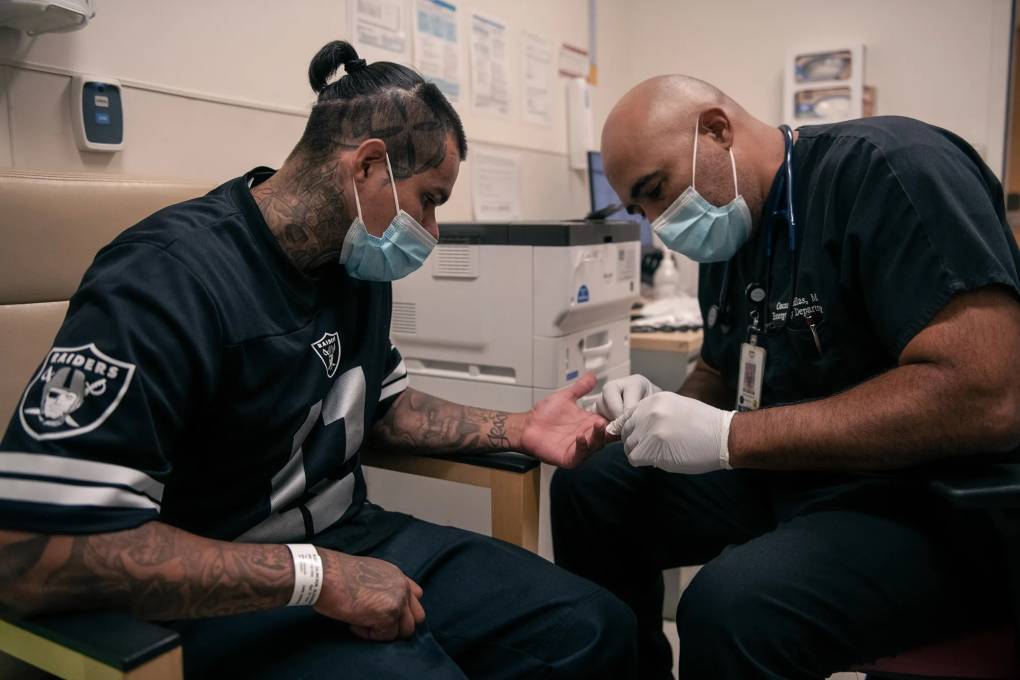
"caption": "California's new Office of Health Care Affordability is charged with capping price increases for consumers. It set a preliminary goal of limiting increases to 3% a year. Here, Dr. Oscar Casillas removes a pair of stitches from Alex’s hand at Martin Luther King Jr. Community Hospital on July 26, 2022.",
"description": null,
"title": "07262022_MLK-Hospital_PU_CM_29 copy",
"credit": "Pablo Unzueta for CalMatters",
"status": "inherit",
"altTag": "A doctor tends to a patient, both Latino males and wearing masks, in a doctor's office.",
"isLoading": false,
"fetchFailed": false
},
"news_11975274": {
"type": "attachments",
"id": "news_11975274",
"meta": {
"index": "attachments_1716263798",
"site": "news",
"id": "11975274",
"found": true
},
"parent": 11975256,
"imgSizes": {
"twentyfourteen-full-width": {
"file": "https://cdn.kqed.org/wp-content/uploads/sites/10/2024/02/070523-Street-Medicine-Project-LV-CM_09-copy-1038x576.jpg",
"width": 1038,
"mimeType": "image/jpeg",
"height": 576
},
"thumbnail": {
"file": "https://cdn.kqed.org/wp-content/uploads/sites/10/2024/02/070523-Street-Medicine-Project-LV-CM_09-copy-160x107.jpg",
"width": 160,
"mimeType": "image/jpeg",
"height": 107
},
"post-thumbnail": {
"file": "https://cdn.kqed.org/wp-content/uploads/sites/10/2024/02/070523-Street-Medicine-Project-LV-CM_09-copy-672x372.jpg",
"width": 672,
"mimeType": "image/jpeg",
"height": 372
},
"kqedFullSize": {
"file": "https://cdn.kqed.org/wp-content/uploads/sites/10/2024/02/070523-Street-Medicine-Project-LV-CM_09-copy.jpg",
"width": 2000,
"height": 1333
},
"large": {
"file": "https://cdn.kqed.org/wp-content/uploads/sites/10/2024/02/070523-Street-Medicine-Project-LV-CM_09-copy-1020x680.jpg",
"width": 1020,
"mimeType": "image/jpeg",
"height": 680
},
"1536x1536": {
"file": "https://cdn.kqed.org/wp-content/uploads/sites/10/2024/02/070523-Street-Medicine-Project-LV-CM_09-copy-1536x1024.jpg",
"width": 1536,
"mimeType": "image/jpeg",
"height": 1024
},
"full-width": {
"file": "https://cdn.kqed.org/wp-content/uploads/sites/10/2024/02/070523-Street-Medicine-Project-LV-CM_09-copy-1920x1280.jpg",
"width": 1920,
"mimeType": "image/jpeg",
"height": 1280
},
"medium": {
"file": "https://cdn.kqed.org/wp-content/uploads/sites/10/2024/02/070523-Street-Medicine-Project-LV-CM_09-copy-800x533.jpg",
"width": 800,
"mimeType": "image/jpeg",
"height": 533
}
},
"publishDate": 1707510203,
"modified": 1707518158,
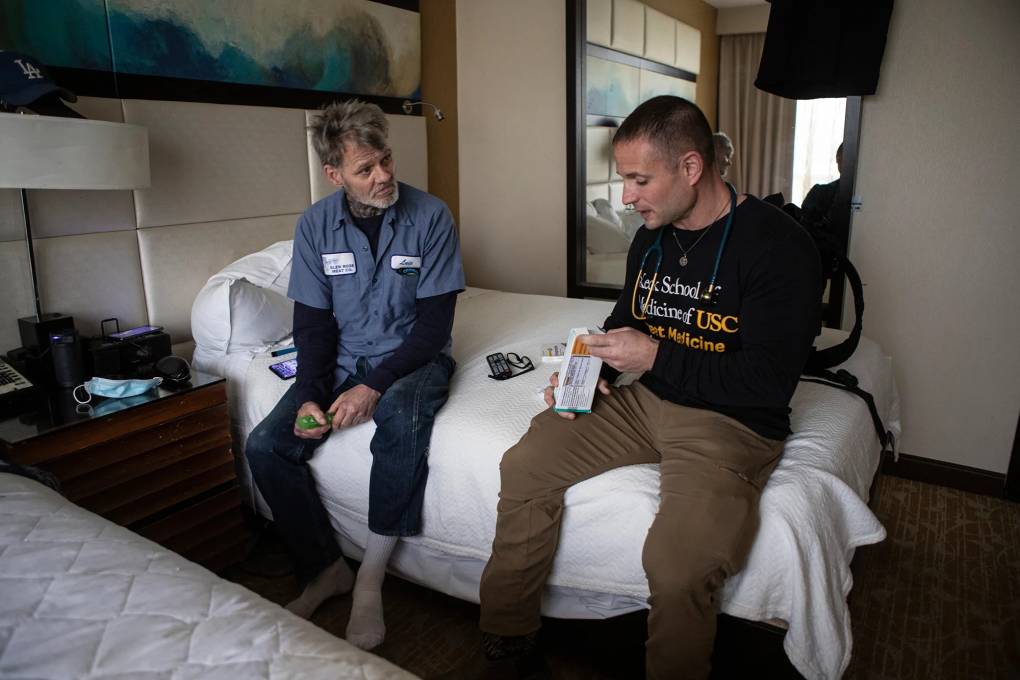
"caption": "Patient Steven Dombrowski, 'Cowboy,' speaking with physician assistant Brett Feldman in his hotel room at the LA Grand Hotel on Feb. 13, 2023. The hotel was turned into an emergency shelter for unhoused people through Project Roomkey.",
"description": null,
"title": "070523-Street-Medicine-Project-LV-CM_09 copy",
"credit": "Larry Valenzuela/CalMatters/CatchLight Local",
"status": "inherit",
"altTag": "Two men sit on a bed in a hotel room — one with a doctor's stethoscope.",
"isLoading": false,
"fetchFailed": false
},
"news_11974964": {
"type": "attachments",
"id": "news_11974964",
"meta": {
"index": "attachments_1716263798",
"site": "news",
"id": "11974964",
"found": true
},
"parent": 11974963,
"imgSizes": {
"twentyfourteen-full-width": {
"file": "https://cdn.kqed.org/wp-content/uploads/sites/10/2024/02/072023_Yurok-Salmon-Counting_SN_CM_12-copy-1038x576.jpg",
"width": 1038,
"mimeType": "image/jpeg",
"height": 576
},
"thumbnail": {
"file": "https://cdn.kqed.org/wp-content/uploads/sites/10/2024/02/072023_Yurok-Salmon-Counting_SN_CM_12-copy-160x107.jpg",
"width": 160,
"mimeType": "image/jpeg",
"height": 107
},
"post-thumbnail": {
"file": "https://cdn.kqed.org/wp-content/uploads/sites/10/2024/02/072023_Yurok-Salmon-Counting_SN_CM_12-copy-672x372.jpg",
"width": 672,
"mimeType": "image/jpeg",
"height": 372
},
"kqedFullSize": {
"file": "https://cdn.kqed.org/wp-content/uploads/sites/10/2024/02/072023_Yurok-Salmon-Counting_SN_CM_12-copy.jpg",
"width": 2000,
"height": 1333
},
"large": {
"file": "https://cdn.kqed.org/wp-content/uploads/sites/10/2024/02/072023_Yurok-Salmon-Counting_SN_CM_12-copy-1020x680.jpg",
"width": 1020,
"mimeType": "image/jpeg",
"height": 680
},
"1536x1536": {
"file": "https://cdn.kqed.org/wp-content/uploads/sites/10/2024/02/072023_Yurok-Salmon-Counting_SN_CM_12-copy-1536x1024.jpg",
"width": 1536,
"mimeType": "image/jpeg",
"height": 1024
},
"full-width": {
"file": "https://cdn.kqed.org/wp-content/uploads/sites/10/2024/02/072023_Yurok-Salmon-Counting_SN_CM_12-copy-1920x1280.jpg",
"width": 1920,
"mimeType": "image/jpeg",
"height": 1280
},
"medium": {
"file": "https://cdn.kqed.org/wp-content/uploads/sites/10/2024/02/072023_Yurok-Salmon-Counting_SN_CM_12-copy-800x533.jpg",
"width": 800,
"mimeType": "image/jpeg",
"height": 533
}
},
"publishDate": 1707330735,
"modified": 1707330823,
"caption": "Juvenile chinook salmon collected for lab testing on the Klamath River near Weitchpec on July 20, 2023.",
"description": null,
"title": "072023_Yurok-Salmon-Counting_SN_CM_12 copy",
"credit": "Semantha Norris/CalMatters",
"status": "inherit",
"altTag": "Two hands and some baby fish laid out beneath them.",
"isLoading": false,
"fetchFailed": false
},
"news_11974817": {
"type": "attachments",
"id": "news_11974817",
"meta": {
"index": "attachments_1716263798",
"site": "news",
"id": "11974817",
"found": true
},
"parent": 11974814,
"imgSizes": {
"twentyfourteen-full-width": {
"file": "https://cdn.kqed.org/wp-content/uploads/sites/10/2024/02/07202023_Bonnie-Metcalf-Medical-Cannabis_RL_CM_04-1038x576.jpg",
"width": 1038,
"mimeType": "image/jpeg",
"height": 576
},
"thumbnail": {
"file": "https://cdn.kqed.org/wp-content/uploads/sites/10/2024/02/07202023_Bonnie-Metcalf-Medical-Cannabis_RL_CM_04-160x107.jpg",
"width": 160,
"mimeType": "image/jpeg",
"height": 107
},
"post-thumbnail": {
"file": "https://cdn.kqed.org/wp-content/uploads/sites/10/2024/02/07202023_Bonnie-Metcalf-Medical-Cannabis_RL_CM_04-672x372.jpg",
"width": 672,
"mimeType": "image/jpeg",
"height": 372
},
"kqedFullSize": {
"file": "https://cdn.kqed.org/wp-content/uploads/sites/10/2024/02/07202023_Bonnie-Metcalf-Medical-Cannabis_RL_CM_04.jpg",
"width": 2000,
"height": 1333
},
"large": {
"file": "https://cdn.kqed.org/wp-content/uploads/sites/10/2024/02/07202023_Bonnie-Metcalf-Medical-Cannabis_RL_CM_04-1020x680.jpg",
"width": 1020,
"mimeType": "image/jpeg",
"height": 680
},
"1536x1536": {
"file": "https://cdn.kqed.org/wp-content/uploads/sites/10/2024/02/07202023_Bonnie-Metcalf-Medical-Cannabis_RL_CM_04-1536x1024.jpg",
"width": 1536,
"mimeType": "image/jpeg",
"height": 1024
},
"full-width": {
"file": "https://cdn.kqed.org/wp-content/uploads/sites/10/2024/02/07202023_Bonnie-Metcalf-Medical-Cannabis_RL_CM_04-1920x1280.jpg",
"width": 1920,
"mimeType": "image/jpeg",
"height": 1280
},
"medium": {
"file": "https://cdn.kqed.org/wp-content/uploads/sites/10/2024/02/07202023_Bonnie-Metcalf-Medical-Cannabis_RL_CM_04-800x533.jpg",
"width": 800,
"mimeType": "image/jpeg",
"height": 533
}
},
"publishDate": 1707241816,
"modified": 1707245948,
"caption": "Bonnie Metcalf shows a medicinal mushroom microdose, Supreme Micros, during her medicating session at her residence in Sacramento on July 20, 2023. Metcalf suffers from Sarcoidosis, a disease spurring the growth of tiny collections of inflammatory cells in different parts of the body. She takes cannabis products to ease the pain. ",
"description": null,
"title": "07202023_Bonnie-Metcalf-Medical-Cannabis_RL_CM_04",
"credit": "Rahul Lal/CalMatters",
"status": "inherit",
"altTag": "A person holds a bag with an illustration of a figure with a mushroom head in a meditative pose.",
"isLoading": false,
"fetchFailed": false
},
"news_11974705": {
"type": "attachments",
"id": "news_11974705",
"meta": {
"index": "attachments_1716263798",
"site": "news",
"id": "11974705",
"found": true
},
"parent": 11974704,
"imgSizes": {
"twentyfourteen-full-width": {
"file": "https://cdn.kqed.org/wp-content/uploads/sites/10/2024/02/10252023_State-Broadband-Council-Meeting_RL_CM_06-1038x576.jpg",
"width": 1038,
"mimeType": "image/jpeg",
"height": 576
},
"thumbnail": {
"file": "https://cdn.kqed.org/wp-content/uploads/sites/10/2024/02/10252023_State-Broadband-Council-Meeting_RL_CM_06-160x107.jpg",
"width": 160,
"mimeType": "image/jpeg",
"height": 107
},
"post-thumbnail": {
"file": "https://cdn.kqed.org/wp-content/uploads/sites/10/2024/02/10252023_State-Broadband-Council-Meeting_RL_CM_06-672x372.jpg",
"width": 672,
"mimeType": "image/jpeg",
"height": 372
},
"kqedFullSize": {
"file": "https://cdn.kqed.org/wp-content/uploads/sites/10/2024/02/10252023_State-Broadband-Council-Meeting_RL_CM_06.jpg",
"width": 2000,
"height": 1333
},
"large": {
"file": "https://cdn.kqed.org/wp-content/uploads/sites/10/2024/02/10252023_State-Broadband-Council-Meeting_RL_CM_06-1020x680.jpg",
"width": 1020,
"mimeType": "image/jpeg",
"height": 680
},
"1536x1536": {
"file": "https://cdn.kqed.org/wp-content/uploads/sites/10/2024/02/10252023_State-Broadband-Council-Meeting_RL_CM_06-1536x1024.jpg",
"width": 1536,
"mimeType": "image/jpeg",
"height": 1024
},
"full-width": {
"file": "https://cdn.kqed.org/wp-content/uploads/sites/10/2024/02/10252023_State-Broadband-Council-Meeting_RL_CM_06-1920x1280.jpg",
"width": 1920,
"mimeType": "image/jpeg",
"height": 1280
},
"medium": {
"file": "https://cdn.kqed.org/wp-content/uploads/sites/10/2024/02/10252023_State-Broadband-Council-Meeting_RL_CM_06-800x533.jpg",
"width": 800,
"mimeType": "image/jpeg",
"height": 533
}
},
"publishDate": 1707156152,
"modified": 1707165798,
"caption": "Patrick Messac, director of Oakland Undivided, leads a rally to raise awareness about statewide multi-billion-dollar broadband projects outside the Covered California headquarters in Sacramento on Oct. 25, 2023. Demonstrators attended a state Broadband Council meeting and provided public comment shortly after. ",
"description": null,
"title": "10252023_State-Broadband-Council-Meeting_RL_CM_06",
"credit": "Rahul Lal/CalMatters",
"status": "inherit",
"altTag": "A group of people chant and hold blue signs with fists on them that read \"Internet Access is a 21st Century Civil Right.\"",
"isLoading": false,
"fetchFailed": false
},
"news_11974468": {
"type": "attachments",
"id": "news_11974468",
"meta": {
"index": "attachments_1716263798",
"site": "news",
"id": "11974468",
"found": true
},
"parent": 11974466,
"imgSizes": {
"twentyfourteen-full-width": {
"file": "https://cdn.kqed.org/wp-content/uploads/sites/10/2024/02/CMEVs01-1038x576.jpg",
"width": 1038,
"mimeType": "image/jpeg",
"height": 576
},
"thumbnail": {
"file": "https://cdn.kqed.org/wp-content/uploads/sites/10/2024/02/CMEVs01-160x107.jpg",
"width": 160,
"mimeType": "image/jpeg",
"height": 107
},
"post-thumbnail": {
"file": "https://cdn.kqed.org/wp-content/uploads/sites/10/2024/02/CMEVs01-672x372.jpg",
"width": 672,
"mimeType": "image/jpeg",
"height": 372
},
"kqedFullSize": {
"file": "https://cdn.kqed.org/wp-content/uploads/sites/10/2024/02/CMEVs01.jpg",
"width": 2000,
"height": 1334
},
"large": {
"file": "https://cdn.kqed.org/wp-content/uploads/sites/10/2024/02/CMEVs01-1020x680.jpg",
"width": 1020,
"mimeType": "image/jpeg",
"height": 680
},
"1536x1536": {
"file": "https://cdn.kqed.org/wp-content/uploads/sites/10/2024/02/CMEVs01-1536x1025.jpg",
"width": 1536,
"mimeType": "image/jpeg",
"height": 1025
},
"full-width": {
"file": "https://cdn.kqed.org/wp-content/uploads/sites/10/2024/02/CMEVs01-1920x1281.jpg",
"width": 1920,
"mimeType": "image/jpeg",
"height": 1281
},
"medium": {
"file": "https://cdn.kqed.org/wp-content/uploads/sites/10/2024/02/CMEVs01-800x534.jpg",
"width": 800,
"mimeType": "image/jpeg",
"height": 534
}
},
"publishDate": 1706816018,
"modified": 1706816066,
"caption": "A Electric Ford-150 vehicle is seen on an assembly line at the Ford River Rouge complex in Dearborn, Michigan, U.S., on Tuesday, April 4, 2023.",
"description": null,
"title": "CMEVs01",
"credit": "Emily Elconin/Cal Matters",
"status": "inherit",
"altTag": "An electric, heavy-duty pickup truck is seen being fabricated in a warehouse.",
"isLoading": false,
"fetchFailed": false
},
"news_11974448": {
"type": "attachments",
"id": "news_11974448",
"meta": {
"index": "attachments_1716263798",
"site": "news",
"id": "11974448",
"found": true
},
"parent": 11974445,
"imgSizes": {
"twentyfourteen-full-width": {
"file": "https://cdn.kqed.org/wp-content/uploads/sites/10/2024/02/CMReparations01-1038x576.jpg",
"width": 1038,
"mimeType": "image/jpeg",
"height": 576
},
"thumbnail": {
"file": "https://cdn.kqed.org/wp-content/uploads/sites/10/2024/02/CMReparations01-160x107.jpg",
"width": 160,
"mimeType": "image/jpeg",
"height": 107
},
"post-thumbnail": {
"file": "https://cdn.kqed.org/wp-content/uploads/sites/10/2024/02/CMReparations01-672x372.jpg",
"width": 672,
"mimeType": "image/jpeg",
"height": 372
},
"kqedFullSize": {
"file": "https://cdn.kqed.org/wp-content/uploads/sites/10/2024/02/CMReparations01.jpg",
"width": 2000,
"height": 1333
},
"large": {
"file": "https://cdn.kqed.org/wp-content/uploads/sites/10/2024/02/CMReparations01-1020x680.jpg",
"width": 1020,
"mimeType": "image/jpeg",
"height": 680
},
"1536x1536": {
"file": "https://cdn.kqed.org/wp-content/uploads/sites/10/2024/02/CMReparations01-1536x1024.jpg",
"width": 1536,
"mimeType": "image/jpeg",
"height": 1024
},
"full-width": {
"file": "https://cdn.kqed.org/wp-content/uploads/sites/10/2024/02/CMReparations01-1920x1280.jpg",
"width": 1920,
"mimeType": "image/jpeg",
"height": 1280
},
"medium": {
"file": "https://cdn.kqed.org/wp-content/uploads/sites/10/2024/02/CMReparations01-800x533.jpg",
"width": 800,
"mimeType": "image/jpeg",
"height": 533
}
},
"publishDate": 1706809467,
"modified": 1706815709,
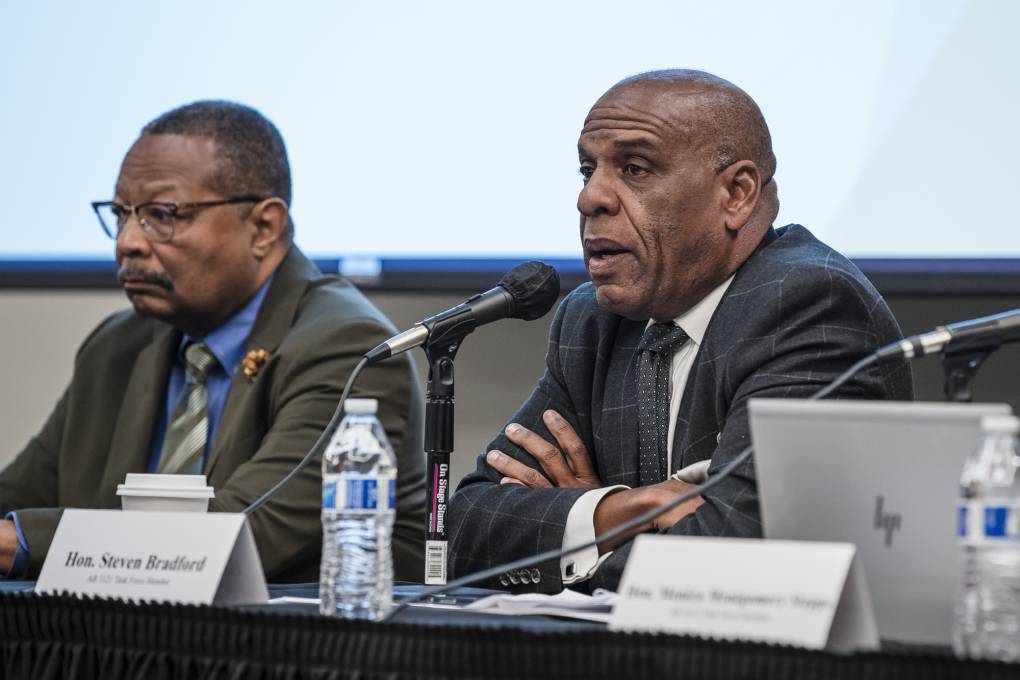
"caption": "California State Sen. Steven Bradford (right) and Assemblymember Reginald Jones-Sawyer (left) during a Reparations Task Force Meeting at San Diego State on Jan. 28, 2023.",
"description": null,
"title": "CMReparations01",
"credit": "Ariana Drehsler/CalMatters",
"status": "inherit",
"altTag": "Two Black men in suits sit at a table with microphones, speaking to a room.",
"isLoading": false,
"fetchFailed": false
},
"news_11974333": {
"type": "attachments",
"id": "news_11974333",
"meta": {
"index": "attachments_1716263798",
"site": "news",
"id": "11974333",
"found": true
},
"parent": 11974321,
"imgSizes": {
"twentyfourteen-full-width": {
"file": "https://cdn.kqed.org/wp-content/uploads/sites/10/2024/01/Graduation-1038x576.jpg",
"width": 1038,
"mimeType": "image/jpeg",
"height": 576
},
"thumbnail": {
"file": "https://cdn.kqed.org/wp-content/uploads/sites/10/2024/01/Graduation-160x107.jpg",
"width": 160,
"mimeType": "image/jpeg",
"height": 107
},
"post-thumbnail": {
"file": "https://cdn.kqed.org/wp-content/uploads/sites/10/2024/01/Graduation-672x372.jpg",
"width": 672,
"mimeType": "image/jpeg",
"height": 372
},
"kqedFullSize": {
"file": "https://cdn.kqed.org/wp-content/uploads/sites/10/2024/01/Graduation.jpg",
"width": 1920,
"height": 1280
},
"large": {
"file": "https://cdn.kqed.org/wp-content/uploads/sites/10/2024/01/Graduation-1020x680.jpg",
"width": 1020,
"mimeType": "image/jpeg",
"height": 680
},
"1536x1536": {
"file": "https://cdn.kqed.org/wp-content/uploads/sites/10/2024/01/Graduation-1536x1024.jpg",
"width": 1536,
"mimeType": "image/jpeg",
"height": 1024
},
"medium": {
"file": "https://cdn.kqed.org/wp-content/uploads/sites/10/2024/01/Graduation-800x533.jpg",
"width": 800,
"mimeType": "image/jpeg",
"height": 533
}
},
"publishDate": 1706727550,
"modified": 1706727740,
"caption": "Since 2015, California's human resources department has changed the degree requirements for nearly 170 types of jobs, which represent about 27,000 people. ",
"description": null,
"title": "Graduation",
"credit": "Vanessa Rancano/KQED",
"status": "inherit",
"altTag": "A tight shot captured from behind of hundreds of students in blue and yellow graduation caps sitting down.",
"isLoading": false,
"fetchFailed": false
},
"news_11974226": {
"type": "attachments",
"id": "news_11974226",
"meta": {
"index": "attachments_1716263798",
"site": "news",
"id": "11974226",
"found": true
},
"parent": 11974214,
"imgSizes": {
"twentyfourteen-full-width": {
"file": "https://cdn.kqed.org/wp-content/uploads/sites/10/2024/01/031522_Nevada-City-Ride-Along_MW_CM_18-copy-1038x576.jpg",
"width": 1038,
"mimeType": "image/jpeg",
"height": 576
},
"thumbnail": {
"file": "https://cdn.kqed.org/wp-content/uploads/sites/10/2024/01/031522_Nevada-City-Ride-Along_MW_CM_18-copy-160x107.jpg",
"width": 160,
"mimeType": "image/jpeg",
"height": 107
},
"post-thumbnail": {
"file": "https://cdn.kqed.org/wp-content/uploads/sites/10/2024/01/031522_Nevada-City-Ride-Along_MW_CM_18-copy-672x372.jpg",
"width": 672,
"mimeType": "image/jpeg",
"height": 372
},
"kqedFullSize": {
"file": "https://cdn.kqed.org/wp-content/uploads/sites/10/2024/01/031522_Nevada-City-Ride-Along_MW_CM_18-copy.jpg",
"width": 2000,
"height": 1333
},
"large": {
"file": "https://cdn.kqed.org/wp-content/uploads/sites/10/2024/01/031522_Nevada-City-Ride-Along_MW_CM_18-copy-1020x680.jpg",
"width": 1020,
"mimeType": "image/jpeg",
"height": 680
},
"1536x1536": {
"file": "https://cdn.kqed.org/wp-content/uploads/sites/10/2024/01/031522_Nevada-City-Ride-Along_MW_CM_18-copy-1536x1024.jpg",
"width": 1536,
"mimeType": "image/jpeg",
"height": 1024
},
"full-width": {
"file": "https://cdn.kqed.org/wp-content/uploads/sites/10/2024/01/031522_Nevada-City-Ride-Along_MW_CM_18-copy-1920x1280.jpg",
"width": 1920,
"mimeType": "image/jpeg",
"height": 1280
},
"medium": {
"file": "https://cdn.kqed.org/wp-content/uploads/sites/10/2024/01/031522_Nevada-City-Ride-Along_MW_CM_18-copy-800x533.jpg",
"width": 800,
"mimeType": "image/jpeg",
"height": 533
}
},
"publishDate": 1706640173,
"modified": 1706640211,
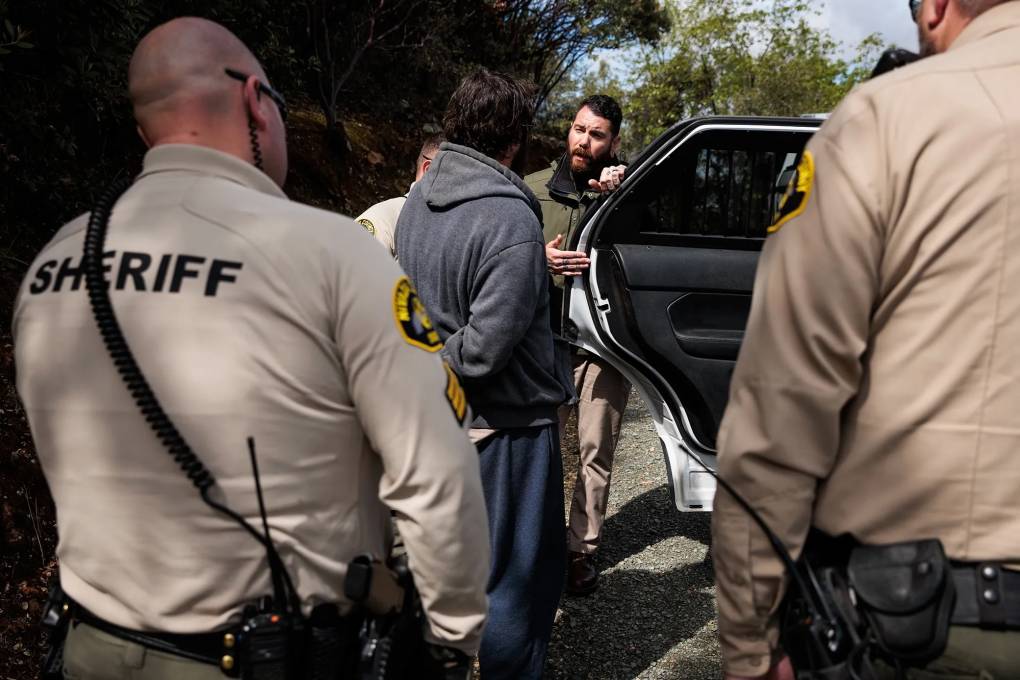
"caption": "Licensed clinician Ernesto Alvarado negotiates with a man reluctant to be placed on a mental health hold in Penn Valley on March 15, 2022. Alvarado is part of Nevada County's Mobile Crisis Team. ",
"description": null,
"title": "031522_Nevada-City-Ride-Along_MW_CM_18 copy",
"credit": "Max Whittaker for CalMatters",
"status": "inherit",
"altTag": null,
"isLoading": false,
"fetchFailed": false
},
"news_11974074": {
"type": "attachments",
"id": "news_11974074",
"meta": {
"index": "attachments_1716263798",
"site": "news",
"id": "11974074",
"found": true
},
"parent": 11974073,
"imgSizes": {
"twentyfourteen-full-width": {
"file": "https://cdn.kqed.org/wp-content/uploads/sites/10/2024/01/111522-Fast-Food-Workers-Strike-RL-CM-04-copy-1038x576.jpg",
"width": 1038,
"mimeType": "image/jpeg",
"height": 576
},
"thumbnail": {
"file": "https://cdn.kqed.org/wp-content/uploads/sites/10/2024/01/111522-Fast-Food-Workers-Strike-RL-CM-04-copy-160x107.jpg",
"width": 160,
"mimeType": "image/jpeg",
"height": 107
},
"post-thumbnail": {
"file": "https://cdn.kqed.org/wp-content/uploads/sites/10/2024/01/111522-Fast-Food-Workers-Strike-RL-CM-04-copy-672x372.jpg",
"width": 672,
"mimeType": "image/jpeg",
"height": 372
},
"kqedFullSize": {
"file": "https://cdn.kqed.org/wp-content/uploads/sites/10/2024/01/111522-Fast-Food-Workers-Strike-RL-CM-04-copy.jpg",
"width": 2000,
"height": 1333
},
"large": {
"file": "https://cdn.kqed.org/wp-content/uploads/sites/10/2024/01/111522-Fast-Food-Workers-Strike-RL-CM-04-copy-1020x680.jpg",
"width": 1020,
"mimeType": "image/jpeg",
"height": 680
},
"1536x1536": {
"file": "https://cdn.kqed.org/wp-content/uploads/sites/10/2024/01/111522-Fast-Food-Workers-Strike-RL-CM-04-copy-1536x1024.jpg",
"width": 1536,
"mimeType": "image/jpeg",
"height": 1024
},
"full-width": {
"file": "https://cdn.kqed.org/wp-content/uploads/sites/10/2024/01/111522-Fast-Food-Workers-Strike-RL-CM-04-copy-1920x1280.jpg",
"width": 1920,
"mimeType": "image/jpeg",
"height": 1280
},
"medium": {
"file": "https://cdn.kqed.org/wp-content/uploads/sites/10/2024/01/111522-Fast-Food-Workers-Strike-RL-CM-04-copy-800x533.jpg",
"width": 800,
"mimeType": "image/jpeg",
"height": 533
}
},
"publishDate": 1706550372,
"modified": 1706550440,
"caption": "Fast food workers protest against efforts to repeal a law creating a council to help set workplace conditions in fast food restaurants in Sacramento on Nov. 15, 2022.",
"description": null,
"title": "111522-Fast-Food-Workers-Strike-RL-CM-04 copy",
"credit": "Rahul Lal/CalMatters",
"status": "inherit",
"altTag": "Protesters with yellow signs saying \"Justice for Fast Food Workers\" stand at a picket line.",
"isLoading": false,
"fetchFailed": false
},
"news_11973862": {
"type": "attachments",
"id": "news_11973862",
"meta": {
"index": "attachments_1716263798",
"site": "news",
"id": "11973862",
"found": true
},
"parent": 11973859,
"imgSizes": {
"twentyfourteen-full-width": {
"file": "https://cdn.kqed.org/wp-content/uploads/sites/10/2024/01/012524_Alameda-PIT-Count_LE_CM_11-1038x576.jpg",
"width": 1038,
"mimeType": "image/jpeg",
"height": 576
},
"thumbnail": {
"file": "https://cdn.kqed.org/wp-content/uploads/sites/10/2024/01/012524_Alameda-PIT-Count_LE_CM_11-160x107.jpg",
"width": 160,
"mimeType": "image/jpeg",
"height": 107
},
"post-thumbnail": {
"file": "https://cdn.kqed.org/wp-content/uploads/sites/10/2024/01/012524_Alameda-PIT-Count_LE_CM_11-672x372.jpg",
"width": 672,
"mimeType": "image/jpeg",
"height": 372
},
"kqedFullSize": {
"file": "https://cdn.kqed.org/wp-content/uploads/sites/10/2024/01/012524_Alameda-PIT-Count_LE_CM_11.jpg",
"width": 2000,
"height": 1333
},
"large": {
"file": "https://cdn.kqed.org/wp-content/uploads/sites/10/2024/01/012524_Alameda-PIT-Count_LE_CM_11-1020x680.jpg",
"width": 1020,
"mimeType": "image/jpeg",
"height": 680
},
"1536x1536": {
"file": "https://cdn.kqed.org/wp-content/uploads/sites/10/2024/01/012524_Alameda-PIT-Count_LE_CM_11-1536x1024.jpg",
"width": 1536,
"mimeType": "image/jpeg",
"height": 1024
},
"full-width": {
"file": "https://cdn.kqed.org/wp-content/uploads/sites/10/2024/01/012524_Alameda-PIT-Count_LE_CM_11-1920x1280.jpg",
"width": 1920,
"mimeType": "image/jpeg",
"height": 1280
},
"medium": {
"file": "https://cdn.kqed.org/wp-content/uploads/sites/10/2024/01/012524_Alameda-PIT-Count_LE_CM_11-800x533.jpg",
"width": 800,
"mimeType": "image/jpeg",
"height": 533
}
},
"publishDate": 1706299338,
"modified": 1706318327,
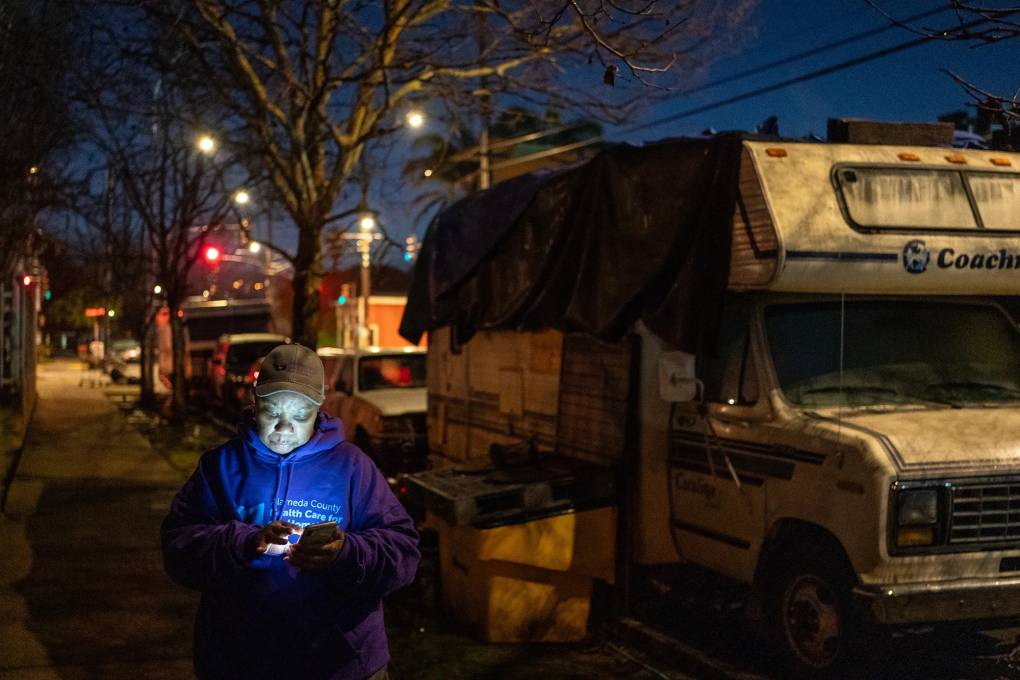
"caption": "Deidra Perry, program financial manager for Alameda County Healthcare for the Homeless, takes part in Alameda County’s 2024 point-in-time count in Berkeley on Jan. 25, 2024. The PIT count, which included a voluntary survey, gathers data on the county’s homeless population.",
"description": null,
"title": "012524_Alameda-PIT-Count_LE_CM_11",
"credit": "Loren Elliott for CalMatters",
"status": "inherit",
"altTag": "A Black woman in a sweatshirt stands outside an RV on a street, looking at her phone in the dark.",
"isLoading": false,
"fetchFailed": false
},
"news_11973661": {
"type": "attachments",
"id": "news_11973661",
"meta": {
"index": "attachments_1716263798",
"site": "news",
"id": "11973661",
"found": true
},
"parent": 11973653,
"imgSizes": {
"twentyfourteen-full-width": {
"file": "https://cdn.kqed.org/wp-content/uploads/sites/10/2024/01/071223_San-Francisco_Housing_SN_CM_19-1038x576.jpg",
"width": 1038,
"mimeType": "image/jpeg",
"height": 576
},
"thumbnail": {
"file": "https://cdn.kqed.org/wp-content/uploads/sites/10/2024/01/071223_San-Francisco_Housing_SN_CM_19-160x107.jpg",
"width": 160,
"mimeType": "image/jpeg",
"height": 107
},
"post-thumbnail": {
"file": "https://cdn.kqed.org/wp-content/uploads/sites/10/2024/01/071223_San-Francisco_Housing_SN_CM_19-672x372.jpg",
"width": 672,
"mimeType": "image/jpeg",
"height": 372
},
"kqedFullSize": {
"file": "https://cdn.kqed.org/wp-content/uploads/sites/10/2024/01/071223_San-Francisco_Housing_SN_CM_19.jpg",
"width": 2000,
"height": 1333
},
"large": {
"file": "https://cdn.kqed.org/wp-content/uploads/sites/10/2024/01/071223_San-Francisco_Housing_SN_CM_19-1020x680.jpg",
"width": 1020,
"mimeType": "image/jpeg",
"height": 680
},
"1536x1536": {
"file": "https://cdn.kqed.org/wp-content/uploads/sites/10/2024/01/071223_San-Francisco_Housing_SN_CM_19-1536x1024.jpg",
"width": 1536,
"mimeType": "image/jpeg",
"height": 1024
},
"full-width": {
"file": "https://cdn.kqed.org/wp-content/uploads/sites/10/2024/01/071223_San-Francisco_Housing_SN_CM_19-1920x1280.jpg",
"width": 1920,
"mimeType": "image/jpeg",
"height": 1280
},
"medium": {
"file": "https://cdn.kqed.org/wp-content/uploads/sites/10/2024/01/071223_San-Francisco_Housing_SN_CM_19-800x533.jpg",
"width": 800,
"mimeType": "image/jpeg",
"height": 533
}
},
"publishDate": 1706208111,
"modified": 1706208201,
"caption": "Housing construction in San Francisco on July 12, 2023. ",
"description": null,
"title": "071223_San-Francisco_Housing_SN_CM_19",
"credit": "Semantha Norris/CalMatters",
"status": "inherit",
"altTag": "A construction crane over a building.",
"isLoading": false,
"fetchFailed": false
}
},
"audioPlayerReducer": {
"postId": "stream_live",
"isPaused": true,
"isPlaying": false,
"pfsActive": false,
"pledgeModalIsOpen": true,
"playerDrawerIsOpen": false,
"liveAudioPlayStartedAt": 0,
"liveAudioPlayContext": ""
},
"authorsReducer": {
"byline_news_11975284": {
"type": "authors",
"id": "byline_news_11975284",
"meta": {
"override": true
},
"slug": "byline_news_11975284",
"name": "\u003ca href=\"https://calmatters.org/author/anaibarra/\">Ana B. Ibarra\u003c/a>",
"isLoading": false
},
"byline_news_11975256": {
"type": "authors",
"id": "byline_news_11975256",
"meta": {
"override": true
},
"slug": "byline_news_11975256",
"name": "\u003ca href=\"https://calmatters.org/author/marisa-kendall/\">Marisa Kendall\u003c/a>",
"isLoading": false
},
"byline_news_11974963": {
"type": "authors",
"id": "byline_news_11974963",
"meta": {
"override": true
},
"slug": "byline_news_11974963",
"name": "\u003ca href=\"https://calmatters.org/author/rachel-becker/\">Rachel Becker\u003c/a>",
"isLoading": false
},
"byline_news_11974814": {
"type": "authors",
"id": "byline_news_11974814",
"meta": {
"override": true
},
"slug": "byline_news_11974814",
"name": "Ana B. Ibarra",
"isLoading": false
},
"byline_news_11974704": {
"type": "authors",
"id": "byline_news_11974704",
"meta": {
"override": true
},
"slug": "byline_news_11974704",
"name": "Khari Johnson",
"isLoading": false
},
"byline_news_11974466": {
"type": "authors",
"id": "byline_news_11974466",
"meta": {
"override": true
},
"slug": "byline_news_11974466",
"name": "\u003ca href=\"https://calmatters.org/author/alejandro-lazo/\">Alejandro Lazo\u003c/a>",
"isLoading": false
},
"byline_news_11974445": {
"type": "authors",
"id": "byline_news_11974445",
"meta": {
"override": true
},
"slug": "byline_news_11974445",
"name": "\u003ca href=\"https://calmatters.org/author/wendy-fry/\">Wendy Fry\u003c/a>\u003cbr>",
"isLoading": false
},
"byline_news_11974321": {
"type": "authors",
"id": "byline_news_11974321",
"meta": {
"override": true
},
"slug": "byline_news_11974321",
"name": "\u003ca href=\"https://calmatters.org/author/adam-echelman/\">Adam Echelman\u003c/a>",
"isLoading": false
},
"byline_news_11974214": {
"type": "authors",
"id": "byline_news_11974214",
"meta": {
"override": true
},
"slug": "byline_news_11974214",
"name": "\u003ca href=\"https://calmatters.org/author/ryan-sabalow/\">Ryan Sabalow\u003c/a>",
"isLoading": false
},
"byline_news_11974073": {
"type": "authors",
"id": "byline_news_11974073",
"meta": {
"override": true
},
"slug": "byline_news_11974073",
"name": "\u003ca href=\"https://calmatters.org/author/jeanne-kuang/\">Jeanne Kuang\u003c/a>",
"isLoading": false
},
"byline_news_11973859": {
"type": "authors",
"id": "byline_news_11973859",
"meta": {
"override": true
},
"slug": "byline_news_11973859",
"name": "\u003ca href=\"https://calmatters.org/author/marisa-kendall/\">Marisa Kendall\u003c/a>",
"isLoading": false
},
"byline_news_11973653": {
"type": "authors",
"id": "byline_news_11973653",
"meta": {
"override": true
},
"slug": "byline_news_11973653",
"name": "Ben Christopher",
"isLoading": false
}
},
"pagesReducer": {
"news_affiliate_calmatters": {
"type": "terms",
"id": "news_18481",
"meta": {
"index": "terms_1716263798",
"site": "news",
"id": "18481",
"score": 15.355904
},
"featImg": null,
"name": "CALmatters",
"description": null,
"taxonomy": "affiliate",
"headData": {
"twImgId": null,
"twTitle": null,
"ogTitle": null,
"ogImgId": null,
"twDescription": null,
"description": null,
"title": "CALmatters Archives | KQED Arts",
"ogDescription": null
},
"ttid": 18515,
"slug": "calmatters",
"isLoading": false,
"title": "CALmatters",
"pageMeta": {
"site": "news",
"WpPageTemplate": "page-topic-editorial",
"currentPage": 37
},
"blocks": [
{
"blockName": "kqed/post-list",
"attrs": {
"layout": "cardArticle2",
"query": "posts/news?affiliate=calmatters",
"seeMore": false,
"paginated": true,
"page": 37
}
},
{
"blockName": "kqed/ad"
}
]
}
},
"pfsSessionReducer": {},
"postsReducer": {
"stream_live": {
"type": "live",
"id": "stream_live",
"audioUrl": "https://streams.kqed.org/kqedradio",
"title": "Live Stream",
"excerpt": "Live Stream information currently unavailable.",
"link": "/radio",
"featImg": "",
"label": {
"name": "KQED Live",
"link": "/"
}
},
"stream_kqedNewscast": {
"type": "posts",
"id": "stream_kqedNewscast",
"audioUrl": "https://www.kqed.org/.stream/anon/radio/RDnews/newscast.mp3?_=1",
"title": "KQED Newscast",
"featImg": "",
"label": {
"name": "88.5 FM",
"link": "/"
}
},
"news_11975284": {
"type": "posts",
"id": "news_11975284",
"meta": {
"index": "posts_1716263798",
"site": "news",
"id": "11975284",
"score": null,
"sort": [
1707588014000
]
},
"guestAuthors": [],
"slug": "california-sets-ambitious-goal-to-cap-medical-bills-but-the-health-care-industry-is-pushing-back",
"title": "California Wants to Cap Medical Bills, but the Health Care Industry Pushes Back",
"publishDate": 1707588014,
"format": "standard",
"headTitle": "California Wants to Cap Medical Bills, but the Health Care Industry Pushes Back | KQED",
"labelTerm": {
"term": 18481,
"site": "news"
},
"content": "\u003cp>A new state office charged with controlling the rising cost of health care in California is moving toward one of the most aggressive goals in the nation, aiming to cap cost increases to 3% a year.\u003c/p>\n\u003cp>You might not notice immediately if the Office of Health Care Affordability commits to the tentative goal it released last month and takes steps to enforce it. But, over time, experts say the cap on price increases could make a difference in how much Californians pay for health care.\u003c/p>\n\u003cp>“A 3.0% target places California on the path of a more sustainable, affordable and equitable health care system, slowing the trajectory of growth and improving affordability for all,” the office wrote in its recommendation.\u003c/p>\n\u003cp>[pullquote align=\"right\" size=\"medium\" citation=\"Office of Health Care Affordability\"]‘A 3.0% target places California on the path of a more sustainable, affordable and equitable health care system, slowing the trajectory of growth and improving affordability for all.’[/pullquote]The agency’s announcement immediately drew criticism from health care industry representatives who called it “unrealistic” and “arbitrary.” They contend it could harm patients by reducing access to care if health providers are watching their spending reduce services.\u003c/p>\n\u003cp>Meanwhile, consumer advocates and health economists characterized it as a good first step in the state’s effort to control costs.\u003c/p>\n\u003cp>\u003ca href=\"https://calmatters.org/health/2022/07/rising-health-care-costs/\">Gov. Gavin Newsom established the office\u003c/a> through a provision in the 2022 state budget. Its job is to collect health expenditure data from providers and insurers, analyze it and set limits on spending for the industry.\u003c/p>\n\u003cp>\u003ca href=\"https://www.chcf.org/publication/cost-commissions-eight-states-address-cost-growth/\">Eight other states\u003c/a> have cost benchmarks. At 3%, California’s would be one of the more stringent caps — third only to Connecticut and Nevada.\u003c/p>\n\u003cp>California’s proposed target would allow health care prices and spending to increase but slower than in recent years. Between 2015 and 2020, per capita health spending grew each year by an average of 5.2%, outpacing wages, according to the Office of Health Care Affordability.\u003c/p>\n\u003cp>Health spending in California reached $405 billion in 2020 — that’s $10,299 per person, according to federal data. This includes what private insurers, public programs and individuals pay for direct services and goods, such as hospital and physician care, prescription drugs and medical devices. It does not include the administrative costs of insurance or public health funding.\u003c/p>\n\u003cp>[ad fullwidth]\u003c/p>\n\u003cp>The office plans to roll out one statewide cap but may eventually create regional and sector-specific targets. Officials said they came up with the 3% figure because that is how much the annual median household income has changed over the last 20 years.\u003c/p>\n\u003cp>“Most importantly, tying to historical median household income growth signals that health care spending should not grow faster than the income of California families,” Vishaal Pegany, deputy director of the Office of Health Care Affordability, said during the most recent board meeting.\u003c/p>\n\u003cp>Providers and entities that fail to meet the proposed benchmark could have to make improvements or face financial penalties. They would not be punished in the program’s first year.\u003c/p>\n\u003cp>The \u003ca href=\"https://hcai.ca.gov/public-meetings/february-health-care-affordability-board-meeting/\">state’s health care affordability board\u003c/a> is scheduled to continue discussions this month and has until June 1 to approve a cost target that would go into effect in 2025 and last through 2029.\u003c/p>\n\u003cp>\u003c!-- iframe plugin v.4.3 wordpress.org/plugins/iframe/ -->\u003cbr>\n\u003ciframe loading=\"lazy\" src=\"https://e.infogram.com/d62c39a9-a90d-491d-a17f-680523ba32ad?parent_url=https%3A%2F%2Fcalmatters.org%2Fhealth%2F2024%2F02%2Fhealth-care-costs-cap%2F&src=embed#async_embed\" width=\"800\" height=\"730\" scrolling=\"yes\" class=\"iframe-class\" frameborder=\"0\">\u003c/iframe>\u003c/p>\n\u003ch2>No instant savings on health care costs\u003c/h2>\n\u003cp>Many Californians are struggling with health care costs. \u003ca href=\"https://www.chcf.org/blog/top-takeaways-california-health-policy-poll/#:~:text=Meanwhile%2C%20close%20to%204%20in,racial%20equity%20in%20health%20care.\">Four in 10 Californians have medical debt\u003c/a>, according to the California Health Care Foundation.\u003c/p>\n\u003cp>Data show that people are spending more of their income on health care. A recently published \u003ca href=\"https://laborcenter.berkeley.edu/wp-content/uploads/2024/01/Measuring-Consumer-Affordability-final.pdf\">study by the UC Berkeley Labor Center (PDF)\u003c/a> found that costs like deductibles are becoming more common. In 2002, 33% of private sector workers enrolled in coverage through their jobs had a deductible. By 2022, 77% of workers did.\u003c/p>\n\u003cp>[aside label=\"Related Stories\" postID=\"news_11974310,news_11970414,news_11949192\"]The size of those deductibles has grown exponentially. Between 2002 and 2022, deductibles for a single-person plan grew 380% or an average of 8.7% every year, researchers found. Deductibles for family plans grew 332% or 7.8% annually.\u003c/p>\n\u003cp>Consumers will probably not feel a difference immediately because the state’s plan is to slow the growth of health spending and not necessarily reduce it.\u003c/p>\n\u003cp>But over time, it could make a difference. Glenn Melnick, a health economist at the University of Southern California, gives this example: “If I have to pay 25% of my (health insurance) premium, let’s say I get it from work, if my premium goes up more slowly, my contribution will be less.”\u003c/p>\n\u003cp>“What if this target had been in place for the last 10 years?” he said.\u003c/p>\n\u003ch2>California providers criticize cap\u003c/h2>\n\u003cp>Representatives for hospitals and doctors caution that basing the spending cap solely on household income rather than taking into account what it costs them to provide care could result in less access and poorer quality of care for patients.\u003c/p>\n\u003cp>They argue the proposed cap doesn’t take into account things providers have no control over, such as general inflation, rising pharmaceutical costs and natural increases in spending driven by the state’s aging population.\u003c/p>\n\u003cp>“[The office’s] proposed target entirely ignores the drivers of health care spending. In doing so, it would force health care providers to significantly cut back on the care they provide or face penalties,” wrote Ben Johnson, vice president of policy at the California Hospital Association, in a letter to the board.\u003c/p>\n\u003cp>[pullquote align=\"right\" size=\"medium\" citation=\"Ben Johnson, vice president of policy, California Hospital Association\"]‘[The office’s] proposed target entirely ignores the drivers of health care spending. In doing so, it would force health care providers to significantly cut back on the care they provide or face penalties.’[/pullquote]Some industry representatives noted specific access issues, such as narrow provider networks and long wait times, are already a top concern for the public. “A 3% target put in place for five years seems likely to result in wait times increasing,” Janice Rocco, chief of staff at the California Medical Association, said during the board’s recent meeting.\u003c/p>\n\u003cp>Dr. Richard Pan, a Sacramento pediatrician and former state senator who sits on the health care affordability board, said that for the state’s plan to truly work, the office and board would have to nail down the methodology behind the spending target so that the industry groups have confidence in it.\u003c/p>\n\u003cp>“We still have some time; these things need to be thought out,” Pan said. “Not everyone has to agree, but it has to be credible to the people that have to implement it.”\u003c/p>\n\u003cp>Melnick of USC said the industry’s argument that a cost-growth target would harm health access and quality is already an issue with today’s spending levels.\u003c/p>\n\u003cp>“A lot of people put off care because they can’t afford it,” he said. “That’s an access and quality impact.”\u003c/p>\n\u003cp>\u003cem>Supported by the California Health Care Foundation (CHCF), which works to ensure that\u003c/em> \u003cem>people have access to the care they need, when they need it, at a price they can afford. Visit \u003c/em>\u003ca href=\"http://www.chcf.org/\">\u003cem>www.chcf.org\u003c/em>\u003c/a>\u003cem> to learn more.\u003c/em>\u003c/p>\n\u003cp>[ad floatright]\u003c/p>\n",
"blocks": [],
"excerpt": "California’s new Office of Health Care Affordability has a mandate to control price increases and is proposing a 3% cost-increase target that’s among the most aggressive in America. ",
"status": "publish",
"parent": 0,
"modified": 1738186260,
"stats": {
"hasAudio": false,
"hasVideo": false,
"hasChartOrMap": true,
"iframeSrcs": [
"https://e.infogram.com/d62c39a9-a90d-491d-a17f-680523ba32ad"
],
"hasGoogleForm": false,
"hasGallery": false,
"hasHearkenModule": false,
"hasPolis": false,
"paragraphCount": 31,
"wordCount": 1231
},
"headData": {
"title": "California Wants to Cap Medical Bills, but the Health Care Industry Pushes Back | KQED",
"description": "California’s new Office of Health Care Affordability has a mandate to control price increases and is proposing a 3% cost-increase target that’s among the most aggressive in America. ",
"ogTitle": "",
"ogDescription": "",
"ogImgId": "",
"twTitle": "",
"twDescription": "",
"twImgId": "",
"schema": {
"@context": "https://schema.org",
"@type": "NewsArticle",
"headline": "California Wants to Cap Medical Bills, but the Health Care Industry Pushes Back",
"datePublished": "2024-02-10T10:00:14-08:00",
"dateModified": "2025-01-29T13:31:00-08:00",
"image": "https://cdn.kqed.org/wp-content/uploads/2020/02/KQED-OG-Image@1x.png",
"isAccessibleForFree": "True",
"publisher": {
"@type": "NewsMediaOrganization",
"@id": "https://www.kqed.org/#organization",
"name": "KQED",
"logo": "https://cdn.kqed.org/wp-content/uploads/2020/02/KQED-OG-Image@1x.png",
"url": "https://www.kqed.org",
"sameAs": [
"https://www.facebook.com/KQED",
"https://twitter.com/KQED",
"https://www.instagram.com/kqed/",
"https://www.tiktok.com/@kqedofficial",
"https://www.linkedin.com/company/kqed",
"https://www.youtube.com/channel/UCeC0IOo7i1P_61zVUWbJ4nw"
]
}
}
},
"sticky": false,
"nprByline": "\u003ca href=\"https://calmatters.org/author/anaibarra/\">Ana B. Ibarra\u003c/a>",
"excludeFromSiteSearch": "Include",
"showOnAuthorArchivePages": "No",
"articleAge": "0",
"path": "/news/11975284/california-sets-ambitious-goal-to-cap-medical-bills-but-the-health-care-industry-is-pushing-back",
"audioTrackLength": null,
"parsedContent": [
{
"type": "contentString",
"content": "\u003cdiv class=\"post-body\">\u003cp>\u003cp>A new state office charged with controlling the rising cost of health care in California is moving toward one of the most aggressive goals in the nation, aiming to cap cost increases to 3% a year.\u003c/p>\n\u003cp>You might not notice immediately if the Office of Health Care Affordability commits to the tentative goal it released last month and takes steps to enforce it. But, over time, experts say the cap on price increases could make a difference in how much Californians pay for health care.\u003c/p>\n\u003cp>“A 3.0% target places California on the path of a more sustainable, affordable and equitable health care system, slowing the trajectory of growth and improving affordability for all,” the office wrote in its recommendation.\u003c/p>\n\u003cp>\u003c/p>\u003c/div>",
"attributes": {
"named": {},
"numeric": []
}
},
{
"type": "component",
"content": "‘A 3.0% target places California on the path of a more sustainable, affordable and equitable health care system, slowing the trajectory of growth and improving affordability for all.’",
"name": "pullquote",
"attributes": {
"named": {
"align": "right",
"size": "medium",
"citation": "Office of Health Care Affordability",
"label": ""
},
"numeric": []
}
},
{
"type": "contentString",
"content": "\u003cdiv class=\"post-body\">\u003cp>The agency’s announcement immediately drew criticism from health care industry representatives who called it “unrealistic” and “arbitrary.” They contend it could harm patients by reducing access to care if health providers are watching their spending reduce services.\u003c/p>\n\u003cp>Meanwhile, consumer advocates and health economists characterized it as a good first step in the state’s effort to control costs.\u003c/p>\n\u003cp>\u003ca href=\"https://calmatters.org/health/2022/07/rising-health-care-costs/\">Gov. Gavin Newsom established the office\u003c/a> through a provision in the 2022 state budget. Its job is to collect health expenditure data from providers and insurers, analyze it and set limits on spending for the industry.\u003c/p>\n\u003cp>\u003ca href=\"https://www.chcf.org/publication/cost-commissions-eight-states-address-cost-growth/\">Eight other states\u003c/a> have cost benchmarks. At 3%, California’s would be one of the more stringent caps — third only to Connecticut and Nevada.\u003c/p>\n\u003cp>California’s proposed target would allow health care prices and spending to increase but slower than in recent years. Between 2015 and 2020, per capita health spending grew each year by an average of 5.2%, outpacing wages, according to the Office of Health Care Affordability.\u003c/p>\n\u003cp>Health spending in California reached $405 billion in 2020 — that’s $10,299 per person, according to federal data. This includes what private insurers, public programs and individuals pay for direct services and goods, such as hospital and physician care, prescription drugs and medical devices. It does not include the administrative costs of insurance or public health funding.\u003c/p>\n\u003cp>\u003c/p>\u003c/div>",
"attributes": {
"named": {},
"numeric": []
}
},
{
"type": "component",
"content": "",
"name": "ad",
"attributes": {
"named": {
"label": "fullwidth"
},
"numeric": [
"fullwidth"
]
}
},
{
"type": "contentString",
"content": "\u003cdiv class=\"post-body\">\u003cp>\u003c/p>\n\u003cp>The office plans to roll out one statewide cap but may eventually create regional and sector-specific targets. Officials said they came up with the 3% figure because that is how much the annual median household income has changed over the last 20 years.\u003c/p>\n\u003cp>“Most importantly, tying to historical median household income growth signals that health care spending should not grow faster than the income of California families,” Vishaal Pegany, deputy director of the Office of Health Care Affordability, said during the most recent board meeting.\u003c/p>\n\u003cp>Providers and entities that fail to meet the proposed benchmark could have to make improvements or face financial penalties. They would not be punished in the program’s first year.\u003c/p>\n\u003cp>The \u003ca href=\"https://hcai.ca.gov/public-meetings/february-health-care-affordability-board-meeting/\">state’s health care affordability board\u003c/a> is scheduled to continue discussions this month and has until June 1 to approve a cost target that would go into effect in 2025 and last through 2029.\u003c/p>\n\u003cp>\u003c!-- iframe plugin v.4.3 wordpress.org/plugins/iframe/ -->\u003cbr>\n\u003ciframe loading=\"lazy\" src=\"https://e.infogram.com/d62c39a9-a90d-491d-a17f-680523ba32ad?parent_url=https%3A%2F%2Fcalmatters.org%2Fhealth%2F2024%2F02%2Fhealth-care-costs-cap%2F&src=embed#async_embed\" width=\"800\" height=\"730\" scrolling=\"yes\" class=\"iframe-class\" frameborder=\"0\">\u003c/iframe>\u003c/p>\n\u003ch2>No instant savings on health care costs\u003c/h2>\n\u003cp>Many Californians are struggling with health care costs. \u003ca href=\"https://www.chcf.org/blog/top-takeaways-california-health-policy-poll/#:~:text=Meanwhile%2C%20close%20to%204%20in,racial%20equity%20in%20health%20care.\">Four in 10 Californians have medical debt\u003c/a>, according to the California Health Care Foundation.\u003c/p>\n\u003cp>Data show that people are spending more of their income on health care. A recently published \u003ca href=\"https://laborcenter.berkeley.edu/wp-content/uploads/2024/01/Measuring-Consumer-Affordability-final.pdf\">study by the UC Berkeley Labor Center (PDF)\u003c/a> found that costs like deductibles are becoming more common. In 2002, 33% of private sector workers enrolled in coverage through their jobs had a deductible. By 2022, 77% of workers did.\u003c/p>\n\u003cp>\u003c/p>\u003c/div>",
"attributes": {
"named": {},
"numeric": []
}
},
{
"type": "component",
"content": "",
"name": "aside",
"attributes": {
"named": {
"label": "Related Stories ",
"postid": "news_11974310,news_11970414,news_11949192"
},
"numeric": []
}
},
{
"type": "contentString",
"content": "\u003cdiv class=\"post-body\">\u003cp>The size of those deductibles has grown exponentially. Between 2002 and 2022, deductibles for a single-person plan grew 380% or an average of 8.7% every year, researchers found. Deductibles for family plans grew 332% or 7.8% annually.\u003c/p>\n\u003cp>Consumers will probably not feel a difference immediately because the state’s plan is to slow the growth of health spending and not necessarily reduce it.\u003c/p>\n\u003cp>But over time, it could make a difference. Glenn Melnick, a health economist at the University of Southern California, gives this example: “If I have to pay 25% of my (health insurance) premium, let’s say I get it from work, if my premium goes up more slowly, my contribution will be less.”\u003c/p>\n\u003cp>“What if this target had been in place for the last 10 years?” he said.\u003c/p>\n\u003ch2>California providers criticize cap\u003c/h2>\n\u003cp>Representatives for hospitals and doctors caution that basing the spending cap solely on household income rather than taking into account what it costs them to provide care could result in less access and poorer quality of care for patients.\u003c/p>\n\u003cp>They argue the proposed cap doesn’t take into account things providers have no control over, such as general inflation, rising pharmaceutical costs and natural increases in spending driven by the state’s aging population.\u003c/p>\n\u003cp>“[The office’s] proposed target entirely ignores the drivers of health care spending. In doing so, it would force health care providers to significantly cut back on the care they provide or face penalties,” wrote Ben Johnson, vice president of policy at the California Hospital Association, in a letter to the board.\u003c/p>\n\u003cp>\u003c/p>\u003c/div>",
"attributes": {
"named": {},
"numeric": []
}
},
{
"type": "component",
"content": "‘[The office’s] proposed target entirely ignores the drivers of health care spending. In doing so, it would force health care providers to significantly cut back on the care they provide or face penalties.’",
"name": "pullquote",
"attributes": {
"named": {
"align": "right",
"size": "medium",
"citation": "Ben Johnson, vice president of policy, California Hospital Association",
"label": ""
},
"numeric": []
}
},
{
"type": "contentString",
"content": "\u003cdiv class=\"post-body\">\u003cp>Some industry representatives noted specific access issues, such as narrow provider networks and long wait times, are already a top concern for the public. “A 3% target put in place for five years seems likely to result in wait times increasing,” Janice Rocco, chief of staff at the California Medical Association, said during the board’s recent meeting.\u003c/p>\n\u003cp>Dr. Richard Pan, a Sacramento pediatrician and former state senator who sits on the health care affordability board, said that for the state’s plan to truly work, the office and board would have to nail down the methodology behind the spending target so that the industry groups have confidence in it.\u003c/p>\n\u003cp>“We still have some time; these things need to be thought out,” Pan said. “Not everyone has to agree, but it has to be credible to the people that have to implement it.”\u003c/p>\n\u003cp>Melnick of USC said the industry’s argument that a cost-growth target would harm health access and quality is already an issue with today’s spending levels.\u003c/p>\n\u003cp>“A lot of people put off care because they can’t afford it,” he said. “That’s an access and quality impact.”\u003c/p>\n\u003cp>\u003cem>Supported by the California Health Care Foundation (CHCF), which works to ensure that\u003c/em> \u003cem>people have access to the care they need, when they need it, at a price they can afford. Visit \u003c/em>\u003ca href=\"http://www.chcf.org/\">\u003cem>www.chcf.org\u003c/em>\u003c/a>\u003cem> to learn more.\u003c/em>\u003c/p>\n\u003cp>\u003c/p>\u003c/div>",
"attributes": {
"named": {},
"numeric": []
}
},
{
"type": "component",
"content": "",
"name": "ad",
"attributes": {
"named": {
"label": "floatright"
},
"numeric": [
"floatright"
]
}
},
{
"type": "contentString",
"content": "\u003cdiv class=\"post-body\">\u003cp>\u003c/p>\n\u003c/div>\u003c/p>",
"attributes": {
"named": {},
"numeric": []
}
}
],
"link": "/news/11975284/california-sets-ambitious-goal-to-cap-medical-bills-but-the-health-care-industry-is-pushing-back",
"authors": [
"byline_news_11975284"
],
"categories": [
"news_457",
"news_8"
],
"tags": [
"news_27626",
"news_16",
"news_18543",
"news_1054"
],
"affiliates": [
"news_18481"
],
"featImg": "news_11975288",
"label": "news_18481"
},
"news_11975256": {
"type": "posts",
"id": "news_11975256",
"meta": {
"index": "posts_1716263798",
"site": "news",
"id": "11975256",
"score": null,
"sort": [
1707516010000
]
},
"parent": 0,
"labelTerm": {},
"blocks": [],
"publishDate": 1707516010,
"format": "standard",
"title": "California Stuck With $300 Million Tab as FEMA Denies COVID Housing Program Expenses",
"headTitle": "California Stuck With $300 Million Tab as FEMA Denies COVID Housing Program Expenses | KQED",
"content": "\u003cp>When California took the unprecedented step in the spring of 2020 to move thousands of homeless residents into hotels to protect them from the ravages of COVID-19, it did so believing the federal government would foot a large chunk of the bill.\u003c/p>\n\u003cp>Now, following what California officials say is an abrupt about-face from the Federal Emergency Management Agency, cities and counties suddenly are on the hook for hundreds of millions of dollars they expected FEMA to cover. At a time when budgets already are tight, it’s left local governments scrambling.\u003c/p>\n\u003cp>“It’s going to be quite a problem in the next few years if something doesn’t change to fix it,” said Wendy Huff Ellard, a disaster recovery lawyer with Baker Donelson who represents several California counties seeking compensation from FEMA.\u003c/p>\n\u003cp>At issue is a \u003ca href=\"https://calmatters.org/wp-content/uploads/2024/02/FEMA-Oct.-16-2023-reimbursement-letter.pdf\">letter (PDF)\u003c/a> FEMA sent the state in October, saying it would not pay for hotel stays of longer than 20 days between June 11, 2021 and May 11, 2023.\u003c/p>\n\u003cp>That will cost California state and local governments more than $300 million collectively, according to an estimate from the Governor’s Office of Emergency Services.\u003c/p>\n\u003cp>That means individual cities and counties throughout the state could be out tens of millions (Sonoma County has $32 million at risk, while San Diego County has up to $28 million) or even more (San Francisco estimates the change will cost it $114 million).\u003c/p>\n\u003ch2>Limiting hotel stays\u003c/h2>\n\u003cp>Gov. Gavin Newsom \u003ca href=\"https://www.gov.ca.gov/2020/04/03/at-newly-converted-motel-governor-newsom-launches-project-roomkey-a-first-in-the-nation-initiative-to-secure-hotel-motel-rooms-to-protect-homeless-individuals-from-covid-19/\">launched the hotel shelter program\u003c/a> — dubbed Project Roomkey — in April 2020, just a month after the COVID-19 pandemic prompted him to \u003ca href=\"https://www.gov.ca.gov/wp-content/uploads/2020/03/3.4.20-Coronavirus-SOE-Proclamation.pdf\">declare a state of emergency (PDF)\u003c/a>. Health experts were terrified that California, with its massive homeless population, would see the virus wreak havoc in crowded shelters and unsanitary encampments. The state rolled out a plan to move unhoused people with COVID-19, as well as those particularly vulnerable to the virus — people who were over 65 or had pre-existing respiratory, immune or other chronic diseases — into empty hotel rooms.\u003c/p>\n\u003cp>[aside postID=news_11847782,news_11914346,news_11927968 label='Homelessness During COVID']Individual cities and counties leased and paid for those hotel rooms with the expectation that FEMA would reimburse them. At first, the federal agency agreed to cover 75% of the cost for eligible expenses, including the rooms and services such as meals, security and cleaning. By January 2021, FEMA agreed to reimburse 100% of those costs.\u003c/p>\n\u003cp>In all, \u003ca href=\"https://www.kqed.org/news/11825653/california-found-hotels-for-10000-homeless-residents-what-next\">Roomkey served about 62,000 people throughout the pandemic\u003c/a>.\u003c/p>\n\u003cp>When Roomkey launched, FEMA had no rules governing how long someone could stay in a hotel room, according to the Governor’s Office of Emergency Services. Officials there claim FEMA didn’t set the 20-day limit until October 2023, long after the unhoused residents had moved out.\u003c/p>\n\u003cp>In its letter, FEMA said it capped stays between June 2021 and May 2023 because by that time, transmission rates were down, and 20 days were the Centers for Disease Control and Prevention’s maximum recommended period of quarantine. Newsom \u003ca href=\"https://www.gov.ca.gov/2021/06/11/as-california-fully-reopens-governor-newsom-announces-plans-to-lift-pandemic-executive-orders/\">lifted the state’s stay-at-home order in June 2021\u003c/a>.\u003c/p>\n\u003cp>“Things had changed,” said Robert Fenton, regional administrator for FEMA Region 9, in a phone call with CalMatters. “The vaccine was readily available. Testing was readily available.”\u003c/p>\n\u003cp>Fenton, who wrote the October letter, insisted FEMA’s policy has not changed — despite the assertions of state officials and multiple cities and counties. Fenton said that from the beginning, the federal agency said it would pay for shelter stays that were based on “health guidance” and limited to what was needed to address immediate threats to health and safety. State and local officials should have known that referred to the CDC guideline of quarantining for up to 20 days — because that’s the policy Newsom and local health departments followed themselves, Fenton said. But there is no evidence FEMA made that 20-day rule explicit prior to October.\u003c/p>\n\u003cp>The CDC’s 20-day quarantine recommendation was for people who had or were exposed to COVID-19. But the state, and California cities and counties, interpreted FEMA’s rules to mean the federal agency would pay for hotel rooms for unhoused people who were unusually susceptible to the virus — but had not been infected or exposed.\u003c/p>\n\u003cp>[pullquote size=\"medium\" align=\"right\" citation=\"Randy Scott\"]‘[Project Roomkey] changed my life, really.’[/pullquote]Fenton said he sent the October letter spelling out the 20-day cap after seeing the reimbursement requests submitted by California cities and counties.\u003c/p>\n\u003cp>“It’s not new,” he said. “What I’m doing is clarifying the original guidance of the original policy and providing that back to them.”\u003c/p>\n\u003cp>California officials disagree.\u003c/p>\n\u003cp>The state sent FEMA a letter last month asking the federal agency to reconsider the 20-day cap.\u003c/p>\n\u003cp>“California is committed to maximizing federal aid to local communities and intends to aggressively advocate for FEMA to rescind the decision to deny public assistance to local governments,” Brian Ferguson, a spokesman for the Governor’s Office of Emergency Services, said in an email to CalMatters.\u003c/p>\n\u003cp>The governor’s office looks forward to the federal government “honoring its commitments,” spokesman Daniel Lopez added in an email.\u003c/p>\n\u003cp>But while the state, which serves as an intermediary between local officials and FEMA, can put pressure on FEMA, it has no authority to force the federal agency to change its mind, Ellard said.\u003c/p>\n\u003cp>“When everything was really bad, and it was top of mind for everyone, FEMA was advising a lot of the applicants that it would provide the necessary support, that the federal government would be there to support the need,” Ellard said. “And now that things have calmed down a bit, the story has changed. I think FEMA and the federal government generally has seen the size and scale of the recovery and the expenses and now is walking back some of the earlier approvals.”\u003c/p>\n\u003cp>The October letter also clarified that FEMA would not reimburse cities and counties for unoccupied rooms leased through Roomkey. That’s a tough pill to swallow for local officials, who sometimes had empty quarantine rooms as virus transmission rates fluctuated.\u003c/p>\n\u003cp>[ad fullwidth]\u003c/p>\n\u003ch2>‘Blindsided’ by FEMA’s letter\u003c/h2>\n\u003cp>Sacramento County didn’t limit how long people could stay in its Roomkey hotel rooms, said Kyle Hammon with the Sacramento County Department of Human Assistance. Until the program ended, people generally were allowed to stay until they got permanent housing or wanted to leave for other reasons.\u003c/p>\n\u003cp>“Our county, for sure, and other counties, I’m sure we all were pretty blindsided by this,” he said of FEMA’s letter.\u003c/p>\n\u003cp>The 20-day cap could force Sacramento County to forfeit nearly $9 million in FEMA reimbursements officials there had been counting on.\u003c/p>\n\u003cp>That’s about 1% of the county’s annual discretionary revenue.\u003c/p>\n\u003cp>“It is difficult to say where exactly the impacts would be felt, but there would be either cuts or, at the very least, missed opportunities,” Patrick Kennedy, chair of the county Board of Supervisors, said in an email.\u003c/p>\n\u003cp>In all, the county spent more than $50 million on Project Roomkey — $8.8 million of which FEMA already reimbursed.\u003c/p>\n\u003cp>FEMA’s choice to introduce a new rule years after counties spent the Roomkey money is “indefensible,” said Susan Ellenberg, president of the Santa Clara County Board of Supervisors. Her county could lose nearly $16 million thanks to the 20-day rule and FEMA’s refusal to reimburse for vacant rooms. To make matters worse, the county anticipates a $250 million budget deficit in the next fiscal year, \u003ca href=\"https://www.mercurynews.com/2024/02/06/labor-health-costs-lead-santa-clara-county-to-project-250-million-deficit-in-upcoming-fiscal-year\">according to The Mercury News\u003c/a>.\u003c/p>\n\u003cp>“Unfortunately, the message is that we can’t count on our federal government to be accountable for promises that have been made and money that was spent in reliance on those promises,” Ellenberg said.\u003c/p>\n\u003cp>Using hotel rooms as shelter is not cheap: \u003ca href=\"https://homelessness.acgov.org/homelessness-assets/img/reports/Final%20PRK%20Report%20Summary.pdf\">Alameda County estimated Project Roomkey costs about $260 per participant per night (PDF)\u003c/a>.\u003c/p>\n\u003cp>There were other options to help pay. The state kicked in over $260 million, and counties also used federal CARES Act and American Rescue Plan funding. Some counties, including San Benito, Sutter and Calaveras, ran hotel programs without applying for FEMA funds.\u003c/p>\n\u003cp>[pullquote size=\"medium\" align=\"right\" citation=\"Scott Murray, California Department of Social Services\"]‘The success of the program in keeping people safe outside of hospital settings is well documented.’[/pullquote]But for most local governments, especially those with the largest homeless populations, FEMA was intended to be a big part of their Roomkey strategy.\u003c/p>\n\u003cp>Now that the federal agency is poised to deny California governments hundreds of millions of dollars, local officials have limited options. If FEMA denies their claims, they can appeal and even go to arbitration at an administrative court in Washington, D.C.\u003c/p>\n\u003cp>The process could take a year or more, Ellard said.\u003c/p>\n\u003cp>She worries FEMA might even use the 20-day cap to claw back money already paid to counties. If a county can’t pay, it could mean they get less funding during the next disaster, she said.\u003c/p>\n\u003ch2>What would local governments have done differently?\u003c/h2>\n\u003cp>When Roomkey launched in 2020, it was meant as an emergency health measure to prevent homeless Californians from dying on the street or in crowded shelters — not as an ongoing housing program. Throughout all of 2020, state officials had to ask FEMA every month to extend the program another 30 days.\u003c/p>\n\u003cp>But as the pandemic dragged on, cities and counties saw the federally funded hotel rooms as a unique opportunity to stabilize their vulnerable homeless populations. They brought in social workers to help residents get their identification and other paperwork in order and tried to find them permanent housing.\u003c/p>\n\u003cp>“We were more successful at engaging individuals because we had a set location and because they had access to food and shelter,” said Wendy Osikafo, director of the Kings County Human Services Agency.\u003c/p>\n\u003cp>While the county’s “primary objective” was providing temporary shelter for 386 people at high risk of COVID-19 complications, Osikafo said the continuity provided by motel rooms helped 95 people move on to long-term housing.\u003c/p>\n\u003cp>Kings County is still waiting for more than $8 million from FEMA — the vast majority of the $9.9 million that the Central Valley county spent to shelter people. Changes to the federal agency’s funding rules could “drastically reduce” how much is reimbursed, Osikafo said.\u003c/p>\n\u003cp>Attempts to move people from Roomkey hotels into long-term housing were far from perfect. In Sacramento County, just 25% of people who left the hotels ended up in permanent homes, compared to 32% who went into other temporary shelters and 41% who landed back on the streets or weren’t tracked.\u003c/p>\n\u003cp>But the program made a major difference for some people. Randy Scott, 59, lived off and on inside a drainage culvert along a San Pablo creek for 10 years. When he wasn’t sleeping there, he was usually in jail — picked up for parole violations stemming from past offenses, including a 2017 assault case.\u003c/p>\n\u003cp>In 2020, he landed a motel room in the East Bay suburb of Pittsburg through Project Roomkey. Scott lived there for about a year. Having a stable place to live allowed him to hold down a job and buy a car.\u003c/p>\n\u003cp>“It changed my life, really,” Scott said.\u003c/p>\n\u003cp>Now, he works nights as a security guard at a storage facility in Richmond, where he lives in a trailer on the property. During the day, he works for a nonprofit doing outreach at homeless encampments. He has health insurance and paid vacation time, he’s filing taxes, and for the first time in about three decades, he’s no longer under any kind of court supervision.\u003c/p>\n\u003cp>There’s no way any of that would have happened if he’d been kicked out of his motel room after 20 days, Scott said.\u003c/p>\n\u003cp>[aside postID=news_11953216 hero='https://cdn.kqed.org/wp-content/uploads/sites/10/2023/06/061623-UNHOUSED-LOS-ANGELES-AP-DD-KQED-1020x680.jpg']“I needed that time to get a job and help me with my mental health and to get me in contact with services,” he said. “Nothing happens in 20 days in government. Nothing.”\u003c/p>\n\u003cp>Would state and local officials in California have acted differently if they knew FEMA wouldn’t reimburse lengthy Project Roomkey stays? That’s a tough question, say those involved.\u003c/p>\n\u003cp>“The success of the program in keeping people safe outside of hospital settings is well documented,” Scott Murray, deputy director of public affairs and outreach programs for the California Department of Social Services, said in an email.\u003c/p>\n\u003cp>California did not see widespread COVID-19 deaths among its unhoused communities, as experts initially feared. Roomkey also helped set a new standard of care in the state. After seeing how homeless occupants benefited from having a private space with a door that locked — instead of sleeping on a cot in a traditional, crowded shelter — many California homeless service providers are opting to use similar models. Newsom’s latest plan is to \u003ca href=\"https://www.kqed.org/news/11972474/newsom-administration-makes-progress-on-tiny-home-promise\">deploy 1,200 tiny homes\u003c/a> throughout the state as another way to give homeless occupants a private place to shelter.\u003c/p>\n\u003cp>Ellenberg said she’s sure Roomkey saved lives in Santa Clara County. If they had known from the beginning FEMA wouldn’t pay for longer stays, they might have imposed limits. But it’s hard to imagine a blanket 20-day cap, she said.\u003c/p>\n\u003cp>“When we think about what the impact would have been on people with health vulnerabilities, older adults, people with underlying conditions, if we had told them we can help and support you but only for three weeks,” Ellenberg said, “that would have been disastrous.”\u003c/p>\n\u003cp>\u003cem>Lauren Hepler contributed to this article.\u003c/em>\u003c/p>\n\u003cp>[ad floatright]\u003c/p>\n",
"stats": {
"hasVideo": false,
"hasChartOrMap": false,
"hasAudio": false,
"hasPolis": false,
"wordCount": 2379,
"hasGoogleForm": false,
"hasGallery": false,
"hasHearkenModule": false,
"iframeSrcs": [],
"paragraphCount": 57
},
"modified": 1709166764,
"excerpt": "When Gov. Newsom launched a plan in 2020 to move unhoused residents into empty hotel rooms to prevent the spread of COVID-19, cities and counties were counting on federal government reimbursements. Now, FEMA says it won't be paying for long-term stays from mid-2021 to 2023.",
"headData": {
"twImgId": "",
"twTitle": "",
"ogTitle": "",
"ogImgId": "",
"twDescription": "",
"description": "When Gov. Newsom launched a plan in 2020 to move unhoused residents into empty hotel rooms to prevent the spread of COVID-19, cities and counties were counting on federal government reimbursements. Now, FEMA says it won't be paying for long-term stays from mid-2021 to 2023.",
"title": "California Stuck With $300 Million Tab as FEMA Denies COVID Housing Program Expenses | KQED",
"ogDescription": "",
"schema": {
"@context": "https://schema.org",
"@type": "NewsArticle",
"headline": "California Stuck With $300 Million Tab as FEMA Denies COVID Housing Program Expenses",
"datePublished": "2024-02-09T14:00:10-08:00",
"dateModified": "2024-02-28T16:32:44-08:00",
"image": "https://cdn.kqed.org/wp-content/uploads/2020/02/KQED-OG-Image@1x.png",
"isAccessibleForFree": "True",
"publisher": {
"@type": "NewsMediaOrganization",
"@id": "https://www.kqed.org/#organization",
"name": "KQED",
"logo": "https://cdn.kqed.org/wp-content/uploads/2020/02/KQED-OG-Image@1x.png",
"url": "https://www.kqed.org",
"sameAs": [
"https://www.facebook.com/KQED",
"https://twitter.com/KQED",
"https://www.instagram.com/kqed/",
"https://www.tiktok.com/@kqedofficial",
"https://www.linkedin.com/company/kqed",
"https://www.youtube.com/channel/UCeC0IOo7i1P_61zVUWbJ4nw"
]
}
}
},
"guestAuthors": [],
"slug": "california-stuck-with-300-million-tab-as-fema-denies-covid-housing-program-expenses",
"status": "publish",
"sourceUrl": "https://calmatters.org/housing/homelessness/2024/02/fema-roomkey-october-letter/",
"nprByline": "\u003ca href=\"https://calmatters.org/author/marisa-kendall/\">Marisa Kendall\u003c/a>",
"excludeFromSiteSearch": "Include",
"sticky": false,
"source": "CalMatters",
"showOnAuthorArchivePages": "No",
"articleAge": "0",
"path": "/news/11975256/california-stuck-with-300-million-tab-as-fema-denies-covid-housing-program-expenses",
"audioTrackLength": null,
"parsedContent": [
{
"type": "contentString",
"content": "\u003cdiv class=\"post-body\">\u003cp>\u003cp>When California took the unprecedented step in the spring of 2020 to move thousands of homeless residents into hotels to protect them from the ravages of COVID-19, it did so believing the federal government would foot a large chunk of the bill.\u003c/p>\n\u003cp>Now, following what California officials say is an abrupt about-face from the Federal Emergency Management Agency, cities and counties suddenly are on the hook for hundreds of millions of dollars they expected FEMA to cover. At a time when budgets already are tight, it’s left local governments scrambling.\u003c/p>\n\u003cp>“It’s going to be quite a problem in the next few years if something doesn’t change to fix it,” said Wendy Huff Ellard, a disaster recovery lawyer with Baker Donelson who represents several California counties seeking compensation from FEMA.\u003c/p>\n\u003cp>At issue is a \u003ca href=\"https://calmatters.org/wp-content/uploads/2024/02/FEMA-Oct.-16-2023-reimbursement-letter.pdf\">letter (PDF)\u003c/a> FEMA sent the state in October, saying it would not pay for hotel stays of longer than 20 days between June 11, 2021 and May 11, 2023.\u003c/p>\n\u003cp>That will cost California state and local governments more than $300 million collectively, according to an estimate from the Governor’s Office of Emergency Services.\u003c/p>\n\u003cp>That means individual cities and counties throughout the state could be out tens of millions (Sonoma County has $32 million at risk, while San Diego County has up to $28 million) or even more (San Francisco estimates the change will cost it $114 million).\u003c/p>\n\u003ch2>Limiting hotel stays\u003c/h2>\n\u003cp>Gov. Gavin Newsom \u003ca href=\"https://www.gov.ca.gov/2020/04/03/at-newly-converted-motel-governor-newsom-launches-project-roomkey-a-first-in-the-nation-initiative-to-secure-hotel-motel-rooms-to-protect-homeless-individuals-from-covid-19/\">launched the hotel shelter program\u003c/a> — dubbed Project Roomkey — in April 2020, just a month after the COVID-19 pandemic prompted him to \u003ca href=\"https://www.gov.ca.gov/wp-content/uploads/2020/03/3.4.20-Coronavirus-SOE-Proclamation.pdf\">declare a state of emergency (PDF)\u003c/a>. Health experts were terrified that California, with its massive homeless population, would see the virus wreak havoc in crowded shelters and unsanitary encampments. The state rolled out a plan to move unhoused people with COVID-19, as well as those particularly vulnerable to the virus — people who were over 65 or had pre-existing respiratory, immune or other chronic diseases — into empty hotel rooms.\u003c/p>\n\u003cp>\u003c/p>\u003c/div>",
"attributes": {
"named": {},
"numeric": []
}
},
{
"type": "component",
"content": "",
"name": "aside",
"attributes": {
"named": {
"postid": "news_11847782,news_11914346,news_11927968",
"label": "Homelessness During COVID "
},
"numeric": []
}
},
{
"type": "contentString",
"content": "\u003cdiv class=\"post-body\">\u003cp>Individual cities and counties leased and paid for those hotel rooms with the expectation that FEMA would reimburse them. At first, the federal agency agreed to cover 75% of the cost for eligible expenses, including the rooms and services such as meals, security and cleaning. By January 2021, FEMA agreed to reimburse 100% of those costs.\u003c/p>\n\u003cp>In all, \u003ca href=\"https://www.kqed.org/news/11825653/california-found-hotels-for-10000-homeless-residents-what-next\">Roomkey served about 62,000 people throughout the pandemic\u003c/a>.\u003c/p>\n\u003cp>When Roomkey launched, FEMA had no rules governing how long someone could stay in a hotel room, according to the Governor’s Office of Emergency Services. Officials there claim FEMA didn’t set the 20-day limit until October 2023, long after the unhoused residents had moved out.\u003c/p>\n\u003cp>In its letter, FEMA said it capped stays between June 2021 and May 2023 because by that time, transmission rates were down, and 20 days were the Centers for Disease Control and Prevention’s maximum recommended period of quarantine. Newsom \u003ca href=\"https://www.gov.ca.gov/2021/06/11/as-california-fully-reopens-governor-newsom-announces-plans-to-lift-pandemic-executive-orders/\">lifted the state’s stay-at-home order in June 2021\u003c/a>.\u003c/p>\n\u003cp>“Things had changed,” said Robert Fenton, regional administrator for FEMA Region 9, in a phone call with CalMatters. “The vaccine was readily available. Testing was readily available.”\u003c/p>\n\u003cp>Fenton, who wrote the October letter, insisted FEMA’s policy has not changed — despite the assertions of state officials and multiple cities and counties. Fenton said that from the beginning, the federal agency said it would pay for shelter stays that were based on “health guidance” and limited to what was needed to address immediate threats to health and safety. State and local officials should have known that referred to the CDC guideline of quarantining for up to 20 days — because that’s the policy Newsom and local health departments followed themselves, Fenton said. But there is no evidence FEMA made that 20-day rule explicit prior to October.\u003c/p>\n\u003cp>The CDC’s 20-day quarantine recommendation was for people who had or were exposed to COVID-19. But the state, and California cities and counties, interpreted FEMA’s rules to mean the federal agency would pay for hotel rooms for unhoused people who were unusually susceptible to the virus — but had not been infected or exposed.\u003c/p>\n\u003cp>\u003c/p>\u003c/div>",
"attributes": {
"named": {},
"numeric": []
}
},
{
"type": "component",
"content": "‘[Project Roomkey] changed my life, really.’",
"name": "pullquote",
"attributes": {
"named": {
"size": "medium",
"align": "right",
"citation": "Randy Scott",
"label": ""
},
"numeric": []
}
},
{
"type": "contentString",
"content": "\u003cdiv class=\"post-body\">\u003cp>Fenton said he sent the October letter spelling out the 20-day cap after seeing the reimbursement requests submitted by California cities and counties.\u003c/p>\n\u003cp>“It’s not new,” he said. “What I’m doing is clarifying the original guidance of the original policy and providing that back to them.”\u003c/p>\n\u003cp>California officials disagree.\u003c/p>\n\u003cp>The state sent FEMA a letter last month asking the federal agency to reconsider the 20-day cap.\u003c/p>\n\u003cp>“California is committed to maximizing federal aid to local communities and intends to aggressively advocate for FEMA to rescind the decision to deny public assistance to local governments,” Brian Ferguson, a spokesman for the Governor’s Office of Emergency Services, said in an email to CalMatters.\u003c/p>\n\u003cp>The governor’s office looks forward to the federal government “honoring its commitments,” spokesman Daniel Lopez added in an email.\u003c/p>\n\u003cp>But while the state, which serves as an intermediary between local officials and FEMA, can put pressure on FEMA, it has no authority to force the federal agency to change its mind, Ellard said.\u003c/p>\n\u003cp>“When everything was really bad, and it was top of mind for everyone, FEMA was advising a lot of the applicants that it would provide the necessary support, that the federal government would be there to support the need,” Ellard said. “And now that things have calmed down a bit, the story has changed. I think FEMA and the federal government generally has seen the size and scale of the recovery and the expenses and now is walking back some of the earlier approvals.”\u003c/p>\n\u003cp>The October letter also clarified that FEMA would not reimburse cities and counties for unoccupied rooms leased through Roomkey. That’s a tough pill to swallow for local officials, who sometimes had empty quarantine rooms as virus transmission rates fluctuated.\u003c/p>\n\u003cp>\u003c/p>\u003c/div>",
"attributes": {
"named": {},
"numeric": []
}
},
{
"type": "component",
"content": "",
"name": "ad",
"attributes": {
"named": {
"label": "fullwidth"
},
"numeric": [
"fullwidth"
]
}
},
{
"type": "contentString",
"content": "\u003cdiv class=\"post-body\">\u003cp>\u003c/p>\n\u003ch2>‘Blindsided’ by FEMA’s letter\u003c/h2>\n\u003cp>Sacramento County didn’t limit how long people could stay in its Roomkey hotel rooms, said Kyle Hammon with the Sacramento County Department of Human Assistance. Until the program ended, people generally were allowed to stay until they got permanent housing or wanted to leave for other reasons.\u003c/p>\n\u003cp>“Our county, for sure, and other counties, I’m sure we all were pretty blindsided by this,” he said of FEMA’s letter.\u003c/p>\n\u003cp>The 20-day cap could force Sacramento County to forfeit nearly $9 million in FEMA reimbursements officials there had been counting on.\u003c/p>\n\u003cp>That’s about 1% of the county’s annual discretionary revenue.\u003c/p>\n\u003cp>“It is difficult to say where exactly the impacts would be felt, but there would be either cuts or, at the very least, missed opportunities,” Patrick Kennedy, chair of the county Board of Supervisors, said in an email.\u003c/p>\n\u003cp>In all, the county spent more than $50 million on Project Roomkey — $8.8 million of which FEMA already reimbursed.\u003c/p>\n\u003cp>FEMA’s choice to introduce a new rule years after counties spent the Roomkey money is “indefensible,” said Susan Ellenberg, president of the Santa Clara County Board of Supervisors. Her county could lose nearly $16 million thanks to the 20-day rule and FEMA’s refusal to reimburse for vacant rooms. To make matters worse, the county anticipates a $250 million budget deficit in the next fiscal year, \u003ca href=\"https://www.mercurynews.com/2024/02/06/labor-health-costs-lead-santa-clara-county-to-project-250-million-deficit-in-upcoming-fiscal-year\">according to The Mercury News\u003c/a>.\u003c/p>\n\u003cp>“Unfortunately, the message is that we can’t count on our federal government to be accountable for promises that have been made and money that was spent in reliance on those promises,” Ellenberg said.\u003c/p>\n\u003cp>Using hotel rooms as shelter is not cheap: \u003ca href=\"https://homelessness.acgov.org/homelessness-assets/img/reports/Final%20PRK%20Report%20Summary.pdf\">Alameda County estimated Project Roomkey costs about $260 per participant per night (PDF)\u003c/a>.\u003c/p>\n\u003cp>There were other options to help pay. The state kicked in over $260 million, and counties also used federal CARES Act and American Rescue Plan funding. Some counties, including San Benito, Sutter and Calaveras, ran hotel programs without applying for FEMA funds.\u003c/p>\n\u003cp>\u003c/p>\u003c/div>",
"attributes": {
"named": {},
"numeric": []
}
},
{
"type": "component",
"content": "‘The success of the program in keeping people safe outside of hospital settings is well documented.’",
"name": "pullquote",
"attributes": {
"named": {
"size": "medium",
"align": "right",
"citation": "Scott Murray, California Department of Social Services",
"label": ""
},
"numeric": []
}
},
{
"type": "contentString",
"content": "\u003cdiv class=\"post-body\">\u003cp>But for most local governments, especially those with the largest homeless populations, FEMA was intended to be a big part of their Roomkey strategy.\u003c/p>\n\u003cp>Now that the federal agency is poised to deny California governments hundreds of millions of dollars, local officials have limited options. If FEMA denies their claims, they can appeal and even go to arbitration at an administrative court in Washington, D.C.\u003c/p>\n\u003cp>The process could take a year or more, Ellard said.\u003c/p>\n\u003cp>She worries FEMA might even use the 20-day cap to claw back money already paid to counties. If a county can’t pay, it could mean they get less funding during the next disaster, she said.\u003c/p>\n\u003ch2>What would local governments have done differently?\u003c/h2>\n\u003cp>When Roomkey launched in 2020, it was meant as an emergency health measure to prevent homeless Californians from dying on the street or in crowded shelters — not as an ongoing housing program. Throughout all of 2020, state officials had to ask FEMA every month to extend the program another 30 days.\u003c/p>\n\u003cp>But as the pandemic dragged on, cities and counties saw the federally funded hotel rooms as a unique opportunity to stabilize their vulnerable homeless populations. They brought in social workers to help residents get their identification and other paperwork in order and tried to find them permanent housing.\u003c/p>\n\u003cp>“We were more successful at engaging individuals because we had a set location and because they had access to food and shelter,” said Wendy Osikafo, director of the Kings County Human Services Agency.\u003c/p>\n\u003cp>While the county’s “primary objective” was providing temporary shelter for 386 people at high risk of COVID-19 complications, Osikafo said the continuity provided by motel rooms helped 95 people move on to long-term housing.\u003c/p>\n\u003cp>Kings County is still waiting for more than $8 million from FEMA — the vast majority of the $9.9 million that the Central Valley county spent to shelter people. Changes to the federal agency’s funding rules could “drastically reduce” how much is reimbursed, Osikafo said.\u003c/p>\n\u003cp>Attempts to move people from Roomkey hotels into long-term housing were far from perfect. In Sacramento County, just 25% of people who left the hotels ended up in permanent homes, compared to 32% who went into other temporary shelters and 41% who landed back on the streets or weren’t tracked.\u003c/p>\n\u003cp>But the program made a major difference for some people. Randy Scott, 59, lived off and on inside a drainage culvert along a San Pablo creek for 10 years. When he wasn’t sleeping there, he was usually in jail — picked up for parole violations stemming from past offenses, including a 2017 assault case.\u003c/p>\n\u003cp>In 2020, he landed a motel room in the East Bay suburb of Pittsburg through Project Roomkey. Scott lived there for about a year. Having a stable place to live allowed him to hold down a job and buy a car.\u003c/p>\n\u003cp>“It changed my life, really,” Scott said.\u003c/p>\n\u003cp>Now, he works nights as a security guard at a storage facility in Richmond, where he lives in a trailer on the property. During the day, he works for a nonprofit doing outreach at homeless encampments. He has health insurance and paid vacation time, he’s filing taxes, and for the first time in about three decades, he’s no longer under any kind of court supervision.\u003c/p>\n\u003cp>There’s no way any of that would have happened if he’d been kicked out of his motel room after 20 days, Scott said.\u003c/p>\n\u003cp>\u003c/p>\u003c/div>",
"attributes": {
"named": {},
"numeric": []
}
},
{
"type": "component",
"content": "",
"name": "aside",
"attributes": {
"named": {
"postid": "news_11953216",
"hero": "https://cdn.kqed.org/wp-content/uploads/sites/10/2023/06/061623-UNHOUSED-LOS-ANGELES-AP-DD-KQED-1020x680.jpg",
"label": ""
},
"numeric": []
}
},
{
"type": "contentString",
"content": "\u003cdiv class=\"post-body\">\u003cp>“I needed that time to get a job and help me with my mental health and to get me in contact with services,” he said. “Nothing happens in 20 days in government. Nothing.”\u003c/p>\n\u003cp>Would state and local officials in California have acted differently if they knew FEMA wouldn’t reimburse lengthy Project Roomkey stays? That’s a tough question, say those involved.\u003c/p>\n\u003cp>“The success of the program in keeping people safe outside of hospital settings is well documented,” Scott Murray, deputy director of public affairs and outreach programs for the California Department of Social Services, said in an email.\u003c/p>\n\u003cp>California did not see widespread COVID-19 deaths among its unhoused communities, as experts initially feared. Roomkey also helped set a new standard of care in the state. After seeing how homeless occupants benefited from having a private space with a door that locked — instead of sleeping on a cot in a traditional, crowded shelter — many California homeless service providers are opting to use similar models. Newsom’s latest plan is to \u003ca href=\"https://www.kqed.org/news/11972474/newsom-administration-makes-progress-on-tiny-home-promise\">deploy 1,200 tiny homes\u003c/a> throughout the state as another way to give homeless occupants a private place to shelter.\u003c/p>\n\u003cp>Ellenberg said she’s sure Roomkey saved lives in Santa Clara County. If they had known from the beginning FEMA wouldn’t pay for longer stays, they might have imposed limits. But it’s hard to imagine a blanket 20-day cap, she said.\u003c/p>\n\u003cp>“When we think about what the impact would have been on people with health vulnerabilities, older adults, people with underlying conditions, if we had told them we can help and support you but only for three weeks,” Ellenberg said, “that would have been disastrous.”\u003c/p>\n\u003cp>\u003cem>Lauren Hepler contributed to this article.\u003c/em>\u003c/p>\n\u003cp>\u003c/p>\u003c/div>",
"attributes": {
"named": {},
"numeric": []
}
},
{
"type": "component",
"content": "",
"name": "ad",
"attributes": {
"named": {
"label": "floatright"
},
"numeric": [
"floatright"
]
}
},
{
"type": "contentString",
"content": "\u003cdiv class=\"post-body\">\u003cp>\u003c/p>\n\u003c/div>\u003c/p>",
"attributes": {
"named": {},
"numeric": []
}
}
],
"link": "/news/11975256/california-stuck-with-300-million-tab-as-fema-denies-covid-housing-program-expenses",
"authors": [
"byline_news_11975256"
],
"categories": [
"news_6266",
"news_8"
],
"tags": [
"news_27989",
"news_29546",
"news_27626",
"news_21917",
"news_16",
"news_4020",
"news_1775"
],
"affiliates": [
"news_18481"
],
"featImg": "news_11975274",
"label": "source_news_11975256"
},
"news_11974963": {
"type": "posts",
"id": "news_11974963",
"meta": {
"index": "posts_1716263798",
"site": "news",
"id": "11974963",
"score": null,
"sort": [
1707422403000
]
},
"parent": 0,
"labelTerm": {
"site": "news",
"term": 18481
},
"blocks": [],
"publishDate": 1707422403,
"format": "standard",
"title": "Saving Salmon: Newsom Unveils Blueprint for Ending Decades-Long Decline",
"headTitle": "Saving Salmon: Newsom Unveils Blueprint for Ending Decades-Long Decline | KQED",
"content": "\u003cp>With salmon populations throughout California declining for decades and \u003ca href=\"https://caltrout.org/wp-content/uploads/2017/05/SOS-II-Fish-in-Hot-Water-Report.pdf\">facing the threat of extinction (PDF)\u003c/a>, Gov. Gavin Newsom on Tuesday \u003ca href=\"https://www.gov.ca.gov/wp-content/uploads/2024/01/Salmon-Strategy-for-a-Hotter-Drier-Future.pdf\">unveiled a state strategy (PDF)\u003c/a> aimed at protecting and restoring the iconic species “amidst hotter and drier weather exacerbated by climate change.”\u003c/p>\n\u003cp>The blueprint calls for tearing down dams and improving passages for migrating salmon, restoring flows in key waterways, modernizing hatcheries to raise fish and taking other steps to help chinook, coho, steelhead and other migrating fish.\u003c/p>\n\u003cp>“We’re doubling down to make sure this species not only adapts in the face of extreme weather but remains a fixture of California’s natural beauty and ecosystems for generations to come,” Newsom said in \u003ca href=\"http://:%20https//www.gov.ca.gov/2024/01/30/governor-newsom-launches-californias-salmon-strategy-for-a-hotter-drier-future/\">a statement\u003c/a>.\u003c/p>\n\u003cp>\u003c!-- iframe plugin v.4.3 wordpress.org/plugins/iframe/ -->\u003cbr>\n\u003ciframe loading=\"lazy\" src=\"https://datawrapper.dwcdn.net/91bCe/4/\" width=\"800\" height=\"600\" scrolling=\"yes\" class=\"iframe-class\" frameborder=\"0\">\u003c/iframe>\u003c/p>\n\u003cp>Fewer than \u003ca href=\"https://nrm.dfg.ca.gov/FileHandler.ashx?DocumentID=84381&inline\">80,000 Central Valley fall-run chinook salmon\u003c/a> — a mainstay of the state’s salmon fishery — returned to spawn in 2022, according to the California Department of Fish and Wildlife. It’s a decline of nearly 40% from the previous year and the lowest since 2009. Last year, all salmon fishing was canceled in California and much of Oregon due to low numbers projected to return from the Pacific.\u003c/p>\n\u003cp>The threats to California’s salmon are many — dams that block migration, diversions that drain rivers, ocean conditions and climate change. And the effects of the decline are wide-ranging: loss of fishery jobs, impacts on tribes’ food security and cultures, no local supplies for restaurants and consumers, and more.\u003c/p>\n\u003cp>[pullquote align=\"right\" size=\"medium\" citation=\"Gov. Gavin Newsom\"]‘We’re doubling down to make sure this species not only adapts in the face of extreme weather but remains a fixture of California’s natural beauty and ecosystems for generations to come.’[/pullquote]Many of the projects and solutions outlined in Newsom’s report are already underway, or under the direction of the federal government, tribes and conservation groups. Included are the \u003ca href=\"https://calmatters.org/environment/2023/08/klamath-river-dams-demolition/\">historic demolition of four aging hydroelectric dams on the Klamath River\u003c/a> and reintroduction of \u003ca href=\"https://calmatters.org/environment/2022/12/chinook-salmon-california-mccloud-river/\">endangered Sacramento River winter-run chinook eggs\u003c/a> to the McCloud River upstream of Lake Shasta.\u003c/p>\n\u003cp>Regulatory efforts include establishing minimum flows on the \u003ca href=\"https://calmatters.org/environment/2023/12/klamath-basin-tribes-ranchers-water-salmon/\">fiercely contested Scott and Shasta Rivers\u003c/a> and the long-delayed and \u003ca href=\"https://calmatters.org/environment/water/2023/09/california-delta-bay-plan/\">controversial management plan for the Bay-Delta\u003c/a>, the heart of the state’s water supply.\u003c/p>\n\u003cp>Some environmental groups called the plan a ploy to burnish Newsom’s image after taking other steps that jeopardized salmon: his waiver of \u003ca href=\"https://calmatters.org/environment/2023/02/water-board-waives-environmental-rules-delta-water/\">water quality requirements in the Delta\u003c/a> that protect salmon, his support of a controversial pact with \u003ca href=\"https://calmatters.org/environment/water/2023/09/california-delta-bay-plan/\">major water suppliers\u003c/a>, and his backing \u003ca href=\"https://calmatters.org/environment/2022/06/california-water-delta-tunnel/\">of the Delta tunnel project\u003c/a>, which the state’s environmental assessment warned \u003ca href=\"https://calmatters.org/environment/2022/07/delta-tunnel-water-report/\">could put salmon at risk\u003c/a>.\u003c/p>\n\u003cp>Scott Artis, executive director of the Golden State Salmon Association, said in a statement that the plan is “packed full of good stuff that we have been fighting to get for years,” but said, “It conflicts with what the Newsom administration has been doing for years to devastate California’s most important salmon runs.”\u003c/p>\n\u003cp>“What it potentially boils down to is conveniently timed smoke and mirrors,” he added.\u003c/p>\n\u003cfigure id=\"attachment_11974965\" class=\"wp-caption alignnone\" style=\"max-width: 1568px\">\u003cimg loading=\"lazy\" decoding=\"async\" class=\"size-full wp-image-11974965\" src=\"https://cdn.kqed.org/wp-content/uploads/sites/10/2024/02/082217-Salmon-Fishing-CM-01-copy.jpg\" alt=\"Three fish freshly caught.\" width=\"1568\" height=\"1046\" srcset=\"https://cdn.kqed.org/wp-content/uploads/sites/10/2024/02/082217-Salmon-Fishing-CM-01-copy.jpg 1568w, https://cdn.kqed.org/wp-content/uploads/sites/10/2024/02/082217-Salmon-Fishing-CM-01-copy-800x534.jpg 800w, https://cdn.kqed.org/wp-content/uploads/sites/10/2024/02/082217-Salmon-Fishing-CM-01-copy-1020x680.jpg 1020w, https://cdn.kqed.org/wp-content/uploads/sites/10/2024/02/082217-Salmon-Fishing-CM-01-copy-160x107.jpg 160w, https://cdn.kqed.org/wp-content/uploads/sites/10/2024/02/082217-Salmon-Fishing-CM-01-copy-1536x1025.jpg 1536w\" sizes=\"(max-width: 1568px) 100vw, 1568px\">\u003cfigcaption class=\"wp-caption-text\">Freshly caught salmon from the San Francisco Bay Area on Aug. 22, 2017. \u003ccite>(Courtesy of Andrew Bland)\u003c/cite>\u003c/figcaption>\u003c/figure>\n\u003cp>The plan “is a repackaging of victories by tribes and environmental and fishing organizations across the state, which were hard-fought and which happened to fall on Governor Newsom’s watch,” said Jon Rosenfield, science director of San Francisco Baykeeper.\u003c/p>\n\u003cp>“The governor has spent his entire administration resisting new protections for salmon, waiving existing protections, making sure his water board didn’t adopt new regulatory safeguards that everyone agrees are necessary,” he said. “And now, in the sixth year of his administration, he’s got a plan, which doesn’t include any of the fixes that the best available science says are necessary.”\u003c/p>\n\u003cp>For instance, he said the state should stop promoting major water diversions like \u003ca href=\"https://calmatters.org/environment/2022/06/california-water-delta-tunnel/\">the Delta tunnel\u003c/a> and \u003ca href=\"https://calmatters.org/environment/2023/02/california-sites-reservoir/\">Sites Reservoir\u003c/a> and instead reduce demand for water, particularly among growers. He also raised concerns that the administration has backed voluntary agreements with major water suppliers related to Bay-Delta flows that could undermine and supplant science-based, mandatory standards developed by the state.\u003c/p>\n\u003cp>[aside label=\"Related Stories\" postID=\"news_11954645,news_11957340,news_11974205\"]Though Newsom’s strategy pledges to complete these long-awaited standards for the Bay-Delta by the end of 2025, it also says they “could include potential Voluntary Agreements.”\u003c/p>\n\u003cp>The U.S. Environmental Protection Agency \u003ca href=\"https://www.epa.gov/system/files/documents/2024-01/epa-comments-on-sept-2023-ca-swrcb-sac-delta-draft-staff-report-2024-01-19.pdf\">has said these agreements (PDF)\u003c/a> “do not provide flow to ensure year-round protection or protection in critical dry years” and that the flows are “not large enough to adequately restore and protect aquatic ecosystems.”\u003c/p>\n\u003cp>California Trout, a conservation organization, welcomed Newsom’s support for habitat restoration and demolishing barriers \u003ca href=\"https://caltrout.org/campaigns/eel-river-dams\">like the Scott and Cape Horn dams,\u003c/a> which block fish migration on the Eel River. PG&E released its \u003ca href=\"https://www.pottervalleysurrenderproceeding.com/\">preliminary plans for removing these dams in November\u003c/a>.\u003c/p>\n\u003cp>“These actions are critical and urgent in light of climate change,” Darren Mierau, CalTrout program director in the North Coast region, said in a statement.\u003c/p>\n\u003cp>\u003ca href=\"https://caltrout.org/wp-content/uploads/2017/05/SOS-II-Fish-in-Hot-Water-Report.pdf\">California Trout and UC Davis scientists predict that the state (PDF)\u003c/a> will lose nearly \u003ca href=\"https://caltrout.org/sos/native-species\">half of its native salmon and trout species\u003c/a> in the next 50 years if conditions continue unchanged.\u003c/p>\n\u003cp>“After 10 years of rapidly intensifying drought with episodic bouts of rain and snow events, salmon are not doing well,” Newsom’s salmon plan says.\u003c/p>\n\u003cp>Newsom’s strategy document comes with the heavy caveat that “it will require time, effort, and funding” and that the pace “will depend upon the feasibility and availability of resources and competing priorities.”\u003c/p>\n\u003cp>\u003c!-- iframe plugin v.4.3 wordpress.org/plugins/iframe/ -->\u003cbr>\n\u003ciframe loading=\"lazy\" src=\"https://calmatters-salmon-habitat-lost-dams.netlify.app/?initialWidth=780&childId=pymTarget&parentTitle=Newsom%20unveils%20blueprint%20for%20ending%20decades-long%20salmon%20decline-%20CalMatters&parentUrl=https%3A%2F%2Fcalmatters.org%2Fenvironment%2F2024%2F01%2Fcalifornia-salmon-newsom-plan%2F\" width=\"800\" height=\"850\" scrolling=\"yes\" class=\"iframe-class\" frameborder=\"0\">\u003c/iframe>\u003c/p>\n\u003cp>The strategy takes aim at the many dams, large and small, that choke off nearly 90% of spawning and rearing habitat in cool mountain streams. It lists efforts underway to demolish dams on the Eel River that impound water in Lake and Mendocino counties and impede Southern California steelhead, an endangered species, in Los Angeles and Ventura counties. Several projects would remove or reduce barriers on the Feather River, including upgrades to parts of the Oroville-Thermalito complex.\u003c/p>\n\u003cp>\u003ca href=\"https://calmatters.org/environment/2022/12/chinook-salmon-california-mccloud-river/\">Also included are projects to reintroduce salmon in rivers across the state, such as an effort already begun on the McCloud River, where chinook salmon haven’t spawned for over 80 years.\u003c/a>\u003c/p>\n\u003cp>The wide-ranging strategy also calls for improving hatcheries that raise fish to introduce into the wild and updating data collection about stream flows, temperature and salmon migration.\u003c/p>\n\u003cp>“The future of California salmon is up to us all,” the plan concludes.\u003c/p>\n\u003cp>[ad fullwidth]\u003c/p>\n\u003cp>[ad floatright]\u003c/p>\n",
"stats": {
"hasVideo": false,
"hasChartOrMap": true,
"hasAudio": false,
"hasPolis": false,
"wordCount": 1163,
"hasGoogleForm": false,
"hasGallery": false,
"hasHearkenModule": false,
"iframeSrcs": [
"https://datawrapper.dwcdn.net/91bCe/4/",
"https://calmatters-salmon-habitat-lost-dams.netlify.app/"
],
"paragraphCount": 28
},
"modified": 1707347837,
"excerpt": "Newsom’s plan includes dam removals and restoring river flows to save chinook and other salmon runs that are collapsing, but conservation groups call it too little, too late.",
"headData": {
"twImgId": "",
"twTitle": "",
"ogTitle": "",
"ogImgId": "",
"twDescription": "",
"description": "Newsom’s plan includes dam removals and restoring river flows to save chinook and other salmon runs that are collapsing, but conservation groups call it too little, too late.",
"title": "Saving Salmon: Newsom Unveils Blueprint for Ending Decades-Long Decline | KQED",
"ogDescription": "",
"schema": {
"@context": "https://schema.org",
"@type": "NewsArticle",
"headline": "Saving Salmon: Newsom Unveils Blueprint for Ending Decades-Long Decline",
"datePublished": "2024-02-08T12:00:03-08:00",
"dateModified": "2024-02-07T15:17:17-08:00",
"image": "https://cdn.kqed.org/wp-content/uploads/2020/02/KQED-OG-Image@1x.png",
"isAccessibleForFree": "True",
"publisher": {
"@type": "NewsMediaOrganization",
"@id": "https://www.kqed.org/#organization",
"name": "KQED",
"logo": "https://cdn.kqed.org/wp-content/uploads/2020/02/KQED-OG-Image@1x.png",
"url": "https://www.kqed.org",
"sameAs": [
"https://www.facebook.com/KQED",
"https://twitter.com/KQED",
"https://www.instagram.com/kqed/",
"https://www.tiktok.com/@kqedofficial",
"https://www.linkedin.com/company/kqed",
"https://www.youtube.com/channel/UCeC0IOo7i1P_61zVUWbJ4nw"
]
}
}
},
"guestAuthors": [],
"slug": "saving-salmon-newsom-unveils-blueprint-for-ending-decades-long-decline",
"status": "publish",
"nprByline": "\u003ca href=\"https://calmatters.org/author/rachel-becker/\">Rachel Becker\u003c/a>",
"excludeFromSiteSearch": "Include",
"sticky": false,
"showOnAuthorArchivePages": "No",
"articleAge": "0",
"path": "/news/11974963/saving-salmon-newsom-unveils-blueprint-for-ending-decades-long-decline",
"audioTrackLength": null,
"parsedContent": [
{
"type": "contentString",
"content": "\u003cdiv class=\"post-body\">\u003cp>\u003cp>With salmon populations throughout California declining for decades and \u003ca href=\"https://caltrout.org/wp-content/uploads/2017/05/SOS-II-Fish-in-Hot-Water-Report.pdf\">facing the threat of extinction (PDF)\u003c/a>, Gov. Gavin Newsom on Tuesday \u003ca href=\"https://www.gov.ca.gov/wp-content/uploads/2024/01/Salmon-Strategy-for-a-Hotter-Drier-Future.pdf\">unveiled a state strategy (PDF)\u003c/a> aimed at protecting and restoring the iconic species “amidst hotter and drier weather exacerbated by climate change.”\u003c/p>\n\u003cp>The blueprint calls for tearing down dams and improving passages for migrating salmon, restoring flows in key waterways, modernizing hatcheries to raise fish and taking other steps to help chinook, coho, steelhead and other migrating fish.\u003c/p>\n\u003cp>“We’re doubling down to make sure this species not only adapts in the face of extreme weather but remains a fixture of California’s natural beauty and ecosystems for generations to come,” Newsom said in \u003ca href=\"http://:%20https//www.gov.ca.gov/2024/01/30/governor-newsom-launches-californias-salmon-strategy-for-a-hotter-drier-future/\">a statement\u003c/a>.\u003c/p>\n\u003cp>\u003c!-- iframe plugin v.4.3 wordpress.org/plugins/iframe/ -->\u003cbr>\n\u003ciframe loading=\"lazy\" src=\"https://datawrapper.dwcdn.net/91bCe/4/\" width=\"800\" height=\"600\" scrolling=\"yes\" class=\"iframe-class\" frameborder=\"0\">\u003c/iframe>\u003c/p>\n\u003cp>Fewer than \u003ca href=\"https://nrm.dfg.ca.gov/FileHandler.ashx?DocumentID=84381&inline\">80,000 Central Valley fall-run chinook salmon\u003c/a> — a mainstay of the state’s salmon fishery — returned to spawn in 2022, according to the California Department of Fish and Wildlife. It’s a decline of nearly 40% from the previous year and the lowest since 2009. Last year, all salmon fishing was canceled in California and much of Oregon due to low numbers projected to return from the Pacific.\u003c/p>\n\u003cp>The threats to California’s salmon are many — dams that block migration, diversions that drain rivers, ocean conditions and climate change. And the effects of the decline are wide-ranging: loss of fishery jobs, impacts on tribes’ food security and cultures, no local supplies for restaurants and consumers, and more.\u003c/p>\n\u003cp>\u003c/p>\u003c/div>",
"attributes": {
"named": {},
"numeric": []
}
},
{
"type": "component",
"content": "‘We’re doubling down to make sure this species not only adapts in the face of extreme weather but remains a fixture of California’s natural beauty and ecosystems for generations to come.’",
"name": "pullquote",
"attributes": {
"named": {
"align": "right",
"size": "medium",
"citation": "Gov. Gavin Newsom",
"label": ""
},
"numeric": []
}
},
{
"type": "contentString",
"content": "\u003cdiv class=\"post-body\">\u003cp>Many of the projects and solutions outlined in Newsom’s report are already underway, or under the direction of the federal government, tribes and conservation groups. Included are the \u003ca href=\"https://calmatters.org/environment/2023/08/klamath-river-dams-demolition/\">historic demolition of four aging hydroelectric dams on the Klamath River\u003c/a> and reintroduction of \u003ca href=\"https://calmatters.org/environment/2022/12/chinook-salmon-california-mccloud-river/\">endangered Sacramento River winter-run chinook eggs\u003c/a> to the McCloud River upstream of Lake Shasta.\u003c/p>\n\u003cp>Regulatory efforts include establishing minimum flows on the \u003ca href=\"https://calmatters.org/environment/2023/12/klamath-basin-tribes-ranchers-water-salmon/\">fiercely contested Scott and Shasta Rivers\u003c/a> and the long-delayed and \u003ca href=\"https://calmatters.org/environment/water/2023/09/california-delta-bay-plan/\">controversial management plan for the Bay-Delta\u003c/a>, the heart of the state’s water supply.\u003c/p>\n\u003cp>Some environmental groups called the plan a ploy to burnish Newsom’s image after taking other steps that jeopardized salmon: his waiver of \u003ca href=\"https://calmatters.org/environment/2023/02/water-board-waives-environmental-rules-delta-water/\">water quality requirements in the Delta\u003c/a> that protect salmon, his support of a controversial pact with \u003ca href=\"https://calmatters.org/environment/water/2023/09/california-delta-bay-plan/\">major water suppliers\u003c/a>, and his backing \u003ca href=\"https://calmatters.org/environment/2022/06/california-water-delta-tunnel/\">of the Delta tunnel project\u003c/a>, which the state’s environmental assessment warned \u003ca href=\"https://calmatters.org/environment/2022/07/delta-tunnel-water-report/\">could put salmon at risk\u003c/a>.\u003c/p>\n\u003cp>Scott Artis, executive director of the Golden State Salmon Association, said in a statement that the plan is “packed full of good stuff that we have been fighting to get for years,” but said, “It conflicts with what the Newsom administration has been doing for years to devastate California’s most important salmon runs.”\u003c/p>\n\u003cp>“What it potentially boils down to is conveniently timed smoke and mirrors,” he added.\u003c/p>\n\u003cfigure id=\"attachment_11974965\" class=\"wp-caption alignnone\" style=\"max-width: 1568px\">\u003cimg loading=\"lazy\" decoding=\"async\" class=\"size-full wp-image-11974965\" src=\"https://cdn.kqed.org/wp-content/uploads/sites/10/2024/02/082217-Salmon-Fishing-CM-01-copy.jpg\" alt=\"Three fish freshly caught.\" width=\"1568\" height=\"1046\" srcset=\"https://cdn.kqed.org/wp-content/uploads/sites/10/2024/02/082217-Salmon-Fishing-CM-01-copy.jpg 1568w, https://cdn.kqed.org/wp-content/uploads/sites/10/2024/02/082217-Salmon-Fishing-CM-01-copy-800x534.jpg 800w, https://cdn.kqed.org/wp-content/uploads/sites/10/2024/02/082217-Salmon-Fishing-CM-01-copy-1020x680.jpg 1020w, https://cdn.kqed.org/wp-content/uploads/sites/10/2024/02/082217-Salmon-Fishing-CM-01-copy-160x107.jpg 160w, https://cdn.kqed.org/wp-content/uploads/sites/10/2024/02/082217-Salmon-Fishing-CM-01-copy-1536x1025.jpg 1536w\" sizes=\"(max-width: 1568px) 100vw, 1568px\">\u003cfigcaption class=\"wp-caption-text\">Freshly caught salmon from the San Francisco Bay Area on Aug. 22, 2017. \u003ccite>(Courtesy of Andrew Bland)\u003c/cite>\u003c/figcaption>\u003c/figure>\n\u003cp>The plan “is a repackaging of victories by tribes and environmental and fishing organizations across the state, which were hard-fought and which happened to fall on Governor Newsom’s watch,” said Jon Rosenfield, science director of San Francisco Baykeeper.\u003c/p>\n\u003cp>“The governor has spent his entire administration resisting new protections for salmon, waiving existing protections, making sure his water board didn’t adopt new regulatory safeguards that everyone agrees are necessary,” he said. “And now, in the sixth year of his administration, he’s got a plan, which doesn’t include any of the fixes that the best available science says are necessary.”\u003c/p>\n\u003cp>For instance, he said the state should stop promoting major water diversions like \u003ca href=\"https://calmatters.org/environment/2022/06/california-water-delta-tunnel/\">the Delta tunnel\u003c/a> and \u003ca href=\"https://calmatters.org/environment/2023/02/california-sites-reservoir/\">Sites Reservoir\u003c/a> and instead reduce demand for water, particularly among growers. He also raised concerns that the administration has backed voluntary agreements with major water suppliers related to Bay-Delta flows that could undermine and supplant science-based, mandatory standards developed by the state.\u003c/p>\n\u003cp>\u003c/p>\u003c/div>",
"attributes": {
"named": {},
"numeric": []
}
},
{
"type": "component",
"content": "",
"name": "aside",
"attributes": {
"named": {
"label": "Related Stories ",
"postid": "news_11954645,news_11957340,news_11974205"
},
"numeric": []
}
},
{
"type": "contentString",
"content": "\u003cdiv class=\"post-body\">\u003cp>Though Newsom’s strategy pledges to complete these long-awaited standards for the Bay-Delta by the end of 2025, it also says they “could include potential Voluntary Agreements.”\u003c/p>\n\u003cp>The U.S. Environmental Protection Agency \u003ca href=\"https://www.epa.gov/system/files/documents/2024-01/epa-comments-on-sept-2023-ca-swrcb-sac-delta-draft-staff-report-2024-01-19.pdf\">has said these agreements (PDF)\u003c/a> “do not provide flow to ensure year-round protection or protection in critical dry years” and that the flows are “not large enough to adequately restore and protect aquatic ecosystems.”\u003c/p>\n\u003cp>California Trout, a conservation organization, welcomed Newsom’s support for habitat restoration and demolishing barriers \u003ca href=\"https://caltrout.org/campaigns/eel-river-dams\">like the Scott and Cape Horn dams,\u003c/a> which block fish migration on the Eel River. PG&E released its \u003ca href=\"https://www.pottervalleysurrenderproceeding.com/\">preliminary plans for removing these dams in November\u003c/a>.\u003c/p>\n\u003cp>“These actions are critical and urgent in light of climate change,” Darren Mierau, CalTrout program director in the North Coast region, said in a statement.\u003c/p>\n\u003cp>\u003ca href=\"https://caltrout.org/wp-content/uploads/2017/05/SOS-II-Fish-in-Hot-Water-Report.pdf\">California Trout and UC Davis scientists predict that the state (PDF)\u003c/a> will lose nearly \u003ca href=\"https://caltrout.org/sos/native-species\">half of its native salmon and trout species\u003c/a> in the next 50 years if conditions continue unchanged.\u003c/p>\n\u003cp>“After 10 years of rapidly intensifying drought with episodic bouts of rain and snow events, salmon are not doing well,” Newsom’s salmon plan says.\u003c/p>\n\u003cp>Newsom’s strategy document comes with the heavy caveat that “it will require time, effort, and funding” and that the pace “will depend upon the feasibility and availability of resources and competing priorities.”\u003c/p>\n\u003cp>\u003c!-- iframe plugin v.4.3 wordpress.org/plugins/iframe/ -->\u003cbr>\n\u003ciframe loading=\"lazy\" src=\"https://calmatters-salmon-habitat-lost-dams.netlify.app/?initialWidth=780&childId=pymTarget&parentTitle=Newsom%20unveils%20blueprint%20for%20ending%20decades-long%20salmon%20decline-%20CalMatters&parentUrl=https%3A%2F%2Fcalmatters.org%2Fenvironment%2F2024%2F01%2Fcalifornia-salmon-newsom-plan%2F\" width=\"800\" height=\"850\" scrolling=\"yes\" class=\"iframe-class\" frameborder=\"0\">\u003c/iframe>\u003c/p>\n\u003cp>The strategy takes aim at the many dams, large and small, that choke off nearly 90% of spawning and rearing habitat in cool mountain streams. It lists efforts underway to demolish dams on the Eel River that impound water in Lake and Mendocino counties and impede Southern California steelhead, an endangered species, in Los Angeles and Ventura counties. Several projects would remove or reduce barriers on the Feather River, including upgrades to parts of the Oroville-Thermalito complex.\u003c/p>\n\u003cp>\u003ca href=\"https://calmatters.org/environment/2022/12/chinook-salmon-california-mccloud-river/\">Also included are projects to reintroduce salmon in rivers across the state, such as an effort already begun on the McCloud River, where chinook salmon haven’t spawned for over 80 years.\u003c/a>\u003c/p>\n\u003cp>The wide-ranging strategy also calls for improving hatcheries that raise fish to introduce into the wild and updating data collection about stream flows, temperature and salmon migration.\u003c/p>\n\u003cp>“The future of California salmon is up to us all,” the plan concludes.\u003c/p>\n\u003cp>\u003c/p>\u003c/div>",
"attributes": {
"named": {},
"numeric": []
}
},
{
"type": "component",
"content": "",
"name": "ad",
"attributes": {
"named": {
"label": "fullwidth"
},
"numeric": [
"fullwidth"
]
}
},
{
"type": "contentString",
"content": "\u003cdiv class=\"post-body\">\u003cp>\u003c/p>\n\u003cp>\u003c/p>\u003c/div>",
"attributes": {
"named": {},
"numeric": []
}
},
{
"type": "component",
"content": "",
"name": "ad",
"attributes": {
"named": {
"label": "floatright"
},
"numeric": [
"floatright"
]
}
},
{
"type": "contentString",
"content": "\u003cdiv class=\"post-body\">\u003cp>\u003c/p>\n\u003c/div>\u003c/p>",
"attributes": {
"named": {},
"numeric": []
}
}
],
"link": "/news/11974963/saving-salmon-newsom-unveils-blueprint-for-ending-decades-long-decline",
"authors": [
"byline_news_11974963"
],
"categories": [
"news_8",
"news_356"
],
"tags": [
"news_18538",
"news_21074",
"news_27626",
"news_32571",
"news_3531"
],
"affiliates": [
"news_18481"
],
"featImg": "news_11974964",
"label": "news_18481"
},
"news_11974814": {
"type": "posts",
"id": "news_11974814",
"meta": {
"index": "posts_1716263798",
"site": "news",
"id": "11974814",
"score": null,
"sort": [
1707249617000
]
},
"parent": 0,
"labelTerm": {
"site": "news",
"term": 18481
},
"blocks": [],
"publishDate": 1707249617,
"format": "standard",
"title": "California Considers Legalizing Psychedelic Therapy to Treat Mental Illnesses",
"headTitle": "California Considers Legalizing Psychedelic Therapy to Treat Mental Illnesses | KQED",
"content": "\u003cp>Gov. Gavin Newsom last fall signaled he was ready to bring psychedelic drugs into the mainstream of California’s mental health system, and a pair of lawmakers today submitted a bill to hold him to his word.\u003c/p>\n\u003cp>Sen. Scott Wiener, a San Francisco Democrat, and Assemblymember Marie Waldron, a San Diego Republican, are carrying a bill that would legalize psychedelic therapy. It would allow adults 21 and older to use the hallucinogenic drugs psilocybin mushrooms, MDMA, DMT and mescaline in a controlled setting and under the supervision of a licensed and trained facilitator.\u003c/p>\n\u003cp>[pullquote size=\"medium\" align=\"right\" citation=\"Assemblymember Marie Waldron\"]‘Our current approach to mental health has been criminalization and lack of access; we can do better.’[/pullquote]\u003cbr>\nThe new proposal follows \u003ca href=\"https://calmatters.org/explainers/new-california-laws/#d44822d0-3dec-4307-84fb-ec649848fe26\">Newsom’s veto of a broader bill\u003c/a> in October that would have decriminalized the \u003ca href=\"https://calmatters.org/health/2023/08/california-decriminalize-psychedelic-mushrooms/\">possession of psychedelic drugs\u003c/a>. At the time, he indicated he would support a measure focused on therapies.\u003c/p>\n\u003cp>“California should immediately begin work to set up regulated treatment guidelines — replete with dosing information, therapeutic guidelines, rules to prevent against exploitation during guided treatments, and medical clearance of no underlying psychose,” Newsom said in his veto message.\u003c/p>\n\u003cp>The new measure, Senate Bill 1012, would require the state to establish a licensing board to develop training and oversight rules for therapy facilitators. Facilitators would have to screen individuals before they can participate. The bill also asks for the creation of a public-private fund to support grants for public health education related to psychedelics.\u003c/p>\n\u003cp>[ad fullwidth]\u003c/p>\n\u003cp>“I want California to be on the leading edge of psychedelic access for people seeking therapy. I also want California to be on the leading edge of public education and safety around psychedelics, and this bill will point us in that direction,” Wiener said in a briefing with reporters.\u003c/p>\n\u003ch2>New research into psychedelic therapies\u003c/h2>\n\u003cp>[aside postID=\"news_11959628,science_1982857\" label=\"Related Stories\"]Growing research characterizes psychedelic drugs as promising in helping people address various mental illnesses, including depression and post-traumatic stress disorder. The U.S. Food and Drug Administration has not approved psychedelic-assisted therapies, although some may be close. In December, the nonprofit research group Multidisciplinary Association for Psychedelic Studies applied for FDA review of its \u003ca href=\"https://maps.org/2023/12/13/maps-celebrates-submission-of-new-drug-application-to-fda-for-mdma-assisted-therapy-for-ptsd/\">MDMA-assisted therapy for PTSD\u003c/a>. That review could come later this year.\u003c/p>\n\u003cp>Meanwhile, the Department of Veterans Affairs last month announced its intent to study \u003ca href=\"https://news.va.gov/press-room/to-improve-care-for-veterans-va-to-fund-studies-on-new-therapies-for-treating-mental-health-conditions/\">psychedelics for the treatment of PTSD\u003c/a> and depression. According to the department, this is the first time since the 1960s that it is funding such research.\u003c/p>\n\u003cp>Wiener said California can move forward on psychedelic therapies even though their status is uncertain with the federal government. “We are not waiting for the federal government to bless us,” he said. “We are addressing California’s legal obstacles to this therapy.”\u003c/p>\n\u003cp>Last year, Oregon became the first state to open \u003ca href=\"https://www.oregonlive.com/health/2023/12/over-700-people-have-used-psychedelic-mushrooms-under-oregons-program-in-2023.html\">centers that offer regulated psilocybin therapies\u003c/a>. More than 700 people used these services in the second half of 2023, said Dr. Brian Anderson, a psychiatrist at UC San Francisco.\u003c/p>\n\u003cp>“And they had waitlists of thousands of people at the different centers,” Anderson said. “In Oregon, you see people coming from out of state, so we’d have to anticipate how many Californians would access this versus other people possibly wanting to access it, but there seems to be quite a demand.”\u003c/p>\n\u003ch2>Bipartisan support for mental health measures\u003c/h2>\n\u003cp>Several Republicans voted for last year’s decriminalization bill. Waldron said lawmakers from both parties support the therapies because they see a new need for new mental health solutions. She shared she’s heard from veterans and first responders who shared that psychedelics have helped them overcome severe traumas and suicidal thoughts.\u003c/p>\n\u003cp>“Our current approach to mental health has been criminalization and lack of access; we can do better,” said Waldron, who is also the author of a second bill that establishes a state workgroup to \u003ca href=\"https://leginfo.legislature.ca.gov/faces/billTextClient.xhtml?bill_id=202320240AB941\">study psychedelic-assisted therapies\u003c/a>.\u003c/p>\n\u003cp>A \u003ca href=\"https://psychedelics.berkeley.edu/bcsp-first-study-results/\">UC Berkeley poll\u003c/a> last year showed that 60% of those surveyed supported psychedelics for therapeutic use, and 78% supported making it easier for researchers to study psychedelics further. Meanwhile, 49% said they supported removing criminal penalties for personal use.\u003c/p>\n\u003cp>A number of law enforcement unions, cities and the state lobbying group for district attorneys opposed last year’s decriminalization bill. Parents and several researchers also spoke at hearings on the bill, with some requesting additional safety and education components.\u003c/p>\n\u003cp>\u003c/p>\n\u003cp>Outside of the Legislature, a group of doctors and advocates are gathering signatures to place a measure on the November ballot that would approve $5 billion in state general obligation bonds to create a \u003ca href=\"https://www.treatcalifornia.org/team\">state agency for psychedelic therapy research\u003c/a>. The group has until March 20 to submit signatures.\u003c/p>\n\n",
"stats": {
"hasVideo": false,
"hasChartOrMap": false,
"hasAudio": false,
"hasPolis": false,
"wordCount": 800,
"hasGoogleForm": false,
"hasGallery": false,
"hasHearkenModule": false,
"iframeSrcs": [],
"paragraphCount": 18
},
"modified": 1707246790,
"excerpt": "California could follow Oregon in authorizing the use of psychedelics in therapeutic settings. Growing research characterizes certain hallucinogens as helpful in treating mental illnesses such as depression and PTSD.",
"headData": {
"twImgId": "",
"twTitle": "",
"ogTitle": "",
"ogImgId": "",
"twDescription": "",
"description": "California could follow Oregon in authorizing the use of psychedelics in therapeutic settings. Growing research characterizes certain hallucinogens as helpful in treating mental illnesses such as depression and PTSD.",
"title": "California Considers Legalizing Psychedelic Therapy to Treat Mental Illnesses | KQED",
"ogDescription": "",
"schema": {
"@context": "https://schema.org",
"@type": "NewsArticle",
"headline": "California Considers Legalizing Psychedelic Therapy to Treat Mental Illnesses",
"datePublished": "2024-02-06T12:00:17-08:00",
"dateModified": "2024-02-06T11:13:10-08:00",
"image": "https://cdn.kqed.org/wp-content/uploads/2020/02/KQED-OG-Image@1x.png",
"isAccessibleForFree": "True",
"publisher": {
"@type": "NewsMediaOrganization",
"@id": "https://www.kqed.org/#organization",
"name": "KQED",
"logo": "https://cdn.kqed.org/wp-content/uploads/2020/02/KQED-OG-Image@1x.png",
"url": "https://www.kqed.org",
"sameAs": [
"https://www.facebook.com/KQED",
"https://twitter.com/KQED",
"https://www.instagram.com/kqed/",
"https://www.tiktok.com/@kqedofficial",
"https://www.linkedin.com/company/kqed",
"https://www.youtube.com/channel/UCeC0IOo7i1P_61zVUWbJ4nw"
]
}
}
},
"guestAuthors": [],
"slug": "california-considers-legalizing-psychedelic-therapy-to-treat-mental-illnesses",
"status": "publish",
"nprByline": "Ana B. Ibarra",
"excludeFromSiteSearch": "Include",
"sticky": false,
"showOnAuthorArchivePages": "No",
"articleAge": "0",
"path": "/news/11974814/california-considers-legalizing-psychedelic-therapy-to-treat-mental-illnesses",
"audioTrackLength": null,
"parsedContent": [
{
"type": "contentString",
"content": "\u003cdiv class=\"post-body\">\u003cp>\u003cp>Gov. Gavin Newsom last fall signaled he was ready to bring psychedelic drugs into the mainstream of California’s mental health system, and a pair of lawmakers today submitted a bill to hold him to his word.\u003c/p>\n\u003cp>Sen. Scott Wiener, a San Francisco Democrat, and Assemblymember Marie Waldron, a San Diego Republican, are carrying a bill that would legalize psychedelic therapy. It would allow adults 21 and older to use the hallucinogenic drugs psilocybin mushrooms, MDMA, DMT and mescaline in a controlled setting and under the supervision of a licensed and trained facilitator.\u003c/p>\n\u003cp>\u003c/p>\u003c/div>",
"attributes": {
"named": {},
"numeric": []
}
},
{
"type": "component",
"content": "‘Our current approach to mental health has been criminalization and lack of access; we can do better.’",
"name": "pullquote",
"attributes": {
"named": {
"size": "medium",
"align": "right",
"citation": "Assemblymember Marie Waldron",
"label": ""
},
"numeric": []
}
},
{
"type": "contentString",
"content": "\u003cdiv class=\"post-body\">\u003cp>\u003cbr>\nThe new proposal follows \u003ca href=\"https://calmatters.org/explainers/new-california-laws/#d44822d0-3dec-4307-84fb-ec649848fe26\">Newsom’s veto of a broader bill\u003c/a> in October that would have decriminalized the \u003ca href=\"https://calmatters.org/health/2023/08/california-decriminalize-psychedelic-mushrooms/\">possession of psychedelic drugs\u003c/a>. At the time, he indicated he would support a measure focused on therapies.\u003c/p>\n\u003cp>“California should immediately begin work to set up regulated treatment guidelines — replete with dosing information, therapeutic guidelines, rules to prevent against exploitation during guided treatments, and medical clearance of no underlying psychose,” Newsom said in his veto message.\u003c/p>\n\u003cp>The new measure, Senate Bill 1012, would require the state to establish a licensing board to develop training and oversight rules for therapy facilitators. Facilitators would have to screen individuals before they can participate. The bill also asks for the creation of a public-private fund to support grants for public health education related to psychedelics.\u003c/p>\n\u003cp>\u003c/p>\u003c/div>",
"attributes": {
"named": {},
"numeric": []
}
},
{
"type": "component",
"content": "",
"name": "ad",
"attributes": {
"named": {
"label": "fullwidth"
},
"numeric": [
"fullwidth"
]
}
},
{
"type": "contentString",
"content": "\u003cdiv class=\"post-body\">\u003cp>\u003c/p>\n\u003cp>“I want California to be on the leading edge of psychedelic access for people seeking therapy. I also want California to be on the leading edge of public education and safety around psychedelics, and this bill will point us in that direction,” Wiener said in a briefing with reporters.\u003c/p>\n\u003ch2>New research into psychedelic therapies\u003c/h2>\n\u003cp>\u003c/p>\u003c/div>",
"attributes": {
"named": {},
"numeric": []
}
},
{
"type": "component",
"content": "",
"name": "aside",
"attributes": {
"named": {
"postid": "news_11959628,science_1982857",
"label": "Related Stories "
},
"numeric": []
}
},
{
"type": "contentString",
"content": "\u003cdiv class=\"post-body\">\u003cp>Growing research characterizes psychedelic drugs as promising in helping people address various mental illnesses, including depression and post-traumatic stress disorder. The U.S. Food and Drug Administration has not approved psychedelic-assisted therapies, although some may be close. In December, the nonprofit research group Multidisciplinary Association for Psychedelic Studies applied for FDA review of its \u003ca href=\"https://maps.org/2023/12/13/maps-celebrates-submission-of-new-drug-application-to-fda-for-mdma-assisted-therapy-for-ptsd/\">MDMA-assisted therapy for PTSD\u003c/a>. That review could come later this year.\u003c/p>\n\u003cp>Meanwhile, the Department of Veterans Affairs last month announced its intent to study \u003ca href=\"https://news.va.gov/press-room/to-improve-care-for-veterans-va-to-fund-studies-on-new-therapies-for-treating-mental-health-conditions/\">psychedelics for the treatment of PTSD\u003c/a> and depression. According to the department, this is the first time since the 1960s that it is funding such research.\u003c/p>\n\u003cp>Wiener said California can move forward on psychedelic therapies even though their status is uncertain with the federal government. “We are not waiting for the federal government to bless us,” he said. “We are addressing California’s legal obstacles to this therapy.”\u003c/p>\n\u003cp>Last year, Oregon became the first state to open \u003ca href=\"https://www.oregonlive.com/health/2023/12/over-700-people-have-used-psychedelic-mushrooms-under-oregons-program-in-2023.html\">centers that offer regulated psilocybin therapies\u003c/a>. More than 700 people used these services in the second half of 2023, said Dr. Brian Anderson, a psychiatrist at UC San Francisco.\u003c/p>\n\u003cp>“And they had waitlists of thousands of people at the different centers,” Anderson said. “In Oregon, you see people coming from out of state, so we’d have to anticipate how many Californians would access this versus other people possibly wanting to access it, but there seems to be quite a demand.”\u003c/p>\n\u003ch2>Bipartisan support for mental health measures\u003c/h2>\n\u003cp>Several Republicans voted for last year’s decriminalization bill. Waldron said lawmakers from both parties support the therapies because they see a new need for new mental health solutions. She shared she’s heard from veterans and first responders who shared that psychedelics have helped them overcome severe traumas and suicidal thoughts.\u003c/p>\n\u003cp>“Our current approach to mental health has been criminalization and lack of access; we can do better,” said Waldron, who is also the author of a second bill that establishes a state workgroup to \u003ca href=\"https://leginfo.legislature.ca.gov/faces/billTextClient.xhtml?bill_id=202320240AB941\">study psychedelic-assisted therapies\u003c/a>.\u003c/p>\n\u003cp>A \u003ca href=\"https://psychedelics.berkeley.edu/bcsp-first-study-results/\">UC Berkeley poll\u003c/a> last year showed that 60% of those surveyed supported psychedelics for therapeutic use, and 78% supported making it easier for researchers to study psychedelics further. Meanwhile, 49% said they supported removing criminal penalties for personal use.\u003c/p>\n\u003cp>A number of law enforcement unions, cities and the state lobbying group for district attorneys opposed last year’s decriminalization bill. Parents and several researchers also spoke at hearings on the bill, with some requesting additional safety and education components.\u003c/p>\n\u003cp>\u003c/p>\n\u003cp>Outside of the Legislature, a group of doctors and advocates are gathering signatures to place a measure on the November ballot that would approve $5 billion in state general obligation bonds to create a \u003ca href=\"https://www.treatcalifornia.org/team\">state agency for psychedelic therapy research\u003c/a>. The group has until March 20 to submit signatures.\u003c/p>\n\n\u003c/div>\u003c/p>",
"attributes": {
"named": {},
"numeric": []
}
}
],
"link": "/news/11974814/california-considers-legalizing-psychedelic-therapy-to-treat-mental-illnesses",
"authors": [
"byline_news_11974814"
],
"categories": [
"news_8"
],
"tags": [
"news_27626",
"news_33111",
"news_29536",
"news_20782"
],
"affiliates": [
"news_18481"
],
"featImg": "news_11974817",
"label": "news_18481"
},
"news_11974704": {
"type": "posts",
"id": "news_11974704",
"meta": {
"index": "posts_1716263798",
"site": "news",
"id": "11974704",
"score": null,
"sort": [
1707170431000
]
},
"parent": 0,
"labelTerm": {
"site": "news",
"term": 18481
},
"blocks": [],
"publishDate": 1707170431,
"format": "standard",
"title": "California's High-Speed Internet Subsidy Deadline Approaches Fast",
"headTitle": "California’s High-Speed Internet Subsidy Deadline Approaches Fast | KQED",
"content": "\u003cp>Time is running out to apply for an affordable internet subsidy. The Federal Communications Commission predicts that the Affordable Connectivity Program, which gives people $30 to $75 a month for high-speed internet and a one-time $100 credit for a computer or tablet, will run out of money in April.\u003c/p>\n\u003cp>Barring Congressional action in the next few days, your last chance to \u003ca href=\"https://www.internetforallnow.org/applytoday\">apply\u003c/a> for the program is Wednesday at 8:59 p.m.\u003c/p>\n\u003cp>[pullquote size=\"medium\" align=\"right\" citation=\"Rep. Norma Torres\"]‘If funding runs out for this essential program, we risk letting millions of Americans — in both blue and red states — fall back into digital darkness.’[/pullquote]If Congress fails to allocate additional funding, nearly 23 million people nationwide and 2.9 million Californians, about one in seven residents, will lose affordable high-speed internet funding. In Los Angeles alone, nearly 800,000 people receive the high-speed internet subsidy intended to narrow the digital divide.\u003c/p>\n\u003cp>An end to the federal program would also spell the end of a California pilot program to see whether state broadband funding will get more people connected to high-speed internet.\u003c/p>\n\u003cp>Here are some of the details if you are interested in applying: Those who apply for the federal program this week and are accepted get three months of coverage, after which the program is slated to end. You can \u003ca href=\"https://www.affordableconnectivity.gov/do-i-qualify/\">check eligibility on this website \u003c/a>and apply online, over the phone or mail an application. People in assistance programs such as reduced school lunch credits; the Women, Infant, and Children supplemental nutrition program; or college Pell Grants automatically qualify. Only those living on qualifying tribal lands can receive the $75 per month. You’ll need a paycheck stub or tax return to verify income and present proof of identity like a driver’s license or a passport from any country.\u003c/p>\n\u003cp>[ad fullwidth]\u003c/p>\n\u003cp>First instituted as part of the Infrastructure Investment and Jobs Act in 2021, the Affordable Connectivity Program replaces the Emergency Broadband Benefit program, which was created in response to the COVID-19 pandemic to deliver internet coverage to low-income households.\u003c/p>\n\u003cp>[aside postID=news_11954197 hero='https://cdn.kqed.org/wp-content/uploads/sites/10/2023/06/230629-WiFi-Illo-AV-KQED.jpg']For millions of Californians, the barrier to internet access is not infrastructure — \u003ca href=\"https://calmatters.org/projects/california-broadband-student-access/\">the wires are there\u003c/a> — but affordability.\u003c/p>\n\u003cp>Rep. Norma Torres, a Democrat from Ontario, joined in introducing \u003ca href=\"https://legiscan.com/US/bill/HB6929/2023\">a bill in Congress\u003c/a> last month to extend the program with $7 billion — saying high-speed internet is essential for education, health care, and work.\u003c/p>\n\u003cp>“If funding runs out for this essential program, we risk letting millions of Americans — in both blue and red states — fall back into digital darkness,” Torres said in a statement.\u003c/p>\n\u003cp>Also at risk in California: the pilot program that allows service providers to bundle \u003ca href=\"https://www.californialifeline.com/en\">California LifeLine\u003c/a> (a state program offering discounted landline and cell phone services), a federal LifeLine program and the Affordable Connectivity Program, making life easier and cheaper for consumers.\u003c/p>\n\u003cp>More concerning, said attorney Ashley Salas of the consumer advocacy group The Utility Reform Network, is that AT&T, the largest provider of LifeLine services in the state, \u003ca href=\"https://www.cpuc.ca.gov/attcolr\">wants to stop providing that service\u003c/a>.\u003c/p>\n\u003cp>If the utilities commission approves AT&T’s pending proposal, the company would no longer be designated as a carrier of last resort designation nor obliged to provide services like LifeLine to low-income residents.\u003c/p>\n\u003cp>\u003c/p>\n\u003cp>The first in a \u003ca href=\"https://www.cpuc.ca.gov/attcolr\">series of hearings\u003c/a> throughout the state to gather public comment about AT&T and how ending that designation can affect people begins Tuesday in Clovis, California. Two remote online meetings for all California residents to share their opinions will be held on March 19 at 2 p.m. and 6 p.m.\u003c/p>\n\n",
"stats": {
"hasVideo": false,
"hasChartOrMap": false,
"hasAudio": false,
"hasPolis": false,
"wordCount": 639,
"hasGoogleForm": false,
"hasGallery": false,
"hasHearkenModule": false,
"iframeSrcs": [],
"paragraphCount": 15
},
"modified": 1707245075,
"excerpt": "Wednesday could be your last chance to apply for a federal high-speed internet subsidy. Unless Congress intervenes, the program subsidizing internet access for poorer Californians will run out of money in April.",
"headData": {
"twImgId": "",
"twTitle": "",
"ogTitle": "",
"ogImgId": "",
"twDescription": "",
"description": "Wednesday could be your last chance to apply for a federal high-speed internet subsidy. Unless Congress intervenes, the program subsidizing internet access for poorer Californians will run out of money in April.",
"title": "California's High-Speed Internet Subsidy Deadline Approaches Fast | KQED",
"ogDescription": "",
"schema": {
"@context": "https://schema.org",
"@type": "NewsArticle",
"headline": "California's High-Speed Internet Subsidy Deadline Approaches Fast",
"datePublished": "2024-02-05T14:00:31-08:00",
"dateModified": "2024-02-06T10:44:35-08:00",
"image": "https://cdn.kqed.org/wp-content/uploads/2020/02/KQED-OG-Image@1x.png",
"isAccessibleForFree": "True",
"publisher": {
"@type": "NewsMediaOrganization",
"@id": "https://www.kqed.org/#organization",
"name": "KQED",
"logo": "https://cdn.kqed.org/wp-content/uploads/2020/02/KQED-OG-Image@1x.png",
"url": "https://www.kqed.org",
"sameAs": [
"https://www.facebook.com/KQED",
"https://twitter.com/KQED",
"https://www.instagram.com/kqed/",
"https://www.tiktok.com/@kqedofficial",
"https://www.linkedin.com/company/kqed",
"https://www.youtube.com/channel/UCeC0IOo7i1P_61zVUWbJ4nw"
]
}
}
},
"guestAuthors": [],
"slug": "californias-high-speed-internet-subsidy-deadline-approaches-fast",
"status": "publish",
"nprByline": "Khari Johnson",
"excludeFromSiteSearch": "Include",
"sticky": false,
"showOnAuthorArchivePages": "No",
"articleAge": "0",
"path": "/news/11974704/californias-high-speed-internet-subsidy-deadline-approaches-fast",
"audioTrackLength": null,
"parsedContent": [
{
"type": "contentString",
"content": "\u003cdiv class=\"post-body\">\u003cp>\u003cp>Time is running out to apply for an affordable internet subsidy. The Federal Communications Commission predicts that the Affordable Connectivity Program, which gives people $30 to $75 a month for high-speed internet and a one-time $100 credit for a computer or tablet, will run out of money in April.\u003c/p>\n\u003cp>Barring Congressional action in the next few days, your last chance to \u003ca href=\"https://www.internetforallnow.org/applytoday\">apply\u003c/a> for the program is Wednesday at 8:59 p.m.\u003c/p>\n\u003cp>\u003c/p>\u003c/div>",
"attributes": {
"named": {},
"numeric": []
}
},
{
"type": "component",
"content": "‘If funding runs out for this essential program, we risk letting millions of Americans — in both blue and red states — fall back into digital darkness.’",
"name": "pullquote",
"attributes": {
"named": {
"size": "medium",
"align": "right",
"citation": "Rep. Norma Torres",
"label": ""
},
"numeric": []
}
},
{
"type": "contentString",
"content": "\u003cdiv class=\"post-body\">\u003cp>If Congress fails to allocate additional funding, nearly 23 million people nationwide and 2.9 million Californians, about one in seven residents, will lose affordable high-speed internet funding. In Los Angeles alone, nearly 800,000 people receive the high-speed internet subsidy intended to narrow the digital divide.\u003c/p>\n\u003cp>An end to the federal program would also spell the end of a California pilot program to see whether state broadband funding will get more people connected to high-speed internet.\u003c/p>\n\u003cp>Here are some of the details if you are interested in applying: Those who apply for the federal program this week and are accepted get three months of coverage, after which the program is slated to end. You can \u003ca href=\"https://www.affordableconnectivity.gov/do-i-qualify/\">check eligibility on this website \u003c/a>and apply online, over the phone or mail an application. People in assistance programs such as reduced school lunch credits; the Women, Infant, and Children supplemental nutrition program; or college Pell Grants automatically qualify. Only those living on qualifying tribal lands can receive the $75 per month. You’ll need a paycheck stub or tax return to verify income and present proof of identity like a driver’s license or a passport from any country.\u003c/p>\n\u003cp>\u003c/p>\u003c/div>",
"attributes": {
"named": {},
"numeric": []
}
},
{
"type": "component",
"content": "",
"name": "ad",
"attributes": {
"named": {
"label": "fullwidth"
},
"numeric": [
"fullwidth"
]
}
},
{
"type": "contentString",
"content": "\u003cdiv class=\"post-body\">\u003cp>\u003c/p>\n\u003cp>First instituted as part of the Infrastructure Investment and Jobs Act in 2021, the Affordable Connectivity Program replaces the Emergency Broadband Benefit program, which was created in response to the COVID-19 pandemic to deliver internet coverage to low-income households.\u003c/p>\n\u003cp>\u003c/p>\u003c/div>",
"attributes": {
"named": {},
"numeric": []
}
},
{
"type": "component",
"content": "",
"name": "aside",
"attributes": {
"named": {
"postid": "news_11954197",
"hero": "https://cdn.kqed.org/wp-content/uploads/sites/10/2023/06/230629-WiFi-Illo-AV-KQED.jpg",
"label": ""
},
"numeric": []
}
},
{
"type": "contentString",
"content": "\u003cdiv class=\"post-body\">\u003cp>For millions of Californians, the barrier to internet access is not infrastructure — \u003ca href=\"https://calmatters.org/projects/california-broadband-student-access/\">the wires are there\u003c/a> — but affordability.\u003c/p>\n\u003cp>Rep. Norma Torres, a Democrat from Ontario, joined in introducing \u003ca href=\"https://legiscan.com/US/bill/HB6929/2023\">a bill in Congress\u003c/a> last month to extend the program with $7 billion — saying high-speed internet is essential for education, health care, and work.\u003c/p>\n\u003cp>“If funding runs out for this essential program, we risk letting millions of Americans — in both blue and red states — fall back into digital darkness,” Torres said in a statement.\u003c/p>\n\u003cp>Also at risk in California: the pilot program that allows service providers to bundle \u003ca href=\"https://www.californialifeline.com/en\">California LifeLine\u003c/a> (a state program offering discounted landline and cell phone services), a federal LifeLine program and the Affordable Connectivity Program, making life easier and cheaper for consumers.\u003c/p>\n\u003cp>More concerning, said attorney Ashley Salas of the consumer advocacy group The Utility Reform Network, is that AT&T, the largest provider of LifeLine services in the state, \u003ca href=\"https://www.cpuc.ca.gov/attcolr\">wants to stop providing that service\u003c/a>.\u003c/p>\n\u003cp>If the utilities commission approves AT&T’s pending proposal, the company would no longer be designated as a carrier of last resort designation nor obliged to provide services like LifeLine to low-income residents.\u003c/p>\n\u003cp>\u003c/p>\n\u003cp>The first in a \u003ca href=\"https://www.cpuc.ca.gov/attcolr\">series of hearings\u003c/a> throughout the state to gather public comment about AT&T and how ending that designation can affect people begins Tuesday in Clovis, California. Two remote online meetings for all California residents to share their opinions will be held on March 19 at 2 p.m. and 6 p.m.\u003c/p>\n\n\u003c/div>\u003c/p>",
"attributes": {
"named": {},
"numeric": []
}
}
],
"link": "/news/11974704/californias-high-speed-internet-subsidy-deadline-approaches-fast",
"authors": [
"byline_news_11974704"
],
"categories": [
"news_8"
],
"tags": [
"news_27626",
"news_33383"
],
"affiliates": [
"news_18481"
],
"featImg": "news_11974705",
"label": "news_18481"
},
"news_11974466": {
"type": "posts",
"id": "news_11974466",
"meta": {
"index": "posts_1716263798",
"site": "news",
"id": "11974466",
"score": null,
"sort": [
1706887833000
]
},
"guestAuthors": [],
"slug": "californians-boost-electric-vehicle-purchases-as-industry-eyes-slowdown",
"title": "Californians Boost Electric Vehicle Purchases as Industry Eyes Slowdown",
"publishDate": 1706887833,
"format": "standard",
"headTitle": "Californians Boost Electric Vehicle Purchases as Industry Eyes Slowdown | KQED",
"labelTerm": {},
"content": "\u003cp>Has California’s transition to electric cars hit some bumps in the road? Even though Californians are buying them in record numbers, several industry setbacks have been reported in recent months.\u003c/p>\n\u003cp>The rental car company Hertz is selling \u003ca href=\"https://www.sec.gov/ix?doc=/Archives/edgar/data/47129/000165785324000010/htz-20240111.htm\">about a third of its global electric vehicle fleet\u003c/a>, replacing them with gas-powered vehicles. In January, Ford announced that it was \u003ca href=\"https://media.ford.com/content/fordmedia/fna/us/en/news/2024/01/19/ford-adds-third-crew-to-meet-demand-for-bronco-and-ranger--reduc.html\">reducing production\u003c/a> of its F-150 Lightning electric pickup truck after \u003ca href=\"https://calmatters.org/environment/climate-change/2023/05/california-electric-cars-ford-f150/\">scaling it up last year\u003c/a>.\u003c/p>\n\u003cp>Tesla sales in California dropped 10% in the last three months of 2023 when compared to the same quarter a year earlier, according to \u003ca href=\"https://www.cncda.org/wp-content/uploads/Cal-Covering-4Q-23.pdf#page=6\">data from the California New Car Dealers Association\u003c/a>. And some automakers \u003ca href=\"https://www.nytimes.com/2023/07/17/business/ford-f150-lightning-electric-vehicle-prices.html\">last year announced production cutbacks\u003c/a> and delays in new electric models.\u003c/p>\n\u003cp>Today, the California Energy Commission provided another piece of the puzzle: Sales of electric cars in California reached \u003ca href=\"https://www.veloz.org/q4-2023-data-shows-a-29-percent-year-over-year-increase/\">record levels last year\u003c/a>, with 446,961 sold, up 29% from 2022, according to Veloz, a nonprofit that works with the commission to promote electric vehicle growth in California.\u003c/p>\n\u003cp>[ad fullwidth]\u003c/p>\n\u003cp>But while sales of electric cars are still growing, it’s a slower pace of growth than the previous year: 2022 sales increased 38% from 2021.\u003c/p>\n\u003cp>During the final three months of 2023, Californians purchased 103,127 electric cars, an 8% increase over the same period in 2022. Fourth quarter sales last year were down 14% from the third quarter. But sales typically slow in the fourth quarter, and higher interest rates may have played a role, the commission said.\u003c/p>\n\u003cp>\u003c!-- iframe plugin v.4.3 wordpress.org/plugins/iframe/ -->\u003cbr>\n\u003ciframe loading=\"lazy\" title=\"Electric vehicle sales were up 29% in 2023, though they slowed at yearu2019s end\" aria-label=\"Column Chart\" id=\"datawrapper-chart-mBG1J\" src=\"https://datawrapper.dwcdn.net/mBG1J/1/\" scrolling=\"no\" frameborder=\"0\" style=\"width: 0; min-width: 100% !important; border: none;\" height=\"400\" data-external=\"1\" width=\"100%\" class=\"iframe-class\">\u003c/iframe>\u003c/p>\n\u003cp>Nick Nigro, founder of Atlas Public Policy, which researches the electric car market, said the transition to electric cars might be slower than some automakers and experts anticipated.\u003c/p>\n\u003cp>“Recognize where we are in a once-in-a-century transition — we’re in the very early stages,” Nigro said. “Even though EVs have been around for about 14 years, in this current iteration, they only really started to pick up sales nationally in the last five years or so.”\u003c/p>\n\u003cp>“It’s no surprise that the industry is going to have to adjust their expectations,” he added.\u003c/p>\n\u003cp>So far, the increased market share for electric vehicles means California is moving toward hitting its goals: Electric vehicles in California made up 25% of the new car market last year, up from nearly 19% in 2022. The state has \u003ca href=\"https://calmatters.org/environment/2022/08/electric-cars-california-to-phase-out-gas-cars/\">mandated \u003c/a>that 35% of new 2026 cars sold must be zero-emissions, ramping up to 68% in 2030 and 100% in 2035. [pullquote size=\"medium\" align=\"right\" citation=\"Nick Nigro, founder, Atlas Public Policy, which researches the electric car market\"]‘Even though EVs have been around for about 14 years, in this current iteration, they only really started to pick up sales nationally in the last five years or so.’[/pullquote]“Transportation electrification is rapidly unfolding,” David Hochschild, chair of the California Energy Commission, said in a recorded video announcement.\u003c/p>\n\u003cp>Nationally, an estimated 1.2 million electric vehicles were sold in 2023, which is also \u003ca href=\"https://www.coxautoinc.com/market-insights/q4-2023-ev-sales/\">a record, according to Kelley Blue Book\u003c/a>.\u003c/p>\n\u003cp>The pace of California’s transition matters because it is far above America’s leader in sales. A rapid transition to electric vehicles is also key to slashing greenhouse gases responsible for climate change.\u003c/p>\n\u003cp>When originally introduced, Ford’s electric F-150 Lightning was so popular it had a \u003ca href=\"https://www.kbb.com/car-news/ford-closes-reservations-for-f-150-lightning-has-3-year-backlog/\">three-year waiting list\u003c/a>. But in January, the company said it was \u003ca href=\"https://media.ford.com/content/fordmedia/fna/us/en/news/2024/01/19/ford-adds-third-crew-to-meet-demand-for-bronco-and-ranger--reduc.html\">cutting production\u003c/a> at its Rouge Electric Vehicle Center in Dearborn, Michigan, from two shifts to one, with some workers transferred to factories assembling gas-powered cars. Sales of the electric truck were up 55% in 2023, and Ford projected “further growth for 2024” but said it was making the changes to better meet customer demand for its pickups.\u003c/p>\n\u003cp>Daniel Sperling, director of the Institute for Transportation Studies at UC Davis, cautioned about reading too much into the slowed-down production of the Ford F-150 Lightning. One interpretation, he said, is that the pickup truck might just simply not be the right product, calling it a “retrofitted vehicle” in which “they just pulled out the drive.”\u003c/p>\n\u003cp>What’s more, there could be broader financial reasons for the F-150 Lightning slowdown. Sales of all cars slowed last year, and legacy automakers faced cash flow challenges and a strike from the United Auto Workers union.\u003c/p>\n\u003cp>“They’ve got financial challenges, so if they can come up with an excuse to slow down their investments, they’re going to do it,” Sperling said. “But every one of them is just delaying. Not one of them is canceling.”\u003c/p>\n\u003cp>Hertz said it was selling its 20,000 electric car fleet earlier this year. In an \u003ca href=\"https://www.nytimes.com/2024/01/11/business/hertz-electric-vehicles-tesla.html\">interview with \u003cem>The New York Times\u003c/em>\u003c/a>, Hertz Chief Executive Stephen Scherr blamed price cuts by Tesla for lowering the resale value of the cars and added that they were more expensive to repair and more likely to be involved in collisions.\u003c/p>\n\u003cp>Last year, sales by Tesla, by far the leader in electric vehicle sales, sold 230,589 cars, up from 185,090 in 2022, \u003ca href=\"https://www.cncda.org/wp-content/uploads/Cal-Covering-4Q-23.pdf#page=6\">according to the California New Car Dealers Association\u003c/a>. But sales dropped in the year’s final three months to 47,592 from 52,782 over the same period the year before. Analysts say various factors, such as lower resale value after Tesla’s sticker prices dropped, may be at play.\u003c/p>\n\u003cp>One of the biggest problems facing electric car adoption across the U.S. — and the world — is the need for more seamless charging.\u003c/p>\n\u003cp>A lack of adequate public chargers has become a major impediment as customers begin to weigh electric cars as an alternative to gas-powered vehicles. To that end, the Biden administration is pouring some $\u003ca href=\"https://www.scientificamerican.com/article/biden-pours-623-million-into-ev-charging-void\">623 million into charging projects\u003c/a> across the nation, with California getting $168.5 million.\u003c/p>\n\u003cp>While California is meeting its goals for new \u003ca href=\"https://www.gov.ca.gov/2023/04/21/california-surpasses-1-5-million-zevs-goal-two-years-ahead-of-schedule/\">electric car\u003c/a> and \u003ca href=\"https://www.gov.ca.gov/2023/10/23/california-hit-zev-truck-sales-goal-two-years-ahead-of-schedule/#:~:text=The%20goal%20%E2%80%93%206%25%20of%20new,years%20before%20the%202025%20goal.\">truck\u003c/a> sales, the state is projecting that it will need a much more robust electric charging network to support its ban on new gasoline-powered cars by 2035 and serve all drivers statewide. [aside postID=science_1991185 hero='https://cdn.kqed.org/wp-content/uploads/sites/35/2024/01/240122-EV-CHARGING-AP-RV-KQED-1020x663.jpg']An \u003ca href=\"https://www.energy.ca.gov/data-reports/reports/electric-vehicle-charging-infrastructure-assessment-ab-2127\">Energy Commission report\u003c/a> projects that California will need 1.01 million non-private chargers by 2030, and 2.11 million by 2035. It now has only 93,000, \u003ca href=\"https://www.energy.ca.gov/data-reports/energy-almanac/zero-emission-vehicle-and-infrastructure-statistics/electric-vehicle\">according to \u003c/a>Energy Commission data. The state has met at least one important charging infrastructure goal, \u003ca href=\"https://www.gov.ca.gov/2023/09/18/charging-ahead-california-achieves-yet-another-ev-goal-ahead-of-schedule-as-more-dollars-go-to-communities-to-support-transition/#:~:text=NEW%20YORK%20%E2%80%93%20Today%2C%20during%20Climate,harmed%20by%20pollution%20and%20the\">installing 10,000-plus fast chargers last September\u003c/a>.\u003c/p>\n\u003cp>Its budget issues could also stymie California’s efforts to support electric car sales. Last year, California\u003ca href=\"https://calmatters.org/environment/2023/09/california-electric-car-rebates/\"> eliminated its popular electric car rebate program\u003c/a> to focus on providing subsidies only to lower-income car buyers through the Clean Cars 4 All program, which has strict income limits.\u003c/p>\n\u003cp>This year, Gov. Gavin Newsom has proposed a three-year delay for additional funding for that program, along with other programs to increase lower-income Californians’ access to cars.\u003c/p>\n\u003cp>Bill Magavern, policy director of the Clean Air Coalition, said he’s concerned that it could leave low-income communities behind. He thinks the funding delays will likely result in cuts to the program. [pullquote size=\"medium\" align=\"right\" citation=\"Bill Magavern, policy director, Clean Air Coalition\"]‘We’re very disappointed in the governor’s proposal because he literally made a promise that he’s not keeping.’[/pullquote]“We’re very disappointed in the governor’s proposal because he literally made a promise that he’s not keeping,” Magavern said. “It’s really a fiction to say, well, we’re maintaining this funding, we’re just delaying it by three years.”\u003c/p>\n\u003cp>Changes in federal tax incentives also may impact sales. The Treasury started the\u003ca href=\"https://insideclimatenews.org/news/04012024/inside-clean-energy-short-list-of-evs-that-qualify-for-tax-credit-2024/#:~:text=EV%20shoppers%20woke%20up%20on,Tesla%20Cybertruck%20and%20Volkswagen%20ID.\"> new year off by announcing a relatively short list of cars\u003c/a> that \u003ca href=\"https://home.treasury.gov/news/press-releases/jy1939\">qualified for a $7,500 subsidy\u003c/a>. The incentives are limited to cars with parts sourced from the U.S. and its allies.\u003c/p>\n\u003cp>Globally, electric car sales are likely to face a “reality check” this year “given consumer apathy over a lack of fast public chargers and high prices, though China is an exception,” according to a report by Bloomberg Intelligence.\u003c/p>\n\u003cp>Sales of electric calls in Europe fell for the first time since April 2020, \u003ca href=\"https://www.acea.auto/pc-registrations/new-car-registrations-13-9-in-2023-battery-electric-14-6-market-share/\">according to the European Automobile Manufacturers’ Association\u003c/a>. And analysts have warned that German carmakers are falling behind Tesla and Chinese models as global competition intensifies.\u003c/p>\n\u003cp>[ad floatright]\u003c/p>\n",
"blocks": [],
"excerpt": "Some automakers, like Ford and Tesla, are reducing production of electric cars as sales have dropped. Can California sustain its record pace and meet the state mandate?",
"status": "publish",
"parent": 0,
"modified": 1721132541,
"stats": {
"hasAudio": false,
"hasVideo": false,
"hasChartOrMap": true,
"iframeSrcs": [
"https://datawrapper.dwcdn.net/mBG1J/1/"
],
"hasGoogleForm": false,
"hasGallery": false,
"hasHearkenModule": false,
"hasPolis": false,
"paragraphCount": 30,
"wordCount": 1472
},
"headData": {
"title": "Californians Boost Electric Vehicle Purchases as Industry Eyes Slowdown | KQED",
"description": "Some automakers, like Ford and Tesla, are reducing production of electric cars as sales have dropped. Can California sustain its record pace and meet the state mandate?",
"ogTitle": "",
"ogDescription": "",
"ogImgId": "",
"twTitle": "",
"twDescription": "",
"twImgId": "",
"schema": {
"@context": "https://schema.org",
"@type": "NewsArticle",
"headline": "Californians Boost Electric Vehicle Purchases as Industry Eyes Slowdown",
"datePublished": "2024-02-02T07:30:33-08:00",
"dateModified": "2024-07-16T05:22:21-07:00",
"image": "https://cdn.kqed.org/wp-content/uploads/2020/02/KQED-OG-Image@1x.png",
"isAccessibleForFree": "True",
"publisher": {
"@type": "NewsMediaOrganization",
"@id": "https://www.kqed.org/#organization",
"name": "KQED",
"logo": "https://cdn.kqed.org/wp-content/uploads/2020/02/KQED-OG-Image@1x.png",
"url": "https://www.kqed.org",
"sameAs": [
"https://www.facebook.com/KQED",
"https://twitter.com/KQED",
"https://www.instagram.com/kqed/",
"https://www.tiktok.com/@kqedofficial",
"https://www.linkedin.com/company/kqed",
"https://www.youtube.com/channel/UCeC0IOo7i1P_61zVUWbJ4nw"
]
}
}
},
"source": "CalMatters",
"sourceUrl": "https://calmatters.org/",
"sticky": false,
"nprByline": "\u003ca href=\"https://calmatters.org/author/alejandro-lazo/\">Alejandro Lazo\u003c/a>",
"excludeFromSiteSearch": "Include",
"showOnAuthorArchivePages": "No",
"articleAge": "0",
"path": "/news/11974466/californians-boost-electric-vehicle-purchases-as-industry-eyes-slowdown",
"audioTrackLength": null,
"parsedContent": [
{
"type": "contentString",
"content": "\u003cdiv class=\"post-body\">\u003cp>\u003cp>Has California’s transition to electric cars hit some bumps in the road? Even though Californians are buying them in record numbers, several industry setbacks have been reported in recent months.\u003c/p>\n\u003cp>The rental car company Hertz is selling \u003ca href=\"https://www.sec.gov/ix?doc=/Archives/edgar/data/47129/000165785324000010/htz-20240111.htm\">about a third of its global electric vehicle fleet\u003c/a>, replacing them with gas-powered vehicles. In January, Ford announced that it was \u003ca href=\"https://media.ford.com/content/fordmedia/fna/us/en/news/2024/01/19/ford-adds-third-crew-to-meet-demand-for-bronco-and-ranger--reduc.html\">reducing production\u003c/a> of its F-150 Lightning electric pickup truck after \u003ca href=\"https://calmatters.org/environment/climate-change/2023/05/california-electric-cars-ford-f150/\">scaling it up last year\u003c/a>.\u003c/p>\n\u003cp>Tesla sales in California dropped 10% in the last three months of 2023 when compared to the same quarter a year earlier, according to \u003ca href=\"https://www.cncda.org/wp-content/uploads/Cal-Covering-4Q-23.pdf#page=6\">data from the California New Car Dealers Association\u003c/a>. And some automakers \u003ca href=\"https://www.nytimes.com/2023/07/17/business/ford-f150-lightning-electric-vehicle-prices.html\">last year announced production cutbacks\u003c/a> and delays in new electric models.\u003c/p>\n\u003cp>Today, the California Energy Commission provided another piece of the puzzle: Sales of electric cars in California reached \u003ca href=\"https://www.veloz.org/q4-2023-data-shows-a-29-percent-year-over-year-increase/\">record levels last year\u003c/a>, with 446,961 sold, up 29% from 2022, according to Veloz, a nonprofit that works with the commission to promote electric vehicle growth in California.\u003c/p>\n\u003cp>\u003c/p>\u003c/div>",
"attributes": {
"named": {},
"numeric": []
}
},
{
"type": "component",
"content": "",
"name": "ad",
"attributes": {
"named": {
"label": "fullwidth"
},
"numeric": [
"fullwidth"
]
}
},
{
"type": "contentString",
"content": "\u003cdiv class=\"post-body\">\u003cp>\u003c/p>\n\u003cp>But while sales of electric cars are still growing, it’s a slower pace of growth than the previous year: 2022 sales increased 38% from 2021.\u003c/p>\n\u003cp>During the final three months of 2023, Californians purchased 103,127 electric cars, an 8% increase over the same period in 2022. Fourth quarter sales last year were down 14% from the third quarter. But sales typically slow in the fourth quarter, and higher interest rates may have played a role, the commission said.\u003c/p>\n\u003cp>\u003c!-- iframe plugin v.4.3 wordpress.org/plugins/iframe/ -->\u003cbr>\n\u003ciframe loading=\"lazy\" title=\"Electric vehicle sales were up 29% in 2023, though they slowed at yearu2019s end\" aria-label=\"Column Chart\" id=\"datawrapper-chart-mBG1J\" src=\"https://datawrapper.dwcdn.net/mBG1J/1/\" scrolling=\"no\" frameborder=\"0\" style=\"width: 0; min-width: 100% !important; border: none;\" height=\"400\" data-external=\"1\" width=\"100%\" class=\"iframe-class\">\u003c/iframe>\u003c/p>\n\u003cp>Nick Nigro, founder of Atlas Public Policy, which researches the electric car market, said the transition to electric cars might be slower than some automakers and experts anticipated.\u003c/p>\n\u003cp>“Recognize where we are in a once-in-a-century transition — we’re in the very early stages,” Nigro said. “Even though EVs have been around for about 14 years, in this current iteration, they only really started to pick up sales nationally in the last five years or so.”\u003c/p>\n\u003cp>“It’s no surprise that the industry is going to have to adjust their expectations,” he added.\u003c/p>\n\u003cp>So far, the increased market share for electric vehicles means California is moving toward hitting its goals: Electric vehicles in California made up 25% of the new car market last year, up from nearly 19% in 2022. The state has \u003ca href=\"https://calmatters.org/environment/2022/08/electric-cars-california-to-phase-out-gas-cars/\">mandated \u003c/a>that 35% of new 2026 cars sold must be zero-emissions, ramping up to 68% in 2030 and 100% in 2035. \u003c/p>\u003c/div>",
"attributes": {
"named": {},
"numeric": []
}
},
{
"type": "component",
"content": "‘Even though EVs have been around for about 14 years, in this current iteration, they only really started to pick up sales nationally in the last five years or so.’",
"name": "pullquote",
"attributes": {
"named": {
"size": "medium",
"align": "right",
"citation": "Nick Nigro, founder, Atlas Public Policy, which researches the electric car market",
"label": ""
},
"numeric": []
}
},
{
"type": "contentString",
"content": "\u003cdiv class=\"post-body\">\u003cp>“Transportation electrification is rapidly unfolding,” David Hochschild, chair of the California Energy Commission, said in a recorded video announcement.\u003c/p>\n\u003cp>Nationally, an estimated 1.2 million electric vehicles were sold in 2023, which is also \u003ca href=\"https://www.coxautoinc.com/market-insights/q4-2023-ev-sales/\">a record, according to Kelley Blue Book\u003c/a>.\u003c/p>\n\u003cp>The pace of California’s transition matters because it is far above America’s leader in sales. A rapid transition to electric vehicles is also key to slashing greenhouse gases responsible for climate change.\u003c/p>\n\u003cp>When originally introduced, Ford’s electric F-150 Lightning was so popular it had a \u003ca href=\"https://www.kbb.com/car-news/ford-closes-reservations-for-f-150-lightning-has-3-year-backlog/\">three-year waiting list\u003c/a>. But in January, the company said it was \u003ca href=\"https://media.ford.com/content/fordmedia/fna/us/en/news/2024/01/19/ford-adds-third-crew-to-meet-demand-for-bronco-and-ranger--reduc.html\">cutting production\u003c/a> at its Rouge Electric Vehicle Center in Dearborn, Michigan, from two shifts to one, with some workers transferred to factories assembling gas-powered cars. Sales of the electric truck were up 55% in 2023, and Ford projected “further growth for 2024” but said it was making the changes to better meet customer demand for its pickups.\u003c/p>\n\u003cp>Daniel Sperling, director of the Institute for Transportation Studies at UC Davis, cautioned about reading too much into the slowed-down production of the Ford F-150 Lightning. One interpretation, he said, is that the pickup truck might just simply not be the right product, calling it a “retrofitted vehicle” in which “they just pulled out the drive.”\u003c/p>\n\u003cp>What’s more, there could be broader financial reasons for the F-150 Lightning slowdown. Sales of all cars slowed last year, and legacy automakers faced cash flow challenges and a strike from the United Auto Workers union.\u003c/p>\n\u003cp>“They’ve got financial challenges, so if they can come up with an excuse to slow down their investments, they’re going to do it,” Sperling said. “But every one of them is just delaying. Not one of them is canceling.”\u003c/p>\n\u003cp>Hertz said it was selling its 20,000 electric car fleet earlier this year. In an \u003ca href=\"https://www.nytimes.com/2024/01/11/business/hertz-electric-vehicles-tesla.html\">interview with \u003cem>The New York Times\u003c/em>\u003c/a>, Hertz Chief Executive Stephen Scherr blamed price cuts by Tesla for lowering the resale value of the cars and added that they were more expensive to repair and more likely to be involved in collisions.\u003c/p>\n\u003cp>Last year, sales by Tesla, by far the leader in electric vehicle sales, sold 230,589 cars, up from 185,090 in 2022, \u003ca href=\"https://www.cncda.org/wp-content/uploads/Cal-Covering-4Q-23.pdf#page=6\">according to the California New Car Dealers Association\u003c/a>. But sales dropped in the year’s final three months to 47,592 from 52,782 over the same period the year before. Analysts say various factors, such as lower resale value after Tesla’s sticker prices dropped, may be at play.\u003c/p>\n\u003cp>One of the biggest problems facing electric car adoption across the U.S. — and the world — is the need for more seamless charging.\u003c/p>\n\u003cp>A lack of adequate public chargers has become a major impediment as customers begin to weigh electric cars as an alternative to gas-powered vehicles. To that end, the Biden administration is pouring some $\u003ca href=\"https://www.scientificamerican.com/article/biden-pours-623-million-into-ev-charging-void\">623 million into charging projects\u003c/a> across the nation, with California getting $168.5 million.\u003c/p>\n\u003cp>While California is meeting its goals for new \u003ca href=\"https://www.gov.ca.gov/2023/04/21/california-surpasses-1-5-million-zevs-goal-two-years-ahead-of-schedule/\">electric car\u003c/a> and \u003ca href=\"https://www.gov.ca.gov/2023/10/23/california-hit-zev-truck-sales-goal-two-years-ahead-of-schedule/#:~:text=The%20goal%20%E2%80%93%206%25%20of%20new,years%20before%20the%202025%20goal.\">truck\u003c/a> sales, the state is projecting that it will need a much more robust electric charging network to support its ban on new gasoline-powered cars by 2035 and serve all drivers statewide. \u003c/p>\u003c/div>",
"attributes": {
"named": {},
"numeric": []
}
},
{
"type": "component",
"content": "",
"name": "aside",
"attributes": {
"named": {
"postid": "science_1991185",
"hero": "https://cdn.kqed.org/wp-content/uploads/sites/35/2024/01/240122-EV-CHARGING-AP-RV-KQED-1020x663.jpg",
"label": ""
},
"numeric": []
}
},
{
"type": "contentString",
"content": "\u003cdiv class=\"post-body\">\u003cp>An \u003ca href=\"https://www.energy.ca.gov/data-reports/reports/electric-vehicle-charging-infrastructure-assessment-ab-2127\">Energy Commission report\u003c/a> projects that California will need 1.01 million non-private chargers by 2030, and 2.11 million by 2035. It now has only 93,000, \u003ca href=\"https://www.energy.ca.gov/data-reports/energy-almanac/zero-emission-vehicle-and-infrastructure-statistics/electric-vehicle\">according to \u003c/a>Energy Commission data. The state has met at least one important charging infrastructure goal, \u003ca href=\"https://www.gov.ca.gov/2023/09/18/charging-ahead-california-achieves-yet-another-ev-goal-ahead-of-schedule-as-more-dollars-go-to-communities-to-support-transition/#:~:text=NEW%20YORK%20%E2%80%93%20Today%2C%20during%20Climate,harmed%20by%20pollution%20and%20the\">installing 10,000-plus fast chargers last September\u003c/a>.\u003c/p>\n\u003cp>Its budget issues could also stymie California’s efforts to support electric car sales. Last year, California\u003ca href=\"https://calmatters.org/environment/2023/09/california-electric-car-rebates/\"> eliminated its popular electric car rebate program\u003c/a> to focus on providing subsidies only to lower-income car buyers through the Clean Cars 4 All program, which has strict income limits.\u003c/p>\n\u003cp>This year, Gov. Gavin Newsom has proposed a three-year delay for additional funding for that program, along with other programs to increase lower-income Californians’ access to cars.\u003c/p>\n\u003cp>Bill Magavern, policy director of the Clean Air Coalition, said he’s concerned that it could leave low-income communities behind. He thinks the funding delays will likely result in cuts to the program. \u003c/p>\u003c/div>",
"attributes": {
"named": {},
"numeric": []
}
},
{
"type": "component",
"content": "‘We’re very disappointed in the governor’s proposal because he literally made a promise that he’s not keeping.’",
"name": "pullquote",
"attributes": {
"named": {
"size": "medium",
"align": "right",
"citation": "Bill Magavern, policy director, Clean Air Coalition",
"label": ""
},
"numeric": []
}
},
{
"type": "contentString",
"content": "\u003cdiv class=\"post-body\">\u003cp>“We’re very disappointed in the governor’s proposal because he literally made a promise that he’s not keeping,” Magavern said. “It’s really a fiction to say, well, we’re maintaining this funding, we’re just delaying it by three years.”\u003c/p>\n\u003cp>Changes in federal tax incentives also may impact sales. The Treasury started the\u003ca href=\"https://insideclimatenews.org/news/04012024/inside-clean-energy-short-list-of-evs-that-qualify-for-tax-credit-2024/#:~:text=EV%20shoppers%20woke%20up%20on,Tesla%20Cybertruck%20and%20Volkswagen%20ID.\"> new year off by announcing a relatively short list of cars\u003c/a> that \u003ca href=\"https://home.treasury.gov/news/press-releases/jy1939\">qualified for a $7,500 subsidy\u003c/a>. The incentives are limited to cars with parts sourced from the U.S. and its allies.\u003c/p>\n\u003cp>Globally, electric car sales are likely to face a “reality check” this year “given consumer apathy over a lack of fast public chargers and high prices, though China is an exception,” according to a report by Bloomberg Intelligence.\u003c/p>\n\u003cp>Sales of electric calls in Europe fell for the first time since April 2020, \u003ca href=\"https://www.acea.auto/pc-registrations/new-car-registrations-13-9-in-2023-battery-electric-14-6-market-share/\">according to the European Automobile Manufacturers’ Association\u003c/a>. And analysts have warned that German carmakers are falling behind Tesla and Chinese models as global competition intensifies.\u003c/p>\n\u003cp>\u003c/p>\u003c/div>",
"attributes": {
"named": {},
"numeric": []
}
},
{
"type": "component",
"content": "",
"name": "ad",
"attributes": {
"named": {
"label": "floatright"
},
"numeric": [
"floatright"
]
}
},
{
"type": "contentString",
"content": "\u003cdiv class=\"post-body\">\u003cp>\u003c/p>\n\u003c/div>\u003c/p>",
"attributes": {
"named": {},
"numeric": []
}
}
],
"link": "/news/11974466/californians-boost-electric-vehicle-purchases-as-industry-eyes-slowdown",
"authors": [
"byline_news_11974466"
],
"categories": [
"news_8",
"news_1397"
],
"tags": [
"news_18538",
"news_21349",
"news_22457",
"news_31926",
"news_20023",
"news_27626",
"news_3187",
"news_20517"
],
"affiliates": [
"news_18481"
],
"featImg": "news_11974468",
"label": "source_news_11974466"
},
"news_11974445": {
"type": "posts",
"id": "news_11974445",
"meta": {
"index": "posts_1716263798",
"site": "news",
"id": "11974445",
"score": null,
"sort": [
1706817630000
]
},
"guestAuthors": [],
"slug": "california-reparations-backers-applaud-bills-even-without-big-cash-payouts",
"title": "California Reparations Backers Applaud Bills, Even Without Big Cash Payouts",
"publishDate": 1706817630,
"format": "standard",
"headTitle": "California Reparations Backers Applaud Bills, Even Without Big Cash Payouts | KQED",
"labelTerm": {},
"content": "\u003cp>A group of California lawmakers is tackling reparations for Black descendants of enslaved people with a set of bills modeled after recommendations that a state reparations task force spent years studying and developing.\u003c/p>\n\u003cp>The legislative package — a set of 14 bills the California Legislative Black Caucus released Wednesday — addresses everything from criminal justice to food. It includes proposed laws requiring the governor and Legislature to apologize for human rights violations. One bill would provide financial aid for redlined communities, while another proposal aims to protect the right to wear “natural and protective” hairstyles in all competitive sports. [pullquote size=\"medium\" align=\"right\" citation=\"Assemblymember Lori Wilson, who chairs the Black Caucus\"]‘While many only associate direct cash payments with reparations, the true meaning of the word, to repair, involves much more.’[/pullquote]The headliner of the package, authored by state \u003ca href=\"https://calmatters.org/legislator-tracker/steven-bradford-1960/\">Sen. Steven Bradford\u003c/a>, a Democrat from Inglewood who served on the task force, would address \u003ca href=\"https://oag.ca.gov/system/files/media/ab3121-agenda11-ch22-policies-addressing-housing-segregation-and-unjust-property-takings-05062023.pdf\">unjust property takings\u003c/a> — referring to land, homes or businesses that were seized from Black owners through discriminatory practices and eminent domain.\u003c/p>\n\u003cp>The bill would “restore property taken during raced-based uses of eminent domain to its original owners or provide another effective remedy where appropriate, such as restitution or compensation.”\u003c/p>\n\u003cp>Notably, none of the proposed new laws would include widespread cash compensation for the descendants of slavery, as was recommended by the \u003ca href=\"https://calmatters.org/california-divide/2023/05/reparations-payments-california/\">state’s reparations task force\u003c/a>.\u003c/p>\n\u003cp>[ad fullwidth]\u003c/p>\n\u003cp>“While many only associate direct cash payments with reparations, the true meaning of the word, to repair, involves much more,” said state Assemblymember\u003ca href=\"https://calmatters.org/legislator-tracker/lori-wilson-1976/\"> Lori Wilson\u003c/a>, who chairs the Black Caucus.\u003c/p>\n\u003cp>“We need a comprehensive approach to dismantling the legacy of slavery and systemic racism,” said Wilson, a Democrat from Suisun City.\u003c/p>\n\u003ch2>Reparations to ‘right the wrongs’\u003c/h2>\n\u003cp>The \u003ca href=\"https://oag.ca.gov/ab3121/members\">nine-member reparations task force\u003c/a>, which included five members appointed by the governor, issued its final recommendations last year.\u003c/p>\n\u003cp>While serving on the state panel, Assemblymember \u003ca href=\"https://calmatters.org/legislator-tracker/reginald-jones-sawyer-1957/\">Reggie Jones-Sawyer\u003c/a>, a Democrat from Los Angeles, urged his colleagues to be practical about which measures could get approved and signed into law.\u003c/p>\n\u003cp>On Wednesday, he applauded the first set of bills, which include proposals to provide medically supportive food to Medi-Cal recipients and to require advance notice when grocery stores close in underserved communities. [pullquote size=\"medium\" align=\"right\" citation=\"Assemblymember Reggie Jones-Sawyer, a Democrat from Los Angeles\"]‘We will endeavor to right the wrongs committed against Black communities through laws and policies designed to restrict and alienate African Americans.’[/pullquote]“We will endeavor to right the wrongs committed against Black communities through laws and policies designed to restrict and alienate African Americans,” Jones-Sawyer said in a statement.\u003c/p>\n\u003cp>“Hundreds of legislative and budgetary reparatory recommendations were made within the final report, and I, along with the members of the Black Caucus, look forward to working with our legislative colleagues to achieve true reparations and justice for all Black Californians,” he said.\u003c/p>\n\u003cp>Some of the bills announced Wednesday include only broad strokes of what the proposed legislation would do, and some have not yet been formally introduced. All of the proposed bills in the reparations slate will be formally introduced by the Feb. 16 deadline, a spokesman for Jones-Sawyer said.\u003cstrong> \u003c/strong>\u003c/p>\n\u003cp>The handful of proposed laws makes the Golden State the first in the nation to undertake reparations for Black Californians, but it is being released amid turbulent political and financial waters. The state is facing a budget deficit that the governor’s office says is $38 billion, making it a daunting task to gather support for any measures with hefty price tags attached.\u003c/p>\n\u003cp>In 2020, Newsom and some Democratic leaders applauded the creation and work of the state’s reparations task force, which held monthly meetings in several cities, from San Diego to Sacramento. Formed in the aftermath of the police murder of George Floyd, the task force began while initial public support for racial justice was strong, but it has \u003ca href=\"https://escholarship.org/uc/item/5ks5g9f6#main\">since waned\u003c/a>.\u003c/p>\n\u003cp>As the governor aims to boost his national profile, he has responded cooly to the state panel’s final recommendations, which included more than 115 wide-ranging policy prescriptions and a formula for calculating direct cash payments.\u003c/p>\n\u003cfigure id=\"attachment_11974452\" class=\"wp-caption aligncenter\" style=\"max-width: 2000px\">\u003cimg loading=\"lazy\" decoding=\"async\" class=\"size-full wp-image-11974452\" src=\"https://cdn.kqed.org/wp-content/uploads/sites/10/2024/02/CMReparations02.jpg\" alt=\"A memorial stone plaque reads "Bruce's Beach."\" width=\"2000\" height=\"1315\" srcset=\"https://cdn.kqed.org/wp-content/uploads/sites/10/2024/02/CMReparations02.jpg 2000w, https://cdn.kqed.org/wp-content/uploads/sites/10/2024/02/CMReparations02-800x526.jpg 800w, https://cdn.kqed.org/wp-content/uploads/sites/10/2024/02/CMReparations02-1020x671.jpg 1020w, https://cdn.kqed.org/wp-content/uploads/sites/10/2024/02/CMReparations02-160x105.jpg 160w, https://cdn.kqed.org/wp-content/uploads/sites/10/2024/02/CMReparations02-1536x1010.jpg 1536w, https://cdn.kqed.org/wp-content/uploads/sites/10/2024/02/CMReparations02-1920x1262.jpg 1920w\" sizes=\"(max-width: 2000px) 100vw, 2000px\">\u003cfigcaption class=\"wp-caption-text\">Bruce’s Beach in Manhattan Beach on June 30, 2022. The beach was returned to the descendants of the Bruce family in 2022. \u003ccite>(Raquel Natalicchio/CalMatters)\u003c/cite>\u003c/figcaption>\u003c/figure>\n\u003cp>The panel held 15 public hearings, deliberated for two years, and considered input from more than 100 expert witnesses and the public. Task force advisors suggested the state owes Black Californians hundreds of millions of dollars for the harm they’ve suffered because of systemic racism.\u003c/p>\n\u003cp>CalMatters \u003ca href=\"https://calmatters.org/california-divide/2023/05/california-payment-calculator-reparations/\">created an interactive tool for calculating\u003c/a> how much a person is owed, using formulas in the task force’s final reports and how long a person lived in California during the periods of racial harm.\u003c/p>\n\u003ch2>An uphill battle\u003c/h2>\n\u003cp>Advocates face an uphill battle convincing other ethnic groups that a payout is due, in part because they have also endured racism and unfair treatment. Asians and Latino voters, who combined make up a majority of the California electorate, largely oppose reparations, as do a majority of white residents, \u003ca href=\"https://www.washingtonpost.com/nation/2023/06/29/california-reparations-black-latino-asian-support/\">polls show\u003c/a>.\u003c/p>\n\u003cp>A spokesperson for Newsom said Wednesday that the governor “continues to have productive conversations with the California Legislative Black Caucus. The governor is committed to further building upon California’s record of advancing justice, opportunity, and equity for Black Californians.”\u003c/p>\n\u003cp>At a press conference announcing his proposed budget last month, Newsom said he had “devoured” the more than thousand-page report issued by the state reparations panel.\u003c/p>\n\u003cp>“We are deeply mindful of what will come next in partnership with the Caucus, and the work continues in that space,” Newsom said. [aside label='More on California Reparations' tag='california-reparations']Jonathan Burgess, a fire battalion chief from Sacramento and well-known advocate for reparations, called the legislative package “phenomenal,” especially its proposal to restore property or repay former owners.\u003c/p>\n\u003cp>“It’s a monumental, profound time,” he said.\u003c/p>\n\u003cp>Burgess and his family say a portion of land that is now within the Marshall Gold Discovery State Historic Park in El Dorado County once belonged to him and his family and was unfairly taken away by the state.\u003c/p>\n\u003cp>His great-great-grandfather first came to California from New Orleans in 1849, initially brought here as a slave to mine for gold. Burgess regularly attended the state task force’s meetings, speaking about California’s racist history and the need for repair.\u003c/p>\n\u003cp>“I started my work almost five years ago now,” Burgess told CalMatters on Wednesday, hours after the legislative package was released. “It’s very emotional for me. It’s hard to put into words how I feel — a sense of joy.”\u003c/p>\n\u003cp>Burgess said many of the wrongs committed against Black people and their families can never be fully quantified with any dollar amount, but returning property is one of the most important measures because it correlates to what would have been generational wealth.\u003c/p>\n\u003cp>“It’s really about righting history and showing our nation the path forward,” he said. “This is just the beginning, I’d like to hope.”\u003c/p>\n\u003cp>[ad floatright]\u003c/p>\n",
"blocks": [],
"excerpt": "California lawmakers introduced a package of bills designed to tackle some forms of reparations. The measures may face budget constraints and opposition.",
"status": "publish",
"parent": 0,
"modified": 1725920266,
"stats": {
"hasAudio": false,
"hasVideo": false,
"hasChartOrMap": false,
"iframeSrcs": [],
"hasGoogleForm": false,
"hasGallery": false,
"hasHearkenModule": false,
"hasPolis": false,
"paragraphCount": 28,
"wordCount": 1250
},
"headData": {
"title": "California Reparations Backers Applaud Bills, Even Without Big Cash Payouts | KQED",
"description": "California lawmakers introduced a package of bills designed to tackle some forms of reparations. The measures may face budget constraints and opposition.",
"ogTitle": "",
"ogDescription": "",
"ogImgId": "",
"twTitle": "",
"twDescription": "",
"twImgId": "",
"schema": {
"@context": "https://schema.org",
"@type": "NewsArticle",
"headline": "California Reparations Backers Applaud Bills, Even Without Big Cash Payouts",
"datePublished": "2024-02-01T12:00:30-08:00",
"dateModified": "2024-09-09T15:17:46-07:00",
"image": "https://cdn.kqed.org/wp-content/uploads/2020/02/KQED-OG-Image@1x.png",
"isAccessibleForFree": "True",
"publisher": {
"@type": "NewsMediaOrganization",
"@id": "https://www.kqed.org/#organization",
"name": "KQED",
"logo": "https://cdn.kqed.org/wp-content/uploads/2020/02/KQED-OG-Image@1x.png",
"url": "https://www.kqed.org",
"sameAs": [
"https://www.facebook.com/KQED",
"https://twitter.com/KQED",
"https://www.instagram.com/kqed/",
"https://www.tiktok.com/@kqedofficial",
"https://www.linkedin.com/company/kqed",
"https://www.youtube.com/channel/UCeC0IOo7i1P_61zVUWbJ4nw"
]
}
}
},
"source": "CalMatters",
"sourceUrl": "https://calmatters.org/",
"sticky": false,
"nprByline": "\u003ca href=\"https://calmatters.org/author/wendy-fry/\">Wendy Fry\u003c/a>\u003cbr>",
"excludeFromSiteSearch": "Include",
"showOnAuthorArchivePages": "No",
"articleAge": "0",
"path": "/news/11974445/california-reparations-backers-applaud-bills-even-without-big-cash-payouts",
"audioTrackLength": null,
"parsedContent": [
{
"type": "contentString",
"content": "\u003cdiv class=\"post-body\">\u003cp>\u003cp>A group of California lawmakers is tackling reparations for Black descendants of enslaved people with a set of bills modeled after recommendations that a state reparations task force spent years studying and developing.\u003c/p>\n\u003cp>The legislative package — a set of 14 bills the California Legislative Black Caucus released Wednesday — addresses everything from criminal justice to food. It includes proposed laws requiring the governor and Legislature to apologize for human rights violations. One bill would provide financial aid for redlined communities, while another proposal aims to protect the right to wear “natural and protective” hairstyles in all competitive sports. \u003c/p>\u003c/div>",
"attributes": {
"named": {},
"numeric": []
}
},
{
"type": "component",
"content": "‘While many only associate direct cash payments with reparations, the true meaning of the word, to repair, involves much more.’",
"name": "pullquote",
"attributes": {
"named": {
"size": "medium",
"align": "right",
"citation": "Assemblymember Lori Wilson, who chairs the Black Caucus",
"label": ""
},
"numeric": []
}
},
{
"type": "contentString",
"content": "\u003cdiv class=\"post-body\">\u003cp>The headliner of the package, authored by state \u003ca href=\"https://calmatters.org/legislator-tracker/steven-bradford-1960/\">Sen. Steven Bradford\u003c/a>, a Democrat from Inglewood who served on the task force, would address \u003ca href=\"https://oag.ca.gov/system/files/media/ab3121-agenda11-ch22-policies-addressing-housing-segregation-and-unjust-property-takings-05062023.pdf\">unjust property takings\u003c/a> — referring to land, homes or businesses that were seized from Black owners through discriminatory practices and eminent domain.\u003c/p>\n\u003cp>The bill would “restore property taken during raced-based uses of eminent domain to its original owners or provide another effective remedy where appropriate, such as restitution or compensation.”\u003c/p>\n\u003cp>Notably, none of the proposed new laws would include widespread cash compensation for the descendants of slavery, as was recommended by the \u003ca href=\"https://calmatters.org/california-divide/2023/05/reparations-payments-california/\">state’s reparations task force\u003c/a>.\u003c/p>\n\u003cp>\u003c/p>\u003c/div>",
"attributes": {
"named": {},
"numeric": []
}
},
{
"type": "component",
"content": "",
"name": "ad",
"attributes": {
"named": {
"label": "fullwidth"
},
"numeric": [
"fullwidth"
]
}
},
{
"type": "contentString",
"content": "\u003cdiv class=\"post-body\">\u003cp>\u003c/p>\n\u003cp>“While many only associate direct cash payments with reparations, the true meaning of the word, to repair, involves much more,” said state Assemblymember\u003ca href=\"https://calmatters.org/legislator-tracker/lori-wilson-1976/\"> Lori Wilson\u003c/a>, who chairs the Black Caucus.\u003c/p>\n\u003cp>“We need a comprehensive approach to dismantling the legacy of slavery and systemic racism,” said Wilson, a Democrat from Suisun City.\u003c/p>\n\u003ch2>Reparations to ‘right the wrongs’\u003c/h2>\n\u003cp>The \u003ca href=\"https://oag.ca.gov/ab3121/members\">nine-member reparations task force\u003c/a>, which included five members appointed by the governor, issued its final recommendations last year.\u003c/p>\n\u003cp>While serving on the state panel, Assemblymember \u003ca href=\"https://calmatters.org/legislator-tracker/reginald-jones-sawyer-1957/\">Reggie Jones-Sawyer\u003c/a>, a Democrat from Los Angeles, urged his colleagues to be practical about which measures could get approved and signed into law.\u003c/p>\n\u003cp>On Wednesday, he applauded the first set of bills, which include proposals to provide medically supportive food to Medi-Cal recipients and to require advance notice when grocery stores close in underserved communities. \u003c/p>\u003c/div>",
"attributes": {
"named": {},
"numeric": []
}
},
{
"type": "component",
"content": "‘We will endeavor to right the wrongs committed against Black communities through laws and policies designed to restrict and alienate African Americans.’",
"name": "pullquote",
"attributes": {
"named": {
"size": "medium",
"align": "right",
"citation": "Assemblymember Reggie Jones-Sawyer, a Democrat from Los Angeles",
"label": ""
},
"numeric": []
}
},
{
"type": "contentString",
"content": "\u003cdiv class=\"post-body\">\u003cp>“We will endeavor to right the wrongs committed against Black communities through laws and policies designed to restrict and alienate African Americans,” Jones-Sawyer said in a statement.\u003c/p>\n\u003cp>“Hundreds of legislative and budgetary reparatory recommendations were made within the final report, and I, along with the members of the Black Caucus, look forward to working with our legislative colleagues to achieve true reparations and justice for all Black Californians,” he said.\u003c/p>\n\u003cp>Some of the bills announced Wednesday include only broad strokes of what the proposed legislation would do, and some have not yet been formally introduced. All of the proposed bills in the reparations slate will be formally introduced by the Feb. 16 deadline, a spokesman for Jones-Sawyer said.\u003cstrong> \u003c/strong>\u003c/p>\n\u003cp>The handful of proposed laws makes the Golden State the first in the nation to undertake reparations for Black Californians, but it is being released amid turbulent political and financial waters. The state is facing a budget deficit that the governor’s office says is $38 billion, making it a daunting task to gather support for any measures with hefty price tags attached.\u003c/p>\n\u003cp>In 2020, Newsom and some Democratic leaders applauded the creation and work of the state’s reparations task force, which held monthly meetings in several cities, from San Diego to Sacramento. Formed in the aftermath of the police murder of George Floyd, the task force began while initial public support for racial justice was strong, but it has \u003ca href=\"https://escholarship.org/uc/item/5ks5g9f6#main\">since waned\u003c/a>.\u003c/p>\n\u003cp>As the governor aims to boost his national profile, he has responded cooly to the state panel’s final recommendations, which included more than 115 wide-ranging policy prescriptions and a formula for calculating direct cash payments.\u003c/p>\n\u003cfigure id=\"attachment_11974452\" class=\"wp-caption aligncenter\" style=\"max-width: 2000px\">\u003cimg loading=\"lazy\" decoding=\"async\" class=\"size-full wp-image-11974452\" src=\"https://cdn.kqed.org/wp-content/uploads/sites/10/2024/02/CMReparations02.jpg\" alt=\"A memorial stone plaque reads "Bruce's Beach."\" width=\"2000\" height=\"1315\" srcset=\"https://cdn.kqed.org/wp-content/uploads/sites/10/2024/02/CMReparations02.jpg 2000w, https://cdn.kqed.org/wp-content/uploads/sites/10/2024/02/CMReparations02-800x526.jpg 800w, https://cdn.kqed.org/wp-content/uploads/sites/10/2024/02/CMReparations02-1020x671.jpg 1020w, https://cdn.kqed.org/wp-content/uploads/sites/10/2024/02/CMReparations02-160x105.jpg 160w, https://cdn.kqed.org/wp-content/uploads/sites/10/2024/02/CMReparations02-1536x1010.jpg 1536w, https://cdn.kqed.org/wp-content/uploads/sites/10/2024/02/CMReparations02-1920x1262.jpg 1920w\" sizes=\"(max-width: 2000px) 100vw, 2000px\">\u003cfigcaption class=\"wp-caption-text\">Bruce’s Beach in Manhattan Beach on June 30, 2022. The beach was returned to the descendants of the Bruce family in 2022. \u003ccite>(Raquel Natalicchio/CalMatters)\u003c/cite>\u003c/figcaption>\u003c/figure>\n\u003cp>The panel held 15 public hearings, deliberated for two years, and considered input from more than 100 expert witnesses and the public. Task force advisors suggested the state owes Black Californians hundreds of millions of dollars for the harm they’ve suffered because of systemic racism.\u003c/p>\n\u003cp>CalMatters \u003ca href=\"https://calmatters.org/california-divide/2023/05/california-payment-calculator-reparations/\">created an interactive tool for calculating\u003c/a> how much a person is owed, using formulas in the task force’s final reports and how long a person lived in California during the periods of racial harm.\u003c/p>\n\u003ch2>An uphill battle\u003c/h2>\n\u003cp>Advocates face an uphill battle convincing other ethnic groups that a payout is due, in part because they have also endured racism and unfair treatment. Asians and Latino voters, who combined make up a majority of the California electorate, largely oppose reparations, as do a majority of white residents, \u003ca href=\"https://www.washingtonpost.com/nation/2023/06/29/california-reparations-black-latino-asian-support/\">polls show\u003c/a>.\u003c/p>\n\u003cp>A spokesperson for Newsom said Wednesday that the governor “continues to have productive conversations with the California Legislative Black Caucus. The governor is committed to further building upon California’s record of advancing justice, opportunity, and equity for Black Californians.”\u003c/p>\n\u003cp>At a press conference announcing his proposed budget last month, Newsom said he had “devoured” the more than thousand-page report issued by the state reparations panel.\u003c/p>\n\u003cp>“We are deeply mindful of what will come next in partnership with the Caucus, and the work continues in that space,” Newsom said. \u003c/p>\u003c/div>",
"attributes": {
"named": {},
"numeric": []
}
},
{
"type": "component",
"content": "",
"name": "aside",
"attributes": {
"named": {
"label": "More on California Reparations ",
"tag": "california-reparations"
},
"numeric": []
}
},
{
"type": "contentString",
"content": "\u003cdiv class=\"post-body\">\u003cp>Jonathan Burgess, a fire battalion chief from Sacramento and well-known advocate for reparations, called the legislative package “phenomenal,” especially its proposal to restore property or repay former owners.\u003c/p>\n\u003cp>“It’s a monumental, profound time,” he said.\u003c/p>\n\u003cp>Burgess and his family say a portion of land that is now within the Marshall Gold Discovery State Historic Park in El Dorado County once belonged to him and his family and was unfairly taken away by the state.\u003c/p>\n\u003cp>His great-great-grandfather first came to California from New Orleans in 1849, initially brought here as a slave to mine for gold. Burgess regularly attended the state task force’s meetings, speaking about California’s racist history and the need for repair.\u003c/p>\n\u003cp>“I started my work almost five years ago now,” Burgess told CalMatters on Wednesday, hours after the legislative package was released. “It’s very emotional for me. It’s hard to put into words how I feel — a sense of joy.”\u003c/p>\n\u003cp>Burgess said many of the wrongs committed against Black people and their families can never be fully quantified with any dollar amount, but returning property is one of the most important measures because it correlates to what would have been generational wealth.\u003c/p>\n\u003cp>“It’s really about righting history and showing our nation the path forward,” he said. “This is just the beginning, I’d like to hope.”\u003c/p>\n\u003cp>\u003c/p>\u003c/div>",
"attributes": {
"named": {},
"numeric": []
}
},
{
"type": "component",
"content": "",
"name": "ad",
"attributes": {
"named": {
"label": "floatright"
},
"numeric": [
"floatright"
]
}
},
{
"type": "contentString",
"content": "\u003cdiv class=\"post-body\">\u003cp>\u003c/p>\n\u003c/div>\u003c/p>",
"attributes": {
"named": {},
"numeric": []
}
}
],
"link": "/news/11974445/california-reparations-backers-applaud-bills-even-without-big-cash-payouts",
"authors": [
"byline_news_11974445"
],
"series": [
"news_34369"
],
"categories": [
"news_6188",
"news_8"
],
"tags": [
"news_30069",
"news_22307",
"news_30345",
"news_30652",
"news_27626",
"news_2960",
"news_2923"
],
"affiliates": [
"news_18481"
],
"featImg": "news_11974448",
"label": "source_news_11974445"
},
"news_11974321": {
"type": "posts",
"id": "news_11974321",
"meta": {
"index": "posts_1716263798",
"site": "news",
"id": "11974321",
"score": null,
"sort": [
1706731209000
]
},
"parent": 0,
"labelTerm": {},
"blocks": [],
"publishDate": 1706731209,
"format": "standard",
"title": "California Revisits College Degree Requirements for Some Government Jobs",
"headTitle": "California Revisits College Degree Requirements for Some Government Jobs | KQED",
"content": "\u003cp>Many California government jobs don’t require a college degree. That list may grow longer as agencies face a rise in job vacancies.\u003c/p>\n\u003cp>Over the past decade, California cities, counties and the state government have been changing the job descriptions for thousands of employees — either by removing the requirement for a high school, college or graduate-level degree or by detailing alternative ways that candidates can gain the same skills. Studies show these changes can benefit workers and employers.\u003c/p>\n\u003cp>For instance, janitors no longer need a high school degree to work for the state and staff services analysts, who help administer many of the state’s programs, no longer need a bachelor’s degree.\u003c/p>\n\u003cp>But while state leaders and scholars agree about the need for more of these changes, they disagree about the best or fastest way to do it.\u003c/p>\n\u003cp>[ad fullwidth]\u003c/p>\n\u003cp>“Further action is possible,” wrote Gov. Gavin Newsom last year in an \u003ca href=\"https://www.gov.ca.gov/wp-content/uploads/2023/08/8.31.23-Career-Education-Executive-Order.pdf\">executive order\u003c/a> about career education. In it, he explicitly asked the California Department of Human Resources to make re-evaluating education requirements a higher priority.\u003c/p>\n\u003cp>The governor’s order came after at least 15 states had already enacted similar or more aggressive changes to their hiring practices.\u003c/p>\n\u003cp>Last year, Assemblymember \u003ca href=\"https://calmatters.org/legislator-tracker/rebecca-bauer-kahan-1978/\">Rebecca Bauer-Kahan\u003c/a>, a Democrat from Orinda, proposed \u003ca href=\"https://leginfo.legislature.ca.gov/faces/billTextClient.xhtml?bill_id=202320240AB1693\">Assembly Bill 1693\u003c/a>, which would have put California on par with many other states by making education requirements the exception, rather than the norm, for state employees. “There is no reason for California to have an arbitrary barrier to access these good-paying jobs that benefit our state,” she said. [pullquote size=\"medium\" align=\"right\" citation=\"Assemblymember Rebecca Bauer-Kahan\"]‘There is no reason for California to have an arbitrary barrier to access these good-paying jobs that benefit our state.’[/pullquote]But earlier this month, that bill died in the Assembly Appropriations Committee. Another, more limited bill by state Sen. \u003ca href=\"https://calmatters.org/legislator-tracker/rosilicie-ochoa-bogh-1972/\">Rosilicie Ochoa Bogh\u003c/a>, a Republican from Redlands, was introduced on the same day. \u003ca href=\"https://leginfo.legislature.ca.gov/faces/billTextClient.xhtml?bill_id=202320240SB943\">Senate Bill 943\u003c/a> would \u003ca href=\"https://leginfo.legislature.ca.gov/faces/billTextClient.xhtml?bill_id=202320240SB943\">waive bachelor’s degree requirements for certain veterans\u003c/a>.\u003c/p>\n\u003cp>Since 2015, the state’s human resources department has changed the requirements for \u003ca href=\"https://twitter.com/CAgovernor/status/1752009933191835968?s=20\">nearly 170 kinds of jobs,\u003c/a> which represent about 27,000 people. Bauer-Kahan’s bill would have forced the state to reevaluate the remaining 2,600 other kinds of state jobs over the next year, which represent roughly 200,000 more people, said Camille Travis, a spokesperson for the state’s human resources department. She said the state does not know the number of jobs that currently require a degree because most jobs offer multiple ways for candidates to qualify.\u003c/p>\n\u003cp>“We’re not going to do it overnight,” said Monica Erickson, the department’s chief deputy director. She said that changing the job descriptions can be “extremely complex,” requiring input or approval from other state agencies, the State Personnel Board and unions, if applicable. A legislative committee analysis of the bill said it would cost more than $1 million to hire the human resources staff to process all the job changes.\u003c/p>\n\u003ch2>Solving a ‘hiring crisis’\u003c/h2>\n\u003cp>Often, degrees are used as a proxy for certain skills, such as communication, teamwork and computer literacy, according to a 2022 \u003ca href=\"https://static1.squarespace.com/static/6197797102be715f55c0e0a1/t/6202bda7f1ceee7b0e9b7e2f/1644346798760/The+Emerging+Degree+Reset+%2822.02%29Final.pdf\">report\u003c/a> by the Burning Glass Institute, a nonprofit research organization. Removing degree requirements widens the pool of potential applicants, making it easier to recruit more diverse talent, the report said.\u003c/p>\n\u003cp>At the online job site ZipRecruiter, the benefits are already evident, said Julia Pollak, the company’s chief economist. A 2023 ZipRecruiter \u003ca href=\"https://www.ziprecruiter-research.org/annual-employer-survey/beyond-degrees-rethinking-qualifications-in-the-skills-first-era\">survey\u003c/a> of more than 2,000 employers found that 72% were prioritizing skills over degrees and 45% had gotten rid of degree requirements in some roles in the previous year. [aside label='More on Education' tag='education']Large companies, especially those in the tech sector, have been vocal about the need for skill-based hiring. IBM said it cut bachelor’s degree requirements from \u003ca href=\"https://www.ibm.com/policy/education-skills/#:~:text=This%20focus%20on,over%20specific%20degrees.\">more than half \u003c/a>of its U.S. job openings in 2021.\u003c/p>\n\u003cp>For many companies, these changes accelerated during the COVID-19 pandemic, when staffing shortages pushed employers to rethink their requirements.\u003c/p>\n\u003cp>“You don’t need any legislation to push the private sector to do it, but you do need legislation to allow the public sector to do it,” Pollak said.\u003c/p>\n\u003cp>Before the pandemic, the state’s job vacancy rate was just under 15%. Now it’s at 20%, Erickson said. The growing vacancy rate was the chief concern behind the bill, Bauer-Kahan said.\u003c/p>\n\u003cp>One reason for the high vacancy rate is that the number of state employees is growing. Since 2019, the state has added roughly 20,000 positions, an increase of more than 8%, according to Travis, a spokesperson for the state’s human resources department. The same challenges exist in county and city governments, which tend to face even higher vacancy rates, according to a \u003ca href=\"https://laborcenter.berkeley.edu/civil-service-vacancies-in-california-2022-2023/\">report\u003c/a> by the UC Berkeley Labor Center.\u003c/p>\n\u003cp>More than three-quarters of jobs in the county of San Diego don’t require a degree, a significant increase since the county started reassessing its jobs in 2022. Riverside County approved a motion to consider alternatives to degrees, although the county was unable to provide data before publication about what changes had been made.\u003c/p>\n\u003cp>As San Francisco faces an \u003ca href=\"https://civilgrandjury.sfgov.org/2022_2023/2023%20CGJ%20Report_Time%20to%20Get%20to%20Work%20-%20San%20Francisco's%20Hiring%20Crisis_062123.pdf\">“unprecedented hiring crisis,”\u003c/a> a spokesperson for the human resources department, Jack Hebb, said the city has changed the requirements for 267 out of 915 job classifications over the past 10 years. Roughly a quarter of those changes happened after the start of the pandemic, he said.\u003c/p>\n\u003ch2>Filling state government jobs in other ways\u003c/h2>\n\u003cp>Erickson said she believes that changing education requirements can promote equity by removing barriers and can “absolutely” help fill vacancies, but that it’s not a panacea. “People look at pay first,” she said. While the state offers better-than-average pay for many jobs, such as custodial work, other positions, such as police officers, pay below the average wage compared to\u003ca href=\"https://www.calhr.ca.gov/state-hr-professionals/Pages/2021-California-State-Employee-Total-Compensation-Dashboard.aspx\"> other workers across the state\u003c/a>.\u003c/p>\n\u003cp>The Service Employees International Union, SEIU, is concerned that some employers may change education requirements to lower wages, said Sandra Barreiro, a governmental relations advocate for SEIU. While Barreiro didn’t endorse Bauer-Kahan’s bill, the local service workers union representing public sector employees, SEIU Local 1000, did. [pullquote size=\"medium\" align=\"right\" citation=\"Sara Hinkley, policy research specialist and professor, UC Berkeley Labor Center\"]‘It may not meaningfully change who applies, and it may not meaningfully change who gets hired, but it’s worth doing if it’s changing the conversation about what these jobs require.’[/pullquote]Sara Hinkley, a professor at UC Berkeley and an author of the report on vacancies, said that changing degree requirements is “one small part” of the solution. “It may not meaningfully change who applies and it may not meaningfully change who gets hired, but it’s worth doing if it’s changing the conversation about what these jobs require,” she said.\u003c/p>\n\u003cp>Last year, a senior researcher at The Burning Glass Institute \u003ca href=\"https://www.linkedin.com/posts/gad-levanon-3b9b933_hiring-education-collegedegree-activity-7010971318510604289-y65Z?utm_source=share&utm_medium=member_ios\">posted\u003c/a> a new finding on LinkedIn regarding the institute’s earlier report. He found that, in reality, employers are hiring more people with college degrees, not fewer, even as they remove education requirements from job posts.\u003c/p>\n\u003cp>“Just changing the language of job postings doesn’t guarantee that you’re going to change who you hire,” said institute president Matt Sigelman.\u003c/p>\n\u003cp>Instead, he said the focus should be on analyzing what’s needed and cited IBM, which aggressively removed degree requirements for most positions, later re-introducing those requirements in a few jobs.\u003c/p>\n\u003cp>[ad floatright]\u003c/p>\n",
"stats": {
"hasVideo": false,
"hasChartOrMap": false,
"hasAudio": false,
"hasPolis": false,
"wordCount": 1329,
"hasGoogleForm": false,
"hasGallery": false,
"hasHearkenModule": false,
"iframeSrcs": [],
"paragraphCount": 24
},
"modified": 1706735935,
"excerpt": "Should state government jobs require a college degree? Why California is rethinking its rules",
"headData": {
"twImgId": "",
"twTitle": "",
"ogTitle": "",
"ogImgId": "",
"twDescription": "",
"description": "Should state government jobs require a college degree? Why California is rethinking its rules",
"title": "California Revisits College Degree Requirements for Some Government Jobs | KQED",
"ogDescription": "",
"schema": {
"@context": "https://schema.org",
"@type": "NewsArticle",
"headline": "California Revisits College Degree Requirements for Some Government Jobs",
"datePublished": "2024-01-31T12:00:09-08:00",
"dateModified": "2024-01-31T13:18:55-08:00",
"image": "https://cdn.kqed.org/wp-content/uploads/2020/02/KQED-OG-Image@1x.png",
"isAccessibleForFree": "True",
"publisher": {
"@type": "NewsMediaOrganization",
"@id": "https://www.kqed.org/#organization",
"name": "KQED",
"logo": "https://cdn.kqed.org/wp-content/uploads/2020/02/KQED-OG-Image@1x.png",
"url": "https://www.kqed.org",
"sameAs": [
"https://www.facebook.com/KQED",
"https://twitter.com/KQED",
"https://www.instagram.com/kqed/",
"https://www.tiktok.com/@kqedofficial",
"https://www.linkedin.com/company/kqed",
"https://www.youtube.com/channel/UCeC0IOo7i1P_61zVUWbJ4nw"
]
}
}
},
"guestAuthors": [],
"slug": "california-revisits-college-degree-requirements-for-some-government-jobs",
"status": "publish",
"sourceUrl": "https://calmatters.org/",
"nprByline": "\u003ca href=\"https://calmatters.org/author/adam-echelman/\">Adam Echelman\u003c/a>",
"excludeFromSiteSearch": "Include",
"sticky": false,
"source": "CalMatters",
"showOnAuthorArchivePages": "No",
"articleAge": "0",
"path": "/news/11974321/california-revisits-college-degree-requirements-for-some-government-jobs",
"audioTrackLength": null,
"parsedContent": [
{
"type": "contentString",
"content": "\u003cdiv class=\"post-body\">\u003cp>\u003cp>Many California government jobs don’t require a college degree. That list may grow longer as agencies face a rise in job vacancies.\u003c/p>\n\u003cp>Over the past decade, California cities, counties and the state government have been changing the job descriptions for thousands of employees — either by removing the requirement for a high school, college or graduate-level degree or by detailing alternative ways that candidates can gain the same skills. Studies show these changes can benefit workers and employers.\u003c/p>\n\u003cp>For instance, janitors no longer need a high school degree to work for the state and staff services analysts, who help administer many of the state’s programs, no longer need a bachelor’s degree.\u003c/p>\n\u003cp>But while state leaders and scholars agree about the need for more of these changes, they disagree about the best or fastest way to do it.\u003c/p>\n\u003cp>\u003c/p>\u003c/div>",
"attributes": {
"named": {},
"numeric": []
}
},
{
"type": "component",
"content": "",
"name": "ad",
"attributes": {
"named": {
"label": "fullwidth"
},
"numeric": [
"fullwidth"
]
}
},
{
"type": "contentString",
"content": "\u003cdiv class=\"post-body\">\u003cp>\u003c/p>\n\u003cp>“Further action is possible,” wrote Gov. Gavin Newsom last year in an \u003ca href=\"https://www.gov.ca.gov/wp-content/uploads/2023/08/8.31.23-Career-Education-Executive-Order.pdf\">executive order\u003c/a> about career education. In it, he explicitly asked the California Department of Human Resources to make re-evaluating education requirements a higher priority.\u003c/p>\n\u003cp>The governor’s order came after at least 15 states had already enacted similar or more aggressive changes to their hiring practices.\u003c/p>\n\u003cp>Last year, Assemblymember \u003ca href=\"https://calmatters.org/legislator-tracker/rebecca-bauer-kahan-1978/\">Rebecca Bauer-Kahan\u003c/a>, a Democrat from Orinda, proposed \u003ca href=\"https://leginfo.legislature.ca.gov/faces/billTextClient.xhtml?bill_id=202320240AB1693\">Assembly Bill 1693\u003c/a>, which would have put California on par with many other states by making education requirements the exception, rather than the norm, for state employees. “There is no reason for California to have an arbitrary barrier to access these good-paying jobs that benefit our state,” she said. \u003c/p>\u003c/div>",
"attributes": {
"named": {},
"numeric": []
}
},
{
"type": "component",
"content": "‘There is no reason for California to have an arbitrary barrier to access these good-paying jobs that benefit our state.’",
"name": "pullquote",
"attributes": {
"named": {
"size": "medium",
"align": "right",
"citation": "Assemblymember Rebecca Bauer-Kahan",
"label": ""
},
"numeric": []
}
},
{
"type": "contentString",
"content": "\u003cdiv class=\"post-body\">\u003cp>But earlier this month, that bill died in the Assembly Appropriations Committee. Another, more limited bill by state Sen. \u003ca href=\"https://calmatters.org/legislator-tracker/rosilicie-ochoa-bogh-1972/\">Rosilicie Ochoa Bogh\u003c/a>, a Republican from Redlands, was introduced on the same day. \u003ca href=\"https://leginfo.legislature.ca.gov/faces/billTextClient.xhtml?bill_id=202320240SB943\">Senate Bill 943\u003c/a> would \u003ca href=\"https://leginfo.legislature.ca.gov/faces/billTextClient.xhtml?bill_id=202320240SB943\">waive bachelor’s degree requirements for certain veterans\u003c/a>.\u003c/p>\n\u003cp>Since 2015, the state’s human resources department has changed the requirements for \u003ca href=\"https://twitter.com/CAgovernor/status/1752009933191835968?s=20\">nearly 170 kinds of jobs,\u003c/a> which represent about 27,000 people. Bauer-Kahan’s bill would have forced the state to reevaluate the remaining 2,600 other kinds of state jobs over the next year, which represent roughly 200,000 more people, said Camille Travis, a spokesperson for the state’s human resources department. She said the state does not know the number of jobs that currently require a degree because most jobs offer multiple ways for candidates to qualify.\u003c/p>\n\u003cp>“We’re not going to do it overnight,” said Monica Erickson, the department’s chief deputy director. She said that changing the job descriptions can be “extremely complex,” requiring input or approval from other state agencies, the State Personnel Board and unions, if applicable. A legislative committee analysis of the bill said it would cost more than $1 million to hire the human resources staff to process all the job changes.\u003c/p>\n\u003ch2>Solving a ‘hiring crisis’\u003c/h2>\n\u003cp>Often, degrees are used as a proxy for certain skills, such as communication, teamwork and computer literacy, according to a 2022 \u003ca href=\"https://static1.squarespace.com/static/6197797102be715f55c0e0a1/t/6202bda7f1ceee7b0e9b7e2f/1644346798760/The+Emerging+Degree+Reset+%2822.02%29Final.pdf\">report\u003c/a> by the Burning Glass Institute, a nonprofit research organization. Removing degree requirements widens the pool of potential applicants, making it easier to recruit more diverse talent, the report said.\u003c/p>\n\u003cp>At the online job site ZipRecruiter, the benefits are already evident, said Julia Pollak, the company’s chief economist. A 2023 ZipRecruiter \u003ca href=\"https://www.ziprecruiter-research.org/annual-employer-survey/beyond-degrees-rethinking-qualifications-in-the-skills-first-era\">survey\u003c/a> of more than 2,000 employers found that 72% were prioritizing skills over degrees and 45% had gotten rid of degree requirements in some roles in the previous year. \u003c/p>\u003c/div>",
"attributes": {
"named": {},
"numeric": []
}
},
{
"type": "component",
"content": "",
"name": "aside",
"attributes": {
"named": {
"label": "More on Education ",
"tag": "education"
},
"numeric": []
}
},
{
"type": "contentString",
"content": "\u003cdiv class=\"post-body\">\u003cp>Large companies, especially those in the tech sector, have been vocal about the need for skill-based hiring. IBM said it cut bachelor’s degree requirements from \u003ca href=\"https://www.ibm.com/policy/education-skills/#:~:text=This%20focus%20on,over%20specific%20degrees.\">more than half \u003c/a>of its U.S. job openings in 2021.\u003c/p>\n\u003cp>For many companies, these changes accelerated during the COVID-19 pandemic, when staffing shortages pushed employers to rethink their requirements.\u003c/p>\n\u003cp>“You don’t need any legislation to push the private sector to do it, but you do need legislation to allow the public sector to do it,” Pollak said.\u003c/p>\n\u003cp>Before the pandemic, the state’s job vacancy rate was just under 15%. Now it’s at 20%, Erickson said. The growing vacancy rate was the chief concern behind the bill, Bauer-Kahan said.\u003c/p>\n\u003cp>One reason for the high vacancy rate is that the number of state employees is growing. Since 2019, the state has added roughly 20,000 positions, an increase of more than 8%, according to Travis, a spokesperson for the state’s human resources department. The same challenges exist in county and city governments, which tend to face even higher vacancy rates, according to a \u003ca href=\"https://laborcenter.berkeley.edu/civil-service-vacancies-in-california-2022-2023/\">report\u003c/a> by the UC Berkeley Labor Center.\u003c/p>\n\u003cp>More than three-quarters of jobs in the county of San Diego don’t require a degree, a significant increase since the county started reassessing its jobs in 2022. Riverside County approved a motion to consider alternatives to degrees, although the county was unable to provide data before publication about what changes had been made.\u003c/p>\n\u003cp>As San Francisco faces an \u003ca href=\"https://civilgrandjury.sfgov.org/2022_2023/2023%20CGJ%20Report_Time%20to%20Get%20to%20Work%20-%20San%20Francisco's%20Hiring%20Crisis_062123.pdf\">“unprecedented hiring crisis,”\u003c/a> a spokesperson for the human resources department, Jack Hebb, said the city has changed the requirements for 267 out of 915 job classifications over the past 10 years. Roughly a quarter of those changes happened after the start of the pandemic, he said.\u003c/p>\n\u003ch2>Filling state government jobs in other ways\u003c/h2>\n\u003cp>Erickson said she believes that changing education requirements can promote equity by removing barriers and can “absolutely” help fill vacancies, but that it’s not a panacea. “People look at pay first,” she said. While the state offers better-than-average pay for many jobs, such as custodial work, other positions, such as police officers, pay below the average wage compared to\u003ca href=\"https://www.calhr.ca.gov/state-hr-professionals/Pages/2021-California-State-Employee-Total-Compensation-Dashboard.aspx\"> other workers across the state\u003c/a>.\u003c/p>\n\u003cp>The Service Employees International Union, SEIU, is concerned that some employers may change education requirements to lower wages, said Sandra Barreiro, a governmental relations advocate for SEIU. While Barreiro didn’t endorse Bauer-Kahan’s bill, the local service workers union representing public sector employees, SEIU Local 1000, did. \u003c/p>\u003c/div>",
"attributes": {
"named": {},
"numeric": []
}
},
{
"type": "component",
"content": "‘It may not meaningfully change who applies, and it may not meaningfully change who gets hired, but it’s worth doing if it’s changing the conversation about what these jobs require.’",
"name": "pullquote",
"attributes": {
"named": {
"size": "medium",
"align": "right",
"citation": "Sara Hinkley, policy research specialist and professor, UC Berkeley Labor Center",
"label": ""
},
"numeric": []
}
},
{
"type": "contentString",
"content": "\u003cdiv class=\"post-body\">\u003cp>Sara Hinkley, a professor at UC Berkeley and an author of the report on vacancies, said that changing degree requirements is “one small part” of the solution. “It may not meaningfully change who applies and it may not meaningfully change who gets hired, but it’s worth doing if it’s changing the conversation about what these jobs require,” she said.\u003c/p>\n\u003cp>Last year, a senior researcher at The Burning Glass Institute \u003ca href=\"https://www.linkedin.com/posts/gad-levanon-3b9b933_hiring-education-collegedegree-activity-7010971318510604289-y65Z?utm_source=share&utm_medium=member_ios\">posted\u003c/a> a new finding on LinkedIn regarding the institute’s earlier report. He found that, in reality, employers are hiring more people with college degrees, not fewer, even as they remove education requirements from job posts.\u003c/p>\n\u003cp>“Just changing the language of job postings doesn’t guarantee that you’re going to change who you hire,” said institute president Matt Sigelman.\u003c/p>\n\u003cp>Instead, he said the focus should be on analyzing what’s needed and cited IBM, which aggressively removed degree requirements for most positions, later re-introducing those requirements in a few jobs.\u003c/p>\n\u003cp>\u003c/p>\u003c/div>",
"attributes": {
"named": {},
"numeric": []
}
},
{
"type": "component",
"content": "",
"name": "ad",
"attributes": {
"named": {
"label": "floatright"
},
"numeric": [
"floatright"
]
}
},
{
"type": "contentString",
"content": "\u003cdiv class=\"post-body\">\u003cp>\u003c/p>\n\u003c/div>\u003c/p>",
"attributes": {
"named": {},
"numeric": []
}
}
],
"link": "/news/11974321/california-revisits-college-degree-requirements-for-some-government-jobs",
"authors": [
"byline_news_11974321"
],
"categories": [
"news_18540",
"news_8"
],
"tags": [
"news_18538",
"news_20013",
"news_16",
"news_153",
"news_2669"
],
"affiliates": [
"news_18481"
],
"featImg": "news_11974333",
"label": "source_news_11974321"
},
"news_11974214": {
"type": "posts",
"id": "news_11974214",
"meta": {
"index": "posts_1716263798",
"site": "news",
"id": "11974214",
"score": null,
"sort": [
1706652002000
]
},
"parent": 0,
"labelTerm": {
"site": "news",
"term": 18481
},
"blocks": [],
"publishDate": 1706652002,
"format": "standard",
"title": "Bill Would Let Therapists and Social Workers Decide When to Confine Mentally Ill Californians for Treatment",
"headTitle": "Bill Would Let Therapists and Social Workers Decide When to Confine Mentally Ill Californians for Treatment | KQED",
"content": "\u003cp>A mother’s hug was on California Sen. Aisha Wahab’s mind when she authored a controversial state bill that would allow social workers and therapists to decide when to confine someone against their will so they can be treated for mental illness.\u003c/p>\n\u003cp>Wahab was once a member of the Hayward City Council, and she’d \u003ca href=\"https://www.mercurynews.com/2022/02/21/hayward-explores-alternative-to-police-answering-mental-health-crisis-calls/\">just voted to create a local program\u003c/a> that would send medical and mental health professionals to certain 911 calls in an effort to reduce police officers interacting as much with mentally ill people.\u003c/p>\n\u003cp>After the vote, a woman came up and embraced her. The woman, Wahab said, was the mother of a large Black man with autism, who often wore headphones. He doesn’t speak and gets agitated in tense situations. The mother told Wahab she was terrified of her son getting hurt or killed if the police — instead of mental health professionals — were ever called to detain her son.\u003c/p>\n\u003cp>[pullquote align=\"right\" size=\"medium\" citation=\"California Sen. Aisha Wahab\"]‘The problem here is that the individuals that are actually trained in this science, in this profession, in this industry, are not empowered enough to make the best decision for the people they work with the most.’[/pullquote]“The problem here,” Wahab told CalMatters in an interview, “is that the individuals that are actually trained in this science, in this profession, in this industry, are not empowered enough to make the best decision for the people they work with the most.”\u003c/p>\n\u003cp>That’s the rationale behind Wahab’s \u003ca href=\"https://leginfo.legislature.ca.gov/faces/billTextClient.xhtml?bill_id=202320240SB402\">Senate Bill 402\u003c/a>, which passed out of the 40-member Senate on Monday. Republican Sen. Janet Nguyen of Huntington Beach cast the lone “no” vote.\u003c/p>\n\u003cp>The bill would expand those who can issue 72-hour involuntary confinements to psychiatrists, psychologists, clinical social workers, licensed marriage and family therapists and clinical counselors. In each county, a behavioral health director would have the discretion to choose which professionals could initiate involuntary detentions.\u003c/p>\n\u003cp>Under current law, police officers, members of mental health crisis teams, those in charge of treatment facilities and county-designated officials are allowed to decide when someone is such a danger to themselves or others that they need to be placed against their will in a mental health facility or hospital for a 72-hour mental health evaluation.\u003c/p>\n\u003cp>In most cases, the police end up initiating what’s known as a “5150” hold, named after a section of California’s legal code. Hospital emergency rooms are often where a mentally ill person is taken for initial assessment and treatment.\u003c/p>\n\u003cp>[aside label=\"Related Stories\" postID=\"news_11970233,news_11961241,news_11971369,news_11945438\"]Wahab said community organizations that work with marginalized groups and immigrant populations increasingly have mental health professionals on staff who interact with mentally ill people and their families, so they know best when someone is starting to spiral out of control. They should be able to decide if someone needs to be placed into mandatory care — and without involving police as much in the process, said Wahab, an Afghan immigrant and a former board member of the nonprofit \u003ca href=\"https://afghancoalition.org/\">Afghan Coalition\u003c/a>.\u003c/p>\n\u003cp>In the 2020–21 fiscal year, 120,402 adult 5150 holds were issued across the state, \u003ca href=\"https://www.dhcs.ca.gov/services/MH/Documents/FY20-21-IDR.pdf\">according to a report (PDF) \u003c/a>from the California Department of Health Care Services.\u003c/p>\n\u003cp>Patients with behavioral health diagnoses accounted for one in five of all emergency room visits in 2021, according to the California Hospital Association. One Fresno hospital saw 6,100 patients last year for psychiatric holds, most of which police initiated, according to \u003ca href=\"https://leginfo.legislature.ca.gov/faces/billAnalysisClient.xhtml?bill_id=202320240SB402\">the bill’s legislative analysis\u003c/a>.\u003c/p>\n\u003cp>Each state has a law that allows a mentally ill person to be detained for a period of time, but who can issue the holds and the rights of the person being held vary widely, \u003ca href=\"https://ps.psychiatryonline.org/doi/10.1176/appi.ps.201500205\">according to researchers\u003c/a>. For instance, at least 14 states allow social workers to issue holds.\u003c/p>\n\u003ch2 id=\"h-will-threat-of-5150-frighten-those-needing-help\" class=\"wp-block-heading\">Will threat of 5150 frighten those needing help?\u003c/h2>\n\u003cp>The California Police Chiefs Association announced Monday the organization was supporting the bill, citing the benefits of more trained professionals interacting with the mentally ill instead of relying so much on officers.\u003c/p>\n\u003cp>“In many situations where an individual presents a danger to themselves or others, there will be a need for law enforcement, but it remains important to pass legislation like SB 402 to expand mental health professionals’ role during those events,” Alex Gammelgard, the association’s president, told CalMatters in a written statement.\u003c/p>\n\u003cp>However, disability rights activists oppose expanding involuntary confinement for the mentally ill. Last year, \u003ca href=\"https://www.latimes.com/california/story/2023-10-12/gov-gavin-newsom-california-mental-illness-treatment-funding\">they objected\u003c/a> to a bill Gov. Gavin Newsom signed that expanded who could be confined against their will to those whose substance abuse disorders were so severe they couldn’t care for themselves.\u003c/p>\n\u003cfigure id=\"attachment_11974227\" class=\"wp-caption alignnone\" style=\"max-width: 1568px\">\u003cimg loading=\"lazy\" decoding=\"async\" class=\"size-full wp-image-11974227\" src=\"https://cdn.kqed.org/wp-content/uploads/sites/10/2024/01/09012023_Suspense_RL_CM_31-copy.jpg\" alt=\"A woman behind a desk with her name on it and a US flag behind her.\" width=\"1568\" height=\"1045\" srcset=\"https://cdn.kqed.org/wp-content/uploads/sites/10/2024/01/09012023_Suspense_RL_CM_31-copy.jpg 1568w, https://cdn.kqed.org/wp-content/uploads/sites/10/2024/01/09012023_Suspense_RL_CM_31-copy-800x533.jpg 800w, https://cdn.kqed.org/wp-content/uploads/sites/10/2024/01/09012023_Suspense_RL_CM_31-copy-1020x680.jpg 1020w, https://cdn.kqed.org/wp-content/uploads/sites/10/2024/01/09012023_Suspense_RL_CM_31-copy-160x107.jpg 160w, https://cdn.kqed.org/wp-content/uploads/sites/10/2024/01/09012023_Suspense_RL_CM_31-copy-1536x1024.jpg 1536w\" sizes=\"(max-width: 1568px) 100vw, 1568px\">\u003cfigcaption class=\"wp-caption-text\">State Sen. Aisha Wahab, a Hayward Democrat, submitted a bill to allow therapists and social workers to issue 5150 involuntary confinement holds. Here, she votes during the Senate Appropriation Committee meeting at the Capitol in Sacramento on Sept. 1, 2023. \u003ccite>(Rahul Lal for CalMatters)\u003c/cite>\u003c/figcaption>\u003c/figure>\n\u003cp>With this latest bill, the activists argue that it would discourage people from seeking help if they know the social workers and therapists they are interacting with have the power to lock them up.\u003c/p>\n\u003cp>In testimony earlier this month before the Senate Health Committee, Debra Roth, an advocate for Disability Rights California, also brought up logistical concerns.\u003c/p>\n\u003cp>[pullquote align=\"right\" size=\"medium\" citation=\"Alex Gammelgard, president, California Police Chiefs Association\"]‘In many situations where an individual presents a danger to themselves or others, there will be a need for law enforcement, but it remains important to pass legislation like SB 402 to expand mental health professionals’ role during those events.’[/pullquote]“We don’t see how they’re going to transport a person who does not want to go to the hospital, to the hospital,” she told the committee. “And we think law enforcement is going to get called, and that’s how it will play out in real-time.”\u003c/p>\n\u003cp>Sen. Caroline Menjivar, a Democrat who’s a former domestic violence crisis therapist and emergency medical technician from Van Nuys, had similar reservations, though she eventually voted for the bill.\u003c/p>\n\u003cp>“Some of the concerns for me are the unintended consequences in terms of what happens in real life,” Menjivar told the committee. “If a therapist then puts me on a hold, do I then wait on the sofa? Who comes in? … Does the therapist then drive this individual to their local ER?”\u003c/p>\n\u003ch2 id=\"h-california-police-free-to-use-5150\" class=\"wp-block-heading\">California police free to use 5150\u003c/h2>\n\u003cp>Wahab countered that the bill doesn’t prevent police from being called to detain someone, though the hope is they may not be needed.\u003c/p>\n\u003cp>“As for nonprofits, they can simply get a grant and retrofit a vehicle, a bus, a van, something like that,” she told the committee. “But we have also seen a lot of collaboration with the hospitals, with the ambulance service.”\u003c/p>\n\u003cp>The hope is that if a therapist, a case worker or a social worker whom a mentally ill person trusts institutes the hold, it can make the process less confrontational — and less dangerous — without needing to call police away from other duties, Wahab said.\u003c/p>\n\u003cp>And it’s not as if anyone can issue the holds, she said.\u003c/p>\n\u003cp>“We are also limiting it to people that are actually in this field,” Wahab told CalMatters. “So you could be a therapist and only work with children and never seek the ability to do a 5150 because that’s not your job. That’s not your area of interest. But there are other therapists that … work in mental-health institutions and facilities and nonprofits and so forth and their only goal is in the space. So we have been very, very narrow and focused in exactly what we are trying to do here.”\u003c/p>\n\u003cdiv class=\"wp-block-newspack-blocks-homepage-articles wpnbha show-image image-alignbehind ts-4 is-3 is-landscape has-text-align-left\">\n\u003cdiv data-posts=\"\" data-current-post-id=\"393896\">[ad fullwidth]\u003c/div>\n\u003c/div>\n\u003cp>[ad floatright]\u003c/p>\n",
"stats": {
"hasVideo": false,
"hasChartOrMap": false,
"hasAudio": false,
"hasPolis": false,
"wordCount": 1351,
"hasGoogleForm": false,
"hasGallery": false,
"hasHearkenModule": false,
"iframeSrcs": [],
"paragraphCount": 26
},
"modified": 1706646709,
"excerpt": "It's usually police who confine mentally ill people for involuntary 72-hour holds for evaluation and treatment. A pending bill would extend the so-called 5150 confinement authority to county-designated professionals like therapists and clinical social workers.",
"headData": {
"twImgId": "",
"twTitle": "",
"ogTitle": "",
"ogImgId": "",
"twDescription": "",
"description": "It's usually police who confine mentally ill people for involuntary 72-hour holds for evaluation and treatment. A pending bill would extend the so-called 5150 confinement authority to county-designated professionals like therapists and clinical social workers.",
"title": "Bill Would Let Therapists and Social Workers Decide When to Confine Mentally Ill Californians for Treatment | KQED",
"ogDescription": "",
"schema": {
"@context": "https://schema.org",
"@type": "NewsArticle",
"headline": "Bill Would Let Therapists and Social Workers Decide When to Confine Mentally Ill Californians for Treatment",
"datePublished": "2024-01-30T14:00:02-08:00",
"dateModified": "2024-01-30T12:31:49-08:00",
"image": "https://cdn.kqed.org/wp-content/uploads/2020/02/KQED-OG-Image@1x.png",
"isAccessibleForFree": "True",
"publisher": {
"@type": "NewsMediaOrganization",
"@id": "https://www.kqed.org/#organization",
"name": "KQED",
"logo": "https://cdn.kqed.org/wp-content/uploads/2020/02/KQED-OG-Image@1x.png",
"url": "https://www.kqed.org",
"sameAs": [
"https://www.facebook.com/KQED",
"https://twitter.com/KQED",
"https://www.instagram.com/kqed/",
"https://www.tiktok.com/@kqedofficial",
"https://www.linkedin.com/company/kqed",
"https://www.youtube.com/channel/UCeC0IOo7i1P_61zVUWbJ4nw"
]
}
}
},
"guestAuthors": [],
"slug": "bill-would-let-therapists-and-social-workers-decide-when-to-confine-mentally-ill-californians-for-treatment",
"status": "publish",
"nprByline": "\u003ca href=\"https://calmatters.org/author/ryan-sabalow/\">Ryan Sabalow\u003c/a>",
"excludeFromSiteSearch": "Include",
"sticky": false,
"showOnAuthorArchivePages": "No",
"articleAge": "0",
"path": "/news/11974214/bill-would-let-therapists-and-social-workers-decide-when-to-confine-mentally-ill-californians-for-treatment",
"audioTrackLength": null,
"parsedContent": [
{
"type": "contentString",
"content": "\u003cdiv class=\"post-body\">\u003cp>\u003cp>A mother’s hug was on California Sen. Aisha Wahab’s mind when she authored a controversial state bill that would allow social workers and therapists to decide when to confine someone against their will so they can be treated for mental illness.\u003c/p>\n\u003cp>Wahab was once a member of the Hayward City Council, and she’d \u003ca href=\"https://www.mercurynews.com/2022/02/21/hayward-explores-alternative-to-police-answering-mental-health-crisis-calls/\">just voted to create a local program\u003c/a> that would send medical and mental health professionals to certain 911 calls in an effort to reduce police officers interacting as much with mentally ill people.\u003c/p>\n\u003cp>After the vote, a woman came up and embraced her. The woman, Wahab said, was the mother of a large Black man with autism, who often wore headphones. He doesn’t speak and gets agitated in tense situations. The mother told Wahab she was terrified of her son getting hurt or killed if the police — instead of mental health professionals — were ever called to detain her son.\u003c/p>\n\u003cp>\u003c/p>\u003c/div>",
"attributes": {
"named": {},
"numeric": []
}
},
{
"type": "component",
"content": "‘The problem here is that the individuals that are actually trained in this science, in this profession, in this industry, are not empowered enough to make the best decision for the people they work with the most.’",
"name": "pullquote",
"attributes": {
"named": {
"align": "right",
"size": "medium",
"citation": "California Sen. Aisha Wahab",
"label": ""
},
"numeric": []
}
},
{
"type": "contentString",
"content": "\u003cdiv class=\"post-body\">\u003cp>“The problem here,” Wahab told CalMatters in an interview, “is that the individuals that are actually trained in this science, in this profession, in this industry, are not empowered enough to make the best decision for the people they work with the most.”\u003c/p>\n\u003cp>That’s the rationale behind Wahab’s \u003ca href=\"https://leginfo.legislature.ca.gov/faces/billTextClient.xhtml?bill_id=202320240SB402\">Senate Bill 402\u003c/a>, which passed out of the 40-member Senate on Monday. Republican Sen. Janet Nguyen of Huntington Beach cast the lone “no” vote.\u003c/p>\n\u003cp>The bill would expand those who can issue 72-hour involuntary confinements to psychiatrists, psychologists, clinical social workers, licensed marriage and family therapists and clinical counselors. In each county, a behavioral health director would have the discretion to choose which professionals could initiate involuntary detentions.\u003c/p>\n\u003cp>Under current law, police officers, members of mental health crisis teams, those in charge of treatment facilities and county-designated officials are allowed to decide when someone is such a danger to themselves or others that they need to be placed against their will in a mental health facility or hospital for a 72-hour mental health evaluation.\u003c/p>\n\u003cp>In most cases, the police end up initiating what’s known as a “5150” hold, named after a section of California’s legal code. Hospital emergency rooms are often where a mentally ill person is taken for initial assessment and treatment.\u003c/p>\n\u003cp>\u003c/p>\u003c/div>",
"attributes": {
"named": {},
"numeric": []
}
},
{
"type": "component",
"content": "",
"name": "aside",
"attributes": {
"named": {
"label": "Related Stories ",
"postid": "news_11970233,news_11961241,news_11971369,news_11945438"
},
"numeric": []
}
},
{
"type": "contentString",
"content": "\u003cdiv class=\"post-body\">\u003cp>Wahab said community organizations that work with marginalized groups and immigrant populations increasingly have mental health professionals on staff who interact with mentally ill people and their families, so they know best when someone is starting to spiral out of control. They should be able to decide if someone needs to be placed into mandatory care — and without involving police as much in the process, said Wahab, an Afghan immigrant and a former board member of the nonprofit \u003ca href=\"https://afghancoalition.org/\">Afghan Coalition\u003c/a>.\u003c/p>\n\u003cp>In the 2020–21 fiscal year, 120,402 adult 5150 holds were issued across the state, \u003ca href=\"https://www.dhcs.ca.gov/services/MH/Documents/FY20-21-IDR.pdf\">according to a report (PDF) \u003c/a>from the California Department of Health Care Services.\u003c/p>\n\u003cp>Patients with behavioral health diagnoses accounted for one in five of all emergency room visits in 2021, according to the California Hospital Association. One Fresno hospital saw 6,100 patients last year for psychiatric holds, most of which police initiated, according to \u003ca href=\"https://leginfo.legislature.ca.gov/faces/billAnalysisClient.xhtml?bill_id=202320240SB402\">the bill’s legislative analysis\u003c/a>.\u003c/p>\n\u003cp>Each state has a law that allows a mentally ill person to be detained for a period of time, but who can issue the holds and the rights of the person being held vary widely, \u003ca href=\"https://ps.psychiatryonline.org/doi/10.1176/appi.ps.201500205\">according to researchers\u003c/a>. For instance, at least 14 states allow social workers to issue holds.\u003c/p>\n\u003ch2 id=\"h-will-threat-of-5150-frighten-those-needing-help\" class=\"wp-block-heading\">Will threat of 5150 frighten those needing help?\u003c/h2>\n\u003cp>The California Police Chiefs Association announced Monday the organization was supporting the bill, citing the benefits of more trained professionals interacting with the mentally ill instead of relying so much on officers.\u003c/p>\n\u003cp>“In many situations where an individual presents a danger to themselves or others, there will be a need for law enforcement, but it remains important to pass legislation like SB 402 to expand mental health professionals’ role during those events,” Alex Gammelgard, the association’s president, told CalMatters in a written statement.\u003c/p>\n\u003cp>However, disability rights activists oppose expanding involuntary confinement for the mentally ill. Last year, \u003ca href=\"https://www.latimes.com/california/story/2023-10-12/gov-gavin-newsom-california-mental-illness-treatment-funding\">they objected\u003c/a> to a bill Gov. Gavin Newsom signed that expanded who could be confined against their will to those whose substance abuse disorders were so severe they couldn’t care for themselves.\u003c/p>\n\u003cfigure id=\"attachment_11974227\" class=\"wp-caption alignnone\" style=\"max-width: 1568px\">\u003cimg loading=\"lazy\" decoding=\"async\" class=\"size-full wp-image-11974227\" src=\"https://cdn.kqed.org/wp-content/uploads/sites/10/2024/01/09012023_Suspense_RL_CM_31-copy.jpg\" alt=\"A woman behind a desk with her name on it and a US flag behind her.\" width=\"1568\" height=\"1045\" srcset=\"https://cdn.kqed.org/wp-content/uploads/sites/10/2024/01/09012023_Suspense_RL_CM_31-copy.jpg 1568w, https://cdn.kqed.org/wp-content/uploads/sites/10/2024/01/09012023_Suspense_RL_CM_31-copy-800x533.jpg 800w, https://cdn.kqed.org/wp-content/uploads/sites/10/2024/01/09012023_Suspense_RL_CM_31-copy-1020x680.jpg 1020w, https://cdn.kqed.org/wp-content/uploads/sites/10/2024/01/09012023_Suspense_RL_CM_31-copy-160x107.jpg 160w, https://cdn.kqed.org/wp-content/uploads/sites/10/2024/01/09012023_Suspense_RL_CM_31-copy-1536x1024.jpg 1536w\" sizes=\"(max-width: 1568px) 100vw, 1568px\">\u003cfigcaption class=\"wp-caption-text\">State Sen. Aisha Wahab, a Hayward Democrat, submitted a bill to allow therapists and social workers to issue 5150 involuntary confinement holds. Here, she votes during the Senate Appropriation Committee meeting at the Capitol in Sacramento on Sept. 1, 2023. \u003ccite>(Rahul Lal for CalMatters)\u003c/cite>\u003c/figcaption>\u003c/figure>\n\u003cp>With this latest bill, the activists argue that it would discourage people from seeking help if they know the social workers and therapists they are interacting with have the power to lock them up.\u003c/p>\n\u003cp>In testimony earlier this month before the Senate Health Committee, Debra Roth, an advocate for Disability Rights California, also brought up logistical concerns.\u003c/p>\n\u003cp>\u003c/p>\u003c/div>",
"attributes": {
"named": {},
"numeric": []
}
},
{
"type": "component",
"content": "‘In many situations where an individual presents a danger to themselves or others, there will be a need for law enforcement, but it remains important to pass legislation like SB 402 to expand mental health professionals’ role during those events.’",
"name": "pullquote",
"attributes": {
"named": {
"align": "right",
"size": "medium",
"citation": "Alex Gammelgard, president, California Police Chiefs Association",
"label": ""
},
"numeric": []
}
},
{
"type": "contentString",
"content": "\u003cdiv class=\"post-body\">\u003cp>“We don’t see how they’re going to transport a person who does not want to go to the hospital, to the hospital,” she told the committee. “And we think law enforcement is going to get called, and that’s how it will play out in real-time.”\u003c/p>\n\u003cp>Sen. Caroline Menjivar, a Democrat who’s a former domestic violence crisis therapist and emergency medical technician from Van Nuys, had similar reservations, though she eventually voted for the bill.\u003c/p>\n\u003cp>“Some of the concerns for me are the unintended consequences in terms of what happens in real life,” Menjivar told the committee. “If a therapist then puts me on a hold, do I then wait on the sofa? Who comes in? … Does the therapist then drive this individual to their local ER?”\u003c/p>\n\u003ch2 id=\"h-california-police-free-to-use-5150\" class=\"wp-block-heading\">California police free to use 5150\u003c/h2>\n\u003cp>Wahab countered that the bill doesn’t prevent police from being called to detain someone, though the hope is they may not be needed.\u003c/p>\n\u003cp>“As for nonprofits, they can simply get a grant and retrofit a vehicle, a bus, a van, something like that,” she told the committee. “But we have also seen a lot of collaboration with the hospitals, with the ambulance service.”\u003c/p>\n\u003cp>The hope is that if a therapist, a case worker or a social worker whom a mentally ill person trusts institutes the hold, it can make the process less confrontational — and less dangerous — without needing to call police away from other duties, Wahab said.\u003c/p>\n\u003cp>And it’s not as if anyone can issue the holds, she said.\u003c/p>\n\u003cp>“We are also limiting it to people that are actually in this field,” Wahab told CalMatters. “So you could be a therapist and only work with children and never seek the ability to do a 5150 because that’s not your job. That’s not your area of interest. But there are other therapists that … work in mental-health institutions and facilities and nonprofits and so forth and their only goal is in the space. So we have been very, very narrow and focused in exactly what we are trying to do here.”\u003c/p>\n\u003cdiv class=\"wp-block-newspack-blocks-homepage-articles wpnbha show-image image-alignbehind ts-4 is-3 is-landscape has-text-align-left\">\n\u003cdiv data-posts=\"\" data-current-post-id=\"393896\">\u003c/p>\u003c/div>",
"attributes": {
"named": {},
"numeric": []
}
},
{
"type": "component",
"content": "",
"name": "ad",
"attributes": {
"named": {
"label": "fullwidth"
},
"numeric": [
"fullwidth"
]
}
},
{
"type": "contentString",
"content": "\u003cdiv class=\"post-body\">\u003cp>\u003c/div>\n\u003c/div>\n\u003cp>\u003c/p>\u003c/div>",
"attributes": {
"named": {},
"numeric": []
}
},
{
"type": "component",
"content": "",
"name": "ad",
"attributes": {
"named": {
"label": "floatright"
},
"numeric": [
"floatright"
]
}
},
{
"type": "contentString",
"content": "\u003cdiv class=\"post-body\">\u003cp>\u003c/p>\n\u003c/div>\u003c/p>",
"attributes": {
"named": {},
"numeric": []
}
}
],
"link": "/news/11974214/bill-would-let-therapists-and-social-workers-decide-when-to-confine-mentally-ill-californians-for-treatment",
"authors": [
"byline_news_11974214"
],
"categories": [
"news_8"
],
"tags": [
"news_2109",
"news_116",
"news_30212"
],
"affiliates": [
"news_18481"
],
"featImg": "news_11974226",
"label": "news_18481"
},
"news_11974073": {
"type": "posts",
"id": "news_11974073",
"meta": {
"index": "posts_1716263798",
"site": "news",
"id": "11974073",
"score": null,
"sort": [
1706558421000
]
},
"parent": 0,
"labelTerm": {
"site": "news",
"term": 18481
},
"blocks": [],
"publishDate": 1706558421,
"format": "standard",
"title": "California's Fast-Food Council Will Give Workers a Voice in Industry Regulation. So, What Happens Next?",
"headTitle": "California’s Fast-Food Council Will Give Workers a Voice in Industry Regulation. So, What Happens Next? | KQED",
"content": "\u003cp>Before California’s fast food workers get a minimum wage hike to $20 an hour in April, the state will grant them another historic avenue to advance their interests.\u003c/p>\n\u003cp>A first-in-the-nation fast food council will offer workers and labor advocates a way to set industry working conditions, hammering out rules directly across the table from franchise owners and representatives of restaurant chains such as McDonald’s and Burger King.\u003c/p>\n\u003cp>The council is supposed to start meeting by March 15, and its decisions will be sent to state labor agencies to decide if they’ll become real regulations. Gov. Gavin Newsom will have a hand in how the discussion plays out: He’s responsible for appointing seven of the council’s nine members; legislative leaders will appoint the other two. The positions are unpaid, except for $100 per day for council business.\u003c/p>\n\u003cp>[pullquote align=\"right\" size=\"medium\" citation=\"Ken Jacobs, co-chairperson, UC Berkeley Labor Center\"]‘It is likely we’ll see a continued push for both more sectoral labor standards … as well as the use of labor standards boards in certain industries, where the structure of the industry makes traditional collective bargaining more difficult.’[/pullquote]The council will be split, 4–4, between business and labor. Newsom will pick the chairperson, who is “unaffiliated” with fast food businesses or workers — and could end up regularly being a tie-breaking vote. The governor’s office is interviewing applicants now, a spokesperson said.\u003c/p>\n\u003cp>Labor advocates see the council as a way to decide workplace standards in an industry with scant union representation and multiple kinds of companies involved — including the franchise owners who employ the workers and the large chains that dictate various aspects of production.\u003c/p>\n\u003cp>In recent years, the labor movement has also sought industry-wide councils for \u003ca href=\"https://www.dli.mn.gov/about-department/boards-and-councils/nursing-home-workforce-standards-board\">nursing home workers in Minnesota\u003c/a> and \u003ca href=\"https://www.nysenate.gov/legislation/bills/2023/S1800#:~:text=2023%2DS1800%20(ACTIVE)%20%2D%20Sponsor%20Memo&text=quate%20working%20conditions%20including%20health%20and%20safety%20protections.\">nail salon workers in New York\u003c/a>, borrowing from a \u003ca href=\"https://calmatters.org/projects/california-fast-food-bill-tests-labor-laws/\">European bargaining method with employers\u003c/a> uncommon in the U.S.\u003c/p>\n\u003cp>California is the first to convene a council for fast food, \u003ca href=\"https://laborcenter.berkeley.edu/fast-recovery-act-will-raise-labor-standards-and-open-new-opportunities-for-fast-food-worker-organizing-in-california/\">a sprawling industry employing\u003c/a> mostly workers of color and women, who\u003ca href=\"https://shift.hks.harvard.edu/wp-content/uploads/2022/07/CA_Fast_Food_DRAFT.pdf\"> earn on average less (PDF)\u003c/a> than those in other service sectors.\u003cstrong> \u003c/strong>More than 500,000 people are employed in more than 30,000 limited-service restaurants in California, according to federal data; the council will govern those that belong to chains with 60 or more locations nationally.\u003c/p>\n\u003cp>The council, said SEIU California president David Huerta last year when Newsom signed \u003ca href=\"https://leginfo.legislature.ca.gov/faces/billNavClient.xhtml?bill_id=202320240AB1228\">the law creating it\u003c/a>, puts “power in the hands of workers to improve conditions across their entire industry.”\u003c/p>\n\u003cp>[ad fullwidth]\u003c/p>\n\u003cp>It’s also a five-year experiment in how to regulate businesses in general across California — by returning to a model from the past.\u003c/p>\n\u003cp>For most of the 20th century, the state’s now-dormant Industrial Welfare Commission — a similar but more powerful council with labor and business representatives — convened wage boards specific to certain industries. The boards took testimony from workers and employers and wrote work standards in those industries.\u003c/p>\n\u003cp>Lawmakers did away with the commission two decades ago after unions complained it had been seized by business interests to pass regulations that were less protective of workers’ rights. Now, labor laws are almost all passed by the Legislature, which former commissioners from both business and labor say is less responsive to an industry’s specific needs.\u003c/p>\n\u003cp>Though business groups have pushed back on the idea of industry-specific labor boards, lawmakers have signaled they’re interested. Last year, during negotiations between the fast food industry and labor groups, the Legislature \u003ca href=\"https://calmatters.org/politics/2023/06/california-fast-food-council/\">briefly resurrected the old commission\u003c/a>, with a focus on industries with high levels of worker poverty.\u003c/p>\n\u003cp>[pullquote align=\"right\" size=\"medium\" citation=\"Barry Broad, former union lobbyist, Agricultural Labor Relations Board member\"]‘When you have something which is industry-specific like this … you’d get a consensus about how the work was organized and what the customs were. There was a common understanding, and it led to compromise.’[/pullquote]“It is likely we’ll see a continued push for both more sectoral labor standards” such as minimum wages specific to the fast food or health care industries, said UC Berkeley Labor Center co-chairperson Ken Jacobs, “as well as the use of labor standards boards in certain industries, where the structure of the industry makes traditional collective bargaining more difficult.”\u003c/p>\n\u003cp>Former industrial welfare commissioner Barry Broad, a former lobbyist for unions who now sits on the state’s Agricultural Labor Relations Board, recalls convening wage boards that would discuss specifics such as\u003cstrong> \u003c/strong>tipping practices in hospitality jobs, the length of shifts in nursing and how cement mixers almost universally took lunch breaks in the cabs of their trucks. He sees promise in creating such a forum that gets deep into details for fast food work or other sectors.\u003c/p>\n\u003cp>“When you have something which is industry-specific like this … you’d get a consensus about how the work was organized and what the customs were” across that industry, Broad said in an interview. “There was a common understanding, and it led to compromise.”\u003c/p>\n\u003ch2 id=\"h-more-fights-ahead\" class=\"wp-block-heading\">More fights ahead?\u003c/h2>\n\u003cp>But after more than two years of a dizzying political fight between business and labor over whether to even consider specific regulations for fast food, will the new council result in more of the same battles?\u003c/p>\n\u003cp>Broad said it’s possible to reach a consensus, depending on who gets on the council.\u003c/p>\n\u003cp>But his former colleague, Bill Dombrowski, a representative of employers on the industrial commission, remembered its meetings as being just as contentious as the business-labor fights of today.\u003c/p>\n\u003cp>“We jokingly referred to it as the Industrial Warfare Commission,” Dombrowski said, though he agreed that the process was preferable to business and labor going through the Legislature.\u003c/p>\n\u003cp>Appointed by then-Democratic Gov. Gray Davis, Dombrowski said he understood the commission would push through labor-friendly policies Davis had backed, such as returning to a rule of paying workers overtime for time beyond eight hours a day. But his role was to “try to make it as business-friendly as you can.”\u003c/p>\n\u003cp>In the fast food industry, however, business groups aren’t happy to be coming to the table, and they’re likely to cite costs to push back on any new proposed regulations.\u003c/p>\n\u003cfigure id=\"attachment_11974075\" class=\"wp-caption alignnone\" style=\"max-width: 1568px\">\u003cimg loading=\"lazy\" decoding=\"async\" class=\"size-full wp-image-11974075\" src=\"https://cdn.kqed.org/wp-content/uploads/sites/10/2024/01/012624_PizzaHutStrike_LJ_CM_0481-copy.jpg\" alt=\"Protesters with signs outside a fast food restaurant.\" width=\"1568\" height=\"1045\" srcset=\"https://cdn.kqed.org/wp-content/uploads/sites/10/2024/01/012624_PizzaHutStrike_LJ_CM_0481-copy.jpg 1568w, https://cdn.kqed.org/wp-content/uploads/sites/10/2024/01/012624_PizzaHutStrike_LJ_CM_0481-copy-800x533.jpg 800w, https://cdn.kqed.org/wp-content/uploads/sites/10/2024/01/012624_PizzaHutStrike_LJ_CM_0481-copy-1020x680.jpg 1020w, https://cdn.kqed.org/wp-content/uploads/sites/10/2024/01/012624_PizzaHutStrike_LJ_CM_0481-copy-160x107.jpg 160w, https://cdn.kqed.org/wp-content/uploads/sites/10/2024/01/012624_PizzaHutStrike_LJ_CM_0481-copy-1536x1024.jpg 1536w\" sizes=\"(max-width: 1568px) 100vw, 1568px\">\u003cfigcaption class=\"wp-caption-text\">Pizza Hut employees strike to protest ongoing wage theft and abusive scheduling claims in Los Angeles on Jan. 26, 2024. \u003ccite>(Lauren Justice for CalMatters)\u003c/cite>\u003c/figcaption>\u003c/figure>\n\u003cp>Restaurant owners are already wary of the upcoming wage hike.\u003c/p>\n\u003cp>In December, two Pizza Hut franchise operators notified the state they were eliminating delivery services and, in February, will \u003ca href=\"https://www.latimes.com/california/story/2023-12-27/california-pizza-hut-franchises-to-lay-off-more-than-1-000-delivery-drivers\">lay off\u003c/a> more than 1,100 drivers, mostly in southern California. The cuts will take place two months before the $20 minimum fast-food wage goes into effect. (The statewide minimum wage ticked up to $16 on Jan. 1.)\u003c/p>\n\u003cp>[pullquote align=\"right\" size=\"medium\" citation=\"Jeff Hanscom, vice president, state & local government relations & public policy, International Franchise Association\"]‘We have said all along that you can’t have a double-digit percentage increase in wages overnight, and not expect there to be repercussions.’[/pullquote]The \u003ca href=\"https://calmatters.org/wp-content/uploads/2024/01/2023-12-01-AWRG-Cal-WARN-Notice-to-Officials.pdf\">layoff notices (PDF)\u003c/a> did not mention the new law, but Jeff Hanscom of the International Franchise Association, which backed the deal leading to the fast food council and the wage hike, said restaurant\u003cstrong> \u003c/strong>owners across the state are considering whether it’ll prompt them to do the same.\u003c/p>\n\u003cp>“We have said all along that you can’t have a double-digit percentage increase in wages overnight and not expect there to be repercussions,” he said.\u003c/p>\n\u003cp>The law creating the council has also drawn the ire of many other restaurant owners, who are just now learning they’ll be included under any new rules — including the wage hike, said Matt Sutton, senior vice president of government affairs and public policy for the California Restaurant Association.\u003c/p>\n\u003cp>When business and labor agreed on the scope of the council last year, they included restaurants belonging to a chain of 60 or more locations nationally; a prior version of the law covered those in chains with 100 or more locations.\u003c/p>\n\u003cp>“There’s a lot of people that are caught off guard,” Sutton said, predicting restaurants not covered by the law and other businesses will also be pressured to raise wages. “That is going to have a tremendous shock.”\u003c/p>\n\u003ch2 id=\"h-how-will-the-council-work-nbsp\" class=\"wp-block-heading\">How will the council work?\u003c/h2>\n\u003cp>The fast food council, having undergone significant changes since SEIU first proposed it in 2021, won’t be as sweeping or as powerful as the old industrial commission, which created new regulations directly.\u003c/p>\n\u003cp>[aside label=\"Related Stories\" postID=\"news_11970640,news_11960777,news_11962737\"]After pushing the proposal through the Legislature in 2022 and then being subject to a multimillion-dollar \u003ca href=\"https://calmatters.org/politics/2022/12/california-elections-industries-laws/\">industry campaign to repeal it at the ballot box\u003c/a>, labor groups ultimately ended up last fall with a wage hike for workers and a more limited council. The industry, in turn, agreed to withdraw the referendum from the November 2024 ballot.\u003c/p>\n\u003cp>There are some workplace issues the council can’t touch, including creating any rules requiring employers to give workers more paid time off or requiring businesses to adopt predictable scheduling policies.\u003c/p>\n\u003cp>Outside of minimum wages, most rules passed by the council would head to the state’s labor agencies, which could still revise them through the regular rulemaking process before making them law. That was a win for the employers, said Hanscom of the franchise association, which represents both franchise owners and fast food brands.\u003c/p>\n\u003cp>“We want to ensure that the council is simply not a rubber stamp for” labor groups, Hanscom said. “We want to ensure that there’s a counter-voice.”\u003c/p>\n\u003cp>Meetings will be public and held at least once every six months. With the first meeting scheduled in less than two months, there are few other details public about who will be on the council and what it will discuss.\u003c/p>\n\u003cp>It will be part of the Department of Industrial Relations, a state labor agency. Newsom will appoint two fast food workers, two franchise owners, two fast food corporate representatives and the neutral member of the public. The two other spots, filled by legislative leaders, are reserved for workers’ advocates.\u003c/p>\n\u003cp>Newsom’s office did not respond to questions about what he’s looking for in appointees.\u003c/p>\n\u003cp>[pullquote align=\"right\" size=\"medium\" citation=\"Jeff Hanscom, vice president, state & local government relations & public policy, International Franchise Association\"]‘We want to ensure that the council is simply not a rubber stamp for. We want to ensure that there’s a counter-voice.’[/pullquote]A former “public member” of the old industrial commission, ex-U.S. Rep. Doug Bosco, said he wasn’t the tie-breaking vote as often as he expected. “It was quite reasonable and quite centered and balanced, and not impervious to the political whims but not beholden to them either,” he said.\u003c/p>\n\u003cp>Still, when asked how a neutral member should run the fast food council, he chuckled and said: “Don’t take the job.”\u003c/p>\n\u003cp>The council will also include non-voting representatives from the Department of Industrial Relations and the Governor’s Office of Business and Economic Development.\u003c/p>\n\u003cp>No appointees have been announced yet, and business groups have been mum on who they’re pushing for the seats. On the labor side, Maria Maldonado, statewide leader of efforts to organize fast food workers through the Fight for 15 campaign, said she’s interviewed with the Legislature for a workers’ advocate seat.\u003c/p>\n\u003cp>“We’re going to have a democratic process where (workers) can raise issues and talk about solutions,” she said. “I hope that we can really convince (businesses) that we need to work together.”\u003c/p>\n\u003cp>Whether on the council or as a future advocate at its meetings, Maldonado said her first goal would be to “protect the workers’ hours” from getting cut in response to the\u003cstrong> \u003c/strong>wage hikes.\u003c/p>\n\u003cp>[ad floatright]\u003c/p>\n",
"stats": {
"hasVideo": false,
"hasChartOrMap": false,
"hasAudio": false,
"hasPolis": false,
"wordCount": 2083,
"hasGoogleForm": false,
"hasGallery": false,
"hasHearkenModule": false,
"iframeSrcs": [],
"paragraphCount": 44
},
"modified": 1706562336,
"excerpt": "A first-in-the-nation council will set work rules in the state’s fast food industry, but can labor and business agree? A similar group in the past became another battleground between workers and employers.",
"headData": {
"twImgId": "",
"twTitle": "",
"ogTitle": "",
"ogImgId": "",
"twDescription": "",
"description": "A first-in-the-nation council will set work rules in the state’s fast food industry, but can labor and business agree? A similar group in the past became another battleground between workers and employers.",
"title": "California's Fast-Food Council Will Give Workers a Voice in Industry Regulation. So, What Happens Next? | KQED",
"ogDescription": "",
"schema": {
"@context": "https://schema.org",
"@type": "NewsArticle",
"headline": "California's Fast-Food Council Will Give Workers a Voice in Industry Regulation. So, What Happens Next?",
"datePublished": "2024-01-29T12:00:21-08:00",
"dateModified": "2024-01-29T13:05:36-08:00",
"image": "https://cdn.kqed.org/wp-content/uploads/2020/02/KQED-OG-Image@1x.png",
"isAccessibleForFree": "True",
"publisher": {
"@type": "NewsMediaOrganization",
"@id": "https://www.kqed.org/#organization",
"name": "KQED",
"logo": "https://cdn.kqed.org/wp-content/uploads/2020/02/KQED-OG-Image@1x.png",
"url": "https://www.kqed.org",
"sameAs": [
"https://www.facebook.com/KQED",
"https://twitter.com/KQED",
"https://www.instagram.com/kqed/",
"https://www.tiktok.com/@kqedofficial",
"https://www.linkedin.com/company/kqed",
"https://www.youtube.com/channel/UCeC0IOo7i1P_61zVUWbJ4nw"
]
}
}
},
"guestAuthors": [],
"slug": "california-gave-fast-food-workers-a-seat-at-the-table-what-comes-next",
"status": "publish",
"nprByline": "\u003ca href=\"https://calmatters.org/author/jeanne-kuang/\">Jeanne Kuang\u003c/a>",
"excludeFromSiteSearch": "Include",
"sticky": false,
"showOnAuthorArchivePages": "No",
"articleAge": "0",
"path": "/news/11974073/california-gave-fast-food-workers-a-seat-at-the-table-what-comes-next",
"audioTrackLength": null,
"parsedContent": [
{
"type": "contentString",
"content": "\u003cdiv class=\"post-body\">\u003cp>\u003cp>Before California’s fast food workers get a minimum wage hike to $20 an hour in April, the state will grant them another historic avenue to advance their interests.\u003c/p>\n\u003cp>A first-in-the-nation fast food council will offer workers and labor advocates a way to set industry working conditions, hammering out rules directly across the table from franchise owners and representatives of restaurant chains such as McDonald’s and Burger King.\u003c/p>\n\u003cp>The council is supposed to start meeting by March 15, and its decisions will be sent to state labor agencies to decide if they’ll become real regulations. Gov. Gavin Newsom will have a hand in how the discussion plays out: He’s responsible for appointing seven of the council’s nine members; legislative leaders will appoint the other two. The positions are unpaid, except for $100 per day for council business.\u003c/p>\n\u003cp>\u003c/p>\u003c/div>",
"attributes": {
"named": {},
"numeric": []
}
},
{
"type": "component",
"content": "‘It is likely we’ll see a continued push for both more sectoral labor standards … as well as the use of labor standards boards in certain industries, where the structure of the industry makes traditional collective bargaining more difficult.’",
"name": "pullquote",
"attributes": {
"named": {
"align": "right",
"size": "medium",
"citation": "Ken Jacobs, co-chairperson, UC Berkeley Labor Center",
"label": ""
},
"numeric": []
}
},
{
"type": "contentString",
"content": "\u003cdiv class=\"post-body\">\u003cp>The council will be split, 4–4, between business and labor. Newsom will pick the chairperson, who is “unaffiliated” with fast food businesses or workers — and could end up regularly being a tie-breaking vote. The governor’s office is interviewing applicants now, a spokesperson said.\u003c/p>\n\u003cp>Labor advocates see the council as a way to decide workplace standards in an industry with scant union representation and multiple kinds of companies involved — including the franchise owners who employ the workers and the large chains that dictate various aspects of production.\u003c/p>\n\u003cp>In recent years, the labor movement has also sought industry-wide councils for \u003ca href=\"https://www.dli.mn.gov/about-department/boards-and-councils/nursing-home-workforce-standards-board\">nursing home workers in Minnesota\u003c/a> and \u003ca href=\"https://www.nysenate.gov/legislation/bills/2023/S1800#:~:text=2023%2DS1800%20(ACTIVE)%20%2D%20Sponsor%20Memo&text=quate%20working%20conditions%20including%20health%20and%20safety%20protections.\">nail salon workers in New York\u003c/a>, borrowing from a \u003ca href=\"https://calmatters.org/projects/california-fast-food-bill-tests-labor-laws/\">European bargaining method with employers\u003c/a> uncommon in the U.S.\u003c/p>\n\u003cp>California is the first to convene a council for fast food, \u003ca href=\"https://laborcenter.berkeley.edu/fast-recovery-act-will-raise-labor-standards-and-open-new-opportunities-for-fast-food-worker-organizing-in-california/\">a sprawling industry employing\u003c/a> mostly workers of color and women, who\u003ca href=\"https://shift.hks.harvard.edu/wp-content/uploads/2022/07/CA_Fast_Food_DRAFT.pdf\"> earn on average less (PDF)\u003c/a> than those in other service sectors.\u003cstrong> \u003c/strong>More than 500,000 people are employed in more than 30,000 limited-service restaurants in California, according to federal data; the council will govern those that belong to chains with 60 or more locations nationally.\u003c/p>\n\u003cp>The council, said SEIU California president David Huerta last year when Newsom signed \u003ca href=\"https://leginfo.legislature.ca.gov/faces/billNavClient.xhtml?bill_id=202320240AB1228\">the law creating it\u003c/a>, puts “power in the hands of workers to improve conditions across their entire industry.”\u003c/p>\n\u003cp>\u003c/p>\u003c/div>",
"attributes": {
"named": {},
"numeric": []
}
},
{
"type": "component",
"content": "",
"name": "ad",
"attributes": {
"named": {
"label": "fullwidth"
},
"numeric": [
"fullwidth"
]
}
},
{
"type": "contentString",
"content": "\u003cdiv class=\"post-body\">\u003cp>\u003c/p>\n\u003cp>It’s also a five-year experiment in how to regulate businesses in general across California — by returning to a model from the past.\u003c/p>\n\u003cp>For most of the 20th century, the state’s now-dormant Industrial Welfare Commission — a similar but more powerful council with labor and business representatives — convened wage boards specific to certain industries. The boards took testimony from workers and employers and wrote work standards in those industries.\u003c/p>\n\u003cp>Lawmakers did away with the commission two decades ago after unions complained it had been seized by business interests to pass regulations that were less protective of workers’ rights. Now, labor laws are almost all passed by the Legislature, which former commissioners from both business and labor say is less responsive to an industry’s specific needs.\u003c/p>\n\u003cp>Though business groups have pushed back on the idea of industry-specific labor boards, lawmakers have signaled they’re interested. Last year, during negotiations between the fast food industry and labor groups, the Legislature \u003ca href=\"https://calmatters.org/politics/2023/06/california-fast-food-council/\">briefly resurrected the old commission\u003c/a>, with a focus on industries with high levels of worker poverty.\u003c/p>\n\u003cp>\u003c/p>\u003c/div>",
"attributes": {
"named": {},
"numeric": []
}
},
{
"type": "component",
"content": "‘When you have something which is industry-specific like this … you’d get a consensus about how the work was organized and what the customs were. There was a common understanding, and it led to compromise.’",
"name": "pullquote",
"attributes": {
"named": {
"align": "right",
"size": "medium",
"citation": "Barry Broad, former union lobbyist, Agricultural Labor Relations Board member",
"label": ""
},
"numeric": []
}
},
{
"type": "contentString",
"content": "\u003cdiv class=\"post-body\">\u003cp>“It is likely we’ll see a continued push for both more sectoral labor standards” such as minimum wages specific to the fast food or health care industries, said UC Berkeley Labor Center co-chairperson Ken Jacobs, “as well as the use of labor standards boards in certain industries, where the structure of the industry makes traditional collective bargaining more difficult.”\u003c/p>\n\u003cp>Former industrial welfare commissioner Barry Broad, a former lobbyist for unions who now sits on the state’s Agricultural Labor Relations Board, recalls convening wage boards that would discuss specifics such as\u003cstrong> \u003c/strong>tipping practices in hospitality jobs, the length of shifts in nursing and how cement mixers almost universally took lunch breaks in the cabs of their trucks. He sees promise in creating such a forum that gets deep into details for fast food work or other sectors.\u003c/p>\n\u003cp>“When you have something which is industry-specific like this … you’d get a consensus about how the work was organized and what the customs were” across that industry, Broad said in an interview. “There was a common understanding, and it led to compromise.”\u003c/p>\n\u003ch2 id=\"h-more-fights-ahead\" class=\"wp-block-heading\">More fights ahead?\u003c/h2>\n\u003cp>But after more than two years of a dizzying political fight between business and labor over whether to even consider specific regulations for fast food, will the new council result in more of the same battles?\u003c/p>\n\u003cp>Broad said it’s possible to reach a consensus, depending on who gets on the council.\u003c/p>\n\u003cp>But his former colleague, Bill Dombrowski, a representative of employers on the industrial commission, remembered its meetings as being just as contentious as the business-labor fights of today.\u003c/p>\n\u003cp>“We jokingly referred to it as the Industrial Warfare Commission,” Dombrowski said, though he agreed that the process was preferable to business and labor going through the Legislature.\u003c/p>\n\u003cp>Appointed by then-Democratic Gov. Gray Davis, Dombrowski said he understood the commission would push through labor-friendly policies Davis had backed, such as returning to a rule of paying workers overtime for time beyond eight hours a day. But his role was to “try to make it as business-friendly as you can.”\u003c/p>\n\u003cp>In the fast food industry, however, business groups aren’t happy to be coming to the table, and they’re likely to cite costs to push back on any new proposed regulations.\u003c/p>\n\u003cfigure id=\"attachment_11974075\" class=\"wp-caption alignnone\" style=\"max-width: 1568px\">\u003cimg loading=\"lazy\" decoding=\"async\" class=\"size-full wp-image-11974075\" src=\"https://cdn.kqed.org/wp-content/uploads/sites/10/2024/01/012624_PizzaHutStrike_LJ_CM_0481-copy.jpg\" alt=\"Protesters with signs outside a fast food restaurant.\" width=\"1568\" height=\"1045\" srcset=\"https://cdn.kqed.org/wp-content/uploads/sites/10/2024/01/012624_PizzaHutStrike_LJ_CM_0481-copy.jpg 1568w, https://cdn.kqed.org/wp-content/uploads/sites/10/2024/01/012624_PizzaHutStrike_LJ_CM_0481-copy-800x533.jpg 800w, https://cdn.kqed.org/wp-content/uploads/sites/10/2024/01/012624_PizzaHutStrike_LJ_CM_0481-copy-1020x680.jpg 1020w, https://cdn.kqed.org/wp-content/uploads/sites/10/2024/01/012624_PizzaHutStrike_LJ_CM_0481-copy-160x107.jpg 160w, https://cdn.kqed.org/wp-content/uploads/sites/10/2024/01/012624_PizzaHutStrike_LJ_CM_0481-copy-1536x1024.jpg 1536w\" sizes=\"(max-width: 1568px) 100vw, 1568px\">\u003cfigcaption class=\"wp-caption-text\">Pizza Hut employees strike to protest ongoing wage theft and abusive scheduling claims in Los Angeles on Jan. 26, 2024. \u003ccite>(Lauren Justice for CalMatters)\u003c/cite>\u003c/figcaption>\u003c/figure>\n\u003cp>Restaurant owners are already wary of the upcoming wage hike.\u003c/p>\n\u003cp>In December, two Pizza Hut franchise operators notified the state they were eliminating delivery services and, in February, will \u003ca href=\"https://www.latimes.com/california/story/2023-12-27/california-pizza-hut-franchises-to-lay-off-more-than-1-000-delivery-drivers\">lay off\u003c/a> more than 1,100 drivers, mostly in southern California. The cuts will take place two months before the $20 minimum fast-food wage goes into effect. (The statewide minimum wage ticked up to $16 on Jan. 1.)\u003c/p>\n\u003cp>\u003c/p>\u003c/div>",
"attributes": {
"named": {},
"numeric": []
}
},
{
"type": "component",
"content": "‘We have said all along that you can’t have a double-digit percentage increase in wages overnight, and not expect there to be repercussions.’",
"name": "pullquote",
"attributes": {
"named": {
"align": "right",
"size": "medium",
"citation": "Jeff Hanscom, vice president, state & local government relations & public policy, International Franchise Association",
"label": ""
},
"numeric": []
}
},
{
"type": "contentString",
"content": "\u003cdiv class=\"post-body\">\u003cp>The \u003ca href=\"https://calmatters.org/wp-content/uploads/2024/01/2023-12-01-AWRG-Cal-WARN-Notice-to-Officials.pdf\">layoff notices (PDF)\u003c/a> did not mention the new law, but Jeff Hanscom of the International Franchise Association, which backed the deal leading to the fast food council and the wage hike, said restaurant\u003cstrong> \u003c/strong>owners across the state are considering whether it’ll prompt them to do the same.\u003c/p>\n\u003cp>“We have said all along that you can’t have a double-digit percentage increase in wages overnight and not expect there to be repercussions,” he said.\u003c/p>\n\u003cp>The law creating the council has also drawn the ire of many other restaurant owners, who are just now learning they’ll be included under any new rules — including the wage hike, said Matt Sutton, senior vice president of government affairs and public policy for the California Restaurant Association.\u003c/p>\n\u003cp>When business and labor agreed on the scope of the council last year, they included restaurants belonging to a chain of 60 or more locations nationally; a prior version of the law covered those in chains with 100 or more locations.\u003c/p>\n\u003cp>“There’s a lot of people that are caught off guard,” Sutton said, predicting restaurants not covered by the law and other businesses will also be pressured to raise wages. “That is going to have a tremendous shock.”\u003c/p>\n\u003ch2 id=\"h-how-will-the-council-work-nbsp\" class=\"wp-block-heading\">How will the council work?\u003c/h2>\n\u003cp>The fast food council, having undergone significant changes since SEIU first proposed it in 2021, won’t be as sweeping or as powerful as the old industrial commission, which created new regulations directly.\u003c/p>\n\u003cp>\u003c/p>\u003c/div>",
"attributes": {
"named": {},
"numeric": []
}
},
{
"type": "component",
"content": "",
"name": "aside",
"attributes": {
"named": {
"label": "Related Stories ",
"postid": "news_11970640,news_11960777,news_11962737"
},
"numeric": []
}
},
{
"type": "contentString",
"content": "\u003cdiv class=\"post-body\">\u003cp>After pushing the proposal through the Legislature in 2022 and then being subject to a multimillion-dollar \u003ca href=\"https://calmatters.org/politics/2022/12/california-elections-industries-laws/\">industry campaign to repeal it at the ballot box\u003c/a>, labor groups ultimately ended up last fall with a wage hike for workers and a more limited council. The industry, in turn, agreed to withdraw the referendum from the November 2024 ballot.\u003c/p>\n\u003cp>There are some workplace issues the council can’t touch, including creating any rules requiring employers to give workers more paid time off or requiring businesses to adopt predictable scheduling policies.\u003c/p>\n\u003cp>Outside of minimum wages, most rules passed by the council would head to the state’s labor agencies, which could still revise them through the regular rulemaking process before making them law. That was a win for the employers, said Hanscom of the franchise association, which represents both franchise owners and fast food brands.\u003c/p>\n\u003cp>“We want to ensure that the council is simply not a rubber stamp for” labor groups, Hanscom said. “We want to ensure that there’s a counter-voice.”\u003c/p>\n\u003cp>Meetings will be public and held at least once every six months. With the first meeting scheduled in less than two months, there are few other details public about who will be on the council and what it will discuss.\u003c/p>\n\u003cp>It will be part of the Department of Industrial Relations, a state labor agency. Newsom will appoint two fast food workers, two franchise owners, two fast food corporate representatives and the neutral member of the public. The two other spots, filled by legislative leaders, are reserved for workers’ advocates.\u003c/p>\n\u003cp>Newsom’s office did not respond to questions about what he’s looking for in appointees.\u003c/p>\n\u003cp>\u003c/p>\u003c/div>",
"attributes": {
"named": {},
"numeric": []
}
},
{
"type": "component",
"content": "‘We want to ensure that the council is simply not a rubber stamp for. We want to ensure that there’s a counter-voice.’",
"name": "pullquote",
"attributes": {
"named": {
"align": "right",
"size": "medium",
"citation": "Jeff Hanscom, vice president, state & local government relations & public policy, International Franchise Association",
"label": ""
},
"numeric": []
}
},
{
"type": "contentString",
"content": "\u003cdiv class=\"post-body\">\u003cp>A former “public member” of the old industrial commission, ex-U.S. Rep. Doug Bosco, said he wasn’t the tie-breaking vote as often as he expected. “It was quite reasonable and quite centered and balanced, and not impervious to the political whims but not beholden to them either,” he said.\u003c/p>\n\u003cp>Still, when asked how a neutral member should run the fast food council, he chuckled and said: “Don’t take the job.”\u003c/p>\n\u003cp>The council will also include non-voting representatives from the Department of Industrial Relations and the Governor’s Office of Business and Economic Development.\u003c/p>\n\u003cp>No appointees have been announced yet, and business groups have been mum on who they’re pushing for the seats. On the labor side, Maria Maldonado, statewide leader of efforts to organize fast food workers through the Fight for 15 campaign, said she’s interviewed with the Legislature for a workers’ advocate seat.\u003c/p>\n\u003cp>“We’re going to have a democratic process where (workers) can raise issues and talk about solutions,” she said. “I hope that we can really convince (businesses) that we need to work together.”\u003c/p>\n\u003cp>Whether on the council or as a future advocate at its meetings, Maldonado said her first goal would be to “protect the workers’ hours” from getting cut in response to the\u003cstrong> \u003c/strong>wage hikes.\u003c/p>\n\u003cp>\u003c/p>\u003c/div>",
"attributes": {
"named": {},
"numeric": []
}
},
{
"type": "component",
"content": "",
"name": "ad",
"attributes": {
"named": {
"label": "floatright"
},
"numeric": [
"floatright"
]
}
},
{
"type": "contentString",
"content": "\u003cdiv class=\"post-body\">\u003cp>\u003c/p>\n\u003c/div>\u003c/p>",
"attributes": {
"named": {},
"numeric": []
}
}
],
"link": "/news/11974073/california-gave-fast-food-workers-a-seat-at-the-table-what-comes-next",
"authors": [
"byline_news_11974073"
],
"categories": [
"news_8"
],
"tags": [
"news_18538",
"news_29044",
"news_27626",
"news_2141"
],
"affiliates": [
"news_18481"
],
"featImg": "news_11974074",
"label": "news_18481"
},
"news_11973859": {
"type": "posts",
"id": "news_11973859",
"meta": {
"index": "posts_1716263798",
"site": "news",
"id": "11973859",
"score": null,
"sort": [
1706369411000
]
},
"guestAuthors": [],
"slug": "inside-californias-massive-statewide-effort-to-count-the-unhoused-population",
"title": "Inside California's Massive Statewide Effort to Count the Unhoused Population",
"publishDate": 1706369411,
"format": "standard",
"headTitle": "Inside California’s Massive Statewide Effort to Count the Unhoused Population | KQED",
"labelTerm": {},
"content": "\u003cp>Thousands of volunteers fanned out across California this week, peering down alleyways, into parked cars and along creek beds in a mass effort to count the state’s homeless population.\u003c/p>\n\u003cp>The federally mandated census, done every two years and dubbed the point-in-time count, serves as the main framework Californians use to understand their state’s homelessness crisis. The data it produces influences everything from allocations of state funding, to local policy decisions, to the way politicians talk about homelessness in campaign speeches.\u003c/p>\n\u003cp>The U.S. Department of Housing and Urban Development, which requires \u003ca href=\"https://www.kqed.org/news/11927968/california-unhoused-population-grew-by-more-than-22000-since-start-of-pandemic\">the counts every other year\u003c/a>, compiles the data from across the country into \u003ca href=\"https://www.huduser.gov/portal/sites/default/files/pdf/2023-AHAR-Part-1.pdf\">an annual report submitted to Congress (PDF)\u003c/a>. Last year, the department tallied 181,399 unhoused Californians — 28% of the nation’s total homeless population. That’s up nearly 40% from five years ago.\u003c/p>\n\u003cp>[aside postID=news_11927968,news_11914346 label='Previous Homelessness Counts']But the counts, despite being mandated by federal law and serving as the basis for any number of decisions on California housing and homelessness policy, rely on unpaid volunteers and are far from an exact science. Different counties in California tally their numbers differently. Some attempt to talk to each person they count, while others use algorithms to estimate how many people live inside each tent and RV. Experts agree the real number is higher than the count.\u003c/p>\n\u003cp>“It is not a finite count,” said Tamera Kohler, CEO of the Regional Task Force on Homelessness in San Diego County. “It is at a minimum, you know you have this many people. …You’re going to miss some folks. You’re just not going to be able to get in every little area in that period of time.”\u003c/p>\n\u003cp>Several counties tested out new methods this year in an attempt to improve accuracy. In the last count, Alameda County volunteers were instructed to tally tents and RVs without bothering the people inside. This year, volunteers instead tried to talk to everyone inside those tents and RVs and get them to answer a 15-minute survey.\u003c/p>\n\u003ch2>Surveying the unhoused\u003c/h2>\n\u003cp>The sun hadn’t yet risen Thursday morning when Andrea Zeppa, homeless services regional coordinator at Alameda County Healthcare for the Homeless, led her team down a row of RVs parked along the side of a street in Berkeley. Each volunteer was equipped with a map speckled with red dots that signified known encampments. Bundled up against the early morning chill, they picked around piles of trash as a fluffy cat with a bell on its collar darted back and forth between the vehicles.\u003c/p>\n\u003cfigure id=\"attachment_11973863\" class=\"wp-caption aligncenter\" style=\"max-width: 1568px\">\u003ca href=\"https://ww2.kqed.org/news/2024/01/27/inside-californias-massive-statewide-effort-to-count-the-unhoused-population/012524_alameda-pit-count_le_cm_04/\" rel=\"attachment wp-att-11973863\">\u003cimg loading=\"lazy\" decoding=\"async\" class=\"size-full wp-image-11973863\" src=\"https://cdn.kqed.org/wp-content/uploads/sites/10/2024/01/012524_Alameda-PIT-Count_LE_CM_04.jpg\" alt=\"Two women in sweatshirts and jackets stand outside an RV on the street, talking to someone inside\" width=\"1568\" height=\"1045\" srcset=\"https://cdn.kqed.org/wp-content/uploads/sites/10/2024/01/012524_Alameda-PIT-Count_LE_CM_04.jpg 1568w, https://cdn.kqed.org/wp-content/uploads/sites/10/2024/01/012524_Alameda-PIT-Count_LE_CM_04-800x533.jpg 800w, https://cdn.kqed.org/wp-content/uploads/sites/10/2024/01/012524_Alameda-PIT-Count_LE_CM_04-1020x680.jpg 1020w, https://cdn.kqed.org/wp-content/uploads/sites/10/2024/01/012524_Alameda-PIT-Count_LE_CM_04-160x107.jpg 160w, https://cdn.kqed.org/wp-content/uploads/sites/10/2024/01/012524_Alameda-PIT-Count_LE_CM_04-1536x1024.jpg 1536w\" sizes=\"(max-width: 1568px) 100vw, 1568px\">\u003c/a>\u003cfigcaption class=\"wp-caption-text\">Andrea Zeppa, homeless services regional coordinator for Alameda County Healthcare for the Homeless, and Deidra Perry (far right) program financial manager for Alameda County Healthcare for the Homeless, team up during Alameda County’s 2024 point-in-time count in Berkeley on Jan. 25, 2024. The PIT count, which included a voluntary survey, gathers data on the county’s homeless population.\u003c/figcaption>\u003c/figure>\n\u003cp>“Hello, hello,” Zeppa called softly. “I’m here for the homeless count. Anybody awake?” A generator powering one of the RVs droned in the background.\u003c/p>\n\u003cp>Across the street, 61-year-old volunteer Deidra Perry met a young woman in a long peasant skirt. who was living in a SUV. As Perry asked her a series of increasingly personal questions about everything from her mental health to her HIV status, the woman revealed a glimpse into her life, and how she ended up on the street. She survived domestic violence, she said, and her post-traumatic stress disorder makes it impossible for her to sleep in a crowded homeless shelter. She sleeps on the streets when she isn’t working. At one point she’d had a tent, but it was stolen before she even had a chance to set it up.\u003c/p>\n\u003cp>As the sky began to lighten and birds started chirping, Perry typed the woman’s answers into an app on her phone. At the end of the interview, Perry handed her a $10 Safeway gift card. The woman thanked her, and Perry moved on.\u003c/p>\n\u003cp>“They’re tough questions to ask,” Perry said afterward. It was her first time participating in a point-in-time count. “It feels very intrusive.”\u003c/p>\n\u003cfigure id=\"attachment_11973864\" class=\"wp-caption aligncenter\" style=\"max-width: 1568px\">\u003ca href=\"https://ww2.kqed.org/news/2024/01/27/inside-californias-massive-statewide-effort-to-count-the-unhoused-population/012524_alameda-pit-count_le_cm_10/\" rel=\"attachment wp-att-11973864\">\u003cimg loading=\"lazy\" decoding=\"async\" class=\"size-full wp-image-11973864\" src=\"https://cdn.kqed.org/wp-content/uploads/sites/10/2024/01/012524_Alameda-PIT-Count_LE_CM_10.jpg\" alt=\"a younger woman with a clipboard talks to a man whose back is turned, standing in the middle of the street\" width=\"1568\" height=\"1045\" srcset=\"https://cdn.kqed.org/wp-content/uploads/sites/10/2024/01/012524_Alameda-PIT-Count_LE_CM_10.jpg 1568w, https://cdn.kqed.org/wp-content/uploads/sites/10/2024/01/012524_Alameda-PIT-Count_LE_CM_10-800x533.jpg 800w, https://cdn.kqed.org/wp-content/uploads/sites/10/2024/01/012524_Alameda-PIT-Count_LE_CM_10-1020x680.jpg 1020w, https://cdn.kqed.org/wp-content/uploads/sites/10/2024/01/012524_Alameda-PIT-Count_LE_CM_10-160x107.jpg 160w, https://cdn.kqed.org/wp-content/uploads/sites/10/2024/01/012524_Alameda-PIT-Count_LE_CM_10-1536x1024.jpg 1536w\" sizes=\"(max-width: 1568px) 100vw, 1568px\">\u003c/a>\u003cfigcaption class=\"wp-caption-text\">Aneeka Chaudhry, assistant director of Alameda County Health Care Services Agency, speaks with a homeless person during Alameda County’s 2024 point-in-time count in Berkeley on Jan. 25, 2024. The PIT count, which included a voluntary survey, gathers data on the county’s homeless population.\u003c/figcaption>\u003c/figure>\n\u003cp>Most of the vehicles they approached remained dark and silent. Starting the count before dawn helps ensure people aren’t moving around town and at risk of being counted twice, but it means many people are still sleeping.\u003c/p>\n\u003cp>Even so, by mid-morning, Zeppa said the surveys were going “really well.” The people who were awake were receptive to sharing their stories — which Zeppa hopes leads to more accurate information about the region’s homeless population and helps agencies like hers plan better programming and spend their money more effectively.\u003c/p>\n\u003ch2>Busting myths\u003c/h2>\n\u003cp>After the last census, there were concerns that Black and Indigenous unhoused people were undercounted in Alameda County, said Sharon Cornu, executive director of St. Mary’s Center, which provides housing and support services for homeless seniors in Oakland.\u003c/p>\n\u003cp>“We are hopeful this year that the count will provide us better data that helps us design and run a stronger system to bring people home,” Cornu said.\u003c/p>\n\u003cp>St. Mary’s Center uses the point-in-time count data in its funding applications, Cornu said. The data also helps them learn about the people falling through the cracks in the area’s net of social services.\u003c/p>\n\u003cp>“It really busts a lot of the myths,” Cornu said. For example, the 2022 count showed that 65% of people surveyed had lived in Alameda County for 10 or more years, compared to just 8% who had lived there a year or less — contrary to speculation that unhoused people are traveling there from out of the area to take advantage of social services.\u003c/p>\n\u003cp>But lingering impacts from the COVID-19 pandemic have complicated efforts to paint a statewide picture of the homelessness crisis. Counts that were supposed to happen in 2021 were delayed until the following year over fears that they could put unhoused people and volunteers at risk of catching the virus.\u003c/p>\n\u003cfigure id=\"attachment_11973865\" class=\"wp-caption aligncenter\" style=\"max-width: 1568px\">\u003ca href=\"https://ww2.kqed.org/news/2024/01/27/inside-californias-massive-statewide-effort-to-count-the-unhoused-population/012524_alameda-pit-count_le_cm_06/\" rel=\"attachment wp-att-11973865\">\u003cimg loading=\"lazy\" decoding=\"async\" class=\"size-full wp-image-11973865\" src=\"https://cdn.kqed.org/wp-content/uploads/sites/10/2024/01/012524_Alameda-PIT-Count_LE_CM_06.jpg\" alt=\"two women talk to a man sitting behind a shopping cart with belongings in it\" width=\"1568\" height=\"1045\" srcset=\"https://cdn.kqed.org/wp-content/uploads/sites/10/2024/01/012524_Alameda-PIT-Count_LE_CM_06.jpg 1568w, https://cdn.kqed.org/wp-content/uploads/sites/10/2024/01/012524_Alameda-PIT-Count_LE_CM_06-800x533.jpg 800w, https://cdn.kqed.org/wp-content/uploads/sites/10/2024/01/012524_Alameda-PIT-Count_LE_CM_06-1020x680.jpg 1020w, https://cdn.kqed.org/wp-content/uploads/sites/10/2024/01/012524_Alameda-PIT-Count_LE_CM_06-160x107.jpg 160w, https://cdn.kqed.org/wp-content/uploads/sites/10/2024/01/012524_Alameda-PIT-Count_LE_CM_06-1536x1024.jpg 1536w\" sizes=\"(max-width: 1568px) 100vw, 1568px\">\u003c/a>\u003cfigcaption class=\"wp-caption-text\">Zeppa speaks with an unhoused person during Alameda County’s 2024 point-in-time count in Berkeley on Jan. 25. \u003ccite>(Loren Elliott for CalMatters)\u003c/cite>\u003c/figcaption>\u003c/figure>\n\u003cp>The counts went ahead in 2022. But then things got messy. Some counties, such as Santa Clara, opted to count again in 2023 — reasoning counts in the past had happened in odd-numbered years. Others, including the rest of the Bay Area and Sacramento, chose to count this year instead.\u003c/p>\n\u003cp>As a result, parts of the state are out of sync. Even the federal government doesn’t know which counties are counting when.\u003c/p>\n\u003cp>[aside postID=news_11721460 hero='https://cdn.kqed.org/wp-content/uploads/sites/10/2019/01/RS19958_160623_Florida-St-Encampment_bhs01-qut.jpg']“It is not easy to predict which (continuums of care) will conduct a count every year,” Andra Higgs and Andrew Ten said in an emailed statement on behalf of the housing department. “COVID-19 complicated the regularity of counts. Most of Southern California has historically counted every single year. However, the Inland Empire upwards to Northern California follow less-clear patterns.”\u003c/p>\n\u003cp>In Los Angeles County, about 6,000 volunteers spent three nights counting.\u003c/p>\n\u003cp>The “coolest feature” of this year’s count was new geo-fencing technology on volunteers’ smartphones that alerted them if they strayed outside their assigned area, said Ahmad Chapman, communications director for the Los Angeles Homeless Services Authority. It also alerted count organizers if streets were skipped so they could go back and count them later.\u003c/p>\n\u003cp>Volunteers in Los Angeles County don’t try to survey every unhoused person they meet. Instead, they tally the number of people, tents and vehicles they see. That data then goes to researchers at USC, who use it to estimate how many people live in each tent and vehicle.\u003c/p>\n\u003cp>The result isn’t a precise count, said Ben Henwood, project lead for the homeless count at USC. However, the estimate can pinpoint trends, such as places where the population is going up or down.\u003c/p>\n\u003cp>And the count has other benefits, Henwood said.\u003c/p>\n\u003cp>“This is a mass civic engagement project that gets people out of their house and involved in thinking about homelessness,” he said, “which serves its own purposes.”\u003c/p>\n\u003cp>[ad fullwidth]\u003c/p>\n\u003cp>[ad floatright]\u003c/p>\n",
"blocks": [],
"excerpt": "California is counting its homeless population. Here’s a look at how the state gets the numbers that impact everything from program funding to stump speeches.",
"status": "publish",
"parent": 0,
"modified": 1721121205,
"stats": {
"hasAudio": false,
"hasVideo": false,
"hasChartOrMap": false,
"iframeSrcs": [],
"hasGoogleForm": false,
"hasGallery": false,
"hasHearkenModule": false,
"hasPolis": false,
"paragraphCount": 29,
"wordCount": 1486
},
"headData": {
"title": "Inside California's Massive Statewide Effort to Count the Unhoused Population | KQED",
"description": "California is counting its homeless population. Here’s a look at how the state gets the numbers that impact everything from program funding to stump speeches.",
"ogTitle": "",
"ogDescription": "",
"ogImgId": "",
"twTitle": "",
"twDescription": "",
"twImgId": "",
"schema": {
"@context": "https://schema.org",
"@type": "NewsArticle",
"headline": "Inside California's Massive Statewide Effort to Count the Unhoused Population",
"datePublished": "2024-01-27T07:30:11-08:00",
"dateModified": "2024-07-16T02:13:25-07:00",
"image": "https://cdn.kqed.org/wp-content/uploads/2020/02/KQED-OG-Image@1x.png",
"isAccessibleForFree": "True",
"publisher": {
"@type": "NewsMediaOrganization",
"@id": "https://www.kqed.org/#organization",
"name": "KQED",
"logo": "https://cdn.kqed.org/wp-content/uploads/2020/02/KQED-OG-Image@1x.png",
"url": "https://www.kqed.org",
"sameAs": [
"https://www.facebook.com/KQED",
"https://twitter.com/KQED",
"https://www.instagram.com/kqed/",
"https://www.tiktok.com/@kqedofficial",
"https://www.linkedin.com/company/kqed",
"https://www.youtube.com/channel/UCeC0IOo7i1P_61zVUWbJ4nw"
]
}
}
},
"source": "CalMatters",
"sourceUrl": "https://calmatters.org/housing/homelessness/2024/01/california-homeless-point-in-time-count-2024/",
"sticky": false,
"nprByline": "\u003ca href=\"https://calmatters.org/author/marisa-kendall/\">Marisa Kendall\u003c/a>",
"excludeFromSiteSearch": "Include",
"showOnAuthorArchivePages": "No",
"articleAge": "0",
"path": "/news/11973859/inside-californias-massive-statewide-effort-to-count-the-unhoused-population",
"audioTrackLength": null,
"parsedContent": [
{
"type": "contentString",
"content": "\u003cdiv class=\"post-body\">\u003cp>\u003cp>Thousands of volunteers fanned out across California this week, peering down alleyways, into parked cars and along creek beds in a mass effort to count the state’s homeless population.\u003c/p>\n\u003cp>The federally mandated census, done every two years and dubbed the point-in-time count, serves as the main framework Californians use to understand their state’s homelessness crisis. The data it produces influences everything from allocations of state funding, to local policy decisions, to the way politicians talk about homelessness in campaign speeches.\u003c/p>\n\u003cp>The U.S. Department of Housing and Urban Development, which requires \u003ca href=\"https://www.kqed.org/news/11927968/california-unhoused-population-grew-by-more-than-22000-since-start-of-pandemic\">the counts every other year\u003c/a>, compiles the data from across the country into \u003ca href=\"https://www.huduser.gov/portal/sites/default/files/pdf/2023-AHAR-Part-1.pdf\">an annual report submitted to Congress (PDF)\u003c/a>. Last year, the department tallied 181,399 unhoused Californians — 28% of the nation’s total homeless population. That’s up nearly 40% from five years ago.\u003c/p>\n\u003cp>\u003c/p>\u003c/div>",
"attributes": {
"named": {},
"numeric": []
}
},
{
"type": "component",
"content": "",
"name": "aside",
"attributes": {
"named": {
"postid": "news_11927968,news_11914346",
"label": "Previous Homelessness Counts "
},
"numeric": []
}
},
{
"type": "contentString",
"content": "\u003cdiv class=\"post-body\">\u003cp>But the counts, despite being mandated by federal law and serving as the basis for any number of decisions on California housing and homelessness policy, rely on unpaid volunteers and are far from an exact science. Different counties in California tally their numbers differently. Some attempt to talk to each person they count, while others use algorithms to estimate how many people live inside each tent and RV. Experts agree the real number is higher than the count.\u003c/p>\n\u003cp>“It is not a finite count,” said Tamera Kohler, CEO of the Regional Task Force on Homelessness in San Diego County. “It is at a minimum, you know you have this many people. …You’re going to miss some folks. You’re just not going to be able to get in every little area in that period of time.”\u003c/p>\n\u003cp>Several counties tested out new methods this year in an attempt to improve accuracy. In the last count, Alameda County volunteers were instructed to tally tents and RVs without bothering the people inside. This year, volunteers instead tried to talk to everyone inside those tents and RVs and get them to answer a 15-minute survey.\u003c/p>\n\u003ch2>Surveying the unhoused\u003c/h2>\n\u003cp>The sun hadn’t yet risen Thursday morning when Andrea Zeppa, homeless services regional coordinator at Alameda County Healthcare for the Homeless, led her team down a row of RVs parked along the side of a street in Berkeley. Each volunteer was equipped with a map speckled with red dots that signified known encampments. Bundled up against the early morning chill, they picked around piles of trash as a fluffy cat with a bell on its collar darted back and forth between the vehicles.\u003c/p>\n\u003cfigure id=\"attachment_11973863\" class=\"wp-caption aligncenter\" style=\"max-width: 1568px\">\u003ca href=\"https://ww2.kqed.org/news/2024/01/27/inside-californias-massive-statewide-effort-to-count-the-unhoused-population/012524_alameda-pit-count_le_cm_04/\" rel=\"attachment wp-att-11973863\">\u003cimg loading=\"lazy\" decoding=\"async\" class=\"size-full wp-image-11973863\" src=\"https://cdn.kqed.org/wp-content/uploads/sites/10/2024/01/012524_Alameda-PIT-Count_LE_CM_04.jpg\" alt=\"Two women in sweatshirts and jackets stand outside an RV on the street, talking to someone inside\" width=\"1568\" height=\"1045\" srcset=\"https://cdn.kqed.org/wp-content/uploads/sites/10/2024/01/012524_Alameda-PIT-Count_LE_CM_04.jpg 1568w, https://cdn.kqed.org/wp-content/uploads/sites/10/2024/01/012524_Alameda-PIT-Count_LE_CM_04-800x533.jpg 800w, https://cdn.kqed.org/wp-content/uploads/sites/10/2024/01/012524_Alameda-PIT-Count_LE_CM_04-1020x680.jpg 1020w, https://cdn.kqed.org/wp-content/uploads/sites/10/2024/01/012524_Alameda-PIT-Count_LE_CM_04-160x107.jpg 160w, https://cdn.kqed.org/wp-content/uploads/sites/10/2024/01/012524_Alameda-PIT-Count_LE_CM_04-1536x1024.jpg 1536w\" sizes=\"(max-width: 1568px) 100vw, 1568px\">\u003c/a>\u003cfigcaption class=\"wp-caption-text\">Andrea Zeppa, homeless services regional coordinator for Alameda County Healthcare for the Homeless, and Deidra Perry (far right) program financial manager for Alameda County Healthcare for the Homeless, team up during Alameda County’s 2024 point-in-time count in Berkeley on Jan. 25, 2024. The PIT count, which included a voluntary survey, gathers data on the county’s homeless population.\u003c/figcaption>\u003c/figure>\n\u003cp>“Hello, hello,” Zeppa called softly. “I’m here for the homeless count. Anybody awake?” A generator powering one of the RVs droned in the background.\u003c/p>\n\u003cp>Across the street, 61-year-old volunteer Deidra Perry met a young woman in a long peasant skirt. who was living in a SUV. As Perry asked her a series of increasingly personal questions about everything from her mental health to her HIV status, the woman revealed a glimpse into her life, and how she ended up on the street. She survived domestic violence, she said, and her post-traumatic stress disorder makes it impossible for her to sleep in a crowded homeless shelter. She sleeps on the streets when she isn’t working. At one point she’d had a tent, but it was stolen before she even had a chance to set it up.\u003c/p>\n\u003cp>As the sky began to lighten and birds started chirping, Perry typed the woman’s answers into an app on her phone. At the end of the interview, Perry handed her a $10 Safeway gift card. The woman thanked her, and Perry moved on.\u003c/p>\n\u003cp>“They’re tough questions to ask,” Perry said afterward. It was her first time participating in a point-in-time count. “It feels very intrusive.”\u003c/p>\n\u003cfigure id=\"attachment_11973864\" class=\"wp-caption aligncenter\" style=\"max-width: 1568px\">\u003ca href=\"https://ww2.kqed.org/news/2024/01/27/inside-californias-massive-statewide-effort-to-count-the-unhoused-population/012524_alameda-pit-count_le_cm_10/\" rel=\"attachment wp-att-11973864\">\u003cimg loading=\"lazy\" decoding=\"async\" class=\"size-full wp-image-11973864\" src=\"https://cdn.kqed.org/wp-content/uploads/sites/10/2024/01/012524_Alameda-PIT-Count_LE_CM_10.jpg\" alt=\"a younger woman with a clipboard talks to a man whose back is turned, standing in the middle of the street\" width=\"1568\" height=\"1045\" srcset=\"https://cdn.kqed.org/wp-content/uploads/sites/10/2024/01/012524_Alameda-PIT-Count_LE_CM_10.jpg 1568w, https://cdn.kqed.org/wp-content/uploads/sites/10/2024/01/012524_Alameda-PIT-Count_LE_CM_10-800x533.jpg 800w, https://cdn.kqed.org/wp-content/uploads/sites/10/2024/01/012524_Alameda-PIT-Count_LE_CM_10-1020x680.jpg 1020w, https://cdn.kqed.org/wp-content/uploads/sites/10/2024/01/012524_Alameda-PIT-Count_LE_CM_10-160x107.jpg 160w, https://cdn.kqed.org/wp-content/uploads/sites/10/2024/01/012524_Alameda-PIT-Count_LE_CM_10-1536x1024.jpg 1536w\" sizes=\"(max-width: 1568px) 100vw, 1568px\">\u003c/a>\u003cfigcaption class=\"wp-caption-text\">Aneeka Chaudhry, assistant director of Alameda County Health Care Services Agency, speaks with a homeless person during Alameda County’s 2024 point-in-time count in Berkeley on Jan. 25, 2024. The PIT count, which included a voluntary survey, gathers data on the county’s homeless population.\u003c/figcaption>\u003c/figure>\n\u003cp>Most of the vehicles they approached remained dark and silent. Starting the count before dawn helps ensure people aren’t moving around town and at risk of being counted twice, but it means many people are still sleeping.\u003c/p>\n\u003cp>Even so, by mid-morning, Zeppa said the surveys were going “really well.” The people who were awake were receptive to sharing their stories — which Zeppa hopes leads to more accurate information about the region’s homeless population and helps agencies like hers plan better programming and spend their money more effectively.\u003c/p>\n\u003ch2>Busting myths\u003c/h2>\n\u003cp>After the last census, there were concerns that Black and Indigenous unhoused people were undercounted in Alameda County, said Sharon Cornu, executive director of St. Mary’s Center, which provides housing and support services for homeless seniors in Oakland.\u003c/p>\n\u003cp>“We are hopeful this year that the count will provide us better data that helps us design and run a stronger system to bring people home,” Cornu said.\u003c/p>\n\u003cp>St. Mary’s Center uses the point-in-time count data in its funding applications, Cornu said. The data also helps them learn about the people falling through the cracks in the area’s net of social services.\u003c/p>\n\u003cp>“It really busts a lot of the myths,” Cornu said. For example, the 2022 count showed that 65% of people surveyed had lived in Alameda County for 10 or more years, compared to just 8% who had lived there a year or less — contrary to speculation that unhoused people are traveling there from out of the area to take advantage of social services.\u003c/p>\n\u003cp>But lingering impacts from the COVID-19 pandemic have complicated efforts to paint a statewide picture of the homelessness crisis. Counts that were supposed to happen in 2021 were delayed until the following year over fears that they could put unhoused people and volunteers at risk of catching the virus.\u003c/p>\n\u003cfigure id=\"attachment_11973865\" class=\"wp-caption aligncenter\" style=\"max-width: 1568px\">\u003ca href=\"https://ww2.kqed.org/news/2024/01/27/inside-californias-massive-statewide-effort-to-count-the-unhoused-population/012524_alameda-pit-count_le_cm_06/\" rel=\"attachment wp-att-11973865\">\u003cimg loading=\"lazy\" decoding=\"async\" class=\"size-full wp-image-11973865\" src=\"https://cdn.kqed.org/wp-content/uploads/sites/10/2024/01/012524_Alameda-PIT-Count_LE_CM_06.jpg\" alt=\"two women talk to a man sitting behind a shopping cart with belongings in it\" width=\"1568\" height=\"1045\" srcset=\"https://cdn.kqed.org/wp-content/uploads/sites/10/2024/01/012524_Alameda-PIT-Count_LE_CM_06.jpg 1568w, https://cdn.kqed.org/wp-content/uploads/sites/10/2024/01/012524_Alameda-PIT-Count_LE_CM_06-800x533.jpg 800w, https://cdn.kqed.org/wp-content/uploads/sites/10/2024/01/012524_Alameda-PIT-Count_LE_CM_06-1020x680.jpg 1020w, https://cdn.kqed.org/wp-content/uploads/sites/10/2024/01/012524_Alameda-PIT-Count_LE_CM_06-160x107.jpg 160w, https://cdn.kqed.org/wp-content/uploads/sites/10/2024/01/012524_Alameda-PIT-Count_LE_CM_06-1536x1024.jpg 1536w\" sizes=\"(max-width: 1568px) 100vw, 1568px\">\u003c/a>\u003cfigcaption class=\"wp-caption-text\">Zeppa speaks with an unhoused person during Alameda County’s 2024 point-in-time count in Berkeley on Jan. 25. \u003ccite>(Loren Elliott for CalMatters)\u003c/cite>\u003c/figcaption>\u003c/figure>\n\u003cp>The counts went ahead in 2022. But then things got messy. Some counties, such as Santa Clara, opted to count again in 2023 — reasoning counts in the past had happened in odd-numbered years. Others, including the rest of the Bay Area and Sacramento, chose to count this year instead.\u003c/p>\n\u003cp>As a result, parts of the state are out of sync. Even the federal government doesn’t know which counties are counting when.\u003c/p>\n\u003cp>\u003c/p>\u003c/div>",
"attributes": {
"named": {},
"numeric": []
}
},
{
"type": "component",
"content": "",
"name": "aside",
"attributes": {
"named": {
"postid": "news_11721460",
"hero": "https://cdn.kqed.org/wp-content/uploads/sites/10/2019/01/RS19958_160623_Florida-St-Encampment_bhs01-qut.jpg",
"label": ""
},
"numeric": []
}
},
{
"type": "contentString",
"content": "\u003cdiv class=\"post-body\">\u003cp>“It is not easy to predict which (continuums of care) will conduct a count every year,” Andra Higgs and Andrew Ten said in an emailed statement on behalf of the housing department. “COVID-19 complicated the regularity of counts. Most of Southern California has historically counted every single year. However, the Inland Empire upwards to Northern California follow less-clear patterns.”\u003c/p>\n\u003cp>In Los Angeles County, about 6,000 volunteers spent three nights counting.\u003c/p>\n\u003cp>The “coolest feature” of this year’s count was new geo-fencing technology on volunteers’ smartphones that alerted them if they strayed outside their assigned area, said Ahmad Chapman, communications director for the Los Angeles Homeless Services Authority. It also alerted count organizers if streets were skipped so they could go back and count them later.\u003c/p>\n\u003cp>Volunteers in Los Angeles County don’t try to survey every unhoused person they meet. Instead, they tally the number of people, tents and vehicles they see. That data then goes to researchers at USC, who use it to estimate how many people live in each tent and vehicle.\u003c/p>\n\u003cp>The result isn’t a precise count, said Ben Henwood, project lead for the homeless count at USC. However, the estimate can pinpoint trends, such as places where the population is going up or down.\u003c/p>\n\u003cp>And the count has other benefits, Henwood said.\u003c/p>\n\u003cp>“This is a mass civic engagement project that gets people out of their house and involved in thinking about homelessness,” he said, “which serves its own purposes.”\u003c/p>\n\u003cp>\u003c/p>\u003c/div>",
"attributes": {
"named": {},
"numeric": []
}
},
{
"type": "component",
"content": "",
"name": "ad",
"attributes": {
"named": {
"label": "fullwidth"
},
"numeric": [
"fullwidth"
]
}
},
{
"type": "contentString",
"content": "\u003cdiv class=\"post-body\">\u003cp>\u003c/p>\n\u003cp>\u003c/p>\u003c/div>",
"attributes": {
"named": {},
"numeric": []
}
},
{
"type": "component",
"content": "",
"name": "ad",
"attributes": {
"named": {
"label": "floatright"
},
"numeric": [
"floatright"
]
}
},
{
"type": "contentString",
"content": "\u003cdiv class=\"post-body\">\u003cp>\u003c/p>\n\u003c/div>\u003c/p>",
"attributes": {
"named": {},
"numeric": []
}
}
],
"link": "/news/11973859/inside-californias-massive-statewide-effort-to-count-the-unhoused-population",
"authors": [
"byline_news_11973859"
],
"categories": [
"news_6266",
"news_8"
],
"tags": [
"news_27626",
"news_4020",
"news_1775"
],
"affiliates": [
"news_18481"
],
"featImg": "news_11973862",
"label": "source_news_11973859"
},
"news_11973653": {
"type": "posts",
"id": "news_11973653",
"meta": {
"index": "posts_1716263798",
"site": "news",
"id": "11973653",
"score": null,
"sort": [
1706212836000
]
},
"parent": 0,
"labelTerm": {
"site": "news",
"term": 18481
},
"blocks": [],
"publishDate": 1706212836,
"format": "standard",
"title": "Imminent Bay Area Rezoning Deadline a Crucial Test for California's Housing Crisis",
"headTitle": "Imminent Bay Area Rezoning Deadline a Crucial Test for California’s Housing Crisis | KQED",
"content": "\u003cp>It’s put up or shut up time for dozens of cities across the San Francisco Bay Area.\u003c/p>\n\u003cp>Last January, local governments across the region were required to submit “housing elements” to state regulators — future development blueprints that spell out how each jurisdiction intends to make room for its share of the \u003ca href=\"https://calmatters.org/housing/2023/05/california-exodus-housing-cost/#:~:text=And%20last%20year%2C%20in%20putting,(or%20315%2C000%20per%20year).\">more than 2.5 million new homes\u003c/a> the Newsom administration wants to see built across California by the end of the decade.\u003c/p>\n\u003cp>One year later, on Jan. 31, many of those same jurisdictions are now required to turn key components of those blueprints into law. That means re-inking their zoning maps, converting thousands of suburban-style tracts into apartment-ready parcels and proving to the state that they are, in fact, going to do what they said they would do to address California’s chronic housing shortage.\u003c/p>\n\u003cp>[pullquote size=\"medium\" align=\"right\" citation=\"Michael Brilliot, deputy planning director, San Jose\"]‘We’re going to have to have a conversation about revising the sacredness of single-family zoning…This is just the beginning. There’s a lot of work to do.’[/pullquote]The Bay Area zoning crunch is just the latest inflection point in a yearslong tussle between California’s housing agency and local governments over how many new homes California needs to plan for and where this anticipated influx of development ought to go. The Bay Area’s end-of-month due date is the first big one in a series of rolling regional deadlines. Next up: Santa Barbara County on Feb. 15.\u003c/p>\n\u003cp>Whether Bay Area local governments comply — and how the state responds to those that don’t — could indicate just how seriously the Newsom administration takes its ambitious housing goals.\u003c/p>\n\u003cp>“This is kind of the test case,” said Will Sterling, a land use attorney with the San Francisco firm Holland & Knight, which regularly represents real estate interests in cases against development-averse cities. “It’s going to be interesting to see what (the state) does, how firm they are.”\u003c/p>\n\u003cp>[ad fullwidth]\u003c/p>\n\u003cp>Developers, attorneys, elected officials and housing advocates are watching closely because this is uncharted territory. For more than 50 years, California’s Department of Housing and Community Development has been setting eight-year planning goals for cities and counties, but only recently have state bureaucrats had the legal and political backing to drop the hammer of serious litigation and funding cuts on municipalities that don’t play along.\u003c/p>\n\u003cp>[aside postID=\"news_11970993,news_11970242,news_11965492\" label=\"Related Stories\"]Suddenly, everyone is taking the \u003ca href=\"https://www.latimes.com/projects/la-pol-ca-housing-supply/\">once-obscure “Regional Housing Needs Allocation”\u003c/a> process seriously.\u003c/p>\n\u003cp>“It’s been a doozy this time,” said Michael Brilliot, deputy planning director for San Jose. On Tuesday, the city council raced through a final round of zoning changes to beat the end-of-the-month deadline. Compared to past cycles, Brilliot said the city had to triple the number of employees tasked with planning San Jose’s housing future from two to six.\u003c/p>\n\u003cp>How forcefully Newsom’s housing department plans to wield its new hammer is an open question, though its special treatment of San Francisco earlier this winter may offer a hint.\u003c/p>\n\u003cp>After conducting an \u003ca href=\"https://calmatters.org/newsletter/domestic-violence-children/#wm-story-3\">unprecedented audit\u003c/a> of the city last year, the department called upon San Francisco to overhaul its ponderous permitting process under threat of litigation, funding cuts and the \u003ca href=\"https://calmatters.org/housing/2023/06/california-builders-remedy/\">possible revocation of its local planning authority\u003c/a>. The city’s Board of Supervisors ultimately blinked, passing \u003ca href=\"https://www.sfchronicle.com/bayarea/article/s-f-housing-ordinance-state-approves-18550114.php\">Mayor London Breed’s proposed reform package\u003c/a>. The state’s housing department \u003ca href=\"https://calmatters.org/wp-content/uploads/2024/01/San-Francisco-successful-corrective-action-011624.pdf\">signed off on the changes last week (PDF)\u003c/a>.\u003c/p>\n\u003cp>Bay Area cities and counties “know that they’ll take on a lot of risk by blatantly not complying” come Jan. 31, said Jenny Silva, an advocate for denser development in Marin County and board chair for the Marin Environmental Housing Collaborative. “They see what happens in San Francisco. They hear what happens elsewhere.”\u003c/p>\n\u003ch2>Nuts and bolts\u003c/h2>\n\u003cp>Even with the state breathing down its neck, meeting the deadline has proven to be a “heavy lift” for pint-sized Fairfax in Marin County, Mayor Barbara Coler said.\u003c/p>\n\u003cp>At a recent town council meeting, where \u003ca href=\"https://www.townoffairfax.org/meetings/special-town-council-meeting-january-10-2024/#/tab-video\">discussion and debate lasted three hours\u003c/a>, public commenters agonized over what denser construction would do to the “heart and soul” of the town of less than 7,500, long-defined by its “village-like quality.” Some raised concerns about heightened fire risk, while others promised litigation and threatened the elected officials at the dais with recall campaigns.\u003c/p>\n\u003cp>Coler said she, too, would have preferred the state require Fairfax to plan for fewer homes (the town is setting aside space for 540) and that she and her colleagues had the power to require new developments to set aside more units for lower-income residents.\u003c/p>\n\u003cp>But when locals encourage the city to fight back, she said she points to the community’s sheer need for extra places to live. “What I tell folks is, ‘Who do you think is waiting on you in the restaurant? Don’t you want them to live here?’” Coler said.\u003c/p>\n\u003cp>Unsurprisingly, so many local officials across the region are facing a special kind of political pressure as the rezoning deadline approaches.\u003c/p>\n\u003cp>Housing elements are big-picture plans that identify development sites and commit to future policy changes. In their high-level abstraction, they can sometimes read like the urban planning equivalent of a vision board.\u003c/p>\n\u003cp>Zoning rules, in contrast, are “the nuts and bolts of how to take a site and get a certain number of units on it…rezoning is really where the rubber meets the road,” said Martha Battaglia, a planner with the nearby city of Corte Madera, which has already met the state’s upcoming deadline.\u003c/p>\n\u003cp>Changing a zoning code puts to paper a city’s decision to raise maximum building heights, reduce parking requirements or increase the allowable density of a specific parcel. These are changes that neighbors can readily identify, envision and, frequently enough, dread, bemoan and rally against.\u003c/p>\n\u003ch2>Nuclear options on the table\u003c/h2>\n\u003cp>Not every city and county is feeling the heat equally. State law gives jurisdictions that followed the rules earlier in the process a more leisurely schedule while tightening the screws on scofflaws.\u003c/p>\n\u003cp>That places cities around the state into three buckets:\u003c/p>\n\u003cul>\n\u003cli>\u003cb>On-time: \u003c/b>Cities that had their housing plans certified prior to a drop-dead deadline — which varies across the state — have another three years to make any necessary zoning changes. Of the Bay Area’s 109 cities and counties, which had until May 31, 2023, fewer than 30 fall into that category.\u003c/li>\n\u003cli>\u003cb>Forgivably late:\u003c/b> Those that got their elements approved but after that deadline have just one year to follow up with zoning changes, if required. In the Bay Area, that’s Jan. 31.\u003c/li>\n\u003cli>\u003cstrong>Unforgivably late\u003c/strong>: Cities and counties that still don’t have certified housing plans by the end of that one-year deadline will be deemed out of compliance and open to a slew of possible legal and financial penalties until they do their rezoning, too.\u003c/li>\n\u003c/ul>\n\u003cp>Most of Southern California faced an earlier compliance deadline, but all jurisdictions except those in the “unforgivably late” category received a legislative extension and now have until next year.\u003c/p>\n\u003cp>The state plans to review the work of the Bay Area cities and counties that are on the hook for rezoning, said housing department spokesperson Alicia Murillo in an email. If found lacking, those jurisdictions will be issued a warning and given 30 days to catch up. After that, the department “will revoke” its findings that those local governments comply with state housing law.\u003c/p>\n\u003cp>The consequences for that will depend in part on how tough the state decides to be. For local governments, they range from irksome to catastrophic.\u003c/p>\n\u003cp>Included among the possible penalties listed in state law are cuts in state funding for affordable housing and transportation. The state’s housing department could also refer a city to the state Attorney General, who has shown a past eagerness to take local governments, like \u003ca href=\"https://calmatters.org/newsletters/2023/03/california-housing-battles-huntington-beach/\">Huntington Beach\u003c/a>, \u003ca href=\"https://therealdeal.com/la/2023/08/30/san-bernardino-settles-with-state-on-housing-plan/\">San Bernardino\u003c/a> and \u003ca href=\"https://www.latimes.com/homeless-housing/story/2023-10-20/island-city-agrees-to-support-more-affordable-housing-after-state-pressure\">Coronado\u003c/a>, to court over failure to plan for enough new housing.\u003c/p>\n\u003cp>More extreme consequences — sitting, mostly dormant, in the \u003ca href=\"https://leginfo.legislature.ca.gov/faces/codes_displaySection.xhtml?sectionNum=65583&lawCode=GOV\">state’s government code\u003c/a> — include the automatic approval of certain proposed affordable housing developments. The state could also ask a court to either entirely suspend a city’s ability to issue new permits until it follows the rules or to put its entire planning apparatus into receivership.\u003c/p>\n\u003cp>Jurisdictions without certified housing plans also open themselves up to the \u003ca href=\"https://calmatters.org/housing/2023/06/california-builders-remedy/\">so-called builder’s remedy\u003c/a>, in which developers can completely ignore a city’s zoning map, building as much as they like wherever they like, so long as 20% of the units are designated affordable.\u003c/p>\n\u003cp>“There’s quite a bit of discretion built into whether HCD wants to go nuclear on a jurisdiction,” said Sterling with Holland & Knight. But if not for political reasons, the state’s housing department may be limited in how aggressive it can be state-wide.\u003c/p>\n\u003cp>“They certainly have cities that are more on their radar than other cities. They don’t have all the staff in the world,” Sterling said. “If only everyone got the San Francisco treatment.”\u003c/p>\n\u003ch2>Next stage, but not the final one\u003c/h2>\n\u003cp>Where the state declines to step in, other sheriffs are in town.\u003c/p>\n\u003cp>Matt Gelfand, an attorney with the legal nonprofit Californians for Homeownership, said he doesn’t expect the state to be “ultra-aggressive” in looking over each jurisdiction’s shoulder as it redraws its zoning maps. “Nor do I think that’s necessarily the role of the state,” he said.\u003c/p>\n\u003cp>That, in Gelfand’s view, is his job. “We are ultra, ultra-aggressive,” he said.\u003c/p>\n\u003cp>The nonprofit, sponsored by the California Association of Realtors, has sued roughly a dozen cities across the state for failing to plan or zone for enough housing. Last month, they secured a judgment from a Southern California judge against Beverly Hills for that city’s failure to pass a state-sanctioned housing plan on time. The penalty: The government of the tony enclave \u003ca href=\"https://www.latimes.com/homeless-housing/story/2024-01-18/beverly-hills-affordable-housing-permit-moratorium\">lost its ability to issue any new construction and remodeling permits\u003c/a>, save those that would bring it into compliance with state law.\u003c/p>\n\u003cp>The group also took La Cañada Flintridge and Hawaiian Gardens to court last year, forcing both to re-do their zoning maps. In December, Gelfand asked a court to subject the city of South Pasadena to the Beverly Hills permit moratorium treatment, but rescinded the request after city officials agreed to conduct more rezoning.\u003c/p>\n\u003cp>“That is ultimately the point: To provide the right carrots and sticks to get folks to come into compliance,” Gelfand said.\u003c/p>\n\u003cp>Last week, South Pasadena’s city council voted to \u003ca href=\"https://www.southpasadenaca.gov/home/showpublisheddocument/34183/638410089271570000\">nearly double the number of new units\u003c/a> that can be constructed in parcels in some of the city’s denser neighborhoods. Mayor Jon Primuth said it was the city’s “intent all along” to do so, lawsuit or not.\u003c/p>\n\u003cp>South Pasadena’s housing element still hasn’t been certified by state regulators, a fact the mayor attributed in part to the state’s approval process itself. “I think everyone would have to agree, given the number of revisions cities have had to make over and over, that there was a lack of clarity,” he said.\u003c/p>\n\u003cp>City officials in the Bay Area may ultimately have the plight of Beverly Hills and South Pasadena in mind as Jan. 31 approaches. That, anyway, is the hope of Leora Tanjuatco Ross, organizing director with YIMBY Law, another regular on the housing element lawsuit circuit.\u003c/p>\n\u003cp>“Historically these have just been paper exercises; they’ve been empty promises,” she said of the state’s planning process. “What we’re trying to do is make sure that these housing element policies are actually implemented this time.”\u003c/p>\n\u003cp>“If a city commits to doing a policy and they don’t pass it, that is grounds for a lawsuit,” she said.\u003c/p>\n\u003cp>In San Jose, the city is facing double deadline pressure. The Bay Area’s largest city has yet to have its housing element certified by the state, though a draft is under review by the housing department. With a final change to its zoning code, enacted with a unanimous early-evening vote by the council, city officials hope to convince state regulators to sign off on both plan and zoning maps before Jan. 31.\u003c/p>\n\u003cp>But even if the city can get everything squared away in time, there are more housing debates to come, said Brilliot, the planning director. Housing elements are more than just a list of sites ripe for development. They also include pledged policy changes for the coming years. San Jose has \u003ca href=\"https://www.sanjoseca.gov/home/showpublisheddocument/107420/638370204948130000\">more than 130 of them in its draft proposal\u003c/a> — and there are some biggies.\u003c/p>\n\u003cp>They include cutting local restrictions on infill development, allowing for taller and denser buildings if developers include affordable units and allowing small multifamily housing projects across most of the city’s traditionally suburban-style neighborhoods.\u003c/p>\n\u003cp>“When we come back down the road, it’s going to be messy,” Brilliot said. “We’re going to have to have a conversation about revising the sacredness of single-family zoning…This is just the beginning. There’s a lot of work to do.”\u003c/p>\n\u003cp>[ad floatright]\u003c/p>\n",
"stats": {
"hasVideo": false,
"hasChartOrMap": false,
"hasAudio": false,
"hasPolis": false,
"wordCount": 2319,
"hasGoogleForm": false,
"hasGallery": false,
"hasHearkenModule": false,
"iframeSrcs": [],
"paragraphCount": 47
},
"modified": 1706247590,
"excerpt": "On Jan. 31, dozens of cities and counties are expected to convert thousands of suburban-style tracts into apartment-ready parcels. Will the state hold them to it?",
"headData": {
"twImgId": "",
"twTitle": "",
"ogTitle": "",
"ogImgId": "",
"twDescription": "",
"description": "On Jan. 31, dozens of cities and counties are expected to convert thousands of suburban-style tracts into apartment-ready parcels. Will the state hold them to it?",
"title": "Imminent Bay Area Rezoning Deadline a Crucial Test for California's Housing Crisis | KQED",
"ogDescription": "",
"schema": {
"@context": "https://schema.org",
"@type": "NewsArticle",
"headline": "Imminent Bay Area Rezoning Deadline a Crucial Test for California's Housing Crisis",
"datePublished": "2024-01-25T12:00:36-08:00",
"dateModified": "2024-01-25T21:39:50-08:00",
"image": "https://cdn.kqed.org/wp-content/uploads/2020/02/KQED-OG-Image@1x.png",
"isAccessibleForFree": "True",
"publisher": {
"@type": "NewsMediaOrganization",
"@id": "https://www.kqed.org/#organization",
"name": "KQED",
"logo": "https://cdn.kqed.org/wp-content/uploads/2020/02/KQED-OG-Image@1x.png",
"url": "https://www.kqed.org",
"sameAs": [
"https://www.facebook.com/KQED",
"https://twitter.com/KQED",
"https://www.instagram.com/kqed/",
"https://www.tiktok.com/@kqedofficial",
"https://www.linkedin.com/company/kqed",
"https://www.youtube.com/channel/UCeC0IOo7i1P_61zVUWbJ4nw"
]
}
}
},
"guestAuthors": [],
"slug": "bay-area-deadline-a-crucial-test-for-californias-housing-crisis",
"status": "publish",
"nprByline": "Ben Christopher",
"excludeFromSiteSearch": "Include",
"sticky": false,
"showOnAuthorArchivePages": "No",
"articleAge": "0",
"path": "/news/11973653/bay-area-deadline-a-crucial-test-for-californias-housing-crisis",
"audioTrackLength": null,
"parsedContent": [
{
"type": "contentString",
"content": "\u003cdiv class=\"post-body\">\u003cp>\u003cp>It’s put up or shut up time for dozens of cities across the San Francisco Bay Area.\u003c/p>\n\u003cp>Last January, local governments across the region were required to submit “housing elements” to state regulators — future development blueprints that spell out how each jurisdiction intends to make room for its share of the \u003ca href=\"https://calmatters.org/housing/2023/05/california-exodus-housing-cost/#:~:text=And%20last%20year%2C%20in%20putting,(or%20315%2C000%20per%20year).\">more than 2.5 million new homes\u003c/a> the Newsom administration wants to see built across California by the end of the decade.\u003c/p>\n\u003cp>One year later, on Jan. 31, many of those same jurisdictions are now required to turn key components of those blueprints into law. That means re-inking their zoning maps, converting thousands of suburban-style tracts into apartment-ready parcels and proving to the state that they are, in fact, going to do what they said they would do to address California’s chronic housing shortage.\u003c/p>\n\u003cp>\u003c/p>\u003c/div>",
"attributes": {
"named": {},
"numeric": []
}
},
{
"type": "component",
"content": "‘We’re going to have to have a conversation about revising the sacredness of single-family zoning…This is just the beginning. There’s a lot of work to do.’",
"name": "pullquote",
"attributes": {
"named": {
"size": "medium",
"align": "right",
"citation": "Michael Brilliot, deputy planning director, San Jose",
"label": ""
},
"numeric": []
}
},
{
"type": "contentString",
"content": "\u003cdiv class=\"post-body\">\u003cp>The Bay Area zoning crunch is just the latest inflection point in a yearslong tussle between California’s housing agency and local governments over how many new homes California needs to plan for and where this anticipated influx of development ought to go. The Bay Area’s end-of-month due date is the first big one in a series of rolling regional deadlines. Next up: Santa Barbara County on Feb. 15.\u003c/p>\n\u003cp>Whether Bay Area local governments comply — and how the state responds to those that don’t — could indicate just how seriously the Newsom administration takes its ambitious housing goals.\u003c/p>\n\u003cp>“This is kind of the test case,” said Will Sterling, a land use attorney with the San Francisco firm Holland & Knight, which regularly represents real estate interests in cases against development-averse cities. “It’s going to be interesting to see what (the state) does, how firm they are.”\u003c/p>\n\u003cp>\u003c/p>\u003c/div>",
"attributes": {
"named": {},
"numeric": []
}
},
{
"type": "component",
"content": "",
"name": "ad",
"attributes": {
"named": {
"label": "fullwidth"
},
"numeric": [
"fullwidth"
]
}
},
{
"type": "contentString",
"content": "\u003cdiv class=\"post-body\">\u003cp>\u003c/p>\n\u003cp>Developers, attorneys, elected officials and housing advocates are watching closely because this is uncharted territory. For more than 50 years, California’s Department of Housing and Community Development has been setting eight-year planning goals for cities and counties, but only recently have state bureaucrats had the legal and political backing to drop the hammer of serious litigation and funding cuts on municipalities that don’t play along.\u003c/p>\n\u003cp>\u003c/p>\u003c/div>",
"attributes": {
"named": {},
"numeric": []
}
},
{
"type": "component",
"content": "",
"name": "aside",
"attributes": {
"named": {
"postid": "news_11970993,news_11970242,news_11965492",
"label": "Related Stories "
},
"numeric": []
}
},
{
"type": "contentString",
"content": "\u003cdiv class=\"post-body\">\u003cp>Suddenly, everyone is taking the \u003ca href=\"https://www.latimes.com/projects/la-pol-ca-housing-supply/\">once-obscure “Regional Housing Needs Allocation”\u003c/a> process seriously.\u003c/p>\n\u003cp>“It’s been a doozy this time,” said Michael Brilliot, deputy planning director for San Jose. On Tuesday, the city council raced through a final round of zoning changes to beat the end-of-the-month deadline. Compared to past cycles, Brilliot said the city had to triple the number of employees tasked with planning San Jose’s housing future from two to six.\u003c/p>\n\u003cp>How forcefully Newsom’s housing department plans to wield its new hammer is an open question, though its special treatment of San Francisco earlier this winter may offer a hint.\u003c/p>\n\u003cp>After conducting an \u003ca href=\"https://calmatters.org/newsletter/domestic-violence-children/#wm-story-3\">unprecedented audit\u003c/a> of the city last year, the department called upon San Francisco to overhaul its ponderous permitting process under threat of litigation, funding cuts and the \u003ca href=\"https://calmatters.org/housing/2023/06/california-builders-remedy/\">possible revocation of its local planning authority\u003c/a>. The city’s Board of Supervisors ultimately blinked, passing \u003ca href=\"https://www.sfchronicle.com/bayarea/article/s-f-housing-ordinance-state-approves-18550114.php\">Mayor London Breed’s proposed reform package\u003c/a>. The state’s housing department \u003ca href=\"https://calmatters.org/wp-content/uploads/2024/01/San-Francisco-successful-corrective-action-011624.pdf\">signed off on the changes last week (PDF)\u003c/a>.\u003c/p>\n\u003cp>Bay Area cities and counties “know that they’ll take on a lot of risk by blatantly not complying” come Jan. 31, said Jenny Silva, an advocate for denser development in Marin County and board chair for the Marin Environmental Housing Collaborative. “They see what happens in San Francisco. They hear what happens elsewhere.”\u003c/p>\n\u003ch2>Nuts and bolts\u003c/h2>\n\u003cp>Even with the state breathing down its neck, meeting the deadline has proven to be a “heavy lift” for pint-sized Fairfax in Marin County, Mayor Barbara Coler said.\u003c/p>\n\u003cp>At a recent town council meeting, where \u003ca href=\"https://www.townoffairfax.org/meetings/special-town-council-meeting-january-10-2024/#/tab-video\">discussion and debate lasted three hours\u003c/a>, public commenters agonized over what denser construction would do to the “heart and soul” of the town of less than 7,500, long-defined by its “village-like quality.” Some raised concerns about heightened fire risk, while others promised litigation and threatened the elected officials at the dais with recall campaigns.\u003c/p>\n\u003cp>Coler said she, too, would have preferred the state require Fairfax to plan for fewer homes (the town is setting aside space for 540) and that she and her colleagues had the power to require new developments to set aside more units for lower-income residents.\u003c/p>\n\u003cp>But when locals encourage the city to fight back, she said she points to the community’s sheer need for extra places to live. “What I tell folks is, ‘Who do you think is waiting on you in the restaurant? Don’t you want them to live here?’” Coler said.\u003c/p>\n\u003cp>Unsurprisingly, so many local officials across the region are facing a special kind of political pressure as the rezoning deadline approaches.\u003c/p>\n\u003cp>Housing elements are big-picture plans that identify development sites and commit to future policy changes. In their high-level abstraction, they can sometimes read like the urban planning equivalent of a vision board.\u003c/p>\n\u003cp>Zoning rules, in contrast, are “the nuts and bolts of how to take a site and get a certain number of units on it…rezoning is really where the rubber meets the road,” said Martha Battaglia, a planner with the nearby city of Corte Madera, which has already met the state’s upcoming deadline.\u003c/p>\n\u003cp>Changing a zoning code puts to paper a city’s decision to raise maximum building heights, reduce parking requirements or increase the allowable density of a specific parcel. These are changes that neighbors can readily identify, envision and, frequently enough, dread, bemoan and rally against.\u003c/p>\n\u003ch2>Nuclear options on the table\u003c/h2>\n\u003cp>Not every city and county is feeling the heat equally. State law gives jurisdictions that followed the rules earlier in the process a more leisurely schedule while tightening the screws on scofflaws.\u003c/p>\n\u003cp>That places cities around the state into three buckets:\u003c/p>\n\u003cul>\n\u003cli>\u003cb>On-time: \u003c/b>Cities that had their housing plans certified prior to a drop-dead deadline — which varies across the state — have another three years to make any necessary zoning changes. Of the Bay Area’s 109 cities and counties, which had until May 31, 2023, fewer than 30 fall into that category.\u003c/li>\n\u003cli>\u003cb>Forgivably late:\u003c/b> Those that got their elements approved but after that deadline have just one year to follow up with zoning changes, if required. In the Bay Area, that’s Jan. 31.\u003c/li>\n\u003cli>\u003cstrong>Unforgivably late\u003c/strong>: Cities and counties that still don’t have certified housing plans by the end of that one-year deadline will be deemed out of compliance and open to a slew of possible legal and financial penalties until they do their rezoning, too.\u003c/li>\n\u003c/ul>\n\u003cp>Most of Southern California faced an earlier compliance deadline, but all jurisdictions except those in the “unforgivably late” category received a legislative extension and now have until next year.\u003c/p>\n\u003cp>The state plans to review the work of the Bay Area cities and counties that are on the hook for rezoning, said housing department spokesperson Alicia Murillo in an email. If found lacking, those jurisdictions will be issued a warning and given 30 days to catch up. After that, the department “will revoke” its findings that those local governments comply with state housing law.\u003c/p>\n\u003cp>The consequences for that will depend in part on how tough the state decides to be. For local governments, they range from irksome to catastrophic.\u003c/p>\n\u003cp>Included among the possible penalties listed in state law are cuts in state funding for affordable housing and transportation. The state’s housing department could also refer a city to the state Attorney General, who has shown a past eagerness to take local governments, like \u003ca href=\"https://calmatters.org/newsletters/2023/03/california-housing-battles-huntington-beach/\">Huntington Beach\u003c/a>, \u003ca href=\"https://therealdeal.com/la/2023/08/30/san-bernardino-settles-with-state-on-housing-plan/\">San Bernardino\u003c/a> and \u003ca href=\"https://www.latimes.com/homeless-housing/story/2023-10-20/island-city-agrees-to-support-more-affordable-housing-after-state-pressure\">Coronado\u003c/a>, to court over failure to plan for enough new housing.\u003c/p>\n\u003cp>More extreme consequences — sitting, mostly dormant, in the \u003ca href=\"https://leginfo.legislature.ca.gov/faces/codes_displaySection.xhtml?sectionNum=65583&lawCode=GOV\">state’s government code\u003c/a> — include the automatic approval of certain proposed affordable housing developments. The state could also ask a court to either entirely suspend a city’s ability to issue new permits until it follows the rules or to put its entire planning apparatus into receivership.\u003c/p>\n\u003cp>Jurisdictions without certified housing plans also open themselves up to the \u003ca href=\"https://calmatters.org/housing/2023/06/california-builders-remedy/\">so-called builder’s remedy\u003c/a>, in which developers can completely ignore a city’s zoning map, building as much as they like wherever they like, so long as 20% of the units are designated affordable.\u003c/p>\n\u003cp>“There’s quite a bit of discretion built into whether HCD wants to go nuclear on a jurisdiction,” said Sterling with Holland & Knight. But if not for political reasons, the state’s housing department may be limited in how aggressive it can be state-wide.\u003c/p>\n\u003cp>“They certainly have cities that are more on their radar than other cities. They don’t have all the staff in the world,” Sterling said. “If only everyone got the San Francisco treatment.”\u003c/p>\n\u003ch2>Next stage, but not the final one\u003c/h2>\n\u003cp>Where the state declines to step in, other sheriffs are in town.\u003c/p>\n\u003cp>Matt Gelfand, an attorney with the legal nonprofit Californians for Homeownership, said he doesn’t expect the state to be “ultra-aggressive” in looking over each jurisdiction’s shoulder as it redraws its zoning maps. “Nor do I think that’s necessarily the role of the state,” he said.\u003c/p>\n\u003cp>That, in Gelfand’s view, is his job. “We are ultra, ultra-aggressive,” he said.\u003c/p>\n\u003cp>The nonprofit, sponsored by the California Association of Realtors, has sued roughly a dozen cities across the state for failing to plan or zone for enough housing. Last month, they secured a judgment from a Southern California judge against Beverly Hills for that city’s failure to pass a state-sanctioned housing plan on time. The penalty: The government of the tony enclave \u003ca href=\"https://www.latimes.com/homeless-housing/story/2024-01-18/beverly-hills-affordable-housing-permit-moratorium\">lost its ability to issue any new construction and remodeling permits\u003c/a>, save those that would bring it into compliance with state law.\u003c/p>\n\u003cp>The group also took La Cañada Flintridge and Hawaiian Gardens to court last year, forcing both to re-do their zoning maps. In December, Gelfand asked a court to subject the city of South Pasadena to the Beverly Hills permit moratorium treatment, but rescinded the request after city officials agreed to conduct more rezoning.\u003c/p>\n\u003cp>“That is ultimately the point: To provide the right carrots and sticks to get folks to come into compliance,” Gelfand said.\u003c/p>\n\u003cp>Last week, South Pasadena’s city council voted to \u003ca href=\"https://www.southpasadenaca.gov/home/showpublisheddocument/34183/638410089271570000\">nearly double the number of new units\u003c/a> that can be constructed in parcels in some of the city’s denser neighborhoods. Mayor Jon Primuth said it was the city’s “intent all along” to do so, lawsuit or not.\u003c/p>\n\u003cp>South Pasadena’s housing element still hasn’t been certified by state regulators, a fact the mayor attributed in part to the state’s approval process itself. “I think everyone would have to agree, given the number of revisions cities have had to make over and over, that there was a lack of clarity,” he said.\u003c/p>\n\u003cp>City officials in the Bay Area may ultimately have the plight of Beverly Hills and South Pasadena in mind as Jan. 31 approaches. That, anyway, is the hope of Leora Tanjuatco Ross, organizing director with YIMBY Law, another regular on the housing element lawsuit circuit.\u003c/p>\n\u003cp>“Historically these have just been paper exercises; they’ve been empty promises,” she said of the state’s planning process. “What we’re trying to do is make sure that these housing element policies are actually implemented this time.”\u003c/p>\n\u003cp>“If a city commits to doing a policy and they don’t pass it, that is grounds for a lawsuit,” she said.\u003c/p>\n\u003cp>In San Jose, the city is facing double deadline pressure. The Bay Area’s largest city has yet to have its housing element certified by the state, though a draft is under review by the housing department. With a final change to its zoning code, enacted with a unanimous early-evening vote by the council, city officials hope to convince state regulators to sign off on both plan and zoning maps before Jan. 31.\u003c/p>\n\u003cp>But even if the city can get everything squared away in time, there are more housing debates to come, said Brilliot, the planning director. Housing elements are more than just a list of sites ripe for development. They also include pledged policy changes for the coming years. San Jose has \u003ca href=\"https://www.sanjoseca.gov/home/showpublisheddocument/107420/638370204948130000\">more than 130 of them in its draft proposal\u003c/a> — and there are some biggies.\u003c/p>\n\u003cp>They include cutting local restrictions on infill development, allowing for taller and denser buildings if developers include affordable units and allowing small multifamily housing projects across most of the city’s traditionally suburban-style neighborhoods.\u003c/p>\n\u003cp>“When we come back down the road, it’s going to be messy,” Brilliot said. “We’re going to have to have a conversation about revising the sacredness of single-family zoning…This is just the beginning. There’s a lot of work to do.”\u003c/p>\n\u003cp>\u003c/p>\u003c/div>",
"attributes": {
"named": {},
"numeric": []
}
},
{
"type": "component",
"content": "",
"name": "ad",
"attributes": {
"named": {
"label": "floatright"
},
"numeric": [
"floatright"
]
}
},
{
"type": "contentString",
"content": "\u003cdiv class=\"post-body\">\u003cp>\u003c/p>\n\u003c/div>\u003c/p>",
"attributes": {
"named": {},
"numeric": []
}
}
],
"link": "/news/11973653/bay-area-deadline-a-crucial-test-for-californias-housing-crisis",
"authors": [
"byline_news_11973653"
],
"categories": [
"news_6266",
"news_8"
],
"tags": [
"news_3921",
"news_27626"
],
"affiliates": [
"news_18481"
],
"featImg": "news_11973661",
"label": "news_18481"
}
},
"podcastsReducer": {
"isFetching": false,
"fetchFailed": false,
"hasFetched": false,
"podcasts": {}
},
"radioProgramsReducer": {
"isFetching": false,
"fetchFailed": false,
"hasFetched": false,
"radioPrograms": {}
},
"radioSearchSegmentsReducer": {},
"programsReducer": {
"all-things-considered": {
"id": "all-things-considered",
"title": "All Things Considered",
"info": "Every weekday, \u003cem>All Things Considered\u003c/em> hosts Robert Siegel, Audie Cornish, Ari Shapiro, and Kelly McEvers present the program's trademark mix of news, interviews, commentaries, reviews, and offbeat features. Michel Martin hosts on the weekends.",
"airtime": "MON-FRI 1pm-2pm, 4:30pm-6:30pm\u003cbr />SAT-SUN 5pm-6pm",
"imageSrc": "https://cdn.kqed.org/wp-content/uploads/2024/04/All-Things-Considered-Podcast-Tile-360x360-1.jpg",
"officialWebsiteLink": "https://www.npr.org/programs/all-things-considered/",
"meta": {
"site": "news",
"source": "npr"
},
"link": "/radio/program/all-things-considered"
},
"american-suburb-podcast": {
"id": "american-suburb-podcast",
"title": "American Suburb: The Podcast",
"tagline": "The flip side of gentrification, told through one town",
"info": "Gentrification is changing cities across America, forcing people from neighborhoods they have long called home. Call them the displaced. Now those priced out of the Bay Area are looking for a better life in an unlikely place. American Suburb follows this migration to one California town along the Delta, 45 miles from San Francisco. But is this once sleepy suburb ready for them?",
"imageSrc": "https://cdn.kqed.org/wp-content/uploads/2024/04/American-Suburb-Podcast-Tile-703x703-1.jpg",
"officialWebsiteLink": "/news/series/american-suburb-podcast",
"meta": {
"site": "news",
"source": "kqed",
"order": 19
},
"link": "/news/series/american-suburb-podcast/",
"subscribe": {
"npr": "https://rpb3r.app.goo.gl/RBrW",
"apple": "https://itunes.apple.com/WebObjects/MZStore.woa/wa/viewPodcast?mt=2&id=1287748328",
"tuneIn": "https://tunein.com/radio/American-Suburb-p1086805/",
"rss": "https://ww2.kqed.org/news/series/american-suburb-podcast/feed/podcast",
"google": "https://podcasts.google.com/feed/aHR0cHM6Ly9mZWVkcy5tZWdhcGhvbmUuZm0vS1FJTkMzMDExODgxNjA5"
}
},
"baycurious": {
"id": "baycurious",
"title": "Bay Curious",
"tagline": "Exploring the Bay Area, one question at a time",
"info": "KQED’s new podcast, Bay Curious, gets to the bottom of the mysteries — both profound and peculiar — that give the Bay Area its unique identity. And we’ll do it with your help! You ask the questions. You decide what Bay Curious investigates. And you join us on the journey to find the answers.",
"imageSrc": "https://cdn.kqed.org/wp-content/uploads/2024/04/Bay-Curious-Podcast-Tile-703x703-1.jpg",
"imageAlt": "KQED Bay Curious",
"officialWebsiteLink": "/news/series/baycurious",
"meta": {
"site": "news",
"source": "kqed",
"order": 3
},
"link": "/podcasts/baycurious",
"subscribe": {
"apple": "https://podcasts.apple.com/us/podcast/bay-curious/id1172473406",
"npr": "https://www.npr.org/podcasts/500557090/bay-curious",
"rss": "https://ww2.kqed.org/news/category/bay-curious-podcast/feed/podcast",
"amazon": "https://music.amazon.com/podcasts/9a90d476-aa04-455d-9a4c-0871ed6216d4/bay-curious",
"stitcher": "https://www.stitcher.com/podcast/kqed/bay-curious",
"spotify": "https://open.spotify.com/show/6O76IdmhixfijmhTZLIJ8k"
}
},
"bbc-world-service": {
"id": "bbc-world-service",
"title": "BBC World Service",
"info": "The day's top stories from BBC News compiled twice daily in the week, once at weekends.",
"airtime": "MON-FRI 9pm-10pm, TUE-FRI 1am-2am",
"imageSrc": "https://cdn.kqed.org/wp-content/uploads/2024/04/BBC-World-Service-Podcast-Tile-360x360-1.jpg",
"officialWebsiteLink": "https://www.bbc.co.uk/sounds/play/live:bbc_world_service",
"meta": {
"site": "news",
"source": "BBC World Service"
},
"link": "/radio/program/bbc-world-service",
"subscribe": {
"apple": "https://itunes.apple.com/us/podcast/global-news-podcast/id135067274?mt=2",
"tuneIn": "https://tunein.com/radio/BBC-World-Service-p455581/",
"rss": "https://podcasts.files.bbci.co.uk/p02nq0gn.rss"
}
},
"californiareport": {
"id": "californiareport",
"title": "The California Report",
"tagline": "California, day by day",
"info": "KQED’s statewide radio news program providing daily coverage of issues, trends and public policy decisions.",
"imageSrc": "https://cdn.kqed.org/wp-content/uploads/2024/04/The-California-Report-Podcast-Tile-703x703-1.jpg",
"imageAlt": "KQED The California Report",
"officialWebsiteLink": "/californiareport",
"meta": {
"site": "news",
"source": "kqed",
"order": 8
},
"link": "/californiareport",
"subscribe": {
"apple": "https://podcasts.apple.com/us/podcast/kqeds-the-california-report/id79681292",
"amazon": "https://music.amazon.com/podcasts/26099305-72af-4542-9dde-ac1807fe36d5/kqed-s-the-california-report",
"npr": "https://www.npr.org/podcasts/432285393/the-california-report",
"stitcher": "https://www.stitcher.com/podcast/kqedfm-kqeds-the-california-report-podcast-8838",
"rss": "https://ww2.kqed.org/news/tag/tcram/feed/podcast"
}
},
"californiareportmagazine": {
"id": "californiareportmagazine",
"title": "The California Report Magazine",
"tagline": "Your state, your stories",
"info": "Every week, The California Report Magazine takes you on a road trip for the ears: to visit the places and meet the people who make California unique. The in-depth storytelling podcast from the California Report.",
"airtime": "FRI 4:30pm-5pm, 6:30pm-7pm, 11pm-11:30pm",
"imageSrc": "https://cdn.kqed.org/wp-content/uploads/2024/04/The-California-Report-Magazine-Podcast-Tile-703x703-1.jpg",
"imageAlt": "KQED The California Report Magazine",
"officialWebsiteLink": "/californiareportmagazine",
"meta": {
"site": "news",
"source": "kqed",
"order": 10
},
"link": "/californiareportmagazine",
"subscribe": {
"apple": "https://podcasts.apple.com/us/podcast/the-california-report-magazine/id1314750545",
"google": "https://podcasts.google.com/feed/aHR0cHM6Ly9mZWVkcy5tZWdhcGhvbmUuZm0vS1FJTkM3NjkwNjk1OTAz",
"npr": "https://www.npr.org/podcasts/564733126/the-california-report-magazine",
"stitcher": "https://www.stitcher.com/podcast/kqed/the-california-report-magazine",
"rss": "https://ww2.kqed.org/news/tag/tcrmag/feed/podcast"
}
},
"city-arts": {
"id": "city-arts",
"title": "City Arts & Lectures",
"info": "A one-hour radio program to hear celebrated writers, artists and thinkers address contemporary ideas and values, often discussing the creative process. Please note: tapes or transcripts are not available",
"imageSrc": "https://ww2.kqed.org/radio/wp-content/uploads/sites/50/2018/05/cityartsandlecture-300x300.jpg",
"officialWebsiteLink": "https://www.cityarts.net/",
"airtime": "SUN 1pm-2pm, TUE 10pm, WED 1am",
"meta": {
"site": "news",
"source": "City Arts & Lectures"
},
"link": "https://www.cityarts.net",
"subscribe": {
"tuneIn": "https://tunein.com/radio/City-Arts-and-Lectures-p692/",
"rss": "https://www.cityarts.net/feed/"
}
},
"closealltabs": {
"id": "closealltabs",
"title": "Close All Tabs",
"tagline": "Your irreverent guide to the trends redefining our world",
"info": "Close All Tabs breaks down how digital culture shapes our world through thoughtful insights and irreverent humor.",
"imageSrc": "https://cdn.kqed.org/wp-content/uploads/2025/02/CAT_2_Tile-scaled.jpg",
"imageAlt": "KQED Close All Tabs",
"officialWebsiteLink": "/podcasts/closealltabs",
"meta": {
"site": "news",
"source": "kqed",
"order": 1
},
"link": "/podcasts/closealltabs",
"subscribe": {
"apple": "https://podcasts.apple.com/us/podcast/close-all-tabs/id214663465",
"rss": "https://feeds.megaphone.fm/KQINC6993880386",
"amazon": "https://music.amazon.com/podcasts/92d9d4ac-67a3-4eed-b10a-fb45d45b1ef2/close-all-tabs",
"spotify": "https://open.spotify.com/show/6LAJFHnGK1pYXYzv6SIol6?si=deb0cae19813417c"
}
},
"code-switch-life-kit": {
"id": "code-switch-life-kit",
"title": "Code Switch / Life Kit",
"info": "\u003cem>Code Switch\u003c/em>, which listeners will hear in the first part of the hour, has fearless and much-needed conversations about race. Hosted by journalists of color, the show tackles the subject of race head-on, exploring how it impacts every part of society — from politics and pop culture to history, sports and more.\u003cbr />\u003cbr />\u003cem>Life Kit\u003c/em>, which will be in the second part of the hour, guides you through spaces and feelings no one prepares you for — from finances to mental health, from workplace microaggressions to imposter syndrome, from relationships to parenting. The show features experts with real world experience and shares their knowledge. Because everyone needs a little help being human.\u003cbr />\u003cbr />\u003ca href=\"https://www.npr.org/podcasts/510312/codeswitch\">\u003cem>Code Switch\u003c/em> offical site and podcast\u003c/a>\u003cbr />\u003ca href=\"https://www.npr.org/lifekit\">\u003cem>Life Kit\u003c/em> offical site and podcast\u003c/a>\u003cbr />",
"airtime": "SUN 9pm-10pm",
"imageSrc": "https://cdn.kqed.org/wp-content/uploads/2024/04/Code-Switch-Life-Kit-Podcast-Tile-360x360-1.jpg",
"meta": {
"site": "radio",
"source": "npr"
},
"link": "/radio/program/code-switch-life-kit",
"subscribe": {
"apple": "https://podcasts.apple.com/podcast/1112190608?mt=2&at=11l79Y&ct=nprdirectory",
"google": "https://podcasts.google.com/feed/aHR0cHM6Ly93d3cubnByLm9yZy9yc3MvcG9kY2FzdC5waHA_aWQ9NTEwMzEy",
"spotify": "https://open.spotify.com/show/3bExJ9JQpkwNhoHvaIIuyV",
"rss": "https://feeds.npr.org/510312/podcast.xml"
}
},
"commonwealth-club": {
"id": "commonwealth-club",
"title": "Commonwealth Club of California Podcast",
"info": "The Commonwealth Club of California is the nation's oldest and largest public affairs forum. As a non-partisan forum, The Club brings to the public airwaves diverse viewpoints on important topics. The Club's weekly radio broadcast - the oldest in the U.S., dating back to 1924 - is carried across the nation on public radio stations and is now podcasting. Our website archive features audio of our recent programs, as well as selected speeches from our long and distinguished history. This podcast feed is usually updated twice a week and is always un-edited.",
"airtime": "THU 10pm, FRI 1am",
"imageSrc": "https://cdn.kqed.org/wp-content/uploads/2024/04/Commonwealth-Club-Podcast-Tile-360x360-1.jpg",
"officialWebsiteLink": "https://www.commonwealthclub.org/podcasts",
"meta": {
"site": "news",
"source": "Commonwealth Club of California"
},
"link": "/radio/program/commonwealth-club",
"subscribe": {
"apple": "https://itunes.apple.com/us/podcast/commonwealth-club-of-california-podcast/id976334034?mt=2",
"google": "https://podcasts.google.com/feed/aHR0cDovL3d3dy5jb21tb253ZWFsdGhjbHViLm9yZy9hdWRpby9wb2RjYXN0L3dlZWtseS54bWw",
"tuneIn": "https://tunein.com/radio/Commonwealth-Club-of-California-p1060/"
}
},
"forum": {
"id": "forum",
"title": "Forum",
"tagline": "The conversation starts here",
"info": "KQED’s live call-in program discussing local, state, national and international issues, as well as in-depth interviews.",
"airtime": "MON-FRI 9am-11am, 10pm-11pm",
"imageSrc": "https://cdn.kqed.org/wp-content/uploads/2024/04/Forum-Podcast-Tile-703x703-1.jpg",
"imageAlt": "KQED Forum with Mina Kim and Alexis Madrigal",
"officialWebsiteLink": "/forum",
"meta": {
"site": "news",
"source": "kqed",
"order": 9
},
"link": "/forum",
"subscribe": {
"apple": "https://podcasts.apple.com/us/podcast/kqeds-forum/id73329719",
"google": "https://podcasts.google.com/feed/aHR0cHM6Ly9mZWVkcy5tZWdhcGhvbmUuZm0vS1FJTkM5NTU3MzgxNjMz",
"npr": "https://www.npr.org/podcasts/432307980/forum",
"stitcher": "https://www.stitcher.com/podcast/kqedfm-kqeds-forum-podcast",
"rss": "https://feeds.megaphone.fm/KQINC9557381633"
}
},
"freakonomics-radio": {
"id": "freakonomics-radio",
"title": "Freakonomics Radio",
"info": "Freakonomics Radio is a one-hour award-winning podcast and public-radio project hosted by Stephen Dubner, with co-author Steve Levitt as a regular guest. It is produced in partnership with WNYC.",
"imageSrc": "https://ww2.kqed.org/news/wp-content/uploads/sites/10/2018/05/freakonomicsRadio.png",
"officialWebsiteLink": "http://freakonomics.com/",
"airtime": "SUN 1am-2am, SAT 3pm-4pm",
"meta": {
"site": "radio",
"source": "WNYC"
},
"link": "/radio/program/freakonomics-radio",
"subscribe": {
"npr": "https://rpb3r.app.goo.gl/4s8b",
"apple": "https://itunes.apple.com/us/podcast/freakonomics-radio/id354668519",
"tuneIn": "https://tunein.com/podcasts/WNYC-Podcasts/Freakonomics-Radio-p272293/",
"rss": "https://feeds.feedburner.com/freakonomicsradio"
}
},
"fresh-air": {
"id": "fresh-air",
"title": "Fresh Air",
"info": "Hosted by Terry Gross, \u003cem>Fresh Air from WHYY\u003c/em> is the Peabody Award-winning weekday magazine of contemporary arts and issues. One of public radio's most popular programs, Fresh Air features intimate conversations with today's biggest luminaries.",
"airtime": "MON-FRI 7pm-8pm",
"imageSrc": "https://cdn.kqed.org/wp-content/uploads/2024/04/Fresh-Air-Podcast-Tile-360x360-1.jpg",
"officialWebsiteLink": "https://www.npr.org/programs/fresh-air/",
"meta": {
"site": "radio",
"source": "npr"
},
"link": "/radio/program/fresh-air",
"subscribe": {
"npr": "https://rpb3r.app.goo.gl/4s8b",
"apple": "https://itunes.apple.com/WebObjects/MZStore.woa/wa/viewPodcast?s=143441&mt=2&id=214089682&at=11l79Y&ct=nprdirectory",
"tuneIn": "https://tunein.com/radio/Fresh-Air-p17/",
"rss": "https://feeds.npr.org/381444908/podcast.xml"
}
},
"here-and-now": {
"id": "here-and-now",
"title": "Here & Now",
"info": "A live production of NPR and WBUR Boston, in collaboration with stations across the country, Here & Now reflects the fluid world of news as it's happening in the middle of the day, with timely, in-depth news, interviews and conversation. Hosted by Robin Young, Jeremy Hobson and Tonya Mosley.",
"airtime": "MON-THU 11am-12pm",
"imageSrc": "https://cdn.kqed.org/wp-content/uploads/2024/04/Here-And-Now-Podcast-Tile-360x360-1.jpg",
"officialWebsiteLink": "http://www.wbur.org/hereandnow",
"meta": {
"site": "news",
"source": "npr"
},
"link": "/radio/program/here-and-now",
"subsdcribe": {
"apple": "https://itunes.apple.com/WebObjects/MZStore.woa/wa/viewPodcast?mt=2&id=426698661",
"tuneIn": "https://tunein.com/radio/Here--Now-p211/",
"rss": "https://feeds.npr.org/510051/podcast.xml"
}
},
"hidden-brain": {
"id": "hidden-brain",
"title": "Hidden Brain",
"info": "Shankar Vedantam uses science and storytelling to reveal the unconscious patterns that drive human behavior, shape our choices and direct our relationships.",
"imageSrc": "https://ww2.kqed.org/radio/wp-content/uploads/sites/50/2018/05/hiddenbrain.jpg",
"officialWebsiteLink": "https://www.npr.org/series/423302056/hidden-brain",
"airtime": "SUN 7pm-8pm",
"meta": {
"site": "news",
"source": "NPR"
},
"link": "/radio/program/hidden-brain",
"subscribe": {
"apple": "https://itunes.apple.com/us/podcast/hidden-brain/id1028908750?mt=2",
"tuneIn": "https://tunein.com/podcasts/Science-Podcasts/Hidden-Brain-p787503/",
"rss": "https://feeds.npr.org/510308/podcast.xml"
}
},
"how-i-built-this": {
"id": "how-i-built-this",
"title": "How I Built This with Guy Raz",
"info": "Guy Raz dives into the stories behind some of the world's best known companies. How I Built This weaves a narrative journey about innovators, entrepreneurs and idealists—and the movements they built.",
"imageSrc": "https://ww2.kqed.org/news/wp-content/uploads/sites/10/2018/05/howIBuiltThis.png",
"officialWebsiteLink": "https://www.npr.org/podcasts/510313/how-i-built-this",
"airtime": "SUN 7:30pm-8pm",
"meta": {
"site": "news",
"source": "npr"
},
"link": "/radio/program/how-i-built-this",
"subscribe": {
"npr": "https://rpb3r.app.goo.gl/3zxy",
"apple": "https://itunes.apple.com/us/podcast/how-i-built-this-with-guy-raz/id1150510297?mt=2",
"tuneIn": "https://tunein.com/podcasts/Arts--Culture-Podcasts/How-I-Built-This-p910896/",
"rss": "https://feeds.npr.org/510313/podcast.xml"
}
},
"hyphenacion": {
"id": "hyphenacion",
"title": "Hyphenación",
"tagline": "Where conversation and cultura meet",
"info": "What kind of no sabo word is Hyphenación? For us, it’s about living within a hyphenation. Like being a third-gen Mexican-American from the Texas border now living that Bay Area Chicano life. Like Xorje! Each week we bring together a couple of hyphenated Latinos to talk all about personal life choices: family, careers, relationships, belonging … everything is on the table. ",
"imageSrc": "https://cdn.kqed.org/wp-content/uploads/2025/03/Hyphenacion_FinalAssets_PodcastTile.png",
"imageAlt": "KQED Hyphenación",
"officialWebsiteLink": "/podcasts/hyphenacion",
"meta": {
"site": "news",
"source": "kqed",
"order": 15
},
"link": "/podcasts/hyphenacion",
"subscribe": {
"apple": "https://podcasts.apple.com/us/podcast/hyphenaci%C3%B3n/id1191591838",
"spotify": "https://open.spotify.com/show/2p3Fifq96nw9BPcmFdIq0o?si=39209f7b25774f38",
"youtube": "https://www.youtube.com/c/kqedarts",
"amazon": "https://music.amazon.com/podcasts/6c3dd23c-93fb-4aab-97ba-1725fa6315f1/hyphenaci%C3%B3n",
"rss": "https://feeds.megaphone.fm/KQINC2275451163"
}
},
"jerrybrown": {
"id": "jerrybrown",
"title": "The Political Mind of Jerry Brown",
"tagline": "Lessons from a lifetime in politics",
"info": "The Political Mind of Jerry Brown brings listeners the wisdom of the former Governor, Mayor, and presidential candidate. Scott Shafer interviewed Brown for more than 40 hours, covering the former governor's life and half-century in the political game – and Brown has some lessons he'd like to share. ",
"imageSrc": "https://cdn.kqed.org/wp-content/uploads/2024/04/The-Political-Mind-of-Jerry-Brown-Podcast-Tile-703x703-1.jpg",
"imageAlt": "KQED The Political Mind of Jerry Brown",
"officialWebsiteLink": "/podcasts/jerrybrown",
"meta": {
"site": "news",
"source": "kqed",
"order": 18
},
"link": "/podcasts/jerrybrown",
"subscribe": {
"npr": "https://www.npr.org/podcasts/790253322/the-political-mind-of-jerry-brown",
"apple": "https://itunes.apple.com/us/podcast/id1492194549",
"rss": "https://ww2.kqed.org/news/series/jerrybrown/feed/podcast/",
"tuneIn": "http://tun.in/pjGcK",
"stitcher": "https://www.stitcher.com/podcast/kqed/the-political-mind-of-jerry-brown",
"spotify": "https://open.spotify.com/show/54C1dmuyFyKMFttY6X2j6r?si=K8SgRCoISNK6ZbjpXrX5-w",
"amazon": "https://music.amazon.com/podcasts/44420f75-3b0e-4301-ab3b-16da6b09e543/the-political-mind-of-jerry-brown"
}
},
"latino-usa": {
"id": "latino-usa",
"title": "Latino USA",
"airtime": "MON 1am-2am, SUN 6pm-7pm",
"info": "Latino USA, the radio journal of news and culture, is the only national, English-language radio program produced from a Latino perspective.",
"imageSrc": "https://ww2.kqed.org/radio/wp-content/uploads/sites/50/2018/04/latinoUsa.jpg",
"officialWebsiteLink": "http://latinousa.org/",
"meta": {
"site": "news",
"source": "npr"
},
"link": "/radio/program/latino-usa",
"subscribe": {
"npr": "https://rpb3r.app.goo.gl/xtTd",
"apple": "https://itunes.apple.com/WebObjects/MZStore.woa/wa/viewPodcast?s=143441&mt=2&id=79681317&at=11l79Y&ct=nprdirectory",
"tuneIn": "https://tunein.com/radio/Latino-USA-p621/",
"rss": "https://feeds.npr.org/510016/podcast.xml"
}
},
"marketplace": {
"id": "marketplace",
"title": "Marketplace",
"info": "Our flagship program, helmed by Kai Ryssdal, examines what the day in money delivered, through stories, conversations, newsworthy numbers and more. Updated Monday through Friday at about 3:30 p.m. PT.",
"airtime": "MON-FRI 4pm-4:30pm, MON-WED 6:30pm-7pm",
"imageSrc": "https://cdn.kqed.org/wp-content/uploads/2024/04/Marketplace-Podcast-Tile-360x360-1.jpg",
"officialWebsiteLink": "https://www.marketplace.org/",
"meta": {
"site": "news",
"source": "American Public Media"
},
"link": "/radio/program/marketplace",
"subscribe": {
"apple": "https://itunes.apple.com/WebObjects/MZStore.woa/wa/viewPodcast?s=143441&mt=2&id=201853034&at=11l79Y&ct=nprdirectory",
"tuneIn": "https://tunein.com/radio/APM-Marketplace-p88/",
"rss": "https://feeds.publicradio.org/public_feeds/marketplace-pm/rss/rss"
}
},
"masters-of-scale": {
"id": "masters-of-scale",
"title": "Masters of Scale",
"info": "Masters of Scale is an original podcast in which LinkedIn co-founder and Greylock Partner Reid Hoffman sets out to describe and prove theories that explain how great entrepreneurs take their companies from zero to a gazillion in ingenious fashion.",
"airtime": "Every other Wednesday June 12 through October 16 at 8pm (repeats Thursdays at 2am)",
"imageSrc": "https://cdn.kqed.org/wp-content/uploads/2024/04/Masters-of-Scale-Podcast-Tile-360x360-1.jpg",
"officialWebsiteLink": "https://mastersofscale.com/",
"meta": {
"site": "radio",
"source": "WaitWhat"
},
"link": "/radio/program/masters-of-scale",
"subscribe": {
"apple": "http://mastersofscale.app.link/",
"rss": "https://rss.art19.com/masters-of-scale"
}
},
"mindshift": {
"id": "mindshift",
"title": "MindShift",
"tagline": "A podcast about the future of learning and how we raise our kids",
"info": "The MindShift podcast explores the innovations in education that are shaping how kids learn. Hosts Ki Sung and Katrina Schwartz introduce listeners to educators, researchers, parents and students who are developing effective ways to improve how kids learn. We cover topics like how fed-up administrators are developing surprising tactics to deal with classroom disruptions; how listening to podcasts are helping kids develop reading skills; the consequences of overparenting; and why interdisciplinary learning can engage students on all ends of the traditional achievement spectrum. This podcast is part of the MindShift education site, a division of KQED News. KQED is an NPR/PBS member station based in San Francisco. You can also visit the MindShift website for episodes and supplemental blog posts or tweet us \u003ca href=\"https://twitter.com/MindShiftKQED\">@MindShiftKQED\u003c/a> or visit us at \u003ca href=\"/mindshift\">MindShift.KQED.org\u003c/a>",
"imageSrc": "https://cdn.kqed.org/wp-content/uploads/2024/04/Mindshift-Podcast-Tile-703x703-1.jpg",
"imageAlt": "KQED MindShift: How We Will Learn",
"officialWebsiteLink": "/mindshift/",
"meta": {
"site": "news",
"source": "kqed",
"order": 12
},
"link": "/podcasts/mindshift",
"subscribe": {
"apple": "https://podcasts.apple.com/us/podcast/mindshift-podcast/id1078765985",
"google": "https://podcasts.google.com/feed/aHR0cHM6Ly9mZWVkcy5tZWdhcGhvbmUuZm0vS1FJTkM1NzY0NjAwNDI5",
"npr": "https://www.npr.org/podcasts/464615685/mind-shift-podcast",
"stitcher": "https://www.stitcher.com/podcast/kqed/stories-teachers-share",
"spotify": "https://open.spotify.com/show/0MxSpNYZKNprFLCl7eEtyx"
}
},
"morning-edition": {
"id": "morning-edition",
"title": "Morning Edition",
"info": "\u003cem>Morning Edition\u003c/em> takes listeners around the country and the world with multi-faceted stories and commentaries every weekday. Hosts Steve Inskeep, David Greene and Rachel Martin bring you the latest breaking news and features to prepare you for the day.",
"airtime": "MON-FRI 3am-9am",
"imageSrc": "https://cdn.kqed.org/wp-content/uploads/2024/04/Morning-Edition-Podcast-Tile-360x360-1.jpg",
"officialWebsiteLink": "https://www.npr.org/programs/morning-edition/",
"meta": {
"site": "news",
"source": "npr"
},
"link": "/radio/program/morning-edition"
},
"onourwatch": {
"id": "onourwatch",
"title": "On Our Watch",
"tagline": "Deeply-reported investigative journalism",
"info": "For decades, the process for how police police themselves has been inconsistent – if not opaque. In some states, like California, these proceedings were completely hidden. After a new police transparency law unsealed scores of internal affairs files, our reporters set out to examine these cases and the shadow world of police discipline. On Our Watch brings listeners into the rooms where officers are questioned and witnesses are interrogated to find out who this system is really protecting. Is it the officers, or the public they've sworn to serve?",
"imageSrc": "https://cdn.kqed.org/wp-content/uploads/2024/04/On-Our-Watch-Podcast-Tile-703x703-1.jpg",
"imageAlt": "On Our Watch from NPR and KQED",
"officialWebsiteLink": "/podcasts/onourwatch",
"meta": {
"site": "news",
"source": "kqed",
"order": 11
},
"link": "/podcasts/onourwatch",
"subscribe": {
"apple": "https://podcasts.apple.com/podcast/id1567098962",
"google": "https://podcasts.google.com/feed/aHR0cHM6Ly9mZWVkcy5ucHIub3JnLzUxMDM2MC9wb2RjYXN0LnhtbD9zYz1nb29nbGVwb2RjYXN0cw",
"npr": "https://rpb3r.app.goo.gl/onourwatch",
"spotify": "https://open.spotify.com/show/0OLWoyizopu6tY1XiuX70x",
"tuneIn": "https://tunein.com/radio/On-Our-Watch-p1436229/",
"stitcher": "https://www.stitcher.com/show/on-our-watch",
"rss": "https://feeds.npr.org/510360/podcast.xml"
}
},
"on-the-media": {
"id": "on-the-media",
"title": "On The Media",
"info": "Our weekly podcast explores how the media 'sausage' is made, casts an incisive eye on fluctuations in the marketplace of ideas, and examines threats to the freedom of information and expression in America and abroad. For one hour a week, the show tries to lift the veil from the process of \"making media,\" especially news media, because it's through that lens that we see the world and the world sees us",
"airtime": "SUN 2pm-3pm, MON 12am-1am",
"imageSrc": "https://ww2.kqed.org/radio/wp-content/uploads/sites/50/2018/04/onTheMedia.png",
"officialWebsiteLink": "https://www.wnycstudios.org/shows/otm",
"meta": {
"site": "news",
"source": "wnyc"
},
"link": "/radio/program/on-the-media",
"subscribe": {
"apple": "https://itunes.apple.com/us/podcast/on-the-media/id73330715?mt=2",
"tuneIn": "https://tunein.com/radio/On-the-Media-p69/",
"rss": "http://feeds.wnyc.org/onthemedia"
}
},
"pbs-newshour": {
"id": "pbs-newshour",
"title": "PBS NewsHour",
"info": "Analysis, background reports and updates from the PBS NewsHour putting today's news in context.",
"airtime": "MON-FRI 3pm-4pm",
"imageSrc": "https://cdn.kqed.org/wp-content/uploads/2024/04/PBS-News-Hour-Podcast-Tile-360x360-1.jpg",
"officialWebsiteLink": "https://www.pbs.org/newshour/",
"meta": {
"site": "news",
"source": "pbs"
},
"link": "/radio/program/pbs-newshour",
"subscribe": {
"apple": "https://itunes.apple.com/us/podcast/pbs-newshour-full-show/id394432287?mt=2",
"tuneIn": "https://tunein.com/radio/PBS-NewsHour---Full-Show-p425698/",
"rss": "https://www.pbs.org/newshour/feeds/rss/podcasts/show"
}
},
"perspectives": {
"id": "perspectives",
"title": "Perspectives",
"tagline": "KQED's series of daily listener commentaries since 1991",
"info": "KQED's series of daily listener commentaries since 1991.",
"imageSrc": "https://cdn.kqed.org/wp-content/uploads/2025/01/Perspectives_Tile_Final.jpg",
"imageAlt": "KQED Perspectives",
"officialWebsiteLink": "/perspectives/",
"meta": {
"site": "radio",
"source": "kqed",
"order": 14
},
"link": "/perspectives",
"subscribe": {
"apple": "https://podcasts.apple.com/us/podcast/id73801135",
"npr": "https://www.npr.org/podcasts/432309616/perspectives",
"rss": "https://ww2.kqed.org/perspectives/category/perspectives/feed/",
"google": "https://podcasts.google.com/feed/aHR0cHM6Ly93dzIua3FlZC5vcmcvcGVyc3BlY3RpdmVzL2NhdGVnb3J5L3BlcnNwZWN0aXZlcy9mZWVkLw"
}
},
"planet-money": {
"id": "planet-money",
"title": "Planet Money",
"info": "The economy explained. Imagine you could call up a friend and say, Meet me at the bar and tell me what's going on with the economy. Now imagine that's actually a fun evening.",
"airtime": "SUN 3pm-4pm",
"imageSrc": "https://ww2.kqed.org/radio/wp-content/uploads/sites/50/2018/04/planetmoney.jpg",
"officialWebsiteLink": "https://www.npr.org/sections/money/",
"meta": {
"site": "news",
"source": "npr"
},
"link": "/radio/program/planet-money",
"subscribe": {
"npr": "https://rpb3r.app.goo.gl/M4f5",
"apple": "https://itunes.apple.com/us/podcast/planet-money/id290783428?mt=2",
"tuneIn": "https://tunein.com/podcasts/Business--Economics-Podcasts/Planet-Money-p164680/",
"rss": "https://feeds.npr.org/510289/podcast.xml"
}
},
"politicalbreakdown": {
"id": "politicalbreakdown",
"title": "Political Breakdown",
"tagline": "Politics from a personal perspective",
"info": "Political Breakdown is a new series that explores the political intersection of California and the nation. Each week hosts Scott Shafer and Marisa Lagos are joined with a new special guest to unpack politics -- with personality — and offer an insider’s glimpse at how politics happens.",
"airtime": "THU 6:30pm-7pm",
"imageSrc": "https://cdn.kqed.org/wp-content/uploads/2024/04/Political-Breakdown-2024-Podcast-Tile-703x703-1.jpg",
"imageAlt": "KQED Political Breakdown",
"officialWebsiteLink": "/podcasts/politicalbreakdown",
"meta": {
"site": "radio",
"source": "kqed",
"order": 5
},
"link": "/podcasts/politicalbreakdown",
"subscribe": {
"apple": "https://podcasts.apple.com/us/podcast/political-breakdown/id1327641087",
"amazon": "https://music.amazon.com/podcasts/e0c2d153-ad36-4c8d-901d-f1da6a724824/political-breakdown",
"npr": "https://www.npr.org/podcasts/572155894/political-breakdown",
"stitcher": "https://www.stitcher.com/podcast/kqed/political-breakdown",
"spotify": "https://open.spotify.com/show/07RVyIjIdk2WDuVehvBMoN",
"rss": "https://ww2.kqed.org/news/tag/political-breakdown/feed/podcast"
}
},
"possible": {
"id": "possible",
"title": "Possible",
"info": "Possible is hosted by entrepreneur Reid Hoffman and writer Aria Finger. Together in Possible, Hoffman and Finger lead enlightening discussions about building a brighter collective future. The show features interviews with visionary guests like Trevor Noah, Sam Altman and Janette Sadik-Khan. Possible paints an optimistic portrait of the world we can create through science, policy, business, art and our shared humanity. It asks: What if everything goes right for once? How can we get there? Each episode also includes a short fiction story generated by advanced AI GPT-4, serving as a thought-provoking springboard to speculate how humanity could leverage technology for good.",
"airtime": "SUN 2pm",
"imageSrc": "https://cdn.kqed.org/wp-content/uploads/2024/04/Possible-Podcast-Tile-360x360-1.jpg",
"officialWebsiteLink": "https://www.possible.fm/",
"meta": {
"site": "news",
"source": "Possible"
},
"link": "/radio/program/possible",
"subscribe": {
"apple": "https://podcasts.apple.com/us/podcast/possible/id1677184070",
"spotify": "https://open.spotify.com/show/730YpdUSNlMyPQwNnyjp4k"
}
},
"pri-the-world": {
"id": "pri-the-world",
"title": "PRI's The World: Latest Edition",
"info": "Each weekday, host Marco Werman and his team of producers bring you the world's most interesting stories in an hour of radio that reminds us just how small our planet really is.",
"airtime": "MON-FRI 2pm-3pm",
"imageSrc": "https://cdn.kqed.org/wp-content/uploads/2024/04/The-World-Podcast-Tile-360x360-1.jpg",
"officialWebsiteLink": "https://www.pri.org/programs/the-world",
"meta": {
"site": "news",
"source": "PRI"
},
"link": "/radio/program/pri-the-world",
"subscribe": {
"apple": "https://itunes.apple.com/us/podcast/pris-the-world-latest-edition/id278196007?mt=2",
"tuneIn": "https://tunein.com/podcasts/News--Politics-Podcasts/PRIs-The-World-p24/",
"rss": "http://feeds.feedburner.com/pri/theworld"
}
},
"radiolab": {
"id": "radiolab",
"title": "Radiolab",
"info": "A two-time Peabody Award-winner, Radiolab is an investigation told through sounds and stories, and centered around one big idea. In the Radiolab world, information sounds like music and science and culture collide. Hosted by Jad Abumrad and Robert Krulwich, the show is designed for listeners who demand skepticism, but appreciate wonder. WNYC Studios is the producer of other leading podcasts including Freakonomics Radio, Death, Sex & Money, On the Media and many more.",
"airtime": "SUN 12am-1am, SAT 2pm-3pm",
"imageSrc": "https://ww2.kqed.org/radio/wp-content/uploads/sites/50/2018/04/radiolab1400.png",
"officialWebsiteLink": "https://www.wnycstudios.org/shows/radiolab/",
"meta": {
"site": "science",
"source": "WNYC"
},
"link": "/radio/program/radiolab",
"subscribe": {
"apple": "https://itunes.apple.com/us/podcast/radiolab/id152249110?mt=2",
"tuneIn": "https://tunein.com/radio/RadioLab-p68032/",
"rss": "https://feeds.wnyc.org/radiolab"
}
},
"reveal": {
"id": "reveal",
"title": "Reveal",
"info": "Created by The Center for Investigative Reporting and PRX, Reveal is public radios first one-hour weekly radio show and podcast dedicated to investigative reporting. Credible, fact based and without a partisan agenda, Reveal combines the power and artistry of driveway moment storytelling with data-rich reporting on critically important issues. The result is stories that inform and inspire, arming our listeners with information to right injustices, hold the powerful accountable and improve lives.Reveal is hosted by Al Letson and showcases the award-winning work of CIR and newsrooms large and small across the nation. In a radio and podcast market crowded with choices, Reveal focuses on important and often surprising stories that illuminate the world for our listeners.",
"airtime": "SAT 4pm-5pm",
"imageSrc": "https://ww2.kqed.org/radio/wp-content/uploads/sites/50/2018/04/reveal300px.png",
"officialWebsiteLink": "https://www.revealnews.org/episodes/",
"meta": {
"site": "news",
"source": "npr"
},
"link": "/radio/program/reveal",
"subscribe": {
"apple": "https://itunes.apple.com/us/podcast/reveal/id886009669",
"tuneIn": "https://tunein.com/radio/Reveal-p679597/",
"rss": "http://feeds.revealradio.org/revealpodcast"
}
},
"rightnowish": {
"id": "rightnowish",
"title": "Rightnowish",
"tagline": "Art is where you find it",
"info": "Rightnowish digs into life in the Bay Area right now… ish. Journalist Pendarvis Harshaw takes us to galleries painted on the sides of liquor stores in West Oakland. We'll dance in warehouses in the Bayview, make smoothies with kids in South Berkeley, and listen to classical music in a 1984 Cutlass Supreme in Richmond. Every week, Pen talks to movers and shakers about how the Bay Area shapes what they create, and how they shape the place we call home.",
"imageSrc": "https://cdn.kqed.org/wp-content/uploads/2024/04/Rightnowish-Podcast-Tile-500x500-1.jpg",
"imageAlt": "KQED Rightnowish with Pendarvis Harshaw",
"officialWebsiteLink": "/podcasts/rightnowish",
"meta": {
"site": "arts",
"source": "kqed",
"order": 16
},
"link": "/podcasts/rightnowish",
"subscribe": {
"npr": "https://www.npr.org/podcasts/721590300/rightnowish",
"rss": "https://ww2.kqed.org/arts/programs/rightnowish/feed/podcast",
"apple": "https://podcasts.apple.com/us/podcast/rightnowish/id1482187648",
"stitcher": "https://www.stitcher.com/podcast/kqed/rightnowish",
"google": "https://podcasts.google.com/feed/aHR0cHM6Ly9mZWVkcy5tZWdhcGhvbmUuZm0vS1FJTkMxMjU5MTY3NDc4",
"spotify": "https://open.spotify.com/show/7kEJuafTzTVan7B78ttz1I"
}
},
"science-friday": {
"id": "science-friday",
"title": "Science Friday",
"info": "Science Friday is a weekly science talk show, broadcast live over public radio stations nationwide. Each week, the show focuses on science topics that are in the news and tries to bring an educated, balanced discussion to bear on the scientific issues at hand. Panels of expert guests join host Ira Flatow, a veteran science journalist, to discuss science and to take questions from listeners during the call-in portion of the program.",
"airtime": "FRI 11am-1pm",
"imageSrc": "https://cdn.kqed.org/wp-content/uploads/2024/04/Science-Friday-Podcast-Tile-360x360-1.jpg",
"officialWebsiteLink": "https://www.wnycstudios.org/shows/science-friday",
"meta": {
"site": "news",
"source": "npr"
},
"link": "/radio/program/science-friday",
"subscribe": {
"apple": "https://itunes.apple.com/WebObjects/MZStore.woa/wa/viewPodcast?s=143441&mt=2&id=73329284&at=11l79Y&ct=nprdirectory",
"tuneIn": "https://tunein.com/radio/Science-Friday-p394/",
"rss": "http://feeds.wnyc.org/science-friday"
}
},
"snap-judgment": {
"id": "snap-judgment",
"title": "Snap Judgment",
"tagline": "Real stories with killer beats",
"info": "The Snap Judgment radio show and podcast mixes real stories with killer beats to produce cinematic, dramatic radio. Snap's musical brand of storytelling dares listeners to see the world through the eyes of another. This is storytelling... with a BEAT!! Snap first aired on public radio stations nationwide in July 2010. Today, Snap Judgment airs on over 450 public radio stations and is brought to the airwaves by KQED & PRX.",
"airtime": "SAT 1pm-2pm, 9pm-10pm",
"imageSrc": "https://cdn.kqed.org/wp-content/uploads/2024/05/Snap-Judgment-Podcast-Tile-703x703-1.jpg",
"imageAlt": "KQED Snap Judgment",
"officialWebsiteLink": "https://snapjudgment.org",
"meta": {
"site": "arts",
"source": "kqed",
"order": 4
},
"link": "https://snapjudgment.org",
"subscribe": {
"apple": "https://podcasts.apple.com/us/podcast/snap-judgment/id283657561",
"npr": "https://www.npr.org/podcasts/449018144/snap-judgment",
"stitcher": "https://www.pandora.com/podcast/snap-judgment/PC:241?source=stitcher-sunset",
"spotify": "https://open.spotify.com/show/3Cct7ZWmxHNAtLgBTqjC5v",
"rss": "https://snap.feed.snapjudgment.org/"
}
},
"soldout": {
"id": "soldout",
"title": "SOLD OUT: Rethinking Housing in America",
"tagline": "A new future for housing",
"info": "Sold Out: Rethinking Housing in America",
"imageSrc": "https://cdn.kqed.org/wp-content/uploads/2024/04/Sold-Out-Podcast-Tile-703x703-1.jpg",
"imageAlt": "KQED Sold Out: Rethinking Housing in America",
"officialWebsiteLink": "/podcasts/soldout",
"meta": {
"site": "news",
"source": "kqed",
"order": 13
},
"link": "/podcasts/soldout",
"subscribe": {
"npr": "https://www.npr.org/podcasts/911586047/s-o-l-d-o-u-t-a-new-future-for-housing",
"apple": "https://podcasts.apple.com/us/podcast/introducing-sold-out-rethinking-housing-in-america/id1531354937",
"rss": "https://feeds.megaphone.fm/soldout",
"spotify": "https://open.spotify.com/show/38dTBSk2ISFoPiyYNoKn1X",
"stitcher": "https://www.stitcher.com/podcast/kqed/sold-out-rethinking-housing-in-america",
"tunein": "https://tunein.com/radio/SOLD-OUT-Rethinking-Housing-in-America-p1365871/"
}
},
"spooked": {
"id": "spooked",
"title": "Spooked",
"tagline": "True-life supernatural stories",
"info": "",
"imageSrc": "https://cdn.kqed.org/wp-content/uploads/2024/10/Spooked-Podcast-Tile-703x703-1.jpg",
"imageAlt": "KQED Spooked",
"officialWebsiteLink": "https://spookedpodcast.org/",
"meta": {
"site": "news",
"source": "kqed",
"order": 7
},
"link": "https://spookedpodcast.org/",
"subscribe": {
"apple": "https://podcasts.apple.com/us/podcast/spooked/id1279361017",
"npr": "https://www.npr.org/podcasts/549547848/snap-judgment-presents-spooked",
"spotify": "https://open.spotify.com/show/76571Rfl3m7PLJQZKQIGCT",
"rss": "https://feeds.simplecast.com/TBotaapn"
}
},
"tech-nation": {
"id": "tech-nation",
"title": "Tech Nation Radio Podcast",
"info": "Tech Nation is a weekly public radio program, hosted by Dr. Moira Gunn. Founded in 1993, it has grown from a simple interview show to a multi-faceted production, featuring conversations with noted technology and science leaders, and a weekly science and technology-related commentary.",
"airtime": "FRI 10pm",
"imageSrc": "https://cdn.kqed.org/wp-content/uploads/2024/04/Tech-Nation-Radio-Podcast-Tile-360x360-1.jpg",
"officialWebsiteLink": "http://technation.podomatic.com/",
"meta": {
"site": "science",
"source": "Tech Nation Media"
},
"link": "/radio/program/tech-nation",
"subscribe": {
"rss": "https://technation.podomatic.com/rss2.xml"
}
},
"ted-radio-hour": {
"id": "ted-radio-hour",
"title": "TED Radio Hour",
"info": "The TED Radio Hour is a journey through fascinating ideas, astonishing inventions, fresh approaches to old problems, and new ways to think and create.",
"airtime": "SUN 3pm-4pm, SAT 10pm-11pm",
"imageSrc": "https://ww2.kqed.org/radio/wp-content/uploads/sites/50/2018/04/tedRadioHour.jpg",
"officialWebsiteLink": "https://www.npr.org/programs/ted-radio-hour/?showDate=2018-06-22",
"meta": {
"site": "news",
"source": "npr"
},
"link": "/radio/program/ted-radio-hour",
"subscribe": {
"npr": "https://rpb3r.app.goo.gl/8vsS",
"apple": "https://itunes.apple.com/WebObjects/MZStore.woa/wa/viewPodcast?s=143441&mt=2&id=523121474&at=11l79Y&ct=nprdirectory",
"tuneIn": "https://tunein.com/radio/TED-Radio-Hour-p418021/",
"rss": "https://feeds.npr.org/510298/podcast.xml"
}
},
"thebay": {
"id": "thebay",
"title": "The Bay",
"tagline": "Local news to keep you rooted",
"info": "Host Devin Katayama walks you through the biggest story of the day with reporters and newsmakers.",
"imageSrc": "https://cdn.kqed.org/wp-content/uploads/2024/04/The-Bay-Podcast-Tile-703x703-1.jpg",
"imageAlt": "KQED The Bay",
"officialWebsiteLink": "/podcasts/thebay",
"meta": {
"site": "radio",
"source": "kqed",
"order": 2
},
"link": "/podcasts/thebay",
"subscribe": {
"apple": "https://podcasts.apple.com/us/podcast/the-bay/id1350043452",
"amazon": "https://music.amazon.com/podcasts/d800ea4c-7a2c-42f2-b861-edaf78a5db0b/the-bay",
"npr": "https://www.npr.org/podcasts/586725995/the-bay",
"stitcher": "https://www.stitcher.com/podcast/kqed/the-bay",
"spotify": "https://open.spotify.com/show/4BIKBKIujizLHlIlBNaAqQ",
"rss": "https://feeds.megaphone.fm/KQINC8259786327"
}
},
"thelatest": {
"id": "thelatest",
"title": "The Latest",
"tagline": "Trusted local news in real time",
"info": "",
"imageSrc": "https://cdn.kqed.org/wp-content/uploads/2025/05/The-Latest-2025-Podcast-Tile-703x703-1.jpg",
"imageAlt": "KQED The Latest",
"officialWebsiteLink": "/thelatest",
"meta": {
"site": "news",
"source": "kqed",
"order": 6
},
"link": "/thelatest",
"subscribe": {
"apple": "https://podcasts.apple.com/us/podcast/the-latest-from-kqed/id1197721799",
"npr": "https://www.npr.org/podcasts/1257949365/the-latest-from-k-q-e-d",
"spotify": "https://open.spotify.com/show/5KIIXMgM9GTi5AepwOYvIZ?si=bd3053fec7244dba",
"rss": "https://feeds.megaphone.fm/KQINC9137121918"
}
},
"theleap": {
"id": "theleap",
"title": "The Leap",
"tagline": "What if you closed your eyes, and jumped?",
"info": "Stories about people making dramatic, risky changes, told by award-winning public radio reporter Judy Campbell.",
"imageSrc": "https://cdn.kqed.org/wp-content/uploads/2024/04/The-Leap-Podcast-Tile-703x703-1.jpg",
"imageAlt": "KQED The Leap",
"officialWebsiteLink": "/podcasts/theleap",
"meta": {
"site": "news",
"source": "kqed",
"order": 17
},
"link": "/podcasts/theleap",
"subscribe": {
"apple": "https://podcasts.apple.com/us/podcast/the-leap/id1046668171",
"npr": "https://www.npr.org/podcasts/447248267/the-leap",
"stitcher": "https://www.stitcher.com/podcast/kqed/the-leap",
"spotify": "https://open.spotify.com/show/3sSlVHHzU0ytLwuGs1SD1U",
"rss": "https://ww2.kqed.org/news/programs/the-leap/feed/podcast"
}
},
"the-moth-radio-hour": {
"id": "the-moth-radio-hour",
"title": "The Moth Radio Hour",
"info": "Since its launch in 1997, The Moth has presented thousands of true stories, told live and without notes, to standing-room-only crowds worldwide. Moth storytellers stand alone, under a spotlight, with only a microphone and a roomful of strangers. The storyteller and the audience embark on a high-wire act of shared experience which is both terrifying and exhilarating. Since 2008, The Moth podcast has featured many of our favorite stories told live on Moth stages around the country. For information on all of our programs and live events, visit themoth.org.",
"airtime": "SAT 8pm-9pm and SUN 11am-12pm",
"imageSrc": "https://ww2.kqed.org/radio/wp-content/uploads/sites/50/2018/04/theMoth.jpg",
"officialWebsiteLink": "https://themoth.org/",
"meta": {
"site": "arts",
"source": "prx"
},
"link": "/radio/program/the-moth-radio-hour",
"subscribe": {
"apple": "https://itunes.apple.com/us/podcast/the-moth-podcast/id275699983?mt=2",
"tuneIn": "https://tunein.com/radio/The-Moth-p273888/",
"rss": "http://feeds.themoth.org/themothpodcast"
}
},
"the-new-yorker-radio-hour": {
"id": "the-new-yorker-radio-hour",
"title": "The New Yorker Radio Hour",
"info": "The New Yorker Radio Hour is a weekly program presented by the magazine's editor, David Remnick, and produced by WNYC Studios and The New Yorker. Each episode features a diverse mix of interviews, profiles, storytelling, and an occasional burst of humor inspired by the magazine, and shaped by its writers, artists, and editors. This isn't a radio version of a magazine, but something all its own, reflecting the rich possibilities of audio storytelling and conversation. Theme music for the show was composed and performed by Merrill Garbus of tUnE-YArDs.",
"airtime": "SAT 10am-11am",
"imageSrc": "https://cdn.kqed.org/wp-content/uploads/2024/04/The-New-Yorker-Podcast-Tile-360x360-1.jpg",
"officialWebsiteLink": "https://www.wnycstudios.org/shows/tnyradiohour",
"meta": {
"site": "arts",
"source": "WNYC"
},
"link": "/radio/program/the-new-yorker-radio-hour",
"subscribe": {
"apple": "https://itunes.apple.com/us/podcast/id1050430296",
"tuneIn": "https://tunein.com/podcasts/WNYC-Podcasts/New-Yorker-Radio-Hour-p803804/",
"rss": "https://feeds.feedburner.com/newyorkerradiohour"
}
},
"the-sam-sanders-show": {
"id": "the-sam-sanders-show",
"title": "The Sam Sanders Show",
"info": "One of public radio's most dynamic voices, Sam Sanders helped launch The NPR Politics Podcast and hosted NPR's hit show It's Been A Minute. Now, the award-winning host returns with something brand new, The Sam Sanders Show. Every week, Sam Sanders and friends dig into the culture that shapes our lives: what's driving the biggest trends, how artists really think, and even the memes you can't stop scrolling past. Sam is beloved for his way of unpacking the world and bringing you up close to fresh currents and engaging conversations. The Sam Sanders Show is smart, funny and always a good time.",
"airtime": "FRI 12-1pm AND SAT 11am-12pm",
"imageSrc": "https://cdn.kqed.org/wp-content/uploads/2025/11/The-Sam-Sanders-Show-Podcast-Tile-400x400-1.jpg",
"officialWebsiteLink": "https://www.kcrw.com/shows/the-sam-sanders-show/latest",
"meta": {
"site": "arts",
"source": "KCRW"
},
"link": "https://www.kcrw.com/shows/the-sam-sanders-show/latest",
"subscribe": {
"rss": "https://feed.cdnstream1.com/zjb/feed/download/ac/28/59/ac28594c-e1d0-4231-8728-61865cdc80e8.xml"
}
},
"the-splendid-table": {
"id": "the-splendid-table",
"title": "The Splendid Table",
"info": "\u003cem>The Splendid Table\u003c/em> hosts our nation's conversations about cooking, sustainability and food culture.",
"imageSrc": "https://cdn.kqed.org/wp-content/uploads/2024/04/The-Splendid-Table-Podcast-Tile-360x360-1.jpg",
"officialWebsiteLink": "https://www.splendidtable.org/",
"airtime": "SUN 10-11 pm",
"meta": {
"site": "radio",
"source": "npr"
},
"link": "/radio/program/the-splendid-table"
},
"this-american-life": {
"id": "this-american-life",
"title": "This American Life",
"info": "This American Life is a weekly public radio show, heard by 2.2 million people on more than 500 stations. Another 2.5 million people download the weekly podcast. It is hosted by Ira Glass, produced in collaboration with Chicago Public Media, delivered to stations by PRX The Public Radio Exchange, and has won all of the major broadcasting awards.",
"airtime": "SAT 12pm-1pm, 7pm-8pm",
"imageSrc": "https://ww2.kqed.org/radio/wp-content/uploads/sites/50/2018/04/thisAmericanLife.png",
"officialWebsiteLink": "https://www.thisamericanlife.org/",
"meta": {
"site": "news",
"source": "wbez"
},
"link": "/radio/program/this-american-life",
"subscribe": {
"apple": "https://itunes.apple.com/WebObjects/MZStore.woa/wa/viewPodcast?s=143441&mt=2&id=201671138&at=11l79Y&ct=nprdirectory",
"rss": "https://www.thisamericanlife.org/podcast/rss.xml"
}
},
"tinydeskradio": {
"id": "tinydeskradio",
"title": "Tiny Desk Radio",
"info": "We're bringing the best of Tiny Desk to the airwaves, only on public radio.",
"airtime": "SUN 8pm and SAT 9pm",
"imageSrc": "https://cdn.kqed.org/wp-content/uploads/2025/04/300x300-For-Member-Station-Logo-Tiny-Desk-Radio-@2x.png",
"officialWebsiteLink": "https://www.npr.org/series/g-s1-52030/tiny-desk-radio",
"meta": {
"site": "news",
"source": "npr"
},
"link": "/radio/program/tinydeskradio",
"subscribe": {
"rss": "https://feeds.npr.org/g-s1-52030/rss.xml"
}
},
"wait-wait-dont-tell-me": {
"id": "wait-wait-dont-tell-me",
"title": "Wait Wait... Don't Tell Me!",
"info": "Peter Sagal and Bill Kurtis host the weekly NPR News quiz show alongside some of the best and brightest news and entertainment personalities.",
"airtime": "SUN 10am-11am, SAT 11am-12pm, SAT 6pm-7pm",
"imageSrc": "https://cdn.kqed.org/wp-content/uploads/2024/04/Wait-Wait-Podcast-Tile-300x300-1.jpg",
"officialWebsiteLink": "https://www.npr.org/programs/wait-wait-dont-tell-me/",
"meta": {
"site": "news",
"source": "npr"
},
"link": "/radio/program/wait-wait-dont-tell-me",
"subscribe": {
"npr": "https://rpb3r.app.goo.gl/Xogv",
"apple": "https://itunes.apple.com/WebObjects/MZStore.woa/wa/viewPodcast?s=143441&mt=2&id=121493804&at=11l79Y&ct=nprdirectory",
"tuneIn": "https://tunein.com/radio/Wait-Wait-Dont-Tell-Me-p46/",
"rss": "https://feeds.npr.org/344098539/podcast.xml"
}
},
"weekend-edition-saturday": {
"id": "weekend-edition-saturday",
"title": "Weekend Edition Saturday",
"info": "Weekend Edition Saturday wraps up the week's news and offers a mix of analysis and features on a wide range of topics, including arts, sports, entertainment, and human interest stories. The two-hour program is hosted by NPR's Peabody Award-winning Scott Simon.",
"airtime": "SAT 5am-10am",
"imageSrc": "https://cdn.kqed.org/wp-content/uploads/2024/04/Weekend-Edition-Podcast-Tile-360x360-1.jpg",
"officialWebsiteLink": "https://www.npr.org/programs/weekend-edition-saturday/",
"meta": {
"site": "news",
"source": "npr"
},
"link": "/radio/program/weekend-edition-saturday"
},
"weekend-edition-sunday": {
"id": "weekend-edition-sunday",
"title": "Weekend Edition Sunday",
"info": "Weekend Edition Sunday features interviews with newsmakers, artists, scientists, politicians, musicians, writers, theologians and historians. The program has covered news events from Nelson Mandela's 1990 release from a South African prison to the capture of Saddam Hussein.",
"airtime": "SUN 5am-10am",
"imageSrc": "https://cdn.kqed.org/wp-content/uploads/2024/04/Weekend-Edition-Podcast-Tile-360x360-1.jpg",
"officialWebsiteLink": "https://www.npr.org/programs/weekend-edition-sunday/",
"meta": {
"site": "news",
"source": "npr"
},
"link": "/radio/program/weekend-edition-sunday"
}
},
"racesReducer": {},
"racesGenElectionReducer": {},
"racesGenElection2026Reducer": {},
"racesGenElection2026PresidentialReducer": {},
"radioSchedulesReducer": {},
"listsReducer": {
"posts/news?affiliate=calmatters": {
"isFetching": false,
"latestQuery": {
"from": 432,
"size": 12
},
"vitalsOnly": false,
"totalRequested": 12,
"isLoading": false,
"isLoadingMore": true,
"total": {
"value": 1005,
"relation": "eq"
},
"items": [
"news_11975284",
"news_11975256",
"news_11974963",
"news_11974814",
"news_11974704",
"news_11974466",
"news_11974445",
"news_11974321",
"news_11974214",
"news_11974073",
"news_11973859",
"news_11973653"
],
"complete": true
}
},
"recallGuideReducer": {
"intros": {},
"policy": {},
"candidates": {}
},
"savedArticleReducer": {
"articles": [],
"status": {}
},
"newslettersReducer": {
"isFetching": false,
"fetchFailed": false,
"hasFetched": false,
"newsletters": {},
"isSubscribing": false,
"isUnsubscribing": false,
"subscribedNewsletters": {}
},
"termsReducer": {
"about": {
"name": "About",
"type": "terms",
"id": "about",
"slug": "about",
"link": "/about",
"taxonomy": "site"
},
"arts": {
"name": "Arts & Culture",
"grouping": [
"arts",
"pop",
"trulyca"
],
"description": "KQED Arts provides daily in-depth coverage of the Bay Area's music, art, film, performing arts, literature and arts news, as well as cultural commentary and criticism.",
"type": "terms",
"id": "arts",
"slug": "arts",
"link": "/arts",
"taxonomy": "site"
},
"artschool": {
"name": "Art School",
"parent": "arts",
"type": "terms",
"id": "artschool",
"slug": "artschool",
"link": "/artschool",
"taxonomy": "site"
},
"bayareabites": {
"name": "KQED food",
"grouping": [
"food",
"bayareabites",
"checkplease"
],
"parent": "food",
"type": "terms",
"id": "bayareabites",
"slug": "bayareabites",
"link": "/food",
"taxonomy": "site"
},
"bayareahiphop": {
"name": "Bay Area Hiphop",
"type": "terms",
"id": "bayareahiphop",
"slug": "bayareahiphop",
"link": "/bayareahiphop",
"taxonomy": "site"
},
"campaign21": {
"name": "Campaign 21",
"type": "terms",
"id": "campaign21",
"slug": "campaign21",
"link": "/campaign21",
"taxonomy": "site"
},
"careers": {
"name": "Careers",
"type": "terms",
"id": "careers",
"slug": "careers",
"link": "/careers",
"taxonomy": "site"
},
"checkplease": {
"name": "KQED food",
"grouping": [
"food",
"bayareabites",
"checkplease"
],
"parent": "food",
"type": "terms",
"id": "checkplease",
"slug": "checkplease",
"link": "/food",
"taxonomy": "site"
},
"education": {
"name": "Education",
"grouping": [
"education"
],
"type": "terms",
"id": "education",
"slug": "education",
"link": "/education",
"taxonomy": "site"
},
"elections": {
"name": "Elections",
"type": "terms",
"id": "elections",
"slug": "elections",
"link": "/elections",
"taxonomy": "site"
},
"events": {
"name": "Events",
"type": "terms",
"id": "events",
"slug": "events",
"link": "/events",
"taxonomy": "site"
},
"event": {
"name": "Event",
"alias": "events",
"type": "terms",
"id": "event",
"slug": "event",
"link": "/event",
"taxonomy": "site"
},
"filmschoolshorts": {
"name": "Film School Shorts",
"type": "terms",
"id": "filmschoolshorts",
"slug": "filmschoolshorts",
"link": "/filmschoolshorts",
"taxonomy": "site"
},
"food": {
"name": "KQED food",
"grouping": [
"food",
"bayareabites",
"checkplease"
],
"type": "terms",
"id": "food",
"slug": "food",
"link": "/food",
"taxonomy": "site"
},
"forum": {
"name": "Forum",
"relatedContentQuery": "posts/forum?",
"parent": "news",
"type": "terms",
"id": "forum",
"slug": "forum",
"link": "/forum",
"taxonomy": "site"
},
"futureofyou": {
"name": "Future of You",
"grouping": [
"science",
"futureofyou"
],
"parent": "science",
"type": "terms",
"id": "futureofyou",
"slug": "futureofyou",
"link": "/futureofyou",
"taxonomy": "site"
},
"jpepinheart": {
"name": "KQED food",
"relatedContentQuery": "posts/food,bayareabites,checkplease",
"parent": "food",
"type": "terms",
"id": "jpepinheart",
"slug": "jpepinheart",
"link": "/food",
"taxonomy": "site"
},
"liveblog": {
"name": "Live Blog",
"type": "terms",
"id": "liveblog",
"slug": "liveblog",
"link": "/liveblog",
"taxonomy": "site"
},
"livetv": {
"name": "Live TV",
"parent": "tv",
"type": "terms",
"id": "livetv",
"slug": "livetv",
"link": "/livetv",
"taxonomy": "site"
},
"lowdown": {
"name": "The Lowdown",
"relatedContentQuery": "posts/lowdown?",
"parent": "news",
"type": "terms",
"id": "lowdown",
"slug": "lowdown",
"link": "/lowdown",
"taxonomy": "site"
},
"mindshift": {
"name": "Mindshift",
"parent": "news",
"description": "MindShift explores the future of education by highlighting the innovative – and sometimes counterintuitive – ways educators and parents are helping all children succeed.",
"type": "terms",
"id": "mindshift",
"slug": "mindshift",
"link": "/mindshift",
"taxonomy": "site"
},
"news": {
"name": "News",
"grouping": [
"news",
"forum"
],
"type": "terms",
"id": "news",
"slug": "news",
"link": "/news",
"taxonomy": "site"
},
"newsletters": {
"name": "newsletters",
"type": "terms",
"id": "newsletters",
"slug": "newsletters",
"link": "/newsletters",
"taxonomy": "site"
},
"perspectives": {
"name": "Perspectives",
"parent": "radio",
"type": "terms",
"id": "perspectives",
"slug": "perspectives",
"link": "/perspectives",
"taxonomy": "site"
},
"podcasts": {
"name": "Podcasts",
"type": "terms",
"id": "podcasts",
"slug": "podcasts",
"link": "/podcasts",
"taxonomy": "site"
},
"pop": {
"name": "Pop",
"parent": "arts",
"type": "terms",
"id": "pop",
"slug": "pop",
"link": "/pop",
"taxonomy": "site"
},
"pressroom": {
"name": "Pressroom",
"type": "terms",
"id": "pressroom",
"slug": "pressroom",
"link": "/pressroom",
"taxonomy": "site"
},
"quest": {
"name": "Quest",
"parent": "science",
"type": "terms",
"id": "quest",
"slug": "quest",
"link": "/quest",
"taxonomy": "site"
},
"radio": {
"name": "Radio",
"grouping": [
"forum",
"perspectives"
],
"description": "Listen to KQED Public Radio – home of Forum and The California Report – on 88.5 FM in San Francisco, 89.3 FM in Sacramento, 88.3 FM in Santa Rosa and 88.1 FM in Martinez.",
"type": "terms",
"id": "radio",
"slug": "radio",
"link": "/radio",
"taxonomy": "site"
},
"root": {
"name": "KQED",
"image": "https://ww2.kqed.org/app/uploads/2020/02/KQED-OG-Image@1x.png",
"imageWidth": 1200,
"imageHeight": 630,
"headData": {
"title": "KQED | News, Radio, Podcasts, TV | Public Media for Northern California",
"description": "KQED provides public radio, television, and independent reporting on issues that matter to the Bay Area. We’re the NPR and PBS member station for Northern California."
},
"type": "terms",
"id": "root",
"slug": "root",
"link": "/root",
"taxonomy": "site"
},
"science": {
"name": "Science",
"grouping": [
"science",
"futureofyou"
],
"description": "KQED Science brings you award-winning science and environment coverage from the Bay Area and beyond.",
"type": "terms",
"id": "science",
"slug": "science",
"link": "/science",
"taxonomy": "site"
},
"stateofhealth": {
"name": "State of Health",
"parent": "science",
"type": "terms",
"id": "stateofhealth",
"slug": "stateofhealth",
"link": "/stateofhealth",
"taxonomy": "site"
},
"support": {
"name": "Support",
"type": "terms",
"id": "support",
"slug": "support",
"link": "/support",
"taxonomy": "site"
},
"thedolist": {
"name": "The Do List",
"parent": "arts",
"type": "terms",
"id": "thedolist",
"slug": "thedolist",
"link": "/thedolist",
"taxonomy": "site"
},
"trulyca": {
"name": "Truly CA",
"grouping": [
"arts",
"pop",
"trulyca"
],
"parent": "arts",
"type": "terms",
"id": "trulyca",
"slug": "trulyca",
"link": "/trulyca",
"taxonomy": "site"
},
"tv": {
"name": "TV",
"type": "terms",
"id": "tv",
"slug": "tv",
"link": "/tv",
"taxonomy": "site"
},
"voterguide": {
"name": "Voter Guide",
"parent": "elections",
"alias": "elections",
"type": "terms",
"id": "voterguide",
"slug": "voterguide",
"link": "/voterguide",
"taxonomy": "site"
},
"guiaelectoral": {
"name": "Guia Electoral",
"parent": "elections",
"alias": "elections",
"type": "terms",
"id": "guiaelectoral",
"slug": "guiaelectoral",
"link": "/guiaelectoral",
"taxonomy": "site"
},
"news_affiliate_calmatters": {
"isLoading": true
},
"news_18481": {
"type": "terms",
"id": "news_18481",
"meta": {
"index": "terms_1716263798",
"site": "news",
"id": "18481",
"found": true
},
"relationships": {},
"featImg": null,
"name": "CALmatters",
"description": null,
"taxonomy": "affiliate",
"headData": {
"twImgId": null,
"twTitle": null,
"ogTitle": null,
"ogImgId": null,
"twDescription": null,
"description": null,
"title": "CALmatters Archives | KQED Arts",
"ogDescription": null
},
"ttid": 18515,
"slug": "calmatters",
"isLoading": false,
"link": "/news/affiliate/calmatters"
},
"source_news_11975256": {
"type": "terms",
"id": "source_news_11975256",
"meta": {
"override": true
},
"name": "CalMatters",
"link": "https://calmatters.org/housing/homelessness/2024/02/fema-roomkey-october-letter/",
"isLoading": false
},
"source_news_11974466": {
"type": "terms",
"id": "source_news_11974466",
"meta": {
"override": true
},
"name": "CalMatters",
"link": "https://calmatters.org/",
"isLoading": false
},
"source_news_11974445": {
"type": "terms",
"id": "source_news_11974445",
"meta": {
"override": true
},
"name": "CalMatters",
"link": "https://calmatters.org/",
"isLoading": false
},
"source_news_11974321": {
"type": "terms",
"id": "source_news_11974321",
"meta": {
"override": true
},
"name": "CalMatters",
"link": "https://calmatters.org/",
"isLoading": false
},
"source_news_11973859": {
"type": "terms",
"id": "source_news_11973859",
"meta": {
"override": true
},
"name": "CalMatters",
"link": "https://calmatters.org/housing/homelessness/2024/01/california-homeless-point-in-time-count-2024/",
"isLoading": false
},
"news_457": {
"type": "terms",
"id": "news_457",
"meta": {
"index": "terms_1716263798",
"site": "news",
"id": "457",
"found": true
},
"relationships": {},
"featImg": null,
"name": "Health",
"description": null,
"taxonomy": "category",
"headData": {
"twImgId": null,
"twTitle": null,
"ogTitle": null,
"ogImgId": null,
"twDescription": null,
"description": null,
"title": "Health Archives | KQED News",
"ogDescription": null
},
"ttid": 16998,
"slug": "health",
"isLoading": false,
"link": "/news/category/health"
},
"news_8": {
"type": "terms",
"id": "news_8",
"meta": {
"index": "terms_1716263798",
"site": "news",
"id": "8",
"found": true
},
"relationships": {},
"featImg": null,
"name": "News",
"description": null,
"taxonomy": "category",
"headData": {
"twImgId": null,
"twTitle": null,
"ogTitle": null,
"ogImgId": null,
"twDescription": null,
"description": null,
"title": "News Archives | KQED News",
"ogDescription": null
},
"ttid": 8,
"slug": "news",
"isLoading": false,
"link": "/news/category/news"
},
"news_27626": {
"type": "terms",
"id": "news_27626",
"meta": {
"index": "terms_1716263798",
"site": "news",
"id": "27626",
"found": true
},
"relationships": {},
"featImg": null,
"name": "featured-news",
"description": null,
"taxonomy": "tag",
"headData": {
"twImgId": null,
"twTitle": null,
"ogTitle": null,
"ogImgId": null,
"twDescription": null,
"description": null,
"title": "featured-news Archives | KQED News",
"ogDescription": null
},
"ttid": 27643,
"slug": "featured-news",
"isLoading": false,
"link": "/news/tag/featured-news"
},
"news_16": {
"type": "terms",
"id": "news_16",
"meta": {
"index": "terms_1716263798",
"site": "news",
"id": "16",
"found": true
},
"relationships": {},
"featImg": null,
"name": "Gavin Newsom",
"description": null,
"taxonomy": "tag",
"headData": {
"twImgId": null,
"twTitle": null,
"ogTitle": null,
"ogImgId": null,
"twDescription": null,
"description": null,
"title": "Gavin Newsom Archives | KQED News",
"ogDescription": null
},
"ttid": 16,
"slug": "gavin-newsom",
"isLoading": false,
"link": "/news/tag/gavin-newsom"
},
"news_18543": {
"type": "terms",
"id": "news_18543",
"meta": {
"index": "terms_1716263798",
"site": "news",
"id": "18543",
"found": true
},
"relationships": {},
"featImg": null,
"name": "Health",
"description": null,
"taxonomy": "tag",
"headData": {
"twImgId": null,
"twTitle": null,
"ogTitle": null,
"ogImgId": null,
"twDescription": null,
"description": null,
"title": "Health Archives | KQED News",
"ogDescription": null
},
"ttid": 466,
"slug": "health",
"isLoading": false,
"link": "/news/tag/health"
},
"news_1054": {
"type": "terms",
"id": "news_1054",
"meta": {
"index": "terms_1716263798",
"site": "news",
"id": "1054",
"found": true
},
"relationships": {},
"featImg": null,
"name": "health insurance",
"description": null,
"taxonomy": "tag",
"headData": {
"twImgId": null,
"twTitle": null,
"ogTitle": null,
"ogImgId": null,
"twDescription": null,
"description": null,
"title": "health insurance Archives | KQED News",
"ogDescription": null
},
"ttid": 1065,
"slug": "health-insurance",
"isLoading": false,
"link": "/news/tag/health-insurance"
},
"news_6266": {
"type": "terms",
"id": "news_6266",
"meta": {
"index": "terms_1716263798",
"site": "news",
"id": "6266",
"found": true
},
"relationships": {},
"featImg": null,
"name": "Housing",
"description": null,
"taxonomy": "category",
"headData": {
"twImgId": null,
"twTitle": null,
"ogTitle": null,
"ogImgId": null,
"twDescription": null,
"description": null,
"title": "Housing Archives | KQED News",
"ogDescription": null
},
"ttid": 6290,
"slug": "housing",
"isLoading": false,
"link": "/news/category/housing"
},
"news_27989": {
"type": "terms",
"id": "news_27989",
"meta": {
"index": "terms_1716263798",
"site": "news",
"id": "27989",
"found": true
},
"relationships": {},
"featImg": null,
"name": "covid",
"description": null,
"taxonomy": "tag",
"headData": {
"twImgId": null,
"twTitle": null,
"ogTitle": null,
"ogImgId": null,
"twDescription": null,
"description": null,
"title": "covid Archives | KQED News",
"ogDescription": null
},
"ttid": 28006,
"slug": "covid",
"isLoading": false,
"link": "/news/tag/covid"
},
"news_29546": {
"type": "terms",
"id": "news_29546",
"meta": {
"index": "terms_1716263798",
"site": "news",
"id": "29546",
"found": true
},
"relationships": {},
"featImg": null,
"name": "Covid 19 Pandemic",
"description": null,
"taxonomy": "tag",
"headData": {
"twImgId": null,
"twTitle": null,
"ogTitle": null,
"ogImgId": null,
"twDescription": null,
"description": null,
"title": "Covid 19 Pandemic Archives | KQED News",
"ogDescription": null
},
"ttid": 29563,
"slug": "covid-19-pandemic",
"isLoading": false,
"link": "/news/tag/covid-19-pandemic"
},
"news_21917": {
"type": "terms",
"id": "news_21917",
"meta": {
"index": "terms_1716263798",
"site": "news",
"id": "21917",
"found": true
},
"relationships": {},
"featImg": null,
"name": "FEMA",
"description": null,
"taxonomy": "tag",
"headData": {
"twImgId": null,
"twTitle": null,
"ogTitle": null,
"ogImgId": null,
"twDescription": null,
"description": null,
"title": "FEMA Archives | KQED News",
"ogDescription": null
},
"ttid": 21934,
"slug": "fema",
"isLoading": false,
"link": "/news/tag/fema"
},
"news_4020": {
"type": "terms",
"id": "news_4020",
"meta": {
"index": "terms_1716263798",
"site": "news",
"id": "4020",
"found": true
},
"relationships": {},
"name": "Homelessness",
"slug": "homelessness",
"taxonomy": "tag",
"description": null,
"featImg": null,
"headData": {
"title": "Homelessness | KQED News",
"description": null,
"ogTitle": null,
"ogDescription": null,
"ogImgId": null,
"twTitle": null,
"twDescription": null,
"twImgId": null,
"metaRobotsNoIndex": "index"
},
"ttid": 4039,
"isLoading": false,
"link": "/news/tag/homelessness"
},
"news_1775": {
"type": "terms",
"id": "news_1775",
"meta": {
"index": "terms_1716263798",
"site": "news",
"id": "1775",
"found": true
},
"relationships": {},
"featImg": null,
"name": "housing",
"description": null,
"taxonomy": "tag",
"headData": {
"twImgId": null,
"twTitle": null,
"ogTitle": null,
"ogImgId": null,
"twDescription": null,
"description": null,
"title": "housing Archives | KQED News",
"ogDescription": null
},
"ttid": 1790,
"slug": "housing",
"isLoading": false,
"link": "/news/tag/housing"
},
"news_356": {
"type": "terms",
"id": "news_356",
"meta": {
"index": "terms_1716263798",
"site": "news",
"id": "356",
"found": true
},
"relationships": {},
"featImg": null,
"name": "Science",
"description": null,
"taxonomy": "category",
"headData": {
"twImgId": null,
"twTitle": null,
"ogTitle": null,
"ogImgId": null,
"twDescription": null,
"description": null,
"title": "Science Archives | KQED News",
"ogDescription": null
},
"ttid": 364,
"slug": "science",
"isLoading": false,
"link": "/news/category/science"
},
"news_18538": {
"type": "terms",
"id": "news_18538",
"meta": {
"index": "terms_1716263798",
"site": "news",
"id": "18538",
"found": true
},
"relationships": {},
"featImg": null,
"name": "California",
"description": null,
"taxonomy": "tag",
"headData": {
"twImgId": null,
"twTitle": null,
"ogTitle": null,
"ogImgId": null,
"twDescription": null,
"description": null,
"title": "California Archives | KQED News",
"ogDescription": null
},
"ttid": 31,
"slug": "california",
"isLoading": false,
"link": "/news/tag/california"
},
"news_21074": {
"type": "terms",
"id": "news_21074",
"meta": {
"index": "terms_1716263798",
"site": "news",
"id": "21074",
"found": true
},
"relationships": {},
"featImg": null,
"name": "Conservation",
"description": null,
"taxonomy": "tag",
"headData": {
"twImgId": null,
"twTitle": null,
"ogTitle": null,
"ogImgId": null,
"twDescription": null,
"description": null,
"title": "Conservation Archives | KQED News",
"ogDescription": null
},
"ttid": 21091,
"slug": "conservation",
"isLoading": false,
"link": "/news/tag/conservation"
},
"news_32571": {
"type": "terms",
"id": "news_32571",
"meta": {
"index": "terms_1716263798",
"site": "news",
"id": "32571",
"found": true
},
"relationships": {},
"featImg": null,
"name": "fish",
"description": null,
"taxonomy": "tag",
"headData": {
"twImgId": null,
"twTitle": null,
"ogTitle": null,
"ogImgId": null,
"twDescription": null,
"description": null,
"title": "fish Archives | KQED News",
"ogDescription": null
},
"ttid": 32588,
"slug": "fish",
"isLoading": false,
"link": "/news/tag/fish"
},
"news_3531": {
"type": "terms",
"id": "news_3531",
"meta": {
"index": "terms_1716263798",
"site": "news",
"id": "3531",
"found": true
},
"relationships": {},
"featImg": null,
"name": "salmon",
"description": null,
"taxonomy": "tag",
"headData": {
"twImgId": null,
"twTitle": null,
"ogTitle": null,
"ogImgId": null,
"twDescription": null,
"description": null,
"title": "salmon Archives | KQED News",
"ogDescription": null
},
"ttid": 3549,
"slug": "salmon",
"isLoading": false,
"link": "/news/tag/salmon"
},
"news_33111": {
"type": "terms",
"id": "news_33111",
"meta": {
"index": "terms_1716263798",
"site": "news",
"id": "33111",
"found": true
},
"relationships": {},
"featImg": null,
"name": "psilocybin mushrooms",
"description": null,
"taxonomy": "tag",
"headData": {
"twImgId": null,
"twTitle": null,
"ogTitle": null,
"ogImgId": null,
"twDescription": null,
"description": null,
"title": "psilocybin mushrooms Archives | KQED News",
"ogDescription": null
},
"ttid": 33128,
"slug": "psilocybin-mushrooms",
"isLoading": false,
"link": "/news/tag/psilocybin-mushrooms"
},
"news_29536": {
"type": "terms",
"id": "news_29536",
"meta": {
"index": "terms_1716263798",
"site": "news",
"id": "29536",
"found": true
},
"relationships": {},
"featImg": null,
"name": "psychedelics",
"description": null,
"taxonomy": "tag",
"headData": {
"twImgId": null,
"twTitle": null,
"ogTitle": null,
"ogImgId": null,
"twDescription": null,
"description": null,
"title": "psychedelics Archives | KQED News",
"ogDescription": null
},
"ttid": 29553,
"slug": "psychedelics",
"isLoading": false,
"link": "/news/tag/psychedelics"
},
"news_20782": {
"type": "terms",
"id": "news_20782",
"meta": {
"index": "terms_1716263798",
"site": "news",
"id": "20782",
"found": true
},
"relationships": {},
"featImg": null,
"name": "therapy",
"description": null,
"taxonomy": "tag",
"headData": {
"twImgId": null,
"twTitle": null,
"ogTitle": null,
"ogImgId": null,
"twDescription": null,
"description": null,
"title": "therapy Archives | KQED News",
"ogDescription": null
},
"ttid": 20799,
"slug": "therapy",
"isLoading": false,
"link": "/news/tag/therapy"
},
"news_33383": {
"type": "terms",
"id": "news_33383",
"meta": {
"index": "terms_1716263798",
"site": "news",
"id": "33383",
"found": true
},
"relationships": {},
"name": "high speed internet",
"slug": "high-speed-internet",
"taxonomy": "tag",
"description": null,
"featImg": null,
"headData": {
"title": "high speed internet | KQED News",
"description": null,
"ogTitle": null,
"ogDescription": null,
"ogImgId": null,
"twTitle": null,
"twDescription": null,
"twImgId": null,
"metaRobotsNoIndex": "noindex"
},
"ttid": 33400,
"isLoading": false,
"link": "/news/tag/high-speed-internet"
},
"news_1397": {
"type": "terms",
"id": "news_1397",
"meta": {
"index": "terms_1716263798",
"site": "news",
"id": "1397",
"found": true
},
"relationships": {},
"featImg": null,
"name": "Transportation",
"description": null,
"taxonomy": "category",
"headData": {
"twImgId": null,
"twTitle": null,
"ogTitle": null,
"ogImgId": null,
"twDescription": null,
"description": null,
"title": "Transportation Archives | KQED News",
"ogDescription": null
},
"ttid": 1409,
"slug": "transportation",
"isLoading": false,
"link": "/news/category/transportation"
},
"news_21349": {
"type": "terms",
"id": "news_21349",
"meta": {
"index": "terms_1716263798",
"site": "news",
"id": "21349",
"found": true
},
"relationships": {},
"featImg": null,
"name": "clean energy",
"description": null,
"taxonomy": "tag",
"headData": {
"twImgId": null,
"twTitle": null,
"ogTitle": null,
"ogImgId": null,
"twDescription": null,
"description": null,
"title": "clean energy Archives | KQED News",
"ogDescription": null
},
"ttid": 21366,
"slug": "clean-energy",
"isLoading": false,
"link": "/news/tag/clean-energy"
},
"news_22457": {
"type": "terms",
"id": "news_22457",
"meta": {
"index": "terms_1716263798",
"site": "news",
"id": "22457",
"found": true
},
"relationships": {},
"featImg": null,
"name": "electric cars",
"description": null,
"taxonomy": "tag",
"headData": {
"twImgId": null,
"twTitle": null,
"ogTitle": null,
"ogImgId": null,
"twDescription": null,
"description": null,
"title": "electric cars Archives | KQED News",
"ogDescription": null
},
"ttid": 22474,
"slug": "electric-cars",
"isLoading": false,
"link": "/news/tag/electric-cars"
},
"news_31926": {
"type": "terms",
"id": "news_31926",
"meta": {
"index": "terms_1716263798",
"site": "news",
"id": "31926",
"found": true
},
"relationships": {},
"featImg": null,
"name": "electric trucks",
"description": null,
"taxonomy": "tag",
"headData": {
"twImgId": null,
"twTitle": null,
"ogTitle": null,
"ogImgId": null,
"twDescription": null,
"description": null,
"title": "electric trucks Archives | KQED News",
"ogDescription": null
},
"ttid": 31943,
"slug": "electric-trucks",
"isLoading": false,
"link": "/news/tag/electric-trucks"
},
"news_20023": {
"type": "terms",
"id": "news_20023",
"meta": {
"index": "terms_1716263798",
"site": "news",
"id": "20023",
"found": true
},
"relationships": {},
"featImg": null,
"name": "environment",
"description": null,
"taxonomy": "tag",
"headData": {
"twImgId": null,
"twTitle": null,
"ogTitle": null,
"ogImgId": null,
"twDescription": null,
"description": null,
"title": "environment Archives | KQED News",
"ogDescription": null
},
"ttid": 20040,
"slug": "environment",
"isLoading": false,
"link": "/news/tag/environment"
},
"news_3187": {
"type": "terms",
"id": "news_3187",
"meta": {
"index": "terms_1716263798",
"site": "news",
"id": "3187",
"found": true
},
"relationships": {},
"featImg": null,
"name": "science",
"description": null,
"taxonomy": "tag",
"headData": {
"twImgId": null,
"twTitle": null,
"ogTitle": null,
"ogImgId": null,
"twDescription": null,
"description": null,
"title": "science Archives | KQED News",
"ogDescription": null
},
"ttid": 3205,
"slug": "science-2",
"isLoading": false,
"link": "/news/tag/science-2"
},
"news_20517": {
"type": "terms",
"id": "news_20517",
"meta": {
"index": "terms_1716263798",
"site": "news",
"id": "20517",
"found": true
},
"relationships": {},
"featImg": null,
"name": "transportation",
"description": null,
"taxonomy": "tag",
"headData": {
"twImgId": null,
"twTitle": null,
"ogTitle": null,
"ogImgId": null,
"twDescription": null,
"description": null,
"title": "transportation Archives | KQED News",
"ogDescription": null
},
"ttid": 20534,
"slug": "transportation",
"isLoading": false,
"link": "/news/tag/transportation"
},
"news_34369": {
"type": "terms",
"id": "news_34369",
"meta": {
"index": "terms_1716263798",
"site": "news",
"id": "34369",
"found": true
},
"relationships": {},
"name": "Reparations",
"slug": "reparations",
"taxonomy": "series",
"description": null,
"featImg": null,
"headData": {
"title": "Reparations Archives | KQED News",
"description": null,
"ogTitle": null,
"ogDescription": null,
"ogImgId": null,
"twTitle": null,
"twDescription": null,
"twImgId": null
},
"ttid": 34386,
"isLoading": false,
"link": "/news/series/reparations"
},
"news_6188": {
"type": "terms",
"id": "news_6188",
"meta": {
"index": "terms_1716263798",
"site": "news",
"id": "6188",
"found": true
},
"relationships": {},
"featImg": null,
"name": "Law and Justice",
"description": null,
"taxonomy": "category",
"headData": {
"twImgId": null,
"twTitle": null,
"ogTitle": null,
"ogImgId": null,
"twDescription": null,
"description": null,
"title": "Law and Justice Archives | KQED News",
"ogDescription": null
},
"ttid": 6212,
"slug": "law-and-justice",
"isLoading": false,
"link": "/news/category/law-and-justice"
},
"news_30069": {
"type": "terms",
"id": "news_30069",
"meta": {
"index": "terms_1716263798",
"site": "news",
"id": "30069",
"found": true
},
"relationships": {},
"featImg": null,
"name": "california law",
"description": null,
"taxonomy": "tag",
"headData": {
"twImgId": null,
"twTitle": null,
"ogTitle": null,
"ogImgId": null,
"twDescription": null,
"description": null,
"title": "california law Archives | KQED News",
"ogDescription": null
},
"ttid": 30086,
"slug": "california-law",
"isLoading": false,
"link": "/news/tag/california-law"
},
"news_22307": {
"type": "terms",
"id": "news_22307",
"meta": {
"index": "terms_1716263798",
"site": "news",
"id": "22307",
"found": true
},
"relationships": {},
"featImg": null,
"name": "california laws",
"description": null,
"taxonomy": "tag",
"headData": {
"twImgId": null,
"twTitle": null,
"ogTitle": null,
"ogImgId": null,
"twDescription": null,
"description": null,
"title": "california laws Archives | KQED News",
"ogDescription": null
},
"ttid": 22324,
"slug": "california-laws",
"isLoading": false,
"link": "/news/tag/california-laws"
},
"news_30345": {
"type": "terms",
"id": "news_30345",
"meta": {
"index": "terms_1716263798",
"site": "news",
"id": "30345",
"found": true
},
"relationships": {},
"featImg": null,
"name": "California reparations task force",
"description": null,
"taxonomy": "tag",
"headData": {
"twImgId": null,
"twTitle": null,
"ogTitle": null,
"ogImgId": null,
"twDescription": null,
"description": null,
"title": "California reparations task force Archives | KQED News",
"ogDescription": null
},
"ttid": 30362,
"slug": "california-reparations-task-force",
"isLoading": false,
"link": "/news/tag/california-reparations-task-force"
},
"news_30652": {
"type": "terms",
"id": "news_30652",
"meta": {
"index": "terms_1716263798",
"site": "news",
"id": "30652",
"found": true
},
"relationships": {},
"featImg": null,
"name": "california-reparations",
"description": null,
"taxonomy": "tag",
"headData": {
"twImgId": null,
"twTitle": null,
"ogTitle": null,
"ogImgId": null,
"twDescription": null,
"description": null,
"title": "california-reparations Archives | KQED News",
"ogDescription": null
},
"ttid": 30669,
"slug": "california-reparations",
"isLoading": false,
"link": "/news/tag/california-reparations"
},
"news_2960": {
"type": "terms",
"id": "news_2960",
"meta": {
"index": "terms_1716263798",
"site": "news",
"id": "2960",
"found": true
},
"relationships": {},
"featImg": null,
"name": "legislation",
"description": null,
"taxonomy": "tag",
"headData": {
"twImgId": null,
"twTitle": null,
"ogTitle": null,
"ogImgId": null,
"twDescription": null,
"description": null,
"title": "legislation Archives | KQED News",
"ogDescription": null
},
"ttid": 2978,
"slug": "legislation",
"isLoading": false,
"link": "/news/tag/legislation"
},
"news_2923": {
"type": "terms",
"id": "news_2923",
"meta": {
"index": "terms_1716263798",
"site": "news",
"id": "2923",
"found": true
},
"relationships": {},
"featImg": null,
"name": "reparations",
"description": null,
"taxonomy": "tag",
"headData": {
"twImgId": null,
"twTitle": null,
"ogTitle": null,
"ogImgId": null,
"twDescription": null,
"description": null,
"title": "reparations Archives | KQED News",
"ogDescription": null
},
"ttid": 2941,
"slug": "reparations",
"isLoading": false,
"link": "/news/tag/reparations"
},
"news_18540": {
"type": "terms",
"id": "news_18540",
"meta": {
"index": "terms_1716263798",
"site": "news",
"id": "18540",
"found": true
},
"relationships": {},
"featImg": null,
"name": "Education",
"description": null,
"taxonomy": "category",
"headData": {
"twImgId": null,
"twTitle": null,
"ogTitle": null,
"ogImgId": null,
"twDescription": null,
"description": null,
"title": "Education Archives | KQED News",
"ogDescription": null
},
"ttid": 2595,
"slug": "education",
"isLoading": false,
"link": "/news/category/education"
},
"news_20013": {
"type": "terms",
"id": "news_20013",
"meta": {
"index": "terms_1716263798",
"site": "news",
"id": "20013",
"found": true
},
"relationships": {},
"featImg": null,
"name": "education",
"description": null,
"taxonomy": "tag",
"headData": {
"twImgId": null,
"twTitle": null,
"ogTitle": null,
"ogImgId": null,
"twDescription": null,
"description": null,
"title": "education Archives | KQED News",
"ogDescription": null
},
"ttid": 20030,
"slug": "education",
"isLoading": false,
"link": "/news/tag/education"
},
"news_153": {
"type": "terms",
"id": "news_153",
"meta": {
"index": "terms_1716263798",
"site": "news",
"id": "153",
"found": true
},
"relationships": {},
"featImg": null,
"name": "government workers",
"description": null,
"taxonomy": "tag",
"headData": {
"twImgId": null,
"twTitle": null,
"ogTitle": null,
"ogImgId": null,
"twDescription": null,
"description": null,
"title": "government workers Archives | KQED News",
"ogDescription": null
},
"ttid": 160,
"slug": "government-workers",
"isLoading": false,
"link": "/news/tag/government-workers"
},
"news_2669": {
"type": "terms",
"id": "news_2669",
"meta": {
"index": "terms_1716263798",
"site": "news",
"id": "2669",
"found": true
},
"relationships": {},
"featImg": null,
"name": "state workers",
"description": null,
"taxonomy": "tag",
"headData": {
"twImgId": null,
"twTitle": null,
"ogTitle": null,
"ogImgId": null,
"twDescription": null,
"description": null,
"title": "state workers Archives | KQED News",
"ogDescription": null
},
"ttid": 2686,
"slug": "state-workers",
"isLoading": false,
"link": "/news/tag/state-workers"
},
"news_2109": {
"type": "terms",
"id": "news_2109",
"meta": {
"index": "terms_1716263798",
"site": "news",
"id": "2109",
"found": true
},
"relationships": {},
"featImg": null,
"name": "mental health",
"description": null,
"taxonomy": "tag",
"headData": {
"twImgId": null,
"twTitle": null,
"ogTitle": null,
"ogImgId": null,
"twDescription": null,
"description": null,
"title": "mental health Archives | KQED News",
"ogDescription": null
},
"ttid": 2124,
"slug": "mental-health",
"isLoading": false,
"link": "/news/tag/mental-health"
},
"news_116": {
"type": "terms",
"id": "news_116",
"meta": {
"index": "terms_1716263798",
"site": "news",
"id": "116",
"found": true
},
"relationships": {},
"featImg": null,
"name": "police",
"description": null,
"taxonomy": "tag",
"headData": {
"twImgId": null,
"twTitle": null,
"ogTitle": null,
"ogImgId": null,
"twDescription": null,
"description": null,
"title": "police Archives | KQED News",
"ogDescription": null
},
"ttid": 120,
"slug": "police",
"isLoading": false,
"link": "/news/tag/police"
},
"news_30212": {
"type": "terms",
"id": "news_30212",
"meta": {
"index": "terms_1716263798",
"site": "news",
"id": "30212",
"found": true
},
"relationships": {},
"featImg": null,
"name": "social services",
"description": null,
"taxonomy": "tag",
"headData": {
"twImgId": null,
"twTitle": null,
"ogTitle": null,
"ogImgId": null,
"twDescription": null,
"description": null,
"title": "social services Archives | KQED News",
"ogDescription": null
},
"ttid": 30229,
"slug": "social-services",
"isLoading": false,
"link": "/news/tag/social-services"
},
"news_29044": {
"type": "terms",
"id": "news_29044",
"meta": {
"index": "terms_1716263798",
"site": "news",
"id": "29044",
"found": true
},
"relationships": {},
"featImg": null,
"name": "fast food workers",
"description": null,
"taxonomy": "tag",
"headData": {
"twImgId": null,
"twTitle": null,
"ogTitle": null,
"ogImgId": null,
"twDescription": null,
"description": null,
"title": "fast food workers Archives | KQED News",
"ogDescription": null
},
"ttid": 29061,
"slug": "fast-food-workers",
"isLoading": false,
"link": "/news/tag/fast-food-workers"
},
"news_2141": {
"type": "terms",
"id": "news_2141",
"meta": {
"index": "terms_1716263798",
"site": "news",
"id": "2141",
"found": true
},
"relationships": {},
"featImg": null,
"name": "minimum wage",
"description": null,
"taxonomy": "tag",
"headData": {
"twImgId": null,
"twTitle": null,
"ogTitle": null,
"ogImgId": null,
"twDescription": null,
"description": null,
"title": "minimum wage Archives | KQED News",
"ogDescription": null
},
"ttid": 2156,
"slug": "minimum-wage",
"isLoading": false,
"link": "/news/tag/minimum-wage"
},
"news_3921": {
"type": "terms",
"id": "news_3921",
"meta": {
"index": "terms_1716263798",
"site": "news",
"id": "3921",
"found": true
},
"relationships": {},
"featImg": null,
"name": "affordable housing",
"description": null,
"taxonomy": "tag",
"headData": {
"twImgId": null,
"twTitle": null,
"ogTitle": null,
"ogImgId": null,
"twDescription": null,
"description": null,
"title": "affordable housing Archives | KQED News",
"ogDescription": null
},
"ttid": 3940,
"slug": "affordable-housing",
"isLoading": false,
"link": "/news/tag/affordable-housing"
}
},
"userPermissionsReducer": {
"wpLoggedIn": false
},
"eventsReducer": {},
"fssReducer": {},
"tvDailyScheduleReducer": {},
"tvWeeklyScheduleReducer": {},
"tvPrimetimeScheduleReducer": {},
"tvMonthlyScheduleReducer": {},
"userAccountReducer": {
"user": {
"email": null,
"emailStatus": "EMAIL_UNVALIDATED",
"loggedStatus": "LOGGED_OUT",
"loggingChecked": false,
"articles": [],
"firstName": null,
"lastName": null,
"phoneNumber": null,
"fetchingMembership": false,
"membershipError": false,
"memberships": [
{
"id": null,
"startDate": null,
"firstName": null,
"lastName": null,
"familyNumber": null,
"memberNumber": null,
"memberSince": null,
"expirationDate": null,
"pfsEligible": false,
"isSustaining": false,
"membershipLevel": "Prospect",
"membershipStatus": "Non Member",
"lastGiftDate": null,
"renewalDate": null,
"lastDonationAmount": null
}
]
},
"authModal": {
"isOpen": false,
"view": "LANDING_VIEW"
},
"error": null
},
"youthMediaReducer": {},
"checkPleaseReducer": {
"filterData": {
"region": {
"key": "Restaurant Region",
"filters": [
"Any Region"
]
},
"cuisine": {
"key": "Restaurant Cuisine",
"filters": [
"Any Cuisine"
]
}
},
"restaurantDataById": {},
"restaurantIdsSorted": [],
"error": null
},
"userAgentReducer": {
"userAgent": "Mozilla/5.0 AppleWebKit/537.36 (KHTML, like Gecko; compatible; ClaudeBot/1.0; +claudebot@anthropic.com)",
"isBot": true
},
"requestOutcomesReducer": {
"notFound": []
}
}