Storms Dump Hazards Into the Bay. This Floating Crew Claws Them Out
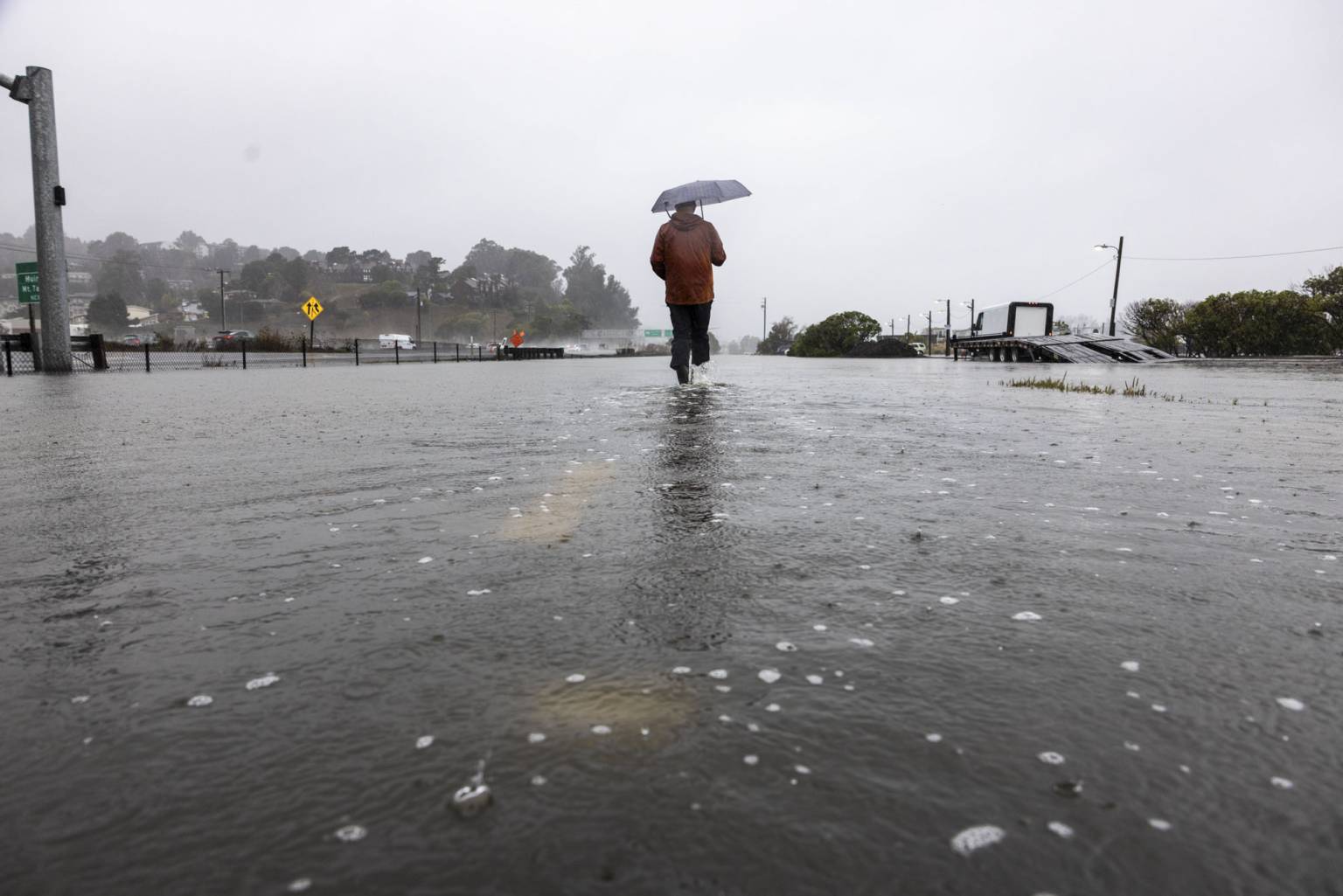
This year’s “super El Niño” has already dumped several inches of rain, flooded local neighborhoods and sent massive waves crashing on Bay Area shores. And with king tides on the horizon this Thanksgiving, it’s only expected to get more chaotic in the waters around San Francisco.
One group gearing up for the winter weather is the Army Corps of Engineers. Their mission is to keep the San Francisco Bay’s waterways safe after storms wash loose pieces of — sometimes very large — debris.
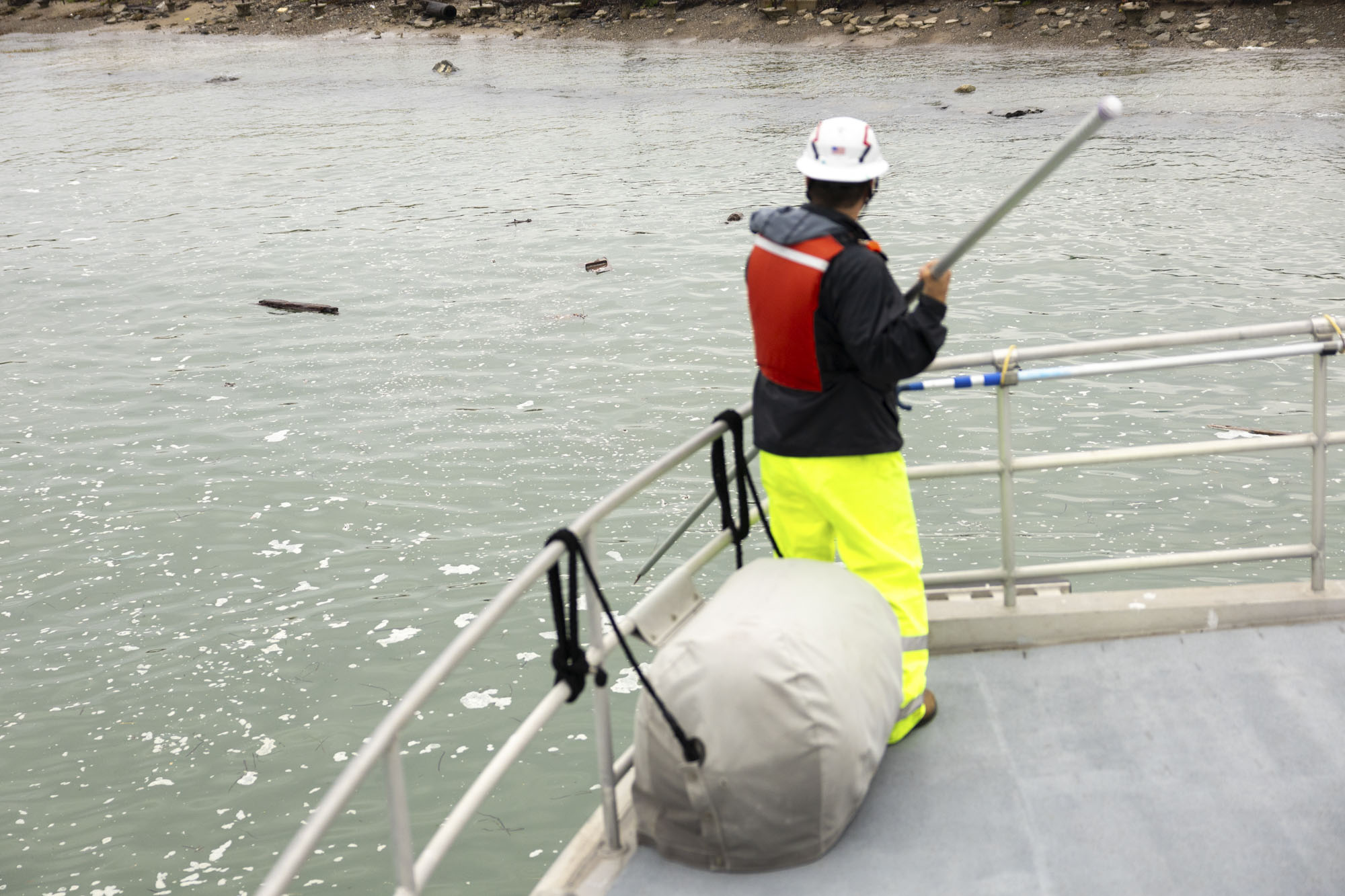
That usually means pieces of piers or docks, called pilings. At worst, it’s what this crew calls “deadheads”: large weighted logs that look small, but whose full length is hidden under the surface. Other large objects, like telephone poles or even dead whales, can become hazards, too.
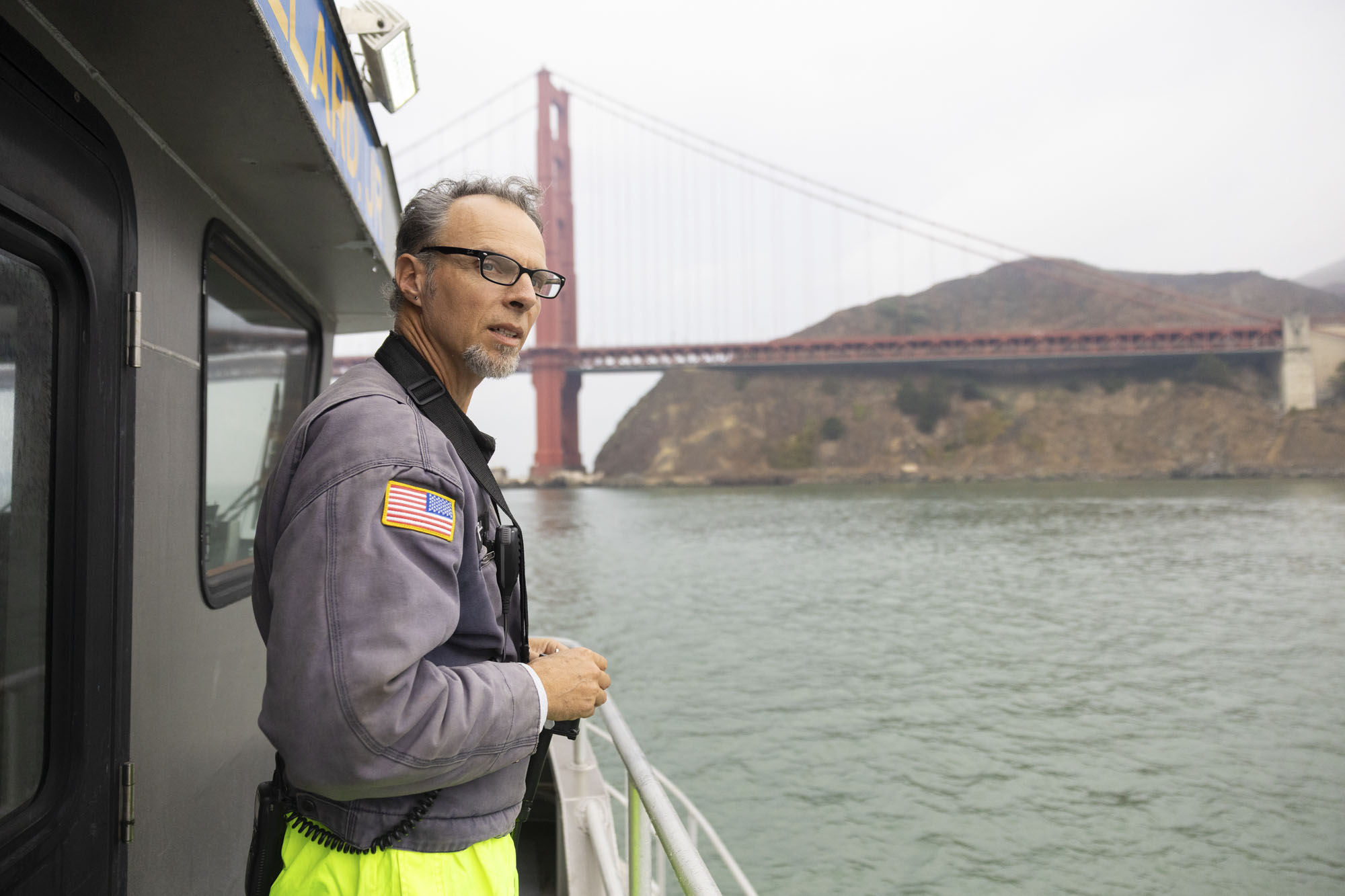
The danger comes, said Peter Brownell, captain of one of the crew’s two vessels, when a commercial, passenger or recreational boat hits a piece of debris in the bay.
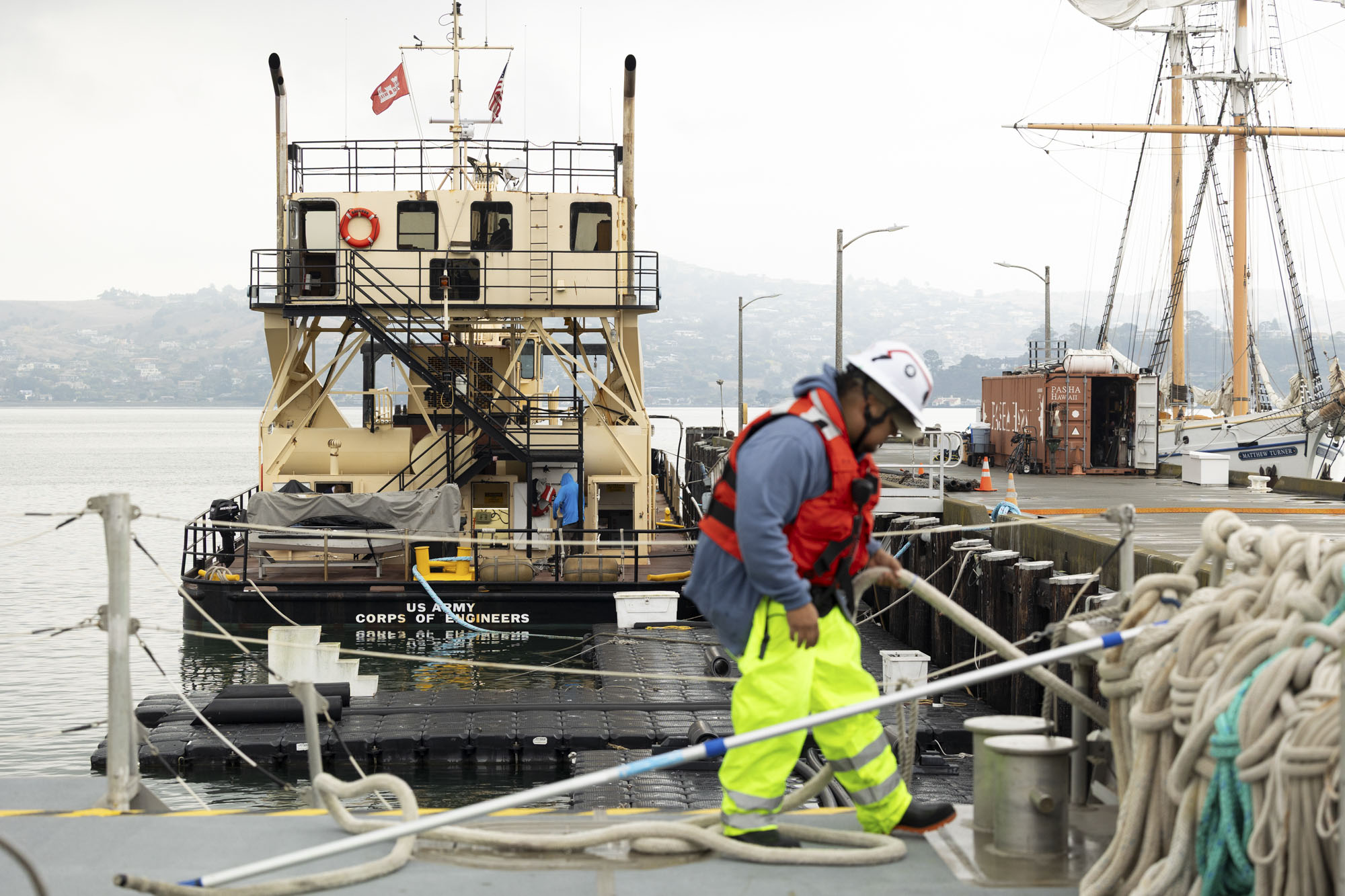
On the first rainy day of fall, Brownell and fellow crewmember Pierce Forgione were each loading up the two vessels — named the John Dillard and the Raccoon — for a day of patrolling on the bay.
“We are in the very start of what I call ‘debris season,’” Forgione said. “The first rainy day, that’s like the real send-off.”
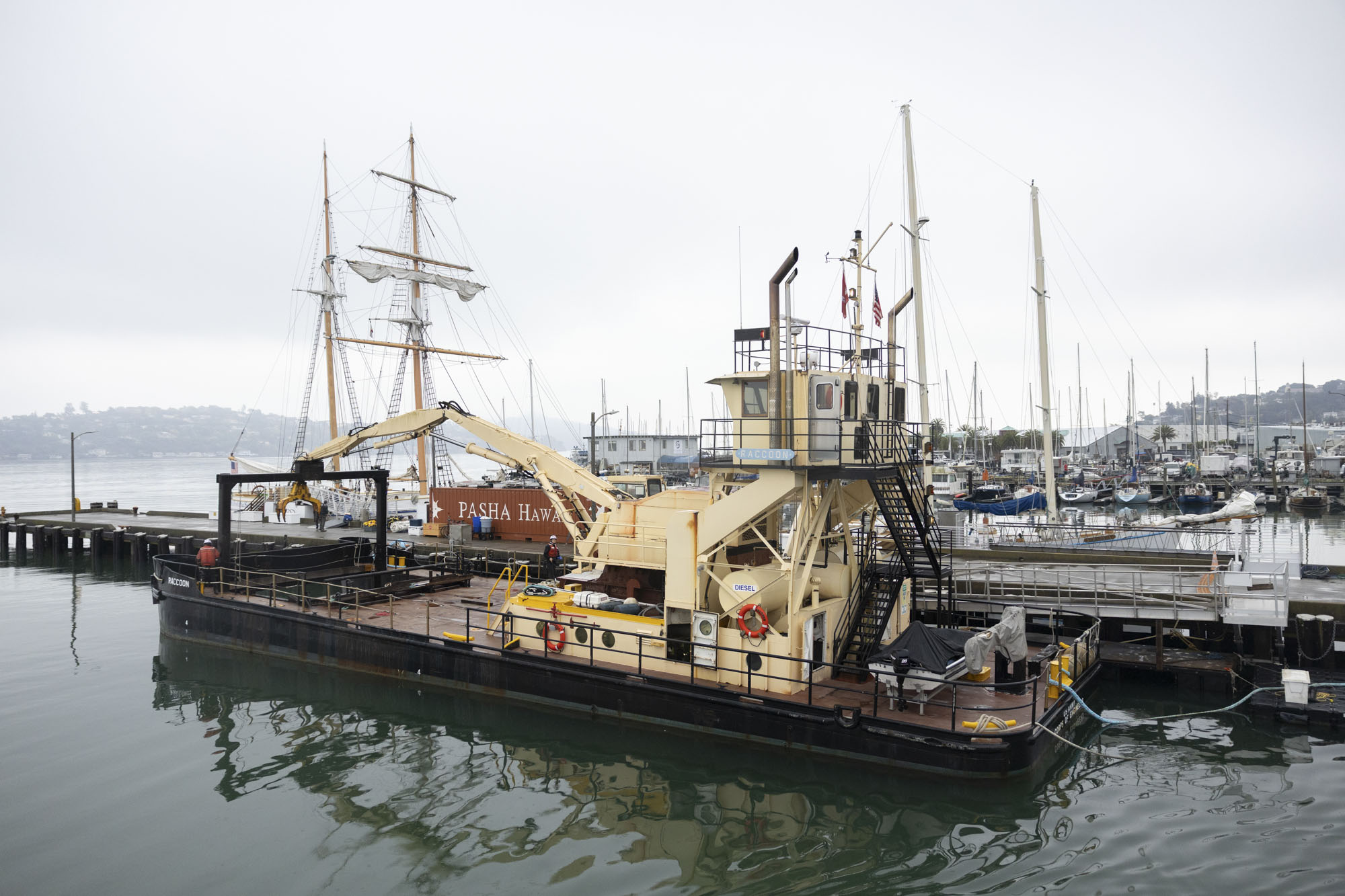
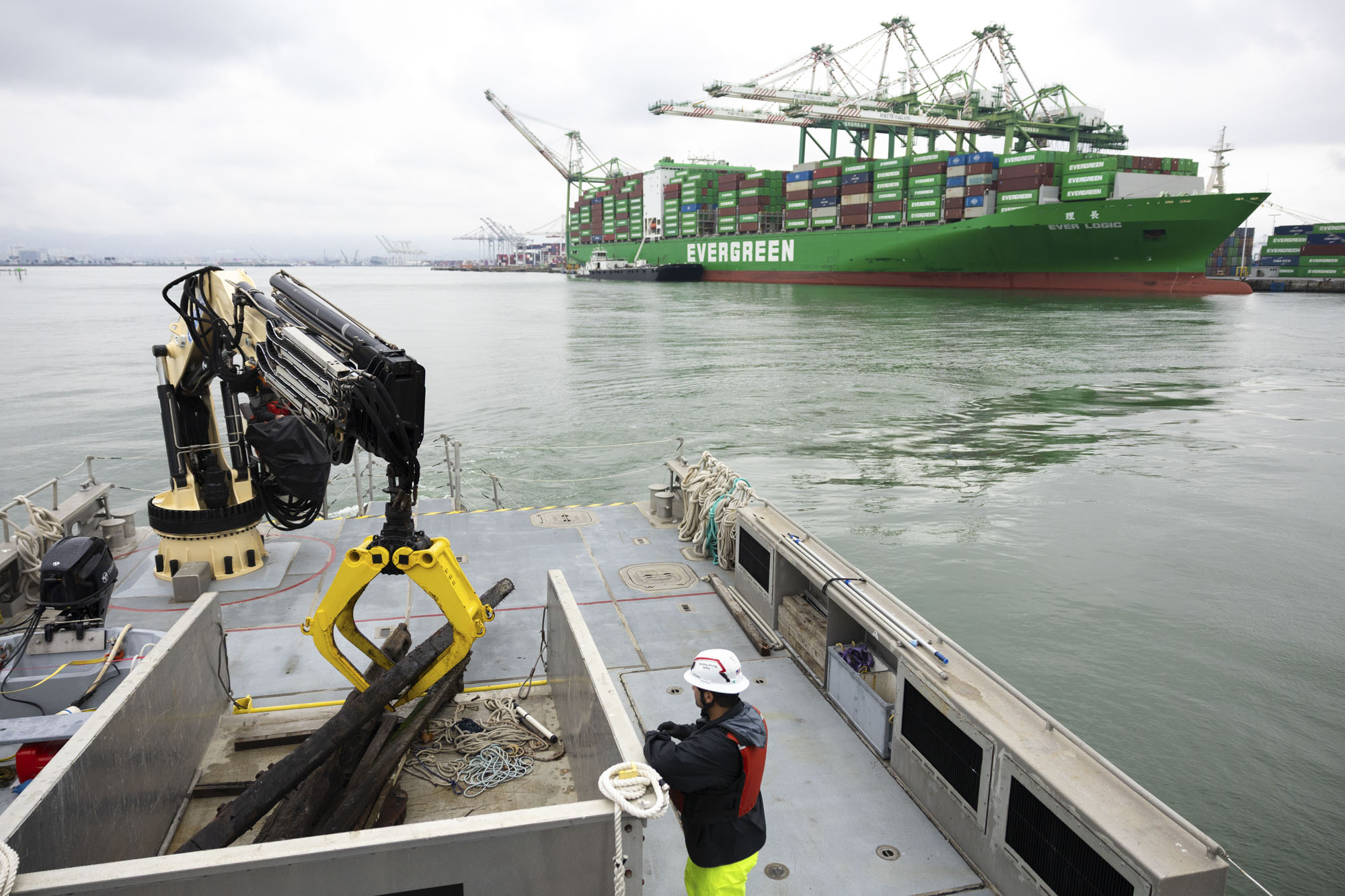
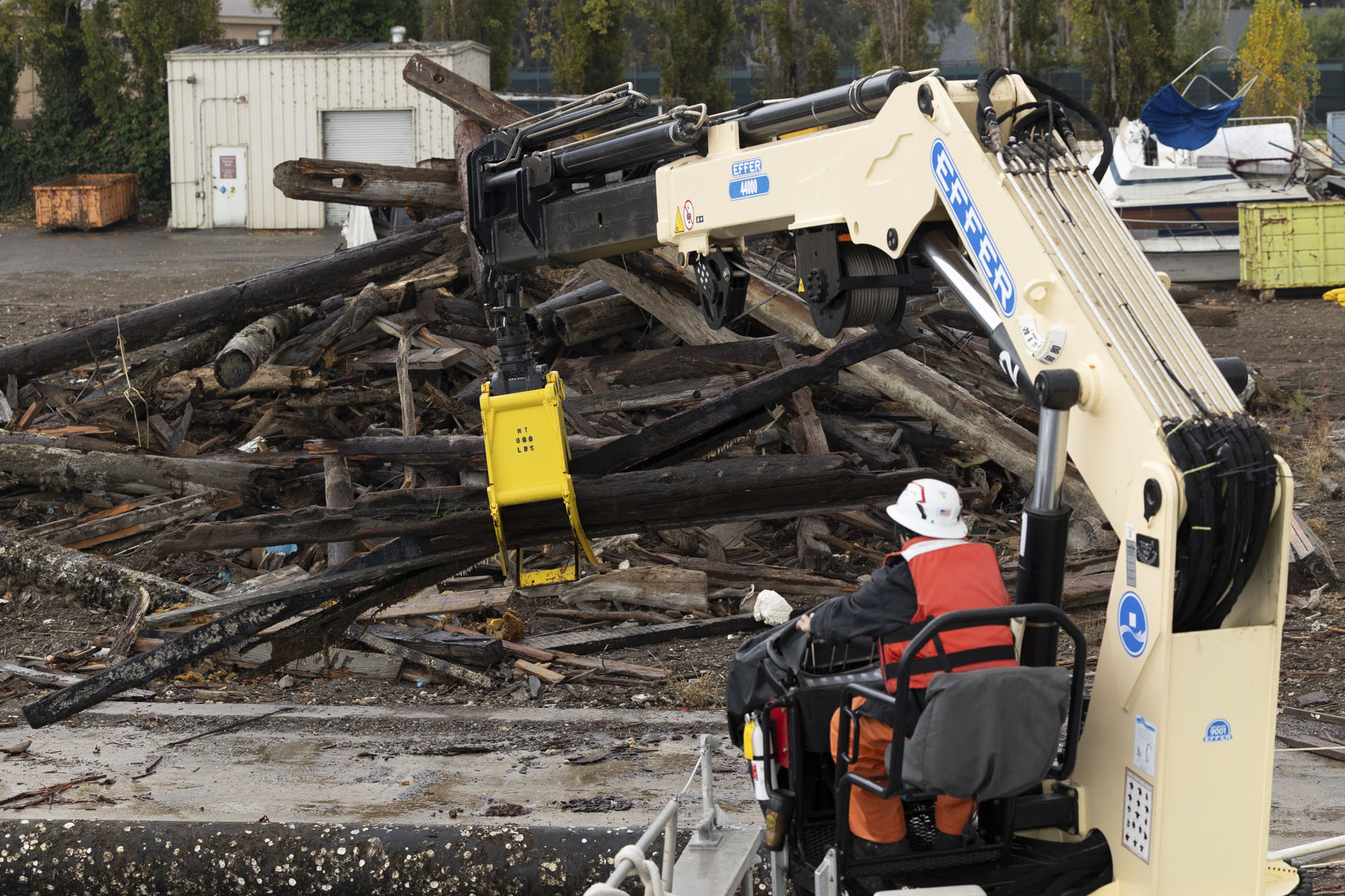
Forgione was captaining the Raccoon. It’s a slow boat, but its net and agile crane are often useful for gathering smaller pieces of debris.
The Dillard, on the other hand, is the quicker vessel. It can go to the bay’s farthest reaches — as far upriver as Stockton.
But the first pickup of the day was closer to home: Just east of the Golden Gate Bridge.
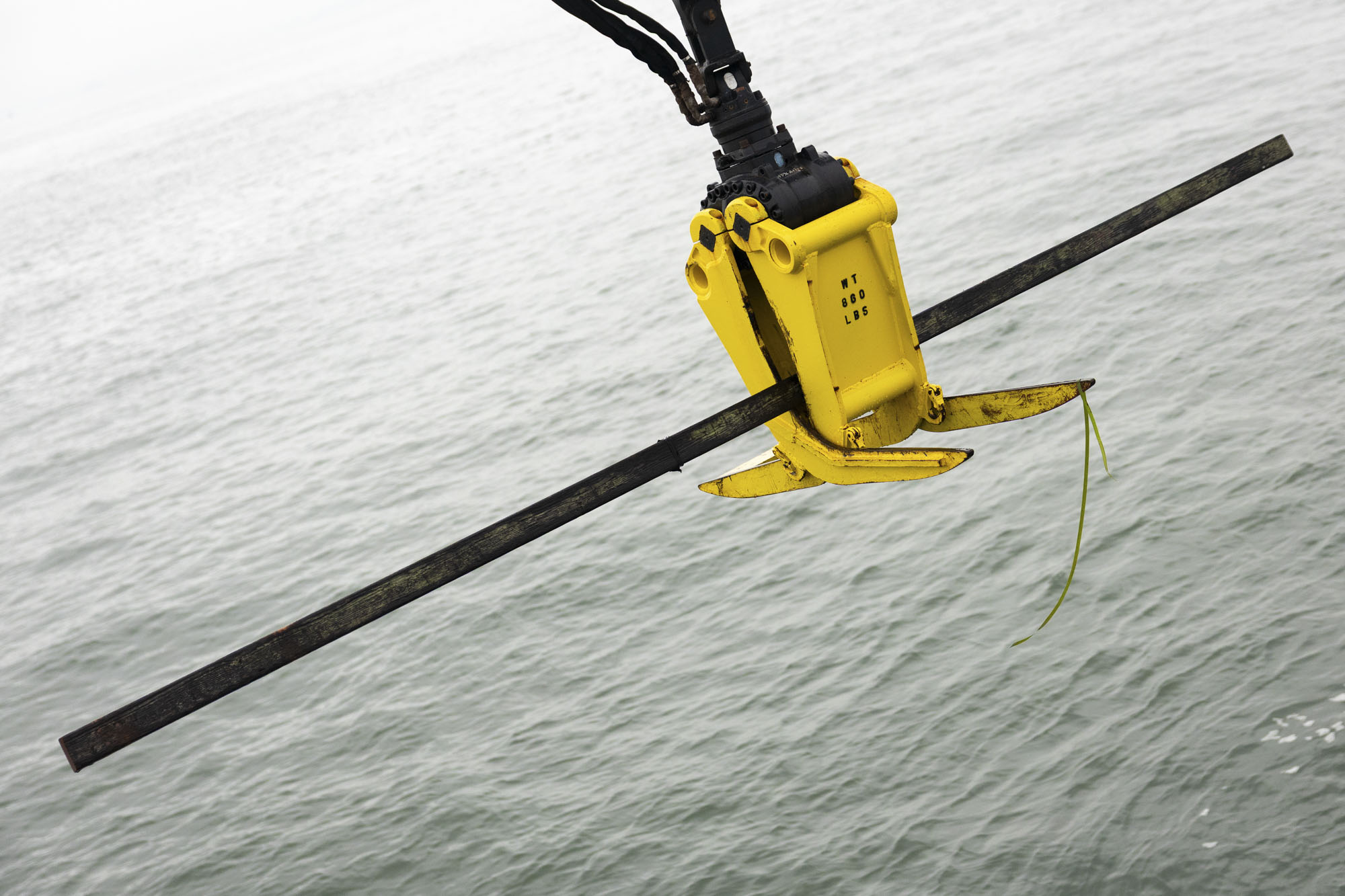
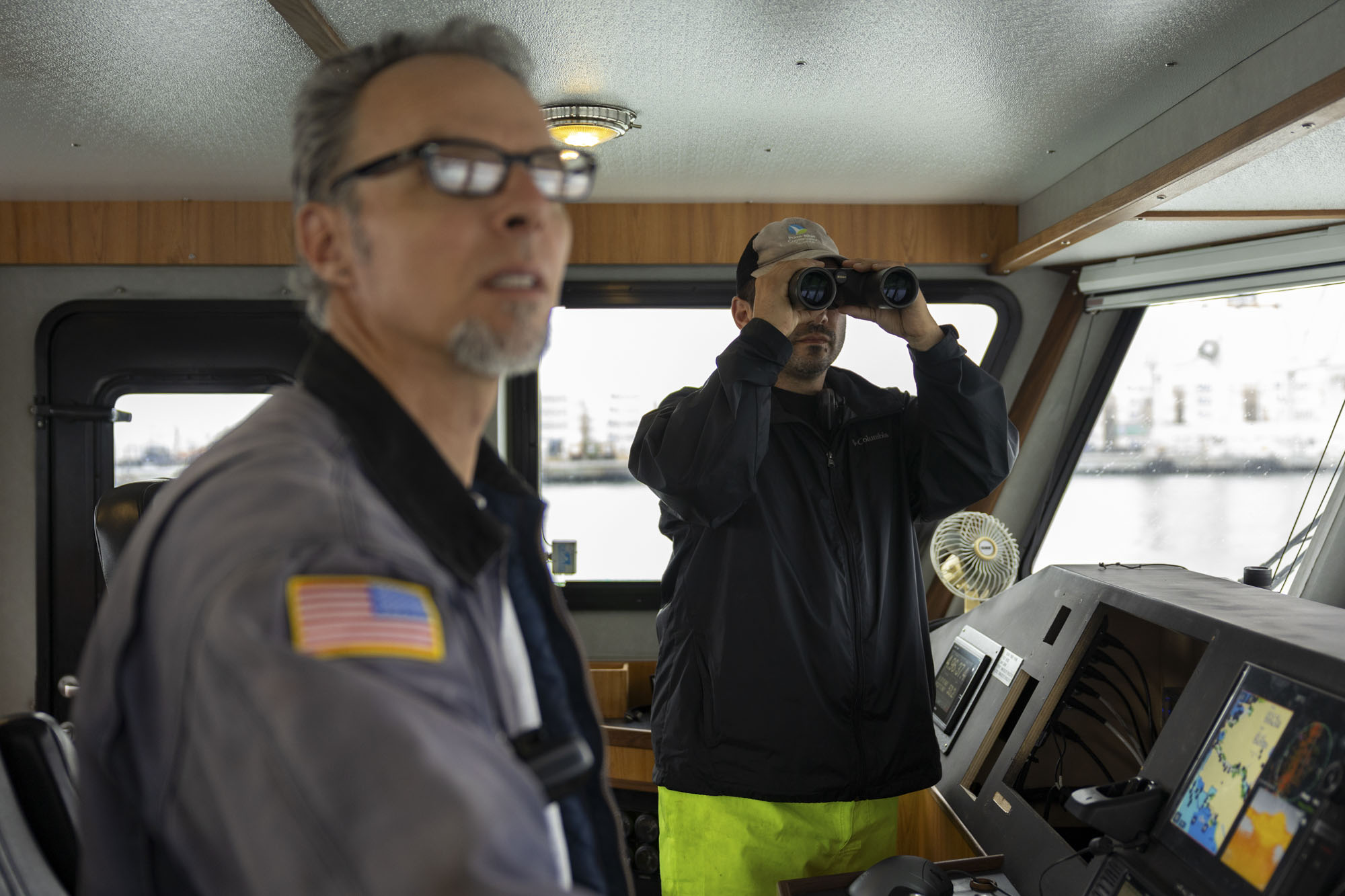
Brownell spotted the plank, bobbing in the choppy waters, fairly quickly. After calling down to the crew to get ready, he grabbed a joystick to control the boat from outside the bridge. Below, the crane operator hopped into the crane and took control of the giant claw, lowering it over the water.
Just like a fairground claw machine game, he judged the distance of the floating piece of debris, extended the claw and clamped it around the plank.
“It gets kind of fun for us, which is the funny part of it all,” Forgione said. “You get excited. It’s like catching a fish.”
‘Geared up’ for El Niño
Each year, this crew plucks more than a thousand tons of debris out of the bay. This winter, they’re expecting to be especially busy because of the super El Niño, Brownell said.
“Especially with the Kelvin wave going on,” he said, referring to the extra foot of swell that’s been arriving on Bay Area shores this winter. “I think we’ll probably see more than we saw last year.”
There can be major consequences if this debris is left floating in the bay. In June 1942, while landing in the bay, a military float plane crashed into a piece of debris, killing the pilot. The Army Corps of Engineers has been running this mission ever since, Brownell said.
“Obviously, there’s not a lot of military float planes landing in the bay right now,” he said.
But even a single 15-foot piece of debris can do serious damage to a boat like a ferry, as it traverses the bay at around 40 miles per hour. On any given day, dozens to hundreds of large cruises, shuttles and ferries — including the 18 vessels that run regular commuter routes — are traveling across the bay.
“That’s going to take out that ferry,” he warned. “It’s gonna have to go to the shipyard and not be usable for carrying passengers, and it’s going to be an expense to the public to repair that.”
In fact, the crew responded to a call from a ferry that reported a sizable plank right by Alcatraz Island. Setting their eyes to the horizon, they searched in what’s called a “current break” — which Brownell described as resembling a seam in the water.
“As the currents push up against each other, a lot of the debris ends up along these kinds of drift lines on the current breaks like that,” he said.
It was, however, like looking for a needle in a haystack. After around 20 minutes, Brownell finally located the piece of timber.
Jumping into action, the crew once again plucked the plank out of the water.
They spent a couple more hours trawling the Oakland Estuary, picking up small logs here and there, then headed back to Sausalito.
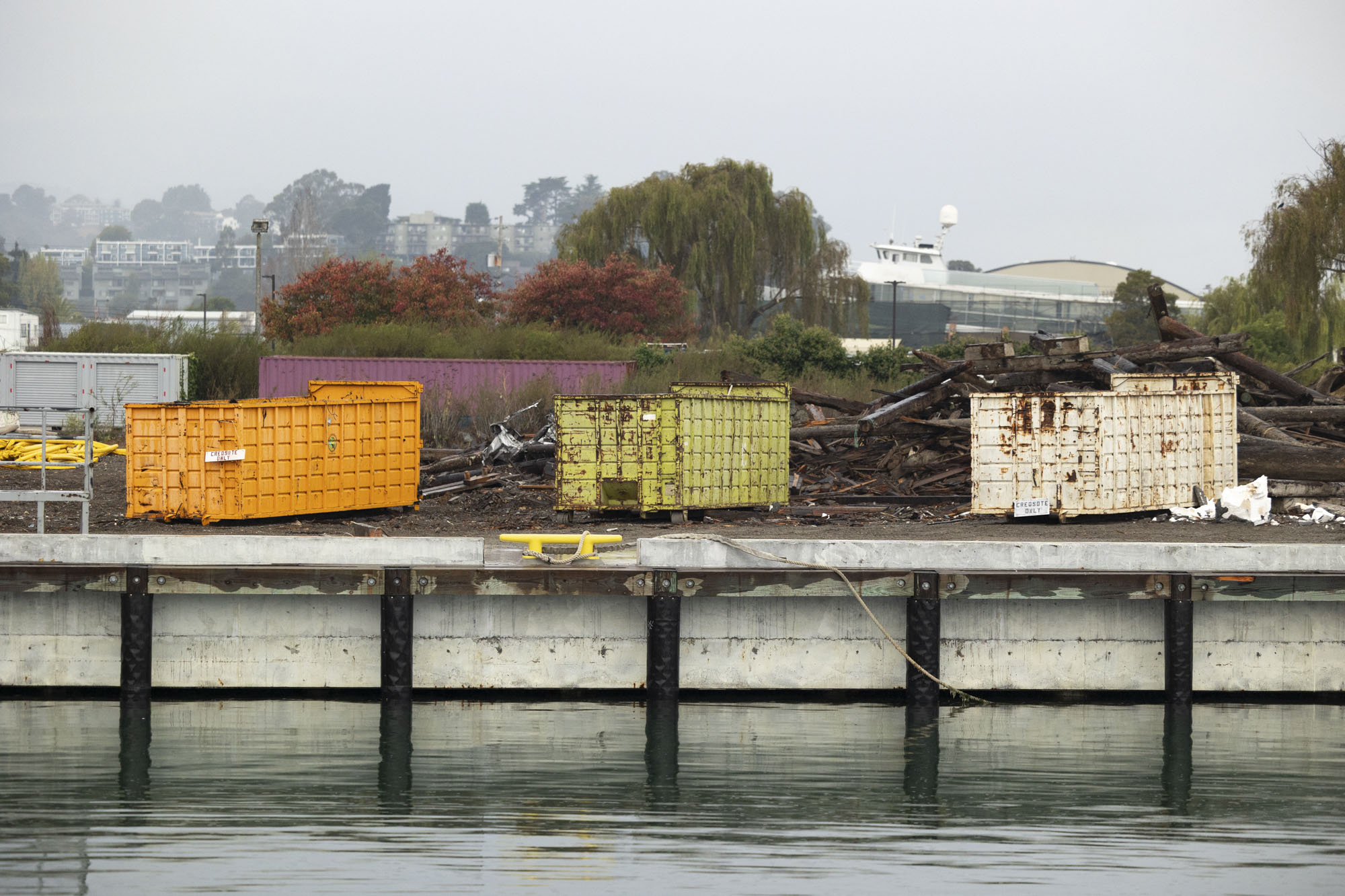
Spinning the Dillard around so its stern faced the dock, Brownell backed the boat very slowly toward the platform. The crew then offloaded its finds onto the dock, where contractors will take it away and find use for the material. Or, if it’s hazardous, it gets sent to the landfill.
Brownell said the crew is keeping an eye on tide tables and weather, and will stand ready to recover more debris from the bay.
“We’re geared up,” he said. “We’ve been preparing the boats to make sure we’re ready to get both underway.”