Halloween Treat: See the Bay Area's Bats Up Close
It’s Halloween: The leaves are changing, the clocks are about to fall back on Sunday, and the Bay Area’s spooky, night-loving animals are in the spotlight.
No — not raccoons or owls. Bats, the tiny, flitting mammals that are so numerous they represent around one-fifth of all living mammals on Earth.
In San Francisco alone, we have six species of bats. And there are 16 species all across the Bay Area, according to Corky Quirk, founder of NorCal Bats, an organization dedicated to bat rescue and education.
In fact, here in the Bay Area, bats are kind of … everywhere. Quirk brought her “bat ambassadors” (also known as “am-bat-ssadors”) into the KQED studios to tell us more.
- Jump straight to: Where to meet bat ambassadors up-close in the Bay Area this fall
Why are there so many bats in the Bay Area?
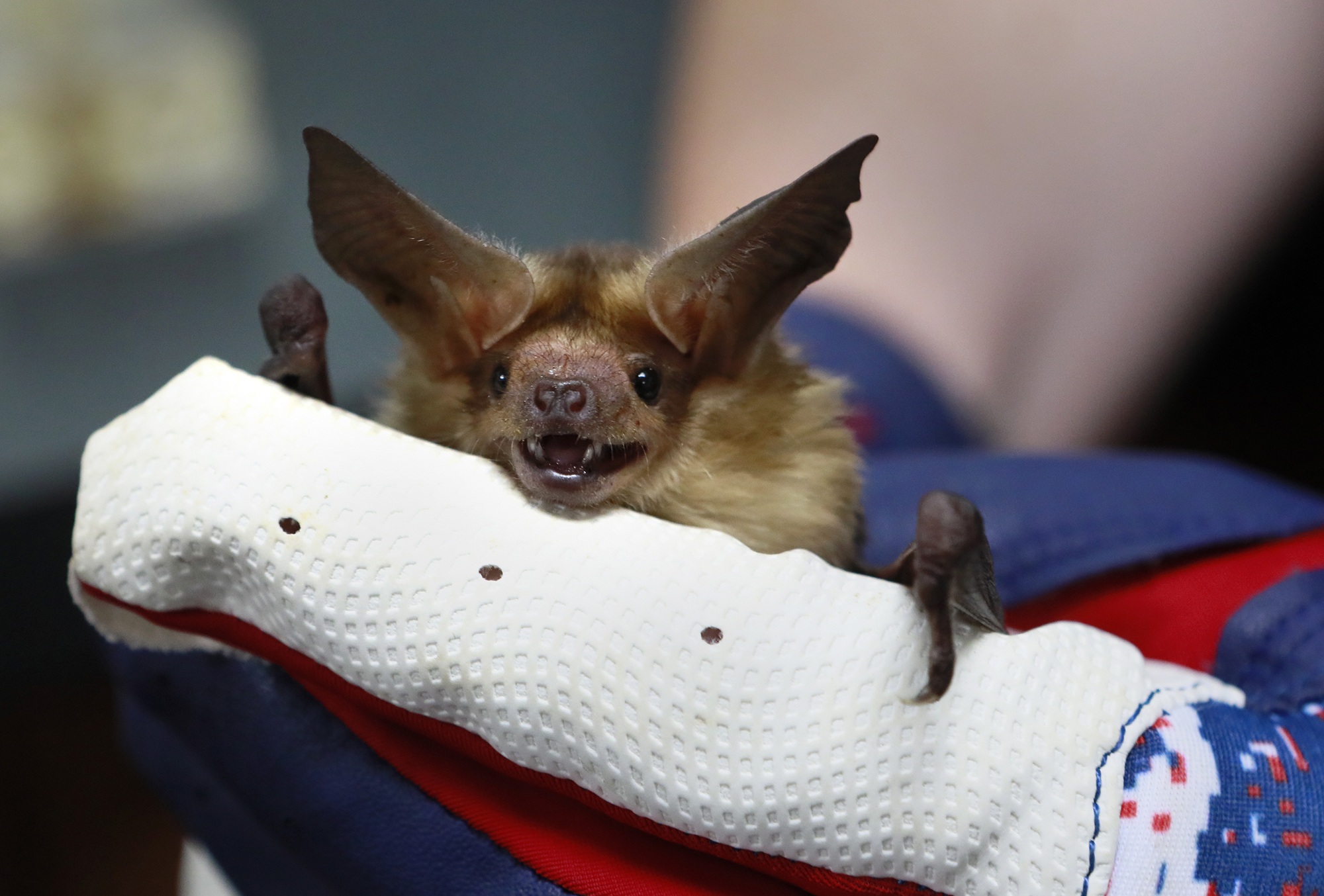
With the permission of our facilities team, Quirk brought in three rescued bats, all of different species — the Mexican free-tailed bat, the big brown bat and a pallid bat, which is California’s state bat. These bats are all native to the area.
“We do see them often in San Francisco,” Quirk said. “They’ll be between some of the buildings that are near each other with a 1-inch gap — or they’ll be sometimes behind some of the business signs.”
As for why these bats are so commonly found squeezed into tight spaces, “historically they would have been in cave and rock outcroppings and dead trees,” Quirk said. “But those aren’t so much around here, so they’ve adapted.”
The Mexican free-tailed bat is the fastest mammal on Earth, Quirk said, able to fly just under 100 miles an hour. And the little critters don’t zoom alone: Here, bat colony sizes can be in the thousands — sometimes the hundreds of thousands.
Further south, in some of the caves of New Mexico, Texas and Mexico, “the species is in the millions,” she said.
The “am-bat-ssadors” she brought in don’t have names, Quirk said, because they aren’t pets. But they are pretty cute.
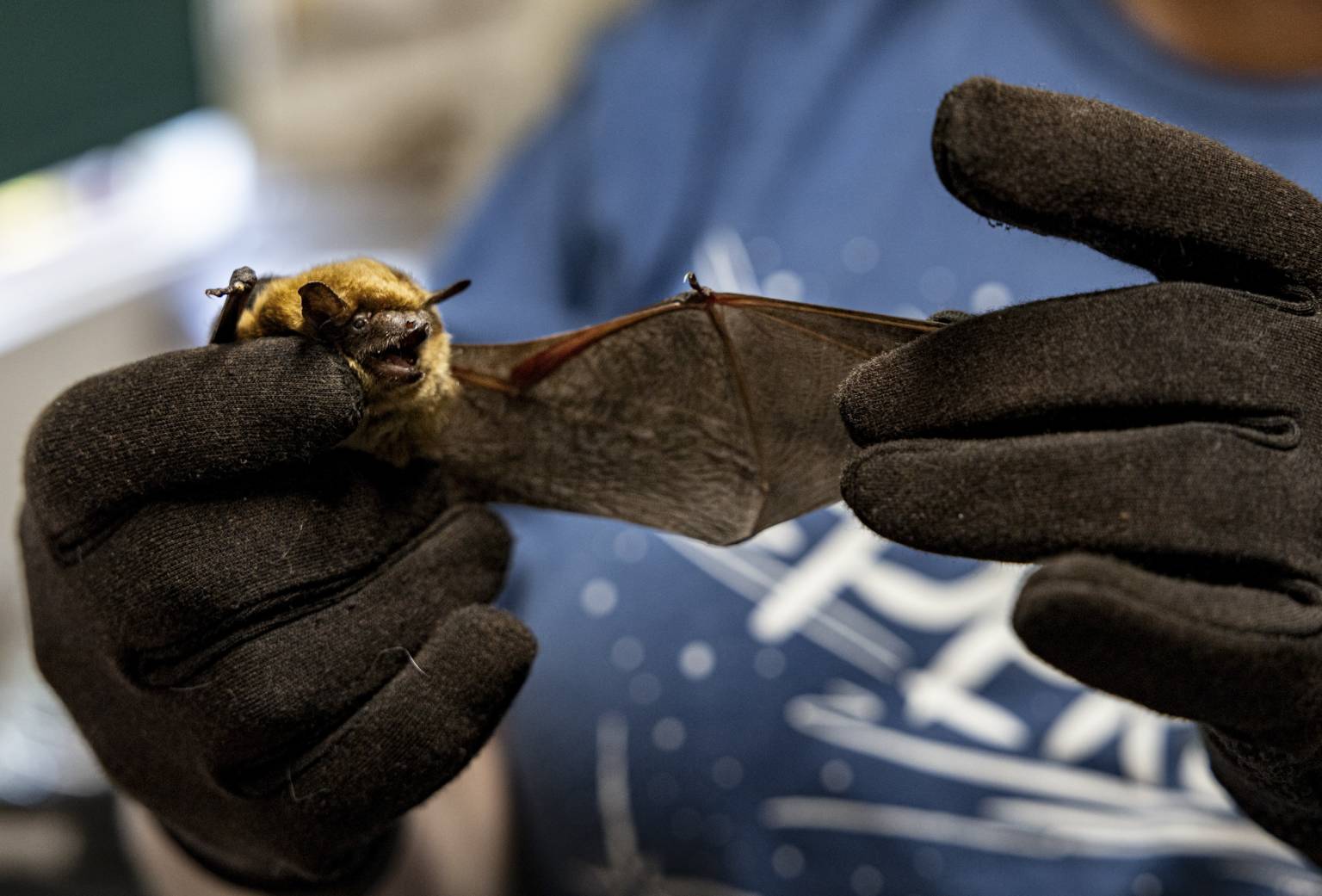
One bat in particular was found on the ground with a broken wing and can no longer fly — after what Quirk suspects was a tussle with a local cat.
And while she’s now recovered and healthy, this bat won’t ever return to the wild, Quirk said.
“Skin heals, broken bones are harder to fix,” Quirk said.
How do bats contribute to our ecosystem?
There are no fruit bats in the Bay Area, so our region’s bats mostly eat insects. And their role in the local ecosystem can be critical.
“I call them the farmer’s best friend because they’re eating a tremendous amount of moth — and moth larva can be a pretty significant crop pest,” Quirk said. “So these guys are helping us by reducing insecticide use and helping the farmers by reducing crop loss.”
Echolocation is a bat’s main way of hunting insects. The noises they make are outside of a human’s range of hearing, but Quirk brought a device that picks up the rapid pinging so we could hear it.
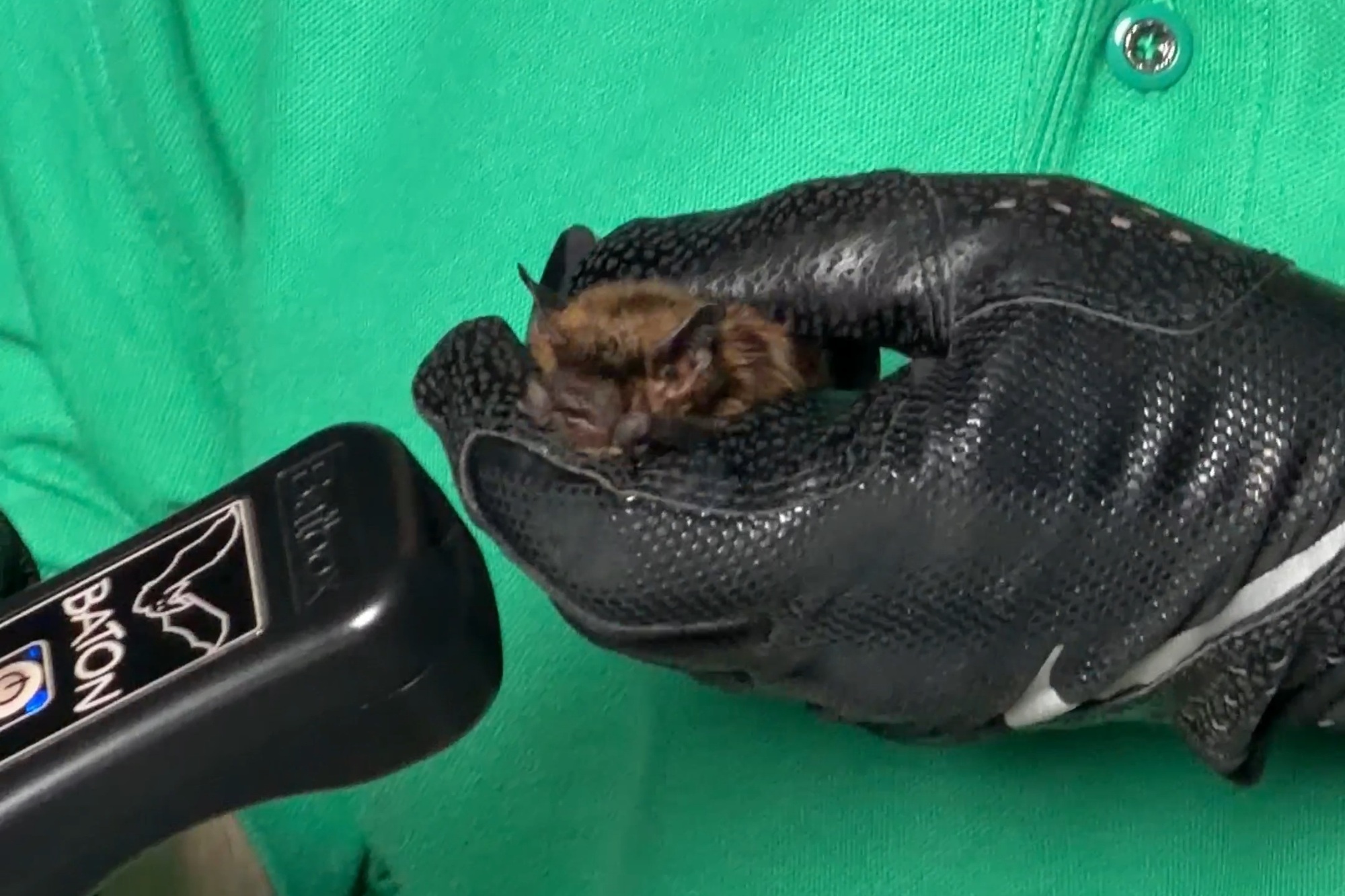
“And then right before they decide if they wanna eat it or not, those pulses are very rapid,” Quirk said. “We call that the feeding buzz.”
Bat populations are actually in decline, in part due to habitat loss. There’s also the problem of white-nose syndrome, a deadly fungus which causes bats to wake up too often during hibernation. This condition has killed millions of bats in the United States in just a decade, Quirk said.
“They burn up all their calories, and they starve in the winter,” she said. “It’s a huge concern.”
Aren’t bats dangerous?
Bats are the number one reservoir of rabies, which is virtually always fatal to humans — only a very small number of people worldwide have ever survived symptomatic rabies.
So, it’s super important to protect yourself from rabies by always getting medical attention after you come in contact with a bat, even if you’re not sure you’ve been bitten.
When caught early, rabies is 100% treatable via vaccination.
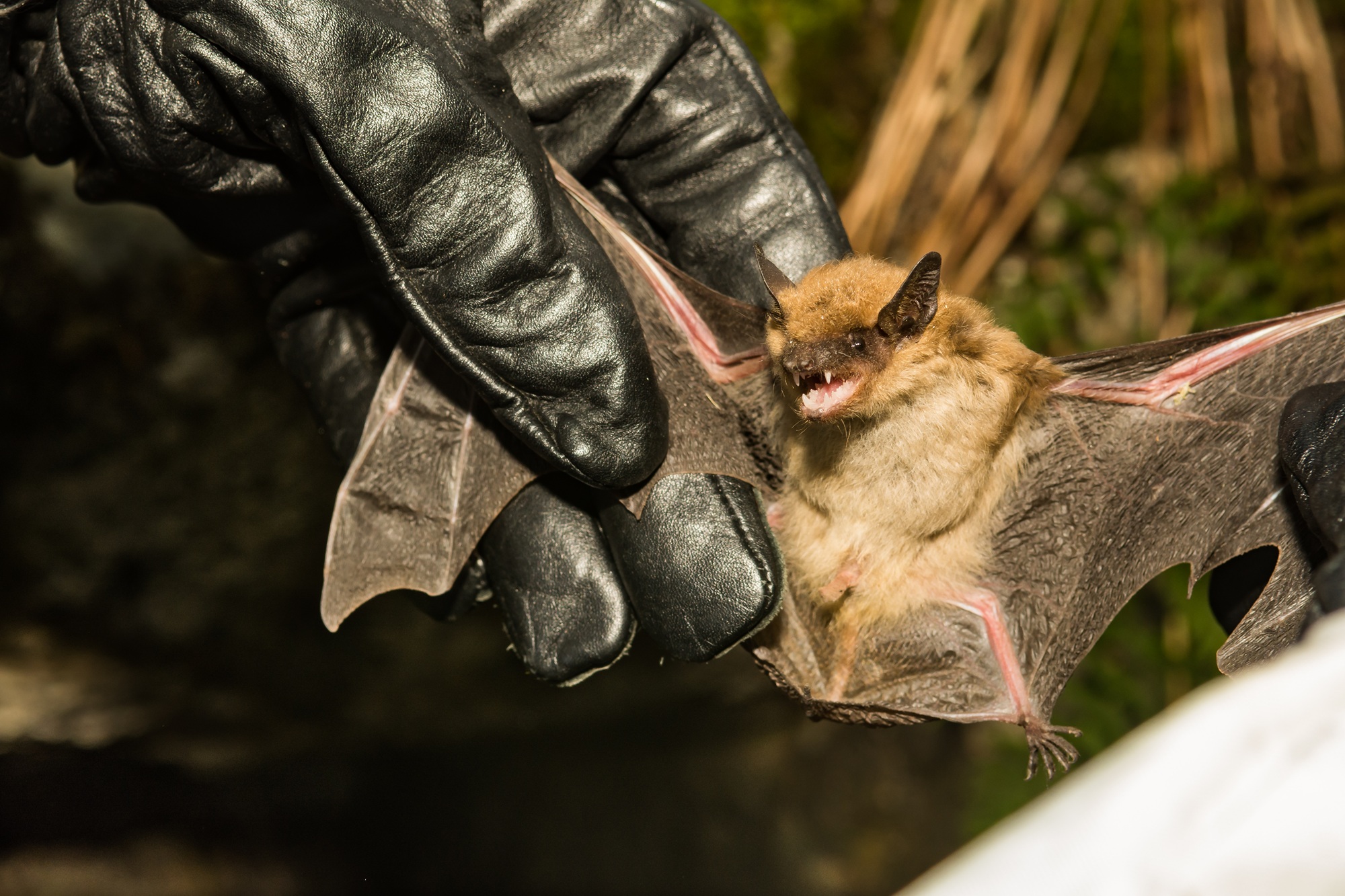
But something you might now know: Bats are also extremely susceptible to the rabies virus. So they’re not just carriers of rabies, but they can also die from it — the same way humans do.
While rabies is an undoubted source of fear, “it’s something we can prevent,” Quirk said.
Besides the risk of rabies, bats aren’t at all dangerous to humans. In fact, they aren’t really interested in us at all — so don’t let media portrayals of bloodsucking attackers fool you. Most of the fear surrounding bats, Quirk said, probably has more to do with fear of the dark spaces they’re found in, and of nocturnal animals that we generally struggle to understand.
“Often, once we learn about something — and especially if we see it — we’re much less afraid,” Quirk said. “And the more we learn, the more we can appreciate the environment around us, and maybe keep these animals safe, and keep ourselves safe too.”
Where to meet bat ambassadors this fall
Quirk has a very full schedule of bat-related events, many of which are open to the public. You can find a full list at norcalbats.org.
Her most consistent events are held in Davis at the Yolo Basin Foundation, the environmental education nonprofit where she works as a program coordinator.
Otherwise, Quirk and her ambassador bats can be found at a number of community events in local libraries, at local schools or featured in festivals. Her annual appearance with the bats at the UC Berkeley Botanical Garden on Thursday was sold out.