Under a Sacramento Bridge, California's Largest Urban Bat Colony Takes Flight Every Night
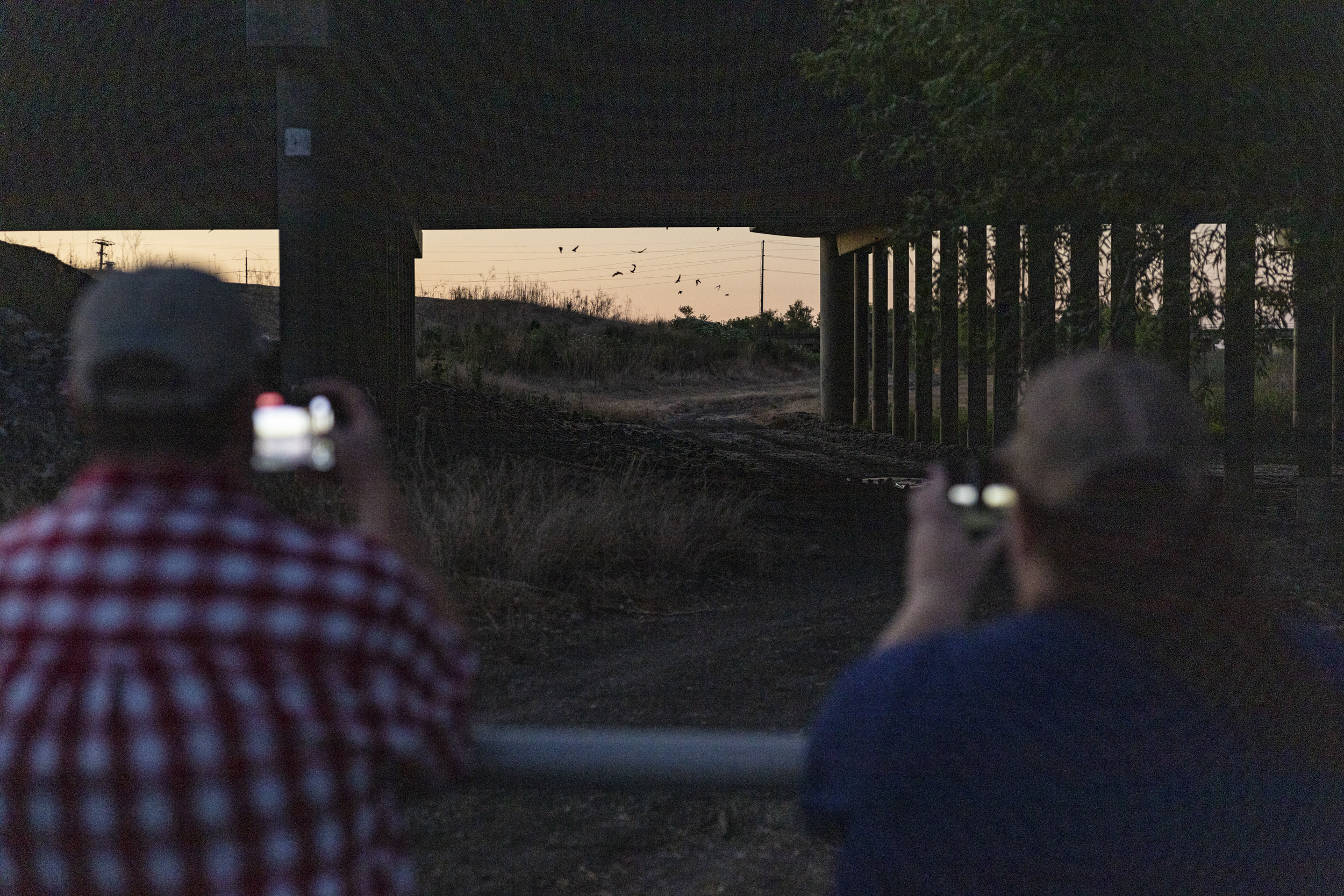
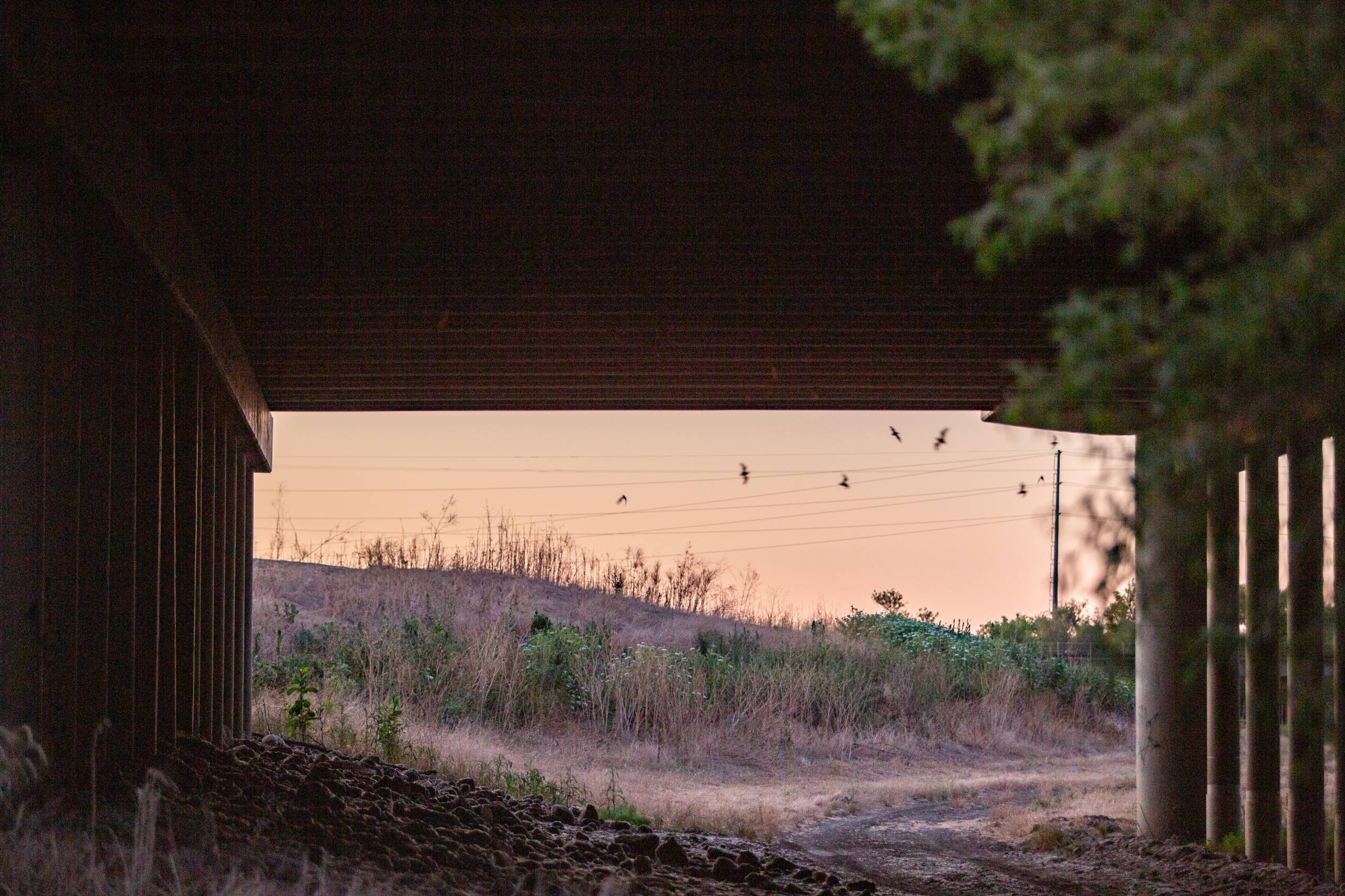
Every summer, as the sun sets over the Yolo Causeway just outside Sacramento, a quarter of a million bats stream out from beneath the bridge.
Drivers crossing Interstate 80 rarely know they’re there — the bats’ wingbeats and chirps drowned out by the rush of trucks and cars crossing the bridge.
But from June through August, visitors can watch thousands of bats spiral out from under the causeway into the dusk sky in a phenomenon locals call a “bat-nado” — on guided tours run by the Yolo Basin Foundation.
A maternal colony, hiding in plain sight
The bats living under the causeway are part of one of the largest urban colonies of Mexican free-tailed bats in the country.
Right now, the camp is almost entirely mothers and their pups, said Corky Quirk, the Yolo Basin Foundation’s program coordinator. Females give birth in early summer and stay with their young for about two months, until the pups are strong enough to fly on their own.
“We have a little sign this year; it says, ‘Sleeping bats above, please stay out,'” Quirk said.
She has run the bat tours since 2004 and, on a hot summer evening in June, warns a group of around 30 onlookers not to bother the critters under the bridge.
Quirk didn’t start out as a bat specialist. She was hired by the foundation to teach schoolchildren about wetlands and birds, and only later took over the bat program when the person before her retired. Nearly two decades later, she’s become fascinated by these flying mammals.
“I have always loved flight, and I’ve always loved the underdog, and a bat is sort of the mix of the two, right?” she said. “And they are out there doing ecosystem services that are underappreciated.”
The Yolo Bypass, where the colony lives, doubles as flood control for the city of Sacramento and farmland for rice crops. The bats act as natural pest control for the rice paddies, hunting the armyworm, a crop-damaging caterpillar that grows into a moth.

Charlie Russell, a decadeslong volunteer with the bat tours, said that the Mexican free-tailed bats have a symbiotic relationship with the region’s rice farmers.
“This is the only place [a farmer] never applies any insecticides to control the armyworm, because he’s got a quarter of a million bats taking care of the moths,” he said. “They’re incredibly important to our environment.”
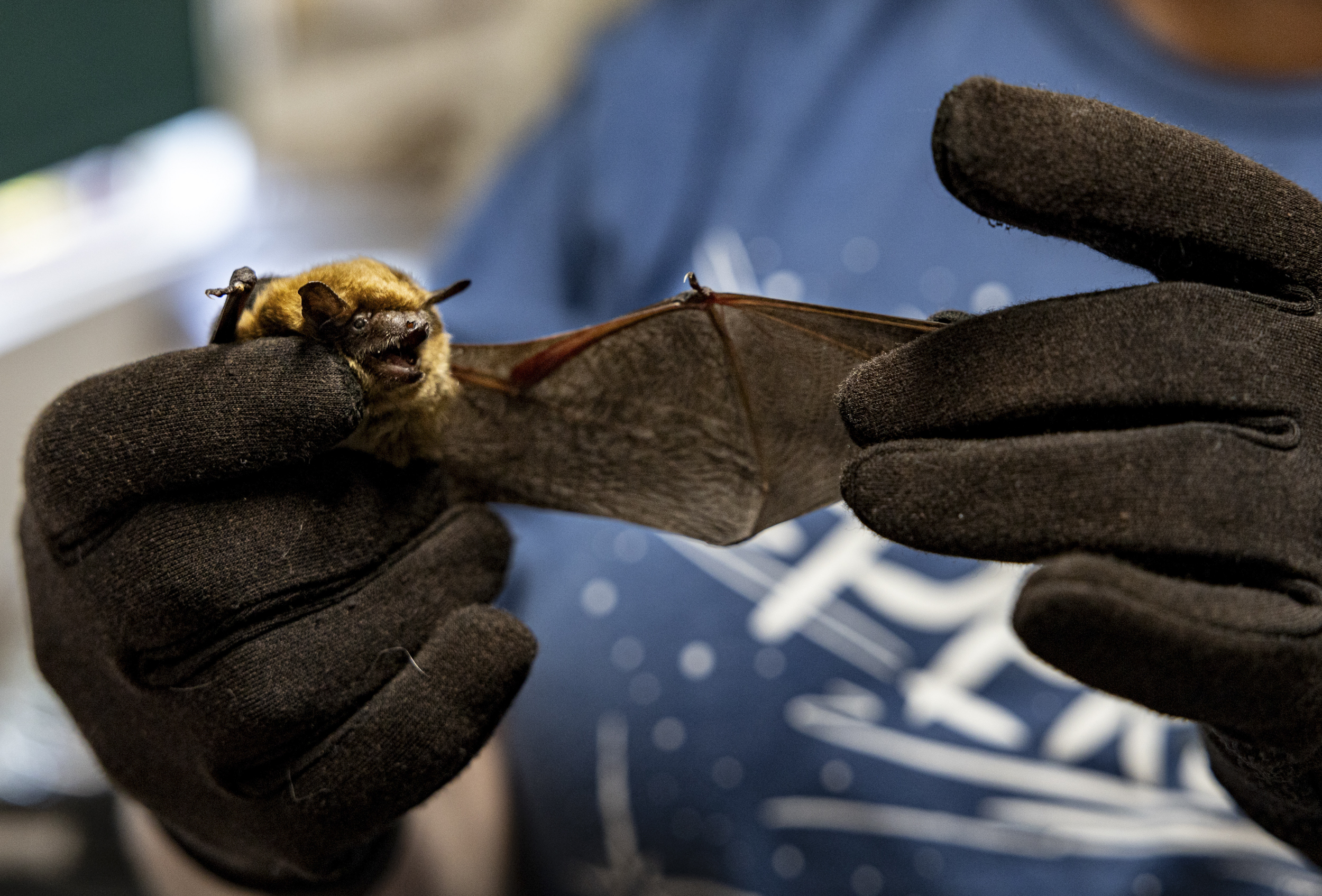
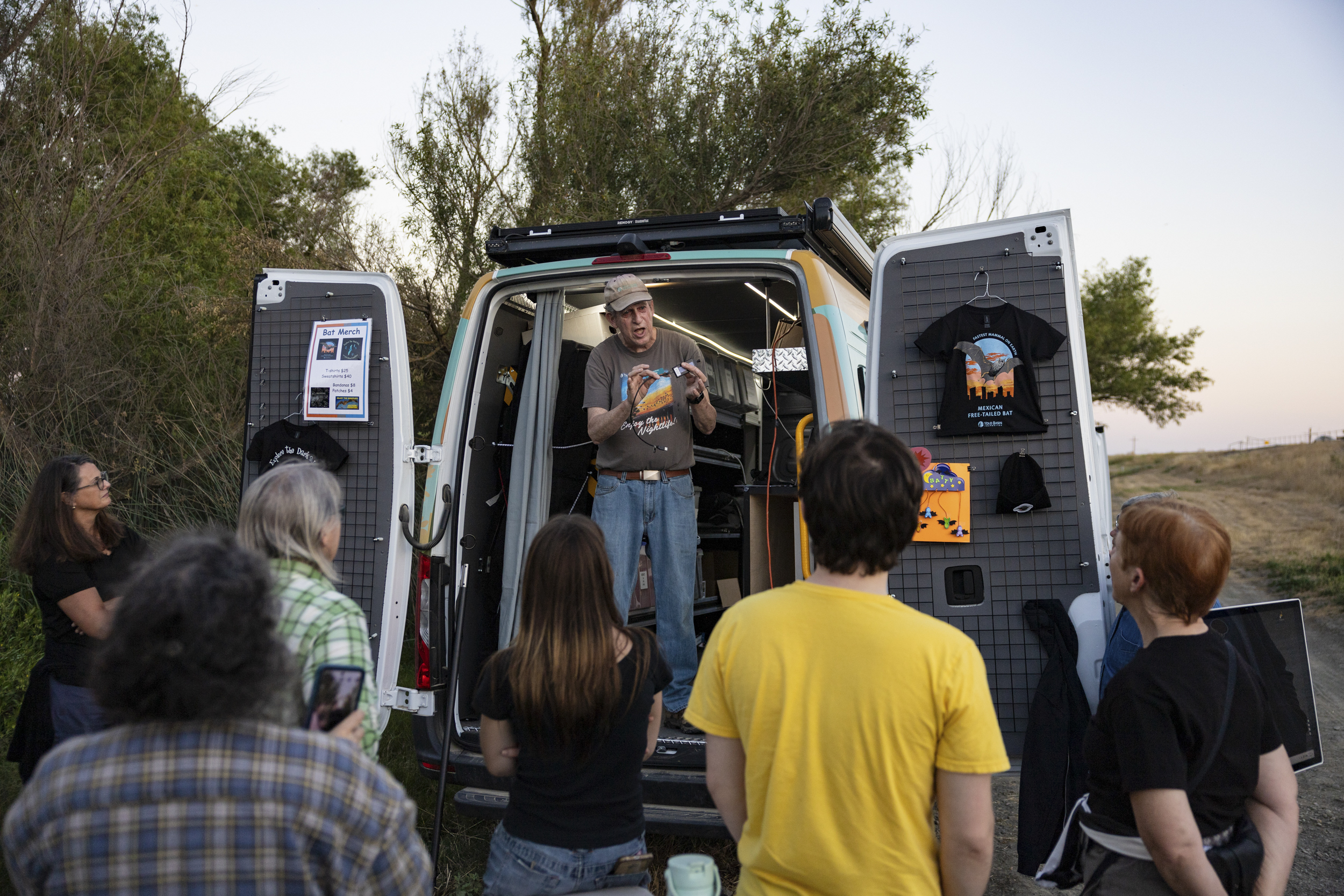
During the tour, Russell held up a Mexican free-tailed bat for observation.
While visitors couldn’t touch the bats, they could get close enough to marvel at just how small they were — each one tiny enough to fit in a palm, with five delicate fingers stretching out to support the thin membrane that lets them fly.
Their tiny teeth are just large enough to consume vast quantities of soft-bodied prey like moths and mosquitoes, and their narrow wings were built for speed. They’re the world’s fastest mammal.
“They’ve been clocked up to 98 mph, so that’s faster than your cheetahs,” Russell said. “And they’re cute.”
They may be the perfect size to cup in two hands, but Russell was quick to warn that they’re not pets, no matter how at home they seem around people.
“These guys would normally be living in caves or rock crevices, but we see them under bridges, tall buildings and parking garages,” Russell said.
Quirk said that bats often suffer from a reputation problem — one that has more to do with movies and vampires than with the creatures themselves. Bat populations across California are declining, driven largely by habitat loss, pesticides and predation, and she argues that public perception is tied directly to how well the animals get protected.
“Bats are pretty misunderstood, and often when people learn more about them, they begin to appreciate them,” Quirk said. “And we protect what we care about.”
Stay for the ‘batnado’
Just after sunset, a thin, dark ribbon of bats peels away from beneath the bridge. The line widens as more join, while the sound of beating wings competes with traffic overhead.
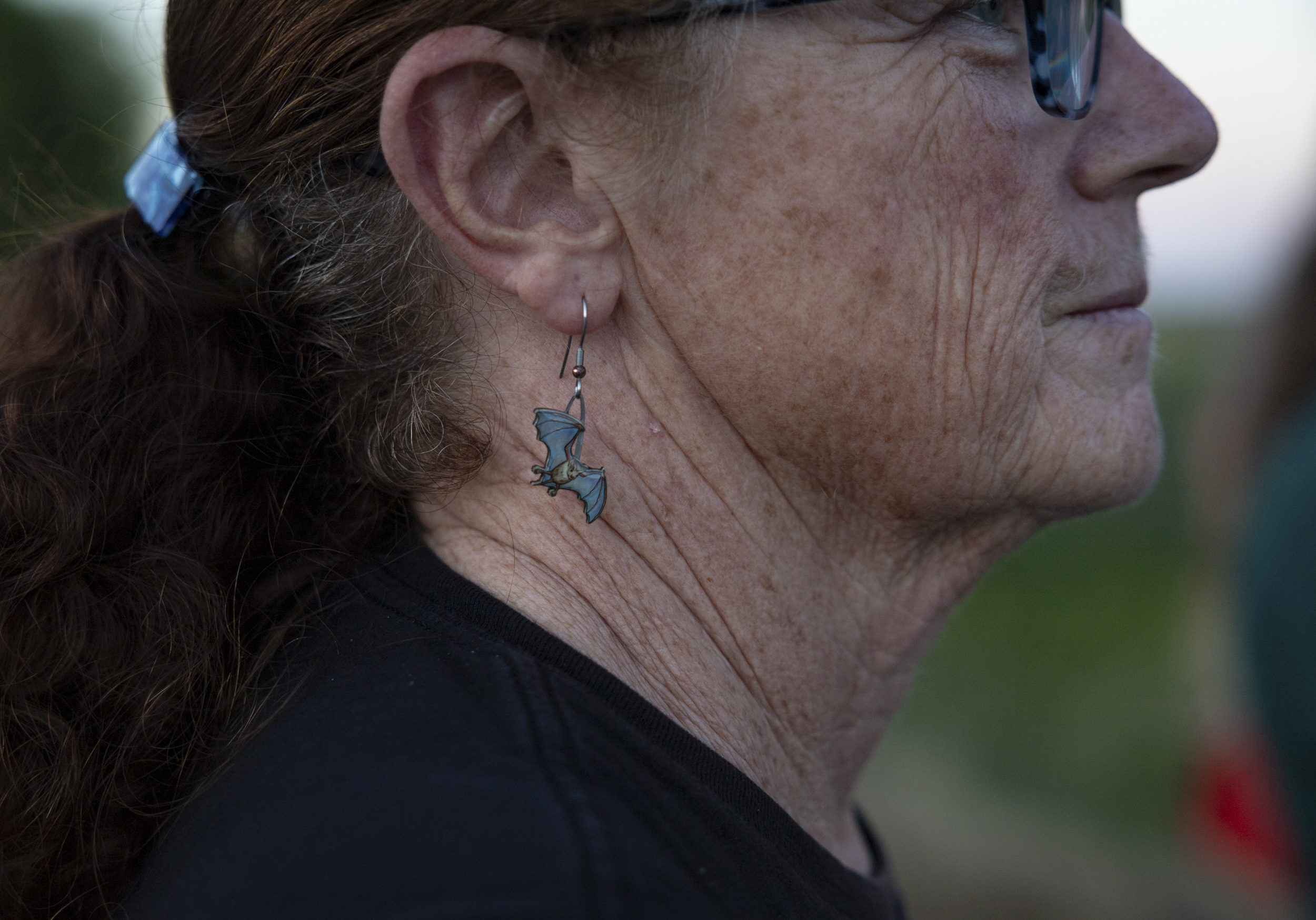
Linda Harter, who has volunteered with the tours for more than a decade, still finds it hard not to react.
“Oh, look, they’re flying out right here over the trees,” she said. “They are amazing.”
She’s also become adept at telling bats from birds.
“If you’re wondering, are these swallows or bats, the bats are flapping all the time,” she said. “If you see them start to glide, that’s a bird.”
Deleo Garcia-Lopez, who came to watch the flyout for the first time, said seeing the bats in action made him realize how much nature was nearby the urban environment.
“It’s cool to think there’s definitely some system that they all follow,” he said. “It’s an intricate world that they’re building that’s just under our noses, right under a bridge.
The experience took on more personal meaning for Priya Vasu, who recently moved to Sacramento from the Bay Area, and was struck by the colony’s maternal bond.
“It feels like a good metaphor for me,” Vasu said. “The bats are staying with their mothers for their [early] lives — My mom will always be with me.”
As a longtime Sacramento resident, the bat-lined sunset changed Nikita Sinha’s understanding of a bridge she drove down regularly.
“It felt so special because you could see the Sacramento skyline in the distance,” she said. “It just felt really majestic in that setting sun.”
The Yolo Basin Foundation runs public bat tours near Sacramento from June through August. The nightly flyout can also be viewed for free at sunset without a formal tour.