Election Day in the Bay Area Unfolds With Rain, And Lots of Passion at the Polls
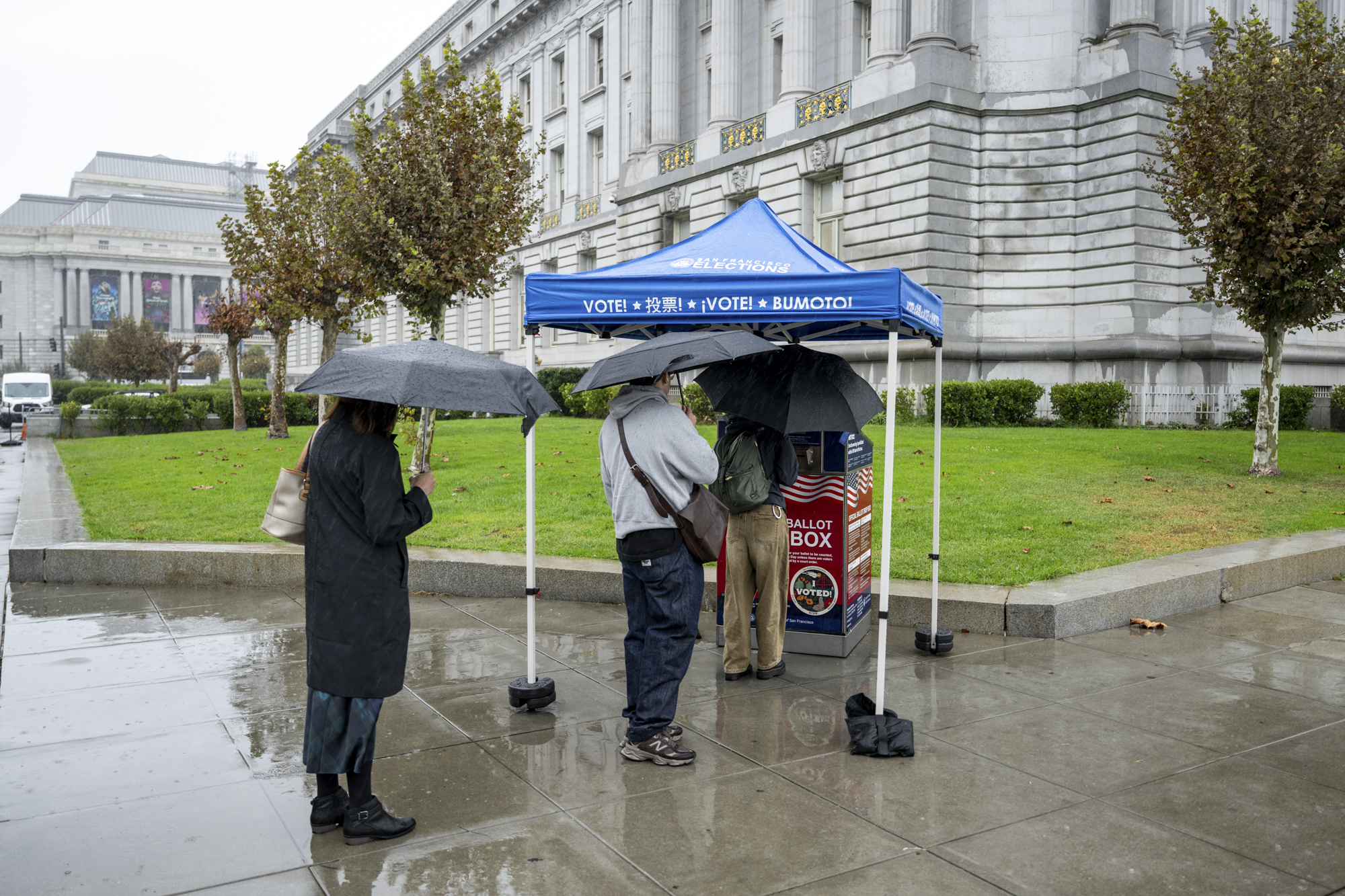
Despite some bad weather, Bay Area voters braved the rain to make their voices heard — weighing in on everything from a tax on billionaires to the fate of local and regional public transportation and more in the final years of Donald Trump’s presidency.
Many were eager to cast their vote and get a word in on a swath of local and state issues. Some even showed up for the first time.
Hayes Valley resident Marilyn Ruvalcaba Morales, who voted at City Hall, said she became a citizen this year. She brought her husband and her daughter’s ballots with her to the drop box.
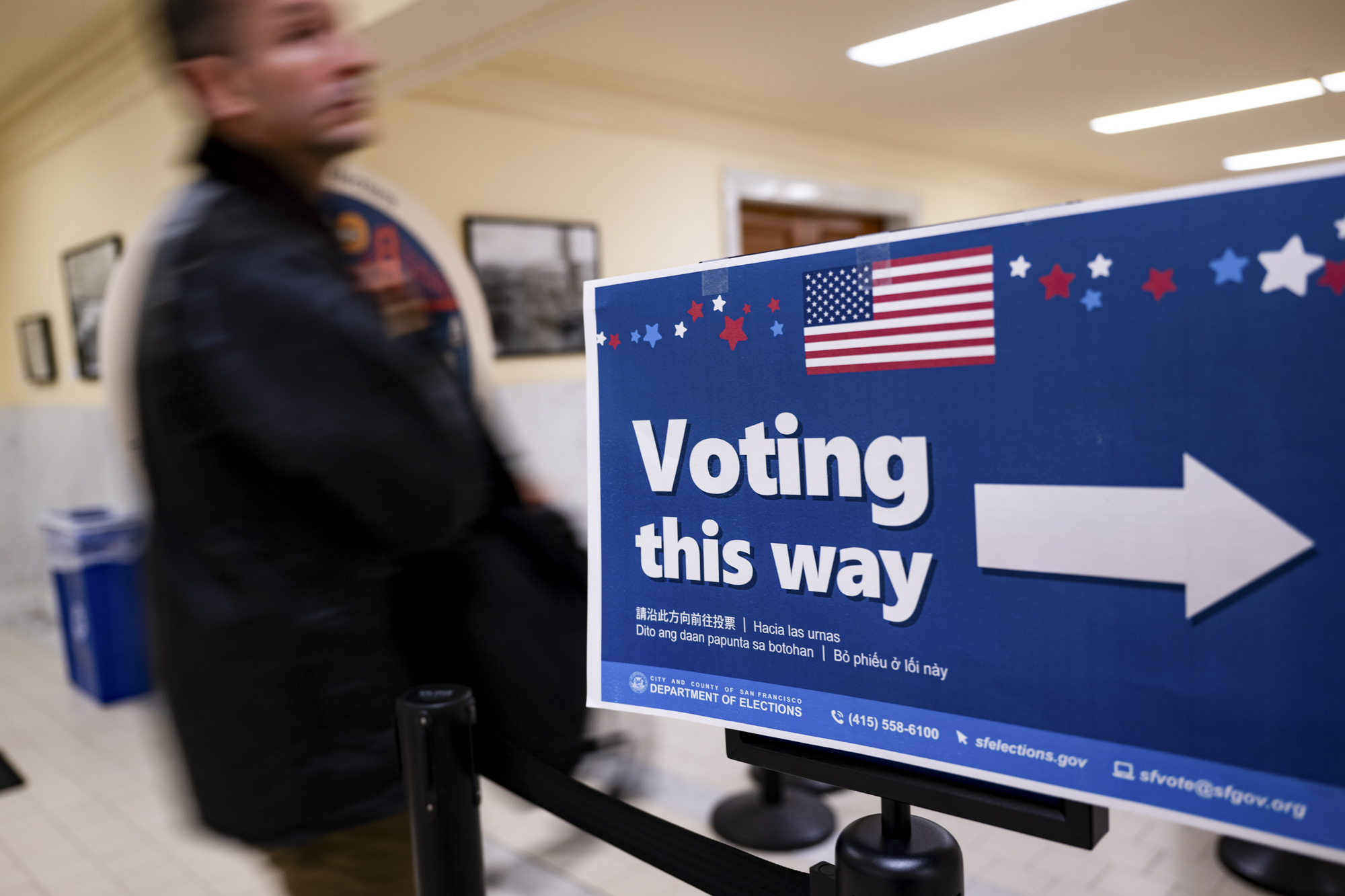
“I do want changes,” she said. “It’s really discouraging how our democracy is being very threatened by the current politics and the representatives right now,” Morales said.
Across the Bay, Alameda County’s Registrar of Voters Cynthia Cornejo welcomed voters out of the rain. As of Monday night, voter turnout was a little over 30%, and that there was strong morning traffic, she said.
“We’ve had rain before on Election Day, especially in November, and voters turn out regardless,” Cornejo said. “We’re happy to see it.”
Confusing ballot language
Frustration with opaque ballot measures united voters across the Bay Area.
Mary Jinn, a voter in Humboldt County’s McKinleyville, said that she cared about Proposition 39, a proposal that would require voters to show ID at the polls.
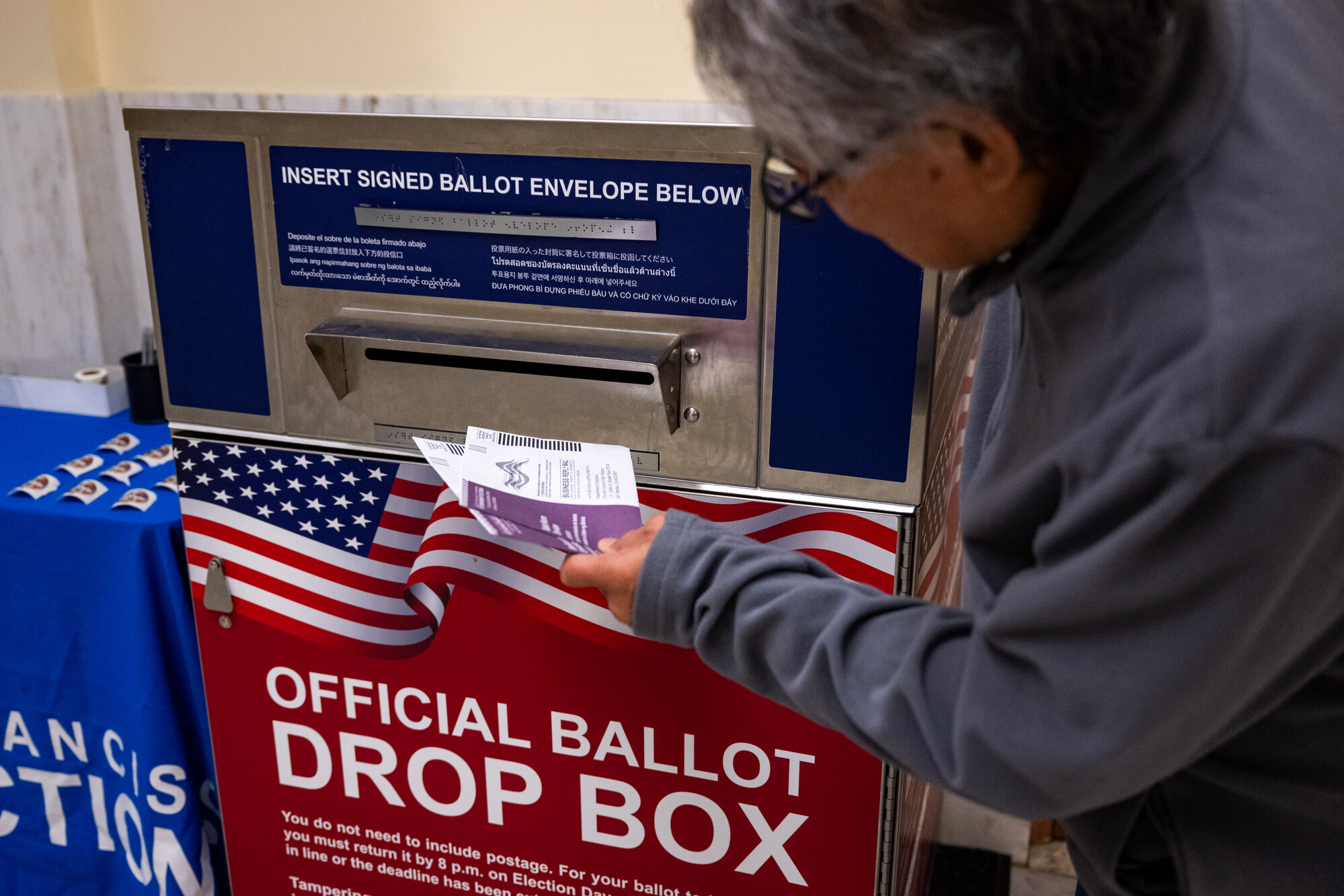
“There was so much of that talk of Trump, wanting to block votes of people, but I do think we need to prove ID,” Jinn said, adding that she did her research before coming to the polls so that she would not have to rely on the ballot measures alone.
“I don’t like the way they word things. It’s confusing. You don’t know if a yes means what you want it to mean or not,” Jinn said.
Daniel Segura, a 35-year-old Oakland resident who works in tech, had a similar complaint.
“There were a lot of trick questions or hidden agendas within the components of the different measures,” Segura said. “I wish that could change in the future.”
Segura also said he struggled to find information for the judges who were up for election.
“It was very difficult to vote,” Segura said. “You want to have someone that has moral character … these people make decisions on outcomes that affect the community.”
California voters consider taxing billionaires
California voters are deciding whether to pass a first-of-its-kind tax on the state’s roughly 250 billionaires.
Junior Mejía, a healthcare worker in Oakland, said that the one-time tax was one of the main issues that brought him out to the polls. Mejía said that the ads opposing the billionaire tax actually convinced him to vote in favor of it.
“It makes you wonder, why are they spending so much money?” Mejía said.
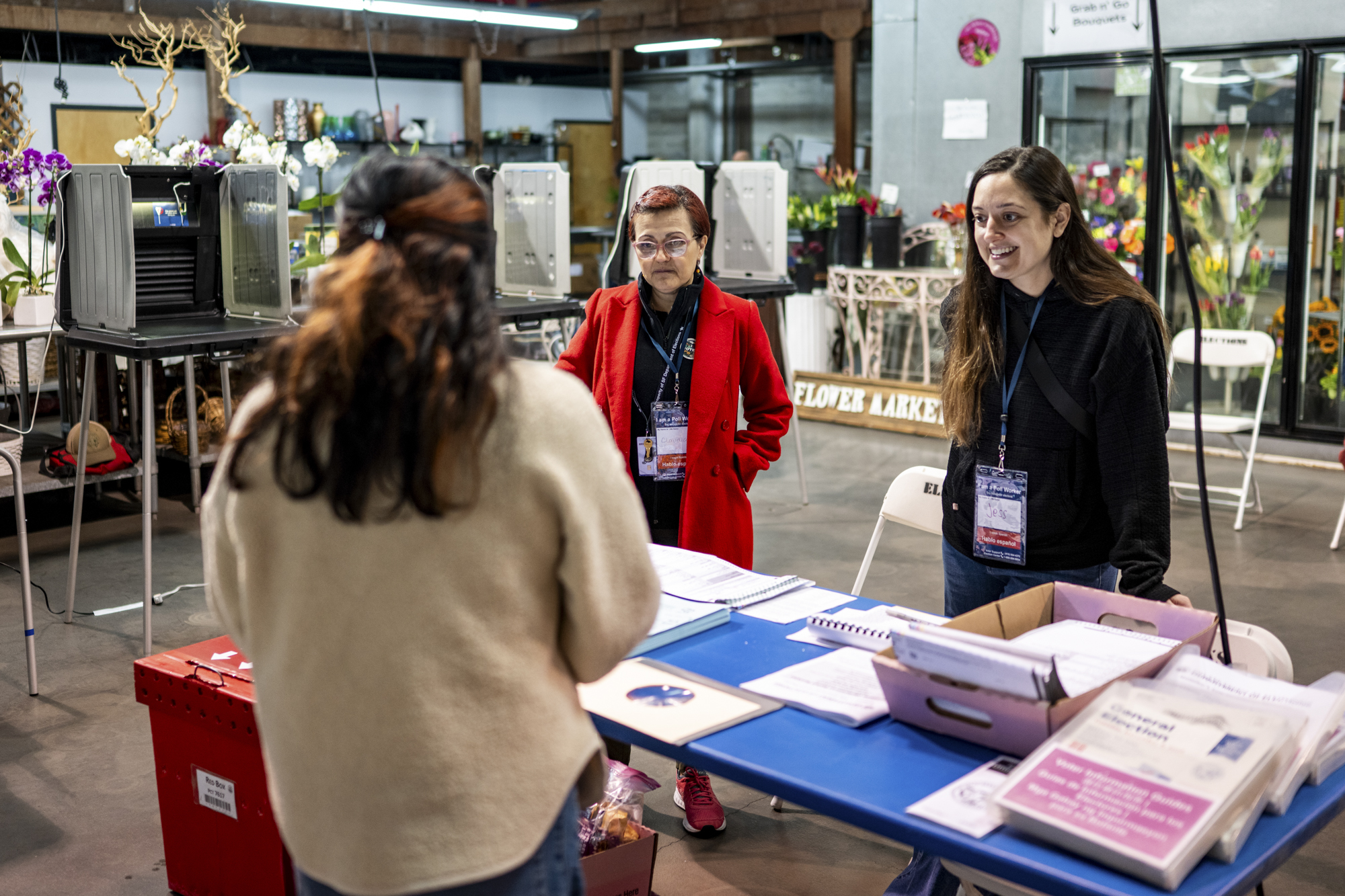
Voting in San Francisco, Dyana Bohrques said billionaires “should be fairly taxed like everyone else. They’re making exorbitant amounts that so many will never see and could help so many people, and it would literally be like a penny drop in what they’re making.”
Andrew Schell, of coastal city Arcata in Northern California, said he typically goes to the left on most issues — but voted against the billionaire tax.
“I just don’t want their money to leave,” he said. “I figured there’d be a brain drain and a money drain, and I think it’s going to scare a lot of billionaires away.”
Local politics drive turnout
Others were laser-focused on local races.
Garrett Fitzpatrick, a 29-year-old IT consultant in Oakland, said he voted on his lunch break, with an eye on the District 2 City Council race — the “big one” for him because it “was going to be the one that has the biggest impact on my situation,” he said.
He ended up voting for Nate Adams, a candidate who shared his ideas about government, and who he hopes would bring about “safer streets, cheaper rents and a stronger sense of community.”
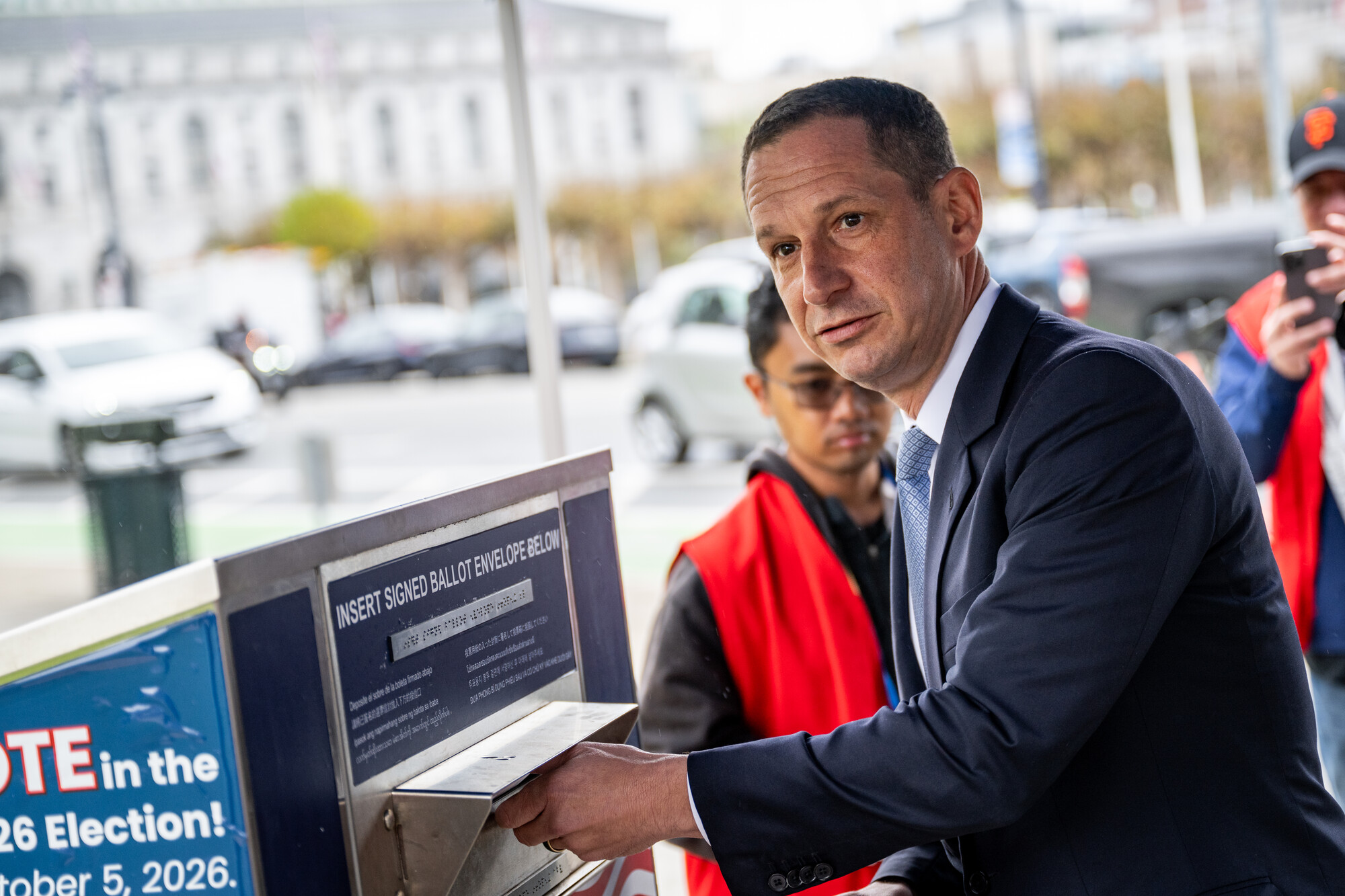
San Francisco Mayor Daniel Lurie dropped off his ballot at City Hall on Tuesday morning. Speaking with reporters, he encouraged eligible voters to turn out if they hadn’t already, and shouted out his legislation — Proposition D, E and F, as well as efforts to fund affordable housing and regional and local transit.
“I am committed to making sure we make this city more affordable, and we do that by investing in transit and housing,” Lurie said.
Passion at the polls remained high
Leading up to the midterms, questions around election security and voter data took center stage, especially after Trump escalated efforts to prove rampant election fraud.
“I don’t think we should be making life harder for immigrants, for people moving here, contributing to society, wanting to participate in whatever way they can,” said Jim Fonesca, a San José voter. “If it’s illegal for someone to vote, they shouldn’t be doing it, but I don’t think we should be making it more difficult for people living and working here.”
San Francisco resident Karla Sahagun said she urged her neighbors to get out and vote. She was out there, she said, in spite of recently running a half-marathon and having a cold.
“Vote. There’s many people that would love the right to vote, and we need to vote for everybody,” Sahagun said.
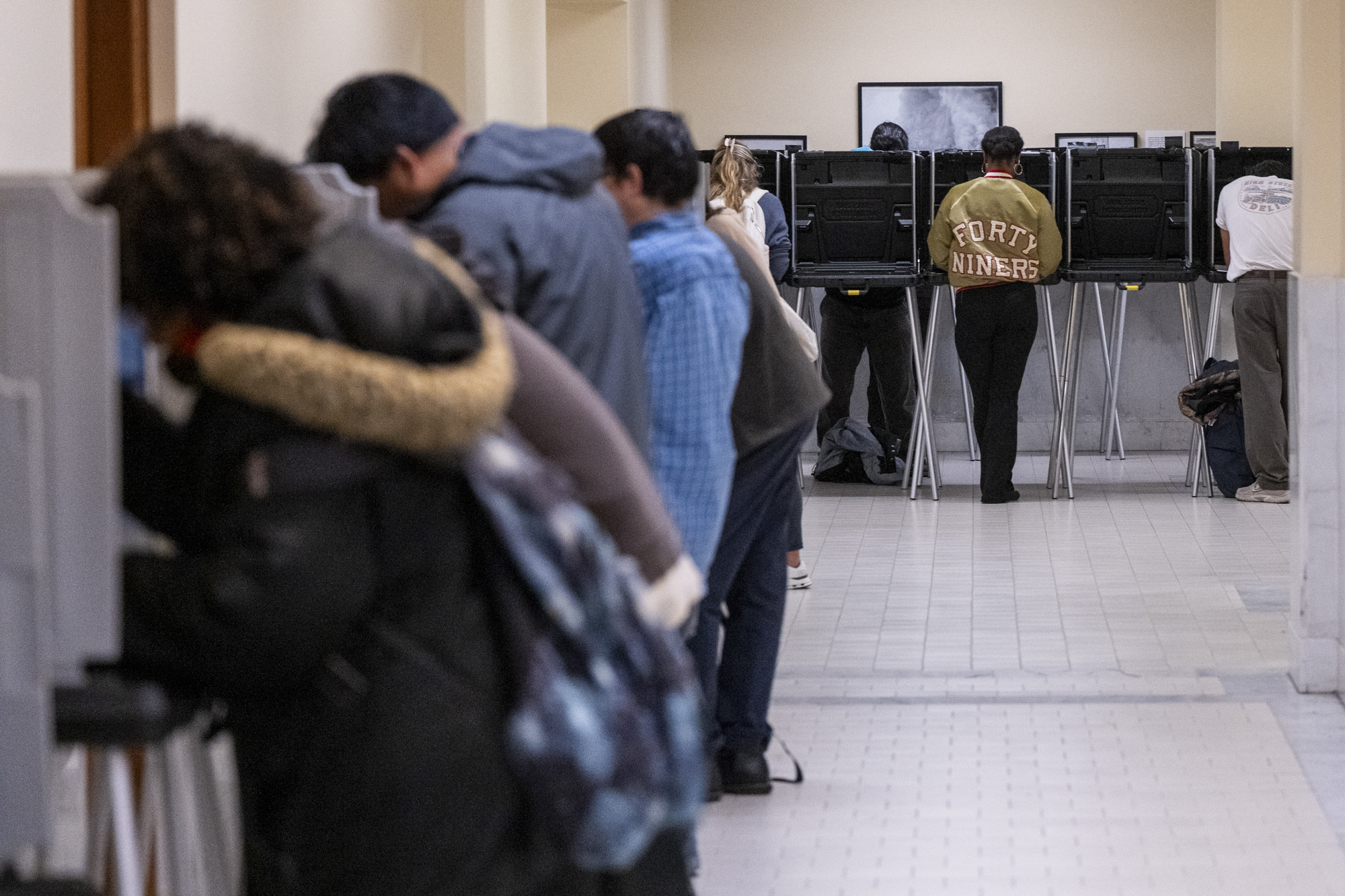
Up in Humboldt County, Natalie Parchman said that she headed to the polls early so that she could wear her sticker all day.
“It actually does remind people to vote,” she said.
The polls close on Tuesday at 8 p.m. Still have questions about voting? Check out KQED’s voter guide.
KQED’s Emily Tenorio Molina, Sara Hossaini, Jose Velazquez and Sukey Lewis contributed to this report.