Economists Make the Case For and Against California’s Billionaire Tax
Airdate: Monday, September 14, 2026
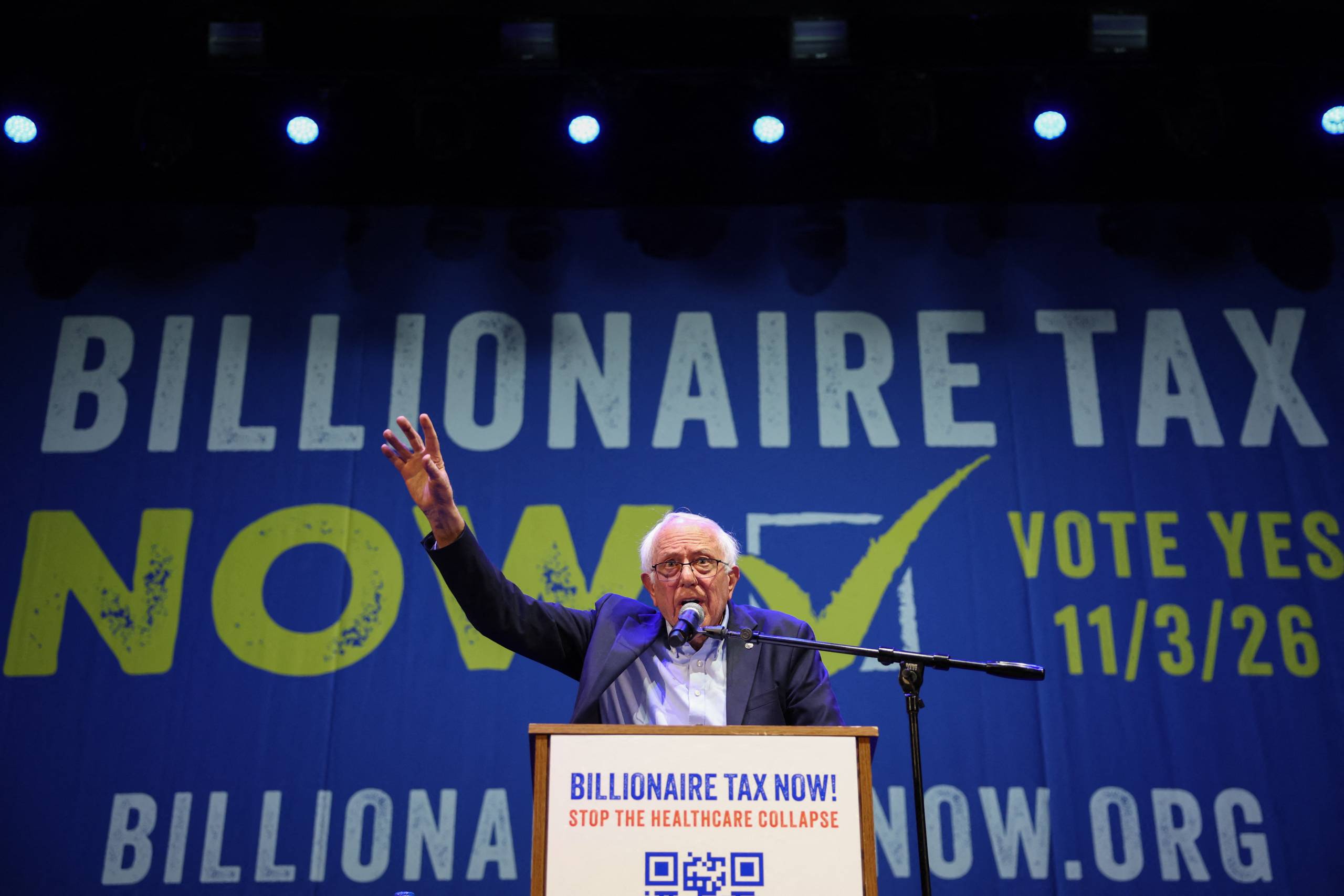
California voters will decide this fall whether the state should impose a one-time 5 percent tax on billionaires, with much of the revenue going toward health care amid federal funding cuts. Supporters say Proposition 40 could raise tens of billions of dollars while also helping to address the growing wealth inequality in the state. Opponents argue the tax could drive billionaires out of California, shrinking the state’s income tax base and ultimately costing more than it raises. We talk to two leading economists: Gabriel Zucman, who helped develop the measure, and Joshua Rauh, one of its most vocal critics, about whether the billionaire tax would help California’s economy – or hurt it.
Guest:
- Gabriel Zucman, professor of economics, UC Berkeley; Paris School of Economics – author of “We Need to Tax Billionaires”; helped develop Prop 40
- Joshua Rauh, economist and professor, Stanford Graduate School of Business – senior fellow at the Hoover Institution, research associate at the National Bureau of Economic Research; opposes CA Prop 40
Episode Transcript
This is a computer-generated transcript. While our team has reviewed it, there may be errors.
Alexis Madrigal: Welcome to Forum, I’m Alexis Madrigal. Proposition 40 is one of the most contentious and intriguing propositions of recent years. It’s a one-time 5% wealth tax on billionaires. It would raise a substantial amount of money, though there are questions about how much net revenue it could pour into state coffers, and those dollars would mostly be used to fund health care.
Our first guest is Gabriel Zucman. He is a UC Berkeley economist and author of the admirably straightforwardly named book, We Need to Tax Billionaires. He helped to develop the proposition. Welcome, Gabriel.
Gabriel Zucman: Thanks for having me.
Alexis Madrigal: Our second guest is Joshua Rauh, an economist and professor at Stanford Graduate School of Business. He authored a study about the potential effects of the wealth tax and has emerged as perhaps the leading economist voice opposing Prop 40. Welcome, Josh.
Joshua Rauh: Good to be on the show.
Alexis Madrigal: Okay, you guys ready? Ready to fight? Gabriel, let’s start with you. You did help develop this proposition. So let’s just start with the basics. What’s the measure do? Who’s subject to the tax, where does the money go?
Gabriel Zucman: So this would be a one-time tax on billionaires. Only people who have more than $1 billion of net wealth would be affected. We’re talking about roughly 250 people in California, mostly Silicon Valley tech billionaires who would have to pay a one-time tax equal to 5% of their wealth. For context, their wealth has grown by 170% since 2023, and they would have to pay just 5%.
We can expect about $100 billion in tax revenue for the state with this tax. Ninety percent of the money would go to health care. And California needs this money because the big budget bill that was passed last year by Congress has defunded Medicaid. And if nothing is done, two million people in California are going to lose their health insurance. The fraction of uninsured individuals will increase from 6% to 10%.
The California governor, Gavin Newsom, or the California legislature haven’t proposed any solution. So voters can solve this problem by themselves with Prop 40.
Alexis Madrigal: I’m curious, just like, is this for you primarily a fiscal measure about the state’s budget, or is it more of a moral one about the way that you think the state should be approaching billionaire wealth?
Gabriel Zucman: Well, it is a budget fiscal issue. There’s a major shortfall of revenue for Medicaid. And the question is, where do we find the money? Now you have essentially two big levers. There is the California income tax, and there is this potential wealth tax on billionaires.
What’s really important to understand is this. And when I first realized that, it blew my mind. If you look at the total wealth of California’s 250 billionaires, we’re talking about $2.3 trillion today. This is as big as the total income of all Californian families. Their total taxable income, AGI, is also $2.3 trillion.
So essentially, if you want to get $100 billion in revenue for the state, you can do it in two ways. Either with a 5% tax on the wealth of 250 billionaires or with an increase in the income tax of five percentage points for all Californian taxpayers.
Alexis Madrigal: And so, in answer to the question of why target wealth specifically rather than income, that’s where the money is. It represents this massive sum. But is it also that billionaires don’t have traditional income as their core component of how they make money?
Gabriel Zucman: True. The current tax system fails at taxing billionaires. This is true in California. This is true in the U.S. more broadly. This is all over the world. And the reason is that when you’re extremely rich, it’s very easy to organize your wealth such that this wealth will generate no or very little taxable income.
That’s how, in 2019, in 2022, in 2023, the two worthiest billionaires in California, Larry Page and Sergey Brin, essentially paid no income tax. They didn’t pay themselves any wage from Google. Google didn’t distribute any dividend. They didn’t sell shares in the company, so they didn’t realize any capital gains.
So their taxable income, what is subject to the income tax, was zero or close to zero, extremely low, so that no matter the rate that you apply to that income, you are not going to be able to make billionaires pay more tax just by changing the income tax. This is why the proper way to tax the super rich is with a tax directly on their wealth.
Alexis Madrigal: Josh, let’s bring you in here to a two-part question here. Do you agree that wealth concentration in billionaires is a problem generally? And then more specifically, do you agree that billionaire taxation is also a problem?
Joshua Rauh: Well, I’d like to begin with just the premise that you have to support anyone who votes for Prop 40, for the Billionaire Tax Act, has got to support — first, you have to believe that it will raise revenue, not lose revenue for the state. And I think this is one of the key points of difference between myself and Gabriel Zucman, which is that they say it will raise $100 billion for the state. We say it will lose $25 to $38 billion for this state.
And why the difference? It’s because of the losses to the state coffers that will be caused by these high-net-worth individuals who are leaving in response to the tax. The state won’t collect the wealth tax from the billionaires who have left in response to the tax, and it won’t collect any more income taxes from the billionaires who have left in response to the tax.
And so Dr. Zucman and his colleagues have assumed 10% losses when they arrived at their $100 billion estimate, but going through person by person, we find that public announcements have shown that already 30% of the wealth tax base has left. Half a trillion dollars of wealth has left California. So this is gonna lose money for the state government. Those people, their wealth isn’t gonna be collected by the Billionaire Tax Act, and their income taxes will no longer be collected.
Secondly, you have to believe, if you support this proposition, that on balance the tax will be good for the people of California. And that’s a different question from whether the tax is going to raise revenue or not. I mean, even if the tax were gonna raise revenue — and to be clear, our models say that this one will not — but that revenue has to be balanced against the damage to the economy that the tax will do.
So to take an example, a policy that brings in an extra dollar of revenue for the state but destroys 100,000 jobs, that would be a bad policy because you have to believe that the well-being the state can create with an extra dollar of revenue is so great as to offset the pain from losing the job.
So the billionaires who are leaving have created tens to hundreds of thousands of jobs in California, and while those jobs won’t go away overnight, if the founders are gone, the billionaire tax will accelerate the shift of jobs to other states that we’re already seeing. And it’s not just companies already here. If the wealth tax passes, then founders will increasingly choose one of the other emerging ecosystems around the U.S., Austin, Miami, Nashville. And already we have investors saying they won’t invest in startup companies in California if the founders are in California. Notably, Mark Cuban has said that.
So whether or not billionaire wealth concentration is a problem or not, whether you think that or not, that’s actually not relevant for what we should do on Prop 40. The question is, do you think it’s going to bring in money for the state? I do not think it will. And second, do you believe that on balance it will be good for the people of California? And I think given all the losses in economic activity we’re seeing here already as a result of this and what we will see if the billionaire tax passes, it will not be for the people of California.
Alexis Madrigal: That’s Josh Rauh, an economist and professor at the Stanford Graduate School of Business, senior fellow at the Hoover Institution. We’re also joined by Gabriel Zucman, an economist and professor at Berkeley and the Paris School of Economics, helped to develop Prop 40.
We’d love to get your opinions on what you think about the tax. 866-733-6786, Forum at kqed.org. This is Forum. I’m Alexis Madrigal.
Josh, I want to stay with you here. What you’re saying is that even just the threat of this tax is causing people to leave and maybe hurting the dynamism of Silicon Valley. And at the same time, we’re experiencing this massive boom in San Francisco of AI company wealth creation and new jobs and businesses that are being created at the time. So it’s one factor, right, in the way where companies decide to locate.
Joshua Rauh: That’s correct. It’s one factor, and investors have been clear about what’s going to happen if the tax passes. You have to realize California companies, the amount of money they receive from venture capitalists from across the state, country and world is a staggering amount of money itself. It is $360 billion. That’s very comparable in a year to the amount of money that the government of California spends.
This ecosystem is fragile. We have people leaving. We have investors saying they’re not going to invest in California if this passes. And it’s interesting to consider the reason why people are saying they won’t invest in that if this passes. You know, Dr. Zucman and you in your intro were clear that this was gonna be a one-time tax. That’s how it’s pitched, but Dr. Zucman has admitted that it’s probably not going to be one time. In fact, I’ll quote from an interview he did on the Capital & Main website. He said, quote, “California could absolutely implement an annual wealth tax,” said Zucman. “This one-time tax is just the starting point of what it could be.”
And so now that he is admitting that, and people are starting to think, what happens if this wealth tax passes? Investors are beginning to think, wow, this could be really bad, and it could be very harmful to the economy.
The discussion has changed since the ballot proposition was made. “One time, one time, one time” kept being repeated, and now the tone of the architects has changed.
Alexis Madrigal: Gabriel, what do you think? On the one-time issue specifically.
Gabriel Zucman: So, a few things. So first of all, this line of reasoning on how the tax is going to hurt the economy is, of course, a very classic argument, which makes sense in the abstract, but you have to look at the numbers. And if you look, for instance, at the flow of venture capital funding —
Alexis Madrigal: I might actually cut you off here only because we’re gonna have to go to a break in a second, and I really want you to be able to get to the full set of numbers. You guys can go back and forth a little bit on this. So let me let me throw to a break.
Of course, we’re talking about Prop 40, California’s billionaire tax, with, you know, on the pro side, Gabriel Zucman, who helped design it, and Josh Rauh, who has authored a study about the potential effects of the wealth tax. Way back, more right after the break.