Big Basin’s Return Has Been Slow and Measured. It’s Also an Opportunity
On a ridge overlooking Big Basin State Park, David Cowman, director of land stewardship for the Sempervirens Fund, pulled over to take in the view.
Ahead, the Pacific Ocean stretched to the horizon. Below, the footprint of the southern core of the CZU fire, which burned more than 85,000 acres here in 2020, dominated the landscape.
Big Basin is the oldest state park in California and home to the largest continuous stand of ancient coast redwoods south of San Francisco and some of the oldest trees in the world. The park burned 97% during the once-in-a-generation blaze, in what Cowman calls “a wake-up call” for people who work and live in these forests.
“We had this kind of misconception that redwood forests and particularly old-growth redwood forests were somewhat immune to high-intensity fire,” he said. “And for the last 100 years, we’ve kind of been lulled into a sense of complacency.”
Despite the devastation, many of the forest’s trees — its bigger, older redwoods, in particular — survived.
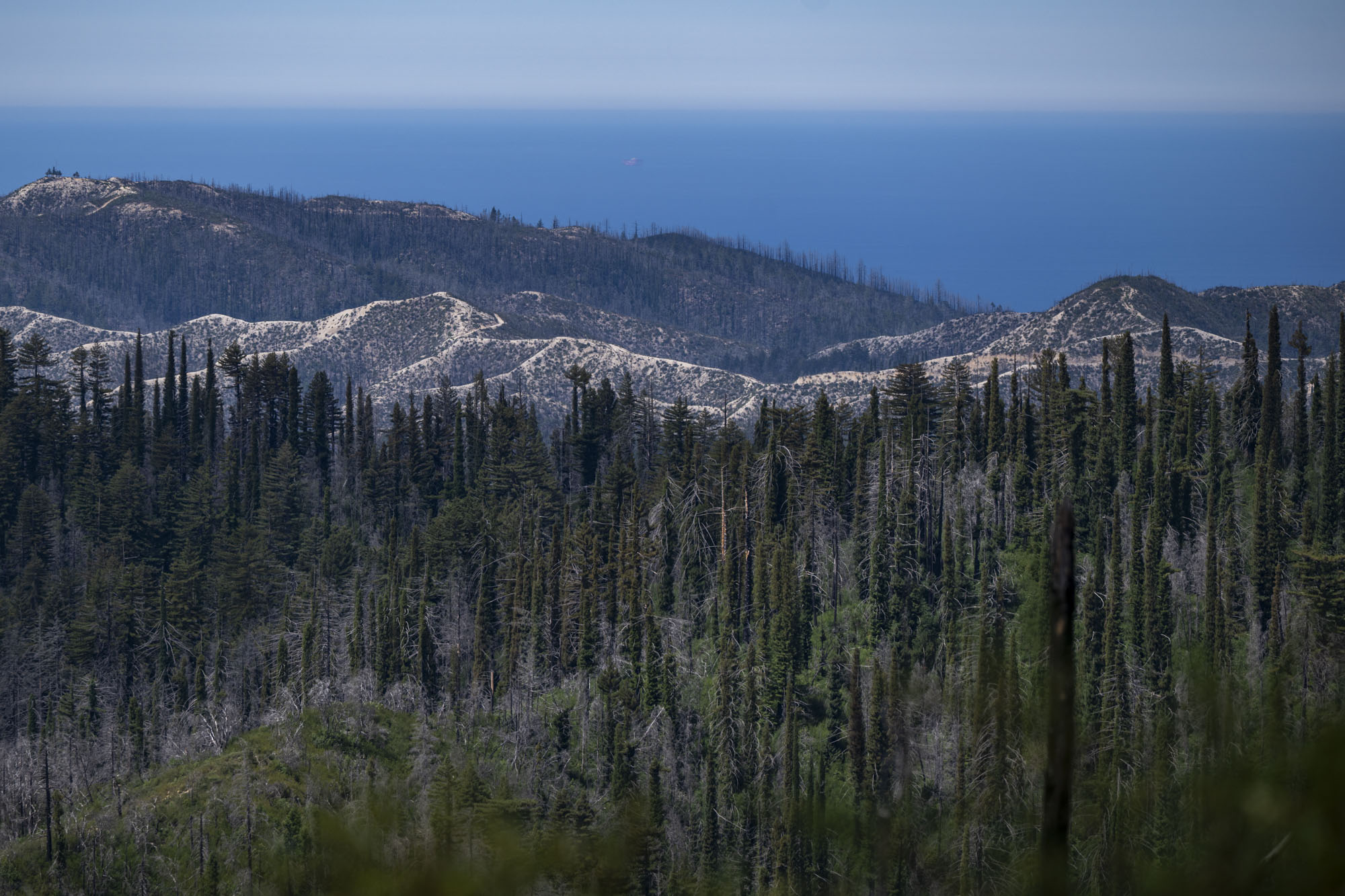
Now, the rolling hills below are a patchwork of surviving redwoods, their new sprouts giving them the look of dark green pipe cleaners. They stand, just as tall but not quite as wide, next to stark-white brambles of charred Douglas fir trees, which could not withstand the crushing heat of the fire.
In the foreground, Cowman said, are Knobcone pines, now mostly reduced to stumps after they, too, succumbed to the fire. The usual busy underbrush of the redwood forest disintegrated, replaced primarily by Ceanothus, a quick-growing shrub that thrives in post-fire landscapes — 20 feet high in some parts of the park.
“Before the fire, it would have looked a lot more … homogeneous,” he said.
If you’re a trained forester like Cowman, especially one who witnessed firsthand as the blaze descended on California’s oldest state park, the telltale signs of the CZU fire are clear — and devastating.
The dark, humid, mystical park is no longer. Today, Big Basin is hot, airy and overexposed, its foliage painstakingly healing like a patient in recovery.
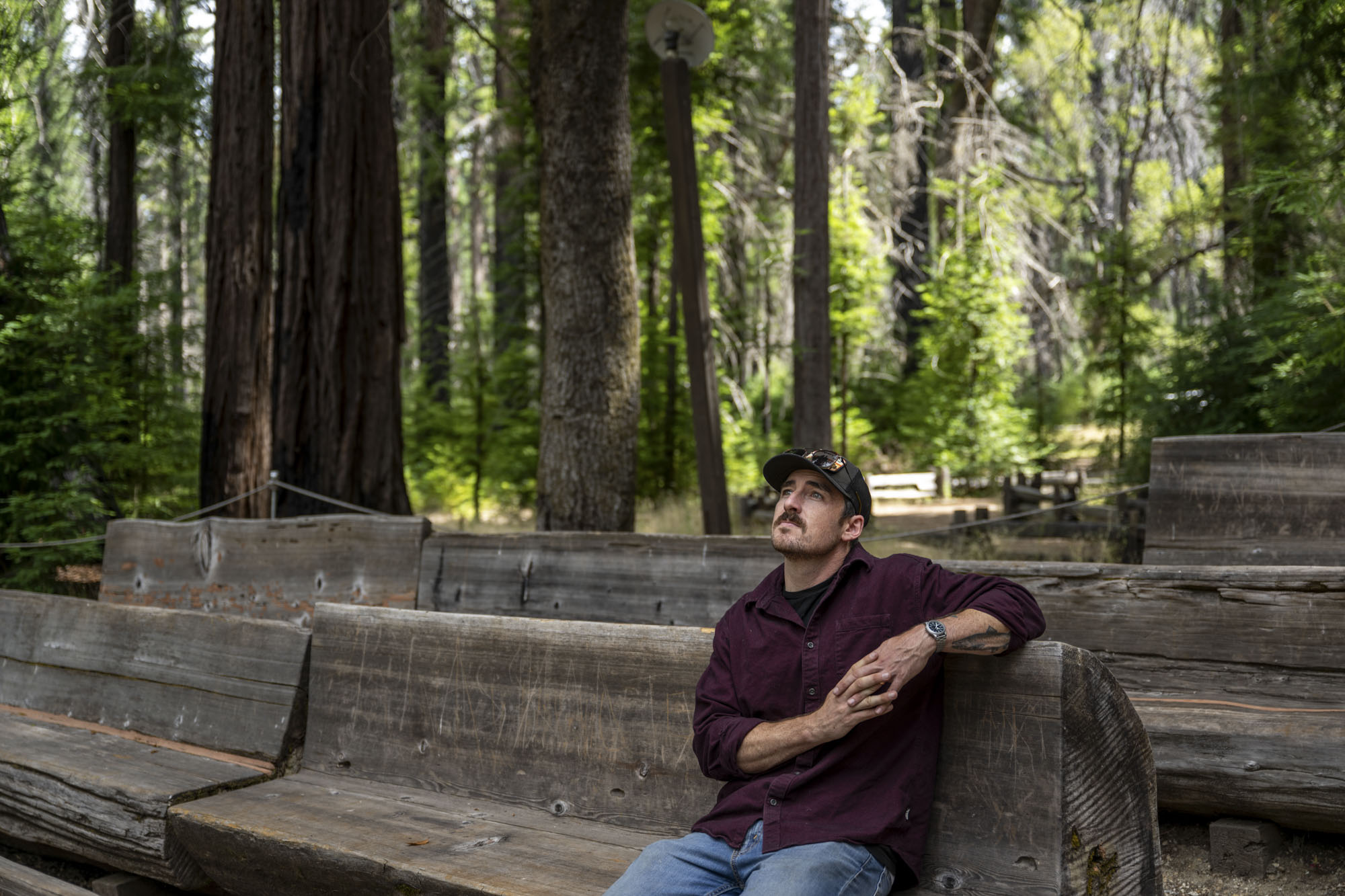
“We do still have a forest, but it just looks a little bit different,” he said. “A little less green than it did before the fire.”
Just as gradual is the rehabilitation of its recreation. The park’s campgrounds remain closed, its buildings and water systems mostly demolished, and only a few trails in the park are open to hikers — notably, the famed Skyline-to-the-Sea Trail is still mostly inaccessible.
For those who remember the park in all of its glory, the Big Basin of yore is gone. Since it reopened in 2022, just 1.2 million people have visited the park. That’s compared to around a million visitors it got every year before the fire.
“When you think about the trees themselves and the experience of being in Big Basin, a lot will be different for many decades,” said Matt Shaffer, spokesperson for Sempervirens Fund, a land trust dedicated to protecting redwood forests in the Santa Cruz Mountains, which just won a grant to do forest management in the park. “For the folks who spend a lot of time in redwoods or have a lot of nostalgia for going and being in Big Basin before the fire, it’s a different experience.”
But not all is lost.
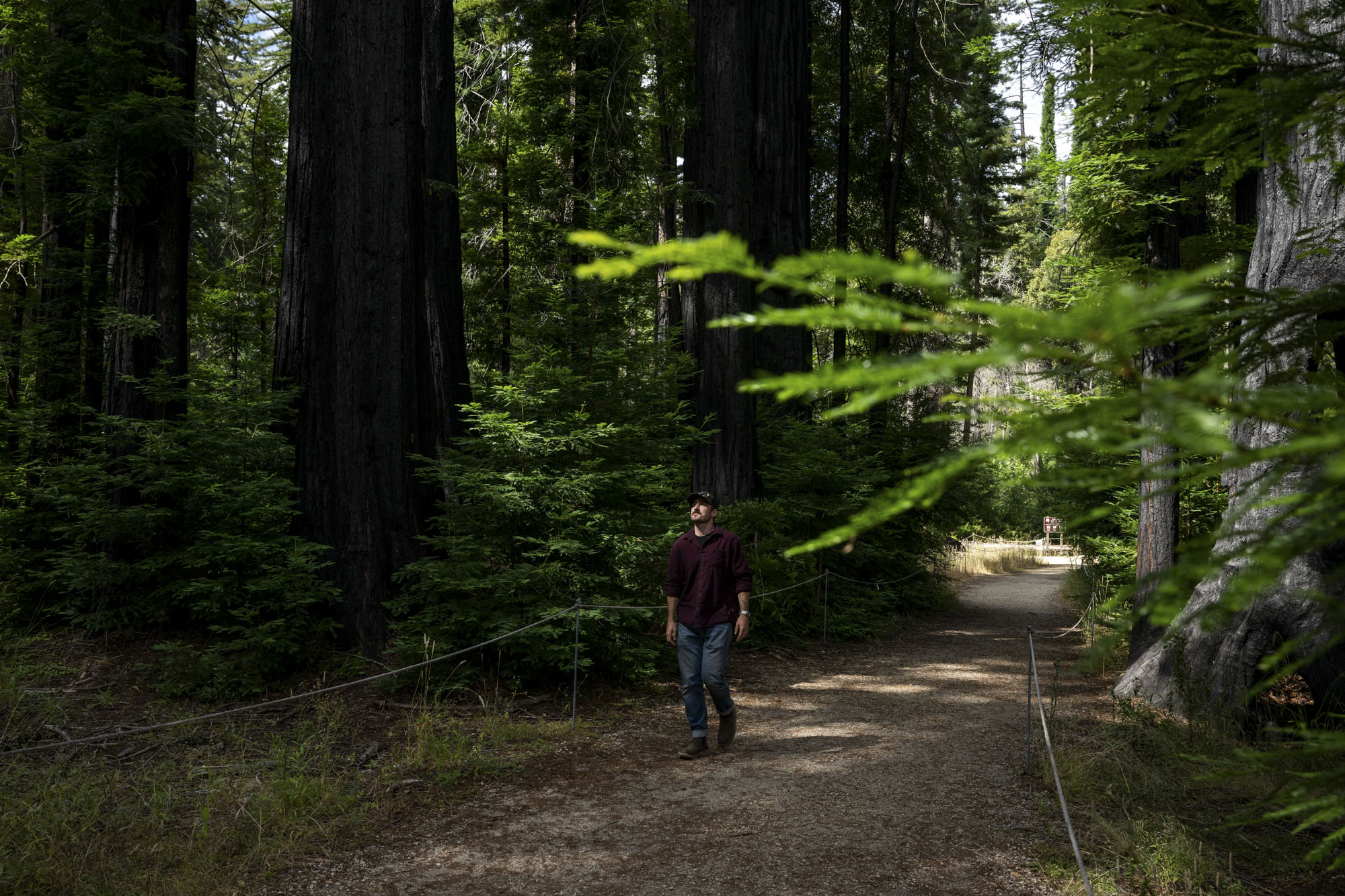
Over the past six years, the smell of ash and eerie silence have mostly dissipated as local fauna and flora return. In the famed old-growth Redwood Loop Trail, the Mother and Father of the forest — the park’s tallest and widest trees — still stand, triumphant, whispering the story of their survival.
And next year, one 7-mile portion of the iconic Skyline-to-the-Sea Trail, the Timms Creek Loop, is set to open, just in time for the park’s 125th anniversary. It’s taken a lot of work to get to this point, Shaffer said, including the reconstruction of 22 bridges that burned in the fire with new, fire-safe fiberglass.
“It’s going to be a real special addition to the park,” he said.
The forest is returning — and so are the park’s renowned opportunities for recreation. Both are evolving, and geared toward safeguarding the future of the park, not recreating the past.
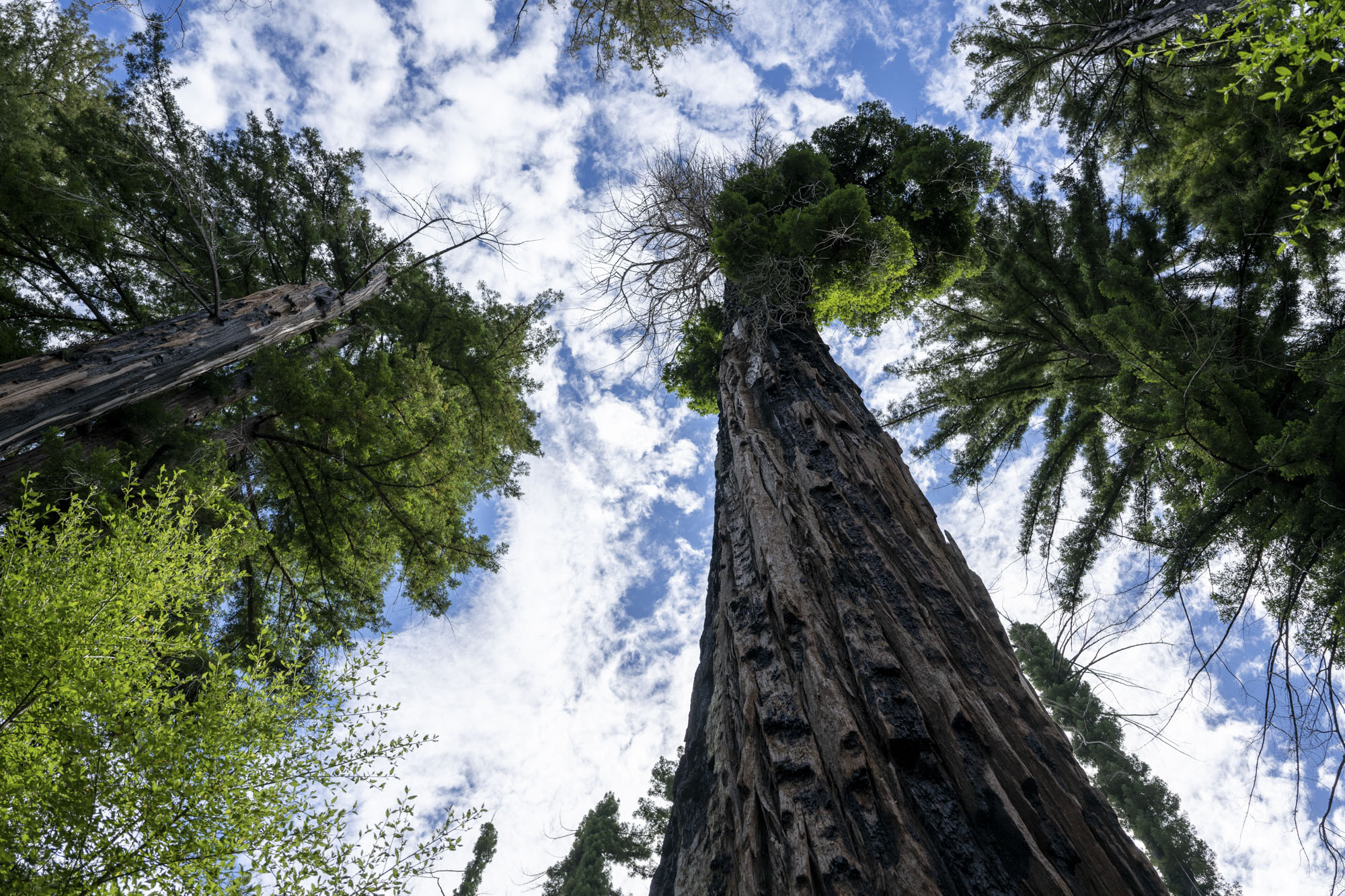
Cowman said the park’s return may well feel glacial to those who still mourn its destruction. But for us humans, who rarely get a glimpse into the full life cycle of these ancient trees, it’s something of an ecological marvel.
“I think we are a little bit privileged to be able to witness this recovery,” Cowman said. “Although it was devastating for the community of Santa Cruz Mountains, it’s also a huge learning opportunity for all of us.
We get to witness redwood recovery at scale in real time.”
Big Basin ‘engulfed’
Chris Spohrer was the superintendent for the Santa Cruz district of state parks when, in August of 2020, an unusually intense dry lightning storm sparked more than 16,000 lightning strikes on the forest and ignited dozens of small fires throughout the region.
“Those small fires, because they were so spread out, were difficult to immediately contain,” Spohrer said. “And when the weather changed, and we had significant dry winds pushing towards the ocean, those fires grew together.”
“I remember being on the coast at the coastal portion of Big Basin … watching the smoke plume sort of shift and head out over the ocean and see the fire intensity significantly pick up,” he said. “And it was that time where we had to make a very quick decision to evacuate the park.”
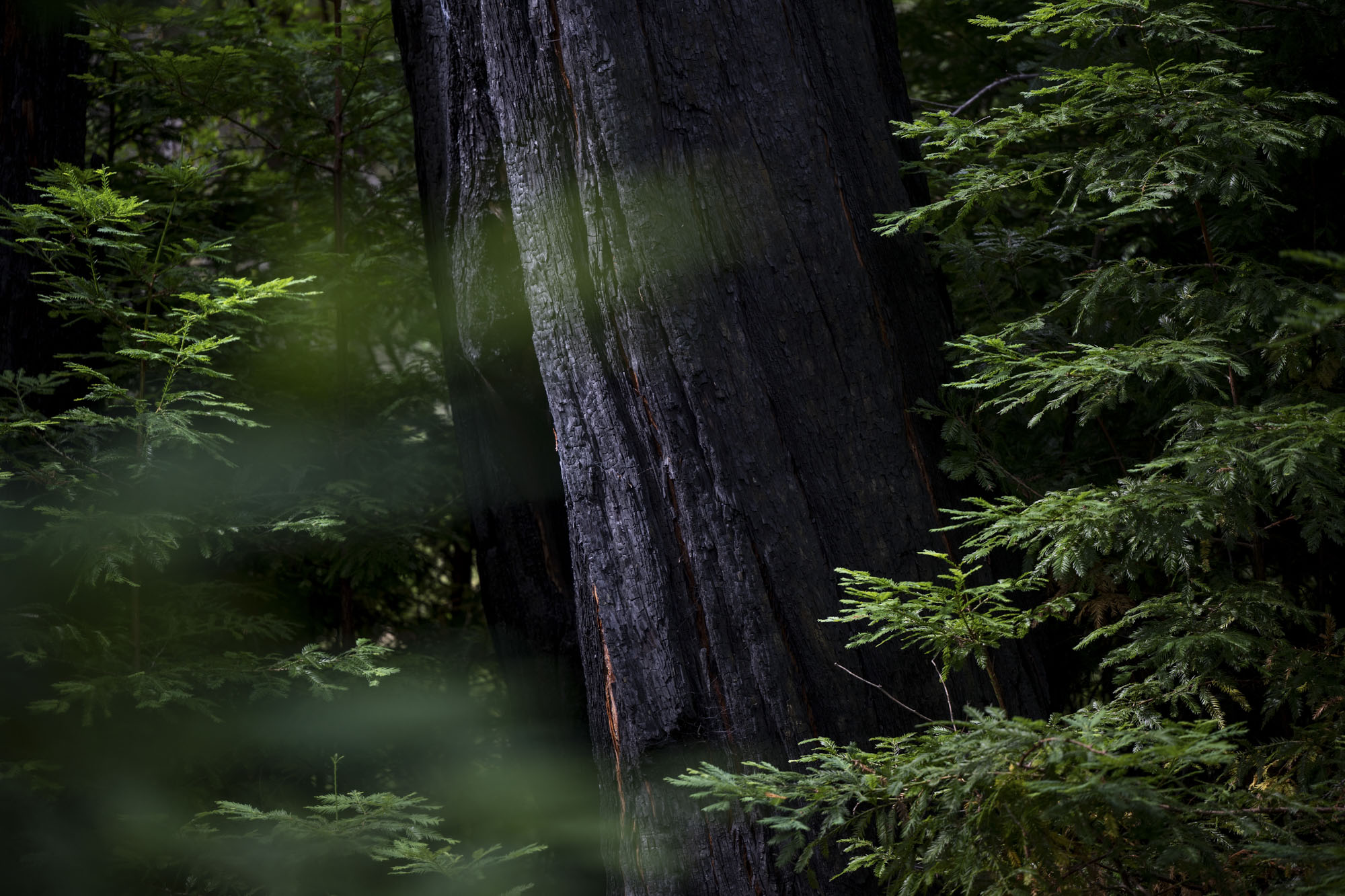
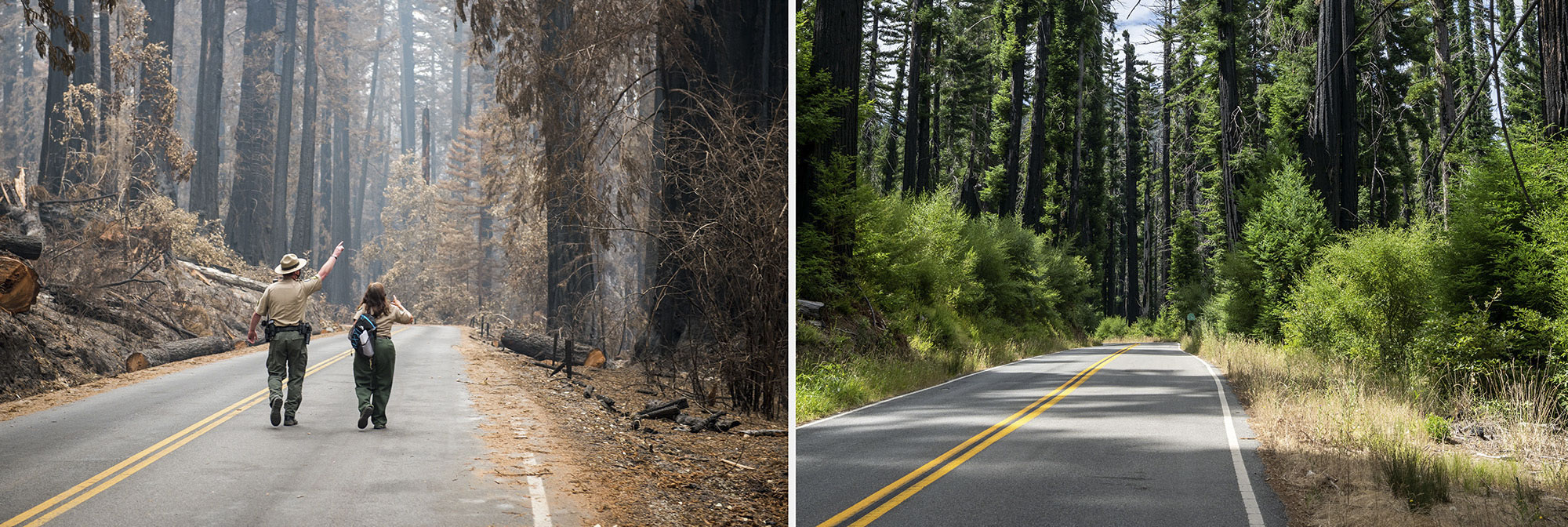
What followed was a 24-hour period of “unimaginable” growth of the fire to 42,000 acres, “engulfing Big Basin and many of our communities overnight,” Spohrer said.
And while everyone in state parks, including Spohrer, reported to work to help with the emergency, there wasn’t much that firefighters could do besides evacuate the more than 1,000 campers in the park and staff living there as quickly as possible. More than 100 park structures were lost in the fire.
“Most of the losses in the park happened that first night,” he said.
The CZU wildfire would burn for more than a month and resulted in just one casualty. Around 60,000 people would be displaced from their homes as 1,500 structures burned across the region. And as the fire was slowly contained and then put out, residents’ fears turned to the threat of mudslides.
But top of mind for everyone, even evacuated residents like Marianne Booth, was the health of the forest and its iconic trees.
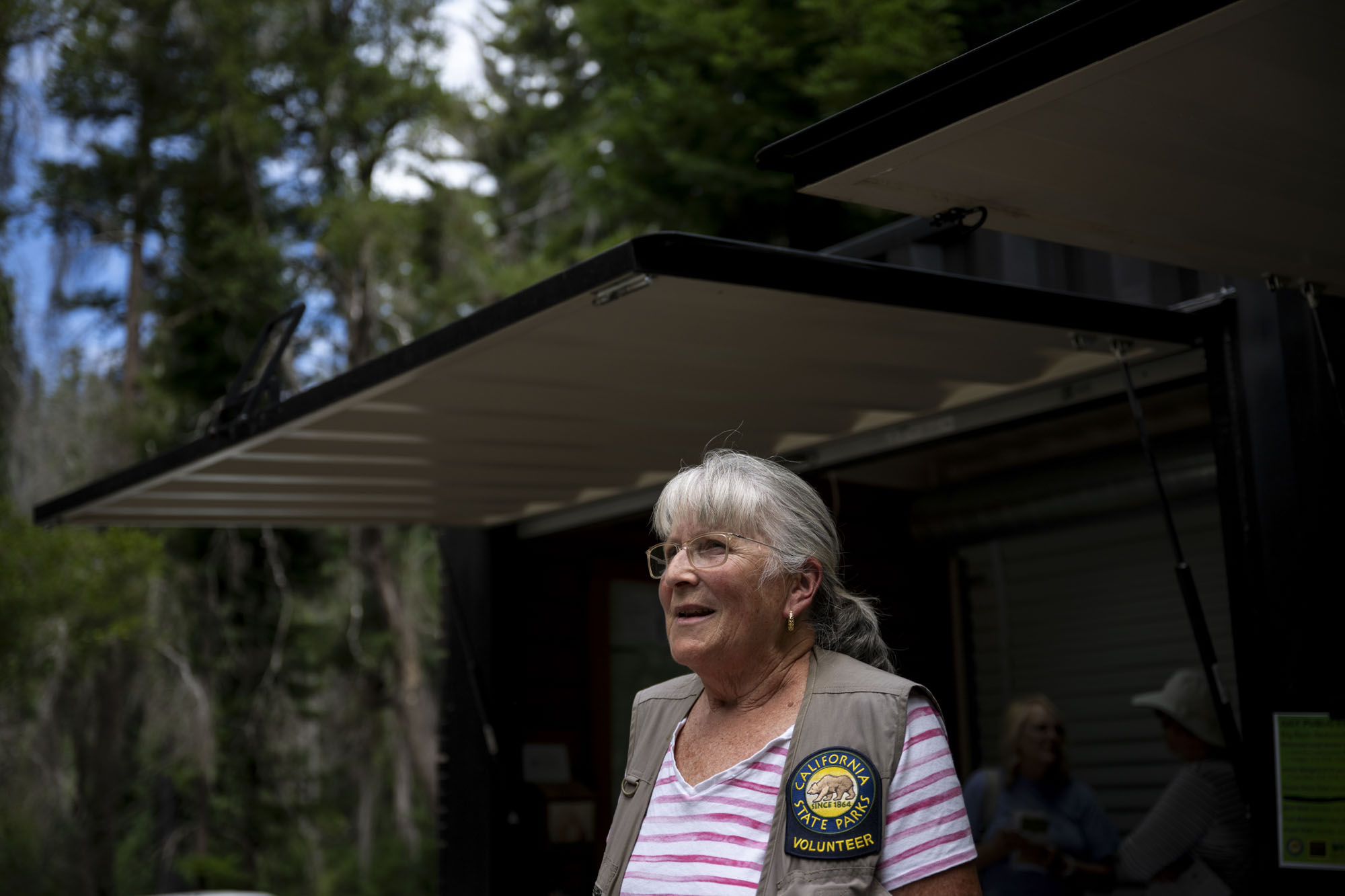
She lives in Boulder Creek and volunteers at Big Basin. She was just coming back from a trip to the Sonoma Coast when the evacuation orders were issued.
Booth hadn’t closed any of her windows, “so even though the fire stopped right up at the top of our block, all of the soot came in,” she said.
A year after the fire, she came back to the park for the first time.
“I was working here for 10 years, and you didn’t recognize it,” Booth said. “We went on a walk where the [Redwood] Loop was … and we got lost, because it was so destroyed. You didn’t know where anything was. All the landmarks were missing.”
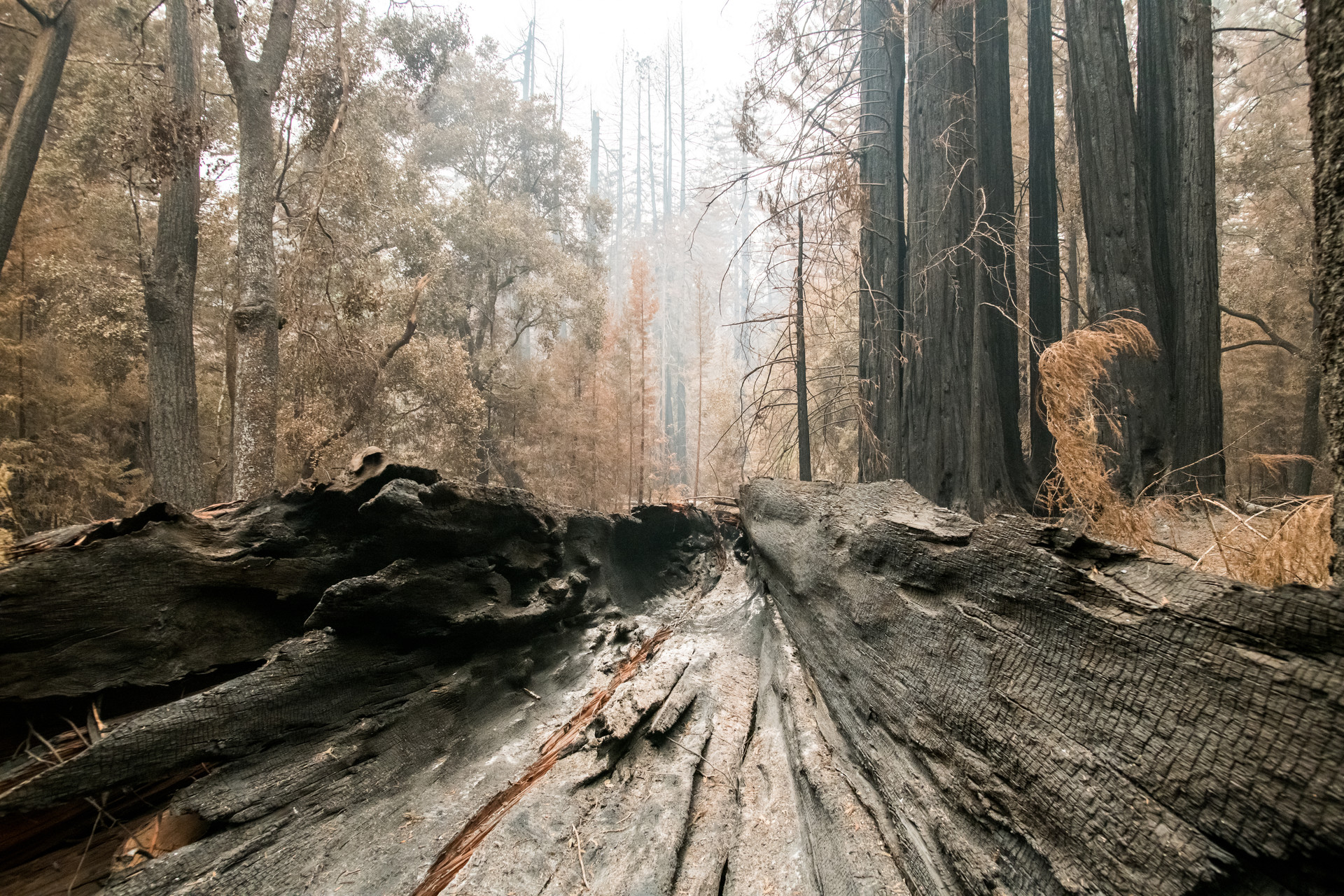
Following the fire, the park was closed for nearly two years as workers cleaned up dead trees at risk of falling, removed hazardous waste and cleared roadways of debris. In 2021, nearly a year after the blaze, workers discovered smoldering remains of the fire still active in trees and had to put those out, too.
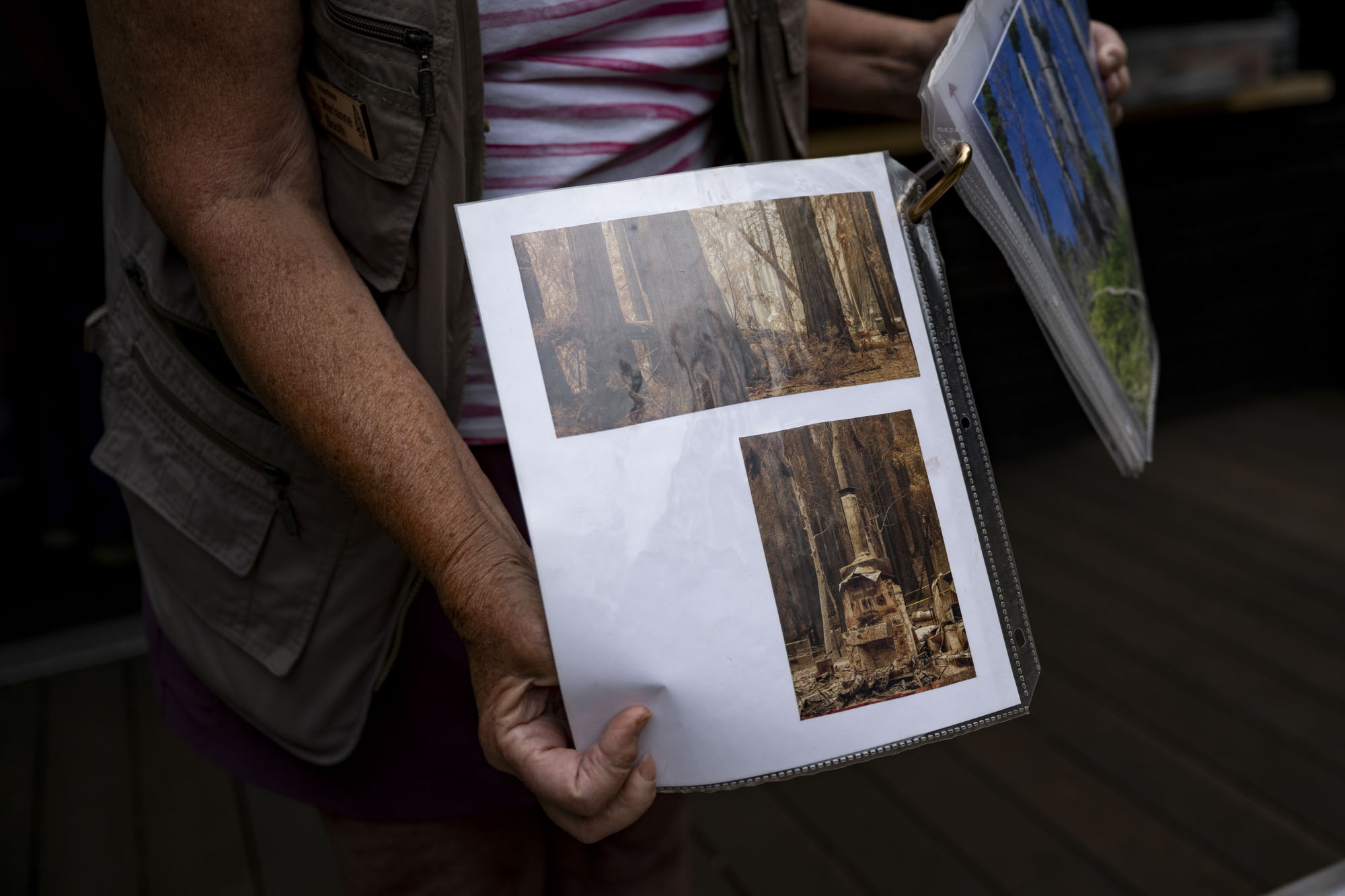
The park finally reopened in 2022, and state parks and its partners, including Cowman’s group, have been working ever since on its restoration, to slowly and safely bring visitors back to the park’s iconic trails and campgrounds.
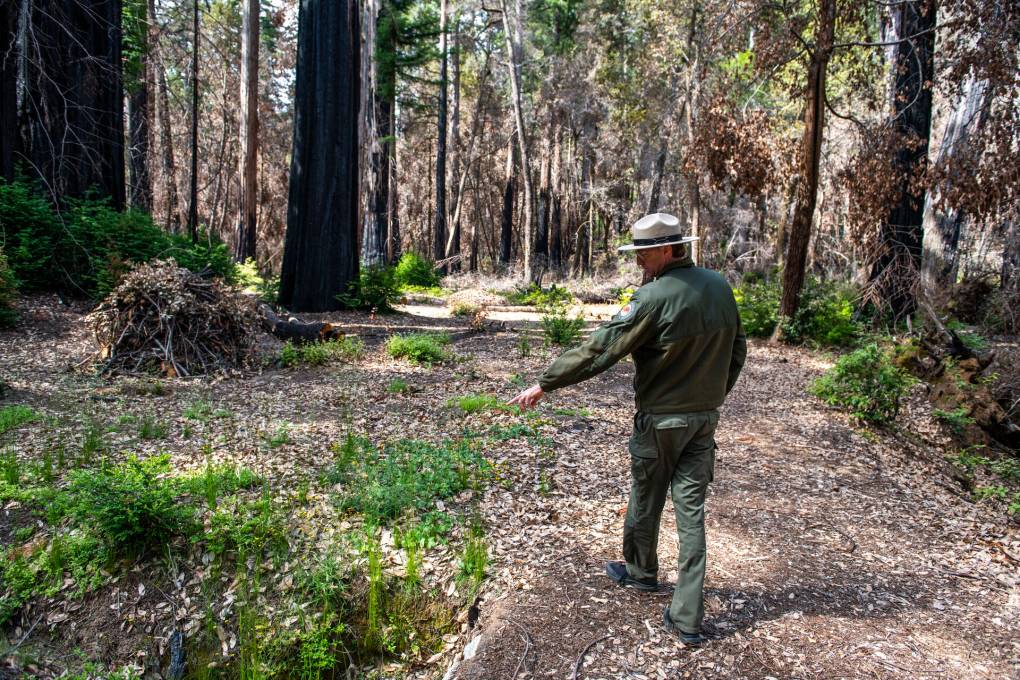
As Spohrer and Cowman strolled along the Redwood Loop Trail, they pointed out signs of the fire, the forest’s recovery, and all the work parks staff are doing to keep the trail safe and visitor-friendly. This trail was the first to reopen after the fire.
Booth, who is back working at the interpretive center, said she likes to show visitors today what the park was like before the fire, its lush green canopy that is hard to imagine standing in today’s sun-bleached park. She said many of the visitors she speaks to were themselves affected by the fire or have their own tales to tell about how wildfires have touched their lives.
“And so they sort of understand that it’s a long process to get back,” she said.
Seeing the forest for the trees
Those who saw the devastation firsthand find these woods a hopeful place. The giant redwoods that lost the entirety of their canopies are in the midst of resprouting. The forest floor, too, is covered in green — the Ceanothus whose seeds lay dormant under the soil until access to sun and charred soil invited them to emerge and thrive in a post-fire ecology.
With fire also comes flowers, Cowman said. In the springtime, the park is full of flowering plants and the pollinator insects that propagate them — much more so than before the fire, he said. There’s a lot more sunlight reaching the forest floor, so on sunny days, the park is much warmer than before.
“This loop was beautiful before the fire, and I think it’s beautiful after the fire,” Cowman said. ”We’ve seen acorn woodpeckers, we’ve seen downy woodpeckers, I heard a Pileated woodpecker earlier, so the bird life is clearly thriving here.”

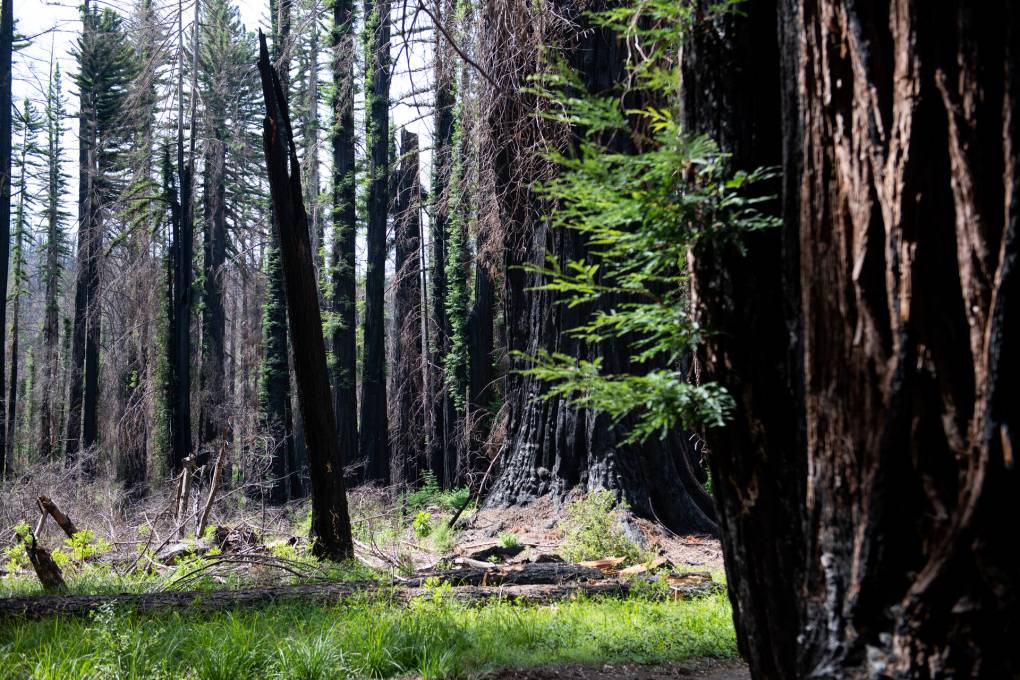
The omnipresent smell of smoke has mostly faded, and the utter silence of the forest right after the burn has slowly given way to nature’s bustle.
“It’s starting to sound a lot more like what we remember,” Cowman said.
Still, the park is home to many dead and dying trees, keeping parks staff, Caltrans and PG&E crews hard at work maintaining roads, trails and the state highway that runs through the park against falling trees and erosion, Cowman said. The park’s population of Douglas firs was decimated entirely.
Like Booth, when Jay Chamberlin, chief of state parks’ natural resources division, first saw the park after the fire, he feared the worst.
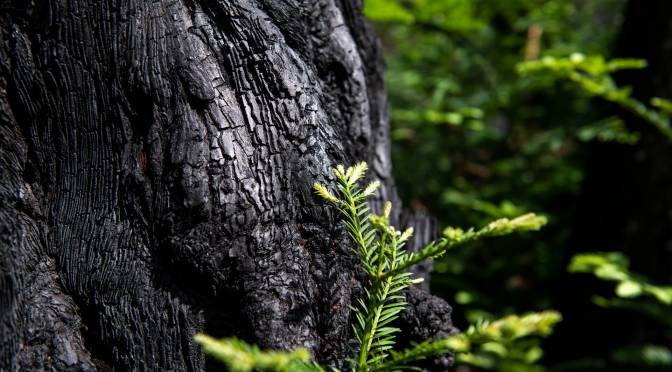
“When I saw it, I was like, ‘Uh-oh, I was wrong,’” he said. “These look like dead trees.”
That makes the new growth in the park today feel remarkable, Spohrer said.
“The forest has come back in a way that I think has surprised even those of us who have worked in forests like this for our whole careers,” he said. “That fire was so intense, and it burned so intensely in the old growth that it appeared at first that maybe the forest wasn’t going to recover, but that’s not the case. It’s recovering really, really well.”
And those redwoods that Chamberlin saw? Even they can, and are, coming back, too.
“These trees can burn up completely,” Cowman said. “100% of the canopy can get burned, and six years later you see a pretty good start on a new canopy.”
In fact, in a recent webinar, California State Parks Senior Environmental Scientist Portia Halbert reminded audiences that the redwoods in this park have burned before, notably in 1903, just one year after the park was created. In 2009, the Lockheed Fire, too, burned in the Santa Cruz Mountains.
There is some bad news, Cowman said. Some of the larger trees that appeared to have survived post-fire, and even grew new sprouts in the following years, are now, years later, dying.
“They were alive immediately following the fire, but for whatever reason, they are declining in health currently and starting to die out,” he said.
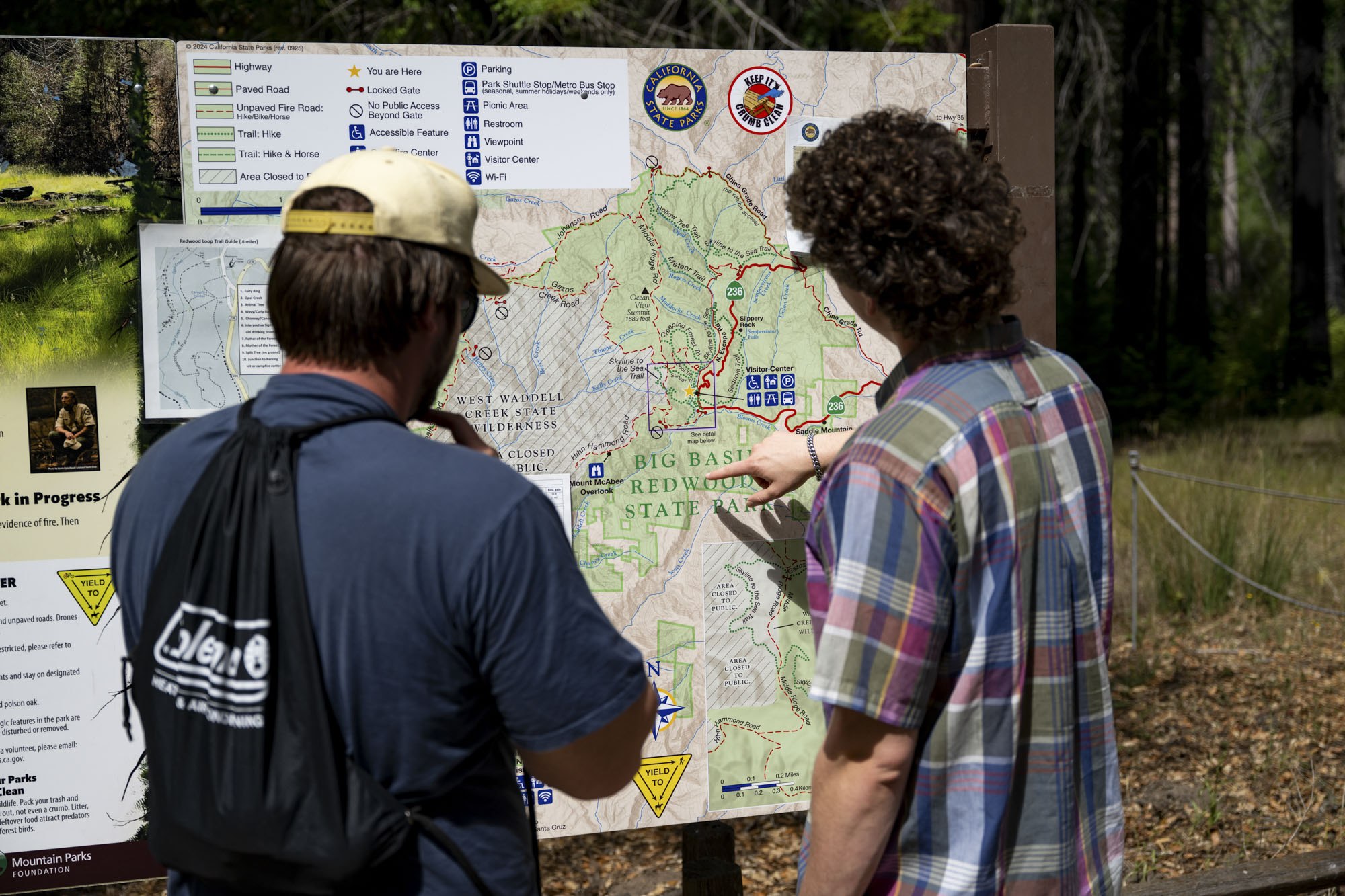
Even as more and more trees succumb to their wounds, the forest itself persists. Cowman said the key health indicators for an old-growth forest like this one are present — and an event like a fire can even open up features like meadows.
Plus, the Ceanothus that dominates the forest floor today isn’t a long-living plant — naturally, they live 20 or 30 years, Cowman said — so he expects that as the redwood canopy begins to close up, the forest will change once again.
Our experience in this park and this forest, Cowman reminded, is short relative to its lifespan.
“This is not the first time that redwoods have seen fire, and this will not be the last time that redwoods will see fire,” he said. “Forests are really a dynamic system. We just get to be witness to that process of dynamism and that process of change.”
Not rebuild, ‘reimagine’
It’s not just the trees that look different.
The park’s iconic headquarters was reduced to rubble during the fire — today, all that remains are its stone steps, built by the Civilian Conservation Corps in the 1930s — as was almost every other building in the main area of the park.
“This area burned very, very intensely,” Spohrer said. “There was really no way to save these structures.”
But the plan is not to rebuild.
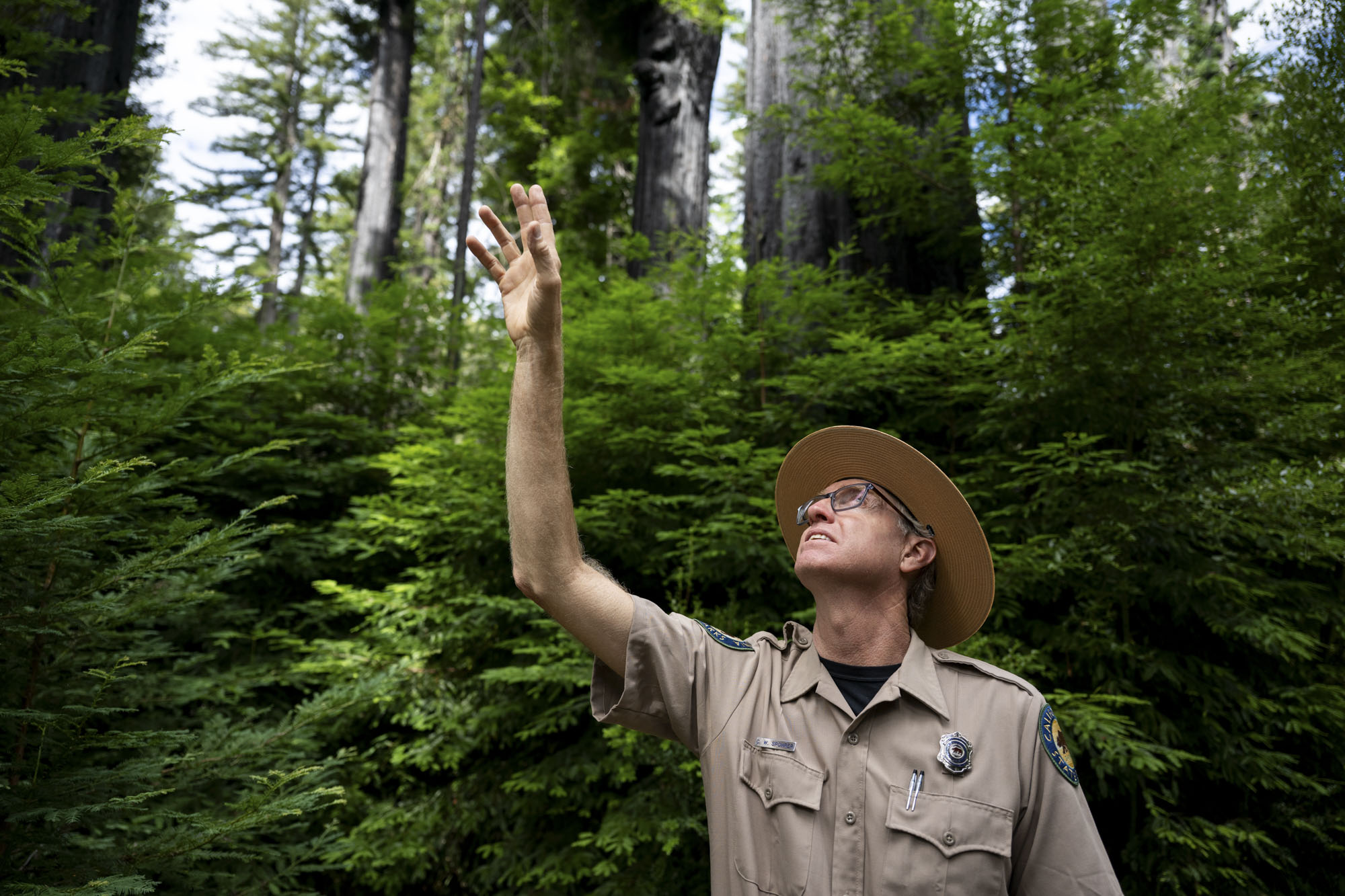
Called “Reimagining Big Basin,” the new plan for the park is to relocate the main park infrastructure away from the center of the old-growth forest.
The nearly $370 million plan will take time to implement.
“We’re probably five to 10 years off from it feeling more like a functioning park and less like a recovering ecosystem in some kind of chaos,” Shaffer said.
The highest priorities are restoring core infrastructure like water, power and emergency access to and from the park. Then comes the restoration of trails, campgrounds and education programs. And the park is relying on state grants and its nonprofit partners to help fund the work. Last year, a Los Altos resident donated a record $6 million to Friends of Santa Cruz State Parks to help fund the project.
The facilities that used to be located in the heart of the park, Spohrer said, will be rebuilt higher up at Saddle Mountain, and the campgrounds, too, will be relocated outside of the center of the park. There are also plans to work with the local Amah Mutsun tribal band to build a tribal cultural center, called Little Basin, near Saddle Mountain for gatherings and to keep indigenous knowledge and resources at the heart of the park’s recovery. Overall, Spohrer said, there will be far fewer buildings in the main old growth access area than before for many reasons.

First, so that they and the people who use and staff them are less at risk. Second, so that controlled burns can be more safely carried out. And third, because after the fire, it became clear that the buildings themselves added to its intensity, Spohrer said, “a hard lesson.”
“Part of our thinking going forward is to not recreate that experience,” he said, “to move those really critical visitor serving infrastructure outside this old growth.”
The park’s trails, like the Timms Creek Loop, are being rebuilt using more fire-resistant materials, Spohrer said, and visitors might notice active fuel management going on — like piles of dead tree branches that can be burned to lower the risk of the park igniting in the future. He said the park has “doubled down” on using prescribed fire, and even plans to host public prescribed burns to educate visitors about the process.
“There was a huge wake-up call with the CZU fire,” Spohrer said. “In a changing climate, you have conditions that demand that we proactively steward the forest.”
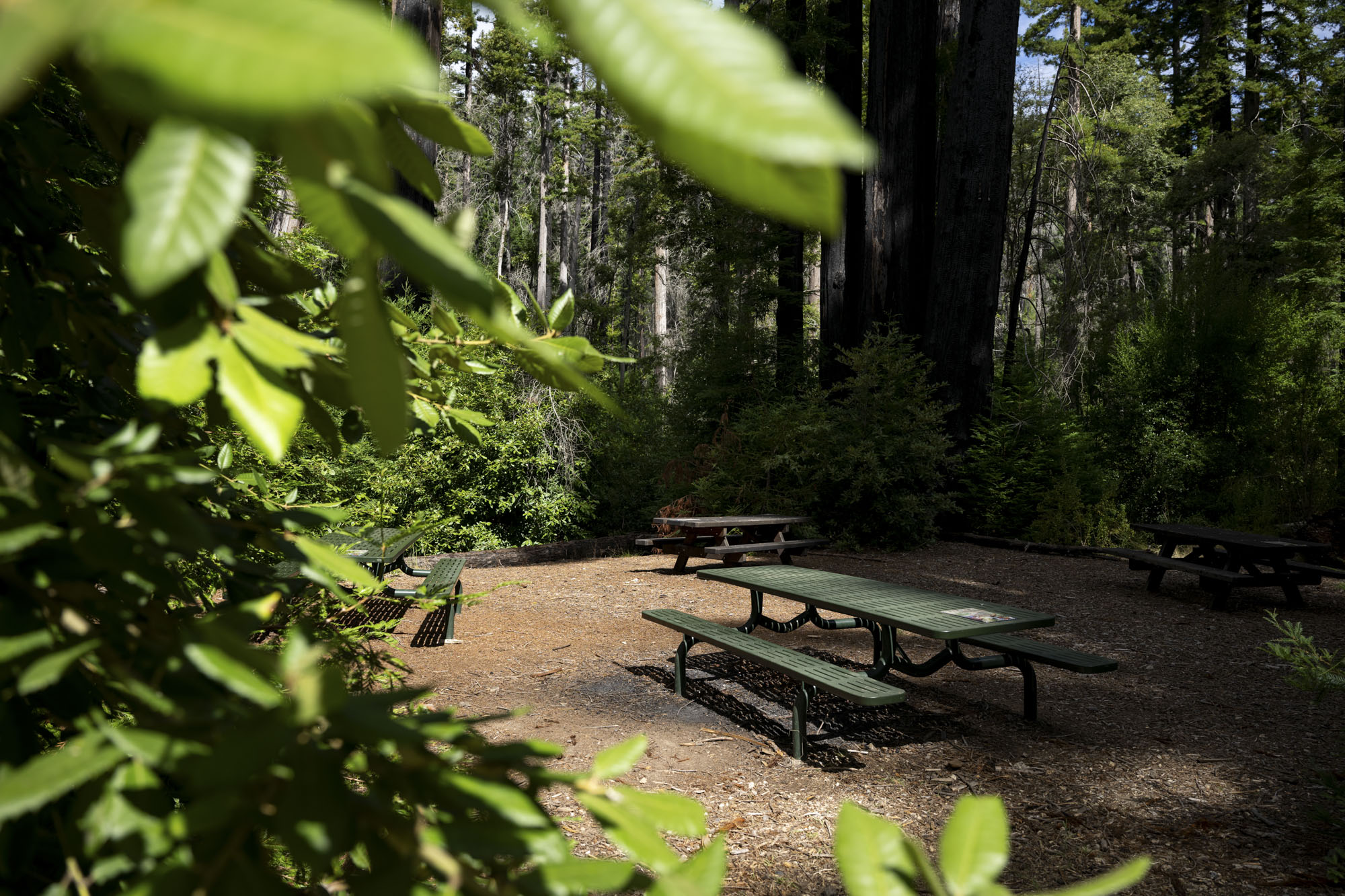
And given the heat that now reaches the forest floor, staff are even having to adjust where picnic tables are located and come up with a heat plan for park employees and visitors.
It’s a momentous change from the old Big Basin — the one that generations of visitors have come to love — but change, Chamberlin said, is necessary.
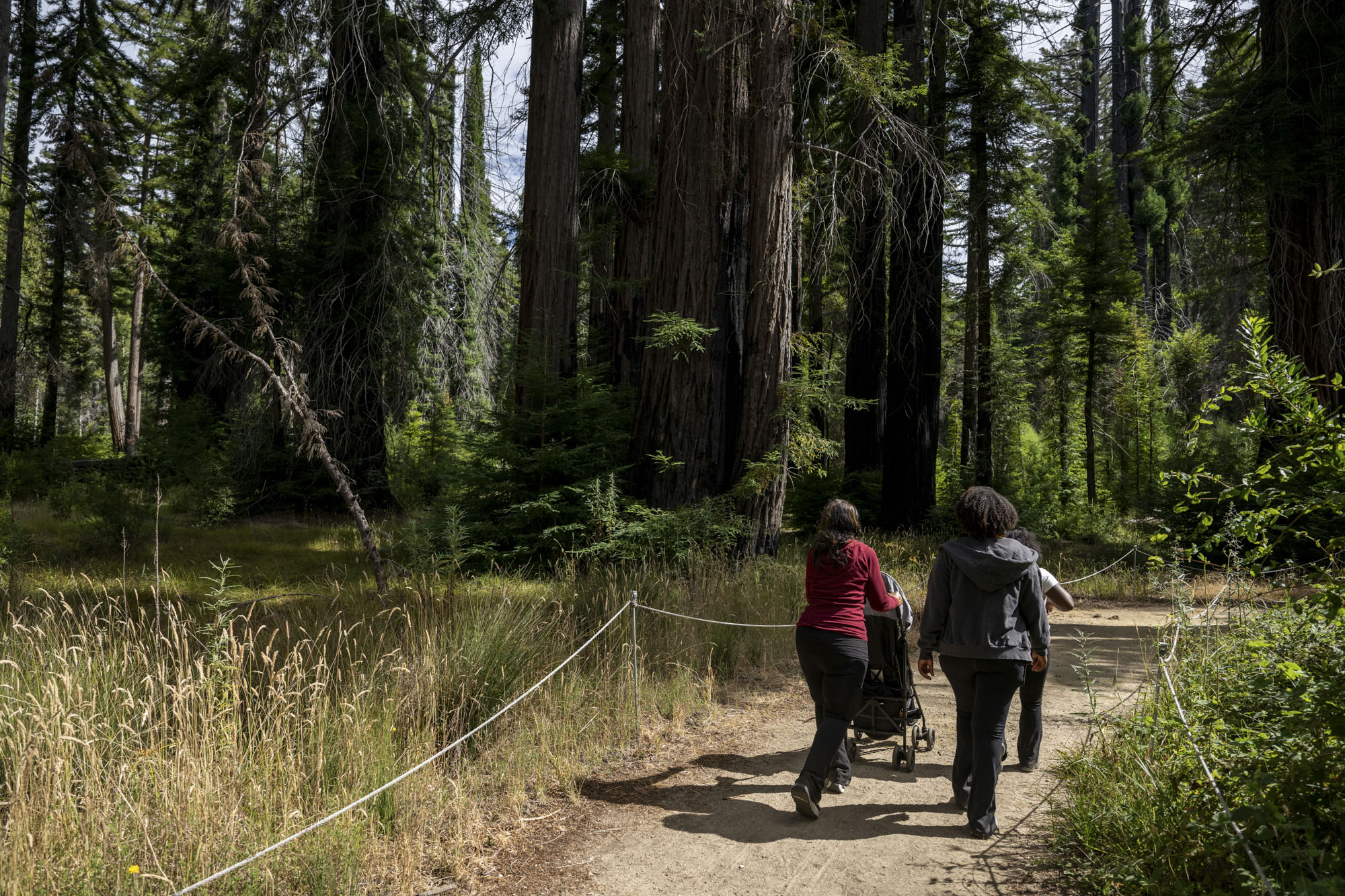
“We have to think about adapting our infrastructure and building infrastructure that’s resilient,” he said. “These places are changing, but we can actually change the way we think about these places and create spaces that are more resilient and more sustainable in the long run.”
And strategies like relocating park infrastructure away from natural resources at Big Basin could pave the way for change elsewhere, too, Chamberlin said.
“We can now use that as a template,” he said. “It doesn’t mean we will always reimagine parks in the wake of these climate-driven events, but that’s now a true option. Because if we can do it there, then we can really do it.”
A case study for the future
Another part of the story of this forest, Cowman said, is a warning. While redwoods can and do survive high-intensity fires, compounding that with other stressors, like increased temperature and drought, could make them more vulnerable in the future. The CZU fire burned 22% of all coastal redwoods in the last 100 years — and Cowman said it’s not clear if they can survive repeated exposure to climate-change-driven high-intensity fires.
“I feel confident that wildfire will become more prevalent throughout the entirety of the Redwood Range,” Cowman said. “So what’s happening down here in Santa Cruz with the CZU fire could become sort of a case study … as things continue to get hotter and drier.”
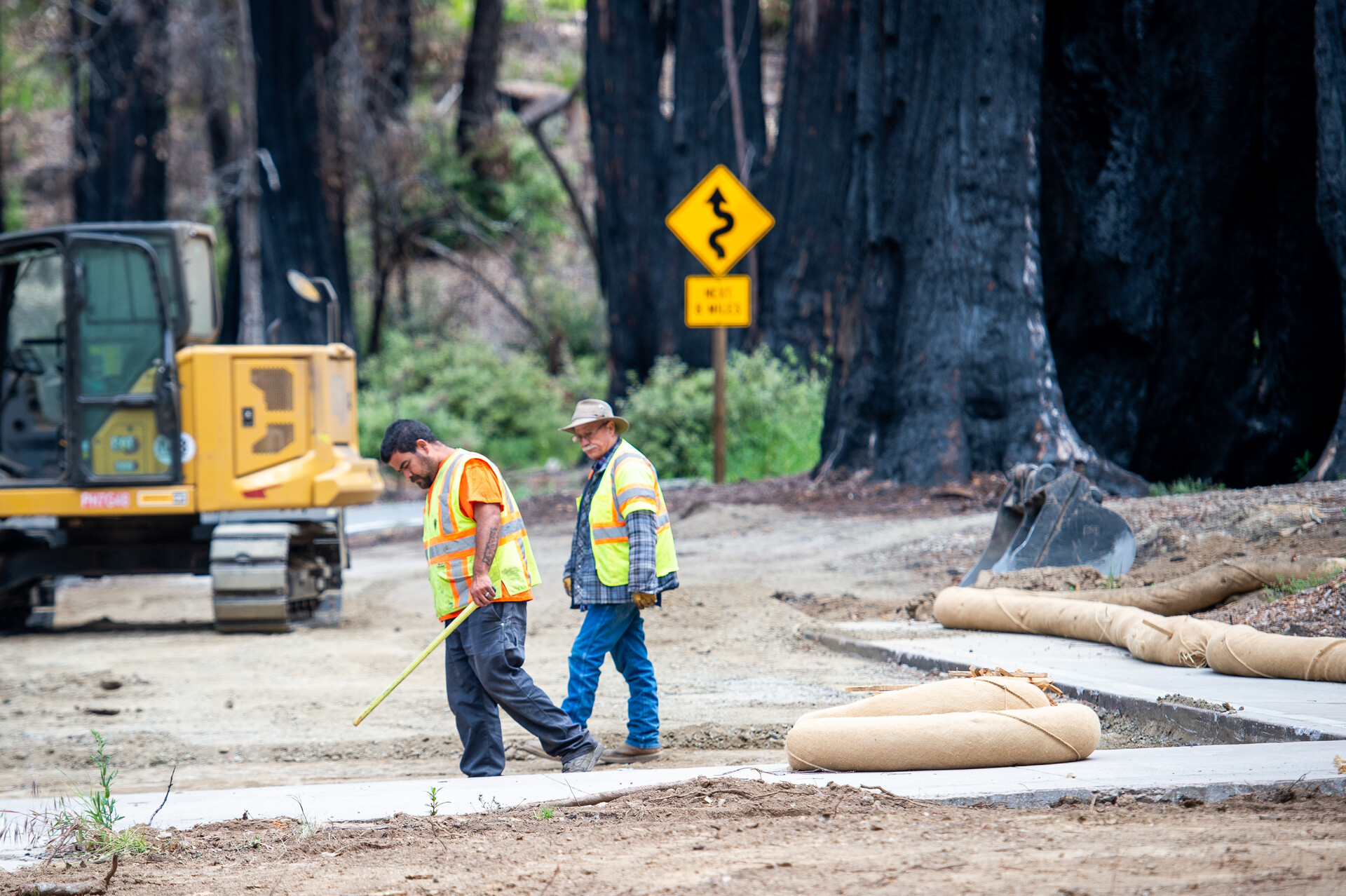
That’s part of why visitor education is at the heart of the reimagination of the park, Spohrer said. The plan is to redevelop its ranger programs and signage to explain what is happening to the forest in real time.
“If you’re not taking advantage of this type of learning opportunity,” Spohrer said, “you’re missing something.”
How to visit Big Basin today
The park is open, but many of the trails that visitors might remember are still closed, so remember to check trail conditions before you head out. There is no water, no electricity and no Wi-Fi in the park. There are currently no overnight facilities in the park.
It costs $6 to visit the park or $10 without a reservation. Reservations for parking are highly encouraged.
On weekdays, Spohrer said, it’s still easy to get a parking spot down in the heart of the park. But summer weekends in particular are busy, so the park has a new shuttle service to bring visitors from the Saddle Mountain parking area down to the main park entrance on busy summer weekends.
Bikers are also welcome to explore the paved and fire roads that run through the park, but are not allowed on trails.