window.__IS_SSR__=true
window.__INITIAL_STATE__={
"attachmentsReducer": {
"audio_0": {
"type": "attachments",
"id": "audio_0",
"imgSizes": {
"kqedFullSize": {
"file": "https://ww2.kqed.org/news/wp-content/themes/KQED-unified/img/audio_bgs/background0.jpg"
}
}
},
"audio_1": {
"type": "attachments",
"id": "audio_1",
"imgSizes": {
"kqedFullSize": {
"file": "https://ww2.kqed.org/news/wp-content/themes/KQED-unified/img/audio_bgs/background1.jpg"
}
}
},
"audio_2": {
"type": "attachments",
"id": "audio_2",
"imgSizes": {
"kqedFullSize": {
"file": "https://ww2.kqed.org/news/wp-content/themes/KQED-unified/img/audio_bgs/background2.jpg"
}
}
},
"audio_3": {
"type": "attachments",
"id": "audio_3",
"imgSizes": {
"kqedFullSize": {
"file": "https://ww2.kqed.org/news/wp-content/themes/KQED-unified/img/audio_bgs/background3.jpg"
}
}
},
"audio_4": {
"type": "attachments",
"id": "audio_4",
"imgSizes": {
"kqedFullSize": {
"file": "https://ww2.kqed.org/news/wp-content/themes/KQED-unified/img/audio_bgs/background4.jpg"
}
}
},
"placeholder": {
"type": "attachments",
"id": "placeholder",
"imgSizes": {
"thumbnail": {
"file": "https://cdn.kqed.org/wp-content/uploads/2024/12/KQED-Default-Image-816638274-2000x1333-1-160x107.jpg",
"width": 160,
"height": 107,
"mimeType": "image/jpeg"
},
"medium": {
"file": "https://cdn.kqed.org/wp-content/uploads/2024/12/KQED-Default-Image-816638274-2000x1333-1-800x533.jpg",
"width": 800,
"height": 533,
"mimeType": "image/jpeg"
},
"medium_large": {
"file": "https://cdn.kqed.org/wp-content/uploads/2024/12/KQED-Default-Image-816638274-2000x1333-1-768x512.jpg",
"width": 768,
"height": 512,
"mimeType": "image/jpeg"
},
"large": {
"file": "https://cdn.kqed.org/wp-content/uploads/2024/12/KQED-Default-Image-816638274-2000x1333-1-1020x680.jpg",
"width": 1020,
"height": 680,
"mimeType": "image/jpeg"
},
"1536x1536": {
"file": "https://cdn.kqed.org/wp-content/uploads/2024/12/KQED-Default-Image-816638274-2000x1333-1-1536x1024.jpg",
"width": 1536,
"height": 1024,
"mimeType": "image/jpeg"
},
"fd-lrg": {
"file": "https://cdn.kqed.org/wp-content/uploads/2024/12/KQED-Default-Image-816638274-2000x1333-1-1536x1024.jpg",
"width": 1536,
"height": 1024,
"mimeType": "image/jpeg"
},
"fd-med": {
"file": "https://cdn.kqed.org/wp-content/uploads/2024/12/KQED-Default-Image-816638274-2000x1333-1-1020x680.jpg",
"width": 1020,
"height": 680,
"mimeType": "image/jpeg"
},
"fd-sm": {
"file": "https://cdn.kqed.org/wp-content/uploads/2024/12/KQED-Default-Image-816638274-2000x1333-1-800x533.jpg",
"width": 800,
"height": 533,
"mimeType": "image/jpeg"
},
"post-thumbnail": {
"file": "https://cdn.kqed.org/wp-content/uploads/2024/12/KQED-Default-Image-816638274-2000x1333-1-672x372.jpg",
"width": 672,
"height": 372,
"mimeType": "image/jpeg"
},
"twentyfourteen-full-width": {
"file": "https://cdn.kqed.org/wp-content/uploads/2024/12/KQED-Default-Image-816638274-2000x1333-1-1038x576.jpg",
"width": 1038,
"height": 576,
"mimeType": "image/jpeg"
},
"xxsmall": {
"file": "https://cdn.kqed.org/wp-content/uploads/2024/12/KQED-Default-Image-816638274-2000x1333-1-160x107.jpg",
"width": 160,
"height": 107,
"mimeType": "image/jpeg"
},
"xsmall": {
"file": "https://cdn.kqed.org/wp-content/uploads/2024/12/KQED-Default-Image-816638274-2000x1333-1-672x372.jpg",
"width": 672,
"height": 372,
"mimeType": "image/jpeg"
},
"small": {
"file": "https://cdn.kqed.org/wp-content/uploads/2024/12/KQED-Default-Image-816638274-2000x1333-1-672x372.jpg",
"width": 672,
"height": 372,
"mimeType": "image/jpeg"
},
"xlarge": {
"file": "https://cdn.kqed.org/wp-content/uploads/2024/12/KQED-Default-Image-816638274-2000x1333-1-1020x680.jpg",
"width": 1020,
"height": 680,
"mimeType": "image/jpeg"
},
"full-width": {
"file": "https://cdn.kqed.org/wp-content/uploads/2024/12/KQED-Default-Image-816638274-2000x1333-1-1920x1280.jpg",
"width": 1920,
"height": 1280,
"mimeType": "image/jpeg"
},
"guest-author-32": {
"file": "https://cdn.kqed.org/wp-content/uploads/2025/01/KQED-Default-Image-816638274-1333x1333-1-160x160.jpg",
"width": 32,
"height": 32,
"mimeType": "image/jpeg"
},
"guest-author-50": {
"file": "https://cdn.kqed.org/wp-content/uploads/2025/01/KQED-Default-Image-816638274-1333x1333-1-160x160.jpg",
"width": 50,
"height": 50,
"mimeType": "image/jpeg"
},
"guest-author-64": {
"file": "https://cdn.kqed.org/wp-content/uploads/2025/01/KQED-Default-Image-816638274-1333x1333-1-160x160.jpg",
"width": 64,
"height": 64,
"mimeType": "image/jpeg"
},
"guest-author-96": {
"file": "https://cdn.kqed.org/wp-content/uploads/2025/01/KQED-Default-Image-816638274-1333x1333-1-160x160.jpg",
"width": 96,
"height": 96,
"mimeType": "image/jpeg"
},
"guest-author-128": {
"file": "https://cdn.kqed.org/wp-content/uploads/2025/01/KQED-Default-Image-816638274-1333x1333-1-160x160.jpg",
"width": 128,
"height": 128,
"mimeType": "image/jpeg"
},
"detail": {
"file": "https://cdn.kqed.org/wp-content/uploads/2025/01/KQED-Default-Image-816638274-1333x1333-1-160x160.jpg",
"width": 160,
"height": 160,
"mimeType": "image/jpeg"
},
"kqedFullSize": {
"file": "https://cdn.kqed.org/wp-content/uploads/2024/12/KQED-Default-Image-816638274-2000x1333-1.jpg",
"width": 2000,
"height": 1333
}
}
},
"mindshift_38728": {
"type": "attachments",
"id": "mindshift_38728",
"meta": {
"index": "attachments_1716263798",
"site": "mindshift",
"id": "38728",
"found": true
},
"parent": 38725,
"imgSizes": {
"twentyfourteen-full-width": {
"file": "https://ww2.kqed.org/app/uploads/sites/23/2014/12/PhysicsPlayground-1038x576.jpg",
"width": 1038,
"mimeType": "image/jpeg",
"height": 576
},
"thumbnail": {
"file": "https://ww2.kqed.org/app/uploads/sites/23/2014/12/PhysicsPlayground-400x225.jpg",
"width": 400,
"mimeType": "image/jpeg",
"height": 225
},
"fd-sm": {
"file": "https://ww2.kqed.org/app/uploads/sites/23/2014/12/PhysicsPlayground-320x180.jpg",
"width": 320,
"mimeType": "image/jpeg",
"height": 180
},
"post-thumbnail": {
"file": "https://ww2.kqed.org/app/uploads/sites/23/2014/12/PhysicsPlayground-672x372.jpg",
"width": 672,
"mimeType": "image/jpeg",
"height": 372
},
"kqedFullSize": {
"file": "https://ww2.kqed.org/app/uploads/sites/23/2014/12/PhysicsPlayground.jpg",
"width": 1440,
"height": 810
},
"large": {
"file": "https://ww2.kqed.org/app/uploads/sites/23/2014/12/PhysicsPlayground-1440x810.jpg",
"width": 1440,
"mimeType": "image/jpeg",
"height": 810
},
"guest-author-96": {
"file": "https://ww2.kqed.org/app/uploads/sites/23/2014/12/PhysicsPlayground-96x96.jpg",
"width": 96,
"mimeType": "image/jpeg",
"height": 96
},
"medium": {
"file": "https://ww2.kqed.org/app/uploads/sites/23/2014/12/PhysicsPlayground-800x450.jpg",
"width": 800,
"mimeType": "image/jpeg",
"height": 450
},
"guest-author-64": {
"file": "https://ww2.kqed.org/app/uploads/sites/23/2014/12/PhysicsPlayground-64x64.jpg",
"width": 64,
"mimeType": "image/jpeg",
"height": 64
},
"guest-author-32": {
"file": "https://ww2.kqed.org/app/uploads/sites/23/2014/12/PhysicsPlayground-32x32.jpg",
"width": 32,
"mimeType": "image/jpeg",
"height": 32
},
"fd-lrg": {
"file": "https://ww2.kqed.org/app/uploads/sites/23/2014/12/PhysicsPlayground-1180x664.jpg",
"width": 1180,
"mimeType": "image/jpeg",
"height": 664
},
"fd-med": {
"file": "https://ww2.kqed.org/app/uploads/sites/23/2014/12/PhysicsPlayground-768x432.jpg",
"width": 768,
"mimeType": "image/jpeg",
"height": 432
},
"guest-author-128": {
"file": "https://ww2.kqed.org/app/uploads/sites/23/2014/12/PhysicsPlayground-128x128.jpg",
"width": 128,
"mimeType": "image/jpeg",
"height": 128
}
},
"publishDate": 1418683991,
"modified": 1418684044,
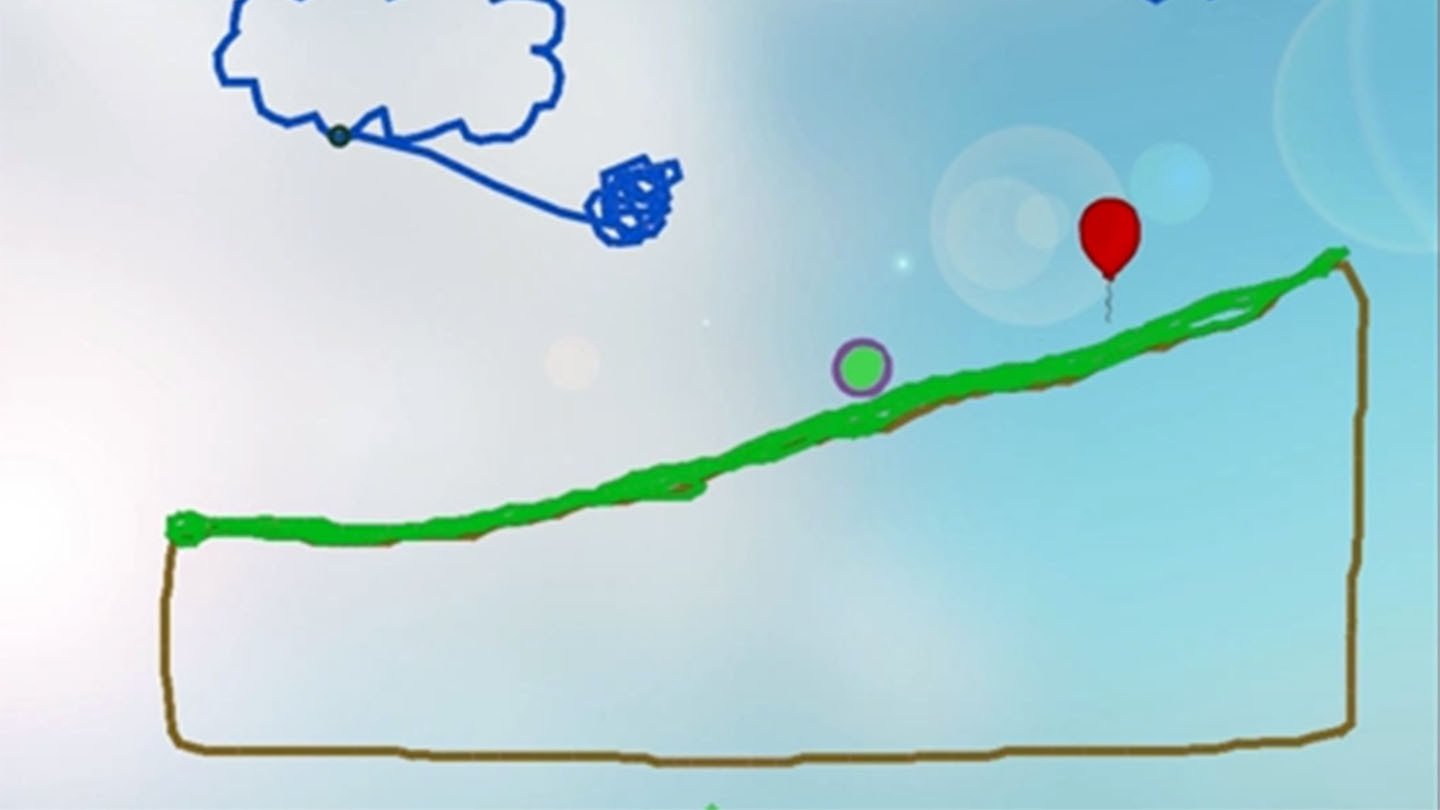
"caption": "Screenshot from Physics Playground, a game where middle school students draw agents of motion that will cause the green ball to hit the red balloon. (Physics Playground)",
"description": null,
"title": "PhysicsPlayground",
"credit": null,
"status": "inherit",
"isLoading": false,
"fetchFailed": false
},
"mindshift_38720": {
"type": "attachments",
"id": "mindshift_38720",
"meta": {
"index": "attachments_1716263798",
"site": "mindshift",
"id": "38720",
"found": true
},
"parent": 38533,
"imgSizes": {
"twentyfourteen-full-width": {
"file": "https://ww2.kqed.org/app/uploads/sites/23/2014/12/Deprogramming-1038x576.gif",
"width": 1038,
"mimeType": "image/gif",
"height": 576
},
"thumbnail": {
"file": "https://ww2.kqed.org/app/uploads/sites/23/2014/12/Deprogramming-400x267.gif",
"width": 400,
"mimeType": "image/gif",
"height": 267
},
"fd-sm": {
"file": "https://ww2.kqed.org/app/uploads/sites/23/2014/12/Deprogramming-320x213.gif",
"width": 320,
"mimeType": "image/gif",
"height": 213
},
"post-thumbnail": {
"file": "https://ww2.kqed.org/app/uploads/sites/23/2014/12/Deprogramming-672x372.gif",
"width": 672,
"mimeType": "image/gif",
"height": 372
},
"kqedFullSize": {
"file": "https://ww2.kqed.org/app/uploads/sites/23/2014/12/Deprogramming.gif",
"width": 1440,
"height": 960
},
"large": {
"file": "https://ww2.kqed.org/app/uploads/sites/23/2014/12/Deprogramming-1440x960.gif",
"width": 1440,
"mimeType": "image/gif",
"height": 960
},
"guest-author-96": {
"file": "https://ww2.kqed.org/app/uploads/sites/23/2014/12/Deprogramming-96x96.gif",
"width": 96,
"mimeType": "image/gif",
"height": 96
},
"medium": {
"file": "https://ww2.kqed.org/app/uploads/sites/23/2014/12/Deprogramming-800x533.gif",
"width": 800,
"mimeType": "image/gif",
"height": 533
},
"guest-author-64": {
"file": "https://ww2.kqed.org/app/uploads/sites/23/2014/12/Deprogramming-64x64.gif",
"width": 64,
"mimeType": "image/gif",
"height": 64
},
"guest-author-32": {
"file": "https://ww2.kqed.org/app/uploads/sites/23/2014/12/Deprogramming-32x32.gif",
"width": 32,
"mimeType": "image/gif",
"height": 32
},
"fd-lrg": {
"file": "https://ww2.kqed.org/app/uploads/sites/23/2014/12/Deprogramming-1180x787.gif",
"width": 1180,
"mimeType": "image/gif",
"height": 787
},
"fd-med": {
"file": "https://ww2.kqed.org/app/uploads/sites/23/2014/12/Deprogramming-768x512.gif",
"width": 768,
"mimeType": "image/gif",
"height": 512
},
"guest-author-128": {
"file": "https://ww2.kqed.org/app/uploads/sites/23/2014/12/Deprogramming-128x128.gif",
"width": 128,
"mimeType": "image/gif",
"height": 128
}
},
"publishDate": 1418653219,
"modified": 1418653229,
"caption": "iStock",
"description": null,
"title": "Deprogramming",
"credit": null,
"status": "inherit",
"isLoading": false,
"fetchFailed": false
},
"mindshift_38697": {
"type": "attachments",
"id": "mindshift_38697",
"meta": {
"index": "attachments_1716263798",
"site": "mindshift",
"id": "38697",
"found": true
},
"parent": 38696,
"imgSizes": {
"twentyfourteen-full-width": {
"file": "https://ww2.kqed.org/app/uploads/sites/23/2014/12/Sylvia-and-Arduinos-1038x576.gif",
"width": 1038,
"mimeType": "image/gif",
"height": 576
},
"thumbnail": {
"file": "https://ww2.kqed.org/app/uploads/sites/23/2014/12/Sylvia-and-Arduinos-400x267.gif",
"width": 400,
"mimeType": "image/gif",
"height": 267
},
"fd-sm": {
"file": "https://ww2.kqed.org/app/uploads/sites/23/2014/12/Sylvia-and-Arduinos-320x213.gif",
"width": 320,
"mimeType": "image/gif",
"height": 213
},
"post-thumbnail": {
"file": "https://ww2.kqed.org/app/uploads/sites/23/2014/12/Sylvia-and-Arduinos-672x372.gif",
"width": 672,
"mimeType": "image/gif",
"height": 372
},
"kqedFullSize": {
"file": "https://ww2.kqed.org/app/uploads/sites/23/2014/12/Sylvia-and-Arduinos.gif",
"width": 1440,
"height": 960
},
"large": {
"file": "https://ww2.kqed.org/app/uploads/sites/23/2014/12/Sylvia-and-Arduinos-1440x960.gif",
"width": 1440,
"mimeType": "image/gif",
"height": 960
},
"guest-author-96": {
"file": "https://ww2.kqed.org/app/uploads/sites/23/2014/12/Sylvia-and-Arduinos-96x96.gif",
"width": 96,
"mimeType": "image/gif",
"height": 96
},
"medium": {
"file": "https://ww2.kqed.org/app/uploads/sites/23/2014/12/Sylvia-and-Arduinos-800x533.gif",
"width": 800,
"mimeType": "image/gif",
"height": 533
},
"guest-author-64": {
"file": "https://ww2.kqed.org/app/uploads/sites/23/2014/12/Sylvia-and-Arduinos-64x64.gif",
"width": 64,
"mimeType": "image/gif",
"height": 64
},
"guest-author-32": {
"file": "https://ww2.kqed.org/app/uploads/sites/23/2014/12/Sylvia-and-Arduinos-32x32.gif",
"width": 32,
"mimeType": "image/gif",
"height": 32
},
"fd-lrg": {
"file": "https://ww2.kqed.org/app/uploads/sites/23/2014/12/Sylvia-and-Arduinos-1180x787.gif",
"width": 1180,
"mimeType": "image/gif",
"height": 787
},
"fd-med": {
"file": "https://ww2.kqed.org/app/uploads/sites/23/2014/12/Sylvia-and-Arduinos-768x512.gif",
"width": 768,
"mimeType": "image/gif",
"height": 512
},
"guest-author-128": {
"file": "https://ww2.kqed.org/app/uploads/sites/23/2014/12/Sylvia-and-Arduinos-128x128.gif",
"width": 128,
"mimeType": "image/gif",
"height": 128
}
},
"publishDate": 1418332443,
"modified": 1418332530,
"caption": "Super-Awesome Sylvia and her friendly robots. ",
"description": null,
"title": "Sylvia-and-Arduinos",
"credit": null,
"status": "inherit",
"isLoading": false,
"fetchFailed": false
},
"mindshift_38666": {
"type": "attachments",
"id": "mindshift_38666",
"meta": {
"index": "attachments_1716263798",
"site": "mindshift",
"id": "38666",
"found": true
},
"parent": 38659,
"imgSizes": {
"twentyfourteen-full-width": {
"file": "https://ww2.kqed.org/app/uploads/sites/23/2014/12/Ming-Horn-Angkor-Wat-1038x576.gif",
"width": 1038,
"mimeType": "image/gif",
"height": 576
},
"thumbnail": {
"file": "https://ww2.kqed.org/app/uploads/sites/23/2014/12/Ming-Horn-Angkor-Wat-400x225.gif",
"width": 400,
"mimeType": "image/gif",
"height": 225
},
"fd-sm": {
"file": "https://ww2.kqed.org/app/uploads/sites/23/2014/12/Ming-Horn-Angkor-Wat-320x180.gif",
"width": 320,
"mimeType": "image/gif",
"height": 180
},
"post-thumbnail": {
"file": "https://ww2.kqed.org/app/uploads/sites/23/2014/12/Ming-Horn-Angkor-Wat-672x372.gif",
"width": 672,
"mimeType": "image/gif",
"height": 372
},
"kqedFullSize": {
"file": "https://ww2.kqed.org/app/uploads/sites/23/2014/12/Ming-Horn-Angkor-Wat.gif",
"width": 1280,
"height": 720
},
"fd-lrg": {
"file": "https://ww2.kqed.org/app/uploads/sites/23/2014/12/Ming-Horn-Angkor-Wat-1180x664.gif",
"width": 1180,
"mimeType": "image/gif",
"height": 664
},
"fd-med": {
"file": "https://ww2.kqed.org/app/uploads/sites/23/2014/12/Ming-Horn-Angkor-Wat-768x432.gif",
"width": 768,
"mimeType": "image/gif",
"height": 432
},
"guest-author-96": {
"file": "https://ww2.kqed.org/app/uploads/sites/23/2014/12/Ming-Horn-Angkor-Wat-96x96.gif",
"width": 96,
"mimeType": "image/gif",
"height": 96
},
"medium": {
"file": "https://ww2.kqed.org/app/uploads/sites/23/2014/12/Ming-Horn-Angkor-Wat-800x450.gif",
"width": 800,
"mimeType": "image/gif",
"height": 450
},
"guest-author-64": {
"file": "https://ww2.kqed.org/app/uploads/sites/23/2014/12/Ming-Horn-Angkor-Wat-64x64.gif",
"width": 64,
"mimeType": "image/gif",
"height": 64
},
"guest-author-32": {
"file": "https://ww2.kqed.org/app/uploads/sites/23/2014/12/Ming-Horn-Angkor-Wat-32x32.gif",
"width": 32,
"mimeType": "image/gif",
"height": 32
},
"guest-author-128": {
"file": "https://ww2.kqed.org/app/uploads/sites/23/2014/12/Ming-Horn-Angkor-Wat-128x128.gif",
"width": 128,
"mimeType": "image/gif",
"height": 128
}
},
"publishDate": 1418223539,
"modified": 1418245393,
"caption": "Courtesy of Ming Horn",
"description": null,
"title": "Ming-Horn-Angkor-Wat",
"credit": null,
"status": "inherit",
"isLoading": false,
"fetchFailed": false
},
"mindshift_38654": {
"type": "attachments",
"id": "mindshift_38654",
"meta": {
"index": "attachments_1716263798",
"site": "mindshift",
"id": "38654",
"found": true
},
"parent": 38653,
"imgSizes": {
"twentyfourteen-full-width": {
"file": "https://ww2.kqed.org/app/uploads/sites/23/2014/12/preschool-math1_slide-b6d1042a22890c2e89ef42319b5db7975c86bec8-e1418129160422-1038x576.jpg",
"width": 1038,
"mimeType": "image/jpeg",
"height": 576
},
"thumbnail": {
"file": "https://ww2.kqed.org/app/uploads/sites/23/2014/12/preschool-math1_slide-b6d1042a22890c2e89ef42319b5db7975c86bec8-e1418129160422-400x267.jpg",
"width": 400,
"mimeType": "image/jpeg",
"height": 267
},
"fd-sm": {
"file": "https://ww2.kqed.org/app/uploads/sites/23/2014/12/preschool-math1_slide-b6d1042a22890c2e89ef42319b5db7975c86bec8-e1418129160422-320x213.jpg",
"width": 320,
"mimeType": "image/jpeg",
"height": 213
},
"post-thumbnail": {
"file": "https://ww2.kqed.org/app/uploads/sites/23/2014/12/preschool-math1_slide-b6d1042a22890c2e89ef42319b5db7975c86bec8-e1418129160422-672x372.jpg",
"width": 672,
"mimeType": "image/jpeg",
"height": 372
},
"kqedFullSize": {
"file": "https://ww2.kqed.org/app/uploads/sites/23/2014/12/preschool-math1_slide-b6d1042a22890c2e89ef42319b5db7975c86bec8-e1418129160422.jpg",
"width": 1440,
"height": 960
},
"large": {
"file": "https://ww2.kqed.org/app/uploads/sites/23/2014/12/preschool-math1_slide-b6d1042a22890c2e89ef42319b5db7975c86bec8-e1418129160422-1440x960.jpg",
"width": 1440,
"mimeType": "image/jpeg",
"height": 960
},
"guest-author-96": {
"file": "https://ww2.kqed.org/app/uploads/sites/23/2014/12/preschool-math1_slide-b6d1042a22890c2e89ef42319b5db7975c86bec8-e1418129160422-96x96.jpg",
"width": 96,
"mimeType": "image/jpeg",
"height": 96
},
"medium": {
"file": "https://ww2.kqed.org/app/uploads/sites/23/2014/12/preschool-math1_slide-b6d1042a22890c2e89ef42319b5db7975c86bec8-e1418129160422-800x533.jpg",
"width": 800,
"mimeType": "image/jpeg",
"height": 533
},
"guest-author-64": {
"file": "https://ww2.kqed.org/app/uploads/sites/23/2014/12/preschool-math1_slide-b6d1042a22890c2e89ef42319b5db7975c86bec8-e1418129160422-64x64.jpg",
"width": 64,
"mimeType": "image/jpeg",
"height": 64
},
"guest-author-32": {
"file": "https://ww2.kqed.org/app/uploads/sites/23/2014/12/preschool-math1_slide-b6d1042a22890c2e89ef42319b5db7975c86bec8-e1418129160422-32x32.jpg",
"width": 32,
"mimeType": "image/jpeg",
"height": 32
},
"fd-lrg": {
"file": "https://ww2.kqed.org/app/uploads/sites/23/2014/12/preschool-math1_slide-b6d1042a22890c2e89ef42319b5db7975c86bec8-e1418129160422-1180x787.jpg",
"width": 1180,
"mimeType": "image/jpeg",
"height": 787
},
"fd-med": {
"file": "https://ww2.kqed.org/app/uploads/sites/23/2014/12/preschool-math1_slide-b6d1042a22890c2e89ef42319b5db7975c86bec8-e1418129160422-768x512.jpg",
"width": 768,
"mimeType": "image/jpeg",
"height": 512
},
"detail": {
"file": "https://ww2.kqed.org/app/uploads/sites/23/2014/12/preschool-math1_slide-b6d1042a22890c2e89ef42319b5db7975c86bec8-e1418129160422-75x75.jpg",
"width": 75,
"mimeType": "image/jpeg",
"height": 75
},
"guest-author-128": {
"file": "https://ww2.kqed.org/app/uploads/sites/23/2014/12/preschool-math1_slide-b6d1042a22890c2e89ef42319b5db7975c86bec8-e1418129160422-128x128.jpg",
"width": 128,
"mimeType": "image/jpeg",
"height": 128
}
},
"publishDate": 1418129048,
"modified": 1418129107,
"caption": "There's a real lack of math learning in pre-K. In one study, in fact, just 58 seconds out of a full preschool day was spent on math activities. (Kaylhew/Flikr Creative Commons)",
"description": null,
"title": "There's a real lack of math learning in pre-K. In one study, in fact, just 58 seconds out of a full preschool day was spent on math activities.",
"credit": null,
"status": "inherit",
"isLoading": false,
"fetchFailed": false
},
"mindshift_38645": {
"type": "attachments",
"id": "mindshift_38645",
"meta": {
"index": "attachments_1716263798",
"site": "mindshift",
"id": "38645",
"found": true
},
"parent": 38640,
"imgSizes": {
"twentyfourteen-full-width": {
"file": "https://ww2.kqed.org/app/uploads/sites/23/2014/12/4328886363_99bb6cae82_o-e1417821558283-1038x576.jpg",
"width": 1038,
"mimeType": "image/jpeg",
"height": 576
},
"thumbnail": {
"file": "https://ww2.kqed.org/app/uploads/sites/23/2014/12/4328886363_99bb6cae82_o-e1417821558283-400x246.jpg",
"width": 400,
"mimeType": "image/jpeg",
"height": 246
},
"fd-sm": {
"file": "https://ww2.kqed.org/app/uploads/sites/23/2014/12/4328886363_99bb6cae82_o-e1417821558283-320x197.jpg",
"width": 320,
"mimeType": "image/jpeg",
"height": 197
},
"post-thumbnail": {
"file": "https://ww2.kqed.org/app/uploads/sites/23/2014/12/4328886363_99bb6cae82_o-e1417821558283-672x372.jpg",
"width": 672,
"mimeType": "image/jpeg",
"height": 372
},
"kqedFullSize": {
"file": "https://ww2.kqed.org/app/uploads/sites/23/2014/12/4328886363_99bb6cae82_o-e1417821558283.jpg",
"width": 3264,
"height": 2007
},
"large": {
"file": "https://ww2.kqed.org/app/uploads/sites/23/2014/12/4328886363_99bb6cae82_o-e1417821558283-1440x885.jpg",
"width": 1440,
"mimeType": "image/jpeg",
"height": 885
},
"guest-author-96": {
"file": "https://ww2.kqed.org/app/uploads/sites/23/2014/12/4328886363_99bb6cae82_o-e1417821558283-96x96.jpg",
"width": 96,
"mimeType": "image/jpeg",
"height": 96
},
"medium": {
"file": "https://ww2.kqed.org/app/uploads/sites/23/2014/12/4328886363_99bb6cae82_o-e1417821558283-800x492.jpg",
"width": 800,
"mimeType": "image/jpeg",
"height": 492
},
"guest-author-64": {
"file": "https://ww2.kqed.org/app/uploads/sites/23/2014/12/4328886363_99bb6cae82_o-e1417821558283-64x64.jpg",
"width": 64,
"mimeType": "image/jpeg",
"height": 64
},
"guest-author-32": {
"file": "https://ww2.kqed.org/app/uploads/sites/23/2014/12/4328886363_99bb6cae82_o-e1417821558283-32x32.jpg",
"width": 32,
"mimeType": "image/jpeg",
"height": 32
},
"fd-lrg": {
"file": "https://ww2.kqed.org/app/uploads/sites/23/2014/12/4328886363_99bb6cae82_o-e1417821558283-1180x726.jpg",
"width": 1180,
"mimeType": "image/jpeg",
"height": 726
},
"fd-med": {
"file": "https://ww2.kqed.org/app/uploads/sites/23/2014/12/4328886363_99bb6cae82_o-e1417821558283-768x472.jpg",
"width": 768,
"mimeType": "image/jpeg",
"height": 472
},
"guest-author-128": {
"file": "https://ww2.kqed.org/app/uploads/sites/23/2014/12/4328886363_99bb6cae82_o-e1417821558283-128x128.jpg",
"width": 128,
"mimeType": "image/jpeg",
"height": 128
}
},
"publishDate": 1417821496,
"modified": 1417821496,
"caption": null,
"description": null,
"title": "4328886363_99bb6cae82_o",
"credit": null,
"status": "inherit",
"isLoading": false,
"fetchFailed": false
},
"mindshift_38638": {
"type": "attachments",
"id": "mindshift_38638",
"meta": {
"index": "attachments_1716263798",
"site": "mindshift",
"id": "38638",
"found": true
},
"parent": 38631,
"imgSizes": {
"twentyfourteen-full-width": {
"file": "https://ww2.kqed.org/app/uploads/sites/23/2014/12/Numbers1-1038x576.gif",
"width": 1038,
"mimeType": "image/gif",
"height": 576
},
"thumbnail": {
"file": "https://ww2.kqed.org/app/uploads/sites/23/2014/12/Numbers1-400x225.gif",
"width": 400,
"mimeType": "image/gif",
"height": 225
},
"fd-sm": {
"file": "https://ww2.kqed.org/app/uploads/sites/23/2014/12/Numbers1-320x180.gif",
"width": 320,
"mimeType": "image/gif",
"height": 180
},
"post-thumbnail": {
"file": "https://ww2.kqed.org/app/uploads/sites/23/2014/12/Numbers1-672x372.gif",
"width": 672,
"mimeType": "image/gif",
"height": 372
},
"kqedFullSize": {
"file": "https://ww2.kqed.org/app/uploads/sites/23/2014/12/Numbers1.gif",
"width": 1280,
"height": 720
},
"fd-lrg": {
"file": "https://ww2.kqed.org/app/uploads/sites/23/2014/12/Numbers1-1180x664.gif",
"width": 1180,
"mimeType": "image/gif",
"height": 664
},
"fd-med": {
"file": "https://ww2.kqed.org/app/uploads/sites/23/2014/12/Numbers1-768x432.gif",
"width": 768,
"mimeType": "image/gif",
"height": 432
},
"guest-author-96": {
"file": "https://ww2.kqed.org/app/uploads/sites/23/2014/12/Numbers1-96x96.gif",
"width": 96,
"mimeType": "image/gif",
"height": 96
},
"medium": {
"file": "https://ww2.kqed.org/app/uploads/sites/23/2014/12/Numbers1-800x450.gif",
"width": 800,
"mimeType": "image/gif",
"height": 450
},
"guest-author-64": {
"file": "https://ww2.kqed.org/app/uploads/sites/23/2014/12/Numbers1-64x64.gif",
"width": 64,
"mimeType": "image/gif",
"height": 64
},
"guest-author-32": {
"file": "https://ww2.kqed.org/app/uploads/sites/23/2014/12/Numbers1-32x32.gif",
"width": 32,
"mimeType": "image/gif",
"height": 32
},
"guest-author-128": {
"file": "https://ww2.kqed.org/app/uploads/sites/23/2014/12/Numbers1-128x128.gif",
"width": 128,
"mimeType": "image/gif",
"height": 128
}
},
"publishDate": 1417703359,
"modified": 1417703382,
"caption": "iStock",
"description": "STEM",
"title": "Numbers",
"credit": null,
"status": "inherit",
"isLoading": false,
"fetchFailed": false
},
"mindshift_38623": {
"type": "attachments",
"id": "mindshift_38623",
"meta": {
"index": "attachments_1716263798",
"site": "mindshift",
"id": "38623",
"found": true
},
"parent": 38619,
"imgSizes": {
"twentyfourteen-full-width": {
"file": "https://ww2.kqed.org/app/uploads/sites/23/2014/12/DNA-Brain-thinking-1038x576.gif",
"width": 1038,
"mimeType": "image/gif",
"height": 576
},
"thumbnail": {
"file": "https://ww2.kqed.org/app/uploads/sites/23/2014/12/DNA-Brain-thinking-400x225.gif",
"width": 400,
"mimeType": "image/gif",
"height": 225
},
"fd-sm": {
"file": "https://ww2.kqed.org/app/uploads/sites/23/2014/12/DNA-Brain-thinking-320x180.gif",
"width": 320,
"mimeType": "image/gif",
"height": 180
},
"post-thumbnail": {
"file": "https://ww2.kqed.org/app/uploads/sites/23/2014/12/DNA-Brain-thinking-672x372.gif",
"width": 672,
"mimeType": "image/gif",
"height": 372
},
"kqedFullSize": {
"file": "https://ww2.kqed.org/app/uploads/sites/23/2014/12/DNA-Brain-thinking.gif",
"width": 1280,
"height": 720
},
"fd-lrg": {
"file": "https://ww2.kqed.org/app/uploads/sites/23/2014/12/DNA-Brain-thinking-1180x664.gif",
"width": 1180,
"mimeType": "image/gif",
"height": 664
},
"fd-med": {
"file": "https://ww2.kqed.org/app/uploads/sites/23/2014/12/DNA-Brain-thinking-768x432.gif",
"width": 768,
"mimeType": "image/gif",
"height": 432
},
"guest-author-96": {
"file": "https://ww2.kqed.org/app/uploads/sites/23/2014/12/DNA-Brain-thinking-96x96.gif",
"width": 96,
"mimeType": "image/gif",
"height": 96
},
"medium": {
"file": "https://ww2.kqed.org/app/uploads/sites/23/2014/12/DNA-Brain-thinking-800x450.gif",
"width": 800,
"mimeType": "image/gif",
"height": 450
},
"guest-author-64": {
"file": "https://ww2.kqed.org/app/uploads/sites/23/2014/12/DNA-Brain-thinking-64x64.gif",
"width": 64,
"mimeType": "image/gif",
"height": 64
},
"guest-author-32": {
"file": "https://ww2.kqed.org/app/uploads/sites/23/2014/12/DNA-Brain-thinking-32x32.gif",
"width": 32,
"mimeType": "image/gif",
"height": 32
},
"guest-author-128": {
"file": "https://ww2.kqed.org/app/uploads/sites/23/2014/12/DNA-Brain-thinking-128x128.gif",
"width": 128,
"mimeType": "image/gif",
"height": 128
}
},
"publishDate": 1417615087,
"modified": 1417615101,
"caption": "iStock",
"description": null,
"title": "DNA-Brain-thinking",
"credit": null,
"status": "inherit",
"isLoading": false,
"fetchFailed": false
},
"mindshift_38513": {
"type": "attachments",
"id": "mindshift_38513",
"meta": {
"index": "attachments_1716263798",
"site": "mindshift",
"id": "38513",
"found": true
},
"parent": 38512,
"imgSizes": {
"twentyfourteen-full-width": {
"file": "https://ww2.kqed.org/app/uploads/sites/23/2014/11/Piedmont-1038x576.jpg",
"width": 1038,
"mimeType": "image/jpeg",
"height": 576
},
"thumbnail": {
"file": "https://ww2.kqed.org/app/uploads/sites/23/2014/11/Piedmont-400x225.jpg",
"width": 400,
"mimeType": "image/jpeg",
"height": 225
},
"fd-sm": {
"file": "https://ww2.kqed.org/app/uploads/sites/23/2014/11/Piedmont-320x180.jpg",
"width": 320,
"mimeType": "image/jpeg",
"height": 180
},
"post-thumbnail": {
"file": "https://ww2.kqed.org/app/uploads/sites/23/2014/11/Piedmont-672x372.jpg",
"width": 672,
"mimeType": "image/jpeg",
"height": 372
},
"kqedFullSize": {
"file": "https://ww2.kqed.org/app/uploads/sites/23/2014/11/Piedmont.jpg",
"width": 1440,
"height": 810
},
"large": {
"file": "https://ww2.kqed.org/app/uploads/sites/23/2014/11/Piedmont-1440x810.jpg",
"width": 1440,
"mimeType": "image/jpeg",
"height": 810
},
"guest-author-96": {
"file": "https://ww2.kqed.org/app/uploads/sites/23/2014/11/Piedmont-96x96.jpg",
"width": 96,
"mimeType": "image/jpeg",
"height": 96
},
"medium": {
"file": "https://ww2.kqed.org/app/uploads/sites/23/2014/11/Piedmont-800x450.jpg",
"width": 800,
"mimeType": "image/jpeg",
"height": 450
},
"guest-author-64": {
"file": "https://ww2.kqed.org/app/uploads/sites/23/2014/11/Piedmont-64x64.jpg",
"width": 64,
"mimeType": "image/jpeg",
"height": 64
},
"guest-author-32": {
"file": "https://ww2.kqed.org/app/uploads/sites/23/2014/11/Piedmont-32x32.jpg",
"width": 32,
"mimeType": "image/jpeg",
"height": 32
},
"fd-lrg": {
"file": "https://ww2.kqed.org/app/uploads/sites/23/2014/11/Piedmont-1180x664.jpg",
"width": 1180,
"mimeType": "image/jpeg",
"height": 664
},
"fd-med": {
"file": "https://ww2.kqed.org/app/uploads/sites/23/2014/11/Piedmont-768x432.jpg",
"width": 768,
"mimeType": "image/jpeg",
"height": 432
},
"guest-author-128": {
"file": "https://ww2.kqed.org/app/uploads/sites/23/2014/11/Piedmont-128x128.jpg",
"width": 128,
"mimeType": "image/jpeg",
"height": 128
}
},
"publishDate": 1416521611,
"modified": 1416521611,
"caption": "Students at Piedmont High School have Macbook Airs that they can take home and use to access information and homework on the internet. (League of Innovative Schools)",
"description": null,
"title": "Piedmont",
"credit": null,
"status": "inherit",
"isLoading": false,
"fetchFailed": false
},
"mindshift_38588": {
"type": "attachments",
"id": "mindshift_38588",
"meta": {
"index": "attachments_1716263798",
"site": "mindshift",
"id": "38588",
"found": true
},
"parent": 38587,
"imgSizes": {
"twentyfourteen-full-width": {
"file": "https://ww2.kqed.org/app/uploads/sites/23/2014/11/preschool_01_custom-b1d3c772afa449936cdb146d5507d67f0851dcb0-e1417443326594-1038x576.jpg",
"width": 1038,
"mimeType": "image/jpeg",
"height": 576
},
"thumbnail": {
"file": "https://ww2.kqed.org/app/uploads/sites/23/2014/11/preschool_01_custom-b1d3c772afa449936cdb146d5507d67f0851dcb0-e1417443326594-400x225.jpg",
"width": 400,
"mimeType": "image/jpeg",
"height": 225
},
"fd-sm": {
"file": "https://ww2.kqed.org/app/uploads/sites/23/2014/11/preschool_01_custom-b1d3c772afa449936cdb146d5507d67f0851dcb0-e1417443326594-320x180.jpg",
"width": 320,
"mimeType": "image/jpeg",
"height": 180
},
"post-thumbnail": {
"file": "https://ww2.kqed.org/app/uploads/sites/23/2014/11/preschool_01_custom-b1d3c772afa449936cdb146d5507d67f0851dcb0-e1417443326594-672x372.jpg",
"width": 672,
"mimeType": "image/jpeg",
"height": 372
},
"kqedFullSize": {
"file": "https://ww2.kqed.org/app/uploads/sites/23/2014/11/preschool_01_custom-b1d3c772afa449936cdb146d5507d67f0851dcb0-e1417443326594.jpg",
"width": 1440,
"height": 809
},
"large": {
"file": "https://ww2.kqed.org/app/uploads/sites/23/2014/11/preschool_01_custom-b1d3c772afa449936cdb146d5507d67f0851dcb0-e1417443326594-1440x809.jpg",
"width": 1440,
"mimeType": "image/jpeg",
"height": 809
},
"guest-author-96": {
"file": "https://ww2.kqed.org/app/uploads/sites/23/2014/11/preschool_01_custom-b1d3c772afa449936cdb146d5507d67f0851dcb0-e1417443326594-96x96.jpg",
"width": 96,
"mimeType": "image/jpeg",
"height": 96
},
"medium": {
"file": "https://ww2.kqed.org/app/uploads/sites/23/2014/11/preschool_01_custom-b1d3c772afa449936cdb146d5507d67f0851dcb0-e1417443326594-800x449.jpg",
"width": 800,
"mimeType": "image/jpeg",
"height": 449
},
"guest-author-64": {
"file": "https://ww2.kqed.org/app/uploads/sites/23/2014/11/preschool_01_custom-b1d3c772afa449936cdb146d5507d67f0851dcb0-e1417443326594-64x64.jpg",
"width": 64,
"mimeType": "image/jpeg",
"height": 64
},
"guest-author-32": {
"file": "https://ww2.kqed.org/app/uploads/sites/23/2014/11/preschool_01_custom-b1d3c772afa449936cdb146d5507d67f0851dcb0-e1417443326594-32x32.jpg",
"width": 32,
"mimeType": "image/jpeg",
"height": 32
},
"fd-lrg": {
"file": "https://ww2.kqed.org/app/uploads/sites/23/2014/11/preschool_01_custom-b1d3c772afa449936cdb146d5507d67f0851dcb0-e1417443326594-1180x663.jpg",
"width": 1180,
"mimeType": "image/jpeg",
"height": 663
},
"fd-med": {
"file": "https://ww2.kqed.org/app/uploads/sites/23/2014/11/preschool_01_custom-b1d3c772afa449936cdb146d5507d67f0851dcb0-e1417443326594-768x431.jpg",
"width": 768,
"mimeType": "image/jpeg",
"height": 431
},
"detail": {
"file": "https://ww2.kqed.org/app/uploads/sites/23/2014/11/preschool_01_custom-b1d3c772afa449936cdb146d5507d67f0851dcb0-e1417443326594-75x75.jpg",
"width": 75,
"mimeType": "image/jpeg",
"height": 75
},
"guest-author-128": {
"file": "https://ww2.kqed.org/app/uploads/sites/23/2014/11/preschool_01_custom-b1d3c772afa449936cdb146d5507d67f0851dcb0-e1417443326594-128x128.jpg",
"width": 128,
"mimeType": "image/jpeg",
"height": 128
}
},
"publishDate": 1417389334,
"modified": 1417389334,
"caption": "Preschool students from Nikki Jones' class at Porter Early Childhood Development Center in Tulsa line up in the hallway on their way back from outside play. (John W. Poole/NPR)",
"description": null,
"title": "Preschool students from Nikki Jones' class at Porter Early Childhood Development Center in Tulsa line up in the hallway on their way back from outside play.",
"credit": null,
"status": "inherit",
"isLoading": false,
"fetchFailed": false
},
"mindshift_38568": {
"type": "attachments",
"id": "mindshift_38568",
"meta": {
"index": "attachments_1716263798",
"site": "mindshift",
"id": "38568",
"found": true
},
"parent": 38566,
"imgSizes": {
"twentyfourteen-full-width": {
"file": "https://ww2.kqed.org/app/uploads/sites/23/2014/11/personalize-1038x576.jpg",
"width": 1038,
"mimeType": "image/jpeg",
"height": 576
},
"thumbnail": {
"file": "https://ww2.kqed.org/app/uploads/sites/23/2014/11/personalize-400x225.jpg",
"width": 400,
"mimeType": "image/jpeg",
"height": 225
},
"fd-sm": {
"file": "https://ww2.kqed.org/app/uploads/sites/23/2014/11/personalize-320x180.jpg",
"width": 320,
"mimeType": "image/jpeg",
"height": 180
},
"post-thumbnail": {
"file": "https://ww2.kqed.org/app/uploads/sites/23/2014/11/personalize-672x372.jpg",
"width": 672,
"mimeType": "image/jpeg",
"height": 372
},
"kqedFullSize": {
"file": "https://ww2.kqed.org/app/uploads/sites/23/2014/11/personalize.jpg",
"width": 1440,
"height": 810
},
"large": {
"file": "https://ww2.kqed.org/app/uploads/sites/23/2014/11/personalize-1440x810.jpg",
"width": 1440,
"mimeType": "image/jpeg",
"height": 810
},
"guest-author-96": {
"file": "https://ww2.kqed.org/app/uploads/sites/23/2014/11/personalize-96x96.jpg",
"width": 96,
"mimeType": "image/jpeg",
"height": 96
},
"medium": {
"file": "https://ww2.kqed.org/app/uploads/sites/23/2014/11/personalize-800x450.jpg",
"width": 800,
"mimeType": "image/jpeg",
"height": 450
},
"guest-author-64": {
"file": "https://ww2.kqed.org/app/uploads/sites/23/2014/11/personalize-64x64.jpg",
"width": 64,
"mimeType": "image/jpeg",
"height": 64
},
"guest-author-32": {
"file": "https://ww2.kqed.org/app/uploads/sites/23/2014/11/personalize-32x32.jpg",
"width": 32,
"mimeType": "image/jpeg",
"height": 32
},
"fd-lrg": {
"file": "https://ww2.kqed.org/app/uploads/sites/23/2014/11/personalize-1180x664.jpg",
"width": 1180,
"mimeType": "image/jpeg",
"height": 664
},
"fd-med": {
"file": "https://ww2.kqed.org/app/uploads/sites/23/2014/11/personalize-768x432.jpg",
"width": 768,
"mimeType": "image/jpeg",
"height": 432
},
"guest-author-128": {
"file": "https://ww2.kqed.org/app/uploads/sites/23/2014/11/personalize-128x128.jpg",
"width": 128,
"mimeType": "image/jpeg",
"height": 128
}
},
"publishDate": 1417031252,
"modified": 1417031252,
"caption": "Mia MacMeekin/An Ethical Island",
"description": null,
"title": "personalize",
"credit": null,
"status": "inherit",
"isLoading": false,
"fetchFailed": false
},
"mindshift_38555": {
"type": "attachments",
"id": "mindshift_38555",
"meta": {
"index": "attachments_1716263798",
"site": "mindshift",
"id": "38555",
"found": true
},
"parent": 38553,
"imgSizes": {
"twentyfourteen-full-width": {
"file": "https://ww2.kqed.org/app/uploads/sites/23/2014/11/Scavenged-Casters-Earthworm-1038x576.gif",
"width": 1038,
"mimeType": "image/gif",
"height": 576
},
"thumbnail": {
"file": "https://ww2.kqed.org/app/uploads/sites/23/2014/11/Scavenged-Casters-Earthworm-400x225.gif",
"width": 400,
"mimeType": "image/gif",
"height": 225
},
"fd-sm": {
"file": "https://ww2.kqed.org/app/uploads/sites/23/2014/11/Scavenged-Casters-Earthworm-320x180.gif",
"width": 320,
"mimeType": "image/gif",
"height": 180
},
"post-thumbnail": {
"file": "https://ww2.kqed.org/app/uploads/sites/23/2014/11/Scavenged-Casters-Earthworm-672x372.gif",
"width": 672,
"mimeType": "image/gif",
"height": 372
},
"kqedFullSize": {
"file": "https://ww2.kqed.org/app/uploads/sites/23/2014/11/Scavenged-Casters-Earthworm.gif",
"width": 1280,
"height": 720
},
"fd-lrg": {
"file": "https://ww2.kqed.org/app/uploads/sites/23/2014/11/Scavenged-Casters-Earthworm-1180x664.gif",
"width": 1180,
"mimeType": "image/gif",
"height": 664
},
"fd-med": {
"file": "https://ww2.kqed.org/app/uploads/sites/23/2014/11/Scavenged-Casters-Earthworm-768x432.gif",
"width": 768,
"mimeType": "image/gif",
"height": 432
},
"guest-author-96": {
"file": "https://ww2.kqed.org/app/uploads/sites/23/2014/11/Scavenged-Casters-Earthworm-96x96.gif",
"width": 96,
"mimeType": "image/gif",
"height": 96
},
"medium": {
"file": "https://ww2.kqed.org/app/uploads/sites/23/2014/11/Scavenged-Casters-Earthworm-800x450.gif",
"width": 800,
"mimeType": "image/gif",
"height": 450
},
"guest-author-64": {
"file": "https://ww2.kqed.org/app/uploads/sites/23/2014/11/Scavenged-Casters-Earthworm-64x64.gif",
"width": 64,
"mimeType": "image/gif",
"height": 64
},
"guest-author-32": {
"file": "https://ww2.kqed.org/app/uploads/sites/23/2014/11/Scavenged-Casters-Earthworm-32x32.gif",
"width": 32,
"mimeType": "image/gif",
"height": 32
},
"guest-author-128": {
"file": "https://ww2.kqed.org/app/uploads/sites/23/2014/11/Scavenged-Casters-Earthworm-128x128.gif",
"width": 128,
"mimeType": "image/gif",
"height": 128
}
},
"publishDate": 1417008293,
"modified": 1417008293,
"caption": "Scavenged casters. (Courtesy of Earthworm)",
"description": null,
"title": "Scavenged-Casters-Earthworm",
"credit": null,
"status": "inherit",
"isLoading": false,
"fetchFailed": false
}
},
"audioPlayerReducer": {
"postId": "stream_live",
"isPaused": true,
"isPlaying": false,
"pfsActive": false,
"pledgeModalIsOpen": true,
"playerDrawerIsOpen": false,
"liveAudioPlayStartedAt": 0,
"liveAudioPlayContext": ""
},
"authorsReducer": {
"byline_mindshift_38653": {
"type": "authors",
"id": "byline_mindshift_38653",
"meta": {
"override": true
},
"slug": "byline_mindshift_38653",
"name": "Anya Kamenetz",
"isLoading": false
},
"byline_mindshift_38587": {
"type": "authors",
"id": "byline_mindshift_38587",
"meta": {
"override": true
},
"slug": "byline_mindshift_38587",
"name": "Anya Kamenetz, \u003ca href=\"http://www.npr.org/sections/ed/2014/11/25/366561443/what-every-school-can-learn-from-preschools\">NPR\u003c/a>",
"isLoading": false
},
"katrinaschwartz": {
"type": "authors",
"id": "234",
"meta": {
"index": "authors_1716337520",
"id": "234",
"found": true
},
"name": "Katrina Schwartz",
"firstName": "Katrina",
"lastName": "Schwartz",
"slug": "katrinaschwartz",
"email": "kschwartz@kqed.org",
"display_author_email": false,
"staff_mastheads": [
"news"
],
"title": "Producer",
"bio": "Katrina Schwartz is a journalist based in San Francisco. She's worked at KPCC public radio in LA and has reported on air and online for KQED since 2010. She covered how teaching and learning is changing for MindShift between 2012 and 2020. She is the co-host of the MindShift podcast and now produces KQED's Bay Curious podcast.",
"avatar": "https://secure.gravatar.com/avatar/edb4ee79070447a018538c9aae6eeecf28786515b8a0c30e43b6b7dce5aa44c8?s=600&d=blank&r=g",
"twitter": "kschwart",
"bluesky": null,
"facebook": null,
"instagram": null,
"linkedin": null,
"sites": [
{
"site": "",
"roles": [
"editor"
]
},
{
"site": "news",
"roles": [
"editor"
]
},
{
"site": "mindshift",
"roles": [
"administrator"
]
},
{
"site": "stateofhealth",
"roles": [
"author"
]
},
{
"site": "science",
"roles": [
"editor"
]
}
],
"headData": {
"title": "Katrina Schwartz | KQED",
"description": "Producer",
"ogImgSrc": "https://secure.gravatar.com/avatar/edb4ee79070447a018538c9aae6eeecf28786515b8a0c30e43b6b7dce5aa44c8?s=600&d=blank&r=g",
"twImgSrc": "https://secure.gravatar.com/avatar/edb4ee79070447a018538c9aae6eeecf28786515b8a0c30e43b6b7dce5aa44c8?s=600&d=blank&r=g"
},
"isLoading": false,
"link": "/author/katrinaschwartz"
},
"ksung": {
"type": "authors",
"id": "4596",
"meta": {
"index": "authors_1716337520",
"id": "4596",
"found": true
},
"name": "Ki Sung",
"firstName": "Ki",
"lastName": "Sung",
"slug": "ksung",
"email": "ksung@kqed.org",
"display_author_email": false,
"staff_mastheads": [
"news"
],
"title": "KQED Contributor",
"bio": "Ki Sung is Managing Editor of Digital News at KQED. She is former Senior Editor of MindShift and worked at NPR before joining KQED in 2014.",
"avatar": "https://secure.gravatar.com/avatar/64271e01dc95486c133be56937739045b7c00c990525bf9add12d3dd4f0433c9?s=600&d=blank&r=g",
"twitter": null,
"bluesky": null,
"facebook": null,
"instagram": null,
"linkedin": null,
"sites": [
{
"site": "arts",
"roles": [
"administrator"
]
},
{
"site": "news",
"roles": [
"administrator"
]
},
{
"site": "mindshift",
"roles": [
"administrator"
]
},
{
"site": "science",
"roles": [
"administrator"
]
},
{
"site": "forum",
"roles": [
"administrator"
]
},
{
"site": "perspectives",
"roles": [
"administrator"
]
},
{
"site": "elections",
"roles": [
"administrator"
]
}
],
"headData": {
"title": "Ki Sung | KQED",
"description": "KQED Contributor",
"ogImgSrc": "https://secure.gravatar.com/avatar/64271e01dc95486c133be56937739045b7c00c990525bf9add12d3dd4f0433c9?s=600&d=blank&r=g",
"twImgSrc": "https://secure.gravatar.com/avatar/64271e01dc95486c133be56937739045b7c00c990525bf9add12d3dd4f0433c9?s=600&d=blank&r=g"
},
"isLoading": false,
"link": "/author/ksung"
}
},
"pagesReducer": {
"mindshift_tag_featured": {
"type": "terms",
"id": "mindshift_20784",
"meta": {
"index": "terms_1716263798",
"site": "mindshift",
"id": "20784",
"score": 7.6562457
},
"featImg": null,
"name": "featured",
"description": null,
"taxonomy": "tag",
"headData": {
"twImgId": null,
"twTitle": null,
"ogTitle": null,
"ogImgId": null,
"twDescription": null,
"description": null,
"title": "featured Archives | KQED Mindshift",
"ogDescription": null
},
"ttid": 20061,
"slug": "featured",
"isLoading": false,
"title": "featured",
"pageMeta": {
"site": "mindshift",
"WpPageTemplate": "page-topic-editorial",
"currentPage": 89
},
"blocks": [
{
"blockName": "kqed/post-list",
"attrs": {
"layout": "cardArticle2",
"query": "posts/mindshift?tag=featured",
"seeMore": false,
"paginated": true,
"page": 89
}
},
{
"blockName": "kqed/ad"
}
]
}
},
"pfsSessionReducer": {},
"postsReducer": {
"stream_live": {
"type": "live",
"id": "stream_live",
"audioUrl": "https://hls.kqed.org/hls/kqed_app/playlist.m3u8",
"title": "Live Stream",
"excerpt": "Live Stream information currently unavailable.",
"link": "/radio",
"featImg": "",
"label": {
"name": "KQED Live",
"link": "/"
}
},
"stream_kqedNewscast": {
"type": "posts",
"id": "stream_kqedNewscast",
"audioUrl": "https://www.kqed.org/.stream/anon/radio/RDnews/newscast.mp3?_=1",
"title": "KQED Newscast",
"featImg": "",
"label": {
"name": "88.5 FM",
"link": "/"
}
},
"mindshift_38725": {
"type": "posts",
"id": "mindshift_38725",
"meta": {
"index": "posts_1716263798",
"site": "mindshift",
"id": "38725",
"score": null,
"sort": [
1418738200000
]
},
"parent": 0,
"labelTerm": {
"site": "mindshift"
},
"blocks": [],
"publishDate": 1418738200,
"format": "aside",
"disqusTitle": "Can a Child’s Creativity and Persistence be Assessed by a Game?",
"title": "Can a Child’s Creativity and Persistence be Assessed by a Game?",
"headTitle": "MindShift | KQED News",
"content": "\u003cfigure id=\"attachment_38728\" class=\"wp-caption aligncenter\" style=\"max-width: 640px\">\u003ca href=\"http://ww2.kqed.org/mindshift/wp-content/uploads/sites/23/2014/12/PhysicsPlayground.jpg\">\u003cimg class=\"size-large wp-image-38728\" src=\"http://ww2.kqed.org/mindshift/wp-content/uploads/sites/23/2014/12/PhysicsPlayground-640x360.jpg\" alt=\"Screenshot from Physics Playground, a game where middle school students draw agents of motion that will cause the green ball to hit the red balloon. (Physics Playground)\" width=\"640\" height=\"360\">\u003c/a>\u003cfigcaption class=\"wp-caption-text\">Screenshot from Physics Playground, a game where middle school students draw agents of motion that will cause the green ball to hit the red balloon. (Physics Playground)\u003c/figcaption>\u003c/figure>\n\u003cp class=\"dropcap-serif\">Educators have long known academic standards are only one part of nurturing a well-rounded and successful student. There are a host of other skills like creativity, persistence, critical thinking, collaboration and empathy that help make a student successful in school and in life, but are less quantifiable. Current assessment systems aren't set up to measure these very important but less measurable skills, so policymakers have focused on standardized tests that try to capture what a student knows, not how he or she can apply that information. Game-based learning has entered the assessment field with hopes of measuring both content-specific knowledge and softer skills at the same time, through the mechanics of the game.\u003c/p>\n\u003cp>“I believe that assessment should be open and transparent and flexible and gently surround and support student learning or groups of students learning together,” said \u003ca href=\"http://myweb.fsu.edu/vshute/\" target=\"_blank\">Valerie Shute\u003c/a>, a professor of Educational Psychology and Learning Systems at Florida State University in an \u003ca href=\"http://home.edweb.net/\" target=\"_blank\">edWeb webinar\u003c/a>. She’s been experimenting with digital games as a way to more firmly link learning and assessment, hoping to show the two can happen inseparably. She’s particularly interested in how to measure improvement in the less tangible areas that are hard to measure, like creativity and persistence.\u003c/p>\n\u003caside class=\"pullquote alignleft\">'Games require a player to apply all sorts of competencies in the process of playing in order to succeed.'\u003c/aside>\n\u003cp>\"One of the big challenges standing in the way of schools embracing some of these new skills is there is a shortage of valid ways of testing them,\" Shute said. To rethink assessment, Shute, among others, is trying to meld elements of good game design with specific tasks that require students to demonstrate competency to see whether games can be a valid way of formatively assessing students, especially on the hard-to-measure skills.\u003c/p>\n\u003cp>“Games require a player to apply all sorts of competencies in the process of playing in order to succeed,” Shute said. The best ones work as a system, requiring interactive problem-solving between the player and the game. Good games also have specific goals and rules to keep a student focused and have adaptable challenges to keep the player at a difficulty level tailored to the individual’s outer edge of “do-ability.” \u003ca href=\"http://ww2.kqed.org/mindshift/2014/04/tapping-into-the-potential-of-video-games-and-uninhibited-play-for-learning-education/\" target=\"_blank\">Kids enjoy challenging games, as long as they aren’t too frustrated\u003c/a>. Games also offer students some control over gameplay, ongoing feedback and sensory stimuli in the form of graphics, sounds or narrative.\u003c/p>\n\u003cp>Those qualities mirror good learning experiences in any form. The key is to create a game that teaches the concepts students need to learn without messing up the unique engagement that good games provide. That’s where what Shute calls “stealth assessment” comes in -- it’s seamless and ubiquitous, providing important feedback to the student and creating a model of the learner that can help teachers tap the individual needs of each student.\u003c/p>\n\u003cp>[ad fullwidth]\u003c/p>\n\u003cp>\u003cstrong>DESIGNING A LEARNING GAME\u003c/strong>\u003c/p>\n\u003cp>“It starts by articulating a competency model,” Shute said. “This is what you want to say about the student at the end of the day in terms of knowledge and skills and dispositions.” Shute and her team designed a game to teach physics, creativity and conscientousness using a method called Evidence Based Design. They figured out what evidence would prove kids were learning in those three areas, designed tasks to evoke that evidence and compared the results to other evaluation methods that have already been validated.\u003c/p>\n\u003cp>[contextly_sidebar id=\"TOxuj22MY0nL3lKNqhqrr5etX0NpVVzA\"]\u003c/p>\n\u003cp>For example, the team broke creativity down into a cognitive category and a dispositional one. In the cognitive category there were elements like divergent thinking, flexibility and originality. “Each one of those facets had a number of different indicators which were what a person did in the game that would provide evidence towards those particular facets,” Shute said. One way the game examines creativity is with a challenge for students to design a solvable level on their own for a friend.\u003c/p>\n\u003cp>For conscientiousness, researchers were looking for evidence of persistence, perfectionism, organization and carefulness. Persistence was measured by the time a student spent on a difficult problem and how many times she restarted the problem to try it again. Shute contends the game provides more accurate information about qualities like creativity and persistence than the common self-reported survey method, where it’s easy for students to say they persist through challenges, but there’s no proof that they actually do.\u003c/p>\n\u003cp>\u003cstrong>PHYSICS PLAYGROUND\u003c/strong>\u003c/p>\n\u003cp>Shute and her colleagues designed\u003ca href=\"http://empiricalgames.org/ppunity5/demo.html\" target=\"_blank\"> Physics Playground \u003c/a>to teach and assess two-dimensional physics simulations dealing Newton’s Laws of Motion, things like gravity, mass, momentum and energy. Embedded in the game are assessments for creativity, conscientousness and physics understanding. Shute has conducted five studies on how well the game works and has gotten positive results each time.\u003c/p>\n\u003cp>The game has very simple objective: get the green ball to hit the red balloon. The ball and balloon are placed in various locations on the screen, sometimes with obstacles in-between, and students have to draw “agents of motion” like levers, springboards, pendulums or ramps to get the ball to hit the red balloon. To make it more difficult and to receive more points, students can solve the problems using fewer agents to accomplish a task. Other time difficulty is added if a level looks completely different than ones that came before.\u003c/p>\n\u003cp>“When you start the game the computer doesn’t know whether you are at a high, medium or low level, but once you start accumulating evidence your level starts shifting around,” Shute said. If a student solves a problem with the pendulum and then with a lever, the computer keeps track and builds a model of the learner. It’s tracking how long it takes the student to complete the problem, how many times they attempted it, what physics concept they used and whether they were able to complete it well enough to get a gold or silver trophy.\u003c/p>\n\u003cp>“There’s no one right answer to these problems,” Shute said, “you can solve it with a number of different agents and do well or poorly and do it in a long time or short time, but all of that is evidence that’s being accumulated.”\u003c/p>\n\u003cp>[youtube http://www.youtube.com/watch?v=3X3V83s2xL0&w=640&h=480]\u003c/p>\n\u003cp> \u003c/p>\n\u003cp>\u003cstrong>DO STEALTH ASSESSMENTS WORK?\u003c/strong>\u003c/p>\n\u003cp>To measure the effectiveness of Physics Playground, Shute's team compared student metrics on creativity, conscientousness and physics concepts against traditionally accepted and validated measures of those same qualities. For creativity they used self-reported surveys and \u003ca href=\"http://www.creativelearning.com/free-resources/assessing-creativity-index?id=213\" target=\"_blank\">Wallach and Kogan’s alternate use test\u003c/a> (how many ways can you use a shoe, for example) to measure both fluency and originality. For conscientousness, they again used self-reporting, but also looked at the \u003ca href=\"http://www.jstor.org/discover/10.2307/1422233?uid=3739776&uid=2&uid=4&uid=3739256&sid=21105461241003\" target=\"_blank\">Eisenberger’s anagram task\u003c/a> to see how long students would stay on a tough problem. For physics, they used multiple choice tests.\u003c/p>\n\u003cp>Shute found the correlations between the stealth assessment and the externally validated tests were all significant, consistent and valid. “If we are making a judgment about how well or poorly a person is doing it actually has some basis in reality,” Shute said. Perhaps more significantly, students participating in a test of 166 7th and 8th graders markedly improved between a pre-test and a post-test after only four hours of play and no direct instruction. And, both girls and boys found the game engaging, which is not the case for every video game.\u003c/p>\n\u003cp>Shute's \u003ca href=\"http://myweb.fsu.edu/vshute/publications.html\" target=\"_blank\">research \u003c/a>has her convinced that there are strong reasons to believe games can make great formative assessment tools in the classroom. She’s hoping to add features to Physics Playground like explicit learning supports connected to certain topics. Kids would still formulate hypotheses, test them out and learn through the trial-and-error process, but afterwards a pop-up would make an explicit connection to the Newtonian law they intuitively grasped already.\u003c/p>\n\u003cp>[ad floatright]\u003c/p>\n\u003cp>Shute and colleagues are also running a study on the affective state of game-players as captured on a webcam while playing. They’d like to see how various facial expressions like frustration, delight and boredom correlate to what’s going on in game play.\u003c/p>\n\n",
"disqusIdentifier": "38725 http://blogs.kqed.org/mindshift/?p=38725",
"disqusUrl": "https://ww2.kqed.org/mindshift/2014/12/16/can-a-childs-creativity-and-persistence-be-assessed-by-a-game/",
"stats": {
"hasVideo": true,
"hasChartOrMap": false,
"hasAudio": false,
"hasPolis": false,
"wordCount": 1433,
"hasGoogleForm": false,
"hasGallery": false,
"hasHearkenModule": false,
"iframeSrcs": [],
"paragraphCount": 22
},
"modified": 1478653428,
"excerpt": "Researchers are looking into how well \"stealth assessments\" embedded in video games could help measure less tangible qualities like creativity and persistence. ",
"headData": {
"twImgId": "",
"twTitle": "",
"ogTitle": "",
"ogImgId": "",
"twDescription": "",
"description": "Researchers are looking into how well "stealth assessments" embedded in video games could help measure less tangible qualities like creativity and persistence. ",
"title": "Can a Child’s Creativity and Persistence be Assessed by a Game? | KQED",
"ogDescription": "",
"schema": {
"@context": "https://schema.org",
"@type": "Article",
"headline": "Can a Child’s Creativity and Persistence be Assessed by a Game?",
"datePublished": "2014-12-16T05:56:40-08:00",
"dateModified": "2016-11-08T17:03:48-08:00",
"image": "https://cdn.kqed.org/wp-content/uploads/2020/02/KQED-OG-Image@1x.png"
}
},
"guestAuthors": [],
"slug": "can-a-childs-creativity-and-persistence-be-assessed-by-a-game",
"status": "publish",
"path": "/mindshift/38725/can-a-childs-creativity-and-persistence-be-assessed-by-a-game",
"audioTrackLength": null,
"parsedContent": [
{
"type": "contentString",
"content": "\u003cdiv class=\"post-body\">\u003cp>\u003cfigure id=\"attachment_38728\" class=\"wp-caption aligncenter\" style=\"max-width: 640px\">\u003ca href=\"http://ww2.kqed.org/mindshift/wp-content/uploads/sites/23/2014/12/PhysicsPlayground.jpg\">\u003cimg class=\"size-large wp-image-38728\" src=\"http://ww2.kqed.org/mindshift/wp-content/uploads/sites/23/2014/12/PhysicsPlayground-640x360.jpg\" alt=\"Screenshot from Physics Playground, a game where middle school students draw agents of motion that will cause the green ball to hit the red balloon. (Physics Playground)\" width=\"640\" height=\"360\">\u003c/a>\u003cfigcaption class=\"wp-caption-text\">Screenshot from Physics Playground, a game where middle school students draw agents of motion that will cause the green ball to hit the red balloon. (Physics Playground)\u003c/figcaption>\u003c/figure>\n\u003cp class=\"dropcap-serif\">Educators have long known academic standards are only one part of nurturing a well-rounded and successful student. There are a host of other skills like creativity, persistence, critical thinking, collaboration and empathy that help make a student successful in school and in life, but are less quantifiable. Current assessment systems aren't set up to measure these very important but less measurable skills, so policymakers have focused on standardized tests that try to capture what a student knows, not how he or she can apply that information. Game-based learning has entered the assessment field with hopes of measuring both content-specific knowledge and softer skills at the same time, through the mechanics of the game.\u003c/p>\n\u003cp>“I believe that assessment should be open and transparent and flexible and gently surround and support student learning or groups of students learning together,” said \u003ca href=\"http://myweb.fsu.edu/vshute/\" target=\"_blank\">Valerie Shute\u003c/a>, a professor of Educational Psychology and Learning Systems at Florida State University in an \u003ca href=\"http://home.edweb.net/\" target=\"_blank\">edWeb webinar\u003c/a>. She’s been experimenting with digital games as a way to more firmly link learning and assessment, hoping to show the two can happen inseparably. She’s particularly interested in how to measure improvement in the less tangible areas that are hard to measure, like creativity and persistence.\u003c/p>\n\u003caside class=\"pullquote alignleft\">'Games require a player to apply all sorts of competencies in the process of playing in order to succeed.'\u003c/aside>\n\u003cp>\"One of the big challenges standing in the way of schools embracing some of these new skills is there is a shortage of valid ways of testing them,\" Shute said. To rethink assessment, Shute, among others, is trying to meld elements of good game design with specific tasks that require students to demonstrate competency to see whether games can be a valid way of formatively assessing students, especially on the hard-to-measure skills.\u003c/p>\n\u003cp>“Games require a player to apply all sorts of competencies in the process of playing in order to succeed,” Shute said. The best ones work as a system, requiring interactive problem-solving between the player and the game. Good games also have specific goals and rules to keep a student focused and have adaptable challenges to keep the player at a difficulty level tailored to the individual’s outer edge of “do-ability.” \u003ca href=\"http://ww2.kqed.org/mindshift/2014/04/tapping-into-the-potential-of-video-games-and-uninhibited-play-for-learning-education/\" target=\"_blank\">Kids enjoy challenging games, as long as they aren’t too frustrated\u003c/a>. Games also offer students some control over gameplay, ongoing feedback and sensory stimuli in the form of graphics, sounds or narrative.\u003c/p>\n\u003cp>Those qualities mirror good learning experiences in any form. The key is to create a game that teaches the concepts students need to learn without messing up the unique engagement that good games provide. That’s where what Shute calls “stealth assessment” comes in -- it’s seamless and ubiquitous, providing important feedback to the student and creating a model of the learner that can help teachers tap the individual needs of each student.\u003c/p>\n\u003cp>\u003c/p>\u003c/div>",
"attributes": {
"named": {},
"numeric": []
}
},
{
"type": "component",
"content": "",
"name": "ad",
"attributes": {
"named": {
"label": "fullwidth"
},
"numeric": [
"fullwidth"
]
}
},
{
"type": "contentString",
"content": "\u003cdiv class=\"post-body\">\u003cp>\u003c/p>\n\u003cp>\u003cstrong>DESIGNING A LEARNING GAME\u003c/strong>\u003c/p>\n\u003cp>“It starts by articulating a competency model,” Shute said. “This is what you want to say about the student at the end of the day in terms of knowledge and skills and dispositions.” Shute and her team designed a game to teach physics, creativity and conscientousness using a method called Evidence Based Design. They figured out what evidence would prove kids were learning in those three areas, designed tasks to evoke that evidence and compared the results to other evaluation methods that have already been validated.\u003c/p>\n\u003cp>\u003c/p>\u003cp>\u003c/p>\u003cp>\u003c/p>\n\u003cp>For example, the team broke creativity down into a cognitive category and a dispositional one. In the cognitive category there were elements like divergent thinking, flexibility and originality. “Each one of those facets had a number of different indicators which were what a person did in the game that would provide evidence towards those particular facets,” Shute said. One way the game examines creativity is with a challenge for students to design a solvable level on their own for a friend.\u003c/p>\n\u003cp>For conscientiousness, researchers were looking for evidence of persistence, perfectionism, organization and carefulness. Persistence was measured by the time a student spent on a difficult problem and how many times she restarted the problem to try it again. Shute contends the game provides more accurate information about qualities like creativity and persistence than the common self-reported survey method, where it’s easy for students to say they persist through challenges, but there’s no proof that they actually do.\u003c/p>\n\u003cp>\u003cstrong>PHYSICS PLAYGROUND\u003c/strong>\u003c/p>\n\u003cp>Shute and her colleagues designed\u003ca href=\"http://empiricalgames.org/ppunity5/demo.html\" target=\"_blank\"> Physics Playground \u003c/a>to teach and assess two-dimensional physics simulations dealing Newton’s Laws of Motion, things like gravity, mass, momentum and energy. Embedded in the game are assessments for creativity, conscientousness and physics understanding. Shute has conducted five studies on how well the game works and has gotten positive results each time.\u003c/p>\n\u003cp>The game has very simple objective: get the green ball to hit the red balloon. The ball and balloon are placed in various locations on the screen, sometimes with obstacles in-between, and students have to draw “agents of motion” like levers, springboards, pendulums or ramps to get the ball to hit the red balloon. To make it more difficult and to receive more points, students can solve the problems using fewer agents to accomplish a task. Other time difficulty is added if a level looks completely different than ones that came before.\u003c/p>\n\u003cp>“When you start the game the computer doesn’t know whether you are at a high, medium or low level, but once you start accumulating evidence your level starts shifting around,” Shute said. If a student solves a problem with the pendulum and then with a lever, the computer keeps track and builds a model of the learner. It’s tracking how long it takes the student to complete the problem, how many times they attempted it, what physics concept they used and whether they were able to complete it well enough to get a gold or silver trophy.\u003c/p>\n\u003cp>“There’s no one right answer to these problems,” Shute said, “you can solve it with a number of different agents and do well or poorly and do it in a long time or short time, but all of that is evidence that’s being accumulated.”\u003c/p>\n\u003cp>\u003c/p>\u003cp>\u003cspan class='utils-parseShortcode-shortcodes-__youtubeShortcode__embedYoutube'>\n \u003cspan class='utils-parseShortcode-shortcodes-__youtubeShortcode__embedYoutubeInside'>\n \u003ciframe\n loading='lazy'\n class='utils-parseShortcode-shortcodes-__youtubeShortcode__youtubePlayer'\n type='text/html'\n src='//www.youtube.com/embed/3X3V83s2xL0'\n title='//www.youtube.com/embed/3X3V83s2xL0'\n allowfullscreen='true'\n style='border:0;'>\u003c/iframe>\n \u003c/span>\n \u003c/span>\u003c/p>\u003cp>\u003c/p>\n\u003cp> \u003c/p>\n\u003cp>\u003cstrong>DO STEALTH ASSESSMENTS WORK?\u003c/strong>\u003c/p>\n\u003cp>To measure the effectiveness of Physics Playground, Shute's team compared student metrics on creativity, conscientousness and physics concepts against traditionally accepted and validated measures of those same qualities. For creativity they used self-reported surveys and \u003ca href=\"http://www.creativelearning.com/free-resources/assessing-creativity-index?id=213\" target=\"_blank\">Wallach and Kogan’s alternate use test\u003c/a> (how many ways can you use a shoe, for example) to measure both fluency and originality. For conscientousness, they again used self-reporting, but also looked at the \u003ca href=\"http://www.jstor.org/discover/10.2307/1422233?uid=3739776&uid=2&uid=4&uid=3739256&sid=21105461241003\" target=\"_blank\">Eisenberger’s anagram task\u003c/a> to see how long students would stay on a tough problem. For physics, they used multiple choice tests.\u003c/p>\n\u003cp>Shute found the correlations between the stealth assessment and the externally validated tests were all significant, consistent and valid. “If we are making a judgment about how well or poorly a person is doing it actually has some basis in reality,” Shute said. Perhaps more significantly, students participating in a test of 166 7th and 8th graders markedly improved between a pre-test and a post-test after only four hours of play and no direct instruction. And, both girls and boys found the game engaging, which is not the case for every video game.\u003c/p>\n\u003cp>Shute's \u003ca href=\"http://myweb.fsu.edu/vshute/publications.html\" target=\"_blank\">research \u003c/a>has her convinced that there are strong reasons to believe games can make great formative assessment tools in the classroom. She’s hoping to add features to Physics Playground like explicit learning supports connected to certain topics. Kids would still formulate hypotheses, test them out and learn through the trial-and-error process, but afterwards a pop-up would make an explicit connection to the Newtonian law they intuitively grasped already.\u003c/p>\n\u003cp>\u003c/p>\u003c/div>",
"attributes": {
"named": {},
"numeric": []
}
},
{
"type": "component",
"content": "",
"name": "ad",
"attributes": {
"named": {
"label": "floatright"
},
"numeric": [
"floatright"
]
}
},
{
"type": "contentString",
"content": "\u003cdiv class=\"post-body\">\u003cp>\u003c/p>\n\u003cp>Shute and colleagues are also running a study on the affective state of game-players as captured on a webcam while playing. They’d like to see how various facial expressions like frustration, delight and boredom correlate to what’s going on in game play.\u003c/p>\n\n\u003c/div>\u003c/p>",
"attributes": {
"named": {},
"numeric": []
}
}
],
"link": "/mindshift/38725/can-a-childs-creativity-and-persistence-be-assessed-by-a-game",
"authors": [
"234"
],
"categories": [
"mindshift_195"
],
"tags": [
"mindshift_108",
"mindshift_20784",
"mindshift_1040",
"mindshift_548",
"mindshift_114"
],
"featImg": "mindshift_38728",
"label": "mindshift"
},
"mindshift_38533": {
"type": "posts",
"id": "mindshift_38533",
"meta": {
"index": "posts_1716263798",
"site": "mindshift",
"id": "38533",
"score": null,
"sort": [
1418653917000
]
},
"parent": 0,
"labelTerm": {
"site": "mindshift"
},
"blocks": [],
"publishDate": 1418653917,
"format": "aside",
"disqusTitle": "How 'Deprogramming' Kids From How to 'Do School' Could Improve Learning",
"title": "How 'Deprogramming' Kids From How to 'Do School' Could Improve Learning",
"headTitle": "MindShift | KQED News",
"content": "\u003cfigure id=\"attachment_38720\" class=\"wp-caption alignnone\" style=\"max-width: 640px\">\u003ca href=\"http://ww2.kqed.org/mindshift/wp-content/uploads/sites/23/2014/12/Deprogramming.gif\">\u003cimg class=\"size-full wp-image-38720\" src=\"http://ww2.kqed.org/mindshift/wp-content/uploads/sites/23/2014/12/Deprogramming.gif\" alt=\"iStock\" width=\"640\" height=\"960\">\u003c/a>\u003cfigcaption class=\"wp-caption-text\">iStock\u003c/figcaption>\u003c/figure>\n\u003cp class=\"dropcap-serif\">One day, \u003ca href=\"http://www.adamholman.org/\" target=\"_blank\" rel=\"noopener\">Adam Holman\u003c/a> decided he was fed up with trying to cram knowledge into the brains of the high school students he taught. They weren’t grasping the physics he was teaching at the level he knew they were capable of, so he decided to change up his teaching style. It wasn’t that his students didn’t care about achieving -- he taught at high performing, affluent schools where students knew they needed high grades to get into good colleges. They argued for every point to make sure their grades were as high as possible, but were they learning?\u003c/p>\n\u003cp>“I felt I had to remove all the barriers I could on my end before I could ask my kids to meet me halfway,” Holman said. The first thing he did was move to standards-based grading. He told his students to show him they’d learned the material, it didn’t matter how long it took them.\u003c/p>\n\u003caside class=\"pullquote alignleft\">'We know how kids learn; we know what classes should look like, and yet our classes look almost the opposite.'\u003c/aside>\n\u003cp>“The kids realized this made sense,” Holman said. He taught physics and math at Anderson High School in Austin, before moving on to become a vice-principal. His students were mostly well-off, high achievers, and they knew how to play the game to get the grades they needed. But Holman found when he changed the grading policy, students worried about grades less and focused more on working together to understand the material.\u003c/p>\n\u003cp>“It turned my students into classmates and collaborators because I didn’t have a system in place to deny the collaboration,” Holman said. His students stopped copying homework. There was no curve that guaranteed some kids would be at the bottom. Instead, the class moved at its regular pace, but if a student persisted at a topic until they could show they understood it, Holman would give them credit. “It turned the kids on my side,” Holman said. “I was there to help them learn.”\u003c/p>\n\u003cp>\u003cstrong>BUILDING TRUST\u003c/strong>\u003c/p>\n\u003cp>[ad fullwidth]\u003c/p>\n\u003cp>Holman didn’t just change his grading policies. He also changed his teaching style to focus on inquiry, good questions and independent discovery. Starting off, he knew juniors and seniors weren’t used to learning that way, so first he had to build trust with them so they’d understand why he was asking so much of them.\u003c/p>\n\u003cp>At the start of each class period Holman and his students did icebreakers and read and discussed articles about how human brains learn best. Holman knew he was asking students to be vulnerable with one another--to share their misperceptions about math and physics--and so he spent precious class time working to make sure students trusted one another and him.\u003c/p>\n\u003cp>[contextly_sidebar id=\"raasozgPmILWw5ntfcxfANYVHysGaz8S\"]\u003c/p>\n\u003cp>The class read Timothy Slater’s article, “\u003ca href=\"https://esledu.files.wordpress.com/2015/09/when-is-good-teaching-a-bad-thing2.pdf\">When Is a Good Day Teaching a Bad Thing?\u003c/a>” which discusses the unspoken contract that can exist between teachers and students by which a teacher will pass a student as long as he or she doesn’t make trouble. Students recognized their own experience of education in the article. “It wasn’t meant to be a bash on teachers, but just to say we are aware that teaching is really complex,” Holman said. “It’s really difficult and sometimes we don’t know how to handle kids.”\u003c/p>\n\u003cp>Holman also asked students to read “\u003ca href=\"https://www.researchgate.net/publication/293604312_Sermons_for_grumpy_campers\">Sermons For Grumpy Campers\u003c/a>,” by Richard Felder, a graduate level professor who never lectured. In it, Felder describes his students grumbling that they hated group work and that it was his job to teach them, not the other way around. Holman’s students said the complaints sounded like they came from kindergarteners or themselves and were amazed to find out the complainers were graduate level engineering students.\u003c/p>\n\u003cp>Talking about these issues openly validated the inevitable complaints of students and helped them buy into the new approach. If an article was a little harder, Holman would use it as differentiated instruction, asking his best readers to take it on and summarize it for the class.\u003c/p>\n\u003cp>“It wasn’t perfect and it didn’t turn my kids into all physics majors, but for the kids who were on the border, it made a difference,” Holman said. Discussing their learning with them, switching grading policies and assigning more inquiry-based, hands on lessons all helped Holman’s students feel he trusted and respected them. And they rose to the challenge. “I think the kids were just waiting to be let loose and to be treated like adults,” Holman said.\u003c/p>\n\u003cp>\u003cstrong>STUDENT RESPONSES\u003c/strong>\u003c/p>\n\u003cp>Most of the students responded well to the new teaching style, Holman said, but he was most touched by his struggling math class. “I saw that my kids had been told they were stupid and failures, but I saw so much potential in them,” Holman said. They’ve never been given the time to master a concept through multiple tries. So when Holman opened his door to help them after school and during lunch for as long as it took, many seized the opportunity.\u003c/p>\n\u003caside class=\"pullquote alignleft\">'I think many students didn't realize that they could learn without a textbook or without step by step instruction.'\u003c/aside>\n\u003cp>Holman remember one struggling math student, Isabel, particularly well. She was taking algebra, convinced she was terrible at math. But when the grading policy was changed and she had a little more time to work on units that were difficult for her, she became a top student in the class. “She said, ‘for the first time in my life I’m trying to learn everything instead of just get a 70 [percent],’” Holman said.\u003c/p>\n\u003cp>“Students clearly learned in Mr. Holman's class, and he never pushed fear,” wrote a former student, Kate Nunke, in an email. She described the rest of her high school experience as one long fear fest: “Fear of not getting into college, fear of not passing, fear of disappointing parents, fear of looking like a fool in front of your peers,” the list goes on. But Nunke says Holman’s teaching style jolted students into thinking about their learning in a new way.\u003c/p>\n\u003cp>“I think many students didn't realize that they could learn without a textbook or without step by step instruction,” Nunke wrote. “At times I felt that Mr. Holman's physics class was the hardest class ever because I didn't get a step-by-step instruction. We are used to being handed the answer, thus not necessarily learning, just being told.”\u003c/p>\n\u003cp>Nunke said she’s been thinking a lot about Holman’s approach now that she has graduated and is taking a gap year in which she spent a semester at an outdoor education school focused entirely on experiential learning. “A lot of the teaching that Mr. Holman did, now that I think back to it, was teaching his students how to ask questions and investigate by themselves,” she wrote.\u003c/p>\n\u003cp>\u003cstrong>TEACHERS RESIST WHAT WORKS\u003c/strong>\u003c/p>\n\u003cp>Despite his success, Holman has had a hard time convincing other teachers to try some of his more progressive approaches. He became a vice-principal to spread and support the instructional practices he believes work, modeling lessons and pushing teachers to step out of their comfort zone.\u003c/p>\n\u003cp>“We know how kids learn; we know what classes should look like, and yet our classes look almost the opposite,” Holman said. He says there’s a particular deficit in math, where teachers and parents expect things to be taught the way they learned them. Not everyone has \u003ca href=\"http://davidwees.com/content/why-it-so-hard-change-math-education\" target=\"_blank\" rel=\"noopener\">experienced good math instruction\u003c/a> themselves, Holman said, so they can’t even begin to conceptualize a new way of doing it. “Imagine explaining color to someone who has never seen it,” Holman said. “You have to show them, you have to model it.”\u003c/p>\n\u003cp>But all of these approaches require taking a leap of faith and many teachers don’t feel they have that luxury. Teachers often complain that more progressive approaches like this suck up time and they can’t cover everything in the jam-packed curriculum. These arguments are excuses, Holman said. He said he never covered every single topic in the curriculum, but he did delve deeply into the ones he saw as most important.\u003c/p>\n\u003cp>\u003cstrong>HOLMAN'S READING LIST\u003c/strong>\u003c/p>\n\u003cp>For those interested in building metacognitive moments into the day, here are the articles Holman found to be useful and more or less reading-level appropriate for his high school students.\u003c/p>\n\u003cul>\n\u003cli>\u003ca href=\"https://www.alfiekohn.org/article/degrading-de-grading/\">\"From Degrading to De-Grading\u003c/a>,” by Alfie Kohn\u003c/li>\n\u003cli>\u003ca href=\"https://www.researchgate.net/publication/293604312_Sermons_for_grumpy_campers\">\"Sermons For Grumpy Campers\u003c/a>,” Richard Felder\u003c/li>\n\u003cli>\u003ca href=\"https://esledu.files.wordpress.com/2015/09/when-is-good-teaching-a-bad-thing2.pdf\">\"When Is a Good Day of Teaching a Bad Thing?\u003c/a>,” by Timothy Slater\u003c/li>\n\u003cli>\u003ca href=\"https://www.researchgate.net/publication/232994665_Navigating_the_Bumpy_Road_to_Student-Centered_Instruction\" target=\"_blank\" rel=\"noopener\">\"Navigating the Bumpy Road to Student-Centered Instruction\u003c/a>,” by Richard Felder\u003c/li>\n\u003cli>\u003ca href=\"http://www2.phy.ilstu.edu/pte/publications/minimizing_resistance.pdf\" target=\"_blank\" rel=\"noopener\">\"Minimizing resistance to inquiry-oriented science instruction: The importance of climate setting\u003c/a>,” by Carl J. Wenning\u003c/li>\n\u003cli>\u003ca href=\"https://www.alfiekohn.org/article/well-duh-ten-obvious-truths-shouldnt-ignoring/\">\"Well, Duh!” -- Ten Obvious Truths That We Shouldn’t Be Ignoring,\u003c/a>” by Alfie Kohn\u003c/li>\n\u003cli>\u003ca href=\"http://tech.mit.edu/V130/N49/normandin.html\" target=\"_blank\" rel=\"noopener\">“Opinion: Why TEAL Works: 10 Years Ago MIT Had a Physics Problem. TEAL Fixed It\u003c/a>,” by Ryan Normandin\u003c/li>\n\u003c/ul>\n\u003cp>[ad floatright]\u003c/p>\n\u003cp> \u003c/p>\n\n",
"disqusIdentifier": "38533 http://blogs.kqed.org/mindshift/?p=38533",
"disqusUrl": "https://ww2.kqed.org/mindshift/2014/12/15/how-deprogramming-kids-from-how-to-do-school-could-improve-learning/",
"stats": {
"hasVideo": false,
"hasChartOrMap": false,
"hasAudio": false,
"hasPolis": false,
"wordCount": 1574,
"hasGoogleForm": false,
"hasGallery": false,
"hasHearkenModule": false,
"iframeSrcs": [],
"paragraphCount": 25
},
"modified": 1562950139,
"excerpt": "Student know how to play school like it's a game, but if teachers change the rules, they just might appreciate it.",
"headData": {
"twImgId": "",
"twTitle": "",
"ogTitle": "",
"ogImgId": "",
"twDescription": "",
"description": "Student know how to play school like it's a game, but if teachers change the rules, they just might appreciate it.",
"title": "How 'Deprogramming' Kids From How to 'Do School' Could Improve Learning | KQED",
"ogDescription": "",
"schema": {
"@context": "https://schema.org",
"@type": "Article",
"headline": "How 'Deprogramming' Kids From How to 'Do School' Could Improve Learning",
"datePublished": "2014-12-15T06:31:57-08:00",
"dateModified": "2019-07-12T09:48:59-07:00",
"image": "https://cdn.kqed.org/wp-content/uploads/2020/02/KQED-OG-Image@1x.png"
}
},
"guestAuthors": [],
"slug": "how-deprogramming-kids-from-how-to-do-school-could-improve-learning",
"status": "publish",
"path": "/mindshift/38533/how-deprogramming-kids-from-how-to-do-school-could-improve-learning",
"audioTrackLength": null,
"parsedContent": [
{
"type": "contentString",
"content": "\u003cdiv class=\"post-body\">\u003cp>\u003cfigure id=\"attachment_38720\" class=\"wp-caption alignnone\" style=\"max-width: 640px\">\u003ca href=\"http://ww2.kqed.org/mindshift/wp-content/uploads/sites/23/2014/12/Deprogramming.gif\">\u003cimg class=\"size-full wp-image-38720\" src=\"http://ww2.kqed.org/mindshift/wp-content/uploads/sites/23/2014/12/Deprogramming.gif\" alt=\"iStock\" width=\"640\" height=\"960\">\u003c/a>\u003cfigcaption class=\"wp-caption-text\">iStock\u003c/figcaption>\u003c/figure>\n\u003cp class=\"dropcap-serif\">One day, \u003ca href=\"http://www.adamholman.org/\" target=\"_blank\" rel=\"noopener\">Adam Holman\u003c/a> decided he was fed up with trying to cram knowledge into the brains of the high school students he taught. They weren’t grasping the physics he was teaching at the level he knew they were capable of, so he decided to change up his teaching style. It wasn’t that his students didn’t care about achieving -- he taught at high performing, affluent schools where students knew they needed high grades to get into good colleges. They argued for every point to make sure their grades were as high as possible, but were they learning?\u003c/p>\n\u003cp>“I felt I had to remove all the barriers I could on my end before I could ask my kids to meet me halfway,” Holman said. The first thing he did was move to standards-based grading. He told his students to show him they’d learned the material, it didn’t matter how long it took them.\u003c/p>\n\u003caside class=\"pullquote alignleft\">'We know how kids learn; we know what classes should look like, and yet our classes look almost the opposite.'\u003c/aside>\n\u003cp>“The kids realized this made sense,” Holman said. He taught physics and math at Anderson High School in Austin, before moving on to become a vice-principal. His students were mostly well-off, high achievers, and they knew how to play the game to get the grades they needed. But Holman found when he changed the grading policy, students worried about grades less and focused more on working together to understand the material.\u003c/p>\n\u003cp>“It turned my students into classmates and collaborators because I didn’t have a system in place to deny the collaboration,” Holman said. His students stopped copying homework. There was no curve that guaranteed some kids would be at the bottom. Instead, the class moved at its regular pace, but if a student persisted at a topic until they could show they understood it, Holman would give them credit. “It turned the kids on my side,” Holman said. “I was there to help them learn.”\u003c/p>\n\u003cp>\u003cstrong>BUILDING TRUST\u003c/strong>\u003c/p>\n\u003cp>\u003c/p>\u003c/div>",
"attributes": {
"named": {},
"numeric": []
}
},
{
"type": "component",
"content": "",
"name": "ad",
"attributes": {
"named": {
"label": "fullwidth"
},
"numeric": [
"fullwidth"
]
}
},
{
"type": "contentString",
"content": "\u003cdiv class=\"post-body\">\u003cp>\u003c/p>\n\u003cp>Holman didn’t just change his grading policies. He also changed his teaching style to focus on inquiry, good questions and independent discovery. Starting off, he knew juniors and seniors weren’t used to learning that way, so first he had to build trust with them so they’d understand why he was asking so much of them.\u003c/p>\n\u003cp>At the start of each class period Holman and his students did icebreakers and read and discussed articles about how human brains learn best. Holman knew he was asking students to be vulnerable with one another--to share their misperceptions about math and physics--and so he spent precious class time working to make sure students trusted one another and him.\u003c/p>\n\u003cp>\u003c/p>\u003cp>\u003c/p>\u003cp>\u003c/p>\n\u003cp>The class read Timothy Slater’s article, “\u003ca href=\"https://esledu.files.wordpress.com/2015/09/when-is-good-teaching-a-bad-thing2.pdf\">When Is a Good Day Teaching a Bad Thing?\u003c/a>” which discusses the unspoken contract that can exist between teachers and students by which a teacher will pass a student as long as he or she doesn’t make trouble. Students recognized their own experience of education in the article. “It wasn’t meant to be a bash on teachers, but just to say we are aware that teaching is really complex,” Holman said. “It’s really difficult and sometimes we don’t know how to handle kids.”\u003c/p>\n\u003cp>Holman also asked students to read “\u003ca href=\"https://www.researchgate.net/publication/293604312_Sermons_for_grumpy_campers\">Sermons For Grumpy Campers\u003c/a>,” by Richard Felder, a graduate level professor who never lectured. In it, Felder describes his students grumbling that they hated group work and that it was his job to teach them, not the other way around. Holman’s students said the complaints sounded like they came from kindergarteners or themselves and were amazed to find out the complainers were graduate level engineering students.\u003c/p>\n\u003cp>Talking about these issues openly validated the inevitable complaints of students and helped them buy into the new approach. If an article was a little harder, Holman would use it as differentiated instruction, asking his best readers to take it on and summarize it for the class.\u003c/p>\n\u003cp>“It wasn’t perfect and it didn’t turn my kids into all physics majors, but for the kids who were on the border, it made a difference,” Holman said. Discussing their learning with them, switching grading policies and assigning more inquiry-based, hands on lessons all helped Holman’s students feel he trusted and respected them. And they rose to the challenge. “I think the kids were just waiting to be let loose and to be treated like adults,” Holman said.\u003c/p>\n\u003cp>\u003cstrong>STUDENT RESPONSES\u003c/strong>\u003c/p>\n\u003cp>Most of the students responded well to the new teaching style, Holman said, but he was most touched by his struggling math class. “I saw that my kids had been told they were stupid and failures, but I saw so much potential in them,” Holman said. They’ve never been given the time to master a concept through multiple tries. So when Holman opened his door to help them after school and during lunch for as long as it took, many seized the opportunity.\u003c/p>\n\u003caside class=\"pullquote alignleft\">'I think many students didn't realize that they could learn without a textbook or without step by step instruction.'\u003c/aside>\n\u003cp>Holman remember one struggling math student, Isabel, particularly well. She was taking algebra, convinced she was terrible at math. But when the grading policy was changed and she had a little more time to work on units that were difficult for her, she became a top student in the class. “She said, ‘for the first time in my life I’m trying to learn everything instead of just get a 70 [percent],’” Holman said.\u003c/p>\n\u003cp>“Students clearly learned in Mr. Holman's class, and he never pushed fear,” wrote a former student, Kate Nunke, in an email. She described the rest of her high school experience as one long fear fest: “Fear of not getting into college, fear of not passing, fear of disappointing parents, fear of looking like a fool in front of your peers,” the list goes on. But Nunke says Holman’s teaching style jolted students into thinking about their learning in a new way.\u003c/p>\n\u003cp>“I think many students didn't realize that they could learn without a textbook or without step by step instruction,” Nunke wrote. “At times I felt that Mr. Holman's physics class was the hardest class ever because I didn't get a step-by-step instruction. We are used to being handed the answer, thus not necessarily learning, just being told.”\u003c/p>\n\u003cp>Nunke said she’s been thinking a lot about Holman’s approach now that she has graduated and is taking a gap year in which she spent a semester at an outdoor education school focused entirely on experiential learning. “A lot of the teaching that Mr. Holman did, now that I think back to it, was teaching his students how to ask questions and investigate by themselves,” she wrote.\u003c/p>\n\u003cp>\u003cstrong>TEACHERS RESIST WHAT WORKS\u003c/strong>\u003c/p>\n\u003cp>Despite his success, Holman has had a hard time convincing other teachers to try some of his more progressive approaches. He became a vice-principal to spread and support the instructional practices he believes work, modeling lessons and pushing teachers to step out of their comfort zone.\u003c/p>\n\u003cp>“We know how kids learn; we know what classes should look like, and yet our classes look almost the opposite,” Holman said. He says there’s a particular deficit in math, where teachers and parents expect things to be taught the way they learned them. Not everyone has \u003ca href=\"http://davidwees.com/content/why-it-so-hard-change-math-education\" target=\"_blank\" rel=\"noopener\">experienced good math instruction\u003c/a> themselves, Holman said, so they can’t even begin to conceptualize a new way of doing it. “Imagine explaining color to someone who has never seen it,” Holman said. “You have to show them, you have to model it.”\u003c/p>\n\u003cp>But all of these approaches require taking a leap of faith and many teachers don’t feel they have that luxury. Teachers often complain that more progressive approaches like this suck up time and they can’t cover everything in the jam-packed curriculum. These arguments are excuses, Holman said. He said he never covered every single topic in the curriculum, but he did delve deeply into the ones he saw as most important.\u003c/p>\n\u003cp>\u003cstrong>HOLMAN'S READING LIST\u003c/strong>\u003c/p>\n\u003cp>For those interested in building metacognitive moments into the day, here are the articles Holman found to be useful and more or less reading-level appropriate for his high school students.\u003c/p>\n\u003cul>\n\u003cli>\u003ca href=\"https://www.alfiekohn.org/article/degrading-de-grading/\">\"From Degrading to De-Grading\u003c/a>,” by Alfie Kohn\u003c/li>\n\u003cli>\u003ca href=\"https://www.researchgate.net/publication/293604312_Sermons_for_grumpy_campers\">\"Sermons For Grumpy Campers\u003c/a>,” Richard Felder\u003c/li>\n\u003cli>\u003ca href=\"https://esledu.files.wordpress.com/2015/09/when-is-good-teaching-a-bad-thing2.pdf\">\"When Is a Good Day of Teaching a Bad Thing?\u003c/a>,” by Timothy Slater\u003c/li>\n\u003cli>\u003ca href=\"https://www.researchgate.net/publication/232994665_Navigating_the_Bumpy_Road_to_Student-Centered_Instruction\" target=\"_blank\" rel=\"noopener\">\"Navigating the Bumpy Road to Student-Centered Instruction\u003c/a>,” by Richard Felder\u003c/li>\n\u003cli>\u003ca href=\"http://www2.phy.ilstu.edu/pte/publications/minimizing_resistance.pdf\" target=\"_blank\" rel=\"noopener\">\"Minimizing resistance to inquiry-oriented science instruction: The importance of climate setting\u003c/a>,” by Carl J. Wenning\u003c/li>\n\u003cli>\u003ca href=\"https://www.alfiekohn.org/article/well-duh-ten-obvious-truths-shouldnt-ignoring/\">\"Well, Duh!” -- Ten Obvious Truths That We Shouldn’t Be Ignoring,\u003c/a>” by Alfie Kohn\u003c/li>\n\u003cli>\u003ca href=\"http://tech.mit.edu/V130/N49/normandin.html\" target=\"_blank\" rel=\"noopener\">“Opinion: Why TEAL Works: 10 Years Ago MIT Had a Physics Problem. TEAL Fixed It\u003c/a>,” by Ryan Normandin\u003c/li>\n\u003c/ul>\n\u003cp>\u003c/p>\u003c/div>",
"attributes": {
"named": {},
"numeric": []
}
},
{
"type": "component",
"content": "",
"name": "ad",
"attributes": {
"named": {
"label": "floatright"
},
"numeric": [
"floatright"
]
}
},
{
"type": "contentString",
"content": "\u003cdiv class=\"post-body\">\u003cp>\u003c/p>\n\u003cp> \u003c/p>\n\n\u003c/div>\u003c/p>",
"attributes": {
"named": {},
"numeric": []
}
}
],
"link": "/mindshift/38533/how-deprogramming-kids-from-how-to-do-school-could-improve-learning",
"authors": [
"234"
],
"categories": [
"mindshift_192"
],
"tags": [
"mindshift_870",
"mindshift_20784",
"mindshift_1040",
"mindshift_797",
"mindshift_392"
],
"featImg": "mindshift_38720",
"label": "mindshift"
},
"mindshift_38696": {
"type": "posts",
"id": "mindshift_38696",
"meta": {
"index": "posts_1716263798",
"site": "mindshift",
"id": "38696",
"score": null,
"sort": [
1418394050000
]
},
"parent": 0,
"labelTerm": {
"site": "mindshift"
},
"blocks": [],
"publishDate": 1418394050,
"format": "aside",
"disqusTitle": "Getting Excited About Engineering with Super-Awesome Sylvia",
"title": "Getting Excited About Engineering with Super-Awesome Sylvia",
"headTitle": "MindShift | KQED News",
"content": "\u003cfigure id=\"attachment_38697\" class=\"wp-caption alignnone\" style=\"max-width: 640px\">\u003ca href=\"http://ww2.kqed.org/mindshift/wp-content/uploads/sites/23/2014/12/Sylvia-and-Arduinos.gif\">\u003cimg src=\"http://ww2.kqed.org/mindshift/wp-content/uploads/sites/23/2014/12/Sylvia-and-Arduinos.gif\" alt=\"Super-Awesome Sylvia and her friendly robots. \" width=\"640\" height=\"960\" class=\"size-full wp-image-38697\">\u003c/a>\u003cfigcaption class=\"wp-caption-text\">Super-Awesome Sylvia and her friendly robots.\u003c/figcaption>\u003c/figure>\n\u003cp>\u003cem>The following excerpt is from \"\u003ca href=\"http://www.amazon.com/Sylvias-Super-Awesome-Project-Book-Super-Simple/dp/0989151166\">Sylvia’s Super-Awesome Project Book (Volume 2): Super-Simple Arduino\u003c/a>\" by \u003ca href=\"http://superawesomebook.com/sylvia/\">\"Super Awesome\" Sylvia Todd\u003c/a>. \u003c/em>\u003c/p>\n\u003cp>\u003cstrong>What's an Arduino??\u003c/strong>\u003c/p>\n\u003cp>The Arduino is an awesome programmable prototyping platform. It’s a little computer that acts like a brain for robots, sensors, or other machines that connect to the real world. It’s pretty inexpensive, too! For less than the cost of a tank of gas, you can get yourself this little blue open-source brain board and start creating something incredible. With just a little bit of code (that you don’t even have to write), it can do almost any crazy thing you want.\u003c/p>\n\u003cfigure id=\"attachment_38700\" class=\"wp-caption alignright\" style=\"max-width: 300px\">\u003ca href=\"http://ww2.kqed.org/mindshift/wp-content/uploads/sites/23/2014/12/Arduino-2.png\">\u003cimg src=\"http://ww2.kqed.org/mindshift/wp-content/uploads/sites/23/2014/12/Arduino-2-300x222.png\" alt=\"Courtesy of Sylvia Todd\" width=\"300\" height=\"222\" class=\"size-medium wp-image-38700\">\u003c/a>\u003cfigcaption class=\"wp-caption-text\">Courtesy of Sylvia Todd\u003c/figcaption>\u003c/figure>\n\u003cp>Not to mention, Arduino boards now come in all shapes and sizes (some of them are shown above) with tons more processing power, and a variety of inputs and outputs. Only the blue Arduino boards are officially called “Arduino”, offshoot boards like the RedBoard above are called Arduino-compatible. They can do everything an official blue Arduino can do, but look different and are made by someone else. For our experiments, we recommend the Arduino Uno or the Redboard, which are easy to get and simple to use.\u003c/p>\n\u003cp>When you get an Arduino, it’s not always clear what you should do. I’ve heard of some people who get one, and then just leave it on the shelf — what a waste! With just a quick search online, you can find literally thousands of incredibly creative Arduino-based projects, like walking robots, musical instruments, or even video games.\u003cbr>\nThanks to the awesome Arduino community, most projects can be built at home with the parts listed and open-source code you simply copy-and-paste. Once your invention is working, you can change the code, add functionality, and make the machine your own.\u003c/p>\n\u003cp>[ad fullwidth]\u003c/p>\n\u003cp>\u003cstrong>Sylvia's Super-Awesome Maker Show on YouTube\u003c/strong> \u003c/p>\n\u003cp>[youtube http://www.youtube.com/watch?v=3xCY2K9kQz4&w=560&h=315]\u003c/p>\n\u003cp>\u003cstrong>Understanding Code\u003c/strong>\u003c/p>\n\u003cp>When you want to tell a computer what to do, you quickly learn that it doesn’t speak your language. That’s why a bunch of smart peeps came up with programming languages that computers can understand. Arduino uses a pretty old but very good language called “C”. Every Arduino program is a list of instructions written in the C language that tells the Arduino to do something exactly same way, every time the program runs. It’s mostly English, with a bit of syntax to make it more standard. It can be a little hard to read at first, but just pick out stuff you know, and the rest will start making sense.\u003c/p>\n\u003cp>The Arduino may be small, but it’s very fast. It can do things faster than a millionth of a second, and we’re going to use that to our advantage for this project. Once your simple strobe is assembled, you need to teach it to work by programming it. We do so by writing a program (or changing someone else’s program). Today, lots of people call their computer programs, “code,” and the programming process, “coding.”\u003c/p>\n\u003cp>Every Arduino sketch has at least two functions: setup and loop. The setup function is triggered ONLY when the Arduino starts up. Then, the loop function runs and when it’s done, it runs again, forever! Using just these two functions, you can make the Arduino do almost anything you want.\u003c/p>\n\u003cp>\u003c/p>\n\u003cp>\u003cem>\"Super Awesome\" Sylvia Todd has been making and tinkering since she was 7 years old. She hosts her DIY web show \"\u003ca href=\"http://sylviashow.com/\">Sylvia's Super-Awesome Maker Show\u003c/a>\" with the help of her father James Todd. She has demonstrated her projects to President Obama at the \u003ca href=\"http://www.nytimes.com/2013/04/24/science/sylvia-todd-science-star-tinkers-with-the-idea-of-growing-up.html?pagewanted=1\">White House\u003c/a> and at Maker Faires around the country. \u003c/em>\u003c/p>\n\n",
"disqusIdentifier": "38696 http://blogs.kqed.org/mindshift/?p=38696",
"disqusUrl": "https://ww2.kqed.org/mindshift/2014/12/12/getting-excited-about-engineering-with-super-awesome-sylvia/",
"stats": {
"hasVideo": true,
"hasChartOrMap": false,
"hasAudio": false,
"hasPolis": false,
"wordCount": 659,
"hasGoogleForm": false,
"hasGallery": false,
"hasHearkenModule": false,
"iframeSrcs": [],
"paragraphCount": 14
},
"modified": 1418394226,
"excerpt": "The girl who made making things fun on her web shows has a book explaining engineering and coding projects. ",
"headData": {
"twImgId": "",
"twTitle": "",
"ogTitle": "",
"ogImgId": "",
"twDescription": "",
"description": "The girl who made making things fun on her web shows has a book explaining engineering and coding projects. ",
"title": "Getting Excited About Engineering with Super-Awesome Sylvia | KQED",
"ogDescription": "",
"schema": {
"@context": "https://schema.org",
"@type": "Article",
"headline": "Getting Excited About Engineering with Super-Awesome Sylvia",
"datePublished": "2014-12-12T06:20:50-08:00",
"dateModified": "2014-12-12T06:23:46-08:00",
"image": "https://cdn.kqed.org/wp-content/uploads/2020/02/KQED-OG-Image@1x.png"
}
},
"guestAuthors": [],
"slug": "getting-excited-about-engineering-with-super-awesome-sylvia",
"status": "publish",
"path": "/mindshift/38696/getting-excited-about-engineering-with-super-awesome-sylvia",
"audioTrackLength": null,
"parsedContent": [
{
"type": "contentString",
"content": "\u003cdiv class=\"post-body\">\u003cp>\u003cfigure id=\"attachment_38697\" class=\"wp-caption alignnone\" style=\"max-width: 640px\">\u003ca href=\"http://ww2.kqed.org/mindshift/wp-content/uploads/sites/23/2014/12/Sylvia-and-Arduinos.gif\">\u003cimg src=\"http://ww2.kqed.org/mindshift/wp-content/uploads/sites/23/2014/12/Sylvia-and-Arduinos.gif\" alt=\"Super-Awesome Sylvia and her friendly robots. \" width=\"640\" height=\"960\" class=\"size-full wp-image-38697\">\u003c/a>\u003cfigcaption class=\"wp-caption-text\">Super-Awesome Sylvia and her friendly robots.\u003c/figcaption>\u003c/figure>\n\u003cp>\u003cem>The following excerpt is from \"\u003ca href=\"http://www.amazon.com/Sylvias-Super-Awesome-Project-Book-Super-Simple/dp/0989151166\">Sylvia’s Super-Awesome Project Book (Volume 2): Super-Simple Arduino\u003c/a>\" by \u003ca href=\"http://superawesomebook.com/sylvia/\">\"Super Awesome\" Sylvia Todd\u003c/a>. \u003c/em>\u003c/p>\n\u003cp>\u003cstrong>What's an Arduino??\u003c/strong>\u003c/p>\n\u003cp>The Arduino is an awesome programmable prototyping platform. It’s a little computer that acts like a brain for robots, sensors, or other machines that connect to the real world. It’s pretty inexpensive, too! For less than the cost of a tank of gas, you can get yourself this little blue open-source brain board and start creating something incredible. With just a little bit of code (that you don’t even have to write), it can do almost any crazy thing you want.\u003c/p>\n\u003cfigure id=\"attachment_38700\" class=\"wp-caption alignright\" style=\"max-width: 300px\">\u003ca href=\"http://ww2.kqed.org/mindshift/wp-content/uploads/sites/23/2014/12/Arduino-2.png\">\u003cimg src=\"http://ww2.kqed.org/mindshift/wp-content/uploads/sites/23/2014/12/Arduino-2-300x222.png\" alt=\"Courtesy of Sylvia Todd\" width=\"300\" height=\"222\" class=\"size-medium wp-image-38700\">\u003c/a>\u003cfigcaption class=\"wp-caption-text\">Courtesy of Sylvia Todd\u003c/figcaption>\u003c/figure>\n\u003cp>Not to mention, Arduino boards now come in all shapes and sizes (some of them are shown above) with tons more processing power, and a variety of inputs and outputs. Only the blue Arduino boards are officially called “Arduino”, offshoot boards like the RedBoard above are called Arduino-compatible. They can do everything an official blue Arduino can do, but look different and are made by someone else. For our experiments, we recommend the Arduino Uno or the Redboard, which are easy to get and simple to use.\u003c/p>\n\u003cp>When you get an Arduino, it’s not always clear what you should do. I’ve heard of some people who get one, and then just leave it on the shelf — what a waste! With just a quick search online, you can find literally thousands of incredibly creative Arduino-based projects, like walking robots, musical instruments, or even video games.\u003cbr>\nThanks to the awesome Arduino community, most projects can be built at home with the parts listed and open-source code you simply copy-and-paste. Once your invention is working, you can change the code, add functionality, and make the machine your own.\u003c/p>\n\u003cp>\u003c/p>\u003c/div>",
"attributes": {
"named": {},
"numeric": []
}
},
{
"type": "component",
"content": "",
"name": "ad",
"attributes": {
"named": {
"label": "fullwidth"
},
"numeric": [
"fullwidth"
]
}
},
{
"type": "contentString",
"content": "\u003cdiv class=\"post-body\">\u003cp>\u003c/p>\n\u003cp>\u003cstrong>Sylvia's Super-Awesome Maker Show on YouTube\u003c/strong> \u003c/p>\n\u003cp>\u003c/p>\u003cp>\u003cspan class='utils-parseShortcode-shortcodes-__youtubeShortcode__embedYoutube'>\n \u003cspan class='utils-parseShortcode-shortcodes-__youtubeShortcode__embedYoutubeInside'>\n \u003ciframe\n loading='lazy'\n class='utils-parseShortcode-shortcodes-__youtubeShortcode__youtubePlayer'\n type='text/html'\n src='//www.youtube.com/embed/3xCY2K9kQz4'\n title='//www.youtube.com/embed/3xCY2K9kQz4'\n allowfullscreen='true'\n style='border:0;'>\u003c/iframe>\n \u003c/span>\n \u003c/span>\u003c/p>\u003cp>\u003c/p>\n\u003cp>\u003cstrong>Understanding Code\u003c/strong>\u003c/p>\n\u003cp>When you want to tell a computer what to do, you quickly learn that it doesn’t speak your language. That’s why a bunch of smart peeps came up with programming languages that computers can understand. Arduino uses a pretty old but very good language called “C”. Every Arduino program is a list of instructions written in the C language that tells the Arduino to do something exactly same way, every time the program runs. It’s mostly English, with a bit of syntax to make it more standard. It can be a little hard to read at first, but just pick out stuff you know, and the rest will start making sense.\u003c/p>\n\u003cp>The Arduino may be small, but it’s very fast. It can do things faster than a millionth of a second, and we’re going to use that to our advantage for this project. Once your simple strobe is assembled, you need to teach it to work by programming it. We do so by writing a program (or changing someone else’s program). Today, lots of people call their computer programs, “code,” and the programming process, “coding.”\u003c/p>\n\u003cp>Every Arduino sketch has at least two functions: setup and loop. The setup function is triggered ONLY when the Arduino starts up. Then, the loop function runs and when it’s done, it runs again, forever! Using just these two functions, you can make the Arduino do almost anything you want.\u003c/p>\n\u003cp>\u003c/p>\n\u003cp>\u003cem>\"Super Awesome\" Sylvia Todd has been making and tinkering since she was 7 years old. She hosts her DIY web show \"\u003ca href=\"http://sylviashow.com/\">Sylvia's Super-Awesome Maker Show\u003c/a>\" with the help of her father James Todd. She has demonstrated her projects to President Obama at the \u003ca href=\"http://www.nytimes.com/2013/04/24/science/sylvia-todd-science-star-tinkers-with-the-idea-of-growing-up.html?pagewanted=1\">White House\u003c/a> and at Maker Faires around the country. \u003c/em>\u003c/p>\n\n\u003c/div>\u003c/p>",
"attributes": {
"named": {},
"numeric": []
}
}
],
"link": "/mindshift/38696/getting-excited-about-engineering-with-super-awesome-sylvia",
"authors": [
"4354"
],
"categories": [
"mindshift_20639"
],
"tags": [
"mindshift_981",
"mindshift_856",
"mindshift_20784",
"mindshift_1040",
"mindshift_980"
],
"featImg": "mindshift_38697",
"label": "mindshift"
},
"mindshift_38659": {
"type": "posts",
"id": "mindshift_38659",
"meta": {
"index": "posts_1716263798",
"site": "mindshift",
"id": "38659",
"score": null,
"sort": [
1418308375000
]
},
"parent": 0,
"labelTerm": {
"site": "mindshift"
},
"blocks": [],
"publishDate": 1418308375,
"format": "aside",
"disqusTitle": "How a Teen Knew She was Ready to Teach Computer Coding Skills",
"title": "How a Teen Knew She was Ready to Teach Computer Coding Skills",
"headTitle": "MindShift | KQED News",
"content": "\u003cfigure id=\"attachment_38665\" class=\"wp-caption alignnone\" style=\"max-width: 1280px\">\u003ca href=\"http://ww2.kqed.org/mindshift/wp-content/uploads/sites/23/2014/12/KhodeUp-table.gif\">\u003cimg class=\"size-full wp-image-38665\" src=\"http://ww2.kqed.org/mindshift/wp-content/uploads/sites/23/2014/12/KhodeUp-table.gif\" alt=\"Courtesy of Ming Horn\" width=\"1280\" height=\"720\">\u003c/a>\u003cfigcaption class=\"wp-caption-text\">Courtesy of Ming Horn\u003c/figcaption>\u003c/figure>\n\u003cp class=\"dropcap-serif\">Diplomas, certificates and accreditation are just some of the indicators that let aspiring educators know they’re ready to teach. But what happens when your passion gets ahead of your level of experience? Ming Horn was debating her sense of readiness earlier this year when she set out on an ambitious plan to teach code to teens at the Future Light Orphanage in Cambodia. Horn, then a junior at Berkeley High School in California, had never taught a classroom of students, nor did she have any fluency in Khmer. What she did have, however, was her experience as a learner.\u003c/p>\n\u003cp>“I don’t know how computer science classes are taught, but I know how I learn — project-based, experimental, asking people in the community,” she told an audience this week at the \u003ca href=\"http://www.bigideasfest.org/content/ming-horn\">Big Ideas Fest\u003c/a> hosted by ISKME. “My time was spent writing pitches, emailing people, developing the curriculum and learning on the fly.” Pulling off this project “was not about your coding skills, but really about your organization.”\u003c/p>\n\u003cfigure id=\"attachment_38690\" class=\"wp-caption alignright\" style=\"max-width: 140px\">\u003ca href=\"http://ww2.kqed.org/mindshift/wp-content/uploads/sites/23/2014/12/Ming-Horn.gif\">\u003cimg src=\"http://ww2.kqed.org/mindshift/wp-content/uploads/sites/23/2014/12/Ming-Horn-140x140.gif\" alt=\"Courtesy of Ming Horn\" width=\"140\" height=\"140\" class=\"size-thumbnail wp-image-38690\">\u003c/a>\u003cfigcaption class=\"wp-caption-text\">Courtesy of Ming Horn\u003c/figcaption>\u003c/figure>\n\u003cp>She had a lot to organize and deliver last summer after launching \u003ca href=\"https://www.indiegogo.com/projects/khodeup#home\">KhodeUp\u003c/a> on the crowdfunding site Indiegogo. The project raised more than $5,000 above her $15,000 goal to fund laptops for 20 to 30 teens, Internet connections and travel. KhodeUp was designed as a four-week course for teenage orphans in Cambodia to learn HTML, CSS, Javascript and Adobe Photoshop and Illustrator. Those programming skills could help improve the standard of living for the orphans by giving them the basics for well-paying tech jobs as opposed to the lower wages of the garment or hospitality industry.\u003c/p>\n\u003cp>For their final projects, students modeled the process of taking client input and applying it to website designs. \"One of my students ended up integrating code that I had never taught him,\" said Horn. \"He had learned how to learn by himself.\" Students designed and built working websites by the end of the course. Graduates of the program were able to keep the laptops and could apply for funding for future projects.\u003c/p>\n\u003cp class=\"p1\">\"Much of the learning will happen after I leave,\" Horn said. \"My plan was to give them the basics, but really point them to the basics they need to continue the learning.\"\u003c/p>\n\u003cfigure id=\"attachment_38662\" class=\"wp-caption alignnone\" style=\"max-width: 1280px\">\u003ca href=\"http://ww2.kqed.org/mindshift/wp-content/uploads/sites/23/2014/12/KhodeUp-certificate.gif\">\u003cimg class=\"size-full wp-image-38662\" src=\"http://ww2.kqed.org/mindshift/wp-content/uploads/sites/23/2014/12/KhodeUp-certificate.gif\" alt=\"Courtesy of Ming Horn\" width=\"1280\" height=\"720\">\u003c/a>\u003cfigcaption class=\"wp-caption-text\">Courtesy of Ming Horn\u003c/figcaption>\u003c/figure>\n\u003cp>While some people might wait until they've at least graduated from high school, Horn felt ready to take the leap into teaching the class overseas for several reasons. First, resources available online allow motivated individuals to find necessary tools. She also had encouragement from a teacher she met, Jen Selby, at a \u003ca href=\"http://girlswhocode.com/programs/\">Girls Who Code\u003c/a> summer session in 2013. When Horn shared her idea for the program, her teacher said, “All you need to do is try. You don’t need to be an expert.”\u003c/p>\n\u003cp>[ad fullwidth]\u003c/p>\n\u003cp>But of course, there would be growing pains.\u003c/p>\n\u003cp>\"My first day was really scary,\" said Horn. \"I was really nervous about what the students would think.\"\u003c/p>\n\u003cp>Despite being the teacher, Horn, then 16 years old, was the second-youngest person in the class of 24 students and one translator. She didn't know the language, and that altered how she had intended to teach the students.\u003c/p>\n\u003cp>\"I threw out my game plan halfway through the first week. I still followed the same structure but I stopped using the [PowerPoint] slides and [started] doing examples of what was on the slides and not talking as much.\"\u003c/p>\n\u003cp>She began teaching mostly by demonstrating her process of coding. \"When you code, even if you’re super experienced, you make mistakes all the time. I had to get comfortable with the fact that they would see me make mistakes.” What surprised her most about teaching code to the students was that everyone was comfortable making mistakes and asking for help. That was in contrast to what Horn experienced in the United States, where her peers were more reluctant to show those vulnerabilities.\u003c/p>\n\u003cp class=\"p1\">\"Everybody was a beginner, and that creates a much more safe environment to make mistakes.\"\u003c/p>\n\u003cfigure id=\"attachment_38664\" class=\"wp-caption alignnone\" style=\"max-width: 1600px\">\u003ca href=\"http://ww2.kqed.org/mindshift/wp-content/uploads/sites/23/2014/12/Copy-of-Me-and-my-brother-1st-grade-at-Angkor-Wat.jpg\">\u003cimg class=\"size-full wp-image-38664\" src=\"http://ww2.kqed.org/mindshift/wp-content/uploads/sites/23/2014/12/Copy-of-Me-and-my-brother-1st-grade-at-Angkor-Wat.jpg\" alt=\"Ming Horn with her brother on a visit to Angkor Wat when she was in the first grade. (Courtesy of Ming Horn)\" width=\"1600\" height=\"1200\" srcset=\"https://ww2.kqed.org/app/uploads/sites/23/2014/12/Copy-of-Me-and-my-brother-1st-grade-at-Angkor-Wat.jpg 1600w, https://ww2.kqed.org/app/uploads/sites/23/2014/12/Copy-of-Me-and-my-brother-1st-grade-at-Angkor-Wat-800x600.jpg 800w, https://ww2.kqed.org/app/uploads/sites/23/2014/12/Copy-of-Me-and-my-brother-1st-grade-at-Angkor-Wat-1440x1080.jpg 1440w, https://ww2.kqed.org/app/uploads/sites/23/2014/12/Copy-of-Me-and-my-brother-1st-grade-at-Angkor-Wat-1180x885.jpg 1180w, https://ww2.kqed.org/app/uploads/sites/23/2014/12/Copy-of-Me-and-my-brother-1st-grade-at-Angkor-Wat-768x576.jpg 768w, https://ww2.kqed.org/app/uploads/sites/23/2014/12/Copy-of-Me-and-my-brother-1st-grade-at-Angkor-Wat-320x240.jpg 320w\" sizes=\"(max-width: 1600px) 100vw, 1600px\">\u003c/a>\u003cfigcaption class=\"wp-caption-text\">Ming Horn with her brother on a visit to Angkor Wat when she was in the first grade. (Courtesy of Ming Horn)\u003c/figcaption>\u003c/figure>\n\u003cp class=\"p1\">\u003cstrong>Why KhodeUp in Cambodia?\u003c/strong>\u003c/p>\n\u003cp class=\"p1\">When Ming Horn sees the kids at the orphanage, she sees the reflection of of a life that could have been hers. She was adopted as a toddler from China and her brother was adopted from Cambodia. Her brother has family members in Cambodia and Horn's family visits them regularly. It was during a trip in 2013 that she met her cousin's friend, who wanted to pursue computer science but didn't have the resources.\u003c/p>\n\u003cp class=\"p1\">\"I’ve always had this sense that I could have easily ended up staying in one of those orphanages my whole life. Having been afforded the opportunity to code since first grade and explore all of those passions of mine, I've always been looking for a way to give back to kids that really are not that different from me.”\u003c/p>\n\u003cp class=\"p1\">Now in her senior year, she's exploring possibilities for KhodeUp, which include finding more funding for teaching future coding courses at the orphanage.\u003c/p>\n\u003cp>[vimeo 94481420 w=500 h=281]\u003c/p>\n\u003cp>\u003c/p>\n\u003cp>\u003ca href=\"http://vimeo.com/94481420\">KhodeUp\u003c/a> from \u003ca href=\"http://vimeo.com/khodeup\">KhodeUp\u003c/a> on \u003ca href=\"https://vimeo.com\">Vimeo\u003c/a>.\u003c/p>\n\n",
"disqusIdentifier": "38659 http://blogs.kqed.org/mindshift/?p=38659",
"disqusUrl": "https://ww2.kqed.org/mindshift/2014/12/11/when-is-a-teen-ready-to-teach-computer-coding-skills/",
"stats": {
"hasVideo": true,
"hasChartOrMap": false,
"hasAudio": false,
"hasPolis": false,
"wordCount": 908,
"hasGoogleForm": false,
"hasGallery": false,
"hasHearkenModule": false,
"iframeSrcs": [],
"paragraphCount": 13
},
"modified": 1418308984,
"excerpt": "A high school junior decided to let her favorite ways to learn guide her when she became the teacher at an orphanage in Cambodia.",
"headData": {
"twImgId": "",
"twTitle": "",
"ogTitle": "",
"ogImgId": "",
"twDescription": "",
"description": "A high school junior decided to let her favorite ways to learn guide her when she became the teacher at an orphanage in Cambodia.",
"title": "How a Teen Knew She was Ready to Teach Computer Coding Skills | KQED",
"ogDescription": "",
"schema": {
"@context": "https://schema.org",
"@type": "Article",
"headline": "How a Teen Knew She was Ready to Teach Computer Coding Skills",
"datePublished": "2014-12-11T06:32:55-08:00",
"dateModified": "2014-12-11T06:43:04-08:00",
"image": "https://cdn.kqed.org/wp-content/uploads/2020/02/KQED-OG-Image@1x.png"
}
},
"guestAuthors": [],
"slug": "when-is-a-teen-ready-to-teach-computer-coding-skills",
"status": "publish",
"path": "/mindshift/38659/when-is-a-teen-ready-to-teach-computer-coding-skills",
"audioTrackLength": null,
"parsedContent": [
{
"type": "contentString",
"content": "\u003cdiv class=\"post-body\">\u003cp>\u003cfigure id=\"attachment_38665\" class=\"wp-caption alignnone\" style=\"max-width: 1280px\">\u003ca href=\"http://ww2.kqed.org/mindshift/wp-content/uploads/sites/23/2014/12/KhodeUp-table.gif\">\u003cimg class=\"size-full wp-image-38665\" src=\"http://ww2.kqed.org/mindshift/wp-content/uploads/sites/23/2014/12/KhodeUp-table.gif\" alt=\"Courtesy of Ming Horn\" width=\"1280\" height=\"720\">\u003c/a>\u003cfigcaption class=\"wp-caption-text\">Courtesy of Ming Horn\u003c/figcaption>\u003c/figure>\n\u003cp class=\"dropcap-serif\">Diplomas, certificates and accreditation are just some of the indicators that let aspiring educators know they’re ready to teach. But what happens when your passion gets ahead of your level of experience? Ming Horn was debating her sense of readiness earlier this year when she set out on an ambitious plan to teach code to teens at the Future Light Orphanage in Cambodia. Horn, then a junior at Berkeley High School in California, had never taught a classroom of students, nor did she have any fluency in Khmer. What she did have, however, was her experience as a learner.\u003c/p>\n\u003cp>“I don’t know how computer science classes are taught, but I know how I learn — project-based, experimental, asking people in the community,” she told an audience this week at the \u003ca href=\"http://www.bigideasfest.org/content/ming-horn\">Big Ideas Fest\u003c/a> hosted by ISKME. “My time was spent writing pitches, emailing people, developing the curriculum and learning on the fly.” Pulling off this project “was not about your coding skills, but really about your organization.”\u003c/p>\n\u003cfigure id=\"attachment_38690\" class=\"wp-caption alignright\" style=\"max-width: 140px\">\u003ca href=\"http://ww2.kqed.org/mindshift/wp-content/uploads/sites/23/2014/12/Ming-Horn.gif\">\u003cimg src=\"http://ww2.kqed.org/mindshift/wp-content/uploads/sites/23/2014/12/Ming-Horn-140x140.gif\" alt=\"Courtesy of Ming Horn\" width=\"140\" height=\"140\" class=\"size-thumbnail wp-image-38690\">\u003c/a>\u003cfigcaption class=\"wp-caption-text\">Courtesy of Ming Horn\u003c/figcaption>\u003c/figure>\n\u003cp>She had a lot to organize and deliver last summer after launching \u003ca href=\"https://www.indiegogo.com/projects/khodeup#home\">KhodeUp\u003c/a> on the crowdfunding site Indiegogo. The project raised more than $5,000 above her $15,000 goal to fund laptops for 20 to 30 teens, Internet connections and travel. KhodeUp was designed as a four-week course for teenage orphans in Cambodia to learn HTML, CSS, Javascript and Adobe Photoshop and Illustrator. Those programming skills could help improve the standard of living for the orphans by giving them the basics for well-paying tech jobs as opposed to the lower wages of the garment or hospitality industry.\u003c/p>\n\u003cp>For their final projects, students modeled the process of taking client input and applying it to website designs. \"One of my students ended up integrating code that I had never taught him,\" said Horn. \"He had learned how to learn by himself.\" Students designed and built working websites by the end of the course. Graduates of the program were able to keep the laptops and could apply for funding for future projects.\u003c/p>\n\u003cp class=\"p1\">\"Much of the learning will happen after I leave,\" Horn said. \"My plan was to give them the basics, but really point them to the basics they need to continue the learning.\"\u003c/p>\n\u003cfigure id=\"attachment_38662\" class=\"wp-caption alignnone\" style=\"max-width: 1280px\">\u003ca href=\"http://ww2.kqed.org/mindshift/wp-content/uploads/sites/23/2014/12/KhodeUp-certificate.gif\">\u003cimg class=\"size-full wp-image-38662\" src=\"http://ww2.kqed.org/mindshift/wp-content/uploads/sites/23/2014/12/KhodeUp-certificate.gif\" alt=\"Courtesy of Ming Horn\" width=\"1280\" height=\"720\">\u003c/a>\u003cfigcaption class=\"wp-caption-text\">Courtesy of Ming Horn\u003c/figcaption>\u003c/figure>\n\u003cp>While some people might wait until they've at least graduated from high school, Horn felt ready to take the leap into teaching the class overseas for several reasons. First, resources available online allow motivated individuals to find necessary tools. She also had encouragement from a teacher she met, Jen Selby, at a \u003ca href=\"http://girlswhocode.com/programs/\">Girls Who Code\u003c/a> summer session in 2013. When Horn shared her idea for the program, her teacher said, “All you need to do is try. You don’t need to be an expert.”\u003c/p>\n\u003cp>\u003c/p>\u003c/div>",
"attributes": {
"named": {},
"numeric": []
}
},
{
"type": "component",
"content": "",
"name": "ad",
"attributes": {
"named": {
"label": "fullwidth"
},
"numeric": [
"fullwidth"
]
}
},
{
"type": "contentString",
"content": "\u003cdiv class=\"post-body\">\u003cp>\u003c/p>\n\u003cp>But of course, there would be growing pains.\u003c/p>\n\u003cp>\"My first day was really scary,\" said Horn. \"I was really nervous about what the students would think.\"\u003c/p>\n\u003cp>Despite being the teacher, Horn, then 16 years old, was the second-youngest person in the class of 24 students and one translator. She didn't know the language, and that altered how she had intended to teach the students.\u003c/p>\n\u003cp>\"I threw out my game plan halfway through the first week. I still followed the same structure but I stopped using the [PowerPoint] slides and [started] doing examples of what was on the slides and not talking as much.\"\u003c/p>\n\u003cp>She began teaching mostly by demonstrating her process of coding. \"When you code, even if you’re super experienced, you make mistakes all the time. I had to get comfortable with the fact that they would see me make mistakes.” What surprised her most about teaching code to the students was that everyone was comfortable making mistakes and asking for help. That was in contrast to what Horn experienced in the United States, where her peers were more reluctant to show those vulnerabilities.\u003c/p>\n\u003cp class=\"p1\">\"Everybody was a beginner, and that creates a much more safe environment to make mistakes.\"\u003c/p>\n\u003cfigure id=\"attachment_38664\" class=\"wp-caption alignnone\" style=\"max-width: 1600px\">\u003ca href=\"http://ww2.kqed.org/mindshift/wp-content/uploads/sites/23/2014/12/Copy-of-Me-and-my-brother-1st-grade-at-Angkor-Wat.jpg\">\u003cimg class=\"size-full wp-image-38664\" src=\"http://ww2.kqed.org/mindshift/wp-content/uploads/sites/23/2014/12/Copy-of-Me-and-my-brother-1st-grade-at-Angkor-Wat.jpg\" alt=\"Ming Horn with her brother on a visit to Angkor Wat when she was in the first grade. (Courtesy of Ming Horn)\" width=\"1600\" height=\"1200\" srcset=\"https://ww2.kqed.org/app/uploads/sites/23/2014/12/Copy-of-Me-and-my-brother-1st-grade-at-Angkor-Wat.jpg 1600w, https://ww2.kqed.org/app/uploads/sites/23/2014/12/Copy-of-Me-and-my-brother-1st-grade-at-Angkor-Wat-800x600.jpg 800w, https://ww2.kqed.org/app/uploads/sites/23/2014/12/Copy-of-Me-and-my-brother-1st-grade-at-Angkor-Wat-1440x1080.jpg 1440w, https://ww2.kqed.org/app/uploads/sites/23/2014/12/Copy-of-Me-and-my-brother-1st-grade-at-Angkor-Wat-1180x885.jpg 1180w, https://ww2.kqed.org/app/uploads/sites/23/2014/12/Copy-of-Me-and-my-brother-1st-grade-at-Angkor-Wat-768x576.jpg 768w, https://ww2.kqed.org/app/uploads/sites/23/2014/12/Copy-of-Me-and-my-brother-1st-grade-at-Angkor-Wat-320x240.jpg 320w\" sizes=\"(max-width: 1600px) 100vw, 1600px\">\u003c/a>\u003cfigcaption class=\"wp-caption-text\">Ming Horn with her brother on a visit to Angkor Wat when she was in the first grade. (Courtesy of Ming Horn)\u003c/figcaption>\u003c/figure>\n\u003cp class=\"p1\">\u003cstrong>Why KhodeUp in Cambodia?\u003c/strong>\u003c/p>\n\u003cp class=\"p1\">When Ming Horn sees the kids at the orphanage, she sees the reflection of of a life that could have been hers. She was adopted as a toddler from China and her brother was adopted from Cambodia. Her brother has family members in Cambodia and Horn's family visits them regularly. It was during a trip in 2013 that she met her cousin's friend, who wanted to pursue computer science but didn't have the resources.\u003c/p>\n\u003cp class=\"p1\">\"I’ve always had this sense that I could have easily ended up staying in one of those orphanages my whole life. Having been afforded the opportunity to code since first grade and explore all of those passions of mine, I've always been looking for a way to give back to kids that really are not that different from me.”\u003c/p>\n\u003cp class=\"p1\">Now in her senior year, she's exploring possibilities for KhodeUp, which include finding more funding for teaching future coding courses at the orphanage.\u003c/p>\n\u003cp>\u003c/p>\u003c/div>",
"attributes": {
"named": {},
"numeric": []
}
},
{
"type": "component",
"content": "",
"name": "vimeo",
"attributes": {
"named": {
"w": "500",
"h": "281",
"label": "94481420"
},
"numeric": [
"94481420"
]
}
},
{
"type": "contentString",
"content": "\u003cdiv class=\"post-body\">\u003cp>\u003c/p>\n\u003cp>\u003c/p>\n\u003cp>\u003ca href=\"http://vimeo.com/94481420\">KhodeUp\u003c/a> from \u003ca href=\"http://vimeo.com/khodeup\">KhodeUp\u003c/a> on \u003ca href=\"https://vimeo.com\">Vimeo\u003c/a>.\u003c/p>\n\n\u003c/div>\u003c/p>",
"attributes": {
"named": {},
"numeric": []
}
}
],
"link": "/mindshift/38659/when-is-a-teen-ready-to-teach-computer-coding-skills",
"authors": [
"4596"
],
"categories": [
"mindshift_193"
],
"tags": [
"mindshift_981",
"mindshift_20784",
"mindshift_1040",
"mindshift_20791",
"mindshift_20592",
"mindshift_499"
],
"featImg": "mindshift_38666",
"label": "mindshift"
},
"mindshift_38653": {
"type": "posts",
"id": "mindshift_38653",
"meta": {
"index": "posts_1716263798",
"site": "mindshift",
"id": "38653",
"score": null,
"sort": [
1418131470000
]
},
"parent": 0,
"labelTerm": {
"site": "mindshift"
},
"blocks": [],
"publishDate": 1418131470,
"format": "aside",
"disqusTitle": "Why Math Might Be The Secret To School Success",
"title": "Why Math Might Be The Secret To School Success",
"headTitle": "MindShift | KQED News",
"content": "\u003cfigure id=\"attachment_38654\" class=\"wp-caption alignnone\" style=\"max-width: 640px\">\u003ca href=\"http://ww2.kqed.org/mindshift/wp-content/uploads/sites/23/2014/12/preschool-math1_slide-b6d1042a22890c2e89ef42319b5db7975c86bec8-e1418129160422.jpg\">\u003cimg class=\"size-full wp-image-38654\" src=\"http://ww2.kqed.org/mindshift/wp-content/uploads/sites/23/2014/12/preschool-math1_slide-b6d1042a22890c2e89ef42319b5db7975c86bec8-e1418129160422.jpg\" alt=\"There's a real lack of math learning in pre-K. In one study, in fact, just 58 seconds out of a full preschool day was spent on math activities. (Kaylhew/Flikr Creative Commons)\" width=\"640\" height=\"960\">\u003c/a>\u003cfigcaption class=\"wp-caption-text\">There's a real lack of math learning in pre-K. In one study, in fact, just 58 seconds out of a full preschool day was spent on math activities. (Kaylhew/Flikr Creative Commons)\u003c/figcaption>\u003c/figure>\n\u003cp>\u003cstrong>By Anya Kamenetz, \u003ca href=\"http://www.npr.org/blogs/ed/2014/12/09/367814446/why-math-might-be-the-secret-to-school-success\">NPR\u003c/a>\u003c/strong>\u003c/p>\n\u003cp>Little children are big news this week, as the White House holds a summit on early childhood education December 10. The President wants every four year old to go to preschool, but the new Congress is unlikely to foot that bill.\u003c/p>\n\u003cp>Since last year, more than 30 states have expanded access to preschool. But there's still a lack of evidence about exactly what kinds of interventions are most effective in those crucial early years.\u003c/p>\n\u003cp>In New York City, an ambitious, $25 million dollar study is collecting evidence on the best way to raise outcomes for kids in poverty. Their hunch is that it may begin with math.\u003c/p>\n\u003cp>\u003cstrong>Time That Counts\u003c/strong>\u003c/p>\n\u003cp>[ad fullwidth]\u003c/p>\n\u003cp>\"One! Two! Three! Four! Five!\"\u003c/p>\n\u003cp>Gayle Conigliaro's preschool class are jumping as they count, to get the feeling of the numbers into their bodies--a concept called \"embodied cognition.\"\u003c/p>\n\u003cp>P.S. 43 is located in Far Rockaway, Queens, just steps from the ocean. The area is still recovering from Hurricane Sandy. But now it's been chosen as one of 69 high-poverty sites around New York City for a research study to test whether stronger math teaching can make all the difference for young kids. The study is funded by the Robin Hood Foundation, which is dedicated to ending poverty in New York. Pamela Morris, with research group MDRC, is lead investigator.\u003c/p>\n\u003cp>\"MDRC and the Robin Hood Foundation developed a partnership really with a broad goal,\" she says, \"Which is, they want to change the trajectories of low income children. And to do so by focusing on preschool.\"\u003c/p>\n\u003cp>[contextly_sidebar id=\"HAm5nUFzQhXpp3OgwCnGnRpWNsTqXr5z\"]\u003c/p>\n\u003cp>There's plenty of evidence on the long-term importance of preschool. But why math? Morris says that a 2013 study by Greg Duncan, at the University of California, Irvine, showed that math knowledge at the beginning of elementary school was the single most powerful predictor determining whether a student would graduate from high school and attend college. \"We think math might be sort of a lever to improve outcomes for kids longer term,\" Morris says.\u003c/p>\n\u003cp>But there's a real lack of math learning in pre-K. In one study, in fact, just 58 seconds out of a five-hour preschool day was spent on math activities. Part of the problem, says Doug Clements, at the University of Denver, is that \"Most teachers, of course, have been through our United States mathematics education, so they tend to think of math as just skills. They tend to think of it as a quiet activity.\"\u003c/p>\n\u003cp>Clements is the creator of Building Blocks, the math curriculum being tested in this new study. Building Blocks is designed to be just the opposite: engaging, exciting, and loud. \"We want kids running around the classroom and bumping into mathematics at every turn.\"\u003c/p>\n\u003cp>At P.S. 43, math games, toys, and activities are woven through the entire day. At transition time, the teacher asks the students to line up and touches their heads with the \"counting wand.\" At circle time, fittingly, the children talk about shapes. Just a few months into the school year, they observe correctly that a geometric shape must be a \"closed figure\" and that a square is \"a special rectangle.\"\u003c/p>\n\u003cp>\"How do you know it's a circle?\" asks the teacher. \"Because it goes round and round,\" says one girl with a bear barrette in her hair.\u003c/p>\n\u003cp>When Ms. Conigliaro asks, \"how do you know,\" she's asking the kids to think about their own thinking. That's a skill called metacognition. Explaining your reasoning out loud also develops verbal ability.\u003c/p>\n\u003cp>At choice time, besides the play-dough and pattern blocks, there are computer games matched to Building Blocks that keep track of each student's progress. And two children play a game called Number Match (\"Is three more than two? How do you know?\") as a teacher watches. The teacher is keeping notes of each child's level of understanding. The idea of developmental paths, or \"trajectories of understanding,\" is a core concept in Building Blocks.\u003c/p>\n\u003cp>\"There are reliable levels of thinking through which kids pass on their way to achieving a certain understanding in mathematics,\" Clements says. For example, children go from simply chanting \"onetwothreefourfive,\" to separating out each number word, to associating a number word with a given amount, to knowing that when you stop counting, the last number tells you \"how many.\"\u003c/p>\n\u003cp>Also in the classroom is a coach from Bank Street College of Education, who comes every other week to help the teacher put Building Blocks into practice. This is important to the study design. The coaches ensure that the curriculum is being implemented. Pamela Morris says, \"Often we ask teachers what curriculum they're delivering and we find it's a book on their bookshelf collecting dust.\"\u003c/p>\n\u003cp>The study will follow up with these students and a control group all the way through the third grade. They'll be directly assessing their math and reading abilities and looking at their grades and test scores later on. Morris is curious whether working on math will enhance the children's ability to self-regulate, inhibit impulses, pay attention appropriately and hold important concepts in working memory. This is a group of skills known as executive functioning. For example, if the teacher says \"clap and count to five,\" will you be able to stop clapping before you get to six?\u003c/p>\n\u003cp>But Conigliaro, a 24-year veteran teacher, is already convinced of the value of this curriculum.\u003c/p>\n\u003cp>\u003c/p>\n\u003cp>\"I just feel like the aha moment. This is what teaching should be. Where's the literacy program?\" she says. \"We would just like it to be a research based program so we can give our kids the best.\" She says the kids' progress amazes her every day.\u003c/p>\n\u003cdiv class=\"fullattribution\">Copyright 2014 NPR. To see more, visit http://www.npr.org/.\u003cimg src=\"http://www.google-analytics.com/__utm.gif?utmac=UA-5828686-4&utmdt=Why+Math+Might+Be+The+Secret+To+School+Success&utme=8(APIKey)9(MDAxOTAwOTE4MDEyMTkxMDAzNjczZDljZA004)\" alt=\"\">\u003c/div>\n\n",
"disqusIdentifier": "38653 http://blogs.kqed.org/mindshift/?p=38653",
"disqusUrl": "https://ww2.kqed.org/mindshift/2014/12/09/why-math-might-be-the-secret-to-school-success/",
"stats": {
"hasVideo": false,
"hasChartOrMap": false,
"hasAudio": false,
"hasPolis": false,
"wordCount": 1010,
"hasGoogleForm": false,
"hasGallery": false,
"hasHearkenModule": false,
"iframeSrcs": [],
"paragraphCount": 24
},
"modified": 1418150756,
"excerpt": "A new study is focusing on what works best to prepare kids for school. Math may be what really counts, say researchers, one of who describes it as \"a lever to improve outcomes for kids longer term.\"",
"headData": {
"twImgId": "",
"twTitle": "",
"ogTitle": "",
"ogImgId": "",
"twDescription": "",
"description": "A new study is focusing on what works best to prepare kids for school. Math may be what really counts, say researchers, one of who describes it as "a lever to improve outcomes for kids longer term."",
"title": "Why Math Might Be The Secret To School Success | KQED",
"ogDescription": "",
"schema": {
"@context": "https://schema.org",
"@type": "Article",
"headline": "Why Math Might Be The Secret To School Success",
"datePublished": "2014-12-09T05:24:30-08:00",
"dateModified": "2014-12-09T10:45:56-08:00",
"image": "https://cdn.kqed.org/wp-content/uploads/2020/02/KQED-OG-Image@1x.png"
}
},
"guestAuthors": [],
"slug": "why-math-might-be-the-secret-to-school-success",
"status": "publish",
"nprApiLink": "http://api.npr.org/query?id=367814446&apiKey=MDAxOTAwOTE4MDEyMTkxMDAzNjczZDljZA004",
"nprByline": "Anya Kamenetz",
"nprStoryDate": "Tue, 09 Dec 2014 03:48:00 -0500",
"nprLastModifiedDate": "Tue, 09 Dec 2014 06:10:43 -0500",
"nprHtmlLink": "http://www.npr.org/blogs/ed/2014/12/09/367814446/why-math-might-be-the-secret-to-school-success?ft=3&f=367814446",
"nprAudio": "http://pd.npr.org/anon.npr-mp3/npr/me/2014/12/20141209_me_why_math_might_be_the_secret_to_school_success.mp3?orgId=1&topicId=1001&ft=3&f=367814446",
"nprAudioM3u": "http://api.npr.org/m3u/1369536853-cf8e55.m3u?orgId=1&topicId=1001&ft=3&f=367814446",
"nprStoryId": "367814446",
"nprRetrievedStory": "1",
"nprPubDate": "Tue, 09 Dec 2014 06:49:00 -0500",
"path": "/mindshift/38653/why-math-might-be-the-secret-to-school-success",
"audioUrl": "http://pd.npr.org/anon.npr-mp3/npr/me/2014/12/20141209_me_why_math_might_be_the_secret_to_school_success.mp3?orgId=1&topicId=1001&ft=3&f=367814446",
"audioTrackLength": null,
"parsedContent": [
{
"type": "contentString",
"content": "\u003cdiv class=\"post-body\">\u003cp>\u003cfigure id=\"attachment_38654\" class=\"wp-caption alignnone\" style=\"max-width: 640px\">\u003ca href=\"http://ww2.kqed.org/mindshift/wp-content/uploads/sites/23/2014/12/preschool-math1_slide-b6d1042a22890c2e89ef42319b5db7975c86bec8-e1418129160422.jpg\">\u003cimg class=\"size-full wp-image-38654\" src=\"http://ww2.kqed.org/mindshift/wp-content/uploads/sites/23/2014/12/preschool-math1_slide-b6d1042a22890c2e89ef42319b5db7975c86bec8-e1418129160422.jpg\" alt=\"There's a real lack of math learning in pre-K. In one study, in fact, just 58 seconds out of a full preschool day was spent on math activities. (Kaylhew/Flikr Creative Commons)\" width=\"640\" height=\"960\">\u003c/a>\u003cfigcaption class=\"wp-caption-text\">There's a real lack of math learning in pre-K. In one study, in fact, just 58 seconds out of a full preschool day was spent on math activities. (Kaylhew/Flikr Creative Commons)\u003c/figcaption>\u003c/figure>\n\u003cp>\u003cstrong>By Anya Kamenetz, \u003ca href=\"http://www.npr.org/blogs/ed/2014/12/09/367814446/why-math-might-be-the-secret-to-school-success\">NPR\u003c/a>\u003c/strong>\u003c/p>\n\u003cp>Little children are big news this week, as the White House holds a summit on early childhood education December 10. The President wants every four year old to go to preschool, but the new Congress is unlikely to foot that bill.\u003c/p>\n\u003cp>Since last year, more than 30 states have expanded access to preschool. But there's still a lack of evidence about exactly what kinds of interventions are most effective in those crucial early years.\u003c/p>\n\u003cp>In New York City, an ambitious, $25 million dollar study is collecting evidence on the best way to raise outcomes for kids in poverty. Their hunch is that it may begin with math.\u003c/p>\n\u003cp>\u003cstrong>Time That Counts\u003c/strong>\u003c/p>\n\u003cp>\u003c/p>\u003c/div>",
"attributes": {
"named": {},
"numeric": []
}
},
{
"type": "component",
"content": "",
"name": "ad",
"attributes": {
"named": {
"label": "fullwidth"
},
"numeric": [
"fullwidth"
]
}
},
{
"type": "contentString",
"content": "\u003cdiv class=\"post-body\">\u003cp>\u003c/p>\n\u003cp>\"One! Two! Three! Four! Five!\"\u003c/p>\n\u003cp>Gayle Conigliaro's preschool class are jumping as they count, to get the feeling of the numbers into their bodies--a concept called \"embodied cognition.\"\u003c/p>\n\u003cp>P.S. 43 is located in Far Rockaway, Queens, just steps from the ocean. The area is still recovering from Hurricane Sandy. But now it's been chosen as one of 69 high-poverty sites around New York City for a research study to test whether stronger math teaching can make all the difference for young kids. The study is funded by the Robin Hood Foundation, which is dedicated to ending poverty in New York. Pamela Morris, with research group MDRC, is lead investigator.\u003c/p>\n\u003cp>\"MDRC and the Robin Hood Foundation developed a partnership really with a broad goal,\" she says, \"Which is, they want to change the trajectories of low income children. And to do so by focusing on preschool.\"\u003c/p>\n\u003cp>\u003c/p>\u003cp>\u003c/p>\u003cp>\u003c/p>\n\u003cp>There's plenty of evidence on the long-term importance of preschool. But why math? Morris says that a 2013 study by Greg Duncan, at the University of California, Irvine, showed that math knowledge at the beginning of elementary school was the single most powerful predictor determining whether a student would graduate from high school and attend college. \"We think math might be sort of a lever to improve outcomes for kids longer term,\" Morris says.\u003c/p>\n\u003cp>But there's a real lack of math learning in pre-K. In one study, in fact, just 58 seconds out of a five-hour preschool day was spent on math activities. Part of the problem, says Doug Clements, at the University of Denver, is that \"Most teachers, of course, have been through our United States mathematics education, so they tend to think of math as just skills. They tend to think of it as a quiet activity.\"\u003c/p>\n\u003cp>Clements is the creator of Building Blocks, the math curriculum being tested in this new study. Building Blocks is designed to be just the opposite: engaging, exciting, and loud. \"We want kids running around the classroom and bumping into mathematics at every turn.\"\u003c/p>\n\u003cp>At P.S. 43, math games, toys, and activities are woven through the entire day. At transition time, the teacher asks the students to line up and touches their heads with the \"counting wand.\" At circle time, fittingly, the children talk about shapes. Just a few months into the school year, they observe correctly that a geometric shape must be a \"closed figure\" and that a square is \"a special rectangle.\"\u003c/p>\n\u003cp>\"How do you know it's a circle?\" asks the teacher. \"Because it goes round and round,\" says one girl with a bear barrette in her hair.\u003c/p>\n\u003cp>When Ms. Conigliaro asks, \"how do you know,\" she's asking the kids to think about their own thinking. That's a skill called metacognition. Explaining your reasoning out loud also develops verbal ability.\u003c/p>\n\u003cp>At choice time, besides the play-dough and pattern blocks, there are computer games matched to Building Blocks that keep track of each student's progress. And two children play a game called Number Match (\"Is three more than two? How do you know?\") as a teacher watches. The teacher is keeping notes of each child's level of understanding. The idea of developmental paths, or \"trajectories of understanding,\" is a core concept in Building Blocks.\u003c/p>\n\u003cp>\"There are reliable levels of thinking through which kids pass on their way to achieving a certain understanding in mathematics,\" Clements says. For example, children go from simply chanting \"onetwothreefourfive,\" to separating out each number word, to associating a number word with a given amount, to knowing that when you stop counting, the last number tells you \"how many.\"\u003c/p>\n\u003cp>Also in the classroom is a coach from Bank Street College of Education, who comes every other week to help the teacher put Building Blocks into practice. This is important to the study design. The coaches ensure that the curriculum is being implemented. Pamela Morris says, \"Often we ask teachers what curriculum they're delivering and we find it's a book on their bookshelf collecting dust.\"\u003c/p>\n\u003cp>The study will follow up with these students and a control group all the way through the third grade. They'll be directly assessing their math and reading abilities and looking at their grades and test scores later on. Morris is curious whether working on math will enhance the children's ability to self-regulate, inhibit impulses, pay attention appropriately and hold important concepts in working memory. This is a group of skills known as executive functioning. For example, if the teacher says \"clap and count to five,\" will you be able to stop clapping before you get to six?\u003c/p>\n\u003cp>But Conigliaro, a 24-year veteran teacher, is already convinced of the value of this curriculum.\u003c/p>\n\u003cp>\u003c/p>\n\u003cp>\"I just feel like the aha moment. This is what teaching should be. Where's the literacy program?\" she says. \"We would just like it to be a research based program so we can give our kids the best.\" She says the kids' progress amazes her every day.\u003c/p>\n\u003cdiv class=\"fullattribution\">Copyright 2014 NPR. To see more, visit http://www.npr.org/.\u003cimg src=\"http://www.google-analytics.com/__utm.gif?utmac=UA-5828686-4&utmdt=Why+Math+Might+Be+The+Secret+To+School+Success&utme=8(APIKey)9(MDAxOTAwOTE4MDEyMTkxMDAzNjczZDljZA004)\" alt=\"\">\u003c/div>\n\n\u003c/div>\u003c/p>",
"attributes": {
"named": {},
"numeric": []
}
}
],
"link": "/mindshift/38653/why-math-might-be-the-secret-to-school-success",
"authors": [
"byline_mindshift_38653"
],
"categories": [
"mindshift_192"
],
"tags": [
"mindshift_20711",
"mindshift_20784",
"mindshift_1040",
"mindshift_392",
"mindshift_20790"
],
"featImg": "mindshift_38654",
"label": "mindshift"
},
"mindshift_38640": {
"type": "posts",
"id": "mindshift_38640",
"meta": {
"index": "posts_1716263798",
"site": "mindshift",
"id": "38640",
"score": null,
"sort": [
1418048136000
]
},
"parent": 0,
"labelTerm": {
"site": "mindshift"
},
"blocks": [],
"publishDate": 1418048136,
"format": "aside",
"disqusTitle": "How Dissecting a Pencil Can Ignite Curiosity and Wonderment",
"title": "How Dissecting a Pencil Can Ignite Curiosity and Wonderment",
"headTitle": "MindShift | KQED News",
"content": "\u003cfigure id=\"attachment_38645\" class=\"wp-caption aligncenter\" style=\"max-width: 640px\">\u003ca href=\"https://www.flickr.com/photos/dcosand/4328886363\">\u003cimg class=\"wp-image-38645 size-large\" src=\"http://ww2.kqed.org/mindshift/wp-content/uploads/sites/23/2014/12/4328886363_99bb6cae82_o-e1417821558283-640x393.jpg\" alt=\"4328886363_99bb6cae82_o\" width=\"640\" height=\"393\">\u003c/a>\u003cfigcaption class=\"wp-caption-text\">David Cosand/Flickr\u003c/figcaption>\u003c/figure>\n\u003cp class=\"dropcap serif\">Can the act of making or designing something help kids feel like they have agency over the objects and systems in their lives? That’s the main question a group of researchers at \u003ca href=\"http://www.pz.harvard.edu/\" target=\"_blank\">Project Zero\u003c/a>, a research group out of the Harvard Graduate School of Education, are tackling alongside classroom-based teachers in Oakland, California. In an evolving process, researchers are \u003ca href=\"http://ww2.kqed.org/mindshift/2012/11/harvard-wants-to-know-how-does-making-shape-kids-brains/\" target=\"_blank\">testing out activities they’ve designed \u003c/a>to help students to look more closely, explain more deeply and take on opportunities to change things they see around them.\u003c/p>\n\u003cp>The program is called \u003ca href=\"http://www.pz.gse.harvard.edu/agency_by_design.php\" target=\"_blank\">Agency By Design \u003c/a>and it relies on nimble, malleable activities Project Zero researchers call “thinking routines” that slow down the pace of the classroom to make space for deep observation and wonderment. That happens by talking and discussing objects or systems in the everyday world to help kids develop words to describe their thinking. It’s more a framework than a specific step-by-step process. The Oakland educators experimenting with thinking routines teach a range of ages across public, private and charter schools. They each adapted the exercises to fit their purposes.\u003c/p>\n\u003caside class=\"pullquote alignleft\">'I'm moving them in a direction to question things around them and be really curious about the world around them.'\u003c/aside>\n\u003cp>\"The main focus we’re looking at is an idea about how students might gain an alertness to their designed world, the designed objects and systems in their world,” said Jessica Ross, a senior practitioner specialist at Project Zero. “If you have multiple opportunities to engage with the designed world and notice the complexities of the design, will those repeated activities allow you to see that you might change that design?” Ross queried.\u003c/p>\n\u003cp>One big emphasis in the project so far has been on looking deeply at even the simplest of objects. In a thinking routine called “parts, purpose, complexity” students are asked to carefully observe the individual parts that make up an object. When each part has been thoroughly explored they start discussing and wondering about the purpose of each part. Then they think about how even a simple object can be complicated when broken down into its component parts.\u003c/p>\n\u003cp>A public school kindergarten teacher at Emerson Elementary found that this thinking routine needed to be broken down further for her young students. She first thought she’d try the “parts, purpose, and complexity” routine to toy cars. “What we found was that students didn’t have the language for them to go really deep,” said Carla Aiello, “so we started looking at a pencil because it’s an everyday object they use all the time and that they have language for.”\u003c/p>\n\u003cp>[ad fullwidth]\u003c/p>\n\u003cp>Because students were looking at something completely ordinary, they were able to describe very specifically what they were noticing, dissect its simple parts and talk about how those parts work together. Students even designed their own pencils and looked at mechanical pencils as a design innovation. “That could lead into thinking about not just objects, but systems, and are they working for you, and if not why, and what would you do differently,” Aiello said.\u003c/p>\n\u003cp>Now, Aiello says she sees students approaching all their work in a different way. A thinking routine called “see, think, wonder” has opened up her students’ ability to question. In the routine students look closely at something, take note of their thinking and then ask questions about what they can't see.\u003c/p>\n\u003cp>After introducing this thinking routine, Aiello moved onto a science unit on snails where she didn’t intend to introduce any Agency By Design material. But her students approached the snails with a depth of observation she’d never seen them use before. They started talking about the parts of snail, what they do, how they work together. She and the kids charted what they noticed visually (making thinking visible), which helped each child see how his or her classmates were thinking and helped spark new ideas that pushed their thinking a little deeper. They ended up talking about what they could design to make life easier for the snail, including the ideal habitat and conditions for it to live.\u003c/p>\n\u003cp>[contextly_sidebar id=\"26zSmLGBXNKxa1PfONamX6yUJFdjBlPj\"]\u003c/p>\n\u003cp>“I’m moving them in a direction to question things around them and be really curious about the world around them,” Aiello said. She sees the routines building critical thinking skills and reigniting wonder in her students, something she hardly saw before, even in kindergarteners. The open-ended quality to wondering, and lack of a right or wrong answer, has also inspired her students to start wondering about more the stories they read in class. That was a new experience for many of them, who don’t often read at home and aren’t accustomed to questioning stories they’re told.\u003c/p>\n\u003cp>“It’s already changing how I approach science, and even art; I definitely think more about how to get students to question and problem solve,” Aiello said. She thinks it has been helpful as she tries to teach the Common Core too. “They’re going to have to defend their thinking and so practicing this kind of thinking is going to set them up for the real critical thinking they’ll do later.”\u003c/p>\n\u003cp>The routines have also given kids who struggle with academics like handwriting, math or English Language Arts to show their creativity and success in school. “[Some] really excelled at looking closely and defending why they were creating something a certain way, and had really thought through why they were doing something,” Aiello said.\u003c/p>\n\u003cp>\u003cstrong>APPLYING THE METHOD TO HIGH SCHOOL\u003c/strong>\u003c/p>\n\u003cp>When Brooke Toczylowski, a high school art teacher at Oakland International High School first heard about Agency By Design, she wasn’t sure its focus on Maker Education fit the art classroom. She thought of it as something technical, for engineers and programmers. “My thinking has shifted,” she said because the project emphasizes the crossover between designing and making.\u003c/p>\n\u003caside class=\"pullquote alignleft\">'We sparked this idea at our school that you can alter and change space and that space is an important element of how we experience education.'\u003c/aside>\n\u003cp>In many ways Toczylowski was already practicing skills like close looking and iteration in her classroom because art has always required prototyping, changing course and incorporating critique. But she sees Agency By Design as a great way to bridge the gap between the arts integration work she does and the subject area teaching of many of her colleagues.\u003c/p>\n\u003cp>“Teachers are designers; they design lessons every single day,” Toczylowski said. “They are trying to meet the needs of their students all the time. It’s a natural fit for teachers, their brains work that way.” So giving her colleagues actual tools like “parts, purpose and complexity” or “see, think, wonder” has been a helpful to all the teachers at her school who are beginning to build those models into their subject areas.\u003c/p>\n\u003cp>Oakland International teachers have found the thinking routines especially helpful because all of their students are English Language Learners who have been in the country for a short time. Scaffolding language is a part of every teacher’s job, even in art, and giving kids thinking routines that they can do again and again, while developing their language skills is a natural fit.\u003c/p>\n\u003cp>“It’s just a great way of looking at the world in general, it’s a great way to build curiosity,” Toczylowski said. She’s found that the routines work well with her under-privileged students of color, so she uses them, but she’s troubled at how little diversity there is in the Maker-ed and design thinking movements. She’d like to see these kinds of professional development opportunities offered to more Title I teachers, to help inspire the kind of creative teaching that can ignite learning in all kids.\u003c/p>\n\u003cp>At the end of last year, Toczylowski worked with a small group of students for three weeks every day, all day on a design project. They redesigned and built new tables for the art room. “They’re these gorgeous wooden tables that students designed and built,” she said. Student conducted interviews to determine what needed changing, and ended up building tables of various heights built in storage space for binders and drawers for materials. They even repurposed some old district materials. At the end of the three weeks Toczylowski said they were much more comfortable with the idea of themselves as designers and builders.\u003c/p>\n\u003cp>In an after school design group Toczylowski and a group of students even took on a library redesign. They moved a wall, carved out a reading space, moved the mailboxes to somewhere more private and reconceptualized how the space could be used. “We sparked this idea at our school that you can alter and change space and that space is an important element of how we experience education,” Toczylowski said.\u003c/p>\n\u003cp>They ran into bureaucratic problems along the way, which led to a deeper realization about the way schools operate. “The structure of school is not necessarily set up for deep, hands on, mucky learning,” Toczylowski said.\u003c/p>\n\u003cp>\u003cstrong>A COMMUNITY OF LEARNERS\u003c/strong>\u003c/p>\n\u003cp>While the research and in-class experimentation with design thinking oriented routines has been eye opening to many teachers, even shifting how they think about their practice, one of Agency By Design’s biggest strengths has been to provide teachers with a community to come together and share ideas. Even better, Project Zero researchers valued teacher’s input, tweaking activities based on their feedback.\u003c/p>\n\u003cp>“These kinds of projects invest in teacher's personal learning, which has major impact in the classroom,” Toczylowski said. “An engaged, happy, curious teacher is going to inspire his or her students in that same way.” She especially grateful for the local focus of the project, which was funded by the \u003ca href=\"http://www.abundance.org/arts-education/agency-by-design/\" target=\"_blank\">Abundance Foundation\u003c/a>, an Oakland group that requested the research take place in schools in a specific neighborhood. “What’s really exciting is that it has built this network, which never happens,” Toczylowski said. “Some of us are within blocks of each other and we’re coming together to do research and try things.”\u003c/p>\n\u003cp>Project Zero researchers also recognize that to change classroom practice the research must first make sense and resonate with the teacher. “With any of this kind of work you have to think about the teachers who are exploring this and having time to think about this,” Ross said. Thinking routines that spend a good amount of time just looking at an object might not automatically appeal to a harried teacher trying to get through a busy year.\u003c/p>\n\u003cp>[ad floatright]\u003c/p>\n\u003cp>“We expect teachers to be professionals, to know their learners and know the content they are introducing alongside it,” Ross said. That professional courtesy and the deep discussions around pedagogy and practice are why many teachers enjoyed participating in the program even though it took significant extra time and energy. For their part, researchers are tremendously grateful to teachers for helping them hone their research questions. The research hasn’t yet produced any definitive results, but now they know better where and how to look.\u003c/p>\n\n",
"disqusIdentifier": "38640 http://blogs.kqed.org/mindshift/?p=38640",
"disqusUrl": "https://ww2.kqed.org/mindshift/2014/12/08/how-dissecting-a-pencil-can-ignite-curiosity-and-wonderment/",
"stats": {
"hasVideo": false,
"hasChartOrMap": false,
"hasAudio": false,
"hasPolis": false,
"wordCount": 1931,
"hasGoogleForm": false,
"hasGallery": false,
"hasHearkenModule": false,
"iframeSrcs": [],
"paragraphCount": 27
},
"modified": 1418048136,
"excerpt": "Researchers are studying how engaging in design thinking and tinkering can help kids feel they have agency over the lives and surroundings.",
"headData": {
"twImgId": "",
"twTitle": "",
"ogTitle": "",
"ogImgId": "",
"twDescription": "",
"description": "Researchers are studying how engaging in design thinking and tinkering can help kids feel they have agency over the lives and surroundings.",
"title": "How Dissecting a Pencil Can Ignite Curiosity and Wonderment | KQED",
"ogDescription": "",
"schema": {
"@context": "https://schema.org",
"@type": "Article",
"headline": "How Dissecting a Pencil Can Ignite Curiosity and Wonderment",
"datePublished": "2014-12-08T06:15:36-08:00",
"dateModified": "2014-12-08T06:15:36-08:00",
"image": "https://cdn.kqed.org/wp-content/uploads/2020/02/KQED-OG-Image@1x.png"
}
},
"guestAuthors": [],
"slug": "how-dissecting-a-pencil-can-ignite-curiosity-and-wonderment",
"status": "publish",
"path": "/mindshift/38640/how-dissecting-a-pencil-can-ignite-curiosity-and-wonderment",
"audioTrackLength": null,
"parsedContent": [
{
"type": "contentString",
"content": "\u003cdiv class=\"post-body\">\u003cp>\u003cfigure id=\"attachment_38645\" class=\"wp-caption aligncenter\" style=\"max-width: 640px\">\u003ca href=\"https://www.flickr.com/photos/dcosand/4328886363\">\u003cimg class=\"wp-image-38645 size-large\" src=\"http://ww2.kqed.org/mindshift/wp-content/uploads/sites/23/2014/12/4328886363_99bb6cae82_o-e1417821558283-640x393.jpg\" alt=\"4328886363_99bb6cae82_o\" width=\"640\" height=\"393\">\u003c/a>\u003cfigcaption class=\"wp-caption-text\">David Cosand/Flickr\u003c/figcaption>\u003c/figure>\n\u003cp class=\"dropcap serif\">Can the act of making or designing something help kids feel like they have agency over the objects and systems in their lives? That’s the main question a group of researchers at \u003ca href=\"http://www.pz.harvard.edu/\" target=\"_blank\">Project Zero\u003c/a>, a research group out of the Harvard Graduate School of Education, are tackling alongside classroom-based teachers in Oakland, California. In an evolving process, researchers are \u003ca href=\"http://ww2.kqed.org/mindshift/2012/11/harvard-wants-to-know-how-does-making-shape-kids-brains/\" target=\"_blank\">testing out activities they’ve designed \u003c/a>to help students to look more closely, explain more deeply and take on opportunities to change things they see around them.\u003c/p>\n\u003cp>The program is called \u003ca href=\"http://www.pz.gse.harvard.edu/agency_by_design.php\" target=\"_blank\">Agency By Design \u003c/a>and it relies on nimble, malleable activities Project Zero researchers call “thinking routines” that slow down the pace of the classroom to make space for deep observation and wonderment. That happens by talking and discussing objects or systems in the everyday world to help kids develop words to describe their thinking. It’s more a framework than a specific step-by-step process. The Oakland educators experimenting with thinking routines teach a range of ages across public, private and charter schools. They each adapted the exercises to fit their purposes.\u003c/p>\n\u003caside class=\"pullquote alignleft\">'I'm moving them in a direction to question things around them and be really curious about the world around them.'\u003c/aside>\n\u003cp>\"The main focus we’re looking at is an idea about how students might gain an alertness to their designed world, the designed objects and systems in their world,” said Jessica Ross, a senior practitioner specialist at Project Zero. “If you have multiple opportunities to engage with the designed world and notice the complexities of the design, will those repeated activities allow you to see that you might change that design?” Ross queried.\u003c/p>\n\u003cp>One big emphasis in the project so far has been on looking deeply at even the simplest of objects. In a thinking routine called “parts, purpose, complexity” students are asked to carefully observe the individual parts that make up an object. When each part has been thoroughly explored they start discussing and wondering about the purpose of each part. Then they think about how even a simple object can be complicated when broken down into its component parts.\u003c/p>\n\u003cp>A public school kindergarten teacher at Emerson Elementary found that this thinking routine needed to be broken down further for her young students. She first thought she’d try the “parts, purpose, and complexity” routine to toy cars. “What we found was that students didn’t have the language for them to go really deep,” said Carla Aiello, “so we started looking at a pencil because it’s an everyday object they use all the time and that they have language for.”\u003c/p>\n\u003cp>\u003c/p>\u003c/div>",
"attributes": {
"named": {},
"numeric": []
}
},
{
"type": "component",
"content": "",
"name": "ad",
"attributes": {
"named": {
"label": "fullwidth"
},
"numeric": [
"fullwidth"
]
}
},
{
"type": "contentString",
"content": "\u003cdiv class=\"post-body\">\u003cp>\u003c/p>\n\u003cp>Because students were looking at something completely ordinary, they were able to describe very specifically what they were noticing, dissect its simple parts and talk about how those parts work together. Students even designed their own pencils and looked at mechanical pencils as a design innovation. “That could lead into thinking about not just objects, but systems, and are they working for you, and if not why, and what would you do differently,” Aiello said.\u003c/p>\n\u003cp>Now, Aiello says she sees students approaching all their work in a different way. A thinking routine called “see, think, wonder” has opened up her students’ ability to question. In the routine students look closely at something, take note of their thinking and then ask questions about what they can't see.\u003c/p>\n\u003cp>After introducing this thinking routine, Aiello moved onto a science unit on snails where she didn’t intend to introduce any Agency By Design material. But her students approached the snails with a depth of observation she’d never seen them use before. They started talking about the parts of snail, what they do, how they work together. She and the kids charted what they noticed visually (making thinking visible), which helped each child see how his or her classmates were thinking and helped spark new ideas that pushed their thinking a little deeper. They ended up talking about what they could design to make life easier for the snail, including the ideal habitat and conditions for it to live.\u003c/p>\n\u003cp>\u003c/p>\u003cp>\u003c/p>\u003cp>\u003c/p>\n\u003cp>“I’m moving them in a direction to question things around them and be really curious about the world around them,” Aiello said. She sees the routines building critical thinking skills and reigniting wonder in her students, something she hardly saw before, even in kindergarteners. The open-ended quality to wondering, and lack of a right or wrong answer, has also inspired her students to start wondering about more the stories they read in class. That was a new experience for many of them, who don’t often read at home and aren’t accustomed to questioning stories they’re told.\u003c/p>\n\u003cp>“It’s already changing how I approach science, and even art; I definitely think more about how to get students to question and problem solve,” Aiello said. She thinks it has been helpful as she tries to teach the Common Core too. “They’re going to have to defend their thinking and so practicing this kind of thinking is going to set them up for the real critical thinking they’ll do later.”\u003c/p>\n\u003cp>The routines have also given kids who struggle with academics like handwriting, math or English Language Arts to show their creativity and success in school. “[Some] really excelled at looking closely and defending why they were creating something a certain way, and had really thought through why they were doing something,” Aiello said.\u003c/p>\n\u003cp>\u003cstrong>APPLYING THE METHOD TO HIGH SCHOOL\u003c/strong>\u003c/p>\n\u003cp>When Brooke Toczylowski, a high school art teacher at Oakland International High School first heard about Agency By Design, she wasn’t sure its focus on Maker Education fit the art classroom. She thought of it as something technical, for engineers and programmers. “My thinking has shifted,” she said because the project emphasizes the crossover between designing and making.\u003c/p>\n\u003caside class=\"pullquote alignleft\">'We sparked this idea at our school that you can alter and change space and that space is an important element of how we experience education.'\u003c/aside>\n\u003cp>In many ways Toczylowski was already practicing skills like close looking and iteration in her classroom because art has always required prototyping, changing course and incorporating critique. But she sees Agency By Design as a great way to bridge the gap between the arts integration work she does and the subject area teaching of many of her colleagues.\u003c/p>\n\u003cp>“Teachers are designers; they design lessons every single day,” Toczylowski said. “They are trying to meet the needs of their students all the time. It’s a natural fit for teachers, their brains work that way.” So giving her colleagues actual tools like “parts, purpose and complexity” or “see, think, wonder” has been a helpful to all the teachers at her school who are beginning to build those models into their subject areas.\u003c/p>\n\u003cp>Oakland International teachers have found the thinking routines especially helpful because all of their students are English Language Learners who have been in the country for a short time. Scaffolding language is a part of every teacher’s job, even in art, and giving kids thinking routines that they can do again and again, while developing their language skills is a natural fit.\u003c/p>\n\u003cp>“It’s just a great way of looking at the world in general, it’s a great way to build curiosity,” Toczylowski said. She’s found that the routines work well with her under-privileged students of color, so she uses them, but she’s troubled at how little diversity there is in the Maker-ed and design thinking movements. She’d like to see these kinds of professional development opportunities offered to more Title I teachers, to help inspire the kind of creative teaching that can ignite learning in all kids.\u003c/p>\n\u003cp>At the end of last year, Toczylowski worked with a small group of students for three weeks every day, all day on a design project. They redesigned and built new tables for the art room. “They’re these gorgeous wooden tables that students designed and built,” she said. Student conducted interviews to determine what needed changing, and ended up building tables of various heights built in storage space for binders and drawers for materials. They even repurposed some old district materials. At the end of the three weeks Toczylowski said they were much more comfortable with the idea of themselves as designers and builders.\u003c/p>\n\u003cp>In an after school design group Toczylowski and a group of students even took on a library redesign. They moved a wall, carved out a reading space, moved the mailboxes to somewhere more private and reconceptualized how the space could be used. “We sparked this idea at our school that you can alter and change space and that space is an important element of how we experience education,” Toczylowski said.\u003c/p>\n\u003cp>They ran into bureaucratic problems along the way, which led to a deeper realization about the way schools operate. “The structure of school is not necessarily set up for deep, hands on, mucky learning,” Toczylowski said.\u003c/p>\n\u003cp>\u003cstrong>A COMMUNITY OF LEARNERS\u003c/strong>\u003c/p>\n\u003cp>While the research and in-class experimentation with design thinking oriented routines has been eye opening to many teachers, even shifting how they think about their practice, one of Agency By Design’s biggest strengths has been to provide teachers with a community to come together and share ideas. Even better, Project Zero researchers valued teacher’s input, tweaking activities based on their feedback.\u003c/p>\n\u003cp>“These kinds of projects invest in teacher's personal learning, which has major impact in the classroom,” Toczylowski said. “An engaged, happy, curious teacher is going to inspire his or her students in that same way.” She especially grateful for the local focus of the project, which was funded by the \u003ca href=\"http://www.abundance.org/arts-education/agency-by-design/\" target=\"_blank\">Abundance Foundation\u003c/a>, an Oakland group that requested the research take place in schools in a specific neighborhood. “What’s really exciting is that it has built this network, which never happens,” Toczylowski said. “Some of us are within blocks of each other and we’re coming together to do research and try things.”\u003c/p>\n\u003cp>Project Zero researchers also recognize that to change classroom practice the research must first make sense and resonate with the teacher. “With any of this kind of work you have to think about the teachers who are exploring this and having time to think about this,” Ross said. Thinking routines that spend a good amount of time just looking at an object might not automatically appeal to a harried teacher trying to get through a busy year.\u003c/p>\n\u003cp>\u003c/p>\u003c/div>",
"attributes": {
"named": {},
"numeric": []
}
},
{
"type": "component",
"content": "",
"name": "ad",
"attributes": {
"named": {
"label": "floatright"
},
"numeric": [
"floatright"
]
}
},
{
"type": "contentString",
"content": "\u003cdiv class=\"post-body\">\u003cp>\u003c/p>\n\u003cp>“We expect teachers to be professionals, to know their learners and know the content they are introducing alongside it,” Ross said. That professional courtesy and the deep discussions around pedagogy and practice are why many teachers enjoyed participating in the program even though it took significant extra time and energy. For their part, researchers are tremendously grateful to teachers for helping them hone their research questions. The research hasn’t yet produced any definitive results, but now they know better where and how to look.\u003c/p>\n\n\u003c/div>\u003c/p>",
"attributes": {
"named": {},
"numeric": []
}
}
],
"link": "/mindshift/38640/how-dissecting-a-pencil-can-ignite-curiosity-and-wonderment",
"authors": [
"234"
],
"categories": [
"mindshift_192"
],
"tags": [
"mindshift_20784",
"mindshift_1040",
"mindshift_980",
"mindshift_967"
],
"featImg": "mindshift_38645",
"label": "mindshift"
},
"mindshift_38631": {
"type": "posts",
"id": "mindshift_38631",
"meta": {
"index": "posts_1716263798",
"site": "mindshift",
"id": "38631",
"score": null,
"sort": [
1417702864000
]
},
"parent": 0,
"labelTerm": {
"site": "mindshift"
},
"blocks": [],
"publishDate": 1417702864,
"format": "aside",
"disqusTitle": "Being Conscientious About the Buzz Around STEM Education",
"title": "Being Conscientious About the Buzz Around STEM Education",
"headTitle": "MindShift | KQED News",
"content": "\u003cp>There’s no shortage of attention on science, technology, engineering and math education in the United States these days. As expectations about STEM's promises grow, leaders in politics, education and business may even find themselves echoing popular sentiments about STEM they don't fully understand. Alexandra Ossola, who covers STEM education for \u003ca href=\"http://www.theatlantic.com/education/archive/2014/12/is-the-us-focusing-too-much-on-stem/383353/\">The Atlantic\u003c/a>, writes: \u003c/p>\n\u003cp>\"STEM can sometimes be an overused buzzword, the negative impacts of which are felt by students who don’t get a quality, well-rounded education. But in general its hype is justified because students simply need greater scientific and technological literacy than they did before to function in today’s society and economy.\" \u003c/p>\n\u003cp>http://www.theatlantic.com/education/archive/2014/12/is-the-us-focusing-too-much-on-stem/383353/\u003c/p>\n\u003cp>[ad fullwidth]\u003c/p>\u003cp>\u003c/p>\n",
"disqusIdentifier": "38631 http://blogs.kqed.org/mindshift/?p=38631",
"disqusUrl": "https://ww2.kqed.org/mindshift/2014/12/04/being-conscientious-about-the-buzz-around-stem-education/",
"stats": {
"hasVideo": false,
"hasChartOrMap": false,
"hasAudio": false,
"hasPolis": false,
"wordCount": 131,
"hasGoogleForm": false,
"hasGallery": false,
"hasHearkenModule": false,
"iframeSrcs": [],
"paragraphCount": 4
},
"modified": 1456260573,
"excerpt": "STEM, though sometimes misunderstood, has become a popular acronym to rally around, and that kind of publicity has been helpful to educators. ",
"headData": {
"twImgId": "",
"twTitle": "",
"ogTitle": "",
"ogImgId": "",
"twDescription": "",
"description": "STEM, though sometimes misunderstood, has become a popular acronym to rally around, and that kind of publicity has been helpful to educators. ",
"title": "Being Conscientious About the Buzz Around STEM Education | KQED",
"ogDescription": "",
"schema": {
"@context": "https://schema.org",
"@type": "Article",
"headline": "Being Conscientious About the Buzz Around STEM Education",
"datePublished": "2014-12-04T06:21:04-08:00",
"dateModified": "2016-02-23T12:49:33-08:00",
"image": "https://cdn.kqed.org/wp-content/uploads/2020/02/KQED-OG-Image@1x.png"
}
},
"guestAuthors": [],
"slug": "being-conscientious-about-the-buzz-around-stem-education",
"status": "publish",
"path": "/mindshift/38631/being-conscientious-about-the-buzz-around-stem-education",
"audioTrackLength": null,
"parsedContent": [
{
"type": "contentString",
"content": "\u003cdiv class=\"post-body\">\u003cp>\u003cp>There’s no shortage of attention on science, technology, engineering and math education in the United States these days. As expectations about STEM's promises grow, leaders in politics, education and business may even find themselves echoing popular sentiments about STEM they don't fully understand. Alexandra Ossola, who covers STEM education for \u003ca href=\"http://www.theatlantic.com/education/archive/2014/12/is-the-us-focusing-too-much-on-stem/383353/\">The Atlantic\u003c/a>, writes: \u003c/p>\n\u003cp>\"STEM can sometimes be an overused buzzword, the negative impacts of which are felt by students who don’t get a quality, well-rounded education. But in general its hype is justified because students simply need greater scientific and technological literacy than they did before to function in today’s society and economy.\" \u003c/p>\n\u003cp>http://www.theatlantic.com/education/archive/2014/12/is-the-us-focusing-too-much-on-stem/383353/\u003c/p>\n\u003cp>\u003c/p>\u003c/div>",
"attributes": {
"named": {},
"numeric": []
}
},
{
"type": "component",
"content": "",
"name": "ad",
"attributes": {
"named": {
"label": "fullwidth"
},
"numeric": [
"fullwidth"
]
}
},
{
"type": "contentString",
"content": "\u003cdiv class=\"post-body\">\u003cp>\u003c/p>\u003cp>\u003c/p>\n\u003c/div>\u003c/p>",
"attributes": {
"named": {},
"numeric": []
}
}
],
"link": "/mindshift/38631/being-conscientious-about-the-buzz-around-stem-education",
"authors": [
"4354"
],
"categories": [
"mindshift_192"
],
"tags": [
"mindshift_20784",
"mindshift_1040",
"mindshift_391"
],
"featImg": "mindshift_38638",
"label": "mindshift"
},
"mindshift_38619": {
"type": "posts",
"id": "mindshift_38619",
"meta": {
"index": "posts_1716263798",
"site": "mindshift",
"id": "38619",
"score": null,
"sort": [
1417616275000
]
},
"parent": 0,
"labelTerm": {
"site": "mindshift"
},
"blocks": [],
"publishDate": 1417616275,
"format": "aside",
"disqusTitle": "What Meaningful Reflection On Student Work Can Do for Learning",
"title": "What Meaningful Reflection On Student Work Can Do for Learning",
"headTitle": "MindShift | KQED News",
"content": "\u003cfigure id=\"attachment_38623\" class=\"wp-caption alignnone\" style=\"max-width: 1280px\">\u003ca href=\"http://ww2.kqed.org/mindshift/wp-content/uploads/sites/23/2014/12/DNA-Brain-thinking.gif\">\u003cimg class=\"size-full wp-image-38623\" src=\"http://ww2.kqed.org/mindshift/wp-content/uploads/sites/23/2014/12/DNA-Brain-thinking.gif\" alt=\"iStock\" width=\"1280\" height=\"720\">\u003c/a>\u003cfigcaption class=\"wp-caption-text\">iStock\u003c/figcaption>\u003c/figure>\n\u003cp class=\"p2\">\u003cem>The following excerpt is from “\u003ca href=\"http://www.ascd.org/Publications/Books/Overview/Authentic-Learning-in-the-Digital-Age.aspx\">Authentic Learning in the Digital Age: Engaging Students Through Inquiry\u003c/a>,” by Larissa Pahomov. This excerpt is from the chapter entitled “Making Reflection Relevant.”\u003c/em>\u003c/p>\n\u003cp class=\"p2\">\u003cb>Characteristics of Meaningful Reflection\u003c/b>\u003c/p>\n\u003cp class=\"p3\">For student reflection to be meaningful, it must be \u003ci>metacognitive, applicable, \u003c/i>and \u003ci>shared \u003c/i>with others. Let’s look at each of these characteristics in turn.\u003c/p>\n\u003cp class=\"p4\">\u003cb>Metacognitive\u003c/b>\u003c/p>\n\u003cp class=\"p3\">Although it’s something of a buzz word, “metacognition” is a state of mind that can be useful for all the core values presented in this book. If students are metacognitive about inquiry, then they’re thinking about exactly how they are going to phrase that question; if they’re metacognitive about collaboration, then they’re considering how their introvert or extrovert personality will affect the group. Metacognition is essentially reflection on the micro level, an awareness of our own thought processes as we complete them. So what does metacognitive reflection look like?\u003c/p>\n\u003caside class=\"pullquote alignleft\">By sharing their reflections on their academic work, students can both advise and seek help from their peers. Sharing their achievements helps those who struggled with that particular task, and sharing their weak spots helps them troubleshoot as they work through a problem set or have a peer edit a rough draft.\u003c/aside>\n\u003cp>When children are first learning to reflect on their work, their educators use simple prompts to get them thinking: \u003ci>Do you like what you made? Did you do a good job? \u003c/i>Eventually, they are also asked to consider the process: \u003ci>What did you learn from this task\u003c/i>? Usually these questions are posed by an outsider—a parent or a preschool teacher, for example—who asks the learner for a simple assessment of the outcome. Metacognitive reflection, however, takes this process to the next level because it is concerned not with assessment, but with self-improvement: \u003ci>Could this be better? How? What steps should you take? \u003c/i>As a result, metacognitive reflection can be used to develop resilience in the face of a challenge. Many young children (and some adults) will throw down their work when they become frustrated with it, unable to transcend the struggle. By contrast, a student who has learned the value of metacognitive reflection will recognize frustration as a signal to pause and think through the situation instead of plowing ahead with the same approach or giving up entirely.\u003c/p>\n\u003cp>[ad fullwidth]\u003c/p>\n\u003cp class=\"p3\">Of course, there’s a danger of this metacognition turning into a kind of feedback loop: \u003ci>Am I reflecting adequately on my reflection? \u003c/i>The better question to keep in mind is, \u003ci>How is this reflection going to help me in the future? \u003c/i>In many cases, “the future” is just a few minutes away, but this mindset can also apply to cumulative reflection over a unit, a school year, or a lifetime.\u003c/p>\n\u003cp class=\"p3\">\u003cspan class=\"s1\">➤\u003c/span> \u003cb>The digital connection. \u003c/b>Students who are not naturally inclined to stop and think need explicit practices to nudge themselves toward quality reflection—and digital tools to make it easier. Keeping a log of tasks and habits, for example, gives students a rich source of data to mine when reflecting on their progress, and there are many apps that will collect and aggregate this information in accessible and attractive ways. The myriad of daily journals, goal-setting programs, and “productivity” apps help to create a regular time and place for reflection, which students can use toward academic or personal projects. Even using a simple timer can help students chunk out their work so they take a reflective break, and some programs have breaks built into the timer cycle, so that a pause from the work is guaranteed.\u003c/p>\n\u003cp class=\"p4\">\u003cb>Applicable\u003c/b>\u003c/p>\n\u003cp class=\"p3\">The reflective question in the SLA admissions interview is a great tool for getting to know the student, but it doesn’t do much to actually serve their learning process. It’s completely divorced from the setting where the student actually did the work, and besides, the student already completed the project.\u003c/p>\n\u003cp>[contextly_sidebar id=\"Y4YNmOOldpYACcuXUKwY1gc9FMwuz6cz\"]\u003c/p>\n\u003cp class=\"p3\">This kind of isolated, after-the-fact reflection dominates our understanding of the process. When asked to imagine a person reflecting, you probably conjure up an image of an individual alone, in a comfortable place, staring off into the distance, plaintively contemplating some earlier life event. This scene is likely set at the end of a calendar year, or at the end of a lifetime—or, if you imagined a professional setting, at a retirement party. These kinds of personal reflections contribute to the richness of life, because through them we are able to appreciate how our path has shaped our existence. But what about the life that is still to be lived and the work that is still to be done? Unfortunately, this sentimental notion of reflection for reflection’s sake keeps the practice from being used for active improvement in the here and now. Academic reflections, for example, often take place at the very end of the course, when both the professor and the student will be moving on to other courses and teaching loads. Students are not typically asked to consider how their performance evolves over the years either. Even though teachers often have a very clear notion of how the curriculum builds on itself and how students must develop their skills in a particular sequence, they often keep this structure hidden from their students. Occupied with the daily grind of delivering curriculum, it often doesn’t occur to them that their students might benefit from seeing the big picture.\u003c/p>\n\u003cp class=\"p3\">If this structure is revealed to students, though, then they suddenly have a framework for assessing how their past performance will influence their future work. By being transparent about future tasks and assignments, teachers remind students that they’re going to have to use at least some of these skills again, so there’s no sense in making the same mistakes. Reflection suddenly has a real and immediate purpose: You know where this course is going, so how are you going to improve the quality of your own journey?\u003c/p>\n\u003cp>\u003ca href=\"http://ww2.kqed.org/mindshift/wp-content/uploads/sites/23/2014/12/Authentic-Learning-in-the-digital-age-engaging-students-through-inquiry.png\">\u003cimg class=\"alignleft size-medium wp-image-38624\" src=\"http://ww2.kqed.org/mindshift/wp-content/uploads/sites/23/2014/12/Authentic-Learning-in-the-digital-age-engaging-students-through-inquiry-300x449.png\" alt=\"Authentic Learning in the digital age engaging students through inquiry\" width=\"300\" height=\"449\">\u003c/a>\u003c/p>\n\u003cp class=\"p3\">\u003cspan class=\"s1\">➤\u003c/span> \u003cb>The digital connection. \u003c/b>If students are going to really benefit from their reflections and apply them to future work, those thoughts have to get out of their heads and into some form of documentation. Proximity here is key; reviewing a previous reflection can be most instructive when students are working on the next task, so their reflection should be stored wherever that work is happening. Paper portfolios can approximate this, although that method forces students to carry a year’s worth of work and reflection with them at all times (which is why most teachers choose to keep portfolios in the classroom—logical, but limiting). By contrast, online homes for student reflection are universally accessible and can be organized to accompany student work, so that the past reflection is right in front of students as they start a new task. Digital tools also provide different mediums for students to capture their thoughts—they can type or tag, or talk into the microphone or camera.\u003c/p>\n\u003cp class=\"p3\">Electronic tools of analysis can also play a big role here. Just as athletes track their physical performance using a specific set of metrics, students may benefit from reviewing their academic achievements in different areas, like the categories of a rubric or a list of discrete skills. When used by outside forces as the exclusive criteria for judging a school, this kind of “data-driven” approach can be myopic, but when used by students as one of several tools for measuring success, the process can be empowering. The standards-based grading movement has a multitude of resources available online, including free online grade books for teachers. By tying a numerical score to specific skills, students are naturally encouraged to reflect on their past performance so that they can improve the work, not just the grade.\u003c/p>\n\u003cp class=\"p4\">\u003cb>Shared\u003c/b>\u003c/p>\n\u003cp class=\"p3\">Let’s go back to that image of the lone person lost in reflection. Once they are done collecting their thoughts, who are they going to share them with? Most likely a trusted confidant or private journal—a safe place with no chance of betrayal. This tendency toward secrecy is natural. In the interest of keeping up appearances, we don’t really like to share our weaknesses and past failures (although we do love gawking at the problems and misfortunes of others). But if we are really seeking to take action based on our reflections, then we will likely need some help, and that means we have to own up about what needs work. To make students comfortable with this practice, the classroom has to become a place where each student is recognized as being on an individual path of improvement—and, an important point, no student has reached the end of the path, because \u003ci>there is no end. \u003c/i>And if there is no finish line, it becomes more difficult for students to compare their relative positions on the journey.\u003c/p>\n\u003cp class=\"p3\">Once that culture has been established, the classroom can become a place of collective support instead of individual competition. By sharing their reflections on their academic work, students can both advise and seek help from their peers. Sharing their achievements helps those who struggled with that particular task, and sharing their weak spots helps them troubleshoot as they work through a problem set or have a peer edit a rough draft.\u003c/p>\n\u003cp class=\"p3\">\u003cspan class=\"s1\">➤\u003c/span> \u003cb>The digital connection. \u003c/b>Just as electronic tools make reflections easy to access for an individual, so, too, do they make it easy to share. Sharing becomes instantaneous when material is available online; the collection of commentary from an entire class can also be indexed, searched, and organized by theme—a feature that may be of great use for the teacher, who will want to look at both individual goals and the class’s experience as a whole. If students are sensitive about sharing their reflections, the work can also be posted anonymously. Like writing in to an advice column with a pseudonym, the practice allows them to receive guidance and support without embarrassing themselves.\u003c/p>\n\u003cp>[ad floatright]\u003c/p>\n\u003cp class=\"p3\">\u003cem>Larissa Pahomov teaches students English and Journalism at the\u003ca href=\"https://www.scienceleadership.org/\"> Science Leadership Academy\u003c/a> in Philadelphia, an inquiry-driven, project-based, 1:1 laptop school.\u003c/em>\u003c/p>\n\n",
"disqusIdentifier": "38619 http://blogs.kqed.org/mindshift/?p=38619",
"disqusUrl": "https://ww2.kqed.org/mindshift/2014/12/03/what-meaningful-reflection-on-student-work-can-do-for-learning/",
"stats": {
"hasVideo": false,
"hasChartOrMap": false,
"hasAudio": false,
"hasPolis": false,
"wordCount": 1724,
"hasGoogleForm": false,
"hasGallery": false,
"hasHearkenModule": false,
"iframeSrcs": [],
"paragraphCount": 5
},
"modified": 1417616275,
"excerpt": "Reflecting on one's work can be instrumental to growth and improvement, but it's an activity that's often under utilized. ",
"headData": {
"twImgId": "",
"twTitle": "",
"ogTitle": "",
"ogImgId": "",
"twDescription": "",
"description": "Reflecting on one's work can be instrumental to growth and improvement, but it's an activity that's often under utilized. ",
"title": "What Meaningful Reflection On Student Work Can Do for Learning | KQED",
"ogDescription": "",
"schema": {
"@context": "https://schema.org",
"@type": "Article",
"headline": "What Meaningful Reflection On Student Work Can Do for Learning",
"datePublished": "2014-12-03T06:17:55-08:00",
"dateModified": "2014-12-03T06:17:55-08:00",
"image": "https://cdn.kqed.org/wp-content/uploads/2020/02/KQED-OG-Image@1x.png"
}
},
"guestAuthors": [],
"slug": "what-meaningful-reflection-on-student-work-can-do-for-learning",
"status": "publish",
"path": "/mindshift/38619/what-meaningful-reflection-on-student-work-can-do-for-learning",
"audioTrackLength": null,
"parsedContent": [
{
"type": "contentString",
"content": "\u003cdiv class=\"post-body\">\u003cp>\u003cfigure id=\"attachment_38623\" class=\"wp-caption alignnone\" style=\"max-width: 1280px\">\u003ca href=\"http://ww2.kqed.org/mindshift/wp-content/uploads/sites/23/2014/12/DNA-Brain-thinking.gif\">\u003cimg class=\"size-full wp-image-38623\" src=\"http://ww2.kqed.org/mindshift/wp-content/uploads/sites/23/2014/12/DNA-Brain-thinking.gif\" alt=\"iStock\" width=\"1280\" height=\"720\">\u003c/a>\u003cfigcaption class=\"wp-caption-text\">iStock\u003c/figcaption>\u003c/figure>\n\u003cp class=\"p2\">\u003cem>The following excerpt is from “\u003ca href=\"http://www.ascd.org/Publications/Books/Overview/Authentic-Learning-in-the-Digital-Age.aspx\">Authentic Learning in the Digital Age: Engaging Students Through Inquiry\u003c/a>,” by Larissa Pahomov. This excerpt is from the chapter entitled “Making Reflection Relevant.”\u003c/em>\u003c/p>\n\u003cp class=\"p2\">\u003cb>Characteristics of Meaningful Reflection\u003c/b>\u003c/p>\n\u003cp class=\"p3\">For student reflection to be meaningful, it must be \u003ci>metacognitive, applicable, \u003c/i>and \u003ci>shared \u003c/i>with others. Let’s look at each of these characteristics in turn.\u003c/p>\n\u003cp class=\"p4\">\u003cb>Metacognitive\u003c/b>\u003c/p>\n\u003cp class=\"p3\">Although it’s something of a buzz word, “metacognition” is a state of mind that can be useful for all the core values presented in this book. If students are metacognitive about inquiry, then they’re thinking about exactly how they are going to phrase that question; if they’re metacognitive about collaboration, then they’re considering how their introvert or extrovert personality will affect the group. Metacognition is essentially reflection on the micro level, an awareness of our own thought processes as we complete them. So what does metacognitive reflection look like?\u003c/p>\n\u003caside class=\"pullquote alignleft\">By sharing their reflections on their academic work, students can both advise and seek help from their peers. Sharing their achievements helps those who struggled with that particular task, and sharing their weak spots helps them troubleshoot as they work through a problem set or have a peer edit a rough draft.\u003c/aside>\n\u003cp>When children are first learning to reflect on their work, their educators use simple prompts to get them thinking: \u003ci>Do you like what you made? Did you do a good job? \u003c/i>Eventually, they are also asked to consider the process: \u003ci>What did you learn from this task\u003c/i>? Usually these questions are posed by an outsider—a parent or a preschool teacher, for example—who asks the learner for a simple assessment of the outcome. Metacognitive reflection, however, takes this process to the next level because it is concerned not with assessment, but with self-improvement: \u003ci>Could this be better? How? What steps should you take? \u003c/i>As a result, metacognitive reflection can be used to develop resilience in the face of a challenge. Many young children (and some adults) will throw down their work when they become frustrated with it, unable to transcend the struggle. By contrast, a student who has learned the value of metacognitive reflection will recognize frustration as a signal to pause and think through the situation instead of plowing ahead with the same approach or giving up entirely.\u003c/p>\n\u003cp>\u003c/p>\u003c/div>",
"attributes": {
"named": {},
"numeric": []
}
},
{
"type": "component",
"content": "",
"name": "ad",
"attributes": {
"named": {
"label": "fullwidth"
},
"numeric": [
"fullwidth"
]
}
},
{
"type": "contentString",
"content": "\u003cdiv class=\"post-body\">\u003cp>\u003c/p>\n\u003cp class=\"p3\">Of course, there’s a danger of this metacognition turning into a kind of feedback loop: \u003ci>Am I reflecting adequately on my reflection? \u003c/i>The better question to keep in mind is, \u003ci>How is this reflection going to help me in the future? \u003c/i>In many cases, “the future” is just a few minutes away, but this mindset can also apply to cumulative reflection over a unit, a school year, or a lifetime.\u003c/p>\n\u003cp class=\"p3\">\u003cspan class=\"s1\">➤\u003c/span> \u003cb>The digital connection. \u003c/b>Students who are not naturally inclined to stop and think need explicit practices to nudge themselves toward quality reflection—and digital tools to make it easier. Keeping a log of tasks and habits, for example, gives students a rich source of data to mine when reflecting on their progress, and there are many apps that will collect and aggregate this information in accessible and attractive ways. The myriad of daily journals, goal-setting programs, and “productivity” apps help to create a regular time and place for reflection, which students can use toward academic or personal projects. Even using a simple timer can help students chunk out their work so they take a reflective break, and some programs have breaks built into the timer cycle, so that a pause from the work is guaranteed.\u003c/p>\n\u003cp class=\"p4\">\u003cb>Applicable\u003c/b>\u003c/p>\n\u003cp class=\"p3\">The reflective question in the SLA admissions interview is a great tool for getting to know the student, but it doesn’t do much to actually serve their learning process. It’s completely divorced from the setting where the student actually did the work, and besides, the student already completed the project.\u003c/p>\n\u003cp>\u003c/p>\u003cp>\u003c/p>\u003cp>\u003c/p>\n\u003cp class=\"p3\">This kind of isolated, after-the-fact reflection dominates our understanding of the process. When asked to imagine a person reflecting, you probably conjure up an image of an individual alone, in a comfortable place, staring off into the distance, plaintively contemplating some earlier life event. This scene is likely set at the end of a calendar year, or at the end of a lifetime—or, if you imagined a professional setting, at a retirement party. These kinds of personal reflections contribute to the richness of life, because through them we are able to appreciate how our path has shaped our existence. But what about the life that is still to be lived and the work that is still to be done? Unfortunately, this sentimental notion of reflection for reflection’s sake keeps the practice from being used for active improvement in the here and now. Academic reflections, for example, often take place at the very end of the course, when both the professor and the student will be moving on to other courses and teaching loads. Students are not typically asked to consider how their performance evolves over the years either. Even though teachers often have a very clear notion of how the curriculum builds on itself and how students must develop their skills in a particular sequence, they often keep this structure hidden from their students. Occupied with the daily grind of delivering curriculum, it often doesn’t occur to them that their students might benefit from seeing the big picture.\u003c/p>\n\u003cp class=\"p3\">If this structure is revealed to students, though, then they suddenly have a framework for assessing how their past performance will influence their future work. By being transparent about future tasks and assignments, teachers remind students that they’re going to have to use at least some of these skills again, so there’s no sense in making the same mistakes. Reflection suddenly has a real and immediate purpose: You know where this course is going, so how are you going to improve the quality of your own journey?\u003c/p>\n\u003cp>\u003ca href=\"http://ww2.kqed.org/mindshift/wp-content/uploads/sites/23/2014/12/Authentic-Learning-in-the-digital-age-engaging-students-through-inquiry.png\">\u003cimg class=\"alignleft size-medium wp-image-38624\" src=\"http://ww2.kqed.org/mindshift/wp-content/uploads/sites/23/2014/12/Authentic-Learning-in-the-digital-age-engaging-students-through-inquiry-300x449.png\" alt=\"Authentic Learning in the digital age engaging students through inquiry\" width=\"300\" height=\"449\">\u003c/a>\u003c/p>\n\u003cp class=\"p3\">\u003cspan class=\"s1\">➤\u003c/span> \u003cb>The digital connection. \u003c/b>If students are going to really benefit from their reflections and apply them to future work, those thoughts have to get out of their heads and into some form of documentation. Proximity here is key; reviewing a previous reflection can be most instructive when students are working on the next task, so their reflection should be stored wherever that work is happening. Paper portfolios can approximate this, although that method forces students to carry a year’s worth of work and reflection with them at all times (which is why most teachers choose to keep portfolios in the classroom—logical, but limiting). By contrast, online homes for student reflection are universally accessible and can be organized to accompany student work, so that the past reflection is right in front of students as they start a new task. Digital tools also provide different mediums for students to capture their thoughts—they can type or tag, or talk into the microphone or camera.\u003c/p>\n\u003cp class=\"p3\">Electronic tools of analysis can also play a big role here. Just as athletes track their physical performance using a specific set of metrics, students may benefit from reviewing their academic achievements in different areas, like the categories of a rubric or a list of discrete skills. When used by outside forces as the exclusive criteria for judging a school, this kind of “data-driven” approach can be myopic, but when used by students as one of several tools for measuring success, the process can be empowering. The standards-based grading movement has a multitude of resources available online, including free online grade books for teachers. By tying a numerical score to specific skills, students are naturally encouraged to reflect on their past performance so that they can improve the work, not just the grade.\u003c/p>\n\u003cp class=\"p4\">\u003cb>Shared\u003c/b>\u003c/p>\n\u003cp class=\"p3\">Let’s go back to that image of the lone person lost in reflection. Once they are done collecting their thoughts, who are they going to share them with? Most likely a trusted confidant or private journal—a safe place with no chance of betrayal. This tendency toward secrecy is natural. In the interest of keeping up appearances, we don’t really like to share our weaknesses and past failures (although we do love gawking at the problems and misfortunes of others). But if we are really seeking to take action based on our reflections, then we will likely need some help, and that means we have to own up about what needs work. To make students comfortable with this practice, the classroom has to become a place where each student is recognized as being on an individual path of improvement—and, an important point, no student has reached the end of the path, because \u003ci>there is no end. \u003c/i>And if there is no finish line, it becomes more difficult for students to compare their relative positions on the journey.\u003c/p>\n\u003cp class=\"p3\">Once that culture has been established, the classroom can become a place of collective support instead of individual competition. By sharing their reflections on their academic work, students can both advise and seek help from their peers. Sharing their achievements helps those who struggled with that particular task, and sharing their weak spots helps them troubleshoot as they work through a problem set or have a peer edit a rough draft.\u003c/p>\n\u003cp class=\"p3\">\u003cspan class=\"s1\">➤\u003c/span> \u003cb>The digital connection. \u003c/b>Just as electronic tools make reflections easy to access for an individual, so, too, do they make it easy to share. Sharing becomes instantaneous when material is available online; the collection of commentary from an entire class can also be indexed, searched, and organized by theme—a feature that may be of great use for the teacher, who will want to look at both individual goals and the class’s experience as a whole. If students are sensitive about sharing their reflections, the work can also be posted anonymously. Like writing in to an advice column with a pseudonym, the practice allows them to receive guidance and support without embarrassing themselves.\u003c/p>\n\u003cp>\u003c/p>\u003c/div>",
"attributes": {
"named": {},
"numeric": []
}
},
{
"type": "component",
"content": "",
"name": "ad",
"attributes": {
"named": {
"label": "floatright"
},
"numeric": [
"floatright"
]
}
},
{
"type": "contentString",
"content": "\u003cdiv class=\"post-body\">\u003cp>\u003c/p>\n\u003cp class=\"p3\">\u003cem>Larissa Pahomov teaches students English and Journalism at the\u003ca href=\"https://www.scienceleadership.org/\"> Science Leadership Academy\u003c/a> in Philadelphia, an inquiry-driven, project-based, 1:1 laptop school.\u003c/em>\u003c/p>\n\n\u003c/div>\u003c/p>",
"attributes": {
"named": {},
"numeric": []
}
}
],
"link": "/mindshift/38619/what-meaningful-reflection-on-student-work-can-do-for-learning",
"authors": [
"4354"
],
"categories": [
"mindshift_20524",
"mindshift_193"
],
"tags": [
"mindshift_20784",
"mindshift_1040",
"mindshift_797",
"mindshift_956"
],
"featImg": "mindshift_38623",
"label": "mindshift"
},
"mindshift_38512": {
"type": "posts",
"id": "mindshift_38512",
"meta": {
"index": "posts_1716263798",
"site": "mindshift",
"id": "38512",
"score": null,
"sort": [
1417529277000
]
},
"parent": 0,
"labelTerm": {
"site": "mindshift"
},
"blocks": [],
"publishDate": 1417529277,
"format": "aside",
"disqusTitle": "How Rural Schools Paid for Students’ Home Internet to Transform Learning ",
"title": "How Rural Schools Paid for Students’ Home Internet to Transform Learning ",
"headTitle": "MindShift | KQED News",
"content": "\u003cfigure id=\"attachment_38513\" class=\"wp-caption aligncenter\" style=\"max-width: 640px\">\u003ca href=\"http://ww2.kqed.org/mindshift/wp-content/uploads/sites/23/2014/11/Piedmont.jpg\">\u003cimg class=\"size-large wp-image-38513\" src=\"http://ww2.kqed.org/mindshift/wp-content/uploads/sites/23/2014/11/Piedmont-640x360.jpg\" alt=\"Students at Piedmont High School have Macbook Airs that they can take home and use to access information and homework on the internet. (League of Innovative Schools)\" width=\"640\" height=\"360\">\u003c/a>\u003cfigcaption class=\"wp-caption-text\">Students at Piedmont High School have MacBook Airs that they can take home and use to access information and homework on the Internet. (League of Innovative Schools)\u003c/figcaption>\u003c/figure>\n\u003cp class=\"dropcap-serif\">Like many districts serving low-income populations, it was fairly easy for \u003ca href=\"http://www.digitalpromise.org/districts/piedmont-city-school-district#anchor-header3\" target=\"_blank\">Piedmont City School District\u003c/a> officials in Alabama to find funds for devices. District officials wanted to leverage technology to open up opportunities for the 1,240 students in this rural community, so they started sending devices home with kids in grades 4-12 in 2009 through a program they call \u003ca href=\"http://www.digitalpromise.org/blog/entry/a-model-for-21st-century-rural-education-at-piedmont-city-school-district\" target=\"_blank\">mPower Piedmont\u003c/a>. However, lack of access to the Internet after school and in kids' homes became a major obstacle to learning with those devices.\u003c/p>\n\u003cp>At first, teachers tried to work around Internet limitations, letting students download what they’d need for work at home before they left school. Teachers also helped students find places in the community that had free Internet, like restaurants. Downloading content worked for some things, but it didn't allow students to truly take advantage of digital tools, like interacting with peers, accessing flipped instruction or conducting online research, said Matt Akin, Piedmont’s superintendent, in an \u003ca href=\"http://home.edweb.net/\" target=\"_blank\">edWeb\u003c/a> webinar.\u003c/p>\n\u003cp>“It was really not fair to say this homework requires Internet access, and if you don’t have it, go to McDonald's,” Akin said. “But it was the only option that we had.”\u003c/p>\n\u003cp>At first, to compensate for disparities in Internet connections, many local businesses cooperated with the district and allowed students to use the Internet at their establishments. However, it was difficult for students without independent transportation to get themselves around town. Late one night, when Akin was leaving the middle school, he saw students sitting on the steps of the school trying to use its Internet. That's when he knew they needed to devise another solution.\u003c/p>\n\u003caside class=\"pullquote alignleft\">'Our goal is for our students to have higher expectations for themselves.'\u003c/aside>\n\u003cp>Akin applied for a \u003ca href=\"http://www.broadband.gov/issues/education.html\" target=\"_blank\">Learning on the Go\u003c/a> grant, part of the E-rate program that helps subsidize the cost of Internet for schools and libraries. The district used the money to contract with a vendor that partnered with the city to build a wireless network on existing fiber optic cables that weren’t being used. Then, the school district used E-rate funds to lease use of the network. But, as so often happens with pilot programs, E-rate didn’t renew the program the following year, so the district had to shoulder the costs of maintaining the network.\u003c/p>\n\u003cp>[ad fullwidth]\u003c/p>\n\u003cp>“The advantage is, wherever they open their computers, they’re connecting back to a network that we lease that connects not only to the Internet, but back to our network at school,” Akin said. Students can now access online homework and flipped lessons, collaborate virtually and connect with their teachers. It costs the district about $10,000 per month to lease the network and pay for mobile hot spots given to students who live outside the range of the city network. That’s 3 percent of the district’s budget. It sounds expensive, but Akin says it was the single-biggest factor in transitioning the district toward new ways of teaching and learning.\u003c/p>\n\u003cp>The district’s commitment to access for all students and their families is part of what earned it a spot in \u003ca href=\"http://www.digitalpromise.org/league\" target=\"_blank\">Digital Promise’s League of Innovative Schools\u003c/a>, a network of schools pioneering new ideas and sharing with the larger education community. “Teaching in a digital environment is hard,” Akin said. “The first year, no matter how much professional development we did, we found out quickly that the general way that we adapted as educators is we took what we were doing on paper and put it on the computer.”\u003c/p>\n\u003cp>[vimeo 97934448 w=640 h=360]\u003c/p>\n\u003cp>\u003ca href=\"http://vimeo.com/97934448\">Changing a Rural Community’s Expectations Through 24/7 Learning\u003c/a> from \u003ca href=\"http://vimeo.com/user14299867\">Digital Promise\u003c/a> on \u003ca href=\"https://vimeo.com\">Vimeo\u003c/a>.\u003c/p>\n\u003cp>But teachers worked hard to move away from traditional tools like PowerPoint and annotated PDFs and toward more creative uses of the new tools at their disposal. “We invested a lot in teachers,” Akin said. “We found that it doesn’t matter if the environment is digital, it’s all about the teachers. The best professional development we do is to try and find times for our teachers to collaborate and work together.” Teachers have common planning times and seven flexible paid professional development days during the summer built into their contract.\u003c/p>\n\u003cp>\u003cstrong>NEW DIGITAL LEARNING OPPORTUNITIES\u003c/strong>\u003c/p>\n\u003cp>The district’s total commitment to this experiment is paying off. Not only are teachers using a variety of tools to change how they approach instruction, but online learning has also expanded the course offerings. As a small rural district, Piedmont used to offer only Spanish as a foreign language. Now it can offer five languages, including Chinese. Access to the Internet has also pushed the district toward a \u003ca href=\"http://ww2.kqed.org/mindshift/2013/04/to-break-the-mold-is-competency-learning-the-key/\" target=\"_blank\">competency-based model\u003c/a>, where students can move at their own pace through course work, sometimes taking two courses in a year, allowing them to pick up an elective or take AP courses for college credit.\u003c/p>\n\u003cp>Blending online courses with what can be offered in person has also given students who have fallen behind a real chance at catching up and graduating. “What traditionally happens is a kid gets behind and they can only take a certain number of credits in a year, so they never really have the opportunity to catch up,” Akin said. The scheduling just doesn’t work out.\u003c/p>\n\u003cp>[contextly_sidebar id=\"1Unr2kRH9dDEgl3olVBjT4Fwx9hsJaFl\"]\u003c/p>\n\u003cp>Akin is excited that Piedmont High School is now offering eight AP courses, up from two, and has far more interesting electives like guitar, robotics and computer science (which counts for math credit) than it ever had before. The district has also incentivized summer learning to fight the learning loss many students experience during summer months. Kids can keep and use their school-issued devices through the summer if they agree to take at least one online course. Now 40 percent of middle-schoolers are taking credits toward high school during the summer.\u003c/p>\n\u003cp>“Our goal is to keep students engaged, but obviously the more credits they can earn in the summer the more opportunity they have to earn advanced credit before they graduate,” Akin said.\u003c/p>\n\u003cp>Piedmont’s middle school has always had high test scores, but the new digital focus has opened up opportunities to make the entire school competency-based. Students have small group instruction time and then continue that work through online programs that re-emphasize what was taught. The schedule is flexible, so if students are ahead in science but behind in English, their schedules can temporarily be rearranged so they have more time to focus on challenging areas.\u003c/p>\n\u003cp>“When you allow middle-school students to set their own pace they don’t always choose a fast pace,” Akin said. “So it’s personalized to a certain extent, but we also spend time helping them set goals.” Students meet in teams of 20, in which teachers help them set academic, personal and team goals.\u003c/p>\n\u003cp>“Our goal is for our students to have higher expectations for themselves,” Akin said. “A lot of our kids’ parents didn’t go to college and some didn’t graduate from high school. So it’s really about setting high expectations for kids and getting them to set high expectations for themselves.”\u003c/p>\n\u003cp>The effort to re-energize the district through technology seems to be working. For the past two years, 100 percent of Piedmont seniors were accepted to college. The district is working now to track those kids and see how they fared when they got there. Test scores have also gone up, although Akin said that was never the focus of mPower Piedmont.\u003c/p>\n\u003cp>[ad floatright]\u003c/p>\n\u003cp>Akin hopes that if he and his colleagues can transform the school district, more opportunities will open up in Piedmont, an otherwise struggling town. He’s not naive about the fact that many kids go off to college and never come back, but he’s hopeful that in an information economy where most work happens online, there will be good jobs that keep his graduates in the community, too.\u003c/p>\n\n",
"disqusIdentifier": "38512 http://blogs.kqed.org/mindshift/?p=38512",
"disqusUrl": "https://ww2.kqed.org/mindshift/2014/12/02/how-rural-schools-paid-for-students-home-internet-to-transform-learning/",
"stats": {
"hasVideo": true,
"hasChartOrMap": false,
"hasAudio": false,
"hasPolis": false,
"wordCount": 1410,
"hasGoogleForm": false,
"hasGallery": false,
"hasHearkenModule": false,
"iframeSrcs": [],
"paragraphCount": 22
},
"modified": 1417562851,
"excerpt": "A rural Alabama school district made a significant investment in universal Internet access for students and breathed new life into a dying community.",
"headData": {
"twImgId": "",
"twTitle": "",
"ogTitle": "",
"ogImgId": "",
"twDescription": "",
"description": "A rural Alabama school district made a significant investment in universal Internet access for students and breathed new life into a dying community.",
"title": "How Rural Schools Paid for Students’ Home Internet to Transform Learning | KQED",
"ogDescription": "",
"schema": {
"@context": "https://schema.org",
"@type": "Article",
"headline": "How Rural Schools Paid for Students’ Home Internet to Transform Learning ",
"datePublished": "2014-12-02T06:07:57-08:00",
"dateModified": "2014-12-02T15:27:31-08:00",
"image": "https://cdn.kqed.org/wp-content/uploads/2020/02/KQED-OG-Image@1x.png"
}
},
"guestAuthors": [],
"slug": "how-rural-schools-paid-for-students-home-internet-to-transform-learning",
"status": "publish",
"path": "/mindshift/38512/how-rural-schools-paid-for-students-home-internet-to-transform-learning",
"audioTrackLength": null,
"parsedContent": [
{
"type": "contentString",
"content": "\u003cdiv class=\"post-body\">\u003cp>\u003cfigure id=\"attachment_38513\" class=\"wp-caption aligncenter\" style=\"max-width: 640px\">\u003ca href=\"http://ww2.kqed.org/mindshift/wp-content/uploads/sites/23/2014/11/Piedmont.jpg\">\u003cimg class=\"size-large wp-image-38513\" src=\"http://ww2.kqed.org/mindshift/wp-content/uploads/sites/23/2014/11/Piedmont-640x360.jpg\" alt=\"Students at Piedmont High School have Macbook Airs that they can take home and use to access information and homework on the internet. (League of Innovative Schools)\" width=\"640\" height=\"360\">\u003c/a>\u003cfigcaption class=\"wp-caption-text\">Students at Piedmont High School have MacBook Airs that they can take home and use to access information and homework on the Internet. (League of Innovative Schools)\u003c/figcaption>\u003c/figure>\n\u003cp class=\"dropcap-serif\">Like many districts serving low-income populations, it was fairly easy for \u003ca href=\"http://www.digitalpromise.org/districts/piedmont-city-school-district#anchor-header3\" target=\"_blank\">Piedmont City School District\u003c/a> officials in Alabama to find funds for devices. District officials wanted to leverage technology to open up opportunities for the 1,240 students in this rural community, so they started sending devices home with kids in grades 4-12 in 2009 through a program they call \u003ca href=\"http://www.digitalpromise.org/blog/entry/a-model-for-21st-century-rural-education-at-piedmont-city-school-district\" target=\"_blank\">mPower Piedmont\u003c/a>. However, lack of access to the Internet after school and in kids' homes became a major obstacle to learning with those devices.\u003c/p>\n\u003cp>At first, teachers tried to work around Internet limitations, letting students download what they’d need for work at home before they left school. Teachers also helped students find places in the community that had free Internet, like restaurants. Downloading content worked for some things, but it didn't allow students to truly take advantage of digital tools, like interacting with peers, accessing flipped instruction or conducting online research, said Matt Akin, Piedmont’s superintendent, in an \u003ca href=\"http://home.edweb.net/\" target=\"_blank\">edWeb\u003c/a> webinar.\u003c/p>\n\u003cp>“It was really not fair to say this homework requires Internet access, and if you don’t have it, go to McDonald's,” Akin said. “But it was the only option that we had.”\u003c/p>\n\u003cp>At first, to compensate for disparities in Internet connections, many local businesses cooperated with the district and allowed students to use the Internet at their establishments. However, it was difficult for students without independent transportation to get themselves around town. Late one night, when Akin was leaving the middle school, he saw students sitting on the steps of the school trying to use its Internet. That's when he knew they needed to devise another solution.\u003c/p>\n\u003caside class=\"pullquote alignleft\">'Our goal is for our students to have higher expectations for themselves.'\u003c/aside>\n\u003cp>Akin applied for a \u003ca href=\"http://www.broadband.gov/issues/education.html\" target=\"_blank\">Learning on the Go\u003c/a> grant, part of the E-rate program that helps subsidize the cost of Internet for schools and libraries. The district used the money to contract with a vendor that partnered with the city to build a wireless network on existing fiber optic cables that weren’t being used. Then, the school district used E-rate funds to lease use of the network. But, as so often happens with pilot programs, E-rate didn’t renew the program the following year, so the district had to shoulder the costs of maintaining the network.\u003c/p>\n\u003cp>\u003c/p>\u003c/div>",
"attributes": {
"named": {},
"numeric": []
}
},
{
"type": "component",
"content": "",
"name": "ad",
"attributes": {
"named": {
"label": "fullwidth"
},
"numeric": [
"fullwidth"
]
}
},
{
"type": "contentString",
"content": "\u003cdiv class=\"post-body\">\u003cp>\u003c/p>\n\u003cp>“The advantage is, wherever they open their computers, they’re connecting back to a network that we lease that connects not only to the Internet, but back to our network at school,” Akin said. Students can now access online homework and flipped lessons, collaborate virtually and connect with their teachers. It costs the district about $10,000 per month to lease the network and pay for mobile hot spots given to students who live outside the range of the city network. That’s 3 percent of the district’s budget. It sounds expensive, but Akin says it was the single-biggest factor in transitioning the district toward new ways of teaching and learning.\u003c/p>\n\u003cp>The district’s commitment to access for all students and their families is part of what earned it a spot in \u003ca href=\"http://www.digitalpromise.org/league\" target=\"_blank\">Digital Promise’s League of Innovative Schools\u003c/a>, a network of schools pioneering new ideas and sharing with the larger education community. “Teaching in a digital environment is hard,” Akin said. “The first year, no matter how much professional development we did, we found out quickly that the general way that we adapted as educators is we took what we were doing on paper and put it on the computer.”\u003c/p>\n\u003cp>\u003c/p>\u003c/div>",
"attributes": {
"named": {},
"numeric": []
}
},
{
"type": "component",
"content": "",
"name": "vimeo",
"attributes": {
"named": {
"w": "640",
"h": "360",
"label": "97934448"
},
"numeric": [
"97934448"
]
}
},
{
"type": "contentString",
"content": "\u003cdiv class=\"post-body\">\u003cp>\u003c/p>\n\u003cp>\u003ca href=\"http://vimeo.com/97934448\">Changing a Rural Community’s Expectations Through 24/7 Learning\u003c/a> from \u003ca href=\"http://vimeo.com/user14299867\">Digital Promise\u003c/a> on \u003ca href=\"https://vimeo.com\">Vimeo\u003c/a>.\u003c/p>\n\u003cp>But teachers worked hard to move away from traditional tools like PowerPoint and annotated PDFs and toward more creative uses of the new tools at their disposal. “We invested a lot in teachers,” Akin said. “We found that it doesn’t matter if the environment is digital, it’s all about the teachers. The best professional development we do is to try and find times for our teachers to collaborate and work together.” Teachers have common planning times and seven flexible paid professional development days during the summer built into their contract.\u003c/p>\n\u003cp>\u003cstrong>NEW DIGITAL LEARNING OPPORTUNITIES\u003c/strong>\u003c/p>\n\u003cp>The district’s total commitment to this experiment is paying off. Not only are teachers using a variety of tools to change how they approach instruction, but online learning has also expanded the course offerings. As a small rural district, Piedmont used to offer only Spanish as a foreign language. Now it can offer five languages, including Chinese. Access to the Internet has also pushed the district toward a \u003ca href=\"http://ww2.kqed.org/mindshift/2013/04/to-break-the-mold-is-competency-learning-the-key/\" target=\"_blank\">competency-based model\u003c/a>, where students can move at their own pace through course work, sometimes taking two courses in a year, allowing them to pick up an elective or take AP courses for college credit.\u003c/p>\n\u003cp>Blending online courses with what can be offered in person has also given students who have fallen behind a real chance at catching up and graduating. “What traditionally happens is a kid gets behind and they can only take a certain number of credits in a year, so they never really have the opportunity to catch up,” Akin said. The scheduling just doesn’t work out.\u003c/p>\n\u003cp>\u003c/p>\u003cp>\u003c/p>\u003cp>\u003c/p>\n\u003cp>Akin is excited that Piedmont High School is now offering eight AP courses, up from two, and has far more interesting electives like guitar, robotics and computer science (which counts for math credit) than it ever had before. The district has also incentivized summer learning to fight the learning loss many students experience during summer months. Kids can keep and use their school-issued devices through the summer if they agree to take at least one online course. Now 40 percent of middle-schoolers are taking credits toward high school during the summer.\u003c/p>\n\u003cp>“Our goal is to keep students engaged, but obviously the more credits they can earn in the summer the more opportunity they have to earn advanced credit before they graduate,” Akin said.\u003c/p>\n\u003cp>Piedmont’s middle school has always had high test scores, but the new digital focus has opened up opportunities to make the entire school competency-based. Students have small group instruction time and then continue that work through online programs that re-emphasize what was taught. The schedule is flexible, so if students are ahead in science but behind in English, their schedules can temporarily be rearranged so they have more time to focus on challenging areas.\u003c/p>\n\u003cp>“When you allow middle-school students to set their own pace they don’t always choose a fast pace,” Akin said. “So it’s personalized to a certain extent, but we also spend time helping them set goals.” Students meet in teams of 20, in which teachers help them set academic, personal and team goals.\u003c/p>\n\u003cp>“Our goal is for our students to have higher expectations for themselves,” Akin said. “A lot of our kids’ parents didn’t go to college and some didn’t graduate from high school. So it’s really about setting high expectations for kids and getting them to set high expectations for themselves.”\u003c/p>\n\u003cp>The effort to re-energize the district through technology seems to be working. For the past two years, 100 percent of Piedmont seniors were accepted to college. The district is working now to track those kids and see how they fared when they got there. Test scores have also gone up, although Akin said that was never the focus of mPower Piedmont.\u003c/p>\n\u003cp>\u003c/p>\u003c/div>",
"attributes": {
"named": {},
"numeric": []
}
},
{
"type": "component",
"content": "",
"name": "ad",
"attributes": {
"named": {
"label": "floatright"
},
"numeric": [
"floatright"
]
}
},
{
"type": "contentString",
"content": "\u003cdiv class=\"post-body\">\u003cp>\u003c/p>\n\u003cp>Akin hopes that if he and his colleagues can transform the school district, more opportunities will open up in Piedmont, an otherwise struggling town. He’s not naive about the fact that many kids go off to college and never come back, but he’s hopeful that in an information economy where most work happens online, there will be good jobs that keep his graduates in the community, too.\u003c/p>\n\n\u003c/div>\u003c/p>",
"attributes": {
"named": {},
"numeric": []
}
}
],
"link": "/mindshift/38512/how-rural-schools-paid-for-students-home-internet-to-transform-learning",
"authors": [
"234"
],
"categories": [
"mindshift_195"
],
"tags": [
"mindshift_721",
"mindshift_252",
"mindshift_20784",
"mindshift_1040",
"mindshift_765"
],
"featImg": "mindshift_38513",
"label": "mindshift"
},
"mindshift_38587": {
"type": "posts",
"id": "mindshift_38587",
"meta": {
"index": "posts_1716263798",
"site": "mindshift",
"id": "38587",
"score": null,
"sort": [
1417443821000
]
},
"parent": 0,
"labelTerm": {
"site": "mindshift"
},
"blocks": [],
"publishDate": 1417443821,
"format": "aside",
"disqusTitle": "The Benefits of Teaching Lessons Learned in Preschool to Older Kids",
"title": "The Benefits of Teaching Lessons Learned in Preschool to Older Kids",
"headTitle": "MindShift | KQED News",
"content": "\u003cfigure id=\"attachment_38588\" class=\"wp-caption alignnone\" style=\"max-width: 640px\">\u003ca href=\"http://ww2.kqed.org/mindshift/wp-content/uploads/sites/23/2014/11/preschool_01_custom-b1d3c772afa449936cdb146d5507d67f0851dcb0.jpg\">\u003cimg class=\"size-large wp-image-38588\" src=\"http://ww2.kqed.org/mindshift/wp-content/uploads/sites/23/2014/11/preschool_01_custom-b1d3c772afa449936cdb146d5507d67f0851dcb0-640x359.jpg\" alt=\"Preschool students from Nikki Jones' class at Porter Early Childhood Development Center in Tulsa line up in the hallway on their way back from outside play. (John W. Poole/NPR)\" width=\"640\" height=\"359\">\u003c/a>\u003cfigcaption class=\"wp-caption-text\">Preschool students from Nikki Jones' class at Porter Early Childhood Development Center in Tulsa line up in the hallway on their way back from outside play. (John W. Poole/NPR)\u003c/figcaption>\u003c/figure>\n\u003cp>Listening. Sharing. Following directions. Making friends. Managing big emotions. Planning for the future.\u003c/p>\n\u003cp>A high-quality preschool program \u003ca href=\"http://www.npr.org/blogs/ed/2014/07/14/330761945/teaching-four-year-olds-to-feel-better\">helps children develop\u003c/a> in all these ways. But, \u003ca href=\"http://www.newamerica.org/downloads/11212014_Skills_for_Success_Tooley_Bornfreund.pdf\">a new report argues,\u003c/a> such matters of the heart shouldn't be left behind just as students are learning to tie their shoes.\u003c/p>\n\u003cp>Melissa Tooley and Laura Bornfreund of the New America Foundation write that schools should focus on these same skills, habits, attitudes, and mindsets with older kids. They say research shows they're just as important as academics.\u003c/p>\n\u003cp>[contextly_sidebar id=\"RgtDFxSNCaZi4V36a3UGXxgKS3FmKUVM\"]\u003c/p>\n\u003cp>That bears repeating. Though public schools are currently held accountable for students' scores in math and reading proficiency alone, evidence from both psychology and economics shows that a wide range of non-academic skills play a big role in determining success later in life.\u003c/p>\n\u003cp>[ad fullwidth]\u003c/p>\n\u003cp>The authors further argue that these attributes aren't coded into DNA. They can be taught, or at least cultivated.\u003c/p>\n\u003cp>Sometimes this means curricula that explicitly cover social and emotional topics. \u003ca href=\"http://education.ufl.edu/behavior-management-resource-guide/tools-for-getting-along-curriculum/\">Tools for Getting Along\u003c/a>, from the University of Florida, has elementary school students doing lessons on how to solve social problems with classmates.\u003c/p>\n\u003cp>The \u003ca href=\"http://www.mindsetworks.com/\">Brainology \u003c/a>curriculum teaches middle schoolers the basics of neuroscience, like the idea that the brain is like a muscle that gets stronger with practice. This is based on research by Stanford psychologist Carol Dweck that learning these facts can increase students' motivation to work hard in class.\u003c/p>\n\u003cp>There is also evidence supporting whole-school approaches, like Responsive Classroom, which changes how teachers and administrators do discipline.\u003c/p>\n\u003cp>Tooley and Bornfreund argue educators should be paying more attention to how schools are building these skills at all ages, and even holding them accountable for it. \"Our goal is to get state and federal policymakers thinking about how to encourage more emphasis on these skills,\" says Tooley.\u003c/p>\n\u003cp>This doesn't mean more high-stakes tests. When it comes to assessing individual students on attributes like \u003ca href=\"http://www.npr.org/blogs/ed/2014/03/17/290089998/does-teaching-kids-to-get-gritty-help-them-get-ahead\">grit\u003c/a>, for example, \"we're not there yet,\" Tooley tells NPR Ed.\u003c/p>\n\u003cp>Instead, she argues, the best tack is to hold entire schools accountable for creating atmospheres that instill or support these qualities. This can be done using tools like school climate surveys and sharing the information publicly.\u003c/p>\n\u003cp>It's a good time to have this conversation. Most states, and the federal government, have expanded access to preschool in the last year. To evaluate those programs, they use a wide palette: classroom observation, self-reporting, and more.\u003c/p>\n\u003cp>\u003c/p>\n\u003cp>This report suggests importing some of that more holistic approach to accountability into the higher grades. This doesn't mean replacing an emphasis on academic rigor with something fuzzy and hard to quantify. \"It's a false choice,\" says Tooley. Schools can and should be doing both.\u003c/p>\n\u003cdiv class=\"fullattribution\">Copyright 2014 NPR. To see more, visit http://www.npr.org/.\u003cimg src=\"http://www.google-analytics.com/__utm.gif?utmac=UA-5828686-4&utmdt=What+Every+School+Can+Learn+From+Preschools&utme=8(APIKey)9(MDAxOTAwOTE4MDEyMTkxMDAzNjczZDljZA004)\" alt=\"\">\u003c/div>\n\n",
"disqusIdentifier": "38587 http://blogs.kqed.org/mindshift/?p=38587",
"disqusUrl": "https://ww2.kqed.org/mindshift/2014/12/01/the-benefits-of-teaching-lessons-learned-in-preschool-to-older-kids/",
"stats": {
"hasVideo": false,
"hasChartOrMap": false,
"hasAudio": false,
"hasPolis": false,
"wordCount": 497,
"hasGoogleForm": false,
"hasGallery": false,
"hasHearkenModule": false,
"iframeSrcs": [],
"paragraphCount": 16
},
"modified": 1433892616,
"excerpt": "A new report argues that non-academic \"skills for success\" can and should be cultivated and assessed in older students.",
"headData": {
"twImgId": "",
"twTitle": "",
"ogTitle": "",
"ogImgId": "",
"twDescription": "",
"description": "A new report argues that non-academic "skills for success" can and should be cultivated and assessed in older students.",
"title": "The Benefits of Teaching Lessons Learned in Preschool to Older Kids | KQED",
"ogDescription": "",
"schema": {
"@context": "https://schema.org",
"@type": "Article",
"headline": "The Benefits of Teaching Lessons Learned in Preschool to Older Kids",
"datePublished": "2014-12-01T06:23:41-08:00",
"dateModified": "2015-06-09T16:30:16-07:00",
"image": "https://cdn.kqed.org/wp-content/uploads/2020/02/KQED-OG-Image@1x.png"
}
},
"guestAuthors": [],
"slug": "the-benefits-of-teaching-lessons-learned-in-preschool-to-older-kids",
"status": "publish",
"nprApiLink": "http://api.npr.org/query?id=366561443&apiKey=MDAxOTAwOTE4MDEyMTkxMDAzNjczZDljZA004",
"nprByline": "Anya Kamenetz, \u003ca href=\"http://www.npr.org/sections/ed/2014/11/25/366561443/what-every-school-can-learn-from-preschools\">NPR\u003c/a>",
"nprStoryDate": "Sat, 29 Nov 2014 05:36:00 -0500",
"nprLastModifiedDate": "Sun, 30 Nov 2014 10:29:27 -0500",
"nprHtmlLink": "http://www.npr.org/blogs/ed/2014/11/25/366561443/what-every-school-can-learn-from-preschools?ft=3&f=366561443",
"nprStoryId": "366561443",
"nprRetrievedStory": "1",
"nprPubDate": "Sun, 30 Nov 2014 10:29:00 -0500",
"path": "/mindshift/38587/the-benefits-of-teaching-lessons-learned-in-preschool-to-older-kids",
"audioTrackLength": null,
"parsedContent": [
{
"type": "contentString",
"content": "\u003cdiv class=\"post-body\">\u003cp>\u003cfigure id=\"attachment_38588\" class=\"wp-caption alignnone\" style=\"max-width: 640px\">\u003ca href=\"http://ww2.kqed.org/mindshift/wp-content/uploads/sites/23/2014/11/preschool_01_custom-b1d3c772afa449936cdb146d5507d67f0851dcb0.jpg\">\u003cimg class=\"size-large wp-image-38588\" src=\"http://ww2.kqed.org/mindshift/wp-content/uploads/sites/23/2014/11/preschool_01_custom-b1d3c772afa449936cdb146d5507d67f0851dcb0-640x359.jpg\" alt=\"Preschool students from Nikki Jones' class at Porter Early Childhood Development Center in Tulsa line up in the hallway on their way back from outside play. (John W. Poole/NPR)\" width=\"640\" height=\"359\">\u003c/a>\u003cfigcaption class=\"wp-caption-text\">Preschool students from Nikki Jones' class at Porter Early Childhood Development Center in Tulsa line up in the hallway on their way back from outside play. (John W. Poole/NPR)\u003c/figcaption>\u003c/figure>\n\u003cp>Listening. Sharing. Following directions. Making friends. Managing big emotions. Planning for the future.\u003c/p>\n\u003cp>A high-quality preschool program \u003ca href=\"http://www.npr.org/blogs/ed/2014/07/14/330761945/teaching-four-year-olds-to-feel-better\">helps children develop\u003c/a> in all these ways. But, \u003ca href=\"http://www.newamerica.org/downloads/11212014_Skills_for_Success_Tooley_Bornfreund.pdf\">a new report argues,\u003c/a> such matters of the heart shouldn't be left behind just as students are learning to tie their shoes.\u003c/p>\n\u003cp>Melissa Tooley and Laura Bornfreund of the New America Foundation write that schools should focus on these same skills, habits, attitudes, and mindsets with older kids. They say research shows they're just as important as academics.\u003c/p>\n\u003cp>\u003c/p>\u003cp>\u003c/p>\u003cp>\u003c/p>\n\u003cp>That bears repeating. Though public schools are currently held accountable for students' scores in math and reading proficiency alone, evidence from both psychology and economics shows that a wide range of non-academic skills play a big role in determining success later in life.\u003c/p>\n\u003cp>\u003c/p>\u003c/div>",
"attributes": {
"named": {},
"numeric": []
}
},
{
"type": "component",
"content": "",
"name": "ad",
"attributes": {
"named": {
"label": "fullwidth"
},
"numeric": [
"fullwidth"
]
}
},
{
"type": "contentString",
"content": "\u003cdiv class=\"post-body\">\u003cp>\u003c/p>\n\u003cp>The authors further argue that these attributes aren't coded into DNA. They can be taught, or at least cultivated.\u003c/p>\n\u003cp>Sometimes this means curricula that explicitly cover social and emotional topics. \u003ca href=\"http://education.ufl.edu/behavior-management-resource-guide/tools-for-getting-along-curriculum/\">Tools for Getting Along\u003c/a>, from the University of Florida, has elementary school students doing lessons on how to solve social problems with classmates.\u003c/p>\n\u003cp>The \u003ca href=\"http://www.mindsetworks.com/\">Brainology \u003c/a>curriculum teaches middle schoolers the basics of neuroscience, like the idea that the brain is like a muscle that gets stronger with practice. This is based on research by Stanford psychologist Carol Dweck that learning these facts can increase students' motivation to work hard in class.\u003c/p>\n\u003cp>There is also evidence supporting whole-school approaches, like Responsive Classroom, which changes how teachers and administrators do discipline.\u003c/p>\n\u003cp>Tooley and Bornfreund argue educators should be paying more attention to how schools are building these skills at all ages, and even holding them accountable for it. \"Our goal is to get state and federal policymakers thinking about how to encourage more emphasis on these skills,\" says Tooley.\u003c/p>\n\u003cp>This doesn't mean more high-stakes tests. When it comes to assessing individual students on attributes like \u003ca href=\"http://www.npr.org/blogs/ed/2014/03/17/290089998/does-teaching-kids-to-get-gritty-help-them-get-ahead\">grit\u003c/a>, for example, \"we're not there yet,\" Tooley tells NPR Ed.\u003c/p>\n\u003cp>Instead, she argues, the best tack is to hold entire schools accountable for creating atmospheres that instill or support these qualities. This can be done using tools like school climate surveys and sharing the information publicly.\u003c/p>\n\u003cp>It's a good time to have this conversation. Most states, and the federal government, have expanded access to preschool in the last year. To evaluate those programs, they use a wide palette: classroom observation, self-reporting, and more.\u003c/p>\n\u003cp>\u003c/p>\n\u003cp>This report suggests importing some of that more holistic approach to accountability into the higher grades. This doesn't mean replacing an emphasis on academic rigor with something fuzzy and hard to quantify. \"It's a false choice,\" says Tooley. Schools can and should be doing both.\u003c/p>\n\u003cdiv class=\"fullattribution\">Copyright 2014 NPR. To see more, visit http://www.npr.org/.\u003cimg src=\"http://www.google-analytics.com/__utm.gif?utmac=UA-5828686-4&utmdt=What+Every+School+Can+Learn+From+Preschools&utme=8(APIKey)9(MDAxOTAwOTE4MDEyMTkxMDAzNjczZDljZA004)\" alt=\"\">\u003c/div>\n\n\u003c/div>\u003c/p>",
"attributes": {
"named": {},
"numeric": []
}
}
],
"link": "/mindshift/38587/the-benefits-of-teaching-lessons-learned-in-preschool-to-older-kids",
"authors": [
"byline_mindshift_38587"
],
"categories": [
"mindshift_194",
"mindshift_20827"
],
"tags": [
"mindshift_20784",
"mindshift_1040",
"mindshift_20772",
"mindshift_841",
"mindshift_152"
],
"featImg": "mindshift_38588",
"label": "mindshift"
},
"mindshift_38566": {
"type": "posts",
"id": "mindshift_38566",
"meta": {
"index": "posts_1716263798",
"site": "mindshift",
"id": "38566",
"score": null,
"sort": [
1417187937000
]
},
"parent": 0,
"labelTerm": {
"site": "mindshift"
},
"blocks": [],
"publishDate": 1417187937,
"format": "aside",
"disqusTitle": "Step by Step: Designing Personalized Learning Experiences For Students",
"title": "Step by Step: Designing Personalized Learning Experiences For Students",
"headTitle": "MindShift | KQED News",
"content": "\u003cp>The phrase \"personalized learning\" gets tossed around a lot in education circles. Sometimes it's used in the context of educational technology tools that offer lessons keyed to the academic level of individual students. Other times it's referring to the personal touch of a teacher getting to know a student, learning about their interests and tailoring lessons to meet both their needs and their passion areas. As with most education jargon, the phrase isn't fixed, but it usually connects to the idea that not all students need the same thing at the same time. It implies choice, multiple pathways to learning, many ways to demonstrate competency and resists the notion that all students learn the same way.\u003c/p>\n\u003cp>Educator \u003ca href=\"https://anethicalisland.wordpress.com/\" target=\"_blank\">Mia MacMeekin\u003c/a> has put together \u003ca href=\"https://anethicalisland.wordpress.com/2014/11/07/personalize-my-learning-please/\" target=\"_blank\">a clear infographic\u003c/a> highlighting some of the ways teachers design \"personalized\" curriculum.\u003c/p>\n\u003cp>\u003ciframe width=\"795\" height=\"2541\" frameborder=\"0\" scrolling=\"no\" src=\"https://magic.piktochart.com/embed/3391583-personalized-learn\"></iframe\u003c/iframe>\u003c/p>\n\u003cp>[ad fullwidth]\u003c/p>\u003cp>\u003c/p>\n",
"disqusIdentifier": "38566 http://blogs.kqed.org/mindshift/?p=38566",
"disqusUrl": "https://ww2.kqed.org/mindshift/2014/11/28/step-by-step-designing-personalized-learning-experiences-for-students/",
"stats": {
"hasVideo": false,
"hasChartOrMap": true,
"hasAudio": false,
"hasPolis": false,
"wordCount": 141,
"hasGoogleForm": false,
"hasGallery": false,
"hasHearkenModule": false,
"iframeSrcs": [
"https://magic.piktochart.com/embed/3391583-personalized-learn"
],
"paragraphCount": 5
},
"modified": 1417188146,
"excerpt": "Each student is unique and learns in different ways. There are many ways to use this diversity as a classroom strength.",
"headData": {
"twImgId": "",
"twTitle": "",
"ogTitle": "",
"ogImgId": "",
"twDescription": "",
"description": "Each student is unique and learns in different ways. There are many ways to use this diversity as a classroom strength.",
"title": "Step by Step: Designing Personalized Learning Experiences For Students | KQED",
"ogDescription": "",
"schema": {
"@context": "https://schema.org",
"@type": "Article",
"headline": "Step by Step: Designing Personalized Learning Experiences For Students",
"datePublished": "2014-11-28T07:18:57-08:00",
"dateModified": "2014-11-28T07:22:26-08:00",
"image": "https://cdn.kqed.org/wp-content/uploads/2020/02/KQED-OG-Image@1x.png"
}
},
"guestAuthors": [],
"slug": "step-by-step-designing-personalized-learning-experiences-for-students",
"status": "publish",
"path": "/mindshift/38566/step-by-step-designing-personalized-learning-experiences-for-students",
"audioTrackLength": null,
"parsedContent": [
{
"type": "contentString",
"content": "\u003cdiv class=\"post-body\">\u003cp>\u003cp>The phrase \"personalized learning\" gets tossed around a lot in education circles. Sometimes it's used in the context of educational technology tools that offer lessons keyed to the academic level of individual students. Other times it's referring to the personal touch of a teacher getting to know a student, learning about their interests and tailoring lessons to meet both their needs and their passion areas. As with most education jargon, the phrase isn't fixed, but it usually connects to the idea that not all students need the same thing at the same time. It implies choice, multiple pathways to learning, many ways to demonstrate competency and resists the notion that all students learn the same way.\u003c/p>\n\u003cp>Educator \u003ca href=\"https://anethicalisland.wordpress.com/\" target=\"_blank\">Mia MacMeekin\u003c/a> has put together \u003ca href=\"https://anethicalisland.wordpress.com/2014/11/07/personalize-my-learning-please/\" target=\"_blank\">a clear infographic\u003c/a> highlighting some of the ways teachers design \"personalized\" curriculum.\u003c/p>\n\u003cp>\u003ciframe width=\"795\" height=\"2541\" frameborder=\"0\" scrolling=\"no\" src=\"https://magic.piktochart.com/embed/3391583-personalized-learn\"></iframe\u003c/iframe>\u003c/p>\n\u003cp>\u003c/p>\u003c/div>",
"attributes": {
"named": {},
"numeric": []
}
},
{
"type": "component",
"content": "",
"name": "ad",
"attributes": {
"named": {
"label": "fullwidth"
},
"numeric": [
"fullwidth"
]
}
},
{
"type": "contentString",
"content": "\u003cdiv class=\"post-body\">\u003cp>\u003c/p>\u003cp>\u003c/p>\n\u003c/div>\u003c/p>",
"attributes": {
"named": {},
"numeric": []
}
}
],
"link": "/mindshift/38566/step-by-step-designing-personalized-learning-experiences-for-students",
"authors": [
"234"
],
"categories": [
"mindshift_193"
],
"tags": [
"mindshift_20784",
"mindshift_1040",
"mindshift_20532",
"mindshift_421"
],
"featImg": "mindshift_38568",
"label": "mindshift"
},
"mindshift_38553": {
"type": "posts",
"id": "mindshift_38553",
"meta": {
"index": "posts_1716263798",
"site": "mindshift",
"id": "38553",
"score": null,
"sort": [
1417012788000
]
},
"parent": 0,
"labelTerm": {
"site": "mindshift"
},
"blocks": [],
"publishDate": 1417012788,
"format": "aside",
"disqusTitle": "How a Moveable Space Can Ignite Creativity in the Classroom",
"title": "How a Moveable Space Can Ignite Creativity in the Classroom",
"headTitle": "MindShift | KQED News",
"content": "\u003cfigure id=\"attachment_38555\" class=\"wp-caption alignnone\" style=\"max-width: 1280px\">\u003ca href=\"http://ww2.kqed.org/mindshift/wp-content/uploads/sites/23/2014/11/Scavenged-Casters-Earthworm.gif\">\u003cimg src=\"http://ww2.kqed.org/mindshift/wp-content/uploads/sites/23/2014/11/Scavenged-Casters-Earthworm.gif\" alt=\"Scavenged casters. (Courtesy of Earthworm)\" width=\"1280\" height=\"720\" class=\"size-full wp-image-38555\">\u003c/a>\u003cfigcaption class=\"wp-caption-text\">Scavenged casters. (Courtesy of Earthworm)\u003c/figcaption>\u003c/figure>\n\u003cp>\u003cstrong>By Peter Pfau, FAIA\u003c/strong>\u003c/p>\n\u003cp class=\"dropcap-serif\">One of the most exciting models of learning is “design thinking.” It combines hands on learning (tinkering) with independent problem solving methodologies. This concept is basically the same as the problem solving-based creative process taught in many design disciplines, like architecture, engineering, and game design. The basic steps of design thinking can be characterized as follows:\u003c/p>\n\u003cp>1.\tIdentify the problem and research to understand the problem better\u003cbr>\n2.\tBrainstorm possible strategies and identify solutions\u003cbr>\n3.\tTest these solutions (welcoming failure as a learning tool)\u003cbr>\n4.\tApply what you learn to evolve best solutions\u003c/p>\n\u003cp>When students practice design-thinking projects in the classroom, they not only master the concepts within the project, they exercise their skills of collaborating with teammates, investigating their topic thoroughly, using empathy to generate ideas for solutions, prototyping, and testing. Most importantly, they learn that failure is not a setback. This activity fosters the lifelong skill and mindset that learning new things to help solve problems is part of day-to-day practice and no longer confined to the classroom. Because this quest for knowledge is self-initiated and involves the direct application of learned skills, the retention of information that kids have as a result of this process is significantly higher. \u003c/p>\n\u003caside class=\"pullquote alignleft\"> Everyone who cares deeply about education wants to find creative ways to engage the next generation of learners. The thinking about these spaces will continue to evolve and change as we try them out and learn from these experiences.\u003c/aside>\n\u003cp>A challenge for many public and cash-strapped schools is that this hands-on, project-based learning approach needs to be directly supported by the spaces where the learning occurs. Design thinking in education requires open spaces with flexible, moveable pieces that can be used in different ways each day depending on the topic being explored. Schools like Brightworks in San Francisco and the Nueva School in Hillsborough have fashioned their learning spaces and laboratories specifically for this type of culture, but similar results can be achieved without renovating your classroom or school. Here are six ideas that any school can implement.\u003c/p>\n\u003cp>[ad fullwidth]\u003c/p>\n\u003cp>\u003cstrong>1. Put wheels on classroom furniture.\u003c/strong>\u003cbr>\nSpaces need to be flexible to accommodate a wide variety of student-use scenarios and project-driven set ups. Furniture that can be easily rolled out of the way can go from collaboration lounge to prototype lab with little effort. A variety of casters can be found at IKEA or your local hardware store. Use casters with stems for desks and tables. These have sleeves that can be inserted into the legs. Plate mounted casters can be screwed directly into the base of the furniture. Look for wheels that swivel in all directions so that students can move them easily. Many casters have locks which help to keep them from moving once you’ve got them in place. \u003c/p>\n\u003cp>\u003cstrong>2. Create comfortable and customizable “break-out spaces” with couches or soft chairs where students can work together. \u003c/strong>\u003cbr>\nStanford University's “d.school” (design and engineering school), where the current design thinking trend was jump started, exemplifies the importance of comfortable collaboration spaces. d.school students draw from a mobile “kit of parts” to assemble work environments shaped to their project based activities and then put them all back afterwards. d.school has created a culture of creating the space for the environment you need. Furniture here easily rolls or stacks out of the way to leave an open room after the activity is finished. Working in this space requires presence of mind of how you will interact and how the space should be shaped to accommodate that. \u003c/p>\n\u003cp>\u003cstrong>3. Look for spaces on your campus that can be transformed into a student-driven collaboration classroom. \u003c/strong>\u003cbr>\nThe \u003ca href=\"https://asms.sa.edu.au/\">Australian Science and Mathematics School\u003c/a>, a public high school in Adelaide, repurposed a basement storeroom as their innovation “shed.” The shed supports 17 students in self-organized learning and tinkering on Thursday mornings and was designed to be a “funky” place teenagers would be comfortable perusing what they are interested in. Sivam Krish directs programs at the shed, but does not teach in the traditional sense. He encourages peer-to-peer learning in the space. The shed is furnished with cheap garage equipment and relatively inexpensive technology. Nothing is fixed: monitors, 3-D printers, computer workstations, and other equipment are mounted on wheeled scaffolding carts so that students can frequently adjust their space to suit their projects. \u003c/p>\n\u003cp>\u003cstrong>4. Create a shared design-thinking space for all students to use.\u003c/strong>\u003cbr>\nBy being inclusive of all students, the program can serve as a compliment to the rest of the curriculum. At \u003ca href=\"http://www.mpms.org/\">Marin Primary and Middle School in Northern California\u003c/a>, the kindergarten through 8th grade classroom curriculum links to hands-on projects that kids do in the school’s “Projects Lab.” The lab is a locus where all the equipment that can facilitate student tinkering and prototyping is concentrated, with some inherent flexibility in its layout to accommodate student creativity. \u003c/p>\n\u003cp>[contextly_sidebar id=\"du40aWLme4cEBCytbfwkf4z5TctMcRqG\"]\u003c/p>\n\u003cp>In San Francisco, \u003ca href=\"http://www.lwhs.org/page/Curriculum/Departments/Technical-Arts\">Lick-Wilmerding High School’s Design and Technology Center\u003c/a> takes sharing a step further by bringing together many of the schools communal resources. The center houses teaching workspaces and shops for wood, metal, glass and electronics, as well as a multi-purpose room, computer lab, and two conference rooms. The central, single level, configuration of the spaces allows for a shared work area between disciplines and encourages student interaction and interdisciplinary collaboration. \u003c/p>\n\u003cp>\u003cstrong>5. Create a design-thinking space is a design-thinking exercise.\u003c/strong>\u003cbr>\nAssign students the task of designing the design-thinking environment. Groups of the students enrolled in the one-semester design-thinking course at \u003ca href=\"http://www.flinthill.org/\">Flint Hill School in Oakton, Virginia\u003c/a> came up with blue-sky proposals for redesigning the school library. At the end of the semester, two 11th grade participants, Jack Morrissette and Zane Homsi, used an independent study credit to further consider how design thinking could be expanded at the school. Their study culminated in a more feasible library redesign based on the collective ideas from their classmates—including a proposal to free up space for design-thinking environments by going completely digital. With no more shelves full of hard copy books, there would be room for comfy chairs and moveable white board walls for collaboration spaces, and an innovation lab with 3-D printers, visual design technology and other tools. Their proposal is currently being considered by the school board.\u003c/p>\n\u003cp>\u003cstrong>6. Ask for help.\u003c/strong>\u003cbr>\nAsk students’ families and the community to donate gently used furniture, construction tools, sewing machines, fabric, wood remnants, and other tools and materials they no longer use. Power tools, an integral component of any decent maker-studio space, empower kids with confidence and the independence to prototype and test their ideas. Ask parent volunteers to demonstrate how to use them correctly and with the necessary safety equipment. Ask the PTA or your board to help raise the funds for your program. \u003c/p>\n\u003cp>You can also ask to visit design thinking programs other schools. The \u003ca href=\"http://www.thewillows.org/\">Willows Community School\u003c/a> in Culver City, California visited Castilleja High School's \u003ca href=\"http://www.castilleja.org/page.cfm?p=941600\">Bourn Idea Lab\u003c/a> in Palo Alto where parent and resident tinkerer, Diego Fonstad, showed the space and offered insights into how the school integrates the classroom learning and physical aspects of making into one project. \u003c/p>\n\u003cp>Rethinking learning environments will play an important role in education in the years to come. Are you rehashing old models or covering new ground? Everyone who cares deeply about education wants to find creative ways to engage the next generation of learners. The thinking about these spaces will continue to evolve and change as we try them out and learn from these experiences. This is the design-thinking process for creating the next generation of learning environments. \u003c/p>\n\u003cp>Let’s keep this conversation going. What ideas for bringing design thinking into schools have you tried? \u003c/p>\n\u003cp>[ad floatright]\u003c/p>\n\u003cp>\u003cem>Peter Pfau, FAIA, is the founding Principal of \u003ca href=\"http://pfaulong.com/\">Pfau Long Architecture\u003c/a> in San Francisco and a member of the AIA’s National Committee on Architecture for Education. Pfau is a modernist who balances conceptual rigor with a love for building.\u003c/em>\u003c/p>\n\n",
"disqusIdentifier": "38553 http://blogs.kqed.org/mindshift/?p=38553",
"disqusUrl": "https://ww2.kqed.org/mindshift/2014/11/26/how-a-moveable-space-can-ignite-creativity-in-the-classroom/",
"stats": {
"hasVideo": false,
"hasChartOrMap": false,
"hasAudio": false,
"hasPolis": false,
"wordCount": 1377,
"hasGoogleForm": false,
"hasGallery": false,
"hasHearkenModule": false,
"iframeSrcs": [],
"paragraphCount": 18
},
"modified": 1417013574,
"excerpt": "Break-out spaces and furniture on wheels can do wonders to enhance a person's learning experience. Here are six low-cost ideas for creating those environments in the classroom. ",
"headData": {
"twImgId": "",
"twTitle": "",
"ogTitle": "",
"ogImgId": "",
"twDescription": "",
"description": "Break-out spaces and furniture on wheels can do wonders to enhance a person's learning experience. Here are six low-cost ideas for creating those environments in the classroom. ",
"title": "How a Moveable Space Can Ignite Creativity in the Classroom | KQED",
"ogDescription": "",
"schema": {
"@context": "https://schema.org",
"@type": "Article",
"headline": "How a Moveable Space Can Ignite Creativity in the Classroom",
"datePublished": "2014-11-26T06:39:48-08:00",
"dateModified": "2014-11-26T06:52:54-08:00",
"image": "https://cdn.kqed.org/wp-content/uploads/2020/02/KQED-OG-Image@1x.png"
}
},
"guestAuthors": [],
"slug": "how-a-moveable-space-can-ignite-creativity-in-the-classroom",
"status": "publish",
"path": "/mindshift/38553/how-a-moveable-space-can-ignite-creativity-in-the-classroom",
"audioTrackLength": null,
"parsedContent": [
{
"type": "contentString",
"content": "\u003cdiv class=\"post-body\">\u003cp>\u003cfigure id=\"attachment_38555\" class=\"wp-caption alignnone\" style=\"max-width: 1280px\">\u003ca href=\"http://ww2.kqed.org/mindshift/wp-content/uploads/sites/23/2014/11/Scavenged-Casters-Earthworm.gif\">\u003cimg src=\"http://ww2.kqed.org/mindshift/wp-content/uploads/sites/23/2014/11/Scavenged-Casters-Earthworm.gif\" alt=\"Scavenged casters. (Courtesy of Earthworm)\" width=\"1280\" height=\"720\" class=\"size-full wp-image-38555\">\u003c/a>\u003cfigcaption class=\"wp-caption-text\">Scavenged casters. (Courtesy of Earthworm)\u003c/figcaption>\u003c/figure>\n\u003cp>\u003cstrong>By Peter Pfau, FAIA\u003c/strong>\u003c/p>\n\u003cp class=\"dropcap-serif\">One of the most exciting models of learning is “design thinking.” It combines hands on learning (tinkering) with independent problem solving methodologies. This concept is basically the same as the problem solving-based creative process taught in many design disciplines, like architecture, engineering, and game design. The basic steps of design thinking can be characterized as follows:\u003c/p>\n\u003cp>1.\tIdentify the problem and research to understand the problem better\u003cbr>\n2.\tBrainstorm possible strategies and identify solutions\u003cbr>\n3.\tTest these solutions (welcoming failure as a learning tool)\u003cbr>\n4.\tApply what you learn to evolve best solutions\u003c/p>\n\u003cp>When students practice design-thinking projects in the classroom, they not only master the concepts within the project, they exercise their skills of collaborating with teammates, investigating their topic thoroughly, using empathy to generate ideas for solutions, prototyping, and testing. Most importantly, they learn that failure is not a setback. This activity fosters the lifelong skill and mindset that learning new things to help solve problems is part of day-to-day practice and no longer confined to the classroom. Because this quest for knowledge is self-initiated and involves the direct application of learned skills, the retention of information that kids have as a result of this process is significantly higher. \u003c/p>\n\u003caside class=\"pullquote alignleft\"> Everyone who cares deeply about education wants to find creative ways to engage the next generation of learners. The thinking about these spaces will continue to evolve and change as we try them out and learn from these experiences.\u003c/aside>\n\u003cp>A challenge for many public and cash-strapped schools is that this hands-on, project-based learning approach needs to be directly supported by the spaces where the learning occurs. Design thinking in education requires open spaces with flexible, moveable pieces that can be used in different ways each day depending on the topic being explored. Schools like Brightworks in San Francisco and the Nueva School in Hillsborough have fashioned their learning spaces and laboratories specifically for this type of culture, but similar results can be achieved without renovating your classroom or school. Here are six ideas that any school can implement.\u003c/p>\n\u003cp>\u003c/p>\u003c/div>",
"attributes": {
"named": {},
"numeric": []
}
},
{
"type": "component",
"content": "",
"name": "ad",
"attributes": {
"named": {
"label": "fullwidth"
},
"numeric": [
"fullwidth"
]
}
},
{
"type": "contentString",
"content": "\u003cdiv class=\"post-body\">\u003cp>\u003c/p>\n\u003cp>\u003cstrong>1. Put wheels on classroom furniture.\u003c/strong>\u003cbr>\nSpaces need to be flexible to accommodate a wide variety of student-use scenarios and project-driven set ups. Furniture that can be easily rolled out of the way can go from collaboration lounge to prototype lab with little effort. A variety of casters can be found at IKEA or your local hardware store. Use casters with stems for desks and tables. These have sleeves that can be inserted into the legs. Plate mounted casters can be screwed directly into the base of the furniture. Look for wheels that swivel in all directions so that students can move them easily. Many casters have locks which help to keep them from moving once you’ve got them in place. \u003c/p>\n\u003cp>\u003cstrong>2. Create comfortable and customizable “break-out spaces” with couches or soft chairs where students can work together. \u003c/strong>\u003cbr>\nStanford University's “d.school” (design and engineering school), where the current design thinking trend was jump started, exemplifies the importance of comfortable collaboration spaces. d.school students draw from a mobile “kit of parts” to assemble work environments shaped to their project based activities and then put them all back afterwards. d.school has created a culture of creating the space for the environment you need. Furniture here easily rolls or stacks out of the way to leave an open room after the activity is finished. Working in this space requires presence of mind of how you will interact and how the space should be shaped to accommodate that. \u003c/p>\n\u003cp>\u003cstrong>3. Look for spaces on your campus that can be transformed into a student-driven collaboration classroom. \u003c/strong>\u003cbr>\nThe \u003ca href=\"https://asms.sa.edu.au/\">Australian Science and Mathematics School\u003c/a>, a public high school in Adelaide, repurposed a basement storeroom as their innovation “shed.” The shed supports 17 students in self-organized learning and tinkering on Thursday mornings and was designed to be a “funky” place teenagers would be comfortable perusing what they are interested in. Sivam Krish directs programs at the shed, but does not teach in the traditional sense. He encourages peer-to-peer learning in the space. The shed is furnished with cheap garage equipment and relatively inexpensive technology. Nothing is fixed: monitors, 3-D printers, computer workstations, and other equipment are mounted on wheeled scaffolding carts so that students can frequently adjust their space to suit their projects. \u003c/p>\n\u003cp>\u003cstrong>4. Create a shared design-thinking space for all students to use.\u003c/strong>\u003cbr>\nBy being inclusive of all students, the program can serve as a compliment to the rest of the curriculum. At \u003ca href=\"http://www.mpms.org/\">Marin Primary and Middle School in Northern California\u003c/a>, the kindergarten through 8th grade classroom curriculum links to hands-on projects that kids do in the school’s “Projects Lab.” The lab is a locus where all the equipment that can facilitate student tinkering and prototyping is concentrated, with some inherent flexibility in its layout to accommodate student creativity. \u003c/p>\n\u003cp>\u003c/p>\u003cp>\u003c/p>\u003cp>\u003c/p>\n\u003cp>In San Francisco, \u003ca href=\"http://www.lwhs.org/page/Curriculum/Departments/Technical-Arts\">Lick-Wilmerding High School’s Design and Technology Center\u003c/a> takes sharing a step further by bringing together many of the schools communal resources. The center houses teaching workspaces and shops for wood, metal, glass and electronics, as well as a multi-purpose room, computer lab, and two conference rooms. The central, single level, configuration of the spaces allows for a shared work area between disciplines and encourages student interaction and interdisciplinary collaboration. \u003c/p>\n\u003cp>\u003cstrong>5. Create a design-thinking space is a design-thinking exercise.\u003c/strong>\u003cbr>\nAssign students the task of designing the design-thinking environment. Groups of the students enrolled in the one-semester design-thinking course at \u003ca href=\"http://www.flinthill.org/\">Flint Hill School in Oakton, Virginia\u003c/a> came up with blue-sky proposals for redesigning the school library. At the end of the semester, two 11th grade participants, Jack Morrissette and Zane Homsi, used an independent study credit to further consider how design thinking could be expanded at the school. Their study culminated in a more feasible library redesign based on the collective ideas from their classmates—including a proposal to free up space for design-thinking environments by going completely digital. With no more shelves full of hard copy books, there would be room for comfy chairs and moveable white board walls for collaboration spaces, and an innovation lab with 3-D printers, visual design technology and other tools. Their proposal is currently being considered by the school board.\u003c/p>\n\u003cp>\u003cstrong>6. Ask for help.\u003c/strong>\u003cbr>\nAsk students’ families and the community to donate gently used furniture, construction tools, sewing machines, fabric, wood remnants, and other tools and materials they no longer use. Power tools, an integral component of any decent maker-studio space, empower kids with confidence and the independence to prototype and test their ideas. Ask parent volunteers to demonstrate how to use them correctly and with the necessary safety equipment. Ask the PTA or your board to help raise the funds for your program. \u003c/p>\n\u003cp>You can also ask to visit design thinking programs other schools. The \u003ca href=\"http://www.thewillows.org/\">Willows Community School\u003c/a> in Culver City, California visited Castilleja High School's \u003ca href=\"http://www.castilleja.org/page.cfm?p=941600\">Bourn Idea Lab\u003c/a> in Palo Alto where parent and resident tinkerer, Diego Fonstad, showed the space and offered insights into how the school integrates the classroom learning and physical aspects of making into one project. \u003c/p>\n\u003cp>Rethinking learning environments will play an important role in education in the years to come. Are you rehashing old models or covering new ground? Everyone who cares deeply about education wants to find creative ways to engage the next generation of learners. The thinking about these spaces will continue to evolve and change as we try them out and learn from these experiences. This is the design-thinking process for creating the next generation of learning environments. \u003c/p>\n\u003cp>Let’s keep this conversation going. What ideas for bringing design thinking into schools have you tried? \u003c/p>\n\u003cp>\u003c/p>\u003c/div>",
"attributes": {
"named": {},
"numeric": []
}
},
{
"type": "component",
"content": "",
"name": "ad",
"attributes": {
"named": {
"label": "floatright"
},
"numeric": [
"floatright"
]
}
},
{
"type": "contentString",
"content": "\u003cdiv class=\"post-body\">\u003cp>\u003c/p>\n\u003cp>\u003cem>Peter Pfau, FAIA, is the founding Principal of \u003ca href=\"http://pfaulong.com/\">Pfau Long Architecture\u003c/a> in San Francisco and a member of the AIA’s National Committee on Architecture for Education. Pfau is a modernist who balances conceptual rigor with a love for building.\u003c/em>\u003c/p>\n\n\u003c/div>\u003c/p>",
"attributes": {
"named": {},
"numeric": []
}
}
],
"link": "/mindshift/38553/how-a-moveable-space-can-ignite-creativity-in-the-classroom",
"authors": [
"4354"
],
"categories": [
"mindshift_20579",
"mindshift_20523"
],
"tags": [
"mindshift_564",
"mindshift_20538",
"mindshift_167",
"mindshift_20784",
"mindshift_1040",
"mindshift_20569"
],
"featImg": "mindshift_38555",
"label": "mindshift"
}
},
"podcastsReducer": {
"isFetching": false,
"fetchFailed": false,
"hasFetched": false,
"podcasts": {}
},
"radioProgramsReducer": {
"isFetching": false,
"fetchFailed": false,
"hasFetched": false,
"radioPrograms": {}
},
"radioSearchSegmentsReducer": {},
"programsReducer": {
"all-things-considered": {
"id": "all-things-considered",
"title": "All Things Considered",
"info": "Every weekday, \u003cem>All Things Considered\u003c/em> hosts Robert Siegel, Audie Cornish, Ari Shapiro, and Kelly McEvers present the program's trademark mix of news, interviews, commentaries, reviews, and offbeat features. Michel Martin hosts on the weekends.",
"airtime": "MON-FRI 1pm-2pm, 4:30pm-6:30pm\u003cbr />SAT-SUN 5pm-6pm",
"imageSrc": "https://cdn.kqed.org/wp-content/uploads/2024/04/All-Things-Considered-Podcast-Tile-360x360-1.jpg",
"officialWebsiteLink": "https://www.npr.org/programs/all-things-considered/",
"meta": {
"site": "news",
"source": "npr"
},
"link": "/radio/program/all-things-considered"
},
"american-suburb-podcast": {
"id": "american-suburb-podcast",
"title": "American Suburb: The Podcast",
"tagline": "The flip side of gentrification, told through one town",
"info": "Gentrification is changing cities across America, forcing people from neighborhoods they have long called home. Call them the displaced. Now those priced out of the Bay Area are looking for a better life in an unlikely place. American Suburb follows this migration to one California town along the Delta, 45 miles from San Francisco. But is this once sleepy suburb ready for them?",
"imageSrc": "https://cdn.kqed.org/wp-content/uploads/2024/04/American-Suburb-Podcast-Tile-703x703-1.jpg",
"officialWebsiteLink": "/news/series/american-suburb-podcast",
"meta": {
"site": "news",
"source": "kqed",
"order": 19
},
"link": "/news/series/american-suburb-podcast/",
"subscribe": {
"npr": "https://rpb3r.app.goo.gl/RBrW",
"apple": "https://itunes.apple.com/WebObjects/MZStore.woa/wa/viewPodcast?mt=2&id=1287748328",
"tuneIn": "https://tunein.com/radio/American-Suburb-p1086805/",
"rss": "https://ww2.kqed.org/news/series/american-suburb-podcast/feed/podcast",
"google": "https://podcasts.google.com/feed/aHR0cHM6Ly9mZWVkcy5tZWdhcGhvbmUuZm0vS1FJTkMzMDExODgxNjA5"
}
},
"baycurious": {
"id": "baycurious",
"title": "Bay Curious",
"tagline": "Exploring the Bay Area, one question at a time",
"info": "KQED’s new podcast, Bay Curious, gets to the bottom of the mysteries — both profound and peculiar — that give the Bay Area its unique identity. And we’ll do it with your help! You ask the questions. You decide what Bay Curious investigates. And you join us on the journey to find the answers.",
"imageSrc": "https://cdn.kqed.org/wp-content/uploads/2024/04/Bay-Curious-Podcast-Tile-703x703-1.jpg",
"imageAlt": "KQED Bay Curious",
"officialWebsiteLink": "/news/series/baycurious",
"meta": {
"site": "news",
"source": "kqed",
"order": 3
},
"link": "/podcasts/baycurious",
"subscribe": {
"apple": "https://podcasts.apple.com/us/podcast/bay-curious/id1172473406",
"npr": "https://www.npr.org/podcasts/500557090/bay-curious",
"rss": "https://ww2.kqed.org/news/category/bay-curious-podcast/feed/podcast",
"amazon": "https://music.amazon.com/podcasts/9a90d476-aa04-455d-9a4c-0871ed6216d4/bay-curious",
"stitcher": "https://www.stitcher.com/podcast/kqed/bay-curious",
"spotify": "https://open.spotify.com/show/6O76IdmhixfijmhTZLIJ8k"
}
},
"bbc-world-service": {
"id": "bbc-world-service",
"title": "BBC World Service",
"info": "The day's top stories from BBC News compiled twice daily in the week, once at weekends.",
"airtime": "MON-FRI 9pm-10pm, TUE-FRI 1am-2am",
"imageSrc": "https://cdn.kqed.org/wp-content/uploads/2024/04/BBC-World-Service-Podcast-Tile-360x360-1.jpg",
"officialWebsiteLink": "https://www.bbc.co.uk/sounds/play/live:bbc_world_service",
"meta": {
"site": "news",
"source": "BBC World Service"
},
"link": "/radio/program/bbc-world-service",
"subscribe": {
"apple": "https://itunes.apple.com/us/podcast/global-news-podcast/id135067274?mt=2",
"tuneIn": "https://tunein.com/radio/BBC-World-Service-p455581/",
"rss": "https://podcasts.files.bbci.co.uk/p02nq0gn.rss"
}
},
"californiareport": {
"id": "californiareport",
"title": "The California Report",
"tagline": "California, day by day",
"info": "KQED’s statewide radio news program providing daily coverage of issues, trends and public policy decisions.",
"imageSrc": "https://cdn.kqed.org/wp-content/uploads/2024/04/The-California-Report-Podcast-Tile-703x703-1.jpg",
"imageAlt": "KQED The California Report",
"officialWebsiteLink": "/californiareport",
"meta": {
"site": "news",
"source": "kqed",
"order": 8
},
"link": "/californiareport",
"subscribe": {
"apple": "https://podcasts.apple.com/us/podcast/kqeds-the-california-report/id79681292",
"amazon": "https://music.amazon.com/podcasts/26099305-72af-4542-9dde-ac1807fe36d5/kqed-s-the-california-report",
"npr": "https://www.npr.org/podcasts/432285393/the-california-report",
"stitcher": "https://www.stitcher.com/podcast/kqedfm-kqeds-the-california-report-podcast-8838",
"rss": "https://ww2.kqed.org/news/tag/tcram/feed/podcast"
}
},
"californiareportmagazine": {
"id": "californiareportmagazine",
"title": "The California Report Magazine",
"tagline": "Your state, your stories",
"info": "Every week, The California Report Magazine takes you on a road trip for the ears: to visit the places and meet the people who make California unique. The in-depth storytelling podcast from the California Report.",
"airtime": "FRI 4:30pm-5pm, 6:30pm-7pm, 11pm-11:30pm",
"imageSrc": "https://cdn.kqed.org/wp-content/uploads/2024/04/The-California-Report-Magazine-Podcast-Tile-703x703-1.jpg",
"imageAlt": "KQED The California Report Magazine",
"officialWebsiteLink": "/californiareportmagazine",
"meta": {
"site": "news",
"source": "kqed",
"order": 10
},
"link": "/californiareportmagazine",
"subscribe": {
"apple": "https://podcasts.apple.com/us/podcast/the-california-report-magazine/id1314750545",
"google": "https://podcasts.google.com/feed/aHR0cHM6Ly9mZWVkcy5tZWdhcGhvbmUuZm0vS1FJTkM3NjkwNjk1OTAz",
"npr": "https://www.npr.org/podcasts/564733126/the-california-report-magazine",
"stitcher": "https://www.stitcher.com/podcast/kqed/the-california-report-magazine",
"rss": "https://ww2.kqed.org/news/tag/tcrmag/feed/podcast"
}
},
"city-arts": {
"id": "city-arts",
"title": "City Arts & Lectures",
"info": "A one-hour radio program to hear celebrated writers, artists and thinkers address contemporary ideas and values, often discussing the creative process. Please note: tapes or transcripts are not available",
"imageSrc": "https://ww2.kqed.org/radio/wp-content/uploads/sites/50/2018/05/cityartsandlecture-300x300.jpg",
"officialWebsiteLink": "https://www.cityarts.net/",
"airtime": "SUN 1pm-2pm, TUE 10pm, WED 1am",
"meta": {
"site": "news",
"source": "City Arts & Lectures"
},
"link": "https://www.cityarts.net",
"subscribe": {
"tuneIn": "https://tunein.com/radio/City-Arts-and-Lectures-p692/",
"rss": "https://www.cityarts.net/feed/"
}
},
"closealltabs": {
"id": "closealltabs",
"title": "Close All Tabs",
"tagline": "Your irreverent guide to the trends redefining our world",
"info": "Close All Tabs breaks down how digital culture shapes our world through thoughtful insights and irreverent humor.",
"imageSrc": "https://cdn.kqed.org/wp-content/uploads/2025/02/CAT_2_Tile-scaled.jpg",
"imageAlt": "KQED Close All Tabs",
"officialWebsiteLink": "/podcasts/closealltabs",
"meta": {
"site": "news",
"source": "kqed",
"order": 1
},
"link": "/podcasts/closealltabs",
"subscribe": {
"apple": "https://podcasts.apple.com/us/podcast/close-all-tabs/id214663465",
"rss": "https://feeds.megaphone.fm/KQINC6993880386",
"amazon": "https://music.amazon.com/podcasts/92d9d4ac-67a3-4eed-b10a-fb45d45b1ef2/close-all-tabs",
"spotify": "https://open.spotify.com/show/6LAJFHnGK1pYXYzv6SIol6?si=deb0cae19813417c"
}
},
"code-switch-life-kit": {
"id": "code-switch-life-kit",
"title": "Code Switch / Life Kit",
"info": "\u003cem>Code Switch\u003c/em>, which listeners will hear in the first part of the hour, has fearless and much-needed conversations about race. Hosted by journalists of color, the show tackles the subject of race head-on, exploring how it impacts every part of society — from politics and pop culture to history, sports and more.\u003cbr />\u003cbr />\u003cem>Life Kit\u003c/em>, which will be in the second part of the hour, guides you through spaces and feelings no one prepares you for — from finances to mental health, from workplace microaggressions to imposter syndrome, from relationships to parenting. The show features experts with real world experience and shares their knowledge. Because everyone needs a little help being human.\u003cbr />\u003cbr />\u003ca href=\"https://www.npr.org/podcasts/510312/codeswitch\">\u003cem>Code Switch\u003c/em> offical site and podcast\u003c/a>\u003cbr />\u003ca href=\"https://www.npr.org/lifekit\">\u003cem>Life Kit\u003c/em> offical site and podcast\u003c/a>\u003cbr />",
"airtime": "SUN 9pm-10pm",
"imageSrc": "https://cdn.kqed.org/wp-content/uploads/2024/04/Code-Switch-Life-Kit-Podcast-Tile-360x360-1.jpg",
"meta": {
"site": "radio",
"source": "npr"
},
"link": "/radio/program/code-switch-life-kit",
"subscribe": {
"apple": "https://podcasts.apple.com/podcast/1112190608?mt=2&at=11l79Y&ct=nprdirectory",
"google": "https://podcasts.google.com/feed/aHR0cHM6Ly93d3cubnByLm9yZy9yc3MvcG9kY2FzdC5waHA_aWQ9NTEwMzEy",
"spotify": "https://open.spotify.com/show/3bExJ9JQpkwNhoHvaIIuyV",
"rss": "https://feeds.npr.org/510312/podcast.xml"
}
},
"commonwealth-club": {
"id": "commonwealth-club",
"title": "Commonwealth Club of California Podcast",
"info": "The Commonwealth Club of California is the nation's oldest and largest public affairs forum. As a non-partisan forum, The Club brings to the public airwaves diverse viewpoints on important topics. The Club's weekly radio broadcast - the oldest in the U.S., dating back to 1924 - is carried across the nation on public radio stations and is now podcasting. Our website archive features audio of our recent programs, as well as selected speeches from our long and distinguished history. This podcast feed is usually updated twice a week and is always un-edited.",
"airtime": "THU 10pm, FRI 1am",
"imageSrc": "https://cdn.kqed.org/wp-content/uploads/2024/04/Commonwealth-Club-Podcast-Tile-360x360-1.jpg",
"officialWebsiteLink": "https://www.commonwealthclub.org/podcasts",
"meta": {
"site": "news",
"source": "Commonwealth Club of California"
},
"link": "/radio/program/commonwealth-club",
"subscribe": {
"apple": "https://itunes.apple.com/us/podcast/commonwealth-club-of-california-podcast/id976334034?mt=2",
"google": "https://podcasts.google.com/feed/aHR0cDovL3d3dy5jb21tb253ZWFsdGhjbHViLm9yZy9hdWRpby9wb2RjYXN0L3dlZWtseS54bWw",
"tuneIn": "https://tunein.com/radio/Commonwealth-Club-of-California-p1060/"
}
},
"forum": {
"id": "forum",
"title": "Forum",
"tagline": "The conversation starts here",
"info": "KQED’s live call-in program discussing local, state, national and international issues, as well as in-depth interviews.",
"airtime": "MON-FRI 9am-11am, 10pm-11pm",
"imageSrc": "https://cdn.kqed.org/wp-content/uploads/2024/04/Forum-Podcast-Tile-703x703-1.jpg",
"imageAlt": "KQED Forum with Mina Kim and Alexis Madrigal",
"officialWebsiteLink": "/forum",
"meta": {
"site": "news",
"source": "kqed",
"order": 9
},
"link": "/forum",
"subscribe": {
"apple": "https://podcasts.apple.com/us/podcast/kqeds-forum/id73329719",
"google": "https://podcasts.google.com/feed/aHR0cHM6Ly9mZWVkcy5tZWdhcGhvbmUuZm0vS1FJTkM5NTU3MzgxNjMz",
"npr": "https://www.npr.org/podcasts/432307980/forum",
"stitcher": "https://www.stitcher.com/podcast/kqedfm-kqeds-forum-podcast",
"rss": "https://feeds.megaphone.fm/KQINC9557381633"
}
},
"freakonomics-radio": {
"id": "freakonomics-radio",
"title": "Freakonomics Radio",
"info": "Freakonomics Radio is a one-hour award-winning podcast and public-radio project hosted by Stephen Dubner, with co-author Steve Levitt as a regular guest. It is produced in partnership with WNYC.",
"imageSrc": "https://ww2.kqed.org/news/wp-content/uploads/sites/10/2018/05/freakonomicsRadio.png",
"officialWebsiteLink": "http://freakonomics.com/",
"airtime": "SUN 1am-2am, SAT 3pm-4pm",
"meta": {
"site": "radio",
"source": "WNYC"
},
"link": "/radio/program/freakonomics-radio",
"subscribe": {
"npr": "https://rpb3r.app.goo.gl/4s8b",
"apple": "https://itunes.apple.com/us/podcast/freakonomics-radio/id354668519",
"tuneIn": "https://tunein.com/podcasts/WNYC-Podcasts/Freakonomics-Radio-p272293/",
"rss": "https://feeds.feedburner.com/freakonomicsradio"
}
},
"fresh-air": {
"id": "fresh-air",
"title": "Fresh Air",
"info": "Hosted by Terry Gross, \u003cem>Fresh Air from WHYY\u003c/em> is the Peabody Award-winning weekday magazine of contemporary arts and issues. One of public radio's most popular programs, Fresh Air features intimate conversations with today's biggest luminaries.",
"airtime": "MON-FRI 7pm-8pm",
"imageSrc": "https://cdn.kqed.org/wp-content/uploads/2024/04/Fresh-Air-Podcast-Tile-360x360-1.jpg",
"officialWebsiteLink": "https://www.npr.org/programs/fresh-air/",
"meta": {
"site": "radio",
"source": "npr"
},
"link": "/radio/program/fresh-air",
"subscribe": {
"npr": "https://rpb3r.app.goo.gl/4s8b",
"apple": "https://itunes.apple.com/WebObjects/MZStore.woa/wa/viewPodcast?s=143441&mt=2&id=214089682&at=11l79Y&ct=nprdirectory",
"tuneIn": "https://tunein.com/radio/Fresh-Air-p17/",
"rss": "https://feeds.npr.org/381444908/podcast.xml"
}
},
"here-and-now": {
"id": "here-and-now",
"title": "Here & Now",
"info": "A live production of NPR and WBUR Boston, in collaboration with stations across the country, Here & Now reflects the fluid world of news as it's happening in the middle of the day, with timely, in-depth news, interviews and conversation. Hosted by Robin Young, Jeremy Hobson and Tonya Mosley.",
"airtime": "MON-THU 11am-12pm",
"imageSrc": "https://cdn.kqed.org/wp-content/uploads/2024/04/Here-And-Now-Podcast-Tile-360x360-1.jpg",
"officialWebsiteLink": "http://www.wbur.org/hereandnow",
"meta": {
"site": "news",
"source": "npr"
},
"link": "/radio/program/here-and-now",
"subsdcribe": {
"apple": "https://itunes.apple.com/WebObjects/MZStore.woa/wa/viewPodcast?mt=2&id=426698661",
"tuneIn": "https://tunein.com/radio/Here--Now-p211/",
"rss": "https://feeds.npr.org/510051/podcast.xml"
}
},
"hidden-brain": {
"id": "hidden-brain",
"title": "Hidden Brain",
"info": "Shankar Vedantam uses science and storytelling to reveal the unconscious patterns that drive human behavior, shape our choices and direct our relationships.",
"imageSrc": "https://ww2.kqed.org/radio/wp-content/uploads/sites/50/2018/05/hiddenbrain.jpg",
"officialWebsiteLink": "https://www.npr.org/series/423302056/hidden-brain",
"airtime": "SUN 7pm-8pm",
"meta": {
"site": "news",
"source": "NPR"
},
"link": "/radio/program/hidden-brain",
"subscribe": {
"apple": "https://itunes.apple.com/us/podcast/hidden-brain/id1028908750?mt=2",
"tuneIn": "https://tunein.com/podcasts/Science-Podcasts/Hidden-Brain-p787503/",
"rss": "https://feeds.npr.org/510308/podcast.xml"
}
},
"how-i-built-this": {
"id": "how-i-built-this",
"title": "How I Built This with Guy Raz",
"info": "Guy Raz dives into the stories behind some of the world's best known companies. How I Built This weaves a narrative journey about innovators, entrepreneurs and idealists—and the movements they built.",
"imageSrc": "https://ww2.kqed.org/news/wp-content/uploads/sites/10/2018/05/howIBuiltThis.png",
"officialWebsiteLink": "https://www.npr.org/podcasts/510313/how-i-built-this",
"airtime": "SUN 7:30pm-8pm",
"meta": {
"site": "news",
"source": "npr"
},
"link": "/radio/program/how-i-built-this",
"subscribe": {
"npr": "https://rpb3r.app.goo.gl/3zxy",
"apple": "https://itunes.apple.com/us/podcast/how-i-built-this-with-guy-raz/id1150510297?mt=2",
"tuneIn": "https://tunein.com/podcasts/Arts--Culture-Podcasts/How-I-Built-This-p910896/",
"rss": "https://feeds.npr.org/510313/podcast.xml"
}
},
"hyphenacion": {
"id": "hyphenacion",
"title": "Hyphenación",
"tagline": "Where conversation and cultura meet",
"info": "What kind of no sabo word is Hyphenación? For us, it’s about living within a hyphenation. Like being a third-gen Mexican-American from the Texas border now living that Bay Area Chicano life. Like Xorje! Each week we bring together a couple of hyphenated Latinos to talk all about personal life choices: family, careers, relationships, belonging … everything is on the table. ",
"imageSrc": "https://cdn.kqed.org/wp-content/uploads/2025/03/Hyphenacion_FinalAssets_PodcastTile.png",
"imageAlt": "KQED Hyphenación",
"officialWebsiteLink": "/podcasts/hyphenacion",
"meta": {
"site": "news",
"source": "kqed",
"order": 15
},
"link": "/podcasts/hyphenacion",
"subscribe": {
"apple": "https://podcasts.apple.com/us/podcast/hyphenaci%C3%B3n/id1191591838",
"spotify": "https://open.spotify.com/show/2p3Fifq96nw9BPcmFdIq0o?si=39209f7b25774f38",
"youtube": "https://www.youtube.com/c/kqedarts",
"amazon": "https://music.amazon.com/podcasts/6c3dd23c-93fb-4aab-97ba-1725fa6315f1/hyphenaci%C3%B3n",
"rss": "https://feeds.megaphone.fm/KQINC2275451163"
}
},
"jerrybrown": {
"id": "jerrybrown",
"title": "The Political Mind of Jerry Brown",
"tagline": "Lessons from a lifetime in politics",
"info": "The Political Mind of Jerry Brown brings listeners the wisdom of the former Governor, Mayor, and presidential candidate. Scott Shafer interviewed Brown for more than 40 hours, covering the former governor's life and half-century in the political game – and Brown has some lessons he'd like to share. ",
"imageSrc": "https://cdn.kqed.org/wp-content/uploads/2024/04/The-Political-Mind-of-Jerry-Brown-Podcast-Tile-703x703-1.jpg",
"imageAlt": "KQED The Political Mind of Jerry Brown",
"officialWebsiteLink": "/podcasts/jerrybrown",
"meta": {
"site": "news",
"source": "kqed",
"order": 18
},
"link": "/podcasts/jerrybrown",
"subscribe": {
"npr": "https://www.npr.org/podcasts/790253322/the-political-mind-of-jerry-brown",
"apple": "https://itunes.apple.com/us/podcast/id1492194549",
"rss": "https://ww2.kqed.org/news/series/jerrybrown/feed/podcast/",
"tuneIn": "http://tun.in/pjGcK",
"stitcher": "https://www.stitcher.com/podcast/kqed/the-political-mind-of-jerry-brown",
"spotify": "https://open.spotify.com/show/54C1dmuyFyKMFttY6X2j6r?si=K8SgRCoISNK6ZbjpXrX5-w",
"amazon": "https://music.amazon.com/podcasts/44420f75-3b0e-4301-ab3b-16da6b09e543/the-political-mind-of-jerry-brown"
}
},
"latino-usa": {
"id": "latino-usa",
"title": "Latino USA",
"airtime": "MON 1am-2am, SUN 6pm-7pm",
"info": "Latino USA, the radio journal of news and culture, is the only national, English-language radio program produced from a Latino perspective.",
"imageSrc": "https://ww2.kqed.org/radio/wp-content/uploads/sites/50/2018/04/latinoUsa.jpg",
"officialWebsiteLink": "http://latinousa.org/",
"meta": {
"site": "news",
"source": "npr"
},
"link": "/radio/program/latino-usa",
"subscribe": {
"npr": "https://rpb3r.app.goo.gl/xtTd",
"apple": "https://itunes.apple.com/WebObjects/MZStore.woa/wa/viewPodcast?s=143441&mt=2&id=79681317&at=11l79Y&ct=nprdirectory",
"tuneIn": "https://tunein.com/radio/Latino-USA-p621/",
"rss": "https://feeds.npr.org/510016/podcast.xml"
}
},
"marketplace": {
"id": "marketplace",
"title": "Marketplace",
"info": "Our flagship program, helmed by Kai Ryssdal, examines what the day in money delivered, through stories, conversations, newsworthy numbers and more. Updated Monday through Friday at about 3:30 p.m. PT.",
"airtime": "MON-FRI 4pm-4:30pm, MON-WED 6:30pm-7pm",
"imageSrc": "https://cdn.kqed.org/wp-content/uploads/2024/04/Marketplace-Podcast-Tile-360x360-1.jpg",
"officialWebsiteLink": "https://www.marketplace.org/",
"meta": {
"site": "news",
"source": "American Public Media"
},
"link": "/radio/program/marketplace",
"subscribe": {
"apple": "https://itunes.apple.com/WebObjects/MZStore.woa/wa/viewPodcast?s=143441&mt=2&id=201853034&at=11l79Y&ct=nprdirectory",
"tuneIn": "https://tunein.com/radio/APM-Marketplace-p88/",
"rss": "https://feeds.publicradio.org/public_feeds/marketplace-pm/rss/rss"
}
},
"masters-of-scale": {
"id": "masters-of-scale",
"title": "Masters of Scale",
"info": "Masters of Scale is an original podcast in which LinkedIn co-founder and Greylock Partner Reid Hoffman sets out to describe and prove theories that explain how great entrepreneurs take their companies from zero to a gazillion in ingenious fashion.",
"airtime": "Every other Wednesday June 12 through October 16 at 8pm (repeats Thursdays at 2am)",
"imageSrc": "https://cdn.kqed.org/wp-content/uploads/2024/04/Masters-of-Scale-Podcast-Tile-360x360-1.jpg",
"officialWebsiteLink": "https://mastersofscale.com/",
"meta": {
"site": "radio",
"source": "WaitWhat"
},
"link": "/radio/program/masters-of-scale",
"subscribe": {
"apple": "http://mastersofscale.app.link/",
"rss": "https://rss.art19.com/masters-of-scale"
}
},
"mindshift": {
"id": "mindshift",
"title": "MindShift",
"tagline": "A podcast about the future of learning and how we raise our kids",
"info": "The MindShift podcast explores the innovations in education that are shaping how kids learn. Hosts Ki Sung and Katrina Schwartz introduce listeners to educators, researchers, parents and students who are developing effective ways to improve how kids learn. We cover topics like how fed-up administrators are developing surprising tactics to deal with classroom disruptions; how listening to podcasts are helping kids develop reading skills; the consequences of overparenting; and why interdisciplinary learning can engage students on all ends of the traditional achievement spectrum. This podcast is part of the MindShift education site, a division of KQED News. KQED is an NPR/PBS member station based in San Francisco. You can also visit the MindShift website for episodes and supplemental blog posts or tweet us \u003ca href=\"https://twitter.com/MindShiftKQED\">@MindShiftKQED\u003c/a> or visit us at \u003ca href=\"/mindshift\">MindShift.KQED.org\u003c/a>",
"imageSrc": "https://cdn.kqed.org/wp-content/uploads/2024/04/Mindshift-Podcast-Tile-703x703-1.jpg",
"imageAlt": "KQED MindShift: How We Will Learn",
"officialWebsiteLink": "/mindshift/",
"meta": {
"site": "news",
"source": "kqed",
"order": 12
},
"link": "/podcasts/mindshift",
"subscribe": {
"apple": "https://podcasts.apple.com/us/podcast/mindshift-podcast/id1078765985",
"google": "https://podcasts.google.com/feed/aHR0cHM6Ly9mZWVkcy5tZWdhcGhvbmUuZm0vS1FJTkM1NzY0NjAwNDI5",
"npr": "https://www.npr.org/podcasts/464615685/mind-shift-podcast",
"stitcher": "https://www.stitcher.com/podcast/kqed/stories-teachers-share",
"spotify": "https://open.spotify.com/show/0MxSpNYZKNprFLCl7eEtyx"
}
},
"morning-edition": {
"id": "morning-edition",
"title": "Morning Edition",
"info": "\u003cem>Morning Edition\u003c/em> takes listeners around the country and the world with multi-faceted stories and commentaries every weekday. Hosts Steve Inskeep, David Greene and Rachel Martin bring you the latest breaking news and features to prepare you for the day.",
"airtime": "MON-FRI 3am-9am",
"imageSrc": "https://cdn.kqed.org/wp-content/uploads/2024/04/Morning-Edition-Podcast-Tile-360x360-1.jpg",
"officialWebsiteLink": "https://www.npr.org/programs/morning-edition/",
"meta": {
"site": "news",
"source": "npr"
},
"link": "/radio/program/morning-edition"
},
"onourwatch": {
"id": "onourwatch",
"title": "On Our Watch",
"tagline": "Deeply-reported investigative journalism",
"info": "For decades, the process for how police police themselves has been inconsistent – if not opaque. In some states, like California, these proceedings were completely hidden. After a new police transparency law unsealed scores of internal affairs files, our reporters set out to examine these cases and the shadow world of police discipline. On Our Watch brings listeners into the rooms where officers are questioned and witnesses are interrogated to find out who this system is really protecting. Is it the officers, or the public they've sworn to serve?",
"imageSrc": "https://cdn.kqed.org/wp-content/uploads/2024/04/On-Our-Watch-Podcast-Tile-703x703-1.jpg",
"imageAlt": "On Our Watch from NPR and KQED",
"officialWebsiteLink": "/podcasts/onourwatch",
"meta": {
"site": "news",
"source": "kqed",
"order": 11
},
"link": "/podcasts/onourwatch",
"subscribe": {
"apple": "https://podcasts.apple.com/podcast/id1567098962",
"google": "https://podcasts.google.com/feed/aHR0cHM6Ly9mZWVkcy5ucHIub3JnLzUxMDM2MC9wb2RjYXN0LnhtbD9zYz1nb29nbGVwb2RjYXN0cw",
"npr": "https://rpb3r.app.goo.gl/onourwatch",
"spotify": "https://open.spotify.com/show/0OLWoyizopu6tY1XiuX70x",
"tuneIn": "https://tunein.com/radio/On-Our-Watch-p1436229/",
"stitcher": "https://www.stitcher.com/show/on-our-watch",
"rss": "https://feeds.npr.org/510360/podcast.xml"
}
},
"on-the-media": {
"id": "on-the-media",
"title": "On The Media",
"info": "Our weekly podcast explores how the media 'sausage' is made, casts an incisive eye on fluctuations in the marketplace of ideas, and examines threats to the freedom of information and expression in America and abroad. For one hour a week, the show tries to lift the veil from the process of \"making media,\" especially news media, because it's through that lens that we see the world and the world sees us",
"airtime": "SUN 2pm-3pm, MON 12am-1am",
"imageSrc": "https://ww2.kqed.org/radio/wp-content/uploads/sites/50/2018/04/onTheMedia.png",
"officialWebsiteLink": "https://www.wnycstudios.org/shows/otm",
"meta": {
"site": "news",
"source": "wnyc"
},
"link": "/radio/program/on-the-media",
"subscribe": {
"apple": "https://itunes.apple.com/us/podcast/on-the-media/id73330715?mt=2",
"tuneIn": "https://tunein.com/radio/On-the-Media-p69/",
"rss": "http://feeds.wnyc.org/onthemedia"
}
},
"pbs-newshour": {
"id": "pbs-newshour",
"title": "PBS NewsHour",
"info": "Analysis, background reports and updates from the PBS NewsHour putting today's news in context.",
"airtime": "MON-FRI 3pm-4pm",
"imageSrc": "https://cdn.kqed.org/wp-content/uploads/2024/04/PBS-News-Hour-Podcast-Tile-360x360-1.jpg",
"officialWebsiteLink": "https://www.pbs.org/newshour/",
"meta": {
"site": "news",
"source": "pbs"
},
"link": "/radio/program/pbs-newshour",
"subscribe": {
"apple": "https://itunes.apple.com/us/podcast/pbs-newshour-full-show/id394432287?mt=2",
"tuneIn": "https://tunein.com/radio/PBS-NewsHour---Full-Show-p425698/",
"rss": "https://www.pbs.org/newshour/feeds/rss/podcasts/show"
}
},
"perspectives": {
"id": "perspectives",
"title": "Perspectives",
"tagline": "KQED's series of daily listener commentaries since 1991",
"info": "KQED's series of daily listener commentaries since 1991.",
"imageSrc": "https://cdn.kqed.org/wp-content/uploads/2025/01/Perspectives_Tile_Final.jpg",
"imageAlt": "KQED Perspectives",
"officialWebsiteLink": "/perspectives/",
"meta": {
"site": "radio",
"source": "kqed",
"order": 14
},
"link": "/perspectives",
"subscribe": {
"apple": "https://podcasts.apple.com/us/podcast/id73801135",
"npr": "https://www.npr.org/podcasts/432309616/perspectives",
"rss": "https://ww2.kqed.org/perspectives/category/perspectives/feed/",
"google": "https://podcasts.google.com/feed/aHR0cHM6Ly93dzIua3FlZC5vcmcvcGVyc3BlY3RpdmVzL2NhdGVnb3J5L3BlcnNwZWN0aXZlcy9mZWVkLw"
}
},
"planet-money": {
"id": "planet-money",
"title": "Planet Money",
"info": "The economy explained. Imagine you could call up a friend and say, Meet me at the bar and tell me what's going on with the economy. Now imagine that's actually a fun evening.",
"airtime": "SUN 3pm-4pm",
"imageSrc": "https://ww2.kqed.org/radio/wp-content/uploads/sites/50/2018/04/planetmoney.jpg",
"officialWebsiteLink": "https://www.npr.org/sections/money/",
"meta": {
"site": "news",
"source": "npr"
},
"link": "/radio/program/planet-money",
"subscribe": {
"npr": "https://rpb3r.app.goo.gl/M4f5",
"apple": "https://itunes.apple.com/us/podcast/planet-money/id290783428?mt=2",
"tuneIn": "https://tunein.com/podcasts/Business--Economics-Podcasts/Planet-Money-p164680/",
"rss": "https://feeds.npr.org/510289/podcast.xml"
}
},
"politicalbreakdown": {
"id": "politicalbreakdown",
"title": "Political Breakdown",
"tagline": "Politics from a personal perspective",
"info": "Political Breakdown is a new series that explores the political intersection of California and the nation. Each week hosts Scott Shafer and Marisa Lagos are joined with a new special guest to unpack politics -- with personality — and offer an insider’s glimpse at how politics happens.",
"airtime": "THU 6:30pm-7pm",
"imageSrc": "https://cdn.kqed.org/wp-content/uploads/2024/04/Political-Breakdown-2024-Podcast-Tile-703x703-1.jpg",
"imageAlt": "KQED Political Breakdown",
"officialWebsiteLink": "/podcasts/politicalbreakdown",
"meta": {
"site": "radio",
"source": "kqed",
"order": 5
},
"link": "/podcasts/politicalbreakdown",
"subscribe": {
"apple": "https://podcasts.apple.com/us/podcast/political-breakdown/id1327641087",
"amazon": "https://music.amazon.com/podcasts/e0c2d153-ad36-4c8d-901d-f1da6a724824/political-breakdown",
"npr": "https://www.npr.org/podcasts/572155894/political-breakdown",
"stitcher": "https://www.stitcher.com/podcast/kqed/political-breakdown",
"spotify": "https://open.spotify.com/show/07RVyIjIdk2WDuVehvBMoN",
"rss": "https://ww2.kqed.org/news/tag/political-breakdown/feed/podcast"
}
},
"possible": {
"id": "possible",
"title": "Possible",
"info": "Possible is hosted by entrepreneur Reid Hoffman and writer Aria Finger. Together in Possible, Hoffman and Finger lead enlightening discussions about building a brighter collective future. The show features interviews with visionary guests like Trevor Noah, Sam Altman and Janette Sadik-Khan. Possible paints an optimistic portrait of the world we can create through science, policy, business, art and our shared humanity. It asks: What if everything goes right for once? How can we get there? Each episode also includes a short fiction story generated by advanced AI GPT-4, serving as a thought-provoking springboard to speculate how humanity could leverage technology for good.",
"airtime": "SUN 2pm",
"imageSrc": "https://cdn.kqed.org/wp-content/uploads/2024/04/Possible-Podcast-Tile-360x360-1.jpg",
"officialWebsiteLink": "https://www.possible.fm/",
"meta": {
"site": "news",
"source": "Possible"
},
"link": "/radio/program/possible",
"subscribe": {
"apple": "https://podcasts.apple.com/us/podcast/possible/id1677184070",
"spotify": "https://open.spotify.com/show/730YpdUSNlMyPQwNnyjp4k"
}
},
"pri-the-world": {
"id": "pri-the-world",
"title": "PRI's The World: Latest Edition",
"info": "Each weekday, host Marco Werman and his team of producers bring you the world's most interesting stories in an hour of radio that reminds us just how small our planet really is.",
"airtime": "MON-FRI 2pm-3pm",
"imageSrc": "https://cdn.kqed.org/wp-content/uploads/2024/04/The-World-Podcast-Tile-360x360-1.jpg",
"officialWebsiteLink": "https://www.pri.org/programs/the-world",
"meta": {
"site": "news",
"source": "PRI"
},
"link": "/radio/program/pri-the-world",
"subscribe": {
"apple": "https://itunes.apple.com/us/podcast/pris-the-world-latest-edition/id278196007?mt=2",
"tuneIn": "https://tunein.com/podcasts/News--Politics-Podcasts/PRIs-The-World-p24/",
"rss": "http://feeds.feedburner.com/pri/theworld"
}
},
"radiolab": {
"id": "radiolab",
"title": "Radiolab",
"info": "A two-time Peabody Award-winner, Radiolab is an investigation told through sounds and stories, and centered around one big idea. In the Radiolab world, information sounds like music and science and culture collide. Hosted by Jad Abumrad and Robert Krulwich, the show is designed for listeners who demand skepticism, but appreciate wonder. WNYC Studios is the producer of other leading podcasts including Freakonomics Radio, Death, Sex & Money, On the Media and many more.",
"airtime": "SUN 12am-1am, SAT 2pm-3pm",
"imageSrc": "https://ww2.kqed.org/radio/wp-content/uploads/sites/50/2018/04/radiolab1400.png",
"officialWebsiteLink": "https://www.wnycstudios.org/shows/radiolab/",
"meta": {
"site": "science",
"source": "WNYC"
},
"link": "/radio/program/radiolab",
"subscribe": {
"apple": "https://itunes.apple.com/us/podcast/radiolab/id152249110?mt=2",
"tuneIn": "https://tunein.com/radio/RadioLab-p68032/",
"rss": "https://feeds.wnyc.org/radiolab"
}
},
"reveal": {
"id": "reveal",
"title": "Reveal",
"info": "Created by The Center for Investigative Reporting and PRX, Reveal is public radios first one-hour weekly radio show and podcast dedicated to investigative reporting. Credible, fact based and without a partisan agenda, Reveal combines the power and artistry of driveway moment storytelling with data-rich reporting on critically important issues. The result is stories that inform and inspire, arming our listeners with information to right injustices, hold the powerful accountable and improve lives.Reveal is hosted by Al Letson and showcases the award-winning work of CIR and newsrooms large and small across the nation. In a radio and podcast market crowded with choices, Reveal focuses on important and often surprising stories that illuminate the world for our listeners.",
"airtime": "SAT 4pm-5pm",
"imageSrc": "https://ww2.kqed.org/radio/wp-content/uploads/sites/50/2018/04/reveal300px.png",
"officialWebsiteLink": "https://www.revealnews.org/episodes/",
"meta": {
"site": "news",
"source": "npr"
},
"link": "/radio/program/reveal",
"subscribe": {
"apple": "https://itunes.apple.com/us/podcast/reveal/id886009669",
"tuneIn": "https://tunein.com/radio/Reveal-p679597/",
"rss": "http://feeds.revealradio.org/revealpodcast"
}
},
"rightnowish": {
"id": "rightnowish",
"title": "Rightnowish",
"tagline": "Art is where you find it",
"info": "Rightnowish digs into life in the Bay Area right now… ish. Journalist Pendarvis Harshaw takes us to galleries painted on the sides of liquor stores in West Oakland. We'll dance in warehouses in the Bayview, make smoothies with kids in South Berkeley, and listen to classical music in a 1984 Cutlass Supreme in Richmond. Every week, Pen talks to movers and shakers about how the Bay Area shapes what they create, and how they shape the place we call home.",
"imageSrc": "https://cdn.kqed.org/wp-content/uploads/2024/04/Rightnowish-Podcast-Tile-500x500-1.jpg",
"imageAlt": "KQED Rightnowish with Pendarvis Harshaw",
"officialWebsiteLink": "/podcasts/rightnowish",
"meta": {
"site": "arts",
"source": "kqed",
"order": 16
},
"link": "/podcasts/rightnowish",
"subscribe": {
"npr": "https://www.npr.org/podcasts/721590300/rightnowish",
"rss": "https://ww2.kqed.org/arts/programs/rightnowish/feed/podcast",
"apple": "https://podcasts.apple.com/us/podcast/rightnowish/id1482187648",
"stitcher": "https://www.stitcher.com/podcast/kqed/rightnowish",
"google": "https://podcasts.google.com/feed/aHR0cHM6Ly9mZWVkcy5tZWdhcGhvbmUuZm0vS1FJTkMxMjU5MTY3NDc4",
"spotify": "https://open.spotify.com/show/7kEJuafTzTVan7B78ttz1I"
}
},
"science-friday": {
"id": "science-friday",
"title": "Science Friday",
"info": "Science Friday is a weekly science talk show, broadcast live over public radio stations nationwide. Each week, the show focuses on science topics that are in the news and tries to bring an educated, balanced discussion to bear on the scientific issues at hand. Panels of expert guests join host Ira Flatow, a veteran science journalist, to discuss science and to take questions from listeners during the call-in portion of the program.",
"airtime": "FRI 11am-1pm",
"imageSrc": "https://cdn.kqed.org/wp-content/uploads/2024/04/Science-Friday-Podcast-Tile-360x360-1.jpg",
"officialWebsiteLink": "https://www.wnycstudios.org/shows/science-friday",
"meta": {
"site": "news",
"source": "npr"
},
"link": "/radio/program/science-friday",
"subscribe": {
"apple": "https://itunes.apple.com/WebObjects/MZStore.woa/wa/viewPodcast?s=143441&mt=2&id=73329284&at=11l79Y&ct=nprdirectory",
"tuneIn": "https://tunein.com/radio/Science-Friday-p394/",
"rss": "http://feeds.wnyc.org/science-friday"
}
},
"snap-judgment": {
"id": "snap-judgment",
"title": "Snap Judgment",
"tagline": "Real stories with killer beats",
"info": "The Snap Judgment radio show and podcast mixes real stories with killer beats to produce cinematic, dramatic radio. Snap's musical brand of storytelling dares listeners to see the world through the eyes of another. This is storytelling... with a BEAT!! Snap first aired on public radio stations nationwide in July 2010. Today, Snap Judgment airs on over 450 public radio stations and is brought to the airwaves by KQED & PRX.",
"airtime": "SAT 1pm-2pm, 9pm-10pm",
"imageSrc": "https://cdn.kqed.org/wp-content/uploads/2024/05/Snap-Judgment-Podcast-Tile-703x703-1.jpg",
"imageAlt": "KQED Snap Judgment",
"officialWebsiteLink": "https://snapjudgment.org",
"meta": {
"site": "arts",
"source": "kqed",
"order": 4
},
"link": "https://snapjudgment.org",
"subscribe": {
"apple": "https://podcasts.apple.com/us/podcast/snap-judgment/id283657561",
"npr": "https://www.npr.org/podcasts/449018144/snap-judgment",
"stitcher": "https://www.pandora.com/podcast/snap-judgment/PC:241?source=stitcher-sunset",
"spotify": "https://open.spotify.com/show/3Cct7ZWmxHNAtLgBTqjC5v",
"rss": "https://snap.feed.snapjudgment.org/"
}
},
"soldout": {
"id": "soldout",
"title": "SOLD OUT: Rethinking Housing in America",
"tagline": "A new future for housing",
"info": "Sold Out: Rethinking Housing in America",
"imageSrc": "https://cdn.kqed.org/wp-content/uploads/2024/04/Sold-Out-Podcast-Tile-703x703-1.jpg",
"imageAlt": "KQED Sold Out: Rethinking Housing in America",
"officialWebsiteLink": "/podcasts/soldout",
"meta": {
"site": "news",
"source": "kqed",
"order": 13
},
"link": "/podcasts/soldout",
"subscribe": {
"npr": "https://www.npr.org/podcasts/911586047/s-o-l-d-o-u-t-a-new-future-for-housing",
"apple": "https://podcasts.apple.com/us/podcast/introducing-sold-out-rethinking-housing-in-america/id1531354937",
"rss": "https://feeds.megaphone.fm/soldout",
"spotify": "https://open.spotify.com/show/38dTBSk2ISFoPiyYNoKn1X",
"stitcher": "https://www.stitcher.com/podcast/kqed/sold-out-rethinking-housing-in-america",
"tunein": "https://tunein.com/radio/SOLD-OUT-Rethinking-Housing-in-America-p1365871/"
}
},
"spooked": {
"id": "spooked",
"title": "Spooked",
"tagline": "True-life supernatural stories",
"info": "",
"imageSrc": "https://cdn.kqed.org/wp-content/uploads/2024/10/Spooked-Podcast-Tile-703x703-1.jpg",
"imageAlt": "KQED Spooked",
"officialWebsiteLink": "https://spookedpodcast.org/",
"meta": {
"site": "news",
"source": "kqed",
"order": 7
},
"link": "https://spookedpodcast.org/",
"subscribe": {
"apple": "https://podcasts.apple.com/us/podcast/spooked/id1279361017",
"npr": "https://www.npr.org/podcasts/549547848/snap-judgment-presents-spooked",
"spotify": "https://open.spotify.com/show/76571Rfl3m7PLJQZKQIGCT",
"rss": "https://feeds.simplecast.com/TBotaapn"
}
},
"tech-nation": {
"id": "tech-nation",
"title": "Tech Nation Radio Podcast",
"info": "Tech Nation is a weekly public radio program, hosted by Dr. Moira Gunn. Founded in 1993, it has grown from a simple interview show to a multi-faceted production, featuring conversations with noted technology and science leaders, and a weekly science and technology-related commentary.",
"airtime": "FRI 10pm",
"imageSrc": "https://cdn.kqed.org/wp-content/uploads/2024/04/Tech-Nation-Radio-Podcast-Tile-360x360-1.jpg",
"officialWebsiteLink": "http://technation.podomatic.com/",
"meta": {
"site": "science",
"source": "Tech Nation Media"
},
"link": "/radio/program/tech-nation",
"subscribe": {
"rss": "https://technation.podomatic.com/rss2.xml"
}
},
"ted-radio-hour": {
"id": "ted-radio-hour",
"title": "TED Radio Hour",
"info": "The TED Radio Hour is a journey through fascinating ideas, astonishing inventions, fresh approaches to old problems, and new ways to think and create.",
"airtime": "SUN 3pm-4pm, SAT 10pm-11pm",
"imageSrc": "https://ww2.kqed.org/radio/wp-content/uploads/sites/50/2018/04/tedRadioHour.jpg",
"officialWebsiteLink": "https://www.npr.org/programs/ted-radio-hour/?showDate=2018-06-22",
"meta": {
"site": "news",
"source": "npr"
},
"link": "/radio/program/ted-radio-hour",
"subscribe": {
"npr": "https://rpb3r.app.goo.gl/8vsS",
"apple": "https://itunes.apple.com/WebObjects/MZStore.woa/wa/viewPodcast?s=143441&mt=2&id=523121474&at=11l79Y&ct=nprdirectory",
"tuneIn": "https://tunein.com/radio/TED-Radio-Hour-p418021/",
"rss": "https://feeds.npr.org/510298/podcast.xml"
}
},
"thebay": {
"id": "thebay",
"title": "The Bay",
"tagline": "Local news to keep you rooted",
"info": "Host Devin Katayama walks you through the biggest story of the day with reporters and newsmakers.",
"imageSrc": "https://cdn.kqed.org/wp-content/uploads/2024/04/The-Bay-Podcast-Tile-703x703-1.jpg",
"imageAlt": "KQED The Bay",
"officialWebsiteLink": "/podcasts/thebay",
"meta": {
"site": "radio",
"source": "kqed",
"order": 2
},
"link": "/podcasts/thebay",
"subscribe": {
"apple": "https://podcasts.apple.com/us/podcast/the-bay/id1350043452",
"amazon": "https://music.amazon.com/podcasts/d800ea4c-7a2c-42f2-b861-edaf78a5db0b/the-bay",
"npr": "https://www.npr.org/podcasts/586725995/the-bay",
"stitcher": "https://www.stitcher.com/podcast/kqed/the-bay",
"spotify": "https://open.spotify.com/show/4BIKBKIujizLHlIlBNaAqQ",
"rss": "https://feeds.megaphone.fm/KQINC8259786327"
}
},
"thelatest": {
"id": "thelatest",
"title": "The Latest",
"tagline": "Trusted local news in real time",
"info": "",
"imageSrc": "https://cdn.kqed.org/wp-content/uploads/2025/05/The-Latest-2025-Podcast-Tile-703x703-1.jpg",
"imageAlt": "KQED The Latest",
"officialWebsiteLink": "/thelatest",
"meta": {
"site": "news",
"source": "kqed",
"order": 6
},
"link": "/thelatest",
"subscribe": {
"apple": "https://podcasts.apple.com/us/podcast/the-latest-from-kqed/id1197721799",
"npr": "https://www.npr.org/podcasts/1257949365/the-latest-from-k-q-e-d",
"spotify": "https://open.spotify.com/show/5KIIXMgM9GTi5AepwOYvIZ?si=bd3053fec7244dba",
"rss": "https://feeds.megaphone.fm/KQINC9137121918"
}
},
"theleap": {
"id": "theleap",
"title": "The Leap",
"tagline": "What if you closed your eyes, and jumped?",
"info": "Stories about people making dramatic, risky changes, told by award-winning public radio reporter Judy Campbell.",
"imageSrc": "https://cdn.kqed.org/wp-content/uploads/2024/04/The-Leap-Podcast-Tile-703x703-1.jpg",
"imageAlt": "KQED The Leap",
"officialWebsiteLink": "/podcasts/theleap",
"meta": {
"site": "news",
"source": "kqed",
"order": 17
},
"link": "/podcasts/theleap",
"subscribe": {
"apple": "https://podcasts.apple.com/us/podcast/the-leap/id1046668171",
"npr": "https://www.npr.org/podcasts/447248267/the-leap",
"stitcher": "https://www.stitcher.com/podcast/kqed/the-leap",
"spotify": "https://open.spotify.com/show/3sSlVHHzU0ytLwuGs1SD1U",
"rss": "https://ww2.kqed.org/news/programs/the-leap/feed/podcast"
}
},
"the-moth-radio-hour": {
"id": "the-moth-radio-hour",
"title": "The Moth Radio Hour",
"info": "Since its launch in 1997, The Moth has presented thousands of true stories, told live and without notes, to standing-room-only crowds worldwide. Moth storytellers stand alone, under a spotlight, with only a microphone and a roomful of strangers. The storyteller and the audience embark on a high-wire act of shared experience which is both terrifying and exhilarating. Since 2008, The Moth podcast has featured many of our favorite stories told live on Moth stages around the country. For information on all of our programs and live events, visit themoth.org.",
"airtime": "SAT 8pm-9pm and SUN 11am-12pm",
"imageSrc": "https://ww2.kqed.org/radio/wp-content/uploads/sites/50/2018/04/theMoth.jpg",
"officialWebsiteLink": "https://themoth.org/",
"meta": {
"site": "arts",
"source": "prx"
},
"link": "/radio/program/the-moth-radio-hour",
"subscribe": {
"apple": "https://itunes.apple.com/us/podcast/the-moth-podcast/id275699983?mt=2",
"tuneIn": "https://tunein.com/radio/The-Moth-p273888/",
"rss": "http://feeds.themoth.org/themothpodcast"
}
},
"the-new-yorker-radio-hour": {
"id": "the-new-yorker-radio-hour",
"title": "The New Yorker Radio Hour",
"info": "The New Yorker Radio Hour is a weekly program presented by the magazine's editor, David Remnick, and produced by WNYC Studios and The New Yorker. Each episode features a diverse mix of interviews, profiles, storytelling, and an occasional burst of humor inspired by the magazine, and shaped by its writers, artists, and editors. This isn't a radio version of a magazine, but something all its own, reflecting the rich possibilities of audio storytelling and conversation. Theme music for the show was composed and performed by Merrill Garbus of tUnE-YArDs.",
"airtime": "SAT 10am-11am",
"imageSrc": "https://cdn.kqed.org/wp-content/uploads/2024/04/The-New-Yorker-Podcast-Tile-360x360-1.jpg",
"officialWebsiteLink": "https://www.wnycstudios.org/shows/tnyradiohour",
"meta": {
"site": "arts",
"source": "WNYC"
},
"link": "/radio/program/the-new-yorker-radio-hour",
"subscribe": {
"apple": "https://itunes.apple.com/us/podcast/id1050430296",
"tuneIn": "https://tunein.com/podcasts/WNYC-Podcasts/New-Yorker-Radio-Hour-p803804/",
"rss": "https://feeds.feedburner.com/newyorkerradiohour"
}
},
"the-sam-sanders-show": {
"id": "the-sam-sanders-show",
"title": "The Sam Sanders Show",
"info": "One of public radio's most dynamic voices, Sam Sanders helped launch The NPR Politics Podcast and hosted NPR's hit show It's Been A Minute. Now, the award-winning host returns with something brand new, The Sam Sanders Show. Every week, Sam Sanders and friends dig into the culture that shapes our lives: what's driving the biggest trends, how artists really think, and even the memes you can't stop scrolling past. Sam is beloved for his way of unpacking the world and bringing you up close to fresh currents and engaging conversations. The Sam Sanders Show is smart, funny and always a good time.",
"airtime": "FRI 12-1pm AND SAT 11am-12pm",
"imageSrc": "https://cdn.kqed.org/wp-content/uploads/2025/11/The-Sam-Sanders-Show-Podcast-Tile-400x400-1.jpg",
"officialWebsiteLink": "https://www.kcrw.com/shows/the-sam-sanders-show/latest",
"meta": {
"site": "arts",
"source": "KCRW"
},
"link": "https://www.kcrw.com/shows/the-sam-sanders-show/latest",
"subscribe": {
"rss": "https://feed.cdnstream1.com/zjb/feed/download/ac/28/59/ac28594c-e1d0-4231-8728-61865cdc80e8.xml"
}
},
"the-splendid-table": {
"id": "the-splendid-table",
"title": "The Splendid Table",
"info": "\u003cem>The Splendid Table\u003c/em> hosts our nation's conversations about cooking, sustainability and food culture.",
"imageSrc": "https://cdn.kqed.org/wp-content/uploads/2024/04/The-Splendid-Table-Podcast-Tile-360x360-1.jpg",
"officialWebsiteLink": "https://www.splendidtable.org/",
"airtime": "SUN 10-11 pm",
"meta": {
"site": "radio",
"source": "npr"
},
"link": "/radio/program/the-splendid-table"
},
"this-american-life": {
"id": "this-american-life",
"title": "This American Life",
"info": "This American Life is a weekly public radio show, heard by 2.2 million people on more than 500 stations. Another 2.5 million people download the weekly podcast. It is hosted by Ira Glass, produced in collaboration with Chicago Public Media, delivered to stations by PRX The Public Radio Exchange, and has won all of the major broadcasting awards.",
"airtime": "SAT 12pm-1pm, 7pm-8pm",
"imageSrc": "https://ww2.kqed.org/radio/wp-content/uploads/sites/50/2018/04/thisAmericanLife.png",
"officialWebsiteLink": "https://www.thisamericanlife.org/",
"meta": {
"site": "news",
"source": "wbez"
},
"link": "/radio/program/this-american-life",
"subscribe": {
"apple": "https://itunes.apple.com/WebObjects/MZStore.woa/wa/viewPodcast?s=143441&mt=2&id=201671138&at=11l79Y&ct=nprdirectory",
"rss": "https://www.thisamericanlife.org/podcast/rss.xml"
}
},
"tinydeskradio": {
"id": "tinydeskradio",
"title": "Tiny Desk Radio",
"info": "We're bringing the best of Tiny Desk to the airwaves, only on public radio.",
"airtime": "SUN 8pm and SAT 9pm",
"imageSrc": "https://cdn.kqed.org/wp-content/uploads/2025/04/300x300-For-Member-Station-Logo-Tiny-Desk-Radio-@2x.png",
"officialWebsiteLink": "https://www.npr.org/series/g-s1-52030/tiny-desk-radio",
"meta": {
"site": "news",
"source": "npr"
},
"link": "/radio/program/tinydeskradio",
"subscribe": {
"rss": "https://feeds.npr.org/g-s1-52030/rss.xml"
}
},
"wait-wait-dont-tell-me": {
"id": "wait-wait-dont-tell-me",
"title": "Wait Wait... Don't Tell Me!",
"info": "Peter Sagal and Bill Kurtis host the weekly NPR News quiz show alongside some of the best and brightest news and entertainment personalities.",
"airtime": "SUN 10am-11am, SAT 11am-12pm, SAT 6pm-7pm",
"imageSrc": "https://cdn.kqed.org/wp-content/uploads/2024/04/Wait-Wait-Podcast-Tile-300x300-1.jpg",
"officialWebsiteLink": "https://www.npr.org/programs/wait-wait-dont-tell-me/",
"meta": {
"site": "news",
"source": "npr"
},
"link": "/radio/program/wait-wait-dont-tell-me",
"subscribe": {
"npr": "https://rpb3r.app.goo.gl/Xogv",
"apple": "https://itunes.apple.com/WebObjects/MZStore.woa/wa/viewPodcast?s=143441&mt=2&id=121493804&at=11l79Y&ct=nprdirectory",
"tuneIn": "https://tunein.com/radio/Wait-Wait-Dont-Tell-Me-p46/",
"rss": "https://feeds.npr.org/344098539/podcast.xml"
}
},
"weekend-edition-saturday": {
"id": "weekend-edition-saturday",
"title": "Weekend Edition Saturday",
"info": "Weekend Edition Saturday wraps up the week's news and offers a mix of analysis and features on a wide range of topics, including arts, sports, entertainment, and human interest stories. The two-hour program is hosted by NPR's Peabody Award-winning Scott Simon.",
"airtime": "SAT 5am-10am",
"imageSrc": "https://cdn.kqed.org/wp-content/uploads/2024/04/Weekend-Edition-Podcast-Tile-360x360-1.jpg",
"officialWebsiteLink": "https://www.npr.org/programs/weekend-edition-saturday/",
"meta": {
"site": "news",
"source": "npr"
},
"link": "/radio/program/weekend-edition-saturday"
},
"weekend-edition-sunday": {
"id": "weekend-edition-sunday",
"title": "Weekend Edition Sunday",
"info": "Weekend Edition Sunday features interviews with newsmakers, artists, scientists, politicians, musicians, writers, theologians and historians. The program has covered news events from Nelson Mandela's 1990 release from a South African prison to the capture of Saddam Hussein.",
"airtime": "SUN 5am-10am",
"imageSrc": "https://cdn.kqed.org/wp-content/uploads/2024/04/Weekend-Edition-Podcast-Tile-360x360-1.jpg",
"officialWebsiteLink": "https://www.npr.org/programs/weekend-edition-sunday/",
"meta": {
"site": "news",
"source": "npr"
},
"link": "/radio/program/weekend-edition-sunday"
}
},
"racesReducer": {},
"racesGenElectionReducer": {},
"racesGenElection2026Reducer": {},
"racesGeneralEl2026Reducer": {},
"radioSchedulesReducer": {},
"listsReducer": {
"posts/mindshift?tag=featured": {
"isFetching": false,
"latestQuery": {
"from": 1056,
"size": 12
},
"vitalsOnly": false,
"totalRequested": 12,
"isLoading": false,
"isLoadingMore": true,
"total": {
"value": 1082,
"relation": "eq"
},
"items": [
"mindshift_38725",
"mindshift_38533",
"mindshift_38696",
"mindshift_38659",
"mindshift_38653",
"mindshift_38640",
"mindshift_38631",
"mindshift_38619",
"mindshift_38512",
"mindshift_38587",
"mindshift_38566",
"mindshift_38553"
],
"complete": true
}
},
"recallGuideReducer": {
"intros": {},
"policy": {},
"candidates": {}
},
"savedArticleReducer": {
"articles": [],
"status": {}
},
"newslettersReducer": {
"isFetching": false,
"fetchFailed": false,
"hasFetched": false,
"newsletters": {},
"isSubscribing": false,
"isUnsubscribing": false,
"subscribedNewsletters": {}
},
"termsReducer": {
"about": {
"name": "About",
"type": "terms",
"id": "about",
"slug": "about",
"link": "/about",
"taxonomy": "site"
},
"arts": {
"name": "Arts & Culture",
"grouping": [
"arts",
"pop",
"trulyca"
],
"description": "KQED Arts provides daily in-depth coverage of the Bay Area's music, art, film, performing arts, literature and arts news, as well as cultural commentary and criticism.",
"type": "terms",
"id": "arts",
"slug": "arts",
"link": "/arts",
"taxonomy": "site"
},
"artschool": {
"name": "Art School",
"parent": "arts",
"type": "terms",
"id": "artschool",
"slug": "artschool",
"link": "/artschool",
"taxonomy": "site"
},
"bayareabites": {
"name": "KQED food",
"grouping": [
"food",
"bayareabites",
"checkplease"
],
"parent": "food",
"type": "terms",
"id": "bayareabites",
"slug": "bayareabites",
"link": "/food",
"taxonomy": "site"
},
"bayareahiphop": {
"name": "Bay Area Hiphop",
"type": "terms",
"id": "bayareahiphop",
"slug": "bayareahiphop",
"link": "/bayareahiphop",
"taxonomy": "site"
},
"campaign21": {
"name": "Campaign 21",
"type": "terms",
"id": "campaign21",
"slug": "campaign21",
"link": "/campaign21",
"taxonomy": "site"
},
"careers": {
"name": "Careers",
"type": "terms",
"id": "careers",
"slug": "careers",
"link": "/careers",
"taxonomy": "site"
},
"checkplease": {
"name": "KQED food",
"grouping": [
"food",
"bayareabites",
"checkplease"
],
"parent": "food",
"type": "terms",
"id": "checkplease",
"slug": "checkplease",
"link": "/food",
"taxonomy": "site"
},
"education": {
"name": "Education",
"grouping": [
"education"
],
"type": "terms",
"id": "education",
"slug": "education",
"link": "/education",
"taxonomy": "site"
},
"elections": {
"name": "Elections",
"type": "terms",
"id": "elections",
"slug": "elections",
"link": "/elections",
"taxonomy": "site"
},
"events": {
"name": "Events",
"type": "terms",
"id": "events",
"slug": "events",
"link": "/events",
"taxonomy": "site"
},
"event": {
"name": "Event",
"alias": "events",
"type": "terms",
"id": "event",
"slug": "event",
"link": "/event",
"taxonomy": "site"
},
"filmschoolshorts": {
"name": "Film School Shorts",
"type": "terms",
"id": "filmschoolshorts",
"slug": "filmschoolshorts",
"link": "/filmschoolshorts",
"taxonomy": "site"
},
"food": {
"name": "KQED food",
"grouping": [
"food",
"bayareabites",
"checkplease"
],
"type": "terms",
"id": "food",
"slug": "food",
"link": "/food",
"taxonomy": "site"
},
"forum": {
"name": "Forum",
"relatedContentQuery": "posts/forum?",
"parent": "news",
"type": "terms",
"id": "forum",
"slug": "forum",
"link": "/forum",
"taxonomy": "site"
},
"futureofyou": {
"name": "Future of You",
"grouping": [
"science",
"futureofyou"
],
"parent": "science",
"type": "terms",
"id": "futureofyou",
"slug": "futureofyou",
"link": "/futureofyou",
"taxonomy": "site"
},
"jpepinheart": {
"name": "KQED food",
"relatedContentQuery": "posts/food,bayareabites,checkplease",
"parent": "food",
"type": "terms",
"id": "jpepinheart",
"slug": "jpepinheart",
"link": "/food",
"taxonomy": "site"
},
"liveblog": {
"name": "Live Blog",
"type": "terms",
"id": "liveblog",
"slug": "liveblog",
"link": "/liveblog",
"taxonomy": "site"
},
"livetv": {
"name": "Live TV",
"parent": "tv",
"type": "terms",
"id": "livetv",
"slug": "livetv",
"link": "/livetv",
"taxonomy": "site"
},
"lowdown": {
"name": "The Lowdown",
"relatedContentQuery": "posts/lowdown?",
"parent": "news",
"type": "terms",
"id": "lowdown",
"slug": "lowdown",
"link": "/lowdown",
"taxonomy": "site"
},
"mindshift": {
"name": "Mindshift",
"parent": "news",
"description": "MindShift explores the future of education by highlighting the innovative – and sometimes counterintuitive – ways educators and parents are helping all children succeed.",
"type": "terms",
"id": "mindshift",
"slug": "mindshift",
"link": "/mindshift",
"taxonomy": "site"
},
"news": {
"name": "News",
"grouping": [
"news",
"forum"
],
"type": "terms",
"id": "news",
"slug": "news",
"link": "/news",
"taxonomy": "site"
},
"newsletters": {
"name": "newsletters",
"type": "terms",
"id": "newsletters",
"slug": "newsletters",
"link": "/newsletters",
"taxonomy": "site"
},
"perspectives": {
"name": "Perspectives",
"parent": "radio",
"type": "terms",
"id": "perspectives",
"slug": "perspectives",
"link": "/perspectives",
"taxonomy": "site"
},
"podcasts": {
"name": "Podcasts",
"type": "terms",
"id": "podcasts",
"slug": "podcasts",
"link": "/podcasts",
"taxonomy": "site"
},
"pop": {
"name": "Pop",
"parent": "arts",
"type": "terms",
"id": "pop",
"slug": "pop",
"link": "/pop",
"taxonomy": "site"
},
"pressroom": {
"name": "Pressroom",
"type": "terms",
"id": "pressroom",
"slug": "pressroom",
"link": "/pressroom",
"taxonomy": "site"
},
"quest": {
"name": "Quest",
"parent": "science",
"type": "terms",
"id": "quest",
"slug": "quest",
"link": "/quest",
"taxonomy": "site"
},
"radio": {
"name": "Radio",
"grouping": [
"forum",
"perspectives"
],
"description": "Listen to KQED Public Radio – home of Forum and The California Report – on 88.5 FM in San Francisco, 89.3 FM in Sacramento, 88.3 FM in Santa Rosa and 88.1 FM in Martinez.",
"type": "terms",
"id": "radio",
"slug": "radio",
"link": "/radio",
"taxonomy": "site"
},
"root": {
"name": "KQED",
"image": "https://ww2.kqed.org/app/uploads/2020/02/KQED-OG-Image@1x.png",
"imageWidth": 1200,
"imageHeight": 630,
"headData": {
"title": "KQED | News, Radio, Podcasts, TV | Public Media for Northern California",
"description": "KQED provides public radio, television, and independent reporting on issues that matter to the Bay Area. We’re the NPR and PBS member station for Northern California."
},
"type": "terms",
"id": "root",
"slug": "root",
"link": "/root",
"taxonomy": "site"
},
"science": {
"name": "Science",
"grouping": [
"science",
"futureofyou"
],
"description": "KQED Science brings you award-winning science and environment coverage from the Bay Area and beyond.",
"type": "terms",
"id": "science",
"slug": "science",
"link": "/science",
"taxonomy": "site"
},
"stateofhealth": {
"name": "State of Health",
"parent": "science",
"type": "terms",
"id": "stateofhealth",
"slug": "stateofhealth",
"link": "/stateofhealth",
"taxonomy": "site"
},
"support": {
"name": "Support",
"type": "terms",
"id": "support",
"slug": "support",
"link": "/support",
"taxonomy": "site"
},
"thedolist": {
"name": "The Do List",
"parent": "arts",
"type": "terms",
"id": "thedolist",
"slug": "thedolist",
"link": "/thedolist",
"taxonomy": "site"
},
"trulyca": {
"name": "Truly CA",
"grouping": [
"arts",
"pop",
"trulyca"
],
"parent": "arts",
"type": "terms",
"id": "trulyca",
"slug": "trulyca",
"link": "/trulyca",
"taxonomy": "site"
},
"tv": {
"name": "TV",
"type": "terms",
"id": "tv",
"slug": "tv",
"link": "/tv",
"taxonomy": "site"
},
"voterguide": {
"name": "Voter Guide",
"parent": "elections",
"alias": "elections",
"type": "terms",
"id": "voterguide",
"slug": "voterguide",
"link": "/voterguide",
"taxonomy": "site"
},
"guiaelectoral": {
"name": "Guia Electoral",
"parent": "elections",
"alias": "elections",
"type": "terms",
"id": "guiaelectoral",
"slug": "guiaelectoral",
"link": "/guiaelectoral",
"taxonomy": "site"
},
"mindshift_tag_featured": {
"isLoading": true
},
"mindshift_20784": {
"type": "terms",
"id": "mindshift_20784",
"meta": {
"index": "terms_1716263798",
"site": "mindshift",
"id": "20784",
"found": true
},
"relationships": {},
"featImg": null,
"name": "featured",
"description": null,
"taxonomy": "tag",
"headData": {
"twImgId": null,
"twTitle": null,
"ogTitle": null,
"ogImgId": null,
"twDescription": null,
"description": null,
"title": "featured Archives | KQED Mindshift",
"ogDescription": null
},
"ttid": 20061,
"slug": "featured",
"isLoading": false,
"link": "/mindshift/tag/featured"
},
"mindshift_195": {
"type": "terms",
"id": "mindshift_195",
"meta": {
"index": "terms_1716263798",
"site": "mindshift",
"id": "195",
"found": true
},
"relationships": {},
"featImg": null,
"name": "Digital Tools",
"description": "How devices, software, and the Internet are changing the classroom dynamic.",
"taxonomy": "category",
"headData": {
"twImgId": null,
"twTitle": null,
"ogTitle": null,
"ogImgId": null,
"twDescription": null,
"description": "How devices, software, and the Internet are changing the classroom dynamic.",
"title": "Digital Tools Archives | KQED Mindshift",
"ogDescription": null
},
"ttid": 195,
"slug": "digital-tools",
"isLoading": false,
"link": "/mindshift/category/digital-tools"
},
"mindshift_108": {
"type": "terms",
"id": "mindshift_108",
"meta": {
"index": "terms_1716263798",
"site": "mindshift",
"id": "108",
"found": true
},
"relationships": {},
"featImg": null,
"name": "assessment",
"description": null,
"taxonomy": "tag",
"headData": {
"twImgId": null,
"twTitle": null,
"ogTitle": null,
"ogImgId": null,
"twDescription": null,
"description": null,
"title": "assessment Archives | KQED Mindshift",
"ogDescription": null
},
"ttid": 108,
"slug": "assessments",
"isLoading": false,
"link": "/mindshift/tag/assessments"
},
"mindshift_1040": {
"type": "terms",
"id": "mindshift_1040",
"meta": {
"index": "terms_1716263798",
"site": "mindshift",
"id": "1040",
"found": true
},
"relationships": {},
"featImg": null,
"name": "full-image",
"description": null,
"taxonomy": "tag",
"headData": {
"twImgId": null,
"twTitle": null,
"ogTitle": null,
"ogImgId": null,
"twDescription": null,
"description": null,
"title": "full-image Archives | KQED Mindshift",
"ogDescription": null
},
"ttid": 1045,
"slug": "full-image",
"isLoading": false,
"link": "/mindshift/tag/full-image"
},
"mindshift_548": {
"type": "terms",
"id": "mindshift_548",
"meta": {
"index": "terms_1716263798",
"site": "mindshift",
"id": "548",
"found": true
},
"relationships": {},
"featImg": null,
"name": "game-based learning",
"description": null,
"taxonomy": "tag",
"headData": {
"twImgId": null,
"twTitle": null,
"ogTitle": null,
"ogImgId": null,
"twDescription": null,
"description": null,
"title": "game-based learning Archives | KQED Mindshift",
"ogDescription": null
},
"ttid": 551,
"slug": "game-based-learning",
"isLoading": false,
"link": "/mindshift/tag/game-based-learning"
},
"mindshift_114": {
"type": "terms",
"id": "mindshift_114",
"meta": {
"index": "terms_1716263798",
"site": "mindshift",
"id": "114",
"found": true
},
"relationships": {},
"featImg": null,
"name": "video games",
"description": null,
"taxonomy": "tag",
"headData": {
"twImgId": null,
"twTitle": null,
"ogTitle": null,
"ogImgId": null,
"twDescription": null,
"description": null,
"title": "video games Archives | KQED Mindshift",
"ogDescription": null
},
"ttid": 114,
"slug": "video-games",
"isLoading": false,
"link": "/mindshift/tag/video-games"
},
"mindshift_192": {
"type": "terms",
"id": "mindshift_192",
"meta": {
"index": "terms_1716263798",
"site": "mindshift",
"id": "192",
"found": true
},
"relationships": {},
"featImg": null,
"name": "Big Ideas",
"description": "The latest findings from experts in the field related to the future of learning.",
"taxonomy": "category",
"headData": {
"twImgId": null,
"twTitle": null,
"ogTitle": null,
"ogImgId": null,
"twDescription": null,
"description": "The latest findings from experts in the field related to the future of learning.",
"title": "Big Ideas Archives | KQED Mindshift",
"ogDescription": null
},
"ttid": 192,
"slug": "big-ideas",
"isLoading": false,
"link": "/mindshift/category/big-ideas"
},
"mindshift_870": {
"type": "terms",
"id": "mindshift_870",
"meta": {
"index": "terms_1716263798",
"site": "mindshift",
"id": "870",
"found": true
},
"relationships": {},
"featImg": null,
"name": "Failure",
"description": null,
"taxonomy": "tag",
"headData": {
"twImgId": null,
"twTitle": null,
"ogTitle": null,
"ogImgId": null,
"twDescription": null,
"description": null,
"title": "Failure Archives | KQED Mindshift",
"ogDescription": null
},
"ttid": 873,
"slug": "failure",
"isLoading": false,
"link": "/mindshift/tag/failure"
},
"mindshift_797": {
"type": "terms",
"id": "mindshift_797",
"meta": {
"index": "terms_1716263798",
"site": "mindshift",
"id": "797",
"found": true
},
"relationships": {},
"featImg": null,
"name": "inquiry learning",
"description": null,
"taxonomy": "tag",
"headData": {
"twImgId": null,
"twTitle": null,
"ogTitle": null,
"ogImgId": null,
"twDescription": null,
"description": null,
"title": "inquiry learning Archives - KQED Mindshift",
"ogDescription": null
},
"ttid": 800,
"slug": "inquiry-learning",
"isLoading": false,
"link": "/mindshift/tag/inquiry-learning"
},
"mindshift_392": {
"type": "terms",
"id": "mindshift_392",
"meta": {
"index": "terms_1716263798",
"site": "mindshift",
"id": "392",
"found": true
},
"relationships": {},
"featImg": null,
"name": "math",
"description": null,
"taxonomy": "tag",
"headData": {
"twImgId": null,
"twTitle": null,
"ogTitle": null,
"ogImgId": null,
"twDescription": null,
"description": null,
"title": "math Archives - KQED Mindshift",
"ogDescription": null
},
"ttid": 393,
"slug": "math",
"isLoading": false,
"link": "/mindshift/tag/math"
},
"mindshift_20639": {
"type": "terms",
"id": "mindshift_20639",
"meta": {
"index": "terms_1716263798",
"site": "mindshift",
"id": "20639",
"found": true
},
"relationships": {},
"featImg": null,
"name": "Kids and Coding",
"description": null,
"taxonomy": "category",
"headData": {
"twImgId": null,
"twTitle": null,
"ogTitle": null,
"ogImgId": null,
"twDescription": null,
"description": null,
"title": "Kids and Coding Archives | KQED Mindshift",
"ogDescription": null
},
"ttid": 19916,
"slug": "kids-and-coding",
"isLoading": false,
"link": "/mindshift/category/kids-and-coding"
},
"mindshift_981": {
"type": "terms",
"id": "mindshift_981",
"meta": {
"index": "terms_1716263798",
"site": "mindshift",
"id": "981",
"found": true
},
"relationships": {},
"featImg": null,
"name": "coding",
"description": null,
"taxonomy": "tag",
"headData": {
"twImgId": null,
"twTitle": null,
"ogTitle": null,
"ogImgId": null,
"twDescription": null,
"description": null,
"title": "coding Archives | KQED Mindshift",
"ogDescription": null
},
"ttid": 986,
"slug": "coding",
"isLoading": false,
"link": "/mindshift/tag/coding"
},
"mindshift_856": {
"type": "terms",
"id": "mindshift_856",
"meta": {
"index": "terms_1716263798",
"site": "mindshift",
"id": "856",
"found": true
},
"relationships": {},
"featImg": null,
"name": "DIY",
"description": null,
"taxonomy": "tag",
"headData": {
"twImgId": null,
"twTitle": null,
"ogTitle": null,
"ogImgId": null,
"twDescription": null,
"description": null,
"title": "DIY Archives | KQED Mindshift",
"ogDescription": null
},
"ttid": 859,
"slug": "diy",
"isLoading": false,
"link": "/mindshift/tag/diy"
},
"mindshift_980": {
"type": "terms",
"id": "mindshift_980",
"meta": {
"index": "terms_1716263798",
"site": "mindshift",
"id": "980",
"found": true
},
"relationships": {},
"featImg": null,
"name": "maker movement",
"description": null,
"taxonomy": "tag",
"headData": {
"twImgId": null,
"twTitle": null,
"ogTitle": null,
"ogImgId": null,
"twDescription": null,
"description": null,
"title": "maker movement Archives | KQED Mindshift",
"ogDescription": null
},
"ttid": 985,
"slug": "maker-movement",
"isLoading": false,
"link": "/mindshift/tag/maker-movement"
},
"mindshift_193": {
"type": "terms",
"id": "mindshift_193",
"meta": {
"index": "terms_1716263798",
"site": "mindshift",
"id": "193",
"found": true
},
"relationships": {},
"featImg": null,
"name": "Teaching Strategies",
"description": "Innovative ideas - projects, processes, curricula, and more - that are transforming how we teach and learn.",
"taxonomy": "category",
"headData": {
"twImgId": null,
"twTitle": null,
"ogTitle": null,
"ogImgId": null,
"twDescription": null,
"description": "Innovative ideas - projects, processes, curricula, and more - that are transforming how we teach and learn.",
"title": "Teaching Strategies Archives | KQED Mindshift",
"ogDescription": null
},
"ttid": 193,
"slug": "teaching-strategies",
"isLoading": false,
"link": "/mindshift/category/teaching-strategies"
},
"mindshift_20791": {
"type": "terms",
"id": "mindshift_20791",
"meta": {
"index": "terms_1716263798",
"site": "mindshift",
"id": "20791",
"found": true
},
"relationships": {},
"featImg": null,
"name": "Girls Who Code",
"description": null,
"taxonomy": "tag",
"headData": {
"twImgId": null,
"twTitle": null,
"ogTitle": null,
"ogImgId": null,
"twDescription": null,
"description": null,
"title": "Girls Who Code Archives | KQED Mindshift",
"ogDescription": null
},
"ttid": 20068,
"slug": "girls-who-code",
"isLoading": false,
"link": "/mindshift/tag/girls-who-code"
},
"mindshift_20592": {
"type": "terms",
"id": "mindshift_20592",
"meta": {
"index": "terms_1716263798",
"site": "mindshift",
"id": "20592",
"found": true
},
"relationships": {},
"featImg": null,
"name": "Hour of Code",
"description": null,
"taxonomy": "tag",
"headData": {
"twImgId": null,
"twTitle": null,
"ogTitle": null,
"ogImgId": null,
"twDescription": null,
"description": null,
"title": "Hour of Code Archives | KQED Mindshift",
"ogDescription": null
},
"ttid": 19869,
"slug": "hour-of-code",
"isLoading": false,
"link": "/mindshift/tag/hour-of-code"
},
"mindshift_499": {
"type": "terms",
"id": "mindshift_499",
"meta": {
"index": "terms_1716263798",
"site": "mindshift",
"id": "499",
"found": true
},
"relationships": {},
"featImg": null,
"name": "programming",
"description": null,
"taxonomy": "tag",
"headData": {
"twImgId": null,
"twTitle": null,
"ogTitle": null,
"ogImgId": null,
"twDescription": null,
"description": null,
"title": "programming Archives | KQED Mindshift",
"ogDescription": null
},
"ttid": 502,
"slug": "programming",
"isLoading": false,
"link": "/mindshift/tag/programming"
},
"mindshift_20711": {
"type": "terms",
"id": "mindshift_20711",
"meta": {
"index": "terms_1716263798",
"site": "mindshift",
"id": "20711",
"found": true
},
"relationships": {},
"featImg": null,
"name": "embodied learning",
"description": null,
"taxonomy": "tag",
"headData": {
"twImgId": null,
"twTitle": null,
"ogTitle": null,
"ogImgId": null,
"twDescription": null,
"description": null,
"title": "embodied learning Archives | KQED Mindshift",
"ogDescription": null
},
"ttid": 19988,
"slug": "embodied-learning",
"isLoading": false,
"link": "/mindshift/tag/embodied-learning"
},
"mindshift_20790": {
"type": "terms",
"id": "mindshift_20790",
"meta": {
"index": "terms_1716263798",
"site": "mindshift",
"id": "20790",
"found": true
},
"relationships": {},
"featImg": null,
"name": "metacognition",
"description": null,
"taxonomy": "tag",
"headData": {
"twImgId": null,
"twTitle": null,
"ogTitle": null,
"ogImgId": null,
"twDescription": null,
"description": null,
"title": "metacognition Archives | KQED Mindshift",
"ogDescription": null
},
"ttid": 20067,
"slug": "metacognition",
"isLoading": false,
"link": "/mindshift/tag/metacognition"
},
"mindshift_967": {
"type": "terms",
"id": "mindshift_967",
"meta": {
"index": "terms_1716263798",
"site": "mindshift",
"id": "967",
"found": true
},
"relationships": {},
"featImg": null,
"name": "Project Zero",
"description": null,
"taxonomy": "tag",
"headData": {
"twImgId": null,
"twTitle": null,
"ogTitle": null,
"ogImgId": null,
"twDescription": null,
"description": null,
"title": "Project Zero Archives | KQED Mindshift",
"ogDescription": null
},
"ttid": 972,
"slug": "project-zero",
"isLoading": false,
"link": "/mindshift/tag/project-zero"
},
"mindshift_391": {
"type": "terms",
"id": "mindshift_391",
"meta": {
"index": "terms_1716263798",
"site": "mindshift",
"id": "391",
"found": true
},
"relationships": {},
"featImg": null,
"name": "STEM education",
"description": null,
"taxonomy": "tag",
"headData": {
"twImgId": null,
"twTitle": null,
"ogTitle": null,
"ogImgId": null,
"twDescription": null,
"description": null,
"title": "STEM education Archives | KQED Mindshift",
"ogDescription": null
},
"ttid": 392,
"slug": "stem-education",
"isLoading": false,
"link": "/mindshift/tag/stem-education"
},
"mindshift_20524": {
"type": "terms",
"id": "mindshift_20524",
"meta": {
"index": "terms_1716263798",
"site": "mindshift",
"id": "20524",
"found": true
},
"relationships": {},
"featImg": null,
"name": "Inquiry Learning",
"description": null,
"taxonomy": "category",
"headData": {
"twImgId": null,
"twTitle": null,
"ogTitle": null,
"ogImgId": null,
"twDescription": null,
"description": null,
"title": "Inquiry Learning Archives | KQED Mindshift",
"ogDescription": null
},
"ttid": 19801,
"slug": "inquiry-learning-2",
"isLoading": false,
"link": "/mindshift/category/inquiry-learning-2"
},
"mindshift_956": {
"type": "terms",
"id": "mindshift_956",
"meta": {
"index": "terms_1716263798",
"site": "mindshift",
"id": "956",
"found": true
},
"relationships": {},
"featImg": null,
"name": "Science Leadership Academy",
"description": null,
"taxonomy": "tag",
"headData": {
"twImgId": null,
"twTitle": null,
"ogTitle": null,
"ogImgId": null,
"twDescription": null,
"description": null,
"title": "Science Leadership Academy Archives | KQED Mindshift",
"ogDescription": null
},
"ttid": 961,
"slug": "science-leadership-academy",
"isLoading": false,
"link": "/mindshift/tag/science-leadership-academy"
},
"mindshift_721": {
"type": "terms",
"id": "mindshift_721",
"meta": {
"index": "terms_1716263798",
"site": "mindshift",
"id": "721",
"found": true
},
"relationships": {},
"featImg": null,
"name": "Digital Promise",
"description": null,
"taxonomy": "tag",
"headData": {
"twImgId": null,
"twTitle": null,
"ogTitle": null,
"ogImgId": null,
"twDescription": null,
"description": null,
"title": "Digital Promise Archives | KQED Mindshift",
"ogDescription": null
},
"ttid": 724,
"slug": "digital-promise",
"isLoading": false,
"link": "/mindshift/tag/digital-promise"
},
"mindshift_252": {
"type": "terms",
"id": "mindshift_252",
"meta": {
"index": "terms_1716263798",
"site": "mindshift",
"id": "252",
"found": true
},
"relationships": {},
"featImg": null,
"name": "digital-divide",
"description": null,
"taxonomy": "tag",
"headData": {
"twImgId": null,
"twTitle": null,
"ogTitle": null,
"ogImgId": null,
"twDescription": null,
"description": null,
"title": "digital-divide Archives | KQED Mindshift",
"ogDescription": null
},
"ttid": 252,
"slug": "digital-divide",
"isLoading": false,
"link": "/mindshift/tag/digital-divide"
},
"mindshift_765": {
"type": "terms",
"id": "mindshift_765",
"meta": {
"index": "terms_1716263798",
"site": "mindshift",
"id": "765",
"found": true
},
"relationships": {},
"featImg": null,
"name": "League of Innovative Schools",
"description": null,
"taxonomy": "tag",
"headData": {
"twImgId": null,
"twTitle": null,
"ogTitle": null,
"ogImgId": null,
"twDescription": null,
"description": null,
"title": "League of Innovative Schools Archives | KQED Mindshift",
"ogDescription": null
},
"ttid": 768,
"slug": "league-of-innovative-schools",
"isLoading": false,
"link": "/mindshift/tag/league-of-innovative-schools"
},
"mindshift_194": {
"type": "terms",
"id": "mindshift_194",
"meta": {
"index": "terms_1716263798",
"site": "mindshift",
"id": "194",
"found": true
},
"relationships": {},
"featImg": null,
"name": "Culture",
"description": "How trends in technology – social networks, Internet privacy, cyberbullying – influence education.",
"taxonomy": "category",
"headData": {
"twImgId": null,
"twTitle": null,
"ogTitle": null,
"ogImgId": null,
"twDescription": null,
"description": "How trends in technology – social networks, Internet privacy, cyberbullying – influence education.",
"title": "Culture Archives | KQED Mindshift",
"ogDescription": null
},
"ttid": 194,
"slug": "culture",
"isLoading": false,
"link": "/mindshift/category/culture"
},
"mindshift_20827": {
"type": "terms",
"id": "mindshift_20827",
"meta": {
"index": "terms_1716263798",
"site": "mindshift",
"id": "20827",
"found": true
},
"relationships": {},
"featImg": null,
"name": "Motivation",
"description": null,
"taxonomy": "category",
"headData": {
"twImgId": null,
"twTitle": null,
"ogTitle": null,
"ogImgId": null,
"twDescription": null,
"description": null,
"title": "Motivation Archives | KQED Mindshift",
"ogDescription": null
},
"ttid": 20105,
"slug": "motivation",
"isLoading": false,
"link": "/mindshift/category/motivation"
},
"mindshift_20772": {
"type": "terms",
"id": "mindshift_20772",
"meta": {
"index": "terms_1716263798",
"site": "mindshift",
"id": "20772",
"found": true
},
"relationships": {},
"featImg": null,
"name": "intrinsic motivation",
"description": null,
"taxonomy": "tag",
"headData": {
"twImgId": null,
"twTitle": null,
"ogTitle": null,
"ogImgId": null,
"twDescription": null,
"description": null,
"title": "intrinsic motivation Archives | KQED Mindshift",
"ogDescription": null
},
"ttid": 20049,
"slug": "intrinsic-motivation",
"isLoading": false,
"link": "/mindshift/tag/intrinsic-motivation"
},
"mindshift_841": {
"type": "terms",
"id": "mindshift_841",
"meta": {
"index": "terms_1716263798",
"site": "mindshift",
"id": "841",
"found": true
},
"relationships": {},
"featImg": null,
"name": "mindfulness",
"description": null,
"taxonomy": "tag",
"headData": {
"twImgId": null,
"twTitle": null,
"ogTitle": null,
"ogImgId": null,
"twDescription": null,
"description": null,
"title": "mindfulness Archives - KQED Mindshift",
"ogDescription": null
},
"ttid": 844,
"slug": "mindfulness",
"isLoading": false,
"link": "/mindshift/tag/mindfulness"
},
"mindshift_152": {
"type": "terms",
"id": "mindshift_152",
"meta": {
"index": "terms_1716263798",
"site": "mindshift",
"id": "152",
"found": true
},
"relationships": {},
"featImg": null,
"name": "preschool",
"description": null,
"taxonomy": "tag",
"headData": {
"twImgId": null,
"twTitle": null,
"ogTitle": null,
"ogImgId": null,
"twDescription": null,
"description": null,
"title": "preschool Archives | KQED Mindshift",
"ogDescription": null
},
"ttid": 152,
"slug": "preschool",
"isLoading": false,
"link": "/mindshift/tag/preschool"
},
"mindshift_20532": {
"type": "terms",
"id": "mindshift_20532",
"meta": {
"index": "terms_1716263798",
"site": "mindshift",
"id": "20532",
"found": true
},
"relationships": {},
"featImg": null,
"name": "infographic",
"description": null,
"taxonomy": "tag",
"headData": {
"twImgId": null,
"twTitle": null,
"ogTitle": null,
"ogImgId": null,
"twDescription": null,
"description": null,
"title": "infographic Archives | KQED Mindshift",
"ogDescription": null
},
"ttid": 19809,
"slug": "infographic",
"isLoading": false,
"link": "/mindshift/tag/infographic"
},
"mindshift_421": {
"type": "terms",
"id": "mindshift_421",
"meta": {
"index": "terms_1716263798",
"site": "mindshift",
"id": "421",
"found": true
},
"relationships": {},
"featImg": null,
"name": "personalized learning",
"description": null,
"taxonomy": "tag",
"headData": {
"twImgId": null,
"twTitle": null,
"ogTitle": null,
"ogImgId": null,
"twDescription": null,
"description": null,
"title": "personalized learning Archives | KQED Mindshift",
"ogDescription": null
},
"ttid": 422,
"slug": "personalized-learning",
"isLoading": false,
"link": "/mindshift/tag/personalized-learning"
},
"mindshift_20579": {
"type": "terms",
"id": "mindshift_20579",
"meta": {
"index": "terms_1716263798",
"site": "mindshift",
"id": "20579",
"found": true
},
"relationships": {},
"featImg": null,
"name": "Creativity",
"description": null,
"taxonomy": "category",
"headData": {
"twImgId": null,
"twTitle": null,
"ogTitle": null,
"ogImgId": null,
"twDescription": null,
"description": null,
"title": "Creativity Archives | KQED Mindshift",
"ogDescription": null
},
"ttid": 19856,
"slug": "creativity-3",
"isLoading": false,
"link": "/mindshift/category/creativity-3"
},
"mindshift_20523": {
"type": "terms",
"id": "mindshift_20523",
"meta": {
"index": "terms_1716263798",
"site": "mindshift",
"id": "20523",
"found": true
},
"relationships": {},
"featImg": null,
"name": "Design Thinking",
"description": null,
"taxonomy": "category",
"headData": {
"twImgId": null,
"twTitle": null,
"ogTitle": null,
"ogImgId": null,
"twDescription": null,
"description": null,
"title": "Design Thinking Archives | KQED Mindshift",
"ogDescription": null
},
"ttid": 19800,
"slug": "design-thinking-2",
"isLoading": false,
"link": "/mindshift/category/design-thinking-2"
},
"mindshift_564": {
"type": "terms",
"id": "mindshift_564",
"meta": {
"index": "terms_1716263798",
"site": "mindshift",
"id": "564",
"found": true
},
"relationships": {},
"featImg": null,
"name": "Brightworks",
"description": null,
"taxonomy": "tag",
"headData": {
"twImgId": null,
"twTitle": null,
"ogTitle": null,
"ogImgId": null,
"twDescription": null,
"description": null,
"title": "Brightworks Archives | KQED Mindshift",
"ogDescription": null
},
"ttid": 567,
"slug": "brightworks",
"isLoading": false,
"link": "/mindshift/tag/brightworks"
},
"mindshift_20538": {
"type": "terms",
"id": "mindshift_20538",
"meta": {
"index": "terms_1716263798",
"site": "mindshift",
"id": "20538",
"found": true
},
"relationships": {},
"featImg": null,
"name": "classroom design",
"description": null,
"taxonomy": "tag",
"headData": {
"twImgId": null,
"twTitle": null,
"ogTitle": null,
"ogImgId": null,
"twDescription": null,
"description": null,
"title": "classroom design Archives | KQED Mindshift",
"ogDescription": null
},
"ttid": 19815,
"slug": "classroom-design",
"isLoading": false,
"link": "/mindshift/tag/classroom-design"
},
"mindshift_167": {
"type": "terms",
"id": "mindshift_167",
"meta": {
"index": "terms_1716263798",
"site": "mindshift",
"id": "167",
"found": true
},
"relationships": {},
"featImg": null,
"name": "design thinking",
"description": null,
"taxonomy": "tag",
"headData": {
"twImgId": null,
"twTitle": null,
"ogTitle": null,
"ogImgId": null,
"twDescription": null,
"description": null,
"title": "design thinking Archives | KQED Mindshift",
"ogDescription": null
},
"ttid": 167,
"slug": "design-thinking",
"isLoading": false,
"link": "/mindshift/tag/design-thinking"
},
"mindshift_20569": {
"type": "terms",
"id": "mindshift_20569",
"meta": {
"index": "terms_1716263798",
"site": "mindshift",
"id": "20569",
"found": true
},
"relationships": {},
"featImg": null,
"name": "Nueva School",
"description": null,
"taxonomy": "tag",
"headData": {
"twImgId": null,
"twTitle": null,
"ogTitle": null,
"ogImgId": null,
"twDescription": null,
"description": null,
"title": "Nueva School Archives | KQED Mindshift",
"ogDescription": null
},
"ttid": 19846,
"slug": "nueva-school",
"isLoading": false,
"link": "/mindshift/tag/nueva-school"
}
},
"userPermissionsReducer": {
"wpLoggedIn": false
},
"eventsReducer": {},
"fssReducer": {},
"tvDailyScheduleReducer": {},
"tvWeeklyScheduleReducer": {},
"tvPrimetimeScheduleReducer": {},
"tvMonthlyScheduleReducer": {},
"userAccountReducer": {
"user": {
"email": null,
"emailStatus": "EMAIL_UNVALIDATED",
"loggedStatus": "LOGGED_OUT",
"loggingChecked": false,
"articles": [],
"firstName": null,
"lastName": null,
"phoneNumber": null,
"fetchingMembership": false,
"membershipError": false,
"memberships": [
{
"id": null,
"startDate": null,
"firstName": null,
"lastName": null,
"familyNumber": null,
"memberNumber": null,
"memberSince": null,
"expirationDate": null,
"pfsEligible": false,
"isSustaining": false,
"membershipLevel": "Prospect",
"membershipStatus": "Non Member",
"lastGiftDate": null,
"renewalDate": null,
"lastDonationAmount": null
}
]
},
"authModal": {
"isOpen": false,
"view": "LANDING_VIEW"
},
"error": null
},
"youthMediaReducer": {},
"checkPleaseReducer": {
"filterData": {
"region": {
"key": "Restaurant Region",
"filters": [
"Any Region"
]
},
"cuisine": {
"key": "Restaurant Cuisine",
"filters": [
"Any Cuisine"
]
}
},
"restaurantDataById": {},
"restaurantIdsSorted": [],
"error": null
},
"userAgentReducer": {
"userAgent": "Mozilla/5.0 AppleWebKit/537.36 (KHTML, like Gecko; compatible; ClaudeBot/1.0; +claudebot@anthropic.com)",
"isBot": true
},
"requestOutcomesReducer": {
"notFound": []
},
"navPromosReducer": {
"isFetching": false,
"fetchFailed": false,
"hasFetched": true,
"promos": {
"news": {},
"podcasts-radio": {},
"video-tv": {},
"events": {},
"support": {
"name": "Shop exclusive Bay Area offers",
"link": "https://shop.kqed.org/",
"imageURL": "https://cdn.kqed.org/wp-content/uploads/2026/11/Nav-Support-KQED-Marketplace@2x-e29b8111.png",
"description": "100% of net proceeds go to support KQED’s mission."
}
}
}
}