window.__IS_SSR__=true
window.__INITIAL_STATE__={
"attachmentsReducer": {
"audio_0": {
"type": "attachments",
"id": "audio_0",
"imgSizes": {
"kqedFullSize": {
"file": "https://ww2.kqed.org/news/wp-content/themes/KQED-unified/img/audio_bgs/background0.jpg"
}
}
},
"audio_1": {
"type": "attachments",
"id": "audio_1",
"imgSizes": {
"kqedFullSize": {
"file": "https://ww2.kqed.org/news/wp-content/themes/KQED-unified/img/audio_bgs/background1.jpg"
}
}
},
"audio_2": {
"type": "attachments",
"id": "audio_2",
"imgSizes": {
"kqedFullSize": {
"file": "https://ww2.kqed.org/news/wp-content/themes/KQED-unified/img/audio_bgs/background2.jpg"
}
}
},
"audio_3": {
"type": "attachments",
"id": "audio_3",
"imgSizes": {
"kqedFullSize": {
"file": "https://ww2.kqed.org/news/wp-content/themes/KQED-unified/img/audio_bgs/background3.jpg"
}
}
},
"audio_4": {
"type": "attachments",
"id": "audio_4",
"imgSizes": {
"kqedFullSize": {
"file": "https://ww2.kqed.org/news/wp-content/themes/KQED-unified/img/audio_bgs/background4.jpg"
}
}
},
"placeholder": {
"type": "attachments",
"id": "placeholder",
"imgSizes": {
"thumbnail": {
"file": "https://cdn.kqed.org/wp-content/uploads/2024/12/KQED-Default-Image-816638274-2000x1333-1-160x107.jpg",
"width": 160,
"height": 107,
"mimeType": "image/jpeg"
},
"medium": {
"file": "https://cdn.kqed.org/wp-content/uploads/2024/12/KQED-Default-Image-816638274-2000x1333-1-800x533.jpg",
"width": 800,
"height": 533,
"mimeType": "image/jpeg"
},
"medium_large": {
"file": "https://cdn.kqed.org/wp-content/uploads/2024/12/KQED-Default-Image-816638274-2000x1333-1-768x512.jpg",
"width": 768,
"height": 512,
"mimeType": "image/jpeg"
},
"large": {
"file": "https://cdn.kqed.org/wp-content/uploads/2024/12/KQED-Default-Image-816638274-2000x1333-1-1020x680.jpg",
"width": 1020,
"height": 680,
"mimeType": "image/jpeg"
},
"1536x1536": {
"file": "https://cdn.kqed.org/wp-content/uploads/2024/12/KQED-Default-Image-816638274-2000x1333-1-1536x1024.jpg",
"width": 1536,
"height": 1024,
"mimeType": "image/jpeg"
},
"fd-lrg": {
"file": "https://cdn.kqed.org/wp-content/uploads/2024/12/KQED-Default-Image-816638274-2000x1333-1-1536x1024.jpg",
"width": 1536,
"height": 1024,
"mimeType": "image/jpeg"
},
"fd-med": {
"file": "https://cdn.kqed.org/wp-content/uploads/2024/12/KQED-Default-Image-816638274-2000x1333-1-1020x680.jpg",
"width": 1020,
"height": 680,
"mimeType": "image/jpeg"
},
"fd-sm": {
"file": "https://cdn.kqed.org/wp-content/uploads/2024/12/KQED-Default-Image-816638274-2000x1333-1-800x533.jpg",
"width": 800,
"height": 533,
"mimeType": "image/jpeg"
},
"post-thumbnail": {
"file": "https://cdn.kqed.org/wp-content/uploads/2024/12/KQED-Default-Image-816638274-2000x1333-1-672x372.jpg",
"width": 672,
"height": 372,
"mimeType": "image/jpeg"
},
"twentyfourteen-full-width": {
"file": "https://cdn.kqed.org/wp-content/uploads/2024/12/KQED-Default-Image-816638274-2000x1333-1-1038x576.jpg",
"width": 1038,
"height": 576,
"mimeType": "image/jpeg"
},
"xxsmall": {
"file": "https://cdn.kqed.org/wp-content/uploads/2024/12/KQED-Default-Image-816638274-2000x1333-1-160x107.jpg",
"width": 160,
"height": 107,
"mimeType": "image/jpeg"
},
"xsmall": {
"file": "https://cdn.kqed.org/wp-content/uploads/2024/12/KQED-Default-Image-816638274-2000x1333-1-672x372.jpg",
"width": 672,
"height": 372,
"mimeType": "image/jpeg"
},
"small": {
"file": "https://cdn.kqed.org/wp-content/uploads/2024/12/KQED-Default-Image-816638274-2000x1333-1-672x372.jpg",
"width": 672,
"height": 372,
"mimeType": "image/jpeg"
},
"xlarge": {
"file": "https://cdn.kqed.org/wp-content/uploads/2024/12/KQED-Default-Image-816638274-2000x1333-1-1020x680.jpg",
"width": 1020,
"height": 680,
"mimeType": "image/jpeg"
},
"full-width": {
"file": "https://cdn.kqed.org/wp-content/uploads/2024/12/KQED-Default-Image-816638274-2000x1333-1-1920x1280.jpg",
"width": 1920,
"height": 1280,
"mimeType": "image/jpeg"
},
"guest-author-32": {
"file": "https://cdn.kqed.org/wp-content/uploads/2025/01/KQED-Default-Image-816638274-1333x1333-1-160x160.jpg",
"width": 32,
"height": 32,
"mimeType": "image/jpeg"
},
"guest-author-50": {
"file": "https://cdn.kqed.org/wp-content/uploads/2025/01/KQED-Default-Image-816638274-1333x1333-1-160x160.jpg",
"width": 50,
"height": 50,
"mimeType": "image/jpeg"
},
"guest-author-64": {
"file": "https://cdn.kqed.org/wp-content/uploads/2025/01/KQED-Default-Image-816638274-1333x1333-1-160x160.jpg",
"width": 64,
"height": 64,
"mimeType": "image/jpeg"
},
"guest-author-96": {
"file": "https://cdn.kqed.org/wp-content/uploads/2025/01/KQED-Default-Image-816638274-1333x1333-1-160x160.jpg",
"width": 96,
"height": 96,
"mimeType": "image/jpeg"
},
"guest-author-128": {
"file": "https://cdn.kqed.org/wp-content/uploads/2025/01/KQED-Default-Image-816638274-1333x1333-1-160x160.jpg",
"width": 128,
"height": 128,
"mimeType": "image/jpeg"
},
"detail": {
"file": "https://cdn.kqed.org/wp-content/uploads/2025/01/KQED-Default-Image-816638274-1333x1333-1-160x160.jpg",
"width": 160,
"height": 160,
"mimeType": "image/jpeg"
},
"kqedFullSize": {
"file": "https://cdn.kqed.org/wp-content/uploads/2024/12/KQED-Default-Image-816638274-2000x1333-1.jpg",
"width": 2000,
"height": 1333
}
}
},
"mindshift_51855": {
"type": "attachments",
"id": "mindshift_51855",
"meta": {
"index": "attachments_1716263798",
"site": "mindshift",
"id": "51855",
"found": true
},
"parent": 51841,
"imgSizes": {
"small": {
"file": "https://ww2.kqed.org/app/uploads/sites/23/2018/08/RogersCrop-520x293.jpg",
"width": 520,
"mimeType": "image/jpeg",
"height": 293
},
"twentyfourteen-full-width": {
"file": "https://ww2.kqed.org/app/uploads/sites/23/2018/08/RogersCrop-1038x576.jpg",
"width": 1038,
"mimeType": "image/jpeg",
"height": 576
},
"thumbnail": {
"file": "https://ww2.kqed.org/app/uploads/sites/23/2018/08/RogersCrop-160x90.jpg",
"width": 160,
"mimeType": "image/jpeg",
"height": 90
},
"fd-sm": {
"file": "https://ww2.kqed.org/app/uploads/sites/23/2018/08/RogersCrop-960x540.jpg",
"width": 960,
"mimeType": "image/jpeg",
"height": 540
},
"post-thumbnail": {
"file": "https://ww2.kqed.org/app/uploads/sites/23/2018/08/RogersCrop-672x372.jpg",
"width": 672,
"mimeType": "image/jpeg",
"height": 372
},
"xsmall": {
"file": "https://ww2.kqed.org/app/uploads/sites/23/2018/08/RogersCrop-375x211.jpg",
"width": 375,
"mimeType": "image/jpeg",
"height": 211
},
"kqedFullSize": {
"file": "https://ww2.kqed.org/app/uploads/sites/23/2018/08/RogersCrop.jpg",
"width": 1400,
"height": 788
},
"large": {
"file": "https://ww2.kqed.org/app/uploads/sites/23/2018/08/RogersCrop-1020x574.jpg",
"width": 1020,
"mimeType": "image/jpeg",
"height": 574
},
"xlarge": {
"file": "https://ww2.kqed.org/app/uploads/sites/23/2018/08/RogersCrop-1180x664.jpg",
"width": 1180,
"mimeType": "image/jpeg",
"height": 664
},
"complete_open_graph": {
"file": "https://ww2.kqed.org/app/uploads/sites/23/2018/08/RogersCrop-1200x675.jpg",
"width": 1200,
"mimeType": "image/jpeg",
"height": 675
},
"guest-author-50": {
"file": "https://ww2.kqed.org/app/uploads/sites/23/2018/08/RogersCrop-50x50.jpg",
"width": 50,
"mimeType": "image/jpeg",
"height": 50
},
"guest-author-96": {
"file": "https://ww2.kqed.org/app/uploads/sites/23/2018/08/RogersCrop-96x96.jpg",
"width": 96,
"mimeType": "image/jpeg",
"height": 96
},
"medium": {
"file": "https://ww2.kqed.org/app/uploads/sites/23/2018/08/RogersCrop-800x450.jpg",
"width": 800,
"mimeType": "image/jpeg",
"height": 450
},
"guest-author-64": {
"file": "https://ww2.kqed.org/app/uploads/sites/23/2018/08/RogersCrop-64x64.jpg",
"width": 64,
"mimeType": "image/jpeg",
"height": 64
},
"guest-author-32": {
"file": "https://ww2.kqed.org/app/uploads/sites/23/2018/08/RogersCrop-32x32.jpg",
"width": 32,
"mimeType": "image/jpeg",
"height": 32
},
"fd-med": {
"file": "https://ww2.kqed.org/app/uploads/sites/23/2018/08/RogersCrop-1180x664.jpg",
"width": 1180,
"mimeType": "image/jpeg",
"height": 664
},
"detail": {
"file": "https://ww2.kqed.org/app/uploads/sites/23/2018/08/RogersCrop-150x150.jpg",
"width": 150,
"mimeType": "image/jpeg",
"height": 150
},
"medium_large": {
"file": "https://ww2.kqed.org/app/uploads/sites/23/2018/08/RogersCrop-768x432.jpg",
"width": 768,
"mimeType": "image/jpeg",
"height": 432
},
"guest-author-128": {
"file": "https://ww2.kqed.org/app/uploads/sites/23/2018/08/RogersCrop-128x128.jpg",
"width": 128,
"mimeType": "image/jpeg",
"height": 128
},
"xxsmall": {
"file": "https://ww2.kqed.org/app/uploads/sites/23/2018/08/RogersCrop-240x135.jpg",
"width": 240,
"mimeType": "image/jpeg",
"height": 135
}
},
"publishDate": 1533772133,
"modified": 1533772168,
"caption": "Fred Rogers of Mr. Rogers' Neighborhood in the 1980s. ",
"description": null,
"title": "RogersCrop",
"credit": "Getty Images",
"status": "inherit",
"isLoading": false,
"fetchFailed": false
},
"mindshift_51808": {
"type": "attachments",
"id": "mindshift_51808",
"meta": {
"index": "attachments_1716263798",
"site": "mindshift",
"id": "51808",
"found": true
},
"parent": 51765,
"imgSizes": {
"small": {
"file": "https://ww2.kqed.org/app/uploads/sites/23/2018/08/iStock-509626229-520x346.jpg",
"width": 520,
"mimeType": "image/jpeg",
"height": 346
},
"twentyfourteen-full-width": {
"file": "https://ww2.kqed.org/app/uploads/sites/23/2018/08/iStock-509626229-1038x576.jpg",
"width": 1038,
"mimeType": "image/jpeg",
"height": 576
},
"thumbnail": {
"file": "https://ww2.kqed.org/app/uploads/sites/23/2018/08/iStock-509626229-160x106.jpg",
"width": 160,
"mimeType": "image/jpeg",
"height": 106
},
"fd-sm": {
"file": "https://ww2.kqed.org/app/uploads/sites/23/2018/08/iStock-509626229-960x638.jpg",
"width": 960,
"mimeType": "image/jpeg",
"height": 638
},
"post-thumbnail": {
"file": "https://ww2.kqed.org/app/uploads/sites/23/2018/08/iStock-509626229-672x372.jpg",
"width": 672,
"mimeType": "image/jpeg",
"height": 372
},
"xsmall": {
"file": "https://ww2.kqed.org/app/uploads/sites/23/2018/08/iStock-509626229-375x249.jpg",
"width": 375,
"mimeType": "image/jpeg",
"height": 249
},
"kqedFullSize": {
"file": "https://ww2.kqed.org/app/uploads/sites/23/2018/08/iStock-509626229-e1533331066524.jpg",
"width": 1920,
"height": 1277
},
"large": {
"file": "https://ww2.kqed.org/app/uploads/sites/23/2018/08/iStock-509626229-1020x678.jpg",
"width": 1020,
"mimeType": "image/jpeg",
"height": 678
},
"xlarge": {
"file": "https://ww2.kqed.org/app/uploads/sites/23/2018/08/iStock-509626229-1180x785.jpg",
"width": 1180,
"mimeType": "image/jpeg",
"height": 785
},
"complete_open_graph": {
"file": "https://ww2.kqed.org/app/uploads/sites/23/2018/08/iStock-509626229-1200x798.jpg",
"width": 1200,
"mimeType": "image/jpeg",
"height": 798
},
"guest-author-50": {
"file": "https://ww2.kqed.org/app/uploads/sites/23/2018/08/iStock-509626229-50x50.jpg",
"width": 50,
"mimeType": "image/jpeg",
"height": 50
},
"guest-author-96": {
"file": "https://ww2.kqed.org/app/uploads/sites/23/2018/08/iStock-509626229-96x96.jpg",
"width": 96,
"mimeType": "image/jpeg",
"height": 96
},
"medium": {
"file": "https://ww2.kqed.org/app/uploads/sites/23/2018/08/iStock-509626229-800x532.jpg",
"width": 800,
"mimeType": "image/jpeg",
"height": 532
},
"guest-author-64": {
"file": "https://ww2.kqed.org/app/uploads/sites/23/2018/08/iStock-509626229-64x64.jpg",
"width": 64,
"mimeType": "image/jpeg",
"height": 64
},
"guest-author-32": {
"file": "https://ww2.kqed.org/app/uploads/sites/23/2018/08/iStock-509626229-32x32.jpg",
"width": 32,
"mimeType": "image/jpeg",
"height": 32
},
"fd-lrg": {
"file": "https://ww2.kqed.org/app/uploads/sites/23/2018/08/iStock-509626229-1920x1277.jpg",
"width": 1920,
"mimeType": "image/jpeg",
"height": 1277
},
"fd-med": {
"file": "https://ww2.kqed.org/app/uploads/sites/23/2018/08/iStock-509626229-1180x785.jpg",
"width": 1180,
"mimeType": "image/jpeg",
"height": 785
},
"full-width": {
"file": "https://ww2.kqed.org/app/uploads/sites/23/2018/08/iStock-509626229-1920x1277.jpg",
"width": 1920,
"mimeType": "image/jpeg",
"height": 1277
},
"detail": {
"file": "https://ww2.kqed.org/app/uploads/sites/23/2018/08/iStock-509626229-150x150.jpg",
"width": 150,
"mimeType": "image/jpeg",
"height": 150
},
"medium_large": {
"file": "https://ww2.kqed.org/app/uploads/sites/23/2018/08/iStock-509626229-768x511.jpg",
"width": 768,
"mimeType": "image/jpeg",
"height": 511
},
"guest-author-128": {
"file": "https://ww2.kqed.org/app/uploads/sites/23/2018/08/iStock-509626229-128x128.jpg",
"width": 128,
"mimeType": "image/jpeg",
"height": 128
},
"xxsmall": {
"file": "https://ww2.kqed.org/app/uploads/sites/23/2018/08/iStock-509626229-240x160.jpg",
"width": 240,
"mimeType": "image/jpeg",
"height": 160
}
},
"publishDate": 1533331049,
"modified": 1533331081,
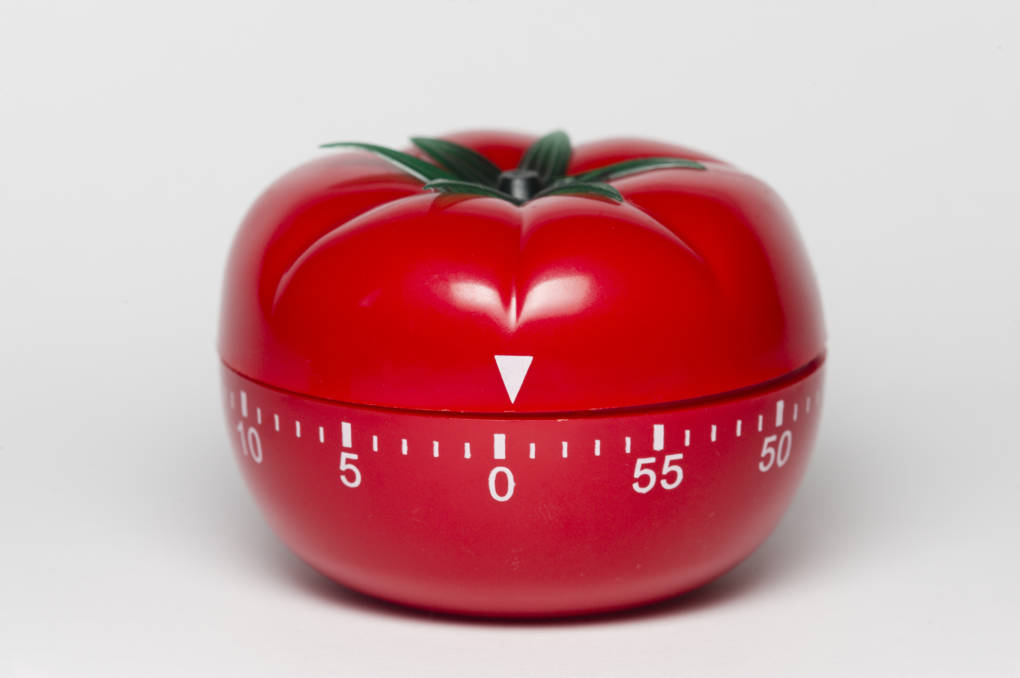
"caption": "Pomodoro (tomato) technique is a study method that helps avoiding procrastination using a kitchen timer",
"description": null,
"title": "Pomodoro technique",
"credit": "iStock/AlessandroZocc",
"status": "inherit",
"isLoading": false,
"fetchFailed": false
},
"mindshift_51800": {
"type": "attachments",
"id": "mindshift_51800",
"meta": {
"index": "attachments_1716263798",
"site": "mindshift",
"id": "51800",
"found": true
},
"parent": 51795,
"imgSizes": {
"small": {
"file": "https://ww2.kqed.org/app/uploads/sites/23/2018/08/24964891080_75850e40d1_o-520x347.jpg",
"width": 520,
"mimeType": "image/jpeg",
"height": 347
},
"twentyfourteen-full-width": {
"file": "https://ww2.kqed.org/app/uploads/sites/23/2018/08/24964891080_75850e40d1_o-1024x576.jpg",
"width": 1024,
"mimeType": "image/jpeg",
"height": 576
},
"thumbnail": {
"file": "https://ww2.kqed.org/app/uploads/sites/23/2018/08/24964891080_75850e40d1_o-160x107.jpg",
"width": 160,
"mimeType": "image/jpeg",
"height": 107
},
"fd-sm": {
"file": "https://ww2.kqed.org/app/uploads/sites/23/2018/08/24964891080_75850e40d1_o-960x640.jpg",
"width": 960,
"mimeType": "image/jpeg",
"height": 640
},
"post-thumbnail": {
"file": "https://ww2.kqed.org/app/uploads/sites/23/2018/08/24964891080_75850e40d1_o-672x372.jpg",
"width": 672,
"mimeType": "image/jpeg",
"height": 372
},
"xsmall": {
"file": "https://ww2.kqed.org/app/uploads/sites/23/2018/08/24964891080_75850e40d1_o-375x250.jpg",
"width": 375,
"mimeType": "image/jpeg",
"height": 250
},
"kqedFullSize": {
"file": "https://ww2.kqed.org/app/uploads/sites/23/2018/08/24964891080_75850e40d1_o.jpg",
"width": 1024,
"height": 683
},
"large": {
"file": "https://ww2.kqed.org/app/uploads/sites/23/2018/08/24964891080_75850e40d1_o-1020x680.jpg",
"width": 1020,
"mimeType": "image/jpeg",
"height": 680
},
"guest-author-50": {
"file": "https://ww2.kqed.org/app/uploads/sites/23/2018/08/24964891080_75850e40d1_o-50x50.jpg",
"width": 50,
"mimeType": "image/jpeg",
"height": 50
},
"guest-author-96": {
"file": "https://ww2.kqed.org/app/uploads/sites/23/2018/08/24964891080_75850e40d1_o-96x96.jpg",
"width": 96,
"mimeType": "image/jpeg",
"height": 96
},
"medium": {
"file": "https://ww2.kqed.org/app/uploads/sites/23/2018/08/24964891080_75850e40d1_o-800x534.jpg",
"width": 800,
"mimeType": "image/jpeg",
"height": 534
},
"guest-author-64": {
"file": "https://ww2.kqed.org/app/uploads/sites/23/2018/08/24964891080_75850e40d1_o-64x64.jpg",
"width": 64,
"mimeType": "image/jpeg",
"height": 64
},
"guest-author-32": {
"file": "https://ww2.kqed.org/app/uploads/sites/23/2018/08/24964891080_75850e40d1_o-32x32.jpg",
"width": 32,
"mimeType": "image/jpeg",
"height": 32
},
"detail": {
"file": "https://ww2.kqed.org/app/uploads/sites/23/2018/08/24964891080_75850e40d1_o-150x150.jpg",
"width": 150,
"mimeType": "image/jpeg",
"height": 150
},
"medium_large": {
"file": "https://ww2.kqed.org/app/uploads/sites/23/2018/08/24964891080_75850e40d1_o-768x512.jpg",
"width": 768,
"mimeType": "image/jpeg",
"height": 512
},
"guest-author-128": {
"file": "https://ww2.kqed.org/app/uploads/sites/23/2018/08/24964891080_75850e40d1_o-128x128.jpg",
"width": 128,
"mimeType": "image/jpeg",
"height": 128
},
"xxsmall": {
"file": "https://ww2.kqed.org/app/uploads/sites/23/2018/08/24964891080_75850e40d1_o-240x160.jpg",
"width": 240,
"mimeType": "image/jpeg",
"height": 160
}
},
"publishDate": 1533272541,
"modified": 1533272591,
"caption": null,
"description": null,
"title": "24964891080_75850e40d1_o",
"credit": " \u003ca href=\"https://www.flickr.com/photos/ugacommunications/24964891080/in/photolist-E34Amy-5xKHFK-5D3euh-nL2Hwm-tVsfA-5CXWxt-4SZdbv-DVGann-4bnPfz-6iSsgR-wrTga-7bJYCy-tVrDz-Mh668-wrTgq-6iSshg-4XfpYu-4drig1-6iSsjc-Mh67p-7T6czR-wrTgr-5HJLkx-7T6fwi-wrTgn-6iSskg-5HP3BQ-5xKHCM-6iWCqb-5D3esL-D5LPWX-MgTw3-3s4NH-7LSWSY-8Ef6w6-6iWCw5-5TFH3P-4bnP9V-5D3er7-4brQ4o-4a6HjT-6iWCsq-4a6GZK-6iWCsN-eVr2Hf-o3q6DU-4aaLqw-537fUC-6uzzmP-o1tU3J\">Flickr/UGA CAES/Extension\u003c/a>",
"status": "inherit",
"isLoading": false,
"fetchFailed": false
},
"mindshift_51762": {
"type": "attachments",
"id": "mindshift_51762",
"meta": {
"index": "attachments_1716263798",
"site": "mindshift",
"id": "51762",
"found": true
},
"parent": 51739,
"imgSizes": {
"small": {
"file": "https://ww2.kqed.org/app/uploads/sites/23/2018/07/Book-Creator-520x254.png",
"width": 520,
"mimeType": "image/png",
"height": 254
},
"twentyfourteen-full-width": {
"file": "https://ww2.kqed.org/app/uploads/sites/23/2018/07/Book-Creator-1038x552.png",
"width": 1038,
"mimeType": "image/png",
"height": 552
},
"thumbnail": {
"file": "https://ww2.kqed.org/app/uploads/sites/23/2018/07/Book-Creator-160x78.png",
"width": 160,
"mimeType": "image/png",
"height": 78
},
"fd-sm": {
"file": "https://ww2.kqed.org/app/uploads/sites/23/2018/07/Book-Creator-960x470.png",
"width": 960,
"mimeType": "image/png",
"height": 470
},
"post-thumbnail": {
"file": "https://ww2.kqed.org/app/uploads/sites/23/2018/07/Book-Creator-672x372.png",
"width": 672,
"mimeType": "image/png",
"height": 372
},
"xsmall": {
"file": "https://ww2.kqed.org/app/uploads/sites/23/2018/07/Book-Creator-375x184.png",
"width": 375,
"mimeType": "image/png",
"height": 184
},
"kqedFullSize": {
"file": "https://ww2.kqed.org/app/uploads/sites/23/2018/07/Book-Creator.png",
"width": 1128,
"height": 552
},
"large": {
"file": "https://ww2.kqed.org/app/uploads/sites/23/2018/07/Book-Creator-1020x499.png",
"width": 1020,
"mimeType": "image/png",
"height": 499
},
"guest-author-50": {
"file": "https://ww2.kqed.org/app/uploads/sites/23/2018/07/Book-Creator-50x50.png",
"width": 50,
"mimeType": "image/png",
"height": 50
},
"guest-author-96": {
"file": "https://ww2.kqed.org/app/uploads/sites/23/2018/07/Book-Creator-96x96.png",
"width": 96,
"mimeType": "image/png",
"height": 96
},
"medium": {
"file": "https://ww2.kqed.org/app/uploads/sites/23/2018/07/Book-Creator-800x391.png",
"width": 800,
"mimeType": "image/png",
"height": 391
},
"guest-author-64": {
"file": "https://ww2.kqed.org/app/uploads/sites/23/2018/07/Book-Creator-64x64.png",
"width": 64,
"mimeType": "image/png",
"height": 64
},
"guest-author-32": {
"file": "https://ww2.kqed.org/app/uploads/sites/23/2018/07/Book-Creator-32x32.png",
"width": 32,
"mimeType": "image/png",
"height": 32
},
"detail": {
"file": "https://ww2.kqed.org/app/uploads/sites/23/2018/07/Book-Creator-150x150.png",
"width": 150,
"mimeType": "image/png",
"height": 150
},
"medium_large": {
"file": "https://ww2.kqed.org/app/uploads/sites/23/2018/07/Book-Creator-768x376.png",
"width": 768,
"mimeType": "image/png",
"height": 376
},
"guest-author-128": {
"file": "https://ww2.kqed.org/app/uploads/sites/23/2018/07/Book-Creator-128x128.png",
"width": 128,
"mimeType": "image/png",
"height": 128
},
"xxsmall": {
"file": "https://ww2.kqed.org/app/uploads/sites/23/2018/07/Book-Creator-240x117.png",
"width": 240,
"mimeType": "image/png",
"height": 117
}
},
"publishDate": 1533015477,
"modified": 1533017096,
"caption": null,
"description": null,
"title": "Book Creator",
"credit": "Youtube/Holly Clark",
"status": "inherit",
"isLoading": false,
"fetchFailed": false
},
"mindshift_51753": {
"type": "attachments",
"id": "mindshift_51753",
"meta": {
"index": "attachments_1716263798",
"site": "mindshift",
"id": "51753",
"found": true
},
"parent": 51746,
"imgSizes": {
"small": {
"file": "https://ww2.kqed.org/app/uploads/sites/23/2018/07/iStock-526834252-520x323.jpg",
"width": 520,
"mimeType": "image/jpeg",
"height": 323
},
"twentyfourteen-full-width": {
"file": "https://ww2.kqed.org/app/uploads/sites/23/2018/07/iStock-526834252-1038x576.jpg",
"width": 1038,
"mimeType": "image/jpeg",
"height": 576
},
"thumbnail": {
"file": "https://ww2.kqed.org/app/uploads/sites/23/2018/07/iStock-526834252-160x99.jpg",
"width": 160,
"mimeType": "image/jpeg",
"height": 99
},
"fd-sm": {
"file": "https://ww2.kqed.org/app/uploads/sites/23/2018/07/iStock-526834252-960x596.jpg",
"width": 960,
"mimeType": "image/jpeg",
"height": 596
},
"post-thumbnail": {
"file": "https://ww2.kqed.org/app/uploads/sites/23/2018/07/iStock-526834252-672x372.jpg",
"width": 672,
"mimeType": "image/jpeg",
"height": 372
},
"xsmall": {
"file": "https://ww2.kqed.org/app/uploads/sites/23/2018/07/iStock-526834252-375x233.jpg",
"width": 375,
"mimeType": "image/jpeg",
"height": 233
},
"kqedFullSize": {
"file": "https://ww2.kqed.org/app/uploads/sites/23/2018/07/iStock-526834252-e1532931622230.jpg",
"width": 1920,
"height": 1193
},
"large": {
"file": "https://ww2.kqed.org/app/uploads/sites/23/2018/07/iStock-526834252-1020x634.jpg",
"width": 1020,
"mimeType": "image/jpeg",
"height": 634
},
"xlarge": {
"file": "https://ww2.kqed.org/app/uploads/sites/23/2018/07/iStock-526834252-1180x733.jpg",
"width": 1180,
"mimeType": "image/jpeg",
"height": 733
},
"complete_open_graph": {
"file": "https://ww2.kqed.org/app/uploads/sites/23/2018/07/iStock-526834252-1200x745.jpg",
"width": 1200,
"mimeType": "image/jpeg",
"height": 745
},
"guest-author-50": {
"file": "https://ww2.kqed.org/app/uploads/sites/23/2018/07/iStock-526834252-50x50.jpg",
"width": 50,
"mimeType": "image/jpeg",
"height": 50
},
"guest-author-96": {
"file": "https://ww2.kqed.org/app/uploads/sites/23/2018/07/iStock-526834252-96x96.jpg",
"width": 96,
"mimeType": "image/jpeg",
"height": 96
},
"medium": {
"file": "https://ww2.kqed.org/app/uploads/sites/23/2018/07/iStock-526834252-800x497.jpg",
"width": 800,
"mimeType": "image/jpeg",
"height": 497
},
"guest-author-64": {
"file": "https://ww2.kqed.org/app/uploads/sites/23/2018/07/iStock-526834252-64x64.jpg",
"width": 64,
"mimeType": "image/jpeg",
"height": 64
},
"guest-author-32": {
"file": "https://ww2.kqed.org/app/uploads/sites/23/2018/07/iStock-526834252-32x32.jpg",
"width": 32,
"mimeType": "image/jpeg",
"height": 32
},
"fd-lrg": {
"file": "https://ww2.kqed.org/app/uploads/sites/23/2018/07/iStock-526834252-1920x1193.jpg",
"width": 1920,
"mimeType": "image/jpeg",
"height": 1193
},
"fd-med": {
"file": "https://ww2.kqed.org/app/uploads/sites/23/2018/07/iStock-526834252-1180x733.jpg",
"width": 1180,
"mimeType": "image/jpeg",
"height": 733
},
"full-width": {
"file": "https://ww2.kqed.org/app/uploads/sites/23/2018/07/iStock-526834252-1920x1193.jpg",
"width": 1920,
"mimeType": "image/jpeg",
"height": 1193
},
"detail": {
"file": "https://ww2.kqed.org/app/uploads/sites/23/2018/07/iStock-526834252-150x150.jpg",
"width": 150,
"mimeType": "image/jpeg",
"height": 150
},
"medium_large": {
"file": "https://ww2.kqed.org/app/uploads/sites/23/2018/07/iStock-526834252-768x477.jpg",
"width": 768,
"mimeType": "image/jpeg",
"height": 477
},
"guest-author-128": {
"file": "https://ww2.kqed.org/app/uploads/sites/23/2018/07/iStock-526834252-128x128.jpg",
"width": 128,
"mimeType": "image/jpeg",
"height": 128
},
"xxsmall": {
"file": "https://ww2.kqed.org/app/uploads/sites/23/2018/07/iStock-526834252-240x149.jpg",
"width": 240,
"mimeType": "image/jpeg",
"height": 149
}
},
"publishDate": 1532931596,
"modified": 1532931615,
"caption": null,
"description": null,
"title": "iStock-526834252",
"credit": "iStock/Rawpixel",
"status": "inherit",
"isLoading": false,
"fetchFailed": false
},
"mindshift_51688": {
"type": "attachments",
"id": "mindshift_51688",
"meta": {
"index": "attachments_1716263798",
"site": "mindshift",
"id": "51688",
"found": true
},
"parent": 51686,
"imgSizes": {
"small": {
"file": "https://ww2.kqed.org/app/uploads/sites/23/2018/07/pittsfield-22-520x332.jpg",
"width": 520,
"mimeType": "image/jpeg",
"height": 332
},
"twentyfourteen-full-width": {
"file": "https://ww2.kqed.org/app/uploads/sites/23/2018/07/pittsfield-22-1038x576.jpg",
"width": 1038,
"mimeType": "image/jpeg",
"height": 576
},
"thumbnail": {
"file": "https://ww2.kqed.org/app/uploads/sites/23/2018/07/pittsfield-22-160x102.jpg",
"width": 160,
"mimeType": "image/jpeg",
"height": 102
},
"fd-sm": {
"file": "https://ww2.kqed.org/app/uploads/sites/23/2018/07/pittsfield-22-960x612.jpg",
"width": 960,
"mimeType": "image/jpeg",
"height": 612
},
"post-thumbnail": {
"file": "https://ww2.kqed.org/app/uploads/sites/23/2018/07/pittsfield-22-672x372.jpg",
"width": 672,
"mimeType": "image/jpeg",
"height": 372
},
"xsmall": {
"file": "https://ww2.kqed.org/app/uploads/sites/23/2018/07/pittsfield-22-375x239.jpg",
"width": 375,
"mimeType": "image/jpeg",
"height": 239
},
"kqedFullSize": {
"file": "https://ww2.kqed.org/app/uploads/sites/23/2018/07/pittsfield-22-e1531859838539.jpg",
"width": 1920,
"height": 1225
},
"large": {
"file": "https://ww2.kqed.org/app/uploads/sites/23/2018/07/pittsfield-22-1020x651.jpg",
"width": 1020,
"mimeType": "image/jpeg",
"height": 651
},
"xlarge": {
"file": "https://ww2.kqed.org/app/uploads/sites/23/2018/07/pittsfield-22-1180x753.jpg",
"width": 1180,
"mimeType": "image/jpeg",
"height": 753
},
"complete_open_graph": {
"file": "https://ww2.kqed.org/app/uploads/sites/23/2018/07/pittsfield-22-1200x765.jpg",
"width": 1200,
"mimeType": "image/jpeg",
"height": 765
},
"guest-author-50": {
"file": "https://ww2.kqed.org/app/uploads/sites/23/2018/07/pittsfield-22-50x50.jpg",
"width": 50,
"mimeType": "image/jpeg",
"height": 50
},
"guest-author-96": {
"file": "https://ww2.kqed.org/app/uploads/sites/23/2018/07/pittsfield-22-96x96.jpg",
"width": 96,
"mimeType": "image/jpeg",
"height": 96
},
"medium": {
"file": "https://ww2.kqed.org/app/uploads/sites/23/2018/07/pittsfield-22-800x510.jpg",
"width": 800,
"mimeType": "image/jpeg",
"height": 510
},
"guest-author-64": {
"file": "https://ww2.kqed.org/app/uploads/sites/23/2018/07/pittsfield-22-64x64.jpg",
"width": 64,
"mimeType": "image/jpeg",
"height": 64
},
"guest-author-32": {
"file": "https://ww2.kqed.org/app/uploads/sites/23/2018/07/pittsfield-22-32x32.jpg",
"width": 32,
"mimeType": "image/jpeg",
"height": 32
},
"fd-lrg": {
"file": "https://ww2.kqed.org/app/uploads/sites/23/2018/07/pittsfield-22-1920x1225.jpg",
"width": 1920,
"mimeType": "image/jpeg",
"height": 1225
},
"fd-med": {
"file": "https://ww2.kqed.org/app/uploads/sites/23/2018/07/pittsfield-22-1180x753.jpg",
"width": 1180,
"mimeType": "image/jpeg",
"height": 753
},
"full-width": {
"file": "https://ww2.kqed.org/app/uploads/sites/23/2018/07/pittsfield-22-1920x1225.jpg",
"width": 1920,
"mimeType": "image/jpeg",
"height": 1225
},
"detail": {
"file": "https://ww2.kqed.org/app/uploads/sites/23/2018/07/pittsfield-22-150x150.jpg",
"width": 150,
"mimeType": "image/jpeg",
"height": 150
},
"medium_large": {
"file": "https://ww2.kqed.org/app/uploads/sites/23/2018/07/pittsfield-22-768x490.jpg",
"width": 768,
"mimeType": "image/jpeg",
"height": 490
},
"guest-author-128": {
"file": "https://ww2.kqed.org/app/uploads/sites/23/2018/07/pittsfield-22-128x128.jpg",
"width": 128,
"mimeType": "image/jpeg",
"height": 128
},
"xxsmall": {
"file": "https://ww2.kqed.org/app/uploads/sites/23/2018/07/pittsfield-22-240x153.jpg",
"width": 240,
"mimeType": "image/jpeg",
"height": 153
}
},
"publishDate": 1531859793,
"modified": 1531859900,
"caption": "Students participate in a restorative circle, a practice that’s part of a movement away from harsh discipline in schools.\n\n",
"description": null,
"title": "JIM VAIKNORAS/Staff photo Danvers Football vs Tewksbury",
"credit": "JIM VAIKNORAS ",
"status": "inherit",
"isLoading": false,
"fetchFailed": false
},
"mindshift_51728": {
"type": "attachments",
"id": "mindshift_51728",
"meta": {
"index": "attachments_1716263798",
"site": "mindshift",
"id": "51728",
"found": true
},
"parent": 51727,
"imgSizes": {
"small": {
"file": "https://ww2.kqed.org/app/uploads/sites/23/2018/07/professionalism-101_slide-60bee794e8a2e7aebfaedb743ac6ddf793638301-520x347.jpg",
"width": 520,
"mimeType": "image/jpeg",
"height": 347
},
"twentyfourteen-full-width": {
"file": "https://ww2.kqed.org/app/uploads/sites/23/2018/07/professionalism-101_slide-60bee794e8a2e7aebfaedb743ac6ddf793638301-1038x576.jpg",
"width": 1038,
"mimeType": "image/jpeg",
"height": 576
},
"thumbnail": {
"file": "https://ww2.kqed.org/app/uploads/sites/23/2018/07/professionalism-101_slide-60bee794e8a2e7aebfaedb743ac6ddf793638301-160x107.jpg",
"width": 160,
"mimeType": "image/jpeg",
"height": 107
},
"fd-sm": {
"file": "https://ww2.kqed.org/app/uploads/sites/23/2018/07/professionalism-101_slide-60bee794e8a2e7aebfaedb743ac6ddf793638301-960x640.jpg",
"width": 960,
"mimeType": "image/jpeg",
"height": 640
},
"post-thumbnail": {
"file": "https://ww2.kqed.org/app/uploads/sites/23/2018/07/professionalism-101_slide-60bee794e8a2e7aebfaedb743ac6ddf793638301-672x372.jpg",
"width": 672,
"mimeType": "image/jpeg",
"height": 372
},
"xsmall": {
"file": "https://ww2.kqed.org/app/uploads/sites/23/2018/07/professionalism-101_slide-60bee794e8a2e7aebfaedb743ac6ddf793638301-375x250.jpg",
"width": 375,
"mimeType": "image/jpeg",
"height": 250
},
"kqedFullSize": {
"file": "https://ww2.kqed.org/app/uploads/sites/23/2018/07/professionalism-101_slide-60bee794e8a2e7aebfaedb743ac6ddf793638301-e1532412469945.jpg",
"width": 1920,
"height": 1280
},
"large": {
"file": "https://ww2.kqed.org/app/uploads/sites/23/2018/07/professionalism-101_slide-60bee794e8a2e7aebfaedb743ac6ddf793638301-1020x680.jpg",
"width": 1020,
"mimeType": "image/jpeg",
"height": 680
},
"xlarge": {
"file": "https://ww2.kqed.org/app/uploads/sites/23/2018/07/professionalism-101_slide-60bee794e8a2e7aebfaedb743ac6ddf793638301-1180x787.jpg",
"width": 1180,
"mimeType": "image/jpeg",
"height": 787
},
"complete_open_graph": {
"file": "https://ww2.kqed.org/app/uploads/sites/23/2018/07/professionalism-101_slide-60bee794e8a2e7aebfaedb743ac6ddf793638301-1200x800.jpg",
"width": 1200,
"mimeType": "image/jpeg",
"height": 800
},
"guest-author-50": {
"file": "https://ww2.kqed.org/app/uploads/sites/23/2018/07/professionalism-101_slide-60bee794e8a2e7aebfaedb743ac6ddf793638301-50x50.jpg",
"width": 50,
"mimeType": "image/jpeg",
"height": 50
},
"guest-author-96": {
"file": "https://ww2.kqed.org/app/uploads/sites/23/2018/07/professionalism-101_slide-60bee794e8a2e7aebfaedb743ac6ddf793638301-96x96.jpg",
"width": 96,
"mimeType": "image/jpeg",
"height": 96
},
"medium": {
"file": "https://ww2.kqed.org/app/uploads/sites/23/2018/07/professionalism-101_slide-60bee794e8a2e7aebfaedb743ac6ddf793638301-800x533.jpg",
"width": 800,
"mimeType": "image/jpeg",
"height": 533
},
"guest-author-64": {
"file": "https://ww2.kqed.org/app/uploads/sites/23/2018/07/professionalism-101_slide-60bee794e8a2e7aebfaedb743ac6ddf793638301-64x64.jpg",
"width": 64,
"mimeType": "image/jpeg",
"height": 64
},
"guest-author-32": {
"file": "https://ww2.kqed.org/app/uploads/sites/23/2018/07/professionalism-101_slide-60bee794e8a2e7aebfaedb743ac6ddf793638301-32x32.jpg",
"width": 32,
"mimeType": "image/jpeg",
"height": 32
},
"fd-lrg": {
"file": "https://ww2.kqed.org/app/uploads/sites/23/2018/07/professionalism-101_slide-60bee794e8a2e7aebfaedb743ac6ddf793638301-1920x1280.jpg",
"width": 1920,
"mimeType": "image/jpeg",
"height": 1280
},
"fd-med": {
"file": "https://ww2.kqed.org/app/uploads/sites/23/2018/07/professionalism-101_slide-60bee794e8a2e7aebfaedb743ac6ddf793638301-1180x787.jpg",
"width": 1180,
"mimeType": "image/jpeg",
"height": 787
},
"full-width": {
"file": "https://ww2.kqed.org/app/uploads/sites/23/2018/07/professionalism-101_slide-60bee794e8a2e7aebfaedb743ac6ddf793638301-1920x1280.jpg",
"width": 1920,
"mimeType": "image/jpeg",
"height": 1280
},
"detail": {
"file": "https://ww2.kqed.org/app/uploads/sites/23/2018/07/professionalism-101_slide-60bee794e8a2e7aebfaedb743ac6ddf793638301-150x150.jpg",
"width": 150,
"mimeType": "image/jpeg",
"height": 150
},
"medium_large": {
"file": "https://ww2.kqed.org/app/uploads/sites/23/2018/07/professionalism-101_slide-60bee794e8a2e7aebfaedb743ac6ddf793638301-768x512.jpg",
"width": 768,
"mimeType": "image/jpeg",
"height": 512
},
"guest-author-128": {
"file": "https://ww2.kqed.org/app/uploads/sites/23/2018/07/professionalism-101_slide-60bee794e8a2e7aebfaedb743ac6ddf793638301-128x128.jpg",
"width": 128,
"mimeType": "image/jpeg",
"height": 128
},
"xxsmall": {
"file": "https://ww2.kqed.org/app/uploads/sites/23/2018/07/professionalism-101_slide-60bee794e8a2e7aebfaedb743ac6ddf793638301-240x160.jpg",
"width": 240,
"mimeType": "image/jpeg",
"height": 160
}
},
"publishDate": 1532412371,
"modified": 1532412480,
"caption": null,
"description": "Professionalism 101",
"title": "Professionalism 101",
"credit": "NPR/LA Johnson",
"status": "inherit",
"isLoading": false,
"fetchFailed": false
},
"mindshift_51340": {
"type": "attachments",
"id": "mindshift_51340",
"meta": {
"index": "attachments_1716263798",
"site": "mindshift",
"id": "51340",
"found": true
},
"parent": 51336,
"imgSizes": {
"small": {
"file": "https://ww2.kqed.org/app/uploads/sites/23/2018/06/Alison-Hewett-Genrefication-520x388.png",
"width": 520,
"mimeType": "image/png",
"height": 388
},
"twentyfourteen-full-width": {
"file": "https://ww2.kqed.org/app/uploads/sites/23/2018/06/Alison-Hewett-Genrefication-1038x576.png",
"width": 1038,
"mimeType": "image/png",
"height": 576
},
"thumbnail": {
"file": "https://ww2.kqed.org/app/uploads/sites/23/2018/06/Alison-Hewett-Genrefication-160x120.png",
"width": 160,
"mimeType": "image/png",
"height": 120
},
"fd-sm": {
"file": "https://ww2.kqed.org/app/uploads/sites/23/2018/06/Alison-Hewett-Genrefication-960x717.png",
"width": 960,
"mimeType": "image/png",
"height": 717
},
"post-thumbnail": {
"file": "https://ww2.kqed.org/app/uploads/sites/23/2018/06/Alison-Hewett-Genrefication-672x372.png",
"width": 672,
"mimeType": "image/png",
"height": 372
},
"xsmall": {
"file": "https://ww2.kqed.org/app/uploads/sites/23/2018/06/Alison-Hewett-Genrefication-375x280.png",
"width": 375,
"mimeType": "image/png",
"height": 280
},
"kqedFullSize": {
"file": "https://ww2.kqed.org/app/uploads/sites/23/2018/06/Alison-Hewett-Genrefication-e1532326288819.png",
"width": 1920,
"height": 1434
},
"large": {
"file": "https://ww2.kqed.org/app/uploads/sites/23/2018/06/Alison-Hewett-Genrefication-1020x762.png",
"width": 1020,
"mimeType": "image/png",
"height": 762
},
"xlarge": {
"file": "https://ww2.kqed.org/app/uploads/sites/23/2018/06/Alison-Hewett-Genrefication-1180x881.png",
"width": 1180,
"mimeType": "image/png",
"height": 881
},
"complete_open_graph": {
"file": "https://ww2.kqed.org/app/uploads/sites/23/2018/06/Alison-Hewett-Genrefication-1200x896.png",
"width": 1200,
"mimeType": "image/png",
"height": 896
},
"guest-author-50": {
"file": "https://ww2.kqed.org/app/uploads/sites/23/2018/06/Alison-Hewett-Genrefication-50x50.png",
"width": 50,
"mimeType": "image/png",
"height": 50
},
"guest-author-96": {
"file": "https://ww2.kqed.org/app/uploads/sites/23/2018/06/Alison-Hewett-Genrefication-96x96.png",
"width": 96,
"mimeType": "image/png",
"height": 96
},
"medium": {
"file": "https://ww2.kqed.org/app/uploads/sites/23/2018/06/Alison-Hewett-Genrefication-800x598.png",
"width": 800,
"mimeType": "image/png",
"height": 598
},
"guest-author-64": {
"file": "https://ww2.kqed.org/app/uploads/sites/23/2018/06/Alison-Hewett-Genrefication-64x64.png",
"width": 64,
"mimeType": "image/png",
"height": 64
},
"guest-author-32": {
"file": "https://ww2.kqed.org/app/uploads/sites/23/2018/06/Alison-Hewett-Genrefication-32x32.png",
"width": 32,
"mimeType": "image/png",
"height": 32
},
"fd-lrg": {
"file": "https://ww2.kqed.org/app/uploads/sites/23/2018/06/Alison-Hewett-Genrefication-1920x1434.png",
"width": 1920,
"mimeType": "image/png",
"height": 1434
},
"fd-med": {
"file": "https://ww2.kqed.org/app/uploads/sites/23/2018/06/Alison-Hewett-Genrefication-1180x881.png",
"width": 1180,
"mimeType": "image/png",
"height": 881
},
"full-width": {
"file": "https://ww2.kqed.org/app/uploads/sites/23/2018/06/Alison-Hewett-Genrefication-1920x1434.png",
"width": 1920,
"mimeType": "image/png",
"height": 1434
},
"detail": {
"file": "https://ww2.kqed.org/app/uploads/sites/23/2018/06/Alison-Hewett-Genrefication-150x150.png",
"width": 150,
"mimeType": "image/png",
"height": 150
},
"medium_large": {
"file": "https://ww2.kqed.org/app/uploads/sites/23/2018/06/Alison-Hewett-Genrefication-768x574.png",
"width": 768,
"mimeType": "image/png",
"height": 574
},
"guest-author-128": {
"file": "https://ww2.kqed.org/app/uploads/sites/23/2018/06/Alison-Hewett-Genrefication-128x128.png",
"width": 128,
"mimeType": "image/png",
"height": 128
},
"xxsmall": {
"file": "https://ww2.kqed.org/app/uploads/sites/23/2018/06/Alison-Hewett-Genrefication-240x179.png",
"width": 240,
"mimeType": "image/png",
"height": 179
}
},
"publishDate": 1528146722,
"modified": 1533334503,
"caption": "The Fantasy section was created after a genrefication process at the Kristin school library in New Zealand. This section features the \"Dragons\" subgenre of Fantasy. Courtesy of \u003ca href=\"//100greatbooksbeforelunch.wordpress.com/2015/01/28/collection-reinvigoration-genrefication-101/“\">Alison Hewett, 100 Great Books Before Lunch.\u003c/a>",
"description": null,
"title": "Alison-Hewett-Genrefication",
"credit": null,
"status": "inherit",
"isLoading": false,
"fetchFailed": false
},
"mindshift_51703": {
"type": "attachments",
"id": "mindshift_51703",
"meta": {
"index": "attachments_1716263798",
"site": "mindshift",
"id": "51703",
"found": true
},
"parent": 51702,
"imgSizes": {
"small": {
"file": "https://ww2.kqed.org/app/uploads/sites/23/2018/07/teacher-apps-f213ea6712a5eed0bc11ab668ba2de2e49222991-520x390.jpg",
"width": 520,
"mimeType": "image/jpeg",
"height": 390
},
"twentyfourteen-full-width": {
"file": "https://ww2.kqed.org/app/uploads/sites/23/2018/07/teacher-apps-f213ea6712a5eed0bc11ab668ba2de2e49222991-1038x576.jpg",
"width": 1038,
"mimeType": "image/jpeg",
"height": 576
},
"thumbnail": {
"file": "https://ww2.kqed.org/app/uploads/sites/23/2018/07/teacher-apps-f213ea6712a5eed0bc11ab668ba2de2e49222991-160x120.jpg",
"width": 160,
"mimeType": "image/jpeg",
"height": 120
},
"fd-sm": {
"file": "https://ww2.kqed.org/app/uploads/sites/23/2018/07/teacher-apps-f213ea6712a5eed0bc11ab668ba2de2e49222991-960x720.jpg",
"width": 960,
"mimeType": "image/jpeg",
"height": 720
},
"post-thumbnail": {
"file": "https://ww2.kqed.org/app/uploads/sites/23/2018/07/teacher-apps-f213ea6712a5eed0bc11ab668ba2de2e49222991-672x372.jpg",
"width": 672,
"mimeType": "image/jpeg",
"height": 372
},
"xsmall": {
"file": "https://ww2.kqed.org/app/uploads/sites/23/2018/07/teacher-apps-f213ea6712a5eed0bc11ab668ba2de2e49222991-375x281.jpg",
"width": 375,
"mimeType": "image/jpeg",
"height": 281
},
"kqedFullSize": {
"file": "https://ww2.kqed.org/app/uploads/sites/23/2018/07/teacher-apps-f213ea6712a5eed0bc11ab668ba2de2e49222991-e1532034329301.jpg",
"width": 1920,
"height": 1440
},
"large": {
"file": "https://ww2.kqed.org/app/uploads/sites/23/2018/07/teacher-apps-f213ea6712a5eed0bc11ab668ba2de2e49222991-1020x765.jpg",
"width": 1020,
"mimeType": "image/jpeg",
"height": 765
},
"xlarge": {
"file": "https://ww2.kqed.org/app/uploads/sites/23/2018/07/teacher-apps-f213ea6712a5eed0bc11ab668ba2de2e49222991-1180x885.jpg",
"width": 1180,
"mimeType": "image/jpeg",
"height": 885
},
"complete_open_graph": {
"file": "https://ww2.kqed.org/app/uploads/sites/23/2018/07/teacher-apps-f213ea6712a5eed0bc11ab668ba2de2e49222991-1200x900.jpg",
"width": 1200,
"mimeType": "image/jpeg",
"height": 900
},
"guest-author-50": {
"file": "https://ww2.kqed.org/app/uploads/sites/23/2018/07/teacher-apps-f213ea6712a5eed0bc11ab668ba2de2e49222991-50x50.jpg",
"width": 50,
"mimeType": "image/jpeg",
"height": 50
},
"guest-author-96": {
"file": "https://ww2.kqed.org/app/uploads/sites/23/2018/07/teacher-apps-f213ea6712a5eed0bc11ab668ba2de2e49222991-96x96.jpg",
"width": 96,
"mimeType": "image/jpeg",
"height": 96
},
"medium": {
"file": "https://ww2.kqed.org/app/uploads/sites/23/2018/07/teacher-apps-f213ea6712a5eed0bc11ab668ba2de2e49222991-800x600.jpg",
"width": 800,
"mimeType": "image/jpeg",
"height": 600
},
"guest-author-64": {
"file": "https://ww2.kqed.org/app/uploads/sites/23/2018/07/teacher-apps-f213ea6712a5eed0bc11ab668ba2de2e49222991-64x64.jpg",
"width": 64,
"mimeType": "image/jpeg",
"height": 64
},
"guest-author-32": {
"file": "https://ww2.kqed.org/app/uploads/sites/23/2018/07/teacher-apps-f213ea6712a5eed0bc11ab668ba2de2e49222991-32x32.jpg",
"width": 32,
"mimeType": "image/jpeg",
"height": 32
},
"fd-lrg": {
"file": "https://ww2.kqed.org/app/uploads/sites/23/2018/07/teacher-apps-f213ea6712a5eed0bc11ab668ba2de2e49222991-1920x1440.jpg",
"width": 1920,
"mimeType": "image/jpeg",
"height": 1440
},
"fd-med": {
"file": "https://ww2.kqed.org/app/uploads/sites/23/2018/07/teacher-apps-f213ea6712a5eed0bc11ab668ba2de2e49222991-1180x885.jpg",
"width": 1180,
"mimeType": "image/jpeg",
"height": 885
},
"full-width": {
"file": "https://ww2.kqed.org/app/uploads/sites/23/2018/07/teacher-apps-f213ea6712a5eed0bc11ab668ba2de2e49222991-1920x1440.jpg",
"width": 1920,
"mimeType": "image/jpeg",
"height": 1440
},
"detail": {
"file": "https://ww2.kqed.org/app/uploads/sites/23/2018/07/teacher-apps-f213ea6712a5eed0bc11ab668ba2de2e49222991-150x150.jpg",
"width": 150,
"mimeType": "image/jpeg",
"height": 150
},
"medium_large": {
"file": "https://ww2.kqed.org/app/uploads/sites/23/2018/07/teacher-apps-f213ea6712a5eed0bc11ab668ba2de2e49222991-768x576.jpg",
"width": 768,
"mimeType": "image/jpeg",
"height": 576
},
"guest-author-128": {
"file": "https://ww2.kqed.org/app/uploads/sites/23/2018/07/teacher-apps-f213ea6712a5eed0bc11ab668ba2de2e49222991-128x128.jpg",
"width": 128,
"mimeType": "image/jpeg",
"height": 128
},
"xxsmall": {
"file": "https://ww2.kqed.org/app/uploads/sites/23/2018/07/teacher-apps-f213ea6712a5eed0bc11ab668ba2de2e49222991-240x180.jpg",
"width": 240,
"mimeType": "image/jpeg",
"height": 180
}
},
"publishDate": 1532021697,
"modified": 1532034341,
"caption": null,
"description": "Teacher apps",
"title": "Teacher apps",
"credit": "NPR/LA Johnson",
"status": "inherit",
"isLoading": false,
"fetchFailed": false
},
"mindshift_51694": {
"type": "attachments",
"id": "mindshift_51694",
"meta": {
"index": "attachments_1716263798",
"site": "mindshift",
"id": "51694",
"found": true
},
"parent": 51693,
"imgSizes": {
"small": {
"file": "https://ww2.kqed.org/app/uploads/sites/23/2018/07/mom-support_slide-b7832f16b707e5bde84de23c0277f0328d7bd6f9-520x346.jpg",
"width": 520,
"mimeType": "image/jpeg",
"height": 346
},
"twentyfourteen-full-width": {
"file": "https://ww2.kqed.org/app/uploads/sites/23/2018/07/mom-support_slide-b7832f16b707e5bde84de23c0277f0328d7bd6f9-1038x576.jpg",
"width": 1038,
"mimeType": "image/jpeg",
"height": 576
},
"thumbnail": {
"file": "https://ww2.kqed.org/app/uploads/sites/23/2018/07/mom-support_slide-b7832f16b707e5bde84de23c0277f0328d7bd6f9-160x107.jpg",
"width": 160,
"mimeType": "image/jpeg",
"height": 107
},
"fd-sm": {
"file": "https://ww2.kqed.org/app/uploads/sites/23/2018/07/mom-support_slide-b7832f16b707e5bde84de23c0277f0328d7bd6f9-960x639.jpg",
"width": 960,
"mimeType": "image/jpeg",
"height": 639
},
"post-thumbnail": {
"file": "https://ww2.kqed.org/app/uploads/sites/23/2018/07/mom-support_slide-b7832f16b707e5bde84de23c0277f0328d7bd6f9-672x372.jpg",
"width": 672,
"mimeType": "image/jpeg",
"height": 372
},
"xsmall": {
"file": "https://ww2.kqed.org/app/uploads/sites/23/2018/07/mom-support_slide-b7832f16b707e5bde84de23c0277f0328d7bd6f9-375x250.jpg",
"width": 375,
"mimeType": "image/jpeg",
"height": 250
},
"kqedFullSize": {
"file": "https://ww2.kqed.org/app/uploads/sites/23/2018/07/mom-support_slide-b7832f16b707e5bde84de23c0277f0328d7bd6f9.jpg",
"width": 1690,
"height": 1125
},
"large": {
"file": "https://ww2.kqed.org/app/uploads/sites/23/2018/07/mom-support_slide-b7832f16b707e5bde84de23c0277f0328d7bd6f9-1020x679.jpg",
"width": 1020,
"mimeType": "image/jpeg",
"height": 679
},
"xlarge": {
"file": "https://ww2.kqed.org/app/uploads/sites/23/2018/07/mom-support_slide-b7832f16b707e5bde84de23c0277f0328d7bd6f9-1180x786.jpg",
"width": 1180,
"mimeType": "image/jpeg",
"height": 786
},
"complete_open_graph": {
"file": "https://ww2.kqed.org/app/uploads/sites/23/2018/07/mom-support_slide-b7832f16b707e5bde84de23c0277f0328d7bd6f9-1200x799.jpg",
"width": 1200,
"mimeType": "image/jpeg",
"height": 799
},
"guest-author-50": {
"file": "https://ww2.kqed.org/app/uploads/sites/23/2018/07/mom-support_slide-b7832f16b707e5bde84de23c0277f0328d7bd6f9-50x50.jpg",
"width": 50,
"mimeType": "image/jpeg",
"height": 50
},
"guest-author-96": {
"file": "https://ww2.kqed.org/app/uploads/sites/23/2018/07/mom-support_slide-b7832f16b707e5bde84de23c0277f0328d7bd6f9-96x96.jpg",
"width": 96,
"mimeType": "image/jpeg",
"height": 96
},
"medium": {
"file": "https://ww2.kqed.org/app/uploads/sites/23/2018/07/mom-support_slide-b7832f16b707e5bde84de23c0277f0328d7bd6f9-800x533.jpg",
"width": 800,
"mimeType": "image/jpeg",
"height": 533
},
"guest-author-64": {
"file": "https://ww2.kqed.org/app/uploads/sites/23/2018/07/mom-support_slide-b7832f16b707e5bde84de23c0277f0328d7bd6f9-64x64.jpg",
"width": 64,
"mimeType": "image/jpeg",
"height": 64
},
"guest-author-32": {
"file": "https://ww2.kqed.org/app/uploads/sites/23/2018/07/mom-support_slide-b7832f16b707e5bde84de23c0277f0328d7bd6f9-32x32.jpg",
"width": 32,
"mimeType": "image/jpeg",
"height": 32
},
"fd-med": {
"file": "https://ww2.kqed.org/app/uploads/sites/23/2018/07/mom-support_slide-b7832f16b707e5bde84de23c0277f0328d7bd6f9-1180x786.jpg",
"width": 1180,
"mimeType": "image/jpeg",
"height": 786
},
"detail": {
"file": "https://ww2.kqed.org/app/uploads/sites/23/2018/07/mom-support_slide-b7832f16b707e5bde84de23c0277f0328d7bd6f9-150x150.jpg",
"width": 150,
"mimeType": "image/jpeg",
"height": 150
},
"medium_large": {
"file": "https://ww2.kqed.org/app/uploads/sites/23/2018/07/mom-support_slide-b7832f16b707e5bde84de23c0277f0328d7bd6f9-768x511.jpg",
"width": 768,
"mimeType": "image/jpeg",
"height": 511
},
"guest-author-128": {
"file": "https://ww2.kqed.org/app/uploads/sites/23/2018/07/mom-support_slide-b7832f16b707e5bde84de23c0277f0328d7bd6f9-128x128.jpg",
"width": 128,
"mimeType": "image/jpeg",
"height": 128
},
"xxsmall": {
"file": "https://ww2.kqed.org/app/uploads/sites/23/2018/07/mom-support_slide-b7832f16b707e5bde84de23c0277f0328d7bd6f9-240x160.jpg",
"width": 240,
"mimeType": "image/jpeg",
"height": 160
}
},
"publishDate": 1531931137,
"modified": 1531931274,
"caption": null,
"description": null,
"title": "Social support networks can help mothers of teenagers navigate through difficulties and maintain closeness with their children.",
"credit": "Angie Wang for NPR",
"status": "inherit",
"isLoading": false,
"fetchFailed": false
},
"mindshift_51692": {
"type": "attachments",
"id": "mindshift_51692",
"meta": {
"index": "attachments_1716263798",
"site": "mindshift",
"id": "51692",
"found": true
},
"parent": 51206,
"imgSizes": {
"small": {
"file": "https://ww2.kqed.org/app/uploads/sites/23/2018/07/iStock-139897865-520x349.jpg",
"width": 520,
"mimeType": "image/jpeg",
"height": 349
},
"twentyfourteen-full-width": {
"file": "https://ww2.kqed.org/app/uploads/sites/23/2018/07/iStock-139897865-1038x576.jpg",
"width": 1038,
"mimeType": "image/jpeg",
"height": 576
},
"thumbnail": {
"file": "https://ww2.kqed.org/app/uploads/sites/23/2018/07/iStock-139897865-160x107.jpg",
"width": 160,
"mimeType": "image/jpeg",
"height": 107
},
"fd-sm": {
"file": "https://ww2.kqed.org/app/uploads/sites/23/2018/07/iStock-139897865-960x644.jpg",
"width": 960,
"mimeType": "image/jpeg",
"height": 644
},
"post-thumbnail": {
"file": "https://ww2.kqed.org/app/uploads/sites/23/2018/07/iStock-139897865-672x372.jpg",
"width": 672,
"mimeType": "image/jpeg",
"height": 372
},
"xsmall": {
"file": "https://ww2.kqed.org/app/uploads/sites/23/2018/07/iStock-139897865-375x251.jpg",
"width": 375,
"mimeType": "image/jpeg",
"height": 251
},
"kqedFullSize": {
"file": "https://ww2.kqed.org/app/uploads/sites/23/2018/07/iStock-139897865-e1531894378791.jpg",
"width": 1920,
"height": 1287
},
"large": {
"file": "https://ww2.kqed.org/app/uploads/sites/23/2018/07/iStock-139897865-1020x684.jpg",
"width": 1020,
"mimeType": "image/jpeg",
"height": 684
},
"xlarge": {
"file": "https://ww2.kqed.org/app/uploads/sites/23/2018/07/iStock-139897865-1180x791.jpg",
"width": 1180,
"mimeType": "image/jpeg",
"height": 791
},
"complete_open_graph": {
"file": "https://ww2.kqed.org/app/uploads/sites/23/2018/07/iStock-139897865-1200x805.jpg",
"width": 1200,
"mimeType": "image/jpeg",
"height": 805
},
"guest-author-50": {
"file": "https://ww2.kqed.org/app/uploads/sites/23/2018/07/iStock-139897865-50x50.jpg",
"width": 50,
"mimeType": "image/jpeg",
"height": 50
},
"guest-author-96": {
"file": "https://ww2.kqed.org/app/uploads/sites/23/2018/07/iStock-139897865-96x96.jpg",
"width": 96,
"mimeType": "image/jpeg",
"height": 96
},
"medium": {
"file": "https://ww2.kqed.org/app/uploads/sites/23/2018/07/iStock-139897865-800x536.jpg",
"width": 800,
"mimeType": "image/jpeg",
"height": 536
},
"guest-author-64": {
"file": "https://ww2.kqed.org/app/uploads/sites/23/2018/07/iStock-139897865-64x64.jpg",
"width": 64,
"mimeType": "image/jpeg",
"height": 64
},
"guest-author-32": {
"file": "https://ww2.kqed.org/app/uploads/sites/23/2018/07/iStock-139897865-32x32.jpg",
"width": 32,
"mimeType": "image/jpeg",
"height": 32
},
"fd-lrg": {
"file": "https://ww2.kqed.org/app/uploads/sites/23/2018/07/iStock-139897865-1920x1287.jpg",
"width": 1920,
"mimeType": "image/jpeg",
"height": 1287
},
"fd-med": {
"file": "https://ww2.kqed.org/app/uploads/sites/23/2018/07/iStock-139897865-1180x791.jpg",
"width": 1180,
"mimeType": "image/jpeg",
"height": 791
},
"full-width": {
"file": "https://ww2.kqed.org/app/uploads/sites/23/2018/07/iStock-139897865-1920x1287.jpg",
"width": 1920,
"mimeType": "image/jpeg",
"height": 1287
},
"detail": {
"file": "https://ww2.kqed.org/app/uploads/sites/23/2018/07/iStock-139897865-150x150.jpg",
"width": 150,
"mimeType": "image/jpeg",
"height": 150
},
"medium_large": {
"file": "https://ww2.kqed.org/app/uploads/sites/23/2018/07/iStock-139897865-768x515.jpg",
"width": 768,
"mimeType": "image/jpeg",
"height": 515
},
"guest-author-128": {
"file": "https://ww2.kqed.org/app/uploads/sites/23/2018/07/iStock-139897865-128x128.jpg",
"width": 128,
"mimeType": "image/jpeg",
"height": 128
},
"xxsmall": {
"file": "https://ww2.kqed.org/app/uploads/sites/23/2018/07/iStock-139897865-240x161.jpg",
"width": 240,
"mimeType": "image/jpeg",
"height": 161
}
},
"publishDate": 1531894348,
"modified": 1531894401,
"caption": null,
"description": null,
"title": "surviving rose",
"credit": "iStock/dewed",
"status": "inherit",
"isLoading": false,
"fetchFailed": false
},
"mindshift_51677": {
"type": "attachments",
"id": "mindshift_51677",
"meta": {
"index": "attachments_1716263798",
"site": "mindshift",
"id": "51677",
"found": true
},
"parent": 51676,
"imgSizes": {
"small": {
"file": "https://ww2.kqed.org/app/uploads/sites/23/2018/07/deborah-lee_math-anxiety_custom-30c0a1929068e8ef4969c3599408a315db9e8f79-520x325.jpg",
"width": 520,
"mimeType": "image/jpeg",
"height": 325
},
"twentyfourteen-full-width": {
"file": "https://ww2.kqed.org/app/uploads/sites/23/2018/07/deborah-lee_math-anxiety_custom-30c0a1929068e8ef4969c3599408a315db9e8f79-1038x576.jpg",
"width": 1038,
"mimeType": "image/jpeg",
"height": 576
},
"thumbnail": {
"file": "https://ww2.kqed.org/app/uploads/sites/23/2018/07/deborah-lee_math-anxiety_custom-30c0a1929068e8ef4969c3599408a315db9e8f79-160x100.jpg",
"width": 160,
"mimeType": "image/jpeg",
"height": 100
},
"fd-sm": {
"file": "https://ww2.kqed.org/app/uploads/sites/23/2018/07/deborah-lee_math-anxiety_custom-30c0a1929068e8ef4969c3599408a315db9e8f79-960x599.jpg",
"width": 960,
"mimeType": "image/jpeg",
"height": 599
},
"post-thumbnail": {
"file": "https://ww2.kqed.org/app/uploads/sites/23/2018/07/deborah-lee_math-anxiety_custom-30c0a1929068e8ef4969c3599408a315db9e8f79-672x372.jpg",
"width": 672,
"mimeType": "image/jpeg",
"height": 372
},
"xsmall": {
"file": "https://ww2.kqed.org/app/uploads/sites/23/2018/07/deborah-lee_math-anxiety_custom-30c0a1929068e8ef4969c3599408a315db9e8f79-375x234.jpg",
"width": 375,
"mimeType": "image/jpeg",
"height": 234
},
"kqedFullSize": {
"file": "https://ww2.kqed.org/app/uploads/sites/23/2018/07/deborah-lee_math-anxiety_custom-30c0a1929068e8ef4969c3599408a315db9e8f79-e1531804786263.jpg",
"width": 1920,
"height": 1198
},
"large": {
"file": "https://ww2.kqed.org/app/uploads/sites/23/2018/07/deborah-lee_math-anxiety_custom-30c0a1929068e8ef4969c3599408a315db9e8f79-1020x637.jpg",
"width": 1020,
"mimeType": "image/jpeg",
"height": 637
},
"xlarge": {
"file": "https://ww2.kqed.org/app/uploads/sites/23/2018/07/deborah-lee_math-anxiety_custom-30c0a1929068e8ef4969c3599408a315db9e8f79-1180x736.jpg",
"width": 1180,
"mimeType": "image/jpeg",
"height": 736
},
"complete_open_graph": {
"file": "https://ww2.kqed.org/app/uploads/sites/23/2018/07/deborah-lee_math-anxiety_custom-30c0a1929068e8ef4969c3599408a315db9e8f79-1200x749.jpg",
"width": 1200,
"mimeType": "image/jpeg",
"height": 749
},
"guest-author-50": {
"file": "https://ww2.kqed.org/app/uploads/sites/23/2018/07/deborah-lee_math-anxiety_custom-30c0a1929068e8ef4969c3599408a315db9e8f79-50x50.jpg",
"width": 50,
"mimeType": "image/jpeg",
"height": 50
},
"guest-author-96": {
"file": "https://ww2.kqed.org/app/uploads/sites/23/2018/07/deborah-lee_math-anxiety_custom-30c0a1929068e8ef4969c3599408a315db9e8f79-96x96.jpg",
"width": 96,
"mimeType": "image/jpeg",
"height": 96
},
"medium": {
"file": "https://ww2.kqed.org/app/uploads/sites/23/2018/07/deborah-lee_math-anxiety_custom-30c0a1929068e8ef4969c3599408a315db9e8f79-800x499.jpg",
"width": 800,
"mimeType": "image/jpeg",
"height": 499
},
"guest-author-64": {
"file": "https://ww2.kqed.org/app/uploads/sites/23/2018/07/deborah-lee_math-anxiety_custom-30c0a1929068e8ef4969c3599408a315db9e8f79-64x64.jpg",
"width": 64,
"mimeType": "image/jpeg",
"height": 64
},
"guest-author-32": {
"file": "https://ww2.kqed.org/app/uploads/sites/23/2018/07/deborah-lee_math-anxiety_custom-30c0a1929068e8ef4969c3599408a315db9e8f79-32x32.jpg",
"width": 32,
"mimeType": "image/jpeg",
"height": 32
},
"fd-lrg": {
"file": "https://ww2.kqed.org/app/uploads/sites/23/2018/07/deborah-lee_math-anxiety_custom-30c0a1929068e8ef4969c3599408a315db9e8f79-1920x1198.jpg",
"width": 1920,
"mimeType": "image/jpeg",
"height": 1198
},
"fd-med": {
"file": "https://ww2.kqed.org/app/uploads/sites/23/2018/07/deborah-lee_math-anxiety_custom-30c0a1929068e8ef4969c3599408a315db9e8f79-1180x736.jpg",
"width": 1180,
"mimeType": "image/jpeg",
"height": 736
},
"full-width": {
"file": "https://ww2.kqed.org/app/uploads/sites/23/2018/07/deborah-lee_math-anxiety_custom-30c0a1929068e8ef4969c3599408a315db9e8f79-1920x1198.jpg",
"width": 1920,
"mimeType": "image/jpeg",
"height": 1198
},
"detail": {
"file": "https://ww2.kqed.org/app/uploads/sites/23/2018/07/deborah-lee_math-anxiety_custom-30c0a1929068e8ef4969c3599408a315db9e8f79-150x150.jpg",
"width": 150,
"mimeType": "image/jpeg",
"height": 150
},
"medium_large": {
"file": "https://ww2.kqed.org/app/uploads/sites/23/2018/07/deborah-lee_math-anxiety_custom-30c0a1929068e8ef4969c3599408a315db9e8f79-768x479.jpg",
"width": 768,
"mimeType": "image/jpeg",
"height": 479
},
"guest-author-128": {
"file": "https://ww2.kqed.org/app/uploads/sites/23/2018/07/deborah-lee_math-anxiety_custom-30c0a1929068e8ef4969c3599408a315db9e8f79-128x128.jpg",
"width": 128,
"mimeType": "image/jpeg",
"height": 128
},
"xxsmall": {
"file": "https://ww2.kqed.org/app/uploads/sites/23/2018/07/deborah-lee_math-anxiety_custom-30c0a1929068e8ef4969c3599408a315db9e8f79-240x150.jpg",
"width": 240,
"mimeType": "image/jpeg",
"height": 150
}
},
"publishDate": 1531763005,
"modified": 1531804803,
"caption": "Overwhelming negative feelings about math, over and above one's measurable ability, affects students at all levels, from kindergarten to grad school.",
"description": "Overwhelming negative feelings about math, over and above one's measurable ability, affects students at all levels, from kindergarten to grad school.",
"title": "Overwhelming negative feelings about math, over and above one's measurable ability, affects students at all levels, from kindergarten to grad school.",
"credit": "Deborah Lee/NPR",
"status": "inherit",
"isLoading": false,
"fetchFailed": false
}
},
"audioPlayerReducer": {
"postId": "stream_live",
"isPaused": true,
"isPlaying": false,
"pfsActive": false,
"pledgeModalIsOpen": true,
"playerDrawerIsOpen": false,
"liveAudioPlayStartedAt": 0,
"liveAudioPlayContext": ""
},
"authorsReducer": {
"byline_mindshift_51841": {
"type": "authors",
"id": "byline_mindshift_51841",
"meta": {
"override": true
},
"slug": "byline_mindshift_51841",
"name": "Anya Kamenetz",
"isLoading": false
},
"byline_mindshift_51795": {
"type": "authors",
"id": "byline_mindshift_51795",
"meta": {
"override": true
},
"slug": "byline_mindshift_51795",
"name": "\u003ca href=\"https://www.gse.harvard.edu/uk/author/leah-shafer/517481\">Leah Shafer, Usable Knowledge\u003c/a>",
"isLoading": false
},
"byline_mindshift_51746": {
"type": "authors",
"id": "byline_mindshift_51746",
"meta": {
"override": true
},
"slug": "byline_mindshift_51746",
"name": "\u003ca href=\"https://www.gse.harvard.edu/uk/author/leah-shafer/517481\">Leah Shafer, Usable Knowledge\u003c/a>",
"isLoading": false
},
"byline_mindshift_51686": {
"type": "authors",
"id": "byline_mindshift_51686",
"meta": {
"override": true
},
"slug": "byline_mindshift_51686",
"name": "\u003ca href=\"http://hechingerreport.org/\">Daisy Yuhas, The Hechinger Report\u003c/a>",
"isLoading": false
},
"byline_mindshift_51727": {
"type": "authors",
"id": "byline_mindshift_51727",
"meta": {
"override": true
},
"slug": "byline_mindshift_51727",
"name": "Elissa Nadworny",
"isLoading": false
},
"byline_mindshift_51336": {
"type": "authors",
"id": "byline_mindshift_51336",
"meta": {
"override": true
},
"slug": "byline_mindshift_51336",
"name": "\u003ca href=\"https://twitter.com/gailcornwall\">Gail Cornwall\u003c/a>",
"isLoading": false
},
"byline_mindshift_51702": {
"type": "authors",
"id": "byline_mindshift_51702",
"meta": {
"override": true
},
"slug": "byline_mindshift_51702",
"name": "Alexis Arnold",
"isLoading": false
},
"byline_mindshift_51693": {
"type": "authors",
"id": "byline_mindshift_51693",
"meta": {
"override": true
},
"slug": "byline_mindshift_51693",
"name": "Cory Turner",
"isLoading": false
},
"byline_mindshift_51676": {
"type": "authors",
"id": "byline_mindshift_51676",
"meta": {
"override": true
},
"slug": "byline_mindshift_51676",
"name": "Anya Kamenetz",
"isLoading": false
},
"katrinaschwartz": {
"type": "authors",
"id": "234",
"meta": {
"index": "authors_1716337520",
"id": "234",
"found": true
},
"name": "Katrina Schwartz",
"firstName": "Katrina",
"lastName": "Schwartz",
"slug": "katrinaschwartz",
"email": "kschwartz@kqed.org",
"display_author_email": false,
"staff_mastheads": [
"news"
],
"title": "Producer",
"bio": "Katrina Schwartz is a journalist based in San Francisco. She's worked at KPCC public radio in LA and has reported on air and online for KQED since 2010. She covered how teaching and learning is changing for MindShift between 2012 and 2020. She is the co-host of the MindShift podcast and now produces KQED's Bay Curious podcast.",
"avatar": "https://secure.gravatar.com/avatar/edb4ee79070447a018538c9aae6eeecf28786515b8a0c30e43b6b7dce5aa44c8?s=600&d=blank&r=g",
"twitter": "kschwart",
"bluesky": null,
"facebook": null,
"instagram": null,
"linkedin": null,
"sites": [
{
"site": "",
"roles": [
"editor"
]
},
{
"site": "news",
"roles": [
"editor"
]
},
{
"site": "mindshift",
"roles": [
"administrator"
]
},
{
"site": "stateofhealth",
"roles": [
"author"
]
},
{
"site": "science",
"roles": [
"editor"
]
}
],
"headData": {
"title": "Katrina Schwartz | KQED",
"description": "Producer",
"ogImgSrc": "https://secure.gravatar.com/avatar/edb4ee79070447a018538c9aae6eeecf28786515b8a0c30e43b6b7dce5aa44c8?s=600&d=blank&r=g",
"twImgSrc": "https://secure.gravatar.com/avatar/edb4ee79070447a018538c9aae6eeecf28786515b8a0c30e43b6b7dce5aa44c8?s=600&d=blank&r=g"
},
"isLoading": false,
"link": "/author/katrinaschwartz"
}
},
"pagesReducer": {
"mindshift_tag_featured": {
"type": "terms",
"id": "mindshift_20784",
"meta": {
"index": "terms_1716263798",
"site": "mindshift",
"id": "20784",
"score": 7.6563478
},
"featImg": null,
"name": "featured",
"description": null,
"taxonomy": "tag",
"headData": {
"twImgId": null,
"twTitle": null,
"ogTitle": null,
"ogImgId": null,
"twDescription": null,
"description": null,
"title": "featured Archives | KQED Mindshift",
"ogDescription": null
},
"ttid": 20061,
"slug": "featured",
"isLoading": false,
"title": "featured",
"pageMeta": {
"site": "mindshift",
"WpPageTemplate": "page-topic-editorial",
"currentPage": 28
},
"blocks": [
{
"blockName": "kqed/post-list",
"attrs": {
"layout": "cardArticle2",
"query": "posts/mindshift?tag=featured",
"seeMore": false,
"paginated": true,
"page": 28
}
},
{
"blockName": "kqed/ad"
}
]
}
},
"pfsSessionReducer": {},
"postsReducer": {
"stream_live": {
"type": "live",
"id": "stream_live",
"audioUrl": "https://hls.kqed.org/hls/kqed_app/playlist.m3u8",
"title": "Live Stream",
"excerpt": "Live Stream information currently unavailable.",
"link": "/radio",
"featImg": "",
"label": {
"name": "KQED Live",
"link": "/"
}
},
"stream_kqedNewscast": {
"type": "posts",
"id": "stream_kqedNewscast",
"audioUrl": "https://www.kqed.org/.stream/anon/radio/RDnews/newscast.mp3?_=1",
"title": "KQED Newscast",
"featImg": "",
"label": {
"name": "88.5 FM",
"link": "/"
}
},
"mindshift_51841": {
"type": "posts",
"id": "mindshift_51841",
"meta": {
"index": "posts_1716263798",
"site": "mindshift",
"id": "51841",
"score": null,
"sort": [
1533736297000
]
},
"parent": 0,
"labelTerm": {
"site": "mindshift"
},
"blocks": [],
"publishDate": 1533736297,
"format": "standard",
"disqusTitle": "How Learning Science Is Catching Up To Mr. Rogers",
"title": "How Learning Science Is Catching Up To Mr. Rogers",
"headTitle": "MindShift | KQED News",
"content": "\u003cp>\u003cem>Editor's note on Aug. 8, 2018:\u003c/em> \u003cem>This piece has been substantially updated from a version \u003c/em>\u003ca href=\"https://www.npr.org/sections/ed/2014/05/24/314286509/why-mr-rogers-is-having-a-big-moment-in-education\">\u003cem>published \u003c/em>\u003c/a>\u003cem>in 2014. \u003c/em>\u003c/p>\n\u003cp>A solemn little boy with a bowl haircut is telling Mr. Rogers that his pet got hit by a car. More precisely, he's confiding this to Daniel Striped Tiger, the hand puppet that, Rogers' wife, Joanne, says, \"pretty much \u003cem>was\u003c/em> Fred.\"\u003c/p>\n\u003cp>\"That's scary,\" says Daniel/Fred. He asks for a hug. The boy hugs the tiger. Not a dry eye in the house.\u003c/p>\n\u003cp>That scene is from \u003cem>Won't You Be My Neighbor\u003c/em>, the hit documentary airing across the country with a 99 percent rating from \u003ca href=\"https://www.rottentomatoes.com/m/wont_you_be_my_neighbor/\">critics on Rotten Tomatoes\u003c/a>.\u003c/p>\n\u003cp>At first, such a film might seem superfluous. Why make a movie about a man who appeared as himself in hundreds of highly rated television episodes? Someone as familiar to millions of adults as a childhood friend?\u003c/p>\n\u003cp>[ad fullwidth]\u003c/p>\n\u003cp>Not because it reveals some shocking hidden side to the TV host, husband, father, Presbyterian minister, puppeteer, composer, organist, best-selling author and noted cardigan aficionado. He wasn't gay, says his good friend and co-star Francois Clemmons, who is. He \u003ca href=\"https://navyseals.com/ns-overview/notable-seals/mr-rogers-navy-seal/\">wasn't a Navy SEAL\u003c/a>, either — not sure how that rumor got started.\u003c/p>\n\u003cp>What makes Morgan Neville's biographical documentary so necessary, in fact, is that it shows Rogers was exactly what he appeared to be. Someone who devoted his life to taking seriously and responding to the emotions of children. In a word: to love.\u003c/p>\n\u003cp>Yes, \u003cem>Mr. Rogers' Neighborhood\u003c/em> was slow. It was repetitive. This was thoroughly, developmentally appropriate; Rogers was informed by his coursework at the University of Pittsburgh, by pediatricians like Dr. Benjamin Spock and \u003ca href=\"https://www.npr.org/2018/03/15/594062954/revolutionary-pediatrician-t-berry-brazelton-dies-at-99\">Dr. T. Berry Brazelton\u003c/a>, and his mentor, \u003ca href=\"https://www.pittmed.health.pitt.edu/story/when-fred-met-margaret\">child psychologist\u003c/a> Margaret B. McFarland.\u003c/p>\n\u003cp>The show was also deep, and not afraid to get dark. The topics and the format, it turns out, are as relevant to education and child development as they ever were:\u003c/p>\n\u003cp>\u003cstrong>Trauma\u003c/strong>\u003c/p>\n\u003cp>\"What does assassination mean?\"\u003c/p>\n\u003cp>\"It's when someone is killed, in a surprising way.\"\u003c/p>\n\u003cp>The date was June 7, 1968. Robert F. Kennedy Jr. had been assassinated just days before. Fred Rogers and his team addressed the incident directly in an episode aimed both at children and adults. It explored how to share your own feelings and answer children's questions and common concerns. It also showed how children process scary events through play.\u003c/p>\n\u003cp>It's hard to think of any children's media today, let alone a TV show in its first season, that so directly, and quickly, responds to the news.\u003c/p>\n\u003cp>Yet there is far from a shortage of traumatic events today, and parents and teachers need help talking about them. It's a topic \u003ca href=\"https://www.npr.org/sections/ed/2017/10/05/555373187/how-teachers-and-schools-can-help-when-bad-stuff-happens\">we've covered often\u003c/a> on NPR Ed.\u003c/p>\n\u003cp>NPR's Susan Stamberg appears in the documentary, saying she liked to invite Rogers on the radio to reassure parents and children. In 1979, for example, she had him on to talk about the Iran hostage crisis. He often brought a message that's become \u003ca href=\"https://www.snopes.com/fact-check/look-for-the-helpers/\">almost a meme \u003c/a>today: When the news is scary, \"look for the helpers.\"\u003c/p>\n\u003cp>\u003cstrong>Early childhood education\u003c/strong>\u003c/p>\n\u003cp>\u003cem>Mister Rogers' Neighborhood\u003c/em> focused on one audience: preschoolers. And for good reason. Today, \u003ca href=\"https://www.npr.org/sections/ed/2017/12/12/568378251/does-preschool-pay-off-tulsa-says-yes\">increasing evidence\u003c/a> points to the importance of early childhood education. Its impact can be felt decades down the road — in adults' \u003ca href=\"https://www.npr.org/sections/ed/2018/06/01/615188051/lets-stop-talking-about-the-30-million-word-gap\">education levels,\u003c/a> incomes, even health.\u003c/p>\n\u003cp>\u003cstrong>Social and emotional skills\u003c/strong>\u003c/p>\n\u003cp>Mr. Rogers was in it for the love. \"The whole idea,\" he told CNN in 2003, \"is to look at the television camera and \u003ca href=\"http://www.cnn.com/2003/SHOWBIZ/TV/02/27/rogers.appreciation/\">present as much love as you possibly could\u003c/a> to a person who might feel that he or she needs it.\"\u003c/p>\n\u003cp>But he wasn't all sweetness and light. The shows repeatedly took on emotions like anger and sadness, too. He wanted children to learn that \"feelings are mentionable and manageable.\" I may get mad and even feel violent, went one song, but \"I can stop when I want to.\"\u003c/p>\n\u003cp>His shows, books and songs were carefully designed to give kids the tools to deal with what he called \"the inner drama of childhood\" — from sibling rivalry to loneliness, anger and edgier topics like gender expression \u003ca href=\"http://pbskids.org/rogers/songLyricsEverybodysFancy.html\">(as in the song \"Everybody's Fancy\")\u003c/a>.\u003c/p>\n\u003cp>Today, the science has caught up. Research tells us \u003ca href=\"https://www.npr.org/sections/ed/2017/08/14/542070550/social-and-emotional-skills-everybody-loves-them-but-still-cant-define-them\">social and emotional \u003c/a>skills, including self-regulation, and being able to recognize emotions, \u003ca href=\"http://www.npr.org/blogs/ed/2014/03/17/290089998/does-teaching-kids-to-get-gritty-help-them-get-ahead\">are as important to success as academic achievement\u003c/a>.\u003c/p>\n\u003cp>\u003cstrong>Digital media and young minds\u003c/strong>\u003c/p>\n\u003cp>Fred Rogers' attitude toward electronic media perfectly mirrored the love/hate relationship many of us have with technology today. \"I got into television because I hated it so,\" he told \u003ca href=\"http://transcripts.cnn.com/TRANSCRIPTS/0108/31/lad.09.html\">CNN in 2001\u003c/a>. Over decades, he reached millions of households and won every award in the business. His position was simple: TV is here to stay, and its ubiquity and power must be harnessed to help our youngest and most vulnerable.\u003c/p>\n\u003cp>\"In a young child's mind, parents probably condone what's on the television, just like they choose what's in the refrigerator or on the stove,\" he once said in an interview. \"That's why we who make television for children must be especially careful.\"\u003c/p>\n\u003cp>Yet his position was ambiguous, for even as he condemned most television he became one of the century's most embraced TV personalities. The film portrays him as basically single-handedly saving public media with his heartfelt \u003ca href=\"http://www.fredrogers.org/frc/news/45-years-ago-mister-rogers-addressed-congress\"> testimony\u003c/a> to a Senate panel in 1969.\u003c/p>\n\u003cp>Today, the debate about both the quality and quantity of children's media use is hotter than ever. Four in 10 children under 8 have their own handheld device, and they spent nearly \u003ca href=\"https://www.npr.org/sections/ed/2017/10/19/558178851/young-children-are-spending-much-more-time-in-front-of-small-screens\">an hour a day with them\u003c/a>, according to one 2017 study.\u003c/p>\n\u003cp>Leaving aside the question of dosage, how much of that content could, or should, parents condone?\u003c/p>\n\u003cp>Public television still exists, and there are \u003ca href=\"https://www.npr.org/sections/ed/2018/07/11/627088345/parents-heres-how-to-pick-the-best-kids-apps-for-family-vacations\">highly rated apps and games\u003c/a> from commercial providers. But streaming video like YouTube has flooded the market for kids' media. It gives children instant access to millions of hours of content, a lot of which is probably ill-suited, and some of which doesn't even seem to be made \u003ca href=\"https://www.avclub.com/take-a-trip-to-the-automated-hellscape-of-youtube-video-1820196139\">by human hands\u003c/a>.\u003c/p>\n\u003cp>Which leads to the question: Could a show like \u003cem>Mr. Rogers' Neighborhood\u003c/em> succeed today? Would 2018's children sit still to watch a man take off his loafers and lace up his sneakers, and to watch a little trolley trundle off into the Neighborhood of Make-Believe?\u003c/p>\n\u003cp>There are some \u003ca href=\"https://www.commonsensemedia.org/blog/extra-gentle-tv-shows-for-preschoolers\">gently paced \u003c/a>shows for preschoolers, although nothing quite as slow as the original Neighborhood. Very few are live-action, except for good old Sesame Street.\u003c/p>\n\u003cp>In content? \"Fred Rogers pretty much invented [social and emotional learning] as a topic for a show,\" says Linda Simensky, the vice president of children's programming at PBS. In 2013, they debuted \u003ca href=\"http://www.fredrogers.org/media/daniel-tigers-neighborhood/\">\u003cem>Daniel Tiger's Neighborhood,\u003c/em>\u003c/a> an animated reboot of the Mister Rogers universe. The show is streamed millions of times a month, mostly on mobile devices.\u003c/p>\n\u003cp>Each episode uses a song to teach a strategy for dealing with an emotion, including fear, anger and frustration. \"The whole curriculum is based on Fred's research and teaching,\" Simensky says.\u003c/p>\n\u003cp>Daniel Tiger tackles potty training, allergies, and Mom going to work. But, now in its fourth season, it hasn't taken on politics or current events.\u003c/p>\n\u003cp>It's hard to imagine any TV show for a broad audience of the youngest children responding to, say, Black Lives Matter the way Mr. Rogers took on racial segregation. (There \u003ca href=\"https://skokielibrary.info/lists/520/black-lives-matter-a-reading-list-for-children-families/\">are always\u003c/a> \u003ca href=\"https://www.npr.org/sections/ed/2017/07/06/534443123/summer-reading-for-your-woke-kid\">more options in picture books\u003c/a>.) In 1969, when swimming pools had become \u003ca href=\"https://www.npr.org/sections/codeswitch/2015/06/09/412913702/who-gets-to-hang-out-at-the-pool\">racial battlegrounds\u003c/a>, Rogers filmed himself \u003ca href=\"http://www.neighborhoodarchive.com/mrn/episodes/1065/index.html\">soaking his feet\u003c/a> on a hot summer day with his friend Officer Clemmons.\u003c/p>\n\u003cp>The good news is that Mr. Rogers left us enough episodes that there is one to fit almost anything that might come up in the news today.\u003c/p>\n\u003cp>[ad floatright]\u003c/p>\n\u003cp>In one episode from the very first week of the show, the hand-puppet King Friday XIII opposes change. So he decides to build a wall around his kingdom. Some of the other puppets and people float balloons over the wall with messages like LOVE and PEACEFUL COEXISTENCE, warming the king's heart. The wall comes down.\u003c/p>\n\u003cdiv class=\"fullattribution\">Copyright 2018 NPR. To see more, visit http://www.npr.org/.\u003cimg src=\"https://www.google-analytics.com/__utm.gif?utmac=UA-5828686-4&utmdt=How+Learning+Science+Is+Catching+Up+To+Mr.+Rogers&utme=8(APIKey)9(MDAxOTAwOTE4MDEyMTkxMDAzNjczZDljZA004)\">\u003c/div>\n\n",
"disqusIdentifier": "51841 https://ww2.kqed.org/mindshift/?p=51841",
"disqusUrl": "https://ww2.kqed.org/mindshift/2018/08/08/how-learning-science-is-catching-up-to-mr-rogers/",
"stats": {
"hasVideo": false,
"hasChartOrMap": false,
"hasAudio": false,
"hasPolis": false,
"wordCount": 1368,
"hasGoogleForm": false,
"hasGallery": false,
"hasHearkenModule": false,
"iframeSrcs": [],
"paragraphCount": 40
},
"modified": 1533772192,
"excerpt": "The popular film this summer shows how the topics — and the format — Fred Rogers brought to TV are as relevant to education and child development as they ever were.",
"headData": {
"twImgId": "",
"twTitle": "",
"ogTitle": "",
"ogImgId": "",
"twDescription": "",
"description": "The popular film this summer shows how the topics — and the format — Fred Rogers brought to TV are as relevant to education and child development as they ever were.",
"title": "How Learning Science Is Catching Up To Mr. Rogers | KQED",
"ogDescription": "",
"schema": {
"@context": "https://schema.org",
"@type": "Article",
"headline": "How Learning Science Is Catching Up To Mr. Rogers",
"datePublished": "2018-08-08T06:51:37-07:00",
"dateModified": "2018-08-08T16:49:52-07:00",
"image": "https://cdn.kqed.org/wp-content/uploads/2020/02/KQED-OG-Image@1x.png"
}
},
"guestAuthors": [],
"slug": "how-learning-science-is-catching-up-to-mr-rogers",
"status": "publish",
"nprApiLink": "http://api.npr.org/query?id=635354413&apiKey=MDAxOTAwOTE4MDEyMTkxMDAzNjczZDljZA004",
"nprByline": "Anya Kamenetz",
"nprStoryDate": "Wed, 08 Aug 2018 06:20:00 -0400",
"nprLastModifiedDate": "Wed, 08 Aug 2018 09:11:17 -0400",
"nprHtmlLink": "https://www.npr.org/2018/08/08/635354413/how-learning-science-is-catching-up-to-mr-rogers?ft=nprml&f=635354413",
"nprImageAgency": "Getty Images",
"nprStoryId": "635354413",
"nprRetrievedStory": "1",
"nprPubDate": "Wed, 08 Aug 2018 09:11:00 -0400",
"path": "/mindshift/51841/how-learning-science-is-catching-up-to-mr-rogers",
"audioTrackLength": null,
"parsedContent": [
{
"type": "contentString",
"content": "\u003cdiv class=\"post-body\">\u003cp>\u003cp>\u003cem>Editor's note on Aug. 8, 2018:\u003c/em> \u003cem>This piece has been substantially updated from a version \u003c/em>\u003ca href=\"https://www.npr.org/sections/ed/2014/05/24/314286509/why-mr-rogers-is-having-a-big-moment-in-education\">\u003cem>published \u003c/em>\u003c/a>\u003cem>in 2014. \u003c/em>\u003c/p>\n\u003cp>A solemn little boy with a bowl haircut is telling Mr. Rogers that his pet got hit by a car. More precisely, he's confiding this to Daniel Striped Tiger, the hand puppet that, Rogers' wife, Joanne, says, \"pretty much \u003cem>was\u003c/em> Fred.\"\u003c/p>\n\u003cp>\"That's scary,\" says Daniel/Fred. He asks for a hug. The boy hugs the tiger. Not a dry eye in the house.\u003c/p>\n\u003cp>That scene is from \u003cem>Won't You Be My Neighbor\u003c/em>, the hit documentary airing across the country with a 99 percent rating from \u003ca href=\"https://www.rottentomatoes.com/m/wont_you_be_my_neighbor/\">critics on Rotten Tomatoes\u003c/a>.\u003c/p>\n\u003cp>At first, such a film might seem superfluous. Why make a movie about a man who appeared as himself in hundreds of highly rated television episodes? Someone as familiar to millions of adults as a childhood friend?\u003c/p>\n\u003cp>\u003c/p>\u003c/div>",
"attributes": {
"named": {},
"numeric": []
}
},
{
"type": "component",
"content": "",
"name": "ad",
"attributes": {
"named": {
"label": "fullwidth"
},
"numeric": [
"fullwidth"
]
}
},
{
"type": "contentString",
"content": "\u003cdiv class=\"post-body\">\u003cp>\u003c/p>\n\u003cp>Not because it reveals some shocking hidden side to the TV host, husband, father, Presbyterian minister, puppeteer, composer, organist, best-selling author and noted cardigan aficionado. He wasn't gay, says his good friend and co-star Francois Clemmons, who is. He \u003ca href=\"https://navyseals.com/ns-overview/notable-seals/mr-rogers-navy-seal/\">wasn't a Navy SEAL\u003c/a>, either — not sure how that rumor got started.\u003c/p>\n\u003cp>What makes Morgan Neville's biographical documentary so necessary, in fact, is that it shows Rogers was exactly what he appeared to be. Someone who devoted his life to taking seriously and responding to the emotions of children. In a word: to love.\u003c/p>\n\u003cp>Yes, \u003cem>Mr. Rogers' Neighborhood\u003c/em> was slow. It was repetitive. This was thoroughly, developmentally appropriate; Rogers was informed by his coursework at the University of Pittsburgh, by pediatricians like Dr. Benjamin Spock and \u003ca href=\"https://www.npr.org/2018/03/15/594062954/revolutionary-pediatrician-t-berry-brazelton-dies-at-99\">Dr. T. Berry Brazelton\u003c/a>, and his mentor, \u003ca href=\"https://www.pittmed.health.pitt.edu/story/when-fred-met-margaret\">child psychologist\u003c/a> Margaret B. McFarland.\u003c/p>\n\u003cp>The show was also deep, and not afraid to get dark. The topics and the format, it turns out, are as relevant to education and child development as they ever were:\u003c/p>\n\u003cp>\u003cstrong>Trauma\u003c/strong>\u003c/p>\n\u003cp>\"What does assassination mean?\"\u003c/p>\n\u003cp>\"It's when someone is killed, in a surprising way.\"\u003c/p>\n\u003cp>The date was June 7, 1968. Robert F. Kennedy Jr. had been assassinated just days before. Fred Rogers and his team addressed the incident directly in an episode aimed both at children and adults. It explored how to share your own feelings and answer children's questions and common concerns. It also showed how children process scary events through play.\u003c/p>\n\u003cp>It's hard to think of any children's media today, let alone a TV show in its first season, that so directly, and quickly, responds to the news.\u003c/p>\n\u003cp>Yet there is far from a shortage of traumatic events today, and parents and teachers need help talking about them. It's a topic \u003ca href=\"https://www.npr.org/sections/ed/2017/10/05/555373187/how-teachers-and-schools-can-help-when-bad-stuff-happens\">we've covered often\u003c/a> on NPR Ed.\u003c/p>\n\u003cp>NPR's Susan Stamberg appears in the documentary, saying she liked to invite Rogers on the radio to reassure parents and children. In 1979, for example, she had him on to talk about the Iran hostage crisis. He often brought a message that's become \u003ca href=\"https://www.snopes.com/fact-check/look-for-the-helpers/\">almost a meme \u003c/a>today: When the news is scary, \"look for the helpers.\"\u003c/p>\n\u003cp>\u003cstrong>Early childhood education\u003c/strong>\u003c/p>\n\u003cp>\u003cem>Mister Rogers' Neighborhood\u003c/em> focused on one audience: preschoolers. And for good reason. Today, \u003ca href=\"https://www.npr.org/sections/ed/2017/12/12/568378251/does-preschool-pay-off-tulsa-says-yes\">increasing evidence\u003c/a> points to the importance of early childhood education. Its impact can be felt decades down the road — in adults' \u003ca href=\"https://www.npr.org/sections/ed/2018/06/01/615188051/lets-stop-talking-about-the-30-million-word-gap\">education levels,\u003c/a> incomes, even health.\u003c/p>\n\u003cp>\u003cstrong>Social and emotional skills\u003c/strong>\u003c/p>\n\u003cp>Mr. Rogers was in it for the love. \"The whole idea,\" he told CNN in 2003, \"is to look at the television camera and \u003ca href=\"http://www.cnn.com/2003/SHOWBIZ/TV/02/27/rogers.appreciation/\">present as much love as you possibly could\u003c/a> to a person who might feel that he or she needs it.\"\u003c/p>\n\u003cp>But he wasn't all sweetness and light. The shows repeatedly took on emotions like anger and sadness, too. He wanted children to learn that \"feelings are mentionable and manageable.\" I may get mad and even feel violent, went one song, but \"I can stop when I want to.\"\u003c/p>\n\u003cp>His shows, books and songs were carefully designed to give kids the tools to deal with what he called \"the inner drama of childhood\" — from sibling rivalry to loneliness, anger and edgier topics like gender expression \u003ca href=\"http://pbskids.org/rogers/songLyricsEverybodysFancy.html\">(as in the song \"Everybody's Fancy\")\u003c/a>.\u003c/p>\n\u003cp>Today, the science has caught up. Research tells us \u003ca href=\"https://www.npr.org/sections/ed/2017/08/14/542070550/social-and-emotional-skills-everybody-loves-them-but-still-cant-define-them\">social and emotional \u003c/a>skills, including self-regulation, and being able to recognize emotions, \u003ca href=\"http://www.npr.org/blogs/ed/2014/03/17/290089998/does-teaching-kids-to-get-gritty-help-them-get-ahead\">are as important to success as academic achievement\u003c/a>.\u003c/p>\n\u003cp>\u003cstrong>Digital media and young minds\u003c/strong>\u003c/p>\n\u003cp>Fred Rogers' attitude toward electronic media perfectly mirrored the love/hate relationship many of us have with technology today. \"I got into television because I hated it so,\" he told \u003ca href=\"http://transcripts.cnn.com/TRANSCRIPTS/0108/31/lad.09.html\">CNN in 2001\u003c/a>. Over decades, he reached millions of households and won every award in the business. His position was simple: TV is here to stay, and its ubiquity and power must be harnessed to help our youngest and most vulnerable.\u003c/p>\n\u003cp>\"In a young child's mind, parents probably condone what's on the television, just like they choose what's in the refrigerator or on the stove,\" he once said in an interview. \"That's why we who make television for children must be especially careful.\"\u003c/p>\n\u003cp>Yet his position was ambiguous, for even as he condemned most television he became one of the century's most embraced TV personalities. The film portrays him as basically single-handedly saving public media with his heartfelt \u003ca href=\"http://www.fredrogers.org/frc/news/45-years-ago-mister-rogers-addressed-congress\"> testimony\u003c/a> to a Senate panel in 1969.\u003c/p>\n\u003cp>Today, the debate about both the quality and quantity of children's media use is hotter than ever. Four in 10 children under 8 have their own handheld device, and they spent nearly \u003ca href=\"https://www.npr.org/sections/ed/2017/10/19/558178851/young-children-are-spending-much-more-time-in-front-of-small-screens\">an hour a day with them\u003c/a>, according to one 2017 study.\u003c/p>\n\u003cp>Leaving aside the question of dosage, how much of that content could, or should, parents condone?\u003c/p>\n\u003cp>Public television still exists, and there are \u003ca href=\"https://www.npr.org/sections/ed/2018/07/11/627088345/parents-heres-how-to-pick-the-best-kids-apps-for-family-vacations\">highly rated apps and games\u003c/a> from commercial providers. But streaming video like YouTube has flooded the market for kids' media. It gives children instant access to millions of hours of content, a lot of which is probably ill-suited, and some of which doesn't even seem to be made \u003ca href=\"https://www.avclub.com/take-a-trip-to-the-automated-hellscape-of-youtube-video-1820196139\">by human hands\u003c/a>.\u003c/p>\n\u003cp>Which leads to the question: Could a show like \u003cem>Mr. Rogers' Neighborhood\u003c/em> succeed today? Would 2018's children sit still to watch a man take off his loafers and lace up his sneakers, and to watch a little trolley trundle off into the Neighborhood of Make-Believe?\u003c/p>\n\u003cp>There are some \u003ca href=\"https://www.commonsensemedia.org/blog/extra-gentle-tv-shows-for-preschoolers\">gently paced \u003c/a>shows for preschoolers, although nothing quite as slow as the original Neighborhood. Very few are live-action, except for good old Sesame Street.\u003c/p>\n\u003cp>In content? \"Fred Rogers pretty much invented [social and emotional learning] as a topic for a show,\" says Linda Simensky, the vice president of children's programming at PBS. In 2013, they debuted \u003ca href=\"http://www.fredrogers.org/media/daniel-tigers-neighborhood/\">\u003cem>Daniel Tiger's Neighborhood,\u003c/em>\u003c/a> an animated reboot of the Mister Rogers universe. The show is streamed millions of times a month, mostly on mobile devices.\u003c/p>\n\u003cp>Each episode uses a song to teach a strategy for dealing with an emotion, including fear, anger and frustration. \"The whole curriculum is based on Fred's research and teaching,\" Simensky says.\u003c/p>\n\u003cp>Daniel Tiger tackles potty training, allergies, and Mom going to work. But, now in its fourth season, it hasn't taken on politics or current events.\u003c/p>\n\u003cp>It's hard to imagine any TV show for a broad audience of the youngest children responding to, say, Black Lives Matter the way Mr. Rogers took on racial segregation. (There \u003ca href=\"https://skokielibrary.info/lists/520/black-lives-matter-a-reading-list-for-children-families/\">are always\u003c/a> \u003ca href=\"https://www.npr.org/sections/ed/2017/07/06/534443123/summer-reading-for-your-woke-kid\">more options in picture books\u003c/a>.) In 1969, when swimming pools had become \u003ca href=\"https://www.npr.org/sections/codeswitch/2015/06/09/412913702/who-gets-to-hang-out-at-the-pool\">racial battlegrounds\u003c/a>, Rogers filmed himself \u003ca href=\"http://www.neighborhoodarchive.com/mrn/episodes/1065/index.html\">soaking his feet\u003c/a> on a hot summer day with his friend Officer Clemmons.\u003c/p>\n\u003cp>The good news is that Mr. Rogers left us enough episodes that there is one to fit almost anything that might come up in the news today.\u003c/p>\n\u003cp>\u003c/p>\u003c/div>",
"attributes": {
"named": {},
"numeric": []
}
},
{
"type": "component",
"content": "",
"name": "ad",
"attributes": {
"named": {
"label": "floatright"
},
"numeric": [
"floatright"
]
}
},
{
"type": "contentString",
"content": "\u003cdiv class=\"post-body\">\u003cp>\u003c/p>\n\u003cp>In one episode from the very first week of the show, the hand-puppet King Friday XIII opposes change. So he decides to build a wall around his kingdom. Some of the other puppets and people float balloons over the wall with messages like LOVE and PEACEFUL COEXISTENCE, warming the king's heart. The wall comes down.\u003c/p>\n\u003cdiv class=\"fullattribution\">Copyright 2018 NPR. To see more, visit http://www.npr.org/.\u003cimg src=\"https://www.google-analytics.com/__utm.gif?utmac=UA-5828686-4&utmdt=How+Learning+Science+Is+Catching+Up+To+Mr.+Rogers&utme=8(APIKey)9(MDAxOTAwOTE4MDEyMTkxMDAzNjczZDljZA004)\">\u003c/div>\n\n\u003c/div>\u003c/p>",
"attributes": {
"named": {},
"numeric": []
}
}
],
"link": "/mindshift/51841/how-learning-science-is-catching-up-to-mr-rogers",
"authors": [
"byline_mindshift_51841"
],
"categories": [
"mindshift_192",
"mindshift_193"
],
"tags": [
"mindshift_20784",
"mindshift_1040",
"mindshift_740",
"mindshift_943",
"mindshift_21105"
],
"featImg": "mindshift_51855",
"label": "mindshift"
},
"mindshift_51765": {
"type": "posts",
"id": "mindshift_51765",
"meta": {
"index": "posts_1716263798",
"site": "mindshift",
"id": "51765",
"score": null,
"sort": [
1533540489000
]
},
"parent": 0,
"labelTerm": {
"site": "mindshift"
},
"blocks": [],
"publishDate": 1533540489,
"format": "standard",
"disqusTitle": "Procrastinating? Still? How a Tomato Timer Can Help You Stop Putting Things Off",
"title": "Procrastinating? Still? How a Tomato Timer Can Help You Stop Putting Things Off",
"headTitle": "MindShift | KQED News",
"content": "\u003cp>\u003cem>Excerpted from \"\u003ca href=\"https://www.penguinrandomhouse.com/books/563935/learning-how-to-learn-by-barbara-oakley-phd-and-terrence-sejnowski-phd-with-alistair-mcconville/\">LEARNING HOW TO LEARN: How to Succeed in School Without Spending All Your Time Studying\u003c/a>\" by Barbara Oakley, PhD, and Terrence Sejnowski, PhD, with Alistair McConville, published by TarcherPerigee, an imprint of Penguin Publishing Group, a division of Penguin Random House, LLC. Copyright (c) 2018 by Barbara Oakley and Terrence Sejnowski.\u003c/em>\u003c/p>\n\u003cp class=\"p1\">\u003cstrong>I’LL DO IT LATER, HONEST!\u003c/strong>\u003cbr>\n\u003cstrong>Using a Tomato to Beat Procrastination\u003c/strong>\u003c/p>\n\u003cp class=\"p2\">Back in the 1800s, murderers used to love a chemical called arsenic. (It’s pronounced “ARE-suh-nick,” and sounds like “parsnip.”) Arsenic poisoned and killed victims in a day. Painfully.\u003c/p>\n\u003cp class=\"p2\">In 1875 two men ate arsenic in front of an audience. People expected them to die. But to everyone’s surprise, they returned the next day, alive and well. How was that possible? How can something so harmful appear to do no damage?\u003c/p>\n\u003cp class=\"p2\">It was a mystery.\u003c/p>\n\u003cp>[ad fullwidth]\u003c/p>\n\u003cp class=\"p2\">We’ll tell you later how the story of the arsenic eaters ended, but . . . spoiler alert: It didn’t end well for them.\u003c/p>\n\u003cp class=\"p2\">Arsenic is bad for us, but tomatoes are good, right? They are full of healthy nutrients. I’m going to show you how even a plastic tomato can be good for you. It can help you learn better. Sound crazy? All will soon become clear. But don’t eat any plastic tomatoes. That’s not the trick . . .\u003c/p>\n\u003cp class=\"p4\">\u003cb>The Problem with Putting Things Off\u003c/b>\u003c/p>\n\u003cp class=\"p2\">I want to tell you about procrastination. (It’s pronounced “pro-KRAS-ti-NAY-shun.” The last part rhymes with “nation.”) \u003cb>Procrastination means putting things off until later.\u003c/b> It is a problem for many students (and adults!) and gets in the way of good learning. Procrastination can be a natural thing to do. Why would you do something you don’t feel like doing? Especially if you know it’s going to be hard? Why study on Monday when the test is not until Friday? Won’t you forget it by then any way?\u003c/p>\n\u003cp class=\"p2\">Here’s the problem. If you procrastinate, you often run out of time. As you will learn later, time and practice work together to help you cement new ideas into your brain. If you run out of time, you not only can’t build learning structures, you also spend energy worrying about it. That’s a lose-lose situation. Procrastination is the enemy of high-quality learning. But many students still do it. I want to show you how to beat it.\u003c/p>\n\u003cp class=\"p2\">Here’s the good news. Your inner zombies are going to help you learn. Now don’t freak out. I don’t mean you have real zombies inside your skull. That would be gross. But it’s nice to imagine an army of tiny zombies up there, working hard for you. You want to make friends with them.\u003c/p>\n\u003cp class=\"p2\">So, we need a pinball machine, a headful of friendly zombies, and a plastic tomato? Who knew? Stay with me . . . I’m a professor!\u003c/p>\n\u003cp class=\"p4\">\u003cb>Procrastination and Pain\u003c/b>\u003c/p>\n\u003cp class=\"p2\">Do you groan when your mom or dad tells you to clean, or practice an instrument, or start your homework? This is because when you think about opening that book, or cleaning up, it actually hurts— researchers can see an area of the brain that experiences pain, the insular cortex, begin to light up. To your brain, thinking about cleaning your room feels like the start of a stomachache. But here’s what’s interesting. Once you get started on the task you didn’t want to do, the pain goes away after about twenty minutes. The insular cortex calms down when you start the task you were avoiding. It’s happy that you’re finally getting on with the job.\u003c/p>\n\u003cp class=\"p2\">So this is my number one top tip to become a good learner. Just get going. Don’t put work off until later.\u003c/p>\n\u003cp class=\"p2\">Easy for the professor to say, you’re thinking. How can I change my habits? I’m so used to them.\u003c/p>\n\u003cp class=\"p2\">The answer is . . . a tomato!\u003c/p>\n\u003cp>https://www.youtube.com/watch?v=bDz7bUor51c\u003c/p>\n\u003cp class=\"p4\">\u003cb>The Pomodoro Technique\u003c/b>\u003c/p>\n\u003cp class=\"p2\">Has she gone crazy? you ask. How can a tomato make me a better learner?\u003c/p>\n\u003cp class=\"p2\">In the 1980s Francesco Cirillo came up with a way to help procrastinators. It’s called the Pomodoro Technique.\u003c/p>\n\u003cp class=\"p2\">\u003ci>Pomodoro\u003c/i> is Italian for “tomato.” Cirillo developed a tomato-shaped timer, like the one here. Cirillo’s technique is simple, and it works. (Terry and I know. It is one of the most popular techniques in our course \u003ca href=\"https://www.coursera.org/learn/learning-how-to-learn\">Learning How to Learn\u003c/a>.)\u003c/p>\n\u003cp class=\"p2\">First, you need a timer. The tomato-shaped timer is great, but any timer will do. I have a digital timer on my computer. Many people use Pomodoro apps on their smartphones or iPads.\u003c/p>\n\u003cp class=\"p2\">The technique works like this:\u003c/p>\n\u003cp class=\"p2\">1. \u003cb>Shut off all distractions\u003c/b>—your phone, the TV, your music, your brother. Anything that gets in the way of your ability to focus. Find a quiet place to work where you won’t be interrupted. If you can afford them, consider noise-canceling earphones or cheaper but just-as-effective earmuffs or earplugs.\u003c/p>\n\u003cp class=\"p2\">2. Set the timer for \u003cb>25 minutes. \u003c/b>(If you are ten to twelve years old, you may want to start with ten- or fifteen-minute Pomodoros.)\u003c/p>\n\u003cp class=\"p2\">3. Get going, and \u003cb>focus\u003c/b> on the task as well as you can. Twenty-five minutes is not long. You can do it!\u003c/p>\n\u003cp class=\"p2\">4. Now for the best part. After 25 minutes, \u003cb>reward\u003c/b> yourself.\u003c/p>\n\u003cp class=\"p2\">Watch a dance video or listen to your favorite song. (Maybe dance to it yourself!) Cuddle with your dog. Or chat with friends for five or ten minutes or so. The reward is the most important part of the whole Pomodoro process. When you’re looking forward to a reward, your brain helps you focus better.\u003c/p>\n\u003cp class=\"p2\">We’re going to call this whole process, including the reward, “doing a Pomodoro.”\u003c/p>\n\u003cp class=\"p2\">When you “do a Pomodoro” forget about \u003ci>finishing\u003c/i> the task. Don’t say, “I’m going to finish all my homework during this Pomodoro.” You might finish whatever you’re working on. But don’t worry about it if you don’t. Just work as hard as you can for 25 minutes. When the timer goes off, take a break. Dip into your diffuse mode with that reward.\u003c/p>\n\u003cp class=\"p2\">You may need to do another Pomodoro later, but that’s okay. You’re doing the right thing just by working hard on the task. Don’t worry about how much you do. You will finish. But leave yourself plenty of time. Don’t wait until the last minute.\u003c/p>\n\u003cp class=\"p2\">\u003ca href=\"https://www.penguinrandomhouse.com/books/563935/learning-how-to-learn-by-barbara-oakley-phd-and-terrence-sejnowski-phd-with-alistair-mcconville/\">\u003cimg class=\"alignright wp-image-51806\" src=\"https://ww2.kqed.org/mindshift/wp-content/uploads/sites/23/2018/08/Learning-How-to-Learn-cover-art-e1533330033558.jpg\" alt=\"\" width=\"250\" height=\"375\">\u003c/a>When I do a Pomodoro, my thoughts sometimes wander off. That’s perfectly normal. As soon as I catch my thoughts wandering, I just bring them back to the task. It’s only 25 minutes, after all. Anyone can do 25 minutes of studying. If I find my thoughts wandering to other tasks I want to do, or websites I want to check, I make a note on a piece of paper so I won’t forget, and then I continue with the Pomodoro.\u003c/p>\n\u003cp class=\"p2\">I’ll admit that if I want to keep working after the time is up, I go ahead. Getting into the flow, where I’m really into doing the task, is a good thing. But when I stop, I always reward myself. It’s diffuse mode time! If I’ve been writing (like this book), I listen to a favorite song. Or I get up and make a cup of tea and look out the window. I don’t write during my break. That way, the “writing” part of my brain gets a rest.\u003c/p>\n\u003cp class=\"p2\">It’s a good idea to do something during your break that’s very different from what you have been focusing on. You want to give a rest to the area of your brain that’s been doing the focusing. If you’ve been sitting while you study, breaks where you move your body around are often the best.\u003c/p>\n\u003cp class=\"p2\">Some people like Pomodoro timers that make a ticking sound. This reminds them that time is passing and they are getting closer to their break. The ticking keeps them focused.\u003c/p>\n\u003cp class=\"p2\">How many Pomodoros should you do in a day? That depends on you. If you’re pretty self-motivated and just need an occasional poke to get going, try doing just one or two Pomodoros a day, when you need them. Some people keep careful count of how many Pomodoros they do in a day—they often use Pomodoro apps that collect the day’s Pomodoros, kind of like badges. Look up Pomodoro apps and find one that you like—one of the most popular ones we know of is called “Forest.”\u003c/p>\n\u003cp class=\"p2\">By the way, don’t switch between tasks when you’re doing your Pomodoro. Pick a task and work at it until the bell rings. (Of course, if you finish a task during a Pomodoro, you can start another.) Some students think they can do several tasks at once, or switch back and forth between several tasks at once. This is called multitasking. But the idea of multitasking is a mistake. Your focus can only be on one thing at a time. When you switch your attention, you waste mental energy, and you will perform worse. It’s like a pinball machine where two balls have been released instead of one, and you have to crazily try to manage both the balls. You inevitably fail and both balls drop.\u003c/p>\n\u003cp class=\"p4\">\u003cstrong>Good Zombies and Bad Zombies\u003c/strong>\u003c/p>\n\u003cp class=\"p2\">This takes me back to zombies. Sometimes they have a bad reputation. People think of them as monsters—scary-looking creatures who are under the control of something or someone else.\u003c/p>\n\u003cp class=\"p2\">But zombies (at least in our book!) are just your habits. There are good, neutral, and bad zombie habits. (Okay, maybe the bad zombies really aren’t that bad—they’re just not helpful sometimes.)\u003c/p>\n\u003cp class=\"p2\">What do all zombies have in common? They work automatically toward their goal (which generally involves eating brains). Nothing distracts them. They never give up. It’s like they’re on autopilot.\u003c/p>\n\u003cp>\u003ca href=\"https://www.penguinrandomhouse.com/books/563935/learning-how-to-learn-by-barbara-oakley-phd-and-terrence-sejnowski-phd-with-alistair-mcconville/\">\u003cimg class=\"alignnone size-full wp-image-51807\" src=\"https://ww2.kqed.org/mindshift/wp-content/uploads/sites/23/2018/08/Zombies.png\" alt=\"\" width=\"1063\" height=\"648\" srcset=\"https://ww2.kqed.org/app/uploads/sites/23/2018/08/Zombies.png 1063w, https://ww2.kqed.org/app/uploads/sites/23/2018/08/Zombies-160x98.png 160w, https://ww2.kqed.org/app/uploads/sites/23/2018/08/Zombies-800x488.png 800w, https://ww2.kqed.org/app/uploads/sites/23/2018/08/Zombies-768x468.png 768w, https://ww2.kqed.org/app/uploads/sites/23/2018/08/Zombies-1020x622.png 1020w, https://ww2.kqed.org/app/uploads/sites/23/2018/08/Zombies-960x585.png 960w, https://ww2.kqed.org/app/uploads/sites/23/2018/08/Zombies-240x146.png 240w, https://ww2.kqed.org/app/uploads/sites/23/2018/08/Zombies-375x229.png 375w, https://ww2.kqed.org/app/uploads/sites/23/2018/08/Zombies-520x317.png 520w\" sizes=\"(max-width: 1063px) 100vw, 1063px\">\u003c/a>\u003c/p>\n\u003cp class=\"p2\">We all have a zombie mode—fortunately, it usually doesn’t involve eating weird substances, like with real zombies. We do things automatically because we’ve done them so many times before. What are your zombie mode habits? Throwing your shoes down as you come in from school? Falling into a favorite chair in front of the TV? Or reaching for your phone as soon as it vibrates? No thinking. No discussion. That’s you in zombie mode.\u003c/p>\n\u003cp class=\"p2\">Imagine being as focused as a helpful zombie on your studies during the time you’re supposed to be studying. Practicing the Pomodoro Technique will help you get there. But you need to defeat your bad zombie habits on the way.\u003c/p>\n\u003cp class=\"p2\">Studying and texting in the same time frame is a bad habit. It’s your bad “study while texting” zombie. To defeat it, you can instead train a helpful zombie—get used to turning your phone off, silencing it, or leaving it in another room. The new good zombie can allow you to overcome the bad one!\u003c/p>\n\u003cp class=\"p2\">If your brother interrupts you, train your helpful inner zombie to tell your brother you’re “doing a Pomodoro.” Ask your brother to stay away until you’ve finished. If you know you get hungry, have a snack before you do a Pomodoro. Instead of mindlessly jumping into a new chapter of your textbook, first do a picture walk, and then take notes on the paper that your good zombie mode has thoughtfully placed beside you. Replace your bad zombie habits with ones you know will make things better for you.\u003c/p>\n\u003cp class=\"p4\">\u003cstrong>Back to the Arsenic Eaters\u003c/strong>\u003c/p>\n\u003cp class=\"p2\">Remember the arsenic eaters? How did they eat arsenic and not die on the spot? And what does eating a deadly poison have to do with something as seemingly harmless as putting things off— procrastination?\u003c/p>\n\u003cp class=\"p2\">The arsenic eaters ate a little bit of poison each day. They trained their bodies to expect it. They were building up an immunity. They thought they were getting away with it because they didn’t feel ill.\u003c/p>\n\u003cp class=\"p2\">They didn’t realize it, but they were gradually poisoning themselves.\u003c/p>\n\u003cp class=\"p2\">A little bit of arsenic won’t kill you right away. But it’s very unhealthy. Over time it does serious damage—cancer and other damage to your internal organs. Don’t eat arsenic!\u003c/p>\n\u003cp class=\"p2\">How is this like procrastination?\u003c/p>\n\u003cp class=\"p2\">\u003cstrong>It doesn’t seem like it hurts if you put off your studies a little longer. Or spend another “few minutes” on social media. But if you get used to procrastinating, it will make learning harder, because you will have less time when you do buckle down to learn. You’ll get stressed, miss deadlines, and not learn things properly. You can get really behind. All this will make you a less effective student.\u003c/strong>\u003c/p>\n\u003cp class=\"p2\">Remember, you can build an army of helpful zombies up there, working hard for you if you make short periods of focused concentration into a habit. So learn to love that plastic tomato! Or the Pomodoro app on your phone.\u003c/p>\n\u003cp>\u003cem>\u003cb>Barbara Oakley\u003c/b> is a professor of engineering at Oakland University in Rochester, Michigan, and Ramón y Cajal Distinguished Scholar of Global Digital Learning at McMaster University. Dr. Oakley teaches two massive open online courses (MOOCs), “\u003ca href=\"https://www.coursera.org/learn/learning-how-to-learn\">Learning How to Learn\u003c/a>” (the world’s most popular course) and “Mindshift” alongside legendary neuroscientist \u003ca href=\"https://www.salk.edu/scientist/terrence-sejnowski/\">Terrence Sejnowski\u003c/a>. \u003c/em>\u003c/p>\n\u003cp>[ad floatright]\u003c/p>\n\u003cp> \u003c/p>\n\n",
"disqusIdentifier": "51765 https://ww2.kqed.org/mindshift/?p=51765",
"disqusUrl": "https://ww2.kqed.org/mindshift/2018/08/06/procrastinating-still-how-a-tomato-timer-can-help-you-stop-putting-things-off/",
"stats": {
"hasVideo": true,
"hasChartOrMap": false,
"hasAudio": false,
"hasPolis": false,
"wordCount": 2368,
"hasGoogleForm": false,
"hasGallery": false,
"hasHearkenModule": false,
"iframeSrcs": [],
"paragraphCount": 5
},
"modified": 1533540489,
"excerpt": "Procrastination is painful. But setting a timer for 25 minutes, focusing deeply and then rewarding yourself can help students accomplish their goals. According to educator Barbara Oakley, \"Anyone can do 25 minutes of studying.\"",
"headData": {
"twImgId": "",
"twTitle": "",
"ogTitle": "",
"ogImgId": "",
"twDescription": "",
"description": "Procrastination is painful. But setting a timer for 25 minutes, focusing deeply and then rewarding yourself can help students accomplish their goals. According to educator Barbara Oakley, "Anyone can do 25 minutes of studying."",
"title": "Procrastinating? Still? How a Tomato Timer Can Help You Stop Putting Things Off | KQED",
"ogDescription": "",
"schema": {
"@context": "https://schema.org",
"@type": "Article",
"headline": "Procrastinating? Still? How a Tomato Timer Can Help You Stop Putting Things Off",
"datePublished": "2018-08-06T00:28:09-07:00",
"dateModified": "2018-08-06T00:28:09-07:00",
"image": "https://cdn.kqed.org/wp-content/uploads/2020/02/KQED-OG-Image@1x.png"
}
},
"guestAuthors": [],
"slug": "procrastinating-still-how-a-tomato-timer-can-help-you-stop-putting-things-off",
"status": "publish",
"path": "/mindshift/51765/procrastinating-still-how-a-tomato-timer-can-help-you-stop-putting-things-off",
"audioTrackLength": null,
"parsedContent": [
{
"type": "contentString",
"content": "\u003cdiv class=\"post-body\">\u003cp>\u003cp>\u003cem>Excerpted from \"\u003ca href=\"https://www.penguinrandomhouse.com/books/563935/learning-how-to-learn-by-barbara-oakley-phd-and-terrence-sejnowski-phd-with-alistair-mcconville/\">LEARNING HOW TO LEARN: How to Succeed in School Without Spending All Your Time Studying\u003c/a>\" by Barbara Oakley, PhD, and Terrence Sejnowski, PhD, with Alistair McConville, published by TarcherPerigee, an imprint of Penguin Publishing Group, a division of Penguin Random House, LLC. Copyright (c) 2018 by Barbara Oakley and Terrence Sejnowski.\u003c/em>\u003c/p>\n\u003cp class=\"p1\">\u003cstrong>I’LL DO IT LATER, HONEST!\u003c/strong>\u003cbr>\n\u003cstrong>Using a Tomato to Beat Procrastination\u003c/strong>\u003c/p>\n\u003cp class=\"p2\">Back in the 1800s, murderers used to love a chemical called arsenic. (It’s pronounced “ARE-suh-nick,” and sounds like “parsnip.”) Arsenic poisoned and killed victims in a day. Painfully.\u003c/p>\n\u003cp class=\"p2\">In 1875 two men ate arsenic in front of an audience. People expected them to die. But to everyone’s surprise, they returned the next day, alive and well. How was that possible? How can something so harmful appear to do no damage?\u003c/p>\n\u003cp class=\"p2\">It was a mystery.\u003c/p>\n\u003cp>\u003c/p>\u003c/div>",
"attributes": {
"named": {},
"numeric": []
}
},
{
"type": "component",
"content": "",
"name": "ad",
"attributes": {
"named": {
"label": "fullwidth"
},
"numeric": [
"fullwidth"
]
}
},
{
"type": "contentString",
"content": "\u003cdiv class=\"post-body\">\u003cp>\u003c/p>\n\u003cp class=\"p2\">We’ll tell you later how the story of the arsenic eaters ended, but . . . spoiler alert: It didn’t end well for them.\u003c/p>\n\u003cp class=\"p2\">Arsenic is bad for us, but tomatoes are good, right? They are full of healthy nutrients. I’m going to show you how even a plastic tomato can be good for you. It can help you learn better. Sound crazy? All will soon become clear. But don’t eat any plastic tomatoes. That’s not the trick . . .\u003c/p>\n\u003cp class=\"p4\">\u003cb>The Problem with Putting Things Off\u003c/b>\u003c/p>\n\u003cp class=\"p2\">I want to tell you about procrastination. (It’s pronounced “pro-KRAS-ti-NAY-shun.” The last part rhymes with “nation.”) \u003cb>Procrastination means putting things off until later.\u003c/b> It is a problem for many students (and adults!) and gets in the way of good learning. Procrastination can be a natural thing to do. Why would you do something you don’t feel like doing? Especially if you know it’s going to be hard? Why study on Monday when the test is not until Friday? Won’t you forget it by then any way?\u003c/p>\n\u003cp class=\"p2\">Here’s the problem. If you procrastinate, you often run out of time. As you will learn later, time and practice work together to help you cement new ideas into your brain. If you run out of time, you not only can’t build learning structures, you also spend energy worrying about it. That’s a lose-lose situation. Procrastination is the enemy of high-quality learning. But many students still do it. I want to show you how to beat it.\u003c/p>\n\u003cp class=\"p2\">Here’s the good news. Your inner zombies are going to help you learn. Now don’t freak out. I don’t mean you have real zombies inside your skull. That would be gross. But it’s nice to imagine an army of tiny zombies up there, working hard for you. You want to make friends with them.\u003c/p>\n\u003cp class=\"p2\">So, we need a pinball machine, a headful of friendly zombies, and a plastic tomato? Who knew? Stay with me . . . I’m a professor!\u003c/p>\n\u003cp class=\"p4\">\u003cb>Procrastination and Pain\u003c/b>\u003c/p>\n\u003cp class=\"p2\">Do you groan when your mom or dad tells you to clean, or practice an instrument, or start your homework? This is because when you think about opening that book, or cleaning up, it actually hurts— researchers can see an area of the brain that experiences pain, the insular cortex, begin to light up. To your brain, thinking about cleaning your room feels like the start of a stomachache. But here’s what’s interesting. Once you get started on the task you didn’t want to do, the pain goes away after about twenty minutes. The insular cortex calms down when you start the task you were avoiding. It’s happy that you’re finally getting on with the job.\u003c/p>\n\u003cp class=\"p2\">So this is my number one top tip to become a good learner. Just get going. Don’t put work off until later.\u003c/p>\n\u003cp class=\"p2\">Easy for the professor to say, you’re thinking. How can I change my habits? I’m so used to them.\u003c/p>\n\u003cp class=\"p2\">The answer is . . . a tomato!\u003c/p>\u003c/p>\u003cp>\u003cspan class='utils-parseShortcode-shortcodes-__youtubeShortcode__embedYoutube'>\n \u003cspan class='utils-parseShortcode-shortcodes-__youtubeShortcode__embedYoutubeInside'>\n \u003ciframe\n loading='lazy'\n class='utils-parseShortcode-shortcodes-__youtubeShortcode__youtubePlayer'\n type='text/html'\n src='//www.youtube.com/embed/bDz7bUor51c'\n title='//www.youtube.com/embed/bDz7bUor51c'\n allowfullscreen='true'\n style='border:0;'>\u003c/iframe>\n \u003c/span>\n \u003c/span>\u003c/p>\u003cp>\u003cp class=\"p4\">\u003cb>The Pomodoro Technique\u003c/b>\u003c/p>\n\u003cp class=\"p2\">Has she gone crazy? you ask. How can a tomato make me a better learner?\u003c/p>\n\u003cp class=\"p2\">In the 1980s Francesco Cirillo came up with a way to help procrastinators. It’s called the Pomodoro Technique.\u003c/p>\n\u003cp class=\"p2\">\u003ci>Pomodoro\u003c/i> is Italian for “tomato.” Cirillo developed a tomato-shaped timer, like the one here. Cirillo’s technique is simple, and it works. (Terry and I know. It is one of the most popular techniques in our course \u003ca href=\"https://www.coursera.org/learn/learning-how-to-learn\">Learning How to Learn\u003c/a>.)\u003c/p>\n\u003cp class=\"p2\">First, you need a timer. The tomato-shaped timer is great, but any timer will do. I have a digital timer on my computer. Many people use Pomodoro apps on their smartphones or iPads.\u003c/p>\n\u003cp class=\"p2\">The technique works like this:\u003c/p>\n\u003cp class=\"p2\">1. \u003cb>Shut off all distractions\u003c/b>—your phone, the TV, your music, your brother. Anything that gets in the way of your ability to focus. Find a quiet place to work where you won’t be interrupted. If you can afford them, consider noise-canceling earphones or cheaper but just-as-effective earmuffs or earplugs.\u003c/p>\n\u003cp class=\"p2\">2. Set the timer for \u003cb>25 minutes. \u003c/b>(If you are ten to twelve years old, you may want to start with ten- or fifteen-minute Pomodoros.)\u003c/p>\n\u003cp class=\"p2\">3. Get going, and \u003cb>focus\u003c/b> on the task as well as you can. Twenty-five minutes is not long. You can do it!\u003c/p>\n\u003cp class=\"p2\">4. Now for the best part. After 25 minutes, \u003cb>reward\u003c/b> yourself.\u003c/p>\n\u003cp class=\"p2\">Watch a dance video or listen to your favorite song. (Maybe dance to it yourself!) Cuddle with your dog. Or chat with friends for five or ten minutes or so. The reward is the most important part of the whole Pomodoro process. When you’re looking forward to a reward, your brain helps you focus better.\u003c/p>\n\u003cp class=\"p2\">We’re going to call this whole process, including the reward, “doing a Pomodoro.”\u003c/p>\n\u003cp class=\"p2\">When you “do a Pomodoro” forget about \u003ci>finishing\u003c/i> the task. Don’t say, “I’m going to finish all my homework during this Pomodoro.” You might finish whatever you’re working on. But don’t worry about it if you don’t. Just work as hard as you can for 25 minutes. When the timer goes off, take a break. Dip into your diffuse mode with that reward.\u003c/p>\n\u003cp class=\"p2\">You may need to do another Pomodoro later, but that’s okay. You’re doing the right thing just by working hard on the task. Don’t worry about how much you do. You will finish. But leave yourself plenty of time. Don’t wait until the last minute.\u003c/p>\n\u003cp class=\"p2\">\u003ca href=\"https://www.penguinrandomhouse.com/books/563935/learning-how-to-learn-by-barbara-oakley-phd-and-terrence-sejnowski-phd-with-alistair-mcconville/\">\u003cimg class=\"alignright wp-image-51806\" src=\"https://ww2.kqed.org/mindshift/wp-content/uploads/sites/23/2018/08/Learning-How-to-Learn-cover-art-e1533330033558.jpg\" alt=\"\" width=\"250\" height=\"375\">\u003c/a>When I do a Pomodoro, my thoughts sometimes wander off. That’s perfectly normal. As soon as I catch my thoughts wandering, I just bring them back to the task. It’s only 25 minutes, after all. Anyone can do 25 minutes of studying. If I find my thoughts wandering to other tasks I want to do, or websites I want to check, I make a note on a piece of paper so I won’t forget, and then I continue with the Pomodoro.\u003c/p>\n\u003cp class=\"p2\">I’ll admit that if I want to keep working after the time is up, I go ahead. Getting into the flow, where I’m really into doing the task, is a good thing. But when I stop, I always reward myself. It’s diffuse mode time! If I’ve been writing (like this book), I listen to a favorite song. Or I get up and make a cup of tea and look out the window. I don’t write during my break. That way, the “writing” part of my brain gets a rest.\u003c/p>\n\u003cp class=\"p2\">It’s a good idea to do something during your break that’s very different from what you have been focusing on. You want to give a rest to the area of your brain that’s been doing the focusing. If you’ve been sitting while you study, breaks where you move your body around are often the best.\u003c/p>\n\u003cp class=\"p2\">Some people like Pomodoro timers that make a ticking sound. This reminds them that time is passing and they are getting closer to their break. The ticking keeps them focused.\u003c/p>\n\u003cp class=\"p2\">How many Pomodoros should you do in a day? That depends on you. If you’re pretty self-motivated and just need an occasional poke to get going, try doing just one or two Pomodoros a day, when you need them. Some people keep careful count of how many Pomodoros they do in a day—they often use Pomodoro apps that collect the day’s Pomodoros, kind of like badges. Look up Pomodoro apps and find one that you like—one of the most popular ones we know of is called “Forest.”\u003c/p>\n\u003cp class=\"p2\">By the way, don’t switch between tasks when you’re doing your Pomodoro. Pick a task and work at it until the bell rings. (Of course, if you finish a task during a Pomodoro, you can start another.) Some students think they can do several tasks at once, or switch back and forth between several tasks at once. This is called multitasking. But the idea of multitasking is a mistake. Your focus can only be on one thing at a time. When you switch your attention, you waste mental energy, and you will perform worse. It’s like a pinball machine where two balls have been released instead of one, and you have to crazily try to manage both the balls. You inevitably fail and both balls drop.\u003c/p>\n\u003cp class=\"p4\">\u003cstrong>Good Zombies and Bad Zombies\u003c/strong>\u003c/p>\n\u003cp class=\"p2\">This takes me back to zombies. Sometimes they have a bad reputation. People think of them as monsters—scary-looking creatures who are under the control of something or someone else.\u003c/p>\n\u003cp class=\"p2\">But zombies (at least in our book!) are just your habits. There are good, neutral, and bad zombie habits. (Okay, maybe the bad zombies really aren’t that bad—they’re just not helpful sometimes.)\u003c/p>\n\u003cp class=\"p2\">What do all zombies have in common? They work automatically toward their goal (which generally involves eating brains). Nothing distracts them. They never give up. It’s like they’re on autopilot.\u003c/p>\n\u003cp>\u003ca href=\"https://www.penguinrandomhouse.com/books/563935/learning-how-to-learn-by-barbara-oakley-phd-and-terrence-sejnowski-phd-with-alistair-mcconville/\">\u003cimg class=\"alignnone size-full wp-image-51807\" src=\"https://ww2.kqed.org/mindshift/wp-content/uploads/sites/23/2018/08/Zombies.png\" alt=\"\" width=\"1063\" height=\"648\" srcset=\"https://ww2.kqed.org/app/uploads/sites/23/2018/08/Zombies.png 1063w, https://ww2.kqed.org/app/uploads/sites/23/2018/08/Zombies-160x98.png 160w, https://ww2.kqed.org/app/uploads/sites/23/2018/08/Zombies-800x488.png 800w, https://ww2.kqed.org/app/uploads/sites/23/2018/08/Zombies-768x468.png 768w, https://ww2.kqed.org/app/uploads/sites/23/2018/08/Zombies-1020x622.png 1020w, https://ww2.kqed.org/app/uploads/sites/23/2018/08/Zombies-960x585.png 960w, https://ww2.kqed.org/app/uploads/sites/23/2018/08/Zombies-240x146.png 240w, https://ww2.kqed.org/app/uploads/sites/23/2018/08/Zombies-375x229.png 375w, https://ww2.kqed.org/app/uploads/sites/23/2018/08/Zombies-520x317.png 520w\" sizes=\"(max-width: 1063px) 100vw, 1063px\">\u003c/a>\u003c/p>\n\u003cp class=\"p2\">We all have a zombie mode—fortunately, it usually doesn’t involve eating weird substances, like with real zombies. We do things automatically because we’ve done them so many times before. What are your zombie mode habits? Throwing your shoes down as you come in from school? Falling into a favorite chair in front of the TV? Or reaching for your phone as soon as it vibrates? No thinking. No discussion. That’s you in zombie mode.\u003c/p>\n\u003cp class=\"p2\">Imagine being as focused as a helpful zombie on your studies during the time you’re supposed to be studying. Practicing the Pomodoro Technique will help you get there. But you need to defeat your bad zombie habits on the way.\u003c/p>\n\u003cp class=\"p2\">Studying and texting in the same time frame is a bad habit. It’s your bad “study while texting” zombie. To defeat it, you can instead train a helpful zombie—get used to turning your phone off, silencing it, or leaving it in another room. The new good zombie can allow you to overcome the bad one!\u003c/p>\n\u003cp class=\"p2\">If your brother interrupts you, train your helpful inner zombie to tell your brother you’re “doing a Pomodoro.” Ask your brother to stay away until you’ve finished. If you know you get hungry, have a snack before you do a Pomodoro. Instead of mindlessly jumping into a new chapter of your textbook, first do a picture walk, and then take notes on the paper that your good zombie mode has thoughtfully placed beside you. Replace your bad zombie habits with ones you know will make things better for you.\u003c/p>\n\u003cp class=\"p4\">\u003cstrong>Back to the Arsenic Eaters\u003c/strong>\u003c/p>\n\u003cp class=\"p2\">Remember the arsenic eaters? How did they eat arsenic and not die on the spot? And what does eating a deadly poison have to do with something as seemingly harmless as putting things off— procrastination?\u003c/p>\n\u003cp class=\"p2\">The arsenic eaters ate a little bit of poison each day. They trained their bodies to expect it. They were building up an immunity. They thought they were getting away with it because they didn’t feel ill.\u003c/p>\n\u003cp class=\"p2\">They didn’t realize it, but they were gradually poisoning themselves.\u003c/p>\n\u003cp class=\"p2\">A little bit of arsenic won’t kill you right away. But it’s very unhealthy. Over time it does serious damage—cancer and other damage to your internal organs. Don’t eat arsenic!\u003c/p>\n\u003cp class=\"p2\">How is this like procrastination?\u003c/p>\n\u003cp class=\"p2\">\u003cstrong>It doesn’t seem like it hurts if you put off your studies a little longer. Or spend another “few minutes” on social media. But if you get used to procrastinating, it will make learning harder, because you will have less time when you do buckle down to learn. You’ll get stressed, miss deadlines, and not learn things properly. You can get really behind. All this will make you a less effective student.\u003c/strong>\u003c/p>\n\u003cp class=\"p2\">Remember, you can build an army of helpful zombies up there, working hard for you if you make short periods of focused concentration into a habit. So learn to love that plastic tomato! Or the Pomodoro app on your phone.\u003c/p>\n\u003cp>\u003cem>\u003cb>Barbara Oakley\u003c/b> is a professor of engineering at Oakland University in Rochester, Michigan, and Ramón y Cajal Distinguished Scholar of Global Digital Learning at McMaster University. Dr. Oakley teaches two massive open online courses (MOOCs), “\u003ca href=\"https://www.coursera.org/learn/learning-how-to-learn\">Learning How to Learn\u003c/a>” (the world’s most popular course) and “Mindshift” alongside legendary neuroscientist \u003ca href=\"https://www.salk.edu/scientist/terrence-sejnowski/\">Terrence Sejnowski\u003c/a>. \u003c/em>\u003c/p>\n\u003cp>\u003c/p>\u003c/div>",
"attributes": {
"named": {},
"numeric": []
}
},
{
"type": "component",
"content": "",
"name": "ad",
"attributes": {
"named": {
"label": "floatright"
},
"numeric": [
"floatright"
]
}
},
{
"type": "contentString",
"content": "\u003cdiv class=\"post-body\">\u003cp>\u003c/p>\n\u003cp> \u003c/p>\n\n\u003c/div>\u003c/p>",
"attributes": {
"named": {},
"numeric": []
}
}
],
"link": "/mindshift/51765/procrastinating-still-how-a-tomato-timer-can-help-you-stop-putting-things-off",
"authors": [
"4354"
],
"categories": [
"mindshift_193"
],
"tags": [
"mindshift_20784",
"mindshift_1040",
"mindshift_20942",
"mindshift_21159",
"mindshift_21190"
],
"featImg": "mindshift_51808",
"label": "mindshift"
},
"mindshift_51795": {
"type": "posts",
"id": "mindshift_51795",
"meta": {
"index": "posts_1716263798",
"site": "mindshift",
"id": "51795",
"score": null,
"sort": [
1533273676000
]
},
"parent": 0,
"labelTerm": {
"site": "mindshift"
},
"blocks": [],
"publishDate": 1533273676,
"format": "standard",
"disqusTitle": "How to Make the Benefits of a School Garden Meaningful in a Child's Life",
"title": "How to Make the Benefits of a School Garden Meaningful in a Child's Life",
"headTitle": "MindShift | KQED News",
"content": "\u003cp class=\"uk-media-detail__title\">Amid the litany of education reforms that emphasize innovation and new methods, school gardens stand out as a low-tech change. In an era where kids' lives are more sedentary, and where \u003ca href=\"https://www.cdc.gov/healthyschools/obesity/facts.htm\" rel=\"nofollow\">childhood obesity has risen\u003c/a> dramatically, gardens support and encourage healthful eating as a key component of children's physical wellbeing, which can aid their academic and social success, too. And as the consequences of \u003ca href=\"https://www.tolerance.org/sites/default/files/general/desert%20stats.pdf\" rel=\"nofollow\">food deserts\u003c/a> and poor nutrition on life outcomes become starker, advocates say that school gardens can act as a counterweight — an outdoor respite for children growing up in environments that can be otherwise unsafe or barren.\u003c/p>\n\u003cp>Where cries of \"Eat your broccoli!\" and \"Haven't you had enough sugar?\" fall flat, how exactly can school gardens prompt healthier eating habits — and what are the best practices for establishing one?\u003c/p>\n\u003cp>\u003cstrong>Good Nutrition: What Works, and What Gets In the Way\u003c/strong>\u003c/p>\n\u003cp>We know that increased access to healthful food can improve diet and health. Studies have found that multiple supermarkets within a one mile radius of a person’s home is correlated with a \u003ca href=\"https://www.ncbi.nlm.nih.gov/pubmed/23395954\" rel=\"nofollow\">significantly higher consumption\u003c/a> of fruits and vegetables, and that greater access to produce, lower produce prices, and higher fast-food prices are related to \u003ca href=\"https://www.ncbi.nlm.nih.gov/pubmed/20392882\" rel=\"nofollow\">lower BMI\u003c/a>, especially among low-income teenagers.\u003c/p>\n\u003cp>Changing eating habits goes beyond questions of access. If children aren’t used to trying new foods, they just won’t do it. Cooking nutritious food is also a learned skill, and one that many kids and teens haven’t acquired. And many people are drawn to family dishes, regardless of their nutritional value, because of the emotional connection they have with those foods.\u003c/p>\n\u003cdiv class=\"uk-media-detail__paragraphs\">\n\u003cdiv class=\"paragraphs-items paragraphs-items-field-paragraphs paragraphs-items-field-paragraphs-full paragraphs-items-full\">\n\u003cdiv class=\"field field-name-field-paragraphs field-type-paragraphs field-label-hidden\">\n\u003cdiv class=\"field-items\">\n\u003cdiv class=\"field-item even\">\n\u003cdiv class=\"entity entity-paragraphs-item paragraphs-item-body-content standard\">\n\u003cdiv class=\"content\">\n\u003cdiv class=\"field field-name-field-body field-type-text-long field-label-hidden\">\n\u003cdiv class=\"field-items\">\n\u003cdiv class=\"field-item even\">\n\u003cp>Schools can — and many argue \u003cem>should \u003c/em>— play a critical role in shifting children’s perceptions of food and enhancing access to healthful foods. “Every time kids set foot in the cafeteria, they are absorbing messages about food and what a healthy meal should look like,” says \u003ca href=\"http://www.thelunchtray.com/about-bettina/\" rel=\"nofollow\">Bettina Elias Siegal\u003c/a>, an expert on children and food policy.\u003c/p>\n\u003cp>But the way schools traditionally teach nutrition isn’t working. “In far too many schools around the country, nutrition education looks like an authority figure standing at the front of the classroom pointing at a government poster on the wall. And that has been true for generations, and it has not driven the kind of healthy eating culture that our children need to succeed in school and in life,” says Curt Ellis, the CEO of \u003ca href=\"http://www.foodcorps.org/\" rel=\"nofollow\">FoodCorps\u003c/a>. His organization has placed service members at 350 schools across the country to deliver gardening and cooking lessons and encourage a school-wide culture of health and nutrition.\u003c/p>\n\u003cp>“Just as we have learned that rote memorization is no longer the right way to teach kids math or English skills, the same is true with nutrition education,” Ellis says.\u003c/p>\n\u003cp>\u003cstrong>The Benefits of School Gardens\u003c/strong>\u003c/p>\n\u003cp>School gardens provide students with a real-time look at how food is grown. There are different models for how these gardens work, but in many, children of different ages have regular lessons in the garden, learning how to grow, harvest, and prepare a variety of fruits and vegetables.\u003c/p>\n\u003cp>Several studies have shown that gardens can be key in shifting children’s nutritional practices:\u003c/p>\n\u003cul>\n\u003cli>A 2017 \u003ca href=\"https://www.tc.columbia.edu/media/centers/tisch/FoodCorps-Report-FINAL-08-30-17-v5.pdf\" rel=\"nofollow\">evaluation of FoodCorps\u003c/a> conducted by the \u003ca href=\"https://www.tc.columbia.edu/tisch/\" rel=\"nofollow\">Tisch Center for Food, Education, and Policy\u003c/a> at \u003ca href=\"https://www.tc.columbia.edu/\" rel=\"nofollow\">Teachers College, Columbia University\u003c/a> found that in schools that provide frequent, high-quality opportunities for hands-on nutrition learning, students eat up to three times more fruits and vegetables at school lunch — regardless of whether or not that food was grown in the garden.\u003c/li>\n\u003cli>The effects extend outside the school day, too. A 2018 randomized control \u003ca href=\"https://www.ncbi.nlm.nih.gov/pubmed/29627512\" rel=\"nofollow\">study\u003c/a> by \u003ca href=\"https://www.human.cornell.edu/people/nmw2\" rel=\"nofollow\">Nancy Wells\u003c/a> at \u003ca href=\"http://www.cornell.edu/\" rel=\"nofollow\">Cornell University\u003c/a> found that children whose schools provided regular school garden lessons had more access to low-fat vegetables and fruit \u003cem>at home \u003c/em>than children without that curricula.\u003c/li>\n\u003c/ul>\n\u003cp>Why do gardens have such an impact on children’s eating habits?\u003c/p>\n\u003cul>\n\u003cli>Unlike lectures or worksheets on healthful practices, gardens provide an experiential, hands-on learning environment, “where kids get the chance to smell the leaves of the tomato plant and eat carrots with the dirt still on,” says Ellis. Working in a garden is a real-world activity; it engages students and encourages them to explore and reason independently.\u003c/li>\n\u003cli>While most children receive only 3.4 hours of nutrition education a year*, maintaining a school garden necessitates that nutrition lessons become a consistent, built-in part of students’ educational experience, says Eva Ringstrom, director of impact at FoodCorps. Research has shown that it takes between 35 and 50 hours of nutrition education a year to change kids’ preferences over the long term, she says.\u003c/li>\n\u003cli>That repeated exposure can also build the emotional connections to food that are essential to behavior change. When children spend weeks or months growing their food, they feel proud of and connected to it — which is key to trying new dishes with an open mind.\u003c/li>\n\u003c/ul>\n\u003cp>\u003cstrong>Best Practices for Schools\u003c/strong>\u003c/p>\n\u003cp>For educators considering planting the seeds of a gardening program at their school this year, Ellis, Ringstrom, and Siegel offer best practices on fostering a community of health and wellness.\u003c/p>\n\u003cul>\n\u003cli>\u003cstrong>Focus on skill development — and connect it to the cafeteria, the supermarket, and home. \u003c/strong>Changing how students eat requires more than providing access to fresh foods and shifting students’ preferences. Many students need to be taught how to inspect fruit and vegetables for freshness, or how to wash and cook them. Others need help learning how to hold a lunch tray in one hand and use salad tongs with the other. Make sure your nutritional program extends from the garden to the cafeteria, to the supermarket, and to the kitchen at home.\u003c/li>\n\u003cli>\u003cstrong>Integrate the garden into other classroom lessons.\u003c/strong> Many school gardens are run by a single teacher or volunteer, but the whole school can get involved, too. Students can make predictions and conduct experiments in the garden during science, plot out the dimensions of the garden in math, or learn about the history and politics of food access in social studies, for example.\u003c/li>\n\u003cli>\u003cstrong>Make your approach culturally relevant and place-based.\u003c/strong> Says Ellis, “If we are doing a FoodCorps program in a largely indigenous community in the Southwest, our approach to food and food culture is going to look different from our work in the Mississippi Delta, which is different from rural Iowa.” The climate and traditions of your local community can — and should — matter when it comes to growing food.\u003c/li>\n\u003cli>\u003cstrong>Don’t provide unhealthful food.\u003c/strong> Every way in which students interact with food at their school is a lesson on what should be part of their daily diet. When schools host near-constant fundraisers with cookies and cupcakes, or the cafeteria sells à la carte processed, “copy cat” junk food, it undermines the lessons of the garden program.\u003c/li>\n\u003cli>\u003cstrong>Foster a mindset of exploration.\u003c/strong> Eating healthfully requires kids to be open to trying new foods. Encourage students to taste vegetables from the garden multiple ways. Remind them that liking a new food takes time — and that the same food can taste differently depending on how it's cooked. In the cafeteria, offer “tasting stations” that allow students to try different vegetables before they decide which one they’ll put on their tray.\u003c/li>\n\u003c/ul>\n\u003cp>\u003cstrong>Tips to Encourage Healthy Eating\u003c/strong>\u003c/p>\n\u003cp>From taste tests to iPad surveys to letting students pick the menu — here are the \u003ca href=\"https://www.gse.harvard.edu/news/uk/15/06/lunch-tray-makeover\">strategies that school nutrition experts use\u003c/a> to get kids to try new foods. And watch the \u003ca href=\"https://www.youtube.com/watch?v=lw1xZX2q7II&feature=youtu.be\">video\u003c/a> for a fun 30-second summary.\u003c/p>\n\u003c/div>\n\u003cp>\u003cem>\u003ca href=\"https://twitter.com/leahjshafer\">Leah Shafer\u003c/a> is a staff writer for \u003ca href=\"https://www.gse.harvard.edu/uk\">Usable Knowledge\u003c/a>, which translates education research and well-tested practices so they're accessible to practitioners, policymakers, and parents. \u003ca href=\"https://www.gse.harvard.edu/uk\">Usable Knowledge \u003c/a>is based at the Harvard Graduate School of Education. \u003c/em>\u003c/p>\n\u003cp>\u003cem>*Correction: An earlier version of this article mistakenly stated that children receive 4.3 hours of nutrition per year. We regret this error. \u003c/em>\u003c/p>\n\u003c/div>\n\u003c/div>\n\u003c/div>\n\u003c/div>\n\u003c/div>\n\u003c/div>\n\u003c/div>\n\u003c/div>\n\u003c/div>\n\u003cp>[ad fullwidth]\u003c/p>\u003cp>[ad floatright]\u003c/p>\n",
"disqusIdentifier": "51795 https://ww2.kqed.org/mindshift/?p=51795",
"disqusUrl": "https://ww2.kqed.org/mindshift/2018/08/02/how-to-make-the-benefits-of-a-school-garden-meaningful-in-a-childs-life/",
"stats": {
"hasVideo": false,
"hasChartOrMap": false,
"hasAudio": false,
"hasPolis": false,
"wordCount": 1393,
"hasGoogleForm": false,
"hasGallery": false,
"hasHearkenModule": false,
"iframeSrcs": [],
"paragraphCount": 19
},
"modified": 1533304296,
"excerpt": "The long-lasting benefits of a school garden include supporting health and wellness, and encouraging students to choose nutritious foods. ",
"headData": {
"twImgId": "",
"twTitle": "",
"ogTitle": "",
"ogImgId": "",
"twDescription": "",
"description": "The long-lasting benefits of a school garden include supporting health and wellness, and encouraging students to choose nutritious foods. ",
"title": "How to Make the Benefits of a School Garden Meaningful in a Child's Life | KQED",
"ogDescription": "",
"schema": {
"@context": "https://schema.org",
"@type": "Article",
"headline": "How to Make the Benefits of a School Garden Meaningful in a Child's Life",
"datePublished": "2018-08-02T22:21:16-07:00",
"dateModified": "2018-08-03T06:51:36-07:00",
"image": "https://cdn.kqed.org/wp-content/uploads/2020/02/KQED-OG-Image@1x.png"
}
},
"guestAuthors": [],
"slug": "how-to-make-the-benefits-of-a-school-garden-meaningful-in-a-childs-life",
"status": "publish",
"nprByline": "\u003ca href=\"https://www.gse.harvard.edu/uk/author/leah-shafer/517481\">Leah Shafer, Usable Knowledge\u003c/a>",
"path": "/mindshift/51795/how-to-make-the-benefits-of-a-school-garden-meaningful-in-a-childs-life",
"audioTrackLength": null,
"parsedContent": [
{
"type": "contentString",
"content": "\u003cdiv class=\"post-body\">\u003cp>\u003cp class=\"uk-media-detail__title\">Amid the litany of education reforms that emphasize innovation and new methods, school gardens stand out as a low-tech change. In an era where kids' lives are more sedentary, and where \u003ca href=\"https://www.cdc.gov/healthyschools/obesity/facts.htm\" rel=\"nofollow\">childhood obesity has risen\u003c/a> dramatically, gardens support and encourage healthful eating as a key component of children's physical wellbeing, which can aid their academic and social success, too. And as the consequences of \u003ca href=\"https://www.tolerance.org/sites/default/files/general/desert%20stats.pdf\" rel=\"nofollow\">food deserts\u003c/a> and poor nutrition on life outcomes become starker, advocates say that school gardens can act as a counterweight — an outdoor respite for children growing up in environments that can be otherwise unsafe or barren.\u003c/p>\n\u003cp>Where cries of \"Eat your broccoli!\" and \"Haven't you had enough sugar?\" fall flat, how exactly can school gardens prompt healthier eating habits — and what are the best practices for establishing one?\u003c/p>\n\u003cp>\u003cstrong>Good Nutrition: What Works, and What Gets In the Way\u003c/strong>\u003c/p>\n\u003cp>We know that increased access to healthful food can improve diet and health. Studies have found that multiple supermarkets within a one mile radius of a person’s home is correlated with a \u003ca href=\"https://www.ncbi.nlm.nih.gov/pubmed/23395954\" rel=\"nofollow\">significantly higher consumption\u003c/a> of fruits and vegetables, and that greater access to produce, lower produce prices, and higher fast-food prices are related to \u003ca href=\"https://www.ncbi.nlm.nih.gov/pubmed/20392882\" rel=\"nofollow\">lower BMI\u003c/a>, especially among low-income teenagers.\u003c/p>\n\u003cp>Changing eating habits goes beyond questions of access. If children aren’t used to trying new foods, they just won’t do it. Cooking nutritious food is also a learned skill, and one that many kids and teens haven’t acquired. And many people are drawn to family dishes, regardless of their nutritional value, because of the emotional connection they have with those foods.\u003c/p>\n\u003cdiv class=\"uk-media-detail__paragraphs\">\n\u003cdiv class=\"paragraphs-items paragraphs-items-field-paragraphs paragraphs-items-field-paragraphs-full paragraphs-items-full\">\n\u003cdiv class=\"field field-name-field-paragraphs field-type-paragraphs field-label-hidden\">\n\u003cdiv class=\"field-items\">\n\u003cdiv class=\"field-item even\">\n\u003cdiv class=\"entity entity-paragraphs-item paragraphs-item-body-content standard\">\n\u003cdiv class=\"content\">\n\u003cdiv class=\"field field-name-field-body field-type-text-long field-label-hidden\">\n\u003cdiv class=\"field-items\">\n\u003cdiv class=\"field-item even\">\n\u003cp>Schools can — and many argue \u003cem>should \u003c/em>— play a critical role in shifting children’s perceptions of food and enhancing access to healthful foods. “Every time kids set foot in the cafeteria, they are absorbing messages about food and what a healthy meal should look like,” says \u003ca href=\"http://www.thelunchtray.com/about-bettina/\" rel=\"nofollow\">Bettina Elias Siegal\u003c/a>, an expert on children and food policy.\u003c/p>\n\u003cp>But the way schools traditionally teach nutrition isn’t working. “In far too many schools around the country, nutrition education looks like an authority figure standing at the front of the classroom pointing at a government poster on the wall. And that has been true for generations, and it has not driven the kind of healthy eating culture that our children need to succeed in school and in life,” says Curt Ellis, the CEO of \u003ca href=\"http://www.foodcorps.org/\" rel=\"nofollow\">FoodCorps\u003c/a>. His organization has placed service members at 350 schools across the country to deliver gardening and cooking lessons and encourage a school-wide culture of health and nutrition.\u003c/p>\n\u003cp>“Just as we have learned that rote memorization is no longer the right way to teach kids math or English skills, the same is true with nutrition education,” Ellis says.\u003c/p>\n\u003cp>\u003cstrong>The Benefits of School Gardens\u003c/strong>\u003c/p>\n\u003cp>School gardens provide students with a real-time look at how food is grown. There are different models for how these gardens work, but in many, children of different ages have regular lessons in the garden, learning how to grow, harvest, and prepare a variety of fruits and vegetables.\u003c/p>\n\u003cp>Several studies have shown that gardens can be key in shifting children’s nutritional practices:\u003c/p>\n\u003cul>\n\u003cli>A 2017 \u003ca href=\"https://www.tc.columbia.edu/media/centers/tisch/FoodCorps-Report-FINAL-08-30-17-v5.pdf\" rel=\"nofollow\">evaluation of FoodCorps\u003c/a> conducted by the \u003ca href=\"https://www.tc.columbia.edu/tisch/\" rel=\"nofollow\">Tisch Center for Food, Education, and Policy\u003c/a> at \u003ca href=\"https://www.tc.columbia.edu/\" rel=\"nofollow\">Teachers College, Columbia University\u003c/a> found that in schools that provide frequent, high-quality opportunities for hands-on nutrition learning, students eat up to three times more fruits and vegetables at school lunch — regardless of whether or not that food was grown in the garden.\u003c/li>\n\u003cli>The effects extend outside the school day, too. A 2018 randomized control \u003ca href=\"https://www.ncbi.nlm.nih.gov/pubmed/29627512\" rel=\"nofollow\">study\u003c/a> by \u003ca href=\"https://www.human.cornell.edu/people/nmw2\" rel=\"nofollow\">Nancy Wells\u003c/a> at \u003ca href=\"http://www.cornell.edu/\" rel=\"nofollow\">Cornell University\u003c/a> found that children whose schools provided regular school garden lessons had more access to low-fat vegetables and fruit \u003cem>at home \u003c/em>than children without that curricula.\u003c/li>\n\u003c/ul>\n\u003cp>Why do gardens have such an impact on children’s eating habits?\u003c/p>\n\u003cul>\n\u003cli>Unlike lectures or worksheets on healthful practices, gardens provide an experiential, hands-on learning environment, “where kids get the chance to smell the leaves of the tomato plant and eat carrots with the dirt still on,” says Ellis. Working in a garden is a real-world activity; it engages students and encourages them to explore and reason independently.\u003c/li>\n\u003cli>While most children receive only 3.4 hours of nutrition education a year*, maintaining a school garden necessitates that nutrition lessons become a consistent, built-in part of students’ educational experience, says Eva Ringstrom, director of impact at FoodCorps. Research has shown that it takes between 35 and 50 hours of nutrition education a year to change kids’ preferences over the long term, she says.\u003c/li>\n\u003cli>That repeated exposure can also build the emotional connections to food that are essential to behavior change. When children spend weeks or months growing their food, they feel proud of and connected to it — which is key to trying new dishes with an open mind.\u003c/li>\n\u003c/ul>\n\u003cp>\u003cstrong>Best Practices for Schools\u003c/strong>\u003c/p>\n\u003cp>For educators considering planting the seeds of a gardening program at their school this year, Ellis, Ringstrom, and Siegel offer best practices on fostering a community of health and wellness.\u003c/p>\n\u003cul>\n\u003cli>\u003cstrong>Focus on skill development — and connect it to the cafeteria, the supermarket, and home. \u003c/strong>Changing how students eat requires more than providing access to fresh foods and shifting students’ preferences. Many students need to be taught how to inspect fruit and vegetables for freshness, or how to wash and cook them. Others need help learning how to hold a lunch tray in one hand and use salad tongs with the other. Make sure your nutritional program extends from the garden to the cafeteria, to the supermarket, and to the kitchen at home.\u003c/li>\n\u003cli>\u003cstrong>Integrate the garden into other classroom lessons.\u003c/strong> Many school gardens are run by a single teacher or volunteer, but the whole school can get involved, too. Students can make predictions and conduct experiments in the garden during science, plot out the dimensions of the garden in math, or learn about the history and politics of food access in social studies, for example.\u003c/li>\n\u003cli>\u003cstrong>Make your approach culturally relevant and place-based.\u003c/strong> Says Ellis, “If we are doing a FoodCorps program in a largely indigenous community in the Southwest, our approach to food and food culture is going to look different from our work in the Mississippi Delta, which is different from rural Iowa.” The climate and traditions of your local community can — and should — matter when it comes to growing food.\u003c/li>\n\u003cli>\u003cstrong>Don’t provide unhealthful food.\u003c/strong> Every way in which students interact with food at their school is a lesson on what should be part of their daily diet. When schools host near-constant fundraisers with cookies and cupcakes, or the cafeteria sells à la carte processed, “copy cat” junk food, it undermines the lessons of the garden program.\u003c/li>\n\u003cli>\u003cstrong>Foster a mindset of exploration.\u003c/strong> Eating healthfully requires kids to be open to trying new foods. Encourage students to taste vegetables from the garden multiple ways. Remind them that liking a new food takes time — and that the same food can taste differently depending on how it's cooked. In the cafeteria, offer “tasting stations” that allow students to try different vegetables before they decide which one they’ll put on their tray.\u003c/li>\n\u003c/ul>\n\u003cp>\u003cstrong>Tips to Encourage Healthy Eating\u003c/strong>\u003c/p>\n\u003cp>From taste tests to iPad surveys to letting students pick the menu — here are the \u003ca href=\"https://www.gse.harvard.edu/news/uk/15/06/lunch-tray-makeover\">strategies that school nutrition experts use\u003c/a> to get kids to try new foods. And watch the \u003ca href=\"https://www.youtube.com/watch?v=lw1xZX2q7II&feature=youtu.be\">video\u003c/a> for a fun 30-second summary.\u003c/p>\n\u003c/div>\n\u003cp>\u003cem>\u003ca href=\"https://twitter.com/leahjshafer\">Leah Shafer\u003c/a> is a staff writer for \u003ca href=\"https://www.gse.harvard.edu/uk\">Usable Knowledge\u003c/a>, which translates education research and well-tested practices so they're accessible to practitioners, policymakers, and parents. \u003ca href=\"https://www.gse.harvard.edu/uk\">Usable Knowledge \u003c/a>is based at the Harvard Graduate School of Education. \u003c/em>\u003c/p>\n\u003cp>\u003cem>*Correction: An earlier version of this article mistakenly stated that children receive 4.3 hours of nutrition per year. We regret this error. \u003c/em>\u003c/p>\n\u003c/div>\n\u003c/div>\n\u003c/div>\n\u003c/div>\n\u003c/div>\n\u003c/div>\n\u003c/div>\n\u003c/div>\n\u003c/div>\n\u003cp>\u003c/p>\u003c/div>",
"attributes": {
"named": {},
"numeric": []
}
},
{
"type": "component",
"content": "",
"name": "ad",
"attributes": {
"named": {
"label": "fullwidth"
},
"numeric": [
"fullwidth"
]
}
},
{
"type": "contentString",
"content": "\u003cdiv class=\"post-body\">\u003cp>\u003c/p>\u003cp>\u003c/p>\u003c/div>",
"attributes": {
"named": {},
"numeric": []
}
},
{
"type": "component",
"content": "",
"name": "ad",
"attributes": {
"named": {
"label": "floatright"
},
"numeric": [
"floatright"
]
}
},
{
"type": "contentString",
"content": "\u003cdiv class=\"post-body\">\u003cp>\u003c/p>\n\u003c/div>\u003c/p>",
"attributes": {
"named": {},
"numeric": []
}
}
],
"link": "/mindshift/51795/how-to-make-the-benefits-of-a-school-garden-meaningful-in-a-childs-life",
"authors": [
"byline_mindshift_51795"
],
"categories": [
"mindshift_192"
],
"tags": [
"mindshift_20784",
"mindshift_21206",
"mindshift_1040",
"mindshift_21117"
],
"featImg": "mindshift_51800",
"label": "mindshift"
},
"mindshift_51739": {
"type": "posts",
"id": "mindshift_51739",
"meta": {
"index": "posts_1716263798",
"site": "mindshift",
"id": "51739",
"score": null,
"sort": [
1533100617000
]
},
"parent": 0,
"labelTerm": {
"site": "mindshift"
},
"blocks": [],
"publishDate": 1533100617,
"format": "standard",
"disqusTitle": "How To Use Chromebooks For Powerful Creation in School",
"title": "How To Use Chromebooks For Powerful Creation in School",
"headTitle": "MindShift | KQED News",
"content": "\u003cp>As technology becomes more ubiquitous in classrooms, many schools are choosing Chromebooks because it’s one of the least expensive devices, a big win for schools balancing spending priorities. A 2017 report of the education market found Chromebooks dominate with \u003ca href=\"https://www.nytimes.com/2017/03/02/technology/apple-products-schools-education.html?_r=0\">58 percent\u003c/a> of the market for school mobile device purchases. But many teachers aren’t using these new tools for much \u003ca href=\"https://www.kqed.org/mindshift/33444/macbook-chromebook-ipads-moving-beyond-platforms\" target=\"_blank\" rel=\"noopener\">more than notetaking and slideshow presentations\u003c/a>.\u003c/p>\n\u003cp>\u003ca href=\"http://www.tanyaavrith.com/about/\" target=\"_blank\" rel=\"noopener\">Tanya Avrith\u003c/a> is a self-proclaimed techy-teacher. She piloted iPads in one school she worked at and Chromebooks in another. “By January I felt like I hit a wall,” Avrith said. She found the Chromebook more limited for student project creation than iPads and started digging for Google apps and plug-ins that could add functionality.\u003c/p>\n\u003cp>She teamed up with \u003ca href=\"http://www.hollyclark.org/about/\" target=\"_blank\" rel=\"noopener\">Holly Clark\u003c/a>, an education strategist, to write \"\u003ca href=\"http://www.hollyclark.org/google-infused-classroom/\">The\u003c/a> \u003ca href=\"http://www.hollyclark.org/google-infused-classroom/\" target=\"_blank\" rel=\"noopener\">Google Infused Classroom\u003c/a>,\" a book they hope will help teachers see Chromebooks as more than a testing device or an expensive notebook.\u003c/p>\n\u003cp>“We’re trying to use the devices to make student thinking visible, to hear from every kid in our classes, and to share work,” said Holly Clark during a presentation at the 2018 gathering of the \u003ca href=\"https://www.iste.org/\" target=\"_blank\" rel=\"noopener\">International Society for Technology in Education (ISTE)\u003c/a> in Chicago.\u003c/p>\n\u003cp>Technology like Socrative can make quick checks for understanding immediately visible so teachers know if a lesson landed, or when shared to the whole class, can offer opportunities for students to compare and contrast answers. The metacognition embedded in that process is the goal, but the technology allows it to happen quickly and easily.\u003c/p>\n\u003cp>[ad fullwidth]\u003c/p>\n\u003cp>“This is why the people at the district office got you Chromebooks,” Clark said to the audience. “They want to keep the learning going.”\u003c/p>\n\u003cp>Avrith and Clark focused on two powerful tech tools to bring creation to Chromebook classrooms, encouraging teachers to think beyond the obvious uses for these tools.\u003c/p>\n\u003cp>\u003cstrong>BOOK CREATOR\u003c/strong>\u003c/p>\n\u003cp>“When people see Book Creator they see a place where kids can write a story,” Clark said. While that’s true, she and Avrith have seen teachers using the freemium tool (the first 40 books created are free, and after that there are fees) in many more innovative ways. (Note: Clark and Avrith are volunteer Book Creator \u003ca href=\"https://bookcreator.com/ambassadors/\">ambassadors\u003c/a>, a program through which they receive an upgraded account.)\u003c/p>\n\u003cp>https://www.youtube.com/watch?v=pQ6PjQ7JpDQ\u003c/p>\n\u003cp>Avrith recently used \u003ca href=\"https://bookcreator.com/\" target=\"_blank\" rel=\"noopener\">Book Creator \u003c/a>for a digital citizenship lesson she taught to third-, fourth- and fifth-graders. She didn’t want to lecture students about appropriate online behavior and \u003ca href=\"https://www.kqed.org/mindshift/49607/making-media-literacy-central-to-digital-citizenship\" target=\"_blank\" rel=\"noopener\">media literacy\u003c/a> because she knows those kinds of lessons are easily forgotten. Instead, she got students creating a collaborative book -- 114 students contributed to it -- that took on a digital citizenship scenario from four potential angles.\u003c/p>\n\u003cp>“I want to shift the conversation with my students to being digital leaders,” Avrith said.\u003c/p>\n\u003cp>Students worked together to come up with solutions to the scenario Avrith presented. They were excited to share their ideas with peers and to read one another’s solutions. The project was memorable and it took only two 40-minute periods.\u003c/p>\n\u003cp>In another example, Avrith told her students she would be going to Haiti to work with some students there. Her American students were curious about their Haitian counterparts, so Avrith had them post their questions to Book Creator, where she translated them into Creole. When she was in Haiti, she showed the questions to the Haitian students while teaching them how to use Book Creator, and they posted answers. It turns out both Haitian students and American students like soccer and pizza.\u003c/p>\n\u003cp>“It was a really powerful way of collaborating with another place and building empathy and understanding,” Avrith said.\u003c/p>\n\u003cp>Clark likes to use Book Creator as a repository for learning over time. “They can show you what they learned from point A to point Z,” she said.\u003c/p>\n\u003cp>Students can upload videos of themselves reading, for example, and demonstrate improved fluency as the year progresses. Or, when studying the narrative arc, students might write and illustrate a comic book instead of a short story. Clark admits she hates the narrative writing unit in seventh grade because she has to read so much writing on the same themes. But when she encouraged students to represent their narrative any way they wanted in Book Creator, she received a much more varied display of students’ narrative understanding.\u003c/p>\n\u003cp>Other creative examples for Book Creator include an 11th-grade math teacher who made a supplemental math tutorial book for students, including video explanations. Or a U.S. history teacher who asked students to write their own history textbook in Book Creator using videos, text artifacts and anything else they wanted.\u003c/p>\n\u003cp>A newer version of Book Creator now allows students to embed almost anything: YouTube videos, Google Maps, Tynker, SoundCloud, Desmos, 360 videos, Flipgrid (now free for educators), Google forms and more.\u003c/p>\n\u003cp>“You can have them create their own 360 videos that they can then embed,” Avrith said. Then, students can annotate their videos to explain their thinking. “It’s not just the cool factor, it’s the thought processes. Through this tool you’re now able to make their thinking visible, hear from all your learners, and have them share.”\u003c/p>\n\u003cp>Avrith even uses Book Creator to make coding journals. She loves what students \u003ca href=\"https://www.kqed.org/mindshift/48684/mits-scratch-program-is-evolving-for-greater-more-mobile-creativity\" target=\"_blank\" rel=\"noopener\">can do in Scratch\u003c/a>, but finds managing all the projects cumbersome. Now, students can embed Scratch projects in Book Creator, offering a digital portfolio of their skill progression.\u003cbr>\n“You can app smash in ways you could never app smash before!” Avrith said.\u003c/p>\n\u003cp>\u003cstrong>ADOBE SPARK\u003c/strong>\u003c/p>\n\u003cp>Clark and Avrith are also excited about updates to \u003ca href=\"https://spark.adobe.com/edu/\" target=\"_blank\" rel=\"noopener\">Adobe Spark\u003c/a> that allow teachers of students younger than 13 to sign up for administrator accounts that then give students access to enterprise accounts for free. If students are older than 13 they can already access enterprise accounts, which open up features and tools that previously required a paid account.\u003c/p>\n\u003cp>“Adobe is doing for creation what Google did for collaboration,” Avrith said. “You have this suite of amazing tools that are so simple to learn.” That’s particularly exciting to her because Chromebooks haven’t had many great video production tools. And, she’s found younger students have no trouble figuring out how to use Spark, which allows students to use templates or build their own from scratch.\u003c/p>\n\u003cp>Students can also upload their own photos or use those supplied by Spark, which are already Creative Commons licensed. The tool also allows students to pull free icons from the \u003ca href=\"https://thenounproject.com/\" target=\"_blank\" rel=\"noopener\">Noun Project\u003c/a> and it saves automatically as they work, “which is magic because how many fourth-graders remember to save anything? No. never,” Avrith said.\u003c/p>\n\u003cp>She has seen students make beautiful presentations with video on one side, text on the other. And students or teachers can add audio to every slide to explain the thinking or walk through a learning process.\u003c/p>\n\u003cp>[ad floatright]\u003c/p>\n\u003cp>“That takes creation and digital literacies to a whole other level,” she said. She’s excited to see tools that make it easier and more equitable for “creative problem-solving and telling beautiful stories” so that teachers and students can control the narrative about their own work.\u003c/p>\n\n",
"disqusIdentifier": "51739 https://ww2.kqed.org/mindshift/?p=51739",
"disqusUrl": "https://ww2.kqed.org/mindshift/2018/07/31/how-to-use-chromebooks-for-powerful-creation-in-school/",
"stats": {
"hasVideo": true,
"hasChartOrMap": false,
"hasAudio": false,
"hasPolis": false,
"wordCount": 1232,
"hasGoogleForm": false,
"hasGallery": false,
"hasHearkenModule": false,
"iframeSrcs": [],
"paragraphCount": 28
},
"modified": 1533100617,
"excerpt": "Chromebooks have grown in popularity in education, but their use is often limited to note-taking and slideshow presentations. Two educators describe tools for Chromebooks, like Book Creator, that can help students tap many platforms within the same story creation program. ",
"headData": {
"twImgId": "",
"twTitle": "",
"ogTitle": "",
"ogImgId": "",
"twDescription": "",
"description": "Chromebooks have grown in popularity in education, but their use is often limited to note-taking and slideshow presentations. Two educators describe tools for Chromebooks, like Book Creator, that can help students tap many platforms within the same story creation program. ",
"title": "How To Use Chromebooks For Powerful Creation in School | KQED",
"ogDescription": "",
"schema": {
"@context": "https://schema.org",
"@type": "Article",
"headline": "How To Use Chromebooks For Powerful Creation in School",
"datePublished": "2018-07-31T22:16:57-07:00",
"dateModified": "2018-07-31T22:16:57-07:00",
"image": "https://cdn.kqed.org/wp-content/uploads/2020/02/KQED-OG-Image@1x.png"
}
},
"guestAuthors": [],
"slug": "how-to-use-chromebooks-for-powerful-creation-in-school",
"status": "publish",
"path": "/mindshift/51739/how-to-use-chromebooks-for-powerful-creation-in-school",
"audioTrackLength": null,
"parsedContent": [
{
"type": "contentString",
"content": "\u003cdiv class=\"post-body\">\u003cp>\u003cp>As technology becomes more ubiquitous in classrooms, many schools are choosing Chromebooks because it’s one of the least expensive devices, a big win for schools balancing spending priorities. A 2017 report of the education market found Chromebooks dominate with \u003ca href=\"https://www.nytimes.com/2017/03/02/technology/apple-products-schools-education.html?_r=0\">58 percent\u003c/a> of the market for school mobile device purchases. But many teachers aren’t using these new tools for much \u003ca href=\"https://www.kqed.org/mindshift/33444/macbook-chromebook-ipads-moving-beyond-platforms\" target=\"_blank\" rel=\"noopener\">more than notetaking and slideshow presentations\u003c/a>.\u003c/p>\n\u003cp>\u003ca href=\"http://www.tanyaavrith.com/about/\" target=\"_blank\" rel=\"noopener\">Tanya Avrith\u003c/a> is a self-proclaimed techy-teacher. She piloted iPads in one school she worked at and Chromebooks in another. “By January I felt like I hit a wall,” Avrith said. She found the Chromebook more limited for student project creation than iPads and started digging for Google apps and plug-ins that could add functionality.\u003c/p>\n\u003cp>She teamed up with \u003ca href=\"http://www.hollyclark.org/about/\" target=\"_blank\" rel=\"noopener\">Holly Clark\u003c/a>, an education strategist, to write \"\u003ca href=\"http://www.hollyclark.org/google-infused-classroom/\">The\u003c/a> \u003ca href=\"http://www.hollyclark.org/google-infused-classroom/\" target=\"_blank\" rel=\"noopener\">Google Infused Classroom\u003c/a>,\" a book they hope will help teachers see Chromebooks as more than a testing device or an expensive notebook.\u003c/p>\n\u003cp>“We’re trying to use the devices to make student thinking visible, to hear from every kid in our classes, and to share work,” said Holly Clark during a presentation at the 2018 gathering of the \u003ca href=\"https://www.iste.org/\" target=\"_blank\" rel=\"noopener\">International Society for Technology in Education (ISTE)\u003c/a> in Chicago.\u003c/p>\n\u003cp>Technology like Socrative can make quick checks for understanding immediately visible so teachers know if a lesson landed, or when shared to the whole class, can offer opportunities for students to compare and contrast answers. The metacognition embedded in that process is the goal, but the technology allows it to happen quickly and easily.\u003c/p>\n\u003cp>\u003c/p>\u003c/div>",
"attributes": {
"named": {},
"numeric": []
}
},
{
"type": "component",
"content": "",
"name": "ad",
"attributes": {
"named": {
"label": "fullwidth"
},
"numeric": [
"fullwidth"
]
}
},
{
"type": "contentString",
"content": "\u003cdiv class=\"post-body\">\u003cp>\u003c/p>\n\u003cp>“This is why the people at the district office got you Chromebooks,” Clark said to the audience. “They want to keep the learning going.”\u003c/p>\n\u003cp>Avrith and Clark focused on two powerful tech tools to bring creation to Chromebook classrooms, encouraging teachers to think beyond the obvious uses for these tools.\u003c/p>\n\u003cp>\u003cstrong>BOOK CREATOR\u003c/strong>\u003c/p>\n\u003cp>“When people see Book Creator they see a place where kids can write a story,” Clark said. While that’s true, she and Avrith have seen teachers using the freemium tool (the first 40 books created are free, and after that there are fees) in many more innovative ways. (Note: Clark and Avrith are volunteer Book Creator \u003ca href=\"https://bookcreator.com/ambassadors/\">ambassadors\u003c/a>, a program through which they receive an upgraded account.)\u003c/p>\u003c/p>\u003cp>\u003cspan class='utils-parseShortcode-shortcodes-__youtubeShortcode__embedYoutube'>\n \u003cspan class='utils-parseShortcode-shortcodes-__youtubeShortcode__embedYoutubeInside'>\n \u003ciframe\n loading='lazy'\n class='utils-parseShortcode-shortcodes-__youtubeShortcode__youtubePlayer'\n type='text/html'\n src='//www.youtube.com/embed/pQ6PjQ7JpDQ'\n title='//www.youtube.com/embed/pQ6PjQ7JpDQ'\n allowfullscreen='true'\n style='border:0;'>\u003c/iframe>\n \u003c/span>\n \u003c/span>\u003c/p>\u003cp>\u003cp>Avrith recently used \u003ca href=\"https://bookcreator.com/\" target=\"_blank\" rel=\"noopener\">Book Creator \u003c/a>for a digital citizenship lesson she taught to third-, fourth- and fifth-graders. She didn’t want to lecture students about appropriate online behavior and \u003ca href=\"https://www.kqed.org/mindshift/49607/making-media-literacy-central-to-digital-citizenship\" target=\"_blank\" rel=\"noopener\">media literacy\u003c/a> because she knows those kinds of lessons are easily forgotten. Instead, she got students creating a collaborative book -- 114 students contributed to it -- that took on a digital citizenship scenario from four potential angles.\u003c/p>\n\u003cp>“I want to shift the conversation with my students to being digital leaders,” Avrith said.\u003c/p>\n\u003cp>Students worked together to come up with solutions to the scenario Avrith presented. They were excited to share their ideas with peers and to read one another’s solutions. The project was memorable and it took only two 40-minute periods.\u003c/p>\n\u003cp>In another example, Avrith told her students she would be going to Haiti to work with some students there. Her American students were curious about their Haitian counterparts, so Avrith had them post their questions to Book Creator, where she translated them into Creole. When she was in Haiti, she showed the questions to the Haitian students while teaching them how to use Book Creator, and they posted answers. It turns out both Haitian students and American students like soccer and pizza.\u003c/p>\n\u003cp>“It was a really powerful way of collaborating with another place and building empathy and understanding,” Avrith said.\u003c/p>\n\u003cp>Clark likes to use Book Creator as a repository for learning over time. “They can show you what they learned from point A to point Z,” she said.\u003c/p>\n\u003cp>Students can upload videos of themselves reading, for example, and demonstrate improved fluency as the year progresses. Or, when studying the narrative arc, students might write and illustrate a comic book instead of a short story. Clark admits she hates the narrative writing unit in seventh grade because she has to read so much writing on the same themes. But when she encouraged students to represent their narrative any way they wanted in Book Creator, she received a much more varied display of students’ narrative understanding.\u003c/p>\n\u003cp>Other creative examples for Book Creator include an 11th-grade math teacher who made a supplemental math tutorial book for students, including video explanations. Or a U.S. history teacher who asked students to write their own history textbook in Book Creator using videos, text artifacts and anything else they wanted.\u003c/p>\n\u003cp>A newer version of Book Creator now allows students to embed almost anything: YouTube videos, Google Maps, Tynker, SoundCloud, Desmos, 360 videos, Flipgrid (now free for educators), Google forms and more.\u003c/p>\n\u003cp>“You can have them create their own 360 videos that they can then embed,” Avrith said. Then, students can annotate their videos to explain their thinking. “It’s not just the cool factor, it’s the thought processes. Through this tool you’re now able to make their thinking visible, hear from all your learners, and have them share.”\u003c/p>\n\u003cp>Avrith even uses Book Creator to make coding journals. She loves what students \u003ca href=\"https://www.kqed.org/mindshift/48684/mits-scratch-program-is-evolving-for-greater-more-mobile-creativity\" target=\"_blank\" rel=\"noopener\">can do in Scratch\u003c/a>, but finds managing all the projects cumbersome. Now, students can embed Scratch projects in Book Creator, offering a digital portfolio of their skill progression.\u003cbr>\n“You can app smash in ways you could never app smash before!” Avrith said.\u003c/p>\n\u003cp>\u003cstrong>ADOBE SPARK\u003c/strong>\u003c/p>\n\u003cp>Clark and Avrith are also excited about updates to \u003ca href=\"https://spark.adobe.com/edu/\" target=\"_blank\" rel=\"noopener\">Adobe Spark\u003c/a> that allow teachers of students younger than 13 to sign up for administrator accounts that then give students access to enterprise accounts for free. If students are older than 13 they can already access enterprise accounts, which open up features and tools that previously required a paid account.\u003c/p>\n\u003cp>“Adobe is doing for creation what Google did for collaboration,” Avrith said. “You have this suite of amazing tools that are so simple to learn.” That’s particularly exciting to her because Chromebooks haven’t had many great video production tools. And, she’s found younger students have no trouble figuring out how to use Spark, which allows students to use templates or build their own from scratch.\u003c/p>\n\u003cp>Students can also upload their own photos or use those supplied by Spark, which are already Creative Commons licensed. The tool also allows students to pull free icons from the \u003ca href=\"https://thenounproject.com/\" target=\"_blank\" rel=\"noopener\">Noun Project\u003c/a> and it saves automatically as they work, “which is magic because how many fourth-graders remember to save anything? No. never,” Avrith said.\u003c/p>\n\u003cp>She has seen students make beautiful presentations with video on one side, text on the other. And students or teachers can add audio to every slide to explain the thinking or walk through a learning process.\u003c/p>\n\u003cp>\u003c/p>\u003c/div>",
"attributes": {
"named": {},
"numeric": []
}
},
{
"type": "component",
"content": "",
"name": "ad",
"attributes": {
"named": {
"label": "floatright"
},
"numeric": [
"floatright"
]
}
},
{
"type": "contentString",
"content": "\u003cdiv class=\"post-body\">\u003cp>\u003c/p>\n\u003cp>“That takes creation and digital literacies to a whole other level,” she said. She’s excited to see tools that make it easier and more equitable for “creative problem-solving and telling beautiful stories” so that teachers and students can control the narrative about their own work.\u003c/p>\n\n\u003c/div>\u003c/p>",
"attributes": {
"named": {},
"numeric": []
}
}
],
"link": "/mindshift/51739/how-to-use-chromebooks-for-powerful-creation-in-school",
"authors": [
"234"
],
"categories": [
"mindshift_195"
],
"tags": [
"mindshift_495",
"mindshift_21209",
"mindshift_862",
"mindshift_785",
"mindshift_20678",
"mindshift_20784",
"mindshift_1040"
],
"featImg": "mindshift_51762",
"label": "mindshift"
},
"mindshift_51746": {
"type": "posts",
"id": "mindshift_51746",
"meta": {
"index": "posts_1716263798",
"site": "mindshift",
"id": "51746",
"score": null,
"sort": [
1532931670000
]
},
"parent": 0,
"labelTerm": {
"site": "mindshift"
},
"blocks": [],
"publishDate": 1532931670,
"format": "standard",
"disqusTitle": "What Makes a Good School Culture?",
"title": "What Makes a Good School Culture?",
"headTitle": "MindShift | KQED News",
"content": "\u003cdiv class=\"field-item even\">\n\u003cdiv class=\"entity entity-paragraphs-item paragraphs-item-body-content standard\">\n\u003cdiv class=\"content\">\n\u003cdiv class=\"field field-name-field-body field-type-text-long field-label-hidden\">\n\u003cdiv class=\"field-items\">\n\u003cdiv class=\"field-item even\">\n\u003cp>Most principals have an instinctive awareness that organizational culture is a key element of school success. They might say their school has a “good culture” when teachers are expressing a shared vision and students are succeeding — or that they need to “work on school culture” when several teachers resign or student discipline rates rise.\u003c/p>\n\u003cp>But like many organizational leaders, principals may get stymied when they actually try to describe the elements that create a positive culture. It's tricky to define, and parsing its components can be challenging. Amid the push for tangible outcomes like higher test scores and graduation rates, it can be tempting to think that school culture is just too vague or “soft” to prioritize.\u003c/p>\n\u003cp>That would be a mistake, according to \u003ca href=\"https://www.gse.harvard.edu/faculty/ebony-bridwell-mitchell\">Ebony Bridwell-Mitchell\u003c/a>, an expert in education leadership and management. As she explains, researchers who have studied culture have tracked and demonstrated a strong and significant correlation between organizational culture and an organization’s performance. Once principals understand what constitutes culture — once they learn to see it not as a hazy mass of intangibles, but as something that can be pinpointed and designed — they can start to execute a cultural vision.\u003c/p>\n\u003c/div>\n\u003c/div>\n\u003c/div>\n\u003c/div>\n\u003c/div>\n\u003c/div>\n\u003cdiv class=\"field-item odd\">\n\u003cdiv class=\"paragraph__quote__stage entity entity-paragraphs-item paragraphs-item-quote\">\n\u003cdiv class=\"paragraph__quote__boundary\">\n\u003cdiv class=\"paragraph__quote__body\">\n\u003cdiv class=\"field field-name-field-body field-type-text-long field-label-hidden\">\n\u003cdiv class=\"field-items\">\n\u003cdiv class=\"field-item even\">\n\u003cp>At a recent session of the \u003ca href=\"https://www.gse.harvard.edu/ppe/program/national-institute-urban-school-leaders\">National Institute for Urban School Leaders\u003c/a> at the \u003ca href=\"http://www.gse.harvard.edu/\">Harvard Graduate School of Education\u003c/a>, Bridwell-Mitchell took a deep dive into “culture,” describing the building blocks of an organization’s character and fundamentally how it feels to work there.\u003c/p>\n\u003cp>\u003cstrong>Culture Is Connections\u003c/strong>\u003c/p>\n\u003cp>A culture will be strong or weak depending on the interactions between the people in the organization, she said. In a strong culture, there are many, overlapping, and cohesive interactions among all members of the organization. As a result, knowledge about the organization’s distinctive character — and what it takes to thrive in it — is widely spread and reinforced. In a weak culture, sparse interactions make it difficult for people to learn the organization’s culture, so its character is barely noticeable and the commitment to it is scarce or sporadic.\u003c/p>\n\u003cul>\n\u003cli>Beliefs, values, and actions will spread the farthest and be tightly reinforced when everyone is communicating with everyone else. In a strong school culture, leaders communicate directly with teachers, administrators, counselors, and families, who also all communicate directly with each other.\u003c/li>\n\u003cli>A culture is weaker when communications are limited and there are fewer connections. For example, if certain teachers never hear directly from their principal, an administrator is continually excluded from communications, or any groups of staff members are operating in isolation from others, it will be difficult for messages about shared beliefs and commitments to spread.\u003c/li>\n\u003c/ul>\n\u003cp>\u003cstrong>Culture Is Core Beliefs and Behaviors\u003c/strong>\u003c/p>\n\u003cp>Within that weak or strong structure, what exactly people believe and how they act depends on the messages — both direct and indirect — that the leaders and others in the organization send. A good culture arises from messages that promote traits like collaboration, honesty and hard work.\u003c/p>\n\u003cp>\u003cstrong>Culture is shaped by five interwoven elements, each of which principals have the power to influence: \u003c/strong>\u003c/p>\n\u003col>\n\u003cli>\u003cstrong>Fundamental beliefs and assumptions\u003c/strong>, or the things that people at your school consider to be true. For example: “All students have the potential to succeed,” or “Teaching is a team sport.”\u003c/li>\n\u003cli>\u003cstrong>Shared values\u003c/strong>, or the judgments people at your school make about those belief and assumptions — whether they are right or wrong, good or bad, just or unjust. For example: “It’s wrong that some of our kindergarteners may not receive the same opportunity to graduate from a four-year college,” or “The right thing is for our teachers to be collaborating with colleagues every step of the way.”\u003c/li>\n\u003cli>\u003cstrong>Norms\u003c/strong>, or how members believe they \u003cem>should \u003c/em>act and behave, or what they think is expected of them. For example: “We should talk often and early to parents of young students about what it will take for their children to attend college.” “We all should be present and engaged at our weekly grade-level meetings.”\u003c/li>\n\u003cli>\u003cstrong>Patterns and behaviors\u003c/strong>, or the way people \u003cem>actually \u003c/em>act and behave in your school. For example: There are regularly-scheduled parent engagement nights around college; there is active participation at weekly team curriculum meetings. (But in a weak culture, these patterns and behaviors can be different than the norms.)\u003c/li>\n\u003cli>\u003cstrong>Tangible evidence\u003c/strong>, or the physical, visual, auditory, or other sensory signs that demonstrate the behaviors of the people in your school. For example: Prominently displayed posters showcasing the district’s college enrollment, or a full parking lot an hour before school begins on the mornings when curriculum teams meet.\u003c/li>\n\u003c/ol>\n\u003cp>Each of these components influences and drives the others, forming a circle of reinforcing beliefs and actions, Bridwell-Mitchell says; strong connections among every member of the school community reinforce the circle at every point.\u003c/p>\n\u003c/div>\n\u003c/div>\n\u003c/div>\n\u003c/div>\n\u003c/div>\n\u003c/div>\n\u003c/div>\n\u003cdiv class=\"field field-name-field-sub-headline field-type-text field-label-hidden\">\n\u003cdiv class=\"field-items\">\n\u003cdiv class=\"field-item even\">\u003cem>\u003ca href=\"https://twitter.com/leahjshafer\">Leah Shafer\u003c/a> is a staff writer for \u003ca href=\"https://www.gse.harvard.edu/uk\">Usable Knowledge\u003c/a>, which translates education research and well-tested practices so they're accessible to practitioners, policymakers, and parents. \u003ca href=\"https://www.gse.harvard.edu/uk\">Usable Knowledge \u003c/a>is based at the Harvard Graduate School of Education. \u003c/em>\u003c/div>\n\u003c/div>\n\u003c/div>\n\u003cp>[ad fullwidth]\u003c/p>\u003cp>\u003c/p>\n",
"disqusIdentifier": "51746 https://ww2.kqed.org/mindshift/?p=51746",
"disqusUrl": "https://ww2.kqed.org/mindshift/2018/07/29/what-makes-a-good-school-culture/",
"stats": {
"hasVideo": false,
"hasChartOrMap": false,
"hasAudio": false,
"hasPolis": false,
"wordCount": 877,
"hasGoogleForm": false,
"hasGallery": false,
"hasHearkenModule": false,
"iframeSrcs": [],
"paragraphCount": 12
},
"modified": 1532931670,
"excerpt": "It starts with connections — strong and overlapping interactions among all members of the school community. ",
"headData": {
"twImgId": "",
"twTitle": "",
"ogTitle": "",
"ogImgId": "",
"twDescription": "",
"description": "It starts with connections — strong and overlapping interactions among all members of the school community. ",
"title": "What Makes a Good School Culture? | KQED",
"ogDescription": "",
"schema": {
"@context": "https://schema.org",
"@type": "Article",
"headline": "What Makes a Good School Culture?",
"datePublished": "2018-07-29T23:21:10-07:00",
"dateModified": "2018-07-29T23:21:10-07:00",
"image": "https://cdn.kqed.org/wp-content/uploads/2020/02/KQED-OG-Image@1x.png"
}
},
"guestAuthors": [],
"slug": "what-makes-a-good-school-culture",
"status": "publish",
"nprByline": "\u003ca href=\"https://www.gse.harvard.edu/uk/author/leah-shafer/517481\">Leah Shafer, Usable Knowledge\u003c/a>",
"path": "/mindshift/51746/what-makes-a-good-school-culture",
"audioTrackLength": null,
"parsedContent": [
{
"type": "contentString",
"content": "\u003cdiv class=\"post-body\">\u003cp>\u003cdiv class=\"field-item even\">\n\u003cdiv class=\"entity entity-paragraphs-item paragraphs-item-body-content standard\">\n\u003cdiv class=\"content\">\n\u003cdiv class=\"field field-name-field-body field-type-text-long field-label-hidden\">\n\u003cdiv class=\"field-items\">\n\u003cdiv class=\"field-item even\">\n\u003cp>Most principals have an instinctive awareness that organizational culture is a key element of school success. They might say their school has a “good culture” when teachers are expressing a shared vision and students are succeeding — or that they need to “work on school culture” when several teachers resign or student discipline rates rise.\u003c/p>\n\u003cp>But like many organizational leaders, principals may get stymied when they actually try to describe the elements that create a positive culture. It's tricky to define, and parsing its components can be challenging. Amid the push for tangible outcomes like higher test scores and graduation rates, it can be tempting to think that school culture is just too vague or “soft” to prioritize.\u003c/p>\n\u003cp>That would be a mistake, according to \u003ca href=\"https://www.gse.harvard.edu/faculty/ebony-bridwell-mitchell\">Ebony Bridwell-Mitchell\u003c/a>, an expert in education leadership and management. As she explains, researchers who have studied culture have tracked and demonstrated a strong and significant correlation between organizational culture and an organization’s performance. Once principals understand what constitutes culture — once they learn to see it not as a hazy mass of intangibles, but as something that can be pinpointed and designed — they can start to execute a cultural vision.\u003c/p>\n\u003c/div>\n\u003c/div>\n\u003c/div>\n\u003c/div>\n\u003c/div>\n\u003c/div>\n\u003cdiv class=\"field-item odd\">\n\u003cdiv class=\"paragraph__quote__stage entity entity-paragraphs-item paragraphs-item-quote\">\n\u003cdiv class=\"paragraph__quote__boundary\">\n\u003cdiv class=\"paragraph__quote__body\">\n\u003cdiv class=\"field field-name-field-body field-type-text-long field-label-hidden\">\n\u003cdiv class=\"field-items\">\n\u003cdiv class=\"field-item even\">\n\u003cp>At a recent session of the \u003ca href=\"https://www.gse.harvard.edu/ppe/program/national-institute-urban-school-leaders\">National Institute for Urban School Leaders\u003c/a> at the \u003ca href=\"http://www.gse.harvard.edu/\">Harvard Graduate School of Education\u003c/a>, Bridwell-Mitchell took a deep dive into “culture,” describing the building blocks of an organization’s character and fundamentally how it feels to work there.\u003c/p>\n\u003cp>\u003cstrong>Culture Is Connections\u003c/strong>\u003c/p>\n\u003cp>A culture will be strong or weak depending on the interactions between the people in the organization, she said. In a strong culture, there are many, overlapping, and cohesive interactions among all members of the organization. As a result, knowledge about the organization’s distinctive character — and what it takes to thrive in it — is widely spread and reinforced. In a weak culture, sparse interactions make it difficult for people to learn the organization’s culture, so its character is barely noticeable and the commitment to it is scarce or sporadic.\u003c/p>\n\u003cul>\n\u003cli>Beliefs, values, and actions will spread the farthest and be tightly reinforced when everyone is communicating with everyone else. In a strong school culture, leaders communicate directly with teachers, administrators, counselors, and families, who also all communicate directly with each other.\u003c/li>\n\u003cli>A culture is weaker when communications are limited and there are fewer connections. For example, if certain teachers never hear directly from their principal, an administrator is continually excluded from communications, or any groups of staff members are operating in isolation from others, it will be difficult for messages about shared beliefs and commitments to spread.\u003c/li>\n\u003c/ul>\n\u003cp>\u003cstrong>Culture Is Core Beliefs and Behaviors\u003c/strong>\u003c/p>\n\u003cp>Within that weak or strong structure, what exactly people believe and how they act depends on the messages — both direct and indirect — that the leaders and others in the organization send. A good culture arises from messages that promote traits like collaboration, honesty and hard work.\u003c/p>\n\u003cp>\u003cstrong>Culture is shaped by five interwoven elements, each of which principals have the power to influence: \u003c/strong>\u003c/p>\n\u003col>\n\u003cli>\u003cstrong>Fundamental beliefs and assumptions\u003c/strong>, or the things that people at your school consider to be true. For example: “All students have the potential to succeed,” or “Teaching is a team sport.”\u003c/li>\n\u003cli>\u003cstrong>Shared values\u003c/strong>, or the judgments people at your school make about those belief and assumptions — whether they are right or wrong, good or bad, just or unjust. For example: “It’s wrong that some of our kindergarteners may not receive the same opportunity to graduate from a four-year college,” or “The right thing is for our teachers to be collaborating with colleagues every step of the way.”\u003c/li>\n\u003cli>\u003cstrong>Norms\u003c/strong>, or how members believe they \u003cem>should \u003c/em>act and behave, or what they think is expected of them. For example: “We should talk often and early to parents of young students about what it will take for their children to attend college.” “We all should be present and engaged at our weekly grade-level meetings.”\u003c/li>\n\u003cli>\u003cstrong>Patterns and behaviors\u003c/strong>, or the way people \u003cem>actually \u003c/em>act and behave in your school. For example: There are regularly-scheduled parent engagement nights around college; there is active participation at weekly team curriculum meetings. (But in a weak culture, these patterns and behaviors can be different than the norms.)\u003c/li>\n\u003cli>\u003cstrong>Tangible evidence\u003c/strong>, or the physical, visual, auditory, or other sensory signs that demonstrate the behaviors of the people in your school. For example: Prominently displayed posters showcasing the district’s college enrollment, or a full parking lot an hour before school begins on the mornings when curriculum teams meet.\u003c/li>\n\u003c/ol>\n\u003cp>Each of these components influences and drives the others, forming a circle of reinforcing beliefs and actions, Bridwell-Mitchell says; strong connections among every member of the school community reinforce the circle at every point.\u003c/p>\n\u003c/div>\n\u003c/div>\n\u003c/div>\n\u003c/div>\n\u003c/div>\n\u003c/div>\n\u003c/div>\n\u003cdiv class=\"field field-name-field-sub-headline field-type-text field-label-hidden\">\n\u003cdiv class=\"field-items\">\n\u003cdiv class=\"field-item even\">\u003cem>\u003ca href=\"https://twitter.com/leahjshafer\">Leah Shafer\u003c/a> is a staff writer for \u003ca href=\"https://www.gse.harvard.edu/uk\">Usable Knowledge\u003c/a>, which translates education research and well-tested practices so they're accessible to practitioners, policymakers, and parents. \u003ca href=\"https://www.gse.harvard.edu/uk\">Usable Knowledge \u003c/a>is based at the Harvard Graduate School of Education. \u003c/em>\u003c/div>\n\u003c/div>\n\u003c/div>\n\u003cp>\u003c/p>\u003c/div>",
"attributes": {
"named": {},
"numeric": []
}
},
{
"type": "component",
"content": "",
"name": "ad",
"attributes": {
"named": {
"label": "fullwidth"
},
"numeric": [
"fullwidth"
]
}
},
{
"type": "contentString",
"content": "\u003cdiv class=\"post-body\">\u003cp>\u003c/p>\u003cp>\u003c/p>\n\u003c/div>\u003c/p>",
"attributes": {
"named": {},
"numeric": []
}
}
],
"link": "/mindshift/51746/what-makes-a-good-school-culture",
"authors": [
"byline_mindshift_51746"
],
"categories": [
"mindshift_192"
],
"tags": [
"mindshift_20784",
"mindshift_1040",
"mindshift_486",
"mindshift_943"
],
"featImg": "mindshift_51753",
"label": "mindshift"
},
"mindshift_51686": {
"type": "posts",
"id": "mindshift_51686",
"meta": {
"index": "posts_1716263798",
"site": "mindshift",
"id": "51686",
"score": null,
"sort": [
1532547881000
]
},
"parent": 0,
"labelTerm": {
"site": "mindshift"
},
"blocks": [],
"publishDate": 1532547881,
"format": "standard",
"disqusTitle": "Why Restorative Justice Is About More Than Reducing Suspensions",
"title": "Why Restorative Justice Is About More Than Reducing Suspensions",
"headTitle": "MindShift | KQED News",
"content": "\u003cp>\u003cem>This story about \u003ca href=\"https://hechingerreport.org/restorative-justice-is-about-more-than-just-reducing-suspensions/\">restorative justice\u003c/a> was produced by \u003c/em>\u003ca href=\"https://hechingerreport.org/\">The Hechinger Report\u003c/a>\u003cem>, a nonprofit, independent news organization focused on inequality and innovation in education. Sign up for the \u003c/em>\u003ca href=\"http://hechingerreport.us2.list-manage1.com/subscribe?u=66c306eebb323868c3ce353c1&id=d3ee4c3e04\">Hechinger newsletter\u003c/a>\u003cem>.\u003c/em>\u003c/p>\n\u003cp>With just two words, a classroom can be thrown into chaos. Anne Gregory, an associate professor of psychology at Rutgers University, recalls just such a scenario when an angry high school student shouted an expletive (“F— off!”) at his teacher, bringing class to a halt.\u003c/p>\n\u003cp>Gregory, who studies school discipline, wasn’t present for the outburst itself but she saw its aftermath. At many schools, she explains, the response would be simple: send the student straight to an administrator to mete out punishment, probably a suspension.\u003c/p>\n\u003cp>Instead, the vice principal came to the classroom. He dismissed most students for their lunch break while inviting anyone who felt personally affected by the incident to remain in the room with the teacher and the outspoken student. Then that smaller group, under the vice principal’s guidance, discussed what had just happened.\u003c/p>\n\u003cp>Gregory was witnessing a restorative circle. It’s a practice derived from a movement in education known as restorative justice, an approach to discipline that replaces punishment with repairing harm. And it is \u003ca href=\"http://hechingerreport.org/happens-instead-suspensions-kids-talk-mistakes/\">sweeping across schools nationwide\u003c/a>.\u003c/p>\n\u003cp>[ad fullwidth]\u003c/p>\n\u003cp>In the classroom Gregory observed, all those gathered shared their perspective. The teacher expressed remorse for reacting to the student’s outburst with so much frustration. Another student reflected on her own struggles with anger management. And the young man whose words sparked the incident apologized and described how the stress of a difficult morning had boiled over in his behavior. He then agreed to help his teacher set up her Powerpoint and distribute textbooks at the beginning of each class as a way of compensating his classmates’ lost instructional time.\u003cstrong> \u003c/strong>\u003c/p>\n\u003cp>The incident neatly illustrates how the restorative process brings a community together at a moment when, traditionally, conflict might divide the classroom. But is it worth all of that effort? Evidence from the court system, school surveys and controlled experiments suggests restorative justice can indeed do a lot of good. Although more studies are needed to explore its full effects on schools, the research thus far hints that this approach to discipline helps people feel respected and that they, in turn, show greater respect for rules.\u003c/p>\n\u003cp>To understand restorative justice, it’s worth looking at its roots. \u003ca href=\"https://www.iirp.edu/defining-restorative/history\">About forty years ago\u003c/a>, criminal justice scholars and reformers \u003ca href=\"https://charterforcompassion.org/restorative-justice/restorative-justice-some-facts-and-history\">in North America and Europe\u003c/a> began exploring justice across cultures and studying the perspectives of perpetrators. “Eye for an eye” thinking, they found, may be a longstanding part of Western society, but that’s not true everywhere: some communities place reconciliation above retribution. Inspired by this realization, the restorative justice movement was born.\u003c/p>\n\u003cp>Restorative justice courts in countries including \u003ca href=\"https://www.justice.govt.nz/courts/criminal/charged-with-a-crime/how-restorative-justice-works/\">New Zealand\u003c/a>, \u003ca href=\"http://www.e-ir.info/2012/07/15/gacaca-courts-and-restorative-justice-in-rwanda/\">Rwanda\u003c/a> and \u003ca href=\"https://theconversation.com/why-south-africas-tentative-moves-toward-restorative-justice-need-support-51286\">South Africa\u003c/a>, for example, developed restorative practices based on the traditions of indigenous communities to address issues as diverse as genocide and petty theft. Much like the restorative circle Gregory witnessed, these courts bring victims and offenders together in dialogue to discuss each person’s perspective. Offenders have to take responsibility for their actions and commit to a plan to mitigate the damage they’ve caused.\u003c/p>\n\u003cp>Behavioral science hints at many advantages of this approach. First, although punishment has its uses — for instance, it warns everyone in a community that there are consequences to bad actions, which in turn make us \u003ca href=\"https://pdfs.semanticscholar.org/9e19/811ea59eb1bb8e1401eadf43863d596ba4c4.pdf\">more willing to cooperate\u003c/a> with one another — it is also an imperfect deterrent. In criminal justice, after all, experts broadly recognize that people convicted of crimes have a \u003ca href=\"https://www.nij.gov/topics/corrections/recidivism/Pages/welcome.aspx\">high likelihood of reoffending\u003c/a>.\u003c/p>\n\u003cp>Furthermore, research reveals that punishing offenders may not necessarily meet victims’ needs. Oriel FeldmanHall, an assistant professor of psychology at Brown University, has discovered — using simple scenarios where a person cheats another out of a payout — that most \u003ca href=\"https://www.nature.com/articles/ncomms6306\">“victims” would rather receive compensation\u003c/a> than see offenders punished. (In fact, it’s often third parties who were not personally harmed that are most eager for punishment on the victim’s behalf.)\u003c/p>\n\u003cp>Restorative justice, meanwhile, with its emphasis on community, empathy and perspective-taking, may make up for some of the shortcomings of traditional disciplinary action. In the U.S., for example, juvenile courts that practice restorative justice have significantly \u003ca href=\"http://journals.sagepub.com/doi/pdf/10.1177/1541204016647428\">reduced recidivism\u003c/a> compared with those using traditional approaches.\u003c/p>\n\u003cp>“It’s incredibly amazing what can happen in these courts,” FeldmanHall says. “They’ve been very good at keeping young teenagers from going back to jail.” The thinking goes that the highly participatory process that characterizes restorative justice requires offenders to engage with and understand how their actions have affected others; in turn, the community has to reckon with what drove a perpetrator’s behavior.\u003c/p>\n\u003cp>Encouraged by such successes, psychologists and educators have attempted to translate this work to school discipline. One such translator is Kathy Evans, an associate professor of education at Eastern Mennonite University, co-author of \u003ca href=\"https://zehr-institute.org/book/the-little-book-of-restorative-justice-in-education/\">\u003cem>The Little Book of Restorative Justice in Education\u003c/em>\u003c/a>. She sees three central priorities at the movement’s core: relationship-building, repairing harm and creating more equitable environments.\u003c/p>\n\u003cp>“Restorative justice can’t just be a set of things that we do,” Evans says. “It has to be a framework for how we view teaching and learning.” For example, whereas traditional school discipline emphasizes managing bad behaviors, restorative approaches start by encouraging students and teachers to embrace the idea that all members of the school community should be treated with dignity and fairness. The circle process, in which every voice is heard and multiple perspectives considered, is one example. As a result, proponents argue, students take the school’s rules more seriously because they feel more invested in that community and their school relationships.\u003c/p>\n\u003cp>And there’s evidence for that effect. In 2016, a study led by Jason Okonofua, a professor of psychology at the University of California Berkeley, found that a brief empathy training program for middle-school teachers not only changed their behavior but shifted student perspectives. Post-intervention, the team found, middle schoolers felt more respected \u003cem>and\u003c/em> \u003ca href=\"http://www.pnas.org/content/113/19/5221\">motivated to behave better\u003c/a>.\u003c/p>\n\u003cp>Another study from Anne Gregory and her colleagues \u003ca href=\"http://www.antoniocasella.eu/restorative/Gregory_RJ_2015.pdf\">surveyed 412 students across 29 classrooms\u003c/a> where teachers had received restorative justice training specifically. The researchers found that the more teachers immersed themselves in restorative practices, the better students rated their relationships with these teachers. And the strong relationships in turn linked to a greater sense of respect between teacher and student and fewer disciplinary referrals.\u003c/p>\n\u003cp>Given these findings, it’s perhaps unsurprising that restorative practices are popular with students. In fact, at least some teens and kids adopt the techniques for their own use. A 2016 study from researchers from the University of Maine at Farmington and University of Illinois at Urbana-Champaign discovered that many students liked restorative circles so much that they used \u003ca href=\"http://psycnet.apa.org/record/2016-21281-001\">circles as alternatives to fights\u003c/a> in out-of-class disputes.\u003c/p>\n\u003cp>However, further study is needed to explore all of the possible effects. For example, supporters of restorative justice sometimes tout its potential to reduce racial disparities in discipline. Recently, Gregory and several colleagues \u003ca href=\"http://naspjournals.org/doi/abs/10.17105/SPR-2017-0073.V47-2?code=naps-site\">studied suspension data from a Colorado school district\u003c/a> to explore that question. They found that schools employing restorative responses to disciplinary problems issued fewer out-of-school suspensions than those without such interventions. Yet restorative justice did not, in fact, alter the fact that black students receive disproportionately more suspensions. Additional research will be needed to suss out why.\u003c/p>\n\u003cp>One factor that co-author Yolanda Anyon, an assistant professor at the University of Denver School of Social Work, flags is that schools implement restorative justice in various ways. “What’s happening that’s unfortunate is that restorative justice is being seen as just an alternative to suspension,” she says.\u003c/p>\n\u003cp>Instead, because restorative justice is really, fundamentally, meant to entail a shift in mindsets, it’s a substantial investment of time and energy. “People at every level of the school community need to be on board and fully immersed in both the practice and philosophy of restorative justice,” Gregory says.\u003c/p>\n\u003cp>Or as Evans points out: “We define restorative justice as a shift in culture. We don’t change culture quickly.”\u003c/p>\n\u003cp>\u003cem>This story about \u003ca href=\"https://hechingerreport.org/restorative-justice-is-about-more-than-just-reducing-suspensions/\">restorative justice\u003c/a> was produced by \u003c/em>\u003ca href=\"https://hechingerreport.org/\">The Hechinger Report\u003c/a>\u003cem>, a nonprofit, independent news organization focused on inequality and innovation in education. Sign up for the \u003c/em>\u003ca href=\"http://hechingerreport.us2.list-manage1.com/subscribe?u=66c306eebb323868c3ce353c1&id=d3ee4c3e04\">Hechinger newsletter\u003c/a>\u003cem>.\u003c/em>\u003c/p>\n\u003cp>[ad floatright]\u003c/p>\n\u003cp> \u003c/p>\n\n",
"disqusIdentifier": "51686 https://ww2.kqed.org/mindshift/?p=51686",
"disqusUrl": "https://ww2.kqed.org/mindshift/2018/07/25/how-restorative-justice-is-about-more-than-just-reducing-suspensions/",
"stats": {
"hasVideo": false,
"hasChartOrMap": false,
"hasAudio": false,
"hasPolis": false,
"wordCount": 1441,
"hasGoogleForm": false,
"hasGallery": false,
"hasHearkenModule": false,
"iframeSrcs": [],
"paragraphCount": 25
},
"modified": 1532567584,
"excerpt": "Restorative justice can bring students and teachers together at a moment when, traditionally, conflict might divide them. But is it worth all of the effort? Although more studies are needed to explore its full effects on schools, the research thus far hints that this approach to discipline helps people feel respected and that they, in turn, show greater respect for rules.\r\n\r\n",
"headData": {
"twImgId": "",
"twTitle": "",
"ogTitle": "",
"ogImgId": "",
"twDescription": "",
"description": "Restorative justice can bring students and teachers together at a moment when, traditionally, conflict might divide them. But is it worth all of the effort? Although more studies are needed to explore its full effects on schools, the research thus far hints that this approach to discipline helps people feel respected and that they, in turn, show greater respect for rules.\r\n\r\n",
"title": "Why Restorative Justice Is About More Than Reducing Suspensions | KQED",
"ogDescription": "",
"schema": {
"@context": "https://schema.org",
"@type": "Article",
"headline": "Why Restorative Justice Is About More Than Reducing Suspensions",
"datePublished": "2018-07-25T12:44:41-07:00",
"dateModified": "2018-07-25T18:13:04-07:00",
"image": "https://cdn.kqed.org/wp-content/uploads/2020/02/KQED-OG-Image@1x.png"
}
},
"guestAuthors": [],
"slug": "how-restorative-justice-is-about-more-than-just-reducing-suspensions",
"status": "publish",
"nprByline": "\u003ca href=\"http://hechingerreport.org/\">Daisy Yuhas, The Hechinger Report\u003c/a>",
"path": "/mindshift/51686/how-restorative-justice-is-about-more-than-just-reducing-suspensions",
"audioTrackLength": null,
"parsedContent": [
{
"type": "contentString",
"content": "\u003cdiv class=\"post-body\">\u003cp>\u003cp>\u003cem>This story about \u003ca href=\"https://hechingerreport.org/restorative-justice-is-about-more-than-just-reducing-suspensions/\">restorative justice\u003c/a> was produced by \u003c/em>\u003ca href=\"https://hechingerreport.org/\">The Hechinger Report\u003c/a>\u003cem>, a nonprofit, independent news organization focused on inequality and innovation in education. Sign up for the \u003c/em>\u003ca href=\"http://hechingerreport.us2.list-manage1.com/subscribe?u=66c306eebb323868c3ce353c1&id=d3ee4c3e04\">Hechinger newsletter\u003c/a>\u003cem>.\u003c/em>\u003c/p>\n\u003cp>With just two words, a classroom can be thrown into chaos. Anne Gregory, an associate professor of psychology at Rutgers University, recalls just such a scenario when an angry high school student shouted an expletive (“F— off!”) at his teacher, bringing class to a halt.\u003c/p>\n\u003cp>Gregory, who studies school discipline, wasn’t present for the outburst itself but she saw its aftermath. At many schools, she explains, the response would be simple: send the student straight to an administrator to mete out punishment, probably a suspension.\u003c/p>\n\u003cp>Instead, the vice principal came to the classroom. He dismissed most students for their lunch break while inviting anyone who felt personally affected by the incident to remain in the room with the teacher and the outspoken student. Then that smaller group, under the vice principal’s guidance, discussed what had just happened.\u003c/p>\n\u003cp>Gregory was witnessing a restorative circle. It’s a practice derived from a movement in education known as restorative justice, an approach to discipline that replaces punishment with repairing harm. And it is \u003ca href=\"http://hechingerreport.org/happens-instead-suspensions-kids-talk-mistakes/\">sweeping across schools nationwide\u003c/a>.\u003c/p>\n\u003cp>\u003c/p>\u003c/div>",
"attributes": {
"named": {},
"numeric": []
}
},
{
"type": "component",
"content": "",
"name": "ad",
"attributes": {
"named": {
"label": "fullwidth"
},
"numeric": [
"fullwidth"
]
}
},
{
"type": "contentString",
"content": "\u003cdiv class=\"post-body\">\u003cp>\u003c/p>\n\u003cp>In the classroom Gregory observed, all those gathered shared their perspective. The teacher expressed remorse for reacting to the student’s outburst with so much frustration. Another student reflected on her own struggles with anger management. And the young man whose words sparked the incident apologized and described how the stress of a difficult morning had boiled over in his behavior. He then agreed to help his teacher set up her Powerpoint and distribute textbooks at the beginning of each class as a way of compensating his classmates’ lost instructional time.\u003cstrong> \u003c/strong>\u003c/p>\n\u003cp>The incident neatly illustrates how the restorative process brings a community together at a moment when, traditionally, conflict might divide the classroom. But is it worth all of that effort? Evidence from the court system, school surveys and controlled experiments suggests restorative justice can indeed do a lot of good. Although more studies are needed to explore its full effects on schools, the research thus far hints that this approach to discipline helps people feel respected and that they, in turn, show greater respect for rules.\u003c/p>\n\u003cp>To understand restorative justice, it’s worth looking at its roots. \u003ca href=\"https://www.iirp.edu/defining-restorative/history\">About forty years ago\u003c/a>, criminal justice scholars and reformers \u003ca href=\"https://charterforcompassion.org/restorative-justice/restorative-justice-some-facts-and-history\">in North America and Europe\u003c/a> began exploring justice across cultures and studying the perspectives of perpetrators. “Eye for an eye” thinking, they found, may be a longstanding part of Western society, but that’s not true everywhere: some communities place reconciliation above retribution. Inspired by this realization, the restorative justice movement was born.\u003c/p>\n\u003cp>Restorative justice courts in countries including \u003ca href=\"https://www.justice.govt.nz/courts/criminal/charged-with-a-crime/how-restorative-justice-works/\">New Zealand\u003c/a>, \u003ca href=\"http://www.e-ir.info/2012/07/15/gacaca-courts-and-restorative-justice-in-rwanda/\">Rwanda\u003c/a> and \u003ca href=\"https://theconversation.com/why-south-africas-tentative-moves-toward-restorative-justice-need-support-51286\">South Africa\u003c/a>, for example, developed restorative practices based on the traditions of indigenous communities to address issues as diverse as genocide and petty theft. Much like the restorative circle Gregory witnessed, these courts bring victims and offenders together in dialogue to discuss each person’s perspective. Offenders have to take responsibility for their actions and commit to a plan to mitigate the damage they’ve caused.\u003c/p>\n\u003cp>Behavioral science hints at many advantages of this approach. First, although punishment has its uses — for instance, it warns everyone in a community that there are consequences to bad actions, which in turn make us \u003ca href=\"https://pdfs.semanticscholar.org/9e19/811ea59eb1bb8e1401eadf43863d596ba4c4.pdf\">more willing to cooperate\u003c/a> with one another — it is also an imperfect deterrent. In criminal justice, after all, experts broadly recognize that people convicted of crimes have a \u003ca href=\"https://www.nij.gov/topics/corrections/recidivism/Pages/welcome.aspx\">high likelihood of reoffending\u003c/a>.\u003c/p>\n\u003cp>Furthermore, research reveals that punishing offenders may not necessarily meet victims’ needs. Oriel FeldmanHall, an assistant professor of psychology at Brown University, has discovered — using simple scenarios where a person cheats another out of a payout — that most \u003ca href=\"https://www.nature.com/articles/ncomms6306\">“victims” would rather receive compensation\u003c/a> than see offenders punished. (In fact, it’s often third parties who were not personally harmed that are most eager for punishment on the victim’s behalf.)\u003c/p>\n\u003cp>Restorative justice, meanwhile, with its emphasis on community, empathy and perspective-taking, may make up for some of the shortcomings of traditional disciplinary action. In the U.S., for example, juvenile courts that practice restorative justice have significantly \u003ca href=\"http://journals.sagepub.com/doi/pdf/10.1177/1541204016647428\">reduced recidivism\u003c/a> compared with those using traditional approaches.\u003c/p>\n\u003cp>“It’s incredibly amazing what can happen in these courts,” FeldmanHall says. “They’ve been very good at keeping young teenagers from going back to jail.” The thinking goes that the highly participatory process that characterizes restorative justice requires offenders to engage with and understand how their actions have affected others; in turn, the community has to reckon with what drove a perpetrator’s behavior.\u003c/p>\n\u003cp>Encouraged by such successes, psychologists and educators have attempted to translate this work to school discipline. One such translator is Kathy Evans, an associate professor of education at Eastern Mennonite University, co-author of \u003ca href=\"https://zehr-institute.org/book/the-little-book-of-restorative-justice-in-education/\">\u003cem>The Little Book of Restorative Justice in Education\u003c/em>\u003c/a>. She sees three central priorities at the movement’s core: relationship-building, repairing harm and creating more equitable environments.\u003c/p>\n\u003cp>“Restorative justice can’t just be a set of things that we do,” Evans says. “It has to be a framework for how we view teaching and learning.” For example, whereas traditional school discipline emphasizes managing bad behaviors, restorative approaches start by encouraging students and teachers to embrace the idea that all members of the school community should be treated with dignity and fairness. The circle process, in which every voice is heard and multiple perspectives considered, is one example. As a result, proponents argue, students take the school’s rules more seriously because they feel more invested in that community and their school relationships.\u003c/p>\n\u003cp>And there’s evidence for that effect. In 2016, a study led by Jason Okonofua, a professor of psychology at the University of California Berkeley, found that a brief empathy training program for middle-school teachers not only changed their behavior but shifted student perspectives. Post-intervention, the team found, middle schoolers felt more respected \u003cem>and\u003c/em> \u003ca href=\"http://www.pnas.org/content/113/19/5221\">motivated to behave better\u003c/a>.\u003c/p>\n\u003cp>Another study from Anne Gregory and her colleagues \u003ca href=\"http://www.antoniocasella.eu/restorative/Gregory_RJ_2015.pdf\">surveyed 412 students across 29 classrooms\u003c/a> where teachers had received restorative justice training specifically. The researchers found that the more teachers immersed themselves in restorative practices, the better students rated their relationships with these teachers. And the strong relationships in turn linked to a greater sense of respect between teacher and student and fewer disciplinary referrals.\u003c/p>\n\u003cp>Given these findings, it’s perhaps unsurprising that restorative practices are popular with students. In fact, at least some teens and kids adopt the techniques for their own use. A 2016 study from researchers from the University of Maine at Farmington and University of Illinois at Urbana-Champaign discovered that many students liked restorative circles so much that they used \u003ca href=\"http://psycnet.apa.org/record/2016-21281-001\">circles as alternatives to fights\u003c/a> in out-of-class disputes.\u003c/p>\n\u003cp>However, further study is needed to explore all of the possible effects. For example, supporters of restorative justice sometimes tout its potential to reduce racial disparities in discipline. Recently, Gregory and several colleagues \u003ca href=\"http://naspjournals.org/doi/abs/10.17105/SPR-2017-0073.V47-2?code=naps-site\">studied suspension data from a Colorado school district\u003c/a> to explore that question. They found that schools employing restorative responses to disciplinary problems issued fewer out-of-school suspensions than those without such interventions. Yet restorative justice did not, in fact, alter the fact that black students receive disproportionately more suspensions. Additional research will be needed to suss out why.\u003c/p>\n\u003cp>One factor that co-author Yolanda Anyon, an assistant professor at the University of Denver School of Social Work, flags is that schools implement restorative justice in various ways. “What’s happening that’s unfortunate is that restorative justice is being seen as just an alternative to suspension,” she says.\u003c/p>\n\u003cp>Instead, because restorative justice is really, fundamentally, meant to entail a shift in mindsets, it’s a substantial investment of time and energy. “People at every level of the school community need to be on board and fully immersed in both the practice and philosophy of restorative justice,” Gregory says.\u003c/p>\n\u003cp>Or as Evans points out: “We define restorative justice as a shift in culture. We don’t change culture quickly.”\u003c/p>\n\u003cp>\u003cem>This story about \u003ca href=\"https://hechingerreport.org/restorative-justice-is-about-more-than-just-reducing-suspensions/\">restorative justice\u003c/a> was produced by \u003c/em>\u003ca href=\"https://hechingerreport.org/\">The Hechinger Report\u003c/a>\u003cem>, a nonprofit, independent news organization focused on inequality and innovation in education. Sign up for the \u003c/em>\u003ca href=\"http://hechingerreport.us2.list-manage1.com/subscribe?u=66c306eebb323868c3ce353c1&id=d3ee4c3e04\">Hechinger newsletter\u003c/a>\u003cem>.\u003c/em>\u003c/p>\n\u003cp>\u003c/p>\u003c/div>",
"attributes": {
"named": {},
"numeric": []
}
},
{
"type": "component",
"content": "",
"name": "ad",
"attributes": {
"named": {
"label": "floatright"
},
"numeric": [
"floatright"
]
}
},
{
"type": "contentString",
"content": "\u003cdiv class=\"post-body\">\u003cp>\u003c/p>\n\u003cp> \u003c/p>\n\n\u003c/div>\u003c/p>",
"attributes": {
"named": {},
"numeric": []
}
}
],
"link": "/mindshift/51686/how-restorative-justice-is-about-more-than-just-reducing-suspensions",
"authors": [
"byline_mindshift_51686"
],
"categories": [
"mindshift_192",
"mindshift_193"
],
"tags": [
"mindshift_20794",
"mindshift_20784",
"mindshift_1040",
"mindshift_20793"
],
"featImg": "mindshift_51688",
"label": "mindshift"
},
"mindshift_51727": {
"type": "posts",
"id": "mindshift_51727",
"meta": {
"index": "posts_1716263798",
"site": "mindshift",
"id": "51727",
"score": null,
"sort": [
1532412484000
]
},
"parent": 0,
"labelTerm": {
"site": "mindshift"
},
"blocks": [],
"publishDate": 1532412484,
"format": "standard",
"disqusTitle": "Trying To Get Your First Job? There's A Class For That",
"title": "Trying To Get Your First Job? There's A Class For That",
"headTitle": "MindShift | KQED News",
"content": "\u003cp>Look people in the eye. Smile. Shake hands. Sit up tall. Speak clearly and confidently.\u003c/p>\n\u003cp>That's the last-minute advice professor Paul Calhoun gives a handful of college students before they head off for a series of job interviews. The Skidmore College juniors and seniors he's talking to are dressed in suits and button-downs; dresses and heels. They stand out in a college library swimming with other finals-takers, most in sweatpants or leggings and T-shirts.\u003c/p>\n\u003cp>There isn't an actual job on the other end of these interviews, just a satisfactory/unsatisfactory grade from a class called \u003ca href=\"http://catalog.skidmore.edu/preview_course_nopop.php?catoid=19&coid=37692\">Presenting the Brand Called Me\u003c/a> at this liberal arts college in upstate New York.\u003c/p>\n\u003cp>Calhoun created the popular, semester-long course 10 years ago. He'd spent more than three decades working in the banking industry, where he saw the importance of presentation skills: \"A lot of it is acting.\"\u003c/p>\n\u003cp>When he came to Skidmore as a business professor, he noticed a lot of students struggling with self-confidence and public speaking. \"Students just plain don't like to talk about themselves,\" Calhoun says. \"Some students have never had to.\"\u003c/p>\n\u003cp>[ad fullwidth]\u003c/p>\n\u003cp>He enlisted the help of theater professors to help him shape what eventually became this class, in order to give business majors \"the same training that the theater department gives to actors.\"\u003c/p>\n\u003cp>Over the 13 weeks, there's some role-playing with improv — \"Talk for a minute about anything — go!\" There are dance classes, and a slew of guest speakers who talk about cover letters, resumes and personal branding. By the end of the course, students leave with a polished \u003ca href=\"https://lifehacker.com/5960201/use-the-star-technique-to-ace-your-interviews\">\"STAR\" story\u003c/a> — the short story you craft about yourself and your abilities that's designed to help land you a job.\u003c/p>\n\u003cp>\"People don't remember when you tell them you're good at something,\" Calhoun explains, \"they remember when you tell them a story that proves you're good at something.\"\u003c/p>\n\u003cp>I took this course my senior year at Skidmore and my mock interview ended up landing me my first job. I'm not the only one with a story like that, and the students wrapping up the course this year are anticipating that it will have that power for them, too.\u003c/p>\n\u003cp>Dante Delemos is a junior business major, soft-spoken but confident. In his mock interviews, he tells a story about losing the election for class president, back when he was in high school.\u003c/p>\n\u003cp>Is he nervous? After all, he's had only one other job interview before today.\u003c/p>\n\u003cp>Yeah, he says, a little bit. But it could have been much worse: \"Being able to put myself in a headspace where it's just for a class and it's a learning experience,\" he says, \"that definitely helps it not be such a nerve-wracking experience.\"\u003c/p>\n\u003cp>Delemos is originally from the Bronx, and he's the first in his family to go to college.\u003c/p>\n\u003cp>\"I like to use that as an advantage,\" he says. \"I come from a place where people aren't very successful, and that makes me want to drive to be more successful.\"\u003c/p>\n\u003cp>He says this class has helped him realize that telling a story — \u003cem>his story\u003c/em> — has value, so he uses it whenever he can: in cover letters, to shape his resume and during interviews.\u003c/p>\n\u003cp>And it worked. Delemos is spending the summer working in finance, with an internship in Manhattan.\u003c/p>\n\u003cp>To land internships like that, students need these skills. And yet, there's a big divide between folks who just know them — maybe their parents or guidance counselors or others taught them — and those who don't. Often, that divide widens for students who come from low-income families.\u003c/p>\n\u003cp>\u003cstrong>Course in high school, too\u003c/strong>\u003c/p>\n\u003cp>\"I didn't know what a resume was at one point in time and I didn't know how important they were,\" Tytianna McClenningham, a recent high school graduate, says in the sun-drenched cafeteria at Ballou Senior High School in Washington, D.C.\u003c/p>\n\u003cp>In her sophomore year, she took a class called Tenacity that's in a handful of the city's public schools. In addition to making resumes, the class created professional-sounding email addresses for themselves. Say goodbye to \"Bubblegum123.\"\u003c/p>\n\u003cp>\"You can't email your future boss with some really odd email name,\" she explains. And there's email etiquette, too. \"I didn't even think it was important to use a subject in an email,\" McClenningham says. \"But now I know.\"\u003c/p>\n\u003cp>The Tenacity curriculum is filled with lots of useful tips, from how to dress professionally to how to \u003ca href=\"https://www.npr.org/sections/codeswitch/2013/04/08/176064688/how-code-switching-explains-the-world\">code-switch \u003c/a>under pressure. But McClenningham says the biggest thing she learned was confidence. She's straight-up cocky about her stellar resume, and maybe she should be: Most of her friends didn't take the class, so they look to her for help and edits on theirs.\u003c/p>\n\u003cp>\u003c/p>\n\u003cp>That resume helped her land a summer internship. And when she starts college at Central State University near Dayton, Ohio, this fall, she says she's actually looking forward to interviewing for jobs and work study.\u003c/p>\n\u003cdiv class=\"fullattribution\">Copyright 2018 NPR. To see more, visit http://www.npr.org/.\u003cimg src=\"https://www.google-analytics.com/__utm.gif?utmac=UA-5828686-4&utmdt=Trying+To+Get+Your+First+Job%3F+There%27s+A+Class+For+That&utme=8(APIKey)9(MDAxOTAwOTE4MDEyMTkxMDAzNjczZDljZA004)\">\u003c/div>\n\n",
"disqusIdentifier": "51727 https://ww2.kqed.org/mindshift/?p=51727",
"disqusUrl": "https://ww2.kqed.org/mindshift/2018/07/23/trying-to-get-your-first-job-theres-a-class-for-that/",
"stats": {
"hasVideo": false,
"hasChartOrMap": false,
"hasAudio": false,
"hasPolis": false,
"wordCount": 869,
"hasGoogleForm": false,
"hasGallery": false,
"hasHearkenModule": false,
"iframeSrcs": [],
"paragraphCount": 25
},
"modified": 1532412484,
"excerpt": "Didn't land an internship or job this summer? Maybe next school year you could try taking a class. Many courses help with your cover letter, resume and interview skills.",
"headData": {
"twImgId": "",
"twTitle": "",
"ogTitle": "",
"ogImgId": "",
"twDescription": "",
"description": "Didn't land an internship or job this summer? Maybe next school year you could try taking a class. Many courses help with your cover letter, resume and interview skills.",
"title": "Trying To Get Your First Job? There's A Class For That | KQED",
"ogDescription": "",
"schema": {
"@context": "https://schema.org",
"@type": "Article",
"headline": "Trying To Get Your First Job? There's A Class For That",
"datePublished": "2018-07-23T23:08:04-07:00",
"dateModified": "2018-07-23T23:08:04-07:00",
"image": "https://cdn.kqed.org/wp-content/uploads/2020/02/KQED-OG-Image@1x.png"
}
},
"guestAuthors": [],
"slug": "trying-to-get-your-first-job-theres-a-class-for-that",
"status": "publish",
"nprApiLink": "http://api.npr.org/query?id=605213032&apiKey=MDAxOTAwOTE4MDEyMTkxMDAzNjczZDljZA004",
"nprByline": "Elissa Nadworny",
"nprStoryDate": "Mon, 23 Jul 2018 16:27:00 -0400",
"nprLastModifiedDate": "Mon, 23 Jul 2018 18:21:37 -0400",
"nprHtmlLink": "https://www.npr.org/sections/ed/2018/07/23/605213032/trying-to-get-your-first-job-theres-a-class-for-that?ft=nprml&f=605213032",
"nprAudio": "https://ondemand.npr.org/anon.npr-mp3/npr/atc/2018/07/20180723_atc_trying_to_get_your_first_job_theres_a_class_for_that.mp3?orgId=1&topicId=1013&d=210&p=2&story=605213032&ft=nprml&f=605213032",
"nprImageAgency": "NPR",
"nprImageCredit": "LA Johnson",
"nprAudioM3u": "http://api.npr.org/m3u/1631626883-9be00f.m3u?orgId=1&topicId=1013&d=210&p=2&story=605213032&ft=nprml&f=605213032",
"nprStoryId": "605213032",
"nprRetrievedStory": "1",
"nprPubDate": "Mon, 23 Jul 2018 20:33:00 -0400",
"path": "/mindshift/51727/trying-to-get-your-first-job-theres-a-class-for-that",
"audioUrl": "https://ondemand.npr.org/anon.npr-mp3/npr/atc/2018/07/20180723_atc_trying_to_get_your_first_job_theres_a_class_for_that.mp3?orgId=1&topicId=1013&d=210&p=2&story=605213032&ft=nprml&f=605213032",
"audioTrackLength": null,
"parsedContent": [
{
"type": "contentString",
"content": "\u003cdiv class=\"post-body\">\u003cp>\u003cp>Look people in the eye. Smile. Shake hands. Sit up tall. Speak clearly and confidently.\u003c/p>\n\u003cp>That's the last-minute advice professor Paul Calhoun gives a handful of college students before they head off for a series of job interviews. The Skidmore College juniors and seniors he's talking to are dressed in suits and button-downs; dresses and heels. They stand out in a college library swimming with other finals-takers, most in sweatpants or leggings and T-shirts.\u003c/p>\n\u003cp>There isn't an actual job on the other end of these interviews, just a satisfactory/unsatisfactory grade from a class called \u003ca href=\"http://catalog.skidmore.edu/preview_course_nopop.php?catoid=19&coid=37692\">Presenting the Brand Called Me\u003c/a> at this liberal arts college in upstate New York.\u003c/p>\n\u003cp>Calhoun created the popular, semester-long course 10 years ago. He'd spent more than three decades working in the banking industry, where he saw the importance of presentation skills: \"A lot of it is acting.\"\u003c/p>\n\u003cp>When he came to Skidmore as a business professor, he noticed a lot of students struggling with self-confidence and public speaking. \"Students just plain don't like to talk about themselves,\" Calhoun says. \"Some students have never had to.\"\u003c/p>\n\u003cp>\u003c/p>\u003c/div>",
"attributes": {
"named": {},
"numeric": []
}
},
{
"type": "component",
"content": "",
"name": "ad",
"attributes": {
"named": {
"label": "fullwidth"
},
"numeric": [
"fullwidth"
]
}
},
{
"type": "contentString",
"content": "\u003cdiv class=\"post-body\">\u003cp>\u003c/p>\n\u003cp>He enlisted the help of theater professors to help him shape what eventually became this class, in order to give business majors \"the same training that the theater department gives to actors.\"\u003c/p>\n\u003cp>Over the 13 weeks, there's some role-playing with improv — \"Talk for a minute about anything — go!\" There are dance classes, and a slew of guest speakers who talk about cover letters, resumes and personal branding. By the end of the course, students leave with a polished \u003ca href=\"https://lifehacker.com/5960201/use-the-star-technique-to-ace-your-interviews\">\"STAR\" story\u003c/a> — the short story you craft about yourself and your abilities that's designed to help land you a job.\u003c/p>\n\u003cp>\"People don't remember when you tell them you're good at something,\" Calhoun explains, \"they remember when you tell them a story that proves you're good at something.\"\u003c/p>\n\u003cp>I took this course my senior year at Skidmore and my mock interview ended up landing me my first job. I'm not the only one with a story like that, and the students wrapping up the course this year are anticipating that it will have that power for them, too.\u003c/p>\n\u003cp>Dante Delemos is a junior business major, soft-spoken but confident. In his mock interviews, he tells a story about losing the election for class president, back when he was in high school.\u003c/p>\n\u003cp>Is he nervous? After all, he's had only one other job interview before today.\u003c/p>\n\u003cp>Yeah, he says, a little bit. But it could have been much worse: \"Being able to put myself in a headspace where it's just for a class and it's a learning experience,\" he says, \"that definitely helps it not be such a nerve-wracking experience.\"\u003c/p>\n\u003cp>Delemos is originally from the Bronx, and he's the first in his family to go to college.\u003c/p>\n\u003cp>\"I like to use that as an advantage,\" he says. \"I come from a place where people aren't very successful, and that makes me want to drive to be more successful.\"\u003c/p>\n\u003cp>He says this class has helped him realize that telling a story — \u003cem>his story\u003c/em> — has value, so he uses it whenever he can: in cover letters, to shape his resume and during interviews.\u003c/p>\n\u003cp>And it worked. Delemos is spending the summer working in finance, with an internship in Manhattan.\u003c/p>\n\u003cp>To land internships like that, students need these skills. And yet, there's a big divide between folks who just know them — maybe their parents or guidance counselors or others taught them — and those who don't. Often, that divide widens for students who come from low-income families.\u003c/p>\n\u003cp>\u003cstrong>Course in high school, too\u003c/strong>\u003c/p>\n\u003cp>\"I didn't know what a resume was at one point in time and I didn't know how important they were,\" Tytianna McClenningham, a recent high school graduate, says in the sun-drenched cafeteria at Ballou Senior High School in Washington, D.C.\u003c/p>\n\u003cp>In her sophomore year, she took a class called Tenacity that's in a handful of the city's public schools. In addition to making resumes, the class created professional-sounding email addresses for themselves. Say goodbye to \"Bubblegum123.\"\u003c/p>\n\u003cp>\"You can't email your future boss with some really odd email name,\" she explains. And there's email etiquette, too. \"I didn't even think it was important to use a subject in an email,\" McClenningham says. \"But now I know.\"\u003c/p>\n\u003cp>The Tenacity curriculum is filled with lots of useful tips, from how to dress professionally to how to \u003ca href=\"https://www.npr.org/sections/codeswitch/2013/04/08/176064688/how-code-switching-explains-the-world\">code-switch \u003c/a>under pressure. But McClenningham says the biggest thing she learned was confidence. She's straight-up cocky about her stellar resume, and maybe she should be: Most of her friends didn't take the class, so they look to her for help and edits on theirs.\u003c/p>\n\u003cp>\u003c/p>\n\u003cp>That resume helped her land a summer internship. And when she starts college at Central State University near Dayton, Ohio, this fall, she says she's actually looking forward to interviewing for jobs and work study.\u003c/p>\n\u003cdiv class=\"fullattribution\">Copyright 2018 NPR. To see more, visit http://www.npr.org/.\u003cimg src=\"https://www.google-analytics.com/__utm.gif?utmac=UA-5828686-4&utmdt=Trying+To+Get+Your+First+Job%3F+There%27s+A+Class+For+That&utme=8(APIKey)9(MDAxOTAwOTE4MDEyMTkxMDAzNjczZDljZA004)\">\u003c/div>\n\n\u003c/div>\u003c/p>",
"attributes": {
"named": {},
"numeric": []
}
}
],
"link": "/mindshift/51727/trying-to-get-your-first-job-theres-a-class-for-that",
"authors": [
"byline_mindshift_51727"
],
"categories": [
"mindshift_192"
],
"tags": [
"mindshift_20784",
"mindshift_1040",
"mindshift_20848"
],
"featImg": "mindshift_51728",
"label": "mindshift"
},
"mindshift_51336": {
"type": "posts",
"id": "mindshift_51336",
"meta": {
"index": "posts_1716263798",
"site": "mindshift",
"id": "51336",
"score": null,
"sort": [
1532327452000
]
},
"parent": 0,
"labelTerm": {
"site": "mindshift"
},
"blocks": [],
"publishDate": 1532327452,
"format": "standard",
"disqusTitle": "How Genrefication Makes School Libraries More Like Bookstores",
"title": "How Genrefication Makes School Libraries More Like Bookstores",
"headTitle": "MindShift | KQED News",
"content": "\u003cp>For 12 years Jennifer Taylor watched kids come into the library at McCaffrey Middle School in Galt, California and struggle: “We’d have rows and rows of books, and they don’t know what to pick.” Students would just wander, she said, sliding out a random spine and, if they found the book’s cover appealing, reading the blurb on the back—usually to their disappointment. After a while, they’d ask her something like, “Where are the scary books?”\u003c/p>\n\u003cp>Taylor started pulling out her top titles in different categories, making a tabletop display of Mystery books here and Sports there. When she had to box everything up for a remodel anyway, she searched Pinterest and discovered “genrefication,” a movement to organize schools’ libraries by type, like bookstores. Little did Taylor know, she’d stumbled upon a hotbed of controversy in the world of library science.\u003c/p>\n\u003cp>Under the Dewey Decimal System that revolutionized and standardized book shelving starting in 1876, nonfiction essentially already gets the genrefication treatment with, for example, Music located in the 780s and Paleontology in the 560s. Yet most fiction is shelved in one big clump alphabetized by author’s last name. Under this rubric, a child who liked \"The Hunger Games\" could find its sequel nearby, but they’d need sophisticated search skills to identify \"Divergent\" as similar and then find it using a call number.\u003c/p>\n\u003cp>Many librarians say the “search hurdle” imposed by Dewey classification (a system originally designed for adults) significantly reduces the odds of a child finding something new they’re likely to enjoy. In a genrefied library, on the other hand, a young reader standing near a favorite book need only stick out a hand to find more like it. (It’s a bit like the analog version of Amazon’s recommendation feature: “Customers who bought this item also bought”)\u003c/p>\n\u003cp>Since genrefication enables one book to serve as a \u003ca href=\"https://www.nytimes.com/2017/07/29/opinion/sunday/want-teenage-boys-to-read-easy-give-them-books-about-sex.html\">gateway drug\u003c/a> to the next, its fans say it encourages literacy—especially for those least likely to effectively scan a book’s summary or master catalog search: struggling readers, students not yet fluent in English, and those with learning disabilities. Illustrated signs demarcating each section and color-coded spine labels provide these kids with visual cues that render them more self-sufficient. Meanwhile, the argument goes, others can still use the catalog to locate favorite authors across genre.\u003c/p>\n\u003cp>[ad fullwidth]\u003c/p>\n\u003cp>“It used to be when a class would come in,” Taylor said, “I’d have a line of 10 kids that needed to ask me, ‘Where’s this book?’ Or where’s this or that.” After genrefication, she said, “some periods came in, and there wasn’t one kid that needed to ask me anything, and they all found books in half the time.” A child who previously floundered “went right over to the Humor shelf, and it took about 30 seconds,” she added.\u003c/p>\n\u003cfigure id=\"attachment_51341\" class=\"wp-caption alignnone\" style=\"max-width: 1920px\">\u003cimg class=\"wp-image-51341\" src=\"https://ww2.kqed.org/mindshift/wp-content/uploads/sites/23/2018/06/IMG-0934-160x120.jpg\" alt=\"\" width=\"1920\" height=\"1440\" srcset=\"https://ww2.kqed.org/app/uploads/sites/23/2018/06/IMG-0934-160x120.jpg 160w, https://ww2.kqed.org/app/uploads/sites/23/2018/06/IMG-0934-800x600.jpg 800w, https://ww2.kqed.org/app/uploads/sites/23/2018/06/IMG-0934-768x576.jpg 768w, https://ww2.kqed.org/app/uploads/sites/23/2018/06/IMG-0934-1020x765.jpg 1020w, https://ww2.kqed.org/app/uploads/sites/23/2018/06/IMG-0934-1200x900.jpg 1200w, https://ww2.kqed.org/app/uploads/sites/23/2018/06/IMG-0934-1180x885.jpg 1180w, https://ww2.kqed.org/app/uploads/sites/23/2018/06/IMG-0934-960x720.jpg 960w, https://ww2.kqed.org/app/uploads/sites/23/2018/06/IMG-0934-240x180.jpg 240w, https://ww2.kqed.org/app/uploads/sites/23/2018/06/IMG-0934-375x281.jpg 375w, https://ww2.kqed.org/app/uploads/sites/23/2018/06/IMG-0934-520x390.jpg 520w\" sizes=\"(max-width: 1920px) 100vw, 1920px\">\u003cfigcaption class=\"wp-caption-text\">Kindergarten teacher Sandra Lampear sorts picture books by subject matter at Rooftop School in San Francisco. \u003ccite>(Gail Cornwall)\u003c/cite>\u003c/figcaption>\u003c/figure>\n\u003cp>Genrefication is also said to highlight usage patterns and gaps in inventory, allowing librarians to better tailor their offerings to students’ needs. Taylor was able to purge a third of her collection as she discovered just how many books fell into categories the students didn’t care about; she also realized McCaffrey had far too much Fantasy and not enough Adventure. Blogging on “\u003ca href=\"https://christyminton.wordpress.com/author/christyminton/\">Beyond the Shelves,\u003c/a>” Christy Minton tried to rally other librarians: “Instead of purchasing books that you think your patrons will like, why not start ordering books you know teens will love!” Data-informed curating doesn’t just serve kids better, Minton pointed out; it’s a savvy play in a school climate where budget-cuts rein: “A busy library is a funded library.”\u003c/p>\n\u003cp>Librarians wield circulation statistics to support their claims of genrefication success. Leigh Collazo, otherwise known as “Mrs. Reader Pants,” reports a 36% increase after she genrefied a middle school library in Fort Worth, Texas in 2011. The team of librarians at New York City’s Ethical Culture Fieldston School also reported “dramatic increases in circulation” in a School Library Journal article entitled “Are Dewey’s Days Numbered?”\u003c/p>\n\u003cp>Though data on how widespread the practice is aren’t readily available, Tamra Marshall, a certified teacher librarian at Rooftop School in San Francisco*, said the notion that genrefication may be better is “the current thinking in the school librarian world.” But Marshall hasn’t yet tackled the project because, as she put it, “We just do not have the man/woman-power to take on a switch, especially since most schools only get a part-time librarian.” In a popular 2013 article Jocelyn Sams elaborated, “I have a full schedule of classes on most days, and I don’t have an assistant. I can barely get my books shelved in a typical week, let alone redo thousands of labels and change the online catalog.”\u003c/p>\n\u003cp>Some take advantage of a transition, like Taylor who sorted her collection during a three-week winter break and then completed the project over the following month with help from another staff member and a few students (plus about $500 for new labels). Collazo said she worked on the reorganization alongside an aide and about 10 eighth-grade students a little each day for four months. Others report shortcuts like using books’ copyright pages or Goodreads listings to quickly select a genre. But there’s no question that time and effort stand as barriers to implementation.\u003c/p>\n\u003cfigure id=\"attachment_51342\" class=\"wp-caption alignright\" style=\"max-width: 250px\">\u003cimg class=\"wp-image-51342 size-full\" src=\"https://ww2.kqed.org/mindshift/wp-content/uploads/sites/23/2018/06/Genrefication1-e1528911118554.jpg\" alt=\"\" width=\"250\" height=\"333\">\u003cfigcaption class=\"wp-caption-text\">Genrefied shelves in the library at McCaffrey Middle School in Galt, California. \u003ccite>(Jennifer Taylor)\u003c/cite>\u003c/figcaption>\u003c/figure>\n\u003cp>The Dewey-loyal also oppose genrefication in principle for, interestingly enough, the same reason others support it: self-sufficiency. Sure, they argue, kids might be better able to find a book independently in their school library, but what happens when they go to the public one? When they get to high school? Each library shelving books according to its own system is exactly the problem Dewey set out to fix, and it’s one that’s particularly problematic for high-mobility kids who move from school to school, they say.\u003c/p>\n\u003cp>That’s why the American Association of School Librarians hasn’t taken an official position on the “white-hot” topic, said its current president Steven Yates, despite “spirited discussion” at the group’s biennial conference and in the “Dewey or Don’t We” issue of its print magazine. “It really comes down to meeting your community’s needs,” he said. In a school with a fixed schedule and generous amount of library time, for example, “there’s time for a lot of library-skills instruction,” and in that setting, he said, “Dewey can be something that can be a lot easier to adopt.”\u003c/p>\n\u003cp>Even then, the New York City librarians wrote: “Having moved away from an old system of organization that demanded that a significant portion of our teaching time was spent on simply finding books, we’re now able to concentrate on talking with our students about books, as well as teaching them critical thinking and assessment skills.” So the decision could come down to a pragmatic consideration of resource availability and student body composition, but it might also touch the soul of the field: What ought the core mission of a modern school librarian be?\u003c/p>\n\u003cp>The debate has led to compromise positions. Some leave books for older students in the Dewey arrangement while genrefying for younger ones. Other librarians rearrange middle readers and young adult books but leave picture books shelved by author since it can be unclear how to categorize a story about a duck driving a tractor. (Animals? Transportation? Fantasy? Librarians have gotten creative with multifaceted books such as \"Twilight\" which qualifies as both Romance and Paranormal. Some report letting students vote at the get-go; others assign a genre and then encourage kids to lobby for a switch.)\u003c/p>\n\u003cp>Collazo took things in the other direction. She de-Deweyed many of her nonfiction books as well, moving, for example, Parapsychology and Occult to sit alongside scary fiction books: “Students didn’t tend to find the 133 section before, but boy do they find them in the Horror section.” That’s a move others who genrefy say better aligns libraries with the Common Core curriculum.\u003c/p>\n\u003cp>Back in Galt, Taylor’s new classifications continually evolve. What she initially dubbed Drama morphed “basically into Chick Lit,” and she created a small shelf dedicated to the Holocaust, a focus of school assignments at McCaffrey. Each change is made with one goal in mind, she said: “So they don’t waste a week reading a book that they end up not liking and can’t finish.”\u003c/p>\n\u003cp>“I really try not to come down on any one side,” AASL’s Yates reiterated, but then added, “I just think that I’ve not seen people that’ve gone to genrefication then go back.”\u003c/p>\n\u003cp>[ad floatright]\u003c/p>\n\u003cp>\u003cem>Note: The author's children attend Rooftop Elementary and she is a member of the school's PTA and School Site Council.\u003c/em>\u003c/p>\n\n",
"disqusIdentifier": "51336 https://ww2.kqed.org/mindshift/?p=51336",
"disqusUrl": "https://ww2.kqed.org/mindshift/2018/07/22/how-genrefication-makes-school-libraries-more-like-bookstores/",
"stats": {
"hasVideo": false,
"hasChartOrMap": false,
"hasAudio": false,
"hasPolis": false,
"wordCount": 1609,
"hasGoogleForm": false,
"hasGallery": false,
"hasHearkenModule": false,
"iframeSrcs": [],
"paragraphCount": 20
},
"modified": 1533334522,
"excerpt": "Some librarians are ditching the Dewey Decimal System in order to help young readers better find fiction books within specific areas of interest. ",
"headData": {
"twImgId": "",
"twTitle": "",
"ogTitle": "",
"ogImgId": "",
"twDescription": "",
"description": "Some librarians are ditching the Dewey Decimal System in order to help young readers better find fiction books within specific areas of interest. ",
"title": "How Genrefication Makes School Libraries More Like Bookstores | KQED",
"ogDescription": "",
"schema": {
"@context": "https://schema.org",
"@type": "Article",
"headline": "How Genrefication Makes School Libraries More Like Bookstores",
"datePublished": "2018-07-22T23:30:52-07:00",
"dateModified": "2018-08-03T15:15:22-07:00",
"image": "https://cdn.kqed.org/wp-content/uploads/2020/02/KQED-OG-Image@1x.png"
}
},
"guestAuthors": [],
"slug": "how-genrefication-makes-school-libraries-more-like-bookstores",
"status": "publish",
"nprByline": "\u003ca href=\"https://twitter.com/gailcornwall\">Gail Cornwall\u003c/a>",
"path": "/mindshift/51336/how-genrefication-makes-school-libraries-more-like-bookstores",
"audioTrackLength": null,
"parsedContent": [
{
"type": "contentString",
"content": "\u003cdiv class=\"post-body\">\u003cp>\u003cp>For 12 years Jennifer Taylor watched kids come into the library at McCaffrey Middle School in Galt, California and struggle: “We’d have rows and rows of books, and they don’t know what to pick.” Students would just wander, she said, sliding out a random spine and, if they found the book’s cover appealing, reading the blurb on the back—usually to their disappointment. After a while, they’d ask her something like, “Where are the scary books?”\u003c/p>\n\u003cp>Taylor started pulling out her top titles in different categories, making a tabletop display of Mystery books here and Sports there. When she had to box everything up for a remodel anyway, she searched Pinterest and discovered “genrefication,” a movement to organize schools’ libraries by type, like bookstores. Little did Taylor know, she’d stumbled upon a hotbed of controversy in the world of library science.\u003c/p>\n\u003cp>Under the Dewey Decimal System that revolutionized and standardized book shelving starting in 1876, nonfiction essentially already gets the genrefication treatment with, for example, Music located in the 780s and Paleontology in the 560s. Yet most fiction is shelved in one big clump alphabetized by author’s last name. Under this rubric, a child who liked \"The Hunger Games\" could find its sequel nearby, but they’d need sophisticated search skills to identify \"Divergent\" as similar and then find it using a call number.\u003c/p>\n\u003cp>Many librarians say the “search hurdle” imposed by Dewey classification (a system originally designed for adults) significantly reduces the odds of a child finding something new they’re likely to enjoy. In a genrefied library, on the other hand, a young reader standing near a favorite book need only stick out a hand to find more like it. (It’s a bit like the analog version of Amazon’s recommendation feature: “Customers who bought this item also bought”)\u003c/p>\n\u003cp>Since genrefication enables one book to serve as a \u003ca href=\"https://www.nytimes.com/2017/07/29/opinion/sunday/want-teenage-boys-to-read-easy-give-them-books-about-sex.html\">gateway drug\u003c/a> to the next, its fans say it encourages literacy—especially for those least likely to effectively scan a book’s summary or master catalog search: struggling readers, students not yet fluent in English, and those with learning disabilities. Illustrated signs demarcating each section and color-coded spine labels provide these kids with visual cues that render them more self-sufficient. Meanwhile, the argument goes, others can still use the catalog to locate favorite authors across genre.\u003c/p>\n\u003cp>\u003c/p>\u003c/div>",
"attributes": {
"named": {},
"numeric": []
}
},
{
"type": "component",
"content": "",
"name": "ad",
"attributes": {
"named": {
"label": "fullwidth"
},
"numeric": [
"fullwidth"
]
}
},
{
"type": "contentString",
"content": "\u003cdiv class=\"post-body\">\u003cp>\u003c/p>\n\u003cp>“It used to be when a class would come in,” Taylor said, “I’d have a line of 10 kids that needed to ask me, ‘Where’s this book?’ Or where’s this or that.” After genrefication, she said, “some periods came in, and there wasn’t one kid that needed to ask me anything, and they all found books in half the time.” A child who previously floundered “went right over to the Humor shelf, and it took about 30 seconds,” she added.\u003c/p>\n\u003cfigure id=\"attachment_51341\" class=\"wp-caption alignnone\" style=\"max-width: 1920px\">\u003cimg class=\"wp-image-51341\" src=\"https://ww2.kqed.org/mindshift/wp-content/uploads/sites/23/2018/06/IMG-0934-160x120.jpg\" alt=\"\" width=\"1920\" height=\"1440\" srcset=\"https://ww2.kqed.org/app/uploads/sites/23/2018/06/IMG-0934-160x120.jpg 160w, https://ww2.kqed.org/app/uploads/sites/23/2018/06/IMG-0934-800x600.jpg 800w, https://ww2.kqed.org/app/uploads/sites/23/2018/06/IMG-0934-768x576.jpg 768w, https://ww2.kqed.org/app/uploads/sites/23/2018/06/IMG-0934-1020x765.jpg 1020w, https://ww2.kqed.org/app/uploads/sites/23/2018/06/IMG-0934-1200x900.jpg 1200w, https://ww2.kqed.org/app/uploads/sites/23/2018/06/IMG-0934-1180x885.jpg 1180w, https://ww2.kqed.org/app/uploads/sites/23/2018/06/IMG-0934-960x720.jpg 960w, https://ww2.kqed.org/app/uploads/sites/23/2018/06/IMG-0934-240x180.jpg 240w, https://ww2.kqed.org/app/uploads/sites/23/2018/06/IMG-0934-375x281.jpg 375w, https://ww2.kqed.org/app/uploads/sites/23/2018/06/IMG-0934-520x390.jpg 520w\" sizes=\"(max-width: 1920px) 100vw, 1920px\">\u003cfigcaption class=\"wp-caption-text\">Kindergarten teacher Sandra Lampear sorts picture books by subject matter at Rooftop School in San Francisco. \u003ccite>(Gail Cornwall)\u003c/cite>\u003c/figcaption>\u003c/figure>\n\u003cp>Genrefication is also said to highlight usage patterns and gaps in inventory, allowing librarians to better tailor their offerings to students’ needs. Taylor was able to purge a third of her collection as she discovered just how many books fell into categories the students didn’t care about; she also realized McCaffrey had far too much Fantasy and not enough Adventure. Blogging on “\u003ca href=\"https://christyminton.wordpress.com/author/christyminton/\">Beyond the Shelves,\u003c/a>” Christy Minton tried to rally other librarians: “Instead of purchasing books that you think your patrons will like, why not start ordering books you know teens will love!” Data-informed curating doesn’t just serve kids better, Minton pointed out; it’s a savvy play in a school climate where budget-cuts rein: “A busy library is a funded library.”\u003c/p>\n\u003cp>Librarians wield circulation statistics to support their claims of genrefication success. Leigh Collazo, otherwise known as “Mrs. Reader Pants,” reports a 36% increase after she genrefied a middle school library in Fort Worth, Texas in 2011. The team of librarians at New York City’s Ethical Culture Fieldston School also reported “dramatic increases in circulation” in a School Library Journal article entitled “Are Dewey’s Days Numbered?”\u003c/p>\n\u003cp>Though data on how widespread the practice is aren’t readily available, Tamra Marshall, a certified teacher librarian at Rooftop School in San Francisco*, said the notion that genrefication may be better is “the current thinking in the school librarian world.” But Marshall hasn’t yet tackled the project because, as she put it, “We just do not have the man/woman-power to take on a switch, especially since most schools only get a part-time librarian.” In a popular 2013 article Jocelyn Sams elaborated, “I have a full schedule of classes on most days, and I don’t have an assistant. I can barely get my books shelved in a typical week, let alone redo thousands of labels and change the online catalog.”\u003c/p>\n\u003cp>Some take advantage of a transition, like Taylor who sorted her collection during a three-week winter break and then completed the project over the following month with help from another staff member and a few students (plus about $500 for new labels). Collazo said she worked on the reorganization alongside an aide and about 10 eighth-grade students a little each day for four months. Others report shortcuts like using books’ copyright pages or Goodreads listings to quickly select a genre. But there’s no question that time and effort stand as barriers to implementation.\u003c/p>\n\u003cfigure id=\"attachment_51342\" class=\"wp-caption alignright\" style=\"max-width: 250px\">\u003cimg class=\"wp-image-51342 size-full\" src=\"https://ww2.kqed.org/mindshift/wp-content/uploads/sites/23/2018/06/Genrefication1-e1528911118554.jpg\" alt=\"\" width=\"250\" height=\"333\">\u003cfigcaption class=\"wp-caption-text\">Genrefied shelves in the library at McCaffrey Middle School in Galt, California. \u003ccite>(Jennifer Taylor)\u003c/cite>\u003c/figcaption>\u003c/figure>\n\u003cp>The Dewey-loyal also oppose genrefication in principle for, interestingly enough, the same reason others support it: self-sufficiency. Sure, they argue, kids might be better able to find a book independently in their school library, but what happens when they go to the public one? When they get to high school? Each library shelving books according to its own system is exactly the problem Dewey set out to fix, and it’s one that’s particularly problematic for high-mobility kids who move from school to school, they say.\u003c/p>\n\u003cp>That’s why the American Association of School Librarians hasn’t taken an official position on the “white-hot” topic, said its current president Steven Yates, despite “spirited discussion” at the group’s biennial conference and in the “Dewey or Don’t We” issue of its print magazine. “It really comes down to meeting your community’s needs,” he said. In a school with a fixed schedule and generous amount of library time, for example, “there’s time for a lot of library-skills instruction,” and in that setting, he said, “Dewey can be something that can be a lot easier to adopt.”\u003c/p>\n\u003cp>Even then, the New York City librarians wrote: “Having moved away from an old system of organization that demanded that a significant portion of our teaching time was spent on simply finding books, we’re now able to concentrate on talking with our students about books, as well as teaching them critical thinking and assessment skills.” So the decision could come down to a pragmatic consideration of resource availability and student body composition, but it might also touch the soul of the field: What ought the core mission of a modern school librarian be?\u003c/p>\n\u003cp>The debate has led to compromise positions. Some leave books for older students in the Dewey arrangement while genrefying for younger ones. Other librarians rearrange middle readers and young adult books but leave picture books shelved by author since it can be unclear how to categorize a story about a duck driving a tractor. (Animals? Transportation? Fantasy? Librarians have gotten creative with multifaceted books such as \"Twilight\" which qualifies as both Romance and Paranormal. Some report letting students vote at the get-go; others assign a genre and then encourage kids to lobby for a switch.)\u003c/p>\n\u003cp>Collazo took things in the other direction. She de-Deweyed many of her nonfiction books as well, moving, for example, Parapsychology and Occult to sit alongside scary fiction books: “Students didn’t tend to find the 133 section before, but boy do they find them in the Horror section.” That’s a move others who genrefy say better aligns libraries with the Common Core curriculum.\u003c/p>\n\u003cp>Back in Galt, Taylor’s new classifications continually evolve. What she initially dubbed Drama morphed “basically into Chick Lit,” and she created a small shelf dedicated to the Holocaust, a focus of school assignments at McCaffrey. Each change is made with one goal in mind, she said: “So they don’t waste a week reading a book that they end up not liking and can’t finish.”\u003c/p>\n\u003cp>“I really try not to come down on any one side,” AASL’s Yates reiterated, but then added, “I just think that I’ve not seen people that’ve gone to genrefication then go back.”\u003c/p>\n\u003cp>\u003c/p>\u003c/div>",
"attributes": {
"named": {},
"numeric": []
}
},
{
"type": "component",
"content": "",
"name": "ad",
"attributes": {
"named": {
"label": "floatright"
},
"numeric": [
"floatright"
]
}
},
{
"type": "contentString",
"content": "\u003cdiv class=\"post-body\">\u003cp>\u003c/p>\n\u003cp>\u003cem>Note: The author's children attend Rooftop Elementary and she is a member of the school's PTA and School Site Council.\u003c/em>\u003c/p>\n\n\u003c/div>\u003c/p>",
"attributes": {
"named": {},
"numeric": []
}
}
],
"link": "/mindshift/51336/how-genrefication-makes-school-libraries-more-like-bookstores",
"authors": [
"byline_mindshift_51336"
],
"categories": [
"mindshift_192",
"mindshift_193"
],
"tags": [
"mindshift_20997",
"mindshift_20784",
"mindshift_1040",
"mindshift_895"
],
"featImg": "mindshift_51340",
"label": "mindshift"
},
"mindshift_51702": {
"type": "posts",
"id": "mindshift_51702",
"meta": {
"index": "posts_1716263798",
"site": "mindshift",
"id": "51702",
"score": null,
"sort": [
1532034352000
]
},
"parent": 0,
"labelTerm": {
"site": "mindshift"
},
"blocks": [],
"publishDate": 1532034352,
"format": "standard",
"disqusTitle": "Four Qualities of The Most Useful Apps For The Classroom",
"title": "Four Qualities of The Most Useful Apps For The Classroom",
"headTitle": "MindShift | KQED News",
"content": "\u003cp>Smartphones and tablets have quickly become a permanent part of students' daily lives. Kids up to 8 years old spent almost an hour a day on mobile devices, \u003ca href=\"https://www.commonsensemedia.org/zero-to-eight-census-infographic\">Common Sense Media\u003c/a> reported last year.\u003c/p>\n\u003cp>And the amount of time kids spend with screens \u003ca href=\"http://cdn.cnn.com/cnn/2017/images/11/07/commonsensecensus.mediausebytweensandteens.2015.final.pdf\">only increases\u003c/a> as they get older. On average, 13- to 18-year-olds spend about nine hours a day on entertainment media, much of which is on tablets and smart phones.\u003c/p>\n\u003cp>But mobile devices don't have to be a distraction. When they are used for project-based learning, \u003ca href=\"https://www.eschoolnews.com/2016/02/15/what-does-research-really-say-about-ipads-in-the-classroom/2/?all\">research has shown\u003c/a> they can improve classroom engagement and student learning across grade levels.\u003c/p>\n\u003cp>\"What you have is an increasing number of schools that are requiring their teachers to receive professional development in technology integration,\" says \u003ca href=\"https://www.edtechteam.com/team/deelanier/\">Dee Lanier\u003c/a>, a program coordinator for \u003ca href=\"https://www.edtechteam.com/\">EdTechTeam\u003c/a>, an international company that trains educators on how to use technology in the classroom.\u003c/p>\n\u003cp>When teachers ask Lanier what they should look for in an app, he tells them to keep four values in mind: cost-effective, cross-platform, cloud-based and collaborative. Much like the \"four C's of credit,\" \u003ca href=\"https://www.edtechteam.com/blog/2017/07/four-cs-of-app-selection/\">he writes\u003c/a>, there are \"four C's of app selection.\"\u003c/p>\n\u003cp>[ad fullwidth]\u003c/p>\n\u003cp>Cost-effective means an app should be affordable for students and their families, Lanier says. He encourages teachers and schools to choose free apps that are accessible to everyone.\u003c/p>\n\u003cp>Even in schools where every student is given a device or can bring their own, not every student has the same access to apps and programs. Because of that, an app should also be \"cloud-based\" or \"cross-platform.\" Both phrases mean that an app works on a variety of devices. Cloud-based, or web-based, programs work on desktops and laptops, while cross-platform apps function on mobile devices.\u003c/p>\n\u003cp>Finally, he says, collaborative apps allow more than one person to interact with an application at the same time. Collaborative apps let students to work together and respond to one another.\u003c/p>\n\u003cp>Educators use mobile apps for everything from grading homework to communicating with parents. Here are five that our readers say they love.\u003c/p>\n\u003cp>\u003cstrong>Kahoot!\u003c/strong>\u003c/p>\n\u003cp>\u003ca href=\"https://kahoot.com/what-is-kahoot/\">Kahoot!\u003c/a> is a quiz game app. It's like a customized round of Jeopardy that the whole class can play. Teachers and students make quizzes (called kahoots) which can be used to review material or assigned as homework, but the game is best when played together.\u003c/p>\n\u003cp>Questions are displayed on a shared screen, like a smart board, so everyone can join in. Each student can answer questions from their own device and they each earn points based on who answers the fastest and most correctly. The person with the most points at the end of the game wins.\u003c/p>\n\u003cp>\"The students like it because it is interactive, fun, fast-paced, and a bit competitive,\" says Alyson Solomon, a high school biology teacher in Pennsylvania.\u003c/p>\n\u003cp>There are other popular quiz apps, such as Quizizz or Quizlet, but with over \u003ca href=\"https://kahoot.com/blog/2018/01/18/70-million-unique-users-kahoot/\">70 million users\u003c/a>, Kahoot! is one of the most popular. It hits all four C's and \"is great from a review standpoint,\" Lanier says.\u003c/p>\n\u003cp>\u003cstrong>Remind\u003c/strong>\u003c/p>\n\u003cp>Another popular app is \u003ca href=\"https://www.remind.com/\">Remind\u003c/a>, a program specifically for school communication. With it, teachers can send messages to an entire class and their parents without exchanging personal information. Users can also send documents and photos, set automatic reminders and create groups.\u003c/p>\n\u003cp>Remind has been a staple in many classrooms since it came out in 2011, and can now be used to communicate within an entire school or district.\u003c/p>\n\u003cp>Liz White, a library media specialist in Tennessee says most of the teachers and staff at her high school use Remind — to talk to each other and to talk to students. The principal uses it as a substitute for intercom announcements, teachers, like White, use it to answer students' questions, and the college advisers use it to send reminders about FAFSA and college applications.\u003c/p>\n\u003cp>\"Not everyone checks their email on a regular basis but most teachers have their phones nearby and can reply instantly,\" she explains. Plus, she says, teachers can talk with parents and students without giving out their personal phone numbers.\u003c/p>\n\u003cp>\u003cstrong>G Suite Apps\u003c/strong>\u003c/p>\n\u003cp>Formerly known as Google Apps for Education, the \u003ca href=\"https://edu.google.com/gsuite-editions/?modal_active=none\">G Suite apps\u003c/a> are a service many people know well: Google Docs, Sheets, Slides, etc. — all of the programs that make up your Google Drive account.\u003c/p>\n\u003cp>G Suite for Education comes with the addition of \u003ca href=\"https://edu.google.com/k-12-solutions/classroom/?modal_active=none\">Google Classroom\u003c/a>. It allows teachers to distribute, collect and grade assignments online.\u003c/p>\n\u003cp>Mike Pauldine, a seventh grade math teacher in upstate New York, likes using Google Classroom because it is flexible and accessible, making it easy to integrate technology into his lessons.\u003c/p>\n\u003cp>He uses it to create quizzes, give feedback, and collaborate with other teachers. Other programs require his students to remember a different password for each class, but Google Classroom creates a central place for their work that can be accessed anywhere, Pauldine says.\u003c/p>\n\u003cp>Lanier at EdTechTeam is a\u003ca href=\"https://teachercenter.withgoogle.com/certification_innovator\"> Google Certified Trainer and Innovator\u003c/a> — so he's well-versed in the G Suite applications. He recommends using Google Slides instead of Google Drawings for accessibility reasons. They have very similar functions, he says, but Slides has a mobile app while Drawings does not.\u003c/p>\n\u003cp>\u003cstrong>Padlet\u003c/strong>\u003c/p>\n\u003cp>Think of \u003ca href=\"https://padlet.com/\">Padlet \u003c/a>as a collaborative, virtual bulletin board. With it, teachers can make a \"wall\" where students post their responses to a question or assignment. The responses can be text, a drawing, or a video. \"That's why Padlet is beautiful,\" Lanier says. \"It gives students agency in how they do their work.\"\u003c/p>\n\u003cp>The background, layout and privacy of the board can all be set by the person who creates it. Students can work with people in the same class or from across the world.\u003c/p>\n\u003cp>Padlet fit all four of Lanier's criteria for app selection until \u003ca href=\"https://www.edsurge.com/news/2018-04-04-padlet-s-price-updates-riles-teachers-and-raises-questions-about-freemium-model\">a paid version\u003c/a> was released in April.\u003c/p>\n\u003cp>Now, Padlet users can have only three free \"walls\" — if they want any more, they have to pay for them. This can be problematic for middle and high school teachers who teach more than three classes.\u003c/p>\n\u003cp>Despite hearing mixed reviews from colleagues, Lanier still likes the app.\u003c/p>\n\u003cp>For teachers looking for an unlimited option without a subscription fee, he recommends \u003ca href=\"https://flipgrid.com/\">Flipgrid\u003c/a>. \"It's 100 percent free and you have unlimited grids that you can use, but it's going to be limited to video responses,\" he says.\u003c/p>\n\u003cp>\u003cstrong>Seesaw\u003c/strong>\u003c/p>\n\u003cp>\u003ca href=\"https://web.seesaw.me/?utm_expid=.puymyPFhT7iUN3i29m23jg.0&utm_referrer=https%3A%2F%2Fwww.google.com%2F\">Seesaw \u003c/a>creates a digital journal for every student. They can add pictures, text or video to their profiles. Parents are notified every time a teacher approves a child's post, and they can see a personalized record of all of their child's work.\u003c/p>\n\u003cp>\"Seesaw was really early at giving students the ability to give direct responses to assignments,\" Lanier says.\u003c/p>\n\u003cp>While Seesaw is similar to Padlet because it allows for a variety of responses, it doesn't have the same open collaboration that learners at higher levels need. But Lanier says the app comes highly recommended for younger learners.\u003c/p>\n\u003cp>Madeline Mendon, a second grade teacher in Oregon, says her class uses Seesaw to make learning more visual. For example, her students record their own math tutorials to show understanding of a skill they learned. Students can see each other's creations and choose which are posted to their class blog.\u003c/p>\n\u003cp>What's the next big thing going to be in this age of rapidly changing technology? Lanier suggests educators keep their eyes on Augmented and Virual Reality (AR/VR).\u003c/p>\n\u003cp>[ad floatright]\u003c/p>\n\u003cp>Many of the apps teachers use serve as digital substitutes for things that used to be done by hand, but AR/VR prompts teachers to think about technology in a whole new way, he says. \"What kind of experiences will students be able to have that they never could even imagine?\"\u003c/p>\n\u003cdiv class=\"fullattribution\">Copyright 2018 NPR. To see more, visit http://www.npr.org/.\u003cimg src=\"https://www.google-analytics.com/__utm.gif?utmac=UA-5828686-4&utmdt=iTeach%3A+A+Guide+To+The+Most+Useful+Apps+For+The+Classroom&utme=8(APIKey)9(MDAxOTAwOTE4MDEyMTkxMDAzNjczZDljZA004)\">\u003c/div>\n\n",
"disqusIdentifier": "51702 https://ww2.kqed.org/mindshift/?p=51702",
"disqusUrl": "https://ww2.kqed.org/mindshift/2018/07/19/four-qualities-of-the-most-useful-apps-for-the-classroom/",
"stats": {
"hasVideo": false,
"hasChartOrMap": false,
"hasAudio": false,
"hasPolis": false,
"wordCount": 1307,
"hasGoogleForm": false,
"hasGallery": false,
"hasHearkenModule": false,
"iframeSrcs": [],
"paragraphCount": 41
},
"modified": 1532040817,
"excerpt": "Here are five educational apps — endorsed by an expert — that teachers love. Plus, what teachers can look for when choosing apps for the classroom.",
"headData": {
"twImgId": "",
"twTitle": "",
"ogTitle": "",
"ogImgId": "",
"twDescription": "",
"description": "Here are five educational apps — endorsed by an expert — that teachers love. Plus, what teachers can look for when choosing apps for the classroom.",
"title": "Four Qualities of The Most Useful Apps For The Classroom | KQED",
"ogDescription": "",
"schema": {
"@context": "https://schema.org",
"@type": "Article",
"headline": "Four Qualities of The Most Useful Apps For The Classroom",
"datePublished": "2018-07-19T14:05:52-07:00",
"dateModified": "2018-07-19T15:53:37-07:00",
"image": "https://cdn.kqed.org/wp-content/uploads/2020/02/KQED-OG-Image@1x.png"
}
},
"guestAuthors": [],
"slug": "four-qualities-of-the-most-useful-apps-for-the-classroom",
"status": "publish",
"nprApiLink": "http://api.npr.org/query?id=627242525&apiKey=MDAxOTAwOTE4MDEyMTkxMDAzNjczZDljZA004",
"nprByline": "Alexis Arnold",
"nprStoryDate": "Thu, 19 Jul 2018 08:51:50 -0400",
"nprLastModifiedDate": "Thu, 19 Jul 2018 08:51:50 -0400",
"nprHtmlLink": "https://www.npr.org/sections/ed/2018/07/19/627242525/iteach-a-guide-to-the-most-useful-apps-for-the-classroom?ft=nprml&f=627242525",
"nprImageAgency": "NPR",
"nprImageCredit": "LA Johnson",
"nprStoryId": "627242525",
"nprRetrievedStory": "1",
"nprPubDate": "Thu, 19 Jul 2018 08:51:00 -0400",
"path": "/mindshift/51702/four-qualities-of-the-most-useful-apps-for-the-classroom",
"audioTrackLength": null,
"parsedContent": [
{
"type": "contentString",
"content": "\u003cdiv class=\"post-body\">\u003cp>\u003cp>Smartphones and tablets have quickly become a permanent part of students' daily lives. Kids up to 8 years old spent almost an hour a day on mobile devices, \u003ca href=\"https://www.commonsensemedia.org/zero-to-eight-census-infographic\">Common Sense Media\u003c/a> reported last year.\u003c/p>\n\u003cp>And the amount of time kids spend with screens \u003ca href=\"http://cdn.cnn.com/cnn/2017/images/11/07/commonsensecensus.mediausebytweensandteens.2015.final.pdf\">only increases\u003c/a> as they get older. On average, 13- to 18-year-olds spend about nine hours a day on entertainment media, much of which is on tablets and smart phones.\u003c/p>\n\u003cp>But mobile devices don't have to be a distraction. When they are used for project-based learning, \u003ca href=\"https://www.eschoolnews.com/2016/02/15/what-does-research-really-say-about-ipads-in-the-classroom/2/?all\">research has shown\u003c/a> they can improve classroom engagement and student learning across grade levels.\u003c/p>\n\u003cp>\"What you have is an increasing number of schools that are requiring their teachers to receive professional development in technology integration,\" says \u003ca href=\"https://www.edtechteam.com/team/deelanier/\">Dee Lanier\u003c/a>, a program coordinator for \u003ca href=\"https://www.edtechteam.com/\">EdTechTeam\u003c/a>, an international company that trains educators on how to use technology in the classroom.\u003c/p>\n\u003cp>When teachers ask Lanier what they should look for in an app, he tells them to keep four values in mind: cost-effective, cross-platform, cloud-based and collaborative. Much like the \"four C's of credit,\" \u003ca href=\"https://www.edtechteam.com/blog/2017/07/four-cs-of-app-selection/\">he writes\u003c/a>, there are \"four C's of app selection.\"\u003c/p>\n\u003cp>\u003c/p>\u003c/div>",
"attributes": {
"named": {},
"numeric": []
}
},
{
"type": "component",
"content": "",
"name": "ad",
"attributes": {
"named": {
"label": "fullwidth"
},
"numeric": [
"fullwidth"
]
}
},
{
"type": "contentString",
"content": "\u003cdiv class=\"post-body\">\u003cp>\u003c/p>\n\u003cp>Cost-effective means an app should be affordable for students and their families, Lanier says. He encourages teachers and schools to choose free apps that are accessible to everyone.\u003c/p>\n\u003cp>Even in schools where every student is given a device or can bring their own, not every student has the same access to apps and programs. Because of that, an app should also be \"cloud-based\" or \"cross-platform.\" Both phrases mean that an app works on a variety of devices. Cloud-based, or web-based, programs work on desktops and laptops, while cross-platform apps function on mobile devices.\u003c/p>\n\u003cp>Finally, he says, collaborative apps allow more than one person to interact with an application at the same time. Collaborative apps let students to work together and respond to one another.\u003c/p>\n\u003cp>Educators use mobile apps for everything from grading homework to communicating with parents. Here are five that our readers say they love.\u003c/p>\n\u003cp>\u003cstrong>Kahoot!\u003c/strong>\u003c/p>\n\u003cp>\u003ca href=\"https://kahoot.com/what-is-kahoot/\">Kahoot!\u003c/a> is a quiz game app. It's like a customized round of Jeopardy that the whole class can play. Teachers and students make quizzes (called kahoots) which can be used to review material or assigned as homework, but the game is best when played together.\u003c/p>\n\u003cp>Questions are displayed on a shared screen, like a smart board, so everyone can join in. Each student can answer questions from their own device and they each earn points based on who answers the fastest and most correctly. The person with the most points at the end of the game wins.\u003c/p>\n\u003cp>\"The students like it because it is interactive, fun, fast-paced, and a bit competitive,\" says Alyson Solomon, a high school biology teacher in Pennsylvania.\u003c/p>\n\u003cp>There are other popular quiz apps, such as Quizizz or Quizlet, but with over \u003ca href=\"https://kahoot.com/blog/2018/01/18/70-million-unique-users-kahoot/\">70 million users\u003c/a>, Kahoot! is one of the most popular. It hits all four C's and \"is great from a review standpoint,\" Lanier says.\u003c/p>\n\u003cp>\u003cstrong>Remind\u003c/strong>\u003c/p>\n\u003cp>Another popular app is \u003ca href=\"https://www.remind.com/\">Remind\u003c/a>, a program specifically for school communication. With it, teachers can send messages to an entire class and their parents without exchanging personal information. Users can also send documents and photos, set automatic reminders and create groups.\u003c/p>\n\u003cp>Remind has been a staple in many classrooms since it came out in 2011, and can now be used to communicate within an entire school or district.\u003c/p>\n\u003cp>Liz White, a library media specialist in Tennessee says most of the teachers and staff at her high school use Remind — to talk to each other and to talk to students. The principal uses it as a substitute for intercom announcements, teachers, like White, use it to answer students' questions, and the college advisers use it to send reminders about FAFSA and college applications.\u003c/p>\n\u003cp>\"Not everyone checks their email on a regular basis but most teachers have their phones nearby and can reply instantly,\" she explains. Plus, she says, teachers can talk with parents and students without giving out their personal phone numbers.\u003c/p>\n\u003cp>\u003cstrong>G Suite Apps\u003c/strong>\u003c/p>\n\u003cp>Formerly known as Google Apps for Education, the \u003ca href=\"https://edu.google.com/gsuite-editions/?modal_active=none\">G Suite apps\u003c/a> are a service many people know well: Google Docs, Sheets, Slides, etc. — all of the programs that make up your Google Drive account.\u003c/p>\n\u003cp>G Suite for Education comes with the addition of \u003ca href=\"https://edu.google.com/k-12-solutions/classroom/?modal_active=none\">Google Classroom\u003c/a>. It allows teachers to distribute, collect and grade assignments online.\u003c/p>\n\u003cp>Mike Pauldine, a seventh grade math teacher in upstate New York, likes using Google Classroom because it is flexible and accessible, making it easy to integrate technology into his lessons.\u003c/p>\n\u003cp>He uses it to create quizzes, give feedback, and collaborate with other teachers. Other programs require his students to remember a different password for each class, but Google Classroom creates a central place for their work that can be accessed anywhere, Pauldine says.\u003c/p>\n\u003cp>Lanier at EdTechTeam is a\u003ca href=\"https://teachercenter.withgoogle.com/certification_innovator\"> Google Certified Trainer and Innovator\u003c/a> — so he's well-versed in the G Suite applications. He recommends using Google Slides instead of Google Drawings for accessibility reasons. They have very similar functions, he says, but Slides has a mobile app while Drawings does not.\u003c/p>\n\u003cp>\u003cstrong>Padlet\u003c/strong>\u003c/p>\n\u003cp>Think of \u003ca href=\"https://padlet.com/\">Padlet \u003c/a>as a collaborative, virtual bulletin board. With it, teachers can make a \"wall\" where students post their responses to a question or assignment. The responses can be text, a drawing, or a video. \"That's why Padlet is beautiful,\" Lanier says. \"It gives students agency in how they do their work.\"\u003c/p>\n\u003cp>The background, layout and privacy of the board can all be set by the person who creates it. Students can work with people in the same class or from across the world.\u003c/p>\n\u003cp>Padlet fit all four of Lanier's criteria for app selection until \u003ca href=\"https://www.edsurge.com/news/2018-04-04-padlet-s-price-updates-riles-teachers-and-raises-questions-about-freemium-model\">a paid version\u003c/a> was released in April.\u003c/p>\n\u003cp>Now, Padlet users can have only three free \"walls\" — if they want any more, they have to pay for them. This can be problematic for middle and high school teachers who teach more than three classes.\u003c/p>\n\u003cp>Despite hearing mixed reviews from colleagues, Lanier still likes the app.\u003c/p>\n\u003cp>For teachers looking for an unlimited option without a subscription fee, he recommends \u003ca href=\"https://flipgrid.com/\">Flipgrid\u003c/a>. \"It's 100 percent free and you have unlimited grids that you can use, but it's going to be limited to video responses,\" he says.\u003c/p>\n\u003cp>\u003cstrong>Seesaw\u003c/strong>\u003c/p>\n\u003cp>\u003ca href=\"https://web.seesaw.me/?utm_expid=.puymyPFhT7iUN3i29m23jg.0&utm_referrer=https%3A%2F%2Fwww.google.com%2F\">Seesaw \u003c/a>creates a digital journal for every student. They can add pictures, text or video to their profiles. Parents are notified every time a teacher approves a child's post, and they can see a personalized record of all of their child's work.\u003c/p>\n\u003cp>\"Seesaw was really early at giving students the ability to give direct responses to assignments,\" Lanier says.\u003c/p>\n\u003cp>While Seesaw is similar to Padlet because it allows for a variety of responses, it doesn't have the same open collaboration that learners at higher levels need. But Lanier says the app comes highly recommended for younger learners.\u003c/p>\n\u003cp>Madeline Mendon, a second grade teacher in Oregon, says her class uses Seesaw to make learning more visual. For example, her students record their own math tutorials to show understanding of a skill they learned. Students can see each other's creations and choose which are posted to their class blog.\u003c/p>\n\u003cp>What's the next big thing going to be in this age of rapidly changing technology? Lanier suggests educators keep their eyes on Augmented and Virual Reality (AR/VR).\u003c/p>\n\u003cp>\u003c/p>\u003c/div>",
"attributes": {
"named": {},
"numeric": []
}
},
{
"type": "component",
"content": "",
"name": "ad",
"attributes": {
"named": {
"label": "floatright"
},
"numeric": [
"floatright"
]
}
},
{
"type": "contentString",
"content": "\u003cdiv class=\"post-body\">\u003cp>\u003c/p>\n\u003cp>Many of the apps teachers use serve as digital substitutes for things that used to be done by hand, but AR/VR prompts teachers to think about technology in a whole new way, he says. \"What kind of experiences will students be able to have that they never could even imagine?\"\u003c/p>\n\u003cdiv class=\"fullattribution\">Copyright 2018 NPR. To see more, visit http://www.npr.org/.\u003cimg src=\"https://www.google-analytics.com/__utm.gif?utmac=UA-5828686-4&utmdt=iTeach%3A+A+Guide+To+The+Most+Useful+Apps+For+The+Classroom&utme=8(APIKey)9(MDAxOTAwOTE4MDEyMTkxMDAzNjczZDljZA004)\">\u003c/div>\n\n\u003c/div>\u003c/p>",
"attributes": {
"named": {},
"numeric": []
}
}
],
"link": "/mindshift/51702/four-qualities-of-the-most-useful-apps-for-the-classroom",
"authors": [
"byline_mindshift_51702"
],
"categories": [
"mindshift_195"
],
"tags": [
"mindshift_134",
"mindshift_962",
"mindshift_20784",
"mindshift_1040"
],
"featImg": "mindshift_51703",
"label": "mindshift"
},
"mindshift_51693": {
"type": "posts",
"id": "mindshift_51693",
"meta": {
"index": "posts_1716263798",
"site": "mindshift",
"id": "51693",
"score": null,
"sort": [
1531976083000
]
},
"parent": 0,
"labelTerm": {
"site": "mindshift"
},
"blocks": [],
"publishDate": 1531976083,
"format": "standard",
"disqusTitle": "Why Stepping Back Can Empower Kids In An Anxious World",
"title": "Why Stepping Back Can Empower Kids In An Anxious World",
"headTitle": "MindShift | KQED News",
"content": "\u003cp>Rates of anxiety and depression among teens in the U.S. have been rising for years. According to \u003ca href=\"https://www.ncbi.nlm.nih.gov/pmc/articles/PMC2946114/\">one study\u003c/a>, nearly one in three adolescents (ages 13-18) now meets the criteria for an anxiety disorder, and in the \u003ca href=\"https://www.npr.org/sections/ed/2018/06/16/620278545/what-teens-really-say-about-sex-drugs-and-sadness\">latest results\u003c/a> from the Centers for Disease Control and Prevention's Youth Risk Behavior Survey, 32 percent of teens reported persistent feelings of sadness or hopelessness.\u003c/p>\n\u003cp>And there's more bad news, grown-ups: The authors of two new parenting books believe you're part of the problem.\u003c/p>\n\u003cp>\"Kids are play-deprived nowadays,\" says Katherine Reynolds Lewis, a journalist, parent, parent-educator and the author of one of those two new books, \u003ca href=\"https://www.npr.org/sections/ed/2018/06/02/611082566/why-children-arent-behaving-and-what-you-can-do-about-it\">\u003cem>The Good News About Bad Behavior\u003c/em>\u003c/a>. And by \"play\" she means play without screens or adults keeping watch.\u003c/p>\n\u003cp>\"Two or three decades ago, children were roaming neighborhoods in mixed-age groups, playing pretty unsupervised,\" Lewis says. And this kind of parent-free play helped them develop important skills they'd use for the rest of their lives. \"They were able to resolve disputes. They planned their time. They managed their games. They had a lot of autonomy, which also feeds self-esteem and mental health.\"\u003c/p>\n\u003cp>These days, though, free play is on the decline, Lewis says, and so are the social and emotional skills that come with it. Part of the problem, according to Lewis, is parents who worry that unsupervised play is just too risky. But the risk is part of the point — for kids \"to have falls and scrapes and tumbles and discover that they're okay. They can survive being hurt.\"\u003c/p>\n\u003cp>[ad fullwidth]\u003c/p>\n\u003cp>In many families, Lewis says, play has also been crowded out by parents' increased focus on schoolwork.\u003c/p>\n\u003cp>William Stixrud is not one of those parents.\u003c/p>\n\u003cp>\"When my kids were in elementary school, I said, 'You know, I'm happy to look at your report card, but I don't care that much. I care much more that you work hard to develop yourself,'\" says Stixrud, a neuropsychologist and co-author of the other new parenting book, \u003ca href=\"https://www.npr.org/sections/ed/2018/02/14/584275859/the-key-to-raising-a-happy-child\">\u003cem>The Self-Driven Child\u003c/em>\u003c/a>.\u003c/p>\n\u003cp>He says academics are important, but that, in most cases, kids should be in the driver's seat, learning to manage their work, their time and, ideally, being able to pursue their own interests. That freedom, Stixrud says, helps them develop internal motivation in a way that rewards and grades just can't.\u003c/p>\n\u003cp>Stixrud's daughter, Jora LaFontaine, who now has a Ph.D. in economics, says she still remembers first grade, when she brought a paper home from school. Her parents were supposed to sign it every day, proving she'd read for fifteen minutes. The first day, though, Jora says her father looked at it, laughed, \"signed every single line on it and said that he did not want to turn reading into homework or a chore.\"\u003c/p>\n\u003cp>When she was an A student in high school, Jora attended a talk her dad gave about why parents shouldn't focus on grades. William Stixrud remembers his daughter pushing back that night in the car.\u003c/p>\n\u003cp>\"Driving home she said, 'You know, I liked the lecture, but I don't really believe that you believe that stuff about the grades,\" Stixrud remembers.\u003c/p>\n\u003cp>\"Most people I tell this to laugh,\" Jora says, laughing herself. \"So, I said to my dad, 'If you don't get [good] grades, you're not gonna get into college. Or at least you won't get into a good college.\"\u003c/p>\n\u003cp>... and if you don't get into a good college, you won't get a good job ...\u003c/p>\n\u003cp>\"So my dad said, 'I will give you a hundred dollars if you're willing to get a C in one of your classes,'\" Jora says.\u003c/p>\n\u003cp>A hundred dollars.\u003c/p>\n\u003cp>Stixrud says, his daughter already took school seriously, and he wanted her to understand that \"one thing that seems like a disaster is just not that big a deal.\"\u003c/p>\n\u003cp>Jora didn't take her father up on his offer, but she says it meant a lot, knowing that the only person really pushing her to succeed ... was her. In that way, she embodies the spirit of both books' message to parents:\u003c/p>\n\u003cp>\u003c/p>\n\u003cp>As Lewis writes, \"to build self-control, we need to stop controlling children.\"\u003c/p>\n\u003cdiv class=\"fullattribution\">Copyright 2018 NPR. To see more, visit http://www.npr.org/.\u003cimg src=\"https://www.google-analytics.com/__utm.gif?utmac=UA-5828686-4&utmdt=Empowering+Kids+In+An+Anxious+World&utme=8(APIKey)9(MDAxOTAwOTE4MDEyMTkxMDAzNjczZDljZA004)\">\u003c/div>\n\n",
"disqusIdentifier": "51693 https://ww2.kqed.org/mindshift/?p=51693",
"disqusUrl": "https://ww2.kqed.org/mindshift/2018/07/18/why-stepping-back-can-empower-kids-in-an-anxious-world/",
"stats": {
"hasVideo": false,
"hasChartOrMap": false,
"hasAudio": false,
"hasPolis": false,
"wordCount": 722,
"hasGoogleForm": false,
"hasGallery": false,
"hasHearkenModule": false,
"iframeSrcs": [],
"paragraphCount": 21
},
"modified": 1531976139,
"excerpt": "Teen depression and anxiety rates have been rising for years, and two new books offer advice to parents and caregivers.",
"headData": {
"twImgId": "",
"twTitle": "",
"ogTitle": "",
"ogImgId": "",
"twDescription": "",
"description": "Teen depression and anxiety rates have been rising for years, and two new books offer advice to parents and caregivers.",
"title": "Why Stepping Back Can Empower Kids In An Anxious World | KQED",
"ogDescription": "",
"schema": {
"@context": "https://schema.org",
"@type": "Article",
"headline": "Why Stepping Back Can Empower Kids In An Anxious World",
"datePublished": "2018-07-18T21:54:43-07:00",
"dateModified": "2018-07-18T21:55:39-07:00",
"image": "https://cdn.kqed.org/wp-content/uploads/2020/02/KQED-OG-Image@1x.png"
}
},
"guestAuthors": [],
"slug": "why-stepping-back-can-empower-kids-in-an-anxious-world",
"status": "publish",
"nprApiLink": "http://api.npr.org/query?id=620074926&apiKey=MDAxOTAwOTE4MDEyMTkxMDAzNjczZDljZA004",
"nprByline": "Cory Turner",
"nprStoryDate": "Wed, 18 Jul 2018 05:09:00 -0400",
"nprLastModifiedDate": "Wed, 18 Jul 2018 12:03:09 -0400",
"nprHtmlLink": "https://www.npr.org/sections/ed/2018/07/18/620074926/empowering-kids-in-an-anxious-world?ft=nprml&f=620074926",
"nprAudio": "https://ondemand.npr.org/anon.npr-mp3/npr/me/2018/07/20180718_me_empowering_kids_in_an_anxious_world.mp3?orgId=1&topicId=1030&d=232&p=3&story=620074926&ft=nprml&f=620074926",
"nprImageAgency": "Angie Wang for NPR",
"nprAudioM3u": "http://api.npr.org/m3u/1630008665-a39a45.m3u?orgId=1&topicId=1030&d=232&p=3&story=620074926&ft=nprml&f=620074926",
"nprStoryId": "620074926",
"nprRetrievedStory": "1",
"nprPubDate": "Wed, 18 Jul 2018 08:04:00 -0400",
"path": "/mindshift/51693/why-stepping-back-can-empower-kids-in-an-anxious-world",
"audioUrl": "https://ondemand.npr.org/anon.npr-mp3/npr/me/2018/07/20180718_me_empowering_kids_in_an_anxious_world.mp3?orgId=1&topicId=1030&d=232&p=3&story=620074926&ft=nprml&f=620074926",
"audioTrackLength": null,
"parsedContent": [
{
"type": "contentString",
"content": "\u003cdiv class=\"post-body\">\u003cp>\u003cp>Rates of anxiety and depression among teens in the U.S. have been rising for years. According to \u003ca href=\"https://www.ncbi.nlm.nih.gov/pmc/articles/PMC2946114/\">one study\u003c/a>, nearly one in three adolescents (ages 13-18) now meets the criteria for an anxiety disorder, and in the \u003ca href=\"https://www.npr.org/sections/ed/2018/06/16/620278545/what-teens-really-say-about-sex-drugs-and-sadness\">latest results\u003c/a> from the Centers for Disease Control and Prevention's Youth Risk Behavior Survey, 32 percent of teens reported persistent feelings of sadness or hopelessness.\u003c/p>\n\u003cp>And there's more bad news, grown-ups: The authors of two new parenting books believe you're part of the problem.\u003c/p>\n\u003cp>\"Kids are play-deprived nowadays,\" says Katherine Reynolds Lewis, a journalist, parent, parent-educator and the author of one of those two new books, \u003ca href=\"https://www.npr.org/sections/ed/2018/06/02/611082566/why-children-arent-behaving-and-what-you-can-do-about-it\">\u003cem>The Good News About Bad Behavior\u003c/em>\u003c/a>. And by \"play\" she means play without screens or adults keeping watch.\u003c/p>\n\u003cp>\"Two or three decades ago, children were roaming neighborhoods in mixed-age groups, playing pretty unsupervised,\" Lewis says. And this kind of parent-free play helped them develop important skills they'd use for the rest of their lives. \"They were able to resolve disputes. They planned their time. They managed their games. They had a lot of autonomy, which also feeds self-esteem and mental health.\"\u003c/p>\n\u003cp>These days, though, free play is on the decline, Lewis says, and so are the social and emotional skills that come with it. Part of the problem, according to Lewis, is parents who worry that unsupervised play is just too risky. But the risk is part of the point — for kids \"to have falls and scrapes and tumbles and discover that they're okay. They can survive being hurt.\"\u003c/p>\n\u003cp>\u003c/p>\u003c/div>",
"attributes": {
"named": {},
"numeric": []
}
},
{
"type": "component",
"content": "",
"name": "ad",
"attributes": {
"named": {
"label": "fullwidth"
},
"numeric": [
"fullwidth"
]
}
},
{
"type": "contentString",
"content": "\u003cdiv class=\"post-body\">\u003cp>\u003c/p>\n\u003cp>In many families, Lewis says, play has also been crowded out by parents' increased focus on schoolwork.\u003c/p>\n\u003cp>William Stixrud is not one of those parents.\u003c/p>\n\u003cp>\"When my kids were in elementary school, I said, 'You know, I'm happy to look at your report card, but I don't care that much. I care much more that you work hard to develop yourself,'\" says Stixrud, a neuropsychologist and co-author of the other new parenting book, \u003ca href=\"https://www.npr.org/sections/ed/2018/02/14/584275859/the-key-to-raising-a-happy-child\">\u003cem>The Self-Driven Child\u003c/em>\u003c/a>.\u003c/p>\n\u003cp>He says academics are important, but that, in most cases, kids should be in the driver's seat, learning to manage their work, their time and, ideally, being able to pursue their own interests. That freedom, Stixrud says, helps them develop internal motivation in a way that rewards and grades just can't.\u003c/p>\n\u003cp>Stixrud's daughter, Jora LaFontaine, who now has a Ph.D. in economics, says she still remembers first grade, when she brought a paper home from school. Her parents were supposed to sign it every day, proving she'd read for fifteen minutes. The first day, though, Jora says her father looked at it, laughed, \"signed every single line on it and said that he did not want to turn reading into homework or a chore.\"\u003c/p>\n\u003cp>When she was an A student in high school, Jora attended a talk her dad gave about why parents shouldn't focus on grades. William Stixrud remembers his daughter pushing back that night in the car.\u003c/p>\n\u003cp>\"Driving home she said, 'You know, I liked the lecture, but I don't really believe that you believe that stuff about the grades,\" Stixrud remembers.\u003c/p>\n\u003cp>\"Most people I tell this to laugh,\" Jora says, laughing herself. \"So, I said to my dad, 'If you don't get [good] grades, you're not gonna get into college. Or at least you won't get into a good college.\"\u003c/p>\n\u003cp>... and if you don't get into a good college, you won't get a good job ...\u003c/p>\n\u003cp>\"So my dad said, 'I will give you a hundred dollars if you're willing to get a C in one of your classes,'\" Jora says.\u003c/p>\n\u003cp>A hundred dollars.\u003c/p>\n\u003cp>Stixrud says, his daughter already took school seriously, and he wanted her to understand that \"one thing that seems like a disaster is just not that big a deal.\"\u003c/p>\n\u003cp>Jora didn't take her father up on his offer, but she says it meant a lot, knowing that the only person really pushing her to succeed ... was her. In that way, she embodies the spirit of both books' message to parents:\u003c/p>\n\u003cp>\u003c/p>\n\u003cp>As Lewis writes, \"to build self-control, we need to stop controlling children.\"\u003c/p>\n\u003cdiv class=\"fullattribution\">Copyright 2018 NPR. To see more, visit http://www.npr.org/.\u003cimg src=\"https://www.google-analytics.com/__utm.gif?utmac=UA-5828686-4&utmdt=Empowering+Kids+In+An+Anxious+World&utme=8(APIKey)9(MDAxOTAwOTE4MDEyMTkxMDAzNjczZDljZA004)\">\u003c/div>\n\n\u003c/div>\u003c/p>",
"attributes": {
"named": {},
"numeric": []
}
}
],
"link": "/mindshift/51693/why-stepping-back-can-empower-kids-in-an-anxious-world",
"authors": [
"byline_mindshift_51693"
],
"categories": [
"mindshift_192"
],
"tags": [
"mindshift_20984",
"mindshift_20589",
"mindshift_20784",
"mindshift_1040",
"mindshift_20865",
"mindshift_20985",
"mindshift_498",
"mindshift_20954"
],
"featImg": "mindshift_51694",
"label": "mindshift"
},
"mindshift_51206": {
"type": "posts",
"id": "mindshift_51206",
"meta": {
"index": "posts_1716263798",
"site": "mindshift",
"id": "51206",
"score": null,
"sort": [
1531894433000
]
},
"parent": 0,
"labelTerm": {
"site": "mindshift"
},
"blocks": [],
"publishDate": 1531894433,
"format": "standard",
"disqusTitle": "Why Critical Hope May Be the Resource Kids Need Most From Their Teachers",
"title": "Why Critical Hope May Be the Resource Kids Need Most From Their Teachers",
"headTitle": "MindShift | KQED News",
"content": "\u003cp>Tupac Shakur has been dead for over 20 years, and yet his music and lyrics are still popular with young people today. \u003ca href=\"https://edd.sfsu.edu/content/jeff-duncan-andrade\" target=\"_blank\" rel=\"noopener noreferrer\">Dr. Jeff Duncan-Andrade\u003c/a> thinks Tupac remains influential all over the world because he writes about some of the essential truths young people still experience. Duncan-Andrade even named the elementary school he helped start \u003ca href=\"http://rosesinconcrete.org/\" target=\"_blank\" rel=\"noopener noreferrer\">Roses in Concrete\u003c/a> after the Tupac poem \u003ca href=\"https://genius.com/2pac-the-rose-that-grew-from-concrete-lyrics\" target=\"_blank\" rel=\"noopener noreferrer\">“The Rose That Grew From Concrete.”\u003c/a> The rapper’s metaphor for young people in tough neighborhoods trying to grow toward the light, despite a toxic environment, feels exactly like what Duncan-Andrade has seen in Oakland schools throughout his career.\u003c/p>\n\u003cp>“We see them [students] for their damaged petals instead of their tenacity and will to reach the sun,” said Duncan-Andrade at the final keynote of the \u003ca href=\"http://www.deeper-learning.org/dl2018/\" target=\"_blank\" rel=\"noopener noreferrer\">2018 Deeper Learning Conference\u003c/a>. In addition to his academic research and writing, Duncan-Andrade is the founder and Board Chair at the Roses in Concrete Community School.* For his students, violence is one of the most persistent toxic stressors. Most of them know someone who has died, often by gunfire. But in Tupac’s metaphor, the concrete isn’t just violence. It’s institutional racism, patriarchy, gentrification, poverty in the face of great wealth -- it’s inequality.\u003c/p>\n\u003cp>“The concrete is real and it’s multilayered and it’s toxic,” Duncan-Andrade said. “If schools are not aware of the concrete and that students are showing up with damaged petals, then we can’t see those roses.”\u003c/p>\n\u003cp>Duncan-Andrade is the first to admit that students need to learn to read, write, think and do math -- he has a doctorate, after all. But he doesn’t think educators can close the opportunity gap if they don’t stop pretending that the conditions students live in, and what happens to them outside of school, isn’t part of being a teacher. Those experiences are a critical part of whether kids are prepared to learn or not.\u003c/p>\n\u003cp>As with so many things in schools, Duncan-Andrade said this comes back to measuring the things we value. Schools measure numeracy and literacy and truancy, but not less tangible things, like hope. That sends kids the message that teachers care more about reading and math skills than they do about whether their students have eaten or not, if they feel safe, if they have somewhere to sleep at night.\u003c/p>\n\u003cp>[ad fullwidth]\u003c/p>\n\u003cp>\u003c!-- iframe plugin v.4.3 wordpress.org/plugins/iframe/ -->\u003cbr>\n\u003ciframe width=\"640\" height=\"360\" src=\"https://www.youtube.com/embed/2CwS60ykM8s\" frameborder=\"0\" allow=\"autoplay; encrypted-media\" scrolling=\"yes\" class=\"iframe-class\">\u003c/iframe>\u003c/p>\n\u003cp>“There are a lot of other things that we’re not attentive to enough, and that we’re not measuring, to make it important in schools,” Duncan-Andrade said. Educators have known about \u003ca href=\"https://www.edutopia.org/blog/addressing-our-needs-maslow-hierarchy-lori-desautels\" target=\"_blank\" rel=\"noopener noreferrer\">Maslow’s hierarchy of needs\u003c/a> for decades, but Duncan-Andrade contends it has to be at the center of everything educators do. He’s found it essential that students believe he cares about them on that basic level before they'll be willing to learn from him.\u003c/p>\n\u003cp>Research coming out of the medical field about \u003ca href=\"https://www.cdc.gov/violenceprevention/acestudy/about_ace.html\" target=\"_blank\" rel=\"noopener noreferrer\">adverse childhood experiences (ACEs)\u003c/a> fuels Duncan-Andrade’s argument that inequality has a \u003ca href=\"https://www.kqed.org/mindshift/49894/how-trauma-abuse-and-neglect-in-childhood-connects-to-serious-diseases-in-adults\" target=\"_blank\" rel=\"noopener noreferrer\">huge impact on the health and learning\u003c/a> of children. Some \u003ca href=\"http://gradytraumaproject.com/publications/\" target=\"_blank\" rel=\"noopener noreferrer\">researchers\u003c/a> estimate that \u003ca href=\"https://www.propublica.org/article/the-ptsd-crisis-thats-being-ignored-americans-wounded-in-their-own-neighbor\" target=\"_blank\" rel=\"noopener noreferrer\">one in three residents of urban areas with high rates of violent crimes has post-traumatic stress disorder\u003c/a>. But even worse, these young people aren’t “post traumatic” because the trauma they experience is ongoing, around them always. Researchers have come up with a new name for this disorder: \u003ca href=\"https://www.ptsd.va.gov/professional/ptsd-overview/complex-ptsd.asp\" target=\"_blank\" rel=\"noopener noreferrer\">complex post-traumatic stress disorder\u003c/a>.\u003c/p>\n\u003cp>“The symptoms are more complex than what they’re seeing in the military,” Duncan-Andrade said, and schools are not equipping teachers to handle this health crisis. “The best I see in schools is a one-off training on trauma, and now you’re trauma-informed and go help those kids.” That’s nowhere near enough to equip people to show up for kids in the difficult but necessary ways required.\u003c/p>\n\u003cp>\u003cstrong>THE ROLE OF HOPE\u003c/strong>\u003c/p>\n\u003cp>“Hope is the best indicator for the degree to which kids will successfully navigate toxic stress, and the degree to which kids are less likely to engage in self-harming behavior,” Duncan-Andrade told me in another interview. But he warns the hope he’s talking about \u003ca href=\"http://hepg.org/her-home/issues/harvard-educational-review-volume-79-issue-2/herarticle/hope-required-when-growing-roses-in-concrete_696\" target=\"_blank\" rel=\"noopener noreferrer\">can’t be a false hope\u003c/a> -- kids see right through that.\u003c/p>\n\u003cp>Too often, he said, teachers send the message that if students come to class and study hard they will succeed. The problem is that’s often not true, and kids know that. It’s a type of hope that comes from outside the community, based on assumptions that aren’t rooted in the reality that many of the most struggling students experience. Parroting this message devalues the lived experiences of kids by ignoring them.\u003c/p>\n\u003cp>\u003c!-- iframe plugin v.4.3 wordpress.org/plugins/iframe/ -->\u003cbr>\n\u003ciframe width=\"640\" height=\"360\" src=\"https://www.youtube.com/embed/GB8mTOiQXjY?rel=0\" frameborder=\"0\" allow=\"autoplay; encrypted-media\" scrolling=\"yes\" class=\"iframe-class\">\u003c/iframe>\u003c/p>\n\u003cp>But there’s another kind of hope that’s equally bad -- deferred hope. This is when people know better than to blame the kids, so they blame the system instead. “The problem with this is, of course, that their critique never results in a transformative program for the kids,” Duncan-Andrade said in \u003ca href=\"https://www.youtube.com/watch?v=8z1gwmkgFss\" target=\"_blank\" rel=\"noopener noreferrer\">a talk he gave at the Harvard Graduate School of Education\u003c/a>. Blaming the system defers a solution for the kids in school right now, waiting for a utopian society where inequality, racism and poverty don’t exist. Kids need hope now.\u003c/p>\n\u003cp>That’s why Duncan-Andrade advocates for something he calls “critical hope.” To achieve critical hope educators have to combine material resources, like great teaching, with fierce love for students demonstrated with actions, not words. This is incredibly hard work, but through all its ups and downs critical hope requires educators to continue believing they can do what they’ve never done before. Duncan-Andrade knows what he’s asking is hard, but he also knows that students are watching the adults.\u003c/p>\n\u003cp>“Wounded children tell the most truth,” Duncan-Andrade said at the Deeper Learning Conference. “And they tell it in the most raw ways. And it’s painful to hear that.” But when teachers send those wounded children out of class, passing them off to someone else in the building, it sends a message that they’re too difficult to love. He’s clear that fiercely loving students does not mean there is no conflict. Any good parent knows sometimes doing what’s best for kids doesn’t make them like you, but it should always show your love.\u003c/p>\n\u003cp>“You win the heart to get to the head,” Duncan-Andrade said. “We keep banging on their heads.”\u003c/p>\n\u003cp>The most “hopeful” teachers for Duncan-Andrade are the ones who see their classrooms as microecosystems. Teachers have no control over the institutional racisms kids face, the families they come from, where they live, or what happened on the way to school that day, but they can control the conditions of their classroom. They can create a new kind of soil for the roses to grow in, soil that isn’t toxic, that allows them to flourish.\u003c/p>\n\u003cp>“No master gardener blames the seed for not growing,” Duncan-Andrade said. \"They know they have to change the soil. You’ve got to license yourself to be audacious.”\u003c/p>\n\u003cp>Students will make mistakes on this journey; they’ll lose all the progress they’ve made when another destabilizing event happens. And it will be incredibly frustrating to the teachers that love them. But, “We have to learn to love that about kids. And when we learn to love that about kids, we can remain audaciously hopeful,” Duncan-Andrade said.\u003c/p>\n\u003cp>As a high school teacher, college professor and founder of the Roses in Concrete Community School in Oakland, Duncan-Andrade tries to embody the tenets of effective teaching that he champions. He admits he doesn’t have it all figured out. He has never had a perfect day, but he hopes that approaching teaching as “radical healing” will start to heal the community, too.\u003c/p>\n\u003cp>He doesn’t want the battered roses growing up in his square of Oakland concrete to get transplanted to a rose garden, never to return. He wants them to go off to institutions of higher education and take advantage of the knowledge, resources, opportunities and access found there before coming back to reinsert themselves into the concrete. Because when the people who “got out” come back, they widen the cracks for the seeds coming up behind them.\u003c/p>\n\u003cp>“So much of what we teach our young people is that those battered petals are bad, as opposed to that’s what enabled them to reach the sun,” Duncan-Andrade said. He thinks young people still love Tupac because his narrative is about staying connected to the concrete -- the parents, community and places of one's childhood -- even when one has become a healthy, thriving rose.\u003c/p>\n\u003cp>\u003c!-- iframe plugin v.4.3 wordpress.org/plugins/iframe/ -->\u003cbr>\n\u003ciframe width=\"640\" height=\"360\" src=\"https://www.youtube.com/embed/7wAwF3FfhYU?rel=0\" frameborder=\"0\" allow=\"autoplay; encrypted-media\" scrolling=\"yes\" class=\"iframe-class\">\u003c/iframe>\u003c/p>\n\u003cp>[ad floatright]\u003c/p>\n\u003cp>\u003cem>*A previous version of this article incorrectly stated Duncan-Andrade was still teaching at Fremont High School. He no longer does. We regret the error.\u003c/em>\u003c/p>\n\n",
"disqusIdentifier": "51206 https://ww2.kqed.org/mindshift/?p=51206",
"disqusUrl": "https://ww2.kqed.org/mindshift/2018/07/17/why-critical-hope-may-be-the-resource-kids-need-most-from-their-teachers/",
"stats": {
"hasVideo": true,
"hasChartOrMap": false,
"hasAudio": false,
"hasPolis": false,
"wordCount": 1551,
"hasGoogleForm": false,
"hasGallery": false,
"hasHearkenModule": false,
"iframeSrcs": [],
"paragraphCount": 27
},
"modified": 1595852536,
"excerpt": null,
"headData": {
"twImgId": "",
"twTitle": "",
"ogTitle": "",
"ogImgId": "",
"twDescription": "",
"description": "Tupac Shakur has been dead for over 20 years, and yet his music and lyrics are still popular with young people today. Dr. Jeff Duncan-Andrade thinks Tupac remains influential all over the world because he writes about some of the essential truths young people still experience. Duncan-Andrade even named the elementary school he helped start",
"title": "Why Critical Hope May Be the Resource Kids Need Most From Their Teachers - MindShift",
"ogDescription": "",
"schema": {
"@context": "https://schema.org",
"@type": "Article",
"headline": "Why Critical Hope May Be the Resource Kids Need Most From Their Teachers",
"datePublished": "2018-07-17T23:13:53-07:00",
"dateModified": "2020-07-27T05:22:16-07:00",
"image": "https://cdn.kqed.org/wp-content/uploads/2020/02/KQED-OG-Image@1x.png"
}
},
"guestAuthors": [],
"slug": "why-critical-hope-may-be-the-resource-kids-need-most-from-their-teachers",
"status": "publish",
"templateType": "standard",
"featuredImageType": "standard",
"path": "/mindshift/51206/why-critical-hope-may-be-the-resource-kids-need-most-from-their-teachers",
"audioTrackLength": null,
"parsedContent": [
{
"type": "contentString",
"content": "\u003cdiv class=\"post-body\">\u003cp>\u003cp>Tupac Shakur has been dead for over 20 years, and yet his music and lyrics are still popular with young people today. \u003ca href=\"https://edd.sfsu.edu/content/jeff-duncan-andrade\" target=\"_blank\" rel=\"noopener noreferrer\">Dr. Jeff Duncan-Andrade\u003c/a> thinks Tupac remains influential all over the world because he writes about some of the essential truths young people still experience. Duncan-Andrade even named the elementary school he helped start \u003ca href=\"http://rosesinconcrete.org/\" target=\"_blank\" rel=\"noopener noreferrer\">Roses in Concrete\u003c/a> after the Tupac poem \u003ca href=\"https://genius.com/2pac-the-rose-that-grew-from-concrete-lyrics\" target=\"_blank\" rel=\"noopener noreferrer\">“The Rose That Grew From Concrete.”\u003c/a> The rapper’s metaphor for young people in tough neighborhoods trying to grow toward the light, despite a toxic environment, feels exactly like what Duncan-Andrade has seen in Oakland schools throughout his career.\u003c/p>\n\u003cp>“We see them [students] for their damaged petals instead of their tenacity and will to reach the sun,” said Duncan-Andrade at the final keynote of the \u003ca href=\"http://www.deeper-learning.org/dl2018/\" target=\"_blank\" rel=\"noopener noreferrer\">2018 Deeper Learning Conference\u003c/a>. In addition to his academic research and writing, Duncan-Andrade is the founder and Board Chair at the Roses in Concrete Community School.* For his students, violence is one of the most persistent toxic stressors. Most of them know someone who has died, often by gunfire. But in Tupac’s metaphor, the concrete isn’t just violence. It’s institutional racism, patriarchy, gentrification, poverty in the face of great wealth -- it’s inequality.\u003c/p>\n\u003cp>“The concrete is real and it’s multilayered and it’s toxic,” Duncan-Andrade said. “If schools are not aware of the concrete and that students are showing up with damaged petals, then we can’t see those roses.”\u003c/p>\n\u003cp>Duncan-Andrade is the first to admit that students need to learn to read, write, think and do math -- he has a doctorate, after all. But he doesn’t think educators can close the opportunity gap if they don’t stop pretending that the conditions students live in, and what happens to them outside of school, isn’t part of being a teacher. Those experiences are a critical part of whether kids are prepared to learn or not.\u003c/p>\n\u003cp>As with so many things in schools, Duncan-Andrade said this comes back to measuring the things we value. Schools measure numeracy and literacy and truancy, but not less tangible things, like hope. That sends kids the message that teachers care more about reading and math skills than they do about whether their students have eaten or not, if they feel safe, if they have somewhere to sleep at night.\u003c/p>\n\u003cp>\u003c/p>\u003c/div>",
"attributes": {
"named": {},
"numeric": []
}
},
{
"type": "component",
"content": "",
"name": "ad",
"attributes": {
"named": {
"label": "fullwidth"
},
"numeric": [
"fullwidth"
]
}
},
{
"type": "contentString",
"content": "\u003cdiv class=\"post-body\">\u003cp>\u003c/p>\n\u003cp>\u003c!-- iframe plugin v.4.3 wordpress.org/plugins/iframe/ -->\u003cbr>\n\u003ciframe width=\"640\" height=\"360\" src=\"https://www.youtube.com/embed/2CwS60ykM8s\" frameborder=\"0\" allow=\"autoplay; encrypted-media\" scrolling=\"yes\" class=\"iframe-class\">\u003c/iframe>\u003c/p>\n\u003cp>“There are a lot of other things that we’re not attentive to enough, and that we’re not measuring, to make it important in schools,” Duncan-Andrade said. Educators have known about \u003ca href=\"https://www.edutopia.org/blog/addressing-our-needs-maslow-hierarchy-lori-desautels\" target=\"_blank\" rel=\"noopener noreferrer\">Maslow’s hierarchy of needs\u003c/a> for decades, but Duncan-Andrade contends it has to be at the center of everything educators do. He’s found it essential that students believe he cares about them on that basic level before they'll be willing to learn from him.\u003c/p>\n\u003cp>Research coming out of the medical field about \u003ca href=\"https://www.cdc.gov/violenceprevention/acestudy/about_ace.html\" target=\"_blank\" rel=\"noopener noreferrer\">adverse childhood experiences (ACEs)\u003c/a> fuels Duncan-Andrade’s argument that inequality has a \u003ca href=\"https://www.kqed.org/mindshift/49894/how-trauma-abuse-and-neglect-in-childhood-connects-to-serious-diseases-in-adults\" target=\"_blank\" rel=\"noopener noreferrer\">huge impact on the health and learning\u003c/a> of children. Some \u003ca href=\"http://gradytraumaproject.com/publications/\" target=\"_blank\" rel=\"noopener noreferrer\">researchers\u003c/a> estimate that \u003ca href=\"https://www.propublica.org/article/the-ptsd-crisis-thats-being-ignored-americans-wounded-in-their-own-neighbor\" target=\"_blank\" rel=\"noopener noreferrer\">one in three residents of urban areas with high rates of violent crimes has post-traumatic stress disorder\u003c/a>. But even worse, these young people aren’t “post traumatic” because the trauma they experience is ongoing, around them always. Researchers have come up with a new name for this disorder: \u003ca href=\"https://www.ptsd.va.gov/professional/ptsd-overview/complex-ptsd.asp\" target=\"_blank\" rel=\"noopener noreferrer\">complex post-traumatic stress disorder\u003c/a>.\u003c/p>\n\u003cp>“The symptoms are more complex than what they’re seeing in the military,” Duncan-Andrade said, and schools are not equipping teachers to handle this health crisis. “The best I see in schools is a one-off training on trauma, and now you’re trauma-informed and go help those kids.” That’s nowhere near enough to equip people to show up for kids in the difficult but necessary ways required.\u003c/p>\n\u003cp>\u003cstrong>THE ROLE OF HOPE\u003c/strong>\u003c/p>\n\u003cp>“Hope is the best indicator for the degree to which kids will successfully navigate toxic stress, and the degree to which kids are less likely to engage in self-harming behavior,” Duncan-Andrade told me in another interview. But he warns the hope he’s talking about \u003ca href=\"http://hepg.org/her-home/issues/harvard-educational-review-volume-79-issue-2/herarticle/hope-required-when-growing-roses-in-concrete_696\" target=\"_blank\" rel=\"noopener noreferrer\">can’t be a false hope\u003c/a> -- kids see right through that.\u003c/p>\n\u003cp>Too often, he said, teachers send the message that if students come to class and study hard they will succeed. The problem is that’s often not true, and kids know that. It’s a type of hope that comes from outside the community, based on assumptions that aren’t rooted in the reality that many of the most struggling students experience. Parroting this message devalues the lived experiences of kids by ignoring them.\u003c/p>\n\u003cp>\u003c!-- iframe plugin v.4.3 wordpress.org/plugins/iframe/ -->\u003cbr>\n\u003ciframe width=\"640\" height=\"360\" src=\"https://www.youtube.com/embed/GB8mTOiQXjY?rel=0\" frameborder=\"0\" allow=\"autoplay; encrypted-media\" scrolling=\"yes\" class=\"iframe-class\">\u003c/iframe>\u003c/p>\n\u003cp>But there’s another kind of hope that’s equally bad -- deferred hope. This is when people know better than to blame the kids, so they blame the system instead. “The problem with this is, of course, that their critique never results in a transformative program for the kids,” Duncan-Andrade said in \u003ca href=\"https://www.youtube.com/watch?v=8z1gwmkgFss\" target=\"_blank\" rel=\"noopener noreferrer\">a talk he gave at the Harvard Graduate School of Education\u003c/a>. Blaming the system defers a solution for the kids in school right now, waiting for a utopian society where inequality, racism and poverty don’t exist. Kids need hope now.\u003c/p>\n\u003cp>That’s why Duncan-Andrade advocates for something he calls “critical hope.” To achieve critical hope educators have to combine material resources, like great teaching, with fierce love for students demonstrated with actions, not words. This is incredibly hard work, but through all its ups and downs critical hope requires educators to continue believing they can do what they’ve never done before. Duncan-Andrade knows what he’s asking is hard, but he also knows that students are watching the adults.\u003c/p>\n\u003cp>“Wounded children tell the most truth,” Duncan-Andrade said at the Deeper Learning Conference. “And they tell it in the most raw ways. And it’s painful to hear that.” But when teachers send those wounded children out of class, passing them off to someone else in the building, it sends a message that they’re too difficult to love. He’s clear that fiercely loving students does not mean there is no conflict. Any good parent knows sometimes doing what’s best for kids doesn’t make them like you, but it should always show your love.\u003c/p>\n\u003cp>“You win the heart to get to the head,” Duncan-Andrade said. “We keep banging on their heads.”\u003c/p>\n\u003cp>The most “hopeful” teachers for Duncan-Andrade are the ones who see their classrooms as microecosystems. Teachers have no control over the institutional racisms kids face, the families they come from, where they live, or what happened on the way to school that day, but they can control the conditions of their classroom. They can create a new kind of soil for the roses to grow in, soil that isn’t toxic, that allows them to flourish.\u003c/p>\n\u003cp>“No master gardener blames the seed for not growing,” Duncan-Andrade said. \"They know they have to change the soil. You’ve got to license yourself to be audacious.”\u003c/p>\n\u003cp>Students will make mistakes on this journey; they’ll lose all the progress they’ve made when another destabilizing event happens. And it will be incredibly frustrating to the teachers that love them. But, “We have to learn to love that about kids. And when we learn to love that about kids, we can remain audaciously hopeful,” Duncan-Andrade said.\u003c/p>\n\u003cp>As a high school teacher, college professor and founder of the Roses in Concrete Community School in Oakland, Duncan-Andrade tries to embody the tenets of effective teaching that he champions. He admits he doesn’t have it all figured out. He has never had a perfect day, but he hopes that approaching teaching as “radical healing” will start to heal the community, too.\u003c/p>\n\u003cp>He doesn’t want the battered roses growing up in his square of Oakland concrete to get transplanted to a rose garden, never to return. He wants them to go off to institutions of higher education and take advantage of the knowledge, resources, opportunities and access found there before coming back to reinsert themselves into the concrete. Because when the people who “got out” come back, they widen the cracks for the seeds coming up behind them.\u003c/p>\n\u003cp>“So much of what we teach our young people is that those battered petals are bad, as opposed to that’s what enabled them to reach the sun,” Duncan-Andrade said. He thinks young people still love Tupac because his narrative is about staying connected to the concrete -- the parents, community and places of one's childhood -- even when one has become a healthy, thriving rose.\u003c/p>\n\u003cp>\u003c!-- iframe plugin v.4.3 wordpress.org/plugins/iframe/ -->\u003cbr>\n\u003ciframe width=\"640\" height=\"360\" src=\"https://www.youtube.com/embed/7wAwF3FfhYU?rel=0\" frameborder=\"0\" allow=\"autoplay; encrypted-media\" scrolling=\"yes\" class=\"iframe-class\">\u003c/iframe>\u003c/p>\n\u003cp>\u003c/p>\u003c/div>",
"attributes": {
"named": {},
"numeric": []
}
},
{
"type": "component",
"content": "",
"name": "ad",
"attributes": {
"named": {
"label": "floatright"
},
"numeric": [
"floatright"
]
}
},
{
"type": "contentString",
"content": "\u003cdiv class=\"post-body\">\u003cp>\u003c/p>\n\u003cp>\u003cem>*A previous version of this article incorrectly stated Duncan-Andrade was still teaching at Fremont High School. He no longer does. We regret the error.\u003c/em>\u003c/p>\n\n\u003c/div>\u003c/p>",
"attributes": {
"named": {},
"numeric": []
}
}
],
"link": "/mindshift/51206/why-critical-hope-may-be-the-resource-kids-need-most-from-their-teachers",
"authors": [
"234"
],
"categories": [
"mindshift_192"
],
"tags": [
"mindshift_21143",
"mindshift_20784",
"mindshift_1040",
"mindshift_21193",
"mindshift_20865",
"mindshift_21105",
"mindshift_20999"
],
"featImg": "mindshift_51692",
"label": "mindshift"
},
"mindshift_51676": {
"type": "posts",
"id": "mindshift_51676",
"meta": {
"index": "posts_1716263798",
"site": "mindshift",
"id": "51676",
"score": null,
"sort": [
1531809003000
]
},
"parent": 0,
"labelTerm": {
"site": "mindshift"
},
"blocks": [],
"publishDate": 1531809003,
"format": "standard",
"disqusTitle": "How Writing Can Help You Overcome Math Anxiety",
"title": "How Writing Can Help You Overcome Math Anxiety",
"headTitle": "MindShift | KQED News",
"content": "\u003cp>Do you remember the day you decided you were no good at math?\u003c/p>\n\u003cp>Or maybe you had the less common, opposite experience: a moment of math excitement that hooked you for good?\u003c/p>\n\u003cp>Thousands of studies \u003ca href=\"https://scholar.google.com/scholar?q=%22math+anxiety%22&hl=en&as_sdt=0,33\">have been published\u003c/a> that touch on the topic of \"math anxiety.\" Overwhelming fear of math, regardless of one's actual aptitude, affects students of all ages, from kindergarten to grad school.\u003c/p>\n\u003cp>This anxiety extends to the daily lives of grown-ups; we put off planning for retirement, avoid trying to understand health risks, \u003ca href=\"https://www.jstor.org/stable/40248135?seq=1#page_scan_tab_contents\">try to get out of calculating a tip\u003c/a>. And even teachers suffer from math anxiety, which \u003ca href=\"http://www.pnas.org/content/107/5/1860.short\">has been shown\u003c/a> to hurt their students' scores, especially when the teachers and the students are both female; the theory is that anxiety interacts with negative stereotypes about women's abilities.\u003c/p>\n\u003cp>At Evergreen State College's Tacoma Program in Washington state, faculty member Paul McCreary assigns students to write a \"mini-memoir\" of their experiences with math.\u003c/p>\n\u003cp>[ad fullwidth]\u003c/p>\n\u003cp>He estimates that, on average, 23 students out of a class of 25 enter not liking math. (That's 92 percent, if you're keeping track at home. In other words: a lot.)\u003c/p>\n\u003cp>\"In the memoirs, I find: 'I loved it until sixth grade and after that Mr. Hanrickhan made it impossible,' \" says McCreary. \"So they remember the name of the individual, and sometimes they describe the day that it happened.\"\u003c/p>\n\u003cp>A turning point, that is, where \"their interest and love of math fell away.\"\u003c/p>\n\u003cp>Writing it all down helps students put their bad experiences in the past. It also demonstrates, to their instructor and to themselves, that the students have other skills.\u003c/p>\n\u003cp>\"Math has been one of my biggest fears in life,\" reads one mini-memoir from a women's studies student. \"I studied in an education system that said science and math are the important factors ... and each student was analyzed and measured by their math and science grades.\"\u003c/p>\n\u003cp>A social work student remembered changing schools when she was in fourth grade: \"I would say that's where my trouble in math stemmed from. I was not comfortable in my new school and didn't feel comfortable speaking up or asking questions when I didn't understand. I felt as if there were a few students [who] shined and the rest were left to fend for [themselves].\"\u003c/p>\n\u003cp>McCreary, who holds a Ph.D. in mathematics from the University of Illinois and a master's degree in education from Harvard, says he likes math, but what he loves \"deeply\" is \"how one can actually rise above a feeling of not being able to do it and as a result being an unworthy person, which is how many of the students arrive here.\"\u003c/p>\n\u003cp>His students, who are mainly adults, come from all sorts of backgrounds and experiences. The program is \u003ca href=\"https://www.npr.org/sections/ed/2018/07/04/616778773/this-college-for-adult-learners-is-a-refuge-not-just-a-career-boost\">specifically designed\u003c/a> to serve a diverse population and to offer a rich educational experience while allowing flexibility to work around jobs, parenting and other demands.\u003c/p>\n\u003cp>\u003c/p>\n\u003cp>\u003cem> What would you write in your math memoir? Email us at NPRed@npr.org. \u003c/em>\u003c/p>\n\u003cdiv class=\"fullattribution\">Copyright 2018 NPR. To see more, visit http://www.npr.org/.\u003cimg src=\"https://www.google-analytics.com/__utm.gif?utmac=UA-5828686-4&utmdt=Scared+Of+Math%3F+Here%27s+One+Way+To+Fight+The+Fear&utme=8(APIKey)9(MDAxOTAwOTE4MDEyMTkxMDAzNjczZDljZA004)\">\u003c/div>\n\n",
"disqusIdentifier": "51676 https://ww2.kqed.org/mindshift/?p=51676",
"disqusUrl": "https://ww2.kqed.org/mindshift/2018/07/16/how-writing-can-help-you-overcome-math-anxiety/",
"stats": {
"hasVideo": false,
"hasChartOrMap": false,
"hasAudio": false,
"hasPolis": false,
"wordCount": 523,
"hasGoogleForm": false,
"hasGallery": false,
"hasHearkenModule": false,
"iframeSrcs": [],
"paragraphCount": 16
},
"modified": 1531809003,
"excerpt": "Kids and grown-ups can both experience anxiety when it comes to math. One college professor has an assignment to help banish the dread.",
"headData": {
"twImgId": "",
"twTitle": "",
"ogTitle": "",
"ogImgId": "",
"twDescription": "",
"description": "Kids and grown-ups can both experience anxiety when it comes to math. One college professor has an assignment to help banish the dread.",
"title": "How Writing Can Help You Overcome Math Anxiety | KQED",
"ogDescription": "",
"schema": {
"@context": "https://schema.org",
"@type": "Article",
"headline": "How Writing Can Help You Overcome Math Anxiety",
"datePublished": "2018-07-16T23:30:03-07:00",
"dateModified": "2018-07-16T23:30:03-07:00",
"image": "https://cdn.kqed.org/wp-content/uploads/2020/02/KQED-OG-Image@1x.png"
}
},
"guestAuthors": [],
"slug": "how-writing-can-help-you-overcome-math-anxiety",
"status": "publish",
"nprApiLink": "http://api.npr.org/query?id=619328200&apiKey=MDAxOTAwOTE4MDEyMTkxMDAzNjczZDljZA004",
"nprByline": "Anya Kamenetz",
"nprStoryDate": "Mon, 16 Jul 2018 06:00:27 -0400",
"nprLastModifiedDate": "Mon, 16 Jul 2018 06:00:27 -0400",
"nprHtmlLink": "https://www.npr.org/sections/ed/2018/07/16/619328200/got-math-anxiety-here-s-one-way-to-calm-it-down?ft=nprml&f=619328200",
"nprImageAgency": "Deborah Lee/NPR",
"nprStoryId": "619328200",
"nprRetrievedStory": "1",
"nprPubDate": "Mon, 16 Jul 2018 06:00:00 -0400",
"path": "/mindshift/51676/how-writing-can-help-you-overcome-math-anxiety",
"audioTrackLength": null,
"parsedContent": [
{
"type": "contentString",
"content": "\u003cdiv class=\"post-body\">\u003cp>\u003cp>Do you remember the day you decided you were no good at math?\u003c/p>\n\u003cp>Or maybe you had the less common, opposite experience: a moment of math excitement that hooked you for good?\u003c/p>\n\u003cp>Thousands of studies \u003ca href=\"https://scholar.google.com/scholar?q=%22math+anxiety%22&hl=en&as_sdt=0,33\">have been published\u003c/a> that touch on the topic of \"math anxiety.\" Overwhelming fear of math, regardless of one's actual aptitude, affects students of all ages, from kindergarten to grad school.\u003c/p>\n\u003cp>This anxiety extends to the daily lives of grown-ups; we put off planning for retirement, avoid trying to understand health risks, \u003ca href=\"https://www.jstor.org/stable/40248135?seq=1#page_scan_tab_contents\">try to get out of calculating a tip\u003c/a>. And even teachers suffer from math anxiety, which \u003ca href=\"http://www.pnas.org/content/107/5/1860.short\">has been shown\u003c/a> to hurt their students' scores, especially when the teachers and the students are both female; the theory is that anxiety interacts with negative stereotypes about women's abilities.\u003c/p>\n\u003cp>At Evergreen State College's Tacoma Program in Washington state, faculty member Paul McCreary assigns students to write a \"mini-memoir\" of their experiences with math.\u003c/p>\n\u003cp>\u003c/p>\u003c/div>",
"attributes": {
"named": {},
"numeric": []
}
},
{
"type": "component",
"content": "",
"name": "ad",
"attributes": {
"named": {
"label": "fullwidth"
},
"numeric": [
"fullwidth"
]
}
},
{
"type": "contentString",
"content": "\u003cdiv class=\"post-body\">\u003cp>\u003c/p>\n\u003cp>He estimates that, on average, 23 students out of a class of 25 enter not liking math. (That's 92 percent, if you're keeping track at home. In other words: a lot.)\u003c/p>\n\u003cp>\"In the memoirs, I find: 'I loved it until sixth grade and after that Mr. Hanrickhan made it impossible,' \" says McCreary. \"So they remember the name of the individual, and sometimes they describe the day that it happened.\"\u003c/p>\n\u003cp>A turning point, that is, where \"their interest and love of math fell away.\"\u003c/p>\n\u003cp>Writing it all down helps students put their bad experiences in the past. It also demonstrates, to their instructor and to themselves, that the students have other skills.\u003c/p>\n\u003cp>\"Math has been one of my biggest fears in life,\" reads one mini-memoir from a women's studies student. \"I studied in an education system that said science and math are the important factors ... and each student was analyzed and measured by their math and science grades.\"\u003c/p>\n\u003cp>A social work student remembered changing schools when she was in fourth grade: \"I would say that's where my trouble in math stemmed from. I was not comfortable in my new school and didn't feel comfortable speaking up or asking questions when I didn't understand. I felt as if there were a few students [who] shined and the rest were left to fend for [themselves].\"\u003c/p>\n\u003cp>McCreary, who holds a Ph.D. in mathematics from the University of Illinois and a master's degree in education from Harvard, says he likes math, but what he loves \"deeply\" is \"how one can actually rise above a feeling of not being able to do it and as a result being an unworthy person, which is how many of the students arrive here.\"\u003c/p>\n\u003cp>His students, who are mainly adults, come from all sorts of backgrounds and experiences. The program is \u003ca href=\"https://www.npr.org/sections/ed/2018/07/04/616778773/this-college-for-adult-learners-is-a-refuge-not-just-a-career-boost\">specifically designed\u003c/a> to serve a diverse population and to offer a rich educational experience while allowing flexibility to work around jobs, parenting and other demands.\u003c/p>\n\u003cp>\u003c/p>\n\u003cp>\u003cem> What would you write in your math memoir? Email us at NPRed@npr.org. \u003c/em>\u003c/p>\n\u003cdiv class=\"fullattribution\">Copyright 2018 NPR. To see more, visit http://www.npr.org/.\u003cimg src=\"https://www.google-analytics.com/__utm.gif?utmac=UA-5828686-4&utmdt=Scared+Of+Math%3F+Here%27s+One+Way+To+Fight+The+Fear&utme=8(APIKey)9(MDAxOTAwOTE4MDEyMTkxMDAzNjczZDljZA004)\">\u003c/div>\n\n\u003c/div>\u003c/p>",
"attributes": {
"named": {},
"numeric": []
}
}
],
"link": "/mindshift/51676/how-writing-can-help-you-overcome-math-anxiety",
"authors": [
"byline_mindshift_51676"
],
"categories": [
"mindshift_192"
],
"tags": [
"mindshift_20646",
"mindshift_20784",
"mindshift_1040",
"mindshift_21181",
"mindshift_392",
"mindshift_20893"
],
"featImg": "mindshift_51677",
"label": "mindshift"
}
},
"podcastsReducer": {
"isFetching": false,
"fetchFailed": false,
"hasFetched": false,
"podcasts": {}
},
"radioProgramsReducer": {
"isFetching": false,
"fetchFailed": false,
"hasFetched": false,
"radioPrograms": {}
},
"radioSearchSegmentsReducer": {},
"programsReducer": {
"all-things-considered": {
"id": "all-things-considered",
"title": "All Things Considered",
"info": "Every weekday, \u003cem>All Things Considered\u003c/em> hosts Robert Siegel, Audie Cornish, Ari Shapiro, and Kelly McEvers present the program's trademark mix of news, interviews, commentaries, reviews, and offbeat features. Michel Martin hosts on the weekends.",
"airtime": "MON-FRI 1pm-2pm, 4:30pm-6:30pm\u003cbr />SAT-SUN 5pm-6pm",
"imageSrc": "https://cdn.kqed.org/wp-content/uploads/2024/04/All-Things-Considered-Podcast-Tile-360x360-1.jpg",
"officialWebsiteLink": "https://www.npr.org/programs/all-things-considered/",
"meta": {
"site": "news",
"source": "npr"
},
"link": "/radio/program/all-things-considered"
},
"american-suburb-podcast": {
"id": "american-suburb-podcast",
"title": "American Suburb: The Podcast",
"tagline": "The flip side of gentrification, told through one town",
"info": "Gentrification is changing cities across America, forcing people from neighborhoods they have long called home. Call them the displaced. Now those priced out of the Bay Area are looking for a better life in an unlikely place. American Suburb follows this migration to one California town along the Delta, 45 miles from San Francisco. But is this once sleepy suburb ready for them?",
"imageSrc": "https://cdn.kqed.org/wp-content/uploads/2024/04/American-Suburb-Podcast-Tile-703x703-1.jpg",
"officialWebsiteLink": "/news/series/american-suburb-podcast",
"meta": {
"site": "news",
"source": "kqed",
"order": 19
},
"link": "/news/series/american-suburb-podcast/",
"subscribe": {
"npr": "https://rpb3r.app.goo.gl/RBrW",
"apple": "https://itunes.apple.com/WebObjects/MZStore.woa/wa/viewPodcast?mt=2&id=1287748328",
"tuneIn": "https://tunein.com/radio/American-Suburb-p1086805/",
"rss": "https://ww2.kqed.org/news/series/american-suburb-podcast/feed/podcast",
"google": "https://podcasts.google.com/feed/aHR0cHM6Ly9mZWVkcy5tZWdhcGhvbmUuZm0vS1FJTkMzMDExODgxNjA5"
}
},
"baycurious": {
"id": "baycurious",
"title": "Bay Curious",
"tagline": "Exploring the Bay Area, one question at a time",
"info": "KQED’s new podcast, Bay Curious, gets to the bottom of the mysteries — both profound and peculiar — that give the Bay Area its unique identity. And we’ll do it with your help! You ask the questions. You decide what Bay Curious investigates. And you join us on the journey to find the answers.",
"imageSrc": "https://cdn.kqed.org/wp-content/uploads/2024/04/Bay-Curious-Podcast-Tile-703x703-1.jpg",
"imageAlt": "KQED Bay Curious",
"officialWebsiteLink": "/news/series/baycurious",
"meta": {
"site": "news",
"source": "kqed",
"order": 3
},
"link": "/podcasts/baycurious",
"subscribe": {
"apple": "https://podcasts.apple.com/us/podcast/bay-curious/id1172473406",
"npr": "https://www.npr.org/podcasts/500557090/bay-curious",
"rss": "https://ww2.kqed.org/news/category/bay-curious-podcast/feed/podcast",
"amazon": "https://music.amazon.com/podcasts/9a90d476-aa04-455d-9a4c-0871ed6216d4/bay-curious",
"stitcher": "https://www.stitcher.com/podcast/kqed/bay-curious",
"spotify": "https://open.spotify.com/show/6O76IdmhixfijmhTZLIJ8k"
}
},
"bbc-world-service": {
"id": "bbc-world-service",
"title": "BBC World Service",
"info": "The day's top stories from BBC News compiled twice daily in the week, once at weekends.",
"airtime": "MON-FRI 9pm-10pm, TUE-FRI 1am-2am",
"imageSrc": "https://cdn.kqed.org/wp-content/uploads/2024/04/BBC-World-Service-Podcast-Tile-360x360-1.jpg",
"officialWebsiteLink": "https://www.bbc.co.uk/sounds/play/live:bbc_world_service",
"meta": {
"site": "news",
"source": "BBC World Service"
},
"link": "/radio/program/bbc-world-service",
"subscribe": {
"apple": "https://itunes.apple.com/us/podcast/global-news-podcast/id135067274?mt=2",
"tuneIn": "https://tunein.com/radio/BBC-World-Service-p455581/",
"rss": "https://podcasts.files.bbci.co.uk/p02nq0gn.rss"
}
},
"californiareport": {
"id": "californiareport",
"title": "The California Report",
"tagline": "California, day by day",
"info": "KQED’s statewide radio news program providing daily coverage of issues, trends and public policy decisions.",
"imageSrc": "https://cdn.kqed.org/wp-content/uploads/2024/04/The-California-Report-Podcast-Tile-703x703-1.jpg",
"imageAlt": "KQED The California Report",
"officialWebsiteLink": "/californiareport",
"meta": {
"site": "news",
"source": "kqed",
"order": 8
},
"link": "/californiareport",
"subscribe": {
"apple": "https://podcasts.apple.com/us/podcast/kqeds-the-california-report/id79681292",
"amazon": "https://music.amazon.com/podcasts/26099305-72af-4542-9dde-ac1807fe36d5/kqed-s-the-california-report",
"npr": "https://www.npr.org/podcasts/432285393/the-california-report",
"stitcher": "https://www.stitcher.com/podcast/kqedfm-kqeds-the-california-report-podcast-8838",
"rss": "https://ww2.kqed.org/news/tag/tcram/feed/podcast"
}
},
"californiareportmagazine": {
"id": "californiareportmagazine",
"title": "The California Report Magazine",
"tagline": "Your state, your stories",
"info": "Every week, The California Report Magazine takes you on a road trip for the ears: to visit the places and meet the people who make California unique. The in-depth storytelling podcast from the California Report.",
"airtime": "FRI 4:30pm-5pm, 6:30pm-7pm, 11pm-11:30pm",
"imageSrc": "https://cdn.kqed.org/wp-content/uploads/2024/04/The-California-Report-Magazine-Podcast-Tile-703x703-1.jpg",
"imageAlt": "KQED The California Report Magazine",
"officialWebsiteLink": "/californiareportmagazine",
"meta": {
"site": "news",
"source": "kqed",
"order": 10
},
"link": "/californiareportmagazine",
"subscribe": {
"apple": "https://podcasts.apple.com/us/podcast/the-california-report-magazine/id1314750545",
"google": "https://podcasts.google.com/feed/aHR0cHM6Ly9mZWVkcy5tZWdhcGhvbmUuZm0vS1FJTkM3NjkwNjk1OTAz",
"npr": "https://www.npr.org/podcasts/564733126/the-california-report-magazine",
"stitcher": "https://www.stitcher.com/podcast/kqed/the-california-report-magazine",
"rss": "https://ww2.kqed.org/news/tag/tcrmag/feed/podcast"
}
},
"city-arts": {
"id": "city-arts",
"title": "City Arts & Lectures",
"info": "A one-hour radio program to hear celebrated writers, artists and thinkers address contemporary ideas and values, often discussing the creative process. Please note: tapes or transcripts are not available",
"imageSrc": "https://ww2.kqed.org/radio/wp-content/uploads/sites/50/2018/05/cityartsandlecture-300x300.jpg",
"officialWebsiteLink": "https://www.cityarts.net/",
"airtime": "SUN 1pm-2pm, TUE 10pm, WED 1am",
"meta": {
"site": "news",
"source": "City Arts & Lectures"
},
"link": "https://www.cityarts.net",
"subscribe": {
"tuneIn": "https://tunein.com/radio/City-Arts-and-Lectures-p692/",
"rss": "https://www.cityarts.net/feed/"
}
},
"closealltabs": {
"id": "closealltabs",
"title": "Close All Tabs",
"tagline": "Your irreverent guide to the trends redefining our world",
"info": "Close All Tabs breaks down how digital culture shapes our world through thoughtful insights and irreverent humor.",
"imageSrc": "https://cdn.kqed.org/wp-content/uploads/2025/02/CAT_2_Tile-scaled.jpg",
"imageAlt": "KQED Close All Tabs",
"officialWebsiteLink": "/podcasts/closealltabs",
"meta": {
"site": "news",
"source": "kqed",
"order": 1
},
"link": "/podcasts/closealltabs",
"subscribe": {
"apple": "https://podcasts.apple.com/us/podcast/close-all-tabs/id214663465",
"rss": "https://feeds.megaphone.fm/KQINC6993880386",
"amazon": "https://music.amazon.com/podcasts/92d9d4ac-67a3-4eed-b10a-fb45d45b1ef2/close-all-tabs",
"spotify": "https://open.spotify.com/show/6LAJFHnGK1pYXYzv6SIol6?si=deb0cae19813417c"
}
},
"code-switch-life-kit": {
"id": "code-switch-life-kit",
"title": "Code Switch / Life Kit",
"info": "\u003cem>Code Switch\u003c/em>, which listeners will hear in the first part of the hour, has fearless and much-needed conversations about race. Hosted by journalists of color, the show tackles the subject of race head-on, exploring how it impacts every part of society — from politics and pop culture to history, sports and more.\u003cbr />\u003cbr />\u003cem>Life Kit\u003c/em>, which will be in the second part of the hour, guides you through spaces and feelings no one prepares you for — from finances to mental health, from workplace microaggressions to imposter syndrome, from relationships to parenting. The show features experts with real world experience and shares their knowledge. Because everyone needs a little help being human.\u003cbr />\u003cbr />\u003ca href=\"https://www.npr.org/podcasts/510312/codeswitch\">\u003cem>Code Switch\u003c/em> offical site and podcast\u003c/a>\u003cbr />\u003ca href=\"https://www.npr.org/lifekit\">\u003cem>Life Kit\u003c/em> offical site and podcast\u003c/a>\u003cbr />",
"airtime": "SUN 9pm-10pm",
"imageSrc": "https://cdn.kqed.org/wp-content/uploads/2024/04/Code-Switch-Life-Kit-Podcast-Tile-360x360-1.jpg",
"meta": {
"site": "radio",
"source": "npr"
},
"link": "/radio/program/code-switch-life-kit",
"subscribe": {
"apple": "https://podcasts.apple.com/podcast/1112190608?mt=2&at=11l79Y&ct=nprdirectory",
"google": "https://podcasts.google.com/feed/aHR0cHM6Ly93d3cubnByLm9yZy9yc3MvcG9kY2FzdC5waHA_aWQ9NTEwMzEy",
"spotify": "https://open.spotify.com/show/3bExJ9JQpkwNhoHvaIIuyV",
"rss": "https://feeds.npr.org/510312/podcast.xml"
}
},
"commonwealth-club": {
"id": "commonwealth-club",
"title": "Commonwealth Club of California Podcast",
"info": "The Commonwealth Club of California is the nation's oldest and largest public affairs forum. As a non-partisan forum, The Club brings to the public airwaves diverse viewpoints on important topics. The Club's weekly radio broadcast - the oldest in the U.S., dating back to 1924 - is carried across the nation on public radio stations and is now podcasting. Our website archive features audio of our recent programs, as well as selected speeches from our long and distinguished history. This podcast feed is usually updated twice a week and is always un-edited.",
"airtime": "THU 10pm, FRI 1am",
"imageSrc": "https://cdn.kqed.org/wp-content/uploads/2024/04/Commonwealth-Club-Podcast-Tile-360x360-1.jpg",
"officialWebsiteLink": "https://www.commonwealthclub.org/podcasts",
"meta": {
"site": "news",
"source": "Commonwealth Club of California"
},
"link": "/radio/program/commonwealth-club",
"subscribe": {
"apple": "https://itunes.apple.com/us/podcast/commonwealth-club-of-california-podcast/id976334034?mt=2",
"google": "https://podcasts.google.com/feed/aHR0cDovL3d3dy5jb21tb253ZWFsdGhjbHViLm9yZy9hdWRpby9wb2RjYXN0L3dlZWtseS54bWw",
"tuneIn": "https://tunein.com/radio/Commonwealth-Club-of-California-p1060/"
}
},
"forum": {
"id": "forum",
"title": "Forum",
"tagline": "The conversation starts here",
"info": "KQED’s live call-in program discussing local, state, national and international issues, as well as in-depth interviews.",
"airtime": "MON-FRI 9am-11am, 10pm-11pm",
"imageSrc": "https://cdn.kqed.org/wp-content/uploads/2024/04/Forum-Podcast-Tile-703x703-1.jpg",
"imageAlt": "KQED Forum with Mina Kim and Alexis Madrigal",
"officialWebsiteLink": "/forum",
"meta": {
"site": "news",
"source": "kqed",
"order": 9
},
"link": "/forum",
"subscribe": {
"apple": "https://podcasts.apple.com/us/podcast/kqeds-forum/id73329719",
"google": "https://podcasts.google.com/feed/aHR0cHM6Ly9mZWVkcy5tZWdhcGhvbmUuZm0vS1FJTkM5NTU3MzgxNjMz",
"npr": "https://www.npr.org/podcasts/432307980/forum",
"stitcher": "https://www.stitcher.com/podcast/kqedfm-kqeds-forum-podcast",
"rss": "https://feeds.megaphone.fm/KQINC9557381633"
}
},
"freakonomics-radio": {
"id": "freakonomics-radio",
"title": "Freakonomics Radio",
"info": "Freakonomics Radio is a one-hour award-winning podcast and public-radio project hosted by Stephen Dubner, with co-author Steve Levitt as a regular guest. It is produced in partnership with WNYC.",
"imageSrc": "https://ww2.kqed.org/news/wp-content/uploads/sites/10/2018/05/freakonomicsRadio.png",
"officialWebsiteLink": "http://freakonomics.com/",
"airtime": "SUN 1am-2am, SAT 3pm-4pm",
"meta": {
"site": "radio",
"source": "WNYC"
},
"link": "/radio/program/freakonomics-radio",
"subscribe": {
"npr": "https://rpb3r.app.goo.gl/4s8b",
"apple": "https://itunes.apple.com/us/podcast/freakonomics-radio/id354668519",
"tuneIn": "https://tunein.com/podcasts/WNYC-Podcasts/Freakonomics-Radio-p272293/",
"rss": "https://feeds.feedburner.com/freakonomicsradio"
}
},
"fresh-air": {
"id": "fresh-air",
"title": "Fresh Air",
"info": "Hosted by Terry Gross, \u003cem>Fresh Air from WHYY\u003c/em> is the Peabody Award-winning weekday magazine of contemporary arts and issues. One of public radio's most popular programs, Fresh Air features intimate conversations with today's biggest luminaries.",
"airtime": "MON-FRI 7pm-8pm",
"imageSrc": "https://cdn.kqed.org/wp-content/uploads/2024/04/Fresh-Air-Podcast-Tile-360x360-1.jpg",
"officialWebsiteLink": "https://www.npr.org/programs/fresh-air/",
"meta": {
"site": "radio",
"source": "npr"
},
"link": "/radio/program/fresh-air",
"subscribe": {
"npr": "https://rpb3r.app.goo.gl/4s8b",
"apple": "https://itunes.apple.com/WebObjects/MZStore.woa/wa/viewPodcast?s=143441&mt=2&id=214089682&at=11l79Y&ct=nprdirectory",
"tuneIn": "https://tunein.com/radio/Fresh-Air-p17/",
"rss": "https://feeds.npr.org/381444908/podcast.xml"
}
},
"here-and-now": {
"id": "here-and-now",
"title": "Here & Now",
"info": "A live production of NPR and WBUR Boston, in collaboration with stations across the country, Here & Now reflects the fluid world of news as it's happening in the middle of the day, with timely, in-depth news, interviews and conversation. Hosted by Robin Young, Jeremy Hobson and Tonya Mosley.",
"airtime": "MON-THU 11am-12pm",
"imageSrc": "https://cdn.kqed.org/wp-content/uploads/2024/04/Here-And-Now-Podcast-Tile-360x360-1.jpg",
"officialWebsiteLink": "http://www.wbur.org/hereandnow",
"meta": {
"site": "news",
"source": "npr"
},
"link": "/radio/program/here-and-now",
"subsdcribe": {
"apple": "https://itunes.apple.com/WebObjects/MZStore.woa/wa/viewPodcast?mt=2&id=426698661",
"tuneIn": "https://tunein.com/radio/Here--Now-p211/",
"rss": "https://feeds.npr.org/510051/podcast.xml"
}
},
"hidden-brain": {
"id": "hidden-brain",
"title": "Hidden Brain",
"info": "Shankar Vedantam uses science and storytelling to reveal the unconscious patterns that drive human behavior, shape our choices and direct our relationships.",
"imageSrc": "https://ww2.kqed.org/radio/wp-content/uploads/sites/50/2018/05/hiddenbrain.jpg",
"officialWebsiteLink": "https://www.npr.org/series/423302056/hidden-brain",
"airtime": "SUN 7pm-8pm",
"meta": {
"site": "news",
"source": "NPR"
},
"link": "/radio/program/hidden-brain",
"subscribe": {
"apple": "https://itunes.apple.com/us/podcast/hidden-brain/id1028908750?mt=2",
"tuneIn": "https://tunein.com/podcasts/Science-Podcasts/Hidden-Brain-p787503/",
"rss": "https://feeds.npr.org/510308/podcast.xml"
}
},
"how-i-built-this": {
"id": "how-i-built-this",
"title": "How I Built This with Guy Raz",
"info": "Guy Raz dives into the stories behind some of the world's best known companies. How I Built This weaves a narrative journey about innovators, entrepreneurs and idealists—and the movements they built.",
"imageSrc": "https://ww2.kqed.org/news/wp-content/uploads/sites/10/2018/05/howIBuiltThis.png",
"officialWebsiteLink": "https://www.npr.org/podcasts/510313/how-i-built-this",
"airtime": "SUN 7:30pm-8pm",
"meta": {
"site": "news",
"source": "npr"
},
"link": "/radio/program/how-i-built-this",
"subscribe": {
"npr": "https://rpb3r.app.goo.gl/3zxy",
"apple": "https://itunes.apple.com/us/podcast/how-i-built-this-with-guy-raz/id1150510297?mt=2",
"tuneIn": "https://tunein.com/podcasts/Arts--Culture-Podcasts/How-I-Built-This-p910896/",
"rss": "https://feeds.npr.org/510313/podcast.xml"
}
},
"hyphenacion": {
"id": "hyphenacion",
"title": "Hyphenación",
"tagline": "Where conversation and cultura meet",
"info": "What kind of no sabo word is Hyphenación? For us, it’s about living within a hyphenation. Like being a third-gen Mexican-American from the Texas border now living that Bay Area Chicano life. Like Xorje! Each week we bring together a couple of hyphenated Latinos to talk all about personal life choices: family, careers, relationships, belonging … everything is on the table. ",
"imageSrc": "https://cdn.kqed.org/wp-content/uploads/2025/03/Hyphenacion_FinalAssets_PodcastTile.png",
"imageAlt": "KQED Hyphenación",
"officialWebsiteLink": "/podcasts/hyphenacion",
"meta": {
"site": "news",
"source": "kqed",
"order": 15
},
"link": "/podcasts/hyphenacion",
"subscribe": {
"apple": "https://podcasts.apple.com/us/podcast/hyphenaci%C3%B3n/id1191591838",
"spotify": "https://open.spotify.com/show/2p3Fifq96nw9BPcmFdIq0o?si=39209f7b25774f38",
"youtube": "https://www.youtube.com/c/kqedarts",
"amazon": "https://music.amazon.com/podcasts/6c3dd23c-93fb-4aab-97ba-1725fa6315f1/hyphenaci%C3%B3n",
"rss": "https://feeds.megaphone.fm/KQINC2275451163"
}
},
"jerrybrown": {
"id": "jerrybrown",
"title": "The Political Mind of Jerry Brown",
"tagline": "Lessons from a lifetime in politics",
"info": "The Political Mind of Jerry Brown brings listeners the wisdom of the former Governor, Mayor, and presidential candidate. Scott Shafer interviewed Brown for more than 40 hours, covering the former governor's life and half-century in the political game – and Brown has some lessons he'd like to share. ",
"imageSrc": "https://cdn.kqed.org/wp-content/uploads/2024/04/The-Political-Mind-of-Jerry-Brown-Podcast-Tile-703x703-1.jpg",
"imageAlt": "KQED The Political Mind of Jerry Brown",
"officialWebsiteLink": "/podcasts/jerrybrown",
"meta": {
"site": "news",
"source": "kqed",
"order": 18
},
"link": "/podcasts/jerrybrown",
"subscribe": {
"npr": "https://www.npr.org/podcasts/790253322/the-political-mind-of-jerry-brown",
"apple": "https://itunes.apple.com/us/podcast/id1492194549",
"rss": "https://ww2.kqed.org/news/series/jerrybrown/feed/podcast/",
"tuneIn": "http://tun.in/pjGcK",
"stitcher": "https://www.stitcher.com/podcast/kqed/the-political-mind-of-jerry-brown",
"spotify": "https://open.spotify.com/show/54C1dmuyFyKMFttY6X2j6r?si=K8SgRCoISNK6ZbjpXrX5-w",
"amazon": "https://music.amazon.com/podcasts/44420f75-3b0e-4301-ab3b-16da6b09e543/the-political-mind-of-jerry-brown"
}
},
"latino-usa": {
"id": "latino-usa",
"title": "Latino USA",
"airtime": "MON 1am-2am, SUN 6pm-7pm",
"info": "Latino USA, the radio journal of news and culture, is the only national, English-language radio program produced from a Latino perspective.",
"imageSrc": "https://ww2.kqed.org/radio/wp-content/uploads/sites/50/2018/04/latinoUsa.jpg",
"officialWebsiteLink": "http://latinousa.org/",
"meta": {
"site": "news",
"source": "npr"
},
"link": "/radio/program/latino-usa",
"subscribe": {
"npr": "https://rpb3r.app.goo.gl/xtTd",
"apple": "https://itunes.apple.com/WebObjects/MZStore.woa/wa/viewPodcast?s=143441&mt=2&id=79681317&at=11l79Y&ct=nprdirectory",
"tuneIn": "https://tunein.com/radio/Latino-USA-p621/",
"rss": "https://feeds.npr.org/510016/podcast.xml"
}
},
"marketplace": {
"id": "marketplace",
"title": "Marketplace",
"info": "Our flagship program, helmed by Kai Ryssdal, examines what the day in money delivered, through stories, conversations, newsworthy numbers and more. Updated Monday through Friday at about 3:30 p.m. PT.",
"airtime": "MON-FRI 4pm-4:30pm, MON-WED 6:30pm-7pm",
"imageSrc": "https://cdn.kqed.org/wp-content/uploads/2024/04/Marketplace-Podcast-Tile-360x360-1.jpg",
"officialWebsiteLink": "https://www.marketplace.org/",
"meta": {
"site": "news",
"source": "American Public Media"
},
"link": "/radio/program/marketplace",
"subscribe": {
"apple": "https://itunes.apple.com/WebObjects/MZStore.woa/wa/viewPodcast?s=143441&mt=2&id=201853034&at=11l79Y&ct=nprdirectory",
"tuneIn": "https://tunein.com/radio/APM-Marketplace-p88/",
"rss": "https://feeds.publicradio.org/public_feeds/marketplace-pm/rss/rss"
}
},
"masters-of-scale": {
"id": "masters-of-scale",
"title": "Masters of Scale",
"info": "Masters of Scale is an original podcast in which LinkedIn co-founder and Greylock Partner Reid Hoffman sets out to describe and prove theories that explain how great entrepreneurs take their companies from zero to a gazillion in ingenious fashion.",
"airtime": "Every other Wednesday June 12 through October 16 at 8pm (repeats Thursdays at 2am)",
"imageSrc": "https://cdn.kqed.org/wp-content/uploads/2024/04/Masters-of-Scale-Podcast-Tile-360x360-1.jpg",
"officialWebsiteLink": "https://mastersofscale.com/",
"meta": {
"site": "radio",
"source": "WaitWhat"
},
"link": "/radio/program/masters-of-scale",
"subscribe": {
"apple": "http://mastersofscale.app.link/",
"rss": "https://rss.art19.com/masters-of-scale"
}
},
"mindshift": {
"id": "mindshift",
"title": "MindShift",
"tagline": "A podcast about the future of learning and how we raise our kids",
"info": "The MindShift podcast explores the innovations in education that are shaping how kids learn. Hosts Ki Sung and Katrina Schwartz introduce listeners to educators, researchers, parents and students who are developing effective ways to improve how kids learn. We cover topics like how fed-up administrators are developing surprising tactics to deal with classroom disruptions; how listening to podcasts are helping kids develop reading skills; the consequences of overparenting; and why interdisciplinary learning can engage students on all ends of the traditional achievement spectrum. This podcast is part of the MindShift education site, a division of KQED News. KQED is an NPR/PBS member station based in San Francisco. You can also visit the MindShift website for episodes and supplemental blog posts or tweet us \u003ca href=\"https://twitter.com/MindShiftKQED\">@MindShiftKQED\u003c/a> or visit us at \u003ca href=\"/mindshift\">MindShift.KQED.org\u003c/a>",
"imageSrc": "https://cdn.kqed.org/wp-content/uploads/2024/04/Mindshift-Podcast-Tile-703x703-1.jpg",
"imageAlt": "KQED MindShift: How We Will Learn",
"officialWebsiteLink": "/mindshift/",
"meta": {
"site": "news",
"source": "kqed",
"order": 12
},
"link": "/podcasts/mindshift",
"subscribe": {
"apple": "https://podcasts.apple.com/us/podcast/mindshift-podcast/id1078765985",
"google": "https://podcasts.google.com/feed/aHR0cHM6Ly9mZWVkcy5tZWdhcGhvbmUuZm0vS1FJTkM1NzY0NjAwNDI5",
"npr": "https://www.npr.org/podcasts/464615685/mind-shift-podcast",
"stitcher": "https://www.stitcher.com/podcast/kqed/stories-teachers-share",
"spotify": "https://open.spotify.com/show/0MxSpNYZKNprFLCl7eEtyx"
}
},
"morning-edition": {
"id": "morning-edition",
"title": "Morning Edition",
"info": "\u003cem>Morning Edition\u003c/em> takes listeners around the country and the world with multi-faceted stories and commentaries every weekday. Hosts Steve Inskeep, David Greene and Rachel Martin bring you the latest breaking news and features to prepare you for the day.",
"airtime": "MON-FRI 3am-9am",
"imageSrc": "https://cdn.kqed.org/wp-content/uploads/2024/04/Morning-Edition-Podcast-Tile-360x360-1.jpg",
"officialWebsiteLink": "https://www.npr.org/programs/morning-edition/",
"meta": {
"site": "news",
"source": "npr"
},
"link": "/radio/program/morning-edition"
},
"onourwatch": {
"id": "onourwatch",
"title": "On Our Watch",
"tagline": "Deeply-reported investigative journalism",
"info": "For decades, the process for how police police themselves has been inconsistent – if not opaque. In some states, like California, these proceedings were completely hidden. After a new police transparency law unsealed scores of internal affairs files, our reporters set out to examine these cases and the shadow world of police discipline. On Our Watch brings listeners into the rooms where officers are questioned and witnesses are interrogated to find out who this system is really protecting. Is it the officers, or the public they've sworn to serve?",
"imageSrc": "https://cdn.kqed.org/wp-content/uploads/2024/04/On-Our-Watch-Podcast-Tile-703x703-1.jpg",
"imageAlt": "On Our Watch from NPR and KQED",
"officialWebsiteLink": "/podcasts/onourwatch",
"meta": {
"site": "news",
"source": "kqed",
"order": 11
},
"link": "/podcasts/onourwatch",
"subscribe": {
"apple": "https://podcasts.apple.com/podcast/id1567098962",
"google": "https://podcasts.google.com/feed/aHR0cHM6Ly9mZWVkcy5ucHIub3JnLzUxMDM2MC9wb2RjYXN0LnhtbD9zYz1nb29nbGVwb2RjYXN0cw",
"npr": "https://rpb3r.app.goo.gl/onourwatch",
"spotify": "https://open.spotify.com/show/0OLWoyizopu6tY1XiuX70x",
"tuneIn": "https://tunein.com/radio/On-Our-Watch-p1436229/",
"stitcher": "https://www.stitcher.com/show/on-our-watch",
"rss": "https://feeds.npr.org/510360/podcast.xml"
}
},
"on-the-media": {
"id": "on-the-media",
"title": "On The Media",
"info": "Our weekly podcast explores how the media 'sausage' is made, casts an incisive eye on fluctuations in the marketplace of ideas, and examines threats to the freedom of information and expression in America and abroad. For one hour a week, the show tries to lift the veil from the process of \"making media,\" especially news media, because it's through that lens that we see the world and the world sees us",
"airtime": "SUN 2pm-3pm, MON 12am-1am",
"imageSrc": "https://ww2.kqed.org/radio/wp-content/uploads/sites/50/2018/04/onTheMedia.png",
"officialWebsiteLink": "https://www.wnycstudios.org/shows/otm",
"meta": {
"site": "news",
"source": "wnyc"
},
"link": "/radio/program/on-the-media",
"subscribe": {
"apple": "https://itunes.apple.com/us/podcast/on-the-media/id73330715?mt=2",
"tuneIn": "https://tunein.com/radio/On-the-Media-p69/",
"rss": "http://feeds.wnyc.org/onthemedia"
}
},
"pbs-newshour": {
"id": "pbs-newshour",
"title": "PBS NewsHour",
"info": "Analysis, background reports and updates from the PBS NewsHour putting today's news in context.",
"airtime": "MON-FRI 3pm-4pm",
"imageSrc": "https://cdn.kqed.org/wp-content/uploads/2024/04/PBS-News-Hour-Podcast-Tile-360x360-1.jpg",
"officialWebsiteLink": "https://www.pbs.org/newshour/",
"meta": {
"site": "news",
"source": "pbs"
},
"link": "/radio/program/pbs-newshour",
"subscribe": {
"apple": "https://itunes.apple.com/us/podcast/pbs-newshour-full-show/id394432287?mt=2",
"tuneIn": "https://tunein.com/radio/PBS-NewsHour---Full-Show-p425698/",
"rss": "https://www.pbs.org/newshour/feeds/rss/podcasts/show"
}
},
"perspectives": {
"id": "perspectives",
"title": "Perspectives",
"tagline": "KQED's series of daily listener commentaries since 1991",
"info": "KQED's series of daily listener commentaries since 1991.",
"imageSrc": "https://cdn.kqed.org/wp-content/uploads/2025/01/Perspectives_Tile_Final.jpg",
"imageAlt": "KQED Perspectives",
"officialWebsiteLink": "/perspectives/",
"meta": {
"site": "radio",
"source": "kqed",
"order": 14
},
"link": "/perspectives",
"subscribe": {
"apple": "https://podcasts.apple.com/us/podcast/id73801135",
"npr": "https://www.npr.org/podcasts/432309616/perspectives",
"rss": "https://ww2.kqed.org/perspectives/category/perspectives/feed/",
"google": "https://podcasts.google.com/feed/aHR0cHM6Ly93dzIua3FlZC5vcmcvcGVyc3BlY3RpdmVzL2NhdGVnb3J5L3BlcnNwZWN0aXZlcy9mZWVkLw"
}
},
"planet-money": {
"id": "planet-money",
"title": "Planet Money",
"info": "The economy explained. Imagine you could call up a friend and say, Meet me at the bar and tell me what's going on with the economy. Now imagine that's actually a fun evening.",
"airtime": "SUN 3pm-4pm",
"imageSrc": "https://ww2.kqed.org/radio/wp-content/uploads/sites/50/2018/04/planetmoney.jpg",
"officialWebsiteLink": "https://www.npr.org/sections/money/",
"meta": {
"site": "news",
"source": "npr"
},
"link": "/radio/program/planet-money",
"subscribe": {
"npr": "https://rpb3r.app.goo.gl/M4f5",
"apple": "https://itunes.apple.com/us/podcast/planet-money/id290783428?mt=2",
"tuneIn": "https://tunein.com/podcasts/Business--Economics-Podcasts/Planet-Money-p164680/",
"rss": "https://feeds.npr.org/510289/podcast.xml"
}
},
"politicalbreakdown": {
"id": "politicalbreakdown",
"title": "Political Breakdown",
"tagline": "Politics from a personal perspective",
"info": "Political Breakdown is a new series that explores the political intersection of California and the nation. Each week hosts Scott Shafer and Marisa Lagos are joined with a new special guest to unpack politics -- with personality — and offer an insider’s glimpse at how politics happens.",
"airtime": "THU 6:30pm-7pm",
"imageSrc": "https://cdn.kqed.org/wp-content/uploads/2024/04/Political-Breakdown-2024-Podcast-Tile-703x703-1.jpg",
"imageAlt": "KQED Political Breakdown",
"officialWebsiteLink": "/podcasts/politicalbreakdown",
"meta": {
"site": "radio",
"source": "kqed",
"order": 5
},
"link": "/podcasts/politicalbreakdown",
"subscribe": {
"apple": "https://podcasts.apple.com/us/podcast/political-breakdown/id1327641087",
"amazon": "https://music.amazon.com/podcasts/e0c2d153-ad36-4c8d-901d-f1da6a724824/political-breakdown",
"npr": "https://www.npr.org/podcasts/572155894/political-breakdown",
"stitcher": "https://www.stitcher.com/podcast/kqed/political-breakdown",
"spotify": "https://open.spotify.com/show/07RVyIjIdk2WDuVehvBMoN",
"rss": "https://ww2.kqed.org/news/tag/political-breakdown/feed/podcast"
}
},
"possible": {
"id": "possible",
"title": "Possible",
"info": "Possible is hosted by entrepreneur Reid Hoffman and writer Aria Finger. Together in Possible, Hoffman and Finger lead enlightening discussions about building a brighter collective future. The show features interviews with visionary guests like Trevor Noah, Sam Altman and Janette Sadik-Khan. Possible paints an optimistic portrait of the world we can create through science, policy, business, art and our shared humanity. It asks: What if everything goes right for once? How can we get there? Each episode also includes a short fiction story generated by advanced AI GPT-4, serving as a thought-provoking springboard to speculate how humanity could leverage technology for good.",
"airtime": "SUN 2pm",
"imageSrc": "https://cdn.kqed.org/wp-content/uploads/2024/04/Possible-Podcast-Tile-360x360-1.jpg",
"officialWebsiteLink": "https://www.possible.fm/",
"meta": {
"site": "news",
"source": "Possible"
},
"link": "/radio/program/possible",
"subscribe": {
"apple": "https://podcasts.apple.com/us/podcast/possible/id1677184070",
"spotify": "https://open.spotify.com/show/730YpdUSNlMyPQwNnyjp4k"
}
},
"pri-the-world": {
"id": "pri-the-world",
"title": "PRI's The World: Latest Edition",
"info": "Each weekday, host Marco Werman and his team of producers bring you the world's most interesting stories in an hour of radio that reminds us just how small our planet really is.",
"airtime": "MON-FRI 2pm-3pm",
"imageSrc": "https://cdn.kqed.org/wp-content/uploads/2024/04/The-World-Podcast-Tile-360x360-1.jpg",
"officialWebsiteLink": "https://www.pri.org/programs/the-world",
"meta": {
"site": "news",
"source": "PRI"
},
"link": "/radio/program/pri-the-world",
"subscribe": {
"apple": "https://itunes.apple.com/us/podcast/pris-the-world-latest-edition/id278196007?mt=2",
"tuneIn": "https://tunein.com/podcasts/News--Politics-Podcasts/PRIs-The-World-p24/",
"rss": "http://feeds.feedburner.com/pri/theworld"
}
},
"radiolab": {
"id": "radiolab",
"title": "Radiolab",
"info": "A two-time Peabody Award-winner, Radiolab is an investigation told through sounds and stories, and centered around one big idea. In the Radiolab world, information sounds like music and science and culture collide. Hosted by Jad Abumrad and Robert Krulwich, the show is designed for listeners who demand skepticism, but appreciate wonder. WNYC Studios is the producer of other leading podcasts including Freakonomics Radio, Death, Sex & Money, On the Media and many more.",
"airtime": "SUN 12am-1am, SAT 2pm-3pm",
"imageSrc": "https://ww2.kqed.org/radio/wp-content/uploads/sites/50/2018/04/radiolab1400.png",
"officialWebsiteLink": "https://www.wnycstudios.org/shows/radiolab/",
"meta": {
"site": "science",
"source": "WNYC"
},
"link": "/radio/program/radiolab",
"subscribe": {
"apple": "https://itunes.apple.com/us/podcast/radiolab/id152249110?mt=2",
"tuneIn": "https://tunein.com/radio/RadioLab-p68032/",
"rss": "https://feeds.wnyc.org/radiolab"
}
},
"reveal": {
"id": "reveal",
"title": "Reveal",
"info": "Created by The Center for Investigative Reporting and PRX, Reveal is public radios first one-hour weekly radio show and podcast dedicated to investigative reporting. Credible, fact based and without a partisan agenda, Reveal combines the power and artistry of driveway moment storytelling with data-rich reporting on critically important issues. The result is stories that inform and inspire, arming our listeners with information to right injustices, hold the powerful accountable and improve lives.Reveal is hosted by Al Letson and showcases the award-winning work of CIR and newsrooms large and small across the nation. In a radio and podcast market crowded with choices, Reveal focuses on important and often surprising stories that illuminate the world for our listeners.",
"airtime": "SAT 4pm-5pm",
"imageSrc": "https://ww2.kqed.org/radio/wp-content/uploads/sites/50/2018/04/reveal300px.png",
"officialWebsiteLink": "https://www.revealnews.org/episodes/",
"meta": {
"site": "news",
"source": "npr"
},
"link": "/radio/program/reveal",
"subscribe": {
"apple": "https://itunes.apple.com/us/podcast/reveal/id886009669",
"tuneIn": "https://tunein.com/radio/Reveal-p679597/",
"rss": "http://feeds.revealradio.org/revealpodcast"
}
},
"rightnowish": {
"id": "rightnowish",
"title": "Rightnowish",
"tagline": "Art is where you find it",
"info": "Rightnowish digs into life in the Bay Area right now… ish. Journalist Pendarvis Harshaw takes us to galleries painted on the sides of liquor stores in West Oakland. We'll dance in warehouses in the Bayview, make smoothies with kids in South Berkeley, and listen to classical music in a 1984 Cutlass Supreme in Richmond. Every week, Pen talks to movers and shakers about how the Bay Area shapes what they create, and how they shape the place we call home.",
"imageSrc": "https://cdn.kqed.org/wp-content/uploads/2024/04/Rightnowish-Podcast-Tile-500x500-1.jpg",
"imageAlt": "KQED Rightnowish with Pendarvis Harshaw",
"officialWebsiteLink": "/podcasts/rightnowish",
"meta": {
"site": "arts",
"source": "kqed",
"order": 16
},
"link": "/podcasts/rightnowish",
"subscribe": {
"npr": "https://www.npr.org/podcasts/721590300/rightnowish",
"rss": "https://ww2.kqed.org/arts/programs/rightnowish/feed/podcast",
"apple": "https://podcasts.apple.com/us/podcast/rightnowish/id1482187648",
"stitcher": "https://www.stitcher.com/podcast/kqed/rightnowish",
"google": "https://podcasts.google.com/feed/aHR0cHM6Ly9mZWVkcy5tZWdhcGhvbmUuZm0vS1FJTkMxMjU5MTY3NDc4",
"spotify": "https://open.spotify.com/show/7kEJuafTzTVan7B78ttz1I"
}
},
"science-friday": {
"id": "science-friday",
"title": "Science Friday",
"info": "Science Friday is a weekly science talk show, broadcast live over public radio stations nationwide. Each week, the show focuses on science topics that are in the news and tries to bring an educated, balanced discussion to bear on the scientific issues at hand. Panels of expert guests join host Ira Flatow, a veteran science journalist, to discuss science and to take questions from listeners during the call-in portion of the program.",
"airtime": "FRI 11am-1pm",
"imageSrc": "https://cdn.kqed.org/wp-content/uploads/2024/04/Science-Friday-Podcast-Tile-360x360-1.jpg",
"officialWebsiteLink": "https://www.wnycstudios.org/shows/science-friday",
"meta": {
"site": "news",
"source": "npr"
},
"link": "/radio/program/science-friday",
"subscribe": {
"apple": "https://itunes.apple.com/WebObjects/MZStore.woa/wa/viewPodcast?s=143441&mt=2&id=73329284&at=11l79Y&ct=nprdirectory",
"tuneIn": "https://tunein.com/radio/Science-Friday-p394/",
"rss": "http://feeds.wnyc.org/science-friday"
}
},
"snap-judgment": {
"id": "snap-judgment",
"title": "Snap Judgment",
"tagline": "Real stories with killer beats",
"info": "The Snap Judgment radio show and podcast mixes real stories with killer beats to produce cinematic, dramatic radio. Snap's musical brand of storytelling dares listeners to see the world through the eyes of another. This is storytelling... with a BEAT!! Snap first aired on public radio stations nationwide in July 2010. Today, Snap Judgment airs on over 450 public radio stations and is brought to the airwaves by KQED & PRX.",
"airtime": "SAT 1pm-2pm, 9pm-10pm",
"imageSrc": "https://cdn.kqed.org/wp-content/uploads/2024/05/Snap-Judgment-Podcast-Tile-703x703-1.jpg",
"imageAlt": "KQED Snap Judgment",
"officialWebsiteLink": "https://snapjudgment.org",
"meta": {
"site": "arts",
"source": "kqed",
"order": 4
},
"link": "https://snapjudgment.org",
"subscribe": {
"apple": "https://podcasts.apple.com/us/podcast/snap-judgment/id283657561",
"npr": "https://www.npr.org/podcasts/449018144/snap-judgment",
"stitcher": "https://www.pandora.com/podcast/snap-judgment/PC:241?source=stitcher-sunset",
"spotify": "https://open.spotify.com/show/3Cct7ZWmxHNAtLgBTqjC5v",
"rss": "https://snap.feed.snapjudgment.org/"
}
},
"soldout": {
"id": "soldout",
"title": "SOLD OUT: Rethinking Housing in America",
"tagline": "A new future for housing",
"info": "Sold Out: Rethinking Housing in America",
"imageSrc": "https://cdn.kqed.org/wp-content/uploads/2024/04/Sold-Out-Podcast-Tile-703x703-1.jpg",
"imageAlt": "KQED Sold Out: Rethinking Housing in America",
"officialWebsiteLink": "/podcasts/soldout",
"meta": {
"site": "news",
"source": "kqed",
"order": 13
},
"link": "/podcasts/soldout",
"subscribe": {
"npr": "https://www.npr.org/podcasts/911586047/s-o-l-d-o-u-t-a-new-future-for-housing",
"apple": "https://podcasts.apple.com/us/podcast/introducing-sold-out-rethinking-housing-in-america/id1531354937",
"rss": "https://feeds.megaphone.fm/soldout",
"spotify": "https://open.spotify.com/show/38dTBSk2ISFoPiyYNoKn1X",
"stitcher": "https://www.stitcher.com/podcast/kqed/sold-out-rethinking-housing-in-america",
"tunein": "https://tunein.com/radio/SOLD-OUT-Rethinking-Housing-in-America-p1365871/"
}
},
"spooked": {
"id": "spooked",
"title": "Spooked",
"tagline": "True-life supernatural stories",
"info": "",
"imageSrc": "https://cdn.kqed.org/wp-content/uploads/2024/10/Spooked-Podcast-Tile-703x703-1.jpg",
"imageAlt": "KQED Spooked",
"officialWebsiteLink": "https://spookedpodcast.org/",
"meta": {
"site": "news",
"source": "kqed",
"order": 7
},
"link": "https://spookedpodcast.org/",
"subscribe": {
"apple": "https://podcasts.apple.com/us/podcast/spooked/id1279361017",
"npr": "https://www.npr.org/podcasts/549547848/snap-judgment-presents-spooked",
"spotify": "https://open.spotify.com/show/76571Rfl3m7PLJQZKQIGCT",
"rss": "https://feeds.simplecast.com/TBotaapn"
}
},
"tech-nation": {
"id": "tech-nation",
"title": "Tech Nation Radio Podcast",
"info": "Tech Nation is a weekly public radio program, hosted by Dr. Moira Gunn. Founded in 1993, it has grown from a simple interview show to a multi-faceted production, featuring conversations with noted technology and science leaders, and a weekly science and technology-related commentary.",
"airtime": "FRI 10pm",
"imageSrc": "https://cdn.kqed.org/wp-content/uploads/2024/04/Tech-Nation-Radio-Podcast-Tile-360x360-1.jpg",
"officialWebsiteLink": "http://technation.podomatic.com/",
"meta": {
"site": "science",
"source": "Tech Nation Media"
},
"link": "/radio/program/tech-nation",
"subscribe": {
"rss": "https://technation.podomatic.com/rss2.xml"
}
},
"ted-radio-hour": {
"id": "ted-radio-hour",
"title": "TED Radio Hour",
"info": "The TED Radio Hour is a journey through fascinating ideas, astonishing inventions, fresh approaches to old problems, and new ways to think and create.",
"airtime": "SUN 3pm-4pm, SAT 10pm-11pm",
"imageSrc": "https://ww2.kqed.org/radio/wp-content/uploads/sites/50/2018/04/tedRadioHour.jpg",
"officialWebsiteLink": "https://www.npr.org/programs/ted-radio-hour/?showDate=2018-06-22",
"meta": {
"site": "news",
"source": "npr"
},
"link": "/radio/program/ted-radio-hour",
"subscribe": {
"npr": "https://rpb3r.app.goo.gl/8vsS",
"apple": "https://itunes.apple.com/WebObjects/MZStore.woa/wa/viewPodcast?s=143441&mt=2&id=523121474&at=11l79Y&ct=nprdirectory",
"tuneIn": "https://tunein.com/radio/TED-Radio-Hour-p418021/",
"rss": "https://feeds.npr.org/510298/podcast.xml"
}
},
"thebay": {
"id": "thebay",
"title": "The Bay",
"tagline": "Local news to keep you rooted",
"info": "Host Devin Katayama walks you through the biggest story of the day with reporters and newsmakers.",
"imageSrc": "https://cdn.kqed.org/wp-content/uploads/2024/04/The-Bay-Podcast-Tile-703x703-1.jpg",
"imageAlt": "KQED The Bay",
"officialWebsiteLink": "/podcasts/thebay",
"meta": {
"site": "radio",
"source": "kqed",
"order": 2
},
"link": "/podcasts/thebay",
"subscribe": {
"apple": "https://podcasts.apple.com/us/podcast/the-bay/id1350043452",
"amazon": "https://music.amazon.com/podcasts/d800ea4c-7a2c-42f2-b861-edaf78a5db0b/the-bay",
"npr": "https://www.npr.org/podcasts/586725995/the-bay",
"stitcher": "https://www.stitcher.com/podcast/kqed/the-bay",
"spotify": "https://open.spotify.com/show/4BIKBKIujizLHlIlBNaAqQ",
"rss": "https://feeds.megaphone.fm/KQINC8259786327"
}
},
"thelatest": {
"id": "thelatest",
"title": "The Latest",
"tagline": "Trusted local news in real time",
"info": "",
"imageSrc": "https://cdn.kqed.org/wp-content/uploads/2025/05/The-Latest-2025-Podcast-Tile-703x703-1.jpg",
"imageAlt": "KQED The Latest",
"officialWebsiteLink": "/thelatest",
"meta": {
"site": "news",
"source": "kqed",
"order": 6
},
"link": "/thelatest",
"subscribe": {
"apple": "https://podcasts.apple.com/us/podcast/the-latest-from-kqed/id1197721799",
"npr": "https://www.npr.org/podcasts/1257949365/the-latest-from-k-q-e-d",
"spotify": "https://open.spotify.com/show/5KIIXMgM9GTi5AepwOYvIZ?si=bd3053fec7244dba",
"rss": "https://feeds.megaphone.fm/KQINC9137121918"
}
},
"theleap": {
"id": "theleap",
"title": "The Leap",
"tagline": "What if you closed your eyes, and jumped?",
"info": "Stories about people making dramatic, risky changes, told by award-winning public radio reporter Judy Campbell.",
"imageSrc": "https://cdn.kqed.org/wp-content/uploads/2024/04/The-Leap-Podcast-Tile-703x703-1.jpg",
"imageAlt": "KQED The Leap",
"officialWebsiteLink": "/podcasts/theleap",
"meta": {
"site": "news",
"source": "kqed",
"order": 17
},
"link": "/podcasts/theleap",
"subscribe": {
"apple": "https://podcasts.apple.com/us/podcast/the-leap/id1046668171",
"npr": "https://www.npr.org/podcasts/447248267/the-leap",
"stitcher": "https://www.stitcher.com/podcast/kqed/the-leap",
"spotify": "https://open.spotify.com/show/3sSlVHHzU0ytLwuGs1SD1U",
"rss": "https://ww2.kqed.org/news/programs/the-leap/feed/podcast"
}
},
"the-moth-radio-hour": {
"id": "the-moth-radio-hour",
"title": "The Moth Radio Hour",
"info": "Since its launch in 1997, The Moth has presented thousands of true stories, told live and without notes, to standing-room-only crowds worldwide. Moth storytellers stand alone, under a spotlight, with only a microphone and a roomful of strangers. The storyteller and the audience embark on a high-wire act of shared experience which is both terrifying and exhilarating. Since 2008, The Moth podcast has featured many of our favorite stories told live on Moth stages around the country. For information on all of our programs and live events, visit themoth.org.",
"airtime": "SAT 8pm-9pm and SUN 11am-12pm",
"imageSrc": "https://ww2.kqed.org/radio/wp-content/uploads/sites/50/2018/04/theMoth.jpg",
"officialWebsiteLink": "https://themoth.org/",
"meta": {
"site": "arts",
"source": "prx"
},
"link": "/radio/program/the-moth-radio-hour",
"subscribe": {
"apple": "https://itunes.apple.com/us/podcast/the-moth-podcast/id275699983?mt=2",
"tuneIn": "https://tunein.com/radio/The-Moth-p273888/",
"rss": "http://feeds.themoth.org/themothpodcast"
}
},
"the-new-yorker-radio-hour": {
"id": "the-new-yorker-radio-hour",
"title": "The New Yorker Radio Hour",
"info": "The New Yorker Radio Hour is a weekly program presented by the magazine's editor, David Remnick, and produced by WNYC Studios and The New Yorker. Each episode features a diverse mix of interviews, profiles, storytelling, and an occasional burst of humor inspired by the magazine, and shaped by its writers, artists, and editors. This isn't a radio version of a magazine, but something all its own, reflecting the rich possibilities of audio storytelling and conversation. Theme music for the show was composed and performed by Merrill Garbus of tUnE-YArDs.",
"airtime": "SAT 10am-11am",
"imageSrc": "https://cdn.kqed.org/wp-content/uploads/2024/04/The-New-Yorker-Podcast-Tile-360x360-1.jpg",
"officialWebsiteLink": "https://www.wnycstudios.org/shows/tnyradiohour",
"meta": {
"site": "arts",
"source": "WNYC"
},
"link": "/radio/program/the-new-yorker-radio-hour",
"subscribe": {
"apple": "https://itunes.apple.com/us/podcast/id1050430296",
"tuneIn": "https://tunein.com/podcasts/WNYC-Podcasts/New-Yorker-Radio-Hour-p803804/",
"rss": "https://feeds.feedburner.com/newyorkerradiohour"
}
},
"the-sam-sanders-show": {
"id": "the-sam-sanders-show",
"title": "The Sam Sanders Show",
"info": "One of public radio's most dynamic voices, Sam Sanders helped launch The NPR Politics Podcast and hosted NPR's hit show It's Been A Minute. Now, the award-winning host returns with something brand new, The Sam Sanders Show. Every week, Sam Sanders and friends dig into the culture that shapes our lives: what's driving the biggest trends, how artists really think, and even the memes you can't stop scrolling past. Sam is beloved for his way of unpacking the world and bringing you up close to fresh currents and engaging conversations. The Sam Sanders Show is smart, funny and always a good time.",
"airtime": "FRI 12-1pm AND SAT 11am-12pm",
"imageSrc": "https://cdn.kqed.org/wp-content/uploads/2025/11/The-Sam-Sanders-Show-Podcast-Tile-400x400-1.jpg",
"officialWebsiteLink": "https://www.kcrw.com/shows/the-sam-sanders-show/latest",
"meta": {
"site": "arts",
"source": "KCRW"
},
"link": "https://www.kcrw.com/shows/the-sam-sanders-show/latest",
"subscribe": {
"rss": "https://feed.cdnstream1.com/zjb/feed/download/ac/28/59/ac28594c-e1d0-4231-8728-61865cdc80e8.xml"
}
},
"the-splendid-table": {
"id": "the-splendid-table",
"title": "The Splendid Table",
"info": "\u003cem>The Splendid Table\u003c/em> hosts our nation's conversations about cooking, sustainability and food culture.",
"imageSrc": "https://cdn.kqed.org/wp-content/uploads/2024/04/The-Splendid-Table-Podcast-Tile-360x360-1.jpg",
"officialWebsiteLink": "https://www.splendidtable.org/",
"airtime": "SUN 10-11 pm",
"meta": {
"site": "radio",
"source": "npr"
},
"link": "/radio/program/the-splendid-table"
},
"this-american-life": {
"id": "this-american-life",
"title": "This American Life",
"info": "This American Life is a weekly public radio show, heard by 2.2 million people on more than 500 stations. Another 2.5 million people download the weekly podcast. It is hosted by Ira Glass, produced in collaboration with Chicago Public Media, delivered to stations by PRX The Public Radio Exchange, and has won all of the major broadcasting awards.",
"airtime": "SAT 12pm-1pm, 7pm-8pm",
"imageSrc": "https://ww2.kqed.org/radio/wp-content/uploads/sites/50/2018/04/thisAmericanLife.png",
"officialWebsiteLink": "https://www.thisamericanlife.org/",
"meta": {
"site": "news",
"source": "wbez"
},
"link": "/radio/program/this-american-life",
"subscribe": {
"apple": "https://itunes.apple.com/WebObjects/MZStore.woa/wa/viewPodcast?s=143441&mt=2&id=201671138&at=11l79Y&ct=nprdirectory",
"rss": "https://www.thisamericanlife.org/podcast/rss.xml"
}
},
"tinydeskradio": {
"id": "tinydeskradio",
"title": "Tiny Desk Radio",
"info": "We're bringing the best of Tiny Desk to the airwaves, only on public radio.",
"airtime": "SUN 8pm and SAT 9pm",
"imageSrc": "https://cdn.kqed.org/wp-content/uploads/2025/04/300x300-For-Member-Station-Logo-Tiny-Desk-Radio-@2x.png",
"officialWebsiteLink": "https://www.npr.org/series/g-s1-52030/tiny-desk-radio",
"meta": {
"site": "news",
"source": "npr"
},
"link": "/radio/program/tinydeskradio",
"subscribe": {
"rss": "https://feeds.npr.org/g-s1-52030/rss.xml"
}
},
"wait-wait-dont-tell-me": {
"id": "wait-wait-dont-tell-me",
"title": "Wait Wait... Don't Tell Me!",
"info": "Peter Sagal and Bill Kurtis host the weekly NPR News quiz show alongside some of the best and brightest news and entertainment personalities.",
"airtime": "SUN 10am-11am, SAT 11am-12pm, SAT 6pm-7pm",
"imageSrc": "https://cdn.kqed.org/wp-content/uploads/2024/04/Wait-Wait-Podcast-Tile-300x300-1.jpg",
"officialWebsiteLink": "https://www.npr.org/programs/wait-wait-dont-tell-me/",
"meta": {
"site": "news",
"source": "npr"
},
"link": "/radio/program/wait-wait-dont-tell-me",
"subscribe": {
"npr": "https://rpb3r.app.goo.gl/Xogv",
"apple": "https://itunes.apple.com/WebObjects/MZStore.woa/wa/viewPodcast?s=143441&mt=2&id=121493804&at=11l79Y&ct=nprdirectory",
"tuneIn": "https://tunein.com/radio/Wait-Wait-Dont-Tell-Me-p46/",
"rss": "https://feeds.npr.org/344098539/podcast.xml"
}
},
"weekend-edition-saturday": {
"id": "weekend-edition-saturday",
"title": "Weekend Edition Saturday",
"info": "Weekend Edition Saturday wraps up the week's news and offers a mix of analysis and features on a wide range of topics, including arts, sports, entertainment, and human interest stories. The two-hour program is hosted by NPR's Peabody Award-winning Scott Simon.",
"airtime": "SAT 5am-10am",
"imageSrc": "https://cdn.kqed.org/wp-content/uploads/2024/04/Weekend-Edition-Podcast-Tile-360x360-1.jpg",
"officialWebsiteLink": "https://www.npr.org/programs/weekend-edition-saturday/",
"meta": {
"site": "news",
"source": "npr"
},
"link": "/radio/program/weekend-edition-saturday"
},
"weekend-edition-sunday": {
"id": "weekend-edition-sunday",
"title": "Weekend Edition Sunday",
"info": "Weekend Edition Sunday features interviews with newsmakers, artists, scientists, politicians, musicians, writers, theologians and historians. The program has covered news events from Nelson Mandela's 1990 release from a South African prison to the capture of Saddam Hussein.",
"airtime": "SUN 5am-10am",
"imageSrc": "https://cdn.kqed.org/wp-content/uploads/2024/04/Weekend-Edition-Podcast-Tile-360x360-1.jpg",
"officialWebsiteLink": "https://www.npr.org/programs/weekend-edition-sunday/",
"meta": {
"site": "news",
"source": "npr"
},
"link": "/radio/program/weekend-edition-sunday"
}
},
"racesReducer": {},
"racesGenElectionReducer": {},
"racesGenElection2026Reducer": {},
"racesGeneralEl2026Reducer": {},
"radioSchedulesReducer": {},
"listsReducer": {
"posts/mindshift?tag=featured": {
"isFetching": false,
"latestQuery": {
"from": 324,
"size": 12
},
"vitalsOnly": false,
"totalRequested": 12,
"isLoading": false,
"isLoadingMore": true,
"total": {
"value": 1082,
"relation": "eq"
},
"items": [
"mindshift_51841",
"mindshift_51765",
"mindshift_51795",
"mindshift_51739",
"mindshift_51746",
"mindshift_51686",
"mindshift_51727",
"mindshift_51336",
"mindshift_51702",
"mindshift_51693",
"mindshift_51206",
"mindshift_51676"
],
"complete": true
}
},
"recallGuideReducer": {
"intros": {},
"policy": {},
"candidates": {}
},
"savedArticleReducer": {
"articles": [],
"status": {}
},
"newslettersReducer": {
"isFetching": false,
"fetchFailed": false,
"hasFetched": false,
"newsletters": {},
"isSubscribing": false,
"isUnsubscribing": false,
"subscribedNewsletters": {}
},
"termsReducer": {
"about": {
"name": "About",
"type": "terms",
"id": "about",
"slug": "about",
"link": "/about",
"taxonomy": "site"
},
"arts": {
"name": "Arts & Culture",
"grouping": [
"arts",
"pop",
"trulyca"
],
"description": "KQED Arts provides daily in-depth coverage of the Bay Area's music, art, film, performing arts, literature and arts news, as well as cultural commentary and criticism.",
"type": "terms",
"id": "arts",
"slug": "arts",
"link": "/arts",
"taxonomy": "site"
},
"artschool": {
"name": "Art School",
"parent": "arts",
"type": "terms",
"id": "artschool",
"slug": "artschool",
"link": "/artschool",
"taxonomy": "site"
},
"bayareabites": {
"name": "KQED food",
"grouping": [
"food",
"bayareabites",
"checkplease"
],
"parent": "food",
"type": "terms",
"id": "bayareabites",
"slug": "bayareabites",
"link": "/food",
"taxonomy": "site"
},
"bayareahiphop": {
"name": "Bay Area Hiphop",
"type": "terms",
"id": "bayareahiphop",
"slug": "bayareahiphop",
"link": "/bayareahiphop",
"taxonomy": "site"
},
"campaign21": {
"name": "Campaign 21",
"type": "terms",
"id": "campaign21",
"slug": "campaign21",
"link": "/campaign21",
"taxonomy": "site"
},
"careers": {
"name": "Careers",
"type": "terms",
"id": "careers",
"slug": "careers",
"link": "/careers",
"taxonomy": "site"
},
"checkplease": {
"name": "KQED food",
"grouping": [
"food",
"bayareabites",
"checkplease"
],
"parent": "food",
"type": "terms",
"id": "checkplease",
"slug": "checkplease",
"link": "/food",
"taxonomy": "site"
},
"education": {
"name": "Education",
"grouping": [
"education"
],
"type": "terms",
"id": "education",
"slug": "education",
"link": "/education",
"taxonomy": "site"
},
"elections": {
"name": "Elections",
"type": "terms",
"id": "elections",
"slug": "elections",
"link": "/elections",
"taxonomy": "site"
},
"events": {
"name": "Events",
"type": "terms",
"id": "events",
"slug": "events",
"link": "/events",
"taxonomy": "site"
},
"event": {
"name": "Event",
"alias": "events",
"type": "terms",
"id": "event",
"slug": "event",
"link": "/event",
"taxonomy": "site"
},
"filmschoolshorts": {
"name": "Film School Shorts",
"type": "terms",
"id": "filmschoolshorts",
"slug": "filmschoolshorts",
"link": "/filmschoolshorts",
"taxonomy": "site"
},
"food": {
"name": "KQED food",
"grouping": [
"food",
"bayareabites",
"checkplease"
],
"type": "terms",
"id": "food",
"slug": "food",
"link": "/food",
"taxonomy": "site"
},
"forum": {
"name": "Forum",
"relatedContentQuery": "posts/forum?",
"parent": "news",
"type": "terms",
"id": "forum",
"slug": "forum",
"link": "/forum",
"taxonomy": "site"
},
"futureofyou": {
"name": "Future of You",
"grouping": [
"science",
"futureofyou"
],
"parent": "science",
"type": "terms",
"id": "futureofyou",
"slug": "futureofyou",
"link": "/futureofyou",
"taxonomy": "site"
},
"jpepinheart": {
"name": "KQED food",
"relatedContentQuery": "posts/food,bayareabites,checkplease",
"parent": "food",
"type": "terms",
"id": "jpepinheart",
"slug": "jpepinheart",
"link": "/food",
"taxonomy": "site"
},
"liveblog": {
"name": "Live Blog",
"type": "terms",
"id": "liveblog",
"slug": "liveblog",
"link": "/liveblog",
"taxonomy": "site"
},
"livetv": {
"name": "Live TV",
"parent": "tv",
"type": "terms",
"id": "livetv",
"slug": "livetv",
"link": "/livetv",
"taxonomy": "site"
},
"lowdown": {
"name": "The Lowdown",
"relatedContentQuery": "posts/lowdown?",
"parent": "news",
"type": "terms",
"id": "lowdown",
"slug": "lowdown",
"link": "/lowdown",
"taxonomy": "site"
},
"mindshift": {
"name": "Mindshift",
"parent": "news",
"description": "MindShift explores the future of education by highlighting the innovative – and sometimes counterintuitive – ways educators and parents are helping all children succeed.",
"type": "terms",
"id": "mindshift",
"slug": "mindshift",
"link": "/mindshift",
"taxonomy": "site"
},
"news": {
"name": "News",
"grouping": [
"news",
"forum"
],
"type": "terms",
"id": "news",
"slug": "news",
"link": "/news",
"taxonomy": "site"
},
"newsletters": {
"name": "newsletters",
"type": "terms",
"id": "newsletters",
"slug": "newsletters",
"link": "/newsletters",
"taxonomy": "site"
},
"perspectives": {
"name": "Perspectives",
"parent": "radio",
"type": "terms",
"id": "perspectives",
"slug": "perspectives",
"link": "/perspectives",
"taxonomy": "site"
},
"podcasts": {
"name": "Podcasts",
"type": "terms",
"id": "podcasts",
"slug": "podcasts",
"link": "/podcasts",
"taxonomy": "site"
},
"pop": {
"name": "Pop",
"parent": "arts",
"type": "terms",
"id": "pop",
"slug": "pop",
"link": "/pop",
"taxonomy": "site"
},
"pressroom": {
"name": "Pressroom",
"type": "terms",
"id": "pressroom",
"slug": "pressroom",
"link": "/pressroom",
"taxonomy": "site"
},
"quest": {
"name": "Quest",
"parent": "science",
"type": "terms",
"id": "quest",
"slug": "quest",
"link": "/quest",
"taxonomy": "site"
},
"radio": {
"name": "Radio",
"grouping": [
"forum",
"perspectives"
],
"description": "Listen to KQED Public Radio – home of Forum and The California Report – on 88.5 FM in San Francisco, 89.3 FM in Sacramento, 88.3 FM in Santa Rosa and 88.1 FM in Martinez.",
"type": "terms",
"id": "radio",
"slug": "radio",
"link": "/radio",
"taxonomy": "site"
},
"root": {
"name": "KQED",
"image": "https://ww2.kqed.org/app/uploads/2020/02/KQED-OG-Image@1x.png",
"imageWidth": 1200,
"imageHeight": 630,
"headData": {
"title": "KQED | News, Radio, Podcasts, TV | Public Media for Northern California",
"description": "KQED provides public radio, television, and independent reporting on issues that matter to the Bay Area. We’re the NPR and PBS member station for Northern California."
},
"type": "terms",
"id": "root",
"slug": "root",
"link": "/root",
"taxonomy": "site"
},
"science": {
"name": "Science",
"grouping": [
"science",
"futureofyou"
],
"description": "KQED Science brings you award-winning science and environment coverage from the Bay Area and beyond.",
"type": "terms",
"id": "science",
"slug": "science",
"link": "/science",
"taxonomy": "site"
},
"stateofhealth": {
"name": "State of Health",
"parent": "science",
"type": "terms",
"id": "stateofhealth",
"slug": "stateofhealth",
"link": "/stateofhealth",
"taxonomy": "site"
},
"support": {
"name": "Support",
"type": "terms",
"id": "support",
"slug": "support",
"link": "/support",
"taxonomy": "site"
},
"thedolist": {
"name": "The Do List",
"parent": "arts",
"type": "terms",
"id": "thedolist",
"slug": "thedolist",
"link": "/thedolist",
"taxonomy": "site"
},
"trulyca": {
"name": "Truly CA",
"grouping": [
"arts",
"pop",
"trulyca"
],
"parent": "arts",
"type": "terms",
"id": "trulyca",
"slug": "trulyca",
"link": "/trulyca",
"taxonomy": "site"
},
"tv": {
"name": "TV",
"type": "terms",
"id": "tv",
"slug": "tv",
"link": "/tv",
"taxonomy": "site"
},
"voterguide": {
"name": "Voter Guide",
"parent": "elections",
"alias": "elections",
"type": "terms",
"id": "voterguide",
"slug": "voterguide",
"link": "/voterguide",
"taxonomy": "site"
},
"guiaelectoral": {
"name": "Guia Electoral",
"parent": "elections",
"alias": "elections",
"type": "terms",
"id": "guiaelectoral",
"slug": "guiaelectoral",
"link": "/guiaelectoral",
"taxonomy": "site"
},
"mindshift_tag_featured": {
"isLoading": true
},
"mindshift_20784": {
"type": "terms",
"id": "mindshift_20784",
"meta": {
"index": "terms_1716263798",
"site": "mindshift",
"id": "20784",
"found": true
},
"relationships": {},
"featImg": null,
"name": "featured",
"description": null,
"taxonomy": "tag",
"headData": {
"twImgId": null,
"twTitle": null,
"ogTitle": null,
"ogImgId": null,
"twDescription": null,
"description": null,
"title": "featured Archives | KQED Mindshift",
"ogDescription": null
},
"ttid": 20061,
"slug": "featured",
"isLoading": false,
"link": "/mindshift/tag/featured"
},
"mindshift_192": {
"type": "terms",
"id": "mindshift_192",
"meta": {
"index": "terms_1716263798",
"site": "mindshift",
"id": "192",
"found": true
},
"relationships": {},
"featImg": null,
"name": "Big Ideas",
"description": "The latest findings from experts in the field related to the future of learning.",
"taxonomy": "category",
"headData": {
"twImgId": null,
"twTitle": null,
"ogTitle": null,
"ogImgId": null,
"twDescription": null,
"description": "The latest findings from experts in the field related to the future of learning.",
"title": "Big Ideas Archives | KQED Mindshift",
"ogDescription": null
},
"ttid": 192,
"slug": "big-ideas",
"isLoading": false,
"link": "/mindshift/category/big-ideas"
},
"mindshift_193": {
"type": "terms",
"id": "mindshift_193",
"meta": {
"index": "terms_1716263798",
"site": "mindshift",
"id": "193",
"found": true
},
"relationships": {},
"featImg": null,
"name": "Teaching Strategies",
"description": "Innovative ideas - projects, processes, curricula, and more - that are transforming how we teach and learn.",
"taxonomy": "category",
"headData": {
"twImgId": null,
"twTitle": null,
"ogTitle": null,
"ogImgId": null,
"twDescription": null,
"description": "Innovative ideas - projects, processes, curricula, and more - that are transforming how we teach and learn.",
"title": "Teaching Strategies Archives | KQED Mindshift",
"ogDescription": null
},
"ttid": 193,
"slug": "teaching-strategies",
"isLoading": false,
"link": "/mindshift/category/teaching-strategies"
},
"mindshift_1040": {
"type": "terms",
"id": "mindshift_1040",
"meta": {
"index": "terms_1716263798",
"site": "mindshift",
"id": "1040",
"found": true
},
"relationships": {},
"featImg": null,
"name": "full-image",
"description": null,
"taxonomy": "tag",
"headData": {
"twImgId": null,
"twTitle": null,
"ogTitle": null,
"ogImgId": null,
"twDescription": null,
"description": null,
"title": "full-image Archives | KQED Mindshift",
"ogDescription": null
},
"ttid": 1045,
"slug": "full-image",
"isLoading": false,
"link": "/mindshift/tag/full-image"
},
"mindshift_740": {
"type": "terms",
"id": "mindshift_740",
"meta": {
"index": "terms_1716263798",
"site": "mindshift",
"id": "740",
"found": true
},
"relationships": {},
"featImg": null,
"name": "PBS Kids",
"description": null,
"taxonomy": "tag",
"headData": {
"twImgId": null,
"twTitle": null,
"ogTitle": null,
"ogImgId": null,
"twDescription": null,
"description": null,
"title": "PBS Kids Archives | KQED Mindshift",
"ogDescription": null
},
"ttid": 743,
"slug": "pbs-kids",
"isLoading": false,
"link": "/mindshift/tag/pbs-kids"
},
"mindshift_943": {
"type": "terms",
"id": "mindshift_943",
"meta": {
"index": "terms_1716263798",
"site": "mindshift",
"id": "943",
"found": true
},
"relationships": {},
"featImg": null,
"name": "social emotional learning",
"description": null,
"taxonomy": "tag",
"headData": {
"twImgId": null,
"twTitle": null,
"ogTitle": null,
"ogImgId": null,
"twDescription": null,
"description": null,
"title": "social emotional learning Archives - KQED Mindshift",
"ogDescription": null
},
"ttid": 948,
"slug": "social-emotional-learning",
"isLoading": false,
"link": "/mindshift/tag/social-emotional-learning"
},
"mindshift_21105": {
"type": "terms",
"id": "mindshift_21105",
"meta": {
"index": "terms_1716263798",
"site": "mindshift",
"id": "21105",
"found": true
},
"relationships": {},
"featImg": null,
"name": "trauma",
"description": null,
"taxonomy": "tag",
"headData": {
"twImgId": null,
"twTitle": null,
"ogTitle": null,
"ogImgId": null,
"twDescription": null,
"description": null,
"title": "trauma Archives | KQED Mindshift",
"ogDescription": null
},
"ttid": 20377,
"slug": "trauma",
"isLoading": false,
"link": "/mindshift/tag/trauma"
},
"mindshift_20942": {
"type": "terms",
"id": "mindshift_20942",
"meta": {
"index": "terms_1716263798",
"site": "mindshift",
"id": "20942",
"found": true
},
"relationships": {},
"featImg": null,
"name": "procrastination",
"description": null,
"taxonomy": "tag",
"headData": {
"twImgId": null,
"twTitle": null,
"ogTitle": null,
"ogImgId": null,
"twDescription": null,
"description": null,
"title": "procrastination Archives | KQED Mindshift",
"ogDescription": null
},
"ttid": 20214,
"slug": "procrastination",
"isLoading": false,
"link": "/mindshift/tag/procrastination"
},
"mindshift_21159": {
"type": "terms",
"id": "mindshift_21159",
"meta": {
"index": "terms_1716263798",
"site": "mindshift",
"id": "21159",
"found": true
},
"relationships": {},
"featImg": null,
"name": "teenage brain",
"description": null,
"taxonomy": "tag",
"headData": {
"twImgId": null,
"twTitle": null,
"ogTitle": null,
"ogImgId": null,
"twDescription": null,
"description": null,
"title": "teenage brain Archives | KQED Mindshift",
"ogDescription": null
},
"ttid": 20431,
"slug": "teenage-brain",
"isLoading": false,
"link": "/mindshift/tag/teenage-brain"
},
"mindshift_21190": {
"type": "terms",
"id": "mindshift_21190",
"meta": {
"index": "terms_1716263798",
"site": "mindshift",
"id": "21190",
"found": true
},
"relationships": {},
"featImg": null,
"name": "time management",
"description": null,
"taxonomy": "tag",
"headData": {
"twImgId": null,
"twTitle": null,
"ogTitle": null,
"ogImgId": null,
"twDescription": null,
"description": null,
"title": "time management Archives | KQED Mindshift",
"ogDescription": null
},
"ttid": 20462,
"slug": "time-management",
"isLoading": false,
"link": "/mindshift/tag/time-management"
},
"mindshift_21206": {
"type": "terms",
"id": "mindshift_21206",
"meta": {
"index": "terms_1716263798",
"site": "mindshift",
"id": "21206",
"found": true
},
"relationships": {},
"featImg": null,
"name": "food education",
"description": null,
"taxonomy": "tag",
"headData": {
"twImgId": null,
"twTitle": null,
"ogTitle": null,
"ogImgId": null,
"twDescription": null,
"description": null,
"title": "food education Archives | KQED Mindshift",
"ogDescription": null
},
"ttid": 20478,
"slug": "food-education",
"isLoading": false,
"link": "/mindshift/tag/food-education"
},
"mindshift_21117": {
"type": "terms",
"id": "mindshift_21117",
"meta": {
"index": "terms_1716263798",
"site": "mindshift",
"id": "21117",
"found": true
},
"relationships": {},
"featImg": null,
"name": "outdoor education",
"description": null,
"taxonomy": "tag",
"headData": {
"twImgId": null,
"twTitle": null,
"ogTitle": null,
"ogImgId": null,
"twDescription": null,
"description": null,
"title": "outdoor education Archives | KQED Mindshift",
"ogDescription": null
},
"ttid": 20389,
"slug": "outdoor-education",
"isLoading": false,
"link": "/mindshift/tag/outdoor-education"
},
"mindshift_195": {
"type": "terms",
"id": "mindshift_195",
"meta": {
"index": "terms_1716263798",
"site": "mindshift",
"id": "195",
"found": true
},
"relationships": {},
"featImg": null,
"name": "Digital Tools",
"description": "How devices, software, and the Internet are changing the classroom dynamic.",
"taxonomy": "category",
"headData": {
"twImgId": null,
"twTitle": null,
"ogTitle": null,
"ogImgId": null,
"twDescription": null,
"description": "How devices, software, and the Internet are changing the classroom dynamic.",
"title": "Digital Tools Archives | KQED Mindshift",
"ogDescription": null
},
"ttid": 195,
"slug": "digital-tools",
"isLoading": false,
"link": "/mindshift/category/digital-tools"
},
"mindshift_495": {
"type": "terms",
"id": "mindshift_495",
"meta": {
"index": "terms_1716263798",
"site": "mindshift",
"id": "495",
"found": true
},
"relationships": {},
"featImg": null,
"name": "Chromebooks for education",
"description": null,
"taxonomy": "tag",
"headData": {
"twImgId": null,
"twTitle": null,
"ogTitle": null,
"ogImgId": null,
"twDescription": null,
"description": null,
"title": "Chromebooks for education Archives | KQED Mindshift",
"ogDescription": null
},
"ttid": 498,
"slug": "chromebooks-for-education",
"isLoading": false,
"link": "/mindshift/tag/chromebooks-for-education"
},
"mindshift_21209": {
"type": "terms",
"id": "mindshift_21209",
"meta": {
"index": "terms_1716263798",
"site": "mindshift",
"id": "21209",
"found": true
},
"relationships": {},
"featImg": null,
"name": "creation",
"description": null,
"taxonomy": "tag",
"headData": {
"twImgId": null,
"twTitle": null,
"ogTitle": null,
"ogImgId": null,
"twDescription": null,
"description": null,
"title": "creation Archives | KQED Mindshift",
"ogDescription": null
},
"ttid": 20481,
"slug": "creation",
"isLoading": false,
"link": "/mindshift/tag/creation"
},
"mindshift_862": {
"type": "terms",
"id": "mindshift_862",
"meta": {
"index": "terms_1716263798",
"site": "mindshift",
"id": "862",
"found": true
},
"relationships": {},
"featImg": null,
"name": "creativity",
"description": null,
"taxonomy": "tag",
"headData": {
"twImgId": null,
"twTitle": null,
"ogTitle": null,
"ogImgId": null,
"twDescription": null,
"description": null,
"title": "creativity Archives | KQED Mindshift",
"ogDescription": null
},
"ttid": 865,
"slug": "creativity",
"isLoading": false,
"link": "/mindshift/tag/creativity"
},
"mindshift_785": {
"type": "terms",
"id": "mindshift_785",
"meta": {
"index": "terms_1716263798",
"site": "mindshift",
"id": "785",
"found": true
},
"relationships": {},
"featImg": null,
"name": "digital portfolio",
"description": null,
"taxonomy": "tag",
"headData": {
"twImgId": null,
"twTitle": null,
"ogTitle": null,
"ogImgId": null,
"twDescription": null,
"description": null,
"title": "digital portfolio Archives | KQED Mindshift",
"ogDescription": null
},
"ttid": 788,
"slug": "digital-portfolio",
"isLoading": false,
"link": "/mindshift/tag/digital-portfolio"
},
"mindshift_20678": {
"type": "terms",
"id": "mindshift_20678",
"meta": {
"index": "terms_1716263798",
"site": "mindshift",
"id": "20678",
"found": true
},
"relationships": {},
"featImg": null,
"name": "education technology",
"description": null,
"taxonomy": "tag",
"headData": {
"twImgId": null,
"twTitle": null,
"ogTitle": null,
"ogImgId": null,
"twDescription": null,
"description": null,
"title": "education technology Archives | KQED Mindshift",
"ogDescription": null
},
"ttid": 19955,
"slug": "education-technology",
"isLoading": false,
"link": "/mindshift/tag/education-technology"
},
"mindshift_486": {
"type": "terms",
"id": "mindshift_486",
"meta": {
"index": "terms_1716263798",
"site": "mindshift",
"id": "486",
"found": true
},
"relationships": {},
"featImg": null,
"name": "school culture",
"description": null,
"taxonomy": "tag",
"headData": {
"twImgId": null,
"twTitle": null,
"ogTitle": null,
"ogImgId": null,
"twDescription": null,
"description": null,
"title": "school culture Archives | KQED Mindshift",
"ogDescription": null
},
"ttid": 489,
"slug": "school-culture",
"isLoading": false,
"link": "/mindshift/tag/school-culture"
},
"mindshift_20794": {
"type": "terms",
"id": "mindshift_20794",
"meta": {
"index": "terms_1716263798",
"site": "mindshift",
"id": "20794",
"found": true
},
"relationships": {},
"featImg": null,
"name": "discipline",
"description": null,
"taxonomy": "tag",
"headData": {
"twImgId": null,
"twTitle": null,
"ogTitle": null,
"ogImgId": null,
"twDescription": null,
"description": null,
"title": "discipline Archives | KQED Mindshift",
"ogDescription": null
},
"ttid": 20071,
"slug": "discipline",
"isLoading": false,
"link": "/mindshift/tag/discipline"
},
"mindshift_20793": {
"type": "terms",
"id": "mindshift_20793",
"meta": {
"index": "terms_1716263798",
"site": "mindshift",
"id": "20793",
"found": true
},
"relationships": {},
"featImg": null,
"name": "restorative justice",
"description": null,
"taxonomy": "tag",
"headData": {
"twImgId": null,
"twTitle": null,
"ogTitle": null,
"ogImgId": null,
"twDescription": null,
"description": null,
"title": "restorative justice Archives | KQED Mindshift",
"ogDescription": null
},
"ttid": 20070,
"slug": "restorative-justice",
"isLoading": false,
"link": "/mindshift/tag/restorative-justice"
},
"mindshift_20848": {
"type": "terms",
"id": "mindshift_20848",
"meta": {
"index": "terms_1716263798",
"site": "mindshift",
"id": "20848",
"found": true
},
"relationships": {},
"featImg": null,
"name": "internship",
"description": null,
"taxonomy": "tag",
"headData": {
"twImgId": null,
"twTitle": null,
"ogTitle": null,
"ogImgId": null,
"twDescription": null,
"description": null,
"title": "internship Archives | KQED Mindshift",
"ogDescription": null
},
"ttid": 20126,
"slug": "internship",
"isLoading": false,
"link": "/mindshift/tag/internship"
},
"mindshift_20997": {
"type": "terms",
"id": "mindshift_20997",
"meta": {
"index": "terms_1716263798",
"site": "mindshift",
"id": "20997",
"found": true
},
"relationships": {},
"featImg": null,
"name": "children's books",
"description": null,
"taxonomy": "tag",
"headData": {
"twImgId": null,
"twTitle": null,
"ogTitle": null,
"ogImgId": null,
"twDescription": null,
"description": null,
"title": "children's books Archives | KQED Mindshift",
"ogDescription": null
},
"ttid": 20269,
"slug": "childrens-books",
"isLoading": false,
"link": "/mindshift/tag/childrens-books"
},
"mindshift_895": {
"type": "terms",
"id": "mindshift_895",
"meta": {
"index": "terms_1716263798",
"site": "mindshift",
"id": "895",
"found": true
},
"relationships": {},
"featImg": null,
"name": "libraries",
"description": null,
"taxonomy": "tag",
"headData": {
"twImgId": null,
"twTitle": null,
"ogTitle": null,
"ogImgId": null,
"twDescription": null,
"description": null,
"title": "libraries Archives | KQED Mindshift",
"ogDescription": null
},
"ttid": 899,
"slug": "libraries",
"isLoading": false,
"link": "/mindshift/tag/libraries"
},
"mindshift_134": {
"type": "terms",
"id": "mindshift_134",
"meta": {
"index": "terms_1716263798",
"site": "mindshift",
"id": "134",
"found": true
},
"relationships": {},
"featImg": null,
"name": "apps",
"description": null,
"taxonomy": "tag",
"headData": {
"twImgId": null,
"twTitle": null,
"ogTitle": null,
"ogImgId": null,
"twDescription": null,
"description": null,
"title": "apps Archives | KQED Mindshift",
"ogDescription": null
},
"ttid": 134,
"slug": "apps",
"isLoading": false,
"link": "/mindshift/tag/apps"
},
"mindshift_962": {
"type": "terms",
"id": "mindshift_962",
"meta": {
"index": "terms_1716263798",
"site": "mindshift",
"id": "962",
"found": true
},
"relationships": {},
"featImg": null,
"name": "ed tech",
"description": null,
"taxonomy": "tag",
"headData": {
"twImgId": null,
"twTitle": null,
"ogTitle": null,
"ogImgId": null,
"twDescription": null,
"description": null,
"title": "ed tech Archives | KQED Mindshift",
"ogDescription": null
},
"ttid": 967,
"slug": "ed-tech",
"isLoading": false,
"link": "/mindshift/tag/ed-tech"
},
"mindshift_20984": {
"type": "terms",
"id": "mindshift_20984",
"meta": {
"index": "terms_1716263798",
"site": "mindshift",
"id": "20984",
"found": true
},
"relationships": {},
"featImg": null,
"name": "agency",
"description": null,
"taxonomy": "tag",
"headData": {
"twImgId": null,
"twTitle": null,
"ogTitle": null,
"ogImgId": null,
"twDescription": null,
"description": null,
"title": "agency Archives | KQED Mindshift",
"ogDescription": null
},
"ttid": 20256,
"slug": "agency",
"isLoading": false,
"link": "/mindshift/tag/agency"
},
"mindshift_20589": {
"type": "terms",
"id": "mindshift_20589",
"meta": {
"index": "terms_1716263798",
"site": "mindshift",
"id": "20589",
"found": true
},
"relationships": {},
"featImg": null,
"name": "anxiety",
"description": null,
"taxonomy": "tag",
"headData": {
"twImgId": null,
"twTitle": null,
"ogTitle": null,
"ogImgId": null,
"twDescription": null,
"description": null,
"title": "anxiety Archives | KQED Mindshift",
"ogDescription": null
},
"ttid": 19866,
"slug": "anxiety",
"isLoading": false,
"link": "/mindshift/tag/anxiety"
},
"mindshift_20865": {
"type": "terms",
"id": "mindshift_20865",
"meta": {
"index": "terms_1716263798",
"site": "mindshift",
"id": "20865",
"found": true
},
"relationships": {},
"featImg": null,
"name": "mental health",
"description": null,
"taxonomy": "tag",
"headData": {
"twImgId": null,
"twTitle": null,
"ogTitle": null,
"ogImgId": null,
"twDescription": null,
"description": null,
"title": "mental health Archives - KQED Mindshift",
"ogDescription": null
},
"ttid": 20143,
"slug": "mental-health",
"isLoading": false,
"link": "/mindshift/tag/mental-health"
},
"mindshift_20985": {
"type": "terms",
"id": "mindshift_20985",
"meta": {
"index": "terms_1716263798",
"site": "mindshift",
"id": "20985",
"found": true
},
"relationships": {},
"featImg": null,
"name": "motivation",
"description": null,
"taxonomy": "tag",
"headData": {
"twImgId": null,
"twTitle": null,
"ogTitle": null,
"ogImgId": null,
"twDescription": null,
"description": null,
"title": "motivation Archives | KQED Mindshift",
"ogDescription": null
},
"ttid": 20257,
"slug": "motivation",
"isLoading": false,
"link": "/mindshift/tag/motivation"
},
"mindshift_498": {
"type": "terms",
"id": "mindshift_498",
"meta": {
"index": "terms_1716263798",
"site": "mindshift",
"id": "498",
"found": true
},
"relationships": {},
"featImg": null,
"name": "play",
"description": null,
"taxonomy": "tag",
"headData": {
"twImgId": null,
"twTitle": null,
"ogTitle": null,
"ogImgId": null,
"twDescription": null,
"description": null,
"title": "play Archives | KQED Mindshift",
"ogDescription": null
},
"ttid": 501,
"slug": "play",
"isLoading": false,
"link": "/mindshift/tag/play"
},
"mindshift_20954": {
"type": "terms",
"id": "mindshift_20954",
"meta": {
"index": "terms_1716263798",
"site": "mindshift",
"id": "20954",
"found": true
},
"relationships": {},
"featImg": null,
"name": "self-control",
"description": null,
"taxonomy": "tag",
"headData": {
"twImgId": null,
"twTitle": null,
"ogTitle": null,
"ogImgId": null,
"twDescription": null,
"description": null,
"title": "self-control Archives | KQED Mindshift",
"ogDescription": null
},
"ttid": 20226,
"slug": "self-control",
"isLoading": false,
"link": "/mindshift/tag/self-control"
},
"mindshift_21143": {
"type": "terms",
"id": "mindshift_21143",
"meta": {
"index": "terms_1716263798",
"site": "mindshift",
"id": "21143",
"found": true
},
"relationships": {},
"featImg": null,
"name": "adverse childhood experiences",
"description": null,
"taxonomy": "tag",
"headData": {
"twImgId": null,
"twTitle": null,
"ogTitle": null,
"ogImgId": null,
"twDescription": null,
"description": null,
"title": "adverse childhood experiences Archives | KQED Mindshift",
"ogDescription": null
},
"ttid": 20415,
"slug": "adverse-childhood-experiences",
"isLoading": false,
"link": "/mindshift/tag/adverse-childhood-experiences"
},
"mindshift_21193": {
"type": "terms",
"id": "mindshift_21193",
"meta": {
"index": "terms_1716263798",
"site": "mindshift",
"id": "21193",
"found": true
},
"relationships": {},
"featImg": null,
"name": "Jeff Duncan-Andrade",
"description": null,
"taxonomy": "tag",
"headData": {
"twImgId": null,
"twTitle": null,
"ogTitle": null,
"ogImgId": null,
"twDescription": null,
"description": null,
"title": "Jeff Duncan-Andrade Archives | KQED Mindshift",
"ogDescription": null
},
"ttid": 20465,
"slug": "jeff-duncan-andrade",
"isLoading": false,
"link": "/mindshift/tag/jeff-duncan-andrade"
},
"mindshift_20999": {
"type": "terms",
"id": "mindshift_20999",
"meta": {
"index": "terms_1716263798",
"site": "mindshift",
"id": "20999",
"found": true
},
"relationships": {},
"featImg": null,
"name": "trauma-informed teaching",
"description": null,
"taxonomy": "tag",
"headData": {
"twImgId": null,
"twTitle": null,
"ogTitle": null,
"ogImgId": null,
"twDescription": null,
"description": null,
"title": "trauma-informed teaching Archives | KQED Mindshift",
"ogDescription": null
},
"ttid": 20271,
"slug": "trauma-informed-teaching",
"isLoading": false,
"link": "/mindshift/tag/trauma-informed-teaching"
},
"mindshift_20646": {
"type": "terms",
"id": "mindshift_20646",
"meta": {
"index": "terms_1716263798",
"site": "mindshift",
"id": "20646",
"found": true
},
"relationships": {},
"featImg": null,
"name": "English Language Arts",
"description": null,
"taxonomy": "tag",
"headData": {
"twImgId": null,
"twTitle": null,
"ogTitle": null,
"ogImgId": null,
"twDescription": null,
"description": null,
"title": "English Language Arts Archives | KQED Mindshift",
"ogDescription": null
},
"ttid": 19923,
"slug": "english-language-arts",
"isLoading": false,
"link": "/mindshift/tag/english-language-arts"
},
"mindshift_21181": {
"type": "terms",
"id": "mindshift_21181",
"meta": {
"index": "terms_1716263798",
"site": "mindshift",
"id": "21181",
"found": true
},
"relationships": {},
"featImg": null,
"name": "journaling",
"description": null,
"taxonomy": "tag",
"headData": {
"twImgId": null,
"twTitle": null,
"ogTitle": null,
"ogImgId": null,
"twDescription": null,
"description": null,
"title": "journaling Archives | KQED Mindshift",
"ogDescription": null
},
"ttid": 20453,
"slug": "journaling",
"isLoading": false,
"link": "/mindshift/tag/journaling"
},
"mindshift_392": {
"type": "terms",
"id": "mindshift_392",
"meta": {
"index": "terms_1716263798",
"site": "mindshift",
"id": "392",
"found": true
},
"relationships": {},
"featImg": null,
"name": "math",
"description": null,
"taxonomy": "tag",
"headData": {
"twImgId": null,
"twTitle": null,
"ogTitle": null,
"ogImgId": null,
"twDescription": null,
"description": null,
"title": "math Archives - KQED Mindshift",
"ogDescription": null
},
"ttid": 393,
"slug": "math",
"isLoading": false,
"link": "/mindshift/tag/math"
},
"mindshift_20893": {
"type": "terms",
"id": "mindshift_20893",
"meta": {
"index": "terms_1716263798",
"site": "mindshift",
"id": "20893",
"found": true
},
"relationships": {},
"featImg": null,
"name": "math anxiety",
"description": null,
"taxonomy": "tag",
"headData": {
"twImgId": null,
"twTitle": null,
"ogTitle": null,
"ogImgId": null,
"twDescription": null,
"description": null,
"title": "math anxiety Archives | KQED Mindshift",
"ogDescription": null
},
"ttid": 20171,
"slug": "math-anxiety",
"isLoading": false,
"link": "/mindshift/tag/math-anxiety"
}
},
"userPermissionsReducer": {
"wpLoggedIn": false
},
"eventsReducer": {},
"fssReducer": {},
"tvDailyScheduleReducer": {},
"tvWeeklyScheduleReducer": {},
"tvPrimetimeScheduleReducer": {},
"tvMonthlyScheduleReducer": {},
"userAccountReducer": {
"user": {
"email": null,
"emailStatus": "EMAIL_UNVALIDATED",
"loggedStatus": "LOGGED_OUT",
"loggingChecked": false,
"articles": [],
"firstName": null,
"lastName": null,
"phoneNumber": null,
"fetchingMembership": false,
"membershipError": false,
"memberships": [
{
"id": null,
"startDate": null,
"firstName": null,
"lastName": null,
"familyNumber": null,
"memberNumber": null,
"memberSince": null,
"expirationDate": null,
"pfsEligible": false,
"isSustaining": false,
"membershipLevel": "Prospect",
"membershipStatus": "Non Member",
"lastGiftDate": null,
"renewalDate": null,
"lastDonationAmount": null
}
]
},
"authModal": {
"isOpen": false,
"view": "LANDING_VIEW"
},
"error": null
},
"youthMediaReducer": {},
"checkPleaseReducer": {
"filterData": {
"region": {
"key": "Restaurant Region",
"filters": [
"Any Region"
]
},
"cuisine": {
"key": "Restaurant Cuisine",
"filters": [
"Any Cuisine"
]
}
},
"restaurantDataById": {},
"restaurantIdsSorted": [],
"error": null
},
"userAgentReducer": {
"userAgent": "Mozilla/5.0 AppleWebKit/537.36 (KHTML, like Gecko; compatible; ClaudeBot/1.0; +claudebot@anthropic.com)",
"isBot": true
},
"requestOutcomesReducer": {
"notFound": []
},
"navPromosReducer": {
"isFetching": false,
"fetchFailed": false,
"hasFetched": true,
"promos": {
"news": {},
"podcasts-radio": {},
"video-tv": {},
"events": {},
"support": {
"name": "Shop exclusive Bay Area offers",
"link": "https://shop.kqed.org/",
"imageURL": "https://cdn.kqed.org/wp-content/uploads/2026/11/Nav-Support-KQED-Marketplace@2x-e29b8111.png",
"description": "100% of net proceeds go to support KQED’s mission."
}
}
}
}