window.__IS_SSR__=true
window.__INITIAL_STATE__={
"attachmentsReducer": {
"audio_0": {
"type": "attachments",
"id": "audio_0",
"imgSizes": {
"kqedFullSize": {
"file": "https://ww2.kqed.org/news/wp-content/themes/KQED-unified/img/audio_bgs/background0.jpg"
}
}
},
"audio_1": {
"type": "attachments",
"id": "audio_1",
"imgSizes": {
"kqedFullSize": {
"file": "https://ww2.kqed.org/news/wp-content/themes/KQED-unified/img/audio_bgs/background1.jpg"
}
}
},
"audio_2": {
"type": "attachments",
"id": "audio_2",
"imgSizes": {
"kqedFullSize": {
"file": "https://ww2.kqed.org/news/wp-content/themes/KQED-unified/img/audio_bgs/background2.jpg"
}
}
},
"audio_3": {
"type": "attachments",
"id": "audio_3",
"imgSizes": {
"kqedFullSize": {
"file": "https://ww2.kqed.org/news/wp-content/themes/KQED-unified/img/audio_bgs/background3.jpg"
}
}
},
"audio_4": {
"type": "attachments",
"id": "audio_4",
"imgSizes": {
"kqedFullSize": {
"file": "https://ww2.kqed.org/news/wp-content/themes/KQED-unified/img/audio_bgs/background4.jpg"
}
}
},
"placeholder": {
"type": "attachments",
"id": "placeholder",
"imgSizes": {
"thumbnail": {
"file": "https://cdn.kqed.org/wp-content/uploads/2024/12/KQED-Default-Image-816638274-2000x1333-1-160x107.jpg",
"width": 160,
"height": 107,
"mimeType": "image/jpeg"
},
"medium": {
"file": "https://cdn.kqed.org/wp-content/uploads/2024/12/KQED-Default-Image-816638274-2000x1333-1-800x533.jpg",
"width": 800,
"height": 533,
"mimeType": "image/jpeg"
},
"medium_large": {
"file": "https://cdn.kqed.org/wp-content/uploads/2024/12/KQED-Default-Image-816638274-2000x1333-1-768x512.jpg",
"width": 768,
"height": 512,
"mimeType": "image/jpeg"
},
"large": {
"file": "https://cdn.kqed.org/wp-content/uploads/2024/12/KQED-Default-Image-816638274-2000x1333-1-1020x680.jpg",
"width": 1020,
"height": 680,
"mimeType": "image/jpeg"
},
"1536x1536": {
"file": "https://cdn.kqed.org/wp-content/uploads/2024/12/KQED-Default-Image-816638274-2000x1333-1-1536x1024.jpg",
"width": 1536,
"height": 1024,
"mimeType": "image/jpeg"
},
"fd-lrg": {
"file": "https://cdn.kqed.org/wp-content/uploads/2024/12/KQED-Default-Image-816638274-2000x1333-1-1536x1024.jpg",
"width": 1536,
"height": 1024,
"mimeType": "image/jpeg"
},
"fd-med": {
"file": "https://cdn.kqed.org/wp-content/uploads/2024/12/KQED-Default-Image-816638274-2000x1333-1-1020x680.jpg",
"width": 1020,
"height": 680,
"mimeType": "image/jpeg"
},
"fd-sm": {
"file": "https://cdn.kqed.org/wp-content/uploads/2024/12/KQED-Default-Image-816638274-2000x1333-1-800x533.jpg",
"width": 800,
"height": 533,
"mimeType": "image/jpeg"
},
"post-thumbnail": {
"file": "https://cdn.kqed.org/wp-content/uploads/2024/12/KQED-Default-Image-816638274-2000x1333-1-672x372.jpg",
"width": 672,
"height": 372,
"mimeType": "image/jpeg"
},
"twentyfourteen-full-width": {
"file": "https://cdn.kqed.org/wp-content/uploads/2024/12/KQED-Default-Image-816638274-2000x1333-1-1038x576.jpg",
"width": 1038,
"height": 576,
"mimeType": "image/jpeg"
},
"xxsmall": {
"file": "https://cdn.kqed.org/wp-content/uploads/2024/12/KQED-Default-Image-816638274-2000x1333-1-160x107.jpg",
"width": 160,
"height": 107,
"mimeType": "image/jpeg"
},
"xsmall": {
"file": "https://cdn.kqed.org/wp-content/uploads/2024/12/KQED-Default-Image-816638274-2000x1333-1-672x372.jpg",
"width": 672,
"height": 372,
"mimeType": "image/jpeg"
},
"small": {
"file": "https://cdn.kqed.org/wp-content/uploads/2024/12/KQED-Default-Image-816638274-2000x1333-1-672x372.jpg",
"width": 672,
"height": 372,
"mimeType": "image/jpeg"
},
"xlarge": {
"file": "https://cdn.kqed.org/wp-content/uploads/2024/12/KQED-Default-Image-816638274-2000x1333-1-1020x680.jpg",
"width": 1020,
"height": 680,
"mimeType": "image/jpeg"
},
"full-width": {
"file": "https://cdn.kqed.org/wp-content/uploads/2024/12/KQED-Default-Image-816638274-2000x1333-1-1920x1280.jpg",
"width": 1920,
"height": 1280,
"mimeType": "image/jpeg"
},
"guest-author-32": {
"file": "https://cdn.kqed.org/wp-content/uploads/2025/01/KQED-Default-Image-816638274-1333x1333-1-160x160.jpg",
"width": 32,
"height": 32,
"mimeType": "image/jpeg"
},
"guest-author-50": {
"file": "https://cdn.kqed.org/wp-content/uploads/2025/01/KQED-Default-Image-816638274-1333x1333-1-160x160.jpg",
"width": 50,
"height": 50,
"mimeType": "image/jpeg"
},
"guest-author-64": {
"file": "https://cdn.kqed.org/wp-content/uploads/2025/01/KQED-Default-Image-816638274-1333x1333-1-160x160.jpg",
"width": 64,
"height": 64,
"mimeType": "image/jpeg"
},
"guest-author-96": {
"file": "https://cdn.kqed.org/wp-content/uploads/2025/01/KQED-Default-Image-816638274-1333x1333-1-160x160.jpg",
"width": 96,
"height": 96,
"mimeType": "image/jpeg"
},
"guest-author-128": {
"file": "https://cdn.kqed.org/wp-content/uploads/2025/01/KQED-Default-Image-816638274-1333x1333-1-160x160.jpg",
"width": 128,
"height": 128,
"mimeType": "image/jpeg"
},
"detail": {
"file": "https://cdn.kqed.org/wp-content/uploads/2025/01/KQED-Default-Image-816638274-1333x1333-1-160x160.jpg",
"width": 160,
"height": 160,
"mimeType": "image/jpeg"
},
"kqedFullSize": {
"file": "https://cdn.kqed.org/wp-content/uploads/2024/12/KQED-Default-Image-816638274-2000x1333-1.jpg",
"width": 2000,
"height": 1333
}
}
},
"mindshift_51681": {
"type": "attachments",
"id": "mindshift_51681",
"meta": {
"index": "attachments_1716263798",
"site": "mindshift",
"id": "51681",
"found": true
},
"parent": 51680,
"imgSizes": {
"small": {
"file": "https://ww2.kqed.org/app/uploads/sites/23/2018/07/heat-brain2-c4abbc9ed7862be0eb61abe8ca4dda15af013e01-520x390.jpg",
"width": 520,
"mimeType": "image/jpeg",
"height": 390
},
"twentyfourteen-full-width": {
"file": "https://ww2.kqed.org/app/uploads/sites/23/2018/07/heat-brain2-c4abbc9ed7862be0eb61abe8ca4dda15af013e01-1038x576.jpg",
"width": 1038,
"mimeType": "image/jpeg",
"height": 576
},
"thumbnail": {
"file": "https://ww2.kqed.org/app/uploads/sites/23/2018/07/heat-brain2-c4abbc9ed7862be0eb61abe8ca4dda15af013e01-160x120.jpg",
"width": 160,
"mimeType": "image/jpeg",
"height": 120
},
"fd-sm": {
"file": "https://ww2.kqed.org/app/uploads/sites/23/2018/07/heat-brain2-c4abbc9ed7862be0eb61abe8ca4dda15af013e01-960x720.jpg",
"width": 960,
"mimeType": "image/jpeg",
"height": 720
},
"post-thumbnail": {
"file": "https://ww2.kqed.org/app/uploads/sites/23/2018/07/heat-brain2-c4abbc9ed7862be0eb61abe8ca4dda15af013e01-672x372.jpg",
"width": 672,
"mimeType": "image/jpeg",
"height": 372
},
"xsmall": {
"file": "https://ww2.kqed.org/app/uploads/sites/23/2018/07/heat-brain2-c4abbc9ed7862be0eb61abe8ca4dda15af013e01-375x281.jpg",
"width": 375,
"mimeType": "image/jpeg",
"height": 281
},
"kqedFullSize": {
"file": "https://ww2.kqed.org/app/uploads/sites/23/2018/07/heat-brain2-c4abbc9ed7862be0eb61abe8ca4dda15af013e01-e1531804991414.jpg",
"width": 1920,
"height": 1440
},
"large": {
"file": "https://ww2.kqed.org/app/uploads/sites/23/2018/07/heat-brain2-c4abbc9ed7862be0eb61abe8ca4dda15af013e01-1020x765.jpg",
"width": 1020,
"mimeType": "image/jpeg",
"height": 765
},
"xlarge": {
"file": "https://ww2.kqed.org/app/uploads/sites/23/2018/07/heat-brain2-c4abbc9ed7862be0eb61abe8ca4dda15af013e01-1180x885.jpg",
"width": 1180,
"mimeType": "image/jpeg",
"height": 885
},
"complete_open_graph": {
"file": "https://ww2.kqed.org/app/uploads/sites/23/2018/07/heat-brain2-c4abbc9ed7862be0eb61abe8ca4dda15af013e01-1200x900.jpg",
"width": 1200,
"mimeType": "image/jpeg",
"height": 900
},
"guest-author-50": {
"file": "https://ww2.kqed.org/app/uploads/sites/23/2018/07/heat-brain2-c4abbc9ed7862be0eb61abe8ca4dda15af013e01-50x50.jpg",
"width": 50,
"mimeType": "image/jpeg",
"height": 50
},
"guest-author-96": {
"file": "https://ww2.kqed.org/app/uploads/sites/23/2018/07/heat-brain2-c4abbc9ed7862be0eb61abe8ca4dda15af013e01-96x96.jpg",
"width": 96,
"mimeType": "image/jpeg",
"height": 96
},
"medium": {
"file": "https://ww2.kqed.org/app/uploads/sites/23/2018/07/heat-brain2-c4abbc9ed7862be0eb61abe8ca4dda15af013e01-800x600.jpg",
"width": 800,
"mimeType": "image/jpeg",
"height": 600
},
"guest-author-64": {
"file": "https://ww2.kqed.org/app/uploads/sites/23/2018/07/heat-brain2-c4abbc9ed7862be0eb61abe8ca4dda15af013e01-64x64.jpg",
"width": 64,
"mimeType": "image/jpeg",
"height": 64
},
"guest-author-32": {
"file": "https://ww2.kqed.org/app/uploads/sites/23/2018/07/heat-brain2-c4abbc9ed7862be0eb61abe8ca4dda15af013e01-32x32.jpg",
"width": 32,
"mimeType": "image/jpeg",
"height": 32
},
"fd-lrg": {
"file": "https://ww2.kqed.org/app/uploads/sites/23/2018/07/heat-brain2-c4abbc9ed7862be0eb61abe8ca4dda15af013e01-1920x1440.jpg",
"width": 1920,
"mimeType": "image/jpeg",
"height": 1440
},
"fd-med": {
"file": "https://ww2.kqed.org/app/uploads/sites/23/2018/07/heat-brain2-c4abbc9ed7862be0eb61abe8ca4dda15af013e01-1180x885.jpg",
"width": 1180,
"mimeType": "image/jpeg",
"height": 885
},
"full-width": {
"file": "https://ww2.kqed.org/app/uploads/sites/23/2018/07/heat-brain2-c4abbc9ed7862be0eb61abe8ca4dda15af013e01-1920x1440.jpg",
"width": 1920,
"mimeType": "image/jpeg",
"height": 1440
},
"detail": {
"file": "https://ww2.kqed.org/app/uploads/sites/23/2018/07/heat-brain2-c4abbc9ed7862be0eb61abe8ca4dda15af013e01-150x150.jpg",
"width": 150,
"mimeType": "image/jpeg",
"height": 150
},
"medium_large": {
"file": "https://ww2.kqed.org/app/uploads/sites/23/2018/07/heat-brain2-c4abbc9ed7862be0eb61abe8ca4dda15af013e01-768x576.jpg",
"width": 768,
"mimeType": "image/jpeg",
"height": 576
},
"guest-author-128": {
"file": "https://ww2.kqed.org/app/uploads/sites/23/2018/07/heat-brain2-c4abbc9ed7862be0eb61abe8ca4dda15af013e01-128x128.jpg",
"width": 128,
"mimeType": "image/jpeg",
"height": 128
},
"xxsmall": {
"file": "https://ww2.kqed.org/app/uploads/sites/23/2018/07/heat-brain2-c4abbc9ed7862be0eb61abe8ca4dda15af013e01-240x180.jpg",
"width": 240,
"mimeType": "image/jpeg",
"height": 180
}
},
"publishDate": 1531763086,
"modified": 1531805008,
"caption": "Research suggests that hot weather can slow our brains dow",
"description": "Research suggests that hot weather can slow our brains dow",
"title": "Research suggests that hot weather can slow our brains down.",
"credit": "Marcus Butt / Ikon/Getty Images",
"status": "inherit",
"isLoading": false,
"fetchFailed": false
},
"mindshift_51582": {
"type": "attachments",
"id": "mindshift_51582",
"meta": {
"index": "attachments_1716263798",
"site": "mindshift",
"id": "51582",
"found": true
},
"parent": 51580,
"imgSizes": {
"small": {
"file": "https://ww2.kqed.org/app/uploads/sites/23/2018/07/Tree-of-Inquiry-520x390.jpg",
"width": 520,
"mimeType": "image/jpeg",
"height": 390
},
"twentyfourteen-full-width": {
"file": "https://ww2.kqed.org/app/uploads/sites/23/2018/07/Tree-of-Inquiry-1038x576.jpg",
"width": 1038,
"mimeType": "image/jpeg",
"height": 576
},
"thumbnail": {
"file": "https://ww2.kqed.org/app/uploads/sites/23/2018/07/Tree-of-Inquiry-160x120.jpg",
"width": 160,
"mimeType": "image/jpeg",
"height": 120
},
"fd-sm": {
"file": "https://ww2.kqed.org/app/uploads/sites/23/2018/07/Tree-of-Inquiry-960x720.jpg",
"width": 960,
"mimeType": "image/jpeg",
"height": 720
},
"post-thumbnail": {
"file": "https://ww2.kqed.org/app/uploads/sites/23/2018/07/Tree-of-Inquiry-672x372.jpg",
"width": 672,
"mimeType": "image/jpeg",
"height": 372
},
"xsmall": {
"file": "https://ww2.kqed.org/app/uploads/sites/23/2018/07/Tree-of-Inquiry-375x281.jpg",
"width": 375,
"mimeType": "image/jpeg",
"height": 281
},
"kqedFullSize": {
"file": "https://ww2.kqed.org/app/uploads/sites/23/2018/07/Tree-of-Inquiry.jpg",
"width": 1500,
"height": 1125
},
"large": {
"file": "https://ww2.kqed.org/app/uploads/sites/23/2018/07/Tree-of-Inquiry-1020x765.jpg",
"width": 1020,
"mimeType": "image/jpeg",
"height": 765
},
"xlarge": {
"file": "https://ww2.kqed.org/app/uploads/sites/23/2018/07/Tree-of-Inquiry-1180x885.jpg",
"width": 1180,
"mimeType": "image/jpeg",
"height": 885
},
"complete_open_graph": {
"file": "https://ww2.kqed.org/app/uploads/sites/23/2018/07/Tree-of-Inquiry-1200x900.jpg",
"width": 1200,
"mimeType": "image/jpeg",
"height": 900
},
"guest-author-50": {
"file": "https://ww2.kqed.org/app/uploads/sites/23/2018/07/Tree-of-Inquiry-50x50.jpg",
"width": 50,
"mimeType": "image/jpeg",
"height": 50
},
"guest-author-96": {
"file": "https://ww2.kqed.org/app/uploads/sites/23/2018/07/Tree-of-Inquiry-96x96.jpg",
"width": 96,
"mimeType": "image/jpeg",
"height": 96
},
"medium": {
"file": "https://ww2.kqed.org/app/uploads/sites/23/2018/07/Tree-of-Inquiry-800x600.jpg",
"width": 800,
"mimeType": "image/jpeg",
"height": 600
},
"guest-author-64": {
"file": "https://ww2.kqed.org/app/uploads/sites/23/2018/07/Tree-of-Inquiry-64x64.jpg",
"width": 64,
"mimeType": "image/jpeg",
"height": 64
},
"guest-author-32": {
"file": "https://ww2.kqed.org/app/uploads/sites/23/2018/07/Tree-of-Inquiry-32x32.jpg",
"width": 32,
"mimeType": "image/jpeg",
"height": 32
},
"fd-med": {
"file": "https://ww2.kqed.org/app/uploads/sites/23/2018/07/Tree-of-Inquiry-1180x885.jpg",
"width": 1180,
"mimeType": "image/jpeg",
"height": 885
},
"detail": {
"file": "https://ww2.kqed.org/app/uploads/sites/23/2018/07/Tree-of-Inquiry-150x150.jpg",
"width": 150,
"mimeType": "image/jpeg",
"height": 150
},
"medium_large": {
"file": "https://ww2.kqed.org/app/uploads/sites/23/2018/07/Tree-of-Inquiry-768x576.jpg",
"width": 768,
"mimeType": "image/jpeg",
"height": 576
},
"guest-author-128": {
"file": "https://ww2.kqed.org/app/uploads/sites/23/2018/07/Tree-of-Inquiry-128x128.jpg",
"width": 128,
"mimeType": "image/jpeg",
"height": 128
},
"xxsmall": {
"file": "https://ww2.kqed.org/app/uploads/sites/23/2018/07/Tree-of-Inquiry-240x180.jpg",
"width": 240,
"mimeType": "image/jpeg",
"height": 180
}
},
"publishDate": 1530648231,
"modified": 1530648323,
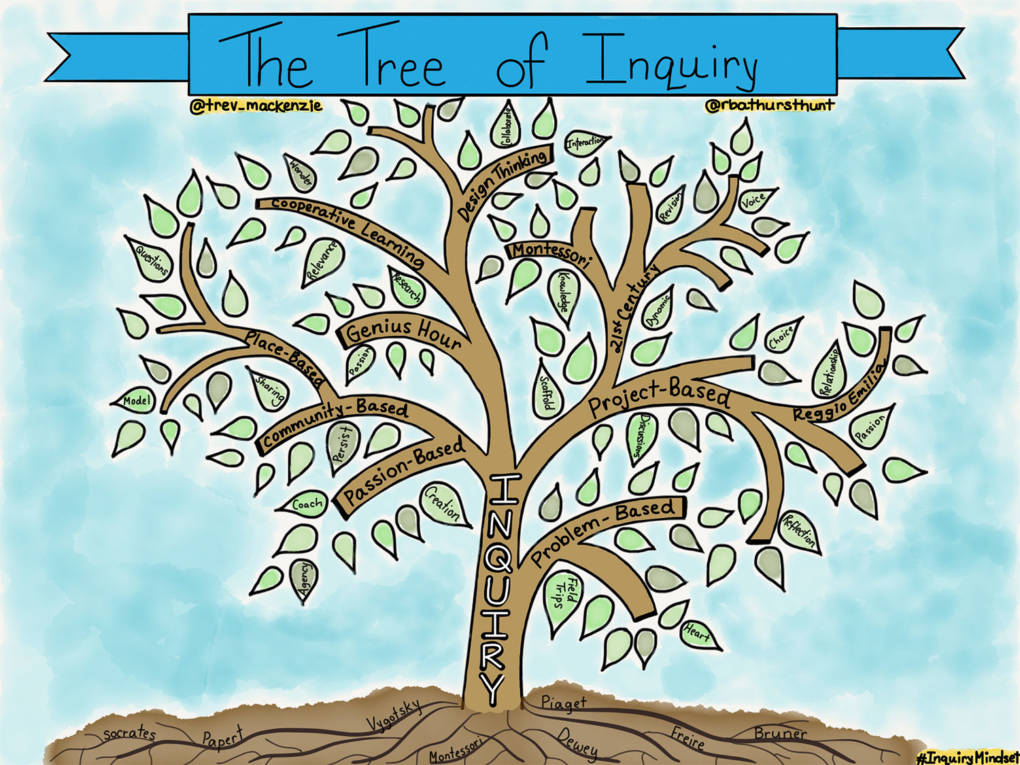
"caption": "The \"Tree of Inquiry\" can be a helpful visual to understand how various educational buzzwords connect to inquiry.",
"description": "The \"Tree of Inquiry\" can be a helpful visual to understand how various educational buzzwords connect to inquiry.",
"title": "Tree-of-Inquiry",
"credit": "Courtesy Trevor MacKenzie and Rebecca Bathurst-Hunt",
"status": "inherit",
"isLoading": false,
"fetchFailed": false
},
"mindshift_51666": {
"type": "attachments",
"id": "mindshift_51666",
"meta": {
"index": "attachments_1716263798",
"site": "mindshift",
"id": "51666",
"found": true
},
"parent": 51662,
"imgSizes": {
"small": {
"file": "https://ww2.kqed.org/app/uploads/sites/23/2018/07/Sarah-Gonser-EarlySS2-520x390.jpg",
"width": 520,
"mimeType": "image/jpeg",
"height": 390
},
"twentyfourteen-full-width": {
"file": "https://ww2.kqed.org/app/uploads/sites/23/2018/07/Sarah-Gonser-EarlySS2-1038x576.jpg",
"width": 1038,
"mimeType": "image/jpeg",
"height": 576
},
"thumbnail": {
"file": "https://ww2.kqed.org/app/uploads/sites/23/2018/07/Sarah-Gonser-EarlySS2-160x120.jpg",
"width": 160,
"mimeType": "image/jpeg",
"height": 120
},
"fd-sm": {
"file": "https://ww2.kqed.org/app/uploads/sites/23/2018/07/Sarah-Gonser-EarlySS2-960x720.jpg",
"width": 960,
"mimeType": "image/jpeg",
"height": 720
},
"post-thumbnail": {
"file": "https://ww2.kqed.org/app/uploads/sites/23/2018/07/Sarah-Gonser-EarlySS2-672x372.jpg",
"width": 672,
"mimeType": "image/jpeg",
"height": 372
},
"xsmall": {
"file": "https://ww2.kqed.org/app/uploads/sites/23/2018/07/Sarah-Gonser-EarlySS2-375x281.jpg",
"width": 375,
"mimeType": "image/jpeg",
"height": 281
},
"kqedFullSize": {
"file": "https://ww2.kqed.org/app/uploads/sites/23/2018/07/Sarah-Gonser-EarlySS2-e1531377680113.jpg",
"width": 1920,
"height": 1440
},
"large": {
"file": "https://ww2.kqed.org/app/uploads/sites/23/2018/07/Sarah-Gonser-EarlySS2-1020x765.jpg",
"width": 1020,
"mimeType": "image/jpeg",
"height": 765
},
"xlarge": {
"file": "https://ww2.kqed.org/app/uploads/sites/23/2018/07/Sarah-Gonser-EarlySS2-1180x885.jpg",
"width": 1180,
"mimeType": "image/jpeg",
"height": 885
},
"complete_open_graph": {
"file": "https://ww2.kqed.org/app/uploads/sites/23/2018/07/Sarah-Gonser-EarlySS2-1200x900.jpg",
"width": 1200,
"mimeType": "image/jpeg",
"height": 900
},
"guest-author-50": {
"file": "https://ww2.kqed.org/app/uploads/sites/23/2018/07/Sarah-Gonser-EarlySS2-50x50.jpg",
"width": 50,
"mimeType": "image/jpeg",
"height": 50
},
"guest-author-96": {
"file": "https://ww2.kqed.org/app/uploads/sites/23/2018/07/Sarah-Gonser-EarlySS2-96x96.jpg",
"width": 96,
"mimeType": "image/jpeg",
"height": 96
},
"medium": {
"file": "https://ww2.kqed.org/app/uploads/sites/23/2018/07/Sarah-Gonser-EarlySS2-800x600.jpg",
"width": 800,
"mimeType": "image/jpeg",
"height": 600
},
"guest-author-64": {
"file": "https://ww2.kqed.org/app/uploads/sites/23/2018/07/Sarah-Gonser-EarlySS2-64x64.jpg",
"width": 64,
"mimeType": "image/jpeg",
"height": 64
},
"guest-author-32": {
"file": "https://ww2.kqed.org/app/uploads/sites/23/2018/07/Sarah-Gonser-EarlySS2-32x32.jpg",
"width": 32,
"mimeType": "image/jpeg",
"height": 32
},
"fd-lrg": {
"file": "https://ww2.kqed.org/app/uploads/sites/23/2018/07/Sarah-Gonser-EarlySS2-1920x1440.jpg",
"width": 1920,
"mimeType": "image/jpeg",
"height": 1440
},
"fd-med": {
"file": "https://ww2.kqed.org/app/uploads/sites/23/2018/07/Sarah-Gonser-EarlySS2-1180x885.jpg",
"width": 1180,
"mimeType": "image/jpeg",
"height": 885
},
"full-width": {
"file": "https://ww2.kqed.org/app/uploads/sites/23/2018/07/Sarah-Gonser-EarlySS2-1920x1440.jpg",
"width": 1920,
"mimeType": "image/jpeg",
"height": 1440
},
"detail": {
"file": "https://ww2.kqed.org/app/uploads/sites/23/2018/07/Sarah-Gonser-EarlySS2-150x150.jpg",
"width": 150,
"mimeType": "image/jpeg",
"height": 150
},
"medium_large": {
"file": "https://ww2.kqed.org/app/uploads/sites/23/2018/07/Sarah-Gonser-EarlySS2-768x576.jpg",
"width": 768,
"mimeType": "image/jpeg",
"height": 576
},
"guest-author-128": {
"file": "https://ww2.kqed.org/app/uploads/sites/23/2018/07/Sarah-Gonser-EarlySS2-128x128.jpg",
"width": 128,
"mimeType": "image/jpeg",
"height": 128
},
"xxsmall": {
"file": "https://ww2.kqed.org/app/uploads/sites/23/2018/07/Sarah-Gonser-EarlySS2-240x180.jpg",
"width": 240,
"mimeType": "image/jpeg",
"height": 180
}
},
"publishDate": 1531377556,
"modified": 1531377673,
"caption": "Two educators discuss how and when race, or racism, showed up in their classrooms at the Border Crossers training. ",
"description": null,
"title": "Sarah Gonser - EarlySS2",
"credit": "Sarah Gonser for The Hechinger Report",
"status": "inherit",
"isLoading": false,
"fetchFailed": false
},
"mindshift_51649": {
"type": "attachments",
"id": "mindshift_51649",
"meta": {
"index": "attachments_1716263798",
"site": "mindshift",
"id": "51649",
"found": true
},
"parent": 51644,
"imgSizes": {
"small": {
"file": "https://ww2.kqed.org/app/uploads/sites/23/2018/07/Mongeau-K3science-photo4-520x390.jpg",
"width": 520,
"mimeType": "image/jpeg",
"height": 390
},
"twentyfourteen-full-width": {
"file": "https://ww2.kqed.org/app/uploads/sites/23/2018/07/Mongeau-K3science-photo4-1038x576.jpg",
"width": 1038,
"mimeType": "image/jpeg",
"height": 576
},
"thumbnail": {
"file": "https://ww2.kqed.org/app/uploads/sites/23/2018/07/Mongeau-K3science-photo4-160x120.jpg",
"width": 160,
"mimeType": "image/jpeg",
"height": 120
},
"fd-sm": {
"file": "https://ww2.kqed.org/app/uploads/sites/23/2018/07/Mongeau-K3science-photo4-960x720.jpg",
"width": 960,
"mimeType": "image/jpeg",
"height": 720
},
"post-thumbnail": {
"file": "https://ww2.kqed.org/app/uploads/sites/23/2018/07/Mongeau-K3science-photo4-672x372.jpg",
"width": 672,
"mimeType": "image/jpeg",
"height": 372
},
"xsmall": {
"file": "https://ww2.kqed.org/app/uploads/sites/23/2018/07/Mongeau-K3science-photo4-375x281.jpg",
"width": 375,
"mimeType": "image/jpeg",
"height": 281
},
"kqedFullSize": {
"file": "https://ww2.kqed.org/app/uploads/sites/23/2018/07/Mongeau-K3science-photo4.jpg",
"width": 1500,
"height": 1125
},
"large": {
"file": "https://ww2.kqed.org/app/uploads/sites/23/2018/07/Mongeau-K3science-photo4-1020x765.jpg",
"width": 1020,
"mimeType": "image/jpeg",
"height": 765
},
"xlarge": {
"file": "https://ww2.kqed.org/app/uploads/sites/23/2018/07/Mongeau-K3science-photo4-1180x885.jpg",
"width": 1180,
"mimeType": "image/jpeg",
"height": 885
},
"complete_open_graph": {
"file": "https://ww2.kqed.org/app/uploads/sites/23/2018/07/Mongeau-K3science-photo4-1200x900.jpg",
"width": 1200,
"mimeType": "image/jpeg",
"height": 900
},
"guest-author-50": {
"file": "https://ww2.kqed.org/app/uploads/sites/23/2018/07/Mongeau-K3science-photo4-50x50.jpg",
"width": 50,
"mimeType": "image/jpeg",
"height": 50
},
"guest-author-96": {
"file": "https://ww2.kqed.org/app/uploads/sites/23/2018/07/Mongeau-K3science-photo4-96x96.jpg",
"width": 96,
"mimeType": "image/jpeg",
"height": 96
},
"medium": {
"file": "https://ww2.kqed.org/app/uploads/sites/23/2018/07/Mongeau-K3science-photo4-800x600.jpg",
"width": 800,
"mimeType": "image/jpeg",
"height": 600
},
"guest-author-64": {
"file": "https://ww2.kqed.org/app/uploads/sites/23/2018/07/Mongeau-K3science-photo4-64x64.jpg",
"width": 64,
"mimeType": "image/jpeg",
"height": 64
},
"guest-author-32": {
"file": "https://ww2.kqed.org/app/uploads/sites/23/2018/07/Mongeau-K3science-photo4-32x32.jpg",
"width": 32,
"mimeType": "image/jpeg",
"height": 32
},
"fd-med": {
"file": "https://ww2.kqed.org/app/uploads/sites/23/2018/07/Mongeau-K3science-photo4-1180x885.jpg",
"width": 1180,
"mimeType": "image/jpeg",
"height": 885
},
"detail": {
"file": "https://ww2.kqed.org/app/uploads/sites/23/2018/07/Mongeau-K3science-photo4-150x150.jpg",
"width": 150,
"mimeType": "image/jpeg",
"height": 150
},
"medium_large": {
"file": "https://ww2.kqed.org/app/uploads/sites/23/2018/07/Mongeau-K3science-photo4-768x576.jpg",
"width": 768,
"mimeType": "image/jpeg",
"height": 576
},
"guest-author-128": {
"file": "https://ww2.kqed.org/app/uploads/sites/23/2018/07/Mongeau-K3science-photo4-128x128.jpg",
"width": 128,
"mimeType": "image/jpeg",
"height": 128
},
"xxsmall": {
"file": "https://ww2.kqed.org/app/uploads/sites/23/2018/07/Mongeau-K3science-photo4-240x180.jpg",
"width": 240,
"mimeType": "image/jpeg",
"height": 180
}
},
"publishDate": 1531257025,
"modified": 1531259055,
"caption": "Malachi Ballinger, 6, laughs at how far he has made his “pinball” travel during a science lesson in his kindergarten classroom in Redmond, Oregon. ",
"description": null,
"title": "Mongeau-K3science-photo4",
"credit": "Lillian Mongeau/The Hechinger Report",
"status": "inherit",
"isLoading": false,
"fetchFailed": false
},
"mindshift_51625": {
"type": "attachments",
"id": "mindshift_51625",
"meta": {
"index": "attachments_1716263798",
"site": "mindshift",
"id": "51625",
"found": true
},
"parent": 51622,
"imgSizes": {
"small": {
"file": "https://ww2.kqed.org/app/uploads/sites/23/2018/07/Sarah-Gonser-EarlyRead4-520x390.jpg",
"width": 520,
"mimeType": "image/jpeg",
"height": 390
},
"twentyfourteen-full-width": {
"file": "https://ww2.kqed.org/app/uploads/sites/23/2018/07/Sarah-Gonser-EarlyRead4-1038x576.jpg",
"width": 1038,
"mimeType": "image/jpeg",
"height": 576
},
"thumbnail": {
"file": "https://ww2.kqed.org/app/uploads/sites/23/2018/07/Sarah-Gonser-EarlyRead4-160x120.jpg",
"width": 160,
"mimeType": "image/jpeg",
"height": 120
},
"fd-sm": {
"file": "https://ww2.kqed.org/app/uploads/sites/23/2018/07/Sarah-Gonser-EarlyRead4-960x720.jpg",
"width": 960,
"mimeType": "image/jpeg",
"height": 720
},
"post-thumbnail": {
"file": "https://ww2.kqed.org/app/uploads/sites/23/2018/07/Sarah-Gonser-EarlyRead4-672x372.jpg",
"width": 672,
"mimeType": "image/jpeg",
"height": 372
},
"xsmall": {
"file": "https://ww2.kqed.org/app/uploads/sites/23/2018/07/Sarah-Gonser-EarlyRead4-375x281.jpg",
"width": 375,
"mimeType": "image/jpeg",
"height": 281
},
"kqedFullSize": {
"file": "https://ww2.kqed.org/app/uploads/sites/23/2018/07/Sarah-Gonser-EarlyRead4-e1531200949737.jpg",
"width": 1920,
"height": 1440
},
"large": {
"file": "https://ww2.kqed.org/app/uploads/sites/23/2018/07/Sarah-Gonser-EarlyRead4-1020x765.jpg",
"width": 1020,
"mimeType": "image/jpeg",
"height": 765
},
"xlarge": {
"file": "https://ww2.kqed.org/app/uploads/sites/23/2018/07/Sarah-Gonser-EarlyRead4-1180x885.jpg",
"width": 1180,
"mimeType": "image/jpeg",
"height": 885
},
"complete_open_graph": {
"file": "https://ww2.kqed.org/app/uploads/sites/23/2018/07/Sarah-Gonser-EarlyRead4-1200x900.jpg",
"width": 1200,
"mimeType": "image/jpeg",
"height": 900
},
"guest-author-50": {
"file": "https://ww2.kqed.org/app/uploads/sites/23/2018/07/Sarah-Gonser-EarlyRead4-50x50.jpg",
"width": 50,
"mimeType": "image/jpeg",
"height": 50
},
"guest-author-96": {
"file": "https://ww2.kqed.org/app/uploads/sites/23/2018/07/Sarah-Gonser-EarlyRead4-96x96.jpg",
"width": 96,
"mimeType": "image/jpeg",
"height": 96
},
"medium": {
"file": "https://ww2.kqed.org/app/uploads/sites/23/2018/07/Sarah-Gonser-EarlyRead4-800x600.jpg",
"width": 800,
"mimeType": "image/jpeg",
"height": 600
},
"guest-author-64": {
"file": "https://ww2.kqed.org/app/uploads/sites/23/2018/07/Sarah-Gonser-EarlyRead4-64x64.jpg",
"width": 64,
"mimeType": "image/jpeg",
"height": 64
},
"guest-author-32": {
"file": "https://ww2.kqed.org/app/uploads/sites/23/2018/07/Sarah-Gonser-EarlyRead4-32x32.jpg",
"width": 32,
"mimeType": "image/jpeg",
"height": 32
},
"fd-lrg": {
"file": "https://ww2.kqed.org/app/uploads/sites/23/2018/07/Sarah-Gonser-EarlyRead4-1920x1440.jpg",
"width": 1920,
"mimeType": "image/jpeg",
"height": 1440
},
"fd-med": {
"file": "https://ww2.kqed.org/app/uploads/sites/23/2018/07/Sarah-Gonser-EarlyRead4-1180x885.jpg",
"width": 1180,
"mimeType": "image/jpeg",
"height": 885
},
"full-width": {
"file": "https://ww2.kqed.org/app/uploads/sites/23/2018/07/Sarah-Gonser-EarlyRead4-1920x1440.jpg",
"width": 1920,
"mimeType": "image/jpeg",
"height": 1440
},
"detail": {
"file": "https://ww2.kqed.org/app/uploads/sites/23/2018/07/Sarah-Gonser-EarlyRead4-150x150.jpg",
"width": 150,
"mimeType": "image/jpeg",
"height": 150
},
"medium_large": {
"file": "https://ww2.kqed.org/app/uploads/sites/23/2018/07/Sarah-Gonser-EarlyRead4-768x576.jpg",
"width": 768,
"mimeType": "image/jpeg",
"height": 576
},
"guest-author-128": {
"file": "https://ww2.kqed.org/app/uploads/sites/23/2018/07/Sarah-Gonser-EarlyRead4-128x128.jpg",
"width": 128,
"mimeType": "image/jpeg",
"height": 128
},
"xxsmall": {
"file": "https://ww2.kqed.org/app/uploads/sites/23/2018/07/Sarah-Gonser-EarlyRead4-240x180.jpg",
"width": 240,
"mimeType": "image/jpeg",
"height": 180
}
},
"publishDate": 1531200804,
"modified": 1531200961,
"caption": "A kindergartener re-creates a flashcard word using Unifix cubes — a hands-on way to reinforce reading skills. ",
"description": null,
"title": "Sarah Gonser - EarlyRead4",
"credit": "Sarah Gonser for The Hechinger Report",
"status": "inherit",
"isLoading": false,
"fetchFailed": false
},
"mindshift_51607": {
"type": "attachments",
"id": "mindshift_51607",
"meta": {
"index": "attachments_1716263798",
"site": "mindshift",
"id": "51607",
"found": true
},
"parent": 51605,
"imgSizes": {
"small": {
"file": "https://ww2.kqed.org/app/uploads/sites/23/2018/07/Sarah-Gonser-EarlyMath1-520x390.jpg",
"width": 520,
"mimeType": "image/jpeg",
"height": 390
},
"twentyfourteen-full-width": {
"file": "https://ww2.kqed.org/app/uploads/sites/23/2018/07/Sarah-Gonser-EarlyMath1-1038x576.jpg",
"width": 1038,
"mimeType": "image/jpeg",
"height": 576
},
"thumbnail": {
"file": "https://ww2.kqed.org/app/uploads/sites/23/2018/07/Sarah-Gonser-EarlyMath1-160x120.jpg",
"width": 160,
"mimeType": "image/jpeg",
"height": 120
},
"fd-sm": {
"file": "https://ww2.kqed.org/app/uploads/sites/23/2018/07/Sarah-Gonser-EarlyMath1-960x720.jpg",
"width": 960,
"mimeType": "image/jpeg",
"height": 720
},
"post-thumbnail": {
"file": "https://ww2.kqed.org/app/uploads/sites/23/2018/07/Sarah-Gonser-EarlyMath1-672x372.jpg",
"width": 672,
"mimeType": "image/jpeg",
"height": 372
},
"xsmall": {
"file": "https://ww2.kqed.org/app/uploads/sites/23/2018/07/Sarah-Gonser-EarlyMath1-375x281.jpg",
"width": 375,
"mimeType": "image/jpeg",
"height": 281
},
"kqedFullSize": {
"file": "https://ww2.kqed.org/app/uploads/sites/23/2018/07/Sarah-Gonser-EarlyMath1-e1531115332299.jpg",
"width": 1920,
"height": 1440
},
"large": {
"file": "https://ww2.kqed.org/app/uploads/sites/23/2018/07/Sarah-Gonser-EarlyMath1-1020x765.jpg",
"width": 1020,
"mimeType": "image/jpeg",
"height": 765
},
"xlarge": {
"file": "https://ww2.kqed.org/app/uploads/sites/23/2018/07/Sarah-Gonser-EarlyMath1-1180x885.jpg",
"width": 1180,
"mimeType": "image/jpeg",
"height": 885
},
"complete_open_graph": {
"file": "https://ww2.kqed.org/app/uploads/sites/23/2018/07/Sarah-Gonser-EarlyMath1-1200x900.jpg",
"width": 1200,
"mimeType": "image/jpeg",
"height": 900
},
"guest-author-50": {
"file": "https://ww2.kqed.org/app/uploads/sites/23/2018/07/Sarah-Gonser-EarlyMath1-50x50.jpg",
"width": 50,
"mimeType": "image/jpeg",
"height": 50
},
"guest-author-96": {
"file": "https://ww2.kqed.org/app/uploads/sites/23/2018/07/Sarah-Gonser-EarlyMath1-96x96.jpg",
"width": 96,
"mimeType": "image/jpeg",
"height": 96
},
"medium": {
"file": "https://ww2.kqed.org/app/uploads/sites/23/2018/07/Sarah-Gonser-EarlyMath1-800x600.jpg",
"width": 800,
"mimeType": "image/jpeg",
"height": 600
},
"guest-author-64": {
"file": "https://ww2.kqed.org/app/uploads/sites/23/2018/07/Sarah-Gonser-EarlyMath1-64x64.jpg",
"width": 64,
"mimeType": "image/jpeg",
"height": 64
},
"guest-author-32": {
"file": "https://ww2.kqed.org/app/uploads/sites/23/2018/07/Sarah-Gonser-EarlyMath1-32x32.jpg",
"width": 32,
"mimeType": "image/jpeg",
"height": 32
},
"fd-lrg": {
"file": "https://ww2.kqed.org/app/uploads/sites/23/2018/07/Sarah-Gonser-EarlyMath1-1920x1440.jpg",
"width": 1920,
"mimeType": "image/jpeg",
"height": 1440
},
"fd-med": {
"file": "https://ww2.kqed.org/app/uploads/sites/23/2018/07/Sarah-Gonser-EarlyMath1-1180x885.jpg",
"width": 1180,
"mimeType": "image/jpeg",
"height": 885
},
"full-width": {
"file": "https://ww2.kqed.org/app/uploads/sites/23/2018/07/Sarah-Gonser-EarlyMath1-1920x1440.jpg",
"width": 1920,
"mimeType": "image/jpeg",
"height": 1440
},
"detail": {
"file": "https://ww2.kqed.org/app/uploads/sites/23/2018/07/Sarah-Gonser-EarlyMath1-150x150.jpg",
"width": 150,
"mimeType": "image/jpeg",
"height": 150
},
"medium_large": {
"file": "https://ww2.kqed.org/app/uploads/sites/23/2018/07/Sarah-Gonser-EarlyMath1-768x576.jpg",
"width": 768,
"mimeType": "image/jpeg",
"height": 576
},
"guest-author-128": {
"file": "https://ww2.kqed.org/app/uploads/sites/23/2018/07/Sarah-Gonser-EarlyMath1-128x128.jpg",
"width": 128,
"mimeType": "image/jpeg",
"height": 128
},
"xxsmall": {
"file": "https://ww2.kqed.org/app/uploads/sites/23/2018/07/Sarah-Gonser-EarlyMath1-240x180.jpg",
"width": 240,
"mimeType": "image/jpeg",
"height": 180
}
},
"publishDate": 1531115291,
"modified": 1531115351,
"caption": "Small-group math work at Prairie Oak Elementary in Berwyn North School District 98 where, two years ago, just 14 percent of third-graders were able to do grade-level math. ",
"description": null,
"title": "Sarah Gonser - EarlyMath1",
"credit": "Sarah Gonser for The Hechinger Report",
"status": "inherit",
"isLoading": false,
"fetchFailed": false
},
"mindshift_51557": {
"type": "attachments",
"id": "mindshift_51557",
"meta": {
"index": "attachments_1716263798",
"site": "mindshift",
"id": "51557",
"found": true
},
"parent": 51555,
"imgSizes": {
"small": {
"file": "https://ww2.kqed.org/app/uploads/sites/23/2018/06/Labcamp3-520x347.jpg",
"width": 520,
"mimeType": "image/jpeg",
"height": 347
},
"twentyfourteen-full-width": {
"file": "https://ww2.kqed.org/app/uploads/sites/23/2018/06/Labcamp3-1038x576.jpg",
"width": 1038,
"mimeType": "image/jpeg",
"height": 576
},
"thumbnail": {
"file": "https://ww2.kqed.org/app/uploads/sites/23/2018/06/Labcamp3-160x107.jpg",
"width": 160,
"mimeType": "image/jpeg",
"height": 107
},
"fd-sm": {
"file": "https://ww2.kqed.org/app/uploads/sites/23/2018/06/Labcamp3-960x641.jpg",
"width": 960,
"mimeType": "image/jpeg",
"height": 641
},
"post-thumbnail": {
"file": "https://ww2.kqed.org/app/uploads/sites/23/2018/06/Labcamp3-672x372.jpg",
"width": 672,
"mimeType": "image/jpeg",
"height": 372
},
"xsmall": {
"file": "https://ww2.kqed.org/app/uploads/sites/23/2018/06/Labcamp3-375x250.jpg",
"width": 375,
"mimeType": "image/jpeg",
"height": 250
},
"kqedFullSize": {
"file": "https://ww2.kqed.org/app/uploads/sites/23/2018/06/Labcamp3.jpg",
"width": 2000,
"height": 1335
},
"large": {
"file": "https://ww2.kqed.org/app/uploads/sites/23/2018/06/Labcamp3-1020x681.jpg",
"width": 1020,
"mimeType": "image/jpeg",
"height": 681
},
"xlarge": {
"file": "https://ww2.kqed.org/app/uploads/sites/23/2018/06/Labcamp3-1180x788.jpg",
"width": 1180,
"mimeType": "image/jpeg",
"height": 788
},
"complete_open_graph": {
"file": "https://ww2.kqed.org/app/uploads/sites/23/2018/06/Labcamp3-1200x801.jpg",
"width": 1200,
"mimeType": "image/jpeg",
"height": 801
},
"guest-author-50": {
"file": "https://ww2.kqed.org/app/uploads/sites/23/2018/06/Labcamp3-50x50.jpg",
"width": 50,
"mimeType": "image/jpeg",
"height": 50
},
"guest-author-96": {
"file": "https://ww2.kqed.org/app/uploads/sites/23/2018/06/Labcamp3-96x96.jpg",
"width": 96,
"mimeType": "image/jpeg",
"height": 96
},
"medium": {
"file": "https://ww2.kqed.org/app/uploads/sites/23/2018/06/Labcamp3-800x534.jpg",
"width": 800,
"mimeType": "image/jpeg",
"height": 534
},
"guest-author-64": {
"file": "https://ww2.kqed.org/app/uploads/sites/23/2018/06/Labcamp3-64x64.jpg",
"width": 64,
"mimeType": "image/jpeg",
"height": 64
},
"guest-author-32": {
"file": "https://ww2.kqed.org/app/uploads/sites/23/2018/06/Labcamp3-32x32.jpg",
"width": 32,
"mimeType": "image/jpeg",
"height": 32
},
"fd-lrg": {
"file": "https://ww2.kqed.org/app/uploads/sites/23/2018/06/Labcamp3-1920x1282.jpg",
"width": 1920,
"mimeType": "image/jpeg",
"height": 1282
},
"fd-med": {
"file": "https://ww2.kqed.org/app/uploads/sites/23/2018/06/Labcamp3-1180x788.jpg",
"width": 1180,
"mimeType": "image/jpeg",
"height": 788
},
"full-width": {
"file": "https://ww2.kqed.org/app/uploads/sites/23/2018/06/Labcamp3-1920x1282.jpg",
"width": 1920,
"mimeType": "image/jpeg",
"height": 1282
},
"detail": {
"file": "https://ww2.kqed.org/app/uploads/sites/23/2018/06/Labcamp3-150x150.jpg",
"width": 150,
"mimeType": "image/jpeg",
"height": 150
},
"medium_large": {
"file": "https://ww2.kqed.org/app/uploads/sites/23/2018/06/Labcamp3-768x513.jpg",
"width": 768,
"mimeType": "image/jpeg",
"height": 513
},
"guest-author-128": {
"file": "https://ww2.kqed.org/app/uploads/sites/23/2018/06/Labcamp3-128x128.jpg",
"width": 128,
"mimeType": "image/jpeg",
"height": 128
},
"xxsmall": {
"file": "https://ww2.kqed.org/app/uploads/sites/23/2018/06/Labcamp3-240x160.jpg",
"width": 240,
"mimeType": "image/jpeg",
"height": 160
}
},
"publishDate": 1530297883,
"modified": 1530297998,
"caption": "Learning about States of Matter during a potions class in a Harry Potter-inspired camp. These girls are reacting to a dry-ice experiment that caused the beaker to bubble over.",
"description": "Learning about States of Matter during a potions class in a Harry Potter-inspired camp. These girls are reacting to a dry-ice experiment that caused the beaker to bubble over.",
"title": "Labcamp3",
"credit": "Courtesy Amy Schwartzbach-Kang/The Laboratory",
"status": "inherit",
"isLoading": false,
"fetchFailed": false
},
"mindshift_51572": {
"type": "attachments",
"id": "mindshift_51572",
"meta": {
"index": "attachments_1716263798",
"site": "mindshift",
"id": "51572",
"found": true
},
"parent": 51571,
"imgSizes": {
"small": {
"file": "https://ww2.kqed.org/app/uploads/sites/23/2018/07/getting-kids-to-read_slide-807215311af7b99fd3409a8709685db1f0fd4548-520x347.jpg",
"width": 520,
"mimeType": "image/jpeg",
"height": 347
},
"twentyfourteen-full-width": {
"file": "https://ww2.kqed.org/app/uploads/sites/23/2018/07/getting-kids-to-read_slide-807215311af7b99fd3409a8709685db1f0fd4548-1038x576.jpg",
"width": 1038,
"mimeType": "image/jpeg",
"height": 576
},
"thumbnail": {
"file": "https://ww2.kqed.org/app/uploads/sites/23/2018/07/getting-kids-to-read_slide-807215311af7b99fd3409a8709685db1f0fd4548-160x107.jpg",
"width": 160,
"mimeType": "image/jpeg",
"height": 107
},
"fd-sm": {
"file": "https://ww2.kqed.org/app/uploads/sites/23/2018/07/getting-kids-to-read_slide-807215311af7b99fd3409a8709685db1f0fd4548-960x640.jpg",
"width": 960,
"mimeType": "image/jpeg",
"height": 640
},
"post-thumbnail": {
"file": "https://ww2.kqed.org/app/uploads/sites/23/2018/07/getting-kids-to-read_slide-807215311af7b99fd3409a8709685db1f0fd4548-672x372.jpg",
"width": 672,
"mimeType": "image/jpeg",
"height": 372
},
"xsmall": {
"file": "https://ww2.kqed.org/app/uploads/sites/23/2018/07/getting-kids-to-read_slide-807215311af7b99fd3409a8709685db1f0fd4548-375x250.jpg",
"width": 375,
"mimeType": "image/jpeg",
"height": 250
},
"kqedFullSize": {
"file": "https://ww2.kqed.org/app/uploads/sites/23/2018/07/getting-kids-to-read_slide-807215311af7b99fd3409a8709685db1f0fd4548-e1530593798755.jpg",
"width": 1920,
"height": 1280
},
"large": {
"file": "https://ww2.kqed.org/app/uploads/sites/23/2018/07/getting-kids-to-read_slide-807215311af7b99fd3409a8709685db1f0fd4548-1020x680.jpg",
"width": 1020,
"mimeType": "image/jpeg",
"height": 680
},
"xlarge": {
"file": "https://ww2.kqed.org/app/uploads/sites/23/2018/07/getting-kids-to-read_slide-807215311af7b99fd3409a8709685db1f0fd4548-1180x787.jpg",
"width": 1180,
"mimeType": "image/jpeg",
"height": 787
},
"complete_open_graph": {
"file": "https://ww2.kqed.org/app/uploads/sites/23/2018/07/getting-kids-to-read_slide-807215311af7b99fd3409a8709685db1f0fd4548-1200x800.jpg",
"width": 1200,
"mimeType": "image/jpeg",
"height": 800
},
"guest-author-50": {
"file": "https://ww2.kqed.org/app/uploads/sites/23/2018/07/getting-kids-to-read_slide-807215311af7b99fd3409a8709685db1f0fd4548-50x50.jpg",
"width": 50,
"mimeType": "image/jpeg",
"height": 50
},
"guest-author-96": {
"file": "https://ww2.kqed.org/app/uploads/sites/23/2018/07/getting-kids-to-read_slide-807215311af7b99fd3409a8709685db1f0fd4548-96x96.jpg",
"width": 96,
"mimeType": "image/jpeg",
"height": 96
},
"medium": {
"file": "https://ww2.kqed.org/app/uploads/sites/23/2018/07/getting-kids-to-read_slide-807215311af7b99fd3409a8709685db1f0fd4548-800x533.jpg",
"width": 800,
"mimeType": "image/jpeg",
"height": 533
},
"guest-author-64": {
"file": "https://ww2.kqed.org/app/uploads/sites/23/2018/07/getting-kids-to-read_slide-807215311af7b99fd3409a8709685db1f0fd4548-64x64.jpg",
"width": 64,
"mimeType": "image/jpeg",
"height": 64
},
"guest-author-32": {
"file": "https://ww2.kqed.org/app/uploads/sites/23/2018/07/getting-kids-to-read_slide-807215311af7b99fd3409a8709685db1f0fd4548-32x32.jpg",
"width": 32,
"mimeType": "image/jpeg",
"height": 32
},
"fd-lrg": {
"file": "https://ww2.kqed.org/app/uploads/sites/23/2018/07/getting-kids-to-read_slide-807215311af7b99fd3409a8709685db1f0fd4548-1920x1280.jpg",
"width": 1920,
"mimeType": "image/jpeg",
"height": 1280
},
"fd-med": {
"file": "https://ww2.kqed.org/app/uploads/sites/23/2018/07/getting-kids-to-read_slide-807215311af7b99fd3409a8709685db1f0fd4548-1180x787.jpg",
"width": 1180,
"mimeType": "image/jpeg",
"height": 787
},
"full-width": {
"file": "https://ww2.kqed.org/app/uploads/sites/23/2018/07/getting-kids-to-read_slide-807215311af7b99fd3409a8709685db1f0fd4548-1920x1280.jpg",
"width": 1920,
"mimeType": "image/jpeg",
"height": 1280
},
"detail": {
"file": "https://ww2.kqed.org/app/uploads/sites/23/2018/07/getting-kids-to-read_slide-807215311af7b99fd3409a8709685db1f0fd4548-150x150.jpg",
"width": 150,
"mimeType": "image/jpeg",
"height": 150
},
"medium_large": {
"file": "https://ww2.kqed.org/app/uploads/sites/23/2018/07/getting-kids-to-read_slide-807215311af7b99fd3409a8709685db1f0fd4548-768x512.jpg",
"width": 768,
"mimeType": "image/jpeg",
"height": 512
},
"guest-author-128": {
"file": "https://ww2.kqed.org/app/uploads/sites/23/2018/07/getting-kids-to-read_slide-807215311af7b99fd3409a8709685db1f0fd4548-128x128.jpg",
"width": 128,
"mimeType": "image/jpeg",
"height": 128
},
"xxsmall": {
"file": "https://ww2.kqed.org/app/uploads/sites/23/2018/07/getting-kids-to-read_slide-807215311af7b99fd3409a8709685db1f0fd4548-240x160.jpg",
"width": 240,
"mimeType": "image/jpeg",
"height": 160
}
},
"publishDate": 1530593769,
"modified": 1530593916,
"caption": null,
"description": "Young boy in hammock playing video game while a book with a dollar attached hangs in front of him.",
"title": "Young boy in hammock playing video game while a book with a dollar attached hangs in front of him.",
"credit": "NPR/LA Johnson",
"status": "inherit",
"isLoading": false,
"fetchFailed": false
},
"mindshift_51563": {
"type": "attachments",
"id": "mindshift_51563",
"meta": {
"index": "attachments_1716263798",
"site": "mindshift",
"id": "51563",
"found": true
},
"parent": 51458,
"imgSizes": {
"small": {
"file": "https://ww2.kqed.org/app/uploads/sites/23/2018/06/8415026630_5397d1331a_k-520x344.jpg",
"width": 520,
"mimeType": "image/jpeg",
"height": 344
},
"twentyfourteen-full-width": {
"file": "https://ww2.kqed.org/app/uploads/sites/23/2018/06/8415026630_5397d1331a_k-1038x576.jpg",
"width": 1038,
"mimeType": "image/jpeg",
"height": 576
},
"thumbnail": {
"file": "https://ww2.kqed.org/app/uploads/sites/23/2018/06/8415026630_5397d1331a_k-160x106.jpg",
"width": 160,
"mimeType": "image/jpeg",
"height": 106
},
"fd-sm": {
"file": "https://ww2.kqed.org/app/uploads/sites/23/2018/06/8415026630_5397d1331a_k-960x636.jpg",
"width": 960,
"mimeType": "image/jpeg",
"height": 636
},
"post-thumbnail": {
"file": "https://ww2.kqed.org/app/uploads/sites/23/2018/06/8415026630_5397d1331a_k-672x372.jpg",
"width": 672,
"mimeType": "image/jpeg",
"height": 372
},
"xsmall": {
"file": "https://ww2.kqed.org/app/uploads/sites/23/2018/06/8415026630_5397d1331a_k-375x248.jpg",
"width": 375,
"mimeType": "image/jpeg",
"height": 248
},
"kqedFullSize": {
"file": "https://ww2.kqed.org/app/uploads/sites/23/2018/06/8415026630_5397d1331a_k-e1530509850830.jpg",
"width": 1920,
"height": 1271
},
"large": {
"file": "https://ww2.kqed.org/app/uploads/sites/23/2018/06/8415026630_5397d1331a_k-1020x675.jpg",
"width": 1020,
"mimeType": "image/jpeg",
"height": 675
},
"xlarge": {
"file": "https://ww2.kqed.org/app/uploads/sites/23/2018/06/8415026630_5397d1331a_k-1180x781.jpg",
"width": 1180,
"mimeType": "image/jpeg",
"height": 781
},
"complete_open_graph": {
"file": "https://ww2.kqed.org/app/uploads/sites/23/2018/06/8415026630_5397d1331a_k-1200x795.jpg",
"width": 1200,
"mimeType": "image/jpeg",
"height": 795
},
"guest-author-50": {
"file": "https://ww2.kqed.org/app/uploads/sites/23/2018/06/8415026630_5397d1331a_k-50x50.jpg",
"width": 50,
"mimeType": "image/jpeg",
"height": 50
},
"guest-author-96": {
"file": "https://ww2.kqed.org/app/uploads/sites/23/2018/06/8415026630_5397d1331a_k-96x96.jpg",
"width": 96,
"mimeType": "image/jpeg",
"height": 96
},
"medium": {
"file": "https://ww2.kqed.org/app/uploads/sites/23/2018/06/8415026630_5397d1331a_k-800x530.jpg",
"width": 800,
"mimeType": "image/jpeg",
"height": 530
},
"guest-author-64": {
"file": "https://ww2.kqed.org/app/uploads/sites/23/2018/06/8415026630_5397d1331a_k-64x64.jpg",
"width": 64,
"mimeType": "image/jpeg",
"height": 64
},
"guest-author-32": {
"file": "https://ww2.kqed.org/app/uploads/sites/23/2018/06/8415026630_5397d1331a_k-32x32.jpg",
"width": 32,
"mimeType": "image/jpeg",
"height": 32
},
"fd-lrg": {
"file": "https://ww2.kqed.org/app/uploads/sites/23/2018/06/8415026630_5397d1331a_k-1920x1271.jpg",
"width": 1920,
"mimeType": "image/jpeg",
"height": 1271
},
"fd-med": {
"file": "https://ww2.kqed.org/app/uploads/sites/23/2018/06/8415026630_5397d1331a_k-1180x781.jpg",
"width": 1180,
"mimeType": "image/jpeg",
"height": 781
},
"full-width": {
"file": "https://ww2.kqed.org/app/uploads/sites/23/2018/06/8415026630_5397d1331a_k-1920x1271.jpg",
"width": 1920,
"mimeType": "image/jpeg",
"height": 1271
},
"detail": {
"file": "https://ww2.kqed.org/app/uploads/sites/23/2018/06/8415026630_5397d1331a_k-150x150.jpg",
"width": 150,
"mimeType": "image/jpeg",
"height": 150
},
"medium_large": {
"file": "https://ww2.kqed.org/app/uploads/sites/23/2018/06/8415026630_5397d1331a_k-768x509.jpg",
"width": 768,
"mimeType": "image/jpeg",
"height": 509
},
"guest-author-128": {
"file": "https://ww2.kqed.org/app/uploads/sites/23/2018/06/8415026630_5397d1331a_k-128x128.jpg",
"width": 128,
"mimeType": "image/jpeg",
"height": 128
},
"xxsmall": {
"file": "https://ww2.kqed.org/app/uploads/sites/23/2018/06/8415026630_5397d1331a_k-240x159.jpg",
"width": 240,
"mimeType": "image/jpeg",
"height": 159
}
},
"publishDate": 1530509833,
"modified": 1530509953,
"caption": "\n\u003ca>Kite Festival \u003c/a>in Mumbai",
"description": null,
"title": "8415026630_5397d1331a_k",
"credit": "\u003ca href=\"https://www.flickr.com/photos/bmwguggenheimlab/8415026630/in/album-72157632610991618/\">Flickr/BMW Guggenheim Lab\u003c/a>",
"status": "inherit",
"isLoading": false,
"fetchFailed": false
},
"mindshift_51441": {
"type": "attachments",
"id": "mindshift_51441",
"meta": {
"index": "attachments_1716263798",
"site": "mindshift",
"id": "51441",
"found": true
},
"parent": 51324,
"imgSizes": {
"small": {
"file": "https://ww2.kqed.org/app/uploads/sites/23/2018/06/iStock-824777726-520x347.jpg",
"width": 520,
"mimeType": "image/jpeg",
"height": 347
},
"twentyfourteen-full-width": {
"file": "https://ww2.kqed.org/app/uploads/sites/23/2018/06/iStock-824777726-1038x576.jpg",
"width": 1038,
"mimeType": "image/jpeg",
"height": 576
},
"thumbnail": {
"file": "https://ww2.kqed.org/app/uploads/sites/23/2018/06/iStock-824777726-160x107.jpg",
"width": 160,
"mimeType": "image/jpeg",
"height": 107
},
"fd-sm": {
"file": "https://ww2.kqed.org/app/uploads/sites/23/2018/06/iStock-824777726-960x640.jpg",
"width": 960,
"mimeType": "image/jpeg",
"height": 640
},
"post-thumbnail": {
"file": "https://ww2.kqed.org/app/uploads/sites/23/2018/06/iStock-824777726-672x372.jpg",
"width": 672,
"mimeType": "image/jpeg",
"height": 372
},
"xsmall": {
"file": "https://ww2.kqed.org/app/uploads/sites/23/2018/06/iStock-824777726-375x250.jpg",
"width": 375,
"mimeType": "image/jpeg",
"height": 250
},
"kqedFullSize": {
"file": "https://ww2.kqed.org/app/uploads/sites/23/2018/06/iStock-824777726-e1528908570545.jpg",
"width": 1920,
"height": 1280
},
"large": {
"file": "https://ww2.kqed.org/app/uploads/sites/23/2018/06/iStock-824777726-1020x680.jpg",
"width": 1020,
"mimeType": "image/jpeg",
"height": 680
},
"xlarge": {
"file": "https://ww2.kqed.org/app/uploads/sites/23/2018/06/iStock-824777726-1180x787.jpg",
"width": 1180,
"mimeType": "image/jpeg",
"height": 787
},
"complete_open_graph": {
"file": "https://ww2.kqed.org/app/uploads/sites/23/2018/06/iStock-824777726-1200x800.jpg",
"width": 1200,
"mimeType": "image/jpeg",
"height": 800
},
"guest-author-50": {
"file": "https://ww2.kqed.org/app/uploads/sites/23/2018/06/iStock-824777726-50x50.jpg",
"width": 50,
"mimeType": "image/jpeg",
"height": 50
},
"guest-author-96": {
"file": "https://ww2.kqed.org/app/uploads/sites/23/2018/06/iStock-824777726-96x96.jpg",
"width": 96,
"mimeType": "image/jpeg",
"height": 96
},
"medium": {
"file": "https://ww2.kqed.org/app/uploads/sites/23/2018/06/iStock-824777726-800x533.jpg",
"width": 800,
"mimeType": "image/jpeg",
"height": 533
},
"guest-author-64": {
"file": "https://ww2.kqed.org/app/uploads/sites/23/2018/06/iStock-824777726-64x64.jpg",
"width": 64,
"mimeType": "image/jpeg",
"height": 64
},
"guest-author-32": {
"file": "https://ww2.kqed.org/app/uploads/sites/23/2018/06/iStock-824777726-32x32.jpg",
"width": 32,
"mimeType": "image/jpeg",
"height": 32
},
"fd-lrg": {
"file": "https://ww2.kqed.org/app/uploads/sites/23/2018/06/iStock-824777726-1920x1280.jpg",
"width": 1920,
"mimeType": "image/jpeg",
"height": 1280
},
"fd-med": {
"file": "https://ww2.kqed.org/app/uploads/sites/23/2018/06/iStock-824777726-1180x787.jpg",
"width": 1180,
"mimeType": "image/jpeg",
"height": 787
},
"full-width": {
"file": "https://ww2.kqed.org/app/uploads/sites/23/2018/06/iStock-824777726-1920x1280.jpg",
"width": 1920,
"mimeType": "image/jpeg",
"height": 1280
},
"detail": {
"file": "https://ww2.kqed.org/app/uploads/sites/23/2018/06/iStock-824777726-150x150.jpg",
"width": 150,
"mimeType": "image/jpeg",
"height": 150
},
"medium_large": {
"file": "https://ww2.kqed.org/app/uploads/sites/23/2018/06/iStock-824777726-768x512.jpg",
"width": 768,
"mimeType": "image/jpeg",
"height": 512
},
"guest-author-128": {
"file": "https://ww2.kqed.org/app/uploads/sites/23/2018/06/iStock-824777726-128x128.jpg",
"width": 128,
"mimeType": "image/jpeg",
"height": 128
},
"xxsmall": {
"file": "https://ww2.kqed.org/app/uploads/sites/23/2018/06/iStock-824777726-240x160.jpg",
"width": 240,
"mimeType": "image/jpeg",
"height": 160
}
},
"publishDate": 1528908547,
"modified": 1528908587,
"caption": null,
"description": null,
"title": null,
"credit": "iStock/Wavebreakmedia",
"status": "inherit",
"isLoading": false,
"fetchFailed": false
},
"mindshift_51545": {
"type": "attachments",
"id": "mindshift_51545",
"meta": {
"index": "attachments_1716263798",
"site": "mindshift",
"id": "51545",
"found": true
},
"parent": 51538,
"imgSizes": {
"small": {
"file": "https://ww2.kqed.org/app/uploads/sites/23/2018/06/iStock-122175061-520x347.jpg",
"width": 520,
"mimeType": "image/jpeg",
"height": 347
},
"twentyfourteen-full-width": {
"file": "https://ww2.kqed.org/app/uploads/sites/23/2018/06/iStock-122175061-1038x576.jpg",
"width": 1038,
"mimeType": "image/jpeg",
"height": 576
},
"thumbnail": {
"file": "https://ww2.kqed.org/app/uploads/sites/23/2018/06/iStock-122175061-160x107.jpg",
"width": 160,
"mimeType": "image/jpeg",
"height": 107
},
"fd-sm": {
"file": "https://ww2.kqed.org/app/uploads/sites/23/2018/06/iStock-122175061-960x640.jpg",
"width": 960,
"mimeType": "image/jpeg",
"height": 640
},
"post-thumbnail": {
"file": "https://ww2.kqed.org/app/uploads/sites/23/2018/06/iStock-122175061-672x372.jpg",
"width": 672,
"mimeType": "image/jpeg",
"height": 372
},
"xsmall": {
"file": "https://ww2.kqed.org/app/uploads/sites/23/2018/06/iStock-122175061-375x250.jpg",
"width": 375,
"mimeType": "image/jpeg",
"height": 250
},
"kqedFullSize": {
"file": "https://ww2.kqed.org/app/uploads/sites/23/2018/06/iStock-122175061.jpg",
"width": 2121,
"height": 1414
},
"large": {
"file": "https://ww2.kqed.org/app/uploads/sites/23/2018/06/iStock-122175061-1020x680.jpg",
"width": 1020,
"mimeType": "image/jpeg",
"height": 680
},
"xlarge": {
"file": "https://ww2.kqed.org/app/uploads/sites/23/2018/06/iStock-122175061-1180x787.jpg",
"width": 1180,
"mimeType": "image/jpeg",
"height": 787
},
"complete_open_graph": {
"file": "https://ww2.kqed.org/app/uploads/sites/23/2018/06/iStock-122175061-1200x800.jpg",
"width": 1200,
"mimeType": "image/jpeg",
"height": 800
},
"guest-author-50": {
"file": "https://ww2.kqed.org/app/uploads/sites/23/2018/06/iStock-122175061-50x50.jpg",
"width": 50,
"mimeType": "image/jpeg",
"height": 50
},
"guest-author-96": {
"file": "https://ww2.kqed.org/app/uploads/sites/23/2018/06/iStock-122175061-96x96.jpg",
"width": 96,
"mimeType": "image/jpeg",
"height": 96
},
"medium": {
"file": "https://ww2.kqed.org/app/uploads/sites/23/2018/06/iStock-122175061-800x533.jpg",
"width": 800,
"mimeType": "image/jpeg",
"height": 533
},
"guest-author-64": {
"file": "https://ww2.kqed.org/app/uploads/sites/23/2018/06/iStock-122175061-64x64.jpg",
"width": 64,
"mimeType": "image/jpeg",
"height": 64
},
"guest-author-32": {
"file": "https://ww2.kqed.org/app/uploads/sites/23/2018/06/iStock-122175061-32x32.jpg",
"width": 32,
"mimeType": "image/jpeg",
"height": 32
},
"fd-lrg": {
"file": "https://ww2.kqed.org/app/uploads/sites/23/2018/06/iStock-122175061-1920x1280.jpg",
"width": 1920,
"mimeType": "image/jpeg",
"height": 1280
},
"fd-med": {
"file": "https://ww2.kqed.org/app/uploads/sites/23/2018/06/iStock-122175061-1180x787.jpg",
"width": 1180,
"mimeType": "image/jpeg",
"height": 787
},
"full-width": {
"file": "https://ww2.kqed.org/app/uploads/sites/23/2018/06/iStock-122175061-1920x1280.jpg",
"width": 1920,
"mimeType": "image/jpeg",
"height": 1280
},
"detail": {
"file": "https://ww2.kqed.org/app/uploads/sites/23/2018/06/iStock-122175061-150x150.jpg",
"width": 150,
"mimeType": "image/jpeg",
"height": 150
},
"medium_large": {
"file": "https://ww2.kqed.org/app/uploads/sites/23/2018/06/iStock-122175061-768x512.jpg",
"width": 768,
"mimeType": "image/jpeg",
"height": 512
},
"guest-author-128": {
"file": "https://ww2.kqed.org/app/uploads/sites/23/2018/06/iStock-122175061-128x128.jpg",
"width": 128,
"mimeType": "image/jpeg",
"height": 128
},
"xxsmall": {
"file": "https://ww2.kqed.org/app/uploads/sites/23/2018/06/iStock-122175061-240x160.jpg",
"width": 240,
"mimeType": "image/jpeg",
"height": 160
}
},
"publishDate": 1530084632,
"modified": 1530084649,
"caption": null,
"description": null,
"title": null,
"credit": "iStock/omgimages",
"status": "inherit",
"isLoading": false,
"fetchFailed": false
},
"mindshift_51522": {
"type": "attachments",
"id": "mindshift_51522",
"meta": {
"index": "attachments_1716263798",
"site": "mindshift",
"id": "51522",
"found": true
},
"parent": 51518,
"imgSizes": {
"small": {
"file": "https://ww2.kqed.org/app/uploads/sites/23/2018/06/Jenny-Abamu-Abamu-Nondata-parents-1-520x390.jpg",
"width": 520,
"mimeType": "image/jpeg",
"height": 390
},
"twentyfourteen-full-width": {
"file": "https://ww2.kqed.org/app/uploads/sites/23/2018/06/Jenny-Abamu-Abamu-Nondata-parents-1-1038x576.jpg",
"width": 1038,
"mimeType": "image/jpeg",
"height": 576
},
"thumbnail": {
"file": "https://ww2.kqed.org/app/uploads/sites/23/2018/06/Jenny-Abamu-Abamu-Nondata-parents-1-160x120.jpg",
"width": 160,
"mimeType": "image/jpeg",
"height": 120
},
"fd-sm": {
"file": "https://ww2.kqed.org/app/uploads/sites/23/2018/06/Jenny-Abamu-Abamu-Nondata-parents-1-960x720.jpg",
"width": 960,
"mimeType": "image/jpeg",
"height": 720
},
"post-thumbnail": {
"file": "https://ww2.kqed.org/app/uploads/sites/23/2018/06/Jenny-Abamu-Abamu-Nondata-parents-1-672x372.jpg",
"width": 672,
"mimeType": "image/jpeg",
"height": 372
},
"xsmall": {
"file": "https://ww2.kqed.org/app/uploads/sites/23/2018/06/Jenny-Abamu-Abamu-Nondata-parents-1-375x281.jpg",
"width": 375,
"mimeType": "image/jpeg",
"height": 281
},
"kqedFullSize": {
"file": "https://ww2.kqed.org/app/uploads/sites/23/2018/06/Jenny-Abamu-Abamu-Nondata-parents-1-e1529992438377.jpg",
"width": 1920,
"height": 1440
},
"large": {
"file": "https://ww2.kqed.org/app/uploads/sites/23/2018/06/Jenny-Abamu-Abamu-Nondata-parents-1-1020x765.jpg",
"width": 1020,
"mimeType": "image/jpeg",
"height": 765
},
"xlarge": {
"file": "https://ww2.kqed.org/app/uploads/sites/23/2018/06/Jenny-Abamu-Abamu-Nondata-parents-1-1180x885.jpg",
"width": 1180,
"mimeType": "image/jpeg",
"height": 885
},
"complete_open_graph": {
"file": "https://ww2.kqed.org/app/uploads/sites/23/2018/06/Jenny-Abamu-Abamu-Nondata-parents-1-1200x900.jpg",
"width": 1200,
"mimeType": "image/jpeg",
"height": 900
},
"guest-author-50": {
"file": "https://ww2.kqed.org/app/uploads/sites/23/2018/06/Jenny-Abamu-Abamu-Nondata-parents-1-50x50.jpg",
"width": 50,
"mimeType": "image/jpeg",
"height": 50
},
"guest-author-96": {
"file": "https://ww2.kqed.org/app/uploads/sites/23/2018/06/Jenny-Abamu-Abamu-Nondata-parents-1-96x96.jpg",
"width": 96,
"mimeType": "image/jpeg",
"height": 96
},
"medium": {
"file": "https://ww2.kqed.org/app/uploads/sites/23/2018/06/Jenny-Abamu-Abamu-Nondata-parents-1-800x600.jpg",
"width": 800,
"mimeType": "image/jpeg",
"height": 600
},
"guest-author-64": {
"file": "https://ww2.kqed.org/app/uploads/sites/23/2018/06/Jenny-Abamu-Abamu-Nondata-parents-1-64x64.jpg",
"width": 64,
"mimeType": "image/jpeg",
"height": 64
},
"guest-author-32": {
"file": "https://ww2.kqed.org/app/uploads/sites/23/2018/06/Jenny-Abamu-Abamu-Nondata-parents-1-32x32.jpg",
"width": 32,
"mimeType": "image/jpeg",
"height": 32
},
"fd-lrg": {
"file": "https://ww2.kqed.org/app/uploads/sites/23/2018/06/Jenny-Abamu-Abamu-Nondata-parents-1-1920x1440.jpg",
"width": 1920,
"mimeType": "image/jpeg",
"height": 1440
},
"fd-med": {
"file": "https://ww2.kqed.org/app/uploads/sites/23/2018/06/Jenny-Abamu-Abamu-Nondata-parents-1-1180x885.jpg",
"width": 1180,
"mimeType": "image/jpeg",
"height": 885
},
"full-width": {
"file": "https://ww2.kqed.org/app/uploads/sites/23/2018/06/Jenny-Abamu-Abamu-Nondata-parents-1-1920x1440.jpg",
"width": 1920,
"mimeType": "image/jpeg",
"height": 1440
},
"detail": {
"file": "https://ww2.kqed.org/app/uploads/sites/23/2018/06/Jenny-Abamu-Abamu-Nondata-parents-1-150x150.jpg",
"width": 150,
"mimeType": "image/jpeg",
"height": 150
},
"medium_large": {
"file": "https://ww2.kqed.org/app/uploads/sites/23/2018/06/Jenny-Abamu-Abamu-Nondata-parents-1-768x576.jpg",
"width": 768,
"mimeType": "image/jpeg",
"height": 576
},
"guest-author-128": {
"file": "https://ww2.kqed.org/app/uploads/sites/23/2018/06/Jenny-Abamu-Abamu-Nondata-parents-1-128x128.jpg",
"width": 128,
"mimeType": "image/jpeg",
"height": 128
},
"xxsmall": {
"file": "https://ww2.kqed.org/app/uploads/sites/23/2018/06/Jenny-Abamu-Abamu-Nondata-parents-1-240x180.jpg",
"width": 240,
"mimeType": "image/jpeg",
"height": 180
}
},
"publishDate": 1529992375,
"modified": 1529992462,
"caption": "Mosi Zuberi stands in the hallway of the DeFremery Recreation Center after an Oakland REACH meeting. ",
"description": null,
"title": "Jenny Abamu - Abamu-Nondata parents 1",
"credit": "Jenny Abamu for The Hechinger Report",
"status": "inherit",
"isLoading": false,
"fetchFailed": false
}
},
"audioPlayerReducer": {
"postId": "stream_live",
"isPaused": true,
"isPlaying": false,
"pfsActive": false,
"pledgeModalIsOpen": true,
"playerDrawerIsOpen": false,
"liveAudioPlayStartedAt": 0,
"liveAudioPlayContext": ""
},
"authorsReducer": {
"byline_mindshift_51680": {
"type": "authors",
"id": "byline_mindshift_51680",
"meta": {
"override": true
},
"slug": "byline_mindshift_51680",
"name": "Allison Aubrey",
"isLoading": false
},
"byline_mindshift_51662": {
"type": "authors",
"id": "byline_mindshift_51662",
"meta": {
"override": true
},
"slug": "byline_mindshift_51662",
"name": "\u003ca href=\"http://hechingerreport.org/\">Sarah Gonser, The Hechinger Report\u003c/a>",
"isLoading": false
},
"byline_mindshift_51644": {
"type": "authors",
"id": "byline_mindshift_51644",
"meta": {
"override": true
},
"slug": "byline_mindshift_51644",
"name": "\u003ca href=\"http://hechingerreport.org/\">Lillian Mongeau, The Hechinger Report\u003c/a>",
"isLoading": false
},
"byline_mindshift_51622": {
"type": "authors",
"id": "byline_mindshift_51622",
"meta": {
"override": true
},
"slug": "byline_mindshift_51622",
"name": "\u003ca href=\"http://hechingerreport.org/\">Sarah Gonser, The Hechinger Report\u003c/a>",
"isLoading": false
},
"byline_mindshift_51605": {
"type": "authors",
"id": "byline_mindshift_51605",
"meta": {
"override": true
},
"slug": "byline_mindshift_51605",
"name": "\u003ca href=\"http://hechingerreport.org/\">Sarah Gonser, The Hechinger Report\u003c/a>",
"isLoading": false
},
"byline_mindshift_51571": {
"type": "authors",
"id": "byline_mindshift_51571",
"meta": {
"override": true
},
"slug": "byline_mindshift_51571",
"name": "Cory Turner",
"isLoading": false
},
"byline_mindshift_51538": {
"type": "authors",
"id": "byline_mindshift_51538",
"meta": {
"override": true
},
"slug": "byline_mindshift_51538",
"name": "\u003ca href=\"http://hechingerreport.org/\">Daisy Yuhas, The Hechinger Report\u003c/a>",
"isLoading": false
},
"byline_mindshift_51518": {
"type": "authors",
"id": "byline_mindshift_51518",
"meta": {
"override": true
},
"slug": "byline_mindshift_51518",
"name": "\u003ca href=\"https://twitter.com/jennyabamu\">Jenny Abamu\u003c/a>",
"isLoading": false
},
"katrinaschwartz": {
"type": "authors",
"id": "234",
"meta": {
"index": "authors_1716337520",
"id": "234",
"found": true
},
"name": "Katrina Schwartz",
"firstName": "Katrina",
"lastName": "Schwartz",
"slug": "katrinaschwartz",
"email": "kschwartz@kqed.org",
"display_author_email": false,
"staff_mastheads": [
"news"
],
"title": "Producer",
"bio": "Katrina Schwartz is a journalist based in San Francisco. She's worked at KPCC public radio in LA and has reported on air and online for KQED since 2010. She covered how teaching and learning is changing for MindShift between 2012 and 2020. She is the co-host of the MindShift podcast and now produces KQED's Bay Curious podcast.",
"avatar": "https://secure.gravatar.com/avatar/edb4ee79070447a018538c9aae6eeecf28786515b8a0c30e43b6b7dce5aa44c8?s=600&d=blank&r=g",
"twitter": "kschwart",
"bluesky": null,
"facebook": null,
"instagram": null,
"linkedin": null,
"sites": [
{
"site": "",
"roles": [
"editor"
]
},
{
"site": "news",
"roles": [
"editor"
]
},
{
"site": "mindshift",
"roles": [
"administrator"
]
},
{
"site": "stateofhealth",
"roles": [
"author"
]
},
{
"site": "science",
"roles": [
"editor"
]
}
],
"headData": {
"title": "Katrina Schwartz | KQED",
"description": "Producer",
"ogImgSrc": "https://secure.gravatar.com/avatar/edb4ee79070447a018538c9aae6eeecf28786515b8a0c30e43b6b7dce5aa44c8?s=600&d=blank&r=g",
"twImgSrc": "https://secure.gravatar.com/avatar/edb4ee79070447a018538c9aae6eeecf28786515b8a0c30e43b6b7dce5aa44c8?s=600&d=blank&r=g"
},
"isLoading": false,
"link": "/author/katrinaschwartz"
}
},
"pagesReducer": {
"mindshift_tag_featured": {
"type": "terms",
"id": "mindshift_20784",
"meta": {
"index": "terms_1716263798",
"site": "mindshift",
"id": "20784",
"score": 7.6563077
},
"featImg": null,
"name": "featured",
"description": null,
"taxonomy": "tag",
"headData": {
"twImgId": null,
"twTitle": null,
"ogTitle": null,
"ogImgId": null,
"twDescription": null,
"description": null,
"title": "featured Archives | KQED Mindshift",
"ogDescription": null
},
"ttid": 20061,
"slug": "featured",
"isLoading": false,
"title": "featured",
"pageMeta": {
"site": "mindshift",
"WpPageTemplate": "page-topic-editorial",
"currentPage": 29
},
"blocks": [
{
"blockName": "kqed/post-list",
"attrs": {
"layout": "cardArticle2",
"query": "posts/mindshift?tag=featured",
"seeMore": false,
"paginated": true,
"page": 29
}
},
{
"blockName": "kqed/ad"
}
]
}
},
"pfsSessionReducer": {},
"postsReducer": {
"stream_live": {
"type": "live",
"id": "stream_live",
"audioUrl": "https://hls.kqed.org/hls/kqed_app/playlist.m3u8",
"title": "Live Stream",
"excerpt": "Live Stream information currently unavailable.",
"link": "/radio",
"featImg": "",
"label": {
"name": "KQED Live",
"link": "/"
}
},
"stream_kqedNewscast": {
"type": "posts",
"id": "stream_kqedNewscast",
"audioUrl": "https://www.kqed.org/.stream/anon/radio/RDnews/newscast.mp3?_=1",
"title": "KQED Newscast",
"featImg": "",
"label": {
"name": "88.5 FM",
"link": "/"
}
},
"mindshift_51680": {
"type": "posts",
"id": "mindshift_51680",
"meta": {
"index": "posts_1716263798",
"site": "mindshift",
"id": "51680",
"score": null,
"sort": [
1531808833000
]
},
"parent": 0,
"labelTerm": {
"site": "mindshift"
},
"blocks": [],
"publishDate": 1531808833,
"format": "standard",
"disqusTitle": "Heat Making You Lethargic? Research Shows It Can Slow Your Brain, Too",
"title": "Heat Making You Lethargic? Research Shows It Can Slow Your Brain, Too",
"headTitle": "MindShift | KQED News",
"content": "\u003cp>Can't cool off this summer? Heat waves can slow us down in ways we may not realize.\u003c/p>\n\u003cp>New research suggests heat stress can muddle our thinking, making simple math a little harder to do.\u003c/p>\n\u003cp>\"There's evidence that our brains are susceptible to temperature abnormalities,\" says \u003ca href=\"https://www.hsph.harvard.edu/joseph-allen/\">Joe Allen\u003c/a>, co-director of the \u003ca href=\"https://www.hsph.harvard.edu/c-change/\">Center for Climate, Health and the Global Environment\u003c/a> at Harvard University. And as the climate changes, temperatures spike and \u003ca href=\"https://science2017.globalchange.gov/chapter/6/\">heat waves are more frequent\u003c/a>.\u003c/p>\n\u003cp>To learn more about how the heat influences young, healthy adults, Allen and his colleagues studied college students living in dorms during a summer heat wave in Boston.\u003c/p>\n\u003cp>Half of the students lived in buildings with central AC, where the indoor air temperature averaged 71 degrees. The other half lived in dorms with no AC, where air temperatures averaged almost 80 degrees.\u003c/p>\n\u003cp>[ad fullwidth]\u003c/p>\n\u003cp>\"In the morning, when they woke up, we pushed tests out to their cellphones,\" explains Allen. The students took two tests a day for 12 consecutive days.\u003c/p>\n\u003cp>One test, which included basic addition and subtraction, measured cognitive speed and memory. A second test assessed attention and processing speed.\u003c/p>\n\u003cp>\"We found that the students who were in the non-air-conditioned buildings actually had slower reaction times: 13 percent lower performance on basic arithmetic tests, and nearly a 10 percent reduction in the number of correct responses per minute,\" Allen explains.\u003c/p>\n\u003cp>The results, \u003ca href=\"http://journals.plos.org/plosmedicine/article?id=10.1371/journal.pmed.1002605\">published in PLOS Medicine\u003c/a>, may come as a surprise. \"I think it's a little bit akin to the frog in the boiling water,\" Allen says. There's a \"slow, steady — largely imperceptible — rise in temperature, and you don't realize it's having an impact on you.\"\u003c/p>\n\u003cp>The findings add to a growing body of evidence that documents the effect of heat on mental performance, both in schools and workplaces.\u003c/p>\n\u003cp>For instance, a 2006 study from researchers at the Lawrence Berkeley National Lab found that when office temperatures rise above the mid-70s, \u003ca href=\"https://indoor.lbl.gov/publications/effect-temperature-task-performance\">workers' performance begins to drop off\u003c/a>. Researchers reviewed multiple studies that evaluated performance on common office tasks\u003cem>.\u003c/em> The study found that worker productivity is highest at about 72 degrees. When temperatures exceeded the mid-80s, worker productivity decreased by about 9 percent.\u003c/p>\n\u003cp>Another, \u003ca href=\"https://www.sciencedirect.com/science/article/pii/S0360132316304723\">more recent study\u003c/a> compared worker performance in green-certified buildings and typical office buildings. They found a dip in cognitive function linked to conditions in the indoor environment, including higher indoor temperatures and poor lighting.\u003c/p>\n\u003cp>And, when it comes to performance in the classroom, a study funded by the Harvard Environmental Economics Program finds that taking a standardized test on a very hot day is\u003ca href=\"https://scholar.harvard.edu/files/jisungpark/files/paper_nyc_aejep.pdf\"> linked to poorer performance\u003c/a>. The study includes an analysis of test scores from students in New York City who take a series of high-school exams called the Regents Exams.\u003c/p>\n\u003cp>The author, R. Jisung Park, assistant professor at the University of California, Los Angeles, writes that compared with a 72-degree day, \"taking an exam on a 90◦F day leads to a 10.9 percent lower likelihood of passing a particular subject (e.g. Algebra), which in turn affects probability of graduation.\"\u003c/p>\n\u003cp>\u003c/p>\n\u003cp>There's still a lot to learn about how our brains and bodies respond to heat. \"We all tend to think we can compensate, we can do just fine\" during heat waves says Allen. But he says the \"evidence shows that the indoor temperature can have a dramatic impact on our ability to be productive and learn.\"\u003c/p>\n\u003cdiv class=\"fullattribution\">Copyright 2018 NPR. To see more, visit http://www.npr.org/.\u003cimg src=\"https://www.google-analytics.com/__utm.gif?utmac=UA-5828686-4&utmdt=Heat+Making+You+Lethargic%3F+Research+Shows+It+Can+Slow+Your+Brain%2C+Too&utme=8(APIKey)9(MDAxOTAwOTE4MDEyMTkxMDAzNjczZDljZA004)\">\u003c/div>\n\n",
"disqusIdentifier": "51680 https://ww2.kqed.org/mindshift/?p=51680",
"disqusUrl": "https://ww2.kqed.org/mindshift/2018/07/16/heat-making-you-lethargic-research-shows-it-can-slow-your-brain-too/",
"stats": {
"hasVideo": false,
"hasChartOrMap": false,
"hasAudio": false,
"hasPolis": false,
"wordCount": 589,
"hasGoogleForm": false,
"hasGallery": false,
"hasHearkenModule": false,
"iframeSrcs": [],
"paragraphCount": 17
},
"modified": 1531808833,
"excerpt": "Hot weather can influence cognitive performance, according to new research. Young adults living in non-air-conditioned dorms during a heat wave performed worse on math and attention tests.",
"headData": {
"twImgId": "",
"twTitle": "",
"ogTitle": "",
"ogImgId": "",
"twDescription": "",
"description": "Hot weather can influence cognitive performance, according to new research. Young adults living in non-air-conditioned dorms during a heat wave performed worse on math and attention tests.",
"title": "Heat Making You Lethargic? Research Shows It Can Slow Your Brain, Too | KQED",
"ogDescription": "",
"schema": {
"@context": "https://schema.org",
"@type": "Article",
"headline": "Heat Making You Lethargic? Research Shows It Can Slow Your Brain, Too",
"datePublished": "2018-07-16T23:27:13-07:00",
"dateModified": "2018-07-16T23:27:13-07:00",
"image": "https://cdn.kqed.org/wp-content/uploads/2020/02/KQED-OG-Image@1x.png"
}
},
"guestAuthors": [],
"slug": "heat-making-you-lethargic-research-shows-it-can-slow-your-brain-too",
"status": "publish",
"nprApiLink": "http://api.npr.org/query?id=628521596&apiKey=MDAxOTAwOTE4MDEyMTkxMDAzNjczZDljZA004",
"nprByline": "Allison Aubrey",
"nprStoryDate": "Mon, 16 Jul 2018 05:09:00 -0400",
"nprLastModifiedDate": "Mon, 16 Jul 2018 10:37:06 -0400",
"nprHtmlLink": "https://www.npr.org/sections/health-shots/2018/07/16/628521596/heat-making-you-lethargic-research-shows-it-can-slow-your-brain-too?ft=nprml&f=628521596",
"nprAudio": "https://ondemand.npr.org/anon.npr-mp3/npr/me/2018/07/20180716_me_heat_making_you_lethargic_research_shows_it_can_slow_your_brain_too.mp3?orgId=1&topicId=1128&aggIds=629393286&d=241&p=3&story=628521596&ft=nprml&f=628521596",
"nprImageAgency": " Ikon/Getty Images",
"nprImageCredit": "Marcus Butt ",
"nprAudioM3u": "http://api.npr.org/m3u/1629362049-259269.m3u?orgId=1&topicId=1128&aggIds=629393286&d=241&p=3&story=628521596&ft=nprml&f=628521596",
"nprStoryId": "628521596",
"nprRetrievedStory": "1",
"nprPubDate": "Mon, 16 Jul 2018 12:56:00 -0400",
"path": "/mindshift/51680/heat-making-you-lethargic-research-shows-it-can-slow-your-brain-too",
"audioUrl": "https://ondemand.npr.org/anon.npr-mp3/npr/me/2018/07/20180716_me_heat_making_you_lethargic_research_shows_it_can_slow_your_brain_too.mp3?orgId=1&topicId=1128&aggIds=629393286&d=241&p=3&story=628521596&ft=nprml&f=628521596",
"audioTrackLength": null,
"parsedContent": [
{
"type": "contentString",
"content": "\u003cdiv class=\"post-body\">\u003cp>\u003cp>Can't cool off this summer? Heat waves can slow us down in ways we may not realize.\u003c/p>\n\u003cp>New research suggests heat stress can muddle our thinking, making simple math a little harder to do.\u003c/p>\n\u003cp>\"There's evidence that our brains are susceptible to temperature abnormalities,\" says \u003ca href=\"https://www.hsph.harvard.edu/joseph-allen/\">Joe Allen\u003c/a>, co-director of the \u003ca href=\"https://www.hsph.harvard.edu/c-change/\">Center for Climate, Health and the Global Environment\u003c/a> at Harvard University. And as the climate changes, temperatures spike and \u003ca href=\"https://science2017.globalchange.gov/chapter/6/\">heat waves are more frequent\u003c/a>.\u003c/p>\n\u003cp>To learn more about how the heat influences young, healthy adults, Allen and his colleagues studied college students living in dorms during a summer heat wave in Boston.\u003c/p>\n\u003cp>Half of the students lived in buildings with central AC, where the indoor air temperature averaged 71 degrees. The other half lived in dorms with no AC, where air temperatures averaged almost 80 degrees.\u003c/p>\n\u003cp>\u003c/p>\u003c/div>",
"attributes": {
"named": {},
"numeric": []
}
},
{
"type": "component",
"content": "",
"name": "ad",
"attributes": {
"named": {
"label": "fullwidth"
},
"numeric": [
"fullwidth"
]
}
},
{
"type": "contentString",
"content": "\u003cdiv class=\"post-body\">\u003cp>\u003c/p>\n\u003cp>\"In the morning, when they woke up, we pushed tests out to their cellphones,\" explains Allen. The students took two tests a day for 12 consecutive days.\u003c/p>\n\u003cp>One test, which included basic addition and subtraction, measured cognitive speed and memory. A second test assessed attention and processing speed.\u003c/p>\n\u003cp>\"We found that the students who were in the non-air-conditioned buildings actually had slower reaction times: 13 percent lower performance on basic arithmetic tests, and nearly a 10 percent reduction in the number of correct responses per minute,\" Allen explains.\u003c/p>\n\u003cp>The results, \u003ca href=\"http://journals.plos.org/plosmedicine/article?id=10.1371/journal.pmed.1002605\">published in PLOS Medicine\u003c/a>, may come as a surprise. \"I think it's a little bit akin to the frog in the boiling water,\" Allen says. There's a \"slow, steady — largely imperceptible — rise in temperature, and you don't realize it's having an impact on you.\"\u003c/p>\n\u003cp>The findings add to a growing body of evidence that documents the effect of heat on mental performance, both in schools and workplaces.\u003c/p>\n\u003cp>For instance, a 2006 study from researchers at the Lawrence Berkeley National Lab found that when office temperatures rise above the mid-70s, \u003ca href=\"https://indoor.lbl.gov/publications/effect-temperature-task-performance\">workers' performance begins to drop off\u003c/a>. Researchers reviewed multiple studies that evaluated performance on common office tasks\u003cem>.\u003c/em> The study found that worker productivity is highest at about 72 degrees. When temperatures exceeded the mid-80s, worker productivity decreased by about 9 percent.\u003c/p>\n\u003cp>Another, \u003ca href=\"https://www.sciencedirect.com/science/article/pii/S0360132316304723\">more recent study\u003c/a> compared worker performance in green-certified buildings and typical office buildings. They found a dip in cognitive function linked to conditions in the indoor environment, including higher indoor temperatures and poor lighting.\u003c/p>\n\u003cp>And, when it comes to performance in the classroom, a study funded by the Harvard Environmental Economics Program finds that taking a standardized test on a very hot day is\u003ca href=\"https://scholar.harvard.edu/files/jisungpark/files/paper_nyc_aejep.pdf\"> linked to poorer performance\u003c/a>. The study includes an analysis of test scores from students in New York City who take a series of high-school exams called the Regents Exams.\u003c/p>\n\u003cp>The author, R. Jisung Park, assistant professor at the University of California, Los Angeles, writes that compared with a 72-degree day, \"taking an exam on a 90◦F day leads to a 10.9 percent lower likelihood of passing a particular subject (e.g. Algebra), which in turn affects probability of graduation.\"\u003c/p>\n\u003cp>\u003c/p>\n\u003cp>There's still a lot to learn about how our brains and bodies respond to heat. \"We all tend to think we can compensate, we can do just fine\" during heat waves says Allen. But he says the \"evidence shows that the indoor temperature can have a dramatic impact on our ability to be productive and learn.\"\u003c/p>\n\u003cdiv class=\"fullattribution\">Copyright 2018 NPR. To see more, visit http://www.npr.org/.\u003cimg src=\"https://www.google-analytics.com/__utm.gif?utmac=UA-5828686-4&utmdt=Heat+Making+You+Lethargic%3F+Research+Shows+It+Can+Slow+Your+Brain%2C+Too&utme=8(APIKey)9(MDAxOTAwOTE4MDEyMTkxMDAzNjczZDljZA004)\">\u003c/div>\n\n\u003c/div>\u003c/p>",
"attributes": {
"named": {},
"numeric": []
}
}
],
"link": "/mindshift/51680/heat-making-you-lethargic-research-shows-it-can-slow-your-brain-too",
"authors": [
"byline_mindshift_51680"
],
"categories": [
"mindshift_192"
],
"tags": [
"mindshift_767",
"mindshift_20784",
"mindshift_1040",
"mindshift_883",
"mindshift_291",
"mindshift_21094"
],
"featImg": "mindshift_51681",
"label": "mindshift"
},
"mindshift_51580": {
"type": "posts",
"id": "mindshift_51580",
"meta": {
"index": "posts_1716263798",
"site": "mindshift",
"id": "51580",
"score": null,
"sort": [
1531724438000
]
},
"parent": 0,
"labelTerm": {
"site": "mindshift"
},
"blocks": [],
"publishDate": 1531724438,
"format": "standard",
"disqusTitle": "Four Inquiry Qualities At The Heart of Student-Centered Teaching",
"title": "Four Inquiry Qualities At The Heart of Student-Centered Teaching",
"headTitle": "MindShift | KQED News",
"content": "\u003cp>\u003cstrong>By Trevor MacKenzie\u003c/strong>\u003c/p>\n\u003cp>Whether it be \u003ca href=\"https://www.kqed.org/mindshift/tag/project-based-learning\" target=\"_blank\" rel=\"noopener\">project-based learning\u003c/a>, \u003ca href=\"https://www.kqed.org/mindshift/tag/design-thinking\" target=\"_blank\" rel=\"noopener\">design thinking\u003c/a> or \u003ca href=\"https://www.kqed.org/mindshift/tag/genius-hour\" target=\"_blank\" rel=\"noopener\">genius hour\u003c/a>, it's easy to get confused by the many education buzzwords floating about. But at their heart these pedagogies are all student-centered and there are commonalities across them that are the key to their success and far more critical than keeping the jargon straight.\u003c/p>\n\u003cp>Naturally, educators want to understand each of these frameworks in order to make an informed decision as to how to best meet the needs of their students. The \"Tree of Inquiry\" is a visual guide for educators who are interested in shifting their practice but are unsure where to begin. \u003ca href=\"https://www.kqed.org/mindshift/tag/inquiry-learning\" target=\"_blank\" rel=\"noopener\">Inquiry-based learning\u003c/a> is the foundation for all of these student-centered strategies -- students are asking their own questions, discovering answers and using their teachers as resources and guides. Schools and classrooms where deep inquiry is clearly at work invariably possess four specific characteristics no matter the specific type of inquiry utilized.\u003c/p>\n\u003cp>\u003cstrong>1. The learner is actively involved in the construction of understanding\u003c/strong>\u003c/p>\n\u003cp>In all of these frameworks, the role of the student is transformed from a passive consumer of facts and content into an active contributor to the learning experience and the exploration of problems, ideas and solutions. It is in this experience that understanding is constructed and rich learning occurs. Voice and choice are at the heart of these settings as the learner helps create the learning conditions and learning outcomes with the teacher.\u003c/p>\n\u003cp>[ad fullwidth]\u003c/p>\n\u003cp>One powerful example of students taking on a different role in the classroom happens when teachers use the \u003ca href=\"https://www.un.org/sustainabledevelopment/sustainable-development-goals/\" target=\"_blank\" rel=\"noopener\">United Nations Global Goals for Sustainable Development\u003c/a> as a framework for inquiry. Students explore their \u003ca href=\"https://www.kqed.org/mindshift/49341/how-making-an-impact-on-the-world-motivates-students\" target=\"_blank\" rel=\"noopener\">passions, interests, and curiosities\u003c/a> based on the 17 U.N. goals, identifying learning objectives connected to a particular goal where they’d like to focus. Teachers then co-design standards with learners, standards with language such as gaining a deeper understanding of \"x\" or inspiring an audience to “do y.”\u003c/p>\n\u003cp>Students achieve a more genuine ownership over their learning as they grapple with these authentic problems -- ones that have troubled global leaders for decades. In these spaces students take on more of the heavy lifting of learning as they are actively involved in the construction of understanding.\u003c/p>\n\u003cfigure id=\"attachment_51583\" class=\"wp-caption aligncenter\" style=\"max-width: 2048px\">\u003cimg class=\"wp-image-51583 size-full\" src=\"https://ww2.kqed.org/mindshift/wp-content/uploads/sites/23/2018/07/9-Inquiry-Student.png\" alt=\"\" width=\"2048\" height=\"1536\" srcset=\"https://ww2.kqed.org/app/uploads/sites/23/2018/07/9-Inquiry-Student.png 2048w, https://ww2.kqed.org/app/uploads/sites/23/2018/07/9-Inquiry-Student-160x120.png 160w, https://ww2.kqed.org/app/uploads/sites/23/2018/07/9-Inquiry-Student-800x600.png 800w, https://ww2.kqed.org/app/uploads/sites/23/2018/07/9-Inquiry-Student-768x576.png 768w, https://ww2.kqed.org/app/uploads/sites/23/2018/07/9-Inquiry-Student-1020x765.png 1020w, https://ww2.kqed.org/app/uploads/sites/23/2018/07/9-Inquiry-Student-1200x900.png 1200w, https://ww2.kqed.org/app/uploads/sites/23/2018/07/9-Inquiry-Student-1180x885.png 1180w, https://ww2.kqed.org/app/uploads/sites/23/2018/07/9-Inquiry-Student-960x720.png 960w, https://ww2.kqed.org/app/uploads/sites/23/2018/07/9-Inquiry-Student-240x180.png 240w, https://ww2.kqed.org/app/uploads/sites/23/2018/07/9-Inquiry-Student-375x281.png 375w, https://ww2.kqed.org/app/uploads/sites/23/2018/07/9-Inquiry-Student-520x390.png 520w\" sizes=\"(max-width: 2048px) 100vw, 2048px\">\u003cfigcaption class=\"wp-caption-text\">Courtesy Trevor MacKenzie and Rebecca Bathurst-Hunt \u003ccite>(Courtesy Trevor MacKenzie and Rebecca Bathurst-Hunt)\u003c/cite>\u003c/figcaption>\u003c/figure>\n\u003cp>\u003cstrong>2. The teacher as guide and mentor\u003c/strong>\u003c/p>\n\u003cp>Just as the role of the learner has shifted in these classrooms, so too has the \u003ca href=\"https://www.kqed.org/mindshift/34294/teaching-in-the-new-abundant-economy-of-information\" target=\"_blank\" rel=\"noopener\">role of the teacher\u003c/a>. Teachers in these spaces are constantly reflecting and making changes in order to foster a culture of learning. They are highly aware of what’s happening around them; they take the time to stop and listen; and they pick up on the slightest clues and use these to shape next steps. They constantly ask questions of themselves that guide their practice and inform their decisions. Cumulatively they use these reflections to revise their path and better meet the needs of their students.\u003c/p>\n\u003cp>In all of these classrooms, teachers use a variety of strategies to support their students. It’s a misperception that student-centered classrooms don’t include any lecturing. At times it’s essential the teacher share his or her expertise with the larger group. But teachers in these classrooms also make space for learner-centered discourse such as \u003ca href=\"https://ww2.kqed.org/education/2017/05/11/using-a-digital-backchannel-during-socratic-seminars/\" target=\"_blank\" rel=\"noopener\">Socratic Seminars\u003c/a>, in which students drive the discussion and the teacher guides and facilitates the collaboration. Or students might lead a lesson with the teacher observing and compiling formative feedback to support reflection, revision and growth.\u003c/p>\n\u003cp>In the \u003ca href=\"https://www.kqed.org/mindshift/50620/how-to-ease-students-into-independent-inquiry-projects\" target=\"_blank\" rel=\"noopener\">inquiry classroom\u003c/a>, students often interview experts in a specific field in order to gain a deeper understanding of their inquiry topic. Teachers support them with direct instruction that introduces the class to what a strong interview entails, and identifies the processes that should be adopted to ensure students will be successful in this task. During this time exemplars are shown and discussed, sample questions are collaboratively created and planning initial steps are accomplished.\u003c/p>\n\u003cp>Embarking in this learning together as a group, by way of a lecture, makes sense in that all students must gain this broader and more general understanding of interviewing. The teacher then facilitates smaller breakout groups where students can delve more deeply into their individual interviews and begin to personalize the task in a more meaningful and supportive manner. It is in this gradual release of control over learning that the inquiry classroom thrives.\u003c/p>\n\u003cp>\u003cstrong>3. The whole child is celebrated and nurtured\u003c/strong>\u003c/p>\n\u003cp>Whether it be \u003ca href=\"https://www.kqed.org/mindshift/tag/social-emotional-learning\" target=\"_blank\" rel=\"noopener\">social-emotional learning\u003c/a>, personal awareness and social responsibility, grit and \u003ca href=\"https://www.kqed.org/mindshift/tag/growth-mindset/\" target=\"_blank\" rel=\"noopener\">growth mindset\u003c/a>, or \u003ca href=\"https://www.kqed.org/mindshift/tag/empathy/\" target=\"_blank\" rel=\"noopener\">empathy\u003c/a>, the language around learning has shifted in these spaces to focus on \u003ca href=\"https://www.kqed.org/mindshift/tag/whole-child-approach\" target=\"_blank\" rel=\"noopener\">nurturing the whole student\u003c/a>. Dispositions are at the core of these classrooms where qualities such as creativity, collaboration and communication are explicitly discussed, reflected on and supported.\u003c/p>\n\u003cp>In all of these classrooms there’s a joint emphasis on the product or summative piece to learning as well as the process of learning. It is in this process that students demonstrate meaningful growth in the characteristics and dispositions of a lifelong learner.\u003c/p>\n\u003cp>This is evident in inquiry spaces that utilize the \u003ca href=\"https://www.kqed.org/mindshift/27348/what-does-design-thinking-look-like-in-school\" target=\"_blank\" rel=\"noopener\">design thinking method\u003c/a>. This process calls on students to identify a challenge, gather information, generate potential solutions, refine ideas, and test solutions. High school students in one Vancouver classroom designed a solution to bring clean drinking water to rural areas that did not have access to this essential resource in their communities.\u003c/p>\n\u003cp>Some students prototyped an affordable handheld water purification system, other students designed a community sewage treatment facility, and a third group created a water use plan for the community. It’s worth noting that many students didn’t ultimately achieve a tangible or working solution by the end of the unit. But that wasn’t the goal. More important was the empathy gained during the process. The design-thinking process provided rich opportunities for student reflection and allowed the teacher to see social and emotional skills at work.\u003c/p>\n\u003cp>\u003cstrong>4. Structures and frameworks exist but learning isn’t overly prescribed or standardized\u003c/strong>\u003c/p>\n\u003cp>In these classrooms, standards do not solely drive the learning and content is \u003ca href=\"https://www.kqed.org/mindshift/39142/what-do-we-really-mean-when-we-say-personalized-learning\" target=\"_blank\" rel=\"noopener\">not overly standardized\u003c/a>. Students are often learning about different things that they have all individually chosen, but each student is operating within a common unified structure. Learner agency is a core component of being student-centered. Teachers can use strategies and routines to help students organize, reflect and revise as they go.\u003c/p>\n\u003cp>This is evident in \u003ca href=\"https://www.kqed.org/mindshift/50530/the-six-must-have-elements-of-high-quality-project-based-learning\" target=\"_blank\" rel=\"noopener\">high-quality project-based learning\u003c/a> classrooms where projects are focused on student learning goals and include essential project design elements such as identifying key understandings, posing a challenging problem, partaking in sustained inquiry, reflection, revision and sharing learning with an authentic audience.\u003c/p>\n\u003cp>One example of this in action is a classroom where students were learning about positive impact on others. The provocation used by the teacher was an inspiring video titled \u003ca href=\"https://www.youtube.com/watch?v=SDYFMgrjeLg\" target=\"_blank\" rel=\"noopener\">Project Daniel\u003c/a>.\u003c/p>\n\u003cp>\u003c!-- iframe plugin v.4.3 wordpress.org/plugins/iframe/ -->\u003cbr>\n\u003ciframe width=\"640\" height=\"360\" src=\"https://www.youtube.com/embed/SDYFMgrjeLg\" frameborder=\"0\" allow=\"autoplay; encrypted-media\" scrolling=\"yes\" class=\"iframe-class\">\u003c/iframe>\u003c/p>\n\u003cp>After watching the video the teacher challenged students to “help one, help many” and identify a problem, plan a solution and put this plan into action in order to make a difference in someone else's life. One group of students 3D-printed fidget spinners for younger students dealing with anxiety. Another group designed a public service announcement campaign encouraging kindness and acceptance in their school community. And another group interviewed senior citizens at a local old-age home to document, archive and share their advice for youth in order to build empathy. Although each group was working on a uniquely personalized project, they all learned from one another throughout the process as they shared their work.\u003c/p>\n\u003cp>Inquiry is at the heart of many education buzzwords and can be a useful tool for framing ones approach to them. John Dewey, Lev Vygotsky, Paolo Freire and Jean Piaget planted the roots of inquiry long ago, but every educator can leverage their constructivist example to find a pedagogy that best fits their unique teaching style. Ultimately the goal should always be to empower students to continue wondering and seeking their own answers.\u003c/p>\n\u003cp>[ad floatright]\u003c/p>\n\u003cp>\u003cem>Trevor MacKenzie is an award-winning English teacher at Oak Bay High School in Victoria, BC, Canada, who believes that it is a \u003ca href=\"http://Trevmackenzie.wordpress.com\" target=\"_blank\" rel=\"noopener\">magical time to be an educator\u003c/a>. He is also the author of \u003ca href=\"https://www.amazon.com/Dive-Into-Inquiry-Trevor-MacKenzie/dp/1945167157/ref=tmm_pap_swatch_0?_encoding=UTF8&qid=1517784142&sr=8-7&dpID=41bWKOfZtNL&preST=_SY344_BO1,204,203,200_QL70_&dpSrc=detail\">Dive into Inquiry: Amplify Learning and Empower Student Voice\u003c/a>, and co-author of \u003ca href=\"https://www.trevormackenzie.com/\" target=\"_blank\" rel=\"noopener\">Inquiry Mindsets: Nurturing the Dreams, Wonders, and Curiosities of Our Youngest Learners, \u003c/a>along with \u003ca href=\"https://twitter.com/rbathursthunt\">Rebecca Bathurst-Hunt\u003c/a>.\u003c/em>\u003c/p>\n\n",
"disqusIdentifier": "51580 https://ww2.kqed.org/mindshift/?p=51580",
"disqusUrl": "https://ww2.kqed.org/mindshift/2018/07/16/four-inquiry-qualities-at-the-heart-of-student-centered-teaching/",
"stats": {
"hasVideo": true,
"hasChartOrMap": true,
"hasAudio": false,
"hasPolis": false,
"wordCount": 1428,
"hasGoogleForm": false,
"hasGallery": false,
"hasHearkenModule": false,
"iframeSrcs": [
"https://www.youtube.com/embed/SDYFMgrjeLg"
],
"paragraphCount": 27
},
"modified": 1532035171,
"excerpt": "Student-centered pedagogies have inquiry at their heart -- a commonality key to their success and far more critical than keeping the jargon straight.",
"headData": {
"twImgId": "",
"twTitle": "",
"ogTitle": "",
"ogImgId": "",
"twDescription": "",
"description": "Student-centered pedagogies have inquiry at their heart -- a commonality key to their success and far more critical than keeping the jargon straight.",
"title": "Four Inquiry Qualities At The Heart of Student-Centered Teaching | KQED",
"ogDescription": "",
"schema": {
"@context": "https://schema.org",
"@type": "Article",
"headline": "Four Inquiry Qualities At The Heart of Student-Centered Teaching",
"datePublished": "2018-07-16T00:00:38-07:00",
"dateModified": "2018-07-19T14:19:31-07:00",
"image": "https://cdn.kqed.org/wp-content/uploads/2020/02/KQED-OG-Image@1x.png"
}
},
"guestAuthors": [],
"slug": "four-inquiry-qualities-at-the-heart-of-student-centered-teaching",
"status": "publish",
"path": "/mindshift/51580/four-inquiry-qualities-at-the-heart-of-student-centered-teaching",
"audioTrackLength": null,
"parsedContent": [
{
"type": "contentString",
"content": "\u003cdiv class=\"post-body\">\u003cp>\u003cp>\u003cstrong>By Trevor MacKenzie\u003c/strong>\u003c/p>\n\u003cp>Whether it be \u003ca href=\"https://www.kqed.org/mindshift/tag/project-based-learning\" target=\"_blank\" rel=\"noopener\">project-based learning\u003c/a>, \u003ca href=\"https://www.kqed.org/mindshift/tag/design-thinking\" target=\"_blank\" rel=\"noopener\">design thinking\u003c/a> or \u003ca href=\"https://www.kqed.org/mindshift/tag/genius-hour\" target=\"_blank\" rel=\"noopener\">genius hour\u003c/a>, it's easy to get confused by the many education buzzwords floating about. But at their heart these pedagogies are all student-centered and there are commonalities across them that are the key to their success and far more critical than keeping the jargon straight.\u003c/p>\n\u003cp>Naturally, educators want to understand each of these frameworks in order to make an informed decision as to how to best meet the needs of their students. The \"Tree of Inquiry\" is a visual guide for educators who are interested in shifting their practice but are unsure where to begin. \u003ca href=\"https://www.kqed.org/mindshift/tag/inquiry-learning\" target=\"_blank\" rel=\"noopener\">Inquiry-based learning\u003c/a> is the foundation for all of these student-centered strategies -- students are asking their own questions, discovering answers and using their teachers as resources and guides. Schools and classrooms where deep inquiry is clearly at work invariably possess four specific characteristics no matter the specific type of inquiry utilized.\u003c/p>\n\u003cp>\u003cstrong>1. The learner is actively involved in the construction of understanding\u003c/strong>\u003c/p>\n\u003cp>In all of these frameworks, the role of the student is transformed from a passive consumer of facts and content into an active contributor to the learning experience and the exploration of problems, ideas and solutions. It is in this experience that understanding is constructed and rich learning occurs. Voice and choice are at the heart of these settings as the learner helps create the learning conditions and learning outcomes with the teacher.\u003c/p>\n\u003cp>\u003c/p>\u003c/div>",
"attributes": {
"named": {},
"numeric": []
}
},
{
"type": "component",
"content": "",
"name": "ad",
"attributes": {
"named": {
"label": "fullwidth"
},
"numeric": [
"fullwidth"
]
}
},
{
"type": "contentString",
"content": "\u003cdiv class=\"post-body\">\u003cp>\u003c/p>\n\u003cp>One powerful example of students taking on a different role in the classroom happens when teachers use the \u003ca href=\"https://www.un.org/sustainabledevelopment/sustainable-development-goals/\" target=\"_blank\" rel=\"noopener\">United Nations Global Goals for Sustainable Development\u003c/a> as a framework for inquiry. Students explore their \u003ca href=\"https://www.kqed.org/mindshift/49341/how-making-an-impact-on-the-world-motivates-students\" target=\"_blank\" rel=\"noopener\">passions, interests, and curiosities\u003c/a> based on the 17 U.N. goals, identifying learning objectives connected to a particular goal where they’d like to focus. Teachers then co-design standards with learners, standards with language such as gaining a deeper understanding of \"x\" or inspiring an audience to “do y.”\u003c/p>\n\u003cp>Students achieve a more genuine ownership over their learning as they grapple with these authentic problems -- ones that have troubled global leaders for decades. In these spaces students take on more of the heavy lifting of learning as they are actively involved in the construction of understanding.\u003c/p>\n\u003cfigure id=\"attachment_51583\" class=\"wp-caption aligncenter\" style=\"max-width: 2048px\">\u003cimg class=\"wp-image-51583 size-full\" src=\"https://ww2.kqed.org/mindshift/wp-content/uploads/sites/23/2018/07/9-Inquiry-Student.png\" alt=\"\" width=\"2048\" height=\"1536\" srcset=\"https://ww2.kqed.org/app/uploads/sites/23/2018/07/9-Inquiry-Student.png 2048w, https://ww2.kqed.org/app/uploads/sites/23/2018/07/9-Inquiry-Student-160x120.png 160w, https://ww2.kqed.org/app/uploads/sites/23/2018/07/9-Inquiry-Student-800x600.png 800w, https://ww2.kqed.org/app/uploads/sites/23/2018/07/9-Inquiry-Student-768x576.png 768w, https://ww2.kqed.org/app/uploads/sites/23/2018/07/9-Inquiry-Student-1020x765.png 1020w, https://ww2.kqed.org/app/uploads/sites/23/2018/07/9-Inquiry-Student-1200x900.png 1200w, https://ww2.kqed.org/app/uploads/sites/23/2018/07/9-Inquiry-Student-1180x885.png 1180w, https://ww2.kqed.org/app/uploads/sites/23/2018/07/9-Inquiry-Student-960x720.png 960w, https://ww2.kqed.org/app/uploads/sites/23/2018/07/9-Inquiry-Student-240x180.png 240w, https://ww2.kqed.org/app/uploads/sites/23/2018/07/9-Inquiry-Student-375x281.png 375w, https://ww2.kqed.org/app/uploads/sites/23/2018/07/9-Inquiry-Student-520x390.png 520w\" sizes=\"(max-width: 2048px) 100vw, 2048px\">\u003cfigcaption class=\"wp-caption-text\">Courtesy Trevor MacKenzie and Rebecca Bathurst-Hunt \u003ccite>(Courtesy Trevor MacKenzie and Rebecca Bathurst-Hunt)\u003c/cite>\u003c/figcaption>\u003c/figure>\n\u003cp>\u003cstrong>2. The teacher as guide and mentor\u003c/strong>\u003c/p>\n\u003cp>Just as the role of the learner has shifted in these classrooms, so too has the \u003ca href=\"https://www.kqed.org/mindshift/34294/teaching-in-the-new-abundant-economy-of-information\" target=\"_blank\" rel=\"noopener\">role of the teacher\u003c/a>. Teachers in these spaces are constantly reflecting and making changes in order to foster a culture of learning. They are highly aware of what’s happening around them; they take the time to stop and listen; and they pick up on the slightest clues and use these to shape next steps. They constantly ask questions of themselves that guide their practice and inform their decisions. Cumulatively they use these reflections to revise their path and better meet the needs of their students.\u003c/p>\n\u003cp>In all of these classrooms, teachers use a variety of strategies to support their students. It’s a misperception that student-centered classrooms don’t include any lecturing. At times it’s essential the teacher share his or her expertise with the larger group. But teachers in these classrooms also make space for learner-centered discourse such as \u003ca href=\"https://ww2.kqed.org/education/2017/05/11/using-a-digital-backchannel-during-socratic-seminars/\" target=\"_blank\" rel=\"noopener\">Socratic Seminars\u003c/a>, in which students drive the discussion and the teacher guides and facilitates the collaboration. Or students might lead a lesson with the teacher observing and compiling formative feedback to support reflection, revision and growth.\u003c/p>\n\u003cp>In the \u003ca href=\"https://www.kqed.org/mindshift/50620/how-to-ease-students-into-independent-inquiry-projects\" target=\"_blank\" rel=\"noopener\">inquiry classroom\u003c/a>, students often interview experts in a specific field in order to gain a deeper understanding of their inquiry topic. Teachers support them with direct instruction that introduces the class to what a strong interview entails, and identifies the processes that should be adopted to ensure students will be successful in this task. During this time exemplars are shown and discussed, sample questions are collaboratively created and planning initial steps are accomplished.\u003c/p>\n\u003cp>Embarking in this learning together as a group, by way of a lecture, makes sense in that all students must gain this broader and more general understanding of interviewing. The teacher then facilitates smaller breakout groups where students can delve more deeply into their individual interviews and begin to personalize the task in a more meaningful and supportive manner. It is in this gradual release of control over learning that the inquiry classroom thrives.\u003c/p>\n\u003cp>\u003cstrong>3. The whole child is celebrated and nurtured\u003c/strong>\u003c/p>\n\u003cp>Whether it be \u003ca href=\"https://www.kqed.org/mindshift/tag/social-emotional-learning\" target=\"_blank\" rel=\"noopener\">social-emotional learning\u003c/a>, personal awareness and social responsibility, grit and \u003ca href=\"https://www.kqed.org/mindshift/tag/growth-mindset/\" target=\"_blank\" rel=\"noopener\">growth mindset\u003c/a>, or \u003ca href=\"https://www.kqed.org/mindshift/tag/empathy/\" target=\"_blank\" rel=\"noopener\">empathy\u003c/a>, the language around learning has shifted in these spaces to focus on \u003ca href=\"https://www.kqed.org/mindshift/tag/whole-child-approach\" target=\"_blank\" rel=\"noopener\">nurturing the whole student\u003c/a>. Dispositions are at the core of these classrooms where qualities such as creativity, collaboration and communication are explicitly discussed, reflected on and supported.\u003c/p>\n\u003cp>In all of these classrooms there’s a joint emphasis on the product or summative piece to learning as well as the process of learning. It is in this process that students demonstrate meaningful growth in the characteristics and dispositions of a lifelong learner.\u003c/p>\n\u003cp>This is evident in inquiry spaces that utilize the \u003ca href=\"https://www.kqed.org/mindshift/27348/what-does-design-thinking-look-like-in-school\" target=\"_blank\" rel=\"noopener\">design thinking method\u003c/a>. This process calls on students to identify a challenge, gather information, generate potential solutions, refine ideas, and test solutions. High school students in one Vancouver classroom designed a solution to bring clean drinking water to rural areas that did not have access to this essential resource in their communities.\u003c/p>\n\u003cp>Some students prototyped an affordable handheld water purification system, other students designed a community sewage treatment facility, and a third group created a water use plan for the community. It’s worth noting that many students didn’t ultimately achieve a tangible or working solution by the end of the unit. But that wasn’t the goal. More important was the empathy gained during the process. The design-thinking process provided rich opportunities for student reflection and allowed the teacher to see social and emotional skills at work.\u003c/p>\n\u003cp>\u003cstrong>4. Structures and frameworks exist but learning isn’t overly prescribed or standardized\u003c/strong>\u003c/p>\n\u003cp>In these classrooms, standards do not solely drive the learning and content is \u003ca href=\"https://www.kqed.org/mindshift/39142/what-do-we-really-mean-when-we-say-personalized-learning\" target=\"_blank\" rel=\"noopener\">not overly standardized\u003c/a>. Students are often learning about different things that they have all individually chosen, but each student is operating within a common unified structure. Learner agency is a core component of being student-centered. Teachers can use strategies and routines to help students organize, reflect and revise as they go.\u003c/p>\n\u003cp>This is evident in \u003ca href=\"https://www.kqed.org/mindshift/50530/the-six-must-have-elements-of-high-quality-project-based-learning\" target=\"_blank\" rel=\"noopener\">high-quality project-based learning\u003c/a> classrooms where projects are focused on student learning goals and include essential project design elements such as identifying key understandings, posing a challenging problem, partaking in sustained inquiry, reflection, revision and sharing learning with an authentic audience.\u003c/p>\n\u003cp>One example of this in action is a classroom where students were learning about positive impact on others. The provocation used by the teacher was an inspiring video titled \u003ca href=\"https://www.youtube.com/watch?v=SDYFMgrjeLg\" target=\"_blank\" rel=\"noopener\">Project Daniel\u003c/a>.\u003c/p>\n\u003cp>\u003c!-- iframe plugin v.4.3 wordpress.org/plugins/iframe/ -->\u003cbr>\n\u003ciframe width=\"640\" height=\"360\" src=\"https://www.youtube.com/embed/SDYFMgrjeLg\" frameborder=\"0\" allow=\"autoplay; encrypted-media\" scrolling=\"yes\" class=\"iframe-class\">\u003c/iframe>\u003c/p>\n\u003cp>After watching the video the teacher challenged students to “help one, help many” and identify a problem, plan a solution and put this plan into action in order to make a difference in someone else's life. One group of students 3D-printed fidget spinners for younger students dealing with anxiety. Another group designed a public service announcement campaign encouraging kindness and acceptance in their school community. And another group interviewed senior citizens at a local old-age home to document, archive and share their advice for youth in order to build empathy. Although each group was working on a uniquely personalized project, they all learned from one another throughout the process as they shared their work.\u003c/p>\n\u003cp>Inquiry is at the heart of many education buzzwords and can be a useful tool for framing ones approach to them. John Dewey, Lev Vygotsky, Paolo Freire and Jean Piaget planted the roots of inquiry long ago, but every educator can leverage their constructivist example to find a pedagogy that best fits their unique teaching style. Ultimately the goal should always be to empower students to continue wondering and seeking their own answers.\u003c/p>\n\u003cp>\u003c/p>\u003c/div>",
"attributes": {
"named": {},
"numeric": []
}
},
{
"type": "component",
"content": "",
"name": "ad",
"attributes": {
"named": {
"label": "floatright"
},
"numeric": [
"floatright"
]
}
},
{
"type": "contentString",
"content": "\u003cdiv class=\"post-body\">\u003cp>\u003c/p>\n\u003cp>\u003cem>Trevor MacKenzie is an award-winning English teacher at Oak Bay High School in Victoria, BC, Canada, who believes that it is a \u003ca href=\"http://Trevmackenzie.wordpress.com\" target=\"_blank\" rel=\"noopener\">magical time to be an educator\u003c/a>. He is also the author of \u003ca href=\"https://www.amazon.com/Dive-Into-Inquiry-Trevor-MacKenzie/dp/1945167157/ref=tmm_pap_swatch_0?_encoding=UTF8&qid=1517784142&sr=8-7&dpID=41bWKOfZtNL&preST=_SY344_BO1,204,203,200_QL70_&dpSrc=detail\">Dive into Inquiry: Amplify Learning and Empower Student Voice\u003c/a>, and co-author of \u003ca href=\"https://www.trevormackenzie.com/\" target=\"_blank\" rel=\"noopener\">Inquiry Mindsets: Nurturing the Dreams, Wonders, and Curiosities of Our Youngest Learners, \u003c/a>along with \u003ca href=\"https://twitter.com/rbathursthunt\">Rebecca Bathurst-Hunt\u003c/a>.\u003c/em>\u003c/p>\n\n\u003c/div>\u003c/p>",
"attributes": {
"named": {},
"numeric": []
}
}
],
"link": "/mindshift/51580/four-inquiry-qualities-at-the-heart-of-student-centered-teaching",
"authors": [
"4354"
],
"categories": [
"mindshift_193"
],
"tags": [
"mindshift_167",
"mindshift_20784",
"mindshift_1040",
"mindshift_20861",
"mindshift_797",
"mindshift_256",
"mindshift_943"
],
"featImg": "mindshift_51582",
"label": "mindshift"
},
"mindshift_51662": {
"type": "posts",
"id": "mindshift_51662",
"meta": {
"index": "posts_1716263798",
"site": "mindshift",
"id": "51662",
"score": null,
"sort": [
1531378413000
]
},
"parent": 0,
"labelTerm": {
"site": "mindshift"
},
"blocks": [],
"publishDate": 1531378413,
"format": "standard",
"disqusTitle": "How Social Studies Can Help Young Kids Make Sense of the World",
"title": "How Social Studies Can Help Young Kids Make Sense of the World",
"headTitle": "MindShift | KQED News",
"content": "\u003cp>\u003cem>This story about \u003c/em>\u003ca href=\"http://hechingerreport.org/how-social-studies-can-help-young-kids-make-sense-of-the-world/\">\u003cem>social studies instruction\u003c/em>\u003c/a>\u003cem> is part of a series about innovative practices in the core subjects in the early grades. Read about \u003c/em>\u003ca href=\"http://hechingerreport.org/how-to-boost-math-skills-in-the-early-grades/\">\u003cem>math\u003c/em>\u003c/a>\u003cem>, \u003c/em>\u003ca href=\"http://hechingerreport.org/will-new-standards-improve-elementary-science-education/\">\u003cem>science\u003c/em>\u003c/a>\u003cem> and \u003c/em>\u003ca href=\"http://hechingerreport.org/how-to-help-struggling-young-readers/\">\u003cem>reading\u003c/em>\u003c/a>\u003cem>. It was produced by \u003c/em>\u003ca href=\"http://hechingerreport.org/\">\u003cem>The Hechinger Report\u003c/em>\u003c/a>\u003cem>, a nonprofit, independent news organization focused on inequality and innovation in education. Sign up for the \u003c/em>\u003ca href=\"http://hechingerreport.us2.list-manage1.com/subscribe?u=66c306eebb323868c3ce353c1&id=d3ee4c3e04\">\u003cem>Hechinger newsletter\u003c/em>\u003c/a>\u003cem>.\u003c/em>\u003c/p>\n\u003cp>BROOKLYN, N.Y. — One of the longtime \u003ca href=\"https://www.epi.org/publication/webfeatures_viewpoints_education_goals/\">goals\u003c/a> of public education is to produce young people capable of participating in the democratic process. \u003ca href=\"https://www.socialstudies.org/positions/powerfulandpurposeful\">Experts\u003c/a> say that requires regular and high-quality social studies lessons, starting in kindergarten, to teach kids to be critical thinkers and communicators who know how to take meaningful action.\u003c/p>\n\u003cp>Yet, as teachers scramble to meet math and reading standards, social studies lessons have been pushed far back on the list of academic priorities, especially in the early grades.\u003c/p>\n\u003cp>“Without social studies, we lose the civic mission of public schools,” said Stephanie Serriere, a former early-grade teacher who is now an associate professor of social studies education at Indiana University-Purdue University Columbus. “Ultimately, we can’t prepare children for living in a rich, diverse democracy if we don't expose them to the controversial topics inherent in our democracy.”\u003c/p>\n\u003cp>Time spent teaching social studies has \u003ca href=\"https://nces.ed.gov/pubs2007/2007305.pdf\">declined\u003c/a> in the last two decades, particularly since the 2001 passage of No Child Left Behind, which favored a focus on math, reading and accountability as a way of addressing the country’s growing achievement gap between rich and poor children. Social studies in the early grades was especially affected by that legislation: kindergarten through second grade became reading, writing and math crunch time in preparation for the testing that begins in third grade.\u003c/p>\n\u003cp>[ad fullwidth]\u003c/p>\n\u003cp>“Social studies is like the lima beans on the curricular plate of the elementary student’s day,” said Paul Fitchett, associate professor and director of curriculum and instruction for the doctoral program in education at University of North Carolina at Charlotte. “Research shows that teachers coming from elementary ed programs feel the least competent in teaching social studies, compared to math, English language arts and even the sciences.” Because social studies isn’t an academic priority in many states, teachers often receive inadequate training from teacher-prep programs on how to teach the subject; once they begin teaching in the classroom, according to the National Council for the Social Studies, teachers need continued professional development to allow them to master the skills of effective social studies instructions. Often, educators say, that training is lacking.\u003c/p>\n\u003cp>Because social studies teaching continues to be given short shrift, educators sometimes seek instructional help in the form of sessions organized outside of school.\u003c/p>\n\u003cfigure id=\"attachment_51667\" class=\"wp-caption alignnone\" style=\"max-width: 1920px\">\u003cimg class=\"size-full wp-image-51667\" src=\"https://ww2.kqed.org/mindshift/wp-content/uploads/sites/23/2018/07/Sarah-Gonser-EarlySS1-e1531377632190.jpg\" alt=\"\" width=\"1920\" height=\"1440\">\u003cfigcaption class=\"wp-caption-text\">Teachers and administrators get acquainted at a Border Crossers workshop for educators about discussing race and racism in the classroom. \u003ccite>(Sarah Gonser for The Hechinger Report)\u003c/cite>\u003c/figcaption>\u003c/figure>\n\u003cp>On a rainy Saturday morning this spring, 40 teachers and school administrators sat on folding chairs in the basement of a Brooklyn school for an all-day workshop on how to talk about race in the classroom. Organized by Border Crossers, a nonprofit group that trains teachers, administrators and parents how to explore race and racism, the event was led by trainers Ana Duque and Ben Howort, both former teachers.\u003c/p>\n\u003cp>“I do this work because, as a former kindergarten through third-grade teacher, and as a parent, I learned that when children have the language to explain race and racism, good things can happen,” Duque told the group. “There’s something about race that’s so fundamentally uncomfortable in our culture — especially when it intercepts with conversations about class and privilege.”\u003c/p>\n\u003cp>The workshop began with a discussion of racism from both historical and current perspectives, how it shows up in schools and classrooms today, why and how students of color were first denied equal educational opportunities, and how students of color continue to reap unequal opportunity from public education in the United States. After lunch, participants split up into small groups and practiced applying the day’s lessons to various fictional classroom scenarios.\u003c/p>\n\u003cp>“Racism cannot be solved in a six-hour workshop,” Howort told the group. “But hopefully you’ll leave with a lot more questions, a sense of urgency to catapult yourself into new knowledge.”\u003c/p>\n\u003cp>When it comes to dealing with sensitive issues like race, class, equity and gender, Duque, who teaches elementary school social studies curriculum development at Hunter College School of Education, said she wants her student-teachers to understand that social studies is not a skill to be practiced but rather an opportunity for inquiry and exploration. “If you, as the teacher, come into the classroom trusting that children have knowledge about the world already, then they can build an understanding of the world with you, the teacher, to guide them,” she said.\u003c/p>\n\u003cfigure id=\"attachment_51665\" class=\"wp-caption alignnone\" style=\"max-width: 1920px\">\u003cimg class=\"size-full wp-image-51665\" src=\"https://ww2.kqed.org/mindshift/wp-content/uploads/sites/23/2018/07/Sarah-Gonser-EarlySS3-e1531377757292.jpg\" alt=\"\" width=\"1920\" height=\"1440\">\u003cfigcaption class=\"wp-caption-text\">Border Crossers trainers Ben Howort and Ana Duque are both former elementary school teachers. \u003ccite>(Sarah Gonser for The Hechinger Report)\u003c/cite>\u003c/figcaption>\u003c/figure>\n\u003cp>When social studies aren’t part of the early-grade curriculum, she noted, the impact lasts through generations. “I’m finding that children don’t fully understand what’s happening in the world; they’re not given the time or space to process what’s happening because a) no one’s talking about it, and b) no one’s helping them connect what’s happening today to the systems and patterns of the past,” said Duque. “So now I’m seeing student teachers, products of No Child Left Behind, who never experienced rigorous social studies in their schooling either, so they don’t even know how to teach it. When I ask them to take part in inquiry, research or exploration, they don’t know how to do that.”\u003c/p>\n\u003cp>Experts recommend that, starting in preschool, students receive daily social studies lessons in order to fully develop the skills needed to become engaged citizens who are ready for college and careers. Common Core standards, however, tucked social studies into English Language Arts, relegating it to side-subject status rather than a discipline unto itself. That makes it even harder for teachers in the early grades as they work to meet Common Core standards while getting students test-ready for third grade.\u003c/p>\n\u003cp>“In kindergarten through second grade, teachers are focused on getting kids to read. Sometimes they’re using social studies as a reader — the word is integration, they’re integrating social studies into reading and language arts — and we’ve seen that done very poorly,” said Serriere, adding that there are some notable exceptions. “Most states either don’t test social studies, or the social studies test doesn’t really count toward adequate yearly progress.”\u003c/p>\n\u003cp>In an effort to bring social studies back and make it more coherent and challenging, the National Council for Social Studies in 2013 published the \u003ca href=\"https://www.socialstudies.org/c3\">C3 Framework\u003c/a>, an inquiry-based guide for states to use as a supplement to the Common Core standards. The C3 framework — the three Cs refer to college, career and civic life — includes curriculums in civics, economics, geography and history. Serriere said C3 is being used across the country. \u003ca href=\"https://historynewsnetwork.org/article/157845\">Critics\u003c/a> say the framework waters down meaningful social studies instruction and fails to adequately inspire students to civic action.\u003c/p>\n\u003cp>Back at the Border Crossers training, Erica Davis, a workshop participant and assistant principal at a small New York City public elementary school, said she signed up for the workshop because it felt like important work. “But I’m positive that if we did this in my school, there would be blocks,” said Davis, who noted that discussions at her school about race and gender quickly become stiff and closed. And yet, she added, when conversations about race and other sensitive topics aren’t part of everyday classroom teaching, children aren’t prepared to handle difficult subjects. “We don’t have these conversations in our schools. We don’t make it comfortable. For example, we freak out when kids use the N word but we don’t support them to have further conversations about it,” said Davis. “So anyone who’s moved through the American school system just isn’t equipped to handle these issues.”\u003c/p>\n\u003cp>As teachers and administrators progressed through the day’s work, the two trainers repeated a mantra: “How often are we willing to misstep, to misspeak?” Howort asked the group. “When having conversations about race, you’re going to step in it — it’s just going to happen. It’s a continuous learning process.”\u003c/p>\n\u003cfigure id=\"attachment_51664\" class=\"wp-caption alignright\" style=\"max-width: 1920px\">\u003cimg class=\"size-full wp-image-51664\" src=\"https://ww2.kqed.org/mindshift/wp-content/uploads/sites/23/2018/07/Sarah-Gonser-EarlySS4-e1531377740228.jpg\" alt=\"\" width=\"1920\" height=\"1440\">\u003cfigcaption class=\"wp-caption-text\">\"I’m positive that if we did this in my school, there would be blocks,” said Erica Davis, pictured at the Border Crossers training for educators. \u003ccite>(Sarah Gonser for The Hechinger Report)\u003c/cite>\u003c/figcaption>\u003c/figure>\n\u003cp>Indeed, as teachers discussed sensitive subjects like the complex power dynamics within schools and classrooms or white teachers teaching students of color, for instance, tempers flared at several points in the day as participants struggled to find the right words to talk about these issues.\u003c/p>\n\u003cp>Social studies, said Serriere, is the place to incorporate sensitive conversations in the early grades. “If we listen to children and pay attention to what they’re bringing into the classroom, we realize it’s full of issues about race, class, gender, money — all those things,” she said. “So if we have an emergent curriculum in which we’re asking, ‘What’s on your mind? What isn’t fair? What bothers you? What could be improved in society?’ it might start very small, but I am confident, based on my experience in elementary classrooms, that all these issues are present in even the most homogeneous classrooms.”\u003c/p>\n\u003cp>Folding in difficult conversations about sensitive issues in the early grades is crucial preparation for delving more deeply into various social studies disciplines in the later grades. History, for example, with its accounts of wars, slavery, intrigue and fierce battles for rights is full of social and ethical issues including religion, race relations, gender roles, cultural differences and the merits of different political and economic systems.\u003c/p>\n\u003cp>As early as kindergarten, when children are at an age at which they like talking about themselves, students may begin discussing identity. “Any opportunity you can give them to talk about themselves [you should use], but in the context of some kind of social identity where you define it, give them some language,” said Duque. “Then they get an awareness of who they are within the context of other people.” First- and second-graders are ready to discuss stereotypes, the ways in which people categorize each other, and they are also able to think about re-categorizing people based on a variety of criteria. “The world categorizes people based on race, and if we never challenge or address it, then kids assume that’s the right way to engage with the world,” said Duque. “Personally, I think all these issues should be part of early-grade curriculums. And it’s important that there is also an active, purposeful relationship with families so they are involved in the conversations.”\u003c/p>\n\u003cp>At the workshop, Howort wrapped up the day with a bit of advice: Once a teacher decides to take on sensitive issues in the classroom, it’s crucial to have a support system. “You’ve got to have allies as teachers, so when you mess up, you have someone you can discuss it with. Set up your system so you don’t burn out,” Howort told the group.\u003c/p>\n\u003cp>Social studies remains a low priority in many school districts and will likely remain so until districts or states mandate daily or weekly social studies instructional time, similar to English and math instructional time requirements, said Fitchett of the University of North Carolina. That may be a tough sell, he acknowledged. “Social studies can tend to be a political hot potato,” he said. “It can ruffle a lot of feathers in terms of how it's being used. But who doesn't want children to be part of the democratic process? Who doesn’t want young people to be critical consumers of the world around them? Maybe I’m too optimistic here, but I think that — across parties — most people want that.”\u003c/p>\n\u003cp>\u003cem>This story about \u003c/em>\u003ca href=\"http://hechingerreport.org/how-social-studies-can-help-young-kids-make-sense-of-the-world/\">\u003cem>social studies instruction\u003c/em>\u003c/a>\u003cem> is part of a series about innovative practices in the core subjects in the early grades. Read about \u003c/em>\u003ca href=\"http://hechingerreport.org/how-to-boost-math-skills-in-the-early-grades/\">\u003cem>math\u003c/em>\u003c/a>\u003cem>, \u003c/em>\u003ca href=\"http://hechingerreport.org/will-new-standards-improve-elementary-science-education/\">\u003cem>science\u003c/em>\u003c/a>\u003cem> and \u003c/em>\u003ca href=\"http://hechingerreport.org/how-to-help-struggling-young-readers/\">\u003cem>reading\u003c/em>\u003c/a>\u003cem>. It was produced by \u003c/em>\u003ca href=\"http://hechingerreport.org/\">\u003cem>The Hechinger Report\u003c/em>\u003c/a>\u003cem>, a nonprofit, independent news organization focused on inequality and innovation in education. Sign up for the \u003c/em>\u003ca href=\"http://hechingerreport.us2.list-manage1.com/subscribe?u=66c306eebb323868c3ce353c1&id=d3ee4c3e04\">\u003cem>Hechinger newsletter\u003c/em>\u003c/a>\u003cem>.\u003c/em>\u003c/p>\n\u003cp>[ad floatright]\u003c/p>\n\u003cp> \u003c/p>\n\n",
"disqusIdentifier": "51662 https://ww2.kqed.org/mindshift/?p=51662",
"disqusUrl": "https://ww2.kqed.org/mindshift/2018/07/11/how-social-studies-can-help-young-kids-make-sense-of-the-world/",
"stats": {
"hasVideo": false,
"hasChartOrMap": false,
"hasAudio": false,
"hasPolis": false,
"wordCount": 2178,
"hasGoogleForm": false,
"hasGallery": false,
"hasHearkenModule": false,
"iframeSrcs": [],
"paragraphCount": 27
},
"modified": 1531378413,
"excerpt": "Civic engagement matters today more than ever, yet social studies in the early grades are sidelined. To make up for this absence, some educators seek outside training on how to handle sensitive issues in the classroom.",
"headData": {
"twImgId": "",
"twTitle": "",
"ogTitle": "",
"ogImgId": "",
"twDescription": "",
"description": "Civic engagement matters today more than ever, yet social studies in the early grades are sidelined. To make up for this absence, some educators seek outside training on how to handle sensitive issues in the classroom.",
"title": "How Social Studies Can Help Young Kids Make Sense of the World | KQED",
"ogDescription": "",
"schema": {
"@context": "https://schema.org",
"@type": "Article",
"headline": "How Social Studies Can Help Young Kids Make Sense of the World",
"datePublished": "2018-07-11T23:53:33-07:00",
"dateModified": "2018-07-11T23:53:33-07:00",
"image": "https://cdn.kqed.org/wp-content/uploads/2020/02/KQED-OG-Image@1x.png"
}
},
"guestAuthors": [],
"slug": "how-social-studies-can-help-young-kids-make-sense-of-the-world",
"status": "publish",
"nprByline": "\u003ca href=\"http://hechingerreport.org/\">Sarah Gonser, The Hechinger Report\u003c/a>",
"path": "/mindshift/51662/how-social-studies-can-help-young-kids-make-sense-of-the-world",
"audioTrackLength": null,
"parsedContent": [
{
"type": "contentString",
"content": "\u003cdiv class=\"post-body\">\u003cp>\u003cp>\u003cem>This story about \u003c/em>\u003ca href=\"http://hechingerreport.org/how-social-studies-can-help-young-kids-make-sense-of-the-world/\">\u003cem>social studies instruction\u003c/em>\u003c/a>\u003cem> is part of a series about innovative practices in the core subjects in the early grades. Read about \u003c/em>\u003ca href=\"http://hechingerreport.org/how-to-boost-math-skills-in-the-early-grades/\">\u003cem>math\u003c/em>\u003c/a>\u003cem>, \u003c/em>\u003ca href=\"http://hechingerreport.org/will-new-standards-improve-elementary-science-education/\">\u003cem>science\u003c/em>\u003c/a>\u003cem> and \u003c/em>\u003ca href=\"http://hechingerreport.org/how-to-help-struggling-young-readers/\">\u003cem>reading\u003c/em>\u003c/a>\u003cem>. It was produced by \u003c/em>\u003ca href=\"http://hechingerreport.org/\">\u003cem>The Hechinger Report\u003c/em>\u003c/a>\u003cem>, a nonprofit, independent news organization focused on inequality and innovation in education. Sign up for the \u003c/em>\u003ca href=\"http://hechingerreport.us2.list-manage1.com/subscribe?u=66c306eebb323868c3ce353c1&id=d3ee4c3e04\">\u003cem>Hechinger newsletter\u003c/em>\u003c/a>\u003cem>.\u003c/em>\u003c/p>\n\u003cp>BROOKLYN, N.Y. — One of the longtime \u003ca href=\"https://www.epi.org/publication/webfeatures_viewpoints_education_goals/\">goals\u003c/a> of public education is to produce young people capable of participating in the democratic process. \u003ca href=\"https://www.socialstudies.org/positions/powerfulandpurposeful\">Experts\u003c/a> say that requires regular and high-quality social studies lessons, starting in kindergarten, to teach kids to be critical thinkers and communicators who know how to take meaningful action.\u003c/p>\n\u003cp>Yet, as teachers scramble to meet math and reading standards, social studies lessons have been pushed far back on the list of academic priorities, especially in the early grades.\u003c/p>\n\u003cp>“Without social studies, we lose the civic mission of public schools,” said Stephanie Serriere, a former early-grade teacher who is now an associate professor of social studies education at Indiana University-Purdue University Columbus. “Ultimately, we can’t prepare children for living in a rich, diverse democracy if we don't expose them to the controversial topics inherent in our democracy.”\u003c/p>\n\u003cp>Time spent teaching social studies has \u003ca href=\"https://nces.ed.gov/pubs2007/2007305.pdf\">declined\u003c/a> in the last two decades, particularly since the 2001 passage of No Child Left Behind, which favored a focus on math, reading and accountability as a way of addressing the country’s growing achievement gap between rich and poor children. Social studies in the early grades was especially affected by that legislation: kindergarten through second grade became reading, writing and math crunch time in preparation for the testing that begins in third grade.\u003c/p>\n\u003cp>\u003c/p>\u003c/div>",
"attributes": {
"named": {},
"numeric": []
}
},
{
"type": "component",
"content": "",
"name": "ad",
"attributes": {
"named": {
"label": "fullwidth"
},
"numeric": [
"fullwidth"
]
}
},
{
"type": "contentString",
"content": "\u003cdiv class=\"post-body\">\u003cp>\u003c/p>\n\u003cp>“Social studies is like the lima beans on the curricular plate of the elementary student’s day,” said Paul Fitchett, associate professor and director of curriculum and instruction for the doctoral program in education at University of North Carolina at Charlotte. “Research shows that teachers coming from elementary ed programs feel the least competent in teaching social studies, compared to math, English language arts and even the sciences.” Because social studies isn’t an academic priority in many states, teachers often receive inadequate training from teacher-prep programs on how to teach the subject; once they begin teaching in the classroom, according to the National Council for the Social Studies, teachers need continued professional development to allow them to master the skills of effective social studies instructions. Often, educators say, that training is lacking.\u003c/p>\n\u003cp>Because social studies teaching continues to be given short shrift, educators sometimes seek instructional help in the form of sessions organized outside of school.\u003c/p>\n\u003cfigure id=\"attachment_51667\" class=\"wp-caption alignnone\" style=\"max-width: 1920px\">\u003cimg class=\"size-full wp-image-51667\" src=\"https://ww2.kqed.org/mindshift/wp-content/uploads/sites/23/2018/07/Sarah-Gonser-EarlySS1-e1531377632190.jpg\" alt=\"\" width=\"1920\" height=\"1440\">\u003cfigcaption class=\"wp-caption-text\">Teachers and administrators get acquainted at a Border Crossers workshop for educators about discussing race and racism in the classroom. \u003ccite>(Sarah Gonser for The Hechinger Report)\u003c/cite>\u003c/figcaption>\u003c/figure>\n\u003cp>On a rainy Saturday morning this spring, 40 teachers and school administrators sat on folding chairs in the basement of a Brooklyn school for an all-day workshop on how to talk about race in the classroom. Organized by Border Crossers, a nonprofit group that trains teachers, administrators and parents how to explore race and racism, the event was led by trainers Ana Duque and Ben Howort, both former teachers.\u003c/p>\n\u003cp>“I do this work because, as a former kindergarten through third-grade teacher, and as a parent, I learned that when children have the language to explain race and racism, good things can happen,” Duque told the group. “There’s something about race that’s so fundamentally uncomfortable in our culture — especially when it intercepts with conversations about class and privilege.”\u003c/p>\n\u003cp>The workshop began with a discussion of racism from both historical and current perspectives, how it shows up in schools and classrooms today, why and how students of color were first denied equal educational opportunities, and how students of color continue to reap unequal opportunity from public education in the United States. After lunch, participants split up into small groups and practiced applying the day’s lessons to various fictional classroom scenarios.\u003c/p>\n\u003cp>“Racism cannot be solved in a six-hour workshop,” Howort told the group. “But hopefully you’ll leave with a lot more questions, a sense of urgency to catapult yourself into new knowledge.”\u003c/p>\n\u003cp>When it comes to dealing with sensitive issues like race, class, equity and gender, Duque, who teaches elementary school social studies curriculum development at Hunter College School of Education, said she wants her student-teachers to understand that social studies is not a skill to be practiced but rather an opportunity for inquiry and exploration. “If you, as the teacher, come into the classroom trusting that children have knowledge about the world already, then they can build an understanding of the world with you, the teacher, to guide them,” she said.\u003c/p>\n\u003cfigure id=\"attachment_51665\" class=\"wp-caption alignnone\" style=\"max-width: 1920px\">\u003cimg class=\"size-full wp-image-51665\" src=\"https://ww2.kqed.org/mindshift/wp-content/uploads/sites/23/2018/07/Sarah-Gonser-EarlySS3-e1531377757292.jpg\" alt=\"\" width=\"1920\" height=\"1440\">\u003cfigcaption class=\"wp-caption-text\">Border Crossers trainers Ben Howort and Ana Duque are both former elementary school teachers. \u003ccite>(Sarah Gonser for The Hechinger Report)\u003c/cite>\u003c/figcaption>\u003c/figure>\n\u003cp>When social studies aren’t part of the early-grade curriculum, she noted, the impact lasts through generations. “I’m finding that children don’t fully understand what’s happening in the world; they’re not given the time or space to process what’s happening because a) no one’s talking about it, and b) no one’s helping them connect what’s happening today to the systems and patterns of the past,” said Duque. “So now I’m seeing student teachers, products of No Child Left Behind, who never experienced rigorous social studies in their schooling either, so they don’t even know how to teach it. When I ask them to take part in inquiry, research or exploration, they don’t know how to do that.”\u003c/p>\n\u003cp>Experts recommend that, starting in preschool, students receive daily social studies lessons in order to fully develop the skills needed to become engaged citizens who are ready for college and careers. Common Core standards, however, tucked social studies into English Language Arts, relegating it to side-subject status rather than a discipline unto itself. That makes it even harder for teachers in the early grades as they work to meet Common Core standards while getting students test-ready for third grade.\u003c/p>\n\u003cp>“In kindergarten through second grade, teachers are focused on getting kids to read. Sometimes they’re using social studies as a reader — the word is integration, they’re integrating social studies into reading and language arts — and we’ve seen that done very poorly,” said Serriere, adding that there are some notable exceptions. “Most states either don’t test social studies, or the social studies test doesn’t really count toward adequate yearly progress.”\u003c/p>\n\u003cp>In an effort to bring social studies back and make it more coherent and challenging, the National Council for Social Studies in 2013 published the \u003ca href=\"https://www.socialstudies.org/c3\">C3 Framework\u003c/a>, an inquiry-based guide for states to use as a supplement to the Common Core standards. The C3 framework — the three Cs refer to college, career and civic life — includes curriculums in civics, economics, geography and history. Serriere said C3 is being used across the country. \u003ca href=\"https://historynewsnetwork.org/article/157845\">Critics\u003c/a> say the framework waters down meaningful social studies instruction and fails to adequately inspire students to civic action.\u003c/p>\n\u003cp>Back at the Border Crossers training, Erica Davis, a workshop participant and assistant principal at a small New York City public elementary school, said she signed up for the workshop because it felt like important work. “But I’m positive that if we did this in my school, there would be blocks,” said Davis, who noted that discussions at her school about race and gender quickly become stiff and closed. And yet, she added, when conversations about race and other sensitive topics aren’t part of everyday classroom teaching, children aren’t prepared to handle difficult subjects. “We don’t have these conversations in our schools. We don’t make it comfortable. For example, we freak out when kids use the N word but we don’t support them to have further conversations about it,” said Davis. “So anyone who’s moved through the American school system just isn’t equipped to handle these issues.”\u003c/p>\n\u003cp>As teachers and administrators progressed through the day’s work, the two trainers repeated a mantra: “How often are we willing to misstep, to misspeak?” Howort asked the group. “When having conversations about race, you’re going to step in it — it’s just going to happen. It’s a continuous learning process.”\u003c/p>\n\u003cfigure id=\"attachment_51664\" class=\"wp-caption alignright\" style=\"max-width: 1920px\">\u003cimg class=\"size-full wp-image-51664\" src=\"https://ww2.kqed.org/mindshift/wp-content/uploads/sites/23/2018/07/Sarah-Gonser-EarlySS4-e1531377740228.jpg\" alt=\"\" width=\"1920\" height=\"1440\">\u003cfigcaption class=\"wp-caption-text\">\"I’m positive that if we did this in my school, there would be blocks,” said Erica Davis, pictured at the Border Crossers training for educators. \u003ccite>(Sarah Gonser for The Hechinger Report)\u003c/cite>\u003c/figcaption>\u003c/figure>\n\u003cp>Indeed, as teachers discussed sensitive subjects like the complex power dynamics within schools and classrooms or white teachers teaching students of color, for instance, tempers flared at several points in the day as participants struggled to find the right words to talk about these issues.\u003c/p>\n\u003cp>Social studies, said Serriere, is the place to incorporate sensitive conversations in the early grades. “If we listen to children and pay attention to what they’re bringing into the classroom, we realize it’s full of issues about race, class, gender, money — all those things,” she said. “So if we have an emergent curriculum in which we’re asking, ‘What’s on your mind? What isn’t fair? What bothers you? What could be improved in society?’ it might start very small, but I am confident, based on my experience in elementary classrooms, that all these issues are present in even the most homogeneous classrooms.”\u003c/p>\n\u003cp>Folding in difficult conversations about sensitive issues in the early grades is crucial preparation for delving more deeply into various social studies disciplines in the later grades. History, for example, with its accounts of wars, slavery, intrigue and fierce battles for rights is full of social and ethical issues including religion, race relations, gender roles, cultural differences and the merits of different political and economic systems.\u003c/p>\n\u003cp>As early as kindergarten, when children are at an age at which they like talking about themselves, students may begin discussing identity. “Any opportunity you can give them to talk about themselves [you should use], but in the context of some kind of social identity where you define it, give them some language,” said Duque. “Then they get an awareness of who they are within the context of other people.” First- and second-graders are ready to discuss stereotypes, the ways in which people categorize each other, and they are also able to think about re-categorizing people based on a variety of criteria. “The world categorizes people based on race, and if we never challenge or address it, then kids assume that’s the right way to engage with the world,” said Duque. “Personally, I think all these issues should be part of early-grade curriculums. And it’s important that there is also an active, purposeful relationship with families so they are involved in the conversations.”\u003c/p>\n\u003cp>At the workshop, Howort wrapped up the day with a bit of advice: Once a teacher decides to take on sensitive issues in the classroom, it’s crucial to have a support system. “You’ve got to have allies as teachers, so when you mess up, you have someone you can discuss it with. Set up your system so you don’t burn out,” Howort told the group.\u003c/p>\n\u003cp>Social studies remains a low priority in many school districts and will likely remain so until districts or states mandate daily or weekly social studies instructional time, similar to English and math instructional time requirements, said Fitchett of the University of North Carolina. That may be a tough sell, he acknowledged. “Social studies can tend to be a political hot potato,” he said. “It can ruffle a lot of feathers in terms of how it's being used. But who doesn't want children to be part of the democratic process? Who doesn’t want young people to be critical consumers of the world around them? Maybe I’m too optimistic here, but I think that — across parties — most people want that.”\u003c/p>\n\u003cp>\u003cem>This story about \u003c/em>\u003ca href=\"http://hechingerreport.org/how-social-studies-can-help-young-kids-make-sense-of-the-world/\">\u003cem>social studies instruction\u003c/em>\u003c/a>\u003cem> is part of a series about innovative practices in the core subjects in the early grades. Read about \u003c/em>\u003ca href=\"http://hechingerreport.org/how-to-boost-math-skills-in-the-early-grades/\">\u003cem>math\u003c/em>\u003c/a>\u003cem>, \u003c/em>\u003ca href=\"http://hechingerreport.org/will-new-standards-improve-elementary-science-education/\">\u003cem>science\u003c/em>\u003c/a>\u003cem> and \u003c/em>\u003ca href=\"http://hechingerreport.org/how-to-help-struggling-young-readers/\">\u003cem>reading\u003c/em>\u003c/a>\u003cem>. It was produced by \u003c/em>\u003ca href=\"http://hechingerreport.org/\">\u003cem>The Hechinger Report\u003c/em>\u003c/a>\u003cem>, a nonprofit, independent news organization focused on inequality and innovation in education. Sign up for the \u003c/em>\u003ca href=\"http://hechingerreport.us2.list-manage1.com/subscribe?u=66c306eebb323868c3ce353c1&id=d3ee4c3e04\">\u003cem>Hechinger newsletter\u003c/em>\u003c/a>\u003cem>.\u003c/em>\u003c/p>\n\u003cp>\u003c/p>\u003c/div>",
"attributes": {
"named": {},
"numeric": []
}
},
{
"type": "component",
"content": "",
"name": "ad",
"attributes": {
"named": {
"label": "floatright"
},
"numeric": [
"floatright"
]
}
},
{
"type": "contentString",
"content": "\u003cdiv class=\"post-body\">\u003cp>\u003c/p>\n\u003cp> \u003c/p>\n\n\u003c/div>\u003c/p>",
"attributes": {
"named": {},
"numeric": []
}
}
],
"link": "/mindshift/51662/how-social-studies-can-help-young-kids-make-sense-of-the-world",
"authors": [
"byline_mindshift_51662"
],
"categories": [
"mindshift_192"
],
"tags": [
"mindshift_20784",
"mindshift_1040",
"mindshift_20615"
],
"featImg": "mindshift_51666",
"label": "mindshift"
},
"mindshift_51644": {
"type": "posts",
"id": "mindshift_51644",
"meta": {
"index": "posts_1716263798",
"site": "mindshift",
"id": "51644",
"score": null,
"sort": [
1531289192000
]
},
"parent": 0,
"labelTerm": {
"site": "mindshift"
},
"blocks": [],
"publishDate": 1531289192,
"format": "standard",
"disqusTitle": "Will New Standards Improve Elementary Science Education?",
"title": "Will New Standards Improve Elementary Science Education?",
"headTitle": "MindShift | KQED News",
"content": "\u003cp>\u003cem>This story about \u003c/em>\u003ca href=\"http://hechingerreport.org/will-new-standards-improve-elementary-science-education/\">\u003cem>science instruction\u003c/em>\u003c/a>\u003cem> was produced by \u003c/em>\u003ca href=\"http://hechingerreport.org/\">The Hechinger Report\u003c/a>\u003cem>, a nonprofit, independent news organization focused on inequality and innovation in education. Sign up for the \u003c/em>\u003ca href=\"http://hechingerreport.us2.list-manage1.com/subscribe?u=66c306eebb323868c3ce353c1&id=d3ee4c3e04\">Hechinger newsletter\u003c/a>.\u003c/p>\n\u003cp>Science could be considered the perfect elementary school subject. It provides real life applications for reading and math and develops critical thinking skills that help students solve problems in other subjects. Plus, it’s interesting. It helps answer all those “why” questions — Why is the sun hot? Why do fish swim? Why are some people tall and other people short? — that 5- to 8-year-old children are so famous for asking.\u003c/p>\n\u003cp>Young children are “super curious,” said Matt Krehbiel, director of science for Achieve, a nonprofit organization dedicated to helping students graduate high school ready to start college or to pursue a career. “We want them to be able to harness that curiosity to help them make sense of the world around them.”\u003c/p>\n\u003cp>But science has long been given short shrift in the first few years of school. Most elementary school teachers have little scientific background and many say they feel unprepared to teach the subject well, according to a \u003ca href=\"http://www.horizon-research.com/2012nssme/wp-content/uploads/2013/02/2012-NSSME-Full-Report1.pdf\">national survey\u003c/a> of science and mathematics education conducted by a North Carolina research firm in 2012. Just 44 percent of K-2 teachers felt they were “well prepared” to teach science, according to the survey, compared to 86 percent who felt well prepared to teach reading.\u003c/p>\n\u003cp>Possibly as a result, the average first- through fourth-grade student spent just \u003ca href=\"https://nces.ed.gov/surveys/sass/tables/sass1112_20161012001_t1n.asp\">2.5 hours per week\u003c/a> on science during the 2011-12 school year, the last for which data is available, according to the National Center for Education Statistics. And that could be why just \u003ca href=\"https://www.nationsreportcard.gov/science_2015/#?grade=4\">38 percent fourth grade students performed at or above proficient\u003c/a> on the latest National Assessment of Education Progress for science, which was administered in 2015.\u003c/p>\n\u003cp>[ad fullwidth]\u003c/p>\n\u003cp>That’s a problem because careers in science, engineering and math are some of the fastest growing (and best paid) sectors of the American economy. Such jobs made up 6.2 percent of all U.S. employment in 2015, \u003ca href=\"https://www.bls.gov/spotlight/2017/science-technology-engineering-and-mathematics-stem-occupations-past-present-and-future/pdf/science-technology-engineering-and-mathematics-stem-occupations-past-present-and-future.pdf\">according to the U.S. Department of Commerce\u003c/a>, and that’s not counting healthcare jobs, which \u003ca href=\"https://www.kff.org/other/state-indicator/health-care-employment-as-total/?currentTimeframe=0&selectedRows=%7B%22wrapups%22:%7B%22united-states%22:%7B%7D%7D%7D&sortModel=%7B%22colId%22:%22Location%22,%22sort%22:%22asc%22%7D\">make up another 9.1 percent\u003c/a>. If today’s grade school children aren’t science literate, they’ll have a much bigger hurdle to overcome when they try to enter those fields in the early 2030s.\u003c/p>\n\u003cfigure id=\"attachment_51647\" class=\"wp-caption alignnone\" style=\"max-width: 1125px\">\u003cimg class=\"size-full wp-image-51647\" src=\"https://ww2.kqed.org/mindshift/wp-content/uploads/sites/23/2018/07/Mongeau-K3science-photo6.jpg\" alt=\"\" width=\"1125\" height=\"1500\" srcset=\"https://ww2.kqed.org/app/uploads/sites/23/2018/07/Mongeau-K3science-photo6.jpg 1125w, https://ww2.kqed.org/app/uploads/sites/23/2018/07/Mongeau-K3science-photo6-160x213.jpg 160w, https://ww2.kqed.org/app/uploads/sites/23/2018/07/Mongeau-K3science-photo6-800x1067.jpg 800w, https://ww2.kqed.org/app/uploads/sites/23/2018/07/Mongeau-K3science-photo6-768x1024.jpg 768w, https://ww2.kqed.org/app/uploads/sites/23/2018/07/Mongeau-K3science-photo6-1020x1360.jpg 1020w, https://ww2.kqed.org/app/uploads/sites/23/2018/07/Mongeau-K3science-photo6-900x1200.jpg 900w, https://ww2.kqed.org/app/uploads/sites/23/2018/07/Mongeau-K3science-photo6-960x1280.jpg 960w, https://ww2.kqed.org/app/uploads/sites/23/2018/07/Mongeau-K3science-photo6-240x320.jpg 240w, https://ww2.kqed.org/app/uploads/sites/23/2018/07/Mongeau-K3science-photo6-375x500.jpg 375w, https://ww2.kqed.org/app/uploads/sites/23/2018/07/Mongeau-K3science-photo6-520x693.jpg 520w\" sizes=\"(max-width: 1125px) 100vw, 1125px\">\u003cfigcaption class=\"wp-caption-text\">Experts say students will understand more about scientific concepts if they participate in hands-on experiments like the one outlined in this Redmond, Oregon classroom. \u003ccite>(Lillian Mongeau/The Hechinger Report)\u003c/cite>\u003c/figcaption>\u003c/figure>\n\u003cp>But the \u003ca href=\"https://www.nextgenscience.org/\">Next Generation Science Standards\u003c/a> (NGSS), first released in 2013, could be changing all that. The standards, adopted in full by 19 states and the District of Columbia (another 19 states adopted very similar new standards), are meant to help teachers focus on the importance of learning science by conducting experiments, collecting and recording information and evaluating evidence. Getting schools and teachers to begin effectively teaching to the new learning goals is a multi-year process.\u003c/p>\n\u003cp>“The reality of implementation is that it ends up being all over the map for a variety of reasons,” Krehbiel said. “Some [states] are moving forward great guns, others not so much.”\u003c/p>\n\u003cp>A new national science test and a new national survey, both due out in 2019, will show whether science achievement has improved and whether time spent on science has increased; in the meantime, the standards are definitely spurring some to action.\u003c/p>\n\u003cp>“When there are new standards, there is new attention put on what the standards are asking us to do,” said Cristina Trecha, director of the Oregon Science Project, an organization that provides science education training to rural and semi-rural teachers in Oregon, which adopted the standards in 2014. “NGSS is going to give us a reason to teach science.”\u003c/p>\n\u003cp>That’s been true for Redmond, Oregon kindergarten teacher Jennifer Callahan.\u003c/p>\n\u003cp>“We weren’t doing much at all,” Callahan said. “There was a curriculum, but in the time I’d been here, there was no training. It was whatever we came up with ourselves. It didn’t have as much weight as reading, writing and math.”\u003c/p>\n\u003cp>It does now.\u003c/p>\n\u003cfigure id=\"attachment_51652\" class=\"wp-caption alignnone\" style=\"max-width: 1500px\">\u003cimg class=\"size-full wp-image-51652\" src=\"https://ww2.kqed.org/mindshift/wp-content/uploads/sites/23/2018/07/Mongeau-K3science-photo1.jpg\" alt=\"\" width=\"1500\" height=\"1125\" srcset=\"https://ww2.kqed.org/app/uploads/sites/23/2018/07/Mongeau-K3science-photo1.jpg 1500w, https://ww2.kqed.org/app/uploads/sites/23/2018/07/Mongeau-K3science-photo1-160x120.jpg 160w, https://ww2.kqed.org/app/uploads/sites/23/2018/07/Mongeau-K3science-photo1-800x600.jpg 800w, https://ww2.kqed.org/app/uploads/sites/23/2018/07/Mongeau-K3science-photo1-768x576.jpg 768w, https://ww2.kqed.org/app/uploads/sites/23/2018/07/Mongeau-K3science-photo1-1020x765.jpg 1020w, https://ww2.kqed.org/app/uploads/sites/23/2018/07/Mongeau-K3science-photo1-1200x900.jpg 1200w, https://ww2.kqed.org/app/uploads/sites/23/2018/07/Mongeau-K3science-photo1-1180x885.jpg 1180w, https://ww2.kqed.org/app/uploads/sites/23/2018/07/Mongeau-K3science-photo1-960x720.jpg 960w, https://ww2.kqed.org/app/uploads/sites/23/2018/07/Mongeau-K3science-photo1-240x180.jpg 240w, https://ww2.kqed.org/app/uploads/sites/23/2018/07/Mongeau-K3science-photo1-375x281.jpg 375w, https://ww2.kqed.org/app/uploads/sites/23/2018/07/Mongeau-K3science-photo1-520x390.jpg 520w\" sizes=\"(max-width: 1500px) 100vw, 1500px\">\u003cfigcaption class=\"wp-caption-text\">Teacher Jennifer Callahan explains the concept of a gentle force moving an object a short distance to her 21 kindergartners at the Redmond Early Learning Center in Redmond, Oregon. \u003ccite>(Lillian Mongeau/The Hechinger Report)\u003c/cite>\u003c/figcaption>\u003c/figure>\n\u003cp>On a Wednesday in May, Callahan’s classroom at the Redmond Early Learning Center, which houses all of the semi-rural district’s 400 kindergartners, was alive with scientific discovery. Callahan’s students were arrayed in a big circle rolling a ball across the rug to various classmates. After each roll, Callahan asked if it had taken a strong force or a gentle force to move the ball. Kids answered with a hand signal — one hand petting the other for gentle, a flexed bicep for strong — then explained their answer to their partner before Callahan called on a student to say what he or she thought.\u003c/p>\n\u003cp>Next, students matched images of scenes — a toy car being pushed up a ramp or two people tossing a ball, for example — with the correct word identifying the type of force depicted: strong or gentle. After practicing as a class, kids broke into small groups to sort more images.\u003c/p>\n\u003cp>At one table, four students worked together to quickly place all their image cards under the correct header.\u003c/p>\n\u003cp>“He didn’t put that much force,” said Lorenzo Glasser, 6, as he placed an image of a boy juggling a soccer ball with his knees under the word “gentle.” How could Lorenzo tell the boy hadn’t used much force? “It made it [the ball] go not that far,” he explained.\u003c/p>\n\u003cp>Lorenzo’s classmate, Scout Simonsen, also 6, said they were old hands at understanding forces. They’d been working on it “a long time, a few weeks,” she said. She threw her hands up in the air, seeming exasperated. “It feels like 5,000 years!”\u003c/p>\n\u003cfigure id=\"attachment_51651\" class=\"wp-caption alignnone\" style=\"max-width: 1500px\">\u003cimg class=\"size-full wp-image-51651\" src=\"https://ww2.kqed.org/mindshift/wp-content/uploads/sites/23/2018/07/Mongeau-K3science-photo2.jpg\" alt=\"\" width=\"1500\" height=\"1125\" srcset=\"https://ww2.kqed.org/app/uploads/sites/23/2018/07/Mongeau-K3science-photo2.jpg 1500w, https://ww2.kqed.org/app/uploads/sites/23/2018/07/Mongeau-K3science-photo2-160x120.jpg 160w, https://ww2.kqed.org/app/uploads/sites/23/2018/07/Mongeau-K3science-photo2-800x600.jpg 800w, https://ww2.kqed.org/app/uploads/sites/23/2018/07/Mongeau-K3science-photo2-768x576.jpg 768w, https://ww2.kqed.org/app/uploads/sites/23/2018/07/Mongeau-K3science-photo2-1020x765.jpg 1020w, https://ww2.kqed.org/app/uploads/sites/23/2018/07/Mongeau-K3science-photo2-1200x900.jpg 1200w, https://ww2.kqed.org/app/uploads/sites/23/2018/07/Mongeau-K3science-photo2-1180x885.jpg 1180w, https://ww2.kqed.org/app/uploads/sites/23/2018/07/Mongeau-K3science-photo2-960x720.jpg 960w, https://ww2.kqed.org/app/uploads/sites/23/2018/07/Mongeau-K3science-photo2-240x180.jpg 240w, https://ww2.kqed.org/app/uploads/sites/23/2018/07/Mongeau-K3science-photo2-375x281.jpg 375w, https://ww2.kqed.org/app/uploads/sites/23/2018/07/Mongeau-K3science-photo2-520x390.jpg 520w\" sizes=\"(max-width: 1500px) 100vw, 1500px\">\u003cfigcaption class=\"wp-caption-text\">Kindergartner Lorenzo Glasser, 6, (Nike shirt) hands out illustrations to his Redmond, Oregon classmates for them to sort into according to whether a strong or gentle force is pictured. \u003ccite>(Lillian Mongeau/The Hechinger Report)\u003c/cite>\u003c/figcaption>\u003c/figure>\n\u003cp>Sorting done, the class gathered back on the rug to go through the cards as a group and tell each other how they got their answers. Then it was time to continue their ongoing experiment with forces by taking out their “pinball machines” — open cardboard boxes with elastic bands stretched across, which acted as launchers for tennis balls.\u003c/p>\n\u003cp>“If you pull the launcher back really far, the ball can go a long distance,” Heidi Variz, 6, reminded the class before they got started with the next step in the experiment. What would happen if they used a shoelace, instead of their finger, to activate the launcher?\u003c/p>\n\u003cp>Reese Homann, 6, wasn’t sure about this new development. She raised her hand. “I don’t understand why we have to use the shoelace to make it different,” she said. “That’s not what was on the video.”\u003c/p>\n\u003cp>“Good question,” Callahan said. The video the class had watched before they built their pinball machines “was just the beginning,” she told Reese. “But as we do new things, we learn more.”\u003c/p>\n\u003cp>Learning more by trying new things is what Callahan loves about the NGSS-inspired science lessons she’s running in her class this year. Today’s lesson on force comes from Amplify Science, a curriculum developed by educators at Amplify, a curriculum vendor, and researchers at the \u003ca href=\"https://www.lawrencehallofscience.org/about\">Lawrence Hall of Science\u003c/a>, a public science center at the University of California, Berkeley. It’s one of three elementary school science curriculums Callahan is helping to pilot now that her district decided to re-commit to elementary science education.\u003c/p>\n\u003cfigure id=\"attachment_51646\" class=\"wp-caption alignnone\" style=\"max-width: 1500px\">\u003cimg class=\"size-full wp-image-51646\" src=\"https://ww2.kqed.org/mindshift/wp-content/uploads/sites/23/2018/07/Mongeau-K3science-photo7.jpg\" alt=\"\" width=\"1500\" height=\"1125\" srcset=\"https://ww2.kqed.org/app/uploads/sites/23/2018/07/Mongeau-K3science-photo7.jpg 1500w, https://ww2.kqed.org/app/uploads/sites/23/2018/07/Mongeau-K3science-photo7-160x120.jpg 160w, https://ww2.kqed.org/app/uploads/sites/23/2018/07/Mongeau-K3science-photo7-800x600.jpg 800w, https://ww2.kqed.org/app/uploads/sites/23/2018/07/Mongeau-K3science-photo7-768x576.jpg 768w, https://ww2.kqed.org/app/uploads/sites/23/2018/07/Mongeau-K3science-photo7-1020x765.jpg 1020w, https://ww2.kqed.org/app/uploads/sites/23/2018/07/Mongeau-K3science-photo7-1200x900.jpg 1200w, https://ww2.kqed.org/app/uploads/sites/23/2018/07/Mongeau-K3science-photo7-1180x885.jpg 1180w, https://ww2.kqed.org/app/uploads/sites/23/2018/07/Mongeau-K3science-photo7-960x720.jpg 960w, https://ww2.kqed.org/app/uploads/sites/23/2018/07/Mongeau-K3science-photo7-240x180.jpg 240w, https://ww2.kqed.org/app/uploads/sites/23/2018/07/Mongeau-K3science-photo7-375x281.jpg 375w, https://ww2.kqed.org/app/uploads/sites/23/2018/07/Mongeau-K3science-photo7-520x390.jpg 520w\" sizes=\"(max-width: 1500px) 100vw, 1500px\">\u003cfigcaption class=\"wp-caption-text\">Kindergarten students in Redmond, Oregon are asked to draw diagrams of their experiments as part of a new focus on science learning in the early grades. \u003ccite>(Lillian Mongeau/The Hechinger Report)\u003c/cite>\u003c/figcaption>\u003c/figure>\n\u003cp>Callahan has become a particularly fervent believer in the power of science education in her classroom. In 2016, she was accepted as a trainer for the Oregon Science Project. Along with 200 other Oregon educators, more than half of whom were elementary school teachers, Callahan spent the 2016-17 school year learning best practices for teaching kindergarten science. In the summer of 2017, she passed that training on to 19 of her Redmond colleagues who wanted to learn more about teaching science in their elementary school classrooms.\u003c/p>\n\u003cp>“I’m thrilled with NGSS because of all the hands-on opportunities,” Callahan said. Her students also learn the value of taking risks, making mistakes and problem solving. “That higher level thinking … I don’t think we were really pushing that before.”\u003c/p>\n\u003cp>Getting students beyond activities like memorizing the stages of a butterfly’s lifecycle or learning the parts of a plant is just what NGSS is meant to inspire. The standards list scientific concepts and practices students should understand at the end of each grade level, as well as specific ideas they should know.\u003c/p>\n\u003cp>Compiled by state leaders, the National Research Council, the National Science Teacher Association and others, the standards were warmly received by many educators when they were first released. \u003ca href=\"http://blogs.edweek.org/edweek/curriculum/2013/04/new_science_standards_encounte.html?r=261484884\">Not everyone loved them though\u003c/a>. Critics complained the standards overemphasize skills while relegating factual scientific knowledge to secondary importance. And some conservatives decried the standards’ references to climate change and evolution as so much political maneuvering.\u003c/p>\n\u003cp>But Achieve’s Krehbiel, formerly a high school science teacher in Kansas, believes the standards can make a positive difference for students.\u003c/p>\n\u003cp>“It’s all about kids being able to explain the world around them and being thoughtful about scientific information,” Krehbiel said. “If you teach in this way, kids will show an increased likelihood to pursue a career in science, see science as relevant to their lives and show an increased interest in science.”\u003c/p>\n\u003cfigure id=\"attachment_51648\" class=\"wp-caption alignnone\" style=\"max-width: 1500px\">\u003cimg class=\"size-full wp-image-51648\" src=\"https://ww2.kqed.org/mindshift/wp-content/uploads/sites/23/2018/07/Mongeau-K3science-photo5.jpg\" alt=\"\" width=\"1500\" height=\"1125\" srcset=\"https://ww2.kqed.org/app/uploads/sites/23/2018/07/Mongeau-K3science-photo5.jpg 1500w, https://ww2.kqed.org/app/uploads/sites/23/2018/07/Mongeau-K3science-photo5-160x120.jpg 160w, https://ww2.kqed.org/app/uploads/sites/23/2018/07/Mongeau-K3science-photo5-800x600.jpg 800w, https://ww2.kqed.org/app/uploads/sites/23/2018/07/Mongeau-K3science-photo5-768x576.jpg 768w, https://ww2.kqed.org/app/uploads/sites/23/2018/07/Mongeau-K3science-photo5-1020x765.jpg 1020w, https://ww2.kqed.org/app/uploads/sites/23/2018/07/Mongeau-K3science-photo5-1200x900.jpg 1200w, https://ww2.kqed.org/app/uploads/sites/23/2018/07/Mongeau-K3science-photo5-1180x885.jpg 1180w, https://ww2.kqed.org/app/uploads/sites/23/2018/07/Mongeau-K3science-photo5-960x720.jpg 960w, https://ww2.kqed.org/app/uploads/sites/23/2018/07/Mongeau-K3science-photo5-240x180.jpg 240w, https://ww2.kqed.org/app/uploads/sites/23/2018/07/Mongeau-K3science-photo5-375x281.jpg 375w, https://ww2.kqed.org/app/uploads/sites/23/2018/07/Mongeau-K3science-photo5-520x390.jpg 520w\" sizes=\"(max-width: 1500px) 100vw, 1500px\">\u003cfigcaption class=\"wp-caption-text\">Pictured form left to right, Nathaniel Carpoff, 5, Aleigha Moss, 5, and Ladaysha Davis, 6, all kindergartners in Redmond, Oregon, tell each other what they learned from experimenting with their “pinball” machines. \u003ccite>(Lillian Mongeau/The Hechinger Report)\u003c/cite>\u003c/figcaption>\u003c/figure>\n\u003cp>Oregon educators are hoping that proves true here. The state, which \u003ca href=\"http://www.csss-science.org/downloads/NAEPElemScienceData.pdf\">ranked dead last for time spent on science in elementary school\u003c/a> in 2009, is aggressively trying to get better. The Oregon Science Project was initially funded by \u003ca href=\"https://www2.ed.gov/programs/mathsci/index.html?exp=0\">a grant from the federal government\u003c/a> and will continue with funding from the state and from professional development fees charged to districts. The state also published \u003ca href=\"http://www.oregon.gov/ode/about-us/stateboard/Documents/April%202016%20board%20documents/1.6_1--oregon-stem-strategic-plan-1.21.pdf\">a science and math education strategic plan\u003c/a> in 2016. Among other goals, the plan calls for increasing the time spent on science in elementary school to above the national average.\u003c/p>\n\u003cp>Trecha, of the Oregon Science Project, said the state’s focus is beginning to make a difference, though she acknowledges there’s still a long way to go. When speaking with teachers from all over the state, Trecha said she heard that some elementary schools don’t have science as part of their weekly schedule and many districts don’t have an up-to-date science curriculum, although having one is required by state law.\u003c/p>\n\u003cp>“We’ve asked [elementary students] to make things sink or float, but we haven’t asked them to make sense of it or explain it,” Trecha said. She said children should be asked to draw diagrams of floating objects, think about invisible forces like buoyancy, or wrestle with tricky concepts like density to deepen their understanding of why some objects sink and others float.\u003c/p>\n\u003cp>It’s also important to do a better job reaching all students, Trecha said. Black and Latino students and students from low-income homes tend to perform less well on the national fourth grade science assessment. \u003ca href=\"https://nces.ed.gov/nationsreportcard/subject/publications/stt2015/pdf/2016157OR4.pdf\">That pattern holds true in Oregon\u003c/a>. Just 14 percent of Latino students, 10 percent of American Indian/Alaska native students and 23 percent of students who qualify for free or reduced-price lunch, an indicator of low family income, scored at or above proficient in science in 2015. (Not enough black Oregonians took the test to accurately measure the group’s performance.) In contrast, 37 percent of Oregon’s entire fourth grade population scored at or above proficient. These disparate outcomes persist through middle and high school, where \u003ca href=\"https://www.nationsreportcard.gov/science_2015/#groups?grade=12\">girls also start to perform less well\u003c/a> than their male peers.\u003c/p>\n\u003cp>Against that backdrop, improving science instruction in \u003ca href=\"http://www.redmond.k12.or.us/files/2017/10/1617-ReportCard-1977-1.pdf\">districts like Redmond\u003c/a>, where 74 percent of K-3 students qualify for free or reduced-price lunch and 18 percent are Latino, is especially important, Trecha would argue.\u003c/p>\n\u003cp>Back in Callahan’s classroom, Malachi Ballinger, 6, and Alyssa Akre, 6, are tugging on shoelaces now attached to their rubber band launchers and observing how the tennis balls react to the forces they are now exerting on them.\u003c/p>\n\u003cp>“When we used our fingers [the ball] went off the edge,” Alyssa said. That’s not happening with the shoelace tied to the launcher, so, she concluded, the force is “kind of less now.”\u003c/p>\n\u003cp>Next, it was time to take notes on their experiment. The notes are important, Malachi said as he carefully drew a diagram of his pinball machine, “because that helps us know stuff — know how forces move.” Besides, he added, taking notes is what scientists do “so they can remember.”\u003c/p>\n\u003cp>“[Scientists] always say what happens,” Alyssa chimed in.\u003c/p>\n\u003cp>“They say ‘because’ a lot,” added Kyah Higgins, 5.\u003c/p>\n\u003cp>So, that’s what scientists do, but what do they look like?\u003c/p>\n\u003cp>Laughing, Alyssa said, as if it were the most obvious thing in the world: “They look like us!”\u003c/p>\n\u003cp>[ad floatright]\u003c/p>\n\u003cp>\u003cem>This story \u003c/em>\u003cem>was produced by \u003c/em>\u003ca href=\"http://hechingerreport.org/\">The Hechinger Report\u003c/a>\u003cem>, a nonprofit, independent news organization focused on inequality and innovation in education. Sign up for the \u003c/em>\u003ca href=\"http://hechingerreport.us2.list-manage1.com/subscribe?u=66c306eebb323868c3ce353c1&id=d3ee4c3e04\">Hechinger newsletter\u003c/a>.\u003c/p>\n\n",
"disqusIdentifier": "51644 https://ww2.kqed.org/mindshift/?p=51644",
"disqusUrl": "https://ww2.kqed.org/mindshift/2018/07/10/will-new-standards-improve-elementary-science-education/",
"stats": {
"hasVideo": false,
"hasChartOrMap": false,
"hasAudio": false,
"hasPolis": false,
"wordCount": 2414,
"hasGoogleForm": false,
"hasGallery": false,
"hasHearkenModule": false,
"iframeSrcs": [],
"paragraphCount": 44
},
"modified": 1531289192,
"excerpt": "Science education is rarely a priority in elementary schools. That may be changing under the Next Generation Science Standards, adopted in whole or in part by 38 states and the District of Columbia. ",
"headData": {
"twImgId": "",
"twTitle": "",
"ogTitle": "",
"ogImgId": "",
"twDescription": "",
"description": "Science education is rarely a priority in elementary schools. That may be changing under the Next Generation Science Standards, adopted in whole or in part by 38 states and the District of Columbia. ",
"title": "Will New Standards Improve Elementary Science Education? | KQED",
"ogDescription": "",
"schema": {
"@context": "https://schema.org",
"@type": "Article",
"headline": "Will New Standards Improve Elementary Science Education?",
"datePublished": "2018-07-10T23:06:32-07:00",
"dateModified": "2018-07-10T23:06:32-07:00",
"image": "https://cdn.kqed.org/wp-content/uploads/2020/02/KQED-OG-Image@1x.png"
}
},
"guestAuthors": [],
"slug": "will-new-standards-improve-elementary-science-education",
"status": "publish",
"nprByline": "\u003ca href=\"http://hechingerreport.org/\">Lillian Mongeau, The Hechinger Report\u003c/a>",
"path": "/mindshift/51644/will-new-standards-improve-elementary-science-education",
"audioTrackLength": null,
"parsedContent": [
{
"type": "contentString",
"content": "\u003cdiv class=\"post-body\">\u003cp>\u003cp>\u003cem>This story about \u003c/em>\u003ca href=\"http://hechingerreport.org/will-new-standards-improve-elementary-science-education/\">\u003cem>science instruction\u003c/em>\u003c/a>\u003cem> was produced by \u003c/em>\u003ca href=\"http://hechingerreport.org/\">The Hechinger Report\u003c/a>\u003cem>, a nonprofit, independent news organization focused on inequality and innovation in education. Sign up for the \u003c/em>\u003ca href=\"http://hechingerreport.us2.list-manage1.com/subscribe?u=66c306eebb323868c3ce353c1&id=d3ee4c3e04\">Hechinger newsletter\u003c/a>.\u003c/p>\n\u003cp>Science could be considered the perfect elementary school subject. It provides real life applications for reading and math and develops critical thinking skills that help students solve problems in other subjects. Plus, it’s interesting. It helps answer all those “why” questions — Why is the sun hot? Why do fish swim? Why are some people tall and other people short? — that 5- to 8-year-old children are so famous for asking.\u003c/p>\n\u003cp>Young children are “super curious,” said Matt Krehbiel, director of science for Achieve, a nonprofit organization dedicated to helping students graduate high school ready to start college or to pursue a career. “We want them to be able to harness that curiosity to help them make sense of the world around them.”\u003c/p>\n\u003cp>But science has long been given short shrift in the first few years of school. Most elementary school teachers have little scientific background and many say they feel unprepared to teach the subject well, according to a \u003ca href=\"http://www.horizon-research.com/2012nssme/wp-content/uploads/2013/02/2012-NSSME-Full-Report1.pdf\">national survey\u003c/a> of science and mathematics education conducted by a North Carolina research firm in 2012. Just 44 percent of K-2 teachers felt they were “well prepared” to teach science, according to the survey, compared to 86 percent who felt well prepared to teach reading.\u003c/p>\n\u003cp>Possibly as a result, the average first- through fourth-grade student spent just \u003ca href=\"https://nces.ed.gov/surveys/sass/tables/sass1112_20161012001_t1n.asp\">2.5 hours per week\u003c/a> on science during the 2011-12 school year, the last for which data is available, according to the National Center for Education Statistics. And that could be why just \u003ca href=\"https://www.nationsreportcard.gov/science_2015/#?grade=4\">38 percent fourth grade students performed at or above proficient\u003c/a> on the latest National Assessment of Education Progress for science, which was administered in 2015.\u003c/p>\n\u003cp>\u003c/p>\u003c/div>",
"attributes": {
"named": {},
"numeric": []
}
},
{
"type": "component",
"content": "",
"name": "ad",
"attributes": {
"named": {
"label": "fullwidth"
},
"numeric": [
"fullwidth"
]
}
},
{
"type": "contentString",
"content": "\u003cdiv class=\"post-body\">\u003cp>\u003c/p>\n\u003cp>That’s a problem because careers in science, engineering and math are some of the fastest growing (and best paid) sectors of the American economy. Such jobs made up 6.2 percent of all U.S. employment in 2015, \u003ca href=\"https://www.bls.gov/spotlight/2017/science-technology-engineering-and-mathematics-stem-occupations-past-present-and-future/pdf/science-technology-engineering-and-mathematics-stem-occupations-past-present-and-future.pdf\">according to the U.S. Department of Commerce\u003c/a>, and that’s not counting healthcare jobs, which \u003ca href=\"https://www.kff.org/other/state-indicator/health-care-employment-as-total/?currentTimeframe=0&selectedRows=%7B%22wrapups%22:%7B%22united-states%22:%7B%7D%7D%7D&sortModel=%7B%22colId%22:%22Location%22,%22sort%22:%22asc%22%7D\">make up another 9.1 percent\u003c/a>. If today’s grade school children aren’t science literate, they’ll have a much bigger hurdle to overcome when they try to enter those fields in the early 2030s.\u003c/p>\n\u003cfigure id=\"attachment_51647\" class=\"wp-caption alignnone\" style=\"max-width: 1125px\">\u003cimg class=\"size-full wp-image-51647\" src=\"https://ww2.kqed.org/mindshift/wp-content/uploads/sites/23/2018/07/Mongeau-K3science-photo6.jpg\" alt=\"\" width=\"1125\" height=\"1500\" srcset=\"https://ww2.kqed.org/app/uploads/sites/23/2018/07/Mongeau-K3science-photo6.jpg 1125w, https://ww2.kqed.org/app/uploads/sites/23/2018/07/Mongeau-K3science-photo6-160x213.jpg 160w, https://ww2.kqed.org/app/uploads/sites/23/2018/07/Mongeau-K3science-photo6-800x1067.jpg 800w, https://ww2.kqed.org/app/uploads/sites/23/2018/07/Mongeau-K3science-photo6-768x1024.jpg 768w, https://ww2.kqed.org/app/uploads/sites/23/2018/07/Mongeau-K3science-photo6-1020x1360.jpg 1020w, https://ww2.kqed.org/app/uploads/sites/23/2018/07/Mongeau-K3science-photo6-900x1200.jpg 900w, https://ww2.kqed.org/app/uploads/sites/23/2018/07/Mongeau-K3science-photo6-960x1280.jpg 960w, https://ww2.kqed.org/app/uploads/sites/23/2018/07/Mongeau-K3science-photo6-240x320.jpg 240w, https://ww2.kqed.org/app/uploads/sites/23/2018/07/Mongeau-K3science-photo6-375x500.jpg 375w, https://ww2.kqed.org/app/uploads/sites/23/2018/07/Mongeau-K3science-photo6-520x693.jpg 520w\" sizes=\"(max-width: 1125px) 100vw, 1125px\">\u003cfigcaption class=\"wp-caption-text\">Experts say students will understand more about scientific concepts if they participate in hands-on experiments like the one outlined in this Redmond, Oregon classroom. \u003ccite>(Lillian Mongeau/The Hechinger Report)\u003c/cite>\u003c/figcaption>\u003c/figure>\n\u003cp>But the \u003ca href=\"https://www.nextgenscience.org/\">Next Generation Science Standards\u003c/a> (NGSS), first released in 2013, could be changing all that. The standards, adopted in full by 19 states and the District of Columbia (another 19 states adopted very similar new standards), are meant to help teachers focus on the importance of learning science by conducting experiments, collecting and recording information and evaluating evidence. Getting schools and teachers to begin effectively teaching to the new learning goals is a multi-year process.\u003c/p>\n\u003cp>“The reality of implementation is that it ends up being all over the map for a variety of reasons,” Krehbiel said. “Some [states] are moving forward great guns, others not so much.”\u003c/p>\n\u003cp>A new national science test and a new national survey, both due out in 2019, will show whether science achievement has improved and whether time spent on science has increased; in the meantime, the standards are definitely spurring some to action.\u003c/p>\n\u003cp>“When there are new standards, there is new attention put on what the standards are asking us to do,” said Cristina Trecha, director of the Oregon Science Project, an organization that provides science education training to rural and semi-rural teachers in Oregon, which adopted the standards in 2014. “NGSS is going to give us a reason to teach science.”\u003c/p>\n\u003cp>That’s been true for Redmond, Oregon kindergarten teacher Jennifer Callahan.\u003c/p>\n\u003cp>“We weren’t doing much at all,” Callahan said. “There was a curriculum, but in the time I’d been here, there was no training. It was whatever we came up with ourselves. It didn’t have as much weight as reading, writing and math.”\u003c/p>\n\u003cp>It does now.\u003c/p>\n\u003cfigure id=\"attachment_51652\" class=\"wp-caption alignnone\" style=\"max-width: 1500px\">\u003cimg class=\"size-full wp-image-51652\" src=\"https://ww2.kqed.org/mindshift/wp-content/uploads/sites/23/2018/07/Mongeau-K3science-photo1.jpg\" alt=\"\" width=\"1500\" height=\"1125\" srcset=\"https://ww2.kqed.org/app/uploads/sites/23/2018/07/Mongeau-K3science-photo1.jpg 1500w, https://ww2.kqed.org/app/uploads/sites/23/2018/07/Mongeau-K3science-photo1-160x120.jpg 160w, https://ww2.kqed.org/app/uploads/sites/23/2018/07/Mongeau-K3science-photo1-800x600.jpg 800w, https://ww2.kqed.org/app/uploads/sites/23/2018/07/Mongeau-K3science-photo1-768x576.jpg 768w, https://ww2.kqed.org/app/uploads/sites/23/2018/07/Mongeau-K3science-photo1-1020x765.jpg 1020w, https://ww2.kqed.org/app/uploads/sites/23/2018/07/Mongeau-K3science-photo1-1200x900.jpg 1200w, https://ww2.kqed.org/app/uploads/sites/23/2018/07/Mongeau-K3science-photo1-1180x885.jpg 1180w, https://ww2.kqed.org/app/uploads/sites/23/2018/07/Mongeau-K3science-photo1-960x720.jpg 960w, https://ww2.kqed.org/app/uploads/sites/23/2018/07/Mongeau-K3science-photo1-240x180.jpg 240w, https://ww2.kqed.org/app/uploads/sites/23/2018/07/Mongeau-K3science-photo1-375x281.jpg 375w, https://ww2.kqed.org/app/uploads/sites/23/2018/07/Mongeau-K3science-photo1-520x390.jpg 520w\" sizes=\"(max-width: 1500px) 100vw, 1500px\">\u003cfigcaption class=\"wp-caption-text\">Teacher Jennifer Callahan explains the concept of a gentle force moving an object a short distance to her 21 kindergartners at the Redmond Early Learning Center in Redmond, Oregon. \u003ccite>(Lillian Mongeau/The Hechinger Report)\u003c/cite>\u003c/figcaption>\u003c/figure>\n\u003cp>On a Wednesday in May, Callahan’s classroom at the Redmond Early Learning Center, which houses all of the semi-rural district’s 400 kindergartners, was alive with scientific discovery. Callahan’s students were arrayed in a big circle rolling a ball across the rug to various classmates. After each roll, Callahan asked if it had taken a strong force or a gentle force to move the ball. Kids answered with a hand signal — one hand petting the other for gentle, a flexed bicep for strong — then explained their answer to their partner before Callahan called on a student to say what he or she thought.\u003c/p>\n\u003cp>Next, students matched images of scenes — a toy car being pushed up a ramp or two people tossing a ball, for example — with the correct word identifying the type of force depicted: strong or gentle. After practicing as a class, kids broke into small groups to sort more images.\u003c/p>\n\u003cp>At one table, four students worked together to quickly place all their image cards under the correct header.\u003c/p>\n\u003cp>“He didn’t put that much force,” said Lorenzo Glasser, 6, as he placed an image of a boy juggling a soccer ball with his knees under the word “gentle.” How could Lorenzo tell the boy hadn’t used much force? “It made it [the ball] go not that far,” he explained.\u003c/p>\n\u003cp>Lorenzo’s classmate, Scout Simonsen, also 6, said they were old hands at understanding forces. They’d been working on it “a long time, a few weeks,” she said. She threw her hands up in the air, seeming exasperated. “It feels like 5,000 years!”\u003c/p>\n\u003cfigure id=\"attachment_51651\" class=\"wp-caption alignnone\" style=\"max-width: 1500px\">\u003cimg class=\"size-full wp-image-51651\" src=\"https://ww2.kqed.org/mindshift/wp-content/uploads/sites/23/2018/07/Mongeau-K3science-photo2.jpg\" alt=\"\" width=\"1500\" height=\"1125\" srcset=\"https://ww2.kqed.org/app/uploads/sites/23/2018/07/Mongeau-K3science-photo2.jpg 1500w, https://ww2.kqed.org/app/uploads/sites/23/2018/07/Mongeau-K3science-photo2-160x120.jpg 160w, https://ww2.kqed.org/app/uploads/sites/23/2018/07/Mongeau-K3science-photo2-800x600.jpg 800w, https://ww2.kqed.org/app/uploads/sites/23/2018/07/Mongeau-K3science-photo2-768x576.jpg 768w, https://ww2.kqed.org/app/uploads/sites/23/2018/07/Mongeau-K3science-photo2-1020x765.jpg 1020w, https://ww2.kqed.org/app/uploads/sites/23/2018/07/Mongeau-K3science-photo2-1200x900.jpg 1200w, https://ww2.kqed.org/app/uploads/sites/23/2018/07/Mongeau-K3science-photo2-1180x885.jpg 1180w, https://ww2.kqed.org/app/uploads/sites/23/2018/07/Mongeau-K3science-photo2-960x720.jpg 960w, https://ww2.kqed.org/app/uploads/sites/23/2018/07/Mongeau-K3science-photo2-240x180.jpg 240w, https://ww2.kqed.org/app/uploads/sites/23/2018/07/Mongeau-K3science-photo2-375x281.jpg 375w, https://ww2.kqed.org/app/uploads/sites/23/2018/07/Mongeau-K3science-photo2-520x390.jpg 520w\" sizes=\"(max-width: 1500px) 100vw, 1500px\">\u003cfigcaption class=\"wp-caption-text\">Kindergartner Lorenzo Glasser, 6, (Nike shirt) hands out illustrations to his Redmond, Oregon classmates for them to sort into according to whether a strong or gentle force is pictured. \u003ccite>(Lillian Mongeau/The Hechinger Report)\u003c/cite>\u003c/figcaption>\u003c/figure>\n\u003cp>Sorting done, the class gathered back on the rug to go through the cards as a group and tell each other how they got their answers. Then it was time to continue their ongoing experiment with forces by taking out their “pinball machines” — open cardboard boxes with elastic bands stretched across, which acted as launchers for tennis balls.\u003c/p>\n\u003cp>“If you pull the launcher back really far, the ball can go a long distance,” Heidi Variz, 6, reminded the class before they got started with the next step in the experiment. What would happen if they used a shoelace, instead of their finger, to activate the launcher?\u003c/p>\n\u003cp>Reese Homann, 6, wasn’t sure about this new development. She raised her hand. “I don’t understand why we have to use the shoelace to make it different,” she said. “That’s not what was on the video.”\u003c/p>\n\u003cp>“Good question,” Callahan said. The video the class had watched before they built their pinball machines “was just the beginning,” she told Reese. “But as we do new things, we learn more.”\u003c/p>\n\u003cp>Learning more by trying new things is what Callahan loves about the NGSS-inspired science lessons she’s running in her class this year. Today’s lesson on force comes from Amplify Science, a curriculum developed by educators at Amplify, a curriculum vendor, and researchers at the \u003ca href=\"https://www.lawrencehallofscience.org/about\">Lawrence Hall of Science\u003c/a>, a public science center at the University of California, Berkeley. It’s one of three elementary school science curriculums Callahan is helping to pilot now that her district decided to re-commit to elementary science education.\u003c/p>\n\u003cfigure id=\"attachment_51646\" class=\"wp-caption alignnone\" style=\"max-width: 1500px\">\u003cimg class=\"size-full wp-image-51646\" src=\"https://ww2.kqed.org/mindshift/wp-content/uploads/sites/23/2018/07/Mongeau-K3science-photo7.jpg\" alt=\"\" width=\"1500\" height=\"1125\" srcset=\"https://ww2.kqed.org/app/uploads/sites/23/2018/07/Mongeau-K3science-photo7.jpg 1500w, https://ww2.kqed.org/app/uploads/sites/23/2018/07/Mongeau-K3science-photo7-160x120.jpg 160w, https://ww2.kqed.org/app/uploads/sites/23/2018/07/Mongeau-K3science-photo7-800x600.jpg 800w, https://ww2.kqed.org/app/uploads/sites/23/2018/07/Mongeau-K3science-photo7-768x576.jpg 768w, https://ww2.kqed.org/app/uploads/sites/23/2018/07/Mongeau-K3science-photo7-1020x765.jpg 1020w, https://ww2.kqed.org/app/uploads/sites/23/2018/07/Mongeau-K3science-photo7-1200x900.jpg 1200w, https://ww2.kqed.org/app/uploads/sites/23/2018/07/Mongeau-K3science-photo7-1180x885.jpg 1180w, https://ww2.kqed.org/app/uploads/sites/23/2018/07/Mongeau-K3science-photo7-960x720.jpg 960w, https://ww2.kqed.org/app/uploads/sites/23/2018/07/Mongeau-K3science-photo7-240x180.jpg 240w, https://ww2.kqed.org/app/uploads/sites/23/2018/07/Mongeau-K3science-photo7-375x281.jpg 375w, https://ww2.kqed.org/app/uploads/sites/23/2018/07/Mongeau-K3science-photo7-520x390.jpg 520w\" sizes=\"(max-width: 1500px) 100vw, 1500px\">\u003cfigcaption class=\"wp-caption-text\">Kindergarten students in Redmond, Oregon are asked to draw diagrams of their experiments as part of a new focus on science learning in the early grades. \u003ccite>(Lillian Mongeau/The Hechinger Report)\u003c/cite>\u003c/figcaption>\u003c/figure>\n\u003cp>Callahan has become a particularly fervent believer in the power of science education in her classroom. In 2016, she was accepted as a trainer for the Oregon Science Project. Along with 200 other Oregon educators, more than half of whom were elementary school teachers, Callahan spent the 2016-17 school year learning best practices for teaching kindergarten science. In the summer of 2017, she passed that training on to 19 of her Redmond colleagues who wanted to learn more about teaching science in their elementary school classrooms.\u003c/p>\n\u003cp>“I’m thrilled with NGSS because of all the hands-on opportunities,” Callahan said. Her students also learn the value of taking risks, making mistakes and problem solving. “That higher level thinking … I don’t think we were really pushing that before.”\u003c/p>\n\u003cp>Getting students beyond activities like memorizing the stages of a butterfly’s lifecycle or learning the parts of a plant is just what NGSS is meant to inspire. The standards list scientific concepts and practices students should understand at the end of each grade level, as well as specific ideas they should know.\u003c/p>\n\u003cp>Compiled by state leaders, the National Research Council, the National Science Teacher Association and others, the standards were warmly received by many educators when they were first released. \u003ca href=\"http://blogs.edweek.org/edweek/curriculum/2013/04/new_science_standards_encounte.html?r=261484884\">Not everyone loved them though\u003c/a>. Critics complained the standards overemphasize skills while relegating factual scientific knowledge to secondary importance. And some conservatives decried the standards’ references to climate change and evolution as so much political maneuvering.\u003c/p>\n\u003cp>But Achieve’s Krehbiel, formerly a high school science teacher in Kansas, believes the standards can make a positive difference for students.\u003c/p>\n\u003cp>“It’s all about kids being able to explain the world around them and being thoughtful about scientific information,” Krehbiel said. “If you teach in this way, kids will show an increased likelihood to pursue a career in science, see science as relevant to their lives and show an increased interest in science.”\u003c/p>\n\u003cfigure id=\"attachment_51648\" class=\"wp-caption alignnone\" style=\"max-width: 1500px\">\u003cimg class=\"size-full wp-image-51648\" src=\"https://ww2.kqed.org/mindshift/wp-content/uploads/sites/23/2018/07/Mongeau-K3science-photo5.jpg\" alt=\"\" width=\"1500\" height=\"1125\" srcset=\"https://ww2.kqed.org/app/uploads/sites/23/2018/07/Mongeau-K3science-photo5.jpg 1500w, https://ww2.kqed.org/app/uploads/sites/23/2018/07/Mongeau-K3science-photo5-160x120.jpg 160w, https://ww2.kqed.org/app/uploads/sites/23/2018/07/Mongeau-K3science-photo5-800x600.jpg 800w, https://ww2.kqed.org/app/uploads/sites/23/2018/07/Mongeau-K3science-photo5-768x576.jpg 768w, https://ww2.kqed.org/app/uploads/sites/23/2018/07/Mongeau-K3science-photo5-1020x765.jpg 1020w, https://ww2.kqed.org/app/uploads/sites/23/2018/07/Mongeau-K3science-photo5-1200x900.jpg 1200w, https://ww2.kqed.org/app/uploads/sites/23/2018/07/Mongeau-K3science-photo5-1180x885.jpg 1180w, https://ww2.kqed.org/app/uploads/sites/23/2018/07/Mongeau-K3science-photo5-960x720.jpg 960w, https://ww2.kqed.org/app/uploads/sites/23/2018/07/Mongeau-K3science-photo5-240x180.jpg 240w, https://ww2.kqed.org/app/uploads/sites/23/2018/07/Mongeau-K3science-photo5-375x281.jpg 375w, https://ww2.kqed.org/app/uploads/sites/23/2018/07/Mongeau-K3science-photo5-520x390.jpg 520w\" sizes=\"(max-width: 1500px) 100vw, 1500px\">\u003cfigcaption class=\"wp-caption-text\">Pictured form left to right, Nathaniel Carpoff, 5, Aleigha Moss, 5, and Ladaysha Davis, 6, all kindergartners in Redmond, Oregon, tell each other what they learned from experimenting with their “pinball” machines. \u003ccite>(Lillian Mongeau/The Hechinger Report)\u003c/cite>\u003c/figcaption>\u003c/figure>\n\u003cp>Oregon educators are hoping that proves true here. The state, which \u003ca href=\"http://www.csss-science.org/downloads/NAEPElemScienceData.pdf\">ranked dead last for time spent on science in elementary school\u003c/a> in 2009, is aggressively trying to get better. The Oregon Science Project was initially funded by \u003ca href=\"https://www2.ed.gov/programs/mathsci/index.html?exp=0\">a grant from the federal government\u003c/a> and will continue with funding from the state and from professional development fees charged to districts. The state also published \u003ca href=\"http://www.oregon.gov/ode/about-us/stateboard/Documents/April%202016%20board%20documents/1.6_1--oregon-stem-strategic-plan-1.21.pdf\">a science and math education strategic plan\u003c/a> in 2016. Among other goals, the plan calls for increasing the time spent on science in elementary school to above the national average.\u003c/p>\n\u003cp>Trecha, of the Oregon Science Project, said the state’s focus is beginning to make a difference, though she acknowledges there’s still a long way to go. When speaking with teachers from all over the state, Trecha said she heard that some elementary schools don’t have science as part of their weekly schedule and many districts don’t have an up-to-date science curriculum, although having one is required by state law.\u003c/p>\n\u003cp>“We’ve asked [elementary students] to make things sink or float, but we haven’t asked them to make sense of it or explain it,” Trecha said. She said children should be asked to draw diagrams of floating objects, think about invisible forces like buoyancy, or wrestle with tricky concepts like density to deepen their understanding of why some objects sink and others float.\u003c/p>\n\u003cp>It’s also important to do a better job reaching all students, Trecha said. Black and Latino students and students from low-income homes tend to perform less well on the national fourth grade science assessment. \u003ca href=\"https://nces.ed.gov/nationsreportcard/subject/publications/stt2015/pdf/2016157OR4.pdf\">That pattern holds true in Oregon\u003c/a>. Just 14 percent of Latino students, 10 percent of American Indian/Alaska native students and 23 percent of students who qualify for free or reduced-price lunch, an indicator of low family income, scored at or above proficient in science in 2015. (Not enough black Oregonians took the test to accurately measure the group’s performance.) In contrast, 37 percent of Oregon’s entire fourth grade population scored at or above proficient. These disparate outcomes persist through middle and high school, where \u003ca href=\"https://www.nationsreportcard.gov/science_2015/#groups?grade=12\">girls also start to perform less well\u003c/a> than their male peers.\u003c/p>\n\u003cp>Against that backdrop, improving science instruction in \u003ca href=\"http://www.redmond.k12.or.us/files/2017/10/1617-ReportCard-1977-1.pdf\">districts like Redmond\u003c/a>, where 74 percent of K-3 students qualify for free or reduced-price lunch and 18 percent are Latino, is especially important, Trecha would argue.\u003c/p>\n\u003cp>Back in Callahan’s classroom, Malachi Ballinger, 6, and Alyssa Akre, 6, are tugging on shoelaces now attached to their rubber band launchers and observing how the tennis balls react to the forces they are now exerting on them.\u003c/p>\n\u003cp>“When we used our fingers [the ball] went off the edge,” Alyssa said. That’s not happening with the shoelace tied to the launcher, so, she concluded, the force is “kind of less now.”\u003c/p>\n\u003cp>Next, it was time to take notes on their experiment. The notes are important, Malachi said as he carefully drew a diagram of his pinball machine, “because that helps us know stuff — know how forces move.” Besides, he added, taking notes is what scientists do “so they can remember.”\u003c/p>\n\u003cp>“[Scientists] always say what happens,” Alyssa chimed in.\u003c/p>\n\u003cp>“They say ‘because’ a lot,” added Kyah Higgins, 5.\u003c/p>\n\u003cp>So, that’s what scientists do, but what do they look like?\u003c/p>\n\u003cp>Laughing, Alyssa said, as if it were the most obvious thing in the world: “They look like us!”\u003c/p>\n\u003cp>\u003c/p>\u003c/div>",
"attributes": {
"named": {},
"numeric": []
}
},
{
"type": "component",
"content": "",
"name": "ad",
"attributes": {
"named": {
"label": "floatright"
},
"numeric": [
"floatright"
]
}
},
{
"type": "contentString",
"content": "\u003cdiv class=\"post-body\">\u003cp>\u003c/p>\n\u003cp>\u003cem>This story \u003c/em>\u003cem>was produced by \u003c/em>\u003ca href=\"http://hechingerreport.org/\">The Hechinger Report\u003c/a>\u003cem>, a nonprofit, independent news organization focused on inequality and innovation in education. Sign up for the \u003c/em>\u003ca href=\"http://hechingerreport.us2.list-manage1.com/subscribe?u=66c306eebb323868c3ce353c1&id=d3ee4c3e04\">Hechinger newsletter\u003c/a>.\u003c/p>\n\n\u003c/div>\u003c/p>",
"attributes": {
"named": {},
"numeric": []
}
}
],
"link": "/mindshift/51644/will-new-standards-improve-elementary-science-education",
"authors": [
"byline_mindshift_51644"
],
"categories": [
"mindshift_193"
],
"tags": [
"mindshift_21101",
"mindshift_20784",
"mindshift_1040",
"mindshift_20946",
"mindshift_1022",
"mindshift_391"
],
"featImg": "mindshift_51649",
"label": "mindshift"
},
"mindshift_51622": {
"type": "posts",
"id": "mindshift_51622",
"meta": {
"index": "posts_1716263798",
"site": "mindshift",
"id": "51622",
"score": null,
"sort": [
1531203752000
]
},
"parent": 0,
"labelTerm": {
"site": "mindshift"
},
"blocks": [],
"publishDate": 1531203752,
"format": "standard",
"disqusTitle": "How to Prepare Students in the Early Years to Read at Grade Level",
"title": "How to Prepare Students in the Early Years to Read at Grade Level",
"headTitle": "MindShift | KQED News",
"content": "\u003cp>\u003cem>This story \u003c/em>\u003cem>was produced by \u003c/em>\u003ca href=\"http://hechingerreport.org/\">The Hechinger Report\u003c/a>\u003cem>, a nonprofit, independent news organization focused on inequality and innovation in education. Sign up for the \u003c/em>\u003ca href=\"http://hechingerreport.us2.list-manage1.com/subscribe?u=66c306eebb323868c3ce353c1&id=d3ee4c3e04\">Hechinger newsletter\u003c/a>\u003cem>.\u003c/em>\u003c/p>\n\u003cp>BRONX, N.Y. — The end of third grade is a turning point for young readers; it’s where skilled readers take off, finally able to competently read a variety of texts, and struggling readers teeter off track, often unable to ever catch up. This crucial juncture, and its far-reaching implications for those who don’t meet the mark, is why some educators are focusing their literacy efforts on the school years that come before third grade — hoping through innovation to offset what could be a terrible and lasting deficit in children’s reading skills.\u003c/p>\n\u003cp>Last year, in tests of the nation's public school fourth graders, just \u003ca href=\"https://www.nationsreportcard.gov/reading_2017/#/nation/achievement?grade=4\">23 percent\u003c/a> of Hispanic children and 20 percent of African-American children scored ‘proficient’ in reading. Among low-income students in general, just 22 percent of fourth-graders were proficient readers. The repercussions of not learning to read are magnified for poor children: \u003ca href=\"http://www.aecf.org/m/resourcedoc/aecf-EarlyWarningConfirmedExecSummary-2013.pdf\">Research\u003c/a> shows that low-income children who cannot read at grade level by third grade are six times more likely to become high school dropouts.\u003c/p>\n\u003cfigure id=\"attachment_51626\" class=\"wp-caption alignnone\" style=\"max-width: 1920px\">\u003cimg class=\"size-full wp-image-51626\" src=\"https://ww2.kqed.org/mindshift/wp-content/uploads/sites/23/2018/07/Sarah-Gonser-EarlyRead3-e1531201513717.jpg\" alt=\"\" width=\"1920\" height=\"1920\">\u003cfigcaption class=\"wp-caption-text\">Kindergarten teacher Rosy Taveras, pictured left, receives feedback from reading coach, Xiania Foster. \u003ccite>(Sarah Gonser for The Hechinger Report)\u003c/cite>\u003c/figcaption>\u003c/figure>\n\u003cp>“In this country, we have the ability to get 90 to 95 percent of kids reading successfully — if only we’d implement scientifically based methods,” said Kate Walsh, president of the National Council on Teacher Quality, a think tank that advocates tougher teacher evaluation. “Yet we routinely only prepare between 60 and 70 percent of kids to be successful readers.” Teacher-prep programs, she added, bear a large part of the responsibility here: Many teachers-in-training receive just one course in how to teach reading — a teaching task which experts agree is extremely complex — before heading into the classroom. “It’s a source of deep frustration for a lot of people, including myself, that we fail to adequately prepare teachers to teach reading,” Walsh said. “It’s simply malpractice.”\u003c/p>\n\u003cp>Children do not come wired to learn how to read: It is an acquired skill. A teacher must be able to synthesize a deep well of research, master a variety of instructional methods and then be able to deploy this knowledge daily to meet each child at his or her own reading ability level.\u003c/p>\n\u003cp>[ad fullwidth]\u003c/p>\n\u003cp>At P.S. 218 in the Bronx, a high-poverty public bilingual school where nearly 90 percent of the students are Hispanic and \u003ca href=\"http://schools.nyc.gov/OA/SchoolReports/2016-17/School_Quality_Snapshot_2017_EMS_X218.pdf\">32 percent\u003c/a> are English language learners, early-grade teachers have spent the last three years learning how to do a better job of teaching students to read — and they are seeing results.\u003c/p>\n\u003cp>On a recent spring day, 16 kindergarteners, some sitting on small chairs, others cross-legged on foam mats on the floor, trained their eyes on a large yellow easel pad. Miss T., known outside the classroom as Rosy Taveras, tapped a hand pointer below each word on the pad as, together, they read aloud:\u003c/p>\n\u003cp>“My New Pet\u003cbr>\nI wanted a new pet.\u003cbr>\nA pet that could fly.\u003cbr>\nSo I got out a net\u003cbr>\nand chased a butterfly.”\u003c/p>\n\u003cp>Taveras showed flashcards with the words “OUT” and “SO” spelled in large block letters.\u003c/p>\n\u003cp>“Gimme an O, gimme a U, gimme a T! What’s that spell?” she asked, cheerleader-style.\u003c/p>\n\u003cp>“OUT!” yelled her students.\u003c/p>\n\u003cp>“Take a look at these cards,” Taveras said. “Now turn to your neighbor and ask: ‘How did you know it was ‘HOW’ or ‘SO’?’”\u003c/p>\n\u003cp>The students mumbled to each other for several seconds.\u003c/p>\n\u003cp>“Now I need a friend to find ‘SO’ and ‘OUT’ in the poem,” Taveras said. Small hands shot up. “Ephraim, you’re up.”\u003c/p>\n\u003cfigure id=\"attachment_51627\" class=\"wp-caption alignnone\" style=\"max-width: 1920px\">\u003cimg class=\"size-full wp-image-51627\" src=\"https://ww2.kqed.org/mindshift/wp-content/uploads/sites/23/2018/07/Sarah-Gonser-EarlyRead2-e1531200889118.jpg\" alt=\"\" width=\"1920\" height=\"1440\">\u003cfigcaption class=\"wp-caption-text\">Children do not come wired to learn how to read; it is an acquired skill. \u003ccite>(Sarah Gonser for The Hechinger Report )\u003c/cite>\u003c/figcaption>\u003c/figure>\n\u003cp>This is shared reading, a finely-tuned teaching practice that offers Taveras the opportunity to model fluent and expressive reading while her students join in. If the practice is done well, kids will feel like successful readers, and be eager to learn more. Although Taveras is the teacher in charge, she is closely monitored by reading coach Xiania Foster, who provides feedback after each chunk of the daily reading lesson.\u003c/p>\n\u003cp>Taveras has been a teacher for four years, all of them at P.S. 218. “When I went to college [to study teaching], they tell you: ‘Here, this is the lesson plan for reading, for math, etc.,’ but once you get to the classroom, you realize there’s no way this is going to cover everything,” she said. “You can’t just go black and white. You have to differentiate for each student, and always keep in your mind: what movement can I do for the students who don’t know the language, what visuals can I bring so they have a better understanding of the lesson? These are not things they teach you in college.”\u003c/p>\n\u003cp>Foster, Taveras’ instructional coach, has been coming to P.S. 218 for three years, part of a partnership between the school and \u003ca href=\"http://www.teachingmatters.org/services/erm\">Early Reading Matters\u003c/a> (ERM), a teacher-training program. ERM focuses on showing public school teachers who work in New York City’s high-poverty schools how to skillfully get students in the early grades to read at grade level. The program is currently working in 32 schools in the Bronx, Brooklyn, Queens and Manhattan, with plans to expand to 62 schools by 2021. So far, results are promising. Averaged across 15 schools during the 2016-17 school year, the nonprofit reports an approximately 11 percent boost in the number of students reading at grade level — from 33 percent reading at grade level in the fall, to 44 percent by the beginning of summer. The figures do not include students who missed more than 28 days of class each year.\u003c/p>\n\u003cfigure id=\"attachment_51628\" class=\"wp-caption alignnone\" style=\"max-width: 1920px\">\u003cimg class=\"size-full wp-image-51628\" src=\"https://ww2.kqed.org/mindshift/wp-content/uploads/sites/23/2018/07/Sarah-Gonser-EarlyRead1-e1531200857976.jpg\" alt=\"\" width=\"1920\" height=\"1440\">\u003cfigcaption class=\"wp-caption-text\">Rosy Taveras, a kindergarten teacher at P.S. 218 in the Bronx, models fluent and expressive reading. \u003ccite>(Sarah Gonser for The Hechinger Report )\u003c/cite>\u003c/figcaption>\u003c/figure>\n\u003cp>The program is research-based, said Lynette Guastaferro, chief executive officer of ERM’s parent company, Teaching Matters. If teachers hope to create eager readers, especially among kids who struggle to learn the skill, their chances of success will be far greater if key principals of \u003ca href=\"https://www.readinga-z.com/literacy-frameworks/balanced-literacy/\">balanced literacy\u003c/a> become second nature, an essential part of their teaching practice. These techniques include how to create strong, guided reading instruction, how to select and appropriately use high-quality texts and how to assess each child’s reading level to better target guided and independent reading.\u003c/p>\n\u003cp>When Sergio Cáceres became principal of P.S. 218 four years ago, he decided to focus on the school’s youngest students. “If you want to have an impact in the later grades, you need to start with K to 2,” he said. “That’s the foundation of learning.”\u003c/p>\n\u003cp>After an initial assessment, he determined that early reading instruction was one of the school’s glaring weaknesses. “We have very good teachers but they did not know how to teach reading,” Cáceres said.\u003cspan style=\"text-decoration: line-through\"> \u003c/span>\u003c/p>\n\u003cp>In 2014, Cáceres’ first year at the school, just \u003ca href=\"https://data.nysed.gov/assessment38.php?subject=ELA&year=2014&instid=800000046392\">19 percent\u003c/a> of the students tested as proficient on the statewide English Language Arts (ELA) test, compared to 31 percent statewide. “Early literacy is difficult to teach well, especially when it comes to teaching students who are struggling readers, and unfortunately, it’s a skill teachers don’t come prepared with,” said the principal. “Especially so for kindergarten through second grade.”\u003c/p>\n\u003cp>Without high-quality and targeted support, research shows, many teachers decide to quit. The rate at which teachers leave the profession — generally about \u003ca href=\"https://learningpolicyinstitute.org/product/coming-crisis-teaching\">8 percent\u003c/a> nationwide — is \u003ca href=\"https://learningpolicyinstitute.org/product/teacher-turnover-report\">50 percent\u003c/a> higher at high-poverty schools and 70 percent higher in schools serving primarily students of color. At P.S. 218, almost 40 percent of teachers have less than three years’ teaching experience.\u003c/p>\n\u003cfigure id=\"attachment_51624\" class=\"wp-caption alignnone\" style=\"max-width: 1920px\">\u003cimg class=\"size-full wp-image-51624\" src=\"https://ww2.kqed.org/mindshift/wp-content/uploads/sites/23/2018/07/Sarah-Gonser-EarlyRead5-e1531200968592.jpg\" alt=\"\" width=\"1920\" height=\"1440\">\u003cfigcaption class=\"wp-caption-text\">After an initial assessment four years ago, P.S. 218 principal Sergio Cáceres, pictured in the school’s new leveled-books collection, determined that early reading instruction was one of the school’s glaring weaknesses. \u003ccite>(Sarah Gonser for The Hechinger Report)\u003c/cite>\u003c/figcaption>\u003c/figure>\n\u003cp>When the district superintendent asked P.S. 218 to consider implementing the ERM teaching model, Cáceres didn’t hesitate, even though it would clearly mean extra hours and effort for Cáceres and his already overworked teachers. He appreciated ERM’s research-based approach to teaching reading and he was also swayed by the financials: Normally, hiring a reading coach would cost approximately $1,250 per day, but ERM training and three years of in-school coaching won’t cost the school a penny; it is all funded by grants. In addition to the ERM training, the school received a Universal Literacy Coach, part of New York City’s \u003ca href=\"http://schools.nyc.gov/Offices/mediarelations/NewsandSpeeches/2016-2017/InvestmentClassroomLibraries.htm\">Universal Literacy Initiative\u003c/a>, a citywide effort to get 100 percent of all second-graders reading at grade level by 2026. “So we worked to align Early Reading Matters with the U.Lit coach and, wow, what a powerful combination,” said Cáceres. “It was very rigorous.”\u003c/p>\n\u003cp>Back in Taveras’ classroom, Foster, the reading coach, checked in with the teacher. “Your timing: It’s getting much better,” Foster said quietly. Taveras nodded, her eyes scanning the room. Her students were split into small groups, each working at prepared stations where they reinforced their reading skills by playing with objects like play dough to shape out letters, multicolored Unifix cubes to form short words, and a word-based memory game on the rug. “We talked about shortening your lesson to 15 minutes and you nailed it,” said Foster.\u003c/p>\n\u003cp>Taveras headed to her desk where five children were waiting to do small group work. “Pull out your flashcards with the words ‘IS’ and ‘MY’,” she instructed the group. Foster pulled up a chair to observe. The extra attention helps children deepen their grasp of specific letters and sounds.\u003c/p>\n\u003cp>As one of ERM’s 10 coaches, Foster works in five schools, each at a different stage in its three-year relationship with the program. After an intensive multi-day training session for teachers and principals at ERM’s headquarters, schools receive 30 days of coaching over the first two years. That number decreases to 15 days in the third year. (P.S. 218 purchased another 15 days this year to provide reading instruction training for new hires and to continue strengthening the skills of existing teachers.)\u003c/p>\n\u003cp>Foster works individually with teachers to develop targeted teaching strategies, help create reading lessons, and train teachers and administrators to assess and monitor growth, of both students and teachers. She often starts with a school’s lead teachers — frequently modeling teaching skills and techniques in the classroom — who then share lessons learned with other teachers in the grade. “Probably the hardest part of my job is changing mindset, because the kids can do a lot, but sometimes teachers and administrators aren’t aware of how much kids — even struggling students — can accomplish.” said Foster, “So part of my work is encouraging teachers to say, okay, I’m going to read this text, even though it’s hard, and the kids can grapple with it.”\u003c/p>\n\u003cp>Because reading proficiency has such a huge impact on later learning, the challenging task of teaching young children to read must be “job one for elementary teachers,” according to a 2016 \u003ca href=\"https://www.nctq.org/dmsView/UE_2016_Reading_Findings\">report\u003c/a> by the National Council on Teacher Quality. Yet just \u003ca href=\"https://www.nctq.org/dmsView/UE_2016_Reading_Findings\">39 percent\u003c/a> of the nation’s 820 teacher-prep programs cover the \u003ca href=\"https://www.nichd.nih.gov/research/supported/nrp\">essential components\u003c/a> of effective early reading instruction. “Poor teacher prep for reading has been going on a long time,” said Cáceres, the principal at P.S. 218. “Yet I haven’t met a teacher who can’t master it. But the schools that perform well, they all have high-level coaches. After that, success depends on two things: the quality of the coaching and how open a teacher is to receiving professional input.”\u003c/p>\n\u003cp>\u003cem>This story about \u003c/em>\u003ca href=\"http://hechingerreport.org/how-to-help-struggling-young-readers/\">\u003cem>early reading instruction\u003c/em>\u003c/a>\u003cem> is part of a series about innovative practices in the core subjects in the early grades. Read about \u003c/em>\u003ca href=\"http://hechingerreport.org/how-to-boost-math-skills-in-the-early-grades/\">\u003cem>math\u003c/em>\u003c/a>\u003cem>, \u003c/em>\u003ca href=\"http://hechingerreport.org/will-new-standards-improve-elementary-science-education/\">\u003cem>science\u003c/em>\u003c/a>\u003cem> and \u003c/em>\u003ca href=\"http://hechingerreport.org/how-social-studies-can-help-young-kids-make-sense-of-the-world/\">\u003cem>social studies\u003c/em>\u003c/a>\u003cem>. It was produced by \u003c/em>\u003ca href=\"http://hechingerreport.org/\">The Hechinger Report\u003c/a>\u003cem>, a nonprofit, independent news organization focused on inequality and innovation in education. Sign up for the \u003c/em>\u003ca href=\"http://hechingerreport.us2.list-manage1.com/subscribe?u=66c306eebb323868c3ce353c1&id=d3ee4c3e04\">Hechinger newsletter\u003c/a>\u003cem>.\u003c/em>\u003c/p>\n\u003cp> \u003c/p>\n\u003cp>[ad floatright]\u003c/p>\n\u003cp> \u003c/p>\n\n",
"disqusIdentifier": "51622 https://ww2.kqed.org/mindshift/?p=51622",
"disqusUrl": "https://ww2.kqed.org/mindshift/2018/07/09/how-struggling-readers-benefit-when-teachers-have-quality-coaching/",
"stats": {
"hasVideo": false,
"hasChartOrMap": false,
"hasAudio": false,
"hasPolis": false,
"wordCount": 2200,
"hasGoogleForm": false,
"hasGallery": false,
"hasHearkenModule": false,
"iframeSrcs": [],
"paragraphCount": 31
},
"modified": 1531204341,
"excerpt": "Children who can’t read well by third grade are more likely to become drop-outs. Research-based coaching could make a critical difference.",
"headData": {
"twImgId": "",
"twTitle": "",
"ogTitle": "",
"ogImgId": "",
"twDescription": "",
"description": "Children who can’t read well by third grade are more likely to become drop-outs. Research-based coaching could make a critical difference.",
"title": "How to Prepare Students in the Early Years to Read at Grade Level | KQED",
"ogDescription": "",
"schema": {
"@context": "https://schema.org",
"@type": "Article",
"headline": "How to Prepare Students in the Early Years to Read at Grade Level",
"datePublished": "2018-07-09T23:22:32-07:00",
"dateModified": "2018-07-09T23:32:21-07:00",
"image": "https://cdn.kqed.org/wp-content/uploads/2020/02/KQED-OG-Image@1x.png"
}
},
"guestAuthors": [],
"slug": "how-struggling-readers-benefit-when-teachers-have-quality-coaching",
"status": "publish",
"nprByline": "\u003ca href=\"http://hechingerreport.org/\">Sarah Gonser, The Hechinger Report\u003c/a>",
"path": "/mindshift/51622/how-struggling-readers-benefit-when-teachers-have-quality-coaching",
"audioTrackLength": null,
"parsedContent": [
{
"type": "contentString",
"content": "\u003cdiv class=\"post-body\">\u003cp>\u003cp>\u003cem>This story \u003c/em>\u003cem>was produced by \u003c/em>\u003ca href=\"http://hechingerreport.org/\">The Hechinger Report\u003c/a>\u003cem>, a nonprofit, independent news organization focused on inequality and innovation in education. Sign up for the \u003c/em>\u003ca href=\"http://hechingerreport.us2.list-manage1.com/subscribe?u=66c306eebb323868c3ce353c1&id=d3ee4c3e04\">Hechinger newsletter\u003c/a>\u003cem>.\u003c/em>\u003c/p>\n\u003cp>BRONX, N.Y. — The end of third grade is a turning point for young readers; it’s where skilled readers take off, finally able to competently read a variety of texts, and struggling readers teeter off track, often unable to ever catch up. This crucial juncture, and its far-reaching implications for those who don’t meet the mark, is why some educators are focusing their literacy efforts on the school years that come before third grade — hoping through innovation to offset what could be a terrible and lasting deficit in children’s reading skills.\u003c/p>\n\u003cp>Last year, in tests of the nation's public school fourth graders, just \u003ca href=\"https://www.nationsreportcard.gov/reading_2017/#/nation/achievement?grade=4\">23 percent\u003c/a> of Hispanic children and 20 percent of African-American children scored ‘proficient’ in reading. Among low-income students in general, just 22 percent of fourth-graders were proficient readers. The repercussions of not learning to read are magnified for poor children: \u003ca href=\"http://www.aecf.org/m/resourcedoc/aecf-EarlyWarningConfirmedExecSummary-2013.pdf\">Research\u003c/a> shows that low-income children who cannot read at grade level by third grade are six times more likely to become high school dropouts.\u003c/p>\n\u003cfigure id=\"attachment_51626\" class=\"wp-caption alignnone\" style=\"max-width: 1920px\">\u003cimg class=\"size-full wp-image-51626\" src=\"https://ww2.kqed.org/mindshift/wp-content/uploads/sites/23/2018/07/Sarah-Gonser-EarlyRead3-e1531201513717.jpg\" alt=\"\" width=\"1920\" height=\"1920\">\u003cfigcaption class=\"wp-caption-text\">Kindergarten teacher Rosy Taveras, pictured left, receives feedback from reading coach, Xiania Foster. \u003ccite>(Sarah Gonser for The Hechinger Report)\u003c/cite>\u003c/figcaption>\u003c/figure>\n\u003cp>“In this country, we have the ability to get 90 to 95 percent of kids reading successfully — if only we’d implement scientifically based methods,” said Kate Walsh, president of the National Council on Teacher Quality, a think tank that advocates tougher teacher evaluation. “Yet we routinely only prepare between 60 and 70 percent of kids to be successful readers.” Teacher-prep programs, she added, bear a large part of the responsibility here: Many teachers-in-training receive just one course in how to teach reading — a teaching task which experts agree is extremely complex — before heading into the classroom. “It’s a source of deep frustration for a lot of people, including myself, that we fail to adequately prepare teachers to teach reading,” Walsh said. “It’s simply malpractice.”\u003c/p>\n\u003cp>Children do not come wired to learn how to read: It is an acquired skill. A teacher must be able to synthesize a deep well of research, master a variety of instructional methods and then be able to deploy this knowledge daily to meet each child at his or her own reading ability level.\u003c/p>\n\u003cp>\u003c/p>\u003c/div>",
"attributes": {
"named": {},
"numeric": []
}
},
{
"type": "component",
"content": "",
"name": "ad",
"attributes": {
"named": {
"label": "fullwidth"
},
"numeric": [
"fullwidth"
]
}
},
{
"type": "contentString",
"content": "\u003cdiv class=\"post-body\">\u003cp>\u003c/p>\n\u003cp>At P.S. 218 in the Bronx, a high-poverty public bilingual school where nearly 90 percent of the students are Hispanic and \u003ca href=\"http://schools.nyc.gov/OA/SchoolReports/2016-17/School_Quality_Snapshot_2017_EMS_X218.pdf\">32 percent\u003c/a> are English language learners, early-grade teachers have spent the last three years learning how to do a better job of teaching students to read — and they are seeing results.\u003c/p>\n\u003cp>On a recent spring day, 16 kindergarteners, some sitting on small chairs, others cross-legged on foam mats on the floor, trained their eyes on a large yellow easel pad. Miss T., known outside the classroom as Rosy Taveras, tapped a hand pointer below each word on the pad as, together, they read aloud:\u003c/p>\n\u003cp>“My New Pet\u003cbr>\nI wanted a new pet.\u003cbr>\nA pet that could fly.\u003cbr>\nSo I got out a net\u003cbr>\nand chased a butterfly.”\u003c/p>\n\u003cp>Taveras showed flashcards with the words “OUT” and “SO” spelled in large block letters.\u003c/p>\n\u003cp>“Gimme an O, gimme a U, gimme a T! What’s that spell?” she asked, cheerleader-style.\u003c/p>\n\u003cp>“OUT!” yelled her students.\u003c/p>\n\u003cp>“Take a look at these cards,” Taveras said. “Now turn to your neighbor and ask: ‘How did you know it was ‘HOW’ or ‘SO’?’”\u003c/p>\n\u003cp>The students mumbled to each other for several seconds.\u003c/p>\n\u003cp>“Now I need a friend to find ‘SO’ and ‘OUT’ in the poem,” Taveras said. Small hands shot up. “Ephraim, you’re up.”\u003c/p>\n\u003cfigure id=\"attachment_51627\" class=\"wp-caption alignnone\" style=\"max-width: 1920px\">\u003cimg class=\"size-full wp-image-51627\" src=\"https://ww2.kqed.org/mindshift/wp-content/uploads/sites/23/2018/07/Sarah-Gonser-EarlyRead2-e1531200889118.jpg\" alt=\"\" width=\"1920\" height=\"1440\">\u003cfigcaption class=\"wp-caption-text\">Children do not come wired to learn how to read; it is an acquired skill. \u003ccite>(Sarah Gonser for The Hechinger Report )\u003c/cite>\u003c/figcaption>\u003c/figure>\n\u003cp>This is shared reading, a finely-tuned teaching practice that offers Taveras the opportunity to model fluent and expressive reading while her students join in. If the practice is done well, kids will feel like successful readers, and be eager to learn more. Although Taveras is the teacher in charge, she is closely monitored by reading coach Xiania Foster, who provides feedback after each chunk of the daily reading lesson.\u003c/p>\n\u003cp>Taveras has been a teacher for four years, all of them at P.S. 218. “When I went to college [to study teaching], they tell you: ‘Here, this is the lesson plan for reading, for math, etc.,’ but once you get to the classroom, you realize there’s no way this is going to cover everything,” she said. “You can’t just go black and white. You have to differentiate for each student, and always keep in your mind: what movement can I do for the students who don’t know the language, what visuals can I bring so they have a better understanding of the lesson? These are not things they teach you in college.”\u003c/p>\n\u003cp>Foster, Taveras’ instructional coach, has been coming to P.S. 218 for three years, part of a partnership between the school and \u003ca href=\"http://www.teachingmatters.org/services/erm\">Early Reading Matters\u003c/a> (ERM), a teacher-training program. ERM focuses on showing public school teachers who work in New York City’s high-poverty schools how to skillfully get students in the early grades to read at grade level. The program is currently working in 32 schools in the Bronx, Brooklyn, Queens and Manhattan, with plans to expand to 62 schools by 2021. So far, results are promising. Averaged across 15 schools during the 2016-17 school year, the nonprofit reports an approximately 11 percent boost in the number of students reading at grade level — from 33 percent reading at grade level in the fall, to 44 percent by the beginning of summer. The figures do not include students who missed more than 28 days of class each year.\u003c/p>\n\u003cfigure id=\"attachment_51628\" class=\"wp-caption alignnone\" style=\"max-width: 1920px\">\u003cimg class=\"size-full wp-image-51628\" src=\"https://ww2.kqed.org/mindshift/wp-content/uploads/sites/23/2018/07/Sarah-Gonser-EarlyRead1-e1531200857976.jpg\" alt=\"\" width=\"1920\" height=\"1440\">\u003cfigcaption class=\"wp-caption-text\">Rosy Taveras, a kindergarten teacher at P.S. 218 in the Bronx, models fluent and expressive reading. \u003ccite>(Sarah Gonser for The Hechinger Report )\u003c/cite>\u003c/figcaption>\u003c/figure>\n\u003cp>The program is research-based, said Lynette Guastaferro, chief executive officer of ERM’s parent company, Teaching Matters. If teachers hope to create eager readers, especially among kids who struggle to learn the skill, their chances of success will be far greater if key principals of \u003ca href=\"https://www.readinga-z.com/literacy-frameworks/balanced-literacy/\">balanced literacy\u003c/a> become second nature, an essential part of their teaching practice. These techniques include how to create strong, guided reading instruction, how to select and appropriately use high-quality texts and how to assess each child’s reading level to better target guided and independent reading.\u003c/p>\n\u003cp>When Sergio Cáceres became principal of P.S. 218 four years ago, he decided to focus on the school’s youngest students. “If you want to have an impact in the later grades, you need to start with K to 2,” he said. “That’s the foundation of learning.”\u003c/p>\n\u003cp>After an initial assessment, he determined that early reading instruction was one of the school’s glaring weaknesses. “We have very good teachers but they did not know how to teach reading,” Cáceres said.\u003cspan style=\"text-decoration: line-through\"> \u003c/span>\u003c/p>\n\u003cp>In 2014, Cáceres’ first year at the school, just \u003ca href=\"https://data.nysed.gov/assessment38.php?subject=ELA&year=2014&instid=800000046392\">19 percent\u003c/a> of the students tested as proficient on the statewide English Language Arts (ELA) test, compared to 31 percent statewide. “Early literacy is difficult to teach well, especially when it comes to teaching students who are struggling readers, and unfortunately, it’s a skill teachers don’t come prepared with,” said the principal. “Especially so for kindergarten through second grade.”\u003c/p>\n\u003cp>Without high-quality and targeted support, research shows, many teachers decide to quit. The rate at which teachers leave the profession — generally about \u003ca href=\"https://learningpolicyinstitute.org/product/coming-crisis-teaching\">8 percent\u003c/a> nationwide — is \u003ca href=\"https://learningpolicyinstitute.org/product/teacher-turnover-report\">50 percent\u003c/a> higher at high-poverty schools and 70 percent higher in schools serving primarily students of color. At P.S. 218, almost 40 percent of teachers have less than three years’ teaching experience.\u003c/p>\n\u003cfigure id=\"attachment_51624\" class=\"wp-caption alignnone\" style=\"max-width: 1920px\">\u003cimg class=\"size-full wp-image-51624\" src=\"https://ww2.kqed.org/mindshift/wp-content/uploads/sites/23/2018/07/Sarah-Gonser-EarlyRead5-e1531200968592.jpg\" alt=\"\" width=\"1920\" height=\"1440\">\u003cfigcaption class=\"wp-caption-text\">After an initial assessment four years ago, P.S. 218 principal Sergio Cáceres, pictured in the school’s new leveled-books collection, determined that early reading instruction was one of the school’s glaring weaknesses. \u003ccite>(Sarah Gonser for The Hechinger Report)\u003c/cite>\u003c/figcaption>\u003c/figure>\n\u003cp>When the district superintendent asked P.S. 218 to consider implementing the ERM teaching model, Cáceres didn’t hesitate, even though it would clearly mean extra hours and effort for Cáceres and his already overworked teachers. He appreciated ERM’s research-based approach to teaching reading and he was also swayed by the financials: Normally, hiring a reading coach would cost approximately $1,250 per day, but ERM training and three years of in-school coaching won’t cost the school a penny; it is all funded by grants. In addition to the ERM training, the school received a Universal Literacy Coach, part of New York City’s \u003ca href=\"http://schools.nyc.gov/Offices/mediarelations/NewsandSpeeches/2016-2017/InvestmentClassroomLibraries.htm\">Universal Literacy Initiative\u003c/a>, a citywide effort to get 100 percent of all second-graders reading at grade level by 2026. “So we worked to align Early Reading Matters with the U.Lit coach and, wow, what a powerful combination,” said Cáceres. “It was very rigorous.”\u003c/p>\n\u003cp>Back in Taveras’ classroom, Foster, the reading coach, checked in with the teacher. “Your timing: It’s getting much better,” Foster said quietly. Taveras nodded, her eyes scanning the room. Her students were split into small groups, each working at prepared stations where they reinforced their reading skills by playing with objects like play dough to shape out letters, multicolored Unifix cubes to form short words, and a word-based memory game on the rug. “We talked about shortening your lesson to 15 minutes and you nailed it,” said Foster.\u003c/p>\n\u003cp>Taveras headed to her desk where five children were waiting to do small group work. “Pull out your flashcards with the words ‘IS’ and ‘MY’,” she instructed the group. Foster pulled up a chair to observe. The extra attention helps children deepen their grasp of specific letters and sounds.\u003c/p>\n\u003cp>As one of ERM’s 10 coaches, Foster works in five schools, each at a different stage in its three-year relationship with the program. After an intensive multi-day training session for teachers and principals at ERM’s headquarters, schools receive 30 days of coaching over the first two years. That number decreases to 15 days in the third year. (P.S. 218 purchased another 15 days this year to provide reading instruction training for new hires and to continue strengthening the skills of existing teachers.)\u003c/p>\n\u003cp>Foster works individually with teachers to develop targeted teaching strategies, help create reading lessons, and train teachers and administrators to assess and monitor growth, of both students and teachers. She often starts with a school’s lead teachers — frequently modeling teaching skills and techniques in the classroom — who then share lessons learned with other teachers in the grade. “Probably the hardest part of my job is changing mindset, because the kids can do a lot, but sometimes teachers and administrators aren’t aware of how much kids — even struggling students — can accomplish.” said Foster, “So part of my work is encouraging teachers to say, okay, I’m going to read this text, even though it’s hard, and the kids can grapple with it.”\u003c/p>\n\u003cp>Because reading proficiency has such a huge impact on later learning, the challenging task of teaching young children to read must be “job one for elementary teachers,” according to a 2016 \u003ca href=\"https://www.nctq.org/dmsView/UE_2016_Reading_Findings\">report\u003c/a> by the National Council on Teacher Quality. Yet just \u003ca href=\"https://www.nctq.org/dmsView/UE_2016_Reading_Findings\">39 percent\u003c/a> of the nation’s 820 teacher-prep programs cover the \u003ca href=\"https://www.nichd.nih.gov/research/supported/nrp\">essential components\u003c/a> of effective early reading instruction. “Poor teacher prep for reading has been going on a long time,” said Cáceres, the principal at P.S. 218. “Yet I haven’t met a teacher who can’t master it. But the schools that perform well, they all have high-level coaches. After that, success depends on two things: the quality of the coaching and how open a teacher is to receiving professional input.”\u003c/p>\n\u003cp>\u003cem>This story about \u003c/em>\u003ca href=\"http://hechingerreport.org/how-to-help-struggling-young-readers/\">\u003cem>early reading instruction\u003c/em>\u003c/a>\u003cem> is part of a series about innovative practices in the core subjects in the early grades. Read about \u003c/em>\u003ca href=\"http://hechingerreport.org/how-to-boost-math-skills-in-the-early-grades/\">\u003cem>math\u003c/em>\u003c/a>\u003cem>, \u003c/em>\u003ca href=\"http://hechingerreport.org/will-new-standards-improve-elementary-science-education/\">\u003cem>science\u003c/em>\u003c/a>\u003cem> and \u003c/em>\u003ca href=\"http://hechingerreport.org/how-social-studies-can-help-young-kids-make-sense-of-the-world/\">\u003cem>social studies\u003c/em>\u003c/a>\u003cem>. It was produced by \u003c/em>\u003ca href=\"http://hechingerreport.org/\">The Hechinger Report\u003c/a>\u003cem>, a nonprofit, independent news organization focused on inequality and innovation in education. Sign up for the \u003c/em>\u003ca href=\"http://hechingerreport.us2.list-manage1.com/subscribe?u=66c306eebb323868c3ce353c1&id=d3ee4c3e04\">Hechinger newsletter\u003c/a>\u003cem>.\u003c/em>\u003c/p>\n\u003cp> \u003c/p>\n\u003cp>\u003c/p>\u003c/div>",
"attributes": {
"named": {},
"numeric": []
}
},
{
"type": "component",
"content": "",
"name": "ad",
"attributes": {
"named": {
"label": "floatright"
},
"numeric": [
"floatright"
]
}
},
{
"type": "contentString",
"content": "\u003cdiv class=\"post-body\">\u003cp>\u003c/p>\n\u003cp> \u003c/p>\n\n\u003c/div>\u003c/p>",
"attributes": {
"named": {},
"numeric": []
}
}
],
"link": "/mindshift/51622/how-struggling-readers-benefit-when-teachers-have-quality-coaching",
"authors": [
"byline_mindshift_51622"
],
"categories": [
"mindshift_192"
],
"tags": [
"mindshift_20784",
"mindshift_1040",
"mindshift_20512",
"mindshift_96",
"mindshift_550",
"mindshift_21128"
],
"featImg": "mindshift_51625",
"label": "mindshift"
},
"mindshift_51605": {
"type": "posts",
"id": "mindshift_51605",
"meta": {
"index": "posts_1716263798",
"site": "mindshift",
"id": "51605",
"score": null,
"sort": [
1531119670000
]
},
"parent": 0,
"labelTerm": {
"site": "mindshift"
},
"blocks": [],
"publishDate": 1531119670,
"format": "standard",
"disqusTitle": "How to Boost Math Skills in the Early Grades",
"title": "How to Boost Math Skills in the Early Grades",
"headTitle": "MindShift | KQED News",
"content": "\u003cp>\u003cem>This story \u003c/em>\u003cem>was produced by \u003c/em>\u003ca href=\"http://hechingerreport.org/\">The Hechinger Report\u003c/a>\u003cem>, a nonprofit, independent news organization focused on inequality and innovation in education. Sign up for the \u003c/em>\u003ca href=\"http://hechingerreport.us2.list-manage1.com/subscribe?u=66c306eebb323868c3ce353c1&id=d3ee4c3e04\">Hechinger newsletter\u003c/a>\u003cem>.\u003c/em>\u003c/p>\n\u003cp>BERWYN, Ill. — In the last decade, educators have focused on boosting literacy skills among low-income kids in the hope that all children will read well by third grade. But the early-grade math skills of these same low-income children have not received equal attention. Researchers say many high-poverty kindergarten classrooms don’t teach enough math and the few lessons on the subject are often too basic. While instruction may challenge kids with no previous exposure to math, it is often not engaging enough for the growing number of kindergarteners with some math skills.\u003c/p>\n\u003cp>During the last school year, only \u003ca href=\"https://www.nationsreportcard.gov/math_2017/%2523/nation/achievement?grade=4\">40 percent of fourth-graders\u003c/a> nationwide scored at a proficient level in a nationwide math assessment. Even more alarming, just 26 percent of Hispanic students and 19 percent of African-American children tested proficient in fourth-grade math. That is significant because strong math skills are needed for some of the \u003ca href=\"https://www.bls.gov/ooh/fastest-growing.htm\">fastest growing jobs\u003c/a> of the next decade and are requirements for many of the \u003ca href=\"https://www.bls.gov/ooh/highest-paying.htm\">highest paying\u003c/a> jobs. Understanding and being able to work with numbers “is a fundamental skill for success in almost any occupation you might choose,” said economist Greg J. Duncan of the University of California Irvine’s School of Education, whose research examines child poverty and education. “It leads to the analytic, higher-level thinking that’s increasingly important.”\u003c/p>\n\u003cp>One district that is steadily ratcheting up its achievement levels, with a focus this year on mathematics, is located in a small Chicago suburb. Two years ago, just 14 percent of third-graders in Berwyn North School District 98 — a high-poverty, mostly Hispanic school district about 30 minutes from downtown Chicago — were able to do grade-level math. That was the district’s first year taking the \u003ca href=\"https://parcc.pearson.com\">PARCC\u003c/a> assessment, a college- and career-readiness test mandated by the state of Illinois, and the results were dismal, though not exactly surprising. “When we started here in 2012, our district was the lowest performing in math and reading of all the schools that feed into Morton West High School,” said Carmen Ayala, Berwyn North School District 98’s superintendent.\u003c/p>\n\u003cp>Ayala, the district’s first woman and first Latina in the top spot, rolled up her sleeves. “Turning this around isn’t something you can do during a couple of workshops,” said Ayala. “For us, the focus had to be on equity because our district is 96 percent children of color, but 90 percent of our teaching staff is white. It’s not just about teachers teaching. It’s how we recruit, how we use resources, how we conduct business in the district.”\u003c/p>\n\u003cp>[ad fullwidth]\u003c/p>\n\u003cp>Although Illinois adopted Common Core standards in 2010, Berwyn North, a kindergarten through eighth-grade district with \u003ca href=\"https://www.illinoisreportcard.com/District.aspx?source=studentcharacteristics&source2=studentdemographics&Districtid=06016098002\">3,084 students\u003c/a>, had not yet incorporated the standards when Ayala and her new assistant superintendent, Amy Zaher, were hired in 2012. “When I started, the consistent word was how inconsistent we were,” said Ayala.\u003c/p>\n\u003cp>Ayala and Zaher created a set of goals for fixing Berwyn North that included an entirely new, district-wide Common Core standards-based curriculum that aligned through each grade, fixing the district’s special education inclusion program, upgrading programs for English learners and better integrating technology into schools and classrooms.\u003c/p>\n\u003cp>These goals still guide the district today. “We’ve become laser-focused on these areas in order to really bring up the achievement levels,” said Ayala.\u003c/p>\n\u003cp>In a district where almost \u003ca href=\"https://www.illinoisreportcard.com/District.aspx?source=studentcharacteristics&source2=lep&Districtid=06016098002\">30 \u003c/a>\u003ca href=\"https://www.illinoisreportcard.com/District.aspx?source=studentcharacteristics&source2=lep&Districtid=06016098002\">percent\u003c/a> of the students are learning English, these goals have meant a radical change in how math is taught in the early grades. Ayala said that before she took over, math lessons were basically one-size-fits-all, making it especially difficult for kids learning English to absorb what was being taught. “We needed to change how we're teaching math, especially for our English-learners, so that we were paying attention to language development and communication skills — how our teachers are helping our students express themselves and connect their experiences with what they were learning,\" said Ayala.\u003c/p>\n\u003cp>This connected closely to the common core mandate that children learn to discuss their thinking about math problems, and to approach problem-solving in a variety of ways, rather than simply producing the correct answer. One way the district is applying this standard is via “number talks,” a math practice that encourages students to discuss and critique math solutions, helping kids develop into flexible and creative mathematical thinkers.\u003c/p>\n\u003cp>On a recent spring day, Maritza Cleary’s third-grade class at the district’s Prairie Oak Elementary School tackled math pictographs. Children sat together in small groups at tables and on the floor with large sheets of paper and markers spread out between them. Cleary was not the only adult in the room: Four adults — teachers and administrators from the district there to observe Prairie Oak teachers at work — meandered between the groups, scrawling notes onto clipboards, sometimes kneeling beside the children to listen as they worked out the problem.\u003c/p>\n\u003cp>A pictograph query, a way of showing information using images, was projected onto a whiteboard at the front of the class:\u003c/p>\n\u003cp>“Mrs. Cleary is having a last-day-of-school ice cream party for her third grade class. She did a survey to find out what flavor each student preferred. There were 10 votes for chocolate, eight votes for vanilla, four votes for strawberry, and three votes for coconut. Use the information from the survey to create a pictograph that shows the preferred ice cream flavors. Create an ice cream symbol for your pictograph that represents two students.”\u003c/p>\n\u003cp>Students quietly discussed possible solutions, and sketched out ideas on small dry-erase boards before drawing their solutions on the poster-size sheets of paper. Cleary pulled a chair close to a group, listening intently as her students debated the ideal ice cream cone data layout strategy — an opportunity to flex their math skills and, in the process, become stronger communicators and mathematicians.\u003c/p>\n\u003cp>Shortly after this classroom visit, 30 teachers and administrators who had spent the day visiting the school's classrooms — including the four adults who observed Cleary’s class — sipped coffee and nibbled pastries in a windowless conference room in the basement of the school. It was the second and final instructional round of the school year at Prairie Oak (the first was last fall). Instructional rounds, modeled after medical rounds, are an opportunity for educators to observe classroom instruction, and then address problems together in an effort to improve their teaching. This year, the district’s instructional rounds focused on the quality and depth of math instruction.\u003c/p>\n\u003cp>At this Prairie Oak session, educators looked for improvements on math-related issues identified last fall during the school’s first instructional round. Were teachers working more closely with instructional coaches? Were lessons rigorous enough? Was classroom management stronger? Were students willing to take risks? In a post-rounds wrap-up session, teachers and administrators discussed positive growth, including greater student participation and more productive math talks between students. The group also noted areas requiring improvement: Teachers needed to use classroom wall space to better promote mathematical thinking, for example, and they needed to step back more frequently to allow students to work out their own creative solutions.\u003c/p>\n\u003cp>Instructional rounds, first brought to the district by Assistant Superintendent Zaher, who learned the practice at her previous job as a Chicago Public Schools administrator, are clearly an effort to unite a formerly disjointed, low-achieving school district around a common vision — 100 percent of students meeting high academic standards — and, importantly, to adopt a cohesive curriculum, connected grade-to-grade and school-to-school.\u003c/p>\n\u003cp>That push for a common, connected curriculum also includes what happens before, and during, kindergarten. Until recently, researchers believed that instilling strong foundational math skills before children enter kindergarten was the best predictor of success in school and life. For those children who missed out on a quality preschool experience, especially poor children of color, catching up in the elementary years was considered unlikely. Today, this thinking is evolving, putting into question just \u003ca href=\"https://www.ncbi.nlm.nih.gov/pmc/articles/PMC5779101/\">how permanent the advantage may be\u003c/a> for children who benefit from rich math curriculums in high-quality preschools. The reason: The early-math boost tends to fade out once children enter elementary school classrooms where teachers often focus on helping students who did not benefit from preschool prep, neglecting to teach more advanced skills to the advanced learners.\u003c/p>\n\u003cp>Last year, 43 states, plus Washington, D.C. and Guam, poured $7.6 billion into publicly funded preschool. In the past few years, researchers have begun exploring how to take advantage of that powerful preschool bump, especially in math, while also ensuring students who didn’t go to preschool could catch up. One of the biggest roadblocks, experts say, is the disconnect between preschool and elementary school math curriculums.\u003c/p>\n\u003cp>UC Irvine’s Duncan, co-author of a seminal \u003ca href=\"http://www.apa.org/news/press/releases/2007/11/school-readiness.aspx\">study\u003c/a> linking early math and reading skills with later academic success, noted that recent research using strong math curriculums in preschool or Head Start programs showed it is possible to level the math-skills playing field among low-income and middle-class children in the early grades.\u003c/p>\n\u003cp>The weak spot occurs once kids enter elementary school and kindergarten teachers become absorbed with teaching students who don’t yet know their numbers. “There’s really not much point [to high-quality preschool] if we don’t work on this task of aligning kindergarten and first-grade classrooms — setting them up to take advantage of the skills built up in the preschool year,” said Duncan. “If most children benefit from preschool or Head Start before heading to [a] kindergarten where teachers are skilled, and coached and supported to build on those gains, then you’ve got a situation for low-income kids that’s on par with middle- or upper-middle-class kids who come into kindergarten knowing their letters and numbers and teachers just take off from there.”\u003c/p>\n\u003cp>Another neglected area contributing to the national math achievement gap, is the lack of math emphasis at home. “Parents focus on reading to their child much more than they do on math skills. We’ve not been very successful so far in convincing parents — as we have with reading — to ‘count with your child’, ” noted Deborah Stipek of the Stanford Graduate School of Education.\u003c/p>\n\u003cp>In Berwyn North District 98, math scores are steadily creeping upward. Last year, \u003ca href=\"https://illinoisreportcard.com/district.aspx?source=trends&source2=parcc.details&Districtid=06016098002\">33 percent\u003c/a> of Hispanic third-graders met or exceeded math grade-level expectations on the PARCC test — nearly double the percentage from 2015. Berwyn North recently turned another stat on its head: Of the four districts that feed into the local high school, Berwyn went from dead-last to leading the pack in both math and reading achievement.\u003c/p>\n\u003cp>\u003cem>This story about \u003c/em>\u003ca href=\"http://hechingerreport.org/how-to-boost-math-skills-in-the-early-grades/\">\u003cem>early math instruction\u003c/em>\u003c/a>\u003cem> is part of a series about innovative practices in the core subjects in the early grades. Read about \u003c/em>\u003ca href=\"http://hechingerreport.org/how-to-help-struggling-young-readers/\">\u003cem>reading\u003c/em>\u003c/a>\u003cem>, \u003c/em>\u003ca href=\"http://hechingerreport.org/will-new-standards-improve-elementary-science-education/\">\u003cem>science\u003c/em>\u003c/a>\u003cem> and \u003c/em>\u003ca href=\"http://hechingerreport.org/how-social-studies-can-help-young-kids-make-sense-of-the-world/\">\u003cem>social studies\u003c/em>\u003c/a>\u003cem>. It was produced by \u003c/em>\u003ca href=\"http://hechingerreport.org/\">The Hechinger Report\u003c/a>\u003cem>, a nonprofit, independent news organization focused on inequality and innovation in education. Sign up for the \u003c/em>\u003ca href=\"http://hechingerreport.us2.list-manage1.com/subscribe?u=66c306eebb323868c3ce353c1&id=d3ee4c3e04\">Hechinger newsletter\u003c/a>\u003cem>.\u003c/em>\u003c/p>\n\u003cp>[ad floatright]\u003c/p>\n\u003cp> \u003c/p>\n\n",
"disqusIdentifier": "51605 https://ww2.kqed.org/mindshift/?p=51605",
"disqusUrl": "https://ww2.kqed.org/mindshift/2018/07/09/how-to-boost-math-skills-in-the-early-grades/",
"stats": {
"hasVideo": false,
"hasChartOrMap": false,
"hasAudio": false,
"hasPolis": false,
"wordCount": 1946,
"hasGoogleForm": false,
"hasGallery": false,
"hasHearkenModule": false,
"iframeSrcs": [],
"paragraphCount": 26
},
"modified": 1531117761,
"excerpt": "Early math skills, though critical to academic success, get far less attention than literacy in high-poverty classrooms. One Illinois school district is working to change that.\r\n",
"headData": {
"twImgId": "",
"twTitle": "",
"ogTitle": "",
"ogImgId": "",
"twDescription": "",
"description": "Early math skills, though critical to academic success, get far less attention than literacy in high-poverty classrooms. One Illinois school district is working to change that.\r\n",
"title": "How to Boost Math Skills in the Early Grades | KQED",
"ogDescription": "",
"schema": {
"@context": "https://schema.org",
"@type": "Article",
"headline": "How to Boost Math Skills in the Early Grades",
"datePublished": "2018-07-09T00:01:10-07:00",
"dateModified": "2018-07-08T23:29:21-07:00",
"image": "https://cdn.kqed.org/wp-content/uploads/2020/02/KQED-OG-Image@1x.png"
}
},
"guestAuthors": [],
"slug": "how-to-boost-math-skills-in-the-early-grades",
"status": "publish",
"nprByline": "\u003ca href=\"http://hechingerreport.org/\">Sarah Gonser, The Hechinger Report\u003c/a>",
"path": "/mindshift/51605/how-to-boost-math-skills-in-the-early-grades",
"audioTrackLength": null,
"parsedContent": [
{
"type": "contentString",
"content": "\u003cdiv class=\"post-body\">\u003cp>\u003cp>\u003cem>This story \u003c/em>\u003cem>was produced by \u003c/em>\u003ca href=\"http://hechingerreport.org/\">The Hechinger Report\u003c/a>\u003cem>, a nonprofit, independent news organization focused on inequality and innovation in education. Sign up for the \u003c/em>\u003ca href=\"http://hechingerreport.us2.list-manage1.com/subscribe?u=66c306eebb323868c3ce353c1&id=d3ee4c3e04\">Hechinger newsletter\u003c/a>\u003cem>.\u003c/em>\u003c/p>\n\u003cp>BERWYN, Ill. — In the last decade, educators have focused on boosting literacy skills among low-income kids in the hope that all children will read well by third grade. But the early-grade math skills of these same low-income children have not received equal attention. Researchers say many high-poverty kindergarten classrooms don’t teach enough math and the few lessons on the subject are often too basic. While instruction may challenge kids with no previous exposure to math, it is often not engaging enough for the growing number of kindergarteners with some math skills.\u003c/p>\n\u003cp>During the last school year, only \u003ca href=\"https://www.nationsreportcard.gov/math_2017/%2523/nation/achievement?grade=4\">40 percent of fourth-graders\u003c/a> nationwide scored at a proficient level in a nationwide math assessment. Even more alarming, just 26 percent of Hispanic students and 19 percent of African-American children tested proficient in fourth-grade math. That is significant because strong math skills are needed for some of the \u003ca href=\"https://www.bls.gov/ooh/fastest-growing.htm\">fastest growing jobs\u003c/a> of the next decade and are requirements for many of the \u003ca href=\"https://www.bls.gov/ooh/highest-paying.htm\">highest paying\u003c/a> jobs. Understanding and being able to work with numbers “is a fundamental skill for success in almost any occupation you might choose,” said economist Greg J. Duncan of the University of California Irvine’s School of Education, whose research examines child poverty and education. “It leads to the analytic, higher-level thinking that’s increasingly important.”\u003c/p>\n\u003cp>One district that is steadily ratcheting up its achievement levels, with a focus this year on mathematics, is located in a small Chicago suburb. Two years ago, just 14 percent of third-graders in Berwyn North School District 98 — a high-poverty, mostly Hispanic school district about 30 minutes from downtown Chicago — were able to do grade-level math. That was the district’s first year taking the \u003ca href=\"https://parcc.pearson.com\">PARCC\u003c/a> assessment, a college- and career-readiness test mandated by the state of Illinois, and the results were dismal, though not exactly surprising. “When we started here in 2012, our district was the lowest performing in math and reading of all the schools that feed into Morton West High School,” said Carmen Ayala, Berwyn North School District 98’s superintendent.\u003c/p>\n\u003cp>Ayala, the district’s first woman and first Latina in the top spot, rolled up her sleeves. “Turning this around isn’t something you can do during a couple of workshops,” said Ayala. “For us, the focus had to be on equity because our district is 96 percent children of color, but 90 percent of our teaching staff is white. It’s not just about teachers teaching. It’s how we recruit, how we use resources, how we conduct business in the district.”\u003c/p>\n\u003cp>\u003c/p>\u003c/div>",
"attributes": {
"named": {},
"numeric": []
}
},
{
"type": "component",
"content": "",
"name": "ad",
"attributes": {
"named": {
"label": "fullwidth"
},
"numeric": [
"fullwidth"
]
}
},
{
"type": "contentString",
"content": "\u003cdiv class=\"post-body\">\u003cp>\u003c/p>\n\u003cp>Although Illinois adopted Common Core standards in 2010, Berwyn North, a kindergarten through eighth-grade district with \u003ca href=\"https://www.illinoisreportcard.com/District.aspx?source=studentcharacteristics&source2=studentdemographics&Districtid=06016098002\">3,084 students\u003c/a>, had not yet incorporated the standards when Ayala and her new assistant superintendent, Amy Zaher, were hired in 2012. “When I started, the consistent word was how inconsistent we were,” said Ayala.\u003c/p>\n\u003cp>Ayala and Zaher created a set of goals for fixing Berwyn North that included an entirely new, district-wide Common Core standards-based curriculum that aligned through each grade, fixing the district’s special education inclusion program, upgrading programs for English learners and better integrating technology into schools and classrooms.\u003c/p>\n\u003cp>These goals still guide the district today. “We’ve become laser-focused on these areas in order to really bring up the achievement levels,” said Ayala.\u003c/p>\n\u003cp>In a district where almost \u003ca href=\"https://www.illinoisreportcard.com/District.aspx?source=studentcharacteristics&source2=lep&Districtid=06016098002\">30 \u003c/a>\u003ca href=\"https://www.illinoisreportcard.com/District.aspx?source=studentcharacteristics&source2=lep&Districtid=06016098002\">percent\u003c/a> of the students are learning English, these goals have meant a radical change in how math is taught in the early grades. Ayala said that before she took over, math lessons were basically one-size-fits-all, making it especially difficult for kids learning English to absorb what was being taught. “We needed to change how we're teaching math, especially for our English-learners, so that we were paying attention to language development and communication skills — how our teachers are helping our students express themselves and connect their experiences with what they were learning,\" said Ayala.\u003c/p>\n\u003cp>This connected closely to the common core mandate that children learn to discuss their thinking about math problems, and to approach problem-solving in a variety of ways, rather than simply producing the correct answer. One way the district is applying this standard is via “number talks,” a math practice that encourages students to discuss and critique math solutions, helping kids develop into flexible and creative mathematical thinkers.\u003c/p>\n\u003cp>On a recent spring day, Maritza Cleary’s third-grade class at the district’s Prairie Oak Elementary School tackled math pictographs. Children sat together in small groups at tables and on the floor with large sheets of paper and markers spread out between them. Cleary was not the only adult in the room: Four adults — teachers and administrators from the district there to observe Prairie Oak teachers at work — meandered between the groups, scrawling notes onto clipboards, sometimes kneeling beside the children to listen as they worked out the problem.\u003c/p>\n\u003cp>A pictograph query, a way of showing information using images, was projected onto a whiteboard at the front of the class:\u003c/p>\n\u003cp>“Mrs. Cleary is having a last-day-of-school ice cream party for her third grade class. She did a survey to find out what flavor each student preferred. There were 10 votes for chocolate, eight votes for vanilla, four votes for strawberry, and three votes for coconut. Use the information from the survey to create a pictograph that shows the preferred ice cream flavors. Create an ice cream symbol for your pictograph that represents two students.”\u003c/p>\n\u003cp>Students quietly discussed possible solutions, and sketched out ideas on small dry-erase boards before drawing their solutions on the poster-size sheets of paper. Cleary pulled a chair close to a group, listening intently as her students debated the ideal ice cream cone data layout strategy — an opportunity to flex their math skills and, in the process, become stronger communicators and mathematicians.\u003c/p>\n\u003cp>Shortly after this classroom visit, 30 teachers and administrators who had spent the day visiting the school's classrooms — including the four adults who observed Cleary’s class — sipped coffee and nibbled pastries in a windowless conference room in the basement of the school. It was the second and final instructional round of the school year at Prairie Oak (the first was last fall). Instructional rounds, modeled after medical rounds, are an opportunity for educators to observe classroom instruction, and then address problems together in an effort to improve their teaching. This year, the district’s instructional rounds focused on the quality and depth of math instruction.\u003c/p>\n\u003cp>At this Prairie Oak session, educators looked for improvements on math-related issues identified last fall during the school’s first instructional round. Were teachers working more closely with instructional coaches? Were lessons rigorous enough? Was classroom management stronger? Were students willing to take risks? In a post-rounds wrap-up session, teachers and administrators discussed positive growth, including greater student participation and more productive math talks between students. The group also noted areas requiring improvement: Teachers needed to use classroom wall space to better promote mathematical thinking, for example, and they needed to step back more frequently to allow students to work out their own creative solutions.\u003c/p>\n\u003cp>Instructional rounds, first brought to the district by Assistant Superintendent Zaher, who learned the practice at her previous job as a Chicago Public Schools administrator, are clearly an effort to unite a formerly disjointed, low-achieving school district around a common vision — 100 percent of students meeting high academic standards — and, importantly, to adopt a cohesive curriculum, connected grade-to-grade and school-to-school.\u003c/p>\n\u003cp>That push for a common, connected curriculum also includes what happens before, and during, kindergarten. Until recently, researchers believed that instilling strong foundational math skills before children enter kindergarten was the best predictor of success in school and life. For those children who missed out on a quality preschool experience, especially poor children of color, catching up in the elementary years was considered unlikely. Today, this thinking is evolving, putting into question just \u003ca href=\"https://www.ncbi.nlm.nih.gov/pmc/articles/PMC5779101/\">how permanent the advantage may be\u003c/a> for children who benefit from rich math curriculums in high-quality preschools. The reason: The early-math boost tends to fade out once children enter elementary school classrooms where teachers often focus on helping students who did not benefit from preschool prep, neglecting to teach more advanced skills to the advanced learners.\u003c/p>\n\u003cp>Last year, 43 states, plus Washington, D.C. and Guam, poured $7.6 billion into publicly funded preschool. In the past few years, researchers have begun exploring how to take advantage of that powerful preschool bump, especially in math, while also ensuring students who didn’t go to preschool could catch up. One of the biggest roadblocks, experts say, is the disconnect between preschool and elementary school math curriculums.\u003c/p>\n\u003cp>UC Irvine’s Duncan, co-author of a seminal \u003ca href=\"http://www.apa.org/news/press/releases/2007/11/school-readiness.aspx\">study\u003c/a> linking early math and reading skills with later academic success, noted that recent research using strong math curriculums in preschool or Head Start programs showed it is possible to level the math-skills playing field among low-income and middle-class children in the early grades.\u003c/p>\n\u003cp>The weak spot occurs once kids enter elementary school and kindergarten teachers become absorbed with teaching students who don’t yet know their numbers. “There’s really not much point [to high-quality preschool] if we don’t work on this task of aligning kindergarten and first-grade classrooms — setting them up to take advantage of the skills built up in the preschool year,” said Duncan. “If most children benefit from preschool or Head Start before heading to [a] kindergarten where teachers are skilled, and coached and supported to build on those gains, then you’ve got a situation for low-income kids that’s on par with middle- or upper-middle-class kids who come into kindergarten knowing their letters and numbers and teachers just take off from there.”\u003c/p>\n\u003cp>Another neglected area contributing to the national math achievement gap, is the lack of math emphasis at home. “Parents focus on reading to their child much more than they do on math skills. We’ve not been very successful so far in convincing parents — as we have with reading — to ‘count with your child’, ” noted Deborah Stipek of the Stanford Graduate School of Education.\u003c/p>\n\u003cp>In Berwyn North District 98, math scores are steadily creeping upward. Last year, \u003ca href=\"https://illinoisreportcard.com/district.aspx?source=trends&source2=parcc.details&Districtid=06016098002\">33 percent\u003c/a> of Hispanic third-graders met or exceeded math grade-level expectations on the PARCC test — nearly double the percentage from 2015. Berwyn North recently turned another stat on its head: Of the four districts that feed into the local high school, Berwyn went from dead-last to leading the pack in both math and reading achievement.\u003c/p>\n\u003cp>\u003cem>This story about \u003c/em>\u003ca href=\"http://hechingerreport.org/how-to-boost-math-skills-in-the-early-grades/\">\u003cem>early math instruction\u003c/em>\u003c/a>\u003cem> is part of a series about innovative practices in the core subjects in the early grades. Read about \u003c/em>\u003ca href=\"http://hechingerreport.org/how-to-help-struggling-young-readers/\">\u003cem>reading\u003c/em>\u003c/a>\u003cem>, \u003c/em>\u003ca href=\"http://hechingerreport.org/will-new-standards-improve-elementary-science-education/\">\u003cem>science\u003c/em>\u003c/a>\u003cem> and \u003c/em>\u003ca href=\"http://hechingerreport.org/how-social-studies-can-help-young-kids-make-sense-of-the-world/\">\u003cem>social studies\u003c/em>\u003c/a>\u003cem>. It was produced by \u003c/em>\u003ca href=\"http://hechingerreport.org/\">The Hechinger Report\u003c/a>\u003cem>, a nonprofit, independent news organization focused on inequality and innovation in education. Sign up for the \u003c/em>\u003ca href=\"http://hechingerreport.us2.list-manage1.com/subscribe?u=66c306eebb323868c3ce353c1&id=d3ee4c3e04\">Hechinger newsletter\u003c/a>\u003cem>.\u003c/em>\u003c/p>\n\u003cp>\u003c/p>\u003c/div>",
"attributes": {
"named": {},
"numeric": []
}
},
{
"type": "component",
"content": "",
"name": "ad",
"attributes": {
"named": {
"label": "floatright"
},
"numeric": [
"floatright"
]
}
},
{
"type": "contentString",
"content": "\u003cdiv class=\"post-body\">\u003cp>\u003c/p>\n\u003cp> \u003c/p>\n\n\u003c/div>\u003c/p>",
"attributes": {
"named": {},
"numeric": []
}
}
],
"link": "/mindshift/51605/how-to-boost-math-skills-in-the-early-grades",
"authors": [
"byline_mindshift_51605"
],
"categories": [
"mindshift_192"
],
"tags": [
"mindshift_179",
"mindshift_20720",
"mindshift_20784",
"mindshift_1040",
"mindshift_392"
],
"featImg": "mindshift_51607",
"label": "mindshift"
},
"mindshift_51555": {
"type": "posts",
"id": "mindshift_51555",
"meta": {
"index": "posts_1716263798",
"site": "mindshift",
"id": "51555",
"score": null,
"sort": [
1530858063000
]
},
"parent": 0,
"labelTerm": {
"site": "mindshift"
},
"blocks": [],
"publishDate": 1530858063,
"format": "standard",
"disqusTitle": "Applying the Power of Stories to Excite Students About Science",
"title": "Applying the Power of Stories to Excite Students About Science",
"headTitle": "MindShift | KQED News",
"content": "\u003cp>Ed Kang loved science growing up and ended up earning a Ph.D. in neuroscience. But he left academia to teach high school over 10 years ago, believing one of the reasons students at neighborhood schools (non-magnet) in Chicago dislike science is that they don’t have teachers who are passionate about the subject. While teaching at a high-poverty school on Chicago’s South Side, Kang met his future wife, Amy Schwartzbach-Kang, an English teacher. Amy grew up in a family full of scientists, but found the subject dull, rote and uninspiring.\u003c/p>\n\u003cp>“There’s so many cool things you can do [with science],” Amy said, “and I always wondered if you approached it differently, if someone like me would want to be involved.”\u003c/p>\n\u003cp>One year, Amy and Ed taught the same group of high school students and decided to experiment with an interdisciplinary unit. In her English class, Amy taught “Chew on This,” a book about fast food and its influence on kids. While the students discussed nutrition science and how it related to their lives, Ed was teaching them in science class about macromolecules in food and how the body absorbs proteins and carbohydrates.\u003c/p>\n\u003cp>“When we were able to do that type of learning we realized it was really helpful, so we were interested in doing more things like that,” Amy said. They noticed that students who were often checked out in class paid more attention, bringing up things they’d learned in science during the English discussion, for example.\u003c/p>\n\u003cp>But the schedule and structure of traditional high school makes those types of collaborations difficult. Many teachers and administrators are overwhelmingly focused on test scores because of the consequences of poor performance. The type of inventive, cross-disciplinary teaching Amy and Ed wanted to do didn’t seem to fit into those priorities.\u003c/p>\n\u003cp>[ad fullwidth]\u003c/p>\n\u003cp>\u003cstrong>STARTING THE LABORATORY\u003c/strong>\u003c/p>\n\u003cp>Like so many teachers around the country, Amy and Ed started a side hustle, although rather than working for someone else in another field, they wanted the freedom to teach how they believed kids learn best. At \u003ca href=\"https://www.thelaboratorychi.org/\" target=\"_blank\" rel=\"noopener\">The Laboratory\u003c/a>, Amy and Ed used their unique strengths to develop a science camp based on the stories kids love. Their first creation immersed kids in the world of Harry Potter, weaving in science and engineering along the way.\u003c/p>\n\u003cfigure id=\"attachment_51556\" class=\"wp-caption alignnone\" style=\"max-width: 2000px\">\u003cimg class=\"size-full wp-image-51556\" src=\"https://ww2.kqed.org/mindshift/wp-content/uploads/sites/23/2018/06/Labcamp1-e1530297826104.jpg\" alt=\"Students learn survival skills during the Choose-Your-Own-Adventure Zombie Apocalypse camp.\" width=\"2000\" height=\"1188\">\u003cfigcaption class=\"wp-caption-text\">Students learn survival skills during the Choose-Your-Own-Adventure Zombie Apocalypse camp.\u003cbr>They use math, calculating and measuring to make their own soap. \u003ccite>(Courtesy Amy Schwartzbach-Kang/The Laboratory)\u003c/cite>\u003c/figcaption>\u003c/figure>\n\u003cp>“Everything we do, they feel like they’re immersed in the word,” Amy said. “We really try to make them feel like they’re a character in the book and then we use the science and math to support what they’re doing.”\u003c/p>\n\u003cp>On day one of camp, kids between the ages of 8 and 12 enter The Laboratory through a brick wall -- like wizarding students on their way to the Hogwarts train. They don wizarding robes, are sorted into houses, and spend the first day designing their wands and using circuits to make them light up. They even learn spells based in Latin.\u003c/p>\n\u003cp>“Our philosophy is that we’re trying to attract those who could really care less about science and chemistry, but they really love these books,” Kang said.\u003c/p>\n\u003cp>Students are often attracted to the camp for the immersive world and creative play, but stay for the science. As the week progresses they talk about genetics and try to breed their own \u003ca href=\"http://harrypotter.wikia.com/wiki/Pygmy_Puff\" target=\"_blank\" rel=\"noopener\">Pygmy Puffs\u003c/a>, like the Weasley twins. Or they are given engineering wizarding challenges to solve in teams, like to design a net to catch an array of Harry Potter creatures -- each a different size and with different magical abilities -- falling from an established height.\u003c/p>\n\u003cp>“They’re given these scenarios based on the world that they’re going to use engineering to problem-solve,” Amy said. While the two teachers prefer to let the kids tinker, they try to lay out some basic steps so the frustration point isn’t too high. This is supposed to be fun -- and educational -- after all.\u003c/p>\n\u003cp>“It took me a long time to embrace this way of teaching,” Ed said. “I’m starting to realize, especially when parents embraced it, that this is actually a great way of teaching.”\u003c/p>\n\u003cp>Even now, Ed has a tendency to put too much content into his demonstrations. But that’s where his wife provides a good balance, reminding him to let the story lead and to get students working with their hands sooner rather than later.\u003c/p>\n\u003cp>The pair started with Harry Potter camp and soon began expanding into Choose Your Own Zombie Apocalypse camp, \u003ca href=\"https://en.wikipedia.org/wiki/Percy_Jackson\" target=\"_blank\" rel=\"noopener\">Percy Jackson\u003c/a> camp and others. As demand grew, Ed decided to quit his teaching job and work on designing experiences for the camp full time. Amy still teaches high school, but finds The Laboratory work essential for her sanity.\u003c/p>\n\u003cfigure id=\"attachment_51558\" class=\"wp-caption aligncenter\" style=\"max-width: 2000px\">\u003cimg class=\"size-full wp-image-51558\" src=\"https://ww2.kqed.org/mindshift/wp-content/uploads/sites/23/2018/06/Labcamp2.jpg\" alt='During \"On Training Your Dragon\" camp, students learn about the Vikings and the science behind dragons and magical species. They used Newton’s laws of motion and design-thinking to create a better Viking boat, testing it out in racing challenges against other clans.' width=\"2000\" height=\"1187\" srcset=\"https://ww2.kqed.org/app/uploads/sites/23/2018/06/Labcamp2.jpg 2000w, https://ww2.kqed.org/app/uploads/sites/23/2018/06/Labcamp2-160x95.jpg 160w, https://ww2.kqed.org/app/uploads/sites/23/2018/06/Labcamp2-800x475.jpg 800w, https://ww2.kqed.org/app/uploads/sites/23/2018/06/Labcamp2-768x456.jpg 768w, https://ww2.kqed.org/app/uploads/sites/23/2018/06/Labcamp2-1020x605.jpg 1020w, https://ww2.kqed.org/app/uploads/sites/23/2018/06/Labcamp2-1200x712.jpg 1200w, https://ww2.kqed.org/app/uploads/sites/23/2018/06/Labcamp2-1180x700.jpg 1180w, https://ww2.kqed.org/app/uploads/sites/23/2018/06/Labcamp2-960x570.jpg 960w, https://ww2.kqed.org/app/uploads/sites/23/2018/06/Labcamp2-240x142.jpg 240w, https://ww2.kqed.org/app/uploads/sites/23/2018/06/Labcamp2-375x223.jpg 375w, https://ww2.kqed.org/app/uploads/sites/23/2018/06/Labcamp2-520x309.jpg 520w\" sizes=\"(max-width: 2000px) 100vw, 2000px\">\u003cfigcaption class=\"wp-caption-text\">During \"On Training Your Dragon\" camp, students learn about the Vikings and the science behind dragons and magical species. They used Newton’s laws of motion and design thinking to create a better Viking boat, testing it out in racing challenges against other clans. \u003ccite>(Courtesy Amy Schwartzbach-Kang/The Laboratory)\u003c/cite>\u003c/figcaption>\u003c/figure>\n\u003cp>“I was getting very burnt out, but this has invigorated me and has helped me see again why I’m doing what I’m doing,” she said. She’s even trying to bring some of what works so well at The Laboratory back to her classroom.\u003c/p>\n\u003cp>Last year she worked with students who have special needs, co-teaching in a trigonometry class. She’s constantly trying to relate the material back to the real world and encourages students to rewrite the backstory of their “story problems” into something more interesting. It’s a small step, but she’s seeing it make a difference.\u003c/p>\n\u003cp>“We really do want to bring this into the classroom because most of the kids who come to our camp have the means to come to our camp,” Ed said. “You don’t really need to have a Ph.D. to have these lessons. It’s the idea of integrating science within your curriculum.”\u003c/p>\n\u003cp>In fact, using stories to get kids excited about everything from \u003ca href=\"https://www.kqed.org/mindshift/39949/could-storytelling-be-the-secret-sauce-to-stem-education\" target=\"_blank\" rel=\"noopener\">computer coding\u003c/a> to \u003ca href=\"https://www.kqed.org/mindshift/48289/a-literacy-based-strategy-to-help-teachers-integrate-science-skills\" target=\"_blank\" rel=\"noopener\">engineering\u003c/a> is gaining popularity with educators around the country. Amy and Ed hope some of that creativity will reach the disadvantaged kids Amy still teaches in Chicago.\u003c/p>\n\u003cp>\u003cstrong>SPREADING THIS IDEA TO CHICAGO SCHOOLS\u003c/strong>\u003c/p>\n\u003cp>Some of The Laboratory’s best ambassadors to the schools are the kids and parents who have participated during spring, summer and winter breaks. Erica Smith’s son, Whitman, attended Harry Potter camp several summers ago and loved it.\u003c/p>\n\u003cfigure id=\"attachment_51559\" class=\"wp-caption aligncenter\" style=\"max-width: 2000px\">\u003cimg class=\"size-full wp-image-51559\" src=\"https://ww2.kqed.org/mindshift/wp-content/uploads/sites/23/2018/06/Labcamp4.jpg\" alt=\"Amy and Ed curate a specific collection of books for each camp: fiction, graphic novels, picture books, non-fiction of varying levels. Reading has become one of the most popular activities at this science camp.\" width=\"2000\" height=\"1188\" srcset=\"https://ww2.kqed.org/app/uploads/sites/23/2018/06/Labcamp4.jpg 2000w, https://ww2.kqed.org/app/uploads/sites/23/2018/06/Labcamp4-160x95.jpg 160w, https://ww2.kqed.org/app/uploads/sites/23/2018/06/Labcamp4-800x475.jpg 800w, https://ww2.kqed.org/app/uploads/sites/23/2018/06/Labcamp4-768x456.jpg 768w, https://ww2.kqed.org/app/uploads/sites/23/2018/06/Labcamp4-1020x606.jpg 1020w, https://ww2.kqed.org/app/uploads/sites/23/2018/06/Labcamp4-1200x713.jpg 1200w, https://ww2.kqed.org/app/uploads/sites/23/2018/06/Labcamp4-1180x701.jpg 1180w, https://ww2.kqed.org/app/uploads/sites/23/2018/06/Labcamp4-960x570.jpg 960w, https://ww2.kqed.org/app/uploads/sites/23/2018/06/Labcamp4-240x143.jpg 240w, https://ww2.kqed.org/app/uploads/sites/23/2018/06/Labcamp4-375x223.jpg 375w, https://ww2.kqed.org/app/uploads/sites/23/2018/06/Labcamp4-520x309.jpg 520w\" sizes=\"(max-width: 2000px) 100vw, 2000px\">\u003cfigcaption class=\"wp-caption-text\">Amy and Ed curate a specific collection of books for each camp: fiction, graphic novels, picture books, nonfiction of varying levels. Reading has become one of the most popular activities at this science camp. \u003ccite>(Courtesy Amy Schwartzbach-Kang/The Laboratory)\u003c/cite>\u003c/figcaption>\u003c/figure>\n\u003cp>“He talked about it for weeks; he told all of his teachers about it,” Smith said. When he told his art teacher about the projects he’d done, she got excited, too, eventually writing a grant to integrate science, technology, engineering, art and math (STEAM) within the K-8 curriculum schoolwide. She then used some of the money to fund a field trip to The Laboratory for the whole class. Erica Smith went along as a parent chaperone and was impressed.\u003c/p>\n\u003cp>Ed Kang designed an experience tailored to the curriculum Whitman’s class was studying about the pilgrims. He explained to the students how the Mayflower wasn’t a well-designed ship and actually had to head back to port for repairs when it set off. He described some of the physics behind seaworthy boats, and tasked them with designing a better model, using only limited supplies.\u003c/p>\n\u003cp>“There were a lot of different iterations because it reinforced that STEAM/maker mindset that they’ve been learning at school about the evolution of your design,” Smith said.\u003c/p>\n\u003cp>Smith is a biochemist and is familiar with the traditional ways of teaching science because she lived it. She doesn’t think that model capitalizes on young students' natural curiosity and energy.\u003c/p>\n\u003cp>“I think the reality is that students remember experiences,” Smith said. “They retain what they learn through experience much better than what they retain through lecture and note taking.”\u003c/p>\n\u003cp>That’s been true for her son, Whitman, who acknowledges he likes science and does well in science classes, too. But even years after the Harry Potter camp, he remembers mixing chemicals to make dragon fire and using blow torches to make his own galleons (the money from Harry Potter).\u003c/p>\n\u003cp>“I think school’s learning system is pretty good, but I think if we incorporated more of that hands-on learning it would make it: a) more understandable, and b) we learn more,” Whitman said. He’s a kid with an active imagination and love for fantasy, as well as an interest in science, and he thought blending the two was a great idea.\u003c/p>\n\u003cp>Ed Kang hopes that as more educators focus on the \u003ca href=\"http://www.nextgenscience.org/\" target=\"_blank\" rel=\"noopener\">Next Generation Science Standards\u003c/a>, which emphasize the engineering, problem-solving and thinking skills embedded in the experiences he creates, that more teachers will want to partner with him. He’d love to help coach other teachers so that they can bring this teaching approach to kids from every socioeconomic background in school.\u003c/p>\n\u003cp>“It was really difficult for me to think about adding art, all this imagination, and literature into my lessons,” Kang admitted. “I never thought that should drive science.”\u003c/p>\n\u003cp>But he can’t deny that his passion for science wasn’t enough to interest the kids he worked with in traditional classrooms. They weren’t doing that much better, they still tuned him out, and no matter how interesting he thought his examples were, they didn’t. His experiences designing for The Laboratory have made him a convert to the power of storytelling to draw students into science. And he stresses that teachers can take small steps toward this kind of interdisciplinary learning.\u003c/p>\n\u003cp>“The science knowledge is not the most important part here,” Kang emphasizes to elementary school teachers who may not have his background. “We’re trying to get teachers to understand they don’t have to be ginormous experiments.”\u003c/p>\n\u003cp>[ad floatright]\u003c/p>\n\u003cp>Many opportunities for interdisciplinary learning exist in elementary school classrooms that aren’t nearly as involved or elaborate as what The Laboratory does. Teachers just need a little more space and time, and a little less test score pressure, to tap into their inventive sides.\u003c/p>\n\n",
"disqusIdentifier": "51555 https://ww2.kqed.org/mindshift/?p=51555",
"disqusUrl": "https://ww2.kqed.org/mindshift/2018/07/05/applying-the-power-of-stories-to-excite-students-about-science/",
"stats": {
"hasVideo": false,
"hasChartOrMap": false,
"hasAudio": false,
"hasPolis": false,
"wordCount": 1847,
"hasGoogleForm": false,
"hasGallery": false,
"hasHearkenModule": false,
"iframeSrcs": [],
"paragraphCount": 35
},
"modified": 1530858165,
"excerpt": "By exploring the science in stories kids love, these Chicago teachers are creating an interdisciplinary learning experience that's working with students. ",
"headData": {
"twImgId": "",
"twTitle": "",
"ogTitle": "",
"ogImgId": "",
"twDescription": "",
"description": "By exploring the science in stories kids love, these Chicago teachers are creating an interdisciplinary learning experience that's working with students. ",
"title": "Applying the Power of Stories to Excite Students About Science | KQED",
"ogDescription": "",
"schema": {
"@context": "https://schema.org",
"@type": "Article",
"headline": "Applying the Power of Stories to Excite Students About Science",
"datePublished": "2018-07-05T23:21:03-07:00",
"dateModified": "2018-07-05T23:22:45-07:00",
"image": "https://cdn.kqed.org/wp-content/uploads/2020/02/KQED-OG-Image@1x.png"
}
},
"guestAuthors": [],
"slug": "applying-the-power-of-stories-to-excite-students-about-science",
"status": "publish",
"path": "/mindshift/51555/applying-the-power-of-stories-to-excite-students-about-science",
"audioTrackLength": null,
"parsedContent": [
{
"type": "contentString",
"content": "\u003cdiv class=\"post-body\">\u003cp>\u003cp>Ed Kang loved science growing up and ended up earning a Ph.D. in neuroscience. But he left academia to teach high school over 10 years ago, believing one of the reasons students at neighborhood schools (non-magnet) in Chicago dislike science is that they don’t have teachers who are passionate about the subject. While teaching at a high-poverty school on Chicago’s South Side, Kang met his future wife, Amy Schwartzbach-Kang, an English teacher. Amy grew up in a family full of scientists, but found the subject dull, rote and uninspiring.\u003c/p>\n\u003cp>“There’s so many cool things you can do [with science],” Amy said, “and I always wondered if you approached it differently, if someone like me would want to be involved.”\u003c/p>\n\u003cp>One year, Amy and Ed taught the same group of high school students and decided to experiment with an interdisciplinary unit. In her English class, Amy taught “Chew on This,” a book about fast food and its influence on kids. While the students discussed nutrition science and how it related to their lives, Ed was teaching them in science class about macromolecules in food and how the body absorbs proteins and carbohydrates.\u003c/p>\n\u003cp>“When we were able to do that type of learning we realized it was really helpful, so we were interested in doing more things like that,” Amy said. They noticed that students who were often checked out in class paid more attention, bringing up things they’d learned in science during the English discussion, for example.\u003c/p>\n\u003cp>But the schedule and structure of traditional high school makes those types of collaborations difficult. Many teachers and administrators are overwhelmingly focused on test scores because of the consequences of poor performance. The type of inventive, cross-disciplinary teaching Amy and Ed wanted to do didn’t seem to fit into those priorities.\u003c/p>\n\u003cp>\u003c/p>\u003c/div>",
"attributes": {
"named": {},
"numeric": []
}
},
{
"type": "component",
"content": "",
"name": "ad",
"attributes": {
"named": {
"label": "fullwidth"
},
"numeric": [
"fullwidth"
]
}
},
{
"type": "contentString",
"content": "\u003cdiv class=\"post-body\">\u003cp>\u003c/p>\n\u003cp>\u003cstrong>STARTING THE LABORATORY\u003c/strong>\u003c/p>\n\u003cp>Like so many teachers around the country, Amy and Ed started a side hustle, although rather than working for someone else in another field, they wanted the freedom to teach how they believed kids learn best. At \u003ca href=\"https://www.thelaboratorychi.org/\" target=\"_blank\" rel=\"noopener\">The Laboratory\u003c/a>, Amy and Ed used their unique strengths to develop a science camp based on the stories kids love. Their first creation immersed kids in the world of Harry Potter, weaving in science and engineering along the way.\u003c/p>\n\u003cfigure id=\"attachment_51556\" class=\"wp-caption alignnone\" style=\"max-width: 2000px\">\u003cimg class=\"size-full wp-image-51556\" src=\"https://ww2.kqed.org/mindshift/wp-content/uploads/sites/23/2018/06/Labcamp1-e1530297826104.jpg\" alt=\"Students learn survival skills during the Choose-Your-Own-Adventure Zombie Apocalypse camp.\" width=\"2000\" height=\"1188\">\u003cfigcaption class=\"wp-caption-text\">Students learn survival skills during the Choose-Your-Own-Adventure Zombie Apocalypse camp.\u003cbr>They use math, calculating and measuring to make their own soap. \u003ccite>(Courtesy Amy Schwartzbach-Kang/The Laboratory)\u003c/cite>\u003c/figcaption>\u003c/figure>\n\u003cp>“Everything we do, they feel like they’re immersed in the word,” Amy said. “We really try to make them feel like they’re a character in the book and then we use the science and math to support what they’re doing.”\u003c/p>\n\u003cp>On day one of camp, kids between the ages of 8 and 12 enter The Laboratory through a brick wall -- like wizarding students on their way to the Hogwarts train. They don wizarding robes, are sorted into houses, and spend the first day designing their wands and using circuits to make them light up. They even learn spells based in Latin.\u003c/p>\n\u003cp>“Our philosophy is that we’re trying to attract those who could really care less about science and chemistry, but they really love these books,” Kang said.\u003c/p>\n\u003cp>Students are often attracted to the camp for the immersive world and creative play, but stay for the science. As the week progresses they talk about genetics and try to breed their own \u003ca href=\"http://harrypotter.wikia.com/wiki/Pygmy_Puff\" target=\"_blank\" rel=\"noopener\">Pygmy Puffs\u003c/a>, like the Weasley twins. Or they are given engineering wizarding challenges to solve in teams, like to design a net to catch an array of Harry Potter creatures -- each a different size and with different magical abilities -- falling from an established height.\u003c/p>\n\u003cp>“They’re given these scenarios based on the world that they’re going to use engineering to problem-solve,” Amy said. While the two teachers prefer to let the kids tinker, they try to lay out some basic steps so the frustration point isn’t too high. This is supposed to be fun -- and educational -- after all.\u003c/p>\n\u003cp>“It took me a long time to embrace this way of teaching,” Ed said. “I’m starting to realize, especially when parents embraced it, that this is actually a great way of teaching.”\u003c/p>\n\u003cp>Even now, Ed has a tendency to put too much content into his demonstrations. But that’s where his wife provides a good balance, reminding him to let the story lead and to get students working with their hands sooner rather than later.\u003c/p>\n\u003cp>The pair started with Harry Potter camp and soon began expanding into Choose Your Own Zombie Apocalypse camp, \u003ca href=\"https://en.wikipedia.org/wiki/Percy_Jackson\" target=\"_blank\" rel=\"noopener\">Percy Jackson\u003c/a> camp and others. As demand grew, Ed decided to quit his teaching job and work on designing experiences for the camp full time. Amy still teaches high school, but finds The Laboratory work essential for her sanity.\u003c/p>\n\u003cfigure id=\"attachment_51558\" class=\"wp-caption aligncenter\" style=\"max-width: 2000px\">\u003cimg class=\"size-full wp-image-51558\" src=\"https://ww2.kqed.org/mindshift/wp-content/uploads/sites/23/2018/06/Labcamp2.jpg\" alt='During \"On Training Your Dragon\" camp, students learn about the Vikings and the science behind dragons and magical species. They used Newton’s laws of motion and design-thinking to create a better Viking boat, testing it out in racing challenges against other clans.' width=\"2000\" height=\"1187\" srcset=\"https://ww2.kqed.org/app/uploads/sites/23/2018/06/Labcamp2.jpg 2000w, https://ww2.kqed.org/app/uploads/sites/23/2018/06/Labcamp2-160x95.jpg 160w, https://ww2.kqed.org/app/uploads/sites/23/2018/06/Labcamp2-800x475.jpg 800w, https://ww2.kqed.org/app/uploads/sites/23/2018/06/Labcamp2-768x456.jpg 768w, https://ww2.kqed.org/app/uploads/sites/23/2018/06/Labcamp2-1020x605.jpg 1020w, https://ww2.kqed.org/app/uploads/sites/23/2018/06/Labcamp2-1200x712.jpg 1200w, https://ww2.kqed.org/app/uploads/sites/23/2018/06/Labcamp2-1180x700.jpg 1180w, https://ww2.kqed.org/app/uploads/sites/23/2018/06/Labcamp2-960x570.jpg 960w, https://ww2.kqed.org/app/uploads/sites/23/2018/06/Labcamp2-240x142.jpg 240w, https://ww2.kqed.org/app/uploads/sites/23/2018/06/Labcamp2-375x223.jpg 375w, https://ww2.kqed.org/app/uploads/sites/23/2018/06/Labcamp2-520x309.jpg 520w\" sizes=\"(max-width: 2000px) 100vw, 2000px\">\u003cfigcaption class=\"wp-caption-text\">During \"On Training Your Dragon\" camp, students learn about the Vikings and the science behind dragons and magical species. They used Newton’s laws of motion and design thinking to create a better Viking boat, testing it out in racing challenges against other clans. \u003ccite>(Courtesy Amy Schwartzbach-Kang/The Laboratory)\u003c/cite>\u003c/figcaption>\u003c/figure>\n\u003cp>“I was getting very burnt out, but this has invigorated me and has helped me see again why I’m doing what I’m doing,” she said. She’s even trying to bring some of what works so well at The Laboratory back to her classroom.\u003c/p>\n\u003cp>Last year she worked with students who have special needs, co-teaching in a trigonometry class. She’s constantly trying to relate the material back to the real world and encourages students to rewrite the backstory of their “story problems” into something more interesting. It’s a small step, but she’s seeing it make a difference.\u003c/p>\n\u003cp>“We really do want to bring this into the classroom because most of the kids who come to our camp have the means to come to our camp,” Ed said. “You don’t really need to have a Ph.D. to have these lessons. It’s the idea of integrating science within your curriculum.”\u003c/p>\n\u003cp>In fact, using stories to get kids excited about everything from \u003ca href=\"https://www.kqed.org/mindshift/39949/could-storytelling-be-the-secret-sauce-to-stem-education\" target=\"_blank\" rel=\"noopener\">computer coding\u003c/a> to \u003ca href=\"https://www.kqed.org/mindshift/48289/a-literacy-based-strategy-to-help-teachers-integrate-science-skills\" target=\"_blank\" rel=\"noopener\">engineering\u003c/a> is gaining popularity with educators around the country. Amy and Ed hope some of that creativity will reach the disadvantaged kids Amy still teaches in Chicago.\u003c/p>\n\u003cp>\u003cstrong>SPREADING THIS IDEA TO CHICAGO SCHOOLS\u003c/strong>\u003c/p>\n\u003cp>Some of The Laboratory’s best ambassadors to the schools are the kids and parents who have participated during spring, summer and winter breaks. Erica Smith’s son, Whitman, attended Harry Potter camp several summers ago and loved it.\u003c/p>\n\u003cfigure id=\"attachment_51559\" class=\"wp-caption aligncenter\" style=\"max-width: 2000px\">\u003cimg class=\"size-full wp-image-51559\" src=\"https://ww2.kqed.org/mindshift/wp-content/uploads/sites/23/2018/06/Labcamp4.jpg\" alt=\"Amy and Ed curate a specific collection of books for each camp: fiction, graphic novels, picture books, non-fiction of varying levels. Reading has become one of the most popular activities at this science camp.\" width=\"2000\" height=\"1188\" srcset=\"https://ww2.kqed.org/app/uploads/sites/23/2018/06/Labcamp4.jpg 2000w, https://ww2.kqed.org/app/uploads/sites/23/2018/06/Labcamp4-160x95.jpg 160w, https://ww2.kqed.org/app/uploads/sites/23/2018/06/Labcamp4-800x475.jpg 800w, https://ww2.kqed.org/app/uploads/sites/23/2018/06/Labcamp4-768x456.jpg 768w, https://ww2.kqed.org/app/uploads/sites/23/2018/06/Labcamp4-1020x606.jpg 1020w, https://ww2.kqed.org/app/uploads/sites/23/2018/06/Labcamp4-1200x713.jpg 1200w, https://ww2.kqed.org/app/uploads/sites/23/2018/06/Labcamp4-1180x701.jpg 1180w, https://ww2.kqed.org/app/uploads/sites/23/2018/06/Labcamp4-960x570.jpg 960w, https://ww2.kqed.org/app/uploads/sites/23/2018/06/Labcamp4-240x143.jpg 240w, https://ww2.kqed.org/app/uploads/sites/23/2018/06/Labcamp4-375x223.jpg 375w, https://ww2.kqed.org/app/uploads/sites/23/2018/06/Labcamp4-520x309.jpg 520w\" sizes=\"(max-width: 2000px) 100vw, 2000px\">\u003cfigcaption class=\"wp-caption-text\">Amy and Ed curate a specific collection of books for each camp: fiction, graphic novels, picture books, nonfiction of varying levels. Reading has become one of the most popular activities at this science camp. \u003ccite>(Courtesy Amy Schwartzbach-Kang/The Laboratory)\u003c/cite>\u003c/figcaption>\u003c/figure>\n\u003cp>“He talked about it for weeks; he told all of his teachers about it,” Smith said. When he told his art teacher about the projects he’d done, she got excited, too, eventually writing a grant to integrate science, technology, engineering, art and math (STEAM) within the K-8 curriculum schoolwide. She then used some of the money to fund a field trip to The Laboratory for the whole class. Erica Smith went along as a parent chaperone and was impressed.\u003c/p>\n\u003cp>Ed Kang designed an experience tailored to the curriculum Whitman’s class was studying about the pilgrims. He explained to the students how the Mayflower wasn’t a well-designed ship and actually had to head back to port for repairs when it set off. He described some of the physics behind seaworthy boats, and tasked them with designing a better model, using only limited supplies.\u003c/p>\n\u003cp>“There were a lot of different iterations because it reinforced that STEAM/maker mindset that they’ve been learning at school about the evolution of your design,” Smith said.\u003c/p>\n\u003cp>Smith is a biochemist and is familiar with the traditional ways of teaching science because she lived it. She doesn’t think that model capitalizes on young students' natural curiosity and energy.\u003c/p>\n\u003cp>“I think the reality is that students remember experiences,” Smith said. “They retain what they learn through experience much better than what they retain through lecture and note taking.”\u003c/p>\n\u003cp>That’s been true for her son, Whitman, who acknowledges he likes science and does well in science classes, too. But even years after the Harry Potter camp, he remembers mixing chemicals to make dragon fire and using blow torches to make his own galleons (the money from Harry Potter).\u003c/p>\n\u003cp>“I think school’s learning system is pretty good, but I think if we incorporated more of that hands-on learning it would make it: a) more understandable, and b) we learn more,” Whitman said. He’s a kid with an active imagination and love for fantasy, as well as an interest in science, and he thought blending the two was a great idea.\u003c/p>\n\u003cp>Ed Kang hopes that as more educators focus on the \u003ca href=\"http://www.nextgenscience.org/\" target=\"_blank\" rel=\"noopener\">Next Generation Science Standards\u003c/a>, which emphasize the engineering, problem-solving and thinking skills embedded in the experiences he creates, that more teachers will want to partner with him. He’d love to help coach other teachers so that they can bring this teaching approach to kids from every socioeconomic background in school.\u003c/p>\n\u003cp>“It was really difficult for me to think about adding art, all this imagination, and literature into my lessons,” Kang admitted. “I never thought that should drive science.”\u003c/p>\n\u003cp>But he can’t deny that his passion for science wasn’t enough to interest the kids he worked with in traditional classrooms. They weren’t doing that much better, they still tuned him out, and no matter how interesting he thought his examples were, they didn’t. His experiences designing for The Laboratory have made him a convert to the power of storytelling to draw students into science. And he stresses that teachers can take small steps toward this kind of interdisciplinary learning.\u003c/p>\n\u003cp>“The science knowledge is not the most important part here,” Kang emphasizes to elementary school teachers who may not have his background. “We’re trying to get teachers to understand they don’t have to be ginormous experiments.”\u003c/p>\n\u003cp>\u003c/p>\u003c/div>",
"attributes": {
"named": {},
"numeric": []
}
},
{
"type": "component",
"content": "",
"name": "ad",
"attributes": {
"named": {
"label": "floatright"
},
"numeric": [
"floatright"
]
}
},
{
"type": "contentString",
"content": "\u003cdiv class=\"post-body\">\u003cp>\u003c/p>\n\u003cp>Many opportunities for interdisciplinary learning exist in elementary school classrooms that aren’t nearly as involved or elaborate as what The Laboratory does. Teachers just need a little more space and time, and a little less test score pressure, to tap into their inventive sides.\u003c/p>\n\n\u003c/div>\u003c/p>",
"attributes": {
"named": {},
"numeric": []
}
}
],
"link": "/mindshift/51555/applying-the-power-of-stories-to-excite-students-about-science",
"authors": [
"234"
],
"categories": [
"mindshift_20697"
],
"tags": [
"mindshift_20784",
"mindshift_1040",
"mindshift_21088",
"mindshift_20564",
"mindshift_20946",
"mindshift_20947",
"mindshift_391",
"mindshift_21083"
],
"featImg": "mindshift_51557",
"label": "mindshift"
},
"mindshift_51571": {
"type": "posts",
"id": "mindshift_51571",
"meta": {
"index": "posts_1716263798",
"site": "mindshift",
"id": "51571",
"score": null,
"sort": [
1530594041000
]
},
"parent": 0,
"labelTerm": {
"site": "mindshift"
},
"blocks": [],
"publishDate": 1530594041,
"format": "standard",
"disqusTitle": "Raising Kids Who Want To Read — Even During The Summer",
"title": "Raising Kids Who Want To Read — Even During The Summer",
"headTitle": "MindShift | KQED News",
"content": "\u003cp>\u003cem>This piece combines two interviews from 2015 and 2016\u003c/em>.\u003c/p>\n\u003cp>You sneak them into backpacks and let them commingle with the video games (hoping some of the latter's appeal will rub off). You lay them around the kids' beds like stepping stones through the \u003ca href=\"https://en.wikipedia.org/wiki/Slough_of_Despond\">Slough of Despond\u003c/a> and, for good measure, Vitamix them to an imperceptible pulp for the occasional smoothie.\u003c/p>\n\u003cp>Books are everywhere in your house, and yet ... they're not being \u003cem>consumed\u003c/em>. Because it's summer, and kids have so many other things they'd rather do.\u003c/p>\n\u003cp>Daniel Willingham, a psychologist at the University of Virginia and the author of \u003cem>Raising Kids Who Read\u003c/em>, doesn't champion reading for the obvious reasons — not because research suggests that kids who read for pleasure do better in school and in life.\u003c/p>\n\u003cp>\"The standard things you'll hear about why kids should read I actually don't think are very strong arguments,\" he says. \"Because if the goal is to become a good citizen or the goal is to make a lot of money, I can think of more direct ways to reach those goals than to read during your leisure time.\"\u003c/p>\n\u003cp>[ad fullwidth]\u003c/p>\n\u003cp>Willingham wants his kids to love reading because, he says, \"for me it's a family value. It's something that I love, something that I find important. I think I gain experiences I wouldn't gain any other way by virtue of being a reader. And so naturally I want my children to experience that.\"\u003c/p>\n\u003cp>We've talked to Willingham a few times over the years — about his book, and his tips for helping kids choose reading and eventually see themselves as readers. Here's what he's had to say.\u003c/p>\n\u003ch3>Interview highlights\u003c/h3>\n\u003cp>\u003cstrong>On fostering a love of reading, early\u003c/strong>\u003c/p>\n\u003cp>One of the things I hit hard in this book is the idea of creating a sense in the child that this is what we value in our family. I think a lot of parents don't appreciate what a powerful message that can be for kids — like the things that are on your wall, the rules you set in your household, who parents talk about as the people they respect.\u003c/p>\n\u003cp>You should model reading, make reading pleasurable, read aloud to your kid in situations that are warm and create positive associations. But also setting a tone where our family is one where we like to learn new things. We like to learn about the world, and a big part of that is reading.\u003c/p>\n\u003cp>\u003cstrong>On using incentives — like money — to encourage kids to read \u003c/strong>\u003c/p>\n\u003cp>Some people say, \"This should be off the table,\" or \"This is terrible.\" I wouldn't go that far, just because I'm always a little uncomfortable pretending that psychologists have the absolute answer to anything. My recommendation is, maybe don't try it first.\u003c/p>\n\u003cp>\u003ca href=\"https://www.npr.org/books/titles/389511520/raising-kids-who-read-what-parents-and-teachers-can-do\">\u003cimg class=\"alignright wp-image-51575\" src=\"https://ww2.kqed.org/mindshift/wp-content/uploads/sites/23/2018/07/Willingham.jpg\" alt=\"\" width=\"180\" height=\"268\" srcset=\"https://ww2.kqed.org/app/uploads/sites/23/2018/07/Willingham.jpg 200w, https://ww2.kqed.org/app/uploads/sites/23/2018/07/Willingham-160x238.jpg 160w\" sizes=\"(max-width: 180px) 100vw, 180px\">\u003c/a>Money has the potential to change a child's attribution about why he would read and why he has read in the past. When you offer kids rewards, there's the potential for them to think, \"The reason I read is because I'm offered a reward.\" Therefore, what's going to happen when you eventually stop the reward? The child is going to figure, \"There's not really any point to reading. I wasn't reading because I liked it. I was only reading to access the reward.\"\u003c/p>\n\u003cp>\u003cstrong>For kids, self-concept is essential\u003c/strong>\u003c/p>\n\u003cp>You have to see yourself as a reader. You can have an attitude that reading is a good thing to do and that reading makes you smart. And that's the thing, I think most kids know that. But they don't read.\u003c/p>\n\u003cp>It's the same as someone who knows broccoli is really healthy, but sorry, I just don't like it. Another example is: I have a really good attitude towards exercise. I never do it, but my attitude towards exercise is wonderful! And so talking about kids' reading attitudes is important, but it's only part of the picture. I think self-concept really matters. You have to see yourself as a reader.\u003c/p>\n\u003cp>\u003cstrong>On starting young readers with graphic novels \u003c/strong>\u003c/p>\n\u003cp>Because graphics novels have only become super-common in the last five or 10 years. I think, in general, I'm a big fan of graphic novels if they can be a gateway drug — just to reach kids who think that print is not worth their time. Here is something that is print that they think is worth their time. I think getting to other reading material will come. I'd be fine even if graphic novels were the mainstay of my child's reading diet.\u003c/p>\n\u003cp>\u003cstrong>The challenge: reading during the summer\u003c/strong>\u003c/p>\n\u003cp>My recommendation is, if you really want your child to choose reading, there are two strategies you can use. One is, you can look at environments that are already impoverished environments, where there's not much to do, and put books there — like the car, like the bathroom. My wife's a teacher, and she tells parents all the time: Put books in your child's bathroom. And it's amazing how much kids will read when there are books in the bathroom.\u003c/p>\n\u003cp>The other thing you can do — and I hate to put it this way — is impoverish the environment your child is in. And that means restricting other things they can do. It's not really coercing reading. Restricting screen time is an obvious version of that.\u003c/p>\n\u003cp>The other thing I recommend, when you're talking about little kids, is when they give up their nap, it's very smart to institute quiet time. So it's like, \"No, you don't have to sleep. You're too old for a nap. But you're gonna go in your room and have a half-hour of quiet time.\"\u003c/p>\n\u003cp>And that's a time when a child who is too young to read could well be looking at picture books. And I know families where quiet time goes through grade school.\u003c/p>\n\u003cp>Getting back to the summer, another way you could implement this strategy — and you really need to do this at the beginning of the summer — is to say, \"Okay, here's the summer. This is great. You're out of school. But the weekdays are not gonna be a free-for-all. There's still gonna be some structure.\" We've done this in our house at various times.\u003c/p>\n\u003cp>So you think about the categories of things you'd like to happen. Maybe one of the categories is contributing to the house — basically, household chores. Or, once a week we're going to have some kind of an adventure. We're going to go in the car and we're all gonna go someplace we've never been before.\u003c/p>\n\u003cp>[ad floatright]\u003c/p>\n\u003cp>And then one of those categories you're thinking about could easily be fulfilled by reading. So, in the middle of the afternoon, when it's hot, if we're not at the pool, that's when we're gonna do some sort of quiet, indoor activity — maybe it's reading, maybe it's games. This is a way of doing a soft restriction of children's activity as a way of encouraging reading.\u003c/p>\n\u003cdiv class=\"fullattribution\">Copyright 2018 NPR. To see more, visit http://www.npr.org/.\u003cimg src=\"https://www.google-analytics.com/__utm.gif?utmac=UA-5828686-4&utmdt=Raising+Kids+Who+Want+To+Read+%E2%80%94+Even+During+The+Summer&utme=8(APIKey)9(MDAxOTAwOTE4MDEyMTkxMDAzNjczZDljZA004)\">\u003c/div>\n\n",
"disqusIdentifier": "51571 https://ww2.kqed.org/mindshift/?p=51571",
"disqusUrl": "https://ww2.kqed.org/mindshift/2018/07/02/raising-kids-who-want-to-read-even-during-the-summer/",
"stats": {
"hasVideo": false,
"hasChartOrMap": false,
"hasAudio": false,
"hasPolis": false,
"wordCount": 1234,
"hasGoogleForm": false,
"hasGallery": false,
"hasHearkenModule": false,
"iframeSrcs": [],
"paragraphCount": 28
},
"modified": 1530594521,
"excerpt": "Long summer days leave lots of time for books. What's the best way to encourage kids to take advantage of that time?",
"headData": {
"twImgId": "",
"twTitle": "",
"ogTitle": "",
"ogImgId": "",
"twDescription": "",
"description": "Long summer days leave lots of time for books. What's the best way to encourage kids to take advantage of that time?",
"title": "Raising Kids Who Want To Read — Even During The Summer | KQED",
"ogDescription": "",
"schema": {
"@context": "https://schema.org",
"@type": "Article",
"headline": "Raising Kids Who Want To Read — Even During The Summer",
"datePublished": "2018-07-02T22:00:41-07:00",
"dateModified": "2018-07-02T22:08:41-07:00",
"image": "https://cdn.kqed.org/wp-content/uploads/2020/02/KQED-OG-Image@1x.png"
}
},
"guestAuthors": [],
"slug": "raising-kids-who-want-to-read-even-during-the-summer",
"status": "publish",
"nprApiLink": "http://api.npr.org/query?id=621546755&apiKey=MDAxOTAwOTE4MDEyMTkxMDAzNjczZDljZA004",
"nprByline": "Cory Turner",
"nprStoryDate": "Mon, 02 Jul 2018 08:33:32 -0400",
"nprLastModifiedDate": "Mon, 02 Jul 2018 08:34:18 -0400",
"nprHtmlLink": "https://www.npr.org/sections/ed/2018/07/02/621546755/raising-kids-who-want-to-read-even-during-the-summer?ft=nprml&f=621546755",
"nprImageAgency": "NPR",
"nprImageCredit": "LA Johnson",
"nprStoryId": "621546755",
"nprRetrievedStory": "1",
"nprPubDate": "Mon, 02 Jul 2018 08:33:00 -0400",
"path": "/mindshift/51571/raising-kids-who-want-to-read-even-during-the-summer",
"audioTrackLength": null,
"parsedContent": [
{
"type": "contentString",
"content": "\u003cdiv class=\"post-body\">\u003cp>\u003cp>\u003cem>This piece combines two interviews from 2015 and 2016\u003c/em>.\u003c/p>\n\u003cp>You sneak them into backpacks and let them commingle with the video games (hoping some of the latter's appeal will rub off). You lay them around the kids' beds like stepping stones through the \u003ca href=\"https://en.wikipedia.org/wiki/Slough_of_Despond\">Slough of Despond\u003c/a> and, for good measure, Vitamix them to an imperceptible pulp for the occasional smoothie.\u003c/p>\n\u003cp>Books are everywhere in your house, and yet ... they're not being \u003cem>consumed\u003c/em>. Because it's summer, and kids have so many other things they'd rather do.\u003c/p>\n\u003cp>Daniel Willingham, a psychologist at the University of Virginia and the author of \u003cem>Raising Kids Who Read\u003c/em>, doesn't champion reading for the obvious reasons — not because research suggests that kids who read for pleasure do better in school and in life.\u003c/p>\n\u003cp>\"The standard things you'll hear about why kids should read I actually don't think are very strong arguments,\" he says. \"Because if the goal is to become a good citizen or the goal is to make a lot of money, I can think of more direct ways to reach those goals than to read during your leisure time.\"\u003c/p>\n\u003cp>\u003c/p>\u003c/div>",
"attributes": {
"named": {},
"numeric": []
}
},
{
"type": "component",
"content": "",
"name": "ad",
"attributes": {
"named": {
"label": "fullwidth"
},
"numeric": [
"fullwidth"
]
}
},
{
"type": "contentString",
"content": "\u003cdiv class=\"post-body\">\u003cp>\u003c/p>\n\u003cp>Willingham wants his kids to love reading because, he says, \"for me it's a family value. It's something that I love, something that I find important. I think I gain experiences I wouldn't gain any other way by virtue of being a reader. And so naturally I want my children to experience that.\"\u003c/p>\n\u003cp>We've talked to Willingham a few times over the years — about his book, and his tips for helping kids choose reading and eventually see themselves as readers. Here's what he's had to say.\u003c/p>\n\u003ch3>Interview highlights\u003c/h3>\n\u003cp>\u003cstrong>On fostering a love of reading, early\u003c/strong>\u003c/p>\n\u003cp>One of the things I hit hard in this book is the idea of creating a sense in the child that this is what we value in our family. I think a lot of parents don't appreciate what a powerful message that can be for kids — like the things that are on your wall, the rules you set in your household, who parents talk about as the people they respect.\u003c/p>\n\u003cp>You should model reading, make reading pleasurable, read aloud to your kid in situations that are warm and create positive associations. But also setting a tone where our family is one where we like to learn new things. We like to learn about the world, and a big part of that is reading.\u003c/p>\n\u003cp>\u003cstrong>On using incentives — like money — to encourage kids to read \u003c/strong>\u003c/p>\n\u003cp>Some people say, \"This should be off the table,\" or \"This is terrible.\" I wouldn't go that far, just because I'm always a little uncomfortable pretending that psychologists have the absolute answer to anything. My recommendation is, maybe don't try it first.\u003c/p>\n\u003cp>\u003ca href=\"https://www.npr.org/books/titles/389511520/raising-kids-who-read-what-parents-and-teachers-can-do\">\u003cimg class=\"alignright wp-image-51575\" src=\"https://ww2.kqed.org/mindshift/wp-content/uploads/sites/23/2018/07/Willingham.jpg\" alt=\"\" width=\"180\" height=\"268\" srcset=\"https://ww2.kqed.org/app/uploads/sites/23/2018/07/Willingham.jpg 200w, https://ww2.kqed.org/app/uploads/sites/23/2018/07/Willingham-160x238.jpg 160w\" sizes=\"(max-width: 180px) 100vw, 180px\">\u003c/a>Money has the potential to change a child's attribution about why he would read and why he has read in the past. When you offer kids rewards, there's the potential for them to think, \"The reason I read is because I'm offered a reward.\" Therefore, what's going to happen when you eventually stop the reward? The child is going to figure, \"There's not really any point to reading. I wasn't reading because I liked it. I was only reading to access the reward.\"\u003c/p>\n\u003cp>\u003cstrong>For kids, self-concept is essential\u003c/strong>\u003c/p>\n\u003cp>You have to see yourself as a reader. You can have an attitude that reading is a good thing to do and that reading makes you smart. And that's the thing, I think most kids know that. But they don't read.\u003c/p>\n\u003cp>It's the same as someone who knows broccoli is really healthy, but sorry, I just don't like it. Another example is: I have a really good attitude towards exercise. I never do it, but my attitude towards exercise is wonderful! And so talking about kids' reading attitudes is important, but it's only part of the picture. I think self-concept really matters. You have to see yourself as a reader.\u003c/p>\n\u003cp>\u003cstrong>On starting young readers with graphic novels \u003c/strong>\u003c/p>\n\u003cp>Because graphics novels have only become super-common in the last five or 10 years. I think, in general, I'm a big fan of graphic novels if they can be a gateway drug — just to reach kids who think that print is not worth their time. Here is something that is print that they think is worth their time. I think getting to other reading material will come. I'd be fine even if graphic novels were the mainstay of my child's reading diet.\u003c/p>\n\u003cp>\u003cstrong>The challenge: reading during the summer\u003c/strong>\u003c/p>\n\u003cp>My recommendation is, if you really want your child to choose reading, there are two strategies you can use. One is, you can look at environments that are already impoverished environments, where there's not much to do, and put books there — like the car, like the bathroom. My wife's a teacher, and she tells parents all the time: Put books in your child's bathroom. And it's amazing how much kids will read when there are books in the bathroom.\u003c/p>\n\u003cp>The other thing you can do — and I hate to put it this way — is impoverish the environment your child is in. And that means restricting other things they can do. It's not really coercing reading. Restricting screen time is an obvious version of that.\u003c/p>\n\u003cp>The other thing I recommend, when you're talking about little kids, is when they give up their nap, it's very smart to institute quiet time. So it's like, \"No, you don't have to sleep. You're too old for a nap. But you're gonna go in your room and have a half-hour of quiet time.\"\u003c/p>\n\u003cp>And that's a time when a child who is too young to read could well be looking at picture books. And I know families where quiet time goes through grade school.\u003c/p>\n\u003cp>Getting back to the summer, another way you could implement this strategy — and you really need to do this at the beginning of the summer — is to say, \"Okay, here's the summer. This is great. You're out of school. But the weekdays are not gonna be a free-for-all. There's still gonna be some structure.\" We've done this in our house at various times.\u003c/p>\n\u003cp>So you think about the categories of things you'd like to happen. Maybe one of the categories is contributing to the house — basically, household chores. Or, once a week we're going to have some kind of an adventure. We're going to go in the car and we're all gonna go someplace we've never been before.\u003c/p>\n\u003cp>\u003c/p>\u003c/div>",
"attributes": {
"named": {},
"numeric": []
}
},
{
"type": "component",
"content": "",
"name": "ad",
"attributes": {
"named": {
"label": "floatright"
},
"numeric": [
"floatright"
]
}
},
{
"type": "contentString",
"content": "\u003cdiv class=\"post-body\">\u003cp>\u003c/p>\n\u003cp>And then one of those categories you're thinking about could easily be fulfilled by reading. So, in the middle of the afternoon, when it's hot, if we're not at the pool, that's when we're gonna do some sort of quiet, indoor activity — maybe it's reading, maybe it's games. This is a way of doing a soft restriction of children's activity as a way of encouraging reading.\u003c/p>\n\u003cdiv class=\"fullattribution\">Copyright 2018 NPR. To see more, visit http://www.npr.org/.\u003cimg src=\"https://www.google-analytics.com/__utm.gif?utmac=UA-5828686-4&utmdt=Raising+Kids+Who+Want+To+Read+%E2%80%94+Even+During+The+Summer&utme=8(APIKey)9(MDAxOTAwOTE4MDEyMTkxMDAzNjczZDljZA004)\">\u003c/div>\n\n\u003c/div>\u003c/p>",
"attributes": {
"named": {},
"numeric": []
}
}
],
"link": "/mindshift/51571/raising-kids-who-want-to-read-even-during-the-summer",
"authors": [
"byline_mindshift_51571"
],
"categories": [
"mindshift_192"
],
"tags": [
"mindshift_20784",
"mindshift_1040",
"mindshift_550",
"mindshift_21128"
],
"featImg": "mindshift_51572",
"label": "mindshift"
},
"mindshift_51458": {
"type": "posts",
"id": "mindshift_51458",
"meta": {
"index": "posts_1716263798",
"site": "mindshift",
"id": "51458",
"score": null,
"sort": [
1530509995000
]
},
"parent": 0,
"labelTerm": {
"site": "mindshift"
},
"blocks": [],
"publishDate": 1530509995,
"format": "standard",
"disqusTitle": "8 Fun Ways To Keep Math Learning Alive Through the Summer",
"title": "8 Fun Ways To Keep Math Learning Alive Through the Summer",
"headTitle": "MindShift | KQED News",
"content": "\u003cp>Summer is a time for play and rest, family time and adventures. But there’s \u003ca href=\"https://www.ewa.org/sites/main/files/file-attachments/summer_learning_gap-2.pdf\" target=\"_blank\" rel=\"noopener\">compelling research\u003c/a> to show that kids forget a lot of what they learned during the school year if they don’t have opportunities to continue reading, using their mathematical thinking skills and exploring the world around them.\u003c/p>\n\u003cp>It’s also been well-documented that the gaps between kids from high and low socioeconomic statuses \u003ca href=\"http://hechingerreport.org/money-makes-the-difference-for-kindergarteners-in-the-summer/\" target=\"_blank\" rel=\"noopener\">grow over the summer\u003c/a>. Affluent kids often have access to enriching experiences like travel, summer camp and visits to museums. Summer may be one of the \u003ca href=\"http://content.time.com/time/magazine/article/0,9171,2005863,00.html\" target=\"_blank\" rel=\"noopener\">most unequal times of the year\u003c/a>, and that makes it hard on teachers in the fall. But there are plenty of low-cost ways to keep kids learning through the summer without sitting them down to do worksheets or drilling them on a math app.\u003c/p>\n\u003cp>Valorie Salimpoor is a trained neuroscientist who consults for the educational gaming company \u003ca href=\"https://cignition.com/\" target=\"_blank\" rel=\"noopener\">Cignition\u003c/a> and has insight into helping kids who struggle with \u003ca href=\"https://www.kqed.org/mindshift/46865/what-neuroscience-can-tell-us-about-making-fractions-stick\">fractions\u003c/a>. She also has two young kids of her own. She has been using her knowledge of the learning brain and her fascination with brain development to infuse her kids’ play time with math that’s fun and that sticks. Based on what she has seen work with her own kids, she's pulled out some basic principles of fun activities parents can do with kids of many ages after school, on weekends, and during the summer.\u003c/p>\n\u003cp>“We know from a lot of research that there is a summer loss, and it seems to be more significant for math than it is for reading,” Salimpoor said. She thinks that could be because many adults are \u003ca href=\"https://www.kqed.org/mindshift/32223/why-kids-take-on-adults-math-anxiety\" target=\"_blank\" rel=\"noopener\">math anxious\u003c/a> themselves, so when they imagine math activities for their kids they think about counting activities or doing math facts, while they enjoy reading to their children. Those activities are boring and don’t leverage what scientists have discovered about “sticky” learning.\u003c/p>\n\u003cp>Salimpoor has found good results utilizing eight traits of the learning brain to her advantage.\u003c/p>\n\u003cp>[ad fullwidth]\u003c/p>\n\u003cp>\u003cstrong>1. Engage intrinsic motivation\u003c/strong>\u003c/p>\n\u003cp>\u003ca href=\"https://www.kqed.org/mindshift/40556/could-autonomy-mastery-and-purpose-be-the-keys-to-motivating-students\" target=\"_blank\" rel=\"noopener\">Intrinsic motivation\u003c/a> is a powerful force for learning. People are most often intrinsically motivated when they have control over what they’re learning and have a sense of competence while engaging in the learning. The activity isn’t too hard or too easy; it’s just the right amount of challenging to keep the mind engaged.\u003c/p>\n\u003cp>“If you do a task when you have intrinsic motivation it significantly increases your performance and what you learn,” Salimpoor said. Because the activity itself is highly engaging to the learner, he pays more attention and the brain records the information better. “Any time there is more dopamine flowing in your reward systems, you are much more likely to consolidate the information better,” Salimpoor said.\u003c/p>\n\u003cp>She has found the easiest way to recreate that sense of “flow” with her children is to infuse math into activities they already love. For examples, her son loves Legos, so in addition to letting him build whatever he wants, she sometimes encourages him to make blueprints of what he’s planning to build. She asks him to predict how many blocks he’ll need and to think about scale, perimeter and area. She’s essentially infusing \u003ca href=\"https://www.kqed.org/mindshift/47301/five-compelling-reasons-to-teach-spatial-reasoning-to-young-children\" target=\"_blank\" rel=\"noopener\">spatial awareness\u003c/a> into an activity he’s already excited to do.\u003c/p>\n\u003cp>“This only works for people who are big fans of Lego. That’s sort of the whole point of this,” Salimpoor said.\u003c/p>\n\u003cp>Another example might work for kids who are passionate about Minecraft. With just a few small tweaks like planning what to build ahead of time, playing \u003ca href=\"https://www.kqed.org/mindshift/41988/for-the-hesitant-teacher-leveraging-the-power-of-minecraft\" target=\"_blank\" rel=\"noopener\">Minecraft can be mathematical\u003c/a>. And Salimpoor said practicing a little math every day is all it takes to keep skills sharp.\u003c/p>\n\u003cp>\u003cstrong>2. Engage emotional arousal\u003c/strong>\u003c/p>\n\u003cp>\u003ca href=\"https://www.kqed.org/mindshift/45201/why-emotions-are-integral-to-learning\" target=\"_blank\" rel=\"noopener\">Emotion is an incredibly powerful part of learning\u003c/a> that can easily get overlooked. “We can do a boring task over and over and not remember it, but you can experience an emotional moment once and remember it forever,” Salimpoor said. Emotion centers are tightly tied to memory centers, so when possible try to build emotion into summer activities.\u003c/p>\n\u003cp>It can be relatively simple to do. Even a project like building a kite together involves some climactic moments of heightened suspense that will be memorable. Making a stellar kite will require research, planning, measuring, sketches and probably some trial and error. The first time the child throws the kite in the air to see if it flies will be an emotional moment filled with suspense. And it’s more than likely the design will require more tinkering, and hence more math.\u003c/p>\n\u003cp>“The whole idea here is you’re thinking about it and revising your strategy,” Salimpoor said.\u003c/p>\n\u003cp>It could take all summer to build the perfect kite, but along the way will be several climactic moments, along with more learning, revising and planning. The math is embedded in a fun activity that has an emotional payoff.\u003cbr>\n\u003cstrong>\u003cbr>\n3. Use extrinsic rewards wisely\u003c/strong>\u003c/p>\n\u003cp>Using \u003ca href=\"https://www.kqed.org/mindshift/48578/how-ending-behavior-rewards-helped-one-school-focus-on-student-motivation-and-character\" target=\"_blank\" rel=\"noopener\">extrinsic rewards to get kids to do things is a controversial\u003c/a>, though common, practice. Some research indicates that when kids are rewarded for doing things they already like, they lose interest in the activity. That’s one reason \u003ca href=\"https://www.kqed.org/mindshift/48754/what-works-for-getting-kids-to-enjoy-reading\" target=\"_blank\" rel=\"noopener\">some experts don’t recommend rewards for reading\u003c/a> -- it implies that reading is work, not fun, and must be rewarded.\u003c/p>\n\u003cp>However, Salimpoor points out that there are some parts of math that just aren’t as fun as others. Practice is an important part of math and is perhaps the best candidate for \u003ca href=\"https://www.kqed.org/mindshift/23220/whats-the-difference-between-games-and-gamification\" target=\"_blank\" rel=\"noopener\">gamification\u003c/a> and careful use of extrinsic rewards. This is where understanding how the brain responds to different reward schedules is important.\u003c/p>\n\u003cp>“Knowing that a desirable reward is coming, but not knowing when it will come or what it will be is the highest output,” Salimpoor said.\u003c/p>\n\u003cp>She compares this kind of reward to the dopamine rush adults experience when playing the slot machines. The player knows it’s possible to win, but has no idea whether the win will come on the first try or 100th try. And, the size of the reward is also unknown. That makes winning even sweeter.\u003c/p>\n\u003cp>“Releasing dopamine is really good because it makes you want to continue and has the double effect of helping you consolidate the information,” Salimpoor said. “Knowing what situations are likely to release dopamine might be all you need” to make a dull task more exciting.\u003c/p>\n\u003cp>She has found that if she can build excitement and unpredictability into an activity, it creates a fertile ground for learning. She might reward her kids with tokens that can be exchanged for something they want after they’ve completed some number of problems or tasks. But the key, she says, is to vary when she gives them out and how many. It may seem counterintuitive, but this variability actually makes kids want to continue because they don’t know how much they’ll get.\u003c/p>\n\u003cp>Salimpoor said often parents try to be consistent with extrinsic rewards because that’s what they’ve learned works for moderating a child’s behavior. But the opposite is true with learning; variability primes the brain.\u003c/p>\n\u003cp>Salimpoor emphasizes that extrinsic rewards should be used sparingly and only for the kinds of tasks kids don’t really want to do. Gamifying them makes it more fun, and thus more memorable.\u003cbr>\n\u003cstrong>\u003cbr>\n4. Engage the brain's predictive power\u003c/strong>\u003c/p>\n\u003cp>Part of being human is making predictions based on the schema we hold in our brains. And when the prediction leads to an exciting result the brain releases dopamine, which helps cement learning. Parents can harness this tendency by encouraging kids to \u003ca href=\"https://www.kqed.org/mindshift/19124/whats-your-best-guess-predicting-answers-leads-to-deeper-learning\" target=\"_blank\" rel=\"noopener\">predict things\u003c/a> that have some significance to them.\u003c/p>\n\u003cp>Salimpoor says these strategies work well with things that regularly update and that a child can check daily. A parent might give the child a hundred imaginary dollars to buy stocks, for example. It takes some calculating and watching patterns to pick investments, and then together parent and child can check the stock prices every day.\u003c/p>\n\u003cp>“The idea is you’re getting excited to check this every day,” Salimpoor said. “You want to do the math to see how much you won or lost. And because you’re thinking about it every day, you’re calculating percentages and decimals.”\u003c/p>\n\u003cp>Maybe parents even give kids the interest on their stocks in real money, once they’ve calculated it. Another, less financially focused option, is to do the same thing with sports statistics -- updating and calculating averages and percentages.\u003cbr>\n\u003cstrong>\u003cbr>\n5. Provide a larger goal\u003c/strong>\u003c/p>\n\u003cp>Stories and books inherently come with the bigger picture of a narrative, making them attractive to many kinds of learners. Often math isn’t taught with that bigger goal is mind, but it could be.\u003c/p>\n\u003cp>“Take math and make it more like reading a storybook,” Salimpoor said. She does projects with her sons that have a beginning, middle and end. Kitchen projects are often good for this type of longer-term project. For example, she and her sons did an experiment where they left different kinds of fruit in the sun and weighed them each day to calculate the water loss.\u003c/p>\n\u003cp>“It’s also great for the brain because you’re starting out by planning a framework of what you want to do, and how you’re going to do it, and that establishes a storyboard in your head,” Salimpoor said. Then every day of the project, the child has to review the information learned and add more to it. “This is the best method of learning because you're taking synapses that you’ve already formed and strengthening them.”\u003c/p>\n\u003cp>She even had her sons graph the fruit’s water loss as another way of adding math to this project. Another time they set up an experiment to see which kitchen containers preserved food the best. Each day they checked for mold, graphing the percentage of mold each day.\u003c/p>\n\u003cp>“It’s kind of fun to see and you look forward to seeing it because you want to see how your experiment has changed on a daily basis.”\u003c/p>\n\u003cp>\u003cstrong>6. Use math as a secondary element of a project\u003c/strong>\u003c/p>\n\u003cp>There are tons of ways to involve math in a project where the main purpose isn't mathematical, like baking. The point is the cookies (obviously), but it doesn’t hurt to figure out the fractions and ratios together along the way. This method has the added advantage of taking math anxiety -- a real phenomenon for many kids -- out of the picture.\u003c/p>\n\u003cp>“The reason this is my favorite is it helps you realize how math applies in the real world,” Salimpoor said. She has watched her sons begin to notice math throughout their lives and become more interested in it.\u003c/p>\n\u003cp>Other ideas Salimpoor has tried in order to infuse math into other activities :\u003c/p>\n\u003cul>\n\u003cli>Make a spectrum of color using different ratios of color dyes and water.\u003c/li>\n\u003cli>Calculate density with different solutions of water, sugar and dye. Try to get different densities for different colors.\u003c/li>\n\u003cli>Calculate a summer budget. Have kids think about how much money they’ll need for summer expenses daily, weekly and monthly.\u003c/li>\n\u003cli>When driving somewhere, ask kids to calculate the best route based on gas consumption, distance and time.\u003c/li>\n\u003c/ul>\n\u003cp>\u003cstrong>7. Use visual-spatial tasks\u003c/strong>\u003c/p>\n\u003cp>One of the difficult things about math is that it requires the ability to \u003ca href=\"https://www.kqed.org/mindshift/47269/why-spatial-reasoning-is-crucial-for-early-math-education\" target=\"_blank\" rel=\"noopener\">manipulate abstract concepts\u003c/a> in one’s mind. Adults have established pathways for this type of abstract thinking built up over time, so it’s easy to forget how complicated that is for someone learning a math concept for the first time.\u003c/p>\n\u003cp>“For someone just learning these, it’s very important to take abstract ideas and connect them to visual or spatial concepts,” Salimpoor said. “The more we can do this the stronger the foundations will become.”\u003c/p>\n\u003cp>That’s one reason early elementary classrooms are filled with math manipulatives. Salimpoor says this is crucial, especially when kids are young, because it helps develop a more complete neural network connected to different senses. The abstract becomes concrete when it’s connected to experiences kids can see and touch.\u003c/p>\n\u003cp>“If all the systems link together to form a concept, that’s a great situation to be in because activating any part of this system activates the rest of the system as well,” Salimpoor said.\u003c/p>\n\u003cp>Once again Legos are a great toy to make abstract math concepts concrete. Salimpoor has also tried geometric bubble makers, encouraging her kids to play around with different shapes to see what kind of bubbles they make.\u003c/p>\n\u003cp>She has also had a lot of fun playing with music and math -- filling cups with different ratios of water, banging on them and talking about patterns in the sounds.\u003c/p>\n\u003cp>“Give them the activity to play around with,” she said. It’s tempting to tell kids how the ratios relate to sounds, or how different wand shapes affect bubbles, but kids will learn more if they discover it on their own.\u003cbr>\n\u003cstrong>\u003cbr>\n8. Consider the cognitive load\u003c/strong>\u003c/p>\n\u003cp>Cognitive load refers to the amount of information one can keep in one’s head, manipulate and process at any given time. It’s often related to \u003ca href=\"https://www.kqed.org/mindshift/39677/how-memory-focus-and-good-teaching-can-work-together-to-help-kids-learn\" target=\"_blank\" rel=\"noopener\">working memory\u003c/a>, and is easy to overtax and is often overlooked. Sometimes kids experience math anxiety because they don’t have good working memory, not because they don’t understand the concepts.\u003c/p>\n\u003cp>“There’s a large difference in children's working memory even if they’re the same age,” Salimpoor said. “If their working memory is overloaded they can’t process new information as well.”\u003c/p>\n\u003cp>Taking detailed notes or using manipulatives are ways to free up working memory as a child is learning something new. Parents can spot cognitive overload if a child was engaged, but suddenly starts staring blankly. It’s also helpful to make new concepts as concrete as possible so they doesn’t require so much working memory.\u003c/p>\n\u003cp>Neuroscientists are still trying to understand working memory better. There’s consensus that it’s very difficult to \u003ca href=\"https://www.kqed.org/futureofyou/256129/little-evidence-for-effectiveness-of-brain-training-programs-study\" target=\"_blank\" rel=\"noopener\">generalize working memory\u003c/a>, but why and how to improve it is less well understood. If the goal is to improve working memory on math tasks, the practice has to be on math tasks. Doing “brain games” will improve working memory only on those specific tasks, not all tasks.\u003c/p>\n\u003cp>“All of these things are very established things about how the brain works in humans and animals,” Salimpoor said.\u003c/p>\n\u003cp>[ad floatright]\u003c/p>\n\u003cp>It takes a little extra work to think about how math could fit into an activity a child is already excited about, but the more seamlessly it can be infused, the more kids will begin to see mathematical thinking as an integral part of life and play. Salimpoor intentionally tries to use to her advantage what she knows about how her sons’ brains work, but she has also reaped the benefit of spending fun quality time with them.\u003c/p>\n\n",
"disqusIdentifier": "51458 https://ww2.kqed.org/mindshift/?p=51458",
"disqusUrl": "https://ww2.kqed.org/mindshift/2018/07/01/8-fun-ways-to-keep-math-learning-alive-through-the-summer/",
"stats": {
"hasVideo": false,
"hasChartOrMap": false,
"hasAudio": false,
"hasPolis": false,
"wordCount": 2583,
"hasGoogleForm": false,
"hasGallery": false,
"hasHearkenModule": false,
"iframeSrcs": [],
"paragraphCount": 53
},
"modified": 1530509995,
"excerpt": "Fun ways to help kids keep their mathematical skills sharp through the summer.",
"headData": {
"twImgId": "",
"twTitle": "",
"ogTitle": "",
"ogImgId": "",
"twDescription": "",
"description": "Fun ways to help kids keep their mathematical skills sharp through the summer.",
"title": "8 Fun Ways To Keep Math Learning Alive Through the Summer | KQED",
"ogDescription": "",
"schema": {
"@context": "https://schema.org",
"@type": "Article",
"headline": "8 Fun Ways To Keep Math Learning Alive Through the Summer",
"datePublished": "2018-07-01T22:39:55-07:00",
"dateModified": "2018-07-01T22:39:55-07:00",
"image": "https://cdn.kqed.org/wp-content/uploads/2020/02/KQED-OG-Image@1x.png"
}
},
"guestAuthors": [],
"slug": "8-fun-ways-to-keep-math-learning-alive-through-the-summer",
"status": "publish",
"path": "/mindshift/51458/8-fun-ways-to-keep-math-learning-alive-through-the-summer",
"audioTrackLength": null,
"parsedContent": [
{
"type": "contentString",
"content": "\u003cdiv class=\"post-body\">\u003cp>\u003cp>Summer is a time for play and rest, family time and adventures. But there’s \u003ca href=\"https://www.ewa.org/sites/main/files/file-attachments/summer_learning_gap-2.pdf\" target=\"_blank\" rel=\"noopener\">compelling research\u003c/a> to show that kids forget a lot of what they learned during the school year if they don’t have opportunities to continue reading, using their mathematical thinking skills and exploring the world around them.\u003c/p>\n\u003cp>It’s also been well-documented that the gaps between kids from high and low socioeconomic statuses \u003ca href=\"http://hechingerreport.org/money-makes-the-difference-for-kindergarteners-in-the-summer/\" target=\"_blank\" rel=\"noopener\">grow over the summer\u003c/a>. Affluent kids often have access to enriching experiences like travel, summer camp and visits to museums. Summer may be one of the \u003ca href=\"http://content.time.com/time/magazine/article/0,9171,2005863,00.html\" target=\"_blank\" rel=\"noopener\">most unequal times of the year\u003c/a>, and that makes it hard on teachers in the fall. But there are plenty of low-cost ways to keep kids learning through the summer without sitting them down to do worksheets or drilling them on a math app.\u003c/p>\n\u003cp>Valorie Salimpoor is a trained neuroscientist who consults for the educational gaming company \u003ca href=\"https://cignition.com/\" target=\"_blank\" rel=\"noopener\">Cignition\u003c/a> and has insight into helping kids who struggle with \u003ca href=\"https://www.kqed.org/mindshift/46865/what-neuroscience-can-tell-us-about-making-fractions-stick\">fractions\u003c/a>. She also has two young kids of her own. She has been using her knowledge of the learning brain and her fascination with brain development to infuse her kids’ play time with math that’s fun and that sticks. Based on what she has seen work with her own kids, she's pulled out some basic principles of fun activities parents can do with kids of many ages after school, on weekends, and during the summer.\u003c/p>\n\u003cp>“We know from a lot of research that there is a summer loss, and it seems to be more significant for math than it is for reading,” Salimpoor said. She thinks that could be because many adults are \u003ca href=\"https://www.kqed.org/mindshift/32223/why-kids-take-on-adults-math-anxiety\" target=\"_blank\" rel=\"noopener\">math anxious\u003c/a> themselves, so when they imagine math activities for their kids they think about counting activities or doing math facts, while they enjoy reading to their children. Those activities are boring and don’t leverage what scientists have discovered about “sticky” learning.\u003c/p>\n\u003cp>Salimpoor has found good results utilizing eight traits of the learning brain to her advantage.\u003c/p>\n\u003cp>\u003c/p>\u003c/div>",
"attributes": {
"named": {},
"numeric": []
}
},
{
"type": "component",
"content": "",
"name": "ad",
"attributes": {
"named": {
"label": "fullwidth"
},
"numeric": [
"fullwidth"
]
}
},
{
"type": "contentString",
"content": "\u003cdiv class=\"post-body\">\u003cp>\u003c/p>\n\u003cp>\u003cstrong>1. Engage intrinsic motivation\u003c/strong>\u003c/p>\n\u003cp>\u003ca href=\"https://www.kqed.org/mindshift/40556/could-autonomy-mastery-and-purpose-be-the-keys-to-motivating-students\" target=\"_blank\" rel=\"noopener\">Intrinsic motivation\u003c/a> is a powerful force for learning. People are most often intrinsically motivated when they have control over what they’re learning and have a sense of competence while engaging in the learning. The activity isn’t too hard or too easy; it’s just the right amount of challenging to keep the mind engaged.\u003c/p>\n\u003cp>“If you do a task when you have intrinsic motivation it significantly increases your performance and what you learn,” Salimpoor said. Because the activity itself is highly engaging to the learner, he pays more attention and the brain records the information better. “Any time there is more dopamine flowing in your reward systems, you are much more likely to consolidate the information better,” Salimpoor said.\u003c/p>\n\u003cp>She has found the easiest way to recreate that sense of “flow” with her children is to infuse math into activities they already love. For examples, her son loves Legos, so in addition to letting him build whatever he wants, she sometimes encourages him to make blueprints of what he’s planning to build. She asks him to predict how many blocks he’ll need and to think about scale, perimeter and area. She’s essentially infusing \u003ca href=\"https://www.kqed.org/mindshift/47301/five-compelling-reasons-to-teach-spatial-reasoning-to-young-children\" target=\"_blank\" rel=\"noopener\">spatial awareness\u003c/a> into an activity he’s already excited to do.\u003c/p>\n\u003cp>“This only works for people who are big fans of Lego. That’s sort of the whole point of this,” Salimpoor said.\u003c/p>\n\u003cp>Another example might work for kids who are passionate about Minecraft. With just a few small tweaks like planning what to build ahead of time, playing \u003ca href=\"https://www.kqed.org/mindshift/41988/for-the-hesitant-teacher-leveraging-the-power-of-minecraft\" target=\"_blank\" rel=\"noopener\">Minecraft can be mathematical\u003c/a>. And Salimpoor said practicing a little math every day is all it takes to keep skills sharp.\u003c/p>\n\u003cp>\u003cstrong>2. Engage emotional arousal\u003c/strong>\u003c/p>\n\u003cp>\u003ca href=\"https://www.kqed.org/mindshift/45201/why-emotions-are-integral-to-learning\" target=\"_blank\" rel=\"noopener\">Emotion is an incredibly powerful part of learning\u003c/a> that can easily get overlooked. “We can do a boring task over and over and not remember it, but you can experience an emotional moment once and remember it forever,” Salimpoor said. Emotion centers are tightly tied to memory centers, so when possible try to build emotion into summer activities.\u003c/p>\n\u003cp>It can be relatively simple to do. Even a project like building a kite together involves some climactic moments of heightened suspense that will be memorable. Making a stellar kite will require research, planning, measuring, sketches and probably some trial and error. The first time the child throws the kite in the air to see if it flies will be an emotional moment filled with suspense. And it’s more than likely the design will require more tinkering, and hence more math.\u003c/p>\n\u003cp>“The whole idea here is you’re thinking about it and revising your strategy,” Salimpoor said.\u003c/p>\n\u003cp>It could take all summer to build the perfect kite, but along the way will be several climactic moments, along with more learning, revising and planning. The math is embedded in a fun activity that has an emotional payoff.\u003cbr>\n\u003cstrong>\u003cbr>\n3. Use extrinsic rewards wisely\u003c/strong>\u003c/p>\n\u003cp>Using \u003ca href=\"https://www.kqed.org/mindshift/48578/how-ending-behavior-rewards-helped-one-school-focus-on-student-motivation-and-character\" target=\"_blank\" rel=\"noopener\">extrinsic rewards to get kids to do things is a controversial\u003c/a>, though common, practice. Some research indicates that when kids are rewarded for doing things they already like, they lose interest in the activity. That’s one reason \u003ca href=\"https://www.kqed.org/mindshift/48754/what-works-for-getting-kids-to-enjoy-reading\" target=\"_blank\" rel=\"noopener\">some experts don’t recommend rewards for reading\u003c/a> -- it implies that reading is work, not fun, and must be rewarded.\u003c/p>\n\u003cp>However, Salimpoor points out that there are some parts of math that just aren’t as fun as others. Practice is an important part of math and is perhaps the best candidate for \u003ca href=\"https://www.kqed.org/mindshift/23220/whats-the-difference-between-games-and-gamification\" target=\"_blank\" rel=\"noopener\">gamification\u003c/a> and careful use of extrinsic rewards. This is where understanding how the brain responds to different reward schedules is important.\u003c/p>\n\u003cp>“Knowing that a desirable reward is coming, but not knowing when it will come or what it will be is the highest output,” Salimpoor said.\u003c/p>\n\u003cp>She compares this kind of reward to the dopamine rush adults experience when playing the slot machines. The player knows it’s possible to win, but has no idea whether the win will come on the first try or 100th try. And, the size of the reward is also unknown. That makes winning even sweeter.\u003c/p>\n\u003cp>“Releasing dopamine is really good because it makes you want to continue and has the double effect of helping you consolidate the information,” Salimpoor said. “Knowing what situations are likely to release dopamine might be all you need” to make a dull task more exciting.\u003c/p>\n\u003cp>She has found that if she can build excitement and unpredictability into an activity, it creates a fertile ground for learning. She might reward her kids with tokens that can be exchanged for something they want after they’ve completed some number of problems or tasks. But the key, she says, is to vary when she gives them out and how many. It may seem counterintuitive, but this variability actually makes kids want to continue because they don’t know how much they’ll get.\u003c/p>\n\u003cp>Salimpoor said often parents try to be consistent with extrinsic rewards because that’s what they’ve learned works for moderating a child’s behavior. But the opposite is true with learning; variability primes the brain.\u003c/p>\n\u003cp>Salimpoor emphasizes that extrinsic rewards should be used sparingly and only for the kinds of tasks kids don’t really want to do. Gamifying them makes it more fun, and thus more memorable.\u003cbr>\n\u003cstrong>\u003cbr>\n4. Engage the brain's predictive power\u003c/strong>\u003c/p>\n\u003cp>Part of being human is making predictions based on the schema we hold in our brains. And when the prediction leads to an exciting result the brain releases dopamine, which helps cement learning. Parents can harness this tendency by encouraging kids to \u003ca href=\"https://www.kqed.org/mindshift/19124/whats-your-best-guess-predicting-answers-leads-to-deeper-learning\" target=\"_blank\" rel=\"noopener\">predict things\u003c/a> that have some significance to them.\u003c/p>\n\u003cp>Salimpoor says these strategies work well with things that regularly update and that a child can check daily. A parent might give the child a hundred imaginary dollars to buy stocks, for example. It takes some calculating and watching patterns to pick investments, and then together parent and child can check the stock prices every day.\u003c/p>\n\u003cp>“The idea is you’re getting excited to check this every day,” Salimpoor said. “You want to do the math to see how much you won or lost. And because you’re thinking about it every day, you’re calculating percentages and decimals.”\u003c/p>\n\u003cp>Maybe parents even give kids the interest on their stocks in real money, once they’ve calculated it. Another, less financially focused option, is to do the same thing with sports statistics -- updating and calculating averages and percentages.\u003cbr>\n\u003cstrong>\u003cbr>\n5. Provide a larger goal\u003c/strong>\u003c/p>\n\u003cp>Stories and books inherently come with the bigger picture of a narrative, making them attractive to many kinds of learners. Often math isn’t taught with that bigger goal is mind, but it could be.\u003c/p>\n\u003cp>“Take math and make it more like reading a storybook,” Salimpoor said. She does projects with her sons that have a beginning, middle and end. Kitchen projects are often good for this type of longer-term project. For example, she and her sons did an experiment where they left different kinds of fruit in the sun and weighed them each day to calculate the water loss.\u003c/p>\n\u003cp>“It’s also great for the brain because you’re starting out by planning a framework of what you want to do, and how you’re going to do it, and that establishes a storyboard in your head,” Salimpoor said. Then every day of the project, the child has to review the information learned and add more to it. “This is the best method of learning because you're taking synapses that you’ve already formed and strengthening them.”\u003c/p>\n\u003cp>She even had her sons graph the fruit’s water loss as another way of adding math to this project. Another time they set up an experiment to see which kitchen containers preserved food the best. Each day they checked for mold, graphing the percentage of mold each day.\u003c/p>\n\u003cp>“It’s kind of fun to see and you look forward to seeing it because you want to see how your experiment has changed on a daily basis.”\u003c/p>\n\u003cp>\u003cstrong>6. Use math as a secondary element of a project\u003c/strong>\u003c/p>\n\u003cp>There are tons of ways to involve math in a project where the main purpose isn't mathematical, like baking. The point is the cookies (obviously), but it doesn’t hurt to figure out the fractions and ratios together along the way. This method has the added advantage of taking math anxiety -- a real phenomenon for many kids -- out of the picture.\u003c/p>\n\u003cp>“The reason this is my favorite is it helps you realize how math applies in the real world,” Salimpoor said. She has watched her sons begin to notice math throughout their lives and become more interested in it.\u003c/p>\n\u003cp>Other ideas Salimpoor has tried in order to infuse math into other activities :\u003c/p>\n\u003cul>\n\u003cli>Make a spectrum of color using different ratios of color dyes and water.\u003c/li>\n\u003cli>Calculate density with different solutions of water, sugar and dye. Try to get different densities for different colors.\u003c/li>\n\u003cli>Calculate a summer budget. Have kids think about how much money they’ll need for summer expenses daily, weekly and monthly.\u003c/li>\n\u003cli>When driving somewhere, ask kids to calculate the best route based on gas consumption, distance and time.\u003c/li>\n\u003c/ul>\n\u003cp>\u003cstrong>7. Use visual-spatial tasks\u003c/strong>\u003c/p>\n\u003cp>One of the difficult things about math is that it requires the ability to \u003ca href=\"https://www.kqed.org/mindshift/47269/why-spatial-reasoning-is-crucial-for-early-math-education\" target=\"_blank\" rel=\"noopener\">manipulate abstract concepts\u003c/a> in one’s mind. Adults have established pathways for this type of abstract thinking built up over time, so it’s easy to forget how complicated that is for someone learning a math concept for the first time.\u003c/p>\n\u003cp>“For someone just learning these, it’s very important to take abstract ideas and connect them to visual or spatial concepts,” Salimpoor said. “The more we can do this the stronger the foundations will become.”\u003c/p>\n\u003cp>That’s one reason early elementary classrooms are filled with math manipulatives. Salimpoor says this is crucial, especially when kids are young, because it helps develop a more complete neural network connected to different senses. The abstract becomes concrete when it’s connected to experiences kids can see and touch.\u003c/p>\n\u003cp>“If all the systems link together to form a concept, that’s a great situation to be in because activating any part of this system activates the rest of the system as well,” Salimpoor said.\u003c/p>\n\u003cp>Once again Legos are a great toy to make abstract math concepts concrete. Salimpoor has also tried geometric bubble makers, encouraging her kids to play around with different shapes to see what kind of bubbles they make.\u003c/p>\n\u003cp>She has also had a lot of fun playing with music and math -- filling cups with different ratios of water, banging on them and talking about patterns in the sounds.\u003c/p>\n\u003cp>“Give them the activity to play around with,” she said. It’s tempting to tell kids how the ratios relate to sounds, or how different wand shapes affect bubbles, but kids will learn more if they discover it on their own.\u003cbr>\n\u003cstrong>\u003cbr>\n8. Consider the cognitive load\u003c/strong>\u003c/p>\n\u003cp>Cognitive load refers to the amount of information one can keep in one’s head, manipulate and process at any given time. It’s often related to \u003ca href=\"https://www.kqed.org/mindshift/39677/how-memory-focus-and-good-teaching-can-work-together-to-help-kids-learn\" target=\"_blank\" rel=\"noopener\">working memory\u003c/a>, and is easy to overtax and is often overlooked. Sometimes kids experience math anxiety because they don’t have good working memory, not because they don’t understand the concepts.\u003c/p>\n\u003cp>“There’s a large difference in children's working memory even if they’re the same age,” Salimpoor said. “If their working memory is overloaded they can’t process new information as well.”\u003c/p>\n\u003cp>Taking detailed notes or using manipulatives are ways to free up working memory as a child is learning something new. Parents can spot cognitive overload if a child was engaged, but suddenly starts staring blankly. It’s also helpful to make new concepts as concrete as possible so they doesn’t require so much working memory.\u003c/p>\n\u003cp>Neuroscientists are still trying to understand working memory better. There’s consensus that it’s very difficult to \u003ca href=\"https://www.kqed.org/futureofyou/256129/little-evidence-for-effectiveness-of-brain-training-programs-study\" target=\"_blank\" rel=\"noopener\">generalize working memory\u003c/a>, but why and how to improve it is less well understood. If the goal is to improve working memory on math tasks, the practice has to be on math tasks. Doing “brain games” will improve working memory only on those specific tasks, not all tasks.\u003c/p>\n\u003cp>“All of these things are very established things about how the brain works in humans and animals,” Salimpoor said.\u003c/p>\n\u003cp>\u003c/p>\u003c/div>",
"attributes": {
"named": {},
"numeric": []
}
},
{
"type": "component",
"content": "",
"name": "ad",
"attributes": {
"named": {
"label": "floatright"
},
"numeric": [
"floatright"
]
}
},
{
"type": "contentString",
"content": "\u003cdiv class=\"post-body\">\u003cp>\u003c/p>\n\u003cp>It takes a little extra work to think about how math could fit into an activity a child is already excited about, but the more seamlessly it can be infused, the more kids will begin to see mathematical thinking as an integral part of life and play. Salimpoor intentionally tries to use to her advantage what she knows about how her sons’ brains work, but she has also reaped the benefit of spending fun quality time with them.\u003c/p>\n\n\u003c/div>\u003c/p>",
"attributes": {
"named": {},
"numeric": []
}
}
],
"link": "/mindshift/51458/8-fun-ways-to-keep-math-learning-alive-through-the-summer",
"authors": [
"234"
],
"categories": [
"mindshift_20579"
],
"tags": [
"mindshift_20784",
"mindshift_1040",
"mindshift_392",
"mindshift_20893",
"mindshift_20568",
"mindshift_290",
"mindshift_634",
"mindshift_514"
],
"featImg": "mindshift_51563",
"label": "mindshift"
},
"mindshift_51324": {
"type": "posts",
"id": "mindshift_51324",
"meta": {
"index": "posts_1716263798",
"site": "mindshift",
"id": "51324",
"score": null,
"sort": [
1530254194000
]
},
"parent": 0,
"labelTerm": {
"site": "mindshift"
},
"blocks": [],
"publishDate": 1530254194,
"format": "standard",
"disqusTitle": "Understanding Ethics Through Game Design and Educational Goals",
"title": "Understanding Ethics Through Game Design and Educational Goals",
"headTitle": "MindShift | KQED News",
"content": "\u003cp>\u003ci>\u003cspan style=\"font-weight: 400\">Adapted from\u003c/span>\u003c/i> \u003ca href=\"http://bit.ly/GBLinAction\">\u003ci>\u003cspan style=\"font-weight: 400\">Game-Based Learning in Action: How an Expert Affinity Group Teaches with Games\u003c/span>\u003c/i>\u003c/a>\u003ci>\u003cspan style=\"font-weight: 400\"> by \u003c/span>\u003c/i>\u003ca href=\"http://matthewfarber.com/\">\u003ci>\u003cspan style=\"font-weight: 400\">Matthew Farber\u003c/span>\u003c/i>\u003c/a>\u003ci>\u003cspan style=\"font-weight: 400\"> published by Peter Lang.\u003c/span>\u003c/i>\u003c/p>\n\u003cp>\u003cspan style=\"font-weight: 400\">Professor Karen Schrier, \u003c/span>\u003cspan style=\"font-weight: 400\">Founding Director of the \u003c/span>\u003ca href=\"https://www.marist.edu/commarts/mediaarts/gamesandemergingmedia/\">\u003cspan style=\"font-weight: 400\">Games & Emerging Media program\u003c/span>\u003c/a>\u003cspan style=\"font-weight: 400\"> at Marist College, developed the Ethics, Practice, and Implementation Categorization (EPIC) Framework in 2015 for the use of use video games in ethics education, proposing seven educational goals, and 12 strategies for ethics games. For example, the video game \u003c/span>\u003ci>\u003cspan style=\"font-weight: 400\">Journey\u003c/span>\u003c/i>\u003cspan style=\"font-weight: 400\"> can help students to convey emotion and perspective, while iCivics’ \u003c/span>\u003ci>\u003cspan style=\"font-weight: 400\">Argument Wars\u003c/span>\u003c/i>\u003cspan style=\"font-weight: 400\"> teaches the deliberation of real world issues. \u003c/span>\u003c/p>\n\u003cp>\u003cspan style=\"font-weight: 400\">Games offer more to players than goals of winning. The experiences along the way may often present ethical challenges to players. The idea of the EPIC Framework is to be a tool for teachers to refer to when considering which games to use in classrooms. The goals and strategies were drawn from a literature review of vetted frameworks. Schrier told me:\u003c/span>\u003c/p>\n\u003cblockquote>\u003cp>\u003cspan style=\"font-weight: 400\">I thought about the different types of goals a teacher might have in trying to teach ethics. Goals might be building ethical awareness, enhancing character, or helping students practice reflection. I also looked at 12 different strategies that might be used in ethics education, things like role-play or modeling of behavior, simulating scenarios or issues. I used it to help teachers understand the appropriate game to meet their own goals and strategies.\u003c/span>\u003c/p>\u003c/blockquote>\n\u003cp>\u003cspan style=\"font-weight: 400\">\u003ca href=\"https://www.amazon.com/dp/1433144743/ref=cm_sw_r_cp_ep_dp_arCeBbF4GJDDY\">\u003cimg class=\"size-thumbnail wp-image-51437 alignright\" src=\"https://ww2.kqed.org/mindshift/wp-content/uploads/sites/23/2018/06/cover_front-160x240.jpg\" alt=\"\" width=\"160\" height=\"240\">\u003c/a>Educational goals also include enhancing emotional intelligence, practicing self-care, and cultivating facility with major ethics issues, approaches, and frameworks. The 12 strategies game designers use to deepen a player’s understanding of ethics are:\u003c/span>\u003c/p>\n\u003col>\n\u003cli>\u003cspan style=\"font-weight: 400\"> Emotion, mood, and tone\u003c/span>\u003c/li>\n\u003cli>\u003cspan style=\"font-weight: 400\"> Diaries or personal reflection devices\u003c/span>\u003c/li>\n\u003cli>\u003cspan style=\"font-weight: 400\"> Role-taking and role-playing\u003c/span>\u003c/li>\n\u003cli>\u003cspan style=\"font-weight: 400\"> Story or narrative\u003c/span>\u003c/li>\n\u003cli>\u003cspan style=\"font-weight: 400\"> Modeling through avatar or character\u003c/span>\u003c/li>\n\u003cli>\u003cspan style=\"font-weight: 400\"> Choices and consequences\u003c/span>\u003c/li>\n\u003cli>\u003cspan style=\"font-weight: 400\"> Simulation\u003c/span>\u003c/li>\n\u003cli>\u003cspan style=\"font-weight: 400\"> Social interaction and collaboration\u003c/span>\u003c/li>\n\u003cli>\u003cspan style=\"font-weight: 400\"> Deliberation, dialogue, and discourse\u003c/span>\u003c/li>\n\u003cli>\u003cspan style=\"font-weight: 400\"> Applications to real-world issues\u003c/span>\u003c/li>\n\u003cli>\u003cspan style=\"font-weight: 400\"> Procedural exploration and interaction\u003c/span>\u003c/li>\n\u003cli>\u003cspan style=\"font-weight: 400\"> ‘Nudges’ or contextual and/or personalized clues\u003c/span>\u003c/li>\n\u003c/ol>\n\u003cp>\u003cspan style=\"font-weight: 400\">When considering a game to teach ethics, Schrier said one must consider what might be the best match for the teacher’s classroom. “The context and goals of the classroom need to be at the forefront,” said Schrier. You can’t just drop in [the US History game series] Mission US, or [the immigration game] \u003c/span>\u003ci>\u003cspan style=\"font-weight: 400\">The Migrant Trail \u003c/span>\u003c/i>\u003cspan style=\"font-weight: 400\">without thinking through the kinds of strategies and goals you want to meet.” Educators must also play the game in advance and “think about the maturity of the students and the goals they have,” Schrier told me in 2016.\u003c/span>\u003c/p>\n\u003cp>[ad fullwidth]\u003c/p>\n\u003cp>\u003cspan style=\"font-weight: 400\">Members of The Tribe, \u003c/span>\u003cspan style=\"font-weight: 400\">an affinity group of game-based learning teachers,\u003c/span>\u003cspan style=\"font-weight: 400\"> use games as a safe space for students to experiment with identity. \u003c/span>\u003cspan style=\"font-weight: 400\">Using\u003c/span>\u003ca href=\"https://gonehome.game/\"> \u003ci>\u003cspan style=\"font-weight: 400\">Gone Home\u003c/span>\u003c/i>\u003c/a>\u003cspan style=\"font-weight: 400\">, Paul Darvasi (who also reports on game-based learning for MindShift) and Alexander Husøy’s students became the character Katie Greenbriar in a role-playing game as they explored an empty house filled with family secrets. Then they engaged students in discussions about a game’s mood and tone \u003c/span>\u003cspan style=\"font-weight: 400\"> Through \u003c/span>\u003ci>\u003cspan style=\"font-weight: 400\">World of Warcraft\u003c/span>\u003c/i>\u003cspan style=\"font-weight: 400\">, Peggy Sheehy asked her students about their hero’s journey through adolescence. \u003c/span>\u003cspan style=\"font-weight: 400\">Glen Irvin had his students learn Spanish by role-playing as businesspersons in \u003c/span>\u003ci>\u003cspan style=\"font-weight: 400\">Minecraft \u003c/span>\u003c/i>\u003cspan style=\"font-weight: 400\">game and then reflected on the acquired learned vocabulary on his Schoology page.\u003c/span>\u003c/p>\n\u003cp>\u003cspan style=\"font-weight: 400\">Schrier’s list of strategies includes the use of open-ended assessments for student reflections. The way students interact with games is different. “Everybody is different,” said Schrier. “We [as designers] might go in thinking we’re making this great educational game. But games, like people, are complex. Not everyone will respond to every game the same way.”\u003c/span>\u003c/p>\n\u003cp>\u003cimg class=\"alignleft size-thumbnail wp-image-51438\" style=\"margin-right: 0px !important\" src=\"https://ww2.kqed.org/mindshift/wp-content/uploads/sites/23/2018/06/Matthew-Farber-e1528905083931-160x168.jpg\" alt=\"\" width=\"160\" height=\"168\" srcset=\"https://ww2.kqed.org/app/uploads/sites/23/2018/06/Matthew-Farber-e1528905083931-160x168.jpg 160w, https://ww2.kqed.org/app/uploads/sites/23/2018/06/Matthew-Farber-e1528905083931-240x252.jpg 240w, https://ww2.kqed.org/app/uploads/sites/23/2018/06/Matthew-Farber-e1528905083931-375x393.jpg 375w, https://ww2.kqed.org/app/uploads/sites/23/2018/06/Matthew-Farber-e1528905083931.jpg 407w\" sizes=\"(max-width: 160px) 100vw, 160px\">\u003cem>Matthew Farber, Ed.D. is an assistant professor of Technology, Innovation, and Pedagogy at the University of Northern Colorado. With Karen Schrier, he co-authored the UNESCO MGIEP working paper, \u003ca href=\"https://s3-us-west-2.amazonaws.com/lms-chi/pdfs/JWCXudtfuH665AE93_working-paper-5.pdf\">The Limits and Strengths of Using Digital Games as “Empathy Machines.”\u003c/a> He is also the author of \u003ca href=\"https://www.amazon.com/dp/1433135027/ref=cm_sw_r_cp_ep_dp_Zg83ybD87G2N0\">Gamify Your Classroom: A Field Guide to Game-Based Learning — Revised Edition\u003c/a>, and \u003ca href=\"https://www.amazon.com/Game-Based-Learning-Action-Literacies-Epistemologies/dp/1433144743/ref=asap_bc?ie=UTF8\">Game-Based Learning in Action: How an Expert Affinity Group Teaches with Games\u003c/a>.\u003c/em>\u003c/p>\n\u003cp>\u003c/p>\n\u003cp>_\u003c/p>\n\n",
"disqusIdentifier": "51324 https://ww2.kqed.org/mindshift/?p=51324",
"disqusUrl": "https://ww2.kqed.org/mindshift/2018/06/28/understanding-ethics-through-game-design-and-educational-goals/",
"stats": {
"hasVideo": false,
"hasChartOrMap": false,
"hasAudio": false,
"hasPolis": false,
"wordCount": 734,
"hasGoogleForm": false,
"hasGallery": false,
"hasHearkenModule": false,
"iframeSrcs": [],
"paragraphCount": 12
},
"modified": 1531932092,
"excerpt": "Understanding game design strategies and educational goals that align with ethics education can help students see beyond winning and losing. ",
"headData": {
"twImgId": "",
"twTitle": "",
"ogTitle": "",
"ogImgId": "",
"twDescription": "",
"description": "Understanding game design strategies and educational goals that align with ethics education can help students see beyond winning and losing. ",
"title": "Understanding Ethics Through Game Design and Educational Goals | KQED",
"ogDescription": "",
"schema": {
"@context": "https://schema.org",
"@type": "Article",
"headline": "Understanding Ethics Through Game Design and Educational Goals",
"datePublished": "2018-06-28T23:36:34-07:00",
"dateModified": "2018-07-18T09:41:32-07:00",
"image": "https://cdn.kqed.org/wp-content/uploads/2020/02/KQED-OG-Image@1x.png"
}
},
"guestAuthors": [],
"slug": "understanding-ethics-through-game-design-and-educational-goals",
"status": "publish",
"path": "/mindshift/51324/understanding-ethics-through-game-design-and-educational-goals",
"audioTrackLength": null,
"parsedContent": [
{
"type": "contentString",
"content": "\u003cdiv class=\"post-body\">\u003cp>\u003cp>\u003ci>\u003cspan style=\"font-weight: 400\">Adapted from\u003c/span>\u003c/i> \u003ca href=\"http://bit.ly/GBLinAction\">\u003ci>\u003cspan style=\"font-weight: 400\">Game-Based Learning in Action: How an Expert Affinity Group Teaches with Games\u003c/span>\u003c/i>\u003c/a>\u003ci>\u003cspan style=\"font-weight: 400\"> by \u003c/span>\u003c/i>\u003ca href=\"http://matthewfarber.com/\">\u003ci>\u003cspan style=\"font-weight: 400\">Matthew Farber\u003c/span>\u003c/i>\u003c/a>\u003ci>\u003cspan style=\"font-weight: 400\"> published by Peter Lang.\u003c/span>\u003c/i>\u003c/p>\n\u003cp>\u003cspan style=\"font-weight: 400\">Professor Karen Schrier, \u003c/span>\u003cspan style=\"font-weight: 400\">Founding Director of the \u003c/span>\u003ca href=\"https://www.marist.edu/commarts/mediaarts/gamesandemergingmedia/\">\u003cspan style=\"font-weight: 400\">Games & Emerging Media program\u003c/span>\u003c/a>\u003cspan style=\"font-weight: 400\"> at Marist College, developed the Ethics, Practice, and Implementation Categorization (EPIC) Framework in 2015 for the use of use video games in ethics education, proposing seven educational goals, and 12 strategies for ethics games. For example, the video game \u003c/span>\u003ci>\u003cspan style=\"font-weight: 400\">Journey\u003c/span>\u003c/i>\u003cspan style=\"font-weight: 400\"> can help students to convey emotion and perspective, while iCivics’ \u003c/span>\u003ci>\u003cspan style=\"font-weight: 400\">Argument Wars\u003c/span>\u003c/i>\u003cspan style=\"font-weight: 400\"> teaches the deliberation of real world issues. \u003c/span>\u003c/p>\n\u003cp>\u003cspan style=\"font-weight: 400\">Games offer more to players than goals of winning. The experiences along the way may often present ethical challenges to players. The idea of the EPIC Framework is to be a tool for teachers to refer to when considering which games to use in classrooms. The goals and strategies were drawn from a literature review of vetted frameworks. Schrier told me:\u003c/span>\u003c/p>\n\u003cblockquote>\u003cp>\u003cspan style=\"font-weight: 400\">I thought about the different types of goals a teacher might have in trying to teach ethics. Goals might be building ethical awareness, enhancing character, or helping students practice reflection. I also looked at 12 different strategies that might be used in ethics education, things like role-play or modeling of behavior, simulating scenarios or issues. I used it to help teachers understand the appropriate game to meet their own goals and strategies.\u003c/span>\u003c/p>\u003c/blockquote>\n\u003cp>\u003cspan style=\"font-weight: 400\">\u003ca href=\"https://www.amazon.com/dp/1433144743/ref=cm_sw_r_cp_ep_dp_arCeBbF4GJDDY\">\u003cimg class=\"size-thumbnail wp-image-51437 alignright\" src=\"https://ww2.kqed.org/mindshift/wp-content/uploads/sites/23/2018/06/cover_front-160x240.jpg\" alt=\"\" width=\"160\" height=\"240\">\u003c/a>Educational goals also include enhancing emotional intelligence, practicing self-care, and cultivating facility with major ethics issues, approaches, and frameworks. The 12 strategies game designers use to deepen a player’s understanding of ethics are:\u003c/span>\u003c/p>\n\u003col>\n\u003cli>\u003cspan style=\"font-weight: 400\"> Emotion, mood, and tone\u003c/span>\u003c/li>\n\u003cli>\u003cspan style=\"font-weight: 400\"> Diaries or personal reflection devices\u003c/span>\u003c/li>\n\u003cli>\u003cspan style=\"font-weight: 400\"> Role-taking and role-playing\u003c/span>\u003c/li>\n\u003cli>\u003cspan style=\"font-weight: 400\"> Story or narrative\u003c/span>\u003c/li>\n\u003cli>\u003cspan style=\"font-weight: 400\"> Modeling through avatar or character\u003c/span>\u003c/li>\n\u003cli>\u003cspan style=\"font-weight: 400\"> Choices and consequences\u003c/span>\u003c/li>\n\u003cli>\u003cspan style=\"font-weight: 400\"> Simulation\u003c/span>\u003c/li>\n\u003cli>\u003cspan style=\"font-weight: 400\"> Social interaction and collaboration\u003c/span>\u003c/li>\n\u003cli>\u003cspan style=\"font-weight: 400\"> Deliberation, dialogue, and discourse\u003c/span>\u003c/li>\n\u003cli>\u003cspan style=\"font-weight: 400\"> Applications to real-world issues\u003c/span>\u003c/li>\n\u003cli>\u003cspan style=\"font-weight: 400\"> Procedural exploration and interaction\u003c/span>\u003c/li>\n\u003cli>\u003cspan style=\"font-weight: 400\"> ‘Nudges’ or contextual and/or personalized clues\u003c/span>\u003c/li>\n\u003c/ol>\n\u003cp>\u003cspan style=\"font-weight: 400\">When considering a game to teach ethics, Schrier said one must consider what might be the best match for the teacher’s classroom. “The context and goals of the classroom need to be at the forefront,” said Schrier. You can’t just drop in [the US History game series] Mission US, or [the immigration game] \u003c/span>\u003ci>\u003cspan style=\"font-weight: 400\">The Migrant Trail \u003c/span>\u003c/i>\u003cspan style=\"font-weight: 400\">without thinking through the kinds of strategies and goals you want to meet.” Educators must also play the game in advance and “think about the maturity of the students and the goals they have,” Schrier told me in 2016.\u003c/span>\u003c/p>\n\u003cp>\u003c/p>\u003c/div>",
"attributes": {
"named": {},
"numeric": []
}
},
{
"type": "component",
"content": "",
"name": "ad",
"attributes": {
"named": {
"label": "fullwidth"
},
"numeric": [
"fullwidth"
]
}
},
{
"type": "contentString",
"content": "\u003cdiv class=\"post-body\">\u003cp>\u003c/p>\n\u003cp>\u003cspan style=\"font-weight: 400\">Members of The Tribe, \u003c/span>\u003cspan style=\"font-weight: 400\">an affinity group of game-based learning teachers,\u003c/span>\u003cspan style=\"font-weight: 400\"> use games as a safe space for students to experiment with identity. \u003c/span>\u003cspan style=\"font-weight: 400\">Using\u003c/span>\u003ca href=\"https://gonehome.game/\"> \u003ci>\u003cspan style=\"font-weight: 400\">Gone Home\u003c/span>\u003c/i>\u003c/a>\u003cspan style=\"font-weight: 400\">, Paul Darvasi (who also reports on game-based learning for MindShift) and Alexander Husøy’s students became the character Katie Greenbriar in a role-playing game as they explored an empty house filled with family secrets. Then they engaged students in discussions about a game’s mood and tone \u003c/span>\u003cspan style=\"font-weight: 400\"> Through \u003c/span>\u003ci>\u003cspan style=\"font-weight: 400\">World of Warcraft\u003c/span>\u003c/i>\u003cspan style=\"font-weight: 400\">, Peggy Sheehy asked her students about their hero’s journey through adolescence. \u003c/span>\u003cspan style=\"font-weight: 400\">Glen Irvin had his students learn Spanish by role-playing as businesspersons in \u003c/span>\u003ci>\u003cspan style=\"font-weight: 400\">Minecraft \u003c/span>\u003c/i>\u003cspan style=\"font-weight: 400\">game and then reflected on the acquired learned vocabulary on his Schoology page.\u003c/span>\u003c/p>\n\u003cp>\u003cspan style=\"font-weight: 400\">Schrier’s list of strategies includes the use of open-ended assessments for student reflections. The way students interact with games is different. “Everybody is different,” said Schrier. “We [as designers] might go in thinking we’re making this great educational game. But games, like people, are complex. Not everyone will respond to every game the same way.”\u003c/span>\u003c/p>\n\u003cp>\u003cimg class=\"alignleft size-thumbnail wp-image-51438\" style=\"margin-right: 0px !important\" src=\"https://ww2.kqed.org/mindshift/wp-content/uploads/sites/23/2018/06/Matthew-Farber-e1528905083931-160x168.jpg\" alt=\"\" width=\"160\" height=\"168\" srcset=\"https://ww2.kqed.org/app/uploads/sites/23/2018/06/Matthew-Farber-e1528905083931-160x168.jpg 160w, https://ww2.kqed.org/app/uploads/sites/23/2018/06/Matthew-Farber-e1528905083931-240x252.jpg 240w, https://ww2.kqed.org/app/uploads/sites/23/2018/06/Matthew-Farber-e1528905083931-375x393.jpg 375w, https://ww2.kqed.org/app/uploads/sites/23/2018/06/Matthew-Farber-e1528905083931.jpg 407w\" sizes=\"(max-width: 160px) 100vw, 160px\">\u003cem>Matthew Farber, Ed.D. is an assistant professor of Technology, Innovation, and Pedagogy at the University of Northern Colorado. With Karen Schrier, he co-authored the UNESCO MGIEP working paper, \u003ca href=\"https://s3-us-west-2.amazonaws.com/lms-chi/pdfs/JWCXudtfuH665AE93_working-paper-5.pdf\">The Limits and Strengths of Using Digital Games as “Empathy Machines.”\u003c/a> He is also the author of \u003ca href=\"https://www.amazon.com/dp/1433135027/ref=cm_sw_r_cp_ep_dp_Zg83ybD87G2N0\">Gamify Your Classroom: A Field Guide to Game-Based Learning — Revised Edition\u003c/a>, and \u003ca href=\"https://www.amazon.com/Game-Based-Learning-Action-Literacies-Epistemologies/dp/1433144743/ref=asap_bc?ie=UTF8\">Game-Based Learning in Action: How an Expert Affinity Group Teaches with Games\u003c/a>.\u003c/em>\u003c/p>\n\u003cp>\u003c/p>\n\u003cp>_\u003c/p>\n\n\u003c/div>\u003c/p>",
"attributes": {
"named": {},
"numeric": []
}
}
],
"link": "/mindshift/51324/understanding-ethics-through-game-design-and-educational-goals",
"authors": [
"4354"
],
"categories": [
"mindshift_195"
],
"tags": [
"mindshift_20784",
"mindshift_1040",
"mindshift_548",
"mindshift_20655"
],
"featImg": "mindshift_51441",
"label": "mindshift"
},
"mindshift_51538": {
"type": "posts",
"id": "mindshift_51538",
"meta": {
"index": "posts_1716263798",
"site": "mindshift",
"id": "51538",
"score": null,
"sort": [
1530084687000
]
},
"parent": 0,
"labelTerm": {
"site": "mindshift"
},
"blocks": [],
"publishDate": 1530084687,
"format": "standard",
"disqusTitle": "The Benefits of Cultivating Curiosity in Kids",
"title": "The Benefits of Cultivating Curiosity in Kids",
"headTitle": "MindShift | KQED News",
"content": "\u003cp>Jamie Jirout was not the sort of student who simply took a textbook at its word. In her first semester of college, she asked her psychology professor if she could assist in the professor’s research. Jirout’s interest wasn’t fueled by the fact that she found the coursework convincing — quite the opposite.\u003c/p>\n\u003cp>“I’d read something in the textbook and then I’d think, that doesn’t really make sense with what I’ve seen, how do they know that?” she recalls. She wanted to reconcile that gap and so, threw herself into research.\u003c/p>\n\u003cp>Her quest for answers has propelled her career to the present day. Jirout is now an assistant professor of education at the University of Virginia, where one of her primary research interests is studying curiosity in the classroom.\u003c/p>\n\u003cp>That research is sorely needed. Despite the centrality of curiosity to all scientific endeavors, there’s a \u003ca href=\"https://www.sciencedirect.com/science/article/pii/S0896627315007679\">relative dearth of studies\u003c/a> on the subject itself. Fortunately, scientists such as Jirout and others are actively unraveling this concept and, in the process, making a convincing case that we can and should teach young minds to embrace their inquisitive nature.\u003c/p>\n\u003cp>Far from driving the demise of cats, curiosity comes with many benefits. Studies suggest it’s linked to \u003ca href=\"https://onlinelibrary.wiley.com/doi/abs/10.1002/1532-1096%28200021%2911%3A1%3C5%3A%3AAID-HRDQ2%3E3.0.CO%3B2-A\">joy on the job\u003c/a>, \u003ca href=\"https://guilfordjournals.com/doi/abs/10.1521/jscp.23.6.792.54800\">social skills\u003c/a> and even a \u003ca href=\"https://www.tandfonline.com/doi/abs/10.1207/s15327752jpa8203_05\">happy disposition\u003c/a>. And in an academic context, greater curiosity generally predicts greater \u003ca href=\"http://journals.sagepub.com/doi/abs/10.1177/1745691611421204\">success\u003c/a>.\u003c/p>\n\u003cp>[ad fullwidth]\u003c/p>\n\u003cp>In April, for example, Prachi Shah, an associate professor of pediatrics at the University of Michigan, \u003ca href=\"https://www.nature.com/articles/s41390-018-0039-3\">published findings from a study of 6,200 children\u003c/a> and found that elevated curiosity was linked to higher math and literacy skills among kindergarteners. That effect remained strong even when researchers compared kids with similar levels of “effortful control,” or the ability to concentrate and pay attention. Even more surprising, she discovered that students from impoverished backgrounds with a strong thirst for knowledge performed as well as those from affluent homes.\u003c/p>\n\u003cp>“At high levels [of curiosity], the achievement gap associated with poverty was essentially closed,” Shah says. That finding hints that promoting inquisitive thinking could reduce differences in school performance related to socioeconomic disadvantage. In future work, Shah hopes to identify parenting styles that help explain why some students are so driven to learn, which might lead to interventions benefiting economically disadvantaged children.\u003c/p>\n\u003cp>Meanwhile, neuroscience is starting to explain curiosity’s power. When we’re hungry for answers, our brain activity changes in ways that \u003ca href=\"http://www.cell.com/neuron/abstract/S0896-6273(14)00804-6\">help us retain new information\u003c/a>. For one, the curious mind engages processes and brain regions associated with anticipating a reward. We want to learn more because the answers are satisfying. In addition, the hippocampus, a memory hub, ramps up activity, preparing to store information. The more we want to know an answer, \u003ca href=\"http://journals.sagepub.com/doi/pdf/10.1111/j.1467-9280.2009.02402.x\">research suggests\u003c/a>, the more memorable it becomes.\u003c/p>\n\u003cp>“It’s also probably tied to depth of processing,” says Mary Helen Immordino-Yang, a professor of education, psychology and neuroscience at the University of Southern California. In ongoing research, she has found that curiosity can predict not only how much teens will remember about a story they’ve read, but also how thoughtfully they reflect on the story’s characters. “They can take multiple perspectives, try to integrate and reconcile them, [and] they appreciate the feelings people have that drive their actions,” she says.\u003c/p>\n\u003cp>But unraveling the factors that shape a curious mind has long been a daunting prospect. “It’s so difficult to study,” says Shah of the University of Michigan. Not only is the concept difficult to measure, she explains, but also “there isn’t a well-defined or recognized definition of what curiosity is.”\u003c/p>\n\u003cp>Rather than being clear-cut, curiosity overlaps with other psychological constructs such as \u003ca href=\"https://www.ncbi.nlm.nih.gov/pmc/articles/PMC5364176/\">intrinsic motivation\u003c/a> and an \u003ca href=\"https://www.scientificamerican.com/article/openness-to-experience-the-gates-of-the-mind/\">open personality\u003c/a>. And there’s evidence for both the idea that curiosity is a trait (not unlike extroversion or neuroticism) that’s pretty stable within each person and that it is a state (akin to happiness or hunger) that can wax and wane based on context.\u003c/p>\n\u003cp>“Curiosity is automatic, it’s in our DNA … We’re born curious about so many things,” says psychologist, author and researcher Scott Barry Kaufman. But we’re not equally curious about everything, he says. Instead we each have special interests and natural proclivities.\u003c/p>\n\u003cp>When we talk about curiosity in an academic context, Kaufman points out, we are describing a desire to acquire very specific kinds of knowledge. “You don’t need to be more curious about eating pizza,” he says.\u003c/p>\n\u003cp>Indeed, an \u003ca href=\"https://www.sciencedirect.com/science/article/pii/S2210656117301472\">as yet unpublished study\u003c/a> of 92 kids from grades 1 through 6 found that all of the students exhibited some level of curiosity. But for the most part their curiosity was directed towards social and extracurricular interests — not schoolwork. The challenge for teachers is finding a way to encourage interest in what’s happening in class.\u003c/p>\n\u003cp>One way to do that, Kaufman argues, is allowing kids to follow their interests. Immordino-Yang, for example, has found that when classwork connects to topics that students care about, they engage more deeply. She points to a New York City school where teachers connected chemistry coursework to discussions of lead in the water in Detroit. “The science and societal implications inform and drive one another so kids can connect to the bigger purpose of these academic skills,” she says.\u003c/p>\n\u003cp>Another option is for teachers to model curious behavior. Curiosity, as it turns out, is contagious. In 2015, for example, \u003ca href=\"http://docs.wixstatic.com/ugd/80855c_39e522315c8845d4b0a455f105f81409.pdf\">a team at the Massachusetts Institute of Technology found\u003c/a> that a robot that expressed enthusiasm for learning and actively speculated about a story’s outcome during a reading activity with a child could inspire that youngster’s desire for knowledge.\u003c/p>\n\u003cp>For her part, Jirout suspects that a teacher’s language can encourage kids to think like creative detectives about their schoolwork. “It really can be subtle differences,” she says. “Not just answering a student’s question but acknowledging ‘thank you for asking that question.’”\u003c/p>\n\u003cp>She also believes teachers can be models of how to be comfortable with uncertainty. That idea stems from the fact that, in her work, Jirout defines and measures curiosity in terms of how people respond to \u003ca href=\"https://www.sciencedirect.com/science/article/pii/S0273229712000123\">gaps in their knowledge\u003c/a>. Teachers can demonstrate through their own mistakes or uncertainty that admitting to not knowing something opens up an opportunity for learning.\u003c/p>\n\u003cp>They can also adjust the levels of freedom and handholding they give students. With curiosity, you need just enough information to be intrigued — too little can make a situation bewildering and too much robs you of the opportunity to explore a topic and learn for yourself. Curiosity, then, like so many things, is all about balance.\u003c/p>\n\u003cp>[ad floatright]\u003c/p>\n\u003cp>\u003cem>This story about \u003c/em>\u003ca href=\"http://hechingerreport.org/piqued-the-case-for-curiosity/\">\u003cem>curiosity\u003c/em>\u003c/a>\u003cem> was produced by\u003c/em> \u003ca href=\"http://hechingerreport.org/\">The Hechinger Report\u003c/a>\u003cem>, a nonprofit, independent news organization focused on inequality and innovation in education.\u003c/em> \u003cem>Sign up for \u003c/em>\u003ca href=\"http://eepurl.com/c36ixT\">\u003cem>Hechinger’s newsletter\u003c/em>\u003c/a>\u003cem>.\u003c/em>\u003c/p>\n\n",
"disqusIdentifier": "51538 https://ww2.kqed.org/mindshift/?p=51538",
"disqusUrl": "https://ww2.kqed.org/mindshift/2018/06/27/the-benefits-of-cultivating-curiosity-in-kids/",
"stats": {
"hasVideo": false,
"hasChartOrMap": false,
"hasAudio": false,
"hasPolis": false,
"wordCount": 1192,
"hasGoogleForm": false,
"hasGallery": false,
"hasHearkenModule": false,
"iframeSrcs": [],
"paragraphCount": 22
},
"modified": 1530084687,
"excerpt": "Studies suggest that curiosity is linked to joy on the job, social skills and even a happy disposition. And in an academic context, greater curiosity generally predicts greater success.",
"headData": {
"twImgId": "",
"twTitle": "",
"ogTitle": "",
"ogImgId": "",
"twDescription": "",
"description": "Studies suggest that curiosity is linked to joy on the job, social skills and even a happy disposition. And in an academic context, greater curiosity generally predicts greater success.",
"title": "The Benefits of Cultivating Curiosity in Kids | KQED",
"ogDescription": "",
"schema": {
"@context": "https://schema.org",
"@type": "Article",
"headline": "The Benefits of Cultivating Curiosity in Kids",
"datePublished": "2018-06-27T00:31:27-07:00",
"dateModified": "2018-06-27T00:31:27-07:00",
"image": "https://cdn.kqed.org/wp-content/uploads/2020/02/KQED-OG-Image@1x.png"
}
},
"guestAuthors": [],
"slug": "the-benefits-of-cultivating-curiosity-in-kids",
"status": "publish",
"nprByline": "\u003ca href=\"http://hechingerreport.org/\">Daisy Yuhas, The Hechinger Report\u003c/a>",
"path": "/mindshift/51538/the-benefits-of-cultivating-curiosity-in-kids",
"audioTrackLength": null,
"parsedContent": [
{
"type": "contentString",
"content": "\u003cdiv class=\"post-body\">\u003cp>\u003cp>Jamie Jirout was not the sort of student who simply took a textbook at its word. In her first semester of college, she asked her psychology professor if she could assist in the professor’s research. Jirout’s interest wasn’t fueled by the fact that she found the coursework convincing — quite the opposite.\u003c/p>\n\u003cp>“I’d read something in the textbook and then I’d think, that doesn’t really make sense with what I’ve seen, how do they know that?” she recalls. She wanted to reconcile that gap and so, threw herself into research.\u003c/p>\n\u003cp>Her quest for answers has propelled her career to the present day. Jirout is now an assistant professor of education at the University of Virginia, where one of her primary research interests is studying curiosity in the classroom.\u003c/p>\n\u003cp>That research is sorely needed. Despite the centrality of curiosity to all scientific endeavors, there’s a \u003ca href=\"https://www.sciencedirect.com/science/article/pii/S0896627315007679\">relative dearth of studies\u003c/a> on the subject itself. Fortunately, scientists such as Jirout and others are actively unraveling this concept and, in the process, making a convincing case that we can and should teach young minds to embrace their inquisitive nature.\u003c/p>\n\u003cp>Far from driving the demise of cats, curiosity comes with many benefits. Studies suggest it’s linked to \u003ca href=\"https://onlinelibrary.wiley.com/doi/abs/10.1002/1532-1096%28200021%2911%3A1%3C5%3A%3AAID-HRDQ2%3E3.0.CO%3B2-A\">joy on the job\u003c/a>, \u003ca href=\"https://guilfordjournals.com/doi/abs/10.1521/jscp.23.6.792.54800\">social skills\u003c/a> and even a \u003ca href=\"https://www.tandfonline.com/doi/abs/10.1207/s15327752jpa8203_05\">happy disposition\u003c/a>. And in an academic context, greater curiosity generally predicts greater \u003ca href=\"http://journals.sagepub.com/doi/abs/10.1177/1745691611421204\">success\u003c/a>.\u003c/p>\n\u003cp>\u003c/p>\u003c/div>",
"attributes": {
"named": {},
"numeric": []
}
},
{
"type": "component",
"content": "",
"name": "ad",
"attributes": {
"named": {
"label": "fullwidth"
},
"numeric": [
"fullwidth"
]
}
},
{
"type": "contentString",
"content": "\u003cdiv class=\"post-body\">\u003cp>\u003c/p>\n\u003cp>In April, for example, Prachi Shah, an associate professor of pediatrics at the University of Michigan, \u003ca href=\"https://www.nature.com/articles/s41390-018-0039-3\">published findings from a study of 6,200 children\u003c/a> and found that elevated curiosity was linked to higher math and literacy skills among kindergarteners. That effect remained strong even when researchers compared kids with similar levels of “effortful control,” or the ability to concentrate and pay attention. Even more surprising, she discovered that students from impoverished backgrounds with a strong thirst for knowledge performed as well as those from affluent homes.\u003c/p>\n\u003cp>“At high levels [of curiosity], the achievement gap associated with poverty was essentially closed,” Shah says. That finding hints that promoting inquisitive thinking could reduce differences in school performance related to socioeconomic disadvantage. In future work, Shah hopes to identify parenting styles that help explain why some students are so driven to learn, which might lead to interventions benefiting economically disadvantaged children.\u003c/p>\n\u003cp>Meanwhile, neuroscience is starting to explain curiosity’s power. When we’re hungry for answers, our brain activity changes in ways that \u003ca href=\"http://www.cell.com/neuron/abstract/S0896-6273(14)00804-6\">help us retain new information\u003c/a>. For one, the curious mind engages processes and brain regions associated with anticipating a reward. We want to learn more because the answers are satisfying. In addition, the hippocampus, a memory hub, ramps up activity, preparing to store information. The more we want to know an answer, \u003ca href=\"http://journals.sagepub.com/doi/pdf/10.1111/j.1467-9280.2009.02402.x\">research suggests\u003c/a>, the more memorable it becomes.\u003c/p>\n\u003cp>“It’s also probably tied to depth of processing,” says Mary Helen Immordino-Yang, a professor of education, psychology and neuroscience at the University of Southern California. In ongoing research, she has found that curiosity can predict not only how much teens will remember about a story they’ve read, but also how thoughtfully they reflect on the story’s characters. “They can take multiple perspectives, try to integrate and reconcile them, [and] they appreciate the feelings people have that drive their actions,” she says.\u003c/p>\n\u003cp>But unraveling the factors that shape a curious mind has long been a daunting prospect. “It’s so difficult to study,” says Shah of the University of Michigan. Not only is the concept difficult to measure, she explains, but also “there isn’t a well-defined or recognized definition of what curiosity is.”\u003c/p>\n\u003cp>Rather than being clear-cut, curiosity overlaps with other psychological constructs such as \u003ca href=\"https://www.ncbi.nlm.nih.gov/pmc/articles/PMC5364176/\">intrinsic motivation\u003c/a> and an \u003ca href=\"https://www.scientificamerican.com/article/openness-to-experience-the-gates-of-the-mind/\">open personality\u003c/a>. And there’s evidence for both the idea that curiosity is a trait (not unlike extroversion or neuroticism) that’s pretty stable within each person and that it is a state (akin to happiness or hunger) that can wax and wane based on context.\u003c/p>\n\u003cp>“Curiosity is automatic, it’s in our DNA … We’re born curious about so many things,” says psychologist, author and researcher Scott Barry Kaufman. But we’re not equally curious about everything, he says. Instead we each have special interests and natural proclivities.\u003c/p>\n\u003cp>When we talk about curiosity in an academic context, Kaufman points out, we are describing a desire to acquire very specific kinds of knowledge. “You don’t need to be more curious about eating pizza,” he says.\u003c/p>\n\u003cp>Indeed, an \u003ca href=\"https://www.sciencedirect.com/science/article/pii/S2210656117301472\">as yet unpublished study\u003c/a> of 92 kids from grades 1 through 6 found that all of the students exhibited some level of curiosity. But for the most part their curiosity was directed towards social and extracurricular interests — not schoolwork. The challenge for teachers is finding a way to encourage interest in what’s happening in class.\u003c/p>\n\u003cp>One way to do that, Kaufman argues, is allowing kids to follow their interests. Immordino-Yang, for example, has found that when classwork connects to topics that students care about, they engage more deeply. She points to a New York City school where teachers connected chemistry coursework to discussions of lead in the water in Detroit. “The science and societal implications inform and drive one another so kids can connect to the bigger purpose of these academic skills,” she says.\u003c/p>\n\u003cp>Another option is for teachers to model curious behavior. Curiosity, as it turns out, is contagious. In 2015, for example, \u003ca href=\"http://docs.wixstatic.com/ugd/80855c_39e522315c8845d4b0a455f105f81409.pdf\">a team at the Massachusetts Institute of Technology found\u003c/a> that a robot that expressed enthusiasm for learning and actively speculated about a story’s outcome during a reading activity with a child could inspire that youngster’s desire for knowledge.\u003c/p>\n\u003cp>For her part, Jirout suspects that a teacher’s language can encourage kids to think like creative detectives about their schoolwork. “It really can be subtle differences,” she says. “Not just answering a student’s question but acknowledging ‘thank you for asking that question.’”\u003c/p>\n\u003cp>She also believes teachers can be models of how to be comfortable with uncertainty. That idea stems from the fact that, in her work, Jirout defines and measures curiosity in terms of how people respond to \u003ca href=\"https://www.sciencedirect.com/science/article/pii/S0273229712000123\">gaps in their knowledge\u003c/a>. Teachers can demonstrate through their own mistakes or uncertainty that admitting to not knowing something opens up an opportunity for learning.\u003c/p>\n\u003cp>They can also adjust the levels of freedom and handholding they give students. With curiosity, you need just enough information to be intrigued — too little can make a situation bewildering and too much robs you of the opportunity to explore a topic and learn for yourself. Curiosity, then, like so many things, is all about balance.\u003c/p>\n\u003cp>\u003c/p>\u003c/div>",
"attributes": {
"named": {},
"numeric": []
}
},
{
"type": "component",
"content": "",
"name": "ad",
"attributes": {
"named": {
"label": "floatright"
},
"numeric": [
"floatright"
]
}
},
{
"type": "contentString",
"content": "\u003cdiv class=\"post-body\">\u003cp>\u003c/p>\n\u003cp>\u003cem>This story about \u003c/em>\u003ca href=\"http://hechingerreport.org/piqued-the-case-for-curiosity/\">\u003cem>curiosity\u003c/em>\u003c/a>\u003cem> was produced by\u003c/em> \u003ca href=\"http://hechingerreport.org/\">The Hechinger Report\u003c/a>\u003cem>, a nonprofit, independent news organization focused on inequality and innovation in education.\u003c/em> \u003cem>Sign up for \u003c/em>\u003ca href=\"http://eepurl.com/c36ixT\">\u003cem>Hechinger’s newsletter\u003c/em>\u003c/a>\u003cem>.\u003c/em>\u003c/p>\n\n\u003c/div>\u003c/p>",
"attributes": {
"named": {},
"numeric": []
}
}
],
"link": "/mindshift/51538/the-benefits-of-cultivating-curiosity-in-kids",
"authors": [
"byline_mindshift_51538"
],
"categories": [
"mindshift_192"
],
"tags": [
"mindshift_767",
"mindshift_1020",
"mindshift_20784",
"mindshift_1040",
"mindshift_797",
"mindshift_20846",
"mindshift_20556",
"mindshift_943"
],
"featImg": "mindshift_51545",
"label": "mindshift"
},
"mindshift_51518": {
"type": "posts",
"id": "mindshift_51518",
"meta": {
"index": "posts_1716263798",
"site": "mindshift",
"id": "51518",
"score": null,
"sort": [
1530021615000
]
},
"parent": 0,
"labelTerm": {
"site": "mindshift"
},
"blocks": [],
"publishDate": 1530021615,
"format": "standard",
"disqusTitle": "How Transparent is School Data When Parents Can’t Find it or Understand it?",
"title": "How Transparent is School Data When Parents Can’t Find it or Understand it?",
"headTitle": "MindShift | KQED News",
"content": "\u003cp>When Mosi Zuberi learned that his 18-year-old son, Kaja, might not graduate from McClymonds High School in Oakland, he anguished over his parenting missteps, wondering where he had gone wrong. Yet, after seeing data from the \u003ca href=\"https://caschooldashboard.org/#/ReportDetail/01612590110189/3/4\">California School Dashboard\u003c/a> and learning that close to one-fifth of McClymonds’ students were not graduating, he mentally shifted some accountability to the school, seeing a systemic failure to meet the needs of all students.\u003c/p>\n\u003cp>Zuberi, like many parents across the country, felt he could have been a better advocate for his child had data about the school been more explicit and easier to find.\u003c/p>\n\u003cp>Data has become particularly relevant for parents whose children attend low-performing schools. It can answer questions about school safety, disciplinary actions taken against certain student groups, graduation rates, attendance and academic performance. Several parents with children in low-performing schools view a child’s academic struggles as an individual responsibility — their child’s fault, or their own — but access to and understanding of school data can help them identify broader problems. For example, is only their child reading below grade-level or are a majority of the students? With better understanding, they can take action — invest in a tutor if the problem is isolated, for example, or demand that their district spend more on reading programs if the issue is widespread.\u003c/p>\n\u003cp>Many parents, however, experience educational, technological and language barriers to accessing and understanding data, limiting their ability to make informed decisions about their children.\u003c/p>\n\u003cp>To address this problem, grassroots parent-networks have been sprouting up to give parents the tools they need to make use of public data systems. In addition, federal and many local governments are advocating for policies that would make educational data — similar to what Zuberi saw on the California School Dashboard — more accessible, transparent and helpful to parents. In January 2017, the Department of Education issued \u003ca href=\"https://www2.ed.gov/policy/elsec/leg/essa/essastatereportcard.pdf\">guidance\u003c/a> informing local education officials about the need to produce public “report cards,” with data about student achievement, graduation rates and other indicators in concise “language that parents can understand.” These changes could offer parents like Zuberi a deeper understanding of the educational systems in their communities.\u003c/p>\n\u003cp>[ad fullwidth]\u003c/p>\n\u003cp>Zuberi admits that he was not aware of McClymonds’ negative indicators on school climate and graduation rates before school officials called him and Kaja in to tell them that Kaja would not graduate. He described that January 2017 meeting as “emasculating,” saying that a teacher seemed to ignore him as she told Kaja he would fail her course and offered no options to change the situation.\u003c/p>\n\u003cp>“I was going through the meeting like, ‘don’t break down, stay strong,’ and I heard my son call out to me and say, ‘What do I do?’” Zuberi recounted. “I have been misled. I misled my son, sending him to that school saying it was a place he should go, but it wasn’t.”\u003c/p>\n\u003cp>Soon after that, Zuberi pulled Kaja out of the school to complete his final courses online, so that he could graduate on time. But the experience left him uneasy about his younger children, still in district schools.\u003c/p>\n\u003cp>In a search for answers, Zuberi came across and joined \u003ca href=\"https://www.facebook.com/theoaklandreach\">The Oakland REACH\u003c/a>\u003cu>,\u003c/u> a grass-roots parent organization started in 2016 that canvasses in high-needs areas in the city. The organization goes school-to-school and door-to-door to provide parents with tools to help them access, understand and use school data to hold officials accountable for academic outcomes.\u003c/p>\n\u003cfigure id=\"attachment_51523\" class=\"wp-caption alignnone\" style=\"max-width: 1920px\">\u003cimg class=\"wp-image-51523 size-full\" src=\"https://ww2.kqed.org/mindshift/wp-content/uploads/sites/23/2018/06/Jenny-Abamu-Abamu-Nondata-parents-2-e1529992627262.jpg\" alt=\"\" width=\"1920\" height=\"1440\">\u003cfigcaption class=\"wp-caption-text\">Hakeem Bey’s laminated list of Oakland schools’ achievement data, which he uses while canvassing for Oakland REACH. \u003ccite>(Jenny Abamu for The Hechinger Report)\u003c/cite>\u003c/figcaption>\u003c/figure>\n\u003cp>“When parents see the data about their schools, they give us this look like, ‘This can’t be right,’ ” explained Hakeem Bey, a parent-leader who canvasses for the organization, pointing to a laminated paper list of school achievement data he takes around with him. “Then they don’t want us to leave because they wonder, ‘What can I do now?’”\u003c/p>\n\u003cp>Canvassers like Bey use that opportunity to invite parents to be learn about and apply to their fellowship program, a ten-session course that provides $200 vouchers for refurbished laptops (through its partnership with the nonprofit Tech Exchange), teaches parents digital literacy and shows them how to access and understand school data. “Everything is online now,” Bey said. Parents also learn how to use that data to advocate for change at school board meetings and with high-power community officials. On top of that, Oakland REACH gives parents a $500 stipend upon course completion.\u003c/p>\n\u003cp>Such efforts are critical, as an estimated 22.8 percent of households in Oakland don’t have a desktop or laptop at home, and 18.9 percent of households don’t have internet subscriptions, according to the 2016 American Community Survey conducted by the \u003ca href=\"https://factfinder.census.gov/faces/nav/jsf/pages/index.xhtml\">U.S. Census Bureau\u003c/a>. (In neighboring Berkeley, the survey reports that only an estimated 8.1 percent of households lack a desktop or laptop, and just 10.3 percent of homes don’t have internet subscriptions.) Families who don’t have access to the internet at home, due to a lack of hardware or broadband availability, often use their phones to access websites. Smartphones, however, offer limited access because several school data systems are more difficult to navigate on mobile devices.\u003c/p>\n\u003cp>Bey said that as Zuberi goes through the course, things will begin to change for him, the same way they did for Bey when he first joined the program.\u003c/p>\n\u003cp>Bey went through the fellowship program in 2017, and the data he saw showed him that, although his four children were in schools in a safe neighborhood in Oakland, a majority of students at the school his two elder children attended did not perform well on math and reading state exams.\u003c/p>\n\u003cp>After going through the fellowship, he moved his eldest son, a 10th-grader, to a higher-performing charter school. He wanted to send his eighth-grade daughter there, too, but transferring to another school isn’t always easy: She is no. 126 on the waiting list.\u003c/p>\n\u003cp>This situation still makes Bey anxious. He regularly checks data on academic achievement and outcomes at his daughter’s school, and those numbers haven’t improved to his satisfaction. Despite the fact that Bey’s children are doing well individually, he remains worried.\u003c/p>\n\u003cp>“Every [school] break, they have some summer reading program, because I am just trying to do extra on my end,” Bey said about his children. “I feel like their grades are all great, but my mindset is like, ‘you are giving me A’s and B’s but are they actually getting grade-level work if the whole school is behind?’ That’s what scares me.” Bey says such thinking reflects analytic skills taught during his fellowship experience.\u003c/p>\n\u003cp>Learning about and logging into data systems is only part of the struggle for parents. District data portals frequently go through iterations, changing the way indicators are calculated and the jargon used to describe them. After each change, parents must relearn how to interpret the data, which can be a disincentive for parents who work many hours to make ends meet.\u003c/p>\n\u003cfigure id=\"attachment_51524\" class=\"wp-caption alignnone\" style=\"max-width: 1920px\">\u003cimg class=\"wp-image-51524 size-full\" src=\"https://ww2.kqed.org/mindshift/wp-content/uploads/sites/23/2018/06/Jenny-Abamu-Abamu-Nondata-parents-3-e1529992743574.jpg\" alt=\"\" width=\"1920\" height=\"1440\">\u003cfigcaption class=\"wp-caption-text\">Shoniqua Kemp, left, and her friend LaTonya Peterson inside the Detroit Parent Network building. \u003ccite>(Jenny Abamu for The Hechinger Report)\u003c/cite>\u003c/figcaption>\u003c/figure>\n\u003cp>In Detroit, Shoniqua Kemp, a low-income single parent, has struggled to stay informed about her children’s education. After multiple suspensions, Kemp’s son dropped out of high school during his junior year. Concerned about her younger, 17-year-old daughter, Kemp joined the Detroit Parent Network, a nonprofit organization. In addition to encouraging community engagement, the group shed light on something Kemp hadn’t thought much about during her son’s experience: school data.\u003c/p>\n\u003cp>Unlike Bey, Kemp has had poor experiences with charter schools, so she plans to keep her daughter in Osborn Academy of Mathematics, her district-run neighborhood school. She hopes the teen will have a more promising academic trajectory than her brother did and will get into and graduate from college.\u003c/p>\n\u003cp>Yet most of the data coming out of Osborn brings Kemp more stress and frustration rather than a sense of empowerment. According to the \u003ca href=\"https://www.mischooldata.org/SchoolIndex/SchoolOverview.aspx\">state data dashboard\u003c/a>, only 7.98 percent of students met proficiency targets on math and English language arts exams during the 2016-17 school year and only 8.38 percent of students showed academic growth.\u003c/p>\n\u003cp>Asked if she was concerned about the poor performance of the school, Kemp broke out in tears, saying she had spoken with teachers and the school principal about academic achievement, school attendance and graduation rates — but still sees no improvement.\u003c/p>\n\u003cp>Kemp also said that frequent changes to the \u003ca href=\"https://www.mischooldata.org/ParentDashboard\">MI School Data Parent Dashboard For School Transparency\u003c/a> website — a report card launched last year by the Michigan State Department of Education (MDE) — have made it difficult for her to understand and interpret.\u003c/p>\n\u003cp>“The state of Michigan has recently revamped that system, and for me, as a parent who understood it prior to them changing it, it’s horrible,” said Kemp, noting that she was trained by the Detroit Parent Network to read the previous MDE system and has difficulty with the new platform’s jargon. “I don’t even go to it anymore. I can’t understand it.”\u003c/p>\n\u003cp>Researchers tracking state and local district data say Kemp’s situation is not unusual. They often see data portals that claim to be designed for parents but are filled with professional jargon and lack contextual meaning.\u003c/p>\n\u003cp>Using an app called Hemingway, the Data Quality Campaign, a Washington, D.C.-based nonprofit that \u003ca href=\"https://dataqualitycampaign.org/showmethedata/\">reviews\u003c/a> the accessibility and usefulness of public school data, analyzed the language on so-called state report cards in 17 states in September 2017. They found that in 11 out of 17 states, the language was equivalent to a college sophomore’s reading level — or higher.\u003c/p>\n\u003cp>By comparison, most public presidential addresses are on a sixth- to eighth-grade reading level, according to \u003ca href=\"https://www.cmu.edu/news/stories/archives/2016/march/speechifying.html\">research\u003c/a> from Carnegie Mellon University.\u003c/p>\n\u003cp>“When we make [report cards] difficult to access and use, we are in a sense obscuring our ability to understand how schools and students are performing,” said Paige Kowalski, the executive vice president of the Data Quality Campaign.\u003c/p>\n\u003cp>Even her team, which includes people with master’s degrees, has difficulty understanding student reports and data, she said: “People who are fluent in English, well-educated and seeking degrees in education policy struggle with this, too.”\u003c/p>\n\u003cp>Kowalski also notes that parents of English language learners are often shut out from understanding school data because it appears only in English. She is hoping to see a change from state and local governments.\u003c/p>\n\u003cp>Kemp hopes these changes can be done, to help other parents like her who want to help their children get a better education, but are often thwarted by barriers to data.\u003c/p>\n\u003cp>“My consistent prayer is that people will become more aware of the pertinent data that they need to serve their purpose, and what it is going to take to bring all of our children to success,” said Kemp. “At some point, we will move together on one accord for our children’s future aspirations. I do believe it. It might be far-fetched, but I believe.”\u003c/p>\n\u003cp>[ad floatright]\u003c/p>\n\u003cp>\u003cem>This story about education data for parents was produced by \u003ca href=\"http://hechingerreport.org/\">The\u003c/a> \u003ca href=\"http://hechingerreport.org/\">Hechinger Report\u003c/a>, a nonprofit, independent news organization focused on inequality and innovation in education. Sign up for \u003c/em>\u003cem>our newsletter\u003c/em>\u003cem>.\u003c/em> \u003cem>Jenny Abamu is a reporter for \u003ca href=\"https://www.edsurge.com/\">EdSurge\u003c/a>, a c\u003c/em>\u003cem>ompany that reports on education technology through newsletters, research and news. \u003c/em>\u003c/p>\n\n",
"disqusIdentifier": "51518 https://ww2.kqed.org/mindshift/?p=51518",
"disqusUrl": "https://ww2.kqed.org/mindshift/2018/06/26/how-transparent-is-school-data-when-parents-cant-find-it-or-understand-it/",
"stats": {
"hasVideo": false,
"hasChartOrMap": false,
"hasAudio": false,
"hasPolis": false,
"wordCount": 2013,
"hasGoogleForm": false,
"hasGallery": false,
"hasHearkenModule": false,
"iframeSrcs": [],
"paragraphCount": 35
},
"modified": 1530020506,
"excerpt": "Parents could better advocate for their children if school data were easier to access and to understand. The data is particularly relevant for parents whose children attend low-performing schools, yet school “report cards” are often jargon-filled and hard to find.",
"headData": {
"twImgId": "",
"twTitle": "",
"ogTitle": "",
"ogImgId": "",
"twDescription": "",
"description": "Parents could better advocate for their children if school data were easier to access and to understand. The data is particularly relevant for parents whose children attend low-performing schools, yet school “report cards” are often jargon-filled and hard to find.",
"title": "How Transparent is School Data When Parents Can’t Find it or Understand it? | KQED",
"ogDescription": "",
"schema": {
"@context": "https://schema.org",
"@type": "Article",
"headline": "How Transparent is School Data When Parents Can’t Find it or Understand it?",
"datePublished": "2018-06-26T07:00:15-07:00",
"dateModified": "2018-06-26T06:41:46-07:00",
"image": "https://cdn.kqed.org/wp-content/uploads/2020/02/KQED-OG-Image@1x.png"
}
},
"guestAuthors": [],
"slug": "how-transparent-is-school-data-when-parents-cant-find-it-or-understand-it",
"status": "publish",
"nprByline": "\u003ca href=\"https://twitter.com/jennyabamu\">Jenny Abamu\u003c/a>",
"path": "/mindshift/51518/how-transparent-is-school-data-when-parents-cant-find-it-or-understand-it",
"audioTrackLength": null,
"parsedContent": [
{
"type": "contentString",
"content": "\u003cdiv class=\"post-body\">\u003cp>\u003cp>When Mosi Zuberi learned that his 18-year-old son, Kaja, might not graduate from McClymonds High School in Oakland, he anguished over his parenting missteps, wondering where he had gone wrong. Yet, after seeing data from the \u003ca href=\"https://caschooldashboard.org/#/ReportDetail/01612590110189/3/4\">California School Dashboard\u003c/a> and learning that close to one-fifth of McClymonds’ students were not graduating, he mentally shifted some accountability to the school, seeing a systemic failure to meet the needs of all students.\u003c/p>\n\u003cp>Zuberi, like many parents across the country, felt he could have been a better advocate for his child had data about the school been more explicit and easier to find.\u003c/p>\n\u003cp>Data has become particularly relevant for parents whose children attend low-performing schools. It can answer questions about school safety, disciplinary actions taken against certain student groups, graduation rates, attendance and academic performance. Several parents with children in low-performing schools view a child’s academic struggles as an individual responsibility — their child’s fault, or their own — but access to and understanding of school data can help them identify broader problems. For example, is only their child reading below grade-level or are a majority of the students? With better understanding, they can take action — invest in a tutor if the problem is isolated, for example, or demand that their district spend more on reading programs if the issue is widespread.\u003c/p>\n\u003cp>Many parents, however, experience educational, technological and language barriers to accessing and understanding data, limiting their ability to make informed decisions about their children.\u003c/p>\n\u003cp>To address this problem, grassroots parent-networks have been sprouting up to give parents the tools they need to make use of public data systems. In addition, federal and many local governments are advocating for policies that would make educational data — similar to what Zuberi saw on the California School Dashboard — more accessible, transparent and helpful to parents. In January 2017, the Department of Education issued \u003ca href=\"https://www2.ed.gov/policy/elsec/leg/essa/essastatereportcard.pdf\">guidance\u003c/a> informing local education officials about the need to produce public “report cards,” with data about student achievement, graduation rates and other indicators in concise “language that parents can understand.” These changes could offer parents like Zuberi a deeper understanding of the educational systems in their communities.\u003c/p>\n\u003cp>\u003c/p>\u003c/div>",
"attributes": {
"named": {},
"numeric": []
}
},
{
"type": "component",
"content": "",
"name": "ad",
"attributes": {
"named": {
"label": "fullwidth"
},
"numeric": [
"fullwidth"
]
}
},
{
"type": "contentString",
"content": "\u003cdiv class=\"post-body\">\u003cp>\u003c/p>\n\u003cp>Zuberi admits that he was not aware of McClymonds’ negative indicators on school climate and graduation rates before school officials called him and Kaja in to tell them that Kaja would not graduate. He described that January 2017 meeting as “emasculating,” saying that a teacher seemed to ignore him as she told Kaja he would fail her course and offered no options to change the situation.\u003c/p>\n\u003cp>“I was going through the meeting like, ‘don’t break down, stay strong,’ and I heard my son call out to me and say, ‘What do I do?’” Zuberi recounted. “I have been misled. I misled my son, sending him to that school saying it was a place he should go, but it wasn’t.”\u003c/p>\n\u003cp>Soon after that, Zuberi pulled Kaja out of the school to complete his final courses online, so that he could graduate on time. But the experience left him uneasy about his younger children, still in district schools.\u003c/p>\n\u003cp>In a search for answers, Zuberi came across and joined \u003ca href=\"https://www.facebook.com/theoaklandreach\">The Oakland REACH\u003c/a>\u003cu>,\u003c/u> a grass-roots parent organization started in 2016 that canvasses in high-needs areas in the city. The organization goes school-to-school and door-to-door to provide parents with tools to help them access, understand and use school data to hold officials accountable for academic outcomes.\u003c/p>\n\u003cfigure id=\"attachment_51523\" class=\"wp-caption alignnone\" style=\"max-width: 1920px\">\u003cimg class=\"wp-image-51523 size-full\" src=\"https://ww2.kqed.org/mindshift/wp-content/uploads/sites/23/2018/06/Jenny-Abamu-Abamu-Nondata-parents-2-e1529992627262.jpg\" alt=\"\" width=\"1920\" height=\"1440\">\u003cfigcaption class=\"wp-caption-text\">Hakeem Bey’s laminated list of Oakland schools’ achievement data, which he uses while canvassing for Oakland REACH. \u003ccite>(Jenny Abamu for The Hechinger Report)\u003c/cite>\u003c/figcaption>\u003c/figure>\n\u003cp>“When parents see the data about their schools, they give us this look like, ‘This can’t be right,’ ” explained Hakeem Bey, a parent-leader who canvasses for the organization, pointing to a laminated paper list of school achievement data he takes around with him. “Then they don’t want us to leave because they wonder, ‘What can I do now?’”\u003c/p>\n\u003cp>Canvassers like Bey use that opportunity to invite parents to be learn about and apply to their fellowship program, a ten-session course that provides $200 vouchers for refurbished laptops (through its partnership with the nonprofit Tech Exchange), teaches parents digital literacy and shows them how to access and understand school data. “Everything is online now,” Bey said. Parents also learn how to use that data to advocate for change at school board meetings and with high-power community officials. On top of that, Oakland REACH gives parents a $500 stipend upon course completion.\u003c/p>\n\u003cp>Such efforts are critical, as an estimated 22.8 percent of households in Oakland don’t have a desktop or laptop at home, and 18.9 percent of households don’t have internet subscriptions, according to the 2016 American Community Survey conducted by the \u003ca href=\"https://factfinder.census.gov/faces/nav/jsf/pages/index.xhtml\">U.S. Census Bureau\u003c/a>. (In neighboring Berkeley, the survey reports that only an estimated 8.1 percent of households lack a desktop or laptop, and just 10.3 percent of homes don’t have internet subscriptions.) Families who don’t have access to the internet at home, due to a lack of hardware or broadband availability, often use their phones to access websites. Smartphones, however, offer limited access because several school data systems are more difficult to navigate on mobile devices.\u003c/p>\n\u003cp>Bey said that as Zuberi goes through the course, things will begin to change for him, the same way they did for Bey when he first joined the program.\u003c/p>\n\u003cp>Bey went through the fellowship program in 2017, and the data he saw showed him that, although his four children were in schools in a safe neighborhood in Oakland, a majority of students at the school his two elder children attended did not perform well on math and reading state exams.\u003c/p>\n\u003cp>After going through the fellowship, he moved his eldest son, a 10th-grader, to a higher-performing charter school. He wanted to send his eighth-grade daughter there, too, but transferring to another school isn’t always easy: She is no. 126 on the waiting list.\u003c/p>\n\u003cp>This situation still makes Bey anxious. He regularly checks data on academic achievement and outcomes at his daughter’s school, and those numbers haven’t improved to his satisfaction. Despite the fact that Bey’s children are doing well individually, he remains worried.\u003c/p>\n\u003cp>“Every [school] break, they have some summer reading program, because I am just trying to do extra on my end,” Bey said about his children. “I feel like their grades are all great, but my mindset is like, ‘you are giving me A’s and B’s but are they actually getting grade-level work if the whole school is behind?’ That’s what scares me.” Bey says such thinking reflects analytic skills taught during his fellowship experience.\u003c/p>\n\u003cp>Learning about and logging into data systems is only part of the struggle for parents. District data portals frequently go through iterations, changing the way indicators are calculated and the jargon used to describe them. After each change, parents must relearn how to interpret the data, which can be a disincentive for parents who work many hours to make ends meet.\u003c/p>\n\u003cfigure id=\"attachment_51524\" class=\"wp-caption alignnone\" style=\"max-width: 1920px\">\u003cimg class=\"wp-image-51524 size-full\" src=\"https://ww2.kqed.org/mindshift/wp-content/uploads/sites/23/2018/06/Jenny-Abamu-Abamu-Nondata-parents-3-e1529992743574.jpg\" alt=\"\" width=\"1920\" height=\"1440\">\u003cfigcaption class=\"wp-caption-text\">Shoniqua Kemp, left, and her friend LaTonya Peterson inside the Detroit Parent Network building. \u003ccite>(Jenny Abamu for The Hechinger Report)\u003c/cite>\u003c/figcaption>\u003c/figure>\n\u003cp>In Detroit, Shoniqua Kemp, a low-income single parent, has struggled to stay informed about her children’s education. After multiple suspensions, Kemp’s son dropped out of high school during his junior year. Concerned about her younger, 17-year-old daughter, Kemp joined the Detroit Parent Network, a nonprofit organization. In addition to encouraging community engagement, the group shed light on something Kemp hadn’t thought much about during her son’s experience: school data.\u003c/p>\n\u003cp>Unlike Bey, Kemp has had poor experiences with charter schools, so she plans to keep her daughter in Osborn Academy of Mathematics, her district-run neighborhood school. She hopes the teen will have a more promising academic trajectory than her brother did and will get into and graduate from college.\u003c/p>\n\u003cp>Yet most of the data coming out of Osborn brings Kemp more stress and frustration rather than a sense of empowerment. According to the \u003ca href=\"https://www.mischooldata.org/SchoolIndex/SchoolOverview.aspx\">state data dashboard\u003c/a>, only 7.98 percent of students met proficiency targets on math and English language arts exams during the 2016-17 school year and only 8.38 percent of students showed academic growth.\u003c/p>\n\u003cp>Asked if she was concerned about the poor performance of the school, Kemp broke out in tears, saying she had spoken with teachers and the school principal about academic achievement, school attendance and graduation rates — but still sees no improvement.\u003c/p>\n\u003cp>Kemp also said that frequent changes to the \u003ca href=\"https://www.mischooldata.org/ParentDashboard\">MI School Data Parent Dashboard For School Transparency\u003c/a> website — a report card launched last year by the Michigan State Department of Education (MDE) — have made it difficult for her to understand and interpret.\u003c/p>\n\u003cp>“The state of Michigan has recently revamped that system, and for me, as a parent who understood it prior to them changing it, it’s horrible,” said Kemp, noting that she was trained by the Detroit Parent Network to read the previous MDE system and has difficulty with the new platform’s jargon. “I don’t even go to it anymore. I can’t understand it.”\u003c/p>\n\u003cp>Researchers tracking state and local district data say Kemp’s situation is not unusual. They often see data portals that claim to be designed for parents but are filled with professional jargon and lack contextual meaning.\u003c/p>\n\u003cp>Using an app called Hemingway, the Data Quality Campaign, a Washington, D.C.-based nonprofit that \u003ca href=\"https://dataqualitycampaign.org/showmethedata/\">reviews\u003c/a> the accessibility and usefulness of public school data, analyzed the language on so-called state report cards in 17 states in September 2017. They found that in 11 out of 17 states, the language was equivalent to a college sophomore’s reading level — or higher.\u003c/p>\n\u003cp>By comparison, most public presidential addresses are on a sixth- to eighth-grade reading level, according to \u003ca href=\"https://www.cmu.edu/news/stories/archives/2016/march/speechifying.html\">research\u003c/a> from Carnegie Mellon University.\u003c/p>\n\u003cp>“When we make [report cards] difficult to access and use, we are in a sense obscuring our ability to understand how schools and students are performing,” said Paige Kowalski, the executive vice president of the Data Quality Campaign.\u003c/p>\n\u003cp>Even her team, which includes people with master’s degrees, has difficulty understanding student reports and data, she said: “People who are fluent in English, well-educated and seeking degrees in education policy struggle with this, too.”\u003c/p>\n\u003cp>Kowalski also notes that parents of English language learners are often shut out from understanding school data because it appears only in English. She is hoping to see a change from state and local governments.\u003c/p>\n\u003cp>Kemp hopes these changes can be done, to help other parents like her who want to help their children get a better education, but are often thwarted by barriers to data.\u003c/p>\n\u003cp>“My consistent prayer is that people will become more aware of the pertinent data that they need to serve their purpose, and what it is going to take to bring all of our children to success,” said Kemp. “At some point, we will move together on one accord for our children’s future aspirations. I do believe it. It might be far-fetched, but I believe.”\u003c/p>\n\u003cp>\u003c/p>\u003c/div>",
"attributes": {
"named": {},
"numeric": []
}
},
{
"type": "component",
"content": "",
"name": "ad",
"attributes": {
"named": {
"label": "floatright"
},
"numeric": [
"floatright"
]
}
},
{
"type": "contentString",
"content": "\u003cdiv class=\"post-body\">\u003cp>\u003c/p>\n\u003cp>\u003cem>This story about education data for parents was produced by \u003ca href=\"http://hechingerreport.org/\">The\u003c/a> \u003ca href=\"http://hechingerreport.org/\">Hechinger Report\u003c/a>, a nonprofit, independent news organization focused on inequality and innovation in education. Sign up for \u003c/em>\u003cem>our newsletter\u003c/em>\u003cem>.\u003c/em> \u003cem>Jenny Abamu is a reporter for \u003ca href=\"https://www.edsurge.com/\">EdSurge\u003c/a>, a c\u003c/em>\u003cem>ompany that reports on education technology through newsletters, research and news. \u003c/em>\u003c/p>\n\n\u003c/div>\u003c/p>",
"attributes": {
"named": {},
"numeric": []
}
}
],
"link": "/mindshift/51518/how-transparent-is-school-data-when-parents-cant-find-it-or-understand-it",
"authors": [
"byline_mindshift_51518"
],
"categories": [
"mindshift_194",
"mindshift_195"
],
"tags": [
"mindshift_20784",
"mindshift_1040",
"mindshift_231",
"mindshift_20898"
],
"featImg": "mindshift_51522",
"label": "mindshift"
}
},
"podcastsReducer": {
"isFetching": false,
"fetchFailed": false,
"hasFetched": false,
"podcasts": {}
},
"radioProgramsReducer": {
"isFetching": false,
"fetchFailed": false,
"hasFetched": false,
"radioPrograms": {}
},
"radioSearchSegmentsReducer": {},
"programsReducer": {
"all-things-considered": {
"id": "all-things-considered",
"title": "All Things Considered",
"info": "Every weekday, \u003cem>All Things Considered\u003c/em> hosts Robert Siegel, Audie Cornish, Ari Shapiro, and Kelly McEvers present the program's trademark mix of news, interviews, commentaries, reviews, and offbeat features. Michel Martin hosts on the weekends.",
"airtime": "MON-FRI 1pm-2pm, 4:30pm-6:30pm\u003cbr />SAT-SUN 5pm-6pm",
"imageSrc": "https://cdn.kqed.org/wp-content/uploads/2024/04/All-Things-Considered-Podcast-Tile-360x360-1.jpg",
"officialWebsiteLink": "https://www.npr.org/programs/all-things-considered/",
"meta": {
"site": "news",
"source": "npr"
},
"link": "/radio/program/all-things-considered"
},
"american-suburb-podcast": {
"id": "american-suburb-podcast",
"title": "American Suburb: The Podcast",
"tagline": "The flip side of gentrification, told through one town",
"info": "Gentrification is changing cities across America, forcing people from neighborhoods they have long called home. Call them the displaced. Now those priced out of the Bay Area are looking for a better life in an unlikely place. American Suburb follows this migration to one California town along the Delta, 45 miles from San Francisco. But is this once sleepy suburb ready for them?",
"imageSrc": "https://cdn.kqed.org/wp-content/uploads/2024/04/American-Suburb-Podcast-Tile-703x703-1.jpg",
"officialWebsiteLink": "/news/series/american-suburb-podcast",
"meta": {
"site": "news",
"source": "kqed",
"order": 19
},
"link": "/news/series/american-suburb-podcast/",
"subscribe": {
"npr": "https://rpb3r.app.goo.gl/RBrW",
"apple": "https://itunes.apple.com/WebObjects/MZStore.woa/wa/viewPodcast?mt=2&id=1287748328",
"tuneIn": "https://tunein.com/radio/American-Suburb-p1086805/",
"rss": "https://ww2.kqed.org/news/series/american-suburb-podcast/feed/podcast",
"google": "https://podcasts.google.com/feed/aHR0cHM6Ly9mZWVkcy5tZWdhcGhvbmUuZm0vS1FJTkMzMDExODgxNjA5"
}
},
"baycurious": {
"id": "baycurious",
"title": "Bay Curious",
"tagline": "Exploring the Bay Area, one question at a time",
"info": "KQED’s new podcast, Bay Curious, gets to the bottom of the mysteries — both profound and peculiar — that give the Bay Area its unique identity. And we’ll do it with your help! You ask the questions. You decide what Bay Curious investigates. And you join us on the journey to find the answers.",
"imageSrc": "https://cdn.kqed.org/wp-content/uploads/2024/04/Bay-Curious-Podcast-Tile-703x703-1.jpg",
"imageAlt": "KQED Bay Curious",
"officialWebsiteLink": "/news/series/baycurious",
"meta": {
"site": "news",
"source": "kqed",
"order": 3
},
"link": "/podcasts/baycurious",
"subscribe": {
"apple": "https://podcasts.apple.com/us/podcast/bay-curious/id1172473406",
"npr": "https://www.npr.org/podcasts/500557090/bay-curious",
"rss": "https://ww2.kqed.org/news/category/bay-curious-podcast/feed/podcast",
"amazon": "https://music.amazon.com/podcasts/9a90d476-aa04-455d-9a4c-0871ed6216d4/bay-curious",
"stitcher": "https://www.stitcher.com/podcast/kqed/bay-curious",
"spotify": "https://open.spotify.com/show/6O76IdmhixfijmhTZLIJ8k"
}
},
"bbc-world-service": {
"id": "bbc-world-service",
"title": "BBC World Service",
"info": "The day's top stories from BBC News compiled twice daily in the week, once at weekends.",
"airtime": "MON-FRI 9pm-10pm, TUE-FRI 1am-2am",
"imageSrc": "https://cdn.kqed.org/wp-content/uploads/2024/04/BBC-World-Service-Podcast-Tile-360x360-1.jpg",
"officialWebsiteLink": "https://www.bbc.co.uk/sounds/play/live:bbc_world_service",
"meta": {
"site": "news",
"source": "BBC World Service"
},
"link": "/radio/program/bbc-world-service",
"subscribe": {
"apple": "https://itunes.apple.com/us/podcast/global-news-podcast/id135067274?mt=2",
"tuneIn": "https://tunein.com/radio/BBC-World-Service-p455581/",
"rss": "https://podcasts.files.bbci.co.uk/p02nq0gn.rss"
}
},
"californiareport": {
"id": "californiareport",
"title": "The California Report",
"tagline": "California, day by day",
"info": "KQED’s statewide radio news program providing daily coverage of issues, trends and public policy decisions.",
"imageSrc": "https://cdn.kqed.org/wp-content/uploads/2024/04/The-California-Report-Podcast-Tile-703x703-1.jpg",
"imageAlt": "KQED The California Report",
"officialWebsiteLink": "/californiareport",
"meta": {
"site": "news",
"source": "kqed",
"order": 8
},
"link": "/californiareport",
"subscribe": {
"apple": "https://podcasts.apple.com/us/podcast/kqeds-the-california-report/id79681292",
"amazon": "https://music.amazon.com/podcasts/26099305-72af-4542-9dde-ac1807fe36d5/kqed-s-the-california-report",
"npr": "https://www.npr.org/podcasts/432285393/the-california-report",
"stitcher": "https://www.stitcher.com/podcast/kqedfm-kqeds-the-california-report-podcast-8838",
"rss": "https://ww2.kqed.org/news/tag/tcram/feed/podcast"
}
},
"californiareportmagazine": {
"id": "californiareportmagazine",
"title": "The California Report Magazine",
"tagline": "Your state, your stories",
"info": "Every week, The California Report Magazine takes you on a road trip for the ears: to visit the places and meet the people who make California unique. The in-depth storytelling podcast from the California Report.",
"airtime": "FRI 4:30pm-5pm, 6:30pm-7pm, 11pm-11:30pm",
"imageSrc": "https://cdn.kqed.org/wp-content/uploads/2024/04/The-California-Report-Magazine-Podcast-Tile-703x703-1.jpg",
"imageAlt": "KQED The California Report Magazine",
"officialWebsiteLink": "/californiareportmagazine",
"meta": {
"site": "news",
"source": "kqed",
"order": 10
},
"link": "/californiareportmagazine",
"subscribe": {
"apple": "https://podcasts.apple.com/us/podcast/the-california-report-magazine/id1314750545",
"google": "https://podcasts.google.com/feed/aHR0cHM6Ly9mZWVkcy5tZWdhcGhvbmUuZm0vS1FJTkM3NjkwNjk1OTAz",
"npr": "https://www.npr.org/podcasts/564733126/the-california-report-magazine",
"stitcher": "https://www.stitcher.com/podcast/kqed/the-california-report-magazine",
"rss": "https://ww2.kqed.org/news/tag/tcrmag/feed/podcast"
}
},
"city-arts": {
"id": "city-arts",
"title": "City Arts & Lectures",
"info": "A one-hour radio program to hear celebrated writers, artists and thinkers address contemporary ideas and values, often discussing the creative process. Please note: tapes or transcripts are not available",
"imageSrc": "https://ww2.kqed.org/radio/wp-content/uploads/sites/50/2018/05/cityartsandlecture-300x300.jpg",
"officialWebsiteLink": "https://www.cityarts.net/",
"airtime": "SUN 1pm-2pm, TUE 10pm, WED 1am",
"meta": {
"site": "news",
"source": "City Arts & Lectures"
},
"link": "https://www.cityarts.net",
"subscribe": {
"tuneIn": "https://tunein.com/radio/City-Arts-and-Lectures-p692/",
"rss": "https://www.cityarts.net/feed/"
}
},
"closealltabs": {
"id": "closealltabs",
"title": "Close All Tabs",
"tagline": "Your irreverent guide to the trends redefining our world",
"info": "Close All Tabs breaks down how digital culture shapes our world through thoughtful insights and irreverent humor.",
"imageSrc": "https://cdn.kqed.org/wp-content/uploads/2025/02/CAT_2_Tile-scaled.jpg",
"imageAlt": "KQED Close All Tabs",
"officialWebsiteLink": "/podcasts/closealltabs",
"meta": {
"site": "news",
"source": "kqed",
"order": 1
},
"link": "/podcasts/closealltabs",
"subscribe": {
"apple": "https://podcasts.apple.com/us/podcast/close-all-tabs/id214663465",
"rss": "https://feeds.megaphone.fm/KQINC6993880386",
"amazon": "https://music.amazon.com/podcasts/92d9d4ac-67a3-4eed-b10a-fb45d45b1ef2/close-all-tabs",
"spotify": "https://open.spotify.com/show/6LAJFHnGK1pYXYzv6SIol6?si=deb0cae19813417c"
}
},
"code-switch-life-kit": {
"id": "code-switch-life-kit",
"title": "Code Switch / Life Kit",
"info": "\u003cem>Code Switch\u003c/em>, which listeners will hear in the first part of the hour, has fearless and much-needed conversations about race. Hosted by journalists of color, the show tackles the subject of race head-on, exploring how it impacts every part of society — from politics and pop culture to history, sports and more.\u003cbr />\u003cbr />\u003cem>Life Kit\u003c/em>, which will be in the second part of the hour, guides you through spaces and feelings no one prepares you for — from finances to mental health, from workplace microaggressions to imposter syndrome, from relationships to parenting. The show features experts with real world experience and shares their knowledge. Because everyone needs a little help being human.\u003cbr />\u003cbr />\u003ca href=\"https://www.npr.org/podcasts/510312/codeswitch\">\u003cem>Code Switch\u003c/em> offical site and podcast\u003c/a>\u003cbr />\u003ca href=\"https://www.npr.org/lifekit\">\u003cem>Life Kit\u003c/em> offical site and podcast\u003c/a>\u003cbr />",
"airtime": "SUN 9pm-10pm",
"imageSrc": "https://cdn.kqed.org/wp-content/uploads/2024/04/Code-Switch-Life-Kit-Podcast-Tile-360x360-1.jpg",
"meta": {
"site": "radio",
"source": "npr"
},
"link": "/radio/program/code-switch-life-kit",
"subscribe": {
"apple": "https://podcasts.apple.com/podcast/1112190608?mt=2&at=11l79Y&ct=nprdirectory",
"google": "https://podcasts.google.com/feed/aHR0cHM6Ly93d3cubnByLm9yZy9yc3MvcG9kY2FzdC5waHA_aWQ9NTEwMzEy",
"spotify": "https://open.spotify.com/show/3bExJ9JQpkwNhoHvaIIuyV",
"rss": "https://feeds.npr.org/510312/podcast.xml"
}
},
"commonwealth-club": {
"id": "commonwealth-club",
"title": "Commonwealth Club of California Podcast",
"info": "The Commonwealth Club of California is the nation's oldest and largest public affairs forum. As a non-partisan forum, The Club brings to the public airwaves diverse viewpoints on important topics. The Club's weekly radio broadcast - the oldest in the U.S., dating back to 1924 - is carried across the nation on public radio stations and is now podcasting. Our website archive features audio of our recent programs, as well as selected speeches from our long and distinguished history. This podcast feed is usually updated twice a week and is always un-edited.",
"airtime": "THU 10pm, FRI 1am",
"imageSrc": "https://cdn.kqed.org/wp-content/uploads/2024/04/Commonwealth-Club-Podcast-Tile-360x360-1.jpg",
"officialWebsiteLink": "https://www.commonwealthclub.org/podcasts",
"meta": {
"site": "news",
"source": "Commonwealth Club of California"
},
"link": "/radio/program/commonwealth-club",
"subscribe": {
"apple": "https://itunes.apple.com/us/podcast/commonwealth-club-of-california-podcast/id976334034?mt=2",
"google": "https://podcasts.google.com/feed/aHR0cDovL3d3dy5jb21tb253ZWFsdGhjbHViLm9yZy9hdWRpby9wb2RjYXN0L3dlZWtseS54bWw",
"tuneIn": "https://tunein.com/radio/Commonwealth-Club-of-California-p1060/"
}
},
"forum": {
"id": "forum",
"title": "Forum",
"tagline": "The conversation starts here",
"info": "KQED’s live call-in program discussing local, state, national and international issues, as well as in-depth interviews.",
"airtime": "MON-FRI 9am-11am, 10pm-11pm",
"imageSrc": "https://cdn.kqed.org/wp-content/uploads/2024/04/Forum-Podcast-Tile-703x703-1.jpg",
"imageAlt": "KQED Forum with Mina Kim and Alexis Madrigal",
"officialWebsiteLink": "/forum",
"meta": {
"site": "news",
"source": "kqed",
"order": 9
},
"link": "/forum",
"subscribe": {
"apple": "https://podcasts.apple.com/us/podcast/kqeds-forum/id73329719",
"google": "https://podcasts.google.com/feed/aHR0cHM6Ly9mZWVkcy5tZWdhcGhvbmUuZm0vS1FJTkM5NTU3MzgxNjMz",
"npr": "https://www.npr.org/podcasts/432307980/forum",
"stitcher": "https://www.stitcher.com/podcast/kqedfm-kqeds-forum-podcast",
"rss": "https://feeds.megaphone.fm/KQINC9557381633"
}
},
"freakonomics-radio": {
"id": "freakonomics-radio",
"title": "Freakonomics Radio",
"info": "Freakonomics Radio is a one-hour award-winning podcast and public-radio project hosted by Stephen Dubner, with co-author Steve Levitt as a regular guest. It is produced in partnership with WNYC.",
"imageSrc": "https://ww2.kqed.org/news/wp-content/uploads/sites/10/2018/05/freakonomicsRadio.png",
"officialWebsiteLink": "http://freakonomics.com/",
"airtime": "SUN 1am-2am, SAT 3pm-4pm",
"meta": {
"site": "radio",
"source": "WNYC"
},
"link": "/radio/program/freakonomics-radio",
"subscribe": {
"npr": "https://rpb3r.app.goo.gl/4s8b",
"apple": "https://itunes.apple.com/us/podcast/freakonomics-radio/id354668519",
"tuneIn": "https://tunein.com/podcasts/WNYC-Podcasts/Freakonomics-Radio-p272293/",
"rss": "https://feeds.feedburner.com/freakonomicsradio"
}
},
"fresh-air": {
"id": "fresh-air",
"title": "Fresh Air",
"info": "Hosted by Terry Gross, \u003cem>Fresh Air from WHYY\u003c/em> is the Peabody Award-winning weekday magazine of contemporary arts and issues. One of public radio's most popular programs, Fresh Air features intimate conversations with today's biggest luminaries.",
"airtime": "MON-FRI 7pm-8pm",
"imageSrc": "https://cdn.kqed.org/wp-content/uploads/2024/04/Fresh-Air-Podcast-Tile-360x360-1.jpg",
"officialWebsiteLink": "https://www.npr.org/programs/fresh-air/",
"meta": {
"site": "radio",
"source": "npr"
},
"link": "/radio/program/fresh-air",
"subscribe": {
"npr": "https://rpb3r.app.goo.gl/4s8b",
"apple": "https://itunes.apple.com/WebObjects/MZStore.woa/wa/viewPodcast?s=143441&mt=2&id=214089682&at=11l79Y&ct=nprdirectory",
"tuneIn": "https://tunein.com/radio/Fresh-Air-p17/",
"rss": "https://feeds.npr.org/381444908/podcast.xml"
}
},
"here-and-now": {
"id": "here-and-now",
"title": "Here & Now",
"info": "A live production of NPR and WBUR Boston, in collaboration with stations across the country, Here & Now reflects the fluid world of news as it's happening in the middle of the day, with timely, in-depth news, interviews and conversation. Hosted by Robin Young, Jeremy Hobson and Tonya Mosley.",
"airtime": "MON-THU 11am-12pm",
"imageSrc": "https://cdn.kqed.org/wp-content/uploads/2024/04/Here-And-Now-Podcast-Tile-360x360-1.jpg",
"officialWebsiteLink": "http://www.wbur.org/hereandnow",
"meta": {
"site": "news",
"source": "npr"
},
"link": "/radio/program/here-and-now",
"subsdcribe": {
"apple": "https://itunes.apple.com/WebObjects/MZStore.woa/wa/viewPodcast?mt=2&id=426698661",
"tuneIn": "https://tunein.com/radio/Here--Now-p211/",
"rss": "https://feeds.npr.org/510051/podcast.xml"
}
},
"hidden-brain": {
"id": "hidden-brain",
"title": "Hidden Brain",
"info": "Shankar Vedantam uses science and storytelling to reveal the unconscious patterns that drive human behavior, shape our choices and direct our relationships.",
"imageSrc": "https://ww2.kqed.org/radio/wp-content/uploads/sites/50/2018/05/hiddenbrain.jpg",
"officialWebsiteLink": "https://www.npr.org/series/423302056/hidden-brain",
"airtime": "SUN 7pm-8pm",
"meta": {
"site": "news",
"source": "NPR"
},
"link": "/radio/program/hidden-brain",
"subscribe": {
"apple": "https://itunes.apple.com/us/podcast/hidden-brain/id1028908750?mt=2",
"tuneIn": "https://tunein.com/podcasts/Science-Podcasts/Hidden-Brain-p787503/",
"rss": "https://feeds.npr.org/510308/podcast.xml"
}
},
"how-i-built-this": {
"id": "how-i-built-this",
"title": "How I Built This with Guy Raz",
"info": "Guy Raz dives into the stories behind some of the world's best known companies. How I Built This weaves a narrative journey about innovators, entrepreneurs and idealists—and the movements they built.",
"imageSrc": "https://ww2.kqed.org/news/wp-content/uploads/sites/10/2018/05/howIBuiltThis.png",
"officialWebsiteLink": "https://www.npr.org/podcasts/510313/how-i-built-this",
"airtime": "SUN 7:30pm-8pm",
"meta": {
"site": "news",
"source": "npr"
},
"link": "/radio/program/how-i-built-this",
"subscribe": {
"npr": "https://rpb3r.app.goo.gl/3zxy",
"apple": "https://itunes.apple.com/us/podcast/how-i-built-this-with-guy-raz/id1150510297?mt=2",
"tuneIn": "https://tunein.com/podcasts/Arts--Culture-Podcasts/How-I-Built-This-p910896/",
"rss": "https://feeds.npr.org/510313/podcast.xml"
}
},
"hyphenacion": {
"id": "hyphenacion",
"title": "Hyphenación",
"tagline": "Where conversation and cultura meet",
"info": "What kind of no sabo word is Hyphenación? For us, it’s about living within a hyphenation. Like being a third-gen Mexican-American from the Texas border now living that Bay Area Chicano life. Like Xorje! Each week we bring together a couple of hyphenated Latinos to talk all about personal life choices: family, careers, relationships, belonging … everything is on the table. ",
"imageSrc": "https://cdn.kqed.org/wp-content/uploads/2025/03/Hyphenacion_FinalAssets_PodcastTile.png",
"imageAlt": "KQED Hyphenación",
"officialWebsiteLink": "/podcasts/hyphenacion",
"meta": {
"site": "news",
"source": "kqed",
"order": 15
},
"link": "/podcasts/hyphenacion",
"subscribe": {
"apple": "https://podcasts.apple.com/us/podcast/hyphenaci%C3%B3n/id1191591838",
"spotify": "https://open.spotify.com/show/2p3Fifq96nw9BPcmFdIq0o?si=39209f7b25774f38",
"youtube": "https://www.youtube.com/c/kqedarts",
"amazon": "https://music.amazon.com/podcasts/6c3dd23c-93fb-4aab-97ba-1725fa6315f1/hyphenaci%C3%B3n",
"rss": "https://feeds.megaphone.fm/KQINC2275451163"
}
},
"jerrybrown": {
"id": "jerrybrown",
"title": "The Political Mind of Jerry Brown",
"tagline": "Lessons from a lifetime in politics",
"info": "The Political Mind of Jerry Brown brings listeners the wisdom of the former Governor, Mayor, and presidential candidate. Scott Shafer interviewed Brown for more than 40 hours, covering the former governor's life and half-century in the political game – and Brown has some lessons he'd like to share. ",
"imageSrc": "https://cdn.kqed.org/wp-content/uploads/2024/04/The-Political-Mind-of-Jerry-Brown-Podcast-Tile-703x703-1.jpg",
"imageAlt": "KQED The Political Mind of Jerry Brown",
"officialWebsiteLink": "/podcasts/jerrybrown",
"meta": {
"site": "news",
"source": "kqed",
"order": 18
},
"link": "/podcasts/jerrybrown",
"subscribe": {
"npr": "https://www.npr.org/podcasts/790253322/the-political-mind-of-jerry-brown",
"apple": "https://itunes.apple.com/us/podcast/id1492194549",
"rss": "https://ww2.kqed.org/news/series/jerrybrown/feed/podcast/",
"tuneIn": "http://tun.in/pjGcK",
"stitcher": "https://www.stitcher.com/podcast/kqed/the-political-mind-of-jerry-brown",
"spotify": "https://open.spotify.com/show/54C1dmuyFyKMFttY6X2j6r?si=K8SgRCoISNK6ZbjpXrX5-w",
"amazon": "https://music.amazon.com/podcasts/44420f75-3b0e-4301-ab3b-16da6b09e543/the-political-mind-of-jerry-brown"
}
},
"latino-usa": {
"id": "latino-usa",
"title": "Latino USA",
"airtime": "MON 1am-2am, SUN 6pm-7pm",
"info": "Latino USA, the radio journal of news and culture, is the only national, English-language radio program produced from a Latino perspective.",
"imageSrc": "https://ww2.kqed.org/radio/wp-content/uploads/sites/50/2018/04/latinoUsa.jpg",
"officialWebsiteLink": "http://latinousa.org/",
"meta": {
"site": "news",
"source": "npr"
},
"link": "/radio/program/latino-usa",
"subscribe": {
"npr": "https://rpb3r.app.goo.gl/xtTd",
"apple": "https://itunes.apple.com/WebObjects/MZStore.woa/wa/viewPodcast?s=143441&mt=2&id=79681317&at=11l79Y&ct=nprdirectory",
"tuneIn": "https://tunein.com/radio/Latino-USA-p621/",
"rss": "https://feeds.npr.org/510016/podcast.xml"
}
},
"marketplace": {
"id": "marketplace",
"title": "Marketplace",
"info": "Our flagship program, helmed by Kai Ryssdal, examines what the day in money delivered, through stories, conversations, newsworthy numbers and more. Updated Monday through Friday at about 3:30 p.m. PT.",
"airtime": "MON-FRI 4pm-4:30pm, MON-WED 6:30pm-7pm",
"imageSrc": "https://cdn.kqed.org/wp-content/uploads/2024/04/Marketplace-Podcast-Tile-360x360-1.jpg",
"officialWebsiteLink": "https://www.marketplace.org/",
"meta": {
"site": "news",
"source": "American Public Media"
},
"link": "/radio/program/marketplace",
"subscribe": {
"apple": "https://itunes.apple.com/WebObjects/MZStore.woa/wa/viewPodcast?s=143441&mt=2&id=201853034&at=11l79Y&ct=nprdirectory",
"tuneIn": "https://tunein.com/radio/APM-Marketplace-p88/",
"rss": "https://feeds.publicradio.org/public_feeds/marketplace-pm/rss/rss"
}
},
"masters-of-scale": {
"id": "masters-of-scale",
"title": "Masters of Scale",
"info": "Masters of Scale is an original podcast in which LinkedIn co-founder and Greylock Partner Reid Hoffman sets out to describe and prove theories that explain how great entrepreneurs take their companies from zero to a gazillion in ingenious fashion.",
"airtime": "Every other Wednesday June 12 through October 16 at 8pm (repeats Thursdays at 2am)",
"imageSrc": "https://cdn.kqed.org/wp-content/uploads/2024/04/Masters-of-Scale-Podcast-Tile-360x360-1.jpg",
"officialWebsiteLink": "https://mastersofscale.com/",
"meta": {
"site": "radio",
"source": "WaitWhat"
},
"link": "/radio/program/masters-of-scale",
"subscribe": {
"apple": "http://mastersofscale.app.link/",
"rss": "https://rss.art19.com/masters-of-scale"
}
},
"mindshift": {
"id": "mindshift",
"title": "MindShift",
"tagline": "A podcast about the future of learning and how we raise our kids",
"info": "The MindShift podcast explores the innovations in education that are shaping how kids learn. Hosts Ki Sung and Katrina Schwartz introduce listeners to educators, researchers, parents and students who are developing effective ways to improve how kids learn. We cover topics like how fed-up administrators are developing surprising tactics to deal with classroom disruptions; how listening to podcasts are helping kids develop reading skills; the consequences of overparenting; and why interdisciplinary learning can engage students on all ends of the traditional achievement spectrum. This podcast is part of the MindShift education site, a division of KQED News. KQED is an NPR/PBS member station based in San Francisco. You can also visit the MindShift website for episodes and supplemental blog posts or tweet us \u003ca href=\"https://twitter.com/MindShiftKQED\">@MindShiftKQED\u003c/a> or visit us at \u003ca href=\"/mindshift\">MindShift.KQED.org\u003c/a>",
"imageSrc": "https://cdn.kqed.org/wp-content/uploads/2024/04/Mindshift-Podcast-Tile-703x703-1.jpg",
"imageAlt": "KQED MindShift: How We Will Learn",
"officialWebsiteLink": "/mindshift/",
"meta": {
"site": "news",
"source": "kqed",
"order": 12
},
"link": "/podcasts/mindshift",
"subscribe": {
"apple": "https://podcasts.apple.com/us/podcast/mindshift-podcast/id1078765985",
"google": "https://podcasts.google.com/feed/aHR0cHM6Ly9mZWVkcy5tZWdhcGhvbmUuZm0vS1FJTkM1NzY0NjAwNDI5",
"npr": "https://www.npr.org/podcasts/464615685/mind-shift-podcast",
"stitcher": "https://www.stitcher.com/podcast/kqed/stories-teachers-share",
"spotify": "https://open.spotify.com/show/0MxSpNYZKNprFLCl7eEtyx"
}
},
"morning-edition": {
"id": "morning-edition",
"title": "Morning Edition",
"info": "\u003cem>Morning Edition\u003c/em> takes listeners around the country and the world with multi-faceted stories and commentaries every weekday. Hosts Steve Inskeep, David Greene and Rachel Martin bring you the latest breaking news and features to prepare you for the day.",
"airtime": "MON-FRI 3am-9am",
"imageSrc": "https://cdn.kqed.org/wp-content/uploads/2024/04/Morning-Edition-Podcast-Tile-360x360-1.jpg",
"officialWebsiteLink": "https://www.npr.org/programs/morning-edition/",
"meta": {
"site": "news",
"source": "npr"
},
"link": "/radio/program/morning-edition"
},
"onourwatch": {
"id": "onourwatch",
"title": "On Our Watch",
"tagline": "Deeply-reported investigative journalism",
"info": "For decades, the process for how police police themselves has been inconsistent – if not opaque. In some states, like California, these proceedings were completely hidden. After a new police transparency law unsealed scores of internal affairs files, our reporters set out to examine these cases and the shadow world of police discipline. On Our Watch brings listeners into the rooms where officers are questioned and witnesses are interrogated to find out who this system is really protecting. Is it the officers, or the public they've sworn to serve?",
"imageSrc": "https://cdn.kqed.org/wp-content/uploads/2024/04/On-Our-Watch-Podcast-Tile-703x703-1.jpg",
"imageAlt": "On Our Watch from NPR and KQED",
"officialWebsiteLink": "/podcasts/onourwatch",
"meta": {
"site": "news",
"source": "kqed",
"order": 11
},
"link": "/podcasts/onourwatch",
"subscribe": {
"apple": "https://podcasts.apple.com/podcast/id1567098962",
"google": "https://podcasts.google.com/feed/aHR0cHM6Ly9mZWVkcy5ucHIub3JnLzUxMDM2MC9wb2RjYXN0LnhtbD9zYz1nb29nbGVwb2RjYXN0cw",
"npr": "https://rpb3r.app.goo.gl/onourwatch",
"spotify": "https://open.spotify.com/show/0OLWoyizopu6tY1XiuX70x",
"tuneIn": "https://tunein.com/radio/On-Our-Watch-p1436229/",
"stitcher": "https://www.stitcher.com/show/on-our-watch",
"rss": "https://feeds.npr.org/510360/podcast.xml"
}
},
"on-the-media": {
"id": "on-the-media",
"title": "On The Media",
"info": "Our weekly podcast explores how the media 'sausage' is made, casts an incisive eye on fluctuations in the marketplace of ideas, and examines threats to the freedom of information and expression in America and abroad. For one hour a week, the show tries to lift the veil from the process of \"making media,\" especially news media, because it's through that lens that we see the world and the world sees us",
"airtime": "SUN 2pm-3pm, MON 12am-1am",
"imageSrc": "https://ww2.kqed.org/radio/wp-content/uploads/sites/50/2018/04/onTheMedia.png",
"officialWebsiteLink": "https://www.wnycstudios.org/shows/otm",
"meta": {
"site": "news",
"source": "wnyc"
},
"link": "/radio/program/on-the-media",
"subscribe": {
"apple": "https://itunes.apple.com/us/podcast/on-the-media/id73330715?mt=2",
"tuneIn": "https://tunein.com/radio/On-the-Media-p69/",
"rss": "http://feeds.wnyc.org/onthemedia"
}
},
"pbs-newshour": {
"id": "pbs-newshour",
"title": "PBS NewsHour",
"info": "Analysis, background reports and updates from the PBS NewsHour putting today's news in context.",
"airtime": "MON-FRI 3pm-4pm",
"imageSrc": "https://cdn.kqed.org/wp-content/uploads/2024/04/PBS-News-Hour-Podcast-Tile-360x360-1.jpg",
"officialWebsiteLink": "https://www.pbs.org/newshour/",
"meta": {
"site": "news",
"source": "pbs"
},
"link": "/radio/program/pbs-newshour",
"subscribe": {
"apple": "https://itunes.apple.com/us/podcast/pbs-newshour-full-show/id394432287?mt=2",
"tuneIn": "https://tunein.com/radio/PBS-NewsHour---Full-Show-p425698/",
"rss": "https://www.pbs.org/newshour/feeds/rss/podcasts/show"
}
},
"perspectives": {
"id": "perspectives",
"title": "Perspectives",
"tagline": "KQED's series of daily listener commentaries since 1991",
"info": "KQED's series of daily listener commentaries since 1991.",
"imageSrc": "https://cdn.kqed.org/wp-content/uploads/2025/01/Perspectives_Tile_Final.jpg",
"imageAlt": "KQED Perspectives",
"officialWebsiteLink": "/perspectives/",
"meta": {
"site": "radio",
"source": "kqed",
"order": 14
},
"link": "/perspectives",
"subscribe": {
"apple": "https://podcasts.apple.com/us/podcast/id73801135",
"npr": "https://www.npr.org/podcasts/432309616/perspectives",
"rss": "https://ww2.kqed.org/perspectives/category/perspectives/feed/",
"google": "https://podcasts.google.com/feed/aHR0cHM6Ly93dzIua3FlZC5vcmcvcGVyc3BlY3RpdmVzL2NhdGVnb3J5L3BlcnNwZWN0aXZlcy9mZWVkLw"
}
},
"planet-money": {
"id": "planet-money",
"title": "Planet Money",
"info": "The economy explained. Imagine you could call up a friend and say, Meet me at the bar and tell me what's going on with the economy. Now imagine that's actually a fun evening.",
"airtime": "SUN 3pm-4pm",
"imageSrc": "https://ww2.kqed.org/radio/wp-content/uploads/sites/50/2018/04/planetmoney.jpg",
"officialWebsiteLink": "https://www.npr.org/sections/money/",
"meta": {
"site": "news",
"source": "npr"
},
"link": "/radio/program/planet-money",
"subscribe": {
"npr": "https://rpb3r.app.goo.gl/M4f5",
"apple": "https://itunes.apple.com/us/podcast/planet-money/id290783428?mt=2",
"tuneIn": "https://tunein.com/podcasts/Business--Economics-Podcasts/Planet-Money-p164680/",
"rss": "https://feeds.npr.org/510289/podcast.xml"
}
},
"politicalbreakdown": {
"id": "politicalbreakdown",
"title": "Political Breakdown",
"tagline": "Politics from a personal perspective",
"info": "Political Breakdown is a new series that explores the political intersection of California and the nation. Each week hosts Scott Shafer and Marisa Lagos are joined with a new special guest to unpack politics -- with personality — and offer an insider’s glimpse at how politics happens.",
"airtime": "THU 6:30pm-7pm",
"imageSrc": "https://cdn.kqed.org/wp-content/uploads/2024/04/Political-Breakdown-2024-Podcast-Tile-703x703-1.jpg",
"imageAlt": "KQED Political Breakdown",
"officialWebsiteLink": "/podcasts/politicalbreakdown",
"meta": {
"site": "radio",
"source": "kqed",
"order": 5
},
"link": "/podcasts/politicalbreakdown",
"subscribe": {
"apple": "https://podcasts.apple.com/us/podcast/political-breakdown/id1327641087",
"amazon": "https://music.amazon.com/podcasts/e0c2d153-ad36-4c8d-901d-f1da6a724824/political-breakdown",
"npr": "https://www.npr.org/podcasts/572155894/political-breakdown",
"stitcher": "https://www.stitcher.com/podcast/kqed/political-breakdown",
"spotify": "https://open.spotify.com/show/07RVyIjIdk2WDuVehvBMoN",
"rss": "https://ww2.kqed.org/news/tag/political-breakdown/feed/podcast"
}
},
"possible": {
"id": "possible",
"title": "Possible",
"info": "Possible is hosted by entrepreneur Reid Hoffman and writer Aria Finger. Together in Possible, Hoffman and Finger lead enlightening discussions about building a brighter collective future. The show features interviews with visionary guests like Trevor Noah, Sam Altman and Janette Sadik-Khan. Possible paints an optimistic portrait of the world we can create through science, policy, business, art and our shared humanity. It asks: What if everything goes right for once? How can we get there? Each episode also includes a short fiction story generated by advanced AI GPT-4, serving as a thought-provoking springboard to speculate how humanity could leverage technology for good.",
"airtime": "SUN 2pm",
"imageSrc": "https://cdn.kqed.org/wp-content/uploads/2024/04/Possible-Podcast-Tile-360x360-1.jpg",
"officialWebsiteLink": "https://www.possible.fm/",
"meta": {
"site": "news",
"source": "Possible"
},
"link": "/radio/program/possible",
"subscribe": {
"apple": "https://podcasts.apple.com/us/podcast/possible/id1677184070",
"spotify": "https://open.spotify.com/show/730YpdUSNlMyPQwNnyjp4k"
}
},
"pri-the-world": {
"id": "pri-the-world",
"title": "PRI's The World: Latest Edition",
"info": "Each weekday, host Marco Werman and his team of producers bring you the world's most interesting stories in an hour of radio that reminds us just how small our planet really is.",
"airtime": "MON-FRI 2pm-3pm",
"imageSrc": "https://cdn.kqed.org/wp-content/uploads/2024/04/The-World-Podcast-Tile-360x360-1.jpg",
"officialWebsiteLink": "https://www.pri.org/programs/the-world",
"meta": {
"site": "news",
"source": "PRI"
},
"link": "/radio/program/pri-the-world",
"subscribe": {
"apple": "https://itunes.apple.com/us/podcast/pris-the-world-latest-edition/id278196007?mt=2",
"tuneIn": "https://tunein.com/podcasts/News--Politics-Podcasts/PRIs-The-World-p24/",
"rss": "http://feeds.feedburner.com/pri/theworld"
}
},
"radiolab": {
"id": "radiolab",
"title": "Radiolab",
"info": "A two-time Peabody Award-winner, Radiolab is an investigation told through sounds and stories, and centered around one big idea. In the Radiolab world, information sounds like music and science and culture collide. Hosted by Jad Abumrad and Robert Krulwich, the show is designed for listeners who demand skepticism, but appreciate wonder. WNYC Studios is the producer of other leading podcasts including Freakonomics Radio, Death, Sex & Money, On the Media and many more.",
"airtime": "SUN 12am-1am, SAT 2pm-3pm",
"imageSrc": "https://ww2.kqed.org/radio/wp-content/uploads/sites/50/2018/04/radiolab1400.png",
"officialWebsiteLink": "https://www.wnycstudios.org/shows/radiolab/",
"meta": {
"site": "science",
"source": "WNYC"
},
"link": "/radio/program/radiolab",
"subscribe": {
"apple": "https://itunes.apple.com/us/podcast/radiolab/id152249110?mt=2",
"tuneIn": "https://tunein.com/radio/RadioLab-p68032/",
"rss": "https://feeds.wnyc.org/radiolab"
}
},
"reveal": {
"id": "reveal",
"title": "Reveal",
"info": "Created by The Center for Investigative Reporting and PRX, Reveal is public radios first one-hour weekly radio show and podcast dedicated to investigative reporting. Credible, fact based and without a partisan agenda, Reveal combines the power and artistry of driveway moment storytelling with data-rich reporting on critically important issues. The result is stories that inform and inspire, arming our listeners with information to right injustices, hold the powerful accountable and improve lives.Reveal is hosted by Al Letson and showcases the award-winning work of CIR and newsrooms large and small across the nation. In a radio and podcast market crowded with choices, Reveal focuses on important and often surprising stories that illuminate the world for our listeners.",
"airtime": "SAT 4pm-5pm",
"imageSrc": "https://ww2.kqed.org/radio/wp-content/uploads/sites/50/2018/04/reveal300px.png",
"officialWebsiteLink": "https://www.revealnews.org/episodes/",
"meta": {
"site": "news",
"source": "npr"
},
"link": "/radio/program/reveal",
"subscribe": {
"apple": "https://itunes.apple.com/us/podcast/reveal/id886009669",
"tuneIn": "https://tunein.com/radio/Reveal-p679597/",
"rss": "http://feeds.revealradio.org/revealpodcast"
}
},
"rightnowish": {
"id": "rightnowish",
"title": "Rightnowish",
"tagline": "Art is where you find it",
"info": "Rightnowish digs into life in the Bay Area right now… ish. Journalist Pendarvis Harshaw takes us to galleries painted on the sides of liquor stores in West Oakland. We'll dance in warehouses in the Bayview, make smoothies with kids in South Berkeley, and listen to classical music in a 1984 Cutlass Supreme in Richmond. Every week, Pen talks to movers and shakers about how the Bay Area shapes what they create, and how they shape the place we call home.",
"imageSrc": "https://cdn.kqed.org/wp-content/uploads/2024/04/Rightnowish-Podcast-Tile-500x500-1.jpg",
"imageAlt": "KQED Rightnowish with Pendarvis Harshaw",
"officialWebsiteLink": "/podcasts/rightnowish",
"meta": {
"site": "arts",
"source": "kqed",
"order": 16
},
"link": "/podcasts/rightnowish",
"subscribe": {
"npr": "https://www.npr.org/podcasts/721590300/rightnowish",
"rss": "https://ww2.kqed.org/arts/programs/rightnowish/feed/podcast",
"apple": "https://podcasts.apple.com/us/podcast/rightnowish/id1482187648",
"stitcher": "https://www.stitcher.com/podcast/kqed/rightnowish",
"google": "https://podcasts.google.com/feed/aHR0cHM6Ly9mZWVkcy5tZWdhcGhvbmUuZm0vS1FJTkMxMjU5MTY3NDc4",
"spotify": "https://open.spotify.com/show/7kEJuafTzTVan7B78ttz1I"
}
},
"science-friday": {
"id": "science-friday",
"title": "Science Friday",
"info": "Science Friday is a weekly science talk show, broadcast live over public radio stations nationwide. Each week, the show focuses on science topics that are in the news and tries to bring an educated, balanced discussion to bear on the scientific issues at hand. Panels of expert guests join host Ira Flatow, a veteran science journalist, to discuss science and to take questions from listeners during the call-in portion of the program.",
"airtime": "FRI 11am-1pm",
"imageSrc": "https://cdn.kqed.org/wp-content/uploads/2024/04/Science-Friday-Podcast-Tile-360x360-1.jpg",
"officialWebsiteLink": "https://www.wnycstudios.org/shows/science-friday",
"meta": {
"site": "news",
"source": "npr"
},
"link": "/radio/program/science-friday",
"subscribe": {
"apple": "https://itunes.apple.com/WebObjects/MZStore.woa/wa/viewPodcast?s=143441&mt=2&id=73329284&at=11l79Y&ct=nprdirectory",
"tuneIn": "https://tunein.com/radio/Science-Friday-p394/",
"rss": "http://feeds.wnyc.org/science-friday"
}
},
"snap-judgment": {
"id": "snap-judgment",
"title": "Snap Judgment",
"tagline": "Real stories with killer beats",
"info": "The Snap Judgment radio show and podcast mixes real stories with killer beats to produce cinematic, dramatic radio. Snap's musical brand of storytelling dares listeners to see the world through the eyes of another. This is storytelling... with a BEAT!! Snap first aired on public radio stations nationwide in July 2010. Today, Snap Judgment airs on over 450 public radio stations and is brought to the airwaves by KQED & PRX.",
"airtime": "SAT 1pm-2pm, 9pm-10pm",
"imageSrc": "https://cdn.kqed.org/wp-content/uploads/2024/05/Snap-Judgment-Podcast-Tile-703x703-1.jpg",
"imageAlt": "KQED Snap Judgment",
"officialWebsiteLink": "https://snapjudgment.org",
"meta": {
"site": "arts",
"source": "kqed",
"order": 4
},
"link": "https://snapjudgment.org",
"subscribe": {
"apple": "https://podcasts.apple.com/us/podcast/snap-judgment/id283657561",
"npr": "https://www.npr.org/podcasts/449018144/snap-judgment",
"stitcher": "https://www.pandora.com/podcast/snap-judgment/PC:241?source=stitcher-sunset",
"spotify": "https://open.spotify.com/show/3Cct7ZWmxHNAtLgBTqjC5v",
"rss": "https://snap.feed.snapjudgment.org/"
}
},
"soldout": {
"id": "soldout",
"title": "SOLD OUT: Rethinking Housing in America",
"tagline": "A new future for housing",
"info": "Sold Out: Rethinking Housing in America",
"imageSrc": "https://cdn.kqed.org/wp-content/uploads/2024/04/Sold-Out-Podcast-Tile-703x703-1.jpg",
"imageAlt": "KQED Sold Out: Rethinking Housing in America",
"officialWebsiteLink": "/podcasts/soldout",
"meta": {
"site": "news",
"source": "kqed",
"order": 13
},
"link": "/podcasts/soldout",
"subscribe": {
"npr": "https://www.npr.org/podcasts/911586047/s-o-l-d-o-u-t-a-new-future-for-housing",
"apple": "https://podcasts.apple.com/us/podcast/introducing-sold-out-rethinking-housing-in-america/id1531354937",
"rss": "https://feeds.megaphone.fm/soldout",
"spotify": "https://open.spotify.com/show/38dTBSk2ISFoPiyYNoKn1X",
"stitcher": "https://www.stitcher.com/podcast/kqed/sold-out-rethinking-housing-in-america",
"tunein": "https://tunein.com/radio/SOLD-OUT-Rethinking-Housing-in-America-p1365871/"
}
},
"spooked": {
"id": "spooked",
"title": "Spooked",
"tagline": "True-life supernatural stories",
"info": "",
"imageSrc": "https://cdn.kqed.org/wp-content/uploads/2024/10/Spooked-Podcast-Tile-703x703-1.jpg",
"imageAlt": "KQED Spooked",
"officialWebsiteLink": "https://spookedpodcast.org/",
"meta": {
"site": "news",
"source": "kqed",
"order": 7
},
"link": "https://spookedpodcast.org/",
"subscribe": {
"apple": "https://podcasts.apple.com/us/podcast/spooked/id1279361017",
"npr": "https://www.npr.org/podcasts/549547848/snap-judgment-presents-spooked",
"spotify": "https://open.spotify.com/show/76571Rfl3m7PLJQZKQIGCT",
"rss": "https://feeds.simplecast.com/TBotaapn"
}
},
"tech-nation": {
"id": "tech-nation",
"title": "Tech Nation Radio Podcast",
"info": "Tech Nation is a weekly public radio program, hosted by Dr. Moira Gunn. Founded in 1993, it has grown from a simple interview show to a multi-faceted production, featuring conversations with noted technology and science leaders, and a weekly science and technology-related commentary.",
"airtime": "FRI 10pm",
"imageSrc": "https://cdn.kqed.org/wp-content/uploads/2024/04/Tech-Nation-Radio-Podcast-Tile-360x360-1.jpg",
"officialWebsiteLink": "http://technation.podomatic.com/",
"meta": {
"site": "science",
"source": "Tech Nation Media"
},
"link": "/radio/program/tech-nation",
"subscribe": {
"rss": "https://technation.podomatic.com/rss2.xml"
}
},
"ted-radio-hour": {
"id": "ted-radio-hour",
"title": "TED Radio Hour",
"info": "The TED Radio Hour is a journey through fascinating ideas, astonishing inventions, fresh approaches to old problems, and new ways to think and create.",
"airtime": "SUN 3pm-4pm, SAT 10pm-11pm",
"imageSrc": "https://ww2.kqed.org/radio/wp-content/uploads/sites/50/2018/04/tedRadioHour.jpg",
"officialWebsiteLink": "https://www.npr.org/programs/ted-radio-hour/?showDate=2018-06-22",
"meta": {
"site": "news",
"source": "npr"
},
"link": "/radio/program/ted-radio-hour",
"subscribe": {
"npr": "https://rpb3r.app.goo.gl/8vsS",
"apple": "https://itunes.apple.com/WebObjects/MZStore.woa/wa/viewPodcast?s=143441&mt=2&id=523121474&at=11l79Y&ct=nprdirectory",
"tuneIn": "https://tunein.com/radio/TED-Radio-Hour-p418021/",
"rss": "https://feeds.npr.org/510298/podcast.xml"
}
},
"thebay": {
"id": "thebay",
"title": "The Bay",
"tagline": "Local news to keep you rooted",
"info": "Host Devin Katayama walks you through the biggest story of the day with reporters and newsmakers.",
"imageSrc": "https://cdn.kqed.org/wp-content/uploads/2024/04/The-Bay-Podcast-Tile-703x703-1.jpg",
"imageAlt": "KQED The Bay",
"officialWebsiteLink": "/podcasts/thebay",
"meta": {
"site": "radio",
"source": "kqed",
"order": 2
},
"link": "/podcasts/thebay",
"subscribe": {
"apple": "https://podcasts.apple.com/us/podcast/the-bay/id1350043452",
"amazon": "https://music.amazon.com/podcasts/d800ea4c-7a2c-42f2-b861-edaf78a5db0b/the-bay",
"npr": "https://www.npr.org/podcasts/586725995/the-bay",
"stitcher": "https://www.stitcher.com/podcast/kqed/the-bay",
"spotify": "https://open.spotify.com/show/4BIKBKIujizLHlIlBNaAqQ",
"rss": "https://feeds.megaphone.fm/KQINC8259786327"
}
},
"thelatest": {
"id": "thelatest",
"title": "The Latest",
"tagline": "Trusted local news in real time",
"info": "",
"imageSrc": "https://cdn.kqed.org/wp-content/uploads/2025/05/The-Latest-2025-Podcast-Tile-703x703-1.jpg",
"imageAlt": "KQED The Latest",
"officialWebsiteLink": "/thelatest",
"meta": {
"site": "news",
"source": "kqed",
"order": 6
},
"link": "/thelatest",
"subscribe": {
"apple": "https://podcasts.apple.com/us/podcast/the-latest-from-kqed/id1197721799",
"npr": "https://www.npr.org/podcasts/1257949365/the-latest-from-k-q-e-d",
"spotify": "https://open.spotify.com/show/5KIIXMgM9GTi5AepwOYvIZ?si=bd3053fec7244dba",
"rss": "https://feeds.megaphone.fm/KQINC9137121918"
}
},
"theleap": {
"id": "theleap",
"title": "The Leap",
"tagline": "What if you closed your eyes, and jumped?",
"info": "Stories about people making dramatic, risky changes, told by award-winning public radio reporter Judy Campbell.",
"imageSrc": "https://cdn.kqed.org/wp-content/uploads/2024/04/The-Leap-Podcast-Tile-703x703-1.jpg",
"imageAlt": "KQED The Leap",
"officialWebsiteLink": "/podcasts/theleap",
"meta": {
"site": "news",
"source": "kqed",
"order": 17
},
"link": "/podcasts/theleap",
"subscribe": {
"apple": "https://podcasts.apple.com/us/podcast/the-leap/id1046668171",
"npr": "https://www.npr.org/podcasts/447248267/the-leap",
"stitcher": "https://www.stitcher.com/podcast/kqed/the-leap",
"spotify": "https://open.spotify.com/show/3sSlVHHzU0ytLwuGs1SD1U",
"rss": "https://ww2.kqed.org/news/programs/the-leap/feed/podcast"
}
},
"the-moth-radio-hour": {
"id": "the-moth-radio-hour",
"title": "The Moth Radio Hour",
"info": "Since its launch in 1997, The Moth has presented thousands of true stories, told live and without notes, to standing-room-only crowds worldwide. Moth storytellers stand alone, under a spotlight, with only a microphone and a roomful of strangers. The storyteller and the audience embark on a high-wire act of shared experience which is both terrifying and exhilarating. Since 2008, The Moth podcast has featured many of our favorite stories told live on Moth stages around the country. For information on all of our programs and live events, visit themoth.org.",
"airtime": "SAT 8pm-9pm and SUN 11am-12pm",
"imageSrc": "https://ww2.kqed.org/radio/wp-content/uploads/sites/50/2018/04/theMoth.jpg",
"officialWebsiteLink": "https://themoth.org/",
"meta": {
"site": "arts",
"source": "prx"
},
"link": "/radio/program/the-moth-radio-hour",
"subscribe": {
"apple": "https://itunes.apple.com/us/podcast/the-moth-podcast/id275699983?mt=2",
"tuneIn": "https://tunein.com/radio/The-Moth-p273888/",
"rss": "http://feeds.themoth.org/themothpodcast"
}
},
"the-new-yorker-radio-hour": {
"id": "the-new-yorker-radio-hour",
"title": "The New Yorker Radio Hour",
"info": "The New Yorker Radio Hour is a weekly program presented by the magazine's editor, David Remnick, and produced by WNYC Studios and The New Yorker. Each episode features a diverse mix of interviews, profiles, storytelling, and an occasional burst of humor inspired by the magazine, and shaped by its writers, artists, and editors. This isn't a radio version of a magazine, but something all its own, reflecting the rich possibilities of audio storytelling and conversation. Theme music for the show was composed and performed by Merrill Garbus of tUnE-YArDs.",
"airtime": "SAT 10am-11am",
"imageSrc": "https://cdn.kqed.org/wp-content/uploads/2024/04/The-New-Yorker-Podcast-Tile-360x360-1.jpg",
"officialWebsiteLink": "https://www.wnycstudios.org/shows/tnyradiohour",
"meta": {
"site": "arts",
"source": "WNYC"
},
"link": "/radio/program/the-new-yorker-radio-hour",
"subscribe": {
"apple": "https://itunes.apple.com/us/podcast/id1050430296",
"tuneIn": "https://tunein.com/podcasts/WNYC-Podcasts/New-Yorker-Radio-Hour-p803804/",
"rss": "https://feeds.feedburner.com/newyorkerradiohour"
}
},
"the-sam-sanders-show": {
"id": "the-sam-sanders-show",
"title": "The Sam Sanders Show",
"info": "One of public radio's most dynamic voices, Sam Sanders helped launch The NPR Politics Podcast and hosted NPR's hit show It's Been A Minute. Now, the award-winning host returns with something brand new, The Sam Sanders Show. Every week, Sam Sanders and friends dig into the culture that shapes our lives: what's driving the biggest trends, how artists really think, and even the memes you can't stop scrolling past. Sam is beloved for his way of unpacking the world and bringing you up close to fresh currents and engaging conversations. The Sam Sanders Show is smart, funny and always a good time.",
"airtime": "FRI 12-1pm AND SAT 11am-12pm",
"imageSrc": "https://cdn.kqed.org/wp-content/uploads/2025/11/The-Sam-Sanders-Show-Podcast-Tile-400x400-1.jpg",
"officialWebsiteLink": "https://www.kcrw.com/shows/the-sam-sanders-show/latest",
"meta": {
"site": "arts",
"source": "KCRW"
},
"link": "https://www.kcrw.com/shows/the-sam-sanders-show/latest",
"subscribe": {
"rss": "https://feed.cdnstream1.com/zjb/feed/download/ac/28/59/ac28594c-e1d0-4231-8728-61865cdc80e8.xml"
}
},
"the-splendid-table": {
"id": "the-splendid-table",
"title": "The Splendid Table",
"info": "\u003cem>The Splendid Table\u003c/em> hosts our nation's conversations about cooking, sustainability and food culture.",
"imageSrc": "https://cdn.kqed.org/wp-content/uploads/2024/04/The-Splendid-Table-Podcast-Tile-360x360-1.jpg",
"officialWebsiteLink": "https://www.splendidtable.org/",
"airtime": "SUN 10-11 pm",
"meta": {
"site": "radio",
"source": "npr"
},
"link": "/radio/program/the-splendid-table"
},
"this-american-life": {
"id": "this-american-life",
"title": "This American Life",
"info": "This American Life is a weekly public radio show, heard by 2.2 million people on more than 500 stations. Another 2.5 million people download the weekly podcast. It is hosted by Ira Glass, produced in collaboration with Chicago Public Media, delivered to stations by PRX The Public Radio Exchange, and has won all of the major broadcasting awards.",
"airtime": "SAT 12pm-1pm, 7pm-8pm",
"imageSrc": "https://ww2.kqed.org/radio/wp-content/uploads/sites/50/2018/04/thisAmericanLife.png",
"officialWebsiteLink": "https://www.thisamericanlife.org/",
"meta": {
"site": "news",
"source": "wbez"
},
"link": "/radio/program/this-american-life",
"subscribe": {
"apple": "https://itunes.apple.com/WebObjects/MZStore.woa/wa/viewPodcast?s=143441&mt=2&id=201671138&at=11l79Y&ct=nprdirectory",
"rss": "https://www.thisamericanlife.org/podcast/rss.xml"
}
},
"tinydeskradio": {
"id": "tinydeskradio",
"title": "Tiny Desk Radio",
"info": "We're bringing the best of Tiny Desk to the airwaves, only on public radio.",
"airtime": "SUN 8pm and SAT 9pm",
"imageSrc": "https://cdn.kqed.org/wp-content/uploads/2025/04/300x300-For-Member-Station-Logo-Tiny-Desk-Radio-@2x.png",
"officialWebsiteLink": "https://www.npr.org/series/g-s1-52030/tiny-desk-radio",
"meta": {
"site": "news",
"source": "npr"
},
"link": "/radio/program/tinydeskradio",
"subscribe": {
"rss": "https://feeds.npr.org/g-s1-52030/rss.xml"
}
},
"wait-wait-dont-tell-me": {
"id": "wait-wait-dont-tell-me",
"title": "Wait Wait... Don't Tell Me!",
"info": "Peter Sagal and Bill Kurtis host the weekly NPR News quiz show alongside some of the best and brightest news and entertainment personalities.",
"airtime": "SUN 10am-11am, SAT 11am-12pm, SAT 6pm-7pm",
"imageSrc": "https://cdn.kqed.org/wp-content/uploads/2024/04/Wait-Wait-Podcast-Tile-300x300-1.jpg",
"officialWebsiteLink": "https://www.npr.org/programs/wait-wait-dont-tell-me/",
"meta": {
"site": "news",
"source": "npr"
},
"link": "/radio/program/wait-wait-dont-tell-me",
"subscribe": {
"npr": "https://rpb3r.app.goo.gl/Xogv",
"apple": "https://itunes.apple.com/WebObjects/MZStore.woa/wa/viewPodcast?s=143441&mt=2&id=121493804&at=11l79Y&ct=nprdirectory",
"tuneIn": "https://tunein.com/radio/Wait-Wait-Dont-Tell-Me-p46/",
"rss": "https://feeds.npr.org/344098539/podcast.xml"
}
},
"weekend-edition-saturday": {
"id": "weekend-edition-saturday",
"title": "Weekend Edition Saturday",
"info": "Weekend Edition Saturday wraps up the week's news and offers a mix of analysis and features on a wide range of topics, including arts, sports, entertainment, and human interest stories. The two-hour program is hosted by NPR's Peabody Award-winning Scott Simon.",
"airtime": "SAT 5am-10am",
"imageSrc": "https://cdn.kqed.org/wp-content/uploads/2024/04/Weekend-Edition-Podcast-Tile-360x360-1.jpg",
"officialWebsiteLink": "https://www.npr.org/programs/weekend-edition-saturday/",
"meta": {
"site": "news",
"source": "npr"
},
"link": "/radio/program/weekend-edition-saturday"
},
"weekend-edition-sunday": {
"id": "weekend-edition-sunday",
"title": "Weekend Edition Sunday",
"info": "Weekend Edition Sunday features interviews with newsmakers, artists, scientists, politicians, musicians, writers, theologians and historians. The program has covered news events from Nelson Mandela's 1990 release from a South African prison to the capture of Saddam Hussein.",
"airtime": "SUN 5am-10am",
"imageSrc": "https://cdn.kqed.org/wp-content/uploads/2024/04/Weekend-Edition-Podcast-Tile-360x360-1.jpg",
"officialWebsiteLink": "https://www.npr.org/programs/weekend-edition-sunday/",
"meta": {
"site": "news",
"source": "npr"
},
"link": "/radio/program/weekend-edition-sunday"
}
},
"racesReducer": {},
"racesGenElectionReducer": {},
"racesGenElection2026Reducer": {},
"racesGeneralEl2026Reducer": {},
"radioSchedulesReducer": {},
"listsReducer": {
"posts/mindshift?tag=featured": {
"isFetching": false,
"latestQuery": {
"from": 336,
"size": 12
},
"vitalsOnly": false,
"totalRequested": 12,
"isLoading": false,
"isLoadingMore": true,
"total": {
"value": 1082,
"relation": "eq"
},
"items": [
"mindshift_51680",
"mindshift_51580",
"mindshift_51662",
"mindshift_51644",
"mindshift_51622",
"mindshift_51605",
"mindshift_51555",
"mindshift_51571",
"mindshift_51458",
"mindshift_51324",
"mindshift_51538",
"mindshift_51518"
],
"complete": true
}
},
"recallGuideReducer": {
"intros": {},
"policy": {},
"candidates": {}
},
"savedArticleReducer": {
"articles": [],
"status": {}
},
"newslettersReducer": {
"isFetching": false,
"fetchFailed": false,
"hasFetched": false,
"newsletters": {},
"isSubscribing": false,
"isUnsubscribing": false,
"subscribedNewsletters": {}
},
"termsReducer": {
"about": {
"name": "About",
"type": "terms",
"id": "about",
"slug": "about",
"link": "/about",
"taxonomy": "site"
},
"arts": {
"name": "Arts & Culture",
"grouping": [
"arts",
"pop",
"trulyca"
],
"description": "KQED Arts provides daily in-depth coverage of the Bay Area's music, art, film, performing arts, literature and arts news, as well as cultural commentary and criticism.",
"type": "terms",
"id": "arts",
"slug": "arts",
"link": "/arts",
"taxonomy": "site"
},
"artschool": {
"name": "Art School",
"parent": "arts",
"type": "terms",
"id": "artschool",
"slug": "artschool",
"link": "/artschool",
"taxonomy": "site"
},
"bayareabites": {
"name": "KQED food",
"grouping": [
"food",
"bayareabites",
"checkplease"
],
"parent": "food",
"type": "terms",
"id": "bayareabites",
"slug": "bayareabites",
"link": "/food",
"taxonomy": "site"
},
"bayareahiphop": {
"name": "Bay Area Hiphop",
"type": "terms",
"id": "bayareahiphop",
"slug": "bayareahiphop",
"link": "/bayareahiphop",
"taxonomy": "site"
},
"campaign21": {
"name": "Campaign 21",
"type": "terms",
"id": "campaign21",
"slug": "campaign21",
"link": "/campaign21",
"taxonomy": "site"
},
"careers": {
"name": "Careers",
"type": "terms",
"id": "careers",
"slug": "careers",
"link": "/careers",
"taxonomy": "site"
},
"checkplease": {
"name": "KQED food",
"grouping": [
"food",
"bayareabites",
"checkplease"
],
"parent": "food",
"type": "terms",
"id": "checkplease",
"slug": "checkplease",
"link": "/food",
"taxonomy": "site"
},
"education": {
"name": "Education",
"grouping": [
"education"
],
"type": "terms",
"id": "education",
"slug": "education",
"link": "/education",
"taxonomy": "site"
},
"elections": {
"name": "Elections",
"type": "terms",
"id": "elections",
"slug": "elections",
"link": "/elections",
"taxonomy": "site"
},
"events": {
"name": "Events",
"type": "terms",
"id": "events",
"slug": "events",
"link": "/events",
"taxonomy": "site"
},
"event": {
"name": "Event",
"alias": "events",
"type": "terms",
"id": "event",
"slug": "event",
"link": "/event",
"taxonomy": "site"
},
"filmschoolshorts": {
"name": "Film School Shorts",
"type": "terms",
"id": "filmschoolshorts",
"slug": "filmschoolshorts",
"link": "/filmschoolshorts",
"taxonomy": "site"
},
"food": {
"name": "KQED food",
"grouping": [
"food",
"bayareabites",
"checkplease"
],
"type": "terms",
"id": "food",
"slug": "food",
"link": "/food",
"taxonomy": "site"
},
"forum": {
"name": "Forum",
"relatedContentQuery": "posts/forum?",
"parent": "news",
"type": "terms",
"id": "forum",
"slug": "forum",
"link": "/forum",
"taxonomy": "site"
},
"futureofyou": {
"name": "Future of You",
"grouping": [
"science",
"futureofyou"
],
"parent": "science",
"type": "terms",
"id": "futureofyou",
"slug": "futureofyou",
"link": "/futureofyou",
"taxonomy": "site"
},
"jpepinheart": {
"name": "KQED food",
"relatedContentQuery": "posts/food,bayareabites,checkplease",
"parent": "food",
"type": "terms",
"id": "jpepinheart",
"slug": "jpepinheart",
"link": "/food",
"taxonomy": "site"
},
"liveblog": {
"name": "Live Blog",
"type": "terms",
"id": "liveblog",
"slug": "liveblog",
"link": "/liveblog",
"taxonomy": "site"
},
"livetv": {
"name": "Live TV",
"parent": "tv",
"type": "terms",
"id": "livetv",
"slug": "livetv",
"link": "/livetv",
"taxonomy": "site"
},
"lowdown": {
"name": "The Lowdown",
"relatedContentQuery": "posts/lowdown?",
"parent": "news",
"type": "terms",
"id": "lowdown",
"slug": "lowdown",
"link": "/lowdown",
"taxonomy": "site"
},
"mindshift": {
"name": "Mindshift",
"parent": "news",
"description": "MindShift explores the future of education by highlighting the innovative – and sometimes counterintuitive – ways educators and parents are helping all children succeed.",
"type": "terms",
"id": "mindshift",
"slug": "mindshift",
"link": "/mindshift",
"taxonomy": "site"
},
"news": {
"name": "News",
"grouping": [
"news",
"forum"
],
"type": "terms",
"id": "news",
"slug": "news",
"link": "/news",
"taxonomy": "site"
},
"newsletters": {
"name": "newsletters",
"type": "terms",
"id": "newsletters",
"slug": "newsletters",
"link": "/newsletters",
"taxonomy": "site"
},
"perspectives": {
"name": "Perspectives",
"parent": "radio",
"type": "terms",
"id": "perspectives",
"slug": "perspectives",
"link": "/perspectives",
"taxonomy": "site"
},
"podcasts": {
"name": "Podcasts",
"type": "terms",
"id": "podcasts",
"slug": "podcasts",
"link": "/podcasts",
"taxonomy": "site"
},
"pop": {
"name": "Pop",
"parent": "arts",
"type": "terms",
"id": "pop",
"slug": "pop",
"link": "/pop",
"taxonomy": "site"
},
"pressroom": {
"name": "Pressroom",
"type": "terms",
"id": "pressroom",
"slug": "pressroom",
"link": "/pressroom",
"taxonomy": "site"
},
"quest": {
"name": "Quest",
"parent": "science",
"type": "terms",
"id": "quest",
"slug": "quest",
"link": "/quest",
"taxonomy": "site"
},
"radio": {
"name": "Radio",
"grouping": [
"forum",
"perspectives"
],
"description": "Listen to KQED Public Radio – home of Forum and The California Report – on 88.5 FM in San Francisco, 89.3 FM in Sacramento, 88.3 FM in Santa Rosa and 88.1 FM in Martinez.",
"type": "terms",
"id": "radio",
"slug": "radio",
"link": "/radio",
"taxonomy": "site"
},
"root": {
"name": "KQED",
"image": "https://ww2.kqed.org/app/uploads/2020/02/KQED-OG-Image@1x.png",
"imageWidth": 1200,
"imageHeight": 630,
"headData": {
"title": "KQED | News, Radio, Podcasts, TV | Public Media for Northern California",
"description": "KQED provides public radio, television, and independent reporting on issues that matter to the Bay Area. We’re the NPR and PBS member station for Northern California."
},
"type": "terms",
"id": "root",
"slug": "root",
"link": "/root",
"taxonomy": "site"
},
"science": {
"name": "Science",
"grouping": [
"science",
"futureofyou"
],
"description": "KQED Science brings you award-winning science and environment coverage from the Bay Area and beyond.",
"type": "terms",
"id": "science",
"slug": "science",
"link": "/science",
"taxonomy": "site"
},
"stateofhealth": {
"name": "State of Health",
"parent": "science",
"type": "terms",
"id": "stateofhealth",
"slug": "stateofhealth",
"link": "/stateofhealth",
"taxonomy": "site"
},
"support": {
"name": "Support",
"type": "terms",
"id": "support",
"slug": "support",
"link": "/support",
"taxonomy": "site"
},
"thedolist": {
"name": "The Do List",
"parent": "arts",
"type": "terms",
"id": "thedolist",
"slug": "thedolist",
"link": "/thedolist",
"taxonomy": "site"
},
"trulyca": {
"name": "Truly CA",
"grouping": [
"arts",
"pop",
"trulyca"
],
"parent": "arts",
"type": "terms",
"id": "trulyca",
"slug": "trulyca",
"link": "/trulyca",
"taxonomy": "site"
},
"tv": {
"name": "TV",
"type": "terms",
"id": "tv",
"slug": "tv",
"link": "/tv",
"taxonomy": "site"
},
"voterguide": {
"name": "Voter Guide",
"parent": "elections",
"alias": "elections",
"type": "terms",
"id": "voterguide",
"slug": "voterguide",
"link": "/voterguide",
"taxonomy": "site"
},
"guiaelectoral": {
"name": "Guia Electoral",
"parent": "elections",
"alias": "elections",
"type": "terms",
"id": "guiaelectoral",
"slug": "guiaelectoral",
"link": "/guiaelectoral",
"taxonomy": "site"
},
"mindshift_tag_featured": {
"isLoading": true
},
"mindshift_20784": {
"type": "terms",
"id": "mindshift_20784",
"meta": {
"index": "terms_1716263798",
"site": "mindshift",
"id": "20784",
"found": true
},
"relationships": {},
"featImg": null,
"name": "featured",
"description": null,
"taxonomy": "tag",
"headData": {
"twImgId": null,
"twTitle": null,
"ogTitle": null,
"ogImgId": null,
"twDescription": null,
"description": null,
"title": "featured Archives | KQED Mindshift",
"ogDescription": null
},
"ttid": 20061,
"slug": "featured",
"isLoading": false,
"link": "/mindshift/tag/featured"
},
"mindshift_192": {
"type": "terms",
"id": "mindshift_192",
"meta": {
"index": "terms_1716263798",
"site": "mindshift",
"id": "192",
"found": true
},
"relationships": {},
"featImg": null,
"name": "Big Ideas",
"description": "The latest findings from experts in the field related to the future of learning.",
"taxonomy": "category",
"headData": {
"twImgId": null,
"twTitle": null,
"ogTitle": null,
"ogImgId": null,
"twDescription": null,
"description": "The latest findings from experts in the field related to the future of learning.",
"title": "Big Ideas Archives | KQED Mindshift",
"ogDescription": null
},
"ttid": 192,
"slug": "big-ideas",
"isLoading": false,
"link": "/mindshift/category/big-ideas"
},
"mindshift_767": {
"type": "terms",
"id": "mindshift_767",
"meta": {
"index": "terms_1716263798",
"site": "mindshift",
"id": "767",
"found": true
},
"relationships": {},
"featImg": null,
"name": "brain research",
"description": null,
"taxonomy": "tag",
"headData": {
"twImgId": null,
"twTitle": null,
"ogTitle": null,
"ogImgId": null,
"twDescription": null,
"description": null,
"title": "brain research Archives | KQED Mindshift",
"ogDescription": null
},
"ttid": 770,
"slug": "brain-research",
"isLoading": false,
"link": "/mindshift/tag/brain-research"
},
"mindshift_1040": {
"type": "terms",
"id": "mindshift_1040",
"meta": {
"index": "terms_1716263798",
"site": "mindshift",
"id": "1040",
"found": true
},
"relationships": {},
"featImg": null,
"name": "full-image",
"description": null,
"taxonomy": "tag",
"headData": {
"twImgId": null,
"twTitle": null,
"ogTitle": null,
"ogImgId": null,
"twDescription": null,
"description": null,
"title": "full-image Archives | KQED Mindshift",
"ogDescription": null
},
"ttid": 1045,
"slug": "full-image",
"isLoading": false,
"link": "/mindshift/tag/full-image"
},
"mindshift_883": {
"type": "terms",
"id": "mindshift_883",
"meta": {
"index": "terms_1716263798",
"site": "mindshift",
"id": "883",
"found": true
},
"relationships": {},
"featImg": null,
"name": "standardized tests",
"description": null,
"taxonomy": "tag",
"headData": {
"twImgId": null,
"twTitle": null,
"ogTitle": null,
"ogImgId": null,
"twDescription": null,
"description": null,
"title": "standardized tests Archives | KQED Mindshift",
"ogDescription": null
},
"ttid": 886,
"slug": "standardized-tests",
"isLoading": false,
"link": "/mindshift/tag/standardized-tests"
},
"mindshift_291": {
"type": "terms",
"id": "mindshift_291",
"meta": {
"index": "terms_1716263798",
"site": "mindshift",
"id": "291",
"found": true
},
"relationships": {},
"featImg": null,
"name": "test preparation",
"description": null,
"taxonomy": "tag",
"headData": {
"twImgId": null,
"twTitle": null,
"ogTitle": null,
"ogImgId": null,
"twDescription": null,
"description": null,
"title": "test preparation Archives | KQED Mindshift",
"ogDescription": null
},
"ttid": 292,
"slug": "test-preparation",
"isLoading": false,
"link": "/mindshift/tag/test-preparation"
},
"mindshift_21094": {
"type": "terms",
"id": "mindshift_21094",
"meta": {
"index": "terms_1716263798",
"site": "mindshift",
"id": "21094",
"found": true
},
"relationships": {},
"featImg": null,
"name": "testing",
"description": null,
"taxonomy": "tag",
"headData": {
"twImgId": null,
"twTitle": null,
"ogTitle": null,
"ogImgId": null,
"twDescription": null,
"description": null,
"title": "testing Archives | KQED Mindshift",
"ogDescription": null
},
"ttid": 20366,
"slug": "testing",
"isLoading": false,
"link": "/mindshift/tag/testing"
},
"mindshift_193": {
"type": "terms",
"id": "mindshift_193",
"meta": {
"index": "terms_1716263798",
"site": "mindshift",
"id": "193",
"found": true
},
"relationships": {},
"featImg": null,
"name": "Teaching Strategies",
"description": "Innovative ideas - projects, processes, curricula, and more - that are transforming how we teach and learn.",
"taxonomy": "category",
"headData": {
"twImgId": null,
"twTitle": null,
"ogTitle": null,
"ogImgId": null,
"twDescription": null,
"description": "Innovative ideas - projects, processes, curricula, and more - that are transforming how we teach and learn.",
"title": "Teaching Strategies Archives | KQED Mindshift",
"ogDescription": null
},
"ttid": 193,
"slug": "teaching-strategies",
"isLoading": false,
"link": "/mindshift/category/teaching-strategies"
},
"mindshift_167": {
"type": "terms",
"id": "mindshift_167",
"meta": {
"index": "terms_1716263798",
"site": "mindshift",
"id": "167",
"found": true
},
"relationships": {},
"featImg": null,
"name": "design thinking",
"description": null,
"taxonomy": "tag",
"headData": {
"twImgId": null,
"twTitle": null,
"ogTitle": null,
"ogImgId": null,
"twDescription": null,
"description": null,
"title": "design thinking Archives | KQED Mindshift",
"ogDescription": null
},
"ttid": 167,
"slug": "design-thinking",
"isLoading": false,
"link": "/mindshift/tag/design-thinking"
},
"mindshift_20861": {
"type": "terms",
"id": "mindshift_20861",
"meta": {
"index": "terms_1716263798",
"site": "mindshift",
"id": "20861",
"found": true
},
"relationships": {},
"featImg": null,
"name": "genius hour",
"description": null,
"taxonomy": "tag",
"headData": {
"twImgId": null,
"twTitle": null,
"ogTitle": null,
"ogImgId": null,
"twDescription": null,
"description": null,
"title": "genius hour Archives | KQED Mindshift",
"ogDescription": null
},
"ttid": 20139,
"slug": "genius-hour",
"isLoading": false,
"link": "/mindshift/tag/genius-hour"
},
"mindshift_797": {
"type": "terms",
"id": "mindshift_797",
"meta": {
"index": "terms_1716263798",
"site": "mindshift",
"id": "797",
"found": true
},
"relationships": {},
"featImg": null,
"name": "inquiry learning",
"description": null,
"taxonomy": "tag",
"headData": {
"twImgId": null,
"twTitle": null,
"ogTitle": null,
"ogImgId": null,
"twDescription": null,
"description": null,
"title": "inquiry learning Archives - KQED Mindshift",
"ogDescription": null
},
"ttid": 800,
"slug": "inquiry-learning",
"isLoading": false,
"link": "/mindshift/tag/inquiry-learning"
},
"mindshift_256": {
"type": "terms",
"id": "mindshift_256",
"meta": {
"index": "terms_1716263798",
"site": "mindshift",
"id": "256",
"found": true
},
"relationships": {},
"featImg": null,
"name": "Project Based Learning",
"description": "Educators use Project Based Learning to allow students to make projects as they learn certain subjects.",
"taxonomy": "tag",
"headData": {
"twImgId": null,
"twTitle": null,
"ogTitle": null,
"ogImgId": null,
"twDescription": null,
"description": "Educators use Project Based Learning to allow students to make projects as they learn certain subjects.",
"title": "Project Based Learning Archives - KQED Mindshift",
"ogDescription": null
},
"ttid": 256,
"slug": "project-based-learning",
"isLoading": false,
"link": "/mindshift/tag/project-based-learning"
},
"mindshift_943": {
"type": "terms",
"id": "mindshift_943",
"meta": {
"index": "terms_1716263798",
"site": "mindshift",
"id": "943",
"found": true
},
"relationships": {},
"featImg": null,
"name": "social emotional learning",
"description": null,
"taxonomy": "tag",
"headData": {
"twImgId": null,
"twTitle": null,
"ogTitle": null,
"ogImgId": null,
"twDescription": null,
"description": null,
"title": "social emotional learning Archives - KQED Mindshift",
"ogDescription": null
},
"ttid": 948,
"slug": "social-emotional-learning",
"isLoading": false,
"link": "/mindshift/tag/social-emotional-learning"
},
"mindshift_20615": {
"type": "terms",
"id": "mindshift_20615",
"meta": {
"index": "terms_1716263798",
"site": "mindshift",
"id": "20615",
"found": true
},
"relationships": {},
"featImg": null,
"name": "social studies",
"description": null,
"taxonomy": "tag",
"headData": {
"twImgId": null,
"twTitle": null,
"ogTitle": null,
"ogImgId": null,
"twDescription": null,
"description": null,
"title": "social studies Archives | KQED Mindshift",
"ogDescription": null
},
"ttid": 19892,
"slug": "social-studies",
"isLoading": false,
"link": "/mindshift/tag/social-studies"
},
"mindshift_21101": {
"type": "terms",
"id": "mindshift_21101",
"meta": {
"index": "terms_1716263798",
"site": "mindshift",
"id": "21101",
"found": true
},
"relationships": {},
"featImg": null,
"name": "elementary",
"description": null,
"taxonomy": "tag",
"headData": {
"twImgId": null,
"twTitle": null,
"ogTitle": null,
"ogImgId": null,
"twDescription": null,
"description": null,
"title": "elementary Archives | KQED Mindshift",
"ogDescription": null
},
"ttid": 20373,
"slug": "elementary",
"isLoading": false,
"link": "/mindshift/tag/elementary"
},
"mindshift_20946": {
"type": "terms",
"id": "mindshift_20946",
"meta": {
"index": "terms_1716263798",
"site": "mindshift",
"id": "20946",
"found": true
},
"relationships": {},
"featImg": null,
"name": "Next Generation Science Standards",
"description": null,
"taxonomy": "tag",
"headData": {
"twImgId": null,
"twTitle": null,
"ogTitle": null,
"ogImgId": null,
"twDescription": null,
"description": null,
"title": "Next Generation Science Standards Archives | KQED Mindshift",
"ogDescription": null
},
"ttid": 20218,
"slug": "next-generation-science-standards",
"isLoading": false,
"link": "/mindshift/tag/next-generation-science-standards"
},
"mindshift_1022": {
"type": "terms",
"id": "mindshift_1022",
"meta": {
"index": "terms_1716263798",
"site": "mindshift",
"id": "1022",
"found": true
},
"relationships": {},
"featImg": null,
"name": "science standards",
"description": null,
"taxonomy": "tag",
"headData": {
"twImgId": null,
"twTitle": null,
"ogTitle": null,
"ogImgId": null,
"twDescription": null,
"description": null,
"title": "science standards Archives | KQED Mindshift",
"ogDescription": null
},
"ttid": 1027,
"slug": "science-standards",
"isLoading": false,
"link": "/mindshift/tag/science-standards"
},
"mindshift_391": {
"type": "terms",
"id": "mindshift_391",
"meta": {
"index": "terms_1716263798",
"site": "mindshift",
"id": "391",
"found": true
},
"relationships": {},
"featImg": null,
"name": "STEM education",
"description": null,
"taxonomy": "tag",
"headData": {
"twImgId": null,
"twTitle": null,
"ogTitle": null,
"ogImgId": null,
"twDescription": null,
"description": null,
"title": "STEM education Archives | KQED Mindshift",
"ogDescription": null
},
"ttid": 392,
"slug": "stem-education",
"isLoading": false,
"link": "/mindshift/tag/stem-education"
},
"mindshift_20512": {
"type": "terms",
"id": "mindshift_20512",
"meta": {
"index": "terms_1716263798",
"site": "mindshift",
"id": "20512",
"found": true
},
"relationships": {},
"featImg": null,
"name": "growth mindset",
"description": null,
"taxonomy": "tag",
"headData": {
"twImgId": null,
"twTitle": null,
"ogTitle": null,
"ogImgId": null,
"twDescription": null,
"description": null,
"title": "growth mindset Archives - KQED Mindshift",
"ogDescription": null
},
"ttid": 19789,
"slug": "growth-mindset",
"isLoading": false,
"link": "/mindshift/tag/growth-mindset"
},
"mindshift_96": {
"type": "terms",
"id": "mindshift_96",
"meta": {
"index": "terms_1716263798",
"site": "mindshift",
"id": "96",
"found": true
},
"relationships": {},
"featImg": null,
"name": "professional development",
"description": null,
"taxonomy": "tag",
"headData": {
"twImgId": null,
"twTitle": null,
"ogTitle": null,
"ogImgId": null,
"twDescription": null,
"description": null,
"title": "professional development Archives | KQED Mindshift",
"ogDescription": null
},
"ttid": 96,
"slug": "professional-development",
"isLoading": false,
"link": "/mindshift/tag/professional-development"
},
"mindshift_550": {
"type": "terms",
"id": "mindshift_550",
"meta": {
"index": "terms_1716263798",
"site": "mindshift",
"id": "550",
"found": true
},
"relationships": {},
"featImg": null,
"name": "Reading",
"description": null,
"taxonomy": "tag",
"headData": {
"twImgId": null,
"twTitle": null,
"ogTitle": null,
"ogImgId": null,
"twDescription": null,
"description": null,
"title": "Reading Archives | KQED Mindshift",
"ogDescription": null
},
"ttid": 553,
"slug": "reading",
"isLoading": false,
"link": "/mindshift/tag/reading"
},
"mindshift_21128": {
"type": "terms",
"id": "mindshift_21128",
"meta": {
"index": "terms_1716263798",
"site": "mindshift",
"id": "21128",
"found": true
},
"relationships": {},
"featImg": null,
"name": "reading comprehension",
"description": null,
"taxonomy": "tag",
"headData": {
"twImgId": null,
"twTitle": null,
"ogTitle": null,
"ogImgId": null,
"twDescription": null,
"description": null,
"title": "reading comprehension Archives | KQED Mindshift",
"ogDescription": null
},
"ttid": 20400,
"slug": "reading-comprehension",
"isLoading": false,
"link": "/mindshift/tag/reading-comprehension"
},
"mindshift_179": {
"type": "terms",
"id": "mindshift_179",
"meta": {
"index": "terms_1716263798",
"site": "mindshift",
"id": "179",
"found": true
},
"relationships": {},
"featImg": null,
"name": "achievement gap",
"description": null,
"taxonomy": "tag",
"headData": {
"twImgId": null,
"twTitle": null,
"ogTitle": null,
"ogImgId": null,
"twDescription": null,
"description": null,
"title": "achievement gap Archives | KQED Mindshift",
"ogDescription": null
},
"ttid": 179,
"slug": "achievement-gap",
"isLoading": false,
"link": "/mindshift/tag/achievement-gap"
},
"mindshift_20720": {
"type": "terms",
"id": "mindshift_20720",
"meta": {
"index": "terms_1716263798",
"site": "mindshift",
"id": "20720",
"found": true
},
"relationships": {},
"featImg": null,
"name": "early childhood education",
"description": null,
"taxonomy": "tag",
"headData": {
"twImgId": null,
"twTitle": null,
"ogTitle": null,
"ogImgId": null,
"twDescription": null,
"description": null,
"title": "early childhood education Archives | KQED Mindshift",
"ogDescription": null
},
"ttid": 19997,
"slug": "early-childhood-education",
"isLoading": false,
"link": "/mindshift/tag/early-childhood-education"
},
"mindshift_392": {
"type": "terms",
"id": "mindshift_392",
"meta": {
"index": "terms_1716263798",
"site": "mindshift",
"id": "392",
"found": true
},
"relationships": {},
"featImg": null,
"name": "math",
"description": null,
"taxonomy": "tag",
"headData": {
"twImgId": null,
"twTitle": null,
"ogTitle": null,
"ogImgId": null,
"twDescription": null,
"description": null,
"title": "math Archives - KQED Mindshift",
"ogDescription": null
},
"ttid": 393,
"slug": "math",
"isLoading": false,
"link": "/mindshift/tag/math"
},
"mindshift_20697": {
"type": "terms",
"id": "mindshift_20697",
"meta": {
"index": "terms_1716263798",
"site": "mindshift",
"id": "20697",
"found": true
},
"relationships": {},
"featImg": null,
"name": "Summer Learning",
"description": null,
"taxonomy": "category",
"headData": {
"twImgId": null,
"twTitle": null,
"ogTitle": null,
"ogImgId": null,
"twDescription": null,
"description": null,
"title": "Summer Learning Archives | KQED Mindshift",
"ogDescription": null
},
"ttid": 19974,
"slug": "summer-learning-ideas",
"isLoading": false,
"link": "/mindshift/category/summer-learning-ideas"
},
"mindshift_21088": {
"type": "terms",
"id": "mindshift_21088",
"meta": {
"index": "terms_1716263798",
"site": "mindshift",
"id": "21088",
"found": true
},
"relationships": {},
"featImg": null,
"name": "interdisciplinary",
"description": null,
"taxonomy": "tag",
"headData": {
"twImgId": null,
"twTitle": null,
"ogTitle": null,
"ogImgId": null,
"twDescription": null,
"description": null,
"title": "interdisciplinary Archives | KQED Mindshift",
"ogDescription": null
},
"ttid": 20360,
"slug": "interdisciplinary",
"isLoading": false,
"link": "/mindshift/tag/interdisciplinary"
},
"mindshift_20564": {
"type": "terms",
"id": "mindshift_20564",
"meta": {
"index": "terms_1716263798",
"site": "mindshift",
"id": "20564",
"found": true
},
"relationships": {},
"featImg": null,
"name": "literature",
"description": null,
"taxonomy": "tag",
"headData": {
"twImgId": null,
"twTitle": null,
"ogTitle": null,
"ogImgId": null,
"twDescription": null,
"description": null,
"title": "literature Archives | KQED Mindshift",
"ogDescription": null
},
"ttid": 19841,
"slug": "literature",
"isLoading": false,
"link": "/mindshift/tag/literature"
},
"mindshift_20947": {
"type": "terms",
"id": "mindshift_20947",
"meta": {
"index": "terms_1716263798",
"site": "mindshift",
"id": "20947",
"found": true
},
"relationships": {},
"featImg": null,
"name": "STEAM",
"description": null,
"taxonomy": "tag",
"headData": {
"twImgId": null,
"twTitle": null,
"ogTitle": null,
"ogImgId": null,
"twDescription": null,
"description": null,
"title": "STEAM Archives | KQED Mindshift",
"ogDescription": null
},
"ttid": 20219,
"slug": "steam",
"isLoading": false,
"link": "/mindshift/tag/steam"
},
"mindshift_21083": {
"type": "terms",
"id": "mindshift_21083",
"meta": {
"index": "terms_1716263798",
"site": "mindshift",
"id": "21083",
"found": true
},
"relationships": {},
"featImg": null,
"name": "summer camp",
"description": null,
"taxonomy": "tag",
"headData": {
"twImgId": null,
"twTitle": null,
"ogTitle": null,
"ogImgId": null,
"twDescription": null,
"description": null,
"title": "summer camp Archives | KQED Mindshift",
"ogDescription": null
},
"ttid": 20355,
"slug": "summer-camp",
"isLoading": false,
"link": "/mindshift/tag/summer-camp"
},
"mindshift_20579": {
"type": "terms",
"id": "mindshift_20579",
"meta": {
"index": "terms_1716263798",
"site": "mindshift",
"id": "20579",
"found": true
},
"relationships": {},
"featImg": null,
"name": "Creativity",
"description": null,
"taxonomy": "category",
"headData": {
"twImgId": null,
"twTitle": null,
"ogTitle": null,
"ogImgId": null,
"twDescription": null,
"description": null,
"title": "Creativity Archives | KQED Mindshift",
"ogDescription": null
},
"ttid": 19856,
"slug": "creativity-3",
"isLoading": false,
"link": "/mindshift/category/creativity-3"
},
"mindshift_20893": {
"type": "terms",
"id": "mindshift_20893",
"meta": {
"index": "terms_1716263798",
"site": "mindshift",
"id": "20893",
"found": true
},
"relationships": {},
"featImg": null,
"name": "math anxiety",
"description": null,
"taxonomy": "tag",
"headData": {
"twImgId": null,
"twTitle": null,
"ogTitle": null,
"ogImgId": null,
"twDescription": null,
"description": null,
"title": "math anxiety Archives | KQED Mindshift",
"ogDescription": null
},
"ttid": 20171,
"slug": "math-anxiety",
"isLoading": false,
"link": "/mindshift/tag/math-anxiety"
},
"mindshift_20568": {
"type": "terms",
"id": "mindshift_20568",
"meta": {
"index": "terms_1716263798",
"site": "mindshift",
"id": "20568",
"found": true
},
"relationships": {},
"featImg": null,
"name": "parenting",
"description": null,
"taxonomy": "tag",
"headData": {
"twImgId": null,
"twTitle": null,
"ogTitle": null,
"ogImgId": null,
"twDescription": null,
"description": null,
"title": "parenting Archives - KQED Mindshift",
"ogDescription": null
},
"ttid": 19845,
"slug": "parenting",
"isLoading": false,
"link": "/mindshift/tag/parenting"
},
"mindshift_290": {
"type": "terms",
"id": "mindshift_290",
"meta": {
"index": "terms_1716263798",
"site": "mindshift",
"id": "290",
"found": true
},
"relationships": {},
"featImg": null,
"name": "parents",
"description": null,
"taxonomy": "tag",
"headData": {
"twImgId": null,
"twTitle": null,
"ogTitle": null,
"ogImgId": null,
"twDescription": null,
"description": null,
"title": "parents Archives | KQED Mindshift",
"ogDescription": null
},
"ttid": 291,
"slug": "parents",
"isLoading": false,
"link": "/mindshift/tag/parents"
},
"mindshift_634": {
"type": "terms",
"id": "mindshift_634",
"meta": {
"index": "terms_1716263798",
"site": "mindshift",
"id": "634",
"found": true
},
"relationships": {},
"featImg": null,
"name": "summer",
"description": null,
"taxonomy": "tag",
"headData": {
"twImgId": null,
"twTitle": null,
"ogTitle": null,
"ogImgId": null,
"twDescription": null,
"description": null,
"title": "summer Archives | KQED Mindshift",
"ogDescription": null
},
"ttid": 637,
"slug": "summer",
"isLoading": false,
"link": "/mindshift/tag/summer"
},
"mindshift_514": {
"type": "terms",
"id": "mindshift_514",
"meta": {
"index": "terms_1716263798",
"site": "mindshift",
"id": "514",
"found": true
},
"relationships": {},
"featImg": null,
"name": "summer slide",
"description": null,
"taxonomy": "tag",
"headData": {
"twImgId": null,
"twTitle": null,
"ogTitle": null,
"ogImgId": null,
"twDescription": null,
"description": null,
"title": "summer slide Archives | KQED Mindshift",
"ogDescription": null
},
"ttid": 517,
"slug": "summer-slide",
"isLoading": false,
"link": "/mindshift/tag/summer-slide"
},
"mindshift_195": {
"type": "terms",
"id": "mindshift_195",
"meta": {
"index": "terms_1716263798",
"site": "mindshift",
"id": "195",
"found": true
},
"relationships": {},
"featImg": null,
"name": "Digital Tools",
"description": "How devices, software, and the Internet are changing the classroom dynamic.",
"taxonomy": "category",
"headData": {
"twImgId": null,
"twTitle": null,
"ogTitle": null,
"ogImgId": null,
"twDescription": null,
"description": "How devices, software, and the Internet are changing the classroom dynamic.",
"title": "Digital Tools Archives | KQED Mindshift",
"ogDescription": null
},
"ttid": 195,
"slug": "digital-tools",
"isLoading": false,
"link": "/mindshift/category/digital-tools"
},
"mindshift_548": {
"type": "terms",
"id": "mindshift_548",
"meta": {
"index": "terms_1716263798",
"site": "mindshift",
"id": "548",
"found": true
},
"relationships": {},
"featImg": null,
"name": "game-based learning",
"description": null,
"taxonomy": "tag",
"headData": {
"twImgId": null,
"twTitle": null,
"ogTitle": null,
"ogImgId": null,
"twDescription": null,
"description": null,
"title": "game-based learning Archives | KQED Mindshift",
"ogDescription": null
},
"ttid": 551,
"slug": "game-based-learning",
"isLoading": false,
"link": "/mindshift/tag/game-based-learning"
},
"mindshift_20655": {
"type": "terms",
"id": "mindshift_20655",
"meta": {
"index": "terms_1716263798",
"site": "mindshift",
"id": "20655",
"found": true
},
"relationships": {},
"featImg": null,
"name": "Games and learning",
"description": null,
"taxonomy": "tag",
"headData": {
"twImgId": null,
"twTitle": null,
"ogTitle": null,
"ogImgId": null,
"twDescription": null,
"description": null,
"title": "Games and learning Archives | KQED Mindshift",
"ogDescription": null
},
"ttid": 19932,
"slug": "games-and-learning",
"isLoading": false,
"link": "/mindshift/tag/games-and-learning"
},
"mindshift_1020": {
"type": "terms",
"id": "mindshift_1020",
"meta": {
"index": "terms_1716263798",
"site": "mindshift",
"id": "1020",
"found": true
},
"relationships": {},
"featImg": null,
"name": "Curiosity",
"description": null,
"taxonomy": "tag",
"headData": {
"twImgId": null,
"twTitle": null,
"ogTitle": null,
"ogImgId": null,
"twDescription": null,
"description": null,
"title": "Curiosity Archives | KQED Mindshift",
"ogDescription": null
},
"ttid": 1025,
"slug": "curiosity",
"isLoading": false,
"link": "/mindshift/tag/curiosity"
},
"mindshift_20846": {
"type": "terms",
"id": "mindshift_20846",
"meta": {
"index": "terms_1716263798",
"site": "mindshift",
"id": "20846",
"found": true
},
"relationships": {},
"featImg": null,
"name": "learning dispositions",
"description": null,
"taxonomy": "tag",
"headData": {
"twImgId": null,
"twTitle": null,
"ogTitle": null,
"ogImgId": null,
"twDescription": null,
"description": null,
"title": "learning dispositions Archives | KQED Mindshift",
"ogDescription": null
},
"ttid": 20124,
"slug": "learning-dispositions",
"isLoading": false,
"link": "/mindshift/tag/learning-dispositions"
},
"mindshift_20556": {
"type": "terms",
"id": "mindshift_20556",
"meta": {
"index": "terms_1716263798",
"site": "mindshift",
"id": "20556",
"found": true
},
"relationships": {},
"featImg": null,
"name": "memory",
"description": null,
"taxonomy": "tag",
"headData": {
"twImgId": null,
"twTitle": null,
"ogTitle": null,
"ogImgId": null,
"twDescription": null,
"description": null,
"title": "memory Archives | KQED Mindshift",
"ogDescription": null
},
"ttid": 19833,
"slug": "memory",
"isLoading": false,
"link": "/mindshift/tag/memory"
},
"mindshift_194": {
"type": "terms",
"id": "mindshift_194",
"meta": {
"index": "terms_1716263798",
"site": "mindshift",
"id": "194",
"found": true
},
"relationships": {},
"featImg": null,
"name": "Culture",
"description": "How trends in technology – social networks, Internet privacy, cyberbullying – influence education.",
"taxonomy": "category",
"headData": {
"twImgId": null,
"twTitle": null,
"ogTitle": null,
"ogImgId": null,
"twDescription": null,
"description": "How trends in technology – social networks, Internet privacy, cyberbullying – influence education.",
"title": "Culture Archives | KQED Mindshift",
"ogDescription": null
},
"ttid": 194,
"slug": "culture",
"isLoading": false,
"link": "/mindshift/category/culture"
},
"mindshift_231": {
"type": "terms",
"id": "mindshift_231",
"meta": {
"index": "terms_1716263798",
"site": "mindshift",
"id": "231",
"found": true
},
"relationships": {},
"featImg": null,
"name": "parent communication",
"description": null,
"taxonomy": "tag",
"headData": {
"twImgId": null,
"twTitle": null,
"ogTitle": null,
"ogImgId": null,
"twDescription": null,
"description": null,
"title": "parent communication Archives | KQED Mindshift",
"ogDescription": null
},
"ttid": 231,
"slug": "parent-communication",
"isLoading": false,
"link": "/mindshift/tag/parent-communication"
},
"mindshift_20898": {
"type": "terms",
"id": "mindshift_20898",
"meta": {
"index": "terms_1716263798",
"site": "mindshift",
"id": "20898",
"found": true
},
"relationships": {},
"featImg": null,
"name": "student data",
"description": null,
"taxonomy": "tag",
"headData": {
"twImgId": null,
"twTitle": null,
"ogTitle": null,
"ogImgId": null,
"twDescription": null,
"description": null,
"title": "student data Archives | KQED Mindshift",
"ogDescription": null
},
"ttid": 20176,
"slug": "student-data",
"isLoading": false,
"link": "/mindshift/tag/student-data"
}
},
"userPermissionsReducer": {
"wpLoggedIn": false
},
"eventsReducer": {},
"fssReducer": {},
"tvDailyScheduleReducer": {},
"tvWeeklyScheduleReducer": {},
"tvPrimetimeScheduleReducer": {},
"tvMonthlyScheduleReducer": {},
"userAccountReducer": {
"user": {
"email": null,
"emailStatus": "EMAIL_UNVALIDATED",
"loggedStatus": "LOGGED_OUT",
"loggingChecked": false,
"articles": [],
"firstName": null,
"lastName": null,
"phoneNumber": null,
"fetchingMembership": false,
"membershipError": false,
"memberships": [
{
"id": null,
"startDate": null,
"firstName": null,
"lastName": null,
"familyNumber": null,
"memberNumber": null,
"memberSince": null,
"expirationDate": null,
"pfsEligible": false,
"isSustaining": false,
"membershipLevel": "Prospect",
"membershipStatus": "Non Member",
"lastGiftDate": null,
"renewalDate": null,
"lastDonationAmount": null
}
]
},
"authModal": {
"isOpen": false,
"view": "LANDING_VIEW"
},
"error": null
},
"youthMediaReducer": {},
"checkPleaseReducer": {
"filterData": {
"region": {
"key": "Restaurant Region",
"filters": [
"Any Region"
]
},
"cuisine": {
"key": "Restaurant Cuisine",
"filters": [
"Any Cuisine"
]
}
},
"restaurantDataById": {},
"restaurantIdsSorted": [],
"error": null
},
"userAgentReducer": {
"userAgent": "Mozilla/5.0 AppleWebKit/537.36 (KHTML, like Gecko; compatible; ClaudeBot/1.0; +claudebot@anthropic.com)",
"isBot": true
},
"requestOutcomesReducer": {
"notFound": []
},
"navPromosReducer": {
"isFetching": false,
"fetchFailed": false,
"hasFetched": true,
"promos": {
"news": {},
"podcasts-radio": {},
"video-tv": {},
"events": {},
"support": {
"name": "Shop exclusive Bay Area offers",
"link": "https://shop.kqed.org/",
"imageURL": "https://cdn.kqed.org/wp-content/uploads/2026/11/Nav-Support-KQED-Marketplace@2x-e29b8111.png",
"description": "100% of net proceeds go to support KQED’s mission."
}
}
}
}