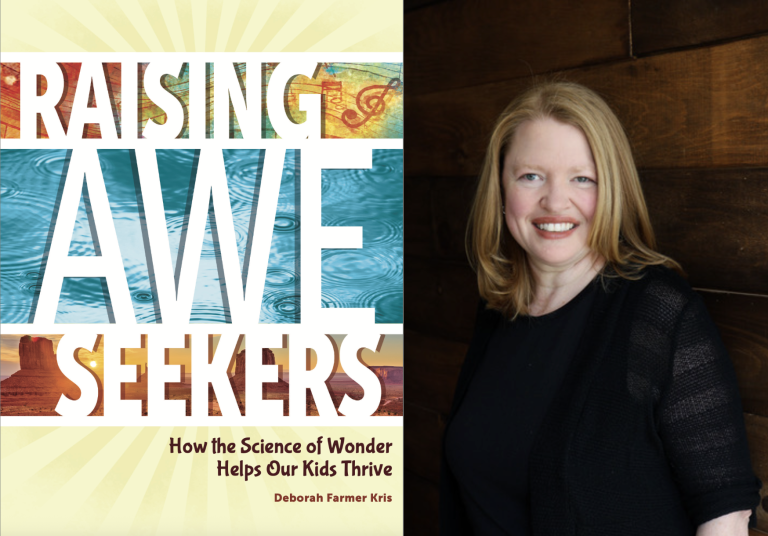
window.__IS_SSR__=true
window.__INITIAL_STATE__={
"attachmentsReducer": {
"audio_0": {
"type": "attachments",
"id": "audio_0",
"imgSizes": {
"kqedFullSize": {
"file": "https://ww2.kqed.org/news/wp-content/themes/KQED-unified/img/audio_bgs/background0.jpg"
}
}
},
"audio_1": {
"type": "attachments",
"id": "audio_1",
"imgSizes": {
"kqedFullSize": {
"file": "https://ww2.kqed.org/news/wp-content/themes/KQED-unified/img/audio_bgs/background1.jpg"
}
}
},
"audio_2": {
"type": "attachments",
"id": "audio_2",
"imgSizes": {
"kqedFullSize": {
"file": "https://ww2.kqed.org/news/wp-content/themes/KQED-unified/img/audio_bgs/background2.jpg"
}
}
},
"audio_3": {
"type": "attachments",
"id": "audio_3",
"imgSizes": {
"kqedFullSize": {
"file": "https://ww2.kqed.org/news/wp-content/themes/KQED-unified/img/audio_bgs/background3.jpg"
}
}
},
"audio_4": {
"type": "attachments",
"id": "audio_4",
"imgSizes": {
"kqedFullSize": {
"file": "https://ww2.kqed.org/news/wp-content/themes/KQED-unified/img/audio_bgs/background4.jpg"
}
}
},
"placeholder": {
"type": "attachments",
"id": "placeholder",
"imgSizes": {
"thumbnail": {
"file": "https://cdn.kqed.org/wp-content/uploads/2024/12/KQED-Default-Image-816638274-2000x1333-1-160x107.jpg",
"width": 160,
"height": 107,
"mimeType": "image/jpeg"
},
"medium": {
"file": "https://cdn.kqed.org/wp-content/uploads/2024/12/KQED-Default-Image-816638274-2000x1333-1-800x533.jpg",
"width": 800,
"height": 533,
"mimeType": "image/jpeg"
},
"medium_large": {
"file": "https://cdn.kqed.org/wp-content/uploads/2024/12/KQED-Default-Image-816638274-2000x1333-1-768x512.jpg",
"width": 768,
"height": 512,
"mimeType": "image/jpeg"
},
"large": {
"file": "https://cdn.kqed.org/wp-content/uploads/2024/12/KQED-Default-Image-816638274-2000x1333-1-1020x680.jpg",
"width": 1020,
"height": 680,
"mimeType": "image/jpeg"
},
"1536x1536": {
"file": "https://cdn.kqed.org/wp-content/uploads/2024/12/KQED-Default-Image-816638274-2000x1333-1-1536x1024.jpg",
"width": 1536,
"height": 1024,
"mimeType": "image/jpeg"
},
"fd-lrg": {
"file": "https://cdn.kqed.org/wp-content/uploads/2024/12/KQED-Default-Image-816638274-2000x1333-1-1536x1024.jpg",
"width": 1536,
"height": 1024,
"mimeType": "image/jpeg"
},
"fd-med": {
"file": "https://cdn.kqed.org/wp-content/uploads/2024/12/KQED-Default-Image-816638274-2000x1333-1-1020x680.jpg",
"width": 1020,
"height": 680,
"mimeType": "image/jpeg"
},
"fd-sm": {
"file": "https://cdn.kqed.org/wp-content/uploads/2024/12/KQED-Default-Image-816638274-2000x1333-1-800x533.jpg",
"width": 800,
"height": 533,
"mimeType": "image/jpeg"
},
"post-thumbnail": {
"file": "https://cdn.kqed.org/wp-content/uploads/2024/12/KQED-Default-Image-816638274-2000x1333-1-672x372.jpg",
"width": 672,
"height": 372,
"mimeType": "image/jpeg"
},
"twentyfourteen-full-width": {
"file": "https://cdn.kqed.org/wp-content/uploads/2024/12/KQED-Default-Image-816638274-2000x1333-1-1038x576.jpg",
"width": 1038,
"height": 576,
"mimeType": "image/jpeg"
},
"xxsmall": {
"file": "https://cdn.kqed.org/wp-content/uploads/2024/12/KQED-Default-Image-816638274-2000x1333-1-160x107.jpg",
"width": 160,
"height": 107,
"mimeType": "image/jpeg"
},
"xsmall": {
"file": "https://cdn.kqed.org/wp-content/uploads/2024/12/KQED-Default-Image-816638274-2000x1333-1-672x372.jpg",
"width": 672,
"height": 372,
"mimeType": "image/jpeg"
},
"small": {
"file": "https://cdn.kqed.org/wp-content/uploads/2024/12/KQED-Default-Image-816638274-2000x1333-1-672x372.jpg",
"width": 672,
"height": 372,
"mimeType": "image/jpeg"
},
"xlarge": {
"file": "https://cdn.kqed.org/wp-content/uploads/2024/12/KQED-Default-Image-816638274-2000x1333-1-1020x680.jpg",
"width": 1020,
"height": 680,
"mimeType": "image/jpeg"
},
"full-width": {
"file": "https://cdn.kqed.org/wp-content/uploads/2024/12/KQED-Default-Image-816638274-2000x1333-1-1920x1280.jpg",
"width": 1920,
"height": 1280,
"mimeType": "image/jpeg"
},
"guest-author-32": {
"file": "https://cdn.kqed.org/wp-content/uploads/2025/01/KQED-Default-Image-816638274-1333x1333-1-160x160.jpg",
"width": 32,
"height": 32,
"mimeType": "image/jpeg"
},
"guest-author-50": {
"file": "https://cdn.kqed.org/wp-content/uploads/2025/01/KQED-Default-Image-816638274-1333x1333-1-160x160.jpg",
"width": 50,
"height": 50,
"mimeType": "image/jpeg"
},
"guest-author-64": {
"file": "https://cdn.kqed.org/wp-content/uploads/2025/01/KQED-Default-Image-816638274-1333x1333-1-160x160.jpg",
"width": 64,
"height": 64,
"mimeType": "image/jpeg"
},
"guest-author-96": {
"file": "https://cdn.kqed.org/wp-content/uploads/2025/01/KQED-Default-Image-816638274-1333x1333-1-160x160.jpg",
"width": 96,
"height": 96,
"mimeType": "image/jpeg"
},
"guest-author-128": {
"file": "https://cdn.kqed.org/wp-content/uploads/2025/01/KQED-Default-Image-816638274-1333x1333-1-160x160.jpg",
"width": 128,
"height": 128,
"mimeType": "image/jpeg"
},
"detail": {
"file": "https://cdn.kqed.org/wp-content/uploads/2025/01/KQED-Default-Image-816638274-1333x1333-1-160x160.jpg",
"width": 160,
"height": 160,
"mimeType": "image/jpeg"
},
"kqedFullSize": {
"file": "https://cdn.kqed.org/wp-content/uploads/2024/12/KQED-Default-Image-816638274-2000x1333-1.jpg",
"width": 2000,
"height": 1333
}
}
},
"mindshift_65966": {
"type": "attachments",
"id": "mindshift_65966",
"meta": {
"index": "attachments_1716263798",
"site": "mindshift",
"id": "65966",
"found": true
},
"title": "Raising Awe Seekers Cover",
"publishDate": 1762891385,
"status": "inherit",
"parent": 65961,
"modified": 1762891421,
"caption": null,
"credit": "Courtesy of Deborah Farmer Kris ",
"altTag": "Book jacket next to author photo",
"description": null,
"imgSizes": {
"thumbnail": {
"file": "https://cdn.kqed.org/wp-content/uploads/sites/23/2025/11/Raising-Awe-Seekers-Cover-160x112.png",
"width": 160,
"height": 112,
"mimeType": "image/png"
},
"medium_large": {
"file": "https://cdn.kqed.org/wp-content/uploads/sites/23/2025/11/Raising-Awe-Seekers-Cover-768x536.png",
"width": 768,
"height": 536,
"mimeType": "image/png"
},
"1536x1536": {
"file": "https://cdn.kqed.org/wp-content/uploads/sites/23/2025/11/Raising-Awe-Seekers-Cover-1536x1072.png",
"width": 1536,
"height": 1072,
"mimeType": "image/png"
},
"post-thumbnail": {
"file": "https://cdn.kqed.org/wp-content/uploads/sites/23/2025/11/Raising-Awe-Seekers-Cover-672x372.png",
"width": 672,
"height": 372,
"mimeType": "image/png"
},
"twentyfourteen-full-width": {
"file": "https://cdn.kqed.org/wp-content/uploads/sites/23/2025/11/Raising-Awe-Seekers-Cover-1038x576.png",
"width": 1038,
"height": 576,
"mimeType": "image/png"
},
"npr-cds-wide": {
"file": "https://cdn.kqed.org/wp-content/uploads/sites/23/2025/11/Raising-Awe-Seekers-Cover-1200x675.png",
"width": 1200,
"height": 675,
"mimeType": "image/png"
},
"kqedFullSize": {
"file": "https://cdn.kqed.org/wp-content/uploads/sites/23/2025/11/Raising-Awe-Seekers-Cover.png",
"width": 1748,
"height": 1220
}
},
"isLoading": false,
"fetchFailed": false
},
"mindshift_65957": {
"type": "attachments",
"id": "mindshift_65957",
"meta": {
"index": "attachments_1716263798",
"site": "mindshift",
"id": "65957",
"found": true
},
"title": "proof-ed-100525-scaled (1)",
"publishDate": 1762710651,
"status": "inherit",
"parent": 65956,
"modified": 1762710699,
"caption": null,
"credit": "Salwan Georges/The Washington Post via Getty Images",
"altTag": "Woman walking past federal building",
"description": null,
"imgSizes": {
"medium": {
"file": "https://cdn.kqed.org/wp-content/uploads/sites/23/2025/11/proof-ed-100525-scaled-1-2000x1333.jpg",
"width": 2000,
"height": 1333,
"mimeType": "image/jpeg"
},
"large": {
"file": "https://cdn.kqed.org/wp-content/uploads/sites/23/2025/11/proof-ed-100525-scaled-1-2000x1333.jpg",
"width": 2000,
"height": 1333,
"mimeType": "image/jpeg"
},
"thumbnail": {
"file": "https://cdn.kqed.org/wp-content/uploads/sites/23/2025/11/proof-ed-100525-scaled-1-160x107.jpg",
"width": 160,
"height": 107,
"mimeType": "image/jpeg"
},
"medium_large": {
"file": "https://cdn.kqed.org/wp-content/uploads/sites/23/2025/11/proof-ed-100525-scaled-1-768x512.jpg",
"width": 768,
"height": 512,
"mimeType": "image/jpeg"
},
"1536x1536": {
"file": "https://cdn.kqed.org/wp-content/uploads/sites/23/2025/11/proof-ed-100525-scaled-1-1536x1024.jpg",
"width": 1536,
"height": 1024,
"mimeType": "image/jpeg"
},
"2048x2048": {
"file": "https://cdn.kqed.org/wp-content/uploads/sites/23/2025/11/proof-ed-100525-scaled-1-2048x1365.jpg",
"width": 2048,
"height": 1365,
"mimeType": "image/jpeg"
},
"post-thumbnail": {
"file": "https://cdn.kqed.org/wp-content/uploads/sites/23/2025/11/proof-ed-100525-scaled-1-672x372.jpg",
"width": 672,
"height": 372,
"mimeType": "image/jpeg"
},
"twentyfourteen-full-width": {
"file": "https://cdn.kqed.org/wp-content/uploads/sites/23/2025/11/proof-ed-100525-scaled-1-1038x576.jpg",
"width": 1038,
"height": 576,
"mimeType": "image/jpeg"
},
"full-width": {
"file": "https://cdn.kqed.org/wp-content/uploads/sites/23/2025/11/proof-ed-100525-scaled-1-2000x1333.jpg",
"width": 2000,
"height": 1333,
"mimeType": "image/jpeg"
},
"npr-cds-wide": {
"file": "https://cdn.kqed.org/wp-content/uploads/sites/23/2025/11/proof-ed-100525-scaled-1-1200x675.jpg",
"width": 1200,
"height": 675,
"mimeType": "image/jpeg"
},
"kqedFullSize": {
"file": "https://cdn.kqed.org/wp-content/uploads/sites/23/2025/11/proof-ed-100525-scaled-1.jpg",
"width": 2560,
"height": 1706
}
},
"isLoading": false,
"fetchFailed": false
},
"mindshift_65927": {
"type": "attachments",
"id": "mindshift_65927",
"meta": {
"index": "attachments_1716263798",
"site": "mindshift",
"id": "65927",
"found": true
},
"title": "proof-readinglevels-1-scaled",
"publishDate": 1761532597,
"status": "inherit",
"parent": 65925,
"modified": 1761532614,
"caption": null,
"credit": null,
"altTag": null,
"description": null,
"imgSizes": {
"medium": {
"file": "https://cdn.kqed.org/wp-content/uploads/sites/23/2025/10/proof-readinglevels-1-scaled-1-2000x1333.jpg",
"width": 2000,
"height": 1333,
"mimeType": "image/jpeg"
},
"large": {
"file": "https://cdn.kqed.org/wp-content/uploads/sites/23/2025/10/proof-readinglevels-1-scaled-1-2000x1333.jpg",
"width": 2000,
"height": 1333,
"mimeType": "image/jpeg"
},
"thumbnail": {
"file": "https://cdn.kqed.org/wp-content/uploads/sites/23/2025/10/proof-readinglevels-1-scaled-1-160x107.jpg",
"width": 160,
"height": 107,
"mimeType": "image/jpeg"
},
"medium_large": {
"file": "https://cdn.kqed.org/wp-content/uploads/sites/23/2025/10/proof-readinglevels-1-scaled-1-768x512.jpg",
"width": 768,
"height": 512,
"mimeType": "image/jpeg"
},
"1536x1536": {
"file": "https://cdn.kqed.org/wp-content/uploads/sites/23/2025/10/proof-readinglevels-1-scaled-1-1536x1024.jpg",
"width": 1536,
"height": 1024,
"mimeType": "image/jpeg"
},
"2048x2048": {
"file": "https://cdn.kqed.org/wp-content/uploads/sites/23/2025/10/proof-readinglevels-1-scaled-1-2048x1365.jpg",
"width": 2048,
"height": 1365,
"mimeType": "image/jpeg"
},
"post-thumbnail": {
"file": "https://cdn.kqed.org/wp-content/uploads/sites/23/2025/10/proof-readinglevels-1-scaled-1-672x372.jpg",
"width": 672,
"height": 372,
"mimeType": "image/jpeg"
},
"twentyfourteen-full-width": {
"file": "https://cdn.kqed.org/wp-content/uploads/sites/23/2025/10/proof-readinglevels-1-scaled-1-1038x576.jpg",
"width": 1038,
"height": 576,
"mimeType": "image/jpeg"
},
"full-width": {
"file": "https://cdn.kqed.org/wp-content/uploads/sites/23/2025/10/proof-readinglevels-1-scaled-1-2000x1333.jpg",
"width": 2000,
"height": 1333,
"mimeType": "image/jpeg"
},
"npr-cds-wide": {
"file": "https://cdn.kqed.org/wp-content/uploads/sites/23/2025/10/proof-readinglevels-1-scaled-1-1600x900.jpg",
"width": 1600,
"height": 900,
"mimeType": "image/jpeg"
},
"kqedFullSize": {
"file": "https://cdn.kqed.org/wp-content/uploads/sites/23/2025/10/proof-readinglevels-1-scaled-1.jpg",
"width": 2560,
"height": 1706
}
},
"isLoading": false,
"fetchFailed": false
},
"mindshift_65887": {
"type": "attachments",
"id": "mindshift_65887",
"meta": {
"index": "attachments_1716263798",
"site": "mindshift",
"id": "65887",
"found": true
},
"title": "proof-cellphones-101425",
"publishDate": 1760901197,
"status": "inherit",
"parent": 65885,
"modified": 1760901221,
"caption": "Paul Barnwell for The Hechinger Report",
"credit": null,
"altTag": null,
"description": null,
"imgSizes": {
"thumbnail": {
"file": "https://cdn.kqed.org/wp-content/uploads/sites/23/2025/10/proof-cellphones-101425-160x107.jpg",
"width": 160,
"height": 107,
"mimeType": "image/jpeg"
},
"medium_large": {
"file": "https://cdn.kqed.org/wp-content/uploads/sites/23/2025/10/proof-cellphones-101425-768x512.jpg",
"width": 768,
"height": 512,
"mimeType": "image/jpeg"
},
"1536x1536": {
"file": "https://cdn.kqed.org/wp-content/uploads/sites/23/2025/10/proof-cellphones-101425-1536x1024.jpg",
"width": 1536,
"height": 1024,
"mimeType": "image/jpeg"
},
"post-thumbnail": {
"file": "https://cdn.kqed.org/wp-content/uploads/sites/23/2025/10/proof-cellphones-101425-672x372.jpg",
"width": 672,
"height": 372,
"mimeType": "image/jpeg"
},
"twentyfourteen-full-width": {
"file": "https://cdn.kqed.org/wp-content/uploads/sites/23/2025/10/proof-cellphones-101425-1038x576.jpg",
"width": 1038,
"height": 576,
"mimeType": "image/jpeg"
},
"kqedFullSize": {
"file": "https://cdn.kqed.org/wp-content/uploads/sites/23/2025/10/proof-cellphones-101425.jpg",
"width": 2000,
"height": 1333
}
},
"isLoading": false,
"fetchFailed": false
},
"mindshift_65875": {
"type": "attachments",
"id": "mindshift_65875",
"meta": {
"index": "attachments_1716263798",
"site": "mindshift",
"id": "65875",
"found": true
},
"title": "Small girl laughs happily in a primary school class",
"publishDate": 1760295430,
"status": "inherit",
"parent": 65873,
"modified": 1760295460,
"caption": null,
"credit": "jacoblund/iStock",
"altTag": "Small girl laughs happily in a primary school class.",
"description": null,
"imgSizes": {
"medium": {
"file": "https://cdn.kqed.org/wp-content/uploads/sites/23/2025/10/iStock-1481374203-2000x1334.jpg",
"width": 2000,
"height": 1334,
"mimeType": "image/jpeg"
},
"large": {
"file": "https://cdn.kqed.org/wp-content/uploads/sites/23/2025/10/iStock-1481374203-2000x1334.jpg",
"width": 2000,
"height": 1334,
"mimeType": "image/jpeg"
},
"thumbnail": {
"file": "https://cdn.kqed.org/wp-content/uploads/sites/23/2025/10/iStock-1481374203-160x107.jpg",
"width": 160,
"height": 107,
"mimeType": "image/jpeg"
},
"medium_large": {
"file": "https://cdn.kqed.org/wp-content/uploads/sites/23/2025/10/iStock-1481374203-768x512.jpg",
"width": 768,
"height": 512,
"mimeType": "image/jpeg"
},
"1536x1536": {
"file": "https://cdn.kqed.org/wp-content/uploads/sites/23/2025/10/iStock-1481374203-1536x1024.jpg",
"width": 1536,
"height": 1024,
"mimeType": "image/jpeg"
},
"2048x2048": {
"file": "https://cdn.kqed.org/wp-content/uploads/sites/23/2025/10/iStock-1481374203-2048x1366.jpg",
"width": 2048,
"height": 1366,
"mimeType": "image/jpeg"
},
"post-thumbnail": {
"file": "https://cdn.kqed.org/wp-content/uploads/sites/23/2025/10/iStock-1481374203-672x372.jpg",
"width": 672,
"height": 372,
"mimeType": "image/jpeg"
},
"twentyfourteen-full-width": {
"file": "https://cdn.kqed.org/wp-content/uploads/sites/23/2025/10/iStock-1481374203-1038x576.jpg",
"width": 1038,
"height": 576,
"mimeType": "image/jpeg"
},
"full-width": {
"file": "https://cdn.kqed.org/wp-content/uploads/sites/23/2025/10/iStock-1481374203-2000x1334.jpg",
"width": 2000,
"height": 1334,
"mimeType": "image/jpeg"
},
"kqedFullSize": {
"file": "https://cdn.kqed.org/wp-content/uploads/sites/23/2025/10/iStock-1481374203.jpg",
"width": 2120,
"height": 1414
}
},
"isLoading": false,
"fetchFailed": false
},
"mindshift_65847": {
"type": "attachments",
"id": "mindshift_65847",
"meta": {
"index": "attachments_1716263798",
"site": "mindshift",
"id": "65847",
"found": true
},
"title": "barshay-IES-092525-scaled",
"publishDate": 1759120802,
"status": "inherit",
"parent": 65846,
"modified": 1759120845,
"caption": "Barry Winiker/Getty Images",
"credit": null,
"altTag": "Corner view of a 6-story building",
"description": null,
"imgSizes": {
"medium": {
"file": "https://cdn.kqed.org/wp-content/uploads/sites/23/2025/09/barshay-IES-092525-scaled-1-2000x1500.jpg",
"width": 2000,
"height": 1500,
"mimeType": "image/jpeg"
},
"large": {
"file": "https://cdn.kqed.org/wp-content/uploads/sites/23/2025/09/barshay-IES-092525-scaled-1-2000x1500.jpg",
"width": 2000,
"height": 1500,
"mimeType": "image/jpeg"
},
"thumbnail": {
"file": "https://cdn.kqed.org/wp-content/uploads/sites/23/2025/09/barshay-IES-092525-scaled-1-160x120.jpg",
"width": 160,
"height": 120,
"mimeType": "image/jpeg"
},
"medium_large": {
"file": "https://cdn.kqed.org/wp-content/uploads/sites/23/2025/09/barshay-IES-092525-scaled-1-768x576.jpg",
"width": 768,
"height": 576,
"mimeType": "image/jpeg"
},
"1536x1536": {
"file": "https://cdn.kqed.org/wp-content/uploads/sites/23/2025/09/barshay-IES-092525-scaled-1-1536x1152.jpg",
"width": 1536,
"height": 1152,
"mimeType": "image/jpeg"
},
"2048x2048": {
"file": "https://cdn.kqed.org/wp-content/uploads/sites/23/2025/09/barshay-IES-092525-scaled-1-2048x1536.jpg",
"width": 2048,
"height": 1536,
"mimeType": "image/jpeg"
},
"post-thumbnail": {
"file": "https://cdn.kqed.org/wp-content/uploads/sites/23/2025/09/barshay-IES-092525-scaled-1-672x372.jpg",
"width": 672,
"height": 372,
"mimeType": "image/jpeg"
},
"twentyfourteen-full-width": {
"file": "https://cdn.kqed.org/wp-content/uploads/sites/23/2025/09/barshay-IES-092525-scaled-1-1038x576.jpg",
"width": 1038,
"height": 576,
"mimeType": "image/jpeg"
},
"full-width": {
"file": "https://cdn.kqed.org/wp-content/uploads/sites/23/2025/09/barshay-IES-092525-scaled-1-2000x1500.jpg",
"width": 2000,
"height": 1500,
"mimeType": "image/jpeg"
},
"kqedFullSize": {
"file": "https://cdn.kqed.org/wp-content/uploads/sites/23/2025/09/barshay-IES-092525-scaled-1.jpg",
"width": 2560,
"height": 1920
}
},
"isLoading": false,
"fetchFailed": false
},
"mindshift_65842": {
"type": "attachments",
"id": "mindshift_65842",
"meta": {
"index": "attachments_1716263798",
"site": "mindshift",
"id": "65842",
"found": true
},
"title": "Woman and her children circle the Penrose stairs of funding.",
"publishDate": 1758909932,
"status": "inherit",
"parent": 65841,
"modified": 1758909987,
"caption": "LA Johnson/NPR",
"credit": null,
"altTag": "A woman and her children circle the Penrose stairs of funding.",
"description": null,
"imgSizes": {
"medium": {
"file": "https://cdn.kqed.org/wp-content/uploads/sites/23/2025/09/child-tax-credit-penrose-ljohnson_custom-822d711034e893aa1be1a137f613a5eb76c34212-2000x1248.jpeg",
"width": 2000,
"height": 1248,
"mimeType": "image/jpeg"
},
"large": {
"file": "https://cdn.kqed.org/wp-content/uploads/sites/23/2025/09/child-tax-credit-penrose-ljohnson_custom-822d711034e893aa1be1a137f613a5eb76c34212-2000x1248.jpeg",
"width": 2000,
"height": 1248,
"mimeType": "image/jpeg"
},
"thumbnail": {
"file": "https://cdn.kqed.org/wp-content/uploads/sites/23/2025/09/child-tax-credit-penrose-ljohnson_custom-822d711034e893aa1be1a137f613a5eb76c34212-160x100.jpeg",
"width": 160,
"height": 100,
"mimeType": "image/jpeg"
},
"medium_large": {
"file": "https://cdn.kqed.org/wp-content/uploads/sites/23/2025/09/child-tax-credit-penrose-ljohnson_custom-822d711034e893aa1be1a137f613a5eb76c34212-768x479.jpeg",
"width": 768,
"height": 479,
"mimeType": "image/jpeg"
},
"1536x1536": {
"file": "https://cdn.kqed.org/wp-content/uploads/sites/23/2025/09/child-tax-credit-penrose-ljohnson_custom-822d711034e893aa1be1a137f613a5eb76c34212-1536x958.jpeg",
"width": 1536,
"height": 958,
"mimeType": "image/jpeg"
},
"2048x2048": {
"file": "https://cdn.kqed.org/wp-content/uploads/sites/23/2025/09/child-tax-credit-penrose-ljohnson_custom-822d711034e893aa1be1a137f613a5eb76c34212-2048x1278.jpeg",
"width": 2048,
"height": 1278,
"mimeType": "image/jpeg"
},
"post-thumbnail": {
"file": "https://cdn.kqed.org/wp-content/uploads/sites/23/2025/09/child-tax-credit-penrose-ljohnson_custom-822d711034e893aa1be1a137f613a5eb76c34212-672x372.jpeg",
"width": 672,
"height": 372,
"mimeType": "image/jpeg"
},
"twentyfourteen-full-width": {
"file": "https://cdn.kqed.org/wp-content/uploads/sites/23/2025/09/child-tax-credit-penrose-ljohnson_custom-822d711034e893aa1be1a137f613a5eb76c34212-1038x576.jpeg",
"width": 1038,
"height": 576,
"mimeType": "image/jpeg"
},
"full-width": {
"file": "https://cdn.kqed.org/wp-content/uploads/sites/23/2025/09/child-tax-credit-penrose-ljohnson_custom-822d711034e893aa1be1a137f613a5eb76c34212-2000x1248.jpeg",
"width": 2000,
"height": 1248,
"mimeType": "image/jpeg"
},
"kqedFullSize": {
"file": "https://cdn.kqed.org/wp-content/uploads/sites/23/2025/09/child-tax-credit-penrose-ljohnson_custom-822d711034e893aa1be1a137f613a5eb76c34212-scaled.jpeg",
"width": 2560,
"height": 1597
}
},
"isLoading": false,
"fetchFailed": false
},
"mindshift_65791": {
"type": "attachments",
"id": "mindshift_65791",
"meta": {
"index": "attachments_1716263798",
"site": "mindshift",
"id": "65791",
"found": true
},
"title": "little boy looking at himself near mirror;",
"publishDate": 1758172929,
"status": "inherit",
"parent": 65790,
"modified": 1758172960,
"caption": null,
"credit": "Goami/iStock",
"altTag": "Young child looking at his reflection in the mirror",
"description": null,
"imgSizes": {
"medium": {
"file": "https://cdn.kqed.org/wp-content/uploads/sites/23/2025/09/iStock-614441360-2000x1333.jpg",
"width": 2000,
"height": 1333,
"mimeType": "image/jpeg"
},
"large": {
"file": "https://cdn.kqed.org/wp-content/uploads/sites/23/2025/09/iStock-614441360-2000x1333.jpg",
"width": 2000,
"height": 1333,
"mimeType": "image/jpeg"
},
"thumbnail": {
"file": "https://cdn.kqed.org/wp-content/uploads/sites/23/2025/09/iStock-614441360-160x107.jpg",
"width": 160,
"height": 107,
"mimeType": "image/jpeg"
},
"medium_large": {
"file": "https://cdn.kqed.org/wp-content/uploads/sites/23/2025/09/iStock-614441360-768x512.jpg",
"width": 768,
"height": 512,
"mimeType": "image/jpeg"
},
"1536x1536": {
"file": "https://cdn.kqed.org/wp-content/uploads/sites/23/2025/09/iStock-614441360-1536x1024.jpg",
"width": 1536,
"height": 1024,
"mimeType": "image/jpeg"
},
"2048x2048": {
"file": "https://cdn.kqed.org/wp-content/uploads/sites/23/2025/09/iStock-614441360-2048x1365.jpg",
"width": 2048,
"height": 1365,
"mimeType": "image/jpeg"
},
"post-thumbnail": {
"file": "https://cdn.kqed.org/wp-content/uploads/sites/23/2025/09/iStock-614441360-672x372.jpg",
"width": 672,
"height": 372,
"mimeType": "image/jpeg"
},
"twentyfourteen-full-width": {
"file": "https://cdn.kqed.org/wp-content/uploads/sites/23/2025/09/iStock-614441360-1038x576.jpg",
"width": 1038,
"height": 576,
"mimeType": "image/jpeg"
},
"full-width": {
"file": "https://cdn.kqed.org/wp-content/uploads/sites/23/2025/09/iStock-614441360-2000x1333.jpg",
"width": 2000,
"height": 1333,
"mimeType": "image/jpeg"
},
"kqedFullSize": {
"file": "https://cdn.kqed.org/wp-content/uploads/sites/23/2025/09/iStock-614441360-scaled.jpg",
"width": 2560,
"height": 1707
}
},
"isLoading": false,
"fetchFailed": false
},
"mindshift_65785": {
"type": "attachments",
"id": "mindshift_65785",
"meta": {
"index": "attachments_1716263798",
"site": "mindshift",
"id": "65785",
"found": true
},
"title": "JRego_NAEP-Report Card.jpg",
"publishDate": 1757596630,
"status": "inherit",
"parent": 65784,
"modified": 1757596714,
"caption": "John Rego for NPR",
"credit": null,
"altTag": "Illustration of a busy school from an overhead view",
"description": null,
"imgSizes": {
"medium": {
"file": "https://cdn.kqed.org/wp-content/uploads/sites/23/2025/09/jrego-naep-report-card-2000x1333.jpeg",
"width": 2000,
"height": 1333,
"mimeType": "image/jpeg"
},
"large": {
"file": "https://cdn.kqed.org/wp-content/uploads/sites/23/2025/09/jrego-naep-report-card-2000x1333.jpeg",
"width": 2000,
"height": 1333,
"mimeType": "image/jpeg"
},
"thumbnail": {
"file": "https://cdn.kqed.org/wp-content/uploads/sites/23/2025/09/jrego-naep-report-card-160x107.jpeg",
"width": 160,
"height": 107,
"mimeType": "image/jpeg"
},
"medium_large": {
"file": "https://cdn.kqed.org/wp-content/uploads/sites/23/2025/09/jrego-naep-report-card-768x512.jpeg",
"width": 768,
"height": 512,
"mimeType": "image/jpeg"
},
"1536x1536": {
"file": "https://cdn.kqed.org/wp-content/uploads/sites/23/2025/09/jrego-naep-report-card-1536x1024.jpeg",
"width": 1536,
"height": 1024,
"mimeType": "image/jpeg"
},
"2048x2048": {
"file": "https://cdn.kqed.org/wp-content/uploads/sites/23/2025/09/jrego-naep-report-card-2048x1365.jpeg",
"width": 2048,
"height": 1365,
"mimeType": "image/jpeg"
},
"post-thumbnail": {
"file": "https://cdn.kqed.org/wp-content/uploads/sites/23/2025/09/jrego-naep-report-card-672x372.jpeg",
"width": 672,
"height": 372,
"mimeType": "image/jpeg"
},
"twentyfourteen-full-width": {
"file": "https://cdn.kqed.org/wp-content/uploads/sites/23/2025/09/jrego-naep-report-card-1038x576.jpeg",
"width": 1038,
"height": 576,
"mimeType": "image/jpeg"
},
"full-width": {
"file": "https://cdn.kqed.org/wp-content/uploads/sites/23/2025/09/jrego-naep-report-card-2000x1333.jpeg",
"width": 2000,
"height": 1333,
"mimeType": "image/jpeg"
},
"kqedFullSize": {
"file": "https://cdn.kqed.org/wp-content/uploads/sites/23/2025/09/jrego-naep-report-card-scaled.jpeg",
"width": 2560,
"height": 1707
}
},
"isLoading": false,
"fetchFailed": false
},
"mindshift_65764": {
"type": "attachments",
"id": "mindshift_65764",
"meta": {
"index": "attachments_1716263798",
"site": "mindshift",
"id": "65764",
"found": true
},
"title": "Schoolgirl with laptop doing homework",
"publishDate": 1757310708,
"status": "inherit",
"parent": 65761,
"modified": 1757310737,
"caption": null,
"credit": "shironosov/iStock",
"altTag": "Schoolgirl with laptop sitting on cushions",
"description": null,
"imgSizes": {
"medium": {
"file": "https://cdn.kqed.org/wp-content/uploads/sites/23/2025/09/iStock-1959258902-2000x1333.jpg",
"width": 2000,
"height": 1333,
"mimeType": "image/jpeg"
},
"large": {
"file": "https://cdn.kqed.org/wp-content/uploads/sites/23/2025/09/iStock-1959258902-2000x1333.jpg",
"width": 2000,
"height": 1333,
"mimeType": "image/jpeg"
},
"thumbnail": {
"file": "https://cdn.kqed.org/wp-content/uploads/sites/23/2025/09/iStock-1959258902-160x107.jpg",
"width": 160,
"height": 107,
"mimeType": "image/jpeg"
},
"medium_large": {
"file": "https://cdn.kqed.org/wp-content/uploads/sites/23/2025/09/iStock-1959258902-768x512.jpg",
"width": 768,
"height": 512,
"mimeType": "image/jpeg"
},
"1536x1536": {
"file": "https://cdn.kqed.org/wp-content/uploads/sites/23/2025/09/iStock-1959258902-1536x1024.jpg",
"width": 1536,
"height": 1024,
"mimeType": "image/jpeg"
},
"2048x2048": {
"file": "https://cdn.kqed.org/wp-content/uploads/sites/23/2025/09/iStock-1959258902-2048x1365.jpg",
"width": 2048,
"height": 1365,
"mimeType": "image/jpeg"
},
"post-thumbnail": {
"file": "https://cdn.kqed.org/wp-content/uploads/sites/23/2025/09/iStock-1959258902-672x372.jpg",
"width": 672,
"height": 372,
"mimeType": "image/jpeg"
},
"twentyfourteen-full-width": {
"file": "https://cdn.kqed.org/wp-content/uploads/sites/23/2025/09/iStock-1959258902-1038x576.jpg",
"width": 1038,
"height": 576,
"mimeType": "image/jpeg"
},
"full-width": {
"file": "https://cdn.kqed.org/wp-content/uploads/sites/23/2025/09/iStock-1959258902-2000x1333.jpg",
"width": 2000,
"height": 1333,
"mimeType": "image/jpeg"
},
"kqedFullSize": {
"file": "https://cdn.kqed.org/wp-content/uploads/sites/23/2025/09/iStock-1959258902.jpg",
"width": 2121,
"height": 1414
}
},
"isLoading": false,
"fetchFailed": false
},
"mindshift_65747": {
"type": "attachments",
"id": "mindshift_65747",
"meta": {
"index": "attachments_1716263798",
"site": "mindshift",
"id": "65747",
"found": true
},
"title": "barshay-tutoring-082525-scaled",
"publishDate": 1756099208,
"status": "inherit",
"parent": 65746,
"modified": 1756099266,
"caption": "A tutor helps students at Benjamin O. Davis Middle School in Compton, Calif., on Feb. 6, 2025.",
"credit": "Eric Thayer/Associated Press",
"altTag": "Teacher standing between two seated students in class.",
"description": null,
"imgSizes": {
"medium": {
"file": "https://cdn.kqed.org/wp-content/uploads/sites/23/2025/08/barshay-tutoring-082525-scaled-1-2000x1334.jpg",
"width": 2000,
"height": 1334,
"mimeType": "image/jpeg"
},
"large": {
"file": "https://cdn.kqed.org/wp-content/uploads/sites/23/2025/08/barshay-tutoring-082525-scaled-1-2000x1334.jpg",
"width": 2000,
"height": 1334,
"mimeType": "image/jpeg"
},
"thumbnail": {
"file": "https://cdn.kqed.org/wp-content/uploads/sites/23/2025/08/barshay-tutoring-082525-scaled-1-160x107.jpg",
"width": 160,
"height": 107,
"mimeType": "image/jpeg"
},
"medium_large": {
"file": "https://cdn.kqed.org/wp-content/uploads/sites/23/2025/08/barshay-tutoring-082525-scaled-1-768x512.jpg",
"width": 768,
"height": 512,
"mimeType": "image/jpeg"
},
"1536x1536": {
"file": "https://cdn.kqed.org/wp-content/uploads/sites/23/2025/08/barshay-tutoring-082525-scaled-1-1536x1024.jpg",
"width": 1536,
"height": 1024,
"mimeType": "image/jpeg"
},
"2048x2048": {
"file": "https://cdn.kqed.org/wp-content/uploads/sites/23/2025/08/barshay-tutoring-082525-scaled-1-2048x1366.jpg",
"width": 2048,
"height": 1366,
"mimeType": "image/jpeg"
},
"post-thumbnail": {
"file": "https://cdn.kqed.org/wp-content/uploads/sites/23/2025/08/barshay-tutoring-082525-scaled-1-672x372.jpg",
"width": 672,
"height": 372,
"mimeType": "image/jpeg"
},
"twentyfourteen-full-width": {
"file": "https://cdn.kqed.org/wp-content/uploads/sites/23/2025/08/barshay-tutoring-082525-scaled-1-1038x576.jpg",
"width": 1038,
"height": 576,
"mimeType": "image/jpeg"
},
"full-width": {
"file": "https://cdn.kqed.org/wp-content/uploads/sites/23/2025/08/barshay-tutoring-082525-scaled-1-2000x1334.jpg",
"width": 2000,
"height": 1334,
"mimeType": "image/jpeg"
},
"kqedFullSize": {
"file": "https://cdn.kqed.org/wp-content/uploads/sites/23/2025/08/barshay-tutoring-082525-scaled-1-e1756099276973.jpg",
"width": 1920,
"height": 1280
}
},
"isLoading": false,
"fetchFailed": false
},
"mindshift_65719": {
"type": "attachments",
"id": "mindshift_65719",
"meta": {
"index": "attachments_1716263798",
"site": "mindshift",
"id": "65719",
"found": true
},
"title": "Hechinger Harvard",
"publishDate": 1755494730,
"status": "inherit",
"parent": 65717,
"modified": 1755494795,
"caption": "Harvard University ",
"credit": null,
"altTag": "College campus building",
"description": null,
"imgSizes": {
"medium": {
"file": "https://cdn.kqed.org/wp-content/uploads/sites/23/2025/08/Hechinger-Harvard--2000x1288.jpg",
"width": 2000,
"height": 1288,
"mimeType": "image/jpeg"
},
"large": {
"file": "https://cdn.kqed.org/wp-content/uploads/sites/23/2025/08/Hechinger-Harvard--2000x1288.jpg",
"width": 2000,
"height": 1288,
"mimeType": "image/jpeg"
},
"thumbnail": {
"file": "https://cdn.kqed.org/wp-content/uploads/sites/23/2025/08/Hechinger-Harvard--160x103.jpg",
"width": 160,
"height": 103,
"mimeType": "image/jpeg"
},
"medium_large": {
"file": "https://cdn.kqed.org/wp-content/uploads/sites/23/2025/08/Hechinger-Harvard--768x494.jpg",
"width": 768,
"height": 494,
"mimeType": "image/jpeg"
},
"1536x1536": {
"file": "https://cdn.kqed.org/wp-content/uploads/sites/23/2025/08/Hechinger-Harvard--1536x989.jpg",
"width": 1536,
"height": 989,
"mimeType": "image/jpeg"
},
"2048x2048": {
"file": "https://cdn.kqed.org/wp-content/uploads/sites/23/2025/08/Hechinger-Harvard--2048x1318.jpg",
"width": 2048,
"height": 1318,
"mimeType": "image/jpeg"
},
"post-thumbnail": {
"file": "https://cdn.kqed.org/wp-content/uploads/sites/23/2025/08/Hechinger-Harvard--672x372.jpg",
"width": 672,
"height": 372,
"mimeType": "image/jpeg"
},
"twentyfourteen-full-width": {
"file": "https://cdn.kqed.org/wp-content/uploads/sites/23/2025/08/Hechinger-Harvard--1038x576.jpg",
"width": 1038,
"height": 576,
"mimeType": "image/jpeg"
},
"full-width": {
"file": "https://cdn.kqed.org/wp-content/uploads/sites/23/2025/08/Hechinger-Harvard--2000x1288.jpg",
"width": 2000,
"height": 1288,
"mimeType": "image/jpeg"
},
"kqedFullSize": {
"file": "https://cdn.kqed.org/wp-content/uploads/sites/23/2025/08/Hechinger-Harvard--e1755494791870.jpg",
"width": 1920,
"height": 1236
}
},
"isLoading": false,
"fetchFailed": false
}
},
"audioPlayerReducer": {
"postId": "stream_live",
"isPaused": true,
"isPlaying": false,
"pfsActive": false,
"pledgeModalIsOpen": true,
"playerDrawerIsOpen": false,
"liveAudioPlayStartedAt": 0,
"liveAudioPlayContext": ""
},
"authorsReducer": {
"byline_mindshift_65956": {
"type": "authors",
"id": "byline_mindshift_65956",
"meta": {
"override": true
},
"slug": "byline_mindshift_65956",
"name": "Jill Barshay, \u003ca href=\"https://hechingerreport.org/\">The Hechinger Report\u003c/a>",
"isLoading": false
},
"byline_mindshift_65925": {
"type": "authors",
"id": "byline_mindshift_65925",
"meta": {
"override": true
},
"slug": "byline_mindshift_65925",
"name": "Jill Barshay, \u003ca href=\"https://hechingerreport.org/\" target=\"_blank\">The Hechinger Report\u003c/a>",
"isLoading": false
},
"byline_mindshift_65885": {
"type": "authors",
"id": "byline_mindshift_65885",
"meta": {
"override": true
},
"slug": "byline_mindshift_65885",
"name": "Jill Barshay, \u003ca href=\"https://hechingerreport.org/\" target=\"_blank\">The Hechinger Report\u003c/a>",
"isLoading": false
},
"byline_mindshift_65873": {
"type": "authors",
"id": "byline_mindshift_65873",
"meta": {
"override": true
},
"slug": "byline_mindshift_65873",
"name": "Jill Barshay, \u003ca href=\"https://hechingerreport.org/\" target=\"_blank\">The Hechinger Report\u003c/a>",
"isLoading": false
},
"byline_mindshift_65846": {
"type": "authors",
"id": "byline_mindshift_65846",
"meta": {
"override": true
},
"slug": "byline_mindshift_65846",
"name": "Jill Barshay, \u003ca href=\"https://hechingerreport.org/\" target=\"_blank\">The Hechinger Report\u003c/a>",
"isLoading": false
},
"byline_mindshift_65841": {
"type": "authors",
"id": "byline_mindshift_65841",
"meta": {
"override": true
},
"slug": "byline_mindshift_65841",
"name": "Cory Turner",
"isLoading": false
},
"byline_mindshift_65790": {
"type": "authors",
"id": "byline_mindshift_65790",
"meta": {
"override": true
},
"slug": "byline_mindshift_65790",
"name": "Jackie Mader, \u003ca href=\"https://hechingerreport.org/\" target=\"_blank\">The Hechinger Report\u003c/a>",
"isLoading": false
},
"byline_mindshift_65784": {
"type": "authors",
"id": "byline_mindshift_65784",
"meta": {
"override": true
},
"slug": "byline_mindshift_65784",
"name": "Sequoia Carrillo",
"isLoading": false
},
"byline_mindshift_65761": {
"type": "authors",
"id": "byline_mindshift_65761",
"meta": {
"override": true
},
"slug": "byline_mindshift_65761",
"name": "Shirley Liu and Jill Barshay, \u003ca href=\"https://hechingerreport.org/\" target=\"_blank\">The Hechinger Report\u003c/a>",
"isLoading": false
},
"byline_mindshift_65746": {
"type": "authors",
"id": "byline_mindshift_65746",
"meta": {
"override": true
},
"slug": "byline_mindshift_65746",
"name": "Jill Barshay, \u003ca href=\"https://hechingerreport.org/\" target=\"_blank\">The Hechinger Report\u003c/a>",
"isLoading": false
},
"byline_mindshift_65717": {
"type": "authors",
"id": "byline_mindshift_65717",
"meta": {
"override": true
},
"slug": "byline_mindshift_65717",
"name": "Jill Barshay, \u003ca href=\"https://hechingerreport.org/\" target=\"_blank\">The Hechinger Report\u003c/a>",
"isLoading": false
},
"ksung": {
"type": "authors",
"id": "4596",
"meta": {
"index": "authors_1716337520",
"id": "4596",
"found": true
},
"name": "Ki Sung",
"firstName": "Ki",
"lastName": "Sung",
"slug": "ksung",
"email": "ksung@kqed.org",
"display_author_email": false,
"staff_mastheads": [
"news"
],
"title": "KQED Contributor",
"bio": "Ki Sung is Managing Editor of Digital News at KQED. She is former Senior Editor of MindShift and worked at NPR before joining KQED in 2014.",
"avatar": "https://secure.gravatar.com/avatar/64271e01dc95486c133be56937739045b7c00c990525bf9add12d3dd4f0433c9?s=600&d=blank&r=g",
"twitter": null,
"bluesky": null,
"facebook": null,
"instagram": null,
"linkedin": null,
"sites": [
{
"site": "news",
"roles": [
"editor"
]
},
{
"site": "mindshift",
"roles": [
"administrator"
]
},
{
"site": "elections",
"roles": [
"administrator"
]
}
],
"headData": {
"title": "Ki Sung | KQED",
"description": "KQED Contributor",
"ogImgSrc": "https://secure.gravatar.com/avatar/64271e01dc95486c133be56937739045b7c00c990525bf9add12d3dd4f0433c9?s=600&d=blank&r=g",
"twImgSrc": "https://secure.gravatar.com/avatar/64271e01dc95486c133be56937739045b7c00c990525bf9add12d3dd4f0433c9?s=600&d=blank&r=g"
},
"isLoading": false,
"link": "/author/ksung"
}
},
"pagesReducer": {
"mindshift_category_education-research": {
"type": "terms",
"id": "mindshift_21504",
"meta": {
"index": "terms_1716263798",
"site": "mindshift",
"id": "21504",
"score": 14.405857
},
"featImg": null,
"name": "Education research",
"description": null,
"taxonomy": "category",
"headData": {
"twImgId": null,
"twTitle": null,
"ogTitle": null,
"ogImgId": null,
"twDescription": null,
"description": null,
"title": "Education research Archives | KQED Mindshift",
"ogDescription": null
},
"ttid": 20776,
"slug": "education-research",
"isLoading": false,
"title": "Education research",
"pageMeta": {
"site": "mindshift",
"WpPageTemplate": "page-topic-editorial",
"currentPage": 4
},
"blocks": [
{
"blockName": "kqed/post-list",
"attrs": {
"layout": "cardArticle2",
"query": "posts/mindshift?category=education-research",
"seeMore": false,
"paginated": true,
"page": 4
}
},
{
"blockName": "kqed/ad"
}
]
}
},
"pfsSessionReducer": {},
"postsReducer": {
"stream_live": {
"type": "live",
"id": "stream_live",
"audioUrl": "https://streams.kqed.org/kqedradio",
"title": "Live Stream",
"excerpt": "Live Stream information currently unavailable.",
"link": "/radio",
"featImg": "",
"label": {
"name": "KQED Live",
"link": "/"
}
},
"stream_kqedNewscast": {
"type": "posts",
"id": "stream_kqedNewscast",
"audioUrl": "https://www.kqed.org/.stream/anon/radio/RDnews/newscast.mp3?_=1",
"title": "KQED Newscast",
"featImg": "",
"label": {
"name": "88.5 FM",
"link": "/"
}
},
"mindshift_65961": {
"type": "posts",
"id": "mindshift_65961",
"meta": {
"index": "posts_1716263798",
"site": "mindshift",
"id": "65961",
"score": null,
"sort": [
1762945248000
]
},
"guestAuthors": [],
"slug": "deborah-farmer-kris-how-awe-helps-us-flourish",
"title": "Deborah Farmer Kris: How Awe Helps Us Flourish",
"publishDate": 1762945248,
"format": "audio",
"headTitle": "Deborah Farmer Kris: How Awe Helps Us Flourish | KQED",
"labelTerm": {
"term": 21847,
"site": "mindshift"
},
"content": "\u003cp>\u003ca href=\"#episode-transcript\">\u003ci>View the full episode transcript.\u003c/i>\u003c/a>\u003c/p>\n\u003cp>In recent years, educators and academics have studied many aspects of how students learn. The role of grit, resilience and growth mindset, for example, have been closely studied and strategies to develop them widely shared.\u003c/p>\n\u003cp>Additionally, the connection between \u003ca href=\"https://www.kqed.org/mindshift/45201/why-emotions-are-integral-to-learning\">emotions and learning\u003c/a> has acquired more attention, as has the role of \u003ca href=\"https://ggsc.berkeley.edu/images/uploads/GGSC-JTF_White_Paper-Awe_FINAL.pdf\">awe in human development\u003c/a>.\u003c/p>\n\u003cp>K-12 educator Deborah Farmer Kris wrote about the benefits of awe in our daily lives in her book, “\u003ca href=\"https://www.teachercreatedmaterials.com/products/raising-awe-seekers-how-the-science-of-wonder-helps-our-kids-thrive-153673\">Raising Awe Seekers: How The Science of Wonder Helps our Kids Thrive,\u003c/a>” and joined the MindShift Podcast to talk about her surprising findings. She also has tips on how to\u003ca href=\"https://www.kqed.org/mindshift/65520/how-experiencing-wonder-helps-kids-learn\"> cultivate awe in children and adults\u003c/a>.\u003c/p>\n\u003cp>And as someone who has taught for two decades, she has advice on what educators can do to find the wonder in subjects they teach several times a day, year over year, to a large number of students.\u003c/p>\n\u003cp>[ad fullwidth]\u003c/p>\n\u003cp>\u003c!-- iframe plugin v.4.3 wordpress.org/plugins/iframe/ -->\u003cbr>\n\u003ciframe loading=\"lazy\" frameborder=\"0\" height=\"200\" scrolling=\"no\" src=\"https://playlist.megaphone.fm?e=KQINC9148141574\" width=\"100%\" class=\"iframe-class\">\u003c/iframe>\u003c/p>\n\u003ch2 id=\"episode-transcript\">Episode Transcript\u003c/h2>\n\u003cp>\u003cstrong>Ki Sung:\u003c/strong> Welcome to the MindShift Podcast where we explore the future of learning and how we raise our kids. I’m Ki Sung. Today I’m speaking to longtime MindShift contributor Debra Farmer Kris. She’s a child development expert and author of the book, “\u003ca href=\"https://www.teachercreatedmaterials.com/products/raising-awe-seekers-how-the-science-of-wonder-helps-our-kids-thrive-153673\">Raising Awe Seekers: How The Science of Wonder Helps our Kids Thrive\u003c/a>.” During the depths of pandemic-era parenting, Deborah Farmer Kris discovered that awe is an often overlooked but powerful emotion. We’ll discuss how parents and educators can use awe to drive engagement with classroom materials and connection with the world around us. That conversation, coming up right after this.\u003c/p>\n\u003cp>\u003cstrong>Ki Sung: \u003c/strong>Let’s start by diving right into the title of your book, “Raising Awe Seekers.” We hear the word awe and its variations like awesome all the time, but let’s take a step back and have you define for us what awe is and why it’s important for human development.\u003c/p>\n\u003cp>\u003cstrong>Deborah Farmer Kris :\u003c/strong> So first awe is an emotion, and that is important because as an emotion, it is something we can feel, uh, and we can recognize when we’re feeling it. And so when you look at emotions, um, you have kind of your core four, like happy, mad, sad, scared, and you have variations of those. So underneath mad, you might have irate or frustrated.\u003c/p>\n\u003cp>Awe is more of a subset of surprise and a is what you feel when you encounter something that is vast. That is, um, wondrous, that is beyond your ordinary frame of reference. You might see something new that moves you, that touches you, that excites you. And the way researchers often talk about how you know you’re feeling it is things like, uh, chills or goosebumps for some people.\u003c/p>\n\u003cp>Um, maybe your eyes involuntarily spring you with tears, uh, the sound. Wow. Or whoa, you know, you have somebody choose a half court shot and it goes in and people aren’t saying That was an amazing shot. Now they’re making a all guttural sound of Wow. And I think for children as a, as an educator and as a parent, I would put in that category, this wide eyes that it’s almost like they want to absorb what they’re seeing.\u003c/p>\n\u003cp>The really neat thing about this particular emotion is that there is a wealth of research, uh, about 25 years now, most of it out of the \u003ca href=\"https://greatergood.berkeley.edu/topic/awe\">Greater Good Science Center at University of California Berkeley\u003c/a>,\u003c/p>\n\u003cp>and it turns out that, most good things we want for our kids from, uh, \u003ca href=\"https://www.kqed.org/mindshift/38260/whats-going-on-inside-the-brain-of-a-curious-child\">curiosity and cognitive development\u003c/a> to a sense of mental and emotional wellness, to a sense of connectedness, awe supports all of those outcomes.\u003c/p>\n\u003cp>\u003cstrong>Ki Sung:\u003c/strong> it’s interesting that the research has been out for 25 years or around for 25 years because, you know, we see a lot of different types of behaviors getting academic and media scrutiny, like, you know, the popular ones :grit, resilience, anxiety, growth, mindset, but all doesn’t quite get as much attention. Do you know why?\u003c/p>\n\u003cp>\u003cstrong>Deborah Farmer Kris :\u003c/strong> You know, I think there wasn’t really the popularized book for the moment, you know, \u003ca href=\"https://ggsc.berkeley.edu/images/uploads/GGSC-JTF_White_Paper-Awe_FINAL.pdf\">Dacher Keltner\u003c/a>, who’s the main researcher on this, one of the lead ones, a year and a half ago, came out with a \u003ca href=\"https://www.amazon.com/Awe-Science-Everyday-Wonder-Transform/dp/1984879685\">wonderful book\u003c/a> that has been getting more press.\u003c/p>\n\u003cp>So I think awe is beginning to have a bit of a moment now. But before then you had to kind of be like me, the, the kind of the nerd looking through the journals and looking through the articles and, you know, I was always kind of, because I write for Mind Shift and other sources on the lookout for good research that could be translated, for teachers and parents. And so while it was there, it really hadn’t had its, um, you know it, it’s social moment yet, and I think hopefully we’re at the beginnings of that right now\u003c/p>\n\u003cp>\u003cstrong>Ki Sung:\u003c/strong> What does awe have to do with, say, being able to pay attention in class, especially for kids who are overscheduled or have a high amount of screen time?\u003c/p>\n\u003cp>\u003cstrong>Deborah Farmer Kris :\u003c/strong> Mm-hmm. So where awe is really helpful. Academically is that it is highly correlated with curiosity. And one thing we know about curiosity from reams of research is that curiosity is a key indicator of academic success. ’cause it relates to internal motivation. I mean, think about it. You have curious about something, you want to learn it, you’re motivated.\u003c/p>\n\u003cp>Um, and so the link between awe and curiosity is just really tight because you see something you don’t understand. And awe is often related to this wow moment of, you know, I’m, I’m looking at these stars and I’m wondering, I have these, I, I wish I knew more. And that feeling, that curiosity is what propels kids to, to want to learn. And one of the really cool pieces of research that I describe in the book was that when you’re curious about something, it actually primes the brain to remember things. And I, I think about this often with very young children, how you might have a 4-year-old who can memorize the names of all the dinosaurs.\u003c/p>\n\u003cp>So they might be talking about the diplodocus. But they might be struggling with some of their other more basic vocabulary, but because their interest level is so high, they are primed to remember. And so really deep learning often happens at this intersection of, you know, of focus and interest. And so, um, one of the things they have.\u003c/p>\n\u003cp>Researchers have also found is that when the brain is primed with curiosity on wonder that even say 30 minutes later when you’re engaged in an activity that’s not as interesting, not as awe inspiring, your brain is still primed to learn. And so that gets me thinking about how it maybe a class is organized, right?\u003c/p>\n\u003cp>So am I doing something at the beginning of class that’s really capturing the imagination or the wonder, um, or the curiosity of students, uh. To prime their brain to remember something that later in the class may be important, but not necessarily as, um, wondrous for them. And so I think this is an interesting way for us to think about students who may not be as engaged,\u003c/p>\n\u003cp>If they’re not as engaged in everything, can we find the one thing? Can we find the thing that excites them, that sparks that awe, that lights them up, and use that as kind of a foundation for other academic learning.\u003c/p>\n\u003cp>\u003cstrong>Ki Sung:\u003c/strong> I wanna talk about parents real quick. Um, when you talk about wonder, I don’t know if I have time for it, because we’re literally so busy. Um, what is the benefit of making the time to wonder, um, how should I exercise restraint in not wanting to rush, Um, tell me how to restrain myself.\u003c/p>\n\u003cp>\u003cstrong>Deborah Farmer Kris :\u003c/strong> So researching awe has absolutely in subtle but profound ways transformed how I parent my kids, um, partly because it has made me more attentive to the world around me. Many of the sources of awe are deeply tied to our sensory system, so sounds, sight, smells, what we’re taking in. One of the great things about awe that you, you don’t need to go to the Sistine Chapel or the Grand Canyon, that it’s a very everyday ordinary emotion, and it’s more about putting ourselves in, in the path of it.\u003c/p>\n\u003cp>So for me as a parent, the first thing I had to do was make sure I was making some space for it myself. And the simplest way I, I did this, um, was by adopting, um, one of the practices from research, which was taking an a walk. Now I have a dog, so I am outside with the dog at least three times a day, usually morning, midday, and evening.\u003c/p>\n\u003cp>And I made the decision that one of those. Times I was outside, even for five or 10 minutes, I would not have my phone on, I would not be listening to music. I would just be paying attention. I’d be looking up, uh, I would be looking at the trees. Um, and I, I, I literally call it my awe walk, right? Five minutes a day, 10 minutes a day.\u003c/p>\n\u003cp>And I noticed that. Over the course of nearly two years now, this has transformed my relationship with my neighborhood. And I don’t just mean my neighbors, although being outside has helped me connect with them. But the trees, the, the birds who I really didn’t even notice were in the neighborhood. And now I can identify so many of them, the, the changing of the seasons.\u003c/p>\n\u003cp>Um, and then I made the very conscious decision as a parent that when I did notice these things, I was going to be more active about sharing them. Uh, and that means that, you know, if I hear a story that of say a human being kind or brave, which is a key source of awe and wonder. Um, I’m gonna talk to my kids about it.\u003c/p>\n\u003cp>Um, if I see a really beautiful sunset, I am going to be the mom who says, come out and look. Just the other day we were driving home and there was a incredible double rainbow. And I pulled over, I was driving my son home from piano lessons and behind me another parent pulled over with their four or 5-year-old and the two of us were standing out there with our two children in the drizzling rain looking at this gorgeous rainbow.\u003c/p>\n\u003cp>And I just, you know, thought this was a moment where it’s gonna take me two minutes longer to get home, but this will be something my child remembers where typically a drive home you don’t remember. so it, it’s really not about the big experience, it’s about the little moments in the day of the song, the what you see, the smell that you pause, you notice, and then you take the next step to share.\u003c/p>\n\u003cp>Uh, because one of the things I have found slowly over time is that because I do so much sharing of my awe moments, and Itry to just be super authentic in how I do it, because I. Do love sharing and talking to my kids. They are much more likely to share them with me, to tell me their stories or to send me the picture they find or the song they think I will like.\u003c/p>\n\u003cp>And so for me, it becomes almost this very authentic way of just sharing our day together and paying attention to what lights me up and what lights my kids up. And yes, that requires a little bit of slowing down, but it doesn’t require. You know, this is gonna be a day of no screens and nothing, or we’re gonna get, take an entirely unplugged vacation for a week, which none of us have the time or resources to do.\u003c/p>\n\u003cp>\u003cstrong>Ki Sung:\u003c/strong> It’s quite, um. Uh, contrast I think to maybe how our brains are wired to think about only bad things that are very sticky or, um, uh, the worst things that can happen to us. I think a lot of us are just inclined to, um, you know, think negatively, um, and dwell on those things, but seeing the beautiful positive things in the world, um, may also provide a more accurate. Picture or depiction of our daily lives that there are beautiful wonder, wonderful things around us if we just take the time, uh, time to look.\u003c/p>\n\u003cp>\u003cstrong>Deborah Farmer Kris :\u003c/strong> Yeah, sometimes I describe awe as the ultimate and emotion. So, you know, awe is different than gratitude. Gratitude is actually, um, it can be quite a cerebral. Emotion where you think back and even though in the moment you didn’t appreciate it, now you do and you’re grateful for that. Um, awe is very involuntary emotion, right?\u003c/p>\n\u003cp>You see something beautiful, you feel it. And you know, for me, I call it the “and” emotion because you know, I may be having a really tough day and I’m disturbed by something on the news and just before coming up here, Ki, there was this mass of robins, um, outside that was chattering so loudly. I didn’t actually think they were robins because it was midday. And normally they’re not as that loud midday. And I pulled out my Merlin app to see what they were, and I’m watching them hovering. And I’m wondering, like, I actually Googled, like, why would there be the swarm of Robin’s midday? Um, and it was just a, a brief moment where it was. Again, this, you know, the world is difficult. The world is messy. The world is complicated, and people are doing brave, kind, wonderful things every day. And there are artists making incredible works that will move us. And there’s a natural world out there that is. You know, still full of such mystery.\u003c/p>\n\u003cp>And so it’s not, you know, as somebody would talk about toxic positivity saying, you know, just look on the bright side, it’s more of just acknowledging that you can have a difficult day and, you know, taking a step outside, taking a deep breath and hearing that bird song or getting that text from a friend who brings you a moment of, of, of warmth and kindness. Um, those moments can coexist.\u003c/p>\n\u003cp>\u003cstrong>Ki Sung:\u003c/strong> So speaking of bird song or something that has that resonant rhythm, um, you interviewed Dacher Keltner of UC, Berkeley, and he had some advice on finding awe that you wrote about a. In your book, uh, can you read to me what his advice was?\u003c/p>\n\u003cp>\u003cstrong>Deborah Farmer Kris :\u003c/strong> Yes, I actually structure it like a poem, uh, in the book. And while I was interviewing him, he was actually out on a walk, which I find quite lovely. And so I said to him, you know, what is your best advice for finding awe? And this is what he said. How do you find awe? You allow unstructured time. How do you find awe?\u003c/p>\n\u003cp>You wander, you drift through. You take a walk with no aim. How do you find awe? You slow things down. You allow for mystery and open questions rather than test driven answers, you allow people to engage in the humanities of dance and visual art and music.\u003c/p>\n\u003cp>\u003cstrong>Ki Sung:\u003c/strong> That really is beautiful. so let’s break it down a little bit. Uh, you have spent 20 years as a K to 12 teacher. What does awe look like for the different age groups? for elementary years, the middle school years, or maybe even the high school years?\u003c/p>\n\u003cp>\u003cstrong>Deborah Farmer Kris :\u003c/strong> That’s a great question, and I think to answer this, I, I first need to just very briefly talk about the sources because some of these sources will look different at different ages. So when you think about. General categories where people find awe. You have nature and music, the arts, big questions, big ideas.\u003c/p>\n\u003cp>Uh, that feeling of belonging and this, uh, this life cycle. And of course kinda human goodness. So people being kind and brave, and I think at different ages, different of those take priorities. So, you know, for a 4-year-old, one of the things they’re really driven by are why questions. You know, why is this happening?\u003c/p>\n\u003cp>In fact, there’s some research. That shows, depending on the source, that four year olds can ask, you know, between kind of 70 and a hundred questions a day. Uh, and if you’re raising a kid that age that may actually feel like, you know, a low estimate, but they’re really trying to understand their world and so they’re constantly asking questions, engaging with their world.\u003c/p>\n\u003cp>And so. That’s really exciting and, and in fact, one of the challenges I think for educators and parents are how do you get high schoolers to still want to have that sense of wonder and engagement with their world? You know, when your kids are hitting the, the middle of high school years, the. The wonder of belonging.\u003c/p>\n\u003cp>Um, there’s a, an expression from Émile Durkheim called Collective Effervescence. Um, that is really key because they want to be part of a group. And collective effervescence basically means that you’re part of a group that is doing, uh, engaged harmoniously toward a common good cause. And so you might think of a sports team or a choral group, or even a Model UN or d and d or robotics club where people are working together toward this common aim, and that feels really good. Um, so when kids, especially teenagers, don’t find that they’re missing out on a. A source of wonder that they’re actually biologically primed for, because this is an age where they’re pulling away from parents and looking to be part of a peer group.\u003c/p>\n\u003cp>And so that becomes a really important thing to help kids navigate. How do you find the in-person, peer group?\u003c/p>\n\u003cp>\u003cstrong>Deborah Farmer Kris :\u003c/strong> Um, I think. You know, for any age group being out in nature, um, engaging with art, finding music that speaks to them and that may change dramatically their musical tastes. Um. Those are all kind of ready-made sources of awe that we can be tapping into as, as teachers.\u003c/p>\n\u003cp>One of the things I really love about the whole developmental range of childhood is that interest change and that what makes them tick, what lights them up, change, and, um I’ve taught almost every grade K through 12, and really one of my favorites is middle school, partly because it’s such a time of intense change.\u003c/p>\n\u003cp>And I think for parents and educators, it can feel tricky when it looks like they are, um, letting go of things that used to make them happy with sources of awe and, and, and wonder for them.\u003c/p>\n\u003cp>And so it might look like they’re just getting jaded or cynical when in fact they’re undergoing a very natural transition into. Perhaps what is going to be the new face. And so being patient with them and kind of going with it and getting curious, um, have practicing some radical curiosity about, okay, so your kid doesn’t really like soccer anymore after all these years on a, you know, soccer squad, but it looks like they might be interested in joining, um, a drama troupe. And so I’m gonna take a deep breath and go with that.\u003c/p>\n\u003cp>Or there might be a sticky time in between where they don’t know who their friend group is and what their interests are. But that is such a great identity formation time, and I feel like awe and wonder are a great tool for parents during that identity formation because if you can start just paying attention to, okay, so what is sparking their interests? What does light them up? What? Where can I see that their eyes did grow wide? And maybe we explore that a little bit. Maybe it sticks, maybe it doesn’t, and that’s okay. But these are all pathways in to mental wellness, emotional wellness, and even academic growth.\u003c/p>\n\u003cp>\u003cstrong>Ki Sung:\u003c/strong> That sounds like great advice and you cited, uh, Benjamin Bloom’s research, I believe, when describing that spark.\u003c/p>\n\u003cp>\u003cstrong>Deborah Farmer Kris :\u003c/strong> Yeah\u003c/p>\n\u003cp>\u003cstrong>Ki Sung:\u003c/strong> Um, and parents, you know, encouraging kids along that path. Uh. I do have a question for you, for educators. What amazes me whenever I observe teachers in the classroom is how they can be still enthusiastic teaching the same topic, bringing the sense of awe to 30 different kids six times a day for the many, many years they’ve been teaching. How do awe and wonder continue to exist in a classroom when one might get a little tired of doing the same thing over and over again?\u003c/p>\n\u003cp>\u003cstrong>Deborah Farmer Kris :\u003c/strong> I love that question. I was an English teacher for years as well as an elementary school teacher. And I, I think between reflecting on my own teaching experience. And now this research, I had a bit of an aha moment\u003c/p>\n\u003cp>uh, what kept it fresh was watching my students first encounter with it. their moments of awe, I remember a student coming in and we had just finished Taylor two cities, and she came in and she was crying and she was angry and she threw the book down. She had finished the book in the hallway and she said. It’s not supposed to end this way. And I thought, you know, I’ve read this book a dozen times, but for the first time here, she’s experiencing this emotional catharsis of seeing this kind of final sacrifice of the, the protagonist of this book. And, um, you know, that’s a really exciting thing as a teacher.\u003c/p>\n\u003cp>You know, I, I write about my freshman year in college ’cause it’s still so transformational to me. I had this professor who took us out of the classroom. He was an education professor, but he took us to the Museum of Fine Arts. He took us to the Isabella Stewart Garden Museum in Boston. And, um. At one point, uh, you know, I, it was several weeks later I was reading, uh, I, I went to the Isabella Stewart Gardner to, to do some homework.\u003c/p>\n\u003cp>It was cold in Boston. It was a beautiful courtyard. Um, and he ended up capturing a picture of, of me reading something and giving that to me as a gift. This kind of emblem of, you know, me reading a book in an art museum. And I actually kept that picture in my classroom for years as kind of this reminder of a teacher who saw me, a teacher, introduced me to beauty, uh, and that that was the type, even though I didn’t have the word awe for it at the time, it was absolutely what drew me back to that place. Um, and so I knew almost intuitively that that was the emotion that I wanted to connect with, with the students. And so, you know, if I am bored with what I’m teaching, I need to freshen it up a little bit. Um, but it may be that I just. I also need to tune into the kids in front of me in a way that what sparks me is their spark, um, more than the content itself.\u003c/p>\n\u003cp>\u003cstrong>Ki Sung:\u003c/strong> I think what I’m hearing you say is awe is this connective feeling that motivates you, motivates the students, um, and maybe motivates a lot of people to shape their worlds into something different than what they had before or had been expecting for themselves.\u003c/p>\n\u003cp>\u003cstrong>Deborah Farmer Kris :\u003c/strong> I think that’s fair because one of the characteristics of awe is what scientists call the small self, uh, which is when you know. I think about this with teenagers where they, they think everybody’s staring at them. Uh, I think a lot of adults feel that too, right? I, I made a mistake. Everybody’s thinking about that.\u003c/p>\n\u003cp>And anything that helps you zoom out and get a broader perspective, uh, is something that can help quiet that kind of internal chatter that we have, um, and just kind of realign. Our understanding of the world and our place in it. And one of my favorite pieces of research, uh, and I, I share this with kids a lot and they love it.\u003c/p>\n\u003cp>\u003cstrong>\u003cbr>\n\u003c/strong>Um, it, it was conducted at uc, Berkeley, and there’s a science building, which from the back is really a nondescript brick building. Nothing particularly awe inspiring about that architecture. But if you turn your body around, there’s this grove of, um, old growth trees. And so the researchers had their subjects one by one come out and either face the nondescript brick building or face the beautiful grove of trees.\u003c/p>\n\u003cp>And then after a span of time, somebody else in the study, unbeknownst to the test subject, wanders by and drops things. And they were measuring like, well, who’s gonna help the stranger pick up their things? And it turns out. At a statistically significant level, those who were staring at the trees, uh, were more likely to help a stranger than those staring at a brick building.\u003c/p>\n\u003cp>And what I love about the study is that it’s just, it’s such a metaphor for life in the sense that we can be standing in the exact same place. Right, the same circumstances, but where we direct our gaze, um, what we choose to see also can increase our sense of connectedness, um, to people around us. And one of the other things we know is that, um performing acts of kindness, right? That is a boost to wellbeing as well. Uh, that when somebody is feeling lonely or down or depressed, that acts of service turned out to be a really, really effective and powerful intervention. And so, you know, I. Researchers speculate. Why have we evolved to feel this?\u003c/p>\n\u003cp>Because all feelings have functions, right? Disgust is there because we don’t want to eat the rotten chicken and fear motivates us to avoid danger. Uh, so the hypothesis is that awe is designed to help us um be more connected to our communities, um, to kind of bind people toward a common purpose, right? If you know, I, I think about the eclipse and how I was near the path of totality and how the entire neighborhood came out.\u003c/p>\n\u003cp>And here we are, the whole neighborhood staring up at the sky together. Like these are moments. Um. You think of all the people who, who go to a World Series game, um, to cheer together that are, are binding us as a community. And those are things that help us with wellbeing and even survival. And so that’s, that’s a hypothesis and it’s, it’s one I, I think we should continue to explore.\u003c/p>\n\u003cp>\u003cstrong>Ki Sung:\u003c/strong> Deborah, thanks so much for bringing awe to our attention. I hope that just by bringing this topic into the world or sharing it more with a wider audience, that more people create this positive impact to create a better world. It sounds like we’re already on our way.\u003c/p>\n\u003cp>\u003cstrong>Deborah Farmer Kris :\u003c/strong> Thanks so much.\u003c/p>\n\u003cp>\u003cstrong>Ki Sung: \u003c/strong>Debra Farmer Kris is a child development expert and author of “\u003ca href=\"https://www.teachercreatedmaterials.com/products/raising-awe-seekers-how-the-science-of-wonder-helps-our-kids-thrive-153673\">Raising Awe Seekers, how The Science of Wonder Helps our Kids Thrive\u003c/a>.” She’s also a longtime MindShift contributor who’s written a lot about emotion so I encourage you to look up those stories. And she also works for PBS Kids as a show consultant.\u003c/p>\n\u003cp>You can also check out her children’s book series “All the Time” and “I See You”.\u003c/p>\n\u003cp>\u003cstrong>Ki Sung\u003c/strong>\u003cstrong>\u003cbr>\n\u003c/strong>The MindShift team includes me, Ki Sung, Nimah Gobir, Marlena Jackson-Retondo and Marnette Federis. Our editor is Chris Hambrick. Seth Samuel is our sound designer. Jen Chien is our head of podcasts. Katie Sprenger is podcast operations manager and Ethan Toven Lindsey is our editor in chief. We receive additional support from Maha Sanad.\u003c/p>\n\u003cp>MindShift is supported in part by the generosity of the William & Flora Hewlett Foundation and members of KQED.\u003c/p>\n\u003cp>Some members of the KQED podcast team are represented by The Screen Actors Guild, American Federation of Television and Radio Artists. San Francisco Northern California Local.\u003c/p>\n\u003cp>[ad floatright]\u003c/p>\n\u003cp>Thanks for listening to MindShift.\u003c/p>\n\n",
"blocks": [],
"excerpt": "In her new book, \"Raising Awe Seekers: How The Science of Wonder Helps our Kids Thrive,\" Deborah Farmer Kris shares the powerful emotion that primes people to learn.",
"status": "publish",
"parent": 0,
"modified": 1762900125,
"stats": {
"hasAudio": true,
"hasVideo": false,
"hasChartOrMap": false,
"iframeSrcs": [],
"hasGoogleForm": false,
"hasGallery": false,
"hasHearkenModule": false,
"hasPolis": false,
"paragraphCount": 77,
"wordCount": 4996
},
"headData": {
"title": "Deborah Farmer Kris: How Awe Helps Us Flourish | KQED",
"description": "In her new book, "Raising Awe Seekers: How The Science of Wonder Helps our Kids Thrive," Deborah Farmer Kris shares the powerful emotion that primes people to learn.",
"ogTitle": "",
"ogDescription": "",
"ogImgId": "",
"twTitle": "",
"twDescription": "",
"twImgId": "",
"schema": {
"@context": "https://schema.org",
"@type": "Article",
"headline": "Deborah Farmer Kris: How Awe Helps Us Flourish",
"datePublished": "2025-11-12T03:00:48-08:00",
"dateModified": "2025-11-11T14:28:45-08:00",
"image": "https://cdn.kqed.org/wp-content/uploads/2020/02/KQED-OG-Image@1x.png"
}
},
"primaryCategory": {
"termId": 21504,
"slug": "education-research",
"name": "Education research"
},
"audioUrl": "https://www.podtrac.com/pts/redirect.mp3/chrt.fm/track/G6C7C3/traffic.megaphone.fm/KQINC9148141574.mp3?updated=1762832441",
"sticky": false,
"templateType": "standard",
"featuredImageType": "standard",
"excludeFromSiteSearch": "Include",
"articleAge": "1",
"path": "/mindshift/65961/deborah-farmer-kris-how-awe-helps-us-flourish",
"audioTrackLength": null,
"parsedContent": [
{
"type": "contentString",
"content": "\u003cdiv class=\"post-body\">\u003cp>\u003cp>\u003ca href=\"#episode-transcript\">\u003ci>View the full episode transcript.\u003c/i>\u003c/a>\u003c/p>\n\u003cp>In recent years, educators and academics have studied many aspects of how students learn. The role of grit, resilience and growth mindset, for example, have been closely studied and strategies to develop them widely shared.\u003c/p>\n\u003cp>Additionally, the connection between \u003ca href=\"https://www.kqed.org/mindshift/45201/why-emotions-are-integral-to-learning\">emotions and learning\u003c/a> has acquired more attention, as has the role of \u003ca href=\"https://ggsc.berkeley.edu/images/uploads/GGSC-JTF_White_Paper-Awe_FINAL.pdf\">awe in human development\u003c/a>.\u003c/p>\n\u003cp>K-12 educator Deborah Farmer Kris wrote about the benefits of awe in our daily lives in her book, “\u003ca href=\"https://www.teachercreatedmaterials.com/products/raising-awe-seekers-how-the-science-of-wonder-helps-our-kids-thrive-153673\">Raising Awe Seekers: How The Science of Wonder Helps our Kids Thrive,\u003c/a>” and joined the MindShift Podcast to talk about her surprising findings. She also has tips on how to\u003ca href=\"https://www.kqed.org/mindshift/65520/how-experiencing-wonder-helps-kids-learn\"> cultivate awe in children and adults\u003c/a>.\u003c/p>\n\u003cp>And as someone who has taught for two decades, she has advice on what educators can do to find the wonder in subjects they teach several times a day, year over year, to a large number of students.\u003c/p>\n\u003cp>\u003c/p>\u003c/div>",
"attributes": {
"named": {},
"numeric": []
}
},
{
"type": "component",
"content": "",
"name": "ad",
"attributes": {
"named": {
"label": "fullwidth"
},
"numeric": [
"fullwidth"
]
}
},
{
"type": "contentString",
"content": "\u003cdiv class=\"post-body\">\u003cp>\u003c/p>\n\u003cp>\u003c!-- iframe plugin v.4.3 wordpress.org/plugins/iframe/ -->\u003cbr>\n\u003ciframe loading=\"lazy\" frameborder=\"0\" height=\"200\" scrolling=\"no\" src=\"https://playlist.megaphone.fm?e=KQINC9148141574\" width=\"100%\" class=\"iframe-class\">\u003c/iframe>\u003c/div>",
"attributes": {
"named": {},
"numeric": []
}
},
{
"type": "contentString",
"content": "\u003cdiv class=\"post-content post-body\">\u003ch2 id=\"episode-transcript\">Episode Transcript\u003c/h2>\n\u003cp>\u003cstrong>Ki Sung:\u003c/strong> Welcome to the MindShift Podcast where we explore the future of learning and how we raise our kids. I’m Ki Sung. Today I’m speaking to longtime MindShift contributor Debra Farmer Kris. She’s a child development expert and author of the book, “\u003ca href=\"https://www.teachercreatedmaterials.com/products/raising-awe-seekers-how-the-science-of-wonder-helps-our-kids-thrive-153673\">Raising Awe Seekers: How The Science of Wonder Helps our Kids Thrive\u003c/a>.” During the depths of pandemic-era parenting, Deborah Farmer Kris discovered that awe is an often overlooked but powerful emotion. We’ll discuss how parents and educators can use awe to drive engagement with classroom materials and connection with the world around us. That conversation, coming up right after this.\u003c/p>\n\u003cp>\u003cstrong>Ki Sung: \u003c/strong>Let’s start by diving right into the title of your book, “Raising Awe Seekers.” We hear the word awe and its variations like awesome all the time, but let’s take a step back and have you define for us what awe is and why it’s important for human development.\u003c/p>\n\u003cp>\u003cstrong>Deborah Farmer Kris :\u003c/strong> So first awe is an emotion, and that is important because as an emotion, it is something we can feel, uh, and we can recognize when we’re feeling it. And so when you look at emotions, um, you have kind of your core four, like happy, mad, sad, scared, and you have variations of those. So underneath mad, you might have irate or frustrated.\u003c/p>\n\u003cp>Awe is more of a subset of surprise and a is what you feel when you encounter something that is vast. That is, um, wondrous, that is beyond your ordinary frame of reference. You might see something new that moves you, that touches you, that excites you. And the way researchers often talk about how you know you’re feeling it is things like, uh, chills or goosebumps for some people.\u003c/p>\n\u003cp>Um, maybe your eyes involuntarily spring you with tears, uh, the sound. Wow. Or whoa, you know, you have somebody choose a half court shot and it goes in and people aren’t saying That was an amazing shot. Now they’re making a all guttural sound of Wow. And I think for children as a, as an educator and as a parent, I would put in that category, this wide eyes that it’s almost like they want to absorb what they’re seeing.\u003c/p>\n\u003cp>The really neat thing about this particular emotion is that there is a wealth of research, uh, about 25 years now, most of it out of the \u003ca href=\"https://greatergood.berkeley.edu/topic/awe\">Greater Good Science Center at University of California Berkeley\u003c/a>,\u003c/p>\n\u003cp>and it turns out that, most good things we want for our kids from, uh, \u003ca href=\"https://www.kqed.org/mindshift/38260/whats-going-on-inside-the-brain-of-a-curious-child\">curiosity and cognitive development\u003c/a> to a sense of mental and emotional wellness, to a sense of connectedness, awe supports all of those outcomes.\u003c/p>\n\u003cp>\u003cstrong>Ki Sung:\u003c/strong> it’s interesting that the research has been out for 25 years or around for 25 years because, you know, we see a lot of different types of behaviors getting academic and media scrutiny, like, you know, the popular ones :grit, resilience, anxiety, growth, mindset, but all doesn’t quite get as much attention. Do you know why?\u003c/p>\n\u003cp>\u003cstrong>Deborah Farmer Kris :\u003c/strong> You know, I think there wasn’t really the popularized book for the moment, you know, \u003ca href=\"https://ggsc.berkeley.edu/images/uploads/GGSC-JTF_White_Paper-Awe_FINAL.pdf\">Dacher Keltner\u003c/a>, who’s the main researcher on this, one of the lead ones, a year and a half ago, came out with a \u003ca href=\"https://www.amazon.com/Awe-Science-Everyday-Wonder-Transform/dp/1984879685\">wonderful book\u003c/a> that has been getting more press.\u003c/p>\n\u003cp>So I think awe is beginning to have a bit of a moment now. But before then you had to kind of be like me, the, the kind of the nerd looking through the journals and looking through the articles and, you know, I was always kind of, because I write for Mind Shift and other sources on the lookout for good research that could be translated, for teachers and parents. And so while it was there, it really hadn’t had its, um, you know it, it’s social moment yet, and I think hopefully we’re at the beginnings of that right now\u003c/p>\n\u003cp>\u003cstrong>Ki Sung:\u003c/strong> What does awe have to do with, say, being able to pay attention in class, especially for kids who are overscheduled or have a high amount of screen time?\u003c/p>\n\u003cp>\u003cstrong>Deborah Farmer Kris :\u003c/strong> Mm-hmm. So where awe is really helpful. Academically is that it is highly correlated with curiosity. And one thing we know about curiosity from reams of research is that curiosity is a key indicator of academic success. ’cause it relates to internal motivation. I mean, think about it. You have curious about something, you want to learn it, you’re motivated.\u003c/p>\n\u003cp>Um, and so the link between awe and curiosity is just really tight because you see something you don’t understand. And awe is often related to this wow moment of, you know, I’m, I’m looking at these stars and I’m wondering, I have these, I, I wish I knew more. And that feeling, that curiosity is what propels kids to, to want to learn. And one of the really cool pieces of research that I describe in the book was that when you’re curious about something, it actually primes the brain to remember things. And I, I think about this often with very young children, how you might have a 4-year-old who can memorize the names of all the dinosaurs.\u003c/p>\n\u003cp>So they might be talking about the diplodocus. But they might be struggling with some of their other more basic vocabulary, but because their interest level is so high, they are primed to remember. And so really deep learning often happens at this intersection of, you know, of focus and interest. And so, um, one of the things they have.\u003c/p>\n\u003cp>Researchers have also found is that when the brain is primed with curiosity on wonder that even say 30 minutes later when you’re engaged in an activity that’s not as interesting, not as awe inspiring, your brain is still primed to learn. And so that gets me thinking about how it maybe a class is organized, right?\u003c/p>\n\u003cp>So am I doing something at the beginning of class that’s really capturing the imagination or the wonder, um, or the curiosity of students, uh. To prime their brain to remember something that later in the class may be important, but not necessarily as, um, wondrous for them. And so I think this is an interesting way for us to think about students who may not be as engaged,\u003c/p>\n\u003cp>If they’re not as engaged in everything, can we find the one thing? Can we find the thing that excites them, that sparks that awe, that lights them up, and use that as kind of a foundation for other academic learning.\u003c/p>\n\u003cp>\u003cstrong>Ki Sung:\u003c/strong> I wanna talk about parents real quick. Um, when you talk about wonder, I don’t know if I have time for it, because we’re literally so busy. Um, what is the benefit of making the time to wonder, um, how should I exercise restraint in not wanting to rush, Um, tell me how to restrain myself.\u003c/p>\n\u003cp>\u003cstrong>Deborah Farmer Kris :\u003c/strong> So researching awe has absolutely in subtle but profound ways transformed how I parent my kids, um, partly because it has made me more attentive to the world around me. Many of the sources of awe are deeply tied to our sensory system, so sounds, sight, smells, what we’re taking in. One of the great things about awe that you, you don’t need to go to the Sistine Chapel or the Grand Canyon, that it’s a very everyday ordinary emotion, and it’s more about putting ourselves in, in the path of it.\u003c/p>\n\u003cp>So for me as a parent, the first thing I had to do was make sure I was making some space for it myself. And the simplest way I, I did this, um, was by adopting, um, one of the practices from research, which was taking an a walk. Now I have a dog, so I am outside with the dog at least three times a day, usually morning, midday, and evening.\u003c/p>\n\u003cp>And I made the decision that one of those. Times I was outside, even for five or 10 minutes, I would not have my phone on, I would not be listening to music. I would just be paying attention. I’d be looking up, uh, I would be looking at the trees. Um, and I, I, I literally call it my awe walk, right? Five minutes a day, 10 minutes a day.\u003c/p>\n\u003cp>And I noticed that. Over the course of nearly two years now, this has transformed my relationship with my neighborhood. And I don’t just mean my neighbors, although being outside has helped me connect with them. But the trees, the, the birds who I really didn’t even notice were in the neighborhood. And now I can identify so many of them, the, the changing of the seasons.\u003c/p>\n\u003cp>Um, and then I made the very conscious decision as a parent that when I did notice these things, I was going to be more active about sharing them. Uh, and that means that, you know, if I hear a story that of say a human being kind or brave, which is a key source of awe and wonder. Um, I’m gonna talk to my kids about it.\u003c/p>\n\u003cp>Um, if I see a really beautiful sunset, I am going to be the mom who says, come out and look. Just the other day we were driving home and there was a incredible double rainbow. And I pulled over, I was driving my son home from piano lessons and behind me another parent pulled over with their four or 5-year-old and the two of us were standing out there with our two children in the drizzling rain looking at this gorgeous rainbow.\u003c/p>\n\u003cp>And I just, you know, thought this was a moment where it’s gonna take me two minutes longer to get home, but this will be something my child remembers where typically a drive home you don’t remember. so it, it’s really not about the big experience, it’s about the little moments in the day of the song, the what you see, the smell that you pause, you notice, and then you take the next step to share.\u003c/p>\n\u003cp>Uh, because one of the things I have found slowly over time is that because I do so much sharing of my awe moments, and Itry to just be super authentic in how I do it, because I. Do love sharing and talking to my kids. They are much more likely to share them with me, to tell me their stories or to send me the picture they find or the song they think I will like.\u003c/p>\n\u003cp>And so for me, it becomes almost this very authentic way of just sharing our day together and paying attention to what lights me up and what lights my kids up. And yes, that requires a little bit of slowing down, but it doesn’t require. You know, this is gonna be a day of no screens and nothing, or we’re gonna get, take an entirely unplugged vacation for a week, which none of us have the time or resources to do.\u003c/p>\n\u003cp>\u003cstrong>Ki Sung:\u003c/strong> It’s quite, um. Uh, contrast I think to maybe how our brains are wired to think about only bad things that are very sticky or, um, uh, the worst things that can happen to us. I think a lot of us are just inclined to, um, you know, think negatively, um, and dwell on those things, but seeing the beautiful positive things in the world, um, may also provide a more accurate. Picture or depiction of our daily lives that there are beautiful wonder, wonderful things around us if we just take the time, uh, time to look.\u003c/p>\n\u003cp>\u003cstrong>Deborah Farmer Kris :\u003c/strong> Yeah, sometimes I describe awe as the ultimate and emotion. So, you know, awe is different than gratitude. Gratitude is actually, um, it can be quite a cerebral. Emotion where you think back and even though in the moment you didn’t appreciate it, now you do and you’re grateful for that. Um, awe is very involuntary emotion, right?\u003c/p>\n\u003cp>You see something beautiful, you feel it. And you know, for me, I call it the “and” emotion because you know, I may be having a really tough day and I’m disturbed by something on the news and just before coming up here, Ki, there was this mass of robins, um, outside that was chattering so loudly. I didn’t actually think they were robins because it was midday. And normally they’re not as that loud midday. And I pulled out my Merlin app to see what they were, and I’m watching them hovering. And I’m wondering, like, I actually Googled, like, why would there be the swarm of Robin’s midday? Um, and it was just a, a brief moment where it was. Again, this, you know, the world is difficult. The world is messy. The world is complicated, and people are doing brave, kind, wonderful things every day. And there are artists making incredible works that will move us. And there’s a natural world out there that is. You know, still full of such mystery.\u003c/p>\n\u003cp>And so it’s not, you know, as somebody would talk about toxic positivity saying, you know, just look on the bright side, it’s more of just acknowledging that you can have a difficult day and, you know, taking a step outside, taking a deep breath and hearing that bird song or getting that text from a friend who brings you a moment of, of, of warmth and kindness. Um, those moments can coexist.\u003c/p>\n\u003cp>\u003cstrong>Ki Sung:\u003c/strong> So speaking of bird song or something that has that resonant rhythm, um, you interviewed Dacher Keltner of UC, Berkeley, and he had some advice on finding awe that you wrote about a. In your book, uh, can you read to me what his advice was?\u003c/p>\n\u003cp>\u003cstrong>Deborah Farmer Kris :\u003c/strong> Yes, I actually structure it like a poem, uh, in the book. And while I was interviewing him, he was actually out on a walk, which I find quite lovely. And so I said to him, you know, what is your best advice for finding awe? And this is what he said. How do you find awe? You allow unstructured time. How do you find awe?\u003c/p>\n\u003cp>You wander, you drift through. You take a walk with no aim. How do you find awe? You slow things down. You allow for mystery and open questions rather than test driven answers, you allow people to engage in the humanities of dance and visual art and music.\u003c/p>\n\u003cp>\u003cstrong>Ki Sung:\u003c/strong> That really is beautiful. so let’s break it down a little bit. Uh, you have spent 20 years as a K to 12 teacher. What does awe look like for the different age groups? for elementary years, the middle school years, or maybe even the high school years?\u003c/p>\n\u003cp>\u003cstrong>Deborah Farmer Kris :\u003c/strong> That’s a great question, and I think to answer this, I, I first need to just very briefly talk about the sources because some of these sources will look different at different ages. So when you think about. General categories where people find awe. You have nature and music, the arts, big questions, big ideas.\u003c/p>\n\u003cp>Uh, that feeling of belonging and this, uh, this life cycle. And of course kinda human goodness. So people being kind and brave, and I think at different ages, different of those take priorities. So, you know, for a 4-year-old, one of the things they’re really driven by are why questions. You know, why is this happening?\u003c/p>\n\u003cp>In fact, there’s some research. That shows, depending on the source, that four year olds can ask, you know, between kind of 70 and a hundred questions a day. Uh, and if you’re raising a kid that age that may actually feel like, you know, a low estimate, but they’re really trying to understand their world and so they’re constantly asking questions, engaging with their world.\u003c/p>\n\u003cp>And so. That’s really exciting and, and in fact, one of the challenges I think for educators and parents are how do you get high schoolers to still want to have that sense of wonder and engagement with their world? You know, when your kids are hitting the, the middle of high school years, the. The wonder of belonging.\u003c/p>\n\u003cp>Um, there’s a, an expression from Émile Durkheim called Collective Effervescence. Um, that is really key because they want to be part of a group. And collective effervescence basically means that you’re part of a group that is doing, uh, engaged harmoniously toward a common good cause. And so you might think of a sports team or a choral group, or even a Model UN or d and d or robotics club where people are working together toward this common aim, and that feels really good. Um, so when kids, especially teenagers, don’t find that they’re missing out on a. A source of wonder that they’re actually biologically primed for, because this is an age where they’re pulling away from parents and looking to be part of a peer group.\u003c/p>\n\u003cp>And so that becomes a really important thing to help kids navigate. How do you find the in-person, peer group?\u003c/p>\n\u003cp>\u003cstrong>Deborah Farmer Kris :\u003c/strong> Um, I think. You know, for any age group being out in nature, um, engaging with art, finding music that speaks to them and that may change dramatically their musical tastes. Um. Those are all kind of ready-made sources of awe that we can be tapping into as, as teachers.\u003c/p>\n\u003cp>One of the things I really love about the whole developmental range of childhood is that interest change and that what makes them tick, what lights them up, change, and, um I’ve taught almost every grade K through 12, and really one of my favorites is middle school, partly because it’s such a time of intense change.\u003c/p>\n\u003cp>And I think for parents and educators, it can feel tricky when it looks like they are, um, letting go of things that used to make them happy with sources of awe and, and, and wonder for them.\u003c/p>\n\u003cp>And so it might look like they’re just getting jaded or cynical when in fact they’re undergoing a very natural transition into. Perhaps what is going to be the new face. And so being patient with them and kind of going with it and getting curious, um, have practicing some radical curiosity about, okay, so your kid doesn’t really like soccer anymore after all these years on a, you know, soccer squad, but it looks like they might be interested in joining, um, a drama troupe. And so I’m gonna take a deep breath and go with that.\u003c/p>\n\u003cp>Or there might be a sticky time in between where they don’t know who their friend group is and what their interests are. But that is such a great identity formation time, and I feel like awe and wonder are a great tool for parents during that identity formation because if you can start just paying attention to, okay, so what is sparking their interests? What does light them up? What? Where can I see that their eyes did grow wide? And maybe we explore that a little bit. Maybe it sticks, maybe it doesn’t, and that’s okay. But these are all pathways in to mental wellness, emotional wellness, and even academic growth.\u003c/p>\n\u003cp>\u003cstrong>Ki Sung:\u003c/strong> That sounds like great advice and you cited, uh, Benjamin Bloom’s research, I believe, when describing that spark.\u003c/p>\n\u003cp>\u003cstrong>Deborah Farmer Kris :\u003c/strong> Yeah\u003c/p>\n\u003cp>\u003cstrong>Ki Sung:\u003c/strong> Um, and parents, you know, encouraging kids along that path. Uh. I do have a question for you, for educators. What amazes me whenever I observe teachers in the classroom is how they can be still enthusiastic teaching the same topic, bringing the sense of awe to 30 different kids six times a day for the many, many years they’ve been teaching. How do awe and wonder continue to exist in a classroom when one might get a little tired of doing the same thing over and over again?\u003c/p>\n\u003cp>\u003cstrong>Deborah Farmer Kris :\u003c/strong> I love that question. I was an English teacher for years as well as an elementary school teacher. And I, I think between reflecting on my own teaching experience. And now this research, I had a bit of an aha moment\u003c/p>\n\u003cp>uh, what kept it fresh was watching my students first encounter with it. their moments of awe, I remember a student coming in and we had just finished Taylor two cities, and she came in and she was crying and she was angry and she threw the book down. She had finished the book in the hallway and she said. It’s not supposed to end this way. And I thought, you know, I’ve read this book a dozen times, but for the first time here, she’s experiencing this emotional catharsis of seeing this kind of final sacrifice of the, the protagonist of this book. And, um, you know, that’s a really exciting thing as a teacher.\u003c/p>\n\u003cp>You know, I, I write about my freshman year in college ’cause it’s still so transformational to me. I had this professor who took us out of the classroom. He was an education professor, but he took us to the Museum of Fine Arts. He took us to the Isabella Stewart Garden Museum in Boston. And, um. At one point, uh, you know, I, it was several weeks later I was reading, uh, I, I went to the Isabella Stewart Gardner to, to do some homework.\u003c/p>\n\u003cp>It was cold in Boston. It was a beautiful courtyard. Um, and he ended up capturing a picture of, of me reading something and giving that to me as a gift. This kind of emblem of, you know, me reading a book in an art museum. And I actually kept that picture in my classroom for years as kind of this reminder of a teacher who saw me, a teacher, introduced me to beauty, uh, and that that was the type, even though I didn’t have the word awe for it at the time, it was absolutely what drew me back to that place. Um, and so I knew almost intuitively that that was the emotion that I wanted to connect with, with the students. And so, you know, if I am bored with what I’m teaching, I need to freshen it up a little bit. Um, but it may be that I just. I also need to tune into the kids in front of me in a way that what sparks me is their spark, um, more than the content itself.\u003c/p>\n\u003cp>\u003cstrong>Ki Sung:\u003c/strong> I think what I’m hearing you say is awe is this connective feeling that motivates you, motivates the students, um, and maybe motivates a lot of people to shape their worlds into something different than what they had before or had been expecting for themselves.\u003c/p>\n\u003cp>\u003cstrong>Deborah Farmer Kris :\u003c/strong> I think that’s fair because one of the characteristics of awe is what scientists call the small self, uh, which is when you know. I think about this with teenagers where they, they think everybody’s staring at them. Uh, I think a lot of adults feel that too, right? I, I made a mistake. Everybody’s thinking about that.\u003c/p>\n\u003cp>And anything that helps you zoom out and get a broader perspective, uh, is something that can help quiet that kind of internal chatter that we have, um, and just kind of realign. Our understanding of the world and our place in it. And one of my favorite pieces of research, uh, and I, I share this with kids a lot and they love it.\u003c/p>\n\u003cp>\u003cstrong>\u003cbr>\n\u003c/strong>Um, it, it was conducted at uc, Berkeley, and there’s a science building, which from the back is really a nondescript brick building. Nothing particularly awe inspiring about that architecture. But if you turn your body around, there’s this grove of, um, old growth trees. And so the researchers had their subjects one by one come out and either face the nondescript brick building or face the beautiful grove of trees.\u003c/p>\n\u003cp>And then after a span of time, somebody else in the study, unbeknownst to the test subject, wanders by and drops things. And they were measuring like, well, who’s gonna help the stranger pick up their things? And it turns out. At a statistically significant level, those who were staring at the trees, uh, were more likely to help a stranger than those staring at a brick building.\u003c/p>\n\u003cp>And what I love about the study is that it’s just, it’s such a metaphor for life in the sense that we can be standing in the exact same place. Right, the same circumstances, but where we direct our gaze, um, what we choose to see also can increase our sense of connectedness, um, to people around us. And one of the other things we know is that, um performing acts of kindness, right? That is a boost to wellbeing as well. Uh, that when somebody is feeling lonely or down or depressed, that acts of service turned out to be a really, really effective and powerful intervention. And so, you know, I. Researchers speculate. Why have we evolved to feel this?\u003c/p>\n\u003cp>Because all feelings have functions, right? Disgust is there because we don’t want to eat the rotten chicken and fear motivates us to avoid danger. Uh, so the hypothesis is that awe is designed to help us um be more connected to our communities, um, to kind of bind people toward a common purpose, right? If you know, I, I think about the eclipse and how I was near the path of totality and how the entire neighborhood came out.\u003c/p>\n\u003cp>And here we are, the whole neighborhood staring up at the sky together. Like these are moments. Um. You think of all the people who, who go to a World Series game, um, to cheer together that are, are binding us as a community. And those are things that help us with wellbeing and even survival. And so that’s, that’s a hypothesis and it’s, it’s one I, I think we should continue to explore.\u003c/p>\n\u003cp>\u003cstrong>Ki Sung:\u003c/strong> Deborah, thanks so much for bringing awe to our attention. I hope that just by bringing this topic into the world or sharing it more with a wider audience, that more people create this positive impact to create a better world. It sounds like we’re already on our way.\u003c/p>\n\u003cp>\u003cstrong>Deborah Farmer Kris :\u003c/strong> Thanks so much.\u003c/p>\n\u003cp>\u003cstrong>Ki Sung: \u003c/strong>Debra Farmer Kris is a child development expert and author of “\u003ca href=\"https://www.teachercreatedmaterials.com/products/raising-awe-seekers-how-the-science-of-wonder-helps-our-kids-thrive-153673\">Raising Awe Seekers, how The Science of Wonder Helps our Kids Thrive\u003c/a>.” She’s also a longtime MindShift contributor who’s written a lot about emotion so I encourage you to look up those stories. And she also works for PBS Kids as a show consultant.\u003c/p>\n\u003cp>You can also check out her children’s book series “All the Time” and “I See You”.\u003c/p>\n\u003cp>\u003cstrong>Ki Sung\u003c/strong>\u003cstrong>\u003cbr>\n\u003c/strong>The MindShift team includes me, Ki Sung, Nimah Gobir, Marlena Jackson-Retondo and Marnette Federis. Our editor is Chris Hambrick. Seth Samuel is our sound designer. Jen Chien is our head of podcasts. Katie Sprenger is podcast operations manager and Ethan Toven Lindsey is our editor in chief. We receive additional support from Maha Sanad.\u003c/p>\n\u003cp>MindShift is supported in part by the generosity of the William & Flora Hewlett Foundation and members of KQED.\u003c/p>\n\u003cp>Some members of the KQED podcast team are represented by The Screen Actors Guild, American Federation of Television and Radio Artists. San Francisco Northern California Local.\u003c/p>\n\u003cp>\u003c/p>\n\u003cp>Thanks for listening to MindShift.\u003c/p>\n\n\u003c/div>"
}
],
"link": "/mindshift/65961/deborah-farmer-kris-how-awe-helps-us-flourish",
"authors": [
"4596"
],
"programs": [
"mindshift_21847"
],
"categories": [
"mindshift_21504",
"mindshift_21130"
],
"tags": [
"mindshift_21998",
"mindshift_945",
"mindshift_21132",
"mindshift_21038",
"mindshift_20616"
],
"featImg": "mindshift_65966",
"label": "mindshift_21847"
},
"mindshift_65956": {
"type": "posts",
"id": "mindshift_65956",
"meta": {
"index": "posts_1716263798",
"site": "mindshift",
"id": "65956",
"score": null,
"sort": [
1762772413000
]
},
"guestAuthors": [],
"slug": "advocates-warn-of-risks-to-higher-ed-data-if-education-department-is-shuttered",
"title": "Advocates Warn of Risks to Higher Ed Data if Education Department is Shuttered",
"publishDate": 1762772413,
"format": "standard",
"headTitle": "Advocates Warn of Risks to Higher Ed Data if Education Department is Shuttered | KQED",
"labelTerm": {
"term": 21847,
"site": "mindshift"
},
"content": "\u003cp>Even with the government shut down, lots of people are thinking about how to reimagine federal education research. Public comments on how to reform the Institute of Education Sciences (IES), the Education Department’s research and statistics arm, were due on Oct. 15. A total of 434 suggestions were submitted, but no one can read them because the department isn’t allowed to post them publicly until the government reopens. (We know the number because the \u003ca href=\"https://www.regulations.gov/docket/ED-2025-IES-0844\">comment entry page\u003c/a> has an automatic counter.)\u003c/p>\n\u003ch2>\u003cstrong>A complex numbers game \u003c/strong>\u003c/h2>\n\u003cp>There’s broad agreement across the political spectrum that federal education statistics are essential. Even many critics of the Department of Education want its data collection efforts to survive — just somewhere else. Some have suggested moving the National Center for Education Statistics (NCES) to another agency, such as the Commerce Department, where the U.S. Census Bureau is housed.\u003c/p>\n\u003cp>But Diane Cheng, vice president of policy at the Institute for Higher Education Policy, a nonprofit organization that advocates for increasing college access and improving graduation rates, warns that shifting NCES risks the quality and usefulness of higher education data. Any move would have to be done carefully, planning for future interagency coordination, she said.\u003c/p>\n\u003cp>“Many of the federal data collections combine data from different sources within ED,” Cheng said, referring to the Education Department. “It has worked well to have everyone within the same agency.”\u003c/p>\n\u003cp>She points to the \u003ca href=\"https://collegescorecard.ed.gov/\">College Scorecard\u003c/a>, the website that lets families compare colleges by cost, student loan debt, graduation rates, and post-college earnings. It merges several data sources, including the Integrated Postsecondary Education Data System (IPEDS), run by NCES, and the National Student Loan Data System, housed in the Office of Federal Student Aid. Several other higher ed data collections on \u003ca href=\"https://nces.ed.gov/surveys/npsas/\">student aid\u003c/a> and \u003ca href=\"https://nces.ed.gov/surveys/bps/\">students’ pathways through college\u003c/a> also merge data collected at the statistical unit with student aid figures. Splitting those across different agencies could make such collaboration far more difficult.\u003c/p>\n\u003cp>[ad fullwidth]\u003c/p>\n\u003cp>“If those data are split across multiple federal agencies,” Cheng said, “there would likely be more bureaucratic hurdles required to combine the data.”\u003c/p>\n\u003cp>Information sharing across federal agencies is notoriously cumbersome, the very problem that led to the creation of the Department of Homeland Security after 9/11.\u003c/p>\n\u003ch2>\u003cstrong>Hiring and $4.5 million in fresh research grants\u003c/strong>\u003c/h2>\n\u003cp>Even as the Trump administration publicly insists it intends to shutter the Department of Education, it is quietly rebuilding small parts of it behind the scenes.\u003c/p>\n\u003cp>In September, the department \u003ca href=\"https://hechingerreport.org/proof-points-reforming-ies-education-research/\">posted eight new jobs\u003c/a> to replace fired staff who oversaw the National Assessment of Educational Progress (NAEP), the biennial test of American students’ achievement. In November, it advertised \u003ca href=\"https://www.usajobs.gov/job/849436800?fromemail=true\">four more openings for statisticians\u003c/a> inside the Federal Student Aid Office. Still, nothing is expected to be quick or smooth. The government shutdown stalled hiring for the NAEP jobs, and now a new Trump administration directive to form \u003ca href=\"https://www.semafor.com/article/11/05/2025/trump-administration-requires-federal-employee-hiring-committees-by-nov-17\">hiring committees by Nov. 17\u003c/a> to approve and fill open positions may further delay these hires.\u003c/p>\n\u003cp>At the same time, the demolition continues. Less than two weeks after the Oct. 1 government shutdown, 466 additional Education Department employees were terminated — on top of the roughly 2,000 lost since March 2025 through firings and voluntary departures. (The department employed about 4,000 at the start of the Trump administration.) A federal judge temporarily \u003ca href=\"https://www.nytimes.com/2025/10/15/us/politics/government-shutdown-trump-layoffs-unions.html\">blocked these latest layoffs\u003c/a> on Oct. 15.\u003c/p>\n\u003cp>There are also other small new signs of life. On Sept. 30 — just before the shutdown — the department quietly awarded \u003ca href=\"https://ies.ed.gov/search-results?searchTerms=From%20Seedlings%20to%20Scale%20Grants%20Program%20(ALN%2084.305J)\">nine new research and development grants\u003c/a> totaling $4.5 million. The grants, listed on the department’s website, are part of a new initiative called, “\u003ca href=\"https://ies.ed.gov/funding/research/programs/seedlings-scale-grants-program\">From Seedlings to Scale Grants Program\u003c/a>” (S2S), launched by the Biden administration in \u003ca href=\"https://ies.ed.gov/funding/grants/2025/seedlings-scale-84-305j\">August 2024\u003c/a> to test whether the Defense Department’s DARPA-style innovation model could work in education. DARPA, the Defense Advanced Research Projects Agency, invests in new technologies for national security. Its most celebrated project became the basis for the internet.\u003c/p>\n\u003cp>Each new project, mostly focused on AI-driven personalized learning, received $500,000 to produce early evidence of effectiveness. Recipients include universities, research organizations and ed tech firms. Projects that show promise could be eligible for future funding to scale up with more students.\u003c/p>\n\u003cp>According to a person familiar with the program who spoke on background, the nine projects had been selected before President Donald Trump took office, but the formal awards were delayed amid the department’s upheaval. The Institute of Education Sciences — which lost roughly 90 percent of its staff — was one of the hardest hit divisions.\u003c/p>\n\u003cp>Granted, $4.5 million is a rounding error compared with IES’s official annual budget of $800 million. Still, these are believed to be the first new federal education research grants of the Trump era and a faint signal that Washington may not be abandoning education innovation altogether.\u003c/p>\n\u003cp>\u003c/p>\n\u003cp>\u003cem>This story about \u003c/em>\u003ca href=\"https://hechingerreport.org/proof-points-risks-higher-ed-data/\">\u003cem>risks to federal education data\u003c/em>\u003c/a>\u003cem> was produced by \u003c/em>\u003ca href=\"https://hechingerreport.org/special-reports/higher-education/\">The Hechinger Report\u003c/a>\u003cem>, a nonprofit, independent news organization focused on inequality and innovation in education. Sign up for \u003c/em>\u003ca href=\"https://hechingerreport.org/proofpoints/\">\u003cem>Proof Points\u003c/em>\u003c/a>\u003cem> and other \u003c/em>\u003ca href=\"https://hechingerreport.org/newsletters/\">\u003cem>Hechinger newsletters\u003c/em>\u003c/a>\u003cem>.\u003c/em>\u003c/p>\n\n",
"blocks": [],
"excerpt": "Despite the cuts, new hires and fresh research grants hint at a quiet rebuilding effort.",
"status": "publish",
"parent": 0,
"modified": 1762711432,
"stats": {
"hasAudio": false,
"hasVideo": false,
"hasChartOrMap": false,
"iframeSrcs": [],
"hasGoogleForm": false,
"hasGallery": false,
"hasHearkenModule": false,
"hasPolis": false,
"paragraphCount": 17,
"wordCount": 867
},
"headData": {
"title": "Advocates Warn of Risks to Higher Ed Data if Education Department is Shuttered | KQED",
"description": "Despite the cuts, new hires and fresh research grants hint at a quiet rebuilding effort.",
"ogTitle": "",
"ogDescription": "",
"ogImgId": "",
"twTitle": "",
"twDescription": "",
"twImgId": "",
"schema": {
"@context": "https://schema.org",
"@type": "Article",
"headline": "Advocates Warn of Risks to Higher Ed Data if Education Department is Shuttered",
"datePublished": "2025-11-10T03:00:13-08:00",
"dateModified": "2025-11-09T10:03:52-08:00",
"image": "https://cdn.kqed.org/wp-content/uploads/2020/02/KQED-OG-Image@1x.png"
}
},
"primaryCategory": {
"termId": 21504,
"slug": "education-research",
"name": "Education research"
},
"sticky": false,
"nprByline": "Jill Barshay, \u003ca href=\"https://hechingerreport.org/\">The Hechinger Report\u003c/a>",
"templateType": "standard",
"featuredImageType": "standard",
"excludeFromSiteSearch": "Include",
"showOnAuthorArchivePages": "No",
"articleAge": "0",
"path": "/mindshift/65956/advocates-warn-of-risks-to-higher-ed-data-if-education-department-is-shuttered",
"audioTrackLength": null,
"parsedContent": [
{
"type": "contentString",
"content": "\u003cdiv class=\"post-body\">\u003cp>\u003cp>Even with the government shut down, lots of people are thinking about how to reimagine federal education research. Public comments on how to reform the Institute of Education Sciences (IES), the Education Department’s research and statistics arm, were due on Oct. 15. A total of 434 suggestions were submitted, but no one can read them because the department isn’t allowed to post them publicly until the government reopens. (We know the number because the \u003ca href=\"https://www.regulations.gov/docket/ED-2025-IES-0844\">comment entry page\u003c/a> has an automatic counter.)\u003c/p>\n\u003ch2>\u003cstrong>A complex numbers game \u003c/strong>\u003c/h2>\n\u003cp>There’s broad agreement across the political spectrum that federal education statistics are essential. Even many critics of the Department of Education want its data collection efforts to survive — just somewhere else. Some have suggested moving the National Center for Education Statistics (NCES) to another agency, such as the Commerce Department, where the U.S. Census Bureau is housed.\u003c/p>\n\u003cp>But Diane Cheng, vice president of policy at the Institute for Higher Education Policy, a nonprofit organization that advocates for increasing college access and improving graduation rates, warns that shifting NCES risks the quality and usefulness of higher education data. Any move would have to be done carefully, planning for future interagency coordination, she said.\u003c/p>\n\u003cp>“Many of the federal data collections combine data from different sources within ED,” Cheng said, referring to the Education Department. “It has worked well to have everyone within the same agency.”\u003c/p>\n\u003cp>She points to the \u003ca href=\"https://collegescorecard.ed.gov/\">College Scorecard\u003c/a>, the website that lets families compare colleges by cost, student loan debt, graduation rates, and post-college earnings. It merges several data sources, including the Integrated Postsecondary Education Data System (IPEDS), run by NCES, and the National Student Loan Data System, housed in the Office of Federal Student Aid. Several other higher ed data collections on \u003ca href=\"https://nces.ed.gov/surveys/npsas/\">student aid\u003c/a> and \u003ca href=\"https://nces.ed.gov/surveys/bps/\">students’ pathways through college\u003c/a> also merge data collected at the statistical unit with student aid figures. Splitting those across different agencies could make such collaboration far more difficult.\u003c/p>\n\u003cp>\u003c/p>\u003c/div>",
"attributes": {
"named": {},
"numeric": []
}
},
{
"type": "component",
"content": "",
"name": "ad",
"attributes": {
"named": {
"label": "fullwidth"
},
"numeric": [
"fullwidth"
]
}
},
{
"type": "contentString",
"content": "\u003cdiv class=\"post-body\">\u003cp>\u003c/p>\n\u003cp>“If those data are split across multiple federal agencies,” Cheng said, “there would likely be more bureaucratic hurdles required to combine the data.”\u003c/p>\n\u003cp>Information sharing across federal agencies is notoriously cumbersome, the very problem that led to the creation of the Department of Homeland Security after 9/11.\u003c/p>\n\u003ch2>\u003cstrong>Hiring and $4.5 million in fresh research grants\u003c/strong>\u003c/h2>\n\u003cp>Even as the Trump administration publicly insists it intends to shutter the Department of Education, it is quietly rebuilding small parts of it behind the scenes.\u003c/p>\n\u003cp>In September, the department \u003ca href=\"https://hechingerreport.org/proof-points-reforming-ies-education-research/\">posted eight new jobs\u003c/a> to replace fired staff who oversaw the National Assessment of Educational Progress (NAEP), the biennial test of American students’ achievement. In November, it advertised \u003ca href=\"https://www.usajobs.gov/job/849436800?fromemail=true\">four more openings for statisticians\u003c/a> inside the Federal Student Aid Office. Still, nothing is expected to be quick or smooth. The government shutdown stalled hiring for the NAEP jobs, and now a new Trump administration directive to form \u003ca href=\"https://www.semafor.com/article/11/05/2025/trump-administration-requires-federal-employee-hiring-committees-by-nov-17\">hiring committees by Nov. 17\u003c/a> to approve and fill open positions may further delay these hires.\u003c/p>\n\u003cp>At the same time, the demolition continues. Less than two weeks after the Oct. 1 government shutdown, 466 additional Education Department employees were terminated — on top of the roughly 2,000 lost since March 2025 through firings and voluntary departures. (The department employed about 4,000 at the start of the Trump administration.) A federal judge temporarily \u003ca href=\"https://www.nytimes.com/2025/10/15/us/politics/government-shutdown-trump-layoffs-unions.html\">blocked these latest layoffs\u003c/a> on Oct. 15.\u003c/p>\n\u003cp>There are also other small new signs of life. On Sept. 30 — just before the shutdown — the department quietly awarded \u003ca href=\"https://ies.ed.gov/search-results?searchTerms=From%20Seedlings%20to%20Scale%20Grants%20Program%20(ALN%2084.305J)\">nine new research and development grants\u003c/a> totaling $4.5 million. The grants, listed on the department’s website, are part of a new initiative called, “\u003ca href=\"https://ies.ed.gov/funding/research/programs/seedlings-scale-grants-program\">From Seedlings to Scale Grants Program\u003c/a>” (S2S), launched by the Biden administration in \u003ca href=\"https://ies.ed.gov/funding/grants/2025/seedlings-scale-84-305j\">August 2024\u003c/a> to test whether the Defense Department’s DARPA-style innovation model could work in education. DARPA, the Defense Advanced Research Projects Agency, invests in new technologies for national security. Its most celebrated project became the basis for the internet.\u003c/p>\n\u003cp>Each new project, mostly focused on AI-driven personalized learning, received $500,000 to produce early evidence of effectiveness. Recipients include universities, research organizations and ed tech firms. Projects that show promise could be eligible for future funding to scale up with more students.\u003c/p>\n\u003cp>According to a person familiar with the program who spoke on background, the nine projects had been selected before President Donald Trump took office, but the formal awards were delayed amid the department’s upheaval. The Institute of Education Sciences — which lost roughly 90 percent of its staff — was one of the hardest hit divisions.\u003c/p>\n\u003cp>Granted, $4.5 million is a rounding error compared with IES’s official annual budget of $800 million. Still, these are believed to be the first new federal education research grants of the Trump era and a faint signal that Washington may not be abandoning education innovation altogether.\u003c/p>\n\u003cp>\u003c/p>\n\u003cp>\u003cem>This story about \u003c/em>\u003ca href=\"https://hechingerreport.org/proof-points-risks-higher-ed-data/\">\u003cem>risks to federal education data\u003c/em>\u003c/a>\u003cem> was produced by \u003c/em>\u003ca href=\"https://hechingerreport.org/special-reports/higher-education/\">The Hechinger Report\u003c/a>\u003cem>, a nonprofit, independent news organization focused on inequality and innovation in education. Sign up for \u003c/em>\u003ca href=\"https://hechingerreport.org/proofpoints/\">\u003cem>Proof Points\u003c/em>\u003c/a>\u003cem> and other \u003c/em>\u003ca href=\"https://hechingerreport.org/newsletters/\">\u003cem>Hechinger newsletters\u003c/em>\u003c/a>\u003cem>.\u003c/em>\u003c/p>\n\n\u003c/div>\u003c/p>",
"attributes": {
"named": {},
"numeric": []
}
}
],
"link": "/mindshift/65956/advocates-warn-of-risks-to-higher-ed-data-if-education-department-is-shuttered",
"authors": [
"byline_mindshift_65956"
],
"programs": [
"mindshift_21847"
],
"categories": [
"mindshift_21504"
],
"tags": [
"mindshift_68",
"mindshift_21963",
"mindshift_21990"
],
"featImg": "mindshift_65957",
"label": "mindshift_21847"
},
"mindshift_65925": {
"type": "posts",
"id": "mindshift_65925",
"meta": {
"index": "posts_1716263798",
"site": "mindshift",
"id": "65925",
"score": null,
"sort": [
1761559249000
]
},
"guestAuthors": [],
"slug": "why-one-reading-expert-says-just-right-books-are-all-wrong",
"title": "Why One Reading Expert Says ‘Just-right’ Books Are All Wrong",
"publishDate": 1761559249,
"format": "standard",
"headTitle": "Why One Reading Expert Says ‘Just-right’ Books Are All Wrong | KQED",
"labelTerm": {
"term": 21847,
"site": "mindshift"
},
"content": "\u003cp>Timothy Shanahan, a professor emeritus at the University of Illinois at Chicago, has spent his career evaluating education research and helping teachers figure out what works best in the classroom. A leader of the National Reading Panel, whose 2000 report helped shape what’s now known as the “science of reading,” Shanahan has long influenced literacy instruction in the United States. He also served on the National Institute for Literacy’s advisory board in both the George W. Bush and Barack Obama administrations.\u003c/p>\n\u003cp>Shanahan is a scholar whom I regularly consult when I come across a reading study, and so I was eager to interview him about his new book, “\u003ca href=\"https://hep.gse.harvard.edu/9798895570036/leveled-reading-leveled-lives/\">Leveled Reading, Leveled Lives\u003c/a>.” (Harvard Education Press, September 2025). In it, Shanahan takes aim at one of the most common teaching practices in American classrooms: matching students with “just-right” books.\u003c/p>\n\u003cfigure id=\"attachment_65926\" class=\"wp-caption alignnone\" style=\"max-width: 512px\">\u003cimg loading=\"lazy\" decoding=\"async\" class=\"size-full wp-image-65926\" src=\"https://cdn.kqed.org/wp-content/uploads/sites/23/2025/10/Timothy-Shanahan.jpg\" alt=\"\" width=\"512\" height=\"384\" srcset=\"https://cdn.kqed.org/wp-content/uploads/sites/23/2025/10/Timothy-Shanahan.jpg 512w, https://cdn.kqed.org/wp-content/uploads/sites/23/2025/10/Timothy-Shanahan-160x120.jpg 160w\" sizes=\"auto, (max-width: 512px) 100vw, 512px\">\u003cfigcaption class=\"wp-caption-text\">Book cover credit: Harvard Education Press. Photo courtesy of Timothy Shanahan.\u003c/figcaption>\u003c/figure>\n\u003cp>He argues that the approach — where students read different texts depending on their assessed reading level — is holding many children back. Teachers spend too much time testing students and assigning leveled books, he says, instead of helping all students learn how to understand challenging texts.\u003c/p>\n\u003cp>“American children are being prevented from doing better in reading by a longstanding commitment to a pedagogical theory that insists students are best taught with books they can already read,” Shanahan writes in his book. “Reading is so often taught in small groups — not so teachers can guide efforts to negotiate difficult books, but to ensure the books are easy enough that not much guidance is needed.”\u003c/p>\n\u003cp>Comprehension, he says, doesn’t grow that way.\u003c/p>\n\u003ch2>\u003cstrong>The trouble with leveled reading\u003c/strong>\u003c/h2>\n\u003cp>Grouping students by ability and assigning easier or harder books — a practice known as leveled reading — remains deeply embedded in U.S. schools. A 2018 Thomas B. Fordham Institute \u003ca href=\"https://fordhaminstitute.org/national/research/reading-and-writing-instruction-americas-schools\">survey\u003c/a> found that 62 percent of upper elementary teachers and more than half of middle school teachers teach at students’ reading level rather than at grade level.\u003c/p>\n\u003cp>[ad fullwidth]\u003c/p>\n\u003cp>That may sound sensible, but Shanahan says it’s not helping anyone and is even leading teachers to dispense with reading altogether. “In social studies and science, and these days, even in English classes,” he said in an interview, “teachers either don’t assign any readings or they read the texts to the students.” Struggling readers aren’t being given the chance — or the tools — to tackle complex material on their own.\u003c/p>\n\u003cp>Instead, Shanahan believes all students should read grade-level texts together, with teachers providing more support for those who need it.\u003c/p>\n\u003cp>“What I’m recommending is instructional differentiation,” he said in our interview. “Everyone will have the same instructional goal — we’re all going to learn to read the fourth-grade text. I might teach a whole-class lesson and then let some kids move on to independent work while others get more help. Maybe the ones who didn’t get it, read the text again with my support. By the end, more students will have reached the learning goal — and tomorrow the whole class can take on another text.”\u003c/p>\n\u003ch2>\u003cstrong>27 different ways\u003c/strong>\u003c/h2>\n\u003cp>Shanahan’s approach doesn’t mean throwing kids into the deep end without help. His book outlines a toolbox of strategies for tackling difficult texts, such as looking up unfamiliar vocabulary, rereading confusing passages, or breaking down long sentences. “You can tip over into successful reading 27 different ways,” he said, and he hopes future researchers discover many more.\u003c/p>\n\u003cp>He is skeptical of drilling students on skills like identifying the main idea or making inferences. “We’ve treated test questions as the skill,” he said. “That doesn’t work.”\u003c/p>\n\u003cp>There is widespread frustration over the \u003ca href=\"https://hechingerreport.org/naep-test-2024-dismal-report/\">deterioration of American reading achievement\u003c/a>, especially among middle schoolers. (Thirty-nine percent of eighth graders cannot reach the lowest of three achievement levels, called “basic,” on the National Assessment of Educational Progress.) But there is little agreement among reading advocates on how to fix the problem. Some argue that what children primarily need is \u003ca href=\"https://hechingerreport.org/proof-points-content-knowledge-reading/\">more knowledge to grasp unfamiliar ideas\u003c/a> in a new reading passage, but Shanahan argues that background knowledge won’t be sufficient or as powerful as explicit comprehension instruction. Other reading experts agree. Nonie Lesaux, dean of the Harvard Graduate School of Education who specializes in literacy in her own academic work, endorsed Shanahan’s argument in an \u003ca href=\"https://calendar.gse.harvard.edu/en/36YmkP6/g/QjQ0gt02WZ/gutman-library-virtual-book-talk-leveled-reading-leveled-lives-4a5YUYbVxh/overview\">October 2025 online discussion of the new book. \u003c/a>\u003c/p>\n\u003cp>Shanahan is most persuasive in pointing out that there isn’t strong experimental evidence to show that reading achievement goes up more when students read a text at their individual level. By contrast, a 2024 analysis found that the \u003ca href=\"https://hechingerreport.org/proof-points-tntp-effective-schools/\">most effective schools\u003c/a> are those that keep instruction at grade level. Still, Shanahan acknowledges that more research is needed to pinpoint which comprehension strategies work best for which students and in which circumstances.\u003c/p>\n\u003ch2>\u003cstrong>Misunderstanding Vygotsky\u003c/strong>\u003c/h2>\n\u003cp>Teachers often cite the Russian psychologist Lev Vygotsky’s “zone of proximal development” to justify giving students books that are neither too easy nor too hard. But Shanahan says that’s a misunderstanding of Vygotsky’s work.\u003c/p>\n\u003cp>Vygotsky believed teachers should guide students to learn challenging things they cannot yet do on their own, he said.\u003c/p>\n\u003cp>He offers an analogy: a mother teaching her child to tie their shoes. At first, she demonstrates while narrating the steps aloud. Then the child does one step, and she finishes the rest. Over time, the mother gradually releases control and the child ties a bow on his own. “Leveled reading,” Shanahan said, “is like saying, ‘Why don’t we just get Velcro?’ This is about real teaching. ‘Boys and girls, you don’t know how to ride this bike yet, but I’m going to make sure you do by the time we’re done.’ ”\u003c/p>\n\u003cp>Shanahan’s critique of reading instruction applies mainly from second grade onward, after children learn how to read and are focusing on understanding what they read. In kindergarten and first grade, when children are still learning phonics and how to decode the words on the page, the research evidence against small group instruction with different level texts isn’t as strong, he said.\u003c/p>\n\u003cp>Learning to read first – decoding – is important. Shanahan says there are rare exceptions to teaching all children at grade level.\u003c/p>\n\u003cp>“If a fifth grader still can’t read,” Shanahan said, “I wouldn’t make that child read a fifth-grade text.” That child might need separate instruction from a reading specialist.\u003c/p>\n\u003cp>Advanced readers, meanwhile, can be challenged in other ways, Shanahan suggests, through independent reading time, skipping ahead to higher-grade reading classes, or by exploring complex ideas within grade-level texts.\u003c/p>\n\u003ch2>\u003cstrong>The role of AI — and parents\u003c/strong>\u003c/h2>\n\u003cp>Artificial intelligence is increasingly being used to rewrite texts for different difficulty levels. Shanahan is skeptical of that approach. Simpler texts, whether written by humans or generated by AI, don’t teach students to improve their reading ability, he argues.\u003c/p>\n\u003cp>Still, he’s intrigued by the idea of using AI to help students “climb the stairs” by instantly modifying a single text to a range of reading levels, say, to third-, fifth- and seventh-grade levels, and having students read them in quick succession. Whether that boosts comprehension is still unknown and needs to be studied.\u003c/p>\n\u003cp>AI might be most helpful to teachers, Shanahan suspects, to help point to a sentence or a passage that tends to confuse students or trip them up. The teacher can then address those common difficulties in class.\u003c/p>\n\u003cp>Shanahan worries about what happens outside of school: Kids aren’t reading much at all.\u003c/p>\n\u003cp>He urges parents to let children read whatever they enjoy — regardless if it’s above or below their level — but to set consistent expectations. “Nagging may not be effective,” he said. “But you can be specific: ‘After dinner Thursday, read the first chapter. When you’re done, we’ll talk about it, and then you can play a computer game or go on your phone.’”\u003c/p>\n\u003cp>Too often, he says, parents back down when kids resist. “They are the kids. We are the adults,” Shanahan said. “We’re responsible. Let’s step up and do what’s right for them.”\u003c/p>\n\u003cp>[ad floatright]\u003c/p>\n\u003cp>\u003cem>This story about \u003c/em>\u003ca href=\"https://hechingerreport.org/proof-points-shanahan-leveled-reading/\">\u003cem>reading levels\u003c/em>\u003c/a>\u003cem> was produced by \u003c/em>\u003ca href=\"https://hechingerreport.org/special-reports/higher-education/\">The Hechinger Report\u003c/a>\u003cem>, a nonprofit, independent news organization focused on inequality and innovation in education. Sign up for \u003c/em>\u003ca href=\"https://hechingerreport.org/proofpoints/\">\u003cem>Proof Points\u003c/em>\u003c/a>\u003cem> and other \u003c/em>\u003ca href=\"https://hechingerreport.org/newsletters/\">\u003cem>Hechinger newsletters\u003c/em>\u003c/a>\u003cem>.\u003c/em>\u003c/p>\n\n",
"blocks": [],
"excerpt": "In a new book, researcher Timothy Shanahan argues that giving students easy texts is holding back US reading achievement.",
"status": "publish",
"parent": 0,
"modified": 1761532986,
"stats": {
"hasAudio": false,
"hasVideo": false,
"hasChartOrMap": false,
"iframeSrcs": [],
"hasGoogleForm": false,
"hasGallery": false,
"hasHearkenModule": false,
"hasPolis": false,
"paragraphCount": 29,
"wordCount": 1496
},
"headData": {
"title": "Why One Reading Expert Says ‘Just-right’ Books Are All Wrong | KQED",
"description": "In a new book, researcher Timothy Shanahan argues that giving students easy texts is holding back US reading achievement.",
"ogTitle": "",
"ogDescription": "",
"ogImgId": "",
"twTitle": "",
"twDescription": "",
"twImgId": "",
"schema": {
"@context": "https://schema.org",
"@type": "Article",
"headline": "Why One Reading Expert Says ‘Just-right’ Books Are All Wrong",
"datePublished": "2025-10-27T03:00:49-07:00",
"dateModified": "2025-10-26T19:43:06-07:00",
"image": "https://cdn.kqed.org/wp-content/uploads/2020/02/KQED-OG-Image@1x.png"
}
},
"primaryCategory": {
"termId": 21504,
"slug": "education-research",
"name": "Education research"
},
"sticky": false,
"nprByline": "Jill Barshay, \u003ca href=\"https://hechingerreport.org/\" target=\"_blank\">The Hechinger Report\u003c/a>",
"templateType": "standard",
"featuredImageType": "standard",
"excludeFromSiteSearch": "Include",
"showOnAuthorArchivePages": "No",
"articleAge": "0",
"path": "/mindshift/65925/why-one-reading-expert-says-just-right-books-are-all-wrong",
"audioTrackLength": null,
"parsedContent": [
{
"type": "contentString",
"content": "\u003cdiv class=\"post-body\">\u003cp>\u003cp>Timothy Shanahan, a professor emeritus at the University of Illinois at Chicago, has spent his career evaluating education research and helping teachers figure out what works best in the classroom. A leader of the National Reading Panel, whose 2000 report helped shape what’s now known as the “science of reading,” Shanahan has long influenced literacy instruction in the United States. He also served on the National Institute for Literacy’s advisory board in both the George W. Bush and Barack Obama administrations.\u003c/p>\n\u003cp>Shanahan is a scholar whom I regularly consult when I come across a reading study, and so I was eager to interview him about his new book, “\u003ca href=\"https://hep.gse.harvard.edu/9798895570036/leveled-reading-leveled-lives/\">Leveled Reading, Leveled Lives\u003c/a>.” (Harvard Education Press, September 2025). In it, Shanahan takes aim at one of the most common teaching practices in American classrooms: matching students with “just-right” books.\u003c/p>\n\u003cfigure id=\"attachment_65926\" class=\"wp-caption alignnone\" style=\"max-width: 512px\">\u003cimg loading=\"lazy\" decoding=\"async\" class=\"size-full wp-image-65926\" src=\"https://cdn.kqed.org/wp-content/uploads/sites/23/2025/10/Timothy-Shanahan.jpg\" alt=\"\" width=\"512\" height=\"384\" srcset=\"https://cdn.kqed.org/wp-content/uploads/sites/23/2025/10/Timothy-Shanahan.jpg 512w, https://cdn.kqed.org/wp-content/uploads/sites/23/2025/10/Timothy-Shanahan-160x120.jpg 160w\" sizes=\"auto, (max-width: 512px) 100vw, 512px\">\u003cfigcaption class=\"wp-caption-text\">Book cover credit: Harvard Education Press. Photo courtesy of Timothy Shanahan.\u003c/figcaption>\u003c/figure>\n\u003cp>He argues that the approach — where students read different texts depending on their assessed reading level — is holding many children back. Teachers spend too much time testing students and assigning leveled books, he says, instead of helping all students learn how to understand challenging texts.\u003c/p>\n\u003cp>“American children are being prevented from doing better in reading by a longstanding commitment to a pedagogical theory that insists students are best taught with books they can already read,” Shanahan writes in his book. “Reading is so often taught in small groups — not so teachers can guide efforts to negotiate difficult books, but to ensure the books are easy enough that not much guidance is needed.”\u003c/p>\n\u003cp>Comprehension, he says, doesn’t grow that way.\u003c/p>\n\u003ch2>\u003cstrong>The trouble with leveled reading\u003c/strong>\u003c/h2>\n\u003cp>Grouping students by ability and assigning easier or harder books — a practice known as leveled reading — remains deeply embedded in U.S. schools. A 2018 Thomas B. Fordham Institute \u003ca href=\"https://fordhaminstitute.org/national/research/reading-and-writing-instruction-americas-schools\">survey\u003c/a> found that 62 percent of upper elementary teachers and more than half of middle school teachers teach at students’ reading level rather than at grade level.\u003c/p>\n\u003cp>\u003c/p>\u003c/div>",
"attributes": {
"named": {},
"numeric": []
}
},
{
"type": "component",
"content": "",
"name": "ad",
"attributes": {
"named": {
"label": "fullwidth"
},
"numeric": [
"fullwidth"
]
}
},
{
"type": "contentString",
"content": "\u003cdiv class=\"post-body\">\u003cp>\u003c/p>\n\u003cp>That may sound sensible, but Shanahan says it’s not helping anyone and is even leading teachers to dispense with reading altogether. “In social studies and science, and these days, even in English classes,” he said in an interview, “teachers either don’t assign any readings or they read the texts to the students.” Struggling readers aren’t being given the chance — or the tools — to tackle complex material on their own.\u003c/p>\n\u003cp>Instead, Shanahan believes all students should read grade-level texts together, with teachers providing more support for those who need it.\u003c/p>\n\u003cp>“What I’m recommending is instructional differentiation,” he said in our interview. “Everyone will have the same instructional goal — we’re all going to learn to read the fourth-grade text. I might teach a whole-class lesson and then let some kids move on to independent work while others get more help. Maybe the ones who didn’t get it, read the text again with my support. By the end, more students will have reached the learning goal — and tomorrow the whole class can take on another text.”\u003c/p>\n\u003ch2>\u003cstrong>27 different ways\u003c/strong>\u003c/h2>\n\u003cp>Shanahan’s approach doesn’t mean throwing kids into the deep end without help. His book outlines a toolbox of strategies for tackling difficult texts, such as looking up unfamiliar vocabulary, rereading confusing passages, or breaking down long sentences. “You can tip over into successful reading 27 different ways,” he said, and he hopes future researchers discover many more.\u003c/p>\n\u003cp>He is skeptical of drilling students on skills like identifying the main idea or making inferences. “We’ve treated test questions as the skill,” he said. “That doesn’t work.”\u003c/p>\n\u003cp>There is widespread frustration over the \u003ca href=\"https://hechingerreport.org/naep-test-2024-dismal-report/\">deterioration of American reading achievement\u003c/a>, especially among middle schoolers. (Thirty-nine percent of eighth graders cannot reach the lowest of three achievement levels, called “basic,” on the National Assessment of Educational Progress.) But there is little agreement among reading advocates on how to fix the problem. Some argue that what children primarily need is \u003ca href=\"https://hechingerreport.org/proof-points-content-knowledge-reading/\">more knowledge to grasp unfamiliar ideas\u003c/a> in a new reading passage, but Shanahan argues that background knowledge won’t be sufficient or as powerful as explicit comprehension instruction. Other reading experts agree. Nonie Lesaux, dean of the Harvard Graduate School of Education who specializes in literacy in her own academic work, endorsed Shanahan’s argument in an \u003ca href=\"https://calendar.gse.harvard.edu/en/36YmkP6/g/QjQ0gt02WZ/gutman-library-virtual-book-talk-leveled-reading-leveled-lives-4a5YUYbVxh/overview\">October 2025 online discussion of the new book. \u003c/a>\u003c/p>\n\u003cp>Shanahan is most persuasive in pointing out that there isn’t strong experimental evidence to show that reading achievement goes up more when students read a text at their individual level. By contrast, a 2024 analysis found that the \u003ca href=\"https://hechingerreport.org/proof-points-tntp-effective-schools/\">most effective schools\u003c/a> are those that keep instruction at grade level. Still, Shanahan acknowledges that more research is needed to pinpoint which comprehension strategies work best for which students and in which circumstances.\u003c/p>\n\u003ch2>\u003cstrong>Misunderstanding Vygotsky\u003c/strong>\u003c/h2>\n\u003cp>Teachers often cite the Russian psychologist Lev Vygotsky’s “zone of proximal development” to justify giving students books that are neither too easy nor too hard. But Shanahan says that’s a misunderstanding of Vygotsky’s work.\u003c/p>\n\u003cp>Vygotsky believed teachers should guide students to learn challenging things they cannot yet do on their own, he said.\u003c/p>\n\u003cp>He offers an analogy: a mother teaching her child to tie their shoes. At first, she demonstrates while narrating the steps aloud. Then the child does one step, and she finishes the rest. Over time, the mother gradually releases control and the child ties a bow on his own. “Leveled reading,” Shanahan said, “is like saying, ‘Why don’t we just get Velcro?’ This is about real teaching. ‘Boys and girls, you don’t know how to ride this bike yet, but I’m going to make sure you do by the time we’re done.’ ”\u003c/p>\n\u003cp>Shanahan’s critique of reading instruction applies mainly from second grade onward, after children learn how to read and are focusing on understanding what they read. In kindergarten and first grade, when children are still learning phonics and how to decode the words on the page, the research evidence against small group instruction with different level texts isn’t as strong, he said.\u003c/p>\n\u003cp>Learning to read first – decoding – is important. Shanahan says there are rare exceptions to teaching all children at grade level.\u003c/p>\n\u003cp>“If a fifth grader still can’t read,” Shanahan said, “I wouldn’t make that child read a fifth-grade text.” That child might need separate instruction from a reading specialist.\u003c/p>\n\u003cp>Advanced readers, meanwhile, can be challenged in other ways, Shanahan suggests, through independent reading time, skipping ahead to higher-grade reading classes, or by exploring complex ideas within grade-level texts.\u003c/p>\n\u003ch2>\u003cstrong>The role of AI — and parents\u003c/strong>\u003c/h2>\n\u003cp>Artificial intelligence is increasingly being used to rewrite texts for different difficulty levels. Shanahan is skeptical of that approach. Simpler texts, whether written by humans or generated by AI, don’t teach students to improve their reading ability, he argues.\u003c/p>\n\u003cp>Still, he’s intrigued by the idea of using AI to help students “climb the stairs” by instantly modifying a single text to a range of reading levels, say, to third-, fifth- and seventh-grade levels, and having students read them in quick succession. Whether that boosts comprehension is still unknown and needs to be studied.\u003c/p>\n\u003cp>AI might be most helpful to teachers, Shanahan suspects, to help point to a sentence or a passage that tends to confuse students or trip them up. The teacher can then address those common difficulties in class.\u003c/p>\n\u003cp>Shanahan worries about what happens outside of school: Kids aren’t reading much at all.\u003c/p>\n\u003cp>He urges parents to let children read whatever they enjoy — regardless if it’s above or below their level — but to set consistent expectations. “Nagging may not be effective,” he said. “But you can be specific: ‘After dinner Thursday, read the first chapter. When you’re done, we’ll talk about it, and then you can play a computer game or go on your phone.’”\u003c/p>\n\u003cp>Too often, he says, parents back down when kids resist. “They are the kids. We are the adults,” Shanahan said. “We’re responsible. Let’s step up and do what’s right for them.”\u003c/p>\n\u003cp>\u003c/p>\u003c/div>",
"attributes": {
"named": {},
"numeric": []
}
},
{
"type": "component",
"content": "",
"name": "ad",
"attributes": {
"named": {
"label": "floatright"
},
"numeric": [
"floatright"
]
}
},
{
"type": "contentString",
"content": "\u003cdiv class=\"post-body\">\u003cp>\u003c/p>\n\u003cp>\u003cem>This story about \u003c/em>\u003ca href=\"https://hechingerreport.org/proof-points-shanahan-leveled-reading/\">\u003cem>reading levels\u003c/em>\u003c/a>\u003cem> was produced by \u003c/em>\u003ca href=\"https://hechingerreport.org/special-reports/higher-education/\">The Hechinger Report\u003c/a>\u003cem>, a nonprofit, independent news organization focused on inequality and innovation in education. Sign up for \u003c/em>\u003ca href=\"https://hechingerreport.org/proofpoints/\">\u003cem>Proof Points\u003c/em>\u003c/a>\u003cem> and other \u003c/em>\u003ca href=\"https://hechingerreport.org/newsletters/\">\u003cem>Hechinger newsletters\u003c/em>\u003c/a>\u003cem>.\u003c/em>\u003c/p>\n\n\u003c/div>\u003c/p>",
"attributes": {
"named": {},
"numeric": []
}
}
],
"link": "/mindshift/65925/why-one-reading-expert-says-just-right-books-are-all-wrong",
"authors": [
"byline_mindshift_65925"
],
"programs": [
"mindshift_21847"
],
"categories": [
"mindshift_21504"
],
"tags": [
"mindshift_20997",
"mindshift_21128",
"mindshift_21465",
"mindshift_21254"
],
"featImg": "mindshift_65927",
"label": "mindshift_21847"
},
"mindshift_65885": {
"type": "posts",
"id": "mindshift_65885",
"meta": {
"index": "posts_1716263798",
"site": "mindshift",
"id": "65885",
"score": null,
"sort": [
1760954443000
]
},
"guestAuthors": [],
"slug": "school-cellphone-bans-can-help-kids-learn-but-black-students-suspended-at-higher-rates",
"title": "School Cellphone Bans Can Help Kids Learn — But Black Students Suspended at Higher Rates",
"publishDate": 1760954443,
"format": "standard",
"headTitle": "School Cellphone Bans Can Help Kids Learn — But Black Students Suspended at Higher Rates | KQED",
"labelTerm": {
"term": 21847,
"site": "mindshift"
},
"content": "\u003cp>\u003ca href=\"https://ballotpedia.org/State_policies_on_cellphone_use_in_K-12_public_schools\">Thirty states\u003c/a> now limit or ban cellphone use in classrooms, and teachers are noticing children paying attention to their lessons again. But it’s not clear whether this policy — unpopular with students and a headache for teachers to enforce — makes an academic difference.\u003c/p>\n\u003cp>If student achievement goes up after a cellphone ban, it’s tough to know if the ban was the reason. Some other change in math or reading instruction might have caused the improvement. Or maybe the state assessment became easier to pass. Imagine if politicians required all students to wear striped shirts and test scores rose. Few would really think that stripes made kids smarter.\u003c/p>\n\u003cp>Two researchers from the University of Rochester and RAND, a nonprofit research organization, figured out a clever way to tackle this question by taking advantage of cellphone activity data in one large school district in Florida, which in 2023 became the first state to institute school cellphone restrictions. The researchers compared schools that had high cellphone activity before the ban with those that had low cellphone usage to see if the ban made a bigger difference for schools that had high usage.\u003c/p>\n\u003cp>Indeed, it did.\u003c/p>\n\u003cp>Student test scores rose a bit more in high cellphone usage schools two years after the ban compared with schools that had lower cellphone usage to start. Students were also attending school more regularly.\u003c/p>\n\u003cp>[ad fullwidth]\u003c/p>\n\u003cp>The policy also came with a troubling side effect. The cellphone bans led to a significant increase in student suspensions in the first year, especially among Black students. But disciplinary actions declined during the second year.\u003c/p>\n\u003cp>“Cellphone bans are not a silver bullet,” said David Figlio, an economist at the University of Rochester and one of the study’s co-authors. “But they seem to be helping kids. They’re attending school more, and they’re performing a bit better on tests.”\u003c/p>\n\u003cp>Figlio said he was “worried” about the short-term 16 percent increase in suspensions for Black students. What’s unclear from this data analysis is whether Black students were more likely to violate the new cellphone rules, or whether teachers were more likely to single out Black students for punishment. It’s also unclear from these administrative behavior records if students were first given warnings or lighter punishments before they were suspended.\u003c/p>\n\u003cp>The data suggest that students adjusted to the new rules. A year later, student suspensions, including those of Black students, fell back to what they had been before the cellphone ban.\u003c/p>\n\u003cp>“What we observe is a rocky start,” Figlio added. “There was a lot of discipline.”\u003c/p>\n\u003cp>The study, “The Impact of Cellphone Bans in Schools on Student Outcomes: Evidence from Florida,” is a draft working paper and has not been peer-reviewed. It was slated to be circulated by the National Bureau of Economic Research on Oct. 20 and the authors shared a draft with me in advance. Figlio and his co-author Umut Özek at RAND believe it is the first study to show a causal connection between cellphone bans and learning rather than just a correlation.\u003c/p>\n\u003cp>The academic gains from the cellphone ban were small, less than a percentile point, on average. That’s the equivalent of moving from the 50th percentile on math and reading tests (in the middle) to the 51st percentile (still close to the middle), and this small gain did not emerge until the second year for most students. The academic benefits were strongest for middle schoolers, white students, Hispanic students and male students. The academic gains for Black students and female students were not statistically significant.\u003c/p>\n\u003cp>I was surprised to learn that there is data on student cellphone use in school. The authors of this study used information from Advan Research Corp., which collects and analyzes data from mobile phones around the world for business purposes, such as figuring out how many people visit a particular retail store. The researchers were able to obtain this data for schools in one Florida school district and estimate how many students were on their cellphones before and after the ban went into effect between the hours of 9 a.m. and 1 p.m.\u003c/p>\n\u003cp>The data showed that more than 60 percent of middle schoolers, on average, were on their phones at least once during the school day before the 2023 ban in this particular Florida district, which was not named but described as one of the 10 largest districts in the country. (Five of the nation’s \u003ca href=\"https://nces.ed.gov/programs/digest/d22/tables/dt22_215.30.asp\">10 largest school districts\u003c/a> are in Florida.) After the ban, that fell in half to 30 percent of middle schoolers in the first year and down to 25 percent in the second year.\u003c/p>\n\u003cp>Elementary school students were less likely to be on cellphones to start with and their in-school usage fell from about 25 percent of students before the ban to 15 percent after the ban. More than 45 percent of high schoolers were on their phones before the ban and that fell to about 10 percent afterwards.\u003c/p>\n\u003cp>\u003cstrong>Average daily smartphone visits in schools, by year and grade level\u003c/strong>\u003c/p>\n\u003cfigure id=\"attachment_65891\" class=\"wp-caption alignnone\" style=\"max-width: 2412px\">\u003cimg loading=\"lazy\" decoding=\"async\" class=\"wp-image-65891 size-full\" src=\"https://cdn.kqed.org/wp-content/uploads/sites/23/2025/10/Cellphone-ban-Chart.png\" alt=\"\" width=\"2412\" height=\"1366\" srcset=\"https://cdn.kqed.org/wp-content/uploads/sites/23/2025/10/Cellphone-ban-Chart.png 2412w, https://cdn.kqed.org/wp-content/uploads/sites/23/2025/10/Cellphone-ban-Chart-2000x1133.png 2000w, https://cdn.kqed.org/wp-content/uploads/sites/23/2025/10/Cellphone-ban-Chart-160x91.png 160w, https://cdn.kqed.org/wp-content/uploads/sites/23/2025/10/Cellphone-ban-Chart-768x435.png 768w, https://cdn.kqed.org/wp-content/uploads/sites/23/2025/10/Cellphone-ban-Chart-1536x870.png 1536w, https://cdn.kqed.org/wp-content/uploads/sites/23/2025/10/Cellphone-ban-Chart-2048x1160.png 2048w\" sizes=\"auto, (max-width: 2412px) 100vw, 2412px\">\u003cfigcaption class=\"wp-caption-text\">Average daily smartphone visits during regular school days (relative to teacher workdays without students) between 9am and 1pm (per 100 enrolled students) in the two months before and then after the 2023 ban took effect in one large urban Florida school district. Source: Figlio and Özek, October 2025 draft paper, figure 2C, p. 23.\u003c/figcaption>\u003c/figure>\n\u003cp>Florida did not enact a complete cellphone ban in 2023, but imposed severe restrictions. Those restrictions were \u003ca href=\"https://www.mysuncoast.com/2025/08/06/new-florida-law-bans-use-cell-phones-elementary-middle-schools/\">tightened in 2025\u003c/a> and that additional tightening was not studied in this paper.\u003c/p>\n\u003cp>Anti-cellphone policies have become increasingly popular since the pandemic, largely based on our collective adult gut hunches that kids are not learning well when they are consumed by TikTok and SnapChat.\u003c/p>\n\u003cp>This is perhaps a rare case in public policy, Figlio said, where the “data back up the hunches.”\u003c/p>\n\u003cp>\u003cem>Contact staff writer \u003c/em>\u003ca href=\"https://hechingerreport.org/author/jill-barshay/\">\u003cem>Jill Barshay\u003c/em>\u003c/a>\u003cem> at 212-678-3595, jillbarshay.35 on Signal, or \u003c/em>\u003cem>barshay@hechingerreport.org\u003c/em>.\u003c/p>\n\u003cp>\u003c/p>\n\u003cp>\u003cem>This story about \u003c/em>\u003ca href=\"https://hechingerreport.org/proof-points-cellphone-bans/\">\u003cem>cellphone bans\u003c/em>\u003c/a>\u003cem> was produced by \u003c/em>\u003ca href=\"https://hechingerreport.org/special-reports/higher-education/\">The Hechinger Report\u003c/a>\u003cem>, a nonprofit, independent news organization focused on inequality and innovation in education. Sign up for \u003c/em>\u003ca href=\"https://hechingerreport.org/proofpoints/\">\u003cem>Proof Points\u003c/em>\u003c/a>\u003cem> and other \u003c/em>\u003ca href=\"https://hechingerreport.org/newsletters/\">\u003cem>Hechinger newsletters\u003c/em>\u003c/a>\u003cem>.\u003c/em>\u003c/p>\n\n",
"blocks": [],
"excerpt": "Analysis of Florida school district after 2023 classroom cellphone restrictions shows reading and math test score gains. The policy also came with a troubling side effect.",
"status": "publish",
"parent": 0,
"modified": 1760901815,
"stats": {
"hasAudio": false,
"hasVideo": false,
"hasChartOrMap": false,
"iframeSrcs": [],
"hasGoogleForm": false,
"hasGallery": false,
"hasHearkenModule": false,
"hasPolis": false,
"paragraphCount": 23,
"wordCount": 1055
},
"headData": {
"title": "School Cellphone Bans Can Help Kids Learn — But Black Students Suspended at Higher Rates | KQED",
"description": "Analysis of Florida school district after 2023 classroom cellphone restrictions shows reading and math test score gains. The policy also came with a troubling side effect.",
"ogTitle": "",
"ogDescription": "",
"ogImgId": "",
"twTitle": "",
"twDescription": "",
"twImgId": "",
"schema": {
"@context": "https://schema.org",
"@type": "Article",
"headline": "School Cellphone Bans Can Help Kids Learn — But Black Students Suspended at Higher Rates",
"datePublished": "2025-10-20T03:00:43-07:00",
"dateModified": "2025-10-19T12:23:35-07:00",
"image": "https://cdn.kqed.org/wp-content/uploads/2020/02/KQED-OG-Image@1x.png"
}
},
"primaryCategory": {
"termId": 21504,
"slug": "education-research",
"name": "Education research"
},
"sticky": false,
"nprByline": "Jill Barshay, \u003ca href=\"https://hechingerreport.org/\" target=\"_blank\">The Hechinger Report\u003c/a>",
"templateType": "standard",
"featuredImageType": "standard",
"excludeFromSiteSearch": "Include",
"showOnAuthorArchivePages": "No",
"articleAge": "0",
"path": "/mindshift/65885/school-cellphone-bans-can-help-kids-learn-but-black-students-suspended-at-higher-rates",
"audioTrackLength": null,
"parsedContent": [
{
"type": "contentString",
"content": "\u003cdiv class=\"post-body\">\u003cp>\u003cp>\u003ca href=\"https://ballotpedia.org/State_policies_on_cellphone_use_in_K-12_public_schools\">Thirty states\u003c/a> now limit or ban cellphone use in classrooms, and teachers are noticing children paying attention to their lessons again. But it’s not clear whether this policy — unpopular with students and a headache for teachers to enforce — makes an academic difference.\u003c/p>\n\u003cp>If student achievement goes up after a cellphone ban, it’s tough to know if the ban was the reason. Some other change in math or reading instruction might have caused the improvement. Or maybe the state assessment became easier to pass. Imagine if politicians required all students to wear striped shirts and test scores rose. Few would really think that stripes made kids smarter.\u003c/p>\n\u003cp>Two researchers from the University of Rochester and RAND, a nonprofit research organization, figured out a clever way to tackle this question by taking advantage of cellphone activity data in one large school district in Florida, which in 2023 became the first state to institute school cellphone restrictions. The researchers compared schools that had high cellphone activity before the ban with those that had low cellphone usage to see if the ban made a bigger difference for schools that had high usage.\u003c/p>\n\u003cp>Indeed, it did.\u003c/p>\n\u003cp>Student test scores rose a bit more in high cellphone usage schools two years after the ban compared with schools that had lower cellphone usage to start. Students were also attending school more regularly.\u003c/p>\n\u003cp>\u003c/p>\u003c/div>",
"attributes": {
"named": {},
"numeric": []
}
},
{
"type": "component",
"content": "",
"name": "ad",
"attributes": {
"named": {
"label": "fullwidth"
},
"numeric": [
"fullwidth"
]
}
},
{
"type": "contentString",
"content": "\u003cdiv class=\"post-body\">\u003cp>\u003c/p>\n\u003cp>The policy also came with a troubling side effect. The cellphone bans led to a significant increase in student suspensions in the first year, especially among Black students. But disciplinary actions declined during the second year.\u003c/p>\n\u003cp>“Cellphone bans are not a silver bullet,” said David Figlio, an economist at the University of Rochester and one of the study’s co-authors. “But they seem to be helping kids. They’re attending school more, and they’re performing a bit better on tests.”\u003c/p>\n\u003cp>Figlio said he was “worried” about the short-term 16 percent increase in suspensions for Black students. What’s unclear from this data analysis is whether Black students were more likely to violate the new cellphone rules, or whether teachers were more likely to single out Black students for punishment. It’s also unclear from these administrative behavior records if students were first given warnings or lighter punishments before they were suspended.\u003c/p>\n\u003cp>The data suggest that students adjusted to the new rules. A year later, student suspensions, including those of Black students, fell back to what they had been before the cellphone ban.\u003c/p>\n\u003cp>“What we observe is a rocky start,” Figlio added. “There was a lot of discipline.”\u003c/p>\n\u003cp>The study, “The Impact of Cellphone Bans in Schools on Student Outcomes: Evidence from Florida,” is a draft working paper and has not been peer-reviewed. It was slated to be circulated by the National Bureau of Economic Research on Oct. 20 and the authors shared a draft with me in advance. Figlio and his co-author Umut Özek at RAND believe it is the first study to show a causal connection between cellphone bans and learning rather than just a correlation.\u003c/p>\n\u003cp>The academic gains from the cellphone ban were small, less than a percentile point, on average. That’s the equivalent of moving from the 50th percentile on math and reading tests (in the middle) to the 51st percentile (still close to the middle), and this small gain did not emerge until the second year for most students. The academic benefits were strongest for middle schoolers, white students, Hispanic students and male students. The academic gains for Black students and female students were not statistically significant.\u003c/p>\n\u003cp>I was surprised to learn that there is data on student cellphone use in school. The authors of this study used information from Advan Research Corp., which collects and analyzes data from mobile phones around the world for business purposes, such as figuring out how many people visit a particular retail store. The researchers were able to obtain this data for schools in one Florida school district and estimate how many students were on their cellphones before and after the ban went into effect between the hours of 9 a.m. and 1 p.m.\u003c/p>\n\u003cp>The data showed that more than 60 percent of middle schoolers, on average, were on their phones at least once during the school day before the 2023 ban in this particular Florida district, which was not named but described as one of the 10 largest districts in the country. (Five of the nation’s \u003ca href=\"https://nces.ed.gov/programs/digest/d22/tables/dt22_215.30.asp\">10 largest school districts\u003c/a> are in Florida.) After the ban, that fell in half to 30 percent of middle schoolers in the first year and down to 25 percent in the second year.\u003c/p>\n\u003cp>Elementary school students were less likely to be on cellphones to start with and their in-school usage fell from about 25 percent of students before the ban to 15 percent after the ban. More than 45 percent of high schoolers were on their phones before the ban and that fell to about 10 percent afterwards.\u003c/p>\n\u003cp>\u003cstrong>Average daily smartphone visits in schools, by year and grade level\u003c/strong>\u003c/p>\n\u003cfigure id=\"attachment_65891\" class=\"wp-caption alignnone\" style=\"max-width: 2412px\">\u003cimg loading=\"lazy\" decoding=\"async\" class=\"wp-image-65891 size-full\" src=\"https://cdn.kqed.org/wp-content/uploads/sites/23/2025/10/Cellphone-ban-Chart.png\" alt=\"\" width=\"2412\" height=\"1366\" srcset=\"https://cdn.kqed.org/wp-content/uploads/sites/23/2025/10/Cellphone-ban-Chart.png 2412w, https://cdn.kqed.org/wp-content/uploads/sites/23/2025/10/Cellphone-ban-Chart-2000x1133.png 2000w, https://cdn.kqed.org/wp-content/uploads/sites/23/2025/10/Cellphone-ban-Chart-160x91.png 160w, https://cdn.kqed.org/wp-content/uploads/sites/23/2025/10/Cellphone-ban-Chart-768x435.png 768w, https://cdn.kqed.org/wp-content/uploads/sites/23/2025/10/Cellphone-ban-Chart-1536x870.png 1536w, https://cdn.kqed.org/wp-content/uploads/sites/23/2025/10/Cellphone-ban-Chart-2048x1160.png 2048w\" sizes=\"auto, (max-width: 2412px) 100vw, 2412px\">\u003cfigcaption class=\"wp-caption-text\">Average daily smartphone visits during regular school days (relative to teacher workdays without students) between 9am and 1pm (per 100 enrolled students) in the two months before and then after the 2023 ban took effect in one large urban Florida school district. Source: Figlio and Özek, October 2025 draft paper, figure 2C, p. 23.\u003c/figcaption>\u003c/figure>\n\u003cp>Florida did not enact a complete cellphone ban in 2023, but imposed severe restrictions. Those restrictions were \u003ca href=\"https://www.mysuncoast.com/2025/08/06/new-florida-law-bans-use-cell-phones-elementary-middle-schools/\">tightened in 2025\u003c/a> and that additional tightening was not studied in this paper.\u003c/p>\n\u003cp>Anti-cellphone policies have become increasingly popular since the pandemic, largely based on our collective adult gut hunches that kids are not learning well when they are consumed by TikTok and SnapChat.\u003c/p>\n\u003cp>This is perhaps a rare case in public policy, Figlio said, where the “data back up the hunches.”\u003c/p>\n\u003cp>\u003cem>Contact staff writer \u003c/em>\u003ca href=\"https://hechingerreport.org/author/jill-barshay/\">\u003cem>Jill Barshay\u003c/em>\u003c/a>\u003cem> at 212-678-3595, jillbarshay.35 on Signal, or \u003c/em>\u003cem>barshay@hechingerreport.org\u003c/em>.\u003c/p>\n\u003cp>\u003c/p>\n\u003cp>\u003cem>This story about \u003c/em>\u003ca href=\"https://hechingerreport.org/proof-points-cellphone-bans/\">\u003cem>cellphone bans\u003c/em>\u003c/a>\u003cem> was produced by \u003c/em>\u003ca href=\"https://hechingerreport.org/special-reports/higher-education/\">The Hechinger Report\u003c/a>\u003cem>, a nonprofit, independent news organization focused on inequality and innovation in education. Sign up for \u003c/em>\u003ca href=\"https://hechingerreport.org/proofpoints/\">\u003cem>Proof Points\u003c/em>\u003c/a>\u003cem> and other \u003c/em>\u003ca href=\"https://hechingerreport.org/newsletters/\">\u003cem>Hechinger newsletters\u003c/em>\u003c/a>\u003cem>.\u003c/em>\u003c/p>\n\n\u003c/div>\u003c/p>",
"attributes": {
"named": {},
"numeric": []
}
}
],
"link": "/mindshift/65885/school-cellphone-bans-can-help-kids-learn-but-black-students-suspended-at-higher-rates",
"authors": [
"byline_mindshift_65885"
],
"programs": [
"mindshift_21847"
],
"categories": [
"mindshift_21504"
],
"tags": [
"mindshift_21455",
"mindshift_685",
"mindshift_20701"
],
"featImg": "mindshift_65887",
"label": "mindshift_21847"
},
"mindshift_65873": {
"type": "posts",
"id": "mindshift_65873",
"meta": {
"index": "posts_1716263798",
"site": "mindshift",
"id": "65873",
"score": null,
"sort": [
1760349611000
]
},
"guestAuthors": [],
"slug": "some-social-emotional-lessons-improve-how-kids-do-at-school-yale-study-finds",
"title": "Some Social Emotional Lessons Improve How Kids do at School, Yale Study Finds",
"publishDate": 1760349611,
"format": "standard",
"headTitle": "Some Social Emotional Lessons Improve How Kids do at School, Yale Study Finds | KQED",
"labelTerm": {
"site": "mindshift"
},
"content": "\u003cp>Social emotional learning — lessons in soft skills like listening to people you disagree with or calming yourself down before a test — has become a flashpoint in the culture wars.\u003c/p>\n\u003cp>The conservative political group Moms for Liberty opposes SEL, as it is often abbreviated, \u003ca href=\"https://portal.momsforliberty.org/media/files/files/b0d67d1f/sel-packet-120622-0845-2-.pdf\">telling parents\u003c/a> that its “goal is to psychologically manipulate students to accept the progressive ideology that supports gender fluidity, sexual preference exploration, and systemic oppression.” Critics say that parents should discuss social and emotional matters at home and that schools should stick to academics. Meanwhile, some advocates on the left say standard SEL classes don’t go far enough and should include such topics as social justice and anti-racism training.\u003c/p>\n\u003cp>While the political battle rages on, academic researchers are marshalling evidence for what high-quality SEL programs actually deliver for students. The latest study, by researchers at Yale University, summarizes 12 years of evidence, from 2008 to 2020, and it finds that 30 different SEL programs, which put themselves through \u003ca href=\"https://hechingerreport.org/wp-content/uploads/2025/10/Table-of-SEL-interventions.pdf\">40 rigorous evaluations\u003c/a> involving almost 34,000 students, tended to produce “moderate” academic benefits.\u003c/p>\n\u003cp>The \u003ca href=\"https://journals.sagepub.com/doi/10.3102/00346543251367769\">meta-analysis\u003c/a>, published online Oct. 8 in the peer-reviewed journal Review of Educational Research, calculated that the grades and test scores of students in SEL classes improved by about 4 percentile points, on average, compared with students who didn’t receive soft-skill instruction. That’s the equivalent of moving from the 50th percentile (in the middle) to the 54th percentile (slightly above average). Reading gains were larger (more than 6 percentile points) than math gains (fewer than 4 percentile points). Longer-duration SEL programs, extending more than four months, produced double the academic gains — more than 8 percentile points.\u003c/p>\n\u003cp>“Social emotional learning interventions are not designed, most of the time, to explicitly improve academic achievement,” said Christina Cipriano, one of the study’s four authors and an associate professor at Yale Medical School’s Child Study Center. “And yet we demonstrated, through our meta-analytic report, that explicit social emotional learning improved academic achievement and it improved both GPA and test scores.”\u003c/p>\n\u003cp>[ad fullwidth]\u003c/p>\n\u003cp>Cipriano also directs the \u003ca href=\"https://medicine.yale.edu/childstudy/research/collaborative-labs/education-collaboratory/\">Education Collaboratory\u003c/a> at Yale, whose mission is to “advance the science of learning and social and emotional development.”\u003c/p>\n\u003cp>The academic boost from SEL in this 2025 paper is much smaller than the 11 percentile points documented in an earlier \u003ca href=\"https://pubmed.ncbi.nlm.nih.gov/21291449/\">2011 meta-analysis\u003c/a> that summarized research through 2007, when SEL had not yet gained widespread popularity in schools. That has since changed. More than \u003ca href=\"https://casel.org/links/social-and-emotional-learning-in-u-s-schools/\">80 percent\u003c/a> of principals of K-12 schools said their schools used an SEL curriculum during the 2023-24 school year, according to a survey by the Collaborative for Academic, Social, and Emotional Learning (CASEL) and the RAND Corporation.\u003c/p>\n\u003cp>The Yale researchers only studied a small subset of the SEL market, programs that subjected themselves to a rigorous evaluation and included academic outcomes. Three-quarters of the 40 studies were randomized-controlled trials, similar to pharmaceutical trials, where schools or teachers were randomly assigned to teach an SEL curriculum. The remaining studies, in which schools or teachers volunteered to participate, still had control groups of students so that researchers could compare the academic gains of students who did not receive SEL instruction.\u003c/p>\n\u003cp>The SEL programs in the Yale study taught a wide range of soft skills, from \u003ca href=\"https://hechingerreport.org/helping-kids-learn-how-their-brains-work/\">mindfulness\u003c/a> and anger management to resolving conflicts and setting goals. It is unclear which soft skills are driving the academic gains. That’s an area for future research.\u003c/p>\n\u003cp>“Developmentally, when we think about what we know about how kids learn, emotional regulation is really the driver,” said Cipriano. “No matter how good that curriculum or that math program or reading curriculum is, if a child is feeling unsafe or anxious or stressed out or frustrated or embarrassed, they’re not available to receive the instruction, however great that teacher might be.”\u003c/p>\n\u003cp>Cipriano said that effective programs give students tools to cope with stressful situations. She offered the example of a pop quiz, from the perspective of a student. “You can recognize, I’m feeling nervous, my blood is rushing to my hands or my face, and I can use my strategies of counting to 10, thinking about what I know, and use positive self talk to be able to regulate, to be able to take my test,” she said.\u003c/p>\n\u003cp>The strongest evidence for SEL is in elementary school, where the majority of evaluations have been conducted (two-thirds of the 40 studies). For young students, SEL lessons tend to be short but frequent, for example, 10 minutes a day. There’s less evidence for middle and high school SEL programs because they haven’t been studied as much. Typically, preteens and teens have less frequent but longer sessions, a half hour or even 90 minutes, weekly or monthly.\u003c/p>\n\u003cp>Cipriano said that schools don’t need to spend “hours and hours” on social and emotional instruction in order to see academic benefits. A current trend is to incorporate or embed social and emotional learning within academic instruction, as part of math class, for example. But none of the underlying studies in this paper evaluated whether this was a more effective way to deliver SEL. All of the programs in this study were separate stand-alone SEL lessons.\u003c/p>\n\u003ch2>\u003cstrong>Advice to schools\u003c/strong>\u003c/h2>\n\u003cp>Schools are inundated by sales pitches from SEL vendors. Estimates of the market size range wildly, but a half dozen market research firms put it above $2 billion annually. Not all SEL programs are necessarily effective or can be expected to produce the academic gains that the Yale team calculated.\u003c/p>\n\u003cp>Cipriano advises schools not to be taken in by slick marketing. Many of the \u003ca href=\"https://hechingerreport.org/wp-content/uploads/2025/10/Table-of-SEL-interventions.pdf\">effective programs\u003c/a> have no marketing at all and some are free. Unfortunately, some of these programs have been discontinued or have transformed through ownership changes. But she says school leaders can ask questions about which specific skills the SEL program claims to foster, whether those skills will help the district achieve its goals, such as improving school climate, and whether the program has been externally evaluated.\u003c/p>\n\u003cp>“Districts invest in things all the time that are flashy and pretty, across content areas, not just SEL,” said Cipriano. “It may never have had an external evaluation, but has a really great social media presence and really great marketing.”\u003c/p>\n\u003cp>Cipriano has also built a new website, \u003ca href=\"http://improvingstudentoutcomes.org/\">improvingstudentoutcomes.org\u003c/a>, to track the latest research on SEL effectiveness and to help schools identify proven programs.\u003c/p>\n\u003cp>Cipriano says parents should be asking questions too. “Parents should be partners in learning,” said Cipriano. “I have four kids, and I want to know what they’re learning about in school.”\u003c/p>\n\u003cp>This meta-analysis probably won’t stop the SEL critics who say that these programs force educators to be therapists. Groups like Moms for Liberty, which holds its \u003ca href=\"https://www.momsforliberty.org/summit25/\">national summit\u003c/a> this week, say teachers should stick to academics. This paper rejects that dichotomy because it suggests that emotions, social interaction and academics are all interlinked.\u003c/p>\n\u003cp>Before criticizing all SEL programs, educators and parents need to consider the evidence.\u003c/p>\n\u003cp>[ad floatright]\u003c/p>\n\u003cp>\u003cem>This story about\u003c/em>\u003ca href=\"https://hechingerreport.org/proof-points-sel-academic-benefits-yale-study/\"> \u003cem>SEL benefits\u003c/em>\u003c/a>\u003cem> was produced by \u003c/em>\u003ca href=\"https://hechingerreport.org/special-reports/higher-education/\">The Hechinger Report\u003c/a>\u003cem>, a nonprofit, independent news organization focused on inequality and innovation in education. Sign up for\u003c/em>\u003ca href=\"https://hechingerreport.org/proofpoints/\"> \u003cem>Proof Points\u003c/em>\u003c/a>\u003cem> and other \u003c/em>\u003ca href=\"https://hechingerreport.org/newsletters/\">\u003cem>Hechinger newsletters\u003c/em>\u003c/a>\u003cem>.\u003c/em>\u003c/p>\n\n",
"blocks": [],
"excerpt": "Despite political backlash, students who received soft skill instruction made gains in reading and math scores. ",
"status": "publish",
"parent": 0,
"modified": 1760295604,
"stats": {
"hasAudio": false,
"hasVideo": false,
"hasChartOrMap": false,
"iframeSrcs": [],
"hasGoogleForm": false,
"hasGallery": false,
"hasHearkenModule": false,
"hasPolis": false,
"paragraphCount": 23,
"wordCount": 1248
},
"headData": {
"title": "Some Social Emotional Lessons Improve How Kids do at School, Yale Study Finds | KQED",
"description": "Despite political backlash, students who received soft skill instruction made gains in reading and math scores. ",
"ogTitle": "",
"ogDescription": "",
"ogImgId": "",
"twTitle": "",
"twDescription": "",
"twImgId": "",
"schema": {
"@context": "https://schema.org",
"@type": "Article",
"headline": "Some Social Emotional Lessons Improve How Kids do at School, Yale Study Finds",
"datePublished": "2025-10-13T03:00:11-07:00",
"dateModified": "2025-10-12T12:00:04-07:00",
"image": "https://cdn.kqed.org/wp-content/uploads/2020/02/KQED-OG-Image@1x.png"
}
},
"primaryCategory": {
"termId": 21504,
"slug": "education-research",
"name": "Education research"
},
"sticky": false,
"nprByline": "Jill Barshay, \u003ca href=\"https://hechingerreport.org/\" target=\"_blank\">The Hechinger Report\u003c/a>",
"templateType": "standard",
"featuredImageType": "standard",
"excludeFromSiteSearch": "Include",
"showOnAuthorArchivePages": "No",
"articleAge": "0",
"path": "/mindshift/65873/some-social-emotional-lessons-improve-how-kids-do-at-school-yale-study-finds",
"audioTrackLength": null,
"parsedContent": [
{
"type": "contentString",
"content": "\u003cdiv class=\"post-body\">\u003cp>\u003cp>Social emotional learning — lessons in soft skills like listening to people you disagree with or calming yourself down before a test — has become a flashpoint in the culture wars.\u003c/p>\n\u003cp>The conservative political group Moms for Liberty opposes SEL, as it is often abbreviated, \u003ca href=\"https://portal.momsforliberty.org/media/files/files/b0d67d1f/sel-packet-120622-0845-2-.pdf\">telling parents\u003c/a> that its “goal is to psychologically manipulate students to accept the progressive ideology that supports gender fluidity, sexual preference exploration, and systemic oppression.” Critics say that parents should discuss social and emotional matters at home and that schools should stick to academics. Meanwhile, some advocates on the left say standard SEL classes don’t go far enough and should include such topics as social justice and anti-racism training.\u003c/p>\n\u003cp>While the political battle rages on, academic researchers are marshalling evidence for what high-quality SEL programs actually deliver for students. The latest study, by researchers at Yale University, summarizes 12 years of evidence, from 2008 to 2020, and it finds that 30 different SEL programs, which put themselves through \u003ca href=\"https://hechingerreport.org/wp-content/uploads/2025/10/Table-of-SEL-interventions.pdf\">40 rigorous evaluations\u003c/a> involving almost 34,000 students, tended to produce “moderate” academic benefits.\u003c/p>\n\u003cp>The \u003ca href=\"https://journals.sagepub.com/doi/10.3102/00346543251367769\">meta-analysis\u003c/a>, published online Oct. 8 in the peer-reviewed journal Review of Educational Research, calculated that the grades and test scores of students in SEL classes improved by about 4 percentile points, on average, compared with students who didn’t receive soft-skill instruction. That’s the equivalent of moving from the 50th percentile (in the middle) to the 54th percentile (slightly above average). Reading gains were larger (more than 6 percentile points) than math gains (fewer than 4 percentile points). Longer-duration SEL programs, extending more than four months, produced double the academic gains — more than 8 percentile points.\u003c/p>\n\u003cp>“Social emotional learning interventions are not designed, most of the time, to explicitly improve academic achievement,” said Christina Cipriano, one of the study’s four authors and an associate professor at Yale Medical School’s Child Study Center. “And yet we demonstrated, through our meta-analytic report, that explicit social emotional learning improved academic achievement and it improved both GPA and test scores.”\u003c/p>\n\u003cp>\u003c/p>\u003c/div>",
"attributes": {
"named": {},
"numeric": []
}
},
{
"type": "component",
"content": "",
"name": "ad",
"attributes": {
"named": {
"label": "fullwidth"
},
"numeric": [
"fullwidth"
]
}
},
{
"type": "contentString",
"content": "\u003cdiv class=\"post-body\">\u003cp>\u003c/p>\n\u003cp>Cipriano also directs the \u003ca href=\"https://medicine.yale.edu/childstudy/research/collaborative-labs/education-collaboratory/\">Education Collaboratory\u003c/a> at Yale, whose mission is to “advance the science of learning and social and emotional development.”\u003c/p>\n\u003cp>The academic boost from SEL in this 2025 paper is much smaller than the 11 percentile points documented in an earlier \u003ca href=\"https://pubmed.ncbi.nlm.nih.gov/21291449/\">2011 meta-analysis\u003c/a> that summarized research through 2007, when SEL had not yet gained widespread popularity in schools. That has since changed. More than \u003ca href=\"https://casel.org/links/social-and-emotional-learning-in-u-s-schools/\">80 percent\u003c/a> of principals of K-12 schools said their schools used an SEL curriculum during the 2023-24 school year, according to a survey by the Collaborative for Academic, Social, and Emotional Learning (CASEL) and the RAND Corporation.\u003c/p>\n\u003cp>The Yale researchers only studied a small subset of the SEL market, programs that subjected themselves to a rigorous evaluation and included academic outcomes. Three-quarters of the 40 studies were randomized-controlled trials, similar to pharmaceutical trials, where schools or teachers were randomly assigned to teach an SEL curriculum. The remaining studies, in which schools or teachers volunteered to participate, still had control groups of students so that researchers could compare the academic gains of students who did not receive SEL instruction.\u003c/p>\n\u003cp>The SEL programs in the Yale study taught a wide range of soft skills, from \u003ca href=\"https://hechingerreport.org/helping-kids-learn-how-their-brains-work/\">mindfulness\u003c/a> and anger management to resolving conflicts and setting goals. It is unclear which soft skills are driving the academic gains. That’s an area for future research.\u003c/p>\n\u003cp>“Developmentally, when we think about what we know about how kids learn, emotional regulation is really the driver,” said Cipriano. “No matter how good that curriculum or that math program or reading curriculum is, if a child is feeling unsafe or anxious or stressed out or frustrated or embarrassed, they’re not available to receive the instruction, however great that teacher might be.”\u003c/p>\n\u003cp>Cipriano said that effective programs give students tools to cope with stressful situations. She offered the example of a pop quiz, from the perspective of a student. “You can recognize, I’m feeling nervous, my blood is rushing to my hands or my face, and I can use my strategies of counting to 10, thinking about what I know, and use positive self talk to be able to regulate, to be able to take my test,” she said.\u003c/p>\n\u003cp>The strongest evidence for SEL is in elementary school, where the majority of evaluations have been conducted (two-thirds of the 40 studies). For young students, SEL lessons tend to be short but frequent, for example, 10 minutes a day. There’s less evidence for middle and high school SEL programs because they haven’t been studied as much. Typically, preteens and teens have less frequent but longer sessions, a half hour or even 90 minutes, weekly or monthly.\u003c/p>\n\u003cp>Cipriano said that schools don’t need to spend “hours and hours” on social and emotional instruction in order to see academic benefits. A current trend is to incorporate or embed social and emotional learning within academic instruction, as part of math class, for example. But none of the underlying studies in this paper evaluated whether this was a more effective way to deliver SEL. All of the programs in this study were separate stand-alone SEL lessons.\u003c/p>\n\u003ch2>\u003cstrong>Advice to schools\u003c/strong>\u003c/h2>\n\u003cp>Schools are inundated by sales pitches from SEL vendors. Estimates of the market size range wildly, but a half dozen market research firms put it above $2 billion annually. Not all SEL programs are necessarily effective or can be expected to produce the academic gains that the Yale team calculated.\u003c/p>\n\u003cp>Cipriano advises schools not to be taken in by slick marketing. Many of the \u003ca href=\"https://hechingerreport.org/wp-content/uploads/2025/10/Table-of-SEL-interventions.pdf\">effective programs\u003c/a> have no marketing at all and some are free. Unfortunately, some of these programs have been discontinued or have transformed through ownership changes. But she says school leaders can ask questions about which specific skills the SEL program claims to foster, whether those skills will help the district achieve its goals, such as improving school climate, and whether the program has been externally evaluated.\u003c/p>\n\u003cp>“Districts invest in things all the time that are flashy and pretty, across content areas, not just SEL,” said Cipriano. “It may never have had an external evaluation, but has a really great social media presence and really great marketing.”\u003c/p>\n\u003cp>Cipriano has also built a new website, \u003ca href=\"http://improvingstudentoutcomes.org/\">improvingstudentoutcomes.org\u003c/a>, to track the latest research on SEL effectiveness and to help schools identify proven programs.\u003c/p>\n\u003cp>Cipriano says parents should be asking questions too. “Parents should be partners in learning,” said Cipriano. “I have four kids, and I want to know what they’re learning about in school.”\u003c/p>\n\u003cp>This meta-analysis probably won’t stop the SEL critics who say that these programs force educators to be therapists. Groups like Moms for Liberty, which holds its \u003ca href=\"https://www.momsforliberty.org/summit25/\">national summit\u003c/a> this week, say teachers should stick to academics. This paper rejects that dichotomy because it suggests that emotions, social interaction and academics are all interlinked.\u003c/p>\n\u003cp>Before criticizing all SEL programs, educators and parents need to consider the evidence.\u003c/p>\n\u003cp>\u003c/p>\u003c/div>",
"attributes": {
"named": {},
"numeric": []
}
},
{
"type": "component",
"content": "",
"name": "ad",
"attributes": {
"named": {
"label": "floatright"
},
"numeric": [
"floatright"
]
}
},
{
"type": "contentString",
"content": "\u003cdiv class=\"post-body\">\u003cp>\u003c/p>\n\u003cp>\u003cem>This story about\u003c/em>\u003ca href=\"https://hechingerreport.org/proof-points-sel-academic-benefits-yale-study/\"> \u003cem>SEL benefits\u003c/em>\u003c/a>\u003cem> was produced by \u003c/em>\u003ca href=\"https://hechingerreport.org/special-reports/higher-education/\">The Hechinger Report\u003c/a>\u003cem>, a nonprofit, independent news organization focused on inequality and innovation in education. Sign up for\u003c/em>\u003ca href=\"https://hechingerreport.org/proofpoints/\"> \u003cem>Proof Points\u003c/em>\u003c/a>\u003cem> and other \u003c/em>\u003ca href=\"https://hechingerreport.org/newsletters/\">\u003cem>Hechinger newsletters\u003c/em>\u003c/a>\u003cem>.\u003c/em>\u003c/p>\n\n\u003c/div>\u003c/p>",
"attributes": {
"named": {},
"numeric": []
}
}
],
"link": "/mindshift/65873/some-social-emotional-lessons-improve-how-kids-do-at-school-yale-study-finds",
"authors": [
"byline_mindshift_65873"
],
"categories": [
"mindshift_21504"
],
"tags": [
"mindshift_20955",
"mindshift_20865",
"mindshift_943"
],
"featImg": "mindshift_65875",
"label": "mindshift"
},
"mindshift_65846": {
"type": "posts",
"id": "mindshift_65846",
"meta": {
"index": "posts_1716263798",
"site": "mindshift",
"id": "65846",
"score": null,
"sort": [
1759140003000
]
},
"guestAuthors": [],
"slug": "education-department-takes-a-preliminary-step-toward-revamping-its-research-and-statistics-arm",
"title": "Education Department Takes a Preliminary Step Toward Revamping Its Research and Statistics Arm",
"publishDate": 1759140003,
"format": "standard",
"headTitle": "Education Department Takes a Preliminary Step Toward Revamping Its Research and Statistics Arm | KQED",
"labelTerm": {
"term": 21847,
"site": "mindshift"
},
"content": "\u003cp>In his first two months in office, President Donald Trump \u003ca href=\"https://www.whitehouse.gov/presidential-actions/2025/03/improving-education-outcomes-by-empowering-parents-states-and-communities/\">ordered\u003c/a> the closing of the Education Department and fired half of its staff. The department’s research and statistics division, called the Institute of Education Sciences (IES), was particularly hard hit. About \u003ca href=\"https://hechingerreport.org/proof-points-chaos-confusion-statistics-education/\">90 percent of its staff\u003c/a> lost their jobs and more than 100 federal contracts to conduct its primary activities were canceled.\u003c/p>\n\u003cp>But now there are signs that the Trump administration is partially reversing course and wants the federal government to retain a role in generating education statistics and evidence for what works in classrooms — at least to some extent. On Sept. 25, the department posted a \u003ca href=\"https://www.federalregister.gov/documents/2025/09/25/2025-18608/request-for-information-feedback-on-redesigning-the-institute-of-education-sciences-ies\">notice\u003c/a> in the Federal Register asking the public to \u003ca href=\"https://www.regulations.gov/docket/ED-2025-IES-0844\">submit feedback\u003c/a> by Oct. 15 on reforming IES to make research more relevant to student learning. The department also asked for suggestions on how to collect data more efficiently.\u003c/p>\n\u003cp>The timeline for revamping IES remains unclear, as is whether the administration will invest money into modernizing the agency. For example, it would take time and money to pilot new statistical techniques; in the meantime, statisticians would have to continue using current protocols.\u003c/p>\n\u003cp>Still, the signs of rebuilding are adding up.\u003c/p>\n\u003cp>At the end of May, the department \u003ca href=\"https://www.ed.gov/about/news/press-release/us-department-of-education-welcomes-dr-amber-northern-senior-advisor\">announced\u003c/a> that it had temporarily hired a researcher from the Thomas B. Fordham Institute, a conservative think tank, to recommend ways to reform education research and development. The researcher, \u003ca href=\"https://www.ed.gov/about/news/press-release/us-department-of-education-welcomes-dr-amber-northern-senior-advisor\">Amber Northern\u003c/a>, has been “listening” to suggestions from think tanks and research organizations, according to department spokeswoman Madi Biedermann, and now wants more public feedback.\u003c/p>\n\u003cp>[ad fullwidth]\u003c/p>\n\u003cp>Biedermann said that the Trump administration “absolutely” intends to retain a role in education research, even as it seeks to close the department. Closure will require congressional approval, which hasn’t happened yet. In the meantime, Biedermann said the department is looking across the government to find where its research and statistics activities “best fit.”\u003c/p>\n\u003cp>Other IES activities also appear to be resuming. In June, the department disclosed in a legal filing that it had or has plans to reinstate \u003ca href=\"https://hechingerreport.org/proof-points-restart-ed-contracts/\">20 of the 101 terminated contracts\u003c/a>. Among the activities slated to be restarted are 10 Regional Education Laboratories that partner with school districts and states to generate and apply evidence. It remains unclear how all 20 contracts can be restarted without federal employees to hold competitive bidding processes and oversee them.\u003c/p>\n\u003cp>Earlier in September, the department posted \u003ca href=\"https://www.linkedin.com/posts/lesley-muldoon-20010_search-results-activity-7371653279925161984-_UHR?utm_source=share&utm_medium=member_desktop&rcm=ACoAAABOsY8BDVlfLq8BBp90gugfoOY6nDIh4D8\">eight new jobs\u003c/a> to help administer the National Assessment of Educational Progress (NAEP), also called the Nation’s Report Card. These positions would be part of IES’s statistics division, the National Center for Education Statistics. Most of the work in developing and administering tests is handled by outside vendors, but federal employees are needed to award and oversee these contracts. After \u003ca href=\"https://hechingerreport.org/proof-points-chaos-confusion-statistics-education/\">mass firings\u003c/a> in March, employees at the board that oversees NAEP have been on loan to the Education Department to make sure the 2026 NAEP test is on schedule.\u003c/p>\n\u003cp>Only a small staff remains at IES. Some education statistics have trickled out since Trump took office, including its \u003ca href=\"https://www.insidehighered.com/news/faculty-issues/research/2025/09/25/gutted-nces-releases-first-batch-higher-ed-data\">first release of higher education data\u003c/a> on Sept. 23. But the data releases have been \u003ca href=\"https://hechingerreport.org/proof-points-condition-of-education/\">late\u003c/a> and \u003ca href=\"https://bsky.app/profile/robertkelchen.com/post/3lzj4ab7j7s2b\">incomplete\u003c/a>.\u003c/p>\n\u003cp>It is believed that no new grants have been issued for education studies since March, according to researchers who are familiar with the federal grant making process but asked not to be identified for fear of retaliation. A big obstacle is that a contract to conduct peer review of research proposals was canceled so new ideas cannot be properly vetted. The staff that remains is trying to make annual disbursements for older multi-year studies that haven’t been canceled.\u003c/p>\n\u003cp>With all these changes, it’s becoming increasingly difficult to figure out the status of federally funded education research. One potential source of clarity is a new \u003ca href=\"https://osf.io/6wrtn/\">project\u003c/a> launched by two researchers from George Washington University and Johns Hopkins University. Rob Olsen and Betsy Wolf, who was an IES researcher until March, are tracking cancellations and keeping a record of research results for policymakers.\u003c/p>\n\u003cp>If it’s successful, it will be a much-needed light through the chaos.\u003c/p>\n\u003cp>\u003cem>Contact staff writer \u003c/em>\u003ca href=\"https://hechingerreport.org/author/jill-barshay/\">\u003cem>Jill Barshay\u003c/em>\u003c/a>\u003cem> at 212-678-3595, jillbarshay.35 on Signal, or \u003c/em>\u003cem>barshay@hechingerreport.org\u003c/em>.\u003c/p>\n\u003cp>\u003cem>This story about \u003c/em>\u003ca href=\"https://hechingerreport.org/proof-points-reforming-ies-education-research/\">\u003cem>reforming IES\u003c/em>\u003c/a>\u003cem> was produced by \u003c/em>\u003ca href=\"https://hechingerreport.org/special-reports/higher-education/\">The Hechinger Report\u003c/a>\u003cem>, a nonprofit, independent news organization focused on inequality and innovation in education. Sign up for \u003c/em>\u003ca href=\"https://hechingerreport.org/proofpoints/\">\u003cem>Proof Points\u003c/em>\u003c/a>\u003cem> and other \u003c/em>\u003ca href=\"https://hechingerreport.org/newsletters/\">\u003cem>Hechinger newsletters\u003c/em>\u003c/a>\u003cem>.\u003c/em>\u003c/p>\n\u003cp> \u003c/p>\n\u003cp>\u003c/p>\n\u003cp> \u003c/p>\n\n",
"blocks": [],
"excerpt": "The public has until Oct. 15 to weigh in.",
"status": "publish",
"parent": 0,
"modified": 1759121030,
"stats": {
"hasAudio": false,
"hasVideo": false,
"hasChartOrMap": false,
"iframeSrcs": [],
"hasGoogleForm": false,
"hasGallery": false,
"hasHearkenModule": false,
"hasPolis": false,
"paragraphCount": 16,
"wordCount": 748
},
"headData": {
"title": "Education Department Takes a Preliminary Step Toward Revamping Its Research and Statistics Arm | KQED",
"description": "The public has until Oct. 15 to weigh in.",
"ogTitle": "",
"ogDescription": "",
"ogImgId": "",
"twTitle": "",
"twDescription": "",
"twImgId": "",
"schema": {
"@context": "https://schema.org",
"@type": "Article",
"headline": "Education Department Takes a Preliminary Step Toward Revamping Its Research and Statistics Arm",
"datePublished": "2025-09-29T03:00:03-07:00",
"dateModified": "2025-09-28T21:43:50-07:00",
"image": "https://cdn.kqed.org/wp-content/uploads/2020/02/KQED-OG-Image@1x.png"
}
},
"primaryCategory": {
"termId": 21504,
"slug": "education-research",
"name": "Education research"
},
"sticky": false,
"nprByline": "Jill Barshay, \u003ca href=\"https://hechingerreport.org/\" target=\"_blank\">The Hechinger Report\u003c/a>",
"templateType": "standard",
"featuredImageType": "standard",
"excludeFromSiteSearch": "Include",
"showOnAuthorArchivePages": "No",
"articleAge": "0",
"path": "/mindshift/65846/education-department-takes-a-preliminary-step-toward-revamping-its-research-and-statistics-arm",
"audioTrackLength": null,
"parsedContent": [
{
"type": "contentString",
"content": "\u003cdiv class=\"post-body\">\u003cp>\u003cp>In his first two months in office, President Donald Trump \u003ca href=\"https://www.whitehouse.gov/presidential-actions/2025/03/improving-education-outcomes-by-empowering-parents-states-and-communities/\">ordered\u003c/a> the closing of the Education Department and fired half of its staff. The department’s research and statistics division, called the Institute of Education Sciences (IES), was particularly hard hit. About \u003ca href=\"https://hechingerreport.org/proof-points-chaos-confusion-statistics-education/\">90 percent of its staff\u003c/a> lost their jobs and more than 100 federal contracts to conduct its primary activities were canceled.\u003c/p>\n\u003cp>But now there are signs that the Trump administration is partially reversing course and wants the federal government to retain a role in generating education statistics and evidence for what works in classrooms — at least to some extent. On Sept. 25, the department posted a \u003ca href=\"https://www.federalregister.gov/documents/2025/09/25/2025-18608/request-for-information-feedback-on-redesigning-the-institute-of-education-sciences-ies\">notice\u003c/a> in the Federal Register asking the public to \u003ca href=\"https://www.regulations.gov/docket/ED-2025-IES-0844\">submit feedback\u003c/a> by Oct. 15 on reforming IES to make research more relevant to student learning. The department also asked for suggestions on how to collect data more efficiently.\u003c/p>\n\u003cp>The timeline for revamping IES remains unclear, as is whether the administration will invest money into modernizing the agency. For example, it would take time and money to pilot new statistical techniques; in the meantime, statisticians would have to continue using current protocols.\u003c/p>\n\u003cp>Still, the signs of rebuilding are adding up.\u003c/p>\n\u003cp>At the end of May, the department \u003ca href=\"https://www.ed.gov/about/news/press-release/us-department-of-education-welcomes-dr-amber-northern-senior-advisor\">announced\u003c/a> that it had temporarily hired a researcher from the Thomas B. Fordham Institute, a conservative think tank, to recommend ways to reform education research and development. The researcher, \u003ca href=\"https://www.ed.gov/about/news/press-release/us-department-of-education-welcomes-dr-amber-northern-senior-advisor\">Amber Northern\u003c/a>, has been “listening” to suggestions from think tanks and research organizations, according to department spokeswoman Madi Biedermann, and now wants more public feedback.\u003c/p>\n\u003cp>\u003c/p>\u003c/div>",
"attributes": {
"named": {},
"numeric": []
}
},
{
"type": "component",
"content": "",
"name": "ad",
"attributes": {
"named": {
"label": "fullwidth"
},
"numeric": [
"fullwidth"
]
}
},
{
"type": "contentString",
"content": "\u003cdiv class=\"post-body\">\u003cp>\u003c/p>\n\u003cp>Biedermann said that the Trump administration “absolutely” intends to retain a role in education research, even as it seeks to close the department. Closure will require congressional approval, which hasn’t happened yet. In the meantime, Biedermann said the department is looking across the government to find where its research and statistics activities “best fit.”\u003c/p>\n\u003cp>Other IES activities also appear to be resuming. In June, the department disclosed in a legal filing that it had or has plans to reinstate \u003ca href=\"https://hechingerreport.org/proof-points-restart-ed-contracts/\">20 of the 101 terminated contracts\u003c/a>. Among the activities slated to be restarted are 10 Regional Education Laboratories that partner with school districts and states to generate and apply evidence. It remains unclear how all 20 contracts can be restarted without federal employees to hold competitive bidding processes and oversee them.\u003c/p>\n\u003cp>Earlier in September, the department posted \u003ca href=\"https://www.linkedin.com/posts/lesley-muldoon-20010_search-results-activity-7371653279925161984-_UHR?utm_source=share&utm_medium=member_desktop&rcm=ACoAAABOsY8BDVlfLq8BBp90gugfoOY6nDIh4D8\">eight new jobs\u003c/a> to help administer the National Assessment of Educational Progress (NAEP), also called the Nation’s Report Card. These positions would be part of IES’s statistics division, the National Center for Education Statistics. Most of the work in developing and administering tests is handled by outside vendors, but federal employees are needed to award and oversee these contracts. After \u003ca href=\"https://hechingerreport.org/proof-points-chaos-confusion-statistics-education/\">mass firings\u003c/a> in March, employees at the board that oversees NAEP have been on loan to the Education Department to make sure the 2026 NAEP test is on schedule.\u003c/p>\n\u003cp>Only a small staff remains at IES. Some education statistics have trickled out since Trump took office, including its \u003ca href=\"https://www.insidehighered.com/news/faculty-issues/research/2025/09/25/gutted-nces-releases-first-batch-higher-ed-data\">first release of higher education data\u003c/a> on Sept. 23. But the data releases have been \u003ca href=\"https://hechingerreport.org/proof-points-condition-of-education/\">late\u003c/a> and \u003ca href=\"https://bsky.app/profile/robertkelchen.com/post/3lzj4ab7j7s2b\">incomplete\u003c/a>.\u003c/p>\n\u003cp>It is believed that no new grants have been issued for education studies since March, according to researchers who are familiar with the federal grant making process but asked not to be identified for fear of retaliation. A big obstacle is that a contract to conduct peer review of research proposals was canceled so new ideas cannot be properly vetted. The staff that remains is trying to make annual disbursements for older multi-year studies that haven’t been canceled.\u003c/p>\n\u003cp>With all these changes, it’s becoming increasingly difficult to figure out the status of federally funded education research. One potential source of clarity is a new \u003ca href=\"https://osf.io/6wrtn/\">project\u003c/a> launched by two researchers from George Washington University and Johns Hopkins University. Rob Olsen and Betsy Wolf, who was an IES researcher until March, are tracking cancellations and keeping a record of research results for policymakers.\u003c/p>\n\u003cp>If it’s successful, it will be a much-needed light through the chaos.\u003c/p>\n\u003cp>\u003cem>Contact staff writer \u003c/em>\u003ca href=\"https://hechingerreport.org/author/jill-barshay/\">\u003cem>Jill Barshay\u003c/em>\u003c/a>\u003cem> at 212-678-3595, jillbarshay.35 on Signal, or \u003c/em>\u003cem>barshay@hechingerreport.org\u003c/em>.\u003c/p>\n\u003cp>\u003cem>This story about \u003c/em>\u003ca href=\"https://hechingerreport.org/proof-points-reforming-ies-education-research/\">\u003cem>reforming IES\u003c/em>\u003c/a>\u003cem> was produced by \u003c/em>\u003ca href=\"https://hechingerreport.org/special-reports/higher-education/\">The Hechinger Report\u003c/a>\u003cem>, a nonprofit, independent news organization focused on inequality and innovation in education. Sign up for \u003c/em>\u003ca href=\"https://hechingerreport.org/proofpoints/\">\u003cem>Proof Points\u003c/em>\u003c/a>\u003cem> and other \u003c/em>\u003ca href=\"https://hechingerreport.org/newsletters/\">\u003cem>Hechinger newsletters\u003c/em>\u003c/a>\u003cem>.\u003c/em>\u003c/p>\n\u003cp> \u003c/p>\n\u003cp>\u003c/p>\n\u003cp> \u003c/p>\n\n\u003c/div>\u003c/p>",
"attributes": {
"named": {},
"numeric": []
}
}
],
"link": "/mindshift/65846/education-department-takes-a-preliminary-step-toward-revamping-its-research-and-statistics-arm",
"authors": [
"byline_mindshift_65846"
],
"programs": [
"mindshift_21847"
],
"categories": [
"mindshift_21504"
],
"tags": [
"mindshift_21963",
"mindshift_93",
"mindshift_21990"
],
"featImg": "mindshift_65847",
"label": "mindshift_21847"
},
"mindshift_65841": {
"type": "posts",
"id": "mindshift_65841",
"meta": {
"index": "posts_1716263798",
"site": "mindshift",
"id": "65841",
"score": null,
"sort": [
1758910092000
]
},
"guestAuthors": [],
"slug": "what-schools-stand-to-lose-in-the-battle-over-the-next-federal-education-budget",
"title": "What Schools Stand to Lose in the Battle Over the Next Federal Education Budget",
"publishDate": 1758910092,
"format": "standard",
"headTitle": "What Schools Stand to Lose in the Battle Over the Next Federal Education Budget | KQED",
"labelTerm": {
"term": 21847,
"site": "mindshift"
},
"content": "\u003cp>The battle over next year’s federal education budget has begun.\u003c/p>\n\u003cp>Congress and the White House have released not one, not two, but \u003cem>three\u003c/em> competing funding visions for the nation’s K-12 schools in fiscal year 2026. And education researchers warn that two of those three proposals — from the White House and House Republicans — would impose steep cuts on some of the United States’ most vulnerable students and disadvantaged school communities.\u003c/p>\n\u003ch2>The three proposals on the table\u003c/h2>\n\u003cp>First up, \u003ca href=\"https://www.ed.gov/media/document/fy-2026-presidents-budget-request-110152.pdf\" target=\"_blank\" rel=\"noopener\">President Trump’s proposed budget\u003c/a> would cut U.S. Department of Education funding by 15%. It would eliminate all funding ($1.3 billion) for English language learners and migrant students. It would also combine 18 funding streams — including help for rural schools, civics education, at-risk youth and students experiencing homelessness — and cut them from roughly $6.5 billion down to $2 billion.\u003c/p>\n\u003cp>The White House has \u003ca href=\"https://www.whitehouse.gov/wp-content/uploads/2025/05/Fiscal-Year-2026-Discretionary-Budget-Request.pdf\" target=\"_blank\" rel=\"noopener\">defended this consolidation\u003c/a>, saying it “requires fewer Federal staff and empowers States and districts to make spending decisions based on their needs.”\u003c/p>\n\u003cp>The \u003ca href=\"https://appropriations.house.gov/sites/evo-subsites/republicans-appropriations.house.gov/files/evo-media-document/fy26-labor-health-and-human-services-education-and-related-agencies-subcommittee-mark.pdf\" target=\"_blank\" rel=\"noopener\">second proposal, from House Republicans\u003c/a>, would push for even deeper K-12 cuts, notably a $4.7 billion reduction in funding that supports schools in low-income communities. This funding stream, known as Title I, has enjoyed bipartisan support for decades and currently sends roughly \u003ca href=\"https://www.npr.org/2025/03/21/nx-s1-5330917/trump-schools-education-department-cuts-low-income\" target=\"_blank\" rel=\"noopener\">$18 billion to schools\u003c/a> in disadvantaged communities all over the United States.\u003c/p>\n\u003cp>[ad fullwidth]\u003c/p>\n\u003cp>In a \u003ca href=\"https://appropriations.house.gov/news/press-releases/committee-approves-fy26-labor-health-and-human-services-education-and-related\" target=\"_blank\" rel=\"noopener\">news release\u003c/a> heralding the legislation, the chairman of the House Appropriations Committee, Republican Tom Cole of Oklahoma, said, “Change doesn’t come from keeping the status quo—it comes from making bold, disciplined choices.”\u003c/p>\n\u003cp>And the \u003ca href=\"https://www.appropriations.senate.gov/imo/media/doc/fy26_lhhs_bill_text.pdf\" target=\"_blank\" rel=\"noopener\">third proposal, from the Senate\u003c/a>, would make minor cuts but largely maintain funding.\u003c/p>\n\u003cp>A quick reminder: Federal funding makes up a relatively small share of school budgets, roughly 11%, though cuts in low-income districts can still be painful and disruptive.\u003c/p>\n\u003ch2>Schools in blue congressional districts could lose more money\u003c/h2>\n\u003cp>Researchers at the liberal-leaning think tank New America \u003ca href=\"https://www.newamerica.org/education-policy/edcentral/congressional-districts-losing-the-most-k12-funding-under-trump-and-house-budgets/\" target=\"_blank\" rel=\"noopener\">wanted to know\u003c/a> how the impact of these proposals might vary depending on the politics of the congressional district receiving the money. They found that the Trump budget would subtract an average of about $35 million from each district’s K-12 schools, with those led by Democrats losing slightly more than those led by Republicans.\u003c/p>\n\u003cfigure class=\"wp-block-embed npr-promo-card insettwocolumn\">\n\u003cdiv class=\"wp-block-embed__wrapper\">\u003c/div>\n\u003c/figure>\n\u003cp>The House proposal would make deeper, more partisan cuts, with districts represented by Democrats losing an average of about $46 million and Republican-led districts losing about $36 million.\u003c/p>\n\u003cp>Republican leadership of the House Appropriations Committee, which is responsible for this budget proposal, did not respond to an NPR request for comment on this partisan divide.\u003c/p>\n\u003cp>“In several cases, we’ve had to make some very hard choices,” Rep. Robert Aderholt, R-Ala., a top Republican on the appropriations committee, said during the full-committee markup of the bill. “Americans must make priorities as they sit around their kitchen tables about the resources they have within their family. And we should be doing the same thing.”\u003c/p>\n\u003cp>The Senate proposal is more moderate and would leave the status quo largely intact.\u003c/p>\n\u003cp>In addition to the work of New America, the liberal-leaning Learning Policy Institute created \u003ca href=\"https://learningpolicyinstitute.org/blog/5-billion-federal-k-12-formula-funding-hangs-balance-between-white-house-and-senate-proposals\" target=\"_blank\" rel=\"noopener\">this tool\u003c/a> to compare the potential impact of the Senate bill with the president’s proposal.\u003c/p>\n\u003ch2>High-poverty schools could lose more than low-poverty schools\u003c/h2>\n\u003cp>The Trump and House proposals would disproportionately hurt high-poverty school districts, according to an \u003ca href=\"https://edtrust.org/rti/fy26-federal-funding-at-risk-for-americas-schools/\" target=\"_blank\" rel=\"noopener\">analysis by the liberal-leaning EdTrust\u003c/a>.\u003c/p>\n\u003cp>In Kentucky, for example, EdTrust estimates that the president’s budget could cost the state’s highest-poverty school districts $359 per student, nearly three times what it would cost its wealthiest districts.\u003c/p>\n\u003cp>The cuts are even steeper in the House proposal: Kentucky’s highest-poverty schools could lose $372 per student, while its lowest-poverty schools could lose $143 per child.\u003c/p>\n\u003cp>The Senate bill would cut far less: $37 per child in the state’s highest-poverty school districts versus $12 per student in its lowest-poverty districts.\u003c/p>\n\u003cp>New America researchers arrived at similar conclusions when studying congressional districts.\u003c/p>\n\u003cp>“The lowest-income congressional districts would lose one and a half times as much funding as the richest congressional districts under the Trump budget,” says New America’s Zahava Stadler.\u003c/p>\n\u003cp>The House proposal, Stadler says, would go further, imposing a cut the Trump budget does not on Title I.\u003c/p>\n\u003cp>“The House budget does something new and scary,” Stadler says, “which is it openly targets funding for students in poverty. This is not something that we see \u003cem>ever\u003c/em>.”\u003c/p>\n\u003cp>Republican leaders of the House Appropriations Committee did not respond to NPR requests for comment on their proposal’s outsize impact on low-income communities.\u003c/p>\n\u003cp>The Senate has proposed a modest increase to Title I for next year.\u003c/p>\n\u003ch2>Majority-minority schools could lose more than mostly white schools\u003c/h2>\n\u003cp>Just as the president’s budget would hit high-poverty schools hard, New America found that it would also have an outsize impact on congressional districts where schools serve predominantly children of color. These districts would lose nearly twice as much funding as predominantly white districts, in what Stadler calls “a huge, huge disparity\u003cem>.”\u003c/em>\u003c/p>\n\u003cp>One of several drivers of that disparity is the White House’s decision to end all funding for English language learners and \u003ca href=\"https://www.npr.org/2018/08/29/640862283/in-one-generation-a-farmworker-family-grows-college-ambitions\" target=\"_blank\" rel=\"noopener\">migrant students\u003c/a>. In \u003ca href=\"https://www.whitehouse.gov/wp-content/uploads/2025/05/Fiscal-Year-2026-Discretionary-Budget-Request.pdf\" target=\"_blank\" rel=\"noopener\">one budget document\u003c/a>, the White House justified cutting the former by arguing the program “deemphasizes English primacy. … The historically low reading scores for all students mean States and communities need to unite—not divide—classrooms.”\u003c/p>\n\u003cp>Under the House proposal, according to New America, congressional districts that serve predominantly white students would lose roughly $27 million on average, while districts with schools that serve mostly children of color would lose more than twice as much: nearly $58 million.\u003c/p>\n\u003cp>EdTrust’s data tool tells a similar story, state by state. For example, under the president’s budget, Pennsylvania school districts that serve the most students of color would lose $413 per student. Districts that serve the fewest students of color would lose just $101 per child.\u003c/p>\n\u003cp>The findings were similar for the House proposal: a $499-per-student cut in Pennsylvania districts that serve the most students of color versus a $128 cut per child in predominantly white districts.\u003c/p>\n\u003cp>“That was most surprising to me,” says EdTrust’s Ivy Morgan. “Overall, the House proposal really is worse [than the Trump budget] for high-poverty districts, districts with high percentages of students of color, city and rural districts. And we were not expecting to see that.”\u003c/p>\n\u003cp>The Trump and House proposals do share one common denominator: the belief that the federal government should be spending less on the nation’s schools.\u003c/p>\n\u003cp>When Trump \u003ca href=\"https://www.youtube.com/watch?v=CSbBNm5Pms0\" target=\"_blank\" rel=\"noopener\">pledged\u003c/a>, “We’re going to be returning education very simply back to the states where it belongs,” that apparently included scaling back some of the federal role in funding schools, too.\u003c/p>\n\u003cp>[ad floatright]\u003c/p>\n\u003cp>The challenge for states, communities and families, if one of these budgets becomes a reality, will be filling that funding void, especially since the federal government has always focused its dollars on helping students and schools that need it the most.\u003c/p>\n\n",
"blocks": [],
"excerpt": "Education researchers warn budget proposals from the White House and House Republicans would impose steep cuts on some of the nation's most vulnerable students and disadvantaged school communities.",
"status": "publish",
"parent": 0,
"modified": 1758910092,
"stats": {
"hasAudio": false,
"hasVideo": false,
"hasChartOrMap": false,
"iframeSrcs": [],
"hasGoogleForm": false,
"hasGallery": false,
"hasHearkenModule": false,
"hasPolis": false,
"paragraphCount": 35,
"wordCount": 1235
},
"headData": {
"title": "What Schools Stand to Lose in the Battle Over the Next Federal Education Budget | KQED",
"description": "Education researchers warn budget proposals from the White House and House Republicans would impose steep cuts on some of the nation's most vulnerable students and disadvantaged school communities.",
"ogTitle": "",
"ogDescription": "",
"ogImgId": "",
"twTitle": "",
"twDescription": "",
"twImgId": "",
"schema": {
"@context": "https://schema.org",
"@type": "Article",
"headline": "What Schools Stand to Lose in the Battle Over the Next Federal Education Budget",
"datePublished": "2025-09-26T11:08:12-07:00",
"dateModified": "2025-09-26T11:08:12-07:00",
"image": "https://cdn.kqed.org/wp-content/uploads/2020/02/KQED-OG-Image@1x.png"
}
},
"primaryCategory": {
"termId": 21504,
"slug": "education-research",
"name": "Education research"
},
"sticky": false,
"nprByline": "Cory Turner",
"nprStoryId": "nx-s1-5544177",
"nprHtmlLink": "https://www.npr.org/2025/09/26/nx-s1-5544177/trump-school-funding-federal-budget",
"nprRetrievedStory": "1",
"nprPubDate": "2025-09-26T05:00:00-04:00",
"nprStoryDate": "2025-09-26T05:00:00-04:00",
"nprLastModifiedDate": "2025-09-26T05:00:54.405-04:00",
"templateType": "standard",
"featuredImageType": "standard",
"excludeFromSiteSearch": "Include",
"showOnAuthorArchivePages": "No",
"articleAge": "0",
"path": "/mindshift/65841/what-schools-stand-to-lose-in-the-battle-over-the-next-federal-education-budget",
"audioTrackLength": null,
"parsedContent": [
{
"type": "contentString",
"content": "\u003cdiv class=\"post-body\">\u003cp>\u003cp>The battle over next year’s federal education budget has begun.\u003c/p>\n\u003cp>Congress and the White House have released not one, not two, but \u003cem>three\u003c/em> competing funding visions for the nation’s K-12 schools in fiscal year 2026. And education researchers warn that two of those three proposals — from the White House and House Republicans — would impose steep cuts on some of the United States’ most vulnerable students and disadvantaged school communities.\u003c/p>\n\u003ch2>The three proposals on the table\u003c/h2>\n\u003cp>First up, \u003ca href=\"https://www.ed.gov/media/document/fy-2026-presidents-budget-request-110152.pdf\" target=\"_blank\" rel=\"noopener\">President Trump’s proposed budget\u003c/a> would cut U.S. Department of Education funding by 15%. It would eliminate all funding ($1.3 billion) for English language learners and migrant students. It would also combine 18 funding streams — including help for rural schools, civics education, at-risk youth and students experiencing homelessness — and cut them from roughly $6.5 billion down to $2 billion.\u003c/p>\n\u003cp>The White House has \u003ca href=\"https://www.whitehouse.gov/wp-content/uploads/2025/05/Fiscal-Year-2026-Discretionary-Budget-Request.pdf\" target=\"_blank\" rel=\"noopener\">defended this consolidation\u003c/a>, saying it “requires fewer Federal staff and empowers States and districts to make spending decisions based on their needs.”\u003c/p>\n\u003cp>The \u003ca href=\"https://appropriations.house.gov/sites/evo-subsites/republicans-appropriations.house.gov/files/evo-media-document/fy26-labor-health-and-human-services-education-and-related-agencies-subcommittee-mark.pdf\" target=\"_blank\" rel=\"noopener\">second proposal, from House Republicans\u003c/a>, would push for even deeper K-12 cuts, notably a $4.7 billion reduction in funding that supports schools in low-income communities. This funding stream, known as Title I, has enjoyed bipartisan support for decades and currently sends roughly \u003ca href=\"https://www.npr.org/2025/03/21/nx-s1-5330917/trump-schools-education-department-cuts-low-income\" target=\"_blank\" rel=\"noopener\">$18 billion to schools\u003c/a> in disadvantaged communities all over the United States.\u003c/p>\n\u003cp>\u003c/p>\u003c/div>",
"attributes": {
"named": {},
"numeric": []
}
},
{
"type": "component",
"content": "",
"name": "ad",
"attributes": {
"named": {
"label": "fullwidth"
},
"numeric": [
"fullwidth"
]
}
},
{
"type": "contentString",
"content": "\u003cdiv class=\"post-body\">\u003cp>\u003c/p>\n\u003cp>In a \u003ca href=\"https://appropriations.house.gov/news/press-releases/committee-approves-fy26-labor-health-and-human-services-education-and-related\" target=\"_blank\" rel=\"noopener\">news release\u003c/a> heralding the legislation, the chairman of the House Appropriations Committee, Republican Tom Cole of Oklahoma, said, “Change doesn’t come from keeping the status quo—it comes from making bold, disciplined choices.”\u003c/p>\n\u003cp>And the \u003ca href=\"https://www.appropriations.senate.gov/imo/media/doc/fy26_lhhs_bill_text.pdf\" target=\"_blank\" rel=\"noopener\">third proposal, from the Senate\u003c/a>, would make minor cuts but largely maintain funding.\u003c/p>\n\u003cp>A quick reminder: Federal funding makes up a relatively small share of school budgets, roughly 11%, though cuts in low-income districts can still be painful and disruptive.\u003c/p>\n\u003ch2>Schools in blue congressional districts could lose more money\u003c/h2>\n\u003cp>Researchers at the liberal-leaning think tank New America \u003ca href=\"https://www.newamerica.org/education-policy/edcentral/congressional-districts-losing-the-most-k12-funding-under-trump-and-house-budgets/\" target=\"_blank\" rel=\"noopener\">wanted to know\u003c/a> how the impact of these proposals might vary depending on the politics of the congressional district receiving the money. They found that the Trump budget would subtract an average of about $35 million from each district’s K-12 schools, with those led by Democrats losing slightly more than those led by Republicans.\u003c/p>\n\u003cfigure class=\"wp-block-embed npr-promo-card insettwocolumn\">\n\u003cdiv class=\"wp-block-embed__wrapper\">\u003c/div>\n\u003c/figure>\n\u003cp>The House proposal would make deeper, more partisan cuts, with districts represented by Democrats losing an average of about $46 million and Republican-led districts losing about $36 million.\u003c/p>\n\u003cp>Republican leadership of the House Appropriations Committee, which is responsible for this budget proposal, did not respond to an NPR request for comment on this partisan divide.\u003c/p>\n\u003cp>“In several cases, we’ve had to make some very hard choices,” Rep. Robert Aderholt, R-Ala., a top Republican on the appropriations committee, said during the full-committee markup of the bill. “Americans must make priorities as they sit around their kitchen tables about the resources they have within their family. And we should be doing the same thing.”\u003c/p>\n\u003cp>The Senate proposal is more moderate and would leave the status quo largely intact.\u003c/p>\n\u003cp>In addition to the work of New America, the liberal-leaning Learning Policy Institute created \u003ca href=\"https://learningpolicyinstitute.org/blog/5-billion-federal-k-12-formula-funding-hangs-balance-between-white-house-and-senate-proposals\" target=\"_blank\" rel=\"noopener\">this tool\u003c/a> to compare the potential impact of the Senate bill with the president’s proposal.\u003c/p>\n\u003ch2>High-poverty schools could lose more than low-poverty schools\u003c/h2>\n\u003cp>The Trump and House proposals would disproportionately hurt high-poverty school districts, according to an \u003ca href=\"https://edtrust.org/rti/fy26-federal-funding-at-risk-for-americas-schools/\" target=\"_blank\" rel=\"noopener\">analysis by the liberal-leaning EdTrust\u003c/a>.\u003c/p>\n\u003cp>In Kentucky, for example, EdTrust estimates that the president’s budget could cost the state’s highest-poverty school districts $359 per student, nearly three times what it would cost its wealthiest districts.\u003c/p>\n\u003cp>The cuts are even steeper in the House proposal: Kentucky’s highest-poverty schools could lose $372 per student, while its lowest-poverty schools could lose $143 per child.\u003c/p>\n\u003cp>The Senate bill would cut far less: $37 per child in the state’s highest-poverty school districts versus $12 per student in its lowest-poverty districts.\u003c/p>\n\u003cp>New America researchers arrived at similar conclusions when studying congressional districts.\u003c/p>\n\u003cp>“The lowest-income congressional districts would lose one and a half times as much funding as the richest congressional districts under the Trump budget,” says New America’s Zahava Stadler.\u003c/p>\n\u003cp>The House proposal, Stadler says, would go further, imposing a cut the Trump budget does not on Title I.\u003c/p>\n\u003cp>“The House budget does something new and scary,” Stadler says, “which is it openly targets funding for students in poverty. This is not something that we see \u003cem>ever\u003c/em>.”\u003c/p>\n\u003cp>Republican leaders of the House Appropriations Committee did not respond to NPR requests for comment on their proposal’s outsize impact on low-income communities.\u003c/p>\n\u003cp>The Senate has proposed a modest increase to Title I for next year.\u003c/p>\n\u003ch2>Majority-minority schools could lose more than mostly white schools\u003c/h2>\n\u003cp>Just as the president’s budget would hit high-poverty schools hard, New America found that it would also have an outsize impact on congressional districts where schools serve predominantly children of color. These districts would lose nearly twice as much funding as predominantly white districts, in what Stadler calls “a huge, huge disparity\u003cem>.”\u003c/em>\u003c/p>\n\u003cp>One of several drivers of that disparity is the White House’s decision to end all funding for English language learners and \u003ca href=\"https://www.npr.org/2018/08/29/640862283/in-one-generation-a-farmworker-family-grows-college-ambitions\" target=\"_blank\" rel=\"noopener\">migrant students\u003c/a>. In \u003ca href=\"https://www.whitehouse.gov/wp-content/uploads/2025/05/Fiscal-Year-2026-Discretionary-Budget-Request.pdf\" target=\"_blank\" rel=\"noopener\">one budget document\u003c/a>, the White House justified cutting the former by arguing the program “deemphasizes English primacy. … The historically low reading scores for all students mean States and communities need to unite—not divide—classrooms.”\u003c/p>\n\u003cp>Under the House proposal, according to New America, congressional districts that serve predominantly white students would lose roughly $27 million on average, while districts with schools that serve mostly children of color would lose more than twice as much: nearly $58 million.\u003c/p>\n\u003cp>EdTrust’s data tool tells a similar story, state by state. For example, under the president’s budget, Pennsylvania school districts that serve the most students of color would lose $413 per student. Districts that serve the fewest students of color would lose just $101 per child.\u003c/p>\n\u003cp>The findings were similar for the House proposal: a $499-per-student cut in Pennsylvania districts that serve the most students of color versus a $128 cut per child in predominantly white districts.\u003c/p>\n\u003cp>“That was most surprising to me,” says EdTrust’s Ivy Morgan. “Overall, the House proposal really is worse [than the Trump budget] for high-poverty districts, districts with high percentages of students of color, city and rural districts. And we were not expecting to see that.”\u003c/p>\n\u003cp>The Trump and House proposals do share one common denominator: the belief that the federal government should be spending less on the nation’s schools.\u003c/p>\n\u003cp>When Trump \u003ca href=\"https://www.youtube.com/watch?v=CSbBNm5Pms0\" target=\"_blank\" rel=\"noopener\">pledged\u003c/a>, “We’re going to be returning education very simply back to the states where it belongs,” that apparently included scaling back some of the federal role in funding schools, too.\u003c/p>\n\u003cp>\u003c/p>\u003c/div>",
"attributes": {
"named": {},
"numeric": []
}
},
{
"type": "component",
"content": "",
"name": "ad",
"attributes": {
"named": {
"label": "floatright"
},
"numeric": [
"floatright"
]
}
},
{
"type": "contentString",
"content": "\u003cdiv class=\"post-body\">\u003cp>\u003c/p>\n\u003cp>The challenge for states, communities and families, if one of these budgets becomes a reality, will be filling that funding void, especially since the federal government has always focused its dollars on helping students and schools that need it the most.\u003c/p>\n\n\u003c/div>\u003c/p>",
"attributes": {
"named": {},
"numeric": []
}
}
],
"link": "/mindshift/65841/what-schools-stand-to-lose-in-the-battle-over-the-next-federal-education-budget",
"authors": [
"byline_mindshift_65841"
],
"programs": [
"mindshift_21847"
],
"categories": [
"mindshift_21504"
],
"tags": [
"mindshift_21990"
],
"featImg": "mindshift_65842",
"label": "mindshift_21847"
},
"mindshift_65790": {
"type": "posts",
"id": "mindshift_65790",
"meta": {
"index": "posts_1716263798",
"site": "mindshift",
"id": "65790",
"score": null,
"sort": [
1758189619000
]
},
"guestAuthors": [],
"slug": "the-benefits-of-teaching-young-kids-how-their-brains-work",
"title": "The Benefits of Teaching Young Kids How Their Brains Work",
"publishDate": 1758189619,
"format": "standard",
"headTitle": "The Benefits of Teaching Young Kids How Their Brains Work | KQED",
"labelTerm": {
"term": 21847,
"site": "mindshift"
},
"content": "\u003cp>What if improving children’s mental health — and life outcomes — could be done by teaching kids how their brains work?\u003c/p>\n\u003cp>That’s a key idea behind the approach of teachers at Momentous School in Dallas, a private elementary school that serves 225 students, most of whom come from low-income families. Each day, educators present lessons on neuroscience and mindfulness, from the youngest learners all the way up to fifth graders.\u003c/p>\n\u003cp>Preschoolers in the school’s 3-year-old classroom learn about the brain by singing \u003ca href=\"https://www.youtube.com/watch?v=psRCo7yu1_I&t=1s\">“The Brain Song”\u003c/a> to the tune of “Bingo” (“I have a brain in my head/And it’s for thinking”). They practice mindfulness by lying down with stuffed animals on their stomachs and watching them move up and down as they breathe.\u003c/p>\n\u003cp>Older students learn calming strategies like slowly counting each finger on their hands while breathing in and out. Classrooms offer tactile models of the brain to help students learn about different parts such as the prefrontal cortex, which controls such processes as executive function and problem solving, and the brain stem, which regulates breathing and blood pressure.\u003c/p>\n\u003cp>This focus on mindfulness is happening in \u003ca href=\"https://childmind.org/article/mindfulness-in-the-classroom/\">schools across the country\u003c/a>, according to the Child Mind Institute, a nonprofit focused on children’s mental health. Experts say the goal is teaching self-awareness and regulation.\u003c/p>\n\u003cp>[ad fullwidth]\u003c/p>\n\u003cp>“Once the kids feel they can calm themselves, even just through breathing it’s like the ‘wow’ moment,” said Rick Kinder, creator of a mindfulness program called “Wellness Works in Schools,” in an article by the Child Mind Institute.\u003c/p>\n\u003cfigure id=\"attachment_65793\" class=\"wp-caption alignnone\" style=\"max-width: 1346px\">\u003cimg loading=\"lazy\" decoding=\"async\" class=\"size-full wp-image-65793\" src=\"https://cdn.kqed.org/wp-content/uploads/sites/23/2025/09/mader-ec-brain-learning.jpeg\" alt=\"Illustration of a brain and its functions\" width=\"1346\" height=\"1346\" srcset=\"https://cdn.kqed.org/wp-content/uploads/sites/23/2025/09/mader-ec-brain-learning.jpeg 1346w, https://cdn.kqed.org/wp-content/uploads/sites/23/2025/09/mader-ec-brain-learning-160x160.jpeg 160w, https://cdn.kqed.org/wp-content/uploads/sites/23/2025/09/mader-ec-brain-learning-768x768.jpeg 768w\" sizes=\"auto, (max-width: 1346px) 100vw, 1346px\">\u003cfigcaption class=\"wp-caption-text\">Research shows teaching children about their brains can help with learning and motivation. \u003ccite>(Momentous School)\u003c/cite>\u003c/figcaption>\u003c/figure>\n\u003cp>At Momentous School, conversations about the brain continue throughout the day, as teachers can be heard encouraging students to identify their emotions or asking, “What’s your amygdala saying to you in this moment?” according to Jessica Gomez, a psychologist and executive director of Momentous Institute, the Dallas-based mental health nonprofit that operates the school. (The amygdala processes emotions in the brain.)\u003c/p>\n\u003cp>Through these frequent discussions and additional lessons on mental health and healthy relationships, teachers are “trying to normalize these things as part of the human condition versus something that is stigmatizing,” Gomez said. The school also holds regular parent nights to educate families on how the brain works and teach emotional regulation strategies that families can practice together at home.\u003c/p>\n\u003cp>\u003ca href=\"https://momentousinstitute.org/momentous-school\">Momentous School\u003c/a>, which launched in 1997 and is funded by philanthropic donations, was developed to put into practice mental health and brain science research from Momentous Institute. A \u003ca href=\"https://centerforbrainhealth.org/article/momentous-case-study\">recent study\u003c/a> by Momentous Institute and the Center for BrainHealth at the University of Texas at Dallas found this approach may be contributing to positive outcomes for graduates of the school.\u003c/p>\n\u003cp>These findings come at a time when lessons on emotions, relationships and social awareness, often referred to as social and emotional learning, \u003ca href=\"https://hechingerreport.org/social-and-emotional-learning-is-the-latest-flashpoint-in-the-education-wars/\">have become a flashpoint in education and culture wars\u003c/a>. Studies show such lessons can improve academic performance: Other researchers unaffiliated with Momentous School have also found that teaching about the brain \u003ca href=\"https://pmc.ncbi.nlm.nih.gov/articles/PMC9775149/\">can provide motivation\u003c/a> for students and improve academic and social development.\u003c/p>\n\u003cp>As teachers and students head back to school and face new routines and social situations, now is a good time to build relationships and introduce even young students to ideas about how their brain works, Gomez said. Although many students at Momentous deal with challenges such as poverty, she believes that the school’s emphasis on mental health and brain science has helped families to better cope with those pressures.\u003c/p>\n\u003cp>“The point isn’t to never have stress in your life, it’s to know what to do with it,” Gomez said. “Children and parents having agency and tools helps them know how to navigate life stressors, which has a buffering effect on their brain.”\u003c/p>\n\u003cp>\u003cem>*Clarification: This story has been updated to clarify that Momentous School was developed based on research by Momentous Institute.\u003c/em>\u003c/p>\n\u003cp>\u003cem>Contact staff writer \u003c/em>\u003ca href=\"https://hechingerreport.org/author/jackie-mader/\">\u003cem>Jackie Mader\u003c/em>\u003c/a>\u003cem> at 212-678-3562 or mader@hechingerreport.org.\u003c/em>\u003c/p>\n\u003cp>\u003c/p>\n\u003cp>\u003cem>This story about \u003c/em>\u003ca href=\"https://url.us.m.mimecastprotect.com/s/j1U5CM890xs9omELswfOt8jvEJ?domain=hechingerreport.org\">\u003cem>neuroscience in education\u003c/em>\u003c/a>\u003cem> was produced by The \u003c/em>\u003cem>Hechinger\u003c/em>\u003cem> Report, a nonprofit, independent news organization focused on inequality and innovation in education. Sign up for the \u003c/em>\u003ca href=\"https://url.us.m.mimecastprotect.com/s/GmbvCNk8Pyf9nyvQs4hrtyzLzj?domain=hechingerreport.org\">\u003cem>Hechinger\u003c/em>\u003cem> newsletter\u003c/em>\u003c/a>\u003cem>.\u003c/em>\u003c/p>\n\n",
"blocks": [],
"excerpt": "A Dallas school says brain learning is key to helping students thrive. ",
"status": "publish",
"parent": 0,
"modified": 1758228918,
"stats": {
"hasAudio": false,
"hasVideo": false,
"hasChartOrMap": false,
"iframeSrcs": [],
"hasGoogleForm": false,
"hasGallery": false,
"hasHearkenModule": false,
"hasPolis": false,
"paragraphCount": 17,
"wordCount": 736
},
"headData": {
"title": "The Benefits of Teaching Young Kids How Their Brains Work | KQED",
"description": "A Dallas school says brain learning is key to helping students thrive. ",
"ogTitle": "",
"ogDescription": "",
"ogImgId": "",
"twTitle": "",
"twDescription": "",
"twImgId": "",
"schema": {
"@context": "https://schema.org",
"@type": "Article",
"headline": "The Benefits of Teaching Young Kids How Their Brains Work",
"datePublished": "2025-09-18T03:00:19-07:00",
"dateModified": "2025-09-18T13:55:18-07:00",
"image": "https://cdn.kqed.org/wp-content/uploads/2020/02/KQED-OG-Image@1x.png"
}
},
"primaryCategory": {
"termId": 21504,
"slug": "education-research",
"name": "Education research"
},
"sticky": false,
"nprByline": "Jackie Mader, \u003ca href=\"https://hechingerreport.org/\" target=\"_blank\">The Hechinger Report\u003c/a>",
"nprStoryId": "kqed-65790",
"templateType": "standard",
"featuredImageType": "standard",
"excludeFromSiteSearch": "Include",
"showOnAuthorArchivePages": "No",
"articleAge": "0",
"path": "/mindshift/65790/the-benefits-of-teaching-young-kids-how-their-brains-work",
"audioTrackLength": null,
"parsedContent": [
{
"type": "contentString",
"content": "\u003cdiv class=\"post-body\">\u003cp>\u003cp>What if improving children’s mental health — and life outcomes — could be done by teaching kids how their brains work?\u003c/p>\n\u003cp>That’s a key idea behind the approach of teachers at Momentous School in Dallas, a private elementary school that serves 225 students, most of whom come from low-income families. Each day, educators present lessons on neuroscience and mindfulness, from the youngest learners all the way up to fifth graders.\u003c/p>\n\u003cp>Preschoolers in the school’s 3-year-old classroom learn about the brain by singing \u003ca href=\"https://www.youtube.com/watch?v=psRCo7yu1_I&t=1s\">“The Brain Song”\u003c/a> to the tune of “Bingo” (“I have a brain in my head/And it’s for thinking”). They practice mindfulness by lying down with stuffed animals on their stomachs and watching them move up and down as they breathe.\u003c/p>\n\u003cp>Older students learn calming strategies like slowly counting each finger on their hands while breathing in and out. Classrooms offer tactile models of the brain to help students learn about different parts such as the prefrontal cortex, which controls such processes as executive function and problem solving, and the brain stem, which regulates breathing and blood pressure.\u003c/p>\n\u003cp>This focus on mindfulness is happening in \u003ca href=\"https://childmind.org/article/mindfulness-in-the-classroom/\">schools across the country\u003c/a>, according to the Child Mind Institute, a nonprofit focused on children’s mental health. Experts say the goal is teaching self-awareness and regulation.\u003c/p>\n\u003cp>\u003c/p>\u003c/div>",
"attributes": {
"named": {},
"numeric": []
}
},
{
"type": "component",
"content": "",
"name": "ad",
"attributes": {
"named": {
"label": "fullwidth"
},
"numeric": [
"fullwidth"
]
}
},
{
"type": "contentString",
"content": "\u003cdiv class=\"post-body\">\u003cp>\u003c/p>\n\u003cp>“Once the kids feel they can calm themselves, even just through breathing it’s like the ‘wow’ moment,” said Rick Kinder, creator of a mindfulness program called “Wellness Works in Schools,” in an article by the Child Mind Institute.\u003c/p>\n\u003cfigure id=\"attachment_65793\" class=\"wp-caption alignnone\" style=\"max-width: 1346px\">\u003cimg loading=\"lazy\" decoding=\"async\" class=\"size-full wp-image-65793\" src=\"https://cdn.kqed.org/wp-content/uploads/sites/23/2025/09/mader-ec-brain-learning.jpeg\" alt=\"Illustration of a brain and its functions\" width=\"1346\" height=\"1346\" srcset=\"https://cdn.kqed.org/wp-content/uploads/sites/23/2025/09/mader-ec-brain-learning.jpeg 1346w, https://cdn.kqed.org/wp-content/uploads/sites/23/2025/09/mader-ec-brain-learning-160x160.jpeg 160w, https://cdn.kqed.org/wp-content/uploads/sites/23/2025/09/mader-ec-brain-learning-768x768.jpeg 768w\" sizes=\"auto, (max-width: 1346px) 100vw, 1346px\">\u003cfigcaption class=\"wp-caption-text\">Research shows teaching children about their brains can help with learning and motivation. \u003ccite>(Momentous School)\u003c/cite>\u003c/figcaption>\u003c/figure>\n\u003cp>At Momentous School, conversations about the brain continue throughout the day, as teachers can be heard encouraging students to identify their emotions or asking, “What’s your amygdala saying to you in this moment?” according to Jessica Gomez, a psychologist and executive director of Momentous Institute, the Dallas-based mental health nonprofit that operates the school. (The amygdala processes emotions in the brain.)\u003c/p>\n\u003cp>Through these frequent discussions and additional lessons on mental health and healthy relationships, teachers are “trying to normalize these things as part of the human condition versus something that is stigmatizing,” Gomez said. The school also holds regular parent nights to educate families on how the brain works and teach emotional regulation strategies that families can practice together at home.\u003c/p>\n\u003cp>\u003ca href=\"https://momentousinstitute.org/momentous-school\">Momentous School\u003c/a>, which launched in 1997 and is funded by philanthropic donations, was developed to put into practice mental health and brain science research from Momentous Institute. A \u003ca href=\"https://centerforbrainhealth.org/article/momentous-case-study\">recent study\u003c/a> by Momentous Institute and the Center for BrainHealth at the University of Texas at Dallas found this approach may be contributing to positive outcomes for graduates of the school.\u003c/p>\n\u003cp>These findings come at a time when lessons on emotions, relationships and social awareness, often referred to as social and emotional learning, \u003ca href=\"https://hechingerreport.org/social-and-emotional-learning-is-the-latest-flashpoint-in-the-education-wars/\">have become a flashpoint in education and culture wars\u003c/a>. Studies show such lessons can improve academic performance: Other researchers unaffiliated with Momentous School have also found that teaching about the brain \u003ca href=\"https://pmc.ncbi.nlm.nih.gov/articles/PMC9775149/\">can provide motivation\u003c/a> for students and improve academic and social development.\u003c/p>\n\u003cp>As teachers and students head back to school and face new routines and social situations, now is a good time to build relationships and introduce even young students to ideas about how their brain works, Gomez said. Although many students at Momentous deal with challenges such as poverty, she believes that the school’s emphasis on mental health and brain science has helped families to better cope with those pressures.\u003c/p>\n\u003cp>“The point isn’t to never have stress in your life, it’s to know what to do with it,” Gomez said. “Children and parents having agency and tools helps them know how to navigate life stressors, which has a buffering effect on their brain.”\u003c/p>\n\u003cp>\u003cem>*Clarification: This story has been updated to clarify that Momentous School was developed based on research by Momentous Institute.\u003c/em>\u003c/p>\n\u003cp>\u003cem>Contact staff writer \u003c/em>\u003ca href=\"https://hechingerreport.org/author/jackie-mader/\">\u003cem>Jackie Mader\u003c/em>\u003c/a>\u003cem> at 212-678-3562 or mader@hechingerreport.org.\u003c/em>\u003c/p>\n\u003cp>\u003c/p>\n\u003cp>\u003cem>This story about \u003c/em>\u003ca href=\"https://url.us.m.mimecastprotect.com/s/j1U5CM890xs9omELswfOt8jvEJ?domain=hechingerreport.org\">\u003cem>neuroscience in education\u003c/em>\u003c/a>\u003cem> was produced by The \u003c/em>\u003cem>Hechinger\u003c/em>\u003cem> Report, a nonprofit, independent news organization focused on inequality and innovation in education. Sign up for the \u003c/em>\u003ca href=\"https://url.us.m.mimecastprotect.com/s/GmbvCNk8Pyf9nyvQs4hrtyzLzj?domain=hechingerreport.org\">\u003cem>Hechinger\u003c/em>\u003cem> newsletter\u003c/em>\u003c/a>\u003cem>.\u003c/em>\u003c/p>\n\n\u003c/div>\u003c/p>",
"attributes": {
"named": {},
"numeric": []
}
}
],
"link": "/mindshift/65790/the-benefits-of-teaching-young-kids-how-their-brains-work",
"authors": [
"byline_mindshift_65790"
],
"programs": [
"mindshift_21847"
],
"categories": [
"mindshift_21504"
],
"tags": [
"mindshift_767",
"mindshift_20955",
"mindshift_20790",
"mindshift_46",
"mindshift_943"
],
"featImg": "mindshift_65791",
"label": "mindshift_21847"
},
"mindshift_65784": {
"type": "posts",
"id": "mindshift_65784",
"meta": {
"index": "posts_1716263798",
"site": "mindshift",
"id": "65784",
"score": null,
"sort": [
1757423843000
]
},
"guestAuthors": [],
"slug": "a-new-nations-report-card-shows-drops-in-science-math-and-reading-scores",
"title": "A New Nation's Report Card Shows Drops in Science, Math and Reading Scores",
"publishDate": 1757423843,
"format": "standard",
"headTitle": "A New Nation’s Report Card Shows Drops in Science, Math and Reading Scores | KQED",
"labelTerm": {
"term": 21847,
"site": "mindshift"
},
"content": "\u003cp>New test scores from the National Assessment of Educational Progress (NAEP), also known as the Nation’s Report Card, show eighth-graders’ science scores have fallen 4 points since 2019 and 12th-graders’ math and reading scores have fallen 3 points in the same time period.\u003c/p>\n\u003cp>The tests were administered between January and March 2024.\u003c/p>\n\u003cp>This is the first NAEP score release since the Trump administration began making cuts to the U.S. Education Department. Those cuts, included \u003ca href=\"https://www.npr.org/2025/03/12/nx-s1-5325854/trump-education-department-layoffs-civil-rights-student-loans\" target=\"_blank\" rel=\"noopener\">laying off more than half the workers\u003c/a> at the Institute of Education Sciences, IES, the arm of the department charged with measuring student achievement and overseeing and processing the data that comes from the tests students take.\u003c/p>\n\u003cp>After those cuts, the department also \u003ca href=\"https://www.edweek.org/teaching-learning/fewer-subjects-students-data-points-feds-to-scale-back-naep/2025/04\" target=\"_blank\" rel=\"noopener\">canceled about a dozen\u003c/a> national and state assessments of student progress through 2032 — about half those tests were planned for 12th-graders.\u003c/p>\n\u003cp>NAEP, which provides data for the Nation’s Report Card, is mandated by Congress and is the largest nationally representative test of student learning. NAEP tests were first administered in 1969.\u003c/p>\n\u003cp>[ad fullwidth]\u003c/p>\n\u003cp>Today, the assessments in math and reading are given every two years to a broad sample of students in fourth and eighth grades; 12th-graders receive them every four years. NAEP also administers voluntary assessments in other subjects outside the congressional mandate.\u003c/p>\n\u003ch2>What to make of the test scores\u003c/h2>\n\u003cp>Reading scores dipped for 12th-graders, except among the highest-achieving students, compared with 2019, the last time this test was administered. Compared with NAEP’s first 12th-grade reading assessment, in 1992, today’s average score is 10 points lower.\u003c/p>\n\u003cp>“Scores for our lowest-performing students are at historic lows — continued declines that began more than a decade ago,” Matthew Soldner, acting director of IES, told reporters. “My predecessor warned of this trend, and her predecessor warned of this trend as well. And now I am warning you of this trend.”\u003c/p>\n\u003cp>The 2024 assessment tested students for reading comprehension skills and surveyed them about opportunities to learn and engage with reading in and outside school.\u003c/p>\n\u003cp>Twelfth-grade math scores dropped the same amount as reading scores and were 3 points lower than in 2005, the first time this version of the math test was administered.\u003c/p>\n\u003cp>“These results should galvanize all of us to take concerted, focused action to accelerate student learning,” Soldner said.\u003c/p>\n\u003cp>Among eighth-graders, the average science score dropped 4 points compared with 2019. Student scores decreased across the board, for low- and high-performing students alike.\u003c/p>\n\u003cp>In addition to measuring students’ academic achievement, NAEP also surveys things like students’ comfort level with certain subjects and their attendance. In those surveys, a smaller share of eighth-graders indicated high levels of confidence in their science skills compared with their counterparts in 2019.\u003c/p>\n\u003cp>And nearly one-third of 12th-graders reported missing three or more days of school in the month prior to taking the assessment in 2024, an increase from 2019.\u003c/p>\n\u003ch2>How changes at the Education Department are impacting student assessments\u003c/h2>\n\u003cp>Legally, the federal government \u003ca href=\"https://www.npr.org/2025/02/04/nx-s1-5286311/trump-schools-education-department-funding-cuts-congress-student-loans\" target=\"_blank\" rel=\"noopener\">has no power\u003c/a> over what is taught in schools. So while Tuesday’s release measured student achievement under President Biden, experts avoid linking NAEP scores to any particular administration.\u003c/p>\n\u003cp>“The federal government is in a unique position with these test scores to be the scoreboard of American education, to tell us what’s happening and for whom,” says Nat Malkus, deputy director of education policy at the conservative-leaning American Enterprise Institute. “[That] doesn’t mean that it has the capacity to fix these issues. That’s a job for the states.”\u003c/p>\n\u003cp>But behind the scenes, federal changes \u003cem>have \u003c/em>had an impact on how the Nation’s Report Card is administered, according to a senior official at the National Center for Education Statistics (NCES), which administers NAEP.\u003c/p>\n\u003cp>The official, who briefed reporters on the condition of anonymity, confirmed that the cuts to the U.S. Education Department left only two senior staffers assigned to NAEP and said that NCES relied on additional support from colleagues in other departments to get the new release out.\u003c/p>\n\u003cp>NCES confirmed that, in order to meet congressional testing mandates in 2026 and 2028, U.S. Education Secretary Linda McMahon has approved a waiver to add at least eight staff positions before the end of the year.\u003c/p>\n\u003cp>Marty West is on the Massachusetts Board of Elementary and Secondary Education and is vice chair of the National Assessment Governing Board (NAGB), which sets NAEP policy. He says he’s confident in the department’s ability to meet NAEP deadlines moving forward: “The preparation for the tests that will be administered in early 2026, for example, really began as much as five years ago and were pretty far down the road by the spring of 2025.”\u003c/p>\n\u003cp>There will also be fewer deadlines to meet. This spring, the NAGB slashed about a dozen planned assessments — for fourth-grade science, 12th-grade U.S. history and writing across fourth-, eighth- and 12th-graders — that were scheduled to be administered over the next seven years.\u003c/p>\n\u003cp>“It was not too unusual in terms of the history of the program,” West says of restructuring the assessment schedule. “We felt [it] was an important step so that we could allow our colleagues at NCES to focus their energies on the tests that we felt were most important.” Among them are the tests for math and reading.\u003c/p>\n\u003cp>The NAGB is an independent, nonpartisan organization made up of state and local representatives.\u003c/p>\n\u003cp>[ad floatright]\u003c/p>\n\u003cp>“There are no federal officials on the National Assessment Governing Board, and that’s by design,” West says. “Although it is a federal assessment … it is designed and administered in a way that meets the needs of state and local governments and the broader public.”\u003c/p>\n\u003cdiv class=\"npr-transcript\">\n\u003cp>\u003cstrong>Transcript:\u003c/strong>\u003c/p>\n\u003cp>A MARTÍNEZ, HOST:\u003c/p>\n\u003cp>New national test scores are out today, measuring eighth-grader science skills, and for 12th-graders, it was math and reading. The scores are part of the National Assessment of Educational Progress – also known as the Nation’s Report Card – and they come after massive cuts to the U.S. Education Department. It oversees the national assessment, which is required by Congress. NPR education reporter Sequoia Carrillo has been following this. So, Sequoia, what do the new test scores show us?\u003c/p>\n\u003cp>SEQUOIA CARRILLO, BYLINE: So these tests were taken in spring of 2024. So this is the first report for these students since the pandemic. And a few things stood out. In 12th-grade math, scores dropped about 3 points from pre-pandemic levels, while eighth-graders followed a similar pattern with a 4-point average drop in science. These might not sound like huge drops, but I want to note something. In both science and math, drops happened across all achievement levels. So both low and high-performing students dropped this cycle.\u003c/p>\n\u003cp>Reading scores also dipped for nearly all 12th-graders compared to the last test in 2019. But one important thing to note here is when you compare today’s scores to the first Nation’s Report Card for 12th-grade reading more than 30 years ago, today’s average score is 10 points lower. I talked to some of the folks who oversee these tests, and they said this report follows a pattern, one we’ve known about for a while. Scores from the lowest-performing students are at a historic low, and they’re continuing on a decline that started more than a decade ago.\u003c/p>\n\u003cp>MARTÍNEZ: I’ve been hearing some Republicans say that Biden policies are to blame for the low scores because the students took these tests during the Biden administration. So how much does federal policy influence what happens in the classroom?\u003c/p>\n\u003cp>CARRILLO: The federal government is not allowed to dictate what is taught in the classrooms at all. So experts avoid linking NAEP scores to any particular administration. Also these are trends. Like I said, they go back several presidential administrations, well before the pandemic. The tests are drawn up by a bipartisan group of local and state education leaders. They include teachers and principals. The assessment is supposed to show people what is happening to students in classrooms, not why it’s happening. Nat Malkus is deputy director of education policy at the conservative-leaning American Enterprise Institute. He explains the role of the U.S. government as somewhat of a scoreboard for the country’s education.\u003c/p>\n\u003cp>NAT MALKUS: The federal government is in a unique position to tell us what’s happening and for whom. Just because the federal government is good at being that scoreboard doesn’t mean that it has the capacity to fix these issues. That’s a job for the states.\u003c/p>\n\u003cp>MARTÍNEZ: You know, back in March, the Education Department cut almost half of its staff. Do we know how all of that impacted the release?\u003c/p>\n\u003cp>CARRILLO: So a senior official at the National Center for Education Statistics, who oversee this test, briefed reporters on condition of anonymity that there are currently only two senior staffers left working on the Nation’s Report Card. In order to get today’s results out, they had to rely on workers from other teams within the department. But that is about to change. The same senior officials said they recently received a waiver from the education secretary to hire for eight more positions being added before the end of the year, so that the department can meet its goals in 2026 and 2028 under Congressional mandate.\u003c/p>\n\u003cp>MARTÍNEZ: That’s NPR’s Sequoia Carrillo. Thank you for educating us on this report.\u003c/p>\n\u003cp>CARRILLO: (Laughter).\u003c/p>\n\u003cp>(SOUNDBITE OF DO MAKE SAY THINK’S “GOODBYE ENEMY AIRSHIP”)\u003c/p>\n\u003c/div>\n\n",
"blocks": [],
"excerpt": "It's the first Nation's Report Card since the Trump administration began making cuts to the U.S. Education Department. The scores reflect the state of student achievement in early 2024.",
"status": "publish",
"parent": 0,
"modified": 1757596904,
"stats": {
"hasAudio": false,
"hasVideo": false,
"hasChartOrMap": false,
"iframeSrcs": [],
"hasGoogleForm": false,
"hasGallery": false,
"hasHearkenModule": false,
"hasPolis": false,
"paragraphCount": 39,
"wordCount": 1674
},
"headData": {
"title": "A New Nation's Report Card Shows Drops in Science, Math and Reading Scores | KQED",
"description": "It's the first Nation's Report Card since the Trump administration began making cuts to the U.S. Education Department. The scores reflect the state of student achievement in early 2024.",
"ogTitle": "",
"ogDescription": "",
"ogImgId": "",
"twTitle": "",
"twDescription": "",
"twImgId": "",
"schema": {
"@context": "https://schema.org",
"@type": "Article",
"headline": "A New Nation's Report Card Shows Drops in Science, Math and Reading Scores",
"datePublished": "2025-09-09T06:17:23-07:00",
"dateModified": "2025-09-11T06:21:44-07:00",
"image": "https://cdn.kqed.org/wp-content/uploads/2020/02/KQED-OG-Image@1x.png"
}
},
"primaryCategory": {
"termId": 21504,
"slug": "education-research",
"name": "Education research"
},
"sticky": false,
"nprByline": "Sequoia Carrillo",
"nprStoryId": "nx-s1-5526918",
"nprHtmlLink": "https://www.npr.org/2025/09/09/nx-s1-5526918/nations-report-card-scores-reading-math-science-education-cuts",
"nprRetrievedStory": "1",
"nprPubDate": "2025-09-09T05:00:00-04:00",
"nprStoryDate": "2025-09-09T05:00:00-04:00",
"nprLastModifiedDate": "2025-09-10T10:40:17.389-04:00",
"nprAudio": "https://ondemand.npr.org/anon.npr-mp3/npr/me/2025/09/20250909_me_a_new_nation_s_report_card_shows_drops_in_science_math_and_reading_scores.mp3?t=progseg&e=nx-s1-5486977&p=3&seg=17&d=217&size=3480809",
"templateType": "standard",
"featuredImageType": "standard",
"excludeFromSiteSearch": "Include",
"showOnAuthorArchivePages": "No",
"articleAge": "0",
"path": "/mindshift/65784/a-new-nations-report-card-shows-drops-in-science-math-and-reading-scores",
"audioUrl": "https://ondemand.npr.org/anon.npr-mp3/npr/me/2025/09/20250909_me_a_new_nation_s_report_card_shows_drops_in_science_math_and_reading_scores.mp3?t=progseg&e=nx-s1-5486977&p=3&seg=17&d=217&size=3480809",
"audioTrackLength": null,
"parsedContent": [
{
"type": "contentString",
"content": "\u003cdiv class=\"post-body\">\u003cp>\u003cp>New test scores from the National Assessment of Educational Progress (NAEP), also known as the Nation’s Report Card, show eighth-graders’ science scores have fallen 4 points since 2019 and 12th-graders’ math and reading scores have fallen 3 points in the same time period.\u003c/p>\n\u003cp>The tests were administered between January and March 2024.\u003c/p>\n\u003cp>This is the first NAEP score release since the Trump administration began making cuts to the U.S. Education Department. Those cuts, included \u003ca href=\"https://www.npr.org/2025/03/12/nx-s1-5325854/trump-education-department-layoffs-civil-rights-student-loans\" target=\"_blank\" rel=\"noopener\">laying off more than half the workers\u003c/a> at the Institute of Education Sciences, IES, the arm of the department charged with measuring student achievement and overseeing and processing the data that comes from the tests students take.\u003c/p>\n\u003cp>After those cuts, the department also \u003ca href=\"https://www.edweek.org/teaching-learning/fewer-subjects-students-data-points-feds-to-scale-back-naep/2025/04\" target=\"_blank\" rel=\"noopener\">canceled about a dozen\u003c/a> national and state assessments of student progress through 2032 — about half those tests were planned for 12th-graders.\u003c/p>\n\u003cp>NAEP, which provides data for the Nation’s Report Card, is mandated by Congress and is the largest nationally representative test of student learning. NAEP tests were first administered in 1969.\u003c/p>\n\u003cp>\u003c/p>\u003c/div>",
"attributes": {
"named": {},
"numeric": []
}
},
{
"type": "component",
"content": "",
"name": "ad",
"attributes": {
"named": {
"label": "fullwidth"
},
"numeric": [
"fullwidth"
]
}
},
{
"type": "contentString",
"content": "\u003cdiv class=\"post-body\">\u003cp>\u003c/p>\n\u003cp>Today, the assessments in math and reading are given every two years to a broad sample of students in fourth and eighth grades; 12th-graders receive them every four years. NAEP also administers voluntary assessments in other subjects outside the congressional mandate.\u003c/p>\n\u003ch2>What to make of the test scores\u003c/h2>\n\u003cp>Reading scores dipped for 12th-graders, except among the highest-achieving students, compared with 2019, the last time this test was administered. Compared with NAEP’s first 12th-grade reading assessment, in 1992, today’s average score is 10 points lower.\u003c/p>\n\u003cp>“Scores for our lowest-performing students are at historic lows — continued declines that began more than a decade ago,” Matthew Soldner, acting director of IES, told reporters. “My predecessor warned of this trend, and her predecessor warned of this trend as well. And now I am warning you of this trend.”\u003c/p>\n\u003cp>The 2024 assessment tested students for reading comprehension skills and surveyed them about opportunities to learn and engage with reading in and outside school.\u003c/p>\n\u003cp>Twelfth-grade math scores dropped the same amount as reading scores and were 3 points lower than in 2005, the first time this version of the math test was administered.\u003c/p>\n\u003cp>“These results should galvanize all of us to take concerted, focused action to accelerate student learning,” Soldner said.\u003c/p>\n\u003cp>Among eighth-graders, the average science score dropped 4 points compared with 2019. Student scores decreased across the board, for low- and high-performing students alike.\u003c/p>\n\u003cp>In addition to measuring students’ academic achievement, NAEP also surveys things like students’ comfort level with certain subjects and their attendance. In those surveys, a smaller share of eighth-graders indicated high levels of confidence in their science skills compared with their counterparts in 2019.\u003c/p>\n\u003cp>And nearly one-third of 12th-graders reported missing three or more days of school in the month prior to taking the assessment in 2024, an increase from 2019.\u003c/p>\n\u003ch2>How changes at the Education Department are impacting student assessments\u003c/h2>\n\u003cp>Legally, the federal government \u003ca href=\"https://www.npr.org/2025/02/04/nx-s1-5286311/trump-schools-education-department-funding-cuts-congress-student-loans\" target=\"_blank\" rel=\"noopener\">has no power\u003c/a> over what is taught in schools. So while Tuesday’s release measured student achievement under President Biden, experts avoid linking NAEP scores to any particular administration.\u003c/p>\n\u003cp>“The federal government is in a unique position with these test scores to be the scoreboard of American education, to tell us what’s happening and for whom,” says Nat Malkus, deputy director of education policy at the conservative-leaning American Enterprise Institute. “[That] doesn’t mean that it has the capacity to fix these issues. That’s a job for the states.”\u003c/p>\n\u003cp>But behind the scenes, federal changes \u003cem>have \u003c/em>had an impact on how the Nation’s Report Card is administered, according to a senior official at the National Center for Education Statistics (NCES), which administers NAEP.\u003c/p>\n\u003cp>The official, who briefed reporters on the condition of anonymity, confirmed that the cuts to the U.S. Education Department left only two senior staffers assigned to NAEP and said that NCES relied on additional support from colleagues in other departments to get the new release out.\u003c/p>\n\u003cp>NCES confirmed that, in order to meet congressional testing mandates in 2026 and 2028, U.S. Education Secretary Linda McMahon has approved a waiver to add at least eight staff positions before the end of the year.\u003c/p>\n\u003cp>Marty West is on the Massachusetts Board of Elementary and Secondary Education and is vice chair of the National Assessment Governing Board (NAGB), which sets NAEP policy. He says he’s confident in the department’s ability to meet NAEP deadlines moving forward: “The preparation for the tests that will be administered in early 2026, for example, really began as much as five years ago and were pretty far down the road by the spring of 2025.”\u003c/p>\n\u003cp>There will also be fewer deadlines to meet. This spring, the NAGB slashed about a dozen planned assessments — for fourth-grade science, 12th-grade U.S. history and writing across fourth-, eighth- and 12th-graders — that were scheduled to be administered over the next seven years.\u003c/p>\n\u003cp>“It was not too unusual in terms of the history of the program,” West says of restructuring the assessment schedule. “We felt [it] was an important step so that we could allow our colleagues at NCES to focus their energies on the tests that we felt were most important.” Among them are the tests for math and reading.\u003c/p>\n\u003cp>The NAGB is an independent, nonpartisan organization made up of state and local representatives.\u003c/p>\n\u003cp>\u003c/p>\u003c/div>",
"attributes": {
"named": {},
"numeric": []
}
},
{
"type": "component",
"content": "",
"name": "ad",
"attributes": {
"named": {
"label": "floatright"
},
"numeric": [
"floatright"
]
}
},
{
"type": "contentString",
"content": "\u003cdiv class=\"post-body\">\u003cp>\u003c/p>\n\u003cp>“There are no federal officials on the National Assessment Governing Board, and that’s by design,” West says. “Although it is a federal assessment … it is designed and administered in a way that meets the needs of state and local governments and the broader public.”\u003c/p>\n\u003cdiv class=\"npr-transcript\">\n\u003cp>\u003cstrong>Transcript:\u003c/strong>\u003c/p>\n\u003cp>A MARTÍNEZ, HOST:\u003c/p>\n\u003cp>New national test scores are out today, measuring eighth-grader science skills, and for 12th-graders, it was math and reading. The scores are part of the National Assessment of Educational Progress – also known as the Nation’s Report Card – and they come after massive cuts to the U.S. Education Department. It oversees the national assessment, which is required by Congress. NPR education reporter Sequoia Carrillo has been following this. So, Sequoia, what do the new test scores show us?\u003c/p>\n\u003cp>SEQUOIA CARRILLO, BYLINE: So these tests were taken in spring of 2024. So this is the first report for these students since the pandemic. And a few things stood out. In 12th-grade math, scores dropped about 3 points from pre-pandemic levels, while eighth-graders followed a similar pattern with a 4-point average drop in science. These might not sound like huge drops, but I want to note something. In both science and math, drops happened across all achievement levels. So both low and high-performing students dropped this cycle.\u003c/p>\n\u003cp>Reading scores also dipped for nearly all 12th-graders compared to the last test in 2019. But one important thing to note here is when you compare today’s scores to the first Nation’s Report Card for 12th-grade reading more than 30 years ago, today’s average score is 10 points lower. I talked to some of the folks who oversee these tests, and they said this report follows a pattern, one we’ve known about for a while. Scores from the lowest-performing students are at a historic low, and they’re continuing on a decline that started more than a decade ago.\u003c/p>\n\u003cp>MARTÍNEZ: I’ve been hearing some Republicans say that Biden policies are to blame for the low scores because the students took these tests during the Biden administration. So how much does federal policy influence what happens in the classroom?\u003c/p>\n\u003cp>CARRILLO: The federal government is not allowed to dictate what is taught in the classrooms at all. So experts avoid linking NAEP scores to any particular administration. Also these are trends. Like I said, they go back several presidential administrations, well before the pandemic. The tests are drawn up by a bipartisan group of local and state education leaders. They include teachers and principals. The assessment is supposed to show people what is happening to students in classrooms, not why it’s happening. Nat Malkus is deputy director of education policy at the conservative-leaning American Enterprise Institute. He explains the role of the U.S. government as somewhat of a scoreboard for the country’s education.\u003c/p>\n\u003cp>NAT MALKUS: The federal government is in a unique position to tell us what’s happening and for whom. Just because the federal government is good at being that scoreboard doesn’t mean that it has the capacity to fix these issues. That’s a job for the states.\u003c/p>\n\u003cp>MARTÍNEZ: You know, back in March, the Education Department cut almost half of its staff. Do we know how all of that impacted the release?\u003c/p>\n\u003cp>CARRILLO: So a senior official at the National Center for Education Statistics, who oversee this test, briefed reporters on condition of anonymity that there are currently only two senior staffers left working on the Nation’s Report Card. In order to get today’s results out, they had to rely on workers from other teams within the department. But that is about to change. The same senior officials said they recently received a waiver from the education secretary to hire for eight more positions being added before the end of the year, so that the department can meet its goals in 2026 and 2028 under Congressional mandate.\u003c/p>\n\u003cp>MARTÍNEZ: That’s NPR’s Sequoia Carrillo. Thank you for educating us on this report.\u003c/p>\n\u003cp>CARRILLO: (Laughter).\u003c/p>\n\u003cp>(SOUNDBITE OF DO MAKE SAY THINK’S “GOODBYE ENEMY AIRSHIP”)\u003c/p>\n\u003c/div>\n\n\u003c/div>\u003c/p>",
"attributes": {
"named": {},
"numeric": []
}
}
],
"link": "/mindshift/65784/a-new-nations-report-card-shows-drops-in-science-math-and-reading-scores",
"authors": [
"byline_mindshift_65784"
],
"programs": [
"mindshift_21847"
],
"categories": [
"mindshift_21504"
],
"tags": [
"mindshift_108",
"mindshift_93",
"mindshift_21254",
"mindshift_391"
],
"featImg": "mindshift_65785",
"label": "mindshift_21847"
},
"mindshift_65761": {
"type": "posts",
"id": "mindshift_65761",
"meta": {
"index": "posts_1716263798",
"site": "mindshift",
"id": "65761",
"score": null,
"sort": [
1757325611000
]
},
"guestAuthors": [],
"slug": "a-researchers-view-on-using-ai-to-become-a-better-writer",
"title": "A Researcher’s View on Using AI to Become a Better Writer",
"publishDate": 1757325611,
"format": "standard",
"headTitle": "A Researcher’s View on Using AI to Become a Better Writer | KQED",
"labelTerm": {
"term": 21847,
"site": "mindshift"
},
"content": "\u003cp>Writing can be hard, equal parts heavy lifting and drudgery. No wonder so many students are turning to the time-saving allure of ChatGPT, which can crank out entire papers in seconds. It rescues them from procrastination jams and dreaded all-nighters, magically freeing up more time for other pursuits, like, say … doomscrolling.\u003c/p>\n\u003cp>Of course, no one learns to be a better writer when someone else (or some AI bot) is doing the work for them. The question is whether chatbots can morph into decent writing teachers or coaches that students actually want to consult to improve their writing, and not just use for shortcuts.\u003c/p>\n\u003cp>Maybe.\u003c/p>\n\u003cp>Jennifer Meyer, an assistant professor at the University of Vienna in Austria, has been studying how AI bots can be used to improve student writing for several years. In an interview, she explained why she is cautious about the ability of AI to make us better writers and is still testing how to use the new technology effectively.\u003c/p>\n\u003ch2>\u003cstrong>All in the timing \u003c/strong>\u003c/h2>\n\u003cp>Meyer says that just because ChatGPT is available 24/7 doesn’t mean students should consult it at the start of the writing process. Instead, Meyer believes that students would generally learn more if they wrote a first draft on their own.\u003c/p>\n\u003cp>[ad fullwidth]\u003c/p>\n\u003cp>That’s when AI could be most helpful, she thinks. With some prompting, a chatbot could provide immediate writing feedback targeted to each students’ needs. One student might need to practice writing shorter sentences. Another might be struggling with story structure and outlining. AI could theoretically meet an entire classroom’s individual needs faster than a human teacher.\u003c/p>\n\u003cp>In Meyer’s experiments, she inserted AI only after the first draft was done as part of the revision process. In a \u003ca href=\"https://www.sciencedirect.com/science/article/pii/S2666920X23000784\">study\u003c/a> published in 2024, she randomly assigned 200 German high school students to receive AI feedback after writing a draft of an essay in English. Their revised essays were stronger than those of 250 students who were also told to revise, but didn’t get help from AI.\u003c/p>\n\u003cp>In surveys, those with AI feedback also said they felt more motivated to rewrite than those who didn’t get feedback. That motivation is critical. Often students aren’t in the mood to rewrite, and without revisions, students can’t become better writers.\u003c/p>\n\u003cp>Meyer doesn’t consider her experiment proof that AI is a great writing teacher. She didn’t compare it with how student writing improved after human feedback. Her experiment compared only AI feedback with no feedback.\u003c/p>\n\u003cp>Most importantly, one dose of AI writing feedback wasn’t enough to elevate students’ writing skills. On a second, fresh essay topic, the students who had previously received AI feedback didn’t write any better than the students who hadn’t been helped by AI.\u003c/p>\n\u003cp>It’s unclear how many rounds of AI feedback it would take to boost a student’s writing skills more permanently, not just help revise the essay at hand.\u003c/p>\n\u003cp>And Meyer doesn’t know whether a student would want to keep discussing writing with an AI bot over and over again. Maybe students were willing to engage with it in this experiment because it was a novelty, but could soon tire of it. That’s next on Meyer’s research agenda.\u003c/p>\n\u003ch2>\u003cstrong>A viral MIT study\u003c/strong>\u003c/h2>\n\u003cp>A much smaller MIT study published earlier this year echoes Meyer’s theory. “\u003ca href=\"https://arxiv.org/pdf/2506.08872v1\">Your Brain on ChatGPT\u003c/a>” went viral because it seemed to say that using ChatGPT to help write an essay made students’ brains less engaged. Researchers found that students who wrote an essay without any online tools had stronger brain connectivity and activity than students who used AI or consulted Google to search for source materials. (Using Google while writing wasn’t nearly as bad for the brain as AI.)\u003c/p>\n\u003cp>Although those results made \u003ca href=\"https://time.com/7295195/ai-chatgpt-google-learning-school/\">headlines\u003c/a>, there was more to the experiment. The students who initially wrote an essay on their own were later given ChatGPT to help improve their essays. That switch to ChatGPT boosted brain activity, in contrast to what the neuroscientists found during the initial writing process.\u003c/p>\n\u003cp>These studies add to the evidence that delaying AI a bit, after some initial thinking and drafting, could be a sweet spot in learning. That’s something researchers need to test more.\u003c/p>\n\u003cp>Still, Meyer remains concerned about giving AI tools to very weak writers and to young children who haven’t developed basic writing skills. “This could be a real problem,” said Meyer. “It could be detrimental to use these tools too early.”\u003c/p>\n\u003ch2>\u003cstrong>Cheating your way to learning?\u003c/strong>\u003c/h2>\n\u003cp>Meyer doesn’t think it’s always a bad idea for students to ask ChatGPT to do the writing for them.\u003c/p>\n\u003cp>Just as young artists learn to paint by copying masterpieces in museums, students might learn to write better by copying good writing. (The late great New Yorker editor John Bennet taught Jill to write this way. He called it “copy work” and he encouraged his journalism students to do it every week by copying longhand the words of legendary writers, not AI.)\u003c/p>\n\u003cp>Meyer suggests that students ask ChatGPT to write a sample essay that meets their teacher’s assignment and grading criteria. The next step is key. If students pretend it’s their own piece and submit it, that’s cheating. They’ve also offloaded cognitive work to technology and haven’t learned anything.\u003c/p>\n\u003cp>But the AI essay can be an effective teaching tool, in theory, if students study the arguments, organizational structure, sentence construction and vocabulary before writing a new draft in their own words. Ideally, the next assignment should be better if students have learned through that analysis and internalized the style and techniques of the model essay, Meyer said.\u003c/p>\n\u003cp>“My hypothesis would be as long as there’s cognitive effort with it, as long as there’s a lot of time on task and like critical thinking about the output, then it should be fine,” said Meyer.\u003c/p>\n\u003ch2>\u003cstrong>Reconsidering praise\u003c/strong>\u003c/h2>\n\u003cp>Everyone likes a compliment. But too much praise can drown learning just as too much water can keep flowers from blooming.\u003c/p>\n\u003cp>ChatGPT has a tendency to pour the praise on thick and often begins with banal flattery, like “Great job!” even when a student’s writing needs a lot of work. In Meyer’s test of whether AI feedback can improve students’ writing, she intentionally told ChatGPT not to start with praise and instead go straight to constructive criticism.\u003c/p>\n\u003cp>Her parsimonious approach to praise was inspired by a \u003ca href=\"https://www.tandfonline.com/doi/full/10.1080/0969594X.2023.2179956\">2023 writing study\u003c/a> about what motivates students to revise. The study found that when teachers started off with general praise, students were left with the false impression that their work was already good enough so they didn’t put in the extra effort to rewrite.\u003c/p>\n\u003cp>In Meyer’s experiment, the praise-free feedback was effective in getting students to revise and improve their essays. But she didn’t set up a direct competition between the two approaches — praise-free vs. praise-full — so we don’t know for sure which is more effective when students are interacting with AI.\u003c/p>\n\u003cp>Being stingy with praise rubs real teachers the wrong way. After Meyer removed praise from the feedback, teachers told her they wanted to restore it. “They wondered about why the feedback was so negative,” Meyer said. “That’s not how they would do it.”\u003c/p>\n\u003cp>Meyer and other researchers may one day solve the puzzle of how to turn AI chatbots into great writing coaches. But whether students will have the willpower or desire to forgo an instantly written essay is another matter. As long as ChatGPT continues to allow students to take the easy way out, it’s human nature to do so.\u003c/p>\n\u003cp>\u003cem>Shirley Liu is a graduate student in education at Northwestern University. Liu reported and wrote this story along with The Hechinger Report’s Jill Barshay.\u003c/em>\u003c/p>\n\u003cp>[ad floatright]\u003c/p>\n\u003cp>\u003cem>This story about \u003c/em>\u003ca href=\"https://hechingerreport.org/proof-points-ai-writing-meyer/\">\u003cem>using AI to become a better writer\u003c/em>\u003c/a>\u003cem> was produced by \u003c/em>\u003ca href=\"https://hechingerreport.org/special-reports/higher-education/\">The Hechinger Report\u003c/a>\u003cem>, a nonprofit, independent news organization focused on inequality and innovation in education. Sign up for \u003c/em>\u003ca href=\"https://hechingerreport.org/proofpoints/\">\u003cem>Proof Points\u003c/em>\u003c/a>\u003cem> and other \u003c/em>\u003ca href=\"https://hechingerreport.org/newsletters/\">\u003cem>Hechinger newsletters\u003c/em>\u003c/a>\u003cem>.\u003c/em>\u003c/p>\n\n",
"blocks": [],
"excerpt": "Knowing when and how to use AI tools like ChatGPT can be helpful to writers, as long as they avoid taking the extremely easy way out. ",
"status": "publish",
"parent": 0,
"modified": 1757310863,
"stats": {
"hasAudio": false,
"hasVideo": false,
"hasChartOrMap": false,
"iframeSrcs": [],
"hasGoogleForm": false,
"hasGallery": false,
"hasHearkenModule": false,
"hasPolis": false,
"paragraphCount": 31,
"wordCount": 1409
},
"headData": {
"title": "A Researcher’s View on Using AI to Become a Better Writer | KQED",
"description": "Knowing when and how to use AI tools like ChatGPT can be helpful to writers, as long as they avoid taking the extremely easy way out. ",
"ogTitle": "",
"ogDescription": "",
"ogImgId": "",
"twTitle": "",
"twDescription": "",
"twImgId": "",
"schema": {
"@context": "https://schema.org",
"@type": "Article",
"headline": "A Researcher’s View on Using AI to Become a Better Writer",
"datePublished": "2025-09-08T03:00:11-07:00",
"dateModified": "2025-09-07T22:54:23-07:00",
"image": "https://cdn.kqed.org/wp-content/uploads/2020/02/KQED-OG-Image@1x.png"
}
},
"primaryCategory": {
"termId": 195,
"slug": "digital-tools",
"name": "Digital Tools"
},
"sticky": false,
"nprByline": "Shirley Liu and Jill Barshay, \u003ca href=\"https://hechingerreport.org/\" target=\"_blank\">The Hechinger Report\u003c/a>",
"templateType": "standard",
"featuredImageType": "standard",
"excludeFromSiteSearch": "Include",
"showOnAuthorArchivePages": "No",
"articleAge": "0",
"path": "/mindshift/65761/a-researchers-view-on-using-ai-to-become-a-better-writer",
"audioTrackLength": null,
"parsedContent": [
{
"type": "contentString",
"content": "\u003cdiv class=\"post-body\">\u003cp>\u003cp>Writing can be hard, equal parts heavy lifting and drudgery. No wonder so many students are turning to the time-saving allure of ChatGPT, which can crank out entire papers in seconds. It rescues them from procrastination jams and dreaded all-nighters, magically freeing up more time for other pursuits, like, say … doomscrolling.\u003c/p>\n\u003cp>Of course, no one learns to be a better writer when someone else (or some AI bot) is doing the work for them. The question is whether chatbots can morph into decent writing teachers or coaches that students actually want to consult to improve their writing, and not just use for shortcuts.\u003c/p>\n\u003cp>Maybe.\u003c/p>\n\u003cp>Jennifer Meyer, an assistant professor at the University of Vienna in Austria, has been studying how AI bots can be used to improve student writing for several years. In an interview, she explained why she is cautious about the ability of AI to make us better writers and is still testing how to use the new technology effectively.\u003c/p>\n\u003ch2>\u003cstrong>All in the timing \u003c/strong>\u003c/h2>\n\u003cp>Meyer says that just because ChatGPT is available 24/7 doesn’t mean students should consult it at the start of the writing process. Instead, Meyer believes that students would generally learn more if they wrote a first draft on their own.\u003c/p>\n\u003cp>\u003c/p>\u003c/div>",
"attributes": {
"named": {},
"numeric": []
}
},
{
"type": "component",
"content": "",
"name": "ad",
"attributes": {
"named": {
"label": "fullwidth"
},
"numeric": [
"fullwidth"
]
}
},
{
"type": "contentString",
"content": "\u003cdiv class=\"post-body\">\u003cp>\u003c/p>\n\u003cp>That’s when AI could be most helpful, she thinks. With some prompting, a chatbot could provide immediate writing feedback targeted to each students’ needs. One student might need to practice writing shorter sentences. Another might be struggling with story structure and outlining. AI could theoretically meet an entire classroom’s individual needs faster than a human teacher.\u003c/p>\n\u003cp>In Meyer’s experiments, she inserted AI only after the first draft was done as part of the revision process. In a \u003ca href=\"https://www.sciencedirect.com/science/article/pii/S2666920X23000784\">study\u003c/a> published in 2024, she randomly assigned 200 German high school students to receive AI feedback after writing a draft of an essay in English. Their revised essays were stronger than those of 250 students who were also told to revise, but didn’t get help from AI.\u003c/p>\n\u003cp>In surveys, those with AI feedback also said they felt more motivated to rewrite than those who didn’t get feedback. That motivation is critical. Often students aren’t in the mood to rewrite, and without revisions, students can’t become better writers.\u003c/p>\n\u003cp>Meyer doesn’t consider her experiment proof that AI is a great writing teacher. She didn’t compare it with how student writing improved after human feedback. Her experiment compared only AI feedback with no feedback.\u003c/p>\n\u003cp>Most importantly, one dose of AI writing feedback wasn’t enough to elevate students’ writing skills. On a second, fresh essay topic, the students who had previously received AI feedback didn’t write any better than the students who hadn’t been helped by AI.\u003c/p>\n\u003cp>It’s unclear how many rounds of AI feedback it would take to boost a student’s writing skills more permanently, not just help revise the essay at hand.\u003c/p>\n\u003cp>And Meyer doesn’t know whether a student would want to keep discussing writing with an AI bot over and over again. Maybe students were willing to engage with it in this experiment because it was a novelty, but could soon tire of it. That’s next on Meyer’s research agenda.\u003c/p>\n\u003ch2>\u003cstrong>A viral MIT study\u003c/strong>\u003c/h2>\n\u003cp>A much smaller MIT study published earlier this year echoes Meyer’s theory. “\u003ca href=\"https://arxiv.org/pdf/2506.08872v1\">Your Brain on ChatGPT\u003c/a>” went viral because it seemed to say that using ChatGPT to help write an essay made students’ brains less engaged. Researchers found that students who wrote an essay without any online tools had stronger brain connectivity and activity than students who used AI or consulted Google to search for source materials. (Using Google while writing wasn’t nearly as bad for the brain as AI.)\u003c/p>\n\u003cp>Although those results made \u003ca href=\"https://time.com/7295195/ai-chatgpt-google-learning-school/\">headlines\u003c/a>, there was more to the experiment. The students who initially wrote an essay on their own were later given ChatGPT to help improve their essays. That switch to ChatGPT boosted brain activity, in contrast to what the neuroscientists found during the initial writing process.\u003c/p>\n\u003cp>These studies add to the evidence that delaying AI a bit, after some initial thinking and drafting, could be a sweet spot in learning. That’s something researchers need to test more.\u003c/p>\n\u003cp>Still, Meyer remains concerned about giving AI tools to very weak writers and to young children who haven’t developed basic writing skills. “This could be a real problem,” said Meyer. “It could be detrimental to use these tools too early.”\u003c/p>\n\u003ch2>\u003cstrong>Cheating your way to learning?\u003c/strong>\u003c/h2>\n\u003cp>Meyer doesn’t think it’s always a bad idea for students to ask ChatGPT to do the writing for them.\u003c/p>\n\u003cp>Just as young artists learn to paint by copying masterpieces in museums, students might learn to write better by copying good writing. (The late great New Yorker editor John Bennet taught Jill to write this way. He called it “copy work” and he encouraged his journalism students to do it every week by copying longhand the words of legendary writers, not AI.)\u003c/p>\n\u003cp>Meyer suggests that students ask ChatGPT to write a sample essay that meets their teacher’s assignment and grading criteria. The next step is key. If students pretend it’s their own piece and submit it, that’s cheating. They’ve also offloaded cognitive work to technology and haven’t learned anything.\u003c/p>\n\u003cp>But the AI essay can be an effective teaching tool, in theory, if students study the arguments, organizational structure, sentence construction and vocabulary before writing a new draft in their own words. Ideally, the next assignment should be better if students have learned through that analysis and internalized the style and techniques of the model essay, Meyer said.\u003c/p>\n\u003cp>“My hypothesis would be as long as there’s cognitive effort with it, as long as there’s a lot of time on task and like critical thinking about the output, then it should be fine,” said Meyer.\u003c/p>\n\u003ch2>\u003cstrong>Reconsidering praise\u003c/strong>\u003c/h2>\n\u003cp>Everyone likes a compliment. But too much praise can drown learning just as too much water can keep flowers from blooming.\u003c/p>\n\u003cp>ChatGPT has a tendency to pour the praise on thick and often begins with banal flattery, like “Great job!” even when a student’s writing needs a lot of work. In Meyer’s test of whether AI feedback can improve students’ writing, she intentionally told ChatGPT not to start with praise and instead go straight to constructive criticism.\u003c/p>\n\u003cp>Her parsimonious approach to praise was inspired by a \u003ca href=\"https://www.tandfonline.com/doi/full/10.1080/0969594X.2023.2179956\">2023 writing study\u003c/a> about what motivates students to revise. The study found that when teachers started off with general praise, students were left with the false impression that their work was already good enough so they didn’t put in the extra effort to rewrite.\u003c/p>\n\u003cp>In Meyer’s experiment, the praise-free feedback was effective in getting students to revise and improve their essays. But she didn’t set up a direct competition between the two approaches — praise-free vs. praise-full — so we don’t know for sure which is more effective when students are interacting with AI.\u003c/p>\n\u003cp>Being stingy with praise rubs real teachers the wrong way. After Meyer removed praise from the feedback, teachers told her they wanted to restore it. “They wondered about why the feedback was so negative,” Meyer said. “That’s not how they would do it.”\u003c/p>\n\u003cp>Meyer and other researchers may one day solve the puzzle of how to turn AI chatbots into great writing coaches. But whether students will have the willpower or desire to forgo an instantly written essay is another matter. As long as ChatGPT continues to allow students to take the easy way out, it’s human nature to do so.\u003c/p>\n\u003cp>\u003cem>Shirley Liu is a graduate student in education at Northwestern University. Liu reported and wrote this story along with The Hechinger Report’s Jill Barshay.\u003c/em>\u003c/p>\n\u003cp>\u003c/p>\u003c/div>",
"attributes": {
"named": {},
"numeric": []
}
},
{
"type": "component",
"content": "",
"name": "ad",
"attributes": {
"named": {
"label": "floatright"
},
"numeric": [
"floatright"
]
}
},
{
"type": "contentString",
"content": "\u003cdiv class=\"post-body\">\u003cp>\u003c/p>\n\u003cp>\u003cem>This story about \u003c/em>\u003ca href=\"https://hechingerreport.org/proof-points-ai-writing-meyer/\">\u003cem>using AI to become a better writer\u003c/em>\u003c/a>\u003cem> was produced by \u003c/em>\u003ca href=\"https://hechingerreport.org/special-reports/higher-education/\">The Hechinger Report\u003c/a>\u003cem>, a nonprofit, independent news organization focused on inequality and innovation in education. Sign up for \u003c/em>\u003ca href=\"https://hechingerreport.org/proofpoints/\">\u003cem>Proof Points\u003c/em>\u003c/a>\u003cem> and other \u003c/em>\u003ca href=\"https://hechingerreport.org/newsletters/\">\u003cem>Hechinger newsletters\u003c/em>\u003c/a>\u003cem>.\u003c/em>\u003c/p>\n\n\u003c/div>\u003c/p>",
"attributes": {
"named": {},
"numeric": []
}
}
],
"link": "/mindshift/65761/a-researchers-view-on-using-ai-to-become-a-better-writer",
"authors": [
"byline_mindshift_65761"
],
"programs": [
"mindshift_21847"
],
"categories": [
"mindshift_195",
"mindshift_21504"
],
"tags": [
"mindshift_21584",
"mindshift_1023",
"mindshift_21511",
"mindshift_851"
],
"featImg": "mindshift_65764",
"label": "mindshift_21847"
},
"mindshift_65746": {
"type": "posts",
"id": "mindshift_65746",
"meta": {
"index": "posts_1716263798",
"site": "mindshift",
"id": "65746",
"score": null,
"sort": [
1756116038000
]
},
"guestAuthors": [],
"slug": "tutoring-was-supposed-to-save-american-kids-after-the-pandemic-the-results-sobering",
"title": "Tutoring Was Supposed to Save American Kids After the Pandemic. The Results? ‘Sobering’",
"publishDate": 1756116038,
"format": "standard",
"headTitle": "Tutoring Was Supposed to Save American Kids After the Pandemic. The Results? ‘Sobering’ | KQED",
"labelTerm": {
"term": 21847,
"site": "mindshift"
},
"content": "\u003cp>Rigorous research rarely shows that any teaching approach produces large and consistent benefits for students. But tutoring seemed to be a rare exception. Before the pandemic, \u003ca href=\"https://www.nber.org/papers/w27476\">almost 100 studies\u003c/a> pointed to impressive math or reading gains for students who were paired with a tutor at least three times a week and used a proven curriculum or set of lesson plans.\u003c/p>\n\u003cp>Some students gained an extra year’s worth of learning — far greater than the benefit of smaller classes, summer school or a fantastic teacher. These were rigorous randomized controlled trials, akin to the way that drugs or vaccines are tested, comparing test scores of tutored students against those who weren’t. The expense, sometimes surpassing \u003ca href=\"https://www.nber.org/system/files/working_papers/w28531/w28531.pdf\">$4,000 a year\u003c/a> per student, seemed worth it for what researchers called high-dosage tutoring.\u003c/p>\n\u003cp>On the strength of that evidence, the Biden administration urged schools to invest their pandemic recovery funds in intensive tutoring to help students catch up academically. \u003ca href=\"https://nces.ed.gov/whatsnew/press_releases/7_18_2024.asp\">Forty-six percent\u003c/a> of public schools heeded that call, according to a 2024 federal survey, though it’s unclear exactly how much of the $190 billion in pandemic recovery funds have been spent on high-dosage tutoring and how many students received it.\u003c/p>\n\u003cp>Even with ample money, schools immediately reported \u003ca href=\"https://hechingerreport.org/proof-points-early-data-on-high-dosage-tutoring-shows-schools-are-sometimes-finding-it-tough-to-deliver-even-low-doses/\">problems in ramping up\u003c/a> high-quality tutoring for so many students. In 2024, researchers documented either tiny or no academic benefits from large-scale tutoring efforts in \u003ca href=\"https://hechingerreport.org/proof-points-tutoring-research-nashville/\">Nashville\u003c/a>, Tennessee, and \u003ca href=\"https://hechingerreport.org/proof-points-tutoring-absenteeism/\">Washington, D.C\u003c/a>.\u003c/p>\n\u003cp>New evidence from the 2023-24 school year reinforces those results. Researchers are rigorously studying large-scale tutoring efforts around the nation and testing whether effective tutoring can be done more cheaply. A dozen researchers studied more than 20,000 students in Miami; Chicago; Atlanta; Winston-Salem and Greensboro, North Carolina; Greenville, South Carolina; schools throughout New Mexico, and a California charter school network. This was also a randomized controlled study in which 9,000 students were randomly assigned to get tutoring and compared with 11,000 students who didn’t get that extra help.\u003c/p>\n\u003cp>[ad fullwidth]\u003c/p>\n\u003cp>Their preliminary results were “sobering,” according to a \u003ca href=\"https://www.mdrc.org/sites/default/files/UChicago-Education-Lab-PLI-Interim-Report-06.2025.pdf\">June report\u003c/a> by the University of Chicago Education Lab and MDRC, a research organization.\u003c/p>\n\u003cp>The researchers found that tutoring during the 2023-24 school year produced only one or two months’ worth of extra learning in reading or math — a tiny fraction of what the pre-pandemic research had produced. Each minute of tutoring that students received appeared to be as effective as in the pre-pandemic research, but students weren’t getting enough minutes of tutoring altogether. “Overall we still see that the dosage students are getting falls far short of what would be needed to fully realize the promise of high-dosage tutoring,” the report said.\u003c/p>\n\u003cp>Monica Bhatt, a researcher at the University of Chicago Education Lab and one of the report’s authors, said schools struggled to set up large tutoring programs. “The problem is the logistics of getting it delivered,” said Bhatt. Effective high-dosage tutoring involves big changes to bell schedules and classroom space, along with the challenge of hiring and training tutors. Educators need to make it a priority for it to happen, Bhatt said.\u003c/p>\n\u003cp>Some of the earlier, pre-pandemic tutoring studies involved large numbers of students, too, but those tutoring programs were carefully designed and implemented, often with researchers involved. In most cases, they were ideal setups. There was much greater variability in the quality of post-pandemic programs.\u003c/p>\n\u003cp>“For those of us that run experiments, one of the deep sources of frustration is that what you end up with is not what you tested and wanted to see,” said Philip Oreopoulos, an economist at the University of Toronto, whose \u003ca href=\"https://www.nber.org/papers/w27476\">2020 review of tutoring evidence\u003c/a> influenced policymakers. Oreopoulos was also an author of the June report.\u003c/p>\n\u003cp>“After you spend lots of people’s money and lots of time and effort, things don’t always go the way you hope. There’s a lot of fires to put out at the beginning or throughout because teachers or tutors aren’t doing what you want, or the hiring isn’t going well,” Oreopoulos said.\u003c/p>\n\u003cp>Another reason for the lackluster results could be that schools offered a lot of extra help to everyone after the pandemic, even to students who didn’t receive tutoring. In the pre-pandemic research, students in the “business as usual” control group often received no extra help at all, making the difference between tutoring and no tutoring far more stark. After the pandemic, students — tutored and non-tutored alike — had extra math and reading periods, sometimes called “labs” for review and practice work. More than three-quarters of the 20,000 students in this June analysis had access to computer-assisted instruction in math or reading, possibly muting the effects of tutoring.\u003c/p>\n\u003cp>The report did find that cheaper tutoring programs appeared to be just as effective (or ineffective) as the more expensive ones, an indication that the cheaper models are worth further testing. The cheaper models averaged $1,200 per student and had tutors working with eight students at a time, similar to small group instruction, often combining online practice work with human attention. The more expensive models averaged $2,000 per student and had tutors working with three to four students at once. By contrast, many of the pre-pandemic tutoring programs involved smaller 1-to-1 or 2-to-1 student-to-tutor ratios.\u003c/p>\n\u003cp>Despite the disappointing results, researchers said that educators shouldn’t give up. “High-dosage tutoring is still a district or state’s best bet to improve student learning, given that the learning impact per minute of tutoring is largely robust,” the report concludes. The task now is to figure out how to improve implementation and increase the hours that students are receiving. “Our recommendation for the field is to focus on increasing dosage — and, thereby learning gains,” Bhatt said.\u003c/p>\n\u003cp>That doesn’t mean that schools need to invest more in tutoring and saturate schools with effective tutors. That’s not realistic with the end of federal pandemic recovery funds.\u003c/p>\n\u003cp>Instead of tutoring for the masses, Bhatt said researchers are turning their attention to targeting a limited amount of tutoring to the right students. “We are focused on understanding which tutoring models work for which kinds of students.”\u003c/p>\n\u003cp>[ad floatright]\u003c/p>\n\u003cp>\u003cem>This story about \u003c/em>\u003ca href=\"https://hechingerreport.org/proof-points-tutoring-effectiveness/\">\u003cem>tutoring effectiveness\u003c/em>\u003c/a>\u003cem> was written by Jill Barshay and produced by \u003c/em>\u003ca href=\"https://hechingerreport.org/special-reports/higher-education/\">The Hechinger Report\u003c/a>\u003cem>, a nonprofit, independent news organization focused on inequality and innovation in education. Sign up for \u003c/em>\u003ca href=\"https://hechingerreport.org/proofpoints/\">\u003cem>Proof Points\u003c/em>\u003c/a>\u003cem> and other \u003c/em>\u003ca href=\"https://hechingerreport.org/newsletters/\">\u003cem>Hechinger newsletters\u003c/em>\u003c/a>\u003cem>.\u003c/em>\u003c/p>\n\n",
"blocks": [],
"excerpt": "Logistics made it difficult to deliver the amount of tutoring that could produce a real difference.",
"status": "publish",
"parent": 0,
"modified": 1756326996,
"stats": {
"hasAudio": false,
"hasVideo": false,
"hasChartOrMap": false,
"iframeSrcs": [],
"hasGoogleForm": false,
"hasGallery": false,
"hasHearkenModule": false,
"hasPolis": false,
"paragraphCount": 19,
"wordCount": 1129
},
"headData": {
"title": "Tutoring Was Supposed to Save American Kids After the Pandemic. The Results? ‘Sobering’ | KQED",
"description": "Logistics made it difficult to deliver the amount of tutoring that could produce a real difference.",
"ogTitle": "",
"ogDescription": "",
"ogImgId": "",
"twTitle": "",
"twDescription": "",
"twImgId": "",
"schema": {
"@context": "https://schema.org",
"@type": "Article",
"headline": "Tutoring Was Supposed to Save American Kids After the Pandemic. The Results? ‘Sobering’",
"datePublished": "2025-08-25T03:00:38-07:00",
"dateModified": "2025-08-27T13:36:36-07:00",
"image": "https://cdn.kqed.org/wp-content/uploads/2020/02/KQED-OG-Image@1x.png"
}
},
"primaryCategory": {
"termId": 21504,
"slug": "education-research",
"name": "Education research"
},
"sticky": false,
"nprByline": "Jill Barshay, \u003ca href=\"https://hechingerreport.org/\" target=\"_blank\">The Hechinger Report\u003c/a>",
"nprStoryId": "kqed-65746",
"templateType": "standard",
"featuredImageType": "standard",
"excludeFromSiteSearch": "Include",
"showOnAuthorArchivePages": "No",
"articleAge": "0",
"path": "/mindshift/65746/tutoring-was-supposed-to-save-american-kids-after-the-pandemic-the-results-sobering",
"audioTrackLength": null,
"parsedContent": [
{
"type": "contentString",
"content": "\u003cdiv class=\"post-body\">\u003cp>\u003cp>Rigorous research rarely shows that any teaching approach produces large and consistent benefits for students. But tutoring seemed to be a rare exception. Before the pandemic, \u003ca href=\"https://www.nber.org/papers/w27476\">almost 100 studies\u003c/a> pointed to impressive math or reading gains for students who were paired with a tutor at least three times a week and used a proven curriculum or set of lesson plans.\u003c/p>\n\u003cp>Some students gained an extra year’s worth of learning — far greater than the benefit of smaller classes, summer school or a fantastic teacher. These were rigorous randomized controlled trials, akin to the way that drugs or vaccines are tested, comparing test scores of tutored students against those who weren’t. The expense, sometimes surpassing \u003ca href=\"https://www.nber.org/system/files/working_papers/w28531/w28531.pdf\">$4,000 a year\u003c/a> per student, seemed worth it for what researchers called high-dosage tutoring.\u003c/p>\n\u003cp>On the strength of that evidence, the Biden administration urged schools to invest their pandemic recovery funds in intensive tutoring to help students catch up academically. \u003ca href=\"https://nces.ed.gov/whatsnew/press_releases/7_18_2024.asp\">Forty-six percent\u003c/a> of public schools heeded that call, according to a 2024 federal survey, though it’s unclear exactly how much of the $190 billion in pandemic recovery funds have been spent on high-dosage tutoring and how many students received it.\u003c/p>\n\u003cp>Even with ample money, schools immediately reported \u003ca href=\"https://hechingerreport.org/proof-points-early-data-on-high-dosage-tutoring-shows-schools-are-sometimes-finding-it-tough-to-deliver-even-low-doses/\">problems in ramping up\u003c/a> high-quality tutoring for so many students. In 2024, researchers documented either tiny or no academic benefits from large-scale tutoring efforts in \u003ca href=\"https://hechingerreport.org/proof-points-tutoring-research-nashville/\">Nashville\u003c/a>, Tennessee, and \u003ca href=\"https://hechingerreport.org/proof-points-tutoring-absenteeism/\">Washington, D.C\u003c/a>.\u003c/p>\n\u003cp>New evidence from the 2023-24 school year reinforces those results. Researchers are rigorously studying large-scale tutoring efforts around the nation and testing whether effective tutoring can be done more cheaply. A dozen researchers studied more than 20,000 students in Miami; Chicago; Atlanta; Winston-Salem and Greensboro, North Carolina; Greenville, South Carolina; schools throughout New Mexico, and a California charter school network. This was also a randomized controlled study in which 9,000 students were randomly assigned to get tutoring and compared with 11,000 students who didn’t get that extra help.\u003c/p>\n\u003cp>\u003c/p>\u003c/div>",
"attributes": {
"named": {},
"numeric": []
}
},
{
"type": "component",
"content": "",
"name": "ad",
"attributes": {
"named": {
"label": "fullwidth"
},
"numeric": [
"fullwidth"
]
}
},
{
"type": "contentString",
"content": "\u003cdiv class=\"post-body\">\u003cp>\u003c/p>\n\u003cp>Their preliminary results were “sobering,” according to a \u003ca href=\"https://www.mdrc.org/sites/default/files/UChicago-Education-Lab-PLI-Interim-Report-06.2025.pdf\">June report\u003c/a> by the University of Chicago Education Lab and MDRC, a research organization.\u003c/p>\n\u003cp>The researchers found that tutoring during the 2023-24 school year produced only one or two months’ worth of extra learning in reading or math — a tiny fraction of what the pre-pandemic research had produced. Each minute of tutoring that students received appeared to be as effective as in the pre-pandemic research, but students weren’t getting enough minutes of tutoring altogether. “Overall we still see that the dosage students are getting falls far short of what would be needed to fully realize the promise of high-dosage tutoring,” the report said.\u003c/p>\n\u003cp>Monica Bhatt, a researcher at the University of Chicago Education Lab and one of the report’s authors, said schools struggled to set up large tutoring programs. “The problem is the logistics of getting it delivered,” said Bhatt. Effective high-dosage tutoring involves big changes to bell schedules and classroom space, along with the challenge of hiring and training tutors. Educators need to make it a priority for it to happen, Bhatt said.\u003c/p>\n\u003cp>Some of the earlier, pre-pandemic tutoring studies involved large numbers of students, too, but those tutoring programs were carefully designed and implemented, often with researchers involved. In most cases, they were ideal setups. There was much greater variability in the quality of post-pandemic programs.\u003c/p>\n\u003cp>“For those of us that run experiments, one of the deep sources of frustration is that what you end up with is not what you tested and wanted to see,” said Philip Oreopoulos, an economist at the University of Toronto, whose \u003ca href=\"https://www.nber.org/papers/w27476\">2020 review of tutoring evidence\u003c/a> influenced policymakers. Oreopoulos was also an author of the June report.\u003c/p>\n\u003cp>“After you spend lots of people’s money and lots of time and effort, things don’t always go the way you hope. There’s a lot of fires to put out at the beginning or throughout because teachers or tutors aren’t doing what you want, or the hiring isn’t going well,” Oreopoulos said.\u003c/p>\n\u003cp>Another reason for the lackluster results could be that schools offered a lot of extra help to everyone after the pandemic, even to students who didn’t receive tutoring. In the pre-pandemic research, students in the “business as usual” control group often received no extra help at all, making the difference between tutoring and no tutoring far more stark. After the pandemic, students — tutored and non-tutored alike — had extra math and reading periods, sometimes called “labs” for review and practice work. More than three-quarters of the 20,000 students in this June analysis had access to computer-assisted instruction in math or reading, possibly muting the effects of tutoring.\u003c/p>\n\u003cp>The report did find that cheaper tutoring programs appeared to be just as effective (or ineffective) as the more expensive ones, an indication that the cheaper models are worth further testing. The cheaper models averaged $1,200 per student and had tutors working with eight students at a time, similar to small group instruction, often combining online practice work with human attention. The more expensive models averaged $2,000 per student and had tutors working with three to four students at once. By contrast, many of the pre-pandemic tutoring programs involved smaller 1-to-1 or 2-to-1 student-to-tutor ratios.\u003c/p>\n\u003cp>Despite the disappointing results, researchers said that educators shouldn’t give up. “High-dosage tutoring is still a district or state’s best bet to improve student learning, given that the learning impact per minute of tutoring is largely robust,” the report concludes. The task now is to figure out how to improve implementation and increase the hours that students are receiving. “Our recommendation for the field is to focus on increasing dosage — and, thereby learning gains,” Bhatt said.\u003c/p>\n\u003cp>That doesn’t mean that schools need to invest more in tutoring and saturate schools with effective tutors. That’s not realistic with the end of federal pandemic recovery funds.\u003c/p>\n\u003cp>Instead of tutoring for the masses, Bhatt said researchers are turning their attention to targeting a limited amount of tutoring to the right students. “We are focused on understanding which tutoring models work for which kinds of students.”\u003c/p>\n\u003cp>\u003c/p>\u003c/div>",
"attributes": {
"named": {},
"numeric": []
}
},
{
"type": "component",
"content": "",
"name": "ad",
"attributes": {
"named": {
"label": "floatright"
},
"numeric": [
"floatright"
]
}
},
{
"type": "contentString",
"content": "\u003cdiv class=\"post-body\">\u003cp>\u003c/p>\n\u003cp>\u003cem>This story about \u003c/em>\u003ca href=\"https://hechingerreport.org/proof-points-tutoring-effectiveness/\">\u003cem>tutoring effectiveness\u003c/em>\u003c/a>\u003cem> was written by Jill Barshay and produced by \u003c/em>\u003ca href=\"https://hechingerreport.org/special-reports/higher-education/\">The Hechinger Report\u003c/a>\u003cem>, a nonprofit, independent news organization focused on inequality and innovation in education. Sign up for \u003c/em>\u003ca href=\"https://hechingerreport.org/proofpoints/\">\u003cem>Proof Points\u003c/em>\u003c/a>\u003cem> and other \u003c/em>\u003ca href=\"https://hechingerreport.org/newsletters/\">\u003cem>Hechinger newsletters\u003c/em>\u003c/a>\u003cem>.\u003c/em>\u003c/p>\n\n\u003c/div>\u003c/p>",
"attributes": {
"named": {},
"numeric": []
}
}
],
"link": "/mindshift/65746/tutoring-was-supposed-to-save-american-kids-after-the-pandemic-the-results-sobering",
"authors": [
"byline_mindshift_65746"
],
"programs": [
"mindshift_21847"
],
"categories": [
"mindshift_21504"
],
"tags": [
"mindshift_21413"
],
"featImg": "mindshift_65747",
"label": "mindshift_21847"
},
"mindshift_65717": {
"type": "posts",
"id": "mindshift_65717",
"meta": {
"index": "posts_1716263798",
"site": "mindshift",
"id": "65717",
"score": null,
"sort": [
1755511209000
]
},
"guestAuthors": [],
"slug": "inaccurate-impossible-experts-knock-new-trump-plan-to-collect-college-admissions-data",
"title": "Inaccurate, Impossible: Experts Knock New Trump Plan to Collect College Admissions Data",
"publishDate": 1755511209,
"format": "standard",
"headTitle": "Inaccurate, Impossible: Experts Knock New Trump Plan to Collect College Admissions Data | KQED",
"labelTerm": {
"term": 21847,
"site": "mindshift"
},
"content": "\u003cp>President Donald Trump wants to collect more admissions data from colleges and universities to make sure they’re complying with a 2023 Supreme Court decision that ended race-conscious affirmative action. And he wants that data now.\u003c/p>\n\u003cp>But data experts and higher education scholars warn that any new admissions data is likely to be inaccurate, impossible to interpret and ultimately misused by policymakers. That’s because Trump’s own policies have left the statistics agency inside the Education Department with a skeleton staff and not enough money, expertise or time to create this new dataset.\u003c/p>\n\u003cp>The department already collects data on enrollment from every institution of higher education that participates in the federal student loan program. The results are reported through the Integrated Postsecondary Education Data System (IPEDS). But in an Aug. 7 \u003ca href=\"https://www.whitehouse.gov/presidential-actions/2025/08/ensuring-transparency-in-higher-education-admissions/\">memorandum\u003c/a>, Trump directed the Education Department, which \u003ca href=\"https://www.whitehouse.gov/presidential-actions/2025/03/improving-education-outcomes-by-empowering-parents-states-and-communities/\">he sought to close in March,\u003c/a> to expand that task and provide “transparency” into how some 1,700 colleges that do not admit everyone are making their admissions decisions. And he gave Education Secretary Linda McMahon just 120 days to get it done.\u003c/p>\n\u003cp>Expanding data collection on applicants is not a new idea. The Biden administration had already ordered colleges to start reporting \u003ca href=\"https://www.reginfo.gov/public/do/PRAViewDocument?ref_nbr=202402-1850-008\">race and ethnicity data to the department this fall\u003c/a> in order to track changes in diversity in postsecondary education. But in a separate \u003ca href=\"https://www.ed.gov/media/document/secretary-directive-ensuring-transparency-higher-education-admissions-august-7-2025-110497.pdf\">memorandum\u003c/a> to the head of the National Center for Education Statistics (NCES), McMahon asked for even more information, including high school grades and college entrance exam scores, all broken down by race and gender.\u003c/p>\n\u003cp>Bryan Cook, director of higher education policy at the Urban Institute, a think tank in Washington, D.C., called the 120-day timeline “preposterous” because of the enormous technical challenges. For example, IPEDS has never collected high school GPAs. Some schools use a weighted 5.0 scale, giving extra points for advanced classes, and others use an unweighted 4.0 scale, which makes comparisons messy. Other issues are equally thorny. Many schools no longer require applicants to report standardized test scores and some no longer ask them about race so the data that Trump wants doesn’t exist for those colleges.\u003c/p>\n\u003cp>[ad fullwidth]\u003c/p>\n\u003cp>“You’ve got this effort to add these elements without a mechanism with which to vet the new variables, as well as a system for ensuring their proper implementation,” said Cook. “You would almost think that whoever implemented this didn’t know what they were doing.”\u003c/p>\n\u003cp>Cook has helped advise the Education Department on the IPEDS data collection for 20 years and served on technical review panels, which are normally convened first to recommend changes to the data collection. Those panels were disbanded earlier this year, and there isn’t one set up to vet Trump’s new admissions data proposal.\u003c/p>\n\u003cp>Cook and other data experts can’t figure out how a decimated education statistics agency could take on this task. All six NCES employees who were involved in IPEDS data collection were fired in March, and there are only three employees left out of 100 at NCES, which is run by an acting commissioner who also has several other jobs.\u003c/p>\n\u003cp>An Education Department official, who did not want to be named, denied that no one left inside the Education Department has IPEDS experience. The official said that staff inside the office of the chief data officer, which is separate from the statistics agency, have a “deep familiarity with IPEDS data, its collection and use.” Former Education Department employees told me that some of these employees have experience in analyzing the data, but not in collecting it.\u003c/p>\n\u003cp>In the past, there were as many as a dozen employees who worked closely with RTI International, a scientific research institute, which handles most of the IPEDS data collection work.\u003c/p>\n\u003ch2>\u003cstrong>Technical review eliminated\u003c/strong>\u003c/h2>\n\u003cp>Of particular concern is that RTI’s \u003ca href=\"https://www.fpds.gov/ezsearch/search.do?q=Integrated+postsecondary+education+data+system++PIID%3A%2291990022F0021%22+PIID%3A%2291990022F0021%22&s=FPDS.GOV&templateName=1.5.3&indexName=awardfull\">$10 million annual contract\u003c/a> to conduct the data collection had been slashed approximately in half by the Department of Government Efficiency, also known as DOGE, according to two former employees, who asked to remain anonymous out of fear of retaliation. Those severe budget cuts eliminated the technical review panels that vet proposed changes to IPEDS, and ended training for colleges and universities to submit data properly, which helped with data quality. RTI did not respond to my request to confirm the cuts or answer questions about the challenges it will face in expanding its work on a reduced budget and staffing.\u003c/p>\n\u003cp>The Education Department did not deny that the IPEDS budget had been cut in half. “The RTI contract is focused on the most mission-critical IPEDS activities,” the Education Department official said. “The contract continues to include at least one task under which a technical review panel can be convened.”\u003c/p>\n\u003cp>Additional elements of the IPEDS data collection have also been reduced, including a contract to check data quality.\u003c/p>\n\u003cp>Last week, the scope of the new task became more apparent. On Aug. 13, the administration released more \u003ca href=\"https://public-inspection.federalregister.gov/2025-15536.pdf\">details about the new admissions data\u003c/a> it wants, describing how the Education Department is attempting to add a whole new survey to IPEDS, called the Admissions and Consumer Transparency Supplement (ACTS), which will disaggregate all admissions data and most student outcome and financial aid data by race and gender. College will have to report on both undergraduate and graduate school admissions. The public has 60 days to comment, and the administration wants colleges to start reporting this data this fall.\u003c/p>\n\u003ch2>\u003cstrong>Complex collection\u003c/strong>\u003c/h2>\n\u003cp>Christine Keller, executive director of the Association for Institutional Research, a trade group of higher education officials who collect and analyze data, called the new survey “one of the most complex IPEDS collections ever attempted.”\u003c/p>\n\u003cp>Traditionally, it has taken years to make much smaller changes to IPEDS, and universities are given a year to start collecting the new data before they are required to submit it. (Roughly 6,000 colleges, universities and vocational schools are required to submit data to IPEDS as a condition for their students to take out federal student loans or receive federal Pell Grants. Failure to comply results in fines and the threat of losing access to federal student aid.)\u003c/p>\n\u003cp>Normally, the Education Department would reveal screenshots of data fields, showing what colleges would need to enter into the IPEDS computer system. But the department has not done that, and several of the data descriptions are ambiguous. For example, colleges will have to report test scores and GPA by quintile, broken down by race and ethnicity and gender. One interpretation is that a college would have to say how many Black male applicants, for example, scored above the 80th percentile on the SAT or the ACT. Another interpretation is that colleges would need to report the average SAT or ACT score of the top 20 percent of Black male applicants.\u003c/p>\n\u003cp>The Association for Institutional Research used to train college administrators on how to collect and submit data correctly and sort through confusing details — until DOGE eliminated that training. “The absence of comprehensive, federally funded training will only increase institutional burden and risk to data quality,” Keller said. Keller’s organization is now dipping into its own budget to offer a small amount of free \u003ca href=\"https://www.airweb.org/academy/offerings/IPEDS\">IPEDS training to universities\u003c/a>.\u003c/p>\n\u003cp>The Education Department is also requiring colleges to report five years of historical admissions data, broken down into numerous subcategories. Institutions have never been asked to keep data on applicants who didn’t enroll.\u003c/p>\n\u003cp>“It’s incredible they’re asking for five years of prior data,” said Jordan Matsudaira, an economist at American University who worked on education policy in the Biden and Obama administrations. “That will be square in the pandemic years when no one was reporting test scores.”\u003c/p>\n\u003ch2>\u003cstrong>‘Misleading results’\u003c/strong>\u003c/h2>\n\u003cp>Matsudaira explained that IPEDS had considered asking colleges for more academic data by race and ethnicity in the past and the Education Department ultimately rejected the proposal. One concern is that slicing and dicing the data into smaller and smaller buckets would mean that there would be too few students and the data would have to be suppressed to protect student privacy. For example, if there were two Native American men in the top 20 percent of SAT scores at one college, many people might be able to guess who they were. And a large amount of suppressed data would make the whole collection less useful.\u003c/p>\n\u003cp>Also, small numbers can lead to wacky results. For example, a small college could have only two Hispanic male applicants with very high SAT scores. If both were accepted, that’s a 100 percent admittance rate. If only 200 white women out of 400 with the same test scores were accepted, that would be only a 50 percent admittance rate. On the surface, that can look like both racial and gender discrimination. But it could have been a fluke. Perhaps both of those Hispanic men were athletes and musicians. The following year, the school might reject two different Hispanic male applicants with high test scores but without such impressive extracurriculars. The admissions rate for Hispanic males with high test scores would drop to zero. “You end up with misleading results,” said Matsudaira.\u003c/p>\n\u003cp>Reporting average test scores by race is another big worry. “It feels like a trap to me,” said Matsudaira. “That is mechanically going to give the administration the pretense of claiming that there’s lower standards of admission for Black students relative to white students when you know that’s not at all a correct inference.”\u003c/p>\n\u003cp>The statistical issue is that there are more Asian and white students at the very high end of the SAT score distribution, and all those perfect 1600s will pull the average up for these racial groups. (Just like a very tall person will skew the average height of a group.) Even if a college has a high test score threshold that it applies to all racial groups and no one below a 1400 is admitted, the average SAT score for Black students will still be lower than that of white students. (See graphic below.) The only way to avoid this is to purely admit by test score and take only the students with the highest scores. At some highly selective universities, there are enough applicants with a 1600 SAT to fill the entire class. But no institution fills its student body by test scores alone. That could mean overlooking applicants with the potential to be concert pianists, star soccer players or great writers.\u003c/p>\n\u003ch2>\u003cstrong>The Average Score Trap\u003c/strong>\u003c/h2>\n\u003cfigure id=\"attachment_65718\" class=\"wp-caption alignnone\" style=\"max-width: 1000px\">\u003cimg loading=\"lazy\" decoding=\"async\" class=\"size-full wp-image-65718\" src=\"https://cdn.kqed.org/wp-content/uploads/sites/23/2025/08/Hechinger-SAT-Admission-.png\" alt=\"Two graphs side by side\" width=\"1000\" height=\"446\" srcset=\"https://cdn.kqed.org/wp-content/uploads/sites/23/2025/08/Hechinger-SAT-Admission-.png 1000w, https://cdn.kqed.org/wp-content/uploads/sites/23/2025/08/Hechinger-SAT-Admission--160x71.png 160w, https://cdn.kqed.org/wp-content/uploads/sites/23/2025/08/Hechinger-SAT-Admission--768x343.png 768w\" sizes=\"auto, (max-width: 1000px) 100vw, 1000px\">\u003cfigcaption class=\"wp-caption-text\">This graphic by Kirabo Jackson, an economist at Northwestern University, depicts the problem of measuring racial discrimination though average test scores. Even for a university that admits all students above a certain cut score, the average score of one racial group (red) will be higher than the average score of the other group (blue). Source: graphic posted on Bluesky Social by \u003ca href=\"https://bsky.app/profile/joshua-goodman.com/post/3lvtp7vjk722q\">Josh Goodman\u003c/a>\u003c/figcaption>\u003c/figure>\n\u003cp>Admissions data is a highly charged political issue. The Biden administration originally spearheaded the collection of college admissions data by race and ethnicity. Democrats wanted to collect this data to show how the nation’s colleges and universities were becoming less diverse with the end of affirmative action. This data is slated to start this fall, following a full technical and procedural review.\u003c/p>\n\u003cp>Now the Trump administration is demanding what was already in the works, and adding a host of new data requirements — without following normal processes. And instead of tracking the declining diversity in higher education, Trump wants to use admissions data to threaten colleges and universities. If the new directive produces bad data that is easy to misinterpret, he may get his wish.\u003c/p>\n\u003cp>[ad floatright]\u003c/p>\n\u003cp>\u003cem>This story about \u003c/em>\u003ca href=\"https://hechingerreport.org/proof-points-new-college-admissions-data-collection/\">\u003cem>college admissions data\u003c/em>\u003c/a>\u003cem> was written by Jill Barshay and produced by \u003c/em>\u003ca href=\"https://hechingerreport.org/special-reports/higher-education/\">The Hechinger Report\u003c/a>\u003cem>, a nonprofit, independent news organization focused on inequality and innovation in education. Sign up for \u003c/em>\u003ca href=\"https://hechingerreport.org/proofpoints/\">\u003cem>Proof Points\u003c/em>\u003c/a>\u003cem> and other \u003c/em>\u003ca href=\"https://hechingerreport.org/newsletters/\">\u003cem>Hechinger newsletters\u003c/em>\u003c/a>\u003cem>.\u003c/em>\u003c/p>\n\n",
"blocks": [],
"excerpt": "New data survey could produce statistics that indicate bias where none exists.",
"status": "publish",
"parent": 0,
"modified": 1755495973,
"stats": {
"hasAudio": false,
"hasVideo": false,
"hasChartOrMap": false,
"iframeSrcs": [],
"hasGoogleForm": false,
"hasGallery": false,
"hasHearkenModule": false,
"hasPolis": false,
"paragraphCount": 29,
"wordCount": 2020
},
"headData": {
"title": "Inaccurate, Impossible: Experts Knock New Trump Plan to Collect College Admissions Data | KQED",
"description": "New data survey could produce statistics that indicate bias where none exists.",
"ogTitle": "",
"ogDescription": "",
"ogImgId": "",
"twTitle": "",
"twDescription": "",
"twImgId": "",
"schema": {
"@context": "https://schema.org",
"@type": "Article",
"headline": "Inaccurate, Impossible: Experts Knock New Trump Plan to Collect College Admissions Data",
"datePublished": "2025-08-18T03:00:09-07:00",
"dateModified": "2025-08-17T22:46:13-07:00",
"image": "https://cdn.kqed.org/wp-content/uploads/2020/02/KQED-OG-Image@1x.png"
}
},
"primaryCategory": {
"termId": 21504,
"slug": "education-research",
"name": "Education research"
},
"sticky": false,
"nprByline": "Jill Barshay, \u003ca href=\"https://hechingerreport.org/\" target=\"_blank\">The Hechinger Report\u003c/a>",
"templateType": "standard",
"featuredImageType": "standard",
"excludeFromSiteSearch": "Include",
"showOnAuthorArchivePages": "No",
"articleAge": "0",
"path": "/mindshift/65717/inaccurate-impossible-experts-knock-new-trump-plan-to-collect-college-admissions-data",
"audioTrackLength": null,
"parsedContent": [
{
"type": "contentString",
"content": "\u003cdiv class=\"post-body\">\u003cp>\u003cp>President Donald Trump wants to collect more admissions data from colleges and universities to make sure they’re complying with a 2023 Supreme Court decision that ended race-conscious affirmative action. And he wants that data now.\u003c/p>\n\u003cp>But data experts and higher education scholars warn that any new admissions data is likely to be inaccurate, impossible to interpret and ultimately misused by policymakers. That’s because Trump’s own policies have left the statistics agency inside the Education Department with a skeleton staff and not enough money, expertise or time to create this new dataset.\u003c/p>\n\u003cp>The department already collects data on enrollment from every institution of higher education that participates in the federal student loan program. The results are reported through the Integrated Postsecondary Education Data System (IPEDS). But in an Aug. 7 \u003ca href=\"https://www.whitehouse.gov/presidential-actions/2025/08/ensuring-transparency-in-higher-education-admissions/\">memorandum\u003c/a>, Trump directed the Education Department, which \u003ca href=\"https://www.whitehouse.gov/presidential-actions/2025/03/improving-education-outcomes-by-empowering-parents-states-and-communities/\">he sought to close in March,\u003c/a> to expand that task and provide “transparency” into how some 1,700 colleges that do not admit everyone are making their admissions decisions. And he gave Education Secretary Linda McMahon just 120 days to get it done.\u003c/p>\n\u003cp>Expanding data collection on applicants is not a new idea. The Biden administration had already ordered colleges to start reporting \u003ca href=\"https://www.reginfo.gov/public/do/PRAViewDocument?ref_nbr=202402-1850-008\">race and ethnicity data to the department this fall\u003c/a> in order to track changes in diversity in postsecondary education. But in a separate \u003ca href=\"https://www.ed.gov/media/document/secretary-directive-ensuring-transparency-higher-education-admissions-august-7-2025-110497.pdf\">memorandum\u003c/a> to the head of the National Center for Education Statistics (NCES), McMahon asked for even more information, including high school grades and college entrance exam scores, all broken down by race and gender.\u003c/p>\n\u003cp>Bryan Cook, director of higher education policy at the Urban Institute, a think tank in Washington, D.C., called the 120-day timeline “preposterous” because of the enormous technical challenges. For example, IPEDS has never collected high school GPAs. Some schools use a weighted 5.0 scale, giving extra points for advanced classes, and others use an unweighted 4.0 scale, which makes comparisons messy. Other issues are equally thorny. Many schools no longer require applicants to report standardized test scores and some no longer ask them about race so the data that Trump wants doesn’t exist for those colleges.\u003c/p>\n\u003cp>\u003c/p>\u003c/div>",
"attributes": {
"named": {},
"numeric": []
}
},
{
"type": "component",
"content": "",
"name": "ad",
"attributes": {
"named": {
"label": "fullwidth"
},
"numeric": [
"fullwidth"
]
}
},
{
"type": "contentString",
"content": "\u003cdiv class=\"post-body\">\u003cp>\u003c/p>\n\u003cp>“You’ve got this effort to add these elements without a mechanism with which to vet the new variables, as well as a system for ensuring their proper implementation,” said Cook. “You would almost think that whoever implemented this didn’t know what they were doing.”\u003c/p>\n\u003cp>Cook has helped advise the Education Department on the IPEDS data collection for 20 years and served on technical review panels, which are normally convened first to recommend changes to the data collection. Those panels were disbanded earlier this year, and there isn’t one set up to vet Trump’s new admissions data proposal.\u003c/p>\n\u003cp>Cook and other data experts can’t figure out how a decimated education statistics agency could take on this task. All six NCES employees who were involved in IPEDS data collection were fired in March, and there are only three employees left out of 100 at NCES, which is run by an acting commissioner who also has several other jobs.\u003c/p>\n\u003cp>An Education Department official, who did not want to be named, denied that no one left inside the Education Department has IPEDS experience. The official said that staff inside the office of the chief data officer, which is separate from the statistics agency, have a “deep familiarity with IPEDS data, its collection and use.” Former Education Department employees told me that some of these employees have experience in analyzing the data, but not in collecting it.\u003c/p>\n\u003cp>In the past, there were as many as a dozen employees who worked closely with RTI International, a scientific research institute, which handles most of the IPEDS data collection work.\u003c/p>\n\u003ch2>\u003cstrong>Technical review eliminated\u003c/strong>\u003c/h2>\n\u003cp>Of particular concern is that RTI’s \u003ca href=\"https://www.fpds.gov/ezsearch/search.do?q=Integrated+postsecondary+education+data+system++PIID%3A%2291990022F0021%22+PIID%3A%2291990022F0021%22&s=FPDS.GOV&templateName=1.5.3&indexName=awardfull\">$10 million annual contract\u003c/a> to conduct the data collection had been slashed approximately in half by the Department of Government Efficiency, also known as DOGE, according to two former employees, who asked to remain anonymous out of fear of retaliation. Those severe budget cuts eliminated the technical review panels that vet proposed changes to IPEDS, and ended training for colleges and universities to submit data properly, which helped with data quality. RTI did not respond to my request to confirm the cuts or answer questions about the challenges it will face in expanding its work on a reduced budget and staffing.\u003c/p>\n\u003cp>The Education Department did not deny that the IPEDS budget had been cut in half. “The RTI contract is focused on the most mission-critical IPEDS activities,” the Education Department official said. “The contract continues to include at least one task under which a technical review panel can be convened.”\u003c/p>\n\u003cp>Additional elements of the IPEDS data collection have also been reduced, including a contract to check data quality.\u003c/p>\n\u003cp>Last week, the scope of the new task became more apparent. On Aug. 13, the administration released more \u003ca href=\"https://public-inspection.federalregister.gov/2025-15536.pdf\">details about the new admissions data\u003c/a> it wants, describing how the Education Department is attempting to add a whole new survey to IPEDS, called the Admissions and Consumer Transparency Supplement (ACTS), which will disaggregate all admissions data and most student outcome and financial aid data by race and gender. College will have to report on both undergraduate and graduate school admissions. The public has 60 days to comment, and the administration wants colleges to start reporting this data this fall.\u003c/p>\n\u003ch2>\u003cstrong>Complex collection\u003c/strong>\u003c/h2>\n\u003cp>Christine Keller, executive director of the Association for Institutional Research, a trade group of higher education officials who collect and analyze data, called the new survey “one of the most complex IPEDS collections ever attempted.”\u003c/p>\n\u003cp>Traditionally, it has taken years to make much smaller changes to IPEDS, and universities are given a year to start collecting the new data before they are required to submit it. (Roughly 6,000 colleges, universities and vocational schools are required to submit data to IPEDS as a condition for their students to take out federal student loans or receive federal Pell Grants. Failure to comply results in fines and the threat of losing access to federal student aid.)\u003c/p>\n\u003cp>Normally, the Education Department would reveal screenshots of data fields, showing what colleges would need to enter into the IPEDS computer system. But the department has not done that, and several of the data descriptions are ambiguous. For example, colleges will have to report test scores and GPA by quintile, broken down by race and ethnicity and gender. One interpretation is that a college would have to say how many Black male applicants, for example, scored above the 80th percentile on the SAT or the ACT. Another interpretation is that colleges would need to report the average SAT or ACT score of the top 20 percent of Black male applicants.\u003c/p>\n\u003cp>The Association for Institutional Research used to train college administrators on how to collect and submit data correctly and sort through confusing details — until DOGE eliminated that training. “The absence of comprehensive, federally funded training will only increase institutional burden and risk to data quality,” Keller said. Keller’s organization is now dipping into its own budget to offer a small amount of free \u003ca href=\"https://www.airweb.org/academy/offerings/IPEDS\">IPEDS training to universities\u003c/a>.\u003c/p>\n\u003cp>The Education Department is also requiring colleges to report five years of historical admissions data, broken down into numerous subcategories. Institutions have never been asked to keep data on applicants who didn’t enroll.\u003c/p>\n\u003cp>“It’s incredible they’re asking for five years of prior data,” said Jordan Matsudaira, an economist at American University who worked on education policy in the Biden and Obama administrations. “That will be square in the pandemic years when no one was reporting test scores.”\u003c/p>\n\u003ch2>\u003cstrong>‘Misleading results’\u003c/strong>\u003c/h2>\n\u003cp>Matsudaira explained that IPEDS had considered asking colleges for more academic data by race and ethnicity in the past and the Education Department ultimately rejected the proposal. One concern is that slicing and dicing the data into smaller and smaller buckets would mean that there would be too few students and the data would have to be suppressed to protect student privacy. For example, if there were two Native American men in the top 20 percent of SAT scores at one college, many people might be able to guess who they were. And a large amount of suppressed data would make the whole collection less useful.\u003c/p>\n\u003cp>Also, small numbers can lead to wacky results. For example, a small college could have only two Hispanic male applicants with very high SAT scores. If both were accepted, that’s a 100 percent admittance rate. If only 200 white women out of 400 with the same test scores were accepted, that would be only a 50 percent admittance rate. On the surface, that can look like both racial and gender discrimination. But it could have been a fluke. Perhaps both of those Hispanic men were athletes and musicians. The following year, the school might reject two different Hispanic male applicants with high test scores but without such impressive extracurriculars. The admissions rate for Hispanic males with high test scores would drop to zero. “You end up with misleading results,” said Matsudaira.\u003c/p>\n\u003cp>Reporting average test scores by race is another big worry. “It feels like a trap to me,” said Matsudaira. “That is mechanically going to give the administration the pretense of claiming that there’s lower standards of admission for Black students relative to white students when you know that’s not at all a correct inference.”\u003c/p>\n\u003cp>The statistical issue is that there are more Asian and white students at the very high end of the SAT score distribution, and all those perfect 1600s will pull the average up for these racial groups. (Just like a very tall person will skew the average height of a group.) Even if a college has a high test score threshold that it applies to all racial groups and no one below a 1400 is admitted, the average SAT score for Black students will still be lower than that of white students. (See graphic below.) The only way to avoid this is to purely admit by test score and take only the students with the highest scores. At some highly selective universities, there are enough applicants with a 1600 SAT to fill the entire class. But no institution fills its student body by test scores alone. That could mean overlooking applicants with the potential to be concert pianists, star soccer players or great writers.\u003c/p>\n\u003ch2>\u003cstrong>The Average Score Trap\u003c/strong>\u003c/h2>\n\u003cfigure id=\"attachment_65718\" class=\"wp-caption alignnone\" style=\"max-width: 1000px\">\u003cimg loading=\"lazy\" decoding=\"async\" class=\"size-full wp-image-65718\" src=\"https://cdn.kqed.org/wp-content/uploads/sites/23/2025/08/Hechinger-SAT-Admission-.png\" alt=\"Two graphs side by side\" width=\"1000\" height=\"446\" srcset=\"https://cdn.kqed.org/wp-content/uploads/sites/23/2025/08/Hechinger-SAT-Admission-.png 1000w, https://cdn.kqed.org/wp-content/uploads/sites/23/2025/08/Hechinger-SAT-Admission--160x71.png 160w, https://cdn.kqed.org/wp-content/uploads/sites/23/2025/08/Hechinger-SAT-Admission--768x343.png 768w\" sizes=\"auto, (max-width: 1000px) 100vw, 1000px\">\u003cfigcaption class=\"wp-caption-text\">This graphic by Kirabo Jackson, an economist at Northwestern University, depicts the problem of measuring racial discrimination though average test scores. Even for a university that admits all students above a certain cut score, the average score of one racial group (red) will be higher than the average score of the other group (blue). Source: graphic posted on Bluesky Social by \u003ca href=\"https://bsky.app/profile/joshua-goodman.com/post/3lvtp7vjk722q\">Josh Goodman\u003c/a>\u003c/figcaption>\u003c/figure>\n\u003cp>Admissions data is a highly charged political issue. The Biden administration originally spearheaded the collection of college admissions data by race and ethnicity. Democrats wanted to collect this data to show how the nation’s colleges and universities were becoming less diverse with the end of affirmative action. This data is slated to start this fall, following a full technical and procedural review.\u003c/p>\n\u003cp>Now the Trump administration is demanding what was already in the works, and adding a host of new data requirements — without following normal processes. And instead of tracking the declining diversity in higher education, Trump wants to use admissions data to threaten colleges and universities. If the new directive produces bad data that is easy to misinterpret, he may get his wish.\u003c/p>\n\u003cp>\u003c/p>\u003c/div>",
"attributes": {
"named": {},
"numeric": []
}
},
{
"type": "component",
"content": "",
"name": "ad",
"attributes": {
"named": {
"label": "floatright"
},
"numeric": [
"floatright"
]
}
},
{
"type": "contentString",
"content": "\u003cdiv class=\"post-body\">\u003cp>\u003c/p>\n\u003cp>\u003cem>This story about \u003c/em>\u003ca href=\"https://hechingerreport.org/proof-points-new-college-admissions-data-collection/\">\u003cem>college admissions data\u003c/em>\u003c/a>\u003cem> was written by Jill Barshay and produced by \u003c/em>\u003ca href=\"https://hechingerreport.org/special-reports/higher-education/\">The Hechinger Report\u003c/a>\u003cem>, a nonprofit, independent news organization focused on inequality and innovation in education. Sign up for \u003c/em>\u003ca href=\"https://hechingerreport.org/proofpoints/\">\u003cem>Proof Points\u003c/em>\u003c/a>\u003cem> and other \u003c/em>\u003ca href=\"https://hechingerreport.org/newsletters/\">\u003cem>Hechinger newsletters\u003c/em>\u003c/a>\u003cem>.\u003c/em>\u003c/p>\n\n\u003c/div>\u003c/p>",
"attributes": {
"named": {},
"numeric": []
}
}
],
"link": "/mindshift/65717/inaccurate-impossible-experts-knock-new-trump-plan-to-collect-college-admissions-data",
"authors": [
"byline_mindshift_65717"
],
"programs": [
"mindshift_21847"
],
"categories": [
"mindshift_21504"
],
"tags": [
"mindshift_108",
"mindshift_21189",
"mindshift_29",
"mindshift_68"
],
"featImg": "mindshift_65719",
"label": "mindshift_21847"
}
},
"podcastsReducer": {
"isFetching": false,
"fetchFailed": false,
"hasFetched": false,
"podcasts": {}
},
"radioProgramsReducer": {
"isFetching": false,
"fetchFailed": false,
"hasFetched": false,
"radioPrograms": {}
},
"radioSearchSegmentsReducer": {},
"programsReducer": {
"all-things-considered": {
"id": "all-things-considered",
"title": "All Things Considered",
"info": "Every weekday, \u003cem>All Things Considered\u003c/em> hosts Robert Siegel, Audie Cornish, Ari Shapiro, and Kelly McEvers present the program's trademark mix of news, interviews, commentaries, reviews, and offbeat features. Michel Martin hosts on the weekends.",
"airtime": "MON-FRI 1pm-2pm, 4:30pm-6:30pm\u003cbr />SAT-SUN 5pm-6pm",
"imageSrc": "https://cdn.kqed.org/wp-content/uploads/2024/04/All-Things-Considered-Podcast-Tile-360x360-1.jpg",
"officialWebsiteLink": "https://www.npr.org/programs/all-things-considered/",
"meta": {
"site": "news",
"source": "npr"
},
"link": "/radio/program/all-things-considered"
},
"american-suburb-podcast": {
"id": "american-suburb-podcast",
"title": "American Suburb: The Podcast",
"tagline": "The flip side of gentrification, told through one town",
"info": "Gentrification is changing cities across America, forcing people from neighborhoods they have long called home. Call them the displaced. Now those priced out of the Bay Area are looking for a better life in an unlikely place. American Suburb follows this migration to one California town along the Delta, 45 miles from San Francisco. But is this once sleepy suburb ready for them?",
"imageSrc": "https://cdn.kqed.org/wp-content/uploads/2024/04/American-Suburb-Podcast-Tile-703x703-1.jpg",
"officialWebsiteLink": "/news/series/american-suburb-podcast",
"meta": {
"site": "news",
"source": "kqed",
"order": 19
},
"link": "/news/series/american-suburb-podcast/",
"subscribe": {
"npr": "https://rpb3r.app.goo.gl/RBrW",
"apple": "https://itunes.apple.com/WebObjects/MZStore.woa/wa/viewPodcast?mt=2&id=1287748328",
"tuneIn": "https://tunein.com/radio/American-Suburb-p1086805/",
"rss": "https://ww2.kqed.org/news/series/american-suburb-podcast/feed/podcast",
"google": "https://podcasts.google.com/feed/aHR0cHM6Ly9mZWVkcy5tZWdhcGhvbmUuZm0vS1FJTkMzMDExODgxNjA5"
}
},
"baycurious": {
"id": "baycurious",
"title": "Bay Curious",
"tagline": "Exploring the Bay Area, one question at a time",
"info": "KQED’s new podcast, Bay Curious, gets to the bottom of the mysteries — both profound and peculiar — that give the Bay Area its unique identity. And we’ll do it with your help! You ask the questions. You decide what Bay Curious investigates. And you join us on the journey to find the answers.",
"imageSrc": "https://cdn.kqed.org/wp-content/uploads/2024/04/Bay-Curious-Podcast-Tile-703x703-1.jpg",
"imageAlt": "KQED Bay Curious",
"officialWebsiteLink": "/news/series/baycurious",
"meta": {
"site": "news",
"source": "kqed",
"order": 3
},
"link": "/podcasts/baycurious",
"subscribe": {
"apple": "https://podcasts.apple.com/us/podcast/bay-curious/id1172473406",
"npr": "https://www.npr.org/podcasts/500557090/bay-curious",
"rss": "https://ww2.kqed.org/news/category/bay-curious-podcast/feed/podcast",
"amazon": "https://music.amazon.com/podcasts/9a90d476-aa04-455d-9a4c-0871ed6216d4/bay-curious",
"stitcher": "https://www.stitcher.com/podcast/kqed/bay-curious",
"spotify": "https://open.spotify.com/show/6O76IdmhixfijmhTZLIJ8k"
}
},
"bbc-world-service": {
"id": "bbc-world-service",
"title": "BBC World Service",
"info": "The day's top stories from BBC News compiled twice daily in the week, once at weekends.",
"airtime": "MON-FRI 9pm-10pm, TUE-FRI 1am-2am",
"imageSrc": "https://cdn.kqed.org/wp-content/uploads/2024/04/BBC-World-Service-Podcast-Tile-360x360-1.jpg",
"officialWebsiteLink": "https://www.bbc.co.uk/sounds/play/live:bbc_world_service",
"meta": {
"site": "news",
"source": "BBC World Service"
},
"link": "/radio/program/bbc-world-service",
"subscribe": {
"apple": "https://itunes.apple.com/us/podcast/global-news-podcast/id135067274?mt=2",
"tuneIn": "https://tunein.com/radio/BBC-World-Service-p455581/",
"rss": "https://podcasts.files.bbci.co.uk/p02nq0gn.rss"
}
},
"californiareport": {
"id": "californiareport",
"title": "The California Report",
"tagline": "California, day by day",
"info": "KQED’s statewide radio news program providing daily coverage of issues, trends and public policy decisions.",
"imageSrc": "https://cdn.kqed.org/wp-content/uploads/2024/04/The-California-Report-Podcast-Tile-703x703-1.jpg",
"imageAlt": "KQED The California Report",
"officialWebsiteLink": "/californiareport",
"meta": {
"site": "news",
"source": "kqed",
"order": 8
},
"link": "/californiareport",
"subscribe": {
"apple": "https://podcasts.apple.com/us/podcast/kqeds-the-california-report/id79681292",
"amazon": "https://music.amazon.com/podcasts/26099305-72af-4542-9dde-ac1807fe36d5/kqed-s-the-california-report",
"npr": "https://www.npr.org/podcasts/432285393/the-california-report",
"stitcher": "https://www.stitcher.com/podcast/kqedfm-kqeds-the-california-report-podcast-8838",
"rss": "https://ww2.kqed.org/news/tag/tcram/feed/podcast"
}
},
"californiareportmagazine": {
"id": "californiareportmagazine",
"title": "The California Report Magazine",
"tagline": "Your state, your stories",
"info": "Every week, The California Report Magazine takes you on a road trip for the ears: to visit the places and meet the people who make California unique. The in-depth storytelling podcast from the California Report.",
"airtime": "FRI 4:30pm-5pm, 6:30pm-7pm, 11pm-11:30pm",
"imageSrc": "https://cdn.kqed.org/wp-content/uploads/2024/04/The-California-Report-Magazine-Podcast-Tile-703x703-1.jpg",
"imageAlt": "KQED The California Report Magazine",
"officialWebsiteLink": "/californiareportmagazine",
"meta": {
"site": "news",
"source": "kqed",
"order": 10
},
"link": "/californiareportmagazine",
"subscribe": {
"apple": "https://podcasts.apple.com/us/podcast/the-california-report-magazine/id1314750545",
"google": "https://podcasts.google.com/feed/aHR0cHM6Ly9mZWVkcy5tZWdhcGhvbmUuZm0vS1FJTkM3NjkwNjk1OTAz",
"npr": "https://www.npr.org/podcasts/564733126/the-california-report-magazine",
"stitcher": "https://www.stitcher.com/podcast/kqed/the-california-report-magazine",
"rss": "https://ww2.kqed.org/news/tag/tcrmag/feed/podcast"
}
},
"city-arts": {
"id": "city-arts",
"title": "City Arts & Lectures",
"info": "A one-hour radio program to hear celebrated writers, artists and thinkers address contemporary ideas and values, often discussing the creative process. Please note: tapes or transcripts are not available",
"imageSrc": "https://ww2.kqed.org/radio/wp-content/uploads/sites/50/2018/05/cityartsandlecture-300x300.jpg",
"officialWebsiteLink": "https://www.cityarts.net/",
"airtime": "SUN 1pm-2pm, TUE 10pm, WED 1am",
"meta": {
"site": "news",
"source": "City Arts & Lectures"
},
"link": "https://www.cityarts.net",
"subscribe": {
"tuneIn": "https://tunein.com/radio/City-Arts-and-Lectures-p692/",
"rss": "https://www.cityarts.net/feed/"
}
},
"closealltabs": {
"id": "closealltabs",
"title": "Close All Tabs",
"tagline": "Your irreverent guide to the trends redefining our world",
"info": "Close All Tabs breaks down how digital culture shapes our world through thoughtful insights and irreverent humor.",
"imageSrc": "https://cdn.kqed.org/wp-content/uploads/2025/02/CAT_2_Tile-scaled.jpg",
"imageAlt": "KQED Close All Tabs",
"officialWebsiteLink": "/podcasts/closealltabs",
"meta": {
"site": "news",
"source": "kqed",
"order": 1
},
"link": "/podcasts/closealltabs",
"subscribe": {
"apple": "https://podcasts.apple.com/us/podcast/close-all-tabs/id214663465",
"rss": "https://feeds.megaphone.fm/KQINC6993880386",
"amazon": "https://music.amazon.com/podcasts/92d9d4ac-67a3-4eed-b10a-fb45d45b1ef2/close-all-tabs",
"spotify": "https://open.spotify.com/show/6LAJFHnGK1pYXYzv6SIol6?si=deb0cae19813417c"
}
},
"code-switch-life-kit": {
"id": "code-switch-life-kit",
"title": "Code Switch / Life Kit",
"info": "\u003cem>Code Switch\u003c/em>, which listeners will hear in the first part of the hour, has fearless and much-needed conversations about race. Hosted by journalists of color, the show tackles the subject of race head-on, exploring how it impacts every part of society — from politics and pop culture to history, sports and more.\u003cbr />\u003cbr />\u003cem>Life Kit\u003c/em>, which will be in the second part of the hour, guides you through spaces and feelings no one prepares you for — from finances to mental health, from workplace microaggressions to imposter syndrome, from relationships to parenting. The show features experts with real world experience and shares their knowledge. Because everyone needs a little help being human.\u003cbr />\u003cbr />\u003ca href=\"https://www.npr.org/podcasts/510312/codeswitch\">\u003cem>Code Switch\u003c/em> offical site and podcast\u003c/a>\u003cbr />\u003ca href=\"https://www.npr.org/lifekit\">\u003cem>Life Kit\u003c/em> offical site and podcast\u003c/a>\u003cbr />",
"airtime": "SUN 9pm-10pm",
"imageSrc": "https://cdn.kqed.org/wp-content/uploads/2024/04/Code-Switch-Life-Kit-Podcast-Tile-360x360-1.jpg",
"meta": {
"site": "radio",
"source": "npr"
},
"link": "/radio/program/code-switch-life-kit",
"subscribe": {
"apple": "https://podcasts.apple.com/podcast/1112190608?mt=2&at=11l79Y&ct=nprdirectory",
"google": "https://podcasts.google.com/feed/aHR0cHM6Ly93d3cubnByLm9yZy9yc3MvcG9kY2FzdC5waHA_aWQ9NTEwMzEy",
"spotify": "https://open.spotify.com/show/3bExJ9JQpkwNhoHvaIIuyV",
"rss": "https://feeds.npr.org/510312/podcast.xml"
}
},
"commonwealth-club": {
"id": "commonwealth-club",
"title": "Commonwealth Club of California Podcast",
"info": "The Commonwealth Club of California is the nation's oldest and largest public affairs forum. As a non-partisan forum, The Club brings to the public airwaves diverse viewpoints on important topics. The Club's weekly radio broadcast - the oldest in the U.S., dating back to 1924 - is carried across the nation on public radio stations and is now podcasting. Our website archive features audio of our recent programs, as well as selected speeches from our long and distinguished history. This podcast feed is usually updated twice a week and is always un-edited.",
"airtime": "THU 10pm, FRI 1am",
"imageSrc": "https://cdn.kqed.org/wp-content/uploads/2024/04/Commonwealth-Club-Podcast-Tile-360x360-1.jpg",
"officialWebsiteLink": "https://www.commonwealthclub.org/podcasts",
"meta": {
"site": "news",
"source": "Commonwealth Club of California"
},
"link": "/radio/program/commonwealth-club",
"subscribe": {
"apple": "https://itunes.apple.com/us/podcast/commonwealth-club-of-california-podcast/id976334034?mt=2",
"google": "https://podcasts.google.com/feed/aHR0cDovL3d3dy5jb21tb253ZWFsdGhjbHViLm9yZy9hdWRpby9wb2RjYXN0L3dlZWtseS54bWw",
"tuneIn": "https://tunein.com/radio/Commonwealth-Club-of-California-p1060/"
}
},
"forum": {
"id": "forum",
"title": "Forum",
"tagline": "The conversation starts here",
"info": "KQED’s live call-in program discussing local, state, national and international issues, as well as in-depth interviews.",
"airtime": "MON-FRI 9am-11am, 10pm-11pm",
"imageSrc": "https://cdn.kqed.org/wp-content/uploads/2024/04/Forum-Podcast-Tile-703x703-1.jpg",
"imageAlt": "KQED Forum with Mina Kim and Alexis Madrigal",
"officialWebsiteLink": "/forum",
"meta": {
"site": "news",
"source": "kqed",
"order": 9
},
"link": "/forum",
"subscribe": {
"apple": "https://podcasts.apple.com/us/podcast/kqeds-forum/id73329719",
"google": "https://podcasts.google.com/feed/aHR0cHM6Ly9mZWVkcy5tZWdhcGhvbmUuZm0vS1FJTkM5NTU3MzgxNjMz",
"npr": "https://www.npr.org/podcasts/432307980/forum",
"stitcher": "https://www.stitcher.com/podcast/kqedfm-kqeds-forum-podcast",
"rss": "https://feeds.megaphone.fm/KQINC9557381633"
}
},
"freakonomics-radio": {
"id": "freakonomics-radio",
"title": "Freakonomics Radio",
"info": "Freakonomics Radio is a one-hour award-winning podcast and public-radio project hosted by Stephen Dubner, with co-author Steve Levitt as a regular guest. It is produced in partnership with WNYC.",
"imageSrc": "https://ww2.kqed.org/news/wp-content/uploads/sites/10/2018/05/freakonomicsRadio.png",
"officialWebsiteLink": "http://freakonomics.com/",
"airtime": "SUN 1am-2am, SAT 3pm-4pm",
"meta": {
"site": "radio",
"source": "WNYC"
},
"link": "/radio/program/freakonomics-radio",
"subscribe": {
"npr": "https://rpb3r.app.goo.gl/4s8b",
"apple": "https://itunes.apple.com/us/podcast/freakonomics-radio/id354668519",
"tuneIn": "https://tunein.com/podcasts/WNYC-Podcasts/Freakonomics-Radio-p272293/",
"rss": "https://feeds.feedburner.com/freakonomicsradio"
}
},
"fresh-air": {
"id": "fresh-air",
"title": "Fresh Air",
"info": "Hosted by Terry Gross, \u003cem>Fresh Air from WHYY\u003c/em> is the Peabody Award-winning weekday magazine of contemporary arts and issues. One of public radio's most popular programs, Fresh Air features intimate conversations with today's biggest luminaries.",
"airtime": "MON-FRI 7pm-8pm",
"imageSrc": "https://cdn.kqed.org/wp-content/uploads/2024/04/Fresh-Air-Podcast-Tile-360x360-1.jpg",
"officialWebsiteLink": "https://www.npr.org/programs/fresh-air/",
"meta": {
"site": "radio",
"source": "npr"
},
"link": "/radio/program/fresh-air",
"subscribe": {
"npr": "https://rpb3r.app.goo.gl/4s8b",
"apple": "https://itunes.apple.com/WebObjects/MZStore.woa/wa/viewPodcast?s=143441&mt=2&id=214089682&at=11l79Y&ct=nprdirectory",
"tuneIn": "https://tunein.com/radio/Fresh-Air-p17/",
"rss": "https://feeds.npr.org/381444908/podcast.xml"
}
},
"here-and-now": {
"id": "here-and-now",
"title": "Here & Now",
"info": "A live production of NPR and WBUR Boston, in collaboration with stations across the country, Here & Now reflects the fluid world of news as it's happening in the middle of the day, with timely, in-depth news, interviews and conversation. Hosted by Robin Young, Jeremy Hobson and Tonya Mosley.",
"airtime": "MON-THU 11am-12pm",
"imageSrc": "https://cdn.kqed.org/wp-content/uploads/2024/04/Here-And-Now-Podcast-Tile-360x360-1.jpg",
"officialWebsiteLink": "http://www.wbur.org/hereandnow",
"meta": {
"site": "news",
"source": "npr"
},
"link": "/radio/program/here-and-now",
"subsdcribe": {
"apple": "https://itunes.apple.com/WebObjects/MZStore.woa/wa/viewPodcast?mt=2&id=426698661",
"tuneIn": "https://tunein.com/radio/Here--Now-p211/",
"rss": "https://feeds.npr.org/510051/podcast.xml"
}
},
"hidden-brain": {
"id": "hidden-brain",
"title": "Hidden Brain",
"info": "Shankar Vedantam uses science and storytelling to reveal the unconscious patterns that drive human behavior, shape our choices and direct our relationships.",
"imageSrc": "https://ww2.kqed.org/radio/wp-content/uploads/sites/50/2018/05/hiddenbrain.jpg",
"officialWebsiteLink": "https://www.npr.org/series/423302056/hidden-brain",
"airtime": "SUN 7pm-8pm",
"meta": {
"site": "news",
"source": "NPR"
},
"link": "/radio/program/hidden-brain",
"subscribe": {
"apple": "https://itunes.apple.com/us/podcast/hidden-brain/id1028908750?mt=2",
"tuneIn": "https://tunein.com/podcasts/Science-Podcasts/Hidden-Brain-p787503/",
"rss": "https://feeds.npr.org/510308/podcast.xml"
}
},
"how-i-built-this": {
"id": "how-i-built-this",
"title": "How I Built This with Guy Raz",
"info": "Guy Raz dives into the stories behind some of the world's best known companies. How I Built This weaves a narrative journey about innovators, entrepreneurs and idealists—and the movements they built.",
"imageSrc": "https://ww2.kqed.org/news/wp-content/uploads/sites/10/2018/05/howIBuiltThis.png",
"officialWebsiteLink": "https://www.npr.org/podcasts/510313/how-i-built-this",
"airtime": "SUN 7:30pm-8pm",
"meta": {
"site": "news",
"source": "npr"
},
"link": "/radio/program/how-i-built-this",
"subscribe": {
"npr": "https://rpb3r.app.goo.gl/3zxy",
"apple": "https://itunes.apple.com/us/podcast/how-i-built-this-with-guy-raz/id1150510297?mt=2",
"tuneIn": "https://tunein.com/podcasts/Arts--Culture-Podcasts/How-I-Built-This-p910896/",
"rss": "https://feeds.npr.org/510313/podcast.xml"
}
},
"hyphenacion": {
"id": "hyphenacion",
"title": "Hyphenación",
"tagline": "Where conversation and cultura meet",
"info": "What kind of no sabo word is Hyphenación? For us, it’s about living within a hyphenation. Like being a third-gen Mexican-American from the Texas border now living that Bay Area Chicano life. Like Xorje! Each week we bring together a couple of hyphenated Latinos to talk all about personal life choices: family, careers, relationships, belonging … everything is on the table. ",
"imageSrc": "https://cdn.kqed.org/wp-content/uploads/2025/03/Hyphenacion_FinalAssets_PodcastTile.png",
"imageAlt": "KQED Hyphenación",
"officialWebsiteLink": "/podcasts/hyphenacion",
"meta": {
"site": "news",
"source": "kqed",
"order": 15
},
"link": "/podcasts/hyphenacion",
"subscribe": {
"apple": "https://podcasts.apple.com/us/podcast/hyphenaci%C3%B3n/id1191591838",
"spotify": "https://open.spotify.com/show/2p3Fifq96nw9BPcmFdIq0o?si=39209f7b25774f38",
"youtube": "https://www.youtube.com/c/kqedarts",
"amazon": "https://music.amazon.com/podcasts/6c3dd23c-93fb-4aab-97ba-1725fa6315f1/hyphenaci%C3%B3n",
"rss": "https://feeds.megaphone.fm/KQINC2275451163"
}
},
"jerrybrown": {
"id": "jerrybrown",
"title": "The Political Mind of Jerry Brown",
"tagline": "Lessons from a lifetime in politics",
"info": "The Political Mind of Jerry Brown brings listeners the wisdom of the former Governor, Mayor, and presidential candidate. Scott Shafer interviewed Brown for more than 40 hours, covering the former governor's life and half-century in the political game – and Brown has some lessons he'd like to share. ",
"imageSrc": "https://cdn.kqed.org/wp-content/uploads/2024/04/The-Political-Mind-of-Jerry-Brown-Podcast-Tile-703x703-1.jpg",
"imageAlt": "KQED The Political Mind of Jerry Brown",
"officialWebsiteLink": "/podcasts/jerrybrown",
"meta": {
"site": "news",
"source": "kqed",
"order": 18
},
"link": "/podcasts/jerrybrown",
"subscribe": {
"npr": "https://www.npr.org/podcasts/790253322/the-political-mind-of-jerry-brown",
"apple": "https://itunes.apple.com/us/podcast/id1492194549",
"rss": "https://ww2.kqed.org/news/series/jerrybrown/feed/podcast/",
"tuneIn": "http://tun.in/pjGcK",
"stitcher": "https://www.stitcher.com/podcast/kqed/the-political-mind-of-jerry-brown",
"spotify": "https://open.spotify.com/show/54C1dmuyFyKMFttY6X2j6r?si=K8SgRCoISNK6ZbjpXrX5-w",
"amazon": "https://music.amazon.com/podcasts/44420f75-3b0e-4301-ab3b-16da6b09e543/the-political-mind-of-jerry-brown"
}
},
"latino-usa": {
"id": "latino-usa",
"title": "Latino USA",
"airtime": "MON 1am-2am, SUN 6pm-7pm",
"info": "Latino USA, the radio journal of news and culture, is the only national, English-language radio program produced from a Latino perspective.",
"imageSrc": "https://ww2.kqed.org/radio/wp-content/uploads/sites/50/2018/04/latinoUsa.jpg",
"officialWebsiteLink": "http://latinousa.org/",
"meta": {
"site": "news",
"source": "npr"
},
"link": "/radio/program/latino-usa",
"subscribe": {
"npr": "https://rpb3r.app.goo.gl/xtTd",
"apple": "https://itunes.apple.com/WebObjects/MZStore.woa/wa/viewPodcast?s=143441&mt=2&id=79681317&at=11l79Y&ct=nprdirectory",
"tuneIn": "https://tunein.com/radio/Latino-USA-p621/",
"rss": "https://feeds.npr.org/510016/podcast.xml"
}
},
"marketplace": {
"id": "marketplace",
"title": "Marketplace",
"info": "Our flagship program, helmed by Kai Ryssdal, examines what the day in money delivered, through stories, conversations, newsworthy numbers and more. Updated Monday through Friday at about 3:30 p.m. PT.",
"airtime": "MON-FRI 4pm-4:30pm, MON-WED 6:30pm-7pm",
"imageSrc": "https://cdn.kqed.org/wp-content/uploads/2024/04/Marketplace-Podcast-Tile-360x360-1.jpg",
"officialWebsiteLink": "https://www.marketplace.org/",
"meta": {
"site": "news",
"source": "American Public Media"
},
"link": "/radio/program/marketplace",
"subscribe": {
"apple": "https://itunes.apple.com/WebObjects/MZStore.woa/wa/viewPodcast?s=143441&mt=2&id=201853034&at=11l79Y&ct=nprdirectory",
"tuneIn": "https://tunein.com/radio/APM-Marketplace-p88/",
"rss": "https://feeds.publicradio.org/public_feeds/marketplace-pm/rss/rss"
}
},
"masters-of-scale": {
"id": "masters-of-scale",
"title": "Masters of Scale",
"info": "Masters of Scale is an original podcast in which LinkedIn co-founder and Greylock Partner Reid Hoffman sets out to describe and prove theories that explain how great entrepreneurs take their companies from zero to a gazillion in ingenious fashion.",
"airtime": "Every other Wednesday June 12 through October 16 at 8pm (repeats Thursdays at 2am)",
"imageSrc": "https://cdn.kqed.org/wp-content/uploads/2024/04/Masters-of-Scale-Podcast-Tile-360x360-1.jpg",
"officialWebsiteLink": "https://mastersofscale.com/",
"meta": {
"site": "radio",
"source": "WaitWhat"
},
"link": "/radio/program/masters-of-scale",
"subscribe": {
"apple": "http://mastersofscale.app.link/",
"rss": "https://rss.art19.com/masters-of-scale"
}
},
"mindshift": {
"id": "mindshift",
"title": "MindShift",
"tagline": "A podcast about the future of learning and how we raise our kids",
"info": "The MindShift podcast explores the innovations in education that are shaping how kids learn. Hosts Ki Sung and Katrina Schwartz introduce listeners to educators, researchers, parents and students who are developing effective ways to improve how kids learn. We cover topics like how fed-up administrators are developing surprising tactics to deal with classroom disruptions; how listening to podcasts are helping kids develop reading skills; the consequences of overparenting; and why interdisciplinary learning can engage students on all ends of the traditional achievement spectrum. This podcast is part of the MindShift education site, a division of KQED News. KQED is an NPR/PBS member station based in San Francisco. You can also visit the MindShift website for episodes and supplemental blog posts or tweet us \u003ca href=\"https://twitter.com/MindShiftKQED\">@MindShiftKQED\u003c/a> or visit us at \u003ca href=\"/mindshift\">MindShift.KQED.org\u003c/a>",
"imageSrc": "https://cdn.kqed.org/wp-content/uploads/2024/04/Mindshift-Podcast-Tile-703x703-1.jpg",
"imageAlt": "KQED MindShift: How We Will Learn",
"officialWebsiteLink": "/mindshift/",
"meta": {
"site": "news",
"source": "kqed",
"order": 12
},
"link": "/podcasts/mindshift",
"subscribe": {
"apple": "https://podcasts.apple.com/us/podcast/mindshift-podcast/id1078765985",
"google": "https://podcasts.google.com/feed/aHR0cHM6Ly9mZWVkcy5tZWdhcGhvbmUuZm0vS1FJTkM1NzY0NjAwNDI5",
"npr": "https://www.npr.org/podcasts/464615685/mind-shift-podcast",
"stitcher": "https://www.stitcher.com/podcast/kqed/stories-teachers-share",
"spotify": "https://open.spotify.com/show/0MxSpNYZKNprFLCl7eEtyx"
}
},
"morning-edition": {
"id": "morning-edition",
"title": "Morning Edition",
"info": "\u003cem>Morning Edition\u003c/em> takes listeners around the country and the world with multi-faceted stories and commentaries every weekday. Hosts Steve Inskeep, David Greene and Rachel Martin bring you the latest breaking news and features to prepare you for the day.",
"airtime": "MON-FRI 3am-9am",
"imageSrc": "https://cdn.kqed.org/wp-content/uploads/2024/04/Morning-Edition-Podcast-Tile-360x360-1.jpg",
"officialWebsiteLink": "https://www.npr.org/programs/morning-edition/",
"meta": {
"site": "news",
"source": "npr"
},
"link": "/radio/program/morning-edition"
},
"onourwatch": {
"id": "onourwatch",
"title": "On Our Watch",
"tagline": "Deeply-reported investigative journalism",
"info": "For decades, the process for how police police themselves has been inconsistent – if not opaque. In some states, like California, these proceedings were completely hidden. After a new police transparency law unsealed scores of internal affairs files, our reporters set out to examine these cases and the shadow world of police discipline. On Our Watch brings listeners into the rooms where officers are questioned and witnesses are interrogated to find out who this system is really protecting. Is it the officers, or the public they've sworn to serve?",
"imageSrc": "https://cdn.kqed.org/wp-content/uploads/2024/04/On-Our-Watch-Podcast-Tile-703x703-1.jpg",
"imageAlt": "On Our Watch from NPR and KQED",
"officialWebsiteLink": "/podcasts/onourwatch",
"meta": {
"site": "news",
"source": "kqed",
"order": 11
},
"link": "/podcasts/onourwatch",
"subscribe": {
"apple": "https://podcasts.apple.com/podcast/id1567098962",
"google": "https://podcasts.google.com/feed/aHR0cHM6Ly9mZWVkcy5ucHIub3JnLzUxMDM2MC9wb2RjYXN0LnhtbD9zYz1nb29nbGVwb2RjYXN0cw",
"npr": "https://rpb3r.app.goo.gl/onourwatch",
"spotify": "https://open.spotify.com/show/0OLWoyizopu6tY1XiuX70x",
"tuneIn": "https://tunein.com/radio/On-Our-Watch-p1436229/",
"stitcher": "https://www.stitcher.com/show/on-our-watch",
"rss": "https://feeds.npr.org/510360/podcast.xml"
}
},
"on-the-media": {
"id": "on-the-media",
"title": "On The Media",
"info": "Our weekly podcast explores how the media 'sausage' is made, casts an incisive eye on fluctuations in the marketplace of ideas, and examines threats to the freedom of information and expression in America and abroad. For one hour a week, the show tries to lift the veil from the process of \"making media,\" especially news media, because it's through that lens that we see the world and the world sees us",
"airtime": "SUN 2pm-3pm, MON 12am-1am",
"imageSrc": "https://ww2.kqed.org/radio/wp-content/uploads/sites/50/2018/04/onTheMedia.png",
"officialWebsiteLink": "https://www.wnycstudios.org/shows/otm",
"meta": {
"site": "news",
"source": "wnyc"
},
"link": "/radio/program/on-the-media",
"subscribe": {
"apple": "https://itunes.apple.com/us/podcast/on-the-media/id73330715?mt=2",
"tuneIn": "https://tunein.com/radio/On-the-Media-p69/",
"rss": "http://feeds.wnyc.org/onthemedia"
}
},
"pbs-newshour": {
"id": "pbs-newshour",
"title": "PBS NewsHour",
"info": "Analysis, background reports and updates from the PBS NewsHour putting today's news in context.",
"airtime": "MON-FRI 3pm-4pm",
"imageSrc": "https://cdn.kqed.org/wp-content/uploads/2024/04/PBS-News-Hour-Podcast-Tile-360x360-1.jpg",
"officialWebsiteLink": "https://www.pbs.org/newshour/",
"meta": {
"site": "news",
"source": "pbs"
},
"link": "/radio/program/pbs-newshour",
"subscribe": {
"apple": "https://itunes.apple.com/us/podcast/pbs-newshour-full-show/id394432287?mt=2",
"tuneIn": "https://tunein.com/radio/PBS-NewsHour---Full-Show-p425698/",
"rss": "https://www.pbs.org/newshour/feeds/rss/podcasts/show"
}
},
"perspectives": {
"id": "perspectives",
"title": "Perspectives",
"tagline": "KQED's series of daily listener commentaries since 1991",
"info": "KQED's series of daily listener commentaries since 1991.",
"imageSrc": "https://cdn.kqed.org/wp-content/uploads/2025/01/Perspectives_Tile_Final.jpg",
"imageAlt": "KQED Perspectives",
"officialWebsiteLink": "/perspectives/",
"meta": {
"site": "radio",
"source": "kqed",
"order": 14
},
"link": "/perspectives",
"subscribe": {
"apple": "https://podcasts.apple.com/us/podcast/id73801135",
"npr": "https://www.npr.org/podcasts/432309616/perspectives",
"rss": "https://ww2.kqed.org/perspectives/category/perspectives/feed/",
"google": "https://podcasts.google.com/feed/aHR0cHM6Ly93dzIua3FlZC5vcmcvcGVyc3BlY3RpdmVzL2NhdGVnb3J5L3BlcnNwZWN0aXZlcy9mZWVkLw"
}
},
"planet-money": {
"id": "planet-money",
"title": "Planet Money",
"info": "The economy explained. Imagine you could call up a friend and say, Meet me at the bar and tell me what's going on with the economy. Now imagine that's actually a fun evening.",
"airtime": "SUN 3pm-4pm",
"imageSrc": "https://ww2.kqed.org/radio/wp-content/uploads/sites/50/2018/04/planetmoney.jpg",
"officialWebsiteLink": "https://www.npr.org/sections/money/",
"meta": {
"site": "news",
"source": "npr"
},
"link": "/radio/program/planet-money",
"subscribe": {
"npr": "https://rpb3r.app.goo.gl/M4f5",
"apple": "https://itunes.apple.com/us/podcast/planet-money/id290783428?mt=2",
"tuneIn": "https://tunein.com/podcasts/Business--Economics-Podcasts/Planet-Money-p164680/",
"rss": "https://feeds.npr.org/510289/podcast.xml"
}
},
"politicalbreakdown": {
"id": "politicalbreakdown",
"title": "Political Breakdown",
"tagline": "Politics from a personal perspective",
"info": "Political Breakdown is a new series that explores the political intersection of California and the nation. Each week hosts Scott Shafer and Marisa Lagos are joined with a new special guest to unpack politics -- with personality — and offer an insider’s glimpse at how politics happens.",
"airtime": "THU 6:30pm-7pm",
"imageSrc": "https://cdn.kqed.org/wp-content/uploads/2024/04/Political-Breakdown-2024-Podcast-Tile-703x703-1.jpg",
"imageAlt": "KQED Political Breakdown",
"officialWebsiteLink": "/podcasts/politicalbreakdown",
"meta": {
"site": "radio",
"source": "kqed",
"order": 5
},
"link": "/podcasts/politicalbreakdown",
"subscribe": {
"apple": "https://podcasts.apple.com/us/podcast/political-breakdown/id1327641087",
"amazon": "https://music.amazon.com/podcasts/e0c2d153-ad36-4c8d-901d-f1da6a724824/political-breakdown",
"npr": "https://www.npr.org/podcasts/572155894/political-breakdown",
"stitcher": "https://www.stitcher.com/podcast/kqed/political-breakdown",
"spotify": "https://open.spotify.com/show/07RVyIjIdk2WDuVehvBMoN",
"rss": "https://ww2.kqed.org/news/tag/political-breakdown/feed/podcast"
}
},
"possible": {
"id": "possible",
"title": "Possible",
"info": "Possible is hosted by entrepreneur Reid Hoffman and writer Aria Finger. Together in Possible, Hoffman and Finger lead enlightening discussions about building a brighter collective future. The show features interviews with visionary guests like Trevor Noah, Sam Altman and Janette Sadik-Khan. Possible paints an optimistic portrait of the world we can create through science, policy, business, art and our shared humanity. It asks: What if everything goes right for once? How can we get there? Each episode also includes a short fiction story generated by advanced AI GPT-4, serving as a thought-provoking springboard to speculate how humanity could leverage technology for good.",
"airtime": "SUN 2pm",
"imageSrc": "https://cdn.kqed.org/wp-content/uploads/2024/04/Possible-Podcast-Tile-360x360-1.jpg",
"officialWebsiteLink": "https://www.possible.fm/",
"meta": {
"site": "news",
"source": "Possible"
},
"link": "/radio/program/possible",
"subscribe": {
"apple": "https://podcasts.apple.com/us/podcast/possible/id1677184070",
"spotify": "https://open.spotify.com/show/730YpdUSNlMyPQwNnyjp4k"
}
},
"pri-the-world": {
"id": "pri-the-world",
"title": "PRI's The World: Latest Edition",
"info": "Each weekday, host Marco Werman and his team of producers bring you the world's most interesting stories in an hour of radio that reminds us just how small our planet really is.",
"airtime": "MON-FRI 2pm-3pm",
"imageSrc": "https://cdn.kqed.org/wp-content/uploads/2024/04/The-World-Podcast-Tile-360x360-1.jpg",
"officialWebsiteLink": "https://www.pri.org/programs/the-world",
"meta": {
"site": "news",
"source": "PRI"
},
"link": "/radio/program/pri-the-world",
"subscribe": {
"apple": "https://itunes.apple.com/us/podcast/pris-the-world-latest-edition/id278196007?mt=2",
"tuneIn": "https://tunein.com/podcasts/News--Politics-Podcasts/PRIs-The-World-p24/",
"rss": "http://feeds.feedburner.com/pri/theworld"
}
},
"radiolab": {
"id": "radiolab",
"title": "Radiolab",
"info": "A two-time Peabody Award-winner, Radiolab is an investigation told through sounds and stories, and centered around one big idea. In the Radiolab world, information sounds like music and science and culture collide. Hosted by Jad Abumrad and Robert Krulwich, the show is designed for listeners who demand skepticism, but appreciate wonder. WNYC Studios is the producer of other leading podcasts including Freakonomics Radio, Death, Sex & Money, On the Media and many more.",
"airtime": "SUN 12am-1am, SAT 2pm-3pm",
"imageSrc": "https://ww2.kqed.org/radio/wp-content/uploads/sites/50/2018/04/radiolab1400.png",
"officialWebsiteLink": "https://www.wnycstudios.org/shows/radiolab/",
"meta": {
"site": "science",
"source": "WNYC"
},
"link": "/radio/program/radiolab",
"subscribe": {
"apple": "https://itunes.apple.com/us/podcast/radiolab/id152249110?mt=2",
"tuneIn": "https://tunein.com/radio/RadioLab-p68032/",
"rss": "https://feeds.wnyc.org/radiolab"
}
},
"reveal": {
"id": "reveal",
"title": "Reveal",
"info": "Created by The Center for Investigative Reporting and PRX, Reveal is public radios first one-hour weekly radio show and podcast dedicated to investigative reporting. Credible, fact based and without a partisan agenda, Reveal combines the power and artistry of driveway moment storytelling with data-rich reporting on critically important issues. The result is stories that inform and inspire, arming our listeners with information to right injustices, hold the powerful accountable and improve lives.Reveal is hosted by Al Letson and showcases the award-winning work of CIR and newsrooms large and small across the nation. In a radio and podcast market crowded with choices, Reveal focuses on important and often surprising stories that illuminate the world for our listeners.",
"airtime": "SAT 4pm-5pm",
"imageSrc": "https://ww2.kqed.org/radio/wp-content/uploads/sites/50/2018/04/reveal300px.png",
"officialWebsiteLink": "https://www.revealnews.org/episodes/",
"meta": {
"site": "news",
"source": "npr"
},
"link": "/radio/program/reveal",
"subscribe": {
"apple": "https://itunes.apple.com/us/podcast/reveal/id886009669",
"tuneIn": "https://tunein.com/radio/Reveal-p679597/",
"rss": "http://feeds.revealradio.org/revealpodcast"
}
},
"rightnowish": {
"id": "rightnowish",
"title": "Rightnowish",
"tagline": "Art is where you find it",
"info": "Rightnowish digs into life in the Bay Area right now… ish. Journalist Pendarvis Harshaw takes us to galleries painted on the sides of liquor stores in West Oakland. We'll dance in warehouses in the Bayview, make smoothies with kids in South Berkeley, and listen to classical music in a 1984 Cutlass Supreme in Richmond. Every week, Pen talks to movers and shakers about how the Bay Area shapes what they create, and how they shape the place we call home.",
"imageSrc": "https://cdn.kqed.org/wp-content/uploads/2024/04/Rightnowish-Podcast-Tile-500x500-1.jpg",
"imageAlt": "KQED Rightnowish with Pendarvis Harshaw",
"officialWebsiteLink": "/podcasts/rightnowish",
"meta": {
"site": "arts",
"source": "kqed",
"order": 16
},
"link": "/podcasts/rightnowish",
"subscribe": {
"npr": "https://www.npr.org/podcasts/721590300/rightnowish",
"rss": "https://ww2.kqed.org/arts/programs/rightnowish/feed/podcast",
"apple": "https://podcasts.apple.com/us/podcast/rightnowish/id1482187648",
"stitcher": "https://www.stitcher.com/podcast/kqed/rightnowish",
"google": "https://podcasts.google.com/feed/aHR0cHM6Ly9mZWVkcy5tZWdhcGhvbmUuZm0vS1FJTkMxMjU5MTY3NDc4",
"spotify": "https://open.spotify.com/show/7kEJuafTzTVan7B78ttz1I"
}
},
"science-friday": {
"id": "science-friday",
"title": "Science Friday",
"info": "Science Friday is a weekly science talk show, broadcast live over public radio stations nationwide. Each week, the show focuses on science topics that are in the news and tries to bring an educated, balanced discussion to bear on the scientific issues at hand. Panels of expert guests join host Ira Flatow, a veteran science journalist, to discuss science and to take questions from listeners during the call-in portion of the program.",
"airtime": "FRI 11am-1pm",
"imageSrc": "https://cdn.kqed.org/wp-content/uploads/2024/04/Science-Friday-Podcast-Tile-360x360-1.jpg",
"officialWebsiteLink": "https://www.wnycstudios.org/shows/science-friday",
"meta": {
"site": "news",
"source": "npr"
},
"link": "/radio/program/science-friday",
"subscribe": {
"apple": "https://itunes.apple.com/WebObjects/MZStore.woa/wa/viewPodcast?s=143441&mt=2&id=73329284&at=11l79Y&ct=nprdirectory",
"tuneIn": "https://tunein.com/radio/Science-Friday-p394/",
"rss": "http://feeds.wnyc.org/science-friday"
}
},
"snap-judgment": {
"id": "snap-judgment",
"title": "Snap Judgment",
"tagline": "Real stories with killer beats",
"info": "The Snap Judgment radio show and podcast mixes real stories with killer beats to produce cinematic, dramatic radio. Snap's musical brand of storytelling dares listeners to see the world through the eyes of another. This is storytelling... with a BEAT!! Snap first aired on public radio stations nationwide in July 2010. Today, Snap Judgment airs on over 450 public radio stations and is brought to the airwaves by KQED & PRX.",
"airtime": "SAT 1pm-2pm, 9pm-10pm",
"imageSrc": "https://cdn.kqed.org/wp-content/uploads/2024/05/Snap-Judgment-Podcast-Tile-703x703-1.jpg",
"imageAlt": "KQED Snap Judgment",
"officialWebsiteLink": "https://snapjudgment.org",
"meta": {
"site": "arts",
"source": "kqed",
"order": 4
},
"link": "https://snapjudgment.org",
"subscribe": {
"apple": "https://podcasts.apple.com/us/podcast/snap-judgment/id283657561",
"npr": "https://www.npr.org/podcasts/449018144/snap-judgment",
"stitcher": "https://www.pandora.com/podcast/snap-judgment/PC:241?source=stitcher-sunset",
"spotify": "https://open.spotify.com/show/3Cct7ZWmxHNAtLgBTqjC5v",
"rss": "https://snap.feed.snapjudgment.org/"
}
},
"soldout": {
"id": "soldout",
"title": "SOLD OUT: Rethinking Housing in America",
"tagline": "A new future for housing",
"info": "Sold Out: Rethinking Housing in America",
"imageSrc": "https://cdn.kqed.org/wp-content/uploads/2024/04/Sold-Out-Podcast-Tile-703x703-1.jpg",
"imageAlt": "KQED Sold Out: Rethinking Housing in America",
"officialWebsiteLink": "/podcasts/soldout",
"meta": {
"site": "news",
"source": "kqed",
"order": 13
},
"link": "/podcasts/soldout",
"subscribe": {
"npr": "https://www.npr.org/podcasts/911586047/s-o-l-d-o-u-t-a-new-future-for-housing",
"apple": "https://podcasts.apple.com/us/podcast/introducing-sold-out-rethinking-housing-in-america/id1531354937",
"rss": "https://feeds.megaphone.fm/soldout",
"spotify": "https://open.spotify.com/show/38dTBSk2ISFoPiyYNoKn1X",
"stitcher": "https://www.stitcher.com/podcast/kqed/sold-out-rethinking-housing-in-america",
"tunein": "https://tunein.com/radio/SOLD-OUT-Rethinking-Housing-in-America-p1365871/"
}
},
"spooked": {
"id": "spooked",
"title": "Spooked",
"tagline": "True-life supernatural stories",
"info": "",
"imageSrc": "https://cdn.kqed.org/wp-content/uploads/2024/10/Spooked-Podcast-Tile-703x703-1.jpg",
"imageAlt": "KQED Spooked",
"officialWebsiteLink": "https://spookedpodcast.org/",
"meta": {
"site": "news",
"source": "kqed",
"order": 7
},
"link": "https://spookedpodcast.org/",
"subscribe": {
"apple": "https://podcasts.apple.com/us/podcast/spooked/id1279361017",
"npr": "https://www.npr.org/podcasts/549547848/snap-judgment-presents-spooked",
"spotify": "https://open.spotify.com/show/76571Rfl3m7PLJQZKQIGCT",
"rss": "https://feeds.simplecast.com/TBotaapn"
}
},
"tech-nation": {
"id": "tech-nation",
"title": "Tech Nation Radio Podcast",
"info": "Tech Nation is a weekly public radio program, hosted by Dr. Moira Gunn. Founded in 1993, it has grown from a simple interview show to a multi-faceted production, featuring conversations with noted technology and science leaders, and a weekly science and technology-related commentary.",
"airtime": "FRI 10pm",
"imageSrc": "https://cdn.kqed.org/wp-content/uploads/2024/04/Tech-Nation-Radio-Podcast-Tile-360x360-1.jpg",
"officialWebsiteLink": "http://technation.podomatic.com/",
"meta": {
"site": "science",
"source": "Tech Nation Media"
},
"link": "/radio/program/tech-nation",
"subscribe": {
"rss": "https://technation.podomatic.com/rss2.xml"
}
},
"ted-radio-hour": {
"id": "ted-radio-hour",
"title": "TED Radio Hour",
"info": "The TED Radio Hour is a journey through fascinating ideas, astonishing inventions, fresh approaches to old problems, and new ways to think and create.",
"airtime": "SUN 3pm-4pm, SAT 10pm-11pm",
"imageSrc": "https://ww2.kqed.org/radio/wp-content/uploads/sites/50/2018/04/tedRadioHour.jpg",
"officialWebsiteLink": "https://www.npr.org/programs/ted-radio-hour/?showDate=2018-06-22",
"meta": {
"site": "news",
"source": "npr"
},
"link": "/radio/program/ted-radio-hour",
"subscribe": {
"npr": "https://rpb3r.app.goo.gl/8vsS",
"apple": "https://itunes.apple.com/WebObjects/MZStore.woa/wa/viewPodcast?s=143441&mt=2&id=523121474&at=11l79Y&ct=nprdirectory",
"tuneIn": "https://tunein.com/radio/TED-Radio-Hour-p418021/",
"rss": "https://feeds.npr.org/510298/podcast.xml"
}
},
"thebay": {
"id": "thebay",
"title": "The Bay",
"tagline": "Local news to keep you rooted",
"info": "Host Devin Katayama walks you through the biggest story of the day with reporters and newsmakers.",
"imageSrc": "https://cdn.kqed.org/wp-content/uploads/2024/04/The-Bay-Podcast-Tile-703x703-1.jpg",
"imageAlt": "KQED The Bay",
"officialWebsiteLink": "/podcasts/thebay",
"meta": {
"site": "radio",
"source": "kqed",
"order": 2
},
"link": "/podcasts/thebay",
"subscribe": {
"apple": "https://podcasts.apple.com/us/podcast/the-bay/id1350043452",
"amazon": "https://music.amazon.com/podcasts/d800ea4c-7a2c-42f2-b861-edaf78a5db0b/the-bay",
"npr": "https://www.npr.org/podcasts/586725995/the-bay",
"stitcher": "https://www.stitcher.com/podcast/kqed/the-bay",
"spotify": "https://open.spotify.com/show/4BIKBKIujizLHlIlBNaAqQ",
"rss": "https://feeds.megaphone.fm/KQINC8259786327"
}
},
"thelatest": {
"id": "thelatest",
"title": "The Latest",
"tagline": "Trusted local news in real time",
"info": "",
"imageSrc": "https://cdn.kqed.org/wp-content/uploads/2025/05/The-Latest-2025-Podcast-Tile-703x703-1.jpg",
"imageAlt": "KQED The Latest",
"officialWebsiteLink": "/thelatest",
"meta": {
"site": "news",
"source": "kqed",
"order": 6
},
"link": "/thelatest",
"subscribe": {
"apple": "https://podcasts.apple.com/us/podcast/the-latest-from-kqed/id1197721799",
"npr": "https://www.npr.org/podcasts/1257949365/the-latest-from-k-q-e-d",
"spotify": "https://open.spotify.com/show/5KIIXMgM9GTi5AepwOYvIZ?si=bd3053fec7244dba",
"rss": "https://feeds.megaphone.fm/KQINC9137121918"
}
},
"theleap": {
"id": "theleap",
"title": "The Leap",
"tagline": "What if you closed your eyes, and jumped?",
"info": "Stories about people making dramatic, risky changes, told by award-winning public radio reporter Judy Campbell.",
"imageSrc": "https://cdn.kqed.org/wp-content/uploads/2024/04/The-Leap-Podcast-Tile-703x703-1.jpg",
"imageAlt": "KQED The Leap",
"officialWebsiteLink": "/podcasts/theleap",
"meta": {
"site": "news",
"source": "kqed",
"order": 17
},
"link": "/podcasts/theleap",
"subscribe": {
"apple": "https://podcasts.apple.com/us/podcast/the-leap/id1046668171",
"npr": "https://www.npr.org/podcasts/447248267/the-leap",
"stitcher": "https://www.stitcher.com/podcast/kqed/the-leap",
"spotify": "https://open.spotify.com/show/3sSlVHHzU0ytLwuGs1SD1U",
"rss": "https://ww2.kqed.org/news/programs/the-leap/feed/podcast"
}
},
"the-moth-radio-hour": {
"id": "the-moth-radio-hour",
"title": "The Moth Radio Hour",
"info": "Since its launch in 1997, The Moth has presented thousands of true stories, told live and without notes, to standing-room-only crowds worldwide. Moth storytellers stand alone, under a spotlight, with only a microphone and a roomful of strangers. The storyteller and the audience embark on a high-wire act of shared experience which is both terrifying and exhilarating. Since 2008, The Moth podcast has featured many of our favorite stories told live on Moth stages around the country. For information on all of our programs and live events, visit themoth.org.",
"airtime": "SAT 8pm-9pm and SUN 11am-12pm",
"imageSrc": "https://ww2.kqed.org/radio/wp-content/uploads/sites/50/2018/04/theMoth.jpg",
"officialWebsiteLink": "https://themoth.org/",
"meta": {
"site": "arts",
"source": "prx"
},
"link": "/radio/program/the-moth-radio-hour",
"subscribe": {
"apple": "https://itunes.apple.com/us/podcast/the-moth-podcast/id275699983?mt=2",
"tuneIn": "https://tunein.com/radio/The-Moth-p273888/",
"rss": "http://feeds.themoth.org/themothpodcast"
}
},
"the-new-yorker-radio-hour": {
"id": "the-new-yorker-radio-hour",
"title": "The New Yorker Radio Hour",
"info": "The New Yorker Radio Hour is a weekly program presented by the magazine's editor, David Remnick, and produced by WNYC Studios and The New Yorker. Each episode features a diverse mix of interviews, profiles, storytelling, and an occasional burst of humor inspired by the magazine, and shaped by its writers, artists, and editors. This isn't a radio version of a magazine, but something all its own, reflecting the rich possibilities of audio storytelling and conversation. Theme music for the show was composed and performed by Merrill Garbus of tUnE-YArDs.",
"airtime": "SAT 10am-11am",
"imageSrc": "https://cdn.kqed.org/wp-content/uploads/2024/04/The-New-Yorker-Podcast-Tile-360x360-1.jpg",
"officialWebsiteLink": "https://www.wnycstudios.org/shows/tnyradiohour",
"meta": {
"site": "arts",
"source": "WNYC"
},
"link": "/radio/program/the-new-yorker-radio-hour",
"subscribe": {
"apple": "https://itunes.apple.com/us/podcast/id1050430296",
"tuneIn": "https://tunein.com/podcasts/WNYC-Podcasts/New-Yorker-Radio-Hour-p803804/",
"rss": "https://feeds.feedburner.com/newyorkerradiohour"
}
},
"the-sam-sanders-show": {
"id": "the-sam-sanders-show",
"title": "The Sam Sanders Show",
"info": "One of public radio's most dynamic voices, Sam Sanders helped launch The NPR Politics Podcast and hosted NPR's hit show It's Been A Minute. Now, the award-winning host returns with something brand new, The Sam Sanders Show. Every week, Sam Sanders and friends dig into the culture that shapes our lives: what's driving the biggest trends, how artists really think, and even the memes you can't stop scrolling past. Sam is beloved for his way of unpacking the world and bringing you up close to fresh currents and engaging conversations. The Sam Sanders Show is smart, funny and always a good time.",
"airtime": "FRI 12-1pm AND SAT 11am-12pm",
"imageSrc": "https://cdn.kqed.org/wp-content/uploads/2025/11/The-Sam-Sanders-Show-Podcast-Tile-400x400-1.jpg",
"officialWebsiteLink": "https://www.kcrw.com/shows/the-sam-sanders-show/latest",
"meta": {
"site": "arts",
"source": "KCRW"
},
"link": "https://www.kcrw.com/shows/the-sam-sanders-show/latest",
"subscribe": {
"rss": "https://feed.cdnstream1.com/zjb/feed/download/ac/28/59/ac28594c-e1d0-4231-8728-61865cdc80e8.xml"
}
},
"the-splendid-table": {
"id": "the-splendid-table",
"title": "The Splendid Table",
"info": "\u003cem>The Splendid Table\u003c/em> hosts our nation's conversations about cooking, sustainability and food culture.",
"imageSrc": "https://cdn.kqed.org/wp-content/uploads/2024/04/The-Splendid-Table-Podcast-Tile-360x360-1.jpg",
"officialWebsiteLink": "https://www.splendidtable.org/",
"airtime": "SUN 10-11 pm",
"meta": {
"site": "radio",
"source": "npr"
},
"link": "/radio/program/the-splendid-table"
},
"this-american-life": {
"id": "this-american-life",
"title": "This American Life",
"info": "This American Life is a weekly public radio show, heard by 2.2 million people on more than 500 stations. Another 2.5 million people download the weekly podcast. It is hosted by Ira Glass, produced in collaboration with Chicago Public Media, delivered to stations by PRX The Public Radio Exchange, and has won all of the major broadcasting awards.",
"airtime": "SAT 12pm-1pm, 7pm-8pm",
"imageSrc": "https://ww2.kqed.org/radio/wp-content/uploads/sites/50/2018/04/thisAmericanLife.png",
"officialWebsiteLink": "https://www.thisamericanlife.org/",
"meta": {
"site": "news",
"source": "wbez"
},
"link": "/radio/program/this-american-life",
"subscribe": {
"apple": "https://itunes.apple.com/WebObjects/MZStore.woa/wa/viewPodcast?s=143441&mt=2&id=201671138&at=11l79Y&ct=nprdirectory",
"rss": "https://www.thisamericanlife.org/podcast/rss.xml"
}
},
"tinydeskradio": {
"id": "tinydeskradio",
"title": "Tiny Desk Radio",
"info": "We're bringing the best of Tiny Desk to the airwaves, only on public radio.",
"airtime": "SUN 8pm and SAT 9pm",
"imageSrc": "https://cdn.kqed.org/wp-content/uploads/2025/04/300x300-For-Member-Station-Logo-Tiny-Desk-Radio-@2x.png",
"officialWebsiteLink": "https://www.npr.org/series/g-s1-52030/tiny-desk-radio",
"meta": {
"site": "news",
"source": "npr"
},
"link": "/radio/program/tinydeskradio",
"subscribe": {
"rss": "https://feeds.npr.org/g-s1-52030/rss.xml"
}
},
"wait-wait-dont-tell-me": {
"id": "wait-wait-dont-tell-me",
"title": "Wait Wait... Don't Tell Me!",
"info": "Peter Sagal and Bill Kurtis host the weekly NPR News quiz show alongside some of the best and brightest news and entertainment personalities.",
"airtime": "SUN 10am-11am, SAT 11am-12pm, SAT 6pm-7pm",
"imageSrc": "https://cdn.kqed.org/wp-content/uploads/2024/04/Wait-Wait-Podcast-Tile-300x300-1.jpg",
"officialWebsiteLink": "https://www.npr.org/programs/wait-wait-dont-tell-me/",
"meta": {
"site": "news",
"source": "npr"
},
"link": "/radio/program/wait-wait-dont-tell-me",
"subscribe": {
"npr": "https://rpb3r.app.goo.gl/Xogv",
"apple": "https://itunes.apple.com/WebObjects/MZStore.woa/wa/viewPodcast?s=143441&mt=2&id=121493804&at=11l79Y&ct=nprdirectory",
"tuneIn": "https://tunein.com/radio/Wait-Wait-Dont-Tell-Me-p46/",
"rss": "https://feeds.npr.org/344098539/podcast.xml"
}
},
"weekend-edition-saturday": {
"id": "weekend-edition-saturday",
"title": "Weekend Edition Saturday",
"info": "Weekend Edition Saturday wraps up the week's news and offers a mix of analysis and features on a wide range of topics, including arts, sports, entertainment, and human interest stories. The two-hour program is hosted by NPR's Peabody Award-winning Scott Simon.",
"airtime": "SAT 5am-10am",
"imageSrc": "https://cdn.kqed.org/wp-content/uploads/2024/04/Weekend-Edition-Podcast-Tile-360x360-1.jpg",
"officialWebsiteLink": "https://www.npr.org/programs/weekend-edition-saturday/",
"meta": {
"site": "news",
"source": "npr"
},
"link": "/radio/program/weekend-edition-saturday"
},
"weekend-edition-sunday": {
"id": "weekend-edition-sunday",
"title": "Weekend Edition Sunday",
"info": "Weekend Edition Sunday features interviews with newsmakers, artists, scientists, politicians, musicians, writers, theologians and historians. The program has covered news events from Nelson Mandela's 1990 release from a South African prison to the capture of Saddam Hussein.",
"airtime": "SUN 5am-10am",
"imageSrc": "https://cdn.kqed.org/wp-content/uploads/2024/04/Weekend-Edition-Podcast-Tile-360x360-1.jpg",
"officialWebsiteLink": "https://www.npr.org/programs/weekend-edition-sunday/",
"meta": {
"site": "news",
"source": "npr"
},
"link": "/radio/program/weekend-edition-sunday"
}
},
"racesReducer": {},
"racesGenElectionReducer": {},
"racesGenElection2026Reducer": {},
"radioSchedulesReducer": {},
"listsReducer": {
"posts/mindshift?category=education-research": {
"isFetching": false,
"latestQuery": {
"from": 36,
"size": 12
},
"vitalsOnly": false,
"totalRequested": 12,
"isLoading": false,
"isLoadingMore": true,
"total": {
"value": 188,
"relation": "eq"
},
"items": [
"mindshift_65961",
"mindshift_65956",
"mindshift_65925",
"mindshift_65885",
"mindshift_65873",
"mindshift_65846",
"mindshift_65841",
"mindshift_65790",
"mindshift_65784",
"mindshift_65761",
"mindshift_65746",
"mindshift_65717"
],
"complete": true
}
},
"recallGuideReducer": {
"intros": {},
"policy": {},
"candidates": {}
},
"savedArticleReducer": {
"articles": [],
"status": {}
},
"newslettersReducer": {
"isFetching": false,
"fetchFailed": false,
"hasFetched": false,
"newsletters": {},
"isSubscribing": false,
"isUnsubscribing": false,
"subscribedNewsletters": {}
},
"termsReducer": {
"about": {
"name": "About",
"type": "terms",
"id": "about",
"slug": "about",
"link": "/about",
"taxonomy": "site"
},
"arts": {
"name": "Arts & Culture",
"grouping": [
"arts",
"pop",
"trulyca"
],
"description": "KQED Arts provides daily in-depth coverage of the Bay Area's music, art, film, performing arts, literature and arts news, as well as cultural commentary and criticism.",
"type": "terms",
"id": "arts",
"slug": "arts",
"link": "/arts",
"taxonomy": "site"
},
"artschool": {
"name": "Art School",
"parent": "arts",
"type": "terms",
"id": "artschool",
"slug": "artschool",
"link": "/artschool",
"taxonomy": "site"
},
"bayareabites": {
"name": "KQED food",
"grouping": [
"food",
"bayareabites",
"checkplease"
],
"parent": "food",
"type": "terms",
"id": "bayareabites",
"slug": "bayareabites",
"link": "/food",
"taxonomy": "site"
},
"bayareahiphop": {
"name": "Bay Area Hiphop",
"type": "terms",
"id": "bayareahiphop",
"slug": "bayareahiphop",
"link": "/bayareahiphop",
"taxonomy": "site"
},
"campaign21": {
"name": "Campaign 21",
"type": "terms",
"id": "campaign21",
"slug": "campaign21",
"link": "/campaign21",
"taxonomy": "site"
},
"careers": {
"name": "Careers",
"type": "terms",
"id": "careers",
"slug": "careers",
"link": "/careers",
"taxonomy": "site"
},
"checkplease": {
"name": "KQED food",
"grouping": [
"food",
"bayareabites",
"checkplease"
],
"parent": "food",
"type": "terms",
"id": "checkplease",
"slug": "checkplease",
"link": "/food",
"taxonomy": "site"
},
"education": {
"name": "Education",
"grouping": [
"education"
],
"type": "terms",
"id": "education",
"slug": "education",
"link": "/education",
"taxonomy": "site"
},
"elections": {
"name": "Elections",
"type": "terms",
"id": "elections",
"slug": "elections",
"link": "/elections",
"taxonomy": "site"
},
"events": {
"name": "Events",
"type": "terms",
"id": "events",
"slug": "events",
"link": "/events",
"taxonomy": "site"
},
"event": {
"name": "Event",
"alias": "events",
"type": "terms",
"id": "event",
"slug": "event",
"link": "/event",
"taxonomy": "site"
},
"filmschoolshorts": {
"name": "Film School Shorts",
"type": "terms",
"id": "filmschoolshorts",
"slug": "filmschoolshorts",
"link": "/filmschoolshorts",
"taxonomy": "site"
},
"food": {
"name": "KQED food",
"grouping": [
"food",
"bayareabites",
"checkplease"
],
"type": "terms",
"id": "food",
"slug": "food",
"link": "/food",
"taxonomy": "site"
},
"forum": {
"name": "Forum",
"relatedContentQuery": "posts/forum?",
"parent": "news",
"type": "terms",
"id": "forum",
"slug": "forum",
"link": "/forum",
"taxonomy": "site"
},
"futureofyou": {
"name": "Future of You",
"grouping": [
"science",
"futureofyou"
],
"parent": "science",
"type": "terms",
"id": "futureofyou",
"slug": "futureofyou",
"link": "/futureofyou",
"taxonomy": "site"
},
"jpepinheart": {
"name": "KQED food",
"relatedContentQuery": "posts/food,bayareabites,checkplease",
"parent": "food",
"type": "terms",
"id": "jpepinheart",
"slug": "jpepinheart",
"link": "/food",
"taxonomy": "site"
},
"liveblog": {
"name": "Live Blog",
"type": "terms",
"id": "liveblog",
"slug": "liveblog",
"link": "/liveblog",
"taxonomy": "site"
},
"livetv": {
"name": "Live TV",
"parent": "tv",
"type": "terms",
"id": "livetv",
"slug": "livetv",
"link": "/livetv",
"taxonomy": "site"
},
"lowdown": {
"name": "The Lowdown",
"relatedContentQuery": "posts/lowdown?",
"parent": "news",
"type": "terms",
"id": "lowdown",
"slug": "lowdown",
"link": "/lowdown",
"taxonomy": "site"
},
"mindshift": {
"name": "Mindshift",
"parent": "news",
"description": "MindShift explores the future of education by highlighting the innovative – and sometimes counterintuitive – ways educators and parents are helping all children succeed.",
"type": "terms",
"id": "mindshift",
"slug": "mindshift",
"link": "/mindshift",
"taxonomy": "site"
},
"news": {
"name": "News",
"grouping": [
"news",
"forum"
],
"type": "terms",
"id": "news",
"slug": "news",
"link": "/news",
"taxonomy": "site"
},
"newsletters": {
"name": "newsletters",
"type": "terms",
"id": "newsletters",
"slug": "newsletters",
"link": "/newsletters",
"taxonomy": "site"
},
"perspectives": {
"name": "Perspectives",
"parent": "radio",
"type": "terms",
"id": "perspectives",
"slug": "perspectives",
"link": "/perspectives",
"taxonomy": "site"
},
"podcasts": {
"name": "Podcasts",
"type": "terms",
"id": "podcasts",
"slug": "podcasts",
"link": "/podcasts",
"taxonomy": "site"
},
"pop": {
"name": "Pop",
"parent": "arts",
"type": "terms",
"id": "pop",
"slug": "pop",
"link": "/pop",
"taxonomy": "site"
},
"pressroom": {
"name": "Pressroom",
"type": "terms",
"id": "pressroom",
"slug": "pressroom",
"link": "/pressroom",
"taxonomy": "site"
},
"quest": {
"name": "Quest",
"parent": "science",
"type": "terms",
"id": "quest",
"slug": "quest",
"link": "/quest",
"taxonomy": "site"
},
"radio": {
"name": "Radio",
"grouping": [
"forum",
"perspectives"
],
"description": "Listen to KQED Public Radio – home of Forum and The California Report – on 88.5 FM in San Francisco, 89.3 FM in Sacramento, 88.3 FM in Santa Rosa and 88.1 FM in Martinez.",
"type": "terms",
"id": "radio",
"slug": "radio",
"link": "/radio",
"taxonomy": "site"
},
"root": {
"name": "KQED",
"image": "https://ww2.kqed.org/app/uploads/2020/02/KQED-OG-Image@1x.png",
"imageWidth": 1200,
"imageHeight": 630,
"headData": {
"title": "KQED | News, Radio, Podcasts, TV | Public Media for Northern California",
"description": "KQED provides public radio, television, and independent reporting on issues that matter to the Bay Area. We’re the NPR and PBS member station for Northern California."
},
"type": "terms",
"id": "root",
"slug": "root",
"link": "/root",
"taxonomy": "site"
},
"science": {
"name": "Science",
"grouping": [
"science",
"futureofyou"
],
"description": "KQED Science brings you award-winning science and environment coverage from the Bay Area and beyond.",
"type": "terms",
"id": "science",
"slug": "science",
"link": "/science",
"taxonomy": "site"
},
"stateofhealth": {
"name": "State of Health",
"parent": "science",
"type": "terms",
"id": "stateofhealth",
"slug": "stateofhealth",
"link": "/stateofhealth",
"taxonomy": "site"
},
"support": {
"name": "Support",
"type": "terms",
"id": "support",
"slug": "support",
"link": "/support",
"taxonomy": "site"
},
"thedolist": {
"name": "The Do List",
"parent": "arts",
"type": "terms",
"id": "thedolist",
"slug": "thedolist",
"link": "/thedolist",
"taxonomy": "site"
},
"trulyca": {
"name": "Truly CA",
"grouping": [
"arts",
"pop",
"trulyca"
],
"parent": "arts",
"type": "terms",
"id": "trulyca",
"slug": "trulyca",
"link": "/trulyca",
"taxonomy": "site"
},
"tv": {
"name": "TV",
"type": "terms",
"id": "tv",
"slug": "tv",
"link": "/tv",
"taxonomy": "site"
},
"voterguide": {
"name": "Voter Guide",
"parent": "elections",
"alias": "elections",
"type": "terms",
"id": "voterguide",
"slug": "voterguide",
"link": "/voterguide",
"taxonomy": "site"
},
"guiaelectoral": {
"name": "Guia Electoral",
"parent": "elections",
"alias": "elections",
"type": "terms",
"id": "guiaelectoral",
"slug": "guiaelectoral",
"link": "/guiaelectoral",
"taxonomy": "site"
},
"mindshift_category_education-research": {
"isLoading": true
},
"mindshift_21504": {
"type": "terms",
"id": "mindshift_21504",
"meta": {
"index": "terms_1716263798",
"site": "mindshift",
"id": "21504",
"found": true
},
"relationships": {},
"featImg": null,
"name": "Education research",
"description": null,
"taxonomy": "category",
"headData": {
"twImgId": null,
"twTitle": null,
"ogTitle": null,
"ogImgId": null,
"twDescription": null,
"description": null,
"title": "Education research Archives | KQED Mindshift",
"ogDescription": null
},
"ttid": 20776,
"slug": "education-research",
"isLoading": false,
"link": "/mindshift/category/education-research"
},
"mindshift_21847": {
"type": "terms",
"id": "mindshift_21847",
"meta": {
"index": "terms_1716263798",
"site": "mindshift",
"id": "21847",
"found": true
},
"relationships": {},
"featImg": null,
"name": "MindShift",
"description": null,
"taxonomy": "program",
"headData": {
"twImgId": null,
"twTitle": null,
"ogTitle": null,
"ogImgId": null,
"twDescription": null,
"description": null,
"title": "MindShift Archives - KQED Mindshift",
"ogDescription": null
},
"ttid": 21119,
"slug": "mindshift",
"isLoading": false,
"link": "/mindshift/program/mindshift"
},
"mindshift_21130": {
"type": "terms",
"id": "mindshift_21130",
"meta": {
"index": "terms_1716263798",
"site": "mindshift",
"id": "21130",
"found": true
},
"relationships": {},
"featImg": "https://ww2.kqed.org/app/uploads/sites/23/2017/08/Mindshift_KQEDorg_1440x1103_02-1.jpg",
"name": "MindShift Podcast",
"description": "It’s easy to see a child’s education as a path determined by grades, test scores and extra curricular activities. But genuine learning is about so much more than the points schools tally. MindShift explores the future of education by investigating innovations and issues that are shaping how kids learn.\r\nEmotional safety, trust, and relationships: this season, we investigate the intangible, and often overlooked, elements of academic success. You’ll hear how teacher home visits can help parents see themselves as a valued a partner in their child’s education; how far a public high school goes to develop an inclusive experience for the crucial transition to ninth grade; how parents and schools can address childhood trauma so it doesn’t become an obstacle to learning, and what parents and communities can do to help kids grow.\r\nThis podcast is part of the MindShift education site, a division of KQED News. KQED is an NPR/PBS member station based in San Francisco. You can also visit the MindShift website for episodes and supplemental blog posts or tweet us @MindShiftKQED or visit us at MindShift.KQED.org.",
"taxonomy": "category",
"headData": {
"twImgId": null,
"twTitle": null,
"ogTitle": null,
"ogImgId": null,
"twDescription": null,
"description": "It’s easy to see a child’s education as a path determined by grades, test scores and extra curricular activities. But genuine learning is about so much more than the points schools tally. MindShift explores the future of education by investigating innovations and issues that are shaping how kids learn. Emotional safety, trust, and relationships: this season, we investigate the intangible, and often overlooked, elements of academic success. You’ll hear how teacher home visits can help parents see themselves as a valued a partner in their child’s education; how far a public high school goes to develop an inclusive experience for the crucial transition to ninth grade; how parents and schools can address childhood trauma so it doesn’t become an obstacle to learning, and what parents and communities can do to help kids grow. This podcast is part of the MindShift education site, a division of KQED News. KQED is an NPR/PBS member station based in San Francisco. You can also visit the MindShift website for episodes and supplemental blog posts or tweet us @MindShiftKQED or visit us at MindShift.KQED.org.",
"title": "MindShift Podcast Archives | KQED Mindshift",
"ogDescription": null
},
"ttid": 20402,
"slug": "mindshiftpodcast",
"isLoading": false,
"link": "/mindshift/category/mindshiftpodcast"
},
"mindshift_21998": {
"type": "terms",
"id": "mindshift_21998",
"meta": {
"index": "terms_1716263798",
"site": "mindshift",
"id": "21998",
"found": true
},
"relationships": {},
"name": "awe",
"slug": "awe",
"taxonomy": "tag",
"description": null,
"featImg": null,
"headData": {
"title": "awe - KQED Mindshift",
"description": null,
"ogTitle": null,
"ogDescription": null,
"ogImgId": null,
"twTitle": null,
"twDescription": null,
"twImgId": null
},
"ttid": 21270,
"isLoading": false,
"link": "/mindshift/tag/awe"
},
"mindshift_945": {
"type": "terms",
"id": "mindshift_945",
"meta": {
"index": "terms_1716263798",
"site": "mindshift",
"id": "945",
"found": true
},
"relationships": {},
"featImg": null,
"name": "grit",
"description": null,
"taxonomy": "tag",
"headData": {
"twImgId": null,
"twTitle": null,
"ogTitle": null,
"ogImgId": null,
"twDescription": null,
"description": null,
"title": "grit Archives | KQED Mindshift",
"ogDescription": null
},
"ttid": 950,
"slug": "grit",
"isLoading": false,
"link": "/mindshift/tag/grit"
},
"mindshift_21132": {
"type": "terms",
"id": "mindshift_21132",
"meta": {
"index": "terms_1716263798",
"site": "mindshift",
"id": "21132",
"found": true
},
"relationships": {},
"featImg": null,
"name": "MindShift Podcast",
"description": null,
"taxonomy": "tag",
"headData": {
"twImgId": null,
"twTitle": null,
"ogTitle": null,
"ogImgId": null,
"twDescription": null,
"description": null,
"title": "MindShift Podcast Archives | KQED Mindshift",
"ogDescription": null
},
"ttid": 20404,
"slug": "mindshift-podcast",
"isLoading": false,
"link": "/mindshift/tag/mindshift-podcast"
},
"mindshift_21038": {
"type": "terms",
"id": "mindshift_21038",
"meta": {
"index": "terms_1716263798",
"site": "mindshift",
"id": "21038",
"found": true
},
"relationships": {},
"featImg": null,
"name": "resilience",
"description": null,
"taxonomy": "tag",
"headData": {
"twImgId": null,
"twTitle": null,
"ogTitle": null,
"ogImgId": null,
"twDescription": null,
"description": null,
"title": "resilience Archives | KQED Mindshift",
"ogDescription": null
},
"ttid": 20310,
"slug": "resilience",
"isLoading": false,
"link": "/mindshift/tag/resilience"
},
"mindshift_20616": {
"type": "terms",
"id": "mindshift_20616",
"meta": {
"index": "terms_1716263798",
"site": "mindshift",
"id": "20616",
"found": true
},
"relationships": {},
"featImg": null,
"name": "student engagement",
"description": null,
"taxonomy": "tag",
"headData": {
"twImgId": null,
"twTitle": null,
"ogTitle": null,
"ogImgId": null,
"twDescription": null,
"description": null,
"title": "student engagement Archives | KQED Mindshift",
"ogDescription": null
},
"ttid": 19893,
"slug": "student-engagement",
"isLoading": false,
"link": "/mindshift/tag/student-engagement"
},
"mindshift_21892": {
"type": "terms",
"id": "mindshift_21892",
"meta": {
"index": "terms_1716263798",
"site": "mindshift",
"id": "21892",
"found": true
},
"relationships": {},
"featImg": null,
"name": "Education",
"description": null,
"taxonomy": "interest",
"headData": {
"twImgId": null,
"twTitle": null,
"ogTitle": null,
"ogImgId": null,
"twDescription": null,
"description": null,
"title": "Education Archives - MindShift",
"ogDescription": null
},
"ttid": 21164,
"slug": "education",
"isLoading": false,
"link": "/mindshift/interest/education"
},
"mindshift_68": {
"type": "terms",
"id": "mindshift_68",
"meta": {
"index": "terms_1716263798",
"site": "mindshift",
"id": "68",
"found": true
},
"relationships": {},
"featImg": null,
"name": "Higher Education",
"description": null,
"taxonomy": "tag",
"headData": {
"twImgId": null,
"twTitle": null,
"ogTitle": null,
"ogImgId": null,
"twDescription": null,
"description": null,
"title": "Higher Education Archives - KQED Mindshift",
"ogDescription": null
},
"ttid": 68,
"slug": "higher-education",
"isLoading": false,
"link": "/mindshift/tag/higher-education"
},
"mindshift_21963": {
"type": "terms",
"id": "mindshift_21963",
"meta": {
"index": "terms_1716263798",
"site": "mindshift",
"id": "21963",
"found": true
},
"relationships": {},
"name": "Institute of Education Sciences",
"slug": "institute-of-education-sciences",
"taxonomy": "tag",
"description": null,
"featImg": null,
"headData": {
"title": "Institute of Education Sciences - KQED Mindshift",
"description": null,
"ogTitle": null,
"ogDescription": null,
"ogImgId": null,
"twTitle": null,
"twDescription": null,
"twImgId": null
},
"ttid": 21235,
"isLoading": false,
"link": "/mindshift/tag/institute-of-education-sciences"
},
"mindshift_21990": {
"type": "terms",
"id": "mindshift_21990",
"meta": {
"index": "terms_1716263798",
"site": "mindshift",
"id": "21990",
"found": true
},
"relationships": {},
"name": "U.S. Department of Education",
"slug": "u-s-department-of-education",
"taxonomy": "tag",
"description": null,
"featImg": null,
"headData": {
"title": "U.S. Department of Education - KQED Mindshift",
"description": null,
"ogTitle": null,
"ogDescription": null,
"ogImgId": null,
"twTitle": null,
"twDescription": null,
"twImgId": null
},
"ttid": 21262,
"isLoading": false,
"link": "/mindshift/tag/u-s-department-of-education"
},
"mindshift_20997": {
"type": "terms",
"id": "mindshift_20997",
"meta": {
"index": "terms_1716263798",
"site": "mindshift",
"id": "20997",
"found": true
},
"relationships": {},
"featImg": null,
"name": "children's books",
"description": null,
"taxonomy": "tag",
"headData": {
"twImgId": null,
"twTitle": null,
"ogTitle": null,
"ogImgId": null,
"twDescription": null,
"description": null,
"title": "children's books Archives | KQED Mindshift",
"ogDescription": null
},
"ttid": 20269,
"slug": "childrens-books",
"isLoading": false,
"link": "/mindshift/tag/childrens-books"
},
"mindshift_21128": {
"type": "terms",
"id": "mindshift_21128",
"meta": {
"index": "terms_1716263798",
"site": "mindshift",
"id": "21128",
"found": true
},
"relationships": {},
"featImg": null,
"name": "reading comprehension",
"description": null,
"taxonomy": "tag",
"headData": {
"twImgId": null,
"twTitle": null,
"ogTitle": null,
"ogImgId": null,
"twDescription": null,
"description": null,
"title": "reading comprehension Archives | KQED Mindshift",
"ogDescription": null
},
"ttid": 20400,
"slug": "reading-comprehension",
"isLoading": false,
"link": "/mindshift/tag/reading-comprehension"
},
"mindshift_21465": {
"type": "terms",
"id": "mindshift_21465",
"meta": {
"index": "terms_1716263798",
"site": "mindshift",
"id": "21465",
"found": true
},
"relationships": {},
"featImg": null,
"name": "reading instruction",
"description": null,
"taxonomy": "tag",
"headData": {
"twImgId": null,
"twTitle": null,
"ogTitle": null,
"ogImgId": null,
"twDescription": null,
"description": null,
"title": "reading instruction Archives | KQED Mindshift",
"ogDescription": null
},
"ttid": 20737,
"slug": "reading-instruction",
"isLoading": false,
"link": "/mindshift/tag/reading-instruction"
},
"mindshift_21254": {
"type": "terms",
"id": "mindshift_21254",
"meta": {
"index": "terms_1716263798",
"site": "mindshift",
"id": "21254",
"found": true
},
"relationships": {},
"featImg": null,
"name": "reading proficiency",
"description": null,
"taxonomy": "tag",
"headData": {
"twImgId": null,
"twTitle": null,
"ogTitle": null,
"ogImgId": null,
"twDescription": null,
"description": null,
"title": "reading proficiency Archives | KQED Mindshift",
"ogDescription": null
},
"ttid": 20526,
"slug": "reading-proficiency",
"isLoading": false,
"link": "/mindshift/tag/reading-proficiency"
},
"mindshift_21455": {
"type": "terms",
"id": "mindshift_21455",
"meta": {
"index": "terms_1716263798",
"site": "mindshift",
"id": "21455",
"found": true
},
"relationships": {},
"featImg": null,
"name": "Black students",
"description": null,
"taxonomy": "tag",
"headData": {
"twImgId": null,
"twTitle": null,
"ogTitle": null,
"ogImgId": null,
"twDescription": null,
"description": null,
"title": "Black students Archives | KQED Mindshift",
"ogDescription": null
},
"ttid": 20727,
"slug": "black-students",
"isLoading": false,
"link": "/mindshift/tag/black-students"
},
"mindshift_685": {
"type": "terms",
"id": "mindshift_685",
"meta": {
"index": "terms_1716263798",
"site": "mindshift",
"id": "685",
"found": true
},
"relationships": {},
"featImg": null,
"name": "cell phone policy",
"description": null,
"taxonomy": "tag",
"headData": {
"twImgId": null,
"twTitle": null,
"ogTitle": null,
"ogImgId": null,
"twDescription": null,
"description": null,
"title": "cell phone policy Archives | KQED Mindshift",
"ogDescription": null
},
"ttid": 688,
"slug": "cell-phone-policy",
"isLoading": false,
"link": "/mindshift/tag/cell-phone-policy"
},
"mindshift_20701": {
"type": "terms",
"id": "mindshift_20701",
"meta": {
"index": "terms_1716263798",
"site": "mindshift",
"id": "20701",
"found": true
},
"relationships": {},
"featImg": null,
"name": "equity",
"description": null,
"taxonomy": "tag",
"headData": {
"twImgId": null,
"twTitle": null,
"ogTitle": null,
"ogImgId": null,
"twDescription": null,
"description": null,
"title": "equity Archives - KQED Mindshift",
"ogDescription": null
},
"ttid": 19978,
"slug": "equity",
"isLoading": false,
"link": "/mindshift/tag/equity"
},
"mindshift_20955": {
"type": "terms",
"id": "mindshift_20955",
"meta": {
"index": "terms_1716263798",
"site": "mindshift",
"id": "20955",
"found": true
},
"relationships": {},
"featImg": null,
"name": "executive function",
"description": null,
"taxonomy": "tag",
"headData": {
"twImgId": null,
"twTitle": null,
"ogTitle": null,
"ogImgId": null,
"twDescription": null,
"description": null,
"title": "executive function Archives | KQED Mindshift",
"ogDescription": null
},
"ttid": 20227,
"slug": "executive-function",
"isLoading": false,
"link": "/mindshift/tag/executive-function"
},
"mindshift_20865": {
"type": "terms",
"id": "mindshift_20865",
"meta": {
"index": "terms_1716263798",
"site": "mindshift",
"id": "20865",
"found": true
},
"relationships": {},
"featImg": null,
"name": "mental health",
"description": null,
"taxonomy": "tag",
"headData": {
"twImgId": null,
"twTitle": null,
"ogTitle": null,
"ogImgId": null,
"twDescription": null,
"description": null,
"title": "mental health Archives - KQED Mindshift",
"ogDescription": null
},
"ttid": 20143,
"slug": "mental-health",
"isLoading": false,
"link": "/mindshift/tag/mental-health"
},
"mindshift_943": {
"type": "terms",
"id": "mindshift_943",
"meta": {
"index": "terms_1716263798",
"site": "mindshift",
"id": "943",
"found": true
},
"relationships": {},
"featImg": null,
"name": "social emotional learning",
"description": null,
"taxonomy": "tag",
"headData": {
"twImgId": null,
"twTitle": null,
"ogTitle": null,
"ogImgId": null,
"twDescription": null,
"description": null,
"title": "social emotional learning Archives - KQED Mindshift",
"ogDescription": null
},
"ttid": 948,
"slug": "social-emotional-learning",
"isLoading": false,
"link": "/mindshift/tag/social-emotional-learning"
},
"mindshift_93": {
"type": "terms",
"id": "mindshift_93",
"meta": {
"index": "terms_1716263798",
"site": "mindshift",
"id": "93",
"found": true
},
"relationships": {},
"featImg": null,
"name": "NAEP",
"description": null,
"taxonomy": "tag",
"headData": {
"twImgId": null,
"twTitle": null,
"ogTitle": null,
"ogImgId": null,
"twDescription": null,
"description": null,
"title": "NAEP Archives | KQED Mindshift",
"ogDescription": null
},
"ttid": 93,
"slug": "naep",
"isLoading": false,
"link": "/mindshift/tag/naep"
},
"mindshift_767": {
"type": "terms",
"id": "mindshift_767",
"meta": {
"index": "terms_1716263798",
"site": "mindshift",
"id": "767",
"found": true
},
"relationships": {},
"featImg": null,
"name": "brain research",
"description": null,
"taxonomy": "tag",
"headData": {
"twImgId": null,
"twTitle": null,
"ogTitle": null,
"ogImgId": null,
"twDescription": null,
"description": null,
"title": "brain research Archives | KQED Mindshift",
"ogDescription": null
},
"ttid": 770,
"slug": "brain-research",
"isLoading": false,
"link": "/mindshift/tag/brain-research"
},
"mindshift_20790": {
"type": "terms",
"id": "mindshift_20790",
"meta": {
"index": "terms_1716263798",
"site": "mindshift",
"id": "20790",
"found": true
},
"relationships": {},
"featImg": null,
"name": "metacognition",
"description": null,
"taxonomy": "tag",
"headData": {
"twImgId": null,
"twTitle": null,
"ogTitle": null,
"ogImgId": null,
"twDescription": null,
"description": null,
"title": "metacognition Archives | KQED Mindshift",
"ogDescription": null
},
"ttid": 20067,
"slug": "metacognition",
"isLoading": false,
"link": "/mindshift/tag/metacognition"
},
"mindshift_46": {
"type": "terms",
"id": "mindshift_46",
"meta": {
"index": "terms_1716263798",
"site": "mindshift",
"id": "46",
"found": true
},
"relationships": {},
"featImg": null,
"name": "Neuroscience",
"description": null,
"taxonomy": "tag",
"headData": {
"twImgId": null,
"twTitle": null,
"ogTitle": null,
"ogImgId": null,
"twDescription": null,
"description": null,
"title": "Neuroscience Archives | KQED Mindshift",
"ogDescription": null
},
"ttid": 46,
"slug": "neuroscience",
"isLoading": false,
"link": "/mindshift/tag/neuroscience"
},
"mindshift_108": {
"type": "terms",
"id": "mindshift_108",
"meta": {
"index": "terms_1716263798",
"site": "mindshift",
"id": "108",
"found": true
},
"relationships": {},
"featImg": null,
"name": "assessment",
"description": null,
"taxonomy": "tag",
"headData": {
"twImgId": null,
"twTitle": null,
"ogTitle": null,
"ogImgId": null,
"twDescription": null,
"description": null,
"title": "assessment Archives | KQED Mindshift",
"ogDescription": null
},
"ttid": 108,
"slug": "assessments",
"isLoading": false,
"link": "/mindshift/tag/assessments"
},
"mindshift_391": {
"type": "terms",
"id": "mindshift_391",
"meta": {
"index": "terms_1716263798",
"site": "mindshift",
"id": "391",
"found": true
},
"relationships": {},
"featImg": null,
"name": "STEM education",
"description": null,
"taxonomy": "tag",
"headData": {
"twImgId": null,
"twTitle": null,
"ogTitle": null,
"ogImgId": null,
"twDescription": null,
"description": null,
"title": "STEM education Archives | KQED Mindshift",
"ogDescription": null
},
"ttid": 392,
"slug": "stem-education",
"isLoading": false,
"link": "/mindshift/tag/stem-education"
},
"mindshift_195": {
"type": "terms",
"id": "mindshift_195",
"meta": {
"index": "terms_1716263798",
"site": "mindshift",
"id": "195",
"found": true
},
"relationships": {},
"featImg": null,
"name": "Digital Tools",
"description": "How devices, software, and the Internet are changing the classroom dynamic.",
"taxonomy": "category",
"headData": {
"twImgId": null,
"twTitle": null,
"ogTitle": null,
"ogImgId": null,
"twDescription": null,
"description": "How devices, software, and the Internet are changing the classroom dynamic.",
"title": "Digital Tools Archives | KQED Mindshift",
"ogDescription": null
},
"ttid": 195,
"slug": "digital-tools",
"isLoading": false,
"link": "/mindshift/category/digital-tools"
},
"mindshift_21584": {
"type": "terms",
"id": "mindshift_21584",
"meta": {
"index": "terms_1716263798",
"site": "mindshift",
"id": "21584",
"found": true
},
"relationships": {},
"featImg": null,
"name": "argument writing",
"description": null,
"taxonomy": "tag",
"headData": {
"twImgId": null,
"twTitle": null,
"ogTitle": null,
"ogImgId": null,
"twDescription": null,
"description": null,
"title": "argument writing Archives - KQED Mindshift",
"ogDescription": null
},
"ttid": 20856,
"slug": "argument-writing",
"isLoading": false,
"link": "/mindshift/tag/argument-writing"
},
"mindshift_1023": {
"type": "terms",
"id": "mindshift_1023",
"meta": {
"index": "terms_1716263798",
"site": "mindshift",
"id": "1023",
"found": true
},
"relationships": {},
"featImg": null,
"name": "artificial intelligence",
"description": null,
"taxonomy": "tag",
"headData": {
"twImgId": null,
"twTitle": null,
"ogTitle": null,
"ogImgId": null,
"twDescription": null,
"description": null,
"title": "artificial intelligence Archives | KQED Mindshift",
"ogDescription": null
},
"ttid": 1028,
"slug": "artificial-intelligence",
"isLoading": false,
"link": "/mindshift/tag/artificial-intelligence"
},
"mindshift_21511": {
"type": "terms",
"id": "mindshift_21511",
"meta": {
"index": "terms_1716263798",
"site": "mindshift",
"id": "21511",
"found": true
},
"relationships": {},
"featImg": null,
"name": "ChatGPT",
"description": null,
"taxonomy": "tag",
"headData": {
"twImgId": null,
"twTitle": null,
"ogTitle": null,
"ogImgId": null,
"twDescription": null,
"description": null,
"title": "ChatGPT Archives | KQED Mindshift",
"ogDescription": null
},
"ttid": 20783,
"slug": "chatgpt",
"isLoading": false,
"link": "/mindshift/tag/chatgpt"
},
"mindshift_851": {
"type": "terms",
"id": "mindshift_851",
"meta": {
"index": "terms_1716263798",
"site": "mindshift",
"id": "851",
"found": true
},
"relationships": {},
"featImg": null,
"name": "writing",
"description": null,
"taxonomy": "tag",
"headData": {
"twImgId": null,
"twTitle": null,
"ogTitle": null,
"ogImgId": null,
"twDescription": null,
"description": null,
"title": "writing Archives | KQED Mindshift",
"ogDescription": null
},
"ttid": 854,
"slug": "writing",
"isLoading": false,
"link": "/mindshift/tag/writing"
},
"mindshift_21413": {
"type": "terms",
"id": "mindshift_21413",
"meta": {
"index": "terms_1716263798",
"site": "mindshift",
"id": "21413",
"found": true
},
"relationships": {},
"featImg": null,
"name": "tutoring",
"description": null,
"taxonomy": "tag",
"headData": {
"twImgId": null,
"twTitle": null,
"ogTitle": null,
"ogImgId": null,
"twDescription": null,
"description": null,
"title": "tutoring Archives | KQED Mindshift",
"ogDescription": null
},
"ttid": 20685,
"slug": "tutoring",
"isLoading": false,
"link": "/mindshift/tag/tutoring"
},
"mindshift_21189": {
"type": "terms",
"id": "mindshift_21189",
"meta": {
"index": "terms_1716263798",
"site": "mindshift",
"id": "21189",
"found": true
},
"relationships": {},
"featImg": null,
"name": "college admissions",
"description": null,
"taxonomy": "tag",
"headData": {
"twImgId": null,
"twTitle": null,
"ogTitle": null,
"ogImgId": null,
"twDescription": null,
"description": null,
"title": "college admissions Archives | KQED Mindshift",
"ogDescription": null
},
"ttid": 20461,
"slug": "college-admissions",
"isLoading": false,
"link": "/mindshift/tag/college-admissions"
},
"mindshift_29": {
"type": "terms",
"id": "mindshift_29",
"meta": {
"index": "terms_1716263798",
"site": "mindshift",
"id": "29",
"found": true
},
"relationships": {},
"featImg": null,
"name": "Department of Education",
"description": null,
"taxonomy": "tag",
"headData": {
"twImgId": null,
"twTitle": null,
"ogTitle": null,
"ogImgId": null,
"twDescription": null,
"description": null,
"title": "Department of Education Archives | KQED Mindshift",
"ogDescription": null
},
"ttid": 29,
"slug": "department-of-education",
"isLoading": false,
"link": "/mindshift/tag/department-of-education"
}
},
"userPermissionsReducer": {
"wpLoggedIn": false
},
"eventsReducer": {},
"fssReducer": {},
"tvDailyScheduleReducer": {},
"tvWeeklyScheduleReducer": {},
"tvPrimetimeScheduleReducer": {},
"tvMonthlyScheduleReducer": {},
"userAccountReducer": {
"user": {
"email": null,
"emailStatus": "EMAIL_UNVALIDATED",
"loggedStatus": "LOGGED_OUT",
"loggingChecked": false,
"articles": [],
"firstName": null,
"lastName": null,
"phoneNumber": null,
"fetchingMembership": false,
"membershipError": false,
"memberships": [
{
"id": null,
"startDate": null,
"firstName": null,
"lastName": null,
"familyNumber": null,
"memberNumber": null,
"memberSince": null,
"expirationDate": null,
"pfsEligible": false,
"isSustaining": false,
"membershipLevel": "Prospect",
"membershipStatus": "Non Member",
"lastGiftDate": null,
"renewalDate": null,
"lastDonationAmount": null
}
]
},
"authModal": {
"isOpen": false,
"view": "LANDING_VIEW"
},
"error": null
},
"youthMediaReducer": {},
"checkPleaseReducer": {
"filterData": {
"region": {
"key": "Restaurant Region",
"filters": [
"Any Region"
]
},
"cuisine": {
"key": "Restaurant Cuisine",
"filters": [
"Any Cuisine"
]
}
},
"restaurantDataById": {},
"restaurantIdsSorted": [],
"error": null
},
"userAgentReducer": {
"userAgent": "Mozilla/5.0 AppleWebKit/537.36 (KHTML, like Gecko; compatible; ClaudeBot/1.0; +claudebot@anthropic.com)",
"isBot": true
},
"requestOutcomesReducer": {
"notFound": []
}
}