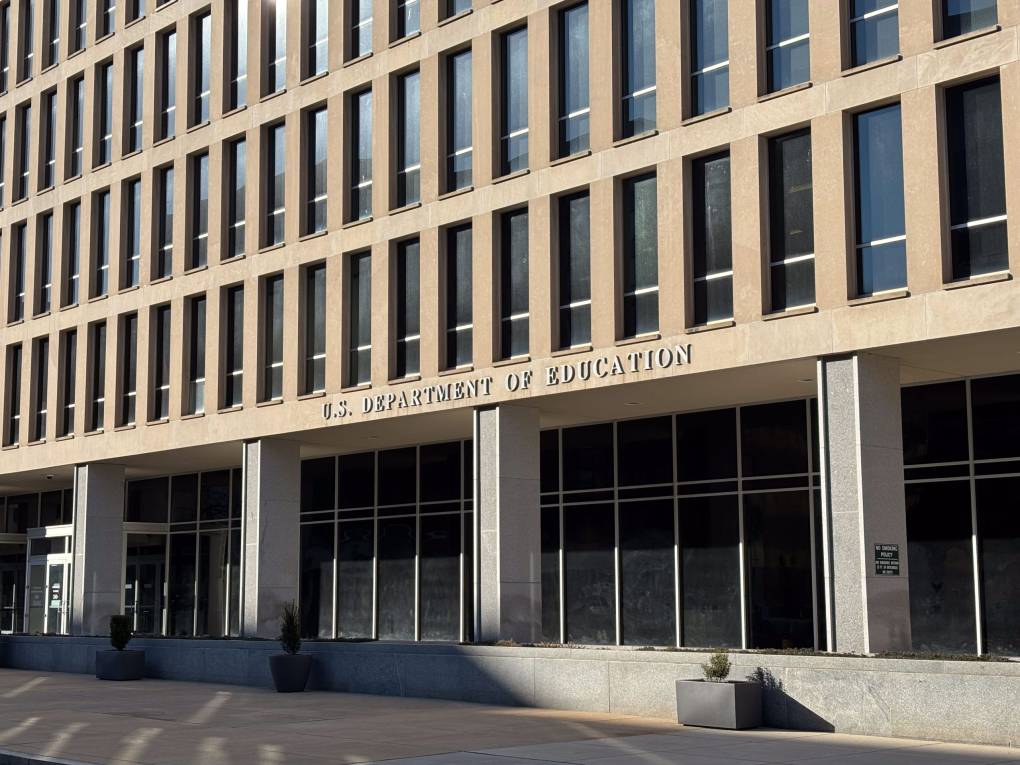
window.__IS_SSR__=true
window.__INITIAL_STATE__={
"attachmentsReducer": {
"audio_0": {
"type": "attachments",
"id": "audio_0",
"imgSizes": {
"kqedFullSize": {
"file": "https://ww2.kqed.org/news/wp-content/themes/KQED-unified/img/audio_bgs/background0.jpg"
}
}
},
"audio_1": {
"type": "attachments",
"id": "audio_1",
"imgSizes": {
"kqedFullSize": {
"file": "https://ww2.kqed.org/news/wp-content/themes/KQED-unified/img/audio_bgs/background1.jpg"
}
}
},
"audio_2": {
"type": "attachments",
"id": "audio_2",
"imgSizes": {
"kqedFullSize": {
"file": "https://ww2.kqed.org/news/wp-content/themes/KQED-unified/img/audio_bgs/background2.jpg"
}
}
},
"audio_3": {
"type": "attachments",
"id": "audio_3",
"imgSizes": {
"kqedFullSize": {
"file": "https://ww2.kqed.org/news/wp-content/themes/KQED-unified/img/audio_bgs/background3.jpg"
}
}
},
"audio_4": {
"type": "attachments",
"id": "audio_4",
"imgSizes": {
"kqedFullSize": {
"file": "https://ww2.kqed.org/news/wp-content/themes/KQED-unified/img/audio_bgs/background4.jpg"
}
}
},
"placeholder": {
"type": "attachments",
"id": "placeholder",
"imgSizes": {
"thumbnail": {
"file": "https://cdn.kqed.org/wp-content/uploads/2024/12/KQED-Default-Image-816638274-2000x1333-1-160x107.jpg",
"width": 160,
"height": 107,
"mimeType": "image/jpeg"
},
"medium": {
"file": "https://cdn.kqed.org/wp-content/uploads/2024/12/KQED-Default-Image-816638274-2000x1333-1-800x533.jpg",
"width": 800,
"height": 533,
"mimeType": "image/jpeg"
},
"medium_large": {
"file": "https://cdn.kqed.org/wp-content/uploads/2024/12/KQED-Default-Image-816638274-2000x1333-1-768x512.jpg",
"width": 768,
"height": 512,
"mimeType": "image/jpeg"
},
"large": {
"file": "https://cdn.kqed.org/wp-content/uploads/2024/12/KQED-Default-Image-816638274-2000x1333-1-1020x680.jpg",
"width": 1020,
"height": 680,
"mimeType": "image/jpeg"
},
"1536x1536": {
"file": "https://cdn.kqed.org/wp-content/uploads/2024/12/KQED-Default-Image-816638274-2000x1333-1-1536x1024.jpg",
"width": 1536,
"height": 1024,
"mimeType": "image/jpeg"
},
"fd-lrg": {
"file": "https://cdn.kqed.org/wp-content/uploads/2024/12/KQED-Default-Image-816638274-2000x1333-1-1536x1024.jpg",
"width": 1536,
"height": 1024,
"mimeType": "image/jpeg"
},
"fd-med": {
"file": "https://cdn.kqed.org/wp-content/uploads/2024/12/KQED-Default-Image-816638274-2000x1333-1-1020x680.jpg",
"width": 1020,
"height": 680,
"mimeType": "image/jpeg"
},
"fd-sm": {
"file": "https://cdn.kqed.org/wp-content/uploads/2024/12/KQED-Default-Image-816638274-2000x1333-1-800x533.jpg",
"width": 800,
"height": 533,
"mimeType": "image/jpeg"
},
"post-thumbnail": {
"file": "https://cdn.kqed.org/wp-content/uploads/2024/12/KQED-Default-Image-816638274-2000x1333-1-672x372.jpg",
"width": 672,
"height": 372,
"mimeType": "image/jpeg"
},
"twentyfourteen-full-width": {
"file": "https://cdn.kqed.org/wp-content/uploads/2024/12/KQED-Default-Image-816638274-2000x1333-1-1038x576.jpg",
"width": 1038,
"height": 576,
"mimeType": "image/jpeg"
},
"xxsmall": {
"file": "https://cdn.kqed.org/wp-content/uploads/2024/12/KQED-Default-Image-816638274-2000x1333-1-160x107.jpg",
"width": 160,
"height": 107,
"mimeType": "image/jpeg"
},
"xsmall": {
"file": "https://cdn.kqed.org/wp-content/uploads/2024/12/KQED-Default-Image-816638274-2000x1333-1-672x372.jpg",
"width": 672,
"height": 372,
"mimeType": "image/jpeg"
},
"small": {
"file": "https://cdn.kqed.org/wp-content/uploads/2024/12/KQED-Default-Image-816638274-2000x1333-1-672x372.jpg",
"width": 672,
"height": 372,
"mimeType": "image/jpeg"
},
"xlarge": {
"file": "https://cdn.kqed.org/wp-content/uploads/2024/12/KQED-Default-Image-816638274-2000x1333-1-1020x680.jpg",
"width": 1020,
"height": 680,
"mimeType": "image/jpeg"
},
"full-width": {
"file": "https://cdn.kqed.org/wp-content/uploads/2024/12/KQED-Default-Image-816638274-2000x1333-1-1920x1280.jpg",
"width": 1920,
"height": 1280,
"mimeType": "image/jpeg"
},
"guest-author-32": {
"file": "https://cdn.kqed.org/wp-content/uploads/2025/01/KQED-Default-Image-816638274-1333x1333-1-160x160.jpg",
"width": 32,
"height": 32,
"mimeType": "image/jpeg"
},
"guest-author-50": {
"file": "https://cdn.kqed.org/wp-content/uploads/2025/01/KQED-Default-Image-816638274-1333x1333-1-160x160.jpg",
"width": 50,
"height": 50,
"mimeType": "image/jpeg"
},
"guest-author-64": {
"file": "https://cdn.kqed.org/wp-content/uploads/2025/01/KQED-Default-Image-816638274-1333x1333-1-160x160.jpg",
"width": 64,
"height": 64,
"mimeType": "image/jpeg"
},
"guest-author-96": {
"file": "https://cdn.kqed.org/wp-content/uploads/2025/01/KQED-Default-Image-816638274-1333x1333-1-160x160.jpg",
"width": 96,
"height": 96,
"mimeType": "image/jpeg"
},
"guest-author-128": {
"file": "https://cdn.kqed.org/wp-content/uploads/2025/01/KQED-Default-Image-816638274-1333x1333-1-160x160.jpg",
"width": 128,
"height": 128,
"mimeType": "image/jpeg"
},
"detail": {
"file": "https://cdn.kqed.org/wp-content/uploads/2025/01/KQED-Default-Image-816638274-1333x1333-1-160x160.jpg",
"width": 160,
"height": 160,
"mimeType": "image/jpeg"
},
"kqedFullSize": {
"file": "https://cdn.kqed.org/wp-content/uploads/2024/12/KQED-Default-Image-816638274-2000x1333-1.jpg",
"width": 2000,
"height": 1333
}
}
},
"mindshift_65621": {
"type": "attachments",
"id": "mindshift_65621",
"meta": {
"index": "attachments_1716263798",
"site": "mindshift",
"id": "65621",
"found": true
},
"title": "Rear view of teenage girls and boys learning in classroom",
"publishDate": 1752859091,
"status": "inherit",
"parent": 65620,
"modified": 1752859428,
"caption": null,
"credit": "Maskot/Getty Images/Maskot/Maskot/Getty Images",
"altTag": "Rear view of teenage girls and boys learning in classroom",
"description": null,
"imgSizes": {
"medium": {
"file": "https://cdn.kqed.org/wp-content/uploads/sites/23/2025/07/gettyimages-1345022793-2000x1333.jpeg",
"width": 2000,
"height": 1333,
"mimeType": "image/jpeg"
},
"large": {
"file": "https://cdn.kqed.org/wp-content/uploads/sites/23/2025/07/gettyimages-1345022793-2000x1333.jpeg",
"width": 2000,
"height": 1333,
"mimeType": "image/jpeg"
},
"thumbnail": {
"file": "https://cdn.kqed.org/wp-content/uploads/sites/23/2025/07/gettyimages-1345022793-160x107.jpeg",
"width": 160,
"height": 107,
"mimeType": "image/jpeg"
},
"medium_large": {
"file": "https://cdn.kqed.org/wp-content/uploads/sites/23/2025/07/gettyimages-1345022793-768x512.jpeg",
"width": 768,
"height": 512,
"mimeType": "image/jpeg"
},
"1536x1536": {
"file": "https://cdn.kqed.org/wp-content/uploads/sites/23/2025/07/gettyimages-1345022793-1536x1024.jpeg",
"width": 1536,
"height": 1024,
"mimeType": "image/jpeg"
},
"2048x2048": {
"file": "https://cdn.kqed.org/wp-content/uploads/sites/23/2025/07/gettyimages-1345022793-2048x1365.jpeg",
"width": 2048,
"height": 1365,
"mimeType": "image/jpeg"
},
"post-thumbnail": {
"file": "https://cdn.kqed.org/wp-content/uploads/sites/23/2025/07/gettyimages-1345022793-672x372.jpeg",
"width": 672,
"height": 372,
"mimeType": "image/jpeg"
},
"twentyfourteen-full-width": {
"file": "https://cdn.kqed.org/wp-content/uploads/sites/23/2025/07/gettyimages-1345022793-1038x576.jpeg",
"width": 1038,
"height": 576,
"mimeType": "image/jpeg"
},
"full-width": {
"file": "https://cdn.kqed.org/wp-content/uploads/sites/23/2025/07/gettyimages-1345022793-2000x1333.jpeg",
"width": 2000,
"height": 1333,
"mimeType": "image/jpeg"
},
"kqedFullSize": {
"file": "https://cdn.kqed.org/wp-content/uploads/sites/23/2025/07/gettyimages-1345022793-scaled.jpeg",
"width": 2560,
"height": 1707
}
},
"isLoading": false,
"fetchFailed": false
},
"mindshift_65605": {
"type": "attachments",
"id": "mindshift_65605",
"meta": {
"index": "attachments_1716263798",
"site": "mindshift",
"id": "65605",
"found": true
},
"title": "Hechinger Peggy Carr 3",
"publishDate": 1752417231,
"status": "inherit",
"parent": 65603,
"modified": 1752417421,
"caption": "Peggy Carr, the former commissioner of the National Center for Education Statistics, at her Maryland home on July 1. Carr worked for the Education Department for more than 35 years before the Trump administration placed her on administrative leave on Feb. 24. ",
"credit": "Valerie Plesch for The Hechinger Report",
"altTag": "Woman seated at home in front of a piano",
"description": null,
"imgSizes": {
"medium": {
"file": "https://cdn.kqed.org/wp-content/uploads/sites/23/2025/07/Hechinger-Peggy-Carr-3-2000x1332.jpg",
"width": 2000,
"height": 1332,
"mimeType": "image/jpeg"
},
"large": {
"file": "https://cdn.kqed.org/wp-content/uploads/sites/23/2025/07/Hechinger-Peggy-Carr-3-2000x1332.jpg",
"width": 2000,
"height": 1332,
"mimeType": "image/jpeg"
},
"thumbnail": {
"file": "https://cdn.kqed.org/wp-content/uploads/sites/23/2025/07/Hechinger-Peggy-Carr-3-160x107.jpg",
"width": 160,
"height": 107,
"mimeType": "image/jpeg"
},
"medium_large": {
"file": "https://cdn.kqed.org/wp-content/uploads/sites/23/2025/07/Hechinger-Peggy-Carr-3-768x511.jpg",
"width": 768,
"height": 511,
"mimeType": "image/jpeg"
},
"1536x1536": {
"file": "https://cdn.kqed.org/wp-content/uploads/sites/23/2025/07/Hechinger-Peggy-Carr-3-1536x1023.jpg",
"width": 1536,
"height": 1023,
"mimeType": "image/jpeg"
},
"2048x2048": {
"file": "https://cdn.kqed.org/wp-content/uploads/sites/23/2025/07/Hechinger-Peggy-Carr-3-2048x1364.jpg",
"width": 2048,
"height": 1364,
"mimeType": "image/jpeg"
},
"post-thumbnail": {
"file": "https://cdn.kqed.org/wp-content/uploads/sites/23/2025/07/Hechinger-Peggy-Carr-3-672x372.jpg",
"width": 672,
"height": 372,
"mimeType": "image/jpeg"
},
"twentyfourteen-full-width": {
"file": "https://cdn.kqed.org/wp-content/uploads/sites/23/2025/07/Hechinger-Peggy-Carr-3-1038x576.jpg",
"width": 1038,
"height": 576,
"mimeType": "image/jpeg"
},
"full-width": {
"file": "https://cdn.kqed.org/wp-content/uploads/sites/23/2025/07/Hechinger-Peggy-Carr-3-2000x1332.jpg",
"width": 2000,
"height": 1332,
"mimeType": "image/jpeg"
},
"kqedFullSize": {
"file": "https://cdn.kqed.org/wp-content/uploads/sites/23/2025/07/Hechinger-Peggy-Carr-3.jpg",
"width": 2382,
"height": 1586
}
},
"isLoading": false,
"fetchFailed": false
},
"mindshift_65595": {
"type": "attachments",
"id": "mindshift_65595",
"meta": {
"index": "attachments_1716263798",
"site": "mindshift",
"id": "65595",
"found": true
},
"title": "barshay_science_1-scaled",
"publishDate": 1751577146,
"status": "inherit",
"parent": 65594,
"modified": 1751577189,
"caption": null,
"credit": "Merrill Images/Getty Images",
"altTag": "Students conduct a science experiment wearing safety gear",
"description": null,
"imgSizes": {
"medium": {
"file": "https://cdn.kqed.org/wp-content/uploads/sites/23/2025/07/barshay_science_1-scaled-1-2000x1334.jpg",
"width": 2000,
"height": 1334,
"mimeType": "image/jpeg"
},
"large": {
"file": "https://cdn.kqed.org/wp-content/uploads/sites/23/2025/07/barshay_science_1-scaled-1-2000x1334.jpg",
"width": 2000,
"height": 1334,
"mimeType": "image/jpeg"
},
"thumbnail": {
"file": "https://cdn.kqed.org/wp-content/uploads/sites/23/2025/07/barshay_science_1-scaled-1-160x107.jpg",
"width": 160,
"height": 107,
"mimeType": "image/jpeg"
},
"medium_large": {
"file": "https://cdn.kqed.org/wp-content/uploads/sites/23/2025/07/barshay_science_1-scaled-1-768x512.jpg",
"width": 768,
"height": 512,
"mimeType": "image/jpeg"
},
"1536x1536": {
"file": "https://cdn.kqed.org/wp-content/uploads/sites/23/2025/07/barshay_science_1-scaled-1-1536x1024.jpg",
"width": 1536,
"height": 1024,
"mimeType": "image/jpeg"
},
"2048x2048": {
"file": "https://cdn.kqed.org/wp-content/uploads/sites/23/2025/07/barshay_science_1-scaled-1-2048x1366.jpg",
"width": 2048,
"height": 1366,
"mimeType": "image/jpeg"
},
"post-thumbnail": {
"file": "https://cdn.kqed.org/wp-content/uploads/sites/23/2025/07/barshay_science_1-scaled-1-672x372.jpg",
"width": 672,
"height": 372,
"mimeType": "image/jpeg"
},
"twentyfourteen-full-width": {
"file": "https://cdn.kqed.org/wp-content/uploads/sites/23/2025/07/barshay_science_1-scaled-1-1038x576.jpg",
"width": 1038,
"height": 576,
"mimeType": "image/jpeg"
},
"full-width": {
"file": "https://cdn.kqed.org/wp-content/uploads/sites/23/2025/07/barshay_science_1-scaled-1-2000x1334.jpg",
"width": 2000,
"height": 1334,
"mimeType": "image/jpeg"
},
"kqedFullSize": {
"file": "https://cdn.kqed.org/wp-content/uploads/sites/23/2025/07/barshay_science_1-scaled-1.jpg",
"width": 2560,
"height": 1707
}
},
"isLoading": false,
"fetchFailed": false
},
"mindshift_65586": {
"type": "attachments",
"id": "mindshift_65586",
"meta": {
"index": "attachments_1716263798",
"site": "mindshift",
"id": "65586",
"found": true
},
"title": "Halftone hands with graph and diagram in trendy vintage style. Concept of analytics. Achieving high results",
"publishDate": 1749844819,
"status": "inherit",
"parent": 65584,
"modified": 1749844858,
"caption": null,
"credit": "Anastasia Sudinko/ iStock",
"altTag": "Halftone hands with graph and diagram in trendy vintage style. Concept of analytics. Achieving high results",
"description": null,
"imgSizes": {
"medium": {
"file": "https://cdn.kqed.org/wp-content/uploads/sites/23/2025/06/reinstate-research-and-data-2000x1193.jpg",
"width": 2000,
"height": 1193,
"mimeType": "image/jpeg"
},
"large": {
"file": "https://cdn.kqed.org/wp-content/uploads/sites/23/2025/06/reinstate-research-and-data-2000x1193.jpg",
"width": 2000,
"height": 1193,
"mimeType": "image/jpeg"
},
"thumbnail": {
"file": "https://cdn.kqed.org/wp-content/uploads/sites/23/2025/06/reinstate-research-and-data-160x95.jpg",
"width": 160,
"height": 95,
"mimeType": "image/jpeg"
},
"medium_large": {
"file": "https://cdn.kqed.org/wp-content/uploads/sites/23/2025/06/reinstate-research-and-data-768x458.jpg",
"width": 768,
"height": 458,
"mimeType": "image/jpeg"
},
"1536x1536": {
"file": "https://cdn.kqed.org/wp-content/uploads/sites/23/2025/06/reinstate-research-and-data-1536x916.jpg",
"width": 1536,
"height": 916,
"mimeType": "image/jpeg"
},
"2048x2048": {
"file": "https://cdn.kqed.org/wp-content/uploads/sites/23/2025/06/reinstate-research-and-data-2048x1221.jpg",
"width": 2048,
"height": 1221,
"mimeType": "image/jpeg"
},
"post-thumbnail": {
"file": "https://cdn.kqed.org/wp-content/uploads/sites/23/2025/06/reinstate-research-and-data-672x372.jpg",
"width": 672,
"height": 372,
"mimeType": "image/jpeg"
},
"twentyfourteen-full-width": {
"file": "https://cdn.kqed.org/wp-content/uploads/sites/23/2025/06/reinstate-research-and-data-1038x576.jpg",
"width": 1038,
"height": 576,
"mimeType": "image/jpeg"
},
"full-width": {
"file": "https://cdn.kqed.org/wp-content/uploads/sites/23/2025/06/reinstate-research-and-data-2000x1193.jpg",
"width": 2000,
"height": 1193,
"mimeType": "image/jpeg"
},
"kqedFullSize": {
"file": "https://cdn.kqed.org/wp-content/uploads/sites/23/2025/06/reinstate-research-and-data-e1749844865365.jpg",
"width": 1920,
"height": 1145
}
},
"isLoading": false,
"fetchFailed": false
},
"mindshift_65538": {
"type": "attachments",
"id": "mindshift_65538",
"meta": {
"index": "attachments_1716263798",
"site": "mindshift",
"id": "65538",
"found": true
},
"title": "thinking and come up with an idea.",
"publishDate": 1748035580,
"status": "inherit",
"parent": 65536,
"modified": 1748035619,
"caption": null,
"credit": "emma/iStock",
"altTag": "Illustration of a girl reading a book and a boy reading a book.",
"description": null,
"imgSizes": {
"medium": {
"file": "https://cdn.kqed.org/wp-content/uploads/sites/23/2025/05/iStock-1308793901-800x600.jpg",
"width": 800,
"height": 600,
"mimeType": "image/jpeg"
},
"large": {
"file": "https://cdn.kqed.org/wp-content/uploads/sites/23/2025/05/iStock-1308793901-1020x765.jpg",
"width": 1020,
"height": 765,
"mimeType": "image/jpeg"
},
"thumbnail": {
"file": "https://cdn.kqed.org/wp-content/uploads/sites/23/2025/05/iStock-1308793901-160x120.jpg",
"width": 160,
"height": 120,
"mimeType": "image/jpeg"
},
"medium_large": {
"file": "https://cdn.kqed.org/wp-content/uploads/sites/23/2025/05/iStock-1308793901-768x576.jpg",
"width": 768,
"height": 576,
"mimeType": "image/jpeg"
},
"1536x1536": {
"file": "https://cdn.kqed.org/wp-content/uploads/sites/23/2025/05/iStock-1308793901-1536x1152.jpg",
"width": 1536,
"height": 1152,
"mimeType": "image/jpeg"
},
"post-thumbnail": {
"file": "https://cdn.kqed.org/wp-content/uploads/sites/23/2025/05/iStock-1308793901-672x372.jpg",
"width": 672,
"height": 372,
"mimeType": "image/jpeg"
},
"twentyfourteen-full-width": {
"file": "https://cdn.kqed.org/wp-content/uploads/sites/23/2025/05/iStock-1308793901-1038x576.jpg",
"width": 1038,
"height": 576,
"mimeType": "image/jpeg"
},
"full-width": {
"file": "https://cdn.kqed.org/wp-content/uploads/sites/23/2025/05/iStock-1308793901-1920x1440.jpg",
"width": 1920,
"height": 1440,
"mimeType": "image/jpeg"
},
"kqedFullSize": {
"file": "https://cdn.kqed.org/wp-content/uploads/sites/23/2025/05/iStock-1308793901.jpg",
"width": 2000,
"height": 1500
}
},
"isLoading": false,
"fetchFailed": false
},
"mindshift_65512": {
"type": "attachments",
"id": "mindshift_65512",
"meta": {
"index": "attachments_1716263798",
"site": "mindshift",
"id": "65512",
"found": true
},
"title": "PP-AI-scaled",
"publishDate": 1747633822,
"status": "inherit",
"parent": 65511,
"modified": 1747633853,
"caption": null,
"credit": "Getty Images",
"altTag": "Illustration of person standing in front of text bubbles",
"description": null,
"imgSizes": {
"medium": {
"file": "https://cdn.kqed.org/wp-content/uploads/sites/23/2025/05/PP-AI-scaled-1-800x533.jpg",
"width": 800,
"height": 533,
"mimeType": "image/jpeg"
},
"large": {
"file": "https://cdn.kqed.org/wp-content/uploads/sites/23/2025/05/PP-AI-scaled-1-1020x680.jpg",
"width": 1020,
"height": 680,
"mimeType": "image/jpeg"
},
"thumbnail": {
"file": "https://cdn.kqed.org/wp-content/uploads/sites/23/2025/05/PP-AI-scaled-1-160x107.jpg",
"width": 160,
"height": 107,
"mimeType": "image/jpeg"
},
"medium_large": {
"file": "https://cdn.kqed.org/wp-content/uploads/sites/23/2025/05/PP-AI-scaled-1-768x512.jpg",
"width": 768,
"height": 512,
"mimeType": "image/jpeg"
},
"1536x1536": {
"file": "https://cdn.kqed.org/wp-content/uploads/sites/23/2025/05/PP-AI-scaled-1-1536x1024.jpg",
"width": 1536,
"height": 1024,
"mimeType": "image/jpeg"
},
"2048x2048": {
"file": "https://cdn.kqed.org/wp-content/uploads/sites/23/2025/05/PP-AI-scaled-1-2048x1366.jpg",
"width": 2048,
"height": 1366,
"mimeType": "image/jpeg"
},
"post-thumbnail": {
"file": "https://cdn.kqed.org/wp-content/uploads/sites/23/2025/05/PP-AI-scaled-1-672x372.jpg",
"width": 672,
"height": 372,
"mimeType": "image/jpeg"
},
"twentyfourteen-full-width": {
"file": "https://cdn.kqed.org/wp-content/uploads/sites/23/2025/05/PP-AI-scaled-1-1038x576.jpg",
"width": 1038,
"height": 576,
"mimeType": "image/jpeg"
},
"full-width": {
"file": "https://cdn.kqed.org/wp-content/uploads/sites/23/2025/05/PP-AI-scaled-1-1920x1280.jpg",
"width": 1920,
"height": 1280,
"mimeType": "image/jpeg"
},
"kqedFullSize": {
"file": "https://cdn.kqed.org/wp-content/uploads/sites/23/2025/05/PP-AI-scaled-1.jpg",
"width": 2560,
"height": 1707
}
},
"isLoading": false,
"fetchFailed": false
},
"mindshift_65499": {
"type": "attachments",
"id": "mindshift_65499",
"meta": {
"index": "attachments_1716263798",
"site": "mindshift",
"id": "65499",
"found": true
},
"title": "colorful view describing the education life. ready-to-use draft",
"publishDate": 1747027911,
"status": "inherit",
"parent": 65492,
"modified": 1747027951,
"caption": null,
"credit": "Getty Images",
"altTag": "Science concept illustration",
"description": null,
"imgSizes": {
"medium": {
"file": "https://cdn.kqed.org/wp-content/uploads/sites/23/2025/05/proofpoints-5-13-GettyImages-1402432124-800x629.jpg",
"width": 800,
"height": 629,
"mimeType": "image/jpeg"
},
"large": {
"file": "https://cdn.kqed.org/wp-content/uploads/sites/23/2025/05/proofpoints-5-13-GettyImages-1402432124-1020x802.jpg",
"width": 1020,
"height": 802,
"mimeType": "image/jpeg"
},
"thumbnail": {
"file": "https://cdn.kqed.org/wp-content/uploads/sites/23/2025/05/proofpoints-5-13-GettyImages-1402432124-160x126.jpg",
"width": 160,
"height": 126,
"mimeType": "image/jpeg"
},
"medium_large": {
"file": "https://cdn.kqed.org/wp-content/uploads/sites/23/2025/05/proofpoints-5-13-GettyImages-1402432124-768x604.jpg",
"width": 768,
"height": 604,
"mimeType": "image/jpeg"
},
"1536x1536": {
"file": "https://cdn.kqed.org/wp-content/uploads/sites/23/2025/05/proofpoints-5-13-GettyImages-1402432124-1536x1207.jpg",
"width": 1536,
"height": 1207,
"mimeType": "image/jpeg"
},
"post-thumbnail": {
"file": "https://cdn.kqed.org/wp-content/uploads/sites/23/2025/05/proofpoints-5-13-GettyImages-1402432124-672x372.jpg",
"width": 672,
"height": 372,
"mimeType": "image/jpeg"
},
"twentyfourteen-full-width": {
"file": "https://cdn.kqed.org/wp-content/uploads/sites/23/2025/05/proofpoints-5-13-GettyImages-1402432124-1038x576.jpg",
"width": 1038,
"height": 576,
"mimeType": "image/jpeg"
},
"full-width": {
"file": "https://cdn.kqed.org/wp-content/uploads/sites/23/2025/05/proofpoints-5-13-GettyImages-1402432124-1920x1509.jpg",
"width": 1920,
"height": 1509,
"mimeType": "image/jpeg"
},
"kqedFullSize": {
"file": "https://cdn.kqed.org/wp-content/uploads/sites/23/2025/05/proofpoints-5-13-GettyImages-1402432124.jpg",
"width": 1953,
"height": 1535
}
},
"isLoading": false,
"fetchFailed": false
},
"mindshift_65471": {
"type": "attachments",
"id": "mindshift_65471",
"meta": {
"index": "attachments_1716263798",
"site": "mindshift",
"id": "65471",
"found": true
},
"title": "Washington-DC-Protest-Department-of-Education",
"publishDate": 1746423699,
"status": "inherit",
"parent": 65469,
"modified": 1746423769,
"caption": "Demonstrators gather outside of the offices of the U.S. Department of Education in Washington, D.C. on March 13, 2025 to protest against mass layoffs and budget cuts at the agency, initiated by the Trump administration and DOGE. (Photo by BRYAN DOZIER/Middle East Images/AFP via Getty Images)",
"credit": null,
"altTag": "Protestors with signs and bullhorn in front of building",
"description": null,
"imgSizes": {
"medium": {
"file": "https://cdn.kqed.org/wp-content/uploads/sites/23/2025/05/GettyImages-2204395894-800x534.jpg",
"width": 800,
"height": 534,
"mimeType": "image/jpeg"
},
"large": {
"file": "https://cdn.kqed.org/wp-content/uploads/sites/23/2025/05/GettyImages-2204395894-1020x680.jpg",
"width": 1020,
"height": 680,
"mimeType": "image/jpeg"
},
"thumbnail": {
"file": "https://cdn.kqed.org/wp-content/uploads/sites/23/2025/05/GettyImages-2204395894-160x107.jpg",
"width": 160,
"height": 107,
"mimeType": "image/jpeg"
},
"medium_large": {
"file": "https://cdn.kqed.org/wp-content/uploads/sites/23/2025/05/GettyImages-2204395894-768x512.jpg",
"width": 768,
"height": 512,
"mimeType": "image/jpeg"
},
"1536x1536": {
"file": "https://cdn.kqed.org/wp-content/uploads/sites/23/2025/05/GettyImages-2204395894-1536x1025.jpg",
"width": 1536,
"height": 1025,
"mimeType": "image/jpeg"
},
"2048x2048": {
"file": "https://cdn.kqed.org/wp-content/uploads/sites/23/2025/05/GettyImages-2204395894-2048x1366.jpg",
"width": 2048,
"height": 1366,
"mimeType": "image/jpeg"
},
"post-thumbnail": {
"file": "https://cdn.kqed.org/wp-content/uploads/sites/23/2025/05/GettyImages-2204395894-672x372.jpg",
"width": 672,
"height": 372,
"mimeType": "image/jpeg"
},
"twentyfourteen-full-width": {
"file": "https://cdn.kqed.org/wp-content/uploads/sites/23/2025/05/GettyImages-2204395894-1038x576.jpg",
"width": 1038,
"height": 576,
"mimeType": "image/jpeg"
},
"full-width": {
"file": "https://cdn.kqed.org/wp-content/uploads/sites/23/2025/05/GettyImages-2204395894-1920x1281.jpg",
"width": 1920,
"height": 1281,
"mimeType": "image/jpeg"
},
"kqedFullSize": {
"file": "https://cdn.kqed.org/wp-content/uploads/sites/23/2025/05/GettyImages-2204395894-scaled.jpg",
"width": 2560,
"height": 1708
}
},
"isLoading": false,
"fetchFailed": false
},
"mindshift_65450": {
"type": "attachments",
"id": "mindshift_65450",
"meta": {
"index": "attachments_1716263798",
"site": "mindshift",
"id": "65450",
"found": true
},
"title": "smaller-NAEP",
"publishDate": 1745556577,
"status": "inherit",
"parent": 65449,
"modified": 1745556615,
"caption": null,
"credit": "Illustration by Camilla Forte/The Hechinger Report, Photos via Getty Images",
"altTag": "A hand holding up a small document",
"description": null,
"imgSizes": {
"medium": {
"file": "https://cdn.kqed.org/wp-content/uploads/sites/23/2025/04/smaller-NAEP-800x450.png",
"width": 800,
"height": 450,
"mimeType": "image/png"
},
"large": {
"file": "https://cdn.kqed.org/wp-content/uploads/sites/23/2025/04/smaller-NAEP-1020x574.png",
"width": 1020,
"height": 574,
"mimeType": "image/png"
},
"thumbnail": {
"file": "https://cdn.kqed.org/wp-content/uploads/sites/23/2025/04/smaller-NAEP-160x90.png",
"width": 160,
"height": 90,
"mimeType": "image/png"
},
"medium_large": {
"file": "https://cdn.kqed.org/wp-content/uploads/sites/23/2025/04/smaller-NAEP-768x432.png",
"width": 768,
"height": 432,
"mimeType": "image/png"
},
"1536x1536": {
"file": "https://cdn.kqed.org/wp-content/uploads/sites/23/2025/04/smaller-NAEP-1536x864.png",
"width": 1536,
"height": 864,
"mimeType": "image/png"
},
"post-thumbnail": {
"file": "https://cdn.kqed.org/wp-content/uploads/sites/23/2025/04/smaller-NAEP-672x372.png",
"width": 672,
"height": 372,
"mimeType": "image/png"
},
"twentyfourteen-full-width": {
"file": "https://cdn.kqed.org/wp-content/uploads/sites/23/2025/04/smaller-NAEP-1038x576.png",
"width": 1038,
"height": 576,
"mimeType": "image/png"
},
"kqedFullSize": {
"file": "https://cdn.kqed.org/wp-content/uploads/sites/23/2025/04/smaller-NAEP.png",
"width": 1920,
"height": 1080
}
},
"isLoading": false,
"fetchFailed": false
},
"mindshift_65430": {
"type": "attachments",
"id": "mindshift_65430",
"meta": {
"index": "attachments_1716263798",
"site": "mindshift",
"id": "65430",
"found": true
},
"title": "ERIC",
"publishDate": 1745210920,
"status": "inherit",
"parent": 65429,
"modified": 1745210966,
"caption": null,
"credit": "Illustration by Camilla Forte/The Hechinger Report",
"altTag": "Image of a website fading from view",
"description": null,
"imgSizes": {
"medium": {
"file": "https://cdn.kqed.org/wp-content/uploads/sites/23/2025/04/ERIC-scaled-e1745210986351-800x457.jpg",
"width": 800,
"height": 457,
"mimeType": "image/jpeg"
},
"large": {
"file": "https://cdn.kqed.org/wp-content/uploads/sites/23/2025/04/ERIC-scaled-e1745210986351-1020x583.jpg",
"width": 1020,
"height": 583,
"mimeType": "image/jpeg"
},
"thumbnail": {
"file": "https://cdn.kqed.org/wp-content/uploads/sites/23/2025/04/ERIC-scaled-e1745210986351-160x91.jpg",
"width": 160,
"height": 91,
"mimeType": "image/jpeg"
},
"medium_large": {
"file": "https://cdn.kqed.org/wp-content/uploads/sites/23/2025/04/ERIC-scaled-e1745210986351-768x439.jpg",
"width": 768,
"height": 439,
"mimeType": "image/jpeg"
},
"1536x1536": {
"file": "https://cdn.kqed.org/wp-content/uploads/sites/23/2025/04/ERIC-scaled-e1745210986351-1536x878.jpg",
"width": 1536,
"height": 878,
"mimeType": "image/jpeg"
},
"2048x2048": {
"file": "https://cdn.kqed.org/wp-content/uploads/sites/23/2025/04/ERIC-scaled-e1745210986351-2048x1170.jpg",
"width": 2048,
"height": 1170,
"mimeType": "image/jpeg"
},
"post-thumbnail": {
"file": "https://cdn.kqed.org/wp-content/uploads/sites/23/2025/04/ERIC-scaled-e1745210986351-672x372.jpg",
"width": 672,
"height": 372,
"mimeType": "image/jpeg"
},
"twentyfourteen-full-width": {
"file": "https://cdn.kqed.org/wp-content/uploads/sites/23/2025/04/ERIC-scaled-e1745210986351-1038x576.jpg",
"width": 1038,
"height": 576,
"mimeType": "image/jpeg"
},
"full-width": {
"file": "https://cdn.kqed.org/wp-content/uploads/sites/23/2025/04/ERIC-scaled-e1745210986351-1920x1097.jpg",
"width": 1920,
"height": 1097,
"mimeType": "image/jpeg"
},
"kqedFullSize": {
"file": "https://cdn.kqed.org/wp-content/uploads/sites/23/2025/04/ERIC-scaled-e1745210986351.jpg",
"width": 2560,
"height": 1463
}
},
"isLoading": false,
"fetchFailed": false
},
"mindshift_65414": {
"type": "attachments",
"id": "mindshift_65414",
"meta": {
"index": "attachments_1716263798",
"site": "mindshift",
"id": "65414",
"found": true
},
"title": "OpenAI ChatGPT, Anthropic Claude and Perplexity mobile APP icons on screen. Assorted AI chatbots",
"publishDate": 1744570969,
"status": "inherit",
"parent": 65411,
"modified": 1744571000,
"caption": null,
"credit": "Robert Way",
"altTag": "Smartphone screen of generative AI apps",
"description": null,
"imgSizes": {
"medium": {
"file": "https://cdn.kqed.org/wp-content/uploads/sites/23/2025/04/iStock-2151893327-800x533.jpg",
"width": 800,
"height": 533,
"mimeType": "image/jpeg"
},
"large": {
"file": "https://cdn.kqed.org/wp-content/uploads/sites/23/2025/04/iStock-2151893327-1020x680.jpg",
"width": 1020,
"height": 680,
"mimeType": "image/jpeg"
},
"thumbnail": {
"file": "https://cdn.kqed.org/wp-content/uploads/sites/23/2025/04/iStock-2151893327-160x107.jpg",
"width": 160,
"height": 107,
"mimeType": "image/jpeg"
},
"medium_large": {
"file": "https://cdn.kqed.org/wp-content/uploads/sites/23/2025/04/iStock-2151893327-768x512.jpg",
"width": 768,
"height": 512,
"mimeType": "image/jpeg"
},
"1536x1536": {
"file": "https://cdn.kqed.org/wp-content/uploads/sites/23/2025/04/iStock-2151893327-1536x1024.jpg",
"width": 1536,
"height": 1024,
"mimeType": "image/jpeg"
},
"2048x2048": {
"file": "https://cdn.kqed.org/wp-content/uploads/sites/23/2025/04/iStock-2151893327-2048x1365.jpg",
"width": 2048,
"height": 1365,
"mimeType": "image/jpeg"
},
"post-thumbnail": {
"file": "https://cdn.kqed.org/wp-content/uploads/sites/23/2025/04/iStock-2151893327-672x372.jpg",
"width": 672,
"height": 372,
"mimeType": "image/jpeg"
},
"twentyfourteen-full-width": {
"file": "https://cdn.kqed.org/wp-content/uploads/sites/23/2025/04/iStock-2151893327-1038x576.jpg",
"width": 1038,
"height": 576,
"mimeType": "image/jpeg"
},
"full-width": {
"file": "https://cdn.kqed.org/wp-content/uploads/sites/23/2025/04/iStock-2151893327-1920x1280.jpg",
"width": 1920,
"height": 1280,
"mimeType": "image/jpeg"
},
"kqedFullSize": {
"file": "https://cdn.kqed.org/wp-content/uploads/sites/23/2025/04/iStock-2151893327.jpg",
"width": 2121,
"height": 1414
}
},
"isLoading": false,
"fetchFailed": false
},
"mindshift_65388": {
"type": "attachments",
"id": "mindshift_65388",
"meta": {
"index": "attachments_1716263798",
"site": "mindshift",
"id": "65388",
"found": true
},
"title": "PP-NAEP-scaled",
"publishDate": 1744004059,
"status": "inherit",
"parent": 65386,
"modified": 1744004090,
"caption": "U.S. Department of Education ",
"credit": null,
"altTag": "Federal building",
"description": null,
"imgSizes": {
"medium": {
"file": "https://cdn.kqed.org/wp-content/uploads/sites/23/2025/04/PP-NAEP-scaled-1-800x600.jpg",
"width": 800,
"height": 600,
"mimeType": "image/jpeg"
},
"large": {
"file": "https://cdn.kqed.org/wp-content/uploads/sites/23/2025/04/PP-NAEP-scaled-1-1020x765.jpg",
"width": 1020,
"height": 765,
"mimeType": "image/jpeg"
},
"thumbnail": {
"file": "https://cdn.kqed.org/wp-content/uploads/sites/23/2025/04/PP-NAEP-scaled-1-160x120.jpg",
"width": 160,
"height": 120,
"mimeType": "image/jpeg"
},
"medium_large": {
"file": "https://cdn.kqed.org/wp-content/uploads/sites/23/2025/04/PP-NAEP-scaled-1-768x576.jpg",
"width": 768,
"height": 576,
"mimeType": "image/jpeg"
},
"1536x1536": {
"file": "https://cdn.kqed.org/wp-content/uploads/sites/23/2025/04/PP-NAEP-scaled-1-1536x1152.jpg",
"width": 1536,
"height": 1152,
"mimeType": "image/jpeg"
},
"2048x2048": {
"file": "https://cdn.kqed.org/wp-content/uploads/sites/23/2025/04/PP-NAEP-scaled-1-2048x1536.jpg",
"width": 2048,
"height": 1536,
"mimeType": "image/jpeg"
},
"post-thumbnail": {
"file": "https://cdn.kqed.org/wp-content/uploads/sites/23/2025/04/PP-NAEP-scaled-1-672x372.jpg",
"width": 672,
"height": 372,
"mimeType": "image/jpeg"
},
"twentyfourteen-full-width": {
"file": "https://cdn.kqed.org/wp-content/uploads/sites/23/2025/04/PP-NAEP-scaled-1-1038x576.jpg",
"width": 1038,
"height": 576,
"mimeType": "image/jpeg"
},
"full-width": {
"file": "https://cdn.kqed.org/wp-content/uploads/sites/23/2025/04/PP-NAEP-scaled-1-1920x1440.jpg",
"width": 1920,
"height": 1440,
"mimeType": "image/jpeg"
},
"kqedFullSize": {
"file": "https://cdn.kqed.org/wp-content/uploads/sites/23/2025/04/PP-NAEP-scaled-1.jpg",
"width": 2560,
"height": 1920
}
},
"isLoading": false,
"fetchFailed": false
}
},
"audioPlayerReducer": {
"postId": "stream_live",
"isPaused": true,
"isPlaying": false,
"pfsActive": false,
"pledgeModalIsOpen": true,
"playerDrawerIsOpen": false,
"liveAudioPlayStartedAt": 0,
"liveAudioPlayContext": ""
},
"authorsReducer": {
"byline_mindshift_65620": {
"type": "authors",
"id": "byline_mindshift_65620",
"meta": {
"override": true
},
"slug": "byline_mindshift_65620",
"name": "Sequoia Carrillo, Corey Turner, Elissa Nadworny",
"isLoading": false
},
"byline_mindshift_65603": {
"type": "authors",
"id": "byline_mindshift_65603",
"meta": {
"override": true
},
"slug": "byline_mindshift_65603",
"name": "Jill Barshay, \u003ca href=\"https://hechingerreport.org/\" target=\"_blank\">The Hechinger Report\u003c/a>",
"isLoading": false
},
"byline_mindshift_65594": {
"type": "authors",
"id": "byline_mindshift_65594",
"meta": {
"override": true
},
"slug": "byline_mindshift_65594",
"name": "Jill Barshay, \u003ca href=\"https://hechingerreport.org/\" target=\"_blank\">The Hechinger Report\u003c/a>",
"isLoading": false
},
"byline_mindshift_65584": {
"type": "authors",
"id": "byline_mindshift_65584",
"meta": {
"override": true
},
"slug": "byline_mindshift_65584",
"name": "Jill Barshay, \u003ca href=\"https://hechingerreport.org/\" target=\"_blank\">The Hechinger Report\u003c/a>",
"isLoading": false
},
"byline_mindshift_65536": {
"type": "authors",
"id": "byline_mindshift_65536",
"meta": {
"override": true
},
"slug": "byline_mindshift_65536",
"name": "Jill Barshay, \u003ca href=\"https://hechingerreport.org/\">The Hechinger Report\u003c/a>",
"isLoading": false
},
"byline_mindshift_65511": {
"type": "authors",
"id": "byline_mindshift_65511",
"meta": {
"override": true
},
"slug": "byline_mindshift_65511",
"name": "Jill Barshay, \u003ca href=\"https://hechingerreport.org/\">The Hechinger Report\u003c/a>",
"isLoading": false
},
"byline_mindshift_65492": {
"type": "authors",
"id": "byline_mindshift_65492",
"meta": {
"override": true
},
"slug": "byline_mindshift_65492",
"name": "Jill Barshay, \u003ca href=\"https://hechingerreport.org/\">The Hechinger Report\u003c/a>",
"isLoading": false
},
"byline_mindshift_65469": {
"type": "authors",
"id": "byline_mindshift_65469",
"meta": {
"override": true
},
"slug": "byline_mindshift_65469",
"name": "Jill Barshay, \u003ca href=\"https://hechingerreport.org/\">The Hechinger Report\u003c/a>",
"isLoading": false
},
"byline_mindshift_65449": {
"type": "authors",
"id": "byline_mindshift_65449",
"meta": {
"override": true
},
"slug": "byline_mindshift_65449",
"name": "Jill Barshay, \u003ca href=\"https://hechingerreport.org/\">The Hechinger Report\u003c/a>",
"isLoading": false
},
"byline_mindshift_65429": {
"type": "authors",
"id": "byline_mindshift_65429",
"meta": {
"override": true
},
"slug": "byline_mindshift_65429",
"name": "Jill Barshay, \u003ca href=\"https://hechingerreport.org/\">The Hechinger Report\u003c/a>",
"isLoading": false
},
"byline_mindshift_65411": {
"type": "authors",
"id": "byline_mindshift_65411",
"meta": {
"override": true
},
"slug": "byline_mindshift_65411",
"name": "Jill Barshay, \u003ca href=\"https://hechingerreport.org/\">The Hechinger Report\u003c/a>",
"isLoading": false
},
"byline_mindshift_65386": {
"type": "authors",
"id": "byline_mindshift_65386",
"meta": {
"override": true
},
"slug": "byline_mindshift_65386",
"name": "Jill Barshay, \u003ca href=\"https://hechingerreport.org/\">The Hechinger Report\u003c/a>",
"isLoading": false
}
},
"pagesReducer": {
"mindshift_category_education-research": {
"type": "terms",
"id": "mindshift_21504",
"meta": {
"index": "terms_1716263798",
"site": "mindshift",
"id": "21504",
"score": 14.405815
},
"featImg": null,
"name": "Education research",
"description": null,
"taxonomy": "category",
"headData": {
"twImgId": null,
"twTitle": null,
"ogTitle": null,
"ogImgId": null,
"twDescription": null,
"description": null,
"title": "Education research Archives | KQED Mindshift",
"ogDescription": null
},
"ttid": 20776,
"slug": "education-research",
"isLoading": false,
"title": "Education research",
"pageMeta": {
"site": "mindshift",
"WpPageTemplate": "page-topic-editorial",
"currentPage": 5
},
"blocks": [
{
"blockName": "kqed/post-list",
"attrs": {
"layout": "cardArticle2",
"query": "posts/mindshift?category=education-research",
"seeMore": false,
"paginated": true,
"page": 5
}
},
{
"blockName": "kqed/ad"
}
]
}
},
"pfsSessionReducer": {},
"postsReducer": {
"stream_live": {
"type": "live",
"id": "stream_live",
"audioUrl": "https://streams.kqed.org/kqedradio",
"title": "Live Stream",
"excerpt": "Live Stream information currently unavailable.",
"link": "/radio",
"featImg": "",
"label": {
"name": "KQED Live",
"link": "/"
}
},
"stream_kqedNewscast": {
"type": "posts",
"id": "stream_kqedNewscast",
"audioUrl": "https://www.kqed.org/.stream/anon/radio/RDnews/newscast.mp3?_=1",
"title": "KQED Newscast",
"featImg": "",
"label": {
"name": "88.5 FM",
"link": "/"
}
},
"mindshift_65620": {
"type": "posts",
"id": "mindshift_65620",
"meta": {
"index": "posts_1716263798",
"site": "mindshift",
"id": "65620",
"score": null,
"sort": [
1752866862000
]
},
"guestAuthors": [],
"slug": "what-the-one-big-beautiful-bill-will-change-for-students-schools-and-colleges",
"title": "What the 'One Big Beautiful Bill' Will Change for Students, Schools and Colleges",
"publishDate": 1752866862,
"format": "standard",
"headTitle": "What the ‘One Big Beautiful Bill’ Will Change for Students, Schools and Colleges | KQED",
"labelTerm": {
"term": 21847,
"site": "mindshift"
},
"content": "\u003cp>In just six months, the Trump administration and Republican-controlled Congress have brought lasting change – and enormous unpredictability – to federal education policy.\u003c/p>\n\u003cp>The U.S. Department of Education, under Secretary Linda McMahon, has cut roughly half its staff. It is also \u003ca href=\"https://www.npr.org/2025/07/14/nx-s1-5467251/trump-school-education-grants-lawsuit\" target=\"_blank\" rel=\"noopener\">withholding nearly $7 billion\u003c/a> in grant funding to school districts – for before- and after-school programs, teacher training, services for English language learners and more – while that funding undergoes further review.\u003c/p>\n\u003cp>At the same time, Republicans’ “One Big Beautiful Bill,” which President Trump \u003ca href=\"https://www.npr.org/2025/07/03/nx-s1-5454841/house-republicans-trump-tax-bill-medicaid\" target=\"_blank\" rel=\"noopener\">signed into law\u003c/a> on July 4, imposes a host of \u003cem>new\u003c/em> obligations on the scaled-down department.\u003c/p>\n\u003cp>Here’s what to know about the changes students, K-12 schools and colleges can expect now that the legislation is officially law:\u003c/p>\n\u003ch2 id=\"vouchers\">K-12 school vouchers are going national (sort of)\u003c/h2>\n\u003cp>The final bill includes a \u003ca href=\"https://www.npr.org/2025/05/23/nx-s1-5397175/trump-federal-voucher-private-school\" target=\"_blank\" rel=\"noopener\">first-of-its-kind federal school voucher program\u003c/a>.\u003c/p>\n\u003cp>[ad fullwidth]\u003c/p>\n\u003cp>The program \u003ca href=\"https://www.npr.org/2025/05/14/nx-s1-5397945/private-school-vouchers-choice-reconciliation\" target=\"_blank\" rel=\"noopener\">uses the federal tax code\u003c/a> to offer vouchers that students can use to attend private secular or religious schools as well as for qualifying education expenses.\u003c/p>\n\u003cp>“Parents should decide where their kids go to school. This bill helps them do that,” Sen. Bill Cassidy, R-La., said in \u003ca href=\"https://www.cassidy.senate.gov/newsroom/press-releases/cassidy-school-choice-legislation-heads-to-president-trumps-desk-as-part-of-one-big-beautiful-bill/\" target=\"_blank\" rel=\"noopener\">a statement\u003c/a> after the House approved the Senate’s changes.\u003c/p>\n\u003cp>The Senate changed the original House proposal, now requiring states to opt into the program, therefore keeping it from becoming a truly national program. Blue states where vouchers have little support may not participate, and even in more conservative states, support is mixed – \u003ca href=\"https://stateline.org/2024/11/12/3-states-blunt-school-choice-momentum/\" target=\"_blank\" rel=\"noopener\">voters recently rejected\u003c/a> school voucher ballot measures in Kentucky and Nebraska.\u003c/p>\n\u003cp>That may be, in part, due to concerns that voucher programs can sap local public schools of resources, because when students leave a public school system, they take funding with them.\u003c/p>\n\u003cp>“This isn’t just a policy failure—it is a moral disgrace,” Becky Pringle, president of the National Education Association, the nation’s largest teachers union, \u003ca href=\"https://www.nea.org/about-nea/media-center/press-releases/nea-reacts-final-passage-trump-administrations-budget-bill\" target=\"_blank\" rel=\"noopener\">said in a statement\u003c/a>. “Trump and congressional Republicans undermined our public schools and every student in them.”\u003c/p>\n\u003cp>The new federal program will reward people who make charitable donations to what are known as Scholarship Granting Organizations (SGOs). Their reward: a dollar-for-dollar tax credit.\u003c/p>\n\u003cp>The SGO would then distribute the donated money in the form of scholarships for students to use on a range of expenses, including tuition, books and certain homeschooling costs.\u003c/p>\n\u003cp>Unlike some of the country’s \u003ca href=\"https://www.npr.org/sections/ed/2017/05/19/527429292/the-nations-oldest-voucher-program-beacon-of-hope-or-failed-experiment\" target=\"_blank\" rel=\"noopener\">earliest\u003c/a>, \u003ca href=\"https://scohio.org/2025/05/09/where-it-all-started-the-story-of-the-cleveland-scholarship-program/\" target=\"_blank\" rel=\"noopener\">smaller\u003c/a> voucher programs, this federal version won’t be limited to lower-income families. Instead, it will be available to households earning at or below 300% of a given area’s median gross income. So, in an area of the country where the median gross income is $75,000, any child in a household earning less than $225,000 could qualify.\u003c/p>\n\u003cp>The cost of a program like this is hard to measure, especially with the opt-in caveat leaving states to decide if they will participate. However, the nonpartisan Joint Committee on Taxation estimates the vouchers could cost the federal government almost $26 billion in lost tax revenue over the next decade.\u003c/p>\n\u003ch2 id=\"medicaid\">Medicaid changes and K-12 schools\u003c/h2>\n\u003cp>More than 37 million children are enrolled in either Medicaid or the Children’s Health Insurance Program (CHIP), a federal program that provides affordable health insurance to pregnant mothers and children who live just above Medicaid’s poverty threshold.\u003c/p>\n\u003cp>The “One Big Beautiful Bill” introduces strict eligibility requirements for Medicaid including more frequent eligibility verification and a first-ever national work requirement, though parents of children age 13 and younger are exempt.\u003c/p>\n\u003cp>It also cuts federal health spending by about $1 trillion over a decade, according to the \u003ca href=\"https://www.npr.org/2025/06/06/g-s1-70918/whats-the-cbo-meet-the-nonpartisan-agency-under-fire-from-republicans\" target=\"_blank\" rel=\"noopener\">nonpartisan\u003c/a> Congressional Budget Office (CBO).\u003c/p>\n\u003cp>As NPR \u003ca href=\"https://www.npr.org/sections/shots-health-news/2025/07/02/nx-s1-5453870/senate-republicans-tax-bill-medicaid-health-care\" target=\"_blank\" rel=\"noopener\">has previously\u003c/a> reported, \u003ca href=\"https://kffhealthnews.org/news/article/medicaid-work-requirements-states-revamp-trump-administration/\" target=\"_blank\" rel=\"noopener\">state experiments with work requirements\u003c/a> have been plagued with administrative issues, such as eligible enrollees’ losing coverage over paperwork problems and budget overruns.\u003c/p>\n\u003ch2>How will all this impact K-12 students?\u003c/h2>\n\u003cp>“When there’s more red tape, we know that it’s harder for families,” Joan Alker, head of Georgetown University’s Center for Children and Families, told NPR before the bill passed.\u003c/p>\n\u003cp>The CBO estimates nearly 12 million people will lose their health coverage as a result of the changes in the final bill.\u003c/p>\n\u003cp>Medicaid is also the fourth largest source of funding for K-12 schools, according to the School Superintendents Association (AASA). \u003ca href=\"https://www.ed.gov/sites/ed/files/about/offices/list/osers/docs/medicaid-funding-for-school-based-services-03-08-2024.pdf\" target=\"_blank\" rel=\"noopener\">Schools receive money to help provide services\u003c/a> for low-income students enrolled in Medicaid or CHIP as well as for students with disabilities.\u003c/p>\n\u003cp>In \u003ca href=\"https://www.aasa.org/resources/resource/how-medicaid-cuts-will-harm-students-schools\" target=\"_blank\" rel=\"noopener\">a survey\u003c/a> published earlier this year, AASA asked over 1,000 school district leaders from all 50 states and the District of Columbia how they use Medicaid funds. The vast majority of districts (86%) said Medicaid funds support salaries for school health staff such as nurses, psychologists, occupational and physical therapists and speech-language pathologists. More than half said Medicaid helps fund mental and behavioral health services in school districts.\u003c/p>\n\u003cp>When asked how their districts would cope with the loss of funds, 80% of respondents predicted layoffs of school health staff and more than half anticipated a reduction in services and resources for students.\u003c/p>\n\u003ch2 id=\"food\">Cuts to food assistance would also affect eligibility for free school meals\u003c/h2>\n\u003cp>Supplemental Nutrition Assistance Program (SNAP), which, according to the U.S. Department of Agriculture, helps pay for groceries for \u003ca href=\"https://www.ers.usda.gov/topics/food-nutrition-assistance/supplemental-nutrition-assistance-program-snap/key-statistics-and-research\" target=\"_blank\" rel=\"noopener\">more than 15 million children\u003c/a> in the U.S., will also undergo significant changes in the coming years.\u003c/p>\n\u003cp>The “One Big Beautiful Bill” shrinks the number of people who are exempt from SNAP’s work requirements. Katie Bergh, a senior policy analyst for food assistance at the Center on Budget and Policy Priorities, told NPR before the bill passed, “research has repeatedly shown that [work requirements don’t] increase people’s employment. It doesn’t increase their earnings. It just cuts people off of SNAP and leaves them hungry.”\u003c/p>\n\u003cp>When children lose access to SNAP benefits, they also lose their automatic enrollment in free meals at school.\u003c/p>\n\u003cp>The new law will cut about $186 billion from SNAP over 10 years, according to the CBO. Bergh’s organization \u003ca href=\"https://www.cbpp.org/research/food-assistance/by-the-numbers-senate-republican-leaderships-reconciliation-bill-takes\" target=\"_blank\" rel=\"noopener\">estimates\u003c/a>, “about 1 million children would see food assistance to their families cut substantially or terminated.”\u003c/p>\n\u003cp>For the first time in the history of SNAP, the federal government is also shifting some of the cost on to states.\u003c/p>\n\u003cp>Whether this shift in funding, from the federal government onto states, is a good idea is “debatable,” Kevin Corinth, who studies poverty and safety net programs at the conservative-leaning American Enterprise Institute (AEI), told NPR before the bill passed. Though he pointed to one potential upside: It could force states to have “more skin in the game.”\u003c/p>\n\u003cp>One potential downside, \u003ca href=\"https://www.cbo.gov/system/files/2025-05/Klobuchar-Craig-Letter-SNAP_5-22-25.pdf\" target=\"_blank\" rel=\"noopener\">according to CBO\u003c/a>, is that some states “would modify benefits or eligibility or possibly leave [SNAP] altogether because of the increased costs.”\u003c/p>\n\u003ch2 id=\"ctc\">An increase to the Child Tax Credit\u003c/h2>\n\u003cp>The “One Big Beautiful Bill” comes with a modest tax credit increase for parents. The Child Tax Credit, now capped at $2,000 per child, will rise to $2,200. However, it requires at least one parent and all qualifying children to provide valid Social Security numbers.\u003c/p>\n\u003cp>And, as with the current Child Tax Credit, this expansion would only be available to families earning enough income to qualify and hence unavailable to low- and moderate-income families.\u003c/p>\n\u003ch2 id=\"loans\">What to know about big changes to federal student loans\u003c/h2>\n\u003cp>The law will \u003ca href=\"https://www.npr.org/2025/05/12/nx-s1-5389644/trump-student-loan-program-forgiveness-overhaul\" target=\"_blank\" rel=\"noopener\">press the reset button\u003c/a> on federal student loan policy.\u003c/p>\n\u003cp>For graduate students, new loan limits will make it harder for lower- and middle-income borrowers to attend pricier graduate programs. The old \u003ca href=\"https://studentaid.gov/understand-aid/types/loans/plus/grad\" target=\"_blank\" rel=\"noopener\">grad PLUS program\u003c/a>, which allowed students to borrow up to the cost of their graduate school program, will be shuttered on July 1, 2026. After that, graduate students’ borrowing will be capped at $20,500 a year with a lifetime graduate school loan limit of $100,000, a big drop from the previous cap of $138,500.\u003c/p>\n\u003cp>Borrowers working toward a professional graduate degree (i.e. medical or law school) will have their borrowing capped at $50,000 a year, and their lifetime cap increased from $138,500 to $200,000.\u003c/p>\n\u003cp>Parents and caregivers who use PLUS loans to help students pay for college will also see new loan limits. They will be capped at $20,000 a year and, in aggregate, at $65,000 per child.\u003c/p>\n\u003cp>The law also sets a new lifetime borrowing limit, for undergraduate \u003cem>and\u003c/em> graduate loans, at $257,500 per person.\u003c/p>\n\u003cp>Republicans agreed to make big changes to repayment plans too, phasing out most of them, including the generous, Biden-era SAVE plan.\u003c/p>\n\u003cp>After July 1, 2026, new borrowers will have just two repayment options: 1.) A new income-based plan that requires borrowers to pay at least $10 a month and offers loan cancellation after 30 years of repayment, or 2) a new standard repayment plan with fixed monthly payments over 10-25 years – the larger the debt, the longer the repayment window.\u003c/p>\n\u003cp>Older and current borrowers will have a few more choices, at least for the time being, which will no doubt stir confusion among borrowers and the loan servicing companies that have to make sense of all these changes. You can find a more detailed explanation of those \u003ca href=\"https://www.acenet.edu/Documents/Summary-One-Big-Beautiful-Bill-Act.pdf\" target=\"_blank\" rel=\"noopener\">here\u003c/a>.\u003c/p>\n\u003ch2 id=\"pell\">Changes to Pell Grants for low-income college students\u003c/h2>\n\u003cp>The bill expands Pell Grants, which help low-income students pay for college, to include job-training programs, which is a win for community colleges which offer a variety of certificate programs. It also tweaks eligibility for all Pell recipients: Starting in July 2026, students who have a full-ride scholarship will no longer be eligible to receive Pell Grants. The bill also fully funds the \u003ca href=\"https://www.nasfaa.org/news-item/35581/New_CBO_Projection_Pell_Grant_Program_Faces_Budget_Shortfall\" target=\"_blank\" rel=\"noopener\">existing Pell Grant shortfall\u003c/a>.\u003c/p>\n\u003ch2 id=\"earnings\">An accountability earnings test for colleges\u003c/h2>\n\u003cp>To incentivize colleges to provide a good return on investment, the bill connects schools’ access to federal student loans to how much their graduates earn.\u003c/p>\n\u003cp>If an undergraduate program fails the earnings test – which means their students earn less than someone with a high school diploma – it could lose access to federal loans. One analysis shows this would have the most \u003ca href=\"https://www.aei.org/education/senate-embraces-do-no-harm-for-higher-education/\" target=\"_blank\" rel=\"noopener\">impact on two-year associate degree\u003c/a> programs, though federal data \u003ca href=\"https://nces.ed.gov/programs/digest/d23/tables/dt23_331.95.asp?current=yes\" target=\"_blank\" rel=\"noopener\">shows\u003c/a> community college students are less reliant on federal student loans.\u003c/p>\n\u003cfigure class=\"wp-block-embed npr-promo-card insettwocolumn\">\n\u003cdiv class=\"wp-block-embed__wrapper\">\u003c/div>\n\u003c/figure>\n\u003cp>The measure follows in the footsteps of a \u003ca href=\"https://www.npr.org/2023/09/28/1202291883/for-profit-colleges-student-loans-affordable\" target=\"_blank\" rel=\"noopener\">similar regulation known as the gainful employment\u003c/a> rule which was developed by the Obama administration and reissued under Biden.\u003c/p>\n\u003cp>The final version of this new accountability policy doesn’t go as far \u003ca href=\"https://www.npr.org/2025/06/12/nx-s1-5428077/student-loans-republicans-reconciliation-college\" target=\"_blank\" rel=\"noopener\">as the House version did\u003c/a> – that draft included a risk-sharing plan where colleges would pay a penalty based on the federal loan debt their students fail to repay.\u003c/p>\n\u003ch2 id=\"endowments\">A higher tax on college endowments\u003c/h2>\n\u003cp>Colleges with endowments will now be taxed at a higher rate.\u003c/p>\n\u003cp>The bill raises the tax rate from 1.4% to as high as 8%, depending on the college’s endowment.\u003c/p>\n\u003cp>The endowment of Harvard University, which is currently fighting \u003ca href=\"https://www.npr.org/2025/06/16/nx-s1-5432750/harvard-lawsuit-international-students-hearing\" target=\"_blank\" rel=\"noopener\">multiple\u003c/a> legal \u003ca href=\"https://www.npr.org/2025/04/22/nx-s1-5372566/trump-harvard-lawsuit-antisemitism\" target=\"_blank\" rel=\"noopener\">battles\u003c/a> against the Trump administration, \u003ca href=\"https://finance.harvard.edu/sites/hwpi.harvard.edu/files/fad/files/fy24_harvard_financial_report.pdf?m=1729182806\" target=\"_blank\" rel=\"noopener\">totals more than $52 billion\u003c/a>. Based on the new law’s formula, that puts Harvard in the highest endowment tax bracket, for institutions with an endowment of more than $2 million per domestic student.\u003c/p>\n\u003cp>There is a carveout for small private colleges: Institutions with fewer than 3,000 students are exempted from the tax. The previous exemption was 500 students.\u003c/p>\n\u003cp>[ad floatright]\u003c/p>\n\u003cp>\u003cem>Edited by: \u003c/em>\u003ca href=\"https://www.npr.org/people/348780034/nicole-cohen\" target=\"_blank\" rel=\"noopener\">\u003cem>Nicole Cohen\u003c/em>\u003c/a>\u003c/p>\n\n",
"blocks": [],
"excerpt": "School vouchers are going national and the federal student loan system is getting an overhaul. Here's what to know.",
"status": "publish",
"parent": 0,
"modified": 1752867097,
"stats": {
"hasAudio": false,
"hasVideo": false,
"hasChartOrMap": false,
"iframeSrcs": [],
"hasGoogleForm": false,
"hasGallery": false,
"hasHearkenModule": false,
"hasPolis": false,
"paragraphCount": 52,
"wordCount": 1949
},
"headData": {
"title": "What the 'One Big Beautiful Bill' Will Change for Students, Schools and Colleges | KQED",
"description": "School vouchers are going national and the federal student loan system is getting an overhaul. Here's what to know.",
"ogTitle": "",
"ogDescription": "",
"ogImgId": "",
"twTitle": "",
"twDescription": "",
"twImgId": "",
"schema": {
"@context": "https://schema.org",
"@type": "Article",
"headline": "What the 'One Big Beautiful Bill' Will Change for Students, Schools and Colleges",
"datePublished": "2025-07-18T12:27:42-07:00",
"dateModified": "2025-07-18T12:31:37-07:00",
"image": "https://cdn.kqed.org/wp-content/uploads/2020/02/KQED-OG-Image@1x.png"
}
},
"primaryCategory": {
"termId": 21504,
"slug": "education-research",
"name": "Education research"
},
"sticky": false,
"nprByline": "Sequoia Carrillo, Corey Turner, Elissa Nadworny",
"nprStoryId": "nx-s1-5459784",
"nprHtmlLink": "https://www.npr.org/2025/07/18/nx-s1-5459784/trump-school-college-student",
"nprRetrievedStory": "1",
"nprPubDate": "2025-07-18T05:00:00-04:00",
"nprStoryDate": "2025-07-18T05:00:00-04:00",
"nprLastModifiedDate": "2025-07-18T05:01:45.546-04:00",
"templateType": "standard",
"featuredImageType": "standard",
"excludeFromSiteSearch": "Include",
"showOnAuthorArchivePages": "No",
"articleAge": "0",
"path": "/mindshift/65620/what-the-one-big-beautiful-bill-will-change-for-students-schools-and-colleges",
"audioTrackLength": null,
"parsedContent": [
{
"type": "contentString",
"content": "\u003cdiv class=\"post-body\">\u003cp>\u003cp>In just six months, the Trump administration and Republican-controlled Congress have brought lasting change – and enormous unpredictability – to federal education policy.\u003c/p>\n\u003cp>The U.S. Department of Education, under Secretary Linda McMahon, has cut roughly half its staff. It is also \u003ca href=\"https://www.npr.org/2025/07/14/nx-s1-5467251/trump-school-education-grants-lawsuit\" target=\"_blank\" rel=\"noopener\">withholding nearly $7 billion\u003c/a> in grant funding to school districts – for before- and after-school programs, teacher training, services for English language learners and more – while that funding undergoes further review.\u003c/p>\n\u003cp>At the same time, Republicans’ “One Big Beautiful Bill,” which President Trump \u003ca href=\"https://www.npr.org/2025/07/03/nx-s1-5454841/house-republicans-trump-tax-bill-medicaid\" target=\"_blank\" rel=\"noopener\">signed into law\u003c/a> on July 4, imposes a host of \u003cem>new\u003c/em> obligations on the scaled-down department.\u003c/p>\n\u003cp>Here’s what to know about the changes students, K-12 schools and colleges can expect now that the legislation is officially law:\u003c/p>\n\u003ch2 id=\"vouchers\">K-12 school vouchers are going national (sort of)\u003c/h2>\n\u003cp>The final bill includes a \u003ca href=\"https://www.npr.org/2025/05/23/nx-s1-5397175/trump-federal-voucher-private-school\" target=\"_blank\" rel=\"noopener\">first-of-its-kind federal school voucher program\u003c/a>.\u003c/p>\n\u003cp>\u003c/p>\u003c/div>",
"attributes": {
"named": {},
"numeric": []
}
},
{
"type": "component",
"content": "",
"name": "ad",
"attributes": {
"named": {
"label": "fullwidth"
},
"numeric": [
"fullwidth"
]
}
},
{
"type": "contentString",
"content": "\u003cdiv class=\"post-body\">\u003cp>\u003c/p>\n\u003cp>The program \u003ca href=\"https://www.npr.org/2025/05/14/nx-s1-5397945/private-school-vouchers-choice-reconciliation\" target=\"_blank\" rel=\"noopener\">uses the federal tax code\u003c/a> to offer vouchers that students can use to attend private secular or religious schools as well as for qualifying education expenses.\u003c/p>\n\u003cp>“Parents should decide where their kids go to school. This bill helps them do that,” Sen. Bill Cassidy, R-La., said in \u003ca href=\"https://www.cassidy.senate.gov/newsroom/press-releases/cassidy-school-choice-legislation-heads-to-president-trumps-desk-as-part-of-one-big-beautiful-bill/\" target=\"_blank\" rel=\"noopener\">a statement\u003c/a> after the House approved the Senate’s changes.\u003c/p>\n\u003cp>The Senate changed the original House proposal, now requiring states to opt into the program, therefore keeping it from becoming a truly national program. Blue states where vouchers have little support may not participate, and even in more conservative states, support is mixed – \u003ca href=\"https://stateline.org/2024/11/12/3-states-blunt-school-choice-momentum/\" target=\"_blank\" rel=\"noopener\">voters recently rejected\u003c/a> school voucher ballot measures in Kentucky and Nebraska.\u003c/p>\n\u003cp>That may be, in part, due to concerns that voucher programs can sap local public schools of resources, because when students leave a public school system, they take funding with them.\u003c/p>\n\u003cp>“This isn’t just a policy failure—it is a moral disgrace,” Becky Pringle, president of the National Education Association, the nation’s largest teachers union, \u003ca href=\"https://www.nea.org/about-nea/media-center/press-releases/nea-reacts-final-passage-trump-administrations-budget-bill\" target=\"_blank\" rel=\"noopener\">said in a statement\u003c/a>. “Trump and congressional Republicans undermined our public schools and every student in them.”\u003c/p>\n\u003cp>The new federal program will reward people who make charitable donations to what are known as Scholarship Granting Organizations (SGOs). Their reward: a dollar-for-dollar tax credit.\u003c/p>\n\u003cp>The SGO would then distribute the donated money in the form of scholarships for students to use on a range of expenses, including tuition, books and certain homeschooling costs.\u003c/p>\n\u003cp>Unlike some of the country’s \u003ca href=\"https://www.npr.org/sections/ed/2017/05/19/527429292/the-nations-oldest-voucher-program-beacon-of-hope-or-failed-experiment\" target=\"_blank\" rel=\"noopener\">earliest\u003c/a>, \u003ca href=\"https://scohio.org/2025/05/09/where-it-all-started-the-story-of-the-cleveland-scholarship-program/\" target=\"_blank\" rel=\"noopener\">smaller\u003c/a> voucher programs, this federal version won’t be limited to lower-income families. Instead, it will be available to households earning at or below 300% of a given area’s median gross income. So, in an area of the country where the median gross income is $75,000, any child in a household earning less than $225,000 could qualify.\u003c/p>\n\u003cp>The cost of a program like this is hard to measure, especially with the opt-in caveat leaving states to decide if they will participate. However, the nonpartisan Joint Committee on Taxation estimates the vouchers could cost the federal government almost $26 billion in lost tax revenue over the next decade.\u003c/p>\n\u003ch2 id=\"medicaid\">Medicaid changes and K-12 schools\u003c/h2>\n\u003cp>More than 37 million children are enrolled in either Medicaid or the Children’s Health Insurance Program (CHIP), a federal program that provides affordable health insurance to pregnant mothers and children who live just above Medicaid’s poverty threshold.\u003c/p>\n\u003cp>The “One Big Beautiful Bill” introduces strict eligibility requirements for Medicaid including more frequent eligibility verification and a first-ever national work requirement, though parents of children age 13 and younger are exempt.\u003c/p>\n\u003cp>It also cuts federal health spending by about $1 trillion over a decade, according to the \u003ca href=\"https://www.npr.org/2025/06/06/g-s1-70918/whats-the-cbo-meet-the-nonpartisan-agency-under-fire-from-republicans\" target=\"_blank\" rel=\"noopener\">nonpartisan\u003c/a> Congressional Budget Office (CBO).\u003c/p>\n\u003cp>As NPR \u003ca href=\"https://www.npr.org/sections/shots-health-news/2025/07/02/nx-s1-5453870/senate-republicans-tax-bill-medicaid-health-care\" target=\"_blank\" rel=\"noopener\">has previously\u003c/a> reported, \u003ca href=\"https://kffhealthnews.org/news/article/medicaid-work-requirements-states-revamp-trump-administration/\" target=\"_blank\" rel=\"noopener\">state experiments with work requirements\u003c/a> have been plagued with administrative issues, such as eligible enrollees’ losing coverage over paperwork problems and budget overruns.\u003c/p>\n\u003ch2>How will all this impact K-12 students?\u003c/h2>\n\u003cp>“When there’s more red tape, we know that it’s harder for families,” Joan Alker, head of Georgetown University’s Center for Children and Families, told NPR before the bill passed.\u003c/p>\n\u003cp>The CBO estimates nearly 12 million people will lose their health coverage as a result of the changes in the final bill.\u003c/p>\n\u003cp>Medicaid is also the fourth largest source of funding for K-12 schools, according to the School Superintendents Association (AASA). \u003ca href=\"https://www.ed.gov/sites/ed/files/about/offices/list/osers/docs/medicaid-funding-for-school-based-services-03-08-2024.pdf\" target=\"_blank\" rel=\"noopener\">Schools receive money to help provide services\u003c/a> for low-income students enrolled in Medicaid or CHIP as well as for students with disabilities.\u003c/p>\n\u003cp>In \u003ca href=\"https://www.aasa.org/resources/resource/how-medicaid-cuts-will-harm-students-schools\" target=\"_blank\" rel=\"noopener\">a survey\u003c/a> published earlier this year, AASA asked over 1,000 school district leaders from all 50 states and the District of Columbia how they use Medicaid funds. The vast majority of districts (86%) said Medicaid funds support salaries for school health staff such as nurses, psychologists, occupational and physical therapists and speech-language pathologists. More than half said Medicaid helps fund mental and behavioral health services in school districts.\u003c/p>\n\u003cp>When asked how their districts would cope with the loss of funds, 80% of respondents predicted layoffs of school health staff and more than half anticipated a reduction in services and resources for students.\u003c/p>\n\u003ch2 id=\"food\">Cuts to food assistance would also affect eligibility for free school meals\u003c/h2>\n\u003cp>Supplemental Nutrition Assistance Program (SNAP), which, according to the U.S. Department of Agriculture, helps pay for groceries for \u003ca href=\"https://www.ers.usda.gov/topics/food-nutrition-assistance/supplemental-nutrition-assistance-program-snap/key-statistics-and-research\" target=\"_blank\" rel=\"noopener\">more than 15 million children\u003c/a> in the U.S., will also undergo significant changes in the coming years.\u003c/p>\n\u003cp>The “One Big Beautiful Bill” shrinks the number of people who are exempt from SNAP’s work requirements. Katie Bergh, a senior policy analyst for food assistance at the Center on Budget and Policy Priorities, told NPR before the bill passed, “research has repeatedly shown that [work requirements don’t] increase people’s employment. It doesn’t increase their earnings. It just cuts people off of SNAP and leaves them hungry.”\u003c/p>\n\u003cp>When children lose access to SNAP benefits, they also lose their automatic enrollment in free meals at school.\u003c/p>\n\u003cp>The new law will cut about $186 billion from SNAP over 10 years, according to the CBO. Bergh’s organization \u003ca href=\"https://www.cbpp.org/research/food-assistance/by-the-numbers-senate-republican-leaderships-reconciliation-bill-takes\" target=\"_blank\" rel=\"noopener\">estimates\u003c/a>, “about 1 million children would see food assistance to their families cut substantially or terminated.”\u003c/p>\n\u003cp>For the first time in the history of SNAP, the federal government is also shifting some of the cost on to states.\u003c/p>\n\u003cp>Whether this shift in funding, from the federal government onto states, is a good idea is “debatable,” Kevin Corinth, who studies poverty and safety net programs at the conservative-leaning American Enterprise Institute (AEI), told NPR before the bill passed. Though he pointed to one potential upside: It could force states to have “more skin in the game.”\u003c/p>\n\u003cp>One potential downside, \u003ca href=\"https://www.cbo.gov/system/files/2025-05/Klobuchar-Craig-Letter-SNAP_5-22-25.pdf\" target=\"_blank\" rel=\"noopener\">according to CBO\u003c/a>, is that some states “would modify benefits or eligibility or possibly leave [SNAP] altogether because of the increased costs.”\u003c/p>\n\u003ch2 id=\"ctc\">An increase to the Child Tax Credit\u003c/h2>\n\u003cp>The “One Big Beautiful Bill” comes with a modest tax credit increase for parents. The Child Tax Credit, now capped at $2,000 per child, will rise to $2,200. However, it requires at least one parent and all qualifying children to provide valid Social Security numbers.\u003c/p>\n\u003cp>And, as with the current Child Tax Credit, this expansion would only be available to families earning enough income to qualify and hence unavailable to low- and moderate-income families.\u003c/p>\n\u003ch2 id=\"loans\">What to know about big changes to federal student loans\u003c/h2>\n\u003cp>The law will \u003ca href=\"https://www.npr.org/2025/05/12/nx-s1-5389644/trump-student-loan-program-forgiveness-overhaul\" target=\"_blank\" rel=\"noopener\">press the reset button\u003c/a> on federal student loan policy.\u003c/p>\n\u003cp>For graduate students, new loan limits will make it harder for lower- and middle-income borrowers to attend pricier graduate programs. The old \u003ca href=\"https://studentaid.gov/understand-aid/types/loans/plus/grad\" target=\"_blank\" rel=\"noopener\">grad PLUS program\u003c/a>, which allowed students to borrow up to the cost of their graduate school program, will be shuttered on July 1, 2026. After that, graduate students’ borrowing will be capped at $20,500 a year with a lifetime graduate school loan limit of $100,000, a big drop from the previous cap of $138,500.\u003c/p>\n\u003cp>Borrowers working toward a professional graduate degree (i.e. medical or law school) will have their borrowing capped at $50,000 a year, and their lifetime cap increased from $138,500 to $200,000.\u003c/p>\n\u003cp>Parents and caregivers who use PLUS loans to help students pay for college will also see new loan limits. They will be capped at $20,000 a year and, in aggregate, at $65,000 per child.\u003c/p>\n\u003cp>The law also sets a new lifetime borrowing limit, for undergraduate \u003cem>and\u003c/em> graduate loans, at $257,500 per person.\u003c/p>\n\u003cp>Republicans agreed to make big changes to repayment plans too, phasing out most of them, including the generous, Biden-era SAVE plan.\u003c/p>\n\u003cp>After July 1, 2026, new borrowers will have just two repayment options: 1.) A new income-based plan that requires borrowers to pay at least $10 a month and offers loan cancellation after 30 years of repayment, or 2) a new standard repayment plan with fixed monthly payments over 10-25 years – the larger the debt, the longer the repayment window.\u003c/p>\n\u003cp>Older and current borrowers will have a few more choices, at least for the time being, which will no doubt stir confusion among borrowers and the loan servicing companies that have to make sense of all these changes. You can find a more detailed explanation of those \u003ca href=\"https://www.acenet.edu/Documents/Summary-One-Big-Beautiful-Bill-Act.pdf\" target=\"_blank\" rel=\"noopener\">here\u003c/a>.\u003c/p>\n\u003ch2 id=\"pell\">Changes to Pell Grants for low-income college students\u003c/h2>\n\u003cp>The bill expands Pell Grants, which help low-income students pay for college, to include job-training programs, which is a win for community colleges which offer a variety of certificate programs. It also tweaks eligibility for all Pell recipients: Starting in July 2026, students who have a full-ride scholarship will no longer be eligible to receive Pell Grants. The bill also fully funds the \u003ca href=\"https://www.nasfaa.org/news-item/35581/New_CBO_Projection_Pell_Grant_Program_Faces_Budget_Shortfall\" target=\"_blank\" rel=\"noopener\">existing Pell Grant shortfall\u003c/a>.\u003c/p>\n\u003ch2 id=\"earnings\">An accountability earnings test for colleges\u003c/h2>\n\u003cp>To incentivize colleges to provide a good return on investment, the bill connects schools’ access to federal student loans to how much their graduates earn.\u003c/p>\n\u003cp>If an undergraduate program fails the earnings test – which means their students earn less than someone with a high school diploma – it could lose access to federal loans. One analysis shows this would have the most \u003ca href=\"https://www.aei.org/education/senate-embraces-do-no-harm-for-higher-education/\" target=\"_blank\" rel=\"noopener\">impact on two-year associate degree\u003c/a> programs, though federal data \u003ca href=\"https://nces.ed.gov/programs/digest/d23/tables/dt23_331.95.asp?current=yes\" target=\"_blank\" rel=\"noopener\">shows\u003c/a> community college students are less reliant on federal student loans.\u003c/p>\n\u003cfigure class=\"wp-block-embed npr-promo-card insettwocolumn\">\n\u003cdiv class=\"wp-block-embed__wrapper\">\u003c/div>\n\u003c/figure>\n\u003cp>The measure follows in the footsteps of a \u003ca href=\"https://www.npr.org/2023/09/28/1202291883/for-profit-colleges-student-loans-affordable\" target=\"_blank\" rel=\"noopener\">similar regulation known as the gainful employment\u003c/a> rule which was developed by the Obama administration and reissued under Biden.\u003c/p>\n\u003cp>The final version of this new accountability policy doesn’t go as far \u003ca href=\"https://www.npr.org/2025/06/12/nx-s1-5428077/student-loans-republicans-reconciliation-college\" target=\"_blank\" rel=\"noopener\">as the House version did\u003c/a> – that draft included a risk-sharing plan where colleges would pay a penalty based on the federal loan debt their students fail to repay.\u003c/p>\n\u003ch2 id=\"endowments\">A higher tax on college endowments\u003c/h2>\n\u003cp>Colleges with endowments will now be taxed at a higher rate.\u003c/p>\n\u003cp>The bill raises the tax rate from 1.4% to as high as 8%, depending on the college’s endowment.\u003c/p>\n\u003cp>The endowment of Harvard University, which is currently fighting \u003ca href=\"https://www.npr.org/2025/06/16/nx-s1-5432750/harvard-lawsuit-international-students-hearing\" target=\"_blank\" rel=\"noopener\">multiple\u003c/a> legal \u003ca href=\"https://www.npr.org/2025/04/22/nx-s1-5372566/trump-harvard-lawsuit-antisemitism\" target=\"_blank\" rel=\"noopener\">battles\u003c/a> against the Trump administration, \u003ca href=\"https://finance.harvard.edu/sites/hwpi.harvard.edu/files/fad/files/fy24_harvard_financial_report.pdf?m=1729182806\" target=\"_blank\" rel=\"noopener\">totals more than $52 billion\u003c/a>. Based on the new law’s formula, that puts Harvard in the highest endowment tax bracket, for institutions with an endowment of more than $2 million per domestic student.\u003c/p>\n\u003cp>There is a carveout for small private colleges: Institutions with fewer than 3,000 students are exempted from the tax. The previous exemption was 500 students.\u003c/p>\n\u003cp>\u003c/p>\u003c/div>",
"attributes": {
"named": {},
"numeric": []
}
},
{
"type": "component",
"content": "",
"name": "ad",
"attributes": {
"named": {
"label": "floatright"
},
"numeric": [
"floatright"
]
}
},
{
"type": "contentString",
"content": "\u003cdiv class=\"post-body\">\u003cp>\u003c/p>\n\u003cp>\u003cem>Edited by: \u003c/em>\u003ca href=\"https://www.npr.org/people/348780034/nicole-cohen\" target=\"_blank\" rel=\"noopener\">\u003cem>Nicole Cohen\u003c/em>\u003c/a>\u003c/p>\n\n\u003c/div>\u003c/p>",
"attributes": {
"named": {},
"numeric": []
}
}
],
"link": "/mindshift/65620/what-the-one-big-beautiful-bill-will-change-for-students-schools-and-colleges",
"authors": [
"byline_mindshift_65620"
],
"programs": [
"mindshift_21847"
],
"categories": [
"mindshift_21504"
],
"tags": [
"mindshift_958",
"mindshift_21993",
"mindshift_220",
"mindshift_21956"
],
"featImg": "mindshift_65621",
"label": "mindshift_21847"
},
"mindshift_65603": {
"type": "posts",
"id": "mindshift_65603",
"meta": {
"index": "posts_1716263798",
"site": "mindshift",
"id": "65603",
"score": null,
"sort": [
1752487203000
]
},
"guestAuthors": [],
"slug": "suddenly-sacked-the-final-days-of-former-nces-chiefs-term-and-the-future-of-education-data",
"title": "Suddenly Sacked: The Final Days of Former NCES Chief’s Term and the Future of Education Data",
"publishDate": 1752487203,
"format": "standard",
"headTitle": "Suddenly Sacked: The Final Days of Former NCES Chief’s Term and the Future of Education Data | KQED",
"labelTerm": {
"term": 21847,
"site": "mindshift"
},
"content": "\u003cp>Peggy Carr’s last day on the job came so abruptly that she only had time to grab a few personal photos and her coat before a security officer escorted her out of her office and into a chilly February afternoon. She still doesn’t know why she was summarily dismissed as commissioner of the National Center for Education Statistics (NCES), where she helped build the National Assessment of Educational Progress into the influential Nation’s Report Card. NCES is the federal government’s third-largest statistical agency after the Census Bureau and the Bureau of Labor Statistics. Running it for three and a half years was the capstone of Carr’s 35-year career at the Education Department.\u003c/p>\n\u003cp>And suddenly, she was out in the cold with no explanation.\u003c/p>\n\u003cp>“I would say that what has happened is a professional tragedy, not just for me, but for all of NCES and my staff,” said Carr, 71, in a recent interview. “But for me, it really was a personal tragedy because I have spent my career helping NCES build its solid reputation as a premier statistical agency in the federal system.”\u003c/p>\n\u003cp>Carr doesn’t know if the decision to fire her came from the White House, Elon Musk’s Department of Government Efficiency or an outside policy advocate.\u003c/p>\n\u003cp>But she is clear about what was lost by the firing of the head of a nonpartisan statistical agency: an objective assessment of how American students are doing. And she finds it “ironic,” she said, that her increasingly grim reports were President Donald Trump’s public rationale for \u003ca href=\"https://www.whitehouse.gov/presidential-actions/2025/03/improving-education-outcomes-by-empowering-parents-states-and-communities/\">dismantling the Education Department\u003c/a>.\u003c/p>\n\u003cp>[ad fullwidth]\u003c/p>\n\u003cp>Although Carr was the first woman and the first Black person to run NCES, her “firsts” go back decades. She joined NCES in 1993, after teaching statistics at Howard University and a stint as a statistician in the Education Department’s Office of Civil Rights. “I was the first person of color in NCES to ever have a managerial job, period,” said Carr. She broke a long record: The education statistical agency dates back to 1867, created in the aftermath of the Civil War as part of an effort to help the South recover during Reconstruction. She was appointed commissioner by former President Joe Biden in 2021.\u003c/p>\n\u003cp>“It’s a kill-the-messenger strategy,” she said. “We have just been the messenger of how students in this country are faring.”\u003c/p>\n\u003cp>Congress established a six-year term for the commissioner so that the job would straddle administrations and insulate statistics from politics. Carr’s term was supposed to extend through 2027, but she made history with yet another first: the first NCES commissioner to be fired by a president.\u003c/p>\n\u003cp>Carr wasn’t thinking about her gender or her race, despite the fact that three days earlier, Trump had abruptly fired another Black senior official, Gen. Charles Q. Brown Jr., the chairman of the Joint Chiefs of Staff. “Maybe they found out I was the only Biden appointee left in the department,” Carr said. “Maybe they didn’t realize that until then.”\u003c/p>\n\u003cp>Carr has reason to be puzzled by her firing. She is hardly a radical. She defended standardized tests against charges that they are racist. She publicly made the case that the nation needs to pay attention to achievement gaps, even if it sometimes means putting a spotlight on the low achievement of Black and Hispanic students. “The data can reveal things about what people can do to improve it,” Carr said.\u003c/p>\n\u003cp>She was dismissed on Feb. 24, more than a week before Education Secretary Linda McMahon’s Senate confirmation on March 3. The department named Carr’s deputy, Chris Chapman, to act as her replacement, but subsequently fired him in a round of mass layoffs on March 11. The agency was then leaderless until July 7, when another senior department official was told to add NCES to his responsibilities.\u003c/p>\n\u003ch2>\u003cstrong>Civil servant\u003c/strong>\u003c/h2>\n\u003cp>In January, at the start of the second Trump administration, Carr thought her job was relatively safe. As a career civil servant, she’d worked with many Republican administrations and served as second in command under James “Lynn” Woodworth, whom Trump appointed as NCES commissioner in his first term. Both Woodworth and Carr say they had a good working relationship because they both cared about getting the numbers right. Indeed, Woodworth was so troubled and disturbed by Carr’s dismissal and the fate of the nation’s education statistics agency that he \u003ca href=\"https://hechingerreport.org/proof-points-former-trump-commissioner-blasts-education-data-cuts/\">spoke out publicly\u003c/a>, risking retaliation.\u003c/p>\n\u003cp>Even Carr’s fiercest critics, who contend she was an entrenched bureaucrat who failed to modernize the statistical service and allowed costs to balloon, condemned the humiliating way she was dismissed.\u003c/p>\n\u003cp>“She deserves the nation’s gratitude and thanks” for setting up a whole system of assessments, said Mark Schneider, who served as the director of the Institute of Education Sciences (IES), which oversees NCES, from 2018 to 2024 and as NCES commissioner from 2005 to 2008.\u003c/p>\n\u003cfigure id=\"attachment_65604\" class=\"wp-caption alignnone\" style=\"max-width: 2378px\">\u003cimg loading=\"lazy\" decoding=\"async\" class=\"size-full wp-image-65604\" src=\"https://cdn.kqed.org/wp-content/uploads/sites/23/2025/07/Hechinger-Peggy-Carr-2.jpg\" alt=\"Framed document on a table\" width=\"2378\" height=\"1586\" srcset=\"https://cdn.kqed.org/wp-content/uploads/sites/23/2025/07/Hechinger-Peggy-Carr-2.jpg 2378w, https://cdn.kqed.org/wp-content/uploads/sites/23/2025/07/Hechinger-Peggy-Carr-2-2000x1334.jpg 2000w, https://cdn.kqed.org/wp-content/uploads/sites/23/2025/07/Hechinger-Peggy-Carr-2-160x107.jpg 160w, https://cdn.kqed.org/wp-content/uploads/sites/23/2025/07/Hechinger-Peggy-Carr-2-768x512.jpg 768w, https://cdn.kqed.org/wp-content/uploads/sites/23/2025/07/Hechinger-Peggy-Carr-2-1536x1024.jpg 1536w, https://cdn.kqed.org/wp-content/uploads/sites/23/2025/07/Hechinger-Peggy-Carr-2-2048x1366.jpg 2048w\" sizes=\"auto, (max-width: 2378px) 100vw, 2378px\">\u003cfigcaption class=\"wp-caption-text\">The official appointment of Peggy Carr as commissioner of the National Center for Education Statistics by former President Joe Biden. \u003ccite>(Valerie Plesch for The Hechinger Report)\u003c/cite>\u003c/figcaption>\u003c/figure>\n\u003ch2>\u003cstrong>A landing team\u003c/strong>\u003c/h2>\n\u003cp>The transition seemed normal at first. A “landing team” — emissaries from the Trump transition team — arrived in mid-January and Carr briefed them three times. They asked questions about NCES’s statistical work. “They were quite pleasant, to be honest,” Carr said. “They seemed curious and interested.”\u003c/p>\n\u003cp>“But that was before DOGE got there,” she said.\u003c/p>\n\u003cp>Carr released the 2024 Nation’s Report Card on Jan. 29. \u003ca href=\"https://hechingerreport.org/naep-test-2024-dismal-report/\">More students lacked the most basic reading and math skills\u003c/a>. It was front-page news across the nation.\u003c/p>\n\u003cp>Days later, DOGE arrived. Still, Carr wasn’t worried. “We actually thought we were going to be OK,” Carr said. “We thought that their focus was going to be on grants, not contracts.”\u003c/p>\n\u003cp>The Institute of Education Sciences had awarded millions of dollars in grants to professors and private-sector researchers to study ways to improve diversity and equity in the classroom — priorities that were now out of favor with the Trump team. Carr’s agency is housed under the IES umbrella, but Carr’s work didn’t touch upon any of that.\u003c/p>\n\u003cp>However, NCES has an unusual structure. Unlike other statistics agencies, NCES has never had many statisticians on staff and didn’t do much in-house statistical work. Because Congress put restrictions on its staffing levels, NCES had to rely on outside contractors to do 90 percent of the data work. Only through outside contractors was the Education Department able to measure academic achievement, count students and track university tuition costs. Its small staff of 100 primarily managed and oversaw the contracts.\u003c/p>\n\u003ch2>\u003cstrong>Keyword searches\u003c/strong>\u003c/h2>\n\u003cp>Following DOGE instructions, Carr’s team conducted keyword searches of DEI language in her agency’s contracts. “Everyone was asked to do that,” she said. “That wasn’t so bad. The chaotic part really started when questions were being asked about reductions in the contracts themselves.”\u003c/p>\n\u003cp>Carr said she never had direct contact with anyone on Musk’s team, and she doesn’t even know how many of them descended upon the Education Department. Her interaction with DOGE was secondhand. Matthew Soldner, acting director of IES, summoned Carr and the rest of his executive team to his office to respond to DOGE’s demands. “We met constantly, trying to figure out what DOGE wanted,” Carr said. DOGE’s orders were primarily transmitted through Jonathan Bettis, an Education Department attorney, who was experienced with procurement and contracts. It was Bettis who talked directly with the DOGE team, Carr said.\u003c/p>\n\u003cp>The main DOGE representative who took an interest in NCES was “Conor.” “I don’t know his last name,” said Carr. “My staff never saw anyone else but Conor if they saw him at all.” Conor is \u003ca href=\"https://projects.propublica.org/elon-musk-doge-tracker/#Conor-Fennessy\">32-year-old Conor Fennessy\u003c/a>, according to several media reports. His deleted LinkedIn profile said he has a \u003ca href=\"https://www.nytimes.com/interactive/2025/02/27/us/politics/doge-staff-list.html\">background in finance\u003c/a>. (Fennessy has also been involved in getting access to data at Health and Human Services and spearheading cuts at the National Park Service, according to media reports.) Efforts to reach Fennessy through the Education Department and through DOGE were unsuccessful.\u003c/p>\n\u003cp>“It was chaotic,” said Carr. “Bettis would tell us what DOGE wanted, and we ran away to get it done. And then things might change the next day. ‘You need to cut more.’ ‘I need to understand more about what this contract does or that contract does.’”\u003c/p>\n\u003cp>It was a lot. Carr oversaw 60 data collections, some with multiple parts. “There were so many contracts and there were hundreds of lines on our acquisition plans,” she said. “It was a very complex and time-consuming task.”\u003c/p>\n\u003ch2>\u003cstrong>Lost in translation\u003c/strong>\u003c/h2>\n\u003cp>The questions kept coming. “It was like playing telephone tag when you have complicated data collections and you’re trying to explain it,” Carr said. Bettis “would sometimes not understand what my managers or I were saying about what we could cut or could not cut. And so there was this translation problem,” she said. (Efforts to reach Bettis were unsuccessful.) Eventually a couple of Carr’s managers were allowed to talk to DOGE employees directly.\u003c/p>\n\u003cp>Carr said her staff begged DOGE not to cut a technology platform called EDPass, which is used by state education agencies to submit data to the federal Education Department on everything from student enrollment to graduation rates. For Carr, EDPass was a particular point of pride in her effort to modernize and process data more efficiently. EDPass slashed the time it took to release data from 20 months in 2016-17 to just \u003ca href=\"https://nces.ed.gov/learn/blog/common-core-data-ccd-nonfiscal-data-releases-how-national-center-education-statistics-improved\">four months in 2023-24\u003c/a>.\u003c/p>\n\u003cp>Carr said DOGE did not spare EDPass. Indeed, DOGE did not spare much of NCES.\u003c/p>\n\u003cp>On Feb 10, only about a week after DOGE arrived, Carr learned that 89 of her contracts were terminated, which represented the vast majority of the statistical work that her agency conducts. “We were in shock,” said Carr. “What do you mean it’s all gone?”\u003c/p>\n\u003cp>Even its advocates concede that NCES needed reforms. The agency was slow to release data, it used some outdated collection methods and there were places where costs could be trimmed. Education Department spokesperson Madi Biedermann said that the department, “in partnership with DOGE employees,” found contracts with overhead and administrative expenses that exceeded 50 percent, “a clear example of contractors taking advantage of the American taxpayer.”\u003c/p>\n\u003ch2>\u003cstrong>Piloting an old airplane\u003c/strong>\u003c/h2>\n\u003cp>Carr said she was never a fan of the contracting system and wished she could have built an in-house statistical agency like those at the Census Bureau and the Bureau of Labor Statistics. But that would have required congressional authorization for the Education Department to increase its headcount. That never happened. Carr was piloting an old airplane, taped together through a complicated network of contracts, while attempting to modernize and fix it. She said she was trying to follow the \u003ca href=\"https://www.nationalacademies.org/our-work/a-vision-and-roadmap-for-education-statistics-in-2030-and-beyond\">2022 recommendations of a National Academies panel\u003c/a>, but it wasn’t easy.\u003c/p>\n\u003cp>The chaos continued over the next two weeks. DOGE provided guidelines for justifying the reinstatement of contracts it had just killed and Carr’s team worked long hours trying to save the data. Carr was particularly worried about preserving the interagency agreement with the Census Bureau, which was needed to calculate federal Title I allocations to high-poverty schools. Those calculations needed to be ready by June and the clock was ticking.\u003c/p>\n\u003cp>Her agency was also responsible for \u003ca href=\"https://nces.ed.gov/programs/edge/\">documenting geographic boundaries\u003c/a> for school districts and classifying locales as urban, rural, suburban or town. Title I allocations relied on this data, as did a \u003ca href=\"https://www.ed.gov/grants-and-programs/formula-grants/rural-education-achievement-program\">federal program for funding rural districts\u003c/a>. “My staff was panicking,” said Carr.\u003c/p>\n\u003cp>The DOGE sledgehammer came just as schools were administering an important international test — the Program for International Student Assessment (PISA). The department was also in the midst of a national teachers and principals survey. “People were worried about what was going to happen with those,” said Carr.\u003c/p>\n\u003cp>Even though DOGE terminated the PISA contract, the contractor continued testing in schools and finished its data collection in June. But now it’s unclear who will tabulate the scores and analyze them. The Education Department \u003ca href=\"https://www.courtlistener.com/docket/69896743/46/2/american-educational-research-association-v-us-department-of-education/\">disclosed\u003c/a> in a June legal brief that it is restarting PISA. “I was told that they’re not going to do the national report, which is a little concerning to me,” Carr said. Asked for confirmation, the Education Department did not respond.\u003c/p>\n\u003cp>Another widely used data collection, the Early Childhood Longitudinal Survey (ECLS-K 2024), which tracks a cohort of students from kindergarten through elementary school, was supposed to collect its second year of data as the kindergarteners progressed to first grade. “We had to give up on that,” said Carr.\u003c/p>\n\u003ch2>\u003cstrong>NAEP anxiety\u003c/strong>\u003c/h2>\n\u003cp>Carr said that behind the scenes, her priority was to save NAEP. DOGE was demanding aggressive cuts, and she worked throughout the weekend of Feb. 22-23 with her managers and the NAEP contractors to satisfy the demands. “We thought we could cut 28 percent — I even remember the number — without cutting into critical things,” she said. “That’s what I told them I could do.”\u003c/p>\n\u003cp>DOGE had been demanding 50 percent cuts to NAEP’s $185 million budget, according to several former Education Department employees. Carr could not see a way to cut that deep. The whole point of the exam is to track student achievement over time, and if too many corners were cut, it could “break the trend,” she said, making it impossible to compare the next test results in 2026 with historical scores.\u003c/p>\n\u003cp>“I am responsible in statute and I could not cut NAEP as much as they wanted to without cutting into congressionally mandated activities,” Carr said. “I told them that.”\u003c/p>\n\u003cp>While Carr and DOGE remained far apart in negotiations over cost, a security officer appeared at her office door at 3:50 p.m. on Feb. 24. Carr remembers the exact time because colleagues were waiting at her door to join her for a 4 p.m. Zoom meeting with the chair of the board that oversees NAEP.\u003c/p>\n\u003cp>The security officer closed the door to her office so he could tell her privately that he was there to escort her out. He said she had 15 minutes to leave. “Escort me where? What do you mean?” Carr asked. “I was in shock. I wasn’t even quite understanding what he was asking, to be honest.”\u003c/p>\n\u003cp>The security officer told her about an email saying she was put on administrative leave. Carr checked her inbox. It was there, sent within the previous hour.\u003c/p>\n\u003cp>The security officer “was very nice,” she said. “He refused to call me Peggy,” and addressed her as Dr. Carr. “He helped me collect my things, and I left.” He opened the doors for her and walked her to her car.\u003c/p>\n\u003cp>“I had no idea that this was going to happen, so it was shocking and unexpected,” Carr said. “I was working like I do every other day, a busy day where every minute is filled with something.”\u003c/p>\n\u003cp>She said she’s asked the department why she was dismissed so abruptly, but has not received a response. The Education Department said it does not comment to the public on its personnel actions.\u003c/p>\n\u003ch2>\u003cstrong>Packing via Zoom\u003c/strong>\u003c/h2>\n\u003cp>Two days later, Carr returned to pick up other belongings. Via Zoom, Carr’s staff had gone through her office with her — 35 years worth of papers and memorabilia — and packed up so many boxes that Carr had to bring a second car, an SUV.\u003c/p>\n\u003cp>When Carr and her husband arrived, she said, “there were all these people waiting in the front of the building cheering me on. The men helped me put the things in my husband’s car and my car. It was a real tearjerker. And that was before they would be dismissed. They didn’t know they would be next.”\u003c/p>\n\u003cp>Less than two weeks later, on March 11, most of Carr’s staff — more than 90 NCES staffers — was fired. Only three remained. “I thought maybe they just made a mistake, that it was going to be a ‘whoops moment’ like with the bird flu scientists or the people overseeing the weapons arsenal,” Carr said.\u003c/p>\n\u003cp>The fate of NCES remains uncertain. The Education Department says that it is restarting and reassessing some of the data collections that DOGE terminated, but the scope of the work might be much smaller. Carr says it will take years to understand the full extent of the damage. Carr was slated to issue a \u003ca href=\"https://hechingerreport.org/wp-content/uploads/2025/07/A-Message-from-Dr.-Peggy-Carr-July-14-2025.docx.pdf\">statement\u003c/a> about her thoughts on NCES on July 14.\u003c/p>\n\u003ch2>\u003cstrong>The damage\u003c/strong>\u003c/h2>\n\u003cp>The immediate problem is that there aren’t enough personnel to do the work that Congress mandates. So far, NCES \u003ca href=\"https://hechingerreport.org/proof-points-condition-of-education/\">has missed an annual deadline\u003c/a> for delivering a statistical report to Congress — a deadline NCES had “never, ever missed” in its history, Carr said — and \u003ca href=\"https://hechingerreport.org/proof-points-delay-release-naep-science/\">failed to release the 2024 NAEP science test scores\u003c/a> in June because there was no commissioner to sign off on them. But the department managed to calculate the Title I allocations to high-poverty schools “in the nick of time,” Carr said.\u003c/p>\n\u003cp>In addition to the collection of fresh data, Carr is concerned about the maintenance of historical datasets. When DOGE canceled the contracts, Carr counted that NCES had 550 datasets scattered in different locations. NCES doesn’t have its own data warehouse and Carr was trying to corral and store the datasets. She’s worried about protecting privacy and student confidentiality.\u003c/p>\n\u003cp>An Education Department official said that this data is safe and will soon be transferred to IES’s secure servers.\u003c/p>\n\u003cfigure id=\"attachment_65606\" class=\"wp-caption alignnone\" style=\"max-width: 2382px\">\u003cimg loading=\"lazy\" decoding=\"async\" class=\"size-full wp-image-65606\" src=\"https://cdn.kqed.org/wp-content/uploads/sites/23/2025/07/Hechinger-Peggy-Carr-NAEP.jpg\" alt='Person holding artwork that spells out \"NAEP\"' width=\"2382\" height=\"1586\" srcset=\"https://cdn.kqed.org/wp-content/uploads/sites/23/2025/07/Hechinger-Peggy-Carr-NAEP.jpg 2382w, https://cdn.kqed.org/wp-content/uploads/sites/23/2025/07/Hechinger-Peggy-Carr-NAEP-2000x1332.jpg 2000w, https://cdn.kqed.org/wp-content/uploads/sites/23/2025/07/Hechinger-Peggy-Carr-NAEP-160x107.jpg 160w, https://cdn.kqed.org/wp-content/uploads/sites/23/2025/07/Hechinger-Peggy-Carr-NAEP-768x511.jpg 768w, https://cdn.kqed.org/wp-content/uploads/sites/23/2025/07/Hechinger-Peggy-Carr-NAEP-1536x1023.jpg 1536w, https://cdn.kqed.org/wp-content/uploads/sites/23/2025/07/Hechinger-Peggy-Carr-NAEP-2048x1364.jpg 2048w\" sizes=\"auto, (max-width: 2382px) 100vw, 2382px\">\u003cfigcaption class=\"wp-caption-text\">Peggy Carr holds artwork made by a former colleague at the National Center for Education Statistics. NAEP stands for the National Assessment of Educational Progress, which Carr helped build into the influential barometer of how American students are faring. \u003ccite>(Valerie Plesch for The Hechinger Report)\u003c/cite>\u003c/figcaption>\u003c/figure>\n\u003cp>In the meantime, Carr says she plans to stay involved in education statistics — but from the outside. “With this administration wanting to push education down to the states, there are opportunities that I see in my next chapter,” Carr said. She said she’s been talking with states and school districts about calculating where they rank on an international yardstick.\u003c/p>\n\u003cp>Carr is in close touch with her former team. In May, 50 of them gathered at a church in Virginia to commiserate. A senior statistician gave Carr a homespun plaque of glued blue buttons spelling the letters NAEP with a shiny gold star above it. It was a fitting gift. NAEP is regarded as the best designed test in the country, the gold standard. Carr built that reputation, and now it has gone home with her.\u003c/p>\n\u003cp>\u003cem>Contact staff writer \u003c/em>\u003ca href=\"https://hechingerreport.org/author/jill-barshay/\">\u003cem>Jill Barshay\u003c/em>\u003c/a>\u003cem> at 212-678-3595, jillbarshay.35 on Signal, or \u003c/em>\u003cem>barshay@hechingerreport.org\u003c/em>.\u003c/p>\n\u003cp>[ad floatright]\u003c/p>\n\u003cp>\u003cem>This story about \u003c/em>\u003ca href=\"https://hechingerreport.org/proof-points-peggy-carr-interview-nces/\">\u003cem>Peggy Carr\u003c/em>\u003c/a>\u003cem> was written by Jill Barshay and produced by \u003c/em>\u003ca href=\"https://hechingerreport.org/special-reports/higher-education/\">The Hechinger Report\u003c/a>\u003cem>, a nonprofit, independent news organization focused on inequality and innovation in education. Sign up for \u003c/em>\u003ca href=\"https://hechingerreport.org/proofpoints/\">\u003cem>Proof Points\u003c/em>\u003c/a>\u003cem> and other \u003c/em>\u003ca href=\"https://hechingerreport.org/newsletters/\">\u003cem>Hechinger newsletters\u003c/em>\u003c/a>\u003cem>.\u003c/em>\u003c/p>\n\n",
"blocks": [],
"excerpt": "Dr. Peggy Carr, former education statistics chief, describes her final days under DOGE and what the ed department cuts mean for understanding what students in the United States are and are not learning through the NAEP. \r\n",
"status": "publish",
"parent": 0,
"modified": 1752449300,
"stats": {
"hasAudio": false,
"hasVideo": false,
"hasChartOrMap": false,
"iframeSrcs": [],
"hasGoogleForm": false,
"hasGallery": false,
"hasHearkenModule": false,
"hasPolis": false,
"paragraphCount": 58,
"wordCount": 3355
},
"headData": {
"title": "Suddenly Sacked: The Final Days of Former NCES Chief’s Term and the Future of Education Data | KQED",
"description": "Dr. Peggy Carr, former education statistics chief, describes her final days under DOGE and what the ed department cuts mean for understanding what students in the United States are and are not learning through the NAEP. \r\n",
"ogTitle": "",
"ogDescription": "",
"ogImgId": "",
"twTitle": "",
"twDescription": "",
"twImgId": "",
"schema": {
"@context": "https://schema.org",
"@type": "Article",
"headline": "Suddenly Sacked: The Final Days of Former NCES Chief’s Term and the Future of Education Data",
"datePublished": "2025-07-14T03:00:03-07:00",
"dateModified": "2025-07-13T16:28:20-07:00",
"image": "https://cdn.kqed.org/wp-content/uploads/2020/02/KQED-OG-Image@1x.png"
}
},
"primaryCategory": {
"termId": 21504,
"slug": "education-research",
"name": "Education research"
},
"sticky": false,
"nprByline": "Jill Barshay, \u003ca href=\"https://hechingerreport.org/\" target=\"_blank\">The Hechinger Report\u003c/a>",
"templateType": "standard",
"featuredImageType": "standard",
"excludeFromSiteSearch": "Include",
"showOnAuthorArchivePages": "No",
"articleAge": "0",
"path": "/mindshift/65603/suddenly-sacked-the-final-days-of-former-nces-chiefs-term-and-the-future-of-education-data",
"audioTrackLength": null,
"parsedContent": [
{
"type": "contentString",
"content": "\u003cdiv class=\"post-body\">\u003cp>\u003cp>Peggy Carr’s last day on the job came so abruptly that she only had time to grab a few personal photos and her coat before a security officer escorted her out of her office and into a chilly February afternoon. She still doesn’t know why she was summarily dismissed as commissioner of the National Center for Education Statistics (NCES), where she helped build the National Assessment of Educational Progress into the influential Nation’s Report Card. NCES is the federal government’s third-largest statistical agency after the Census Bureau and the Bureau of Labor Statistics. Running it for three and a half years was the capstone of Carr’s 35-year career at the Education Department.\u003c/p>\n\u003cp>And suddenly, she was out in the cold with no explanation.\u003c/p>\n\u003cp>“I would say that what has happened is a professional tragedy, not just for me, but for all of NCES and my staff,” said Carr, 71, in a recent interview. “But for me, it really was a personal tragedy because I have spent my career helping NCES build its solid reputation as a premier statistical agency in the federal system.”\u003c/p>\n\u003cp>Carr doesn’t know if the decision to fire her came from the White House, Elon Musk’s Department of Government Efficiency or an outside policy advocate.\u003c/p>\n\u003cp>But she is clear about what was lost by the firing of the head of a nonpartisan statistical agency: an objective assessment of how American students are doing. And she finds it “ironic,” she said, that her increasingly grim reports were President Donald Trump’s public rationale for \u003ca href=\"https://www.whitehouse.gov/presidential-actions/2025/03/improving-education-outcomes-by-empowering-parents-states-and-communities/\">dismantling the Education Department\u003c/a>.\u003c/p>\n\u003cp>\u003c/p>\u003c/div>",
"attributes": {
"named": {},
"numeric": []
}
},
{
"type": "component",
"content": "",
"name": "ad",
"attributes": {
"named": {
"label": "fullwidth"
},
"numeric": [
"fullwidth"
]
}
},
{
"type": "contentString",
"content": "\u003cdiv class=\"post-body\">\u003cp>\u003c/p>\n\u003cp>Although Carr was the first woman and the first Black person to run NCES, her “firsts” go back decades. She joined NCES in 1993, after teaching statistics at Howard University and a stint as a statistician in the Education Department’s Office of Civil Rights. “I was the first person of color in NCES to ever have a managerial job, period,” said Carr. She broke a long record: The education statistical agency dates back to 1867, created in the aftermath of the Civil War as part of an effort to help the South recover during Reconstruction. She was appointed commissioner by former President Joe Biden in 2021.\u003c/p>\n\u003cp>“It’s a kill-the-messenger strategy,” she said. “We have just been the messenger of how students in this country are faring.”\u003c/p>\n\u003cp>Congress established a six-year term for the commissioner so that the job would straddle administrations and insulate statistics from politics. Carr’s term was supposed to extend through 2027, but she made history with yet another first: the first NCES commissioner to be fired by a president.\u003c/p>\n\u003cp>Carr wasn’t thinking about her gender or her race, despite the fact that three days earlier, Trump had abruptly fired another Black senior official, Gen. Charles Q. Brown Jr., the chairman of the Joint Chiefs of Staff. “Maybe they found out I was the only Biden appointee left in the department,” Carr said. “Maybe they didn’t realize that until then.”\u003c/p>\n\u003cp>Carr has reason to be puzzled by her firing. She is hardly a radical. She defended standardized tests against charges that they are racist. She publicly made the case that the nation needs to pay attention to achievement gaps, even if it sometimes means putting a spotlight on the low achievement of Black and Hispanic students. “The data can reveal things about what people can do to improve it,” Carr said.\u003c/p>\n\u003cp>She was dismissed on Feb. 24, more than a week before Education Secretary Linda McMahon’s Senate confirmation on March 3. The department named Carr’s deputy, Chris Chapman, to act as her replacement, but subsequently fired him in a round of mass layoffs on March 11. The agency was then leaderless until July 7, when another senior department official was told to add NCES to his responsibilities.\u003c/p>\n\u003ch2>\u003cstrong>Civil servant\u003c/strong>\u003c/h2>\n\u003cp>In January, at the start of the second Trump administration, Carr thought her job was relatively safe. As a career civil servant, she’d worked with many Republican administrations and served as second in command under James “Lynn” Woodworth, whom Trump appointed as NCES commissioner in his first term. Both Woodworth and Carr say they had a good working relationship because they both cared about getting the numbers right. Indeed, Woodworth was so troubled and disturbed by Carr’s dismissal and the fate of the nation’s education statistics agency that he \u003ca href=\"https://hechingerreport.org/proof-points-former-trump-commissioner-blasts-education-data-cuts/\">spoke out publicly\u003c/a>, risking retaliation.\u003c/p>\n\u003cp>Even Carr’s fiercest critics, who contend she was an entrenched bureaucrat who failed to modernize the statistical service and allowed costs to balloon, condemned the humiliating way she was dismissed.\u003c/p>\n\u003cp>“She deserves the nation’s gratitude and thanks” for setting up a whole system of assessments, said Mark Schneider, who served as the director of the Institute of Education Sciences (IES), which oversees NCES, from 2018 to 2024 and as NCES commissioner from 2005 to 2008.\u003c/p>\n\u003cfigure id=\"attachment_65604\" class=\"wp-caption alignnone\" style=\"max-width: 2378px\">\u003cimg loading=\"lazy\" decoding=\"async\" class=\"size-full wp-image-65604\" src=\"https://cdn.kqed.org/wp-content/uploads/sites/23/2025/07/Hechinger-Peggy-Carr-2.jpg\" alt=\"Framed document on a table\" width=\"2378\" height=\"1586\" srcset=\"https://cdn.kqed.org/wp-content/uploads/sites/23/2025/07/Hechinger-Peggy-Carr-2.jpg 2378w, https://cdn.kqed.org/wp-content/uploads/sites/23/2025/07/Hechinger-Peggy-Carr-2-2000x1334.jpg 2000w, https://cdn.kqed.org/wp-content/uploads/sites/23/2025/07/Hechinger-Peggy-Carr-2-160x107.jpg 160w, https://cdn.kqed.org/wp-content/uploads/sites/23/2025/07/Hechinger-Peggy-Carr-2-768x512.jpg 768w, https://cdn.kqed.org/wp-content/uploads/sites/23/2025/07/Hechinger-Peggy-Carr-2-1536x1024.jpg 1536w, https://cdn.kqed.org/wp-content/uploads/sites/23/2025/07/Hechinger-Peggy-Carr-2-2048x1366.jpg 2048w\" sizes=\"auto, (max-width: 2378px) 100vw, 2378px\">\u003cfigcaption class=\"wp-caption-text\">The official appointment of Peggy Carr as commissioner of the National Center for Education Statistics by former President Joe Biden. \u003ccite>(Valerie Plesch for The Hechinger Report)\u003c/cite>\u003c/figcaption>\u003c/figure>\n\u003ch2>\u003cstrong>A landing team\u003c/strong>\u003c/h2>\n\u003cp>The transition seemed normal at first. A “landing team” — emissaries from the Trump transition team — arrived in mid-January and Carr briefed them three times. They asked questions about NCES’s statistical work. “They were quite pleasant, to be honest,” Carr said. “They seemed curious and interested.”\u003c/p>\n\u003cp>“But that was before DOGE got there,” she said.\u003c/p>\n\u003cp>Carr released the 2024 Nation’s Report Card on Jan. 29. \u003ca href=\"https://hechingerreport.org/naep-test-2024-dismal-report/\">More students lacked the most basic reading and math skills\u003c/a>. It was front-page news across the nation.\u003c/p>\n\u003cp>Days later, DOGE arrived. Still, Carr wasn’t worried. “We actually thought we were going to be OK,” Carr said. “We thought that their focus was going to be on grants, not contracts.”\u003c/p>\n\u003cp>The Institute of Education Sciences had awarded millions of dollars in grants to professors and private-sector researchers to study ways to improve diversity and equity in the classroom — priorities that were now out of favor with the Trump team. Carr’s agency is housed under the IES umbrella, but Carr’s work didn’t touch upon any of that.\u003c/p>\n\u003cp>However, NCES has an unusual structure. Unlike other statistics agencies, NCES has never had many statisticians on staff and didn’t do much in-house statistical work. Because Congress put restrictions on its staffing levels, NCES had to rely on outside contractors to do 90 percent of the data work. Only through outside contractors was the Education Department able to measure academic achievement, count students and track university tuition costs. Its small staff of 100 primarily managed and oversaw the contracts.\u003c/p>\n\u003ch2>\u003cstrong>Keyword searches\u003c/strong>\u003c/h2>\n\u003cp>Following DOGE instructions, Carr’s team conducted keyword searches of DEI language in her agency’s contracts. “Everyone was asked to do that,” she said. “That wasn’t so bad. The chaotic part really started when questions were being asked about reductions in the contracts themselves.”\u003c/p>\n\u003cp>Carr said she never had direct contact with anyone on Musk’s team, and she doesn’t even know how many of them descended upon the Education Department. Her interaction with DOGE was secondhand. Matthew Soldner, acting director of IES, summoned Carr and the rest of his executive team to his office to respond to DOGE’s demands. “We met constantly, trying to figure out what DOGE wanted,” Carr said. DOGE’s orders were primarily transmitted through Jonathan Bettis, an Education Department attorney, who was experienced with procurement and contracts. It was Bettis who talked directly with the DOGE team, Carr said.\u003c/p>\n\u003cp>The main DOGE representative who took an interest in NCES was “Conor.” “I don’t know his last name,” said Carr. “My staff never saw anyone else but Conor if they saw him at all.” Conor is \u003ca href=\"https://projects.propublica.org/elon-musk-doge-tracker/#Conor-Fennessy\">32-year-old Conor Fennessy\u003c/a>, according to several media reports. His deleted LinkedIn profile said he has a \u003ca href=\"https://www.nytimes.com/interactive/2025/02/27/us/politics/doge-staff-list.html\">background in finance\u003c/a>. (Fennessy has also been involved in getting access to data at Health and Human Services and spearheading cuts at the National Park Service, according to media reports.) Efforts to reach Fennessy through the Education Department and through DOGE were unsuccessful.\u003c/p>\n\u003cp>“It was chaotic,” said Carr. “Bettis would tell us what DOGE wanted, and we ran away to get it done. And then things might change the next day. ‘You need to cut more.’ ‘I need to understand more about what this contract does or that contract does.’”\u003c/p>\n\u003cp>It was a lot. Carr oversaw 60 data collections, some with multiple parts. “There were so many contracts and there were hundreds of lines on our acquisition plans,” she said. “It was a very complex and time-consuming task.”\u003c/p>\n\u003ch2>\u003cstrong>Lost in translation\u003c/strong>\u003c/h2>\n\u003cp>The questions kept coming. “It was like playing telephone tag when you have complicated data collections and you’re trying to explain it,” Carr said. Bettis “would sometimes not understand what my managers or I were saying about what we could cut or could not cut. And so there was this translation problem,” she said. (Efforts to reach Bettis were unsuccessful.) Eventually a couple of Carr’s managers were allowed to talk to DOGE employees directly.\u003c/p>\n\u003cp>Carr said her staff begged DOGE not to cut a technology platform called EDPass, which is used by state education agencies to submit data to the federal Education Department on everything from student enrollment to graduation rates. For Carr, EDPass was a particular point of pride in her effort to modernize and process data more efficiently. EDPass slashed the time it took to release data from 20 months in 2016-17 to just \u003ca href=\"https://nces.ed.gov/learn/blog/common-core-data-ccd-nonfiscal-data-releases-how-national-center-education-statistics-improved\">four months in 2023-24\u003c/a>.\u003c/p>\n\u003cp>Carr said DOGE did not spare EDPass. Indeed, DOGE did not spare much of NCES.\u003c/p>\n\u003cp>On Feb 10, only about a week after DOGE arrived, Carr learned that 89 of her contracts were terminated, which represented the vast majority of the statistical work that her agency conducts. “We were in shock,” said Carr. “What do you mean it’s all gone?”\u003c/p>\n\u003cp>Even its advocates concede that NCES needed reforms. The agency was slow to release data, it used some outdated collection methods and there were places where costs could be trimmed. Education Department spokesperson Madi Biedermann said that the department, “in partnership with DOGE employees,” found contracts with overhead and administrative expenses that exceeded 50 percent, “a clear example of contractors taking advantage of the American taxpayer.”\u003c/p>\n\u003ch2>\u003cstrong>Piloting an old airplane\u003c/strong>\u003c/h2>\n\u003cp>Carr said she was never a fan of the contracting system and wished she could have built an in-house statistical agency like those at the Census Bureau and the Bureau of Labor Statistics. But that would have required congressional authorization for the Education Department to increase its headcount. That never happened. Carr was piloting an old airplane, taped together through a complicated network of contracts, while attempting to modernize and fix it. She said she was trying to follow the \u003ca href=\"https://www.nationalacademies.org/our-work/a-vision-and-roadmap-for-education-statistics-in-2030-and-beyond\">2022 recommendations of a National Academies panel\u003c/a>, but it wasn’t easy.\u003c/p>\n\u003cp>The chaos continued over the next two weeks. DOGE provided guidelines for justifying the reinstatement of contracts it had just killed and Carr’s team worked long hours trying to save the data. Carr was particularly worried about preserving the interagency agreement with the Census Bureau, which was needed to calculate federal Title I allocations to high-poverty schools. Those calculations needed to be ready by June and the clock was ticking.\u003c/p>\n\u003cp>Her agency was also responsible for \u003ca href=\"https://nces.ed.gov/programs/edge/\">documenting geographic boundaries\u003c/a> for school districts and classifying locales as urban, rural, suburban or town. Title I allocations relied on this data, as did a \u003ca href=\"https://www.ed.gov/grants-and-programs/formula-grants/rural-education-achievement-program\">federal program for funding rural districts\u003c/a>. “My staff was panicking,” said Carr.\u003c/p>\n\u003cp>The DOGE sledgehammer came just as schools were administering an important international test — the Program for International Student Assessment (PISA). The department was also in the midst of a national teachers and principals survey. “People were worried about what was going to happen with those,” said Carr.\u003c/p>\n\u003cp>Even though DOGE terminated the PISA contract, the contractor continued testing in schools and finished its data collection in June. But now it’s unclear who will tabulate the scores and analyze them. The Education Department \u003ca href=\"https://www.courtlistener.com/docket/69896743/46/2/american-educational-research-association-v-us-department-of-education/\">disclosed\u003c/a> in a June legal brief that it is restarting PISA. “I was told that they’re not going to do the national report, which is a little concerning to me,” Carr said. Asked for confirmation, the Education Department did not respond.\u003c/p>\n\u003cp>Another widely used data collection, the Early Childhood Longitudinal Survey (ECLS-K 2024), which tracks a cohort of students from kindergarten through elementary school, was supposed to collect its second year of data as the kindergarteners progressed to first grade. “We had to give up on that,” said Carr.\u003c/p>\n\u003ch2>\u003cstrong>NAEP anxiety\u003c/strong>\u003c/h2>\n\u003cp>Carr said that behind the scenes, her priority was to save NAEP. DOGE was demanding aggressive cuts, and she worked throughout the weekend of Feb. 22-23 with her managers and the NAEP contractors to satisfy the demands. “We thought we could cut 28 percent — I even remember the number — without cutting into critical things,” she said. “That’s what I told them I could do.”\u003c/p>\n\u003cp>DOGE had been demanding 50 percent cuts to NAEP’s $185 million budget, according to several former Education Department employees. Carr could not see a way to cut that deep. The whole point of the exam is to track student achievement over time, and if too many corners were cut, it could “break the trend,” she said, making it impossible to compare the next test results in 2026 with historical scores.\u003c/p>\n\u003cp>“I am responsible in statute and I could not cut NAEP as much as they wanted to without cutting into congressionally mandated activities,” Carr said. “I told them that.”\u003c/p>\n\u003cp>While Carr and DOGE remained far apart in negotiations over cost, a security officer appeared at her office door at 3:50 p.m. on Feb. 24. Carr remembers the exact time because colleagues were waiting at her door to join her for a 4 p.m. Zoom meeting with the chair of the board that oversees NAEP.\u003c/p>\n\u003cp>The security officer closed the door to her office so he could tell her privately that he was there to escort her out. He said she had 15 minutes to leave. “Escort me where? What do you mean?” Carr asked. “I was in shock. I wasn’t even quite understanding what he was asking, to be honest.”\u003c/p>\n\u003cp>The security officer told her about an email saying she was put on administrative leave. Carr checked her inbox. It was there, sent within the previous hour.\u003c/p>\n\u003cp>The security officer “was very nice,” she said. “He refused to call me Peggy,” and addressed her as Dr. Carr. “He helped me collect my things, and I left.” He opened the doors for her and walked her to her car.\u003c/p>\n\u003cp>“I had no idea that this was going to happen, so it was shocking and unexpected,” Carr said. “I was working like I do every other day, a busy day where every minute is filled with something.”\u003c/p>\n\u003cp>She said she’s asked the department why she was dismissed so abruptly, but has not received a response. The Education Department said it does not comment to the public on its personnel actions.\u003c/p>\n\u003ch2>\u003cstrong>Packing via Zoom\u003c/strong>\u003c/h2>\n\u003cp>Two days later, Carr returned to pick up other belongings. Via Zoom, Carr’s staff had gone through her office with her — 35 years worth of papers and memorabilia — and packed up so many boxes that Carr had to bring a second car, an SUV.\u003c/p>\n\u003cp>When Carr and her husband arrived, she said, “there were all these people waiting in the front of the building cheering me on. The men helped me put the things in my husband’s car and my car. It was a real tearjerker. And that was before they would be dismissed. They didn’t know they would be next.”\u003c/p>\n\u003cp>Less than two weeks later, on March 11, most of Carr’s staff — more than 90 NCES staffers — was fired. Only three remained. “I thought maybe they just made a mistake, that it was going to be a ‘whoops moment’ like with the bird flu scientists or the people overseeing the weapons arsenal,” Carr said.\u003c/p>\n\u003cp>The fate of NCES remains uncertain. The Education Department says that it is restarting and reassessing some of the data collections that DOGE terminated, but the scope of the work might be much smaller. Carr says it will take years to understand the full extent of the damage. Carr was slated to issue a \u003ca href=\"https://hechingerreport.org/wp-content/uploads/2025/07/A-Message-from-Dr.-Peggy-Carr-July-14-2025.docx.pdf\">statement\u003c/a> about her thoughts on NCES on July 14.\u003c/p>\n\u003ch2>\u003cstrong>The damage\u003c/strong>\u003c/h2>\n\u003cp>The immediate problem is that there aren’t enough personnel to do the work that Congress mandates. So far, NCES \u003ca href=\"https://hechingerreport.org/proof-points-condition-of-education/\">has missed an annual deadline\u003c/a> for delivering a statistical report to Congress — a deadline NCES had “never, ever missed” in its history, Carr said — and \u003ca href=\"https://hechingerreport.org/proof-points-delay-release-naep-science/\">failed to release the 2024 NAEP science test scores\u003c/a> in June because there was no commissioner to sign off on them. But the department managed to calculate the Title I allocations to high-poverty schools “in the nick of time,” Carr said.\u003c/p>\n\u003cp>In addition to the collection of fresh data, Carr is concerned about the maintenance of historical datasets. When DOGE canceled the contracts, Carr counted that NCES had 550 datasets scattered in different locations. NCES doesn’t have its own data warehouse and Carr was trying to corral and store the datasets. She’s worried about protecting privacy and student confidentiality.\u003c/p>\n\u003cp>An Education Department official said that this data is safe and will soon be transferred to IES’s secure servers.\u003c/p>\n\u003cfigure id=\"attachment_65606\" class=\"wp-caption alignnone\" style=\"max-width: 2382px\">\u003cimg loading=\"lazy\" decoding=\"async\" class=\"size-full wp-image-65606\" src=\"https://cdn.kqed.org/wp-content/uploads/sites/23/2025/07/Hechinger-Peggy-Carr-NAEP.jpg\" alt='Person holding artwork that spells out \"NAEP\"' width=\"2382\" height=\"1586\" srcset=\"https://cdn.kqed.org/wp-content/uploads/sites/23/2025/07/Hechinger-Peggy-Carr-NAEP.jpg 2382w, https://cdn.kqed.org/wp-content/uploads/sites/23/2025/07/Hechinger-Peggy-Carr-NAEP-2000x1332.jpg 2000w, https://cdn.kqed.org/wp-content/uploads/sites/23/2025/07/Hechinger-Peggy-Carr-NAEP-160x107.jpg 160w, https://cdn.kqed.org/wp-content/uploads/sites/23/2025/07/Hechinger-Peggy-Carr-NAEP-768x511.jpg 768w, https://cdn.kqed.org/wp-content/uploads/sites/23/2025/07/Hechinger-Peggy-Carr-NAEP-1536x1023.jpg 1536w, https://cdn.kqed.org/wp-content/uploads/sites/23/2025/07/Hechinger-Peggy-Carr-NAEP-2048x1364.jpg 2048w\" sizes=\"auto, (max-width: 2382px) 100vw, 2382px\">\u003cfigcaption class=\"wp-caption-text\">Peggy Carr holds artwork made by a former colleague at the National Center for Education Statistics. NAEP stands for the National Assessment of Educational Progress, which Carr helped build into the influential barometer of how American students are faring. \u003ccite>(Valerie Plesch for The Hechinger Report)\u003c/cite>\u003c/figcaption>\u003c/figure>\n\u003cp>In the meantime, Carr says she plans to stay involved in education statistics — but from the outside. “With this administration wanting to push education down to the states, there are opportunities that I see in my next chapter,” Carr said. She said she’s been talking with states and school districts about calculating where they rank on an international yardstick.\u003c/p>\n\u003cp>Carr is in close touch with her former team. In May, 50 of them gathered at a church in Virginia to commiserate. A senior statistician gave Carr a homespun plaque of glued blue buttons spelling the letters NAEP with a shiny gold star above it. It was a fitting gift. NAEP is regarded as the best designed test in the country, the gold standard. Carr built that reputation, and now it has gone home with her.\u003c/p>\n\u003cp>\u003cem>Contact staff writer \u003c/em>\u003ca href=\"https://hechingerreport.org/author/jill-barshay/\">\u003cem>Jill Barshay\u003c/em>\u003c/a>\u003cem> at 212-678-3595, jillbarshay.35 on Signal, or \u003c/em>\u003cem>barshay@hechingerreport.org\u003c/em>.\u003c/p>\n\u003cp>\u003c/p>\u003c/div>",
"attributes": {
"named": {},
"numeric": []
}
},
{
"type": "component",
"content": "",
"name": "ad",
"attributes": {
"named": {
"label": "floatright"
},
"numeric": [
"floatright"
]
}
},
{
"type": "contentString",
"content": "\u003cdiv class=\"post-body\">\u003cp>\u003c/p>\n\u003cp>\u003cem>This story about \u003c/em>\u003ca href=\"https://hechingerreport.org/proof-points-peggy-carr-interview-nces/\">\u003cem>Peggy Carr\u003c/em>\u003c/a>\u003cem> was written by Jill Barshay and produced by \u003c/em>\u003ca href=\"https://hechingerreport.org/special-reports/higher-education/\">The Hechinger Report\u003c/a>\u003cem>, a nonprofit, independent news organization focused on inequality and innovation in education. Sign up for \u003c/em>\u003ca href=\"https://hechingerreport.org/proofpoints/\">\u003cem>Proof Points\u003c/em>\u003c/a>\u003cem> and other \u003c/em>\u003ca href=\"https://hechingerreport.org/newsletters/\">\u003cem>Hechinger newsletters\u003c/em>\u003c/a>\u003cem>.\u003c/em>\u003c/p>\n\n\u003c/div>\u003c/p>",
"attributes": {
"named": {},
"numeric": []
}
}
],
"link": "/mindshift/65603/suddenly-sacked-the-final-days-of-former-nces-chiefs-term-and-the-future-of-education-data",
"authors": [
"byline_mindshift_65603"
],
"programs": [
"mindshift_21847"
],
"categories": [
"mindshift_21504"
],
"tags": [
"mindshift_108",
"mindshift_93",
"mindshift_21990"
],
"featImg": "mindshift_65605",
"label": "mindshift_21847"
},
"mindshift_65594": {
"type": "posts",
"id": "mindshift_65594",
"meta": {
"index": "posts_1716263798",
"site": "mindshift",
"id": "65594",
"score": null,
"sort": [
1751882439000
]
},
"guestAuthors": [],
"slug": "another-education-department-delay-release-of-naep-science-scores",
"title": "Another Education Department Delay: Release of NAEP Science Scores",
"publishDate": 1751882439,
"format": "standard",
"headTitle": "Another Education Department Delay: Release of NAEP Science Scores | KQED",
"labelTerm": {
"term": 21847,
"site": "mindshift"
},
"content": "\u003cp>The repercussions from the decimation of staff at the Education Department keep coming. Last week, the fallout led to a delay in releasing results from a national science test.\u003c/p>\n\u003cp>The National Assessment of Educational Progress (NAEP) is best known for tests that track reading and math achievement but includes other subjects too. In early 2024, when the main reading and math tests were administered, there was also a science section for eighth graders.\u003c/p>\n\u003cp>The board that oversees NAEP had \u003ca href=\"https://www.nagb.gov/about-us/quarterly-board-meetings/2025/2025-may.html\">announced at its May meeting\u003c/a> that it planned to release the \u003ca href=\"https://www.nagb.gov/content/dam/nagb/en/documents/what-we-do/quarterly-board-meeting-materials/2025-05/3-plenary-sessions/discussion-and-action-release-plan-for-2024-naep-science/02-release-plan-for-2024-naep-science-results-r-d-approved-draft.pdf\">science results in June\u003c/a>. But that month has since come and gone.\u003c/p>\n\u003cp>Why the delay? There is no commissioner of education statistics to sign off on the score report, a requirement before it is released, according to five current and former officials who are familiar with the release of NAEP scores, but asked to remain anonymous because they were not authorized to speak to the press or feared retaliation.\u003c/p>\n\u003cp>Peggy Carr, a former Biden administration appointee, was dismissed as the commissioner of the National Center for Education Statistics in February, two years before the end of her six-year term set by Congress. Chris Chapman was named acting commissioner, but then he was \u003ca href=\"https://hechingerreport.org/proof-points-chaos-confusion-statistics-education/\">fired in March\u003c/a>, along with half the employees at the Education Department. The role has remained vacant since.\u003c/p>\n\u003cp>[ad fullwidth]\u003c/p>\n\u003cp>A spokesman for the National Assessment Governing Board, which oversees NAEP, said the science scores will be released later this summer, but denied that the lack of a commissioner is the obstacle. “The report building is proceeding so the naming of a commissioner is not a bureaucratic hold up to its progress,” Stephaan Harris said by email.\u003c/p>\n\u003cp>The delay matters. Education policymakers have been keen to learn if science achievement had held steady after the pandemic or tumbled along with reading and math. (Those reading and math scores were \u003ca href=\"https://hechingerreport.org/naep-test-2024-dismal-report/\">released in January\u003c/a>.)\u003c/p>\n\u003cp>The Trump administration has vowed to dismantle the Education Department and did not respond to an emailed question about when a new commissioner would be appointed.\u003c/p>\n\u003ch2>\u003cstrong>Researchers hang onto data\u003c/strong>\u003c/h2>\n\u003cp>Keeping up with administration policy can be head spinning these days. Education researchers were notified in March that they would have to relinquish federal data they were using for their studies. (The department shares restricted datasets, which can include personally identifiable information about students, with approved researchers.)\u003c/p>\n\u003cp>But researchers learned on June 30 that the department had changed its mind and decided not to terminate this remote access.\u003c/p>\n\u003cp>Lawyers who are suing the Trump administration on behalf of education researchers heralded this about-face as a “\u003ca href=\"https://www.citizen.org/news/big-win-education-department-restores-research-data-access-following-lawsuit/\">big win\u003c/a>.” Researchers can now finish projects in progress.\u003c/p>\n\u003cp>Still, researchers don’t have a way of publishing or presenting papers that use this data. Since the mass firings in mid-March, there is no one remaining inside the Education Department to review their papers for any inadvertent disclosure of student data, a required step before public release. And there is no process at the moment for researchers to request data access for future studies.\u003c/p>\n\u003cp>“While ED’s change-of-heart regarding remote access is welcome,” said Adam Pulver of Public Citizen Litigation Group, “other vital services provided by the Institute of Education Sciences have been senselessly, illogically halted without consideration of the impact on the nation’s educational researchers and the education community more broadly. We will continue to press ahead with our case as to the other arbitrarily canceled programs.”\u003c/p>\n\u003cp>Pulver is the lead attorney for one of three suits fighting the Education Department’s termination of research and statistics activities. Judges in the District of Columbia and Maryland have \u003ca href=\"https://democracyforward.org/updates/court-allows-unlawful-trump-cuts-to-education-research-after-agency-partly-reverses-course-during-litigation/\">denied researchers\u003c/a> a preliminary injunction to restore the research and data cuts. But the Maryland case is now fast-tracked and the court has asked the Trump administration to produce an administrative record of its decision making process by July 11. (See \u003ca href=\"https://hechingerreport.org/proof-points-researchers-sue-trump/\">this previous story\u003c/a> for more background on the court cases.)\u003c/p>\n\u003ch2>\u003cstrong>Some NSF grants restored in California\u003c/strong>\u003c/h2>\n\u003cp>Just as the Education Department is quietly \u003ca href=\"https://hechingerreport.org/proof-points-restart-ed-contracts/\">restarting some activities \u003c/a>that DOGE killed, so is the National Science Foundation (NSF). The federal science agency \u003ca href=\"https://www.nsf.gov/updates-on-priorities#reinstatement\">posted on its website\u003c/a> that it reinstated 114 awards to 45 institutions as of June 30. NSF said it was doing so to comply with a federal court order to reinstate awards to all University of California researchers. It was unclear how many of these research projects concerned education, one of the major areas that NSF funds.\u003c/p>\n\u003cp>Researchers and universities outside the University of California system are hoping for the same reversal. In June, the largest professional organization of education researchers, the American Educational Research Association, joined forces with a large coalition of organizations and institutions in filing a legal challenge to the mass termination of grants by the NSF. \u003ca href=\"https://hechingerreport.org/proof-points-three-fourths-nsf-funding-cuts-education/\">Education grants\u003c/a> were especially hard hit in a series of cuts in April and May. Democracy Forward, a public interest law firm, is \u003ca href=\"https://democracyforward.org/updates/coalition-files-suit-challenging-doge-attacks-on-congressionally-approved-stem-programs/\">spearheading this case\u003c/a>.\u003c/p>\n\u003cp>\u003cem>Contact staff writer \u003c/em>\u003ca href=\"https://hechingerreport.org/author/jill-barshay/\">\u003cem>Jill Barshay\u003c/em>\u003c/a>\u003cem> at 212-678-3595, jillbarshay.35 on Signal, or \u003c/em>\u003cem>barshay@hechingerreport.org\u003c/em>.\u003c/p>\n\u003cp>\u003c/p>\n\u003cp>\u003cem>This story about \u003c/em>\u003ca href=\"https://hechingerreport.org/proof-points-delay-release-naep-science/\">\u003cem>delaying the NAEP science score report\u003c/em>\u003c/a>\u003cem> was written by Jill Barshay and produced by \u003c/em>\u003ca href=\"https://hechingerreport.org/special-reports/higher-education/\">The Hechinger Report\u003c/a>\u003cem>, a nonprofit, independent news organization focused on inequality and innovation in education. Sign up for \u003c/em>\u003ca href=\"https://hechingerreport.org/proofpoints/\">\u003cem>Proof Points\u003c/em>\u003c/a>\u003cem> and other \u003c/em>\u003ca href=\"https://hechingerreport.org/newsletters/\">\u003cem>Hechinger newsletters\u003c/em>\u003c/a>\u003cem>.\u003c/em>\u003c/p>\n\n",
"blocks": [],
"excerpt": "But the administration relents on yanking data from researchers.",
"status": "publish",
"parent": 0,
"modified": 1751577287,
"stats": {
"hasAudio": false,
"hasVideo": false,
"hasChartOrMap": false,
"iframeSrcs": [],
"hasGoogleForm": false,
"hasGallery": false,
"hasHearkenModule": false,
"hasPolis": false,
"paragraphCount": 20,
"wordCount": 893
},
"headData": {
"title": "Another Education Department Delay: Release of NAEP Science Scores | KQED",
"description": "But the administration relents on yanking data from researchers.",
"ogTitle": "",
"ogDescription": "",
"ogImgId": "",
"twTitle": "",
"twDescription": "",
"twImgId": "",
"schema": {
"@context": "https://schema.org",
"@type": "Article",
"headline": "Another Education Department Delay: Release of NAEP Science Scores",
"datePublished": "2025-07-07T03:00:39-07:00",
"dateModified": "2025-07-03T14:14:47-07:00",
"image": "https://cdn.kqed.org/wp-content/uploads/2020/02/KQED-OG-Image@1x.png"
}
},
"primaryCategory": {
"termId": 21504,
"slug": "education-research",
"name": "Education research"
},
"sticky": false,
"nprByline": "Jill Barshay, \u003ca href=\"https://hechingerreport.org/\" target=\"_blank\">The Hechinger Report\u003c/a>",
"templateType": "standard",
"featuredImageType": "standard",
"excludeFromSiteSearch": "Include",
"showOnAuthorArchivePages": "No",
"articleAge": "0",
"path": "/mindshift/65594/another-education-department-delay-release-of-naep-science-scores",
"audioTrackLength": null,
"parsedContent": [
{
"type": "contentString",
"content": "\u003cdiv class=\"post-body\">\u003cp>\u003cp>The repercussions from the decimation of staff at the Education Department keep coming. Last week, the fallout led to a delay in releasing results from a national science test.\u003c/p>\n\u003cp>The National Assessment of Educational Progress (NAEP) is best known for tests that track reading and math achievement but includes other subjects too. In early 2024, when the main reading and math tests were administered, there was also a science section for eighth graders.\u003c/p>\n\u003cp>The board that oversees NAEP had \u003ca href=\"https://www.nagb.gov/about-us/quarterly-board-meetings/2025/2025-may.html\">announced at its May meeting\u003c/a> that it planned to release the \u003ca href=\"https://www.nagb.gov/content/dam/nagb/en/documents/what-we-do/quarterly-board-meeting-materials/2025-05/3-plenary-sessions/discussion-and-action-release-plan-for-2024-naep-science/02-release-plan-for-2024-naep-science-results-r-d-approved-draft.pdf\">science results in June\u003c/a>. But that month has since come and gone.\u003c/p>\n\u003cp>Why the delay? There is no commissioner of education statistics to sign off on the score report, a requirement before it is released, according to five current and former officials who are familiar with the release of NAEP scores, but asked to remain anonymous because they were not authorized to speak to the press or feared retaliation.\u003c/p>\n\u003cp>Peggy Carr, a former Biden administration appointee, was dismissed as the commissioner of the National Center for Education Statistics in February, two years before the end of her six-year term set by Congress. Chris Chapman was named acting commissioner, but then he was \u003ca href=\"https://hechingerreport.org/proof-points-chaos-confusion-statistics-education/\">fired in March\u003c/a>, along with half the employees at the Education Department. The role has remained vacant since.\u003c/p>\n\u003cp>\u003c/p>\u003c/div>",
"attributes": {
"named": {},
"numeric": []
}
},
{
"type": "component",
"content": "",
"name": "ad",
"attributes": {
"named": {
"label": "fullwidth"
},
"numeric": [
"fullwidth"
]
}
},
{
"type": "contentString",
"content": "\u003cdiv class=\"post-body\">\u003cp>\u003c/p>\n\u003cp>A spokesman for the National Assessment Governing Board, which oversees NAEP, said the science scores will be released later this summer, but denied that the lack of a commissioner is the obstacle. “The report building is proceeding so the naming of a commissioner is not a bureaucratic hold up to its progress,” Stephaan Harris said by email.\u003c/p>\n\u003cp>The delay matters. Education policymakers have been keen to learn if science achievement had held steady after the pandemic or tumbled along with reading and math. (Those reading and math scores were \u003ca href=\"https://hechingerreport.org/naep-test-2024-dismal-report/\">released in January\u003c/a>.)\u003c/p>\n\u003cp>The Trump administration has vowed to dismantle the Education Department and did not respond to an emailed question about when a new commissioner would be appointed.\u003c/p>\n\u003ch2>\u003cstrong>Researchers hang onto data\u003c/strong>\u003c/h2>\n\u003cp>Keeping up with administration policy can be head spinning these days. Education researchers were notified in March that they would have to relinquish federal data they were using for their studies. (The department shares restricted datasets, which can include personally identifiable information about students, with approved researchers.)\u003c/p>\n\u003cp>But researchers learned on June 30 that the department had changed its mind and decided not to terminate this remote access.\u003c/p>\n\u003cp>Lawyers who are suing the Trump administration on behalf of education researchers heralded this about-face as a “\u003ca href=\"https://www.citizen.org/news/big-win-education-department-restores-research-data-access-following-lawsuit/\">big win\u003c/a>.” Researchers can now finish projects in progress.\u003c/p>\n\u003cp>Still, researchers don’t have a way of publishing or presenting papers that use this data. Since the mass firings in mid-March, there is no one remaining inside the Education Department to review their papers for any inadvertent disclosure of student data, a required step before public release. And there is no process at the moment for researchers to request data access for future studies.\u003c/p>\n\u003cp>“While ED’s change-of-heart regarding remote access is welcome,” said Adam Pulver of Public Citizen Litigation Group, “other vital services provided by the Institute of Education Sciences have been senselessly, illogically halted without consideration of the impact on the nation’s educational researchers and the education community more broadly. We will continue to press ahead with our case as to the other arbitrarily canceled programs.”\u003c/p>\n\u003cp>Pulver is the lead attorney for one of three suits fighting the Education Department’s termination of research and statistics activities. Judges in the District of Columbia and Maryland have \u003ca href=\"https://democracyforward.org/updates/court-allows-unlawful-trump-cuts-to-education-research-after-agency-partly-reverses-course-during-litigation/\">denied researchers\u003c/a> a preliminary injunction to restore the research and data cuts. But the Maryland case is now fast-tracked and the court has asked the Trump administration to produce an administrative record of its decision making process by July 11. (See \u003ca href=\"https://hechingerreport.org/proof-points-researchers-sue-trump/\">this previous story\u003c/a> for more background on the court cases.)\u003c/p>\n\u003ch2>\u003cstrong>Some NSF grants restored in California\u003c/strong>\u003c/h2>\n\u003cp>Just as the Education Department is quietly \u003ca href=\"https://hechingerreport.org/proof-points-restart-ed-contracts/\">restarting some activities \u003c/a>that DOGE killed, so is the National Science Foundation (NSF). The federal science agency \u003ca href=\"https://www.nsf.gov/updates-on-priorities#reinstatement\">posted on its website\u003c/a> that it reinstated 114 awards to 45 institutions as of June 30. NSF said it was doing so to comply with a federal court order to reinstate awards to all University of California researchers. It was unclear how many of these research projects concerned education, one of the major areas that NSF funds.\u003c/p>\n\u003cp>Researchers and universities outside the University of California system are hoping for the same reversal. In June, the largest professional organization of education researchers, the American Educational Research Association, joined forces with a large coalition of organizations and institutions in filing a legal challenge to the mass termination of grants by the NSF. \u003ca href=\"https://hechingerreport.org/proof-points-three-fourths-nsf-funding-cuts-education/\">Education grants\u003c/a> were especially hard hit in a series of cuts in April and May. Democracy Forward, a public interest law firm, is \u003ca href=\"https://democracyforward.org/updates/coalition-files-suit-challenging-doge-attacks-on-congressionally-approved-stem-programs/\">spearheading this case\u003c/a>.\u003c/p>\n\u003cp>\u003cem>Contact staff writer \u003c/em>\u003ca href=\"https://hechingerreport.org/author/jill-barshay/\">\u003cem>Jill Barshay\u003c/em>\u003c/a>\u003cem> at 212-678-3595, jillbarshay.35 on Signal, or \u003c/em>\u003cem>barshay@hechingerreport.org\u003c/em>.\u003c/p>\n\u003cp>\u003c/p>\n\u003cp>\u003cem>This story about \u003c/em>\u003ca href=\"https://hechingerreport.org/proof-points-delay-release-naep-science/\">\u003cem>delaying the NAEP science score report\u003c/em>\u003c/a>\u003cem> was written by Jill Barshay and produced by \u003c/em>\u003ca href=\"https://hechingerreport.org/special-reports/higher-education/\">The Hechinger Report\u003c/a>\u003cem>, a nonprofit, independent news organization focused on inequality and innovation in education. Sign up for \u003c/em>\u003ca href=\"https://hechingerreport.org/proofpoints/\">\u003cem>Proof Points\u003c/em>\u003c/a>\u003cem> and other \u003c/em>\u003ca href=\"https://hechingerreport.org/newsletters/\">\u003cem>Hechinger newsletters\u003c/em>\u003c/a>\u003cem>.\u003c/em>\u003c/p>\n\n\u003c/div>\u003c/p>",
"attributes": {
"named": {},
"numeric": []
}
}
],
"link": "/mindshift/65594/another-education-department-delay-release-of-naep-science-scores",
"authors": [
"byline_mindshift_65594"
],
"programs": [
"mindshift_21847"
],
"categories": [
"mindshift_21504"
],
"tags": [
"mindshift_108",
"mindshift_93",
"mindshift_551",
"mindshift_21990"
],
"featImg": "mindshift_65595",
"label": "mindshift_21847"
},
"mindshift_65584": {
"type": "posts",
"id": "mindshift_65584",
"meta": {
"index": "posts_1716263798",
"site": "mindshift",
"id": "65584",
"score": null,
"sort": [
1750068000000
]
},
"guestAuthors": [],
"slug": "education-department-reinstates-some-research-and-data-activities",
"title": "Education Department Reinstates Some Research and Data Activities",
"publishDate": 1750068000,
"format": "standard",
"headTitle": "Education Department Reinstates Some Research and Data Activities | KQED",
"labelTerm": {
"site": "mindshift"
},
"content": "\u003cp>\u003cspan style=\"font-weight: 400\">Education Secretary Linda McMahon has repeatedly said that the February and March cancellations and firings at her department cut not only the “fat” but also into some of the “muscle” of the federal role in education. So, even as she promises to dismantle her department, she is also bringing back some people and restarting some activities. Court filings and her own congressional testimony illuminate what this means for the agency as a whole, and for education research in particular. \u003c/span>\u003c/p>\n\u003cp>\u003cspan style=\"font-weight: 400\">McMahon told a U.S. House committee last month she rehired 74 employees out of the roughly 2,000 who were laid off or agreed to separation packages. A court filing earlier this month says the agency will revive about a fifth of research and statistics contracts killed earlier this year, at least for now, though that doesn’t mean the work will look exactly as it did before. \u003c/span>\u003c/p>\n\u003cp>\u003cspan style=\"font-weight: 400\">The Trump administration \u003c/span>\u003ca href=\"https://www.courtlistener.com/docket/69896743/46/2/american-educational-research-association-v-us-department-of-education/\">\u003cspan style=\"font-weight: 400\">disclosed\u003c/span>\u003c/a>\u003cspan style=\"font-weight: 400\"> in a June 5 federal court filing in Maryland that it either has or is planning to reinstate 20 of 101 terminated contracts to comply with congressional statutes. More than half of the reversals will restart 10 regional education laboratories that the Trump administration had said were engaged in “\u003c/span>\u003ca href=\"https://www.ed.gov/about/news/press-release/us-department-of-education-cancels-additional-350-million-woke-spending\">\u003cspan style=\"font-weight: 400\">wasteful and ideologically driven spending\u003c/span>\u003c/a>\u003cspan style=\"font-weight: 400\">,” but had been very popular with \u003c/span>\u003ca href=\"https://www.the74million.org/article/trump-cuts-research-lab-that-helped-nurture-mississippi-miracle/\">\u003cspan style=\"font-weight: 400\">state education leaders\u003c/span>\u003c/a>\u003cspan style=\"font-weight: 400\">. The reinstatements also include an international assessment, a study of how to help struggling readers, and Datalab, a web-based data analysis tool for the public. \u003c/span>\u003c/p>\n\u003cp>\u003cspan style=\"font-weight: 400\">Even some of the promised reinstatements are uncertain because the Education Department plans to put some of them up for new bids. That process could take months and potentially result in smaller contracts with fewer studies or hours of technical assistance. \u003c/span>\u003c/p>\n\u003cp>\u003cspan style=\"font-weight: 400\">These research activities were terminated by Elon Musk’s Department of Government Efficiency (DOGE) before McMahon was confirmed by the Senate. The Education Department’s disclosure of the reinstatements occurred a week after President Donald Trump bid farewell to Musk in the Oval Office and on the same day that the Trump-Musk feud exploded on social media. \u003c/span>\u003c/p>\n\u003cp>[ad fullwidth]\u003c/p>\n\u003cp>\u003cspan style=\"font-weight: 400\">The Education Department press office said it had no comment beyond what was disclosed in the legal brief. \u003c/span>\u003c/p>\n\u003cp>\u003cspan style=\"font-weight: 400\">Education researchers, who are suing the Trump administration to restore all of its previous research and statistical activities, were not satisfied.\u003c/span>\u003c/p>\n\u003cp>\u003cspan style=\"font-weight: 400\">Elizabeth Tipton, president of the Society for Research on Educational Effectiveness (SREE) said the limited reinstatement is “upsetting.” “They’re trying to make IES as small as they possibly can,” she said, referring to the Institute of Education Sciences, the department’s research and data arm. \u003c/span>\u003c/p>\n\u003cp>\u003cspan style=\"font-weight: 400\">SREE and the American Educational Research Association (AERA) are suing McMahon and the Education Department in the Maryland case. The suit asks for a temporary reinstatement of all the contracts and the rehiring of IES employees while the courts adjudicate the broader constitutional issue of whether the Trump administration violated congressional statutes and exceeded its executive authority.\u003c/span>\u003c/p>\n\u003cp>\u003cspan style=\"font-weight: 400\">The 20 reinstatements were not ordered by the court, and in some instances, the Education Department is voluntarily restarting only a small slice of a research activity, making it impossible to produce anything meaningful for the public. For example, the department said it is reinstating a contract for operating the What Works Clearinghouse, a website that informs schools about evidence-based teaching practices. But, in the \u003c/span>\u003ca href=\"https://www.courtlistener.com/docket/69896743/46/american-educational-research-association-v-us-department-of-education/\">\u003cspan style=\"font-weight: 400\">legal brief\u003c/span>\u003c/a>\u003cspan style=\"font-weight: 400\">, the department disclosed that it is not planning to reinstate any of the contracts to produce new content for the site. \u003c/span>\u003c/p>\n\u003cp>\u003cspan style=\"font-weight: 400\">In the \u003c/span>\u003ca href=\"https://www.courtlistener.com/docket/69896743/46/american-educational-research-association-v-us-department-of-education/\">\u003cspan style=\"font-weight: 400\">brief\u003c/span>\u003c/a>\u003cspan style=\"font-weight: 400\">, the administration admitted that congressional statues mention a range of research and data collection activities. But the lawyers argued that the legislative language often uses the word may instead of must, or notes that evaluations of education programs should be done “as time and resources allow.” \u003c/span>\u003c/p>\n\u003cp>\u003cspan style=\"font-weight: 400\">“Read together, the Department has wide discretion in whether and which evaluations to undertake,” the administration lawyers wrote. \u003c/span>\u003c/p>\n\u003cp>\u003cspan style=\"font-weight: 400\">The Trump administration argued that as long as it has at least one contract in place, it is technically fulfilling a congressional mandate. For example, Congress requires that the Education Department participate in international assessments. That is why it is now restarting the contract to administer the Program for International Student Assessment (PISA), but not other international assessments that the country has participated in, such as the Trends in International Mathematics and Science Study (TIMSS).\u003c/span>\u003c/p>\n\u003cp>\u003cspan style=\"font-weight: 400\">The administration argued that researchers didn’t make a compelling case that they would be irreparably harmed if many contracts were not restarted. “There is no harm alleged from not having access to as-yet uncreated data,” the lawyers wrote.\u003c/span>\u003c/p>\n\u003cp>\u003cspan style=\"font-weight: 400\">One of the terminated contracts was supposed to help state education agencies create longitudinal data systems for tracking students from pre-K to the workforce. The department’s brief says that states, not professional associations of researchers, should sue to restore those contracts. \u003c/span>\u003c/p>\n\u003cp>\u003cspan style=\"font-weight: 400\">In six instances, the administration said it was evaluating whether to restart a study. For example, the legal brief says that because Congress requires the evaluation of literacy programs, the department is considering a reinstatement of a study of the Striving Readers Comprehensive Literacy Program. But lawyers said there was no urgency to restart it because there is no deadline for evaluations in the legislative language.\u003c/span>\u003c/p>\n\u003cp>\u003cspan style=\"font-weight: 400\">In four other instances, the Trump administration said it wasn’t feasible to restart a study, despite congressional requirements. For example, Congress mandates that the Education Department identify and evaluate promising adult education strategies. But after terminating such a study in February, the Education Department admitted that it is now too difficult to restart it. The department also said it could not easily restart two studies of math curricula in low-performing schools. One of the studies called for the math program to be implemented in the first year and studied in the second year, which made it especially difficult to restart. A fourth study the department said it could not restart would have evaluated the effectiveness of extra services to help teens with disabilities transition from high school to college or work. When DOGE pulled the plug on that study, those \u003c/span>\u003ca href=\"https://www.npr.org/2025/04/14/nx-s1-5345870/trump-doge-students-disabilities\">\u003cspan style=\"font-weight: 400\">teens lost those services\u003c/span>\u003c/a>\u003cspan style=\"font-weight: 400\"> too. \u003c/span>\u003c/p>\n\u003cp>[ad floatright]\u003c/p>\n\u003cp>\u003ci>\u003cspan style=\"font-weight: 400\">This story about the \u003c/span>\u003c/i>\u003ca href=\"https://hechingerreport.org/proof-points-restart-ed-contracts/\">\u003ci>\u003cspan style=\"font-weight: 400\">reinstatement of education statistics and research\u003c/span>\u003c/i>\u003c/a>\u003ci>\u003cspan style=\"font-weight: 400\"> was written by Jill Barshay and produced by \u003c/span>\u003c/i>\u003ca href=\"https://hechingerreport.org/special-reports/higher-education/\">\u003cspan style=\"font-weight: 400\">The Hechinger Report\u003c/span>\u003c/a>\u003ci>\u003cspan style=\"font-weight: 400\">, a nonprofit, independent news organization focused on inequality and innovation in education. Sign up for \u003c/span>\u003c/i>\u003ca href=\"https://hechingerreport.org/proofpoints/\">\u003ci>\u003cspan style=\"font-weight: 400\">Proof Points\u003c/span>\u003c/i>\u003c/a>\u003ci>\u003cspan style=\"font-weight: 400\"> and other \u003c/span>\u003c/i>\u003ca href=\"https://hechingerreport.org/newsletters/\">\u003ci>\u003cspan style=\"font-weight: 400\">Hechinger newsletters\u003c/span>\u003c/i>\u003c/a>\u003ci>\u003cspan style=\"font-weight: 400\">.\u003c/span>\u003c/i>\u003c/p>\n\n",
"blocks": [],
"excerpt": "Trump administration lawyers admit some DOGE cuts violated congressional statutes",
"status": "publish",
"parent": 0,
"modified": 1749844949,
"stats": {
"hasAudio": false,
"hasVideo": false,
"hasChartOrMap": false,
"iframeSrcs": [],
"hasGoogleForm": false,
"hasGallery": false,
"hasHearkenModule": false,
"hasPolis": false,
"paragraphCount": 20,
"wordCount": 1091
},
"headData": {
"title": "Education Department Reinstates Some Research and Data Activities | KQED",
"description": "Trump administration lawyers admit some DOGE cuts violated congressional statutes",
"ogTitle": "",
"ogDescription": "",
"ogImgId": "",
"twTitle": "",
"twDescription": "",
"twImgId": "",
"socialDescription": "Trump administration lawyers admit some DOGE cuts violated congressional statutes",
"schema": {
"@context": "https://schema.org",
"@type": "Article",
"headline": "Education Department Reinstates Some Research and Data Activities",
"datePublished": "2025-06-16T03:00:00-07:00",
"dateModified": "2025-06-13T13:02:29-07:00",
"image": "https://cdn.kqed.org/wp-content/uploads/2020/02/KQED-OG-Image@1x.png"
}
},
"sticky": false,
"nprByline": "Jill Barshay, \u003ca href=\"https://hechingerreport.org/\" target=\"_blank\">The Hechinger Report\u003c/a>",
"templateType": "standard",
"featuredImageType": "standard",
"excludeFromSiteSearch": "Include",
"showOnAuthorArchivePages": "Yes",
"articleAge": "0",
"path": "/mindshift/65584/education-department-reinstates-some-research-and-data-activities",
"audioTrackLength": null,
"parsedContent": [
{
"type": "contentString",
"content": "\u003cdiv class=\"post-body\">\u003cp>\u003cp>\u003cspan style=\"font-weight: 400\">Education Secretary Linda McMahon has repeatedly said that the February and March cancellations and firings at her department cut not only the “fat” but also into some of the “muscle” of the federal role in education. So, even as she promises to dismantle her department, she is also bringing back some people and restarting some activities. Court filings and her own congressional testimony illuminate what this means for the agency as a whole, and for education research in particular. \u003c/span>\u003c/p>\n\u003cp>\u003cspan style=\"font-weight: 400\">McMahon told a U.S. House committee last month she rehired 74 employees out of the roughly 2,000 who were laid off or agreed to separation packages. A court filing earlier this month says the agency will revive about a fifth of research and statistics contracts killed earlier this year, at least for now, though that doesn’t mean the work will look exactly as it did before. \u003c/span>\u003c/p>\n\u003cp>\u003cspan style=\"font-weight: 400\">The Trump administration \u003c/span>\u003ca href=\"https://www.courtlistener.com/docket/69896743/46/2/american-educational-research-association-v-us-department-of-education/\">\u003cspan style=\"font-weight: 400\">disclosed\u003c/span>\u003c/a>\u003cspan style=\"font-weight: 400\"> in a June 5 federal court filing in Maryland that it either has or is planning to reinstate 20 of 101 terminated contracts to comply with congressional statutes. More than half of the reversals will restart 10 regional education laboratories that the Trump administration had said were engaged in “\u003c/span>\u003ca href=\"https://www.ed.gov/about/news/press-release/us-department-of-education-cancels-additional-350-million-woke-spending\">\u003cspan style=\"font-weight: 400\">wasteful and ideologically driven spending\u003c/span>\u003c/a>\u003cspan style=\"font-weight: 400\">,” but had been very popular with \u003c/span>\u003ca href=\"https://www.the74million.org/article/trump-cuts-research-lab-that-helped-nurture-mississippi-miracle/\">\u003cspan style=\"font-weight: 400\">state education leaders\u003c/span>\u003c/a>\u003cspan style=\"font-weight: 400\">. The reinstatements also include an international assessment, a study of how to help struggling readers, and Datalab, a web-based data analysis tool for the public. \u003c/span>\u003c/p>\n\u003cp>\u003cspan style=\"font-weight: 400\">Even some of the promised reinstatements are uncertain because the Education Department plans to put some of them up for new bids. That process could take months and potentially result in smaller contracts with fewer studies or hours of technical assistance. \u003c/span>\u003c/p>\n\u003cp>\u003cspan style=\"font-weight: 400\">These research activities were terminated by Elon Musk’s Department of Government Efficiency (DOGE) before McMahon was confirmed by the Senate. The Education Department’s disclosure of the reinstatements occurred a week after President Donald Trump bid farewell to Musk in the Oval Office and on the same day that the Trump-Musk feud exploded on social media. \u003c/span>\u003c/p>\n\u003cp>\u003c/p>\u003c/div>",
"attributes": {
"named": {},
"numeric": []
}
},
{
"type": "component",
"content": "",
"name": "ad",
"attributes": {
"named": {
"label": "fullwidth"
},
"numeric": [
"fullwidth"
]
}
},
{
"type": "contentString",
"content": "\u003cdiv class=\"post-body\">\u003cp>\u003c/p>\n\u003cp>\u003cspan style=\"font-weight: 400\">The Education Department press office said it had no comment beyond what was disclosed in the legal brief. \u003c/span>\u003c/p>\n\u003cp>\u003cspan style=\"font-weight: 400\">Education researchers, who are suing the Trump administration to restore all of its previous research and statistical activities, were not satisfied.\u003c/span>\u003c/p>\n\u003cp>\u003cspan style=\"font-weight: 400\">Elizabeth Tipton, president of the Society for Research on Educational Effectiveness (SREE) said the limited reinstatement is “upsetting.” “They’re trying to make IES as small as they possibly can,” she said, referring to the Institute of Education Sciences, the department’s research and data arm. \u003c/span>\u003c/p>\n\u003cp>\u003cspan style=\"font-weight: 400\">SREE and the American Educational Research Association (AERA) are suing McMahon and the Education Department in the Maryland case. The suit asks for a temporary reinstatement of all the contracts and the rehiring of IES employees while the courts adjudicate the broader constitutional issue of whether the Trump administration violated congressional statutes and exceeded its executive authority.\u003c/span>\u003c/p>\n\u003cp>\u003cspan style=\"font-weight: 400\">The 20 reinstatements were not ordered by the court, and in some instances, the Education Department is voluntarily restarting only a small slice of a research activity, making it impossible to produce anything meaningful for the public. For example, the department said it is reinstating a contract for operating the What Works Clearinghouse, a website that informs schools about evidence-based teaching practices. But, in the \u003c/span>\u003ca href=\"https://www.courtlistener.com/docket/69896743/46/american-educational-research-association-v-us-department-of-education/\">\u003cspan style=\"font-weight: 400\">legal brief\u003c/span>\u003c/a>\u003cspan style=\"font-weight: 400\">, the department disclosed that it is not planning to reinstate any of the contracts to produce new content for the site. \u003c/span>\u003c/p>\n\u003cp>\u003cspan style=\"font-weight: 400\">In the \u003c/span>\u003ca href=\"https://www.courtlistener.com/docket/69896743/46/american-educational-research-association-v-us-department-of-education/\">\u003cspan style=\"font-weight: 400\">brief\u003c/span>\u003c/a>\u003cspan style=\"font-weight: 400\">, the administration admitted that congressional statues mention a range of research and data collection activities. But the lawyers argued that the legislative language often uses the word may instead of must, or notes that evaluations of education programs should be done “as time and resources allow.” \u003c/span>\u003c/p>\n\u003cp>\u003cspan style=\"font-weight: 400\">“Read together, the Department has wide discretion in whether and which evaluations to undertake,” the administration lawyers wrote. \u003c/span>\u003c/p>\n\u003cp>\u003cspan style=\"font-weight: 400\">The Trump administration argued that as long as it has at least one contract in place, it is technically fulfilling a congressional mandate. For example, Congress requires that the Education Department participate in international assessments. That is why it is now restarting the contract to administer the Program for International Student Assessment (PISA), but not other international assessments that the country has participated in, such as the Trends in International Mathematics and Science Study (TIMSS).\u003c/span>\u003c/p>\n\u003cp>\u003cspan style=\"font-weight: 400\">The administration argued that researchers didn’t make a compelling case that they would be irreparably harmed if many contracts were not restarted. “There is no harm alleged from not having access to as-yet uncreated data,” the lawyers wrote.\u003c/span>\u003c/p>\n\u003cp>\u003cspan style=\"font-weight: 400\">One of the terminated contracts was supposed to help state education agencies create longitudinal data systems for tracking students from pre-K to the workforce. The department’s brief says that states, not professional associations of researchers, should sue to restore those contracts. \u003c/span>\u003c/p>\n\u003cp>\u003cspan style=\"font-weight: 400\">In six instances, the administration said it was evaluating whether to restart a study. For example, the legal brief says that because Congress requires the evaluation of literacy programs, the department is considering a reinstatement of a study of the Striving Readers Comprehensive Literacy Program. But lawyers said there was no urgency to restart it because there is no deadline for evaluations in the legislative language.\u003c/span>\u003c/p>\n\u003cp>\u003cspan style=\"font-weight: 400\">In four other instances, the Trump administration said it wasn’t feasible to restart a study, despite congressional requirements. For example, Congress mandates that the Education Department identify and evaluate promising adult education strategies. But after terminating such a study in February, the Education Department admitted that it is now too difficult to restart it. The department also said it could not easily restart two studies of math curricula in low-performing schools. One of the studies called for the math program to be implemented in the first year and studied in the second year, which made it especially difficult to restart. A fourth study the department said it could not restart would have evaluated the effectiveness of extra services to help teens with disabilities transition from high school to college or work. When DOGE pulled the plug on that study, those \u003c/span>\u003ca href=\"https://www.npr.org/2025/04/14/nx-s1-5345870/trump-doge-students-disabilities\">\u003cspan style=\"font-weight: 400\">teens lost those services\u003c/span>\u003c/a>\u003cspan style=\"font-weight: 400\"> too. \u003c/span>\u003c/p>\n\u003cp>\u003c/p>\u003c/div>",
"attributes": {
"named": {},
"numeric": []
}
},
{
"type": "component",
"content": "",
"name": "ad",
"attributes": {
"named": {
"label": "floatright"
},
"numeric": [
"floatright"
]
}
},
{
"type": "contentString",
"content": "\u003cdiv class=\"post-body\">\u003cp>\u003c/p>\n\u003cp>\u003ci>\u003cspan style=\"font-weight: 400\">This story about the \u003c/span>\u003c/i>\u003ca href=\"https://hechingerreport.org/proof-points-restart-ed-contracts/\">\u003ci>\u003cspan style=\"font-weight: 400\">reinstatement of education statistics and research\u003c/span>\u003c/i>\u003c/a>\u003ci>\u003cspan style=\"font-weight: 400\"> was written by Jill Barshay and produced by \u003c/span>\u003c/i>\u003ca href=\"https://hechingerreport.org/special-reports/higher-education/\">\u003cspan style=\"font-weight: 400\">The Hechinger Report\u003c/span>\u003c/a>\u003ci>\u003cspan style=\"font-weight: 400\">, a nonprofit, independent news organization focused on inequality and innovation in education. Sign up for \u003c/span>\u003c/i>\u003ca href=\"https://hechingerreport.org/proofpoints/\">\u003ci>\u003cspan style=\"font-weight: 400\">Proof Points\u003c/span>\u003c/i>\u003c/a>\u003ci>\u003cspan style=\"font-weight: 400\"> and other \u003c/span>\u003c/i>\u003ca href=\"https://hechingerreport.org/newsletters/\">\u003ci>\u003cspan style=\"font-weight: 400\">Hechinger newsletters\u003c/span>\u003c/i>\u003c/a>\u003ci>\u003cspan style=\"font-weight: 400\">.\u003c/span>\u003c/i>\u003c/p>\n\n\u003c/div>\u003c/p>",
"attributes": {
"named": {},
"numeric": []
}
}
],
"link": "/mindshift/65584/education-department-reinstates-some-research-and-data-activities",
"authors": [
"byline_mindshift_65584"
],
"categories": [
"mindshift_21504"
],
"tags": [
"mindshift_29",
"mindshift_381",
"mindshift_20898"
],
"featImg": "mindshift_65586",
"label": "mindshift"
},
"mindshift_65536": {
"type": "posts",
"id": "mindshift_65536",
"meta": {
"index": "posts_1716263798",
"site": "mindshift",
"id": "65536",
"score": null,
"sort": [
1748253601000
]
},
"guestAuthors": [],
"slug": "what-happens-to-reading-comprehension-when-kids-focus-on-the-main-idea",
"title": "What Happens to Reading Comprehension When Kids Focus on the Main Idea",
"publishDate": 1748253601,
"format": "standard",
"headTitle": "What Happens to Reading Comprehension When Kids Focus on the Main Idea | KQED",
"labelTerm": {
"term": 21847,
"site": "mindshift"
},
"content": "\u003cp>Why do so many students struggle to understand what they read, even after they learn how to read?\u003c/p>\n\u003cp>That’s a topic of hot debate among reading researchers. One camp has been arguing that schools have been going about it all wrong. These critics say that instead of drilling students on the main idea (similar to questions students will see on annual state exams), teachers should spend more time building students’ background knowledge of the world.\u003c/p>\n\u003cp>The \u003ca href=\"https://hechingerreport.org/proof-points-content-knowledge-reading/\">theory\u003c/a> is that the more familiar students are with science, history, geography and even art, the easier it will be for students to grasp new ideas when reading. Many educators are embracing this theory, and knowledge building lessons have been spreading rapidly across the country, from Baltimore to Mississippi to Colorado.\u003c/p>\n\u003cp>But the \u003ca href=\"https://hechingerreport.org/proof-points-content-knowledge-reading/\">evidence\u003c/a> for this approach is still emerging, and some reading researchers urge caution. They worry that sometimes, too much time is being spent on background knowledge rather than \u003ca href=\"https://hechingerreport.org/proof-points-reading-comprehension-classroom/\">actually reading\u003c/a> and discussing texts. These skeptics argue students aren’t going to magically understand what they are reading just from knowing more about the world, and they need to be explicitly taught how to identify the main idea and how to summarize.\u003c/p>\n\u003cp>Debates like this are common in education as new research addresses unresolved issues, such as exactly how to teach reading once students have learned phonics and how to decode the words on the page.\u003c/p>\n\u003cp>[ad fullwidth]\u003c/p>\n\u003cp>“Early research showed that background knowledge plays a part,” said Kausalai Wijekumar, a professor of education at Texas A&M University, who has been studying reading instruction and recently produced a study that sheds more light on the debate. “People with good background knowledge seem to be able to read faster and understand quicker.”\u003c/p>\n\u003cp>For some children, particularly children from affluent families, she said, background knowledge is “enough” to unlock reading comprehension, but not for all. “If we want all the children to read, we have proven that they can be taught with the right strategies,” said Wijekumar. She has a body of research to back her position.\u003c/p>\n\u003cp>Wijekumar agrees that drilling students on the main point or the author’s purpose isn’t helpful because a struggling reader cannot come up with a point or a purpose from thin air. (She’s also not a fan of highlighting key words or graphic organizers, both common strategies for reading comprehension in schools.) Instead, Wijekumar advocates for a step-by-step process, conceived in the 1970s by her mentor and research partner, Bonnie J.F. Meyer, a professor emeritus at Penn State.\u003c/p>\n\u003cp>The first step is to guide students through a series of questions as they read, such as “Is there a problem?” “What caused it?” and “Is there a solution?” Based on their answers, students can then decide which structure the passage follows: cause and effect, problem and solution, comparisons or a sequence. Next, students fill in blanks — like in a Mad Libs worksheet — to help create a main idea statement. And finally, they practice expanding on that idea with relevant details to form a summary.\u003c/p>\n\u003cp>Wijekumar analyzed the story of Cinderella for me, using her approach. The problem? Cinderella is bullied by her stepmother and stepsisters. We learn this because she’s forced to do extra chores and isn’t allowed to attend the ball. The cause of the problem? They’re jealous of her. That’s why they take away her pretty clothes. Finally, the solution: A fairy godmother helps Cinderella go to the ball and meet Prince Charming. Students can then put all these elements together to come up with the main idea: Cinderella is bullied by her stepmother and stepsisters because they are jealous of her, but a fairy godmother saves her.\u003c/p>\n\u003cp>It’s a formulaic approach and there are certainly other ways of seeing or expressing the main idea. I wouldn’t have analyzed Cinderella that way. I would have guessed it’s a story about never giving up on your dreams even if your life is wretched now. But Wijekumar says it’s a helpful start for students who struggle the most.\u003c/p>\n\u003cp>“It’s very structured and systematic, and that provides a strong foundation,” Wijekumar said. “This is just the starting point. You can take it and layer on more things, but 99 percent of the children are having difficulty just starting.”\u003c/p>\n\u003cp>Wijekumar transformed Meyer’s strategy into a computerized tutor called ITSS, which stands for Intelligent Tutoring using the Structure Strategy. About 200,000 students around the world use ITSS. Wijekumar’s nonprofit, \u003ca href=\"http://literacy.io/\">Literacy.IO\u003c/a>, charges schools $40 a student plus teacher training, which can run $800 per teacher, depending on school size.\u003c/p>\n\u003cp>The tutor allows students to practice reading comprehension at their own pace. ITSS was one of only \u003ca href=\"https://hechingerreport.org/proof-points-free-no-frills-programs-lead-the-class-in-new-federal-study-of-remote-learning/\">three online learning technologies\u003c/a> that demonstrated clear evidence for improving student achievement, according to a February 2021 report by the Institute of Education Sciences, the research and development arm of the U.S. Department of Education.\u003c/p>\n\u003cp>Since then, Wijekumar has continued to refine her reading program and test it with more students. Her most recent study, \u003ca href=\"https://psycnet.apa.org/record/2025-11106-001\">a large-scale replication in high poverty schools\u003c/a>, was highly successful according to one yardstick, but not so successful, according to another measure. It was published last year in the Journal of Educational Psychology.\u003c/p>\n\u003cp>A team of six researchers led by Wijekumar randomly assigned 17 of 33 schools in the Northeast and along the Texas border to teach reading with ITSS, while the remaining 16 schools taught reading as usual. More than 1,200 fifth graders practiced their reading comprehension using ITSS for 45 minutes a week over six months. Their teachers received 16 hours of training in how to teach reading comprehension this way and also delivered traditional analog reading lessons to their students.\u003c/p>\n\u003cp>After six months, students who received this reading instruction posted significantly higher scores on a researcher-designed assessment, which measured students’ ability to write main ideas, recall key information and understand text structures. However, there was no statistically significant difference between the two groups on a standardized test, the Gray Silent Reading Test (GSRT), which measured students’ general reading comprehension. The researchers did not report state test scores.\u003c/p>\n\u003cp>\u003ca href=\"https://psycnet.apa.org/doiLanding?doi=10.1037/edu0000168\">Earlier studies\u003c/a> with wealthier students \u003ca href=\"https://www.tandfonline.com/doi/abs/10.1080/19345747.2013.853333\">showed improvements\u003c/a> on the standardized reading comprehension test. It’s hard to make sense of why this study showed giant benefits using one measure, but none using another.\u003c/p>\n\u003cp>Substantial changes in the instruction were needed for these high-poverty students. Some were such weak readers that Wijekumar’s team had to draft easier texts so that students could practice the method. But the biggest change was 14 hours of additional teacher training and the creation of instructional guides for the teachers. Wijekumar’s strategies directly contradicted what their schools’ textbooks told them to do. At first, the students were confused with the teachers teaching them one way and ITSS another. So Wijekumar worked with the teachers to scrap their textbook instructions and teach her way.\u003c/p>\n\u003cp>I consulted with Marissa Filderman, a respected reading expert who has \u003ca href=\"https://eric.ed.gov/?id=EJ1323802\">reviewed the literature on comprehension instruction for children who struggle\u003c/a> with reading and is an assistant professor at the University of Alabama. She said despite the imperfect evidence from this study, she sees Wijekumar’s body of research as evidence that explicit strategy instruction is important along with building background knowledge and vocabulary. But it’s still an evolving science, and the research isn’t yet clear enough to guide teachers on how much time to spend on each aspect.\u003c/p>\n\u003cp>Improving reading comprehension is critical, and I’ll be watching for new research to help answer these questions for teachers.\u003c/p>\n\u003cp>\u003cem>Shirley Liu contributed reporting. \u003c/em>\u003c/p>\n\u003cp>\u003cem>This story about \u003c/em>\u003ca href=\"https://hechingerreport.org/proof-points-reading-comprehension-main-idea/\">\u003cem>teaching the main idea\u003c/em>\u003c/a>\u003cem> was written by Jill Barshay and produced by \u003c/em>\u003ca href=\"https://hechingerreport.org/special-reports/higher-education/\">The Hechinger Report\u003c/a>\u003cem>, a nonprofit, independent news organization focused on inequality and innovation in education. Sign up for \u003c/em>\u003ca href=\"https://hechingerreport.org/proofpoints/\">\u003cem>Proof Points\u003c/em>\u003c/a>\u003cem> and other \u003c/em>\u003ca href=\"https://hechingerreport.org/newsletters/\">\u003cem>Hechinger newsletters\u003c/em>\u003c/a>\u003cem>.\u003c/em>\u003c/p>\n\u003cp> \u003c/p>\n\u003cp>[ad floatright]\u003c/p>\n\u003cp> \u003c/p>\n\n",
"blocks": [],
"excerpt": "Large-scale replication in high-poverty schools yields mixed results.",
"status": "publish",
"parent": 0,
"modified": 1748609769,
"stats": {
"hasAudio": false,
"hasVideo": false,
"hasChartOrMap": false,
"iframeSrcs": [],
"hasGoogleForm": false,
"hasGallery": false,
"hasHearkenModule": false,
"hasPolis": false,
"paragraphCount": 25,
"wordCount": 1370
},
"headData": {
"title": "What Happens to Reading Comprehension When Kids Focus on the Main Idea | KQED",
"description": "Large-scale replication in high-poverty schools yields mixed results.",
"ogTitle": "",
"ogDescription": "",
"ogImgId": "",
"twTitle": "",
"twDescription": "",
"twImgId": "",
"schema": {
"@context": "https://schema.org",
"@type": "Article",
"headline": "What Happens to Reading Comprehension When Kids Focus on the Main Idea",
"datePublished": "2025-05-26T03:00:01-07:00",
"dateModified": "2025-05-30T05:56:09-07:00",
"image": "https://cdn.kqed.org/wp-content/uploads/2020/02/KQED-OG-Image@1x.png"
}
},
"sticky": false,
"nprByline": "Jill Barshay, \u003ca href=\"https://hechingerreport.org/\">The Hechinger Report\u003c/a>",
"nprStoryId": "kqed-65536",
"templateType": "standard",
"featuredImageType": "standard",
"excludeFromSiteSearch": "Include",
"showOnAuthorArchivePages": "No",
"articleAge": "0",
"path": "/mindshift/65536/what-happens-to-reading-comprehension-when-kids-focus-on-the-main-idea",
"audioTrackLength": null,
"parsedContent": [
{
"type": "contentString",
"content": "\u003cdiv class=\"post-body\">\u003cp>\u003cp>Why do so many students struggle to understand what they read, even after they learn how to read?\u003c/p>\n\u003cp>That’s a topic of hot debate among reading researchers. One camp has been arguing that schools have been going about it all wrong. These critics say that instead of drilling students on the main idea (similar to questions students will see on annual state exams), teachers should spend more time building students’ background knowledge of the world.\u003c/p>\n\u003cp>The \u003ca href=\"https://hechingerreport.org/proof-points-content-knowledge-reading/\">theory\u003c/a> is that the more familiar students are with science, history, geography and even art, the easier it will be for students to grasp new ideas when reading. Many educators are embracing this theory, and knowledge building lessons have been spreading rapidly across the country, from Baltimore to Mississippi to Colorado.\u003c/p>\n\u003cp>But the \u003ca href=\"https://hechingerreport.org/proof-points-content-knowledge-reading/\">evidence\u003c/a> for this approach is still emerging, and some reading researchers urge caution. They worry that sometimes, too much time is being spent on background knowledge rather than \u003ca href=\"https://hechingerreport.org/proof-points-reading-comprehension-classroom/\">actually reading\u003c/a> and discussing texts. These skeptics argue students aren’t going to magically understand what they are reading just from knowing more about the world, and they need to be explicitly taught how to identify the main idea and how to summarize.\u003c/p>\n\u003cp>Debates like this are common in education as new research addresses unresolved issues, such as exactly how to teach reading once students have learned phonics and how to decode the words on the page.\u003c/p>\n\u003cp>\u003c/p>\u003c/div>",
"attributes": {
"named": {},
"numeric": []
}
},
{
"type": "component",
"content": "",
"name": "ad",
"attributes": {
"named": {
"label": "fullwidth"
},
"numeric": [
"fullwidth"
]
}
},
{
"type": "contentString",
"content": "\u003cdiv class=\"post-body\">\u003cp>\u003c/p>\n\u003cp>“Early research showed that background knowledge plays a part,” said Kausalai Wijekumar, a professor of education at Texas A&M University, who has been studying reading instruction and recently produced a study that sheds more light on the debate. “People with good background knowledge seem to be able to read faster and understand quicker.”\u003c/p>\n\u003cp>For some children, particularly children from affluent families, she said, background knowledge is “enough” to unlock reading comprehension, but not for all. “If we want all the children to read, we have proven that they can be taught with the right strategies,” said Wijekumar. She has a body of research to back her position.\u003c/p>\n\u003cp>Wijekumar agrees that drilling students on the main point or the author’s purpose isn’t helpful because a struggling reader cannot come up with a point or a purpose from thin air. (She’s also not a fan of highlighting key words or graphic organizers, both common strategies for reading comprehension in schools.) Instead, Wijekumar advocates for a step-by-step process, conceived in the 1970s by her mentor and research partner, Bonnie J.F. Meyer, a professor emeritus at Penn State.\u003c/p>\n\u003cp>The first step is to guide students through a series of questions as they read, such as “Is there a problem?” “What caused it?” and “Is there a solution?” Based on their answers, students can then decide which structure the passage follows: cause and effect, problem and solution, comparisons or a sequence. Next, students fill in blanks — like in a Mad Libs worksheet — to help create a main idea statement. And finally, they practice expanding on that idea with relevant details to form a summary.\u003c/p>\n\u003cp>Wijekumar analyzed the story of Cinderella for me, using her approach. The problem? Cinderella is bullied by her stepmother and stepsisters. We learn this because she’s forced to do extra chores and isn’t allowed to attend the ball. The cause of the problem? They’re jealous of her. That’s why they take away her pretty clothes. Finally, the solution: A fairy godmother helps Cinderella go to the ball and meet Prince Charming. Students can then put all these elements together to come up with the main idea: Cinderella is bullied by her stepmother and stepsisters because they are jealous of her, but a fairy godmother saves her.\u003c/p>\n\u003cp>It’s a formulaic approach and there are certainly other ways of seeing or expressing the main idea. I wouldn’t have analyzed Cinderella that way. I would have guessed it’s a story about never giving up on your dreams even if your life is wretched now. But Wijekumar says it’s a helpful start for students who struggle the most.\u003c/p>\n\u003cp>“It’s very structured and systematic, and that provides a strong foundation,” Wijekumar said. “This is just the starting point. You can take it and layer on more things, but 99 percent of the children are having difficulty just starting.”\u003c/p>\n\u003cp>Wijekumar transformed Meyer’s strategy into a computerized tutor called ITSS, which stands for Intelligent Tutoring using the Structure Strategy. About 200,000 students around the world use ITSS. Wijekumar’s nonprofit, \u003ca href=\"http://literacy.io/\">Literacy.IO\u003c/a>, charges schools $40 a student plus teacher training, which can run $800 per teacher, depending on school size.\u003c/p>\n\u003cp>The tutor allows students to practice reading comprehension at their own pace. ITSS was one of only \u003ca href=\"https://hechingerreport.org/proof-points-free-no-frills-programs-lead-the-class-in-new-federal-study-of-remote-learning/\">three online learning technologies\u003c/a> that demonstrated clear evidence for improving student achievement, according to a February 2021 report by the Institute of Education Sciences, the research and development arm of the U.S. Department of Education.\u003c/p>\n\u003cp>Since then, Wijekumar has continued to refine her reading program and test it with more students. Her most recent study, \u003ca href=\"https://psycnet.apa.org/record/2025-11106-001\">a large-scale replication in high poverty schools\u003c/a>, was highly successful according to one yardstick, but not so successful, according to another measure. It was published last year in the Journal of Educational Psychology.\u003c/p>\n\u003cp>A team of six researchers led by Wijekumar randomly assigned 17 of 33 schools in the Northeast and along the Texas border to teach reading with ITSS, while the remaining 16 schools taught reading as usual. More than 1,200 fifth graders practiced their reading comprehension using ITSS for 45 minutes a week over six months. Their teachers received 16 hours of training in how to teach reading comprehension this way and also delivered traditional analog reading lessons to their students.\u003c/p>\n\u003cp>After six months, students who received this reading instruction posted significantly higher scores on a researcher-designed assessment, which measured students’ ability to write main ideas, recall key information and understand text structures. However, there was no statistically significant difference between the two groups on a standardized test, the Gray Silent Reading Test (GSRT), which measured students’ general reading comprehension. The researchers did not report state test scores.\u003c/p>\n\u003cp>\u003ca href=\"https://psycnet.apa.org/doiLanding?doi=10.1037/edu0000168\">Earlier studies\u003c/a> with wealthier students \u003ca href=\"https://www.tandfonline.com/doi/abs/10.1080/19345747.2013.853333\">showed improvements\u003c/a> on the standardized reading comprehension test. It’s hard to make sense of why this study showed giant benefits using one measure, but none using another.\u003c/p>\n\u003cp>Substantial changes in the instruction were needed for these high-poverty students. Some were such weak readers that Wijekumar’s team had to draft easier texts so that students could practice the method. But the biggest change was 14 hours of additional teacher training and the creation of instructional guides for the teachers. Wijekumar’s strategies directly contradicted what their schools’ textbooks told them to do. At first, the students were confused with the teachers teaching them one way and ITSS another. So Wijekumar worked with the teachers to scrap their textbook instructions and teach her way.\u003c/p>\n\u003cp>I consulted with Marissa Filderman, a respected reading expert who has \u003ca href=\"https://eric.ed.gov/?id=EJ1323802\">reviewed the literature on comprehension instruction for children who struggle\u003c/a> with reading and is an assistant professor at the University of Alabama. She said despite the imperfect evidence from this study, she sees Wijekumar’s body of research as evidence that explicit strategy instruction is important along with building background knowledge and vocabulary. But it’s still an evolving science, and the research isn’t yet clear enough to guide teachers on how much time to spend on each aspect.\u003c/p>\n\u003cp>Improving reading comprehension is critical, and I’ll be watching for new research to help answer these questions for teachers.\u003c/p>\n\u003cp>\u003cem>Shirley Liu contributed reporting. \u003c/em>\u003c/p>\n\u003cp>\u003cem>This story about \u003c/em>\u003ca href=\"https://hechingerreport.org/proof-points-reading-comprehension-main-idea/\">\u003cem>teaching the main idea\u003c/em>\u003c/a>\u003cem> was written by Jill Barshay and produced by \u003c/em>\u003ca href=\"https://hechingerreport.org/special-reports/higher-education/\">The Hechinger Report\u003c/a>\u003cem>, a nonprofit, independent news organization focused on inequality and innovation in education. Sign up for \u003c/em>\u003ca href=\"https://hechingerreport.org/proofpoints/\">\u003cem>Proof Points\u003c/em>\u003c/a>\u003cem> and other \u003c/em>\u003ca href=\"https://hechingerreport.org/newsletters/\">\u003cem>Hechinger newsletters\u003c/em>\u003c/a>\u003cem>.\u003c/em>\u003c/p>\n\u003cp> \u003c/p>\n\u003cp>\u003c/p>\u003c/div>",
"attributes": {
"named": {},
"numeric": []
}
},
{
"type": "component",
"content": "",
"name": "ad",
"attributes": {
"named": {
"label": "floatright"
},
"numeric": [
"floatright"
]
}
},
{
"type": "contentString",
"content": "\u003cdiv class=\"post-body\">\u003cp>\u003c/p>\n\u003cp> \u003c/p>\n\n\u003c/div>\u003c/p>",
"attributes": {
"named": {},
"numeric": []
}
}
],
"link": "/mindshift/65536/what-happens-to-reading-comprehension-when-kids-focus-on-the-main-idea",
"authors": [
"byline_mindshift_65536"
],
"programs": [
"mindshift_21847"
],
"categories": [
"mindshift_21504"
],
"tags": [
"mindshift_21128",
"mindshift_21465",
"mindshift_21254",
"mindshift_21616"
],
"featImg": "mindshift_65538",
"label": "mindshift_21847"
},
"mindshift_65511": {
"type": "posts",
"id": "mindshift_65511",
"meta": {
"index": "posts_1716263798",
"site": "mindshift",
"id": "65511",
"score": null,
"sort": [
1747648845000
]
},
"guestAuthors": [],
"slug": "university-students-offload-critical-thinking-other-hard-work-to-ai",
"title": "'Metacognitive Laziness': How AI Helps Students Offload Critical Thinking, Other Hard Work",
"publishDate": 1747648845,
"format": "standard",
"headTitle": "‘Metacognitive Laziness’: How AI Helps Students Offload Critical Thinking, Other Hard Work | KQED",
"labelTerm": {
"term": 21847,
"site": "mindshift"
},
"content": "\u003cp>Tech evangelists may be dazzled by the promise of AI, but two well-designed new studies — one in China and one by a leading AI company — signal trouble ahead.\u003c/p>\n\u003cp>The two studies were conducted by a team of international researchers who studied how Chinese students were using ChatGPT to help with English writing, and by researchers at Anthropic, the company behind the AI chatbot Claude. They both come to a similar conclusion: Many students are letting AI do important brain work for them.\u003c/p>\n\u003cp>The first study was published online in the British Journal of Education Technology in December 2024 and provocatively titled, “\u003ca href=\"https://bera-journals.onlinelibrary.wiley.com/doi/full/10.1111/bjet.13544\">Beware of metacognitive laziness: Effects of generative artificial intelligence on learning motivation, processes, and performance.\u003c/a>” Researchers in China and Australia set up a laboratory experiment in the summer of 2023 in which 117 Chinese students were asked to read several texts, write an essay on them and then revise the essay. All of the work was in English, which wasn’t the students’ native tongue.\u003c/p>\n\u003cp>The students were randomly assigned to one of four conditions while completing the work. One group was allowed to use ChatGPT. The second group could consult a human writing coach. A third group was given a writing toolkit with checklists of things to review. A fourth group had no extra help and had to complete the assignment alone. In addition to writing essays, all the students took tests to measure how much they learned and filled out surveys on their emotions.\u003c/p>\n\u003cp>To the researchers’ surprise, the students in the ChatGPT group improved their essays the most — even more than the group with human writing teachers. But the ChatGPT group didn’t learn more about the topic they read and wrote about, nor did the ChatGPT students feel more motivated to write and learn than students in the other three groups. Indeed, there were signs that the students who enjoyed the assignment the most and maintained interest were those who merely received the writing checklist but otherwise completed the assignment without AI or human handholding.\u003c/p>\n\u003cp>[ad fullwidth]\u003c/p>\n\u003cp>As the researchers analyzed how students completed their work on computers, they noticed that students who had access to AI or a human were less likely to refer to the reading materials. These two groups revised their essays primarily by interacting with ChatGPT or chatting with the human. Those with only the checklist spent the most time looking over their essays.\u003c/p>\n\u003cp>The AI group spent less time evaluating their essays and making sure they understood what the assignment was asking them to do. The AI group was also prone to copying and pasting text that the bot had generated, even though researchers had prompted the bot not to write directly for the students. (It was apparently easy for the students to bypass this guardrail, even in the controlled laboratory.) Researchers mapped out all the cognitive processes involved in writing and saw that the AI students were most focused on interacting with ChatGPT.\u003c/p>\n\u003cp>“This highlights a crucial issue in human-AI interaction,” the researchers wrote. “Potential metacognitive laziness.” By that, they mean a dependence on AI assistance, offloading thought processes to the bot and not engaging directly with the tasks that are needed to synthesize, analyze and explain.\u003c/p>\n\u003cp>“Learners might become overly reliant on ChatGPT, using it to easily complete specific learning tasks without fully engaging in the learning,” the authors wrote.\u003c/p>\n\u003cp>The \u003ca href=\"https://www.anthropic.com/news/anthropic-education-report-how-university-students-use-claude\">second study, by Anthropi\u003c/a>c, was released in April during the ASU+GSV education investor conference in San Diego. In this study, in-house researchers at Anthropic studied how university students actually interact with its AI bot, called Claude, a competitor to ChatGPT. That methodology is a big improvement over surveys of students who may not accurately remember exactly how they used AI.\u003c/p>\n\u003cp>Researchers began by collecting all the conversations over an 18-day period with people who had created Claude accounts using their university addresses. (The description of the study says that the conversations were anonymized to protect student privacy.) Then, researchers filtered those conversations for signs that the person was likely to be a student, seeking help with academics, school work, studying, learning a new concept or academic research. Researchers ended up with 574,740 conversations to analyze.\u003c/p>\n\u003cp>The results? Students primarily used Claude for creating things (40 percent of the conversations), such as creating a coding project, and analyzing (30 percent of the conversations), such as analyzing legal concepts.\u003c/p>\n\u003ch2>\u003cstrong>Creating and analyzing are the most popular tasks university students ask Claude to do for them\u003c/strong>\u003c/h2>\n\u003cp>\u003cimg loading=\"lazy\" decoding=\"async\" class=\"alignnone size-full wp-image-65515\" src=\"https://cdn.kqed.org/wp-content/uploads/sites/23/2025/05/Claude-Blooms-Taxonomy.jpg\" alt=\"\" width=\"2052\" height=\"1462\" srcset=\"https://cdn.kqed.org/wp-content/uploads/sites/23/2025/05/Claude-Blooms-Taxonomy.jpg 2052w, https://cdn.kqed.org/wp-content/uploads/sites/23/2025/05/Claude-Blooms-Taxonomy-800x570.jpg 800w, https://cdn.kqed.org/wp-content/uploads/sites/23/2025/05/Claude-Blooms-Taxonomy-1020x727.jpg 1020w, https://cdn.kqed.org/wp-content/uploads/sites/23/2025/05/Claude-Blooms-Taxonomy-160x114.jpg 160w, https://cdn.kqed.org/wp-content/uploads/sites/23/2025/05/Claude-Blooms-Taxonomy-768x547.jpg 768w, https://cdn.kqed.org/wp-content/uploads/sites/23/2025/05/Claude-Blooms-Taxonomy-1536x1094.jpg 1536w, https://cdn.kqed.org/wp-content/uploads/sites/23/2025/05/Claude-Blooms-Taxonomy-2048x1459.jpg 2048w, https://cdn.kqed.org/wp-content/uploads/sites/23/2025/05/Claude-Blooms-Taxonomy-1920x1368.jpg 1920w\" sizes=\"auto, (max-width: 2052px) 100vw, 2052px\">\u003c/p>\n\u003cp>Anthropic’s researchers noted that these were higher-order cognitive functions, not basic ones, according to a hierarchy of skills, known as \u003ca href=\"https://bokcenter.harvard.edu/taxonomies-learning\">Bloom’s Taxonomy\u003c/a>.\u003c/p>\n\u003cp>“This raises questions about ensuring students don’t offload critical cognitive tasks to AI systems,” the Anthropic researchers wrote. “There are legitimate worries that AI systems may provide a crutch for students, stifling the development of foundational skills needed to support higher-order thinking.”\u003c/p>\n\u003cp>Anthropic’s researchers also noticed that students were asking Claude for direct answers almost half the time with minimal back-and-forth engagement. Researchers described how even when students were engaging collaboratively with Claude, the conversations might not be helping students learn more. For example, a student would ask Claude to “solve probability and statistics homework problems with explanations.” That might spark “multiple conversational turns between AI and the student, but still offloads significant thinking to the AI,” the researchers wrote.\u003c/p>\n\u003cp>Anthropic was hesitant to say it saw direct evidence of cheating. Researchers wrote about an example of students asking for direct answers to multiple-choice questions, but Anthropic had no way of knowing if it was a take-home exam or a practice test. The researchers also found examples of students asking Claude to rewrite texts to avoid plagiarism detection.\u003c/p>\n\u003cp>The hope is that AI can improve learning through immediate feedback and personalizing instruction for each student. But these studies are showing that AI is also making it easier for students \u003cem>not \u003c/em>to learn.\u003c/p>\n\u003cp>AI advocates say that educators need to redesign assignments so that students cannot complete them by asking AI to do it for them and educate students on how to use AI in ways that maximize learning. To me, this seems like wishful thinking. Real learning is hard, and if there are shortcuts, it’s human nature to take them.\u003c/p>\n\u003cp>Elizabeth Wardle, director of the Howe Center for Writing Excellence at Miami University, is worried both about writing and about human creativity.\u003c/p>\n\u003cp>“Writing is not correctness or avoiding error,” she \u003ca href=\"https://www.linkedin.com/posts/elizabethwardle_the-new-york-magazine-article-about-students-activity-7326353951744761856-K6Lk?utm_source=share&utm_medium=member_desktop&rcm=ACoAAABOsY8BDVlfLq8BBp90gugfoOY6nDIh4D8\">posted on LinkedIn\u003c/a>. “Writing is not just a product. The act of writing is a form of thinking and learning.”\u003c/p>\n\u003cp>Wardle cautioned about the long-term effects of too much reliance on AI, “When people use AI for everything, they are not thinking or learning,” she said. “And then what? Who will build, create, and invent when we just rely on AI to do everything?\u003c/p>\n\u003cp>It’s a warning we all should heed.\u003c/p>\n\u003cp>[ad floatright]\u003c/p>\n\u003cp>\u003cem>This story about \u003c/em>\u003ca href=\"https://hechingerreport.org/proof-points-offload-critical-thinking-ai/\">\u003cem>how students use AI\u003c/em>\u003c/a>\u003cem> was written by Jill Barshay and produced by \u003c/em>\u003ca href=\"https://hechingerreport.org/special-reports/higher-education/\">The Hechinger Report\u003c/a>\u003cem>, a nonprofit, independent news organization focused on inequality and innovation in education. Sign up for \u003c/em>\u003ca href=\"https://hechingerreport.org/proofpoints/\">\u003cem>Proof Points\u003c/em>\u003c/a>\u003cem> and other \u003c/em>\u003ca href=\"https://hechingerreport.org/newsletters/\">\u003cem>Hechinger newsletters\u003c/em>\u003c/a>\u003cem>.\u003c/em>\u003c/p>\n\n",
"blocks": [],
"excerpt": "Two studies indicate students are using chatbots in a way that undermines what they learn.",
"status": "publish",
"parent": 0,
"modified": 1747634600,
"stats": {
"hasAudio": false,
"hasVideo": false,
"hasChartOrMap": false,
"iframeSrcs": [],
"hasGoogleForm": false,
"hasGallery": false,
"hasHearkenModule": false,
"hasPolis": false,
"paragraphCount": 26,
"wordCount": 1235
},
"headData": {
"title": "'Metacognitive Laziness': How AI Helps Students Offload Critical Thinking, Other Hard Work | KQED",
"description": "Two studies indicate students are using chatbots in a way that undermines what they learn.",
"ogTitle": "",
"ogDescription": "",
"ogImgId": "",
"twTitle": "",
"twDescription": "",
"twImgId": "",
"schema": {
"@context": "https://schema.org",
"@type": "Article",
"headline": "'Metacognitive Laziness': How AI Helps Students Offload Critical Thinking, Other Hard Work",
"datePublished": "2025-05-19T03:00:45-07:00",
"dateModified": "2025-05-18T23:03:20-07:00",
"image": "https://cdn.kqed.org/wp-content/uploads/2020/02/KQED-OG-Image@1x.png"
}
},
"sticky": false,
"nprByline": "Jill Barshay, \u003ca href=\"https://hechingerreport.org/\">The Hechinger Report\u003c/a>",
"templateType": "standard",
"featuredImageType": "standard",
"excludeFromSiteSearch": "Include",
"showOnAuthorArchivePages": "No",
"articleAge": "0",
"path": "/mindshift/65511/university-students-offload-critical-thinking-other-hard-work-to-ai",
"audioTrackLength": null,
"parsedContent": [
{
"type": "contentString",
"content": "\u003cdiv class=\"post-body\">\u003cp>\u003cp>Tech evangelists may be dazzled by the promise of AI, but two well-designed new studies — one in China and one by a leading AI company — signal trouble ahead.\u003c/p>\n\u003cp>The two studies were conducted by a team of international researchers who studied how Chinese students were using ChatGPT to help with English writing, and by researchers at Anthropic, the company behind the AI chatbot Claude. They both come to a similar conclusion: Many students are letting AI do important brain work for them.\u003c/p>\n\u003cp>The first study was published online in the British Journal of Education Technology in December 2024 and provocatively titled, “\u003ca href=\"https://bera-journals.onlinelibrary.wiley.com/doi/full/10.1111/bjet.13544\">Beware of metacognitive laziness: Effects of generative artificial intelligence on learning motivation, processes, and performance.\u003c/a>” Researchers in China and Australia set up a laboratory experiment in the summer of 2023 in which 117 Chinese students were asked to read several texts, write an essay on them and then revise the essay. All of the work was in English, which wasn’t the students’ native tongue.\u003c/p>\n\u003cp>The students were randomly assigned to one of four conditions while completing the work. One group was allowed to use ChatGPT. The second group could consult a human writing coach. A third group was given a writing toolkit with checklists of things to review. A fourth group had no extra help and had to complete the assignment alone. In addition to writing essays, all the students took tests to measure how much they learned and filled out surveys on their emotions.\u003c/p>\n\u003cp>To the researchers’ surprise, the students in the ChatGPT group improved their essays the most — even more than the group with human writing teachers. But the ChatGPT group didn’t learn more about the topic they read and wrote about, nor did the ChatGPT students feel more motivated to write and learn than students in the other three groups. Indeed, there were signs that the students who enjoyed the assignment the most and maintained interest were those who merely received the writing checklist but otherwise completed the assignment without AI or human handholding.\u003c/p>\n\u003cp>\u003c/p>\u003c/div>",
"attributes": {
"named": {},
"numeric": []
}
},
{
"type": "component",
"content": "",
"name": "ad",
"attributes": {
"named": {
"label": "fullwidth"
},
"numeric": [
"fullwidth"
]
}
},
{
"type": "contentString",
"content": "\u003cdiv class=\"post-body\">\u003cp>\u003c/p>\n\u003cp>As the researchers analyzed how students completed their work on computers, they noticed that students who had access to AI or a human were less likely to refer to the reading materials. These two groups revised their essays primarily by interacting with ChatGPT or chatting with the human. Those with only the checklist spent the most time looking over their essays.\u003c/p>\n\u003cp>The AI group spent less time evaluating their essays and making sure they understood what the assignment was asking them to do. The AI group was also prone to copying and pasting text that the bot had generated, even though researchers had prompted the bot not to write directly for the students. (It was apparently easy for the students to bypass this guardrail, even in the controlled laboratory.) Researchers mapped out all the cognitive processes involved in writing and saw that the AI students were most focused on interacting with ChatGPT.\u003c/p>\n\u003cp>“This highlights a crucial issue in human-AI interaction,” the researchers wrote. “Potential metacognitive laziness.” By that, they mean a dependence on AI assistance, offloading thought processes to the bot and not engaging directly with the tasks that are needed to synthesize, analyze and explain.\u003c/p>\n\u003cp>“Learners might become overly reliant on ChatGPT, using it to easily complete specific learning tasks without fully engaging in the learning,” the authors wrote.\u003c/p>\n\u003cp>The \u003ca href=\"https://www.anthropic.com/news/anthropic-education-report-how-university-students-use-claude\">second study, by Anthropi\u003c/a>c, was released in April during the ASU+GSV education investor conference in San Diego. In this study, in-house researchers at Anthropic studied how university students actually interact with its AI bot, called Claude, a competitor to ChatGPT. That methodology is a big improvement over surveys of students who may not accurately remember exactly how they used AI.\u003c/p>\n\u003cp>Researchers began by collecting all the conversations over an 18-day period with people who had created Claude accounts using their university addresses. (The description of the study says that the conversations were anonymized to protect student privacy.) Then, researchers filtered those conversations for signs that the person was likely to be a student, seeking help with academics, school work, studying, learning a new concept or academic research. Researchers ended up with 574,740 conversations to analyze.\u003c/p>\n\u003cp>The results? Students primarily used Claude for creating things (40 percent of the conversations), such as creating a coding project, and analyzing (30 percent of the conversations), such as analyzing legal concepts.\u003c/p>\n\u003ch2>\u003cstrong>Creating and analyzing are the most popular tasks university students ask Claude to do for them\u003c/strong>\u003c/h2>\n\u003cp>\u003cimg loading=\"lazy\" decoding=\"async\" class=\"alignnone size-full wp-image-65515\" src=\"https://cdn.kqed.org/wp-content/uploads/sites/23/2025/05/Claude-Blooms-Taxonomy.jpg\" alt=\"\" width=\"2052\" height=\"1462\" srcset=\"https://cdn.kqed.org/wp-content/uploads/sites/23/2025/05/Claude-Blooms-Taxonomy.jpg 2052w, https://cdn.kqed.org/wp-content/uploads/sites/23/2025/05/Claude-Blooms-Taxonomy-800x570.jpg 800w, https://cdn.kqed.org/wp-content/uploads/sites/23/2025/05/Claude-Blooms-Taxonomy-1020x727.jpg 1020w, https://cdn.kqed.org/wp-content/uploads/sites/23/2025/05/Claude-Blooms-Taxonomy-160x114.jpg 160w, https://cdn.kqed.org/wp-content/uploads/sites/23/2025/05/Claude-Blooms-Taxonomy-768x547.jpg 768w, https://cdn.kqed.org/wp-content/uploads/sites/23/2025/05/Claude-Blooms-Taxonomy-1536x1094.jpg 1536w, https://cdn.kqed.org/wp-content/uploads/sites/23/2025/05/Claude-Blooms-Taxonomy-2048x1459.jpg 2048w, https://cdn.kqed.org/wp-content/uploads/sites/23/2025/05/Claude-Blooms-Taxonomy-1920x1368.jpg 1920w\" sizes=\"auto, (max-width: 2052px) 100vw, 2052px\">\u003c/p>\n\u003cp>Anthropic’s researchers noted that these were higher-order cognitive functions, not basic ones, according to a hierarchy of skills, known as \u003ca href=\"https://bokcenter.harvard.edu/taxonomies-learning\">Bloom’s Taxonomy\u003c/a>.\u003c/p>\n\u003cp>“This raises questions about ensuring students don’t offload critical cognitive tasks to AI systems,” the Anthropic researchers wrote. “There are legitimate worries that AI systems may provide a crutch for students, stifling the development of foundational skills needed to support higher-order thinking.”\u003c/p>\n\u003cp>Anthropic’s researchers also noticed that students were asking Claude for direct answers almost half the time with minimal back-and-forth engagement. Researchers described how even when students were engaging collaboratively with Claude, the conversations might not be helping students learn more. For example, a student would ask Claude to “solve probability and statistics homework problems with explanations.” That might spark “multiple conversational turns between AI and the student, but still offloads significant thinking to the AI,” the researchers wrote.\u003c/p>\n\u003cp>Anthropic was hesitant to say it saw direct evidence of cheating. Researchers wrote about an example of students asking for direct answers to multiple-choice questions, but Anthropic had no way of knowing if it was a take-home exam or a practice test. The researchers also found examples of students asking Claude to rewrite texts to avoid plagiarism detection.\u003c/p>\n\u003cp>The hope is that AI can improve learning through immediate feedback and personalizing instruction for each student. But these studies are showing that AI is also making it easier for students \u003cem>not \u003c/em>to learn.\u003c/p>\n\u003cp>AI advocates say that educators need to redesign assignments so that students cannot complete them by asking AI to do it for them and educate students on how to use AI in ways that maximize learning. To me, this seems like wishful thinking. Real learning is hard, and if there are shortcuts, it’s human nature to take them.\u003c/p>\n\u003cp>Elizabeth Wardle, director of the Howe Center for Writing Excellence at Miami University, is worried both about writing and about human creativity.\u003c/p>\n\u003cp>“Writing is not correctness or avoiding error,” she \u003ca href=\"https://www.linkedin.com/posts/elizabethwardle_the-new-york-magazine-article-about-students-activity-7326353951744761856-K6Lk?utm_source=share&utm_medium=member_desktop&rcm=ACoAAABOsY8BDVlfLq8BBp90gugfoOY6nDIh4D8\">posted on LinkedIn\u003c/a>. “Writing is not just a product. The act of writing is a form of thinking and learning.”\u003c/p>\n\u003cp>Wardle cautioned about the long-term effects of too much reliance on AI, “When people use AI for everything, they are not thinking or learning,” she said. “And then what? Who will build, create, and invent when we just rely on AI to do everything?\u003c/p>\n\u003cp>It’s a warning we all should heed.\u003c/p>\n\u003cp>\u003c/p>\u003c/div>",
"attributes": {
"named": {},
"numeric": []
}
},
{
"type": "component",
"content": "",
"name": "ad",
"attributes": {
"named": {
"label": "floatright"
},
"numeric": [
"floatright"
]
}
},
{
"type": "contentString",
"content": "\u003cdiv class=\"post-body\">\u003cp>\u003c/p>\n\u003cp>\u003cem>This story about \u003c/em>\u003ca href=\"https://hechingerreport.org/proof-points-offload-critical-thinking-ai/\">\u003cem>how students use AI\u003c/em>\u003c/a>\u003cem> was written by Jill Barshay and produced by \u003c/em>\u003ca href=\"https://hechingerreport.org/special-reports/higher-education/\">The Hechinger Report\u003c/a>\u003cem>, a nonprofit, independent news organization focused on inequality and innovation in education. Sign up for \u003c/em>\u003ca href=\"https://hechingerreport.org/proofpoints/\">\u003cem>Proof Points\u003c/em>\u003c/a>\u003cem> and other \u003c/em>\u003ca href=\"https://hechingerreport.org/newsletters/\">\u003cem>Hechinger newsletters\u003c/em>\u003c/a>\u003cem>.\u003c/em>\u003c/p>\n\n\u003c/div>\u003c/p>",
"attributes": {
"named": {},
"numeric": []
}
}
],
"link": "/mindshift/65511/university-students-offload-critical-thinking-other-hard-work-to-ai",
"authors": [
"byline_mindshift_65511"
],
"programs": [
"mindshift_21847"
],
"categories": [
"mindshift_21504"
],
"tags": [
"mindshift_1023",
"mindshift_21511",
"mindshift_21294"
],
"featImg": "mindshift_65512",
"label": "mindshift_21847"
},
"mindshift_65492": {
"type": "posts",
"id": "mindshift_65492",
"meta": {
"index": "posts_1716263798",
"site": "mindshift",
"id": "65492",
"score": null,
"sort": [
1747044054000
]
},
"guestAuthors": [],
"slug": "three-fourths-of-national-science-foundation-funding-cuts-hit-education",
"title": "Three-fourths of National Science Foundation Funding Cuts Hit Education",
"publishDate": 1747044054,
"format": "standard",
"headTitle": "Three-fourths of National Science Foundation Funding Cuts Hit Education | KQED",
"labelTerm": {
"term": 21847,
"site": "mindshift"
},
"content": "\u003cp>The outlook for federal spending on education research continues to be grim.\u003c/p>\n\u003cp>That became clear last week with more \u003ca href=\"https://hechingerreport.org/proof-points-nsf-ed-research-pummeled/\">cutbacks to education grants and mass firings at the National Science Foundation (NSF)\u003c/a>, the independent federal agency that supports both research and education in science, engineering and math.\u003c/p>\n\u003cp>A fourth round of cutbacks took place on May 9. NSF observers were still trying to piece together the size and scope of this wave of destruction. A division focused on equity in education was eliminated and all its employees were fired. And the process for reviewing and approving future research grants was thrown into chaos with the elimination of division directors who were stripped of their powers.\u003c/p>\n\u003cp>Meanwhile, there was more clarity surrounding a third round of cuts that took place a week earlier on May 2. That round terminated more than 330 grants, raising the total number of terminated grants to at least 1,379, according to \u003ca href=\"https://grant-watch.us/\">Grant Watch\u003c/a>, a new project launched to track the Trump administration’s termination of grants at scientific research agencies. \u003ca href=\"https://grant-watch.us/nsf-data.html\">All but two\u003c/a> of the terminated grants in early May were in the education division, and mostly targeted efforts to promote equity by increasing the participation of women and Black and Hispanic students in STEM fields. The number of active grants by the \u003ca href=\"https://www.nsf.gov/edu/ees\">Division of Equity for Excellence in STEM\u003c/a> within the education directorate was slashed almost in half, from \u003ca href=\"https://bsky.app/profile/scott-delaney.bsky.social/post/3lokbze4g4k2n\">902 research grants to 461\u003c/a>.\u003c/p>\n\u003cp>Combined with \u003ca href=\"https://hechingerreport.org/proof-points-nsf-ed-research-pummeled/\">two earlier rounds of NSF cuts at in April\u003c/a>, education now accounts for \u003ca href=\"https://grant-watch.us/nsf-summary-2025-05-07.html\">more than half\u003c/a> of the nearly 1,400 terminated grants and almost three-quarters of their $1 billion value. Those dollars will no longer flow to universities and research organizations.\u003c/p>\n\u003cp>[ad fullwidth]\u003c/p>\n\u003cp>Cuts to STEM education dominate NSF grant terminations\u003c/p>\n\u003cfigure id=\"attachment_65496\" class=\"wp-caption alignnone\" style=\"max-width: 977px\">\u003cimg loading=\"lazy\" decoding=\"async\" class=\"size-full wp-image-65496\" src=\"https://cdn.kqed.org/wp-content/uploads/sites/23/2025/05/Hechinger-NSF.png\" alt=\"\" width=\"977\" height=\"420\" srcset=\"https://cdn.kqed.org/wp-content/uploads/sites/23/2025/05/Hechinger-NSF.png 977w, https://cdn.kqed.org/wp-content/uploads/sites/23/2025/05/Hechinger-NSF-800x344.png 800w, https://cdn.kqed.org/wp-content/uploads/sites/23/2025/05/Hechinger-NSF-160x69.png 160w, https://cdn.kqed.org/wp-content/uploads/sites/23/2025/05/Hechinger-NSF-768x330.png 768w\" sizes=\"auto, (max-width: 977px) 100vw, 977px\">\u003cfigcaption class=\"wp-caption-text\">Source: Grant Watch, May 7, 2025 https://grant-watch.us/nsf-summary-2025-05-07.html\u003c/figcaption>\u003c/figure>\n\u003cp>More than half the terminated grants…\u003c/p>\n\u003cp>\u003cimg loading=\"lazy\" decoding=\"async\" class=\"alignnone size-full wp-image-65497\" src=\"https://cdn.kqed.org/wp-content/uploads/sites/23/2025/05/Hechinger-NSF-2.png\" alt=\"\" width=\"977\" height=\"602\" srcset=\"https://cdn.kqed.org/wp-content/uploads/sites/23/2025/05/Hechinger-NSF-2.png 977w, https://cdn.kqed.org/wp-content/uploads/sites/23/2025/05/Hechinger-NSF-2-800x493.png 800w, https://cdn.kqed.org/wp-content/uploads/sites/23/2025/05/Hechinger-NSF-2-160x99.png 160w, https://cdn.kqed.org/wp-content/uploads/sites/23/2025/05/Hechinger-NSF-2-768x473.png 768w\" sizes=\"auto, (max-width: 977px) 100vw, 977px\">\u003c/p>\n\u003cp>… and nearly three-quarters of their $1 billion value are in education\u003c/p>\n\u003cfigure id=\"attachment_65493\" class=\"wp-caption alignnone\" style=\"max-width: 977px\">\u003cimg loading=\"lazy\" decoding=\"async\" class=\"wp-image-65493 size-full\" src=\"https://cdn.kqed.org/wp-content/uploads/sites/23/2025/05/Hechinger-NSF-3.png\" alt=\"\" width=\"977\" height=\"602\" srcset=\"https://cdn.kqed.org/wp-content/uploads/sites/23/2025/05/Hechinger-NSF-3.png 977w, https://cdn.kqed.org/wp-content/uploads/sites/23/2025/05/Hechinger-NSF-3-800x493.png 800w, https://cdn.kqed.org/wp-content/uploads/sites/23/2025/05/Hechinger-NSF-3-160x99.png 160w, https://cdn.kqed.org/wp-content/uploads/sites/23/2025/05/Hechinger-NSF-3-768x473.png 768w\" sizes=\"auto, (max-width: 977px) 100vw, 977px\">\u003cfigcaption class=\"wp-caption-text\">Data source: Grant Watch, May 7, 2025. Charts by Jill Barshay/The Hechinger Report\u003c/figcaption>\u003c/figure>\n\u003cp>The cuts are being felt across the nation. Grant Watch also created a map of the United States, showing that both red and blue states are losing federal research dollars.\u003c/p>\n\u003cfigure id=\"attachment_65494\" class=\"wp-caption alignnone\" style=\"max-width: 977px\">\u003cimg loading=\"lazy\" decoding=\"async\" class=\"size-full wp-image-65494\" src=\"https://cdn.kqed.org/wp-content/uploads/sites/23/2025/05/Hechinger-NSF-4.png\" alt=\"\" width=\"977\" height=\"668\" srcset=\"https://cdn.kqed.org/wp-content/uploads/sites/23/2025/05/Hechinger-NSF-4.png 977w, https://cdn.kqed.org/wp-content/uploads/sites/23/2025/05/Hechinger-NSF-4-800x547.png 800w, https://cdn.kqed.org/wp-content/uploads/sites/23/2025/05/Hechinger-NSF-4-160x109.png 160w, https://cdn.kqed.org/wp-content/uploads/sites/23/2025/05/Hechinger-NSF-4-768x525.png 768w\" sizes=\"auto, (max-width: 977px) 100vw, 977px\">\u003cfigcaption class=\"wp-caption-text\">Source: Grant Watch, May 7, 2025\u003c/figcaption>\u003c/figure>\n\u003cp>It remains unclear exactly how NSF is choosing which grants to cancel and exactly who is making the decisions. Weekly waves of cuts began after the Department of Government Efficiency or DOGE entered NSF headquarters in mid April. Only 40 percent of the terminated grants were also in a \u003ca href=\"https://www.commerce.senate.gov/2025/2/cruz-led-investigation-uncovers-2-billion-in-woke-dei-grants-at-nsf-releases-full-database\">database\u003c/a> of 3,400 research grants compiled last year by Sen. Ted Cruz, a Texas Republican. Cruz \u003ca href=\"https://www.commerce.senate.gov/2025/2/cruz-led-investigation-uncovers-2-billion-in-woke-dei-grants-at-nsf-releases-full-database\">characterized\u003c/a> them as “questionable projects that promoted Diversity, Equity, and Inclusion (DEI) or advanced neo-Marxist class warfare propaganda.” Sixty percent were not on the Cruz list.\u003c/p>\n\u003cfigure id=\"attachment_65495\" class=\"wp-caption alignnone\" style=\"max-width: 977px\">\u003cimg loading=\"lazy\" decoding=\"async\" class=\"size-full wp-image-65495\" src=\"https://cdn.kqed.org/wp-content/uploads/sites/23/2025/05/Hechinger-NSF-5.png\" alt=\"\" width=\"977\" height=\"662\" srcset=\"https://cdn.kqed.org/wp-content/uploads/sites/23/2025/05/Hechinger-NSF-5.png 977w, https://cdn.kqed.org/wp-content/uploads/sites/23/2025/05/Hechinger-NSF-5-800x542.png 800w, https://cdn.kqed.org/wp-content/uploads/sites/23/2025/05/Hechinger-NSF-5-160x108.png 160w, https://cdn.kqed.org/wp-content/uploads/sites/23/2025/05/Hechinger-NSF-5-768x520.png 768w\" sizes=\"auto, (max-width: 977px) 100vw, 977px\">\u003cfigcaption class=\"wp-caption-text\">Source: Grant Watch, May 7, 2025\u003c/figcaption>\u003c/figure>\n\u003cp>Other NSF cuts also affect education. Earlier this year, NSF cut in half the number of new students that it would support through graduate school from \u003ca href=\"https://www.nature.com/articles/d41586-025-01098-9\">2,000 to 1,000\u003c/a>. Universities are bracing to hear this summer if NSF will continue to support graduate students who are already a part of its graduate research fellowship program.\u003c/p>\n\u003ch2>\u003cstrong>Developing Story\u003c/strong>\u003c/h2>\n\u003cp>NSF watchers were still compiling a list of the research grants that were terminated on May 9, the most recent fourth round of research cuts. It was unclear if any research grants to promote equity in STEM education remained active.\u003c/p>\n\u003cp>The Division of Equity for Excellence in STEM, a unit of the Education Directorate, was “sunset,” according to a May 9 email sent to NSF employees and obtained by the Hechinger Report, and all of its employees were fired. According to the email, this “reduction in force” is slated to be completed by July 12. However, later on May 9, a federal judge in San Francisco \u003ca href=\"https://www.npr.org/2025/05/09/nx-s1-5393777/trump-rifs-court-mass-layoff-doge\">temporarily blocked the Trump administration\u003c/a> from implementing its “reduction in force” firings of federal employees at the NSF and 19 other agencies.\u003c/p>\n\u003cp>Several congressionally mandated programs are housed within the eliminated equity division, including \u003ca href=\"https://www.nsf.gov/funding/opportunities/lsamp-louis-stokes-alliances-minority-participation\">Louis Stokes Alliances for Minority Participation\u003c/a> (LSAMP) and the \u003ca href=\"https://www.nsf.gov/funding/opportunities/nsfs-eddie-bernice-johnson-inclusion-across-nation\">Eddie Bernice Johnson initiative\u003c/a>, which promotes STEM participation for students with disabilities.\u003c/p>\n\u003cp>The process for reviewing and approving new grant awards was thrown into chaos with the \u003ca href=\"https://www.science.org/content/article/exclusive-nsf-faces-radical-shake-officials-abolish-its-37-divisions\">elimination of all NSF division directors\u003c/a>, a group of middle managers who were stripped of their powers on May 8. In addition, NSF \u003ca href=\"https://www.science.org/content/article/nsf-slashes-number-rotators-and-well-paid-managers-part-restructuring\">slashed its ranks of its most senior executives and its visiting scientists, engineers and educators\u003c/a>. That leaves many leadership positions at NSF uncertain, including the head of the entire education directorate.\u003c/p>\n\u003ch2>\u003cstrong>Legal Update\u003c/strong>\u003c/h2>\n\u003cp>An initial hearing for a \u003ca href=\"https://hechingerreport.org/proof-points-researchers-sue-trump/\">group of three legal cases by education researchers\u003c/a> against the Department of Education is scheduled for May 16. At the hearing, a federal judge in Washington, D.C., will hear arguments over whether the court should temporarily restore terminated research studies and data collections and bring back fired Education Department employees while it considers whether the Trump administration exceeded its executive authority.\u003c/p>\n\u003cp>A first hearing scheduled for May 9 was postponed. At the May 16 hearing, the court will hear two similar motions from two different cases: one filed by the Association for Education Finance and Policy (AEFP) and the Institute for Higher Education Policy (IHEP), and the other filed by National Academy of Education (NAEd) and the National Council on Measurement in Education (NCME). A third suit by the American Educational Research Association (AERA) and the Society for Research on Educational Effectiveness (SREE) was filed in federal court in Maryland and will not be part of the May 16 hearing.\u003c/p>\n\u003cp>\u003c/p>\n\u003cp>\u003cem>This story about \u003c/em>\u003ca href=\"https://hechingerreport.org/proof-points-three-fourths-nsf-funding-cuts-education/\">\u003cem>NSF education cuts\u003c/em>\u003c/a>\u003cem> was written by Jill Barshay and produced by \u003c/em>\u003ca href=\"https://hechingerreport.org/special-reports/higher-education/\">The Hechinger Report\u003c/a>\u003cem>, a nonprofit, independent news organization focused on inequality and innovation in education. Sign up for \u003c/em>\u003ca href=\"https://hechingerreport.org/proofpoints/\">\u003cem>Proof Points\u003c/em>\u003c/a>\u003cem> and other \u003c/em>\u003ca href=\"https://hechingerreport.org/newsletters/\">\u003cem>Hechinger newsletters\u003c/em>\u003c/a>\u003cem>.\u003c/em>\u003c/p>\n\n",
"blocks": [],
"excerpt": "More research terminations expected.",
"status": "publish",
"parent": 0,
"modified": 1747028069,
"stats": {
"hasAudio": false,
"hasVideo": false,
"hasChartOrMap": false,
"iframeSrcs": [],
"hasGoogleForm": false,
"hasGallery": false,
"hasHearkenModule": false,
"hasPolis": false,
"paragraphCount": 21,
"wordCount": 985
},
"headData": {
"title": "Three-fourths of National Science Foundation Funding Cuts Hit Education | KQED",
"description": "More research terminations expected.",
"ogTitle": "",
"ogDescription": "",
"ogImgId": "",
"twTitle": "",
"twDescription": "",
"twImgId": "",
"schema": {
"@context": "https://schema.org",
"@type": "Article",
"headline": "Three-fourths of National Science Foundation Funding Cuts Hit Education",
"datePublished": "2025-05-12T03:00:54-07:00",
"dateModified": "2025-05-11T22:34:29-07:00",
"image": "https://cdn.kqed.org/wp-content/uploads/2020/02/KQED-OG-Image@1x.png"
}
},
"sticky": false,
"nprByline": "Jill Barshay, \u003ca href=\"https://hechingerreport.org/\">The Hechinger Report\u003c/a>",
"templateType": "standard",
"featuredImageType": "standard",
"excludeFromSiteSearch": "Include",
"showOnAuthorArchivePages": "No",
"articleAge": "0",
"path": "/mindshift/65492/three-fourths-of-national-science-foundation-funding-cuts-hit-education",
"audioTrackLength": null,
"parsedContent": [
{
"type": "contentString",
"content": "\u003cdiv class=\"post-body\">\u003cp>\u003cp>The outlook for federal spending on education research continues to be grim.\u003c/p>\n\u003cp>That became clear last week with more \u003ca href=\"https://hechingerreport.org/proof-points-nsf-ed-research-pummeled/\">cutbacks to education grants and mass firings at the National Science Foundation (NSF)\u003c/a>, the independent federal agency that supports both research and education in science, engineering and math.\u003c/p>\n\u003cp>A fourth round of cutbacks took place on May 9. NSF observers were still trying to piece together the size and scope of this wave of destruction. A division focused on equity in education was eliminated and all its employees were fired. And the process for reviewing and approving future research grants was thrown into chaos with the elimination of division directors who were stripped of their powers.\u003c/p>\n\u003cp>Meanwhile, there was more clarity surrounding a third round of cuts that took place a week earlier on May 2. That round terminated more than 330 grants, raising the total number of terminated grants to at least 1,379, according to \u003ca href=\"https://grant-watch.us/\">Grant Watch\u003c/a>, a new project launched to track the Trump administration’s termination of grants at scientific research agencies. \u003ca href=\"https://grant-watch.us/nsf-data.html\">All but two\u003c/a> of the terminated grants in early May were in the education division, and mostly targeted efforts to promote equity by increasing the participation of women and Black and Hispanic students in STEM fields. The number of active grants by the \u003ca href=\"https://www.nsf.gov/edu/ees\">Division of Equity for Excellence in STEM\u003c/a> within the education directorate was slashed almost in half, from \u003ca href=\"https://bsky.app/profile/scott-delaney.bsky.social/post/3lokbze4g4k2n\">902 research grants to 461\u003c/a>.\u003c/p>\n\u003cp>Combined with \u003ca href=\"https://hechingerreport.org/proof-points-nsf-ed-research-pummeled/\">two earlier rounds of NSF cuts at in April\u003c/a>, education now accounts for \u003ca href=\"https://grant-watch.us/nsf-summary-2025-05-07.html\">more than half\u003c/a> of the nearly 1,400 terminated grants and almost three-quarters of their $1 billion value. Those dollars will no longer flow to universities and research organizations.\u003c/p>\n\u003cp>\u003c/p>\u003c/div>",
"attributes": {
"named": {},
"numeric": []
}
},
{
"type": "component",
"content": "",
"name": "ad",
"attributes": {
"named": {
"label": "fullwidth"
},
"numeric": [
"fullwidth"
]
}
},
{
"type": "contentString",
"content": "\u003cdiv class=\"post-body\">\u003cp>\u003c/p>\n\u003cp>Cuts to STEM education dominate NSF grant terminations\u003c/p>\n\u003cfigure id=\"attachment_65496\" class=\"wp-caption alignnone\" style=\"max-width: 977px\">\u003cimg loading=\"lazy\" decoding=\"async\" class=\"size-full wp-image-65496\" src=\"https://cdn.kqed.org/wp-content/uploads/sites/23/2025/05/Hechinger-NSF.png\" alt=\"\" width=\"977\" height=\"420\" srcset=\"https://cdn.kqed.org/wp-content/uploads/sites/23/2025/05/Hechinger-NSF.png 977w, https://cdn.kqed.org/wp-content/uploads/sites/23/2025/05/Hechinger-NSF-800x344.png 800w, https://cdn.kqed.org/wp-content/uploads/sites/23/2025/05/Hechinger-NSF-160x69.png 160w, https://cdn.kqed.org/wp-content/uploads/sites/23/2025/05/Hechinger-NSF-768x330.png 768w\" sizes=\"auto, (max-width: 977px) 100vw, 977px\">\u003cfigcaption class=\"wp-caption-text\">Source: Grant Watch, May 7, 2025 https://grant-watch.us/nsf-summary-2025-05-07.html\u003c/figcaption>\u003c/figure>\n\u003cp>More than half the terminated grants…\u003c/p>\n\u003cp>\u003cimg loading=\"lazy\" decoding=\"async\" class=\"alignnone size-full wp-image-65497\" src=\"https://cdn.kqed.org/wp-content/uploads/sites/23/2025/05/Hechinger-NSF-2.png\" alt=\"\" width=\"977\" height=\"602\" srcset=\"https://cdn.kqed.org/wp-content/uploads/sites/23/2025/05/Hechinger-NSF-2.png 977w, https://cdn.kqed.org/wp-content/uploads/sites/23/2025/05/Hechinger-NSF-2-800x493.png 800w, https://cdn.kqed.org/wp-content/uploads/sites/23/2025/05/Hechinger-NSF-2-160x99.png 160w, https://cdn.kqed.org/wp-content/uploads/sites/23/2025/05/Hechinger-NSF-2-768x473.png 768w\" sizes=\"auto, (max-width: 977px) 100vw, 977px\">\u003c/p>\n\u003cp>… and nearly three-quarters of their $1 billion value are in education\u003c/p>\n\u003cfigure id=\"attachment_65493\" class=\"wp-caption alignnone\" style=\"max-width: 977px\">\u003cimg loading=\"lazy\" decoding=\"async\" class=\"wp-image-65493 size-full\" src=\"https://cdn.kqed.org/wp-content/uploads/sites/23/2025/05/Hechinger-NSF-3.png\" alt=\"\" width=\"977\" height=\"602\" srcset=\"https://cdn.kqed.org/wp-content/uploads/sites/23/2025/05/Hechinger-NSF-3.png 977w, https://cdn.kqed.org/wp-content/uploads/sites/23/2025/05/Hechinger-NSF-3-800x493.png 800w, https://cdn.kqed.org/wp-content/uploads/sites/23/2025/05/Hechinger-NSF-3-160x99.png 160w, https://cdn.kqed.org/wp-content/uploads/sites/23/2025/05/Hechinger-NSF-3-768x473.png 768w\" sizes=\"auto, (max-width: 977px) 100vw, 977px\">\u003cfigcaption class=\"wp-caption-text\">Data source: Grant Watch, May 7, 2025. Charts by Jill Barshay/The Hechinger Report\u003c/figcaption>\u003c/figure>\n\u003cp>The cuts are being felt across the nation. Grant Watch also created a map of the United States, showing that both red and blue states are losing federal research dollars.\u003c/p>\n\u003cfigure id=\"attachment_65494\" class=\"wp-caption alignnone\" style=\"max-width: 977px\">\u003cimg loading=\"lazy\" decoding=\"async\" class=\"size-full wp-image-65494\" src=\"https://cdn.kqed.org/wp-content/uploads/sites/23/2025/05/Hechinger-NSF-4.png\" alt=\"\" width=\"977\" height=\"668\" srcset=\"https://cdn.kqed.org/wp-content/uploads/sites/23/2025/05/Hechinger-NSF-4.png 977w, https://cdn.kqed.org/wp-content/uploads/sites/23/2025/05/Hechinger-NSF-4-800x547.png 800w, https://cdn.kqed.org/wp-content/uploads/sites/23/2025/05/Hechinger-NSF-4-160x109.png 160w, https://cdn.kqed.org/wp-content/uploads/sites/23/2025/05/Hechinger-NSF-4-768x525.png 768w\" sizes=\"auto, (max-width: 977px) 100vw, 977px\">\u003cfigcaption class=\"wp-caption-text\">Source: Grant Watch, May 7, 2025\u003c/figcaption>\u003c/figure>\n\u003cp>It remains unclear exactly how NSF is choosing which grants to cancel and exactly who is making the decisions. Weekly waves of cuts began after the Department of Government Efficiency or DOGE entered NSF headquarters in mid April. Only 40 percent of the terminated grants were also in a \u003ca href=\"https://www.commerce.senate.gov/2025/2/cruz-led-investigation-uncovers-2-billion-in-woke-dei-grants-at-nsf-releases-full-database\">database\u003c/a> of 3,400 research grants compiled last year by Sen. Ted Cruz, a Texas Republican. Cruz \u003ca href=\"https://www.commerce.senate.gov/2025/2/cruz-led-investigation-uncovers-2-billion-in-woke-dei-grants-at-nsf-releases-full-database\">characterized\u003c/a> them as “questionable projects that promoted Diversity, Equity, and Inclusion (DEI) or advanced neo-Marxist class warfare propaganda.” Sixty percent were not on the Cruz list.\u003c/p>\n\u003cfigure id=\"attachment_65495\" class=\"wp-caption alignnone\" style=\"max-width: 977px\">\u003cimg loading=\"lazy\" decoding=\"async\" class=\"size-full wp-image-65495\" src=\"https://cdn.kqed.org/wp-content/uploads/sites/23/2025/05/Hechinger-NSF-5.png\" alt=\"\" width=\"977\" height=\"662\" srcset=\"https://cdn.kqed.org/wp-content/uploads/sites/23/2025/05/Hechinger-NSF-5.png 977w, https://cdn.kqed.org/wp-content/uploads/sites/23/2025/05/Hechinger-NSF-5-800x542.png 800w, https://cdn.kqed.org/wp-content/uploads/sites/23/2025/05/Hechinger-NSF-5-160x108.png 160w, https://cdn.kqed.org/wp-content/uploads/sites/23/2025/05/Hechinger-NSF-5-768x520.png 768w\" sizes=\"auto, (max-width: 977px) 100vw, 977px\">\u003cfigcaption class=\"wp-caption-text\">Source: Grant Watch, May 7, 2025\u003c/figcaption>\u003c/figure>\n\u003cp>Other NSF cuts also affect education. Earlier this year, NSF cut in half the number of new students that it would support through graduate school from \u003ca href=\"https://www.nature.com/articles/d41586-025-01098-9\">2,000 to 1,000\u003c/a>. Universities are bracing to hear this summer if NSF will continue to support graduate students who are already a part of its graduate research fellowship program.\u003c/p>\n\u003ch2>\u003cstrong>Developing Story\u003c/strong>\u003c/h2>\n\u003cp>NSF watchers were still compiling a list of the research grants that were terminated on May 9, the most recent fourth round of research cuts. It was unclear if any research grants to promote equity in STEM education remained active.\u003c/p>\n\u003cp>The Division of Equity for Excellence in STEM, a unit of the Education Directorate, was “sunset,” according to a May 9 email sent to NSF employees and obtained by the Hechinger Report, and all of its employees were fired. According to the email, this “reduction in force” is slated to be completed by July 12. However, later on May 9, a federal judge in San Francisco \u003ca href=\"https://www.npr.org/2025/05/09/nx-s1-5393777/trump-rifs-court-mass-layoff-doge\">temporarily blocked the Trump administration\u003c/a> from implementing its “reduction in force” firings of federal employees at the NSF and 19 other agencies.\u003c/p>\n\u003cp>Several congressionally mandated programs are housed within the eliminated equity division, including \u003ca href=\"https://www.nsf.gov/funding/opportunities/lsamp-louis-stokes-alliances-minority-participation\">Louis Stokes Alliances for Minority Participation\u003c/a> (LSAMP) and the \u003ca href=\"https://www.nsf.gov/funding/opportunities/nsfs-eddie-bernice-johnson-inclusion-across-nation\">Eddie Bernice Johnson initiative\u003c/a>, which promotes STEM participation for students with disabilities.\u003c/p>\n\u003cp>The process for reviewing and approving new grant awards was thrown into chaos with the \u003ca href=\"https://www.science.org/content/article/exclusive-nsf-faces-radical-shake-officials-abolish-its-37-divisions\">elimination of all NSF division directors\u003c/a>, a group of middle managers who were stripped of their powers on May 8. In addition, NSF \u003ca href=\"https://www.science.org/content/article/nsf-slashes-number-rotators-and-well-paid-managers-part-restructuring\">slashed its ranks of its most senior executives and its visiting scientists, engineers and educators\u003c/a>. That leaves many leadership positions at NSF uncertain, including the head of the entire education directorate.\u003c/p>\n\u003ch2>\u003cstrong>Legal Update\u003c/strong>\u003c/h2>\n\u003cp>An initial hearing for a \u003ca href=\"https://hechingerreport.org/proof-points-researchers-sue-trump/\">group of three legal cases by education researchers\u003c/a> against the Department of Education is scheduled for May 16. At the hearing, a federal judge in Washington, D.C., will hear arguments over whether the court should temporarily restore terminated research studies and data collections and bring back fired Education Department employees while it considers whether the Trump administration exceeded its executive authority.\u003c/p>\n\u003cp>A first hearing scheduled for May 9 was postponed. At the May 16 hearing, the court will hear two similar motions from two different cases: one filed by the Association for Education Finance and Policy (AEFP) and the Institute for Higher Education Policy (IHEP), and the other filed by National Academy of Education (NAEd) and the National Council on Measurement in Education (NCME). A third suit by the American Educational Research Association (AERA) and the Society for Research on Educational Effectiveness (SREE) was filed in federal court in Maryland and will not be part of the May 16 hearing.\u003c/p>\n\u003cp>\u003c/p>\n\u003cp>\u003cem>This story about \u003c/em>\u003ca href=\"https://hechingerreport.org/proof-points-three-fourths-nsf-funding-cuts-education/\">\u003cem>NSF education cuts\u003c/em>\u003c/a>\u003cem> was written by Jill Barshay and produced by \u003c/em>\u003ca href=\"https://hechingerreport.org/special-reports/higher-education/\">The Hechinger Report\u003c/a>\u003cem>, a nonprofit, independent news organization focused on inequality and innovation in education. Sign up for \u003c/em>\u003ca href=\"https://hechingerreport.org/proofpoints/\">\u003cem>Proof Points\u003c/em>\u003c/a>\u003cem> and other \u003c/em>\u003ca href=\"https://hechingerreport.org/newsletters/\">\u003cem>Hechinger newsletters\u003c/em>\u003c/a>\u003cem>.\u003c/em>\u003c/p>\n\n\u003c/div>\u003c/p>",
"attributes": {
"named": {},
"numeric": []
}
}
],
"link": "/mindshift/65492/three-fourths-of-national-science-foundation-funding-cuts-hit-education",
"authors": [
"byline_mindshift_65492"
],
"programs": [
"mindshift_21847"
],
"categories": [
"mindshift_21504"
],
"tags": [
"mindshift_29",
"mindshift_551"
],
"featImg": "mindshift_65499",
"label": "mindshift_21847"
},
"mindshift_65469": {
"type": "posts",
"id": "mindshift_65469",
"meta": {
"index": "posts_1716263798",
"site": "mindshift",
"id": "65469",
"score": null,
"sort": [
1746439226000
]
},
"guestAuthors": [],
"slug": "education-researchers-sue-trump-administration-testing-executive-power",
"title": "Education Researchers Sue Trump Administration, Testing Executive Power",
"publishDate": 1746439226,
"format": "standard",
"headTitle": "Education Researchers Sue Trump Administration, Testing Executive Power | KQED",
"labelTerm": {
"term": 21847,
"site": "mindshift"
},
"content": "\u003cp>Some of the biggest names in education research — who often oppose each other in scholarly and policy debates — are now united in their desire to fight the cuts to data and scientific studies at the U.S. Department of Education.\u003c/p>\n\u003cp>The roster includes both Grover J. “Russ” Whitehurst, the first head of the Institute of Education Sciences (IES) who initiated studies for private school vouchers, and Sean Reardon, a Stanford University sociologist who studies inequity in education. They are just two of the dozens of scholars who have submitted declarations to the courts against the department and Secretary Linda McMahon. They describe how their work has been harmed and argue that the cuts will devastate education research.\u003c/p>\n\u003cp>Professional organizations representing the scholars are asking the courts to restore terminated research and data and reverse mass firings at the Institute of Education Sciences, the division that collects data on students and schools, awards research grants, highlights effective practices and measures student achievement.\u003c/p>\n\u003cp>Three major suits were filed last month in U.S. federal courts, each brought by two different professional organizations. The six groups are the Association for Education Finance and Policy (AEFP), Institute for Higher Education Policy (IHEP), American Educational Research Association (AERA), Society for Research on Educational Effectiveness (SREE), National Academy of Education (NAEd) and the National Council on Measurement in Education (NCME). The American Educational Research Association alone represents 25,000 researchers and there is considerable overlap in membership among the professional associations.\u003c/p>\n\u003cp>Prominent left-wing and progressive legal organizations spearheaded the suits and are representing the associations. They are Public Citizen, Democracy Forward and the Legal Defense Fund, which was originally founded by the National Association for the Advancement of Colored People (NAACP) but is an independent legal organization. Allison Scharfstein, an attorney for the Legal Defense Fund, said education data is critical to documenting educational disparities and improve education for Black and Hispanic students. “We know that the data is needed for educational equity,” Scharfstein said.\u003c/p>\n\u003cp>[ad fullwidth]\u003c/p>\n\u003cp>Officers at the research associations described the complex calculations in suing the government, mindful that many of them work at universities that are under attack by the Trump administration and that its members are worried about retaliation.\u003c/p>\n\u003cp>“A situation like this requires a bit of a leap of faith,” said Elizabeth Tipton, president of the Society for Research on Educational Effectiveness and a statistician at Northwestern University. “We were reminded that we are the Society for Research on Educational Effectiveness, and that this is an existential threat. If the destruction that we see continues, we won’t exist, and our members won’t exist. This kind of research won’t exist. And so the board ultimately decided that the tradeoffs were in our favor, in the sense that whether we won or we lost, that we had to stand up for this.”\u003c/p>\n\u003cp>The three suits are similar in that they all contend that the Trump administration exceeded its executive authority by eliminating activities Congress requires by law. Private citizens or organizations are generally barred from suing the federal government, which enjoys legal protection known as “sovereign immunity.” But under the Administrative Procedure Act of 1946, private organizations can ask the courts to intervene when executive agencies have acted arbitrarily, capriciously and not in accordance with the law. The suits point out, for example, that the Education Science Reform Act of 2002 specifically requires the Education Department to operate Regional Education Laboratories and conduct longitudinal and special data collections, activities that the Education Department eliminated in February.\u003c/p>\n\u003cp>The suits argue that it is impossible for the Education Department to carry out its congressionally required duties, such as the awarding of grants to study and identify effective teaching practices, after the March firing of almost 90 percent of the IES staff and the suspension of panels to review grant proposals. The research organizations argue that their members and the field of education research will be irreparably harmed.\u003c/p>\n\u003cp>Of immediate concern are two June deadlines. Beginning June 1, researchers are scheduled to lose remote access to restricted datasets, which can include personally identifiable information about students. The suits contend that loss harms the ability of researchers to finish projects in progress and plan future studies. The researchers say they are also unable to publish or present studies that use this data because there is no one remaining inside the Education Department to review their papers for any inadvertent disclosure of student data.\u003c/p>\n\u003cp>The second concern is that the termination of more than 1,300 Education Department employees will become final by June 10. Technically, these employees have been on administrative leave since March, and lawyers for the education associations are concerned that it will be impossible to rehire these veteran statisticians and research experts for congressionally required tasks.\u003c/p>\n\u003cp>The suits describe additional worries. Outside contractors are responsible for storing historical datasets because the Education Department doesn’t have its own data warehouse, and researchers are worried about who will maintain this critical data in the months and years ahead now that the contracts have been canceled. Another concern is that the terminated contracts for research and surveys include clauses that will force researchers to delete data about their subjects. “Years of work have gone into these studies,” said Dan McGrath, an attorney at Democracy Forward. “At some point it won’t be possible to put Humpty Dumpty back together again.”\u003c/p>\n\u003cp>In all three of the suits, lawyers have asked the courts for a preliminary injunction to reverse the cuts and firings, temporarily restoring the studies and bringing federal employees back to the Education Department to continue their work while the judges take more time to decide whether the Trump administration exceeded its authority. A first hearing on a temporary injunction is scheduled on Thursday in federal district court in Washington.*\u003c/p>\n\u003cp>A lot of people have been waiting for this. In February, when DOGE first started cutting non-ideological studies and data collections at the Education Department, I wondered why Congress wasn’t protesting that its laws were being ignored. And I was wondering where the research community was. It was so hard to get anyone to talk on the record. Now these suits, combined with Harvard University’s \u003ca href=\"https://www.nytimes.com/2025/04/14/us/politics/harvard-trump.html\">resistance to the Trump administration\u003c/a>, show that higher education is finally finding its voice and fighting what it sees as existential threats.\u003c/p>\n\u003cp>The three suits:\u003c/p>\n\u003col>\n\u003cli>\n\u003ch2>\u003cstrong>Public Citizen suit\u003c/strong>\u003c/h2>\n\u003c/li>\n\u003c/ol>\n\u003cp>Plaintiffs: Association for Education Finance and Policy (AEFP) and the Institute for Higher Education Policy (IHEP)\u003c/p>\n\u003cp>Attorneys: Public Citizen Litigation Group\u003c/p>\n\u003cp>Defendants: Secretary of Education Linda McMahon and the U.S. Department of Education\u003c/p>\n\u003cp>Date filed: April 4\u003c/p>\n\u003cp>Where: U.S. District Court for the District of Columbia\u003c/p>\n\u003cp>Documents: \u003ca href=\"https://www.citizen.org/wp-content/uploads/1-Complaint-11.pdf\">complaint\u003c/a>, Public Citizen \u003ca href=\"https://www.citizen.org/news/lawsuit-challenges-trump-admins-dismantling-of-institute-of-education-sciences/\">press release\u003c/a>,\u003c/p>\n\u003cp>A concern: Data infrastructure. “We want to do all that we can to protect essential data and research infrastructure,” said Michal Kurlaender, president of AEFP and a professor at University of California, Davis.\u003c/p>\n\u003cp>Status: Public Citizen filed a request for a temporary injunction on April 17 that was accompanied by declarations from researchers on how they and the field of education have been harmed. The Education Department filed a response on April 30. A hearing is scheduled for May 9.\u003c/p>\n\u003col start=\"2\">\n\u003cli>\n\u003ch2>\u003cstrong>Democracy Forward suit\u003c/strong>\u003c/h2>\n\u003c/li>\n\u003c/ol>\n\u003cp>Plaintiffs: American Educational Research Association (AERA) and the Society for Research on Educational Effectiveness (SREE)\u003c/p>\n\u003cp>Attorneys: Democracy Forward\u003c/p>\n\u003cp>Defendants: U.S. Department of Education, Institute of Education Sciences, Secretary of Education Linda McMahon and Acting Director of the Institute of Education Sciences Matthew Soldner\u003c/p>\n\u003cp>Date filed: April 14\u003c/p>\n\u003cp>Where: U.S. District Court for the District of Maryland, Southern Division\u003c/p>\n\u003cp>Documents: \u003ca href=\"https://democracyforward.org/wp-content/uploads/2025/04/1-Complaint-IES.pdf\">complaint\u003c/a>, Democracy Forward \u003ca href=\"https://democracyforward.org/updates/experts-defend-education-research-that-benefits-all-americans-from-trump-administration-threats/\">press release\u003c/a>, AERA \u003ca href=\"https://www.aera.net/Newsroom/AERA-Files-Lawsuit-Against-Education-Department\">letter to members\u003c/a>\u003c/p>\n\u003cp>A concern: Future research. “IES has been critical to fostering research on what works, and what does not work, and for providing this information to schools so they can best prepare students for their future,” said Ellen Weiss, executive director of SREE. “Our graduate students are stalled in their work and upended in their progress toward a degree. Practitioners and policymakers also suffer great harm as they are left to drive decisions without the benefit of empirical data and high-quality research,” said Felice Levine, executive director of AERA.\u003c/p>\n\u003cp>Status: A request for a temporary injunction was filed April 29, accompanied by declarations from researchers on how their work is harmed.\u003c/p>\n\u003col start=\"3\">\n\u003cli>\n\u003ch2>\u003cstrong>Legal Defense Fund suit\u003c/strong>\u003c/h2>\n\u003c/li>\n\u003c/ol>\n\u003cp>Plaintiffs: National Academy of Education (NAEd) and the National Council on Measurement in Education (NCME)\u003c/p>\n\u003cp>Attorneys: Legal Defense Fund\u003c/p>\n\u003cp>Defendants: The U.S. Department of Education and Secretary of Education Linda McMahon\u003c/p>\n\u003cp>Date filed: April 24\u003c/p>\n\u003cp>Where: U.S. District Court for the District of Columbia\u003c/p>\n\u003cp>Documents: \u003ca href=\"https://www.naacpldf.org/wp-content/uploads/NAED-et-al-v-McMahon-et-al.pdf\">complaint\u003c/a>, LDF \u003ca href=\"https://www.naacpldf.org/press-release/ldf-sues-u-s-department-of-education-on-behalf-of-education-research-organizations-over-discontinuation-of-critical-demographic-data-collection/\">press release\u003c/a>\u003c/p>\n\u003cp>A concern: Data quality. “The law requires not only data access but data quality,” said Andrew Ho, a Harvard University professor of education and former president of the National Council on Measurement in Education. “For 88 years, our organization has upheld standards for valid measurements and the research that depends on these measurements. We do so again today.”\u003c/p>\n\u003cp>Status: A request for a temporary injunction was filed May 2.*\u003c/p>\n\u003cp>\u003cem>\u003ci>*Correction: This paragraph was corrected to make clear that lawyers in all three suits have asked the courts to temporarily reverse the research and data cuts and personnel firings.\u003c/i>\u003c/em>\u003c/p>\n\u003cp>This story about \u003ca href=\"https://hechingerreport.org/proof-points-researchers-sue-trump/\">\u003cem>Education Department lawsuits\u003c/em>\u003c/a>\u003cem> was written by Jill Barshay and produced by \u003c/em>\u003ca href=\"https://hechingerreport.org/special-reports/higher-education/\">The Hechinger Report\u003c/a>\u003cem>, a nonprofit, independent news organization focused on inequality and innovation in education. Sign up for \u003c/em>\u003ca href=\"https://hechingerreport.org/proofpoints/\">\u003cem>Proof Points\u003c/em>\u003c/a>\u003cem> and other \u003c/em>\u003ca href=\"https://hechingerreport.org/newsletters/\">\u003cem>Hechinger newsletters\u003c/em>\u003c/a>\u003cem>.\u003c/em>\u003c/p>\n\u003cp> \u003c/p>\n\u003cp>[ad floatright]\u003c/p>\n\u003cp> \u003c/p>\n\n",
"blocks": [],
"excerpt": "Prominent scholars ask the courts to reverse DOGE cuts at the Education Department.",
"status": "publish",
"parent": 0,
"modified": 1746480210,
"stats": {
"hasAudio": false,
"hasVideo": false,
"hasChartOrMap": false,
"iframeSrcs": [],
"hasGoogleForm": false,
"hasGallery": false,
"hasHearkenModule": false,
"hasPolis": false,
"paragraphCount": 43,
"wordCount": 1614
},
"headData": {
"title": "Education Researchers Sue Trump Administration, Testing Executive Power | KQED",
"description": "Prominent scholars ask the courts to reverse DOGE cuts at the Education Department.",
"ogTitle": "",
"ogDescription": "",
"ogImgId": "",
"twTitle": "",
"twDescription": "",
"twImgId": "",
"schema": {
"@context": "https://schema.org",
"@type": "Article",
"headline": "Education Researchers Sue Trump Administration, Testing Executive Power",
"datePublished": "2025-05-05T03:00:26-07:00",
"dateModified": "2025-05-05T14:23:30-07:00",
"image": "https://cdn.kqed.org/wp-content/uploads/2020/02/KQED-OG-Image@1x.png"
}
},
"sticky": false,
"nprByline": "Jill Barshay, \u003ca href=\"https://hechingerreport.org/\">The Hechinger Report\u003c/a>",
"nprStoryId": "kqed-65469",
"templateType": "standard",
"featuredImageType": "standard",
"excludeFromSiteSearch": "Include",
"showOnAuthorArchivePages": "No",
"articleAge": "0",
"path": "/mindshift/65469/education-researchers-sue-trump-administration-testing-executive-power",
"audioTrackLength": null,
"parsedContent": [
{
"type": "contentString",
"content": "\u003cdiv class=\"post-body\">\u003cp>\u003cp>Some of the biggest names in education research — who often oppose each other in scholarly and policy debates — are now united in their desire to fight the cuts to data and scientific studies at the U.S. Department of Education.\u003c/p>\n\u003cp>The roster includes both Grover J. “Russ” Whitehurst, the first head of the Institute of Education Sciences (IES) who initiated studies for private school vouchers, and Sean Reardon, a Stanford University sociologist who studies inequity in education. They are just two of the dozens of scholars who have submitted declarations to the courts against the department and Secretary Linda McMahon. They describe how their work has been harmed and argue that the cuts will devastate education research.\u003c/p>\n\u003cp>Professional organizations representing the scholars are asking the courts to restore terminated research and data and reverse mass firings at the Institute of Education Sciences, the division that collects data on students and schools, awards research grants, highlights effective practices and measures student achievement.\u003c/p>\n\u003cp>Three major suits were filed last month in U.S. federal courts, each brought by two different professional organizations. The six groups are the Association for Education Finance and Policy (AEFP), Institute for Higher Education Policy (IHEP), American Educational Research Association (AERA), Society for Research on Educational Effectiveness (SREE), National Academy of Education (NAEd) and the National Council on Measurement in Education (NCME). The American Educational Research Association alone represents 25,000 researchers and there is considerable overlap in membership among the professional associations.\u003c/p>\n\u003cp>Prominent left-wing and progressive legal organizations spearheaded the suits and are representing the associations. They are Public Citizen, Democracy Forward and the Legal Defense Fund, which was originally founded by the National Association for the Advancement of Colored People (NAACP) but is an independent legal organization. Allison Scharfstein, an attorney for the Legal Defense Fund, said education data is critical to documenting educational disparities and improve education for Black and Hispanic students. “We know that the data is needed for educational equity,” Scharfstein said.\u003c/p>\n\u003cp>\u003c/p>\u003c/div>",
"attributes": {
"named": {},
"numeric": []
}
},
{
"type": "component",
"content": "",
"name": "ad",
"attributes": {
"named": {
"label": "fullwidth"
},
"numeric": [
"fullwidth"
]
}
},
{
"type": "contentString",
"content": "\u003cdiv class=\"post-body\">\u003cp>\u003c/p>\n\u003cp>Officers at the research associations described the complex calculations in suing the government, mindful that many of them work at universities that are under attack by the Trump administration and that its members are worried about retaliation.\u003c/p>\n\u003cp>“A situation like this requires a bit of a leap of faith,” said Elizabeth Tipton, president of the Society for Research on Educational Effectiveness and a statistician at Northwestern University. “We were reminded that we are the Society for Research on Educational Effectiveness, and that this is an existential threat. If the destruction that we see continues, we won’t exist, and our members won’t exist. This kind of research won’t exist. And so the board ultimately decided that the tradeoffs were in our favor, in the sense that whether we won or we lost, that we had to stand up for this.”\u003c/p>\n\u003cp>The three suits are similar in that they all contend that the Trump administration exceeded its executive authority by eliminating activities Congress requires by law. Private citizens or organizations are generally barred from suing the federal government, which enjoys legal protection known as “sovereign immunity.” But under the Administrative Procedure Act of 1946, private organizations can ask the courts to intervene when executive agencies have acted arbitrarily, capriciously and not in accordance with the law. The suits point out, for example, that the Education Science Reform Act of 2002 specifically requires the Education Department to operate Regional Education Laboratories and conduct longitudinal and special data collections, activities that the Education Department eliminated in February.\u003c/p>\n\u003cp>The suits argue that it is impossible for the Education Department to carry out its congressionally required duties, such as the awarding of grants to study and identify effective teaching practices, after the March firing of almost 90 percent of the IES staff and the suspension of panels to review grant proposals. The research organizations argue that their members and the field of education research will be irreparably harmed.\u003c/p>\n\u003cp>Of immediate concern are two June deadlines. Beginning June 1, researchers are scheduled to lose remote access to restricted datasets, which can include personally identifiable information about students. The suits contend that loss harms the ability of researchers to finish projects in progress and plan future studies. The researchers say they are also unable to publish or present studies that use this data because there is no one remaining inside the Education Department to review their papers for any inadvertent disclosure of student data.\u003c/p>\n\u003cp>The second concern is that the termination of more than 1,300 Education Department employees will become final by June 10. Technically, these employees have been on administrative leave since March, and lawyers for the education associations are concerned that it will be impossible to rehire these veteran statisticians and research experts for congressionally required tasks.\u003c/p>\n\u003cp>The suits describe additional worries. Outside contractors are responsible for storing historical datasets because the Education Department doesn’t have its own data warehouse, and researchers are worried about who will maintain this critical data in the months and years ahead now that the contracts have been canceled. Another concern is that the terminated contracts for research and surveys include clauses that will force researchers to delete data about their subjects. “Years of work have gone into these studies,” said Dan McGrath, an attorney at Democracy Forward. “At some point it won’t be possible to put Humpty Dumpty back together again.”\u003c/p>\n\u003cp>In all three of the suits, lawyers have asked the courts for a preliminary injunction to reverse the cuts and firings, temporarily restoring the studies and bringing federal employees back to the Education Department to continue their work while the judges take more time to decide whether the Trump administration exceeded its authority. A first hearing on a temporary injunction is scheduled on Thursday in federal district court in Washington.*\u003c/p>\n\u003cp>A lot of people have been waiting for this. In February, when DOGE first started cutting non-ideological studies and data collections at the Education Department, I wondered why Congress wasn’t protesting that its laws were being ignored. And I was wondering where the research community was. It was so hard to get anyone to talk on the record. Now these suits, combined with Harvard University’s \u003ca href=\"https://www.nytimes.com/2025/04/14/us/politics/harvard-trump.html\">resistance to the Trump administration\u003c/a>, show that higher education is finally finding its voice and fighting what it sees as existential threats.\u003c/p>\n\u003cp>The three suits:\u003c/p>\n\u003col>\n\u003cli>\n\u003ch2>\u003cstrong>Public Citizen suit\u003c/strong>\u003c/h2>\n\u003c/li>\n\u003c/ol>\n\u003cp>Plaintiffs: Association for Education Finance and Policy (AEFP) and the Institute for Higher Education Policy (IHEP)\u003c/p>\n\u003cp>Attorneys: Public Citizen Litigation Group\u003c/p>\n\u003cp>Defendants: Secretary of Education Linda McMahon and the U.S. Department of Education\u003c/p>\n\u003cp>Date filed: April 4\u003c/p>\n\u003cp>Where: U.S. District Court for the District of Columbia\u003c/p>\n\u003cp>Documents: \u003ca href=\"https://www.citizen.org/wp-content/uploads/1-Complaint-11.pdf\">complaint\u003c/a>, Public Citizen \u003ca href=\"https://www.citizen.org/news/lawsuit-challenges-trump-admins-dismantling-of-institute-of-education-sciences/\">press release\u003c/a>,\u003c/p>\n\u003cp>A concern: Data infrastructure. “We want to do all that we can to protect essential data and research infrastructure,” said Michal Kurlaender, president of AEFP and a professor at University of California, Davis.\u003c/p>\n\u003cp>Status: Public Citizen filed a request for a temporary injunction on April 17 that was accompanied by declarations from researchers on how they and the field of education have been harmed. The Education Department filed a response on April 30. A hearing is scheduled for May 9.\u003c/p>\n\u003col start=\"2\">\n\u003cli>\n\u003ch2>\u003cstrong>Democracy Forward suit\u003c/strong>\u003c/h2>\n\u003c/li>\n\u003c/ol>\n\u003cp>Plaintiffs: American Educational Research Association (AERA) and the Society for Research on Educational Effectiveness (SREE)\u003c/p>\n\u003cp>Attorneys: Democracy Forward\u003c/p>\n\u003cp>Defendants: U.S. Department of Education, Institute of Education Sciences, Secretary of Education Linda McMahon and Acting Director of the Institute of Education Sciences Matthew Soldner\u003c/p>\n\u003cp>Date filed: April 14\u003c/p>\n\u003cp>Where: U.S. District Court for the District of Maryland, Southern Division\u003c/p>\n\u003cp>Documents: \u003ca href=\"https://democracyforward.org/wp-content/uploads/2025/04/1-Complaint-IES.pdf\">complaint\u003c/a>, Democracy Forward \u003ca href=\"https://democracyforward.org/updates/experts-defend-education-research-that-benefits-all-americans-from-trump-administration-threats/\">press release\u003c/a>, AERA \u003ca href=\"https://www.aera.net/Newsroom/AERA-Files-Lawsuit-Against-Education-Department\">letter to members\u003c/a>\u003c/p>\n\u003cp>A concern: Future research. “IES has been critical to fostering research on what works, and what does not work, and for providing this information to schools so they can best prepare students for their future,” said Ellen Weiss, executive director of SREE. “Our graduate students are stalled in their work and upended in their progress toward a degree. Practitioners and policymakers also suffer great harm as they are left to drive decisions without the benefit of empirical data and high-quality research,” said Felice Levine, executive director of AERA.\u003c/p>\n\u003cp>Status: A request for a temporary injunction was filed April 29, accompanied by declarations from researchers on how their work is harmed.\u003c/p>\n\u003col start=\"3\">\n\u003cli>\n\u003ch2>\u003cstrong>Legal Defense Fund suit\u003c/strong>\u003c/h2>\n\u003c/li>\n\u003c/ol>\n\u003cp>Plaintiffs: National Academy of Education (NAEd) and the National Council on Measurement in Education (NCME)\u003c/p>\n\u003cp>Attorneys: Legal Defense Fund\u003c/p>\n\u003cp>Defendants: The U.S. Department of Education and Secretary of Education Linda McMahon\u003c/p>\n\u003cp>Date filed: April 24\u003c/p>\n\u003cp>Where: U.S. District Court for the District of Columbia\u003c/p>\n\u003cp>Documents: \u003ca href=\"https://www.naacpldf.org/wp-content/uploads/NAED-et-al-v-McMahon-et-al.pdf\">complaint\u003c/a>, LDF \u003ca href=\"https://www.naacpldf.org/press-release/ldf-sues-u-s-department-of-education-on-behalf-of-education-research-organizations-over-discontinuation-of-critical-demographic-data-collection/\">press release\u003c/a>\u003c/p>\n\u003cp>A concern: Data quality. “The law requires not only data access but data quality,” said Andrew Ho, a Harvard University professor of education and former president of the National Council on Measurement in Education. “For 88 years, our organization has upheld standards for valid measurements and the research that depends on these measurements. We do so again today.”\u003c/p>\n\u003cp>Status: A request for a temporary injunction was filed May 2.*\u003c/p>\n\u003cp>\u003cem>\u003ci>*Correction: This paragraph was corrected to make clear that lawyers in all three suits have asked the courts to temporarily reverse the research and data cuts and personnel firings.\u003c/i>\u003c/em>\u003c/p>\n\u003cp>This story about \u003ca href=\"https://hechingerreport.org/proof-points-researchers-sue-trump/\">\u003cem>Education Department lawsuits\u003c/em>\u003c/a>\u003cem> was written by Jill Barshay and produced by \u003c/em>\u003ca href=\"https://hechingerreport.org/special-reports/higher-education/\">The Hechinger Report\u003c/a>\u003cem>, a nonprofit, independent news organization focused on inequality and innovation in education. Sign up for \u003c/em>\u003ca href=\"https://hechingerreport.org/proofpoints/\">\u003cem>Proof Points\u003c/em>\u003c/a>\u003cem> and other \u003c/em>\u003ca href=\"https://hechingerreport.org/newsletters/\">\u003cem>Hechinger newsletters\u003c/em>\u003c/a>\u003cem>.\u003c/em>\u003c/p>\n\u003cp> \u003c/p>\n\u003cp>\u003c/p>\u003c/div>",
"attributes": {
"named": {},
"numeric": []
}
},
{
"type": "component",
"content": "",
"name": "ad",
"attributes": {
"named": {
"label": "floatright"
},
"numeric": [
"floatright"
]
}
},
{
"type": "contentString",
"content": "\u003cdiv class=\"post-body\">\u003cp>\u003c/p>\n\u003cp> \u003c/p>\n\n\u003c/div>\u003c/p>",
"attributes": {
"named": {},
"numeric": []
}
}
],
"link": "/mindshift/65469/education-researchers-sue-trump-administration-testing-executive-power",
"authors": [
"byline_mindshift_65469"
],
"programs": [
"mindshift_21847"
],
"categories": [
"mindshift_21504"
],
"tags": [
"mindshift_29",
"mindshift_21963"
],
"featImg": "mindshift_65471",
"label": "mindshift_21847"
},
"mindshift_65449": {
"type": "posts",
"id": "mindshift_65449",
"meta": {
"index": "posts_1716263798",
"site": "mindshift",
"id": "65449",
"score": null,
"sort": [
1745557483000
]
},
"guestAuthors": [],
"slug": "the-nations-report-card-gets-smaller-with-cuts-to-assessments",
"title": "The Nation’s Report Card Gets Smaller with Cuts to Assessments",
"publishDate": 1745557483,
"format": "standard",
"headTitle": "The Nation’s Report Card Gets Smaller with Cuts to Assessments | KQED",
"labelTerm": {
"term": 21847,
"site": "mindshift"
},
"content": "\u003cp>As Education Secretary Linda McMahon was busy dismantling her cabinet department, she vowed to preserve one thing: the National Assessment of Educational Progress (NAEP), also known as the Nation’s Report Card. In early April, she told a gathering of ed tech companies and investors that the national exam was “something we absolutely need to keep,” because it’s a “way that we keep everybody honest” about the truth of how much students across the country actually know.\u003c/p>\n\u003cp>That was clearly a promise with an asterisk.\u003c/p>\n\u003cp>Less than two weeks later, on Monday of this week, substantial parts of NAEP came crumbling down when the board that oversees the exam reluctantly \u003ca href=\"https://www.nagb.gov/content/dam/nagb/en/documents/naep/Schedule-of-Assessments.pdf\">voted to kill\u003c/a> more than a dozen of the assessments that comprise the Nation’s Report Card over the next seven years.\u003c/p>\n\u003cp>The main reading and math tests, which are required by Congress, were preserved. But to cut costs in an attempt to appease Elon Musk’s Department of Government Efficiency or DOGE, the National Assessment Governing Board (NAGB) scrapped a 2029 administration of the Long-Term Trend NAEP, an exam that has tracked student achievement since the 1970s.* Also cut were fourth grade science in 2028, 12th grade science in 2032 and 12th grade history in 2030. Writing assessments, which had been slated for 2032, were canceled entirely. State and local results were also dropped for an assortment of exams. For example, no state-level results will be reported for 12th grade reading and math in 2028, nor will there be district-level results for eighth grade science that year.\u003c/p>\n\u003cp>“These are recommendations that we are making with much pain,” said board chair Beverly Perdue, a former North Carolina governor who was appointed to this leadership role in 2018 during President Donald Trump’s first term. “None of us want to do this.”\u003c/p>\n\u003cp>[ad fullwidth]\u003c/p>\n\u003cp>The board didn’t provide an official explanation for its moves. But the vice chair, Martin West, a Harvard professor of education, said in an interview that the cuts were an effort to save the 2026 assessments. “A moment of reckoning came more quickly because of the pressures on the program to reduce expenses in real time,” he said.\u003c/p>\n\u003cp>In other words, the board was effectively cutting off the patient’s appendages to try to save the brain and the heart. Despite the sacrifice, it’s still not clear that the gambit will work.\u003c/p>\n\u003cp>DOGE has been demanding 50 percent cuts to the $190 million a year testing program. Nearly all the work is handled by outside contractors, such as Westat and ETS, and five-year contracts were awarded at the end of 2024. But instead of paying the vendors annually, DOGE has diced the payments into shorter increments, putting pressure on the contractors to accept sharp cuts, according to several former Education Department employees. At the moment, several of the contracts are scheduled to run out of money in May and June, and DOGE’s approval is needed to restart the flow of money. Indeed, DOGE allowed one NAEP contract to \u003ca href=\"https://hechingerreport.org/proof-points-naep-not-safe/\">run out of funds entirely on March 31\u003c/a>, forcing ETS employees to stop work on writing new questions for future exams.\u003c/p>\n\u003cp>Reading and math tests are scheduled to start being administered in schools in January 2026, and so additional disruptions could derail the main NAEP assessment altogether. NAEP is taken by a sample of 450,000 students who are selected to represent all the fourth and eighth graders in the nation, and each student only takes part of a test. This sampling approach avoids the burden of testing every child in the country, but it requires Education Department contractors to make complicated statistical calculations for the number of test takers and the number of test sections needed to produce valid and reliable results. Contractors must then package the test sections into virtual test booklets for students to take online. The Education Department also must get approval from the federal Office of Management and Budget to begin testing in schools — yet another set of paperwork that is handled by contractors.\u003c/p>\n\u003ch2>\u003cstrong>A DOGE dilemma \u003c/strong>\u003c/h2>\n\u003cp>People familiar with the board’s deliberations were concerned that contractors might be pressured to agree to cuts that could harm the quality and the validity of the exam itself. Significant changes to the exam or its administration could make it impossible to compare student achievement with the 2024 results, potentially undermining the whole purpose of the assessment.\u003c/p>\n\u003cp>Board members were ultimately faced with a dilemma. They could cut corners on the full range of assessments or hope to maintain NAEP’s high quality with a much smaller basket of tests. They chose the latter.\u003c/p>\n\u003cp>The cuts were designed to comply with congressional mandates. While the Long-Term Trend assessment is required by Congress, the law does not state how frequently it must be administered, and so the governing board has deferred it until 2033. Many testing experts have questioned whether this exam has become redundant now that the main NAEP has a 35-year history of student performance. The board has discussed scrapping this exam since 2017. “The passage of time raises questions about its continued value,” said West.\u003c/p>\n\u003cp>The writing assessments, originally scheduled for 2032 for grades four, eight and 12, needed an overhaul and that would have been an expensive, difficult process especially with current debates over what it means to teach writing in the age of AI.\u003c/p>\n\u003cp>The loss of state- and district-level results for some exams, such as high school reading and math, were some of the more painful cuts. The ability to compare student achievement across state lines has been one of the most valuable aspects of the NAEP tests because the comparison can provide role models for other states and districts.\u003c/p>\n\u003ch2>\u003cstrong>Cost cutting\u003c/strong>\u003c/h2>\n\u003cp>“Everyone agrees that NAEP can be more efficient,” said West, who added that the board has been trying to cut costs for many years. But he said that it is tricky to test changes for future exams without jeopardizing the validity and the quality of the current exam. That dual path can sometimes add costs in the short term.\u003c/p>\n\u003cp>It was unclear how many millions of dollars the governing board saved with its assessment cancellations Monday, but the savings are certainly less than the 50 percent cut that DOGE is demanding. The biggest driver of the costs is the main NAEP test, which is being preserved. The contracts are awarded by task and not by assessment, and so the contractors have to come back with estimates of how much the cancellation of some exams will affect its expenses. For example, now that fourth grade science isn’t being administered in 2028, no questions need to be written for it. But field staff will still need to go to schools that year to administer tests, including reading and math, which haven’t been cut.\u003c/p>\n\u003ch2>\u003cstrong>Compare old and new assessment schedules\u003c/strong>\u003c/h2>\n\u003cp>Outside observers decried the cuts on social media, with one education commentator saying the cancellations were “\u003ca href=\"https://x.com/karenvaites/status/1914415233533354024\">starting to cut into the muscle\u003c/a>.” Science and history, though not mandated by Congress, are important to many. ”We should care about how our schools are teaching students science,” said Allison Socol, who leads preschool to high school policy at EdTrust, a nonprofit that advocates for equity in education. “Any data point you look at shows that future careers will rely heavily on STEM skills.”\u003c/p>\n\u003cp>Socol worries that DOGE will not be satisfied with the board’s cuts and demand more. “It’s just so much easier to destroy things than to build them,” she said. “And it’s very easy, once you’ve taken one thing away, to take another one and another one and another one.”\u003c/p>\n\u003cp>On April 17, the Education Department announced that the \u003ca href=\"https://www.ed.gov/about/news/press-release/us-department-of-education-releases-statement-2026-naep-schedule\">2026 NAEP would proceed\u003c/a> as planned. But after mass layoffs in March, it remained unclear if the department has the capacity to oversee the process, since only two employees with NAEP experience are left out of almost 30 who used to work on the test. McMahon might need to rehire some employees to pull it off, but new hiring would contradict the spirit of Trump’s \u003ca href=\"https://www.whitehouse.gov/presidential-actions/2025/03/improving-education-outcomes-by-empowering-parents-states-and-communities/\">executive order to close the department\u003c/a>.\u003c/p>\n\u003cp>Socol fears that the Trump administration doesn’t really want to measure student achievement. “There is a very clear push from the administration, not just in the education sector, to have a lot less information about how our public institutions are serving the people in this country,” Socol said. “It is a lot easier to ignore inequality if you can’t see it, and that is the point.”\u003c/p>\n\u003cp>The Education Department did not respond to my questions about their intentions for NAEP. McMahon has been quite forceful in articulating the value of the assessments, but she might not have the final say since DOGE has to approve the NAEP contracts. “What’s very clear is that the office of the secretary does not completely control the DOGE people,” said a person with knowledge of the dynamics inside the Education Department. “McMahon’s views affect DOGE priorities, but McMahon doesn’t have direct control at all.”\u003c/p>\n\u003cp>The ball is now in DOGE’s court.\u003c/p>\n\u003cp>\u003cem>*Correction: An earlier version of this sentence incorrectly said that two administrations of the Long-Term Trend NAEP had been scrapped by the governing board on April 21. Only the 2029 administration was canceled by the board. The 2025 Long-Term Trend NAEP for 17 year olds was canceled by the Education Department in February. Nine- and 13-year-old students had \u003ca href=\"https://url.us.m.mimecastprotect.com/s/TVnlCyPmRxs0pwZ3fZfJcxr3Ff?domain=nces.ed.gov\" target=\"_blank\" rel=\"noopener noreferrer\">already taken it\u003c/a> by April.\u003c/em>\u003c/p>\n\u003cp>\u003cem>Contact staff writer \u003c/em>\u003ca href=\"https://hechingerreport.org/author/jill-barshay/\">\u003cem>Jill Barshay\u003c/em>\u003c/a>\u003cem> at 212-678-3595, jillbarshay.35 on Signal, or \u003c/em>\u003cem>barshay@hechingerreport.org\u003c/em>.\u003c/p>\n\u003cp>[ad floatright]\u003c/p>\n\u003cp>\u003cem>This story about \u003c/em>\u003ca href=\"https://hechingerreport.org/proof-points-smaller-naep/\">\u003cem>NAEP cuts\u003c/em>\u003c/a>\u003cem> was written by Jill Barshay and produced by \u003c/em>\u003ca href=\"https://hechingerreport.org/special-reports/higher-education/\">The Hechinger Report\u003c/a>\u003cem>, a nonprofit, independent news organization focused on inequality and innovation in education. Sign up for \u003c/em>\u003ca href=\"https://hechingerreport.org/proofpoints/\">\u003cem>Proof Points\u003c/em>\u003c/a>\u003cem> and other \u003c/em>\u003ca href=\"https://hechingerreport.org/newsletters/\">\u003cem>Hechinger newsletters\u003c/em>\u003c/a>\u003cem>.\u003c/em>\u003c/p>\n\n",
"blocks": [],
"excerpt": "NAEP board cancels tests to try to appease DOGE",
"status": "publish",
"parent": 0,
"modified": 1745557483,
"stats": {
"hasAudio": false,
"hasVideo": false,
"hasChartOrMap": false,
"iframeSrcs": [],
"hasGoogleForm": false,
"hasGallery": false,
"hasHearkenModule": false,
"hasPolis": false,
"paragraphCount": 27,
"wordCount": 1713
},
"headData": {
"title": "The Nation’s Report Card Gets Smaller with Cuts to Assessments | KQED",
"description": "NAEP board cancels tests to try to appease DOGE",
"ogTitle": "",
"ogDescription": "",
"ogImgId": "",
"twTitle": "",
"twDescription": "",
"twImgId": "",
"schema": {
"@context": "https://schema.org",
"@type": "Article",
"headline": "The Nation’s Report Card Gets Smaller with Cuts to Assessments",
"datePublished": "2025-04-24T22:04:43-07:00",
"dateModified": "2025-04-24T22:04:43-07:00",
"image": "https://cdn.kqed.org/wp-content/uploads/2020/02/KQED-OG-Image@1x.png"
}
},
"sticky": false,
"nprByline": "Jill Barshay, \u003ca href=\"https://hechingerreport.org/\">The Hechinger Report\u003c/a>",
"nprStoryId": "kqed-65449",
"templateType": "standard",
"featuredImageType": "standard",
"excludeFromSiteSearch": "Include",
"showOnAuthorArchivePages": "No",
"articleAge": "0",
"path": "/mindshift/65449/the-nations-report-card-gets-smaller-with-cuts-to-assessments",
"audioTrackLength": null,
"parsedContent": [
{
"type": "contentString",
"content": "\u003cdiv class=\"post-body\">\u003cp>\u003cp>As Education Secretary Linda McMahon was busy dismantling her cabinet department, she vowed to preserve one thing: the National Assessment of Educational Progress (NAEP), also known as the Nation’s Report Card. In early April, she told a gathering of ed tech companies and investors that the national exam was “something we absolutely need to keep,” because it’s a “way that we keep everybody honest” about the truth of how much students across the country actually know.\u003c/p>\n\u003cp>That was clearly a promise with an asterisk.\u003c/p>\n\u003cp>Less than two weeks later, on Monday of this week, substantial parts of NAEP came crumbling down when the board that oversees the exam reluctantly \u003ca href=\"https://www.nagb.gov/content/dam/nagb/en/documents/naep/Schedule-of-Assessments.pdf\">voted to kill\u003c/a> more than a dozen of the assessments that comprise the Nation’s Report Card over the next seven years.\u003c/p>\n\u003cp>The main reading and math tests, which are required by Congress, were preserved. But to cut costs in an attempt to appease Elon Musk’s Department of Government Efficiency or DOGE, the National Assessment Governing Board (NAGB) scrapped a 2029 administration of the Long-Term Trend NAEP, an exam that has tracked student achievement since the 1970s.* Also cut were fourth grade science in 2028, 12th grade science in 2032 and 12th grade history in 2030. Writing assessments, which had been slated for 2032, were canceled entirely. State and local results were also dropped for an assortment of exams. For example, no state-level results will be reported for 12th grade reading and math in 2028, nor will there be district-level results for eighth grade science that year.\u003c/p>\n\u003cp>“These are recommendations that we are making with much pain,” said board chair Beverly Perdue, a former North Carolina governor who was appointed to this leadership role in 2018 during President Donald Trump’s first term. “None of us want to do this.”\u003c/p>\n\u003cp>\u003c/p>\u003c/div>",
"attributes": {
"named": {},
"numeric": []
}
},
{
"type": "component",
"content": "",
"name": "ad",
"attributes": {
"named": {
"label": "fullwidth"
},
"numeric": [
"fullwidth"
]
}
},
{
"type": "contentString",
"content": "\u003cdiv class=\"post-body\">\u003cp>\u003c/p>\n\u003cp>The board didn’t provide an official explanation for its moves. But the vice chair, Martin West, a Harvard professor of education, said in an interview that the cuts were an effort to save the 2026 assessments. “A moment of reckoning came more quickly because of the pressures on the program to reduce expenses in real time,” he said.\u003c/p>\n\u003cp>In other words, the board was effectively cutting off the patient’s appendages to try to save the brain and the heart. Despite the sacrifice, it’s still not clear that the gambit will work.\u003c/p>\n\u003cp>DOGE has been demanding 50 percent cuts to the $190 million a year testing program. Nearly all the work is handled by outside contractors, such as Westat and ETS, and five-year contracts were awarded at the end of 2024. But instead of paying the vendors annually, DOGE has diced the payments into shorter increments, putting pressure on the contractors to accept sharp cuts, according to several former Education Department employees. At the moment, several of the contracts are scheduled to run out of money in May and June, and DOGE’s approval is needed to restart the flow of money. Indeed, DOGE allowed one NAEP contract to \u003ca href=\"https://hechingerreport.org/proof-points-naep-not-safe/\">run out of funds entirely on March 31\u003c/a>, forcing ETS employees to stop work on writing new questions for future exams.\u003c/p>\n\u003cp>Reading and math tests are scheduled to start being administered in schools in January 2026, and so additional disruptions could derail the main NAEP assessment altogether. NAEP is taken by a sample of 450,000 students who are selected to represent all the fourth and eighth graders in the nation, and each student only takes part of a test. This sampling approach avoids the burden of testing every child in the country, but it requires Education Department contractors to make complicated statistical calculations for the number of test takers and the number of test sections needed to produce valid and reliable results. Contractors must then package the test sections into virtual test booklets for students to take online. The Education Department also must get approval from the federal Office of Management and Budget to begin testing in schools — yet another set of paperwork that is handled by contractors.\u003c/p>\n\u003ch2>\u003cstrong>A DOGE dilemma \u003c/strong>\u003c/h2>\n\u003cp>People familiar with the board’s deliberations were concerned that contractors might be pressured to agree to cuts that could harm the quality and the validity of the exam itself. Significant changes to the exam or its administration could make it impossible to compare student achievement with the 2024 results, potentially undermining the whole purpose of the assessment.\u003c/p>\n\u003cp>Board members were ultimately faced with a dilemma. They could cut corners on the full range of assessments or hope to maintain NAEP’s high quality with a much smaller basket of tests. They chose the latter.\u003c/p>\n\u003cp>The cuts were designed to comply with congressional mandates. While the Long-Term Trend assessment is required by Congress, the law does not state how frequently it must be administered, and so the governing board has deferred it until 2033. Many testing experts have questioned whether this exam has become redundant now that the main NAEP has a 35-year history of student performance. The board has discussed scrapping this exam since 2017. “The passage of time raises questions about its continued value,” said West.\u003c/p>\n\u003cp>The writing assessments, originally scheduled for 2032 for grades four, eight and 12, needed an overhaul and that would have been an expensive, difficult process especially with current debates over what it means to teach writing in the age of AI.\u003c/p>\n\u003cp>The loss of state- and district-level results for some exams, such as high school reading and math, were some of the more painful cuts. The ability to compare student achievement across state lines has been one of the most valuable aspects of the NAEP tests because the comparison can provide role models for other states and districts.\u003c/p>\n\u003ch2>\u003cstrong>Cost cutting\u003c/strong>\u003c/h2>\n\u003cp>“Everyone agrees that NAEP can be more efficient,” said West, who added that the board has been trying to cut costs for many years. But he said that it is tricky to test changes for future exams without jeopardizing the validity and the quality of the current exam. That dual path can sometimes add costs in the short term.\u003c/p>\n\u003cp>It was unclear how many millions of dollars the governing board saved with its assessment cancellations Monday, but the savings are certainly less than the 50 percent cut that DOGE is demanding. The biggest driver of the costs is the main NAEP test, which is being preserved. The contracts are awarded by task and not by assessment, and so the contractors have to come back with estimates of how much the cancellation of some exams will affect its expenses. For example, now that fourth grade science isn’t being administered in 2028, no questions need to be written for it. But field staff will still need to go to schools that year to administer tests, including reading and math, which haven’t been cut.\u003c/p>\n\u003ch2>\u003cstrong>Compare old and new assessment schedules\u003c/strong>\u003c/h2>\n\u003cp>Outside observers decried the cuts on social media, with one education commentator saying the cancellations were “\u003ca href=\"https://x.com/karenvaites/status/1914415233533354024\">starting to cut into the muscle\u003c/a>.” Science and history, though not mandated by Congress, are important to many. ”We should care about how our schools are teaching students science,” said Allison Socol, who leads preschool to high school policy at EdTrust, a nonprofit that advocates for equity in education. “Any data point you look at shows that future careers will rely heavily on STEM skills.”\u003c/p>\n\u003cp>Socol worries that DOGE will not be satisfied with the board’s cuts and demand more. “It’s just so much easier to destroy things than to build them,” she said. “And it’s very easy, once you’ve taken one thing away, to take another one and another one and another one.”\u003c/p>\n\u003cp>On April 17, the Education Department announced that the \u003ca href=\"https://www.ed.gov/about/news/press-release/us-department-of-education-releases-statement-2026-naep-schedule\">2026 NAEP would proceed\u003c/a> as planned. But after mass layoffs in March, it remained unclear if the department has the capacity to oversee the process, since only two employees with NAEP experience are left out of almost 30 who used to work on the test. McMahon might need to rehire some employees to pull it off, but new hiring would contradict the spirit of Trump’s \u003ca href=\"https://www.whitehouse.gov/presidential-actions/2025/03/improving-education-outcomes-by-empowering-parents-states-and-communities/\">executive order to close the department\u003c/a>.\u003c/p>\n\u003cp>Socol fears that the Trump administration doesn’t really want to measure student achievement. “There is a very clear push from the administration, not just in the education sector, to have a lot less information about how our public institutions are serving the people in this country,” Socol said. “It is a lot easier to ignore inequality if you can’t see it, and that is the point.”\u003c/p>\n\u003cp>The Education Department did not respond to my questions about their intentions for NAEP. McMahon has been quite forceful in articulating the value of the assessments, but she might not have the final say since DOGE has to approve the NAEP contracts. “What’s very clear is that the office of the secretary does not completely control the DOGE people,” said a person with knowledge of the dynamics inside the Education Department. “McMahon’s views affect DOGE priorities, but McMahon doesn’t have direct control at all.”\u003c/p>\n\u003cp>The ball is now in DOGE’s court.\u003c/p>\n\u003cp>\u003cem>*Correction: An earlier version of this sentence incorrectly said that two administrations of the Long-Term Trend NAEP had been scrapped by the governing board on April 21. Only the 2029 administration was canceled by the board. The 2025 Long-Term Trend NAEP for 17 year olds was canceled by the Education Department in February. Nine- and 13-year-old students had \u003ca href=\"https://url.us.m.mimecastprotect.com/s/TVnlCyPmRxs0pwZ3fZfJcxr3Ff?domain=nces.ed.gov\" target=\"_blank\" rel=\"noopener noreferrer\">already taken it\u003c/a> by April.\u003c/em>\u003c/p>\n\u003cp>\u003cem>Contact staff writer \u003c/em>\u003ca href=\"https://hechingerreport.org/author/jill-barshay/\">\u003cem>Jill Barshay\u003c/em>\u003c/a>\u003cem> at 212-678-3595, jillbarshay.35 on Signal, or \u003c/em>\u003cem>barshay@hechingerreport.org\u003c/em>.\u003c/p>\n\u003cp>\u003c/p>\u003c/div>",
"attributes": {
"named": {},
"numeric": []
}
},
{
"type": "component",
"content": "",
"name": "ad",
"attributes": {
"named": {
"label": "floatright"
},
"numeric": [
"floatright"
]
}
},
{
"type": "contentString",
"content": "\u003cdiv class=\"post-body\">\u003cp>\u003c/p>\n\u003cp>\u003cem>This story about \u003c/em>\u003ca href=\"https://hechingerreport.org/proof-points-smaller-naep/\">\u003cem>NAEP cuts\u003c/em>\u003c/a>\u003cem> was written by Jill Barshay and produced by \u003c/em>\u003ca href=\"https://hechingerreport.org/special-reports/higher-education/\">The Hechinger Report\u003c/a>\u003cem>, a nonprofit, independent news organization focused on inequality and innovation in education. Sign up for \u003c/em>\u003ca href=\"https://hechingerreport.org/proofpoints/\">\u003cem>Proof Points\u003c/em>\u003c/a>\u003cem> and other \u003c/em>\u003ca href=\"https://hechingerreport.org/newsletters/\">\u003cem>Hechinger newsletters\u003c/em>\u003c/a>\u003cem>.\u003c/em>\u003c/p>\n\n\u003c/div>\u003c/p>",
"attributes": {
"named": {},
"numeric": []
}
}
],
"link": "/mindshift/65449/the-nations-report-card-gets-smaller-with-cuts-to-assessments",
"authors": [
"byline_mindshift_65449"
],
"programs": [
"mindshift_21847"
],
"categories": [
"mindshift_21504"
],
"tags": [
"mindshift_108",
"mindshift_29",
"mindshift_93"
],
"featImg": "mindshift_65450",
"label": "mindshift_21847"
},
"mindshift_65429": {
"type": "posts",
"id": "mindshift_65429",
"meta": {
"index": "posts_1716263798",
"site": "mindshift",
"id": "65429",
"score": null,
"sort": [
1745229616000
]
},
"guestAuthors": [],
"slug": "a-treasure-trove-of-education-reports-and-studies-is-under-threat",
"title": "A Treasure Trove of Education Reports and Studies is Under Threat",
"publishDate": 1745229616,
"format": "standard",
"headTitle": "A Treasure Trove of Education Reports and Studies is Under Threat | KQED",
"labelTerm": {
"term": 21847,
"site": "mindshift"
},
"content": "\u003cp>When you’re looking for research on four-day school weeks or how to teach fractions, or trying to locate an historical document, such as the landmark Coleman Report of 1966, you might begin with Google. But the reason that high-quality research results pop up from your Google search is because something called ERIC exists behind the scenes.\u003c/p>\n\u003cp>\u003ca href=\"https://eric.ed.gov/\">ERIC\u003c/a> stands for Education Resources Information Center and it is a curated online public library of 2.1 million educational documents that is funded and managed by the U.S. Education Department. The collection dates back to the 1960s and used to be circulated to libraries through microfiche. Today it’s an open access website where anyone can search, read online or download material. Neither a library card nor login credentials are needed. It is used by an estimated 14 million people a year. (I am one of them.) If you’re familiar with MedLine or PubMed for health care studies, this is the equivalent for the field of education.\u003c/p>\n\u003cp>This critical online library catalog is supposed to continue operating under a five-year contract that runs through 2028. Initially, ERIC was spared from the department’s \u003ca href=\"https://hechingerreport.org/proof-points-doge-death-blow-education-studies/\">mass contract cancellations\u003c/a> in February. But according to Erin Pollard Young, the sole Education Department employee who managed ERIC until her job was eliminated in March, the Department of Government Efficiency or DOGE has since refused to approve disbursement of money that has already been authorized by Congress for the upcoming year.\u003c/p>\n\u003cp>ERIC is scheduled to run out of money on April 23. After that date, no new documents can be added. “The contract, from my understanding, would die,” Pollard Young said in an interview.\u003c/p>\n\u003cp>“After 60 years of gathering hard to find education literature and sharing it broadly, the website could stop being updated,” Pollard Young posted on LinkedIn. “Yes, the data are backed up in so many places, and the website will likely remain up for a while. But without constant curation and updating, so much information will be lost.”\u003c/p>\n\u003cp>[ad fullwidth]\u003c/p>\n\u003cp>Parents, teachers, researchers and education policymakers are all affected. “Defunding ERIC would limit public access to critical education research, hindering evidence-based practices and informed policy decisions vital for the advancement of American education,” emailed Gladys Cruz, a superintendent of a school district called Questar III BOCES outside of Albany, New York, and a past president of the AASA, The School Superintendents Association.\u003c/p>\n\u003ch2>\u003cstrong>Proposal to halve the cost\u003c/strong>\u003c/h2>\n\u003cp>Pollard Young said that before she left the Education Department, she was frantically working to comply with a DOGE demand to slash ERIC’s annual budget by half, from $5.5 million to $2.25 million. The cuts were painful. She would have to cut 45 percent of the journals added to the database each year. The public help desk would be eliminated. And Pollard Young had agreed to personally take on the extra task of directly communicating with 1,500 publishers, something that had been handled by AEM Education Services, a vendor that collects, analyzes and manages data for the government.\u003c/p>\n\u003cp>These proposed cuts did not satisfy DOGE. Pollard Young said she received an email reply in all caps, “THIS IS NOT APPROVED,” with a request for more information. Pollard Young submitted the additional information but never received a response. She lost access to her work email about a week later on March 11, the day that Pollard Young and more than 1,300 other Education Department employees lost their jobs in a \u003ca href=\"https://hechingerreport.org/proof-points-chaos-confusion-statistics-education/\">mass firing\u003c/a>.\u003c/p>\n\u003cp>Pollard Young was the only Education Department employee who was involved with ERIC on a daily basis. She oversaw a team of 30 contractors at AEM Education Services, which did most of the work. Adding documents to the digital library involves many steps, from determining their importance to cataloging and indexing them. It is the \u003ca href=\"https://ies.ed.gov/learn/blog/why-cant-you-just-use-google-instead-eric\">metadata\u003c/a>, or descriptive tags, that AEM inserts behind the scenes that allows documents on ERIC to be discoverable and rise to the top on Google searches. But the public can also search directly on the ERIC website.\u003c/p>\n\u003cp>“Fun fact,” Paige Kowalski, executive vice president of the Data Quality Campaign, an organization that advocates for data-driven decision making in schools, posted on LinkedIn. “Over the 20 years that DQC has been around we’ve had some poorly designed websites with atrocious search functions. I often couldn’t find resources I wrote! But could always find them on ERIC. Huge resource.”\u003c/p>\n\u003cp>The bulk of the collection consists of academic journal articles. Many are full text PDFs that would otherwise be inaccessible behind paywalls. ERIC also contains books, federal, state and local government reports and doctoral dissertations.\u003c/p>\n\u003ch2>\u003cstrong>Gray literature\u003c/strong>\u003c/h2>\n\u003cp>One of its gems is the large amount of “gray literature,” which Pollard Young described as unpublished studies from private research organizations and school district reports that are not cataloged in EBSCO, a private database of academic documents. That’s another reason that \u003ca href=\"https://ies.ed.gov/learn/blog/why-cant-you-just-use-google-instead-eric\">Google and AI cannot simply replace this curated ERIC collection\u003c/a>. “In education so much research is produced outside of journals,” said Pollard Young. “Big, important RCTs [randomized controlled trials] are in white papers,” or special reports.\u003c/p>\n\u003cp>In response to specific questions about the future of ERIC, the Education Department responded more broadly about the need to restructure the Institute of Education Sciences (IES), where ERIC is managed. “Despite spending hundreds of millions in taxpayer funds annually, IES has failed to effectively fulfill its mandate to identify best practices and new approaches that improve educational outcomes and close achievement gaps for students,” said Madi Biedermann, deputy assistant secretary for communications, in an emailed statement. “The Department is actively evaluating how to restructure IES with input from existing leadership and expert stakeholders so that the Institute provides states with more useful data to improve student outcomes while maintaining rigorous scientific integrity and cost effectiveness.”\u003c/p>\n\u003cp>It is still possible that DOGE will approve the reduced budget proposal this week before the money runs out. But there will be no one at the Education Department to oversee it or communicate with publishers. “Best case scenario, ERIC operates at half of its budget,” Pollard Young posted on LinkedIn.\u003c/p>\n\u003cp>Like other Education Department employees who were fired in March, Pollard Young is on administrative leave until June. But she said she is willing to risk potential retaliation from the administration and speak on the record about the threat to ERIC, which she had managed for more than a dozen years.\u003c/p>\n\u003cp>“I am aware of what some of the consequences are,” said Pollard Young. “But to me, it is important for the field to know that I am doing everything in my power to save ERIC and also for the country to understand what is happening. As I’m talking to people across the country, it is clear that they don’t fully understand what is happening in D.C. Hopefully we can put some pressure on it so we can keep the funding or bring it back.”\u003c/p>\n\u003cp>[ad floatright]\u003c/p>\n\u003cp>\u003cem>This story about \u003c/em>\u003ca href=\"https://hechingerreport.org/proof-points-eric-under-threat/\">\u003cem>ERIC\u003c/em>\u003c/a>\u003cem> was written by Jill Barshay and produced by \u003c/em>\u003ca href=\"https://hechingerreport.org/special-reports/higher-education/\">The Hechinger Report\u003c/a>\u003cem>, a nonprofit, independent news organization focused on inequality and innovation in education. Sign up for \u003c/em>\u003ca href=\"https://hechingerreport.org/proofpoints/\">\u003cem>Proof Points\u003c/em>\u003c/a>\u003cem> and other \u003c/em>\u003ca href=\"https://hechingerreport.org/newsletters/\">\u003cem>Hechinger newsletters\u003c/em>\u003c/a>\u003cem>.\u003c/em>Education Resources Information Center Education Resources Information Center Education Resources Information Center Education Resources Information Center Education Resources Information Center Education Resources Information Center Education Resources Information CenterEducation Resources Information Center\u003c/p>\n\n",
"blocks": [],
"excerpt": "Funding for the Education Department’s online library, ERIC, is slated to end this week.",
"status": "publish",
"parent": 0,
"modified": 1745211508,
"stats": {
"hasAudio": false,
"hasVideo": false,
"hasChartOrMap": false,
"iframeSrcs": [],
"hasGoogleForm": false,
"hasGallery": false,
"hasHearkenModule": false,
"hasPolis": false,
"paragraphCount": 19,
"wordCount": 1271
},
"headData": {
"title": "A Treasure Trove of Education Reports and Studies is Under Threat | KQED",
"description": "Funding for the Education Department’s online library, ERIC, is slated to end this week.",
"ogTitle": "",
"ogDescription": "",
"ogImgId": "",
"twTitle": "",
"twDescription": "",
"twImgId": "",
"schema": {
"@context": "https://schema.org",
"@type": "Article",
"headline": "A Treasure Trove of Education Reports and Studies is Under Threat",
"datePublished": "2025-04-21T03:00:16-07:00",
"dateModified": "2025-04-20T21:58:28-07:00",
"image": "https://cdn.kqed.org/wp-content/uploads/2020/02/KQED-OG-Image@1x.png"
}
},
"sticky": false,
"nprByline": "Jill Barshay, \u003ca href=\"https://hechingerreport.org/\">The Hechinger Report\u003c/a>",
"templateType": "standard",
"featuredImageType": "standard",
"excludeFromSiteSearch": "Include",
"showOnAuthorArchivePages": "No",
"articleAge": "0",
"path": "/mindshift/65429/a-treasure-trove-of-education-reports-and-studies-is-under-threat",
"audioTrackLength": null,
"parsedContent": [
{
"type": "contentString",
"content": "\u003cdiv class=\"post-body\">\u003cp>\u003cp>When you’re looking for research on four-day school weeks or how to teach fractions, or trying to locate an historical document, such as the landmark Coleman Report of 1966, you might begin with Google. But the reason that high-quality research results pop up from your Google search is because something called ERIC exists behind the scenes.\u003c/p>\n\u003cp>\u003ca href=\"https://eric.ed.gov/\">ERIC\u003c/a> stands for Education Resources Information Center and it is a curated online public library of 2.1 million educational documents that is funded and managed by the U.S. Education Department. The collection dates back to the 1960s and used to be circulated to libraries through microfiche. Today it’s an open access website where anyone can search, read online or download material. Neither a library card nor login credentials are needed. It is used by an estimated 14 million people a year. (I am one of them.) If you’re familiar with MedLine or PubMed for health care studies, this is the equivalent for the field of education.\u003c/p>\n\u003cp>This critical online library catalog is supposed to continue operating under a five-year contract that runs through 2028. Initially, ERIC was spared from the department’s \u003ca href=\"https://hechingerreport.org/proof-points-doge-death-blow-education-studies/\">mass contract cancellations\u003c/a> in February. But according to Erin Pollard Young, the sole Education Department employee who managed ERIC until her job was eliminated in March, the Department of Government Efficiency or DOGE has since refused to approve disbursement of money that has already been authorized by Congress for the upcoming year.\u003c/p>\n\u003cp>ERIC is scheduled to run out of money on April 23. After that date, no new documents can be added. “The contract, from my understanding, would die,” Pollard Young said in an interview.\u003c/p>\n\u003cp>“After 60 years of gathering hard to find education literature and sharing it broadly, the website could stop being updated,” Pollard Young posted on LinkedIn. “Yes, the data are backed up in so many places, and the website will likely remain up for a while. But without constant curation and updating, so much information will be lost.”\u003c/p>\n\u003cp>\u003c/p>\u003c/div>",
"attributes": {
"named": {},
"numeric": []
}
},
{
"type": "component",
"content": "",
"name": "ad",
"attributes": {
"named": {
"label": "fullwidth"
},
"numeric": [
"fullwidth"
]
}
},
{
"type": "contentString",
"content": "\u003cdiv class=\"post-body\">\u003cp>\u003c/p>\n\u003cp>Parents, teachers, researchers and education policymakers are all affected. “Defunding ERIC would limit public access to critical education research, hindering evidence-based practices and informed policy decisions vital for the advancement of American education,” emailed Gladys Cruz, a superintendent of a school district called Questar III BOCES outside of Albany, New York, and a past president of the AASA, The School Superintendents Association.\u003c/p>\n\u003ch2>\u003cstrong>Proposal to halve the cost\u003c/strong>\u003c/h2>\n\u003cp>Pollard Young said that before she left the Education Department, she was frantically working to comply with a DOGE demand to slash ERIC’s annual budget by half, from $5.5 million to $2.25 million. The cuts were painful. She would have to cut 45 percent of the journals added to the database each year. The public help desk would be eliminated. And Pollard Young had agreed to personally take on the extra task of directly communicating with 1,500 publishers, something that had been handled by AEM Education Services, a vendor that collects, analyzes and manages data for the government.\u003c/p>\n\u003cp>These proposed cuts did not satisfy DOGE. Pollard Young said she received an email reply in all caps, “THIS IS NOT APPROVED,” with a request for more information. Pollard Young submitted the additional information but never received a response. She lost access to her work email about a week later on March 11, the day that Pollard Young and more than 1,300 other Education Department employees lost their jobs in a \u003ca href=\"https://hechingerreport.org/proof-points-chaos-confusion-statistics-education/\">mass firing\u003c/a>.\u003c/p>\n\u003cp>Pollard Young was the only Education Department employee who was involved with ERIC on a daily basis. She oversaw a team of 30 contractors at AEM Education Services, which did most of the work. Adding documents to the digital library involves many steps, from determining their importance to cataloging and indexing them. It is the \u003ca href=\"https://ies.ed.gov/learn/blog/why-cant-you-just-use-google-instead-eric\">metadata\u003c/a>, or descriptive tags, that AEM inserts behind the scenes that allows documents on ERIC to be discoverable and rise to the top on Google searches. But the public can also search directly on the ERIC website.\u003c/p>\n\u003cp>“Fun fact,” Paige Kowalski, executive vice president of the Data Quality Campaign, an organization that advocates for data-driven decision making in schools, posted on LinkedIn. “Over the 20 years that DQC has been around we’ve had some poorly designed websites with atrocious search functions. I often couldn’t find resources I wrote! But could always find them on ERIC. Huge resource.”\u003c/p>\n\u003cp>The bulk of the collection consists of academic journal articles. Many are full text PDFs that would otherwise be inaccessible behind paywalls. ERIC also contains books, federal, state and local government reports and doctoral dissertations.\u003c/p>\n\u003ch2>\u003cstrong>Gray literature\u003c/strong>\u003c/h2>\n\u003cp>One of its gems is the large amount of “gray literature,” which Pollard Young described as unpublished studies from private research organizations and school district reports that are not cataloged in EBSCO, a private database of academic documents. That’s another reason that \u003ca href=\"https://ies.ed.gov/learn/blog/why-cant-you-just-use-google-instead-eric\">Google and AI cannot simply replace this curated ERIC collection\u003c/a>. “In education so much research is produced outside of journals,” said Pollard Young. “Big, important RCTs [randomized controlled trials] are in white papers,” or special reports.\u003c/p>\n\u003cp>In response to specific questions about the future of ERIC, the Education Department responded more broadly about the need to restructure the Institute of Education Sciences (IES), where ERIC is managed. “Despite spending hundreds of millions in taxpayer funds annually, IES has failed to effectively fulfill its mandate to identify best practices and new approaches that improve educational outcomes and close achievement gaps for students,” said Madi Biedermann, deputy assistant secretary for communications, in an emailed statement. “The Department is actively evaluating how to restructure IES with input from existing leadership and expert stakeholders so that the Institute provides states with more useful data to improve student outcomes while maintaining rigorous scientific integrity and cost effectiveness.”\u003c/p>\n\u003cp>It is still possible that DOGE will approve the reduced budget proposal this week before the money runs out. But there will be no one at the Education Department to oversee it or communicate with publishers. “Best case scenario, ERIC operates at half of its budget,” Pollard Young posted on LinkedIn.\u003c/p>\n\u003cp>Like other Education Department employees who were fired in March, Pollard Young is on administrative leave until June. But she said she is willing to risk potential retaliation from the administration and speak on the record about the threat to ERIC, which she had managed for more than a dozen years.\u003c/p>\n\u003cp>“I am aware of what some of the consequences are,” said Pollard Young. “But to me, it is important for the field to know that I am doing everything in my power to save ERIC and also for the country to understand what is happening. As I’m talking to people across the country, it is clear that they don’t fully understand what is happening in D.C. Hopefully we can put some pressure on it so we can keep the funding or bring it back.”\u003c/p>\n\u003cp>\u003c/p>\u003c/div>",
"attributes": {
"named": {},
"numeric": []
}
},
{
"type": "component",
"content": "",
"name": "ad",
"attributes": {
"named": {
"label": "floatright"
},
"numeric": [
"floatright"
]
}
},
{
"type": "contentString",
"content": "\u003cdiv class=\"post-body\">\u003cp>\u003c/p>\n\u003cp>\u003cem>This story about \u003c/em>\u003ca href=\"https://hechingerreport.org/proof-points-eric-under-threat/\">\u003cem>ERIC\u003c/em>\u003c/a>\u003cem> was written by Jill Barshay and produced by \u003c/em>\u003ca href=\"https://hechingerreport.org/special-reports/higher-education/\">The Hechinger Report\u003c/a>\u003cem>, a nonprofit, independent news organization focused on inequality and innovation in education. Sign up for \u003c/em>\u003ca href=\"https://hechingerreport.org/proofpoints/\">\u003cem>Proof Points\u003c/em>\u003c/a>\u003cem> and other \u003c/em>\u003ca href=\"https://hechingerreport.org/newsletters/\">\u003cem>Hechinger newsletters\u003c/em>\u003c/a>\u003cem>.\u003c/em>Education Resources Information Center Education Resources Information Center Education Resources Information Center Education Resources Information Center Education Resources Information Center Education Resources Information Center Education Resources Information CenterEducation Resources Information Center\u003c/p>\n\n\u003c/div>\u003c/p>",
"attributes": {
"named": {},
"numeric": []
}
}
],
"link": "/mindshift/65429/a-treasure-trove-of-education-reports-and-studies-is-under-threat",
"authors": [
"byline_mindshift_65429"
],
"programs": [
"mindshift_21847"
],
"categories": [
"mindshift_21504"
],
"tags": [
"mindshift_21980"
],
"featImg": "mindshift_65430",
"label": "mindshift_21847"
},
"mindshift_65411": {
"type": "posts",
"id": "mindshift_65411",
"meta": {
"index": "posts_1716263798",
"site": "mindshift",
"id": "65411",
"score": null,
"sort": [
1744624850000
]
},
"guestAuthors": [],
"slug": "who-are-the-biggest-early-beneficiaries-of-chatgpt-international-students",
"title": "Who Are the Biggest Early Beneficiaries of ChatGPT? International Students",
"publishDate": 1744624850,
"format": "standard",
"headTitle": "Who Are the Biggest Early Beneficiaries of ChatGPT? International Students | KQED",
"labelTerm": {
"term": 21847,
"site": "mindshift"
},
"content": "\u003cp>The public release of ChatGPT in November 2022 changed the world. A chatbot could instantly write paragraphs and papers, a task once thought to be uniquely human. Though it may take many years to understand the full consequences, a team of data scientists wanted to study how college writing might already be affected.\u003c/p>\n\u003cp>The researchers were able to gain access to all the online discussion board comments submitted by college students at an unidentified large public university before and after ChatGPT to compare how student writing quality changed. These are typically low-stakes homework assignments where a professor might ask students to post their thoughts on a reading assignment in, say, psychology or biology. The posts could be as short as a sentence or as long as a few paragraphs, but not full essays or papers. These short homework assignments are often ungraded or loosely factored into a student’s class participation.\u003c/p>\n\u003cp>The scientists didn’t actually read all 1,140,328 discussion-board submissions written by 16,791 students between the fall term of 2021 and the winter term of 2024. As specialists in analyzing big data sets, the researchers fed the posts into seven different computer models that analyze writing quality, from vocabulary to syntax to readability. Ultimately, they created a single composite index of writing quality in which all the submissions were ranked on this single yardstick.\u003c/p>\n\u003cp>The results? Overall student writing quality improved. The improvement was slow at first in the early months of 2023 and then it improved substantially from October 2023 until the study period ended in March 2024.\u003c/p>\n\u003cp>“I think we can infer this is due to the availability of AI because what other things would produce these significant changes?” said Renzhe Yu, an assistant professor of educational data mining at Teachers College, Columbia University, who led the research. Yu’s paper has not yet been published in a peer-reviewed journal, but a \u003ca href=\"https://arxiv.org/pdf/2410.22282\">draft\u003c/a> has been publicly posted on a website at Cornell University that hosts pre-publication drafts of scholarly work. (\u003cem>The Hechinger Report is an independent news organization at Teachers College, Columbia University.\u003c/em>)\u003c/p>\n\u003cp>[ad fullwidth]\u003c/p>\n\u003cp>Yu and his research colleagues didn’t interview any of the students and cannot say for certain that the students were using ChatGPT or any of its competitors, such as Claude or Gemini, to help them with their assignments. But the improvement in student writing following the introduction of ChatGPT does seem to be more than just a random coincidence.\u003c/p>\n\u003ch2>\u003cstrong>Big upswings for international students \u003c/strong>\u003c/h2>\n\u003cp>The unidentified university is a minority serving institution with a large number of Hispanic students who were raised speaking Spanish at home and a large number of international students who are non-native English speakers. And it was these students, whom the researchers classified as “linguistically disadvantaged,” who saw the biggest upswings in writing quality after the advent of ChatGPT. Students who entered college with weak writing skills, a metric that the university tracks, also saw outsized gains in their writing quality after ChatGPT. Meanwhile, stronger English speakers and those who entered college with stronger writing abilities saw smaller improvements in their writing quality. It’s unclear if they’re using ChatGPT less, or if the bot offers less dramatic improvement for a student who is already writing fairly well.\u003c/p>\n\u003cp>The gains for “linguistically disadvantaged” students were so strong after the fall of 2023 that the gap in writing quality between these students and stronger English speakers completely evaporated and sometimes reversed. In other words, the writing quality for students who didn’t speak English at home and those who entered college with weak writing skills was sometimes even stronger than that of students who were raised speaking English at home and those who entered college with stronger writing abilities.\u003c/p>\n\u003ch2>\u003cstrong>Gains concentrated among high-income students\u003c/strong>\u003c/h2>\n\u003cp>However, these gains in writing quality among the “linguistically disadvantaged” were concentrated among higher income students. The researchers were able to match students’ writing submissions with administrative data on students, including their family income, and they noticed that the writing of low-income students whose parents did not attend college didn’t improve quite so much. By contrast, the writing of high-income international students with college educated parents transformed markedly.\u003c/p>\n\u003cp>That’s a sign that low-income students weren’t using ChatGPT quite so much or not as effectively. Socioeconomic differences in how students benefit from technology aren’t uncommon. \u003ca href=\"https://hechingerreport.org/online-writing-tests-widen-achievement-gap/\">Previous studies\u003c/a> of word processing software, for example, have found that higher income students tend to be more facile in taking advantage of editing features and see greater writing benefits from the ability to cut and paste and move text around.\u003c/p>\n\u003cp>Mark Warschauer is a professor of education at University of California, Irvine, and director of its \u003ca href=\"http://www.digitallearninglab.org/\">Digital Learning Lab\u003c/a>, where he studies the use of technology in education. Warschauer was not involved with this study and he said he suspects that the lopsided benefits for higher income students will be fleeting as low-income students become more acclimated and more facile with AI over time. “We often see with new technologies that high-income people get access first, but then it balances out. I believe that low-income people use cell phones and social media as much as high income people in the U.S.,” he said.\u003c/p>\n\u003cp>But he predicts that the substantial and larger improvements in writing for international students, far greater than for domestic students, will be “more important and durable.”\u003c/p>\n\u003cp>Of course, this improved writing quality doesn’t mean that these international students are actually learning to write better, but it does indicate that they’re adept at using technology to present ideas in well-written English.\u003c/p>\n\u003cp>The study’s researchers didn’t analyze the ideas, the quality of analysis or if the student submissions made any sense. And it’s unclear if the students fed the reading into the chatbot along with the professor’s question and simply copied and pasted the chatbot’s answer into the discussion board, or if students actually did the reading themselves, typed out some preliminary ideas and just asked the chatbot to polish their writing\u003c/p>\n\u003cp>In Yu’s own classes at Teachers College, he said he encourages students to use ChatGPT in their writing assignments as long as they acknowledge it and also submit transcripts of their conversations with the AI chatbot. In practice, he said, only a few students admit to using it.\u003c/p>\n\u003cp>He noticed that student writing in his classes had been improving until now. “This year has actually been horrible,” he said. More and more of his students have been submitting typical AI output that “seems reasonable but doesn’t make a lot of sense,” he said.\u003c/p>\n\u003cp>“It all comes down to motivation,” said Yu. “If they’re not motivated to learn, then students will only make a bad use of whatever the technology is.”\u003c/p>\n\u003cp>\u003cem>Contact staff writer \u003c/em>\u003ca href=\"https://hechingerreport.org/author/jill-barshay/\">\u003cem>Jill Barshay\u003c/em>\u003c/a>\u003cem> at 212-678-3595, jillbarshay.35 on Signal, or \u003c/em>\u003cem>barshay@hechingerreport.org\u003c/em>.\u003c/p>\n\u003cp>[ad floatright]\u003c/p>\n\u003cp>\u003cem>This story about the \u003c/em>\u003ca href=\"https://hechingerreport.org/proof-points-international-students-chatgpt/\">\u003cem>ChatGPT writing\u003c/em>\u003c/a>\u003cem> was written by Jill Barshay and produced by \u003c/em>\u003ca href=\"https://hechingerreport.org/special-reports/higher-education/\">The Hechinger Report\u003c/a>\u003cem>, a nonprofit, independent news organization focused on inequality and innovation in education. Sign up for \u003c/em>\u003ca href=\"https://hechingerreport.org/proofpoints/\">\u003cem>Proof Points\u003c/em>\u003c/a>\u003cem> and other \u003c/em>\u003ca href=\"https://hechingerreport.org/newsletters/\">\u003cem>Hechinger newsletters\u003c/em>\u003c/a>\u003cem>.\u003c/em>\u003c/p>\n\n",
"blocks": [],
"excerpt": "Study of writing quality analyzed more than 1 million student submissions at a large public university.",
"status": "publish",
"parent": 0,
"modified": 1745001121,
"stats": {
"hasAudio": false,
"hasVideo": false,
"hasChartOrMap": false,
"iframeSrcs": [],
"hasGoogleForm": false,
"hasGallery": false,
"hasHearkenModule": false,
"hasPolis": false,
"paragraphCount": 21,
"wordCount": 1246
},
"headData": {
"title": "Who Are the Biggest Early Beneficiaries of ChatGPT? International Students | KQED",
"description": "Study of writing quality analyzed more than 1 million student submissions at a large public university.",
"ogTitle": "",
"ogDescription": "",
"ogImgId": "",
"twTitle": "",
"twDescription": "",
"twImgId": "",
"schema": {
"@context": "https://schema.org",
"@type": "Article",
"headline": "Who Are the Biggest Early Beneficiaries of ChatGPT? International Students",
"datePublished": "2025-04-14T03:00:50-07:00",
"dateModified": "2025-04-18T11:32:01-07:00",
"image": "https://cdn.kqed.org/wp-content/uploads/2020/02/KQED-OG-Image@1x.png"
}
},
"sticky": false,
"nprByline": "Jill Barshay, \u003ca href=\"https://hechingerreport.org/\">The Hechinger Report\u003c/a>",
"nprStoryId": "kqed-65411",
"templateType": "standard",
"featuredImageType": "standard",
"excludeFromSiteSearch": "Include",
"showOnAuthorArchivePages": "No",
"articleAge": "0",
"path": "/mindshift/65411/who-are-the-biggest-early-beneficiaries-of-chatgpt-international-students",
"audioTrackLength": null,
"parsedContent": [
{
"type": "contentString",
"content": "\u003cdiv class=\"post-body\">\u003cp>\u003cp>The public release of ChatGPT in November 2022 changed the world. A chatbot could instantly write paragraphs and papers, a task once thought to be uniquely human. Though it may take many years to understand the full consequences, a team of data scientists wanted to study how college writing might already be affected.\u003c/p>\n\u003cp>The researchers were able to gain access to all the online discussion board comments submitted by college students at an unidentified large public university before and after ChatGPT to compare how student writing quality changed. These are typically low-stakes homework assignments where a professor might ask students to post their thoughts on a reading assignment in, say, psychology or biology. The posts could be as short as a sentence or as long as a few paragraphs, but not full essays or papers. These short homework assignments are often ungraded or loosely factored into a student’s class participation.\u003c/p>\n\u003cp>The scientists didn’t actually read all 1,140,328 discussion-board submissions written by 16,791 students between the fall term of 2021 and the winter term of 2024. As specialists in analyzing big data sets, the researchers fed the posts into seven different computer models that analyze writing quality, from vocabulary to syntax to readability. Ultimately, they created a single composite index of writing quality in which all the submissions were ranked on this single yardstick.\u003c/p>\n\u003cp>The results? Overall student writing quality improved. The improvement was slow at first in the early months of 2023 and then it improved substantially from October 2023 until the study period ended in March 2024.\u003c/p>\n\u003cp>“I think we can infer this is due to the availability of AI because what other things would produce these significant changes?” said Renzhe Yu, an assistant professor of educational data mining at Teachers College, Columbia University, who led the research. Yu’s paper has not yet been published in a peer-reviewed journal, but a \u003ca href=\"https://arxiv.org/pdf/2410.22282\">draft\u003c/a> has been publicly posted on a website at Cornell University that hosts pre-publication drafts of scholarly work. (\u003cem>The Hechinger Report is an independent news organization at Teachers College, Columbia University.\u003c/em>)\u003c/p>\n\u003cp>\u003c/p>\u003c/div>",
"attributes": {
"named": {},
"numeric": []
}
},
{
"type": "component",
"content": "",
"name": "ad",
"attributes": {
"named": {
"label": "fullwidth"
},
"numeric": [
"fullwidth"
]
}
},
{
"type": "contentString",
"content": "\u003cdiv class=\"post-body\">\u003cp>\u003c/p>\n\u003cp>Yu and his research colleagues didn’t interview any of the students and cannot say for certain that the students were using ChatGPT or any of its competitors, such as Claude or Gemini, to help them with their assignments. But the improvement in student writing following the introduction of ChatGPT does seem to be more than just a random coincidence.\u003c/p>\n\u003ch2>\u003cstrong>Big upswings for international students \u003c/strong>\u003c/h2>\n\u003cp>The unidentified university is a minority serving institution with a large number of Hispanic students who were raised speaking Spanish at home and a large number of international students who are non-native English speakers. And it was these students, whom the researchers classified as “linguistically disadvantaged,” who saw the biggest upswings in writing quality after the advent of ChatGPT. Students who entered college with weak writing skills, a metric that the university tracks, also saw outsized gains in their writing quality after ChatGPT. Meanwhile, stronger English speakers and those who entered college with stronger writing abilities saw smaller improvements in their writing quality. It’s unclear if they’re using ChatGPT less, or if the bot offers less dramatic improvement for a student who is already writing fairly well.\u003c/p>\n\u003cp>The gains for “linguistically disadvantaged” students were so strong after the fall of 2023 that the gap in writing quality between these students and stronger English speakers completely evaporated and sometimes reversed. In other words, the writing quality for students who didn’t speak English at home and those who entered college with weak writing skills was sometimes even stronger than that of students who were raised speaking English at home and those who entered college with stronger writing abilities.\u003c/p>\n\u003ch2>\u003cstrong>Gains concentrated among high-income students\u003c/strong>\u003c/h2>\n\u003cp>However, these gains in writing quality among the “linguistically disadvantaged” were concentrated among higher income students. The researchers were able to match students’ writing submissions with administrative data on students, including their family income, and they noticed that the writing of low-income students whose parents did not attend college didn’t improve quite so much. By contrast, the writing of high-income international students with college educated parents transformed markedly.\u003c/p>\n\u003cp>That’s a sign that low-income students weren’t using ChatGPT quite so much or not as effectively. Socioeconomic differences in how students benefit from technology aren’t uncommon. \u003ca href=\"https://hechingerreport.org/online-writing-tests-widen-achievement-gap/\">Previous studies\u003c/a> of word processing software, for example, have found that higher income students tend to be more facile in taking advantage of editing features and see greater writing benefits from the ability to cut and paste and move text around.\u003c/p>\n\u003cp>Mark Warschauer is a professor of education at University of California, Irvine, and director of its \u003ca href=\"http://www.digitallearninglab.org/\">Digital Learning Lab\u003c/a>, where he studies the use of technology in education. Warschauer was not involved with this study and he said he suspects that the lopsided benefits for higher income students will be fleeting as low-income students become more acclimated and more facile with AI over time. “We often see with new technologies that high-income people get access first, but then it balances out. I believe that low-income people use cell phones and social media as much as high income people in the U.S.,” he said.\u003c/p>\n\u003cp>But he predicts that the substantial and larger improvements in writing for international students, far greater than for domestic students, will be “more important and durable.”\u003c/p>\n\u003cp>Of course, this improved writing quality doesn’t mean that these international students are actually learning to write better, but it does indicate that they’re adept at using technology to present ideas in well-written English.\u003c/p>\n\u003cp>The study’s researchers didn’t analyze the ideas, the quality of analysis or if the student submissions made any sense. And it’s unclear if the students fed the reading into the chatbot along with the professor’s question and simply copied and pasted the chatbot’s answer into the discussion board, or if students actually did the reading themselves, typed out some preliminary ideas and just asked the chatbot to polish their writing\u003c/p>\n\u003cp>In Yu’s own classes at Teachers College, he said he encourages students to use ChatGPT in their writing assignments as long as they acknowledge it and also submit transcripts of their conversations with the AI chatbot. In practice, he said, only a few students admit to using it.\u003c/p>\n\u003cp>He noticed that student writing in his classes had been improving until now. “This year has actually been horrible,” he said. More and more of his students have been submitting typical AI output that “seems reasonable but doesn’t make a lot of sense,” he said.\u003c/p>\n\u003cp>“It all comes down to motivation,” said Yu. “If they’re not motivated to learn, then students will only make a bad use of whatever the technology is.”\u003c/p>\n\u003cp>\u003cem>Contact staff writer \u003c/em>\u003ca href=\"https://hechingerreport.org/author/jill-barshay/\">\u003cem>Jill Barshay\u003c/em>\u003c/a>\u003cem> at 212-678-3595, jillbarshay.35 on Signal, or \u003c/em>\u003cem>barshay@hechingerreport.org\u003c/em>.\u003c/p>\n\u003cp>\u003c/p>\u003c/div>",
"attributes": {
"named": {},
"numeric": []
}
},
{
"type": "component",
"content": "",
"name": "ad",
"attributes": {
"named": {
"label": "floatright"
},
"numeric": [
"floatright"
]
}
},
{
"type": "contentString",
"content": "\u003cdiv class=\"post-body\">\u003cp>\u003c/p>\n\u003cp>\u003cem>This story about the \u003c/em>\u003ca href=\"https://hechingerreport.org/proof-points-international-students-chatgpt/\">\u003cem>ChatGPT writing\u003c/em>\u003c/a>\u003cem> was written by Jill Barshay and produced by \u003c/em>\u003ca href=\"https://hechingerreport.org/special-reports/higher-education/\">The Hechinger Report\u003c/a>\u003cem>, a nonprofit, independent news organization focused on inequality and innovation in education. Sign up for \u003c/em>\u003ca href=\"https://hechingerreport.org/proofpoints/\">\u003cem>Proof Points\u003c/em>\u003c/a>\u003cem> and other \u003c/em>\u003ca href=\"https://hechingerreport.org/newsletters/\">\u003cem>Hechinger newsletters\u003c/em>\u003c/a>\u003cem>.\u003c/em>\u003c/p>\n\n\u003c/div>\u003c/p>",
"attributes": {
"named": {},
"numeric": []
}
}
],
"link": "/mindshift/65411/who-are-the-biggest-early-beneficiaries-of-chatgpt-international-students",
"authors": [
"byline_mindshift_65411"
],
"programs": [
"mindshift_21847"
],
"categories": [
"mindshift_21504"
],
"tags": [
"mindshift_1023",
"mindshift_21511",
"mindshift_21294",
"mindshift_851"
],
"featImg": "mindshift_65414",
"label": "mindshift_21847"
},
"mindshift_65386": {
"type": "posts",
"id": "mindshift_65386",
"meta": {
"index": "posts_1716263798",
"site": "mindshift",
"id": "65386",
"score": null,
"sort": [
1744020033000
]
},
"guestAuthors": [],
"slug": "naep-the-nations-report-card-was-supposed-to-be-safe-its-not",
"title": "NAEP, the Nation’s Report Card, Was Supposed to be Safe. It’s Not",
"publishDate": 1744020033,
"format": "standard",
"headTitle": "NAEP, the Nation’s Report Card, Was Supposed to be Safe. It’s Not | KQED",
"labelTerm": {
"term": 21847,
"site": "mindshift"
},
"content": "\u003cp>In this era of extreme partisan divide, there’s very little that unites conservatives and liberals. But both sides have long backed the National Assessment of Educational Progress (NAEP), which is also called the Nation’s Report Card.\u003c/p>\n\u003cp>Now even this test, touted as the “gold standard” among all assessments, is in jeopardy.\u003c/p>\n\u003cp>Mass layoffs, funding disruptions, and threats of future steep cuts are worrying those who are aware of the inner workings of the NAEP test. “It’s a very delicate instrument,” said conservative education commentator Chester Finn, who formerly chaired the governing board that oversees the assessment. “Risky things are happening. It’s going from bad to worse.”\u003c/p>\n\u003cp>Influential state policymakers are also sounding the alarm. “I am worried that NAEP is not going to happen,” said Maryland Superintendent of Schools Carey Wright, who ran Mississippi’s education department until 2022 and served on the governing board of the national assessment. “I’m concerned the congressional mandate will be ignored.”\u003c/p>\n\u003cp>Congress requires that NAEP assess the reading and math abilities of fourth and eighth graders every two years, with the next administration scheduled to take place in the first quarter of 2026. It is the only nationally representative assessment of what American students know. And because of its design, it is the only way to measure academic achievement of students over time, between rich and poor, and across states.\u003c/p>\n\u003cp>[ad fullwidth]\u003c/p>\n\u003cp>Without NAEP, we would not be so painfully aware of pandemic learning losses and how children cannot read and multiply nearly as well as they could in 2019, nor would other states be looking to copy the Mississippi miracle in which the state skyrocketed from \u003ca href=\"https://oxfordeagle.com/2025/01/30/mississippi-4th-graders-no-1-in-the-nation-for-naep-gains-over-time/\">49th in the nation in fourth-grade reading\u003c/a> to ninth in just a decade. Indeed, the disastrous 2024 NAEP scores are President Donald Trump’s main justification for closing the Education Department in his March 2025 \u003ca href=\"https://www.whitehouse.gov/presidential-actions/2025/03/improving-education-outcomes-by-empowering-parents-states-and-communities/\">executive order\u003c/a>. Without NAEP, there would be no evidence of failure.\u003c/p>\n\u003cp>Administering a test might seem like a simple task from the outside. After all, teachers create and give tests every day. But under the hood, NAEP is quite complicated with a series of actions that have to happen by different deadlines to create the questions; review them for validity, reliability and bias; select the students who will be tested and administer the exam to them, and finally to analyze results with statistical precision. Minor delays and cuts can have big consequences. “It’s like Jenga,” said one former education official. “If you take out something, the whole thing can crumble.”\u003c/p>\n\u003cp>The threat to NAEP began with Elon Musk’s Department of Government Efficiency (DOGE) in February. DOGE’s cost cutters slashed \u003ca href=\"https://hechingerreport.org/proof-points-doge-death-blow-education-studies/\">research and statistics contracts\u003c/a> at the Education Department, but a spokeswoman emphasized that no cuts had been made to contracts for NAEP. While it seemed that NAEP had been spared, there were already warning signs. Data that the test relies on was cancelled. Without data on student demographics and poverty, statisticians would be unable to create nationally representative samples of students to take the NAEP test.\u003c/p>\n\u003cp>Then, behind the scenes, the Education Department began to chip away at NAEP directly.\u003c/p>\n\u003ch2>\u003cstrong>Rigorous external analysis scrapped\u003c/strong>\u003c/h2>\n\u003cp>In February, an \u003ca href=\"https://www.air.org/project/naep-validity-studies-nvs-panel\">expert panel that studies the validity\u003c/a> of the NAEP exam was told to stop working because funding had been cut off by the Education Department, according to panel members. This panel maintains the rigorous quality of the exam by studying whether the questions on the tests are measuring the skills we care about and if the scores can be trusted. Jack Buckley, a former commissioner of the National Center for Education Statistics, chaired this NAEP validity studies panel and said it had been meeting weekly until mid-February.\u003c/p>\n\u003ch2>\u003cstrong>Non-core NAEP tests under threat\u003c/strong>\u003c/h2>\n\u003cp>NAEP comprises a large basket of tests beyond the main tests in math and reading for fourth and eighth graders, which began in the early 1990s. There are also older NAEP tests that date back to 1969, which have been renamed “long-term trend” tests. Days after the DOGE contract cuts, the Education Department scrapped the long-term trend NAEP for 17-year-olds, which had been scheduled to be administered this year. The \u003ca href=\"https://www.nagb.gov/naep/the-naep-law.html\">law\u003c/a> specifies that NAEP’s long-term trend assessments must continue for students aged 9, 13 and 17 but does not specify how frequently. Some state education officials and researchers worried that the cancellation would lead to the elimination of other NAEP tests in history, civics and science, which are not required by Congress. “These things are all important for a well-rounded education,” said one state education official, who asked to remain anonymous out of fear of retaliation.\u003c/p>\n\u003ch2>\u003cstrong>Funding pauses for administering and writing the exam\u003c/strong>\u003c/h2>\n\u003cp>Outside contractors perform most of the work to create and administer the exam. That’s why it was alarming in late winter when state education officials heard that funding was halted for the contract with Westat, a private data collection firm, to select the representative sample of students who take the test and then to administer it in schools. That funding resumed a couple weeks later in March, according to former Education Department officials. Westat denied that there was any pause in the funding, and says the work is still funded through June. But the rumors alarmed state officials. As of last week, Maryland officials were not informed that this work had resumed and thought it was still on hold. “There’s a lot of confusion,” said an assessment administrator in another state.\u003c/p>\n\u003cp>Funding and work also temporarily stopped on the \u003ca href=\"https://nces.ed.gov/nationsreportcard/dba/\">digital platform\u003c/a> that students use to take the exam and teachers and school administrators use to fill out survey questionnaires, according to four people with knowledge of the situation who did not want to be identified because they feared repercussions. Like all software, it needs constant maintenance, upgrades and security patches. But the timing was particularly worrisome as the digital test will be administered differently in 2026. Instead of NAEP bringing devices to the schools, preloaded with the testing software, students will be taking the test on school computers. Extra work must be completed to make sure schools can log in without glitches.\u003c/p>\n\u003cp>The contractor building this platform, ETS, gave DOGE a demonstration of its features last week. But according to former education officials, DOGE staffers are seeking additional places to cut costs and were less than impressed.\u003c/p>\n\u003cp>The digital platform is also needed to complete behind-the-scenes paperwork for states to participate in the 2026 assessment. Those steps are supposed to be completed in May. As it stands now, funding for the digital platform runs out again in June.\u003c/p>\n\u003cp>The Education Department did not respond to inquiries to explain its plan for NAEP and the reason for the funding cuts. According to former education officials, the cuts are partly related to the budget battles in Washington that left the Education Department with only limited funding through mid-March, when a shutdown was looming. Once Congress funded the government through Sept. 30, fresh funds became available, but vendors didn’t receive the money right away. It’s unclear if these delays were intentional and a tactic to pressure vendors to make cost concessions or a result of the mass firings at the Education Department in March that left insufficient staff to process the new funding.\u003c/p>\n\u003ch2>\u003cstrong>State coordinator uncertainty\u003c/strong>\u003c/h2>\n\u003cp>While test administration and technology was suspended, funding for the NAEP state coordinators threatened to run out at the end of March. State education officials were anxious about losing these critical jobs, which coordinate testing in schools across their states and handle data sharing agreements with Washington. “We were sweating bullets,” said one education official in a Republican-controlled state who asked not to be named out of fear of retaliation. The official would have had to lay off this vital staffer. Funds finally came through on March 27, but the budget had been reduced: state coordinators will no longer meet for data workshops to help them understand and explain the results to education officials and the public.\u003c/p>\n\u003cp>While those state jobs were saved, funding ran out on March 31 for an even more critical task: the creation of the NAEP exams, according to four people who had direct knowledge of this paused contract. That “content development” work is carried out by ETS, and the nonprofit testing organization told its employees who oversee the writing and review of NAEP test questions to take a leave until funding resumes. Questions still need to be packaged into 30-minute sections for the 2026 NAEP tests, and fresh questions need to be written and field tested for future exams on science and 12th grade math and reading.\u003c/p>\n\u003ch2>\u003cstrong>Budget cuts on the horizon\u003c/strong>\u003c/h2>\n\u003cp>More drastic budget cuts loom. DOGE is actively seeking to slash the size of all the Education Department contracts that it did not \u003ca href=\"https://hechingerreport.org/proof-points-doge-death-blow-education-studies/\">terminate in February\u003c/a>. There are roughly 10 major contracts for NAEP and all of the contractors are being asked to propose ways to cut costs. DOGE is aggressively negotiating with vendors, according to former Education Department employees. Vendors have submitted and resubmitted cost-cutting proposals, but, so far, DOGE staffers are not satisfied.\u003c/p>\n\u003cp>Within the Education Department bureaucracy, NAEP is housed within the Institute of Education Sciences (IES), which handles research and statistics. Former IES director Mark Schneider, who is a nonresident fellow at the American Enterprise Institute, said he had heard that DOGE initially sought a 75 percent cut, and then 50 percent cut to the contracts for NAEP, which costs more than $190 million a year. DOGE has questioned why the federal government needs to create an expensive, custom-tailored test and why it cannot replace it with a commercial “off the shelf” exam from another company, several former Education Department employees said. Testing experts told me that no high-quality commercial exam exists.\u003c/p>\n\u003cp>More importantly, a new test would make it impossible to compare future results with past scores. If scores go up, it could be because the new test is easier, not because student achievement improved.\u003c/p>\n\u003cp>To be sure, $190 million a year for a test is a lot of money. And everyone I talked with said that the process could be more efficient. A \u003ca href=\"https://nap.nationalacademies.org/resource/26427/Highlights-Pragmatic-Future-for-NAEP.pdf\">2022 report from the National Academy of Sciences\u003c/a> suggested that efficiencies and updated technology could reduce costs, while maintaining rigorous quality standards. But it would be impossible to preserve the quality if DOGE gets its way with a sudden 50 percent cost reduction, Wright said.\u003c/p>\n\u003ch2>\u003cstrong>Oversight\u003c/strong>\u003c/h2>\n\u003cp>After the \u003ca href=\"https://hechingerreport.org/proof-points-chaos-confusion-statistics-education/\">mass firings\u003c/a> of federal employees at the Education Department in March, just two people who were involved with NAEP remained. Only one of them has experience managing contracts with outside vendors. Before the mass firings, Education Department employees would check in with their vendors daily and spend hours in meetings with them every week, helping to make decisions when complications came up, such as not being able to recruit enough students for field testing new questions. Now, the sole remaining contract overseer is responsible for not just NAEP but all of the contracts for statistical collections. She has no more than 10 minutes a week for each vendor, former education employees said. “When you don’t have these bodies, you can run into errors,” said Wright. “You need to monitor this work day in and day out.”\u003c/p>\n\u003cp>Not everyone is worried. Erika Donalds is a close ally of Education Secretary Linda McMahon. Donalds runs the Center for Education Opportunity at the right-wing think tank, American First Policy Institute. She expressed confidence that McMahon would preserve NAEP, which Donalds characterized as “valuable.”\u003c/p>\n\u003cp>“I don’t have the same level of heartburn right now,” said Donalds. “I have confidence in the team and in their understanding of the importance of the continuity of information.”\u003c/p>\n\u003ch2>\u003cstrong>Lobbying behind the scenes\u003c/strong>\u003c/h2>\n\u003cp>Anxiety about NAEP was discussed at an April 2 webinar by the Center for Assessment, a nonprofit that advises states on their annual tests. According to Juan D’Brot, a senior associate at the center, many state education chiefs and their staff were in Washington in March for the legislative conference of Council of Chief State School Officers. “From what we learned, many advocated for both the role of NAEP and the importance of credible, high-stakes assessments directly to the Department of Education,” he wrote in the webinar chat.\u003c/p>\n\u003cp>Other supporters of the test are making their case in the media. William Bennett, education secretary under former President Ronald Reagan, penned an \u003ca href=\"https://www.the74million.org/article/an-open-letter-to-linda-mcmahon/\">open letter\u003c/a> along with conservative commentator Chester Finn in The 74, urging McMahon to preserve NAEP, calling it “the single most important activity of the department.” Then Bennett teamed up with Lamar Alexander, the education secretary under former President George H.W. Bush, with an \u003ca href=\"https://www.foxnews.com/opinion/william-bennett-lamar-alexander-we-both-ran-education-dept-3-things-keep\">opinion piece\u003c/a> on the Fox News website that said NAEP was chief among the three most important functions at the Education Department that should be preserved. David Winston, a Republican consultant who worked for former House Speaker Newt Gingrich, wrote a \u003ca href=\"https://rollcall.com/2025/03/26/whatever-happens-to-the-education-department-preserve-naep/\">piece\u003c/a> in Roll Call, headlined “We must protect NAEP.”\u003c/p>\n\u003cp>It’s unclear if anyone in the Education Department is listening.\u003c/p>\n\u003cp>[ad floatright]\u003c/p>\n\u003cp>\u003cem>This story about the \u003c/em>\u003ca href=\"https://hechingerreport.org/proof-points-naep-not-safe/\">\u003cem>future of NAEP\u003c/em>\u003c/a>\u003cem> was written by Jill Barshay and produced by \u003c/em>\u003ca href=\"https://hechingerreport.org/special-reports/higher-education/\">The Hechinger Report\u003c/a>\u003cem>, a nonprofit, independent news organization focused on inequality and innovation in education. Sign up for \u003c/em>\u003ca href=\"https://hechingerreport.org/proofpoints/\">\u003cem>Proof Points\u003c/em>\u003c/a>\u003cem> and other \u003c/em>\u003ca href=\"https://hechingerreport.org/newsletters/\">\u003cem>Hechinger newsletters\u003c/em>\u003c/a>\u003cem>.\u003c/em>\u003c/p>\n\n",
"blocks": [],
"excerpt": "Funding pauses, layoffs and looming budget cuts threaten a critical test that measures students' abilities. ",
"status": "publish",
"parent": 0,
"modified": 1744004166,
"stats": {
"hasAudio": false,
"hasVideo": false,
"hasChartOrMap": false,
"iframeSrcs": [],
"hasGoogleForm": false,
"hasGallery": false,
"hasHearkenModule": false,
"hasPolis": false,
"paragraphCount": 31,
"wordCount": 2296
},
"headData": {
"title": "NAEP, the Nation’s Report Card, Was Supposed to be Safe. It’s Not | KQED",
"description": "Funding pauses, layoffs and looming budget cuts threaten a critical test that measures students' abilities. ",
"ogTitle": "",
"ogDescription": "",
"ogImgId": "",
"twTitle": "",
"twDescription": "",
"twImgId": "",
"schema": {
"@context": "https://schema.org",
"@type": "Article",
"headline": "NAEP, the Nation’s Report Card, Was Supposed to be Safe. It’s Not",
"datePublished": "2025-04-07T03:00:33-07:00",
"dateModified": "2025-04-06T22:36:06-07:00",
"image": "https://cdn.kqed.org/wp-content/uploads/2020/02/KQED-OG-Image@1x.png"
}
},
"sticky": false,
"nprByline": "Jill Barshay, \u003ca href=\"https://hechingerreport.org/\">The Hechinger Report\u003c/a>",
"templateType": "standard",
"featuredImageType": "standard",
"excludeFromSiteSearch": "Include",
"showOnAuthorArchivePages": "No",
"articleAge": "0",
"path": "/mindshift/65386/naep-the-nations-report-card-was-supposed-to-be-safe-its-not",
"audioTrackLength": null,
"parsedContent": [
{
"type": "contentString",
"content": "\u003cdiv class=\"post-body\">\u003cp>\u003cp>In this era of extreme partisan divide, there’s very little that unites conservatives and liberals. But both sides have long backed the National Assessment of Educational Progress (NAEP), which is also called the Nation’s Report Card.\u003c/p>\n\u003cp>Now even this test, touted as the “gold standard” among all assessments, is in jeopardy.\u003c/p>\n\u003cp>Mass layoffs, funding disruptions, and threats of future steep cuts are worrying those who are aware of the inner workings of the NAEP test. “It’s a very delicate instrument,” said conservative education commentator Chester Finn, who formerly chaired the governing board that oversees the assessment. “Risky things are happening. It’s going from bad to worse.”\u003c/p>\n\u003cp>Influential state policymakers are also sounding the alarm. “I am worried that NAEP is not going to happen,” said Maryland Superintendent of Schools Carey Wright, who ran Mississippi’s education department until 2022 and served on the governing board of the national assessment. “I’m concerned the congressional mandate will be ignored.”\u003c/p>\n\u003cp>Congress requires that NAEP assess the reading and math abilities of fourth and eighth graders every two years, with the next administration scheduled to take place in the first quarter of 2026. It is the only nationally representative assessment of what American students know. And because of its design, it is the only way to measure academic achievement of students over time, between rich and poor, and across states.\u003c/p>\n\u003cp>\u003c/p>\u003c/div>",
"attributes": {
"named": {},
"numeric": []
}
},
{
"type": "component",
"content": "",
"name": "ad",
"attributes": {
"named": {
"label": "fullwidth"
},
"numeric": [
"fullwidth"
]
}
},
{
"type": "contentString",
"content": "\u003cdiv class=\"post-body\">\u003cp>\u003c/p>\n\u003cp>Without NAEP, we would not be so painfully aware of pandemic learning losses and how children cannot read and multiply nearly as well as they could in 2019, nor would other states be looking to copy the Mississippi miracle in which the state skyrocketed from \u003ca href=\"https://oxfordeagle.com/2025/01/30/mississippi-4th-graders-no-1-in-the-nation-for-naep-gains-over-time/\">49th in the nation in fourth-grade reading\u003c/a> to ninth in just a decade. Indeed, the disastrous 2024 NAEP scores are President Donald Trump’s main justification for closing the Education Department in his March 2025 \u003ca href=\"https://www.whitehouse.gov/presidential-actions/2025/03/improving-education-outcomes-by-empowering-parents-states-and-communities/\">executive order\u003c/a>. Without NAEP, there would be no evidence of failure.\u003c/p>\n\u003cp>Administering a test might seem like a simple task from the outside. After all, teachers create and give tests every day. But under the hood, NAEP is quite complicated with a series of actions that have to happen by different deadlines to create the questions; review them for validity, reliability and bias; select the students who will be tested and administer the exam to them, and finally to analyze results with statistical precision. Minor delays and cuts can have big consequences. “It’s like Jenga,” said one former education official. “If you take out something, the whole thing can crumble.”\u003c/p>\n\u003cp>The threat to NAEP began with Elon Musk’s Department of Government Efficiency (DOGE) in February. DOGE’s cost cutters slashed \u003ca href=\"https://hechingerreport.org/proof-points-doge-death-blow-education-studies/\">research and statistics contracts\u003c/a> at the Education Department, but a spokeswoman emphasized that no cuts had been made to contracts for NAEP. While it seemed that NAEP had been spared, there were already warning signs. Data that the test relies on was cancelled. Without data on student demographics and poverty, statisticians would be unable to create nationally representative samples of students to take the NAEP test.\u003c/p>\n\u003cp>Then, behind the scenes, the Education Department began to chip away at NAEP directly.\u003c/p>\n\u003ch2>\u003cstrong>Rigorous external analysis scrapped\u003c/strong>\u003c/h2>\n\u003cp>In February, an \u003ca href=\"https://www.air.org/project/naep-validity-studies-nvs-panel\">expert panel that studies the validity\u003c/a> of the NAEP exam was told to stop working because funding had been cut off by the Education Department, according to panel members. This panel maintains the rigorous quality of the exam by studying whether the questions on the tests are measuring the skills we care about and if the scores can be trusted. Jack Buckley, a former commissioner of the National Center for Education Statistics, chaired this NAEP validity studies panel and said it had been meeting weekly until mid-February.\u003c/p>\n\u003ch2>\u003cstrong>Non-core NAEP tests under threat\u003c/strong>\u003c/h2>\n\u003cp>NAEP comprises a large basket of tests beyond the main tests in math and reading for fourth and eighth graders, which began in the early 1990s. There are also older NAEP tests that date back to 1969, which have been renamed “long-term trend” tests. Days after the DOGE contract cuts, the Education Department scrapped the long-term trend NAEP for 17-year-olds, which had been scheduled to be administered this year. The \u003ca href=\"https://www.nagb.gov/naep/the-naep-law.html\">law\u003c/a> specifies that NAEP’s long-term trend assessments must continue for students aged 9, 13 and 17 but does not specify how frequently. Some state education officials and researchers worried that the cancellation would lead to the elimination of other NAEP tests in history, civics and science, which are not required by Congress. “These things are all important for a well-rounded education,” said one state education official, who asked to remain anonymous out of fear of retaliation.\u003c/p>\n\u003ch2>\u003cstrong>Funding pauses for administering and writing the exam\u003c/strong>\u003c/h2>\n\u003cp>Outside contractors perform most of the work to create and administer the exam. That’s why it was alarming in late winter when state education officials heard that funding was halted for the contract with Westat, a private data collection firm, to select the representative sample of students who take the test and then to administer it in schools. That funding resumed a couple weeks later in March, according to former Education Department officials. Westat denied that there was any pause in the funding, and says the work is still funded through June. But the rumors alarmed state officials. As of last week, Maryland officials were not informed that this work had resumed and thought it was still on hold. “There’s a lot of confusion,” said an assessment administrator in another state.\u003c/p>\n\u003cp>Funding and work also temporarily stopped on the \u003ca href=\"https://nces.ed.gov/nationsreportcard/dba/\">digital platform\u003c/a> that students use to take the exam and teachers and school administrators use to fill out survey questionnaires, according to four people with knowledge of the situation who did not want to be identified because they feared repercussions. Like all software, it needs constant maintenance, upgrades and security patches. But the timing was particularly worrisome as the digital test will be administered differently in 2026. Instead of NAEP bringing devices to the schools, preloaded with the testing software, students will be taking the test on school computers. Extra work must be completed to make sure schools can log in without glitches.\u003c/p>\n\u003cp>The contractor building this platform, ETS, gave DOGE a demonstration of its features last week. But according to former education officials, DOGE staffers are seeking additional places to cut costs and were less than impressed.\u003c/p>\n\u003cp>The digital platform is also needed to complete behind-the-scenes paperwork for states to participate in the 2026 assessment. Those steps are supposed to be completed in May. As it stands now, funding for the digital platform runs out again in June.\u003c/p>\n\u003cp>The Education Department did not respond to inquiries to explain its plan for NAEP and the reason for the funding cuts. According to former education officials, the cuts are partly related to the budget battles in Washington that left the Education Department with only limited funding through mid-March, when a shutdown was looming. Once Congress funded the government through Sept. 30, fresh funds became available, but vendors didn’t receive the money right away. It’s unclear if these delays were intentional and a tactic to pressure vendors to make cost concessions or a result of the mass firings at the Education Department in March that left insufficient staff to process the new funding.\u003c/p>\n\u003ch2>\u003cstrong>State coordinator uncertainty\u003c/strong>\u003c/h2>\n\u003cp>While test administration and technology was suspended, funding for the NAEP state coordinators threatened to run out at the end of March. State education officials were anxious about losing these critical jobs, which coordinate testing in schools across their states and handle data sharing agreements with Washington. “We were sweating bullets,” said one education official in a Republican-controlled state who asked not to be named out of fear of retaliation. The official would have had to lay off this vital staffer. Funds finally came through on March 27, but the budget had been reduced: state coordinators will no longer meet for data workshops to help them understand and explain the results to education officials and the public.\u003c/p>\n\u003cp>While those state jobs were saved, funding ran out on March 31 for an even more critical task: the creation of the NAEP exams, according to four people who had direct knowledge of this paused contract. That “content development” work is carried out by ETS, and the nonprofit testing organization told its employees who oversee the writing and review of NAEP test questions to take a leave until funding resumes. Questions still need to be packaged into 30-minute sections for the 2026 NAEP tests, and fresh questions need to be written and field tested for future exams on science and 12th grade math and reading.\u003c/p>\n\u003ch2>\u003cstrong>Budget cuts on the horizon\u003c/strong>\u003c/h2>\n\u003cp>More drastic budget cuts loom. DOGE is actively seeking to slash the size of all the Education Department contracts that it did not \u003ca href=\"https://hechingerreport.org/proof-points-doge-death-blow-education-studies/\">terminate in February\u003c/a>. There are roughly 10 major contracts for NAEP and all of the contractors are being asked to propose ways to cut costs. DOGE is aggressively negotiating with vendors, according to former Education Department employees. Vendors have submitted and resubmitted cost-cutting proposals, but, so far, DOGE staffers are not satisfied.\u003c/p>\n\u003cp>Within the Education Department bureaucracy, NAEP is housed within the Institute of Education Sciences (IES), which handles research and statistics. Former IES director Mark Schneider, who is a nonresident fellow at the American Enterprise Institute, said he had heard that DOGE initially sought a 75 percent cut, and then 50 percent cut to the contracts for NAEP, which costs more than $190 million a year. DOGE has questioned why the federal government needs to create an expensive, custom-tailored test and why it cannot replace it with a commercial “off the shelf” exam from another company, several former Education Department employees said. Testing experts told me that no high-quality commercial exam exists.\u003c/p>\n\u003cp>More importantly, a new test would make it impossible to compare future results with past scores. If scores go up, it could be because the new test is easier, not because student achievement improved.\u003c/p>\n\u003cp>To be sure, $190 million a year for a test is a lot of money. And everyone I talked with said that the process could be more efficient. A \u003ca href=\"https://nap.nationalacademies.org/resource/26427/Highlights-Pragmatic-Future-for-NAEP.pdf\">2022 report from the National Academy of Sciences\u003c/a> suggested that efficiencies and updated technology could reduce costs, while maintaining rigorous quality standards. But it would be impossible to preserve the quality if DOGE gets its way with a sudden 50 percent cost reduction, Wright said.\u003c/p>\n\u003ch2>\u003cstrong>Oversight\u003c/strong>\u003c/h2>\n\u003cp>After the \u003ca href=\"https://hechingerreport.org/proof-points-chaos-confusion-statistics-education/\">mass firings\u003c/a> of federal employees at the Education Department in March, just two people who were involved with NAEP remained. Only one of them has experience managing contracts with outside vendors. Before the mass firings, Education Department employees would check in with their vendors daily and spend hours in meetings with them every week, helping to make decisions when complications came up, such as not being able to recruit enough students for field testing new questions. Now, the sole remaining contract overseer is responsible for not just NAEP but all of the contracts for statistical collections. She has no more than 10 minutes a week for each vendor, former education employees said. “When you don’t have these bodies, you can run into errors,” said Wright. “You need to monitor this work day in and day out.”\u003c/p>\n\u003cp>Not everyone is worried. Erika Donalds is a close ally of Education Secretary Linda McMahon. Donalds runs the Center for Education Opportunity at the right-wing think tank, American First Policy Institute. She expressed confidence that McMahon would preserve NAEP, which Donalds characterized as “valuable.”\u003c/p>\n\u003cp>“I don’t have the same level of heartburn right now,” said Donalds. “I have confidence in the team and in their understanding of the importance of the continuity of information.”\u003c/p>\n\u003ch2>\u003cstrong>Lobbying behind the scenes\u003c/strong>\u003c/h2>\n\u003cp>Anxiety about NAEP was discussed at an April 2 webinar by the Center for Assessment, a nonprofit that advises states on their annual tests. According to Juan D’Brot, a senior associate at the center, many state education chiefs and their staff were in Washington in March for the legislative conference of Council of Chief State School Officers. “From what we learned, many advocated for both the role of NAEP and the importance of credible, high-stakes assessments directly to the Department of Education,” he wrote in the webinar chat.\u003c/p>\n\u003cp>Other supporters of the test are making their case in the media. William Bennett, education secretary under former President Ronald Reagan, penned an \u003ca href=\"https://www.the74million.org/article/an-open-letter-to-linda-mcmahon/\">open letter\u003c/a> along with conservative commentator Chester Finn in The 74, urging McMahon to preserve NAEP, calling it “the single most important activity of the department.” Then Bennett teamed up with Lamar Alexander, the education secretary under former President George H.W. Bush, with an \u003ca href=\"https://www.foxnews.com/opinion/william-bennett-lamar-alexander-we-both-ran-education-dept-3-things-keep\">opinion piece\u003c/a> on the Fox News website that said NAEP was chief among the three most important functions at the Education Department that should be preserved. David Winston, a Republican consultant who worked for former House Speaker Newt Gingrich, wrote a \u003ca href=\"https://rollcall.com/2025/03/26/whatever-happens-to-the-education-department-preserve-naep/\">piece\u003c/a> in Roll Call, headlined “We must protect NAEP.”\u003c/p>\n\u003cp>It’s unclear if anyone in the Education Department is listening.\u003c/p>\n\u003cp>\u003c/p>\u003c/div>",
"attributes": {
"named": {},
"numeric": []
}
},
{
"type": "component",
"content": "",
"name": "ad",
"attributes": {
"named": {
"label": "floatright"
},
"numeric": [
"floatright"
]
}
},
{
"type": "contentString",
"content": "\u003cdiv class=\"post-body\">\u003cp>\u003c/p>\n\u003cp>\u003cem>This story about the \u003c/em>\u003ca href=\"https://hechingerreport.org/proof-points-naep-not-safe/\">\u003cem>future of NAEP\u003c/em>\u003c/a>\u003cem> was written by Jill Barshay and produced by \u003c/em>\u003ca href=\"https://hechingerreport.org/special-reports/higher-education/\">The Hechinger Report\u003c/a>\u003cem>, a nonprofit, independent news organization focused on inequality and innovation in education. Sign up for \u003c/em>\u003ca href=\"https://hechingerreport.org/proofpoints/\">\u003cem>Proof Points\u003c/em>\u003c/a>\u003cem> and other \u003c/em>\u003ca href=\"https://hechingerreport.org/newsletters/\">\u003cem>Hechinger newsletters\u003c/em>\u003c/a>\u003cem>.\u003c/em>\u003c/p>\n\n\u003c/div>\u003c/p>",
"attributes": {
"named": {},
"numeric": []
}
}
],
"link": "/mindshift/65386/naep-the-nations-report-card-was-supposed-to-be-safe-its-not",
"authors": [
"byline_mindshift_65386"
],
"programs": [
"mindshift_21847"
],
"categories": [
"mindshift_21504"
],
"tags": [
"mindshift_21957",
"mindshift_93"
],
"featImg": "mindshift_65388",
"label": "mindshift_21847"
}
},
"podcastsReducer": {
"isFetching": false,
"fetchFailed": false,
"hasFetched": false,
"podcasts": {}
},
"radioProgramsReducer": {
"isFetching": false,
"fetchFailed": false,
"hasFetched": false,
"radioPrograms": {}
},
"radioSearchSegmentsReducer": {},
"programsReducer": {
"all-things-considered": {
"id": "all-things-considered",
"title": "All Things Considered",
"info": "Every weekday, \u003cem>All Things Considered\u003c/em> hosts Robert Siegel, Audie Cornish, Ari Shapiro, and Kelly McEvers present the program's trademark mix of news, interviews, commentaries, reviews, and offbeat features. Michel Martin hosts on the weekends.",
"airtime": "MON-FRI 1pm-2pm, 4:30pm-6:30pm\u003cbr />SAT-SUN 5pm-6pm",
"imageSrc": "https://cdn.kqed.org/wp-content/uploads/2024/04/All-Things-Considered-Podcast-Tile-360x360-1.jpg",
"officialWebsiteLink": "https://www.npr.org/programs/all-things-considered/",
"meta": {
"site": "news",
"source": "npr"
},
"link": "/radio/program/all-things-considered"
},
"american-suburb-podcast": {
"id": "american-suburb-podcast",
"title": "American Suburb: The Podcast",
"tagline": "The flip side of gentrification, told through one town",
"info": "Gentrification is changing cities across America, forcing people from neighborhoods they have long called home. Call them the displaced. Now those priced out of the Bay Area are looking for a better life in an unlikely place. American Suburb follows this migration to one California town along the Delta, 45 miles from San Francisco. But is this once sleepy suburb ready for them?",
"imageSrc": "https://cdn.kqed.org/wp-content/uploads/2024/04/American-Suburb-Podcast-Tile-703x703-1.jpg",
"officialWebsiteLink": "/news/series/american-suburb-podcast",
"meta": {
"site": "news",
"source": "kqed",
"order": 19
},
"link": "/news/series/american-suburb-podcast/",
"subscribe": {
"npr": "https://rpb3r.app.goo.gl/RBrW",
"apple": "https://itunes.apple.com/WebObjects/MZStore.woa/wa/viewPodcast?mt=2&id=1287748328",
"tuneIn": "https://tunein.com/radio/American-Suburb-p1086805/",
"rss": "https://ww2.kqed.org/news/series/american-suburb-podcast/feed/podcast",
"google": "https://podcasts.google.com/feed/aHR0cHM6Ly9mZWVkcy5tZWdhcGhvbmUuZm0vS1FJTkMzMDExODgxNjA5"
}
},
"baycurious": {
"id": "baycurious",
"title": "Bay Curious",
"tagline": "Exploring the Bay Area, one question at a time",
"info": "KQED’s new podcast, Bay Curious, gets to the bottom of the mysteries — both profound and peculiar — that give the Bay Area its unique identity. And we’ll do it with your help! You ask the questions. You decide what Bay Curious investigates. And you join us on the journey to find the answers.",
"imageSrc": "https://cdn.kqed.org/wp-content/uploads/2024/04/Bay-Curious-Podcast-Tile-703x703-1.jpg",
"imageAlt": "KQED Bay Curious",
"officialWebsiteLink": "/news/series/baycurious",
"meta": {
"site": "news",
"source": "kqed",
"order": 3
},
"link": "/podcasts/baycurious",
"subscribe": {
"apple": "https://podcasts.apple.com/us/podcast/bay-curious/id1172473406",
"npr": "https://www.npr.org/podcasts/500557090/bay-curious",
"rss": "https://ww2.kqed.org/news/category/bay-curious-podcast/feed/podcast",
"amazon": "https://music.amazon.com/podcasts/9a90d476-aa04-455d-9a4c-0871ed6216d4/bay-curious",
"stitcher": "https://www.stitcher.com/podcast/kqed/bay-curious",
"spotify": "https://open.spotify.com/show/6O76IdmhixfijmhTZLIJ8k"
}
},
"bbc-world-service": {
"id": "bbc-world-service",
"title": "BBC World Service",
"info": "The day's top stories from BBC News compiled twice daily in the week, once at weekends.",
"airtime": "MON-FRI 9pm-10pm, TUE-FRI 1am-2am",
"imageSrc": "https://cdn.kqed.org/wp-content/uploads/2024/04/BBC-World-Service-Podcast-Tile-360x360-1.jpg",
"officialWebsiteLink": "https://www.bbc.co.uk/sounds/play/live:bbc_world_service",
"meta": {
"site": "news",
"source": "BBC World Service"
},
"link": "/radio/program/bbc-world-service",
"subscribe": {
"apple": "https://itunes.apple.com/us/podcast/global-news-podcast/id135067274?mt=2",
"tuneIn": "https://tunein.com/radio/BBC-World-Service-p455581/",
"rss": "https://podcasts.files.bbci.co.uk/p02nq0gn.rss"
}
},
"californiareport": {
"id": "californiareport",
"title": "The California Report",
"tagline": "California, day by day",
"info": "KQED’s statewide radio news program providing daily coverage of issues, trends and public policy decisions.",
"imageSrc": "https://cdn.kqed.org/wp-content/uploads/2024/04/The-California-Report-Podcast-Tile-703x703-1.jpg",
"imageAlt": "KQED The California Report",
"officialWebsiteLink": "/californiareport",
"meta": {
"site": "news",
"source": "kqed",
"order": 8
},
"link": "/californiareport",
"subscribe": {
"apple": "https://podcasts.apple.com/us/podcast/kqeds-the-california-report/id79681292",
"amazon": "https://music.amazon.com/podcasts/26099305-72af-4542-9dde-ac1807fe36d5/kqed-s-the-california-report",
"npr": "https://www.npr.org/podcasts/432285393/the-california-report",
"stitcher": "https://www.stitcher.com/podcast/kqedfm-kqeds-the-california-report-podcast-8838",
"rss": "https://ww2.kqed.org/news/tag/tcram/feed/podcast"
}
},
"californiareportmagazine": {
"id": "californiareportmagazine",
"title": "The California Report Magazine",
"tagline": "Your state, your stories",
"info": "Every week, The California Report Magazine takes you on a road trip for the ears: to visit the places and meet the people who make California unique. The in-depth storytelling podcast from the California Report.",
"airtime": "FRI 4:30pm-5pm, 6:30pm-7pm, 11pm-11:30pm",
"imageSrc": "https://cdn.kqed.org/wp-content/uploads/2024/04/The-California-Report-Magazine-Podcast-Tile-703x703-1.jpg",
"imageAlt": "KQED The California Report Magazine",
"officialWebsiteLink": "/californiareportmagazine",
"meta": {
"site": "news",
"source": "kqed",
"order": 10
},
"link": "/californiareportmagazine",
"subscribe": {
"apple": "https://podcasts.apple.com/us/podcast/the-california-report-magazine/id1314750545",
"google": "https://podcasts.google.com/feed/aHR0cHM6Ly9mZWVkcy5tZWdhcGhvbmUuZm0vS1FJTkM3NjkwNjk1OTAz",
"npr": "https://www.npr.org/podcasts/564733126/the-california-report-magazine",
"stitcher": "https://www.stitcher.com/podcast/kqed/the-california-report-magazine",
"rss": "https://ww2.kqed.org/news/tag/tcrmag/feed/podcast"
}
},
"city-arts": {
"id": "city-arts",
"title": "City Arts & Lectures",
"info": "A one-hour radio program to hear celebrated writers, artists and thinkers address contemporary ideas and values, often discussing the creative process. Please note: tapes or transcripts are not available",
"imageSrc": "https://ww2.kqed.org/radio/wp-content/uploads/sites/50/2018/05/cityartsandlecture-300x300.jpg",
"officialWebsiteLink": "https://www.cityarts.net/",
"airtime": "SUN 1pm-2pm, TUE 10pm, WED 1am",
"meta": {
"site": "news",
"source": "City Arts & Lectures"
},
"link": "https://www.cityarts.net",
"subscribe": {
"tuneIn": "https://tunein.com/radio/City-Arts-and-Lectures-p692/",
"rss": "https://www.cityarts.net/feed/"
}
},
"closealltabs": {
"id": "closealltabs",
"title": "Close All Tabs",
"tagline": "Your irreverent guide to the trends redefining our world",
"info": "Close All Tabs breaks down how digital culture shapes our world through thoughtful insights and irreverent humor.",
"imageSrc": "https://cdn.kqed.org/wp-content/uploads/2025/02/CAT_2_Tile-scaled.jpg",
"imageAlt": "KQED Close All Tabs",
"officialWebsiteLink": "/podcasts/closealltabs",
"meta": {
"site": "news",
"source": "kqed",
"order": 1
},
"link": "/podcasts/closealltabs",
"subscribe": {
"apple": "https://podcasts.apple.com/us/podcast/close-all-tabs/id214663465",
"rss": "https://feeds.megaphone.fm/KQINC6993880386",
"amazon": "https://music.amazon.com/podcasts/92d9d4ac-67a3-4eed-b10a-fb45d45b1ef2/close-all-tabs",
"spotify": "https://open.spotify.com/show/6LAJFHnGK1pYXYzv6SIol6?si=deb0cae19813417c"
}
},
"code-switch-life-kit": {
"id": "code-switch-life-kit",
"title": "Code Switch / Life Kit",
"info": "\u003cem>Code Switch\u003c/em>, which listeners will hear in the first part of the hour, has fearless and much-needed conversations about race. Hosted by journalists of color, the show tackles the subject of race head-on, exploring how it impacts every part of society — from politics and pop culture to history, sports and more.\u003cbr />\u003cbr />\u003cem>Life Kit\u003c/em>, which will be in the second part of the hour, guides you through spaces and feelings no one prepares you for — from finances to mental health, from workplace microaggressions to imposter syndrome, from relationships to parenting. The show features experts with real world experience and shares their knowledge. Because everyone needs a little help being human.\u003cbr />\u003cbr />\u003ca href=\"https://www.npr.org/podcasts/510312/codeswitch\">\u003cem>Code Switch\u003c/em> offical site and podcast\u003c/a>\u003cbr />\u003ca href=\"https://www.npr.org/lifekit\">\u003cem>Life Kit\u003c/em> offical site and podcast\u003c/a>\u003cbr />",
"airtime": "SUN 9pm-10pm",
"imageSrc": "https://cdn.kqed.org/wp-content/uploads/2024/04/Code-Switch-Life-Kit-Podcast-Tile-360x360-1.jpg",
"meta": {
"site": "radio",
"source": "npr"
},
"link": "/radio/program/code-switch-life-kit",
"subscribe": {
"apple": "https://podcasts.apple.com/podcast/1112190608?mt=2&at=11l79Y&ct=nprdirectory",
"google": "https://podcasts.google.com/feed/aHR0cHM6Ly93d3cubnByLm9yZy9yc3MvcG9kY2FzdC5waHA_aWQ9NTEwMzEy",
"spotify": "https://open.spotify.com/show/3bExJ9JQpkwNhoHvaIIuyV",
"rss": "https://feeds.npr.org/510312/podcast.xml"
}
},
"commonwealth-club": {
"id": "commonwealth-club",
"title": "Commonwealth Club of California Podcast",
"info": "The Commonwealth Club of California is the nation's oldest and largest public affairs forum. As a non-partisan forum, The Club brings to the public airwaves diverse viewpoints on important topics. The Club's weekly radio broadcast - the oldest in the U.S., dating back to 1924 - is carried across the nation on public radio stations and is now podcasting. Our website archive features audio of our recent programs, as well as selected speeches from our long and distinguished history. This podcast feed is usually updated twice a week and is always un-edited.",
"airtime": "THU 10pm, FRI 1am",
"imageSrc": "https://cdn.kqed.org/wp-content/uploads/2024/04/Commonwealth-Club-Podcast-Tile-360x360-1.jpg",
"officialWebsiteLink": "https://www.commonwealthclub.org/podcasts",
"meta": {
"site": "news",
"source": "Commonwealth Club of California"
},
"link": "/radio/program/commonwealth-club",
"subscribe": {
"apple": "https://itunes.apple.com/us/podcast/commonwealth-club-of-california-podcast/id976334034?mt=2",
"google": "https://podcasts.google.com/feed/aHR0cDovL3d3dy5jb21tb253ZWFsdGhjbHViLm9yZy9hdWRpby9wb2RjYXN0L3dlZWtseS54bWw",
"tuneIn": "https://tunein.com/radio/Commonwealth-Club-of-California-p1060/"
}
},
"forum": {
"id": "forum",
"title": "Forum",
"tagline": "The conversation starts here",
"info": "KQED’s live call-in program discussing local, state, national and international issues, as well as in-depth interviews.",
"airtime": "MON-FRI 9am-11am, 10pm-11pm",
"imageSrc": "https://cdn.kqed.org/wp-content/uploads/2024/04/Forum-Podcast-Tile-703x703-1.jpg",
"imageAlt": "KQED Forum with Mina Kim and Alexis Madrigal",
"officialWebsiteLink": "/forum",
"meta": {
"site": "news",
"source": "kqed",
"order": 9
},
"link": "/forum",
"subscribe": {
"apple": "https://podcasts.apple.com/us/podcast/kqeds-forum/id73329719",
"google": "https://podcasts.google.com/feed/aHR0cHM6Ly9mZWVkcy5tZWdhcGhvbmUuZm0vS1FJTkM5NTU3MzgxNjMz",
"npr": "https://www.npr.org/podcasts/432307980/forum",
"stitcher": "https://www.stitcher.com/podcast/kqedfm-kqeds-forum-podcast",
"rss": "https://feeds.megaphone.fm/KQINC9557381633"
}
},
"freakonomics-radio": {
"id": "freakonomics-radio",
"title": "Freakonomics Radio",
"info": "Freakonomics Radio is a one-hour award-winning podcast and public-radio project hosted by Stephen Dubner, with co-author Steve Levitt as a regular guest. It is produced in partnership with WNYC.",
"imageSrc": "https://ww2.kqed.org/news/wp-content/uploads/sites/10/2018/05/freakonomicsRadio.png",
"officialWebsiteLink": "http://freakonomics.com/",
"airtime": "SUN 1am-2am, SAT 3pm-4pm",
"meta": {
"site": "radio",
"source": "WNYC"
},
"link": "/radio/program/freakonomics-radio",
"subscribe": {
"npr": "https://rpb3r.app.goo.gl/4s8b",
"apple": "https://itunes.apple.com/us/podcast/freakonomics-radio/id354668519",
"tuneIn": "https://tunein.com/podcasts/WNYC-Podcasts/Freakonomics-Radio-p272293/",
"rss": "https://feeds.feedburner.com/freakonomicsradio"
}
},
"fresh-air": {
"id": "fresh-air",
"title": "Fresh Air",
"info": "Hosted by Terry Gross, \u003cem>Fresh Air from WHYY\u003c/em> is the Peabody Award-winning weekday magazine of contemporary arts and issues. One of public radio's most popular programs, Fresh Air features intimate conversations with today's biggest luminaries.",
"airtime": "MON-FRI 7pm-8pm",
"imageSrc": "https://cdn.kqed.org/wp-content/uploads/2024/04/Fresh-Air-Podcast-Tile-360x360-1.jpg",
"officialWebsiteLink": "https://www.npr.org/programs/fresh-air/",
"meta": {
"site": "radio",
"source": "npr"
},
"link": "/radio/program/fresh-air",
"subscribe": {
"npr": "https://rpb3r.app.goo.gl/4s8b",
"apple": "https://itunes.apple.com/WebObjects/MZStore.woa/wa/viewPodcast?s=143441&mt=2&id=214089682&at=11l79Y&ct=nprdirectory",
"tuneIn": "https://tunein.com/radio/Fresh-Air-p17/",
"rss": "https://feeds.npr.org/381444908/podcast.xml"
}
},
"here-and-now": {
"id": "here-and-now",
"title": "Here & Now",
"info": "A live production of NPR and WBUR Boston, in collaboration with stations across the country, Here & Now reflects the fluid world of news as it's happening in the middle of the day, with timely, in-depth news, interviews and conversation. Hosted by Robin Young, Jeremy Hobson and Tonya Mosley.",
"airtime": "MON-THU 11am-12pm",
"imageSrc": "https://cdn.kqed.org/wp-content/uploads/2024/04/Here-And-Now-Podcast-Tile-360x360-1.jpg",
"officialWebsiteLink": "http://www.wbur.org/hereandnow",
"meta": {
"site": "news",
"source": "npr"
},
"link": "/radio/program/here-and-now",
"subsdcribe": {
"apple": "https://itunes.apple.com/WebObjects/MZStore.woa/wa/viewPodcast?mt=2&id=426698661",
"tuneIn": "https://tunein.com/radio/Here--Now-p211/",
"rss": "https://feeds.npr.org/510051/podcast.xml"
}
},
"hidden-brain": {
"id": "hidden-brain",
"title": "Hidden Brain",
"info": "Shankar Vedantam uses science and storytelling to reveal the unconscious patterns that drive human behavior, shape our choices and direct our relationships.",
"imageSrc": "https://ww2.kqed.org/radio/wp-content/uploads/sites/50/2018/05/hiddenbrain.jpg",
"officialWebsiteLink": "https://www.npr.org/series/423302056/hidden-brain",
"airtime": "SUN 7pm-8pm",
"meta": {
"site": "news",
"source": "NPR"
},
"link": "/radio/program/hidden-brain",
"subscribe": {
"apple": "https://itunes.apple.com/us/podcast/hidden-brain/id1028908750?mt=2",
"tuneIn": "https://tunein.com/podcasts/Science-Podcasts/Hidden-Brain-p787503/",
"rss": "https://feeds.npr.org/510308/podcast.xml"
}
},
"how-i-built-this": {
"id": "how-i-built-this",
"title": "How I Built This with Guy Raz",
"info": "Guy Raz dives into the stories behind some of the world's best known companies. How I Built This weaves a narrative journey about innovators, entrepreneurs and idealists—and the movements they built.",
"imageSrc": "https://ww2.kqed.org/news/wp-content/uploads/sites/10/2018/05/howIBuiltThis.png",
"officialWebsiteLink": "https://www.npr.org/podcasts/510313/how-i-built-this",
"airtime": "SUN 7:30pm-8pm",
"meta": {
"site": "news",
"source": "npr"
},
"link": "/radio/program/how-i-built-this",
"subscribe": {
"npr": "https://rpb3r.app.goo.gl/3zxy",
"apple": "https://itunes.apple.com/us/podcast/how-i-built-this-with-guy-raz/id1150510297?mt=2",
"tuneIn": "https://tunein.com/podcasts/Arts--Culture-Podcasts/How-I-Built-This-p910896/",
"rss": "https://feeds.npr.org/510313/podcast.xml"
}
},
"hyphenacion": {
"id": "hyphenacion",
"title": "Hyphenación",
"tagline": "Where conversation and cultura meet",
"info": "What kind of no sabo word is Hyphenación? For us, it’s about living within a hyphenation. Like being a third-gen Mexican-American from the Texas border now living that Bay Area Chicano life. Like Xorje! Each week we bring together a couple of hyphenated Latinos to talk all about personal life choices: family, careers, relationships, belonging … everything is on the table. ",
"imageSrc": "https://cdn.kqed.org/wp-content/uploads/2025/03/Hyphenacion_FinalAssets_PodcastTile.png",
"imageAlt": "KQED Hyphenación",
"officialWebsiteLink": "/podcasts/hyphenacion",
"meta": {
"site": "news",
"source": "kqed",
"order": 15
},
"link": "/podcasts/hyphenacion",
"subscribe": {
"apple": "https://podcasts.apple.com/us/podcast/hyphenaci%C3%B3n/id1191591838",
"spotify": "https://open.spotify.com/show/2p3Fifq96nw9BPcmFdIq0o?si=39209f7b25774f38",
"youtube": "https://www.youtube.com/c/kqedarts",
"amazon": "https://music.amazon.com/podcasts/6c3dd23c-93fb-4aab-97ba-1725fa6315f1/hyphenaci%C3%B3n",
"rss": "https://feeds.megaphone.fm/KQINC2275451163"
}
},
"jerrybrown": {
"id": "jerrybrown",
"title": "The Political Mind of Jerry Brown",
"tagline": "Lessons from a lifetime in politics",
"info": "The Political Mind of Jerry Brown brings listeners the wisdom of the former Governor, Mayor, and presidential candidate. Scott Shafer interviewed Brown for more than 40 hours, covering the former governor's life and half-century in the political game – and Brown has some lessons he'd like to share. ",
"imageSrc": "https://cdn.kqed.org/wp-content/uploads/2024/04/The-Political-Mind-of-Jerry-Brown-Podcast-Tile-703x703-1.jpg",
"imageAlt": "KQED The Political Mind of Jerry Brown",
"officialWebsiteLink": "/podcasts/jerrybrown",
"meta": {
"site": "news",
"source": "kqed",
"order": 18
},
"link": "/podcasts/jerrybrown",
"subscribe": {
"npr": "https://www.npr.org/podcasts/790253322/the-political-mind-of-jerry-brown",
"apple": "https://itunes.apple.com/us/podcast/id1492194549",
"rss": "https://ww2.kqed.org/news/series/jerrybrown/feed/podcast/",
"tuneIn": "http://tun.in/pjGcK",
"stitcher": "https://www.stitcher.com/podcast/kqed/the-political-mind-of-jerry-brown",
"spotify": "https://open.spotify.com/show/54C1dmuyFyKMFttY6X2j6r?si=K8SgRCoISNK6ZbjpXrX5-w",
"amazon": "https://music.amazon.com/podcasts/44420f75-3b0e-4301-ab3b-16da6b09e543/the-political-mind-of-jerry-brown"
}
},
"latino-usa": {
"id": "latino-usa",
"title": "Latino USA",
"airtime": "MON 1am-2am, SUN 6pm-7pm",
"info": "Latino USA, the radio journal of news and culture, is the only national, English-language radio program produced from a Latino perspective.",
"imageSrc": "https://ww2.kqed.org/radio/wp-content/uploads/sites/50/2018/04/latinoUsa.jpg",
"officialWebsiteLink": "http://latinousa.org/",
"meta": {
"site": "news",
"source": "npr"
},
"link": "/radio/program/latino-usa",
"subscribe": {
"npr": "https://rpb3r.app.goo.gl/xtTd",
"apple": "https://itunes.apple.com/WebObjects/MZStore.woa/wa/viewPodcast?s=143441&mt=2&id=79681317&at=11l79Y&ct=nprdirectory",
"tuneIn": "https://tunein.com/radio/Latino-USA-p621/",
"rss": "https://feeds.npr.org/510016/podcast.xml"
}
},
"marketplace": {
"id": "marketplace",
"title": "Marketplace",
"info": "Our flagship program, helmed by Kai Ryssdal, examines what the day in money delivered, through stories, conversations, newsworthy numbers and more. Updated Monday through Friday at about 3:30 p.m. PT.",
"airtime": "MON-FRI 4pm-4:30pm, MON-WED 6:30pm-7pm",
"imageSrc": "https://cdn.kqed.org/wp-content/uploads/2024/04/Marketplace-Podcast-Tile-360x360-1.jpg",
"officialWebsiteLink": "https://www.marketplace.org/",
"meta": {
"site": "news",
"source": "American Public Media"
},
"link": "/radio/program/marketplace",
"subscribe": {
"apple": "https://itunes.apple.com/WebObjects/MZStore.woa/wa/viewPodcast?s=143441&mt=2&id=201853034&at=11l79Y&ct=nprdirectory",
"tuneIn": "https://tunein.com/radio/APM-Marketplace-p88/",
"rss": "https://feeds.publicradio.org/public_feeds/marketplace-pm/rss/rss"
}
},
"masters-of-scale": {
"id": "masters-of-scale",
"title": "Masters of Scale",
"info": "Masters of Scale is an original podcast in which LinkedIn co-founder and Greylock Partner Reid Hoffman sets out to describe and prove theories that explain how great entrepreneurs take their companies from zero to a gazillion in ingenious fashion.",
"airtime": "Every other Wednesday June 12 through October 16 at 8pm (repeats Thursdays at 2am)",
"imageSrc": "https://cdn.kqed.org/wp-content/uploads/2024/04/Masters-of-Scale-Podcast-Tile-360x360-1.jpg",
"officialWebsiteLink": "https://mastersofscale.com/",
"meta": {
"site": "radio",
"source": "WaitWhat"
},
"link": "/radio/program/masters-of-scale",
"subscribe": {
"apple": "http://mastersofscale.app.link/",
"rss": "https://rss.art19.com/masters-of-scale"
}
},
"mindshift": {
"id": "mindshift",
"title": "MindShift",
"tagline": "A podcast about the future of learning and how we raise our kids",
"info": "The MindShift podcast explores the innovations in education that are shaping how kids learn. Hosts Ki Sung and Katrina Schwartz introduce listeners to educators, researchers, parents and students who are developing effective ways to improve how kids learn. We cover topics like how fed-up administrators are developing surprising tactics to deal with classroom disruptions; how listening to podcasts are helping kids develop reading skills; the consequences of overparenting; and why interdisciplinary learning can engage students on all ends of the traditional achievement spectrum. This podcast is part of the MindShift education site, a division of KQED News. KQED is an NPR/PBS member station based in San Francisco. You can also visit the MindShift website for episodes and supplemental blog posts or tweet us \u003ca href=\"https://twitter.com/MindShiftKQED\">@MindShiftKQED\u003c/a> or visit us at \u003ca href=\"/mindshift\">MindShift.KQED.org\u003c/a>",
"imageSrc": "https://cdn.kqed.org/wp-content/uploads/2024/04/Mindshift-Podcast-Tile-703x703-1.jpg",
"imageAlt": "KQED MindShift: How We Will Learn",
"officialWebsiteLink": "/mindshift/",
"meta": {
"site": "news",
"source": "kqed",
"order": 12
},
"link": "/podcasts/mindshift",
"subscribe": {
"apple": "https://podcasts.apple.com/us/podcast/mindshift-podcast/id1078765985",
"google": "https://podcasts.google.com/feed/aHR0cHM6Ly9mZWVkcy5tZWdhcGhvbmUuZm0vS1FJTkM1NzY0NjAwNDI5",
"npr": "https://www.npr.org/podcasts/464615685/mind-shift-podcast",
"stitcher": "https://www.stitcher.com/podcast/kqed/stories-teachers-share",
"spotify": "https://open.spotify.com/show/0MxSpNYZKNprFLCl7eEtyx"
}
},
"morning-edition": {
"id": "morning-edition",
"title": "Morning Edition",
"info": "\u003cem>Morning Edition\u003c/em> takes listeners around the country and the world with multi-faceted stories and commentaries every weekday. Hosts Steve Inskeep, David Greene and Rachel Martin bring you the latest breaking news and features to prepare you for the day.",
"airtime": "MON-FRI 3am-9am",
"imageSrc": "https://cdn.kqed.org/wp-content/uploads/2024/04/Morning-Edition-Podcast-Tile-360x360-1.jpg",
"officialWebsiteLink": "https://www.npr.org/programs/morning-edition/",
"meta": {
"site": "news",
"source": "npr"
},
"link": "/radio/program/morning-edition"
},
"onourwatch": {
"id": "onourwatch",
"title": "On Our Watch",
"tagline": "Deeply-reported investigative journalism",
"info": "For decades, the process for how police police themselves has been inconsistent – if not opaque. In some states, like California, these proceedings were completely hidden. After a new police transparency law unsealed scores of internal affairs files, our reporters set out to examine these cases and the shadow world of police discipline. On Our Watch brings listeners into the rooms where officers are questioned and witnesses are interrogated to find out who this system is really protecting. Is it the officers, or the public they've sworn to serve?",
"imageSrc": "https://cdn.kqed.org/wp-content/uploads/2024/04/On-Our-Watch-Podcast-Tile-703x703-1.jpg",
"imageAlt": "On Our Watch from NPR and KQED",
"officialWebsiteLink": "/podcasts/onourwatch",
"meta": {
"site": "news",
"source": "kqed",
"order": 11
},
"link": "/podcasts/onourwatch",
"subscribe": {
"apple": "https://podcasts.apple.com/podcast/id1567098962",
"google": "https://podcasts.google.com/feed/aHR0cHM6Ly9mZWVkcy5ucHIub3JnLzUxMDM2MC9wb2RjYXN0LnhtbD9zYz1nb29nbGVwb2RjYXN0cw",
"npr": "https://rpb3r.app.goo.gl/onourwatch",
"spotify": "https://open.spotify.com/show/0OLWoyizopu6tY1XiuX70x",
"tuneIn": "https://tunein.com/radio/On-Our-Watch-p1436229/",
"stitcher": "https://www.stitcher.com/show/on-our-watch",
"rss": "https://feeds.npr.org/510360/podcast.xml"
}
},
"on-the-media": {
"id": "on-the-media",
"title": "On The Media",
"info": "Our weekly podcast explores how the media 'sausage' is made, casts an incisive eye on fluctuations in the marketplace of ideas, and examines threats to the freedom of information and expression in America and abroad. For one hour a week, the show tries to lift the veil from the process of \"making media,\" especially news media, because it's through that lens that we see the world and the world sees us",
"airtime": "SUN 2pm-3pm, MON 12am-1am",
"imageSrc": "https://ww2.kqed.org/radio/wp-content/uploads/sites/50/2018/04/onTheMedia.png",
"officialWebsiteLink": "https://www.wnycstudios.org/shows/otm",
"meta": {
"site": "news",
"source": "wnyc"
},
"link": "/radio/program/on-the-media",
"subscribe": {
"apple": "https://itunes.apple.com/us/podcast/on-the-media/id73330715?mt=2",
"tuneIn": "https://tunein.com/radio/On-the-Media-p69/",
"rss": "http://feeds.wnyc.org/onthemedia"
}
},
"pbs-newshour": {
"id": "pbs-newshour",
"title": "PBS NewsHour",
"info": "Analysis, background reports and updates from the PBS NewsHour putting today's news in context.",
"airtime": "MON-FRI 3pm-4pm",
"imageSrc": "https://cdn.kqed.org/wp-content/uploads/2024/04/PBS-News-Hour-Podcast-Tile-360x360-1.jpg",
"officialWebsiteLink": "https://www.pbs.org/newshour/",
"meta": {
"site": "news",
"source": "pbs"
},
"link": "/radio/program/pbs-newshour",
"subscribe": {
"apple": "https://itunes.apple.com/us/podcast/pbs-newshour-full-show/id394432287?mt=2",
"tuneIn": "https://tunein.com/radio/PBS-NewsHour---Full-Show-p425698/",
"rss": "https://www.pbs.org/newshour/feeds/rss/podcasts/show"
}
},
"perspectives": {
"id": "perspectives",
"title": "Perspectives",
"tagline": "KQED's series of daily listener commentaries since 1991",
"info": "KQED's series of daily listener commentaries since 1991.",
"imageSrc": "https://cdn.kqed.org/wp-content/uploads/2025/01/Perspectives_Tile_Final.jpg",
"imageAlt": "KQED Perspectives",
"officialWebsiteLink": "/perspectives/",
"meta": {
"site": "radio",
"source": "kqed",
"order": 14
},
"link": "/perspectives",
"subscribe": {
"apple": "https://podcasts.apple.com/us/podcast/id73801135",
"npr": "https://www.npr.org/podcasts/432309616/perspectives",
"rss": "https://ww2.kqed.org/perspectives/category/perspectives/feed/",
"google": "https://podcasts.google.com/feed/aHR0cHM6Ly93dzIua3FlZC5vcmcvcGVyc3BlY3RpdmVzL2NhdGVnb3J5L3BlcnNwZWN0aXZlcy9mZWVkLw"
}
},
"planet-money": {
"id": "planet-money",
"title": "Planet Money",
"info": "The economy explained. Imagine you could call up a friend and say, Meet me at the bar and tell me what's going on with the economy. Now imagine that's actually a fun evening.",
"airtime": "SUN 3pm-4pm",
"imageSrc": "https://ww2.kqed.org/radio/wp-content/uploads/sites/50/2018/04/planetmoney.jpg",
"officialWebsiteLink": "https://www.npr.org/sections/money/",
"meta": {
"site": "news",
"source": "npr"
},
"link": "/radio/program/planet-money",
"subscribe": {
"npr": "https://rpb3r.app.goo.gl/M4f5",
"apple": "https://itunes.apple.com/us/podcast/planet-money/id290783428?mt=2",
"tuneIn": "https://tunein.com/podcasts/Business--Economics-Podcasts/Planet-Money-p164680/",
"rss": "https://feeds.npr.org/510289/podcast.xml"
}
},
"politicalbreakdown": {
"id": "politicalbreakdown",
"title": "Political Breakdown",
"tagline": "Politics from a personal perspective",
"info": "Political Breakdown is a new series that explores the political intersection of California and the nation. Each week hosts Scott Shafer and Marisa Lagos are joined with a new special guest to unpack politics -- with personality — and offer an insider’s glimpse at how politics happens.",
"airtime": "THU 6:30pm-7pm",
"imageSrc": "https://cdn.kqed.org/wp-content/uploads/2024/04/Political-Breakdown-2024-Podcast-Tile-703x703-1.jpg",
"imageAlt": "KQED Political Breakdown",
"officialWebsiteLink": "/podcasts/politicalbreakdown",
"meta": {
"site": "radio",
"source": "kqed",
"order": 5
},
"link": "/podcasts/politicalbreakdown",
"subscribe": {
"apple": "https://podcasts.apple.com/us/podcast/political-breakdown/id1327641087",
"amazon": "https://music.amazon.com/podcasts/e0c2d153-ad36-4c8d-901d-f1da6a724824/political-breakdown",
"npr": "https://www.npr.org/podcasts/572155894/political-breakdown",
"stitcher": "https://www.stitcher.com/podcast/kqed/political-breakdown",
"spotify": "https://open.spotify.com/show/07RVyIjIdk2WDuVehvBMoN",
"rss": "https://ww2.kqed.org/news/tag/political-breakdown/feed/podcast"
}
},
"possible": {
"id": "possible",
"title": "Possible",
"info": "Possible is hosted by entrepreneur Reid Hoffman and writer Aria Finger. Together in Possible, Hoffman and Finger lead enlightening discussions about building a brighter collective future. The show features interviews with visionary guests like Trevor Noah, Sam Altman and Janette Sadik-Khan. Possible paints an optimistic portrait of the world we can create through science, policy, business, art and our shared humanity. It asks: What if everything goes right for once? How can we get there? Each episode also includes a short fiction story generated by advanced AI GPT-4, serving as a thought-provoking springboard to speculate how humanity could leverage technology for good.",
"airtime": "SUN 2pm",
"imageSrc": "https://cdn.kqed.org/wp-content/uploads/2024/04/Possible-Podcast-Tile-360x360-1.jpg",
"officialWebsiteLink": "https://www.possible.fm/",
"meta": {
"site": "news",
"source": "Possible"
},
"link": "/radio/program/possible",
"subscribe": {
"apple": "https://podcasts.apple.com/us/podcast/possible/id1677184070",
"spotify": "https://open.spotify.com/show/730YpdUSNlMyPQwNnyjp4k"
}
},
"pri-the-world": {
"id": "pri-the-world",
"title": "PRI's The World: Latest Edition",
"info": "Each weekday, host Marco Werman and his team of producers bring you the world's most interesting stories in an hour of radio that reminds us just how small our planet really is.",
"airtime": "MON-FRI 2pm-3pm",
"imageSrc": "https://cdn.kqed.org/wp-content/uploads/2024/04/The-World-Podcast-Tile-360x360-1.jpg",
"officialWebsiteLink": "https://www.pri.org/programs/the-world",
"meta": {
"site": "news",
"source": "PRI"
},
"link": "/radio/program/pri-the-world",
"subscribe": {
"apple": "https://itunes.apple.com/us/podcast/pris-the-world-latest-edition/id278196007?mt=2",
"tuneIn": "https://tunein.com/podcasts/News--Politics-Podcasts/PRIs-The-World-p24/",
"rss": "http://feeds.feedburner.com/pri/theworld"
}
},
"radiolab": {
"id": "radiolab",
"title": "Radiolab",
"info": "A two-time Peabody Award-winner, Radiolab is an investigation told through sounds and stories, and centered around one big idea. In the Radiolab world, information sounds like music and science and culture collide. Hosted by Jad Abumrad and Robert Krulwich, the show is designed for listeners who demand skepticism, but appreciate wonder. WNYC Studios is the producer of other leading podcasts including Freakonomics Radio, Death, Sex & Money, On the Media and many more.",
"airtime": "SUN 12am-1am, SAT 2pm-3pm",
"imageSrc": "https://ww2.kqed.org/radio/wp-content/uploads/sites/50/2018/04/radiolab1400.png",
"officialWebsiteLink": "https://www.wnycstudios.org/shows/radiolab/",
"meta": {
"site": "science",
"source": "WNYC"
},
"link": "/radio/program/radiolab",
"subscribe": {
"apple": "https://itunes.apple.com/us/podcast/radiolab/id152249110?mt=2",
"tuneIn": "https://tunein.com/radio/RadioLab-p68032/",
"rss": "https://feeds.wnyc.org/radiolab"
}
},
"reveal": {
"id": "reveal",
"title": "Reveal",
"info": "Created by The Center for Investigative Reporting and PRX, Reveal is public radios first one-hour weekly radio show and podcast dedicated to investigative reporting. Credible, fact based and without a partisan agenda, Reveal combines the power and artistry of driveway moment storytelling with data-rich reporting on critically important issues. The result is stories that inform and inspire, arming our listeners with information to right injustices, hold the powerful accountable and improve lives.Reveal is hosted by Al Letson and showcases the award-winning work of CIR and newsrooms large and small across the nation. In a radio and podcast market crowded with choices, Reveal focuses on important and often surprising stories that illuminate the world for our listeners.",
"airtime": "SAT 4pm-5pm",
"imageSrc": "https://ww2.kqed.org/radio/wp-content/uploads/sites/50/2018/04/reveal300px.png",
"officialWebsiteLink": "https://www.revealnews.org/episodes/",
"meta": {
"site": "news",
"source": "npr"
},
"link": "/radio/program/reveal",
"subscribe": {
"apple": "https://itunes.apple.com/us/podcast/reveal/id886009669",
"tuneIn": "https://tunein.com/radio/Reveal-p679597/",
"rss": "http://feeds.revealradio.org/revealpodcast"
}
},
"rightnowish": {
"id": "rightnowish",
"title": "Rightnowish",
"tagline": "Art is where you find it",
"info": "Rightnowish digs into life in the Bay Area right now… ish. Journalist Pendarvis Harshaw takes us to galleries painted on the sides of liquor stores in West Oakland. We'll dance in warehouses in the Bayview, make smoothies with kids in South Berkeley, and listen to classical music in a 1984 Cutlass Supreme in Richmond. Every week, Pen talks to movers and shakers about how the Bay Area shapes what they create, and how they shape the place we call home.",
"imageSrc": "https://cdn.kqed.org/wp-content/uploads/2024/04/Rightnowish-Podcast-Tile-500x500-1.jpg",
"imageAlt": "KQED Rightnowish with Pendarvis Harshaw",
"officialWebsiteLink": "/podcasts/rightnowish",
"meta": {
"site": "arts",
"source": "kqed",
"order": 16
},
"link": "/podcasts/rightnowish",
"subscribe": {
"npr": "https://www.npr.org/podcasts/721590300/rightnowish",
"rss": "https://ww2.kqed.org/arts/programs/rightnowish/feed/podcast",
"apple": "https://podcasts.apple.com/us/podcast/rightnowish/id1482187648",
"stitcher": "https://www.stitcher.com/podcast/kqed/rightnowish",
"google": "https://podcasts.google.com/feed/aHR0cHM6Ly9mZWVkcy5tZWdhcGhvbmUuZm0vS1FJTkMxMjU5MTY3NDc4",
"spotify": "https://open.spotify.com/show/7kEJuafTzTVan7B78ttz1I"
}
},
"science-friday": {
"id": "science-friday",
"title": "Science Friday",
"info": "Science Friday is a weekly science talk show, broadcast live over public radio stations nationwide. Each week, the show focuses on science topics that are in the news and tries to bring an educated, balanced discussion to bear on the scientific issues at hand. Panels of expert guests join host Ira Flatow, a veteran science journalist, to discuss science and to take questions from listeners during the call-in portion of the program.",
"airtime": "FRI 11am-1pm",
"imageSrc": "https://cdn.kqed.org/wp-content/uploads/2024/04/Science-Friday-Podcast-Tile-360x360-1.jpg",
"officialWebsiteLink": "https://www.wnycstudios.org/shows/science-friday",
"meta": {
"site": "news",
"source": "npr"
},
"link": "/radio/program/science-friday",
"subscribe": {
"apple": "https://itunes.apple.com/WebObjects/MZStore.woa/wa/viewPodcast?s=143441&mt=2&id=73329284&at=11l79Y&ct=nprdirectory",
"tuneIn": "https://tunein.com/radio/Science-Friday-p394/",
"rss": "http://feeds.wnyc.org/science-friday"
}
},
"snap-judgment": {
"id": "snap-judgment",
"title": "Snap Judgment",
"tagline": "Real stories with killer beats",
"info": "The Snap Judgment radio show and podcast mixes real stories with killer beats to produce cinematic, dramatic radio. Snap's musical brand of storytelling dares listeners to see the world through the eyes of another. This is storytelling... with a BEAT!! Snap first aired on public radio stations nationwide in July 2010. Today, Snap Judgment airs on over 450 public radio stations and is brought to the airwaves by KQED & PRX.",
"airtime": "SAT 1pm-2pm, 9pm-10pm",
"imageSrc": "https://cdn.kqed.org/wp-content/uploads/2024/05/Snap-Judgment-Podcast-Tile-703x703-1.jpg",
"imageAlt": "KQED Snap Judgment",
"officialWebsiteLink": "https://snapjudgment.org",
"meta": {
"site": "arts",
"source": "kqed",
"order": 4
},
"link": "https://snapjudgment.org",
"subscribe": {
"apple": "https://podcasts.apple.com/us/podcast/snap-judgment/id283657561",
"npr": "https://www.npr.org/podcasts/449018144/snap-judgment",
"stitcher": "https://www.pandora.com/podcast/snap-judgment/PC:241?source=stitcher-sunset",
"spotify": "https://open.spotify.com/show/3Cct7ZWmxHNAtLgBTqjC5v",
"rss": "https://snap.feed.snapjudgment.org/"
}
},
"soldout": {
"id": "soldout",
"title": "SOLD OUT: Rethinking Housing in America",
"tagline": "A new future for housing",
"info": "Sold Out: Rethinking Housing in America",
"imageSrc": "https://cdn.kqed.org/wp-content/uploads/2024/04/Sold-Out-Podcast-Tile-703x703-1.jpg",
"imageAlt": "KQED Sold Out: Rethinking Housing in America",
"officialWebsiteLink": "/podcasts/soldout",
"meta": {
"site": "news",
"source": "kqed",
"order": 13
},
"link": "/podcasts/soldout",
"subscribe": {
"npr": "https://www.npr.org/podcasts/911586047/s-o-l-d-o-u-t-a-new-future-for-housing",
"apple": "https://podcasts.apple.com/us/podcast/introducing-sold-out-rethinking-housing-in-america/id1531354937",
"rss": "https://feeds.megaphone.fm/soldout",
"spotify": "https://open.spotify.com/show/38dTBSk2ISFoPiyYNoKn1X",
"stitcher": "https://www.stitcher.com/podcast/kqed/sold-out-rethinking-housing-in-america",
"tunein": "https://tunein.com/radio/SOLD-OUT-Rethinking-Housing-in-America-p1365871/"
}
},
"spooked": {
"id": "spooked",
"title": "Spooked",
"tagline": "True-life supernatural stories",
"info": "",
"imageSrc": "https://cdn.kqed.org/wp-content/uploads/2024/10/Spooked-Podcast-Tile-703x703-1.jpg",
"imageAlt": "KQED Spooked",
"officialWebsiteLink": "https://spookedpodcast.org/",
"meta": {
"site": "news",
"source": "kqed",
"order": 7
},
"link": "https://spookedpodcast.org/",
"subscribe": {
"apple": "https://podcasts.apple.com/us/podcast/spooked/id1279361017",
"npr": "https://www.npr.org/podcasts/549547848/snap-judgment-presents-spooked",
"spotify": "https://open.spotify.com/show/76571Rfl3m7PLJQZKQIGCT",
"rss": "https://feeds.simplecast.com/TBotaapn"
}
},
"tech-nation": {
"id": "tech-nation",
"title": "Tech Nation Radio Podcast",
"info": "Tech Nation is a weekly public radio program, hosted by Dr. Moira Gunn. Founded in 1993, it has grown from a simple interview show to a multi-faceted production, featuring conversations with noted technology and science leaders, and a weekly science and technology-related commentary.",
"airtime": "FRI 10pm",
"imageSrc": "https://cdn.kqed.org/wp-content/uploads/2024/04/Tech-Nation-Radio-Podcast-Tile-360x360-1.jpg",
"officialWebsiteLink": "http://technation.podomatic.com/",
"meta": {
"site": "science",
"source": "Tech Nation Media"
},
"link": "/radio/program/tech-nation",
"subscribe": {
"rss": "https://technation.podomatic.com/rss2.xml"
}
},
"ted-radio-hour": {
"id": "ted-radio-hour",
"title": "TED Radio Hour",
"info": "The TED Radio Hour is a journey through fascinating ideas, astonishing inventions, fresh approaches to old problems, and new ways to think and create.",
"airtime": "SUN 3pm-4pm, SAT 10pm-11pm",
"imageSrc": "https://ww2.kqed.org/radio/wp-content/uploads/sites/50/2018/04/tedRadioHour.jpg",
"officialWebsiteLink": "https://www.npr.org/programs/ted-radio-hour/?showDate=2018-06-22",
"meta": {
"site": "news",
"source": "npr"
},
"link": "/radio/program/ted-radio-hour",
"subscribe": {
"npr": "https://rpb3r.app.goo.gl/8vsS",
"apple": "https://itunes.apple.com/WebObjects/MZStore.woa/wa/viewPodcast?s=143441&mt=2&id=523121474&at=11l79Y&ct=nprdirectory",
"tuneIn": "https://tunein.com/radio/TED-Radio-Hour-p418021/",
"rss": "https://feeds.npr.org/510298/podcast.xml"
}
},
"thebay": {
"id": "thebay",
"title": "The Bay",
"tagline": "Local news to keep you rooted",
"info": "Host Devin Katayama walks you through the biggest story of the day with reporters and newsmakers.",
"imageSrc": "https://cdn.kqed.org/wp-content/uploads/2024/04/The-Bay-Podcast-Tile-703x703-1.jpg",
"imageAlt": "KQED The Bay",
"officialWebsiteLink": "/podcasts/thebay",
"meta": {
"site": "radio",
"source": "kqed",
"order": 2
},
"link": "/podcasts/thebay",
"subscribe": {
"apple": "https://podcasts.apple.com/us/podcast/the-bay/id1350043452",
"amazon": "https://music.amazon.com/podcasts/d800ea4c-7a2c-42f2-b861-edaf78a5db0b/the-bay",
"npr": "https://www.npr.org/podcasts/586725995/the-bay",
"stitcher": "https://www.stitcher.com/podcast/kqed/the-bay",
"spotify": "https://open.spotify.com/show/4BIKBKIujizLHlIlBNaAqQ",
"rss": "https://feeds.megaphone.fm/KQINC8259786327"
}
},
"thelatest": {
"id": "thelatest",
"title": "The Latest",
"tagline": "Trusted local news in real time",
"info": "",
"imageSrc": "https://cdn.kqed.org/wp-content/uploads/2025/05/The-Latest-2025-Podcast-Tile-703x703-1.jpg",
"imageAlt": "KQED The Latest",
"officialWebsiteLink": "/thelatest",
"meta": {
"site": "news",
"source": "kqed",
"order": 6
},
"link": "/thelatest",
"subscribe": {
"apple": "https://podcasts.apple.com/us/podcast/the-latest-from-kqed/id1197721799",
"npr": "https://www.npr.org/podcasts/1257949365/the-latest-from-k-q-e-d",
"spotify": "https://open.spotify.com/show/5KIIXMgM9GTi5AepwOYvIZ?si=bd3053fec7244dba",
"rss": "https://feeds.megaphone.fm/KQINC9137121918"
}
},
"theleap": {
"id": "theleap",
"title": "The Leap",
"tagline": "What if you closed your eyes, and jumped?",
"info": "Stories about people making dramatic, risky changes, told by award-winning public radio reporter Judy Campbell.",
"imageSrc": "https://cdn.kqed.org/wp-content/uploads/2024/04/The-Leap-Podcast-Tile-703x703-1.jpg",
"imageAlt": "KQED The Leap",
"officialWebsiteLink": "/podcasts/theleap",
"meta": {
"site": "news",
"source": "kqed",
"order": 17
},
"link": "/podcasts/theleap",
"subscribe": {
"apple": "https://podcasts.apple.com/us/podcast/the-leap/id1046668171",
"npr": "https://www.npr.org/podcasts/447248267/the-leap",
"stitcher": "https://www.stitcher.com/podcast/kqed/the-leap",
"spotify": "https://open.spotify.com/show/3sSlVHHzU0ytLwuGs1SD1U",
"rss": "https://ww2.kqed.org/news/programs/the-leap/feed/podcast"
}
},
"the-moth-radio-hour": {
"id": "the-moth-radio-hour",
"title": "The Moth Radio Hour",
"info": "Since its launch in 1997, The Moth has presented thousands of true stories, told live and without notes, to standing-room-only crowds worldwide. Moth storytellers stand alone, under a spotlight, with only a microphone and a roomful of strangers. The storyteller and the audience embark on a high-wire act of shared experience which is both terrifying and exhilarating. Since 2008, The Moth podcast has featured many of our favorite stories told live on Moth stages around the country. For information on all of our programs and live events, visit themoth.org.",
"airtime": "SAT 8pm-9pm and SUN 11am-12pm",
"imageSrc": "https://ww2.kqed.org/radio/wp-content/uploads/sites/50/2018/04/theMoth.jpg",
"officialWebsiteLink": "https://themoth.org/",
"meta": {
"site": "arts",
"source": "prx"
},
"link": "/radio/program/the-moth-radio-hour",
"subscribe": {
"apple": "https://itunes.apple.com/us/podcast/the-moth-podcast/id275699983?mt=2",
"tuneIn": "https://tunein.com/radio/The-Moth-p273888/",
"rss": "http://feeds.themoth.org/themothpodcast"
}
},
"the-new-yorker-radio-hour": {
"id": "the-new-yorker-radio-hour",
"title": "The New Yorker Radio Hour",
"info": "The New Yorker Radio Hour is a weekly program presented by the magazine's editor, David Remnick, and produced by WNYC Studios and The New Yorker. Each episode features a diverse mix of interviews, profiles, storytelling, and an occasional burst of humor inspired by the magazine, and shaped by its writers, artists, and editors. This isn't a radio version of a magazine, but something all its own, reflecting the rich possibilities of audio storytelling and conversation. Theme music for the show was composed and performed by Merrill Garbus of tUnE-YArDs.",
"airtime": "SAT 10am-11am",
"imageSrc": "https://cdn.kqed.org/wp-content/uploads/2024/04/The-New-Yorker-Podcast-Tile-360x360-1.jpg",
"officialWebsiteLink": "https://www.wnycstudios.org/shows/tnyradiohour",
"meta": {
"site": "arts",
"source": "WNYC"
},
"link": "/radio/program/the-new-yorker-radio-hour",
"subscribe": {
"apple": "https://itunes.apple.com/us/podcast/id1050430296",
"tuneIn": "https://tunein.com/podcasts/WNYC-Podcasts/New-Yorker-Radio-Hour-p803804/",
"rss": "https://feeds.feedburner.com/newyorkerradiohour"
}
},
"the-sam-sanders-show": {
"id": "the-sam-sanders-show",
"title": "The Sam Sanders Show",
"info": "One of public radio's most dynamic voices, Sam Sanders helped launch The NPR Politics Podcast and hosted NPR's hit show It's Been A Minute. Now, the award-winning host returns with something brand new, The Sam Sanders Show. Every week, Sam Sanders and friends dig into the culture that shapes our lives: what's driving the biggest trends, how artists really think, and even the memes you can't stop scrolling past. Sam is beloved for his way of unpacking the world and bringing you up close to fresh currents and engaging conversations. The Sam Sanders Show is smart, funny and always a good time.",
"airtime": "FRI 12-1pm AND SAT 11am-12pm",
"imageSrc": "https://cdn.kqed.org/wp-content/uploads/2025/11/The-Sam-Sanders-Show-Podcast-Tile-400x400-1.jpg",
"officialWebsiteLink": "https://www.kcrw.com/shows/the-sam-sanders-show/latest",
"meta": {
"site": "arts",
"source": "KCRW"
},
"link": "https://www.kcrw.com/shows/the-sam-sanders-show/latest",
"subscribe": {
"rss": "https://feed.cdnstream1.com/zjb/feed/download/ac/28/59/ac28594c-e1d0-4231-8728-61865cdc80e8.xml"
}
},
"the-splendid-table": {
"id": "the-splendid-table",
"title": "The Splendid Table",
"info": "\u003cem>The Splendid Table\u003c/em> hosts our nation's conversations about cooking, sustainability and food culture.",
"imageSrc": "https://cdn.kqed.org/wp-content/uploads/2024/04/The-Splendid-Table-Podcast-Tile-360x360-1.jpg",
"officialWebsiteLink": "https://www.splendidtable.org/",
"airtime": "SUN 10-11 pm",
"meta": {
"site": "radio",
"source": "npr"
},
"link": "/radio/program/the-splendid-table"
},
"this-american-life": {
"id": "this-american-life",
"title": "This American Life",
"info": "This American Life is a weekly public radio show, heard by 2.2 million people on more than 500 stations. Another 2.5 million people download the weekly podcast. It is hosted by Ira Glass, produced in collaboration with Chicago Public Media, delivered to stations by PRX The Public Radio Exchange, and has won all of the major broadcasting awards.",
"airtime": "SAT 12pm-1pm, 7pm-8pm",
"imageSrc": "https://ww2.kqed.org/radio/wp-content/uploads/sites/50/2018/04/thisAmericanLife.png",
"officialWebsiteLink": "https://www.thisamericanlife.org/",
"meta": {
"site": "news",
"source": "wbez"
},
"link": "/radio/program/this-american-life",
"subscribe": {
"apple": "https://itunes.apple.com/WebObjects/MZStore.woa/wa/viewPodcast?s=143441&mt=2&id=201671138&at=11l79Y&ct=nprdirectory",
"rss": "https://www.thisamericanlife.org/podcast/rss.xml"
}
},
"tinydeskradio": {
"id": "tinydeskradio",
"title": "Tiny Desk Radio",
"info": "We're bringing the best of Tiny Desk to the airwaves, only on public radio.",
"airtime": "SUN 8pm and SAT 9pm",
"imageSrc": "https://cdn.kqed.org/wp-content/uploads/2025/04/300x300-For-Member-Station-Logo-Tiny-Desk-Radio-@2x.png",
"officialWebsiteLink": "https://www.npr.org/series/g-s1-52030/tiny-desk-radio",
"meta": {
"site": "news",
"source": "npr"
},
"link": "/radio/program/tinydeskradio",
"subscribe": {
"rss": "https://feeds.npr.org/g-s1-52030/rss.xml"
}
},
"wait-wait-dont-tell-me": {
"id": "wait-wait-dont-tell-me",
"title": "Wait Wait... Don't Tell Me!",
"info": "Peter Sagal and Bill Kurtis host the weekly NPR News quiz show alongside some of the best and brightest news and entertainment personalities.",
"airtime": "SUN 10am-11am, SAT 11am-12pm, SAT 6pm-7pm",
"imageSrc": "https://cdn.kqed.org/wp-content/uploads/2024/04/Wait-Wait-Podcast-Tile-300x300-1.jpg",
"officialWebsiteLink": "https://www.npr.org/programs/wait-wait-dont-tell-me/",
"meta": {
"site": "news",
"source": "npr"
},
"link": "/radio/program/wait-wait-dont-tell-me",
"subscribe": {
"npr": "https://rpb3r.app.goo.gl/Xogv",
"apple": "https://itunes.apple.com/WebObjects/MZStore.woa/wa/viewPodcast?s=143441&mt=2&id=121493804&at=11l79Y&ct=nprdirectory",
"tuneIn": "https://tunein.com/radio/Wait-Wait-Dont-Tell-Me-p46/",
"rss": "https://feeds.npr.org/344098539/podcast.xml"
}
},
"weekend-edition-saturday": {
"id": "weekend-edition-saturday",
"title": "Weekend Edition Saturday",
"info": "Weekend Edition Saturday wraps up the week's news and offers a mix of analysis and features on a wide range of topics, including arts, sports, entertainment, and human interest stories. The two-hour program is hosted by NPR's Peabody Award-winning Scott Simon.",
"airtime": "SAT 5am-10am",
"imageSrc": "https://cdn.kqed.org/wp-content/uploads/2024/04/Weekend-Edition-Podcast-Tile-360x360-1.jpg",
"officialWebsiteLink": "https://www.npr.org/programs/weekend-edition-saturday/",
"meta": {
"site": "news",
"source": "npr"
},
"link": "/radio/program/weekend-edition-saturday"
},
"weekend-edition-sunday": {
"id": "weekend-edition-sunday",
"title": "Weekend Edition Sunday",
"info": "Weekend Edition Sunday features interviews with newsmakers, artists, scientists, politicians, musicians, writers, theologians and historians. The program has covered news events from Nelson Mandela's 1990 release from a South African prison to the capture of Saddam Hussein.",
"airtime": "SUN 5am-10am",
"imageSrc": "https://cdn.kqed.org/wp-content/uploads/2024/04/Weekend-Edition-Podcast-Tile-360x360-1.jpg",
"officialWebsiteLink": "https://www.npr.org/programs/weekend-edition-sunday/",
"meta": {
"site": "news",
"source": "npr"
},
"link": "/radio/program/weekend-edition-sunday"
}
},
"racesReducer": {},
"racesGenElectionReducer": {},
"racesGenElection2026Reducer": {},
"radioSchedulesReducer": {},
"listsReducer": {
"posts/mindshift?category=education-research": {
"isFetching": false,
"latestQuery": {
"from": 48,
"size": 12
},
"vitalsOnly": false,
"totalRequested": 12,
"isLoading": false,
"isLoadingMore": true,
"total": {
"value": 188,
"relation": "eq"
},
"items": [
"mindshift_65620",
"mindshift_65603",
"mindshift_65594",
"mindshift_65584",
"mindshift_65536",
"mindshift_65511",
"mindshift_65492",
"mindshift_65469",
"mindshift_65449",
"mindshift_65429",
"mindshift_65411",
"mindshift_65386"
],
"complete": true
}
},
"recallGuideReducer": {
"intros": {},
"policy": {},
"candidates": {}
},
"savedArticleReducer": {
"articles": [],
"status": {}
},
"newslettersReducer": {
"isFetching": false,
"fetchFailed": false,
"hasFetched": false,
"newsletters": {},
"isSubscribing": false,
"isUnsubscribing": false,
"subscribedNewsletters": {}
},
"termsReducer": {
"about": {
"name": "About",
"type": "terms",
"id": "about",
"slug": "about",
"link": "/about",
"taxonomy": "site"
},
"arts": {
"name": "Arts & Culture",
"grouping": [
"arts",
"pop",
"trulyca"
],
"description": "KQED Arts provides daily in-depth coverage of the Bay Area's music, art, film, performing arts, literature and arts news, as well as cultural commentary and criticism.",
"type": "terms",
"id": "arts",
"slug": "arts",
"link": "/arts",
"taxonomy": "site"
},
"artschool": {
"name": "Art School",
"parent": "arts",
"type": "terms",
"id": "artschool",
"slug": "artschool",
"link": "/artschool",
"taxonomy": "site"
},
"bayareabites": {
"name": "KQED food",
"grouping": [
"food",
"bayareabites",
"checkplease"
],
"parent": "food",
"type": "terms",
"id": "bayareabites",
"slug": "bayareabites",
"link": "/food",
"taxonomy": "site"
},
"bayareahiphop": {
"name": "Bay Area Hiphop",
"type": "terms",
"id": "bayareahiphop",
"slug": "bayareahiphop",
"link": "/bayareahiphop",
"taxonomy": "site"
},
"campaign21": {
"name": "Campaign 21",
"type": "terms",
"id": "campaign21",
"slug": "campaign21",
"link": "/campaign21",
"taxonomy": "site"
},
"careers": {
"name": "Careers",
"type": "terms",
"id": "careers",
"slug": "careers",
"link": "/careers",
"taxonomy": "site"
},
"checkplease": {
"name": "KQED food",
"grouping": [
"food",
"bayareabites",
"checkplease"
],
"parent": "food",
"type": "terms",
"id": "checkplease",
"slug": "checkplease",
"link": "/food",
"taxonomy": "site"
},
"education": {
"name": "Education",
"grouping": [
"education"
],
"type": "terms",
"id": "education",
"slug": "education",
"link": "/education",
"taxonomy": "site"
},
"elections": {
"name": "Elections",
"type": "terms",
"id": "elections",
"slug": "elections",
"link": "/elections",
"taxonomy": "site"
},
"events": {
"name": "Events",
"type": "terms",
"id": "events",
"slug": "events",
"link": "/events",
"taxonomy": "site"
},
"event": {
"name": "Event",
"alias": "events",
"type": "terms",
"id": "event",
"slug": "event",
"link": "/event",
"taxonomy": "site"
},
"filmschoolshorts": {
"name": "Film School Shorts",
"type": "terms",
"id": "filmschoolshorts",
"slug": "filmschoolshorts",
"link": "/filmschoolshorts",
"taxonomy": "site"
},
"food": {
"name": "KQED food",
"grouping": [
"food",
"bayareabites",
"checkplease"
],
"type": "terms",
"id": "food",
"slug": "food",
"link": "/food",
"taxonomy": "site"
},
"forum": {
"name": "Forum",
"relatedContentQuery": "posts/forum?",
"parent": "news",
"type": "terms",
"id": "forum",
"slug": "forum",
"link": "/forum",
"taxonomy": "site"
},
"futureofyou": {
"name": "Future of You",
"grouping": [
"science",
"futureofyou"
],
"parent": "science",
"type": "terms",
"id": "futureofyou",
"slug": "futureofyou",
"link": "/futureofyou",
"taxonomy": "site"
},
"jpepinheart": {
"name": "KQED food",
"relatedContentQuery": "posts/food,bayareabites,checkplease",
"parent": "food",
"type": "terms",
"id": "jpepinheart",
"slug": "jpepinheart",
"link": "/food",
"taxonomy": "site"
},
"liveblog": {
"name": "Live Blog",
"type": "terms",
"id": "liveblog",
"slug": "liveblog",
"link": "/liveblog",
"taxonomy": "site"
},
"livetv": {
"name": "Live TV",
"parent": "tv",
"type": "terms",
"id": "livetv",
"slug": "livetv",
"link": "/livetv",
"taxonomy": "site"
},
"lowdown": {
"name": "The Lowdown",
"relatedContentQuery": "posts/lowdown?",
"parent": "news",
"type": "terms",
"id": "lowdown",
"slug": "lowdown",
"link": "/lowdown",
"taxonomy": "site"
},
"mindshift": {
"name": "Mindshift",
"parent": "news",
"description": "MindShift explores the future of education by highlighting the innovative – and sometimes counterintuitive – ways educators and parents are helping all children succeed.",
"type": "terms",
"id": "mindshift",
"slug": "mindshift",
"link": "/mindshift",
"taxonomy": "site"
},
"news": {
"name": "News",
"grouping": [
"news",
"forum"
],
"type": "terms",
"id": "news",
"slug": "news",
"link": "/news",
"taxonomy": "site"
},
"newsletters": {
"name": "newsletters",
"type": "terms",
"id": "newsletters",
"slug": "newsletters",
"link": "/newsletters",
"taxonomy": "site"
},
"perspectives": {
"name": "Perspectives",
"parent": "radio",
"type": "terms",
"id": "perspectives",
"slug": "perspectives",
"link": "/perspectives",
"taxonomy": "site"
},
"podcasts": {
"name": "Podcasts",
"type": "terms",
"id": "podcasts",
"slug": "podcasts",
"link": "/podcasts",
"taxonomy": "site"
},
"pop": {
"name": "Pop",
"parent": "arts",
"type": "terms",
"id": "pop",
"slug": "pop",
"link": "/pop",
"taxonomy": "site"
},
"pressroom": {
"name": "Pressroom",
"type": "terms",
"id": "pressroom",
"slug": "pressroom",
"link": "/pressroom",
"taxonomy": "site"
},
"quest": {
"name": "Quest",
"parent": "science",
"type": "terms",
"id": "quest",
"slug": "quest",
"link": "/quest",
"taxonomy": "site"
},
"radio": {
"name": "Radio",
"grouping": [
"forum",
"perspectives"
],
"description": "Listen to KQED Public Radio – home of Forum and The California Report – on 88.5 FM in San Francisco, 89.3 FM in Sacramento, 88.3 FM in Santa Rosa and 88.1 FM in Martinez.",
"type": "terms",
"id": "radio",
"slug": "radio",
"link": "/radio",
"taxonomy": "site"
},
"root": {
"name": "KQED",
"image": "https://ww2.kqed.org/app/uploads/2020/02/KQED-OG-Image@1x.png",
"imageWidth": 1200,
"imageHeight": 630,
"headData": {
"title": "KQED | News, Radio, Podcasts, TV | Public Media for Northern California",
"description": "KQED provides public radio, television, and independent reporting on issues that matter to the Bay Area. We’re the NPR and PBS member station for Northern California."
},
"type": "terms",
"id": "root",
"slug": "root",
"link": "/root",
"taxonomy": "site"
},
"science": {
"name": "Science",
"grouping": [
"science",
"futureofyou"
],
"description": "KQED Science brings you award-winning science and environment coverage from the Bay Area and beyond.",
"type": "terms",
"id": "science",
"slug": "science",
"link": "/science",
"taxonomy": "site"
},
"stateofhealth": {
"name": "State of Health",
"parent": "science",
"type": "terms",
"id": "stateofhealth",
"slug": "stateofhealth",
"link": "/stateofhealth",
"taxonomy": "site"
},
"support": {
"name": "Support",
"type": "terms",
"id": "support",
"slug": "support",
"link": "/support",
"taxonomy": "site"
},
"thedolist": {
"name": "The Do List",
"parent": "arts",
"type": "terms",
"id": "thedolist",
"slug": "thedolist",
"link": "/thedolist",
"taxonomy": "site"
},
"trulyca": {
"name": "Truly CA",
"grouping": [
"arts",
"pop",
"trulyca"
],
"parent": "arts",
"type": "terms",
"id": "trulyca",
"slug": "trulyca",
"link": "/trulyca",
"taxonomy": "site"
},
"tv": {
"name": "TV",
"type": "terms",
"id": "tv",
"slug": "tv",
"link": "/tv",
"taxonomy": "site"
},
"voterguide": {
"name": "Voter Guide",
"parent": "elections",
"alias": "elections",
"type": "terms",
"id": "voterguide",
"slug": "voterguide",
"link": "/voterguide",
"taxonomy": "site"
},
"guiaelectoral": {
"name": "Guia Electoral",
"parent": "elections",
"alias": "elections",
"type": "terms",
"id": "guiaelectoral",
"slug": "guiaelectoral",
"link": "/guiaelectoral",
"taxonomy": "site"
},
"mindshift_category_education-research": {
"isLoading": true
},
"mindshift_21504": {
"type": "terms",
"id": "mindshift_21504",
"meta": {
"index": "terms_1716263798",
"site": "mindshift",
"id": "21504",
"found": true
},
"relationships": {},
"featImg": null,
"name": "Education research",
"description": null,
"taxonomy": "category",
"headData": {
"twImgId": null,
"twTitle": null,
"ogTitle": null,
"ogImgId": null,
"twDescription": null,
"description": null,
"title": "Education research Archives | KQED Mindshift",
"ogDescription": null
},
"ttid": 20776,
"slug": "education-research",
"isLoading": false,
"link": "/mindshift/category/education-research"
},
"mindshift_21847": {
"type": "terms",
"id": "mindshift_21847",
"meta": {
"index": "terms_1716263798",
"site": "mindshift",
"id": "21847",
"found": true
},
"relationships": {},
"featImg": null,
"name": "MindShift",
"description": null,
"taxonomy": "program",
"headData": {
"twImgId": null,
"twTitle": null,
"ogTitle": null,
"ogImgId": null,
"twDescription": null,
"description": null,
"title": "MindShift Archives - KQED Mindshift",
"ogDescription": null
},
"ttid": 21119,
"slug": "mindshift",
"isLoading": false,
"link": "/mindshift/program/mindshift"
},
"mindshift_958": {
"type": "terms",
"id": "mindshift_958",
"meta": {
"index": "terms_1716263798",
"site": "mindshift",
"id": "958",
"found": true
},
"relationships": {},
"featImg": null,
"name": "charter schools",
"description": null,
"taxonomy": "tag",
"headData": {
"twImgId": null,
"twTitle": null,
"ogTitle": null,
"ogImgId": null,
"twDescription": null,
"description": null,
"title": "charter schools Archives | KQED Mindshift",
"ogDescription": null
},
"ttid": 963,
"slug": "charter-schools",
"isLoading": false,
"link": "/mindshift/tag/charter-schools"
},
"mindshift_21993": {
"type": "terms",
"id": "mindshift_21993",
"meta": {
"index": "terms_1716263798",
"site": "mindshift",
"id": "21993",
"found": true
},
"relationships": {},
"name": "school vouchers",
"slug": "school-vouchers",
"taxonomy": "tag",
"description": null,
"featImg": null,
"headData": {
"title": "school vouchers - KQED Mindshift",
"description": null,
"ogTitle": null,
"ogDescription": null,
"ogImgId": null,
"twTitle": null,
"twDescription": null,
"twImgId": null
},
"ttid": 21265,
"isLoading": false,
"link": "/mindshift/tag/school-vouchers"
},
"mindshift_220": {
"type": "terms",
"id": "mindshift_220",
"meta": {
"index": "terms_1716263798",
"site": "mindshift",
"id": "220",
"found": true
},
"relationships": {},
"featImg": null,
"name": "student research",
"description": null,
"taxonomy": "tag",
"headData": {
"twImgId": null,
"twTitle": null,
"ogTitle": null,
"ogImgId": null,
"twDescription": null,
"description": null,
"title": "student research Archives | KQED Mindshift",
"ogDescription": null
},
"ttid": 220,
"slug": "student-research",
"isLoading": false,
"link": "/mindshift/tag/student-research"
},
"mindshift_21956": {
"type": "terms",
"id": "mindshift_21956",
"meta": {
"index": "terms_1716263798",
"site": "mindshift",
"id": "21956",
"found": true
},
"relationships": {},
"name": "U.S. Education Department",
"slug": "u-s-education-department",
"taxonomy": "tag",
"description": null,
"featImg": null,
"headData": {
"title": "U.S. Education Department - KQED Mindshift",
"description": null,
"ogTitle": null,
"ogDescription": null,
"ogImgId": null,
"twTitle": null,
"twDescription": null,
"twImgId": null
},
"ttid": 21228,
"isLoading": false,
"link": "/mindshift/tag/u-s-education-department"
},
"mindshift_21892": {
"type": "terms",
"id": "mindshift_21892",
"meta": {
"index": "terms_1716263798",
"site": "mindshift",
"id": "21892",
"found": true
},
"relationships": {},
"featImg": null,
"name": "Education",
"description": null,
"taxonomy": "interest",
"headData": {
"twImgId": null,
"twTitle": null,
"ogTitle": null,
"ogImgId": null,
"twDescription": null,
"description": null,
"title": "Education Archives - MindShift",
"ogDescription": null
},
"ttid": 21164,
"slug": "education",
"isLoading": false,
"link": "/mindshift/interest/education"
},
"mindshift_108": {
"type": "terms",
"id": "mindshift_108",
"meta": {
"index": "terms_1716263798",
"site": "mindshift",
"id": "108",
"found": true
},
"relationships": {},
"featImg": null,
"name": "assessment",
"description": null,
"taxonomy": "tag",
"headData": {
"twImgId": null,
"twTitle": null,
"ogTitle": null,
"ogImgId": null,
"twDescription": null,
"description": null,
"title": "assessment Archives | KQED Mindshift",
"ogDescription": null
},
"ttid": 108,
"slug": "assessments",
"isLoading": false,
"link": "/mindshift/tag/assessments"
},
"mindshift_93": {
"type": "terms",
"id": "mindshift_93",
"meta": {
"index": "terms_1716263798",
"site": "mindshift",
"id": "93",
"found": true
},
"relationships": {},
"featImg": null,
"name": "NAEP",
"description": null,
"taxonomy": "tag",
"headData": {
"twImgId": null,
"twTitle": null,
"ogTitle": null,
"ogImgId": null,
"twDescription": null,
"description": null,
"title": "NAEP Archives | KQED Mindshift",
"ogDescription": null
},
"ttid": 93,
"slug": "naep",
"isLoading": false,
"link": "/mindshift/tag/naep"
},
"mindshift_21990": {
"type": "terms",
"id": "mindshift_21990",
"meta": {
"index": "terms_1716263798",
"site": "mindshift",
"id": "21990",
"found": true
},
"relationships": {},
"name": "U.S. Department of Education",
"slug": "u-s-department-of-education",
"taxonomy": "tag",
"description": null,
"featImg": null,
"headData": {
"title": "U.S. Department of Education - KQED Mindshift",
"description": null,
"ogTitle": null,
"ogDescription": null,
"ogImgId": null,
"twTitle": null,
"twDescription": null,
"twImgId": null
},
"ttid": 21262,
"isLoading": false,
"link": "/mindshift/tag/u-s-department-of-education"
},
"mindshift_551": {
"type": "terms",
"id": "mindshift_551",
"meta": {
"index": "terms_1716263798",
"site": "mindshift",
"id": "551",
"found": true
},
"relationships": {},
"featImg": null,
"name": "science",
"description": null,
"taxonomy": "tag",
"headData": {
"twImgId": null,
"twTitle": null,
"ogTitle": null,
"ogImgId": null,
"twDescription": null,
"description": null,
"title": "science Archives | KQED Mindshift",
"ogDescription": null
},
"ttid": 554,
"slug": "science",
"isLoading": false,
"link": "/mindshift/tag/science"
},
"mindshift_29": {
"type": "terms",
"id": "mindshift_29",
"meta": {
"index": "terms_1716263798",
"site": "mindshift",
"id": "29",
"found": true
},
"relationships": {},
"featImg": null,
"name": "Department of Education",
"description": null,
"taxonomy": "tag",
"headData": {
"twImgId": null,
"twTitle": null,
"ogTitle": null,
"ogImgId": null,
"twDescription": null,
"description": null,
"title": "Department of Education Archives | KQED Mindshift",
"ogDescription": null
},
"ttid": 29,
"slug": "department-of-education",
"isLoading": false,
"link": "/mindshift/tag/department-of-education"
},
"mindshift_381": {
"type": "terms",
"id": "mindshift_381",
"meta": {
"index": "terms_1716263798",
"site": "mindshift",
"id": "381",
"found": true
},
"relationships": {},
"featImg": null,
"name": "research",
"description": null,
"taxonomy": "tag",
"headData": {
"twImgId": null,
"twTitle": null,
"ogTitle": null,
"ogImgId": null,
"twDescription": null,
"description": null,
"title": "research Archives | KQED Mindshift",
"ogDescription": null
},
"ttid": 382,
"slug": "research-2",
"isLoading": false,
"link": "/mindshift/tag/research-2"
},
"mindshift_20898": {
"type": "terms",
"id": "mindshift_20898",
"meta": {
"index": "terms_1716263798",
"site": "mindshift",
"id": "20898",
"found": true
},
"relationships": {},
"featImg": null,
"name": "student data",
"description": null,
"taxonomy": "tag",
"headData": {
"twImgId": null,
"twTitle": null,
"ogTitle": null,
"ogImgId": null,
"twDescription": null,
"description": null,
"title": "student data Archives | KQED Mindshift",
"ogDescription": null
},
"ttid": 20176,
"slug": "student-data",
"isLoading": false,
"link": "/mindshift/tag/student-data"
},
"mindshift_21128": {
"type": "terms",
"id": "mindshift_21128",
"meta": {
"index": "terms_1716263798",
"site": "mindshift",
"id": "21128",
"found": true
},
"relationships": {},
"featImg": null,
"name": "reading comprehension",
"description": null,
"taxonomy": "tag",
"headData": {
"twImgId": null,
"twTitle": null,
"ogTitle": null,
"ogImgId": null,
"twDescription": null,
"description": null,
"title": "reading comprehension Archives | KQED Mindshift",
"ogDescription": null
},
"ttid": 20400,
"slug": "reading-comprehension",
"isLoading": false,
"link": "/mindshift/tag/reading-comprehension"
},
"mindshift_21465": {
"type": "terms",
"id": "mindshift_21465",
"meta": {
"index": "terms_1716263798",
"site": "mindshift",
"id": "21465",
"found": true
},
"relationships": {},
"featImg": null,
"name": "reading instruction",
"description": null,
"taxonomy": "tag",
"headData": {
"twImgId": null,
"twTitle": null,
"ogTitle": null,
"ogImgId": null,
"twDescription": null,
"description": null,
"title": "reading instruction Archives | KQED Mindshift",
"ogDescription": null
},
"ttid": 20737,
"slug": "reading-instruction",
"isLoading": false,
"link": "/mindshift/tag/reading-instruction"
},
"mindshift_21254": {
"type": "terms",
"id": "mindshift_21254",
"meta": {
"index": "terms_1716263798",
"site": "mindshift",
"id": "21254",
"found": true
},
"relationships": {},
"featImg": null,
"name": "reading proficiency",
"description": null,
"taxonomy": "tag",
"headData": {
"twImgId": null,
"twTitle": null,
"ogTitle": null,
"ogImgId": null,
"twDescription": null,
"description": null,
"title": "reading proficiency Archives | KQED Mindshift",
"ogDescription": null
},
"ttid": 20526,
"slug": "reading-proficiency",
"isLoading": false,
"link": "/mindshift/tag/reading-proficiency"
},
"mindshift_21616": {
"type": "terms",
"id": "mindshift_21616",
"meta": {
"index": "terms_1716263798",
"site": "mindshift",
"id": "21616",
"found": true
},
"relationships": {},
"featImg": null,
"name": "science of reading",
"description": null,
"taxonomy": "tag",
"headData": {
"twImgId": null,
"twTitle": null,
"ogTitle": null,
"ogImgId": null,
"twDescription": null,
"description": null,
"title": "science of reading Archives - KQED Mindshift",
"ogDescription": null
},
"ttid": 20888,
"slug": "science-of-reading",
"isLoading": false,
"link": "/mindshift/tag/science-of-reading"
},
"mindshift_1023": {
"type": "terms",
"id": "mindshift_1023",
"meta": {
"index": "terms_1716263798",
"site": "mindshift",
"id": "1023",
"found": true
},
"relationships": {},
"featImg": null,
"name": "artificial intelligence",
"description": null,
"taxonomy": "tag",
"headData": {
"twImgId": null,
"twTitle": null,
"ogTitle": null,
"ogImgId": null,
"twDescription": null,
"description": null,
"title": "artificial intelligence Archives | KQED Mindshift",
"ogDescription": null
},
"ttid": 1028,
"slug": "artificial-intelligence",
"isLoading": false,
"link": "/mindshift/tag/artificial-intelligence"
},
"mindshift_21511": {
"type": "terms",
"id": "mindshift_21511",
"meta": {
"index": "terms_1716263798",
"site": "mindshift",
"id": "21511",
"found": true
},
"relationships": {},
"featImg": null,
"name": "ChatGPT",
"description": null,
"taxonomy": "tag",
"headData": {
"twImgId": null,
"twTitle": null,
"ogTitle": null,
"ogImgId": null,
"twDescription": null,
"description": null,
"title": "ChatGPT Archives | KQED Mindshift",
"ogDescription": null
},
"ttid": 20783,
"slug": "chatgpt",
"isLoading": false,
"link": "/mindshift/tag/chatgpt"
},
"mindshift_21294": {
"type": "terms",
"id": "mindshift_21294",
"meta": {
"index": "terms_1716263798",
"site": "mindshift",
"id": "21294",
"found": true
},
"relationships": {},
"featImg": null,
"name": "edtech",
"description": null,
"taxonomy": "tag",
"headData": {
"twImgId": null,
"twTitle": null,
"ogTitle": null,
"ogImgId": null,
"twDescription": null,
"description": null,
"title": "edtech Archives | KQED Mindshift",
"ogDescription": null
},
"ttid": 20566,
"slug": "edtech",
"isLoading": false,
"link": "/mindshift/tag/edtech"
},
"mindshift_21963": {
"type": "terms",
"id": "mindshift_21963",
"meta": {
"index": "terms_1716263798",
"site": "mindshift",
"id": "21963",
"found": true
},
"relationships": {},
"name": "Institute of Education Sciences",
"slug": "institute-of-education-sciences",
"taxonomy": "tag",
"description": null,
"featImg": null,
"headData": {
"title": "Institute of Education Sciences - KQED Mindshift",
"description": null,
"ogTitle": null,
"ogDescription": null,
"ogImgId": null,
"twTitle": null,
"twDescription": null,
"twImgId": null
},
"ttid": 21235,
"isLoading": false,
"link": "/mindshift/tag/institute-of-education-sciences"
},
"mindshift_21980": {
"type": "terms",
"id": "mindshift_21980",
"meta": {
"index": "terms_1716263798",
"site": "mindshift",
"id": "21980",
"found": true
},
"relationships": {},
"name": "Education Resources Information Center",
"slug": "education-resources-information-center",
"taxonomy": "tag",
"description": null,
"featImg": null,
"headData": {
"title": "Education Resources Information Center - KQED Mindshift",
"description": null,
"ogTitle": null,
"ogDescription": null,
"ogImgId": null,
"twTitle": null,
"twDescription": null,
"twImgId": null
},
"ttid": 21252,
"isLoading": false,
"link": "/mindshift/tag/education-resources-information-center"
},
"mindshift_851": {
"type": "terms",
"id": "mindshift_851",
"meta": {
"index": "terms_1716263798",
"site": "mindshift",
"id": "851",
"found": true
},
"relationships": {},
"featImg": null,
"name": "writing",
"description": null,
"taxonomy": "tag",
"headData": {
"twImgId": null,
"twTitle": null,
"ogTitle": null,
"ogImgId": null,
"twDescription": null,
"description": null,
"title": "writing Archives | KQED Mindshift",
"ogDescription": null
},
"ttid": 854,
"slug": "writing",
"isLoading": false,
"link": "/mindshift/tag/writing"
},
"mindshift_21957": {
"type": "terms",
"id": "mindshift_21957",
"meta": {
"index": "terms_1716263798",
"site": "mindshift",
"id": "21957",
"found": true
},
"relationships": {},
"name": "Donald Trump",
"slug": "donald-trump",
"taxonomy": "tag",
"description": null,
"featImg": null,
"headData": {
"title": "Donald Trump - KQED Mindshift",
"description": null,
"ogTitle": null,
"ogDescription": null,
"ogImgId": null,
"twTitle": null,
"twDescription": null,
"twImgId": null
},
"ttid": 21229,
"isLoading": false,
"link": "/mindshift/tag/donald-trump"
}
},
"userPermissionsReducer": {
"wpLoggedIn": false
},
"eventsReducer": {},
"fssReducer": {},
"tvDailyScheduleReducer": {},
"tvWeeklyScheduleReducer": {},
"tvPrimetimeScheduleReducer": {},
"tvMonthlyScheduleReducer": {},
"userAccountReducer": {
"user": {
"email": null,
"emailStatus": "EMAIL_UNVALIDATED",
"loggedStatus": "LOGGED_OUT",
"loggingChecked": false,
"articles": [],
"firstName": null,
"lastName": null,
"phoneNumber": null,
"fetchingMembership": false,
"membershipError": false,
"memberships": [
{
"id": null,
"startDate": null,
"firstName": null,
"lastName": null,
"familyNumber": null,
"memberNumber": null,
"memberSince": null,
"expirationDate": null,
"pfsEligible": false,
"isSustaining": false,
"membershipLevel": "Prospect",
"membershipStatus": "Non Member",
"lastGiftDate": null,
"renewalDate": null,
"lastDonationAmount": null
}
]
},
"authModal": {
"isOpen": false,
"view": "LANDING_VIEW"
},
"error": null
},
"youthMediaReducer": {},
"checkPleaseReducer": {
"filterData": {
"region": {
"key": "Restaurant Region",
"filters": [
"Any Region"
]
},
"cuisine": {
"key": "Restaurant Cuisine",
"filters": [
"Any Cuisine"
]
}
},
"restaurantDataById": {},
"restaurantIdsSorted": [],
"error": null
},
"userAgentReducer": {
"userAgent": "Mozilla/5.0 AppleWebKit/537.36 (KHTML, like Gecko; compatible; ClaudeBot/1.0; +claudebot@anthropic.com)",
"isBot": true
},
"requestOutcomesReducer": {
"notFound": []
}
}