window.__IS_SSR__=true
window.__INITIAL_STATE__={
"attachmentsReducer": {
"audio_0": {
"type": "attachments",
"id": "audio_0",
"imgSizes": {
"kqedFullSize": {
"file": "https://ww2.kqed.org/news/wp-content/themes/KQED-unified/img/audio_bgs/background0.jpg"
}
}
},
"audio_1": {
"type": "attachments",
"id": "audio_1",
"imgSizes": {
"kqedFullSize": {
"file": "https://ww2.kqed.org/news/wp-content/themes/KQED-unified/img/audio_bgs/background1.jpg"
}
}
},
"audio_2": {
"type": "attachments",
"id": "audio_2",
"imgSizes": {
"kqedFullSize": {
"file": "https://ww2.kqed.org/news/wp-content/themes/KQED-unified/img/audio_bgs/background2.jpg"
}
}
},
"audio_3": {
"type": "attachments",
"id": "audio_3",
"imgSizes": {
"kqedFullSize": {
"file": "https://ww2.kqed.org/news/wp-content/themes/KQED-unified/img/audio_bgs/background3.jpg"
}
}
},
"audio_4": {
"type": "attachments",
"id": "audio_4",
"imgSizes": {
"kqedFullSize": {
"file": "https://ww2.kqed.org/news/wp-content/themes/KQED-unified/img/audio_bgs/background4.jpg"
}
}
},
"placeholder": {
"type": "attachments",
"id": "placeholder",
"imgSizes": {
"thumbnail": {
"file": "https://cdn.kqed.org/wp-content/uploads/2024/12/KQED-Default-Image-816638274-2000x1333-1-160x107.jpg",
"width": 160,
"height": 107,
"mimeType": "image/jpeg"
},
"medium": {
"file": "https://cdn.kqed.org/wp-content/uploads/2024/12/KQED-Default-Image-816638274-2000x1333-1-800x533.jpg",
"width": 800,
"height": 533,
"mimeType": "image/jpeg"
},
"medium_large": {
"file": "https://cdn.kqed.org/wp-content/uploads/2024/12/KQED-Default-Image-816638274-2000x1333-1-768x512.jpg",
"width": 768,
"height": 512,
"mimeType": "image/jpeg"
},
"large": {
"file": "https://cdn.kqed.org/wp-content/uploads/2024/12/KQED-Default-Image-816638274-2000x1333-1-1020x680.jpg",
"width": 1020,
"height": 680,
"mimeType": "image/jpeg"
},
"1536x1536": {
"file": "https://cdn.kqed.org/wp-content/uploads/2024/12/KQED-Default-Image-816638274-2000x1333-1-1536x1024.jpg",
"width": 1536,
"height": 1024,
"mimeType": "image/jpeg"
},
"fd-lrg": {
"file": "https://cdn.kqed.org/wp-content/uploads/2024/12/KQED-Default-Image-816638274-2000x1333-1-1536x1024.jpg",
"width": 1536,
"height": 1024,
"mimeType": "image/jpeg"
},
"fd-med": {
"file": "https://cdn.kqed.org/wp-content/uploads/2024/12/KQED-Default-Image-816638274-2000x1333-1-1020x680.jpg",
"width": 1020,
"height": 680,
"mimeType": "image/jpeg"
},
"fd-sm": {
"file": "https://cdn.kqed.org/wp-content/uploads/2024/12/KQED-Default-Image-816638274-2000x1333-1-800x533.jpg",
"width": 800,
"height": 533,
"mimeType": "image/jpeg"
},
"post-thumbnail": {
"file": "https://cdn.kqed.org/wp-content/uploads/2024/12/KQED-Default-Image-816638274-2000x1333-1-672x372.jpg",
"width": 672,
"height": 372,
"mimeType": "image/jpeg"
},
"twentyfourteen-full-width": {
"file": "https://cdn.kqed.org/wp-content/uploads/2024/12/KQED-Default-Image-816638274-2000x1333-1-1038x576.jpg",
"width": 1038,
"height": 576,
"mimeType": "image/jpeg"
},
"xxsmall": {
"file": "https://cdn.kqed.org/wp-content/uploads/2024/12/KQED-Default-Image-816638274-2000x1333-1-160x107.jpg",
"width": 160,
"height": 107,
"mimeType": "image/jpeg"
},
"xsmall": {
"file": "https://cdn.kqed.org/wp-content/uploads/2024/12/KQED-Default-Image-816638274-2000x1333-1-672x372.jpg",
"width": 672,
"height": 372,
"mimeType": "image/jpeg"
},
"small": {
"file": "https://cdn.kqed.org/wp-content/uploads/2024/12/KQED-Default-Image-816638274-2000x1333-1-672x372.jpg",
"width": 672,
"height": 372,
"mimeType": "image/jpeg"
},
"xlarge": {
"file": "https://cdn.kqed.org/wp-content/uploads/2024/12/KQED-Default-Image-816638274-2000x1333-1-1020x680.jpg",
"width": 1020,
"height": 680,
"mimeType": "image/jpeg"
},
"full-width": {
"file": "https://cdn.kqed.org/wp-content/uploads/2024/12/KQED-Default-Image-816638274-2000x1333-1-1920x1280.jpg",
"width": 1920,
"height": 1280,
"mimeType": "image/jpeg"
},
"guest-author-32": {
"file": "https://cdn.kqed.org/wp-content/uploads/2025/01/KQED-Default-Image-816638274-1333x1333-1-160x160.jpg",
"width": 32,
"height": 32,
"mimeType": "image/jpeg"
},
"guest-author-50": {
"file": "https://cdn.kqed.org/wp-content/uploads/2025/01/KQED-Default-Image-816638274-1333x1333-1-160x160.jpg",
"width": 50,
"height": 50,
"mimeType": "image/jpeg"
},
"guest-author-64": {
"file": "https://cdn.kqed.org/wp-content/uploads/2025/01/KQED-Default-Image-816638274-1333x1333-1-160x160.jpg",
"width": 64,
"height": 64,
"mimeType": "image/jpeg"
},
"guest-author-96": {
"file": "https://cdn.kqed.org/wp-content/uploads/2025/01/KQED-Default-Image-816638274-1333x1333-1-160x160.jpg",
"width": 96,
"height": 96,
"mimeType": "image/jpeg"
},
"guest-author-128": {
"file": "https://cdn.kqed.org/wp-content/uploads/2025/01/KQED-Default-Image-816638274-1333x1333-1-160x160.jpg",
"width": 128,
"height": 128,
"mimeType": "image/jpeg"
},
"detail": {
"file": "https://cdn.kqed.org/wp-content/uploads/2025/01/KQED-Default-Image-816638274-1333x1333-1-160x160.jpg",
"width": 160,
"height": 160,
"mimeType": "image/jpeg"
},
"kqedFullSize": {
"file": "https://cdn.kqed.org/wp-content/uploads/2024/12/KQED-Default-Image-816638274-2000x1333-1.jpg",
"width": 2000,
"height": 1333
}
}
},
"mindshift_65383": {
"type": "attachments",
"id": "mindshift_65383",
"meta": {
"index": "attachments_1716263798",
"site": "mindshift",
"id": "65383",
"found": true
},
"title": "npr-k-178 copy.jpg",
"publishDate": 1743743742,
"status": "inherit",
"parent": 65382,
"modified": 1743743924,
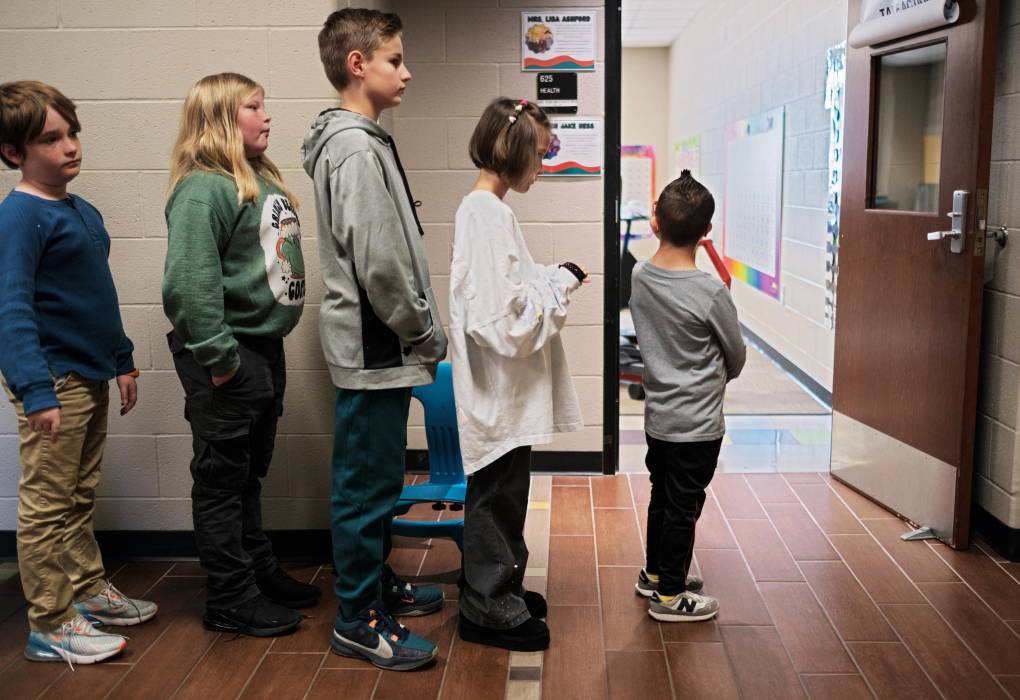
"caption": "Kellen Hedler leads his fellow classmates at Frontier Elementary School near Oklahoma City. Kellen has Down syndrome, a genetic condition that causes a range of physical and developmental challenges.",
"credit": "Katrina Ward for NPR",
"altTag": "Children standing in a hallway waiting to enter class",
"description": null,
"imgSizes": {
"medium": {
"file": "https://cdn.kqed.org/wp-content/uploads/sites/23/2025/04/npr-k-178-copy-800x549.jpeg",
"width": 800,
"height": 549,
"mimeType": "image/jpeg"
},
"large": {
"file": "https://cdn.kqed.org/wp-content/uploads/sites/23/2025/04/npr-k-178-copy-1020x700.jpeg",
"width": 1020,
"height": 700,
"mimeType": "image/jpeg"
},
"thumbnail": {
"file": "https://cdn.kqed.org/wp-content/uploads/sites/23/2025/04/npr-k-178-copy-160x110.jpeg",
"width": 160,
"height": 110,
"mimeType": "image/jpeg"
},
"medium_large": {
"file": "https://cdn.kqed.org/wp-content/uploads/sites/23/2025/04/npr-k-178-copy-768x527.jpeg",
"width": 768,
"height": 527,
"mimeType": "image/jpeg"
},
"1536x1536": {
"file": "https://cdn.kqed.org/wp-content/uploads/sites/23/2025/04/npr-k-178-copy-1536x1055.jpeg",
"width": 1536,
"height": 1055,
"mimeType": "image/jpeg"
},
"2048x2048": {
"file": "https://cdn.kqed.org/wp-content/uploads/sites/23/2025/04/npr-k-178-copy-2048x1406.jpeg",
"width": 2048,
"height": 1406,
"mimeType": "image/jpeg"
},
"post-thumbnail": {
"file": "https://cdn.kqed.org/wp-content/uploads/sites/23/2025/04/npr-k-178-copy-672x372.jpeg",
"width": 672,
"height": 372,
"mimeType": "image/jpeg"
},
"twentyfourteen-full-width": {
"file": "https://cdn.kqed.org/wp-content/uploads/sites/23/2025/04/npr-k-178-copy-1038x576.jpeg",
"width": 1038,
"height": 576,
"mimeType": "image/jpeg"
},
"full-width": {
"file": "https://cdn.kqed.org/wp-content/uploads/sites/23/2025/04/npr-k-178-copy-1920x1318.jpeg",
"width": 1920,
"height": 1318,
"mimeType": "image/jpeg"
},
"kqedFullSize": {
"file": "https://cdn.kqed.org/wp-content/uploads/sites/23/2025/04/npr-k-178-copy-scaled.jpeg",
"width": 2560,
"height": 1758
}
},
"isLoading": false,
"fetchFailed": false
},
"mindshift_65358": {
"type": "attachments",
"id": "mindshift_65358",
"meta": {
"index": "attachments_1716263798",
"site": "mindshift",
"id": "65358",
"found": true
},
"title": "PP-homeschooling-scaled",
"publishDate": 1743137954,
"status": "inherit",
"parent": 65357,
"modified": 1743138165,
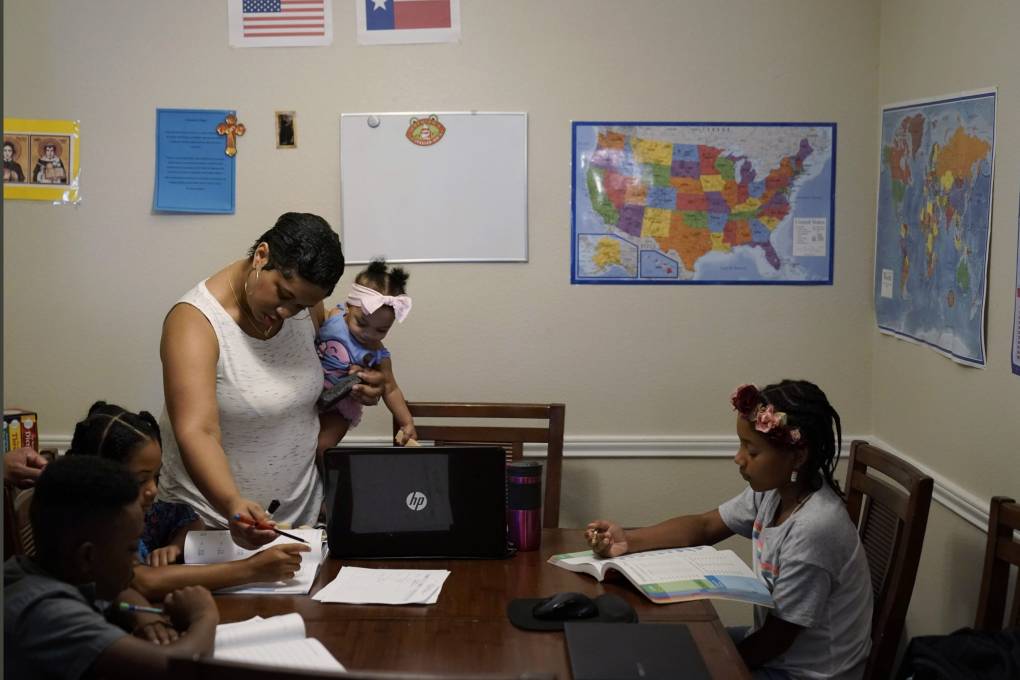
"caption": "Arlena Brown homeschools her children in Austin on July 13, 2021.",
"credit": "Eric Gay/Associated Press",
"altTag": "Parent teaching children math lessons at home.",
"description": null,
"imgSizes": {
"medium": {
"file": "https://cdn.kqed.org/wp-content/uploads/sites/23/2025/03/PP-homeschooling-scaled-1-800x533.jpg",
"width": 800,
"height": 533,
"mimeType": "image/jpeg"
},
"large": {
"file": "https://cdn.kqed.org/wp-content/uploads/sites/23/2025/03/PP-homeschooling-scaled-1-1020x680.jpg",
"width": 1020,
"height": 680,
"mimeType": "image/jpeg"
},
"thumbnail": {
"file": "https://cdn.kqed.org/wp-content/uploads/sites/23/2025/03/PP-homeschooling-scaled-1-160x107.jpg",
"width": 160,
"height": 107,
"mimeType": "image/jpeg"
},
"medium_large": {
"file": "https://cdn.kqed.org/wp-content/uploads/sites/23/2025/03/PP-homeschooling-scaled-1-768x512.jpg",
"width": 768,
"height": 512,
"mimeType": "image/jpeg"
},
"1536x1536": {
"file": "https://cdn.kqed.org/wp-content/uploads/sites/23/2025/03/PP-homeschooling-scaled-1-1536x1024.jpg",
"width": 1536,
"height": 1024,
"mimeType": "image/jpeg"
},
"2048x2048": {
"file": "https://cdn.kqed.org/wp-content/uploads/sites/23/2025/03/PP-homeschooling-scaled-1-2048x1366.jpg",
"width": 2048,
"height": 1366,
"mimeType": "image/jpeg"
},
"post-thumbnail": {
"file": "https://cdn.kqed.org/wp-content/uploads/sites/23/2025/03/PP-homeschooling-scaled-1-672x372.jpg",
"width": 672,
"height": 372,
"mimeType": "image/jpeg"
},
"twentyfourteen-full-width": {
"file": "https://cdn.kqed.org/wp-content/uploads/sites/23/2025/03/PP-homeschooling-scaled-1-1038x576.jpg",
"width": 1038,
"height": 576,
"mimeType": "image/jpeg"
},
"full-width": {
"file": "https://cdn.kqed.org/wp-content/uploads/sites/23/2025/03/PP-homeschooling-scaled-1-1920x1280.jpg",
"width": 1920,
"height": 1280,
"mimeType": "image/jpeg"
},
"kqedFullSize": {
"file": "https://cdn.kqed.org/wp-content/uploads/sites/23/2025/03/PP-homeschooling-scaled-1.jpg",
"width": 2560,
"height": 1707
}
},
"isLoading": false,
"fetchFailed": false
},
"mindshift_65322": {
"type": "attachments",
"id": "mindshift_65322",
"meta": {
"index": "attachments_1716263798",
"site": "mindshift",
"id": "65322",
"found": true
},
"title": "Linda McMahon",
"publishDate": 1741992530,
"status": "inherit",
"parent": 65317,
"modified": 1741992998,
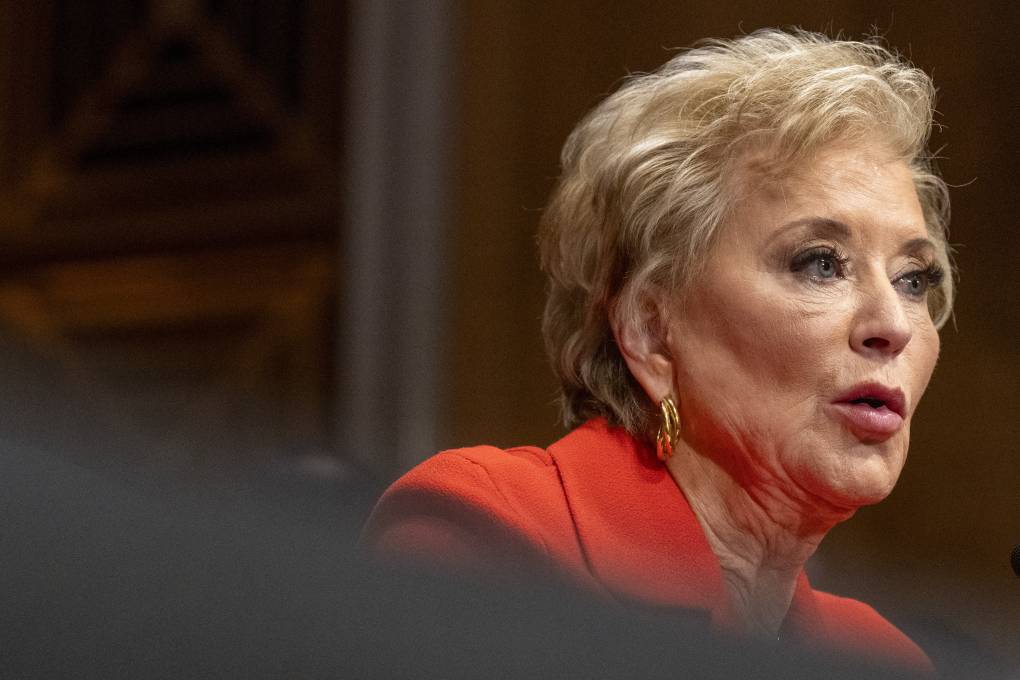
"caption": "Linda McMahon, President Donald Trump's nominee for Secretary of Education, speaks during a hearing of the Health, Education, and Labor Committee on her nomination, Thursday, Feb. 13, 2025, in Washington.",
"credit": "Jacquelyn Martin/AP",
"altTag": "Woman speaking",
"description": null,
"imgSizes": {
"medium": {
"file": "https://cdn.kqed.org/wp-content/uploads/sites/23/2025/03/AP25044589975698-800x533.jpg",
"width": 800,
"height": 533,
"mimeType": "image/jpeg"
},
"large": {
"file": "https://cdn.kqed.org/wp-content/uploads/sites/23/2025/03/AP25044589975698-1020x680.jpg",
"width": 1020,
"height": 680,
"mimeType": "image/jpeg"
},
"thumbnail": {
"file": "https://cdn.kqed.org/wp-content/uploads/sites/23/2025/03/AP25044589975698-160x107.jpg",
"width": 160,
"height": 107,
"mimeType": "image/jpeg"
},
"medium_large": {
"file": "https://cdn.kqed.org/wp-content/uploads/sites/23/2025/03/AP25044589975698-768x512.jpg",
"width": 768,
"height": 512,
"mimeType": "image/jpeg"
},
"1536x1536": {
"file": "https://cdn.kqed.org/wp-content/uploads/sites/23/2025/03/AP25044589975698-1536x1024.jpg",
"width": 1536,
"height": 1024,
"mimeType": "image/jpeg"
},
"2048x2048": {
"file": "https://cdn.kqed.org/wp-content/uploads/sites/23/2025/03/AP25044589975698-2048x1365.jpg",
"width": 2048,
"height": 1365,
"mimeType": "image/jpeg"
},
"post-thumbnail": {
"file": "https://cdn.kqed.org/wp-content/uploads/sites/23/2025/03/AP25044589975698-672x372.jpg",
"width": 672,
"height": 372,
"mimeType": "image/jpeg"
},
"twentyfourteen-full-width": {
"file": "https://cdn.kqed.org/wp-content/uploads/sites/23/2025/03/AP25044589975698-1038x576.jpg",
"width": 1038,
"height": 576,
"mimeType": "image/jpeg"
},
"full-width": {
"file": "https://cdn.kqed.org/wp-content/uploads/sites/23/2025/03/AP25044589975698-1920x1280.jpg",
"width": 1920,
"height": 1280,
"mimeType": "image/jpeg"
},
"kqedFullSize": {
"file": "https://cdn.kqed.org/wp-content/uploads/sites/23/2025/03/AP25044589975698-scaled.jpg",
"width": 2560,
"height": 1707
}
},
"isLoading": false,
"fetchFailed": false
},
"mindshift_65267": {
"type": "attachments",
"id": "mindshift_65267",
"meta": {
"index": "attachments_1716263798",
"site": "mindshift",
"id": "65267",
"found": true
},
"title": "mader interactions 05-FEAT",
"publishDate": 1741243856,
"status": "inherit",
"parent": 65265,
"modified": 1741244043,
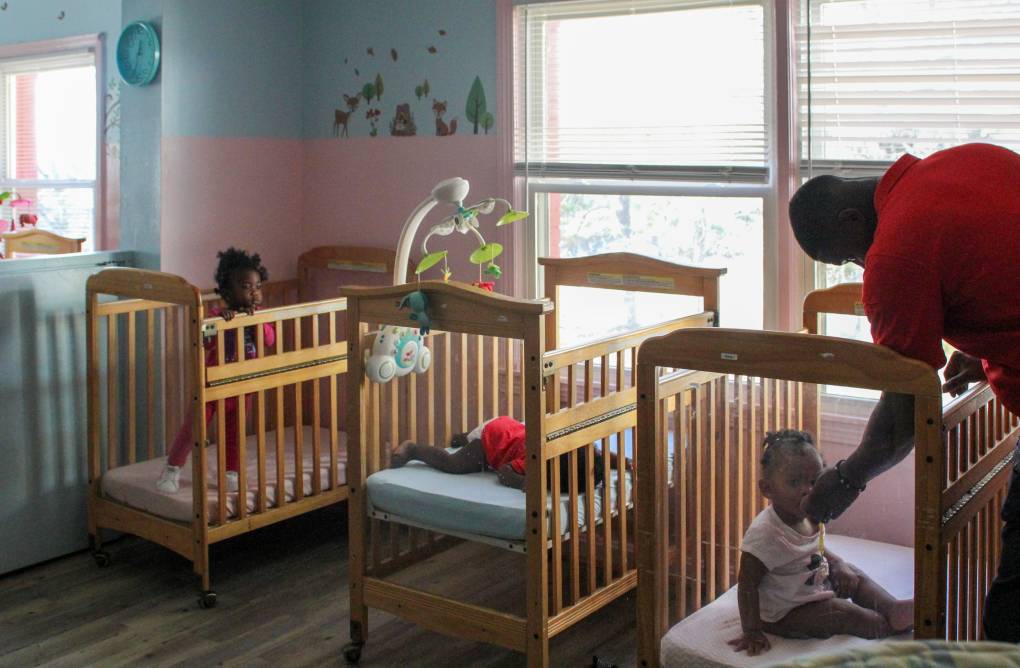
"caption": "Sherman Collins, owner of Baby Duck Academy in Birmingham, comforts a child during nap time. Research shows more interaction between children and caregivers improves brain development. ",
"credit": "Jackie Mader/The Hechinger Report",
"altTag": "Toddlers nap in cribs",
"description": null,
"imgSizes": {
"medium": {
"file": "https://cdn.kqed.org/wp-content/uploads/sites/23/2025/03/mader-interactions-05-FEAT-800x524.jpg",
"width": 800,
"height": 524,
"mimeType": "image/jpeg"
},
"large": {
"file": "https://cdn.kqed.org/wp-content/uploads/sites/23/2025/03/mader-interactions-05-FEAT-1020x668.jpg",
"width": 1020,
"height": 668,
"mimeType": "image/jpeg"
},
"thumbnail": {
"file": "https://cdn.kqed.org/wp-content/uploads/sites/23/2025/03/mader-interactions-05-FEAT-160x105.jpg",
"width": 160,
"height": 105,
"mimeType": "image/jpeg"
},
"medium_large": {
"file": "https://cdn.kqed.org/wp-content/uploads/sites/23/2025/03/mader-interactions-05-FEAT-768x503.jpg",
"width": 768,
"height": 503,
"mimeType": "image/jpeg"
},
"1536x1536": {
"file": "https://cdn.kqed.org/wp-content/uploads/sites/23/2025/03/mader-interactions-05-FEAT-1536x1006.jpg",
"width": 1536,
"height": 1006,
"mimeType": "image/jpeg"
},
"2048x2048": {
"file": "https://cdn.kqed.org/wp-content/uploads/sites/23/2025/03/mader-interactions-05-FEAT-2048x1342.jpg",
"width": 2048,
"height": 1342,
"mimeType": "image/jpeg"
},
"post-thumbnail": {
"file": "https://cdn.kqed.org/wp-content/uploads/sites/23/2025/03/mader-interactions-05-FEAT-672x372.jpg",
"width": 672,
"height": 372,
"mimeType": "image/jpeg"
},
"twentyfourteen-full-width": {
"file": "https://cdn.kqed.org/wp-content/uploads/sites/23/2025/03/mader-interactions-05-FEAT-1038x576.jpg",
"width": 1038,
"height": 576,
"mimeType": "image/jpeg"
},
"full-width": {
"file": "https://cdn.kqed.org/wp-content/uploads/sites/23/2025/03/mader-interactions-05-FEAT-1920x1258.jpg",
"width": 1920,
"height": 1258,
"mimeType": "image/jpeg"
},
"kqedFullSize": {
"file": "https://cdn.kqed.org/wp-content/uploads/sites/23/2025/03/mader-interactions-05-FEAT-scaled.jpg",
"width": 2560,
"height": 1677
}
},
"isLoading": false,
"fetchFailed": false
},
"mindshift_65252": {
"type": "attachments",
"id": "mindshift_65252",
"meta": {
"index": "attachments_1716263798",
"site": "mindshift",
"id": "65252",
"found": true
},
"title": "pp-dogecuts-feat-scaled",
"publishDate": 1740952829,
"status": "inherit",
"parent": 65248,
"modified": 1740953500,
"caption": "Elon Musk at a presidential cabinet meeting.",
"credit": "Andrew Harnik/Getty Images",
"altTag": null,
"description": null,
"imgSizes": {
"medium": {
"file": "https://cdn.kqed.org/wp-content/uploads/sites/23/2025/03/pp-dogecuts-feat-scaled-1-800x533.jpg",
"width": 800,
"height": 533,
"mimeType": "image/jpeg"
},
"large": {
"file": "https://cdn.kqed.org/wp-content/uploads/sites/23/2025/03/pp-dogecuts-feat-scaled-1-1020x680.jpg",
"width": 1020,
"height": 680,
"mimeType": "image/jpeg"
},
"thumbnail": {
"file": "https://cdn.kqed.org/wp-content/uploads/sites/23/2025/03/pp-dogecuts-feat-scaled-1-160x107.jpg",
"width": 160,
"height": 107,
"mimeType": "image/jpeg"
},
"medium_large": {
"file": "https://cdn.kqed.org/wp-content/uploads/sites/23/2025/03/pp-dogecuts-feat-scaled-1-768x512.jpg",
"width": 768,
"height": 512,
"mimeType": "image/jpeg"
},
"1536x1536": {
"file": "https://cdn.kqed.org/wp-content/uploads/sites/23/2025/03/pp-dogecuts-feat-scaled-1-1536x1024.jpg",
"width": 1536,
"height": 1024,
"mimeType": "image/jpeg"
},
"2048x2048": {
"file": "https://cdn.kqed.org/wp-content/uploads/sites/23/2025/03/pp-dogecuts-feat-scaled-1-2048x1366.jpg",
"width": 2048,
"height": 1366,
"mimeType": "image/jpeg"
},
"post-thumbnail": {
"file": "https://cdn.kqed.org/wp-content/uploads/sites/23/2025/03/pp-dogecuts-feat-scaled-1-672x372.jpg",
"width": 672,
"height": 372,
"mimeType": "image/jpeg"
},
"twentyfourteen-full-width": {
"file": "https://cdn.kqed.org/wp-content/uploads/sites/23/2025/03/pp-dogecuts-feat-scaled-1-1038x576.jpg",
"width": 1038,
"height": 576,
"mimeType": "image/jpeg"
},
"full-width": {
"file": "https://cdn.kqed.org/wp-content/uploads/sites/23/2025/03/pp-dogecuts-feat-scaled-1-1920x1280.jpg",
"width": 1920,
"height": 1280,
"mimeType": "image/jpeg"
},
"kqedFullSize": {
"file": "https://cdn.kqed.org/wp-content/uploads/sites/23/2025/03/pp-dogecuts-feat-scaled-1.jpg",
"width": 2560,
"height": 1707
}
},
"isLoading": false,
"fetchFailed": false
},
"mindshift_65207": {
"type": "attachments",
"id": "mindshift_65207",
"meta": {
"index": "attachments_1716263798",
"site": "mindshift",
"id": "65207",
"found": true
},
"title": "pp-edcuts-scaled",
"publishDate": 1739764967,
"status": "inherit",
"parent": 65206,
"modified": 1739765012,
"caption": "Elon Musk ",
"credit": "Jim Watson/AFP via Getty Images",
"altTag": "Man wearing a black hat",
"description": null,
"imgSizes": {
"medium": {
"file": "https://cdn.kqed.org/wp-content/uploads/sites/23/2025/02/pp-edcuts-scaled-1-800x533.jpg",
"width": 800,
"height": 533,
"mimeType": "image/jpeg"
},
"large": {
"file": "https://cdn.kqed.org/wp-content/uploads/sites/23/2025/02/pp-edcuts-scaled-1-1020x680.jpg",
"width": 1020,
"height": 680,
"mimeType": "image/jpeg"
},
"thumbnail": {
"file": "https://cdn.kqed.org/wp-content/uploads/sites/23/2025/02/pp-edcuts-scaled-1-160x107.jpg",
"width": 160,
"height": 107,
"mimeType": "image/jpeg"
},
"medium_large": {
"file": "https://cdn.kqed.org/wp-content/uploads/sites/23/2025/02/pp-edcuts-scaled-1-768x512.jpg",
"width": 768,
"height": 512,
"mimeType": "image/jpeg"
},
"1536x1536": {
"file": "https://cdn.kqed.org/wp-content/uploads/sites/23/2025/02/pp-edcuts-scaled-1-1536x1024.jpg",
"width": 1536,
"height": 1024,
"mimeType": "image/jpeg"
},
"2048x2048": {
"file": "https://cdn.kqed.org/wp-content/uploads/sites/23/2025/02/pp-edcuts-scaled-1-2048x1366.jpg",
"width": 2048,
"height": 1366,
"mimeType": "image/jpeg"
},
"post-thumbnail": {
"file": "https://cdn.kqed.org/wp-content/uploads/sites/23/2025/02/pp-edcuts-scaled-1-672x372.jpg",
"width": 672,
"height": 372,
"mimeType": "image/jpeg"
},
"twentyfourteen-full-width": {
"file": "https://cdn.kqed.org/wp-content/uploads/sites/23/2025/02/pp-edcuts-scaled-1-1038x576.jpg",
"width": 1038,
"height": 576,
"mimeType": "image/jpeg"
},
"full-width": {
"file": "https://cdn.kqed.org/wp-content/uploads/sites/23/2025/02/pp-edcuts-scaled-1-1920x1280.jpg",
"width": 1920,
"height": 1280,
"mimeType": "image/jpeg"
},
"kqedFullSize": {
"file": "https://cdn.kqed.org/wp-content/uploads/sites/23/2025/02/pp-edcuts-scaled-1.jpg",
"width": 2560,
"height": 1707
}
},
"isLoading": false,
"fetchFailed": false
},
"mindshift_65201": {
"type": "attachments",
"id": "mindshift_65201",
"meta": {
"index": "attachments_1716263798",
"site": "mindshift",
"id": "65201",
"found": true
},
"title": "Top view of group of people, walking across United States map, painted on asphalt",
"publishDate": 1739310413,
"status": "inherit",
"parent": 65200,
"modified": 1739310413,
"caption": null,
"credit": null,
"altTag": null,
"description": "Group of young adults, photographed from above, on various painted tarmac surface, at sunrise.",
"imgSizes": {
"medium": {
"file": "https://cdn.kqed.org/wp-content/uploads/sites/23/2025/02/gettyimages-912014696-800x533.jpeg",
"width": 800,
"height": 533,
"mimeType": "image/jpeg"
},
"large": {
"file": "https://cdn.kqed.org/wp-content/uploads/sites/23/2025/02/gettyimages-912014696-1020x680.jpeg",
"width": 1020,
"height": 680,
"mimeType": "image/jpeg"
},
"thumbnail": {
"file": "https://cdn.kqed.org/wp-content/uploads/sites/23/2025/02/gettyimages-912014696-160x107.jpeg",
"width": 160,
"height": 107,
"mimeType": "image/jpeg"
},
"medium_large": {
"file": "https://cdn.kqed.org/wp-content/uploads/sites/23/2025/02/gettyimages-912014696-768x512.jpeg",
"width": 768,
"height": 512,
"mimeType": "image/jpeg"
},
"1536x1536": {
"file": "https://cdn.kqed.org/wp-content/uploads/sites/23/2025/02/gettyimages-912014696-1536x1024.jpeg",
"width": 1536,
"height": 1024,
"mimeType": "image/jpeg"
},
"2048x2048": {
"file": "https://cdn.kqed.org/wp-content/uploads/sites/23/2025/02/gettyimages-912014696-2048x1365.jpeg",
"width": 2048,
"height": 1365,
"mimeType": "image/jpeg"
},
"post-thumbnail": {
"file": "https://cdn.kqed.org/wp-content/uploads/sites/23/2025/02/gettyimages-912014696-672x372.jpeg",
"width": 672,
"height": 372,
"mimeType": "image/jpeg"
},
"twentyfourteen-full-width": {
"file": "https://cdn.kqed.org/wp-content/uploads/sites/23/2025/02/gettyimages-912014696-1038x576.jpeg",
"width": 1038,
"height": 576,
"mimeType": "image/jpeg"
},
"full-width": {
"file": "https://cdn.kqed.org/wp-content/uploads/sites/23/2025/02/gettyimages-912014696-1920x1280.jpeg",
"width": 1920,
"height": 1280,
"mimeType": "image/jpeg"
},
"kqedFullSize": {
"file": "https://cdn.kqed.org/wp-content/uploads/sites/23/2025/02/gettyimages-912014696-scaled.jpeg",
"width": 2560,
"height": 1707
}
},
"isLoading": false,
"fetchFailed": false
},
"mindshift_65196": {
"type": "attachments",
"id": "mindshift_65196",
"meta": {
"index": "attachments_1716263798",
"site": "mindshift",
"id": "65196",
"found": true
},
"title": "President Trump Looks To Dismantle Department Of Education",
"publishDate": 1739310237,
"status": "inherit",
"parent": 65195,
"modified": 1739310237,
"caption": null,
"credit": null,
"altTag": null,
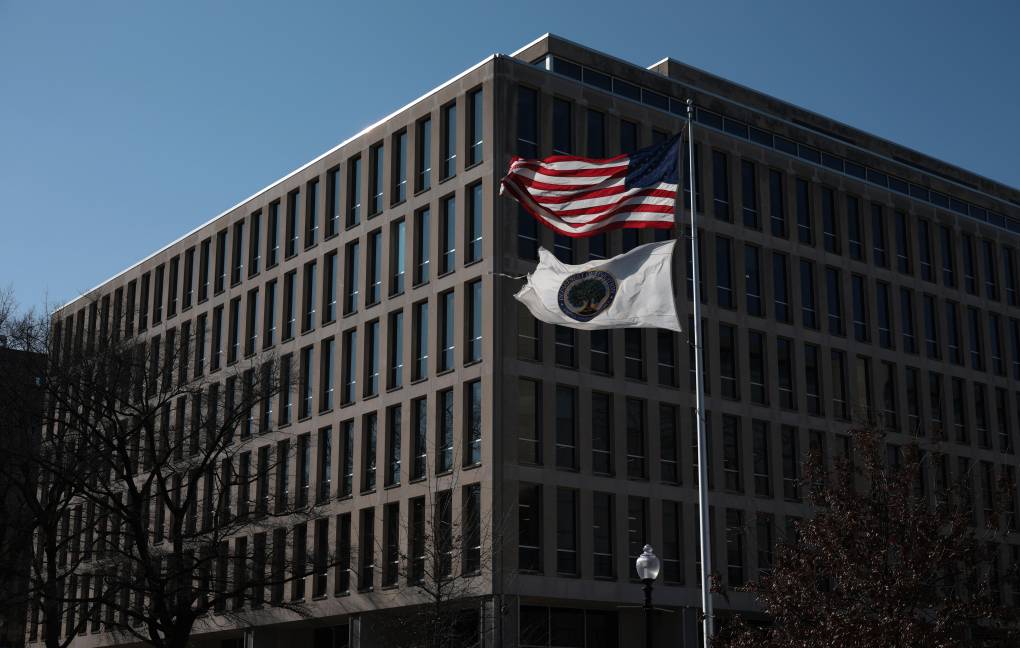
"description": "WASHINGTON, DC - FEBRUARY 04: A U.S. flag and an Education Department flag fly outside the building of the U.S. Department of Education on February 4, 2025 in Washington, DC. It’s been reported that President Donald Trump is prepared to abolish the Department of Education with an executive order. (Photo by Alex Wong/Getty Images)",
"imgSizes": {
"medium": {
"file": "https://cdn.kqed.org/wp-content/uploads/sites/23/2025/02/gettyimages-2197628066-800x508.jpeg",
"width": 800,
"height": 508,
"mimeType": "image/jpeg"
},
"large": {
"file": "https://cdn.kqed.org/wp-content/uploads/sites/23/2025/02/gettyimages-2197628066-1020x648.jpeg",
"width": 1020,
"height": 648,
"mimeType": "image/jpeg"
},
"thumbnail": {
"file": "https://cdn.kqed.org/wp-content/uploads/sites/23/2025/02/gettyimages-2197628066-160x102.jpeg",
"width": 160,
"height": 102,
"mimeType": "image/jpeg"
},
"medium_large": {
"file": "https://cdn.kqed.org/wp-content/uploads/sites/23/2025/02/gettyimages-2197628066-768x488.jpeg",
"width": 768,
"height": 488,
"mimeType": "image/jpeg"
},
"1536x1536": {
"file": "https://cdn.kqed.org/wp-content/uploads/sites/23/2025/02/gettyimages-2197628066-1536x976.jpeg",
"width": 1536,
"height": 976,
"mimeType": "image/jpeg"
},
"2048x2048": {
"file": "https://cdn.kqed.org/wp-content/uploads/sites/23/2025/02/gettyimages-2197628066-2048x1301.jpeg",
"width": 2048,
"height": 1301,
"mimeType": "image/jpeg"
},
"post-thumbnail": {
"file": "https://cdn.kqed.org/wp-content/uploads/sites/23/2025/02/gettyimages-2197628066-672x372.jpeg",
"width": 672,
"height": 372,
"mimeType": "image/jpeg"
},
"twentyfourteen-full-width": {
"file": "https://cdn.kqed.org/wp-content/uploads/sites/23/2025/02/gettyimages-2197628066-1038x576.jpeg",
"width": 1038,
"height": 576,
"mimeType": "image/jpeg"
},
"full-width": {
"file": "https://cdn.kqed.org/wp-content/uploads/sites/23/2025/02/gettyimages-2197628066-1920x1220.jpeg",
"width": 1920,
"height": 1220,
"mimeType": "image/jpeg"
},
"kqedFullSize": {
"file": "https://cdn.kqed.org/wp-content/uploads/sites/23/2025/02/gettyimages-2197628066-scaled.jpeg",
"width": 2560,
"height": 1627
}
},
"isLoading": false,
"fetchFailed": false
},
"mindshift_65186": {
"type": "attachments",
"id": "mindshift_65186",
"meta": {
"index": "attachments_1716263798",
"site": "mindshift",
"id": "65186",
"found": true
},
"title": "Cute girl reading book in library",
"publishDate": 1739135770,
"status": "inherit",
"parent": 65184,
"modified": 1739135797,
"caption": null,
"credit": "Ridofranz/iStock",
"altTag": "Red-haired elementary school age girl reading a book in a library",
"description": null,
"imgSizes": {
"medium": {
"file": "https://cdn.kqed.org/wp-content/uploads/sites/23/2025/02/iStock-950610058-800x531.jpg",
"width": 800,
"height": 531,
"mimeType": "image/jpeg"
},
"large": {
"file": "https://cdn.kqed.org/wp-content/uploads/sites/23/2025/02/iStock-950610058-1020x678.jpg",
"width": 1020,
"height": 678,
"mimeType": "image/jpeg"
},
"thumbnail": {
"file": "https://cdn.kqed.org/wp-content/uploads/sites/23/2025/02/iStock-950610058-160x106.jpg",
"width": 160,
"height": 106,
"mimeType": "image/jpeg"
},
"medium_large": {
"file": "https://cdn.kqed.org/wp-content/uploads/sites/23/2025/02/iStock-950610058-768x510.jpg",
"width": 768,
"height": 510,
"mimeType": "image/jpeg"
},
"1536x1536": {
"file": "https://cdn.kqed.org/wp-content/uploads/sites/23/2025/02/iStock-950610058-1536x1020.jpg",
"width": 1536,
"height": 1020,
"mimeType": "image/jpeg"
},
"2048x2048": {
"file": "https://cdn.kqed.org/wp-content/uploads/sites/23/2025/02/iStock-950610058-2048x1361.jpg",
"width": 2048,
"height": 1361,
"mimeType": "image/jpeg"
},
"post-thumbnail": {
"file": "https://cdn.kqed.org/wp-content/uploads/sites/23/2025/02/iStock-950610058-672x372.jpg",
"width": 672,
"height": 372,
"mimeType": "image/jpeg"
},
"twentyfourteen-full-width": {
"file": "https://cdn.kqed.org/wp-content/uploads/sites/23/2025/02/iStock-950610058-1038x576.jpg",
"width": 1038,
"height": 576,
"mimeType": "image/jpeg"
},
"full-width": {
"file": "https://cdn.kqed.org/wp-content/uploads/sites/23/2025/02/iStock-950610058-1920x1275.jpg",
"width": 1920,
"height": 1275,
"mimeType": "image/jpeg"
},
"kqedFullSize": {
"file": "https://cdn.kqed.org/wp-content/uploads/sites/23/2025/02/iStock-950610058.jpg",
"width": 2124,
"height": 1411
}
},
"isLoading": false,
"fetchFailed": false
},
"mindshift_65179": {
"type": "attachments",
"id": "mindshift_65179",
"meta": {
"index": "attachments_1716263798",
"site": "mindshift",
"id": "65179",
"found": true
},
"title": "graduation-rates-illustration",
"publishDate": 1738865882,
"status": "inherit",
"parent": 65178,
"modified": 1738866264,
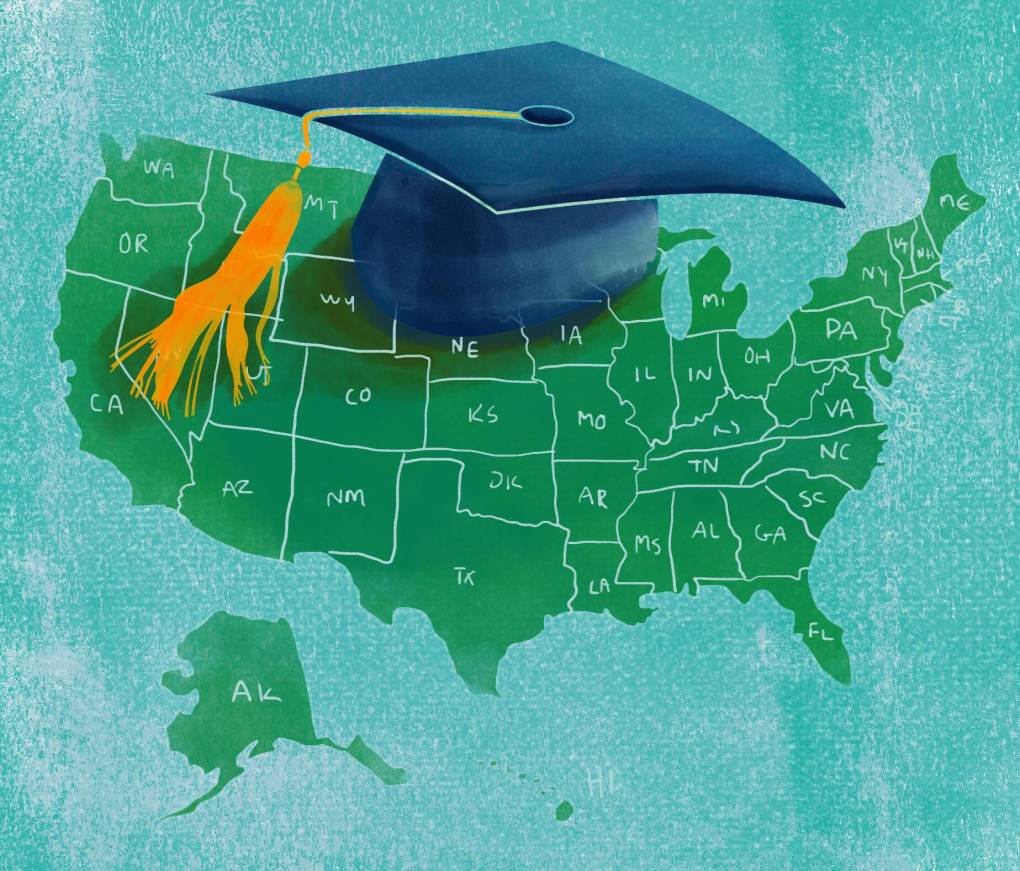
"caption": "Created by Congress in in 1979, the department employs more than 4,000 people and has an annual budget of $79 billion.",
"credit": "LA Johnson/NPR",
"altTag": "Illustration of a graduation cap over a map of the United States",
"description": "College in the US.",
"imgSizes": {
"medium": {
"file": "https://cdn.kqed.org/wp-content/uploads/sites/23/2025/02/graduation-rates-illustration-archive-800x683.jpeg",
"width": 800,
"height": 683,
"mimeType": "image/jpeg"
},
"large": {
"file": "https://cdn.kqed.org/wp-content/uploads/sites/23/2025/02/graduation-rates-illustration-archive-1020x871.jpeg",
"width": 1020,
"height": 871,
"mimeType": "image/jpeg"
},
"thumbnail": {
"file": "https://cdn.kqed.org/wp-content/uploads/sites/23/2025/02/graduation-rates-illustration-archive-160x137.jpeg",
"width": 160,
"height": 137,
"mimeType": "image/jpeg"
},
"medium_large": {
"file": "https://cdn.kqed.org/wp-content/uploads/sites/23/2025/02/graduation-rates-illustration-archive-768x656.jpeg",
"width": 768,
"height": 656,
"mimeType": "image/jpeg"
},
"1536x1536": {
"file": "https://cdn.kqed.org/wp-content/uploads/sites/23/2025/02/graduation-rates-illustration-archive-1536x1311.jpeg",
"width": 1536,
"height": 1311,
"mimeType": "image/jpeg"
},
"post-thumbnail": {
"file": "https://cdn.kqed.org/wp-content/uploads/sites/23/2025/02/graduation-rates-illustration-archive-672x372.jpeg",
"width": 672,
"height": 372,
"mimeType": "image/jpeg"
},
"twentyfourteen-full-width": {
"file": "https://cdn.kqed.org/wp-content/uploads/sites/23/2025/02/graduation-rates-illustration-archive-1038x576.jpeg",
"width": 1038,
"height": 576,
"mimeType": "image/jpeg"
},
"kqedFullSize": {
"file": "https://cdn.kqed.org/wp-content/uploads/sites/23/2025/02/graduation-rates-illustration-archive.jpeg",
"width": 1847,
"height": 1577
}
},
"isLoading": false,
"fetchFailed": false
},
"mindshift_65155": {
"type": "attachments",
"id": "mindshift_65155",
"meta": {
"index": "attachments_1716263798",
"site": "mindshift",
"id": "65155",
"found": true
},
"title": "Middle school student takes math test",
"publishDate": 1738167814,
"status": "inherit",
"parent": 65154,
"modified": 1738167814,
"caption": null,
"credit": null,
"altTag": null,
"description": "Middle Island, N.Y.: A student at Longwood Middle School in Middle Island, New York takes the NY State math test on May 2, 2017. (Photo by John Paraskevas/Newsday RM via Getty Images)",
"imgSizes": {
"medium": {
"file": "https://cdn.kqed.org/wp-content/uploads/sites/23/2025/01/gettyimages-1311460386-800x533.jpeg",
"width": 800,
"height": 533,
"mimeType": "image/jpeg"
},
"large": {
"file": "https://cdn.kqed.org/wp-content/uploads/sites/23/2025/01/gettyimages-1311460386-1020x680.jpeg",
"width": 1020,
"height": 680,
"mimeType": "image/jpeg"
},
"thumbnail": {
"file": "https://cdn.kqed.org/wp-content/uploads/sites/23/2025/01/gettyimages-1311460386-160x107.jpeg",
"width": 160,
"height": 107,
"mimeType": "image/jpeg"
},
"medium_large": {
"file": "https://cdn.kqed.org/wp-content/uploads/sites/23/2025/01/gettyimages-1311460386-768x512.jpeg",
"width": 768,
"height": 512,
"mimeType": "image/jpeg"
},
"1536x1536": {
"file": "https://cdn.kqed.org/wp-content/uploads/sites/23/2025/01/gettyimages-1311460386-1536x1024.jpeg",
"width": 1536,
"height": 1024,
"mimeType": "image/jpeg"
},
"2048x2048": {
"file": "https://cdn.kqed.org/wp-content/uploads/sites/23/2025/01/gettyimages-1311460386-2048x1365.jpeg",
"width": 2048,
"height": 1365,
"mimeType": "image/jpeg"
},
"post-thumbnail": {
"file": "https://cdn.kqed.org/wp-content/uploads/sites/23/2025/01/gettyimages-1311460386-672x372.jpeg",
"width": 672,
"height": 372,
"mimeType": "image/jpeg"
},
"twentyfourteen-full-width": {
"file": "https://cdn.kqed.org/wp-content/uploads/sites/23/2025/01/gettyimages-1311460386-1038x576.jpeg",
"width": 1038,
"height": 576,
"mimeType": "image/jpeg"
},
"full-width": {
"file": "https://cdn.kqed.org/wp-content/uploads/sites/23/2025/01/gettyimages-1311460386-1920x1280.jpeg",
"width": 1920,
"height": 1280,
"mimeType": "image/jpeg"
},
"kqedFullSize": {
"file": "https://cdn.kqed.org/wp-content/uploads/sites/23/2025/01/gettyimages-1311460386-scaled.jpeg",
"width": 2560,
"height": 1707
}
},
"isLoading": false,
"fetchFailed": false
},
"mindshift_65139": {
"type": "attachments",
"id": "mindshift_65139",
"meta": {
"index": "attachments_1716263798",
"site": "mindshift",
"id": "65139",
"found": true
},
"title": "School backpack hanging on a wooden chair in classroom. Back to school concept",
"publishDate": 1737987875,
"status": "inherit",
"parent": 65138,
"modified": 1737987906,
"caption": null,
"credit": "PrathanChorruangsak/Getty Images",
"altTag": "School backpack hanging on a wooden chair in classroom.",
"description": null,
"imgSizes": {
"medium": {
"file": "https://cdn.kqed.org/wp-content/uploads/sites/23/2025/01/GettyImages-2152151751-800x533.jpg",
"width": 800,
"height": 533,
"mimeType": "image/jpeg"
},
"large": {
"file": "https://cdn.kqed.org/wp-content/uploads/sites/23/2025/01/GettyImages-2152151751-1020x680.jpg",
"width": 1020,
"height": 680,
"mimeType": "image/jpeg"
},
"thumbnail": {
"file": "https://cdn.kqed.org/wp-content/uploads/sites/23/2025/01/GettyImages-2152151751-160x107.jpg",
"width": 160,
"height": 107,
"mimeType": "image/jpeg"
},
"medium_large": {
"file": "https://cdn.kqed.org/wp-content/uploads/sites/23/2025/01/GettyImages-2152151751-768x512.jpg",
"width": 768,
"height": 512,
"mimeType": "image/jpeg"
},
"1536x1536": {
"file": "https://cdn.kqed.org/wp-content/uploads/sites/23/2025/01/GettyImages-2152151751-1536x1024.jpg",
"width": 1536,
"height": 1024,
"mimeType": "image/jpeg"
},
"2048x2048": {
"file": "https://cdn.kqed.org/wp-content/uploads/sites/23/2025/01/GettyImages-2152151751-2048x1365.jpg",
"width": 2048,
"height": 1365,
"mimeType": "image/jpeg"
},
"post-thumbnail": {
"file": "https://cdn.kqed.org/wp-content/uploads/sites/23/2025/01/GettyImages-2152151751-672x372.jpg",
"width": 672,
"height": 372,
"mimeType": "image/jpeg"
},
"twentyfourteen-full-width": {
"file": "https://cdn.kqed.org/wp-content/uploads/sites/23/2025/01/GettyImages-2152151751-1038x576.jpg",
"width": 1038,
"height": 576,
"mimeType": "image/jpeg"
},
"full-width": {
"file": "https://cdn.kqed.org/wp-content/uploads/sites/23/2025/01/GettyImages-2152151751-1920x1280.jpg",
"width": 1920,
"height": 1280,
"mimeType": "image/jpeg"
},
"kqedFullSize": {
"file": "https://cdn.kqed.org/wp-content/uploads/sites/23/2025/01/GettyImages-2152151751.jpg",
"width": 2121,
"height": 1414
}
},
"isLoading": false,
"fetchFailed": false
}
},
"audioPlayerReducer": {
"postId": "stream_live",
"isPaused": true,
"isPlaying": false,
"pfsActive": false,
"pledgeModalIsOpen": true,
"playerDrawerIsOpen": false,
"liveAudioPlayStartedAt": 0,
"liveAudioPlayContext": ""
},
"authorsReducer": {
"byline_mindshift_65382": {
"type": "authors",
"id": "byline_mindshift_65382",
"meta": {
"override": true
},
"slug": "byline_mindshift_65382",
"name": "Jonaki Mehta",
"isLoading": false
},
"byline_mindshift_65357": {
"type": "authors",
"id": "byline_mindshift_65357",
"meta": {
"override": true
},
"slug": "byline_mindshift_65357",
"name": "Jill Barshay, \u003ca href=\"https://hechingerreport.org/\">The Hechinger Report\u003c/a>",
"isLoading": false
},
"byline_mindshift_65317": {
"type": "authors",
"id": "byline_mindshift_65317",
"meta": {
"override": true
},
"slug": "byline_mindshift_65317",
"name": "Jill Barshay, \u003ca href=\"https://hechingerreport.org/\">The Hechinger Report\u003c/a>",
"isLoading": false
},
"byline_mindshift_65265": {
"type": "authors",
"id": "byline_mindshift_65265",
"meta": {
"override": true
},
"slug": "byline_mindshift_65265",
"name": "Jackie Mader, \u003ca href=\"https://hechingerreport.org/\">The Hechinger Report\u003c/a>",
"isLoading": false
},
"byline_mindshift_65248": {
"type": "authors",
"id": "byline_mindshift_65248",
"meta": {
"override": true
},
"slug": "byline_mindshift_65248",
"name": "Jill Barshay, \u003ca href=\"https://hechingerreport.org/\">The Hechinger Report\u003c/a>",
"isLoading": false
},
"byline_mindshift_65206": {
"type": "authors",
"id": "byline_mindshift_65206",
"meta": {
"override": true
},
"slug": "byline_mindshift_65206",
"name": "Jill Barshay, \u003ca href=\"https://hechingerreport.org/\">The Hechinger Report\u003c/a>",
"isLoading": false
},
"byline_mindshift_65200": {
"type": "authors",
"id": "byline_mindshift_65200",
"meta": {
"override": true
},
"slug": "byline_mindshift_65200",
"name": "Cory Turner",
"isLoading": false
},
"byline_mindshift_65195": {
"type": "authors",
"id": "byline_mindshift_65195",
"meta": {
"override": true
},
"slug": "byline_mindshift_65195",
"name": "Jonaki Mehta and Cory Turner",
"isLoading": false
},
"byline_mindshift_65184": {
"type": "authors",
"id": "byline_mindshift_65184",
"meta": {
"override": true
},
"slug": "byline_mindshift_65184",
"name": "Jill Barshay, \u003ca href=\"https://hechingerreport.org/\">The Hechinger Report\u003c/a>",
"isLoading": false
},
"byline_mindshift_65178": {
"type": "authors",
"id": "byline_mindshift_65178",
"meta": {
"override": true
},
"slug": "byline_mindshift_65178",
"name": "Nicole Cohen, Jonaki Mehta, Elissa Nadworny, Cory Turner",
"isLoading": false
},
"byline_mindshift_65154": {
"type": "authors",
"id": "byline_mindshift_65154",
"meta": {
"override": true
},
"slug": "byline_mindshift_65154",
"name": "Cory Turner and Jonaki Mehta",
"isLoading": false
},
"byline_mindshift_65138": {
"type": "authors",
"id": "byline_mindshift_65138",
"meta": {
"override": true
},
"slug": "byline_mindshift_65138",
"name": "Jill Barshay, \u003ca href=\"https://hechingerreport.org/\">The Hechinger Report\u003c/a>",
"isLoading": false
}
},
"pagesReducer": {
"mindshift_category_education-research": {
"type": "terms",
"id": "mindshift_21504",
"meta": {
"index": "terms_1716263798",
"site": "mindshift",
"id": "21504",
"score": 14.405857
},
"featImg": null,
"name": "Education research",
"description": null,
"taxonomy": "category",
"headData": {
"twImgId": null,
"twTitle": null,
"ogTitle": null,
"ogImgId": null,
"twDescription": null,
"description": null,
"title": "Education research Archives | KQED Mindshift",
"ogDescription": null
},
"ttid": 20776,
"slug": "education-research",
"isLoading": false,
"title": "Education research",
"pageMeta": {
"site": "mindshift",
"WpPageTemplate": "page-topic-editorial",
"currentPage": 6
},
"blocks": [
{
"blockName": "kqed/post-list",
"attrs": {
"layout": "cardArticle2",
"query": "posts/mindshift?category=education-research",
"seeMore": false,
"paginated": true,
"page": 6
}
},
{
"blockName": "kqed/ad"
}
]
}
},
"pfsSessionReducer": {},
"postsReducer": {
"stream_live": {
"type": "live",
"id": "stream_live",
"audioUrl": "https://streams.kqed.org/kqedradio",
"title": "Live Stream",
"excerpt": "Live Stream information currently unavailable.",
"link": "/radio",
"featImg": "",
"label": {
"name": "KQED Live",
"link": "/"
}
},
"stream_kqedNewscast": {
"type": "posts",
"id": "stream_kqedNewscast",
"audioUrl": "https://www.kqed.org/.stream/anon/radio/RDnews/newscast.mp3?_=1",
"title": "KQED Newscast",
"featImg": "",
"label": {
"name": "88.5 FM",
"link": "/"
}
},
"mindshift_65382": {
"type": "posts",
"id": "mindshift_65382",
"meta": {
"index": "posts_1716263798",
"site": "mindshift",
"id": "65382",
"score": null,
"sort": [
1743744186000
]
},
"guestAuthors": [],
"slug": "how-the-education-department-helps-students-with-disabilities-get-an-education",
"title": "How the Education Department Helps Students with Disabilities Get an Education",
"publishDate": 1743744186,
"format": "standard",
"headTitle": "How the Education Department Helps Students with Disabilities Get an Education | KQED",
"labelTerm": {
"term": 21847,
"site": "mindshift"
},
"content": "\u003cp>Sueli Gwiazdowski, 24, says she switched high schools three times when she was growing up.\u003c/p>\n\u003cp>She wanted to stay at her first school because she loved being on the speech and debate team – but the campus wasn’t wheelchair accessible. Her second school forced her to learn in a separate room, away from her non-disabled friends.\u003c/p>\n\u003cp>“I had to fight my way out of that by going to a lot of…meetings and asserting that I was capable and able to participate in the general education setting,” she says.\u003c/p>\n\u003cp>Gwiazdowski has medical and physical disabilities and was, for many years, a full-time wheelchair user.\u003c/p>\n\u003cp>A federal law protects against the kind of discrimination Gwiazdowski says she experienced, and she invoked that law – the Individuals with Disabilities Education Act (IDEA) – throughout her schooling to advocate for herself.\u003c/p>\n\u003cp>[ad fullwidth]\u003c/p>\n\u003cp>“Quite frankly, had it not been for the publicly accessible resources that the Department of Education has provided to students with disabilities like myself, I probably would not have gone to college,” says Gwiazdowski, who is now both a college graduate and an advocate for disability rights.\u003c/p>\n\u003cp>“And I definitely wouldn’t be waiting for law school to start this fall had it not been for those resources.”\u003c/p>\n\u003cp>But the U.S. Education Department’s role in helping students with disabilities may be changing soon.\u003c/p>\n\u003cp>President Trump has said his administration is \u003ca href=\"https://www.npr.org/2025/03/21/nx-s1-5336330/trump-education-department-student-loans-special-education-fsa\" target=\"_blank\" rel=\"noopener\">\u003cu>going to move\u003c/u>\u003c/a> “special needs” to the U.S. Department of Health and Human Services (HHS), an agency that recently announced \u003ca href=\"https://www.npr.org/sections/shots-health-news/2025/04/01/g-s1-57485/hhs-fda-layoffs-doge-cdc-nih\" target=\"_blank\" rel=\"noopener\">\u003cu>its own drastic cuts\u003c/u>\u003c/a>. His administration hasn’t specified exactly which programs will be moved, and whether IDEA is among them, but the conservative policy playbook \u003ca href=\"https://www.npr.org/2024/11/05/g-s1-32720/what-is-project-2025-trump-election\" target=\"_blank\" rel=\"noopener\">\u003cu>Project 2025\u003c/u>\u003c/a> does propose moving IDEA to HHS.\u003c/p>\n\u003cfigure class=\"wp-block-image size-large\">\u003cimg decoding=\"async\" src=\"https://npr.brightspotcdn.com/dims3/default/strip/false/crop/5907x3938+0+0/resize/1200/quality/75/format/jpeg/?url=http%3A%2F%2Fnpr-brightspot.s3.amazonaws.com%2Fc9%2F12%2Fcf8cade04d58b0b1b240053c2155%2Fgettyimages-2206813203.jpg\" alt=\"Secretary of Education Linda McMahon and President Donald Trump depart after the president signed an executive order, on March 20, aimed at closing the Education Department.\">\u003cfigcaption>Secretary of Education Linda McMahon and President Donald Trump depart after the president signed an executive order, on March 20, aimed at closing the Education Department. \u003ccite> (Jabin Botsford | The Washington Post via Getty Images)\u003c/cite>\u003c/figcaption>\u003c/figure>\n\u003cp>Department of Education spokesperson Madi Biedermann said, “The Department is actively reviewing where [Education Department] programs can be responsibly managed to best serve students and families. This will be done in partnership with Congress, other agencies, and national and state education leaders.”\u003c/p>\n\u003cp>Experts tell NPR any such move would be incredibly complicated. Special education laws are “intertwined” with the Education Department, says Katy Neas, a former deputy assistant secretary in the department’s Office of Special Education and Rehabilitative Services.\u003c/p>\n\u003cp>“To have the separation away from a broader institution of education just seems misguided to me,” says Neas, who now leads The Arc, an advocacy organization for people with disabilities. Neas says moving some of the legally protected programs to another agency would also require an act of Congress.\u003c/p>\n\u003cp>But some conservatives wonder if the federal government has even been that helpful when it comes to special education.\u003c/p>\n\u003cp>“I mean, parents make their [education plans] with their local educators, right? With their school and their school district. They don’t make it with Washington,” says Jonathan Butcher, an education researcher at the Heritage Foundation, which helped shape Project 2025.\u003c/p>\n\u003cp>With so many questions swirling around the future of federal involvement in special education, here’s a look at how the Department of Education traditionally contributes to the schooling of students with disabilities.\u003c/p>\n\u003ch2>Helping schools follow federal laws aimed at students with disabilities\u003c/h2>\n\u003cp>The Department of Education oversees many federal laws that govern how students with and without disabilities experience school.\u003c/p>\n\u003cp>But IDEA is one of the primary ways the federal government contributes to educating disabled students. The law enshrines the right of every child to “a free and appropriate public education,” and it says students with disabilities have a right to individual education programs (IEPs) that lay out the services each child is entitled to. IDEA is also the vehicle through which the federal government sends money to schools to help pay for those services.\u003c/p>\n\u003cp>“Not only does the Department of Education provide funding for staffing and resources to the individual school divisions, but IDEA, I mean, that’s your accountability framework,” says Mark Burnette, superintendent of Carroll County Public Schools in rural southwestern Virginia. He says nearly a fifth of his students qualify for services under IDEA.\u003c/p>\n\u003cfigure class=\"wp-block-image size-large\">\u003cimg decoding=\"async\" src=\"https://npr.brightspotcdn.com/dims3/default/strip/false/crop/8079x5568+0+0/resize/1200/quality/75/format/jpeg/?url=http%3A%2F%2Fnpr-brightspot.s3.amazonaws.com%2F3b%2F00%2F913290e146a9b0ac7e4c5fddfa72%2Fap23166786415011.jpg\" alt=\"Special education teacher Vivien Henshall walks with student Scarlett Rasmussen, 8, as Scarlett's mother, Chelsea, follows with a service dog. Because of her disabilities, Scarlett needs regular access to a nurse at school.\">\u003cfigcaption>Special education teacher Vivien Henshall walks with student Scarlett Rasmussen, 8, as Scarlett’s mother, Chelsea, follows with a service dog. Because of her disabilities, Scarlett needs regular access to a nurse at school. \u003ccite> (Lindsey Wasson | AP)\u003c/cite>\u003c/figcaption>\u003c/figure>\n\u003cp>Nationwide, IDEA serves about 7.5 million students, or 15% of the K-12 student population. In fiscal year 2024, Congress set aside $15.4 billion for IDEA. The Education Department is in charge of distributing that money to states, which then pass those funds on to qualifying school districts.\u003c/p>\n\u003cp>IDEA funds are used to pay for special education teachers and staff, technology to meet students’ individual needs, instructional materials, transportation and more.\u003c/p>\n\u003cp>“A child who has a hearing impairment may need a sign language interpreter or captioning to really follow what’s going on in class,” says Neas. “It’s those things that allow a child with a disability to really learn the same material as their non-disabled peers.”\u003c/p>\n\u003cp>The Department of Education is responsible for monitoring whether states and school districts are following IDEA, and other laws aimed at students with disabilities. That includes Section 504 of the Rehabilitation Act, which says students are entitled to reasonable accommodations, such as scheduled breaks for a child with diabetes to have a snack or check their insulin levels.\u003c/p>\n\u003cp>The department also provides IDEA guidance to state leaders, and collect data that help determine eligibility for IDEA funds.\u003c/p>\n\u003ch2>Enforcing special education law and the civil rights of students with disabilities\u003c/h2>\n\u003cp>The Office for Civil Rights, or OCR, is the Education Department’s enforcement arm. When students face discrimination at school, they can file a complaint with OCR, which could lead to a federal investigation.\u003c/p>\n\u003cp>This office is responsible for discrimination complaints on the basis of race, sex, national origin and other categories, but \u003ca href=\"https://www.ed.gov/sites/ed/files/about/reports/annual/ocr/report-to-president-and-secretary-of-education-2023.pdf\" target=\"_blank\" rel=\"noopener\">\u003cu>OCR data\u003c/u>\u003c/a> shows disability discrimination has historically made up the largest share of complaints.\u003c/p>\n\u003cfigure class=\"wp-block-image size-large\">\u003cimg decoding=\"async\" src=\"https://npr.brightspotcdn.com/dims3/default/strip/false/crop/3000x2000+0+0/resize/1200/quality/75/format/jpeg/?url=http%3A%2F%2Fnpr-brightspot.s3.amazonaws.com%2F7e%2F9f%2F7b1e20cb4d19982b3e6552bbe0b0%2Fgettyimages-1248158925.jpg\" alt=\"In 2023, the Education Department's Office for Civil Rights opened an investigation into the Four Rivers Special Education District, in Jacksonville, Ill., for allegedly leaning on law enforcement to discipline students with disabilities, ProPublica reported. This photo shows a hallway at the Garrison School, which is part of that district.\">\u003cfigcaption>In 2023, the Education Department’s Office for Civil Rights opened an investigation into the Four Rivers Special Education District, in Jacksonville, Ill., for allegedly leaning on law enforcement to discipline students with disabilities, ProPublica \u003ca href=\"https://www.propublica.org/article/federal-investigation-illinois-garrison-school-arrests\" target=\"_blank\" rel=\"noopener\">reported\u003c/a>. This photo shows a hallway at the Garrison School, which is part of that district. \u003ccite> (Armando L. Sanchez/Chicago Tribune | Tribune News Service via Getty Images)\u003c/cite>\u003c/figcaption>\u003c/figure>\n\u003cp>Sueli Gwiazdowski wishes she would have taken advantage of OCR during her schooling.\u003c/p>\n\u003cp>“The formal complaint process would have allowed me to be a kid,” she says.\u003c/p>\n\u003cp>It would have let her put the responsibility of enforcement “in the laps of the attorneys and investigators who are paid to do that at the Office for Civil Rights.”\u003c/p>\n\u003cfigure class=\"wp-block-embed npr-promo-card insettwocolumn\">\n\u003cdiv class=\"wp-block-embed__wrapper\">\u003c/div>\n\u003c/figure>\n\u003cp>In recent years, the number of OCR complaints has reached record highs, and \u003ca href=\"https://www.npr.org/2024/07/05/nx-s1-4993770/discrimination-complaints-students-with-disabilities-schools\" target=\"_blank\" rel=\"noopener\">\u003cu>many have dragged through the system\u003c/u>\u003c/a> for months on end. But recently, OCR’s capacity to handle all those cases was further strained: When U.S. Secretary of Education Linda McMahon slashed the Education Department’s workforce nearly in half, OCR also \u003ca href=\"https://www.npr.org/2025/03/12/nx-s1-5325854/trump-education-department-layoffs-civil-rights-student-loans\" target=\"_blank\" rel=\"noopener\">\u003cu>lost more than 40% of its staff\u003c/u>\u003c/a>, along with seven of its 12 regional offices.\u003c/p>\n\u003cp>The Trump administration promised it would preserve “resources for children with special disabilities.” But the mass layoffs also affected the Office of Special Education and Rehabilitation Services, where Neas used to work. The teams that conduct research on special education, help determine eligibility for IDEA funds and those who provide legal guidance to state and local leaders were also impacted.\u003c/p>\n\u003cp>“If you don’t have any type of accountability standards or someone to report to, then that leaves room for people to take advantage of programs and not provide the services that they need to provide,” says Burnette, the superintendent.\u003c/p>\n\u003cp>Michael Gilberg, a special education attorney in New York and Connecticut who also has autism, says one of his disabled clients recently filed a complaint with OCR.\u003c/p>\n\u003cp>“With no Department of Education functioning in that area, that puts [their case] to a standstill,” he says.\u003c/p>\n\u003cp>Gilberg notes that without OCR, “The only recourse a family would have would, in theory, be to sue the school district in either federal court or state court…and that takes a lot of time and a lot of money.”\u003c/p>\n\u003ch2>The future role of the federal government in special education\u003c/h2>\n\u003cp>Several of the experts NPR spoke with expressed concern about moving special education programs to HHS, and away from the Education Department, an institution that specializes in helping all students learn.\u003c/p>\n\u003cp>Alison Barkoff, who led disability programs at HHS until last year, says splintering special education programs into different agencies “is really counterproductive to what IDEA and the goals of special education are about, which is students with disabilities as students first, as part of their schools, part of their classrooms. And that can’t happen if it’s separated from general education.”\u003c/p>\n\u003cp>Jonathan Butcher of the Heritage Foundation sees the proposed moves as an opportunity to improve the role of the federal government in the lives of students.\u003c/p>\n\u003cfigure class=\"wp-block-embed npr-promo-card insettwocolumn\">\n\u003cdiv class=\"wp-block-embed__wrapper\">\u003c/div>\n\u003c/figure>\n\u003cp>“I think that moving it to another agency is an appropriate move because I don’t think that we have evidence that the U.S. Department of Education has effectively served these families,” he says.\u003c/p>\n\u003cp>“Change is difficult and that’s why it doesn’t happen very often at the federal level, but this is an opportunity to streamline federal processes.”\u003c/p>\n\u003cp>Disability advocate Sueli Gwiazdowski says \u003ca href=\"https://www.npr.org/2024/12/26/nx-s1-5213714/a-1975-law-helped-kids-with-disabilities-access-education-schools-now-need-more-help\" target=\"_blank\" rel=\"noopener\">\u003cu>history has shown\u003c/u>\u003c/a> the dangers of separating the rights of disabled students from non-disabled students.\u003c/p>\n\u003cp>“When educating disabled students has not been considered part of normative general education, that has looked like what? It’s looked like institutionalization.”\u003c/p>\n\u003cp>She worries if special education were to move to HHS, disability could be categorized as a health concern rather than an integrated part of public life, including in schools.\u003c/p>\n\u003cp>[ad floatright]\u003c/p>\n\u003cp>\u003cem>Reporting contributed by: \u003c/em>\u003ca href=\"https://www.wfyi.org/news/authors/dylan-peers-mccoy\" target=\"_blank\" rel=\"noopener\">\u003cem>\u003cu>Dylan Peers McCoy\u003c/u>\u003c/em>\u003c/a>\u003cbr>\n\u003cem>Digital story edited by: \u003c/em>\u003ca href=\"https://www.npr.org/people/348780034/nicole-cohen\" target=\"_blank\" rel=\"noopener\">\u003cem>\u003cu>Nicole Cohen\u003c/u>\u003c/em>\u003c/a>\u003cbr>\n\u003cem>Radio story edited by: \u003c/em>\u003ca href=\"https://www.npr.org/people/6576424/steve-drummond\" target=\"_blank\" rel=\"noopener\">\u003cem>\u003cu>Steve Drummond\u003c/u>\u003c/em>\u003c/a>\u003cbr>\n\u003cem>Visuals by: \u003c/em>\u003ca href=\"https://www.npr.org/people/g-s1-8194/mhari-shaw\" target=\"_blank\" rel=\"noopener\">\u003cem>\u003cu>Mhari Shaw\u003c/u>\u003c/em>\u003c/a>\u003c/p>\n\n",
"blocks": [],
"excerpt": "Special education laws and the U.S. Department of Education have evolved together over nearly five decades. Now, the Trump administration seems to want to separate the two.",
"status": "publish",
"parent": 0,
"modified": 1743744186,
"stats": {
"hasAudio": false,
"hasVideo": false,
"hasChartOrMap": false,
"iframeSrcs": [],
"hasGoogleForm": false,
"hasGallery": false,
"hasHearkenModule": false,
"hasPolis": false,
"paragraphCount": 45,
"wordCount": 1747
},
"headData": {
"title": "How the Education Department Helps Students with Disabilities Get an Education | KQED",
"description": "Special education laws and the U.S. Department of Education have evolved together over nearly five decades. Now, the Trump administration seems to want to separate the two.",
"ogTitle": "",
"ogDescription": "",
"ogImgId": "",
"twTitle": "",
"twDescription": "",
"twImgId": "",
"schema": {
"@context": "https://schema.org",
"@type": "Article",
"headline": "How the Education Department Helps Students with Disabilities Get an Education",
"datePublished": "2025-04-03T22:23:06-07:00",
"dateModified": "2025-04-03T22:23:06-07:00",
"image": "https://cdn.kqed.org/wp-content/uploads/2020/02/KQED-OG-Image@1x.png"
}
},
"sticky": false,
"nprByline": "Jonaki Mehta",
"nprStoryId": "nx-s1-5338953",
"nprHtmlLink": "https://www.npr.org/2025/04/03/nx-s1-5338953/trump-layoffs-education-department-special-education",
"nprRetrievedStory": "1",
"nprPubDate": "2025-04-03T05:00:00-04:00",
"nprStoryDate": "2025-04-03T05:00:00-04:00",
"nprLastModifiedDate": "2025-04-03T05:01:27.266-04:00",
"templateType": "standard",
"featuredImageType": "standard",
"excludeFromSiteSearch": "Include",
"showOnAuthorArchivePages": "No",
"articleAge": "0",
"path": "/mindshift/65382/how-the-education-department-helps-students-with-disabilities-get-an-education",
"audioTrackLength": null,
"parsedContent": [
{
"type": "contentString",
"content": "\u003cdiv class=\"post-body\">\u003cp>\u003cp>Sueli Gwiazdowski, 24, says she switched high schools three times when she was growing up.\u003c/p>\n\u003cp>She wanted to stay at her first school because she loved being on the speech and debate team – but the campus wasn’t wheelchair accessible. Her second school forced her to learn in a separate room, away from her non-disabled friends.\u003c/p>\n\u003cp>“I had to fight my way out of that by going to a lot of…meetings and asserting that I was capable and able to participate in the general education setting,” she says.\u003c/p>\n\u003cp>Gwiazdowski has medical and physical disabilities and was, for many years, a full-time wheelchair user.\u003c/p>\n\u003cp>A federal law protects against the kind of discrimination Gwiazdowski says she experienced, and she invoked that law – the Individuals with Disabilities Education Act (IDEA) – throughout her schooling to advocate for herself.\u003c/p>\n\u003cp>\u003c/p>\u003c/div>",
"attributes": {
"named": {},
"numeric": []
}
},
{
"type": "component",
"content": "",
"name": "ad",
"attributes": {
"named": {
"label": "fullwidth"
},
"numeric": [
"fullwidth"
]
}
},
{
"type": "contentString",
"content": "\u003cdiv class=\"post-body\">\u003cp>\u003c/p>\n\u003cp>“Quite frankly, had it not been for the publicly accessible resources that the Department of Education has provided to students with disabilities like myself, I probably would not have gone to college,” says Gwiazdowski, who is now both a college graduate and an advocate for disability rights.\u003c/p>\n\u003cp>“And I definitely wouldn’t be waiting for law school to start this fall had it not been for those resources.”\u003c/p>\n\u003cp>But the U.S. Education Department’s role in helping students with disabilities may be changing soon.\u003c/p>\n\u003cp>President Trump has said his administration is \u003ca href=\"https://www.npr.org/2025/03/21/nx-s1-5336330/trump-education-department-student-loans-special-education-fsa\" target=\"_blank\" rel=\"noopener\">\u003cu>going to move\u003c/u>\u003c/a> “special needs” to the U.S. Department of Health and Human Services (HHS), an agency that recently announced \u003ca href=\"https://www.npr.org/sections/shots-health-news/2025/04/01/g-s1-57485/hhs-fda-layoffs-doge-cdc-nih\" target=\"_blank\" rel=\"noopener\">\u003cu>its own drastic cuts\u003c/u>\u003c/a>. His administration hasn’t specified exactly which programs will be moved, and whether IDEA is among them, but the conservative policy playbook \u003ca href=\"https://www.npr.org/2024/11/05/g-s1-32720/what-is-project-2025-trump-election\" target=\"_blank\" rel=\"noopener\">\u003cu>Project 2025\u003c/u>\u003c/a> does propose moving IDEA to HHS.\u003c/p>\n\u003cfigure class=\"wp-block-image size-large\">\u003cimg decoding=\"async\" src=\"https://npr.brightspotcdn.com/dims3/default/strip/false/crop/5907x3938+0+0/resize/1200/quality/75/format/jpeg/?url=http%3A%2F%2Fnpr-brightspot.s3.amazonaws.com%2Fc9%2F12%2Fcf8cade04d58b0b1b240053c2155%2Fgettyimages-2206813203.jpg\" alt=\"Secretary of Education Linda McMahon and President Donald Trump depart after the president signed an executive order, on March 20, aimed at closing the Education Department.\">\u003cfigcaption>Secretary of Education Linda McMahon and President Donald Trump depart after the president signed an executive order, on March 20, aimed at closing the Education Department. \u003ccite> (Jabin Botsford | The Washington Post via Getty Images)\u003c/cite>\u003c/figcaption>\u003c/figure>\n\u003cp>Department of Education spokesperson Madi Biedermann said, “The Department is actively reviewing where [Education Department] programs can be responsibly managed to best serve students and families. This will be done in partnership with Congress, other agencies, and national and state education leaders.”\u003c/p>\n\u003cp>Experts tell NPR any such move would be incredibly complicated. Special education laws are “intertwined” with the Education Department, says Katy Neas, a former deputy assistant secretary in the department’s Office of Special Education and Rehabilitative Services.\u003c/p>\n\u003cp>“To have the separation away from a broader institution of education just seems misguided to me,” says Neas, who now leads The Arc, an advocacy organization for people with disabilities. Neas says moving some of the legally protected programs to another agency would also require an act of Congress.\u003c/p>\n\u003cp>But some conservatives wonder if the federal government has even been that helpful when it comes to special education.\u003c/p>\n\u003cp>“I mean, parents make their [education plans] with their local educators, right? With their school and their school district. They don’t make it with Washington,” says Jonathan Butcher, an education researcher at the Heritage Foundation, which helped shape Project 2025.\u003c/p>\n\u003cp>With so many questions swirling around the future of federal involvement in special education, here’s a look at how the Department of Education traditionally contributes to the schooling of students with disabilities.\u003c/p>\n\u003ch2>Helping schools follow federal laws aimed at students with disabilities\u003c/h2>\n\u003cp>The Department of Education oversees many federal laws that govern how students with and without disabilities experience school.\u003c/p>\n\u003cp>But IDEA is one of the primary ways the federal government contributes to educating disabled students. The law enshrines the right of every child to “a free and appropriate public education,” and it says students with disabilities have a right to individual education programs (IEPs) that lay out the services each child is entitled to. IDEA is also the vehicle through which the federal government sends money to schools to help pay for those services.\u003c/p>\n\u003cp>“Not only does the Department of Education provide funding for staffing and resources to the individual school divisions, but IDEA, I mean, that’s your accountability framework,” says Mark Burnette, superintendent of Carroll County Public Schools in rural southwestern Virginia. He says nearly a fifth of his students qualify for services under IDEA.\u003c/p>\n\u003cfigure class=\"wp-block-image size-large\">\u003cimg decoding=\"async\" src=\"https://npr.brightspotcdn.com/dims3/default/strip/false/crop/8079x5568+0+0/resize/1200/quality/75/format/jpeg/?url=http%3A%2F%2Fnpr-brightspot.s3.amazonaws.com%2F3b%2F00%2F913290e146a9b0ac7e4c5fddfa72%2Fap23166786415011.jpg\" alt=\"Special education teacher Vivien Henshall walks with student Scarlett Rasmussen, 8, as Scarlett's mother, Chelsea, follows with a service dog. Because of her disabilities, Scarlett needs regular access to a nurse at school.\">\u003cfigcaption>Special education teacher Vivien Henshall walks with student Scarlett Rasmussen, 8, as Scarlett’s mother, Chelsea, follows with a service dog. Because of her disabilities, Scarlett needs regular access to a nurse at school. \u003ccite> (Lindsey Wasson | AP)\u003c/cite>\u003c/figcaption>\u003c/figure>\n\u003cp>Nationwide, IDEA serves about 7.5 million students, or 15% of the K-12 student population. In fiscal year 2024, Congress set aside $15.4 billion for IDEA. The Education Department is in charge of distributing that money to states, which then pass those funds on to qualifying school districts.\u003c/p>\n\u003cp>IDEA funds are used to pay for special education teachers and staff, technology to meet students’ individual needs, instructional materials, transportation and more.\u003c/p>\n\u003cp>“A child who has a hearing impairment may need a sign language interpreter or captioning to really follow what’s going on in class,” says Neas. “It’s those things that allow a child with a disability to really learn the same material as their non-disabled peers.”\u003c/p>\n\u003cp>The Department of Education is responsible for monitoring whether states and school districts are following IDEA, and other laws aimed at students with disabilities. That includes Section 504 of the Rehabilitation Act, which says students are entitled to reasonable accommodations, such as scheduled breaks for a child with diabetes to have a snack or check their insulin levels.\u003c/p>\n\u003cp>The department also provides IDEA guidance to state leaders, and collect data that help determine eligibility for IDEA funds.\u003c/p>\n\u003ch2>Enforcing special education law and the civil rights of students with disabilities\u003c/h2>\n\u003cp>The Office for Civil Rights, or OCR, is the Education Department’s enforcement arm. When students face discrimination at school, they can file a complaint with OCR, which could lead to a federal investigation.\u003c/p>\n\u003cp>This office is responsible for discrimination complaints on the basis of race, sex, national origin and other categories, but \u003ca href=\"https://www.ed.gov/sites/ed/files/about/reports/annual/ocr/report-to-president-and-secretary-of-education-2023.pdf\" target=\"_blank\" rel=\"noopener\">\u003cu>OCR data\u003c/u>\u003c/a> shows disability discrimination has historically made up the largest share of complaints.\u003c/p>\n\u003cfigure class=\"wp-block-image size-large\">\u003cimg decoding=\"async\" src=\"https://npr.brightspotcdn.com/dims3/default/strip/false/crop/3000x2000+0+0/resize/1200/quality/75/format/jpeg/?url=http%3A%2F%2Fnpr-brightspot.s3.amazonaws.com%2F7e%2F9f%2F7b1e20cb4d19982b3e6552bbe0b0%2Fgettyimages-1248158925.jpg\" alt=\"In 2023, the Education Department's Office for Civil Rights opened an investigation into the Four Rivers Special Education District, in Jacksonville, Ill., for allegedly leaning on law enforcement to discipline students with disabilities, ProPublica reported. This photo shows a hallway at the Garrison School, which is part of that district.\">\u003cfigcaption>In 2023, the Education Department’s Office for Civil Rights opened an investigation into the Four Rivers Special Education District, in Jacksonville, Ill., for allegedly leaning on law enforcement to discipline students with disabilities, ProPublica \u003ca href=\"https://www.propublica.org/article/federal-investigation-illinois-garrison-school-arrests\" target=\"_blank\" rel=\"noopener\">reported\u003c/a>. This photo shows a hallway at the Garrison School, which is part of that district. \u003ccite> (Armando L. Sanchez/Chicago Tribune | Tribune News Service via Getty Images)\u003c/cite>\u003c/figcaption>\u003c/figure>\n\u003cp>Sueli Gwiazdowski wishes she would have taken advantage of OCR during her schooling.\u003c/p>\n\u003cp>“The formal complaint process would have allowed me to be a kid,” she says.\u003c/p>\n\u003cp>It would have let her put the responsibility of enforcement “in the laps of the attorneys and investigators who are paid to do that at the Office for Civil Rights.”\u003c/p>\n\u003cfigure class=\"wp-block-embed npr-promo-card insettwocolumn\">\n\u003cdiv class=\"wp-block-embed__wrapper\">\u003c/div>\n\u003c/figure>\n\u003cp>In recent years, the number of OCR complaints has reached record highs, and \u003ca href=\"https://www.npr.org/2024/07/05/nx-s1-4993770/discrimination-complaints-students-with-disabilities-schools\" target=\"_blank\" rel=\"noopener\">\u003cu>many have dragged through the system\u003c/u>\u003c/a> for months on end. But recently, OCR’s capacity to handle all those cases was further strained: When U.S. Secretary of Education Linda McMahon slashed the Education Department’s workforce nearly in half, OCR also \u003ca href=\"https://www.npr.org/2025/03/12/nx-s1-5325854/trump-education-department-layoffs-civil-rights-student-loans\" target=\"_blank\" rel=\"noopener\">\u003cu>lost more than 40% of its staff\u003c/u>\u003c/a>, along with seven of its 12 regional offices.\u003c/p>\n\u003cp>The Trump administration promised it would preserve “resources for children with special disabilities.” But the mass layoffs also affected the Office of Special Education and Rehabilitation Services, where Neas used to work. The teams that conduct research on special education, help determine eligibility for IDEA funds and those who provide legal guidance to state and local leaders were also impacted.\u003c/p>\n\u003cp>“If you don’t have any type of accountability standards or someone to report to, then that leaves room for people to take advantage of programs and not provide the services that they need to provide,” says Burnette, the superintendent.\u003c/p>\n\u003cp>Michael Gilberg, a special education attorney in New York and Connecticut who also has autism, says one of his disabled clients recently filed a complaint with OCR.\u003c/p>\n\u003cp>“With no Department of Education functioning in that area, that puts [their case] to a standstill,” he says.\u003c/p>\n\u003cp>Gilberg notes that without OCR, “The only recourse a family would have would, in theory, be to sue the school district in either federal court or state court…and that takes a lot of time and a lot of money.”\u003c/p>\n\u003ch2>The future role of the federal government in special education\u003c/h2>\n\u003cp>Several of the experts NPR spoke with expressed concern about moving special education programs to HHS, and away from the Education Department, an institution that specializes in helping all students learn.\u003c/p>\n\u003cp>Alison Barkoff, who led disability programs at HHS until last year, says splintering special education programs into different agencies “is really counterproductive to what IDEA and the goals of special education are about, which is students with disabilities as students first, as part of their schools, part of their classrooms. And that can’t happen if it’s separated from general education.”\u003c/p>\n\u003cp>Jonathan Butcher of the Heritage Foundation sees the proposed moves as an opportunity to improve the role of the federal government in the lives of students.\u003c/p>\n\u003cfigure class=\"wp-block-embed npr-promo-card insettwocolumn\">\n\u003cdiv class=\"wp-block-embed__wrapper\">\u003c/div>\n\u003c/figure>\n\u003cp>“I think that moving it to another agency is an appropriate move because I don’t think that we have evidence that the U.S. Department of Education has effectively served these families,” he says.\u003c/p>\n\u003cp>“Change is difficult and that’s why it doesn’t happen very often at the federal level, but this is an opportunity to streamline federal processes.”\u003c/p>\n\u003cp>Disability advocate Sueli Gwiazdowski says \u003ca href=\"https://www.npr.org/2024/12/26/nx-s1-5213714/a-1975-law-helped-kids-with-disabilities-access-education-schools-now-need-more-help\" target=\"_blank\" rel=\"noopener\">\u003cu>history has shown\u003c/u>\u003c/a> the dangers of separating the rights of disabled students from non-disabled students.\u003c/p>\n\u003cp>“When educating disabled students has not been considered part of normative general education, that has looked like what? It’s looked like institutionalization.”\u003c/p>\n\u003cp>She worries if special education were to move to HHS, disability could be categorized as a health concern rather than an integrated part of public life, including in schools.\u003c/p>\n\u003cp>\u003c/p>\u003c/div>",
"attributes": {
"named": {},
"numeric": []
}
},
{
"type": "component",
"content": "",
"name": "ad",
"attributes": {
"named": {
"label": "floatright"
},
"numeric": [
"floatright"
]
}
},
{
"type": "contentString",
"content": "\u003cdiv class=\"post-body\">\u003cp>\u003c/p>\n\u003cp>\u003cem>Reporting contributed by: \u003c/em>\u003ca href=\"https://www.wfyi.org/news/authors/dylan-peers-mccoy\" target=\"_blank\" rel=\"noopener\">\u003cem>\u003cu>Dylan Peers McCoy\u003c/u>\u003c/em>\u003c/a>\u003cbr>\n\u003cem>Digital story edited by: \u003c/em>\u003ca href=\"https://www.npr.org/people/348780034/nicole-cohen\" target=\"_blank\" rel=\"noopener\">\u003cem>\u003cu>Nicole Cohen\u003c/u>\u003c/em>\u003c/a>\u003cbr>\n\u003cem>Radio story edited by: \u003c/em>\u003ca href=\"https://www.npr.org/people/6576424/steve-drummond\" target=\"_blank\" rel=\"noopener\">\u003cem>\u003cu>Steve Drummond\u003c/u>\u003c/em>\u003c/a>\u003cbr>\n\u003cem>Visuals by: \u003c/em>\u003ca href=\"https://www.npr.org/people/g-s1-8194/mhari-shaw\" target=\"_blank\" rel=\"noopener\">\u003cem>\u003cu>Mhari Shaw\u003c/u>\u003c/em>\u003c/a>\u003c/p>\n\n\u003c/div>\u003c/p>",
"attributes": {
"named": {},
"numeric": []
}
}
],
"link": "/mindshift/65382/how-the-education-department-helps-students-with-disabilities-get-an-education",
"authors": [
"byline_mindshift_65382"
],
"programs": [
"mindshift_21847"
],
"categories": [
"mindshift_21504"
],
"tags": [
"mindshift_20934",
"mindshift_21959",
"mindshift_21961",
"mindshift_21956"
],
"featImg": "mindshift_65383",
"label": "mindshift_21847"
},
"mindshift_65357": {
"type": "posts",
"id": "mindshift_65357",
"meta": {
"index": "posts_1716263798",
"site": "mindshift",
"id": "65357",
"score": null,
"sort": [
1743156010000
]
},
"guestAuthors": [],
"slug": "whats-lost-when-homeschool-research-is-cut-by-doge",
"title": "What's Lost When Homeschool Research is Cut by DOGE?",
"publishDate": 1743156010,
"format": "standard",
"headTitle": "What’s Lost When Homeschool Research is Cut by DOGE? | KQED",
"labelTerm": {
"term": 21847,
"site": "mindshift"
},
"content": "\u003cp>\u003cspan style=\"font-weight: 400;\">The Trump administration says one of its primary goals in education is to expand school choice and put power back in the hands of parents. Yet it has killed the main way to track one of the most rapidly growing options – learning at home. \u003c/span>\u003c/p>\n\u003cp>\u003cspan style=\"font-weight: 400;\">The Education Department began counting the number of homeschooled children in 1999, when fewer than \u003c/span>\u003ca href=\"https://nces.ed.gov/pubs2023/2023101.pdf\">\u003cspan style=\"font-weight: 400;\">2 percent\u003c/span>\u003c/a>\u003cspan style=\"font-weight: 400;\"> of students were educated this way. Homeschooling rose by 50 percent in the first decade of the 2000s and then leveled off at around \u003c/span>\u003ca href=\"https://nces.ed.gov/pubs2023/2023101.pdf\">\u003cspan style=\"font-weight: 400;\">3 percent\u003c/span>\u003c/a>\u003cspan style=\"font-weight: 400;\">. \u003c/span>\u003c/p>\n\u003cp>\u003cspan style=\"font-weight: 400;\">The most recent survey of families took place in 2023, and it would have been the first indication of the growth of homeschooling since the pandemic. The data collection was nearly finished and ready to be released to the public, but in February, Elon Musk’s Department of Government Efficiency (DOGE) terminated the contract for this data collection, which is part of the National Household Education Survey, \u003c/span>\u003ca href=\"https://hechingerreport.org/proof-points-doge-death-blow-education-studies/\">\u003cspan style=\"font-weight: 400;\">along with 88 other education contracts\u003c/span>\u003c/a>\u003cspan style=\"font-weight: 400;\">. Then in March, the federal statisticians who oversee the data collection and could review the final figures were \u003c/span>\u003ca href=\"https://hechingerreport.org/proof-points-chaos-confusion-statistics-education/\">\u003cspan style=\"font-weight: 400;\">fired along with almost everyone else\u003c/span>\u003c/a>\u003cspan style=\"font-weight: 400;\"> at the National Center for Education Statistics (NCES). As things stand now, this federal homeschool data is unlikely to ever be released. \u003c/span>\u003c/p>\n\u003cp>\u003cspan style=\"font-weight: 400;\">“Work on these data files has stopped and there are no current plans for that work to continue,” said a spokesman for the American Institutes for Research, a nonprofit research organization that had held the contract to collect and analyze the data before DOGE canceled it. \u003c/span>\u003c/p>\n\u003cp>\u003cspan style=\"font-weight: 400;\">The loss of this data upset both avid supporters and watchdogs of school choice, particularly now that some states are expanding their Education Savings Account (ESA) programs to \u003c/span>\u003ca href=\"https://nepc.colorado.edu/sites/default/files/publications/PB%20Huerta.pdf\">\u003cspan style=\"font-weight: 400;\">transfer public funds directly to families who homeschool their children\u003c/span>\u003c/a>\u003cspan style=\"font-weight: 400;\">. Angela Watson, a prominent Johns Hopkins University researcher who runs the \u003c/span>\u003ca href=\"https://education.jhu.edu/edpolicy/policy-research-initiatives/homeschool-hub/homeschool-research-lab/\">\u003cspan style=\"font-weight: 400;\">Homeschool Research Lab\u003c/span>\u003c/a>\u003cspan style=\"font-weight: 400;\">, called it a “massive loss.” Robert Maranto, a professor in the department of education reform at the University of Arkansas, said that in the past, the federal statistics have helped “dispel some of the myths” that homeschooling is “overwhelmingly white,” when, in fact, a \u003c/span>\u003ca href=\"https://hechingerreport.org/the-new-homeschoolers-more-diverse-just-as-committed/\">\u003cspan style=\"font-weight: 400;\">more diverse population\u003c/span>\u003c/a>\u003cspan style=\"font-weight: 400;\"> is learning this way. Maranto also serves as the editor of the Journal of School Choice. The most recent issue was devoted to homeschooling and about half the articles in it cited NCES reports, he said. \u003c/span>\u003c/p>\n\u003cp>[ad fullwidth]\u003c/p>\n\u003cp>\u003cspan style=\"font-weight: 400;\">“There is a certain irony that a pro-school choice administration would cut objective data that might help increase acceptance of homeschooling,” said Maranto. \u003c/span>\u003c/p>\n\u003cp>\u003cspan style=\"font-weight: 400;\">It is unclear what will happen to the unreleased 2023 homeschool data or if the Education Department will ever collect homeschool statistics in the future. \u003c/span>\u003c/p>\n\u003cp>\u003cspan style=\"font-weight: 400;\">In response to questions about the fate of the homeschool data, Education Department spokeswoman Madison Biedermann said that its research arm, the Institute of Education Sciences, is in possession of the data and that it is “reviewing how all its contractual activities can best be used to meet its statutory obligations.”\u003c/span>\u003c/p>\n\u003cp>\u003cspan style=\"font-weight: 400;\">Last September, the Education Department released some \u003c/span>\u003ca href=\"https://ies.ed.gov/use-work/resource-library/report/first-look-ed-tab/parent-and-family-involvement-education-2023\">\u003cspan style=\"font-weight: 400;\">preliminary statistics\u003c/span>\u003c/a>\u003cspan style=\"font-weight: 400;\"> from the 2023 survey. It noted a small increase in traditional homeschooling since 2019 but a large increase in the number of students who were enrolled in an online virtual school and learning from home full time. Together, more than 5 percent of U.S. students were learning at home in one of these two ways. Fewer than 4 percent were learning at home in 2019. \u003c/span>\u003c/p>\n\u003cfigure id=\"attachment_65362\" class=\"wp-caption alignnone\" style=\"max-width: 2482px\">\u003cimg loading=\"lazy\" decoding=\"async\" class=\"size-full wp-image-65362\" src=\"https://cdn.kqed.org/wp-content/uploads/sites/23/2025/03/Homeschool-instruction-2023.jpg\" alt=\"Chart showing types of homeschooling and participation\" width=\"2482\" height=\"1272\" srcset=\"https://cdn.kqed.org/wp-content/uploads/sites/23/2025/03/Homeschool-instruction-2023.jpg 2482w, https://cdn.kqed.org/wp-content/uploads/sites/23/2025/03/Homeschool-instruction-2023-800x410.jpg 800w, https://cdn.kqed.org/wp-content/uploads/sites/23/2025/03/Homeschool-instruction-2023-1020x523.jpg 1020w, https://cdn.kqed.org/wp-content/uploads/sites/23/2025/03/Homeschool-instruction-2023-160x82.jpg 160w, https://cdn.kqed.org/wp-content/uploads/sites/23/2025/03/Homeschool-instruction-2023-768x394.jpg 768w, https://cdn.kqed.org/wp-content/uploads/sites/23/2025/03/Homeschool-instruction-2023-1536x787.jpg 1536w, https://cdn.kqed.org/wp-content/uploads/sites/23/2025/03/Homeschool-instruction-2023-2048x1050.jpg 2048w, https://cdn.kqed.org/wp-content/uploads/sites/23/2025/03/Homeschool-instruction-2023-1920x984.jpg 1920w\" sizes=\"auto, (max-width: 2482px) 100vw, 2482px\">\u003cfigcaption class=\"wp-caption-text\">Source: National Center for Education Statistics, September 2024 media briefing slide.\u003c/figcaption>\u003c/figure>\n\u003cp>\u003cspan style=\"font-weight: 400;\">Researchers were keen to dig into the data to understand the different flavors of homeschooling, from online courses to microschools, which are tiny schools that often operate in private homes or places of worship. Researchers also want to understand why more parents are opting for homeschooling and which subjects they are directly teaching their children, all questions that are included in the \u003c/span>\u003ca href=\"https://nces.ed.gov/nhes/pdf/pfi/2023_pfi.pdf\">\u003cspan style=\"font-weight: 400;\">parent survey\u003c/span>\u003c/a>\u003cspan style=\"font-weight: 400;\"> conducted by the Education Department. \u003c/span>\u003c/p>\n\u003cp>\u003cspan style=\"font-weight: 400;\">Tracking homeschooling is notoriously difficult. Families who choose this option can be distrustful of government, but this was one of the few surveys that homeschool advocates cited to document the growth in their numbers and they advised the writers of the federal survey on how to phrase questions. \u003c/span>\u003c/p>\n\u003cp>\u003cspan style=\"font-weight: 400;\">Beginning in 2020, the U.S. Census Bureau also began collecting some \u003c/span>\u003ca href=\"https://www.census.gov/programs-surveys/household-pulse-survey.html\">\u003cspan style=\"font-weight: 400;\">data on homeschooling\u003c/span>\u003c/a>\u003cspan style=\"font-weight: 400;\">, but those statistics cannot be directly compared with the Education Department data and without a historical record, the census data is less useful, researchers said. It is also unclear if this census data will continue. Some states collect data on homeschooling, but researchers said they do it in different ways, making it impossible to compare homeschooling across states.\u003c/span>\u003c/p>\n\u003cp>\u003cspan style=\"font-weight: 400;\">Patrick Wolf, a professor of education policy who studies school choice at the University of Arkansas, was also dismayed by the loss of the Education Department’s statistics. \u003c/span>\u003c/p>\n\u003cp>\u003cspan style=\"font-weight: 400;\">“A federal government agency has been collecting national statistics on education since 1867,” he said. “State and local policy makers and practitioners will be severely challenged in doing their work if they don’t have good data from the feds regarding public schooling, private schooling, and homeschooling. Sending education authority to the states only will work well if the federal government continues to collect and publish comprehensive data on schooling. Otherwise, state and local officials are being asked to fly blind.”\u003c/span>\u003c/p>\n\u003cp>\u003ci>\u003cspan style=\"font-weight: 400;\">Contact staff writer \u003c/span>\u003c/i>\u003ca href=\"https://hechingerreport.org/author/jill-barshay/\">\u003ci>\u003cspan style=\"font-weight: 400;\">Jill Barshay\u003c/span>\u003c/i>\u003c/a>\u003ci>\u003cspan style=\"font-weight: 400;\"> at 212-678-3595, jillbarshay.35 on Signal, or barshay@hechingerreport.org\u003c/span>\u003c/i>\u003cspan style=\"font-weight: 400;\">.\u003c/span>\u003c/p>\n\u003cp>\u003c/p>\n\u003cp>\u003ci>\u003cspan style=\"font-weight: 400;\">This story about the \u003c/span>\u003c/i>\u003ca href=\"https://hechingerreport.org/proof-points-chaos-confusion-statistics-education/\">\u003ci>\u003cspan style=\"font-weight: 400;\">homeschool statistics\u003c/span>\u003c/i>\u003c/a>\u003ci>\u003cspan style=\"font-weight: 400;\"> was written by Jill Barshay and produced by \u003c/span>\u003c/i>\u003ca href=\"https://hechingerreport.org/special-reports/higher-education/\">\u003cspan style=\"font-weight: 400;\">The Hechinger Report\u003c/span>\u003c/a>\u003ci>\u003cspan style=\"font-weight: 400;\">, a nonprofit, independent news organization focused on inequality and innovation in education. Sign up for \u003c/span>\u003c/i>\u003ca href=\"https://hechingerreport.org/proofpoints/\">\u003ci>\u003cspan style=\"font-weight: 400;\">Proof Points\u003c/span>\u003c/i>\u003c/a>\u003ci>\u003cspan style=\"font-weight: 400;\"> and other \u003c/span>\u003c/i>\u003ca href=\"https://hechingerreport.org/newsletters/\">\u003ci>\u003cspan style=\"font-weight: 400;\">Hechinger newsletters\u003c/span>\u003c/i>\u003c/a>\u003ci>\u003cspan style=\"font-weight: 400;\">.\u003c/span>\u003c/i>\u003c/p>\n\n",
"blocks": [],
"excerpt": "School choice advocates have less data to make informed decisions due to abrupt cuts to research. ",
"status": "publish",
"parent": 0,
"modified": 1743138719,
"stats": {
"hasAudio": false,
"hasVideo": false,
"hasChartOrMap": false,
"iframeSrcs": [],
"hasGoogleForm": false,
"hasGallery": false,
"hasHearkenModule": false,
"hasPolis": false,
"paragraphCount": 18,
"wordCount": 960
},
"headData": {
"title": "What's Lost When Homeschool Research is Cut by DOGE? | KQED",
"description": "School choice advocates have less data to make informed decisions due to abrupt cuts to research. ",
"ogTitle": "",
"ogDescription": "",
"ogImgId": "",
"twTitle": "",
"twDescription": "",
"twImgId": "",
"schema": {
"@context": "https://schema.org",
"@type": "Article",
"headline": "What's Lost When Homeschool Research is Cut by DOGE?",
"datePublished": "2025-03-28T03:00:10-07:00",
"dateModified": "2025-03-27T22:11:59-07:00",
"image": "https://cdn.kqed.org/wp-content/uploads/2020/02/KQED-OG-Image@1x.png"
}
},
"sticky": false,
"nprByline": "Jill Barshay, \u003ca href=\"https://hechingerreport.org/\">The Hechinger Report\u003c/a>",
"templateType": "standard",
"featuredImageType": "standard",
"excludeFromSiteSearch": "Include",
"showOnAuthorArchivePages": "No",
"articleAge": "0",
"path": "/mindshift/65357/whats-lost-when-homeschool-research-is-cut-by-doge",
"audioTrackLength": null,
"parsedContent": [
{
"type": "contentString",
"content": "\u003cdiv class=\"post-body\">\u003cp>\u003cp>\u003cspan style=\"font-weight: 400;\">The Trump administration says one of its primary goals in education is to expand school choice and put power back in the hands of parents. Yet it has killed the main way to track one of the most rapidly growing options – learning at home. \u003c/span>\u003c/p>\n\u003cp>\u003cspan style=\"font-weight: 400;\">The Education Department began counting the number of homeschooled children in 1999, when fewer than \u003c/span>\u003ca href=\"https://nces.ed.gov/pubs2023/2023101.pdf\">\u003cspan style=\"font-weight: 400;\">2 percent\u003c/span>\u003c/a>\u003cspan style=\"font-weight: 400;\"> of students were educated this way. Homeschooling rose by 50 percent in the first decade of the 2000s and then leveled off at around \u003c/span>\u003ca href=\"https://nces.ed.gov/pubs2023/2023101.pdf\">\u003cspan style=\"font-weight: 400;\">3 percent\u003c/span>\u003c/a>\u003cspan style=\"font-weight: 400;\">. \u003c/span>\u003c/p>\n\u003cp>\u003cspan style=\"font-weight: 400;\">The most recent survey of families took place in 2023, and it would have been the first indication of the growth of homeschooling since the pandemic. The data collection was nearly finished and ready to be released to the public, but in February, Elon Musk’s Department of Government Efficiency (DOGE) terminated the contract for this data collection, which is part of the National Household Education Survey, \u003c/span>\u003ca href=\"https://hechingerreport.org/proof-points-doge-death-blow-education-studies/\">\u003cspan style=\"font-weight: 400;\">along with 88 other education contracts\u003c/span>\u003c/a>\u003cspan style=\"font-weight: 400;\">. Then in March, the federal statisticians who oversee the data collection and could review the final figures were \u003c/span>\u003ca href=\"https://hechingerreport.org/proof-points-chaos-confusion-statistics-education/\">\u003cspan style=\"font-weight: 400;\">fired along with almost everyone else\u003c/span>\u003c/a>\u003cspan style=\"font-weight: 400;\"> at the National Center for Education Statistics (NCES). As things stand now, this federal homeschool data is unlikely to ever be released. \u003c/span>\u003c/p>\n\u003cp>\u003cspan style=\"font-weight: 400;\">“Work on these data files has stopped and there are no current plans for that work to continue,” said a spokesman for the American Institutes for Research, a nonprofit research organization that had held the contract to collect and analyze the data before DOGE canceled it. \u003c/span>\u003c/p>\n\u003cp>\u003cspan style=\"font-weight: 400;\">The loss of this data upset both avid supporters and watchdogs of school choice, particularly now that some states are expanding their Education Savings Account (ESA) programs to \u003c/span>\u003ca href=\"https://nepc.colorado.edu/sites/default/files/publications/PB%20Huerta.pdf\">\u003cspan style=\"font-weight: 400;\">transfer public funds directly to families who homeschool their children\u003c/span>\u003c/a>\u003cspan style=\"font-weight: 400;\">. Angela Watson, a prominent Johns Hopkins University researcher who runs the \u003c/span>\u003ca href=\"https://education.jhu.edu/edpolicy/policy-research-initiatives/homeschool-hub/homeschool-research-lab/\">\u003cspan style=\"font-weight: 400;\">Homeschool Research Lab\u003c/span>\u003c/a>\u003cspan style=\"font-weight: 400;\">, called it a “massive loss.” Robert Maranto, a professor in the department of education reform at the University of Arkansas, said that in the past, the federal statistics have helped “dispel some of the myths” that homeschooling is “overwhelmingly white,” when, in fact, a \u003c/span>\u003ca href=\"https://hechingerreport.org/the-new-homeschoolers-more-diverse-just-as-committed/\">\u003cspan style=\"font-weight: 400;\">more diverse population\u003c/span>\u003c/a>\u003cspan style=\"font-weight: 400;\"> is learning this way. Maranto also serves as the editor of the Journal of School Choice. The most recent issue was devoted to homeschooling and about half the articles in it cited NCES reports, he said. \u003c/span>\u003c/p>\n\u003cp>\u003c/p>\u003c/div>",
"attributes": {
"named": {},
"numeric": []
}
},
{
"type": "component",
"content": "",
"name": "ad",
"attributes": {
"named": {
"label": "fullwidth"
},
"numeric": [
"fullwidth"
]
}
},
{
"type": "contentString",
"content": "\u003cdiv class=\"post-body\">\u003cp>\u003c/p>\n\u003cp>\u003cspan style=\"font-weight: 400;\">“There is a certain irony that a pro-school choice administration would cut objective data that might help increase acceptance of homeschooling,” said Maranto. \u003c/span>\u003c/p>\n\u003cp>\u003cspan style=\"font-weight: 400;\">It is unclear what will happen to the unreleased 2023 homeschool data or if the Education Department will ever collect homeschool statistics in the future. \u003c/span>\u003c/p>\n\u003cp>\u003cspan style=\"font-weight: 400;\">In response to questions about the fate of the homeschool data, Education Department spokeswoman Madison Biedermann said that its research arm, the Institute of Education Sciences, is in possession of the data and that it is “reviewing how all its contractual activities can best be used to meet its statutory obligations.”\u003c/span>\u003c/p>\n\u003cp>\u003cspan style=\"font-weight: 400;\">Last September, the Education Department released some \u003c/span>\u003ca href=\"https://ies.ed.gov/use-work/resource-library/report/first-look-ed-tab/parent-and-family-involvement-education-2023\">\u003cspan style=\"font-weight: 400;\">preliminary statistics\u003c/span>\u003c/a>\u003cspan style=\"font-weight: 400;\"> from the 2023 survey. It noted a small increase in traditional homeschooling since 2019 but a large increase in the number of students who were enrolled in an online virtual school and learning from home full time. Together, more than 5 percent of U.S. students were learning at home in one of these two ways. Fewer than 4 percent were learning at home in 2019. \u003c/span>\u003c/p>\n\u003cfigure id=\"attachment_65362\" class=\"wp-caption alignnone\" style=\"max-width: 2482px\">\u003cimg loading=\"lazy\" decoding=\"async\" class=\"size-full wp-image-65362\" src=\"https://cdn.kqed.org/wp-content/uploads/sites/23/2025/03/Homeschool-instruction-2023.jpg\" alt=\"Chart showing types of homeschooling and participation\" width=\"2482\" height=\"1272\" srcset=\"https://cdn.kqed.org/wp-content/uploads/sites/23/2025/03/Homeschool-instruction-2023.jpg 2482w, https://cdn.kqed.org/wp-content/uploads/sites/23/2025/03/Homeschool-instruction-2023-800x410.jpg 800w, https://cdn.kqed.org/wp-content/uploads/sites/23/2025/03/Homeschool-instruction-2023-1020x523.jpg 1020w, https://cdn.kqed.org/wp-content/uploads/sites/23/2025/03/Homeschool-instruction-2023-160x82.jpg 160w, https://cdn.kqed.org/wp-content/uploads/sites/23/2025/03/Homeschool-instruction-2023-768x394.jpg 768w, https://cdn.kqed.org/wp-content/uploads/sites/23/2025/03/Homeschool-instruction-2023-1536x787.jpg 1536w, https://cdn.kqed.org/wp-content/uploads/sites/23/2025/03/Homeschool-instruction-2023-2048x1050.jpg 2048w, https://cdn.kqed.org/wp-content/uploads/sites/23/2025/03/Homeschool-instruction-2023-1920x984.jpg 1920w\" sizes=\"auto, (max-width: 2482px) 100vw, 2482px\">\u003cfigcaption class=\"wp-caption-text\">Source: National Center for Education Statistics, September 2024 media briefing slide.\u003c/figcaption>\u003c/figure>\n\u003cp>\u003cspan style=\"font-weight: 400;\">Researchers were keen to dig into the data to understand the different flavors of homeschooling, from online courses to microschools, which are tiny schools that often operate in private homes or places of worship. Researchers also want to understand why more parents are opting for homeschooling and which subjects they are directly teaching their children, all questions that are included in the \u003c/span>\u003ca href=\"https://nces.ed.gov/nhes/pdf/pfi/2023_pfi.pdf\">\u003cspan style=\"font-weight: 400;\">parent survey\u003c/span>\u003c/a>\u003cspan style=\"font-weight: 400;\"> conducted by the Education Department. \u003c/span>\u003c/p>\n\u003cp>\u003cspan style=\"font-weight: 400;\">Tracking homeschooling is notoriously difficult. Families who choose this option can be distrustful of government, but this was one of the few surveys that homeschool advocates cited to document the growth in their numbers and they advised the writers of the federal survey on how to phrase questions. \u003c/span>\u003c/p>\n\u003cp>\u003cspan style=\"font-weight: 400;\">Beginning in 2020, the U.S. Census Bureau also began collecting some \u003c/span>\u003ca href=\"https://www.census.gov/programs-surveys/household-pulse-survey.html\">\u003cspan style=\"font-weight: 400;\">data on homeschooling\u003c/span>\u003c/a>\u003cspan style=\"font-weight: 400;\">, but those statistics cannot be directly compared with the Education Department data and without a historical record, the census data is less useful, researchers said. It is also unclear if this census data will continue. Some states collect data on homeschooling, but researchers said they do it in different ways, making it impossible to compare homeschooling across states.\u003c/span>\u003c/p>\n\u003cp>\u003cspan style=\"font-weight: 400;\">Patrick Wolf, a professor of education policy who studies school choice at the University of Arkansas, was also dismayed by the loss of the Education Department’s statistics. \u003c/span>\u003c/p>\n\u003cp>\u003cspan style=\"font-weight: 400;\">“A federal government agency has been collecting national statistics on education since 1867,” he said. “State and local policy makers and practitioners will be severely challenged in doing their work if they don’t have good data from the feds regarding public schooling, private schooling, and homeschooling. Sending education authority to the states only will work well if the federal government continues to collect and publish comprehensive data on schooling. Otherwise, state and local officials are being asked to fly blind.”\u003c/span>\u003c/p>\n\u003cp>\u003ci>\u003cspan style=\"font-weight: 400;\">Contact staff writer \u003c/span>\u003c/i>\u003ca href=\"https://hechingerreport.org/author/jill-barshay/\">\u003ci>\u003cspan style=\"font-weight: 400;\">Jill Barshay\u003c/span>\u003c/i>\u003c/a>\u003ci>\u003cspan style=\"font-weight: 400;\"> at 212-678-3595, jillbarshay.35 on Signal, or barshay@hechingerreport.org\u003c/span>\u003c/i>\u003cspan style=\"font-weight: 400;\">.\u003c/span>\u003c/p>\n\u003cp>\u003c/p>\n\u003cp>\u003ci>\u003cspan style=\"font-weight: 400;\">This story about the \u003c/span>\u003c/i>\u003ca href=\"https://hechingerreport.org/proof-points-chaos-confusion-statistics-education/\">\u003ci>\u003cspan style=\"font-weight: 400;\">homeschool statistics\u003c/span>\u003c/i>\u003c/a>\u003ci>\u003cspan style=\"font-weight: 400;\"> was written by Jill Barshay and produced by \u003c/span>\u003c/i>\u003ca href=\"https://hechingerreport.org/special-reports/higher-education/\">\u003cspan style=\"font-weight: 400;\">The Hechinger Report\u003c/span>\u003c/a>\u003ci>\u003cspan style=\"font-weight: 400;\">, a nonprofit, independent news organization focused on inequality and innovation in education. Sign up for \u003c/span>\u003c/i>\u003ca href=\"https://hechingerreport.org/proofpoints/\">\u003ci>\u003cspan style=\"font-weight: 400;\">Proof Points\u003c/span>\u003c/i>\u003c/a>\u003ci>\u003cspan style=\"font-weight: 400;\"> and other \u003c/span>\u003c/i>\u003ca href=\"https://hechingerreport.org/newsletters/\">\u003ci>\u003cspan style=\"font-weight: 400;\">Hechinger newsletters\u003c/span>\u003c/i>\u003c/a>\u003ci>\u003cspan style=\"font-weight: 400;\">.\u003c/span>\u003c/i>\u003c/p>\n\n\u003c/div>\u003c/p>",
"attributes": {
"named": {},
"numeric": []
}
}
],
"link": "/mindshift/65357/whats-lost-when-homeschool-research-is-cut-by-doge",
"authors": [
"byline_mindshift_65357"
],
"programs": [
"mindshift_21847"
],
"categories": [
"mindshift_21504"
],
"tags": [
"mindshift_289",
"mindshift_21249"
],
"featImg": "mindshift_65358",
"label": "mindshift_21847"
},
"mindshift_65317": {
"type": "posts",
"id": "mindshift_65317",
"meta": {
"index": "posts_1716263798",
"site": "mindshift",
"id": "65317",
"score": null,
"sort": [
1741993030000
]
},
"guestAuthors": [],
"slug": "chaos-and-confusion-as-the-statistics-arm-of-the-education-department-is-reduced-to-a-skeletal-staff-of-3",
"title": "Chaos and Confusion as the Statistics Arm of the Education Department is Reduced to a Skeletal Staff of 3",
"publishDate": 1741993030,
"format": "standard",
"headTitle": "Chaos and Confusion as the Statistics Arm of the Education Department is Reduced to a Skeletal Staff of 3 | KQED",
"labelTerm": {
"term": 21847,
"site": "mindshift"
},
"content": "\u003cp>President Donald Trump promises he’ll make American schools great again. He has fired nearly everyone who might objectively measure whether he succeeds.\u003c/p>\n\u003cp>This week’s \u003ca href=\"https://hechingerreport.org/tracking-trump-his-actions-on-education/\">mass layoffs\u003c/a> by his secretary of Education, Linda McMahon, of more than 1,300 Department of Education employees delivered a crippling blow to the agency’s ability to tell the public how schools and federal programs are doing through its statistics and research branch. The Institute of Education Sciences (IES) is now left with fewer than 20 federal employees, down from more than 175 at the start of the second Trump administration, according to my reporting. It’s not clear how the institute can operate or even fulfill its statutory obligations set by Congress.\u003c/p>\n\u003cp>IES is modeled after the National Institutes of Health and was established in 2002 during the administration of former President George W. Bush to fund innovations and identify effective teaching practices. Its largest division is a statistical agency that dates back to 1867 and is called the National Center for Education Statistics (NCES), which collects basic statistics on the number of students and teachers. NCES is perhaps best known for administering the \u003ca href=\"https://hechingerreport.org/naep-test-2024-dismal-report/\">National Assessment of Educational Progress\u003c/a>, which tracks student achievement across the country. The layoffs “demolished” the statistics agency, as one former official characterized it, from roughly 100 employees to a skeletal staff of just three.\u003c/p>\n\u003cp>“The idea of having three individuals manage the work that was done by a hundred federal employees supported by thousands of contractors is ludicrous and not humanly possible,” said Stephen Provasnik, a former deputy commissioner of NCES who retired early in January. “There is no way without a significant staff that NCES could keep up even a fraction of its previous workload.”\u003c/p>\n\u003cp>Even the new acting commissioner of education statistics, a congressionally mandated position, was terminated with everyone else on March 11 after just 15 days on the job, according to five former employees. Chris Chapman replaced Biden-appointee Peggy Carr, who was \u003ca href=\"https://hechingerreport.org/proof-points-former-trump-commissioner-blasts-education-data-cuts/\">suddenly removed on Feb. 24\u003c/a> without explanation before her congressionally designated six-year term was to end in 2027. It was unclear who, if anyone, will serve as the commissioner after Chapman’s last day on March 21. (Chapman did not respond to an email for comment.) Meanwhile, the chief statistician, Gail Mulligan, was put on administrative leave until her \u003ca href=\"https://url.us.m.mimecastprotect.com/s/YRCmCPNYRAuo9kQVh0hDUxGGrV?domain=linkedin.com\" target=\"_blank\" rel=\"noopener noreferrer\">early retirement\u003c/a> on April 1.* There is apparently no replacement to review the accuracy of figures reported to the public.\u003c/p>\n\u003ch2>\u003cstrong>Two offices spared\u003c/strong>\u003c/h2>\n\u003cp>Only two IES offices were untouched by this week’s layoffs: the \u003ca href=\"https://ies.ed.gov/about/national-center-special-education-research-ncser\">National Center for Special Education Research\u003c/a>, an eight-person office that awards grants to study effective ways to teach children with disabilities, and the \u003ca href=\"https://ies.ed.gov/about/office-science\">Office of Science\u003c/a>, a six-person office that reviews research for quality, accuracy and validity. It was unclear why they were spared. Other areas of the Education Department that fund and oversee education for children with disabilities also had relatively lighter layoffs.\u003c/p>\n\u003cp>[ad fullwidth]\u003c/p>\n\u003cp>A draft of an executive order to eliminate the Education Department was prepared in early March, but Trump hadn’t signed it as of this week. Instead, McMahon said \u003ca href=\"https://www.foxnews.com/media/education-secretary-mcmahon-praises-department-taking-steps-eliminate-bureaucratic-bloat\">on Fox News\u003c/a> that she began firing employees as a “first step” toward that elimination. Former department employees believe that McMahon and her team decided which offices to cut. Weeks before her confirmation, about a half dozen people from McMahon’s former think tank, the right-wing \u003ca href=\"https://www.nytimes.com/2024/10/24/us/politics/donald-trump-campaign-america-first-policy-institute.html\">America First Policy Institute\u003c/a>, were inside the department and looking at the bureaucracy, according to a former official at the Education Department. The Education Department did not respond to my email queries.\u003c/p>\n\u003cp>The mass firings this month were preceded by a Feb. 10 onslaught, when Elon Musk’s Department of Government Efficiency \u003ca href=\"https://hechingerreport.org/proof-points-doge-death-blow-education-studies/\">terminated much of the work\u003c/a> that is overseen by these education research and statistics units. Most of the department’s research and data collections are carried out by outside contractors, and nearly 90 of these contracts were canceled, including vital data collections on students and teachers. The distribution of roughly $16 billion in federal Title I aid to low-income schools cannot be calculated properly without this data. Now, the statisticians who know how to run the complicated formula are also gone.\u003c/p>\n\u003ch2>\u003cstrong>‘Five-alarm fire’\u003c/strong>\u003c/h2>\n\u003cp>The mass firings and contract cancellations stunned many. “This is a five-alarm fire, burning statistics that we need to understand and improve education,” said Andrew Ho, a psychometrician at Harvard University and president of the National Council on Measurement in Education, \u003ca href=\"https://www.linkedin.com/posts/andrew-ho-46127722a_i-spoke-up-on-behalf-of-naep-and-measurement-activity-7305656265836298240-YFVN?utm_source=share&utm_medium=member_desktop&rcm=ACoAAABOsY8BDVlfLq8BBp90gugfoOY6nDIh4D8\">on social media\u003c/a>.\u003c/p>\n\u003cp>Former NCES Commissioner Jack Buckley, who ran the education statistics unit from 2010 to 2015, described the destruction as “surreal.” “I’m just sad,” said Buckley. “Everyone’s entitled to their own policy ideas, but no one’s entitled to their own facts. You have to share the truth in order to make any kind of improvement, no matter what direction you want to go. It does not feel like that is the world we live in now.”\u003c/p>\n\u003ch2>\u003cstrong>The deepest cuts\u003c/strong>\u003c/h2>\n\u003cp>While other units inside the Education Department lost more employees in absolute numbers, IES lost the highest percentage of employees — roughly 90 percent of its workforce. Education researchers questioned why the Trump administration targeted research and statistics. “All of this feels like part of an attack on universities and science,” said an education professor at a major research university, who asked not to be identified for fear of retaliation.\u003c/p>\n\u003cp>That fear is well-founded. Earlier this month the Trump administration \u003ca href=\"https://www.ed.gov/about/news/press-release/doj-hhs-ed-and-gsa-announce-initial-cancelation-of-grants-and-contracts-columbia-university-worth-400-million\">canceled $400 million\u003c/a> in federal contracts and grants with Columbia University, blaming the university’s failure to protect Jewish students from antisemitism during campus protests last year over Israeli attacks on Gaza. Among them were four research grants that had been issued by IES, including an evaluation of the effectiveness of the Federal Work-Study program, which costs the government $1 billion a year. That five-year study was near completion and now the public will not learn the results. (\u003cem>The Hechinger Report is an independent news organization at Teachers College, Columbia University.\u003c/em>)\u003c/p>\n\u003cp>Tom Brock, executive director of the Community College Research Center at Teachers College, Columbia University, said he had been cautiously optimistic that he could successfully appeal the cancellation of his $2.8 million in education research grants. (He planned to argue that Teachers College is a separate entity from the rest of Columbia with its own president and board of trustees and it was not affected by student protests to the same degree.) But now the IES office that issued the grants, the National Center for Education Research, has lost its staff. “I’m very discouraged,” said Brock. “Even if we win on appeal, all the staff have been laid off. Who would reinstate the grant? Who would we report to? Who would monitor it? They have completely eliminated the infrastructure. I could imagine a scenario where we would win on appeal and it can’t be put into effect.”\u003c/p>\n\u003ch2>\u003cstrong>Active contracts\u003c/strong>\u003c/h2>\n\u003cp>Many contracts with outside organizations for data collection and research grants with university professors remain active. That includes the National Assessment of Educational Progress, which tracks student achievement, and the Integrated Postsecondary Education Data System (IPEDS), which collects data on colleges and universities. But now there are almost no employees left to oversee these efforts, review them for accuracy or sign future contracts for new data collections and studies.\u003c/p>\n\u003cp>“My job was to make sure that the limited public dollars for education research were spent as best as they could be,” said one former education official who issued grants for the development of new innovations. “We make sure there’s no fraud, waste and abuse. Now there’s no watchdog to oversee it.”\u003c/p>\n\u003cp>The former official asked to remain anonymous as did more than a dozen other former employees whom I talked to while reporting this story. Some explained that the conditions of their termination, called a “reduction in force” or “RIF,” could mean losing their severance if they talked to the press. The terminated employees are supposed to work from home until their last day on March 21, and they described having limited access to their work computer systems. That is stymying efforts to wind down their work with their colleagues and outside contractors in an orderly way. One described how she had to take a cellphone picture of her termination notice on her laptop because she could no longer save or send documents on it.\u003c/p>\n\u003cp>So far, there has been no sign of protest among congressional Republicans, even though some of the cuts affect data and research they have mandated. A spokesman for Sen. Bill Cassidy, Republican of Louisiana and chairman of the Senate committee on Health, Education, Labor and Pensions, directed me to Cassidy’s statement on X. “I spoke to @EDSecMcMahon and she made it clear this will not have an impact on @usedgov ability to carry out its statutory obligations. This action is aimed at fulfilling the admin’s goal of addressing redundancy and inefficiency in the federal government.”\u003c/p>\n\u003ch2>\u003cstrong>Following the law\u003c/strong>\u003c/h2>\n\u003cp>In theory, a skeletal staff might be able to fulfill the law, which is often “ambiguous,” said former NCES commissioner Buckley. For example, the annual report to Congress on the condition of education could be as short as one page. Laws mention several data collections, such as ones on financial aid to college students and on the experiences of teachers, but often don’t specify how often they must be produced. Technically, they could be paused for many years without running afoul of statutes.\u003c/p>\n\u003cp>The remaining skeleton crew could award contracts to outside organizations to do all the work and have them “supervise themselves,” said Buckley. “I’m not advocating that oversight be pushed out to contractors, but you could do it in theory. It depends on your tolerance for contracting out work.”\u003c/p>\n\u003ch2>\u003cstrong>NAEP anxiety\u003c/strong>\u003c/h2>\n\u003cp>Many are anxious about the future of NAEP, also known as the Nation’s Report Card. Even before the firings, William Bennett, Education Secretary under President Ronald Reagan, penned an \u003ca href=\"https://www.the74million.org/article/an-open-letter-to-linda-mcmahon/\">open letter\u003c/a> along with conservative commentator Chester Finn in The 74, urging McMahon to preserve NAEP, calling it “the single most important activity of the department.”\u003c/p>\n\u003cp>Colorado Gov. Jared Polis, a Democrat who chairs the National Governors Association, is especially concerned. In an email, Polis’ spokesman emphasized that Polis believes that “NAEP is critical.” He warned that “undercutting data collection and removing this objective measuring stick that helps states understand and improve performance will only make our efforts more difficult.”\u003c/p>\n\u003cp>Though much of the test development and administration is contracted out to private organizations and firms, it is unclear how these contracts could be signed and overseen by the Education Department with such a diminished staff. Some officials suggested that the National Assessment Governing Board (NAGB), which sets NAEP policy, could take over the test’s administration. But the board’s current staff doesn’t have the testing or psychometrics expertise to do this.\u003c/p>\n\u003cp>In response to questions, board members declined to comment on the future of NAEP and whether anyone in the Trump administration had asked them to take it over. One former education official believes there is “apparently some confusion” in the Trump administration about the division of labor between NAGB and NCES and a “misunderstanding of how work gets done in implementing” the assessment.\u003c/p>\n\u003cp>Mark Schneider, a former IES director who is now a senior fellow at the American Enterprise Institute, said he hoped that McMahon would rebuild NCES into a modern, more efficient statistical agency that could collect data more cheaply and quickly, and redirect IES’s research division to drive breakthrough innovations like the \u003ca href=\"https://www.darpa.mil/news/2025/discover-dso-day\">Defense Department has\u003c/a>. But he conceded that McMahon also cut some of the offices that would be needed to modernize the bureaucracy, such as the centralized procurement office.\u003c/p>\n\u003cp>So far, there’s no sign of Trump’s or McMahon’s intent to rebuild.\u003c/p>\n\u003cp>\u003ci>* Clarification: An earlier version of this story said that Mulligan had been terminated, but she revised a social media post about her status after publication of this story to clarify that she was not subject to the “reduction in force” notice. \u003c/i>\u003c/p>\n\u003cp>[ad floatright]\u003c/p>\n\u003cp>\u003cem>This story about the \u003c/em>\u003ca href=\"https://hechingerreport.org/proof-points-chaos-confusion-statistics-education/\">\u003cem>Institute of Education Sciences\u003c/em>\u003c/a>\u003cem> was written by Jill Barshay and produced by \u003c/em>\u003ca href=\"https://hechingerreport.org/special-reports/higher-education/\">The Hechinger Report\u003c/a>\u003cem>, a nonprofit, independent news organization focused on inequality and innovation in education. Sign up for \u003c/em>\u003ca href=\"https://hechingerreport.org/proofpoints/\">\u003cem>Proof Points\u003c/em>\u003c/a>\u003cem> and other \u003c/em>\u003ca href=\"https://hechingerreport.org/newsletters/\">\u003cem>Hechinger newsletters\u003c/em>\u003c/a>\u003cem>.\u003c/em>\u003c/p>\n\n",
"blocks": [],
"excerpt": "Acting stats chief booted after only 15 days in the job; fate of the Nation’s Report Card unclear.",
"status": "publish",
"parent": 0,
"modified": 1742062547,
"stats": {
"hasAudio": false,
"hasVideo": false,
"hasChartOrMap": false,
"iframeSrcs": [],
"hasGoogleForm": false,
"hasGallery": false,
"hasHearkenModule": false,
"hasPolis": false,
"paragraphCount": 29,
"wordCount": 2153
},
"headData": {
"title": "Chaos and Confusion as the Statistics Arm of the Education Department is Reduced to a Skeletal Staff of 3 | KQED",
"description": "Acting stats chief booted after only 15 days in the job; fate of the Nation’s Report Card unclear.",
"ogTitle": "",
"ogDescription": "",
"ogImgId": "",
"twTitle": "",
"twDescription": "",
"twImgId": "",
"schema": {
"@context": "https://schema.org",
"@type": "Article",
"headline": "Chaos and Confusion as the Statistics Arm of the Education Department is Reduced to a Skeletal Staff of 3",
"datePublished": "2025-03-14T15:57:10-07:00",
"dateModified": "2025-03-15T11:15:47-07:00",
"image": "https://cdn.kqed.org/wp-content/uploads/2020/02/KQED-OG-Image@1x.png"
}
},
"sticky": false,
"nprByline": "Jill Barshay, \u003ca href=\"https://hechingerreport.org/\">The Hechinger Report\u003c/a>",
"nprStoryId": "kqed-65317",
"templateType": "standard",
"featuredImageType": "standard",
"excludeFromSiteSearch": "Include",
"showOnAuthorArchivePages": "No",
"articleAge": "0",
"path": "/mindshift/65317/chaos-and-confusion-as-the-statistics-arm-of-the-education-department-is-reduced-to-a-skeletal-staff-of-3",
"audioTrackLength": null,
"parsedContent": [
{
"type": "contentString",
"content": "\u003cdiv class=\"post-body\">\u003cp>\u003cp>President Donald Trump promises he’ll make American schools great again. He has fired nearly everyone who might objectively measure whether he succeeds.\u003c/p>\n\u003cp>This week’s \u003ca href=\"https://hechingerreport.org/tracking-trump-his-actions-on-education/\">mass layoffs\u003c/a> by his secretary of Education, Linda McMahon, of more than 1,300 Department of Education employees delivered a crippling blow to the agency’s ability to tell the public how schools and federal programs are doing through its statistics and research branch. The Institute of Education Sciences (IES) is now left with fewer than 20 federal employees, down from more than 175 at the start of the second Trump administration, according to my reporting. It’s not clear how the institute can operate or even fulfill its statutory obligations set by Congress.\u003c/p>\n\u003cp>IES is modeled after the National Institutes of Health and was established in 2002 during the administration of former President George W. Bush to fund innovations and identify effective teaching practices. Its largest division is a statistical agency that dates back to 1867 and is called the National Center for Education Statistics (NCES), which collects basic statistics on the number of students and teachers. NCES is perhaps best known for administering the \u003ca href=\"https://hechingerreport.org/naep-test-2024-dismal-report/\">National Assessment of Educational Progress\u003c/a>, which tracks student achievement across the country. The layoffs “demolished” the statistics agency, as one former official characterized it, from roughly 100 employees to a skeletal staff of just three.\u003c/p>\n\u003cp>“The idea of having three individuals manage the work that was done by a hundred federal employees supported by thousands of contractors is ludicrous and not humanly possible,” said Stephen Provasnik, a former deputy commissioner of NCES who retired early in January. “There is no way without a significant staff that NCES could keep up even a fraction of its previous workload.”\u003c/p>\n\u003cp>Even the new acting commissioner of education statistics, a congressionally mandated position, was terminated with everyone else on March 11 after just 15 days on the job, according to five former employees. Chris Chapman replaced Biden-appointee Peggy Carr, who was \u003ca href=\"https://hechingerreport.org/proof-points-former-trump-commissioner-blasts-education-data-cuts/\">suddenly removed on Feb. 24\u003c/a> without explanation before her congressionally designated six-year term was to end in 2027. It was unclear who, if anyone, will serve as the commissioner after Chapman’s last day on March 21. (Chapman did not respond to an email for comment.) Meanwhile, the chief statistician, Gail Mulligan, was put on administrative leave until her \u003ca href=\"https://url.us.m.mimecastprotect.com/s/YRCmCPNYRAuo9kQVh0hDUxGGrV?domain=linkedin.com\" target=\"_blank\" rel=\"noopener noreferrer\">early retirement\u003c/a> on April 1.* There is apparently no replacement to review the accuracy of figures reported to the public.\u003c/p>\n\u003ch2>\u003cstrong>Two offices spared\u003c/strong>\u003c/h2>\n\u003cp>Only two IES offices were untouched by this week’s layoffs: the \u003ca href=\"https://ies.ed.gov/about/national-center-special-education-research-ncser\">National Center for Special Education Research\u003c/a>, an eight-person office that awards grants to study effective ways to teach children with disabilities, and the \u003ca href=\"https://ies.ed.gov/about/office-science\">Office of Science\u003c/a>, a six-person office that reviews research for quality, accuracy and validity. It was unclear why they were spared. Other areas of the Education Department that fund and oversee education for children with disabilities also had relatively lighter layoffs.\u003c/p>\n\u003cp>\u003c/p>\u003c/div>",
"attributes": {
"named": {},
"numeric": []
}
},
{
"type": "component",
"content": "",
"name": "ad",
"attributes": {
"named": {
"label": "fullwidth"
},
"numeric": [
"fullwidth"
]
}
},
{
"type": "contentString",
"content": "\u003cdiv class=\"post-body\">\u003cp>\u003c/p>\n\u003cp>A draft of an executive order to eliminate the Education Department was prepared in early March, but Trump hadn’t signed it as of this week. Instead, McMahon said \u003ca href=\"https://www.foxnews.com/media/education-secretary-mcmahon-praises-department-taking-steps-eliminate-bureaucratic-bloat\">on Fox News\u003c/a> that she began firing employees as a “first step” toward that elimination. Former department employees believe that McMahon and her team decided which offices to cut. Weeks before her confirmation, about a half dozen people from McMahon’s former think tank, the right-wing \u003ca href=\"https://www.nytimes.com/2024/10/24/us/politics/donald-trump-campaign-america-first-policy-institute.html\">America First Policy Institute\u003c/a>, were inside the department and looking at the bureaucracy, according to a former official at the Education Department. The Education Department did not respond to my email queries.\u003c/p>\n\u003cp>The mass firings this month were preceded by a Feb. 10 onslaught, when Elon Musk’s Department of Government Efficiency \u003ca href=\"https://hechingerreport.org/proof-points-doge-death-blow-education-studies/\">terminated much of the work\u003c/a> that is overseen by these education research and statistics units. Most of the department’s research and data collections are carried out by outside contractors, and nearly 90 of these contracts were canceled, including vital data collections on students and teachers. The distribution of roughly $16 billion in federal Title I aid to low-income schools cannot be calculated properly without this data. Now, the statisticians who know how to run the complicated formula are also gone.\u003c/p>\n\u003ch2>\u003cstrong>‘Five-alarm fire’\u003c/strong>\u003c/h2>\n\u003cp>The mass firings and contract cancellations stunned many. “This is a five-alarm fire, burning statistics that we need to understand and improve education,” said Andrew Ho, a psychometrician at Harvard University and president of the National Council on Measurement in Education, \u003ca href=\"https://www.linkedin.com/posts/andrew-ho-46127722a_i-spoke-up-on-behalf-of-naep-and-measurement-activity-7305656265836298240-YFVN?utm_source=share&utm_medium=member_desktop&rcm=ACoAAABOsY8BDVlfLq8BBp90gugfoOY6nDIh4D8\">on social media\u003c/a>.\u003c/p>\n\u003cp>Former NCES Commissioner Jack Buckley, who ran the education statistics unit from 2010 to 2015, described the destruction as “surreal.” “I’m just sad,” said Buckley. “Everyone’s entitled to their own policy ideas, but no one’s entitled to their own facts. You have to share the truth in order to make any kind of improvement, no matter what direction you want to go. It does not feel like that is the world we live in now.”\u003c/p>\n\u003ch2>\u003cstrong>The deepest cuts\u003c/strong>\u003c/h2>\n\u003cp>While other units inside the Education Department lost more employees in absolute numbers, IES lost the highest percentage of employees — roughly 90 percent of its workforce. Education researchers questioned why the Trump administration targeted research and statistics. “All of this feels like part of an attack on universities and science,” said an education professor at a major research university, who asked not to be identified for fear of retaliation.\u003c/p>\n\u003cp>That fear is well-founded. Earlier this month the Trump administration \u003ca href=\"https://www.ed.gov/about/news/press-release/doj-hhs-ed-and-gsa-announce-initial-cancelation-of-grants-and-contracts-columbia-university-worth-400-million\">canceled $400 million\u003c/a> in federal contracts and grants with Columbia University, blaming the university’s failure to protect Jewish students from antisemitism during campus protests last year over Israeli attacks on Gaza. Among them were four research grants that had been issued by IES, including an evaluation of the effectiveness of the Federal Work-Study program, which costs the government $1 billion a year. That five-year study was near completion and now the public will not learn the results. (\u003cem>The Hechinger Report is an independent news organization at Teachers College, Columbia University.\u003c/em>)\u003c/p>\n\u003cp>Tom Brock, executive director of the Community College Research Center at Teachers College, Columbia University, said he had been cautiously optimistic that he could successfully appeal the cancellation of his $2.8 million in education research grants. (He planned to argue that Teachers College is a separate entity from the rest of Columbia with its own president and board of trustees and it was not affected by student protests to the same degree.) But now the IES office that issued the grants, the National Center for Education Research, has lost its staff. “I’m very discouraged,” said Brock. “Even if we win on appeal, all the staff have been laid off. Who would reinstate the grant? Who would we report to? Who would monitor it? They have completely eliminated the infrastructure. I could imagine a scenario where we would win on appeal and it can’t be put into effect.”\u003c/p>\n\u003ch2>\u003cstrong>Active contracts\u003c/strong>\u003c/h2>\n\u003cp>Many contracts with outside organizations for data collection and research grants with university professors remain active. That includes the National Assessment of Educational Progress, which tracks student achievement, and the Integrated Postsecondary Education Data System (IPEDS), which collects data on colleges and universities. But now there are almost no employees left to oversee these efforts, review them for accuracy or sign future contracts for new data collections and studies.\u003c/p>\n\u003cp>“My job was to make sure that the limited public dollars for education research were spent as best as they could be,” said one former education official who issued grants for the development of new innovations. “We make sure there’s no fraud, waste and abuse. Now there’s no watchdog to oversee it.”\u003c/p>\n\u003cp>The former official asked to remain anonymous as did more than a dozen other former employees whom I talked to while reporting this story. Some explained that the conditions of their termination, called a “reduction in force” or “RIF,” could mean losing their severance if they talked to the press. The terminated employees are supposed to work from home until their last day on March 21, and they described having limited access to their work computer systems. That is stymying efforts to wind down their work with their colleagues and outside contractors in an orderly way. One described how she had to take a cellphone picture of her termination notice on her laptop because she could no longer save or send documents on it.\u003c/p>\n\u003cp>So far, there has been no sign of protest among congressional Republicans, even though some of the cuts affect data and research they have mandated. A spokesman for Sen. Bill Cassidy, Republican of Louisiana and chairman of the Senate committee on Health, Education, Labor and Pensions, directed me to Cassidy’s statement on X. “I spoke to @EDSecMcMahon and she made it clear this will not have an impact on @usedgov ability to carry out its statutory obligations. This action is aimed at fulfilling the admin’s goal of addressing redundancy and inefficiency in the federal government.”\u003c/p>\n\u003ch2>\u003cstrong>Following the law\u003c/strong>\u003c/h2>\n\u003cp>In theory, a skeletal staff might be able to fulfill the law, which is often “ambiguous,” said former NCES commissioner Buckley. For example, the annual report to Congress on the condition of education could be as short as one page. Laws mention several data collections, such as ones on financial aid to college students and on the experiences of teachers, but often don’t specify how often they must be produced. Technically, they could be paused for many years without running afoul of statutes.\u003c/p>\n\u003cp>The remaining skeleton crew could award contracts to outside organizations to do all the work and have them “supervise themselves,” said Buckley. “I’m not advocating that oversight be pushed out to contractors, but you could do it in theory. It depends on your tolerance for contracting out work.”\u003c/p>\n\u003ch2>\u003cstrong>NAEP anxiety\u003c/strong>\u003c/h2>\n\u003cp>Many are anxious about the future of NAEP, also known as the Nation’s Report Card. Even before the firings, William Bennett, Education Secretary under President Ronald Reagan, penned an \u003ca href=\"https://www.the74million.org/article/an-open-letter-to-linda-mcmahon/\">open letter\u003c/a> along with conservative commentator Chester Finn in The 74, urging McMahon to preserve NAEP, calling it “the single most important activity of the department.”\u003c/p>\n\u003cp>Colorado Gov. Jared Polis, a Democrat who chairs the National Governors Association, is especially concerned. In an email, Polis’ spokesman emphasized that Polis believes that “NAEP is critical.” He warned that “undercutting data collection and removing this objective measuring stick that helps states understand and improve performance will only make our efforts more difficult.”\u003c/p>\n\u003cp>Though much of the test development and administration is contracted out to private organizations and firms, it is unclear how these contracts could be signed and overseen by the Education Department with such a diminished staff. Some officials suggested that the National Assessment Governing Board (NAGB), which sets NAEP policy, could take over the test’s administration. But the board’s current staff doesn’t have the testing or psychometrics expertise to do this.\u003c/p>\n\u003cp>In response to questions, board members declined to comment on the future of NAEP and whether anyone in the Trump administration had asked them to take it over. One former education official believes there is “apparently some confusion” in the Trump administration about the division of labor between NAGB and NCES and a “misunderstanding of how work gets done in implementing” the assessment.\u003c/p>\n\u003cp>Mark Schneider, a former IES director who is now a senior fellow at the American Enterprise Institute, said he hoped that McMahon would rebuild NCES into a modern, more efficient statistical agency that could collect data more cheaply and quickly, and redirect IES’s research division to drive breakthrough innovations like the \u003ca href=\"https://www.darpa.mil/news/2025/discover-dso-day\">Defense Department has\u003c/a>. But he conceded that McMahon also cut some of the offices that would be needed to modernize the bureaucracy, such as the centralized procurement office.\u003c/p>\n\u003cp>So far, there’s no sign of Trump’s or McMahon’s intent to rebuild.\u003c/p>\n\u003cp>\u003ci>* Clarification: An earlier version of this story said that Mulligan had been terminated, but she revised a social media post about her status after publication of this story to clarify that she was not subject to the “reduction in force” notice. \u003c/i>\u003c/p>\n\u003cp>\u003c/p>\u003c/div>",
"attributes": {
"named": {},
"numeric": []
}
},
{
"type": "component",
"content": "",
"name": "ad",
"attributes": {
"named": {
"label": "floatright"
},
"numeric": [
"floatright"
]
}
},
{
"type": "contentString",
"content": "\u003cdiv class=\"post-body\">\u003cp>\u003c/p>\n\u003cp>\u003cem>This story about the \u003c/em>\u003ca href=\"https://hechingerreport.org/proof-points-chaos-confusion-statistics-education/\">\u003cem>Institute of Education Sciences\u003c/em>\u003c/a>\u003cem> was written by Jill Barshay and produced by \u003c/em>\u003ca href=\"https://hechingerreport.org/special-reports/higher-education/\">The Hechinger Report\u003c/a>\u003cem>, a nonprofit, independent news organization focused on inequality and innovation in education. Sign up for \u003c/em>\u003ca href=\"https://hechingerreport.org/proofpoints/\">\u003cem>Proof Points\u003c/em>\u003c/a>\u003cem> and other \u003c/em>\u003ca href=\"https://hechingerreport.org/newsletters/\">\u003cem>Hechinger newsletters\u003c/em>\u003c/a>\u003cem>.\u003c/em>\u003c/p>\n\n\u003c/div>\u003c/p>",
"attributes": {
"named": {},
"numeric": []
}
}
],
"link": "/mindshift/65317/chaos-and-confusion-as-the-statistics-arm-of-the-education-department-is-reduced-to-a-skeletal-staff-of-3",
"authors": [
"byline_mindshift_65317"
],
"programs": [
"mindshift_21847"
],
"categories": [
"mindshift_21504"
],
"tags": [
"mindshift_21963",
"mindshift_21956"
],
"featImg": "mindshift_65322",
"label": "mindshift_21847"
},
"mindshift_65265": {
"type": "posts",
"id": "mindshift_65265",
"meta": {
"index": "posts_1716263798",
"site": "mindshift",
"id": "65265",
"score": null,
"sort": [
1741258845000
]
},
"guestAuthors": [],
"slug": "serve-and-return-how-to-ensure-talking-with-young-children-to-help-them-flourish",
"title": "Serve and Return: How Talking with Young Children Helps Them Flourish",
"publishDate": 1741258845,
"format": "standard",
"headTitle": "Serve and Return: How Talking with Young Children Helps Them Flourish | KQED",
"labelTerm": {
"site": "mindshift"
},
"content": "\u003cp>\u003cem>This story about talking to kids was produced by \u003c/em>\u003ca href=\"https://hechingerreport.org/\">\u003cem>The Hechinger Report\u003c/em>\u003c/a>\u003cem>, a nonprofit, independent news organization focused on inequality and innovation in education, with support from the \u003c/em>\u003ca href=\"https://spencerfellows.org\">\u003cem>Spencer Fellowship\u003c/em>\u003c/a>\u003cem> at Columbia Journalism School. Sign up for \u003c/em>\u003ca href=\"https://hechingerreport.org/earlychildhood/\">\u003cem>the Early Childhood newsletter\u003c/em>\u003c/a>\u003cem>.\u003c/em>\u003c/p>\n\u003cp>BIRMINGHAM, Ala. — When Rickeyda Carter started teaching young children, she led story time the way she remembers being taught as a child. That meant children were expected to sit, listen — and remain silent. “When the teacher is reading, you don’t talk,” Carter recalled.\u003c/p>\n\u003cp>Carter didn’t think anything of this approach for nearly a decade, until the program where she was employed, New Rising Star Early Childhood Development Center, opted to participate in an initiative aimed at improving the interactions between teachers and children in their care. For 10 weeks, the 3- and 4-year-olds in Carter’s classroom donned miniature vests with “talk pedometers” nestled inside, meant to track how often children and their teachers converse. Carter received weekly coaching and data on how much, when and with whom she was talking in her classroom. As she learned about the science behind why those conversations are so important, Carter realized she wanted to change things.\u003c/p>\n\u003cp>Carter started talking more with the children, especially during meal times and after they woke up from naps, times when the pedometers showed she wasn’t interacting with them as much. She prioritized connecting more with children getting the least attention. She revamped story time to make it more interactive.\u003c/p>\n\u003cp>“I’m learning that it’s OK for them to interrupt in the middle of a story and ask questions,” she said. Those changes made a difference. Children quickly became more engaged in activities and seemed to learn more, Carter said, especially when it came to literacy and reading comprehension.\u003c/p>\n\u003cp>[ad fullwidth]\u003c/p>\n\u003cp>For child care programs, the strength and frequency of these myriad interactions between a caregiver and a child are central to quality. Babies need stimulation from a caregiver who talks frequently and responds to their sounds and cues. Older children, experts say, need thoughtful questioning and responses that help develop critical thinking skills and vocabulary.\u003c/p>\n\u003cfigure id=\"attachment_65269\" class=\"wp-caption alignnone\" style=\"max-width: 2560px\">\u003cimg loading=\"lazy\" decoding=\"async\" class=\"size-full wp-image-65269\" src=\"https://cdn.kqed.org/wp-content/uploads/sites/23/2025/03/maderinteractions02-scaled.jpg\" alt=\"Teacher and child sitting at a table in a classroom\" width=\"2560\" height=\"1904\" srcset=\"https://cdn.kqed.org/wp-content/uploads/sites/23/2025/03/maderinteractions02-scaled.jpg 2560w, https://cdn.kqed.org/wp-content/uploads/sites/23/2025/03/maderinteractions02-800x595.jpg 800w, https://cdn.kqed.org/wp-content/uploads/sites/23/2025/03/maderinteractions02-1020x758.jpg 1020w, https://cdn.kqed.org/wp-content/uploads/sites/23/2025/03/maderinteractions02-160x119.jpg 160w, https://cdn.kqed.org/wp-content/uploads/sites/23/2025/03/maderinteractions02-768x571.jpg 768w, https://cdn.kqed.org/wp-content/uploads/sites/23/2025/03/maderinteractions02-1536x1142.jpg 1536w, https://cdn.kqed.org/wp-content/uploads/sites/23/2025/03/maderinteractions02-2048x1523.jpg 2048w, https://cdn.kqed.org/wp-content/uploads/sites/23/2025/03/maderinteractions02-1920x1428.jpg 1920w\" sizes=\"auto, (max-width: 2560px) 100vw, 2560px\">\u003cfigcaption class=\"wp-caption-text\">Kayla McCombs, a teacher at Hand in Hand Early Learning Program in southwest Birmingham, spends one-on-one time with a student. McCombs and her co-teacher say data on their interactions helped them hone in on children who weren’t getting as much attention during the day. \u003ccite>(Jackie Mader/The Hechinger Report)\u003c/cite>\u003c/figcaption>\u003c/figure>\n\u003cp>A growing number of cities, states and individual programs, including \u003ca href=\"https://info.lena.org/what-the-texas-rising-star-qris-can-tell-us-about-quality-child-care-interactions\">Texas\u003c/a>, \u003ca href=\"https://www.vpm.org/news/2024-10-15/vdoe-daycare-preschool-quality-measurement-program-jenna-conway\">Virginia\u003c/a>, \u003ca href=\"https://www.mississippifirst.org/wp-content/uploads/sites/74/2022/12/qss-full-report-11.1.22-1-1-1.pdf\">Mississippi\u003c/a> and Washington, \u003ca href=\"https://www.newamerica.org/education-policy/edcentral/relationships-matter-how-states-can-include-teacher-child-interactions-ece-and-essa-plans/\">D.C.\u003c/a>, are pouring resources into training teachers and evaluating programs on how warm and responsive teachers are, including how tuned-in they are to the children’s needs. The trend crosses traditional political divides. Cities including Providence, Rhode Island; Virginia Beach, Virginia; and Birmingham, Alabama, have funneled money into the program used in Carter’s class, created by the nonprofit LENA, which focuses on improving early talk and responsive relationships among caregivers. Large child care chains like KinderCare have revamped their teacher training programs to add a greater emphasis on teacher-child interactions. And one state, \u003ca href=\"https://education.virginia.edu/research-initiatives/research-centers-labs/edpolicyworks/edpolicyworks-research-projects/early-childhood-projects/study-early-education-louisiana\">Louisiana\u003c/a>, has gone all in, making interactions the sole focus of how it assesses child care quality.\u003c/p>\n\u003cp>“Of all the things that matter in children’s experiences in a classroom, nothing is more important than the relationships and interactions that they have with the educators and other children that they spend time with,” said Bridget Hamre, a research associate professor at the University of Virginia who co-authored an early childhood classroom scoring system that rates teacher-child interactions. Other elements of quality, like teacher education and ratios, are “only important to the degree to which they change the way that teachers interact with kids,” she added.\u003c/p>\n\u003cfigure id=\"attachment_65270\" class=\"wp-caption alignnone\" style=\"max-width: 2560px\">\u003cimg loading=\"lazy\" decoding=\"async\" class=\"size-full wp-image-65270\" src=\"https://cdn.kqed.org/wp-content/uploads/sites/23/2025/03/maderinteractions03-scaled.jpg\" alt=\"Children napping on cots in a preschool while teacher looks on\" width=\"2560\" height=\"1929\" srcset=\"https://cdn.kqed.org/wp-content/uploads/sites/23/2025/03/maderinteractions03-scaled.jpg 2560w, https://cdn.kqed.org/wp-content/uploads/sites/23/2025/03/maderinteractions03-800x603.jpg 800w, https://cdn.kqed.org/wp-content/uploads/sites/23/2025/03/maderinteractions03-1020x769.jpg 1020w, https://cdn.kqed.org/wp-content/uploads/sites/23/2025/03/maderinteractions03-160x121.jpg 160w, https://cdn.kqed.org/wp-content/uploads/sites/23/2025/03/maderinteractions03-768x579.jpg 768w, https://cdn.kqed.org/wp-content/uploads/sites/23/2025/03/maderinteractions03-1536x1157.jpg 1536w, https://cdn.kqed.org/wp-content/uploads/sites/23/2025/03/maderinteractions03-2048x1543.jpg 2048w, https://cdn.kqed.org/wp-content/uploads/sites/23/2025/03/maderinteractions03-1920x1447.jpg 1920w\" sizes=\"auto, (max-width: 2560px) 100vw, 2560px\">\u003cfigcaption class=\"wp-caption-text\">Children rest at Annie Lee’s Day Care, a home-based child care program that participated in Small Magic’s program to increase conversation between teachers and children. \u003ccite>(Jackie Mader/The Hechinger Report)\u003c/cite>\u003c/figcaption>\u003c/figure>\n\u003cp>The type and amount of talking and play between teachers and children is critical because the brains of infants, toddlers and preschoolers develop faster during the years in which they are in child care than at any other time in their lives. Those brains grow through a process scientists have coined \u003ca href=\"https://developingchild.harvard.edu/key-concept/serve-and-return/\">serve and return\u003c/a>, when a caregiver and a child engage in back-and-forth exchanges like a “lively game of tennis,” according to researchers at Harvard University. This banter is so powerful, it helps strengthen circuits of the brain and creates the building blocks for language, social skills and other cognitive abilities. High-quality child care with nurturing, \u003ca href=\"https://www.ncbi.nlm.nih.gov/pmc/articles/PMC4694586/\">responsive interactions\u003c/a> can \u003ca href=\"https://www.ncbi.nlm.nih.gov/pmc/articles/PMC3407821/\">positively impact\u003c/a> a child’s \u003ca href=\"https://pmc.ncbi.nlm.nih.gov/articles/PMC4694586/\">school readiness\u003c/a>, \u003ca href=\"https://link.springer.com/article/10.1007/s13158-022-00327-w\">working memory\u003c/a>, \u003ca href=\"https://fpg.unc.edu/sites/fpg.unc.edu/files/resources/journal-articles/Improving%20Teacher-Child%20Interactions.pdf\">behavior\u003c/a>, academic development, and social and emotional skills.\u003c/p>\n\u003cp>Nationwide, research has found \u003ca href=\"https://pmc.ncbi.nlm.nih.gov/articles/PMC9886234/#:~:text=Child%2DLevel&text=Most%20individual%20children's%20interaction%20quality,with%20the%20teacher%20on%20average.\">many caregivers\u003c/a> struggle to provide ample, responsive interactions. National data compiled by LENA, for example, found about \u003ca href=\"https://www.lena.org/qris-and-interaction/\">1 in 4 children\u003c/a> experience little attention from their caregivers, even in programs with high overall ratings on state quality scales. In infant and toddler classrooms, a third of children in the classrooms LENA has worked with experienced so few interactions per hour, they essentially spent \u003ca href=\"https://www.lena.org/classroom-language-isolation/\">the majority of their day in isolation.\u003c/a>\u003c/p>\n\u003cp>In Birmingham, where Carter teaches, the city has invested more than \u003ca href=\"https://www.wvtm13.com/article/city-of-birmingham-designates-1-million-in-funding-to-birmingham-talks/41771054\">$1 million\u003c/a> into a nonprofit, Small Magic, which runs a program using the LENA pedometers called “Birmingham Talks.” Since 2019, the program has coached more than 400 teachers in more than 60 child care programs in the area, including center-based and home-based settings.\u003c/p>\n\u003cp>Educators who have participated in the program say it’s had a deep impact. Many thought they were interacting equally with all children but realized that wasn’t true upon seeing data from the LENA devices. That’s especially the case, educators say, with children who are quieter and may not get as much attention as those who naturally speak more or who present as a behavior challenge.\u003c/p>\n\u003cp>Many child care providers cite the relationships with children as their favorite part of the job, but the realities of working in a child care program in America often complicate teachers’ best efforts to devote time to nurturing, one-on-one relationships.\u003c/p>\n\u003cfigure id=\"attachment_65272\" class=\"wp-caption alignnone\" style=\"max-width: 2560px\">\u003cimg loading=\"lazy\" decoding=\"async\" class=\"size-full wp-image-65272\" src=\"https://cdn.kqed.org/wp-content/uploads/sites/23/2025/03/maderinteractions04-scaled.jpg\" alt=\"A poster suggesting teaching strategies\" width=\"2560\" height=\"1925\" srcset=\"https://cdn.kqed.org/wp-content/uploads/sites/23/2025/03/maderinteractions04-scaled.jpg 2560w, https://cdn.kqed.org/wp-content/uploads/sites/23/2025/03/maderinteractions04-800x602.jpg 800w, https://cdn.kqed.org/wp-content/uploads/sites/23/2025/03/maderinteractions04-1020x767.jpg 1020w, https://cdn.kqed.org/wp-content/uploads/sites/23/2025/03/maderinteractions04-160x120.jpg 160w, https://cdn.kqed.org/wp-content/uploads/sites/23/2025/03/maderinteractions04-768x578.jpg 768w, https://cdn.kqed.org/wp-content/uploads/sites/23/2025/03/maderinteractions04-1536x1155.jpg 1536w, https://cdn.kqed.org/wp-content/uploads/sites/23/2025/03/maderinteractions04-2048x1540.jpg 2048w, https://cdn.kqed.org/wp-content/uploads/sites/23/2025/03/maderinteractions04-1920x1444.jpg 1920w\" sizes=\"auto, (max-width: 2560px) 100vw, 2560px\">\u003cfigcaption class=\"wp-caption-text\">A poster on the wall at New Rising Star Early Childhood Development Center in Birmingham, Alabama, gives educators tips on conversing more with preschoolers. \u003ccite>(Jackie Mader/The Hechinger Report)\u003c/cite>\u003c/figcaption>\u003c/figure>\n\u003cp>Child care teachers are often responsible for large numbers of children and paid poverty-level wages. Many are grappling with \u003ca href=\"https://pmc.ncbi.nlm.nih.gov/articles/PMC11251369/\">more disruptive child behavior\u003c/a> than prior to the pandemic. “The reality of being an early childhood teacher right now is so incredibly stressful,” said Hamre. “It makes it hard to prioritize those kinds of interactions when … you are supporting children who are coming in with so many challenges of their own,” she added. “Stress really reduces everybody’s capacity to invest in the kinds of relationships that matter most.”\u003c/p>\n\u003cp>In many communities, the situation is getting worse, not better. As pandemic relief aid has run out, many states have turned to \u003ca href=\"https://hechingerreport.org/the-dark-future-of-american-child-care/\">deregulation\u003c/a>\u003ca href=\"https://hechingerreport.org/the-dark-future-of-american-child-care/\"> efforts\u003c/a> to solve child care shortages, bringing in less-experienced workers, cutting training requirements and increasing the number of children staff can watch on their own. And while deregulation efforts are typically championed by Republicans at the state level, they’ve gotten some conservative \u003ca href=\"https://www.aei.org/research-products/report/three-principles-for-conservative-early-childhood-policy/\">pushback\u003c/a>. “There are important dimensions of early-childhood education and childcare that just can’t be deregulated away. Young children need close adult supervision,” wrote \u003ca href=\"https://www.aei.org/profile/frederick-m-hess/\">Frederick M. Hess\u003c/a> and \u003ca href=\"https://www.aei.org/profile/michael-q-mcshane/\">Michael Q. McShane\u003c/a> of the conservative American Enterprise Institute in a 2024 early childhood policy report. “Removing regulations can certainly help on the margins, but that requirement won’t fundamentally change unless we want AI reading stories and robots monitoring playtime.”\u003c/p>\n\u003cp>In Mississippi, which has one of the highest staff-to-child toddler ratios in the country, Jackson-area child care director Lesia Daniel said relationships become more challenging as the number of children increases. “Can you imagine being in a room with 12 2-year-olds who are not potty trained by yourself every day?” Daniel said. “I mean, literally all you’re doing is changing diapers and trying to keep them alive.”\u003c/p>\n\u003cp>Daniel has provided training to her staff to help them learn the nuances of how to interact most meaningfully with young children. Instead of asking a question like, “What color is your car?” Daniel said questions should nurture vocabulary development and critical thinking skills. A teacher could ask: “Who’s riding in your car? Tell me about those people.”\u003c/p>\n\u003cp>At Hand in Hand Early Learning Program in southwest Birmingham, an inclusive early learning center where children with and without disabilities and developmental delays learn and play together, conversations between teachers and children are detailed and deliberate.\u003c/p>\n\u003cp>On a fall morning, as teacher Kayla McCombs helped her pre-K students get settled in various activities around the room, one of the children summoned her to the small play kitchen in the corner of the classroom. It was an opportunity to converse one-on-one, introduce the child to vocabulary and help immerse him in deeper imaginative play than he would achieve by himself.\u003c/p>\n\u003cp>“What are we doing?” McCombs asked as she slid into a tiny gray chair. “Are you going to cook some food?”\u003c/p>\n\u003cp>“Yes,” he replied.\u003c/p>\n\u003cp>“Oh, I’m so hungry,” she said.\u003c/p>\n\u003cp>“Me, too,” he replied.\u003c/p>\n\u003cp>“Oh, you’re going to microwave?” McCombs asked as the child carefully placed a plastic cup inside the pretend microwave.\u003c/p>\n\u003cp>“Yeah,” he replied.\u003c/p>\n\u003cp>“Is it hot?”\u003c/p>\n\u003cp>“Yeah.”\u003c/p>\n\u003cp>“Be careful! Don’t burn your hands,” she replied.\u003c/p>\n\u003cp>McCombs and her colleagues benefit from a smaller staff to child ratio — 1-to-6 at this age, far less than the 1-to-18 set by the \u003ca href=\"https://dhr.alabama.gov/wp-content/uploads/2020/01/No-Highlighted-MS-for-CENTERS-revised.pdf\">state\u003c/a>. On this morning, there were two teachers in the class, as well as an assistant teacher and an occupational therapist, all working with 16 students. That meant McCombs could focus on these interactions.\u003c/p>\n\u003cp>McCombs’ co-teacher, Skylar Yeager, said the data they got from wearing LENA devices revealed how some children got far less conversational time with teachers than others. Now, staff are more purposeful about prioritizing one-on-one interactions with every child.\u003c/p>\n\u003cp>Across the country, states including Georgia, \u003ca href=\"https://www.nccp.org/wp-content/uploads/2023/11/A-New-Approach-to-Supporting-the-Quality-of-Early-Care-and-Education-Programs-in-Arkansas_-Case-Studies-of-Array.pdf\">Arkansas\u003c/a>, Texas and Vermont are trying a wide range of ways to teach early educators about interactions and adding or expanding a\u003ca href=\"https://www.vpm.org/news/2024-10-15/vdoe-daycare-preschool-quality-measurement-program-jenna-conway\"> teacher-child interaction\u003c/a> component on state child care quality rating systems. All Our Kin, a nonprofit focused on family child care homes, sends coaches into programs in Connecticut and New York to support those providers in relationships and interactions with children.\u003c/p>\n\u003cp>\u003ca href=\"https://law.lis.virginia.gov/vacode/22.1-289.05/\">Virginia\u003c/a> has taken it even further. In 2020, state officials enacted a law requiring any early learning program that receives public funding to participate in the state’s child care improvement system, which includes a teacher-child interaction scale. Teachers in all types of programs are now observed twice a year to see how meaningfully they talk to and play with children. The data has given program officials the ability to zero in on classrooms where children aren’t having good experiences and offer intensive counseling to those teachers, said Jenna Conway, Virginia’s deputy superintendent of early childhood care and education.\u003c/p>\n\u003cp>There have been challenges with the sweeping initiative. It involves what Conway called a mindset shift for teachers, particularly those working with infants. Some teachers fear that if they encourage more conversation, they’ll have more classroom management challenges, said Jill Gilkerson, chief research and evaluation officer at LENA. “A lot of the time, child care can be focused on behavior, and trying to make sure that there’s not a lot of rambunctiousness, keeping the level of sound down,” she said. “I think a lot of teachers will associate less talk with a more controlled environment.”\u003c/p>\n\u003cp>Many programs also struggle with high rates of teacher turnover, which \u003ca href=\"https://www.ffyf.org/resources/2022/05/research-shows-low-pay-is-associated-with-high-early-educator-turnover-and-poor-student-outcomes/\">disrupts relationships\u003c/a> with children. New staff then need training in how to engage most effectively.\u003c/p>\n\u003cp>Research out of Louisiana, the state that has done the most to prioritize interactions, provides hope that despite the challenges, that mindset shift on the part of child care teachers can improve quality. Ten years ago, under Conway’s direction, Louisiana \u003ca href=\"https://www.newamerica.org/education-policy/edcentral/louisianas-qris-quality/\">ditched\u003c/a> its complex quality rating system in favor of a rating scale that looked \u003ca href=\"https://policyinstitutela.org/wp-content/uploads/2022/01/Class-Matters_Increasing-Quality-in-Louisiana-Early-Childhood-Programs_final-052218.pdf\">solely at interactions\u003c/a> between children and teachers. The state also increased the amount of money providers get when they serve children from lower-income families who pay with state subsidies and funded new educator certificate and preparation programs. In the four years following these changes, researchers found a \u003ca href=\"https://journals.sagepub.com/doi/pdf/10.1177/23328584211011610\">substantial\u003c/a> improvement across child care programs in the state when it comes to such measures as the warmth and sensitivity of teachers and the language development support they provide to children.\u003c/p>\n\u003cp>This focus on what may seem like small, insignificant interactions has continued to positively influence other aspects of child care, Conway said. “Directors and others became smarter and more strategic about who they’re hiring,” she added. That includes recruiting educators who have the right temperament for the classroom and educating new hires on what matters under the new quality scale. For infant teachers, for example, that means, “You’re gonna talk to the baby. You’re gonna talk while you’re feeding them. You’re gonna talk while you’re diapering them,” Conway said.\u003c/p>\n\u003cp>“It’s those little things that I think make the difference.”\u003c/p>\n\u003cp>\u003cem>Contact staff writer \u003c/em>\u003ca href=\"https://hechingerreport.org/author/jackie-mader/\">\u003cem>Jackie Mader\u003c/em>\u003c/a>\u003cem> at (212) 678-3562 or \u003c/em>\u003ca href=\"mailto:mader@hechingerreport.org\">\u003cem>mader@hechingerreport.org\u003c/em>\u003c/a>\u003cem>.\u003c/em>\u003c/p>\n\u003cp>[ad floatright]\u003c/p>\n\u003cp>\u003cem>This story about talking to kids was produced by \u003c/em>\u003ca href=\"https://hechingerreport.org/\">\u003cem>The Hechinger Report\u003c/em>\u003c/a>\u003cem>, a nonprofit, independent news organization focused on inequality and innovation in education, with support from the Spencer Fellowship at Columbia Journalism School. Sign up for \u003c/em>\u003ca href=\"https://hechingerreport.org/earlychildhood/\">\u003cem>the Early Childhood newsletter\u003c/em>\u003c/a>\u003cem>.\u003c/em>\u003c/p>\n\n",
"blocks": [],
"excerpt": "A growing number of cities, states and individual child care programs are pouring resources into training teachers on the importance of talking to kids as much as possible.",
"status": "publish",
"parent": 0,
"modified": 1741245219,
"stats": {
"hasAudio": false,
"hasVideo": false,
"hasChartOrMap": false,
"iframeSrcs": [],
"hasGoogleForm": false,
"hasGallery": false,
"hasHearkenModule": false,
"hasPolis": false,
"paragraphCount": 41,
"wordCount": 2390
},
"headData": {
"title": "Serve and Return: How Talking with Young Children Helps Them Flourish | KQED",
"description": "A growing number of cities, states and individual child care programs are pouring resources into training teachers on the importance of talking to kids as much as possible.",
"ogTitle": "",
"ogDescription": "",
"ogImgId": "",
"twTitle": "",
"twDescription": "",
"twImgId": "",
"schema": {
"@context": "https://schema.org",
"@type": "Article",
"headline": "Serve and Return: How Talking with Young Children Helps Them Flourish",
"datePublished": "2025-03-06T03:00:45-08:00",
"dateModified": "2025-03-05T23:13:39-08:00",
"image": "https://cdn.kqed.org/wp-content/uploads/2020/02/KQED-OG-Image@1x.png"
}
},
"sticky": false,
"nprByline": "Jackie Mader, \u003ca href=\"https://hechingerreport.org/\">The Hechinger Report\u003c/a>",
"templateType": "standard",
"featuredImageType": "standard",
"excludeFromSiteSearch": "Include",
"showOnAuthorArchivePages": "No",
"articleAge": "0",
"path": "/mindshift/65265/serve-and-return-how-to-ensure-talking-with-young-children-to-help-them-flourish",
"audioTrackLength": null,
"parsedContent": [
{
"type": "contentString",
"content": "\u003cdiv class=\"post-body\">\u003cp>\u003cp>\u003cem>This story about talking to kids was produced by \u003c/em>\u003ca href=\"https://hechingerreport.org/\">\u003cem>The Hechinger Report\u003c/em>\u003c/a>\u003cem>, a nonprofit, independent news organization focused on inequality and innovation in education, with support from the \u003c/em>\u003ca href=\"https://spencerfellows.org\">\u003cem>Spencer Fellowship\u003c/em>\u003c/a>\u003cem> at Columbia Journalism School. Sign up for \u003c/em>\u003ca href=\"https://hechingerreport.org/earlychildhood/\">\u003cem>the Early Childhood newsletter\u003c/em>\u003c/a>\u003cem>.\u003c/em>\u003c/p>\n\u003cp>BIRMINGHAM, Ala. — When Rickeyda Carter started teaching young children, she led story time the way she remembers being taught as a child. That meant children were expected to sit, listen — and remain silent. “When the teacher is reading, you don’t talk,” Carter recalled.\u003c/p>\n\u003cp>Carter didn’t think anything of this approach for nearly a decade, until the program where she was employed, New Rising Star Early Childhood Development Center, opted to participate in an initiative aimed at improving the interactions between teachers and children in their care. For 10 weeks, the 3- and 4-year-olds in Carter’s classroom donned miniature vests with “talk pedometers” nestled inside, meant to track how often children and their teachers converse. Carter received weekly coaching and data on how much, when and with whom she was talking in her classroom. As she learned about the science behind why those conversations are so important, Carter realized she wanted to change things.\u003c/p>\n\u003cp>Carter started talking more with the children, especially during meal times and after they woke up from naps, times when the pedometers showed she wasn’t interacting with them as much. She prioritized connecting more with children getting the least attention. She revamped story time to make it more interactive.\u003c/p>\n\u003cp>“I’m learning that it’s OK for them to interrupt in the middle of a story and ask questions,” she said. Those changes made a difference. Children quickly became more engaged in activities and seemed to learn more, Carter said, especially when it came to literacy and reading comprehension.\u003c/p>\n\u003cp>\u003c/p>\u003c/div>",
"attributes": {
"named": {},
"numeric": []
}
},
{
"type": "component",
"content": "",
"name": "ad",
"attributes": {
"named": {
"label": "fullwidth"
},
"numeric": [
"fullwidth"
]
}
},
{
"type": "contentString",
"content": "\u003cdiv class=\"post-body\">\u003cp>\u003c/p>\n\u003cp>For child care programs, the strength and frequency of these myriad interactions between a caregiver and a child are central to quality. Babies need stimulation from a caregiver who talks frequently and responds to their sounds and cues. Older children, experts say, need thoughtful questioning and responses that help develop critical thinking skills and vocabulary.\u003c/p>\n\u003cfigure id=\"attachment_65269\" class=\"wp-caption alignnone\" style=\"max-width: 2560px\">\u003cimg loading=\"lazy\" decoding=\"async\" class=\"size-full wp-image-65269\" src=\"https://cdn.kqed.org/wp-content/uploads/sites/23/2025/03/maderinteractions02-scaled.jpg\" alt=\"Teacher and child sitting at a table in a classroom\" width=\"2560\" height=\"1904\" srcset=\"https://cdn.kqed.org/wp-content/uploads/sites/23/2025/03/maderinteractions02-scaled.jpg 2560w, https://cdn.kqed.org/wp-content/uploads/sites/23/2025/03/maderinteractions02-800x595.jpg 800w, https://cdn.kqed.org/wp-content/uploads/sites/23/2025/03/maderinteractions02-1020x758.jpg 1020w, https://cdn.kqed.org/wp-content/uploads/sites/23/2025/03/maderinteractions02-160x119.jpg 160w, https://cdn.kqed.org/wp-content/uploads/sites/23/2025/03/maderinteractions02-768x571.jpg 768w, https://cdn.kqed.org/wp-content/uploads/sites/23/2025/03/maderinteractions02-1536x1142.jpg 1536w, https://cdn.kqed.org/wp-content/uploads/sites/23/2025/03/maderinteractions02-2048x1523.jpg 2048w, https://cdn.kqed.org/wp-content/uploads/sites/23/2025/03/maderinteractions02-1920x1428.jpg 1920w\" sizes=\"auto, (max-width: 2560px) 100vw, 2560px\">\u003cfigcaption class=\"wp-caption-text\">Kayla McCombs, a teacher at Hand in Hand Early Learning Program in southwest Birmingham, spends one-on-one time with a student. McCombs and her co-teacher say data on their interactions helped them hone in on children who weren’t getting as much attention during the day. \u003ccite>(Jackie Mader/The Hechinger Report)\u003c/cite>\u003c/figcaption>\u003c/figure>\n\u003cp>A growing number of cities, states and individual programs, including \u003ca href=\"https://info.lena.org/what-the-texas-rising-star-qris-can-tell-us-about-quality-child-care-interactions\">Texas\u003c/a>, \u003ca href=\"https://www.vpm.org/news/2024-10-15/vdoe-daycare-preschool-quality-measurement-program-jenna-conway\">Virginia\u003c/a>, \u003ca href=\"https://www.mississippifirst.org/wp-content/uploads/sites/74/2022/12/qss-full-report-11.1.22-1-1-1.pdf\">Mississippi\u003c/a> and Washington, \u003ca href=\"https://www.newamerica.org/education-policy/edcentral/relationships-matter-how-states-can-include-teacher-child-interactions-ece-and-essa-plans/\">D.C.\u003c/a>, are pouring resources into training teachers and evaluating programs on how warm and responsive teachers are, including how tuned-in they are to the children’s needs. The trend crosses traditional political divides. Cities including Providence, Rhode Island; Virginia Beach, Virginia; and Birmingham, Alabama, have funneled money into the program used in Carter’s class, created by the nonprofit LENA, which focuses on improving early talk and responsive relationships among caregivers. Large child care chains like KinderCare have revamped their teacher training programs to add a greater emphasis on teacher-child interactions. And one state, \u003ca href=\"https://education.virginia.edu/research-initiatives/research-centers-labs/edpolicyworks/edpolicyworks-research-projects/early-childhood-projects/study-early-education-louisiana\">Louisiana\u003c/a>, has gone all in, making interactions the sole focus of how it assesses child care quality.\u003c/p>\n\u003cp>“Of all the things that matter in children’s experiences in a classroom, nothing is more important than the relationships and interactions that they have with the educators and other children that they spend time with,” said Bridget Hamre, a research associate professor at the University of Virginia who co-authored an early childhood classroom scoring system that rates teacher-child interactions. Other elements of quality, like teacher education and ratios, are “only important to the degree to which they change the way that teachers interact with kids,” she added.\u003c/p>\n\u003cfigure id=\"attachment_65270\" class=\"wp-caption alignnone\" style=\"max-width: 2560px\">\u003cimg loading=\"lazy\" decoding=\"async\" class=\"size-full wp-image-65270\" src=\"https://cdn.kqed.org/wp-content/uploads/sites/23/2025/03/maderinteractions03-scaled.jpg\" alt=\"Children napping on cots in a preschool while teacher looks on\" width=\"2560\" height=\"1929\" srcset=\"https://cdn.kqed.org/wp-content/uploads/sites/23/2025/03/maderinteractions03-scaled.jpg 2560w, https://cdn.kqed.org/wp-content/uploads/sites/23/2025/03/maderinteractions03-800x603.jpg 800w, https://cdn.kqed.org/wp-content/uploads/sites/23/2025/03/maderinteractions03-1020x769.jpg 1020w, https://cdn.kqed.org/wp-content/uploads/sites/23/2025/03/maderinteractions03-160x121.jpg 160w, https://cdn.kqed.org/wp-content/uploads/sites/23/2025/03/maderinteractions03-768x579.jpg 768w, https://cdn.kqed.org/wp-content/uploads/sites/23/2025/03/maderinteractions03-1536x1157.jpg 1536w, https://cdn.kqed.org/wp-content/uploads/sites/23/2025/03/maderinteractions03-2048x1543.jpg 2048w, https://cdn.kqed.org/wp-content/uploads/sites/23/2025/03/maderinteractions03-1920x1447.jpg 1920w\" sizes=\"auto, (max-width: 2560px) 100vw, 2560px\">\u003cfigcaption class=\"wp-caption-text\">Children rest at Annie Lee’s Day Care, a home-based child care program that participated in Small Magic’s program to increase conversation between teachers and children. \u003ccite>(Jackie Mader/The Hechinger Report)\u003c/cite>\u003c/figcaption>\u003c/figure>\n\u003cp>The type and amount of talking and play between teachers and children is critical because the brains of infants, toddlers and preschoolers develop faster during the years in which they are in child care than at any other time in their lives. Those brains grow through a process scientists have coined \u003ca href=\"https://developingchild.harvard.edu/key-concept/serve-and-return/\">serve and return\u003c/a>, when a caregiver and a child engage in back-and-forth exchanges like a “lively game of tennis,” according to researchers at Harvard University. This banter is so powerful, it helps strengthen circuits of the brain and creates the building blocks for language, social skills and other cognitive abilities. High-quality child care with nurturing, \u003ca href=\"https://www.ncbi.nlm.nih.gov/pmc/articles/PMC4694586/\">responsive interactions\u003c/a> can \u003ca href=\"https://www.ncbi.nlm.nih.gov/pmc/articles/PMC3407821/\">positively impact\u003c/a> a child’s \u003ca href=\"https://pmc.ncbi.nlm.nih.gov/articles/PMC4694586/\">school readiness\u003c/a>, \u003ca href=\"https://link.springer.com/article/10.1007/s13158-022-00327-w\">working memory\u003c/a>, \u003ca href=\"https://fpg.unc.edu/sites/fpg.unc.edu/files/resources/journal-articles/Improving%20Teacher-Child%20Interactions.pdf\">behavior\u003c/a>, academic development, and social and emotional skills.\u003c/p>\n\u003cp>Nationwide, research has found \u003ca href=\"https://pmc.ncbi.nlm.nih.gov/articles/PMC9886234/#:~:text=Child%2DLevel&text=Most%20individual%20children's%20interaction%20quality,with%20the%20teacher%20on%20average.\">many caregivers\u003c/a> struggle to provide ample, responsive interactions. National data compiled by LENA, for example, found about \u003ca href=\"https://www.lena.org/qris-and-interaction/\">1 in 4 children\u003c/a> experience little attention from their caregivers, even in programs with high overall ratings on state quality scales. In infant and toddler classrooms, a third of children in the classrooms LENA has worked with experienced so few interactions per hour, they essentially spent \u003ca href=\"https://www.lena.org/classroom-language-isolation/\">the majority of their day in isolation.\u003c/a>\u003c/p>\n\u003cp>In Birmingham, where Carter teaches, the city has invested more than \u003ca href=\"https://www.wvtm13.com/article/city-of-birmingham-designates-1-million-in-funding-to-birmingham-talks/41771054\">$1 million\u003c/a> into a nonprofit, Small Magic, which runs a program using the LENA pedometers called “Birmingham Talks.” Since 2019, the program has coached more than 400 teachers in more than 60 child care programs in the area, including center-based and home-based settings.\u003c/p>\n\u003cp>Educators who have participated in the program say it’s had a deep impact. Many thought they were interacting equally with all children but realized that wasn’t true upon seeing data from the LENA devices. That’s especially the case, educators say, with children who are quieter and may not get as much attention as those who naturally speak more or who present as a behavior challenge.\u003c/p>\n\u003cp>Many child care providers cite the relationships with children as their favorite part of the job, but the realities of working in a child care program in America often complicate teachers’ best efforts to devote time to nurturing, one-on-one relationships.\u003c/p>\n\u003cfigure id=\"attachment_65272\" class=\"wp-caption alignnone\" style=\"max-width: 2560px\">\u003cimg loading=\"lazy\" decoding=\"async\" class=\"size-full wp-image-65272\" src=\"https://cdn.kqed.org/wp-content/uploads/sites/23/2025/03/maderinteractions04-scaled.jpg\" alt=\"A poster suggesting teaching strategies\" width=\"2560\" height=\"1925\" srcset=\"https://cdn.kqed.org/wp-content/uploads/sites/23/2025/03/maderinteractions04-scaled.jpg 2560w, https://cdn.kqed.org/wp-content/uploads/sites/23/2025/03/maderinteractions04-800x602.jpg 800w, https://cdn.kqed.org/wp-content/uploads/sites/23/2025/03/maderinteractions04-1020x767.jpg 1020w, https://cdn.kqed.org/wp-content/uploads/sites/23/2025/03/maderinteractions04-160x120.jpg 160w, https://cdn.kqed.org/wp-content/uploads/sites/23/2025/03/maderinteractions04-768x578.jpg 768w, https://cdn.kqed.org/wp-content/uploads/sites/23/2025/03/maderinteractions04-1536x1155.jpg 1536w, https://cdn.kqed.org/wp-content/uploads/sites/23/2025/03/maderinteractions04-2048x1540.jpg 2048w, https://cdn.kqed.org/wp-content/uploads/sites/23/2025/03/maderinteractions04-1920x1444.jpg 1920w\" sizes=\"auto, (max-width: 2560px) 100vw, 2560px\">\u003cfigcaption class=\"wp-caption-text\">A poster on the wall at New Rising Star Early Childhood Development Center in Birmingham, Alabama, gives educators tips on conversing more with preschoolers. \u003ccite>(Jackie Mader/The Hechinger Report)\u003c/cite>\u003c/figcaption>\u003c/figure>\n\u003cp>Child care teachers are often responsible for large numbers of children and paid poverty-level wages. Many are grappling with \u003ca href=\"https://pmc.ncbi.nlm.nih.gov/articles/PMC11251369/\">more disruptive child behavior\u003c/a> than prior to the pandemic. “The reality of being an early childhood teacher right now is so incredibly stressful,” said Hamre. “It makes it hard to prioritize those kinds of interactions when … you are supporting children who are coming in with so many challenges of their own,” she added. “Stress really reduces everybody’s capacity to invest in the kinds of relationships that matter most.”\u003c/p>\n\u003cp>In many communities, the situation is getting worse, not better. As pandemic relief aid has run out, many states have turned to \u003ca href=\"https://hechingerreport.org/the-dark-future-of-american-child-care/\">deregulation\u003c/a>\u003ca href=\"https://hechingerreport.org/the-dark-future-of-american-child-care/\"> efforts\u003c/a> to solve child care shortages, bringing in less-experienced workers, cutting training requirements and increasing the number of children staff can watch on their own. And while deregulation efforts are typically championed by Republicans at the state level, they’ve gotten some conservative \u003ca href=\"https://www.aei.org/research-products/report/three-principles-for-conservative-early-childhood-policy/\">pushback\u003c/a>. “There are important dimensions of early-childhood education and childcare that just can’t be deregulated away. Young children need close adult supervision,” wrote \u003ca href=\"https://www.aei.org/profile/frederick-m-hess/\">Frederick M. Hess\u003c/a> and \u003ca href=\"https://www.aei.org/profile/michael-q-mcshane/\">Michael Q. McShane\u003c/a> of the conservative American Enterprise Institute in a 2024 early childhood policy report. “Removing regulations can certainly help on the margins, but that requirement won’t fundamentally change unless we want AI reading stories and robots monitoring playtime.”\u003c/p>\n\u003cp>In Mississippi, which has one of the highest staff-to-child toddler ratios in the country, Jackson-area child care director Lesia Daniel said relationships become more challenging as the number of children increases. “Can you imagine being in a room with 12 2-year-olds who are not potty trained by yourself every day?” Daniel said. “I mean, literally all you’re doing is changing diapers and trying to keep them alive.”\u003c/p>\n\u003cp>Daniel has provided training to her staff to help them learn the nuances of how to interact most meaningfully with young children. Instead of asking a question like, “What color is your car?” Daniel said questions should nurture vocabulary development and critical thinking skills. A teacher could ask: “Who’s riding in your car? Tell me about those people.”\u003c/p>\n\u003cp>At Hand in Hand Early Learning Program in southwest Birmingham, an inclusive early learning center where children with and without disabilities and developmental delays learn and play together, conversations between teachers and children are detailed and deliberate.\u003c/p>\n\u003cp>On a fall morning, as teacher Kayla McCombs helped her pre-K students get settled in various activities around the room, one of the children summoned her to the small play kitchen in the corner of the classroom. It was an opportunity to converse one-on-one, introduce the child to vocabulary and help immerse him in deeper imaginative play than he would achieve by himself.\u003c/p>\n\u003cp>“What are we doing?” McCombs asked as she slid into a tiny gray chair. “Are you going to cook some food?”\u003c/p>\n\u003cp>“Yes,” he replied.\u003c/p>\n\u003cp>“Oh, I’m so hungry,” she said.\u003c/p>\n\u003cp>“Me, too,” he replied.\u003c/p>\n\u003cp>“Oh, you’re going to microwave?” McCombs asked as the child carefully placed a plastic cup inside the pretend microwave.\u003c/p>\n\u003cp>“Yeah,” he replied.\u003c/p>\n\u003cp>“Is it hot?”\u003c/p>\n\u003cp>“Yeah.”\u003c/p>\n\u003cp>“Be careful! Don’t burn your hands,” she replied.\u003c/p>\n\u003cp>McCombs and her colleagues benefit from a smaller staff to child ratio — 1-to-6 at this age, far less than the 1-to-18 set by the \u003ca href=\"https://dhr.alabama.gov/wp-content/uploads/2020/01/No-Highlighted-MS-for-CENTERS-revised.pdf\">state\u003c/a>. On this morning, there were two teachers in the class, as well as an assistant teacher and an occupational therapist, all working with 16 students. That meant McCombs could focus on these interactions.\u003c/p>\n\u003cp>McCombs’ co-teacher, Skylar Yeager, said the data they got from wearing LENA devices revealed how some children got far less conversational time with teachers than others. Now, staff are more purposeful about prioritizing one-on-one interactions with every child.\u003c/p>\n\u003cp>Across the country, states including Georgia, \u003ca href=\"https://www.nccp.org/wp-content/uploads/2023/11/A-New-Approach-to-Supporting-the-Quality-of-Early-Care-and-Education-Programs-in-Arkansas_-Case-Studies-of-Array.pdf\">Arkansas\u003c/a>, Texas and Vermont are trying a wide range of ways to teach early educators about interactions and adding or expanding a\u003ca href=\"https://www.vpm.org/news/2024-10-15/vdoe-daycare-preschool-quality-measurement-program-jenna-conway\"> teacher-child interaction\u003c/a> component on state child care quality rating systems. All Our Kin, a nonprofit focused on family child care homes, sends coaches into programs in Connecticut and New York to support those providers in relationships and interactions with children.\u003c/p>\n\u003cp>\u003ca href=\"https://law.lis.virginia.gov/vacode/22.1-289.05/\">Virginia\u003c/a> has taken it even further. In 2020, state officials enacted a law requiring any early learning program that receives public funding to participate in the state’s child care improvement system, which includes a teacher-child interaction scale. Teachers in all types of programs are now observed twice a year to see how meaningfully they talk to and play with children. The data has given program officials the ability to zero in on classrooms where children aren’t having good experiences and offer intensive counseling to those teachers, said Jenna Conway, Virginia’s deputy superintendent of early childhood care and education.\u003c/p>\n\u003cp>There have been challenges with the sweeping initiative. It involves what Conway called a mindset shift for teachers, particularly those working with infants. Some teachers fear that if they encourage more conversation, they’ll have more classroom management challenges, said Jill Gilkerson, chief research and evaluation officer at LENA. “A lot of the time, child care can be focused on behavior, and trying to make sure that there’s not a lot of rambunctiousness, keeping the level of sound down,” she said. “I think a lot of teachers will associate less talk with a more controlled environment.”\u003c/p>\n\u003cp>Many programs also struggle with high rates of teacher turnover, which \u003ca href=\"https://www.ffyf.org/resources/2022/05/research-shows-low-pay-is-associated-with-high-early-educator-turnover-and-poor-student-outcomes/\">disrupts relationships\u003c/a> with children. New staff then need training in how to engage most effectively.\u003c/p>\n\u003cp>Research out of Louisiana, the state that has done the most to prioritize interactions, provides hope that despite the challenges, that mindset shift on the part of child care teachers can improve quality. Ten years ago, under Conway’s direction, Louisiana \u003ca href=\"https://www.newamerica.org/education-policy/edcentral/louisianas-qris-quality/\">ditched\u003c/a> its complex quality rating system in favor of a rating scale that looked \u003ca href=\"https://policyinstitutela.org/wp-content/uploads/2022/01/Class-Matters_Increasing-Quality-in-Louisiana-Early-Childhood-Programs_final-052218.pdf\">solely at interactions\u003c/a> between children and teachers. The state also increased the amount of money providers get when they serve children from lower-income families who pay with state subsidies and funded new educator certificate and preparation programs. In the four years following these changes, researchers found a \u003ca href=\"https://journals.sagepub.com/doi/pdf/10.1177/23328584211011610\">substantial\u003c/a> improvement across child care programs in the state when it comes to such measures as the warmth and sensitivity of teachers and the language development support they provide to children.\u003c/p>\n\u003cp>This focus on what may seem like small, insignificant interactions has continued to positively influence other aspects of child care, Conway said. “Directors and others became smarter and more strategic about who they’re hiring,” she added. That includes recruiting educators who have the right temperament for the classroom and educating new hires on what matters under the new quality scale. For infant teachers, for example, that means, “You’re gonna talk to the baby. You’re gonna talk while you’re feeding them. You’re gonna talk while you’re diapering them,” Conway said.\u003c/p>\n\u003cp>“It’s those little things that I think make the difference.”\u003c/p>\n\u003cp>\u003cem>Contact staff writer \u003c/em>\u003ca href=\"https://hechingerreport.org/author/jackie-mader/\">\u003cem>Jackie Mader\u003c/em>\u003c/a>\u003cem> at (212) 678-3562 or \u003c/em>\u003ca href=\"mailto:mader@hechingerreport.org\">\u003cem>mader@hechingerreport.org\u003c/em>\u003c/a>\u003cem>.\u003c/em>\u003c/p>\n\u003cp>\u003c/p>\u003c/div>",
"attributes": {
"named": {},
"numeric": []
}
},
{
"type": "component",
"content": "",
"name": "ad",
"attributes": {
"named": {
"label": "floatright"
},
"numeric": [
"floatright"
]
}
},
{
"type": "contentString",
"content": "\u003cdiv class=\"post-body\">\u003cp>\u003c/p>\n\u003cp>\u003cem>This story about talking to kids was produced by \u003c/em>\u003ca href=\"https://hechingerreport.org/\">\u003cem>The Hechinger Report\u003c/em>\u003c/a>\u003cem>, a nonprofit, independent news organization focused on inequality and innovation in education, with support from the Spencer Fellowship at Columbia Journalism School. Sign up for \u003c/em>\u003ca href=\"https://hechingerreport.org/earlychildhood/\">\u003cem>the Early Childhood newsletter\u003c/em>\u003c/a>\u003cem>.\u003c/em>\u003c/p>\n\n\u003c/div>\u003c/p>",
"attributes": {
"named": {},
"numeric": []
}
}
],
"link": "/mindshift/65265/serve-and-return-how-to-ensure-talking-with-young-children-to-help-them-flourish",
"authors": [
"byline_mindshift_65265"
],
"categories": [
"mindshift_21504"
],
"tags": [
"mindshift_20720",
"mindshift_21414",
"mindshift_20568",
"mindshift_21571"
],
"featImg": "mindshift_65267",
"label": "mindshift"
},
"mindshift_65248": {
"type": "posts",
"id": "mindshift_65248",
"meta": {
"index": "posts_1716263798",
"site": "mindshift",
"id": "65248",
"score": null,
"sort": [
1740999632000
]
},
"guestAuthors": [],
"slug": "former-trump-commissioner-blasts-doge-education-data-cuts",
"title": "Former Trump Commissioner Blasts DOGE Education Data Cuts",
"publishDate": 1740999632,
"format": "standard",
"headTitle": "Former Trump Commissioner Blasts DOGE Education Data Cuts | KQED",
"labelTerm": {
"term": 21847,
"site": "mindshift"
},
"content": "\u003cp>The National Center for Education Statistics is a relatively obscure federal agency, but its mission – to collect data on the state of education – affects every public school in the country. Now, this work is under threat because of cuts by the Department of Government Efficiency or DOGE. And that alarms a former Trump appointee who ran the statistics unit and fears it will become politicized.\u003c/p>\n\u003cp>“You’re talking about millions of dollars worth of investment just vanishing because someone canceled a contract too early without knowing what they were doing,” said James (Lynn) Woodworth, who served as the commissioner of the agency, known by the acronym NCES, from 2018 to 2021.\u003c/p>\n\u003cfigure id=\"attachment_65249\" class=\"wp-caption alignright\" style=\"max-width: 250px\">\u003cimg loading=\"lazy\" decoding=\"async\" class=\"wp-image-65249\" src=\"https://cdn.kqed.org/wp-content/uploads/sites/23/2025/03/James-Lynn-Woodworth.png\" alt=\"Headshot of a bearded man in a suit.\" width=\"250\" height=\"221\" srcset=\"https://cdn.kqed.org/wp-content/uploads/sites/23/2025/03/James-Lynn-Woodworth.png 625w, https://cdn.kqed.org/wp-content/uploads/sites/23/2025/03/James-Lynn-Woodworth-160x141.png 160w\" sizes=\"auto, (max-width: 250px) 100vw, 250px\">\u003cfigcaption class=\"wp-caption-text\">Former NCES Commissioner James (Lynn) Woodworth fears that vital public data could be mishandled and lost amid the sudden contract cancelations by the Trump administration. \u003ccite>(Courtesy of the Hoover Institution)\u003c/cite>\u003c/figcaption>\u003c/figure>\n\u003cp>Congress mandates a June 1 NCES report on the condition of education. This year, it’s not clear how much fresh data will still exist.\u003c/p>\n\u003cp>Vital data collections have been \u003ca href=\"https://x.com/mattberg33/status/1889423544506896851\">canceled\u003c/a>. Historical data could be lost. And there’s a looming threat of future political tampering. Woodworth says that policymakers and the public would be operating in the dark without basic data on student achievement, enrollment, poverty and school finances. In an interview last week from his home in Arkansas, he also said he worries about how sensitive student data could be mishandled in the wake of the abrupt contract terminations.\u003c/p>\n\u003cp>“The data belongs to the people,” Woodworth said. “It doesn’t belong to the president. It belongs to the public. It is a public asset.”\u003c/p>\n\u003cp>[ad fullwidth]\u003c/p>\n\u003cp>Woodworth built his research career documenting the benefits of charter schools and is now a fellow at the Hoover Institution, a conservative think tank at Stanford University. “There are things that the Department of Education does that probably should be better left to the states, or, quite frankly, the federal government shouldn’t be involved in,” he said. “But NCES existed for over 100 years before the Department of Education was ever founded because one of the legitimate purposes of the federal government in education is collecting data so that people can see how schools are doing. We need to make data-driven decisions.”\u003c/p>\n\u003ch2>\u003cstrong>Removal of commissioner ‘disturbing’\u003c/strong>\u003c/h2>\n\u003cp>Woodworth also decried the unexplained and \u003ca href=\"https://www.washingtonpost.com/politics/2025/02/24/trump-presidency-news/#link-WJ5DMF54K5ENNFNOFFSNBIXRZI\">sudden removal last week\u003c/a> of his successor, Peggy Carr, a Biden appointee whose congressionally determined six-year term was supposed to extend through 2027. He called her departure a “disturbing development.” The Trump administration put Carr, a 30-year career NCES employee, on paid administrative leave, and named Chris Chapman acting commissioner. (Reached last week, Carr said she didn’t want to comment now on her dismissal.)\u003c/p>\n\u003cfigure id=\"attachment_65250\" class=\"wp-caption alignright\" style=\"max-width: 250px\">\u003cimg loading=\"lazy\" decoding=\"async\" class=\"wp-image-65250\" src=\"https://cdn.kqed.org/wp-content/uploads/sites/23/2025/03/Peggy-Carr.png\" alt=\"\" width=\"250\" height=\"250\" srcset=\"https://cdn.kqed.org/wp-content/uploads/sites/23/2025/03/Peggy-Carr.png 625w, https://cdn.kqed.org/wp-content/uploads/sites/23/2025/03/Peggy-Carr-160x160.png 160w\" sizes=\"auto, (max-width: 250px) 100vw, 250px\">\u003cfigcaption class=\"wp-caption-text\">The Trump administration put Peggy Carr, commissioner of the National Center of Education Statistics, on administrative leave two years before the end of her six-year term. Photo retrieved from the Education Department website.\u003c/figcaption>\u003c/figure>\n\u003cp>The American Statistical Association’s executive director, Ron Wasserstein, said Carr’s removal would undermine public trust in education statistics. “Removing the head of a statistical agency without justifiable professional cause is likely to erode this trust, as it will be perceived by many as an attempt to improperly influence official statistics or as a signal of distrust in the agency itself,” he \u003ca href=\"https://www.linkedin.com/posts/ron-wasserstein_mondays-termination-of-scores-of-department-activity-7300567417787731968-wKFX/?utm_source=share&utm_medium=member_desktop&rcm=ACoAAAIVRssBCeBUuBioxXEMCbsUN4fPRyBPIDw\">wrote on LinkedIn\u003c/a> last week.\u003c/p>\n\u003cp>Those fears are well-founded. Woodworth recounted instances when he was able to resist political pressures from both the Trump and the Biden administrations. Trump officials, he said, wanted him to say that U.S. academic performance was worse than reported on international tests. “They wanted to use a different number,” Woodworth said, “because they were arguing that the education system was failing.” He also said that Biden administration officials asked him to generate a statistic for Jan. 19, 2021, the day before Biden took office. “We had estimates for how many schools were operating in January,” Woodworth said. “But wanting to know the exact number on that particular date screamed of political use.” Although Woodworth was able to hold out against those demands, he worries that with Carr’s removal, the political insulation he once enjoyed is gone.\u003c/p>\n\u003ch2>\u003cstrong>‘Congress needs to speak up’\u003c/strong>\u003c/h2>\n\u003cp>“Congress needs to speak up,” said Woodworth. “Congress requires these data points to be collected…Do you not feel those are worth collecting? You’re allowing them to be dropped essentially.”\u003c/p>\n\u003cp>Woodworth called upon Congress to take action to preserve the nation’s data infrastructure, which includes not only NCES but also 12 other principal statistical agencies that collect everything from unemployment statistics to airline travel. Woodworth thinks Congress should set up a federal statistics agency under its aegis so data can’t be removed or distorted by the president.\u003c/p>\n\u003cp>“Even though Mr. Trump might not not be interested in a particular data point,” he said, “the next administration may really need it to put their policies in place. That’s why the statistical system is supposed to be apolitical.”\u003c/p>\n\u003cp>Unlike other statistical agencies in the federal government, such as the Census Bureau or the Bureau of Labor Statistics, NCES does not have many statisticians on staff. That is because congressional appropriation rules limit the hiring of full-time staff at the Education Department and require that most of NCES’s budget be spent externally. Woodworth estimates that 90 percent of its data gathering and reporting work is contracted out to private firms and organizations. Even some of its websites with .gov domains are actually maintained by outside contractors. Woodworth also said that NCES does not operate its own facility to hold all the data. Instead, the federal government pays the same private research organizations to keep it in their data centers.\u003c/p>\n\u003cp>“I’ve been arguing for a long time that the biggest bang for the buck is to actually hire more federal staff and stop using so many contractors,” Woodworth said. Outside contractors are not only paid more than federal workers, but the contract payments also include overhead costs for office space and employee benefits and a profit margin. That makes them a prime target for cost-cutting.\u003c/p>\n\u003cp>With DOGE’s contract cancellations, the duties of maintaining historical data and making data available to the public were canceled along with the collection of new data. “We don’t really know for sure what’s going to happen to that data,” Woodworth said.\u003c/p>\n\u003ch2>\u003cstrong>Archiving and crowdsourcing data\u003c/strong>\u003c/h2>\n\u003cp>Researchers at the private research organizations have been describing internal efforts to rapidly archive data. Although many statistics are still publicly available and can be downloaded from Department of Education websites, researchers also hope to protect the original raw data that has not been redacted for student privacy. It’s not clear what will happen to this information.\u003c/p>\n\u003cp>There are some informal, uncoordinated efforts to preserve public data in the event that open access disappears. \u003ca href=\"https://www.datalumos.org/datalumos/\">DataLumos\u003c/a>, a free, open-access data archive at the University of Michigan, is one such crowdsourcing site. In February, researchers \u003ca href=\"https://www.datalumos.org/datalumos/search/studies?start=0&ARCHIVE=datalumos&KEYWORD_FREE_FACET=education&sort=DATEUPDATED%20desc&rows=25\">uploaded data files\u003c/a> dating back to 1968 from the Education Department’s Office for Civil Rights along with a vast trove of basic education data called ED Data Express. It includes figures since 2010 on student enrollment, teachers, school funding, absenteeism, graduation, homeless students and more.\u003c/p>\n\u003cp>Private research organizations are expected to begin mass layoffs of education statisticians now that a lot of their work has been terminated. That could mean a loss of expertise and institutional knowledge in how to collect the nation’s school data.\u003c/p>\n\u003cp>Woodworth is especially concerned about the cancellation of a widely used dataset called the Common Core of Data, which includes figures on student enrollment by grade, gender, income, race and ethnicity and geography. The poverty and enrollment rates in this dataset are used to calculate the distribution of roughly $16 billion in federal Title I funding for low-income children.\u003c/p>\n\u003cp>Losing that data also means that it will be impossible to assemble a nationally representative sample of students for research purposes or for taking the next National Assessment of Educational Progress (NAEP), a congressionally mandated test known as the nation’s report card.\u003c/p>\n\u003cp>NAEP was initially spared from the first round of cuts on Feb. 10. But NAEP includes a large basket of assessments, and nine days later, on Feb. 19, the Education Department canceled a contract to administer one of the NAEP tests, a long-term trend assessment of 17-year-olds that hasn’t been administered since 2012. The law says this particular assessment needs to be administered periodically, but doesn’t specify the period.\u003c/p>\n\u003ch2>\u003cstrong>About that $1.4 million mailroom contract\u003c/strong>\u003c/h2>\n\u003cp>Both DOGE and the \u003ca href=\"https://x.com/usedgov/status/1889800714336993415\">Department of Education touted on X\u003c/a> that they had terminated a seemingly absurd contract for $1.4 million to observe mailing and clerical operations at a mail center. Woodworth explained that this contract was necessary because NCES doesn’t have its own mail center to distribute an array of questionnaires along with cash incentive payments to families and teachers to fill them out. It had to use the Census Department’s mail room. “You actually do have to have someone over there to make sure that the forms are being handled properly and no one is exposing data,” said Woodworth.\u003c/p>\n\u003cp>DOGE staffers have not publicly disclosed how they decided which data to cut and which to preserve. Indeed, neither DOGE nor the Education Department has yet to disclose or confirm a list of the cuts. The Education Department press office did not respond to my inquiries.\u003c/p>\n\u003cp>Woodworth said he has been told that DOGE staffers entered the Department of Education and required NCES staff to match every data collection or task to a line in the law. If the data collection was mentioned by name, that dataset was more likely to be saved. The Higher Education Act specifically refers to the Integrated Postsecondary Education Data System (IPEDS), a collection of data from universities and colleges, and it was spared. But the Education Sciences Reform Act more generally describes the kind of data that NCES should collect without mentioning official names of datasets. Many of those data collections were canceled. If DOGE’s goal had been to avoid running afoul of congressional laws, it apparently did not succeed. The Knowledge Alliance, an advocacy organization for private research organizations, identified \u003ca href=\"https://hechingerreport.org/wp-content/uploads/2025/02/Memo-on-IES-Statuatory-Basis.pdf\">seven data collections and research activities\u003c/a> that DOGE cut at the Education Department despite being codified into law by Congress.\u003c/p>\n\u003cp>\u003ca href=\"https://hechingerreport.org/how-could-project-2025-change-education/\">Project 2025\u003c/a>, a blueprint that conservatives wrote for Trump before he took office, calls for the elimination of the Department of Education. But it also states that statistics gathering is a valuable function that the federal government should “confine” itself to in education policy. So far, it looks like this is one case where the Trump administration isn’t following the script.\u003c/p>\n\u003cp>[ad floatright]\u003c/p>\n\u003cp>\u003cem>This story about \u003c/em>\u003ca href=\"https://hechingerreport.org/proof-points-former-trump-commissioner-blasts-education-data-cuts/\">\u003cem>education data\u003c/em>\u003c/a>\u003cem> was written by Jill Barshay and produced by \u003c/em>\u003ca href=\"http://hechingerreport.org/\">The Hechinger Report\u003c/a>\u003cem>, a nonprofit, independent news organization focused on inequality and innovation in education. Sign up for \u003c/em>\u003ca href=\"https://hechingerreport.org/proofpoints/\">\u003cem>Proof Points\u003c/em>\u003c/a>\u003cem> and other \u003c/em>\u003ca href=\"https://hechingerreport.org/newsletters/\">\u003cem>Hechinger newsletters\u003c/em>\u003c/a>\u003cem>.\u003c/em>\u003c/p>\n\n",
"blocks": [],
"excerpt": "Public trust in vital information is likely to suffer as research funds are slashed. ",
"status": "publish",
"parent": 0,
"modified": 1740953514,
"stats": {
"hasAudio": false,
"hasVideo": false,
"hasChartOrMap": false,
"iframeSrcs": [],
"hasGoogleForm": false,
"hasGallery": false,
"hasHearkenModule": false,
"hasPolis": false,
"paragraphCount": 28,
"wordCount": 1905
},
"headData": {
"title": "Former Trump Commissioner Blasts DOGE Education Data Cuts | KQED",
"description": "Public trust in vital information is likely to suffer as research funds are slashed. ",
"ogTitle": "",
"ogDescription": "",
"ogImgId": "",
"twTitle": "",
"twDescription": "",
"twImgId": "",
"schema": {
"@context": "https://schema.org",
"@type": "Article",
"headline": "Former Trump Commissioner Blasts DOGE Education Data Cuts",
"datePublished": "2025-03-03T03:00:32-08:00",
"dateModified": "2025-03-02T14:11:54-08:00",
"image": "https://cdn.kqed.org/wp-content/uploads/2020/02/KQED-OG-Image@1x.png"
}
},
"sticky": false,
"nprByline": "Jill Barshay, \u003ca href=\"https://hechingerreport.org/\">The Hechinger Report\u003c/a>",
"templateType": "standard",
"featuredImageType": "standard",
"excludeFromSiteSearch": "Include",
"showOnAuthorArchivePages": "No",
"articleAge": "0",
"path": "/mindshift/65248/former-trump-commissioner-blasts-doge-education-data-cuts",
"audioTrackLength": null,
"parsedContent": [
{
"type": "contentString",
"content": "\u003cdiv class=\"post-body\">\u003cp>\u003cp>The National Center for Education Statistics is a relatively obscure federal agency, but its mission – to collect data on the state of education – affects every public school in the country. Now, this work is under threat because of cuts by the Department of Government Efficiency or DOGE. And that alarms a former Trump appointee who ran the statistics unit and fears it will become politicized.\u003c/p>\n\u003cp>“You’re talking about millions of dollars worth of investment just vanishing because someone canceled a contract too early without knowing what they were doing,” said James (Lynn) Woodworth, who served as the commissioner of the agency, known by the acronym NCES, from 2018 to 2021.\u003c/p>\n\u003cfigure id=\"attachment_65249\" class=\"wp-caption alignright\" style=\"max-width: 250px\">\u003cimg loading=\"lazy\" decoding=\"async\" class=\"wp-image-65249\" src=\"https://cdn.kqed.org/wp-content/uploads/sites/23/2025/03/James-Lynn-Woodworth.png\" alt=\"Headshot of a bearded man in a suit.\" width=\"250\" height=\"221\" srcset=\"https://cdn.kqed.org/wp-content/uploads/sites/23/2025/03/James-Lynn-Woodworth.png 625w, https://cdn.kqed.org/wp-content/uploads/sites/23/2025/03/James-Lynn-Woodworth-160x141.png 160w\" sizes=\"auto, (max-width: 250px) 100vw, 250px\">\u003cfigcaption class=\"wp-caption-text\">Former NCES Commissioner James (Lynn) Woodworth fears that vital public data could be mishandled and lost amid the sudden contract cancelations by the Trump administration. \u003ccite>(Courtesy of the Hoover Institution)\u003c/cite>\u003c/figcaption>\u003c/figure>\n\u003cp>Congress mandates a June 1 NCES report on the condition of education. This year, it’s not clear how much fresh data will still exist.\u003c/p>\n\u003cp>Vital data collections have been \u003ca href=\"https://x.com/mattberg33/status/1889423544506896851\">canceled\u003c/a>. Historical data could be lost. And there’s a looming threat of future political tampering. Woodworth says that policymakers and the public would be operating in the dark without basic data on student achievement, enrollment, poverty and school finances. In an interview last week from his home in Arkansas, he also said he worries about how sensitive student data could be mishandled in the wake of the abrupt contract terminations.\u003c/p>\n\u003cp>“The data belongs to the people,” Woodworth said. “It doesn’t belong to the president. It belongs to the public. It is a public asset.”\u003c/p>\n\u003cp>\u003c/p>\u003c/div>",
"attributes": {
"named": {},
"numeric": []
}
},
{
"type": "component",
"content": "",
"name": "ad",
"attributes": {
"named": {
"label": "fullwidth"
},
"numeric": [
"fullwidth"
]
}
},
{
"type": "contentString",
"content": "\u003cdiv class=\"post-body\">\u003cp>\u003c/p>\n\u003cp>Woodworth built his research career documenting the benefits of charter schools and is now a fellow at the Hoover Institution, a conservative think tank at Stanford University. “There are things that the Department of Education does that probably should be better left to the states, or, quite frankly, the federal government shouldn’t be involved in,” he said. “But NCES existed for over 100 years before the Department of Education was ever founded because one of the legitimate purposes of the federal government in education is collecting data so that people can see how schools are doing. We need to make data-driven decisions.”\u003c/p>\n\u003ch2>\u003cstrong>Removal of commissioner ‘disturbing’\u003c/strong>\u003c/h2>\n\u003cp>Woodworth also decried the unexplained and \u003ca href=\"https://www.washingtonpost.com/politics/2025/02/24/trump-presidency-news/#link-WJ5DMF54K5ENNFNOFFSNBIXRZI\">sudden removal last week\u003c/a> of his successor, Peggy Carr, a Biden appointee whose congressionally determined six-year term was supposed to extend through 2027. He called her departure a “disturbing development.” The Trump administration put Carr, a 30-year career NCES employee, on paid administrative leave, and named Chris Chapman acting commissioner. (Reached last week, Carr said she didn’t want to comment now on her dismissal.)\u003c/p>\n\u003cfigure id=\"attachment_65250\" class=\"wp-caption alignright\" style=\"max-width: 250px\">\u003cimg loading=\"lazy\" decoding=\"async\" class=\"wp-image-65250\" src=\"https://cdn.kqed.org/wp-content/uploads/sites/23/2025/03/Peggy-Carr.png\" alt=\"\" width=\"250\" height=\"250\" srcset=\"https://cdn.kqed.org/wp-content/uploads/sites/23/2025/03/Peggy-Carr.png 625w, https://cdn.kqed.org/wp-content/uploads/sites/23/2025/03/Peggy-Carr-160x160.png 160w\" sizes=\"auto, (max-width: 250px) 100vw, 250px\">\u003cfigcaption class=\"wp-caption-text\">The Trump administration put Peggy Carr, commissioner of the National Center of Education Statistics, on administrative leave two years before the end of her six-year term. Photo retrieved from the Education Department website.\u003c/figcaption>\u003c/figure>\n\u003cp>The American Statistical Association’s executive director, Ron Wasserstein, said Carr’s removal would undermine public trust in education statistics. “Removing the head of a statistical agency without justifiable professional cause is likely to erode this trust, as it will be perceived by many as an attempt to improperly influence official statistics or as a signal of distrust in the agency itself,” he \u003ca href=\"https://www.linkedin.com/posts/ron-wasserstein_mondays-termination-of-scores-of-department-activity-7300567417787731968-wKFX/?utm_source=share&utm_medium=member_desktop&rcm=ACoAAAIVRssBCeBUuBioxXEMCbsUN4fPRyBPIDw\">wrote on LinkedIn\u003c/a> last week.\u003c/p>\n\u003cp>Those fears are well-founded. Woodworth recounted instances when he was able to resist political pressures from both the Trump and the Biden administrations. Trump officials, he said, wanted him to say that U.S. academic performance was worse than reported on international tests. “They wanted to use a different number,” Woodworth said, “because they were arguing that the education system was failing.” He also said that Biden administration officials asked him to generate a statistic for Jan. 19, 2021, the day before Biden took office. “We had estimates for how many schools were operating in January,” Woodworth said. “But wanting to know the exact number on that particular date screamed of political use.” Although Woodworth was able to hold out against those demands, he worries that with Carr’s removal, the political insulation he once enjoyed is gone.\u003c/p>\n\u003ch2>\u003cstrong>‘Congress needs to speak up’\u003c/strong>\u003c/h2>\n\u003cp>“Congress needs to speak up,” said Woodworth. “Congress requires these data points to be collected…Do you not feel those are worth collecting? You’re allowing them to be dropped essentially.”\u003c/p>\n\u003cp>Woodworth called upon Congress to take action to preserve the nation’s data infrastructure, which includes not only NCES but also 12 other principal statistical agencies that collect everything from unemployment statistics to airline travel. Woodworth thinks Congress should set up a federal statistics agency under its aegis so data can’t be removed or distorted by the president.\u003c/p>\n\u003cp>“Even though Mr. Trump might not not be interested in a particular data point,” he said, “the next administration may really need it to put their policies in place. That’s why the statistical system is supposed to be apolitical.”\u003c/p>\n\u003cp>Unlike other statistical agencies in the federal government, such as the Census Bureau or the Bureau of Labor Statistics, NCES does not have many statisticians on staff. That is because congressional appropriation rules limit the hiring of full-time staff at the Education Department and require that most of NCES’s budget be spent externally. Woodworth estimates that 90 percent of its data gathering and reporting work is contracted out to private firms and organizations. Even some of its websites with .gov domains are actually maintained by outside contractors. Woodworth also said that NCES does not operate its own facility to hold all the data. Instead, the federal government pays the same private research organizations to keep it in their data centers.\u003c/p>\n\u003cp>“I’ve been arguing for a long time that the biggest bang for the buck is to actually hire more federal staff and stop using so many contractors,” Woodworth said. Outside contractors are not only paid more than federal workers, but the contract payments also include overhead costs for office space and employee benefits and a profit margin. That makes them a prime target for cost-cutting.\u003c/p>\n\u003cp>With DOGE’s contract cancellations, the duties of maintaining historical data and making data available to the public were canceled along with the collection of new data. “We don’t really know for sure what’s going to happen to that data,” Woodworth said.\u003c/p>\n\u003ch2>\u003cstrong>Archiving and crowdsourcing data\u003c/strong>\u003c/h2>\n\u003cp>Researchers at the private research organizations have been describing internal efforts to rapidly archive data. Although many statistics are still publicly available and can be downloaded from Department of Education websites, researchers also hope to protect the original raw data that has not been redacted for student privacy. It’s not clear what will happen to this information.\u003c/p>\n\u003cp>There are some informal, uncoordinated efforts to preserve public data in the event that open access disappears. \u003ca href=\"https://www.datalumos.org/datalumos/\">DataLumos\u003c/a>, a free, open-access data archive at the University of Michigan, is one such crowdsourcing site. In February, researchers \u003ca href=\"https://www.datalumos.org/datalumos/search/studies?start=0&ARCHIVE=datalumos&KEYWORD_FREE_FACET=education&sort=DATEUPDATED%20desc&rows=25\">uploaded data files\u003c/a> dating back to 1968 from the Education Department’s Office for Civil Rights along with a vast trove of basic education data called ED Data Express. It includes figures since 2010 on student enrollment, teachers, school funding, absenteeism, graduation, homeless students and more.\u003c/p>\n\u003cp>Private research organizations are expected to begin mass layoffs of education statisticians now that a lot of their work has been terminated. That could mean a loss of expertise and institutional knowledge in how to collect the nation’s school data.\u003c/p>\n\u003cp>Woodworth is especially concerned about the cancellation of a widely used dataset called the Common Core of Data, which includes figures on student enrollment by grade, gender, income, race and ethnicity and geography. The poverty and enrollment rates in this dataset are used to calculate the distribution of roughly $16 billion in federal Title I funding for low-income children.\u003c/p>\n\u003cp>Losing that data also means that it will be impossible to assemble a nationally representative sample of students for research purposes or for taking the next National Assessment of Educational Progress (NAEP), a congressionally mandated test known as the nation’s report card.\u003c/p>\n\u003cp>NAEP was initially spared from the first round of cuts on Feb. 10. But NAEP includes a large basket of assessments, and nine days later, on Feb. 19, the Education Department canceled a contract to administer one of the NAEP tests, a long-term trend assessment of 17-year-olds that hasn’t been administered since 2012. The law says this particular assessment needs to be administered periodically, but doesn’t specify the period.\u003c/p>\n\u003ch2>\u003cstrong>About that $1.4 million mailroom contract\u003c/strong>\u003c/h2>\n\u003cp>Both DOGE and the \u003ca href=\"https://x.com/usedgov/status/1889800714336993415\">Department of Education touted on X\u003c/a> that they had terminated a seemingly absurd contract for $1.4 million to observe mailing and clerical operations at a mail center. Woodworth explained that this contract was necessary because NCES doesn’t have its own mail center to distribute an array of questionnaires along with cash incentive payments to families and teachers to fill them out. It had to use the Census Department’s mail room. “You actually do have to have someone over there to make sure that the forms are being handled properly and no one is exposing data,” said Woodworth.\u003c/p>\n\u003cp>DOGE staffers have not publicly disclosed how they decided which data to cut and which to preserve. Indeed, neither DOGE nor the Education Department has yet to disclose or confirm a list of the cuts. The Education Department press office did not respond to my inquiries.\u003c/p>\n\u003cp>Woodworth said he has been told that DOGE staffers entered the Department of Education and required NCES staff to match every data collection or task to a line in the law. If the data collection was mentioned by name, that dataset was more likely to be saved. The Higher Education Act specifically refers to the Integrated Postsecondary Education Data System (IPEDS), a collection of data from universities and colleges, and it was spared. But the Education Sciences Reform Act more generally describes the kind of data that NCES should collect without mentioning official names of datasets. Many of those data collections were canceled. If DOGE’s goal had been to avoid running afoul of congressional laws, it apparently did not succeed. The Knowledge Alliance, an advocacy organization for private research organizations, identified \u003ca href=\"https://hechingerreport.org/wp-content/uploads/2025/02/Memo-on-IES-Statuatory-Basis.pdf\">seven data collections and research activities\u003c/a> that DOGE cut at the Education Department despite being codified into law by Congress.\u003c/p>\n\u003cp>\u003ca href=\"https://hechingerreport.org/how-could-project-2025-change-education/\">Project 2025\u003c/a>, a blueprint that conservatives wrote for Trump before he took office, calls for the elimination of the Department of Education. But it also states that statistics gathering is a valuable function that the federal government should “confine” itself to in education policy. So far, it looks like this is one case where the Trump administration isn’t following the script.\u003c/p>\n\u003cp>\u003c/p>\u003c/div>",
"attributes": {
"named": {},
"numeric": []
}
},
{
"type": "component",
"content": "",
"name": "ad",
"attributes": {
"named": {
"label": "floatright"
},
"numeric": [
"floatright"
]
}
},
{
"type": "contentString",
"content": "\u003cdiv class=\"post-body\">\u003cp>\u003c/p>\n\u003cp>\u003cem>This story about \u003c/em>\u003ca href=\"https://hechingerreport.org/proof-points-former-trump-commissioner-blasts-education-data-cuts/\">\u003cem>education data\u003c/em>\u003c/a>\u003cem> was written by Jill Barshay and produced by \u003c/em>\u003ca href=\"http://hechingerreport.org/\">The Hechinger Report\u003c/a>\u003cem>, a nonprofit, independent news organization focused on inequality and innovation in education. Sign up for \u003c/em>\u003ca href=\"https://hechingerreport.org/proofpoints/\">\u003cem>Proof Points\u003c/em>\u003c/a>\u003cem> and other \u003c/em>\u003ca href=\"https://hechingerreport.org/newsletters/\">\u003cem>Hechinger newsletters\u003c/em>\u003c/a>\u003cem>.\u003c/em>\u003c/p>\n\n\u003c/div>\u003c/p>",
"attributes": {
"named": {},
"numeric": []
}
}
],
"link": "/mindshift/65248/former-trump-commissioner-blasts-doge-education-data-cuts",
"authors": [
"byline_mindshift_65248"
],
"programs": [
"mindshift_21847"
],
"categories": [
"mindshift_21504"
],
"tags": [
"mindshift_93",
"mindshift_220",
"mindshift_21956"
],
"featImg": "mindshift_65252",
"label": "mindshift_21847"
},
"mindshift_65206": {
"type": "posts",
"id": "mindshift_65206",
"meta": {
"index": "posts_1716263798",
"site": "mindshift",
"id": "65206",
"score": null,
"sort": [
1739790030000
]
},
"guestAuthors": [],
"slug": "doges-death-blow-to-education-studies",
"title": "DOGE’s Death Blow to Education Studies",
"publishDate": 1739790030,
"format": "standard",
"headTitle": "DOGE’s Death Blow to Education Studies | KQED",
"labelTerm": {
"term": 21847,
"site": "mindshift"
},
"content": "\u003cp>\u003cspan style=\"font-weight: 400;\">A virtual wrecking ball took aim last Monday at the relatively small, wonky corner of the Department of Education that I write about every week: evaluation studies and data collection. The Department of Government Efficiency (DOGE) posted on X that it had terminated 89 of these contracts worth $881 million. \u003c/span>\u003c/p>\n\u003cp>\u003cspan style=\"font-weight: 400;\">These particular cuts stunned people involved in education research because they didn’t go after “woke” studies about equity, diversity or “culturally relevant pedagogy” — all more obvious targets of the new administration. \u003c/span>\u003c/p>\n\u003cp>\u003cspan style=\"font-weight: 400;\">Instead, researchers described the canceled projects at the department’s Institute of Education Sciences as rigorous evaluations of how the federal government spends education dollars, efforts to improve the reading and math skills of U.S. students and guides for teachers on evidence-based methods of instruction. Many of the projects were near completion and had mostly been paid out, which means that the implied savings are likely much less than $881 million touted by DOGE.\u003c/span>\u003c/p>\n\u003cp>\u003cspan style=\"font-weight: 400;\">DOGE also terminated masses of census-like data collections that are used to track student trends and help schools make informed decisions. U.S. participation in international assessments was also canceled. Without those data points and results, it may be impossible to tell how well students are doing.\u003c/span>\u003c/p>\n\u003cp>\u003cspan style=\"font-weight: 400;\">The 89 cancelled contracts were signed with private research firms and nonprofits. The Institute of Education Sciences has a rather small in-house staff and relies on outside contractors to conduct much of its work. And unlike most agreements between private parties, these contracts can be terminated by the federal government for any reason, such as shifting policy priorities.\u003c/span>\u003c/p>\n\u003cp>[ad fullwidth]\u003c/p>\n\u003cp>\u003cspan style=\"font-weight: 400;\">The cuts kept coming. Late Thursday, the Education Department announced that it had terminated an additional 10 research and technical assistance contracts with its regional education laboratories totaling $336 million. In this case, the administration said it was targeting ideologically driven spending, such as a project advising schools in Ohio to conduct “equity audits.”\u003c/span>\u003c/p>\n\u003cp>\u003cspan style=\"font-weight: 400;\">Federal grants to university researchers were largely unaffected in the cuts announced Monday, though some professors served as advisers or subcontractors on the terminated contracts with private research organizations. University of Texas education professor Sarah Powell said the American Institutes for Research told her to cease working on two guides for math teachers on evidence-based ways to teach STEM topics, referring to science, technology, engineering and math. Another guide for teachers on evidence-based ways to combat student absenteeism was also killed. Without these guides, it can be difficult for educators to know which research to trust.\u003c/span>\u003c/p>\n\u003cp>\u003cspan style=\"font-weight: 400;\">In an \u003c/span>\u003ca href=\"https://www.propublica.org/article/department-of-education-institute-education-science-contracts-doge\">\u003cspan style=\"font-weight: 400;\">interview\u003c/span>\u003c/a>\u003cspan style=\"font-weight: 400;\"> with ProPublica, a Department of Education spokeswoman described the terminated contracts as examples of “waste, fraud and abuse.” On X, the Education Department \u003c/span>\u003ca href=\"https://x.com/usedgov/status/1889800714336993415\">\u003cspan style=\"font-weight: 400;\">shared\u003c/span>\u003c/a>\u003cspan style=\"font-weight: 400;\"> three examples of wasteful expenses that had been cut: $3 million for a report to show that prior reports were not utilized, $4.6 million to coordinate Zoom and in-person meetings, and a $1.5 million contract to observe mailing and clerical operations. But neither DOGE, which claimed to be conducting its work with full transparency, nor the Education Department identified which contracts contained these expenses, nor did they release a complete list of the canceled contracts.\u003c/span>\u003c/p>\n\u003cp>\u003cspan style=\"font-weight: 400;\">The scope of the cuts was unclear to many researchers. An \u003c/span>\u003ca href=\"https://x.com/mattberg33/status/1889423544506896851\">\u003cspan style=\"font-weight: 400;\">unverified spreadsheet\u003c/span>\u003c/a>\u003cspan style=\"font-weight: 400;\"> of the canceled contracts circulated on X. It was posted by a journalist at Crooked Media, founded by former speechwriters and communications officials in the Obama administration. The journalist, Matt Berg, said he had obtained it from a senior career employee at the Education Department and he believed the list was drafted by DOGE. Several former Education Department officials recognized the contracts and told me the list, if not the dollar totals, appears to be accurate. \u003c/span>\u003c/p>\n\u003cp>\u003cspan style=\"font-weight: 400;\">Rachel Dinkes, head of the Knowledge Alliance, which advocates for research organizations that receive federal funding such as Mathematica and American Institutes for Research, said her organization had verified from its members that at least 56 of the 89 contracts on the spreadsheet had indeed been canceled. As of late last week, she was still working to confirm the remainder of the list.\u003c/span>\u003c/p>\n\u003cp>\u003cspan style=\"font-weight: 400;\">Among the cancellations was an 11-year study of youths with disabilities, which Dinkes said was halfway finished. It was supposed to identify which programs were effective in improving employment and educational outcomes for these students after high school. More than 1,000 youths with disabilities were supposed to receive special instruction and support in 2025 and 2026 through this study, which has now been terminated.\u003c/span>\u003c/p>\n\u003cp>\u003cspan style=\"font-weight: 400;\">During confirmation hearings last week for secretary of Education nominee Linda McMahon, Republican Sen. Susan Collins of Maine said her office heard from a former teacher in her state who had been using one of the terminated grants to develop a tutoring program. “Considering the poor reading and math scores … shouldn’t the Department of Education continue to collect the data and evaluate outcomes rather than to halt these activities so that you can help states know what works well?” McMahon sidestepped the question, saying she will “assess these programs” if she is confirmed. \u003c/span>\u003c/p>\n\u003cp>\u003cspan style=\"font-weight: 400;\">Contracts to administer the National Assessment of Educational Progress (NAEP), a test mandated by Congress that tracks student achievement, were not directly terminated. But Mark Schneider, a former director of the Institute of Education Sciences that oversees these research and data contracts, explained that other K-12 data collections that NAEP relies on were cut. Statisticians cannot create nationally representative samples of students to take the NAEP test without data on student demographics. \u003c/span>\u003c/p>\n\u003cp>\u003cspan style=\"font-weight: 400;\">A separate collection of data from colleges and universities, called the Integrated Postsecondary Education Data System, was spared from the cuts, Dinkes said, as was the College Scorecard, which tracks whether students are finding good paying jobs after graduation.\u003c/span>\u003c/p>\n\u003cp>\u003cspan style=\"font-weight: 400;\">I talked with more than 20 researchers, most of whom asked me to keep their identity anonymous for fear of retribution from the Trump administration. Some only communicated with me through encrypted channels and refused to email or talk by phone.\u003c/span>\u003c/p>\n\u003cp>\u003cspan style=\"font-weight: 400;\">Based on these interviews, it seems unlikely that taxpayers will reap $881 million in savings from the cancellations. Multiyear contracts are paid out over time and in many cases, much of the money has already been disbursed. When I looked up the contract numbers online, they were sometimes much smaller than what the unverified DOGE spreadsheet listed. For example, one contract listed for $19 million was actually $14 million. Six years of the seven-year contract have already elapsed and most of the contract amount has presumably been paid out.\u003c/span>\u003cb>\u003c/b>\u003c/p>\n\u003cp>\u003cspan style=\"font-weight: 400;\">Speaking to reporters in the Oval Office last week, DOGE head Elon Musk admitted that his team would make mistakes. “We are moving fast, so we will make mistakes, but we’ll also fix the mistakes very quickly,” Musk said. \u003c/span>\u003c/p>\n\u003cp>\u003cspan style=\"font-weight: 400;\">However, researchers explained to me that it would not be easy to restart any of these contracts. Some said the government would have to launch a new competitive bidding process and sign fresh contracts. Moreover, student privacy protections might prevent researchers from preserving the years of research work that has already been completed. \u003c/span>\u003c/p>\n\u003cp>\u003cspan style=\"font-weight: 400;\">“A lot of these contracts have data deletion clauses,” a researcher told me. “The fact is that they won’t be able to reopen them if they change their mind. They’re not just paused. They’re terminated and we’re losing the information.”\u003c/span>\u003c/p>\n\u003cp>\u003cspan style=\"font-weight: 400;\">The clock is now ticking. Researchers said they have 30 days from the date of cancellation to wind down projects. As they scramble to complete that unexpected task, they also described another time-consuming chore: replacing the word “gender” with “sex” in every one of their government contracts that have not been canceled, as per a White House directive. The modification requires legal review and is adding to overhead expenses. “It’s ironic,” one researcher said. “They’re calling themselves the Department of Government Efficiency. But they’re just wasting money.”\u003c/span>\u003c/p>\n\u003cp>[ad floatright]\u003c/p>\n\u003cp>\u003ci>\u003cspan style=\"font-weight: 400;\">This story about \u003c/span>\u003c/i>\u003ca href=\"https://hechingerreport.org/proof-points-doge-death-blow-education-studies/\">\u003ci>\u003cspan style=\"font-weight: 400;\">DOGE’s cuts to education research\u003c/span>\u003c/i>\u003c/a>\u003ci>\u003cspan style=\"font-weight: 400;\"> was written by Jill Barshay and produced by \u003c/span>\u003c/i>\u003ca href=\"https://hechingerreport.org/special-reports/higher-education/\">\u003cspan style=\"font-weight: 400;\">The Hechinger Report\u003c/span>\u003c/a>\u003ci>\u003cspan style=\"font-weight: 400;\">, a nonprofit, independent news organization focused on inequality and innovation in education. Sign up for \u003c/span>\u003c/i>\u003ca href=\"https://hechingerreport.org/proofpoints/\">\u003ci>\u003cspan style=\"font-weight: 400;\">Proof Points\u003c/span>\u003c/i>\u003c/a>\u003ci>\u003cspan style=\"font-weight: 400;\"> and other \u003c/span>\u003c/i>\u003ca href=\"https://hechingerreport.org/newsletters/\">\u003ci>\u003cspan style=\"font-weight: 400;\">Hechinger newsletters\u003c/span>\u003c/i>\u003c/a>\u003ci>\u003cspan style=\"font-weight: 400;\">.\u003c/span>\u003c/i>\u003c/p>\n\n",
"blocks": [],
"excerpt": "Researchers say students and schools will suffer without vital data. ",
"status": "publish",
"parent": 0,
"modified": 1739765084,
"stats": {
"hasAudio": false,
"hasVideo": false,
"hasChartOrMap": false,
"iframeSrcs": [],
"hasGoogleForm": false,
"hasGallery": false,
"hasHearkenModule": false,
"hasPolis": false,
"paragraphCount": 23,
"wordCount": 1400
},
"headData": {
"title": "DOGE’s Death Blow to Education Studies | KQED",
"description": "Researchers say students and schools will suffer without vital data. ",
"ogTitle": "",
"ogDescription": "",
"ogImgId": "",
"twTitle": "",
"twDescription": "",
"twImgId": "",
"schema": {
"@context": "https://schema.org",
"@type": "Article",
"headline": "DOGE’s Death Blow to Education Studies",
"datePublished": "2025-02-17T03:00:30-08:00",
"dateModified": "2025-02-16T20:04:44-08:00",
"image": "https://cdn.kqed.org/wp-content/uploads/2020/02/KQED-OG-Image@1x.png"
}
},
"sticky": false,
"nprByline": "Jill Barshay, \u003ca href=\"https://hechingerreport.org/\">The Hechinger Report\u003c/a>",
"excludeFromSiteSearch": "Include",
"showOnAuthorArchivePages": "No",
"articleAge": "0",
"path": "/mindshift/65206/doges-death-blow-to-education-studies",
"audioTrackLength": null,
"parsedContent": [
{
"type": "contentString",
"content": "\u003cdiv class=\"post-body\">\u003cp>\u003cp>\u003cspan style=\"font-weight: 400;\">A virtual wrecking ball took aim last Monday at the relatively small, wonky corner of the Department of Education that I write about every week: evaluation studies and data collection. The Department of Government Efficiency (DOGE) posted on X that it had terminated 89 of these contracts worth $881 million. \u003c/span>\u003c/p>\n\u003cp>\u003cspan style=\"font-weight: 400;\">These particular cuts stunned people involved in education research because they didn’t go after “woke” studies about equity, diversity or “culturally relevant pedagogy” — all more obvious targets of the new administration. \u003c/span>\u003c/p>\n\u003cp>\u003cspan style=\"font-weight: 400;\">Instead, researchers described the canceled projects at the department’s Institute of Education Sciences as rigorous evaluations of how the federal government spends education dollars, efforts to improve the reading and math skills of U.S. students and guides for teachers on evidence-based methods of instruction. Many of the projects were near completion and had mostly been paid out, which means that the implied savings are likely much less than $881 million touted by DOGE.\u003c/span>\u003c/p>\n\u003cp>\u003cspan style=\"font-weight: 400;\">DOGE also terminated masses of census-like data collections that are used to track student trends and help schools make informed decisions. U.S. participation in international assessments was also canceled. Without those data points and results, it may be impossible to tell how well students are doing.\u003c/span>\u003c/p>\n\u003cp>\u003cspan style=\"font-weight: 400;\">The 89 cancelled contracts were signed with private research firms and nonprofits. The Institute of Education Sciences has a rather small in-house staff and relies on outside contractors to conduct much of its work. And unlike most agreements between private parties, these contracts can be terminated by the federal government for any reason, such as shifting policy priorities.\u003c/span>\u003c/p>\n\u003cp>\u003c/p>\u003c/div>",
"attributes": {
"named": {},
"numeric": []
}
},
{
"type": "component",
"content": "",
"name": "ad",
"attributes": {
"named": {
"label": "fullwidth"
},
"numeric": [
"fullwidth"
]
}
},
{
"type": "contentString",
"content": "\u003cdiv class=\"post-body\">\u003cp>\u003c/p>\n\u003cp>\u003cspan style=\"font-weight: 400;\">The cuts kept coming. Late Thursday, the Education Department announced that it had terminated an additional 10 research and technical assistance contracts with its regional education laboratories totaling $336 million. In this case, the administration said it was targeting ideologically driven spending, such as a project advising schools in Ohio to conduct “equity audits.”\u003c/span>\u003c/p>\n\u003cp>\u003cspan style=\"font-weight: 400;\">Federal grants to university researchers were largely unaffected in the cuts announced Monday, though some professors served as advisers or subcontractors on the terminated contracts with private research organizations. University of Texas education professor Sarah Powell said the American Institutes for Research told her to cease working on two guides for math teachers on evidence-based ways to teach STEM topics, referring to science, technology, engineering and math. Another guide for teachers on evidence-based ways to combat student absenteeism was also killed. Without these guides, it can be difficult for educators to know which research to trust.\u003c/span>\u003c/p>\n\u003cp>\u003cspan style=\"font-weight: 400;\">In an \u003c/span>\u003ca href=\"https://www.propublica.org/article/department-of-education-institute-education-science-contracts-doge\">\u003cspan style=\"font-weight: 400;\">interview\u003c/span>\u003c/a>\u003cspan style=\"font-weight: 400;\"> with ProPublica, a Department of Education spokeswoman described the terminated contracts as examples of “waste, fraud and abuse.” On X, the Education Department \u003c/span>\u003ca href=\"https://x.com/usedgov/status/1889800714336993415\">\u003cspan style=\"font-weight: 400;\">shared\u003c/span>\u003c/a>\u003cspan style=\"font-weight: 400;\"> three examples of wasteful expenses that had been cut: $3 million for a report to show that prior reports were not utilized, $4.6 million to coordinate Zoom and in-person meetings, and a $1.5 million contract to observe mailing and clerical operations. But neither DOGE, which claimed to be conducting its work with full transparency, nor the Education Department identified which contracts contained these expenses, nor did they release a complete list of the canceled contracts.\u003c/span>\u003c/p>\n\u003cp>\u003cspan style=\"font-weight: 400;\">The scope of the cuts was unclear to many researchers. An \u003c/span>\u003ca href=\"https://x.com/mattberg33/status/1889423544506896851\">\u003cspan style=\"font-weight: 400;\">unverified spreadsheet\u003c/span>\u003c/a>\u003cspan style=\"font-weight: 400;\"> of the canceled contracts circulated on X. It was posted by a journalist at Crooked Media, founded by former speechwriters and communications officials in the Obama administration. The journalist, Matt Berg, said he had obtained it from a senior career employee at the Education Department and he believed the list was drafted by DOGE. Several former Education Department officials recognized the contracts and told me the list, if not the dollar totals, appears to be accurate. \u003c/span>\u003c/p>\n\u003cp>\u003cspan style=\"font-weight: 400;\">Rachel Dinkes, head of the Knowledge Alliance, which advocates for research organizations that receive federal funding such as Mathematica and American Institutes for Research, said her organization had verified from its members that at least 56 of the 89 contracts on the spreadsheet had indeed been canceled. As of late last week, she was still working to confirm the remainder of the list.\u003c/span>\u003c/p>\n\u003cp>\u003cspan style=\"font-weight: 400;\">Among the cancellations was an 11-year study of youths with disabilities, which Dinkes said was halfway finished. It was supposed to identify which programs were effective in improving employment and educational outcomes for these students after high school. More than 1,000 youths with disabilities were supposed to receive special instruction and support in 2025 and 2026 through this study, which has now been terminated.\u003c/span>\u003c/p>\n\u003cp>\u003cspan style=\"font-weight: 400;\">During confirmation hearings last week for secretary of Education nominee Linda McMahon, Republican Sen. Susan Collins of Maine said her office heard from a former teacher in her state who had been using one of the terminated grants to develop a tutoring program. “Considering the poor reading and math scores … shouldn’t the Department of Education continue to collect the data and evaluate outcomes rather than to halt these activities so that you can help states know what works well?” McMahon sidestepped the question, saying she will “assess these programs” if she is confirmed. \u003c/span>\u003c/p>\n\u003cp>\u003cspan style=\"font-weight: 400;\">Contracts to administer the National Assessment of Educational Progress (NAEP), a test mandated by Congress that tracks student achievement, were not directly terminated. But Mark Schneider, a former director of the Institute of Education Sciences that oversees these research and data contracts, explained that other K-12 data collections that NAEP relies on were cut. Statisticians cannot create nationally representative samples of students to take the NAEP test without data on student demographics. \u003c/span>\u003c/p>\n\u003cp>\u003cspan style=\"font-weight: 400;\">A separate collection of data from colleges and universities, called the Integrated Postsecondary Education Data System, was spared from the cuts, Dinkes said, as was the College Scorecard, which tracks whether students are finding good paying jobs after graduation.\u003c/span>\u003c/p>\n\u003cp>\u003cspan style=\"font-weight: 400;\">I talked with more than 20 researchers, most of whom asked me to keep their identity anonymous for fear of retribution from the Trump administration. Some only communicated with me through encrypted channels and refused to email or talk by phone.\u003c/span>\u003c/p>\n\u003cp>\u003cspan style=\"font-weight: 400;\">Based on these interviews, it seems unlikely that taxpayers will reap $881 million in savings from the cancellations. Multiyear contracts are paid out over time and in many cases, much of the money has already been disbursed. When I looked up the contract numbers online, they were sometimes much smaller than what the unverified DOGE spreadsheet listed. For example, one contract listed for $19 million was actually $14 million. Six years of the seven-year contract have already elapsed and most of the contract amount has presumably been paid out.\u003c/span>\u003cb>\u003c/b>\u003c/p>\n\u003cp>\u003cspan style=\"font-weight: 400;\">Speaking to reporters in the Oval Office last week, DOGE head Elon Musk admitted that his team would make mistakes. “We are moving fast, so we will make mistakes, but we’ll also fix the mistakes very quickly,” Musk said. \u003c/span>\u003c/p>\n\u003cp>\u003cspan style=\"font-weight: 400;\">However, researchers explained to me that it would not be easy to restart any of these contracts. Some said the government would have to launch a new competitive bidding process and sign fresh contracts. Moreover, student privacy protections might prevent researchers from preserving the years of research work that has already been completed. \u003c/span>\u003c/p>\n\u003cp>\u003cspan style=\"font-weight: 400;\">“A lot of these contracts have data deletion clauses,” a researcher told me. “The fact is that they won’t be able to reopen them if they change their mind. They’re not just paused. They’re terminated and we’re losing the information.”\u003c/span>\u003c/p>\n\u003cp>\u003cspan style=\"font-weight: 400;\">The clock is now ticking. Researchers said they have 30 days from the date of cancellation to wind down projects. As they scramble to complete that unexpected task, they also described another time-consuming chore: replacing the word “gender” with “sex” in every one of their government contracts that have not been canceled, as per a White House directive. The modification requires legal review and is adding to overhead expenses. “It’s ironic,” one researcher said. “They’re calling themselves the Department of Government Efficiency. But they’re just wasting money.”\u003c/span>\u003c/p>\n\u003cp>\u003c/p>\u003c/div>",
"attributes": {
"named": {},
"numeric": []
}
},
{
"type": "component",
"content": "",
"name": "ad",
"attributes": {
"named": {
"label": "floatright"
},
"numeric": [
"floatright"
]
}
},
{
"type": "contentString",
"content": "\u003cdiv class=\"post-body\">\u003cp>\u003c/p>\n\u003cp>\u003ci>\u003cspan style=\"font-weight: 400;\">This story about \u003c/span>\u003c/i>\u003ca href=\"https://hechingerreport.org/proof-points-doge-death-blow-education-studies/\">\u003ci>\u003cspan style=\"font-weight: 400;\">DOGE’s cuts to education research\u003c/span>\u003c/i>\u003c/a>\u003ci>\u003cspan style=\"font-weight: 400;\"> was written by Jill Barshay and produced by \u003c/span>\u003c/i>\u003ca href=\"https://hechingerreport.org/special-reports/higher-education/\">\u003cspan style=\"font-weight: 400;\">The Hechinger Report\u003c/span>\u003c/a>\u003ci>\u003cspan style=\"font-weight: 400;\">, a nonprofit, independent news organization focused on inequality and innovation in education. Sign up for \u003c/span>\u003c/i>\u003ca href=\"https://hechingerreport.org/proofpoints/\">\u003ci>\u003cspan style=\"font-weight: 400;\">Proof Points\u003c/span>\u003c/i>\u003c/a>\u003ci>\u003cspan style=\"font-weight: 400;\"> and other \u003c/span>\u003c/i>\u003ca href=\"https://hechingerreport.org/newsletters/\">\u003ci>\u003cspan style=\"font-weight: 400;\">Hechinger newsletters\u003c/span>\u003c/i>\u003c/a>\u003ci>\u003cspan style=\"font-weight: 400;\">.\u003c/span>\u003c/i>\u003c/p>\n\n\u003c/div>\u003c/p>",
"attributes": {
"named": {},
"numeric": []
}
}
],
"link": "/mindshift/65206/doges-death-blow-to-education-studies",
"authors": [
"byline_mindshift_65206"
],
"programs": [
"mindshift_21847"
],
"categories": [
"mindshift_21504"
],
"tags": [
"mindshift_21963"
],
"featImg": "mindshift_65207",
"label": "mindshift_21847"
},
"mindshift_65200": {
"type": "posts",
"id": "mindshift_65200",
"meta": {
"index": "posts_1716263798",
"site": "mindshift",
"id": "65200",
"score": null,
"sort": [
1739310771000
]
},
"guestAuthors": [],
"slug": "a-deep-dive-on-u-s-reading-and-math-scores-and-what-to-do-about-them",
"title": "A Deep Dive on U.S. Reading and Math Scores, and What to do About Them",
"publishDate": 1739310771,
"format": "standard",
"headTitle": "A Deep Dive on U.S. Reading and Math Scores, and What to do About Them | KQED",
"labelTerm": {
"term": 21847,
"site": "mindshift"
},
"content": "\u003cp>U.S. students were still nearly half a grade level behind in both math and reading in the spring of 2024, compared with achievement levels before the pandemic. That’s according to the latest release of the Education Recovery Scorecard, a data-rich deep dive into student learning.\u003c/p>\n\u003cp>Today’s news arrives on the heels of \u003ca href=\"https://www.npr.org/2025/01/29/nx-s1-5270880/math-reading-covid-naep\" target=\"_blank\" rel=\"noopener\">The Nation’s Report Card\u003c/a>, released at the end of January, which also found students still trying to make up for learning they missed during the pandemic.\u003c/p>\n\u003cp>But if that report card provided a grainy Polaroid of what’s happening in schools, the Education Recovery Scorecard offers a high-resolution digital photo, allowing researchers to zoom in to student learning at the district level in some 8,700 school districts.\u003c/p>\n\u003cp>The Scorecard is a joint venture between Harvard University’s Center for Education Policy Research and The Educational Opportunity Project at Stanford University.\u003c/p>\n\u003cp>Here are six quick takeaways from the \u003ca href=\"https://educationrecoveryscorecard.org/\" target=\"_blank\" rel=\"noopener\">new, third-annual Scorecard.\u003c/a>\u003c/p>\n\u003ch2>1. \u003cstrong>U.S. students are still nearly half a grade behind in math and reading\u003c/strong>\u003c/h2>\n\u003cp>It’s been nearly five years since the pandemic first closed schools, yet students are still behind. The Scorecard also shows students fell further behind in reading from 2022 to 2024.\u003c/p>\n\u003cp>[ad fullwidth]\u003c/p>\n\u003cp>“It’s not just that students are failing to catch up, but that students are continuing to fall behind,” says one of the report’s authors, Harvard’s Tom Kane.\u003c/p>\n\u003cp>That reading trend line raises important questions about how quickly states can expect to see improvement \u003ca href=\"https://www.npr.org/2024/06/02/nx-s1-4916590/some-states-are-adopting-a-new-form-of-reading-instruction-to-combat-falling-scores\" target=\"_blank\" rel=\"noopener\">after many passed laws to improve literacy instruction\u003c/a>.\u003c/p>\n\u003cp>The data suggests it may be too soon to expect improvement, or that passing a law is easier than actually improving literacy instruction. Or both.\u003c/p>\n\u003ch2>\u003cstrong>2. 100+ school districts performed above pre-pandemic levels in math and reading\u003c/strong>\u003c/h2>\n\u003cp>While no state has returned its math \u003cem>and\u003c/em> reading scores to pre-pandemic levels, the Scorecard is able to highlight at least \u003ca href=\"https://educationrecoveryscorecard.org/wp-content/uploads/2025/02/List-of-Recovered-Districts-in-Math-and-Reading-2024.pdf\" target=\"_blank\" rel=\"noopener\">100 individual districts\u003c/a> that have returned to form.\u003c/p>\n\u003cp>In fact, just a quick glance into the data for Louisiana, a state that led, or nearly led, in math and reading recovery both, shows some districts, including Lafayette Parish and Terrebonne Parish, that are three-quarters of a grade level — or more — ahead of their 2019 reading levels.\u003c/p>\n\u003ch2>\u003cstrong>3. Achievement gaps widened\u003c/strong>\u003c/h2>\n\u003cp>According to the Scorecard, the nation’s highest-income districts were “nearly 4 times more likely to recover” in math and reading than the lowest-income districts.\u003c/p>\n\u003cp>Since the pandemic started, the disparity in math scores, specifically, has grown by 11%.\u003c/p>\n\u003cp>A score disparity between students in predominantly nonminority versus minority districts has also increased 15%.\u003c/p>\n\u003cp>Sean Reardon, director of the Educational Opportunity Project at Stanford and a co-author of the study, calls these results evidence of “a pernicious inequality.”\u003c/p>\n\u003ch2>\u003cstrong>4. Federal relief money prevented larger losses, but \u003cem>how\u003c/em> it was spent matters \u003c/strong>\u003c/h2>\n\u003cp>In response to the COVID-19 pandemic, \u003ca href=\"https://www.npr.org/2024/06/18/nx-s1-5010963/schools-aid-students-pandemic\" target=\"_blank\" rel=\"noopener\">Congress poured $190 billion\u003c/a> into the nation’s schools.\u003c/p>\n\u003cp>“In the spring of 2021, when the American Rescue Plan passed, the focus was on getting schools open again,” says Harvard’s Kane. “And so districts were only required to spend 20% on academic recovery.\u003cem>“\u003c/em>\u003c/p>\n\u003cp>Many districts prioritized adding mental health supports for students or upgrading aging facilities, including HVAC. The Scorecard doesn’t argue that those were poor choices, only that it’s not realistic to expect that kind of spending to improve learning the way, say, a tutoring program can.\u003c/p>\n\u003cp>According to the report, “student achievement grew more in districts that spent more on academic interventions, such as tutoring or summer school.”\u003c/p>\n\u003ch2>\u003cstrong>5. Chronic absenteeism: It’s hard for students to catch up if they’re not in school\u003c/strong>\u003c/h2>\n\u003cp>“If the pandemic was the earthquake,” Tom Kane says, “we’re still dealing with the tsunami of chronic absenteeism that is slowing students’ learning.”\u003c/p>\n\u003cp>Chronic absenteeism, defined as missing more than 10% of the school year, was already a problem, but \u003ca href=\"https://www.npr.org/2024/02/09/1228441120/covid-schools-students-learning\" target=\"_blank\" rel=\"noopener\">soared after the pandemic’s disruption\u003c/a> of public schooling.\u003c/p>\n\u003cp>The Scorecard includes absenteeism data for 20 states through spring of 2024. In those states, while chronic absenteeism continued to fall, more students are still missing more school than they were in 2019.\u003c/p>\n\u003cp>Research has demonstrated a \u003ca href=\"https://www.cresp.udel.edu/wp-content/uploads/2018/07/P18-002.5_final.pdf\" target=\"_blank\" rel=\"noopener\">clear connection between missing school and lower student achievement.\u003c/a> Not only that, but one student’s absence can affect the achievement of their peers, too, with teachers being forced to spend more time backtracking and repeating instruction.\u003c/p>\n\u003ch2>\u003cstrong>6. The Scorecard prescription\u003c/strong>\u003c/h2>\n\u003cp>The Scorecard offers a few prescriptions for educators, administrators and lawmakers:\u003c/p>\n\u003cul>\n\u003cli>Without more federal help, states and schools should focus as much of their own funding as they can on academic recovery.\u003c/li>\n\u003cli>Communities should turn their attention to talking up the importance of daily school attendance. This kind of messaging shouldn’t just be left to schools.\u003c/li>\n\u003cli>Research suggests that parents don’t always know when their student is struggling, so the Scorecard encourages teachers to communicate directly with families.\u003c/li>\n\u003c/ul>\n\u003cp>“Parents need to know if their child is below grade level so they can sign up for summer learning, or ask for a tutor,” Kane says. “If they don’t know, they’re not going to ask for help.\u003cem>“\u003c/em>\u003c/p>\n\u003cp>Finally, more research is needed to study the range of reforms out there, including those new laws around improving literacy instruction, as well as efforts to ban cellphones from schools.\u003c/p>\n\u003cp>[ad floatright]\u003c/p>\n\u003cp>When policies improve learning, the researchers say, schools need to know that — and to understand why.\u003c/p>\n\u003cdiv class=\"npr-transcript\">\n\u003cp>\u003cstrong>Transcript:\u003c/strong>\u003c/p>\n\u003cp>A MARTÍNEZ, HOST:\u003c/p>\n\u003cp>Students from the United States are still behind in math and reading nearly five years after schools first closed because of the pandemic. Now, that’s according to a new report from researchers at Harvard and Stanford that backs up federal test data released late last month. NPR’s Cory Turner explains.\u003c/p>\n\u003cp>CORY TURNER, BYLINE: The Education Recovery Scorecard is a data-rich collaboration born out of the pandemic, and it’s really the clearest picture we have of where student learning stands at this point. So let’s start with that big headline.\u003c/p>\n\u003cp>TOM KANE: In both math and reading, U.S. students were nearly half a grade equivalent behind where their counterparts were in 2019.\u003c/p>\n\u003cp>TURNER: That’s one of the Scorecard’s lead researchers, Tom Kane of Harvard. And he says the news is especially bad in reading. It’s no surprise that scores fell during the pandemic, but from 2022 to 2024, they kept falling, Kane says.\u003c/p>\n\u003cp>KANE: It’s not just that students are failing to catch up, but the students are continuing to fall behind.\u003c/p>\n\u003cp>TURNER: The Scorecard also found achievement gaps widening. The highest-income districts were four times more likely than the lowest-income districts to fully recover in math and reading. Kane says the gap between predominantly white and predominantly Black and Hispanic districts has also grown.\u003c/p>\n\u003cp>The report does include some good news, highlighting more than a hundred individual school districts that have fully recovered in math and reading both. It also comes with a few forward-looking recommendations. Poll after poll have shown many parents don’t actually know it when their kids are falling behind. So Kane says schools need to be better about telling parents.\u003c/p>\n\u003cp>KANE: If they don’t know, they’re not going to ask for help.\u003c/p>\n\u003cp>TURNER: Help like tutoring for their kids or signing them up for summer school. And Kane says with federal relief dollars all but spent, state and local leaders need to make sure they’re spending as much as they can to keep offering that help.\u003c/p>\n\u003cp>Cory Turner, NPR News.\u003c/p>\n\u003cp>(SOUNDBITE OF KHRUANGBIN’S “LADY AND MAN”)\u003c/p>\n\u003c/div>\n\n",
"blocks": [],
"excerpt": "New research drills down on poor student achievement and notes some school districts that are beating the odds.",
"status": "publish",
"parent": 0,
"modified": 1739310771,
"stats": {
"hasAudio": false,
"hasVideo": false,
"hasChartOrMap": false,
"iframeSrcs": [],
"hasGoogleForm": false,
"hasGallery": false,
"hasHearkenModule": false,
"hasPolis": false,
"paragraphCount": 42,
"wordCount": 1336
},
"headData": {
"title": "A Deep Dive on U.S. Reading and Math Scores, and What to do About Them | KQED",
"description": "New research drills down on poor student achievement and notes some school districts that are beating the odds.",
"ogTitle": "",
"ogDescription": "",
"ogImgId": "",
"twTitle": "",
"twDescription": "",
"twImgId": "",
"schema": {
"@context": "https://schema.org",
"@type": "Article",
"headline": "A Deep Dive on U.S. Reading and Math Scores, and What to do About Them",
"datePublished": "2025-02-11T13:52:51-08:00",
"dateModified": "2025-02-11T13:52:51-08:00",
"image": "https://cdn.kqed.org/wp-content/uploads/2020/02/KQED-OG-Image@1x.png"
}
},
"sticky": false,
"nprByline": "Cory Turner",
"nprStoryId": "nx-s1-5291451",
"nprHtmlLink": "https://www.npr.org/2025/02/11/nx-s1-5291451/us-reading-math-scores-solutions",
"nprRetrievedStory": "1",
"nprPubDate": "2025-02-11T05:00:00-05:00",
"nprStoryDate": "2025-02-11T05:00:00-05:00",
"nprLastModifiedDate": "2025-02-11T13:31:22.575-05:00",
"nprAudio": "https://ondemand.npr.org/anon.npr-mp3/npr/me/2025/02/20250211_me_a_deep_dive_on_u.s._reading_and_math_scores_and_what_to_do_about_them.mp3?size=1956511&d=122244&e=nx-s1-5291451",
"excludeFromSiteSearch": "Include",
"showOnAuthorArchivePages": "No",
"articleAge": "0",
"path": "/mindshift/65200/a-deep-dive-on-u-s-reading-and-math-scores-and-what-to-do-about-them",
"audioUrl": "https://ondemand.npr.org/anon.npr-mp3/npr/me/2025/02/20250211_me_a_deep_dive_on_u.s._reading_and_math_scores_and_what_to_do_about_them.mp3?size=1956511&d=122244&e=nx-s1-5291451",
"audioTrackLength": null,
"parsedContent": [
{
"type": "contentString",
"content": "\u003cdiv class=\"post-body\">\u003cp>\u003cp>U.S. students were still nearly half a grade level behind in both math and reading in the spring of 2024, compared with achievement levels before the pandemic. That’s according to the latest release of the Education Recovery Scorecard, a data-rich deep dive into student learning.\u003c/p>\n\u003cp>Today’s news arrives on the heels of \u003ca href=\"https://www.npr.org/2025/01/29/nx-s1-5270880/math-reading-covid-naep\" target=\"_blank\" rel=\"noopener\">The Nation’s Report Card\u003c/a>, released at the end of January, which also found students still trying to make up for learning they missed during the pandemic.\u003c/p>\n\u003cp>But if that report card provided a grainy Polaroid of what’s happening in schools, the Education Recovery Scorecard offers a high-resolution digital photo, allowing researchers to zoom in to student learning at the district level in some 8,700 school districts.\u003c/p>\n\u003cp>The Scorecard is a joint venture between Harvard University’s Center for Education Policy Research and The Educational Opportunity Project at Stanford University.\u003c/p>\n\u003cp>Here are six quick takeaways from the \u003ca href=\"https://educationrecoveryscorecard.org/\" target=\"_blank\" rel=\"noopener\">new, third-annual Scorecard.\u003c/a>\u003c/p>\n\u003ch2>1. \u003cstrong>U.S. students are still nearly half a grade behind in math and reading\u003c/strong>\u003c/h2>\n\u003cp>It’s been nearly five years since the pandemic first closed schools, yet students are still behind. The Scorecard also shows students fell further behind in reading from 2022 to 2024.\u003c/p>\n\u003cp>\u003c/p>\u003c/div>",
"attributes": {
"named": {},
"numeric": []
}
},
{
"type": "component",
"content": "",
"name": "ad",
"attributes": {
"named": {
"label": "fullwidth"
},
"numeric": [
"fullwidth"
]
}
},
{
"type": "contentString",
"content": "\u003cdiv class=\"post-body\">\u003cp>\u003c/p>\n\u003cp>“It’s not just that students are failing to catch up, but that students are continuing to fall behind,” says one of the report’s authors, Harvard’s Tom Kane.\u003c/p>\n\u003cp>That reading trend line raises important questions about how quickly states can expect to see improvement \u003ca href=\"https://www.npr.org/2024/06/02/nx-s1-4916590/some-states-are-adopting-a-new-form-of-reading-instruction-to-combat-falling-scores\" target=\"_blank\" rel=\"noopener\">after many passed laws to improve literacy instruction\u003c/a>.\u003c/p>\n\u003cp>The data suggests it may be too soon to expect improvement, or that passing a law is easier than actually improving literacy instruction. Or both.\u003c/p>\n\u003ch2>\u003cstrong>2. 100+ school districts performed above pre-pandemic levels in math and reading\u003c/strong>\u003c/h2>\n\u003cp>While no state has returned its math \u003cem>and\u003c/em> reading scores to pre-pandemic levels, the Scorecard is able to highlight at least \u003ca href=\"https://educationrecoveryscorecard.org/wp-content/uploads/2025/02/List-of-Recovered-Districts-in-Math-and-Reading-2024.pdf\" target=\"_blank\" rel=\"noopener\">100 individual districts\u003c/a> that have returned to form.\u003c/p>\n\u003cp>In fact, just a quick glance into the data for Louisiana, a state that led, or nearly led, in math and reading recovery both, shows some districts, including Lafayette Parish and Terrebonne Parish, that are three-quarters of a grade level — or more — ahead of their 2019 reading levels.\u003c/p>\n\u003ch2>\u003cstrong>3. Achievement gaps widened\u003c/strong>\u003c/h2>\n\u003cp>According to the Scorecard, the nation’s highest-income districts were “nearly 4 times more likely to recover” in math and reading than the lowest-income districts.\u003c/p>\n\u003cp>Since the pandemic started, the disparity in math scores, specifically, has grown by 11%.\u003c/p>\n\u003cp>A score disparity between students in predominantly nonminority versus minority districts has also increased 15%.\u003c/p>\n\u003cp>Sean Reardon, director of the Educational Opportunity Project at Stanford and a co-author of the study, calls these results evidence of “a pernicious inequality.”\u003c/p>\n\u003ch2>\u003cstrong>4. Federal relief money prevented larger losses, but \u003cem>how\u003c/em> it was spent matters \u003c/strong>\u003c/h2>\n\u003cp>In response to the COVID-19 pandemic, \u003ca href=\"https://www.npr.org/2024/06/18/nx-s1-5010963/schools-aid-students-pandemic\" target=\"_blank\" rel=\"noopener\">Congress poured $190 billion\u003c/a> into the nation’s schools.\u003c/p>\n\u003cp>“In the spring of 2021, when the American Rescue Plan passed, the focus was on getting schools open again,” says Harvard’s Kane. “And so districts were only required to spend 20% on academic recovery.\u003cem>“\u003c/em>\u003c/p>\n\u003cp>Many districts prioritized adding mental health supports for students or upgrading aging facilities, including HVAC. The Scorecard doesn’t argue that those were poor choices, only that it’s not realistic to expect that kind of spending to improve learning the way, say, a tutoring program can.\u003c/p>\n\u003cp>According to the report, “student achievement grew more in districts that spent more on academic interventions, such as tutoring or summer school.”\u003c/p>\n\u003ch2>\u003cstrong>5. Chronic absenteeism: It’s hard for students to catch up if they’re not in school\u003c/strong>\u003c/h2>\n\u003cp>“If the pandemic was the earthquake,” Tom Kane says, “we’re still dealing with the tsunami of chronic absenteeism that is slowing students’ learning.”\u003c/p>\n\u003cp>Chronic absenteeism, defined as missing more than 10% of the school year, was already a problem, but \u003ca href=\"https://www.npr.org/2024/02/09/1228441120/covid-schools-students-learning\" target=\"_blank\" rel=\"noopener\">soared after the pandemic’s disruption\u003c/a> of public schooling.\u003c/p>\n\u003cp>The Scorecard includes absenteeism data for 20 states through spring of 2024. In those states, while chronic absenteeism continued to fall, more students are still missing more school than they were in 2019.\u003c/p>\n\u003cp>Research has demonstrated a \u003ca href=\"https://www.cresp.udel.edu/wp-content/uploads/2018/07/P18-002.5_final.pdf\" target=\"_blank\" rel=\"noopener\">clear connection between missing school and lower student achievement.\u003c/a> Not only that, but one student’s absence can affect the achievement of their peers, too, with teachers being forced to spend more time backtracking and repeating instruction.\u003c/p>\n\u003ch2>\u003cstrong>6. The Scorecard prescription\u003c/strong>\u003c/h2>\n\u003cp>The Scorecard offers a few prescriptions for educators, administrators and lawmakers:\u003c/p>\n\u003cul>\n\u003cli>Without more federal help, states and schools should focus as much of their own funding as they can on academic recovery.\u003c/li>\n\u003cli>Communities should turn their attention to talking up the importance of daily school attendance. This kind of messaging shouldn’t just be left to schools.\u003c/li>\n\u003cli>Research suggests that parents don’t always know when their student is struggling, so the Scorecard encourages teachers to communicate directly with families.\u003c/li>\n\u003c/ul>\n\u003cp>“Parents need to know if their child is below grade level so they can sign up for summer learning, or ask for a tutor,” Kane says. “If they don’t know, they’re not going to ask for help.\u003cem>“\u003c/em>\u003c/p>\n\u003cp>Finally, more research is needed to study the range of reforms out there, including those new laws around improving literacy instruction, as well as efforts to ban cellphones from schools.\u003c/p>\n\u003cp>\u003c/p>\u003c/div>",
"attributes": {
"named": {},
"numeric": []
}
},
{
"type": "component",
"content": "",
"name": "ad",
"attributes": {
"named": {
"label": "floatright"
},
"numeric": [
"floatright"
]
}
},
{
"type": "contentString",
"content": "\u003cdiv class=\"post-body\">\u003cp>\u003c/p>\n\u003cp>When policies improve learning, the researchers say, schools need to know that — and to understand why.\u003c/p>\n\u003cdiv class=\"npr-transcript\">\n\u003cp>\u003cstrong>Transcript:\u003c/strong>\u003c/p>\n\u003cp>A MARTÍNEZ, HOST:\u003c/p>\n\u003cp>Students from the United States are still behind in math and reading nearly five years after schools first closed because of the pandemic. Now, that’s according to a new report from researchers at Harvard and Stanford that backs up federal test data released late last month. NPR’s Cory Turner explains.\u003c/p>\n\u003cp>CORY TURNER, BYLINE: The Education Recovery Scorecard is a data-rich collaboration born out of the pandemic, and it’s really the clearest picture we have of where student learning stands at this point. So let’s start with that big headline.\u003c/p>\n\u003cp>TOM KANE: In both math and reading, U.S. students were nearly half a grade equivalent behind where their counterparts were in 2019.\u003c/p>\n\u003cp>TURNER: That’s one of the Scorecard’s lead researchers, Tom Kane of Harvard. And he says the news is especially bad in reading. It’s no surprise that scores fell during the pandemic, but from 2022 to 2024, they kept falling, Kane says.\u003c/p>\n\u003cp>KANE: It’s not just that students are failing to catch up, but the students are continuing to fall behind.\u003c/p>\n\u003cp>TURNER: The Scorecard also found achievement gaps widening. The highest-income districts were four times more likely than the lowest-income districts to fully recover in math and reading. Kane says the gap between predominantly white and predominantly Black and Hispanic districts has also grown.\u003c/p>\n\u003cp>The report does include some good news, highlighting more than a hundred individual school districts that have fully recovered in math and reading both. It also comes with a few forward-looking recommendations. Poll after poll have shown many parents don’t actually know it when their kids are falling behind. So Kane says schools need to be better about telling parents.\u003c/p>\n\u003cp>KANE: If they don’t know, they’re not going to ask for help.\u003c/p>\n\u003cp>TURNER: Help like tutoring for their kids or signing them up for summer school. And Kane says with federal relief dollars all but spent, state and local leaders need to make sure they’re spending as much as they can to keep offering that help.\u003c/p>\n\u003cp>Cory Turner, NPR News.\u003c/p>\n\u003cp>(SOUNDBITE OF KHRUANGBIN’S “LADY AND MAN”)\u003c/p>\n\u003c/div>\n\n\u003c/div>\u003c/p>",
"attributes": {
"named": {},
"numeric": []
}
}
],
"link": "/mindshift/65200/a-deep-dive-on-u-s-reading-and-math-scores-and-what-to-do-about-them",
"authors": [
"byline_mindshift_65200"
],
"programs": [
"mindshift_21847"
],
"categories": [
"mindshift_21504"
],
"tags": [
"mindshift_21146",
"mindshift_21918",
"mindshift_21539",
"mindshift_392",
"mindshift_93",
"mindshift_21128"
],
"featImg": "mindshift_65201",
"label": "mindshift_21847"
},
"mindshift_65195": {
"type": "posts",
"id": "mindshift_65195",
"meta": {
"index": "posts_1716263798",
"site": "mindshift",
"id": "65195",
"score": null,
"sort": [
1739310380000
]
},
"guestAuthors": [],
"slug": "trump-administration-targets-education-department-research-arm-in-latest-cuts",
"title": "Trump Administration Targets Education Department Research Arm in Latest Cuts",
"publishDate": 1739310380,
"format": "standard",
"headTitle": "Trump Administration Targets Education Department Research Arm in Latest Cuts | KQED",
"labelTerm": {
"term": 21847,
"site": "mindshift"
},
"content": "\u003cp>An independent research arm within the U.S. Department of Education is being all but shut down, employees of the department say. The Institute of Education Sciences (IES) is responsible for gathering and disseminating data on a wide range of topics, including research-backed teaching practices and the state of U.S. student achievement.\u003c/p>\n\u003cp>Many contracts have already been canceled, according to two employees briefed on the moves. They shared screenshots with NPR of emails sent on Monday notifying them of terminated contracts.\u003c/p>\n\u003cp>The employees said they learned of the cuts at an emergency meeting called Monday afternoon by leaders of IES, a nonpartisan division of the Education Department that includes the National Center for Education Statistics (NCES).\u003c/p>\n\u003cfigure class=\"wp-block-embed npr-promo-card insettwocolumn\">\n\u003cdiv class=\"wp-block-embed__wrapper\">\u003c/div>\n\u003c/figure>\n\u003cp>The employees asked that their names not be used because they feared for their jobs.\u003c/p>\n\u003cp>The research collected by IES is used by educators, state and local departments of education, school districts, colleges and other researchers to better understand student achievement, enrollment and a host of other important functions that shape the education system in this country.\u003c/p>\n\u003cp>[ad fullwidth]\u003c/p>\n\u003cp>In the Monday meeting, employees were told that the Department of Government Efficiency (DOGE), a unit within the Trump administration \u003ca href=\"https://www.npr.org/2025/02/07/nx-s1-5288988/doge-elon-musk-staff-trump\" target=\"_blank\" rel=\"noopener\">run by Elon Musk\u003c/a>, plans to cancel most of IES’ contracts. Two employees shared screenshots of emails summoning them to that meeting.\u003c/p>\n\u003cp>Employees described a somber mood where some fought back tears, and others raised questions about the future of IES.\u003c/p>\n\u003cfigure class=\"wp-block-embed npr-promo-card insettwocolumn\">\n\u003cdiv class=\"wp-block-embed__wrapper\">\u003c/div>\n\u003c/figure>\n\u003cp>One of the employees who spoke with NPR said all of the contracts they oversee have been terminated. “So it begs the question, what will this mean for our jobs?”\u003c/p>\n\u003cp>Another employee was skeptical of the idea that these cuts would lead to more efficiency. “If they’re doing this to save government money, they are wasting millions today. All the money we have spent working on these products, down the drain.”\u003c/p>\n\u003cp>NPR reached out to the Department of Education, and to the White House, for comment. The White House has not responded. An Education Department spokesperson replied by sharing a link to a \u003ca href=\"https://x.com/DOGE/status/1889113011282907434\" target=\"_blank\" rel=\"noopener\">Monday evening post\u003c/a> on the X account for DOGE.\u003c/p>\n\u003cp>The post said, “the Department of Education terminated 89 contracts worth $881mm” and that “one contractor was paid $1.5mm to ‘observe mailing and clerical operations’ at a mail center.”\u003c/p>\n\u003cp>But a third source with extensive knowledge of many of these canceled Education Department contracts, who would not speak publicly for fear of retribution, told NPR that one shuttered program was already underway in classrooms — to study ways to help students nationwide make up for ground they’ve lost in math.\u003c/p>\n\u003cp>According to this source, students in multiple states were already working with high-quality, adaptive digital tools. Now, with the cancellation of that contract, the study will be cut short, and the learning tools could soon be removed from classrooms.\u003c/p>\n\u003cp>The canceled contracts also include surveys and data collection on a range of issues, including private schools, homeschooling and career and technical education programs.\u003c/p>\n\u003cp>“This is a decimation,” the source told NPR, “the destruction of knowing what works for kids.”\u003c/p>\n\u003cp>“It’s shocking, it’s pointless,” said Thomas Weko, a former commissioner at the NCES, referring to the halt in important research work.\u003c/p>\n\u003cp>He added that the creation of IES was “an attempt to put our understanding of education on a scientific footing with other fields of knowledge like medicine.”\u003c/p>\n\u003cp>If contracts tied to IES and NCES are indeed terminated, and its research becomes unavailable online, a trove of data gathered over many decades about the state of education in the U.S. could become difficult to access. It’s unclear what these contract terminations would mean for future data collection.\u003c/p>\n\u003cfigure class=\"wp-block-embed npr-promo-card insettwocolumn\">\n\u003cdiv class=\"wp-block-embed__wrapper\">\u003c/div>\n\u003c/figure>\n\u003cp>According to the employees NPR spoke with, the National Assessment of Educational Progress (NAEP), will be preserved, at least for now. NAEP, also known as The Nation’s Report Card, is \u003ca href=\"https://www.npr.org/2025/01/29/nx-s1-5270880/math-reading-covid-naep\" target=\"_blank\" rel=\"noopener\">the gold standard in assessments of student achievement\u003c/a> and releases widely used data on how K-12 students are faring in core subjects including math and reading.\u003c/p>\n\u003cp>President Trump has repeatedly said he plans to close the Education Department, which \u003ca href=\"https://www.npr.org/2025/01/31/nx-s1-5280417/federal-workers-workforce-facts-cuts\" target=\"_blank\" rel=\"noopener\">employs more than 4,000 people\u003c/a> and has an annual budget of $79 billion.\u003c/p>\n\u003cp>He \u003ca href=\"https://www.npr.org/2025/02/09/g-s1-47504/trump-super-bowl-musk\" target=\"_blank\" rel=\"noopener\">told Fox News\u003c/a> in an interview that aired on Sunday: “I’m going to tell [Elon Musk] very soon, like maybe in 24 hours, to go check the Department of Education. He’s going to find the same thing. Then I’m going to go, go to the military. Let’s check the military. We’re going to find billions, hundreds of billions of dollars of fraud and abuse.”\u003c/p>\n\u003cp>In recent days, administration officials also placed dozens of Education Department employees \u003ca href=\"https://www.npr.org/2025/02/03/nx-s1-5282233/trump-to-make-big-cuts-to-education-department\" target=\"_blank\" rel=\"noopener\">on paid administrative leave\u003c/a> with little explanation. At the time, the White House confirmed the president’s plans to shutter programs within the department that are not protected by law and his plans to call on Congress to close the department entirely.\u003c/p>\n\u003cp>[ad floatright]\u003c/p>\n\u003cp>Trump’s pick to be education secretary, Linda McMahon, is set to appear before Congress \u003ca href=\"https://www.help.senate.gov/rep/newsroom/press/next-week-senate-help-committee-to-hold-confirmation-hearing-on-nomination-for-secretary-of-education\" target=\"_blank\" rel=\"noopener\">on Thursday \u003c/a>for her confirmation hearing.\u003c/p>\n\u003cdiv class=\"npr-transcript\">\n\u003ch2>\u003cstrong>Transcript:\u003c/strong>\u003c/h2>\n\u003cp>A MARTÍNEZ, HOST:\u003c/p>\n\u003cp>Some of the key functions of the U.S. Education Department are being eliminated, such as conducting research about U.S. schools and colleges and the millions of students who attend them. This is some of the work done by the Institute of Education Sciences. But employees of the department tell NPR that many of the contracts IES oversees have now ended. NPR education reporter Jonaki Mehta has been following the story. So before we get to what you’re hearing from your sources about these latest cuts, what exactly does IES do?\u003c/p>\n\u003cp>JONAKI MEHTA, BYLINE: The institute is responsible for overseeing a lot of the data that tells us everything from how students are doing in school to what teaching methods best work to educate students, enrollment data, school choice programs, just a massive swath of research that shapes how the education system works. IES supports school districts, state agencies and educators who then take this data and put it to work in classrooms and beyond.\u003c/p>\n\u003cp>MARTÍNEZ: OK. Now to the cuts. What are you hearing about the kinds of cuts being made?\u003c/p>\n\u003cp>MEHTA: Yeah, I spoke to two employees of IES. They didn’t want to be named because they fear losing their jobs. They both told me that Monday afternoon, they got an email from IES managers calling for an emergency meeting. And in that meeting, they were told that most of IES’ contracts were going to be canceled based on guidance from the Department of Government Efficiency, or DOGE, as most people know it now. That’s the unit within the Trump administration that’s being run by Elon Musk.\u003c/p>\n\u003cp>IES heavily relies on contractors to do what it does. So without these contractors, that work is essentially halted. The employees I spoke to said the mood in that meeting was somber and some were holding back tears. And one of the workers said all the contracts that they oversee were already canceled by the end of the workday, so they and their colleagues are really wondering what this means for their jobs.\u003c/p>\n\u003cp>MARTÍNEZ: Can you tell us, like, an example of one of the programs that might be threatened now?\u003c/p>\n\u003cp>MEHTA: So another source my colleague Cory Turner spoke to has extensive knowledge of many of these contracts we’re talking about. For example, they said there are some high-quality digital tools that are already being used in classrooms in many states to measure how kids can make up ground in math. It’s part of a study that IES was conducting, and now that that contract is canceled, the study is going to be cut short, and the tools could soon be pulled from classrooms. This source called these cuts, quote, “the destruction of knowing what works for kids.” And the Department of Education got back to me late last night linking to a post on X by DOGE that basically confirmed that DOGE has cut dozens of contracts worth millions of dollars.\u003c/p>\n\u003cp>MARTÍNEZ: So, OK, government efficiency is actually in the name of that unit, DOGE. Could these cuts make the government more efficient?\u003c/p>\n\u003cp>MEHTA: President Trump said over the weekend, efforts like these across the federal government will save billions, but one IES employee put it this way. DOGE wants to make the government more efficient, but the government just wasted millions of dollars today by cutting these contracts. And I want to add some of the research conducted by IES is mandated by Congress, and it’s not clear how those programs will be affected.\u003c/p>\n\u003cp>MARTÍNEZ: So now I’m wondering, Jonaki, what this means for our understanding of the education system in the United States.\u003c/p>\n\u003cp>MEHTA: That’s the big question. I spoke to a couple of researchers who say that they and their colleagues are furiously downloading data from IES because they’re afraid the whole website could go dark and decades of data could become really hard to access. And moving forward, we just don’t know what will happen to this research. Once these contracts are scrapped, they can’t just be restarted. There’s a long bureaucratic process to get them up and running.\u003c/p>\n\u003cp>MARTÍNEZ: NPR education reporter Jonaki Mehta, thanks a lot.\u003c/p>\n\u003cp>MEHTA: Thank you.\u003c/p>\n\u003c/div>\n\n",
"blocks": [],
"excerpt": "The Institute of Education Sciences (IES) is responsible for gathering data on a wide range of topics, including research-backed teaching practices and the state of U.S. student achievement.",
"status": "publish",
"parent": 0,
"modified": 1739310380,
"stats": {
"hasAudio": false,
"hasVideo": false,
"hasChartOrMap": false,
"iframeSrcs": [],
"hasGoogleForm": false,
"hasGallery": false,
"hasHearkenModule": false,
"hasPolis": false,
"paragraphCount": 39,
"wordCount": 1623
},
"headData": {
"title": "Trump Administration Targets Education Department Research Arm in Latest Cuts | KQED",
"description": "The Institute of Education Sciences (IES) is responsible for gathering data on a wide range of topics, including research-backed teaching practices and the state of U.S. student achievement.",
"ogTitle": "",
"ogDescription": "",
"ogImgId": "",
"twTitle": "",
"twDescription": "",
"twImgId": "",
"schema": {
"@context": "https://schema.org",
"@type": "Article",
"headline": "Trump Administration Targets Education Department Research Arm in Latest Cuts",
"datePublished": "2025-02-11T13:46:20-08:00",
"dateModified": "2025-02-11T13:46:20-08:00",
"image": "https://cdn.kqed.org/wp-content/uploads/2020/02/KQED-OG-Image@1x.png"
}
},
"sticky": false,
"nprByline": "Jonaki Mehta and Cory Turner",
"nprStoryId": "nx-s1-5292444",
"nprHtmlLink": "https://www.npr.org/2025/02/10/nx-s1-5292444/trump-musk-education-department-schools-students-research-cuts",
"nprRetrievedStory": "1",
"nprPubDate": "2025-02-10T21:11:03.424-05:00",
"nprStoryDate": "2025-02-10T21:11:03.424-05:00",
"nprLastModifiedDate": "2025-02-11T13:30:25.849-05:00",
"nprAudio": "https://ondemand.npr.org/anon.npr-mp3/npr/me/2025/02/20250211_me_trump_administration_targets_education_department_research_arm_in_latest_cuts.mp3?size=3478719&d=217367&e=nx-s1-5292444",
"excludeFromSiteSearch": "Include",
"showOnAuthorArchivePages": "No",
"articleAge": "0",
"path": "/mindshift/65195/trump-administration-targets-education-department-research-arm-in-latest-cuts",
"audioUrl": "https://ondemand.npr.org/anon.npr-mp3/npr/me/2025/02/20250211_me_trump_administration_targets_education_department_research_arm_in_latest_cuts.mp3?size=3478719&d=217367&e=nx-s1-5292444",
"audioTrackLength": null,
"parsedContent": [
{
"type": "contentString",
"content": "\u003cdiv class=\"post-body\">\u003cp>\u003cp>An independent research arm within the U.S. Department of Education is being all but shut down, employees of the department say. The Institute of Education Sciences (IES) is responsible for gathering and disseminating data on a wide range of topics, including research-backed teaching practices and the state of U.S. student achievement.\u003c/p>\n\u003cp>Many contracts have already been canceled, according to two employees briefed on the moves. They shared screenshots with NPR of emails sent on Monday notifying them of terminated contracts.\u003c/p>\n\u003cp>The employees said they learned of the cuts at an emergency meeting called Monday afternoon by leaders of IES, a nonpartisan division of the Education Department that includes the National Center for Education Statistics (NCES).\u003c/p>\n\u003cfigure class=\"wp-block-embed npr-promo-card insettwocolumn\">\n\u003cdiv class=\"wp-block-embed__wrapper\">\u003c/div>\n\u003c/figure>\n\u003cp>The employees asked that their names not be used because they feared for their jobs.\u003c/p>\n\u003cp>The research collected by IES is used by educators, state and local departments of education, school districts, colleges and other researchers to better understand student achievement, enrollment and a host of other important functions that shape the education system in this country.\u003c/p>\n\u003cp>\u003c/p>\u003c/div>",
"attributes": {
"named": {},
"numeric": []
}
},
{
"type": "component",
"content": "",
"name": "ad",
"attributes": {
"named": {
"label": "fullwidth"
},
"numeric": [
"fullwidth"
]
}
},
{
"type": "contentString",
"content": "\u003cdiv class=\"post-body\">\u003cp>\u003c/p>\n\u003cp>In the Monday meeting, employees were told that the Department of Government Efficiency (DOGE), a unit within the Trump administration \u003ca href=\"https://www.npr.org/2025/02/07/nx-s1-5288988/doge-elon-musk-staff-trump\" target=\"_blank\" rel=\"noopener\">run by Elon Musk\u003c/a>, plans to cancel most of IES’ contracts. Two employees shared screenshots of emails summoning them to that meeting.\u003c/p>\n\u003cp>Employees described a somber mood where some fought back tears, and others raised questions about the future of IES.\u003c/p>\n\u003cfigure class=\"wp-block-embed npr-promo-card insettwocolumn\">\n\u003cdiv class=\"wp-block-embed__wrapper\">\u003c/div>\n\u003c/figure>\n\u003cp>One of the employees who spoke with NPR said all of the contracts they oversee have been terminated. “So it begs the question, what will this mean for our jobs?”\u003c/p>\n\u003cp>Another employee was skeptical of the idea that these cuts would lead to more efficiency. “If they’re doing this to save government money, they are wasting millions today. All the money we have spent working on these products, down the drain.”\u003c/p>\n\u003cp>NPR reached out to the Department of Education, and to the White House, for comment. The White House has not responded. An Education Department spokesperson replied by sharing a link to a \u003ca href=\"https://x.com/DOGE/status/1889113011282907434\" target=\"_blank\" rel=\"noopener\">Monday evening post\u003c/a> on the X account for DOGE.\u003c/p>\n\u003cp>The post said, “the Department of Education terminated 89 contracts worth $881mm” and that “one contractor was paid $1.5mm to ‘observe mailing and clerical operations’ at a mail center.”\u003c/p>\n\u003cp>But a third source with extensive knowledge of many of these canceled Education Department contracts, who would not speak publicly for fear of retribution, told NPR that one shuttered program was already underway in classrooms — to study ways to help students nationwide make up for ground they’ve lost in math.\u003c/p>\n\u003cp>According to this source, students in multiple states were already working with high-quality, adaptive digital tools. Now, with the cancellation of that contract, the study will be cut short, and the learning tools could soon be removed from classrooms.\u003c/p>\n\u003cp>The canceled contracts also include surveys and data collection on a range of issues, including private schools, homeschooling and career and technical education programs.\u003c/p>\n\u003cp>“This is a decimation,” the source told NPR, “the destruction of knowing what works for kids.”\u003c/p>\n\u003cp>“It’s shocking, it’s pointless,” said Thomas Weko, a former commissioner at the NCES, referring to the halt in important research work.\u003c/p>\n\u003cp>He added that the creation of IES was “an attempt to put our understanding of education on a scientific footing with other fields of knowledge like medicine.”\u003c/p>\n\u003cp>If contracts tied to IES and NCES are indeed terminated, and its research becomes unavailable online, a trove of data gathered over many decades about the state of education in the U.S. could become difficult to access. It’s unclear what these contract terminations would mean for future data collection.\u003c/p>\n\u003cfigure class=\"wp-block-embed npr-promo-card insettwocolumn\">\n\u003cdiv class=\"wp-block-embed__wrapper\">\u003c/div>\n\u003c/figure>\n\u003cp>According to the employees NPR spoke with, the National Assessment of Educational Progress (NAEP), will be preserved, at least for now. NAEP, also known as The Nation’s Report Card, is \u003ca href=\"https://www.npr.org/2025/01/29/nx-s1-5270880/math-reading-covid-naep\" target=\"_blank\" rel=\"noopener\">the gold standard in assessments of student achievement\u003c/a> and releases widely used data on how K-12 students are faring in core subjects including math and reading.\u003c/p>\n\u003cp>President Trump has repeatedly said he plans to close the Education Department, which \u003ca href=\"https://www.npr.org/2025/01/31/nx-s1-5280417/federal-workers-workforce-facts-cuts\" target=\"_blank\" rel=\"noopener\">employs more than 4,000 people\u003c/a> and has an annual budget of $79 billion.\u003c/p>\n\u003cp>He \u003ca href=\"https://www.npr.org/2025/02/09/g-s1-47504/trump-super-bowl-musk\" target=\"_blank\" rel=\"noopener\">told Fox News\u003c/a> in an interview that aired on Sunday: “I’m going to tell [Elon Musk] very soon, like maybe in 24 hours, to go check the Department of Education. He’s going to find the same thing. Then I’m going to go, go to the military. Let’s check the military. We’re going to find billions, hundreds of billions of dollars of fraud and abuse.”\u003c/p>\n\u003cp>In recent days, administration officials also placed dozens of Education Department employees \u003ca href=\"https://www.npr.org/2025/02/03/nx-s1-5282233/trump-to-make-big-cuts-to-education-department\" target=\"_blank\" rel=\"noopener\">on paid administrative leave\u003c/a> with little explanation. At the time, the White House confirmed the president’s plans to shutter programs within the department that are not protected by law and his plans to call on Congress to close the department entirely.\u003c/p>\n\u003cp>\u003c/p>\u003c/div>",
"attributes": {
"named": {},
"numeric": []
}
},
{
"type": "component",
"content": "",
"name": "ad",
"attributes": {
"named": {
"label": "floatright"
},
"numeric": [
"floatright"
]
}
},
{
"type": "contentString",
"content": "\u003cdiv class=\"post-body\">\u003cp>\u003c/p>\n\u003cp>Trump’s pick to be education secretary, Linda McMahon, is set to appear before Congress \u003ca href=\"https://www.help.senate.gov/rep/newsroom/press/next-week-senate-help-committee-to-hold-confirmation-hearing-on-nomination-for-secretary-of-education\" target=\"_blank\" rel=\"noopener\">on Thursday \u003c/a>for her confirmation hearing.\u003c/p>\n\u003cdiv class=\"npr-transcript\">\n\u003ch2>\u003cstrong>Transcript:\u003c/strong>\u003c/h2>\n\u003cp>A MARTÍNEZ, HOST:\u003c/p>\n\u003cp>Some of the key functions of the U.S. Education Department are being eliminated, such as conducting research about U.S. schools and colleges and the millions of students who attend them. This is some of the work done by the Institute of Education Sciences. But employees of the department tell NPR that many of the contracts IES oversees have now ended. NPR education reporter Jonaki Mehta has been following the story. So before we get to what you’re hearing from your sources about these latest cuts, what exactly does IES do?\u003c/p>\n\u003cp>JONAKI MEHTA, BYLINE: The institute is responsible for overseeing a lot of the data that tells us everything from how students are doing in school to what teaching methods best work to educate students, enrollment data, school choice programs, just a massive swath of research that shapes how the education system works. IES supports school districts, state agencies and educators who then take this data and put it to work in classrooms and beyond.\u003c/p>\n\u003cp>MARTÍNEZ: OK. Now to the cuts. What are you hearing about the kinds of cuts being made?\u003c/p>\n\u003cp>MEHTA: Yeah, I spoke to two employees of IES. They didn’t want to be named because they fear losing their jobs. They both told me that Monday afternoon, they got an email from IES managers calling for an emergency meeting. And in that meeting, they were told that most of IES’ contracts were going to be canceled based on guidance from the Department of Government Efficiency, or DOGE, as most people know it now. That’s the unit within the Trump administration that’s being run by Elon Musk.\u003c/p>\n\u003cp>IES heavily relies on contractors to do what it does. So without these contractors, that work is essentially halted. The employees I spoke to said the mood in that meeting was somber and some were holding back tears. And one of the workers said all the contracts that they oversee were already canceled by the end of the workday, so they and their colleagues are really wondering what this means for their jobs.\u003c/p>\n\u003cp>MARTÍNEZ: Can you tell us, like, an example of one of the programs that might be threatened now?\u003c/p>\n\u003cp>MEHTA: So another source my colleague Cory Turner spoke to has extensive knowledge of many of these contracts we’re talking about. For example, they said there are some high-quality digital tools that are already being used in classrooms in many states to measure how kids can make up ground in math. It’s part of a study that IES was conducting, and now that that contract is canceled, the study is going to be cut short, and the tools could soon be pulled from classrooms. This source called these cuts, quote, “the destruction of knowing what works for kids.” And the Department of Education got back to me late last night linking to a post on X by DOGE that basically confirmed that DOGE has cut dozens of contracts worth millions of dollars.\u003c/p>\n\u003cp>MARTÍNEZ: So, OK, government efficiency is actually in the name of that unit, DOGE. Could these cuts make the government more efficient?\u003c/p>\n\u003cp>MEHTA: President Trump said over the weekend, efforts like these across the federal government will save billions, but one IES employee put it this way. DOGE wants to make the government more efficient, but the government just wasted millions of dollars today by cutting these contracts. And I want to add some of the research conducted by IES is mandated by Congress, and it’s not clear how those programs will be affected.\u003c/p>\n\u003cp>MARTÍNEZ: So now I’m wondering, Jonaki, what this means for our understanding of the education system in the United States.\u003c/p>\n\u003cp>MEHTA: That’s the big question. I spoke to a couple of researchers who say that they and their colleagues are furiously downloading data from IES because they’re afraid the whole website could go dark and decades of data could become really hard to access. And moving forward, we just don’t know what will happen to this research. Once these contracts are scrapped, they can’t just be restarted. There’s a long bureaucratic process to get them up and running.\u003c/p>\n\u003cp>MARTÍNEZ: NPR education reporter Jonaki Mehta, thanks a lot.\u003c/p>\n\u003cp>MEHTA: Thank you.\u003c/p>\n\u003c/div>\n\n\u003c/div>\u003c/p>",
"attributes": {
"named": {},
"numeric": []
}
}
],
"link": "/mindshift/65195/trump-administration-targets-education-department-research-arm-in-latest-cuts",
"authors": [
"byline_mindshift_65195"
],
"programs": [
"mindshift_21847"
],
"categories": [
"mindshift_21504"
],
"tags": [
"mindshift_21956"
],
"featImg": "mindshift_65196",
"label": "mindshift_21847"
},
"mindshift_65184": {
"type": "posts",
"id": "mindshift_65184",
"meta": {
"index": "posts_1716263798",
"site": "mindshift",
"id": "65184",
"score": null,
"sort": [
1739185219000
]
},
"guestAuthors": [],
"slug": "teaching-facts-to-boost-reading-skills-the-buzz-is-bigger-than-the-evidence-for-it",
"title": "Why the Buzz Around Teaching Facts to Boost Reading is Bigger Than the Evidence for It",
"publishDate": 1739185219,
"format": "standard",
"headTitle": "Why the Buzz Around Teaching Facts to Boost Reading is Bigger Than the Evidence for It | KQED",
"labelTerm": {
"term": 21847,
"site": "mindshift"
},
"content": "\u003cp>\u003cspan style=\"font-weight: 400;\">Over the past decade, a \u003c/span>\u003ca href=\"https://www.edweek.org/teaching-learning/the-science-of-reading-in-2024-5-state-initiatives-to-watch/2024/01\">\u003cspan style=\"font-weight: 400;\">majority of states\u003c/span>\u003c/a>\u003cspan style=\"font-weight: 400;\"> have passed new “science of reading” laws or implemented policies that emphasize phonics in classrooms. Yet the \u003c/span>\u003ca href=\"https://hechingerreport.org/naep-test-2024-dismal-report/\">\u003cspan style=\"font-weight: 400;\">2024 results\u003c/span>\u003c/a>\u003cspan style=\"font-weight: 400;\"> of an important national test, released last month, showed that the reading scores of elementary and middle schoolers continued their long downward slide, hitting new lows.\u003c/span>\u003c/p>\n\u003cp>\u003cspan style=\"font-weight: 400;\">The emphasis on phonics in many schools is still relatively new and may need more time to yield results. But a \u003c/span>\u003ca href=\"https://www.aei.org/events/the-knowledge-revival/?mkt_tok=NDc1LVBCUS05NzEAAAGYdl0vHSBq7-XvUEtdwr_x5LJ4gfgDfMfrAPWnf6oK0A8pSmxo1Lp4eNuCuoxPvelQ1MMxtcIeCwgRa2uFQHyZIBzUdsOSpfRgMAW91y5dP6wa5g\">\u003cspan style=\"font-weight: 400;\">growing chorus of education advocates\u003c/span>\u003c/a>\u003cspan style=\"font-weight: 400;\"> has been arguing that phonics isn’t enough. They say that being able to decode the letters and read words is critically important, but students also need to make sense of the words. \u003c/span>\u003c/p>\n\u003cp>\u003cspan style=\"font-weight: 400;\">Some educators are calling for schools to \u003c/span>\u003ca href=\"https://knowledgematterscampaign.org/post/webinar-knowledge-an-unsung-hero-of-reading-comprehension/\">\u003cspan style=\"font-weight: 400;\">adopt a curriculum that emphasizes content\u003c/span>\u003c/a>\u003cspan style=\"font-weight: 400;\"> along with phonics. More schools around the country, from \u003c/span>\u003ca href=\"https://www.baltimorecp.org/resources/core-knowledge-lessons/\">\u003cspan style=\"font-weight: 400;\">Baltimore\u003c/span>\u003c/a>\u003cspan style=\"font-weight: 400;\"> to \u003c/span>\u003ca href=\"https://www.edweek.org/teaching-learning/reading-comprehension-hinges-on-building-knowledge-new-curricula-aim-to-help/2024/01\">\u003cspan style=\"font-weight: 400;\">Michigan\u003c/span>\u003c/a>\u003cspan style=\"font-weight: 400;\"> to \u003c/span>\u003ca href=\"https://www.libertycommon.org/about/news-and-events/colorado-core-knowledge-network\">\u003cspan style=\"font-weight: 400;\">Colorado\u003c/span>\u003c/a>\u003cspan style=\"font-weight: 400;\">, are adopting these content-filled lessons to teach geography, astronomy and even art history. The theory, which has been documented in a small number of \u003c/span>\u003ca href=\"https://psycnet.apa.org/doiLanding?doi=10.1037%2F0022-0663.80.1.16\">\u003cspan style=\"font-weight: 400;\">laboratory experiments\u003c/span>\u003c/a>\u003cspan style=\"font-weight: 400;\">, is that the more students already know about a topic, the better they can understand a passage about it. For example, a passage on farming might make more sense if you know something about how plants grow. The brain gets overwhelmed by too many new concepts and unfamiliar words. We’ve all been there. \u003c/span>\u003c/p>\n\u003ch4>\u003cb>A ‘Knowledge Revival’\u003c/b>\u003c/h4>\n\u003cp>\u003cspan style=\"font-weight: 400;\">A 2025 book by 10 education researchers in Europe and Australia, “\u003c/span>\u003ca href=\"https://link.springer.com/book/10.1007/978-3-031-74661-1\">\u003cspan style=\"font-weight: 400;\">Developing Curriculum for Deep Thinking: The Knowledge Revival\u003c/span>\u003c/a>\u003cspan style=\"font-weight: 400;\">,” makes the case that students cannot learn the skills of comprehension and critical thinking unless they know a lot of stuff first. These ideas have revived interest in E.D. Hirsch’s \u003c/span>\u003ca href=\"https://www.coreknowledge.org/\">\u003cspan style=\"font-weight: 400;\">Core Knowledge\u003c/span>\u003c/a>\u003cspan style=\"font-weight: 400;\"> curriculum, which gained popularity in the late 1980s. Hirsch, a professor emeritus of education and humanities at the University of Virginia, argues that democracy benefits when the citizenry shares a body of knowledge and history, which he calls cultural literacy. Now it’s a cognitive science argument that a core curriculum is also good for our brains and facilitates learning. \u003c/span>\u003c/p>\n\u003cp>\u003cb>Related: Our free \u003c/b>\u003ca href=\"https://hechingerreport.org/proofpoints/\">\u003cb>weekly newsletter\u003c/b>\u003c/a>\u003cb> alerts you to what research says about schools and classrooms.\u003c/b>\u003c/p>\n\u003cp>[ad fullwidth]\u003c/p>\n\u003cp>\u003cspan style=\"font-weight: 400;\">The idea of forcing children to learn a specific set of facts and topics is controversial. It runs counter to newer trends of “\u003c/span>\u003ca href=\"https://lmcreadinglist.pbworks.com/f/Ladson-Billings%20%281995%29.pdf\">\u003cspan style=\"font-weight: 400;\">culturally relevant pedagogy\u003c/span>\u003c/a>\u003cspan style=\"font-weight: 400;\">,” or “\u003c/span>\u003ca href=\"https://www.nationalequityproject.org/culturally-responsive-teaching\">\u003cspan style=\"font-weight: 400;\">culturally responsive teaching\u003c/span>\u003c/a>\u003cspan style=\"font-weight: 400;\">,” in which critics contend that students’ identities should be reflected in what they learn. Others say learning facts is unimportant in the age of Google where we can instantly look anything up, and that the focus should be on teaching skills. Content skeptics also point out that there’s never been a study to show that increasing knowledge of the world boosts reading scores.\u003c/span>\u003c/p>\n\u003cp>\u003cspan style=\"font-weight: 400;\">It would be nearly impossible for an individual teacher to create the kind of content-packed curriculum that this pro-knowledge branch of education researchers has in mind. Lessons need to be coordinated across grades, from kindergarten onward. It’s not just a random collection of encyclopedia entries or interesting units on, say, Greek myths or the planets in our solar system. The science and social studies topics should be sequenced so that the ideas build upon each other, and paired with vocabulary that will be useful in the future. \u003c/span>\u003c/p>\n\u003cp>\u003cspan style=\"font-weight: 400;\">The big question is whether the theory that more knowledge improves reading comprehension applies to real schools where children are reading below grade level. Does a content-packed curriculum translate into higher reading achievement years later?\u003c/span>\u003c/p>\n\u003ch2>\u003cb>Putting knowledge to the test\u003c/b>\u003c/h2>\n\u003cp>\u003cspan style=\"font-weight: 400;\">Researchers have been testing content-packed lessons in schools to see how much they boost reading comprehension. A \u003c/span>\u003ca href=\"https://edworkingpapers.com/ai23-755\">\u003cspan style=\"font-weight: 400;\">2023 study\u003c/span>\u003c/a>\u003cspan style=\"font-weight: 400;\"> of the Core Knowledge curriculum, which was not peer reviewed, received a lot of buzz. The students who attended nine schools that adopted the curriculum were stronger readers. But it was \u003c/span>\u003ca href=\"https://hechingerreport.org/proof-points-inside-the-latest-reading-study-that-everyone-is-talking-about/\">\u003cspan style=\"font-weight: 400;\">impossible to tell whether the Core Knowledge curriculum itself made the difference\u003c/span>\u003c/a>\u003cspan style=\"font-weight: 400;\"> or if the boost to reading scores could be attributed to the fact that all nine schools were highly regarded charter schools and were doing something else that made a difference. Perhaps they had hired great teachers and trained them well, for example. Also, the students at these charter schools were largely from middle and upper middle class families. What we really want to know is whether knowledge building at school helps the poorest children, who are less likely to be exposed to the world through travel, live performances, and other experiences that money can buy.\u003c/span>\u003c/p>\n\u003cp>\u003cspan style=\"font-weight: 400;\">Another content-heavy curriculum developed by Harvard education professor James Kim produced a \u003c/span>\u003ca href=\"https://hechingerreport.org/proof-points-learning-science-might-help-kids-read-better/\">\u003cspan style=\"font-weight: 400;\">modest boost to reading scores in a randomized controlled trial\u003c/span>\u003c/a>\u003cspan style=\"font-weight: 400;\">, according to a paper \u003c/span>\u003ca href=\"https://psycnet.apa.org/fulltext/2024-55174-001.html\">\u003cspan style=\"font-weight: 400;\">published in 2024\u003c/span>\u003c/a>\u003cspan style=\"font-weight: 400;\">. Reading instruction was untouched, but the students received special science and social studies lessons that were intended to boost young children’s knowledge and vocabulary. Unfortunately, the pandemic hit in the middle of the experiment and many of the lessons had to be scrapped. \u003c/span>\u003cb>\u003c/b>\u003c/p>\n\u003cp>\u003cspan style=\"font-weight: 400;\">Still, for the 1,000 students who had received some of the special lessons in first and second grades, their reading and math scores on the North Carolina state tests were higher not only in third grade, but also in fourth grade, more than a year after the knowledge-building experiment ended. Most of the students were Black and Hispanic. Forty percent were from poor families.\u003c/span>\u003c/p>\n\u003ch2>\u003cb>The latest study\u003c/b>\u003c/h2>\n\u003cp>\u003cspan style=\"font-weight: 400;\">The Core Knowledge curriculum was put to the test in \u003c/span>\u003ca href=\"https://psycnet.apa.org/fulltext/2025-46446-001.html\">\u003cspan style=\"font-weight: 400;\">another study\u003c/span>\u003c/a>\u003cspan style=\"font-weight: 400;\"> by a team of eight researchers in two unidentified cities in the mid-Atlantic and the South, where the majority of children were Black and from low income families. More than 20 schools had been randomly assigned to give kindergarteners some lessons from the Core Knowledge curriculum. The schools continued with their usual phonics instruction, but “read aloud” time, when a teacher ordinarily reads a picture book to students, had been replaced with units on plants, farming and Native Americans, for example. More than 500 kindergarteners looked at pictures on a large screen, while a teacher discussed the topics and taught new vocabulary. Additional activities reinforced the lessons. \u003c/span>\u003c/p>\n\u003cp>\u003cspan style=\"font-weight: 400;\">According to a \u003c/span>\u003ca href=\"https://psycnet.apa.org/fulltext/2025-46446-001.html\">\u003cspan style=\"font-weight: 400;\">paper published in the February 2025 issue\u003c/span>\u003c/a>\u003cspan style=\"font-weight: 400;\"> of the Journal of Education Psychology, the 565 children who received the Core Knowledge lessons did better on tests of the topics and words that were taught, compared with 626 children who had learned reading as usual and weren’t exposed to these topics. But they did no better in tests of general language, vocabulary development or listening comprehension. Reading itself was not evaluated. Unfortunately, the pandemic also interfered in the middle of this experiment and cut short the analysis of the students through first and second grades. \u003c/span>\u003c/p>\n\u003cp>\u003cspan style=\"font-weight: 400;\">Lead researcher Sonia Cabell, an associate professor at Florida State University, says she is looking at longer term achievement data from these students, who are now in middle school. But she said she isn’t seeing a clear “signal” that the students who had this Core Knowledge instruction for a few months in kindergarten are doing any better. \u003c/span>\u003c/p>\n\u003ch2>\u003cb>Glimmers of hope\u003c/b>\u003c/h2>\n\u003cp>\u003cspan style=\"font-weight: 400;\">Cabell did see glimmers of hope. Students in the control group schools, who didn’t receive Core Knowledge instruction, also learned about plants. But the Core Knowledge students had much more to say when researchers asked them the question: “Tell me everything you know about plants.” The results of a test of general science knowledge came just shy of statistical significance, which would have demonstrated that the Core Knowledge students were able to transfer the specific knowledge they had learned in the lessons to a broader understanding of science. \u003c/span>\u003c/p>\n\u003cp>\u003cspan style=\"font-weight: 400;\">“There are pieces of this that are promising and encouraging,” said Cabell, who says that it’s complicated to study the combination of conventional reading instruction, such as phonics and vocabulary, with content knowledge. “We need to better understand what the active ingredient is. Is it the knowledge?” \u003c/span>\u003c/p>\n\u003cp>\u003cspan style=\"font-weight: 400;\">All the latest Core Knowledge study proves is that students are more likely to do well on a test of something they have been taught. Some observers errantly interpreted that as evidence that a knowledge rich curriculum is \u003c/span>\u003ca href=\"https://x.com/search?q=https%3A%2F%2Fpsycnet.apa.org%2Ffulltext%2F2025-46446-001.html&src=typed_query\">\u003cspan style=\"font-weight: 400;\">beneficial\u003c/span>\u003c/a>\u003cspan style=\"font-weight: 400;\">. \u003c/span>\u003cb>\u003c/b>\u003c/p>\n\u003cp>\u003cspan style=\"font-weight: 400;\">“If your great new curriculum reads articles about penguins to the kids and your old stupid curriculum reads articles about walruses to them, one of these is going to look more successful when the kids are evaluated with a penguin test,” explained Tim Shanahan, a literacy expert and a professor emeritus at the University of Illinois at Chicago who was not involved in this research.\u003c/span>\u003c/p>\n\u003ch2>\u003cb>Widening achievement gaps\u003c/b>\u003c/h2>\n\u003cp>\u003cspan style=\"font-weight: 400;\">And distressingly, students who arrived at kindergarten with stronger language skills absorbed a lot more from these content-rich lessons than lower achieving students. Instead of helping low achieving kids catch up, achievement gaps widened.\u003c/span>\u003c/p>\n\u003cp>\u003cspan style=\"font-weight: 400;\">People with more knowledge tend to be better readers. That’s not proof that increasing knowledge improves reading. It could be that higher achieving kids like learning about the world and enjoy reading. And if you stuff a child with more knowledge, it’s possible that his reading skills may not improve.\u003c/span>\u003c/p>\n\u003ch2>\u003cb>The long view\u003c/b>\u003c/h2>\n\u003cp>\u003cspan style=\"font-weight: 400;\">Shanahan speculates that if knowledge building does improve reading comprehension, it would take many, many years for it to manifest. \u003c/span>\u003c/p>\n\u003cp>\u003cspan style=\"font-weight: 400;\">“If these efforts aren’t allowed to elbow sound reading instruction aside, they cannot hurt and, in the long run, they might even help,” he wrote in a \u003c/span>\u003ca href=\"https://www.shanahanonliteracy.com/blog/why-doesnt-increasing-knowledge-improve-reading-achievement\">\u003cspan style=\"font-weight: 400;\">2021 blog post\u003c/span>\u003c/a>\u003cspan style=\"font-weight: 400;\">.\u003c/span>\u003c/p>\n\u003cp>\u003cspan style=\"font-weight: 400;\">Researchers are still in the early stages of designing and testing the content students need to boost literacy skills. We are all waiting for answers.\u003c/span>\u003c/p>\n\u003cp>[ad floatright]\u003c/p>\n\u003cp>\u003ci>\u003cspan style=\"font-weight: 400;\">This story about \u003c/span>\u003c/i>\u003ca href=\"https://hechingerreport.org/proof-points-content-knowledge-reading/\">\u003ci>\u003cspan style=\"font-weight: 400;\">Core Knowledge \u003c/span>\u003c/i>\u003c/a>\u003ci>\u003cspan style=\"font-weight: 400;\">was written by Jill Barshay and produced by \u003c/span>\u003c/i>\u003ca href=\"https://hechingerreport.org/special-reports/higher-education/\">\u003cspan style=\"font-weight: 400;\">The Hechinger Report\u003c/span>\u003c/a>\u003ci>\u003cspan style=\"font-weight: 400;\">, a nonprofit, independent news organization focused on inequality and innovation in education. Sign up for \u003c/span>\u003c/i>\u003ca href=\"https://hechingerreport.org/proofpoints/\">\u003ci>\u003cspan style=\"font-weight: 400;\">Proof Points\u003c/span>\u003c/i>\u003c/a>\u003ci>\u003cspan style=\"font-weight: 400;\"> and other \u003c/span>\u003c/i>\u003ca href=\"https://hechingerreport.org/newsletters/\">\u003ci>\u003cspan style=\"font-weight: 400;\">Hechinger newsletters\u003c/span>\u003c/i>\u003c/a>\u003ci>\u003cspan style=\"font-weight: 400;\">.\u003c/span>\u003c/i>\u003c/p>\n\n",
"blocks": [],
"excerpt": "New research shows glimmers of hope about effective reading instruction, but more proof is needed. ",
"status": "publish",
"parent": 0,
"modified": 1739135966,
"stats": {
"hasAudio": false,
"hasVideo": false,
"hasChartOrMap": false,
"iframeSrcs": [],
"hasGoogleForm": false,
"hasGallery": false,
"hasHearkenModule": false,
"hasPolis": false,
"paragraphCount": 26,
"wordCount": 1660
},
"headData": {
"title": "Why the Buzz Around Teaching Facts to Boost Reading is Bigger Than the Evidence for It | KQED",
"description": "New research shows glimmers of hope about effective reading instruction, but more proof is needed. ",
"ogTitle": "",
"ogDescription": "",
"ogImgId": "",
"twTitle": "",
"twDescription": "",
"twImgId": "",
"schema": {
"@context": "https://schema.org",
"@type": "Article",
"headline": "Why the Buzz Around Teaching Facts to Boost Reading is Bigger Than the Evidence for It",
"datePublished": "2025-02-10T03:00:19-08:00",
"dateModified": "2025-02-09T13:19:26-08:00",
"image": "https://cdn.kqed.org/wp-content/uploads/2020/02/KQED-OG-Image@1x.png"
}
},
"sticky": false,
"nprByline": "Jill Barshay, \u003ca href=\"https://hechingerreport.org/\">The Hechinger Report\u003c/a>",
"excludeFromSiteSearch": "Include",
"showOnAuthorArchivePages": "No",
"articleAge": "0",
"path": "/mindshift/65184/teaching-facts-to-boost-reading-skills-the-buzz-is-bigger-than-the-evidence-for-it",
"audioTrackLength": null,
"parsedContent": [
{
"type": "contentString",
"content": "\u003cdiv class=\"post-body\">\u003cp>\u003cp>\u003cspan style=\"font-weight: 400;\">Over the past decade, a \u003c/span>\u003ca href=\"https://www.edweek.org/teaching-learning/the-science-of-reading-in-2024-5-state-initiatives-to-watch/2024/01\">\u003cspan style=\"font-weight: 400;\">majority of states\u003c/span>\u003c/a>\u003cspan style=\"font-weight: 400;\"> have passed new “science of reading” laws or implemented policies that emphasize phonics in classrooms. Yet the \u003c/span>\u003ca href=\"https://hechingerreport.org/naep-test-2024-dismal-report/\">\u003cspan style=\"font-weight: 400;\">2024 results\u003c/span>\u003c/a>\u003cspan style=\"font-weight: 400;\"> of an important national test, released last month, showed that the reading scores of elementary and middle schoolers continued their long downward slide, hitting new lows.\u003c/span>\u003c/p>\n\u003cp>\u003cspan style=\"font-weight: 400;\">The emphasis on phonics in many schools is still relatively new and may need more time to yield results. But a \u003c/span>\u003ca href=\"https://www.aei.org/events/the-knowledge-revival/?mkt_tok=NDc1LVBCUS05NzEAAAGYdl0vHSBq7-XvUEtdwr_x5LJ4gfgDfMfrAPWnf6oK0A8pSmxo1Lp4eNuCuoxPvelQ1MMxtcIeCwgRa2uFQHyZIBzUdsOSpfRgMAW91y5dP6wa5g\">\u003cspan style=\"font-weight: 400;\">growing chorus of education advocates\u003c/span>\u003c/a>\u003cspan style=\"font-weight: 400;\"> has been arguing that phonics isn’t enough. They say that being able to decode the letters and read words is critically important, but students also need to make sense of the words. \u003c/span>\u003c/p>\n\u003cp>\u003cspan style=\"font-weight: 400;\">Some educators are calling for schools to \u003c/span>\u003ca href=\"https://knowledgematterscampaign.org/post/webinar-knowledge-an-unsung-hero-of-reading-comprehension/\">\u003cspan style=\"font-weight: 400;\">adopt a curriculum that emphasizes content\u003c/span>\u003c/a>\u003cspan style=\"font-weight: 400;\"> along with phonics. More schools around the country, from \u003c/span>\u003ca href=\"https://www.baltimorecp.org/resources/core-knowledge-lessons/\">\u003cspan style=\"font-weight: 400;\">Baltimore\u003c/span>\u003c/a>\u003cspan style=\"font-weight: 400;\"> to \u003c/span>\u003ca href=\"https://www.edweek.org/teaching-learning/reading-comprehension-hinges-on-building-knowledge-new-curricula-aim-to-help/2024/01\">\u003cspan style=\"font-weight: 400;\">Michigan\u003c/span>\u003c/a>\u003cspan style=\"font-weight: 400;\"> to \u003c/span>\u003ca href=\"https://www.libertycommon.org/about/news-and-events/colorado-core-knowledge-network\">\u003cspan style=\"font-weight: 400;\">Colorado\u003c/span>\u003c/a>\u003cspan style=\"font-weight: 400;\">, are adopting these content-filled lessons to teach geography, astronomy and even art history. The theory, which has been documented in a small number of \u003c/span>\u003ca href=\"https://psycnet.apa.org/doiLanding?doi=10.1037%2F0022-0663.80.1.16\">\u003cspan style=\"font-weight: 400;\">laboratory experiments\u003c/span>\u003c/a>\u003cspan style=\"font-weight: 400;\">, is that the more students already know about a topic, the better they can understand a passage about it. For example, a passage on farming might make more sense if you know something about how plants grow. The brain gets overwhelmed by too many new concepts and unfamiliar words. We’ve all been there. \u003c/span>\u003c/p>\n\u003ch4>\u003cb>A ‘Knowledge Revival’\u003c/b>\u003c/h4>\n\u003cp>\u003cspan style=\"font-weight: 400;\">A 2025 book by 10 education researchers in Europe and Australia, “\u003c/span>\u003ca href=\"https://link.springer.com/book/10.1007/978-3-031-74661-1\">\u003cspan style=\"font-weight: 400;\">Developing Curriculum for Deep Thinking: The Knowledge Revival\u003c/span>\u003c/a>\u003cspan style=\"font-weight: 400;\">,” makes the case that students cannot learn the skills of comprehension and critical thinking unless they know a lot of stuff first. These ideas have revived interest in E.D. Hirsch’s \u003c/span>\u003ca href=\"https://www.coreknowledge.org/\">\u003cspan style=\"font-weight: 400;\">Core Knowledge\u003c/span>\u003c/a>\u003cspan style=\"font-weight: 400;\"> curriculum, which gained popularity in the late 1980s. Hirsch, a professor emeritus of education and humanities at the University of Virginia, argues that democracy benefits when the citizenry shares a body of knowledge and history, which he calls cultural literacy. Now it’s a cognitive science argument that a core curriculum is also good for our brains and facilitates learning. \u003c/span>\u003c/p>\n\u003cp>\u003cb>Related: Our free \u003c/b>\u003ca href=\"https://hechingerreport.org/proofpoints/\">\u003cb>weekly newsletter\u003c/b>\u003c/a>\u003cb> alerts you to what research says about schools and classrooms.\u003c/b>\u003c/p>\n\u003cp>\u003c/p>\u003c/div>",
"attributes": {
"named": {},
"numeric": []
}
},
{
"type": "component",
"content": "",
"name": "ad",
"attributes": {
"named": {
"label": "fullwidth"
},
"numeric": [
"fullwidth"
]
}
},
{
"type": "contentString",
"content": "\u003cdiv class=\"post-body\">\u003cp>\u003c/p>\n\u003cp>\u003cspan style=\"font-weight: 400;\">The idea of forcing children to learn a specific set of facts and topics is controversial. It runs counter to newer trends of “\u003c/span>\u003ca href=\"https://lmcreadinglist.pbworks.com/f/Ladson-Billings%20%281995%29.pdf\">\u003cspan style=\"font-weight: 400;\">culturally relevant pedagogy\u003c/span>\u003c/a>\u003cspan style=\"font-weight: 400;\">,” or “\u003c/span>\u003ca href=\"https://www.nationalequityproject.org/culturally-responsive-teaching\">\u003cspan style=\"font-weight: 400;\">culturally responsive teaching\u003c/span>\u003c/a>\u003cspan style=\"font-weight: 400;\">,” in which critics contend that students’ identities should be reflected in what they learn. Others say learning facts is unimportant in the age of Google where we can instantly look anything up, and that the focus should be on teaching skills. Content skeptics also point out that there’s never been a study to show that increasing knowledge of the world boosts reading scores.\u003c/span>\u003c/p>\n\u003cp>\u003cspan style=\"font-weight: 400;\">It would be nearly impossible for an individual teacher to create the kind of content-packed curriculum that this pro-knowledge branch of education researchers has in mind. Lessons need to be coordinated across grades, from kindergarten onward. It’s not just a random collection of encyclopedia entries or interesting units on, say, Greek myths or the planets in our solar system. The science and social studies topics should be sequenced so that the ideas build upon each other, and paired with vocabulary that will be useful in the future. \u003c/span>\u003c/p>\n\u003cp>\u003cspan style=\"font-weight: 400;\">The big question is whether the theory that more knowledge improves reading comprehension applies to real schools where children are reading below grade level. Does a content-packed curriculum translate into higher reading achievement years later?\u003c/span>\u003c/p>\n\u003ch2>\u003cb>Putting knowledge to the test\u003c/b>\u003c/h2>\n\u003cp>\u003cspan style=\"font-weight: 400;\">Researchers have been testing content-packed lessons in schools to see how much they boost reading comprehension. A \u003c/span>\u003ca href=\"https://edworkingpapers.com/ai23-755\">\u003cspan style=\"font-weight: 400;\">2023 study\u003c/span>\u003c/a>\u003cspan style=\"font-weight: 400;\"> of the Core Knowledge curriculum, which was not peer reviewed, received a lot of buzz. The students who attended nine schools that adopted the curriculum were stronger readers. But it was \u003c/span>\u003ca href=\"https://hechingerreport.org/proof-points-inside-the-latest-reading-study-that-everyone-is-talking-about/\">\u003cspan style=\"font-weight: 400;\">impossible to tell whether the Core Knowledge curriculum itself made the difference\u003c/span>\u003c/a>\u003cspan style=\"font-weight: 400;\"> or if the boost to reading scores could be attributed to the fact that all nine schools were highly regarded charter schools and were doing something else that made a difference. Perhaps they had hired great teachers and trained them well, for example. Also, the students at these charter schools were largely from middle and upper middle class families. What we really want to know is whether knowledge building at school helps the poorest children, who are less likely to be exposed to the world through travel, live performances, and other experiences that money can buy.\u003c/span>\u003c/p>\n\u003cp>\u003cspan style=\"font-weight: 400;\">Another content-heavy curriculum developed by Harvard education professor James Kim produced a \u003c/span>\u003ca href=\"https://hechingerreport.org/proof-points-learning-science-might-help-kids-read-better/\">\u003cspan style=\"font-weight: 400;\">modest boost to reading scores in a randomized controlled trial\u003c/span>\u003c/a>\u003cspan style=\"font-weight: 400;\">, according to a paper \u003c/span>\u003ca href=\"https://psycnet.apa.org/fulltext/2024-55174-001.html\">\u003cspan style=\"font-weight: 400;\">published in 2024\u003c/span>\u003c/a>\u003cspan style=\"font-weight: 400;\">. Reading instruction was untouched, but the students received special science and social studies lessons that were intended to boost young children’s knowledge and vocabulary. Unfortunately, the pandemic hit in the middle of the experiment and many of the lessons had to be scrapped. \u003c/span>\u003cb>\u003c/b>\u003c/p>\n\u003cp>\u003cspan style=\"font-weight: 400;\">Still, for the 1,000 students who had received some of the special lessons in first and second grades, their reading and math scores on the North Carolina state tests were higher not only in third grade, but also in fourth grade, more than a year after the knowledge-building experiment ended. Most of the students were Black and Hispanic. Forty percent were from poor families.\u003c/span>\u003c/p>\n\u003ch2>\u003cb>The latest study\u003c/b>\u003c/h2>\n\u003cp>\u003cspan style=\"font-weight: 400;\">The Core Knowledge curriculum was put to the test in \u003c/span>\u003ca href=\"https://psycnet.apa.org/fulltext/2025-46446-001.html\">\u003cspan style=\"font-weight: 400;\">another study\u003c/span>\u003c/a>\u003cspan style=\"font-weight: 400;\"> by a team of eight researchers in two unidentified cities in the mid-Atlantic and the South, where the majority of children were Black and from low income families. More than 20 schools had been randomly assigned to give kindergarteners some lessons from the Core Knowledge curriculum. The schools continued with their usual phonics instruction, but “read aloud” time, when a teacher ordinarily reads a picture book to students, had been replaced with units on plants, farming and Native Americans, for example. More than 500 kindergarteners looked at pictures on a large screen, while a teacher discussed the topics and taught new vocabulary. Additional activities reinforced the lessons. \u003c/span>\u003c/p>\n\u003cp>\u003cspan style=\"font-weight: 400;\">According to a \u003c/span>\u003ca href=\"https://psycnet.apa.org/fulltext/2025-46446-001.html\">\u003cspan style=\"font-weight: 400;\">paper published in the February 2025 issue\u003c/span>\u003c/a>\u003cspan style=\"font-weight: 400;\"> of the Journal of Education Psychology, the 565 children who received the Core Knowledge lessons did better on tests of the topics and words that were taught, compared with 626 children who had learned reading as usual and weren’t exposed to these topics. But they did no better in tests of general language, vocabulary development or listening comprehension. Reading itself was not evaluated. Unfortunately, the pandemic also interfered in the middle of this experiment and cut short the analysis of the students through first and second grades. \u003c/span>\u003c/p>\n\u003cp>\u003cspan style=\"font-weight: 400;\">Lead researcher Sonia Cabell, an associate professor at Florida State University, says she is looking at longer term achievement data from these students, who are now in middle school. But she said she isn’t seeing a clear “signal” that the students who had this Core Knowledge instruction for a few months in kindergarten are doing any better. \u003c/span>\u003c/p>\n\u003ch2>\u003cb>Glimmers of hope\u003c/b>\u003c/h2>\n\u003cp>\u003cspan style=\"font-weight: 400;\">Cabell did see glimmers of hope. Students in the control group schools, who didn’t receive Core Knowledge instruction, also learned about plants. But the Core Knowledge students had much more to say when researchers asked them the question: “Tell me everything you know about plants.” The results of a test of general science knowledge came just shy of statistical significance, which would have demonstrated that the Core Knowledge students were able to transfer the specific knowledge they had learned in the lessons to a broader understanding of science. \u003c/span>\u003c/p>\n\u003cp>\u003cspan style=\"font-weight: 400;\">“There are pieces of this that are promising and encouraging,” said Cabell, who says that it’s complicated to study the combination of conventional reading instruction, such as phonics and vocabulary, with content knowledge. “We need to better understand what the active ingredient is. Is it the knowledge?” \u003c/span>\u003c/p>\n\u003cp>\u003cspan style=\"font-weight: 400;\">All the latest Core Knowledge study proves is that students are more likely to do well on a test of something they have been taught. Some observers errantly interpreted that as evidence that a knowledge rich curriculum is \u003c/span>\u003ca href=\"https://x.com/search?q=https%3A%2F%2Fpsycnet.apa.org%2Ffulltext%2F2025-46446-001.html&src=typed_query\">\u003cspan style=\"font-weight: 400;\">beneficial\u003c/span>\u003c/a>\u003cspan style=\"font-weight: 400;\">. \u003c/span>\u003cb>\u003c/b>\u003c/p>\n\u003cp>\u003cspan style=\"font-weight: 400;\">“If your great new curriculum reads articles about penguins to the kids and your old stupid curriculum reads articles about walruses to them, one of these is going to look more successful when the kids are evaluated with a penguin test,” explained Tim Shanahan, a literacy expert and a professor emeritus at the University of Illinois at Chicago who was not involved in this research.\u003c/span>\u003c/p>\n\u003ch2>\u003cb>Widening achievement gaps\u003c/b>\u003c/h2>\n\u003cp>\u003cspan style=\"font-weight: 400;\">And distressingly, students who arrived at kindergarten with stronger language skills absorbed a lot more from these content-rich lessons than lower achieving students. Instead of helping low achieving kids catch up, achievement gaps widened.\u003c/span>\u003c/p>\n\u003cp>\u003cspan style=\"font-weight: 400;\">People with more knowledge tend to be better readers. That’s not proof that increasing knowledge improves reading. It could be that higher achieving kids like learning about the world and enjoy reading. And if you stuff a child with more knowledge, it’s possible that his reading skills may not improve.\u003c/span>\u003c/p>\n\u003ch2>\u003cb>The long view\u003c/b>\u003c/h2>\n\u003cp>\u003cspan style=\"font-weight: 400;\">Shanahan speculates that if knowledge building does improve reading comprehension, it would take many, many years for it to manifest. \u003c/span>\u003c/p>\n\u003cp>\u003cspan style=\"font-weight: 400;\">“If these efforts aren’t allowed to elbow sound reading instruction aside, they cannot hurt and, in the long run, they might even help,” he wrote in a \u003c/span>\u003ca href=\"https://www.shanahanonliteracy.com/blog/why-doesnt-increasing-knowledge-improve-reading-achievement\">\u003cspan style=\"font-weight: 400;\">2021 blog post\u003c/span>\u003c/a>\u003cspan style=\"font-weight: 400;\">.\u003c/span>\u003c/p>\n\u003cp>\u003cspan style=\"font-weight: 400;\">Researchers are still in the early stages of designing and testing the content students need to boost literacy skills. We are all waiting for answers.\u003c/span>\u003c/p>\n\u003cp>\u003c/p>\u003c/div>",
"attributes": {
"named": {},
"numeric": []
}
},
{
"type": "component",
"content": "",
"name": "ad",
"attributes": {
"named": {
"label": "floatright"
},
"numeric": [
"floatright"
]
}
},
{
"type": "contentString",
"content": "\u003cdiv class=\"post-body\">\u003cp>\u003c/p>\n\u003cp>\u003ci>\u003cspan style=\"font-weight: 400;\">This story about \u003c/span>\u003c/i>\u003ca href=\"https://hechingerreport.org/proof-points-content-knowledge-reading/\">\u003ci>\u003cspan style=\"font-weight: 400;\">Core Knowledge \u003c/span>\u003c/i>\u003c/a>\u003ci>\u003cspan style=\"font-weight: 400;\">was written by Jill Barshay and produced by \u003c/span>\u003c/i>\u003ca href=\"https://hechingerreport.org/special-reports/higher-education/\">\u003cspan style=\"font-weight: 400;\">The Hechinger Report\u003c/span>\u003c/a>\u003ci>\u003cspan style=\"font-weight: 400;\">, a nonprofit, independent news organization focused on inequality and innovation in education. Sign up for \u003c/span>\u003c/i>\u003ca href=\"https://hechingerreport.org/proofpoints/\">\u003ci>\u003cspan style=\"font-weight: 400;\">Proof Points\u003c/span>\u003c/i>\u003c/a>\u003ci>\u003cspan style=\"font-weight: 400;\"> and other \u003c/span>\u003c/i>\u003ca href=\"https://hechingerreport.org/newsletters/\">\u003ci>\u003cspan style=\"font-weight: 400;\">Hechinger newsletters\u003c/span>\u003c/i>\u003c/a>\u003ci>\u003cspan style=\"font-weight: 400;\">.\u003c/span>\u003c/i>\u003c/p>\n\n\u003c/div>\u003c/p>",
"attributes": {
"named": {},
"numeric": []
}
}
],
"link": "/mindshift/65184/teaching-facts-to-boost-reading-skills-the-buzz-is-bigger-than-the-evidence-for-it",
"authors": [
"byline_mindshift_65184"
],
"programs": [
"mindshift_21847"
],
"categories": [
"mindshift_21504"
],
"tags": [
"mindshift_550",
"mindshift_21128",
"mindshift_21465",
"mindshift_21616"
],
"featImg": "mindshift_65186",
"label": "mindshift_21847"
},
"mindshift_65178": {
"type": "posts",
"id": "mindshift_65178",
"meta": {
"index": "posts_1716263798",
"site": "mindshift",
"id": "65178",
"score": null,
"sort": [
1738866287000
]
},
"guestAuthors": [],
"slug": "what-does-the-us-department-of-education-do-some-facts-about-its-role-in-schools",
"title": "What Does the US Department of Education Do? Some Facts About Its Role in Schools",
"publishDate": 1738866287,
"format": "standard",
"headTitle": "What Does the US Department of Education Do? Some Facts About Its Role in Schools | KQED",
"labelTerm": {
"term": 21847,
"site": "mindshift"
},
"content": "\u003cp>Over and over, President Donald Trump and his colleagues have pointed to the U.S. Education Department as a poster child for government overreach. In fact, Republicans have been \u003ca href=\"https://www.edweek.org/policy-politics/opinion-republicans-keep-talking-about-abolishing-the-education-department-why/2023/10\" target=\"_blank\" rel=\"noopener\">\u003cu>calling for the department’s dissolution\u003c/u>\u003c/a> ever since its birth.\u003c/p>\n\u003cp>That effort reached a new level this week, as the president \u003ca href=\"https://www.npr.org/2025/02/03/nx-s1-5282233/trump-to-make-big-cuts-to-education-department\" target=\"_blank\" rel=\"noopener\">\u003cu>began exploring dramatic cuts\u003c/u>\u003c/a> to programs and staff at the department, including an executive action shuttering programs that are not protected by law and calling on Congress to close the department entirely.\u003c/p>\n\u003cfigure class=\"wp-block-embed npr-promo-card insettwocolumn\">\n\u003cdiv class=\"wp-block-embed__wrapper\">\u003c/div>\n\u003c/figure>\n\u003cp>Which raises the question: What, exactly, does the Education Department do?\u003c/p>\n\u003cp>Created by Congress in 1979, the department employs \u003ca href=\"https://www.npr.org/2025/01/31/nx-s1-5280417/federal-workers-workforce-facts-cuts\" target=\"_blank\" rel=\"noopener\">\u003cu>more than 4,000 people\u003c/u>\u003c/a> and has an annual budget of $79 billion. Many of its responsibilities were given to it by lawmakers. (The U.S. Constitution doesn’t actually mention a federal role in education.)\u003c/p>\n\u003cp>Here’s a look at what the Education Department does and doesn’t do – and how much of it is protected by acts of Congress:\u003c/p>\n\u003ch3>Sending money to U.S. public schools\u003c/h3>\n\u003cp>Most public school funding comes from state and local governments. The federal government, in general, provides only a small fraction of schools’ overall funding – between 6 and 13%, according to \u003ca href=\"https://www.gao.gov/products/gao-18-154\" target=\"_blank\" rel=\"noopener\">\u003cu>a 2018 report\u003c/u>\u003c/a> from the U.S. Government Accountability Office.\u003c/p>\n\u003cp>[ad fullwidth]\u003c/p>\n\u003cp>Two of the most important federal funding streams to public schools are:\u003c/p>\n\u003cul>\n\u003cli>\u003cstrong>Title I, which provides money to help districts that serve lower-income communities.\u003c/strong> In 2023, the Education Department received \u003ca href=\"https://www.edweek.org/policy-politics/education-dept-sees-small-cut-in-funding-package-that-averted-government-shutdown/2024/03\" target=\"_blank\" rel=\"noopener\">\u003cu>more than $18 billion\u003c/u>\u003c/a> for Title I.\u003c/li>\n\u003cli>\u003cstrong>IDEA (Individuals with Disabilities Education Act), which provides money to help districts serve students with disabilities.\u003c/strong> In FY 2024, the department received more than \u003ca href=\"https://crsreports.congress.gov/product/pdf/R/R41833#:~:text=To%20implement%20IDEA%2C%20states%20and,based%20on%20a%20statutory%20formula.\" target=\"_blank\" rel=\"noopener\">\u003cu>$15 billion\u003c/u>\u003c/a> for IDEA.\u003c/li>\n\u003c/ul>\n\u003cp>Both of these funding streams were, like the department itself, created by separate acts of Congress: Title I was signed into law in 1965, and IDEA was signed into law in 1975. They cannot be unwound except by Congress. Large changes to either are unlikely, as the money enjoys broad bipartisan support.\u003c/p>\n\u003ch3>The department has no power over what’s taught in schools\u003c/h3>\n\u003cp>Over the years, Donald Trump has vowed to rid America’s schools of such ideas as “\u003ca href=\"https://apnews.com/article/trump-woke-education-24f864d83e2f5745d12a79ebac0d7cc4\" target=\"_blank\" rel=\"noopener\">\u003cu>wokeness\u003c/u>\u003c/a>” and critical race theory. And he \u003ca href=\"https://rumble.com/v3hdtzq-agenda47-president-trumps-ten-principles-for-great-schools-leading-to-great.html\" target=\"_blank\" rel=\"noopener\">\u003cu>has said\u003c/u>\u003c/a> that he would close the Education Department in order to return “all education, and education work and needs back to the states.” In reality, it is already up to states to determine what is taught in classrooms.\u003c/p>\n\u003cp>“It is not the business of the federal government to be involved in curriculum or personnel hiring,” says Kenneth Wong, a professor of education policy at Brown University.\u003c/p>\n\u003cp>“The Every Student Succeeds Act [ESSA], which was enacted during the tail end of the Obama years, really clearly laid [that] out.”\u003c/p>\n\u003cp>Wong points out that ESSA was shaped, in part, by concerns that its predecessor, No Child Left Behind (NCLB), was teetering into government overreach. When NCLB was reauthorized in the form of ESSA, the law made it clear that it was up to states to determine what was taught in classrooms.\u003c/p>\n\u003ch3>Managing college financial aid and federal student loans\u003c/h3>\n\u003cp>The Education Department is not only responsible for managing the federal student loan portfolio, which amounts to approximately $1.6 trillion in student loan debt, it’s also responsible for the mechanism that gives students access to college financial aid: the Free Application for Federal Student Aid, or FAFSA.\u003c/p>\n\u003cfigure class=\"wp-block-embed npr-promo-card insettwocolumn\">\n\u003cdiv class=\"wp-block-embed__wrapper\">\u003c/div>\n\u003c/figure>\n\u003cp>More than 17 million current and aspiring college students fill out the FAFSA each year in order to qualify for student loans, grants and more. For many, it’s the only way they can get help paying for college.\u003c/p>\n\u003cp>Students who end up taking out loans become part of the department’s massive student loan portfolio, which is managed by the office of Federal Student Aid (FSA). FSA “provides approximately $120.8 billion in grant, work-study, and loan funds each year to help students and their families pay for college or career school,” according to \u003ca href=\"https://studentaid.gov/about\" target=\"_blank\" rel=\"noopener\">\u003cu>the office’s website\u003c/u>\u003c/a>. That includes $33 billion in Pell Grants for low-income and middle-income undergraduate students.\u003c/p>\n\u003cp>FSA also oversees student loan servicers, the outside companies it hires to work directly with borrowers on their loan payments, among other things.\u003c/p>\n\u003ch3>Data collection on colleges and college students\u003c/h3>\n\u003cp>The department \u003ca href=\"https://nces.ed.gov/ipeds\" target=\"_blank\" rel=\"noopener\">\u003cu>maintains and collects data\u003c/u>\u003c/a> from every college, university, and technical and vocational program that participates in the federal student aid program. This allows tax-payers and families the ability to analyze, compare and track things like student admissions, academic outcomes, graduation rates, need-based aid eligibility, and more.\u003c/p>\n\u003ch3>Tracking student achievement through the Nation’s Report Card\u003c/h3>\n\u003cp>The Education Department also oversees the National Assessment of Educational Progress (NAEP), or the “Nation’s Report Card.” It is considered the gold standard of student achievement tests in subjects such as reading, math and science.\u003c/p>\n\u003cp>The assessment, which is mandated by Congress, actually predates the Department of Education: The federal government began administering the test in 1969, a decade before the department was created.\u003c/p>\n\u003cp>\u003c/p>\n\u003cp>The Nation’s Report Card has long served as a common yardstick for student achievement, and has been an especially valuable tool through, and since, the pandemic years. \u003ca href=\"https://www.npr.org/2025/01/29/nx-s1-5270880/math-reading-covid-naep\" target=\"_blank\" rel=\"noopener\">\u003cu>In addition to shedding light on how much ground students lost academically,\u003c/u>\u003c/a> it has also helped the country track chronic absenteeism, poverty levels and educational experiences of students. The data generated by NAEP is then used by educators, policymakers and researchers to work towards improving K-12 education across the country.\u003c/p>\n\n",
"blocks": [],
"excerpt": "The department tracks student achievement, manages college financial aid and sends K-12 schools money to support students with disabilities and lower-income communities, among other things.",
"status": "publish",
"parent": 0,
"modified": 1738866287,
"stats": {
"hasAudio": false,
"hasVideo": false,
"hasChartOrMap": false,
"iframeSrcs": [],
"hasGoogleForm": false,
"hasGallery": false,
"hasHearkenModule": false,
"hasPolis": false,
"paragraphCount": 22,
"wordCount": 936
},
"headData": {
"title": "What Does the US Department of Education Do? Some Facts About Its Role in Schools | KQED",
"description": "The department tracks student achievement, manages college financial aid and sends K-12 schools money to support students with disabilities and lower-income communities, among other things.",
"ogTitle": "",
"ogDescription": "",
"ogImgId": "",
"twTitle": "",
"twDescription": "",
"twImgId": "",
"schema": {
"@context": "https://schema.org",
"@type": "Article",
"headline": "What Does the US Department of Education Do? Some Facts About Its Role in Schools",
"datePublished": "2025-02-06T10:24:47-08:00",
"dateModified": "2025-02-06T10:24:47-08:00",
"image": "https://cdn.kqed.org/wp-content/uploads/2020/02/KQED-OG-Image@1x.png"
}
},
"sticky": false,
"nprByline": "Nicole Cohen, Jonaki Mehta, Elissa Nadworny, Cory Turner",
"nprStoryId": "nx-s1-5286311",
"nprHtmlLink": "https://www.npr.org/2025/02/04/nx-s1-5286311/trump-schools-education-department-funding-cuts-congress-student-loans",
"nprRetrievedStory": "1",
"nprPubDate": "2025-02-04T18:45:10.286-05:00",
"nprStoryDate": "2025-02-04T18:45:10.286-05:00",
"nprLastModifiedDate": "2025-02-04T19:50:15.989-05:00",
"excludeFromSiteSearch": "Include",
"showOnAuthorArchivePages": "No",
"articleAge": "0",
"path": "/mindshift/65178/what-does-the-us-department-of-education-do-some-facts-about-its-role-in-schools",
"audioTrackLength": null,
"parsedContent": [
{
"type": "contentString",
"content": "\u003cdiv class=\"post-body\">\u003cp>\u003cp>Over and over, President Donald Trump and his colleagues have pointed to the U.S. Education Department as a poster child for government overreach. In fact, Republicans have been \u003ca href=\"https://www.edweek.org/policy-politics/opinion-republicans-keep-talking-about-abolishing-the-education-department-why/2023/10\" target=\"_blank\" rel=\"noopener\">\u003cu>calling for the department’s dissolution\u003c/u>\u003c/a> ever since its birth.\u003c/p>\n\u003cp>That effort reached a new level this week, as the president \u003ca href=\"https://www.npr.org/2025/02/03/nx-s1-5282233/trump-to-make-big-cuts-to-education-department\" target=\"_blank\" rel=\"noopener\">\u003cu>began exploring dramatic cuts\u003c/u>\u003c/a> to programs and staff at the department, including an executive action shuttering programs that are not protected by law and calling on Congress to close the department entirely.\u003c/p>\n\u003cfigure class=\"wp-block-embed npr-promo-card insettwocolumn\">\n\u003cdiv class=\"wp-block-embed__wrapper\">\u003c/div>\n\u003c/figure>\n\u003cp>Which raises the question: What, exactly, does the Education Department do?\u003c/p>\n\u003cp>Created by Congress in 1979, the department employs \u003ca href=\"https://www.npr.org/2025/01/31/nx-s1-5280417/federal-workers-workforce-facts-cuts\" target=\"_blank\" rel=\"noopener\">\u003cu>more than 4,000 people\u003c/u>\u003c/a> and has an annual budget of $79 billion. Many of its responsibilities were given to it by lawmakers. (The U.S. Constitution doesn’t actually mention a federal role in education.)\u003c/p>\n\u003cp>Here’s a look at what the Education Department does and doesn’t do – and how much of it is protected by acts of Congress:\u003c/p>\n\u003ch3>Sending money to U.S. public schools\u003c/h3>\n\u003cp>Most public school funding comes from state and local governments. The federal government, in general, provides only a small fraction of schools’ overall funding – between 6 and 13%, according to \u003ca href=\"https://www.gao.gov/products/gao-18-154\" target=\"_blank\" rel=\"noopener\">\u003cu>a 2018 report\u003c/u>\u003c/a> from the U.S. Government Accountability Office.\u003c/p>\n\u003cp>\u003c/p>\u003c/div>",
"attributes": {
"named": {},
"numeric": []
}
},
{
"type": "component",
"content": "",
"name": "ad",
"attributes": {
"named": {
"label": "fullwidth"
},
"numeric": [
"fullwidth"
]
}
},
{
"type": "contentString",
"content": "\u003cdiv class=\"post-body\">\u003cp>\u003c/p>\n\u003cp>Two of the most important federal funding streams to public schools are:\u003c/p>\n\u003cul>\n\u003cli>\u003cstrong>Title I, which provides money to help districts that serve lower-income communities.\u003c/strong> In 2023, the Education Department received \u003ca href=\"https://www.edweek.org/policy-politics/education-dept-sees-small-cut-in-funding-package-that-averted-government-shutdown/2024/03\" target=\"_blank\" rel=\"noopener\">\u003cu>more than $18 billion\u003c/u>\u003c/a> for Title I.\u003c/li>\n\u003cli>\u003cstrong>IDEA (Individuals with Disabilities Education Act), which provides money to help districts serve students with disabilities.\u003c/strong> In FY 2024, the department received more than \u003ca href=\"https://crsreports.congress.gov/product/pdf/R/R41833#:~:text=To%20implement%20IDEA%2C%20states%20and,based%20on%20a%20statutory%20formula.\" target=\"_blank\" rel=\"noopener\">\u003cu>$15 billion\u003c/u>\u003c/a> for IDEA.\u003c/li>\n\u003c/ul>\n\u003cp>Both of these funding streams were, like the department itself, created by separate acts of Congress: Title I was signed into law in 1965, and IDEA was signed into law in 1975. They cannot be unwound except by Congress. Large changes to either are unlikely, as the money enjoys broad bipartisan support.\u003c/p>\n\u003ch3>The department has no power over what’s taught in schools\u003c/h3>\n\u003cp>Over the years, Donald Trump has vowed to rid America’s schools of such ideas as “\u003ca href=\"https://apnews.com/article/trump-woke-education-24f864d83e2f5745d12a79ebac0d7cc4\" target=\"_blank\" rel=\"noopener\">\u003cu>wokeness\u003c/u>\u003c/a>” and critical race theory. And he \u003ca href=\"https://rumble.com/v3hdtzq-agenda47-president-trumps-ten-principles-for-great-schools-leading-to-great.html\" target=\"_blank\" rel=\"noopener\">\u003cu>has said\u003c/u>\u003c/a> that he would close the Education Department in order to return “all education, and education work and needs back to the states.” In reality, it is already up to states to determine what is taught in classrooms.\u003c/p>\n\u003cp>“It is not the business of the federal government to be involved in curriculum or personnel hiring,” says Kenneth Wong, a professor of education policy at Brown University.\u003c/p>\n\u003cp>“The Every Student Succeeds Act [ESSA], which was enacted during the tail end of the Obama years, really clearly laid [that] out.”\u003c/p>\n\u003cp>Wong points out that ESSA was shaped, in part, by concerns that its predecessor, No Child Left Behind (NCLB), was teetering into government overreach. When NCLB was reauthorized in the form of ESSA, the law made it clear that it was up to states to determine what was taught in classrooms.\u003c/p>\n\u003ch3>Managing college financial aid and federal student loans\u003c/h3>\n\u003cp>The Education Department is not only responsible for managing the federal student loan portfolio, which amounts to approximately $1.6 trillion in student loan debt, it’s also responsible for the mechanism that gives students access to college financial aid: the Free Application for Federal Student Aid, or FAFSA.\u003c/p>\n\u003cfigure class=\"wp-block-embed npr-promo-card insettwocolumn\">\n\u003cdiv class=\"wp-block-embed__wrapper\">\u003c/div>\n\u003c/figure>\n\u003cp>More than 17 million current and aspiring college students fill out the FAFSA each year in order to qualify for student loans, grants and more. For many, it’s the only way they can get help paying for college.\u003c/p>\n\u003cp>Students who end up taking out loans become part of the department’s massive student loan portfolio, which is managed by the office of Federal Student Aid (FSA). FSA “provides approximately $120.8 billion in grant, work-study, and loan funds each year to help students and their families pay for college or career school,” according to \u003ca href=\"https://studentaid.gov/about\" target=\"_blank\" rel=\"noopener\">\u003cu>the office’s website\u003c/u>\u003c/a>. That includes $33 billion in Pell Grants for low-income and middle-income undergraduate students.\u003c/p>\n\u003cp>FSA also oversees student loan servicers, the outside companies it hires to work directly with borrowers on their loan payments, among other things.\u003c/p>\n\u003ch3>Data collection on colleges and college students\u003c/h3>\n\u003cp>The department \u003ca href=\"https://nces.ed.gov/ipeds\" target=\"_blank\" rel=\"noopener\">\u003cu>maintains and collects data\u003c/u>\u003c/a> from every college, university, and technical and vocational program that participates in the federal student aid program. This allows tax-payers and families the ability to analyze, compare and track things like student admissions, academic outcomes, graduation rates, need-based aid eligibility, and more.\u003c/p>\n\u003ch3>Tracking student achievement through the Nation’s Report Card\u003c/h3>\n\u003cp>The Education Department also oversees the National Assessment of Educational Progress (NAEP), or the “Nation’s Report Card.” It is considered the gold standard of student achievement tests in subjects such as reading, math and science.\u003c/p>\n\u003cp>The assessment, which is mandated by Congress, actually predates the Department of Education: The federal government began administering the test in 1969, a decade before the department was created.\u003c/p>\n\u003cp>\u003c/p>\n\u003cp>The Nation’s Report Card has long served as a common yardstick for student achievement, and has been an especially valuable tool through, and since, the pandemic years. \u003ca href=\"https://www.npr.org/2025/01/29/nx-s1-5270880/math-reading-covid-naep\" target=\"_blank\" rel=\"noopener\">\u003cu>In addition to shedding light on how much ground students lost academically,\u003c/u>\u003c/a> it has also helped the country track chronic absenteeism, poverty levels and educational experiences of students. The data generated by NAEP is then used by educators, policymakers and researchers to work towards improving K-12 education across the country.\u003c/p>\n\n\u003c/div>\u003c/p>",
"attributes": {
"named": {},
"numeric": []
}
}
],
"link": "/mindshift/65178/what-does-the-us-department-of-education-do-some-facts-about-its-role-in-schools",
"authors": [
"byline_mindshift_65178"
],
"programs": [
"mindshift_21847"
],
"categories": [
"mindshift_21504"
],
"tags": [
"mindshift_21403",
"mindshift_29",
"mindshift_20974",
"mindshift_21225",
"mindshift_93"
],
"featImg": "mindshift_65179",
"label": "mindshift_21847"
},
"mindshift_65154": {
"type": "posts",
"id": "mindshift_65154",
"meta": {
"index": "posts_1716263798",
"site": "mindshift",
"id": "65154",
"score": null,
"sort": [
1738169918000
]
},
"guestAuthors": [],
"slug": "reading-and-math-scores-in-latest-national-report-card-highlight-covid-and-pre-covid-trends",
"title": "Reading and Math Scores in Latest National Report Card Highlight COVID and Pre-COVID Trends",
"publishDate": 1738169918,
"format": "standard",
"headTitle": "Reading and Math Scores in Latest National Report Card Highlight COVID and Pre-COVID Trends | KQED",
"labelTerm": {
"term": 21847,
"site": "mindshift"
},
"content": "\u003cp>\u003cem>Stay on top of articles like this one by subscribing to the weekly \u003ca href=\"https://www.kqed.org/newsletters/mindshift\">MindShift email newsletter\u003c/a>.\u003cbr>\n\u003c/em>\u003cbr>\nAlmost five years have passed since COVID-19 first disrupted America’s schools, and new data, known as the Nation’s Report Card, offers cause for hope — and concern.\u003c/p>\n\u003cp>The good news: In math, many students have made up at least some of the academic ground they lost during the pandemic.\u003c/p>\n\u003cp>The bad news: In both reading and math, most fourth- and eighth-graders in 2024 still performed \u003cem>below\u003c/em> pre-pandemic 2019 levels.\u003c/p>\n\u003cp>What’s more, while these achievement declines were exacerbated by the pandemic, they appear to have begun even before COVID-19, raising important questions about why students are still struggling and what educators and policymakers can do about it.\u003c/p>\n\u003cp>The news arrives as the nation’s public schools have \u003ca href=\"https://www.npr.org/2024/03/20/1239609135/the-190-billion-in-emergency-funds-given-to-schools-during-the-pandemic-is-endin\" target=\"_blank\" rel=\"noopener\">largely spent the $190 billion\u003c/a> in federal emergency funding they received from Congress to help pay for, among other things, research-backed interventions, including summer school and tutoring. \u003ca href=\"https://www.npr.org/2024/06/18/nx-s1-5010963/schools-aid-students-pandemic\" target=\"_blank\" rel=\"noopener\">Previous research\u003c/a> suggests that money did lead to modest academic gains, though this new data shows students still have a long way to go.\u003c/p>\n\u003cp>[ad fullwidth]\u003c/p>\n\u003cp>The National Assessment of Educational Progress (NAEP), which provides data for the Nation’s Report Card, is mandated by Congress and is the largest nationally representative test of student learning. NAEP tests were first administered \u003ca href=\"https://nces.ed.gov/nationsreportcard/about/timeline.aspx\" target=\"_blank\" rel=\"noopener\">in 1969\u003c/a>. Today, the assessments in math and reading are given every two years to a broad sample of students in fourth and eighth grades.\u003c/p>\n\u003ch2>Students held steady in math or even made up ground\u003c/h2>\n\u003cp>In fourth grade, the average math score ticked up slightly compared with 2022, ending a pandemic slide. In fact, white, Black, Hispanic and economically disadvantaged students all showed modest gains, on average.\u003c/p>\n\u003cp>“In fourth grade, it seems that, regardless of where students were, they were improving,” says Lisa Ashe, a math consultant with the North Carolina Department of Public Instruction and a member of the National Assessment Governing Board, which sets NAEP policy.\u003c/p>\n\u003cp>That said, fourth-grade math scores still remained \u003cem>below\u003c/em> pre-pandemic 2019 levels, with one exception: Alabama was the only state where fourth-graders’ average math scores surpassed 2019 scores. (In 2022, lawmakers there \u003ca href=\"https://www.the74million.org/article/principals-view-how-alabama-is-leading-the-way-in-solving-the-math-crisis/\" target=\"_blank\" rel=\"noopener\">passed a law\u003c/a> aimed at improving math proficiency for all K-5 students in the state.)\u003c/p>\n\u003cp>But COVID-19 isn’t all to blame. A longer view of fourth-graders’ math scores — and student achievement more broadly — shows those scores began stagnating and even declining \u003cem>before\u003c/em> the pandemic. Math scores peaked around 2013. Multiple education researchers tell NPR \u003ca href=\"https://www.aei.org/wp-content/uploads/2025/01/Testing-Theories-of-Why.pdf?x85095\" target=\"_blank\" rel=\"noopener\">they aren’t sure why\u003c/a>.\u003c/p>\n\u003cdiv style=\"max-width: 650px; margin-left: auto; margin-right: auto;\">\u003c/div>\n\u003cp> \u003c/p>\n\u003cp>\u003ca href=\"https://www.nationsreportcard.gov/\">\u003cimg loading=\"lazy\" decoding=\"async\" class=\"alignnone size-full wp-image-65158\" src=\"https://cdn.kqed.org/wp-content/uploads/sites/23/2025/01/NPR-NAEP-scores-1990-2024.jpg\" alt=\"A chart showing math and reading scores going up, then down, then holding steady.\" width=\"1924\" height=\"1424\" srcset=\"https://cdn.kqed.org/wp-content/uploads/sites/23/2025/01/NPR-NAEP-scores-1990-2024.jpg 1924w, https://cdn.kqed.org/wp-content/uploads/sites/23/2025/01/NPR-NAEP-scores-1990-2024-800x592.jpg 800w, https://cdn.kqed.org/wp-content/uploads/sites/23/2025/01/NPR-NAEP-scores-1990-2024-1020x755.jpg 1020w, https://cdn.kqed.org/wp-content/uploads/sites/23/2025/01/NPR-NAEP-scores-1990-2024-160x118.jpg 160w, https://cdn.kqed.org/wp-content/uploads/sites/23/2025/01/NPR-NAEP-scores-1990-2024-768x568.jpg 768w, https://cdn.kqed.org/wp-content/uploads/sites/23/2025/01/NPR-NAEP-scores-1990-2024-1536x1137.jpg 1536w, https://cdn.kqed.org/wp-content/uploads/sites/23/2025/01/NPR-NAEP-scores-1990-2024-1920x1421.jpg 1920w\" sizes=\"auto, (max-width: 1924px) 100vw, 1924px\">\u003c/a>\u003c/p>\n\u003cp>“That is the multitrillion-dollar question,” says Dan Goldhaber, an education researcher at the University of Washington who has studied pandemic learning loss.\u003c/p>\n\u003cp>One thing we know is that fourth-grade math performance improved around the same time the old federal education law known as No Child Left Behind (signed in 2002) enforced strict new accountability requirements. When those requirements were \u003ca href=\"https://www.edweek.org/policy-politics/ten-states-get-nclb-waivers-new-mexico-has-to-wait/2012/02\" target=\"_blank\" rel=\"noopener\">phased\u003c/a> out (beginning in \u003ca href=\"https://www.edweek.org/policy-politics/26-states-plus-d-c-apply-for-nclb-waivers-in-second-round/2012/02\" target=\"_blank\" rel=\"noopener\">2012\u003c/a>) and ultimately replaced (in 2015), math performance, especially among lower-performers, fell.\u003c/p>\n\u003cp>That’s just one possible explanation for the slowdown that the pandemic worsened. Goldhaber suggests learning could also have been set back by the Great Recession, by kids’ increased access to smartphones and tablets or by the ripple effects of a decline in kids reading for fun. (Since 2017, fewer and fewer students have reported to NAEP that they enjoy reading.)\u003c/p>\n\u003cp>“It’s important to understand what caused that earlier stagnation if we’re going to get out of the mire of the pandemic,” Goldhaber says.\u003c/p>\n\u003cp>For eighth-graders, math scores held steady in 2024 compared with 2022. But as with fourth-graders, they remained below pre-pandemic 2019 levels.\u003c/p>\n\u003cp>What’s more, the Nation’s Report Card highlights some worrying divergence happening within those scores. The highest-performing eighth-graders \u003cem>improved\u003c/em> in math compared with 2022, but the lowest-performing students moved in the opposite direction, losing ground in 2024.\u003c/p>\n\u003cp>“That actually caused alarm,” Ashe says of the widening achievement gap. “We need to meet the needs of these students that are in the lower percentiles, because something that we’re doing is not working for those students.”\u003c/p>\n\u003cp>Overall, 39% of fourth-graders and 28% of eighth-graders scored at or above NAEP’s standard for proficiency in math. That’s a little better than in 2022.\u003c/p>\n\u003cp>The NAEP report warns against comparing these results to state-reported numbers, as “the NAEP standard for proficiency represents competency over challenging subject matter, a standard that exceeds most states’ standards for proficient or grade-level achievement.”\u003c/p>\n\u003ch2>Reading: The bad news got worse\u003c/h2>\n\u003cp>The results in reading weren’t nearly as hopeful as they were in math:\u003c/p>\n\u003cp>Fourth-graders continued to lose ground in 2024, with reading scores slightly lower, on average, than they were in 2022 and much lower than they were in 2019.\u003c/p>\n\u003cp>In 2019, 35% of fourth-graders scored at or above the test’s reading proficiency standard.\u003c/p>\n\u003cp>That figure dropped to 33% in 2022 and, further, to 31%, in 2024.\u003c/p>\n\u003cp>As with math, these declines aren’t entirely the fault of the pandemic. Fourth-grade reading scores began falling years earlier, around 2015.\u003c/p>\n\u003cp>Only one state, Louisiana, saw its 2024 fourth-grade reading scores surpass 2019 scores.\u003c/p>\n\u003cp>\u003ca href=\"https://www.nationsreportcard.gov/\">\u003cimg loading=\"lazy\" decoding=\"async\" class=\"alignnone size-full wp-image-65160\" src=\"https://cdn.kqed.org/wp-content/uploads/sites/23/2025/01/NPR-NAEP-Reading-Scores-1992-2024.jpg\" alt=\"Graph showing reading scores that peak in 2017 and then gradually decline. \" width=\"1970\" height=\"1454\" srcset=\"https://cdn.kqed.org/wp-content/uploads/sites/23/2025/01/NPR-NAEP-Reading-Scores-1992-2024.jpg 1970w, https://cdn.kqed.org/wp-content/uploads/sites/23/2025/01/NPR-NAEP-Reading-Scores-1992-2024-800x590.jpg 800w, https://cdn.kqed.org/wp-content/uploads/sites/23/2025/01/NPR-NAEP-Reading-Scores-1992-2024-1020x753.jpg 1020w, https://cdn.kqed.org/wp-content/uploads/sites/23/2025/01/NPR-NAEP-Reading-Scores-1992-2024-160x118.jpg 160w, https://cdn.kqed.org/wp-content/uploads/sites/23/2025/01/NPR-NAEP-Reading-Scores-1992-2024-768x567.jpg 768w, https://cdn.kqed.org/wp-content/uploads/sites/23/2025/01/NPR-NAEP-Reading-Scores-1992-2024-1536x1134.jpg 1536w, https://cdn.kqed.org/wp-content/uploads/sites/23/2025/01/NPR-NAEP-Reading-Scores-1992-2024-1920x1417.jpg 1920w\" sizes=\"auto, (max-width: 1970px) 100vw, 1970px\">\u003c/a>\u003c/p>\n\u003cp>It’s worth remembering: This current round of fourth-graders, from the 2023-2024 school year, were in kindergarten when the pandemic first closed schools, and many spent some or all of first grade learning \u003cem>remotely\u003c/em>.\u003c/p>\n\u003cp>Eighth-graders’ 2024 reading scores also dropped compared with 2022, with just 30% of students performing at or above NAEP’s proficient standard.\u003c/p>\n\u003cp>NAEP classifies students at one of three skill levels: advanced, proficient or the lowest, basic. According to the results, the share of eighth-graders reading \u003cem>below\u003c/em> NAEP’s basic standard “was the largest in the assessment’s history.”\u003c/p>\n\u003cp>Not only that, but the worst-performing readers in 2024 scored “lower than our lower performers did 30 years ago for fourth \u003cem>and\u003c/em> eighth grade. That’s how low these scores historically have dropped,” says Peggy Carr, commissioner for the National Center for Education Statistics.\u003c/p>\n\u003cp>Not one state improved its eighth-grade reading scores compared with 2022, let alone 2019.\u003c/p>\n\u003ch2>The connection between poverty and performance\u003c/h2>\n\u003cp>This year’s NAEP results include a new, more precise index for determining students’ socioeconomic status (SES), and the results show, in stark detail, what teachers and researchers have long understood: That poverty and performance are deeply connected.\u003c/p>\n\u003cp>For example, the overwhelming majority (77%) of fourth-grade students in the highest SES category — the wealthiest kids — performed above the national average in reading.\u003c/p>\n\u003cp>Of the fourth-graders in the lowest SES category, though, the results are nearly flipped, with just 34% performing above the national average.\u003c/p>\n\u003cp>The results in math performance were similarly disparate.\u003c/p>\n\u003cp>On a positive note, while many big-city districts made important gains in fourth-grade math with their economically disadvantaged students, a handful of districts did \u003cem>exceptionally\u003c/em> well, including Charlotte-Mecklenburg Schools in North Carolina, Guilford County Schools (also in North Carolina), Baltimore City Public Schools and the San Diego Unified School District.\u003c/p>\n\u003ch2>Missing school is getting in the way of learning\u003c/h2>\n\u003cp>When students took the latest NAEP assessments, in early 2024, they were asked how many days they had been absent the previous month. The results are slightly encouraging: A smaller percentage of fourth- and eighth-graders reported missing five or more days of school in the past month compared with 2022.\u003c/p>\n\u003cp>But across the board, lower-performing students were more likely to report missing five or more days of school in the previous month, compared with higher-performing students.\u003c/p>\n\u003cp>Simply put, missing school means missing learning.\u003c/p>\n\u003cp>When students \u003ca href=\"https://www.npr.org/2024/06/14/1247805147/solutions-kindergarten-attendance\" target=\"_blank\" rel=\"noopener\">miss 10% or more of a school year\u003c/a>, they’re considered “chronically absent,” and as \u003ca href=\"https://www.npr.org/2023/03/02/1160358099/school-attendance-chronic-absenteeism-covid\" target=\"_blank\" rel=\"noopener\">NPR has previously reported\u003c/a>, the rates of chronic absenteeism doubled during the pandemic.\u003c/p>\n\u003cp>The link that NAEP shows between missing school and lower academic achievement doesn’t surprise Hedy Chang, head of Attendance Works, an organization devoted to fighting chronic absenteeism. “It’s not just affecting academics,” she says of absenteeism. “It’s affecting social development and executive functioning.”\u003c/p>\n\u003cp>To continue on the path of improving attendance and in turn student achievement, Chang suggests that districts look at the students who are missing the most school and the hurdles they’re facing.\u003c/p>\n\u003cp>“You might not be able to take it all, tackle it all, at once,” Chang says. “You might have to tackle it in bits and pieces, either by barrier or by grade or by this subset of schools.”\u003c/p>\n\u003cp>[ad floatright]\u003c/p>\n\u003cp>She says making sure \u003cem>all \u003c/em>students are going to school could go a long way in bolstering student achievement.\u003c/p>\n\n",
"blocks": [],
"excerpt": "There's some good news in math, mostly bad news in reading and lots of questions about why students are still struggling.",
"status": "publish",
"parent": 0,
"modified": 1738309026,
"stats": {
"hasAudio": false,
"hasVideo": false,
"hasChartOrMap": false,
"iframeSrcs": [],
"hasGoogleForm": false,
"hasGallery": false,
"hasHearkenModule": false,
"hasPolis": false,
"paragraphCount": 47,
"wordCount": 1520
},
"headData": {
"title": "Reading and Math Scores in Latest National Report Card Highlight COVID and Pre-COVID Trends | KQED",
"description": "There's some good news in math, mostly bad news in reading and lots of questions about why students are still struggling.",
"ogTitle": "",
"ogDescription": "",
"ogImgId": "",
"twTitle": "",
"twDescription": "",
"twImgId": "",
"schema": {
"@context": "https://schema.org",
"@type": "Article",
"headline": "Reading and Math Scores in Latest National Report Card Highlight COVID and Pre-COVID Trends",
"datePublished": "2025-01-29T08:58:38-08:00",
"dateModified": "2025-01-30T23:37:06-08:00",
"image": "https://cdn.kqed.org/wp-content/uploads/2020/02/KQED-OG-Image@1x.png"
}
},
"sticky": false,
"nprByline": "Cory Turner and Jonaki Mehta",
"nprStoryId": "nx-s1-5270880",
"nprHtmlLink": "https://www.npr.org/2025/01/29/nx-s1-5270880/math-reading-covid-naep",
"nprRetrievedStory": "1",
"nprPubDate": "2025-01-29T05:00:00-05:00",
"nprStoryDate": "2025-01-29T05:00:00-05:00",
"nprLastModifiedDate": "2025-01-29T06:46:13.866-05:00",
"nprAudio": "https://ondemand.npr.org/anon.npr-mp3/npr/me/2025/01/20250129_me_nearly_5_years_after_schools_closed_the_nation_gets_a_new_report_card.mp3?size=3468688&d=216745&e=nx-s1-5270880",
"excludeFromSiteSearch": "Include",
"showOnAuthorArchivePages": "No",
"articleAge": "0",
"path": "/mindshift/65154/reading-and-math-scores-in-latest-national-report-card-highlight-covid-and-pre-covid-trends",
"audioUrl": "https://ondemand.npr.org/anon.npr-mp3/npr/me/2025/01/20250129_me_nearly_5_years_after_schools_closed_the_nation_gets_a_new_report_card.mp3?size=3468688&d=216745&e=nx-s1-5270880",
"audioTrackLength": null,
"parsedContent": [
{
"type": "contentString",
"content": "\u003cdiv class=\"post-body\">\u003cp>\u003cp>\u003cem>Stay on top of articles like this one by subscribing to the weekly \u003ca href=\"https://www.kqed.org/newsletters/mindshift\">MindShift email newsletter\u003c/a>.\u003cbr>\n\u003c/em>\u003cbr>\nAlmost five years have passed since COVID-19 first disrupted America’s schools, and new data, known as the Nation’s Report Card, offers cause for hope — and concern.\u003c/p>\n\u003cp>The good news: In math, many students have made up at least some of the academic ground they lost during the pandemic.\u003c/p>\n\u003cp>The bad news: In both reading and math, most fourth- and eighth-graders in 2024 still performed \u003cem>below\u003c/em> pre-pandemic 2019 levels.\u003c/p>\n\u003cp>What’s more, while these achievement declines were exacerbated by the pandemic, they appear to have begun even before COVID-19, raising important questions about why students are still struggling and what educators and policymakers can do about it.\u003c/p>\n\u003cp>The news arrives as the nation’s public schools have \u003ca href=\"https://www.npr.org/2024/03/20/1239609135/the-190-billion-in-emergency-funds-given-to-schools-during-the-pandemic-is-endin\" target=\"_blank\" rel=\"noopener\">largely spent the $190 billion\u003c/a> in federal emergency funding they received from Congress to help pay for, among other things, research-backed interventions, including summer school and tutoring. \u003ca href=\"https://www.npr.org/2024/06/18/nx-s1-5010963/schools-aid-students-pandemic\" target=\"_blank\" rel=\"noopener\">Previous research\u003c/a> suggests that money did lead to modest academic gains, though this new data shows students still have a long way to go.\u003c/p>\n\u003cp>\u003c/p>\u003c/div>",
"attributes": {
"named": {},
"numeric": []
}
},
{
"type": "component",
"content": "",
"name": "ad",
"attributes": {
"named": {
"label": "fullwidth"
},
"numeric": [
"fullwidth"
]
}
},
{
"type": "contentString",
"content": "\u003cdiv class=\"post-body\">\u003cp>\u003c/p>\n\u003cp>The National Assessment of Educational Progress (NAEP), which provides data for the Nation’s Report Card, is mandated by Congress and is the largest nationally representative test of student learning. NAEP tests were first administered \u003ca href=\"https://nces.ed.gov/nationsreportcard/about/timeline.aspx\" target=\"_blank\" rel=\"noopener\">in 1969\u003c/a>. Today, the assessments in math and reading are given every two years to a broad sample of students in fourth and eighth grades.\u003c/p>\n\u003ch2>Students held steady in math or even made up ground\u003c/h2>\n\u003cp>In fourth grade, the average math score ticked up slightly compared with 2022, ending a pandemic slide. In fact, white, Black, Hispanic and economically disadvantaged students all showed modest gains, on average.\u003c/p>\n\u003cp>“In fourth grade, it seems that, regardless of where students were, they were improving,” says Lisa Ashe, a math consultant with the North Carolina Department of Public Instruction and a member of the National Assessment Governing Board, which sets NAEP policy.\u003c/p>\n\u003cp>That said, fourth-grade math scores still remained \u003cem>below\u003c/em> pre-pandemic 2019 levels, with one exception: Alabama was the only state where fourth-graders’ average math scores surpassed 2019 scores. (In 2022, lawmakers there \u003ca href=\"https://www.the74million.org/article/principals-view-how-alabama-is-leading-the-way-in-solving-the-math-crisis/\" target=\"_blank\" rel=\"noopener\">passed a law\u003c/a> aimed at improving math proficiency for all K-5 students in the state.)\u003c/p>\n\u003cp>But COVID-19 isn’t all to blame. A longer view of fourth-graders’ math scores — and student achievement more broadly — shows those scores began stagnating and even declining \u003cem>before\u003c/em> the pandemic. Math scores peaked around 2013. Multiple education researchers tell NPR \u003ca href=\"https://www.aei.org/wp-content/uploads/2025/01/Testing-Theories-of-Why.pdf?x85095\" target=\"_blank\" rel=\"noopener\">they aren’t sure why\u003c/a>.\u003c/p>\n\u003cdiv style=\"max-width: 650px; margin-left: auto; margin-right: auto;\">\u003c/div>\n\u003cp> \u003c/p>\n\u003cp>\u003ca href=\"https://www.nationsreportcard.gov/\">\u003cimg loading=\"lazy\" decoding=\"async\" class=\"alignnone size-full wp-image-65158\" src=\"https://cdn.kqed.org/wp-content/uploads/sites/23/2025/01/NPR-NAEP-scores-1990-2024.jpg\" alt=\"A chart showing math and reading scores going up, then down, then holding steady.\" width=\"1924\" height=\"1424\" srcset=\"https://cdn.kqed.org/wp-content/uploads/sites/23/2025/01/NPR-NAEP-scores-1990-2024.jpg 1924w, https://cdn.kqed.org/wp-content/uploads/sites/23/2025/01/NPR-NAEP-scores-1990-2024-800x592.jpg 800w, https://cdn.kqed.org/wp-content/uploads/sites/23/2025/01/NPR-NAEP-scores-1990-2024-1020x755.jpg 1020w, https://cdn.kqed.org/wp-content/uploads/sites/23/2025/01/NPR-NAEP-scores-1990-2024-160x118.jpg 160w, https://cdn.kqed.org/wp-content/uploads/sites/23/2025/01/NPR-NAEP-scores-1990-2024-768x568.jpg 768w, https://cdn.kqed.org/wp-content/uploads/sites/23/2025/01/NPR-NAEP-scores-1990-2024-1536x1137.jpg 1536w, https://cdn.kqed.org/wp-content/uploads/sites/23/2025/01/NPR-NAEP-scores-1990-2024-1920x1421.jpg 1920w\" sizes=\"auto, (max-width: 1924px) 100vw, 1924px\">\u003c/a>\u003c/p>\n\u003cp>“That is the multitrillion-dollar question,” says Dan Goldhaber, an education researcher at the University of Washington who has studied pandemic learning loss.\u003c/p>\n\u003cp>One thing we know is that fourth-grade math performance improved around the same time the old federal education law known as No Child Left Behind (signed in 2002) enforced strict new accountability requirements. When those requirements were \u003ca href=\"https://www.edweek.org/policy-politics/ten-states-get-nclb-waivers-new-mexico-has-to-wait/2012/02\" target=\"_blank\" rel=\"noopener\">phased\u003c/a> out (beginning in \u003ca href=\"https://www.edweek.org/policy-politics/26-states-plus-d-c-apply-for-nclb-waivers-in-second-round/2012/02\" target=\"_blank\" rel=\"noopener\">2012\u003c/a>) and ultimately replaced (in 2015), math performance, especially among lower-performers, fell.\u003c/p>\n\u003cp>That’s just one possible explanation for the slowdown that the pandemic worsened. Goldhaber suggests learning could also have been set back by the Great Recession, by kids’ increased access to smartphones and tablets or by the ripple effects of a decline in kids reading for fun. (Since 2017, fewer and fewer students have reported to NAEP that they enjoy reading.)\u003c/p>\n\u003cp>“It’s important to understand what caused that earlier stagnation if we’re going to get out of the mire of the pandemic,” Goldhaber says.\u003c/p>\n\u003cp>For eighth-graders, math scores held steady in 2024 compared with 2022. But as with fourth-graders, they remained below pre-pandemic 2019 levels.\u003c/p>\n\u003cp>What’s more, the Nation’s Report Card highlights some worrying divergence happening within those scores. The highest-performing eighth-graders \u003cem>improved\u003c/em> in math compared with 2022, but the lowest-performing students moved in the opposite direction, losing ground in 2024.\u003c/p>\n\u003cp>“That actually caused alarm,” Ashe says of the widening achievement gap. “We need to meet the needs of these students that are in the lower percentiles, because something that we’re doing is not working for those students.”\u003c/p>\n\u003cp>Overall, 39% of fourth-graders and 28% of eighth-graders scored at or above NAEP’s standard for proficiency in math. That’s a little better than in 2022.\u003c/p>\n\u003cp>The NAEP report warns against comparing these results to state-reported numbers, as “the NAEP standard for proficiency represents competency over challenging subject matter, a standard that exceeds most states’ standards for proficient or grade-level achievement.”\u003c/p>\n\u003ch2>Reading: The bad news got worse\u003c/h2>\n\u003cp>The results in reading weren’t nearly as hopeful as they were in math:\u003c/p>\n\u003cp>Fourth-graders continued to lose ground in 2024, with reading scores slightly lower, on average, than they were in 2022 and much lower than they were in 2019.\u003c/p>\n\u003cp>In 2019, 35% of fourth-graders scored at or above the test’s reading proficiency standard.\u003c/p>\n\u003cp>That figure dropped to 33% in 2022 and, further, to 31%, in 2024.\u003c/p>\n\u003cp>As with math, these declines aren’t entirely the fault of the pandemic. Fourth-grade reading scores began falling years earlier, around 2015.\u003c/p>\n\u003cp>Only one state, Louisiana, saw its 2024 fourth-grade reading scores surpass 2019 scores.\u003c/p>\n\u003cp>\u003ca href=\"https://www.nationsreportcard.gov/\">\u003cimg loading=\"lazy\" decoding=\"async\" class=\"alignnone size-full wp-image-65160\" src=\"https://cdn.kqed.org/wp-content/uploads/sites/23/2025/01/NPR-NAEP-Reading-Scores-1992-2024.jpg\" alt=\"Graph showing reading scores that peak in 2017 and then gradually decline. \" width=\"1970\" height=\"1454\" srcset=\"https://cdn.kqed.org/wp-content/uploads/sites/23/2025/01/NPR-NAEP-Reading-Scores-1992-2024.jpg 1970w, https://cdn.kqed.org/wp-content/uploads/sites/23/2025/01/NPR-NAEP-Reading-Scores-1992-2024-800x590.jpg 800w, https://cdn.kqed.org/wp-content/uploads/sites/23/2025/01/NPR-NAEP-Reading-Scores-1992-2024-1020x753.jpg 1020w, https://cdn.kqed.org/wp-content/uploads/sites/23/2025/01/NPR-NAEP-Reading-Scores-1992-2024-160x118.jpg 160w, https://cdn.kqed.org/wp-content/uploads/sites/23/2025/01/NPR-NAEP-Reading-Scores-1992-2024-768x567.jpg 768w, https://cdn.kqed.org/wp-content/uploads/sites/23/2025/01/NPR-NAEP-Reading-Scores-1992-2024-1536x1134.jpg 1536w, https://cdn.kqed.org/wp-content/uploads/sites/23/2025/01/NPR-NAEP-Reading-Scores-1992-2024-1920x1417.jpg 1920w\" sizes=\"auto, (max-width: 1970px) 100vw, 1970px\">\u003c/a>\u003c/p>\n\u003cp>It’s worth remembering: This current round of fourth-graders, from the 2023-2024 school year, were in kindergarten when the pandemic first closed schools, and many spent some or all of first grade learning \u003cem>remotely\u003c/em>.\u003c/p>\n\u003cp>Eighth-graders’ 2024 reading scores also dropped compared with 2022, with just 30% of students performing at or above NAEP’s proficient standard.\u003c/p>\n\u003cp>NAEP classifies students at one of three skill levels: advanced, proficient or the lowest, basic. According to the results, the share of eighth-graders reading \u003cem>below\u003c/em> NAEP’s basic standard “was the largest in the assessment’s history.”\u003c/p>\n\u003cp>Not only that, but the worst-performing readers in 2024 scored “lower than our lower performers did 30 years ago for fourth \u003cem>and\u003c/em> eighth grade. That’s how low these scores historically have dropped,” says Peggy Carr, commissioner for the National Center for Education Statistics.\u003c/p>\n\u003cp>Not one state improved its eighth-grade reading scores compared with 2022, let alone 2019.\u003c/p>\n\u003ch2>The connection between poverty and performance\u003c/h2>\n\u003cp>This year’s NAEP results include a new, more precise index for determining students’ socioeconomic status (SES), and the results show, in stark detail, what teachers and researchers have long understood: That poverty and performance are deeply connected.\u003c/p>\n\u003cp>For example, the overwhelming majority (77%) of fourth-grade students in the highest SES category — the wealthiest kids — performed above the national average in reading.\u003c/p>\n\u003cp>Of the fourth-graders in the lowest SES category, though, the results are nearly flipped, with just 34% performing above the national average.\u003c/p>\n\u003cp>The results in math performance were similarly disparate.\u003c/p>\n\u003cp>On a positive note, while many big-city districts made important gains in fourth-grade math with their economically disadvantaged students, a handful of districts did \u003cem>exceptionally\u003c/em> well, including Charlotte-Mecklenburg Schools in North Carolina, Guilford County Schools (also in North Carolina), Baltimore City Public Schools and the San Diego Unified School District.\u003c/p>\n\u003ch2>Missing school is getting in the way of learning\u003c/h2>\n\u003cp>When students took the latest NAEP assessments, in early 2024, they were asked how many days they had been absent the previous month. The results are slightly encouraging: A smaller percentage of fourth- and eighth-graders reported missing five or more days of school in the past month compared with 2022.\u003c/p>\n\u003cp>But across the board, lower-performing students were more likely to report missing five or more days of school in the previous month, compared with higher-performing students.\u003c/p>\n\u003cp>Simply put, missing school means missing learning.\u003c/p>\n\u003cp>When students \u003ca href=\"https://www.npr.org/2024/06/14/1247805147/solutions-kindergarten-attendance\" target=\"_blank\" rel=\"noopener\">miss 10% or more of a school year\u003c/a>, they’re considered “chronically absent,” and as \u003ca href=\"https://www.npr.org/2023/03/02/1160358099/school-attendance-chronic-absenteeism-covid\" target=\"_blank\" rel=\"noopener\">NPR has previously reported\u003c/a>, the rates of chronic absenteeism doubled during the pandemic.\u003c/p>\n\u003cp>The link that NAEP shows between missing school and lower academic achievement doesn’t surprise Hedy Chang, head of Attendance Works, an organization devoted to fighting chronic absenteeism. “It’s not just affecting academics,” she says of absenteeism. “It’s affecting social development and executive functioning.”\u003c/p>\n\u003cp>To continue on the path of improving attendance and in turn student achievement, Chang suggests that districts look at the students who are missing the most school and the hurdles they’re facing.\u003c/p>\n\u003cp>“You might not be able to take it all, tackle it all, at once,” Chang says. “You might have to tackle it in bits and pieces, either by barrier or by grade or by this subset of schools.”\u003c/p>\n\u003cp>\u003c/p>\u003c/div>",
"attributes": {
"named": {},
"numeric": []
}
},
{
"type": "component",
"content": "",
"name": "ad",
"attributes": {
"named": {
"label": "floatright"
},
"numeric": [
"floatright"
]
}
},
{
"type": "contentString",
"content": "\u003cdiv class=\"post-body\">\u003cp>\u003c/p>\n\u003cp>She says making sure \u003cem>all \u003c/em>students are going to school could go a long way in bolstering student achievement.\u003c/p>\n\n\u003c/div>\u003c/p>",
"attributes": {
"named": {},
"numeric": []
}
}
],
"link": "/mindshift/65154/reading-and-math-scores-in-latest-national-report-card-highlight-covid-and-pre-covid-trends",
"authors": [
"byline_mindshift_65154"
],
"programs": [
"mindshift_21847"
],
"categories": [
"mindshift_21504"
],
"tags": [
"mindshift_21539",
"mindshift_392",
"mindshift_93",
"mindshift_550"
],
"featImg": "mindshift_65155",
"label": "mindshift_21847"
},
"mindshift_65138": {
"type": "posts",
"id": "mindshift_65138",
"meta": {
"index": "posts_1716263798",
"site": "mindshift",
"id": "65138",
"score": null,
"sort": [
1737975614000
]
},
"guestAuthors": [],
"slug": "a-researcher-said-the-evidence-on-special-education-inclusion-is-flawed-readers-weighed-in",
"title": "A Researcher Said the Evidence on Special Education Inclusion is Flawed. Readers Weighed In",
"publishDate": 1737975614,
"format": "standard",
"headTitle": "A Researcher Said the Evidence on Special Education Inclusion is Flawed. Readers Weighed In | KQED",
"labelTerm": {
"term": 21847,
"site": "mindshift"
},
"content": "\u003cp>I am always happy when my work generates a public discussion. That happened after a January \u003ca href=\"https://hechingerreport.org/proof-points-special-education-inclusion-research-flawed/\">column\u003c/a> I wrote about a prominent scholar’s critique of the evidence for including children with disabilities in general education classrooms. Advocates, parents and teachers argued for inclusion, against inclusion and for some hybrid of the two. The director of education at the Learning Disabilities Association of America weighed in, as did the commissioner of special education research at the U.S. Department of Education. More than 160 people commented on one \u003ca href=\"https://www.reddit.com/r/specialed/comments/1i0iyat/a_prominent_professor_of_special_education_argues/\">Reddit discussion\u003c/a> about the story. Here’s a sampling of views I received or saw on social media. (\u003cem>Comments were lightly edited for clarity\u003c/em>.)\u003c/p>\n\u003ch2>\u003cstrong>Inclusion in the general education classroom is a ‘human right’\u003c/strong>\u003c/h2>\n\u003cp>Abby Taylor recently earned her doctorate in special education at Vanderbilt University, where Douglas Fuchs, the author of the controversial paper, is a professor. She is now an adjunct professor of special education at the University of West Georgia. According to her \u003ca href=\"https://www.westga.edu/profile.php?emp_id=94150\">professional biography\u003c/a>, her passion is in supporting special education inclusion and she has taught in an inclusive preschool classroom. Taylor emailed me.\u003c/p>\n\u003cp>\u003cem>We are always working towards supporting people’s understanding of inclusion as a human right and not as an intervention or variable in a research study. \u003c/em>\u003c/p>\n\u003cp>\u003cem>Given that segregation is inherently flawed and unethical regardless of how students perform, it is critical to recognize our country’s systemic educational barriers for students with disabilities even within the context of inclusion (thus, preventing students with disabilities from achieving their full potential even within inclusive settings).…This published article alone perpetuates harmful rhetoric that leads to the further exclusion and mistreatment of children with disabilities despite their legally mandated right to inclusion in the general education setting.\u003c/em>\u003c/p>\n\u003ch2>\u003cstrong>Higher test scores aren’t the only or even the most important goal\u003c/strong>\u003c/h2>\n\u003cp>Chris Yarrell, an attorney at the \u003ca href=\"https://cleweb.org/about-cle/\">Center for Law and Education\u003c/a>, which advocates for low-income students, posted \u003ca href=\"https://bsky.app/profile/chrisyarrell.bsky.social/post/3lg2f66bi5k2q\">his thoughts\u003c/a> on Bluesky.\u003c/p>\n\u003cp>[ad fullwidth]\u003c/p>\n\u003cp>\u003cem>The article notes that Dr. Fuchs “is concentrating on academic outcomes” and acknowledges that inclusion may have “psychological or social benefits” that were [not] studied. Yet, this seems to imply that these benefits are less relevant to students’ academic success\u003c/em>.\u003c/p>\n\u003cp>\u003cem>Social or psychological benefits—like peer interaction, belonging, and reduced isolation—aren’t incidental to learning/academic achievement. They’re foundational. A sense of inclusion and connection creates the conditions for academic engagement and success.\u003c/em>\u003c/p>\n\u003ch2>\u003cstrong>Opting for private school\u003c/strong>\u003c/h2>\n\u003cp>Beth Netherland, who says she is the mother of a child with learning struggles, \u003ca href=\"https://x.com/BethNetherland/status/1879352651579871356\">posted\u003c/a> on X.\u003c/p>\n\u003cp>\u003cem>The problem w/ gen Ed & special ed is that both typically use low value practices. My son w/ ADHD & speech/ language difficulties (DevLangDis) received early & intensive literacy interventions, & he’s thriving in general Ed classes at a private Catholic school. Straight A’s.\u003c/em>\u003c/p>\n\u003cp>\u003cem>Most families would be okay w/ some pull out services if the school actually used evidence based methods. Most of the time that’s not the case. They’re either warehousing our children in sped [special education] or warehousing them in gen Ed. It’s a travesty.\u003c/em>\u003c/p>\n\u003cp>Nicole Bucka says she is the mother of a child with disabilities and is a multi-tiered system of supports (\u003ca href=\"https://mtss4success.org/essential-components\">MTSS\u003c/a>) specialist, which is one approach to supporting children who are struggling in school, including those with disabilities in a general education classroom. She \u003ca href=\"https://bsky.app/profile/nbucka.bsky.social/post/3lfp5l2h45s2f\">posted\u003c/a> on Bluesky.\u003c/p>\n\u003cp>\u003cem>Inclusion is not my priority. My top concern? My son learning skills (like reading and life skills). I know my kid and he wouldn’t learn optimally in inclusive settings. This article is the first time I’ve seen this complexity well represented.\u003c/em>\u003c/p>\n\u003ch2>\u003cstrong>Poor instruction and progress for students with learning disabilities\u003c/strong>\u003c/h2>\n\u003cp>Monica McHale-Small is the director of education at the Learning Disabilities Association of America, which advocates for children with dyslexia and other learning struggles. She emailed me.\u003c/p>\n\u003cp>\u003cem>The outcome of inclusion for students with SLD [students with learning disabilities] is frequently less than positive.\u003c/em>\u003c/p>\n\u003cp>\u003cem>In my advocacy work at LDA [Learning Disabilities Association] as well as during my 27 years in public schools in Pennsylvania, I cannot tell you how often I see situations where students have an IEP [individualized education programs for students who are diagnosed with a disability], spend the majority or all of their time in the general education classroom, and have made frighteningly little academic progress. Often, these children are being given A’s and B‘s on their report cards but standardized assessments indicate their reading and/or math skills have stagnated and the gap between them and their non-disabled peers grows each year. \u003c/em>\u003c/p>\n\u003ch2>\u003cstrong>Frustrated teachers\u003c/strong>\u003c/h2>\n\u003cp>A sixth grade teacher in Texas asked me not to publish her name. In an email, she told me how hard it is to give her students with disabilities the attention they need in her general education classroom.\u003c/p>\n\u003cp>\u003cem>I do believe they are at a disservice due to the nonexistent one-on-one academic support they need in the general education classroom\u003c/em>\u003c/p>\n\u003cp>She also described how special education professionals periodically observe her classroom and tell her how to instruct the student.\u003c/p>\n\u003cp>\u003cem>Unfortunately, the observer lacks the realization of the other students’ educational needs as well. I feel inadequate, but mostly disheartened when a student with disabilities is “thrown to the wolves” and there is not a classroom environment that’s beneficial for the student’s academics and social skills.\u003c/em>\u003c/p>\n\u003cp>Another unnamed teacher, who goes by the social media handle @yvrteacher, identified herself as a mom and an educator. She \u003ca href=\"https://x.com/yvrteacher/status/1879537552014926117\">posted\u003c/a> this on X.\u003c/p>\n\u003cp>\u003cem>Almost nowhere actually does inclusion well so it’s no wonder it’s not successful. I’ve never seen a properly implemented inclusion model in 22 years of teaching. I do believe with adequate supports and people, it could work. No one will pay for that though.\u003c/em>\u003c/p>\n\u003ch2>\u003cstrong>No mention of preschoolers \u003c/strong>\u003c/h2>\n\u003cp>Karen Nemeth is the founder of Language Castle, which is involved in early childhood dual language education. Nemeth previously was a child care and preschool agency grant and project manager, and an education specialist for the New Jersey Department of Education. She \u003ca href=\"https://bsky.app/profile/karennemethlc.bsky.social/post/3lfqatpgedk2w\">posted\u003c/a> on Bluesky.\u003c/p>\n\u003cp>\u003cem>When you see this article, please join in shouting “THIS REPORT DOES NOT MENTION PRESCHOOL” to alert any headline-only readers so they can avoid misinterpreting this for use in early childhood education. Are you with me?\u003c/em>\u003c/p>\n\u003ch2>\u003cstrong>Flawed research\u003c/strong>\u003c/h2>\n\u003cp>Don Magnuson, a therapeutic recreation specialist in St. Paul, Minnesota, emailed me about his experience as a college student assisting in studies of including people with disabilities in parks and recreation programs.\u003c/p>\n\u003cp>\u003cem>I witnessed how researchers could intentionally design the study to get the results they wanted, which made it neither valid nor reliable. It was driven by a political agenda, not by good science. Sadly, this research was often used to close down adaptive programs or not allow new adaptive programs to get started, causing actual harm to people with disabilities.\u003c/em>\u003c/p>\n\u003cp>\u003cem>In my profession back in the late 1980s and 1990s, including people with disabilities in regular parks and recreation programs was all the rage, largely fueled by flawed research. \u003c/em>\u003c/p>\n\u003cp>\u003cem>It takes courage for anyone to question the dominant narrative…There is resistance, of course, because so many people have staked their entire academic reputations on inclusion and don’t have the intellectual humility to concede that they might have been wrong.\u003c/em>\u003c/p>\n\u003ch2>\u003cstrong>Financial constraints\u003c/strong>\u003c/h2>\n\u003cp>Justin Baeder, a former public school principal in Seattle who now conducts professional development for school leaders, posted a \u003ca href=\"https://x.com/eduleadership/status/1880020011487465965\">video commentary\u003c/a> on X.\u003c/p>\n\u003cp>\u003cem>I’ve been saying for a while now, without this type of evidence, that I don’t think inclusion works as well as we’re being told…If you have a student who needs a quiet classroom, who needs a calm environment, who needs a room with fewer kids in it and more adults, and not quite as much going on because they get overstimulated or there are lots of reasons that a kid might need a different type of classroom. I think often when inclusion is put in the IEP [individualized education program], it’s to save money. It’s because inclusion is what’s available. It’s not because inclusion is what the kid actually needs. \u003c/em>\u003c/p>\n\u003cp>A music education professor who uses the name Blue Octäve Cult on Bluesky \u003ca href=\"https://bsky.app/profile/blueoctavecult.bsky.social/post/3lfs65fcjhk23\">wrote this\u003c/a>.\u003c/p>\n\u003cp>\u003cem>Investing in the general ed classroom will never happen because they’ve been increasing class sizes for the last 30 years. The policymakers are clearly on the side of [a] “do more with less” business model where instruction is the product rather than a process.\u003c/em>\u003c/p>\n\u003ch2>\u003cstrong>A future research agenda \u003c/strong>\u003c/h2>\n\u003cp>Nathan Jones is the commissioner of the National Center for Special Education Research (NCSER), which funds studies on the instruction of students with disabilities. Jones is on leave from Boston University, where he is a professor of special education. His six-year term at the Department of Education began in 2023. After my story came out, Jones both emailed and talked to me and my colleague Meredith Kolodner, who is also reporting about special education. This is some of what he had to say.\u003c/p>\n\u003cp>In Jones’ own research before he joined the administration, he found that more time spent in general education classrooms was associated with a \u003ca href=\"https://journals.sagepub.com/doi/abs/10.1177/07419325241268747\">“slight” improvement in academic outcomes\u003c/a>. Also, over the past 20 years, new reading and math interventions have been created and tested for children with disabilities.\u003c/p>\n\u003cp>\u003cem>There is a body of evidence that supports intensive instruction for many students. I think he [Fuchs] is exactly right there.\u003c/em>..\u003cem>I don’t think that it’s at cross purposes to value inclusion while at the same time valuing students getting the academic support that they need. \u003c/em>\u003c/p>\n\u003cp>\u003cem>Special education has such a history of seclusion and separation and segregation that having nuanced arguments is hard. Even to say something like “supplemental” or “pull out” implies that a student is being robbed of the opportunity to receive instruction with their same-age peers. But I think if you were to explain it to educators or explain it to parents in terms of what students were actually getting, I think you would probably find a lot of agreement for providing students [with] supports for success in the general education curriculum. I think that would have pretty wide popularity, but the semantics of it is really tricky.\u003c/em>\u003c/p>\n\u003cp>Jones wants to fund more studies to show how to do inclusion effectively, but also how to bring the basket of new interventions to more students.* So far, these interventions have been tested on only small groups of students.\u003c/p>\n\u003cp>\u003cem>We have evidence here and there, but it’s not sufficient evidence to provide clear guidance to folks that are making decisions.\u003c/em>\u003c/p>\n\u003cp>There are practical concerns, too, Jones said. Where are the extra classrooms for students to receive reading interventions when they are pulled out of their regular classes? Which regular classes should students skip to receive their interventions?\u003c/p>\n\u003cp>Jones worries most about the shortage of well-qualified teachers.\u003c/p>\n\u003cp>\u003cem>We have evidence from at least one state that support staff such as paraeducators have shortages even worse than our special educators. And in most states, general educators are not required to take more than a single course to support kids with disabilities.\u003c/em>\u003c/p>\n\u003cp>\u003cem>I get stressed out wherever we put kids. I’m not sure where the well-qualified personnel are. If you’re making an argument for inclusion, I think you also have to make an argument that the educators providing that instruction have received sufficient training to support those students. And simultaneously, if you’re making an argument that we need well-qualified special educators providing that instruction, then you have to grapple with the fact that schools don’t have them in many cases.\u003c/em>\u003c/p>\n\u003ch2>\u003cstrong>A tough discussion\u003c/strong>\u003c/h2>\n\u003cp>Clearly, many readers are passionate about helping students with disabilities. No matter their point of view, they would probably all agree with what Ashlyn, who goes by the handle \u003ca href=\"https://x.com/swingonastar3\">@swingonastar3\u003c/a>, posted on X.\u003c/p>\n\u003cp>\u003cem>We need to have a tough discussion about inclusion. It’s time\u003c/em>.\u003c/p>\n\u003cp>\u003cem>\u003ci>*Correction: An earlier version of this story incorrectly characterized how NCSER supports education research. It funds studies initiated by outside researchers. \u003c/i>\u003c/em>\u003c/p>\n\u003cp>Contact staff writer \u003ca href=\"https://hechingerreport.org/author/jill-barshay/\">\u003cem>Jill Barshay\u003c/em>\u003c/a>\u003cem> at 212-678-3595 or barshay@hechingerreport.org\u003c/em>.\u003c/p>\n\u003cp>[ad floatright]\u003c/p>\n\u003cp>\u003cem>This story about \u003c/em>\u003ca href=\"https://hechingerreport.org/proof-points-readers-react-special-education-inclusion/\">\u003cem>inclusion in schools\u003c/em>\u003c/a>\u003cem> was written by Jill Barshay and produced by \u003c/em>\u003ca href=\"https://hechingerreport.org/special-reports/higher-education/\">The Hechinger Report\u003c/a>\u003cem>, a nonprofit, independent news organization focused on inequality and innovation in education. Sign up for \u003c/em>\u003ca href=\"https://hechingerreport.org/proofpoints/\">\u003cem>Proof Points\u003c/em>\u003c/a>\u003cem> and other \u003c/em>\u003ca href=\"https://hechingerreport.org/newsletters/\">\u003cem>Hechinger newsletters\u003c/em>\u003c/a>\u003cem>.\u003c/em>\u003c/p>\n\n",
"blocks": [],
"excerpt": "Clear solutions elude parents, teachers and researchers.",
"status": "publish",
"parent": 0,
"modified": 1738010094,
"stats": {
"hasAudio": false,
"hasVideo": false,
"hasChartOrMap": false,
"iframeSrcs": [],
"hasGoogleForm": false,
"hasGallery": false,
"hasHearkenModule": false,
"hasPolis": false,
"paragraphCount": 48,
"wordCount": 2142
},
"headData": {
"title": "A Researcher Said the Evidence on Special Education Inclusion is Flawed. Readers Weighed In | KQED",
"description": "Clear solutions elude parents, teachers and researchers.",
"ogTitle": "",
"ogDescription": "",
"ogImgId": "",
"twTitle": "",
"twDescription": "",
"twImgId": "",
"schema": {
"@context": "https://schema.org",
"@type": "Article",
"headline": "A Researcher Said the Evidence on Special Education Inclusion is Flawed. Readers Weighed In",
"datePublished": "2025-01-27T03:00:14-08:00",
"dateModified": "2025-01-27T12:34:54-08:00",
"image": "https://cdn.kqed.org/wp-content/uploads/2020/02/KQED-OG-Image@1x.png"
}
},
"sticky": false,
"nprByline": "Jill Barshay, \u003ca href=\"https://hechingerreport.org/\">The Hechinger Report\u003c/a>",
"nprStoryId": "kqed-65138",
"excludeFromSiteSearch": "Include",
"showOnAuthorArchivePages": "No",
"articleAge": "0",
"path": "/mindshift/65138/a-researcher-said-the-evidence-on-special-education-inclusion-is-flawed-readers-weighed-in",
"audioTrackLength": null,
"parsedContent": [
{
"type": "contentString",
"content": "\u003cdiv class=\"post-body\">\u003cp>\u003cp>I am always happy when my work generates a public discussion. That happened after a January \u003ca href=\"https://hechingerreport.org/proof-points-special-education-inclusion-research-flawed/\">column\u003c/a> I wrote about a prominent scholar’s critique of the evidence for including children with disabilities in general education classrooms. Advocates, parents and teachers argued for inclusion, against inclusion and for some hybrid of the two. The director of education at the Learning Disabilities Association of America weighed in, as did the commissioner of special education research at the U.S. Department of Education. More than 160 people commented on one \u003ca href=\"https://www.reddit.com/r/specialed/comments/1i0iyat/a_prominent_professor_of_special_education_argues/\">Reddit discussion\u003c/a> about the story. Here’s a sampling of views I received or saw on social media. (\u003cem>Comments were lightly edited for clarity\u003c/em>.)\u003c/p>\n\u003ch2>\u003cstrong>Inclusion in the general education classroom is a ‘human right’\u003c/strong>\u003c/h2>\n\u003cp>Abby Taylor recently earned her doctorate in special education at Vanderbilt University, where Douglas Fuchs, the author of the controversial paper, is a professor. She is now an adjunct professor of special education at the University of West Georgia. According to her \u003ca href=\"https://www.westga.edu/profile.php?emp_id=94150\">professional biography\u003c/a>, her passion is in supporting special education inclusion and she has taught in an inclusive preschool classroom. Taylor emailed me.\u003c/p>\n\u003cp>\u003cem>We are always working towards supporting people’s understanding of inclusion as a human right and not as an intervention or variable in a research study. \u003c/em>\u003c/p>\n\u003cp>\u003cem>Given that segregation is inherently flawed and unethical regardless of how students perform, it is critical to recognize our country’s systemic educational barriers for students with disabilities even within the context of inclusion (thus, preventing students with disabilities from achieving their full potential even within inclusive settings).…This published article alone perpetuates harmful rhetoric that leads to the further exclusion and mistreatment of children with disabilities despite their legally mandated right to inclusion in the general education setting.\u003c/em>\u003c/p>\n\u003ch2>\u003cstrong>Higher test scores aren’t the only or even the most important goal\u003c/strong>\u003c/h2>\n\u003cp>Chris Yarrell, an attorney at the \u003ca href=\"https://cleweb.org/about-cle/\">Center for Law and Education\u003c/a>, which advocates for low-income students, posted \u003ca href=\"https://bsky.app/profile/chrisyarrell.bsky.social/post/3lg2f66bi5k2q\">his thoughts\u003c/a> on Bluesky.\u003c/p>\n\u003cp>\u003c/p>\u003c/div>",
"attributes": {
"named": {},
"numeric": []
}
},
{
"type": "component",
"content": "",
"name": "ad",
"attributes": {
"named": {
"label": "fullwidth"
},
"numeric": [
"fullwidth"
]
}
},
{
"type": "contentString",
"content": "\u003cdiv class=\"post-body\">\u003cp>\u003c/p>\n\u003cp>\u003cem>The article notes that Dr. Fuchs “is concentrating on academic outcomes” and acknowledges that inclusion may have “psychological or social benefits” that were [not] studied. Yet, this seems to imply that these benefits are less relevant to students’ academic success\u003c/em>.\u003c/p>\n\u003cp>\u003cem>Social or psychological benefits—like peer interaction, belonging, and reduced isolation—aren’t incidental to learning/academic achievement. They’re foundational. A sense of inclusion and connection creates the conditions for academic engagement and success.\u003c/em>\u003c/p>\n\u003ch2>\u003cstrong>Opting for private school\u003c/strong>\u003c/h2>\n\u003cp>Beth Netherland, who says she is the mother of a child with learning struggles, \u003ca href=\"https://x.com/BethNetherland/status/1879352651579871356\">posted\u003c/a> on X.\u003c/p>\n\u003cp>\u003cem>The problem w/ gen Ed & special ed is that both typically use low value practices. My son w/ ADHD & speech/ language difficulties (DevLangDis) received early & intensive literacy interventions, & he’s thriving in general Ed classes at a private Catholic school. Straight A’s.\u003c/em>\u003c/p>\n\u003cp>\u003cem>Most families would be okay w/ some pull out services if the school actually used evidence based methods. Most of the time that’s not the case. They’re either warehousing our children in sped [special education] or warehousing them in gen Ed. It’s a travesty.\u003c/em>\u003c/p>\n\u003cp>Nicole Bucka says she is the mother of a child with disabilities and is a multi-tiered system of supports (\u003ca href=\"https://mtss4success.org/essential-components\">MTSS\u003c/a>) specialist, which is one approach to supporting children who are struggling in school, including those with disabilities in a general education classroom. She \u003ca href=\"https://bsky.app/profile/nbucka.bsky.social/post/3lfp5l2h45s2f\">posted\u003c/a> on Bluesky.\u003c/p>\n\u003cp>\u003cem>Inclusion is not my priority. My top concern? My son learning skills (like reading and life skills). I know my kid and he wouldn’t learn optimally in inclusive settings. This article is the first time I’ve seen this complexity well represented.\u003c/em>\u003c/p>\n\u003ch2>\u003cstrong>Poor instruction and progress for students with learning disabilities\u003c/strong>\u003c/h2>\n\u003cp>Monica McHale-Small is the director of education at the Learning Disabilities Association of America, which advocates for children with dyslexia and other learning struggles. She emailed me.\u003c/p>\n\u003cp>\u003cem>The outcome of inclusion for students with SLD [students with learning disabilities] is frequently less than positive.\u003c/em>\u003c/p>\n\u003cp>\u003cem>In my advocacy work at LDA [Learning Disabilities Association] as well as during my 27 years in public schools in Pennsylvania, I cannot tell you how often I see situations where students have an IEP [individualized education programs for students who are diagnosed with a disability], spend the majority or all of their time in the general education classroom, and have made frighteningly little academic progress. Often, these children are being given A’s and B‘s on their report cards but standardized assessments indicate their reading and/or math skills have stagnated and the gap between them and their non-disabled peers grows each year. \u003c/em>\u003c/p>\n\u003ch2>\u003cstrong>Frustrated teachers\u003c/strong>\u003c/h2>\n\u003cp>A sixth grade teacher in Texas asked me not to publish her name. In an email, she told me how hard it is to give her students with disabilities the attention they need in her general education classroom.\u003c/p>\n\u003cp>\u003cem>I do believe they are at a disservice due to the nonexistent one-on-one academic support they need in the general education classroom\u003c/em>\u003c/p>\n\u003cp>She also described how special education professionals periodically observe her classroom and tell her how to instruct the student.\u003c/p>\n\u003cp>\u003cem>Unfortunately, the observer lacks the realization of the other students’ educational needs as well. I feel inadequate, but mostly disheartened when a student with disabilities is “thrown to the wolves” and there is not a classroom environment that’s beneficial for the student’s academics and social skills.\u003c/em>\u003c/p>\n\u003cp>Another unnamed teacher, who goes by the social media handle @yvrteacher, identified herself as a mom and an educator. She \u003ca href=\"https://x.com/yvrteacher/status/1879537552014926117\">posted\u003c/a> this on X.\u003c/p>\n\u003cp>\u003cem>Almost nowhere actually does inclusion well so it’s no wonder it’s not successful. I’ve never seen a properly implemented inclusion model in 22 years of teaching. I do believe with adequate supports and people, it could work. No one will pay for that though.\u003c/em>\u003c/p>\n\u003ch2>\u003cstrong>No mention of preschoolers \u003c/strong>\u003c/h2>\n\u003cp>Karen Nemeth is the founder of Language Castle, which is involved in early childhood dual language education. Nemeth previously was a child care and preschool agency grant and project manager, and an education specialist for the New Jersey Department of Education. She \u003ca href=\"https://bsky.app/profile/karennemethlc.bsky.social/post/3lfqatpgedk2w\">posted\u003c/a> on Bluesky.\u003c/p>\n\u003cp>\u003cem>When you see this article, please join in shouting “THIS REPORT DOES NOT MENTION PRESCHOOL” to alert any headline-only readers so they can avoid misinterpreting this for use in early childhood education. Are you with me?\u003c/em>\u003c/p>\n\u003ch2>\u003cstrong>Flawed research\u003c/strong>\u003c/h2>\n\u003cp>Don Magnuson, a therapeutic recreation specialist in St. Paul, Minnesota, emailed me about his experience as a college student assisting in studies of including people with disabilities in parks and recreation programs.\u003c/p>\n\u003cp>\u003cem>I witnessed how researchers could intentionally design the study to get the results they wanted, which made it neither valid nor reliable. It was driven by a political agenda, not by good science. Sadly, this research was often used to close down adaptive programs or not allow new adaptive programs to get started, causing actual harm to people with disabilities.\u003c/em>\u003c/p>\n\u003cp>\u003cem>In my profession back in the late 1980s and 1990s, including people with disabilities in regular parks and recreation programs was all the rage, largely fueled by flawed research. \u003c/em>\u003c/p>\n\u003cp>\u003cem>It takes courage for anyone to question the dominant narrative…There is resistance, of course, because so many people have staked their entire academic reputations on inclusion and don’t have the intellectual humility to concede that they might have been wrong.\u003c/em>\u003c/p>\n\u003ch2>\u003cstrong>Financial constraints\u003c/strong>\u003c/h2>\n\u003cp>Justin Baeder, a former public school principal in Seattle who now conducts professional development for school leaders, posted a \u003ca href=\"https://x.com/eduleadership/status/1880020011487465965\">video commentary\u003c/a> on X.\u003c/p>\n\u003cp>\u003cem>I’ve been saying for a while now, without this type of evidence, that I don’t think inclusion works as well as we’re being told…If you have a student who needs a quiet classroom, who needs a calm environment, who needs a room with fewer kids in it and more adults, and not quite as much going on because they get overstimulated or there are lots of reasons that a kid might need a different type of classroom. I think often when inclusion is put in the IEP [individualized education program], it’s to save money. It’s because inclusion is what’s available. It’s not because inclusion is what the kid actually needs. \u003c/em>\u003c/p>\n\u003cp>A music education professor who uses the name Blue Octäve Cult on Bluesky \u003ca href=\"https://bsky.app/profile/blueoctavecult.bsky.social/post/3lfs65fcjhk23\">wrote this\u003c/a>.\u003c/p>\n\u003cp>\u003cem>Investing in the general ed classroom will never happen because they’ve been increasing class sizes for the last 30 years. The policymakers are clearly on the side of [a] “do more with less” business model where instruction is the product rather than a process.\u003c/em>\u003c/p>\n\u003ch2>\u003cstrong>A future research agenda \u003c/strong>\u003c/h2>\n\u003cp>Nathan Jones is the commissioner of the National Center for Special Education Research (NCSER), which funds studies on the instruction of students with disabilities. Jones is on leave from Boston University, where he is a professor of special education. His six-year term at the Department of Education began in 2023. After my story came out, Jones both emailed and talked to me and my colleague Meredith Kolodner, who is also reporting about special education. This is some of what he had to say.\u003c/p>\n\u003cp>In Jones’ own research before he joined the administration, he found that more time spent in general education classrooms was associated with a \u003ca href=\"https://journals.sagepub.com/doi/abs/10.1177/07419325241268747\">“slight” improvement in academic outcomes\u003c/a>. Also, over the past 20 years, new reading and math interventions have been created and tested for children with disabilities.\u003c/p>\n\u003cp>\u003cem>There is a body of evidence that supports intensive instruction for many students. I think he [Fuchs] is exactly right there.\u003c/em>..\u003cem>I don’t think that it’s at cross purposes to value inclusion while at the same time valuing students getting the academic support that they need. \u003c/em>\u003c/p>\n\u003cp>\u003cem>Special education has such a history of seclusion and separation and segregation that having nuanced arguments is hard. Even to say something like “supplemental” or “pull out” implies that a student is being robbed of the opportunity to receive instruction with their same-age peers. But I think if you were to explain it to educators or explain it to parents in terms of what students were actually getting, I think you would probably find a lot of agreement for providing students [with] supports for success in the general education curriculum. I think that would have pretty wide popularity, but the semantics of it is really tricky.\u003c/em>\u003c/p>\n\u003cp>Jones wants to fund more studies to show how to do inclusion effectively, but also how to bring the basket of new interventions to more students.* So far, these interventions have been tested on only small groups of students.\u003c/p>\n\u003cp>\u003cem>We have evidence here and there, but it’s not sufficient evidence to provide clear guidance to folks that are making decisions.\u003c/em>\u003c/p>\n\u003cp>There are practical concerns, too, Jones said. Where are the extra classrooms for students to receive reading interventions when they are pulled out of their regular classes? Which regular classes should students skip to receive their interventions?\u003c/p>\n\u003cp>Jones worries most about the shortage of well-qualified teachers.\u003c/p>\n\u003cp>\u003cem>We have evidence from at least one state that support staff such as paraeducators have shortages even worse than our special educators. And in most states, general educators are not required to take more than a single course to support kids with disabilities.\u003c/em>\u003c/p>\n\u003cp>\u003cem>I get stressed out wherever we put kids. I’m not sure where the well-qualified personnel are. If you’re making an argument for inclusion, I think you also have to make an argument that the educators providing that instruction have received sufficient training to support those students. And simultaneously, if you’re making an argument that we need well-qualified special educators providing that instruction, then you have to grapple with the fact that schools don’t have them in many cases.\u003c/em>\u003c/p>\n\u003ch2>\u003cstrong>A tough discussion\u003c/strong>\u003c/h2>\n\u003cp>Clearly, many readers are passionate about helping students with disabilities. No matter their point of view, they would probably all agree with what Ashlyn, who goes by the handle \u003ca href=\"https://x.com/swingonastar3\">@swingonastar3\u003c/a>, posted on X.\u003c/p>\n\u003cp>\u003cem>We need to have a tough discussion about inclusion. It’s time\u003c/em>.\u003c/p>\n\u003cp>\u003cem>\u003ci>*Correction: An earlier version of this story incorrectly characterized how NCSER supports education research. It funds studies initiated by outside researchers. \u003c/i>\u003c/em>\u003c/p>\n\u003cp>Contact staff writer \u003ca href=\"https://hechingerreport.org/author/jill-barshay/\">\u003cem>Jill Barshay\u003c/em>\u003c/a>\u003cem> at 212-678-3595 or barshay@hechingerreport.org\u003c/em>.\u003c/p>\n\u003cp>\u003c/p>\u003c/div>",
"attributes": {
"named": {},
"numeric": []
}
},
{
"type": "component",
"content": "",
"name": "ad",
"attributes": {
"named": {
"label": "floatright"
},
"numeric": [
"floatright"
]
}
},
{
"type": "contentString",
"content": "\u003cdiv class=\"post-body\">\u003cp>\u003c/p>\n\u003cp>\u003cem>This story about \u003c/em>\u003ca href=\"https://hechingerreport.org/proof-points-readers-react-special-education-inclusion/\">\u003cem>inclusion in schools\u003c/em>\u003c/a>\u003cem> was written by Jill Barshay and produced by \u003c/em>\u003ca href=\"https://hechingerreport.org/special-reports/higher-education/\">The Hechinger Report\u003c/a>\u003cem>, a nonprofit, independent news organization focused on inequality and innovation in education. Sign up for \u003c/em>\u003ca href=\"https://hechingerreport.org/proofpoints/\">\u003cem>Proof Points\u003c/em>\u003c/a>\u003cem> and other \u003c/em>\u003ca href=\"https://hechingerreport.org/newsletters/\">\u003cem>Hechinger newsletters\u003c/em>\u003c/a>\u003cem>.\u003c/em>\u003c/p>\n\n\u003c/div>\u003c/p>",
"attributes": {
"named": {},
"numeric": []
}
}
],
"link": "/mindshift/65138/a-researcher-said-the-evidence-on-special-education-inclusion-is-flawed-readers-weighed-in",
"authors": [
"byline_mindshift_65138"
],
"programs": [
"mindshift_21847"
],
"categories": [
"mindshift_21504"
],
"tags": [
"mindshift_21223",
"mindshift_20934"
],
"featImg": "mindshift_65139",
"label": "mindshift_21847"
}
},
"podcastsReducer": {
"isFetching": false,
"fetchFailed": false,
"hasFetched": false,
"podcasts": {}
},
"radioProgramsReducer": {
"isFetching": false,
"fetchFailed": false,
"hasFetched": false,
"radioPrograms": {}
},
"radioSearchSegmentsReducer": {},
"programsReducer": {
"all-things-considered": {
"id": "all-things-considered",
"title": "All Things Considered",
"info": "Every weekday, \u003cem>All Things Considered\u003c/em> hosts Robert Siegel, Audie Cornish, Ari Shapiro, and Kelly McEvers present the program's trademark mix of news, interviews, commentaries, reviews, and offbeat features. Michel Martin hosts on the weekends.",
"airtime": "MON-FRI 1pm-2pm, 4:30pm-6:30pm\u003cbr />SAT-SUN 5pm-6pm",
"imageSrc": "https://cdn.kqed.org/wp-content/uploads/2024/04/All-Things-Considered-Podcast-Tile-360x360-1.jpg",
"officialWebsiteLink": "https://www.npr.org/programs/all-things-considered/",
"meta": {
"site": "news",
"source": "npr"
},
"link": "/radio/program/all-things-considered"
},
"american-suburb-podcast": {
"id": "american-suburb-podcast",
"title": "American Suburb: The Podcast",
"tagline": "The flip side of gentrification, told through one town",
"info": "Gentrification is changing cities across America, forcing people from neighborhoods they have long called home. Call them the displaced. Now those priced out of the Bay Area are looking for a better life in an unlikely place. American Suburb follows this migration to one California town along the Delta, 45 miles from San Francisco. But is this once sleepy suburb ready for them?",
"imageSrc": "https://cdn.kqed.org/wp-content/uploads/2024/04/American-Suburb-Podcast-Tile-703x703-1.jpg",
"officialWebsiteLink": "/news/series/american-suburb-podcast",
"meta": {
"site": "news",
"source": "kqed",
"order": 19
},
"link": "/news/series/american-suburb-podcast/",
"subscribe": {
"npr": "https://rpb3r.app.goo.gl/RBrW",
"apple": "https://itunes.apple.com/WebObjects/MZStore.woa/wa/viewPodcast?mt=2&id=1287748328",
"tuneIn": "https://tunein.com/radio/American-Suburb-p1086805/",
"rss": "https://ww2.kqed.org/news/series/american-suburb-podcast/feed/podcast",
"google": "https://podcasts.google.com/feed/aHR0cHM6Ly9mZWVkcy5tZWdhcGhvbmUuZm0vS1FJTkMzMDExODgxNjA5"
}
},
"baycurious": {
"id": "baycurious",
"title": "Bay Curious",
"tagline": "Exploring the Bay Area, one question at a time",
"info": "KQED’s new podcast, Bay Curious, gets to the bottom of the mysteries — both profound and peculiar — that give the Bay Area its unique identity. And we’ll do it with your help! You ask the questions. You decide what Bay Curious investigates. And you join us on the journey to find the answers.",
"imageSrc": "https://cdn.kqed.org/wp-content/uploads/2024/04/Bay-Curious-Podcast-Tile-703x703-1.jpg",
"imageAlt": "KQED Bay Curious",
"officialWebsiteLink": "/news/series/baycurious",
"meta": {
"site": "news",
"source": "kqed",
"order": 3
},
"link": "/podcasts/baycurious",
"subscribe": {
"apple": "https://podcasts.apple.com/us/podcast/bay-curious/id1172473406",
"npr": "https://www.npr.org/podcasts/500557090/bay-curious",
"rss": "https://ww2.kqed.org/news/category/bay-curious-podcast/feed/podcast",
"amazon": "https://music.amazon.com/podcasts/9a90d476-aa04-455d-9a4c-0871ed6216d4/bay-curious",
"stitcher": "https://www.stitcher.com/podcast/kqed/bay-curious",
"spotify": "https://open.spotify.com/show/6O76IdmhixfijmhTZLIJ8k"
}
},
"bbc-world-service": {
"id": "bbc-world-service",
"title": "BBC World Service",
"info": "The day's top stories from BBC News compiled twice daily in the week, once at weekends.",
"airtime": "MON-FRI 9pm-10pm, TUE-FRI 1am-2am",
"imageSrc": "https://cdn.kqed.org/wp-content/uploads/2024/04/BBC-World-Service-Podcast-Tile-360x360-1.jpg",
"officialWebsiteLink": "https://www.bbc.co.uk/sounds/play/live:bbc_world_service",
"meta": {
"site": "news",
"source": "BBC World Service"
},
"link": "/radio/program/bbc-world-service",
"subscribe": {
"apple": "https://itunes.apple.com/us/podcast/global-news-podcast/id135067274?mt=2",
"tuneIn": "https://tunein.com/radio/BBC-World-Service-p455581/",
"rss": "https://podcasts.files.bbci.co.uk/p02nq0gn.rss"
}
},
"californiareport": {
"id": "californiareport",
"title": "The California Report",
"tagline": "California, day by day",
"info": "KQED’s statewide radio news program providing daily coverage of issues, trends and public policy decisions.",
"imageSrc": "https://cdn.kqed.org/wp-content/uploads/2024/04/The-California-Report-Podcast-Tile-703x703-1.jpg",
"imageAlt": "KQED The California Report",
"officialWebsiteLink": "/californiareport",
"meta": {
"site": "news",
"source": "kqed",
"order": 8
},
"link": "/californiareport",
"subscribe": {
"apple": "https://podcasts.apple.com/us/podcast/kqeds-the-california-report/id79681292",
"amazon": "https://music.amazon.com/podcasts/26099305-72af-4542-9dde-ac1807fe36d5/kqed-s-the-california-report",
"npr": "https://www.npr.org/podcasts/432285393/the-california-report",
"stitcher": "https://www.stitcher.com/podcast/kqedfm-kqeds-the-california-report-podcast-8838",
"rss": "https://ww2.kqed.org/news/tag/tcram/feed/podcast"
}
},
"californiareportmagazine": {
"id": "californiareportmagazine",
"title": "The California Report Magazine",
"tagline": "Your state, your stories",
"info": "Every week, The California Report Magazine takes you on a road trip for the ears: to visit the places and meet the people who make California unique. The in-depth storytelling podcast from the California Report.",
"airtime": "FRI 4:30pm-5pm, 6:30pm-7pm, 11pm-11:30pm",
"imageSrc": "https://cdn.kqed.org/wp-content/uploads/2024/04/The-California-Report-Magazine-Podcast-Tile-703x703-1.jpg",
"imageAlt": "KQED The California Report Magazine",
"officialWebsiteLink": "/californiareportmagazine",
"meta": {
"site": "news",
"source": "kqed",
"order": 10
},
"link": "/californiareportmagazine",
"subscribe": {
"apple": "https://podcasts.apple.com/us/podcast/the-california-report-magazine/id1314750545",
"google": "https://podcasts.google.com/feed/aHR0cHM6Ly9mZWVkcy5tZWdhcGhvbmUuZm0vS1FJTkM3NjkwNjk1OTAz",
"npr": "https://www.npr.org/podcasts/564733126/the-california-report-magazine",
"stitcher": "https://www.stitcher.com/podcast/kqed/the-california-report-magazine",
"rss": "https://ww2.kqed.org/news/tag/tcrmag/feed/podcast"
}
},
"city-arts": {
"id": "city-arts",
"title": "City Arts & Lectures",
"info": "A one-hour radio program to hear celebrated writers, artists and thinkers address contemporary ideas and values, often discussing the creative process. Please note: tapes or transcripts are not available",
"imageSrc": "https://ww2.kqed.org/radio/wp-content/uploads/sites/50/2018/05/cityartsandlecture-300x300.jpg",
"officialWebsiteLink": "https://www.cityarts.net/",
"airtime": "SUN 1pm-2pm, TUE 10pm, WED 1am",
"meta": {
"site": "news",
"source": "City Arts & Lectures"
},
"link": "https://www.cityarts.net",
"subscribe": {
"tuneIn": "https://tunein.com/radio/City-Arts-and-Lectures-p692/",
"rss": "https://www.cityarts.net/feed/"
}
},
"closealltabs": {
"id": "closealltabs",
"title": "Close All Tabs",
"tagline": "Your irreverent guide to the trends redefining our world",
"info": "Close All Tabs breaks down how digital culture shapes our world through thoughtful insights and irreverent humor.",
"imageSrc": "https://cdn.kqed.org/wp-content/uploads/2025/02/CAT_2_Tile-scaled.jpg",
"imageAlt": "KQED Close All Tabs",
"officialWebsiteLink": "/podcasts/closealltabs",
"meta": {
"site": "news",
"source": "kqed",
"order": 1
},
"link": "/podcasts/closealltabs",
"subscribe": {
"apple": "https://podcasts.apple.com/us/podcast/close-all-tabs/id214663465",
"rss": "https://feeds.megaphone.fm/KQINC6993880386",
"amazon": "https://music.amazon.com/podcasts/92d9d4ac-67a3-4eed-b10a-fb45d45b1ef2/close-all-tabs",
"spotify": "https://open.spotify.com/show/6LAJFHnGK1pYXYzv6SIol6?si=deb0cae19813417c"
}
},
"code-switch-life-kit": {
"id": "code-switch-life-kit",
"title": "Code Switch / Life Kit",
"info": "\u003cem>Code Switch\u003c/em>, which listeners will hear in the first part of the hour, has fearless and much-needed conversations about race. Hosted by journalists of color, the show tackles the subject of race head-on, exploring how it impacts every part of society — from politics and pop culture to history, sports and more.\u003cbr />\u003cbr />\u003cem>Life Kit\u003c/em>, which will be in the second part of the hour, guides you through spaces and feelings no one prepares you for — from finances to mental health, from workplace microaggressions to imposter syndrome, from relationships to parenting. The show features experts with real world experience and shares their knowledge. Because everyone needs a little help being human.\u003cbr />\u003cbr />\u003ca href=\"https://www.npr.org/podcasts/510312/codeswitch\">\u003cem>Code Switch\u003c/em> offical site and podcast\u003c/a>\u003cbr />\u003ca href=\"https://www.npr.org/lifekit\">\u003cem>Life Kit\u003c/em> offical site and podcast\u003c/a>\u003cbr />",
"airtime": "SUN 9pm-10pm",
"imageSrc": "https://cdn.kqed.org/wp-content/uploads/2024/04/Code-Switch-Life-Kit-Podcast-Tile-360x360-1.jpg",
"meta": {
"site": "radio",
"source": "npr"
},
"link": "/radio/program/code-switch-life-kit",
"subscribe": {
"apple": "https://podcasts.apple.com/podcast/1112190608?mt=2&at=11l79Y&ct=nprdirectory",
"google": "https://podcasts.google.com/feed/aHR0cHM6Ly93d3cubnByLm9yZy9yc3MvcG9kY2FzdC5waHA_aWQ9NTEwMzEy",
"spotify": "https://open.spotify.com/show/3bExJ9JQpkwNhoHvaIIuyV",
"rss": "https://feeds.npr.org/510312/podcast.xml"
}
},
"commonwealth-club": {
"id": "commonwealth-club",
"title": "Commonwealth Club of California Podcast",
"info": "The Commonwealth Club of California is the nation's oldest and largest public affairs forum. As a non-partisan forum, The Club brings to the public airwaves diverse viewpoints on important topics. The Club's weekly radio broadcast - the oldest in the U.S., dating back to 1924 - is carried across the nation on public radio stations and is now podcasting. Our website archive features audio of our recent programs, as well as selected speeches from our long and distinguished history. This podcast feed is usually updated twice a week and is always un-edited.",
"airtime": "THU 10pm, FRI 1am",
"imageSrc": "https://cdn.kqed.org/wp-content/uploads/2024/04/Commonwealth-Club-Podcast-Tile-360x360-1.jpg",
"officialWebsiteLink": "https://www.commonwealthclub.org/podcasts",
"meta": {
"site": "news",
"source": "Commonwealth Club of California"
},
"link": "/radio/program/commonwealth-club",
"subscribe": {
"apple": "https://itunes.apple.com/us/podcast/commonwealth-club-of-california-podcast/id976334034?mt=2",
"google": "https://podcasts.google.com/feed/aHR0cDovL3d3dy5jb21tb253ZWFsdGhjbHViLm9yZy9hdWRpby9wb2RjYXN0L3dlZWtseS54bWw",
"tuneIn": "https://tunein.com/radio/Commonwealth-Club-of-California-p1060/"
}
},
"forum": {
"id": "forum",
"title": "Forum",
"tagline": "The conversation starts here",
"info": "KQED’s live call-in program discussing local, state, national and international issues, as well as in-depth interviews.",
"airtime": "MON-FRI 9am-11am, 10pm-11pm",
"imageSrc": "https://cdn.kqed.org/wp-content/uploads/2024/04/Forum-Podcast-Tile-703x703-1.jpg",
"imageAlt": "KQED Forum with Mina Kim and Alexis Madrigal",
"officialWebsiteLink": "/forum",
"meta": {
"site": "news",
"source": "kqed",
"order": 9
},
"link": "/forum",
"subscribe": {
"apple": "https://podcasts.apple.com/us/podcast/kqeds-forum/id73329719",
"google": "https://podcasts.google.com/feed/aHR0cHM6Ly9mZWVkcy5tZWdhcGhvbmUuZm0vS1FJTkM5NTU3MzgxNjMz",
"npr": "https://www.npr.org/podcasts/432307980/forum",
"stitcher": "https://www.stitcher.com/podcast/kqedfm-kqeds-forum-podcast",
"rss": "https://feeds.megaphone.fm/KQINC9557381633"
}
},
"freakonomics-radio": {
"id": "freakonomics-radio",
"title": "Freakonomics Radio",
"info": "Freakonomics Radio is a one-hour award-winning podcast and public-radio project hosted by Stephen Dubner, with co-author Steve Levitt as a regular guest. It is produced in partnership with WNYC.",
"imageSrc": "https://ww2.kqed.org/news/wp-content/uploads/sites/10/2018/05/freakonomicsRadio.png",
"officialWebsiteLink": "http://freakonomics.com/",
"airtime": "SUN 1am-2am, SAT 3pm-4pm",
"meta": {
"site": "radio",
"source": "WNYC"
},
"link": "/radio/program/freakonomics-radio",
"subscribe": {
"npr": "https://rpb3r.app.goo.gl/4s8b",
"apple": "https://itunes.apple.com/us/podcast/freakonomics-radio/id354668519",
"tuneIn": "https://tunein.com/podcasts/WNYC-Podcasts/Freakonomics-Radio-p272293/",
"rss": "https://feeds.feedburner.com/freakonomicsradio"
}
},
"fresh-air": {
"id": "fresh-air",
"title": "Fresh Air",
"info": "Hosted by Terry Gross, \u003cem>Fresh Air from WHYY\u003c/em> is the Peabody Award-winning weekday magazine of contemporary arts and issues. One of public radio's most popular programs, Fresh Air features intimate conversations with today's biggest luminaries.",
"airtime": "MON-FRI 7pm-8pm",
"imageSrc": "https://cdn.kqed.org/wp-content/uploads/2024/04/Fresh-Air-Podcast-Tile-360x360-1.jpg",
"officialWebsiteLink": "https://www.npr.org/programs/fresh-air/",
"meta": {
"site": "radio",
"source": "npr"
},
"link": "/radio/program/fresh-air",
"subscribe": {
"npr": "https://rpb3r.app.goo.gl/4s8b",
"apple": "https://itunes.apple.com/WebObjects/MZStore.woa/wa/viewPodcast?s=143441&mt=2&id=214089682&at=11l79Y&ct=nprdirectory",
"tuneIn": "https://tunein.com/radio/Fresh-Air-p17/",
"rss": "https://feeds.npr.org/381444908/podcast.xml"
}
},
"here-and-now": {
"id": "here-and-now",
"title": "Here & Now",
"info": "A live production of NPR and WBUR Boston, in collaboration with stations across the country, Here & Now reflects the fluid world of news as it's happening in the middle of the day, with timely, in-depth news, interviews and conversation. Hosted by Robin Young, Jeremy Hobson and Tonya Mosley.",
"airtime": "MON-THU 11am-12pm",
"imageSrc": "https://cdn.kqed.org/wp-content/uploads/2024/04/Here-And-Now-Podcast-Tile-360x360-1.jpg",
"officialWebsiteLink": "http://www.wbur.org/hereandnow",
"meta": {
"site": "news",
"source": "npr"
},
"link": "/radio/program/here-and-now",
"subsdcribe": {
"apple": "https://itunes.apple.com/WebObjects/MZStore.woa/wa/viewPodcast?mt=2&id=426698661",
"tuneIn": "https://tunein.com/radio/Here--Now-p211/",
"rss": "https://feeds.npr.org/510051/podcast.xml"
}
},
"hidden-brain": {
"id": "hidden-brain",
"title": "Hidden Brain",
"info": "Shankar Vedantam uses science and storytelling to reveal the unconscious patterns that drive human behavior, shape our choices and direct our relationships.",
"imageSrc": "https://ww2.kqed.org/radio/wp-content/uploads/sites/50/2018/05/hiddenbrain.jpg",
"officialWebsiteLink": "https://www.npr.org/series/423302056/hidden-brain",
"airtime": "SUN 7pm-8pm",
"meta": {
"site": "news",
"source": "NPR"
},
"link": "/radio/program/hidden-brain",
"subscribe": {
"apple": "https://itunes.apple.com/us/podcast/hidden-brain/id1028908750?mt=2",
"tuneIn": "https://tunein.com/podcasts/Science-Podcasts/Hidden-Brain-p787503/",
"rss": "https://feeds.npr.org/510308/podcast.xml"
}
},
"how-i-built-this": {
"id": "how-i-built-this",
"title": "How I Built This with Guy Raz",
"info": "Guy Raz dives into the stories behind some of the world's best known companies. How I Built This weaves a narrative journey about innovators, entrepreneurs and idealists—and the movements they built.",
"imageSrc": "https://ww2.kqed.org/news/wp-content/uploads/sites/10/2018/05/howIBuiltThis.png",
"officialWebsiteLink": "https://www.npr.org/podcasts/510313/how-i-built-this",
"airtime": "SUN 7:30pm-8pm",
"meta": {
"site": "news",
"source": "npr"
},
"link": "/radio/program/how-i-built-this",
"subscribe": {
"npr": "https://rpb3r.app.goo.gl/3zxy",
"apple": "https://itunes.apple.com/us/podcast/how-i-built-this-with-guy-raz/id1150510297?mt=2",
"tuneIn": "https://tunein.com/podcasts/Arts--Culture-Podcasts/How-I-Built-This-p910896/",
"rss": "https://feeds.npr.org/510313/podcast.xml"
}
},
"hyphenacion": {
"id": "hyphenacion",
"title": "Hyphenación",
"tagline": "Where conversation and cultura meet",
"info": "What kind of no sabo word is Hyphenación? For us, it’s about living within a hyphenation. Like being a third-gen Mexican-American from the Texas border now living that Bay Area Chicano life. Like Xorje! Each week we bring together a couple of hyphenated Latinos to talk all about personal life choices: family, careers, relationships, belonging … everything is on the table. ",
"imageSrc": "https://cdn.kqed.org/wp-content/uploads/2025/03/Hyphenacion_FinalAssets_PodcastTile.png",
"imageAlt": "KQED Hyphenación",
"officialWebsiteLink": "/podcasts/hyphenacion",
"meta": {
"site": "news",
"source": "kqed",
"order": 15
},
"link": "/podcasts/hyphenacion",
"subscribe": {
"apple": "https://podcasts.apple.com/us/podcast/hyphenaci%C3%B3n/id1191591838",
"spotify": "https://open.spotify.com/show/2p3Fifq96nw9BPcmFdIq0o?si=39209f7b25774f38",
"youtube": "https://www.youtube.com/c/kqedarts",
"amazon": "https://music.amazon.com/podcasts/6c3dd23c-93fb-4aab-97ba-1725fa6315f1/hyphenaci%C3%B3n",
"rss": "https://feeds.megaphone.fm/KQINC2275451163"
}
},
"jerrybrown": {
"id": "jerrybrown",
"title": "The Political Mind of Jerry Brown",
"tagline": "Lessons from a lifetime in politics",
"info": "The Political Mind of Jerry Brown brings listeners the wisdom of the former Governor, Mayor, and presidential candidate. Scott Shafer interviewed Brown for more than 40 hours, covering the former governor's life and half-century in the political game – and Brown has some lessons he'd like to share. ",
"imageSrc": "https://cdn.kqed.org/wp-content/uploads/2024/04/The-Political-Mind-of-Jerry-Brown-Podcast-Tile-703x703-1.jpg",
"imageAlt": "KQED The Political Mind of Jerry Brown",
"officialWebsiteLink": "/podcasts/jerrybrown",
"meta": {
"site": "news",
"source": "kqed",
"order": 18
},
"link": "/podcasts/jerrybrown",
"subscribe": {
"npr": "https://www.npr.org/podcasts/790253322/the-political-mind-of-jerry-brown",
"apple": "https://itunes.apple.com/us/podcast/id1492194549",
"rss": "https://ww2.kqed.org/news/series/jerrybrown/feed/podcast/",
"tuneIn": "http://tun.in/pjGcK",
"stitcher": "https://www.stitcher.com/podcast/kqed/the-political-mind-of-jerry-brown",
"spotify": "https://open.spotify.com/show/54C1dmuyFyKMFttY6X2j6r?si=K8SgRCoISNK6ZbjpXrX5-w",
"amazon": "https://music.amazon.com/podcasts/44420f75-3b0e-4301-ab3b-16da6b09e543/the-political-mind-of-jerry-brown"
}
},
"latino-usa": {
"id": "latino-usa",
"title": "Latino USA",
"airtime": "MON 1am-2am, SUN 6pm-7pm",
"info": "Latino USA, the radio journal of news and culture, is the only national, English-language radio program produced from a Latino perspective.",
"imageSrc": "https://ww2.kqed.org/radio/wp-content/uploads/sites/50/2018/04/latinoUsa.jpg",
"officialWebsiteLink": "http://latinousa.org/",
"meta": {
"site": "news",
"source": "npr"
},
"link": "/radio/program/latino-usa",
"subscribe": {
"npr": "https://rpb3r.app.goo.gl/xtTd",
"apple": "https://itunes.apple.com/WebObjects/MZStore.woa/wa/viewPodcast?s=143441&mt=2&id=79681317&at=11l79Y&ct=nprdirectory",
"tuneIn": "https://tunein.com/radio/Latino-USA-p621/",
"rss": "https://feeds.npr.org/510016/podcast.xml"
}
},
"marketplace": {
"id": "marketplace",
"title": "Marketplace",
"info": "Our flagship program, helmed by Kai Ryssdal, examines what the day in money delivered, through stories, conversations, newsworthy numbers and more. Updated Monday through Friday at about 3:30 p.m. PT.",
"airtime": "MON-FRI 4pm-4:30pm, MON-WED 6:30pm-7pm",
"imageSrc": "https://cdn.kqed.org/wp-content/uploads/2024/04/Marketplace-Podcast-Tile-360x360-1.jpg",
"officialWebsiteLink": "https://www.marketplace.org/",
"meta": {
"site": "news",
"source": "American Public Media"
},
"link": "/radio/program/marketplace",
"subscribe": {
"apple": "https://itunes.apple.com/WebObjects/MZStore.woa/wa/viewPodcast?s=143441&mt=2&id=201853034&at=11l79Y&ct=nprdirectory",
"tuneIn": "https://tunein.com/radio/APM-Marketplace-p88/",
"rss": "https://feeds.publicradio.org/public_feeds/marketplace-pm/rss/rss"
}
},
"masters-of-scale": {
"id": "masters-of-scale",
"title": "Masters of Scale",
"info": "Masters of Scale is an original podcast in which LinkedIn co-founder and Greylock Partner Reid Hoffman sets out to describe and prove theories that explain how great entrepreneurs take their companies from zero to a gazillion in ingenious fashion.",
"airtime": "Every other Wednesday June 12 through October 16 at 8pm (repeats Thursdays at 2am)",
"imageSrc": "https://cdn.kqed.org/wp-content/uploads/2024/04/Masters-of-Scale-Podcast-Tile-360x360-1.jpg",
"officialWebsiteLink": "https://mastersofscale.com/",
"meta": {
"site": "radio",
"source": "WaitWhat"
},
"link": "/radio/program/masters-of-scale",
"subscribe": {
"apple": "http://mastersofscale.app.link/",
"rss": "https://rss.art19.com/masters-of-scale"
}
},
"mindshift": {
"id": "mindshift",
"title": "MindShift",
"tagline": "A podcast about the future of learning and how we raise our kids",
"info": "The MindShift podcast explores the innovations in education that are shaping how kids learn. Hosts Ki Sung and Katrina Schwartz introduce listeners to educators, researchers, parents and students who are developing effective ways to improve how kids learn. We cover topics like how fed-up administrators are developing surprising tactics to deal with classroom disruptions; how listening to podcasts are helping kids develop reading skills; the consequences of overparenting; and why interdisciplinary learning can engage students on all ends of the traditional achievement spectrum. This podcast is part of the MindShift education site, a division of KQED News. KQED is an NPR/PBS member station based in San Francisco. You can also visit the MindShift website for episodes and supplemental blog posts or tweet us \u003ca href=\"https://twitter.com/MindShiftKQED\">@MindShiftKQED\u003c/a> or visit us at \u003ca href=\"/mindshift\">MindShift.KQED.org\u003c/a>",
"imageSrc": "https://cdn.kqed.org/wp-content/uploads/2024/04/Mindshift-Podcast-Tile-703x703-1.jpg",
"imageAlt": "KQED MindShift: How We Will Learn",
"officialWebsiteLink": "/mindshift/",
"meta": {
"site": "news",
"source": "kqed",
"order": 12
},
"link": "/podcasts/mindshift",
"subscribe": {
"apple": "https://podcasts.apple.com/us/podcast/mindshift-podcast/id1078765985",
"google": "https://podcasts.google.com/feed/aHR0cHM6Ly9mZWVkcy5tZWdhcGhvbmUuZm0vS1FJTkM1NzY0NjAwNDI5",
"npr": "https://www.npr.org/podcasts/464615685/mind-shift-podcast",
"stitcher": "https://www.stitcher.com/podcast/kqed/stories-teachers-share",
"spotify": "https://open.spotify.com/show/0MxSpNYZKNprFLCl7eEtyx"
}
},
"morning-edition": {
"id": "morning-edition",
"title": "Morning Edition",
"info": "\u003cem>Morning Edition\u003c/em> takes listeners around the country and the world with multi-faceted stories and commentaries every weekday. Hosts Steve Inskeep, David Greene and Rachel Martin bring you the latest breaking news and features to prepare you for the day.",
"airtime": "MON-FRI 3am-9am",
"imageSrc": "https://cdn.kqed.org/wp-content/uploads/2024/04/Morning-Edition-Podcast-Tile-360x360-1.jpg",
"officialWebsiteLink": "https://www.npr.org/programs/morning-edition/",
"meta": {
"site": "news",
"source": "npr"
},
"link": "/radio/program/morning-edition"
},
"onourwatch": {
"id": "onourwatch",
"title": "On Our Watch",
"tagline": "Deeply-reported investigative journalism",
"info": "For decades, the process for how police police themselves has been inconsistent – if not opaque. In some states, like California, these proceedings were completely hidden. After a new police transparency law unsealed scores of internal affairs files, our reporters set out to examine these cases and the shadow world of police discipline. On Our Watch brings listeners into the rooms where officers are questioned and witnesses are interrogated to find out who this system is really protecting. Is it the officers, or the public they've sworn to serve?",
"imageSrc": "https://cdn.kqed.org/wp-content/uploads/2024/04/On-Our-Watch-Podcast-Tile-703x703-1.jpg",
"imageAlt": "On Our Watch from NPR and KQED",
"officialWebsiteLink": "/podcasts/onourwatch",
"meta": {
"site": "news",
"source": "kqed",
"order": 11
},
"link": "/podcasts/onourwatch",
"subscribe": {
"apple": "https://podcasts.apple.com/podcast/id1567098962",
"google": "https://podcasts.google.com/feed/aHR0cHM6Ly9mZWVkcy5ucHIub3JnLzUxMDM2MC9wb2RjYXN0LnhtbD9zYz1nb29nbGVwb2RjYXN0cw",
"npr": "https://rpb3r.app.goo.gl/onourwatch",
"spotify": "https://open.spotify.com/show/0OLWoyizopu6tY1XiuX70x",
"tuneIn": "https://tunein.com/radio/On-Our-Watch-p1436229/",
"stitcher": "https://www.stitcher.com/show/on-our-watch",
"rss": "https://feeds.npr.org/510360/podcast.xml"
}
},
"on-the-media": {
"id": "on-the-media",
"title": "On The Media",
"info": "Our weekly podcast explores how the media 'sausage' is made, casts an incisive eye on fluctuations in the marketplace of ideas, and examines threats to the freedom of information and expression in America and abroad. For one hour a week, the show tries to lift the veil from the process of \"making media,\" especially news media, because it's through that lens that we see the world and the world sees us",
"airtime": "SUN 2pm-3pm, MON 12am-1am",
"imageSrc": "https://ww2.kqed.org/radio/wp-content/uploads/sites/50/2018/04/onTheMedia.png",
"officialWebsiteLink": "https://www.wnycstudios.org/shows/otm",
"meta": {
"site": "news",
"source": "wnyc"
},
"link": "/radio/program/on-the-media",
"subscribe": {
"apple": "https://itunes.apple.com/us/podcast/on-the-media/id73330715?mt=2",
"tuneIn": "https://tunein.com/radio/On-the-Media-p69/",
"rss": "http://feeds.wnyc.org/onthemedia"
}
},
"pbs-newshour": {
"id": "pbs-newshour",
"title": "PBS NewsHour",
"info": "Analysis, background reports and updates from the PBS NewsHour putting today's news in context.",
"airtime": "MON-FRI 3pm-4pm",
"imageSrc": "https://cdn.kqed.org/wp-content/uploads/2024/04/PBS-News-Hour-Podcast-Tile-360x360-1.jpg",
"officialWebsiteLink": "https://www.pbs.org/newshour/",
"meta": {
"site": "news",
"source": "pbs"
},
"link": "/radio/program/pbs-newshour",
"subscribe": {
"apple": "https://itunes.apple.com/us/podcast/pbs-newshour-full-show/id394432287?mt=2",
"tuneIn": "https://tunein.com/radio/PBS-NewsHour---Full-Show-p425698/",
"rss": "https://www.pbs.org/newshour/feeds/rss/podcasts/show"
}
},
"perspectives": {
"id": "perspectives",
"title": "Perspectives",
"tagline": "KQED's series of daily listener commentaries since 1991",
"info": "KQED's series of daily listener commentaries since 1991.",
"imageSrc": "https://cdn.kqed.org/wp-content/uploads/2025/01/Perspectives_Tile_Final.jpg",
"imageAlt": "KQED Perspectives",
"officialWebsiteLink": "/perspectives/",
"meta": {
"site": "radio",
"source": "kqed",
"order": 14
},
"link": "/perspectives",
"subscribe": {
"apple": "https://podcasts.apple.com/us/podcast/id73801135",
"npr": "https://www.npr.org/podcasts/432309616/perspectives",
"rss": "https://ww2.kqed.org/perspectives/category/perspectives/feed/",
"google": "https://podcasts.google.com/feed/aHR0cHM6Ly93dzIua3FlZC5vcmcvcGVyc3BlY3RpdmVzL2NhdGVnb3J5L3BlcnNwZWN0aXZlcy9mZWVkLw"
}
},
"planet-money": {
"id": "planet-money",
"title": "Planet Money",
"info": "The economy explained. Imagine you could call up a friend and say, Meet me at the bar and tell me what's going on with the economy. Now imagine that's actually a fun evening.",
"airtime": "SUN 3pm-4pm",
"imageSrc": "https://ww2.kqed.org/radio/wp-content/uploads/sites/50/2018/04/planetmoney.jpg",
"officialWebsiteLink": "https://www.npr.org/sections/money/",
"meta": {
"site": "news",
"source": "npr"
},
"link": "/radio/program/planet-money",
"subscribe": {
"npr": "https://rpb3r.app.goo.gl/M4f5",
"apple": "https://itunes.apple.com/us/podcast/planet-money/id290783428?mt=2",
"tuneIn": "https://tunein.com/podcasts/Business--Economics-Podcasts/Planet-Money-p164680/",
"rss": "https://feeds.npr.org/510289/podcast.xml"
}
},
"politicalbreakdown": {
"id": "politicalbreakdown",
"title": "Political Breakdown",
"tagline": "Politics from a personal perspective",
"info": "Political Breakdown is a new series that explores the political intersection of California and the nation. Each week hosts Scott Shafer and Marisa Lagos are joined with a new special guest to unpack politics -- with personality — and offer an insider’s glimpse at how politics happens.",
"airtime": "THU 6:30pm-7pm",
"imageSrc": "https://cdn.kqed.org/wp-content/uploads/2024/04/Political-Breakdown-2024-Podcast-Tile-703x703-1.jpg",
"imageAlt": "KQED Political Breakdown",
"officialWebsiteLink": "/podcasts/politicalbreakdown",
"meta": {
"site": "radio",
"source": "kqed",
"order": 5
},
"link": "/podcasts/politicalbreakdown",
"subscribe": {
"apple": "https://podcasts.apple.com/us/podcast/political-breakdown/id1327641087",
"amazon": "https://music.amazon.com/podcasts/e0c2d153-ad36-4c8d-901d-f1da6a724824/political-breakdown",
"npr": "https://www.npr.org/podcasts/572155894/political-breakdown",
"stitcher": "https://www.stitcher.com/podcast/kqed/political-breakdown",
"spotify": "https://open.spotify.com/show/07RVyIjIdk2WDuVehvBMoN",
"rss": "https://ww2.kqed.org/news/tag/political-breakdown/feed/podcast"
}
},
"possible": {
"id": "possible",
"title": "Possible",
"info": "Possible is hosted by entrepreneur Reid Hoffman and writer Aria Finger. Together in Possible, Hoffman and Finger lead enlightening discussions about building a brighter collective future. The show features interviews with visionary guests like Trevor Noah, Sam Altman and Janette Sadik-Khan. Possible paints an optimistic portrait of the world we can create through science, policy, business, art and our shared humanity. It asks: What if everything goes right for once? How can we get there? Each episode also includes a short fiction story generated by advanced AI GPT-4, serving as a thought-provoking springboard to speculate how humanity could leverage technology for good.",
"airtime": "SUN 2pm",
"imageSrc": "https://cdn.kqed.org/wp-content/uploads/2024/04/Possible-Podcast-Tile-360x360-1.jpg",
"officialWebsiteLink": "https://www.possible.fm/",
"meta": {
"site": "news",
"source": "Possible"
},
"link": "/radio/program/possible",
"subscribe": {
"apple": "https://podcasts.apple.com/us/podcast/possible/id1677184070",
"spotify": "https://open.spotify.com/show/730YpdUSNlMyPQwNnyjp4k"
}
},
"pri-the-world": {
"id": "pri-the-world",
"title": "PRI's The World: Latest Edition",
"info": "Each weekday, host Marco Werman and his team of producers bring you the world's most interesting stories in an hour of radio that reminds us just how small our planet really is.",
"airtime": "MON-FRI 2pm-3pm",
"imageSrc": "https://cdn.kqed.org/wp-content/uploads/2024/04/The-World-Podcast-Tile-360x360-1.jpg",
"officialWebsiteLink": "https://www.pri.org/programs/the-world",
"meta": {
"site": "news",
"source": "PRI"
},
"link": "/radio/program/pri-the-world",
"subscribe": {
"apple": "https://itunes.apple.com/us/podcast/pris-the-world-latest-edition/id278196007?mt=2",
"tuneIn": "https://tunein.com/podcasts/News--Politics-Podcasts/PRIs-The-World-p24/",
"rss": "http://feeds.feedburner.com/pri/theworld"
}
},
"radiolab": {
"id": "radiolab",
"title": "Radiolab",
"info": "A two-time Peabody Award-winner, Radiolab is an investigation told through sounds and stories, and centered around one big idea. In the Radiolab world, information sounds like music and science and culture collide. Hosted by Jad Abumrad and Robert Krulwich, the show is designed for listeners who demand skepticism, but appreciate wonder. WNYC Studios is the producer of other leading podcasts including Freakonomics Radio, Death, Sex & Money, On the Media and many more.",
"airtime": "SUN 12am-1am, SAT 2pm-3pm",
"imageSrc": "https://ww2.kqed.org/radio/wp-content/uploads/sites/50/2018/04/radiolab1400.png",
"officialWebsiteLink": "https://www.wnycstudios.org/shows/radiolab/",
"meta": {
"site": "science",
"source": "WNYC"
},
"link": "/radio/program/radiolab",
"subscribe": {
"apple": "https://itunes.apple.com/us/podcast/radiolab/id152249110?mt=2",
"tuneIn": "https://tunein.com/radio/RadioLab-p68032/",
"rss": "https://feeds.wnyc.org/radiolab"
}
},
"reveal": {
"id": "reveal",
"title": "Reveal",
"info": "Created by The Center for Investigative Reporting and PRX, Reveal is public radios first one-hour weekly radio show and podcast dedicated to investigative reporting. Credible, fact based and without a partisan agenda, Reveal combines the power and artistry of driveway moment storytelling with data-rich reporting on critically important issues. The result is stories that inform and inspire, arming our listeners with information to right injustices, hold the powerful accountable and improve lives.Reveal is hosted by Al Letson and showcases the award-winning work of CIR and newsrooms large and small across the nation. In a radio and podcast market crowded with choices, Reveal focuses on important and often surprising stories that illuminate the world for our listeners.",
"airtime": "SAT 4pm-5pm",
"imageSrc": "https://ww2.kqed.org/radio/wp-content/uploads/sites/50/2018/04/reveal300px.png",
"officialWebsiteLink": "https://www.revealnews.org/episodes/",
"meta": {
"site": "news",
"source": "npr"
},
"link": "/radio/program/reveal",
"subscribe": {
"apple": "https://itunes.apple.com/us/podcast/reveal/id886009669",
"tuneIn": "https://tunein.com/radio/Reveal-p679597/",
"rss": "http://feeds.revealradio.org/revealpodcast"
}
},
"rightnowish": {
"id": "rightnowish",
"title": "Rightnowish",
"tagline": "Art is where you find it",
"info": "Rightnowish digs into life in the Bay Area right now… ish. Journalist Pendarvis Harshaw takes us to galleries painted on the sides of liquor stores in West Oakland. We'll dance in warehouses in the Bayview, make smoothies with kids in South Berkeley, and listen to classical music in a 1984 Cutlass Supreme in Richmond. Every week, Pen talks to movers and shakers about how the Bay Area shapes what they create, and how they shape the place we call home.",
"imageSrc": "https://cdn.kqed.org/wp-content/uploads/2024/04/Rightnowish-Podcast-Tile-500x500-1.jpg",
"imageAlt": "KQED Rightnowish with Pendarvis Harshaw",
"officialWebsiteLink": "/podcasts/rightnowish",
"meta": {
"site": "arts",
"source": "kqed",
"order": 16
},
"link": "/podcasts/rightnowish",
"subscribe": {
"npr": "https://www.npr.org/podcasts/721590300/rightnowish",
"rss": "https://ww2.kqed.org/arts/programs/rightnowish/feed/podcast",
"apple": "https://podcasts.apple.com/us/podcast/rightnowish/id1482187648",
"stitcher": "https://www.stitcher.com/podcast/kqed/rightnowish",
"google": "https://podcasts.google.com/feed/aHR0cHM6Ly9mZWVkcy5tZWdhcGhvbmUuZm0vS1FJTkMxMjU5MTY3NDc4",
"spotify": "https://open.spotify.com/show/7kEJuafTzTVan7B78ttz1I"
}
},
"science-friday": {
"id": "science-friday",
"title": "Science Friday",
"info": "Science Friday is a weekly science talk show, broadcast live over public radio stations nationwide. Each week, the show focuses on science topics that are in the news and tries to bring an educated, balanced discussion to bear on the scientific issues at hand. Panels of expert guests join host Ira Flatow, a veteran science journalist, to discuss science and to take questions from listeners during the call-in portion of the program.",
"airtime": "FRI 11am-1pm",
"imageSrc": "https://cdn.kqed.org/wp-content/uploads/2024/04/Science-Friday-Podcast-Tile-360x360-1.jpg",
"officialWebsiteLink": "https://www.wnycstudios.org/shows/science-friday",
"meta": {
"site": "news",
"source": "npr"
},
"link": "/radio/program/science-friday",
"subscribe": {
"apple": "https://itunes.apple.com/WebObjects/MZStore.woa/wa/viewPodcast?s=143441&mt=2&id=73329284&at=11l79Y&ct=nprdirectory",
"tuneIn": "https://tunein.com/radio/Science-Friday-p394/",
"rss": "http://feeds.wnyc.org/science-friday"
}
},
"snap-judgment": {
"id": "snap-judgment",
"title": "Snap Judgment",
"tagline": "Real stories with killer beats",
"info": "The Snap Judgment radio show and podcast mixes real stories with killer beats to produce cinematic, dramatic radio. Snap's musical brand of storytelling dares listeners to see the world through the eyes of another. This is storytelling... with a BEAT!! Snap first aired on public radio stations nationwide in July 2010. Today, Snap Judgment airs on over 450 public radio stations and is brought to the airwaves by KQED & PRX.",
"airtime": "SAT 1pm-2pm, 9pm-10pm",
"imageSrc": "https://cdn.kqed.org/wp-content/uploads/2024/05/Snap-Judgment-Podcast-Tile-703x703-1.jpg",
"imageAlt": "KQED Snap Judgment",
"officialWebsiteLink": "https://snapjudgment.org",
"meta": {
"site": "arts",
"source": "kqed",
"order": 4
},
"link": "https://snapjudgment.org",
"subscribe": {
"apple": "https://podcasts.apple.com/us/podcast/snap-judgment/id283657561",
"npr": "https://www.npr.org/podcasts/449018144/snap-judgment",
"stitcher": "https://www.pandora.com/podcast/snap-judgment/PC:241?source=stitcher-sunset",
"spotify": "https://open.spotify.com/show/3Cct7ZWmxHNAtLgBTqjC5v",
"rss": "https://snap.feed.snapjudgment.org/"
}
},
"soldout": {
"id": "soldout",
"title": "SOLD OUT: Rethinking Housing in America",
"tagline": "A new future for housing",
"info": "Sold Out: Rethinking Housing in America",
"imageSrc": "https://cdn.kqed.org/wp-content/uploads/2024/04/Sold-Out-Podcast-Tile-703x703-1.jpg",
"imageAlt": "KQED Sold Out: Rethinking Housing in America",
"officialWebsiteLink": "/podcasts/soldout",
"meta": {
"site": "news",
"source": "kqed",
"order": 13
},
"link": "/podcasts/soldout",
"subscribe": {
"npr": "https://www.npr.org/podcasts/911586047/s-o-l-d-o-u-t-a-new-future-for-housing",
"apple": "https://podcasts.apple.com/us/podcast/introducing-sold-out-rethinking-housing-in-america/id1531354937",
"rss": "https://feeds.megaphone.fm/soldout",
"spotify": "https://open.spotify.com/show/38dTBSk2ISFoPiyYNoKn1X",
"stitcher": "https://www.stitcher.com/podcast/kqed/sold-out-rethinking-housing-in-america",
"tunein": "https://tunein.com/radio/SOLD-OUT-Rethinking-Housing-in-America-p1365871/"
}
},
"spooked": {
"id": "spooked",
"title": "Spooked",
"tagline": "True-life supernatural stories",
"info": "",
"imageSrc": "https://cdn.kqed.org/wp-content/uploads/2024/10/Spooked-Podcast-Tile-703x703-1.jpg",
"imageAlt": "KQED Spooked",
"officialWebsiteLink": "https://spookedpodcast.org/",
"meta": {
"site": "news",
"source": "kqed",
"order": 7
},
"link": "https://spookedpodcast.org/",
"subscribe": {
"apple": "https://podcasts.apple.com/us/podcast/spooked/id1279361017",
"npr": "https://www.npr.org/podcasts/549547848/snap-judgment-presents-spooked",
"spotify": "https://open.spotify.com/show/76571Rfl3m7PLJQZKQIGCT",
"rss": "https://feeds.simplecast.com/TBotaapn"
}
},
"tech-nation": {
"id": "tech-nation",
"title": "Tech Nation Radio Podcast",
"info": "Tech Nation is a weekly public radio program, hosted by Dr. Moira Gunn. Founded in 1993, it has grown from a simple interview show to a multi-faceted production, featuring conversations with noted technology and science leaders, and a weekly science and technology-related commentary.",
"airtime": "FRI 10pm",
"imageSrc": "https://cdn.kqed.org/wp-content/uploads/2024/04/Tech-Nation-Radio-Podcast-Tile-360x360-1.jpg",
"officialWebsiteLink": "http://technation.podomatic.com/",
"meta": {
"site": "science",
"source": "Tech Nation Media"
},
"link": "/radio/program/tech-nation",
"subscribe": {
"rss": "https://technation.podomatic.com/rss2.xml"
}
},
"ted-radio-hour": {
"id": "ted-radio-hour",
"title": "TED Radio Hour",
"info": "The TED Radio Hour is a journey through fascinating ideas, astonishing inventions, fresh approaches to old problems, and new ways to think and create.",
"airtime": "SUN 3pm-4pm, SAT 10pm-11pm",
"imageSrc": "https://ww2.kqed.org/radio/wp-content/uploads/sites/50/2018/04/tedRadioHour.jpg",
"officialWebsiteLink": "https://www.npr.org/programs/ted-radio-hour/?showDate=2018-06-22",
"meta": {
"site": "news",
"source": "npr"
},
"link": "/radio/program/ted-radio-hour",
"subscribe": {
"npr": "https://rpb3r.app.goo.gl/8vsS",
"apple": "https://itunes.apple.com/WebObjects/MZStore.woa/wa/viewPodcast?s=143441&mt=2&id=523121474&at=11l79Y&ct=nprdirectory",
"tuneIn": "https://tunein.com/radio/TED-Radio-Hour-p418021/",
"rss": "https://feeds.npr.org/510298/podcast.xml"
}
},
"thebay": {
"id": "thebay",
"title": "The Bay",
"tagline": "Local news to keep you rooted",
"info": "Host Devin Katayama walks you through the biggest story of the day with reporters and newsmakers.",
"imageSrc": "https://cdn.kqed.org/wp-content/uploads/2024/04/The-Bay-Podcast-Tile-703x703-1.jpg",
"imageAlt": "KQED The Bay",
"officialWebsiteLink": "/podcasts/thebay",
"meta": {
"site": "radio",
"source": "kqed",
"order": 2
},
"link": "/podcasts/thebay",
"subscribe": {
"apple": "https://podcasts.apple.com/us/podcast/the-bay/id1350043452",
"amazon": "https://music.amazon.com/podcasts/d800ea4c-7a2c-42f2-b861-edaf78a5db0b/the-bay",
"npr": "https://www.npr.org/podcasts/586725995/the-bay",
"stitcher": "https://www.stitcher.com/podcast/kqed/the-bay",
"spotify": "https://open.spotify.com/show/4BIKBKIujizLHlIlBNaAqQ",
"rss": "https://feeds.megaphone.fm/KQINC8259786327"
}
},
"thelatest": {
"id": "thelatest",
"title": "The Latest",
"tagline": "Trusted local news in real time",
"info": "",
"imageSrc": "https://cdn.kqed.org/wp-content/uploads/2025/05/The-Latest-2025-Podcast-Tile-703x703-1.jpg",
"imageAlt": "KQED The Latest",
"officialWebsiteLink": "/thelatest",
"meta": {
"site": "news",
"source": "kqed",
"order": 6
},
"link": "/thelatest",
"subscribe": {
"apple": "https://podcasts.apple.com/us/podcast/the-latest-from-kqed/id1197721799",
"npr": "https://www.npr.org/podcasts/1257949365/the-latest-from-k-q-e-d",
"spotify": "https://open.spotify.com/show/5KIIXMgM9GTi5AepwOYvIZ?si=bd3053fec7244dba",
"rss": "https://feeds.megaphone.fm/KQINC9137121918"
}
},
"theleap": {
"id": "theleap",
"title": "The Leap",
"tagline": "What if you closed your eyes, and jumped?",
"info": "Stories about people making dramatic, risky changes, told by award-winning public radio reporter Judy Campbell.",
"imageSrc": "https://cdn.kqed.org/wp-content/uploads/2024/04/The-Leap-Podcast-Tile-703x703-1.jpg",
"imageAlt": "KQED The Leap",
"officialWebsiteLink": "/podcasts/theleap",
"meta": {
"site": "news",
"source": "kqed",
"order": 17
},
"link": "/podcasts/theleap",
"subscribe": {
"apple": "https://podcasts.apple.com/us/podcast/the-leap/id1046668171",
"npr": "https://www.npr.org/podcasts/447248267/the-leap",
"stitcher": "https://www.stitcher.com/podcast/kqed/the-leap",
"spotify": "https://open.spotify.com/show/3sSlVHHzU0ytLwuGs1SD1U",
"rss": "https://ww2.kqed.org/news/programs/the-leap/feed/podcast"
}
},
"the-moth-radio-hour": {
"id": "the-moth-radio-hour",
"title": "The Moth Radio Hour",
"info": "Since its launch in 1997, The Moth has presented thousands of true stories, told live and without notes, to standing-room-only crowds worldwide. Moth storytellers stand alone, under a spotlight, with only a microphone and a roomful of strangers. The storyteller and the audience embark on a high-wire act of shared experience which is both terrifying and exhilarating. Since 2008, The Moth podcast has featured many of our favorite stories told live on Moth stages around the country. For information on all of our programs and live events, visit themoth.org.",
"airtime": "SAT 8pm-9pm and SUN 11am-12pm",
"imageSrc": "https://ww2.kqed.org/radio/wp-content/uploads/sites/50/2018/04/theMoth.jpg",
"officialWebsiteLink": "https://themoth.org/",
"meta": {
"site": "arts",
"source": "prx"
},
"link": "/radio/program/the-moth-radio-hour",
"subscribe": {
"apple": "https://itunes.apple.com/us/podcast/the-moth-podcast/id275699983?mt=2",
"tuneIn": "https://tunein.com/radio/The-Moth-p273888/",
"rss": "http://feeds.themoth.org/themothpodcast"
}
},
"the-new-yorker-radio-hour": {
"id": "the-new-yorker-radio-hour",
"title": "The New Yorker Radio Hour",
"info": "The New Yorker Radio Hour is a weekly program presented by the magazine's editor, David Remnick, and produced by WNYC Studios and The New Yorker. Each episode features a diverse mix of interviews, profiles, storytelling, and an occasional burst of humor inspired by the magazine, and shaped by its writers, artists, and editors. This isn't a radio version of a magazine, but something all its own, reflecting the rich possibilities of audio storytelling and conversation. Theme music for the show was composed and performed by Merrill Garbus of tUnE-YArDs.",
"airtime": "SAT 10am-11am",
"imageSrc": "https://cdn.kqed.org/wp-content/uploads/2024/04/The-New-Yorker-Podcast-Tile-360x360-1.jpg",
"officialWebsiteLink": "https://www.wnycstudios.org/shows/tnyradiohour",
"meta": {
"site": "arts",
"source": "WNYC"
},
"link": "/radio/program/the-new-yorker-radio-hour",
"subscribe": {
"apple": "https://itunes.apple.com/us/podcast/id1050430296",
"tuneIn": "https://tunein.com/podcasts/WNYC-Podcasts/New-Yorker-Radio-Hour-p803804/",
"rss": "https://feeds.feedburner.com/newyorkerradiohour"
}
},
"the-sam-sanders-show": {
"id": "the-sam-sanders-show",
"title": "The Sam Sanders Show",
"info": "One of public radio's most dynamic voices, Sam Sanders helped launch The NPR Politics Podcast and hosted NPR's hit show It's Been A Minute. Now, the award-winning host returns with something brand new, The Sam Sanders Show. Every week, Sam Sanders and friends dig into the culture that shapes our lives: what's driving the biggest trends, how artists really think, and even the memes you can't stop scrolling past. Sam is beloved for his way of unpacking the world and bringing you up close to fresh currents and engaging conversations. The Sam Sanders Show is smart, funny and always a good time.",
"airtime": "FRI 12-1pm AND SAT 11am-12pm",
"imageSrc": "https://cdn.kqed.org/wp-content/uploads/2025/11/The-Sam-Sanders-Show-Podcast-Tile-400x400-1.jpg",
"officialWebsiteLink": "https://www.kcrw.com/shows/the-sam-sanders-show/latest",
"meta": {
"site": "arts",
"source": "KCRW"
},
"link": "https://www.kcrw.com/shows/the-sam-sanders-show/latest",
"subscribe": {
"rss": "https://feed.cdnstream1.com/zjb/feed/download/ac/28/59/ac28594c-e1d0-4231-8728-61865cdc80e8.xml"
}
},
"the-splendid-table": {
"id": "the-splendid-table",
"title": "The Splendid Table",
"info": "\u003cem>The Splendid Table\u003c/em> hosts our nation's conversations about cooking, sustainability and food culture.",
"imageSrc": "https://cdn.kqed.org/wp-content/uploads/2024/04/The-Splendid-Table-Podcast-Tile-360x360-1.jpg",
"officialWebsiteLink": "https://www.splendidtable.org/",
"airtime": "SUN 10-11 pm",
"meta": {
"site": "radio",
"source": "npr"
},
"link": "/radio/program/the-splendid-table"
},
"this-american-life": {
"id": "this-american-life",
"title": "This American Life",
"info": "This American Life is a weekly public radio show, heard by 2.2 million people on more than 500 stations. Another 2.5 million people download the weekly podcast. It is hosted by Ira Glass, produced in collaboration with Chicago Public Media, delivered to stations by PRX The Public Radio Exchange, and has won all of the major broadcasting awards.",
"airtime": "SAT 12pm-1pm, 7pm-8pm",
"imageSrc": "https://ww2.kqed.org/radio/wp-content/uploads/sites/50/2018/04/thisAmericanLife.png",
"officialWebsiteLink": "https://www.thisamericanlife.org/",
"meta": {
"site": "news",
"source": "wbez"
},
"link": "/radio/program/this-american-life",
"subscribe": {
"apple": "https://itunes.apple.com/WebObjects/MZStore.woa/wa/viewPodcast?s=143441&mt=2&id=201671138&at=11l79Y&ct=nprdirectory",
"rss": "https://www.thisamericanlife.org/podcast/rss.xml"
}
},
"tinydeskradio": {
"id": "tinydeskradio",
"title": "Tiny Desk Radio",
"info": "We're bringing the best of Tiny Desk to the airwaves, only on public radio.",
"airtime": "SUN 8pm and SAT 9pm",
"imageSrc": "https://cdn.kqed.org/wp-content/uploads/2025/04/300x300-For-Member-Station-Logo-Tiny-Desk-Radio-@2x.png",
"officialWebsiteLink": "https://www.npr.org/series/g-s1-52030/tiny-desk-radio",
"meta": {
"site": "news",
"source": "npr"
},
"link": "/radio/program/tinydeskradio",
"subscribe": {
"rss": "https://feeds.npr.org/g-s1-52030/rss.xml"
}
},
"wait-wait-dont-tell-me": {
"id": "wait-wait-dont-tell-me",
"title": "Wait Wait... Don't Tell Me!",
"info": "Peter Sagal and Bill Kurtis host the weekly NPR News quiz show alongside some of the best and brightest news and entertainment personalities.",
"airtime": "SUN 10am-11am, SAT 11am-12pm, SAT 6pm-7pm",
"imageSrc": "https://cdn.kqed.org/wp-content/uploads/2024/04/Wait-Wait-Podcast-Tile-300x300-1.jpg",
"officialWebsiteLink": "https://www.npr.org/programs/wait-wait-dont-tell-me/",
"meta": {
"site": "news",
"source": "npr"
},
"link": "/radio/program/wait-wait-dont-tell-me",
"subscribe": {
"npr": "https://rpb3r.app.goo.gl/Xogv",
"apple": "https://itunes.apple.com/WebObjects/MZStore.woa/wa/viewPodcast?s=143441&mt=2&id=121493804&at=11l79Y&ct=nprdirectory",
"tuneIn": "https://tunein.com/radio/Wait-Wait-Dont-Tell-Me-p46/",
"rss": "https://feeds.npr.org/344098539/podcast.xml"
}
},
"weekend-edition-saturday": {
"id": "weekend-edition-saturday",
"title": "Weekend Edition Saturday",
"info": "Weekend Edition Saturday wraps up the week's news and offers a mix of analysis and features on a wide range of topics, including arts, sports, entertainment, and human interest stories. The two-hour program is hosted by NPR's Peabody Award-winning Scott Simon.",
"airtime": "SAT 5am-10am",
"imageSrc": "https://cdn.kqed.org/wp-content/uploads/2024/04/Weekend-Edition-Podcast-Tile-360x360-1.jpg",
"officialWebsiteLink": "https://www.npr.org/programs/weekend-edition-saturday/",
"meta": {
"site": "news",
"source": "npr"
},
"link": "/radio/program/weekend-edition-saturday"
},
"weekend-edition-sunday": {
"id": "weekend-edition-sunday",
"title": "Weekend Edition Sunday",
"info": "Weekend Edition Sunday features interviews with newsmakers, artists, scientists, politicians, musicians, writers, theologians and historians. The program has covered news events from Nelson Mandela's 1990 release from a South African prison to the capture of Saddam Hussein.",
"airtime": "SUN 5am-10am",
"imageSrc": "https://cdn.kqed.org/wp-content/uploads/2024/04/Weekend-Edition-Podcast-Tile-360x360-1.jpg",
"officialWebsiteLink": "https://www.npr.org/programs/weekend-edition-sunday/",
"meta": {
"site": "news",
"source": "npr"
},
"link": "/radio/program/weekend-edition-sunday"
}
},
"racesReducer": {},
"racesGenElectionReducer": {},
"racesGenElection2026Reducer": {},
"radioSchedulesReducer": {},
"listsReducer": {
"posts/mindshift?category=education-research": {
"isFetching": false,
"latestQuery": {
"from": 60,
"size": 12
},
"vitalsOnly": false,
"totalRequested": 12,
"isLoading": false,
"isLoadingMore": true,
"total": {
"value": 188,
"relation": "eq"
},
"items": [
"mindshift_65382",
"mindshift_65357",
"mindshift_65317",
"mindshift_65265",
"mindshift_65248",
"mindshift_65206",
"mindshift_65200",
"mindshift_65195",
"mindshift_65184",
"mindshift_65178",
"mindshift_65154",
"mindshift_65138"
],
"complete": true
}
},
"recallGuideReducer": {
"intros": {},
"policy": {},
"candidates": {}
},
"savedArticleReducer": {
"articles": [],
"status": {}
},
"newslettersReducer": {
"isFetching": false,
"fetchFailed": false,
"hasFetched": false,
"newsletters": {},
"isSubscribing": false,
"isUnsubscribing": false,
"subscribedNewsletters": {}
},
"termsReducer": {
"about": {
"name": "About",
"type": "terms",
"id": "about",
"slug": "about",
"link": "/about",
"taxonomy": "site"
},
"arts": {
"name": "Arts & Culture",
"grouping": [
"arts",
"pop",
"trulyca"
],
"description": "KQED Arts provides daily in-depth coverage of the Bay Area's music, art, film, performing arts, literature and arts news, as well as cultural commentary and criticism.",
"type": "terms",
"id": "arts",
"slug": "arts",
"link": "/arts",
"taxonomy": "site"
},
"artschool": {
"name": "Art School",
"parent": "arts",
"type": "terms",
"id": "artschool",
"slug": "artschool",
"link": "/artschool",
"taxonomy": "site"
},
"bayareabites": {
"name": "KQED food",
"grouping": [
"food",
"bayareabites",
"checkplease"
],
"parent": "food",
"type": "terms",
"id": "bayareabites",
"slug": "bayareabites",
"link": "/food",
"taxonomy": "site"
},
"bayareahiphop": {
"name": "Bay Area Hiphop",
"type": "terms",
"id": "bayareahiphop",
"slug": "bayareahiphop",
"link": "/bayareahiphop",
"taxonomy": "site"
},
"campaign21": {
"name": "Campaign 21",
"type": "terms",
"id": "campaign21",
"slug": "campaign21",
"link": "/campaign21",
"taxonomy": "site"
},
"careers": {
"name": "Careers",
"type": "terms",
"id": "careers",
"slug": "careers",
"link": "/careers",
"taxonomy": "site"
},
"checkplease": {
"name": "KQED food",
"grouping": [
"food",
"bayareabites",
"checkplease"
],
"parent": "food",
"type": "terms",
"id": "checkplease",
"slug": "checkplease",
"link": "/food",
"taxonomy": "site"
},
"education": {
"name": "Education",
"grouping": [
"education"
],
"type": "terms",
"id": "education",
"slug": "education",
"link": "/education",
"taxonomy": "site"
},
"elections": {
"name": "Elections",
"type": "terms",
"id": "elections",
"slug": "elections",
"link": "/elections",
"taxonomy": "site"
},
"events": {
"name": "Events",
"type": "terms",
"id": "events",
"slug": "events",
"link": "/events",
"taxonomy": "site"
},
"event": {
"name": "Event",
"alias": "events",
"type": "terms",
"id": "event",
"slug": "event",
"link": "/event",
"taxonomy": "site"
},
"filmschoolshorts": {
"name": "Film School Shorts",
"type": "terms",
"id": "filmschoolshorts",
"slug": "filmschoolshorts",
"link": "/filmschoolshorts",
"taxonomy": "site"
},
"food": {
"name": "KQED food",
"grouping": [
"food",
"bayareabites",
"checkplease"
],
"type": "terms",
"id": "food",
"slug": "food",
"link": "/food",
"taxonomy": "site"
},
"forum": {
"name": "Forum",
"relatedContentQuery": "posts/forum?",
"parent": "news",
"type": "terms",
"id": "forum",
"slug": "forum",
"link": "/forum",
"taxonomy": "site"
},
"futureofyou": {
"name": "Future of You",
"grouping": [
"science",
"futureofyou"
],
"parent": "science",
"type": "terms",
"id": "futureofyou",
"slug": "futureofyou",
"link": "/futureofyou",
"taxonomy": "site"
},
"jpepinheart": {
"name": "KQED food",
"relatedContentQuery": "posts/food,bayareabites,checkplease",
"parent": "food",
"type": "terms",
"id": "jpepinheart",
"slug": "jpepinheart",
"link": "/food",
"taxonomy": "site"
},
"liveblog": {
"name": "Live Blog",
"type": "terms",
"id": "liveblog",
"slug": "liveblog",
"link": "/liveblog",
"taxonomy": "site"
},
"livetv": {
"name": "Live TV",
"parent": "tv",
"type": "terms",
"id": "livetv",
"slug": "livetv",
"link": "/livetv",
"taxonomy": "site"
},
"lowdown": {
"name": "The Lowdown",
"relatedContentQuery": "posts/lowdown?",
"parent": "news",
"type": "terms",
"id": "lowdown",
"slug": "lowdown",
"link": "/lowdown",
"taxonomy": "site"
},
"mindshift": {
"name": "Mindshift",
"parent": "news",
"description": "MindShift explores the future of education by highlighting the innovative – and sometimes counterintuitive – ways educators and parents are helping all children succeed.",
"type": "terms",
"id": "mindshift",
"slug": "mindshift",
"link": "/mindshift",
"taxonomy": "site"
},
"news": {
"name": "News",
"grouping": [
"news",
"forum"
],
"type": "terms",
"id": "news",
"slug": "news",
"link": "/news",
"taxonomy": "site"
},
"newsletters": {
"name": "newsletters",
"type": "terms",
"id": "newsletters",
"slug": "newsletters",
"link": "/newsletters",
"taxonomy": "site"
},
"perspectives": {
"name": "Perspectives",
"parent": "radio",
"type": "terms",
"id": "perspectives",
"slug": "perspectives",
"link": "/perspectives",
"taxonomy": "site"
},
"podcasts": {
"name": "Podcasts",
"type": "terms",
"id": "podcasts",
"slug": "podcasts",
"link": "/podcasts",
"taxonomy": "site"
},
"pop": {
"name": "Pop",
"parent": "arts",
"type": "terms",
"id": "pop",
"slug": "pop",
"link": "/pop",
"taxonomy": "site"
},
"pressroom": {
"name": "Pressroom",
"type": "terms",
"id": "pressroom",
"slug": "pressroom",
"link": "/pressroom",
"taxonomy": "site"
},
"quest": {
"name": "Quest",
"parent": "science",
"type": "terms",
"id": "quest",
"slug": "quest",
"link": "/quest",
"taxonomy": "site"
},
"radio": {
"name": "Radio",
"grouping": [
"forum",
"perspectives"
],
"description": "Listen to KQED Public Radio – home of Forum and The California Report – on 88.5 FM in San Francisco, 89.3 FM in Sacramento, 88.3 FM in Santa Rosa and 88.1 FM in Martinez.",
"type": "terms",
"id": "radio",
"slug": "radio",
"link": "/radio",
"taxonomy": "site"
},
"root": {
"name": "KQED",
"image": "https://ww2.kqed.org/app/uploads/2020/02/KQED-OG-Image@1x.png",
"imageWidth": 1200,
"imageHeight": 630,
"headData": {
"title": "KQED | News, Radio, Podcasts, TV | Public Media for Northern California",
"description": "KQED provides public radio, television, and independent reporting on issues that matter to the Bay Area. We’re the NPR and PBS member station for Northern California."
},
"type": "terms",
"id": "root",
"slug": "root",
"link": "/root",
"taxonomy": "site"
},
"science": {
"name": "Science",
"grouping": [
"science",
"futureofyou"
],
"description": "KQED Science brings you award-winning science and environment coverage from the Bay Area and beyond.",
"type": "terms",
"id": "science",
"slug": "science",
"link": "/science",
"taxonomy": "site"
},
"stateofhealth": {
"name": "State of Health",
"parent": "science",
"type": "terms",
"id": "stateofhealth",
"slug": "stateofhealth",
"link": "/stateofhealth",
"taxonomy": "site"
},
"support": {
"name": "Support",
"type": "terms",
"id": "support",
"slug": "support",
"link": "/support",
"taxonomy": "site"
},
"thedolist": {
"name": "The Do List",
"parent": "arts",
"type": "terms",
"id": "thedolist",
"slug": "thedolist",
"link": "/thedolist",
"taxonomy": "site"
},
"trulyca": {
"name": "Truly CA",
"grouping": [
"arts",
"pop",
"trulyca"
],
"parent": "arts",
"type": "terms",
"id": "trulyca",
"slug": "trulyca",
"link": "/trulyca",
"taxonomy": "site"
},
"tv": {
"name": "TV",
"type": "terms",
"id": "tv",
"slug": "tv",
"link": "/tv",
"taxonomy": "site"
},
"voterguide": {
"name": "Voter Guide",
"parent": "elections",
"alias": "elections",
"type": "terms",
"id": "voterguide",
"slug": "voterguide",
"link": "/voterguide",
"taxonomy": "site"
},
"guiaelectoral": {
"name": "Guia Electoral",
"parent": "elections",
"alias": "elections",
"type": "terms",
"id": "guiaelectoral",
"slug": "guiaelectoral",
"link": "/guiaelectoral",
"taxonomy": "site"
},
"mindshift_category_education-research": {
"isLoading": true
},
"mindshift_21504": {
"type": "terms",
"id": "mindshift_21504",
"meta": {
"index": "terms_1716263798",
"site": "mindshift",
"id": "21504",
"found": true
},
"relationships": {},
"featImg": null,
"name": "Education research",
"description": null,
"taxonomy": "category",
"headData": {
"twImgId": null,
"twTitle": null,
"ogTitle": null,
"ogImgId": null,
"twDescription": null,
"description": null,
"title": "Education research Archives | KQED Mindshift",
"ogDescription": null
},
"ttid": 20776,
"slug": "education-research",
"isLoading": false,
"link": "/mindshift/category/education-research"
},
"mindshift_21847": {
"type": "terms",
"id": "mindshift_21847",
"meta": {
"index": "terms_1716263798",
"site": "mindshift",
"id": "21847",
"found": true
},
"relationships": {},
"featImg": null,
"name": "MindShift",
"description": null,
"taxonomy": "program",
"headData": {
"twImgId": null,
"twTitle": null,
"ogTitle": null,
"ogImgId": null,
"twDescription": null,
"description": null,
"title": "MindShift Archives - KQED Mindshift",
"ogDescription": null
},
"ttid": 21119,
"slug": "mindshift",
"isLoading": false,
"link": "/mindshift/program/mindshift"
},
"mindshift_20934": {
"type": "terms",
"id": "mindshift_20934",
"meta": {
"index": "terms_1716263798",
"site": "mindshift",
"id": "20934",
"found": true
},
"relationships": {},
"featImg": null,
"name": "special education",
"description": null,
"taxonomy": "tag",
"headData": {
"twImgId": null,
"twTitle": null,
"ogTitle": null,
"ogImgId": null,
"twDescription": null,
"description": null,
"title": "special education Archives | KQED Mindshift",
"ogDescription": null
},
"ttid": 20206,
"slug": "special-education",
"isLoading": false,
"link": "/mindshift/tag/special-education"
},
"mindshift_21959": {
"type": "terms",
"id": "mindshift_21959",
"meta": {
"index": "terms_1716263798",
"site": "mindshift",
"id": "21959",
"found": true
},
"relationships": {},
"name": "students with disabilities",
"slug": "students-with-disabilities",
"taxonomy": "tag",
"description": null,
"featImg": null,
"headData": {
"title": "students with disabilities - KQED Mindshift",
"description": null,
"ogTitle": null,
"ogDescription": null,
"ogImgId": null,
"twTitle": null,
"twDescription": null,
"twImgId": null
},
"ttid": 21231,
"isLoading": false,
"link": "/mindshift/tag/students-with-disabilities"
},
"mindshift_21961": {
"type": "terms",
"id": "mindshift_21961",
"meta": {
"index": "terms_1716263798",
"site": "mindshift",
"id": "21961",
"found": true
},
"relationships": {},
"name": "Trump's presidential transition",
"slug": "trumps-presidential-transition",
"taxonomy": "tag",
"description": null,
"featImg": null,
"headData": {
"title": "Trump's presidential transition - KQED Mindshift",
"description": null,
"ogTitle": null,
"ogDescription": null,
"ogImgId": null,
"twTitle": null,
"twDescription": null,
"twImgId": null
},
"ttid": 21233,
"isLoading": false,
"link": "/mindshift/tag/trumps-presidential-transition"
},
"mindshift_21956": {
"type": "terms",
"id": "mindshift_21956",
"meta": {
"index": "terms_1716263798",
"site": "mindshift",
"id": "21956",
"found": true
},
"relationships": {},
"name": "U.S. Education Department",
"slug": "u-s-education-department",
"taxonomy": "tag",
"description": null,
"featImg": null,
"headData": {
"title": "U.S. Education Department - KQED Mindshift",
"description": null,
"ogTitle": null,
"ogDescription": null,
"ogImgId": null,
"twTitle": null,
"twDescription": null,
"twImgId": null
},
"ttid": 21228,
"isLoading": false,
"link": "/mindshift/tag/u-s-education-department"
},
"mindshift_21892": {
"type": "terms",
"id": "mindshift_21892",
"meta": {
"index": "terms_1716263798",
"site": "mindshift",
"id": "21892",
"found": true
},
"relationships": {},
"featImg": null,
"name": "Education",
"description": null,
"taxonomy": "interest",
"headData": {
"twImgId": null,
"twTitle": null,
"ogTitle": null,
"ogImgId": null,
"twDescription": null,
"description": null,
"title": "Education Archives - MindShift",
"ogDescription": null
},
"ttid": 21164,
"slug": "education",
"isLoading": false,
"link": "/mindshift/interest/education"
},
"mindshift_289": {
"type": "terms",
"id": "mindshift_289",
"meta": {
"index": "terms_1716263798",
"site": "mindshift",
"id": "289",
"found": true
},
"relationships": {},
"featImg": null,
"name": "homeschool",
"description": null,
"taxonomy": "tag",
"headData": {
"twImgId": null,
"twTitle": null,
"ogTitle": null,
"ogImgId": null,
"twDescription": null,
"description": null,
"title": "homeschool Archives | KQED Mindshift",
"ogDescription": null
},
"ttid": 290,
"slug": "homeschool",
"isLoading": false,
"link": "/mindshift/tag/homeschool"
},
"mindshift_21249": {
"type": "terms",
"id": "mindshift_21249",
"meta": {
"index": "terms_1716263798",
"site": "mindshift",
"id": "21249",
"found": true
},
"relationships": {},
"featImg": null,
"name": "school choice",
"description": null,
"taxonomy": "tag",
"headData": {
"twImgId": null,
"twTitle": null,
"ogTitle": null,
"ogImgId": null,
"twDescription": null,
"description": null,
"title": "school choice Archives | KQED Mindshift",
"ogDescription": null
},
"ttid": 20521,
"slug": "school-choice",
"isLoading": false,
"link": "/mindshift/tag/school-choice"
},
"mindshift_21963": {
"type": "terms",
"id": "mindshift_21963",
"meta": {
"index": "terms_1716263798",
"site": "mindshift",
"id": "21963",
"found": true
},
"relationships": {},
"name": "Institute of Education Sciences",
"slug": "institute-of-education-sciences",
"taxonomy": "tag",
"description": null,
"featImg": null,
"headData": {
"title": "Institute of Education Sciences - KQED Mindshift",
"description": null,
"ogTitle": null,
"ogDescription": null,
"ogImgId": null,
"twTitle": null,
"twDescription": null,
"twImgId": null
},
"ttid": 21235,
"isLoading": false,
"link": "/mindshift/tag/institute-of-education-sciences"
},
"mindshift_20720": {
"type": "terms",
"id": "mindshift_20720",
"meta": {
"index": "terms_1716263798",
"site": "mindshift",
"id": "20720",
"found": true
},
"relationships": {},
"featImg": null,
"name": "early childhood education",
"description": null,
"taxonomy": "tag",
"headData": {
"twImgId": null,
"twTitle": null,
"ogTitle": null,
"ogImgId": null,
"twDescription": null,
"description": null,
"title": "early childhood education Archives | KQED Mindshift",
"ogDescription": null
},
"ttid": 19997,
"slug": "early-childhood-education",
"isLoading": false,
"link": "/mindshift/tag/early-childhood-education"
},
"mindshift_21414": {
"type": "terms",
"id": "mindshift_21414",
"meta": {
"index": "terms_1716263798",
"site": "mindshift",
"id": "21414",
"found": true
},
"relationships": {},
"featImg": null,
"name": "infant development",
"description": null,
"taxonomy": "tag",
"headData": {
"twImgId": null,
"twTitle": null,
"ogTitle": null,
"ogImgId": null,
"twDescription": null,
"description": null,
"title": "infant development Archives | KQED Mindshift",
"ogDescription": null
},
"ttid": 20686,
"slug": "infant-development",
"isLoading": false,
"link": "/mindshift/tag/infant-development"
},
"mindshift_20568": {
"type": "terms",
"id": "mindshift_20568",
"meta": {
"index": "terms_1716263798",
"site": "mindshift",
"id": "20568",
"found": true
},
"relationships": {},
"featImg": null,
"name": "parenting",
"description": null,
"taxonomy": "tag",
"headData": {
"twImgId": null,
"twTitle": null,
"ogTitle": null,
"ogImgId": null,
"twDescription": null,
"description": null,
"title": "parenting Archives - KQED Mindshift",
"ogDescription": null
},
"ttid": 19845,
"slug": "parenting",
"isLoading": false,
"link": "/mindshift/tag/parenting"
},
"mindshift_21571": {
"type": "terms",
"id": "mindshift_21571",
"meta": {
"index": "terms_1716263798",
"site": "mindshift",
"id": "21571",
"found": true
},
"relationships": {},
"featImg": null,
"name": "toddlers",
"description": null,
"taxonomy": "tag",
"headData": {
"twImgId": null,
"twTitle": null,
"ogTitle": null,
"ogImgId": null,
"twDescription": null,
"description": null,
"title": "toddlers Archives - KQED Mindshift",
"ogDescription": null
},
"ttid": 20843,
"slug": "toddlers",
"isLoading": false,
"link": "/mindshift/tag/toddlers"
},
"mindshift_93": {
"type": "terms",
"id": "mindshift_93",
"meta": {
"index": "terms_1716263798",
"site": "mindshift",
"id": "93",
"found": true
},
"relationships": {},
"featImg": null,
"name": "NAEP",
"description": null,
"taxonomy": "tag",
"headData": {
"twImgId": null,
"twTitle": null,
"ogTitle": null,
"ogImgId": null,
"twDescription": null,
"description": null,
"title": "NAEP Archives | KQED Mindshift",
"ogDescription": null
},
"ttid": 93,
"slug": "naep",
"isLoading": false,
"link": "/mindshift/tag/naep"
},
"mindshift_220": {
"type": "terms",
"id": "mindshift_220",
"meta": {
"index": "terms_1716263798",
"site": "mindshift",
"id": "220",
"found": true
},
"relationships": {},
"featImg": null,
"name": "student research",
"description": null,
"taxonomy": "tag",
"headData": {
"twImgId": null,
"twTitle": null,
"ogTitle": null,
"ogImgId": null,
"twDescription": null,
"description": null,
"title": "student research Archives | KQED Mindshift",
"ogDescription": null
},
"ttid": 220,
"slug": "student-research",
"isLoading": false,
"link": "/mindshift/tag/student-research"
},
"mindshift_21146": {
"type": "terms",
"id": "mindshift_21146",
"meta": {
"index": "terms_1716263798",
"site": "mindshift",
"id": "21146",
"found": true
},
"relationships": {},
"featImg": null,
"name": "chronic absenteeism",
"description": null,
"taxonomy": "tag",
"headData": {
"twImgId": null,
"twTitle": null,
"ogTitle": null,
"ogImgId": null,
"twDescription": null,
"description": null,
"title": "chronic absenteeism Archives | KQED Mindshift",
"ogDescription": null
},
"ttid": 20418,
"slug": "chronic-absenteeism",
"isLoading": false,
"link": "/mindshift/tag/chronic-absenteeism"
},
"mindshift_21918": {
"type": "terms",
"id": "mindshift_21918",
"meta": {
"index": "terms_1716263798",
"site": "mindshift",
"id": "21918",
"found": true
},
"relationships": {},
"featImg": null,
"name": "learning",
"description": null,
"taxonomy": "tag",
"headData": {
"twImgId": null,
"twTitle": null,
"ogTitle": null,
"ogImgId": null,
"twDescription": null,
"description": null,
"title": "learning Archives - KQED Mindshift",
"ogDescription": null
},
"ttid": 21190,
"slug": "learning",
"isLoading": false,
"link": "/mindshift/tag/learning"
},
"mindshift_21539": {
"type": "terms",
"id": "mindshift_21539",
"meta": {
"index": "terms_1716263798",
"site": "mindshift",
"id": "21539",
"found": true
},
"relationships": {},
"featImg": null,
"name": "learning loss",
"description": null,
"taxonomy": "tag",
"headData": {
"twImgId": null,
"twTitle": null,
"ogTitle": null,
"ogImgId": null,
"twDescription": null,
"description": null,
"title": "learning loss Archives - KQED Mindshift",
"ogDescription": null
},
"ttid": 20811,
"slug": "learning-loss",
"isLoading": false,
"link": "/mindshift/tag/learning-loss"
},
"mindshift_392": {
"type": "terms",
"id": "mindshift_392",
"meta": {
"index": "terms_1716263798",
"site": "mindshift",
"id": "392",
"found": true
},
"relationships": {},
"featImg": null,
"name": "math",
"description": null,
"taxonomy": "tag",
"headData": {
"twImgId": null,
"twTitle": null,
"ogTitle": null,
"ogImgId": null,
"twDescription": null,
"description": null,
"title": "math Archives - KQED Mindshift",
"ogDescription": null
},
"ttid": 393,
"slug": "math",
"isLoading": false,
"link": "/mindshift/tag/math"
},
"mindshift_21128": {
"type": "terms",
"id": "mindshift_21128",
"meta": {
"index": "terms_1716263798",
"site": "mindshift",
"id": "21128",
"found": true
},
"relationships": {},
"featImg": null,
"name": "reading comprehension",
"description": null,
"taxonomy": "tag",
"headData": {
"twImgId": null,
"twTitle": null,
"ogTitle": null,
"ogImgId": null,
"twDescription": null,
"description": null,
"title": "reading comprehension Archives | KQED Mindshift",
"ogDescription": null
},
"ttid": 20400,
"slug": "reading-comprehension",
"isLoading": false,
"link": "/mindshift/tag/reading-comprehension"
},
"mindshift_21895": {
"type": "terms",
"id": "mindshift_21895",
"meta": {
"index": "terms_1716263798",
"site": "mindshift",
"id": "21895",
"found": true
},
"relationships": {},
"featImg": null,
"name": "Entertainment",
"description": null,
"taxonomy": "interest",
"headData": {
"twImgId": null,
"twTitle": null,
"ogTitle": null,
"ogImgId": null,
"twDescription": null,
"description": null,
"title": "Entertainment Archives - MindShift",
"ogDescription": null
},
"ttid": 21167,
"slug": "entertainment",
"isLoading": false,
"link": "/mindshift/interest/entertainment"
},
"mindshift_550": {
"type": "terms",
"id": "mindshift_550",
"meta": {
"index": "terms_1716263798",
"site": "mindshift",
"id": "550",
"found": true
},
"relationships": {},
"featImg": null,
"name": "Reading",
"description": null,
"taxonomy": "tag",
"headData": {
"twImgId": null,
"twTitle": null,
"ogTitle": null,
"ogImgId": null,
"twDescription": null,
"description": null,
"title": "Reading Archives | KQED Mindshift",
"ogDescription": null
},
"ttid": 553,
"slug": "reading",
"isLoading": false,
"link": "/mindshift/tag/reading"
},
"mindshift_21465": {
"type": "terms",
"id": "mindshift_21465",
"meta": {
"index": "terms_1716263798",
"site": "mindshift",
"id": "21465",
"found": true
},
"relationships": {},
"featImg": null,
"name": "reading instruction",
"description": null,
"taxonomy": "tag",
"headData": {
"twImgId": null,
"twTitle": null,
"ogTitle": null,
"ogImgId": null,
"twDescription": null,
"description": null,
"title": "reading instruction Archives | KQED Mindshift",
"ogDescription": null
},
"ttid": 20737,
"slug": "reading-instruction",
"isLoading": false,
"link": "/mindshift/tag/reading-instruction"
},
"mindshift_21616": {
"type": "terms",
"id": "mindshift_21616",
"meta": {
"index": "terms_1716263798",
"site": "mindshift",
"id": "21616",
"found": true
},
"relationships": {},
"featImg": null,
"name": "science of reading",
"description": null,
"taxonomy": "tag",
"headData": {
"twImgId": null,
"twTitle": null,
"ogTitle": null,
"ogImgId": null,
"twDescription": null,
"description": null,
"title": "science of reading Archives - KQED Mindshift",
"ogDescription": null
},
"ttid": 20888,
"slug": "science-of-reading",
"isLoading": false,
"link": "/mindshift/tag/science-of-reading"
},
"mindshift_21403": {
"type": "terms",
"id": "mindshift_21403",
"meta": {
"index": "terms_1716263798",
"site": "mindshift",
"id": "21403",
"found": true
},
"relationships": {},
"featImg": null,
"name": "curriculum",
"description": null,
"taxonomy": "tag",
"headData": {
"twImgId": null,
"twTitle": null,
"ogTitle": null,
"ogImgId": null,
"twDescription": null,
"description": null,
"title": "curriculum Archives | KQED Mindshift",
"ogDescription": null
},
"ttid": 20675,
"slug": "curriculum",
"isLoading": false,
"link": "/mindshift/tag/curriculum"
},
"mindshift_29": {
"type": "terms",
"id": "mindshift_29",
"meta": {
"index": "terms_1716263798",
"site": "mindshift",
"id": "29",
"found": true
},
"relationships": {},
"featImg": null,
"name": "Department of Education",
"description": null,
"taxonomy": "tag",
"headData": {
"twImgId": null,
"twTitle": null,
"ogTitle": null,
"ogImgId": null,
"twDescription": null,
"description": null,
"title": "Department of Education Archives | KQED Mindshift",
"ogDescription": null
},
"ttid": 29,
"slug": "department-of-education",
"isLoading": false,
"link": "/mindshift/tag/department-of-education"
},
"mindshift_20974": {
"type": "terms",
"id": "mindshift_20974",
"meta": {
"index": "terms_1716263798",
"site": "mindshift",
"id": "20974",
"found": true
},
"relationships": {},
"featImg": null,
"name": "ESSA",
"description": null,
"taxonomy": "tag",
"headData": {
"twImgId": null,
"twTitle": null,
"ogTitle": null,
"ogImgId": null,
"twDescription": null,
"description": null,
"title": "ESSA Archives | KQED Mindshift",
"ogDescription": null
},
"ttid": 20246,
"slug": "essa",
"isLoading": false,
"link": "/mindshift/tag/essa"
},
"mindshift_21225": {
"type": "terms",
"id": "mindshift_21225",
"meta": {
"index": "terms_1716263798",
"site": "mindshift",
"id": "21225",
"found": true
},
"relationships": {},
"featImg": null,
"name": "fafsa",
"description": null,
"taxonomy": "tag",
"headData": {
"twImgId": null,
"twTitle": null,
"ogTitle": null,
"ogImgId": null,
"twDescription": null,
"description": null,
"title": "fafsa Archives | KQED Mindshift",
"ogDescription": null
},
"ttid": 20497,
"slug": "fafsa",
"isLoading": false,
"link": "/mindshift/tag/fafsa"
},
"mindshift_21223": {
"type": "terms",
"id": "mindshift_21223",
"meta": {
"index": "terms_1716263798",
"site": "mindshift",
"id": "21223",
"found": true
},
"relationships": {},
"featImg": null,
"name": "inclusion",
"description": null,
"taxonomy": "tag",
"headData": {
"twImgId": null,
"twTitle": null,
"ogTitle": null,
"ogImgId": null,
"twDescription": null,
"description": null,
"title": "inclusion Archives | KQED Mindshift",
"ogDescription": null
},
"ttid": 20495,
"slug": "inclusion",
"isLoading": false,
"link": "/mindshift/tag/inclusion"
}
},
"userPermissionsReducer": {
"wpLoggedIn": false
},
"eventsReducer": {},
"fssReducer": {},
"tvDailyScheduleReducer": {},
"tvWeeklyScheduleReducer": {},
"tvPrimetimeScheduleReducer": {},
"tvMonthlyScheduleReducer": {},
"userAccountReducer": {
"user": {
"email": null,
"emailStatus": "EMAIL_UNVALIDATED",
"loggedStatus": "LOGGED_OUT",
"loggingChecked": false,
"articles": [],
"firstName": null,
"lastName": null,
"phoneNumber": null,
"fetchingMembership": false,
"membershipError": false,
"memberships": [
{
"id": null,
"startDate": null,
"firstName": null,
"lastName": null,
"familyNumber": null,
"memberNumber": null,
"memberSince": null,
"expirationDate": null,
"pfsEligible": false,
"isSustaining": false,
"membershipLevel": "Prospect",
"membershipStatus": "Non Member",
"lastGiftDate": null,
"renewalDate": null,
"lastDonationAmount": null
}
]
},
"authModal": {
"isOpen": false,
"view": "LANDING_VIEW"
},
"error": null
},
"youthMediaReducer": {},
"checkPleaseReducer": {
"filterData": {
"region": {
"key": "Restaurant Region",
"filters": [
"Any Region"
]
},
"cuisine": {
"key": "Restaurant Cuisine",
"filters": [
"Any Cuisine"
]
}
},
"restaurantDataById": {},
"restaurantIdsSorted": [],
"error": null
},
"userAgentReducer": {
"userAgent": "Mozilla/5.0 AppleWebKit/537.36 (KHTML, like Gecko; compatible; ClaudeBot/1.0; +claudebot@anthropic.com)",
"isBot": true
},
"requestOutcomesReducer": {
"notFound": []
}
}