window.__IS_SSR__=true
window.__INITIAL_STATE__={
"attachmentsReducer": {
"audio_0": {
"type": "attachments",
"id": "audio_0",
"imgSizes": {
"kqedFullSize": {
"file": "https://ww2.kqed.org/news/wp-content/themes/KQED-unified/img/audio_bgs/background0.jpg"
}
}
},
"audio_1": {
"type": "attachments",
"id": "audio_1",
"imgSizes": {
"kqedFullSize": {
"file": "https://ww2.kqed.org/news/wp-content/themes/KQED-unified/img/audio_bgs/background1.jpg"
}
}
},
"audio_2": {
"type": "attachments",
"id": "audio_2",
"imgSizes": {
"kqedFullSize": {
"file": "https://ww2.kqed.org/news/wp-content/themes/KQED-unified/img/audio_bgs/background2.jpg"
}
}
},
"audio_3": {
"type": "attachments",
"id": "audio_3",
"imgSizes": {
"kqedFullSize": {
"file": "https://ww2.kqed.org/news/wp-content/themes/KQED-unified/img/audio_bgs/background3.jpg"
}
}
},
"audio_4": {
"type": "attachments",
"id": "audio_4",
"imgSizes": {
"kqedFullSize": {
"file": "https://ww2.kqed.org/news/wp-content/themes/KQED-unified/img/audio_bgs/background4.jpg"
}
}
},
"placeholder": {
"type": "attachments",
"id": "placeholder",
"imgSizes": {
"thumbnail": {
"file": "https://cdn.kqed.org/wp-content/uploads/2024/12/KQED-Default-Image-816638274-2000x1333-1-160x107.jpg",
"width": 160,
"height": 107,
"mimeType": "image/jpeg"
},
"medium": {
"file": "https://cdn.kqed.org/wp-content/uploads/2024/12/KQED-Default-Image-816638274-2000x1333-1-800x533.jpg",
"width": 800,
"height": 533,
"mimeType": "image/jpeg"
},
"medium_large": {
"file": "https://cdn.kqed.org/wp-content/uploads/2024/12/KQED-Default-Image-816638274-2000x1333-1-768x512.jpg",
"width": 768,
"height": 512,
"mimeType": "image/jpeg"
},
"large": {
"file": "https://cdn.kqed.org/wp-content/uploads/2024/12/KQED-Default-Image-816638274-2000x1333-1-1020x680.jpg",
"width": 1020,
"height": 680,
"mimeType": "image/jpeg"
},
"1536x1536": {
"file": "https://cdn.kqed.org/wp-content/uploads/2024/12/KQED-Default-Image-816638274-2000x1333-1-1536x1024.jpg",
"width": 1536,
"height": 1024,
"mimeType": "image/jpeg"
},
"fd-lrg": {
"file": "https://cdn.kqed.org/wp-content/uploads/2024/12/KQED-Default-Image-816638274-2000x1333-1-1536x1024.jpg",
"width": 1536,
"height": 1024,
"mimeType": "image/jpeg"
},
"fd-med": {
"file": "https://cdn.kqed.org/wp-content/uploads/2024/12/KQED-Default-Image-816638274-2000x1333-1-1020x680.jpg",
"width": 1020,
"height": 680,
"mimeType": "image/jpeg"
},
"fd-sm": {
"file": "https://cdn.kqed.org/wp-content/uploads/2024/12/KQED-Default-Image-816638274-2000x1333-1-800x533.jpg",
"width": 800,
"height": 533,
"mimeType": "image/jpeg"
},
"post-thumbnail": {
"file": "https://cdn.kqed.org/wp-content/uploads/2024/12/KQED-Default-Image-816638274-2000x1333-1-672x372.jpg",
"width": 672,
"height": 372,
"mimeType": "image/jpeg"
},
"twentyfourteen-full-width": {
"file": "https://cdn.kqed.org/wp-content/uploads/2024/12/KQED-Default-Image-816638274-2000x1333-1-1038x576.jpg",
"width": 1038,
"height": 576,
"mimeType": "image/jpeg"
},
"xxsmall": {
"file": "https://cdn.kqed.org/wp-content/uploads/2024/12/KQED-Default-Image-816638274-2000x1333-1-160x107.jpg",
"width": 160,
"height": 107,
"mimeType": "image/jpeg"
},
"xsmall": {
"file": "https://cdn.kqed.org/wp-content/uploads/2024/12/KQED-Default-Image-816638274-2000x1333-1-672x372.jpg",
"width": 672,
"height": 372,
"mimeType": "image/jpeg"
},
"small": {
"file": "https://cdn.kqed.org/wp-content/uploads/2024/12/KQED-Default-Image-816638274-2000x1333-1-672x372.jpg",
"width": 672,
"height": 372,
"mimeType": "image/jpeg"
},
"xlarge": {
"file": "https://cdn.kqed.org/wp-content/uploads/2024/12/KQED-Default-Image-816638274-2000x1333-1-1020x680.jpg",
"width": 1020,
"height": 680,
"mimeType": "image/jpeg"
},
"full-width": {
"file": "https://cdn.kqed.org/wp-content/uploads/2024/12/KQED-Default-Image-816638274-2000x1333-1-1920x1280.jpg",
"width": 1920,
"height": 1280,
"mimeType": "image/jpeg"
},
"guest-author-32": {
"file": "https://cdn.kqed.org/wp-content/uploads/2025/01/KQED-Default-Image-816638274-1333x1333-1-160x160.jpg",
"width": 32,
"height": 32,
"mimeType": "image/jpeg"
},
"guest-author-50": {
"file": "https://cdn.kqed.org/wp-content/uploads/2025/01/KQED-Default-Image-816638274-1333x1333-1-160x160.jpg",
"width": 50,
"height": 50,
"mimeType": "image/jpeg"
},
"guest-author-64": {
"file": "https://cdn.kqed.org/wp-content/uploads/2025/01/KQED-Default-Image-816638274-1333x1333-1-160x160.jpg",
"width": 64,
"height": 64,
"mimeType": "image/jpeg"
},
"guest-author-96": {
"file": "https://cdn.kqed.org/wp-content/uploads/2025/01/KQED-Default-Image-816638274-1333x1333-1-160x160.jpg",
"width": 96,
"height": 96,
"mimeType": "image/jpeg"
},
"guest-author-128": {
"file": "https://cdn.kqed.org/wp-content/uploads/2025/01/KQED-Default-Image-816638274-1333x1333-1-160x160.jpg",
"width": 128,
"height": 128,
"mimeType": "image/jpeg"
},
"detail": {
"file": "https://cdn.kqed.org/wp-content/uploads/2025/01/KQED-Default-Image-816638274-1333x1333-1-160x160.jpg",
"width": 160,
"height": 160,
"mimeType": "image/jpeg"
},
"kqedFullSize": {
"file": "https://cdn.kqed.org/wp-content/uploads/2024/12/KQED-Default-Image-816638274-2000x1333-1.jpg",
"width": 2000,
"height": 1333
}
}
},
"mindshift_61048": {
"type": "attachments",
"id": "mindshift_61048",
"meta": {
"index": "attachments_1716263798",
"site": "mindshift",
"id": "61048",
"found": true
},
"parent": 61037,
"imgSizes": {
"twentyfourteen-full-width": {
"file": "https://ww2.kqed.org/app/uploads/sites/23/2023/02/a_image-1038x576.jpe",
"width": 1038,
"mimeType": "image/jpeg",
"height": 576
},
"thumbnail": {
"file": "https://ww2.kqed.org/app/uploads/sites/23/2023/02/a_image-160x102.jpe",
"width": 160,
"mimeType": "image/jpeg",
"height": 102
},
"post-thumbnail": {
"file": "https://ww2.kqed.org/app/uploads/sites/23/2023/02/a_image-672x372.jpe",
"width": 672,
"mimeType": "image/jpeg",
"height": 372
},
"kqedFullSize": {
"file": "https://ww2.kqed.org/app/uploads/sites/23/2023/02/a_image.jpe",
"width": 1600,
"height": 1021
},
"large": {
"file": "https://ww2.kqed.org/app/uploads/sites/23/2023/02/a_image-1020x651.jpe",
"width": 1020,
"mimeType": "image/jpeg",
"height": 651
},
"1536x1536": {
"file": "https://ww2.kqed.org/app/uploads/sites/23/2023/02/a_image-1536x980.jpe",
"width": 1536,
"mimeType": "image/jpeg",
"height": 980
},
"medium": {
"file": "https://ww2.kqed.org/app/uploads/sites/23/2023/02/a_image-800x511.jpe",
"width": 800,
"mimeType": "image/jpeg",
"height": 511
},
"medium_large": {
"file": "https://ww2.kqed.org/app/uploads/sites/23/2023/02/a_image-768x490.jpe",
"width": 768,
"mimeType": "image/jpeg",
"height": 490
}
},
"publishDate": 1676767905,
"modified": 1676767979,
"caption": "National Student Clearinghouse DEI Data Lab 2023",
"description": null,
"title": "a_image",
"credit": null,
"status": "inherit",
"altTag": null,
"isLoading": false,
"fetchFailed": false
},
"mindshift_61010": {
"type": "attachments",
"id": "mindshift_61010",
"meta": {
"index": "attachments_1716263798",
"site": "mindshift",
"id": "61010",
"found": true
},
"parent": 61007,
"imgSizes": {
"twentyfourteen-full-width": {
"file": "https://ww2.kqed.org/app/uploads/sites/23/2023/02/Barshay-780x576.jpg",
"width": 780,
"mimeType": "image/jpeg",
"height": 576
},
"thumbnail": {
"file": "https://ww2.kqed.org/app/uploads/sites/23/2023/02/Barshay-160x120.jpg",
"width": 160,
"mimeType": "image/jpeg",
"height": 120
},
"post-thumbnail": {
"file": "https://ww2.kqed.org/app/uploads/sites/23/2023/02/Barshay-672x372.jpg",
"width": 672,
"mimeType": "image/jpeg",
"height": 372
},
"kqedFullSize": {
"file": "https://ww2.kqed.org/app/uploads/sites/23/2023/02/Barshay.jpg",
"width": 780,
"height": 585
},
"medium_large": {
"file": "https://ww2.kqed.org/app/uploads/sites/23/2023/02/Barshay-768x576.jpg",
"width": 768,
"mimeType": "image/jpeg",
"height": 576
}
},
"publishDate": 1676163648,
"modified": 1676163751,
"caption": "The High School of Fashion Industries in New York City is one of thousands of schools around the country that are offering high-dosage tutoring to students. A new federal survey estimates that 10 percent of U.S. students are receiving this kind of intensive, daily tutoring, which can take place in person or virtually. In this classroom, some students are working with a tutor through a video connection on their laptops.",
"description": null,
"title": "Barshay",
"credit": "Jill Barshay/The Hechinger Report",
"status": "inherit",
"altTag": null,
"isLoading": false,
"fetchFailed": false
},
"mindshift_60956": {
"type": "attachments",
"id": "mindshift_60956",
"meta": {
"index": "attachments_1716263798",
"site": "mindshift",
"id": "60956",
"found": true
},
"parent": 60955,
"imgSizes": {
"twentyfourteen-full-width": {
"file": "https://ww2.kqed.org/app/uploads/sites/23/2023/02/iStock-1332728408-e1675450398517-1038x576.jpg",
"width": 1038,
"mimeType": "image/jpeg",
"height": 576
},
"thumbnail": {
"file": "https://ww2.kqed.org/app/uploads/sites/23/2023/02/iStock-1332728408-e1675450398517-160x107.jpg",
"width": 160,
"mimeType": "image/jpeg",
"height": 107
},
"post-thumbnail": {
"file": "https://ww2.kqed.org/app/uploads/sites/23/2023/02/iStock-1332728408-e1675450398517-672x372.jpg",
"width": 672,
"mimeType": "image/jpeg",
"height": 372
},
"kqedFullSize": {
"file": "https://ww2.kqed.org/app/uploads/sites/23/2023/02/iStock-1332728408-e1675450398517.jpg",
"width": 1920,
"height": 1280
},
"2048x2048": {
"file": "https://ww2.kqed.org/app/uploads/sites/23/2023/02/iStock-1332728408-2048x1365.jpg",
"width": 2048,
"mimeType": "image/jpeg",
"height": 1365
},
"large": {
"file": "https://ww2.kqed.org/app/uploads/sites/23/2023/02/iStock-1332728408-e1675450398517-1020x680.jpg",
"width": 1020,
"mimeType": "image/jpeg",
"height": 680
},
"1536x1536": {
"file": "https://ww2.kqed.org/app/uploads/sites/23/2023/02/iStock-1332728408-e1675450398517-1536x1024.jpg",
"width": 1536,
"mimeType": "image/jpeg",
"height": 1024
},
"full-width": {
"file": "https://ww2.kqed.org/app/uploads/sites/23/2023/02/iStock-1332728408-1920x1280.jpg",
"width": 1920,
"mimeType": "image/jpeg",
"height": 1280
},
"medium": {
"file": "https://ww2.kqed.org/app/uploads/sites/23/2023/02/iStock-1332728408-e1675450398517-800x533.jpg",
"width": 800,
"mimeType": "image/jpeg",
"height": 533
},
"medium_large": {
"file": "https://ww2.kqed.org/app/uploads/sites/23/2023/02/iStock-1332728408-e1675450398517-768x512.jpg",
"width": 768,
"mimeType": "image/jpeg",
"height": 512
}
},
"publishDate": 1675450352,
"modified": 1675451091,
"caption": null,
"description": null,
"title": null,
"credit": "Siarhei SHUNTSIKAU/istock",
"status": "inherit",
"altTag": "two preschoolers",
"isLoading": false,
"fetchFailed": false
},
"mindshift_60872": {
"type": "attachments",
"id": "mindshift_60872",
"meta": {
"index": "attachments_1716263798",
"site": "mindshift",
"id": "60872",
"found": true
},
"parent": 60868,
"imgSizes": {
"twentyfourteen-full-width": {
"file": "https://ww2.kqed.org/app/uploads/sites/23/2023/01/willinghambook-1038x576.jpg",
"width": 1038,
"mimeType": "image/jpeg",
"height": 576
},
"thumbnail": {
"file": "https://ww2.kqed.org/app/uploads/sites/23/2023/01/willinghambook-160x120.jpg",
"width": 160,
"mimeType": "image/jpeg",
"height": 120
},
"post-thumbnail": {
"file": "https://ww2.kqed.org/app/uploads/sites/23/2023/01/willinghambook-672x372.jpg",
"width": 672,
"mimeType": "image/jpeg",
"height": 372
},
"kqedFullSize": {
"file": "https://ww2.kqed.org/app/uploads/sites/23/2023/01/willinghambook-scaled-e1674253021422.jpg",
"width": 1920,
"height": 1440
},
"2048x2048": {
"file": "https://ww2.kqed.org/app/uploads/sites/23/2023/01/willinghambook-2048x1536.jpg",
"width": 2048,
"mimeType": "image/jpeg",
"height": 1536
},
"large": {
"file": "https://ww2.kqed.org/app/uploads/sites/23/2023/01/willinghambook-1020x765.jpg",
"width": 1020,
"mimeType": "image/jpeg",
"height": 765
},
"1536x1536": {
"file": "https://ww2.kqed.org/app/uploads/sites/23/2023/01/willinghambook-1536x1152.jpg",
"width": 1536,
"mimeType": "image/jpeg",
"height": 1152
},
"full-width": {
"file": "https://ww2.kqed.org/app/uploads/sites/23/2023/01/willinghambook-1920x1440.jpg",
"width": 1920,
"mimeType": "image/jpeg",
"height": 1440
},
"medium": {
"file": "https://ww2.kqed.org/app/uploads/sites/23/2023/01/willinghambook-800x600.jpg",
"width": 800,
"mimeType": "image/jpeg",
"height": 600
},
"medium_large": {
"file": "https://ww2.kqed.org/app/uploads/sites/23/2023/01/willinghambook-768x576.jpg",
"width": 768,
"mimeType": "image/jpeg",
"height": 576
}
},
"publishDate": 1674253001,
"modified": 1674253214,
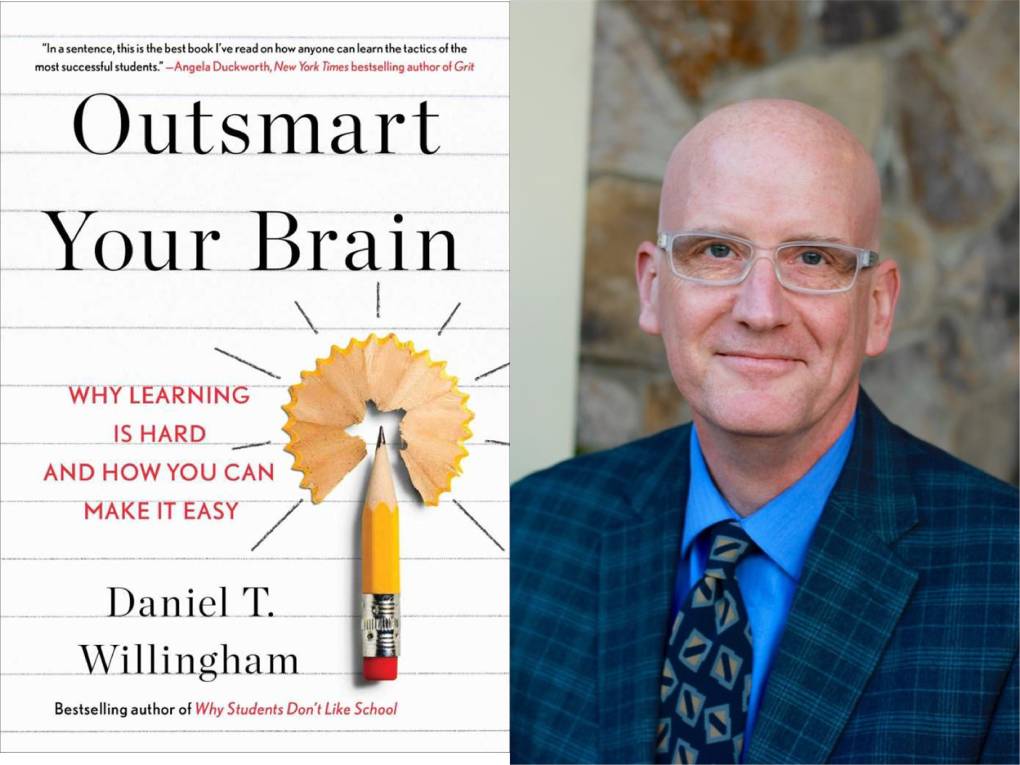
"caption": "University of Virginia psychologist Daniel Willingham's new book, \"Outsmart Your Brain,\" points out all the wrong ways that students do homework, take notes in class or study for tests.",
"description": null,
"title": "willinghambook",
"credit": "Adam Mohr for Simon & Schuster",
"status": "inherit",
"altTag": null,
"isLoading": false,
"fetchFailed": false
},
"mindshift_60758": {
"type": "attachments",
"id": "mindshift_60758",
"meta": {
"index": "attachments_1716263798",
"site": "mindshift",
"id": "60758",
"found": true
},
"parent": 60754,
"imgSizes": {
"twentyfourteen-full-width": {
"file": "https://ww2.kqed.org/app/uploads/sites/23/2023/01/iStock-jittawit-21-1038x576.jpg",
"width": 1038,
"mimeType": "image/jpeg",
"height": 576
},
"thumbnail": {
"file": "https://ww2.kqed.org/app/uploads/sites/23/2023/01/iStock-jittawit-21-160x107.jpg",
"width": 160,
"mimeType": "image/jpeg",
"height": 107
},
"post-thumbnail": {
"file": "https://ww2.kqed.org/app/uploads/sites/23/2023/01/iStock-jittawit-21-672x372.jpg",
"width": 672,
"mimeType": "image/jpeg",
"height": 372
},
"kqedFullSize": {
"file": "https://ww2.kqed.org/app/uploads/sites/23/2023/01/iStock-jittawit-21-scaled-e1673051318632.jpg",
"width": 1920,
"height": 1280
},
"2048x2048": {
"file": "https://ww2.kqed.org/app/uploads/sites/23/2023/01/iStock-jittawit-21-2048x1365.jpg",
"width": 2048,
"mimeType": "image/jpeg",
"height": 1365
},
"large": {
"file": "https://ww2.kqed.org/app/uploads/sites/23/2023/01/iStock-jittawit-21-1020x680.jpg",
"width": 1020,
"mimeType": "image/jpeg",
"height": 680
},
"1536x1536": {
"file": "https://ww2.kqed.org/app/uploads/sites/23/2023/01/iStock-jittawit-21-1536x1024.jpg",
"width": 1536,
"mimeType": "image/jpeg",
"height": 1024
},
"full-width": {
"file": "https://ww2.kqed.org/app/uploads/sites/23/2023/01/iStock-jittawit-21-1920x1280.jpg",
"width": 1920,
"mimeType": "image/jpeg",
"height": 1280
},
"medium": {
"file": "https://ww2.kqed.org/app/uploads/sites/23/2023/01/iStock-jittawit-21-800x533.jpg",
"width": 800,
"mimeType": "image/jpeg",
"height": 533
},
"medium_large": {
"file": "https://ww2.kqed.org/app/uploads/sites/23/2023/01/iStock-jittawit-21-768x512.jpg",
"width": 768,
"mimeType": "image/jpeg",
"height": 512
}
},
"publishDate": 1673051294,
"modified": 1673051372,
"caption": null,
"description": null,
"title": "iStock-jittawit-21",
"credit": "iStock/jittawit.21",
"status": "inherit",
"altTag": "Student at a desk writing with a pencil. Shown from back.",
"isLoading": false,
"fetchFailed": false
},
"mindshift_60692": {
"type": "attachments",
"id": "mindshift_60692",
"meta": {
"index": "attachments_1716263798",
"site": "mindshift",
"id": "60692",
"found": true
},
"parent": 60686,
"imgSizes": {
"twentyfourteen-full-width": {
"file": "https://ww2.kqed.org/app/uploads/sites/23/2023/01/iStock-846239356-1038x576.jpg",
"width": 1038,
"mimeType": "image/jpeg",
"height": 576
},
"thumbnail": {
"file": "https://ww2.kqed.org/app/uploads/sites/23/2023/01/iStock-846239356-160x107.jpg",
"width": 160,
"mimeType": "image/jpeg",
"height": 107
},
"post-thumbnail": {
"file": "https://ww2.kqed.org/app/uploads/sites/23/2023/01/iStock-846239356-672x372.jpg",
"width": 672,
"mimeType": "image/jpeg",
"height": 372
},
"kqedFullSize": {
"file": "https://ww2.kqed.org/app/uploads/sites/23/2023/01/iStock-846239356-e1672248341363.jpg",
"width": 1920,
"height": 1281
},
"2048x2048": {
"file": "https://ww2.kqed.org/app/uploads/sites/23/2023/01/iStock-846239356-2048x1367.jpg",
"width": 2048,
"mimeType": "image/jpeg",
"height": 1367
},
"large": {
"file": "https://ww2.kqed.org/app/uploads/sites/23/2023/01/iStock-846239356-1020x681.jpg",
"width": 1020,
"mimeType": "image/jpeg",
"height": 681
},
"1536x1536": {
"file": "https://ww2.kqed.org/app/uploads/sites/23/2023/01/iStock-846239356-1536x1025.jpg",
"width": 1536,
"mimeType": "image/jpeg",
"height": 1025
},
"full-width": {
"file": "https://ww2.kqed.org/app/uploads/sites/23/2023/01/iStock-846239356-1920x1281.jpg",
"width": 1920,
"mimeType": "image/jpeg",
"height": 1281
},
"medium": {
"file": "https://ww2.kqed.org/app/uploads/sites/23/2023/01/iStock-846239356-800x534.jpg",
"width": 800,
"mimeType": "image/jpeg",
"height": 534
},
"medium_large": {
"file": "https://ww2.kqed.org/app/uploads/sites/23/2023/01/iStock-846239356-768x512.jpg",
"width": 768,
"mimeType": "image/jpeg",
"height": 512
}
},
"publishDate": 1672248325,
"modified": 1672248388,
"caption": null,
"description": null,
"title": "iStock-846239356",
"credit": "iStock/SeventyFour",
"status": "inherit",
"altTag": "One hand painting on a canvas. A second hand holds paint palette.",
"isLoading": false,
"fetchFailed": false
},
"mindshift_60474": {
"type": "attachments",
"id": "mindshift_60474",
"meta": {
"index": "attachments_1716263798",
"site": "mindshift",
"id": "60474",
"found": true
},
"parent": 60468,
"imgSizes": {
"twentyfourteen-full-width": {
"file": "https://ww2.kqed.org/app/uploads/sites/23/2022/11/audio-brain-1038x576.jpg",
"width": 1038,
"mimeType": "image/jpeg",
"height": 576
},
"thumbnail": {
"file": "https://ww2.kqed.org/app/uploads/sites/23/2022/11/audio-brain-160x107.jpg",
"width": 160,
"mimeType": "image/jpeg",
"height": 107
},
"post-thumbnail": {
"file": "https://ww2.kqed.org/app/uploads/sites/23/2022/11/audio-brain-672x372.jpg",
"width": 672,
"mimeType": "image/jpeg",
"height": 372
},
"kqedFullSize": {
"file": "https://ww2.kqed.org/app/uploads/sites/23/2022/11/audio-brain.jpg",
"width": 2121,
"height": 1414
},
"2048x2048": {
"file": "https://ww2.kqed.org/app/uploads/sites/23/2022/11/audio-brain-2048x1365.jpg",
"width": 2048,
"mimeType": "image/jpeg",
"height": 1365
},
"large": {
"file": "https://ww2.kqed.org/app/uploads/sites/23/2022/11/audio-brain-1020x680.jpg",
"width": 1020,
"mimeType": "image/jpeg",
"height": 680
},
"1536x1536": {
"file": "https://ww2.kqed.org/app/uploads/sites/23/2022/11/audio-brain-1536x1024.jpg",
"width": 1536,
"mimeType": "image/jpeg",
"height": 1024
},
"full-width": {
"file": "https://ww2.kqed.org/app/uploads/sites/23/2022/11/audio-brain-1920x1280.jpg",
"width": 1920,
"mimeType": "image/jpeg",
"height": 1280
},
"medium": {
"file": "https://ww2.kqed.org/app/uploads/sites/23/2022/11/audio-brain-800x533.jpg",
"width": 800,
"mimeType": "image/jpeg",
"height": 533
},
"medium_large": {
"file": "https://ww2.kqed.org/app/uploads/sites/23/2022/11/audio-brain-768x512.jpg",
"width": 768,
"mimeType": "image/jpeg",
"height": 512
}
},
"publishDate": 1669833323,
"modified": 1669833372,
"caption": null,
"description": null,
"title": "Headphones on the brain over yellow background",
"credit": "SerrNovik/iStock",
"status": "inherit",
"altTag": "Headphones on the brain over the yellow background",
"isLoading": false,
"fetchFailed": false
},
"mindshift_60493": {
"type": "attachments",
"id": "mindshift_60493",
"meta": {
"index": "attachments_1716263798",
"site": "mindshift",
"id": "60493",
"found": true
},
"parent": 60490,
"imgSizes": {
"twentyfourteen-full-width": {
"file": "https://ww2.kqed.org/app/uploads/sites/23/2022/12/iStock-925051930-1038x576.jpg",
"width": 1038,
"mimeType": "image/jpeg",
"height": 576
},
"thumbnail": {
"file": "https://ww2.kqed.org/app/uploads/sites/23/2022/12/iStock-925051930-160x114.jpg",
"width": 160,
"mimeType": "image/jpeg",
"height": 114
},
"post-thumbnail": {
"file": "https://ww2.kqed.org/app/uploads/sites/23/2022/12/iStock-925051930-672x372.jpg",
"width": 672,
"mimeType": "image/jpeg",
"height": 372
},
"kqedFullSize": {
"file": "https://ww2.kqed.org/app/uploads/sites/23/2022/12/iStock-925051930-e1669997227791.jpg",
"width": 1920,
"height": 1366
},
"2048x2048": {
"file": "https://ww2.kqed.org/app/uploads/sites/23/2022/12/iStock-925051930-2048x1457.jpg",
"width": 2048,
"mimeType": "image/jpeg",
"height": 1457
},
"large": {
"file": "https://ww2.kqed.org/app/uploads/sites/23/2022/12/iStock-925051930-1020x726.jpg",
"width": 1020,
"mimeType": "image/jpeg",
"height": 726
},
"1536x1536": {
"file": "https://ww2.kqed.org/app/uploads/sites/23/2022/12/iStock-925051930-1536x1093.jpg",
"width": 1536,
"mimeType": "image/jpeg",
"height": 1093
},
"full-width": {
"file": "https://ww2.kqed.org/app/uploads/sites/23/2022/12/iStock-925051930-1920x1366.jpg",
"width": 1920,
"mimeType": "image/jpeg",
"height": 1366
},
"medium": {
"file": "https://ww2.kqed.org/app/uploads/sites/23/2022/12/iStock-925051930-800x569.jpg",
"width": 800,
"mimeType": "image/jpeg",
"height": 569
},
"medium_large": {
"file": "https://ww2.kqed.org/app/uploads/sites/23/2022/12/iStock-925051930-768x547.jpg",
"width": 768,
"mimeType": "image/jpeg",
"height": 547
}
},
"publishDate": 1669997208,
"modified": 1669997334,
"caption": null,
"description": null,
"title": "iStock-925051930",
"credit": "ismagilov/iStock",
"status": "inherit",
"altTag": "a colorful brain filled with gears floats above awoman's eyes and top of head",
"isLoading": false,
"fetchFailed": false
}
},
"audioPlayerReducer": {
"postId": "stream_live",
"isPaused": true,
"isPlaying": false,
"pfsActive": false,
"pledgeModalIsOpen": true,
"playerDrawerIsOpen": false,
"liveAudioPlayStartedAt": 0,
"liveAudioPlayContext": ""
},
"authorsReducer": {
"byline_mindshift_61037": {
"type": "authors",
"id": "byline_mindshift_61037",
"meta": {
"override": true
},
"slug": "byline_mindshift_61037",
"name": "Jill Barshay, \u003ca href=\"https://hechingerreport.org/\" target=\"_blank\">The Hechinger Report\u003c/a>",
"isLoading": false
},
"byline_mindshift_61007": {
"type": "authors",
"id": "byline_mindshift_61007",
"meta": {
"override": true
},
"slug": "byline_mindshift_61007",
"name": "Jill Barshay, \u003ca href=\"https://hechingerreport.org/\" target=\"_blank\">The Hechinger Report\u003c/a>",
"isLoading": false
},
"byline_mindshift_60955": {
"type": "authors",
"id": "byline_mindshift_60955",
"meta": {
"override": true
},
"slug": "byline_mindshift_60955",
"name": "Jill Barshay, \u003ca href=\"https://hechingerreport.org/\" target=\"_blank\">The Hechinger Report\u003c/a>",
"isLoading": false
},
"byline_mindshift_60868": {
"type": "authors",
"id": "byline_mindshift_60868",
"meta": {
"override": true
},
"slug": "byline_mindshift_60868",
"name": "Jill Barshay, \u003ca href=\"https://hechingerreport.org/\" target=\"_blank\">The Hechinger Report\u003c/a>",
"isLoading": false
},
"byline_mindshift_60754": {
"type": "authors",
"id": "byline_mindshift_60754",
"meta": {
"override": true
},
"slug": "byline_mindshift_60754",
"name": "Jill Barshay, \u003ca href=\"https://hechingerreport.org/\">The Hechinger Report\u003c/a>",
"isLoading": false
},
"byline_mindshift_60686": {
"type": "authors",
"id": "byline_mindshift_60686",
"meta": {
"override": true
},
"slug": "byline_mindshift_60686",
"name": "Jill Barshay, \u003ca href=\"https://hechingerreport.org/\">The Hechinger Report\u003c/a>",
"isLoading": false
},
"byline_mindshift_60490": {
"type": "authors",
"id": "byline_mindshift_60490",
"meta": {
"override": true
},
"slug": "byline_mindshift_60490",
"name": "Jill Barshay, \u003ca href=\"https://hechingerreport.org/\">The Hechinger Report\u003c/a>",
"isLoading": false
},
"ngobir": {
"type": "authors",
"id": "11721",
"meta": {
"index": "authors_1716337520",
"id": "11721",
"found": true
},
"name": "Nimah Gobir",
"firstName": "Nimah",
"lastName": "Gobir",
"slug": "ngobir",
"email": "ngobir@kqed.org",
"display_author_email": false,
"staff_mastheads": [],
"title": "KQED Contributor",
"bio": null,
"avatar": "https://secure.gravatar.com/avatar/837f5df7045c59f3ec097cdf7ac391373ab75d5ec936dd7099b8cb6f0af1b0e9?s=600&d=blank&r=g",
"twitter": null,
"bluesky": null,
"facebook": null,
"instagram": null,
"linkedin": null,
"sites": [
{
"site": "mindshift",
"roles": [
"editor"
]
}
],
"headData": {
"title": "Nimah Gobir | KQED",
"description": "KQED Contributor",
"ogImgSrc": "https://secure.gravatar.com/avatar/837f5df7045c59f3ec097cdf7ac391373ab75d5ec936dd7099b8cb6f0af1b0e9?s=600&d=blank&r=g",
"twImgSrc": "https://secure.gravatar.com/avatar/837f5df7045c59f3ec097cdf7ac391373ab75d5ec936dd7099b8cb6f0af1b0e9?s=600&d=blank&r=g"
},
"isLoading": false,
"link": "/author/ngobir"
}
},
"pagesReducer": {
"mindshift_category_education-research": {
"type": "terms",
"id": "mindshift_21504",
"meta": {
"index": "terms_1716263798",
"site": "mindshift",
"id": "21504",
"score": 14.405857
},
"featImg": null,
"name": "Education research",
"description": null,
"taxonomy": "category",
"headData": {
"twImgId": null,
"twTitle": null,
"ogTitle": null,
"ogImgId": null,
"twDescription": null,
"description": null,
"title": "Education research Archives | KQED Mindshift",
"ogDescription": null
},
"ttid": 20776,
"slug": "education-research",
"isLoading": false,
"title": "Education research",
"pageMeta": {
"site": "mindshift",
"WpPageTemplate": "page-topic-editorial",
"currentPage": 16
},
"blocks": [
{
"blockName": "kqed/post-list",
"attrs": {
"layout": "cardArticle2",
"query": "posts/mindshift?category=education-research",
"seeMore": false,
"paginated": true,
"page": 16
}
},
{
"blockName": "kqed/ad"
}
]
}
},
"pfsSessionReducer": {},
"postsReducer": {
"stream_live": {
"type": "live",
"id": "stream_live",
"audioUrl": "https://streams.kqed.org/kqedradio",
"title": "Live Stream",
"excerpt": "Live Stream information currently unavailable.",
"link": "/radio",
"featImg": "",
"label": {
"name": "KQED Live",
"link": "/"
}
},
"stream_kqedNewscast": {
"type": "posts",
"id": "stream_kqedNewscast",
"audioUrl": "https://www.kqed.org/.stream/anon/radio/RDnews/newscast.mp3?_=1",
"title": "KQED Newscast",
"featImg": "",
"label": {
"name": "88.5 FM",
"link": "/"
}
},
"mindshift_61037": {
"type": "posts",
"id": "mindshift_61037",
"meta": {
"index": "posts_1716263798",
"site": "mindshift",
"id": "61037",
"score": null,
"sort": [
1676890844000
]
},
"parent": 0,
"labelTerm": {
"site": "mindshift"
},
"blocks": [],
"publishDate": 1676890844,
"format": "standard",
"title": "College completion rates are up for all Americans, but racial gaps persist",
"headTitle": "MindShift | KQED News",
"content": "\u003cp>\u003cspan style=\"font-weight: 400\">Students’ race and ethnicity affect their chances of earning a college degree, according to several new reports on higher education released in January and February 2023. However, the picture that emerges depends on the lens you use. College degrees are increasing among all racial and ethnic groups, but white and Asian Americans are far more likely to hold a college degree or earn one than Black, Hispanic or Native Americans. \u003c/span>\u003c/p>\n\u003cp>\u003cspan style=\"font-weight: 400\">Earning a college degree involves two steps: starting college and finishing college. Before the pandemic, white, Black and Hispanic Americans were enrolling in college at about the same rates, especially when unemployment was high and jobs were hard to find. (Asian Americans enrolled in college at much higher rates.) The bigger distinction is that once a student has started college, the likelihood of making it through the coursework and tuition payments and ultimately earning a degree varies so much by race and ethnicity. \u003c/span>\u003c/p>\n\u003cp>\u003cspan style=\"font-weight: 400\">First, let’s begin with enrollment. There are two ways to look at this. One is to see how the demographic makeup of college campuses has changed over time, becoming less white and more Hispanic. The pie charts below were produced in January by the National Student Clearinghouse, a nonprofit organization that provides data reporting services to colleges. In conjunction with these services, it monitors trends in higher education by aggregating the data submitted by more than 3,600 institutions, representing 97 percent of the students at the nation’s degree-granting colleges and universities. Earlier this year, the organization launched a \u003c/span>\u003ca href=\"https://www.studentclearinghouse.org/dei-data-lab/\" target=\"_blank\" rel=\"noopener\">\u003cspan style=\"font-weight: 400\">DEI Data Lab\u003c/span>\u003c/a>\u003cspan style=\"font-weight: 400\"> site to put a spotlight on how college enrollment, persistence and completion vary by race and ethnicity.\u003c/span>\u003c/p>\n\u003cfigure id=\"attachment_61048\" class=\"wp-caption alignnone\" style=\"max-width: 800px\">\u003cimg decoding=\"async\" loading=\"lazy\" class=\"size-medium wp-image-61048\" src=\"https://ww2.kqed.org/app/uploads/sites/23/2023/02/a_image-800x511.jpe\" alt=\"\" width=\"800\" height=\"511\" srcset=\"https://ww2.kqed.org/app/uploads/sites/23/2023/02/a_image-800x511.jpe 800w, https://ww2.kqed.org/app/uploads/sites/23/2023/02/a_image-1020x651.jpe 1020w, https://ww2.kqed.org/app/uploads/sites/23/2023/02/a_image-160x102.jpe 160w, https://ww2.kqed.org/app/uploads/sites/23/2023/02/a_image-768x490.jpe 768w, https://ww2.kqed.org/app/uploads/sites/23/2023/02/a_image-1536x980.jpe 1536w, https://ww2.kqed.org/app/uploads/sites/23/2023/02/a_image.jpe 1600w\" sizes=\"(max-width: 800px) 100vw, 800px\">\u003cfigcaption class=\"wp-caption-text\">National Student Clearinghouse \u003ca href=\"https://www.studentclearinghouse.org/dei-data-lab/research-data/enrollment/\" target=\"_blank\" rel=\"noopener\">DEI Data Lab\u003c/a> 2023\u003c/figcaption>\u003c/figure>\n\u003cp>\u003cspan style=\"font-weight: 400\">In 2011, as the pie chart on the left shows, more than 60 percent of the nation’s 20.6 million college students were white, according to an estimate by the National Student Clearinghouse. By 2020, the year represented by the pie chart on the right, the total number of college students had fallen to 17.8 million and the share of white students had dropped by almost 9 percentage points to 52 percent, still a majority. During the same period, the share of Hispanic students grew from 14 percent to 21 percent, and the share of Black students remained constant at just under 14 percent. Asian students increased from 5 to 7 percent of the college population. This represents all undergraduate college students, both younger students entering straight after high school and older nontraditional students, studying full-time and part-time, and attending both four-year universities and two-year colleges. \u003c/span>\u003c/p>\n\u003cp>\u003cspan style=\"font-weight: 400\">The 2011 figures are rough estimates because only one out of five colleges reported race and ethnicity of students to the Clearinghouse. Today, more than three out of five colleges report on the race and ethnicity of their students to the Clearinghouse. (For the original version of this pie chart, \u003c/span>\u003ca href=\"https://www.studentclearinghouse.org/dei-data-lab/research-data/enrollment/\" target=\"_blank\" rel=\"noopener\">\u003cspan style=\"font-weight: 400\">click here\u003c/span>\u003c/a>\u003cspan style=\"font-weight: 400\">.)\u003c/span>\u003c/p>\n\u003cp>[ad fullwidth]\u003c/p>\n\u003cp>\u003cspan style=\"font-weight: 400\">How should we think about these college enrollment numbers? Do they largely mirror each racial and ethnic group’s share of the population? I was surprised to learn that the answer is yes – with a few caveats. Asian Americans are slightly overrepresented on college campuses and Hispanic Americans are slightly underrepresented. \u003c/span>\u003c/p>\n\u003cp>\u003cspan style=\"font-weight: 400\">I created this chart below, comparing the National Student Clearinghouse’s college enrollment data for 2020 with the young adult population, as reported by the U.S Census, so you can see how closely college enrollment tracks actual demographics.\u003c/span>\u003c/p>\n\u003cfigure id=\"attachment_61044\" class=\"wp-caption alignnone\" style=\"max-width: 780px\">\u003cimg decoding=\"async\" loading=\"lazy\" class=\"size-full wp-image-61044\" src=\"https://ww2.kqed.org/app/uploads/sites/23/2023/02/image4.png\" alt=\"\" width=\"780\" height=\"482\" srcset=\"https://ww2.kqed.org/app/uploads/sites/23/2023/02/image4.png 780w, https://ww2.kqed.org/app/uploads/sites/23/2023/02/image4-160x99.png 160w, https://ww2.kqed.org/app/uploads/sites/23/2023/02/image4-768x475.png 768w\" sizes=\"(max-width: 780px) 100vw, 780px\">\u003cfigcaption class=\"wp-caption-text\">Chart created by Jill Barshay/The Hechinger Report. Data sources: Adult population collected by the Annie E. Casey Foundation’s \u003ca href=\"https://datacenter.kidscount.org/data/tables/11207-young-adult-population-ages-18-to-24-by-race-and-ethnicity#detailed/1/any/false/2048,574,1729,37,871,870,573,869,36,868/68,69,67,12,70,66,71,7983/21595,21596\" target=\"_blank\" rel=\"noopener\">Kids Count Data Center\u003c/a>, originating from the U.S. Census Bureau. College enrollment from the National Student Clearinghouse’s \u003ca href=\"https://www.studentclearinghouse.org/dei-data-lab/research-data/enrollment/\" target=\"_blank\" rel=\"noopener\">DEI Data Lab\u003c/a>.\u003c/figcaption>\u003c/figure>\n\u003cp>\u003cspan style=\"font-weight: 400\">Another way to look at college enrollment is to see how many young adults enroll in college. The chart below, by the U.S. Bureau of Labor Statistics, shows that the college enrollment rates of Black and Hispanic young adults improved after the 2008 recession, and approached the college going rate of white Americans. Roughly 60 percent of young Black, Hispanic and white Americans\u003c/span> \u003cspan style=\"font-weight: 400\">are trying for a college degree. The college going rate for Asian Americans is much higher; more than 80 percent enroll. The zigs and zags in this chart show how college going among Hispanic and Black Americans is influenced by business cycles. \u003c/span>\u003c/p>\n\u003cp>\u003cimg decoding=\"async\" loading=\"lazy\" class=\"alignnone size-medium wp-image-61043\" src=\"https://ww2.kqed.org/app/uploads/sites/23/2023/02/image3-800x690.jpg\" alt=\"\" width=\"800\" height=\"690\" srcset=\"https://ww2.kqed.org/app/uploads/sites/23/2023/02/image3-800x690.jpg 800w, https://ww2.kqed.org/app/uploads/sites/23/2023/02/image3-1020x879.jpg 1020w, https://ww2.kqed.org/app/uploads/sites/23/2023/02/image3-160x138.jpg 160w, https://ww2.kqed.org/app/uploads/sites/23/2023/02/image3-768x662.jpg 768w, https://ww2.kqed.org/app/uploads/sites/23/2023/02/image3.jpg 1160w\" sizes=\"(max-width: 800px) 100vw, 800px\">\u003c/p>\n\u003cp>\u003cspan style=\"font-weight: 400\">The Bureau of Labor Statistics obtains enrollment data from the Current Population Survey (CPS), a monthly survey of households conducted by the Bureau of Census. (Here is the \u003c/span>\u003ca href=\"https://www.bls.gov/opub/ted/2022/61-8-percent-of-recent-high-school-graduates-enrolled-in-college-in-october-2021.htm\" target=\"_blank\" rel=\"noopener\">\u003cspan style=\"font-weight: 400\">chart on the BLS site\u003c/span>\u003c/a>\u003cspan style=\"font-weight: 400\">.)\u003c/span>\u003c/p>\n\u003cp>\u003cspan style=\"font-weight: 400\">When jobs are plentiful, many low-income students may join the labor force and defer their higher education. That especially reduces enrollments among Black and Hispanic young adults, among whom poverty rates are higher. When unemployment is high, more young adults enroll at college, particularly at two-year community colleges. Most recently, during the pandemic, many young Americans deferred college to help support or take care of their families. Some students chose to wait until in-person classes resumed. \u003c/span>\u003c/p>\n\u003cp>\u003cspan style=\"font-weight: 400\">Going to college is one thing; finishing it is another. This fourth chart, produced by the Lumina Foundation, shows that over time, more Americans of every race and ethnicity are earning college degrees. \u003c/span>The Lumina Foundation is a private foundation that seeks to increase the number of adults with college degrees and other credentials, and was formed through the sale to Sallie Mae of USA Group's assets that were used to create and collect monthly payments on student loans.* It is also among the many funders of The Hechinger Report.\u003c/p>\n\u003cp>\u003cb>Share of adult population, ages 25-64, with college degrees\u003c/b>\u003c/p>\n\u003cfigure id=\"attachment_61040\" class=\"wp-caption alignnone\" style=\"max-width: 800px\">\u003cimg decoding=\"async\" loading=\"lazy\" class=\"size-medium wp-image-61040\" src=\"https://ww2.kqed.org/app/uploads/sites/23/2023/02/image6-800x407.png\" alt=\"\" width=\"800\" height=\"407\" srcset=\"https://ww2.kqed.org/app/uploads/sites/23/2023/02/image6-800x407.png 800w, https://ww2.kqed.org/app/uploads/sites/23/2023/02/image6-1020x518.png 1020w, https://ww2.kqed.org/app/uploads/sites/23/2023/02/image6-160x81.png 160w, https://ww2.kqed.org/app/uploads/sites/23/2023/02/image6-768x390.png 768w, https://ww2.kqed.org/app/uploads/sites/23/2023/02/image6-1536x780.png 1536w, https://ww2.kqed.org/app/uploads/sites/23/2023/02/image6.png 1600w\" sizes=\"(max-width: 800px) 100vw, 800px\">\u003cfigcaption class=\"wp-caption-text\">Credit: The Lumina Foundation’s \u003ca href=\"https://www.luminafoundation.org/stronger-nation/report/#/progress/racial_equity\" target=\"_blank\" rel=\"noopener\">A Stronger Nation\u003c/a>, 2023 update\u003c/figcaption>\u003c/figure>\n\u003cp>\u003cspan style=\"font-weight: 400\">This chart above, originally published \u003c/span>\u003ca href=\"https://www.luminafoundation.org/stronger-nation/report/#/progress/racial_equity\" target=\"_blank\" rel=\"noopener\">\u003cspan style=\"font-weight: 400\">here\u003c/span>\u003c/a>\u003cspan style=\"font-weight: 400\"> on Jan. 31, is based on data from the U.S. Census Bureau’s American Community Survey. It tracks the percentage of adults 25 to 64 with two-year associate and four-year bachelor’s degrees. The share of Americans with a college degree rose from 38 percent in 2009 to nearly 46 percent in 2021 – an increase of eight percentage points.\u003c/span>\u003c/p>\n\u003cp>\u003cspan style=\"font-weight: 400\">Every race and ethnicity saw gains. The eight-percentage point gain was the same for both Black and white adults. \u003c/span>\u003c/p>\n\u003cp>\u003cspan style=\"font-weight: 400\">But racial gaps continue. In 2021, there remained an enormous 40 percentage point difference between Asian American adults, among whom 66 percent have a college degree, and Native American adults, among whom only 25 percent have a college degree. Among Black adults, 34 percent have college degrees. Among Hispanic adults, it’s 28 percent and among white adults, it’s 50 percent. \u003c/span>\u003c/p>\n\u003cp>\u003cspan style=\"font-weight: 400\">Improvements in college attainment can seem slow because graduation rates are much lower among Americans over 35. It takes years for higher college graduation rates among younger adults to raise overall college numbers. College attainment rates have jumped the fastest among young Hispanic adults under age 35, rising from below 20 percent in 2009 to above 30 percent in 2021. Courtney Brown, the chief data and research officer at Lumina, credits a variety of support programs, from tutoring to food pantries, and the convenience of online courses to explain why more young people are graduating, despite rising tuition costs. “Colleges are trying to serve students better,” said Brown. “Even the way they staff colleges, not all on getting enrollments but having more success coaches available and counselors helping students get to the finish line.”\u003c/span>\u003c/p>\n\u003cp>\u003cspan style=\"font-weight: 400\">Still, Brown acknowledges that it’s been difficult to make a dent in the stubborn gaps in college attainment between people of different races and ethnicities. “Unfortunately, everyone is increasing,” Brown said. “And so we are not seeing those gaps reduced.”\u003c/span>\u003c/p>\n\u003cp>\u003cspan style=\"font-weight: 400\">The National Student Clearinghouse’s DEI Data Lab also shows this completion problem starkly. \u003c/span>\u003c/p>\n\u003cfigure id=\"attachment_61045\" class=\"wp-caption alignnone\" style=\"max-width: 800px\">\u003cimg decoding=\"async\" loading=\"lazy\" class=\"size-medium wp-image-61045\" src=\"https://ww2.kqed.org/app/uploads/sites/23/2023/02/image5-800x513.png\" alt=\"\" width=\"800\" height=\"513\" srcset=\"https://ww2.kqed.org/app/uploads/sites/23/2023/02/image5-800x513.png 800w, https://ww2.kqed.org/app/uploads/sites/23/2023/02/image5-1020x654.png 1020w, https://ww2.kqed.org/app/uploads/sites/23/2023/02/image5-160x103.png 160w, https://ww2.kqed.org/app/uploads/sites/23/2023/02/image5-768x492.png 768w, https://ww2.kqed.org/app/uploads/sites/23/2023/02/image5-1536x985.png 1536w, https://ww2.kqed.org/app/uploads/sites/23/2023/02/image5.png 1600w\" sizes=\"(max-width: 800px) 100vw, 800px\">\u003cfigcaption class=\"wp-caption-text\">Credit: National Student Clearinghouse’s\u003ca href=\"https://www.studentclearinghouse.org/dei-data-lab/research-data/enrollment/\" target=\"_blank\" rel=\"noopener\"> DEI Data Lab\u003c/a> 2023\u003c/figcaption>\u003c/figure>\n\u003cp>\u003cspan style=\"font-weight: 400\">This chart tracks cohorts of students who began college at the same time and calculates how many of them earned any college degree within six years. Among students who started college in the fall of 2010, 62 percent of white students completed a degree by the summer of 2016, compared with only 39 percent of Black students. That’s a giant 23 percentage point gap, and a sign that a disproportionate number of Black students are dropping out of college in debt. Completion rates improved considerably for students who started college in 2015, but large gaps remain. Almost 70 percent of white students completed a degree by the summer of 2021, but only 45 percent of Black students hit this milestone. The Black-white college completion gap actually widened slightly from 23 to 24 percentage points.\u003c/span>\u003c/p>\n\u003cp>\u003cspan style=\"font-weight: 400\">The reasons for why completion rates remain much lower for Black, Hispanic and Native American students are complex. These students are more likely to attend community colleges, which have lower funding per student and fewer support services. Many students weren’t adequately prepared in high schools to handle college-level coursework, especially in math. \u003c/span>\u003c/p>\n\u003cp>\u003cspan style=\"font-weight: 400\">A \u003c/span>\u003ca href=\"https://news.gallup.com/poll/469292/one-five-black-students-report-discrimination-experiences.aspx\" target=\"_blank\" rel=\"noopener\">\u003cspan style=\"font-weight: 400\">poll of Black college students by Gallup-Lumina\u003c/span>\u003c/a>\u003cspan style=\"font-weight: 400\">, released on Feb. 9, found that 21 percent of Black students report feeling discriminated against frequently or occasionally at the college they are attending, and that 45 percent have considered dropping out in the past six months. Black students in bachelor’s programs are far more likely to juggle family and work responsibilities alongside their studies. \u003c/span>\u003c/p>\n\u003cp>\u003cspan style=\"font-weight: 400\">“Black students are encountering so much more discrimination, and they have multiple responsibilities that no other race or ethnicity really has,” said Lumina’s Brown. “A lot of it is that Black students are more likely to have children. Working full time, having children and trying to get a bachelor’s degree at the same time is just obviously overwhelming.”\u003c/span>\u003c/p>\n\u003cfigure id=\"attachment_61041\" class=\"wp-caption alignnone\" style=\"max-width: 800px\">\u003cimg decoding=\"async\" loading=\"lazy\" class=\"size-medium wp-image-61041\" src=\"https://ww2.kqed.org/app/uploads/sites/23/2023/02/image1-800x484.png\" alt=\"\" width=\"800\" height=\"484\" srcset=\"https://ww2.kqed.org/app/uploads/sites/23/2023/02/image1-800x484.png 800w, https://ww2.kqed.org/app/uploads/sites/23/2023/02/image1-1020x617.png 1020w, https://ww2.kqed.org/app/uploads/sites/23/2023/02/image1-160x97.png 160w, https://ww2.kqed.org/app/uploads/sites/23/2023/02/image1-768x465.png 768w, https://ww2.kqed.org/app/uploads/sites/23/2023/02/image1.png 1458w\" sizes=\"(max-width: 800px) 100vw, 800px\">\u003cfigcaption class=\"wp-caption-text\">Credit: Excerpt from \u003ca href=\"https://www.luminafoundation.org/resource/balancing-act-the-tradeoffs-and-challenges-facing-black-students-in-higher-education/\" target=\"_blank\" rel=\"noopener\">Balancing Act\u003c/a>, Gallup and the Lumina Foundation, 2023, p. 6.\u003c/figcaption>\u003c/figure>\n\u003cp>\u003cspan style=\"font-weight: 400\">On Feb. 2, the National Student Clearinghouse Research Center released the most recent college enrollment numbers for 2022. Undergraduate enrollment for both white and Black students fell for the fifth straight year, while enrollment of Hispanic and Asian students at public two-year colleges improved. However, their numbers are below pre-pandemic levels. For example, there were roughly 975,000 Hispanic students enrolled in public two-year colleges, also called community colleges, in the fall of 2022, up from 944,000 in the fall of 2021, but considerably down from 1.14 million in 2019. (Click \u003c/span>\u003ca href=\"https://nscresearchcenter.org/current-term-enrollment-estimates/\" target=\"_blank\" rel=\"noopener\">\u003cspan style=\"font-weight: 400\">here\u003c/span>\u003c/a>\u003cspan style=\"font-weight: 400\"> and navigate to the demographics tab for these fall 2022 charts.) \u003c/span>\u003c/p>\n\u003cp>\u003cspan style=\"font-weight: 400\">And here’s a startling data point: Black student enrollment at two-year community colleges declined by a staggering 44 percent, from 1.2 million in 2010 to 670,000 in 2020, according to a \u003c/span>\u003ca href=\"https://jointcenter.org/wp-content/uploads/2022/09/The-State-of-Black-Students-at-Community-Colleges.pdf\" target=\"_blank\" rel=\"noopener\">\u003cspan style=\"font-weight: 400\">Sept. 2022 report\u003c/span>\u003c/a>\u003cspan style=\"font-weight: 400\"> by the Joint Center for Political and Economic Studies, a think tank that studies policy issues affecting Black Americans.\u003c/span>\u003c/p>\n\u003cp>\u003cspan style=\"font-weight: 400\">Fewer students at college now certainly means fewer college-educated adults in the years ahead. And that is not a promising future. \u003c/span>\u003c/p>\n\u003cp>\u003cem>* Correction: An earlier version incorrectly said that Lumina was founded through the sale of Sallie Mae, instead of USA Group’s sale of assets to Sallie Mae. USA Group was sold, not Sallie Mae. \u003c/em>\u003c/p>\n\u003cp>[ad floatright]\u003c/p>\n\u003cp>\u003ci>\u003cspan style=\"font-weight: 400\">This story about \u003c/span>\u003c/i>\u003ca href=\"https://hechingerreport.org/proof-points-new-higher-ed-data-by-race-and-ethnicity/\" target=\"_blank\" rel=\"noopener\">\u003ci>\u003cspan style=\"font-weight: 400\">higher ed data\u003c/span>\u003c/i>\u003c/a>\u003ci>\u003cspan style=\"font-weight: 400\"> was written by Jill Barshay and produced by \u003c/span>\u003c/i>\u003cspan style=\"font-weight: 400\">The Hechinger Report\u003c/span>\u003ci>\u003cspan style=\"font-weight: 400\">, a nonprofit, independent news organization focused on inequality and innovation in education. Sign up for the \u003c/span>\u003c/i>\u003ca href=\"http://hechingerreport.us2.list-manage1.com/subscribe?u=66c306eebb323868c3ce353c1&id=d3ee4c3e04\" target=\"_blank\" rel=\"noopener\">\u003ci>\u003cspan style=\"font-weight: 400\">Hechinger newsletter\u003c/span>\u003c/i>\u003c/a>\u003cspan style=\"font-weight: 400\">.\u003c/span>\u003c/p>\n\n",
"stats": {
"hasVideo": false,
"hasChartOrMap": false,
"hasAudio": false,
"hasPolis": false,
"wordCount": 1935,
"hasGoogleForm": false,
"hasGallery": false,
"hasHearkenModule": false,
"iframeSrcs": [],
"paragraphCount": 30
},
"modified": 1677027495,
"excerpt": "Recent reports document rise in college going and degrees across race and ethnicity, but there could be trouble ahead.",
"headData": {
"twImgId": "",
"twTitle": "",
"ogTitle": "",
"ogImgId": "",
"twDescription": "",
"description": "College attainment rates have jumped the fastest among young Hispanic adults under age 35.",
"title": "College completion rates are up for all Americans, but racial gaps persist | KQED",
"ogDescription": "",
"schema": {
"@context": "https://schema.org",
"@type": "Article",
"headline": "College completion rates are up for all Americans, but racial gaps persist",
"datePublished": "2023-02-20T03:00:44-08:00",
"dateModified": "2023-02-21T16:58:15-08:00",
"image": "https://cdn.kqed.org/wp-content/uploads/2020/02/KQED-OG-Image@1x.png"
}
},
"guestAuthors": [],
"slug": "college-completion-rates-are-up-for-all-americans-but-racial-gaps-persist",
"status": "publish",
"nprByline": "Jill Barshay, \u003ca href=\"https://hechingerreport.org/\" target=\"_blank\">The Hechinger Report\u003c/a>",
"excludeFromSiteSearch": "Include",
"showOnAuthorArchivePages": "No",
"articleAge": "0",
"path": "/mindshift/61037/college-completion-rates-are-up-for-all-americans-but-racial-gaps-persist",
"audioTrackLength": null,
"parsedContent": [
{
"type": "contentString",
"content": "\u003cdiv class=\"post-body\">\u003cp>\u003cp>\u003cspan style=\"font-weight: 400\">Students’ race and ethnicity affect their chances of earning a college degree, according to several new reports on higher education released in January and February 2023. However, the picture that emerges depends on the lens you use. College degrees are increasing among all racial and ethnic groups, but white and Asian Americans are far more likely to hold a college degree or earn one than Black, Hispanic or Native Americans. \u003c/span>\u003c/p>\n\u003cp>\u003cspan style=\"font-weight: 400\">Earning a college degree involves two steps: starting college and finishing college. Before the pandemic, white, Black and Hispanic Americans were enrolling in college at about the same rates, especially when unemployment was high and jobs were hard to find. (Asian Americans enrolled in college at much higher rates.) The bigger distinction is that once a student has started college, the likelihood of making it through the coursework and tuition payments and ultimately earning a degree varies so much by race and ethnicity. \u003c/span>\u003c/p>\n\u003cp>\u003cspan style=\"font-weight: 400\">First, let’s begin with enrollment. There are two ways to look at this. One is to see how the demographic makeup of college campuses has changed over time, becoming less white and more Hispanic. The pie charts below were produced in January by the National Student Clearinghouse, a nonprofit organization that provides data reporting services to colleges. In conjunction with these services, it monitors trends in higher education by aggregating the data submitted by more than 3,600 institutions, representing 97 percent of the students at the nation’s degree-granting colleges and universities. Earlier this year, the organization launched a \u003c/span>\u003ca href=\"https://www.studentclearinghouse.org/dei-data-lab/\" target=\"_blank\" rel=\"noopener\">\u003cspan style=\"font-weight: 400\">DEI Data Lab\u003c/span>\u003c/a>\u003cspan style=\"font-weight: 400\"> site to put a spotlight on how college enrollment, persistence and completion vary by race and ethnicity.\u003c/span>\u003c/p>\n\u003cfigure id=\"attachment_61048\" class=\"wp-caption alignnone\" style=\"max-width: 800px\">\u003cimg decoding=\"async\" loading=\"lazy\" class=\"size-medium wp-image-61048\" src=\"https://ww2.kqed.org/app/uploads/sites/23/2023/02/a_image-800x511.jpe\" alt=\"\" width=\"800\" height=\"511\" srcset=\"https://ww2.kqed.org/app/uploads/sites/23/2023/02/a_image-800x511.jpe 800w, https://ww2.kqed.org/app/uploads/sites/23/2023/02/a_image-1020x651.jpe 1020w, https://ww2.kqed.org/app/uploads/sites/23/2023/02/a_image-160x102.jpe 160w, https://ww2.kqed.org/app/uploads/sites/23/2023/02/a_image-768x490.jpe 768w, https://ww2.kqed.org/app/uploads/sites/23/2023/02/a_image-1536x980.jpe 1536w, https://ww2.kqed.org/app/uploads/sites/23/2023/02/a_image.jpe 1600w\" sizes=\"(max-width: 800px) 100vw, 800px\">\u003cfigcaption class=\"wp-caption-text\">National Student Clearinghouse \u003ca href=\"https://www.studentclearinghouse.org/dei-data-lab/research-data/enrollment/\" target=\"_blank\" rel=\"noopener\">DEI Data Lab\u003c/a> 2023\u003c/figcaption>\u003c/figure>\n\u003cp>\u003cspan style=\"font-weight: 400\">In 2011, as the pie chart on the left shows, more than 60 percent of the nation’s 20.6 million college students were white, according to an estimate by the National Student Clearinghouse. By 2020, the year represented by the pie chart on the right, the total number of college students had fallen to 17.8 million and the share of white students had dropped by almost 9 percentage points to 52 percent, still a majority. During the same period, the share of Hispanic students grew from 14 percent to 21 percent, and the share of Black students remained constant at just under 14 percent. Asian students increased from 5 to 7 percent of the college population. This represents all undergraduate college students, both younger students entering straight after high school and older nontraditional students, studying full-time and part-time, and attending both four-year universities and two-year colleges. \u003c/span>\u003c/p>\n\u003cp>\u003cspan style=\"font-weight: 400\">The 2011 figures are rough estimates because only one out of five colleges reported race and ethnicity of students to the Clearinghouse. Today, more than three out of five colleges report on the race and ethnicity of their students to the Clearinghouse. (For the original version of this pie chart, \u003c/span>\u003ca href=\"https://www.studentclearinghouse.org/dei-data-lab/research-data/enrollment/\" target=\"_blank\" rel=\"noopener\">\u003cspan style=\"font-weight: 400\">click here\u003c/span>\u003c/a>\u003cspan style=\"font-weight: 400\">.)\u003c/span>\u003c/p>\n\u003cp>\u003c/p>\u003c/div>",
"attributes": {
"named": {},
"numeric": []
}
},
{
"type": "component",
"content": "",
"name": "ad",
"attributes": {
"named": {
"label": "fullwidth"
},
"numeric": [
"fullwidth"
]
}
},
{
"type": "contentString",
"content": "\u003cdiv class=\"post-body\">\u003cp>\u003c/p>\n\u003cp>\u003cspan style=\"font-weight: 400\">How should we think about these college enrollment numbers? Do they largely mirror each racial and ethnic group’s share of the population? I was surprised to learn that the answer is yes – with a few caveats. Asian Americans are slightly overrepresented on college campuses and Hispanic Americans are slightly underrepresented. \u003c/span>\u003c/p>\n\u003cp>\u003cspan style=\"font-weight: 400\">I created this chart below, comparing the National Student Clearinghouse’s college enrollment data for 2020 with the young adult population, as reported by the U.S Census, so you can see how closely college enrollment tracks actual demographics.\u003c/span>\u003c/p>\n\u003cfigure id=\"attachment_61044\" class=\"wp-caption alignnone\" style=\"max-width: 780px\">\u003cimg decoding=\"async\" loading=\"lazy\" class=\"size-full wp-image-61044\" src=\"https://ww2.kqed.org/app/uploads/sites/23/2023/02/image4.png\" alt=\"\" width=\"780\" height=\"482\" srcset=\"https://ww2.kqed.org/app/uploads/sites/23/2023/02/image4.png 780w, https://ww2.kqed.org/app/uploads/sites/23/2023/02/image4-160x99.png 160w, https://ww2.kqed.org/app/uploads/sites/23/2023/02/image4-768x475.png 768w\" sizes=\"(max-width: 780px) 100vw, 780px\">\u003cfigcaption class=\"wp-caption-text\">Chart created by Jill Barshay/The Hechinger Report. Data sources: Adult population collected by the Annie E. Casey Foundation’s \u003ca href=\"https://datacenter.kidscount.org/data/tables/11207-young-adult-population-ages-18-to-24-by-race-and-ethnicity#detailed/1/any/false/2048,574,1729,37,871,870,573,869,36,868/68,69,67,12,70,66,71,7983/21595,21596\" target=\"_blank\" rel=\"noopener\">Kids Count Data Center\u003c/a>, originating from the U.S. Census Bureau. College enrollment from the National Student Clearinghouse’s \u003ca href=\"https://www.studentclearinghouse.org/dei-data-lab/research-data/enrollment/\" target=\"_blank\" rel=\"noopener\">DEI Data Lab\u003c/a>.\u003c/figcaption>\u003c/figure>\n\u003cp>\u003cspan style=\"font-weight: 400\">Another way to look at college enrollment is to see how many young adults enroll in college. The chart below, by the U.S. Bureau of Labor Statistics, shows that the college enrollment rates of Black and Hispanic young adults improved after the 2008 recession, and approached the college going rate of white Americans. Roughly 60 percent of young Black, Hispanic and white Americans\u003c/span> \u003cspan style=\"font-weight: 400\">are trying for a college degree. The college going rate for Asian Americans is much higher; more than 80 percent enroll. The zigs and zags in this chart show how college going among Hispanic and Black Americans is influenced by business cycles. \u003c/span>\u003c/p>\n\u003cp>\u003cimg decoding=\"async\" loading=\"lazy\" class=\"alignnone size-medium wp-image-61043\" src=\"https://ww2.kqed.org/app/uploads/sites/23/2023/02/image3-800x690.jpg\" alt=\"\" width=\"800\" height=\"690\" srcset=\"https://ww2.kqed.org/app/uploads/sites/23/2023/02/image3-800x690.jpg 800w, https://ww2.kqed.org/app/uploads/sites/23/2023/02/image3-1020x879.jpg 1020w, https://ww2.kqed.org/app/uploads/sites/23/2023/02/image3-160x138.jpg 160w, https://ww2.kqed.org/app/uploads/sites/23/2023/02/image3-768x662.jpg 768w, https://ww2.kqed.org/app/uploads/sites/23/2023/02/image3.jpg 1160w\" sizes=\"(max-width: 800px) 100vw, 800px\">\u003c/p>\n\u003cp>\u003cspan style=\"font-weight: 400\">The Bureau of Labor Statistics obtains enrollment data from the Current Population Survey (CPS), a monthly survey of households conducted by the Bureau of Census. (Here is the \u003c/span>\u003ca href=\"https://www.bls.gov/opub/ted/2022/61-8-percent-of-recent-high-school-graduates-enrolled-in-college-in-october-2021.htm\" target=\"_blank\" rel=\"noopener\">\u003cspan style=\"font-weight: 400\">chart on the BLS site\u003c/span>\u003c/a>\u003cspan style=\"font-weight: 400\">.)\u003c/span>\u003c/p>\n\u003cp>\u003cspan style=\"font-weight: 400\">When jobs are plentiful, many low-income students may join the labor force and defer their higher education. That especially reduces enrollments among Black and Hispanic young adults, among whom poverty rates are higher. When unemployment is high, more young adults enroll at college, particularly at two-year community colleges. Most recently, during the pandemic, many young Americans deferred college to help support or take care of their families. Some students chose to wait until in-person classes resumed. \u003c/span>\u003c/p>\n\u003cp>\u003cspan style=\"font-weight: 400\">Going to college is one thing; finishing it is another. This fourth chart, produced by the Lumina Foundation, shows that over time, more Americans of every race and ethnicity are earning college degrees. \u003c/span>The Lumina Foundation is a private foundation that seeks to increase the number of adults with college degrees and other credentials, and was formed through the sale to Sallie Mae of USA Group's assets that were used to create and collect monthly payments on student loans.* It is also among the many funders of The Hechinger Report.\u003c/p>\n\u003cp>\u003cb>Share of adult population, ages 25-64, with college degrees\u003c/b>\u003c/p>\n\u003cfigure id=\"attachment_61040\" class=\"wp-caption alignnone\" style=\"max-width: 800px\">\u003cimg decoding=\"async\" loading=\"lazy\" class=\"size-medium wp-image-61040\" src=\"https://ww2.kqed.org/app/uploads/sites/23/2023/02/image6-800x407.png\" alt=\"\" width=\"800\" height=\"407\" srcset=\"https://ww2.kqed.org/app/uploads/sites/23/2023/02/image6-800x407.png 800w, https://ww2.kqed.org/app/uploads/sites/23/2023/02/image6-1020x518.png 1020w, https://ww2.kqed.org/app/uploads/sites/23/2023/02/image6-160x81.png 160w, https://ww2.kqed.org/app/uploads/sites/23/2023/02/image6-768x390.png 768w, https://ww2.kqed.org/app/uploads/sites/23/2023/02/image6-1536x780.png 1536w, https://ww2.kqed.org/app/uploads/sites/23/2023/02/image6.png 1600w\" sizes=\"(max-width: 800px) 100vw, 800px\">\u003cfigcaption class=\"wp-caption-text\">Credit: The Lumina Foundation’s \u003ca href=\"https://www.luminafoundation.org/stronger-nation/report/#/progress/racial_equity\" target=\"_blank\" rel=\"noopener\">A Stronger Nation\u003c/a>, 2023 update\u003c/figcaption>\u003c/figure>\n\u003cp>\u003cspan style=\"font-weight: 400\">This chart above, originally published \u003c/span>\u003ca href=\"https://www.luminafoundation.org/stronger-nation/report/#/progress/racial_equity\" target=\"_blank\" rel=\"noopener\">\u003cspan style=\"font-weight: 400\">here\u003c/span>\u003c/a>\u003cspan style=\"font-weight: 400\"> on Jan. 31, is based on data from the U.S. Census Bureau’s American Community Survey. It tracks the percentage of adults 25 to 64 with two-year associate and four-year bachelor’s degrees. The share of Americans with a college degree rose from 38 percent in 2009 to nearly 46 percent in 2021 – an increase of eight percentage points.\u003c/span>\u003c/p>\n\u003cp>\u003cspan style=\"font-weight: 400\">Every race and ethnicity saw gains. The eight-percentage point gain was the same for both Black and white adults. \u003c/span>\u003c/p>\n\u003cp>\u003cspan style=\"font-weight: 400\">But racial gaps continue. In 2021, there remained an enormous 40 percentage point difference between Asian American adults, among whom 66 percent have a college degree, and Native American adults, among whom only 25 percent have a college degree. Among Black adults, 34 percent have college degrees. Among Hispanic adults, it’s 28 percent and among white adults, it’s 50 percent. \u003c/span>\u003c/p>\n\u003cp>\u003cspan style=\"font-weight: 400\">Improvements in college attainment can seem slow because graduation rates are much lower among Americans over 35. It takes years for higher college graduation rates among younger adults to raise overall college numbers. College attainment rates have jumped the fastest among young Hispanic adults under age 35, rising from below 20 percent in 2009 to above 30 percent in 2021. Courtney Brown, the chief data and research officer at Lumina, credits a variety of support programs, from tutoring to food pantries, and the convenience of online courses to explain why more young people are graduating, despite rising tuition costs. “Colleges are trying to serve students better,” said Brown. “Even the way they staff colleges, not all on getting enrollments but having more success coaches available and counselors helping students get to the finish line.”\u003c/span>\u003c/p>\n\u003cp>\u003cspan style=\"font-weight: 400\">Still, Brown acknowledges that it’s been difficult to make a dent in the stubborn gaps in college attainment between people of different races and ethnicities. “Unfortunately, everyone is increasing,” Brown said. “And so we are not seeing those gaps reduced.”\u003c/span>\u003c/p>\n\u003cp>\u003cspan style=\"font-weight: 400\">The National Student Clearinghouse’s DEI Data Lab also shows this completion problem starkly. \u003c/span>\u003c/p>\n\u003cfigure id=\"attachment_61045\" class=\"wp-caption alignnone\" style=\"max-width: 800px\">\u003cimg decoding=\"async\" loading=\"lazy\" class=\"size-medium wp-image-61045\" src=\"https://ww2.kqed.org/app/uploads/sites/23/2023/02/image5-800x513.png\" alt=\"\" width=\"800\" height=\"513\" srcset=\"https://ww2.kqed.org/app/uploads/sites/23/2023/02/image5-800x513.png 800w, https://ww2.kqed.org/app/uploads/sites/23/2023/02/image5-1020x654.png 1020w, https://ww2.kqed.org/app/uploads/sites/23/2023/02/image5-160x103.png 160w, https://ww2.kqed.org/app/uploads/sites/23/2023/02/image5-768x492.png 768w, https://ww2.kqed.org/app/uploads/sites/23/2023/02/image5-1536x985.png 1536w, https://ww2.kqed.org/app/uploads/sites/23/2023/02/image5.png 1600w\" sizes=\"(max-width: 800px) 100vw, 800px\">\u003cfigcaption class=\"wp-caption-text\">Credit: National Student Clearinghouse’s\u003ca href=\"https://www.studentclearinghouse.org/dei-data-lab/research-data/enrollment/\" target=\"_blank\" rel=\"noopener\"> DEI Data Lab\u003c/a> 2023\u003c/figcaption>\u003c/figure>\n\u003cp>\u003cspan style=\"font-weight: 400\">This chart tracks cohorts of students who began college at the same time and calculates how many of them earned any college degree within six years. Among students who started college in the fall of 2010, 62 percent of white students completed a degree by the summer of 2016, compared with only 39 percent of Black students. That’s a giant 23 percentage point gap, and a sign that a disproportionate number of Black students are dropping out of college in debt. Completion rates improved considerably for students who started college in 2015, but large gaps remain. Almost 70 percent of white students completed a degree by the summer of 2021, but only 45 percent of Black students hit this milestone. The Black-white college completion gap actually widened slightly from 23 to 24 percentage points.\u003c/span>\u003c/p>\n\u003cp>\u003cspan style=\"font-weight: 400\">The reasons for why completion rates remain much lower for Black, Hispanic and Native American students are complex. These students are more likely to attend community colleges, which have lower funding per student and fewer support services. Many students weren’t adequately prepared in high schools to handle college-level coursework, especially in math. \u003c/span>\u003c/p>\n\u003cp>\u003cspan style=\"font-weight: 400\">A \u003c/span>\u003ca href=\"https://news.gallup.com/poll/469292/one-five-black-students-report-discrimination-experiences.aspx\" target=\"_blank\" rel=\"noopener\">\u003cspan style=\"font-weight: 400\">poll of Black college students by Gallup-Lumina\u003c/span>\u003c/a>\u003cspan style=\"font-weight: 400\">, released on Feb. 9, found that 21 percent of Black students report feeling discriminated against frequently or occasionally at the college they are attending, and that 45 percent have considered dropping out in the past six months. Black students in bachelor’s programs are far more likely to juggle family and work responsibilities alongside their studies. \u003c/span>\u003c/p>\n\u003cp>\u003cspan style=\"font-weight: 400\">“Black students are encountering so much more discrimination, and they have multiple responsibilities that no other race or ethnicity really has,” said Lumina’s Brown. “A lot of it is that Black students are more likely to have children. Working full time, having children and trying to get a bachelor’s degree at the same time is just obviously overwhelming.”\u003c/span>\u003c/p>\n\u003cfigure id=\"attachment_61041\" class=\"wp-caption alignnone\" style=\"max-width: 800px\">\u003cimg decoding=\"async\" loading=\"lazy\" class=\"size-medium wp-image-61041\" src=\"https://ww2.kqed.org/app/uploads/sites/23/2023/02/image1-800x484.png\" alt=\"\" width=\"800\" height=\"484\" srcset=\"https://ww2.kqed.org/app/uploads/sites/23/2023/02/image1-800x484.png 800w, https://ww2.kqed.org/app/uploads/sites/23/2023/02/image1-1020x617.png 1020w, https://ww2.kqed.org/app/uploads/sites/23/2023/02/image1-160x97.png 160w, https://ww2.kqed.org/app/uploads/sites/23/2023/02/image1-768x465.png 768w, https://ww2.kqed.org/app/uploads/sites/23/2023/02/image1.png 1458w\" sizes=\"(max-width: 800px) 100vw, 800px\">\u003cfigcaption class=\"wp-caption-text\">Credit: Excerpt from \u003ca href=\"https://www.luminafoundation.org/resource/balancing-act-the-tradeoffs-and-challenges-facing-black-students-in-higher-education/\" target=\"_blank\" rel=\"noopener\">Balancing Act\u003c/a>, Gallup and the Lumina Foundation, 2023, p. 6.\u003c/figcaption>\u003c/figure>\n\u003cp>\u003cspan style=\"font-weight: 400\">On Feb. 2, the National Student Clearinghouse Research Center released the most recent college enrollment numbers for 2022. Undergraduate enrollment for both white and Black students fell for the fifth straight year, while enrollment of Hispanic and Asian students at public two-year colleges improved. However, their numbers are below pre-pandemic levels. For example, there were roughly 975,000 Hispanic students enrolled in public two-year colleges, also called community colleges, in the fall of 2022, up from 944,000 in the fall of 2021, but considerably down from 1.14 million in 2019. (Click \u003c/span>\u003ca href=\"https://nscresearchcenter.org/current-term-enrollment-estimates/\" target=\"_blank\" rel=\"noopener\">\u003cspan style=\"font-weight: 400\">here\u003c/span>\u003c/a>\u003cspan style=\"font-weight: 400\"> and navigate to the demographics tab for these fall 2022 charts.) \u003c/span>\u003c/p>\n\u003cp>\u003cspan style=\"font-weight: 400\">And here’s a startling data point: Black student enrollment at two-year community colleges declined by a staggering 44 percent, from 1.2 million in 2010 to 670,000 in 2020, according to a \u003c/span>\u003ca href=\"https://jointcenter.org/wp-content/uploads/2022/09/The-State-of-Black-Students-at-Community-Colleges.pdf\" target=\"_blank\" rel=\"noopener\">\u003cspan style=\"font-weight: 400\">Sept. 2022 report\u003c/span>\u003c/a>\u003cspan style=\"font-weight: 400\"> by the Joint Center for Political and Economic Studies, a think tank that studies policy issues affecting Black Americans.\u003c/span>\u003c/p>\n\u003cp>\u003cspan style=\"font-weight: 400\">Fewer students at college now certainly means fewer college-educated adults in the years ahead. And that is not a promising future. \u003c/span>\u003c/p>\n\u003cp>\u003cem>* Correction: An earlier version incorrectly said that Lumina was founded through the sale of Sallie Mae, instead of USA Group’s sale of assets to Sallie Mae. USA Group was sold, not Sallie Mae. \u003c/em>\u003c/p>\n\u003cp>\u003c/p>\u003c/div>",
"attributes": {
"named": {},
"numeric": []
}
},
{
"type": "component",
"content": "",
"name": "ad",
"attributes": {
"named": {
"label": "floatright"
},
"numeric": [
"floatright"
]
}
},
{
"type": "contentString",
"content": "\u003cdiv class=\"post-body\">\u003cp>\u003c/p>\n\u003cp>\u003ci>\u003cspan style=\"font-weight: 400\">This story about \u003c/span>\u003c/i>\u003ca href=\"https://hechingerreport.org/proof-points-new-higher-ed-data-by-race-and-ethnicity/\" target=\"_blank\" rel=\"noopener\">\u003ci>\u003cspan style=\"font-weight: 400\">higher ed data\u003c/span>\u003c/i>\u003c/a>\u003ci>\u003cspan style=\"font-weight: 400\"> was written by Jill Barshay and produced by \u003c/span>\u003c/i>\u003cspan style=\"font-weight: 400\">The Hechinger Report\u003c/span>\u003ci>\u003cspan style=\"font-weight: 400\">, a nonprofit, independent news organization focused on inequality and innovation in education. Sign up for the \u003c/span>\u003c/i>\u003ca href=\"http://hechingerreport.us2.list-manage1.com/subscribe?u=66c306eebb323868c3ce353c1&id=d3ee4c3e04\" target=\"_blank\" rel=\"noopener\">\u003ci>\u003cspan style=\"font-weight: 400\">Hechinger newsletter\u003c/span>\u003c/i>\u003c/a>\u003cspan style=\"font-weight: 400\">.\u003c/span>\u003c/p>\n\n\u003c/div>\u003c/p>",
"attributes": {
"named": {},
"numeric": []
}
}
],
"link": "/mindshift/61037/college-completion-rates-are-up-for-all-americans-but-racial-gaps-persist",
"authors": [
"byline_mindshift_61037"
],
"categories": [
"mindshift_21504"
],
"tags": [
"mindshift_68"
],
"featImg": "mindshift_61048",
"label": "mindshift"
},
"mindshift_61007": {
"type": "posts",
"id": "mindshift_61007",
"meta": {
"index": "posts_1716263798",
"site": "mindshift",
"id": "61007",
"score": null,
"sort": [
1676286043000
]
},
"parent": 0,
"labelTerm": {
"site": "mindshift"
},
"blocks": [],
"publishDate": 1676286043,
"format": "standard",
"title": "High-dosage tutoring is the best known strategy for learning loss recovery. Is it actually happening?",
"headTitle": "MindShift | KQED News",
"content": "\u003cp>\u003cspan style=\"font-weight: 400\">Throughout 2022, the Biden administration urged schools to spend their $122 billion in federal recovery funds on tutoring to help students catch up from pandemic learning losses. Education Secretary Miguel Cardona said students who had fallen behind should receive at least 90 minutes of tutoring a week. Last summer, the White House put even more muscle behind the rhetoric and launched a “\u003c/span>\u003ca href=\"https://www.whitehouse.gov/briefing-room/statements-releases/2022/07/05/fact-sheet-biden-harris-administration-launches-national-effort-to-support-student-success/\" target=\"_blank\" rel=\"noopener\">\u003cspan style=\"font-weight: 400\">National Partnership for Student Success\u003c/span>\u003c/a>\u003cspan style=\"font-weight: 400\">” with the goal of providing students with 250,000 more tutors over three years.\u003c/span>\u003c/p>\n\u003cp>\u003cspan style=\"font-weight: 400\">This federal tutoring campaign is based on some of the \u003c/span>\u003ca href=\"https://www.povertyactionlab.org/tutoring\" target=\"_blank\" rel=\"noopener\">\u003cspan style=\"font-weight: 400\">best evidence\u003c/span>\u003c/a>\u003cspan style=\"font-weight: 400\"> that education researchers have ever found for helping students who are behind grade level. What researchers have in mind, however, is not what many people might imagine. Studies have found that sessions once or twice a week \u003c/span>\u003ca href=\"https://annenberg.brown.edu/sites/default/files/EdResearch_for_Recovery_Design_Principles_1.pdf\" target=\"_blank\" rel=\"noopener\">\u003cspan style=\"font-weight: 400\">haven’t boosted achievement much\u003c/span>\u003c/a>\u003cspan style=\"font-weight: 400\">, nor has frequent after-school homework help. Instead, tutoring produces outsized gains in reading and math – making up for \u003c/span>\u003ca href=\"https://hechingerreport.org/takeaways-from-research-on-tutoring-to-address-coronavirus-learning-loss/\" target=\"_blank\" rel=\"noopener\">\u003cspan style=\"font-weight: 400\">five months of learning\u003c/span>\u003c/a>\u003cspan style=\"font-weight: 400\"> in a year by one estimate – when it takes place daily, using paid, well-trained tutors who are following a good curriculum or lesson plans that are linked to what the student is learning in class. Effective tutoring sessions are scheduled during the school day, when attendance is mandatory, not after school. \u003c/span>\u003c/p>\n\u003cp>\u003cspan style=\"font-weight: 400\">Think of it as the difference between outpatient visits and intensive care at a hospital. So called “high-dosage tutoring” is more like the latter. It’s expensive to hire and train tutors and this type of tutoring can cost schools $4,000 or more per student annually. (Surprisingly, the tutoring doesn’t have to be one-to-one; researchers have found that well-designed tutoring programs can be very effective when tutors work with pairs of students or in very small groups of three.) \u003c/span>\u003c/p>\n\u003cp>\u003cspan style=\"font-weight: 400\">But little is known about how many schools have actually taken up the tutoring cause. And among those who have, it’s unclear exactly what kinds of tutoring programs they have launched and which students are being tutored. The Department of Education provided some answers last week with the release of a national survey conducted in December 2022 of 1,000 schools, from elementary to high school. This \u003c/span>\u003ca href=\"https://ies.ed.gov/schoolsurvey/spp/\" target=\"_blank\" rel=\"noopener\">\u003cspan style=\"font-weight: 400\">School Pulse Panel\u003c/span>\u003c/a>\u003cspan style=\"font-weight: 400\"> is far from an ideal survey; the slightly more than 1,000 respondents represent fewer than half of the 2,400 schools that federal authorities surveyed, and some of the responses are inconsistent and confusing. But it’s the best snapshot of the recovery that we have so far. \u003c/span>\u003c/p>\n\u003cp>\u003cspan style=\"font-weight: 400\">More than four out of five schools said they were offering at least one version of tutoring this 2022-23 school year, ranging from traditional after-school homework help to intensive tutoring. But the modes varied: 37 percent said they were giving students high-dosage tutoring; 59 percent said they were administering standard tutoring; 22 percent said they were offering self–paced tutoring, and 5 percent said they were doing other types of tutoring. The numbers exceed 100 percent because some schools are offering several types of tutoring at the same time, administering different kinds to different students in different subjects. (For more details on how each mode of tutoring was defined, here is that \u003c/span>\u003ca href=\"https://hechingerreport.org/wp-content/uploads/2023/02/Tutoring-modes-survey.pdf\" target=\"_blank\" rel=\"noopener\">\u003cspan style=\"font-weight: 400\">question in the survey\u003c/span>\u003c/a>\u003cspan style=\"font-weight: 400\">.)\u003c/span>\u003c/p>\n\u003cp>[ad fullwidth]\u003c/p>\n\u003cp>\u003cspan style=\"font-weight: 400\">Tutoring is an expensive catch-up strategy and not every student in each school gets it. Even among the 37 percent of schools that said they were delivering high-dosage tutoring, only 30 percent of their students were receiving it. This translates into an estimate of 10 percent of public school students nationwide who are receiving high-dosage tutoring. Most schools said they were relying on diagnostic assessments and teacher referrals to determine which students were the most behind and should be assigned high-dosage tutoring, but some were also giving it to children whose parents had requested it.\u003c/span>\u003c/p>\n\u003cp>\u003cspan style=\"font-weight: 400\">Greater numbers of students nationwide were estimated to be receiving standard tutoring (14 percent) and self-paced tutoring (19 percent), both of which are much less costly to implement, but do not have as strong an evidence base. \u003c/span>\u003c/p>\n\u003cp>\u003cspan style=\"font-weight: 400\">It remains unclear how much of the tutoring takes place in person and how much is delivered online. Self-paced tutoring is conducted through online software that mixes instruction with practice questions. But both standard and high-dosage tutoring can be done in-person or virtually. And both can be conducted during the school day or after school. \u003c/span>\u003c/p>\n\u003cp>\u003cspan style=\"font-weight: 400\">Many schools have purchased unlimited online tutoring from for-profit companies, such as Paper, Tutor.com and Varsity Tutors, where students can login anytime for homework help. Companies have marketed this voluntary 24/7 tutoring as high-dosage because, in theory, students could use it frequently. Rachel Hansen, a statistician at the National Center for Education Statistics who oversees the survey, said it’s possible that some schools believed their unlimited online tutoring services were a version of high-dosage tutoring and checked that box on the survey, even though it does not meet the Department of Education’s \u003c/span>\u003ca href=\"https://hechingerreport.org/wp-content/uploads/2023/02/Tutoring-modes-survey.pdf\" target=\"_blank\" rel=\"noopener\">\u003cspan style=\"font-weight: 400\">definition of high dosage\u003c/span>\u003c/a>\u003cspan style=\"font-weight: 400\">. I wonder if far fewer than 10 percent of students are actually getting high-quality tutoring three times or more per week.\u003c/span>\u003c/p>\n\u003cp>\u003cspan style=\"font-weight: 400\">Another reason to be cautious about this data is that 13 percent of the schools that were offering high-dosage tutoring also said that their students were receiving it only once or twice a week. That is below the survey’s definition of high-dosage tutoring, which is supposed to take place at least three times a week.\u003c/span>\u003c/p>\n\u003cp>\u003cspan style=\"font-weight: 400\">The Institute of Education Sciences, the research and data unit inside the Department of Education, launched the \u003c/span>\u003ca href=\"https://ies.ed.gov/schoolsurvey/spp/\" target=\"_blank\" rel=\"noopener\">\u003cspan style=\"font-weight: 400\">School Pulse Panel\u003c/span>\u003c/a>\u003cspan style=\"font-weight: 400\"> during the pandemic to track how teaching and learning is changing. Each month, the survey focuses on a different topic, from remote instruction and quarantines to learning lags. This December survey focused on tutoring and it is the final survey for this group of 2,400 schools during the 2022-23 school year. The department plans to begin surveying a new cohort of schools in the fall of 2023. \u003c/span>\u003c/p>\n\u003cp>\u003cspan style=\"font-weight: 400\">One thing from the current survey that’s clear is that principals believe half of the students in their schools – 49 percent – were behind grade level, far higher than before the pandemic, when 36 percent were behind. Even if effective tutoring really is reaching 10 percent of students (which I doubt), it doesn’t come close to reaching all students who need help.\u003c/span>\u003c/p>\n\u003cp>[ad floatright]\u003c/p>\n\u003cp>\u003ci>\u003cspan style=\"font-weight: 400\">This story about \u003c/span>\u003c/i>\u003ca href=\"https://hechingerreport.org/proof-points-new-federal-survey-estimates-one-out-of-10-public-school-students-get-high-dosage-tutoring/\" target=\"_blank\" rel=\"noopener\">\u003ci>\u003cspan style=\"font-weight: 400\">high-dosage tutoring\u003c/span>\u003c/i>\u003c/a>\u003ci>\u003cspan style=\"font-weight: 400\"> was written by Jill Barshay and produced by \u003c/span>\u003c/i>\u003cspan style=\"font-weight: 400\">The Hechinger Report\u003c/span>\u003ci>\u003cspan style=\"font-weight: 400\">, a nonprofit, independent news organization focused on inequality and innovation in education. Sign up for the \u003c/span>\u003c/i>\u003ca href=\"http://hechingerreport.us2.list-manage1.com/subscribe?u=66c306eebb323868c3ce353c1&id=d3ee4c3e04\" target=\"_blank\" rel=\"noopener\">\u003ci>\u003cspan style=\"font-weight: 400\">Hechinger newsletter\u003c/span>\u003c/i>\u003c/a>\u003cspan style=\"font-weight: 400\">.\u003c/span>\u003c/p>\n\n",
"stats": {
"hasVideo": false,
"hasChartOrMap": false,
"hasAudio": false,
"hasPolis": false,
"wordCount": 1130,
"hasGoogleForm": false,
"hasGallery": false,
"hasHearkenModule": false,
"iframeSrcs": [],
"paragraphCount": 15
},
"modified": 1677289200,
"excerpt": "A new federal survey estimates that one out of 10 public school students receives high-dosage tutoring.",
"headData": {
"twImgId": "",
"twTitle": "",
"ogTitle": "",
"ogImgId": "",
"twDescription": "",
"description": "A new federal survey estimates that one out of 10 public school students receives high-dosage tutoring.",
"title": "High-dosage tutoring is the best known strategy for learning loss recovery. Is it actually happening? | KQED",
"ogDescription": "",
"schema": {
"@context": "https://schema.org",
"@type": "Article",
"headline": "High-dosage tutoring is the best known strategy for learning loss recovery. Is it actually happening?",
"datePublished": "2023-02-13T03:00:43-08:00",
"dateModified": "2023-02-24T17:40:00-08:00",
"image": "https://cdn.kqed.org/wp-content/uploads/2020/02/KQED-OG-Image@1x.png"
}
},
"guestAuthors": [],
"slug": "high-dosage-tutoring-is-the-best-known-strategy-for-learning-loss-recovery-is-it-actually-happening",
"status": "publish",
"nprByline": "Jill Barshay, \u003ca href=\"https://hechingerreport.org/\" target=\"_blank\">The Hechinger Report\u003c/a>",
"excludeFromSiteSearch": "Include",
"showOnAuthorArchivePages": "No",
"articleAge": "0",
"path": "/mindshift/61007/high-dosage-tutoring-is-the-best-known-strategy-for-learning-loss-recovery-is-it-actually-happening",
"audioTrackLength": null,
"parsedContent": [
{
"type": "contentString",
"content": "\u003cdiv class=\"post-body\">\u003cp>\u003cp>\u003cspan style=\"font-weight: 400\">Throughout 2022, the Biden administration urged schools to spend their $122 billion in federal recovery funds on tutoring to help students catch up from pandemic learning losses. Education Secretary Miguel Cardona said students who had fallen behind should receive at least 90 minutes of tutoring a week. Last summer, the White House put even more muscle behind the rhetoric and launched a “\u003c/span>\u003ca href=\"https://www.whitehouse.gov/briefing-room/statements-releases/2022/07/05/fact-sheet-biden-harris-administration-launches-national-effort-to-support-student-success/\" target=\"_blank\" rel=\"noopener\">\u003cspan style=\"font-weight: 400\">National Partnership for Student Success\u003c/span>\u003c/a>\u003cspan style=\"font-weight: 400\">” with the goal of providing students with 250,000 more tutors over three years.\u003c/span>\u003c/p>\n\u003cp>\u003cspan style=\"font-weight: 400\">This federal tutoring campaign is based on some of the \u003c/span>\u003ca href=\"https://www.povertyactionlab.org/tutoring\" target=\"_blank\" rel=\"noopener\">\u003cspan style=\"font-weight: 400\">best evidence\u003c/span>\u003c/a>\u003cspan style=\"font-weight: 400\"> that education researchers have ever found for helping students who are behind grade level. What researchers have in mind, however, is not what many people might imagine. Studies have found that sessions once or twice a week \u003c/span>\u003ca href=\"https://annenberg.brown.edu/sites/default/files/EdResearch_for_Recovery_Design_Principles_1.pdf\" target=\"_blank\" rel=\"noopener\">\u003cspan style=\"font-weight: 400\">haven’t boosted achievement much\u003c/span>\u003c/a>\u003cspan style=\"font-weight: 400\">, nor has frequent after-school homework help. Instead, tutoring produces outsized gains in reading and math – making up for \u003c/span>\u003ca href=\"https://hechingerreport.org/takeaways-from-research-on-tutoring-to-address-coronavirus-learning-loss/\" target=\"_blank\" rel=\"noopener\">\u003cspan style=\"font-weight: 400\">five months of learning\u003c/span>\u003c/a>\u003cspan style=\"font-weight: 400\"> in a year by one estimate – when it takes place daily, using paid, well-trained tutors who are following a good curriculum or lesson plans that are linked to what the student is learning in class. Effective tutoring sessions are scheduled during the school day, when attendance is mandatory, not after school. \u003c/span>\u003c/p>\n\u003cp>\u003cspan style=\"font-weight: 400\">Think of it as the difference between outpatient visits and intensive care at a hospital. So called “high-dosage tutoring” is more like the latter. It’s expensive to hire and train tutors and this type of tutoring can cost schools $4,000 or more per student annually. (Surprisingly, the tutoring doesn’t have to be one-to-one; researchers have found that well-designed tutoring programs can be very effective when tutors work with pairs of students or in very small groups of three.) \u003c/span>\u003c/p>\n\u003cp>\u003cspan style=\"font-weight: 400\">But little is known about how many schools have actually taken up the tutoring cause. And among those who have, it’s unclear exactly what kinds of tutoring programs they have launched and which students are being tutored. The Department of Education provided some answers last week with the release of a national survey conducted in December 2022 of 1,000 schools, from elementary to high school. This \u003c/span>\u003ca href=\"https://ies.ed.gov/schoolsurvey/spp/\" target=\"_blank\" rel=\"noopener\">\u003cspan style=\"font-weight: 400\">School Pulse Panel\u003c/span>\u003c/a>\u003cspan style=\"font-weight: 400\"> is far from an ideal survey; the slightly more than 1,000 respondents represent fewer than half of the 2,400 schools that federal authorities surveyed, and some of the responses are inconsistent and confusing. But it’s the best snapshot of the recovery that we have so far. \u003c/span>\u003c/p>\n\u003cp>\u003cspan style=\"font-weight: 400\">More than four out of five schools said they were offering at least one version of tutoring this 2022-23 school year, ranging from traditional after-school homework help to intensive tutoring. But the modes varied: 37 percent said they were giving students high-dosage tutoring; 59 percent said they were administering standard tutoring; 22 percent said they were offering self–paced tutoring, and 5 percent said they were doing other types of tutoring. The numbers exceed 100 percent because some schools are offering several types of tutoring at the same time, administering different kinds to different students in different subjects. (For more details on how each mode of tutoring was defined, here is that \u003c/span>\u003ca href=\"https://hechingerreport.org/wp-content/uploads/2023/02/Tutoring-modes-survey.pdf\" target=\"_blank\" rel=\"noopener\">\u003cspan style=\"font-weight: 400\">question in the survey\u003c/span>\u003c/a>\u003cspan style=\"font-weight: 400\">.)\u003c/span>\u003c/p>\n\u003cp>\u003c/p>\u003c/div>",
"attributes": {
"named": {},
"numeric": []
}
},
{
"type": "component",
"content": "",
"name": "ad",
"attributes": {
"named": {
"label": "fullwidth"
},
"numeric": [
"fullwidth"
]
}
},
{
"type": "contentString",
"content": "\u003cdiv class=\"post-body\">\u003cp>\u003c/p>\n\u003cp>\u003cspan style=\"font-weight: 400\">Tutoring is an expensive catch-up strategy and not every student in each school gets it. Even among the 37 percent of schools that said they were delivering high-dosage tutoring, only 30 percent of their students were receiving it. This translates into an estimate of 10 percent of public school students nationwide who are receiving high-dosage tutoring. Most schools said they were relying on diagnostic assessments and teacher referrals to determine which students were the most behind and should be assigned high-dosage tutoring, but some were also giving it to children whose parents had requested it.\u003c/span>\u003c/p>\n\u003cp>\u003cspan style=\"font-weight: 400\">Greater numbers of students nationwide were estimated to be receiving standard tutoring (14 percent) and self-paced tutoring (19 percent), both of which are much less costly to implement, but do not have as strong an evidence base. \u003c/span>\u003c/p>\n\u003cp>\u003cspan style=\"font-weight: 400\">It remains unclear how much of the tutoring takes place in person and how much is delivered online. Self-paced tutoring is conducted through online software that mixes instruction with practice questions. But both standard and high-dosage tutoring can be done in-person or virtually. And both can be conducted during the school day or after school. \u003c/span>\u003c/p>\n\u003cp>\u003cspan style=\"font-weight: 400\">Many schools have purchased unlimited online tutoring from for-profit companies, such as Paper, Tutor.com and Varsity Tutors, where students can login anytime for homework help. Companies have marketed this voluntary 24/7 tutoring as high-dosage because, in theory, students could use it frequently. Rachel Hansen, a statistician at the National Center for Education Statistics who oversees the survey, said it’s possible that some schools believed their unlimited online tutoring services were a version of high-dosage tutoring and checked that box on the survey, even though it does not meet the Department of Education’s \u003c/span>\u003ca href=\"https://hechingerreport.org/wp-content/uploads/2023/02/Tutoring-modes-survey.pdf\" target=\"_blank\" rel=\"noopener\">\u003cspan style=\"font-weight: 400\">definition of high dosage\u003c/span>\u003c/a>\u003cspan style=\"font-weight: 400\">. I wonder if far fewer than 10 percent of students are actually getting high-quality tutoring three times or more per week.\u003c/span>\u003c/p>\n\u003cp>\u003cspan style=\"font-weight: 400\">Another reason to be cautious about this data is that 13 percent of the schools that were offering high-dosage tutoring also said that their students were receiving it only once or twice a week. That is below the survey’s definition of high-dosage tutoring, which is supposed to take place at least three times a week.\u003c/span>\u003c/p>\n\u003cp>\u003cspan style=\"font-weight: 400\">The Institute of Education Sciences, the research and data unit inside the Department of Education, launched the \u003c/span>\u003ca href=\"https://ies.ed.gov/schoolsurvey/spp/\" target=\"_blank\" rel=\"noopener\">\u003cspan style=\"font-weight: 400\">School Pulse Panel\u003c/span>\u003c/a>\u003cspan style=\"font-weight: 400\"> during the pandemic to track how teaching and learning is changing. Each month, the survey focuses on a different topic, from remote instruction and quarantines to learning lags. This December survey focused on tutoring and it is the final survey for this group of 2,400 schools during the 2022-23 school year. The department plans to begin surveying a new cohort of schools in the fall of 2023. \u003c/span>\u003c/p>\n\u003cp>\u003cspan style=\"font-weight: 400\">One thing from the current survey that’s clear is that principals believe half of the students in their schools – 49 percent – were behind grade level, far higher than before the pandemic, when 36 percent were behind. Even if effective tutoring really is reaching 10 percent of students (which I doubt), it doesn’t come close to reaching all students who need help.\u003c/span>\u003c/p>\n\u003cp>\u003c/p>\u003c/div>",
"attributes": {
"named": {},
"numeric": []
}
},
{
"type": "component",
"content": "",
"name": "ad",
"attributes": {
"named": {
"label": "floatright"
},
"numeric": [
"floatright"
]
}
},
{
"type": "contentString",
"content": "\u003cdiv class=\"post-body\">\u003cp>\u003c/p>\n\u003cp>\u003ci>\u003cspan style=\"font-weight: 400\">This story about \u003c/span>\u003c/i>\u003ca href=\"https://hechingerreport.org/proof-points-new-federal-survey-estimates-one-out-of-10-public-school-students-get-high-dosage-tutoring/\" target=\"_blank\" rel=\"noopener\">\u003ci>\u003cspan style=\"font-weight: 400\">high-dosage tutoring\u003c/span>\u003c/i>\u003c/a>\u003ci>\u003cspan style=\"font-weight: 400\"> was written by Jill Barshay and produced by \u003c/span>\u003c/i>\u003cspan style=\"font-weight: 400\">The Hechinger Report\u003c/span>\u003ci>\u003cspan style=\"font-weight: 400\">, a nonprofit, independent news organization focused on inequality and innovation in education. Sign up for the \u003c/span>\u003c/i>\u003ca href=\"http://hechingerreport.us2.list-manage1.com/subscribe?u=66c306eebb323868c3ce353c1&id=d3ee4c3e04\" target=\"_blank\" rel=\"noopener\">\u003ci>\u003cspan style=\"font-weight: 400\">Hechinger newsletter\u003c/span>\u003c/i>\u003c/a>\u003cspan style=\"font-weight: 400\">.\u003c/span>\u003c/p>\n\n\u003c/div>\u003c/p>",
"attributes": {
"named": {},
"numeric": []
}
}
],
"link": "/mindshift/61007/high-dosage-tutoring-is-the-best-known-strategy-for-learning-loss-recovery-is-it-actually-happening",
"authors": [
"byline_mindshift_61007"
],
"categories": [
"mindshift_21345",
"mindshift_21504"
],
"tags": [
"mindshift_731",
"mindshift_21413"
],
"featImg": "mindshift_61010",
"label": "mindshift"
},
"mindshift_60955": {
"type": "posts",
"id": "mindshift_60955",
"meta": {
"index": "posts_1716263798",
"site": "mindshift",
"id": "60955",
"score": null,
"sort": [
1675681214000
]
},
"parent": 0,
"labelTerm": {
"site": "mindshift"
},
"blocks": [],
"publishDate": 1675681214,
"format": "standard",
"title": "New research sees long-term college benefits from Oklahoma's universal pre-K",
"headTitle": "MindShift | KQED News",
"content": "\u003cp>\u003cspan style=\"font-weight: 400\">The research on early childhood education can seem as messy as a playground sandbox. Some studies show that preschool produces remarkable \u003c/span>\u003ca href=\"https://hechingerreport.org/pre-k-may-boost-math-scores-even-eight-years-later/\" target=\"_blank\" rel=\"noopener\">\u003cspan style=\"font-weight: 400\">academic\u003c/span>\u003c/a>\u003cspan style=\"font-weight: 400\"> and \u003c/span>\u003ca href=\"https://www.childtrends.org/wp-content/uploads/2015/09/Hispanic-Center-MSRP-Brief-FINAL.pdf\" target=\"_blank\" rel=\"noopener\">\u003cspan style=\"font-weight: 400\">social benefits\u003c/span>\u003c/a>\u003cspan style=\"font-weight: 400\"> for low-income children, and \u003c/span>\u003ca href=\"https://journals.sagepub.com/stoken/default+domain/DKFSNF434WIVEJTKMVVC/full\" target=\"_blank\" rel=\"noopener\">\u003cspan style=\"font-weight: 400\">some don’t\u003c/span>\u003c/a>\u003cspan style=\"font-weight: 400\">. One 2022 study found that children who went to \u003c/span>\u003ca href=\"https://hechingerreport.org/a-state-funded-pre-k-program-led-to-significantly-negative-effects-for-kids-in-tennessee/\" target=\"_blank\" rel=\"noopener\">\u003cspan style=\"font-weight: 400\">preschool in Tennessee ended up worse off\u003c/span>\u003c/a>\u003cspan style=\"font-weight: 400\">, on average, than those who stayed home. Even among success stories, the benefits of preschool can be fleeting. Children who didn’t go to preschool still learn their letters and catch up. By third grade, the gap between those with and without preschool often \u003c/span>\u003ca href=\"https://psycnet.apa.org/record/2022-18733-001\" target=\"_blank\" rel=\"noopener\">\u003cspan style=\"font-weight: 400\">disappears\u003c/span>\u003c/a>\u003cspan style=\"font-weight: 400\">.\u003c/span>\u003c/p>\n\u003cp>\u003cspan style=\"font-weight: 400\">But a more coherent story is taking shape with the latest 15-year milestone of a large, long-term study of 4,000 children who attended Tulsa, Oklahoma’s preschool program. In 1998, Oklahoma became the first state to offer free public prekindergarten for all four-year-olds. Tulsa’s program was heralded for being well run and well funded, with an expenditure that would be the equivalent of $12,000 per child in today’s dollars. Researchers studied the children who attended in 2005-06 and saw an immediate academic bang, followed by disappointments. Children without preschool managed to catch up to those who went to preschool. But in high school, an advantage for the preschoolers re-emerged. They were taking \u003c/span>\u003ca href=\"https://hechingerreport.org/tulsa-study-offers-more-evidence-of-pre-ks-benefits-into-adulthood/\" target=\"_blank\" rel=\"noopener\">\u003cspan style=\"font-weight: 400\">harder classes and more of them were graduating high school\u003c/span>\u003c/a>\u003cspan style=\"font-weight: 400\"> on time. \u003c/span>\u003c/p>\n\u003cp>\u003cspan style=\"font-weight: 400\">In the \u003c/span>\u003ca href=\"https://journals.sagepub.com/doi/10.1177/23328584221147893\">\u003cspan style=\"font-weight: 400\">latest study\u003c/span>\u003c/a>\u003cspan style=\"font-weight: 400\">, published in January 2023, children who went to preschool were far more likely to go to college within a couple years of graduating high school. \u003c/span>\u003c/p>\n\u003cp>\u003cspan style=\"font-weight: 400\">“Don’t give up on the protagonist until the story is told,” said William Gormley, a professor of government and public policy at Georgetown University and co-director of its Center for Research on Children in the United States, which has overseen much of the Tulsa research. “This is a classic story of a big bounce from pre-K in the short run, followed by disappointing fade out in standardized test scores in the median run, followed by all sorts of intriguing, positive effects in the longer run, and culminating in truly stunning positive effects on college enrollment.”\u003c/span>\u003c/p>\n\u003cp>\u003cspan style=\"font-weight: 400\">Earlier research has also found long-term benefits from preschool. Studies of the Perry preschool in Ypsilanti, Michigan and the Abecedarian preschool in Chapel Hill, North Carolina documented \u003c/span>\u003ca href=\"https://rockinst.org/wp-content/uploads/2023/01/clps-state-level-universal-prek-programs.pdf\" target=\"_blank\" rel=\"noopener\">\u003cspan style=\"font-weight: 400\">higher levels of educational attainment and higher earnings\u003c/span>\u003c/a>\u003cspan style=\"font-weight: 400\"> for children who attended. But those were tiny preschool programs for low-income children dating back to the 1960s and 1970s. A more recent study published in 2018 of \u003c/span>\u003ca href=\"https://jamanetwork.com/journals/jamapediatrics/fullarticle/2668645\" target=\"_blank\" rel=\"noopener\">\u003cspan style=\"font-weight: 400\">low-income preschool centers in Chicago\u003c/span>\u003c/a>\u003cspan style=\"font-weight: 400\"> linked attendance in the 1980s to higher rates of earning college degrees 30 years later. \u003c/span>\u003c/p>\n\u003cp>[ad fullwidth]\u003c/p>\n\u003cp>\u003cspan style=\"font-weight: 400\">The advent of universal preschool for all children is more recent. It’s not clear whether these newer and much larger programs will also produce long-term benefits. So far, a \u003c/span>\u003ca href=\"https://www.nber.org/system/files/working_papers/w28756/w28756.pdf\" target=\"_blank\" rel=\"noopener\">\u003cspan style=\"font-weight: 400\">2021 study of Boston’s universal pre-K program \u003c/span>\u003c/a>\u003cspan style=\"font-weight: 400\">found that students who attended the city’s preschools between 1997 and 2003 were more likely to go to college immediately after high school.\u003c/span>\u003c/p>\n\u003cp>\u003cspan style=\"font-weight: 400\">In Tulsa, there were roughly 4,000 four-year-old children who were eligible for free preschool in 2005-06. About 40 percent of the families took advantage of it and chose to send their children to a pre-K program at a public elementary school. Another 10 percent opted to send their children to a federally funded Head Start program for low-income children at a community center. The remaining 50 percent decided against attending either. Many children stayed home but some went to private preschools or day care centers.\u003c/span>\u003c/p>\n\u003cp>\u003cspan style=\"font-weight: 400\">Researchers then looked up college enrollment records from 2019 to 2021 for these Tulsa children in a database of the National Student Clearinghouse, an education nonprofit that collects data from nearly every U.S. college and university. Overall, 44 percent of the preschool alumni and 37 percent of Head Start alumni enrolled in a college or university, as opposed to 33 percent of students in the comparison group. \u003c/span>\u003c/p>\n\u003cp>\u003cspan style=\"font-weight: 400\">From this raw data, it’s unclear if the differences in college attendance could be attributed to preschool or the fact that families who chose to send their children to preschool placed a higher value on education. Their kids might have gone on to college anyway.\u003c/span>\u003c/p>\n\u003cp>\u003cspan style=\"font-weight: 400\">The researchers attempted to overcome this problem by making statistical adjustments to compare children with the same income and family characteristics, such as the mother’s level of education. \u003c/span>\u003c/p>\n\u003cp>\u003cspan style=\"font-weight: 400\">After these apples-to-apples adjustments, the likelihood of enrolling in college was 12 percentage points higher if a child attended a Tulsa public school preschool than if a child didn’t attend. The adjusted results for Head Start did not produce statistically clear answers.\u003c/span>\u003c/p>\n\u003cp>\u003cspan style=\"font-weight: 400\">It’s still possible that the families who chose public preschool were more ambitious and motivated than their demographically and economically similar counterparts in the comparison group. That’s why it’s hard to study education programs where participation is voluntary and know for certain that the program is producing results. But this is the best that researchers can do without randomly assigning families to preschool as in a drug trial.\u003c/span>\u003c/p>\n\u003cp>\u003cspan style=\"font-weight: 400\">It’s puzzling why preschool playtime and lessons might lead to more college going if the academic benefits of preschool generally fade out in elementary school. Researchers have theorized that the social skills children learn in preschool may help them overcome frustrations and persist in their studies later in life but that is hard to prove. \u003c/span>\u003c/p>\n\u003cp>\u003cspan style=\"font-weight: 400\">In this Tulsa study, Gormley noticed that the city’s magnet schools were part of the answer. Magnet programs are often criticized for being inequitable, disproportionately filled with white and Asian students. But Gormley found that low-income Black, Hispanic and Native American children who attended public preschool were more likely to attend a magnet school, and children who attended magnet schools were more likely to go to college. \u003c/span>\u003c/p>\n\u003cp>\u003cspan style=\"font-weight: 400\">“It is a path,” said Gormley. “There have been many efforts to include students of color in the pre-K program, and also in the magnet schools. Without those heroic efforts by people on the ground in Tulsa, you might not have seen the very positive long-term effects.”\u003c/span>\u003c/p>\n\u003cp>\u003cspan style=\"font-weight: 400\">Gormley said he plans to retire soon and shared two lessons he’s learned from his career studying early childhood education. One is that education policymakers “need to spend as much time redesigning their K through 12 school systems as they spend designing their pre-K systems if they want pre-K to have long-term benefits.” The second lesson is to wait patiently for long-term benefits to emerge even when elementary school test scores disappoint. “Ignore the zigs and zags along the way and focus on where the kids wind up,” said Gormley. “The game isn’t over until the bottom of the ninth inning.”\u003c/span>\u003c/p>\n\u003cp>[ad floatright]\u003c/p>\n\u003cp>\u003ci>\u003cspan style=\"font-weight: 400\">This story about the \u003c/span>\u003c/i>\u003ca href=\"https://hechingerreport.org/proof-points-long-term-college-benefits-from-high-quality-universal-pre-k-for-all/\" target=\"_blank\" rel=\"noopener\">\u003ci>\u003cspan style=\"font-weight: 400\">long-term benefits of preschool\u003c/span>\u003c/i>\u003c/a>\u003ci>\u003cspan style=\"font-weight: 400\"> was written by Jill Barshay and produced by \u003c/span>\u003c/i>\u003cspan style=\"font-weight: 400\">The Hechinger Report\u003c/span>\u003ci>\u003cspan style=\"font-weight: 400\">, a nonprofit, independent news organization focused on inequality and innovation in education. Sign up for the \u003c/span>\u003c/i>\u003ca href=\"http://hechingerreport.us2.list-manage1.com/subscribe?u=66c306eebb323868c3ce353c1&id=d3ee4c3e04\" target=\"_blank\" rel=\"noopener\">\u003ci>\u003cspan style=\"font-weight: 400\">Hechinger newsletter\u003c/span>\u003c/i>\u003c/a>\u003cspan style=\"font-weight: 400\">.\u003c/span>\u003c/p>\n\n",
"stats": {
"hasVideo": false,
"hasChartOrMap": false,
"hasAudio": false,
"hasPolis": false,
"wordCount": 1219,
"hasGoogleForm": false,
"hasGallery": false,
"hasHearkenModule": false,
"iframeSrcs": [],
"paragraphCount": 19
},
"modified": 1675454408,
"excerpt": "In the latest study of Oklahoma’s free pre-K program, children who went to preschool were far more likely to go to college within a couple years of graduating high school. ",
"headData": {
"twImgId": "",
"twTitle": "",
"ogTitle": "",
"ogImgId": "",
"twDescription": "",
"description": "The evidence for preschool’s benefits can vary as children progress through school. A long-term study in Oklahoma is capturing a fuller story.",
"title": "New research sees long-term college benefits from Oklahoma's universal pre-K | KQED",
"ogDescription": "",
"schema": {
"@context": "https://schema.org",
"@type": "Article",
"headline": "New research sees long-term college benefits from Oklahoma's universal pre-K",
"datePublished": "2023-02-06T03:00:14-08:00",
"dateModified": "2023-02-03T12:00:08-08:00",
"image": "https://cdn.kqed.org/wp-content/uploads/2020/02/KQED-OG-Image@1x.png"
}
},
"guestAuthors": [],
"slug": "new-research-sees-long-term-college-benefits-from-oklahomas-universal-pre-k",
"status": "publish",
"nprByline": "Jill Barshay, \u003ca href=\"https://hechingerreport.org/\" target=\"_blank\">The Hechinger Report\u003c/a>",
"excludeFromSiteSearch": "Include",
"showOnAuthorArchivePages": "No",
"articleAge": "0",
"path": "/mindshift/60955/new-research-sees-long-term-college-benefits-from-oklahomas-universal-pre-k",
"audioTrackLength": null,
"parsedContent": [
{
"type": "contentString",
"content": "\u003cdiv class=\"post-body\">\u003cp>\u003cp>\u003cspan style=\"font-weight: 400\">The research on early childhood education can seem as messy as a playground sandbox. Some studies show that preschool produces remarkable \u003c/span>\u003ca href=\"https://hechingerreport.org/pre-k-may-boost-math-scores-even-eight-years-later/\" target=\"_blank\" rel=\"noopener\">\u003cspan style=\"font-weight: 400\">academic\u003c/span>\u003c/a>\u003cspan style=\"font-weight: 400\"> and \u003c/span>\u003ca href=\"https://www.childtrends.org/wp-content/uploads/2015/09/Hispanic-Center-MSRP-Brief-FINAL.pdf\" target=\"_blank\" rel=\"noopener\">\u003cspan style=\"font-weight: 400\">social benefits\u003c/span>\u003c/a>\u003cspan style=\"font-weight: 400\"> for low-income children, and \u003c/span>\u003ca href=\"https://journals.sagepub.com/stoken/default+domain/DKFSNF434WIVEJTKMVVC/full\" target=\"_blank\" rel=\"noopener\">\u003cspan style=\"font-weight: 400\">some don’t\u003c/span>\u003c/a>\u003cspan style=\"font-weight: 400\">. One 2022 study found that children who went to \u003c/span>\u003ca href=\"https://hechingerreport.org/a-state-funded-pre-k-program-led-to-significantly-negative-effects-for-kids-in-tennessee/\" target=\"_blank\" rel=\"noopener\">\u003cspan style=\"font-weight: 400\">preschool in Tennessee ended up worse off\u003c/span>\u003c/a>\u003cspan style=\"font-weight: 400\">, on average, than those who stayed home. Even among success stories, the benefits of preschool can be fleeting. Children who didn’t go to preschool still learn their letters and catch up. By third grade, the gap between those with and without preschool often \u003c/span>\u003ca href=\"https://psycnet.apa.org/record/2022-18733-001\" target=\"_blank\" rel=\"noopener\">\u003cspan style=\"font-weight: 400\">disappears\u003c/span>\u003c/a>\u003cspan style=\"font-weight: 400\">.\u003c/span>\u003c/p>\n\u003cp>\u003cspan style=\"font-weight: 400\">But a more coherent story is taking shape with the latest 15-year milestone of a large, long-term study of 4,000 children who attended Tulsa, Oklahoma’s preschool program. In 1998, Oklahoma became the first state to offer free public prekindergarten for all four-year-olds. Tulsa’s program was heralded for being well run and well funded, with an expenditure that would be the equivalent of $12,000 per child in today’s dollars. Researchers studied the children who attended in 2005-06 and saw an immediate academic bang, followed by disappointments. Children without preschool managed to catch up to those who went to preschool. But in high school, an advantage for the preschoolers re-emerged. They were taking \u003c/span>\u003ca href=\"https://hechingerreport.org/tulsa-study-offers-more-evidence-of-pre-ks-benefits-into-adulthood/\" target=\"_blank\" rel=\"noopener\">\u003cspan style=\"font-weight: 400\">harder classes and more of them were graduating high school\u003c/span>\u003c/a>\u003cspan style=\"font-weight: 400\"> on time. \u003c/span>\u003c/p>\n\u003cp>\u003cspan style=\"font-weight: 400\">In the \u003c/span>\u003ca href=\"https://journals.sagepub.com/doi/10.1177/23328584221147893\">\u003cspan style=\"font-weight: 400\">latest study\u003c/span>\u003c/a>\u003cspan style=\"font-weight: 400\">, published in January 2023, children who went to preschool were far more likely to go to college within a couple years of graduating high school. \u003c/span>\u003c/p>\n\u003cp>\u003cspan style=\"font-weight: 400\">“Don’t give up on the protagonist until the story is told,” said William Gormley, a professor of government and public policy at Georgetown University and co-director of its Center for Research on Children in the United States, which has overseen much of the Tulsa research. “This is a classic story of a big bounce from pre-K in the short run, followed by disappointing fade out in standardized test scores in the median run, followed by all sorts of intriguing, positive effects in the longer run, and culminating in truly stunning positive effects on college enrollment.”\u003c/span>\u003c/p>\n\u003cp>\u003cspan style=\"font-weight: 400\">Earlier research has also found long-term benefits from preschool. Studies of the Perry preschool in Ypsilanti, Michigan and the Abecedarian preschool in Chapel Hill, North Carolina documented \u003c/span>\u003ca href=\"https://rockinst.org/wp-content/uploads/2023/01/clps-state-level-universal-prek-programs.pdf\" target=\"_blank\" rel=\"noopener\">\u003cspan style=\"font-weight: 400\">higher levels of educational attainment and higher earnings\u003c/span>\u003c/a>\u003cspan style=\"font-weight: 400\"> for children who attended. But those were tiny preschool programs for low-income children dating back to the 1960s and 1970s. A more recent study published in 2018 of \u003c/span>\u003ca href=\"https://jamanetwork.com/journals/jamapediatrics/fullarticle/2668645\" target=\"_blank\" rel=\"noopener\">\u003cspan style=\"font-weight: 400\">low-income preschool centers in Chicago\u003c/span>\u003c/a>\u003cspan style=\"font-weight: 400\"> linked attendance in the 1980s to higher rates of earning college degrees 30 years later. \u003c/span>\u003c/p>\n\u003cp>\u003c/p>\u003c/div>",
"attributes": {
"named": {},
"numeric": []
}
},
{
"type": "component",
"content": "",
"name": "ad",
"attributes": {
"named": {
"label": "fullwidth"
},
"numeric": [
"fullwidth"
]
}
},
{
"type": "contentString",
"content": "\u003cdiv class=\"post-body\">\u003cp>\u003c/p>\n\u003cp>\u003cspan style=\"font-weight: 400\">The advent of universal preschool for all children is more recent. It’s not clear whether these newer and much larger programs will also produce long-term benefits. So far, a \u003c/span>\u003ca href=\"https://www.nber.org/system/files/working_papers/w28756/w28756.pdf\" target=\"_blank\" rel=\"noopener\">\u003cspan style=\"font-weight: 400\">2021 study of Boston’s universal pre-K program \u003c/span>\u003c/a>\u003cspan style=\"font-weight: 400\">found that students who attended the city’s preschools between 1997 and 2003 were more likely to go to college immediately after high school.\u003c/span>\u003c/p>\n\u003cp>\u003cspan style=\"font-weight: 400\">In Tulsa, there were roughly 4,000 four-year-old children who were eligible for free preschool in 2005-06. About 40 percent of the families took advantage of it and chose to send their children to a pre-K program at a public elementary school. Another 10 percent opted to send their children to a federally funded Head Start program for low-income children at a community center. The remaining 50 percent decided against attending either. Many children stayed home but some went to private preschools or day care centers.\u003c/span>\u003c/p>\n\u003cp>\u003cspan style=\"font-weight: 400\">Researchers then looked up college enrollment records from 2019 to 2021 for these Tulsa children in a database of the National Student Clearinghouse, an education nonprofit that collects data from nearly every U.S. college and university. Overall, 44 percent of the preschool alumni and 37 percent of Head Start alumni enrolled in a college or university, as opposed to 33 percent of students in the comparison group. \u003c/span>\u003c/p>\n\u003cp>\u003cspan style=\"font-weight: 400\">From this raw data, it’s unclear if the differences in college attendance could be attributed to preschool or the fact that families who chose to send their children to preschool placed a higher value on education. Their kids might have gone on to college anyway.\u003c/span>\u003c/p>\n\u003cp>\u003cspan style=\"font-weight: 400\">The researchers attempted to overcome this problem by making statistical adjustments to compare children with the same income and family characteristics, such as the mother’s level of education. \u003c/span>\u003c/p>\n\u003cp>\u003cspan style=\"font-weight: 400\">After these apples-to-apples adjustments, the likelihood of enrolling in college was 12 percentage points higher if a child attended a Tulsa public school preschool than if a child didn’t attend. The adjusted results for Head Start did not produce statistically clear answers.\u003c/span>\u003c/p>\n\u003cp>\u003cspan style=\"font-weight: 400\">It’s still possible that the families who chose public preschool were more ambitious and motivated than their demographically and economically similar counterparts in the comparison group. That’s why it’s hard to study education programs where participation is voluntary and know for certain that the program is producing results. But this is the best that researchers can do without randomly assigning families to preschool as in a drug trial.\u003c/span>\u003c/p>\n\u003cp>\u003cspan style=\"font-weight: 400\">It’s puzzling why preschool playtime and lessons might lead to more college going if the academic benefits of preschool generally fade out in elementary school. Researchers have theorized that the social skills children learn in preschool may help them overcome frustrations and persist in their studies later in life but that is hard to prove. \u003c/span>\u003c/p>\n\u003cp>\u003cspan style=\"font-weight: 400\">In this Tulsa study, Gormley noticed that the city’s magnet schools were part of the answer. Magnet programs are often criticized for being inequitable, disproportionately filled with white and Asian students. But Gormley found that low-income Black, Hispanic and Native American children who attended public preschool were more likely to attend a magnet school, and children who attended magnet schools were more likely to go to college. \u003c/span>\u003c/p>\n\u003cp>\u003cspan style=\"font-weight: 400\">“It is a path,” said Gormley. “There have been many efforts to include students of color in the pre-K program, and also in the magnet schools. Without those heroic efforts by people on the ground in Tulsa, you might not have seen the very positive long-term effects.”\u003c/span>\u003c/p>\n\u003cp>\u003cspan style=\"font-weight: 400\">Gormley said he plans to retire soon and shared two lessons he’s learned from his career studying early childhood education. One is that education policymakers “need to spend as much time redesigning their K through 12 school systems as they spend designing their pre-K systems if they want pre-K to have long-term benefits.” The second lesson is to wait patiently for long-term benefits to emerge even when elementary school test scores disappoint. “Ignore the zigs and zags along the way and focus on where the kids wind up,” said Gormley. “The game isn’t over until the bottom of the ninth inning.”\u003c/span>\u003c/p>\n\u003cp>\u003c/p>\u003c/div>",
"attributes": {
"named": {},
"numeric": []
}
},
{
"type": "component",
"content": "",
"name": "ad",
"attributes": {
"named": {
"label": "floatright"
},
"numeric": [
"floatright"
]
}
},
{
"type": "contentString",
"content": "\u003cdiv class=\"post-body\">\u003cp>\u003c/p>\n\u003cp>\u003ci>\u003cspan style=\"font-weight: 400\">This story about the \u003c/span>\u003c/i>\u003ca href=\"https://hechingerreport.org/proof-points-long-term-college-benefits-from-high-quality-universal-pre-k-for-all/\" target=\"_blank\" rel=\"noopener\">\u003ci>\u003cspan style=\"font-weight: 400\">long-term benefits of preschool\u003c/span>\u003c/i>\u003c/a>\u003ci>\u003cspan style=\"font-weight: 400\"> was written by Jill Barshay and produced by \u003c/span>\u003c/i>\u003cspan style=\"font-weight: 400\">The Hechinger Report\u003c/span>\u003ci>\u003cspan style=\"font-weight: 400\">, a nonprofit, independent news organization focused on inequality and innovation in education. Sign up for the \u003c/span>\u003c/i>\u003ca href=\"http://hechingerreport.us2.list-manage1.com/subscribe?u=66c306eebb323868c3ce353c1&id=d3ee4c3e04\" target=\"_blank\" rel=\"noopener\">\u003ci>\u003cspan style=\"font-weight: 400\">Hechinger newsletter\u003c/span>\u003c/i>\u003c/a>\u003cspan style=\"font-weight: 400\">.\u003c/span>\u003c/p>\n\n\u003c/div>\u003c/p>",
"attributes": {
"named": {},
"numeric": []
}
}
],
"link": "/mindshift/60955/new-research-sees-long-term-college-benefits-from-oklahomas-universal-pre-k",
"authors": [
"byline_mindshift_60955"
],
"categories": [
"mindshift_21504"
],
"tags": [
"mindshift_21261",
"mindshift_20720",
"mindshift_21545",
"mindshift_21546",
"mindshift_152",
"mindshift_21155",
"mindshift_21547"
],
"featImg": "mindshift_60956",
"label": "mindshift"
},
"mindshift_60868": {
"type": "posts",
"id": "mindshift_60868",
"meta": {
"index": "posts_1716263798",
"site": "mindshift",
"id": "60868",
"score": null,
"sort": [
1674471657000
]
},
"guestAuthors": [],
"slug": "many-students-are-using-study-strategies-that-dont-work-and-better-options-exist",
"title": "Many students are using study strategies that don't work — and better options exist",
"publishDate": 1674471657,
"format": "audio",
"headTitle": "Many students are using study strategies that don’t work — and better options exist | KQED",
"labelTerm": {
"term": 21942,
"site": "mindshift"
},
"content": "\u003cp>Daniel Willingham is a University of Virginia psychologist who frequently engages in pop culture battles armed with academic research. He has made it a personal crusade to persuade teachers that the idea of \u003ca href=\"http://www.danielwillingham.com/learning-styles-faq.html\" target=\"_blank\" rel=\"noopener noreferrer\">learning styles is a myth\u003c/a>. (Research evidence shows that we all learn through a variety of ways: visually, aurally and kinesthetically.) For years, he has complained that teachers aren’t heeding research about reading instruction, and that many educators are misguided when it comes to teaching \u003ca href=\"https://hechingerreport.org/scientific-research-on-how-to-teach-critical-thinking-contradicts-education-trends/\" target=\"_blank\" rel=\"noopener noreferrer\">critical thinking\u003c/a>. Now, Willingham has shifted his focus from teachers to students. In his new book, “\u003ca href=\"https://www.simonandschuster.com/books/Outsmart-Your-Brain/Daniel-T-Willingham/9781982167172\" target=\"_blank\" rel=\"noopener noreferrer\">Outsmart Your Brain: Why Learning is Hard and How You Can Make it Easy\u003c/a>,” he points out all the wrong ways that students do homework, take notes in class or study for tests. (This interview has been edited and condensed for clarity.)\u003c/p>\n\u003cp>\u003cstrong>Q: You have almost 100 research-based tips on how to be a better student and almost all of them are just the opposite of what I did when I was in school. Don’t read over your notes to study for a test. Don’t use a highlighter when reading class assignments. Don’t combat procrastination through to-do lists. I’ve been studying wrong my whole life. Why is effective studying so counterintuitive? \u003c/strong>\u003c/p>\n\u003cp>A: Students are doing things that feel really effective at the moment. It’s not like these strategies are completely fruitless. They’ve made it to college with them. But they don’t know the counterfactual; they don’t know what would happen if they engaged in other strategies.\u003c/p>\n\u003cp>\u003cstrong>Q: It’s interesting that students may feel something is working even when it isn’t.\u003c/strong>\u003c/p>\n\u003cp>A: Right! The most dramatic example, which I write about in the book, is reading over your notes. It’s the most common study strategy and it’s bad in two ways. It’s not very good for memory. But it also increases this feeling of familiarity. And to me, probably the most surprising idea in the book is that you can think you know things. A strong feeling of familiarity leads people to judge that they know something. But it’s not the kind of knowing that’s going to be expected in the classroom. On a test, you need to connect information; you need to be able to explain it.\u003c/p>\n\u003cp>[ad fullwidth]\u003c/p>\n\u003cp>\u003c!-- iframe plugin v.4.3 wordpress.org/plugins/iframe/ -->\u003cbr>\n\u003ciframe loading=\"lazy\" frameborder=\"0\" height=\"200\" scrolling=\"no\" src=\"https://playlist.megaphone.fm/?e=KQINC5796443433&light=true\" width=\"100%\" class=\"iframe-class\">\u003c/iframe>\u003c/p>\n\u003cp>One of the best ways to study is to probe your memory. Create your own practice tests. Flashcards, I think, get a bad rap because there’s this idea that it’s just rote and it’s only going to be appropriate for learning vocabulary or something. But doing flashcards is essentially testing yourself so I think it’s a great idea. There’s no reason you can’t pose and answer conceptual questions in a flashcard format, including essay questions. This is getting you thinking about themes and connecting big ideas, and that’s going to be useful for studying.\u003c/p>\n\u003cp>[youtube https://www.youtube.com/watch?v=-t5pr11Vj2E]\u003cbr>\n\u003cstrong>Q: A decade ago, you wrote the book, “When Can You Trust the Experts?” In it, you showed readers how to evaluate whether a claim or an educational practice is based on evidence. If you were to apply the skeptical approach to your current book on study tips, what would you say? Why should we trust your reading of the research here?\u003c/strong>\u003c/p>\n\u003cp>A: That’s a great question. Initially I thought about trying to be super clear about the evidentiary status of each of these tips. They vary. I thought I would do a grading system, like a number of ducks between one and five, to show how much research evidence there is behind each one. But I decided that would bog things down too much.\u003c/p>\n\u003cp>There is a bibliography that describes the citations. You could ferret out the evidence for any particular tip based on what’s there. Candidly, I don’t make it super easy for the reader. The bottom line is that I’m kind of asking people to “trust the expert.” Sorry.\u003c/p>\n\u003cp>\u003cstrong>Q: What’s a tip that has a lot of evidence and what’s a tip that doesn’t?\u003c/strong>\u003c/p>\n\u003cp>A: The idea that probing memory is an effective way to help cement things into memory seems to be a fundamental attribute of learning. That’s been very, very broadly tested across different subjects and different ages.\u003c/p>\n\u003cp>A tip that doesn’t have much evidence behind it is tip number four, where I say to be thoughtful about when to read. To my knowledge, there have been no experiments done on this at all. Instructors will almost always say come to class having done the reading. And that makes perfect sense. If they are lecturing in a way that assumes that you have done the reading and have to a certain extent mastered it, they are going to go beyond it. But sometimes it’s really not true at all. It’s frequently easier to listen than it is to read. If things aren’t perfectly clear, you can ask the instructor questions. You can’t query the author in the same way. So that’s the sort of thinking behind why I give this tip. It may make sense to do the reading after the lecture instead of before. But I don’t know of any direct evidence that it will be more effective.\u003c/p>\n\u003cp>\u003cstrong>Q: I love that the cognitive scientist is giving us permission to procrastinate our assigned reading.\u003c/strong>\u003c/p>\n\u003cp>A: Hold on, Jill. Let’s call this being strategic about deploying our time.\u003c/p>\n\u003cp>[youtube https://www.youtube.com/watch?v=JmhYnvm0kPg]\u003c/p>\n\u003cp>\u003cstrong>Q: And for students who don’t want to read your book, you’ve made several \u003c/strong>\u003ca href=\"https://www.youtube.com/channel/UCOxkrOhWjOgIEJDaNqHlrVQ\" target=\"_blank\" rel=\"noopener noreferrer\">\u003cstrong>TikTok videos on some of your study tips\u003c/strong>\u003c/a>\u003cstrong>! More seriously, you’ve written two books that explain research on reading, “The Reading Mind” and “Raising Kids Who Read.” What was your reaction to “\u003c/strong>\u003ca href=\"https://features.apmreports.org/sold-a-story/\" target=\"_blank\" rel=\"noopener noreferrer\">\u003cstrong>Sold A Story\u003c/strong>\u003c/a>\u003cstrong>,” Emily Hanford’s podcast about why schools aren’t teaching reading properly despite decades of research?\u003c/strong>\u003c/p>\n\u003cp>A: As someone who’s been writing about the science of reading for a long time, I can’t help but be excited and grateful to Emily Hanford for this reporting.\u003c/p>\n\u003cp>I think she basically got the research right. The idea that I think didn’t come across as clearly as it might have is that the importance of phonics instruction varies depending on what else the child brings to the table. Children who come to school with very strong phonemic awareness and very strong oral language skills frequently need less explicit reading instruction and phonics. Children who do not have those tools usually need more. The reason I think it’s so important is that it helps us understand how you could be an educator and downplay the importance of phonics.\u003c/p>\n\u003cp>I also saw complaints that “Sold A Story” didn’t talk about other important aspects of reading, like background knowledge. When something’s really complex, you don’t tackle the whole thing. But what does concern me is that it may lead to the impression that people like Emily think that all you need to do is fix phonics, and then you’re home free. So people who are not very receptive to this message now, may eventually say, “Well see, reading hasn’t been fixed. So therefore, you were wrong all along.”\u003c/p>\n\u003cp>\u003c!-- iframe plugin v.4.3 wordpress.org/plugins/iframe/ -->\u003cbr>\n\u003ciframe loading=\"lazy\" frameborder=\"0\" height=\"200\" scrolling=\"no\" src=\"https://playlist.megaphone.fm/?e=KQINC5796443433&light=true\" width=\"100%\" class=\"iframe-class\">\u003c/iframe>\u003c/p>\n\u003cp>[ad floatright]\u003c/p>\n\u003cp>\u003cem>This story about \u003c/em>\u003ca href=\"https://hechingerreport.org/proof-points-one-expert-on-what-students-do-wrong/\" target=\"_blank\" rel=\"noopener noreferrer\">\u003cem>Daniel Willingham\u003c/em>\u003c/a>\u003cem> was produced by The Hechinger Report, a nonprofit, independent news organization focused on inequality and innovation in education. Sign up for the \u003c/em>\u003ca href=\"https://hechingerreport.org/newsletters/\" target=\"_blank\" rel=\"noopener noreferrer\">\u003cem>Hechinger newsletter\u003c/em>\u003c/a>\u003cem>.\u003c/em>\u003c/p>\n\n",
"blocks": [],
"excerpt": "In his new book, “Outsmart Your Brain,” University of Virginia psychologist Daniel Willingham points out all the wrong ways that students do homework, take notes in class or study for tests, and he offers almost 100 research-based tips on how to be a better student.",
"status": "publish",
"parent": 0,
"modified": 1726872374,
"stats": {
"hasAudio": true,
"hasVideo": true,
"hasChartOrMap": false,
"iframeSrcs": [],
"hasGoogleForm": false,
"hasGallery": false,
"hasHearkenModule": false,
"hasPolis": false,
"paragraphCount": 24,
"wordCount": 1334
},
"headData": {
"title": "Many students are using study strategies that don't work — and better options exist | KQED",
"description": "In his new book UVA psychologist Daniel Willingham offers almost 100-research-based tips on how to be a better student.",
"ogTitle": "",
"ogDescription": "",
"ogImgId": "",
"twTitle": "",
"twDescription": "",
"twImgId": "",
"socialDescription": "In his new book UVA psychologist Daniel Willingham offers almost 100-research-based tips on how to be a better student.",
"schema": {
"@context": "https://schema.org",
"@type": "Article",
"headline": "Many students are using study strategies that don't work — and better options exist",
"datePublished": "2023-01-23T03:00:57-08:00",
"dateModified": "2024-09-20T15:46:14-07:00",
"image": "https://cdn.kqed.org/wp-content/uploads/2020/02/KQED-OG-Image@1x.png"
}
},
"audioUrl": "https://www.podtrac.com/pts/redirect.mp3/traffic.megaphone.fm/KQINC5796443433.mp3?updated=1684894148",
"sticky": false,
"nprByline": "Jill Barshay, \u003ca href=\"https://hechingerreport.org/\" target=\"_blank\">The Hechinger Report\u003c/a>",
"excludeFromSiteSearch": "Include",
"showOnAuthorArchivePages": "No",
"articleAge": "0",
"path": "/mindshift/60868/many-students-are-using-study-strategies-that-dont-work-and-better-options-exist",
"audioTrackLength": null,
"parsedContent": [
{
"type": "contentString",
"content": "\u003cdiv class=\"post-body\">\u003cp>\u003cp>Daniel Willingham is a University of Virginia psychologist who frequently engages in pop culture battles armed with academic research. He has made it a personal crusade to persuade teachers that the idea of \u003ca href=\"http://www.danielwillingham.com/learning-styles-faq.html\" target=\"_blank\" rel=\"noopener noreferrer\">learning styles is a myth\u003c/a>. (Research evidence shows that we all learn through a variety of ways: visually, aurally and kinesthetically.) For years, he has complained that teachers aren’t heeding research about reading instruction, and that many educators are misguided when it comes to teaching \u003ca href=\"https://hechingerreport.org/scientific-research-on-how-to-teach-critical-thinking-contradicts-education-trends/\" target=\"_blank\" rel=\"noopener noreferrer\">critical thinking\u003c/a>. Now, Willingham has shifted his focus from teachers to students. In his new book, “\u003ca href=\"https://www.simonandschuster.com/books/Outsmart-Your-Brain/Daniel-T-Willingham/9781982167172\" target=\"_blank\" rel=\"noopener noreferrer\">Outsmart Your Brain: Why Learning is Hard and How You Can Make it Easy\u003c/a>,” he points out all the wrong ways that students do homework, take notes in class or study for tests. (This interview has been edited and condensed for clarity.)\u003c/p>\n\u003cp>\u003cstrong>Q: You have almost 100 research-based tips on how to be a better student and almost all of them are just the opposite of what I did when I was in school. Don’t read over your notes to study for a test. Don’t use a highlighter when reading class assignments. Don’t combat procrastination through to-do lists. I’ve been studying wrong my whole life. Why is effective studying so counterintuitive? \u003c/strong>\u003c/p>\n\u003cp>A: Students are doing things that feel really effective at the moment. It’s not like these strategies are completely fruitless. They’ve made it to college with them. But they don’t know the counterfactual; they don’t know what would happen if they engaged in other strategies.\u003c/p>\n\u003cp>\u003cstrong>Q: It’s interesting that students may feel something is working even when it isn’t.\u003c/strong>\u003c/p>\n\u003cp>A: Right! The most dramatic example, which I write about in the book, is reading over your notes. It’s the most common study strategy and it’s bad in two ways. It’s not very good for memory. But it also increases this feeling of familiarity. And to me, probably the most surprising idea in the book is that you can think you know things. A strong feeling of familiarity leads people to judge that they know something. But it’s not the kind of knowing that’s going to be expected in the classroom. On a test, you need to connect information; you need to be able to explain it.\u003c/p>\n\u003cp>\u003c/p>\u003c/div>",
"attributes": {
"named": {},
"numeric": []
}
},
{
"type": "component",
"content": "",
"name": "ad",
"attributes": {
"named": {
"label": "fullwidth"
},
"numeric": [
"fullwidth"
]
}
},
{
"type": "contentString",
"content": "\u003cdiv class=\"post-body\">\u003cp>\u003c/p>\n\u003cp>\u003c!-- iframe plugin v.4.3 wordpress.org/plugins/iframe/ -->\u003cbr>\n\u003ciframe loading=\"lazy\" frameborder=\"0\" height=\"200\" scrolling=\"no\" src=\"https://playlist.megaphone.fm/?e=KQINC5796443433&light=true\" width=\"100%\" class=\"iframe-class\">\u003c/iframe>\u003c/p>\n\u003cp>One of the best ways to study is to probe your memory. Create your own practice tests. Flashcards, I think, get a bad rap because there’s this idea that it’s just rote and it’s only going to be appropriate for learning vocabulary or something. But doing flashcards is essentially testing yourself so I think it’s a great idea. There’s no reason you can’t pose and answer conceptual questions in a flashcard format, including essay questions. This is getting you thinking about themes and connecting big ideas, and that’s going to be useful for studying.\u003c/p>\n\u003cp>\u003c/p>\u003cp>\u003cspan class='utils-parseShortcode-shortcodes-__youtubeShortcode__embedYoutube'>\n \u003cspan class='utils-parseShortcode-shortcodes-__youtubeShortcode__embedYoutubeInside'>\n \u003ciframe\n loading='lazy'\n class='utils-parseShortcode-shortcodes-__youtubeShortcode__youtubePlayer'\n type='text/html'\n src='//www.youtube.com/embed/-t5pr11Vj2E'\n title='//www.youtube.com/embed/-t5pr11Vj2E'\n allowfullscreen='true'\n style='border:0;'>\u003c/iframe>\n \u003c/span>\n \u003c/span>\u003c/p>\u003cp>\u003cbr>\n\u003cstrong>Q: A decade ago, you wrote the book, “When Can You Trust the Experts?” In it, you showed readers how to evaluate whether a claim or an educational practice is based on evidence. If you were to apply the skeptical approach to your current book on study tips, what would you say? Why should we trust your reading of the research here?\u003c/strong>\u003c/p>\n\u003cp>A: That’s a great question. Initially I thought about trying to be super clear about the evidentiary status of each of these tips. They vary. I thought I would do a grading system, like a number of ducks between one and five, to show how much research evidence there is behind each one. But I decided that would bog things down too much.\u003c/p>\n\u003cp>There is a bibliography that describes the citations. You could ferret out the evidence for any particular tip based on what’s there. Candidly, I don’t make it super easy for the reader. The bottom line is that I’m kind of asking people to “trust the expert.” Sorry.\u003c/p>\n\u003cp>\u003cstrong>Q: What’s a tip that has a lot of evidence and what’s a tip that doesn’t?\u003c/strong>\u003c/p>\n\u003cp>A: The idea that probing memory is an effective way to help cement things into memory seems to be a fundamental attribute of learning. That’s been very, very broadly tested across different subjects and different ages.\u003c/p>\n\u003cp>A tip that doesn’t have much evidence behind it is tip number four, where I say to be thoughtful about when to read. To my knowledge, there have been no experiments done on this at all. Instructors will almost always say come to class having done the reading. And that makes perfect sense. If they are lecturing in a way that assumes that you have done the reading and have to a certain extent mastered it, they are going to go beyond it. But sometimes it’s really not true at all. It’s frequently easier to listen than it is to read. If things aren’t perfectly clear, you can ask the instructor questions. You can’t query the author in the same way. So that’s the sort of thinking behind why I give this tip. It may make sense to do the reading after the lecture instead of before. But I don’t know of any direct evidence that it will be more effective.\u003c/p>\n\u003cp>\u003cstrong>Q: I love that the cognitive scientist is giving us permission to procrastinate our assigned reading.\u003c/strong>\u003c/p>\n\u003cp>A: Hold on, Jill. Let’s call this being strategic about deploying our time.\u003c/p>\n\u003cp>\u003c/p>\u003cp>\u003cspan class='utils-parseShortcode-shortcodes-__youtubeShortcode__embedYoutube'>\n \u003cspan class='utils-parseShortcode-shortcodes-__youtubeShortcode__embedYoutubeInside'>\n \u003ciframe\n loading='lazy'\n class='utils-parseShortcode-shortcodes-__youtubeShortcode__youtubePlayer'\n type='text/html'\n src='//www.youtube.com/embed/JmhYnvm0kPg'\n title='//www.youtube.com/embed/JmhYnvm0kPg'\n allowfullscreen='true'\n style='border:0;'>\u003c/iframe>\n \u003c/span>\n \u003c/span>\u003c/p>\u003cp>\u003c/p>\n\u003cp>\u003cstrong>Q: And for students who don’t want to read your book, you’ve made several \u003c/strong>\u003ca href=\"https://www.youtube.com/channel/UCOxkrOhWjOgIEJDaNqHlrVQ\" target=\"_blank\" rel=\"noopener noreferrer\">\u003cstrong>TikTok videos on some of your study tips\u003c/strong>\u003c/a>\u003cstrong>! More seriously, you’ve written two books that explain research on reading, “The Reading Mind” and “Raising Kids Who Read.” What was your reaction to “\u003c/strong>\u003ca href=\"https://features.apmreports.org/sold-a-story/\" target=\"_blank\" rel=\"noopener noreferrer\">\u003cstrong>Sold A Story\u003c/strong>\u003c/a>\u003cstrong>,” Emily Hanford’s podcast about why schools aren’t teaching reading properly despite decades of research?\u003c/strong>\u003c/p>\n\u003cp>A: As someone who’s been writing about the science of reading for a long time, I can’t help but be excited and grateful to Emily Hanford for this reporting.\u003c/p>\n\u003cp>I think she basically got the research right. The idea that I think didn’t come across as clearly as it might have is that the importance of phonics instruction varies depending on what else the child brings to the table. Children who come to school with very strong phonemic awareness and very strong oral language skills frequently need less explicit reading instruction and phonics. Children who do not have those tools usually need more. The reason I think it’s so important is that it helps us understand how you could be an educator and downplay the importance of phonics.\u003c/p>\n\u003cp>I also saw complaints that “Sold A Story” didn’t talk about other important aspects of reading, like background knowledge. When something’s really complex, you don’t tackle the whole thing. But what does concern me is that it may lead to the impression that people like Emily think that all you need to do is fix phonics, and then you’re home free. So people who are not very receptive to this message now, may eventually say, “Well see, reading hasn’t been fixed. So therefore, you were wrong all along.”\u003c/p>\n\u003cp>\u003c!-- iframe plugin v.4.3 wordpress.org/plugins/iframe/ -->\u003cbr>\n\u003ciframe loading=\"lazy\" frameborder=\"0\" height=\"200\" scrolling=\"no\" src=\"https://playlist.megaphone.fm/?e=KQINC5796443433&light=true\" width=\"100%\" class=\"iframe-class\">\u003c/iframe>\u003c/p>\n\u003cp>\u003c/p>\u003c/div>",
"attributes": {
"named": {},
"numeric": []
}
},
{
"type": "component",
"content": "",
"name": "ad",
"attributes": {
"named": {
"label": "floatright"
},
"numeric": [
"floatright"
]
}
},
{
"type": "contentString",
"content": "\u003cdiv class=\"post-body\">\u003cp>\u003c/p>\n\u003cp>\u003cem>This story about \u003c/em>\u003ca href=\"https://hechingerreport.org/proof-points-one-expert-on-what-students-do-wrong/\" target=\"_blank\" rel=\"noopener noreferrer\">\u003cem>Daniel Willingham\u003c/em>\u003c/a>\u003cem> was produced by The Hechinger Report, a nonprofit, independent news organization focused on inequality and innovation in education. Sign up for the \u003c/em>\u003ca href=\"https://hechingerreport.org/newsletters/\" target=\"_blank\" rel=\"noopener noreferrer\">\u003cem>Hechinger newsletter\u003c/em>\u003c/a>\u003cem>.\u003c/em>\u003c/p>\n\n\u003c/div>\u003c/p>",
"attributes": {
"named": {},
"numeric": []
}
}
],
"link": "/mindshift/60868/many-students-are-using-study-strategies-that-dont-work-and-better-options-exist",
"authors": [
"byline_mindshift_60868"
],
"programs": [
"mindshift_21847",
"mindshift_21942"
],
"categories": [
"mindshift_21504",
"mindshift_21130",
"mindshift_21848"
],
"tags": [
"mindshift_20552",
"mindshift_20556",
"mindshift_46",
"mindshift_20725",
"mindshift_20823",
"mindshift_21421",
"mindshift_20736"
],
"featImg": "mindshift_60872",
"label": "mindshift_21942"
},
"mindshift_60754": {
"type": "posts",
"id": "mindshift_60754",
"meta": {
"index": "posts_1716263798",
"site": "mindshift",
"id": "60754",
"score": null,
"sort": [
1673262027000
]
},
"parent": 0,
"labelTerm": {
"site": "mindshift"
},
"blocks": [],
"publishDate": 1673262027,
"format": "standard",
"title": "New research review questions the evidence for special education inclusion",
"headTitle": "New research review questions the evidence for special education inclusion | KQED",
"content": "\u003cp>For the past 25 years, U.S. policy has urged schools to \u003ca href=\"https://sites.ed.gov/idea/IDEA-History\" target=\"_blank\" rel=\"noopener noreferrer\">keep students with disabilities in the same classrooms with their general education peers\u003c/a> unless severe disabilities prevent it. It seems a humane policy not to wall off those with disabilities and keep them apart from society. Who would argue against it?\u003c/p>\n\u003cp>Schools have embraced inclusion. According to the most recent data from 2020-21 school year, \u003ca href=\"https://nces.ed.gov/programs/coe/indicator/cgg/students-with-disabilities\" target=\"_blank\" rel=\"noopener noreferrer\">two thirds of the 7 million students with disabilities who receive special education services spent 80% or more of their time\u003c/a> in traditional classrooms. Separation is less common today; only one out of every eight students with disabilities was taught separately in a special-needs only environment most of the time.\u003c/p>\n\u003cp>But a recent international analysis of all the available research on special education inclusion found inconsistent results. Some children thrived while others did very badly in regular classrooms. Overall, students didn’t benefit academically, psychologically or socially from the practice. Math and reading scores, along with psychosocial measures, were no higher for children with disabilities who learned in general education classrooms, on average, compared to children who learned in separate special education classrooms.\u003c/p>\n\u003cp>“I was surprised,” said Nina Dalgaard, lead author of the \u003ca href=\"https://www.campbellcollaboration.org/better-evidence/inclusion-children-with-special-educational-needs.html\" target=\"_blank\" rel=\"noopener noreferrer\">inclusion study for the Campbell Collaboration\u003c/a>, a nonprofit organization that reviews research evidence for public policy purposes. “Despite a rather large evidence base, it doesn’t appear that inclusion automatically has positive effects. To the contrary, for some children, it appears that being taught in a segregated setting is actually beneficial.”\u003c/p>\n\u003cp>Many disability advocates balked at the findings, published in December 2022, on social media. An influential lobbying organization, the National Center for Learning Disabilities, said it continues to believe that inclusion is beneficial for students and that this study will “not change” how the disability community advocates for students.\u003c/p>\n\u003cp>[ad fullwidth]\u003c/p>\n\u003cp>“Students with disabilities have a right to learn alongside their peers, and studies have shown that this is beneficial not only for students with disabilities but also for other students in the classroom,” said Lindsay Kubatzky, the organization’s director of policy and advocacy.\u003c/p>\n\u003cp>“Every student is different, and ‘inclusion’ for one student may look different from others. For some, it could be a classroom separate from their peers, but that is rarely the case.”\u003c/p>\n\u003cp>The Campbell Collaboration study is a meta-analysis, which means it is supposed to sweep up all the best research on a topic and use statistics to tell us where the preponderance of the evidence lies. Dalgaard, a senior researcher at VIVE—The Danish Centre for Social Science Research, initially found over 2,000 studies on special education inclusion. But she threw out 99 percent of them, many of which were quite favorable to inclusion. Most were qualitative studies that described students’ experiences in an inclusion classroom but didn’t rigorously track academic progress. Among those that did monitor math or reading, many of them simply noted how much students improved in an inclusive setting, but didn’t compare those gains with how students might have otherwise fared in a separate special-needs only setting.\u003c/p>\n\u003cp>Fewer than 100 studies had comparison groups, but still most of those didn’t make the cut because the students in inclusive settings were vastly different from those in separate settings. Special education is a particularly difficult area to study because researchers cannot randomly assign students with disabilities to different treatments. Schools tend to keep children with milder disabilities in a regular classroom and teach only those with the most severe disabilities separately. In comparing how both groups fare, it should be no surprise that students with milder disabilities outperform those with more severe disabilities. But that’s not good evidence that inclusion is better. “It’s a serious, confounding bias,” Dalgaard said.\u003c/p>\n\u003cp>In the end, Dalgaard was left with only 15 studies where the severity of the disability was somehow noted so that she could compare apples to apples. These 15 studies covered more than 7,000 students, ages six through 16, across nine countries. Four of the studies were conducted in the United States with the others in Europe.\u003c/p>\n\u003cp>The disabilities in the studies ranged widely, from the most common ones, such as dyslexia, ADHD, speech impairments and autism, to rarer ones, such as Down syndrome and cerebral palsy. Some students had mild versions; others had more severe forms. I asked Dalgaard if she found clues in the results as to which disabilities were more conducive to inclusion. I was curious if children with severe dyslexia, for example, might benefit from separate instruction with specially trained reading teachers for the first couple of years after diagnosis.\u003c/p>\n\u003cp>Dalgaard said there wasn’t enough statistical evidence to untangle when inclusion is most beneficial. But she did notice in the underlying studies that students with autism seem to be better off in a separate setting. For example, their psychosocial scores were higher. But more studies would be needed to confirm this.\u003c/p>\n\u003cp>She also noticed that how a school goes about including students with disabilities mattered. In schools that used a co-teaching model, one regular teacher and one trained in special education, students fared better in inclusion classrooms. Again, more research is needed to confirm this statistically. And, even if co-teaching proves to be effective over multiple studies, not every school can afford to hire two teachers for every classroom. It’s particularly cost-prohibitive in middle and high school as teachers specialize in subjects.\u003c/p>\n\u003cp>Instead, Dalgaard noted that inclusion is often a cost-cutting practice because schools save money when they no longer run separate classrooms or schools for children with disabilities. “In some cases, children with disabilities no longer had access to the same resources. It’s not supposed to happen this way, but it does in some places,” said Dalgaard. “That is probably why the results of the meta-analysis show that some children actually learn more in segregated settings.”\u003c/p>\n\u003cp>I was surprised to learn from Dalgaard that no sound meta-analysis has found “clear” benefits for special education inclusion. Indeed, previous meta-analyses have found exactly the same inconsistent or very small positive results, she said. This latest Campbell Collaboration study was commissioned to see if newer research, published from 2000 to September 2021, would move the dial. It did not.\u003c/p>\n\u003cp>As a nation, we spend an estimated $90 billion a year in federal, state and local taxpayer funds on educating children with disabilities. We ought to know more about how to best help them learn.\u003c/p>\n\u003cp>*Correction: This story has been updated with the correct spelling of Lindsay Kubatzky’s name.\u003c/p>\n\u003cp>[ad floatright]\u003c/p>\n\u003cp>\u003cem>This story about \u003c/em>\u003ca href=\"https://hechingerreport.org/proof-ponts-new-research-review-questions-the-evidence-for-special-education-inclusion/\">\u003cem>special education inclusion\u003c/em>\u003c/a>\u003cem> was produced by The Hechinger Report, a nonprofit, independent news organization focused on inequality and innovation in education. Sign up for the \u003c/em>\u003ca href=\"https://hechingerreport.org/newsletters/\" target=\"_blank\" rel=\"noopener noreferrer\">\u003cem>Hechinger newsletter\u003c/em>\u003c/a>\u003cem>.\u003c/em>\u003c/p>\n\n",
"stats": {
"hasVideo": false,
"hasChartOrMap": false,
"hasAudio": false,
"hasPolis": false,
"wordCount": 1165,
"hasGoogleForm": false,
"hasGallery": false,
"hasHearkenModule": false,
"iframeSrcs": [],
"paragraphCount": 20
},
"modified": 1707838466,
"excerpt": "Two thirds of U.S. students who receive special education services spend most of their time in traditional classrooms. A new international meta-analysis on special education inclusion found inconsistent results.",
"headData": {
"twImgId": "",
"twTitle": "",
"ogTitle": "",
"ogImgId": "",
"twDescription": "",
"description": "A new international meta-analysis found inconsistent results for students with disabilities who learn in general education classrooms.",
"socialDescription": "A new international meta-analysis found inconsistent results for students with disabilities who learn in general education classrooms.",
"title": "New research review questions the evidence for special education inclusion | KQED",
"ogDescription": "",
"schema": {
"@context": "https://schema.org",
"@type": "Article",
"headline": "New research review questions the evidence for special education inclusion",
"datePublished": "2023-01-09T03:00:27-08:00",
"dateModified": "2024-02-13T07:34:26-08:00",
"image": "https://cdn.kqed.org/wp-content/uploads/2020/02/KQED-OG-Image@1x.png"
}
},
"guestAuthors": [],
"slug": "new-research-review-questions-the-evidence-for-special-education-inclusion",
"status": "publish",
"nprByline": "Jill Barshay, \u003ca href=\"https://hechingerreport.org/\">The Hechinger Report\u003c/a>",
"excludeFromSiteSearch": "Include",
"sticky": false,
"showOnAuthorArchivePages": "No",
"articleAge": "0",
"path": "/mindshift/60754/new-research-review-questions-the-evidence-for-special-education-inclusion",
"audioTrackLength": null,
"parsedContent": [
{
"type": "contentString",
"content": "\u003cdiv class=\"post-body\">\u003cp>\u003cp>For the past 25 years, U.S. policy has urged schools to \u003ca href=\"https://sites.ed.gov/idea/IDEA-History\" target=\"_blank\" rel=\"noopener noreferrer\">keep students with disabilities in the same classrooms with their general education peers\u003c/a> unless severe disabilities prevent it. It seems a humane policy not to wall off those with disabilities and keep them apart from society. Who would argue against it?\u003c/p>\n\u003cp>Schools have embraced inclusion. According to the most recent data from 2020-21 school year, \u003ca href=\"https://nces.ed.gov/programs/coe/indicator/cgg/students-with-disabilities\" target=\"_blank\" rel=\"noopener noreferrer\">two thirds of the 7 million students with disabilities who receive special education services spent 80% or more of their time\u003c/a> in traditional classrooms. Separation is less common today; only one out of every eight students with disabilities was taught separately in a special-needs only environment most of the time.\u003c/p>\n\u003cp>But a recent international analysis of all the available research on special education inclusion found inconsistent results. Some children thrived while others did very badly in regular classrooms. Overall, students didn’t benefit academically, psychologically or socially from the practice. Math and reading scores, along with psychosocial measures, were no higher for children with disabilities who learned in general education classrooms, on average, compared to children who learned in separate special education classrooms.\u003c/p>\n\u003cp>“I was surprised,” said Nina Dalgaard, lead author of the \u003ca href=\"https://www.campbellcollaboration.org/better-evidence/inclusion-children-with-special-educational-needs.html\" target=\"_blank\" rel=\"noopener noreferrer\">inclusion study for the Campbell Collaboration\u003c/a>, a nonprofit organization that reviews research evidence for public policy purposes. “Despite a rather large evidence base, it doesn’t appear that inclusion automatically has positive effects. To the contrary, for some children, it appears that being taught in a segregated setting is actually beneficial.”\u003c/p>\n\u003cp>Many disability advocates balked at the findings, published in December 2022, on social media. An influential lobbying organization, the National Center for Learning Disabilities, said it continues to believe that inclusion is beneficial for students and that this study will “not change” how the disability community advocates for students.\u003c/p>\n\u003cp>\u003c/p>\u003c/div>",
"attributes": {
"named": {},
"numeric": []
}
},
{
"type": "component",
"content": "",
"name": "ad",
"attributes": {
"named": {
"label": "fullwidth"
},
"numeric": [
"fullwidth"
]
}
},
{
"type": "contentString",
"content": "\u003cdiv class=\"post-body\">\u003cp>\u003c/p>\n\u003cp>“Students with disabilities have a right to learn alongside their peers, and studies have shown that this is beneficial not only for students with disabilities but also for other students in the classroom,” said Lindsay Kubatzky, the organization’s director of policy and advocacy.\u003c/p>\n\u003cp>“Every student is different, and ‘inclusion’ for one student may look different from others. For some, it could be a classroom separate from their peers, but that is rarely the case.”\u003c/p>\n\u003cp>The Campbell Collaboration study is a meta-analysis, which means it is supposed to sweep up all the best research on a topic and use statistics to tell us where the preponderance of the evidence lies. Dalgaard, a senior researcher at VIVE—The Danish Centre for Social Science Research, initially found over 2,000 studies on special education inclusion. But she threw out 99 percent of them, many of which were quite favorable to inclusion. Most were qualitative studies that described students’ experiences in an inclusion classroom but didn’t rigorously track academic progress. Among those that did monitor math or reading, many of them simply noted how much students improved in an inclusive setting, but didn’t compare those gains with how students might have otherwise fared in a separate special-needs only setting.\u003c/p>\n\u003cp>Fewer than 100 studies had comparison groups, but still most of those didn’t make the cut because the students in inclusive settings were vastly different from those in separate settings. Special education is a particularly difficult area to study because researchers cannot randomly assign students with disabilities to different treatments. Schools tend to keep children with milder disabilities in a regular classroom and teach only those with the most severe disabilities separately. In comparing how both groups fare, it should be no surprise that students with milder disabilities outperform those with more severe disabilities. But that’s not good evidence that inclusion is better. “It’s a serious, confounding bias,” Dalgaard said.\u003c/p>\n\u003cp>In the end, Dalgaard was left with only 15 studies where the severity of the disability was somehow noted so that she could compare apples to apples. These 15 studies covered more than 7,000 students, ages six through 16, across nine countries. Four of the studies were conducted in the United States with the others in Europe.\u003c/p>\n\u003cp>The disabilities in the studies ranged widely, from the most common ones, such as dyslexia, ADHD, speech impairments and autism, to rarer ones, such as Down syndrome and cerebral palsy. Some students had mild versions; others had more severe forms. I asked Dalgaard if she found clues in the results as to which disabilities were more conducive to inclusion. I was curious if children with severe dyslexia, for example, might benefit from separate instruction with specially trained reading teachers for the first couple of years after diagnosis.\u003c/p>\n\u003cp>Dalgaard said there wasn’t enough statistical evidence to untangle when inclusion is most beneficial. But she did notice in the underlying studies that students with autism seem to be better off in a separate setting. For example, their psychosocial scores were higher. But more studies would be needed to confirm this.\u003c/p>\n\u003cp>She also noticed that how a school goes about including students with disabilities mattered. In schools that used a co-teaching model, one regular teacher and one trained in special education, students fared better in inclusion classrooms. Again, more research is needed to confirm this statistically. And, even if co-teaching proves to be effective over multiple studies, not every school can afford to hire two teachers for every classroom. It’s particularly cost-prohibitive in middle and high school as teachers specialize in subjects.\u003c/p>\n\u003cp>Instead, Dalgaard noted that inclusion is often a cost-cutting practice because schools save money when they no longer run separate classrooms or schools for children with disabilities. “In some cases, children with disabilities no longer had access to the same resources. It’s not supposed to happen this way, but it does in some places,” said Dalgaard. “That is probably why the results of the meta-analysis show that some children actually learn more in segregated settings.”\u003c/p>\n\u003cp>I was surprised to learn from Dalgaard that no sound meta-analysis has found “clear” benefits for special education inclusion. Indeed, previous meta-analyses have found exactly the same inconsistent or very small positive results, she said. This latest Campbell Collaboration study was commissioned to see if newer research, published from 2000 to September 2021, would move the dial. It did not.\u003c/p>\n\u003cp>As a nation, we spend an estimated $90 billion a year in federal, state and local taxpayer funds on educating children with disabilities. We ought to know more about how to best help them learn.\u003c/p>\n\u003cp>*Correction: This story has been updated with the correct spelling of Lindsay Kubatzky’s name.\u003c/p>\n\u003cp>\u003c/p>\u003c/div>",
"attributes": {
"named": {},
"numeric": []
}
},
{
"type": "component",
"content": "",
"name": "ad",
"attributes": {
"named": {
"label": "floatright"
},
"numeric": [
"floatright"
]
}
},
{
"type": "contentString",
"content": "\u003cdiv class=\"post-body\">\u003cp>\u003c/p>\n\u003cp>\u003cem>This story about \u003c/em>\u003ca href=\"https://hechingerreport.org/proof-ponts-new-research-review-questions-the-evidence-for-special-education-inclusion/\">\u003cem>special education inclusion\u003c/em>\u003c/a>\u003cem> was produced by The Hechinger Report, a nonprofit, independent news organization focused on inequality and innovation in education. Sign up for the \u003c/em>\u003ca href=\"https://hechingerreport.org/newsletters/\" target=\"_blank\" rel=\"noopener noreferrer\">\u003cem>Hechinger newsletter\u003c/em>\u003c/a>\u003cem>.\u003c/em>\u003c/p>\n\n\u003c/div>\u003c/p>",
"attributes": {
"named": {},
"numeric": []
}
}
],
"link": "/mindshift/60754/new-research-review-questions-the-evidence-for-special-education-inclusion",
"authors": [
"byline_mindshift_60754"
],
"categories": [
"mindshift_21504"
],
"tags": [
"mindshift_21471",
"mindshift_163",
"mindshift_21521",
"mindshift_381",
"mindshift_20934"
],
"featImg": "mindshift_60758",
"label": "mindshift"
},
"mindshift_60686": {
"type": "posts",
"id": "mindshift_60686",
"meta": {
"index": "posts_1716263798",
"site": "mindshift",
"id": "60686",
"score": null,
"sort": [
1672657242000
]
},
"guestAuthors": [],
"slug": "why-teach-the-arts-large-randomized-test-finds-improved-student-behavior-and-no-harm-to-test-scores",
"title": "Why Teach the Arts? Large, Randomized Test Finds Improved Student Behavior and No Harm to Test Scores",
"publishDate": 1672657242,
"format": "standard",
"headTitle": "Why Teach the Arts? Large, Randomized Test Finds Improved Student Behavior and No Harm to Test Scores | KQED",
"labelTerm": {
"site": "mindshift"
},
"content": "\u003cp>Why learn art in school?\u003c/p>\n\u003cp>The arts have been part of public education almost from the beginning. Nineteenth century education reformer Horace Mann, the father of American public schools, believed that the arts enhanced learning. He made drawing and music part of the Massachusetts curriculum for “common schools.” Many decades later, labor unions and progressives saw the arts as a way for the working class to develop intellectually and be empowered.\u003c/p>\n\u003cp>Arts education steadily increased throughout most of the 20th century. But in the 1970s, the arts began to fall victim to fiscal crises and \u003ca href=\"https://www.arts.gov/sites/default/files/2008-SPPA-ArtsLearning.pdf\">budget cuts\u003c/a>. Arts classes were further squeezed out after a 2001 \u003ca href=\"https://www.congress.gov/bill/107th-congress/house-bill/1\">federal law\u003c/a> required schools to test children annually. Schools with low test scores felt pressure to devote \u003ca href=\"https://www.gao.gov/assets/gao-09-286.pdf\">more time to reading and math\u003c/a>. Then the 2008 recession slashed school art budgets even more. The poorest students were sometimes left with no art in school at all.\u003c/p>\n\u003cp>Arts advocates grew increasingly alarmed and \u003ca href=\"https://www.wallacefoundation.org/knowledge-center/arts-education/pages/default.aspx?utm_id=go_cmp-273985249_adg-16248356089_ad-287202336650_kwd-16047533659_dev-c_ext-_prd-_mca-_sig-Cj0KCQiAqOucBhDrARIsAPCQL1au5mPukDV07MLmvto6uN0ISZVm0wahWTbmgZHBQsIvND6SkJV8LfIaArZcEALw_wcB&utm_source=google&gclid=Cj0KCQiAqOucBhDrARIsAPCQL1au5mPukDV07MLmvto6uN0ISZVm0wahWTbmgZHBQsIvND6SkJV8LfIaArZcEALw_wcB\">marshaled evidence for why the arts matter\u003c/a>. Proponents made claims for how instruction in the arts raises\u003ca href=\"https://www.wallacefoundation.org/knowledge-center/Documents/Arts-Integration-Research-Every-Student-Succeeds-Act-ESSA.pdf\"> grades, boosts SAT scores and increases the rate of college going\u003c/a>.\u003c/p>\n\u003cp>In Houston, Texas, \u003ca href=\"http://media.wix.com/ugd/553c60_d871a332ccf0426989a134875ddf0a89.pdf\">almost 30 percent of the schools\u003c/a> had no fine arts teachers in 2013-14. The city’s art community, from the Houston Ballet to the Alley Theater and the Houston Symphony, wanted to rectify this and, together with philanthropies, offered low-cost art performances, field trips and education programs to schools. The schools would have to kick in only $5 to $10 per student for the year.\u003c/p>\n\u003ch2>Large trial\u003c/h2>\n\u003cp>More schools signed up than the program could handle. And this provided a rare opportunity to put arts education to a rigorous test to see what its benefits and opportunity costs really are. Researchers randomly assigned 21 elementary and middle schools to receive arts education first and watched what happened to 8,000 of their students in grades three through eight. They compared them with 8,000 students at 21 other schools that had to wait and didn’t get the extra arts for at least a couple years.\u003c/p>\n\u003cp>[ad fullwidth]\u003c/p>\n\u003cp>The students in both groups were demographically similar: One quarter of the students were Black, two-thirds were Hispanic. More than 85 percent of their families were poor enough to qualify for free or reduced-price lunch. Of course, it wasn’t a blind test. The students knew they were getting art and there was no placebo, but it’s as close as you get to a pharmaceutical drug trial in education.\u003c/p>\n\u003cp>The arts programming itself ranged a lot. Sometimes artists visited the schools and taught a series of weekly lessons in dance or theater. Other times students went on field trips to museums where art educators explained paintings and sculptures. Sometimes it was a one-off symphony performance with a discussion afterward.\u003c/p>\n\u003ch2>Results\u003c/h2>\n\u003cp>After at least a year of this artistic potpourri, the academic performance of students in math, reading and science was no different for those who got more art. Their state test scores were neither better nor worse than students who didn’t get art. To the researchers, that was good news.\u003c/p>\n\u003cp>“Schools that are struggling in math and reading are worried about where they can make space in the schedule to squeeze art in. They worry that math and reading is going to get worse if we add the arts,” said Daniel Bowen, an associate professor at Texas A&M University and one of the study’s co-authors. “That didn’t happen.”\u003c/p>\n\u003cp>While art won’t ruin math scores, the researchers found that art led to improvements in student behavior and other social-emotional skills that students need.\u003c/p>\n\u003cp>Disciplinary infractions were 3.6 percentage points lower among students who had more art exposure, according to the study, \u003ca href=\"https://onlinelibrary.wiley.com/doi/10.1002/pam.22449\">Investigating the Causal Effects of Arts Education\u003c/a>, which published online in the Journal of Policy Analysis and Management in November 2022. In the schools without art, 14.5 percent of students were disciplined compared to only 10.9 percent of students in the schools with art. The researchers also detected an increase in students’ compassion for others, or emotional empathy, based on student surveys. The surveys also found that elementary school students, who made up the majority of the students in the study, were more engaged in school and had stronger college aspirations.\u003c/p>\n\u003cp>During the study, the researchers conducted focus groups with principals, who said it was hard to make the case for art when they’re under pressure to raise math scores. This study, the researchers said, can help school leaders argue that the arts foster \u003ca href=\"https://hechingerreport.org/early-research-focuses-on-schools-that-develop-students-social-emotional-qualities/\">soft skills\u003c/a> that can be just as, if not more, important than test scores to children’s futures.\u003c/p>\n\u003cp>“There’s good reason to believe that arts education just improves student engagement. It is something that can make learning more intriguing and fun and interesting. And that’s what we found,” said Brian Kisida, an assistant professor at Truman School of Government and Public Affairs at the University of Missouri, and the other co-author of the study.\u003c/p>\n\u003cp>That higher student engagement, however, didn’t translate into better school attendance. Absenteeism was similar for both groups of schools, with and without art.\u003c/p>\n\u003cp>The only academic benefit from art at all was in one aspect of writing, as measured by Texas state assessments. Students who’d received more art lessons exhibited stronger ideas and thoughts, but not writing mechanics, such as spelling or grammar.\u003c/p>\n\u003cp>\u003cstrong>Dose of Reality\u003c/strong>\u003c/p>\n\u003cp>I wondered if it was a disappointment not to see greater academic benefits from exposure to art. But the researchers emphatically said “no.”\u003c/p>\n\u003cp>Kisida explained that most of the academic claims made by arts proponents are “dubious.” Yes, students who take more art classes tend to be better students, but there is no proof that the arts are making them smarter.\u003c/p>\n\u003cp>“We don’t know if it’s the arts that are doing the heavy lifting there, or if it’s just that students who are interested in the arts or whose parents push them into the arts are also students who excel in other areas,” said Kisida.\u003c/p>\n\u003cp>This large randomized controlled trial of art proves that academic gains – at least in the short run – are unlikely. Kisida says that this is a healthy dose of reality for arts advocates.\u003c/p>\n\u003cp>To be sure, cognitive scientists and literacy experts believe that knowledge of the world is important for reading comprehension and critical thinking. One reason is because it’s easier to absorb a new reading passage if a student is already familiar with the topic. But it would likely take years of accumulated art knowledge – and dozens of museum visits and theater performances – to see reading comprehension improve.\u003c/p>\n\u003cp>[ad floatright]\u003c/p>\n\u003cp>\u003cem>This story about \u003c/em>\u003ca href=\"https://hechingerreport.org/proof-points-the-lesson-the-arts-teach/\">\u003cem>art in school\u003c/em>\u003c/a>\u003cem> was written by Jill Barshay and produced by \u003c/em>The Hechinger Report\u003cem>, a nonprofit, independent news organization focused on inequality and innovation in education. Sign up for the \u003c/em>\u003ca href=\"http://hechingerreport.us2.list-manage1.com/subscribe?u=66c306eebb323868c3ce353c1&id=d3ee4c3e04\">\u003cem>Hechinger newsletter\u003c/em>\u003c/a>\u003cem>.\u003c/em>\u003c/p>\n\n",
"blocks": [],
"excerpt": "A large, randomized controlled trial of art education in Houston found that academic gains were unlikely but behavior improved.",
"status": "publish",
"parent": 0,
"modified": 1716315205,
"stats": {
"hasAudio": false,
"hasVideo": false,
"hasChartOrMap": false,
"iframeSrcs": [],
"hasGoogleForm": false,
"hasGallery": false,
"hasHearkenModule": false,
"hasPolis": false,
"paragraphCount": 25,
"wordCount": 1195
},
"headData": {
"title": "Why Teach the Arts? Large, Randomized Test Finds Improved Student Behavior and No Harm to Test Scores | KQED",
"description": "A large, randomized controlled trial of art education in Houston found that academic gains were unlikely but behavior improved.",
"ogTitle": "",
"ogDescription": "",
"ogImgId": "",
"twTitle": "",
"twDescription": "",
"twImgId": "",
"socialDescription": "A large, randomized controlled trial of art education in Houston found that academic gains were unlikely but behavior improved.",
"schema": {
"@context": "https://schema.org",
"@type": "Article",
"headline": "Why Teach the Arts? Large, Randomized Test Finds Improved Student Behavior and No Harm to Test Scores",
"datePublished": "2023-01-02T03:00:42-08:00",
"dateModified": "2024-05-21T11:13:25-07:00",
"image": "https://cdn.kqed.org/wp-content/uploads/2020/02/KQED-OG-Image@1x.png"
}
},
"sticky": false,
"nprByline": "Jill Barshay, \u003ca href=\"https://hechingerreport.org/\">The Hechinger Report\u003c/a>",
"excludeFromSiteSearch": "Include",
"showOnAuthorArchivePages": "No",
"articleAge": "0",
"path": "/mindshift/60686/why-teach-the-arts-large-randomized-test-finds-improved-student-behavior-and-no-harm-to-test-scores",
"audioTrackLength": null,
"parsedContent": [
{
"type": "contentString",
"content": "\u003cdiv class=\"post-body\">\u003cp>\u003cp>Why learn art in school?\u003c/p>\n\u003cp>The arts have been part of public education almost from the beginning. Nineteenth century education reformer Horace Mann, the father of American public schools, believed that the arts enhanced learning. He made drawing and music part of the Massachusetts curriculum for “common schools.” Many decades later, labor unions and progressives saw the arts as a way for the working class to develop intellectually and be empowered.\u003c/p>\n\u003cp>Arts education steadily increased throughout most of the 20th century. But in the 1970s, the arts began to fall victim to fiscal crises and \u003ca href=\"https://www.arts.gov/sites/default/files/2008-SPPA-ArtsLearning.pdf\">budget cuts\u003c/a>. Arts classes were further squeezed out after a 2001 \u003ca href=\"https://www.congress.gov/bill/107th-congress/house-bill/1\">federal law\u003c/a> required schools to test children annually. Schools with low test scores felt pressure to devote \u003ca href=\"https://www.gao.gov/assets/gao-09-286.pdf\">more time to reading and math\u003c/a>. Then the 2008 recession slashed school art budgets even more. The poorest students were sometimes left with no art in school at all.\u003c/p>\n\u003cp>Arts advocates grew increasingly alarmed and \u003ca href=\"https://www.wallacefoundation.org/knowledge-center/arts-education/pages/default.aspx?utm_id=go_cmp-273985249_adg-16248356089_ad-287202336650_kwd-16047533659_dev-c_ext-_prd-_mca-_sig-Cj0KCQiAqOucBhDrARIsAPCQL1au5mPukDV07MLmvto6uN0ISZVm0wahWTbmgZHBQsIvND6SkJV8LfIaArZcEALw_wcB&utm_source=google&gclid=Cj0KCQiAqOucBhDrARIsAPCQL1au5mPukDV07MLmvto6uN0ISZVm0wahWTbmgZHBQsIvND6SkJV8LfIaArZcEALw_wcB\">marshaled evidence for why the arts matter\u003c/a>. Proponents made claims for how instruction in the arts raises\u003ca href=\"https://www.wallacefoundation.org/knowledge-center/Documents/Arts-Integration-Research-Every-Student-Succeeds-Act-ESSA.pdf\"> grades, boosts SAT scores and increases the rate of college going\u003c/a>.\u003c/p>\n\u003cp>In Houston, Texas, \u003ca href=\"http://media.wix.com/ugd/553c60_d871a332ccf0426989a134875ddf0a89.pdf\">almost 30 percent of the schools\u003c/a> had no fine arts teachers in 2013-14. The city’s art community, from the Houston Ballet to the Alley Theater and the Houston Symphony, wanted to rectify this and, together with philanthropies, offered low-cost art performances, field trips and education programs to schools. The schools would have to kick in only $5 to $10 per student for the year.\u003c/p>\n\u003ch2>Large trial\u003c/h2>\n\u003cp>More schools signed up than the program could handle. And this provided a rare opportunity to put arts education to a rigorous test to see what its benefits and opportunity costs really are. Researchers randomly assigned 21 elementary and middle schools to receive arts education first and watched what happened to 8,000 of their students in grades three through eight. They compared them with 8,000 students at 21 other schools that had to wait and didn’t get the extra arts for at least a couple years.\u003c/p>\n\u003cp>\u003c/p>\u003c/div>",
"attributes": {
"named": {},
"numeric": []
}
},
{
"type": "component",
"content": "",
"name": "ad",
"attributes": {
"named": {
"label": "fullwidth"
},
"numeric": [
"fullwidth"
]
}
},
{
"type": "contentString",
"content": "\u003cdiv class=\"post-body\">\u003cp>\u003c/p>\n\u003cp>The students in both groups were demographically similar: One quarter of the students were Black, two-thirds were Hispanic. More than 85 percent of their families were poor enough to qualify for free or reduced-price lunch. Of course, it wasn’t a blind test. The students knew they were getting art and there was no placebo, but it’s as close as you get to a pharmaceutical drug trial in education.\u003c/p>\n\u003cp>The arts programming itself ranged a lot. Sometimes artists visited the schools and taught a series of weekly lessons in dance or theater. Other times students went on field trips to museums where art educators explained paintings and sculptures. Sometimes it was a one-off symphony performance with a discussion afterward.\u003c/p>\n\u003ch2>Results\u003c/h2>\n\u003cp>After at least a year of this artistic potpourri, the academic performance of students in math, reading and science was no different for those who got more art. Their state test scores were neither better nor worse than students who didn’t get art. To the researchers, that was good news.\u003c/p>\n\u003cp>“Schools that are struggling in math and reading are worried about where they can make space in the schedule to squeeze art in. They worry that math and reading is going to get worse if we add the arts,” said Daniel Bowen, an associate professor at Texas A&M University and one of the study’s co-authors. “That didn’t happen.”\u003c/p>\n\u003cp>While art won’t ruin math scores, the researchers found that art led to improvements in student behavior and other social-emotional skills that students need.\u003c/p>\n\u003cp>Disciplinary infractions were 3.6 percentage points lower among students who had more art exposure, according to the study, \u003ca href=\"https://onlinelibrary.wiley.com/doi/10.1002/pam.22449\">Investigating the Causal Effects of Arts Education\u003c/a>, which published online in the Journal of Policy Analysis and Management in November 2022. In the schools without art, 14.5 percent of students were disciplined compared to only 10.9 percent of students in the schools with art. The researchers also detected an increase in students’ compassion for others, or emotional empathy, based on student surveys. The surveys also found that elementary school students, who made up the majority of the students in the study, were more engaged in school and had stronger college aspirations.\u003c/p>\n\u003cp>During the study, the researchers conducted focus groups with principals, who said it was hard to make the case for art when they’re under pressure to raise math scores. This study, the researchers said, can help school leaders argue that the arts foster \u003ca href=\"https://hechingerreport.org/early-research-focuses-on-schools-that-develop-students-social-emotional-qualities/\">soft skills\u003c/a> that can be just as, if not more, important than test scores to children’s futures.\u003c/p>\n\u003cp>“There’s good reason to believe that arts education just improves student engagement. It is something that can make learning more intriguing and fun and interesting. And that’s what we found,” said Brian Kisida, an assistant professor at Truman School of Government and Public Affairs at the University of Missouri, and the other co-author of the study.\u003c/p>\n\u003cp>That higher student engagement, however, didn’t translate into better school attendance. Absenteeism was similar for both groups of schools, with and without art.\u003c/p>\n\u003cp>The only academic benefit from art at all was in one aspect of writing, as measured by Texas state assessments. Students who’d received more art lessons exhibited stronger ideas and thoughts, but not writing mechanics, such as spelling or grammar.\u003c/p>\n\u003cp>\u003cstrong>Dose of Reality\u003c/strong>\u003c/p>\n\u003cp>I wondered if it was a disappointment not to see greater academic benefits from exposure to art. But the researchers emphatically said “no.”\u003c/p>\n\u003cp>Kisida explained that most of the academic claims made by arts proponents are “dubious.” Yes, students who take more art classes tend to be better students, but there is no proof that the arts are making them smarter.\u003c/p>\n\u003cp>“We don’t know if it’s the arts that are doing the heavy lifting there, or if it’s just that students who are interested in the arts or whose parents push them into the arts are also students who excel in other areas,” said Kisida.\u003c/p>\n\u003cp>This large randomized controlled trial of art proves that academic gains – at least in the short run – are unlikely. Kisida says that this is a healthy dose of reality for arts advocates.\u003c/p>\n\u003cp>To be sure, cognitive scientists and literacy experts believe that knowledge of the world is important for reading comprehension and critical thinking. One reason is because it’s easier to absorb a new reading passage if a student is already familiar with the topic. But it would likely take years of accumulated art knowledge – and dozens of museum visits and theater performances – to see reading comprehension improve.\u003c/p>\n\u003cp>\u003c/p>\u003c/div>",
"attributes": {
"named": {},
"numeric": []
}
},
{
"type": "component",
"content": "",
"name": "ad",
"attributes": {
"named": {
"label": "floatright"
},
"numeric": [
"floatright"
]
}
},
{
"type": "contentString",
"content": "\u003cdiv class=\"post-body\">\u003cp>\u003c/p>\n\u003cp>\u003cem>This story about \u003c/em>\u003ca href=\"https://hechingerreport.org/proof-points-the-lesson-the-arts-teach/\">\u003cem>art in school\u003c/em>\u003c/a>\u003cem> was written by Jill Barshay and produced by \u003c/em>The Hechinger Report\u003cem>, a nonprofit, independent news organization focused on inequality and innovation in education. Sign up for the \u003c/em>\u003ca href=\"http://hechingerreport.us2.list-manage1.com/subscribe?u=66c306eebb323868c3ce353c1&id=d3ee4c3e04\">\u003cem>Hechinger newsletter\u003c/em>\u003c/a>\u003cem>.\u003c/em>\u003c/p>\n\n\u003c/div>\u003c/p>",
"attributes": {
"named": {},
"numeric": []
}
}
],
"link": "/mindshift/60686/why-teach-the-arts-large-randomized-test-finds-improved-student-behavior-and-no-harm-to-test-scores",
"authors": [
"byline_mindshift_60686"
],
"categories": [
"mindshift_21504"
],
"tags": [
"mindshift_20854",
"mindshift_21513",
"mindshift_883"
],
"featImg": "mindshift_60692",
"label": "mindshift"
},
"mindshift_60468": {
"type": "posts",
"id": "mindshift_60468",
"meta": {
"index": "posts_1716263798",
"site": "mindshift",
"id": "60468",
"score": null,
"sort": [
1670928949000
]
},
"parent": 0,
"labelTerm": {
"site": "mindshift"
},
"blocks": [],
"publishDate": 1670928949,
"format": "standard",
"title": "How everyday noise can inhibit learning – and how teachers can reduce it",
"headTitle": "MindShift | KQED News",
"content": "\u003cp>\u003cspan style=\"font-weight: 400\">It’s no surprise that loud, unwanted sounds can be disruptive and even damaging to ears. However, even background noise like the air conditioning running, the refrigerator humming and delivery vans idling outside can be cause for concern. According to \u003c/span>\u003ca href=\"https://brainvolts.northwestern.edu/\">\u003cspan style=\"font-weight: 400\">Nina Kraus\u003c/span>\u003c/a>\u003cspan style=\"font-weight: 400\">, a neurobiology professor at Northwestern University who studies sound, ongoing noises that people claim to “tune out” are unlikely to harm ears, but they can still have a profound effect on the brain. \u003c/span>\u003c/p>\n\u003cp>\u003cspan style=\"font-weight: 400\">Repeated exposure to noisy environments has many negative impacts including increased stress, problems with memory and difficulty concentrating, writes Kraus in her book \u003c/span>\u003ca href=\"https://mitpress.mit.edu/9780262545075/of-sound-mind/\">\u003cspan style=\"font-weight: 400\">“Of Sound Mind: How Our Brain Constructs a Meaningful Sonic World.”\u003c/span>\u003c/a>\u003cspan style=\"font-weight: 400\"> \u003c/span>\u003c/p>\n\u003cp>\u003cspan style=\"font-weight: 400\">Students’ developing brains are particularly susceptible to noisy environments. \u003c/span>\u003ca href=\"https://psycnet.apa.org/record/1976-21562-001\">\u003cspan style=\"font-weight: 400\">A study on New York City public schools\u003c/span>\u003c/a>\u003cspan style=\"font-weight: 400\"> showed that students in a classroom facing loud train tracks had lower reading levels than students in a classroom shielded from the noise. Learners in the room exposed to the sounds of the trains were on average three to eleven months behind their peers. When the New York Transit Authority installed padding on the railroad tracks and the school made updates to the classroom to reduce the noise, \u003c/span>\u003ca href=\"https://www.sciencedirect.com/science/article/abs/pii/S0272494481800400\">\u003cspan style=\"font-weight: 400\">the reading level disparity disappeared\u003c/span>\u003c/a>\u003cspan style=\"font-weight: 400\">. \u003c/span>\u003c/p>\n\u003cp>\u003cspan style=\"font-weight: 400\">Repeated exposure to noise doesn't just affect language tasks like reading, it also has a \u003c/span>\u003ca href=\"https://www.ncbi.nlm.nih.gov/pmc/articles/PMC3757288/\">\u003cspan style=\"font-weight: 400\">negative impact on students’ ability to do visual tasks\u003c/span>\u003c/a>\u003cspan style=\"font-weight: 400\">, such as recalling images or concentrating on objects. In one \u003c/span>\u003ca href=\"https://journals.sagepub.com/doi/abs/10.1177/0013916503256260\">\u003cspan style=\"font-weight: 400\">experiment\u003c/span>\u003c/a>\u003cspan style=\"font-weight: 400\">, researchers asked subjects to track a moving ball on a computer with a mouse while other balls moved around the screen. Those who were exposed to long-term noise had more difficulty completing the task.\u003c/span>\u003c/p>\n\u003cp>\u003cspan style=\"font-weight: 400\">“There are sounds that people think of as being safe, but they really aren't, ” says Kraus. “Even if we're not paying attention to noise, it is having an effect on us and it is having an effect on us on multiple levels. And one is very much our ability to think.” \u003c/span>\u003c/p>\n\u003ch2>\u003cspan style=\"font-weight: 400\">Sonic Solutions for the Classroom \u003c/span>\u003c/h2>\n\u003cp>\u003cspan style=\"font-weight: 400\">With lockers slamming and chatty students, educators can’t have complete control over the sounds in a school. Yet opportunities to reduce noise can be found all around the school building. “There are so many noises that we do have a choice about,” says Kraus, who urges schools to become more aware of the sounds that students are encountering every day and consider which sounds they can eliminate or reduce.\u003c/span>\u003c/p>\n\u003cp>[ad fullwidth]\u003c/p>\n\u003cp>\u003cspan style=\"font-weight: 400\">Changing out buzzing light fixtures, installing quiet HVAC systems and updating insulation in the walls and ceiling are large-scale solutions that can minimize noise in school buildings. There are also simpler changes to students’ sonic environment that can make a meaningful difference for learners. For example, some schools have gotten rid of their \u003c/span>\u003ca href=\"https://www.kqed.org/mindshift/59617/students-can-get-to-class-without-bells-but-schools-need-to-adapt\">\u003cspan style=\"font-weight: 400\">school bells\u003c/span>\u003c/a>\u003cspan style=\"font-weight: 400\"> in an effort \u003c/span>\u003ca href=\"https://edsource.org/2017/saved-by-the-peace-and-quiet-at-a-growing-number-of-california-schools/587211\">\u003cspan style=\"font-weight: 400\">to eliminate extra noise\u003c/span>\u003c/a>\u003cspan style=\"font-weight: 400\">. \u003c/span>\u003c/p>\n\u003cp>\u003ca href=\"https://www.kqed.org/mindshift/58835/how-the-difference-between-sound-and-noise-can-influence-our-ability-to-learn\">\u003cspan style=\"font-weight: 400\">Improving the soundscape for learners\u003c/span>\u003c/a>\u003cspan style=\"font-weight: 400\"> can be as simple as closing the door to the classroom or shutting the windows when students need to concentrate. “Schools are notoriously reverberant and not very friendly with respect to dampening sound,” says Kraus about echoey hallways and classrooms. She suggests laying down rugs if possible because they absorb sound and keep chairs from scraping noisily across the floor. Additionally, teachers can choose to decorate their walls with wall hangings or student work that uses fabric or fiber to dampen sounds. \u003c/span>\u003c/p>\n\u003cp>\u003c/p>\n\u003cp>\u003cspan style=\"font-weight: 400\">“So much of our experience as people happens without our conscious awareness and yet these forces are there,” says Kraus. “And sound is, from an evolutionary standpoint, a tremendously important part of how we connect with the world.”\u003c/span>\u003c/p>\n\n",
"stats": {
"hasVideo": false,
"hasChartOrMap": false,
"hasAudio": false,
"hasPolis": false,
"wordCount": 616,
"hasGoogleForm": false,
"hasGallery": false,
"hasHearkenModule": false,
"iframeSrcs": [],
"paragraphCount": 11
},
"modified": 1670366611,
"excerpt": "Repeated exposure to noisy environments has many negative impacts including increased stress, memory problems, and difficulty concentrating. Students’ developing brains are particularly susceptible to sound.\r\n",
"headData": {
"twImgId": "",
"twTitle": "",
"ogTitle": "",
"ogImgId": "",
"twDescription": "",
"description": "For teachers looking to improve student performance, neurobiologist Nina Kraus provides tips on how to control noise in the classroom.",
"title": "How everyday noise can inhibit learning – and how teachers can reduce it - MindShift",
"ogDescription": "",
"schema": {
"@context": "https://schema.org",
"@type": "Article",
"headline": "How everyday noise can inhibit learning – and how teachers can reduce it",
"datePublished": "2022-12-13T02:55:49-08:00",
"dateModified": "2022-12-06T14:43:31-08:00",
"image": "https://cdn.kqed.org/wp-content/uploads/2020/02/KQED-OG-Image@1x.png"
}
},
"guestAuthors": [],
"slug": "how-everyday-noise-can-inhibit-learning-and-how-teachers-can-reduce-it",
"status": "publish",
"excludeFromSiteSearch": "Include",
"path": "/mindshift/60468/how-everyday-noise-can-inhibit-learning-and-how-teachers-can-reduce-it",
"audioTrackLength": null,
"parsedContent": [
{
"type": "contentString",
"content": "\u003cdiv class=\"post-body\">\u003cp>\u003cp>\u003cspan style=\"font-weight: 400\">It’s no surprise that loud, unwanted sounds can be disruptive and even damaging to ears. However, even background noise like the air conditioning running, the refrigerator humming and delivery vans idling outside can be cause for concern. According to \u003c/span>\u003ca href=\"https://brainvolts.northwestern.edu/\">\u003cspan style=\"font-weight: 400\">Nina Kraus\u003c/span>\u003c/a>\u003cspan style=\"font-weight: 400\">, a neurobiology professor at Northwestern University who studies sound, ongoing noises that people claim to “tune out” are unlikely to harm ears, but they can still have a profound effect on the brain. \u003c/span>\u003c/p>\n\u003cp>\u003cspan style=\"font-weight: 400\">Repeated exposure to noisy environments has many negative impacts including increased stress, problems with memory and difficulty concentrating, writes Kraus in her book \u003c/span>\u003ca href=\"https://mitpress.mit.edu/9780262545075/of-sound-mind/\">\u003cspan style=\"font-weight: 400\">“Of Sound Mind: How Our Brain Constructs a Meaningful Sonic World.”\u003c/span>\u003c/a>\u003cspan style=\"font-weight: 400\"> \u003c/span>\u003c/p>\n\u003cp>\u003cspan style=\"font-weight: 400\">Students’ developing brains are particularly susceptible to noisy environments. \u003c/span>\u003ca href=\"https://psycnet.apa.org/record/1976-21562-001\">\u003cspan style=\"font-weight: 400\">A study on New York City public schools\u003c/span>\u003c/a>\u003cspan style=\"font-weight: 400\"> showed that students in a classroom facing loud train tracks had lower reading levels than students in a classroom shielded from the noise. Learners in the room exposed to the sounds of the trains were on average three to eleven months behind their peers. When the New York Transit Authority installed padding on the railroad tracks and the school made updates to the classroom to reduce the noise, \u003c/span>\u003ca href=\"https://www.sciencedirect.com/science/article/abs/pii/S0272494481800400\">\u003cspan style=\"font-weight: 400\">the reading level disparity disappeared\u003c/span>\u003c/a>\u003cspan style=\"font-weight: 400\">. \u003c/span>\u003c/p>\n\u003cp>\u003cspan style=\"font-weight: 400\">Repeated exposure to noise doesn't just affect language tasks like reading, it also has a \u003c/span>\u003ca href=\"https://www.ncbi.nlm.nih.gov/pmc/articles/PMC3757288/\">\u003cspan style=\"font-weight: 400\">negative impact on students’ ability to do visual tasks\u003c/span>\u003c/a>\u003cspan style=\"font-weight: 400\">, such as recalling images or concentrating on objects. In one \u003c/span>\u003ca href=\"https://journals.sagepub.com/doi/abs/10.1177/0013916503256260\">\u003cspan style=\"font-weight: 400\">experiment\u003c/span>\u003c/a>\u003cspan style=\"font-weight: 400\">, researchers asked subjects to track a moving ball on a computer with a mouse while other balls moved around the screen. Those who were exposed to long-term noise had more difficulty completing the task.\u003c/span>\u003c/p>\n\u003cp>\u003cspan style=\"font-weight: 400\">“There are sounds that people think of as being safe, but they really aren't, ” says Kraus. “Even if we're not paying attention to noise, it is having an effect on us and it is having an effect on us on multiple levels. And one is very much our ability to think.” \u003c/span>\u003c/p>\n\u003ch2>\u003cspan style=\"font-weight: 400\">Sonic Solutions for the Classroom \u003c/span>\u003c/h2>\n\u003cp>\u003cspan style=\"font-weight: 400\">With lockers slamming and chatty students, educators can’t have complete control over the sounds in a school. Yet opportunities to reduce noise can be found all around the school building. “There are so many noises that we do have a choice about,” says Kraus, who urges schools to become more aware of the sounds that students are encountering every day and consider which sounds they can eliminate or reduce.\u003c/span>\u003c/p>\n\u003cp>\u003c/p>\u003c/div>",
"attributes": {
"named": {},
"numeric": []
}
},
{
"type": "component",
"content": "",
"name": "ad",
"attributes": {
"named": {
"label": "fullwidth"
},
"numeric": [
"fullwidth"
]
}
},
{
"type": "contentString",
"content": "\u003cdiv class=\"post-body\">\u003cp>\u003c/p>\n\u003cp>\u003cspan style=\"font-weight: 400\">Changing out buzzing light fixtures, installing quiet HVAC systems and updating insulation in the walls and ceiling are large-scale solutions that can minimize noise in school buildings. There are also simpler changes to students’ sonic environment that can make a meaningful difference for learners. For example, some schools have gotten rid of their \u003c/span>\u003ca href=\"https://www.kqed.org/mindshift/59617/students-can-get-to-class-without-bells-but-schools-need-to-adapt\">\u003cspan style=\"font-weight: 400\">school bells\u003c/span>\u003c/a>\u003cspan style=\"font-weight: 400\"> in an effort \u003c/span>\u003ca href=\"https://edsource.org/2017/saved-by-the-peace-and-quiet-at-a-growing-number-of-california-schools/587211\">\u003cspan style=\"font-weight: 400\">to eliminate extra noise\u003c/span>\u003c/a>\u003cspan style=\"font-weight: 400\">. \u003c/span>\u003c/p>\n\u003cp>\u003ca href=\"https://www.kqed.org/mindshift/58835/how-the-difference-between-sound-and-noise-can-influence-our-ability-to-learn\">\u003cspan style=\"font-weight: 400\">Improving the soundscape for learners\u003c/span>\u003c/a>\u003cspan style=\"font-weight: 400\"> can be as simple as closing the door to the classroom or shutting the windows when students need to concentrate. “Schools are notoriously reverberant and not very friendly with respect to dampening sound,” says Kraus about echoey hallways and classrooms. She suggests laying down rugs if possible because they absorb sound and keep chairs from scraping noisily across the floor. Additionally, teachers can choose to decorate their walls with wall hangings or student work that uses fabric or fiber to dampen sounds. \u003c/span>\u003c/p>\n\u003cp>\u003c/p>\n\u003cp>\u003cspan style=\"font-weight: 400\">“So much of our experience as people happens without our conscious awareness and yet these forces are there,” says Kraus. “And sound is, from an evolutionary standpoint, a tremendously important part of how we connect with the world.”\u003c/span>\u003c/p>\n\n\u003c/div>\u003c/p>",
"attributes": {
"named": {},
"numeric": []
}
}
],
"link": "/mindshift/60468/how-everyday-noise-can-inhibit-learning-and-how-teachers-can-reduce-it",
"authors": [
"11721"
],
"categories": [
"mindshift_21504"
],
"tags": [
"mindshift_767",
"mindshift_21078",
"mindshift_21454",
"mindshift_46"
],
"featImg": "mindshift_60474",
"label": "mindshift"
},
"mindshift_60490": {
"type": "posts",
"id": "mindshift_60490",
"meta": {
"index": "posts_1716263798",
"site": "mindshift",
"id": "60490",
"score": null,
"sort": [
1670238033000
]
},
"parent": 0,
"labelTerm": {
"site": "mindshift"
},
"blocks": [],
"publishDate": 1670238033,
"format": "standard",
"title": "Does growth mindset matter? The debate heats up with dueling meta-analyses",
"headTitle": "MindShift | KQED News",
"content": "\u003cp>In the last 15 years, millions of dollars have been invested in training students to have a “growth mindset,” the belief that anyone’s intelligence can improve through hard work. But now the merit of one of the most popular ideas in education has been thrown into confusion with the publication of two conflicting studies in the same highly respected journal.\u003c/p>\n\u003cp>Each study is a meta-analysis, which means they are supposed to sweep up all the best research on a topic and use statistics to tell us where the preponderance of the evidence lies. How could two such studies come out within just three weeks of each other in \u003ca href=\"https://www.apa.org/pubs/journals/bul\" target=\"_blank\" rel=\"noopener noreferrer\">Psychological Bulletin\u003c/a> and arrive at opposite conclusions? Which one is right?\u003c/p>\n\u003cp>That question is currently the hottest topic in educational psychology. Scholars have been debating the conflicting claims by email and on Twitter. Some penned \u003ca>formal commentaries\u003c/a> on the debate. At least one commentary on the commentaries is in the works. (This is what happens when a scholarly controversy grows red hot.)\u003c/p>\n\u003cp>The theory of growth mindset was developed by Stanford University psychologist Carol Dweck over decades, and it exploded onto the education scene with her 2006 best-selling book, “Mindset: The New Psychology of Success.” In it, Dweck explained that students who believe their brains can change will be more motivated in their studies, take on greater challenges, persist through frustrations and ultimately thrive in school.\u003c/p>\n\u003cp>The optimistic philosophy had an intuitive appeal. Teachers ramped up their praise of student effort and tacked up motivational posters: “Don’t give up until you are PROUD” and “Every mistake you make is PROGRESS.” The concept spawned an industry of mindset consultants who explained neuroplasticity to educators and parents. Today, growth mindset is so accepted in education that it is infused into social-emotional lessons and even math books.\u003c/p>\n\u003cp>[ad fullwidth]\u003c/p>\n\u003cp>But scholars have wondered how much boosting your mindset really helps students.\u003c/p>\n\u003cp>One team of seven researchers led by Jeni Burnette, a psychologist at North Carolina State University, found that the results were wildly different for students across 53 studies published between 2002 and 2020. Sometimes students benefited a lot from a short online lesson about mindset and their grades rose. Often they didn’t. In a few cases, student performance and well-being deteriorated after a mindset intervention.\u003c/p>\n\u003cp>In their final analysis, Burnette and her colleagues concluded that growth mindset interventions are helpful for \u003cem>some\u003c/em> but not all students. Low-achieving and disadvantaged students were most likely to benefit. High-achievers typically did not get a boost.\u003c/p>\n\u003cp>“Despite the large variation in effectiveness,” the researchers wrote, “we found positive effects on academic outcomes, mental health, and social functioning, especially when interventions are delivered to people expected to benefit the most.” Their paper, “\u003ca href=\"https://psycnet.apa.org/doiLanding?doi=10.1037%2Fbul0000368\" target=\"_blank\" rel=\"noopener noreferrer\">A Systematic Review and Meta-Analysis of Growth Mindset Interventions: For Whom, How, and Why Might Such Interventions Work?\u003c/a>,” published online Oct. 13, 2022 in Psychological Bulletin, a journal of the American Psychological Association.\u003c/p>\n\u003cp>Then 21 days later, on Nov. 3, the same journal published a rival meta-analysis that concluded growth mindset interventions generally weren’t effective at all. Case Western Reserve University psychologist Brooke Macnamara and her co-author criticized the majority of the 63 studies they found for being poorly designed or conducted by researchers who are advocates for growth mindset and have financial incentives to report positive outcomes.\u003c/p>\n\u003cp>“We conclude that apparent effects of growth mindset interventions on academic achievement are likely attributable to inadequate study design, reporting flaws, and bias,” they wrote in their paper, entitled, “\u003ca href=\"https://psycnet.apa.org/doiLanding?doi=10.1037%2Fbul0000352\" target=\"_blank\" rel=\"noopener noreferrer\">Do Growth Mindset Interventions Impact Students’ Academic Achievement? A Systematic Review and Meta-Analysis With Recommendations for Best Practices\u003c/a>.”\u003c/p>\n\u003cp>Northwestern University statistician Elizabeth Tipton weighed in on Nov. 7, declaring in an \u003ca href=\"https://www.researchgate.net/publication/365186228_Why_Meta-Analyses_of_Growth_Mindset_and_Other_Interventions_Should_Follow_Best_Practices_for_Examining_Heterogeneity\" target=\"_blank\" rel=\"noopener noreferrer\">online commentary\u003c/a> that the more flattering meta-analysis was the correct one: growth mindsets work for low-achievers.\u003c/p>\n\u003cp>“I’m a statistician and I really don’t care if growth mindset works or not,” she said. “But I do care about meta-analysis.”\u003c/p>\n\u003cp>Tipton argues that results for different groups of students shouldn’t be “smooshed” together. To understand Tipton’s logic, it’s helpful to imagine growth mindset as a garden pesticide. One formula may help tomato plants thrive, but not lettuce or cucumbers. And it may have destroyed basil plants altogether.\u003c/p>\n\u003cp>“When you look across many people’s gardens, it doesn’t look like it works on average,” said Tipton. “But if you looked within everybody’s gardens and looked only at tomatoes, you would realize that it actually did work.”\u003c/p>\n\u003cp>To prove her point, Tipton recrunched all the data in the studies Macnamara had chosen using the methodology in the first Burnette meta-analysis and replicated the positive findings for low-income and low-achieving students. “You get remarkably similar results,” she said.\u003c/p>\n\u003cp>Indeed, Macnamara herself found this same dichotomy between low and high achievers back in her first meta-analysis of growth mindset published in 2018. In that earlier study, she had a skeptical conclusion, that \u003ca href=\"https://hechingerreport.org/should-taxpayers-and-schools-invest-in-growth-mindset-programs/\" target=\"_blank\" rel=\"noopener noreferrer\">mindsets were unlikely to produce large, consistent benefits for students\u003c/a>. But her previous numbers were similar to those of Burnette and Tipton.\u003c/p>\n\u003cp>Macnamara told me she didn’t systematically review the quality of those older studies, as she has now, and there are now more than twice as many studies since she last looked in 2016. “More data typically allows for better estimates,” she said by email.\u003c/p>\n\u003cp>Macnamara said she is writing a formal response to Tipton’s commentary. “Their claims do not hold up to scrutiny and this will be borne out in our official reply,” she wrote to me. She declined an interview because she said she didn’t want to violate Psychological Bulletin’s rules, which prohibit authors from talking to the media prior to peer review and publication.\u003c/p>\n\u003cp>As I went down this reporting rabbit hole, I began to understand that this scholarly debate is about far more than methodology; it’s about whether you buy the theory of growth mindset itself.\u003c/p>\n\u003cp>There are legitimate questions about what exactly we mean by \u003ca href=\"https://psyarxiv.com/mp84a/\" target=\"_blank\" rel=\"noopener noreferrer\">growth mindset and its link to academic performance\u003c/a>, according to another commentary on the dueling meta-analyses by two educational psychologists at the University of Texas at Austin, Veronica Yan and Brendan Schuetze.\u003c/p>\n\u003cp>The biggest problem is that the word “intelligence” can mean different things to different people. Researchers who study intelligence tend to think of it as cognitive abilities, such as brain processing speed and memory, which are relatively stable over time. But lay people often think of intelligence as a mix of knowledge and skills, which we can readily gain, and “is the purpose of schooling,” Yan and Schuetze wrote.\u003c/p>\n\u003cp>This ambiguity matters because growth mindset is measured through surveys by asking students how much they agree with statements such as, “You have a certain amount of intelligence, and you can’t really do much to change it,” “Your intelligence is something about you that you can’t change very much,” and “You can learn new things, but you can’t really change your basic intelligence.”\u003c/p>\n\u003cp>Students who think of intelligence as a cognitive ability tend to produce lower growth mindset scores. But their mindset scores might have been much higher if they defined intelligence as the ability to learn new things and gain knowledge. So, growth mindset scores, which researchers use to prove their theories, may greatly depend on semantics and be unreliable.\u003c/p>\n\u003cp>The connection between mindset and academic achievement can be a tenuous one. Some studies have found that students can hold a “fixed mindset,” believing that intelligence is a fixed trait, but still feel that they can make up for a lack of innate intelligence by working hard. Perhaps a fixed mindset and strong academic achievement can go hand in hand, too.\u003c/p>\n\u003cp>Critics also question whether improvements in growth mindset are really driving the academic gains that are seen in studies. That’s because many experiments have found that students’ grades can improve after an intervention even when their mindsets haven’t changed.\u003c/p>\n\u003cp>The confounding issue is that mindset interventions rarely focus on mindset alone, but combine it with other helpful tips, such as encouraging students to work hard, set goals and use strategies when facing challenges. Maybe it’s all the other things that are included in a mindset intervention, but not growth mindset in and of itself, that are effective.\u003c/p>\n\u003cp>This is a tricky theoretical knot to unravel. Imagine that someone complimented your beauty and also suggested you get a haircut. Then a week later you are asked out on a date. Was it the praise or the haircut that gave you more confidence and made you more attractive?\u003c/p>\n\u003cp>Mindset proponents argue that changing mindsets alone won’t accomplish much by itself. The change in belief is only powerful if it is combined with productive ways to put a growth mindset into practice. Indeed, Dweck and other mindset researchers are now expanding their mindset interventions, not only to change students, but also to work with educators on changing how they teach, assign work and grade students. Mindset interventions are swelling into school reform.\u003c/p>\n\u003cp>I interviewed Dweck about the academic maelstrom over her work. She said that neither she nor any of the leading mindset researchers, as far as she knows, have a financial interest in growth mindset products. “None of us make money from any product,” Dweck said.\u003c/p>\n\u003cp>Dweck was a co-founder of Mindset Works, which sells mindset interventions and training programs to schools, but she said she divested “years ago” when she realized it was a conflict of interest. The company continues to tout that its products are based on Dweck’s research and charges $50 or less per student for short online video lessons, but teacher training can run $1,000 per hour. There are also cheaper alternatives. Schools can obtain \u003ca href=\"https://www.perts.net/orientation/hg\" target=\"_blank\" rel=\"noopener noreferrer\">mindset products and training\u003c/a> from a foundation-funded nonprofit, PERTS, at no cost.\u003c/p>\n\u003cp>Dweck agrees that low-achieving students benefit far more than high achievers, who often see no academic boost in studies. But she says that’s because academic gains are usually measured by grades. “There’s a little bit of a ceiling effect,” she said. “If you’re getting As, you don’t have anywhere to go. And also, if you’re highly motivated already, you may not need a motivation booster.”\u003c/p>\n\u003cp>Still, Dweck recommends that schools give the intervention to all students and not restrict it to low-achievers. She says that kids of all achievement levels can benefit in ways that grades do not capture.\u003c/p>\n\u003cp>As evidence, Dweck cites the\u003ca href=\"https://www.nature.com/articles/s41586-019-1466-y\" target=\"_blank\" rel=\"noopener noreferrer\"> largest single study of growth mindset\u003c/a> to date, published in 2019, in which more than 13,000 ninth graders across the nation were randomly assigned to receive a mindset boost. Though it primarily benefited low performers, even high-achieving students who watched short online lessons in ninth grade were more likely to take advanced math courses in 10th grade than high achievers who didn’t watch the videos.\u003c/p>\n\u003cp>In her own teaching practice, Dweck continues to give a mindset boost to Stanford University freshmen who take her fall seminar. “They got into a lot of top schools, but as they enter this new environment, they need a mindset booster,” said Dweck. “They’re struggling. They’re blaming themselves. They’re socially comparing themselves with others and judging themselves.”\u003c/p>\n\u003cp>If education were studied in business schools, growth mindset would make for an ideal case study of what happens when an academic concept spreads through pop culture and explodes like wildfire. Growth mindset seems simple, but it’s easy to misunderstand and \u003ca href=\"https://hechingerreport.org/growth-mindset-guru-carol-dweck-says-teachers-and-parents-often-use-her-research-incorrectly/\" target=\"_blank\" rel=\"noopener noreferrer\">misapply\u003c/a>. Many of us, including academic scholars, have strong gut feelings on whether to accept or reject the theory. Researchers are still figuring out how best to incorporate the philosophy in schools. Classroom adoption has gotten ahead of the research and a healthy skepticism is warranted.\u003c/p>\n\u003cp>At the same time, there is a growing body of evidence that these short, online interventions might convince low-performing teens to believe in themselves and their ability to learn. A shift in mindset isn’t going to close the achievement gap; it’s no silver bullet. We still need to improve how schools teach. But small psychological boosts like this might help some students on the margin. And that makes this field of research worth watching.\u003c/p>\n\u003cp>[ad floatright]\u003c/p>\n\u003cp>\u003cem>This story about \u003c/em>\u003ca href=\"https://hechingerreport.org/proof-points-does-growth-mindset-matter-the-debate-heats-up/\" target=\"_blank\" rel=\"noopener noreferrer\">\u003cem>growth mindset\u003c/em>\u003c/a>\u003cem> was written by Jill Barshay and produced by \u003c/em>The Hechinger Report\u003cem>, a nonprofit, independent news organization focused on inequality and innovation in education. Sign up for the \u003c/em>\u003ca href=\"http://hechingerreport.us2.list-manage1.com/subscribe?u=66c306eebb323868c3ce353c1&id=d3ee4c3e04\" target=\"_blank\" rel=\"noopener noreferrer\">\u003cem>Hechinger newsletter\u003c/em>\u003c/a>\u003cem>.\u003c/em>\u003c/p>\n\n",
"stats": {
"hasVideo": false,
"hasChartOrMap": false,
"hasAudio": false,
"hasPolis": false,
"wordCount": 2193,
"hasGoogleForm": false,
"hasGallery": false,
"hasHearkenModule": false,
"iframeSrcs": [],
"paragraphCount": 40
},
"modified": 1670001161,
"excerpt": "Two conflicting meta-analyses in the same research journal have sparked new debate over growth mindset, Carol Dweck's popular education theory.",
"headData": {
"twImgId": "",
"twTitle": "",
"ogTitle": "",
"ogImgId": "",
"twDescription": "",
"description": "Two conflicting meta-analyses in the same research journal have sparked new debate over Carol Dweck's popular education theory.",
"title": "Does growth mindset matter? The debate heats up with dueling meta-analyses - MindShift",
"ogDescription": "",
"schema": {
"@context": "https://schema.org",
"@type": "Article",
"headline": "Does growth mindset matter? The debate heats up with dueling meta-analyses",
"datePublished": "2022-12-05T03:00:33-08:00",
"dateModified": "2022-12-02T09:12:41-08:00",
"image": "https://cdn.kqed.org/wp-content/uploads/2020/02/KQED-OG-Image@1x.png"
}
},
"guestAuthors": [],
"slug": "does-growth-mindset-matter-the-debate-heats-up-with-dueling-meta-analyses",
"status": "publish",
"nprByline": "Jill Barshay, \u003ca href=\"https://hechingerreport.org/\">The Hechinger Report\u003c/a>",
"excludeFromSiteSearch": "Include",
"showOnAuthorArchivePages": "No",
"path": "/mindshift/60490/does-growth-mindset-matter-the-debate-heats-up-with-dueling-meta-analyses",
"audioTrackLength": null,
"parsedContent": [
{
"type": "contentString",
"content": "\u003cdiv class=\"post-body\">\u003cp>\u003cp>In the last 15 years, millions of dollars have been invested in training students to have a “growth mindset,” the belief that anyone’s intelligence can improve through hard work. But now the merit of one of the most popular ideas in education has been thrown into confusion with the publication of two conflicting studies in the same highly respected journal.\u003c/p>\n\u003cp>Each study is a meta-analysis, which means they are supposed to sweep up all the best research on a topic and use statistics to tell us where the preponderance of the evidence lies. How could two such studies come out within just three weeks of each other in \u003ca href=\"https://www.apa.org/pubs/journals/bul\" target=\"_blank\" rel=\"noopener noreferrer\">Psychological Bulletin\u003c/a> and arrive at opposite conclusions? Which one is right?\u003c/p>\n\u003cp>That question is currently the hottest topic in educational psychology. Scholars have been debating the conflicting claims by email and on Twitter. Some penned \u003ca>formal commentaries\u003c/a> on the debate. At least one commentary on the commentaries is in the works. (This is what happens when a scholarly controversy grows red hot.)\u003c/p>\n\u003cp>The theory of growth mindset was developed by Stanford University psychologist Carol Dweck over decades, and it exploded onto the education scene with her 2006 best-selling book, “Mindset: The New Psychology of Success.” In it, Dweck explained that students who believe their brains can change will be more motivated in their studies, take on greater challenges, persist through frustrations and ultimately thrive in school.\u003c/p>\n\u003cp>The optimistic philosophy had an intuitive appeal. Teachers ramped up their praise of student effort and tacked up motivational posters: “Don’t give up until you are PROUD” and “Every mistake you make is PROGRESS.” The concept spawned an industry of mindset consultants who explained neuroplasticity to educators and parents. Today, growth mindset is so accepted in education that it is infused into social-emotional lessons and even math books.\u003c/p>\n\u003cp>\u003c/p>\u003c/div>",
"attributes": {
"named": {},
"numeric": []
}
},
{
"type": "component",
"content": "",
"name": "ad",
"attributes": {
"named": {
"label": "fullwidth"
},
"numeric": [
"fullwidth"
]
}
},
{
"type": "contentString",
"content": "\u003cdiv class=\"post-body\">\u003cp>\u003c/p>\n\u003cp>But scholars have wondered how much boosting your mindset really helps students.\u003c/p>\n\u003cp>One team of seven researchers led by Jeni Burnette, a psychologist at North Carolina State University, found that the results were wildly different for students across 53 studies published between 2002 and 2020. Sometimes students benefited a lot from a short online lesson about mindset and their grades rose. Often they didn’t. In a few cases, student performance and well-being deteriorated after a mindset intervention.\u003c/p>\n\u003cp>In their final analysis, Burnette and her colleagues concluded that growth mindset interventions are helpful for \u003cem>some\u003c/em> but not all students. Low-achieving and disadvantaged students were most likely to benefit. High-achievers typically did not get a boost.\u003c/p>\n\u003cp>“Despite the large variation in effectiveness,” the researchers wrote, “we found positive effects on academic outcomes, mental health, and social functioning, especially when interventions are delivered to people expected to benefit the most.” Their paper, “\u003ca href=\"https://psycnet.apa.org/doiLanding?doi=10.1037%2Fbul0000368\" target=\"_blank\" rel=\"noopener noreferrer\">A Systematic Review and Meta-Analysis of Growth Mindset Interventions: For Whom, How, and Why Might Such Interventions Work?\u003c/a>,” published online Oct. 13, 2022 in Psychological Bulletin, a journal of the American Psychological Association.\u003c/p>\n\u003cp>Then 21 days later, on Nov. 3, the same journal published a rival meta-analysis that concluded growth mindset interventions generally weren’t effective at all. Case Western Reserve University psychologist Brooke Macnamara and her co-author criticized the majority of the 63 studies they found for being poorly designed or conducted by researchers who are advocates for growth mindset and have financial incentives to report positive outcomes.\u003c/p>\n\u003cp>“We conclude that apparent effects of growth mindset interventions on academic achievement are likely attributable to inadequate study design, reporting flaws, and bias,” they wrote in their paper, entitled, “\u003ca href=\"https://psycnet.apa.org/doiLanding?doi=10.1037%2Fbul0000352\" target=\"_blank\" rel=\"noopener noreferrer\">Do Growth Mindset Interventions Impact Students’ Academic Achievement? A Systematic Review and Meta-Analysis With Recommendations for Best Practices\u003c/a>.”\u003c/p>\n\u003cp>Northwestern University statistician Elizabeth Tipton weighed in on Nov. 7, declaring in an \u003ca href=\"https://www.researchgate.net/publication/365186228_Why_Meta-Analyses_of_Growth_Mindset_and_Other_Interventions_Should_Follow_Best_Practices_for_Examining_Heterogeneity\" target=\"_blank\" rel=\"noopener noreferrer\">online commentary\u003c/a> that the more flattering meta-analysis was the correct one: growth mindsets work for low-achievers.\u003c/p>\n\u003cp>“I’m a statistician and I really don’t care if growth mindset works or not,” she said. “But I do care about meta-analysis.”\u003c/p>\n\u003cp>Tipton argues that results for different groups of students shouldn’t be “smooshed” together. To understand Tipton’s logic, it’s helpful to imagine growth mindset as a garden pesticide. One formula may help tomato plants thrive, but not lettuce or cucumbers. And it may have destroyed basil plants altogether.\u003c/p>\n\u003cp>“When you look across many people’s gardens, it doesn’t look like it works on average,” said Tipton. “But if you looked within everybody’s gardens and looked only at tomatoes, you would realize that it actually did work.”\u003c/p>\n\u003cp>To prove her point, Tipton recrunched all the data in the studies Macnamara had chosen using the methodology in the first Burnette meta-analysis and replicated the positive findings for low-income and low-achieving students. “You get remarkably similar results,” she said.\u003c/p>\n\u003cp>Indeed, Macnamara herself found this same dichotomy between low and high achievers back in her first meta-analysis of growth mindset published in 2018. In that earlier study, she had a skeptical conclusion, that \u003ca href=\"https://hechingerreport.org/should-taxpayers-and-schools-invest-in-growth-mindset-programs/\" target=\"_blank\" rel=\"noopener noreferrer\">mindsets were unlikely to produce large, consistent benefits for students\u003c/a>. But her previous numbers were similar to those of Burnette and Tipton.\u003c/p>\n\u003cp>Macnamara told me she didn’t systematically review the quality of those older studies, as she has now, and there are now more than twice as many studies since she last looked in 2016. “More data typically allows for better estimates,” she said by email.\u003c/p>\n\u003cp>Macnamara said she is writing a formal response to Tipton’s commentary. “Their claims do not hold up to scrutiny and this will be borne out in our official reply,” she wrote to me. She declined an interview because she said she didn’t want to violate Psychological Bulletin’s rules, which prohibit authors from talking to the media prior to peer review and publication.\u003c/p>\n\u003cp>As I went down this reporting rabbit hole, I began to understand that this scholarly debate is about far more than methodology; it’s about whether you buy the theory of growth mindset itself.\u003c/p>\n\u003cp>There are legitimate questions about what exactly we mean by \u003ca href=\"https://psyarxiv.com/mp84a/\" target=\"_blank\" rel=\"noopener noreferrer\">growth mindset and its link to academic performance\u003c/a>, according to another commentary on the dueling meta-analyses by two educational psychologists at the University of Texas at Austin, Veronica Yan and Brendan Schuetze.\u003c/p>\n\u003cp>The biggest problem is that the word “intelligence” can mean different things to different people. Researchers who study intelligence tend to think of it as cognitive abilities, such as brain processing speed and memory, which are relatively stable over time. But lay people often think of intelligence as a mix of knowledge and skills, which we can readily gain, and “is the purpose of schooling,” Yan and Schuetze wrote.\u003c/p>\n\u003cp>This ambiguity matters because growth mindset is measured through surveys by asking students how much they agree with statements such as, “You have a certain amount of intelligence, and you can’t really do much to change it,” “Your intelligence is something about you that you can’t change very much,” and “You can learn new things, but you can’t really change your basic intelligence.”\u003c/p>\n\u003cp>Students who think of intelligence as a cognitive ability tend to produce lower growth mindset scores. But their mindset scores might have been much higher if they defined intelligence as the ability to learn new things and gain knowledge. So, growth mindset scores, which researchers use to prove their theories, may greatly depend on semantics and be unreliable.\u003c/p>\n\u003cp>The connection between mindset and academic achievement can be a tenuous one. Some studies have found that students can hold a “fixed mindset,” believing that intelligence is a fixed trait, but still feel that they can make up for a lack of innate intelligence by working hard. Perhaps a fixed mindset and strong academic achievement can go hand in hand, too.\u003c/p>\n\u003cp>Critics also question whether improvements in growth mindset are really driving the academic gains that are seen in studies. That’s because many experiments have found that students’ grades can improve after an intervention even when their mindsets haven’t changed.\u003c/p>\n\u003cp>The confounding issue is that mindset interventions rarely focus on mindset alone, but combine it with other helpful tips, such as encouraging students to work hard, set goals and use strategies when facing challenges. Maybe it’s all the other things that are included in a mindset intervention, but not growth mindset in and of itself, that are effective.\u003c/p>\n\u003cp>This is a tricky theoretical knot to unravel. Imagine that someone complimented your beauty and also suggested you get a haircut. Then a week later you are asked out on a date. Was it the praise or the haircut that gave you more confidence and made you more attractive?\u003c/p>\n\u003cp>Mindset proponents argue that changing mindsets alone won’t accomplish much by itself. The change in belief is only powerful if it is combined with productive ways to put a growth mindset into practice. Indeed, Dweck and other mindset researchers are now expanding their mindset interventions, not only to change students, but also to work with educators on changing how they teach, assign work and grade students. Mindset interventions are swelling into school reform.\u003c/p>\n\u003cp>I interviewed Dweck about the academic maelstrom over her work. She said that neither she nor any of the leading mindset researchers, as far as she knows, have a financial interest in growth mindset products. “None of us make money from any product,” Dweck said.\u003c/p>\n\u003cp>Dweck was a co-founder of Mindset Works, which sells mindset interventions and training programs to schools, but she said she divested “years ago” when she realized it was a conflict of interest. The company continues to tout that its products are based on Dweck’s research and charges $50 or less per student for short online video lessons, but teacher training can run $1,000 per hour. There are also cheaper alternatives. Schools can obtain \u003ca href=\"https://www.perts.net/orientation/hg\" target=\"_blank\" rel=\"noopener noreferrer\">mindset products and training\u003c/a> from a foundation-funded nonprofit, PERTS, at no cost.\u003c/p>\n\u003cp>Dweck agrees that low-achieving students benefit far more than high achievers, who often see no academic boost in studies. But she says that’s because academic gains are usually measured by grades. “There’s a little bit of a ceiling effect,” she said. “If you’re getting As, you don’t have anywhere to go. And also, if you’re highly motivated already, you may not need a motivation booster.”\u003c/p>\n\u003cp>Still, Dweck recommends that schools give the intervention to all students and not restrict it to low-achievers. She says that kids of all achievement levels can benefit in ways that grades do not capture.\u003c/p>\n\u003cp>As evidence, Dweck cites the\u003ca href=\"https://www.nature.com/articles/s41586-019-1466-y\" target=\"_blank\" rel=\"noopener noreferrer\"> largest single study of growth mindset\u003c/a> to date, published in 2019, in which more than 13,000 ninth graders across the nation were randomly assigned to receive a mindset boost. Though it primarily benefited low performers, even high-achieving students who watched short online lessons in ninth grade were more likely to take advanced math courses in 10th grade than high achievers who didn’t watch the videos.\u003c/p>\n\u003cp>In her own teaching practice, Dweck continues to give a mindset boost to Stanford University freshmen who take her fall seminar. “They got into a lot of top schools, but as they enter this new environment, they need a mindset booster,” said Dweck. “They’re struggling. They’re blaming themselves. They’re socially comparing themselves with others and judging themselves.”\u003c/p>\n\u003cp>If education were studied in business schools, growth mindset would make for an ideal case study of what happens when an academic concept spreads through pop culture and explodes like wildfire. Growth mindset seems simple, but it’s easy to misunderstand and \u003ca href=\"https://hechingerreport.org/growth-mindset-guru-carol-dweck-says-teachers-and-parents-often-use-her-research-incorrectly/\" target=\"_blank\" rel=\"noopener noreferrer\">misapply\u003c/a>. Many of us, including academic scholars, have strong gut feelings on whether to accept or reject the theory. Researchers are still figuring out how best to incorporate the philosophy in schools. Classroom adoption has gotten ahead of the research and a healthy skepticism is warranted.\u003c/p>\n\u003cp>At the same time, there is a growing body of evidence that these short, online interventions might convince low-performing teens to believe in themselves and their ability to learn. A shift in mindset isn’t going to close the achievement gap; it’s no silver bullet. We still need to improve how schools teach. But small psychological boosts like this might help some students on the margin. And that makes this field of research worth watching.\u003c/p>\n\u003cp>\u003c/p>\u003c/div>",
"attributes": {
"named": {},
"numeric": []
}
},
{
"type": "component",
"content": "",
"name": "ad",
"attributes": {
"named": {
"label": "floatright"
},
"numeric": [
"floatright"
]
}
},
{
"type": "contentString",
"content": "\u003cdiv class=\"post-body\">\u003cp>\u003c/p>\n\u003cp>\u003cem>This story about \u003c/em>\u003ca href=\"https://hechingerreport.org/proof-points-does-growth-mindset-matter-the-debate-heats-up/\" target=\"_blank\" rel=\"noopener noreferrer\">\u003cem>growth mindset\u003c/em>\u003c/a>\u003cem> was written by Jill Barshay and produced by \u003c/em>The Hechinger Report\u003cem>, a nonprofit, independent news organization focused on inequality and innovation in education. Sign up for the \u003c/em>\u003ca href=\"http://hechingerreport.us2.list-manage1.com/subscribe?u=66c306eebb323868c3ce353c1&id=d3ee4c3e04\" target=\"_blank\" rel=\"noopener noreferrer\">\u003cem>Hechinger newsletter\u003c/em>\u003c/a>\u003cem>.\u003c/em>\u003c/p>\n\n\u003c/div>\u003c/p>",
"attributes": {
"named": {},
"numeric": []
}
}
],
"link": "/mindshift/60490/does-growth-mindset-matter-the-debate-heats-up-with-dueling-meta-analyses",
"authors": [
"byline_mindshift_60490"
],
"categories": [
"mindshift_21504"
],
"tags": [
"mindshift_796",
"mindshift_21095",
"mindshift_20512",
"mindshift_381"
],
"featImg": "mindshift_60493",
"label": "mindshift"
}
},
"podcastsReducer": {
"isFetching": false,
"fetchFailed": false,
"hasFetched": false,
"podcasts": {}
},
"radioProgramsReducer": {
"isFetching": false,
"fetchFailed": false,
"hasFetched": false,
"radioPrograms": {}
},
"radioSearchSegmentsReducer": {},
"programsReducer": {
"all-things-considered": {
"id": "all-things-considered",
"title": "All Things Considered",
"info": "Every weekday, \u003cem>All Things Considered\u003c/em> hosts Robert Siegel, Audie Cornish, Ari Shapiro, and Kelly McEvers present the program's trademark mix of news, interviews, commentaries, reviews, and offbeat features. Michel Martin hosts on the weekends.",
"airtime": "MON-FRI 1pm-2pm, 4:30pm-6:30pm\u003cbr />SAT-SUN 5pm-6pm",
"imageSrc": "https://cdn.kqed.org/wp-content/uploads/2024/04/All-Things-Considered-Podcast-Tile-360x360-1.jpg",
"officialWebsiteLink": "https://www.npr.org/programs/all-things-considered/",
"meta": {
"site": "news",
"source": "npr"
},
"link": "/radio/program/all-things-considered"
},
"american-suburb-podcast": {
"id": "american-suburb-podcast",
"title": "American Suburb: The Podcast",
"tagline": "The flip side of gentrification, told through one town",
"info": "Gentrification is changing cities across America, forcing people from neighborhoods they have long called home. Call them the displaced. Now those priced out of the Bay Area are looking for a better life in an unlikely place. American Suburb follows this migration to one California town along the Delta, 45 miles from San Francisco. But is this once sleepy suburb ready for them?",
"imageSrc": "https://cdn.kqed.org/wp-content/uploads/2024/04/American-Suburb-Podcast-Tile-703x703-1.jpg",
"officialWebsiteLink": "/news/series/american-suburb-podcast",
"meta": {
"site": "news",
"source": "kqed",
"order": 19
},
"link": "/news/series/american-suburb-podcast/",
"subscribe": {
"npr": "https://rpb3r.app.goo.gl/RBrW",
"apple": "https://itunes.apple.com/WebObjects/MZStore.woa/wa/viewPodcast?mt=2&id=1287748328",
"tuneIn": "https://tunein.com/radio/American-Suburb-p1086805/",
"rss": "https://ww2.kqed.org/news/series/american-suburb-podcast/feed/podcast",
"google": "https://podcasts.google.com/feed/aHR0cHM6Ly9mZWVkcy5tZWdhcGhvbmUuZm0vS1FJTkMzMDExODgxNjA5"
}
},
"baycurious": {
"id": "baycurious",
"title": "Bay Curious",
"tagline": "Exploring the Bay Area, one question at a time",
"info": "KQED’s new podcast, Bay Curious, gets to the bottom of the mysteries — both profound and peculiar — that give the Bay Area its unique identity. And we’ll do it with your help! You ask the questions. You decide what Bay Curious investigates. And you join us on the journey to find the answers.",
"imageSrc": "https://cdn.kqed.org/wp-content/uploads/2024/04/Bay-Curious-Podcast-Tile-703x703-1.jpg",
"imageAlt": "KQED Bay Curious",
"officialWebsiteLink": "/news/series/baycurious",
"meta": {
"site": "news",
"source": "kqed",
"order": 3
},
"link": "/podcasts/baycurious",
"subscribe": {
"apple": "https://podcasts.apple.com/us/podcast/bay-curious/id1172473406",
"npr": "https://www.npr.org/podcasts/500557090/bay-curious",
"rss": "https://ww2.kqed.org/news/category/bay-curious-podcast/feed/podcast",
"amazon": "https://music.amazon.com/podcasts/9a90d476-aa04-455d-9a4c-0871ed6216d4/bay-curious",
"stitcher": "https://www.stitcher.com/podcast/kqed/bay-curious",
"spotify": "https://open.spotify.com/show/6O76IdmhixfijmhTZLIJ8k"
}
},
"bbc-world-service": {
"id": "bbc-world-service",
"title": "BBC World Service",
"info": "The day's top stories from BBC News compiled twice daily in the week, once at weekends.",
"airtime": "MON-FRI 9pm-10pm, TUE-FRI 1am-2am",
"imageSrc": "https://cdn.kqed.org/wp-content/uploads/2024/04/BBC-World-Service-Podcast-Tile-360x360-1.jpg",
"officialWebsiteLink": "https://www.bbc.co.uk/sounds/play/live:bbc_world_service",
"meta": {
"site": "news",
"source": "BBC World Service"
},
"link": "/radio/program/bbc-world-service",
"subscribe": {
"apple": "https://itunes.apple.com/us/podcast/global-news-podcast/id135067274?mt=2",
"tuneIn": "https://tunein.com/radio/BBC-World-Service-p455581/",
"rss": "https://podcasts.files.bbci.co.uk/p02nq0gn.rss"
}
},
"californiareport": {
"id": "californiareport",
"title": "The California Report",
"tagline": "California, day by day",
"info": "KQED’s statewide radio news program providing daily coverage of issues, trends and public policy decisions.",
"imageSrc": "https://cdn.kqed.org/wp-content/uploads/2024/04/The-California-Report-Podcast-Tile-703x703-1.jpg",
"imageAlt": "KQED The California Report",
"officialWebsiteLink": "/californiareport",
"meta": {
"site": "news",
"source": "kqed",
"order": 8
},
"link": "/californiareport",
"subscribe": {
"apple": "https://podcasts.apple.com/us/podcast/kqeds-the-california-report/id79681292",
"amazon": "https://music.amazon.com/podcasts/26099305-72af-4542-9dde-ac1807fe36d5/kqed-s-the-california-report",
"npr": "https://www.npr.org/podcasts/432285393/the-california-report",
"stitcher": "https://www.stitcher.com/podcast/kqedfm-kqeds-the-california-report-podcast-8838",
"rss": "https://ww2.kqed.org/news/tag/tcram/feed/podcast"
}
},
"californiareportmagazine": {
"id": "californiareportmagazine",
"title": "The California Report Magazine",
"tagline": "Your state, your stories",
"info": "Every week, The California Report Magazine takes you on a road trip for the ears: to visit the places and meet the people who make California unique. The in-depth storytelling podcast from the California Report.",
"airtime": "FRI 4:30pm-5pm, 6:30pm-7pm, 11pm-11:30pm",
"imageSrc": "https://cdn.kqed.org/wp-content/uploads/2024/04/The-California-Report-Magazine-Podcast-Tile-703x703-1.jpg",
"imageAlt": "KQED The California Report Magazine",
"officialWebsiteLink": "/californiareportmagazine",
"meta": {
"site": "news",
"source": "kqed",
"order": 10
},
"link": "/californiareportmagazine",
"subscribe": {
"apple": "https://podcasts.apple.com/us/podcast/the-california-report-magazine/id1314750545",
"google": "https://podcasts.google.com/feed/aHR0cHM6Ly9mZWVkcy5tZWdhcGhvbmUuZm0vS1FJTkM3NjkwNjk1OTAz",
"npr": "https://www.npr.org/podcasts/564733126/the-california-report-magazine",
"stitcher": "https://www.stitcher.com/podcast/kqed/the-california-report-magazine",
"rss": "https://ww2.kqed.org/news/tag/tcrmag/feed/podcast"
}
},
"city-arts": {
"id": "city-arts",
"title": "City Arts & Lectures",
"info": "A one-hour radio program to hear celebrated writers, artists and thinkers address contemporary ideas and values, often discussing the creative process. Please note: tapes or transcripts are not available",
"imageSrc": "https://ww2.kqed.org/radio/wp-content/uploads/sites/50/2018/05/cityartsandlecture-300x300.jpg",
"officialWebsiteLink": "https://www.cityarts.net/",
"airtime": "SUN 1pm-2pm, TUE 10pm, WED 1am",
"meta": {
"site": "news",
"source": "City Arts & Lectures"
},
"link": "https://www.cityarts.net",
"subscribe": {
"tuneIn": "https://tunein.com/radio/City-Arts-and-Lectures-p692/",
"rss": "https://www.cityarts.net/feed/"
}
},
"closealltabs": {
"id": "closealltabs",
"title": "Close All Tabs",
"tagline": "Your irreverent guide to the trends redefining our world",
"info": "Close All Tabs breaks down how digital culture shapes our world through thoughtful insights and irreverent humor.",
"imageSrc": "https://cdn.kqed.org/wp-content/uploads/2025/02/CAT_2_Tile-scaled.jpg",
"imageAlt": "KQED Close All Tabs",
"officialWebsiteLink": "/podcasts/closealltabs",
"meta": {
"site": "news",
"source": "kqed",
"order": 1
},
"link": "/podcasts/closealltabs",
"subscribe": {
"apple": "https://podcasts.apple.com/us/podcast/close-all-tabs/id214663465",
"rss": "https://feeds.megaphone.fm/KQINC6993880386",
"amazon": "https://music.amazon.com/podcasts/92d9d4ac-67a3-4eed-b10a-fb45d45b1ef2/close-all-tabs",
"spotify": "https://open.spotify.com/show/6LAJFHnGK1pYXYzv6SIol6?si=deb0cae19813417c"
}
},
"code-switch-life-kit": {
"id": "code-switch-life-kit",
"title": "Code Switch / Life Kit",
"info": "\u003cem>Code Switch\u003c/em>, which listeners will hear in the first part of the hour, has fearless and much-needed conversations about race. Hosted by journalists of color, the show tackles the subject of race head-on, exploring how it impacts every part of society — from politics and pop culture to history, sports and more.\u003cbr />\u003cbr />\u003cem>Life Kit\u003c/em>, which will be in the second part of the hour, guides you through spaces and feelings no one prepares you for — from finances to mental health, from workplace microaggressions to imposter syndrome, from relationships to parenting. The show features experts with real world experience and shares their knowledge. Because everyone needs a little help being human.\u003cbr />\u003cbr />\u003ca href=\"https://www.npr.org/podcasts/510312/codeswitch\">\u003cem>Code Switch\u003c/em> offical site and podcast\u003c/a>\u003cbr />\u003ca href=\"https://www.npr.org/lifekit\">\u003cem>Life Kit\u003c/em> offical site and podcast\u003c/a>\u003cbr />",
"airtime": "SUN 9pm-10pm",
"imageSrc": "https://cdn.kqed.org/wp-content/uploads/2024/04/Code-Switch-Life-Kit-Podcast-Tile-360x360-1.jpg",
"meta": {
"site": "radio",
"source": "npr"
},
"link": "/radio/program/code-switch-life-kit",
"subscribe": {
"apple": "https://podcasts.apple.com/podcast/1112190608?mt=2&at=11l79Y&ct=nprdirectory",
"google": "https://podcasts.google.com/feed/aHR0cHM6Ly93d3cubnByLm9yZy9yc3MvcG9kY2FzdC5waHA_aWQ9NTEwMzEy",
"spotify": "https://open.spotify.com/show/3bExJ9JQpkwNhoHvaIIuyV",
"rss": "https://feeds.npr.org/510312/podcast.xml"
}
},
"commonwealth-club": {
"id": "commonwealth-club",
"title": "Commonwealth Club of California Podcast",
"info": "The Commonwealth Club of California is the nation's oldest and largest public affairs forum. As a non-partisan forum, The Club brings to the public airwaves diverse viewpoints on important topics. The Club's weekly radio broadcast - the oldest in the U.S., dating back to 1924 - is carried across the nation on public radio stations and is now podcasting. Our website archive features audio of our recent programs, as well as selected speeches from our long and distinguished history. This podcast feed is usually updated twice a week and is always un-edited.",
"airtime": "THU 10pm, FRI 1am",
"imageSrc": "https://cdn.kqed.org/wp-content/uploads/2024/04/Commonwealth-Club-Podcast-Tile-360x360-1.jpg",
"officialWebsiteLink": "https://www.commonwealthclub.org/podcasts",
"meta": {
"site": "news",
"source": "Commonwealth Club of California"
},
"link": "/radio/program/commonwealth-club",
"subscribe": {
"apple": "https://itunes.apple.com/us/podcast/commonwealth-club-of-california-podcast/id976334034?mt=2",
"google": "https://podcasts.google.com/feed/aHR0cDovL3d3dy5jb21tb253ZWFsdGhjbHViLm9yZy9hdWRpby9wb2RjYXN0L3dlZWtseS54bWw",
"tuneIn": "https://tunein.com/radio/Commonwealth-Club-of-California-p1060/"
}
},
"forum": {
"id": "forum",
"title": "Forum",
"tagline": "The conversation starts here",
"info": "KQED’s live call-in program discussing local, state, national and international issues, as well as in-depth interviews.",
"airtime": "MON-FRI 9am-11am, 10pm-11pm",
"imageSrc": "https://cdn.kqed.org/wp-content/uploads/2024/04/Forum-Podcast-Tile-703x703-1.jpg",
"imageAlt": "KQED Forum with Mina Kim and Alexis Madrigal",
"officialWebsiteLink": "/forum",
"meta": {
"site": "news",
"source": "kqed",
"order": 9
},
"link": "/forum",
"subscribe": {
"apple": "https://podcasts.apple.com/us/podcast/kqeds-forum/id73329719",
"google": "https://podcasts.google.com/feed/aHR0cHM6Ly9mZWVkcy5tZWdhcGhvbmUuZm0vS1FJTkM5NTU3MzgxNjMz",
"npr": "https://www.npr.org/podcasts/432307980/forum",
"stitcher": "https://www.stitcher.com/podcast/kqedfm-kqeds-forum-podcast",
"rss": "https://feeds.megaphone.fm/KQINC9557381633"
}
},
"freakonomics-radio": {
"id": "freakonomics-radio",
"title": "Freakonomics Radio",
"info": "Freakonomics Radio is a one-hour award-winning podcast and public-radio project hosted by Stephen Dubner, with co-author Steve Levitt as a regular guest. It is produced in partnership with WNYC.",
"imageSrc": "https://ww2.kqed.org/news/wp-content/uploads/sites/10/2018/05/freakonomicsRadio.png",
"officialWebsiteLink": "http://freakonomics.com/",
"airtime": "SUN 1am-2am, SAT 3pm-4pm",
"meta": {
"site": "radio",
"source": "WNYC"
},
"link": "/radio/program/freakonomics-radio",
"subscribe": {
"npr": "https://rpb3r.app.goo.gl/4s8b",
"apple": "https://itunes.apple.com/us/podcast/freakonomics-radio/id354668519",
"tuneIn": "https://tunein.com/podcasts/WNYC-Podcasts/Freakonomics-Radio-p272293/",
"rss": "https://feeds.feedburner.com/freakonomicsradio"
}
},
"fresh-air": {
"id": "fresh-air",
"title": "Fresh Air",
"info": "Hosted by Terry Gross, \u003cem>Fresh Air from WHYY\u003c/em> is the Peabody Award-winning weekday magazine of contemporary arts and issues. One of public radio's most popular programs, Fresh Air features intimate conversations with today's biggest luminaries.",
"airtime": "MON-FRI 7pm-8pm",
"imageSrc": "https://cdn.kqed.org/wp-content/uploads/2024/04/Fresh-Air-Podcast-Tile-360x360-1.jpg",
"officialWebsiteLink": "https://www.npr.org/programs/fresh-air/",
"meta": {
"site": "radio",
"source": "npr"
},
"link": "/radio/program/fresh-air",
"subscribe": {
"npr": "https://rpb3r.app.goo.gl/4s8b",
"apple": "https://itunes.apple.com/WebObjects/MZStore.woa/wa/viewPodcast?s=143441&mt=2&id=214089682&at=11l79Y&ct=nprdirectory",
"tuneIn": "https://tunein.com/radio/Fresh-Air-p17/",
"rss": "https://feeds.npr.org/381444908/podcast.xml"
}
},
"here-and-now": {
"id": "here-and-now",
"title": "Here & Now",
"info": "A live production of NPR and WBUR Boston, in collaboration with stations across the country, Here & Now reflects the fluid world of news as it's happening in the middle of the day, with timely, in-depth news, interviews and conversation. Hosted by Robin Young, Jeremy Hobson and Tonya Mosley.",
"airtime": "MON-THU 11am-12pm",
"imageSrc": "https://cdn.kqed.org/wp-content/uploads/2024/04/Here-And-Now-Podcast-Tile-360x360-1.jpg",
"officialWebsiteLink": "http://www.wbur.org/hereandnow",
"meta": {
"site": "news",
"source": "npr"
},
"link": "/radio/program/here-and-now",
"subsdcribe": {
"apple": "https://itunes.apple.com/WebObjects/MZStore.woa/wa/viewPodcast?mt=2&id=426698661",
"tuneIn": "https://tunein.com/radio/Here--Now-p211/",
"rss": "https://feeds.npr.org/510051/podcast.xml"
}
},
"hidden-brain": {
"id": "hidden-brain",
"title": "Hidden Brain",
"info": "Shankar Vedantam uses science and storytelling to reveal the unconscious patterns that drive human behavior, shape our choices and direct our relationships.",
"imageSrc": "https://ww2.kqed.org/radio/wp-content/uploads/sites/50/2018/05/hiddenbrain.jpg",
"officialWebsiteLink": "https://www.npr.org/series/423302056/hidden-brain",
"airtime": "SUN 7pm-8pm",
"meta": {
"site": "news",
"source": "NPR"
},
"link": "/radio/program/hidden-brain",
"subscribe": {
"apple": "https://itunes.apple.com/us/podcast/hidden-brain/id1028908750?mt=2",
"tuneIn": "https://tunein.com/podcasts/Science-Podcasts/Hidden-Brain-p787503/",
"rss": "https://feeds.npr.org/510308/podcast.xml"
}
},
"how-i-built-this": {
"id": "how-i-built-this",
"title": "How I Built This with Guy Raz",
"info": "Guy Raz dives into the stories behind some of the world's best known companies. How I Built This weaves a narrative journey about innovators, entrepreneurs and idealists—and the movements they built.",
"imageSrc": "https://ww2.kqed.org/news/wp-content/uploads/sites/10/2018/05/howIBuiltThis.png",
"officialWebsiteLink": "https://www.npr.org/podcasts/510313/how-i-built-this",
"airtime": "SUN 7:30pm-8pm",
"meta": {
"site": "news",
"source": "npr"
},
"link": "/radio/program/how-i-built-this",
"subscribe": {
"npr": "https://rpb3r.app.goo.gl/3zxy",
"apple": "https://itunes.apple.com/us/podcast/how-i-built-this-with-guy-raz/id1150510297?mt=2",
"tuneIn": "https://tunein.com/podcasts/Arts--Culture-Podcasts/How-I-Built-This-p910896/",
"rss": "https://feeds.npr.org/510313/podcast.xml"
}
},
"hyphenacion": {
"id": "hyphenacion",
"title": "Hyphenación",
"tagline": "Where conversation and cultura meet",
"info": "What kind of no sabo word is Hyphenación? For us, it’s about living within a hyphenation. Like being a third-gen Mexican-American from the Texas border now living that Bay Area Chicano life. Like Xorje! Each week we bring together a couple of hyphenated Latinos to talk all about personal life choices: family, careers, relationships, belonging … everything is on the table. ",
"imageSrc": "https://cdn.kqed.org/wp-content/uploads/2025/03/Hyphenacion_FinalAssets_PodcastTile.png",
"imageAlt": "KQED Hyphenación",
"officialWebsiteLink": "/podcasts/hyphenacion",
"meta": {
"site": "news",
"source": "kqed",
"order": 15
},
"link": "/podcasts/hyphenacion",
"subscribe": {
"apple": "https://podcasts.apple.com/us/podcast/hyphenaci%C3%B3n/id1191591838",
"spotify": "https://open.spotify.com/show/2p3Fifq96nw9BPcmFdIq0o?si=39209f7b25774f38",
"youtube": "https://www.youtube.com/c/kqedarts",
"amazon": "https://music.amazon.com/podcasts/6c3dd23c-93fb-4aab-97ba-1725fa6315f1/hyphenaci%C3%B3n",
"rss": "https://feeds.megaphone.fm/KQINC2275451163"
}
},
"jerrybrown": {
"id": "jerrybrown",
"title": "The Political Mind of Jerry Brown",
"tagline": "Lessons from a lifetime in politics",
"info": "The Political Mind of Jerry Brown brings listeners the wisdom of the former Governor, Mayor, and presidential candidate. Scott Shafer interviewed Brown for more than 40 hours, covering the former governor's life and half-century in the political game – and Brown has some lessons he'd like to share. ",
"imageSrc": "https://cdn.kqed.org/wp-content/uploads/2024/04/The-Political-Mind-of-Jerry-Brown-Podcast-Tile-703x703-1.jpg",
"imageAlt": "KQED The Political Mind of Jerry Brown",
"officialWebsiteLink": "/podcasts/jerrybrown",
"meta": {
"site": "news",
"source": "kqed",
"order": 18
},
"link": "/podcasts/jerrybrown",
"subscribe": {
"npr": "https://www.npr.org/podcasts/790253322/the-political-mind-of-jerry-brown",
"apple": "https://itunes.apple.com/us/podcast/id1492194549",
"rss": "https://ww2.kqed.org/news/series/jerrybrown/feed/podcast/",
"tuneIn": "http://tun.in/pjGcK",
"stitcher": "https://www.stitcher.com/podcast/kqed/the-political-mind-of-jerry-brown",
"spotify": "https://open.spotify.com/show/54C1dmuyFyKMFttY6X2j6r?si=K8SgRCoISNK6ZbjpXrX5-w",
"amazon": "https://music.amazon.com/podcasts/44420f75-3b0e-4301-ab3b-16da6b09e543/the-political-mind-of-jerry-brown"
}
},
"latino-usa": {
"id": "latino-usa",
"title": "Latino USA",
"airtime": "MON 1am-2am, SUN 6pm-7pm",
"info": "Latino USA, the radio journal of news and culture, is the only national, English-language radio program produced from a Latino perspective.",
"imageSrc": "https://ww2.kqed.org/radio/wp-content/uploads/sites/50/2018/04/latinoUsa.jpg",
"officialWebsiteLink": "http://latinousa.org/",
"meta": {
"site": "news",
"source": "npr"
},
"link": "/radio/program/latino-usa",
"subscribe": {
"npr": "https://rpb3r.app.goo.gl/xtTd",
"apple": "https://itunes.apple.com/WebObjects/MZStore.woa/wa/viewPodcast?s=143441&mt=2&id=79681317&at=11l79Y&ct=nprdirectory",
"tuneIn": "https://tunein.com/radio/Latino-USA-p621/",
"rss": "https://feeds.npr.org/510016/podcast.xml"
}
},
"marketplace": {
"id": "marketplace",
"title": "Marketplace",
"info": "Our flagship program, helmed by Kai Ryssdal, examines what the day in money delivered, through stories, conversations, newsworthy numbers and more. Updated Monday through Friday at about 3:30 p.m. PT.",
"airtime": "MON-FRI 4pm-4:30pm, MON-WED 6:30pm-7pm",
"imageSrc": "https://cdn.kqed.org/wp-content/uploads/2024/04/Marketplace-Podcast-Tile-360x360-1.jpg",
"officialWebsiteLink": "https://www.marketplace.org/",
"meta": {
"site": "news",
"source": "American Public Media"
},
"link": "/radio/program/marketplace",
"subscribe": {
"apple": "https://itunes.apple.com/WebObjects/MZStore.woa/wa/viewPodcast?s=143441&mt=2&id=201853034&at=11l79Y&ct=nprdirectory",
"tuneIn": "https://tunein.com/radio/APM-Marketplace-p88/",
"rss": "https://feeds.publicradio.org/public_feeds/marketplace-pm/rss/rss"
}
},
"masters-of-scale": {
"id": "masters-of-scale",
"title": "Masters of Scale",
"info": "Masters of Scale is an original podcast in which LinkedIn co-founder and Greylock Partner Reid Hoffman sets out to describe and prove theories that explain how great entrepreneurs take their companies from zero to a gazillion in ingenious fashion.",
"airtime": "Every other Wednesday June 12 through October 16 at 8pm (repeats Thursdays at 2am)",
"imageSrc": "https://cdn.kqed.org/wp-content/uploads/2024/04/Masters-of-Scale-Podcast-Tile-360x360-1.jpg",
"officialWebsiteLink": "https://mastersofscale.com/",
"meta": {
"site": "radio",
"source": "WaitWhat"
},
"link": "/radio/program/masters-of-scale",
"subscribe": {
"apple": "http://mastersofscale.app.link/",
"rss": "https://rss.art19.com/masters-of-scale"
}
},
"mindshift": {
"id": "mindshift",
"title": "MindShift",
"tagline": "A podcast about the future of learning and how we raise our kids",
"info": "The MindShift podcast explores the innovations in education that are shaping how kids learn. Hosts Ki Sung and Katrina Schwartz introduce listeners to educators, researchers, parents and students who are developing effective ways to improve how kids learn. We cover topics like how fed-up administrators are developing surprising tactics to deal with classroom disruptions; how listening to podcasts are helping kids develop reading skills; the consequences of overparenting; and why interdisciplinary learning can engage students on all ends of the traditional achievement spectrum. This podcast is part of the MindShift education site, a division of KQED News. KQED is an NPR/PBS member station based in San Francisco. You can also visit the MindShift website for episodes and supplemental blog posts or tweet us \u003ca href=\"https://twitter.com/MindShiftKQED\">@MindShiftKQED\u003c/a> or visit us at \u003ca href=\"/mindshift\">MindShift.KQED.org\u003c/a>",
"imageSrc": "https://cdn.kqed.org/wp-content/uploads/2024/04/Mindshift-Podcast-Tile-703x703-1.jpg",
"imageAlt": "KQED MindShift: How We Will Learn",
"officialWebsiteLink": "/mindshift/",
"meta": {
"site": "news",
"source": "kqed",
"order": 12
},
"link": "/podcasts/mindshift",
"subscribe": {
"apple": "https://podcasts.apple.com/us/podcast/mindshift-podcast/id1078765985",
"google": "https://podcasts.google.com/feed/aHR0cHM6Ly9mZWVkcy5tZWdhcGhvbmUuZm0vS1FJTkM1NzY0NjAwNDI5",
"npr": "https://www.npr.org/podcasts/464615685/mind-shift-podcast",
"stitcher": "https://www.stitcher.com/podcast/kqed/stories-teachers-share",
"spotify": "https://open.spotify.com/show/0MxSpNYZKNprFLCl7eEtyx"
}
},
"morning-edition": {
"id": "morning-edition",
"title": "Morning Edition",
"info": "\u003cem>Morning Edition\u003c/em> takes listeners around the country and the world with multi-faceted stories and commentaries every weekday. Hosts Steve Inskeep, David Greene and Rachel Martin bring you the latest breaking news and features to prepare you for the day.",
"airtime": "MON-FRI 3am-9am",
"imageSrc": "https://cdn.kqed.org/wp-content/uploads/2024/04/Morning-Edition-Podcast-Tile-360x360-1.jpg",
"officialWebsiteLink": "https://www.npr.org/programs/morning-edition/",
"meta": {
"site": "news",
"source": "npr"
},
"link": "/radio/program/morning-edition"
},
"onourwatch": {
"id": "onourwatch",
"title": "On Our Watch",
"tagline": "Deeply-reported investigative journalism",
"info": "For decades, the process for how police police themselves has been inconsistent – if not opaque. In some states, like California, these proceedings were completely hidden. After a new police transparency law unsealed scores of internal affairs files, our reporters set out to examine these cases and the shadow world of police discipline. On Our Watch brings listeners into the rooms where officers are questioned and witnesses are interrogated to find out who this system is really protecting. Is it the officers, or the public they've sworn to serve?",
"imageSrc": "https://cdn.kqed.org/wp-content/uploads/2024/04/On-Our-Watch-Podcast-Tile-703x703-1.jpg",
"imageAlt": "On Our Watch from NPR and KQED",
"officialWebsiteLink": "/podcasts/onourwatch",
"meta": {
"site": "news",
"source": "kqed",
"order": 11
},
"link": "/podcasts/onourwatch",
"subscribe": {
"apple": "https://podcasts.apple.com/podcast/id1567098962",
"google": "https://podcasts.google.com/feed/aHR0cHM6Ly9mZWVkcy5ucHIub3JnLzUxMDM2MC9wb2RjYXN0LnhtbD9zYz1nb29nbGVwb2RjYXN0cw",
"npr": "https://rpb3r.app.goo.gl/onourwatch",
"spotify": "https://open.spotify.com/show/0OLWoyizopu6tY1XiuX70x",
"tuneIn": "https://tunein.com/radio/On-Our-Watch-p1436229/",
"stitcher": "https://www.stitcher.com/show/on-our-watch",
"rss": "https://feeds.npr.org/510360/podcast.xml"
}
},
"on-the-media": {
"id": "on-the-media",
"title": "On The Media",
"info": "Our weekly podcast explores how the media 'sausage' is made, casts an incisive eye on fluctuations in the marketplace of ideas, and examines threats to the freedom of information and expression in America and abroad. For one hour a week, the show tries to lift the veil from the process of \"making media,\" especially news media, because it's through that lens that we see the world and the world sees us",
"airtime": "SUN 2pm-3pm, MON 12am-1am",
"imageSrc": "https://ww2.kqed.org/radio/wp-content/uploads/sites/50/2018/04/onTheMedia.png",
"officialWebsiteLink": "https://www.wnycstudios.org/shows/otm",
"meta": {
"site": "news",
"source": "wnyc"
},
"link": "/radio/program/on-the-media",
"subscribe": {
"apple": "https://itunes.apple.com/us/podcast/on-the-media/id73330715?mt=2",
"tuneIn": "https://tunein.com/radio/On-the-Media-p69/",
"rss": "http://feeds.wnyc.org/onthemedia"
}
},
"pbs-newshour": {
"id": "pbs-newshour",
"title": "PBS NewsHour",
"info": "Analysis, background reports and updates from the PBS NewsHour putting today's news in context.",
"airtime": "MON-FRI 3pm-4pm",
"imageSrc": "https://cdn.kqed.org/wp-content/uploads/2024/04/PBS-News-Hour-Podcast-Tile-360x360-1.jpg",
"officialWebsiteLink": "https://www.pbs.org/newshour/",
"meta": {
"site": "news",
"source": "pbs"
},
"link": "/radio/program/pbs-newshour",
"subscribe": {
"apple": "https://itunes.apple.com/us/podcast/pbs-newshour-full-show/id394432287?mt=2",
"tuneIn": "https://tunein.com/radio/PBS-NewsHour---Full-Show-p425698/",
"rss": "https://www.pbs.org/newshour/feeds/rss/podcasts/show"
}
},
"perspectives": {
"id": "perspectives",
"title": "Perspectives",
"tagline": "KQED's series of daily listener commentaries since 1991",
"info": "KQED's series of daily listener commentaries since 1991.",
"imageSrc": "https://cdn.kqed.org/wp-content/uploads/2025/01/Perspectives_Tile_Final.jpg",
"imageAlt": "KQED Perspectives",
"officialWebsiteLink": "/perspectives/",
"meta": {
"site": "radio",
"source": "kqed",
"order": 14
},
"link": "/perspectives",
"subscribe": {
"apple": "https://podcasts.apple.com/us/podcast/id73801135",
"npr": "https://www.npr.org/podcasts/432309616/perspectives",
"rss": "https://ww2.kqed.org/perspectives/category/perspectives/feed/",
"google": "https://podcasts.google.com/feed/aHR0cHM6Ly93dzIua3FlZC5vcmcvcGVyc3BlY3RpdmVzL2NhdGVnb3J5L3BlcnNwZWN0aXZlcy9mZWVkLw"
}
},
"planet-money": {
"id": "planet-money",
"title": "Planet Money",
"info": "The economy explained. Imagine you could call up a friend and say, Meet me at the bar and tell me what's going on with the economy. Now imagine that's actually a fun evening.",
"airtime": "SUN 3pm-4pm",
"imageSrc": "https://ww2.kqed.org/radio/wp-content/uploads/sites/50/2018/04/planetmoney.jpg",
"officialWebsiteLink": "https://www.npr.org/sections/money/",
"meta": {
"site": "news",
"source": "npr"
},
"link": "/radio/program/planet-money",
"subscribe": {
"npr": "https://rpb3r.app.goo.gl/M4f5",
"apple": "https://itunes.apple.com/us/podcast/planet-money/id290783428?mt=2",
"tuneIn": "https://tunein.com/podcasts/Business--Economics-Podcasts/Planet-Money-p164680/",
"rss": "https://feeds.npr.org/510289/podcast.xml"
}
},
"politicalbreakdown": {
"id": "politicalbreakdown",
"title": "Political Breakdown",
"tagline": "Politics from a personal perspective",
"info": "Political Breakdown is a new series that explores the political intersection of California and the nation. Each week hosts Scott Shafer and Marisa Lagos are joined with a new special guest to unpack politics -- with personality — and offer an insider’s glimpse at how politics happens.",
"airtime": "THU 6:30pm-7pm",
"imageSrc": "https://cdn.kqed.org/wp-content/uploads/2024/04/Political-Breakdown-2024-Podcast-Tile-703x703-1.jpg",
"imageAlt": "KQED Political Breakdown",
"officialWebsiteLink": "/podcasts/politicalbreakdown",
"meta": {
"site": "radio",
"source": "kqed",
"order": 5
},
"link": "/podcasts/politicalbreakdown",
"subscribe": {
"apple": "https://podcasts.apple.com/us/podcast/political-breakdown/id1327641087",
"amazon": "https://music.amazon.com/podcasts/e0c2d153-ad36-4c8d-901d-f1da6a724824/political-breakdown",
"npr": "https://www.npr.org/podcasts/572155894/political-breakdown",
"stitcher": "https://www.stitcher.com/podcast/kqed/political-breakdown",
"spotify": "https://open.spotify.com/show/07RVyIjIdk2WDuVehvBMoN",
"rss": "https://ww2.kqed.org/news/tag/political-breakdown/feed/podcast"
}
},
"possible": {
"id": "possible",
"title": "Possible",
"info": "Possible is hosted by entrepreneur Reid Hoffman and writer Aria Finger. Together in Possible, Hoffman and Finger lead enlightening discussions about building a brighter collective future. The show features interviews with visionary guests like Trevor Noah, Sam Altman and Janette Sadik-Khan. Possible paints an optimistic portrait of the world we can create through science, policy, business, art and our shared humanity. It asks: What if everything goes right for once? How can we get there? Each episode also includes a short fiction story generated by advanced AI GPT-4, serving as a thought-provoking springboard to speculate how humanity could leverage technology for good.",
"airtime": "SUN 2pm",
"imageSrc": "https://cdn.kqed.org/wp-content/uploads/2024/04/Possible-Podcast-Tile-360x360-1.jpg",
"officialWebsiteLink": "https://www.possible.fm/",
"meta": {
"site": "news",
"source": "Possible"
},
"link": "/radio/program/possible",
"subscribe": {
"apple": "https://podcasts.apple.com/us/podcast/possible/id1677184070",
"spotify": "https://open.spotify.com/show/730YpdUSNlMyPQwNnyjp4k"
}
},
"pri-the-world": {
"id": "pri-the-world",
"title": "PRI's The World: Latest Edition",
"info": "Each weekday, host Marco Werman and his team of producers bring you the world's most interesting stories in an hour of radio that reminds us just how small our planet really is.",
"airtime": "MON-FRI 2pm-3pm",
"imageSrc": "https://cdn.kqed.org/wp-content/uploads/2024/04/The-World-Podcast-Tile-360x360-1.jpg",
"officialWebsiteLink": "https://www.pri.org/programs/the-world",
"meta": {
"site": "news",
"source": "PRI"
},
"link": "/radio/program/pri-the-world",
"subscribe": {
"apple": "https://itunes.apple.com/us/podcast/pris-the-world-latest-edition/id278196007?mt=2",
"tuneIn": "https://tunein.com/podcasts/News--Politics-Podcasts/PRIs-The-World-p24/",
"rss": "http://feeds.feedburner.com/pri/theworld"
}
},
"radiolab": {
"id": "radiolab",
"title": "Radiolab",
"info": "A two-time Peabody Award-winner, Radiolab is an investigation told through sounds and stories, and centered around one big idea. In the Radiolab world, information sounds like music and science and culture collide. Hosted by Jad Abumrad and Robert Krulwich, the show is designed for listeners who demand skepticism, but appreciate wonder. WNYC Studios is the producer of other leading podcasts including Freakonomics Radio, Death, Sex & Money, On the Media and many more.",
"airtime": "SUN 12am-1am, SAT 2pm-3pm",
"imageSrc": "https://ww2.kqed.org/radio/wp-content/uploads/sites/50/2018/04/radiolab1400.png",
"officialWebsiteLink": "https://www.wnycstudios.org/shows/radiolab/",
"meta": {
"site": "science",
"source": "WNYC"
},
"link": "/radio/program/radiolab",
"subscribe": {
"apple": "https://itunes.apple.com/us/podcast/radiolab/id152249110?mt=2",
"tuneIn": "https://tunein.com/radio/RadioLab-p68032/",
"rss": "https://feeds.wnyc.org/radiolab"
}
},
"reveal": {
"id": "reveal",
"title": "Reveal",
"info": "Created by The Center for Investigative Reporting and PRX, Reveal is public radios first one-hour weekly radio show and podcast dedicated to investigative reporting. Credible, fact based and without a partisan agenda, Reveal combines the power and artistry of driveway moment storytelling with data-rich reporting on critically important issues. The result is stories that inform and inspire, arming our listeners with information to right injustices, hold the powerful accountable and improve lives.Reveal is hosted by Al Letson and showcases the award-winning work of CIR and newsrooms large and small across the nation. In a radio and podcast market crowded with choices, Reveal focuses on important and often surprising stories that illuminate the world for our listeners.",
"airtime": "SAT 4pm-5pm",
"imageSrc": "https://ww2.kqed.org/radio/wp-content/uploads/sites/50/2018/04/reveal300px.png",
"officialWebsiteLink": "https://www.revealnews.org/episodes/",
"meta": {
"site": "news",
"source": "npr"
},
"link": "/radio/program/reveal",
"subscribe": {
"apple": "https://itunes.apple.com/us/podcast/reveal/id886009669",
"tuneIn": "https://tunein.com/radio/Reveal-p679597/",
"rss": "http://feeds.revealradio.org/revealpodcast"
}
},
"rightnowish": {
"id": "rightnowish",
"title": "Rightnowish",
"tagline": "Art is where you find it",
"info": "Rightnowish digs into life in the Bay Area right now… ish. Journalist Pendarvis Harshaw takes us to galleries painted on the sides of liquor stores in West Oakland. We'll dance in warehouses in the Bayview, make smoothies with kids in South Berkeley, and listen to classical music in a 1984 Cutlass Supreme in Richmond. Every week, Pen talks to movers and shakers about how the Bay Area shapes what they create, and how they shape the place we call home.",
"imageSrc": "https://cdn.kqed.org/wp-content/uploads/2024/04/Rightnowish-Podcast-Tile-500x500-1.jpg",
"imageAlt": "KQED Rightnowish with Pendarvis Harshaw",
"officialWebsiteLink": "/podcasts/rightnowish",
"meta": {
"site": "arts",
"source": "kqed",
"order": 16
},
"link": "/podcasts/rightnowish",
"subscribe": {
"npr": "https://www.npr.org/podcasts/721590300/rightnowish",
"rss": "https://ww2.kqed.org/arts/programs/rightnowish/feed/podcast",
"apple": "https://podcasts.apple.com/us/podcast/rightnowish/id1482187648",
"stitcher": "https://www.stitcher.com/podcast/kqed/rightnowish",
"google": "https://podcasts.google.com/feed/aHR0cHM6Ly9mZWVkcy5tZWdhcGhvbmUuZm0vS1FJTkMxMjU5MTY3NDc4",
"spotify": "https://open.spotify.com/show/7kEJuafTzTVan7B78ttz1I"
}
},
"science-friday": {
"id": "science-friday",
"title": "Science Friday",
"info": "Science Friday is a weekly science talk show, broadcast live over public radio stations nationwide. Each week, the show focuses on science topics that are in the news and tries to bring an educated, balanced discussion to bear on the scientific issues at hand. Panels of expert guests join host Ira Flatow, a veteran science journalist, to discuss science and to take questions from listeners during the call-in portion of the program.",
"airtime": "FRI 11am-1pm",
"imageSrc": "https://cdn.kqed.org/wp-content/uploads/2024/04/Science-Friday-Podcast-Tile-360x360-1.jpg",
"officialWebsiteLink": "https://www.wnycstudios.org/shows/science-friday",
"meta": {
"site": "news",
"source": "npr"
},
"link": "/radio/program/science-friday",
"subscribe": {
"apple": "https://itunes.apple.com/WebObjects/MZStore.woa/wa/viewPodcast?s=143441&mt=2&id=73329284&at=11l79Y&ct=nprdirectory",
"tuneIn": "https://tunein.com/radio/Science-Friday-p394/",
"rss": "http://feeds.wnyc.org/science-friday"
}
},
"snap-judgment": {
"id": "snap-judgment",
"title": "Snap Judgment",
"tagline": "Real stories with killer beats",
"info": "The Snap Judgment radio show and podcast mixes real stories with killer beats to produce cinematic, dramatic radio. Snap's musical brand of storytelling dares listeners to see the world through the eyes of another. This is storytelling... with a BEAT!! Snap first aired on public radio stations nationwide in July 2010. Today, Snap Judgment airs on over 450 public radio stations and is brought to the airwaves by KQED & PRX.",
"airtime": "SAT 1pm-2pm, 9pm-10pm",
"imageSrc": "https://cdn.kqed.org/wp-content/uploads/2024/05/Snap-Judgment-Podcast-Tile-703x703-1.jpg",
"imageAlt": "KQED Snap Judgment",
"officialWebsiteLink": "https://snapjudgment.org",
"meta": {
"site": "arts",
"source": "kqed",
"order": 4
},
"link": "https://snapjudgment.org",
"subscribe": {
"apple": "https://podcasts.apple.com/us/podcast/snap-judgment/id283657561",
"npr": "https://www.npr.org/podcasts/449018144/snap-judgment",
"stitcher": "https://www.pandora.com/podcast/snap-judgment/PC:241?source=stitcher-sunset",
"spotify": "https://open.spotify.com/show/3Cct7ZWmxHNAtLgBTqjC5v",
"rss": "https://snap.feed.snapjudgment.org/"
}
},
"soldout": {
"id": "soldout",
"title": "SOLD OUT: Rethinking Housing in America",
"tagline": "A new future for housing",
"info": "Sold Out: Rethinking Housing in America",
"imageSrc": "https://cdn.kqed.org/wp-content/uploads/2024/04/Sold-Out-Podcast-Tile-703x703-1.jpg",
"imageAlt": "KQED Sold Out: Rethinking Housing in America",
"officialWebsiteLink": "/podcasts/soldout",
"meta": {
"site": "news",
"source": "kqed",
"order": 13
},
"link": "/podcasts/soldout",
"subscribe": {
"npr": "https://www.npr.org/podcasts/911586047/s-o-l-d-o-u-t-a-new-future-for-housing",
"apple": "https://podcasts.apple.com/us/podcast/introducing-sold-out-rethinking-housing-in-america/id1531354937",
"rss": "https://feeds.megaphone.fm/soldout",
"spotify": "https://open.spotify.com/show/38dTBSk2ISFoPiyYNoKn1X",
"stitcher": "https://www.stitcher.com/podcast/kqed/sold-out-rethinking-housing-in-america",
"tunein": "https://tunein.com/radio/SOLD-OUT-Rethinking-Housing-in-America-p1365871/"
}
},
"spooked": {
"id": "spooked",
"title": "Spooked",
"tagline": "True-life supernatural stories",
"info": "",
"imageSrc": "https://cdn.kqed.org/wp-content/uploads/2024/10/Spooked-Podcast-Tile-703x703-1.jpg",
"imageAlt": "KQED Spooked",
"officialWebsiteLink": "https://spookedpodcast.org/",
"meta": {
"site": "news",
"source": "kqed",
"order": 7
},
"link": "https://spookedpodcast.org/",
"subscribe": {
"apple": "https://podcasts.apple.com/us/podcast/spooked/id1279361017",
"npr": "https://www.npr.org/podcasts/549547848/snap-judgment-presents-spooked",
"spotify": "https://open.spotify.com/show/76571Rfl3m7PLJQZKQIGCT",
"rss": "https://feeds.simplecast.com/TBotaapn"
}
},
"tech-nation": {
"id": "tech-nation",
"title": "Tech Nation Radio Podcast",
"info": "Tech Nation is a weekly public radio program, hosted by Dr. Moira Gunn. Founded in 1993, it has grown from a simple interview show to a multi-faceted production, featuring conversations with noted technology and science leaders, and a weekly science and technology-related commentary.",
"airtime": "FRI 10pm",
"imageSrc": "https://cdn.kqed.org/wp-content/uploads/2024/04/Tech-Nation-Radio-Podcast-Tile-360x360-1.jpg",
"officialWebsiteLink": "http://technation.podomatic.com/",
"meta": {
"site": "science",
"source": "Tech Nation Media"
},
"link": "/radio/program/tech-nation",
"subscribe": {
"rss": "https://technation.podomatic.com/rss2.xml"
}
},
"ted-radio-hour": {
"id": "ted-radio-hour",
"title": "TED Radio Hour",
"info": "The TED Radio Hour is a journey through fascinating ideas, astonishing inventions, fresh approaches to old problems, and new ways to think and create.",
"airtime": "SUN 3pm-4pm, SAT 10pm-11pm",
"imageSrc": "https://ww2.kqed.org/radio/wp-content/uploads/sites/50/2018/04/tedRadioHour.jpg",
"officialWebsiteLink": "https://www.npr.org/programs/ted-radio-hour/?showDate=2018-06-22",
"meta": {
"site": "news",
"source": "npr"
},
"link": "/radio/program/ted-radio-hour",
"subscribe": {
"npr": "https://rpb3r.app.goo.gl/8vsS",
"apple": "https://itunes.apple.com/WebObjects/MZStore.woa/wa/viewPodcast?s=143441&mt=2&id=523121474&at=11l79Y&ct=nprdirectory",
"tuneIn": "https://tunein.com/radio/TED-Radio-Hour-p418021/",
"rss": "https://feeds.npr.org/510298/podcast.xml"
}
},
"thebay": {
"id": "thebay",
"title": "The Bay",
"tagline": "Local news to keep you rooted",
"info": "Host Devin Katayama walks you through the biggest story of the day with reporters and newsmakers.",
"imageSrc": "https://cdn.kqed.org/wp-content/uploads/2024/04/The-Bay-Podcast-Tile-703x703-1.jpg",
"imageAlt": "KQED The Bay",
"officialWebsiteLink": "/podcasts/thebay",
"meta": {
"site": "radio",
"source": "kqed",
"order": 2
},
"link": "/podcasts/thebay",
"subscribe": {
"apple": "https://podcasts.apple.com/us/podcast/the-bay/id1350043452",
"amazon": "https://music.amazon.com/podcasts/d800ea4c-7a2c-42f2-b861-edaf78a5db0b/the-bay",
"npr": "https://www.npr.org/podcasts/586725995/the-bay",
"stitcher": "https://www.stitcher.com/podcast/kqed/the-bay",
"spotify": "https://open.spotify.com/show/4BIKBKIujizLHlIlBNaAqQ",
"rss": "https://feeds.megaphone.fm/KQINC8259786327"
}
},
"thelatest": {
"id": "thelatest",
"title": "The Latest",
"tagline": "Trusted local news in real time",
"info": "",
"imageSrc": "https://cdn.kqed.org/wp-content/uploads/2025/05/The-Latest-2025-Podcast-Tile-703x703-1.jpg",
"imageAlt": "KQED The Latest",
"officialWebsiteLink": "/thelatest",
"meta": {
"site": "news",
"source": "kqed",
"order": 6
},
"link": "/thelatest",
"subscribe": {
"apple": "https://podcasts.apple.com/us/podcast/the-latest-from-kqed/id1197721799",
"npr": "https://www.npr.org/podcasts/1257949365/the-latest-from-k-q-e-d",
"spotify": "https://open.spotify.com/show/5KIIXMgM9GTi5AepwOYvIZ?si=bd3053fec7244dba",
"rss": "https://feeds.megaphone.fm/KQINC9137121918"
}
},
"theleap": {
"id": "theleap",
"title": "The Leap",
"tagline": "What if you closed your eyes, and jumped?",
"info": "Stories about people making dramatic, risky changes, told by award-winning public radio reporter Judy Campbell.",
"imageSrc": "https://cdn.kqed.org/wp-content/uploads/2024/04/The-Leap-Podcast-Tile-703x703-1.jpg",
"imageAlt": "KQED The Leap",
"officialWebsiteLink": "/podcasts/theleap",
"meta": {
"site": "news",
"source": "kqed",
"order": 17
},
"link": "/podcasts/theleap",
"subscribe": {
"apple": "https://podcasts.apple.com/us/podcast/the-leap/id1046668171",
"npr": "https://www.npr.org/podcasts/447248267/the-leap",
"stitcher": "https://www.stitcher.com/podcast/kqed/the-leap",
"spotify": "https://open.spotify.com/show/3sSlVHHzU0ytLwuGs1SD1U",
"rss": "https://ww2.kqed.org/news/programs/the-leap/feed/podcast"
}
},
"the-moth-radio-hour": {
"id": "the-moth-radio-hour",
"title": "The Moth Radio Hour",
"info": "Since its launch in 1997, The Moth has presented thousands of true stories, told live and without notes, to standing-room-only crowds worldwide. Moth storytellers stand alone, under a spotlight, with only a microphone and a roomful of strangers. The storyteller and the audience embark on a high-wire act of shared experience which is both terrifying and exhilarating. Since 2008, The Moth podcast has featured many of our favorite stories told live on Moth stages around the country. For information on all of our programs and live events, visit themoth.org.",
"airtime": "SAT 8pm-9pm and SUN 11am-12pm",
"imageSrc": "https://ww2.kqed.org/radio/wp-content/uploads/sites/50/2018/04/theMoth.jpg",
"officialWebsiteLink": "https://themoth.org/",
"meta": {
"site": "arts",
"source": "prx"
},
"link": "/radio/program/the-moth-radio-hour",
"subscribe": {
"apple": "https://itunes.apple.com/us/podcast/the-moth-podcast/id275699983?mt=2",
"tuneIn": "https://tunein.com/radio/The-Moth-p273888/",
"rss": "http://feeds.themoth.org/themothpodcast"
}
},
"the-new-yorker-radio-hour": {
"id": "the-new-yorker-radio-hour",
"title": "The New Yorker Radio Hour",
"info": "The New Yorker Radio Hour is a weekly program presented by the magazine's editor, David Remnick, and produced by WNYC Studios and The New Yorker. Each episode features a diverse mix of interviews, profiles, storytelling, and an occasional burst of humor inspired by the magazine, and shaped by its writers, artists, and editors. This isn't a radio version of a magazine, but something all its own, reflecting the rich possibilities of audio storytelling and conversation. Theme music for the show was composed and performed by Merrill Garbus of tUnE-YArDs.",
"airtime": "SAT 10am-11am",
"imageSrc": "https://cdn.kqed.org/wp-content/uploads/2024/04/The-New-Yorker-Podcast-Tile-360x360-1.jpg",
"officialWebsiteLink": "https://www.wnycstudios.org/shows/tnyradiohour",
"meta": {
"site": "arts",
"source": "WNYC"
},
"link": "/radio/program/the-new-yorker-radio-hour",
"subscribe": {
"apple": "https://itunes.apple.com/us/podcast/id1050430296",
"tuneIn": "https://tunein.com/podcasts/WNYC-Podcasts/New-Yorker-Radio-Hour-p803804/",
"rss": "https://feeds.feedburner.com/newyorkerradiohour"
}
},
"the-sam-sanders-show": {
"id": "the-sam-sanders-show",
"title": "The Sam Sanders Show",
"info": "One of public radio's most dynamic voices, Sam Sanders helped launch The NPR Politics Podcast and hosted NPR's hit show It's Been A Minute. Now, the award-winning host returns with something brand new, The Sam Sanders Show. Every week, Sam Sanders and friends dig into the culture that shapes our lives: what's driving the biggest trends, how artists really think, and even the memes you can't stop scrolling past. Sam is beloved for his way of unpacking the world and bringing you up close to fresh currents and engaging conversations. The Sam Sanders Show is smart, funny and always a good time.",
"airtime": "FRI 12-1pm AND SAT 11am-12pm",
"imageSrc": "https://cdn.kqed.org/wp-content/uploads/2025/11/The-Sam-Sanders-Show-Podcast-Tile-400x400-1.jpg",
"officialWebsiteLink": "https://www.kcrw.com/shows/the-sam-sanders-show/latest",
"meta": {
"site": "arts",
"source": "KCRW"
},
"link": "https://www.kcrw.com/shows/the-sam-sanders-show/latest",
"subscribe": {
"rss": "https://feed.cdnstream1.com/zjb/feed/download/ac/28/59/ac28594c-e1d0-4231-8728-61865cdc80e8.xml"
}
},
"the-splendid-table": {
"id": "the-splendid-table",
"title": "The Splendid Table",
"info": "\u003cem>The Splendid Table\u003c/em> hosts our nation's conversations about cooking, sustainability and food culture.",
"imageSrc": "https://cdn.kqed.org/wp-content/uploads/2024/04/The-Splendid-Table-Podcast-Tile-360x360-1.jpg",
"officialWebsiteLink": "https://www.splendidtable.org/",
"airtime": "SUN 10-11 pm",
"meta": {
"site": "radio",
"source": "npr"
},
"link": "/radio/program/the-splendid-table"
},
"this-american-life": {
"id": "this-american-life",
"title": "This American Life",
"info": "This American Life is a weekly public radio show, heard by 2.2 million people on more than 500 stations. Another 2.5 million people download the weekly podcast. It is hosted by Ira Glass, produced in collaboration with Chicago Public Media, delivered to stations by PRX The Public Radio Exchange, and has won all of the major broadcasting awards.",
"airtime": "SAT 12pm-1pm, 7pm-8pm",
"imageSrc": "https://ww2.kqed.org/radio/wp-content/uploads/sites/50/2018/04/thisAmericanLife.png",
"officialWebsiteLink": "https://www.thisamericanlife.org/",
"meta": {
"site": "news",
"source": "wbez"
},
"link": "/radio/program/this-american-life",
"subscribe": {
"apple": "https://itunes.apple.com/WebObjects/MZStore.woa/wa/viewPodcast?s=143441&mt=2&id=201671138&at=11l79Y&ct=nprdirectory",
"rss": "https://www.thisamericanlife.org/podcast/rss.xml"
}
},
"tinydeskradio": {
"id": "tinydeskradio",
"title": "Tiny Desk Radio",
"info": "We're bringing the best of Tiny Desk to the airwaves, only on public radio.",
"airtime": "SUN 8pm and SAT 9pm",
"imageSrc": "https://cdn.kqed.org/wp-content/uploads/2025/04/300x300-For-Member-Station-Logo-Tiny-Desk-Radio-@2x.png",
"officialWebsiteLink": "https://www.npr.org/series/g-s1-52030/tiny-desk-radio",
"meta": {
"site": "news",
"source": "npr"
},
"link": "/radio/program/tinydeskradio",
"subscribe": {
"rss": "https://feeds.npr.org/g-s1-52030/rss.xml"
}
},
"wait-wait-dont-tell-me": {
"id": "wait-wait-dont-tell-me",
"title": "Wait Wait... Don't Tell Me!",
"info": "Peter Sagal and Bill Kurtis host the weekly NPR News quiz show alongside some of the best and brightest news and entertainment personalities.",
"airtime": "SUN 10am-11am, SAT 11am-12pm, SAT 6pm-7pm",
"imageSrc": "https://cdn.kqed.org/wp-content/uploads/2024/04/Wait-Wait-Podcast-Tile-300x300-1.jpg",
"officialWebsiteLink": "https://www.npr.org/programs/wait-wait-dont-tell-me/",
"meta": {
"site": "news",
"source": "npr"
},
"link": "/radio/program/wait-wait-dont-tell-me",
"subscribe": {
"npr": "https://rpb3r.app.goo.gl/Xogv",
"apple": "https://itunes.apple.com/WebObjects/MZStore.woa/wa/viewPodcast?s=143441&mt=2&id=121493804&at=11l79Y&ct=nprdirectory",
"tuneIn": "https://tunein.com/radio/Wait-Wait-Dont-Tell-Me-p46/",
"rss": "https://feeds.npr.org/344098539/podcast.xml"
}
},
"weekend-edition-saturday": {
"id": "weekend-edition-saturday",
"title": "Weekend Edition Saturday",
"info": "Weekend Edition Saturday wraps up the week's news and offers a mix of analysis and features on a wide range of topics, including arts, sports, entertainment, and human interest stories. The two-hour program is hosted by NPR's Peabody Award-winning Scott Simon.",
"airtime": "SAT 5am-10am",
"imageSrc": "https://cdn.kqed.org/wp-content/uploads/2024/04/Weekend-Edition-Podcast-Tile-360x360-1.jpg",
"officialWebsiteLink": "https://www.npr.org/programs/weekend-edition-saturday/",
"meta": {
"site": "news",
"source": "npr"
},
"link": "/radio/program/weekend-edition-saturday"
},
"weekend-edition-sunday": {
"id": "weekend-edition-sunday",
"title": "Weekend Edition Sunday",
"info": "Weekend Edition Sunday features interviews with newsmakers, artists, scientists, politicians, musicians, writers, theologians and historians. The program has covered news events from Nelson Mandela's 1990 release from a South African prison to the capture of Saddam Hussein.",
"airtime": "SUN 5am-10am",
"imageSrc": "https://cdn.kqed.org/wp-content/uploads/2024/04/Weekend-Edition-Podcast-Tile-360x360-1.jpg",
"officialWebsiteLink": "https://www.npr.org/programs/weekend-edition-sunday/",
"meta": {
"site": "news",
"source": "npr"
},
"link": "/radio/program/weekend-edition-sunday"
}
},
"racesReducer": {},
"racesGenElectionReducer": {},
"racesGenElection2026Reducer": {},
"radioSchedulesReducer": {},
"listsReducer": {
"posts/mindshift?category=education-research": {
"isFetching": false,
"latestQuery": {
"from": 180,
"size": 12
},
"vitalsOnly": false,
"totalRequested": 8,
"isLoading": false,
"isLoadingMore": true,
"total": {
"value": 188,
"relation": "eq"
},
"items": [
"mindshift_61037",
"mindshift_61007",
"mindshift_60955",
"mindshift_60868",
"mindshift_60754",
"mindshift_60686",
"mindshift_60468",
"mindshift_60490"
],
"complete": true
}
},
"recallGuideReducer": {
"intros": {},
"policy": {},
"candidates": {}
},
"savedArticleReducer": {
"articles": [],
"status": {}
},
"newslettersReducer": {
"isFetching": false,
"fetchFailed": false,
"hasFetched": false,
"newsletters": {},
"isSubscribing": false,
"isUnsubscribing": false,
"subscribedNewsletters": {}
},
"termsReducer": {
"about": {
"name": "About",
"type": "terms",
"id": "about",
"slug": "about",
"link": "/about",
"taxonomy": "site"
},
"arts": {
"name": "Arts & Culture",
"grouping": [
"arts",
"pop",
"trulyca"
],
"description": "KQED Arts provides daily in-depth coverage of the Bay Area's music, art, film, performing arts, literature and arts news, as well as cultural commentary and criticism.",
"type": "terms",
"id": "arts",
"slug": "arts",
"link": "/arts",
"taxonomy": "site"
},
"artschool": {
"name": "Art School",
"parent": "arts",
"type": "terms",
"id": "artschool",
"slug": "artschool",
"link": "/artschool",
"taxonomy": "site"
},
"bayareabites": {
"name": "KQED food",
"grouping": [
"food",
"bayareabites",
"checkplease"
],
"parent": "food",
"type": "terms",
"id": "bayareabites",
"slug": "bayareabites",
"link": "/food",
"taxonomy": "site"
},
"bayareahiphop": {
"name": "Bay Area Hiphop",
"type": "terms",
"id": "bayareahiphop",
"slug": "bayareahiphop",
"link": "/bayareahiphop",
"taxonomy": "site"
},
"campaign21": {
"name": "Campaign 21",
"type": "terms",
"id": "campaign21",
"slug": "campaign21",
"link": "/campaign21",
"taxonomy": "site"
},
"careers": {
"name": "Careers",
"type": "terms",
"id": "careers",
"slug": "careers",
"link": "/careers",
"taxonomy": "site"
},
"checkplease": {
"name": "KQED food",
"grouping": [
"food",
"bayareabites",
"checkplease"
],
"parent": "food",
"type": "terms",
"id": "checkplease",
"slug": "checkplease",
"link": "/food",
"taxonomy": "site"
},
"education": {
"name": "Education",
"grouping": [
"education"
],
"type": "terms",
"id": "education",
"slug": "education",
"link": "/education",
"taxonomy": "site"
},
"elections": {
"name": "Elections",
"type": "terms",
"id": "elections",
"slug": "elections",
"link": "/elections",
"taxonomy": "site"
},
"events": {
"name": "Events",
"type": "terms",
"id": "events",
"slug": "events",
"link": "/events",
"taxonomy": "site"
},
"event": {
"name": "Event",
"alias": "events",
"type": "terms",
"id": "event",
"slug": "event",
"link": "/event",
"taxonomy": "site"
},
"filmschoolshorts": {
"name": "Film School Shorts",
"type": "terms",
"id": "filmschoolshorts",
"slug": "filmschoolshorts",
"link": "/filmschoolshorts",
"taxonomy": "site"
},
"food": {
"name": "KQED food",
"grouping": [
"food",
"bayareabites",
"checkplease"
],
"type": "terms",
"id": "food",
"slug": "food",
"link": "/food",
"taxonomy": "site"
},
"forum": {
"name": "Forum",
"relatedContentQuery": "posts/forum?",
"parent": "news",
"type": "terms",
"id": "forum",
"slug": "forum",
"link": "/forum",
"taxonomy": "site"
},
"futureofyou": {
"name": "Future of You",
"grouping": [
"science",
"futureofyou"
],
"parent": "science",
"type": "terms",
"id": "futureofyou",
"slug": "futureofyou",
"link": "/futureofyou",
"taxonomy": "site"
},
"jpepinheart": {
"name": "KQED food",
"relatedContentQuery": "posts/food,bayareabites,checkplease",
"parent": "food",
"type": "terms",
"id": "jpepinheart",
"slug": "jpepinheart",
"link": "/food",
"taxonomy": "site"
},
"liveblog": {
"name": "Live Blog",
"type": "terms",
"id": "liveblog",
"slug": "liveblog",
"link": "/liveblog",
"taxonomy": "site"
},
"livetv": {
"name": "Live TV",
"parent": "tv",
"type": "terms",
"id": "livetv",
"slug": "livetv",
"link": "/livetv",
"taxonomy": "site"
},
"lowdown": {
"name": "The Lowdown",
"relatedContentQuery": "posts/lowdown?",
"parent": "news",
"type": "terms",
"id": "lowdown",
"slug": "lowdown",
"link": "/lowdown",
"taxonomy": "site"
},
"mindshift": {
"name": "Mindshift",
"parent": "news",
"description": "MindShift explores the future of education by highlighting the innovative – and sometimes counterintuitive – ways educators and parents are helping all children succeed.",
"type": "terms",
"id": "mindshift",
"slug": "mindshift",
"link": "/mindshift",
"taxonomy": "site"
},
"news": {
"name": "News",
"grouping": [
"news",
"forum"
],
"type": "terms",
"id": "news",
"slug": "news",
"link": "/news",
"taxonomy": "site"
},
"newsletters": {
"name": "newsletters",
"type": "terms",
"id": "newsletters",
"slug": "newsletters",
"link": "/newsletters",
"taxonomy": "site"
},
"perspectives": {
"name": "Perspectives",
"parent": "radio",
"type": "terms",
"id": "perspectives",
"slug": "perspectives",
"link": "/perspectives",
"taxonomy": "site"
},
"podcasts": {
"name": "Podcasts",
"type": "terms",
"id": "podcasts",
"slug": "podcasts",
"link": "/podcasts",
"taxonomy": "site"
},
"pop": {
"name": "Pop",
"parent": "arts",
"type": "terms",
"id": "pop",
"slug": "pop",
"link": "/pop",
"taxonomy": "site"
},
"pressroom": {
"name": "Pressroom",
"type": "terms",
"id": "pressroom",
"slug": "pressroom",
"link": "/pressroom",
"taxonomy": "site"
},
"quest": {
"name": "Quest",
"parent": "science",
"type": "terms",
"id": "quest",
"slug": "quest",
"link": "/quest",
"taxonomy": "site"
},
"radio": {
"name": "Radio",
"grouping": [
"forum",
"perspectives"
],
"description": "Listen to KQED Public Radio – home of Forum and The California Report – on 88.5 FM in San Francisco, 89.3 FM in Sacramento, 88.3 FM in Santa Rosa and 88.1 FM in Martinez.",
"type": "terms",
"id": "radio",
"slug": "radio",
"link": "/radio",
"taxonomy": "site"
},
"root": {
"name": "KQED",
"image": "https://ww2.kqed.org/app/uploads/2020/02/KQED-OG-Image@1x.png",
"imageWidth": 1200,
"imageHeight": 630,
"headData": {
"title": "KQED | News, Radio, Podcasts, TV | Public Media for Northern California",
"description": "KQED provides public radio, television, and independent reporting on issues that matter to the Bay Area. We’re the NPR and PBS member station for Northern California."
},
"type": "terms",
"id": "root",
"slug": "root",
"link": "/root",
"taxonomy": "site"
},
"science": {
"name": "Science",
"grouping": [
"science",
"futureofyou"
],
"description": "KQED Science brings you award-winning science and environment coverage from the Bay Area and beyond.",
"type": "terms",
"id": "science",
"slug": "science",
"link": "/science",
"taxonomy": "site"
},
"stateofhealth": {
"name": "State of Health",
"parent": "science",
"type": "terms",
"id": "stateofhealth",
"slug": "stateofhealth",
"link": "/stateofhealth",
"taxonomy": "site"
},
"support": {
"name": "Support",
"type": "terms",
"id": "support",
"slug": "support",
"link": "/support",
"taxonomy": "site"
},
"thedolist": {
"name": "The Do List",
"parent": "arts",
"type": "terms",
"id": "thedolist",
"slug": "thedolist",
"link": "/thedolist",
"taxonomy": "site"
},
"trulyca": {
"name": "Truly CA",
"grouping": [
"arts",
"pop",
"trulyca"
],
"parent": "arts",
"type": "terms",
"id": "trulyca",
"slug": "trulyca",
"link": "/trulyca",
"taxonomy": "site"
},
"tv": {
"name": "TV",
"type": "terms",
"id": "tv",
"slug": "tv",
"link": "/tv",
"taxonomy": "site"
},
"voterguide": {
"name": "Voter Guide",
"parent": "elections",
"alias": "elections",
"type": "terms",
"id": "voterguide",
"slug": "voterguide",
"link": "/voterguide",
"taxonomy": "site"
},
"guiaelectoral": {
"name": "Guia Electoral",
"parent": "elections",
"alias": "elections",
"type": "terms",
"id": "guiaelectoral",
"slug": "guiaelectoral",
"link": "/guiaelectoral",
"taxonomy": "site"
},
"mindshift_category_education-research": {
"isLoading": true
},
"mindshift_21504": {
"type": "terms",
"id": "mindshift_21504",
"meta": {
"index": "terms_1716263798",
"site": "mindshift",
"id": "21504",
"found": true
},
"relationships": {},
"featImg": null,
"name": "Education research",
"description": null,
"taxonomy": "category",
"headData": {
"twImgId": null,
"twTitle": null,
"ogTitle": null,
"ogImgId": null,
"twDescription": null,
"description": null,
"title": "Education research Archives | KQED Mindshift",
"ogDescription": null
},
"ttid": 20776,
"slug": "education-research",
"isLoading": false,
"link": "/mindshift/category/education-research"
},
"mindshift_68": {
"type": "terms",
"id": "mindshift_68",
"meta": {
"index": "terms_1716263798",
"site": "mindshift",
"id": "68",
"found": true
},
"relationships": {},
"featImg": null,
"name": "Higher Education",
"description": null,
"taxonomy": "tag",
"headData": {
"twImgId": null,
"twTitle": null,
"ogTitle": null,
"ogImgId": null,
"twDescription": null,
"description": null,
"title": "Higher Education Archives - KQED Mindshift",
"ogDescription": null
},
"ttid": 68,
"slug": "higher-education",
"isLoading": false,
"link": "/mindshift/tag/higher-education"
},
"mindshift_21345": {
"type": "terms",
"id": "mindshift_21345",
"meta": {
"index": "terms_1716263798",
"site": "mindshift",
"id": "21345",
"found": true
},
"relationships": {},
"featImg": null,
"name": "COVID-19",
"description": null,
"taxonomy": "category",
"headData": {
"twImgId": null,
"twTitle": null,
"ogTitle": null,
"ogImgId": null,
"twDescription": null,
"description": null,
"title": "COVID-19 Archives | KQED Mindshift",
"ogDescription": null
},
"ttid": 20617,
"slug": "covid-19",
"isLoading": false,
"link": "/mindshift/category/covid-19"
},
"mindshift_731": {
"type": "terms",
"id": "mindshift_731",
"meta": {
"index": "terms_1716263798",
"site": "mindshift",
"id": "731",
"found": true
},
"relationships": {},
"featImg": null,
"name": "online tutoring",
"description": null,
"taxonomy": "tag",
"headData": {
"twImgId": null,
"twTitle": null,
"ogTitle": null,
"ogImgId": null,
"twDescription": null,
"description": null,
"title": "online tutoring Archives | KQED Mindshift",
"ogDescription": null
},
"ttid": 734,
"slug": "online-tutoring",
"isLoading": false,
"link": "/mindshift/tag/online-tutoring"
},
"mindshift_21413": {
"type": "terms",
"id": "mindshift_21413",
"meta": {
"index": "terms_1716263798",
"site": "mindshift",
"id": "21413",
"found": true
},
"relationships": {},
"featImg": null,
"name": "tutoring",
"description": null,
"taxonomy": "tag",
"headData": {
"twImgId": null,
"twTitle": null,
"ogTitle": null,
"ogImgId": null,
"twDescription": null,
"description": null,
"title": "tutoring Archives | KQED Mindshift",
"ogDescription": null
},
"ttid": 20685,
"slug": "tutoring",
"isLoading": false,
"link": "/mindshift/tag/tutoring"
},
"mindshift_21261": {
"type": "terms",
"id": "mindshift_21261",
"meta": {
"index": "terms_1716263798",
"site": "mindshift",
"id": "21261",
"found": true
},
"relationships": {},
"featImg": null,
"name": "college",
"description": null,
"taxonomy": "tag",
"headData": {
"twImgId": null,
"twTitle": null,
"ogTitle": null,
"ogImgId": null,
"twDescription": null,
"description": null,
"title": "college Archives | KQED Mindshift",
"ogDescription": null
},
"ttid": 20533,
"slug": "college",
"isLoading": false,
"link": "/mindshift/tag/college"
},
"mindshift_20720": {
"type": "terms",
"id": "mindshift_20720",
"meta": {
"index": "terms_1716263798",
"site": "mindshift",
"id": "20720",
"found": true
},
"relationships": {},
"featImg": null,
"name": "early childhood education",
"description": null,
"taxonomy": "tag",
"headData": {
"twImgId": null,
"twTitle": null,
"ogTitle": null,
"ogImgId": null,
"twDescription": null,
"description": null,
"title": "early childhood education Archives | KQED Mindshift",
"ogDescription": null
},
"ttid": 19997,
"slug": "early-childhood-education",
"isLoading": false,
"link": "/mindshift/tag/early-childhood-education"
},
"mindshift_21545": {
"type": "terms",
"id": "mindshift_21545",
"meta": {
"index": "terms_1716263798",
"site": "mindshift",
"id": "21545",
"found": true
},
"relationships": {},
"featImg": null,
"name": "Head Start",
"description": null,
"taxonomy": "tag",
"headData": {
"twImgId": null,
"twTitle": null,
"ogTitle": null,
"ogImgId": null,
"twDescription": null,
"description": null,
"title": "Head Start Archives - KQED Mindshift",
"ogDescription": null
},
"ttid": 20817,
"slug": "head-start",
"isLoading": false,
"link": "/mindshift/tag/head-start"
},
"mindshift_21546": {
"type": "terms",
"id": "mindshift_21546",
"meta": {
"index": "terms_1716263798",
"site": "mindshift",
"id": "21546",
"found": true
},
"relationships": {},
"featImg": null,
"name": "Oklahoma",
"description": null,
"taxonomy": "tag",
"headData": {
"twImgId": null,
"twTitle": null,
"ogTitle": null,
"ogImgId": null,
"twDescription": null,
"description": null,
"title": "Oklahoma Archives - KQED Mindshift",
"ogDescription": null
},
"ttid": 20818,
"slug": "oklahoma",
"isLoading": false,
"link": "/mindshift/tag/oklahoma"
},
"mindshift_152": {
"type": "terms",
"id": "mindshift_152",
"meta": {
"index": "terms_1716263798",
"site": "mindshift",
"id": "152",
"found": true
},
"relationships": {},
"featImg": null,
"name": "preschool",
"description": null,
"taxonomy": "tag",
"headData": {
"twImgId": null,
"twTitle": null,
"ogTitle": null,
"ogImgId": null,
"twDescription": null,
"description": null,
"title": "preschool Archives | KQED Mindshift",
"ogDescription": null
},
"ttid": 152,
"slug": "preschool",
"isLoading": false,
"link": "/mindshift/tag/preschool"
},
"mindshift_21155": {
"type": "terms",
"id": "mindshift_21155",
"meta": {
"index": "terms_1716263798",
"site": "mindshift",
"id": "21155",
"found": true
},
"relationships": {},
"featImg": null,
"name": "universal pre-K",
"description": null,
"taxonomy": "tag",
"headData": {
"twImgId": null,
"twTitle": null,
"ogTitle": null,
"ogImgId": null,
"twDescription": null,
"description": null,
"title": "universal pre-K Archives | KQED Mindshift",
"ogDescription": null
},
"ttid": 20427,
"slug": "universal-pre-k",
"isLoading": false,
"link": "/mindshift/tag/universal-pre-k"
},
"mindshift_21547": {
"type": "terms",
"id": "mindshift_21547",
"meta": {
"index": "terms_1716263798",
"site": "mindshift",
"id": "21547",
"found": true
},
"relationships": {},
"featImg": null,
"name": "William Gormley",
"description": null,
"taxonomy": "tag",
"headData": {
"twImgId": null,
"twTitle": null,
"ogTitle": null,
"ogImgId": null,
"twDescription": null,
"description": null,
"title": "William Gormley Archives - KQED Mindshift",
"ogDescription": null
},
"ttid": 20819,
"slug": "william-gormley",
"isLoading": false,
"link": "/mindshift/tag/william-gormley"
},
"mindshift_21847": {
"type": "terms",
"id": "mindshift_21847",
"meta": {
"index": "terms_1716263798",
"site": "mindshift",
"id": "21847",
"found": true
},
"relationships": {},
"featImg": null,
"name": "MindShift",
"description": null,
"taxonomy": "program",
"headData": {
"twImgId": null,
"twTitle": null,
"ogTitle": null,
"ogImgId": null,
"twDescription": null,
"description": null,
"title": "MindShift Archives - KQED Mindshift",
"ogDescription": null
},
"ttid": 21119,
"slug": "mindshift",
"isLoading": false,
"link": "/mindshift/program/mindshift"
},
"mindshift_21942": {
"type": "terms",
"id": "mindshift_21942",
"meta": {
"index": "terms_1716263798",
"site": "mindshift",
"id": "21942",
"found": true
},
"relationships": {},
"name": "Mindshift Podcast",
"slug": "mindshiftpodcast",
"taxonomy": "program",
"description": null,
"featImg": null,
"headData": {
"title": "Mindshift Podcast - KQED Mindshift",
"description": null,
"ogTitle": null,
"ogDescription": null,
"ogImgId": null,
"twTitle": null,
"twDescription": null,
"twImgId": null
},
"ttid": 21214,
"isLoading": false,
"link": "/mindshift/program/mindshiftpodcast"
},
"mindshift_21130": {
"type": "terms",
"id": "mindshift_21130",
"meta": {
"index": "terms_1716263798",
"site": "mindshift",
"id": "21130",
"found": true
},
"relationships": {},
"featImg": "https://ww2.kqed.org/app/uploads/sites/23/2017/08/Mindshift_KQEDorg_1440x1103_02-1.jpg",
"name": "MindShift Podcast",
"description": "It’s easy to see a child’s education as a path determined by grades, test scores and extra curricular activities. But genuine learning is about so much more than the points schools tally. MindShift explores the future of education by investigating innovations and issues that are shaping how kids learn.\r\nEmotional safety, trust, and relationships: this season, we investigate the intangible, and often overlooked, elements of academic success. You’ll hear how teacher home visits can help parents see themselves as a valued a partner in their child’s education; how far a public high school goes to develop an inclusive experience for the crucial transition to ninth grade; how parents and schools can address childhood trauma so it doesn’t become an obstacle to learning, and what parents and communities can do to help kids grow.\r\nThis podcast is part of the MindShift education site, a division of KQED News. KQED is an NPR/PBS member station based in San Francisco. You can also visit the MindShift website for episodes and supplemental blog posts or tweet us @MindShiftKQED or visit us at MindShift.KQED.org.",
"taxonomy": "category",
"headData": {
"twImgId": null,
"twTitle": null,
"ogTitle": null,
"ogImgId": null,
"twDescription": null,
"description": "It’s easy to see a child’s education as a path determined by grades, test scores and extra curricular activities. But genuine learning is about so much more than the points schools tally. MindShift explores the future of education by investigating innovations and issues that are shaping how kids learn. Emotional safety, trust, and relationships: this season, we investigate the intangible, and often overlooked, elements of academic success. You’ll hear how teacher home visits can help parents see themselves as a valued a partner in their child’s education; how far a public high school goes to develop an inclusive experience for the crucial transition to ninth grade; how parents and schools can address childhood trauma so it doesn’t become an obstacle to learning, and what parents and communities can do to help kids grow. This podcast is part of the MindShift education site, a division of KQED News. KQED is an NPR/PBS member station based in San Francisco. You can also visit the MindShift website for episodes and supplemental blog posts or tweet us @MindShiftKQED or visit us at MindShift.KQED.org.",
"title": "MindShift Podcast Archives | KQED Mindshift",
"ogDescription": null
},
"ttid": 20402,
"slug": "mindshiftpodcast",
"isLoading": false,
"link": "/mindshift/category/mindshiftpodcast"
},
"mindshift_21848": {
"type": "terms",
"id": "mindshift_21848",
"meta": {
"index": "terms_1716263798",
"site": "mindshift",
"id": "21848",
"found": true
},
"relationships": {},
"featImg": null,
"name": "Podcast",
"description": null,
"taxonomy": "category",
"headData": {
"twImgId": null,
"twTitle": null,
"ogTitle": null,
"ogImgId": null,
"twDescription": null,
"description": null,
"title": "Podcast Archives - KQED Mindshift",
"ogDescription": null
},
"ttid": 21120,
"slug": "podcast",
"isLoading": false,
"link": "/mindshift/category/podcast"
},
"mindshift_20552": {
"type": "terms",
"id": "mindshift_20552",
"meta": {
"index": "terms_1716263798",
"site": "mindshift",
"id": "20552",
"found": true
},
"relationships": {},
"featImg": null,
"name": "Daniel Willingham",
"description": null,
"taxonomy": "tag",
"headData": {
"twImgId": null,
"twTitle": null,
"ogTitle": null,
"ogImgId": null,
"twDescription": null,
"description": null,
"title": "Daniel Willingham Archives | KQED Mindshift",
"ogDescription": null
},
"ttid": 19829,
"slug": "daniel-willingham",
"isLoading": false,
"link": "/mindshift/tag/daniel-willingham"
},
"mindshift_20556": {
"type": "terms",
"id": "mindshift_20556",
"meta": {
"index": "terms_1716263798",
"site": "mindshift",
"id": "20556",
"found": true
},
"relationships": {},
"featImg": null,
"name": "memory",
"description": null,
"taxonomy": "tag",
"headData": {
"twImgId": null,
"twTitle": null,
"ogTitle": null,
"ogImgId": null,
"twDescription": null,
"description": null,
"title": "memory Archives | KQED Mindshift",
"ogDescription": null
},
"ttid": 19833,
"slug": "memory",
"isLoading": false,
"link": "/mindshift/tag/memory"
},
"mindshift_46": {
"type": "terms",
"id": "mindshift_46",
"meta": {
"index": "terms_1716263798",
"site": "mindshift",
"id": "46",
"found": true
},
"relationships": {},
"featImg": null,
"name": "Neuroscience",
"description": null,
"taxonomy": "tag",
"headData": {
"twImgId": null,
"twTitle": null,
"ogTitle": null,
"ogImgId": null,
"twDescription": null,
"description": null,
"title": "Neuroscience Archives | KQED Mindshift",
"ogDescription": null
},
"ttid": 46,
"slug": "neuroscience",
"isLoading": false,
"link": "/mindshift/tag/neuroscience"
},
"mindshift_20725": {
"type": "terms",
"id": "mindshift_20725",
"meta": {
"index": "terms_1716263798",
"site": "mindshift",
"id": "20725",
"found": true
},
"relationships": {},
"featImg": null,
"name": "study habits",
"description": null,
"taxonomy": "tag",
"headData": {
"twImgId": null,
"twTitle": null,
"ogTitle": null,
"ogImgId": null,
"twDescription": null,
"description": null,
"title": "study habits Archives | KQED Mindshift",
"ogDescription": null
},
"ttid": 20002,
"slug": "study-habits",
"isLoading": false,
"link": "/mindshift/tag/study-habits"
},
"mindshift_20823": {
"type": "terms",
"id": "mindshift_20823",
"meta": {
"index": "terms_1716263798",
"site": "mindshift",
"id": "20823",
"found": true
},
"relationships": {},
"featImg": null,
"name": "study skills",
"description": null,
"taxonomy": "tag",
"headData": {
"twImgId": null,
"twTitle": null,
"ogTitle": null,
"ogImgId": null,
"twDescription": null,
"description": null,
"title": "study skills Archives | KQED Mindshift",
"ogDescription": null
},
"ttid": 20100,
"slug": "study-skills",
"isLoading": false,
"link": "/mindshift/tag/study-skills"
},
"mindshift_21421": {
"type": "terms",
"id": "mindshift_21421",
"meta": {
"index": "terms_1716263798",
"site": "mindshift",
"id": "21421",
"found": true
},
"relationships": {},
"featImg": null,
"name": "study strategies",
"description": null,
"taxonomy": "tag",
"headData": {
"twImgId": null,
"twTitle": null,
"ogTitle": null,
"ogImgId": null,
"twDescription": null,
"description": null,
"title": "study strategies Archives | KQED Mindshift",
"ogDescription": null
},
"ttid": 20693,
"slug": "study-strategies",
"isLoading": false,
"link": "/mindshift/tag/study-strategies"
},
"mindshift_20736": {
"type": "terms",
"id": "mindshift_20736",
"meta": {
"index": "terms_1716263798",
"site": "mindshift",
"id": "20736",
"found": true
},
"relationships": {},
"featImg": null,
"name": "studying",
"description": null,
"taxonomy": "tag",
"headData": {
"twImgId": null,
"twTitle": null,
"ogTitle": null,
"ogImgId": null,
"twDescription": null,
"description": null,
"title": "studying Archives | KQED Mindshift",
"ogDescription": null
},
"ttid": 20013,
"slug": "studying",
"isLoading": false,
"link": "/mindshift/tag/studying"
},
"mindshift_21471": {
"type": "terms",
"id": "mindshift_21471",
"meta": {
"index": "terms_1716263798",
"site": "mindshift",
"id": "21471",
"found": true
},
"relationships": {},
"featImg": null,
"name": "disabilities",
"description": null,
"taxonomy": "tag",
"headData": {
"twImgId": null,
"twTitle": null,
"ogTitle": null,
"ogImgId": null,
"twDescription": null,
"description": null,
"title": "disabilities Archives | KQED Mindshift",
"ogDescription": null
},
"ttid": 20743,
"slug": "disabilities",
"isLoading": false,
"link": "/mindshift/tag/disabilities"
},
"mindshift_163": {
"type": "terms",
"id": "mindshift_163",
"meta": {
"index": "terms_1716263798",
"site": "mindshift",
"id": "163",
"found": true
},
"relationships": {},
"featImg": null,
"name": "learning disabilities",
"description": null,
"taxonomy": "tag",
"headData": {
"twImgId": null,
"twTitle": null,
"ogTitle": null,
"ogImgId": null,
"twDescription": null,
"description": null,
"title": "learning disabilities Archives | KQED Mindshift",
"ogDescription": null
},
"ttid": 163,
"slug": "learning-disabilities",
"isLoading": false,
"link": "/mindshift/tag/learning-disabilities"
},
"mindshift_21521": {
"type": "terms",
"id": "mindshift_21521",
"meta": {
"index": "terms_1716263798",
"site": "mindshift",
"id": "21521",
"found": true
},
"relationships": {},
"featImg": null,
"name": "Nina Dalgaard",
"description": null,
"taxonomy": "tag",
"headData": {
"twImgId": null,
"twTitle": null,
"ogTitle": null,
"ogImgId": null,
"twDescription": null,
"description": null,
"title": "Nina Dalgaard Archives | KQED Mindshift",
"ogDescription": null
},
"ttid": 20793,
"slug": "nina-dalgaard",
"isLoading": false,
"link": "/mindshift/tag/nina-dalgaard"
},
"mindshift_381": {
"type": "terms",
"id": "mindshift_381",
"meta": {
"index": "terms_1716263798",
"site": "mindshift",
"id": "381",
"found": true
},
"relationships": {},
"featImg": null,
"name": "research",
"description": null,
"taxonomy": "tag",
"headData": {
"twImgId": null,
"twTitle": null,
"ogTitle": null,
"ogImgId": null,
"twDescription": null,
"description": null,
"title": "research Archives | KQED Mindshift",
"ogDescription": null
},
"ttid": 382,
"slug": "research-2",
"isLoading": false,
"link": "/mindshift/tag/research-2"
},
"mindshift_20934": {
"type": "terms",
"id": "mindshift_20934",
"meta": {
"index": "terms_1716263798",
"site": "mindshift",
"id": "20934",
"found": true
},
"relationships": {},
"featImg": null,
"name": "special education",
"description": null,
"taxonomy": "tag",
"headData": {
"twImgId": null,
"twTitle": null,
"ogTitle": null,
"ogImgId": null,
"twDescription": null,
"description": null,
"title": "special education Archives | KQED Mindshift",
"ogDescription": null
},
"ttid": 20206,
"slug": "special-education",
"isLoading": false,
"link": "/mindshift/tag/special-education"
},
"mindshift_20854": {
"type": "terms",
"id": "mindshift_20854",
"meta": {
"index": "terms_1716263798",
"site": "mindshift",
"id": "20854",
"found": true
},
"relationships": {},
"featImg": null,
"name": "art education",
"description": null,
"taxonomy": "tag",
"headData": {
"twImgId": null,
"twTitle": null,
"ogTitle": null,
"ogImgId": null,
"twDescription": null,
"description": null,
"title": "art education Archives | KQED Mindshift",
"ogDescription": null
},
"ttid": 20132,
"slug": "art-education",
"isLoading": false,
"link": "/mindshift/tag/art-education"
},
"mindshift_21513": {
"type": "terms",
"id": "mindshift_21513",
"meta": {
"index": "terms_1716263798",
"site": "mindshift",
"id": "21513",
"found": true
},
"relationships": {},
"featImg": null,
"name": "Houston",
"description": null,
"taxonomy": "tag",
"headData": {
"twImgId": null,
"twTitle": null,
"ogTitle": null,
"ogImgId": null,
"twDescription": null,
"description": null,
"title": "Houston Archives | KQED Mindshift",
"ogDescription": null
},
"ttid": 20785,
"slug": "houston",
"isLoading": false,
"link": "/mindshift/tag/houston"
},
"mindshift_883": {
"type": "terms",
"id": "mindshift_883",
"meta": {
"index": "terms_1716263798",
"site": "mindshift",
"id": "883",
"found": true
},
"relationships": {},
"featImg": null,
"name": "standardized tests",
"description": null,
"taxonomy": "tag",
"headData": {
"twImgId": null,
"twTitle": null,
"ogTitle": null,
"ogImgId": null,
"twDescription": null,
"description": null,
"title": "standardized tests Archives | KQED Mindshift",
"ogDescription": null
},
"ttid": 886,
"slug": "standardized-tests",
"isLoading": false,
"link": "/mindshift/tag/standardized-tests"
},
"mindshift_767": {
"type": "terms",
"id": "mindshift_767",
"meta": {
"index": "terms_1716263798",
"site": "mindshift",
"id": "767",
"found": true
},
"relationships": {},
"featImg": null,
"name": "brain research",
"description": null,
"taxonomy": "tag",
"headData": {
"twImgId": null,
"twTitle": null,
"ogTitle": null,
"ogImgId": null,
"twDescription": null,
"description": null,
"title": "brain research Archives | KQED Mindshift",
"ogDescription": null
},
"ttid": 770,
"slug": "brain-research",
"isLoading": false,
"link": "/mindshift/tag/brain-research"
},
"mindshift_21078": {
"type": "terms",
"id": "mindshift_21078",
"meta": {
"index": "terms_1716263798",
"site": "mindshift",
"id": "21078",
"found": true
},
"relationships": {},
"featImg": null,
"name": "cognitive development",
"description": null,
"taxonomy": "tag",
"headData": {
"twImgId": null,
"twTitle": null,
"ogTitle": null,
"ogImgId": null,
"twDescription": null,
"description": null,
"title": "cognitive development Archives | KQED Mindshift",
"ogDescription": null
},
"ttid": 20350,
"slug": "cognitive-development",
"isLoading": false,
"link": "/mindshift/tag/cognitive-development"
},
"mindshift_21454": {
"type": "terms",
"id": "mindshift_21454",
"meta": {
"index": "terms_1716263798",
"site": "mindshift",
"id": "21454",
"found": true
},
"relationships": {},
"featImg": null,
"name": "loud classroom noise",
"description": null,
"taxonomy": "tag",
"headData": {
"twImgId": null,
"twTitle": null,
"ogTitle": null,
"ogImgId": null,
"twDescription": null,
"description": null,
"title": "loud classroom noise Archives | KQED Mindshift",
"ogDescription": null
},
"ttid": 20726,
"slug": "loud-classroom-noise",
"isLoading": false,
"link": "/mindshift/tag/loud-classroom-noise"
},
"mindshift_796": {
"type": "terms",
"id": "mindshift_796",
"meta": {
"index": "terms_1716263798",
"site": "mindshift",
"id": "796",
"found": true
},
"relationships": {},
"featImg": null,
"name": "Carol Dweck",
"description": null,
"taxonomy": "tag",
"headData": {
"twImgId": null,
"twTitle": null,
"ogTitle": null,
"ogImgId": null,
"twDescription": null,
"description": null,
"title": "Carol Dweck Archives | KQED Mindshift",
"ogDescription": null
},
"ttid": 799,
"slug": "carol-dweck",
"isLoading": false,
"link": "/mindshift/tag/carol-dweck"
},
"mindshift_21095": {
"type": "terms",
"id": "mindshift_21095",
"meta": {
"index": "terms_1716263798",
"site": "mindshift",
"id": "21095",
"found": true
},
"relationships": {},
"featImg": null,
"name": "education psychology",
"description": null,
"taxonomy": "tag",
"headData": {
"twImgId": null,
"twTitle": null,
"ogTitle": null,
"ogImgId": null,
"twDescription": null,
"description": null,
"title": "education psychology Archives | KQED Mindshift",
"ogDescription": null
},
"ttid": 20367,
"slug": "education-psychology",
"isLoading": false,
"link": "/mindshift/tag/education-psychology"
},
"mindshift_20512": {
"type": "terms",
"id": "mindshift_20512",
"meta": {
"index": "terms_1716263798",
"site": "mindshift",
"id": "20512",
"found": true
},
"relationships": {},
"featImg": null,
"name": "growth mindset",
"description": null,
"taxonomy": "tag",
"headData": {
"twImgId": null,
"twTitle": null,
"ogTitle": null,
"ogImgId": null,
"twDescription": null,
"description": null,
"title": "growth mindset Archives - KQED Mindshift",
"ogDescription": null
},
"ttid": 19789,
"slug": "growth-mindset",
"isLoading": false,
"link": "/mindshift/tag/growth-mindset"
}
},
"userPermissionsReducer": {
"wpLoggedIn": false
},
"eventsReducer": {},
"fssReducer": {},
"tvDailyScheduleReducer": {},
"tvWeeklyScheduleReducer": {},
"tvPrimetimeScheduleReducer": {},
"tvMonthlyScheduleReducer": {},
"userAccountReducer": {
"user": {
"email": null,
"emailStatus": "EMAIL_UNVALIDATED",
"loggedStatus": "LOGGED_OUT",
"loggingChecked": false,
"articles": [],
"firstName": null,
"lastName": null,
"phoneNumber": null,
"fetchingMembership": false,
"membershipError": false,
"memberships": [
{
"id": null,
"startDate": null,
"firstName": null,
"lastName": null,
"familyNumber": null,
"memberNumber": null,
"memberSince": null,
"expirationDate": null,
"pfsEligible": false,
"isSustaining": false,
"membershipLevel": "Prospect",
"membershipStatus": "Non Member",
"lastGiftDate": null,
"renewalDate": null,
"lastDonationAmount": null
}
]
},
"authModal": {
"isOpen": false,
"view": "LANDING_VIEW"
},
"error": null
},
"youthMediaReducer": {},
"checkPleaseReducer": {
"filterData": {
"region": {
"key": "Restaurant Region",
"filters": [
"Any Region"
]
},
"cuisine": {
"key": "Restaurant Cuisine",
"filters": [
"Any Cuisine"
]
}
},
"restaurantDataById": {},
"restaurantIdsSorted": [],
"error": null
},
"userAgentReducer": {
"userAgent": "Mozilla/5.0 AppleWebKit/537.36 (KHTML, like Gecko; compatible; ClaudeBot/1.0; +claudebot@anthropic.com)",
"isBot": true
},
"requestOutcomesReducer": {
"notFound": []
}
}