window.__IS_SSR__=true
window.__INITIAL_STATE__={
"attachmentsReducer": {
"audio_0": {
"type": "attachments",
"id": "audio_0",
"imgSizes": {
"kqedFullSize": {
"file": "https://ww2.kqed.org/news/wp-content/themes/KQED-unified/img/audio_bgs/background0.jpg"
}
}
},
"audio_1": {
"type": "attachments",
"id": "audio_1",
"imgSizes": {
"kqedFullSize": {
"file": "https://ww2.kqed.org/news/wp-content/themes/KQED-unified/img/audio_bgs/background1.jpg"
}
}
},
"audio_2": {
"type": "attachments",
"id": "audio_2",
"imgSizes": {
"kqedFullSize": {
"file": "https://ww2.kqed.org/news/wp-content/themes/KQED-unified/img/audio_bgs/background2.jpg"
}
}
},
"audio_3": {
"type": "attachments",
"id": "audio_3",
"imgSizes": {
"kqedFullSize": {
"file": "https://ww2.kqed.org/news/wp-content/themes/KQED-unified/img/audio_bgs/background3.jpg"
}
}
},
"audio_4": {
"type": "attachments",
"id": "audio_4",
"imgSizes": {
"kqedFullSize": {
"file": "https://ww2.kqed.org/news/wp-content/themes/KQED-unified/img/audio_bgs/background4.jpg"
}
}
},
"placeholder": {
"type": "attachments",
"id": "placeholder",
"imgSizes": {
"thumbnail": {
"file": "https://cdn.kqed.org/wp-content/uploads/2024/12/KQED-Default-Image-816638274-2000x1333-1-160x107.jpg",
"width": 160,
"height": 107,
"mimeType": "image/jpeg"
},
"medium": {
"file": "https://cdn.kqed.org/wp-content/uploads/2024/12/KQED-Default-Image-816638274-2000x1333-1-800x533.jpg",
"width": 800,
"height": 533,
"mimeType": "image/jpeg"
},
"medium_large": {
"file": "https://cdn.kqed.org/wp-content/uploads/2024/12/KQED-Default-Image-816638274-2000x1333-1-768x512.jpg",
"width": 768,
"height": 512,
"mimeType": "image/jpeg"
},
"large": {
"file": "https://cdn.kqed.org/wp-content/uploads/2024/12/KQED-Default-Image-816638274-2000x1333-1-1020x680.jpg",
"width": 1020,
"height": 680,
"mimeType": "image/jpeg"
},
"1536x1536": {
"file": "https://cdn.kqed.org/wp-content/uploads/2024/12/KQED-Default-Image-816638274-2000x1333-1-1536x1024.jpg",
"width": 1536,
"height": 1024,
"mimeType": "image/jpeg"
},
"fd-lrg": {
"file": "https://cdn.kqed.org/wp-content/uploads/2024/12/KQED-Default-Image-816638274-2000x1333-1-1536x1024.jpg",
"width": 1536,
"height": 1024,
"mimeType": "image/jpeg"
},
"fd-med": {
"file": "https://cdn.kqed.org/wp-content/uploads/2024/12/KQED-Default-Image-816638274-2000x1333-1-1020x680.jpg",
"width": 1020,
"height": 680,
"mimeType": "image/jpeg"
},
"fd-sm": {
"file": "https://cdn.kqed.org/wp-content/uploads/2024/12/KQED-Default-Image-816638274-2000x1333-1-800x533.jpg",
"width": 800,
"height": 533,
"mimeType": "image/jpeg"
},
"post-thumbnail": {
"file": "https://cdn.kqed.org/wp-content/uploads/2024/12/KQED-Default-Image-816638274-2000x1333-1-672x372.jpg",
"width": 672,
"height": 372,
"mimeType": "image/jpeg"
},
"twentyfourteen-full-width": {
"file": "https://cdn.kqed.org/wp-content/uploads/2024/12/KQED-Default-Image-816638274-2000x1333-1-1038x576.jpg",
"width": 1038,
"height": 576,
"mimeType": "image/jpeg"
},
"xxsmall": {
"file": "https://cdn.kqed.org/wp-content/uploads/2024/12/KQED-Default-Image-816638274-2000x1333-1-160x107.jpg",
"width": 160,
"height": 107,
"mimeType": "image/jpeg"
},
"xsmall": {
"file": "https://cdn.kqed.org/wp-content/uploads/2024/12/KQED-Default-Image-816638274-2000x1333-1-672x372.jpg",
"width": 672,
"height": 372,
"mimeType": "image/jpeg"
},
"small": {
"file": "https://cdn.kqed.org/wp-content/uploads/2024/12/KQED-Default-Image-816638274-2000x1333-1-672x372.jpg",
"width": 672,
"height": 372,
"mimeType": "image/jpeg"
},
"xlarge": {
"file": "https://cdn.kqed.org/wp-content/uploads/2024/12/KQED-Default-Image-816638274-2000x1333-1-1020x680.jpg",
"width": 1020,
"height": 680,
"mimeType": "image/jpeg"
},
"full-width": {
"file": "https://cdn.kqed.org/wp-content/uploads/2024/12/KQED-Default-Image-816638274-2000x1333-1-1920x1280.jpg",
"width": 1920,
"height": 1280,
"mimeType": "image/jpeg"
},
"guest-author-32": {
"file": "https://cdn.kqed.org/wp-content/uploads/2025/01/KQED-Default-Image-816638274-1333x1333-1-160x160.jpg",
"width": 32,
"height": 32,
"mimeType": "image/jpeg"
},
"guest-author-50": {
"file": "https://cdn.kqed.org/wp-content/uploads/2025/01/KQED-Default-Image-816638274-1333x1333-1-160x160.jpg",
"width": 50,
"height": 50,
"mimeType": "image/jpeg"
},
"guest-author-64": {
"file": "https://cdn.kqed.org/wp-content/uploads/2025/01/KQED-Default-Image-816638274-1333x1333-1-160x160.jpg",
"width": 64,
"height": 64,
"mimeType": "image/jpeg"
},
"guest-author-96": {
"file": "https://cdn.kqed.org/wp-content/uploads/2025/01/KQED-Default-Image-816638274-1333x1333-1-160x160.jpg",
"width": 96,
"height": 96,
"mimeType": "image/jpeg"
},
"guest-author-128": {
"file": "https://cdn.kqed.org/wp-content/uploads/2025/01/KQED-Default-Image-816638274-1333x1333-1-160x160.jpg",
"width": 128,
"height": 128,
"mimeType": "image/jpeg"
},
"detail": {
"file": "https://cdn.kqed.org/wp-content/uploads/2025/01/KQED-Default-Image-816638274-1333x1333-1-160x160.jpg",
"width": 160,
"height": 160,
"mimeType": "image/jpeg"
},
"kqedFullSize": {
"file": "https://cdn.kqed.org/wp-content/uploads/2024/12/KQED-Default-Image-816638274-2000x1333-1.jpg",
"width": 2000,
"height": 1333
}
}
},
"mindshift_61411": {
"type": "attachments",
"id": "mindshift_61411",
"meta": {
"index": "attachments_1716263798",
"site": "mindshift",
"id": "61411",
"found": true
},
"parent": 61408,
"imgSizes": {
"twentyfourteen-full-width": {
"file": "https://ww2.kqed.org/app/uploads/sites/23/2023/04/GettyImages-155441000-1038x576.jpg",
"width": 1038,
"mimeType": "image/jpeg",
"height": 576
},
"thumbnail": {
"file": "https://ww2.kqed.org/app/uploads/sites/23/2023/04/GettyImages-155441000-160x93.jpg",
"width": 160,
"mimeType": "image/jpeg",
"height": 93
},
"post-thumbnail": {
"file": "https://ww2.kqed.org/app/uploads/sites/23/2023/04/GettyImages-155441000-672x372.jpg",
"width": 672,
"mimeType": "image/jpeg",
"height": 372
},
"kqedFullSize": {
"file": "https://ww2.kqed.org/app/uploads/sites/23/2023/04/GettyImages-155441000.jpg",
"width": 2273,
"height": 1318
},
"2048x2048": {
"file": "https://ww2.kqed.org/app/uploads/sites/23/2023/04/GettyImages-155441000-2048x1188.jpg",
"width": 2048,
"mimeType": "image/jpeg",
"height": 1188
},
"large": {
"file": "https://ww2.kqed.org/app/uploads/sites/23/2023/04/GettyImages-155441000-1020x591.jpg",
"width": 1020,
"mimeType": "image/jpeg",
"height": 591
},
"1536x1536": {
"file": "https://ww2.kqed.org/app/uploads/sites/23/2023/04/GettyImages-155441000-1536x891.jpg",
"width": 1536,
"mimeType": "image/jpeg",
"height": 891
},
"full-width": {
"file": "https://ww2.kqed.org/app/uploads/sites/23/2023/04/GettyImages-155441000-1920x1113.jpg",
"width": 1920,
"mimeType": "image/jpeg",
"height": 1113
},
"medium": {
"file": "https://ww2.kqed.org/app/uploads/sites/23/2023/04/GettyImages-155441000-800x464.jpg",
"width": 800,
"mimeType": "image/jpeg",
"height": 464
},
"medium_large": {
"file": "https://ww2.kqed.org/app/uploads/sites/23/2023/04/GettyImages-155441000-768x445.jpg",
"width": 768,
"mimeType": "image/jpeg",
"height": 445
}
},
"publishDate": 1681513580,
"modified": 1681513670,
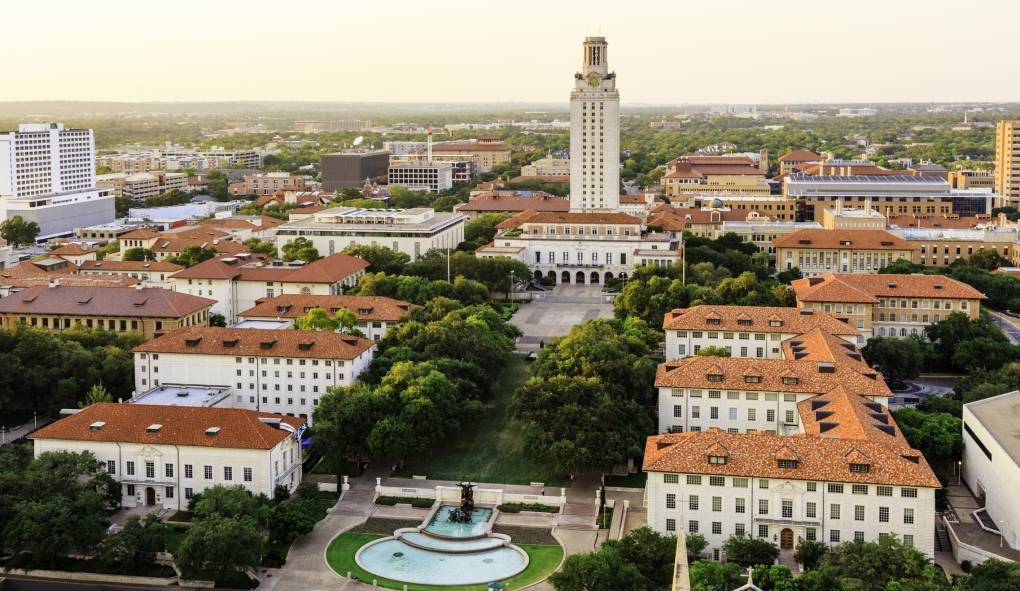
"caption": "University of Texas Austin campus at sunset.",
"description": null,
"title": "University of Texas (UT) Austin campus at sunset aerial view",
"credit": "Getty Images/dszc",
"status": "inherit",
"altTag": null,
"isLoading": false,
"fetchFailed": false
},
"mindshift_61312": {
"type": "attachments",
"id": "mindshift_61312",
"meta": {
"index": "attachments_1716263798",
"site": "mindshift",
"id": "61312",
"found": true
},
"parent": 61310,
"imgSizes": {
"twentyfourteen-full-width": {
"file": "https://ww2.kqed.org/app/uploads/sites/23/2023/03/iStock-DragonImages-1038x576.jpg",
"width": 1038,
"mimeType": "image/jpeg",
"height": 576
},
"thumbnail": {
"file": "https://ww2.kqed.org/app/uploads/sites/23/2023/03/iStock-DragonImages-160x107.jpg",
"width": 160,
"mimeType": "image/jpeg",
"height": 107
},
"post-thumbnail": {
"file": "https://ww2.kqed.org/app/uploads/sites/23/2023/03/iStock-DragonImages-672x372.jpg",
"width": 672,
"mimeType": "image/jpeg",
"height": 372
},
"kqedFullSize": {
"file": "https://ww2.kqed.org/app/uploads/sites/23/2023/03/iStock-DragonImages-scaled.jpg",
"width": 2560,
"height": 1709
},
"2048x2048": {
"file": "https://ww2.kqed.org/app/uploads/sites/23/2023/03/iStock-DragonImages-2048x1367.jpg",
"width": 2048,
"mimeType": "image/jpeg",
"height": 1367
},
"large": {
"file": "https://ww2.kqed.org/app/uploads/sites/23/2023/03/iStock-DragonImages-1020x681.jpg",
"width": 1020,
"mimeType": "image/jpeg",
"height": 681
},
"1536x1536": {
"file": "https://ww2.kqed.org/app/uploads/sites/23/2023/03/iStock-DragonImages-1536x1025.jpg",
"width": 1536,
"mimeType": "image/jpeg",
"height": 1025
},
"full-width": {
"file": "https://ww2.kqed.org/app/uploads/sites/23/2023/03/iStock-DragonImages-1920x1281.jpg",
"width": 1920,
"mimeType": "image/jpeg",
"height": 1281
},
"medium": {
"file": "https://ww2.kqed.org/app/uploads/sites/23/2023/03/iStock-DragonImages-800x534.jpg",
"width": 800,
"mimeType": "image/jpeg",
"height": 534
},
"medium_large": {
"file": "https://ww2.kqed.org/app/uploads/sites/23/2023/03/iStock-DragonImages-768x513.jpg",
"width": 768,
"mimeType": "image/jpeg",
"height": 513
}
},
"publishDate": 1680153755,
"modified": 1680153828,
"caption": null,
"description": null,
"title": null,
"credit": "iStock/DragonImages",
"status": "inherit",
"altTag": "Mother and daughter doing finger paints.",
"isLoading": false,
"fetchFailed": false
},
"mindshift_61284": {
"type": "attachments",
"id": "mindshift_61284",
"meta": {
"index": "attachments_1716263798",
"site": "mindshift",
"id": "61284",
"found": true
},
"parent": 61278,
"imgSizes": {
"twentyfourteen-full-width": {
"file": "https://ww2.kqed.org/app/uploads/sites/23/2023/03/iStock-525409577-1038x576.jpg",
"width": 1038,
"mimeType": "image/jpeg",
"height": 576
},
"thumbnail": {
"file": "https://ww2.kqed.org/app/uploads/sites/23/2023/03/iStock-525409577-160x107.jpg",
"width": 160,
"mimeType": "image/jpeg",
"height": 107
},
"post-thumbnail": {
"file": "https://ww2.kqed.org/app/uploads/sites/23/2023/03/iStock-525409577-672x372.jpg",
"width": 672,
"mimeType": "image/jpeg",
"height": 372
},
"kqedFullSize": {
"file": "https://ww2.kqed.org/app/uploads/sites/23/2023/03/iStock-525409577.jpg",
"width": 2121,
"height": 1414
},
"2048x2048": {
"file": "https://ww2.kqed.org/app/uploads/sites/23/2023/03/iStock-525409577-2048x1365.jpg",
"width": 2048,
"mimeType": "image/jpeg",
"height": 1365
},
"large": {
"file": "https://ww2.kqed.org/app/uploads/sites/23/2023/03/iStock-525409577-1020x680.jpg",
"width": 1020,
"mimeType": "image/jpeg",
"height": 680
},
"1536x1536": {
"file": "https://ww2.kqed.org/app/uploads/sites/23/2023/03/iStock-525409577-1536x1024.jpg",
"width": 1536,
"mimeType": "image/jpeg",
"height": 1024
},
"full-width": {
"file": "https://ww2.kqed.org/app/uploads/sites/23/2023/03/iStock-525409577-1920x1280.jpg",
"width": 1920,
"mimeType": "image/jpeg",
"height": 1280
},
"medium": {
"file": "https://ww2.kqed.org/app/uploads/sites/23/2023/03/iStock-525409577-800x533.jpg",
"width": 800,
"mimeType": "image/jpeg",
"height": 533
},
"medium_large": {
"file": "https://ww2.kqed.org/app/uploads/sites/23/2023/03/iStock-525409577-768x512.jpg",
"width": 768,
"mimeType": "image/jpeg",
"height": 512
}
},
"publishDate": 1679689993,
"modified": 1679690029,
"caption": null,
"description": null,
"title": null,
"credit": "istock/Caiaimage/Chris Ryan",
"status": "inherit",
"altTag": "Elevated view of students writing on paper taking exam at desks",
"isLoading": false,
"fetchFailed": false
},
"mindshift_61230": {
"type": "attachments",
"id": "mindshift_61230",
"meta": {
"index": "attachments_1716263798",
"site": "mindshift",
"id": "61230",
"found": true
},
"parent": 61228,
"imgSizes": {
"twentyfourteen-full-width": {
"file": "https://ww2.kqed.org/app/uploads/sites/23/2023/03/iStock-tiero-e1679099949671-1038x576.jpg",
"width": 1038,
"mimeType": "image/jpeg",
"height": 576
},
"thumbnail": {
"file": "https://ww2.kqed.org/app/uploads/sites/23/2023/03/iStock-tiero-e1679099949671-160x86.jpg",
"width": 160,
"mimeType": "image/jpeg",
"height": 86
},
"post-thumbnail": {
"file": "https://ww2.kqed.org/app/uploads/sites/23/2023/03/iStock-tiero-e1679099949671-672x372.jpg",
"width": 672,
"mimeType": "image/jpeg",
"height": 372
},
"kqedFullSize": {
"file": "https://ww2.kqed.org/app/uploads/sites/23/2023/03/iStock-tiero-e1679099949671.jpg",
"width": 1920,
"height": 1037
},
"2048x2048": {
"file": "https://ww2.kqed.org/app/uploads/sites/23/2023/03/iStock-tiero-2048x1107.jpg",
"width": 2048,
"mimeType": "image/jpeg",
"height": 1107
},
"large": {
"file": "https://ww2.kqed.org/app/uploads/sites/23/2023/03/iStock-tiero-e1679099949671-1020x551.jpg",
"width": 1020,
"mimeType": "image/jpeg",
"height": 551
},
"1536x1536": {
"file": "https://ww2.kqed.org/app/uploads/sites/23/2023/03/iStock-tiero-e1679099949671-1536x830.jpg",
"width": 1536,
"mimeType": "image/jpeg",
"height": 830
},
"full-width": {
"file": "https://ww2.kqed.org/app/uploads/sites/23/2023/03/iStock-tiero-1920x1037.jpg",
"width": 1920,
"mimeType": "image/jpeg",
"height": 1037
},
"medium": {
"file": "https://ww2.kqed.org/app/uploads/sites/23/2023/03/iStock-tiero-e1679099949671-800x432.jpg",
"width": 800,
"mimeType": "image/jpeg",
"height": 432
},
"medium_large": {
"file": "https://ww2.kqed.org/app/uploads/sites/23/2023/03/iStock-tiero-e1679099949671-768x415.jpg",
"width": 768,
"mimeType": "image/jpeg",
"height": 415
}
},
"publishDate": 1679099931,
"modified": 1679099998,
"caption": null,
"description": null,
"title": null,
"credit": "iStock/tiero",
"status": "inherit",
"altTag": "Empty desks and chairs in a school classroom",
"isLoading": false,
"fetchFailed": false
},
"mindshift_61133": {
"type": "attachments",
"id": "mindshift_61133",
"meta": {
"index": "attachments_1716263798",
"site": "mindshift",
"id": "61133",
"found": true
},
"parent": 60988,
"imgSizes": {
"twentyfourteen-full-width": {
"file": "https://ww2.kqed.org/app/uploads/sites/23/2023/03/Czanner-iStock-e1677942659932-1038x576.jpg",
"width": 1038,
"mimeType": "image/jpeg",
"height": 576
},
"thumbnail": {
"file": "https://ww2.kqed.org/app/uploads/sites/23/2023/03/Czanner-iStock-e1677942659932-160x107.jpg",
"width": 160,
"mimeType": "image/jpeg",
"height": 107
},
"post-thumbnail": {
"file": "https://ww2.kqed.org/app/uploads/sites/23/2023/03/Czanner-iStock-e1677942659932-672x372.jpg",
"width": 672,
"mimeType": "image/jpeg",
"height": 372
},
"kqedFullSize": {
"file": "https://ww2.kqed.org/app/uploads/sites/23/2023/03/Czanner-iStock-e1677942659932.jpg",
"width": 1920,
"height": 1280
},
"2048x2048": {
"file": "https://ww2.kqed.org/app/uploads/sites/23/2023/03/Czanner-iStock-2048x1365.jpg",
"width": 2048,
"mimeType": "image/jpeg",
"height": 1365
},
"large": {
"file": "https://ww2.kqed.org/app/uploads/sites/23/2023/03/Czanner-iStock-e1677942659932-1020x680.jpg",
"width": 1020,
"mimeType": "image/jpeg",
"height": 680
},
"1536x1536": {
"file": "https://ww2.kqed.org/app/uploads/sites/23/2023/03/Czanner-iStock-e1677942659932-1536x1024.jpg",
"width": 1536,
"mimeType": "image/jpeg",
"height": 1024
},
"full-width": {
"file": "https://ww2.kqed.org/app/uploads/sites/23/2023/03/Czanner-iStock-1920x1280.jpg",
"width": 1920,
"mimeType": "image/jpeg",
"height": 1280
},
"medium": {
"file": "https://ww2.kqed.org/app/uploads/sites/23/2023/03/Czanner-iStock-e1677942659932-800x533.jpg",
"width": 800,
"mimeType": "image/jpeg",
"height": 533
},
"medium_large": {
"file": "https://ww2.kqed.org/app/uploads/sites/23/2023/03/Czanner-iStock-e1677942659932-768x512.jpg",
"width": 768,
"mimeType": "image/jpeg",
"height": 512
}
},
"publishDate": 1677942638,
"modified": 1677942753,
"caption": null,
"description": null,
"title": null,
"credit": "Czanner/iStock",
"status": "inherit",
"altTag": "baby watching television and holding up remote",
"isLoading": false,
"fetchFailed": false
},
"mindshift_61204": {
"type": "attachments",
"id": "mindshift_61204",
"meta": {
"index": "attachments_1716263798",
"site": "mindshift",
"id": "61204",
"found": true
},
"parent": 61200,
"imgSizes": {
"twentyfourteen-full-width": {
"file": "https://ww2.kqed.org/app/uploads/sites/23/2023/03/yaoinlove-iStock-1038x576.jpg",
"width": 1038,
"mimeType": "image/jpeg",
"height": 576
},
"thumbnail": {
"file": "https://ww2.kqed.org/app/uploads/sites/23/2023/03/yaoinlove-iStock-160x107.jpg",
"width": 160,
"mimeType": "image/jpeg",
"height": 107
},
"post-thumbnail": {
"file": "https://ww2.kqed.org/app/uploads/sites/23/2023/03/yaoinlove-iStock-672x372.jpg",
"width": 672,
"mimeType": "image/jpeg",
"height": 372
},
"kqedFullSize": {
"file": "https://ww2.kqed.org/app/uploads/sites/23/2023/03/yaoinlove-iStock.jpg",
"width": 2121,
"height": 1414
},
"2048x2048": {
"file": "https://ww2.kqed.org/app/uploads/sites/23/2023/03/yaoinlove-iStock-2048x1365.jpg",
"width": 2048,
"mimeType": "image/jpeg",
"height": 1365
},
"large": {
"file": "https://ww2.kqed.org/app/uploads/sites/23/2023/03/yaoinlove-iStock-1020x680.jpg",
"width": 1020,
"mimeType": "image/jpeg",
"height": 680
},
"1536x1536": {
"file": "https://ww2.kqed.org/app/uploads/sites/23/2023/03/yaoinlove-iStock-1536x1024.jpg",
"width": 1536,
"mimeType": "image/jpeg",
"height": 1024
},
"full-width": {
"file": "https://ww2.kqed.org/app/uploads/sites/23/2023/03/yaoinlove-iStock-1920x1280.jpg",
"width": 1920,
"mimeType": "image/jpeg",
"height": 1280
},
"medium": {
"file": "https://ww2.kqed.org/app/uploads/sites/23/2023/03/yaoinlove-iStock-800x533.jpg",
"width": 800,
"mimeType": "image/jpeg",
"height": 533
},
"medium_large": {
"file": "https://ww2.kqed.org/app/uploads/sites/23/2023/03/yaoinlove-iStock-768x512.jpg",
"width": 768,
"mimeType": "image/jpeg",
"height": 512
}
},
"publishDate": 1678504358,
"modified": 1678504514,
"caption": null,
"description": null,
"title": "Asian children learning English with flash cards, Teach young kids English at home, Child at home, kindergarten closed during the Covid-19 health crisis",
"credit": "iStock/yaoinlove",
"status": "inherit",
"altTag": "Asian or Asian American kindergarten boy holding up one flash card with a capital 'A' and lowercase 'a' and a second flash card with a capital 'B' and a lowercase 'b'",
"isLoading": false,
"fetchFailed": false
},
"mindshift_61136": {
"type": "attachments",
"id": "mindshift_61136",
"meta": {
"index": "attachments_1716263798",
"site": "mindshift",
"id": "61136",
"found": true
},
"parent": 61134,
"imgSizes": {
"twentyfourteen-full-width": {
"file": "https://ww2.kqed.org/app/uploads/sites/23/2023/03/fizkes-iStock-1038x576.jpg",
"width": 1038,
"mimeType": "image/jpeg",
"height": 576
},
"thumbnail": {
"file": "https://ww2.kqed.org/app/uploads/sites/23/2023/03/fizkes-iStock-160x107.jpg",
"width": 160,
"mimeType": "image/jpeg",
"height": 107
},
"post-thumbnail": {
"file": "https://ww2.kqed.org/app/uploads/sites/23/2023/03/fizkes-iStock-672x372.jpg",
"width": 672,
"mimeType": "image/jpeg",
"height": 372
},
"kqedFullSize": {
"file": "https://ww2.kqed.org/app/uploads/sites/23/2023/03/fizkes-iStock.jpg",
"width": 2121,
"height": 1414
},
"2048x2048": {
"file": "https://ww2.kqed.org/app/uploads/sites/23/2023/03/fizkes-iStock-2048x1365.jpg",
"width": 2048,
"mimeType": "image/jpeg",
"height": 1365
},
"large": {
"file": "https://ww2.kqed.org/app/uploads/sites/23/2023/03/fizkes-iStock-1020x680.jpg",
"width": 1020,
"mimeType": "image/jpeg",
"height": 680
},
"1536x1536": {
"file": "https://ww2.kqed.org/app/uploads/sites/23/2023/03/fizkes-iStock-1536x1024.jpg",
"width": 1536,
"mimeType": "image/jpeg",
"height": 1024
},
"full-width": {
"file": "https://ww2.kqed.org/app/uploads/sites/23/2023/03/fizkes-iStock-1920x1280.jpg",
"width": 1920,
"mimeType": "image/jpeg",
"height": 1280
},
"medium": {
"file": "https://ww2.kqed.org/app/uploads/sites/23/2023/03/fizkes-iStock-800x533.jpg",
"width": 800,
"mimeType": "image/jpeg",
"height": 533
},
"medium_large": {
"file": "https://ww2.kqed.org/app/uploads/sites/23/2023/03/fizkes-iStock-768x512.jpg",
"width": 768,
"mimeType": "image/jpeg",
"height": 512
}
},
"publishDate": 1678048237,
"modified": 1678048372,
"caption": null,
"description": null,
"title": "Happy focused Asian young female student studying on online class.",
"credit": "fizkes/iStock",
"status": "inherit",
"altTag": "Asian female college student with blonde hair wearing headphones and using a laptop at the library",
"isLoading": false,
"fetchFailed": false
},
"mindshift_61114": {
"type": "attachments",
"id": "mindshift_61114",
"meta": {
"index": "attachments_1716263798",
"site": "mindshift",
"id": "61114",
"found": true
},
"parent": 61101,
"imgSizes": {
"twentyfourteen-full-width": {
"file": "https://ww2.kqed.org/app/uploads/sites/23/2023/02/iStock-1430133631-1038x576.jpg",
"width": 1038,
"mimeType": "image/jpeg",
"height": 576
},
"thumbnail": {
"file": "https://ww2.kqed.org/app/uploads/sites/23/2023/02/iStock-1430133631-160x107.jpg",
"width": 160,
"mimeType": "image/jpeg",
"height": 107
},
"post-thumbnail": {
"file": "https://ww2.kqed.org/app/uploads/sites/23/2023/02/iStock-1430133631-672x372.jpg",
"width": 672,
"mimeType": "image/jpeg",
"height": 372
},
"kqedFullSize": {
"file": "https://ww2.kqed.org/app/uploads/sites/23/2023/02/iStock-1430133631.jpg",
"width": 2121,
"height": 1414
},
"2048x2048": {
"file": "https://ww2.kqed.org/app/uploads/sites/23/2023/02/iStock-1430133631-2048x1365.jpg",
"width": 2048,
"mimeType": "image/jpeg",
"height": 1365
},
"large": {
"file": "https://ww2.kqed.org/app/uploads/sites/23/2023/02/iStock-1430133631-1020x680.jpg",
"width": 1020,
"mimeType": "image/jpeg",
"height": 680
},
"1536x1536": {
"file": "https://ww2.kqed.org/app/uploads/sites/23/2023/02/iStock-1430133631-1536x1024.jpg",
"width": 1536,
"mimeType": "image/jpeg",
"height": 1024
},
"full-width": {
"file": "https://ww2.kqed.org/app/uploads/sites/23/2023/02/iStock-1430133631-1920x1280.jpg",
"width": 1920,
"mimeType": "image/jpeg",
"height": 1280
},
"medium": {
"file": "https://ww2.kqed.org/app/uploads/sites/23/2023/02/iStock-1430133631-800x533.jpg",
"width": 800,
"mimeType": "image/jpeg",
"height": 533
},
"medium_large": {
"file": "https://ww2.kqed.org/app/uploads/sites/23/2023/02/iStock-1430133631-768x512.jpg",
"width": 768,
"mimeType": "image/jpeg",
"height": 512
}
},
"publishDate": 1677293578,
"modified": 1677294074,
"caption": null,
"description": null,
"title": null,
"credit": "Eduard Figueres/iStock",
"status": "inherit",
"altTag": "Teacher helping three high school or college students at a table with a laptop.",
"isLoading": false,
"fetchFailed": false
},
"mindshift_61048": {
"type": "attachments",
"id": "mindshift_61048",
"meta": {
"index": "attachments_1716263798",
"site": "mindshift",
"id": "61048",
"found": true
},
"parent": 61037,
"imgSizes": {
"twentyfourteen-full-width": {
"file": "https://ww2.kqed.org/app/uploads/sites/23/2023/02/a_image-1038x576.jpe",
"width": 1038,
"mimeType": "image/jpeg",
"height": 576
},
"thumbnail": {
"file": "https://ww2.kqed.org/app/uploads/sites/23/2023/02/a_image-160x102.jpe",
"width": 160,
"mimeType": "image/jpeg",
"height": 102
},
"post-thumbnail": {
"file": "https://ww2.kqed.org/app/uploads/sites/23/2023/02/a_image-672x372.jpe",
"width": 672,
"mimeType": "image/jpeg",
"height": 372
},
"kqedFullSize": {
"file": "https://ww2.kqed.org/app/uploads/sites/23/2023/02/a_image.jpe",
"width": 1600,
"height": 1021
},
"large": {
"file": "https://ww2.kqed.org/app/uploads/sites/23/2023/02/a_image-1020x651.jpe",
"width": 1020,
"mimeType": "image/jpeg",
"height": 651
},
"1536x1536": {
"file": "https://ww2.kqed.org/app/uploads/sites/23/2023/02/a_image-1536x980.jpe",
"width": 1536,
"mimeType": "image/jpeg",
"height": 980
},
"medium": {
"file": "https://ww2.kqed.org/app/uploads/sites/23/2023/02/a_image-800x511.jpe",
"width": 800,
"mimeType": "image/jpeg",
"height": 511
},
"medium_large": {
"file": "https://ww2.kqed.org/app/uploads/sites/23/2023/02/a_image-768x490.jpe",
"width": 768,
"mimeType": "image/jpeg",
"height": 490
}
},
"publishDate": 1676767905,
"modified": 1676767979,
"caption": "National Student Clearinghouse DEI Data Lab 2023",
"description": null,
"title": "a_image",
"credit": null,
"status": "inherit",
"altTag": null,
"isLoading": false,
"fetchFailed": false
},
"mindshift_61010": {
"type": "attachments",
"id": "mindshift_61010",
"meta": {
"index": "attachments_1716263798",
"site": "mindshift",
"id": "61010",
"found": true
},
"parent": 61007,
"imgSizes": {
"twentyfourteen-full-width": {
"file": "https://ww2.kqed.org/app/uploads/sites/23/2023/02/Barshay-780x576.jpg",
"width": 780,
"mimeType": "image/jpeg",
"height": 576
},
"thumbnail": {
"file": "https://ww2.kqed.org/app/uploads/sites/23/2023/02/Barshay-160x120.jpg",
"width": 160,
"mimeType": "image/jpeg",
"height": 120
},
"post-thumbnail": {
"file": "https://ww2.kqed.org/app/uploads/sites/23/2023/02/Barshay-672x372.jpg",
"width": 672,
"mimeType": "image/jpeg",
"height": 372
},
"kqedFullSize": {
"file": "https://ww2.kqed.org/app/uploads/sites/23/2023/02/Barshay.jpg",
"width": 780,
"height": 585
},
"medium_large": {
"file": "https://ww2.kqed.org/app/uploads/sites/23/2023/02/Barshay-768x576.jpg",
"width": 768,
"mimeType": "image/jpeg",
"height": 576
}
},
"publishDate": 1676163648,
"modified": 1676163751,
"caption": "The High School of Fashion Industries in New York City is one of thousands of schools around the country that are offering high-dosage tutoring to students. A new federal survey estimates that 10 percent of U.S. students are receiving this kind of intensive, daily tutoring, which can take place in person or virtually. In this classroom, some students are working with a tutor through a video connection on their laptops.",
"description": null,
"title": "Barshay",
"credit": "Jill Barshay/The Hechinger Report",
"status": "inherit",
"altTag": null,
"isLoading": false,
"fetchFailed": false
},
"mindshift_60956": {
"type": "attachments",
"id": "mindshift_60956",
"meta": {
"index": "attachments_1716263798",
"site": "mindshift",
"id": "60956",
"found": true
},
"parent": 60955,
"imgSizes": {
"twentyfourteen-full-width": {
"file": "https://ww2.kqed.org/app/uploads/sites/23/2023/02/iStock-1332728408-e1675450398517-1038x576.jpg",
"width": 1038,
"mimeType": "image/jpeg",
"height": 576
},
"thumbnail": {
"file": "https://ww2.kqed.org/app/uploads/sites/23/2023/02/iStock-1332728408-e1675450398517-160x107.jpg",
"width": 160,
"mimeType": "image/jpeg",
"height": 107
},
"post-thumbnail": {
"file": "https://ww2.kqed.org/app/uploads/sites/23/2023/02/iStock-1332728408-e1675450398517-672x372.jpg",
"width": 672,
"mimeType": "image/jpeg",
"height": 372
},
"kqedFullSize": {
"file": "https://ww2.kqed.org/app/uploads/sites/23/2023/02/iStock-1332728408-e1675450398517.jpg",
"width": 1920,
"height": 1280
},
"2048x2048": {
"file": "https://ww2.kqed.org/app/uploads/sites/23/2023/02/iStock-1332728408-2048x1365.jpg",
"width": 2048,
"mimeType": "image/jpeg",
"height": 1365
},
"large": {
"file": "https://ww2.kqed.org/app/uploads/sites/23/2023/02/iStock-1332728408-e1675450398517-1020x680.jpg",
"width": 1020,
"mimeType": "image/jpeg",
"height": 680
},
"1536x1536": {
"file": "https://ww2.kqed.org/app/uploads/sites/23/2023/02/iStock-1332728408-e1675450398517-1536x1024.jpg",
"width": 1536,
"mimeType": "image/jpeg",
"height": 1024
},
"full-width": {
"file": "https://ww2.kqed.org/app/uploads/sites/23/2023/02/iStock-1332728408-1920x1280.jpg",
"width": 1920,
"mimeType": "image/jpeg",
"height": 1280
},
"medium": {
"file": "https://ww2.kqed.org/app/uploads/sites/23/2023/02/iStock-1332728408-e1675450398517-800x533.jpg",
"width": 800,
"mimeType": "image/jpeg",
"height": 533
},
"medium_large": {
"file": "https://ww2.kqed.org/app/uploads/sites/23/2023/02/iStock-1332728408-e1675450398517-768x512.jpg",
"width": 768,
"mimeType": "image/jpeg",
"height": 512
}
},
"publishDate": 1675450352,
"modified": 1675451091,
"caption": null,
"description": null,
"title": null,
"credit": "Siarhei SHUNTSIKAU/istock",
"status": "inherit",
"altTag": "two preschoolers",
"isLoading": false,
"fetchFailed": false
},
"mindshift_60872": {
"type": "attachments",
"id": "mindshift_60872",
"meta": {
"index": "attachments_1716263798",
"site": "mindshift",
"id": "60872",
"found": true
},
"parent": 60868,
"imgSizes": {
"twentyfourteen-full-width": {
"file": "https://ww2.kqed.org/app/uploads/sites/23/2023/01/willinghambook-1038x576.jpg",
"width": 1038,
"mimeType": "image/jpeg",
"height": 576
},
"thumbnail": {
"file": "https://ww2.kqed.org/app/uploads/sites/23/2023/01/willinghambook-160x120.jpg",
"width": 160,
"mimeType": "image/jpeg",
"height": 120
},
"post-thumbnail": {
"file": "https://ww2.kqed.org/app/uploads/sites/23/2023/01/willinghambook-672x372.jpg",
"width": 672,
"mimeType": "image/jpeg",
"height": 372
},
"kqedFullSize": {
"file": "https://ww2.kqed.org/app/uploads/sites/23/2023/01/willinghambook-scaled-e1674253021422.jpg",
"width": 1920,
"height": 1440
},
"2048x2048": {
"file": "https://ww2.kqed.org/app/uploads/sites/23/2023/01/willinghambook-2048x1536.jpg",
"width": 2048,
"mimeType": "image/jpeg",
"height": 1536
},
"large": {
"file": "https://ww2.kqed.org/app/uploads/sites/23/2023/01/willinghambook-1020x765.jpg",
"width": 1020,
"mimeType": "image/jpeg",
"height": 765
},
"1536x1536": {
"file": "https://ww2.kqed.org/app/uploads/sites/23/2023/01/willinghambook-1536x1152.jpg",
"width": 1536,
"mimeType": "image/jpeg",
"height": 1152
},
"full-width": {
"file": "https://ww2.kqed.org/app/uploads/sites/23/2023/01/willinghambook-1920x1440.jpg",
"width": 1920,
"mimeType": "image/jpeg",
"height": 1440
},
"medium": {
"file": "https://ww2.kqed.org/app/uploads/sites/23/2023/01/willinghambook-800x600.jpg",
"width": 800,
"mimeType": "image/jpeg",
"height": 600
},
"medium_large": {
"file": "https://ww2.kqed.org/app/uploads/sites/23/2023/01/willinghambook-768x576.jpg",
"width": 768,
"mimeType": "image/jpeg",
"height": 576
}
},
"publishDate": 1674253001,
"modified": 1674253214,
"caption": "University of Virginia psychologist Daniel Willingham's new book, \"Outsmart Your Brain,\" points out all the wrong ways that students do homework, take notes in class or study for tests.",
"description": null,
"title": "willinghambook",
"credit": "Adam Mohr for Simon & Schuster",
"status": "inherit",
"altTag": null,
"isLoading": false,
"fetchFailed": false
}
},
"audioPlayerReducer": {
"postId": "stream_live",
"isPaused": true,
"isPlaying": false,
"pfsActive": false,
"pledgeModalIsOpen": true,
"playerDrawerIsOpen": false,
"liveAudioPlayStartedAt": 0,
"liveAudioPlayContext": ""
},
"authorsReducer": {
"byline_mindshift_61408": {
"type": "authors",
"id": "byline_mindshift_61408",
"meta": {
"override": true
},
"slug": "byline_mindshift_61408",
"name": "Jill Barshay, \u003ca href=\"https://hechingerreport.org/\" target=\"_blank\">The Hechinger Report\u003c/a>",
"isLoading": false
},
"byline_mindshift_61310": {
"type": "authors",
"id": "byline_mindshift_61310",
"meta": {
"override": true
},
"slug": "byline_mindshift_61310",
"name": "Cara Goodwin, \u003ca href=\"https://parentingtranslator.org\" target=\"_blank\">The Parenting Translator\u003c/a>",
"isLoading": false
},
"byline_mindshift_61278": {
"type": "authors",
"id": "byline_mindshift_61278",
"meta": {
"override": true
},
"slug": "byline_mindshift_61278",
"name": "Jill Barshay, \u003ca href=\"https://hechingerreport.org/\" target=\"_blank\">The Hechinger Report\u003c/a>",
"isLoading": false
},
"byline_mindshift_61228": {
"type": "authors",
"id": "byline_mindshift_61228",
"meta": {
"override": true
},
"slug": "byline_mindshift_61228",
"name": "Jill Barshay, \u003ca href=\"https://hechingerreport.org/\" target=\"_blank\">The Hechinger Report\u003c/a>",
"isLoading": false
},
"byline_mindshift_60988": {
"type": "authors",
"id": "byline_mindshift_60988",
"meta": {
"override": true
},
"slug": "byline_mindshift_60988",
"name": "Cara Goodwin, \u003ca href=\"https://www.parentingtranslator.com/\" target=\"blank\">The Parenting Translator\u003c/a>",
"isLoading": false
},
"byline_mindshift_61200": {
"type": "authors",
"id": "byline_mindshift_61200",
"meta": {
"override": true
},
"slug": "byline_mindshift_61200",
"name": "Jill Barshay, \u003ca href=\"https://hechingerreport.org/\" target=\"_blank\">The Hechinger Report\u003c/a>",
"isLoading": false
},
"byline_mindshift_61134": {
"type": "authors",
"id": "byline_mindshift_61134",
"meta": {
"override": true
},
"slug": "byline_mindshift_61134",
"name": "Jill Barshay, \u003ca href=\"https://hechingerreport.org/\" target=\"_blank\">The Hechinger Report\u003c/a>",
"isLoading": false
},
"byline_mindshift_61101": {
"type": "authors",
"id": "byline_mindshift_61101",
"meta": {
"override": true
},
"slug": "byline_mindshift_61101",
"name": "Jill Barshay, \u003ca href=\"https://hechingerreport.org/\" target=\"_blank\">The Hechinger Report\u003c/a>",
"isLoading": false
},
"byline_mindshift_61037": {
"type": "authors",
"id": "byline_mindshift_61037",
"meta": {
"override": true
},
"slug": "byline_mindshift_61037",
"name": "Jill Barshay, \u003ca href=\"https://hechingerreport.org/\" target=\"_blank\">The Hechinger Report\u003c/a>",
"isLoading": false
},
"byline_mindshift_61007": {
"type": "authors",
"id": "byline_mindshift_61007",
"meta": {
"override": true
},
"slug": "byline_mindshift_61007",
"name": "Jill Barshay, \u003ca href=\"https://hechingerreport.org/\" target=\"_blank\">The Hechinger Report\u003c/a>",
"isLoading": false
},
"byline_mindshift_60955": {
"type": "authors",
"id": "byline_mindshift_60955",
"meta": {
"override": true
},
"slug": "byline_mindshift_60955",
"name": "Jill Barshay, \u003ca href=\"https://hechingerreport.org/\" target=\"_blank\">The Hechinger Report\u003c/a>",
"isLoading": false
},
"byline_mindshift_60868": {
"type": "authors",
"id": "byline_mindshift_60868",
"meta": {
"override": true
},
"slug": "byline_mindshift_60868",
"name": "Jill Barshay, \u003ca href=\"https://hechingerreport.org/\" target=\"_blank\">The Hechinger Report\u003c/a>",
"isLoading": false
}
},
"pagesReducer": {
"mindshift_category_education-research": {
"type": "terms",
"id": "mindshift_21504",
"meta": {
"index": "terms_1716263798",
"site": "mindshift",
"id": "21504",
"score": 14.402946
},
"featImg": null,
"name": "Education research",
"description": null,
"taxonomy": "category",
"headData": {
"twImgId": null,
"twTitle": null,
"ogTitle": null,
"ogImgId": null,
"twDescription": null,
"description": null,
"title": "Education research Archives | KQED Mindshift",
"ogDescription": null
},
"ttid": 20776,
"slug": "education-research",
"isLoading": false,
"title": "Education research",
"pageMeta": {
"site": "mindshift",
"WpPageTemplate": "page-topic-editorial",
"currentPage": 15
},
"blocks": [
{
"blockName": "kqed/post-list",
"attrs": {
"layout": "cardArticle2",
"query": "posts/mindshift?category=education-research",
"seeMore": false,
"paginated": true,
"page": 15
}
},
{
"blockName": "kqed/ad"
}
]
}
},
"pfsSessionReducer": {},
"postsReducer": {
"stream_live": {
"type": "live",
"id": "stream_live",
"audioUrl": "https://streams.kqed.org/kqedradio",
"title": "Live Stream",
"excerpt": "Live Stream information currently unavailable.",
"link": "/radio",
"featImg": "",
"label": {
"name": "KQED Live",
"link": "/"
}
},
"stream_kqedNewscast": {
"type": "posts",
"id": "stream_kqedNewscast",
"audioUrl": "https://www.kqed.org/.stream/anon/radio/RDnews/newscast.mp3?_=1",
"title": "KQED Newscast",
"featImg": "",
"label": {
"name": "88.5 FM",
"link": "/"
}
},
"mindshift_61408": {
"type": "posts",
"id": "mindshift_61408",
"meta": {
"index": "posts_1716263798",
"site": "mindshift",
"id": "61408",
"score": null,
"sort": [
1681725641000
]
},
"parent": 0,
"labelTerm": {
"site": "mindshift"
},
"blocks": [],
"publishDate": 1681725641,
"format": "standard",
"title": "No-limits federal borrowing for graduate school pushed prices up for all",
"headTitle": "No-limits federal borrowing for graduate school pushed prices up for all | KQED",
"content": "\u003cp>\u003cspan style=\"font-weight: 400\">In a 1987 opinion piece in The New York Times, William Bennett, former President Ronald Reagan’s Secretary of Education, explained how he thought federal policy was partly to blame for rising college tuition. Under the headline “\u003c/span>\u003ca href=\"https://www.nytimes.com/1987/02/18/opinion/our-greedy-colleges.html\" target=\"_blank\" rel=\"noopener\">\u003cspan style=\"font-weight: 400\">Our Greedy Colleges\u003c/span>\u003c/a>\u003cspan style=\"font-weight: 400\">,” Bennett wrote that “increases in financial aid in recent years have enabled colleges and universities blithely to raise their tuitions, confident that Federal loan subsidies would help cushion the increase … Federal student aid policies do not cause college price inflation, but there is little doubt that they help make it possible.” In other words, Bennett argued, when colleges are aware that students have easy access to cheap loans to pay their bills, they’re more likely to hike prices.\u003c/span>\u003c/p>\n\u003cp>\u003cspan style=\"font-weight: 400\">This theory became known as the “Bennett Hypothesis.” Since then, as Uncle Sam created and expanded direct student lending programs, the Bennett Hypothesis has been hotly debated. Now, a team of economists has found evidence that subsidized loans have been a major reason why tuition has soared in one sector of higher education: graduate school. \u003c/span>\u003c/p>\n\u003cp>\u003cspan style=\"font-weight: 400\">The federal government limits how much it loans undergraduates. But in 2006, the Republican-controlled Congress effectively eliminated all limits on loans for graduate school with the creation of the Graduate PLUS loan program. Students could borrow as much as their graduate programs cost, including fees, books, supplies and living expenses. The idea was to help more middle- and low-income Americans afford graduate programs, ranging from master’s degrees in education and social work to professional degrees in law, business and medicine. Doctoral students generally receive tuition waivers and stipends, but funding has always been far more limited for professional degrees and many graduate students previously relied on expensive loans from private banks. Advocates argued that the prospect of these bank loans kept many low-income Americans from pursuing a graduate degree.\u003c/span>\u003c/p>\n\u003cp>\u003cspan style=\"font-weight: 400\">Borrowing for graduate school has since soared. Graduate students constitute only 16% of postsecondary students, but they received \u003c/span>\u003ca href=\"https://research.collegeboard.org/media/pdf/trends-in-college-pricing-student-aid-2022.pdf\" target=\"_blank\" rel=\"noopener\">\u003cspan style=\"font-weight: 400\">almost half of the $95 billion in new federal student loans\u003c/span>\u003c/a>\u003cspan style=\"font-weight: 400\"> issued in 2021-22, according to the most recent data available. And when you look at the entire stock of $1.6 trillion in outstanding federal student loan debt, it’s estimated that \u003c/span>\u003ca href=\"https://www.cbo.gov/system/files/2020-11/56706-student-loans.pdf\" target=\"_blank\" rel=\"noopener\">\u003cspan style=\"font-weight: 400\">40% of it was used to pay for graduate school\u003c/span>\u003c/a>\u003cspan style=\"font-weight: 400\">. The numbers are big because graduate students take out big loans. It’s not uncommon for a medical student to borrow more than $100,000. Almost \u003c/span>\u003ca href=\"https://www.brookings.edu/wp-content/uploads/2016/07/pdflooneytextfallbpea.pdf\" target=\"_blank\" rel=\"noopener\">\u003cspan style=\"font-weight: 400\">two-thirds of Americans with the largest student loan balances\u003c/span>\u003c/a>\u003cspan style=\"font-weight: 400\">, exceeding $50,000, borrowed to attend graduate school. \u003c/span>\u003c/p>\n\u003cp>\u003cspan style=\"font-weight: 400\">A team of three economists from Columbia, Vanderbilt and Brigham Young universities had access to a trove of data in Texas and they calculated how the universities in that state charged more tuition when students were able to borrow more from the federal government. The posted cost of attendance (also known as list price or sticker price) increased one dollar for every dollar that students borrowed in Grad PLUS loans. But that overstates the loan-driven inflation because, at the same time, admissions offices were ramping up their practice of price discrimination, wooing some students by slashing their bills with grant and “merit aid” offers. The actual net price that many students paid was considerably lower than the posted tuition price. Factoring that in, the inflationary effect of unlimited graduate student loans was actually more modest, a 64-cent increase in net price of attendance for every dollar borrowed. For every additional $1,000 that a graduate student borrowed from the federal government, the university effectively took $640 of it for itself.\u003c/span>\u003c/p>\n\u003cp>[ad fullwidth]\u003c/p>\n\u003cp>\u003cspan style=\"font-weight: 400\">“Overall, our results demonstrate that schools do in fact respond to increased loan access by increasing tuition,” the researchers wrote in a draft study, “\u003c/span>\u003ca href=\"https://lesleyjturner.com/GradPLUS_Feb2023.pdf\" target=\"_blank\" rel=\"noopener\">\u003cspan style=\"font-weight: 400\">PLUS or Minus? The Effect of Graduate School Loans on Access, Attainment and Prices\u003c/span>\u003c/a>\u003cspan style=\"font-weight: 400\">.” I read a preliminary draft version of the study, dated February 2023, which was publicly posted online by one of the authors. The authors revised their calculations in April 2023 and I am using their latest figures here.\u003c/span>\u003c/p>\n\u003cp>\u003cspan style=\"font-weight: 400\">Tuition certainly would have increased even without federal loans. To disentangle how much of the tuition hikes could be attributed to the availability of easy and cheap student loans after 2006, the economists essentially divided all the universities in Texas, both public institutions such as the University of Texas and private institutions such as Rice University, into two groups. One group included universities that served a higher share of graduate students who were already borrowing as much as they could from the federal government before 2006 (roughly $18,500 a year in Stafford loans). The second group included institutions that primarily served graduate students who were borrowing less. Some graduate programs charged less than $18,500 a year and students generally didn’t need to borrow more. In theory, their students should be unaffected by the ability to take out unlimited loans because they already had room to borrow more.\u003c/span>\u003c/p>\n\u003cp>\u003cspan style=\"font-weight: 400\">Before 2006, both groups of universities had hiked tuition at the same pace. But after 2006, there was a schism. There were much larger tuition hikes at the more expensive universities where many students had been at their borrowing limit. These institutions raised their prices more and their students borrowed more to pay these bills. By contrast, there were much smaller tuition hikes at the second group of universities where fewer students had been maxing out their federal loans. \u003c/span>\u003c/p>\n\u003cp>\u003cspan style=\"font-weight: 400\">The authors contend that the universities had “captured” some of the additional federal funds for themselves. Students who were already saddled with the most debt had to take on more debt to pay higher bills. \u003c/span>\u003c/p>\n\u003cp>\u003cspan style=\"font-weight: 400\">The economists looked to see if there were other benefits from unlimited graduate school loans. Unfortunately, they didn’t find any. The policy didn’t increase the number of students enrolled in graduate programs in Texas universities. It didn’t improve the demographic composition of new graduate student cohorts. There were the same percentages of Black, Hispanic and Native American students after the 2006 policy change as there were before. Gender composition was the same too.\u003c/span>\u003c/p>\n\u003cp>\u003cspan style=\"font-weight: 400\">The ability to pay college bills didn’t help more students complete their graduate degrees; graduation rates stayed the same. There was little evidence that students’ earnings in the workplace were any higher after graduate school.\u003c/span>\u003c/p>\n\u003cp>\u003cspan style=\"font-weight: 400\">One major caveat is that the researchers analyzed only graduate programs that existed before the policy change to document how they changed afterwards. We don’t know from this study if new graduate programs significantly increased access to graduate school or diversified their student ranks. This study ended with students who entered graduate school in 2009-10; it’s possible that the hoped-for benefits of unlimited lending kicked in afterwards.\u003c/span>\u003c/p>\n\u003cp>\u003cspan style=\"font-weight: 400\">The saddest part of this analysis is how the availability of loans saddled students with more debt, and there are hints that this burden was especially borne by Black students. In the study, the authors documented how universities used grant aid to woo prospective graduate students and there are indications that very little of this aid was targeted to Black students. That left many Black graduate students taking out larger loans to pay higher tuition bills than their white, Asian American and Hispanic peers. White and Asian American students effectively had the lowest tuition increases. Hispanic students fell in between. \u003c/span>\u003c/p>\n\u003cp>\u003cspan style=\"font-weight: 400\">Well-intentioned policies can backfire. Access to cheaper loans was supposed to create more opportunities for Americans. But this study found that this didn’t happen in practice.\u003c/span>\u003c/p>\n\u003cp>\u003cspan style=\"font-weight: 400\">The Texas study looked only at loans to graduate students. The results are very different for undergraduates. In their \u003c/span>\u003ca href=\"https://www.nber.org/papers/w27658\" target=\"_blank\" rel=\"noopener\">\u003cspan style=\"font-weight: 400\">previous research\u003c/span>\u003c/a>\u003cspan style=\"font-weight: 400\">, the authors of this study found that the increase in undergraduate loan limits had been very helpful to students. They documented significantly higher rates of college graduation and post-college earnings in the workplace. Several studies have found that federal lending has helped community college students. Access to credit can make a positive difference. \u003c/span>\u003c/p>\n\u003cp>\u003cspan style=\"font-weight: 400\">But just because a policy works in one area of higher education, undergraduate degrees, doesn’t mean it will work for all areas. Education financing is complicated. As policy makers in Washington debate extending \u003c/span>\u003ca href=\"https://www.highereddive.com/news/short-term-pell-congressional-support-undecided-details/646704/\" target=\"_blank\" rel=\"noopener\">\u003cspan style=\"font-weight: 400\">more financial aid for non-degree certifications\u003c/span>\u003c/a>\u003cspan style=\"font-weight: 400\"> – short-term programs in a professional field – they would be well-served to read this study and think through whether or not it is likely to be another example of the Bennett Hypothesis.\u003c/span>\u003c/p>\n\u003cp>[ad floatright]\u003c/p>\n\u003cp>\u003ci>\u003cspan style=\"font-weight: 400\">This story about graduate school loans was written by Jill Barshay and produced by \u003c/span>\u003c/i>\u003ca href=\"https://hechingerreport.org/special-reports/higher-education/\" target=\"_blank\" rel=\"noopener\">\u003cspan style=\"font-weight: 400\">The Hechinger Report\u003c/span>\u003c/a>\u003ci>\u003cspan style=\"font-weight: 400\">, a nonprofit, independent news organization focused on inequality and innovation in education. Sign up for \u003c/span>\u003c/i>\u003ca href=\"https://hechingerreport.org/proofpoints/\" target=\"_blank\" rel=\"noopener\">\u003ci>\u003cspan style=\"font-weight: 400\">Proof Points\u003c/span>\u003c/i>\u003c/a>\u003ci>\u003cspan style=\"font-weight: 400\"> and other \u003c/span>\u003c/i>\u003ca href=\"https://hechingerreport.org/newsletters/\" target=\"_blank\" rel=\"noopener\">\u003ci>\u003cspan style=\"font-weight: 400\">Hechinger newsletters\u003c/span>\u003c/i>\u003c/a>\u003ci>\u003cspan style=\"font-weight: 400\">.\u003c/span>\u003c/i>\u003cspan style=\"font-weight: 400\"> \u003c/span>\u003c/p>\n\n",
"stats": {
"hasVideo": false,
"hasChartOrMap": false,
"hasAudio": false,
"hasPolis": false,
"wordCount": 1477,
"hasGoogleForm": false,
"hasGallery": false,
"hasHearkenModule": false,
"iframeSrcs": [],
"paragraphCount": 19
},
"modified": 1681694583,
"excerpt": "The Graduate PLUS loan program was intended to make graduate degrees more accessible. Instead it drove up tuition, according to a Texas study.",
"headData": {
"twImgId": "",
"twTitle": "",
"ogTitle": "",
"ogImgId": "",
"twDescription": "",
"description": "The Graduate PLUS loan program was intended to make graduate degrees more accessible. Instead it drove up tuition, according to a Texas study.",
"title": "No-limits federal borrowing for graduate school pushed prices up for all | KQED",
"ogDescription": "",
"schema": {
"@context": "https://schema.org",
"@type": "Article",
"headline": "No-limits federal borrowing for graduate school pushed prices up for all",
"datePublished": "2023-04-17T03:00:41-07:00",
"dateModified": "2023-04-16T18:23:03-07:00",
"image": "https://cdn.kqed.org/wp-content/uploads/2020/02/KQED-OG-Image@1x.png"
}
},
"guestAuthors": [],
"slug": "grad-plus-loans",
"status": "publish",
"nprByline": "Jill Barshay, \u003ca href=\"https://hechingerreport.org/\" target=\"_blank\">The Hechinger Report\u003c/a>",
"excludeFromSiteSearch": "Include",
"showOnAuthorArchivePages": "No",
"articleAge": "0",
"path": "/mindshift/61408/grad-plus-loans",
"audioTrackLength": null,
"parsedContent": [
{
"type": "contentString",
"content": "\u003cdiv class=\"post-body\">\u003cp>\u003cp>\u003cspan style=\"font-weight: 400\">In a 1987 opinion piece in The New York Times, William Bennett, former President Ronald Reagan’s Secretary of Education, explained how he thought federal policy was partly to blame for rising college tuition. Under the headline “\u003c/span>\u003ca href=\"https://www.nytimes.com/1987/02/18/opinion/our-greedy-colleges.html\" target=\"_blank\" rel=\"noopener\">\u003cspan style=\"font-weight: 400\">Our Greedy Colleges\u003c/span>\u003c/a>\u003cspan style=\"font-weight: 400\">,” Bennett wrote that “increases in financial aid in recent years have enabled colleges and universities blithely to raise their tuitions, confident that Federal loan subsidies would help cushion the increase … Federal student aid policies do not cause college price inflation, but there is little doubt that they help make it possible.” In other words, Bennett argued, when colleges are aware that students have easy access to cheap loans to pay their bills, they’re more likely to hike prices.\u003c/span>\u003c/p>\n\u003cp>\u003cspan style=\"font-weight: 400\">This theory became known as the “Bennett Hypothesis.” Since then, as Uncle Sam created and expanded direct student lending programs, the Bennett Hypothesis has been hotly debated. Now, a team of economists has found evidence that subsidized loans have been a major reason why tuition has soared in one sector of higher education: graduate school. \u003c/span>\u003c/p>\n\u003cp>\u003cspan style=\"font-weight: 400\">The federal government limits how much it loans undergraduates. But in 2006, the Republican-controlled Congress effectively eliminated all limits on loans for graduate school with the creation of the Graduate PLUS loan program. Students could borrow as much as their graduate programs cost, including fees, books, supplies and living expenses. The idea was to help more middle- and low-income Americans afford graduate programs, ranging from master’s degrees in education and social work to professional degrees in law, business and medicine. Doctoral students generally receive tuition waivers and stipends, but funding has always been far more limited for professional degrees and many graduate students previously relied on expensive loans from private banks. Advocates argued that the prospect of these bank loans kept many low-income Americans from pursuing a graduate degree.\u003c/span>\u003c/p>\n\u003cp>\u003cspan style=\"font-weight: 400\">Borrowing for graduate school has since soared. Graduate students constitute only 16% of postsecondary students, but they received \u003c/span>\u003ca href=\"https://research.collegeboard.org/media/pdf/trends-in-college-pricing-student-aid-2022.pdf\" target=\"_blank\" rel=\"noopener\">\u003cspan style=\"font-weight: 400\">almost half of the $95 billion in new federal student loans\u003c/span>\u003c/a>\u003cspan style=\"font-weight: 400\"> issued in 2021-22, according to the most recent data available. And when you look at the entire stock of $1.6 trillion in outstanding federal student loan debt, it’s estimated that \u003c/span>\u003ca href=\"https://www.cbo.gov/system/files/2020-11/56706-student-loans.pdf\" target=\"_blank\" rel=\"noopener\">\u003cspan style=\"font-weight: 400\">40% of it was used to pay for graduate school\u003c/span>\u003c/a>\u003cspan style=\"font-weight: 400\">. The numbers are big because graduate students take out big loans. It’s not uncommon for a medical student to borrow more than $100,000. Almost \u003c/span>\u003ca href=\"https://www.brookings.edu/wp-content/uploads/2016/07/pdflooneytextfallbpea.pdf\" target=\"_blank\" rel=\"noopener\">\u003cspan style=\"font-weight: 400\">two-thirds of Americans with the largest student loan balances\u003c/span>\u003c/a>\u003cspan style=\"font-weight: 400\">, exceeding $50,000, borrowed to attend graduate school. \u003c/span>\u003c/p>\n\u003cp>\u003cspan style=\"font-weight: 400\">A team of three economists from Columbia, Vanderbilt and Brigham Young universities had access to a trove of data in Texas and they calculated how the universities in that state charged more tuition when students were able to borrow more from the federal government. The posted cost of attendance (also known as list price or sticker price) increased one dollar for every dollar that students borrowed in Grad PLUS loans. But that overstates the loan-driven inflation because, at the same time, admissions offices were ramping up their practice of price discrimination, wooing some students by slashing their bills with grant and “merit aid” offers. The actual net price that many students paid was considerably lower than the posted tuition price. Factoring that in, the inflationary effect of unlimited graduate student loans was actually more modest, a 64-cent increase in net price of attendance for every dollar borrowed. For every additional $1,000 that a graduate student borrowed from the federal government, the university effectively took $640 of it for itself.\u003c/span>\u003c/p>\n\u003cp>\u003c/p>\u003c/div>",
"attributes": {
"named": {},
"numeric": []
}
},
{
"type": "component",
"content": "",
"name": "ad",
"attributes": {
"named": {
"label": "fullwidth"
},
"numeric": [
"fullwidth"
]
}
},
{
"type": "contentString",
"content": "\u003cdiv class=\"post-body\">\u003cp>\u003c/p>\n\u003cp>\u003cspan style=\"font-weight: 400\">“Overall, our results demonstrate that schools do in fact respond to increased loan access by increasing tuition,” the researchers wrote in a draft study, “\u003c/span>\u003ca href=\"https://lesleyjturner.com/GradPLUS_Feb2023.pdf\" target=\"_blank\" rel=\"noopener\">\u003cspan style=\"font-weight: 400\">PLUS or Minus? The Effect of Graduate School Loans on Access, Attainment and Prices\u003c/span>\u003c/a>\u003cspan style=\"font-weight: 400\">.” I read a preliminary draft version of the study, dated February 2023, which was publicly posted online by one of the authors. The authors revised their calculations in April 2023 and I am using their latest figures here.\u003c/span>\u003c/p>\n\u003cp>\u003cspan style=\"font-weight: 400\">Tuition certainly would have increased even without federal loans. To disentangle how much of the tuition hikes could be attributed to the availability of easy and cheap student loans after 2006, the economists essentially divided all the universities in Texas, both public institutions such as the University of Texas and private institutions such as Rice University, into two groups. One group included universities that served a higher share of graduate students who were already borrowing as much as they could from the federal government before 2006 (roughly $18,500 a year in Stafford loans). The second group included institutions that primarily served graduate students who were borrowing less. Some graduate programs charged less than $18,500 a year and students generally didn’t need to borrow more. In theory, their students should be unaffected by the ability to take out unlimited loans because they already had room to borrow more.\u003c/span>\u003c/p>\n\u003cp>\u003cspan style=\"font-weight: 400\">Before 2006, both groups of universities had hiked tuition at the same pace. But after 2006, there was a schism. There were much larger tuition hikes at the more expensive universities where many students had been at their borrowing limit. These institutions raised their prices more and their students borrowed more to pay these bills. By contrast, there were much smaller tuition hikes at the second group of universities where fewer students had been maxing out their federal loans. \u003c/span>\u003c/p>\n\u003cp>\u003cspan style=\"font-weight: 400\">The authors contend that the universities had “captured” some of the additional federal funds for themselves. Students who were already saddled with the most debt had to take on more debt to pay higher bills. \u003c/span>\u003c/p>\n\u003cp>\u003cspan style=\"font-weight: 400\">The economists looked to see if there were other benefits from unlimited graduate school loans. Unfortunately, they didn’t find any. The policy didn’t increase the number of students enrolled in graduate programs in Texas universities. It didn’t improve the demographic composition of new graduate student cohorts. There were the same percentages of Black, Hispanic and Native American students after the 2006 policy change as there were before. Gender composition was the same too.\u003c/span>\u003c/p>\n\u003cp>\u003cspan style=\"font-weight: 400\">The ability to pay college bills didn’t help more students complete their graduate degrees; graduation rates stayed the same. There was little evidence that students’ earnings in the workplace were any higher after graduate school.\u003c/span>\u003c/p>\n\u003cp>\u003cspan style=\"font-weight: 400\">One major caveat is that the researchers analyzed only graduate programs that existed before the policy change to document how they changed afterwards. We don’t know from this study if new graduate programs significantly increased access to graduate school or diversified their student ranks. This study ended with students who entered graduate school in 2009-10; it’s possible that the hoped-for benefits of unlimited lending kicked in afterwards.\u003c/span>\u003c/p>\n\u003cp>\u003cspan style=\"font-weight: 400\">The saddest part of this analysis is how the availability of loans saddled students with more debt, and there are hints that this burden was especially borne by Black students. In the study, the authors documented how universities used grant aid to woo prospective graduate students and there are indications that very little of this aid was targeted to Black students. That left many Black graduate students taking out larger loans to pay higher tuition bills than their white, Asian American and Hispanic peers. White and Asian American students effectively had the lowest tuition increases. Hispanic students fell in between. \u003c/span>\u003c/p>\n\u003cp>\u003cspan style=\"font-weight: 400\">Well-intentioned policies can backfire. Access to cheaper loans was supposed to create more opportunities for Americans. But this study found that this didn’t happen in practice.\u003c/span>\u003c/p>\n\u003cp>\u003cspan style=\"font-weight: 400\">The Texas study looked only at loans to graduate students. The results are very different for undergraduates. In their \u003c/span>\u003ca href=\"https://www.nber.org/papers/w27658\" target=\"_blank\" rel=\"noopener\">\u003cspan style=\"font-weight: 400\">previous research\u003c/span>\u003c/a>\u003cspan style=\"font-weight: 400\">, the authors of this study found that the increase in undergraduate loan limits had been very helpful to students. They documented significantly higher rates of college graduation and post-college earnings in the workplace. Several studies have found that federal lending has helped community college students. Access to credit can make a positive difference. \u003c/span>\u003c/p>\n\u003cp>\u003cspan style=\"font-weight: 400\">But just because a policy works in one area of higher education, undergraduate degrees, doesn’t mean it will work for all areas. Education financing is complicated. As policy makers in Washington debate extending \u003c/span>\u003ca href=\"https://www.highereddive.com/news/short-term-pell-congressional-support-undecided-details/646704/\" target=\"_blank\" rel=\"noopener\">\u003cspan style=\"font-weight: 400\">more financial aid for non-degree certifications\u003c/span>\u003c/a>\u003cspan style=\"font-weight: 400\"> – short-term programs in a professional field – they would be well-served to read this study and think through whether or not it is likely to be another example of the Bennett Hypothesis.\u003c/span>\u003c/p>\n\u003cp>\u003c/p>\u003c/div>",
"attributes": {
"named": {},
"numeric": []
}
},
{
"type": "component",
"content": "",
"name": "ad",
"attributes": {
"named": {
"label": "floatright"
},
"numeric": [
"floatright"
]
}
},
{
"type": "contentString",
"content": "\u003cdiv class=\"post-body\">\u003cp>\u003c/p>\n\u003cp>\u003ci>\u003cspan style=\"font-weight: 400\">This story about graduate school loans was written by Jill Barshay and produced by \u003c/span>\u003c/i>\u003ca href=\"https://hechingerreport.org/special-reports/higher-education/\" target=\"_blank\" rel=\"noopener\">\u003cspan style=\"font-weight: 400\">The Hechinger Report\u003c/span>\u003c/a>\u003ci>\u003cspan style=\"font-weight: 400\">, a nonprofit, independent news organization focused on inequality and innovation in education. Sign up for \u003c/span>\u003c/i>\u003ca href=\"https://hechingerreport.org/proofpoints/\" target=\"_blank\" rel=\"noopener\">\u003ci>\u003cspan style=\"font-weight: 400\">Proof Points\u003c/span>\u003c/i>\u003c/a>\u003ci>\u003cspan style=\"font-weight: 400\"> and other \u003c/span>\u003c/i>\u003ca href=\"https://hechingerreport.org/newsletters/\" target=\"_blank\" rel=\"noopener\">\u003ci>\u003cspan style=\"font-weight: 400\">Hechinger newsletters\u003c/span>\u003c/i>\u003c/a>\u003ci>\u003cspan style=\"font-weight: 400\">.\u003c/span>\u003c/i>\u003cspan style=\"font-weight: 400\"> \u003c/span>\u003c/p>\n\n\u003c/div>\u003c/p>",
"attributes": {
"named": {},
"numeric": []
}
}
],
"link": "/mindshift/61408/grad-plus-loans",
"authors": [
"byline_mindshift_61408"
],
"categories": [
"mindshift_21504"
],
"tags": [
"mindshift_21305",
"mindshift_21306",
"mindshift_20611",
"mindshift_68",
"mindshift_21376",
"mindshift_21591",
"mindshift_21590"
],
"featImg": "mindshift_61411",
"label": "mindshift"
},
"mindshift_61310": {
"type": "posts",
"id": "mindshift_61310",
"meta": {
"index": "posts_1716263798",
"site": "mindshift",
"id": "61310",
"score": null,
"sort": [
1680170422000
]
},
"guestAuthors": [],
"slug": "are-the-pandemic-babies-and-kids-ok",
"title": "Are the Pandemic Babies and Kids OK?",
"publishDate": 1680170422,
"format": "standard",
"headTitle": "Are the Pandemic Babies and Kids OK? | KQED",
"labelTerm": {
"site": "mindshift"
},
"content": "\u003cp>\u003ci>\u003cspan style=\"font-weight: 400\">A version of this story was \u003c/span>\u003c/i>\u003ca href=\"https://parentingtranslator.substack.com/p/are-the-pandemic-babies-and-kids\" target=\"_blank\" rel=\"noopener\">\u003ci>\u003cspan style=\"font-weight: 400\">originally published\u003c/span>\u003c/i>\u003c/a>\u003ci>\u003cspan style=\"font-weight: 400\"> by Parenting Translator. Sign up for \u003c/span>\u003c/i>\u003ca href=\"https://parentingtranslator.substack.com/\" target=\"_blank\" rel=\"noopener\">\u003ci>\u003cspan style=\"font-weight: 400\">the newsletter\u003c/span>\u003c/i>\u003c/a>\u003ci>\u003cspan style=\"font-weight: 400\"> and follow Parenting Translator \u003c/span>\u003c/i>\u003ca href=\"https://www.instagram.com/parentingtranslator/\" target=\"_blank\" rel=\"noopener\">\u003ci>\u003cspan style=\"font-weight: 400\">on Instagram\u003c/span>\u003c/i>\u003c/a>\u003ci>\u003cspan style=\"font-weight: 400\">. This post was edited for length.\u003c/span>\u003c/i>\u003c/p>\n\u003cp>\u003cspan style=\"font-weight: 400\">Since the beginning of the pandemic, many parents and experts have raised concerns that the pandemic (and all of its terrible side effects) would also impact the development of children. Slowly, a body of research is coming out that can address these concerns. So what is the research telling us? Did the pandemic cause subtle changes in development that children will eventually compensate for \u003c/span>\u003ci>\u003cspan style=\"font-weight: 400\">or\u003c/span>\u003c/i>\u003cspan style=\"font-weight: 400\"> did it cause serious developmental delays that may ultimately result in more children meeting criteria for developmental disabilities? \u003c/span>\u003c/p>\n\u003ch3>\u003cb>Are the pandemic kids OK? Research on the impact of the pandemic on child development\u003c/b>\u003c/h3>\n\u003cp>\u003cspan style=\"font-weight: 400\">First, let’s examine the research on the infants born during the pandemic. The largest study that we have on the impact of the pandemic on child development is a \u003c/span>\u003ca href=\"https://jamanetwork.com/journals/jamanetworkopen/fullarticle/2797911\" target=\"_blank\" rel=\"noopener\">\u003cspan style=\"font-weight: 400\">meta-analysis\u003c/span>\u003c/a>\u003cspan style=\"font-weight: 400\"> (a study that combines data from all previous relevant studies) that included 11,438 infants born during the pandemic and 9,981 infants born before the pandemic. When the data was combined across studies, there were \u003c/span>\u003ci>\u003cspan style=\"font-weight: 400\">no overall differences\u003c/span>\u003c/i>\u003cspan style=\"font-weight: 400\"> in development in the first year of life, meaning there was no increased risk for a developmental disability in the children that lived through the pandemic. However, the infants born during the pandemic did show an increased risk for delayed communication skills. Yet, no differences were found between babies born before versus during the pandemic in terms of motor development, social-emotional development, and problem-solving. It is clear that there is a great deal of variation in the outcomes of children born during the pandemic (meaning some children thrived during the pandemic and some were severely impacted). \u003c/span>\u003c/p>\n\u003cp>\u003cspan style=\"font-weight: 400\">The meta-analysis also found that infants who were potentially exposed to COVID-19 in the womb (meaning their mother contracted COVID-19 during pregnancy) showed no overall differences in development and no increased risk for developmental disability. Yet, they did show increased risk for an impairment in fine motor skills. However, since the placenta seems to protect most babies from COVID-19, it is possible that this finding reflects other differences between mothers who were and were not infected by COVID-19, such as being an essential worker during the pandemic. \u003c/span>\u003c/p>\n\u003cp>\u003ca href=\"https://adc.bmj.com/content/108/1/20.abstract\">\u003cspan style=\"font-weight: 400\">Research\u003c/span>\u003c/a>\u003cspan style=\"font-weight: 400\"> has also examined specific developmental milestones in social communication and found that infants born during the pandemic showed impaired social communication skills at 12 months. Specifically, when compared to 12-month-olds born before the pandemic, fewer 12-month-olds born during the pandemic had spoken their first word, pointed or waved goodbye. However, babies born during the pandemic showed some signs of advanced gross motor development with more babies born during the pandemic crawling at 12 months. No differences were found for other developmental milestones including standing alone, stacking blocks, feeding themselves, responding to their name and using a pincer grasp. \u003c/span>\u003c/p>\n\u003cp>[ad fullwidth]\u003c/p>\n\u003cp>\u003ca href=\"https://onlinelibrary.wiley.com/doi/abs/10.1111/infa.12511\" target=\"_blank\" rel=\"noopener\">\u003cspan style=\"font-weight: 400\">Another study\u003c/span>\u003c/a>\u003cspan style=\"font-weight: 400\"> looked at the duration of the infant’s first year lived during the pandemic and found no relationship between how long they experienced the pandemic and child development (including language and socioemotional development) \u003c/span>\u003cspan style=\"font-weight: 400\">or maternal mental health or stress at 12 or 24 months\u003c/span>\u003cspan style=\"font-weight: 400\">. They even found no relationship between disruptive life events related to the pandemic and child development. However, more disruptive life events during the pandemic \u003c/span>\u003ci>\u003cspan style=\"font-weight: 400\">was\u003c/span>\u003c/i>\u003cspan style=\"font-weight: 400\"> associated with more anxiety and depression in mothers. \u003c/span>\u003c/p>\n\u003cp>\u003cspan style=\"font-weight: 400\">School-age children were also impacted by the pandemic. A \u003c/span>\u003ca href=\"https://www.nature.com/articles/s41562-022-01506-4\" target=\"_blank\" rel=\"noopener\">\u003cspan style=\"font-weight: 400\">meta-analysis\u003c/span>\u003c/a>\u003cspan style=\"font-weight: 400\"> of 42 studies across 15 countries\u003c/span> \u003cspan style=\"font-weight: 400\">found that school-age children lost about 1/3 of a school year’s learning during the pandemic on average and they have not seemed to recover from these losses even two years later. These learning deficits are particularly significant for children from lower income families. Research also finds that the learning losses seem to be greater in math than reading. \u003c/span>\u003c/p>\n\u003cp>\u003ca href=\"https://www.bpsgos.org/article/S2667-1743(22)00142-2/fulltext\" target=\"_blank\" rel=\"noopener\">\u003cspan style=\"font-weight: 400\">Research\u003c/span>\u003c/a>\u003cspan style=\"font-weight: 400\"> finds that adolescents who lived through the pandemic showed not only increased depression and anxiety but also “advanced brain age.” This phenomenon is \u003c/span>\u003ca href=\"https://psycnet.apa.org/doiLanding?doi=10.1037%2Fbul0000270\" target=\"_blank\" rel=\"noopener\">\u003cspan style=\"font-weight: 400\">common in children who have experienced violence, neglect or other traumatic experiences\u003c/span>\u003c/a>\u003cspan style=\"font-weight: 400\">. In other words, the stress of the pandemic may have unnaturally sped up their brain development \u003c/span>\u003c/p>\n\u003cp>\u003ca href=\"https://pubmed.ncbi.nlm.nih.gov/32709738/\" target=\"_blank\" rel=\"noopener\">\u003cspan style=\"font-weight: 400\">Research\u003c/span>\u003c/a>\u003cspan style=\"font-weight: 400\"> also found a pattern of worsening mental health and increased behavioral problems during the pandemic across all children 18 years and younger. This was particularly true for \u003c/span>\u003ca href=\"https://pubmed.ncbi.nlm.nih.gov/32764151/\" target=\"_blank\" rel=\"noopener\">\u003cspan style=\"font-weight: 400\">families that experienced more hardships during the pandemic.\u003c/span>\u003c/a>\u003c/p>\n\u003cp>\u003cspan style=\"font-weight: 400\">TRANSLATION: Overall, babies and toddlers did not show significant global developmental delays during the pandemic, yet there is some evidence for delayed social and communication development. The data on babies and toddlers indicates a wide range of variation in outcomes – some children seemed unaffected by the pandemic and some children seemed severely impacted. Older children also showed evidence for learning loss and differences in brain development as a result of the pandemic. Children of all ages showed increased mental health and behavioral problems.\u003c/span>\u003c/p>\n\u003ch3>\u003cb>Why did this happen? \u003c/b>\u003c/h3>\n\u003cp>\u003cspan style=\"font-weight: 400\">There are many possible reasons the COVID-19 pandemic could have negatively impacted children. Some of the most likely explanations include: \u003c/span>\u003c/p>\n\u003col>\n\u003cli style=\"font-weight: 400\">\u003cb>Parent mental health:\u003c/b>\u003cspan style=\"font-weight: 400\"> The COVID-19 pandemic caused financial strain, social isolation, and decreased family support, which in turn increased parental mental health problems. Specifically, research found that anxiety and depression in new mothers was \u003c/span>\u003ca href=\"https://www.sciencedirect.com/science/article/pii/S0022395621000595?casa_token=iuivWX6lHTUAAAAA:WwFVNX_Pas03C2713yKgc8_J1Kfqz2ge5cbO8wtSpQiwt7zBYhMPVNVkj0XgLNHgy7BZbZ43\" target=\"_blank\" rel=\"noopener\">\u003cspan style=\"font-weight: 400\">dramatically higher during the pandemic\u003c/span>\u003c/a>\u003cspan style=\"font-weight: 400\"> – 61% of new mothers experienced anxiety and 43% of new mothers experienced depression, compared to 14% and 16% of mothers pre-pandemic. Not surprisingly, mothers who experienced more negative events related to the pandemic were \u003c/span>\u003ca href=\"https://www.sciencedirect.com/science/article/pii/S2215036621000742?casa_token=ZPTPZsL9yYAAAAAA:feX8O-UQ2UuCuCId8l6VNKcbgyec3IMxLIJ5ilrOgQNe9yM5BiymI4a_swHhfYprRiI_G07R\" target=\"_blank\" rel=\"noopener\">\u003cspan style=\"font-weight: 400\">more likely to experience mental health issues\u003c/span>\u003c/a>\u003cspan style=\"font-weight: 400\">. Mental health issues in parents can contribute to less sensitive and responsive parenting which then negatively impacts child development. \u003c/span>\u003c/li>\n\u003cli style=\"font-weight: 400\">\u003cb>Lack of access to health care, child care, and school:\u003c/b>\u003cspan style=\"font-weight: 400\"> The pandemic closed many child care centers and schools, which undoubtedly reduced learning opportunities for children. The pandemic also made it more difficult for parents to access necessary health care and other services such as speech-language therapy, physical therapy, and parent education groups. The loss of any external support for parents may have also negatively impacted child development. \u003c/span>\u003c/li>\n\u003cli style=\"font-weight: 400\">\u003cb>Job and income loss\u003c/b>\u003cspan style=\"font-weight: 400\">: Job loss and income loss during the pandemic were associated with \u003ca href=\"https://bfi.uchicago.edu/wp-content/uploads/2020/10/BFI_WP_2020143.pdf\" target=\"_blank\" rel=\"noopener\">less positive interactions\u003c/a> between parents and children. Women from lower income families also experienced \u003c/span>\u003ca href=\"https://www.sciencedirect.com/science/article/pii/S2666915321000500\" target=\"_blank\" rel=\"noopener\">\u003cspan style=\"font-weight: 400\">more symptoms of anxiety and depression during the pandemic\u003c/span>\u003c/a>\u003cspan style=\"font-weight: 400\">. Severe COVID-19 infections and deaths were also \u003c/span>\u003ca href=\"https://jamanetwork.com/journals/jamanetworkopen/fullarticle/2775732\" target=\"_blank\" rel=\"noopener\">\u003cspan style=\"font-weight: 400\">more common in lower income and ethnic minority families\u003c/span>\u003c/a>\u003cspan style=\"font-weight: 400\">. \u003c/span>\u003c/li>\n\u003cli style=\"font-weight: 400\">\u003cb>Lack of routine and structure and quality parent-child time:\u003c/b>\u003cspan style=\"font-weight: 400\"> Children thrive on routine and structure and the pandemic disrupted a lot of family routines for children. \u003c/span>\u003ca href=\"https://pubmed.ncbi.nlm.nih.gov/33532520/\" target=\"_blank\" rel=\"noopener\">\u003cspan style=\"font-weight: 400\">Research\u003c/span>\u003c/a>\u003cspan style=\"font-weight: 400\"> found that practicing family routines during the pandemic predicted better mental health, even when controlling for income and mother’s depression and anxiety. This disruption of routine often resulted in parents replacing quality parent-child interactions (such as reading) with less quality interactions (such as screen time). \u003c/span>\u003ca href=\"https://pure.mpg.de/rest/items/item_3292449_4/component/file_3365986/content\" target=\"_blank\" rel=\"noopener\">\u003cspan style=\"font-weight: 400\">Research\u003c/span>\u003c/a>\u003cspan style=\"font-weight: 400\"> found that parents who read less to their children and had more passive screen time during lockdown had children who showed impaired language development during this time. \u003c/span>\u003c/li>\n\u003c/ol>\n\u003ch3>\u003cb>Limitations of this research\u003c/b>\u003c/h3>\n\u003cp>\u003cspan style=\"font-weight: 400\">It is very important to note that the research from the pandemic may be limited for several reasons. First, most of the data on children’s development during the pandemic is based on parent report. Parents’ reporting of their children may be more negative because they may have a belief that something as extreme as a pandemic would \u003c/span>\u003ci>\u003cspan style=\"font-weight: 400\">have\u003c/span>\u003c/i>\u003cspan style=\"font-weight: 400\"> to be negative for children. It could also be that parents were spending more time with their children during the pandemic which allowed them to notice more developmental problems or be more concerned about their child’s development more generally. \u003c/span>\u003c/p>\n\u003cp>\u003cspan style=\"font-weight: 400\">Second, even studies that did not involve parent report may be biased. In these studies, they were comparing children assessed in normal conditions before the pandemic to children assessed during the pandemic with researchers wearing masks, staying behind plexiglass windows, and/or taking other precautionary measures that may have confused or distracted the children enough to result in lower scores during the pandemic. In addition, the people who were willing to come in during a pandemic may be more worried about their children’s development. \u003c/span>\u003c/p>\n\u003cp>\u003cspan style=\"font-weight: 400\">Third, the data clearly reveals that there was a great deal of variation in the outcomes for children. Some children flourished during the pandemic and some children experienced delays. We cannot assume that an entire generation of children is delayed. \u003c/span>\u003c/p>\n\u003cp>\u003cspan style=\"font-weight: 400\">Finally, the differences found during the pandemic could be a temporary decline and, in a few years, we could see no differences between the two groups. However, it is important that we take action now to correct the developmental course of these children, rather than just assuming children are resilient. \u003c/span>\u003c/p>\n\u003ch3>\u003cb>What to do if you are concerned about your child\u003c/b>\u003c/h3>\n\u003cp>\u003cspan style=\"font-weight: 400\">Children were less likely to see their primary care physician during the pandemic, which likely resulted in fewer referrals to early intervention. It is very important that the children who were “missed” during the pandemic are now identified and referred to early intervention. In order to reverse the impact of the pandemic, we likely need to go above and beyond to help these children and actively work to make up for lost time.\u003c/span>\u003c/p>\n\u003cp>\u003cspan style=\"font-weight: 400\">In the United States, early intervention services provide free evaluations for children 0 to 36 months and, if your child meets criteria for a developmental delay or disability, they will provide free services, usually in your home. If your child is over 3 years old, you can request a free evaluation from the public school system. You do not need a referral from your pediatrician but can seek out these services on your own. It can be scary to seek out an evaluation but it is important to remember that, at best, an evaluation will put your mind at rest and, at worst, it will get their child the services that will help them.\u003c/span>\u003c/p>\n\u003ch3>\u003cb>Three ways parents can advance development\u003c/b>\u003c/h3>\n\u003cp>\u003cspan style=\"font-weight: 400\">If you are concerned about your child’s development, you should always seek help from professionals. However, if your child does not meet criteria for services or if you have to wait for an evaluation or services, here are three ways you can help to advance your child’s development: \u003c/span>\u003c/p>\n\u003col>\n\u003cli style=\"font-weight: 400\">\u003cb>Increase the language\u003c/b>\u003cspan style=\"font-weight: 400\">: \u003c/span>\u003ca href=\"https://journals.sagepub.com/doi/pdf/10.1177/0956797613488145?casa_token=3VtzqEnQzFcAAAAA:JaWebGPQyhu836lXrwP0WK2Y4hwdi5RmXvzElGcYrEKb1IFOfvGMaTQ4OJMO5xVbIr8MskHDjw4I\" target=\"_blank\" rel=\"noopener\">\u003cspan style=\"font-weight: 400\">Research\u003c/span>\u003c/a>\u003cspan style=\"font-weight: 400\"> consistently finds that the more you talk to your child, the more advanced language skills they will develop. In particular, \u003c/span>\u003ca href=\"https://static1.squarespace.com/static/5731ee0840261d67c7155483/t/576c4eaa893fc0c13dd9d7cf/1466715820040/Zimmerman_Teaching+by+Listening%2C+The+Importance+of+Adult-Child+Conversations+to+Language+Development_2009.pdf\" target=\"_blank\" rel=\"noopener\">\u003cspan style=\"font-weight: 400\">research\u003c/span>\u003c/a>\u003cspan style=\"font-weight: 400\"> suggests that you should focus on \u003c/span>\u003ca href=\"https://www.kqed.org/mindshift/57373/why-we-need-to-pay-more-attention-to-the-youngest-children-right-now-and-their-parents\" target=\"_blank\" rel=\"noopener\">\u003cspan style=\"font-weight: 400\">back-and-forth conversations\u003c/span>\u003c/a>\u003cspan style=\"font-weight: 400\"> with your child, even if their response is only a babble or some type of movement. You don’t have to practice language in formal lessons or using flashcards – just work more language into your everyday routines. \u003c/span>\u003c/li>\n\u003cli style=\"font-weight: 400\">\u003cb>Read to your child\u003c/b>\u003cspan style=\"font-weight: 400\">: \u003c/span>\u003ca href=\"https://www.sciencedirect.com/science/article/pii/S0193397305001073?casa_token=mTRV20PCU4oAAAAA:ayBwpHx80l_O3j4ujHOaxZ5rNZztfDFKVKQWrU4MOw62_ZtaR5TWhMKrAN3Ro_E73-P--pQd\" target=\"_blank\" rel=\"noopener\">\u003cspan style=\"font-weight: 400\">Research\u003c/span>\u003c/a>\u003cspan style=\"font-weight: 400\"> suggests that reading to your child is associated with improved language and academic skills. Create a routine in which you read to your child at least once per day. Make sure you are not just reading the words but talking to your child about the book and allowing them to make comments or ask questions. \u003c/span>\u003c/li>\n\u003cli style=\"font-weight: 400\">\u003cb>Play, play, play\u003c/b>\u003cspan style=\"font-weight: 400\">: Get on the floor and play with your child whenever you have a chance. Follow their lead in play and allow them to choose the activity and how the play goes. \u003c/span>\u003ca href=\"https://publications.aap.org/pediatrics/article/119/1/182/70699/The-Importance-of-Play-in-Promoting-Healthy-Child?autologincheck=redirected?nfToken=00000000-0000-0000-0000-000000000000\" target=\"_blank\" rel=\"noopener\">\u003cspan style=\"font-weight: 400\">Research\u003c/span>\u003c/a>\u003cspan style=\"font-weight: 400\"> finds that this type of child-directed play helps to advance cognitive, physical, social and emotional development.\u003c/span>\u003c/li>\n\u003c/ol>\n\u003cp>\u003ci>\u003cspan style=\"font-weight: 400\">Cara Goodwin, PhD, is a licensed psychologist, a mother of three and the founder of \u003c/span>\u003c/i>\u003ca href=\"https://parentingtranslator.substack.com/\" target=\"_blank\" rel=\"noopener\">\u003ci>\u003cspan style=\"font-weight: 400\">Parenting Translator\u003c/span>\u003c/i>\u003c/a>\u003ci>\u003cspan style=\"font-weight: 400\">, a nonprofit newsletter that turns scientific research into information that is accurate, relevant and useful for parents.\u003c/span>\u003c/i>\u003c/p>\n\u003cp>[ad floatright]\u003c/p>\n\u003cp>\u003ci>\u003cspan style=\"font-weight: 400\">All Parenting Translator newsletters are reviewed by experts in the topic to make sure that they are as helpful and as accurate for parents as possible. This post was reviewed by Rebecca Berlin, PhD. Berlin received her PhD from the University of Virginia School of Education and has served as a special education teacher, home visitor, child assessor, autism specialist and school administrator. She has conducted research on the teacher-child interactions, as well as play and story based interventions for improving social skills and classroom quality. She currently serves as the Executive Director for the Parenting Translator Foundation.\u003c/span>\u003c/i>\u003c/p>\n\n",
"blocks": [],
"excerpt": "What emerging research is telling us about the pandemic impacted child development and what you can do about it as a parent.",
"status": "publish",
"parent": 0,
"modified": 1724244840,
"stats": {
"hasAudio": false,
"hasVideo": false,
"hasChartOrMap": false,
"iframeSrcs": [],
"hasGoogleForm": false,
"hasGallery": false,
"hasHearkenModule": false,
"hasPolis": false,
"paragraphCount": 22,
"wordCount": 2061
},
"headData": {
"title": "Are the Pandemic Babies and Kids OK? | KQED",
"description": "What emerging research is telling us about the pandemic impacted child development and what you can do about it as a parent.",
"ogTitle": "",
"ogDescription": "",
"ogImgId": "",
"twTitle": "",
"twDescription": "",
"twImgId": "",
"socialDescription": "What emerging research is telling us about the pandemic impacted child development and what you can do about it as a parent.",
"schema": {
"@context": "https://schema.org",
"@type": "Article",
"headline": "Are the Pandemic Babies and Kids OK?",
"datePublished": "2023-03-30T03:00:22-07:00",
"dateModified": "2024-08-21T05:54:00-07:00",
"image": "https://cdn.kqed.org/wp-content/uploads/2020/02/KQED-OG-Image@1x.png"
}
},
"sticky": false,
"nprByline": "Cara Goodwin, \u003ca href=\"https://parentingtranslator.org\" target=\"_blank\">The Parenting Translator\u003c/a>",
"excludeFromSiteSearch": "Include",
"showOnAuthorArchivePages": "No",
"articleAge": "0",
"path": "/mindshift/61310/are-the-pandemic-babies-and-kids-ok",
"audioTrackLength": null,
"parsedContent": [
{
"type": "contentString",
"content": "\u003cdiv class=\"post-body\">\u003cp>\u003cp>\u003ci>\u003cspan style=\"font-weight: 400\">A version of this story was \u003c/span>\u003c/i>\u003ca href=\"https://parentingtranslator.substack.com/p/are-the-pandemic-babies-and-kids\" target=\"_blank\" rel=\"noopener\">\u003ci>\u003cspan style=\"font-weight: 400\">originally published\u003c/span>\u003c/i>\u003c/a>\u003ci>\u003cspan style=\"font-weight: 400\"> by Parenting Translator. Sign up for \u003c/span>\u003c/i>\u003ca href=\"https://parentingtranslator.substack.com/\" target=\"_blank\" rel=\"noopener\">\u003ci>\u003cspan style=\"font-weight: 400\">the newsletter\u003c/span>\u003c/i>\u003c/a>\u003ci>\u003cspan style=\"font-weight: 400\"> and follow Parenting Translator \u003c/span>\u003c/i>\u003ca href=\"https://www.instagram.com/parentingtranslator/\" target=\"_blank\" rel=\"noopener\">\u003ci>\u003cspan style=\"font-weight: 400\">on Instagram\u003c/span>\u003c/i>\u003c/a>\u003ci>\u003cspan style=\"font-weight: 400\">. This post was edited for length.\u003c/span>\u003c/i>\u003c/p>\n\u003cp>\u003cspan style=\"font-weight: 400\">Since the beginning of the pandemic, many parents and experts have raised concerns that the pandemic (and all of its terrible side effects) would also impact the development of children. Slowly, a body of research is coming out that can address these concerns. So what is the research telling us? Did the pandemic cause subtle changes in development that children will eventually compensate for \u003c/span>\u003ci>\u003cspan style=\"font-weight: 400\">or\u003c/span>\u003c/i>\u003cspan style=\"font-weight: 400\"> did it cause serious developmental delays that may ultimately result in more children meeting criteria for developmental disabilities? \u003c/span>\u003c/p>\n\u003ch3>\u003cb>Are the pandemic kids OK? Research on the impact of the pandemic on child development\u003c/b>\u003c/h3>\n\u003cp>\u003cspan style=\"font-weight: 400\">First, let’s examine the research on the infants born during the pandemic. The largest study that we have on the impact of the pandemic on child development is a \u003c/span>\u003ca href=\"https://jamanetwork.com/journals/jamanetworkopen/fullarticle/2797911\" target=\"_blank\" rel=\"noopener\">\u003cspan style=\"font-weight: 400\">meta-analysis\u003c/span>\u003c/a>\u003cspan style=\"font-weight: 400\"> (a study that combines data from all previous relevant studies) that included 11,438 infants born during the pandemic and 9,981 infants born before the pandemic. When the data was combined across studies, there were \u003c/span>\u003ci>\u003cspan style=\"font-weight: 400\">no overall differences\u003c/span>\u003c/i>\u003cspan style=\"font-weight: 400\"> in development in the first year of life, meaning there was no increased risk for a developmental disability in the children that lived through the pandemic. However, the infants born during the pandemic did show an increased risk for delayed communication skills. Yet, no differences were found between babies born before versus during the pandemic in terms of motor development, social-emotional development, and problem-solving. It is clear that there is a great deal of variation in the outcomes of children born during the pandemic (meaning some children thrived during the pandemic and some were severely impacted). \u003c/span>\u003c/p>\n\u003cp>\u003cspan style=\"font-weight: 400\">The meta-analysis also found that infants who were potentially exposed to COVID-19 in the womb (meaning their mother contracted COVID-19 during pregnancy) showed no overall differences in development and no increased risk for developmental disability. Yet, they did show increased risk for an impairment in fine motor skills. However, since the placenta seems to protect most babies from COVID-19, it is possible that this finding reflects other differences between mothers who were and were not infected by COVID-19, such as being an essential worker during the pandemic. \u003c/span>\u003c/p>\n\u003cp>\u003ca href=\"https://adc.bmj.com/content/108/1/20.abstract\">\u003cspan style=\"font-weight: 400\">Research\u003c/span>\u003c/a>\u003cspan style=\"font-weight: 400\"> has also examined specific developmental milestones in social communication and found that infants born during the pandemic showed impaired social communication skills at 12 months. Specifically, when compared to 12-month-olds born before the pandemic, fewer 12-month-olds born during the pandemic had spoken their first word, pointed or waved goodbye. However, babies born during the pandemic showed some signs of advanced gross motor development with more babies born during the pandemic crawling at 12 months. No differences were found for other developmental milestones including standing alone, stacking blocks, feeding themselves, responding to their name and using a pincer grasp. \u003c/span>\u003c/p>\n\u003cp>\u003c/p>\u003c/div>",
"attributes": {
"named": {},
"numeric": []
}
},
{
"type": "component",
"content": "",
"name": "ad",
"attributes": {
"named": {
"label": "fullwidth"
},
"numeric": [
"fullwidth"
]
}
},
{
"type": "contentString",
"content": "\u003cdiv class=\"post-body\">\u003cp>\u003c/p>\n\u003cp>\u003ca href=\"https://onlinelibrary.wiley.com/doi/abs/10.1111/infa.12511\" target=\"_blank\" rel=\"noopener\">\u003cspan style=\"font-weight: 400\">Another study\u003c/span>\u003c/a>\u003cspan style=\"font-weight: 400\"> looked at the duration of the infant’s first year lived during the pandemic and found no relationship between how long they experienced the pandemic and child development (including language and socioemotional development) \u003c/span>\u003cspan style=\"font-weight: 400\">or maternal mental health or stress at 12 or 24 months\u003c/span>\u003cspan style=\"font-weight: 400\">. They even found no relationship between disruptive life events related to the pandemic and child development. However, more disruptive life events during the pandemic \u003c/span>\u003ci>\u003cspan style=\"font-weight: 400\">was\u003c/span>\u003c/i>\u003cspan style=\"font-weight: 400\"> associated with more anxiety and depression in mothers. \u003c/span>\u003c/p>\n\u003cp>\u003cspan style=\"font-weight: 400\">School-age children were also impacted by the pandemic. A \u003c/span>\u003ca href=\"https://www.nature.com/articles/s41562-022-01506-4\" target=\"_blank\" rel=\"noopener\">\u003cspan style=\"font-weight: 400\">meta-analysis\u003c/span>\u003c/a>\u003cspan style=\"font-weight: 400\"> of 42 studies across 15 countries\u003c/span> \u003cspan style=\"font-weight: 400\">found that school-age children lost about 1/3 of a school year’s learning during the pandemic on average and they have not seemed to recover from these losses even two years later. These learning deficits are particularly significant for children from lower income families. Research also finds that the learning losses seem to be greater in math than reading. \u003c/span>\u003c/p>\n\u003cp>\u003ca href=\"https://www.bpsgos.org/article/S2667-1743(22)00142-2/fulltext\" target=\"_blank\" rel=\"noopener\">\u003cspan style=\"font-weight: 400\">Research\u003c/span>\u003c/a>\u003cspan style=\"font-weight: 400\"> finds that adolescents who lived through the pandemic showed not only increased depression and anxiety but also “advanced brain age.” This phenomenon is \u003c/span>\u003ca href=\"https://psycnet.apa.org/doiLanding?doi=10.1037%2Fbul0000270\" target=\"_blank\" rel=\"noopener\">\u003cspan style=\"font-weight: 400\">common in children who have experienced violence, neglect or other traumatic experiences\u003c/span>\u003c/a>\u003cspan style=\"font-weight: 400\">. In other words, the stress of the pandemic may have unnaturally sped up their brain development \u003c/span>\u003c/p>\n\u003cp>\u003ca href=\"https://pubmed.ncbi.nlm.nih.gov/32709738/\" target=\"_blank\" rel=\"noopener\">\u003cspan style=\"font-weight: 400\">Research\u003c/span>\u003c/a>\u003cspan style=\"font-weight: 400\"> also found a pattern of worsening mental health and increased behavioral problems during the pandemic across all children 18 years and younger. This was particularly true for \u003c/span>\u003ca href=\"https://pubmed.ncbi.nlm.nih.gov/32764151/\" target=\"_blank\" rel=\"noopener\">\u003cspan style=\"font-weight: 400\">families that experienced more hardships during the pandemic.\u003c/span>\u003c/a>\u003c/p>\n\u003cp>\u003cspan style=\"font-weight: 400\">TRANSLATION: Overall, babies and toddlers did not show significant global developmental delays during the pandemic, yet there is some evidence for delayed social and communication development. The data on babies and toddlers indicates a wide range of variation in outcomes – some children seemed unaffected by the pandemic and some children seemed severely impacted. Older children also showed evidence for learning loss and differences in brain development as a result of the pandemic. Children of all ages showed increased mental health and behavioral problems.\u003c/span>\u003c/p>\n\u003ch3>\u003cb>Why did this happen? \u003c/b>\u003c/h3>\n\u003cp>\u003cspan style=\"font-weight: 400\">There are many possible reasons the COVID-19 pandemic could have negatively impacted children. Some of the most likely explanations include: \u003c/span>\u003c/p>\n\u003col>\n\u003cli style=\"font-weight: 400\">\u003cb>Parent mental health:\u003c/b>\u003cspan style=\"font-weight: 400\"> The COVID-19 pandemic caused financial strain, social isolation, and decreased family support, which in turn increased parental mental health problems. Specifically, research found that anxiety and depression in new mothers was \u003c/span>\u003ca href=\"https://www.sciencedirect.com/science/article/pii/S0022395621000595?casa_token=iuivWX6lHTUAAAAA:WwFVNX_Pas03C2713yKgc8_J1Kfqz2ge5cbO8wtSpQiwt7zBYhMPVNVkj0XgLNHgy7BZbZ43\" target=\"_blank\" rel=\"noopener\">\u003cspan style=\"font-weight: 400\">dramatically higher during the pandemic\u003c/span>\u003c/a>\u003cspan style=\"font-weight: 400\"> – 61% of new mothers experienced anxiety and 43% of new mothers experienced depression, compared to 14% and 16% of mothers pre-pandemic. Not surprisingly, mothers who experienced more negative events related to the pandemic were \u003c/span>\u003ca href=\"https://www.sciencedirect.com/science/article/pii/S2215036621000742?casa_token=ZPTPZsL9yYAAAAAA:feX8O-UQ2UuCuCId8l6VNKcbgyec3IMxLIJ5ilrOgQNe9yM5BiymI4a_swHhfYprRiI_G07R\" target=\"_blank\" rel=\"noopener\">\u003cspan style=\"font-weight: 400\">more likely to experience mental health issues\u003c/span>\u003c/a>\u003cspan style=\"font-weight: 400\">. Mental health issues in parents can contribute to less sensitive and responsive parenting which then negatively impacts child development. \u003c/span>\u003c/li>\n\u003cli style=\"font-weight: 400\">\u003cb>Lack of access to health care, child care, and school:\u003c/b>\u003cspan style=\"font-weight: 400\"> The pandemic closed many child care centers and schools, which undoubtedly reduced learning opportunities for children. The pandemic also made it more difficult for parents to access necessary health care and other services such as speech-language therapy, physical therapy, and parent education groups. The loss of any external support for parents may have also negatively impacted child development. \u003c/span>\u003c/li>\n\u003cli style=\"font-weight: 400\">\u003cb>Job and income loss\u003c/b>\u003cspan style=\"font-weight: 400\">: Job loss and income loss during the pandemic were associated with \u003ca href=\"https://bfi.uchicago.edu/wp-content/uploads/2020/10/BFI_WP_2020143.pdf\" target=\"_blank\" rel=\"noopener\">less positive interactions\u003c/a> between parents and children. Women from lower income families also experienced \u003c/span>\u003ca href=\"https://www.sciencedirect.com/science/article/pii/S2666915321000500\" target=\"_blank\" rel=\"noopener\">\u003cspan style=\"font-weight: 400\">more symptoms of anxiety and depression during the pandemic\u003c/span>\u003c/a>\u003cspan style=\"font-weight: 400\">. Severe COVID-19 infections and deaths were also \u003c/span>\u003ca href=\"https://jamanetwork.com/journals/jamanetworkopen/fullarticle/2775732\" target=\"_blank\" rel=\"noopener\">\u003cspan style=\"font-weight: 400\">more common in lower income and ethnic minority families\u003c/span>\u003c/a>\u003cspan style=\"font-weight: 400\">. \u003c/span>\u003c/li>\n\u003cli style=\"font-weight: 400\">\u003cb>Lack of routine and structure and quality parent-child time:\u003c/b>\u003cspan style=\"font-weight: 400\"> Children thrive on routine and structure and the pandemic disrupted a lot of family routines for children. \u003c/span>\u003ca href=\"https://pubmed.ncbi.nlm.nih.gov/33532520/\" target=\"_blank\" rel=\"noopener\">\u003cspan style=\"font-weight: 400\">Research\u003c/span>\u003c/a>\u003cspan style=\"font-weight: 400\"> found that practicing family routines during the pandemic predicted better mental health, even when controlling for income and mother’s depression and anxiety. This disruption of routine often resulted in parents replacing quality parent-child interactions (such as reading) with less quality interactions (such as screen time). \u003c/span>\u003ca href=\"https://pure.mpg.de/rest/items/item_3292449_4/component/file_3365986/content\" target=\"_blank\" rel=\"noopener\">\u003cspan style=\"font-weight: 400\">Research\u003c/span>\u003c/a>\u003cspan style=\"font-weight: 400\"> found that parents who read less to their children and had more passive screen time during lockdown had children who showed impaired language development during this time. \u003c/span>\u003c/li>\n\u003c/ol>\n\u003ch3>\u003cb>Limitations of this research\u003c/b>\u003c/h3>\n\u003cp>\u003cspan style=\"font-weight: 400\">It is very important to note that the research from the pandemic may be limited for several reasons. First, most of the data on children’s development during the pandemic is based on parent report. Parents’ reporting of their children may be more negative because they may have a belief that something as extreme as a pandemic would \u003c/span>\u003ci>\u003cspan style=\"font-weight: 400\">have\u003c/span>\u003c/i>\u003cspan style=\"font-weight: 400\"> to be negative for children. It could also be that parents were spending more time with their children during the pandemic which allowed them to notice more developmental problems or be more concerned about their child’s development more generally. \u003c/span>\u003c/p>\n\u003cp>\u003cspan style=\"font-weight: 400\">Second, even studies that did not involve parent report may be biased. In these studies, they were comparing children assessed in normal conditions before the pandemic to children assessed during the pandemic with researchers wearing masks, staying behind plexiglass windows, and/or taking other precautionary measures that may have confused or distracted the children enough to result in lower scores during the pandemic. In addition, the people who were willing to come in during a pandemic may be more worried about their children’s development. \u003c/span>\u003c/p>\n\u003cp>\u003cspan style=\"font-weight: 400\">Third, the data clearly reveals that there was a great deal of variation in the outcomes for children. Some children flourished during the pandemic and some children experienced delays. We cannot assume that an entire generation of children is delayed. \u003c/span>\u003c/p>\n\u003cp>\u003cspan style=\"font-weight: 400\">Finally, the differences found during the pandemic could be a temporary decline and, in a few years, we could see no differences between the two groups. However, it is important that we take action now to correct the developmental course of these children, rather than just assuming children are resilient. \u003c/span>\u003c/p>\n\u003ch3>\u003cb>What to do if you are concerned about your child\u003c/b>\u003c/h3>\n\u003cp>\u003cspan style=\"font-weight: 400\">Children were less likely to see their primary care physician during the pandemic, which likely resulted in fewer referrals to early intervention. It is very important that the children who were “missed” during the pandemic are now identified and referred to early intervention. In order to reverse the impact of the pandemic, we likely need to go above and beyond to help these children and actively work to make up for lost time.\u003c/span>\u003c/p>\n\u003cp>\u003cspan style=\"font-weight: 400\">In the United States, early intervention services provide free evaluations for children 0 to 36 months and, if your child meets criteria for a developmental delay or disability, they will provide free services, usually in your home. If your child is over 3 years old, you can request a free evaluation from the public school system. You do not need a referral from your pediatrician but can seek out these services on your own. It can be scary to seek out an evaluation but it is important to remember that, at best, an evaluation will put your mind at rest and, at worst, it will get their child the services that will help them.\u003c/span>\u003c/p>\n\u003ch3>\u003cb>Three ways parents can advance development\u003c/b>\u003c/h3>\n\u003cp>\u003cspan style=\"font-weight: 400\">If you are concerned about your child’s development, you should always seek help from professionals. However, if your child does not meet criteria for services or if you have to wait for an evaluation or services, here are three ways you can help to advance your child’s development: \u003c/span>\u003c/p>\n\u003col>\n\u003cli style=\"font-weight: 400\">\u003cb>Increase the language\u003c/b>\u003cspan style=\"font-weight: 400\">: \u003c/span>\u003ca href=\"https://journals.sagepub.com/doi/pdf/10.1177/0956797613488145?casa_token=3VtzqEnQzFcAAAAA:JaWebGPQyhu836lXrwP0WK2Y4hwdi5RmXvzElGcYrEKb1IFOfvGMaTQ4OJMO5xVbIr8MskHDjw4I\" target=\"_blank\" rel=\"noopener\">\u003cspan style=\"font-weight: 400\">Research\u003c/span>\u003c/a>\u003cspan style=\"font-weight: 400\"> consistently finds that the more you talk to your child, the more advanced language skills they will develop. In particular, \u003c/span>\u003ca href=\"https://static1.squarespace.com/static/5731ee0840261d67c7155483/t/576c4eaa893fc0c13dd9d7cf/1466715820040/Zimmerman_Teaching+by+Listening%2C+The+Importance+of+Adult-Child+Conversations+to+Language+Development_2009.pdf\" target=\"_blank\" rel=\"noopener\">\u003cspan style=\"font-weight: 400\">research\u003c/span>\u003c/a>\u003cspan style=\"font-weight: 400\"> suggests that you should focus on \u003c/span>\u003ca href=\"https://www.kqed.org/mindshift/57373/why-we-need-to-pay-more-attention-to-the-youngest-children-right-now-and-their-parents\" target=\"_blank\" rel=\"noopener\">\u003cspan style=\"font-weight: 400\">back-and-forth conversations\u003c/span>\u003c/a>\u003cspan style=\"font-weight: 400\"> with your child, even if their response is only a babble or some type of movement. You don’t have to practice language in formal lessons or using flashcards – just work more language into your everyday routines. \u003c/span>\u003c/li>\n\u003cli style=\"font-weight: 400\">\u003cb>Read to your child\u003c/b>\u003cspan style=\"font-weight: 400\">: \u003c/span>\u003ca href=\"https://www.sciencedirect.com/science/article/pii/S0193397305001073?casa_token=mTRV20PCU4oAAAAA:ayBwpHx80l_O3j4ujHOaxZ5rNZztfDFKVKQWrU4MOw62_ZtaR5TWhMKrAN3Ro_E73-P--pQd\" target=\"_blank\" rel=\"noopener\">\u003cspan style=\"font-weight: 400\">Research\u003c/span>\u003c/a>\u003cspan style=\"font-weight: 400\"> suggests that reading to your child is associated with improved language and academic skills. Create a routine in which you read to your child at least once per day. Make sure you are not just reading the words but talking to your child about the book and allowing them to make comments or ask questions. \u003c/span>\u003c/li>\n\u003cli style=\"font-weight: 400\">\u003cb>Play, play, play\u003c/b>\u003cspan style=\"font-weight: 400\">: Get on the floor and play with your child whenever you have a chance. Follow their lead in play and allow them to choose the activity and how the play goes. \u003c/span>\u003ca href=\"https://publications.aap.org/pediatrics/article/119/1/182/70699/The-Importance-of-Play-in-Promoting-Healthy-Child?autologincheck=redirected?nfToken=00000000-0000-0000-0000-000000000000\" target=\"_blank\" rel=\"noopener\">\u003cspan style=\"font-weight: 400\">Research\u003c/span>\u003c/a>\u003cspan style=\"font-weight: 400\"> finds that this type of child-directed play helps to advance cognitive, physical, social and emotional development.\u003c/span>\u003c/li>\n\u003c/ol>\n\u003cp>\u003ci>\u003cspan style=\"font-weight: 400\">Cara Goodwin, PhD, is a licensed psychologist, a mother of three and the founder of \u003c/span>\u003c/i>\u003ca href=\"https://parentingtranslator.substack.com/\" target=\"_blank\" rel=\"noopener\">\u003ci>\u003cspan style=\"font-weight: 400\">Parenting Translator\u003c/span>\u003c/i>\u003c/a>\u003ci>\u003cspan style=\"font-weight: 400\">, a nonprofit newsletter that turns scientific research into information that is accurate, relevant and useful for parents.\u003c/span>\u003c/i>\u003c/p>\n\u003cp>\u003c/p>\u003c/div>",
"attributes": {
"named": {},
"numeric": []
}
},
{
"type": "component",
"content": "",
"name": "ad",
"attributes": {
"named": {
"label": "floatright"
},
"numeric": [
"floatright"
]
}
},
{
"type": "contentString",
"content": "\u003cdiv class=\"post-body\">\u003cp>\u003c/p>\n\u003cp>\u003ci>\u003cspan style=\"font-weight: 400\">All Parenting Translator newsletters are reviewed by experts in the topic to make sure that they are as helpful and as accurate for parents as possible. This post was reviewed by Rebecca Berlin, PhD. Berlin received her PhD from the University of Virginia School of Education and has served as a special education teacher, home visitor, child assessor, autism specialist and school administrator. She has conducted research on the teacher-child interactions, as well as play and story based interventions for improving social skills and classroom quality. She currently serves as the Executive Director for the Parenting Translator Foundation.\u003c/span>\u003c/i>\u003c/p>\n\n\u003c/div>\u003c/p>",
"attributes": {
"named": {},
"numeric": []
}
}
],
"link": "/mindshift/61310/are-the-pandemic-babies-and-kids-ok",
"authors": [
"byline_mindshift_61310"
],
"categories": [
"mindshift_21504",
"mindshift_21385"
],
"tags": [
"mindshift_21344",
"mindshift_21343",
"mindshift_21704",
"mindshift_20568",
"mindshift_21706",
"mindshift_290"
],
"featImg": "mindshift_61312",
"label": "mindshift"
},
"mindshift_61278": {
"type": "posts",
"id": "mindshift_61278",
"meta": {
"index": "posts_1716263798",
"site": "mindshift",
"id": "61278",
"score": null,
"sort": [
1679911206000
]
},
"parent": 0,
"labelTerm": {
"site": "mindshift"
},
"blocks": [],
"publishDate": 1679911206,
"format": "standard",
"title": "If test scores and attendance are down, how are more students earning high school diplomas?",
"headTitle": "MindShift | KQED News",
"content": "\u003cp>\u003cspan style=\"font-weight: 400\">A troubling post-pandemic pattern is emerging across the nation’s schools: Test scores and attendance are down, yet more students are earning high school diplomas. A new report from Washington, D.C., suggests bleak futures for many of these high school graduates, given the declining rate of college attendance and completion.\u003c/span>\u003c/p>\n\u003cp>\u003cspan style=\"font-weight: 400\">The numbers are stark in a \u003c/span>\u003ca href=\"https://www.dcpolicycenter.org/publications/schools-21-22/\" target=\"blank\" rel=\"noopener\">\u003cspan style=\"font-weight: 400\">March 2023 report by the D.C. Policy Center\u003c/span>\u003c/a>\u003cspan style=\"font-weight: 400\">, a nonpartisan research organization. Almost half the students in the district – 48% – were absent for 10% or more of the 2021-22 school year. Seven years of academic progress were erased in math: Only 19% of third through eighth graders met grade-level expectations in the subject in 2021-22, down from 31% before the pandemic. \u003c/span>\u003c/p>\n\u003cp>\u003cspan style=\"font-weight: 400\">At the same time, the high school graduation rate rose to a record 75%, up from 68% in 2018-19. Although the city is producing more high school graduates, fewer of them are heading off to college. Within six months of high school graduation, only 51% of the class of 2022 enrolled in post-secondary education, down from 56% from the class of 2019. \u003c/span>\u003c/p>\n\u003cp>\u003cspan style=\"font-weight: 400\">\u003cimg decoding=\"async\" loading=\"lazy\" class=\"alignnone size-medium wp-image-61279\" src=\"https://ww2.kqed.org/app/uploads/sites/23/2023/03/image1-800x526.png\" alt=\"\" width=\"800\" height=\"526\" srcset=\"https://ww2.kqed.org/app/uploads/sites/23/2023/03/image1-800x526.png 800w, https://ww2.kqed.org/app/uploads/sites/23/2023/03/image1-1020x671.png 1020w, https://ww2.kqed.org/app/uploads/sites/23/2023/03/image1-160x105.png 160w, https://ww2.kqed.org/app/uploads/sites/23/2023/03/image1-768x505.png 768w, https://ww2.kqed.org/app/uploads/sites/23/2023/03/image1-1536x1010.png 1536w, https://ww2.kqed.org/app/uploads/sites/23/2023/03/image1.png 1600w\" sizes=\"(max-width: 800px) 100vw, 800px\">Based on these trends, the D.C. Policy Center predicted that only eight students out of every 100 ninth graders in the district would earn a post-secondary credential within six years of high school graduation. Before the pandemic, 14 out of every 100 ninth graders were predicted to hit that important milestone.\u003c/span>\u003c/p>\n\u003cp>\u003cspan style=\"font-weight: 400\">Washington has long grappled with entrenched poverty and its test scores are in the bottom half of major cities in the nation. The city had been improving rapidly before the pandemic and it’s depressing that its bleak education statistics have sharply deteriorated. Educators and researchers also worry that Washington’s pandemic trends are playing out nationwide. \u003c/span>\u003c/p>\n\u003cp>[ad fullwidth]\u003c/p>\n\u003cp>\u003cspan style=\"font-weight: 400\">“From my perspective you could find and replace ‘DCPS’ [DC Public Schools] for basically any major school system right now,” tweeted Ben Speicher, the principal of a charter school in Philadelphia. “The shift in post-HS [high school] plans is a real uncovered story right now.”\u003c/span>\u003c/p>\n\u003cp>\u003cspan style=\"font-weight: 400\">Morgan Polikoff, an associate professor of education at the University of Southern California, is collecting reports from around the country to summarize what is happening in schools beyond the well-documented nationwide slide in test scores. “My general perception is basically that the trends in D.C. are true everywhere—attendance is way down, grades are up, high school graduation is slightly up, college enrollment is down,” said Polikoff in an email.\u003c/span>\u003c/p>\n\u003cp>\u003cspan style=\"font-weight: 400\">The Washington report described how school leaders are still struggling to persuade students to come to school regularly in the 2022-23 school year, despite such incentives as student awards and celebrations and efforts to contact parents. The report also connected the dots between poor attendance and low test scores. Students who were designated as “at-risk” because they were homeless, in foster care or their families were poor enough to receive social welfare benefits, had the lowest academic outcomes, reflecting that these groups of students had the highest rates of chronic absenteeism in the previous school year. Only 15% of “at-risk” students met grade-level expectations in reading. In math, only 6% did. \u003c/span>\u003c/p>\n\u003cp>\u003cspan style=\"font-weight: 400\">\u003cimg decoding=\"async\" loading=\"lazy\" class=\"alignnone size-medium wp-image-61280\" src=\"https://ww2.kqed.org/app/uploads/sites/23/2023/03/image2-800x457.png\" alt=\"\" width=\"800\" height=\"457\" srcset=\"https://ww2.kqed.org/app/uploads/sites/23/2023/03/image2-800x457.png 800w, https://ww2.kqed.org/app/uploads/sites/23/2023/03/image2-1020x582.png 1020w, https://ww2.kqed.org/app/uploads/sites/23/2023/03/image2-160x91.png 160w, https://ww2.kqed.org/app/uploads/sites/23/2023/03/image2-768x438.png 768w, https://ww2.kqed.org/app/uploads/sites/23/2023/03/image2-1536x876.png 1536w, https://ww2.kqed.org/app/uploads/sites/23/2023/03/image2.png 1600w\" sizes=\"(max-width: 800px) 100vw, 800px\">A majority of D.C. public school students are Black. But just 9% of the city’s Black high school seniors were deemed to be college or career ready in 2021-22, according to an SAT benchmark, a three percentage point decline from before the pandemic.\u003c/span>\u003c/p>\n\u003cp>\u003cspan style=\"font-weight: 400\">More research is needed to understand why so many schools are giving \u003c/span>\u003ca style=\"font-weight: 400\" href=\"https://hechingerreport.org/proof-points-new-evidence-of-high-school-grade-inflation/\" target=\"blank\" rel=\"noopener\">high grades to students who haven’t mastered material \u003c/a>\u003cspan style=\"font-weight: 400\">and graduating so many ill-prepared students. In some cases, schools have eased graduation requirements. Washington suspended a requirement for high school students to perform 100 hours of community service, but students were supposed to be in school for a minimum number of instructional hours again in 2021-22. It’s puzzling how high school graduation rates increased, given that absenteeism was so high. \u003c/span>\u003c/p>\n\u003cp>\u003cspan style=\"font-weight: 400\">As I cover pandemic fallout, I am constantly struck by the grim academic toll and how oblivious so many families are to their children’s predicament. National assessments tell us that 20 years of academic progress were erased in a year. Middle school students are terribly behind in math. Third graders are so behind grade level in reading that the curriculum and assessment company Amplify warns that a \u003c/span>\u003ca style=\"font-weight: 400\" href=\"https://amplify.com/wp-content/uploads/2022/12/mCLASS_MOY_Report_2023-FINAL.pdf\" target=\"blank\" rel=\"noopener\">third are in need of intensive remediation\u003c/a>\u003cspan style=\"font-weight: 400\">. Yet, there are multiple reports that parents \u003c/span>\u003ca style=\"font-weight: 400\" href=\"https://www.chalkbeat.org/2023/3/10/23629236/learning-loss-tutoring-students-pandemic-funds-covid\">aren’t signing their children up for free tutoring\u003c/a>\u003cspan style=\"font-weight: 400\">, even when schools make it available. Who can blame them when their children’s grades are strong and their children are on track to graduate?\u003c/span>\u003c/p>\n\u003cp>\u003cspan style=\"font-weight: 400\">The National Student Clearinghouse Research Center has been documenting the collapse in college-going since the pandemic started, particularly at community colleges. I’ve been focused on the economic reasons. With such a strong labor market, many teens can get a job with decent hourly wages and help support their families. I hadn’t considered how so many more high school graduates might be too ill-prepared for college or a job training program even if they enrolled in one. \u003c/span>\u003c/p>\n\u003cp>\u003cspan style=\"font-weight: 400\">Years from now, we could have too many young adults without the skills to get a good job. And companies won’t have skilled people to hire. That will hobble the economy for everyone. \u003c/span>\u003c/p>\n\u003cp>\u003c/p>\n\u003cp>\u003ci>\u003cspan style=\"font-weight: 400\">This story about a \u003c/span>\u003c/i>\u003ca href=\"https://hechingerreport.org/proof-points-one-city-hits-a-high-school-graduation-record-but-few-ninth-graders-predicted-to-end-up-with-a-college-degree/\" target=\"blank\" rel=\"noopener\">\u003cspan style=\"font-weight: 400\">pandemic fallout report in Washington D.C.\u003c/span>\u003c/a>\u003ci>\u003cspan style=\"font-weight: 400\"> was written by Jill Barshay and produced by \u003c/span>\u003c/i>\u003cspan style=\"font-weight: 400\">The Hechinger Report\u003c/span>\u003ci>\u003cspan style=\"font-weight: 400\">, a nonprofit, independent news organization focused on inequality and innovation in education. Sign up for \u003c/span>\u003c/i>\u003ca href=\"https://hechingerreport.org/proofpoints/\" target=\"blank\" rel=\"noopener\">\u003cspan style=\"font-weight: 400\">Proof Points\u003c/span>\u003c/a>\u003ci>\u003cspan style=\"font-weight: 400\"> and other \u003c/span>\u003c/i>\u003ca href=\"https://hechingerreport.org/newsletters/\" target=\"blank\" rel=\"noopener\">\u003cspan style=\"font-weight: 400\">Hechinger newsletters\u003c/span>\u003c/a>\u003ci>\u003cspan style=\"font-weight: 400\">.\u003c/span>\u003c/i>\u003c/p>\n\n",
"stats": {
"hasVideo": false,
"hasChartOrMap": false,
"hasAudio": false,
"hasPolis": false,
"wordCount": 971,
"hasGoogleForm": false,
"hasGallery": false,
"hasHearkenModule": false,
"iframeSrcs": [],
"paragraphCount": 16
},
"modified": 1680065211,
"excerpt": "In Washington, D.C., the high school graduation rate rose to a record 75%, last year, even as researchers see large academic declines from the pandemic.",
"headData": {
"twImgId": "",
"twTitle": "",
"ogTitle": "",
"ogImgId": "",
"twDescription": "",
"description": "Educators and researchers worry that Washington, D.C.’s pandemic trends are playing out nationwide.",
"title": "If test scores and attendance are down, how are more students earning high school diplomas? | KQED",
"ogDescription": "",
"schema": {
"@context": "https://schema.org",
"@type": "Article",
"headline": "If test scores and attendance are down, how are more students earning high school diplomas?",
"datePublished": "2023-03-27T03:00:06-07:00",
"dateModified": "2023-03-28T21:46:51-07:00",
"image": "https://cdn.kqed.org/wp-content/uploads/2020/02/KQED-OG-Image@1x.png"
}
},
"guestAuthors": [],
"slug": "if-test-scores-and-attendance-are-down-how-are-more-students-are-earning-high-school-diplomas",
"status": "publish",
"nprByline": "Jill Barshay, \u003ca href=\"https://hechingerreport.org/\" target=\"_blank\">The Hechinger Report\u003c/a>",
"excludeFromSiteSearch": "Include",
"showOnAuthorArchivePages": "No",
"articleAge": "0",
"path": "/mindshift/61278/if-test-scores-and-attendance-are-down-how-are-more-students-are-earning-high-school-diplomas",
"audioTrackLength": null,
"parsedContent": [
{
"type": "contentString",
"content": "\u003cdiv class=\"post-body\">\u003cp>\u003cp>\u003cspan style=\"font-weight: 400\">A troubling post-pandemic pattern is emerging across the nation’s schools: Test scores and attendance are down, yet more students are earning high school diplomas. A new report from Washington, D.C., suggests bleak futures for many of these high school graduates, given the declining rate of college attendance and completion.\u003c/span>\u003c/p>\n\u003cp>\u003cspan style=\"font-weight: 400\">The numbers are stark in a \u003c/span>\u003ca href=\"https://www.dcpolicycenter.org/publications/schools-21-22/\" target=\"blank\" rel=\"noopener\">\u003cspan style=\"font-weight: 400\">March 2023 report by the D.C. Policy Center\u003c/span>\u003c/a>\u003cspan style=\"font-weight: 400\">, a nonpartisan research organization. Almost half the students in the district – 48% – were absent for 10% or more of the 2021-22 school year. Seven years of academic progress were erased in math: Only 19% of third through eighth graders met grade-level expectations in the subject in 2021-22, down from 31% before the pandemic. \u003c/span>\u003c/p>\n\u003cp>\u003cspan style=\"font-weight: 400\">At the same time, the high school graduation rate rose to a record 75%, up from 68% in 2018-19. Although the city is producing more high school graduates, fewer of them are heading off to college. Within six months of high school graduation, only 51% of the class of 2022 enrolled in post-secondary education, down from 56% from the class of 2019. \u003c/span>\u003c/p>\n\u003cp>\u003cspan style=\"font-weight: 400\">\u003cimg decoding=\"async\" loading=\"lazy\" class=\"alignnone size-medium wp-image-61279\" src=\"https://ww2.kqed.org/app/uploads/sites/23/2023/03/image1-800x526.png\" alt=\"\" width=\"800\" height=\"526\" srcset=\"https://ww2.kqed.org/app/uploads/sites/23/2023/03/image1-800x526.png 800w, https://ww2.kqed.org/app/uploads/sites/23/2023/03/image1-1020x671.png 1020w, https://ww2.kqed.org/app/uploads/sites/23/2023/03/image1-160x105.png 160w, https://ww2.kqed.org/app/uploads/sites/23/2023/03/image1-768x505.png 768w, https://ww2.kqed.org/app/uploads/sites/23/2023/03/image1-1536x1010.png 1536w, https://ww2.kqed.org/app/uploads/sites/23/2023/03/image1.png 1600w\" sizes=\"(max-width: 800px) 100vw, 800px\">Based on these trends, the D.C. Policy Center predicted that only eight students out of every 100 ninth graders in the district would earn a post-secondary credential within six years of high school graduation. Before the pandemic, 14 out of every 100 ninth graders were predicted to hit that important milestone.\u003c/span>\u003c/p>\n\u003cp>\u003cspan style=\"font-weight: 400\">Washington has long grappled with entrenched poverty and its test scores are in the bottom half of major cities in the nation. The city had been improving rapidly before the pandemic and it’s depressing that its bleak education statistics have sharply deteriorated. Educators and researchers also worry that Washington’s pandemic trends are playing out nationwide. \u003c/span>\u003c/p>\n\u003cp>\u003c/p>\u003c/div>",
"attributes": {
"named": {},
"numeric": []
}
},
{
"type": "component",
"content": "",
"name": "ad",
"attributes": {
"named": {
"label": "fullwidth"
},
"numeric": [
"fullwidth"
]
}
},
{
"type": "contentString",
"content": "\u003cdiv class=\"post-body\">\u003cp>\u003c/p>\n\u003cp>\u003cspan style=\"font-weight: 400\">“From my perspective you could find and replace ‘DCPS’ [DC Public Schools] for basically any major school system right now,” tweeted Ben Speicher, the principal of a charter school in Philadelphia. “The shift in post-HS [high school] plans is a real uncovered story right now.”\u003c/span>\u003c/p>\n\u003cp>\u003cspan style=\"font-weight: 400\">Morgan Polikoff, an associate professor of education at the University of Southern California, is collecting reports from around the country to summarize what is happening in schools beyond the well-documented nationwide slide in test scores. “My general perception is basically that the trends in D.C. are true everywhere—attendance is way down, grades are up, high school graduation is slightly up, college enrollment is down,” said Polikoff in an email.\u003c/span>\u003c/p>\n\u003cp>\u003cspan style=\"font-weight: 400\">The Washington report described how school leaders are still struggling to persuade students to come to school regularly in the 2022-23 school year, despite such incentives as student awards and celebrations and efforts to contact parents. The report also connected the dots between poor attendance and low test scores. Students who were designated as “at-risk” because they were homeless, in foster care or their families were poor enough to receive social welfare benefits, had the lowest academic outcomes, reflecting that these groups of students had the highest rates of chronic absenteeism in the previous school year. Only 15% of “at-risk” students met grade-level expectations in reading. In math, only 6% did. \u003c/span>\u003c/p>\n\u003cp>\u003cspan style=\"font-weight: 400\">\u003cimg decoding=\"async\" loading=\"lazy\" class=\"alignnone size-medium wp-image-61280\" src=\"https://ww2.kqed.org/app/uploads/sites/23/2023/03/image2-800x457.png\" alt=\"\" width=\"800\" height=\"457\" srcset=\"https://ww2.kqed.org/app/uploads/sites/23/2023/03/image2-800x457.png 800w, https://ww2.kqed.org/app/uploads/sites/23/2023/03/image2-1020x582.png 1020w, https://ww2.kqed.org/app/uploads/sites/23/2023/03/image2-160x91.png 160w, https://ww2.kqed.org/app/uploads/sites/23/2023/03/image2-768x438.png 768w, https://ww2.kqed.org/app/uploads/sites/23/2023/03/image2-1536x876.png 1536w, https://ww2.kqed.org/app/uploads/sites/23/2023/03/image2.png 1600w\" sizes=\"(max-width: 800px) 100vw, 800px\">A majority of D.C. public school students are Black. But just 9% of the city’s Black high school seniors were deemed to be college or career ready in 2021-22, according to an SAT benchmark, a three percentage point decline from before the pandemic.\u003c/span>\u003c/p>\n\u003cp>\u003cspan style=\"font-weight: 400\">More research is needed to understand why so many schools are giving \u003c/span>\u003ca style=\"font-weight: 400\" href=\"https://hechingerreport.org/proof-points-new-evidence-of-high-school-grade-inflation/\" target=\"blank\" rel=\"noopener\">high grades to students who haven’t mastered material \u003c/a>\u003cspan style=\"font-weight: 400\">and graduating so many ill-prepared students. In some cases, schools have eased graduation requirements. Washington suspended a requirement for high school students to perform 100 hours of community service, but students were supposed to be in school for a minimum number of instructional hours again in 2021-22. It’s puzzling how high school graduation rates increased, given that absenteeism was so high. \u003c/span>\u003c/p>\n\u003cp>\u003cspan style=\"font-weight: 400\">As I cover pandemic fallout, I am constantly struck by the grim academic toll and how oblivious so many families are to their children’s predicament. National assessments tell us that 20 years of academic progress were erased in a year. Middle school students are terribly behind in math. Third graders are so behind grade level in reading that the curriculum and assessment company Amplify warns that a \u003c/span>\u003ca style=\"font-weight: 400\" href=\"https://amplify.com/wp-content/uploads/2022/12/mCLASS_MOY_Report_2023-FINAL.pdf\" target=\"blank\" rel=\"noopener\">third are in need of intensive remediation\u003c/a>\u003cspan style=\"font-weight: 400\">. Yet, there are multiple reports that parents \u003c/span>\u003ca style=\"font-weight: 400\" href=\"https://www.chalkbeat.org/2023/3/10/23629236/learning-loss-tutoring-students-pandemic-funds-covid\">aren’t signing their children up for free tutoring\u003c/a>\u003cspan style=\"font-weight: 400\">, even when schools make it available. Who can blame them when their children’s grades are strong and their children are on track to graduate?\u003c/span>\u003c/p>\n\u003cp>\u003cspan style=\"font-weight: 400\">The National Student Clearinghouse Research Center has been documenting the collapse in college-going since the pandemic started, particularly at community colleges. I’ve been focused on the economic reasons. With such a strong labor market, many teens can get a job with decent hourly wages and help support their families. I hadn’t considered how so many more high school graduates might be too ill-prepared for college or a job training program even if they enrolled in one. \u003c/span>\u003c/p>\n\u003cp>\u003cspan style=\"font-weight: 400\">Years from now, we could have too many young adults without the skills to get a good job. And companies won’t have skilled people to hire. That will hobble the economy for everyone. \u003c/span>\u003c/p>\n\u003cp>\u003c/p>\n\u003cp>\u003ci>\u003cspan style=\"font-weight: 400\">This story about a \u003c/span>\u003c/i>\u003ca href=\"https://hechingerreport.org/proof-points-one-city-hits-a-high-school-graduation-record-but-few-ninth-graders-predicted-to-end-up-with-a-college-degree/\" target=\"blank\" rel=\"noopener\">\u003cspan style=\"font-weight: 400\">pandemic fallout report in Washington D.C.\u003c/span>\u003c/a>\u003ci>\u003cspan style=\"font-weight: 400\"> was written by Jill Barshay and produced by \u003c/span>\u003c/i>\u003cspan style=\"font-weight: 400\">The Hechinger Report\u003c/span>\u003ci>\u003cspan style=\"font-weight: 400\">, a nonprofit, independent news organization focused on inequality and innovation in education. Sign up for \u003c/span>\u003c/i>\u003ca href=\"https://hechingerreport.org/proofpoints/\" target=\"blank\" rel=\"noopener\">\u003cspan style=\"font-weight: 400\">Proof Points\u003c/span>\u003c/a>\u003ci>\u003cspan style=\"font-weight: 400\"> and other \u003c/span>\u003c/i>\u003ca href=\"https://hechingerreport.org/newsletters/\" target=\"blank\" rel=\"noopener\">\u003cspan style=\"font-weight: 400\">Hechinger newsletters\u003c/span>\u003c/a>\u003ci>\u003cspan style=\"font-weight: 400\">.\u003c/span>\u003c/i>\u003c/p>\n\n\u003c/div>\u003c/p>",
"attributes": {
"named": {},
"numeric": []
}
}
],
"link": "/mindshift/61278/if-test-scores-and-attendance-are-down-how-are-more-students-are-earning-high-school-diplomas",
"authors": [
"byline_mindshift_61278"
],
"categories": [
"mindshift_21345",
"mindshift_21504"
],
"tags": [
"mindshift_21261",
"mindshift_21578",
"mindshift_21348",
"mindshift_21539",
"mindshift_21577"
],
"featImg": "mindshift_61284",
"label": "mindshift"
},
"mindshift_61228": {
"type": "posts",
"id": "mindshift_61228",
"meta": {
"index": "posts_1716263798",
"site": "mindshift",
"id": "61228",
"score": null,
"sort": [
1679306459000
]
},
"parent": 0,
"labelTerm": {
"site": "mindshift"
},
"blocks": [],
"publishDate": 1679306459,
"format": "standard",
"title": "Criminal behavior rises among those left behind by school lotteries",
"headTitle": "MindShift | KQED News",
"content": "\u003cp>\u003cspan style=\"font-weight: 400\">Many major cities around the country, from New York and New Orleans to Denver and Los Angeles, have changed how children are assigned to public schools over the past 20 years and now allow families to send their children to a school outside of their neighborhood zone. Known as public school choice or open enrollment, this policy gives children in poor neighborhoods a chance at a better education. Many supporters hoped it could also be a way to desegregate schools even as residential neighborhoods remain racially divided.\u003c/span>\u003c/p>\n\u003cp>\u003cspan style=\"font-weight: 400\">However, a new study of public school choice in Charlotte, North Carolina, finds a deeply troubling consequence to this well-intended policy: increased crime. \u003c/span>\u003c/p>\n\u003cp>\u003cspan style=\"font-weight: 400\">Three university economists studied the criminal justice records of 10,000 boys who were in fifth grade between 2005 and 2008. Thousands wanted to go to highly regarded middle schools, some of which were in nearby suburbs of the large Charlotte-Mecklenburg school district. Seats were allocated through a lottery.\u003c/span>\u003c/p>\n\u003cp>\u003cspan style=\"font-weight: 400\">The lucky ones, who won a seat to their first choice middle school, were less likely to be arrested or end up in prison between the ages of 16 and 22. But the students left behind in a neighborhood school were much more likely to be arrested or imprisoned as adults. The increase in criminal activity among the 8,000 boys who hadn’t participated in the school lottery was greater than the decrease in criminal activity for the lottery winners. Public school choice ended up increasing overall arrests and days incarcerated for young men, the researchers concluded in a draft paper, “\u003c/span>\u003ca href=\"https://www.nber.org/papers/w30936\" target=\"_blank\" rel=\"noopener\">\u003cspan style=\"font-weight: 400\">Does School Choice Increase Crime?\u003c/span>\u003c/a>\u003cspan style=\"font-weight: 400\">” circulated by the National Bureau of Economic Research in February 2023.\u003c/span>\u003c/p>\n\u003cp>\u003cspan style=\"font-weight: 400\">The reason, according to the researchers, is that the boys left behind were surrounded by a less desirable mix of peers. Families who placed a high value on education were more likely to enter a lottery for a well-regarded school, win it and leave the neighborhood school. In Charlotte, these kids were predominantly Black and had higher test scores. From sixth grade onward, these higher achieving kids were no longer interacting socially with the neighborhood kids all day long. Crime itself is a social activity, according to the researchers’ previous studies, and kids are more likely to commit crimes with other kids who live nearby and especially those who attend the same schools. With fewer positive influences at school, kids who might not otherwise have participated in crime were more likely to join in.\u003c/span>\u003c/p>\n\u003cp>[ad fullwidth]\u003c/p>\n\u003cp>\u003cspan style=\"font-weight: 400\">“There are many important studies that have documented important, positive effects of school choice,” said Stephen Ross, an economist at the University of Connecticut and one of the three authors. “But our paper says that one should be at least somewhat more careful prior to jumping on the school choice bandwagon because there are also significant costs that might offset the benefits.”\u003c/span>\u003c/p>\n\u003cp>\u003cspan style=\"font-weight: 400\">I know, I know. Many of you reading this have questions about the study design. So did I. Let me walk you through it.\u003c/span>\u003c/p>\n\u003cp>\u003cspan style=\"font-weight: 400\">It’s impossible to know exactly how much crime people would have committed in adulthood had there been no school choice. But the researchers were able to estimate the influence of the school lottery policy by looking at three separate years of fifth graders in each neighborhood. These are tiny sub-neighborhoods, sometimes just a few blocks in area. The researchers tracked how future criminal activity fluctuated depending upon how many of their peers left for lottery schools. In years when more peers left for lottery schools, the adult crime figures for the children left behind increased. The following year, if fewer peers left for lottery schools, subsequent crime figures fell back again.\u003c/span>\u003c/p>\n\u003cp>\u003cspan style=\"font-weight: 400\">Researchers found that it was students they had categorized as “low risk” of getting arrested who were drawn into crime after peers left for lottery schools. The increase in criminal behavior was detected among white children and children with higher test scores. These boys racked up more arrests and days behind bars when more of their elementary school classmates left. Kids at “high risk” of arrest were less affected. Their criminal activity later in adulthood was more stable regardless of how many peers left for lottery schools.\u003c/span>\u003c/p>\n\u003cp>\u003cspan style=\"font-weight: 400\">Here are some examples from the study. On average, 44 boys among 1,000 who did not participate in the lottery lost a school peer in their neighborhood to a school lottery. That seemingly small exposure to lottery winners was associated with a 25 percent increase in arrests from an average of 55 arrests to 69 arrests among the boys who were less likely to get arrested. Most children were never arrested in their young adulthood, but the 14 extra arrests among this group of 500 boys are significant. Most of the low-risk children were never incarcerated, but the total days in prison among 500 of them jumped from 600 days to 1,000 days behind bars.\u003c/span>\u003c/p>\n\u003cp>\u003cspan style=\"font-weight: 400\">The researchers only looked at how public school lotteries affected criminal activity. By the same logic, however, it’s reasonable to think that charter schools and private school vouchers could trigger worrisome crime increases if they siphon away the best students from the local, neighborhood schools. But that hasn’t been proven.\u003c/span>\u003c/p>\n\u003cp>\u003cspan style=\"font-weight: 400\">This isn’t the first study to notice unintended consequences from open enrollment policies. A 2018 report by The Center for New York City Affairs at the New School pointed out the “\u003c/span>\u003ca href=\"http://www.centernyc.org/the-paradox-of-choice\" target=\"_blank\" rel=\"noopener\">\u003cspan style=\"font-weight: 400\">Paradox of Choice\u003c/span>\u003c/a>\u003cspan style=\"font-weight: 400\">.” In New York, the siphoning off of students also siphoned the funds that schools receive. Less desirable local neighborhood schools were left with fewer resources and deteriorated even more. Also unexpected was how schools had become even more segregated. Sought-after schools had become extremely selective in choosing students with the highest grades and test scores. Fewer Black and Hispanic students were being admitted.\u003c/span>\u003c/p>\n\u003cp>\u003cspan style=\"font-weight: 400\">Charlotte introduced public school choice a few years after \u003c/span>\u003ca href=\"https://www.nytimes.com/2001/09/22/us/end-to-busing-is-ordered.html\" target=\"_blank\" rel=\"noopener\">\u003cspan style=\"font-weight: 400\">busing ended in 2001\u003c/span>\u003c/a>\u003cspan style=\"font-weight: 400\">. It was a well intended effort to prevent schools from resegregating along racial lines and to give children a better shot at a quality education. But this study shows that there are unexpected connections between schools and communities. A good solution for one problem can sometimes create a whole new one. \u003c/span>\u003c/p>\n\u003cp>[ad floatright]\u003c/p>\n\u003cp>\u003ci>\u003cspan style=\"font-weight: 400\">This story about the effects of a \u003c/span>\u003c/i>\u003ca href=\"https://hechingerreport.org/proof-points-criminal-behavior-rises-among-those-left-behind-by-school-lotteries/\" target=\"_blank\" rel=\"noopener\">\u003ci>\u003cspan style=\"font-weight: 400\">school lottery\u003c/span>\u003c/i>\u003c/a>\u003ci>\u003cspan style=\"font-weight: 400\"> was written by Jill Barshay and produced by \u003c/span>\u003c/i>\u003cspan style=\"font-weight: 400\">The Hechinger Report\u003c/span>\u003ci>\u003cspan style=\"font-weight: 400\">, a nonprofit, independent news organization focused on inequality and innovation in education. Sign up for \u003c/span>\u003c/i>\u003ca href=\"https://hechingerreport.org/proofpoints/\" target=\"_blank\" rel=\"noopener\">\u003ci>\u003cspan style=\"font-weight: 400\">Proof Points\u003c/span>\u003c/i>\u003c/a>\u003ci>\u003cspan style=\"font-weight: 400\"> and other \u003c/span>\u003c/i>\u003ca href=\"https://hechingerreport.org/newsletters/\" target=\"_blank\" rel=\"noopener\">\u003ci>\u003cspan style=\"font-weight: 400\">Hechinger newsletters\u003c/span>\u003c/i>\u003c/a>\u003ci>\u003cspan style=\"font-weight: 400\">.\u003c/span>\u003c/i>\u003c/p>\n\n",
"stats": {
"hasVideo": false,
"hasChartOrMap": false,
"hasAudio": false,
"hasPolis": false,
"wordCount": 1098,
"hasGoogleForm": false,
"hasGallery": false,
"hasHearkenModule": false,
"iframeSrcs": [],
"paragraphCount": 16
},
"modified": 1679100258,
"excerpt": "Public school choice appeared to increase overall arrests and days incarcerated for young men in Charlotte, North Carolina, according to a study by three economists, “Does School Choice Increase Crime?” circulated by the National Bureau of Economic Research in February 2023.",
"headData": {
"twImgId": "",
"twTitle": "",
"ogTitle": "",
"ogImgId": "",
"twDescription": "",
"description": "Researchers found that boys they had categorized as “low risk” of getting arrested were drawn into crime after peers left for lottery schools.",
"title": "Criminal behavior rises among those left behind by school lotteries | KQED",
"ogDescription": "",
"schema": {
"@context": "https://schema.org",
"@type": "Article",
"headline": "Criminal behavior rises among those left behind by school lotteries",
"datePublished": "2023-03-20T03:00:59-07:00",
"dateModified": "2023-03-17T17:44:18-07:00",
"image": "https://cdn.kqed.org/wp-content/uploads/2020/02/KQED-OG-Image@1x.png"
}
},
"guestAuthors": [],
"slug": "criminal-behavior-rises-among-those-left-behind-by-school-lotteries",
"status": "publish",
"nprByline": "Jill Barshay, \u003ca href=\"https://hechingerreport.org/\" target=\"_blank\">The Hechinger Report\u003c/a>",
"excludeFromSiteSearch": "Include",
"showOnAuthorArchivePages": "No",
"articleAge": "0",
"path": "/mindshift/61228/criminal-behavior-rises-among-those-left-behind-by-school-lotteries",
"audioTrackLength": null,
"parsedContent": [
{
"type": "contentString",
"content": "\u003cdiv class=\"post-body\">\u003cp>\u003cp>\u003cspan style=\"font-weight: 400\">Many major cities around the country, from New York and New Orleans to Denver and Los Angeles, have changed how children are assigned to public schools over the past 20 years and now allow families to send their children to a school outside of their neighborhood zone. Known as public school choice or open enrollment, this policy gives children in poor neighborhoods a chance at a better education. Many supporters hoped it could also be a way to desegregate schools even as residential neighborhoods remain racially divided.\u003c/span>\u003c/p>\n\u003cp>\u003cspan style=\"font-weight: 400\">However, a new study of public school choice in Charlotte, North Carolina, finds a deeply troubling consequence to this well-intended policy: increased crime. \u003c/span>\u003c/p>\n\u003cp>\u003cspan style=\"font-weight: 400\">Three university economists studied the criminal justice records of 10,000 boys who were in fifth grade between 2005 and 2008. Thousands wanted to go to highly regarded middle schools, some of which were in nearby suburbs of the large Charlotte-Mecklenburg school district. Seats were allocated through a lottery.\u003c/span>\u003c/p>\n\u003cp>\u003cspan style=\"font-weight: 400\">The lucky ones, who won a seat to their first choice middle school, were less likely to be arrested or end up in prison between the ages of 16 and 22. But the students left behind in a neighborhood school were much more likely to be arrested or imprisoned as adults. The increase in criminal activity among the 8,000 boys who hadn’t participated in the school lottery was greater than the decrease in criminal activity for the lottery winners. Public school choice ended up increasing overall arrests and days incarcerated for young men, the researchers concluded in a draft paper, “\u003c/span>\u003ca href=\"https://www.nber.org/papers/w30936\" target=\"_blank\" rel=\"noopener\">\u003cspan style=\"font-weight: 400\">Does School Choice Increase Crime?\u003c/span>\u003c/a>\u003cspan style=\"font-weight: 400\">” circulated by the National Bureau of Economic Research in February 2023.\u003c/span>\u003c/p>\n\u003cp>\u003cspan style=\"font-weight: 400\">The reason, according to the researchers, is that the boys left behind were surrounded by a less desirable mix of peers. Families who placed a high value on education were more likely to enter a lottery for a well-regarded school, win it and leave the neighborhood school. In Charlotte, these kids were predominantly Black and had higher test scores. From sixth grade onward, these higher achieving kids were no longer interacting socially with the neighborhood kids all day long. Crime itself is a social activity, according to the researchers’ previous studies, and kids are more likely to commit crimes with other kids who live nearby and especially those who attend the same schools. With fewer positive influences at school, kids who might not otherwise have participated in crime were more likely to join in.\u003c/span>\u003c/p>\n\u003cp>\u003c/p>\u003c/div>",
"attributes": {
"named": {},
"numeric": []
}
},
{
"type": "component",
"content": "",
"name": "ad",
"attributes": {
"named": {
"label": "fullwidth"
},
"numeric": [
"fullwidth"
]
}
},
{
"type": "contentString",
"content": "\u003cdiv class=\"post-body\">\u003cp>\u003c/p>\n\u003cp>\u003cspan style=\"font-weight: 400\">“There are many important studies that have documented important, positive effects of school choice,” said Stephen Ross, an economist at the University of Connecticut and one of the three authors. “But our paper says that one should be at least somewhat more careful prior to jumping on the school choice bandwagon because there are also significant costs that might offset the benefits.”\u003c/span>\u003c/p>\n\u003cp>\u003cspan style=\"font-weight: 400\">I know, I know. Many of you reading this have questions about the study design. So did I. Let me walk you through it.\u003c/span>\u003c/p>\n\u003cp>\u003cspan style=\"font-weight: 400\">It’s impossible to know exactly how much crime people would have committed in adulthood had there been no school choice. But the researchers were able to estimate the influence of the school lottery policy by looking at three separate years of fifth graders in each neighborhood. These are tiny sub-neighborhoods, sometimes just a few blocks in area. The researchers tracked how future criminal activity fluctuated depending upon how many of their peers left for lottery schools. In years when more peers left for lottery schools, the adult crime figures for the children left behind increased. The following year, if fewer peers left for lottery schools, subsequent crime figures fell back again.\u003c/span>\u003c/p>\n\u003cp>\u003cspan style=\"font-weight: 400\">Researchers found that it was students they had categorized as “low risk” of getting arrested who were drawn into crime after peers left for lottery schools. The increase in criminal behavior was detected among white children and children with higher test scores. These boys racked up more arrests and days behind bars when more of their elementary school classmates left. Kids at “high risk” of arrest were less affected. Their criminal activity later in adulthood was more stable regardless of how many peers left for lottery schools.\u003c/span>\u003c/p>\n\u003cp>\u003cspan style=\"font-weight: 400\">Here are some examples from the study. On average, 44 boys among 1,000 who did not participate in the lottery lost a school peer in their neighborhood to a school lottery. That seemingly small exposure to lottery winners was associated with a 25 percent increase in arrests from an average of 55 arrests to 69 arrests among the boys who were less likely to get arrested. Most children were never arrested in their young adulthood, but the 14 extra arrests among this group of 500 boys are significant. Most of the low-risk children were never incarcerated, but the total days in prison among 500 of them jumped from 600 days to 1,000 days behind bars.\u003c/span>\u003c/p>\n\u003cp>\u003cspan style=\"font-weight: 400\">The researchers only looked at how public school lotteries affected criminal activity. By the same logic, however, it’s reasonable to think that charter schools and private school vouchers could trigger worrisome crime increases if they siphon away the best students from the local, neighborhood schools. But that hasn’t been proven.\u003c/span>\u003c/p>\n\u003cp>\u003cspan style=\"font-weight: 400\">This isn’t the first study to notice unintended consequences from open enrollment policies. A 2018 report by The Center for New York City Affairs at the New School pointed out the “\u003c/span>\u003ca href=\"http://www.centernyc.org/the-paradox-of-choice\" target=\"_blank\" rel=\"noopener\">\u003cspan style=\"font-weight: 400\">Paradox of Choice\u003c/span>\u003c/a>\u003cspan style=\"font-weight: 400\">.” In New York, the siphoning off of students also siphoned the funds that schools receive. Less desirable local neighborhood schools were left with fewer resources and deteriorated even more. Also unexpected was how schools had become even more segregated. Sought-after schools had become extremely selective in choosing students with the highest grades and test scores. Fewer Black and Hispanic students were being admitted.\u003c/span>\u003c/p>\n\u003cp>\u003cspan style=\"font-weight: 400\">Charlotte introduced public school choice a few years after \u003c/span>\u003ca href=\"https://www.nytimes.com/2001/09/22/us/end-to-busing-is-ordered.html\" target=\"_blank\" rel=\"noopener\">\u003cspan style=\"font-weight: 400\">busing ended in 2001\u003c/span>\u003c/a>\u003cspan style=\"font-weight: 400\">. It was a well intended effort to prevent schools from resegregating along racial lines and to give children a better shot at a quality education. But this study shows that there are unexpected connections between schools and communities. A good solution for one problem can sometimes create a whole new one. \u003c/span>\u003c/p>\n\u003cp>\u003c/p>\u003c/div>",
"attributes": {
"named": {},
"numeric": []
}
},
{
"type": "component",
"content": "",
"name": "ad",
"attributes": {
"named": {
"label": "floatright"
},
"numeric": [
"floatright"
]
}
},
{
"type": "contentString",
"content": "\u003cdiv class=\"post-body\">\u003cp>\u003c/p>\n\u003cp>\u003ci>\u003cspan style=\"font-weight: 400\">This story about the effects of a \u003c/span>\u003c/i>\u003ca href=\"https://hechingerreport.org/proof-points-criminal-behavior-rises-among-those-left-behind-by-school-lotteries/\" target=\"_blank\" rel=\"noopener\">\u003ci>\u003cspan style=\"font-weight: 400\">school lottery\u003c/span>\u003c/i>\u003c/a>\u003ci>\u003cspan style=\"font-weight: 400\"> was written by Jill Barshay and produced by \u003c/span>\u003c/i>\u003cspan style=\"font-weight: 400\">The Hechinger Report\u003c/span>\u003ci>\u003cspan style=\"font-weight: 400\">, a nonprofit, independent news organization focused on inequality and innovation in education. Sign up for \u003c/span>\u003c/i>\u003ca href=\"https://hechingerreport.org/proofpoints/\" target=\"_blank\" rel=\"noopener\">\u003ci>\u003cspan style=\"font-weight: 400\">Proof Points\u003c/span>\u003c/i>\u003c/a>\u003ci>\u003cspan style=\"font-weight: 400\"> and other \u003c/span>\u003c/i>\u003ca href=\"https://hechingerreport.org/newsletters/\" target=\"_blank\" rel=\"noopener\">\u003ci>\u003cspan style=\"font-weight: 400\">Hechinger newsletters\u003c/span>\u003c/i>\u003c/a>\u003ci>\u003cspan style=\"font-weight: 400\">.\u003c/span>\u003c/i>\u003c/p>\n\n\u003c/div>\u003c/p>",
"attributes": {
"named": {},
"numeric": []
}
}
],
"link": "/mindshift/61228/criminal-behavior-rises-among-those-left-behind-by-school-lotteries",
"authors": [
"byline_mindshift_61228"
],
"categories": [
"mindshift_21504"
],
"tags": [
"mindshift_958",
"mindshift_21525",
"mindshift_21249",
"mindshift_21570"
],
"featImg": "mindshift_61230",
"label": "mindshift"
},
"mindshift_60988": {
"type": "posts",
"id": "mindshift_60988",
"meta": {
"index": "posts_1716263798",
"site": "mindshift",
"id": "60988",
"score": null,
"sort": [
1678766443000
]
},
"guestAuthors": [],
"slug": "can-babies-learn-from-ms-rachel-and-other-baby-tv-shows",
"title": "Can Babies Learn From \"Ms. Rachel\" and Other Baby TV Shows?",
"publishDate": 1678766443,
"format": "standard",
"headTitle": "Can Babies Learn From “Ms. Rachel” and Other Baby TV Shows? | KQED",
"labelTerm": {
"site": "mindshift"
},
"content": "\u003cp>\u003cem>This story was \u003ca href=\"https://parentingtranslator.substack.com/p/can-babies-learn-from-ms-rachel-and\" target=\"_blank\" rel=\"canonical noopener\">originally published\u003c/a> by Parenting Translator. Sign up for \u003ca href=\"https://parentingtranslator.substack.com/\" target=\"_blank\" rel=\"noopener\">the newsletter\u003c/a> and follow Parenting Translator \u003ca href=\"https://www.instagram.com/parentingtranslator/\" target=\"_blank\" rel=\"noopener\">on Instagram\u003c/a>. \u003c/em>\u003cem>An audio version of this post \u003ca href=\"https://parentingtranslator.substack.com/p/can-babies-learn-from-ms-rachel-and-4b6#details\" target=\"_blank\" rel=\"noopener\">can be heard here\u003c/a>. \u003c/em>\u003c/p>\n\u003cp>\u003cspan style=\"font-weight: 400\">“Ms. Rachel” has become a household name for nearly every parent with a baby or toddler. Her YouTube channel, \u003c/span>\u003cem>\u003ca href=\"https://www.youtube.com/channel/UCG2CL6EUjG8TVT1Tpl9nJdg\" target=\"_blank\" rel=\"noopener\">\u003cspan style=\"font-weight: 400\">Songs for Littles – Toddler Learning Videos,\u003c/span>\u003c/a>\u003c/em>\u003cspan style=\"font-weight: 400\"> has over 3 million subscribers and her videos have hundreds of millions of views. The woman behind Ms. Rachel is Rachel Griffin Accurso, a preschool teacher and mother living in New York City. Her husband is a Broadway composer who helps to produce her YouTube channel. As she explained in a recent \u003c/span>\u003ca href=\"https://www.today.com/parents/family/who-is-ms-rachel-rcna60194\" target=\"_blank\" rel=\"noopener\">\u003cspan style=\"font-weight: 400\">interview on the \u003cem>Today\u003c/em> show,\u003c/span>\u003c/a>\u003cspan style=\"font-weight: 400\"> she started the YouTube channel because her son did not speak his first word until nearly 3 years old and she could not find a television show that targeted language development to help him. \u003c/span>\u003c/p>\n\u003cp>\u003cspan style=\"font-weight: 400\">Her YouTube channel description\u003c/span>\u003cspan style=\"font-weight: 400\"> claims that her videos “help children learn to talk, learn letters, numbers, colors, animal sounds and more!” On her website, she also states that her team works with speech language pathologists to “provide speech practice techniques on video for toddlers!” and she has a quote from a speech language pathologist saying that she uses “all of the right techniques.” \u003c/span>\u003c/p>\n\u003cp>\u003cspan style=\"font-weight: 400\">Ms. Rachel isn’t alone in creating “educational” shows for babies on YouTube. \u003cem>Little Baby Bum\u003c/em> has 40.8 million subscribers and claims to “support cognitive development” in its show description. A similar channel called \u003cem>Super Simple Songs\u003c/em> has over 37 million subscribers and is described as being “created by a team of educators.” \u003cem>Hey Bear Sensory\u003c/em> has 1.57 million subscribers and seems geared towards very young babies, as it features black-and-white and contrasting colors\u003c/span>\u003ca href=\"https://www.science.org/doi/pdf/10.1126/science.140.3564.296\" target=\"_blank\" rel=\"noopener\">\u003cspan style=\"font-weight: 400\"> which are known to hold the attention of newborns.\u003c/span>\u003c/a>\u003c/p>\n\u003cp>\u003cspan style=\"font-weight: 400\">So is the marketing on these shows accurate? Can babies actually learn from a television show?\u003c/span>\u003c/p>\n\u003ch3 class=\"x_header-with-anchor-widget\">\u003cstrong>Is Ms. Rachel the New “Baby Einstein”?\u003c/strong>\u003c/h3>\n\u003cp>\u003cspan style=\"font-weight: 400\">There has yet to be any published research on Ms. Rachel’s show or any of the more recent trends in baby shows described above. Research is very slow and can take years to catch up with popular trends. However, we \u003c/span>\u003ci>\u003cspan style=\"font-weight: 400\">do\u003c/span>\u003c/i>\u003cspan style=\"font-weight: 400\"> have a very large body of research on “baby media,” that is, media designed for infants and toddlers.\u003c/span>\u003c/p>\n\u003cp>[ad fullwidth]\u003c/p>\n\u003cp>\u003cspan style=\"font-weight: 400\">Most notably, there was a popular DVD series in the 1990’s and early 2000’s referred to as \u003c/span>\u003ci>\u003cspan style=\"font-weight: 400\">Baby Einstein\u003c/span>\u003c/i>\u003cspan style=\"font-weight: 400\">, which claimed to be educational and advance the development of infants and toddlers. Interestingly, the \u003c/span>\u003ci>\u003cspan style=\"font-weight: 400\">Baby Einstein\u003c/span>\u003c/i>\u003cspan style=\"font-weight: 400\"> series is oddly similar to Ms. Rachel’s YouTube channel. Just like Ms. Rachel, it was founded by a woman who was a mother and teacher and was hoping to boost her own child’s development. Both shows involve music, a slow pace, labeling of objects, sign language, and puppets. Both have claims of teaching infants and toddlers through their videos, with many endorsements and testimonials from parents on their websites seeming to back up these claims. Finally, just like Ms. Rachel, \u003cem>Baby Einstein\u003c/em> was widely popular among parents at the time. The Kaiser Family Foundation even reported in 2003 that \u003c/span>\u003ca href=\"https://www.nytimes.com/2003/10/29/us/a-growing-number-of-video-viewers-watch-from-crib.html\" target=\"_blank\" rel=\"noopener\">\u003cspan style=\"font-weight: 400\">32% of families with babies in the United States owned a \u003c/span>\u003ci>\u003cspan style=\"font-weight: 400\">Baby Einstein\u003c/span>\u003c/i>\u003cspan style=\"font-weight: 400\"> DVD.\u003c/span>\u003c/a>\u003c/p>\n\u003cp>\u003cspan style=\"font-weight: 400\">In 2007, a research study was published that raised serious doubts about \u003c/span>\u003ci>\u003cspan style=\"font-weight: 400\">Baby Einstein\u003c/span>\u003c/i>\u003cspan style=\"font-weight: 400\"> and other baby media. This \u003c/span>\u003ca href=\"https://www.sciencedirect.com/science/article/pii/S0022347607004477?casa_token=zNMatlcg8RoAAAAA:vi9IxShbnkWRDwFPCOjxj-TlUMFAfexFsaFul-6nbn_q0WRE95SjSs6bIaxdQG0doeWkpiXS\" target=\"_blank\" rel=\"noopener\">\u003cspan style=\"font-weight: 400\">study\u003c/span>\u003c/a>\u003cspan style=\"font-weight: 400\"> reported that, for every hour of baby media such as \u003c/span>\u003ci>\u003cspan style=\"font-weight: 400\">Baby Einstein\u003c/span>\u003c/i>\u003cspan style=\"font-weight: 400\">, that an infant from 8 to 16 months watches, the child knows six to eight \u003c/span>\u003ci>\u003cspan style=\"font-weight: 400\">fewer\u003c/span>\u003c/i>\u003cspan style=\"font-weight: 400\"> words. This effect was very significant with each hour of baby media being associated with a \u003c/span>\u003ci>\u003cspan style=\"font-weight: 400\">17-point decrease\u003c/span>\u003c/i>\u003cspan style=\"font-weight: 400\"> on the language measure they used (for comparison reading to your child every day was associated with a seven-point increase). However, this study was only correlational and a more recent \u003c/span>\u003ca href=\"https://www.christopherjferguson.com/Baby%20Videos.pdf\" target=\"_blank\" rel=\"noopener\">\u003cspan style=\"font-weight: 400\">reanalysis of this data questioned the accuracy of these findings\u003c/span>\u003c/a>\u003cspan style=\"font-weight: 400\">.\u003c/span>\u003c/p>\n\u003cp>\u003cspan style=\"font-weight: 400\">Several experimental studies also directly examined the impact of \u003c/span>\u003ci>\u003cspan style=\"font-weight: 400\">Baby Einstein\u003c/span>\u003c/i>\u003cspan style=\"font-weight: 400\"> and baby media. First, a \u003c/span>\u003ca href=\"https://bpspsychub.onlinelibrary.wiley.com/doi/pdf/10.1348/026151008X320156?casa_token=PVRDwq-LR8EAAAAA:qUjgUJT7iS94NdQhdw6a1VMHS31ECyrYuwDRwpiI0Wf4MJU95ckiwQwx-SOItuwoOIdyMbdKu7kM_kP2\" target=\"_blank\" rel=\"noopener\">\u003cspan style=\"font-weight: 400\">study\u003c/span>\u003c/a>\u003cspan style=\"font-weight: 400\"> examined learning in 12- to 15-month-old infants after regularly watching \u003c/span>\u003ci>\u003cspan style=\"font-weight: 400\">Baby Einstein\u003c/span>\u003c/i>\u003cspan style=\"font-weight: 400\">. This study focused on the \u003c/span>\u003ci>\u003cspan style=\"font-weight: 400\">Baby Einstein \u003c/span>\u003c/i>\u003cspan style=\"font-weight: 400\">“Baby Wordsworth” DVD, which was designed to teach babies language by presenting objects and labeling them with a voice-over as well as showing the word in American Sign Language. This DVD also included live footage of parents and children interacting and short puppet skits. The 12- to 15-month-old children in this study watched the video 15 times over six weeks. The researchers found that the infants who watched the video did not show \u003c/span>\u003ci>\u003cspan style=\"font-weight: 400\">any\u003c/span>\u003c/i>\u003cspan style=\"font-weight: 400\"> language learning from watching the video (that is, no difference was found between the group that was randomly assigned to watch the video and the group that did not watch the video on any of the words presented in the video). A \u003c/span>\u003ca href=\"https://jamanetwork.com/journals/jamapediatrics/articlepdf/383151/poa05011_432_437.pdf\" target=\"_blank\" rel=\"noopener\">\u003cspan style=\"font-weight: 400\">follow-up study\u003c/span>\u003c/a>\u003cspan style=\"font-weight: 400\"> combined this sample with a group of older children and examined whether 12- to 25-month-old children can learn from the Baby Wordsworth video. The older children also watched the video 15 times over six weeks. The researchers again found no evidence of learning from the video even for the older children. The researchers also found that the age at which a child first watched a \u003c/span>\u003ci>\u003cspan style=\"font-weight: 400\">Baby Einstein\u003c/span>\u003c/i>\u003cspan style=\"font-weight: 400\"> video was related to lower overall language scores (while the age at which they first watched a DVD more generally was unrelated to language development). However, these findings were correlational, meaning watching \u003c/span>\u003ci>\u003cspan style=\"font-weight: 400\">Baby Einstein \u003c/span>\u003c/i>\u003cspan style=\"font-weight: 400\">videos was simply associated with lower language scores and we do not have evidence that watching these videos \u003c/span>\u003ci>\u003cspan style=\"font-weight: 400\">causes \u003c/span>\u003c/i>\u003cspan style=\"font-weight: 400\">lower scores.\u003c/span>\u003c/p>\n\u003cp>\u003cspan style=\"font-weight: 400\">A \u003c/span>\u003ca href=\"https://www.researchgate.net/profile/Judy-Deloache/publication/247750845_Babies_and_Baby_Media/links/558edf4308ae47a3490d90e4/Babies-and-Baby-Media.pdf\" target=\"_blank\" rel=\"noopener\">\u003cspan style=\"font-weight: 400\">study from a different research group\u003c/span>\u003c/a>\u003cspan style=\"font-weight: 400\"> compared learning from \u003c/span>\u003ci>\u003cspan style=\"font-weight: 400\">Baby Einstein\u003c/span>\u003c/i>\u003cspan style=\"font-weight: 400\"> videos to learning from live interactions with parents in 12-to 18-month-old children. The infants in this study watched Baby Einstein videos several times a week for 4 weeks. In this study, the researchers compared three conditions: 1) watching the video alone, 2) watching the video with a parent and 3) not watching the video and the parent being asked to teach the words from the video during normal interactions. They found that children who watched the video (even those who watched it with their parents) did not learn any words from the video (they found no significant differences between children who watched the video and children who did not). However, in the condition where parents were instructed to teach the words over the course of normal interactions, the children did learn the words. Interestingly, parents were not great reporters of their children’s learning. Some parents reported that their children learned a lot of words but in actuality their performance was no better after watching the video. Instead the parents’ belief about how much their children learned was related to their liking of the video — parents who liked the video were more likely to think their children learned a lot from it.\u003c/span>\u003c/p>\n\u003cp>\u003cspan style=\"font-weight: 400\">Interestingly, the Walt Disney company (which bought \u003c/span>\u003ci>\u003cspan style=\"font-weight: 400\">Baby Einstein\u003c/span>\u003c/i>\u003cspan style=\"font-weight: 400\"> in 2001) was asked by the Federal Trade Commission to remove the word “educational” from their marketing in 2006. Disney then issued a refund policy for all videos bought between 2004 and 2009 based on this research. To parents at the time, this seemed like an acknowledgement that the videos actually were not educational for babies. \u003c/span>\u003c/p>\n\u003cp>\u003cspan style=\"font-weight: 400\">TRANSLATION: Despite the \u003c/span>\u003ci>\u003cspan style=\"font-weight: 400\">Baby Einstein\u003c/span>\u003c/i>\u003cspan style=\"font-weight: 400\"> videos being designed to teach babies language, research consistently finds that children up to 25 months do \u003c/span>\u003ci>\u003cspan style=\"font-weight: 400\">not\u003c/span>\u003c/i>\u003cspan style=\"font-weight: 400\"> seem to learn language from these videos. Instead, babies only seem to learn language when taught by a parent in “real life.” Yet, parents who were fans of \u003c/span>\u003ci>\u003cspan style=\"font-weight: 400\">Baby Einstein\u003c/span>\u003c/i>\u003cspan style=\"font-weight: 400\"> still reported that their children learned language from these videos. \u003c/span>\u003c/p>\n\u003cp>\u003cstrong style=\"font-size: 22px\">But Can Babies and Toddlers Learn from Any Type of TV Show?\u003c/strong>\u003c/p>\n\u003cp>\u003cspan style=\"font-weight: 400\">You might be thinking at this point — but \u003c/span>\u003ci>\u003cspan style=\"font-weight: 400\">Baby Einstein\u003c/span>\u003c/i>\u003cspan style=\"font-weight: 400\"> is just one show. How do we know that babies can’t learn from any type of baby media? A long line of research has consistently found that infants and toddlers do not learn as well from video as from “real life” interactions. This phenomenon is referred to as the “video deficit” (\u003c/span>\u003ca href=\"https://www.sciencedirect.com/science/article/pii/S0022096522001837#b0005\" target=\"_blank\" rel=\"noopener\">\u003cspan style=\"font-weight: 400\">Anderson & Pempek, 2005\u003c/span>\u003c/a>\u003cspan style=\"font-weight: 400\">). The video deficit\u003c/span>\u003ca href=\"https://srcd.onlinelibrary.wiley.com/doi/pdfdirect/10.1111/cdev.13429?casa_token=wMMjMv8OcF4AAAAA:LkHSWwGnD5MmvGprda4uNX5x4b3op-ZSwqih9ACT68qTEuLzJ8bKd8TO7VCBTW25qvYK-deT20d4Ozg\" target=\"_blank\" rel=\"noopener\">\u003cspan style=\"font-weight: 400\"> seems to last until about age 3, although it very gradually becomes less severe with age.\u003c/span>\u003c/a>\u003cspan style=\"font-weight: 400\"> A classic example of the video deficit is the inability of infants to learn foreign language from video. In one \u003c/span>\u003ca href=\"https://www.pnas.org/doi/full/10.1073/pnas.1532872100\" target=\"_blank\" rel=\"noopener\">\u003cspan style=\"font-weight: 400\">study\u003c/span>\u003c/a>\u003cspan style=\"font-weight: 400\">, researchers exposed English-speaking 9-month-old infants to Mandarin Chinese through one of three methods: 1) a live speaker, 2) the same speaker on a video or 3) an audio recording. The infants show no evidence of learning from either the video or audio recording, but only from the live speaker.\u003c/span>\u003c/p>\n\u003cp>\u003cspan style=\"font-weight: 400\">The video deficit occurs for both language learning and other types of learning. For example, \u003c/span>\u003ca href=\"https://onlinelibrary.wiley.com/doi/pdf/10.1111/1467-7687.00280?casa_token=uMzCqki1Pc8AAAAA:5A1I7tnvmwekjwjckW-GYCIGCJWVFSwvkizYPx7BZVKiKSZdGjhrzMvlxSlfo__58B9zWxA_iaDlfNM\" target=\"_blank\" rel=\"noopener\">\u003cspan style=\"font-weight: 400\">a two-year old child cannot find an object in a room after they watch an experimenter hide it on a live video\u003c/span>\u003c/a>\u003cspan style=\"font-weight: 400\"> yet they can easily find the object when they watch the experimenter hide it in “real life.”\u003c/span>\u003c/p>\n\u003cp>\u003cspan style=\"font-weight: 400\">In terms of language learning, research finds that \u003c/span>\u003ca href=\"https://srcd.onlinelibrary.wiley.com/doi/pdfdirect/10.1111/j.1467-8624.2009.01338.x?casa_token=xpb5dLwch98AAAAA:BqWzZGNa_nHk4h20iL7qzqnb5_QSkfLr6XFEDH-cPehTaXM-0TiemzdFG_wdiC0reSvIl1nROcfzgDg\" target=\"_blank\" rel=\"noopener\">\u003cspan style=\"font-weight: 400\">children younger than 36 months show no evidence of learning new words from video alone\u003c/span>\u003c/a>\u003cspan style=\"font-weight: 400\">. \u003c/span>\u003ca href=\"https://www.frontiersin.org/articles/10.3389/fpsyg.2018.02195/full#B16.\" target=\"_blank\" rel=\"noopener\">\u003cspan style=\"font-weight: 400\">This occurs even when the speaker seems to be responsive to the child\u003c/span>\u003c/a>\u003cspan style=\"font-weight: 400\">, such as saying their name and waiting for the child to pay attention before speaking and pausing if they become distracted.\u003c/span>\u003c/p>\n\u003cp>\u003cspan style=\"font-weight: 400\">TRANSLATION: A long line of research shows that babies and toddlers do not learn language from video, even when the speaker seems to be interacting with the child. \u003c/span>\u003c/p>\n\u003cp>\u003cstrong style=\"font-size: 22px\">But Is Ms. Rachel Different? \u003c/strong>\u003c/p>\n\u003cp>\u003cspan style=\"font-weight: 400\">Parents at this point who are fans of Ms. Rachel might be thinking “But Ms. Rachel is different than these other ‘baby shows’ — she talks directly to children and uses more interactive strategies to help them learn language.” And I think most experts would agree that Ms. Rachel uses a lot of techniques that we know help to enhance language learning during real-life interactions, such as Parentese (translation: the slightly annoying voice we naturally use to talk to babies), gestures (translation: pointing and using hand movements), pausing to allow responses and social referencing (translation: using eye movements and gestures to show what you are referring to). \u003c/span>\u003c/p>\n\u003cp>\u003cspan style=\"font-weight: 400\">However, we do not have sufficient evidence that these strategies work on video, and the research we \u003c/span>\u003ci>\u003cspan style=\"font-weight: 400\">do\u003c/span>\u003c/i>\u003cspan style=\"font-weight: 400\"> have suggests that these strategies may not be enough to help children to overcome the video deficit. For example, research suggests that the strategies Ms. Rachel uses, such as making eye contact with children, smiling at the audience and pausing before speaking, may \u003c/span>\u003ca href=\"https://www.sciencedirect.com/science/article/abs/pii/S0022096517304587\" target=\"_blank\" rel=\"noopener\">\u003cspan style=\"font-weight: 400\">make children more likely to respond to the video\u003c/span>\u003c/a>\u003cspan style=\"font-weight: 400\">, but not effectively learn from the video. \u003c/span>\u003c/p>\n\u003cp>\u003cspan style=\"font-weight: 400\">There \u003c/span>\u003ci>\u003cspan style=\"font-weight: 400\">is\u003c/span>\u003c/i> \u003ca href=\"https://onlinelibrary.wiley.com/doi/pdf/10.1111/desc.12430?casa_token=ghgTZY5uP9IAAAAA:3HlBivhGZj0HGrgXHnlG8S6Yqp6R8tCEQDG2BVqSnBvGNsapNwVGbQEsaiOq4FUcMe41PXBxO3n5GG8\" target=\"_blank\" rel=\"noopener\">\u003cspan style=\"font-weight: 400\">some evidence that children learn more from screen time that is truly interactive and responsive, such as video chat or FaceTime\u003c/span>\u003c/a>\u003cspan style=\"font-weight: 400\">. So, based on this research, parents may assume that young children will be easily “tricked” into thinking that an interactive video like Ms. Rachel is the same as FaceTime. However, young children are actually very sensitive to how responsive and interactive a video is, and \u003c/span>\u003ca href=\"https://www.researchgate.net/profile/Daniel-Stahl-3/publication/38140157_Sensitivity_to_interpersonal_timing_at_3_and_6_months_of_age/links/09e415064337db2725000000/Sensitivity-to-interpersonal-timing-at-3-and-6-months-of-age.pdf\" target=\"_blank\" rel=\"noopener\">\u003cspan style=\"font-weight: 400\">even 3-month-old infants can tell when there is even a one-second delay in responding.\u003c/span>\u003c/a>\u003c/p>\n\u003cp>\u003cspan style=\"font-weight: 400\">In addition, more recent research suggests that there may be a subtle video deficit even with video chat/FaceTime (see \u003c/span>\u003ca href=\"https://srcd.onlinelibrary.wiley.com/doi/pdfdirect/10.1111/cdev.13429?casa_token=GP-CQnwSkjkAAAAA:Tj7HSDIANDjwQvlGzUTaDHxXuSVHnFPesU_w2nR_6gKU1FG7THNqQ7u0cdKng1fxN0GbikB5aDrlHw8\" target=\"_blank\" rel=\"noopener\">\u003cspan style=\"font-weight: 400\">here\u003c/span>\u003c/a>\u003cspan style=\"font-weight: 400\"> for review). \u003c/span>\u003ca href=\"https://www.sciencedirect.com/science/article/pii/S0022096517304587?casa_token=gk0y04eTTLMAAAAA:lmDolC8OpiXo9Vz53OAdHSH6TAZt_HERpvjB8cIDYwxgSOjFauzpbw1QsPg8n1J6RmKC1O4R\">\u003cspan style=\"font-weight: 400\">One study \u003c/span>\u003c/a>\u003cspan style=\"font-weight: 400\">involving 30-month-olds found no evidence for word learning when a researcher used a very similar approach to Ms. Rachel (singing songs, asking questions and pausing for response). The video deficit was even present when the researcher was on video chat and thus being more responsive to the toddler than any TV show could be. The toddlers only learned when their parents modeled how to respond to the video. (This research also suggests that you should FaceTime or Zoom with your toddler to help them understand even this more interactive screen time). \u003c/span>\u003c/p>\n\u003cp>\u003cspan style=\"font-weight: 400\">Another reason that parents believe that Ms Rachel is a higher quality show is because of the slower pace of her show. Yet, the research is mixed as to whether the pace of a television show really matters. More recent research involving preschoolers (about 3 to 4 years old) finds no impact of fast-paced shows on\u003c/span>\u003ca href=\"https://eprints.staffs.ac.uk/6832/3/Watching_TV_in_a_home_environment.pdf\" target=\"_blank\" rel=\"noopener\">\u003cspan style=\"font-weight: 400\"> children’s ability to concentrate or learn from the show\u003c/span>\u003c/a>\u003cspan style=\"font-weight: 400\"> or \u003c/span>\u003ca href=\"https://psycnet.apa.org/manuscript/2015-13571-001.pdf\" target=\"_blank\" rel=\"noopener\">\u003cspan style=\"font-weight: 400\">executive functioning.\u003c/span>\u003c/a>\u003c/p>\n\u003cp>\u003cspan style=\"font-weight: 400\">TRANSLATION: We have no evidence that the techniques that Ms. Rachel uses are enough to overcome the video deficit and allow young children to learn from her videos. \u003c/span>\u003c/p>\n\u003ch3 class=\"x_header-with-anchor-widget\">\u003cstrong>Why Does It Seem Like My Child Has Learned Words From Watching Ms. Rachel or Other “Educational” Shows? \u003c/strong>\u003c/h3>\n\u003cp>\u003cspan style=\"font-weight: 400\">Of course, it is possible that your child has learned new words from Ms. Rachel. Research is always imperfect and, even in the best case scenario, usually only tells us what we can expect for the average child. However, it is also very common for infants and toddlers to experience\u003c/span>\u003ca href=\"http://media06.euv-frankfurt-o.de/Literatur/Goldfield_1990%5B1%5D.pdf\" target=\"_blank\" rel=\"noopener\">\u003cspan style=\"font-weight: 400\"> leaps or “growth spurts” in language development when they seem to learn a lot of words at once\u003c/span>\u003c/a>\u003cspan style=\"font-weight: 400\">. These leaps or growth spots may just happen to coincide with watching a particular show and your child may be experiencing a growth spurt in language that is unrelated to screen time. \u003c/span>\u003c/p>\n\u003cp>\u003cspan style=\"font-weight: 400\">In addition, research suggests that, even if children seem to learn a word from a television show, they are also less likely to be able to generalize it to a different situation (see \u003c/span>\u003ca href=\"https://srcd.onlinelibrary.wiley.com/doi/pdfdirect/10.1111/cdev.12166?casa_token=M3oTt2z0idMAAAAA:E8Yst3X190g0Nak76Ks5MjmFae8Fr4muwHXT0RfE6h4Mb30XJhtE_5gytlOn9TmLSRNOhk5GJEn4xrk\" target=\"_blank\" rel=\"noopener\">\u003cspan style=\"font-weight: 400\">here\u003c/span>\u003c/a>\u003cspan style=\"font-weight: 400\"> and \u003c/span>\u003ca href=\"https://www.tandfonline.com/doi/pdf/10.1080/15213260903562917?casa_token=fGNIdq3IzdMAAAAA:1frnAO_ztaXCsHovLwAlXc0_uNyGcyTDYFA2WIorW5Oi0FmXINRjTLMJ7P6AXxH3YiTihwNmdw0a\" target=\"_blank\" rel=\"noopener\">\u003cspan style=\"font-weight: 400\">here\u003c/span>\u003c/a>\u003cspan style=\"font-weight: 400\">), meaning they may not actually be able to use the word to communicate.\u003c/span>\u003c/p>\n\u003cp>\u003cspan style=\"font-weight: 400\">TRANSLATION: Your child’s language growth may be unrelated to screen time and, even if your child is repeating the words that they hear on TV shows, it doesn’t mean that they will be able to use that word to communicate in different situations. \u003c/span>\u003c/p>\n\u003ch3 class=\"x_header-with-anchor-widget\">\u003cstrong>Is There Anything I Can Do To Enhance Learning? \u003c/strong>\u003c/h3>\n\u003cp>\u003cspan style=\"font-weight: 400\">We all live in the real world and occasionally may need to use baby media. So is there anything parents can do to enhance learning? What may matter more than anything for young children may be \u003c/span>\u003ci>\u003cspan style=\"font-weight: 400\">what parents are doing\u003c/span>\u003c/i>\u003cspan style=\"font-weight: 400\"> while their children watch a screen. \u003c/span>\u003c/p>\n\u003cp>\u003cspan style=\"font-weight: 400\">First, parents can talk to their child while they are watching (asking questions, labeling items and having back-and forth conversations about what they see). Research finds that infants pay more attention to the screen \u003c/span>\u003ca href=\"https://onlinelibrary.wiley.com/doi/pdf/10.1080/15250000701779378?casa_token=aFjAqxaVrcQAAAAA:UnXKmEn9NzTnPR-wzW7e8TrJVC0ISYjzlP4kCaqRr9Kq9tLQccv2qPn1XReVGxN2LVgUxN7EwGPBYnM\" target=\"_blank\" rel=\"noopener\">\u003cspan style=\"font-weight: 400\">when parents ask questions and label what they see \u003c/span>\u003c/a>\u003cspan style=\"font-weight: 400\">or \u003c/span>\u003ca href=\"https://onlinelibrary.wiley.com/doi/pdf/10.1111/j.1532-7078.2009.00013.x?casa_token=CiJ86Hw72mEAAAAA:8FEvXsc33AYGGIkaP7qjph3jHWfCHIuNRtQg-wVjYR21jCiUWF-NDTjgO8VK49H0cD2p-N5CSJc5_Dg\" target=\"_blank\" rel=\"noopener\">\u003cspan style=\"font-weight: 400\">have back-and-forth conversations about what they see on the screen.\u003c/span>\u003c/a>\u003c/p>\n\u003cp>\u003cspan style=\"font-weight: 400\">Another strategy that can help children to overcome the video deficit is modeling responses to the person on the screen, as \u003c/span>\u003ca href=\"https://www.sciencedirect.com/science/article/pii/S0022096517304587?casa_token=gk0y04eTTLMAAAAA:lmDolC8OpiXo9Vz53OAdHSH6TAZt_HERpvjB8cIDYwxgSOjFauzpbw1QsPg8n1J6RmKC1O4R\" target=\"_blank\" rel=\"noopener\">\u003cspan style=\"font-weight: 400\">research \u003c/span>\u003c/a>\u003cspan style=\"font-weight: 400\">suggests that when parents model how to respond to the video, 30-month-olds can learn words from the video. For example, if Ms. Rachel asks a question, respond to it yourself, or when she says “clap,” then model clapping. \u003c/span>\u003c/p>\n\u003cp>\u003cspan style=\"font-weight: 400\">However, it is important to remember that simply watching with your child may not be enough to overcome the video deficit. Rather, parents may need to engage in active teaching to help children to overcome it. \u003c/span>\u003ca href=\"https://onlinelibrary.wiley.com/doi/pdf/10.1002/icd.713?casa_token=VdCWM-M6OCkAAAAA:7GOYRuc9K5V2Joh5Fb8-H8_hsyoWrBuEHTSJxeNd7JMed8WDpHfWKzUT2UtKCczcEciOIQ8juPN80b4\" target=\"_blank\" rel=\"noopener\">\u003cspan style=\"font-weight: 400\">Research\u003c/span>\u003c/a>\u003cspan style=\"font-weight: 400\"> finds that infants and toddlers may only learn words when the parents are actively focused on frequent teaching opportunities during viewing, such as labeling most items on the screen and highlighting the language their child doesn’t know yet.\u003c/span>\u003c/p>\n\u003cp>\u003cspan style=\"font-weight: 400\">Of course, this is not a perfect solution and infants will likely learn more from real life interactions. Also, as parents, we often use screens at times when we need our children to be occupied so we can do an important task or simply take a break. Therefore, actively teaching during screen time may not be possible. \u003c/span>\u003c/p>\n\u003cp>\u003cspan style=\"font-weight: 400\">TRANSLATION: Interacting with your child and the person on the screen may help your child to learn more from screen time. \u003c/span>\u003c/p>\n\u003ch3 class=\"x_header-with-anchor-widget\">\u003cstrong>Overall Translation\u003c/strong>\u003c/h3>\n\u003cp>\u003cspan style=\"font-weight: 400\">Most parents occasionally use baby media and there is no reason to feel guilty about this occasional use. We have no evidence that occasional use of baby media has any negative impacts on your child’s brain development. The real problem with baby media is not this type of occasional use, but when it is marketed as a method for promoting development when we have evidence that babies and toddlers do not learn from video. For example, \u003c/span>\u003ca href=\"https://www.today.com/parents/family/who-is-ms-rachel-rcna60194\" target=\"_blank\" rel=\"noopener\">\u003cspan style=\"font-weight: 400\">Ms. Rachel suggesting on the “Today” show\u003c/span>\u003c/a>\u003cspan style=\"font-weight: 400\"> that her shows may help a child with a language delay is a serious cause for concern, since parents may choose the easier route of turning on her show over the approaches that are actually effective for addressing a language delay, such as speech-language therapy. \u003c/span>\u003c/p>\n\u003cp>\u003cspan style=\"font-weight: 400\">If you need to keep your infant or toddler safe and occupied for a few minutes, such as while you care for another child or make dinner, Ms. Rachel and other baby media might be a good choice for you. I remember turning on “Little Baby Bum” for my children in the car when they were screaming their heads off and I was worried I would get into an accident trying to soothe them. However, it is important to keep in mind that Ms. Rachel or other baby media is unlikely to advance your child’s language or development in any way. In other words, there is nothing wrong with parents seeking occasional distraction or entertainment for their infants, but parents should not view television shows as ways to improve language or teach children new skills. \u003c/span>\u003c/p>\n\u003cp>\u003cspan style=\"font-weight: 400\">If you are concerned about your child’s language development, seek out your local early intervention services or speech-language pathologist. These providers should be able to provide an evaluation to determine whether your child’s speech is delayed and, if needed, evidence-based services to improve your child’s language.\u003c/span>\u003c/p>\n\u003cp>\u003cem>Cara Goodwin, PhD, is a licensed psychologist, a mother of three and the founder of \u003ca href=\"https://parentingtranslator.substack.com/\" target=\"_blank\" rel=\"noopener\">Parenting Translator\u003c/a>, a nonprofit newsletter that turns scientific research into information that is accurate, relevant and useful for parents.\u003c/em>\u003c/p>\n\u003cp>[ad floatright]\u003c/p>\n\u003cp>\u003cem>All Parenting Translator newsletters are reviewed by experts in the topic to make sure that they are as helpful and as accurate for parents as possible. This post was reviewed by Jacqueline Nesi, PhD, a clinical psychologist and professor of psychiatry at Brown University. Nesi is the author of \u003ca href=\"https://technosapiens.substack.com/\" target=\"_blank\" rel=\"noopener\">Techno Sapiens\u003c/a>, a weekly newsletter with research-backed tips for living and parenting in the digital age.\u003c/em>\u003c/p>\n\n",
"blocks": [],
"excerpt": "Popular YouTube channels for infants and toddlers say they promote speech development, cognitive skills and more. Is it true? ",
"status": "publish",
"parent": 0,
"modified": 1721819030,
"stats": {
"hasAudio": false,
"hasVideo": false,
"hasChartOrMap": false,
"iframeSrcs": [],
"hasGoogleForm": false,
"hasGallery": false,
"hasHearkenModule": false,
"hasPolis": false,
"paragraphCount": 40,
"wordCount": 3123
},
"headData": {
"title": "Can Babies Learn From \"Ms. Rachel\" and Other Baby TV Shows? | KQED",
"description": "Popular YouTube channels for infants and toddlers say they promote speech development, cognitive skills and more. Is it true?",
"ogTitle": "",
"ogDescription": "",
"ogImgId": "",
"twTitle": "",
"twDescription": "",
"twImgId": "",
"socialDescription": "Popular YouTube channels for infants and toddlers say they promote speech development, cognitive skills and more. Is it true?",
"schema": {
"@context": "https://schema.org",
"@type": "Article",
"headline": "Can Babies Learn From \"Ms. Rachel\" and Other Baby TV Shows?",
"datePublished": "2023-03-13T21:00:43-07:00",
"dateModified": "2024-07-24T04:03:50-07:00",
"image": "https://cdn.kqed.org/wp-content/uploads/2020/02/KQED-OG-Image@1x.png"
}
},
"sticky": false,
"nprByline": "Cara Goodwin, \u003ca href=\"https://www.parentingtranslator.com/\" target=\"blank\">The Parenting Translator\u003c/a>",
"excludeFromSiteSearch": "Include",
"showOnAuthorArchivePages": "No",
"articleAge": "0",
"path": "/mindshift/60988/can-babies-learn-from-ms-rachel-and-other-baby-tv-shows",
"audioTrackLength": null,
"parsedContent": [
{
"type": "contentString",
"content": "\u003cdiv class=\"post-body\">\u003cp>\u003cp>\u003cem>This story was \u003ca href=\"https://parentingtranslator.substack.com/p/can-babies-learn-from-ms-rachel-and\" target=\"_blank\" rel=\"canonical noopener\">originally published\u003c/a> by Parenting Translator. Sign up for \u003ca href=\"https://parentingtranslator.substack.com/\" target=\"_blank\" rel=\"noopener\">the newsletter\u003c/a> and follow Parenting Translator \u003ca href=\"https://www.instagram.com/parentingtranslator/\" target=\"_blank\" rel=\"noopener\">on Instagram\u003c/a>. \u003c/em>\u003cem>An audio version of this post \u003ca href=\"https://parentingtranslator.substack.com/p/can-babies-learn-from-ms-rachel-and-4b6#details\" target=\"_blank\" rel=\"noopener\">can be heard here\u003c/a>. \u003c/em>\u003c/p>\n\u003cp>\u003cspan style=\"font-weight: 400\">“Ms. Rachel” has become a household name for nearly every parent with a baby or toddler. Her YouTube channel, \u003c/span>\u003cem>\u003ca href=\"https://www.youtube.com/channel/UCG2CL6EUjG8TVT1Tpl9nJdg\" target=\"_blank\" rel=\"noopener\">\u003cspan style=\"font-weight: 400\">Songs for Littles – Toddler Learning Videos,\u003c/span>\u003c/a>\u003c/em>\u003cspan style=\"font-weight: 400\"> has over 3 million subscribers and her videos have hundreds of millions of views. The woman behind Ms. Rachel is Rachel Griffin Accurso, a preschool teacher and mother living in New York City. Her husband is a Broadway composer who helps to produce her YouTube channel. As she explained in a recent \u003c/span>\u003ca href=\"https://www.today.com/parents/family/who-is-ms-rachel-rcna60194\" target=\"_blank\" rel=\"noopener\">\u003cspan style=\"font-weight: 400\">interview on the \u003cem>Today\u003c/em> show,\u003c/span>\u003c/a>\u003cspan style=\"font-weight: 400\"> she started the YouTube channel because her son did not speak his first word until nearly 3 years old and she could not find a television show that targeted language development to help him. \u003c/span>\u003c/p>\n\u003cp>\u003cspan style=\"font-weight: 400\">Her YouTube channel description\u003c/span>\u003cspan style=\"font-weight: 400\"> claims that her videos “help children learn to talk, learn letters, numbers, colors, animal sounds and more!” On her website, she also states that her team works with speech language pathologists to “provide speech practice techniques on video for toddlers!” and she has a quote from a speech language pathologist saying that she uses “all of the right techniques.” \u003c/span>\u003c/p>\n\u003cp>\u003cspan style=\"font-weight: 400\">Ms. Rachel isn’t alone in creating “educational” shows for babies on YouTube. \u003cem>Little Baby Bum\u003c/em> has 40.8 million subscribers and claims to “support cognitive development” in its show description. A similar channel called \u003cem>Super Simple Songs\u003c/em> has over 37 million subscribers and is described as being “created by a team of educators.” \u003cem>Hey Bear Sensory\u003c/em> has 1.57 million subscribers and seems geared towards very young babies, as it features black-and-white and contrasting colors\u003c/span>\u003ca href=\"https://www.science.org/doi/pdf/10.1126/science.140.3564.296\" target=\"_blank\" rel=\"noopener\">\u003cspan style=\"font-weight: 400\"> which are known to hold the attention of newborns.\u003c/span>\u003c/a>\u003c/p>\n\u003cp>\u003cspan style=\"font-weight: 400\">So is the marketing on these shows accurate? Can babies actually learn from a television show?\u003c/span>\u003c/p>\n\u003ch3 class=\"x_header-with-anchor-widget\">\u003cstrong>Is Ms. Rachel the New “Baby Einstein”?\u003c/strong>\u003c/h3>\n\u003cp>\u003cspan style=\"font-weight: 400\">There has yet to be any published research on Ms. Rachel’s show or any of the more recent trends in baby shows described above. Research is very slow and can take years to catch up with popular trends. However, we \u003c/span>\u003ci>\u003cspan style=\"font-weight: 400\">do\u003c/span>\u003c/i>\u003cspan style=\"font-weight: 400\"> have a very large body of research on “baby media,” that is, media designed for infants and toddlers.\u003c/span>\u003c/p>\n\u003cp>\u003c/p>\u003c/div>",
"attributes": {
"named": {},
"numeric": []
}
},
{
"type": "component",
"content": "",
"name": "ad",
"attributes": {
"named": {
"label": "fullwidth"
},
"numeric": [
"fullwidth"
]
}
},
{
"type": "contentString",
"content": "\u003cdiv class=\"post-body\">\u003cp>\u003c/p>\n\u003cp>\u003cspan style=\"font-weight: 400\">Most notably, there was a popular DVD series in the 1990’s and early 2000’s referred to as \u003c/span>\u003ci>\u003cspan style=\"font-weight: 400\">Baby Einstein\u003c/span>\u003c/i>\u003cspan style=\"font-weight: 400\">, which claimed to be educational and advance the development of infants and toddlers. Interestingly, the \u003c/span>\u003ci>\u003cspan style=\"font-weight: 400\">Baby Einstein\u003c/span>\u003c/i>\u003cspan style=\"font-weight: 400\"> series is oddly similar to Ms. Rachel’s YouTube channel. Just like Ms. Rachel, it was founded by a woman who was a mother and teacher and was hoping to boost her own child’s development. Both shows involve music, a slow pace, labeling of objects, sign language, and puppets. Both have claims of teaching infants and toddlers through their videos, with many endorsements and testimonials from parents on their websites seeming to back up these claims. Finally, just like Ms. Rachel, \u003cem>Baby Einstein\u003c/em> was widely popular among parents at the time. The Kaiser Family Foundation even reported in 2003 that \u003c/span>\u003ca href=\"https://www.nytimes.com/2003/10/29/us/a-growing-number-of-video-viewers-watch-from-crib.html\" target=\"_blank\" rel=\"noopener\">\u003cspan style=\"font-weight: 400\">32% of families with babies in the United States owned a \u003c/span>\u003ci>\u003cspan style=\"font-weight: 400\">Baby Einstein\u003c/span>\u003c/i>\u003cspan style=\"font-weight: 400\"> DVD.\u003c/span>\u003c/a>\u003c/p>\n\u003cp>\u003cspan style=\"font-weight: 400\">In 2007, a research study was published that raised serious doubts about \u003c/span>\u003ci>\u003cspan style=\"font-weight: 400\">Baby Einstein\u003c/span>\u003c/i>\u003cspan style=\"font-weight: 400\"> and other baby media. This \u003c/span>\u003ca href=\"https://www.sciencedirect.com/science/article/pii/S0022347607004477?casa_token=zNMatlcg8RoAAAAA:vi9IxShbnkWRDwFPCOjxj-TlUMFAfexFsaFul-6nbn_q0WRE95SjSs6bIaxdQG0doeWkpiXS\" target=\"_blank\" rel=\"noopener\">\u003cspan style=\"font-weight: 400\">study\u003c/span>\u003c/a>\u003cspan style=\"font-weight: 400\"> reported that, for every hour of baby media such as \u003c/span>\u003ci>\u003cspan style=\"font-weight: 400\">Baby Einstein\u003c/span>\u003c/i>\u003cspan style=\"font-weight: 400\">, that an infant from 8 to 16 months watches, the child knows six to eight \u003c/span>\u003ci>\u003cspan style=\"font-weight: 400\">fewer\u003c/span>\u003c/i>\u003cspan style=\"font-weight: 400\"> words. This effect was very significant with each hour of baby media being associated with a \u003c/span>\u003ci>\u003cspan style=\"font-weight: 400\">17-point decrease\u003c/span>\u003c/i>\u003cspan style=\"font-weight: 400\"> on the language measure they used (for comparison reading to your child every day was associated with a seven-point increase). However, this study was only correlational and a more recent \u003c/span>\u003ca href=\"https://www.christopherjferguson.com/Baby%20Videos.pdf\" target=\"_blank\" rel=\"noopener\">\u003cspan style=\"font-weight: 400\">reanalysis of this data questioned the accuracy of these findings\u003c/span>\u003c/a>\u003cspan style=\"font-weight: 400\">.\u003c/span>\u003c/p>\n\u003cp>\u003cspan style=\"font-weight: 400\">Several experimental studies also directly examined the impact of \u003c/span>\u003ci>\u003cspan style=\"font-weight: 400\">Baby Einstein\u003c/span>\u003c/i>\u003cspan style=\"font-weight: 400\"> and baby media. First, a \u003c/span>\u003ca href=\"https://bpspsychub.onlinelibrary.wiley.com/doi/pdf/10.1348/026151008X320156?casa_token=PVRDwq-LR8EAAAAA:qUjgUJT7iS94NdQhdw6a1VMHS31ECyrYuwDRwpiI0Wf4MJU95ckiwQwx-SOItuwoOIdyMbdKu7kM_kP2\" target=\"_blank\" rel=\"noopener\">\u003cspan style=\"font-weight: 400\">study\u003c/span>\u003c/a>\u003cspan style=\"font-weight: 400\"> examined learning in 12- to 15-month-old infants after regularly watching \u003c/span>\u003ci>\u003cspan style=\"font-weight: 400\">Baby Einstein\u003c/span>\u003c/i>\u003cspan style=\"font-weight: 400\">. This study focused on the \u003c/span>\u003ci>\u003cspan style=\"font-weight: 400\">Baby Einstein \u003c/span>\u003c/i>\u003cspan style=\"font-weight: 400\">“Baby Wordsworth” DVD, which was designed to teach babies language by presenting objects and labeling them with a voice-over as well as showing the word in American Sign Language. This DVD also included live footage of parents and children interacting and short puppet skits. The 12- to 15-month-old children in this study watched the video 15 times over six weeks. The researchers found that the infants who watched the video did not show \u003c/span>\u003ci>\u003cspan style=\"font-weight: 400\">any\u003c/span>\u003c/i>\u003cspan style=\"font-weight: 400\"> language learning from watching the video (that is, no difference was found between the group that was randomly assigned to watch the video and the group that did not watch the video on any of the words presented in the video). A \u003c/span>\u003ca href=\"https://jamanetwork.com/journals/jamapediatrics/articlepdf/383151/poa05011_432_437.pdf\" target=\"_blank\" rel=\"noopener\">\u003cspan style=\"font-weight: 400\">follow-up study\u003c/span>\u003c/a>\u003cspan style=\"font-weight: 400\"> combined this sample with a group of older children and examined whether 12- to 25-month-old children can learn from the Baby Wordsworth video. The older children also watched the video 15 times over six weeks. The researchers again found no evidence of learning from the video even for the older children. The researchers also found that the age at which a child first watched a \u003c/span>\u003ci>\u003cspan style=\"font-weight: 400\">Baby Einstein\u003c/span>\u003c/i>\u003cspan style=\"font-weight: 400\"> video was related to lower overall language scores (while the age at which they first watched a DVD more generally was unrelated to language development). However, these findings were correlational, meaning watching \u003c/span>\u003ci>\u003cspan style=\"font-weight: 400\">Baby Einstein \u003c/span>\u003c/i>\u003cspan style=\"font-weight: 400\">videos was simply associated with lower language scores and we do not have evidence that watching these videos \u003c/span>\u003ci>\u003cspan style=\"font-weight: 400\">causes \u003c/span>\u003c/i>\u003cspan style=\"font-weight: 400\">lower scores.\u003c/span>\u003c/p>\n\u003cp>\u003cspan style=\"font-weight: 400\">A \u003c/span>\u003ca href=\"https://www.researchgate.net/profile/Judy-Deloache/publication/247750845_Babies_and_Baby_Media/links/558edf4308ae47a3490d90e4/Babies-and-Baby-Media.pdf\" target=\"_blank\" rel=\"noopener\">\u003cspan style=\"font-weight: 400\">study from a different research group\u003c/span>\u003c/a>\u003cspan style=\"font-weight: 400\"> compared learning from \u003c/span>\u003ci>\u003cspan style=\"font-weight: 400\">Baby Einstein\u003c/span>\u003c/i>\u003cspan style=\"font-weight: 400\"> videos to learning from live interactions with parents in 12-to 18-month-old children. The infants in this study watched Baby Einstein videos several times a week for 4 weeks. In this study, the researchers compared three conditions: 1) watching the video alone, 2) watching the video with a parent and 3) not watching the video and the parent being asked to teach the words from the video during normal interactions. They found that children who watched the video (even those who watched it with their parents) did not learn any words from the video (they found no significant differences between children who watched the video and children who did not). However, in the condition where parents were instructed to teach the words over the course of normal interactions, the children did learn the words. Interestingly, parents were not great reporters of their children’s learning. Some parents reported that their children learned a lot of words but in actuality their performance was no better after watching the video. Instead the parents’ belief about how much their children learned was related to their liking of the video — parents who liked the video were more likely to think their children learned a lot from it.\u003c/span>\u003c/p>\n\u003cp>\u003cspan style=\"font-weight: 400\">Interestingly, the Walt Disney company (which bought \u003c/span>\u003ci>\u003cspan style=\"font-weight: 400\">Baby Einstein\u003c/span>\u003c/i>\u003cspan style=\"font-weight: 400\"> in 2001) was asked by the Federal Trade Commission to remove the word “educational” from their marketing in 2006. Disney then issued a refund policy for all videos bought between 2004 and 2009 based on this research. To parents at the time, this seemed like an acknowledgement that the videos actually were not educational for babies. \u003c/span>\u003c/p>\n\u003cp>\u003cspan style=\"font-weight: 400\">TRANSLATION: Despite the \u003c/span>\u003ci>\u003cspan style=\"font-weight: 400\">Baby Einstein\u003c/span>\u003c/i>\u003cspan style=\"font-weight: 400\"> videos being designed to teach babies language, research consistently finds that children up to 25 months do \u003c/span>\u003ci>\u003cspan style=\"font-weight: 400\">not\u003c/span>\u003c/i>\u003cspan style=\"font-weight: 400\"> seem to learn language from these videos. Instead, babies only seem to learn language when taught by a parent in “real life.” Yet, parents who were fans of \u003c/span>\u003ci>\u003cspan style=\"font-weight: 400\">Baby Einstein\u003c/span>\u003c/i>\u003cspan style=\"font-weight: 400\"> still reported that their children learned language from these videos. \u003c/span>\u003c/p>\n\u003cp>\u003cstrong style=\"font-size: 22px\">But Can Babies and Toddlers Learn from Any Type of TV Show?\u003c/strong>\u003c/p>\n\u003cp>\u003cspan style=\"font-weight: 400\">You might be thinking at this point — but \u003c/span>\u003ci>\u003cspan style=\"font-weight: 400\">Baby Einstein\u003c/span>\u003c/i>\u003cspan style=\"font-weight: 400\"> is just one show. How do we know that babies can’t learn from any type of baby media? A long line of research has consistently found that infants and toddlers do not learn as well from video as from “real life” interactions. This phenomenon is referred to as the “video deficit” (\u003c/span>\u003ca href=\"https://www.sciencedirect.com/science/article/pii/S0022096522001837#b0005\" target=\"_blank\" rel=\"noopener\">\u003cspan style=\"font-weight: 400\">Anderson & Pempek, 2005\u003c/span>\u003c/a>\u003cspan style=\"font-weight: 400\">). The video deficit\u003c/span>\u003ca href=\"https://srcd.onlinelibrary.wiley.com/doi/pdfdirect/10.1111/cdev.13429?casa_token=wMMjMv8OcF4AAAAA:LkHSWwGnD5MmvGprda4uNX5x4b3op-ZSwqih9ACT68qTEuLzJ8bKd8TO7VCBTW25qvYK-deT20d4Ozg\" target=\"_blank\" rel=\"noopener\">\u003cspan style=\"font-weight: 400\"> seems to last until about age 3, although it very gradually becomes less severe with age.\u003c/span>\u003c/a>\u003cspan style=\"font-weight: 400\"> A classic example of the video deficit is the inability of infants to learn foreign language from video. In one \u003c/span>\u003ca href=\"https://www.pnas.org/doi/full/10.1073/pnas.1532872100\" target=\"_blank\" rel=\"noopener\">\u003cspan style=\"font-weight: 400\">study\u003c/span>\u003c/a>\u003cspan style=\"font-weight: 400\">, researchers exposed English-speaking 9-month-old infants to Mandarin Chinese through one of three methods: 1) a live speaker, 2) the same speaker on a video or 3) an audio recording. The infants show no evidence of learning from either the video or audio recording, but only from the live speaker.\u003c/span>\u003c/p>\n\u003cp>\u003cspan style=\"font-weight: 400\">The video deficit occurs for both language learning and other types of learning. For example, \u003c/span>\u003ca href=\"https://onlinelibrary.wiley.com/doi/pdf/10.1111/1467-7687.00280?casa_token=uMzCqki1Pc8AAAAA:5A1I7tnvmwekjwjckW-GYCIGCJWVFSwvkizYPx7BZVKiKSZdGjhrzMvlxSlfo__58B9zWxA_iaDlfNM\" target=\"_blank\" rel=\"noopener\">\u003cspan style=\"font-weight: 400\">a two-year old child cannot find an object in a room after they watch an experimenter hide it on a live video\u003c/span>\u003c/a>\u003cspan style=\"font-weight: 400\"> yet they can easily find the object when they watch the experimenter hide it in “real life.”\u003c/span>\u003c/p>\n\u003cp>\u003cspan style=\"font-weight: 400\">In terms of language learning, research finds that \u003c/span>\u003ca href=\"https://srcd.onlinelibrary.wiley.com/doi/pdfdirect/10.1111/j.1467-8624.2009.01338.x?casa_token=xpb5dLwch98AAAAA:BqWzZGNa_nHk4h20iL7qzqnb5_QSkfLr6XFEDH-cPehTaXM-0TiemzdFG_wdiC0reSvIl1nROcfzgDg\" target=\"_blank\" rel=\"noopener\">\u003cspan style=\"font-weight: 400\">children younger than 36 months show no evidence of learning new words from video alone\u003c/span>\u003c/a>\u003cspan style=\"font-weight: 400\">. \u003c/span>\u003ca href=\"https://www.frontiersin.org/articles/10.3389/fpsyg.2018.02195/full#B16.\" target=\"_blank\" rel=\"noopener\">\u003cspan style=\"font-weight: 400\">This occurs even when the speaker seems to be responsive to the child\u003c/span>\u003c/a>\u003cspan style=\"font-weight: 400\">, such as saying their name and waiting for the child to pay attention before speaking and pausing if they become distracted.\u003c/span>\u003c/p>\n\u003cp>\u003cspan style=\"font-weight: 400\">TRANSLATION: A long line of research shows that babies and toddlers do not learn language from video, even when the speaker seems to be interacting with the child. \u003c/span>\u003c/p>\n\u003cp>\u003cstrong style=\"font-size: 22px\">But Is Ms. Rachel Different? \u003c/strong>\u003c/p>\n\u003cp>\u003cspan style=\"font-weight: 400\">Parents at this point who are fans of Ms. Rachel might be thinking “But Ms. Rachel is different than these other ‘baby shows’ — she talks directly to children and uses more interactive strategies to help them learn language.” And I think most experts would agree that Ms. Rachel uses a lot of techniques that we know help to enhance language learning during real-life interactions, such as Parentese (translation: the slightly annoying voice we naturally use to talk to babies), gestures (translation: pointing and using hand movements), pausing to allow responses and social referencing (translation: using eye movements and gestures to show what you are referring to). \u003c/span>\u003c/p>\n\u003cp>\u003cspan style=\"font-weight: 400\">However, we do not have sufficient evidence that these strategies work on video, and the research we \u003c/span>\u003ci>\u003cspan style=\"font-weight: 400\">do\u003c/span>\u003c/i>\u003cspan style=\"font-weight: 400\"> have suggests that these strategies may not be enough to help children to overcome the video deficit. For example, research suggests that the strategies Ms. Rachel uses, such as making eye contact with children, smiling at the audience and pausing before speaking, may \u003c/span>\u003ca href=\"https://www.sciencedirect.com/science/article/abs/pii/S0022096517304587\" target=\"_blank\" rel=\"noopener\">\u003cspan style=\"font-weight: 400\">make children more likely to respond to the video\u003c/span>\u003c/a>\u003cspan style=\"font-weight: 400\">, but not effectively learn from the video. \u003c/span>\u003c/p>\n\u003cp>\u003cspan style=\"font-weight: 400\">There \u003c/span>\u003ci>\u003cspan style=\"font-weight: 400\">is\u003c/span>\u003c/i> \u003ca href=\"https://onlinelibrary.wiley.com/doi/pdf/10.1111/desc.12430?casa_token=ghgTZY5uP9IAAAAA:3HlBivhGZj0HGrgXHnlG8S6Yqp6R8tCEQDG2BVqSnBvGNsapNwVGbQEsaiOq4FUcMe41PXBxO3n5GG8\" target=\"_blank\" rel=\"noopener\">\u003cspan style=\"font-weight: 400\">some evidence that children learn more from screen time that is truly interactive and responsive, such as video chat or FaceTime\u003c/span>\u003c/a>\u003cspan style=\"font-weight: 400\">. So, based on this research, parents may assume that young children will be easily “tricked” into thinking that an interactive video like Ms. Rachel is the same as FaceTime. However, young children are actually very sensitive to how responsive and interactive a video is, and \u003c/span>\u003ca href=\"https://www.researchgate.net/profile/Daniel-Stahl-3/publication/38140157_Sensitivity_to_interpersonal_timing_at_3_and_6_months_of_age/links/09e415064337db2725000000/Sensitivity-to-interpersonal-timing-at-3-and-6-months-of-age.pdf\" target=\"_blank\" rel=\"noopener\">\u003cspan style=\"font-weight: 400\">even 3-month-old infants can tell when there is even a one-second delay in responding.\u003c/span>\u003c/a>\u003c/p>\n\u003cp>\u003cspan style=\"font-weight: 400\">In addition, more recent research suggests that there may be a subtle video deficit even with video chat/FaceTime (see \u003c/span>\u003ca href=\"https://srcd.onlinelibrary.wiley.com/doi/pdfdirect/10.1111/cdev.13429?casa_token=GP-CQnwSkjkAAAAA:Tj7HSDIANDjwQvlGzUTaDHxXuSVHnFPesU_w2nR_6gKU1FG7THNqQ7u0cdKng1fxN0GbikB5aDrlHw8\" target=\"_blank\" rel=\"noopener\">\u003cspan style=\"font-weight: 400\">here\u003c/span>\u003c/a>\u003cspan style=\"font-weight: 400\"> for review). \u003c/span>\u003ca href=\"https://www.sciencedirect.com/science/article/pii/S0022096517304587?casa_token=gk0y04eTTLMAAAAA:lmDolC8OpiXo9Vz53OAdHSH6TAZt_HERpvjB8cIDYwxgSOjFauzpbw1QsPg8n1J6RmKC1O4R\">\u003cspan style=\"font-weight: 400\">One study \u003c/span>\u003c/a>\u003cspan style=\"font-weight: 400\">involving 30-month-olds found no evidence for word learning when a researcher used a very similar approach to Ms. Rachel (singing songs, asking questions and pausing for response). The video deficit was even present when the researcher was on video chat and thus being more responsive to the toddler than any TV show could be. The toddlers only learned when their parents modeled how to respond to the video. (This research also suggests that you should FaceTime or Zoom with your toddler to help them understand even this more interactive screen time). \u003c/span>\u003c/p>\n\u003cp>\u003cspan style=\"font-weight: 400\">Another reason that parents believe that Ms Rachel is a higher quality show is because of the slower pace of her show. Yet, the research is mixed as to whether the pace of a television show really matters. More recent research involving preschoolers (about 3 to 4 years old) finds no impact of fast-paced shows on\u003c/span>\u003ca href=\"https://eprints.staffs.ac.uk/6832/3/Watching_TV_in_a_home_environment.pdf\" target=\"_blank\" rel=\"noopener\">\u003cspan style=\"font-weight: 400\"> children’s ability to concentrate or learn from the show\u003c/span>\u003c/a>\u003cspan style=\"font-weight: 400\"> or \u003c/span>\u003ca href=\"https://psycnet.apa.org/manuscript/2015-13571-001.pdf\" target=\"_blank\" rel=\"noopener\">\u003cspan style=\"font-weight: 400\">executive functioning.\u003c/span>\u003c/a>\u003c/p>\n\u003cp>\u003cspan style=\"font-weight: 400\">TRANSLATION: We have no evidence that the techniques that Ms. Rachel uses are enough to overcome the video deficit and allow young children to learn from her videos. \u003c/span>\u003c/p>\n\u003ch3 class=\"x_header-with-anchor-widget\">\u003cstrong>Why Does It Seem Like My Child Has Learned Words From Watching Ms. Rachel or Other “Educational” Shows? \u003c/strong>\u003c/h3>\n\u003cp>\u003cspan style=\"font-weight: 400\">Of course, it is possible that your child has learned new words from Ms. Rachel. Research is always imperfect and, even in the best case scenario, usually only tells us what we can expect for the average child. However, it is also very common for infants and toddlers to experience\u003c/span>\u003ca href=\"http://media06.euv-frankfurt-o.de/Literatur/Goldfield_1990%5B1%5D.pdf\" target=\"_blank\" rel=\"noopener\">\u003cspan style=\"font-weight: 400\"> leaps or “growth spurts” in language development when they seem to learn a lot of words at once\u003c/span>\u003c/a>\u003cspan style=\"font-weight: 400\">. These leaps or growth spots may just happen to coincide with watching a particular show and your child may be experiencing a growth spurt in language that is unrelated to screen time. \u003c/span>\u003c/p>\n\u003cp>\u003cspan style=\"font-weight: 400\">In addition, research suggests that, even if children seem to learn a word from a television show, they are also less likely to be able to generalize it to a different situation (see \u003c/span>\u003ca href=\"https://srcd.onlinelibrary.wiley.com/doi/pdfdirect/10.1111/cdev.12166?casa_token=M3oTt2z0idMAAAAA:E8Yst3X190g0Nak76Ks5MjmFae8Fr4muwHXT0RfE6h4Mb30XJhtE_5gytlOn9TmLSRNOhk5GJEn4xrk\" target=\"_blank\" rel=\"noopener\">\u003cspan style=\"font-weight: 400\">here\u003c/span>\u003c/a>\u003cspan style=\"font-weight: 400\"> and \u003c/span>\u003ca href=\"https://www.tandfonline.com/doi/pdf/10.1080/15213260903562917?casa_token=fGNIdq3IzdMAAAAA:1frnAO_ztaXCsHovLwAlXc0_uNyGcyTDYFA2WIorW5Oi0FmXINRjTLMJ7P6AXxH3YiTihwNmdw0a\" target=\"_blank\" rel=\"noopener\">\u003cspan style=\"font-weight: 400\">here\u003c/span>\u003c/a>\u003cspan style=\"font-weight: 400\">), meaning they may not actually be able to use the word to communicate.\u003c/span>\u003c/p>\n\u003cp>\u003cspan style=\"font-weight: 400\">TRANSLATION: Your child’s language growth may be unrelated to screen time and, even if your child is repeating the words that they hear on TV shows, it doesn’t mean that they will be able to use that word to communicate in different situations. \u003c/span>\u003c/p>\n\u003ch3 class=\"x_header-with-anchor-widget\">\u003cstrong>Is There Anything I Can Do To Enhance Learning? \u003c/strong>\u003c/h3>\n\u003cp>\u003cspan style=\"font-weight: 400\">We all live in the real world and occasionally may need to use baby media. So is there anything parents can do to enhance learning? What may matter more than anything for young children may be \u003c/span>\u003ci>\u003cspan style=\"font-weight: 400\">what parents are doing\u003c/span>\u003c/i>\u003cspan style=\"font-weight: 400\"> while their children watch a screen. \u003c/span>\u003c/p>\n\u003cp>\u003cspan style=\"font-weight: 400\">First, parents can talk to their child while they are watching (asking questions, labeling items and having back-and forth conversations about what they see). Research finds that infants pay more attention to the screen \u003c/span>\u003ca href=\"https://onlinelibrary.wiley.com/doi/pdf/10.1080/15250000701779378?casa_token=aFjAqxaVrcQAAAAA:UnXKmEn9NzTnPR-wzW7e8TrJVC0ISYjzlP4kCaqRr9Kq9tLQccv2qPn1XReVGxN2LVgUxN7EwGPBYnM\" target=\"_blank\" rel=\"noopener\">\u003cspan style=\"font-weight: 400\">when parents ask questions and label what they see \u003c/span>\u003c/a>\u003cspan style=\"font-weight: 400\">or \u003c/span>\u003ca href=\"https://onlinelibrary.wiley.com/doi/pdf/10.1111/j.1532-7078.2009.00013.x?casa_token=CiJ86Hw72mEAAAAA:8FEvXsc33AYGGIkaP7qjph3jHWfCHIuNRtQg-wVjYR21jCiUWF-NDTjgO8VK49H0cD2p-N5CSJc5_Dg\" target=\"_blank\" rel=\"noopener\">\u003cspan style=\"font-weight: 400\">have back-and-forth conversations about what they see on the screen.\u003c/span>\u003c/a>\u003c/p>\n\u003cp>\u003cspan style=\"font-weight: 400\">Another strategy that can help children to overcome the video deficit is modeling responses to the person on the screen, as \u003c/span>\u003ca href=\"https://www.sciencedirect.com/science/article/pii/S0022096517304587?casa_token=gk0y04eTTLMAAAAA:lmDolC8OpiXo9Vz53OAdHSH6TAZt_HERpvjB8cIDYwxgSOjFauzpbw1QsPg8n1J6RmKC1O4R\" target=\"_blank\" rel=\"noopener\">\u003cspan style=\"font-weight: 400\">research \u003c/span>\u003c/a>\u003cspan style=\"font-weight: 400\">suggests that when parents model how to respond to the video, 30-month-olds can learn words from the video. For example, if Ms. Rachel asks a question, respond to it yourself, or when she says “clap,” then model clapping. \u003c/span>\u003c/p>\n\u003cp>\u003cspan style=\"font-weight: 400\">However, it is important to remember that simply watching with your child may not be enough to overcome the video deficit. Rather, parents may need to engage in active teaching to help children to overcome it. \u003c/span>\u003ca href=\"https://onlinelibrary.wiley.com/doi/pdf/10.1002/icd.713?casa_token=VdCWM-M6OCkAAAAA:7GOYRuc9K5V2Joh5Fb8-H8_hsyoWrBuEHTSJxeNd7JMed8WDpHfWKzUT2UtKCczcEciOIQ8juPN80b4\" target=\"_blank\" rel=\"noopener\">\u003cspan style=\"font-weight: 400\">Research\u003c/span>\u003c/a>\u003cspan style=\"font-weight: 400\"> finds that infants and toddlers may only learn words when the parents are actively focused on frequent teaching opportunities during viewing, such as labeling most items on the screen and highlighting the language their child doesn’t know yet.\u003c/span>\u003c/p>\n\u003cp>\u003cspan style=\"font-weight: 400\">Of course, this is not a perfect solution and infants will likely learn more from real life interactions. Also, as parents, we often use screens at times when we need our children to be occupied so we can do an important task or simply take a break. Therefore, actively teaching during screen time may not be possible. \u003c/span>\u003c/p>\n\u003cp>\u003cspan style=\"font-weight: 400\">TRANSLATION: Interacting with your child and the person on the screen may help your child to learn more from screen time. \u003c/span>\u003c/p>\n\u003ch3 class=\"x_header-with-anchor-widget\">\u003cstrong>Overall Translation\u003c/strong>\u003c/h3>\n\u003cp>\u003cspan style=\"font-weight: 400\">Most parents occasionally use baby media and there is no reason to feel guilty about this occasional use. We have no evidence that occasional use of baby media has any negative impacts on your child’s brain development. The real problem with baby media is not this type of occasional use, but when it is marketed as a method for promoting development when we have evidence that babies and toddlers do not learn from video. For example, \u003c/span>\u003ca href=\"https://www.today.com/parents/family/who-is-ms-rachel-rcna60194\" target=\"_blank\" rel=\"noopener\">\u003cspan style=\"font-weight: 400\">Ms. Rachel suggesting on the “Today” show\u003c/span>\u003c/a>\u003cspan style=\"font-weight: 400\"> that her shows may help a child with a language delay is a serious cause for concern, since parents may choose the easier route of turning on her show over the approaches that are actually effective for addressing a language delay, such as speech-language therapy. \u003c/span>\u003c/p>\n\u003cp>\u003cspan style=\"font-weight: 400\">If you need to keep your infant or toddler safe and occupied for a few minutes, such as while you care for another child or make dinner, Ms. Rachel and other baby media might be a good choice for you. I remember turning on “Little Baby Bum” for my children in the car when they were screaming their heads off and I was worried I would get into an accident trying to soothe them. However, it is important to keep in mind that Ms. Rachel or other baby media is unlikely to advance your child’s language or development in any way. In other words, there is nothing wrong with parents seeking occasional distraction or entertainment for their infants, but parents should not view television shows as ways to improve language or teach children new skills. \u003c/span>\u003c/p>\n\u003cp>\u003cspan style=\"font-weight: 400\">If you are concerned about your child’s language development, seek out your local early intervention services or speech-language pathologist. These providers should be able to provide an evaluation to determine whether your child’s speech is delayed and, if needed, evidence-based services to improve your child’s language.\u003c/span>\u003c/p>\n\u003cp>\u003cem>Cara Goodwin, PhD, is a licensed psychologist, a mother of three and the founder of \u003ca href=\"https://parentingtranslator.substack.com/\" target=\"_blank\" rel=\"noopener\">Parenting Translator\u003c/a>, a nonprofit newsletter that turns scientific research into information that is accurate, relevant and useful for parents.\u003c/em>\u003c/p>\n\u003cp>\u003c/p>\u003c/div>",
"attributes": {
"named": {},
"numeric": []
}
},
{
"type": "component",
"content": "",
"name": "ad",
"attributes": {
"named": {
"label": "floatright"
},
"numeric": [
"floatright"
]
}
},
{
"type": "contentString",
"content": "\u003cdiv class=\"post-body\">\u003cp>\u003c/p>\n\u003cp>\u003cem>All Parenting Translator newsletters are reviewed by experts in the topic to make sure that they are as helpful and as accurate for parents as possible. This post was reviewed by Jacqueline Nesi, PhD, a clinical psychologist and professor of psychiatry at Brown University. Nesi is the author of \u003ca href=\"https://technosapiens.substack.com/\" target=\"_blank\" rel=\"noopener\">Techno Sapiens\u003c/a>, a weekly newsletter with research-backed tips for living and parenting in the digital age.\u003c/em>\u003c/p>\n\n\u003c/div>\u003c/p>",
"attributes": {
"named": {},
"numeric": []
}
}
],
"link": "/mindshift/60988/can-babies-learn-from-ms-rachel-and-other-baby-tv-shows",
"authors": [
"byline_mindshift_60988"
],
"categories": [
"mindshift_21504",
"mindshift_21385"
],
"tags": [
"mindshift_21564",
"mindshift_20720",
"mindshift_21414",
"mindshift_21563",
"mindshift_20568",
"mindshift_21706",
"mindshift_290",
"mindshift_20816",
"mindshift_21705",
"mindshift_433"
],
"featImg": "mindshift_61133",
"label": "mindshift"
},
"mindshift_61200": {
"type": "posts",
"id": "mindshift_61200",
"meta": {
"index": "posts_1716263798",
"site": "mindshift",
"id": "61200",
"score": null,
"sort": [
1678701653000
]
},
"parent": 0,
"labelTerm": {
"site": "mindshift"
},
"blocks": [],
"publishDate": 1678701653,
"format": "standard",
"title": "“Short-burst\" phonics tutoring shows promise with kindergarteners",
"headTitle": "MindShift | KQED News",
"content": "\u003cp>\u003cspan style=\"font-weight: 400\">Education researchers have been urging schools to invest their $120 billion in federal pandemic recovery funds in tutoring. What researchers have in mind is an extremely intensive type of tutoring, often called “high dosage” tutoring, which takes place daily or almost every day. It has produced remarkable results for students\u003c/span>\u003ca href=\"https://www.nber.org/papers/w27476\" target=\"_blank\" rel=\"noopener\">\u003cspan style=\"font-weight: 400\"> in almost 100 studies\u003c/span>\u003c/a>\u003cspan style=\"font-weight: 400\">, but these programs are difficult for schools to launch and operate. \u003c/span>\u003c/p>\n\u003cp>\u003cspan style=\"font-weight: 400\">They involve hiring and training tutors and coming up with tailored lesson plans for each child. Outside organizations can help provide tutors and lessons, but schools still need to overhaul schedules to make time for tutoring, find physical space where tutors can meet with students, and safely allow a stream of adults to flow in and out of school buildings all day long. Tutoring programs with research evidence behind them are also expensive, at least $1,000 per student. Some exceed $4,000. \u003c/span>\u003c/p>\n\u003cp>\u003cspan style=\"font-weight: 400\">One organization has designed a different tutoring model, which gives very short one-to-one tutoring sessions to young children who are just learning to read. The nonprofit organization, Chapter One (formerly Innovations for Learning), calls it “short-burst” tutoring. It involves far fewer tutors, less disruption to school schedules and no extra space beyond a desk in the back of a classroom. The price tag, paid by school districts, is less than $500 per student. \u003c/span>\u003c/p>\n\u003cp>\u003cspan style=\"font-weight: 400\">The \u003c/span>\u003ca href=\"https://studentsupportaccelerator.org/sites/default/files/Scalable%20Approach%20to%20High-Impact%20Tutoring.pdf\" target=\"_blank\" rel=\"noopener\">\u003cspan style=\"font-weight: 400\">first-year results\u003c/span>\u003c/a>\u003cspan style=\"font-weight: 400\"> of a four-year study of 800 Florida children conducted by a Stanford University research organization are promising. Half the children in 49 kindergarten classrooms were randomly selected to receive Chapter One’s tutoring program during the 2021-22 school year. Almost three-quarters of the students were Black and more than half were low-income – two groups who are \u003c/span>\u003ca href=\"https://www.nber.org/system/files/working_papers/w21509/w21509.pdf\" target=\"_blank\" rel=\"noopener\">\u003cspan style=\"font-weight: 400\">more likely to be held back\u003c/span>\u003c/a>\u003cspan style=\"font-weight: 400\"> in third grade because of reading difficulties. \u003c/span>\u003c/p>\n\u003cp>\u003cspan style=\"font-weight: 400\">To keep younger children on track, the Broward County school district, where the study took place, wanted all kindergarteners to be able to sound out simple three-letter words by the end of the year and be able to distinguish similar words such as hit, hot and hut. After one year of this short burst tutoring, more than double the number of kindergarteners hit this milestone: 68 percent versus 32 percent of the children who didn’t receive the tutoring in the same classrooms. Tutored students also scored much higher on a test of oral reading fluency. \u003c/span>\u003c/p>\n\u003cp>[ad fullwidth]\u003c/p>\n\u003cp>\u003cspan style=\"font-weight: 400\">“These results are big,” said Susanna Loeb, a Stanford professor of education who was a member of the research team and heads the National Student Support Accelerator, a Stanford research organization that studies tutoring and released \u003c/span>\u003cspan style=\"font-weight: 400\">this study\u003c/span>\u003cspan style=\"font-weight: 400\"> in February 2023. “What’s so exciting about this study is it shows that you can get a lot of the benefits of high impact tutoring – relationship-based, individualized instruction with really strong instructional materials – at a cost that is doable for most districts in the long run.”\u003c/span>\u003c/p>\n\u003cp>\u003cspan style=\"font-weight: 400\">Loeb said the reading gains in this study were at least as large as what has been produced by more expensive tutoring programs. But it remains to be seen whether these short-term benefits will endure, and whether kids without tutoring will eventually catch up. Researchers especially want to learn if these tutored children will become proficient readers at the end of third grade, a crucial marker in academic development. By one measure, \u003c/span>\u003ca href=\"https://amplify.com/wp-content/uploads/2022/12/mCLASS_MOY_Report_2023-FINAL.pdf\" target=\"_blank\" rel=\"noopener\">\u003cspan style=\"font-weight: 400\">a third of U.S. third graders are currently far behind grade level\u003c/span>\u003c/a>\u003cspan style=\"font-weight: 400\"> in reading and in need of intensive remediation. \u003c/span>\u003c/p>\n\u003cp>\u003cspan style=\"font-weight: 400\">The 400 children who received the short-burst tutoring in kindergarten in this study are continuing to receive tutoring in first grade during the current 2022-23 academic year. Researchers are tracking all 800 children, with and without tutoring, for an additional two years through third grade.\u003c/span>\u003c/p>\n\u003cp>\u003cspan style=\"font-weight: 400\">Loeb cautioned that this short-burst model would be unlikely to work with middle or high school students. It might be that short bursts of one-to-one help are particularly suited to the littlest learners.\u003c/span>\u003c/p>\n\u003cp>\u003cspan style=\"font-weight: 400\">“We realized at that young age that their attention span runs out somewhere around six or seven minutes if you’re really doing things intensively with them,” said Seth Weinberger, the founder of Chapter One. \u003c/span>\u003c/p>\n\u003cp>\u003cspan style=\"font-weight: 400\">Weinberger stumbled into tutoring after a foray into educational video games. He was originally a lawyer representing video game makers, and collaborated with academics to develop phonics games to teach reading. \u003c/span>\u003c/p>\n\u003cp>\u003cspan style=\"font-weight: 400\">“After about 20 years of honing these computer games, we came to the conclusion that computer games by themselves are just not going to be enough,” said Weinberger. “You really need some combination of computer-assisted instruction and actual real live humans in order to make it work for the kids.”\u003c/span>\u003c/p>\n\u003cp>\u003cspan style=\"font-weight: 400\">Weinberger’s tutoring-and-gaming model works like this: A tutor sits at a desk in the back of the classroom during the normal English Language Arts (ELA) period. One child works with a tutor for a short period of time, typically five to seven minutes, rejoins his classmates and another child rotates in. Children work with the same tutor each time, but a single tutor can cycle through eight or more students an hour this way. \u003c/span>\u003c/p>\n\u003cp>\u003cspan style=\"font-weight: 400\">Though it might seem distracting to have an audible tutoring session in the same classroom, kindergarten classes are often a hubbub of noise as children work with classmates at different activity stations. Tutoring can be another noisy station, but I imagine that it can also be a distraction when the teacher is reading a picture book aloud. Weinberger considers it a strength of his program that kids are not pulled out of the classroom for tutoring so that they are not missing much instruction from their main teacher. In disadvantaged schools, children are frequently pulled out of classes for extra services, which is also disruptive.\u003c/span>\u003c/p>\n\u003cp>\u003cspan style=\"font-weight: 400\">Technology plays a big role. Behind the scenes, Chapter One’s computers are keeping track of every child’s progress and guiding the tutors on how to personalize instruction. The tutor’s screen indicates which student to work with next and what skills that student needs to work on. It also suggests phonics lessons and activities that the tutor can use during the session. \u003c/span>\u003c/p>\n\u003cp>\u003cspan style=\"font-weight: 400\">The computer guidance takes the usual guesswork and judgment calls out of reading instruction, and that has enabled well-trained laypeople to serve as tutors as well as experienced, certified teachers. (The Stanford team is currently studying whether certified teachers are producing much larger reading improvements for children, but those results are not out yet. In the current study I am writing about here, both laypeople and certified teachers served as tutors.)\u003c/span>\u003c/p>\n\u003cp>\u003cspan style=\"font-weight: 400\">Chapter One’s technology also determines how much tutoring each child should get each day and how many times a week. Dosage ranges from a two-minute session every two weeks to as much as 15 minutes a day. More typical is five to seven minutes three to five times a week. Children in the middle who are making good progress get the most. Children at the very top and the very bottom get the least. (Children who are not making progress may have a learning disability and need a different intervention.)\u003c/span>\u003c/p>\n\u003cp>\u003cspan style=\"font-weight: 400\">Technology is also used to reinforce the tutoring with independent practice time on tablets. Chapter One recommends that every child spend 15 minutes a day playing phonics games that are synced to the tutoring instruction and change as the student progresses. The researchers did not yet have data on how much time children actually spent playing these educational games and how important this independent practice time is in driving the results.\u003c/span>\u003c/p>\n\u003cp>\u003cspan style=\"font-weight: 400\">A \u003c/span>\u003ca href=\"https://ies.ed.gov/schoolsurvey/spp/\" target=\"_blank\" rel=\"noopener\">\u003cspan style=\"font-weight: 400\">federal survey of principals\u003c/span>\u003c/a>\u003cspan style=\"font-weight: 400\"> estimates that half of U.S. students are behind grade level, far higher than before the pandemic, when a third were behind. But it’s really hard to expand high-dosage tutoring programs rapidly to serve the millions of children who need it. Most of the effective programs are rather small, reaching only a tiny fraction of the students who need help. What’s heartening about this Chapter One study is that the organization is already tutoring 25,000 students in U.S. schools (plus 1,000 students in Canada and the United Kingdom). Now we have a well-designed study – as close as you get in education to the kinds of tests that we do on vaccines and pharmaceuticals – showing that it is effective. \u003c/span>\u003c/p>\n\u003cp>\u003cspan style=\"font-weight: 400\">“It’s not that it has the potential to scale,” said Stanford’s Loeb. “Already 10,000 kids are receiving it in this one district, so we know that it’s actually possible.” \u003c/span>\u003c/p>\n\u003cp>[ad floatright]\u003c/p>\n\u003cp>\u003ci>\u003cspan style=\"font-weight: 400\">This story about \u003c/span>\u003c/i>\u003ca href=\"https://hechingerreport.org/proof-points-trial-finds-cheaper-quicker-way-to-tutor-young-kids-in-reading/\" target=\"_blank\" rel=\"noopener\">\u003ci>\u003cspan style=\"font-weight: 400\">alternatives to high-dosage tutoring\u003c/span>\u003c/i>\u003c/a>\u003ci>\u003cspan style=\"font-weight: 400\"> was written by Jill Barshay and produced by \u003c/span>\u003c/i>\u003cspan style=\"font-weight: 400\">The Hechinger Report\u003c/span>\u003ci>\u003cspan style=\"font-weight: 400\">, a nonprofit, independent news organization focused on inequality and innovation in education. Sign up for the \u003c/span>\u003c/i>\u003ca href=\"http://hechingerreport.us2.list-manage1.com/subscribe?u=66c306eebb323868c3ce353c1&id=d3ee4c3e04\" target=\"_blank\" rel=\"noopener\">\u003ci>\u003cspan style=\"font-weight: 400\">Hechinger newsletter\u003c/span>\u003c/i>\u003c/a>\u003ci>\u003cspan style=\"font-weight: 400\">.\u003c/span>\u003c/i>\u003c/p>\n\n",
"stats": {
"hasVideo": false,
"hasChartOrMap": false,
"hasAudio": false,
"hasPolis": false,
"wordCount": 1512,
"hasGoogleForm": false,
"hasGallery": false,
"hasHearkenModule": false,
"iframeSrcs": [],
"paragraphCount": 23
},
"modified": 1678505438,
"excerpt": "\"Short-burst\" tutoring costs less and requires fewer tutors, less space and less schedule disruption than high-dosage tutoring. It may be particularly suited to the littlest learners.",
"headData": {
"twImgId": "",
"twTitle": "",
"ogTitle": "",
"ogImgId": "",
"twDescription": "",
"description": ""Short-burst" tutoring costs less and requires fewer tutors, less space and less schedule disruption than high-dosage tutoring.",
"title": "“Short-burst\" phonics tutoring shows promise with kindergarteners | KQED",
"ogDescription": "",
"schema": {
"@context": "https://schema.org",
"@type": "Article",
"headline": "“Short-burst\" phonics tutoring shows promise with kindergarteners",
"datePublished": "2023-03-13T03:00:53-07:00",
"dateModified": "2023-03-10T19:30:38-08:00",
"image": "https://cdn.kqed.org/wp-content/uploads/2020/02/KQED-OG-Image@1x.png"
}
},
"guestAuthors": [],
"slug": "short-burst-phonics-tutoring-shows-promise-with-kindergarteners",
"status": "publish",
"nprByline": "Jill Barshay, \u003ca href=\"https://hechingerreport.org/\" target=\"_blank\">The Hechinger Report\u003c/a>",
"excludeFromSiteSearch": "Include",
"showOnAuthorArchivePages": "No",
"articleAge": "0",
"path": "/mindshift/61200/short-burst-phonics-tutoring-shows-promise-with-kindergarteners",
"audioTrackLength": null,
"parsedContent": [
{
"type": "contentString",
"content": "\u003cdiv class=\"post-body\">\u003cp>\u003cp>\u003cspan style=\"font-weight: 400\">Education researchers have been urging schools to invest their $120 billion in federal pandemic recovery funds in tutoring. What researchers have in mind is an extremely intensive type of tutoring, often called “high dosage” tutoring, which takes place daily or almost every day. It has produced remarkable results for students\u003c/span>\u003ca href=\"https://www.nber.org/papers/w27476\" target=\"_blank\" rel=\"noopener\">\u003cspan style=\"font-weight: 400\"> in almost 100 studies\u003c/span>\u003c/a>\u003cspan style=\"font-weight: 400\">, but these programs are difficult for schools to launch and operate. \u003c/span>\u003c/p>\n\u003cp>\u003cspan style=\"font-weight: 400\">They involve hiring and training tutors and coming up with tailored lesson plans for each child. Outside organizations can help provide tutors and lessons, but schools still need to overhaul schedules to make time for tutoring, find physical space where tutors can meet with students, and safely allow a stream of adults to flow in and out of school buildings all day long. Tutoring programs with research evidence behind them are also expensive, at least $1,000 per student. Some exceed $4,000. \u003c/span>\u003c/p>\n\u003cp>\u003cspan style=\"font-weight: 400\">One organization has designed a different tutoring model, which gives very short one-to-one tutoring sessions to young children who are just learning to read. The nonprofit organization, Chapter One (formerly Innovations for Learning), calls it “short-burst” tutoring. It involves far fewer tutors, less disruption to school schedules and no extra space beyond a desk in the back of a classroom. The price tag, paid by school districts, is less than $500 per student. \u003c/span>\u003c/p>\n\u003cp>\u003cspan style=\"font-weight: 400\">The \u003c/span>\u003ca href=\"https://studentsupportaccelerator.org/sites/default/files/Scalable%20Approach%20to%20High-Impact%20Tutoring.pdf\" target=\"_blank\" rel=\"noopener\">\u003cspan style=\"font-weight: 400\">first-year results\u003c/span>\u003c/a>\u003cspan style=\"font-weight: 400\"> of a four-year study of 800 Florida children conducted by a Stanford University research organization are promising. Half the children in 49 kindergarten classrooms were randomly selected to receive Chapter One’s tutoring program during the 2021-22 school year. Almost three-quarters of the students were Black and more than half were low-income – two groups who are \u003c/span>\u003ca href=\"https://www.nber.org/system/files/working_papers/w21509/w21509.pdf\" target=\"_blank\" rel=\"noopener\">\u003cspan style=\"font-weight: 400\">more likely to be held back\u003c/span>\u003c/a>\u003cspan style=\"font-weight: 400\"> in third grade because of reading difficulties. \u003c/span>\u003c/p>\n\u003cp>\u003cspan style=\"font-weight: 400\">To keep younger children on track, the Broward County school district, where the study took place, wanted all kindergarteners to be able to sound out simple three-letter words by the end of the year and be able to distinguish similar words such as hit, hot and hut. After one year of this short burst tutoring, more than double the number of kindergarteners hit this milestone: 68 percent versus 32 percent of the children who didn’t receive the tutoring in the same classrooms. Tutored students also scored much higher on a test of oral reading fluency. \u003c/span>\u003c/p>\n\u003cp>\u003c/p>\u003c/div>",
"attributes": {
"named": {},
"numeric": []
}
},
{
"type": "component",
"content": "",
"name": "ad",
"attributes": {
"named": {
"label": "fullwidth"
},
"numeric": [
"fullwidth"
]
}
},
{
"type": "contentString",
"content": "\u003cdiv class=\"post-body\">\u003cp>\u003c/p>\n\u003cp>\u003cspan style=\"font-weight: 400\">“These results are big,” said Susanna Loeb, a Stanford professor of education who was a member of the research team and heads the National Student Support Accelerator, a Stanford research organization that studies tutoring and released \u003c/span>\u003cspan style=\"font-weight: 400\">this study\u003c/span>\u003cspan style=\"font-weight: 400\"> in February 2023. “What’s so exciting about this study is it shows that you can get a lot of the benefits of high impact tutoring – relationship-based, individualized instruction with really strong instructional materials – at a cost that is doable for most districts in the long run.”\u003c/span>\u003c/p>\n\u003cp>\u003cspan style=\"font-weight: 400\">Loeb said the reading gains in this study were at least as large as what has been produced by more expensive tutoring programs. But it remains to be seen whether these short-term benefits will endure, and whether kids without tutoring will eventually catch up. Researchers especially want to learn if these tutored children will become proficient readers at the end of third grade, a crucial marker in academic development. By one measure, \u003c/span>\u003ca href=\"https://amplify.com/wp-content/uploads/2022/12/mCLASS_MOY_Report_2023-FINAL.pdf\" target=\"_blank\" rel=\"noopener\">\u003cspan style=\"font-weight: 400\">a third of U.S. third graders are currently far behind grade level\u003c/span>\u003c/a>\u003cspan style=\"font-weight: 400\"> in reading and in need of intensive remediation. \u003c/span>\u003c/p>\n\u003cp>\u003cspan style=\"font-weight: 400\">The 400 children who received the short-burst tutoring in kindergarten in this study are continuing to receive tutoring in first grade during the current 2022-23 academic year. Researchers are tracking all 800 children, with and without tutoring, for an additional two years through third grade.\u003c/span>\u003c/p>\n\u003cp>\u003cspan style=\"font-weight: 400\">Loeb cautioned that this short-burst model would be unlikely to work with middle or high school students. It might be that short bursts of one-to-one help are particularly suited to the littlest learners.\u003c/span>\u003c/p>\n\u003cp>\u003cspan style=\"font-weight: 400\">“We realized at that young age that their attention span runs out somewhere around six or seven minutes if you’re really doing things intensively with them,” said Seth Weinberger, the founder of Chapter One. \u003c/span>\u003c/p>\n\u003cp>\u003cspan style=\"font-weight: 400\">Weinberger stumbled into tutoring after a foray into educational video games. He was originally a lawyer representing video game makers, and collaborated with academics to develop phonics games to teach reading. \u003c/span>\u003c/p>\n\u003cp>\u003cspan style=\"font-weight: 400\">“After about 20 years of honing these computer games, we came to the conclusion that computer games by themselves are just not going to be enough,” said Weinberger. “You really need some combination of computer-assisted instruction and actual real live humans in order to make it work for the kids.”\u003c/span>\u003c/p>\n\u003cp>\u003cspan style=\"font-weight: 400\">Weinberger’s tutoring-and-gaming model works like this: A tutor sits at a desk in the back of the classroom during the normal English Language Arts (ELA) period. One child works with a tutor for a short period of time, typically five to seven minutes, rejoins his classmates and another child rotates in. Children work with the same tutor each time, but a single tutor can cycle through eight or more students an hour this way. \u003c/span>\u003c/p>\n\u003cp>\u003cspan style=\"font-weight: 400\">Though it might seem distracting to have an audible tutoring session in the same classroom, kindergarten classes are often a hubbub of noise as children work with classmates at different activity stations. Tutoring can be another noisy station, but I imagine that it can also be a distraction when the teacher is reading a picture book aloud. Weinberger considers it a strength of his program that kids are not pulled out of the classroom for tutoring so that they are not missing much instruction from their main teacher. In disadvantaged schools, children are frequently pulled out of classes for extra services, which is also disruptive.\u003c/span>\u003c/p>\n\u003cp>\u003cspan style=\"font-weight: 400\">Technology plays a big role. Behind the scenes, Chapter One’s computers are keeping track of every child’s progress and guiding the tutors on how to personalize instruction. The tutor’s screen indicates which student to work with next and what skills that student needs to work on. It also suggests phonics lessons and activities that the tutor can use during the session. \u003c/span>\u003c/p>\n\u003cp>\u003cspan style=\"font-weight: 400\">The computer guidance takes the usual guesswork and judgment calls out of reading instruction, and that has enabled well-trained laypeople to serve as tutors as well as experienced, certified teachers. (The Stanford team is currently studying whether certified teachers are producing much larger reading improvements for children, but those results are not out yet. In the current study I am writing about here, both laypeople and certified teachers served as tutors.)\u003c/span>\u003c/p>\n\u003cp>\u003cspan style=\"font-weight: 400\">Chapter One’s technology also determines how much tutoring each child should get each day and how many times a week. Dosage ranges from a two-minute session every two weeks to as much as 15 minutes a day. More typical is five to seven minutes three to five times a week. Children in the middle who are making good progress get the most. Children at the very top and the very bottom get the least. (Children who are not making progress may have a learning disability and need a different intervention.)\u003c/span>\u003c/p>\n\u003cp>\u003cspan style=\"font-weight: 400\">Technology is also used to reinforce the tutoring with independent practice time on tablets. Chapter One recommends that every child spend 15 minutes a day playing phonics games that are synced to the tutoring instruction and change as the student progresses. The researchers did not yet have data on how much time children actually spent playing these educational games and how important this independent practice time is in driving the results.\u003c/span>\u003c/p>\n\u003cp>\u003cspan style=\"font-weight: 400\">A \u003c/span>\u003ca href=\"https://ies.ed.gov/schoolsurvey/spp/\" target=\"_blank\" rel=\"noopener\">\u003cspan style=\"font-weight: 400\">federal survey of principals\u003c/span>\u003c/a>\u003cspan style=\"font-weight: 400\"> estimates that half of U.S. students are behind grade level, far higher than before the pandemic, when a third were behind. But it’s really hard to expand high-dosage tutoring programs rapidly to serve the millions of children who need it. Most of the effective programs are rather small, reaching only a tiny fraction of the students who need help. What’s heartening about this Chapter One study is that the organization is already tutoring 25,000 students in U.S. schools (plus 1,000 students in Canada and the United Kingdom). Now we have a well-designed study – as close as you get in education to the kinds of tests that we do on vaccines and pharmaceuticals – showing that it is effective. \u003c/span>\u003c/p>\n\u003cp>\u003cspan style=\"font-weight: 400\">“It’s not that it has the potential to scale,” said Stanford’s Loeb. “Already 10,000 kids are receiving it in this one district, so we know that it’s actually possible.” \u003c/span>\u003c/p>\n\u003cp>\u003c/p>\u003c/div>",
"attributes": {
"named": {},
"numeric": []
}
},
{
"type": "component",
"content": "",
"name": "ad",
"attributes": {
"named": {
"label": "floatright"
},
"numeric": [
"floatright"
]
}
},
{
"type": "contentString",
"content": "\u003cdiv class=\"post-body\">\u003cp>\u003c/p>\n\u003cp>\u003ci>\u003cspan style=\"font-weight: 400\">This story about \u003c/span>\u003c/i>\u003ca href=\"https://hechingerreport.org/proof-points-trial-finds-cheaper-quicker-way-to-tutor-young-kids-in-reading/\" target=\"_blank\" rel=\"noopener\">\u003ci>\u003cspan style=\"font-weight: 400\">alternatives to high-dosage tutoring\u003c/span>\u003c/i>\u003c/a>\u003ci>\u003cspan style=\"font-weight: 400\"> was written by Jill Barshay and produced by \u003c/span>\u003c/i>\u003cspan style=\"font-weight: 400\">The Hechinger Report\u003c/span>\u003ci>\u003cspan style=\"font-weight: 400\">, a nonprofit, independent news organization focused on inequality and innovation in education. Sign up for the \u003c/span>\u003c/i>\u003ca href=\"http://hechingerreport.us2.list-manage1.com/subscribe?u=66c306eebb323868c3ce353c1&id=d3ee4c3e04\" target=\"_blank\" rel=\"noopener\">\u003ci>\u003cspan style=\"font-weight: 400\">Hechinger newsletter\u003c/span>\u003c/i>\u003c/a>\u003ci>\u003cspan style=\"font-weight: 400\">.\u003c/span>\u003c/i>\u003c/p>\n\n\u003c/div>\u003c/p>",
"attributes": {
"named": {},
"numeric": []
}
}
],
"link": "/mindshift/61200/short-burst-phonics-tutoring-shows-promise-with-kindergarteners",
"authors": [
"byline_mindshift_61200"
],
"categories": [
"mindshift_21504"
],
"tags": [
"mindshift_21343",
"mindshift_790",
"mindshift_21539",
"mindshift_21413"
],
"featImg": "mindshift_61204",
"label": "mindshift"
},
"mindshift_61134": {
"type": "posts",
"id": "mindshift_61134",
"meta": {
"index": "posts_1716263798",
"site": "mindshift",
"id": "61134",
"score": null,
"sort": [
1678100432000
]
},
"parent": 0,
"labelTerm": {
"site": "mindshift"
},
"blocks": [],
"publishDate": 1678100432,
"format": "standard",
"title": "How much does it cost to produce a community college graduate?",
"headTitle": "MindShift | KQED News",
"content": "\u003cp>\u003cspan style=\"font-weight: 400\">Community colleges say they can’t help the neediest students get through college successfully without more funding. But these institutions, which educate \u003c/span>\u003ca href=\"https://ccrc.tc.columbia.edu/media/k2/attachments/ccrc-community-college-fact-sheets-policy-briefs-2021.pdf\" target=\"_blank\" rel=\"noopener\">\u003cspan style=\"font-weight: 400\">10 million students a year or 44% of all undergraduates\u003c/span>\u003c/a>\u003cspan style=\"font-weight: 400\">, have a terrible track record; fewer than half their students end up earning degrees. Obviously, all those college dropouts aren’t improving local work forces. And state lawmakers aren’t keen to write community colleges blank checks without accountability. \u003c/span>\u003c/p>\n\u003cp>\u003cspan style=\"font-weight: 400\">The problem is that no one really knows how much it costs to educate a community college student, or exactly how much more should be spent on the neediest ones, from young adults who are the first in their families to go to college, known as first-generation students, to older adults who are juggling a job and children of their own along with school, often called “nontraditional” students.\u003c/span>\u003c/p>\n\u003cp>\u003cspan style=\"font-weight: 400\">A first attempt at finding an answer was the publication of a paper in October 2022 that \u003c/span>\u003ca href=\"https://ies.ed.gov/ncee/rel/Products/Region/southwest/Publication/100875\" target=\"_blank\" rel=\"noopener\">\u003cspan style=\"font-weight: 400\">examined the costs of Texas community colleges\u003c/span>\u003c/a>\u003cspan style=\"font-weight: 400\">. The analysis was conducted for the U.S. Department of Education’s research arm, the Institute of Education Sciences, by a team of researchers from the American Institutes for Research, a nonprofit research organization, and education finance specialists from Rutgers University and the University of Tennessee. \u003ci>(T\u003c/i>\u003ci>he American Institutes for Research is one of the many funders of The Hechinger Report.*)\u003c/i>\u003c/span>\u003c/p>\n\u003cp>\u003cspan style=\"font-weight: 400\">The team applied the same cost analysis used in K-12 education to the community college context. In K-12 education, cost modeling helps states design per-pupil funding formulas that give more weight to English language learners, low-income students and students with disabilities. The idea is to give needier students more resources.\u003c/span>\u003c/p>\n\u003cp>\u003cspan style=\"font-weight: 400\">In the Texas analysis of six years of student records across all 50 community colleges, the researchers noticed that two categories – first-generation students and students older than 24 – were the least likely to hit various academic milestones, such as passing remedial courses, completing the first 15-credit semester hours, or earning a degree. At the same time, the researchers noticed that Texas community colleges were spending more on these students. Colleges that serve higher percentages of at-risk students had higher per-pupil expenditures than colleges that serve less needy students. \u003c/span>\u003c/p>\n\u003cp>[ad fullwidth]\u003c/p>\n\u003cp>\u003cspan style=\"font-weight: 400\">“Funding is progressive, but it’s not progressive enough” to provide an equal opportunity for all students, said Jesse Levin, an economist at the American Institutes for Research and lead author of the study. \u003c/span>\u003c/p>\n\u003cp>\u003cspan style=\"font-weight: 400\">According to the researchers’ cost modeling, it costs more than twice as much to achieve statewide average outcomes for a first-generation or older student than for a student without extra needs. Students from low-income households and English learners cost 19 to 31% more. But high school students who earn dual credits at community colleges are actually 16% cheaper to educate. That’s because dual-credit courses cost less to administer and high school students need fewer support services from local colleges.\u003c/span>\u003c/p>\n\u003cp>\u003cspan style=\"font-weight: 400\">This extra funding that the researchers suggest for needier students doesn’t guarantee that they’ll all end up with a college degree. But it might make it more likely that needier students could achieve average statewide outcomes at community colleges.\u003c/span>\u003c/p>\n\u003cp>\u003cspan style=\"font-weight: 400\">In Texas, the average community college student racks up a little more than two and a quarter success points, a metric that the state uses to award performance-based funding to colleges, which receive about 12% of their state funding this way. (Total state funding accounts for less than \u003c/span>\u003ca href=\"https://www.texastribune.org/2022/09/09/texas-community-college-funding/\" target=\"_blank\" rel=\"noopener\">\u003cspan style=\"font-weight: 400\">25% of community college revenues\u003c/span>\u003c/a>\u003cspan style=\"font-weight: 400\"> in Texas with the rest coming from local property taxes and student tuition.) \u003c/span>\u003c/p>\n\u003cp>\u003cspan style=\"font-weight: 400\">Earning a degree generates two success points, but students can rack up additional points along the way, including earning one point for passing a first college level course in math, one point for completing the first 15 credit hours, another point for completing 30 credits, and other measures of progress. (See \u003c/span>\u003ca href=\"https://ies.ed.gov/ncee/rel/regions/southwest/pdf/REL_2023142_appendices.pdf\" target=\"_blank\" rel=\"noopener\">\u003cspan style=\"font-weight: 400\">Table 1A in the appendix\u003c/span>\u003c/a>\u003cspan style=\"font-weight: 400\"> for a list of success points.) A student who completes every milestone on the road to earning a degree could conceivably rack up eight points, so an average of two points is not a very high bar. \u003c/span>\u003c/p>\n\u003cp>\u003cspan style=\"font-weight: 400\">Nonetheless, it can be expensive for many students to reach that standard. First-generation students made up half of Texas’s 750,000 community college students between the academic years 2014-15 and 2019-20. And it would cost $14,460 for a first generation college student who attends a small college to have the same opportunity to earn success points. That is more than three times the $4,537 that it would cost to educate a student with no extra needs attending a large community college to achieve statewide average outcomes. \u003c/span>\u003c/p>\n\u003cp>\u003cspan style=\"font-weight: 400\">The colleges in Texas that serve the highest shares of first-generation college students actually spent $10,523 per full-time equivalent student, which was $1,475 less than the researchers’ estimated cost of $11,998. By contrast, the colleges that serve the fewest first-generation students spent less per student ($9,980) but the researchers said their estimated cost for an adequate education for these students was $10,385. That’s a much smaller $405 funding gap. \u003c/span>\u003c/p>\n\u003cp>\u003cspan style=\"font-weight: 400\">The researchers also developed a simulation tool to allow community colleges and policymakers to tweak assumptions and come up with their own cost estimates. (There is no public link for this tool, but it is available upon request from relsouthwest@air.org.**)\u003c/span>\u003c/p>\n\u003cp>\u003cspan style=\"font-weight: 400\">It’s worth emphasizing that these costs have nothing to do with an individual student’s costs, such as tuition and fees, or the financial aid and loans students receive. These are the estimated expenditures that a college would have to allocate for faculty and support services in order to level the playing field between the haves and have-nots.\u003c/span>\u003c/p>\n\u003cp>\u003cspan style=\"font-weight: 400\">It’s important to note that this is not an analysis of which support services are effective. It’s also not a bottom-up analysis of how much academic counseling each student needs and how much that costs. Instead, it is based on actual spending throughout Texas’s 50 community colleges over the six academic years from 2014-15 to 2019-20. The researchers calculated how much colleges spent per academic outcome (as measured by Texas’s success points) on their 750,000 students. Then they computed how spending per academic outcome varied for different types of students, based on how much harder it is for disadvantaged students to hit milestones. \u003c/span>\u003c/p>\n\u003cp>\u003cspan style=\"font-weight: 400\">Additional cost adjustments were made for different kinds of institutions. Colleges in big cities have higher real estate prices and faculty salaries. Smaller colleges are more expensive to run because there are fewer economies of scale. For example, a bursar’s office that serves 10,000 students is cheaper per student to run than one that serves 1,000 students. \u003c/span>\u003c/p>\n\u003cp>\u003cspan style=\"font-weight: 400\">Cost functions like these are often criticized for being “black boxes” because it’s hard to understand how researchers are using mathematical techniques to put a dollar total on how much it costs to reach an academic goal. And there’s no guarantee that if you gave colleges this extra money that they would actually succeed in raising the academic outcomes of first-generation and older students. Some challenges – juggling work, school and parenting – cannot be easily solved, even with unlimited money.\u003c/span>\u003c/p>\n\u003cp>\u003cspan style=\"font-weight: 400\">Nonetheless, Kate Shaw, a senior adviser at HCM Strategists, a consulting firm that works with schools and colleges, described this first attempt at community college cost analysis as a “game changer” at a January 2023 seminar on higher education by the Education Writers Association. If policymakers accept these cost analyses, it could give colleges more incentive to serve the neediest students. But we also need to know how to spend the money wisely and the most cost-effective ways to help students who need more support get through college quickly.\u003c/span>\u003c/p>\n\u003cp>\u003ci>\u003cspan style=\"font-weight: 400\">This story about \u003c/span>\u003c/i>\u003ca href=\"https://hechingerreport.org/proof-points-how-much-does-it-cost-to-produce-a-community-college-graduate/\" target=\"_blank\" rel=\"noopener\">\u003ci>\u003cspan style=\"font-weight: 400\">community college costs\u003c/span>\u003c/i>\u003c/a>\u003ci>\u003cspan style=\"font-weight: 400\"> was written by Jill Barshay and produced by \u003c/span>\u003c/i>\u003cspan style=\"font-weight: 400\">The Hechinger Report\u003c/span>\u003ci>\u003cspan style=\"font-weight: 400\">, a nonprofit, independent news organization focused on inequality and innovation in education. Sign up for the \u003c/span>\u003c/i>\u003ca href=\"http://hechingerreport.us2.list-manage1.com/subscribe?u=66c306eebb323868c3ce353c1&id=d3ee4c3e04\" target=\"_blank\" rel=\"noopener\">\u003ci>\u003cspan style=\"font-weight: 400\">Hechinger newsletter\u003c/span>\u003c/i>\u003c/a>\u003cspan style=\"font-weight: 400\">.\u003c/span>\u003c/p>\n\u003cp>\u003cem>* An earlier version of this story omitted the disclosure that the American Institutes for Research is one of the many funders of The Hechinger Report.\u003c/em>\u003c/p>\n\u003cp>[ad floatright]\u003c/p>\n\u003cp>\u003cem>** An earlier version of this story directed readers to a different e-mail address. Because of the number of requests, the American Institutes for Research asked that we redirect readers to a new address.\u003c/em>\u003c/p>\n\n",
"stats": {
"hasVideo": false,
"hasChartOrMap": false,
"hasAudio": false,
"hasPolis": false,
"wordCount": 1444,
"hasGoogleForm": false,
"hasGallery": false,
"hasHearkenModule": false,
"iframeSrcs": [],
"paragraphCount": 23
},
"modified": 1678475906,
"excerpt": "An analysis conducted for the U.S. Department of Education’s research arm, the Institute of Education Sciences, attempts to find out how much it costs to educate a community college student, who comprise 44% of U.S. undergraduates.",
"headData": {
"twImgId": "",
"twTitle": "",
"ogTitle": "",
"ogImgId": "",
"twDescription": "",
"description": "New research applies the same cost analysis used in K-12 education to the community college context.",
"title": "How much does it cost to produce a community college graduate? | KQED",
"ogDescription": "",
"schema": {
"@context": "https://schema.org",
"@type": "Article",
"headline": "How much does it cost to produce a community college graduate?",
"datePublished": "2023-03-06T03:00:32-08:00",
"dateModified": "2023-03-10T11:18:26-08:00",
"image": "https://cdn.kqed.org/wp-content/uploads/2020/02/KQED-OG-Image@1x.png"
}
},
"guestAuthors": [],
"slug": "how-much-does-it-cost-to-produce-a-community-college-graduate",
"status": "publish",
"nprByline": "Jill Barshay, \u003ca href=\"https://hechingerreport.org/\" target=\"_blank\">The Hechinger Report\u003c/a>",
"excludeFromSiteSearch": "Include",
"showOnAuthorArchivePages": "No",
"articleAge": "0",
"path": "/mindshift/61134/how-much-does-it-cost-to-produce-a-community-college-graduate",
"audioTrackLength": null,
"parsedContent": [
{
"type": "contentString",
"content": "\u003cdiv class=\"post-body\">\u003cp>\u003cp>\u003cspan style=\"font-weight: 400\">Community colleges say they can’t help the neediest students get through college successfully without more funding. But these institutions, which educate \u003c/span>\u003ca href=\"https://ccrc.tc.columbia.edu/media/k2/attachments/ccrc-community-college-fact-sheets-policy-briefs-2021.pdf\" target=\"_blank\" rel=\"noopener\">\u003cspan style=\"font-weight: 400\">10 million students a year or 44% of all undergraduates\u003c/span>\u003c/a>\u003cspan style=\"font-weight: 400\">, have a terrible track record; fewer than half their students end up earning degrees. Obviously, all those college dropouts aren’t improving local work forces. And state lawmakers aren’t keen to write community colleges blank checks without accountability. \u003c/span>\u003c/p>\n\u003cp>\u003cspan style=\"font-weight: 400\">The problem is that no one really knows how much it costs to educate a community college student, or exactly how much more should be spent on the neediest ones, from young adults who are the first in their families to go to college, known as first-generation students, to older adults who are juggling a job and children of their own along with school, often called “nontraditional” students.\u003c/span>\u003c/p>\n\u003cp>\u003cspan style=\"font-weight: 400\">A first attempt at finding an answer was the publication of a paper in October 2022 that \u003c/span>\u003ca href=\"https://ies.ed.gov/ncee/rel/Products/Region/southwest/Publication/100875\" target=\"_blank\" rel=\"noopener\">\u003cspan style=\"font-weight: 400\">examined the costs of Texas community colleges\u003c/span>\u003c/a>\u003cspan style=\"font-weight: 400\">. The analysis was conducted for the U.S. Department of Education’s research arm, the Institute of Education Sciences, by a team of researchers from the American Institutes for Research, a nonprofit research organization, and education finance specialists from Rutgers University and the University of Tennessee. \u003ci>(T\u003c/i>\u003ci>he American Institutes for Research is one of the many funders of The Hechinger Report.*)\u003c/i>\u003c/span>\u003c/p>\n\u003cp>\u003cspan style=\"font-weight: 400\">The team applied the same cost analysis used in K-12 education to the community college context. In K-12 education, cost modeling helps states design per-pupil funding formulas that give more weight to English language learners, low-income students and students with disabilities. The idea is to give needier students more resources.\u003c/span>\u003c/p>\n\u003cp>\u003cspan style=\"font-weight: 400\">In the Texas analysis of six years of student records across all 50 community colleges, the researchers noticed that two categories – first-generation students and students older than 24 – were the least likely to hit various academic milestones, such as passing remedial courses, completing the first 15-credit semester hours, or earning a degree. At the same time, the researchers noticed that Texas community colleges were spending more on these students. Colleges that serve higher percentages of at-risk students had higher per-pupil expenditures than colleges that serve less needy students. \u003c/span>\u003c/p>\n\u003cp>\u003c/p>\u003c/div>",
"attributes": {
"named": {},
"numeric": []
}
},
{
"type": "component",
"content": "",
"name": "ad",
"attributes": {
"named": {
"label": "fullwidth"
},
"numeric": [
"fullwidth"
]
}
},
{
"type": "contentString",
"content": "\u003cdiv class=\"post-body\">\u003cp>\u003c/p>\n\u003cp>\u003cspan style=\"font-weight: 400\">“Funding is progressive, but it’s not progressive enough” to provide an equal opportunity for all students, said Jesse Levin, an economist at the American Institutes for Research and lead author of the study. \u003c/span>\u003c/p>\n\u003cp>\u003cspan style=\"font-weight: 400\">According to the researchers’ cost modeling, it costs more than twice as much to achieve statewide average outcomes for a first-generation or older student than for a student without extra needs. Students from low-income households and English learners cost 19 to 31% more. But high school students who earn dual credits at community colleges are actually 16% cheaper to educate. That’s because dual-credit courses cost less to administer and high school students need fewer support services from local colleges.\u003c/span>\u003c/p>\n\u003cp>\u003cspan style=\"font-weight: 400\">This extra funding that the researchers suggest for needier students doesn’t guarantee that they’ll all end up with a college degree. But it might make it more likely that needier students could achieve average statewide outcomes at community colleges.\u003c/span>\u003c/p>\n\u003cp>\u003cspan style=\"font-weight: 400\">In Texas, the average community college student racks up a little more than two and a quarter success points, a metric that the state uses to award performance-based funding to colleges, which receive about 12% of their state funding this way. (Total state funding accounts for less than \u003c/span>\u003ca href=\"https://www.texastribune.org/2022/09/09/texas-community-college-funding/\" target=\"_blank\" rel=\"noopener\">\u003cspan style=\"font-weight: 400\">25% of community college revenues\u003c/span>\u003c/a>\u003cspan style=\"font-weight: 400\"> in Texas with the rest coming from local property taxes and student tuition.) \u003c/span>\u003c/p>\n\u003cp>\u003cspan style=\"font-weight: 400\">Earning a degree generates two success points, but students can rack up additional points along the way, including earning one point for passing a first college level course in math, one point for completing the first 15 credit hours, another point for completing 30 credits, and other measures of progress. (See \u003c/span>\u003ca href=\"https://ies.ed.gov/ncee/rel/regions/southwest/pdf/REL_2023142_appendices.pdf\" target=\"_blank\" rel=\"noopener\">\u003cspan style=\"font-weight: 400\">Table 1A in the appendix\u003c/span>\u003c/a>\u003cspan style=\"font-weight: 400\"> for a list of success points.) A student who completes every milestone on the road to earning a degree could conceivably rack up eight points, so an average of two points is not a very high bar. \u003c/span>\u003c/p>\n\u003cp>\u003cspan style=\"font-weight: 400\">Nonetheless, it can be expensive for many students to reach that standard. First-generation students made up half of Texas’s 750,000 community college students between the academic years 2014-15 and 2019-20. And it would cost $14,460 for a first generation college student who attends a small college to have the same opportunity to earn success points. That is more than three times the $4,537 that it would cost to educate a student with no extra needs attending a large community college to achieve statewide average outcomes. \u003c/span>\u003c/p>\n\u003cp>\u003cspan style=\"font-weight: 400\">The colleges in Texas that serve the highest shares of first-generation college students actually spent $10,523 per full-time equivalent student, which was $1,475 less than the researchers’ estimated cost of $11,998. By contrast, the colleges that serve the fewest first-generation students spent less per student ($9,980) but the researchers said their estimated cost for an adequate education for these students was $10,385. That’s a much smaller $405 funding gap. \u003c/span>\u003c/p>\n\u003cp>\u003cspan style=\"font-weight: 400\">The researchers also developed a simulation tool to allow community colleges and policymakers to tweak assumptions and come up with their own cost estimates. (There is no public link for this tool, but it is available upon request from relsouthwest@air.org.**)\u003c/span>\u003c/p>\n\u003cp>\u003cspan style=\"font-weight: 400\">It’s worth emphasizing that these costs have nothing to do with an individual student’s costs, such as tuition and fees, or the financial aid and loans students receive. These are the estimated expenditures that a college would have to allocate for faculty and support services in order to level the playing field between the haves and have-nots.\u003c/span>\u003c/p>\n\u003cp>\u003cspan style=\"font-weight: 400\">It’s important to note that this is not an analysis of which support services are effective. It’s also not a bottom-up analysis of how much academic counseling each student needs and how much that costs. Instead, it is based on actual spending throughout Texas’s 50 community colleges over the six academic years from 2014-15 to 2019-20. The researchers calculated how much colleges spent per academic outcome (as measured by Texas’s success points) on their 750,000 students. Then they computed how spending per academic outcome varied for different types of students, based on how much harder it is for disadvantaged students to hit milestones. \u003c/span>\u003c/p>\n\u003cp>\u003cspan style=\"font-weight: 400\">Additional cost adjustments were made for different kinds of institutions. Colleges in big cities have higher real estate prices and faculty salaries. Smaller colleges are more expensive to run because there are fewer economies of scale. For example, a bursar’s office that serves 10,000 students is cheaper per student to run than one that serves 1,000 students. \u003c/span>\u003c/p>\n\u003cp>\u003cspan style=\"font-weight: 400\">Cost functions like these are often criticized for being “black boxes” because it’s hard to understand how researchers are using mathematical techniques to put a dollar total on how much it costs to reach an academic goal. And there’s no guarantee that if you gave colleges this extra money that they would actually succeed in raising the academic outcomes of first-generation and older students. Some challenges – juggling work, school and parenting – cannot be easily solved, even with unlimited money.\u003c/span>\u003c/p>\n\u003cp>\u003cspan style=\"font-weight: 400\">Nonetheless, Kate Shaw, a senior adviser at HCM Strategists, a consulting firm that works with schools and colleges, described this first attempt at community college cost analysis as a “game changer” at a January 2023 seminar on higher education by the Education Writers Association. If policymakers accept these cost analyses, it could give colleges more incentive to serve the neediest students. But we also need to know how to spend the money wisely and the most cost-effective ways to help students who need more support get through college quickly.\u003c/span>\u003c/p>\n\u003cp>\u003ci>\u003cspan style=\"font-weight: 400\">This story about \u003c/span>\u003c/i>\u003ca href=\"https://hechingerreport.org/proof-points-how-much-does-it-cost-to-produce-a-community-college-graduate/\" target=\"_blank\" rel=\"noopener\">\u003ci>\u003cspan style=\"font-weight: 400\">community college costs\u003c/span>\u003c/i>\u003c/a>\u003ci>\u003cspan style=\"font-weight: 400\"> was written by Jill Barshay and produced by \u003c/span>\u003c/i>\u003cspan style=\"font-weight: 400\">The Hechinger Report\u003c/span>\u003ci>\u003cspan style=\"font-weight: 400\">, a nonprofit, independent news organization focused on inequality and innovation in education. Sign up for the \u003c/span>\u003c/i>\u003ca href=\"http://hechingerreport.us2.list-manage1.com/subscribe?u=66c306eebb323868c3ce353c1&id=d3ee4c3e04\" target=\"_blank\" rel=\"noopener\">\u003ci>\u003cspan style=\"font-weight: 400\">Hechinger newsletter\u003c/span>\u003c/i>\u003c/a>\u003cspan style=\"font-weight: 400\">.\u003c/span>\u003c/p>\n\u003cp>\u003cem>* An earlier version of this story omitted the disclosure that the American Institutes for Research is one of the many funders of The Hechinger Report.\u003c/em>\u003c/p>\n\u003cp>\u003c/p>\u003c/div>",
"attributes": {
"named": {},
"numeric": []
}
},
{
"type": "component",
"content": "",
"name": "ad",
"attributes": {
"named": {
"label": "floatright"
},
"numeric": [
"floatright"
]
}
},
{
"type": "contentString",
"content": "\u003cdiv class=\"post-body\">\u003cp>\u003c/p>\n\u003cp>\u003cem>** An earlier version of this story directed readers to a different e-mail address. Because of the number of requests, the American Institutes for Research asked that we redirect readers to a new address.\u003c/em>\u003c/p>\n\n\u003c/div>\u003c/p>",
"attributes": {
"named": {},
"numeric": []
}
}
],
"link": "/mindshift/61134/how-much-does-it-cost-to-produce-a-community-college-graduate",
"authors": [
"byline_mindshift_61134"
],
"categories": [
"mindshift_21504"
],
"tags": [
"mindshift_20966",
"mindshift_21310",
"mindshift_68"
],
"featImg": "mindshift_61136",
"label": "mindshift"
},
"mindshift_61101": {
"type": "posts",
"id": "mindshift_61101",
"meta": {
"index": "posts_1716263798",
"site": "mindshift",
"id": "61101",
"score": null,
"sort": [
1677495611000
]
},
"parent": 0,
"labelTerm": {
"site": "mindshift"
},
"blocks": [],
"publishDate": 1677495611,
"format": "standard",
"title": "What we know about tutoring research and how schools are using tutoring in pandemic recovery",
"headTitle": "MindShift | KQED News",
"content": "\u003cp>\u003cspan style=\"font-weight: 400\">Ever since the pandemic shut down schools almost three years ago, I’ve been writing about tutoring as the most promising way to help kids catch up academically. I often get questions about research on tutoring. How effective is tutoring? How many schools are doing it? How is it going so far? In this column, I’m recapping the evidence for tutoring and what we know now about pandemic tutoring. For those who want to learn more, there are links to sources throughout and at the end, a list of Hechinger Report stories on tutoring. \u003c/span>\u003c/p>\n\u003cp>\u003cspan style=\"font-weight: 400\">Well before the pandemic, researchers were zeroing in on tutoring as a way to help children who were significantly behind grade level. Remedial classes had generally been a failure, and researchers often saw disappointing results from after-school and summer school programs because students didn’t show up or didn’t want to go to school during vacation. \u003c/span>\u003c/p>\n\u003cp>\u003cspan style=\"font-weight: 400\">But evidence for tutoring has been building for more than 30 years, as tutoring organizations designed reading and math programs, partnered with schools and invited in researchers. The \u003c/span>\u003ca href=\"https://www.povertyactionlab.org/tutoring\" target=\"_blank\" rel=\"noopener\">\u003cspan style=\"font-weight: 400\">results\u003c/span>\u003c/a>\u003cspan style=\"font-weight: 400\"> have been striking. In almost \u003c/span>\u003ca href=\"https://www.nber.org/papers/w27476\" target=\"_blank\" rel=\"noopener\">\u003cspan style=\"font-weight: 400\">100 randomized controlled trials\u003c/span>\u003c/a>\u003cspan style=\"font-weight: 400\">, where students were randomly assigned to receive tutoring, the average gains were equivalent to moving an average child from the \u003c/span>\u003ca href=\"https://www.povertyactionlab.org/publication/transformative-potential-tutoring-pre-k-12-learning-outcomes-lessons-randomized\" target=\"_blank\" rel=\"noopener\">\u003cspan style=\"font-weight: 400\">50th percentile to the 66th percentile\u003c/span>\u003c/a>\u003cspan style=\"font-weight: 400\">. In education, that’s a giant jump. One estimate equated the jump from tutoring to \u003c/span>\u003ca href=\"https://fordhaminstitute.org/national/commentary/tutoring-effective-strategy-our-troubled-times\" target=\"_blank\" rel=\"noopener\">\u003cspan style=\"font-weight: 400\">five months\u003c/span>\u003c/a>\u003cspan style=\"font-weight: 400\"> of learning beyond a student’s ordinary progress in a school year. There are no magic bullets in education, but tutoring comes as close to one as you get.\u003c/span>\u003c/p>\n\u003cp>\u003cspan style=\"font-weight: 400\">What researchers mean when they say “tutoring,” however, is not what many people might imagine. It’s not provided by the kind of tutors that well-to-do families might hire for their children at home. Studies have found that sessions once or twice a week \u003c/span>\u003ca href=\"https://annenberg.brown.edu/sites/default/files/EdResearch_for_Recovery_Design_Principles_1.pdf\" target=\"_blank\" rel=\"noopener\">\u003cspan style=\"font-weight: 400\">haven’t boosted achievement much\u003c/span>\u003c/a>\u003cspan style=\"font-weight: 400\">, nor has frequent after-school homework help. Instead, tutoring produces outsized gains in reading and math when it takes place daily, using paid, well-trained tutors who are following a proven curriculum or lesson plans that are linked to what the student is learning in class. Effective tutoring sessions are scheduled during the school day, when attendance is mandatory, not after school. Researchers call it “high-dosage” or “high-impact” tutoring. \u003c/span>\u003c/p>\n\u003cp>\u003cspan style=\"font-weight: 400\">Think of it as the difference between outpatient visits and intensive care at a hospital. High-dosage tutoring is more like the latter. It’s expensive to hire and train tutors and this type of tutoring can cost schools $4,000 or more per student annually. (Surprisingly, the tutoring doesn’t have to be one-to-one; researchers have found that well-designed tutoring programs can be very effective when tutors work with two or three students.) \u003c/span>\u003c/p>\n\u003cp>[ad fullwidth]\u003c/p>\n\u003cp>\u003cspan style=\"font-weight: 400\">The Biden administration has urged schools to use their \u003c/span>\u003ca href=\"https://www.whitehouse.gov/briefing-room/statements-releases/2022/07/05/fact-sheet-biden-harris-administration-launches-national-effort-to-support-student-success/\" target=\"_blank\" rel=\"noopener\">\u003cspan style=\"font-weight: 400\">$122 billion in pandemic recovery funds on tutoring\u003c/span>\u003c/a>\u003cspan style=\"font-weight: 400\">. But it’s been hard for schools to launch tutoring operations. For starters, it’s tough to hire tutors amid a strong labor market when there aren’t many people looking for work and “help wanted” signs are everywhere. The logistical issues are complex: tutor training, rescheduling the school day to make time for tutoring periods, finding physical space to hold tutoring sessions and figuring out how to allow a stream of adult tutors to flow in and out of school buildings all day. There are also tough decisions, such as which students should be tutored, and which curriculums to choose. Educators have to become operations experts and build a whole new organization amid everything else they’re juggling.\u003c/span>\u003c/p>\n\u003cp>\u003cspan style=\"font-weight: 400\">So far we have spotty data on how many schools have actually implemented tutoring. Among those who have, it’s unclear how many have launched good high-dosage programs and which students are getting it. \u003c/span>\u003c/p>\n\u003cp>\u003cspan style=\"font-weight: 400\">The U.S. Department of Education estimates that more than four out of five schools were offering a version of tutoring to some of their students during the 2022-23 school year, based on a \u003c/span>\u003ca href=\"https://ies.ed.gov/schoolsurvey/spp/\" target=\"_blank\" rel=\"noopener\">\u003cspan style=\"font-weight: 400\">December 2022 survey of 1,000 schools\u003c/span>\u003c/a>\u003cspan style=\"font-weight: 400\">. The majority said they were delivering “standard” tutoring, such as once a week extra-help sessions after school. Only 37 percent said they were delivering “high-dosage” tutoring. Even among the 37 percent of schools that said they were delivering high-dosage tutoring, only 30 percent of the students were receiving it. This translates into an estimate of 10 percent of public school students nationwide who are receiving high-dosage tutoring – far less than the need. In the same survey, school principals estimated that half of their students were behind grade level. \u003c/span>\u003c/p>\n\u003cp>\u003cspan style=\"font-weight: 400\">Sixteen states are using $470 million of their federal pandemic recovery funds to launch large tutoring programs that will reach millions of children, according to a separate \u003c/span>\u003ca href=\"https://learning.ccsso.org/road-to-recovery-how-states-are-using-federal-relief-funding-to-scale-high-impact-tutoring\" target=\"_blank\" rel=\"noopener\">\u003cspan style=\"font-weight: 400\">February 2023 report by the Council of Chief State School Officers\u003c/span>\u003c/a>\u003cspan style=\"font-weight: 400\">, a group of public officials who head state education departments that oversee elementary, middle and high schools. Among them are Arkansas, Colorado, Louisiana and Tennessee. Another four states are sending more $200 million directly to families to hire their own tutors. Indiana, for example, gives families up to $1,000 per qualifying student to spend on high-impact tutoring. (Local school districts are spending much more than a total of $700 million on tutoring. The school officers’ report covers only direct state spending.)\u003c/span>\u003c/p>\n\u003cp>\u003cspan style=\"font-weight: 400\">In many cases, tutoring this year is taking place virtually over screens instead of in person. Often, students are texting with tutors and not hearing or seeing one another – akin to a customer service chat session. But there are also tutoring companies that are trying to recreate an in-person tutoring experience through live video and audio. It feels more like a Zoom meeting with a shared whiteboard that both student and teacher can write on.\u003c/span>\u003c/p>\n\u003cp>\u003cspan style=\"font-weight: 400\">It remains to be seen if the outsized academic gains from in-person tutoring can be replicated online. A \u003c/span>\u003ca href=\"https://scholar.harvard.edu/mkraft/publications/online-tutoring-college-volunteers-experimental-evidence-pilot-program\" target=\"_blank\" rel=\"noopener\">\u003cspan style=\"font-weight: 400\">study of low-income middle schoolers in Chicago\u003c/span>\u003c/a>\u003cspan style=\"font-weight: 400\"> was disappointing. The program was riddled with problems: poor attendance, technical glitches and slow recruitment of college student volunteers to serve as tutors. Students who were assigned tutoring didn’t catch up more than those who didn’t get that extra help. But there were some signs of hope, too. Kids who started the tutoring sooner made larger academic gains. \u003c/span>\u003c/p>\n\u003cp>\u003cspan style=\"font-weight: 400\">Another \u003c/span>\u003ca href=\"https://edworkingpapers.com/ai21-350\" target=\"_blank\" rel=\"noopener\">\u003cspan style=\"font-weight: 400\">pandemic study of virtual tutoring\u003c/span>\u003c/a>\u003cspan style=\"font-weight: 400\"> for low-income immigrant middle schoolers in Italy yielded good results when students received four hours a week, but much worse results when they got only two hours a week. When the hours were halved, the academic gains dropped by more than half. \u003c/span>\u003c/p>\n\u003cp>\u003cspan style=\"font-weight: 400\">Saga Education, an organization which has built an \u003c/span>\u003ca href=\"https://www.nber.org/papers/w28531?utm_campaign=ntwh&utm_medium=email&utm_source=ntwg3\" target=\"_blank\" rel=\"noopener\">\u003cspan style=\"font-weight: 400\">impressive track record with in-person tutoring\u003c/span>\u003c/a>\u003cspan style=\"font-weight: 400\">, is currently testing whether its high-dosage model works as well in the virtual world. I am eager to see their data when it comes out. Earlier this month I observed Saga’s virtual tutoring at a New York City high school, where the students sat in a classroom and connected to their algebra tutors through laptops. I noticed how much more engaged the students were with a tutor who was physically present. Many ninth graders weren’t keen to be seen on camera and angled their laptops away. It was harder to develop an easy, friendly rapport between student and tutor.\u003c/span>\u003c/p>\n\u003cp>\u003cspan style=\"font-weight: 400\">School administrators have told me that it is hard to squeeze in three or more tutoring sessions a week, or make sure that students log in when sessions are scheduled. No-shows are common.\u003c/span>\u003c/p>\n\u003cp>\u003cspan style=\"font-weight: 400\">Many schools have purchased unlimited online tutoring from for-profit companies, such as Paper, Tutor.com and Varsity Tutors, where students can login anytime for homework help. Companies have marketed this voluntary 24/7 tutoring as high-dosage because, in theory, students could use it frequently. And it is much cheaper for schools; it can cost $40 per student instead of $4,000 for in-person, high-dosage tutoring. But several reports, such as \u003c/span>\u003ca href=\"https://go.boarddocs.com/vsba/fairfax/Board.nsf/files/CKQJTV4EC65A/%24file/Tutor.com%20write%20up%20%20mf.pdf\" target=\"_blank\" rel=\"noopener\">\u003cspan style=\"font-weight: 400\">this one in Fairfax County, Virginia\u003c/span>\u003c/a>\u003cspan style=\"font-weight: 400\">, find that students aren’t using it very much, and the students who need tutoring the most are the least likely to use these drop-in tutoring services. \u003c/span>\u003c/p>\n\u003cp>\u003ca href=\"https://www.edworkingpapers.com/sites/default/files/ai22-654.pdf\" target=\"_blank\" rel=\"noopener\">\u003cspan style=\"font-weight: 400\">Efforts by researchers to increase usage\u003c/span>\u003c/a>\u003cspan style=\"font-weight: 400\"> through text nudges convinced only 27 percent of the students at one charter school chain in California to try an online tutor even once. More than 70 percent of the students never logged into the tutoring platform. Among students who needed tutoring the most because they had failed a class with a D or an F, only 12 percent ever logged on. Just 26 of the 7,000 students in the charter network used it three times or more a week, which is what researchers are recommending.\u003c/span>\u003c/p>\n\u003cp>\u003cspan style=\"font-weight: 400\">Even though the services are marketed as one-to-one tutoring, some tutoring companies, such as Paper, have their tutors handling multiple students at once. Several tutors explained to me how challenging it is to juggle homework questions from different grades and different subjects simultaneously. Students sometimes have to wait patiently for their tutor to reply to a text while the tutor is texting with others. Relying on students’ homework questions, instead of using a structured tutoring curriculum, makes it hard to know if you’re teaching students the topics they need to catch up. Part of the magic of tutoring may be forming a long-term relationship with a caring adult. But tutors at several of these companies rarely see the same student twice. It’s no wonder that most students aren’t eager to log in.\u003c/span>\u003c/p>\n\u003cp>\u003cspan style=\"font-weight: 400\">Even though there’s good evidence for the effectiveness of intensive tutoring, districts are struggling to build functional programs. The for-profit tutoring services many schools are buying in the meantime don’t make the grade.\u003c/span>\u003c/p>\n\u003cp>\u003cb>Previous Proof Points columns on tutoring:\u003c/b>\u003c/p>\n\u003cp>\u003ca href=\"https://www.kqed.org/mindshift/61007/high-dosage-tutoring-is-the-best-known-strategy-for-learning-loss-recovery-is-it-actually-happening\" target=\"_blank\" rel=\"noopener\">High-dosage tutoring is the best known strategy for learning loss recovery. Is it actually happening?\u003c/a>\u003c/p>\n\u003cp>\u003ca href=\"https://www.kqed.org/mindshift/60825/how-the-life-of-an-online-tutor-can-resemble-that-of-an-assembly-line-worker\" target=\"_blank\" rel=\"noopener\">\u003cspan style=\"font-weight: 400\">How the life of an online tutor can resemble that of an assembly line worker\u003c/span>\u003c/a>\u003c/p>\n\u003cp>\u003ca href=\"http://kqed.org/mindshift/60129/many-schools-are-buying-on-demand-tutoring-but-a-study-finds-that-few-students-are-using-it\" target=\"_blank\" rel=\"noopener\">\u003cspan style=\"font-weight: 400\">Many schools are buying on-demand tutoring but a study finds that few students are using it\u003c/span>\u003c/a>\u003c/p>\n\u003cp>\u003ca href=\"https://www.kqed.org/mindshift/59635/early-data-on-high-dosage-tutoring-shows-schools-are-sometimes-finding-it-tough-to-deliver-even-low-doses\" target=\"_blank\" rel=\"noopener\">\u003cspan style=\"font-weight: 400\">Early data on 'high-dosage' tutoring shows schools are sometimes finding it tough to deliver even low doses\u003c/span>\u003c/a>\u003c/p>\n\u003cp>\u003ca href=\"https://hechingerreport.org/proof-points-uncertain-evidence-for-online-tutoring/\" target=\"_blank\" rel=\"noopener\">\u003cspan style=\"font-weight: 400\">Uncertain evidence for online tutoring\u003c/span>\u003c/a>\u003c/p>\n\u003cp>\u003ca href=\"https://hechingerreport.org/proof-points-research-evidence-increases-for-intensive-tutoring/\" target=\"_blank\" rel=\"noopener\">\u003cspan style=\"font-weight: 400\">Research evidence increases for intensive tutoring\u003c/span>\u003c/a>\u003c/p>\n\u003cp>\u003ca href=\"https://hechingerreport.org/even-older-teens-benefit-from-catch-up-classes/\" target=\"_blank\" rel=\"noopener\">\u003cspan style=\"font-weight: 400\">Even older teens benefit from catch-up classes\u003c/span>\u003c/a>\u003c/p>\n\u003cp>\u003ca href=\"https://hechingerreport.org/takeaways-from-research-on-tutoring-to-address-coronavirus-learning-loss/\" target=\"_blank\" rel=\"noopener\">\u003cspan style=\"font-weight: 400\">Takeaways from research on tutoring to address coronavirus learning loss\u003c/span>\u003c/a>\u003c/p>\n\u003cp>\u003ca href=\"https://hechingerreport.org/cheaper-human-tutors-can-be-highly-effective-studies-show/\" target=\"_blank\" rel=\"noopener\">\u003cspan style=\"font-weight: 400\">Cheaper human tutors can be highly effective, studies show\u003c/span>\u003c/a>\u003c/p>\n\u003cp>\u003cb>Hechinger coverage of tutoring:\u003c/b>\u003c/p>\n\u003cp>\u003ca href=\"https://www.kqed.org/mindshift/58102/how-one-district-went-all-in-on-a-tutoring-program-to-catch-kids-up\" target=\"_blank\" rel=\"noopener\">\u003cspan style=\"font-weight: 400\">How one district went all-in on a tutoring program to catch kids up\u003c/span>\u003c/a>\u003c/p>\n\u003cp>\u003ca href=\"https://hechingerreport.org/the-science-of-catching-up/\" target=\"_blank\" rel=\"noopener\">\u003cspan style=\"font-weight: 400\">The science of catching up\u003c/span>\u003c/a>\u003c/p>\n\u003cp>\u003ca href=\"https://hechingerreport.org/the-simple-intervention-that-could-lift-kids-out-of-covid-slide/\" target=\"_blank\" rel=\"noopener\">\u003cspan style=\"font-weight: 400\">The simple intervention that could lift kids out of ‘Covid slide’\u003c/span>\u003c/a>\u003c/p>\n\u003cp>\u003ca href=\"https://hechingerreport.org/this-math-tutoring-program-gets-blockbuster-results-in-high-poverty-schools/\" target=\"_blank\" rel=\"noopener\">\u003cspan style=\"font-weight: 400\">This math tutoring program gets ‘blockbuster’ results in high-poverty schools\u003c/span>\u003c/a>\u003c/p>\n\u003cp>\u003cb>Related Proof Points columns on pandemic learning loss:\u003c/b>\u003c/p>\n\u003cp>\u003ca href=\"https://www.kqed.org/mindshift/60912/federal-funds-to-combat-pandemic-learning-loss-dont-reflect-need\" target=\"_blank\" rel=\"noopener\">\u003cspan style=\"font-weight: 400\">Federal funds to combat pandemic learning loss don’t reflect need\u003c/span>\u003c/a>\u003c/p>\n\u003cp>\u003ca href=\"https://www.kqed.org/mindshift/60585/third-graders-struggling-the-most-to-recover-in-reading-after-the-pandemic\" target=\"_blank\" rel=\"noopener\">\u003cspan style=\"font-weight: 400\">Third graders struggling the most to recover in reading after the pandemic\u003c/span>\u003c/a>\u003c/p>\n\u003cp>\u003ca href=\"https://hechingerreport.org/proof-points-several-surprises-in-gloomy-naep-report/\" target=\"_blank\" rel=\"noopener\">\u003cspan style=\"font-weight: 400\">Several surprises in gloomy NAEP report\u003c/span>\u003c/a>\u003c/p>\n\u003cp>\u003ca href=\"https://hechingerreport.org/proof-points-six-puzzling-questions-from-the-disastrous-naep-results/\" target=\"_blank\" rel=\"noopener\">\u003cspan style=\"font-weight: 400\">Six puzzling questions from the disastrous NAEP results\u003c/span>\u003c/a>\u003c/p>\n\u003cp>\u003ca href=\"https://hechingerreport.org/proof-points-pace-of-learning-back-to-normal-during-the-2021-22-pandemic-school-year-but-student-achievement-lags-far-behind-data-shows/\" target=\"_blank\" rel=\"noopener\">\u003cspan style=\"font-weight: 400\">Pace of learning back to normal during the 2021-22 pandemic school year but student achievement lags far behind, data shows\u003c/span>\u003c/a>\u003c/p>\n\u003cp>\u003ca href=\"https://hechingerreport.org/proof-points-more-studies-mark-the-pandemics-toll-on-student-achievement/\" target=\"_blank\" rel=\"noopener\">\u003cspan style=\"font-weight: 400\">More studies mark the pandemic’s toll on student achievement\u003c/span>\u003c/a>\u003c/p>\n\u003cp>\u003ca href=\"https://hechingerreport.org/proof-points-three-reports-on-student-achievement-during-the-pandemic/\" target=\"_blank\" rel=\"noopener\">\u003cspan style=\"font-weight: 400\">Three reports on student achievement during the pandemic\u003c/span>\u003c/a>\u003c/p>\n\u003cp>[ad floatright]\u003c/p>\n\u003cp>\u003ci>\u003cspan style=\"font-weight: 400\">This story about \u003c/span>\u003c/i>\u003ca href=\"https://hechingerreport.org/proof-points-taking-stock-of-tutoring/\" target=\"_blank\" rel=\"noopener\">\u003ci>\u003cspan style=\"font-weight: 400\">tutoring research\u003c/span>\u003c/i>\u003c/a>\u003ci>\u003cspan style=\"font-weight: 400\"> was written by Jill Barshay and produced by \u003c/span>\u003c/i>\u003cspan style=\"font-weight: 400\">The Hechinger Report\u003c/span>\u003ci>\u003cspan style=\"font-weight: 400\">, a nonprofit, independent news organization focused on inequality and innovation in education. Sign up for the \u003c/span>\u003c/i>\u003ca href=\"http://hechingerreport.us2.list-manage1.com/subscribe?u=66c306eebb323868c3ce353c1&id=d3ee4c3e04\" target=\"_blank\" rel=\"noopener\">\u003ci>\u003cspan style=\"font-weight: 400\">Hechinger newsletter\u003c/span>\u003c/i>\u003c/a>\u003cspan style=\"font-weight: 400\">.\u003c/span>\u003c/p>\n\n",
"stats": {
"hasVideo": false,
"hasChartOrMap": false,
"hasAudio": false,
"hasPolis": false,
"wordCount": 1961,
"hasGoogleForm": false,
"hasGallery": false,
"hasHearkenModule": false,
"iframeSrcs": [],
"paragraphCount": 44
},
"modified": 1677302219,
"excerpt": "High-dosage tutoring can produce gains in reading and math. Schools are looking to tutoring to help students recover from COVID-19 learning loss.\r\n",
"headData": {
"twImgId": "",
"twTitle": "",
"ogTitle": "",
"ogImgId": "",
"twDescription": "",
"description": "Well before the pandemic, researchers were zeroing in on tutoring as a way to help children who were significantly behind grade level.",
"title": "What we know about tutoring research and how schools are using tutoring in pandemic recovery | KQED",
"ogDescription": "",
"schema": {
"@context": "https://schema.org",
"@type": "Article",
"headline": "What we know about tutoring research and how schools are using tutoring in pandemic recovery",
"datePublished": "2023-02-27T03:00:11-08:00",
"dateModified": "2023-02-24T21:16:59-08:00",
"image": "https://cdn.kqed.org/wp-content/uploads/2020/02/KQED-OG-Image@1x.png"
}
},
"guestAuthors": [],
"slug": "what-we-know-about-tutoring-research-and-how-schools-are-using-tutoring-in-pandemic-recovery",
"status": "publish",
"nprByline": "Jill Barshay, \u003ca href=\"https://hechingerreport.org/\" target=\"_blank\">The Hechinger Report\u003c/a>",
"excludeFromSiteSearch": "Include",
"showOnAuthorArchivePages": "No",
"articleAge": "0",
"path": "/mindshift/61101/what-we-know-about-tutoring-research-and-how-schools-are-using-tutoring-in-pandemic-recovery",
"audioTrackLength": null,
"parsedContent": [
{
"type": "contentString",
"content": "\u003cdiv class=\"post-body\">\u003cp>\u003cp>\u003cspan style=\"font-weight: 400\">Ever since the pandemic shut down schools almost three years ago, I’ve been writing about tutoring as the most promising way to help kids catch up academically. I often get questions about research on tutoring. How effective is tutoring? How many schools are doing it? How is it going so far? In this column, I’m recapping the evidence for tutoring and what we know now about pandemic tutoring. For those who want to learn more, there are links to sources throughout and at the end, a list of Hechinger Report stories on tutoring. \u003c/span>\u003c/p>\n\u003cp>\u003cspan style=\"font-weight: 400\">Well before the pandemic, researchers were zeroing in on tutoring as a way to help children who were significantly behind grade level. Remedial classes had generally been a failure, and researchers often saw disappointing results from after-school and summer school programs because students didn’t show up or didn’t want to go to school during vacation. \u003c/span>\u003c/p>\n\u003cp>\u003cspan style=\"font-weight: 400\">But evidence for tutoring has been building for more than 30 years, as tutoring organizations designed reading and math programs, partnered with schools and invited in researchers. The \u003c/span>\u003ca href=\"https://www.povertyactionlab.org/tutoring\" target=\"_blank\" rel=\"noopener\">\u003cspan style=\"font-weight: 400\">results\u003c/span>\u003c/a>\u003cspan style=\"font-weight: 400\"> have been striking. In almost \u003c/span>\u003ca href=\"https://www.nber.org/papers/w27476\" target=\"_blank\" rel=\"noopener\">\u003cspan style=\"font-weight: 400\">100 randomized controlled trials\u003c/span>\u003c/a>\u003cspan style=\"font-weight: 400\">, where students were randomly assigned to receive tutoring, the average gains were equivalent to moving an average child from the \u003c/span>\u003ca href=\"https://www.povertyactionlab.org/publication/transformative-potential-tutoring-pre-k-12-learning-outcomes-lessons-randomized\" target=\"_blank\" rel=\"noopener\">\u003cspan style=\"font-weight: 400\">50th percentile to the 66th percentile\u003c/span>\u003c/a>\u003cspan style=\"font-weight: 400\">. In education, that’s a giant jump. One estimate equated the jump from tutoring to \u003c/span>\u003ca href=\"https://fordhaminstitute.org/national/commentary/tutoring-effective-strategy-our-troubled-times\" target=\"_blank\" rel=\"noopener\">\u003cspan style=\"font-weight: 400\">five months\u003c/span>\u003c/a>\u003cspan style=\"font-weight: 400\"> of learning beyond a student’s ordinary progress in a school year. There are no magic bullets in education, but tutoring comes as close to one as you get.\u003c/span>\u003c/p>\n\u003cp>\u003cspan style=\"font-weight: 400\">What researchers mean when they say “tutoring,” however, is not what many people might imagine. It’s not provided by the kind of tutors that well-to-do families might hire for their children at home. Studies have found that sessions once or twice a week \u003c/span>\u003ca href=\"https://annenberg.brown.edu/sites/default/files/EdResearch_for_Recovery_Design_Principles_1.pdf\" target=\"_blank\" rel=\"noopener\">\u003cspan style=\"font-weight: 400\">haven’t boosted achievement much\u003c/span>\u003c/a>\u003cspan style=\"font-weight: 400\">, nor has frequent after-school homework help. Instead, tutoring produces outsized gains in reading and math when it takes place daily, using paid, well-trained tutors who are following a proven curriculum or lesson plans that are linked to what the student is learning in class. Effective tutoring sessions are scheduled during the school day, when attendance is mandatory, not after school. Researchers call it “high-dosage” or “high-impact” tutoring. \u003c/span>\u003c/p>\n\u003cp>\u003cspan style=\"font-weight: 400\">Think of it as the difference between outpatient visits and intensive care at a hospital. High-dosage tutoring is more like the latter. It’s expensive to hire and train tutors and this type of tutoring can cost schools $4,000 or more per student annually. (Surprisingly, the tutoring doesn’t have to be one-to-one; researchers have found that well-designed tutoring programs can be very effective when tutors work with two or three students.) \u003c/span>\u003c/p>\n\u003cp>\u003c/p>\u003c/div>",
"attributes": {
"named": {},
"numeric": []
}
},
{
"type": "component",
"content": "",
"name": "ad",
"attributes": {
"named": {
"label": "fullwidth"
},
"numeric": [
"fullwidth"
]
}
},
{
"type": "contentString",
"content": "\u003cdiv class=\"post-body\">\u003cp>\u003c/p>\n\u003cp>\u003cspan style=\"font-weight: 400\">The Biden administration has urged schools to use their \u003c/span>\u003ca href=\"https://www.whitehouse.gov/briefing-room/statements-releases/2022/07/05/fact-sheet-biden-harris-administration-launches-national-effort-to-support-student-success/\" target=\"_blank\" rel=\"noopener\">\u003cspan style=\"font-weight: 400\">$122 billion in pandemic recovery funds on tutoring\u003c/span>\u003c/a>\u003cspan style=\"font-weight: 400\">. But it’s been hard for schools to launch tutoring operations. For starters, it’s tough to hire tutors amid a strong labor market when there aren’t many people looking for work and “help wanted” signs are everywhere. The logistical issues are complex: tutor training, rescheduling the school day to make time for tutoring periods, finding physical space to hold tutoring sessions and figuring out how to allow a stream of adult tutors to flow in and out of school buildings all day. There are also tough decisions, such as which students should be tutored, and which curriculums to choose. Educators have to become operations experts and build a whole new organization amid everything else they’re juggling.\u003c/span>\u003c/p>\n\u003cp>\u003cspan style=\"font-weight: 400\">So far we have spotty data on how many schools have actually implemented tutoring. Among those who have, it’s unclear how many have launched good high-dosage programs and which students are getting it. \u003c/span>\u003c/p>\n\u003cp>\u003cspan style=\"font-weight: 400\">The U.S. Department of Education estimates that more than four out of five schools were offering a version of tutoring to some of their students during the 2022-23 school year, based on a \u003c/span>\u003ca href=\"https://ies.ed.gov/schoolsurvey/spp/\" target=\"_blank\" rel=\"noopener\">\u003cspan style=\"font-weight: 400\">December 2022 survey of 1,000 schools\u003c/span>\u003c/a>\u003cspan style=\"font-weight: 400\">. The majority said they were delivering “standard” tutoring, such as once a week extra-help sessions after school. Only 37 percent said they were delivering “high-dosage” tutoring. Even among the 37 percent of schools that said they were delivering high-dosage tutoring, only 30 percent of the students were receiving it. This translates into an estimate of 10 percent of public school students nationwide who are receiving high-dosage tutoring – far less than the need. In the same survey, school principals estimated that half of their students were behind grade level. \u003c/span>\u003c/p>\n\u003cp>\u003cspan style=\"font-weight: 400\">Sixteen states are using $470 million of their federal pandemic recovery funds to launch large tutoring programs that will reach millions of children, according to a separate \u003c/span>\u003ca href=\"https://learning.ccsso.org/road-to-recovery-how-states-are-using-federal-relief-funding-to-scale-high-impact-tutoring\" target=\"_blank\" rel=\"noopener\">\u003cspan style=\"font-weight: 400\">February 2023 report by the Council of Chief State School Officers\u003c/span>\u003c/a>\u003cspan style=\"font-weight: 400\">, a group of public officials who head state education departments that oversee elementary, middle and high schools. Among them are Arkansas, Colorado, Louisiana and Tennessee. Another four states are sending more $200 million directly to families to hire their own tutors. Indiana, for example, gives families up to $1,000 per qualifying student to spend on high-impact tutoring. (Local school districts are spending much more than a total of $700 million on tutoring. The school officers’ report covers only direct state spending.)\u003c/span>\u003c/p>\n\u003cp>\u003cspan style=\"font-weight: 400\">In many cases, tutoring this year is taking place virtually over screens instead of in person. Often, students are texting with tutors and not hearing or seeing one another – akin to a customer service chat session. But there are also tutoring companies that are trying to recreate an in-person tutoring experience through live video and audio. It feels more like a Zoom meeting with a shared whiteboard that both student and teacher can write on.\u003c/span>\u003c/p>\n\u003cp>\u003cspan style=\"font-weight: 400\">It remains to be seen if the outsized academic gains from in-person tutoring can be replicated online. A \u003c/span>\u003ca href=\"https://scholar.harvard.edu/mkraft/publications/online-tutoring-college-volunteers-experimental-evidence-pilot-program\" target=\"_blank\" rel=\"noopener\">\u003cspan style=\"font-weight: 400\">study of low-income middle schoolers in Chicago\u003c/span>\u003c/a>\u003cspan style=\"font-weight: 400\"> was disappointing. The program was riddled with problems: poor attendance, technical glitches and slow recruitment of college student volunteers to serve as tutors. Students who were assigned tutoring didn’t catch up more than those who didn’t get that extra help. But there were some signs of hope, too. Kids who started the tutoring sooner made larger academic gains. \u003c/span>\u003c/p>\n\u003cp>\u003cspan style=\"font-weight: 400\">Another \u003c/span>\u003ca href=\"https://edworkingpapers.com/ai21-350\" target=\"_blank\" rel=\"noopener\">\u003cspan style=\"font-weight: 400\">pandemic study of virtual tutoring\u003c/span>\u003c/a>\u003cspan style=\"font-weight: 400\"> for low-income immigrant middle schoolers in Italy yielded good results when students received four hours a week, but much worse results when they got only two hours a week. When the hours were halved, the academic gains dropped by more than half. \u003c/span>\u003c/p>\n\u003cp>\u003cspan style=\"font-weight: 400\">Saga Education, an organization which has built an \u003c/span>\u003ca href=\"https://www.nber.org/papers/w28531?utm_campaign=ntwh&utm_medium=email&utm_source=ntwg3\" target=\"_blank\" rel=\"noopener\">\u003cspan style=\"font-weight: 400\">impressive track record with in-person tutoring\u003c/span>\u003c/a>\u003cspan style=\"font-weight: 400\">, is currently testing whether its high-dosage model works as well in the virtual world. I am eager to see their data when it comes out. Earlier this month I observed Saga’s virtual tutoring at a New York City high school, where the students sat in a classroom and connected to their algebra tutors through laptops. I noticed how much more engaged the students were with a tutor who was physically present. Many ninth graders weren’t keen to be seen on camera and angled their laptops away. It was harder to develop an easy, friendly rapport between student and tutor.\u003c/span>\u003c/p>\n\u003cp>\u003cspan style=\"font-weight: 400\">School administrators have told me that it is hard to squeeze in three or more tutoring sessions a week, or make sure that students log in when sessions are scheduled. No-shows are common.\u003c/span>\u003c/p>\n\u003cp>\u003cspan style=\"font-weight: 400\">Many schools have purchased unlimited online tutoring from for-profit companies, such as Paper, Tutor.com and Varsity Tutors, where students can login anytime for homework help. Companies have marketed this voluntary 24/7 tutoring as high-dosage because, in theory, students could use it frequently. And it is much cheaper for schools; it can cost $40 per student instead of $4,000 for in-person, high-dosage tutoring. But several reports, such as \u003c/span>\u003ca href=\"https://go.boarddocs.com/vsba/fairfax/Board.nsf/files/CKQJTV4EC65A/%24file/Tutor.com%20write%20up%20%20mf.pdf\" target=\"_blank\" rel=\"noopener\">\u003cspan style=\"font-weight: 400\">this one in Fairfax County, Virginia\u003c/span>\u003c/a>\u003cspan style=\"font-weight: 400\">, find that students aren’t using it very much, and the students who need tutoring the most are the least likely to use these drop-in tutoring services. \u003c/span>\u003c/p>\n\u003cp>\u003ca href=\"https://www.edworkingpapers.com/sites/default/files/ai22-654.pdf\" target=\"_blank\" rel=\"noopener\">\u003cspan style=\"font-weight: 400\">Efforts by researchers to increase usage\u003c/span>\u003c/a>\u003cspan style=\"font-weight: 400\"> through text nudges convinced only 27 percent of the students at one charter school chain in California to try an online tutor even once. More than 70 percent of the students never logged into the tutoring platform. Among students who needed tutoring the most because they had failed a class with a D or an F, only 12 percent ever logged on. Just 26 of the 7,000 students in the charter network used it three times or more a week, which is what researchers are recommending.\u003c/span>\u003c/p>\n\u003cp>\u003cspan style=\"font-weight: 400\">Even though the services are marketed as one-to-one tutoring, some tutoring companies, such as Paper, have their tutors handling multiple students at once. Several tutors explained to me how challenging it is to juggle homework questions from different grades and different subjects simultaneously. Students sometimes have to wait patiently for their tutor to reply to a text while the tutor is texting with others. Relying on students’ homework questions, instead of using a structured tutoring curriculum, makes it hard to know if you’re teaching students the topics they need to catch up. Part of the magic of tutoring may be forming a long-term relationship with a caring adult. But tutors at several of these companies rarely see the same student twice. It’s no wonder that most students aren’t eager to log in.\u003c/span>\u003c/p>\n\u003cp>\u003cspan style=\"font-weight: 400\">Even though there’s good evidence for the effectiveness of intensive tutoring, districts are struggling to build functional programs. The for-profit tutoring services many schools are buying in the meantime don’t make the grade.\u003c/span>\u003c/p>\n\u003cp>\u003cb>Previous Proof Points columns on tutoring:\u003c/b>\u003c/p>\n\u003cp>\u003ca href=\"https://www.kqed.org/mindshift/61007/high-dosage-tutoring-is-the-best-known-strategy-for-learning-loss-recovery-is-it-actually-happening\" target=\"_blank\" rel=\"noopener\">High-dosage tutoring is the best known strategy for learning loss recovery. Is it actually happening?\u003c/a>\u003c/p>\n\u003cp>\u003ca href=\"https://www.kqed.org/mindshift/60825/how-the-life-of-an-online-tutor-can-resemble-that-of-an-assembly-line-worker\" target=\"_blank\" rel=\"noopener\">\u003cspan style=\"font-weight: 400\">How the life of an online tutor can resemble that of an assembly line worker\u003c/span>\u003c/a>\u003c/p>\n\u003cp>\u003ca href=\"http://kqed.org/mindshift/60129/many-schools-are-buying-on-demand-tutoring-but-a-study-finds-that-few-students-are-using-it\" target=\"_blank\" rel=\"noopener\">\u003cspan style=\"font-weight: 400\">Many schools are buying on-demand tutoring but a study finds that few students are using it\u003c/span>\u003c/a>\u003c/p>\n\u003cp>\u003ca href=\"https://www.kqed.org/mindshift/59635/early-data-on-high-dosage-tutoring-shows-schools-are-sometimes-finding-it-tough-to-deliver-even-low-doses\" target=\"_blank\" rel=\"noopener\">\u003cspan style=\"font-weight: 400\">Early data on 'high-dosage' tutoring shows schools are sometimes finding it tough to deliver even low doses\u003c/span>\u003c/a>\u003c/p>\n\u003cp>\u003ca href=\"https://hechingerreport.org/proof-points-uncertain-evidence-for-online-tutoring/\" target=\"_blank\" rel=\"noopener\">\u003cspan style=\"font-weight: 400\">Uncertain evidence for online tutoring\u003c/span>\u003c/a>\u003c/p>\n\u003cp>\u003ca href=\"https://hechingerreport.org/proof-points-research-evidence-increases-for-intensive-tutoring/\" target=\"_blank\" rel=\"noopener\">\u003cspan style=\"font-weight: 400\">Research evidence increases for intensive tutoring\u003c/span>\u003c/a>\u003c/p>\n\u003cp>\u003ca href=\"https://hechingerreport.org/even-older-teens-benefit-from-catch-up-classes/\" target=\"_blank\" rel=\"noopener\">\u003cspan style=\"font-weight: 400\">Even older teens benefit from catch-up classes\u003c/span>\u003c/a>\u003c/p>\n\u003cp>\u003ca href=\"https://hechingerreport.org/takeaways-from-research-on-tutoring-to-address-coronavirus-learning-loss/\" target=\"_blank\" rel=\"noopener\">\u003cspan style=\"font-weight: 400\">Takeaways from research on tutoring to address coronavirus learning loss\u003c/span>\u003c/a>\u003c/p>\n\u003cp>\u003ca href=\"https://hechingerreport.org/cheaper-human-tutors-can-be-highly-effective-studies-show/\" target=\"_blank\" rel=\"noopener\">\u003cspan style=\"font-weight: 400\">Cheaper human tutors can be highly effective, studies show\u003c/span>\u003c/a>\u003c/p>\n\u003cp>\u003cb>Hechinger coverage of tutoring:\u003c/b>\u003c/p>\n\u003cp>\u003ca href=\"https://www.kqed.org/mindshift/58102/how-one-district-went-all-in-on-a-tutoring-program-to-catch-kids-up\" target=\"_blank\" rel=\"noopener\">\u003cspan style=\"font-weight: 400\">How one district went all-in on a tutoring program to catch kids up\u003c/span>\u003c/a>\u003c/p>\n\u003cp>\u003ca href=\"https://hechingerreport.org/the-science-of-catching-up/\" target=\"_blank\" rel=\"noopener\">\u003cspan style=\"font-weight: 400\">The science of catching up\u003c/span>\u003c/a>\u003c/p>\n\u003cp>\u003ca href=\"https://hechingerreport.org/the-simple-intervention-that-could-lift-kids-out-of-covid-slide/\" target=\"_blank\" rel=\"noopener\">\u003cspan style=\"font-weight: 400\">The simple intervention that could lift kids out of ‘Covid slide’\u003c/span>\u003c/a>\u003c/p>\n\u003cp>\u003ca href=\"https://hechingerreport.org/this-math-tutoring-program-gets-blockbuster-results-in-high-poverty-schools/\" target=\"_blank\" rel=\"noopener\">\u003cspan style=\"font-weight: 400\">This math tutoring program gets ‘blockbuster’ results in high-poverty schools\u003c/span>\u003c/a>\u003c/p>\n\u003cp>\u003cb>Related Proof Points columns on pandemic learning loss:\u003c/b>\u003c/p>\n\u003cp>\u003ca href=\"https://www.kqed.org/mindshift/60912/federal-funds-to-combat-pandemic-learning-loss-dont-reflect-need\" target=\"_blank\" rel=\"noopener\">\u003cspan style=\"font-weight: 400\">Federal funds to combat pandemic learning loss don’t reflect need\u003c/span>\u003c/a>\u003c/p>\n\u003cp>\u003ca href=\"https://www.kqed.org/mindshift/60585/third-graders-struggling-the-most-to-recover-in-reading-after-the-pandemic\" target=\"_blank\" rel=\"noopener\">\u003cspan style=\"font-weight: 400\">Third graders struggling the most to recover in reading after the pandemic\u003c/span>\u003c/a>\u003c/p>\n\u003cp>\u003ca href=\"https://hechingerreport.org/proof-points-several-surprises-in-gloomy-naep-report/\" target=\"_blank\" rel=\"noopener\">\u003cspan style=\"font-weight: 400\">Several surprises in gloomy NAEP report\u003c/span>\u003c/a>\u003c/p>\n\u003cp>\u003ca href=\"https://hechingerreport.org/proof-points-six-puzzling-questions-from-the-disastrous-naep-results/\" target=\"_blank\" rel=\"noopener\">\u003cspan style=\"font-weight: 400\">Six puzzling questions from the disastrous NAEP results\u003c/span>\u003c/a>\u003c/p>\n\u003cp>\u003ca href=\"https://hechingerreport.org/proof-points-pace-of-learning-back-to-normal-during-the-2021-22-pandemic-school-year-but-student-achievement-lags-far-behind-data-shows/\" target=\"_blank\" rel=\"noopener\">\u003cspan style=\"font-weight: 400\">Pace of learning back to normal during the 2021-22 pandemic school year but student achievement lags far behind, data shows\u003c/span>\u003c/a>\u003c/p>\n\u003cp>\u003ca href=\"https://hechingerreport.org/proof-points-more-studies-mark-the-pandemics-toll-on-student-achievement/\" target=\"_blank\" rel=\"noopener\">\u003cspan style=\"font-weight: 400\">More studies mark the pandemic’s toll on student achievement\u003c/span>\u003c/a>\u003c/p>\n\u003cp>\u003ca href=\"https://hechingerreport.org/proof-points-three-reports-on-student-achievement-during-the-pandemic/\" target=\"_blank\" rel=\"noopener\">\u003cspan style=\"font-weight: 400\">Three reports on student achievement during the pandemic\u003c/span>\u003c/a>\u003c/p>\n\u003cp>\u003c/p>\u003c/div>",
"attributes": {
"named": {},
"numeric": []
}
},
{
"type": "component",
"content": "",
"name": "ad",
"attributes": {
"named": {
"label": "floatright"
},
"numeric": [
"floatright"
]
}
},
{
"type": "contentString",
"content": "\u003cdiv class=\"post-body\">\u003cp>\u003c/p>\n\u003cp>\u003ci>\u003cspan style=\"font-weight: 400\">This story about \u003c/span>\u003c/i>\u003ca href=\"https://hechingerreport.org/proof-points-taking-stock-of-tutoring/\" target=\"_blank\" rel=\"noopener\">\u003ci>\u003cspan style=\"font-weight: 400\">tutoring research\u003c/span>\u003c/i>\u003c/a>\u003ci>\u003cspan style=\"font-weight: 400\"> was written by Jill Barshay and produced by \u003c/span>\u003c/i>\u003cspan style=\"font-weight: 400\">The Hechinger Report\u003c/span>\u003ci>\u003cspan style=\"font-weight: 400\">, a nonprofit, independent news organization focused on inequality and innovation in education. Sign up for the \u003c/span>\u003c/i>\u003ca href=\"http://hechingerreport.us2.list-manage1.com/subscribe?u=66c306eebb323868c3ce353c1&id=d3ee4c3e04\" target=\"_blank\" rel=\"noopener\">\u003ci>\u003cspan style=\"font-weight: 400\">Hechinger newsletter\u003c/span>\u003c/i>\u003c/a>\u003cspan style=\"font-weight: 400\">.\u003c/span>\u003c/p>\n\n\u003c/div>\u003c/p>",
"attributes": {
"named": {},
"numeric": []
}
}
],
"link": "/mindshift/61101/what-we-know-about-tutoring-research-and-how-schools-are-using-tutoring-in-pandemic-recovery",
"authors": [
"byline_mindshift_61101"
],
"categories": [
"mindshift_21345",
"mindshift_21504"
],
"tags": [
"mindshift_21343",
"mindshift_731",
"mindshift_21413"
],
"featImg": "mindshift_61114",
"label": "mindshift"
},
"mindshift_61037": {
"type": "posts",
"id": "mindshift_61037",
"meta": {
"index": "posts_1716263798",
"site": "mindshift",
"id": "61037",
"score": null,
"sort": [
1676890844000
]
},
"parent": 0,
"labelTerm": {
"site": "mindshift"
},
"blocks": [],
"publishDate": 1676890844,
"format": "standard",
"title": "College completion rates are up for all Americans, but racial gaps persist",
"headTitle": "MindShift | KQED News",
"content": "\u003cp>\u003cspan style=\"font-weight: 400\">Students’ race and ethnicity affect their chances of earning a college degree, according to several new reports on higher education released in January and February 2023. However, the picture that emerges depends on the lens you use. College degrees are increasing among all racial and ethnic groups, but white and Asian Americans are far more likely to hold a college degree or earn one than Black, Hispanic or Native Americans. \u003c/span>\u003c/p>\n\u003cp>\u003cspan style=\"font-weight: 400\">Earning a college degree involves two steps: starting college and finishing college. Before the pandemic, white, Black and Hispanic Americans were enrolling in college at about the same rates, especially when unemployment was high and jobs were hard to find. (Asian Americans enrolled in college at much higher rates.) The bigger distinction is that once a student has started college, the likelihood of making it through the coursework and tuition payments and ultimately earning a degree varies so much by race and ethnicity. \u003c/span>\u003c/p>\n\u003cp>\u003cspan style=\"font-weight: 400\">First, let’s begin with enrollment. There are two ways to look at this. One is to see how the demographic makeup of college campuses has changed over time, becoming less white and more Hispanic. The pie charts below were produced in January by the National Student Clearinghouse, a nonprofit organization that provides data reporting services to colleges. In conjunction with these services, it monitors trends in higher education by aggregating the data submitted by more than 3,600 institutions, representing 97 percent of the students at the nation’s degree-granting colleges and universities. Earlier this year, the organization launched a \u003c/span>\u003ca href=\"https://www.studentclearinghouse.org/dei-data-lab/\" target=\"_blank\" rel=\"noopener\">\u003cspan style=\"font-weight: 400\">DEI Data Lab\u003c/span>\u003c/a>\u003cspan style=\"font-weight: 400\"> site to put a spotlight on how college enrollment, persistence and completion vary by race and ethnicity.\u003c/span>\u003c/p>\n\u003cfigure id=\"attachment_61048\" class=\"wp-caption alignnone\" style=\"max-width: 800px\">\u003cimg decoding=\"async\" loading=\"lazy\" class=\"size-medium wp-image-61048\" src=\"https://ww2.kqed.org/app/uploads/sites/23/2023/02/a_image-800x511.jpe\" alt=\"\" width=\"800\" height=\"511\" srcset=\"https://ww2.kqed.org/app/uploads/sites/23/2023/02/a_image-800x511.jpe 800w, https://ww2.kqed.org/app/uploads/sites/23/2023/02/a_image-1020x651.jpe 1020w, https://ww2.kqed.org/app/uploads/sites/23/2023/02/a_image-160x102.jpe 160w, https://ww2.kqed.org/app/uploads/sites/23/2023/02/a_image-768x490.jpe 768w, https://ww2.kqed.org/app/uploads/sites/23/2023/02/a_image-1536x980.jpe 1536w, https://ww2.kqed.org/app/uploads/sites/23/2023/02/a_image.jpe 1600w\" sizes=\"(max-width: 800px) 100vw, 800px\">\u003cfigcaption class=\"wp-caption-text\">National Student Clearinghouse \u003ca href=\"https://www.studentclearinghouse.org/dei-data-lab/research-data/enrollment/\" target=\"_blank\" rel=\"noopener\">DEI Data Lab\u003c/a> 2023\u003c/figcaption>\u003c/figure>\n\u003cp>\u003cspan style=\"font-weight: 400\">In 2011, as the pie chart on the left shows, more than 60 percent of the nation’s 20.6 million college students were white, according to an estimate by the National Student Clearinghouse. By 2020, the year represented by the pie chart on the right, the total number of college students had fallen to 17.8 million and the share of white students had dropped by almost 9 percentage points to 52 percent, still a majority. During the same period, the share of Hispanic students grew from 14 percent to 21 percent, and the share of Black students remained constant at just under 14 percent. Asian students increased from 5 to 7 percent of the college population. This represents all undergraduate college students, both younger students entering straight after high school and older nontraditional students, studying full-time and part-time, and attending both four-year universities and two-year colleges. \u003c/span>\u003c/p>\n\u003cp>\u003cspan style=\"font-weight: 400\">The 2011 figures are rough estimates because only one out of five colleges reported race and ethnicity of students to the Clearinghouse. Today, more than three out of five colleges report on the race and ethnicity of their students to the Clearinghouse. (For the original version of this pie chart, \u003c/span>\u003ca href=\"https://www.studentclearinghouse.org/dei-data-lab/research-data/enrollment/\" target=\"_blank\" rel=\"noopener\">\u003cspan style=\"font-weight: 400\">click here\u003c/span>\u003c/a>\u003cspan style=\"font-weight: 400\">.)\u003c/span>\u003c/p>\n\u003cp>[ad fullwidth]\u003c/p>\n\u003cp>\u003cspan style=\"font-weight: 400\">How should we think about these college enrollment numbers? Do they largely mirror each racial and ethnic group’s share of the population? I was surprised to learn that the answer is yes – with a few caveats. Asian Americans are slightly overrepresented on college campuses and Hispanic Americans are slightly underrepresented. \u003c/span>\u003c/p>\n\u003cp>\u003cspan style=\"font-weight: 400\">I created this chart below, comparing the National Student Clearinghouse’s college enrollment data for 2020 with the young adult population, as reported by the U.S Census, so you can see how closely college enrollment tracks actual demographics.\u003c/span>\u003c/p>\n\u003cfigure id=\"attachment_61044\" class=\"wp-caption alignnone\" style=\"max-width: 780px\">\u003cimg decoding=\"async\" loading=\"lazy\" class=\"size-full wp-image-61044\" src=\"https://ww2.kqed.org/app/uploads/sites/23/2023/02/image4.png\" alt=\"\" width=\"780\" height=\"482\" srcset=\"https://ww2.kqed.org/app/uploads/sites/23/2023/02/image4.png 780w, https://ww2.kqed.org/app/uploads/sites/23/2023/02/image4-160x99.png 160w, https://ww2.kqed.org/app/uploads/sites/23/2023/02/image4-768x475.png 768w\" sizes=\"(max-width: 780px) 100vw, 780px\">\u003cfigcaption class=\"wp-caption-text\">Chart created by Jill Barshay/The Hechinger Report. Data sources: Adult population collected by the Annie E. Casey Foundation’s \u003ca href=\"https://datacenter.kidscount.org/data/tables/11207-young-adult-population-ages-18-to-24-by-race-and-ethnicity#detailed/1/any/false/2048,574,1729,37,871,870,573,869,36,868/68,69,67,12,70,66,71,7983/21595,21596\" target=\"_blank\" rel=\"noopener\">Kids Count Data Center\u003c/a>, originating from the U.S. Census Bureau. College enrollment from the National Student Clearinghouse’s \u003ca href=\"https://www.studentclearinghouse.org/dei-data-lab/research-data/enrollment/\" target=\"_blank\" rel=\"noopener\">DEI Data Lab\u003c/a>.\u003c/figcaption>\u003c/figure>\n\u003cp>\u003cspan style=\"font-weight: 400\">Another way to look at college enrollment is to see how many young adults enroll in college. The chart below, by the U.S. Bureau of Labor Statistics, shows that the college enrollment rates of Black and Hispanic young adults improved after the 2008 recession, and approached the college going rate of white Americans. Roughly 60 percent of young Black, Hispanic and white Americans\u003c/span> \u003cspan style=\"font-weight: 400\">are trying for a college degree. The college going rate for Asian Americans is much higher; more than 80 percent enroll. The zigs and zags in this chart show how college going among Hispanic and Black Americans is influenced by business cycles. \u003c/span>\u003c/p>\n\u003cp>\u003cimg decoding=\"async\" loading=\"lazy\" class=\"alignnone size-medium wp-image-61043\" src=\"https://ww2.kqed.org/app/uploads/sites/23/2023/02/image3-800x690.jpg\" alt=\"\" width=\"800\" height=\"690\" srcset=\"https://ww2.kqed.org/app/uploads/sites/23/2023/02/image3-800x690.jpg 800w, https://ww2.kqed.org/app/uploads/sites/23/2023/02/image3-1020x879.jpg 1020w, https://ww2.kqed.org/app/uploads/sites/23/2023/02/image3-160x138.jpg 160w, https://ww2.kqed.org/app/uploads/sites/23/2023/02/image3-768x662.jpg 768w, https://ww2.kqed.org/app/uploads/sites/23/2023/02/image3.jpg 1160w\" sizes=\"(max-width: 800px) 100vw, 800px\">\u003c/p>\n\u003cp>\u003cspan style=\"font-weight: 400\">The Bureau of Labor Statistics obtains enrollment data from the Current Population Survey (CPS), a monthly survey of households conducted by the Bureau of Census. (Here is the \u003c/span>\u003ca href=\"https://www.bls.gov/opub/ted/2022/61-8-percent-of-recent-high-school-graduates-enrolled-in-college-in-october-2021.htm\" target=\"_blank\" rel=\"noopener\">\u003cspan style=\"font-weight: 400\">chart on the BLS site\u003c/span>\u003c/a>\u003cspan style=\"font-weight: 400\">.)\u003c/span>\u003c/p>\n\u003cp>\u003cspan style=\"font-weight: 400\">When jobs are plentiful, many low-income students may join the labor force and defer their higher education. That especially reduces enrollments among Black and Hispanic young adults, among whom poverty rates are higher. When unemployment is high, more young adults enroll at college, particularly at two-year community colleges. Most recently, during the pandemic, many young Americans deferred college to help support or take care of their families. Some students chose to wait until in-person classes resumed. \u003c/span>\u003c/p>\n\u003cp>\u003cspan style=\"font-weight: 400\">Going to college is one thing; finishing it is another. This fourth chart, produced by the Lumina Foundation, shows that over time, more Americans of every race and ethnicity are earning college degrees. \u003c/span>The Lumina Foundation is a private foundation that seeks to increase the number of adults with college degrees and other credentials, and was formed through the sale to Sallie Mae of USA Group's assets that were used to create and collect monthly payments on student loans.* It is also among the many funders of The Hechinger Report.\u003c/p>\n\u003cp>\u003cb>Share of adult population, ages 25-64, with college degrees\u003c/b>\u003c/p>\n\u003cfigure id=\"attachment_61040\" class=\"wp-caption alignnone\" style=\"max-width: 800px\">\u003cimg decoding=\"async\" loading=\"lazy\" class=\"size-medium wp-image-61040\" src=\"https://ww2.kqed.org/app/uploads/sites/23/2023/02/image6-800x407.png\" alt=\"\" width=\"800\" height=\"407\" srcset=\"https://ww2.kqed.org/app/uploads/sites/23/2023/02/image6-800x407.png 800w, https://ww2.kqed.org/app/uploads/sites/23/2023/02/image6-1020x518.png 1020w, https://ww2.kqed.org/app/uploads/sites/23/2023/02/image6-160x81.png 160w, https://ww2.kqed.org/app/uploads/sites/23/2023/02/image6-768x390.png 768w, https://ww2.kqed.org/app/uploads/sites/23/2023/02/image6-1536x780.png 1536w, https://ww2.kqed.org/app/uploads/sites/23/2023/02/image6.png 1600w\" sizes=\"(max-width: 800px) 100vw, 800px\">\u003cfigcaption class=\"wp-caption-text\">Credit: The Lumina Foundation’s \u003ca href=\"https://www.luminafoundation.org/stronger-nation/report/#/progress/racial_equity\" target=\"_blank\" rel=\"noopener\">A Stronger Nation\u003c/a>, 2023 update\u003c/figcaption>\u003c/figure>\n\u003cp>\u003cspan style=\"font-weight: 400\">This chart above, originally published \u003c/span>\u003ca href=\"https://www.luminafoundation.org/stronger-nation/report/#/progress/racial_equity\" target=\"_blank\" rel=\"noopener\">\u003cspan style=\"font-weight: 400\">here\u003c/span>\u003c/a>\u003cspan style=\"font-weight: 400\"> on Jan. 31, is based on data from the U.S. Census Bureau’s American Community Survey. It tracks the percentage of adults 25 to 64 with two-year associate and four-year bachelor’s degrees. The share of Americans with a college degree rose from 38 percent in 2009 to nearly 46 percent in 2021 – an increase of eight percentage points.\u003c/span>\u003c/p>\n\u003cp>\u003cspan style=\"font-weight: 400\">Every race and ethnicity saw gains. The eight-percentage point gain was the same for both Black and white adults. \u003c/span>\u003c/p>\n\u003cp>\u003cspan style=\"font-weight: 400\">But racial gaps continue. In 2021, there remained an enormous 40 percentage point difference between Asian American adults, among whom 66 percent have a college degree, and Native American adults, among whom only 25 percent have a college degree. Among Black adults, 34 percent have college degrees. Among Hispanic adults, it’s 28 percent and among white adults, it’s 50 percent. \u003c/span>\u003c/p>\n\u003cp>\u003cspan style=\"font-weight: 400\">Improvements in college attainment can seem slow because graduation rates are much lower among Americans over 35. It takes years for higher college graduation rates among younger adults to raise overall college numbers. College attainment rates have jumped the fastest among young Hispanic adults under age 35, rising from below 20 percent in 2009 to above 30 percent in 2021. Courtney Brown, the chief data and research officer at Lumina, credits a variety of support programs, from tutoring to food pantries, and the convenience of online courses to explain why more young people are graduating, despite rising tuition costs. “Colleges are trying to serve students better,” said Brown. “Even the way they staff colleges, not all on getting enrollments but having more success coaches available and counselors helping students get to the finish line.”\u003c/span>\u003c/p>\n\u003cp>\u003cspan style=\"font-weight: 400\">Still, Brown acknowledges that it’s been difficult to make a dent in the stubborn gaps in college attainment between people of different races and ethnicities. “Unfortunately, everyone is increasing,” Brown said. “And so we are not seeing those gaps reduced.”\u003c/span>\u003c/p>\n\u003cp>\u003cspan style=\"font-weight: 400\">The National Student Clearinghouse’s DEI Data Lab also shows this completion problem starkly. \u003c/span>\u003c/p>\n\u003cfigure id=\"attachment_61045\" class=\"wp-caption alignnone\" style=\"max-width: 800px\">\u003cimg decoding=\"async\" loading=\"lazy\" class=\"size-medium wp-image-61045\" src=\"https://ww2.kqed.org/app/uploads/sites/23/2023/02/image5-800x513.png\" alt=\"\" width=\"800\" height=\"513\" srcset=\"https://ww2.kqed.org/app/uploads/sites/23/2023/02/image5-800x513.png 800w, https://ww2.kqed.org/app/uploads/sites/23/2023/02/image5-1020x654.png 1020w, https://ww2.kqed.org/app/uploads/sites/23/2023/02/image5-160x103.png 160w, https://ww2.kqed.org/app/uploads/sites/23/2023/02/image5-768x492.png 768w, https://ww2.kqed.org/app/uploads/sites/23/2023/02/image5-1536x985.png 1536w, https://ww2.kqed.org/app/uploads/sites/23/2023/02/image5.png 1600w\" sizes=\"(max-width: 800px) 100vw, 800px\">\u003cfigcaption class=\"wp-caption-text\">Credit: National Student Clearinghouse’s\u003ca href=\"https://www.studentclearinghouse.org/dei-data-lab/research-data/enrollment/\" target=\"_blank\" rel=\"noopener\"> DEI Data Lab\u003c/a> 2023\u003c/figcaption>\u003c/figure>\n\u003cp>\u003cspan style=\"font-weight: 400\">This chart tracks cohorts of students who began college at the same time and calculates how many of them earned any college degree within six years. Among students who started college in the fall of 2010, 62 percent of white students completed a degree by the summer of 2016, compared with only 39 percent of Black students. That’s a giant 23 percentage point gap, and a sign that a disproportionate number of Black students are dropping out of college in debt. Completion rates improved considerably for students who started college in 2015, but large gaps remain. Almost 70 percent of white students completed a degree by the summer of 2021, but only 45 percent of Black students hit this milestone. The Black-white college completion gap actually widened slightly from 23 to 24 percentage points.\u003c/span>\u003c/p>\n\u003cp>\u003cspan style=\"font-weight: 400\">The reasons for why completion rates remain much lower for Black, Hispanic and Native American students are complex. These students are more likely to attend community colleges, which have lower funding per student and fewer support services. Many students weren’t adequately prepared in high schools to handle college-level coursework, especially in math. \u003c/span>\u003c/p>\n\u003cp>\u003cspan style=\"font-weight: 400\">A \u003c/span>\u003ca href=\"https://news.gallup.com/poll/469292/one-five-black-students-report-discrimination-experiences.aspx\" target=\"_blank\" rel=\"noopener\">\u003cspan style=\"font-weight: 400\">poll of Black college students by Gallup-Lumina\u003c/span>\u003c/a>\u003cspan style=\"font-weight: 400\">, released on Feb. 9, found that 21 percent of Black students report feeling discriminated against frequently or occasionally at the college they are attending, and that 45 percent have considered dropping out in the past six months. Black students in bachelor’s programs are far more likely to juggle family and work responsibilities alongside their studies. \u003c/span>\u003c/p>\n\u003cp>\u003cspan style=\"font-weight: 400\">“Black students are encountering so much more discrimination, and they have multiple responsibilities that no other race or ethnicity really has,” said Lumina’s Brown. “A lot of it is that Black students are more likely to have children. Working full time, having children and trying to get a bachelor’s degree at the same time is just obviously overwhelming.”\u003c/span>\u003c/p>\n\u003cfigure id=\"attachment_61041\" class=\"wp-caption alignnone\" style=\"max-width: 800px\">\u003cimg decoding=\"async\" loading=\"lazy\" class=\"size-medium wp-image-61041\" src=\"https://ww2.kqed.org/app/uploads/sites/23/2023/02/image1-800x484.png\" alt=\"\" width=\"800\" height=\"484\" srcset=\"https://ww2.kqed.org/app/uploads/sites/23/2023/02/image1-800x484.png 800w, https://ww2.kqed.org/app/uploads/sites/23/2023/02/image1-1020x617.png 1020w, https://ww2.kqed.org/app/uploads/sites/23/2023/02/image1-160x97.png 160w, https://ww2.kqed.org/app/uploads/sites/23/2023/02/image1-768x465.png 768w, https://ww2.kqed.org/app/uploads/sites/23/2023/02/image1.png 1458w\" sizes=\"(max-width: 800px) 100vw, 800px\">\u003cfigcaption class=\"wp-caption-text\">Credit: Excerpt from \u003ca href=\"https://www.luminafoundation.org/resource/balancing-act-the-tradeoffs-and-challenges-facing-black-students-in-higher-education/\" target=\"_blank\" rel=\"noopener\">Balancing Act\u003c/a>, Gallup and the Lumina Foundation, 2023, p. 6.\u003c/figcaption>\u003c/figure>\n\u003cp>\u003cspan style=\"font-weight: 400\">On Feb. 2, the National Student Clearinghouse Research Center released the most recent college enrollment numbers for 2022. Undergraduate enrollment for both white and Black students fell for the fifth straight year, while enrollment of Hispanic and Asian students at public two-year colleges improved. However, their numbers are below pre-pandemic levels. For example, there were roughly 975,000 Hispanic students enrolled in public two-year colleges, also called community colleges, in the fall of 2022, up from 944,000 in the fall of 2021, but considerably down from 1.14 million in 2019. (Click \u003c/span>\u003ca href=\"https://nscresearchcenter.org/current-term-enrollment-estimates/\" target=\"_blank\" rel=\"noopener\">\u003cspan style=\"font-weight: 400\">here\u003c/span>\u003c/a>\u003cspan style=\"font-weight: 400\"> and navigate to the demographics tab for these fall 2022 charts.) \u003c/span>\u003c/p>\n\u003cp>\u003cspan style=\"font-weight: 400\">And here’s a startling data point: Black student enrollment at two-year community colleges declined by a staggering 44 percent, from 1.2 million in 2010 to 670,000 in 2020, according to a \u003c/span>\u003ca href=\"https://jointcenter.org/wp-content/uploads/2022/09/The-State-of-Black-Students-at-Community-Colleges.pdf\" target=\"_blank\" rel=\"noopener\">\u003cspan style=\"font-weight: 400\">Sept. 2022 report\u003c/span>\u003c/a>\u003cspan style=\"font-weight: 400\"> by the Joint Center for Political and Economic Studies, a think tank that studies policy issues affecting Black Americans.\u003c/span>\u003c/p>\n\u003cp>\u003cspan style=\"font-weight: 400\">Fewer students at college now certainly means fewer college-educated adults in the years ahead. And that is not a promising future. \u003c/span>\u003c/p>\n\u003cp>\u003cem>* Correction: An earlier version incorrectly said that Lumina was founded through the sale of Sallie Mae, instead of USA Group’s sale of assets to Sallie Mae. USA Group was sold, not Sallie Mae. \u003c/em>\u003c/p>\n\u003cp>[ad floatright]\u003c/p>\n\u003cp>\u003ci>\u003cspan style=\"font-weight: 400\">This story about \u003c/span>\u003c/i>\u003ca href=\"https://hechingerreport.org/proof-points-new-higher-ed-data-by-race-and-ethnicity/\" target=\"_blank\" rel=\"noopener\">\u003ci>\u003cspan style=\"font-weight: 400\">higher ed data\u003c/span>\u003c/i>\u003c/a>\u003ci>\u003cspan style=\"font-weight: 400\"> was written by Jill Barshay and produced by \u003c/span>\u003c/i>\u003cspan style=\"font-weight: 400\">The Hechinger Report\u003c/span>\u003ci>\u003cspan style=\"font-weight: 400\">, a nonprofit, independent news organization focused on inequality and innovation in education. Sign up for the \u003c/span>\u003c/i>\u003ca href=\"http://hechingerreport.us2.list-manage1.com/subscribe?u=66c306eebb323868c3ce353c1&id=d3ee4c3e04\" target=\"_blank\" rel=\"noopener\">\u003ci>\u003cspan style=\"font-weight: 400\">Hechinger newsletter\u003c/span>\u003c/i>\u003c/a>\u003cspan style=\"font-weight: 400\">.\u003c/span>\u003c/p>\n\n",
"stats": {
"hasVideo": false,
"hasChartOrMap": false,
"hasAudio": false,
"hasPolis": false,
"wordCount": 1935,
"hasGoogleForm": false,
"hasGallery": false,
"hasHearkenModule": false,
"iframeSrcs": [],
"paragraphCount": 30
},
"modified": 1677027495,
"excerpt": "Recent reports document rise in college going and degrees across race and ethnicity, but there could be trouble ahead.",
"headData": {
"twImgId": "",
"twTitle": "",
"ogTitle": "",
"ogImgId": "",
"twDescription": "",
"description": "College attainment rates have jumped the fastest among young Hispanic adults under age 35.",
"title": "College completion rates are up for all Americans, but racial gaps persist | KQED",
"ogDescription": "",
"schema": {
"@context": "https://schema.org",
"@type": "Article",
"headline": "College completion rates are up for all Americans, but racial gaps persist",
"datePublished": "2023-02-20T03:00:44-08:00",
"dateModified": "2023-02-21T16:58:15-08:00",
"image": "https://cdn.kqed.org/wp-content/uploads/2020/02/KQED-OG-Image@1x.png"
}
},
"guestAuthors": [],
"slug": "college-completion-rates-are-up-for-all-americans-but-racial-gaps-persist",
"status": "publish",
"nprByline": "Jill Barshay, \u003ca href=\"https://hechingerreport.org/\" target=\"_blank\">The Hechinger Report\u003c/a>",
"excludeFromSiteSearch": "Include",
"showOnAuthorArchivePages": "No",
"articleAge": "0",
"path": "/mindshift/61037/college-completion-rates-are-up-for-all-americans-but-racial-gaps-persist",
"audioTrackLength": null,
"parsedContent": [
{
"type": "contentString",
"content": "\u003cdiv class=\"post-body\">\u003cp>\u003cp>\u003cspan style=\"font-weight: 400\">Students’ race and ethnicity affect their chances of earning a college degree, according to several new reports on higher education released in January and February 2023. However, the picture that emerges depends on the lens you use. College degrees are increasing among all racial and ethnic groups, but white and Asian Americans are far more likely to hold a college degree or earn one than Black, Hispanic or Native Americans. \u003c/span>\u003c/p>\n\u003cp>\u003cspan style=\"font-weight: 400\">Earning a college degree involves two steps: starting college and finishing college. Before the pandemic, white, Black and Hispanic Americans were enrolling in college at about the same rates, especially when unemployment was high and jobs were hard to find. (Asian Americans enrolled in college at much higher rates.) The bigger distinction is that once a student has started college, the likelihood of making it through the coursework and tuition payments and ultimately earning a degree varies so much by race and ethnicity. \u003c/span>\u003c/p>\n\u003cp>\u003cspan style=\"font-weight: 400\">First, let’s begin with enrollment. There are two ways to look at this. One is to see how the demographic makeup of college campuses has changed over time, becoming less white and more Hispanic. The pie charts below were produced in January by the National Student Clearinghouse, a nonprofit organization that provides data reporting services to colleges. In conjunction with these services, it monitors trends in higher education by aggregating the data submitted by more than 3,600 institutions, representing 97 percent of the students at the nation’s degree-granting colleges and universities. Earlier this year, the organization launched a \u003c/span>\u003ca href=\"https://www.studentclearinghouse.org/dei-data-lab/\" target=\"_blank\" rel=\"noopener\">\u003cspan style=\"font-weight: 400\">DEI Data Lab\u003c/span>\u003c/a>\u003cspan style=\"font-weight: 400\"> site to put a spotlight on how college enrollment, persistence and completion vary by race and ethnicity.\u003c/span>\u003c/p>\n\u003cfigure id=\"attachment_61048\" class=\"wp-caption alignnone\" style=\"max-width: 800px\">\u003cimg decoding=\"async\" loading=\"lazy\" class=\"size-medium wp-image-61048\" src=\"https://ww2.kqed.org/app/uploads/sites/23/2023/02/a_image-800x511.jpe\" alt=\"\" width=\"800\" height=\"511\" srcset=\"https://ww2.kqed.org/app/uploads/sites/23/2023/02/a_image-800x511.jpe 800w, https://ww2.kqed.org/app/uploads/sites/23/2023/02/a_image-1020x651.jpe 1020w, https://ww2.kqed.org/app/uploads/sites/23/2023/02/a_image-160x102.jpe 160w, https://ww2.kqed.org/app/uploads/sites/23/2023/02/a_image-768x490.jpe 768w, https://ww2.kqed.org/app/uploads/sites/23/2023/02/a_image-1536x980.jpe 1536w, https://ww2.kqed.org/app/uploads/sites/23/2023/02/a_image.jpe 1600w\" sizes=\"(max-width: 800px) 100vw, 800px\">\u003cfigcaption class=\"wp-caption-text\">National Student Clearinghouse \u003ca href=\"https://www.studentclearinghouse.org/dei-data-lab/research-data/enrollment/\" target=\"_blank\" rel=\"noopener\">DEI Data Lab\u003c/a> 2023\u003c/figcaption>\u003c/figure>\n\u003cp>\u003cspan style=\"font-weight: 400\">In 2011, as the pie chart on the left shows, more than 60 percent of the nation’s 20.6 million college students were white, according to an estimate by the National Student Clearinghouse. By 2020, the year represented by the pie chart on the right, the total number of college students had fallen to 17.8 million and the share of white students had dropped by almost 9 percentage points to 52 percent, still a majority. During the same period, the share of Hispanic students grew from 14 percent to 21 percent, and the share of Black students remained constant at just under 14 percent. Asian students increased from 5 to 7 percent of the college population. This represents all undergraduate college students, both younger students entering straight after high school and older nontraditional students, studying full-time and part-time, and attending both four-year universities and two-year colleges. \u003c/span>\u003c/p>\n\u003cp>\u003cspan style=\"font-weight: 400\">The 2011 figures are rough estimates because only one out of five colleges reported race and ethnicity of students to the Clearinghouse. Today, more than three out of five colleges report on the race and ethnicity of their students to the Clearinghouse. (For the original version of this pie chart, \u003c/span>\u003ca href=\"https://www.studentclearinghouse.org/dei-data-lab/research-data/enrollment/\" target=\"_blank\" rel=\"noopener\">\u003cspan style=\"font-weight: 400\">click here\u003c/span>\u003c/a>\u003cspan style=\"font-weight: 400\">.)\u003c/span>\u003c/p>\n\u003cp>\u003c/p>\u003c/div>",
"attributes": {
"named": {},
"numeric": []
}
},
{
"type": "component",
"content": "",
"name": "ad",
"attributes": {
"named": {
"label": "fullwidth"
},
"numeric": [
"fullwidth"
]
}
},
{
"type": "contentString",
"content": "\u003cdiv class=\"post-body\">\u003cp>\u003c/p>\n\u003cp>\u003cspan style=\"font-weight: 400\">How should we think about these college enrollment numbers? Do they largely mirror each racial and ethnic group’s share of the population? I was surprised to learn that the answer is yes – with a few caveats. Asian Americans are slightly overrepresented on college campuses and Hispanic Americans are slightly underrepresented. \u003c/span>\u003c/p>\n\u003cp>\u003cspan style=\"font-weight: 400\">I created this chart below, comparing the National Student Clearinghouse’s college enrollment data for 2020 with the young adult population, as reported by the U.S Census, so you can see how closely college enrollment tracks actual demographics.\u003c/span>\u003c/p>\n\u003cfigure id=\"attachment_61044\" class=\"wp-caption alignnone\" style=\"max-width: 780px\">\u003cimg decoding=\"async\" loading=\"lazy\" class=\"size-full wp-image-61044\" src=\"https://ww2.kqed.org/app/uploads/sites/23/2023/02/image4.png\" alt=\"\" width=\"780\" height=\"482\" srcset=\"https://ww2.kqed.org/app/uploads/sites/23/2023/02/image4.png 780w, https://ww2.kqed.org/app/uploads/sites/23/2023/02/image4-160x99.png 160w, https://ww2.kqed.org/app/uploads/sites/23/2023/02/image4-768x475.png 768w\" sizes=\"(max-width: 780px) 100vw, 780px\">\u003cfigcaption class=\"wp-caption-text\">Chart created by Jill Barshay/The Hechinger Report. Data sources: Adult population collected by the Annie E. Casey Foundation’s \u003ca href=\"https://datacenter.kidscount.org/data/tables/11207-young-adult-population-ages-18-to-24-by-race-and-ethnicity#detailed/1/any/false/2048,574,1729,37,871,870,573,869,36,868/68,69,67,12,70,66,71,7983/21595,21596\" target=\"_blank\" rel=\"noopener\">Kids Count Data Center\u003c/a>, originating from the U.S. Census Bureau. College enrollment from the National Student Clearinghouse’s \u003ca href=\"https://www.studentclearinghouse.org/dei-data-lab/research-data/enrollment/\" target=\"_blank\" rel=\"noopener\">DEI Data Lab\u003c/a>.\u003c/figcaption>\u003c/figure>\n\u003cp>\u003cspan style=\"font-weight: 400\">Another way to look at college enrollment is to see how many young adults enroll in college. The chart below, by the U.S. Bureau of Labor Statistics, shows that the college enrollment rates of Black and Hispanic young adults improved after the 2008 recession, and approached the college going rate of white Americans. Roughly 60 percent of young Black, Hispanic and white Americans\u003c/span> \u003cspan style=\"font-weight: 400\">are trying for a college degree. The college going rate for Asian Americans is much higher; more than 80 percent enroll. The zigs and zags in this chart show how college going among Hispanic and Black Americans is influenced by business cycles. \u003c/span>\u003c/p>\n\u003cp>\u003cimg decoding=\"async\" loading=\"lazy\" class=\"alignnone size-medium wp-image-61043\" src=\"https://ww2.kqed.org/app/uploads/sites/23/2023/02/image3-800x690.jpg\" alt=\"\" width=\"800\" height=\"690\" srcset=\"https://ww2.kqed.org/app/uploads/sites/23/2023/02/image3-800x690.jpg 800w, https://ww2.kqed.org/app/uploads/sites/23/2023/02/image3-1020x879.jpg 1020w, https://ww2.kqed.org/app/uploads/sites/23/2023/02/image3-160x138.jpg 160w, https://ww2.kqed.org/app/uploads/sites/23/2023/02/image3-768x662.jpg 768w, https://ww2.kqed.org/app/uploads/sites/23/2023/02/image3.jpg 1160w\" sizes=\"(max-width: 800px) 100vw, 800px\">\u003c/p>\n\u003cp>\u003cspan style=\"font-weight: 400\">The Bureau of Labor Statistics obtains enrollment data from the Current Population Survey (CPS), a monthly survey of households conducted by the Bureau of Census. (Here is the \u003c/span>\u003ca href=\"https://www.bls.gov/opub/ted/2022/61-8-percent-of-recent-high-school-graduates-enrolled-in-college-in-october-2021.htm\" target=\"_blank\" rel=\"noopener\">\u003cspan style=\"font-weight: 400\">chart on the BLS site\u003c/span>\u003c/a>\u003cspan style=\"font-weight: 400\">.)\u003c/span>\u003c/p>\n\u003cp>\u003cspan style=\"font-weight: 400\">When jobs are plentiful, many low-income students may join the labor force and defer their higher education. That especially reduces enrollments among Black and Hispanic young adults, among whom poverty rates are higher. When unemployment is high, more young adults enroll at college, particularly at two-year community colleges. Most recently, during the pandemic, many young Americans deferred college to help support or take care of their families. Some students chose to wait until in-person classes resumed. \u003c/span>\u003c/p>\n\u003cp>\u003cspan style=\"font-weight: 400\">Going to college is one thing; finishing it is another. This fourth chart, produced by the Lumina Foundation, shows that over time, more Americans of every race and ethnicity are earning college degrees. \u003c/span>The Lumina Foundation is a private foundation that seeks to increase the number of adults with college degrees and other credentials, and was formed through the sale to Sallie Mae of USA Group's assets that were used to create and collect monthly payments on student loans.* It is also among the many funders of The Hechinger Report.\u003c/p>\n\u003cp>\u003cb>Share of adult population, ages 25-64, with college degrees\u003c/b>\u003c/p>\n\u003cfigure id=\"attachment_61040\" class=\"wp-caption alignnone\" style=\"max-width: 800px\">\u003cimg decoding=\"async\" loading=\"lazy\" class=\"size-medium wp-image-61040\" src=\"https://ww2.kqed.org/app/uploads/sites/23/2023/02/image6-800x407.png\" alt=\"\" width=\"800\" height=\"407\" srcset=\"https://ww2.kqed.org/app/uploads/sites/23/2023/02/image6-800x407.png 800w, https://ww2.kqed.org/app/uploads/sites/23/2023/02/image6-1020x518.png 1020w, https://ww2.kqed.org/app/uploads/sites/23/2023/02/image6-160x81.png 160w, https://ww2.kqed.org/app/uploads/sites/23/2023/02/image6-768x390.png 768w, https://ww2.kqed.org/app/uploads/sites/23/2023/02/image6-1536x780.png 1536w, https://ww2.kqed.org/app/uploads/sites/23/2023/02/image6.png 1600w\" sizes=\"(max-width: 800px) 100vw, 800px\">\u003cfigcaption class=\"wp-caption-text\">Credit: The Lumina Foundation’s \u003ca href=\"https://www.luminafoundation.org/stronger-nation/report/#/progress/racial_equity\" target=\"_blank\" rel=\"noopener\">A Stronger Nation\u003c/a>, 2023 update\u003c/figcaption>\u003c/figure>\n\u003cp>\u003cspan style=\"font-weight: 400\">This chart above, originally published \u003c/span>\u003ca href=\"https://www.luminafoundation.org/stronger-nation/report/#/progress/racial_equity\" target=\"_blank\" rel=\"noopener\">\u003cspan style=\"font-weight: 400\">here\u003c/span>\u003c/a>\u003cspan style=\"font-weight: 400\"> on Jan. 31, is based on data from the U.S. Census Bureau’s American Community Survey. It tracks the percentage of adults 25 to 64 with two-year associate and four-year bachelor’s degrees. The share of Americans with a college degree rose from 38 percent in 2009 to nearly 46 percent in 2021 – an increase of eight percentage points.\u003c/span>\u003c/p>\n\u003cp>\u003cspan style=\"font-weight: 400\">Every race and ethnicity saw gains. The eight-percentage point gain was the same for both Black and white adults. \u003c/span>\u003c/p>\n\u003cp>\u003cspan style=\"font-weight: 400\">But racial gaps continue. In 2021, there remained an enormous 40 percentage point difference between Asian American adults, among whom 66 percent have a college degree, and Native American adults, among whom only 25 percent have a college degree. Among Black adults, 34 percent have college degrees. Among Hispanic adults, it’s 28 percent and among white adults, it’s 50 percent. \u003c/span>\u003c/p>\n\u003cp>\u003cspan style=\"font-weight: 400\">Improvements in college attainment can seem slow because graduation rates are much lower among Americans over 35. It takes years for higher college graduation rates among younger adults to raise overall college numbers. College attainment rates have jumped the fastest among young Hispanic adults under age 35, rising from below 20 percent in 2009 to above 30 percent in 2021. Courtney Brown, the chief data and research officer at Lumina, credits a variety of support programs, from tutoring to food pantries, and the convenience of online courses to explain why more young people are graduating, despite rising tuition costs. “Colleges are trying to serve students better,” said Brown. “Even the way they staff colleges, not all on getting enrollments but having more success coaches available and counselors helping students get to the finish line.”\u003c/span>\u003c/p>\n\u003cp>\u003cspan style=\"font-weight: 400\">Still, Brown acknowledges that it’s been difficult to make a dent in the stubborn gaps in college attainment between people of different races and ethnicities. “Unfortunately, everyone is increasing,” Brown said. “And so we are not seeing those gaps reduced.”\u003c/span>\u003c/p>\n\u003cp>\u003cspan style=\"font-weight: 400\">The National Student Clearinghouse’s DEI Data Lab also shows this completion problem starkly. \u003c/span>\u003c/p>\n\u003cfigure id=\"attachment_61045\" class=\"wp-caption alignnone\" style=\"max-width: 800px\">\u003cimg decoding=\"async\" loading=\"lazy\" class=\"size-medium wp-image-61045\" src=\"https://ww2.kqed.org/app/uploads/sites/23/2023/02/image5-800x513.png\" alt=\"\" width=\"800\" height=\"513\" srcset=\"https://ww2.kqed.org/app/uploads/sites/23/2023/02/image5-800x513.png 800w, https://ww2.kqed.org/app/uploads/sites/23/2023/02/image5-1020x654.png 1020w, https://ww2.kqed.org/app/uploads/sites/23/2023/02/image5-160x103.png 160w, https://ww2.kqed.org/app/uploads/sites/23/2023/02/image5-768x492.png 768w, https://ww2.kqed.org/app/uploads/sites/23/2023/02/image5-1536x985.png 1536w, https://ww2.kqed.org/app/uploads/sites/23/2023/02/image5.png 1600w\" sizes=\"(max-width: 800px) 100vw, 800px\">\u003cfigcaption class=\"wp-caption-text\">Credit: National Student Clearinghouse’s\u003ca href=\"https://www.studentclearinghouse.org/dei-data-lab/research-data/enrollment/\" target=\"_blank\" rel=\"noopener\"> DEI Data Lab\u003c/a> 2023\u003c/figcaption>\u003c/figure>\n\u003cp>\u003cspan style=\"font-weight: 400\">This chart tracks cohorts of students who began college at the same time and calculates how many of them earned any college degree within six years. Among students who started college in the fall of 2010, 62 percent of white students completed a degree by the summer of 2016, compared with only 39 percent of Black students. That’s a giant 23 percentage point gap, and a sign that a disproportionate number of Black students are dropping out of college in debt. Completion rates improved considerably for students who started college in 2015, but large gaps remain. Almost 70 percent of white students completed a degree by the summer of 2021, but only 45 percent of Black students hit this milestone. The Black-white college completion gap actually widened slightly from 23 to 24 percentage points.\u003c/span>\u003c/p>\n\u003cp>\u003cspan style=\"font-weight: 400\">The reasons for why completion rates remain much lower for Black, Hispanic and Native American students are complex. These students are more likely to attend community colleges, which have lower funding per student and fewer support services. Many students weren’t adequately prepared in high schools to handle college-level coursework, especially in math. \u003c/span>\u003c/p>\n\u003cp>\u003cspan style=\"font-weight: 400\">A \u003c/span>\u003ca href=\"https://news.gallup.com/poll/469292/one-five-black-students-report-discrimination-experiences.aspx\" target=\"_blank\" rel=\"noopener\">\u003cspan style=\"font-weight: 400\">poll of Black college students by Gallup-Lumina\u003c/span>\u003c/a>\u003cspan style=\"font-weight: 400\">, released on Feb. 9, found that 21 percent of Black students report feeling discriminated against frequently or occasionally at the college they are attending, and that 45 percent have considered dropping out in the past six months. Black students in bachelor’s programs are far more likely to juggle family and work responsibilities alongside their studies. \u003c/span>\u003c/p>\n\u003cp>\u003cspan style=\"font-weight: 400\">“Black students are encountering so much more discrimination, and they have multiple responsibilities that no other race or ethnicity really has,” said Lumina’s Brown. “A lot of it is that Black students are more likely to have children. Working full time, having children and trying to get a bachelor’s degree at the same time is just obviously overwhelming.”\u003c/span>\u003c/p>\n\u003cfigure id=\"attachment_61041\" class=\"wp-caption alignnone\" style=\"max-width: 800px\">\u003cimg decoding=\"async\" loading=\"lazy\" class=\"size-medium wp-image-61041\" src=\"https://ww2.kqed.org/app/uploads/sites/23/2023/02/image1-800x484.png\" alt=\"\" width=\"800\" height=\"484\" srcset=\"https://ww2.kqed.org/app/uploads/sites/23/2023/02/image1-800x484.png 800w, https://ww2.kqed.org/app/uploads/sites/23/2023/02/image1-1020x617.png 1020w, https://ww2.kqed.org/app/uploads/sites/23/2023/02/image1-160x97.png 160w, https://ww2.kqed.org/app/uploads/sites/23/2023/02/image1-768x465.png 768w, https://ww2.kqed.org/app/uploads/sites/23/2023/02/image1.png 1458w\" sizes=\"(max-width: 800px) 100vw, 800px\">\u003cfigcaption class=\"wp-caption-text\">Credit: Excerpt from \u003ca href=\"https://www.luminafoundation.org/resource/balancing-act-the-tradeoffs-and-challenges-facing-black-students-in-higher-education/\" target=\"_blank\" rel=\"noopener\">Balancing Act\u003c/a>, Gallup and the Lumina Foundation, 2023, p. 6.\u003c/figcaption>\u003c/figure>\n\u003cp>\u003cspan style=\"font-weight: 400\">On Feb. 2, the National Student Clearinghouse Research Center released the most recent college enrollment numbers for 2022. Undergraduate enrollment for both white and Black students fell for the fifth straight year, while enrollment of Hispanic and Asian students at public two-year colleges improved. However, their numbers are below pre-pandemic levels. For example, there were roughly 975,000 Hispanic students enrolled in public two-year colleges, also called community colleges, in the fall of 2022, up from 944,000 in the fall of 2021, but considerably down from 1.14 million in 2019. (Click \u003c/span>\u003ca href=\"https://nscresearchcenter.org/current-term-enrollment-estimates/\" target=\"_blank\" rel=\"noopener\">\u003cspan style=\"font-weight: 400\">here\u003c/span>\u003c/a>\u003cspan style=\"font-weight: 400\"> and navigate to the demographics tab for these fall 2022 charts.) \u003c/span>\u003c/p>\n\u003cp>\u003cspan style=\"font-weight: 400\">And here’s a startling data point: Black student enrollment at two-year community colleges declined by a staggering 44 percent, from 1.2 million in 2010 to 670,000 in 2020, according to a \u003c/span>\u003ca href=\"https://jointcenter.org/wp-content/uploads/2022/09/The-State-of-Black-Students-at-Community-Colleges.pdf\" target=\"_blank\" rel=\"noopener\">\u003cspan style=\"font-weight: 400\">Sept. 2022 report\u003c/span>\u003c/a>\u003cspan style=\"font-weight: 400\"> by the Joint Center for Political and Economic Studies, a think tank that studies policy issues affecting Black Americans.\u003c/span>\u003c/p>\n\u003cp>\u003cspan style=\"font-weight: 400\">Fewer students at college now certainly means fewer college-educated adults in the years ahead. And that is not a promising future. \u003c/span>\u003c/p>\n\u003cp>\u003cem>* Correction: An earlier version incorrectly said that Lumina was founded through the sale of Sallie Mae, instead of USA Group’s sale of assets to Sallie Mae. USA Group was sold, not Sallie Mae. \u003c/em>\u003c/p>\n\u003cp>\u003c/p>\u003c/div>",
"attributes": {
"named": {},
"numeric": []
}
},
{
"type": "component",
"content": "",
"name": "ad",
"attributes": {
"named": {
"label": "floatright"
},
"numeric": [
"floatright"
]
}
},
{
"type": "contentString",
"content": "\u003cdiv class=\"post-body\">\u003cp>\u003c/p>\n\u003cp>\u003ci>\u003cspan style=\"font-weight: 400\">This story about \u003c/span>\u003c/i>\u003ca href=\"https://hechingerreport.org/proof-points-new-higher-ed-data-by-race-and-ethnicity/\" target=\"_blank\" rel=\"noopener\">\u003ci>\u003cspan style=\"font-weight: 400\">higher ed data\u003c/span>\u003c/i>\u003c/a>\u003ci>\u003cspan style=\"font-weight: 400\"> was written by Jill Barshay and produced by \u003c/span>\u003c/i>\u003cspan style=\"font-weight: 400\">The Hechinger Report\u003c/span>\u003ci>\u003cspan style=\"font-weight: 400\">, a nonprofit, independent news organization focused on inequality and innovation in education. Sign up for the \u003c/span>\u003c/i>\u003ca href=\"http://hechingerreport.us2.list-manage1.com/subscribe?u=66c306eebb323868c3ce353c1&id=d3ee4c3e04\" target=\"_blank\" rel=\"noopener\">\u003ci>\u003cspan style=\"font-weight: 400\">Hechinger newsletter\u003c/span>\u003c/i>\u003c/a>\u003cspan style=\"font-weight: 400\">.\u003c/span>\u003c/p>\n\n\u003c/div>\u003c/p>",
"attributes": {
"named": {},
"numeric": []
}
}
],
"link": "/mindshift/61037/college-completion-rates-are-up-for-all-americans-but-racial-gaps-persist",
"authors": [
"byline_mindshift_61037"
],
"categories": [
"mindshift_21504"
],
"tags": [
"mindshift_68"
],
"featImg": "mindshift_61048",
"label": "mindshift"
},
"mindshift_61007": {
"type": "posts",
"id": "mindshift_61007",
"meta": {
"index": "posts_1716263798",
"site": "mindshift",
"id": "61007",
"score": null,
"sort": [
1676286043000
]
},
"parent": 0,
"labelTerm": {
"site": "mindshift"
},
"blocks": [],
"publishDate": 1676286043,
"format": "standard",
"title": "High-dosage tutoring is the best known strategy for learning loss recovery. Is it actually happening?",
"headTitle": "MindShift | KQED News",
"content": "\u003cp>\u003cspan style=\"font-weight: 400\">Throughout 2022, the Biden administration urged schools to spend their $122 billion in federal recovery funds on tutoring to help students catch up from pandemic learning losses. Education Secretary Miguel Cardona said students who had fallen behind should receive at least 90 minutes of tutoring a week. Last summer, the White House put even more muscle behind the rhetoric and launched a “\u003c/span>\u003ca href=\"https://www.whitehouse.gov/briefing-room/statements-releases/2022/07/05/fact-sheet-biden-harris-administration-launches-national-effort-to-support-student-success/\" target=\"_blank\" rel=\"noopener\">\u003cspan style=\"font-weight: 400\">National Partnership for Student Success\u003c/span>\u003c/a>\u003cspan style=\"font-weight: 400\">” with the goal of providing students with 250,000 more tutors over three years.\u003c/span>\u003c/p>\n\u003cp>\u003cspan style=\"font-weight: 400\">This federal tutoring campaign is based on some of the \u003c/span>\u003ca href=\"https://www.povertyactionlab.org/tutoring\" target=\"_blank\" rel=\"noopener\">\u003cspan style=\"font-weight: 400\">best evidence\u003c/span>\u003c/a>\u003cspan style=\"font-weight: 400\"> that education researchers have ever found for helping students who are behind grade level. What researchers have in mind, however, is not what many people might imagine. Studies have found that sessions once or twice a week \u003c/span>\u003ca href=\"https://annenberg.brown.edu/sites/default/files/EdResearch_for_Recovery_Design_Principles_1.pdf\" target=\"_blank\" rel=\"noopener\">\u003cspan style=\"font-weight: 400\">haven’t boosted achievement much\u003c/span>\u003c/a>\u003cspan style=\"font-weight: 400\">, nor has frequent after-school homework help. Instead, tutoring produces outsized gains in reading and math – making up for \u003c/span>\u003ca href=\"https://hechingerreport.org/takeaways-from-research-on-tutoring-to-address-coronavirus-learning-loss/\" target=\"_blank\" rel=\"noopener\">\u003cspan style=\"font-weight: 400\">five months of learning\u003c/span>\u003c/a>\u003cspan style=\"font-weight: 400\"> in a year by one estimate – when it takes place daily, using paid, well-trained tutors who are following a good curriculum or lesson plans that are linked to what the student is learning in class. Effective tutoring sessions are scheduled during the school day, when attendance is mandatory, not after school. \u003c/span>\u003c/p>\n\u003cp>\u003cspan style=\"font-weight: 400\">Think of it as the difference between outpatient visits and intensive care at a hospital. So called “high-dosage tutoring” is more like the latter. It’s expensive to hire and train tutors and this type of tutoring can cost schools $4,000 or more per student annually. (Surprisingly, the tutoring doesn’t have to be one-to-one; researchers have found that well-designed tutoring programs can be very effective when tutors work with pairs of students or in very small groups of three.) \u003c/span>\u003c/p>\n\u003cp>\u003cspan style=\"font-weight: 400\">But little is known about how many schools have actually taken up the tutoring cause. And among those who have, it’s unclear exactly what kinds of tutoring programs they have launched and which students are being tutored. The Department of Education provided some answers last week with the release of a national survey conducted in December 2022 of 1,000 schools, from elementary to high school. This \u003c/span>\u003ca href=\"https://ies.ed.gov/schoolsurvey/spp/\" target=\"_blank\" rel=\"noopener\">\u003cspan style=\"font-weight: 400\">School Pulse Panel\u003c/span>\u003c/a>\u003cspan style=\"font-weight: 400\"> is far from an ideal survey; the slightly more than 1,000 respondents represent fewer than half of the 2,400 schools that federal authorities surveyed, and some of the responses are inconsistent and confusing. But it’s the best snapshot of the recovery that we have so far. \u003c/span>\u003c/p>\n\u003cp>\u003cspan style=\"font-weight: 400\">More than four out of five schools said they were offering at least one version of tutoring this 2022-23 school year, ranging from traditional after-school homework help to intensive tutoring. But the modes varied: 37 percent said they were giving students high-dosage tutoring; 59 percent said they were administering standard tutoring; 22 percent said they were offering self–paced tutoring, and 5 percent said they were doing other types of tutoring. The numbers exceed 100 percent because some schools are offering several types of tutoring at the same time, administering different kinds to different students in different subjects. (For more details on how each mode of tutoring was defined, here is that \u003c/span>\u003ca href=\"https://hechingerreport.org/wp-content/uploads/2023/02/Tutoring-modes-survey.pdf\" target=\"_blank\" rel=\"noopener\">\u003cspan style=\"font-weight: 400\">question in the survey\u003c/span>\u003c/a>\u003cspan style=\"font-weight: 400\">.)\u003c/span>\u003c/p>\n\u003cp>[ad fullwidth]\u003c/p>\n\u003cp>\u003cspan style=\"font-weight: 400\">Tutoring is an expensive catch-up strategy and not every student in each school gets it. Even among the 37 percent of schools that said they were delivering high-dosage tutoring, only 30 percent of their students were receiving it. This translates into an estimate of 10 percent of public school students nationwide who are receiving high-dosage tutoring. Most schools said they were relying on diagnostic assessments and teacher referrals to determine which students were the most behind and should be assigned high-dosage tutoring, but some were also giving it to children whose parents had requested it.\u003c/span>\u003c/p>\n\u003cp>\u003cspan style=\"font-weight: 400\">Greater numbers of students nationwide were estimated to be receiving standard tutoring (14 percent) and self-paced tutoring (19 percent), both of which are much less costly to implement, but do not have as strong an evidence base. \u003c/span>\u003c/p>\n\u003cp>\u003cspan style=\"font-weight: 400\">It remains unclear how much of the tutoring takes place in person and how much is delivered online. Self-paced tutoring is conducted through online software that mixes instruction with practice questions. But both standard and high-dosage tutoring can be done in-person or virtually. And both can be conducted during the school day or after school. \u003c/span>\u003c/p>\n\u003cp>\u003cspan style=\"font-weight: 400\">Many schools have purchased unlimited online tutoring from for-profit companies, such as Paper, Tutor.com and Varsity Tutors, where students can login anytime for homework help. Companies have marketed this voluntary 24/7 tutoring as high-dosage because, in theory, students could use it frequently. Rachel Hansen, a statistician at the National Center for Education Statistics who oversees the survey, said it’s possible that some schools believed their unlimited online tutoring services were a version of high-dosage tutoring and checked that box on the survey, even though it does not meet the Department of Education’s \u003c/span>\u003ca href=\"https://hechingerreport.org/wp-content/uploads/2023/02/Tutoring-modes-survey.pdf\" target=\"_blank\" rel=\"noopener\">\u003cspan style=\"font-weight: 400\">definition of high dosage\u003c/span>\u003c/a>\u003cspan style=\"font-weight: 400\">. I wonder if far fewer than 10 percent of students are actually getting high-quality tutoring three times or more per week.\u003c/span>\u003c/p>\n\u003cp>\u003cspan style=\"font-weight: 400\">Another reason to be cautious about this data is that 13 percent of the schools that were offering high-dosage tutoring also said that their students were receiving it only once or twice a week. That is below the survey’s definition of high-dosage tutoring, which is supposed to take place at least three times a week.\u003c/span>\u003c/p>\n\u003cp>\u003cspan style=\"font-weight: 400\">The Institute of Education Sciences, the research and data unit inside the Department of Education, launched the \u003c/span>\u003ca href=\"https://ies.ed.gov/schoolsurvey/spp/\" target=\"_blank\" rel=\"noopener\">\u003cspan style=\"font-weight: 400\">School Pulse Panel\u003c/span>\u003c/a>\u003cspan style=\"font-weight: 400\"> during the pandemic to track how teaching and learning is changing. Each month, the survey focuses on a different topic, from remote instruction and quarantines to learning lags. This December survey focused on tutoring and it is the final survey for this group of 2,400 schools during the 2022-23 school year. The department plans to begin surveying a new cohort of schools in the fall of 2023. \u003c/span>\u003c/p>\n\u003cp>\u003cspan style=\"font-weight: 400\">One thing from the current survey that’s clear is that principals believe half of the students in their schools – 49 percent – were behind grade level, far higher than before the pandemic, when 36 percent were behind. Even if effective tutoring really is reaching 10 percent of students (which I doubt), it doesn’t come close to reaching all students who need help.\u003c/span>\u003c/p>\n\u003cp>[ad floatright]\u003c/p>\n\u003cp>\u003ci>\u003cspan style=\"font-weight: 400\">This story about \u003c/span>\u003c/i>\u003ca href=\"https://hechingerreport.org/proof-points-new-federal-survey-estimates-one-out-of-10-public-school-students-get-high-dosage-tutoring/\" target=\"_blank\" rel=\"noopener\">\u003ci>\u003cspan style=\"font-weight: 400\">high-dosage tutoring\u003c/span>\u003c/i>\u003c/a>\u003ci>\u003cspan style=\"font-weight: 400\"> was written by Jill Barshay and produced by \u003c/span>\u003c/i>\u003cspan style=\"font-weight: 400\">The Hechinger Report\u003c/span>\u003ci>\u003cspan style=\"font-weight: 400\">, a nonprofit, independent news organization focused on inequality and innovation in education. Sign up for the \u003c/span>\u003c/i>\u003ca href=\"http://hechingerreport.us2.list-manage1.com/subscribe?u=66c306eebb323868c3ce353c1&id=d3ee4c3e04\" target=\"_blank\" rel=\"noopener\">\u003ci>\u003cspan style=\"font-weight: 400\">Hechinger newsletter\u003c/span>\u003c/i>\u003c/a>\u003cspan style=\"font-weight: 400\">.\u003c/span>\u003c/p>\n\n",
"stats": {
"hasVideo": false,
"hasChartOrMap": false,
"hasAudio": false,
"hasPolis": false,
"wordCount": 1130,
"hasGoogleForm": false,
"hasGallery": false,
"hasHearkenModule": false,
"iframeSrcs": [],
"paragraphCount": 15
},
"modified": 1677289200,
"excerpt": "A new federal survey estimates that one out of 10 public school students receives high-dosage tutoring.",
"headData": {
"twImgId": "",
"twTitle": "",
"ogTitle": "",
"ogImgId": "",
"twDescription": "",
"description": "A new federal survey estimates that one out of 10 public school students receives high-dosage tutoring.",
"title": "High-dosage tutoring is the best known strategy for learning loss recovery. Is it actually happening? | KQED",
"ogDescription": "",
"schema": {
"@context": "https://schema.org",
"@type": "Article",
"headline": "High-dosage tutoring is the best known strategy for learning loss recovery. Is it actually happening?",
"datePublished": "2023-02-13T03:00:43-08:00",
"dateModified": "2023-02-24T17:40:00-08:00",
"image": "https://cdn.kqed.org/wp-content/uploads/2020/02/KQED-OG-Image@1x.png"
}
},
"guestAuthors": [],
"slug": "high-dosage-tutoring-is-the-best-known-strategy-for-learning-loss-recovery-is-it-actually-happening",
"status": "publish",
"nprByline": "Jill Barshay, \u003ca href=\"https://hechingerreport.org/\" target=\"_blank\">The Hechinger Report\u003c/a>",
"excludeFromSiteSearch": "Include",
"showOnAuthorArchivePages": "No",
"articleAge": "0",
"path": "/mindshift/61007/high-dosage-tutoring-is-the-best-known-strategy-for-learning-loss-recovery-is-it-actually-happening",
"audioTrackLength": null,
"parsedContent": [
{
"type": "contentString",
"content": "\u003cdiv class=\"post-body\">\u003cp>\u003cp>\u003cspan style=\"font-weight: 400\">Throughout 2022, the Biden administration urged schools to spend their $122 billion in federal recovery funds on tutoring to help students catch up from pandemic learning losses. Education Secretary Miguel Cardona said students who had fallen behind should receive at least 90 minutes of tutoring a week. Last summer, the White House put even more muscle behind the rhetoric and launched a “\u003c/span>\u003ca href=\"https://www.whitehouse.gov/briefing-room/statements-releases/2022/07/05/fact-sheet-biden-harris-administration-launches-national-effort-to-support-student-success/\" target=\"_blank\" rel=\"noopener\">\u003cspan style=\"font-weight: 400\">National Partnership for Student Success\u003c/span>\u003c/a>\u003cspan style=\"font-weight: 400\">” with the goal of providing students with 250,000 more tutors over three years.\u003c/span>\u003c/p>\n\u003cp>\u003cspan style=\"font-weight: 400\">This federal tutoring campaign is based on some of the \u003c/span>\u003ca href=\"https://www.povertyactionlab.org/tutoring\" target=\"_blank\" rel=\"noopener\">\u003cspan style=\"font-weight: 400\">best evidence\u003c/span>\u003c/a>\u003cspan style=\"font-weight: 400\"> that education researchers have ever found for helping students who are behind grade level. What researchers have in mind, however, is not what many people might imagine. Studies have found that sessions once or twice a week \u003c/span>\u003ca href=\"https://annenberg.brown.edu/sites/default/files/EdResearch_for_Recovery_Design_Principles_1.pdf\" target=\"_blank\" rel=\"noopener\">\u003cspan style=\"font-weight: 400\">haven’t boosted achievement much\u003c/span>\u003c/a>\u003cspan style=\"font-weight: 400\">, nor has frequent after-school homework help. Instead, tutoring produces outsized gains in reading and math – making up for \u003c/span>\u003ca href=\"https://hechingerreport.org/takeaways-from-research-on-tutoring-to-address-coronavirus-learning-loss/\" target=\"_blank\" rel=\"noopener\">\u003cspan style=\"font-weight: 400\">five months of learning\u003c/span>\u003c/a>\u003cspan style=\"font-weight: 400\"> in a year by one estimate – when it takes place daily, using paid, well-trained tutors who are following a good curriculum or lesson plans that are linked to what the student is learning in class. Effective tutoring sessions are scheduled during the school day, when attendance is mandatory, not after school. \u003c/span>\u003c/p>\n\u003cp>\u003cspan style=\"font-weight: 400\">Think of it as the difference between outpatient visits and intensive care at a hospital. So called “high-dosage tutoring” is more like the latter. It’s expensive to hire and train tutors and this type of tutoring can cost schools $4,000 or more per student annually. (Surprisingly, the tutoring doesn’t have to be one-to-one; researchers have found that well-designed tutoring programs can be very effective when tutors work with pairs of students or in very small groups of three.) \u003c/span>\u003c/p>\n\u003cp>\u003cspan style=\"font-weight: 400\">But little is known about how many schools have actually taken up the tutoring cause. And among those who have, it’s unclear exactly what kinds of tutoring programs they have launched and which students are being tutored. The Department of Education provided some answers last week with the release of a national survey conducted in December 2022 of 1,000 schools, from elementary to high school. This \u003c/span>\u003ca href=\"https://ies.ed.gov/schoolsurvey/spp/\" target=\"_blank\" rel=\"noopener\">\u003cspan style=\"font-weight: 400\">School Pulse Panel\u003c/span>\u003c/a>\u003cspan style=\"font-weight: 400\"> is far from an ideal survey; the slightly more than 1,000 respondents represent fewer than half of the 2,400 schools that federal authorities surveyed, and some of the responses are inconsistent and confusing. But it’s the best snapshot of the recovery that we have so far. \u003c/span>\u003c/p>\n\u003cp>\u003cspan style=\"font-weight: 400\">More than four out of five schools said they were offering at least one version of tutoring this 2022-23 school year, ranging from traditional after-school homework help to intensive tutoring. But the modes varied: 37 percent said they were giving students high-dosage tutoring; 59 percent said they were administering standard tutoring; 22 percent said they were offering self–paced tutoring, and 5 percent said they were doing other types of tutoring. The numbers exceed 100 percent because some schools are offering several types of tutoring at the same time, administering different kinds to different students in different subjects. (For more details on how each mode of tutoring was defined, here is that \u003c/span>\u003ca href=\"https://hechingerreport.org/wp-content/uploads/2023/02/Tutoring-modes-survey.pdf\" target=\"_blank\" rel=\"noopener\">\u003cspan style=\"font-weight: 400\">question in the survey\u003c/span>\u003c/a>\u003cspan style=\"font-weight: 400\">.)\u003c/span>\u003c/p>\n\u003cp>\u003c/p>\u003c/div>",
"attributes": {
"named": {},
"numeric": []
}
},
{
"type": "component",
"content": "",
"name": "ad",
"attributes": {
"named": {
"label": "fullwidth"
},
"numeric": [
"fullwidth"
]
}
},
{
"type": "contentString",
"content": "\u003cdiv class=\"post-body\">\u003cp>\u003c/p>\n\u003cp>\u003cspan style=\"font-weight: 400\">Tutoring is an expensive catch-up strategy and not every student in each school gets it. Even among the 37 percent of schools that said they were delivering high-dosage tutoring, only 30 percent of their students were receiving it. This translates into an estimate of 10 percent of public school students nationwide who are receiving high-dosage tutoring. Most schools said they were relying on diagnostic assessments and teacher referrals to determine which students were the most behind and should be assigned high-dosage tutoring, but some were also giving it to children whose parents had requested it.\u003c/span>\u003c/p>\n\u003cp>\u003cspan style=\"font-weight: 400\">Greater numbers of students nationwide were estimated to be receiving standard tutoring (14 percent) and self-paced tutoring (19 percent), both of which are much less costly to implement, but do not have as strong an evidence base. \u003c/span>\u003c/p>\n\u003cp>\u003cspan style=\"font-weight: 400\">It remains unclear how much of the tutoring takes place in person and how much is delivered online. Self-paced tutoring is conducted through online software that mixes instruction with practice questions. But both standard and high-dosage tutoring can be done in-person or virtually. And both can be conducted during the school day or after school. \u003c/span>\u003c/p>\n\u003cp>\u003cspan style=\"font-weight: 400\">Many schools have purchased unlimited online tutoring from for-profit companies, such as Paper, Tutor.com and Varsity Tutors, where students can login anytime for homework help. Companies have marketed this voluntary 24/7 tutoring as high-dosage because, in theory, students could use it frequently. Rachel Hansen, a statistician at the National Center for Education Statistics who oversees the survey, said it’s possible that some schools believed their unlimited online tutoring services were a version of high-dosage tutoring and checked that box on the survey, even though it does not meet the Department of Education’s \u003c/span>\u003ca href=\"https://hechingerreport.org/wp-content/uploads/2023/02/Tutoring-modes-survey.pdf\" target=\"_blank\" rel=\"noopener\">\u003cspan style=\"font-weight: 400\">definition of high dosage\u003c/span>\u003c/a>\u003cspan style=\"font-weight: 400\">. I wonder if far fewer than 10 percent of students are actually getting high-quality tutoring three times or more per week.\u003c/span>\u003c/p>\n\u003cp>\u003cspan style=\"font-weight: 400\">Another reason to be cautious about this data is that 13 percent of the schools that were offering high-dosage tutoring also said that their students were receiving it only once or twice a week. That is below the survey’s definition of high-dosage tutoring, which is supposed to take place at least three times a week.\u003c/span>\u003c/p>\n\u003cp>\u003cspan style=\"font-weight: 400\">The Institute of Education Sciences, the research and data unit inside the Department of Education, launched the \u003c/span>\u003ca href=\"https://ies.ed.gov/schoolsurvey/spp/\" target=\"_blank\" rel=\"noopener\">\u003cspan style=\"font-weight: 400\">School Pulse Panel\u003c/span>\u003c/a>\u003cspan style=\"font-weight: 400\"> during the pandemic to track how teaching and learning is changing. Each month, the survey focuses on a different topic, from remote instruction and quarantines to learning lags. This December survey focused on tutoring and it is the final survey for this group of 2,400 schools during the 2022-23 school year. The department plans to begin surveying a new cohort of schools in the fall of 2023. \u003c/span>\u003c/p>\n\u003cp>\u003cspan style=\"font-weight: 400\">One thing from the current survey that’s clear is that principals believe half of the students in their schools – 49 percent – were behind grade level, far higher than before the pandemic, when 36 percent were behind. Even if effective tutoring really is reaching 10 percent of students (which I doubt), it doesn’t come close to reaching all students who need help.\u003c/span>\u003c/p>\n\u003cp>\u003c/p>\u003c/div>",
"attributes": {
"named": {},
"numeric": []
}
},
{
"type": "component",
"content": "",
"name": "ad",
"attributes": {
"named": {
"label": "floatright"
},
"numeric": [
"floatright"
]
}
},
{
"type": "contentString",
"content": "\u003cdiv class=\"post-body\">\u003cp>\u003c/p>\n\u003cp>\u003ci>\u003cspan style=\"font-weight: 400\">This story about \u003c/span>\u003c/i>\u003ca href=\"https://hechingerreport.org/proof-points-new-federal-survey-estimates-one-out-of-10-public-school-students-get-high-dosage-tutoring/\" target=\"_blank\" rel=\"noopener\">\u003ci>\u003cspan style=\"font-weight: 400\">high-dosage tutoring\u003c/span>\u003c/i>\u003c/a>\u003ci>\u003cspan style=\"font-weight: 400\"> was written by Jill Barshay and produced by \u003c/span>\u003c/i>\u003cspan style=\"font-weight: 400\">The Hechinger Report\u003c/span>\u003ci>\u003cspan style=\"font-weight: 400\">, a nonprofit, independent news organization focused on inequality and innovation in education. Sign up for the \u003c/span>\u003c/i>\u003ca href=\"http://hechingerreport.us2.list-manage1.com/subscribe?u=66c306eebb323868c3ce353c1&id=d3ee4c3e04\" target=\"_blank\" rel=\"noopener\">\u003ci>\u003cspan style=\"font-weight: 400\">Hechinger newsletter\u003c/span>\u003c/i>\u003c/a>\u003cspan style=\"font-weight: 400\">.\u003c/span>\u003c/p>\n\n\u003c/div>\u003c/p>",
"attributes": {
"named": {},
"numeric": []
}
}
],
"link": "/mindshift/61007/high-dosage-tutoring-is-the-best-known-strategy-for-learning-loss-recovery-is-it-actually-happening",
"authors": [
"byline_mindshift_61007"
],
"categories": [
"mindshift_21345",
"mindshift_21504"
],
"tags": [
"mindshift_731",
"mindshift_21413"
],
"featImg": "mindshift_61010",
"label": "mindshift"
},
"mindshift_60955": {
"type": "posts",
"id": "mindshift_60955",
"meta": {
"index": "posts_1716263798",
"site": "mindshift",
"id": "60955",
"score": null,
"sort": [
1675681214000
]
},
"parent": 0,
"labelTerm": {
"site": "mindshift"
},
"blocks": [],
"publishDate": 1675681214,
"format": "standard",
"title": "New research sees long-term college benefits from Oklahoma's universal pre-K",
"headTitle": "MindShift | KQED News",
"content": "\u003cp>\u003cspan style=\"font-weight: 400\">The research on early childhood education can seem as messy as a playground sandbox. Some studies show that preschool produces remarkable \u003c/span>\u003ca href=\"https://hechingerreport.org/pre-k-may-boost-math-scores-even-eight-years-later/\" target=\"_blank\" rel=\"noopener\">\u003cspan style=\"font-weight: 400\">academic\u003c/span>\u003c/a>\u003cspan style=\"font-weight: 400\"> and \u003c/span>\u003ca href=\"https://www.childtrends.org/wp-content/uploads/2015/09/Hispanic-Center-MSRP-Brief-FINAL.pdf\" target=\"_blank\" rel=\"noopener\">\u003cspan style=\"font-weight: 400\">social benefits\u003c/span>\u003c/a>\u003cspan style=\"font-weight: 400\"> for low-income children, and \u003c/span>\u003ca href=\"https://journals.sagepub.com/stoken/default+domain/DKFSNF434WIVEJTKMVVC/full\" target=\"_blank\" rel=\"noopener\">\u003cspan style=\"font-weight: 400\">some don’t\u003c/span>\u003c/a>\u003cspan style=\"font-weight: 400\">. One 2022 study found that children who went to \u003c/span>\u003ca href=\"https://hechingerreport.org/a-state-funded-pre-k-program-led-to-significantly-negative-effects-for-kids-in-tennessee/\" target=\"_blank\" rel=\"noopener\">\u003cspan style=\"font-weight: 400\">preschool in Tennessee ended up worse off\u003c/span>\u003c/a>\u003cspan style=\"font-weight: 400\">, on average, than those who stayed home. Even among success stories, the benefits of preschool can be fleeting. Children who didn’t go to preschool still learn their letters and catch up. By third grade, the gap between those with and without preschool often \u003c/span>\u003ca href=\"https://psycnet.apa.org/record/2022-18733-001\" target=\"_blank\" rel=\"noopener\">\u003cspan style=\"font-weight: 400\">disappears\u003c/span>\u003c/a>\u003cspan style=\"font-weight: 400\">.\u003c/span>\u003c/p>\n\u003cp>\u003cspan style=\"font-weight: 400\">But a more coherent story is taking shape with the latest 15-year milestone of a large, long-term study of 4,000 children who attended Tulsa, Oklahoma’s preschool program. In 1998, Oklahoma became the first state to offer free public prekindergarten for all four-year-olds. Tulsa’s program was heralded for being well run and well funded, with an expenditure that would be the equivalent of $12,000 per child in today’s dollars. Researchers studied the children who attended in 2005-06 and saw an immediate academic bang, followed by disappointments. Children without preschool managed to catch up to those who went to preschool. But in high school, an advantage for the preschoolers re-emerged. They were taking \u003c/span>\u003ca href=\"https://hechingerreport.org/tulsa-study-offers-more-evidence-of-pre-ks-benefits-into-adulthood/\" target=\"_blank\" rel=\"noopener\">\u003cspan style=\"font-weight: 400\">harder classes and more of them were graduating high school\u003c/span>\u003c/a>\u003cspan style=\"font-weight: 400\"> on time. \u003c/span>\u003c/p>\n\u003cp>\u003cspan style=\"font-weight: 400\">In the \u003c/span>\u003ca href=\"https://journals.sagepub.com/doi/10.1177/23328584221147893\">\u003cspan style=\"font-weight: 400\">latest study\u003c/span>\u003c/a>\u003cspan style=\"font-weight: 400\">, published in January 2023, children who went to preschool were far more likely to go to college within a couple years of graduating high school. \u003c/span>\u003c/p>\n\u003cp>\u003cspan style=\"font-weight: 400\">“Don’t give up on the protagonist until the story is told,” said William Gormley, a professor of government and public policy at Georgetown University and co-director of its Center for Research on Children in the United States, which has overseen much of the Tulsa research. “This is a classic story of a big bounce from pre-K in the short run, followed by disappointing fade out in standardized test scores in the median run, followed by all sorts of intriguing, positive effects in the longer run, and culminating in truly stunning positive effects on college enrollment.”\u003c/span>\u003c/p>\n\u003cp>\u003cspan style=\"font-weight: 400\">Earlier research has also found long-term benefits from preschool. Studies of the Perry preschool in Ypsilanti, Michigan and the Abecedarian preschool in Chapel Hill, North Carolina documented \u003c/span>\u003ca href=\"https://rockinst.org/wp-content/uploads/2023/01/clps-state-level-universal-prek-programs.pdf\" target=\"_blank\" rel=\"noopener\">\u003cspan style=\"font-weight: 400\">higher levels of educational attainment and higher earnings\u003c/span>\u003c/a>\u003cspan style=\"font-weight: 400\"> for children who attended. But those were tiny preschool programs for low-income children dating back to the 1960s and 1970s. A more recent study published in 2018 of \u003c/span>\u003ca href=\"https://jamanetwork.com/journals/jamapediatrics/fullarticle/2668645\" target=\"_blank\" rel=\"noopener\">\u003cspan style=\"font-weight: 400\">low-income preschool centers in Chicago\u003c/span>\u003c/a>\u003cspan style=\"font-weight: 400\"> linked attendance in the 1980s to higher rates of earning college degrees 30 years later. \u003c/span>\u003c/p>\n\u003cp>[ad fullwidth]\u003c/p>\n\u003cp>\u003cspan style=\"font-weight: 400\">The advent of universal preschool for all children is more recent. It’s not clear whether these newer and much larger programs will also produce long-term benefits. So far, a \u003c/span>\u003ca href=\"https://www.nber.org/system/files/working_papers/w28756/w28756.pdf\" target=\"_blank\" rel=\"noopener\">\u003cspan style=\"font-weight: 400\">2021 study of Boston’s universal pre-K program \u003c/span>\u003c/a>\u003cspan style=\"font-weight: 400\">found that students who attended the city’s preschools between 1997 and 2003 were more likely to go to college immediately after high school.\u003c/span>\u003c/p>\n\u003cp>\u003cspan style=\"font-weight: 400\">In Tulsa, there were roughly 4,000 four-year-old children who were eligible for free preschool in 2005-06. About 40 percent of the families took advantage of it and chose to send their children to a pre-K program at a public elementary school. Another 10 percent opted to send their children to a federally funded Head Start program for low-income children at a community center. The remaining 50 percent decided against attending either. Many children stayed home but some went to private preschools or day care centers.\u003c/span>\u003c/p>\n\u003cp>\u003cspan style=\"font-weight: 400\">Researchers then looked up college enrollment records from 2019 to 2021 for these Tulsa children in a database of the National Student Clearinghouse, an education nonprofit that collects data from nearly every U.S. college and university. Overall, 44 percent of the preschool alumni and 37 percent of Head Start alumni enrolled in a college or university, as opposed to 33 percent of students in the comparison group. \u003c/span>\u003c/p>\n\u003cp>\u003cspan style=\"font-weight: 400\">From this raw data, it’s unclear if the differences in college attendance could be attributed to preschool or the fact that families who chose to send their children to preschool placed a higher value on education. Their kids might have gone on to college anyway.\u003c/span>\u003c/p>\n\u003cp>\u003cspan style=\"font-weight: 400\">The researchers attempted to overcome this problem by making statistical adjustments to compare children with the same income and family characteristics, such as the mother’s level of education. \u003c/span>\u003c/p>\n\u003cp>\u003cspan style=\"font-weight: 400\">After these apples-to-apples adjustments, the likelihood of enrolling in college was 12 percentage points higher if a child attended a Tulsa public school preschool than if a child didn’t attend. The adjusted results for Head Start did not produce statistically clear answers.\u003c/span>\u003c/p>\n\u003cp>\u003cspan style=\"font-weight: 400\">It’s still possible that the families who chose public preschool were more ambitious and motivated than their demographically and economically similar counterparts in the comparison group. That’s why it’s hard to study education programs where participation is voluntary and know for certain that the program is producing results. But this is the best that researchers can do without randomly assigning families to preschool as in a drug trial.\u003c/span>\u003c/p>\n\u003cp>\u003cspan style=\"font-weight: 400\">It’s puzzling why preschool playtime and lessons might lead to more college going if the academic benefits of preschool generally fade out in elementary school. Researchers have theorized that the social skills children learn in preschool may help them overcome frustrations and persist in their studies later in life but that is hard to prove. \u003c/span>\u003c/p>\n\u003cp>\u003cspan style=\"font-weight: 400\">In this Tulsa study, Gormley noticed that the city’s magnet schools were part of the answer. Magnet programs are often criticized for being inequitable, disproportionately filled with white and Asian students. But Gormley found that low-income Black, Hispanic and Native American children who attended public preschool were more likely to attend a magnet school, and children who attended magnet schools were more likely to go to college. \u003c/span>\u003c/p>\n\u003cp>\u003cspan style=\"font-weight: 400\">“It is a path,” said Gormley. “There have been many efforts to include students of color in the pre-K program, and also in the magnet schools. Without those heroic efforts by people on the ground in Tulsa, you might not have seen the very positive long-term effects.”\u003c/span>\u003c/p>\n\u003cp>\u003cspan style=\"font-weight: 400\">Gormley said he plans to retire soon and shared two lessons he’s learned from his career studying early childhood education. One is that education policymakers “need to spend as much time redesigning their K through 12 school systems as they spend designing their pre-K systems if they want pre-K to have long-term benefits.” The second lesson is to wait patiently for long-term benefits to emerge even when elementary school test scores disappoint. “Ignore the zigs and zags along the way and focus on where the kids wind up,” said Gormley. “The game isn’t over until the bottom of the ninth inning.”\u003c/span>\u003c/p>\n\u003cp>[ad floatright]\u003c/p>\n\u003cp>\u003ci>\u003cspan style=\"font-weight: 400\">This story about the \u003c/span>\u003c/i>\u003ca href=\"https://hechingerreport.org/proof-points-long-term-college-benefits-from-high-quality-universal-pre-k-for-all/\" target=\"_blank\" rel=\"noopener\">\u003ci>\u003cspan style=\"font-weight: 400\">long-term benefits of preschool\u003c/span>\u003c/i>\u003c/a>\u003ci>\u003cspan style=\"font-weight: 400\"> was written by Jill Barshay and produced by \u003c/span>\u003c/i>\u003cspan style=\"font-weight: 400\">The Hechinger Report\u003c/span>\u003ci>\u003cspan style=\"font-weight: 400\">, a nonprofit, independent news organization focused on inequality and innovation in education. Sign up for the \u003c/span>\u003c/i>\u003ca href=\"http://hechingerreport.us2.list-manage1.com/subscribe?u=66c306eebb323868c3ce353c1&id=d3ee4c3e04\" target=\"_blank\" rel=\"noopener\">\u003ci>\u003cspan style=\"font-weight: 400\">Hechinger newsletter\u003c/span>\u003c/i>\u003c/a>\u003cspan style=\"font-weight: 400\">.\u003c/span>\u003c/p>\n\n",
"stats": {
"hasVideo": false,
"hasChartOrMap": false,
"hasAudio": false,
"hasPolis": false,
"wordCount": 1219,
"hasGoogleForm": false,
"hasGallery": false,
"hasHearkenModule": false,
"iframeSrcs": [],
"paragraphCount": 19
},
"modified": 1675454408,
"excerpt": "In the latest study of Oklahoma’s free pre-K program, children who went to preschool were far more likely to go to college within a couple years of graduating high school. ",
"headData": {
"twImgId": "",
"twTitle": "",
"ogTitle": "",
"ogImgId": "",
"twDescription": "",
"description": "The evidence for preschool’s benefits can vary as children progress through school. A long-term study in Oklahoma is capturing a fuller story.",
"title": "New research sees long-term college benefits from Oklahoma's universal pre-K | KQED",
"ogDescription": "",
"schema": {
"@context": "https://schema.org",
"@type": "Article",
"headline": "New research sees long-term college benefits from Oklahoma's universal pre-K",
"datePublished": "2023-02-06T03:00:14-08:00",
"dateModified": "2023-02-03T12:00:08-08:00",
"image": "https://cdn.kqed.org/wp-content/uploads/2020/02/KQED-OG-Image@1x.png"
}
},
"guestAuthors": [],
"slug": "new-research-sees-long-term-college-benefits-from-oklahomas-universal-pre-k",
"status": "publish",
"nprByline": "Jill Barshay, \u003ca href=\"https://hechingerreport.org/\" target=\"_blank\">The Hechinger Report\u003c/a>",
"excludeFromSiteSearch": "Include",
"showOnAuthorArchivePages": "No",
"articleAge": "0",
"path": "/mindshift/60955/new-research-sees-long-term-college-benefits-from-oklahomas-universal-pre-k",
"audioTrackLength": null,
"parsedContent": [
{
"type": "contentString",
"content": "\u003cdiv class=\"post-body\">\u003cp>\u003cp>\u003cspan style=\"font-weight: 400\">The research on early childhood education can seem as messy as a playground sandbox. Some studies show that preschool produces remarkable \u003c/span>\u003ca href=\"https://hechingerreport.org/pre-k-may-boost-math-scores-even-eight-years-later/\" target=\"_blank\" rel=\"noopener\">\u003cspan style=\"font-weight: 400\">academic\u003c/span>\u003c/a>\u003cspan style=\"font-weight: 400\"> and \u003c/span>\u003ca href=\"https://www.childtrends.org/wp-content/uploads/2015/09/Hispanic-Center-MSRP-Brief-FINAL.pdf\" target=\"_blank\" rel=\"noopener\">\u003cspan style=\"font-weight: 400\">social benefits\u003c/span>\u003c/a>\u003cspan style=\"font-weight: 400\"> for low-income children, and \u003c/span>\u003ca href=\"https://journals.sagepub.com/stoken/default+domain/DKFSNF434WIVEJTKMVVC/full\" target=\"_blank\" rel=\"noopener\">\u003cspan style=\"font-weight: 400\">some don’t\u003c/span>\u003c/a>\u003cspan style=\"font-weight: 400\">. One 2022 study found that children who went to \u003c/span>\u003ca href=\"https://hechingerreport.org/a-state-funded-pre-k-program-led-to-significantly-negative-effects-for-kids-in-tennessee/\" target=\"_blank\" rel=\"noopener\">\u003cspan style=\"font-weight: 400\">preschool in Tennessee ended up worse off\u003c/span>\u003c/a>\u003cspan style=\"font-weight: 400\">, on average, than those who stayed home. Even among success stories, the benefits of preschool can be fleeting. Children who didn’t go to preschool still learn their letters and catch up. By third grade, the gap between those with and without preschool often \u003c/span>\u003ca href=\"https://psycnet.apa.org/record/2022-18733-001\" target=\"_blank\" rel=\"noopener\">\u003cspan style=\"font-weight: 400\">disappears\u003c/span>\u003c/a>\u003cspan style=\"font-weight: 400\">.\u003c/span>\u003c/p>\n\u003cp>\u003cspan style=\"font-weight: 400\">But a more coherent story is taking shape with the latest 15-year milestone of a large, long-term study of 4,000 children who attended Tulsa, Oklahoma’s preschool program. In 1998, Oklahoma became the first state to offer free public prekindergarten for all four-year-olds. Tulsa’s program was heralded for being well run and well funded, with an expenditure that would be the equivalent of $12,000 per child in today’s dollars. Researchers studied the children who attended in 2005-06 and saw an immediate academic bang, followed by disappointments. Children without preschool managed to catch up to those who went to preschool. But in high school, an advantage for the preschoolers re-emerged. They were taking \u003c/span>\u003ca href=\"https://hechingerreport.org/tulsa-study-offers-more-evidence-of-pre-ks-benefits-into-adulthood/\" target=\"_blank\" rel=\"noopener\">\u003cspan style=\"font-weight: 400\">harder classes and more of them were graduating high school\u003c/span>\u003c/a>\u003cspan style=\"font-weight: 400\"> on time. \u003c/span>\u003c/p>\n\u003cp>\u003cspan style=\"font-weight: 400\">In the \u003c/span>\u003ca href=\"https://journals.sagepub.com/doi/10.1177/23328584221147893\">\u003cspan style=\"font-weight: 400\">latest study\u003c/span>\u003c/a>\u003cspan style=\"font-weight: 400\">, published in January 2023, children who went to preschool were far more likely to go to college within a couple years of graduating high school. \u003c/span>\u003c/p>\n\u003cp>\u003cspan style=\"font-weight: 400\">“Don’t give up on the protagonist until the story is told,” said William Gormley, a professor of government and public policy at Georgetown University and co-director of its Center for Research on Children in the United States, which has overseen much of the Tulsa research. “This is a classic story of a big bounce from pre-K in the short run, followed by disappointing fade out in standardized test scores in the median run, followed by all sorts of intriguing, positive effects in the longer run, and culminating in truly stunning positive effects on college enrollment.”\u003c/span>\u003c/p>\n\u003cp>\u003cspan style=\"font-weight: 400\">Earlier research has also found long-term benefits from preschool. Studies of the Perry preschool in Ypsilanti, Michigan and the Abecedarian preschool in Chapel Hill, North Carolina documented \u003c/span>\u003ca href=\"https://rockinst.org/wp-content/uploads/2023/01/clps-state-level-universal-prek-programs.pdf\" target=\"_blank\" rel=\"noopener\">\u003cspan style=\"font-weight: 400\">higher levels of educational attainment and higher earnings\u003c/span>\u003c/a>\u003cspan style=\"font-weight: 400\"> for children who attended. But those were tiny preschool programs for low-income children dating back to the 1960s and 1970s. A more recent study published in 2018 of \u003c/span>\u003ca href=\"https://jamanetwork.com/journals/jamapediatrics/fullarticle/2668645\" target=\"_blank\" rel=\"noopener\">\u003cspan style=\"font-weight: 400\">low-income preschool centers in Chicago\u003c/span>\u003c/a>\u003cspan style=\"font-weight: 400\"> linked attendance in the 1980s to higher rates of earning college degrees 30 years later. \u003c/span>\u003c/p>\n\u003cp>\u003c/p>\u003c/div>",
"attributes": {
"named": {},
"numeric": []
}
},
{
"type": "component",
"content": "",
"name": "ad",
"attributes": {
"named": {
"label": "fullwidth"
},
"numeric": [
"fullwidth"
]
}
},
{
"type": "contentString",
"content": "\u003cdiv class=\"post-body\">\u003cp>\u003c/p>\n\u003cp>\u003cspan style=\"font-weight: 400\">The advent of universal preschool for all children is more recent. It’s not clear whether these newer and much larger programs will also produce long-term benefits. So far, a \u003c/span>\u003ca href=\"https://www.nber.org/system/files/working_papers/w28756/w28756.pdf\" target=\"_blank\" rel=\"noopener\">\u003cspan style=\"font-weight: 400\">2021 study of Boston’s universal pre-K program \u003c/span>\u003c/a>\u003cspan style=\"font-weight: 400\">found that students who attended the city’s preschools between 1997 and 2003 were more likely to go to college immediately after high school.\u003c/span>\u003c/p>\n\u003cp>\u003cspan style=\"font-weight: 400\">In Tulsa, there were roughly 4,000 four-year-old children who were eligible for free preschool in 2005-06. About 40 percent of the families took advantage of it and chose to send their children to a pre-K program at a public elementary school. Another 10 percent opted to send their children to a federally funded Head Start program for low-income children at a community center. The remaining 50 percent decided against attending either. Many children stayed home but some went to private preschools or day care centers.\u003c/span>\u003c/p>\n\u003cp>\u003cspan style=\"font-weight: 400\">Researchers then looked up college enrollment records from 2019 to 2021 for these Tulsa children in a database of the National Student Clearinghouse, an education nonprofit that collects data from nearly every U.S. college and university. Overall, 44 percent of the preschool alumni and 37 percent of Head Start alumni enrolled in a college or university, as opposed to 33 percent of students in the comparison group. \u003c/span>\u003c/p>\n\u003cp>\u003cspan style=\"font-weight: 400\">From this raw data, it’s unclear if the differences in college attendance could be attributed to preschool or the fact that families who chose to send their children to preschool placed a higher value on education. Their kids might have gone on to college anyway.\u003c/span>\u003c/p>\n\u003cp>\u003cspan style=\"font-weight: 400\">The researchers attempted to overcome this problem by making statistical adjustments to compare children with the same income and family characteristics, such as the mother’s level of education. \u003c/span>\u003c/p>\n\u003cp>\u003cspan style=\"font-weight: 400\">After these apples-to-apples adjustments, the likelihood of enrolling in college was 12 percentage points higher if a child attended a Tulsa public school preschool than if a child didn’t attend. The adjusted results for Head Start did not produce statistically clear answers.\u003c/span>\u003c/p>\n\u003cp>\u003cspan style=\"font-weight: 400\">It’s still possible that the families who chose public preschool were more ambitious and motivated than their demographically and economically similar counterparts in the comparison group. That’s why it’s hard to study education programs where participation is voluntary and know for certain that the program is producing results. But this is the best that researchers can do without randomly assigning families to preschool as in a drug trial.\u003c/span>\u003c/p>\n\u003cp>\u003cspan style=\"font-weight: 400\">It’s puzzling why preschool playtime and lessons might lead to more college going if the academic benefits of preschool generally fade out in elementary school. Researchers have theorized that the social skills children learn in preschool may help them overcome frustrations and persist in their studies later in life but that is hard to prove. \u003c/span>\u003c/p>\n\u003cp>\u003cspan style=\"font-weight: 400\">In this Tulsa study, Gormley noticed that the city’s magnet schools were part of the answer. Magnet programs are often criticized for being inequitable, disproportionately filled with white and Asian students. But Gormley found that low-income Black, Hispanic and Native American children who attended public preschool were more likely to attend a magnet school, and children who attended magnet schools were more likely to go to college. \u003c/span>\u003c/p>\n\u003cp>\u003cspan style=\"font-weight: 400\">“It is a path,” said Gormley. “There have been many efforts to include students of color in the pre-K program, and also in the magnet schools. Without those heroic efforts by people on the ground in Tulsa, you might not have seen the very positive long-term effects.”\u003c/span>\u003c/p>\n\u003cp>\u003cspan style=\"font-weight: 400\">Gormley said he plans to retire soon and shared two lessons he’s learned from his career studying early childhood education. One is that education policymakers “need to spend as much time redesigning their K through 12 school systems as they spend designing their pre-K systems if they want pre-K to have long-term benefits.” The second lesson is to wait patiently for long-term benefits to emerge even when elementary school test scores disappoint. “Ignore the zigs and zags along the way and focus on where the kids wind up,” said Gormley. “The game isn’t over until the bottom of the ninth inning.”\u003c/span>\u003c/p>\n\u003cp>\u003c/p>\u003c/div>",
"attributes": {
"named": {},
"numeric": []
}
},
{
"type": "component",
"content": "",
"name": "ad",
"attributes": {
"named": {
"label": "floatright"
},
"numeric": [
"floatright"
]
}
},
{
"type": "contentString",
"content": "\u003cdiv class=\"post-body\">\u003cp>\u003c/p>\n\u003cp>\u003ci>\u003cspan style=\"font-weight: 400\">This story about the \u003c/span>\u003c/i>\u003ca href=\"https://hechingerreport.org/proof-points-long-term-college-benefits-from-high-quality-universal-pre-k-for-all/\" target=\"_blank\" rel=\"noopener\">\u003ci>\u003cspan style=\"font-weight: 400\">long-term benefits of preschool\u003c/span>\u003c/i>\u003c/a>\u003ci>\u003cspan style=\"font-weight: 400\"> was written by Jill Barshay and produced by \u003c/span>\u003c/i>\u003cspan style=\"font-weight: 400\">The Hechinger Report\u003c/span>\u003ci>\u003cspan style=\"font-weight: 400\">, a nonprofit, independent news organization focused on inequality and innovation in education. Sign up for the \u003c/span>\u003c/i>\u003ca href=\"http://hechingerreport.us2.list-manage1.com/subscribe?u=66c306eebb323868c3ce353c1&id=d3ee4c3e04\" target=\"_blank\" rel=\"noopener\">\u003ci>\u003cspan style=\"font-weight: 400\">Hechinger newsletter\u003c/span>\u003c/i>\u003c/a>\u003cspan style=\"font-weight: 400\">.\u003c/span>\u003c/p>\n\n\u003c/div>\u003c/p>",
"attributes": {
"named": {},
"numeric": []
}
}
],
"link": "/mindshift/60955/new-research-sees-long-term-college-benefits-from-oklahomas-universal-pre-k",
"authors": [
"byline_mindshift_60955"
],
"categories": [
"mindshift_21504"
],
"tags": [
"mindshift_21261",
"mindshift_20720",
"mindshift_21545",
"mindshift_21546",
"mindshift_152",
"mindshift_21155",
"mindshift_21547"
],
"featImg": "mindshift_60956",
"label": "mindshift"
},
"mindshift_60868": {
"type": "posts",
"id": "mindshift_60868",
"meta": {
"index": "posts_1716263798",
"site": "mindshift",
"id": "60868",
"score": null,
"sort": [
1674471657000
]
},
"guestAuthors": [],
"slug": "many-students-are-using-study-strategies-that-dont-work-and-better-options-exist",
"title": "Many students are using study strategies that don't work — and better options exist",
"publishDate": 1674471657,
"format": "audio",
"headTitle": "Many students are using study strategies that don’t work — and better options exist | KQED",
"labelTerm": {
"term": 21942,
"site": "mindshift"
},
"content": "\u003cp>Daniel Willingham is a University of Virginia psychologist who frequently engages in pop culture battles armed with academic research. He has made it a personal crusade to persuade teachers that the idea of \u003ca href=\"http://www.danielwillingham.com/learning-styles-faq.html\" target=\"_blank\" rel=\"noopener noreferrer\">learning styles is a myth\u003c/a>. (Research evidence shows that we all learn through a variety of ways: visually, aurally and kinesthetically.) For years, he has complained that teachers aren’t heeding research about reading instruction, and that many educators are misguided when it comes to teaching \u003ca href=\"https://hechingerreport.org/scientific-research-on-how-to-teach-critical-thinking-contradicts-education-trends/\" target=\"_blank\" rel=\"noopener noreferrer\">critical thinking\u003c/a>. Now, Willingham has shifted his focus from teachers to students. In his new book, “\u003ca href=\"https://www.simonandschuster.com/books/Outsmart-Your-Brain/Daniel-T-Willingham/9781982167172\" target=\"_blank\" rel=\"noopener noreferrer\">Outsmart Your Brain: Why Learning is Hard and How You Can Make it Easy\u003c/a>,” he points out all the wrong ways that students do homework, take notes in class or study for tests. (This interview has been edited and condensed for clarity.)\u003c/p>\n\u003cp>\u003cstrong>Q: You have almost 100 research-based tips on how to be a better student and almost all of them are just the opposite of what I did when I was in school. Don’t read over your notes to study for a test. Don’t use a highlighter when reading class assignments. Don’t combat procrastination through to-do lists. I’ve been studying wrong my whole life. Why is effective studying so counterintuitive? \u003c/strong>\u003c/p>\n\u003cp>A: Students are doing things that feel really effective at the moment. It’s not like these strategies are completely fruitless. They’ve made it to college with them. But they don’t know the counterfactual; they don’t know what would happen if they engaged in other strategies.\u003c/p>\n\u003cp>\u003cstrong>Q: It’s interesting that students may feel something is working even when it isn’t.\u003c/strong>\u003c/p>\n\u003cp>A: Right! The most dramatic example, which I write about in the book, is reading over your notes. It’s the most common study strategy and it’s bad in two ways. It’s not very good for memory. But it also increases this feeling of familiarity. And to me, probably the most surprising idea in the book is that you can think you know things. A strong feeling of familiarity leads people to judge that they know something. But it’s not the kind of knowing that’s going to be expected in the classroom. On a test, you need to connect information; you need to be able to explain it.\u003c/p>\n\u003cp>[ad fullwidth]\u003c/p>\n\u003cp>\u003c!-- iframe plugin v.4.3 wordpress.org/plugins/iframe/ -->\u003cbr>\n\u003ciframe loading=\"lazy\" frameborder=\"0\" height=\"200\" scrolling=\"no\" src=\"https://playlist.megaphone.fm/?e=KQINC5796443433&light=true\" width=\"100%\" class=\"iframe-class\">\u003c/iframe>\u003c/p>\n\u003cp>One of the best ways to study is to probe your memory. Create your own practice tests. Flashcards, I think, get a bad rap because there’s this idea that it’s just rote and it’s only going to be appropriate for learning vocabulary or something. But doing flashcards is essentially testing yourself so I think it’s a great idea. There’s no reason you can’t pose and answer conceptual questions in a flashcard format, including essay questions. This is getting you thinking about themes and connecting big ideas, and that’s going to be useful for studying.\u003c/p>\n\u003cp>[youtube https://www.youtube.com/watch?v=-t5pr11Vj2E]\u003cbr>\n\u003cstrong>Q: A decade ago, you wrote the book, “When Can You Trust the Experts?” In it, you showed readers how to evaluate whether a claim or an educational practice is based on evidence. If you were to apply the skeptical approach to your current book on study tips, what would you say? Why should we trust your reading of the research here?\u003c/strong>\u003c/p>\n\u003cp>A: That’s a great question. Initially I thought about trying to be super clear about the evidentiary status of each of these tips. They vary. I thought I would do a grading system, like a number of ducks between one and five, to show how much research evidence there is behind each one. But I decided that would bog things down too much.\u003c/p>\n\u003cp>There is a bibliography that describes the citations. You could ferret out the evidence for any particular tip based on what’s there. Candidly, I don’t make it super easy for the reader. The bottom line is that I’m kind of asking people to “trust the expert.” Sorry.\u003c/p>\n\u003cp>\u003cstrong>Q: What’s a tip that has a lot of evidence and what’s a tip that doesn’t?\u003c/strong>\u003c/p>\n\u003cp>A: The idea that probing memory is an effective way to help cement things into memory seems to be a fundamental attribute of learning. That’s been very, very broadly tested across different subjects and different ages.\u003c/p>\n\u003cp>A tip that doesn’t have much evidence behind it is tip number four, where I say to be thoughtful about when to read. To my knowledge, there have been no experiments done on this at all. Instructors will almost always say come to class having done the reading. And that makes perfect sense. If they are lecturing in a way that assumes that you have done the reading and have to a certain extent mastered it, they are going to go beyond it. But sometimes it’s really not true at all. It’s frequently easier to listen than it is to read. If things aren’t perfectly clear, you can ask the instructor questions. You can’t query the author in the same way. So that’s the sort of thinking behind why I give this tip. It may make sense to do the reading after the lecture instead of before. But I don’t know of any direct evidence that it will be more effective.\u003c/p>\n\u003cp>\u003cstrong>Q: I love that the cognitive scientist is giving us permission to procrastinate our assigned reading.\u003c/strong>\u003c/p>\n\u003cp>A: Hold on, Jill. Let’s call this being strategic about deploying our time.\u003c/p>\n\u003cp>[youtube https://www.youtube.com/watch?v=JmhYnvm0kPg]\u003c/p>\n\u003cp>\u003cstrong>Q: And for students who don’t want to read your book, you’ve made several \u003c/strong>\u003ca href=\"https://www.youtube.com/channel/UCOxkrOhWjOgIEJDaNqHlrVQ\" target=\"_blank\" rel=\"noopener noreferrer\">\u003cstrong>TikTok videos on some of your study tips\u003c/strong>\u003c/a>\u003cstrong>! More seriously, you’ve written two books that explain research on reading, “The Reading Mind” and “Raising Kids Who Read.” What was your reaction to “\u003c/strong>\u003ca href=\"https://features.apmreports.org/sold-a-story/\" target=\"_blank\" rel=\"noopener noreferrer\">\u003cstrong>Sold A Story\u003c/strong>\u003c/a>\u003cstrong>,” Emily Hanford’s podcast about why schools aren’t teaching reading properly despite decades of research?\u003c/strong>\u003c/p>\n\u003cp>A: As someone who’s been writing about the science of reading for a long time, I can’t help but be excited and grateful to Emily Hanford for this reporting.\u003c/p>\n\u003cp>I think she basically got the research right. The idea that I think didn’t come across as clearly as it might have is that the importance of phonics instruction varies depending on what else the child brings to the table. Children who come to school with very strong phonemic awareness and very strong oral language skills frequently need less explicit reading instruction and phonics. Children who do not have those tools usually need more. The reason I think it’s so important is that it helps us understand how you could be an educator and downplay the importance of phonics.\u003c/p>\n\u003cp>I also saw complaints that “Sold A Story” didn’t talk about other important aspects of reading, like background knowledge. When something’s really complex, you don’t tackle the whole thing. But what does concern me is that it may lead to the impression that people like Emily think that all you need to do is fix phonics, and then you’re home free. So people who are not very receptive to this message now, may eventually say, “Well see, reading hasn’t been fixed. So therefore, you were wrong all along.”\u003c/p>\n\u003cp>\u003c!-- iframe plugin v.4.3 wordpress.org/plugins/iframe/ -->\u003cbr>\n\u003ciframe loading=\"lazy\" frameborder=\"0\" height=\"200\" scrolling=\"no\" src=\"https://playlist.megaphone.fm/?e=KQINC5796443433&light=true\" width=\"100%\" class=\"iframe-class\">\u003c/iframe>\u003c/p>\n\u003cp>[ad floatright]\u003c/p>\n\u003cp>\u003cem>This story about \u003c/em>\u003ca href=\"https://hechingerreport.org/proof-points-one-expert-on-what-students-do-wrong/\" target=\"_blank\" rel=\"noopener noreferrer\">\u003cem>Daniel Willingham\u003c/em>\u003c/a>\u003cem> was produced by The Hechinger Report, a nonprofit, independent news organization focused on inequality and innovation in education. Sign up for the \u003c/em>\u003ca href=\"https://hechingerreport.org/newsletters/\" target=\"_blank\" rel=\"noopener noreferrer\">\u003cem>Hechinger newsletter\u003c/em>\u003c/a>\u003cem>.\u003c/em>\u003c/p>\n\n",
"blocks": [],
"excerpt": "In his new book, “Outsmart Your Brain,” University of Virginia psychologist Daniel Willingham points out all the wrong ways that students do homework, take notes in class or study for tests, and he offers almost 100 research-based tips on how to be a better student.",
"status": "publish",
"parent": 0,
"modified": 1726872374,
"stats": {
"hasAudio": true,
"hasVideo": true,
"hasChartOrMap": false,
"iframeSrcs": [],
"hasGoogleForm": false,
"hasGallery": false,
"hasHearkenModule": false,
"hasPolis": false,
"paragraphCount": 24,
"wordCount": 1334
},
"headData": {
"title": "Many students are using study strategies that don't work — and better options exist | KQED",
"description": "In his new book UVA psychologist Daniel Willingham offers almost 100-research-based tips on how to be a better student.",
"ogTitle": "",
"ogDescription": "",
"ogImgId": "",
"twTitle": "",
"twDescription": "",
"twImgId": "",
"socialDescription": "In his new book UVA psychologist Daniel Willingham offers almost 100-research-based tips on how to be a better student.",
"schema": {
"@context": "https://schema.org",
"@type": "Article",
"headline": "Many students are using study strategies that don't work — and better options exist",
"datePublished": "2023-01-23T03:00:57-08:00",
"dateModified": "2024-09-20T15:46:14-07:00",
"image": "https://cdn.kqed.org/wp-content/uploads/2020/02/KQED-OG-Image@1x.png"
}
},
"audioUrl": "https://www.podtrac.com/pts/redirect.mp3/traffic.megaphone.fm/KQINC5796443433.mp3?updated=1684894148",
"sticky": false,
"nprByline": "Jill Barshay, \u003ca href=\"https://hechingerreport.org/\" target=\"_blank\">The Hechinger Report\u003c/a>",
"excludeFromSiteSearch": "Include",
"showOnAuthorArchivePages": "No",
"articleAge": "0",
"path": "/mindshift/60868/many-students-are-using-study-strategies-that-dont-work-and-better-options-exist",
"audioTrackLength": null,
"parsedContent": [
{
"type": "contentString",
"content": "\u003cdiv class=\"post-body\">\u003cp>\u003cp>Daniel Willingham is a University of Virginia psychologist who frequently engages in pop culture battles armed with academic research. He has made it a personal crusade to persuade teachers that the idea of \u003ca href=\"http://www.danielwillingham.com/learning-styles-faq.html\" target=\"_blank\" rel=\"noopener noreferrer\">learning styles is a myth\u003c/a>. (Research evidence shows that we all learn through a variety of ways: visually, aurally and kinesthetically.) For years, he has complained that teachers aren’t heeding research about reading instruction, and that many educators are misguided when it comes to teaching \u003ca href=\"https://hechingerreport.org/scientific-research-on-how-to-teach-critical-thinking-contradicts-education-trends/\" target=\"_blank\" rel=\"noopener noreferrer\">critical thinking\u003c/a>. Now, Willingham has shifted his focus from teachers to students. In his new book, “\u003ca href=\"https://www.simonandschuster.com/books/Outsmart-Your-Brain/Daniel-T-Willingham/9781982167172\" target=\"_blank\" rel=\"noopener noreferrer\">Outsmart Your Brain: Why Learning is Hard and How You Can Make it Easy\u003c/a>,” he points out all the wrong ways that students do homework, take notes in class or study for tests. (This interview has been edited and condensed for clarity.)\u003c/p>\n\u003cp>\u003cstrong>Q: You have almost 100 research-based tips on how to be a better student and almost all of them are just the opposite of what I did when I was in school. Don’t read over your notes to study for a test. Don’t use a highlighter when reading class assignments. Don’t combat procrastination through to-do lists. I’ve been studying wrong my whole life. Why is effective studying so counterintuitive? \u003c/strong>\u003c/p>\n\u003cp>A: Students are doing things that feel really effective at the moment. It’s not like these strategies are completely fruitless. They’ve made it to college with them. But they don’t know the counterfactual; they don’t know what would happen if they engaged in other strategies.\u003c/p>\n\u003cp>\u003cstrong>Q: It’s interesting that students may feel something is working even when it isn’t.\u003c/strong>\u003c/p>\n\u003cp>A: Right! The most dramatic example, which I write about in the book, is reading over your notes. It’s the most common study strategy and it’s bad in two ways. It’s not very good for memory. But it also increases this feeling of familiarity. And to me, probably the most surprising idea in the book is that you can think you know things. A strong feeling of familiarity leads people to judge that they know something. But it’s not the kind of knowing that’s going to be expected in the classroom. On a test, you need to connect information; you need to be able to explain it.\u003c/p>\n\u003cp>\u003c/p>\u003c/div>",
"attributes": {
"named": {},
"numeric": []
}
},
{
"type": "component",
"content": "",
"name": "ad",
"attributes": {
"named": {
"label": "fullwidth"
},
"numeric": [
"fullwidth"
]
}
},
{
"type": "contentString",
"content": "\u003cdiv class=\"post-body\">\u003cp>\u003c/p>\n\u003cp>\u003c!-- iframe plugin v.4.3 wordpress.org/plugins/iframe/ -->\u003cbr>\n\u003ciframe loading=\"lazy\" frameborder=\"0\" height=\"200\" scrolling=\"no\" src=\"https://playlist.megaphone.fm/?e=KQINC5796443433&light=true\" width=\"100%\" class=\"iframe-class\">\u003c/iframe>\u003c/p>\n\u003cp>One of the best ways to study is to probe your memory. Create your own practice tests. Flashcards, I think, get a bad rap because there’s this idea that it’s just rote and it’s only going to be appropriate for learning vocabulary or something. But doing flashcards is essentially testing yourself so I think it’s a great idea. There’s no reason you can’t pose and answer conceptual questions in a flashcard format, including essay questions. This is getting you thinking about themes and connecting big ideas, and that’s going to be useful for studying.\u003c/p>\n\u003cp>\u003c/p>\u003cp>\u003cspan class='utils-parseShortcode-shortcodes-__youtubeShortcode__embedYoutube'>\n \u003cspan class='utils-parseShortcode-shortcodes-__youtubeShortcode__embedYoutubeInside'>\n \u003ciframe\n loading='lazy'\n class='utils-parseShortcode-shortcodes-__youtubeShortcode__youtubePlayer'\n type='text/html'\n src='//www.youtube.com/embed/-t5pr11Vj2E'\n title='//www.youtube.com/embed/-t5pr11Vj2E'\n allowfullscreen='true'\n style='border:0;'>\u003c/iframe>\n \u003c/span>\n \u003c/span>\u003c/p>\u003cp>\u003cbr>\n\u003cstrong>Q: A decade ago, you wrote the book, “When Can You Trust the Experts?” In it, you showed readers how to evaluate whether a claim or an educational practice is based on evidence. If you were to apply the skeptical approach to your current book on study tips, what would you say? Why should we trust your reading of the research here?\u003c/strong>\u003c/p>\n\u003cp>A: That’s a great question. Initially I thought about trying to be super clear about the evidentiary status of each of these tips. They vary. I thought I would do a grading system, like a number of ducks between one and five, to show how much research evidence there is behind each one. But I decided that would bog things down too much.\u003c/p>\n\u003cp>There is a bibliography that describes the citations. You could ferret out the evidence for any particular tip based on what’s there. Candidly, I don’t make it super easy for the reader. The bottom line is that I’m kind of asking people to “trust the expert.” Sorry.\u003c/p>\n\u003cp>\u003cstrong>Q: What’s a tip that has a lot of evidence and what’s a tip that doesn’t?\u003c/strong>\u003c/p>\n\u003cp>A: The idea that probing memory is an effective way to help cement things into memory seems to be a fundamental attribute of learning. That’s been very, very broadly tested across different subjects and different ages.\u003c/p>\n\u003cp>A tip that doesn’t have much evidence behind it is tip number four, where I say to be thoughtful about when to read. To my knowledge, there have been no experiments done on this at all. Instructors will almost always say come to class having done the reading. And that makes perfect sense. If they are lecturing in a way that assumes that you have done the reading and have to a certain extent mastered it, they are going to go beyond it. But sometimes it’s really not true at all. It’s frequently easier to listen than it is to read. If things aren’t perfectly clear, you can ask the instructor questions. You can’t query the author in the same way. So that’s the sort of thinking behind why I give this tip. It may make sense to do the reading after the lecture instead of before. But I don’t know of any direct evidence that it will be more effective.\u003c/p>\n\u003cp>\u003cstrong>Q: I love that the cognitive scientist is giving us permission to procrastinate our assigned reading.\u003c/strong>\u003c/p>\n\u003cp>A: Hold on, Jill. Let’s call this being strategic about deploying our time.\u003c/p>\n\u003cp>\u003c/p>\u003cp>\u003cspan class='utils-parseShortcode-shortcodes-__youtubeShortcode__embedYoutube'>\n \u003cspan class='utils-parseShortcode-shortcodes-__youtubeShortcode__embedYoutubeInside'>\n \u003ciframe\n loading='lazy'\n class='utils-parseShortcode-shortcodes-__youtubeShortcode__youtubePlayer'\n type='text/html'\n src='//www.youtube.com/embed/JmhYnvm0kPg'\n title='//www.youtube.com/embed/JmhYnvm0kPg'\n allowfullscreen='true'\n style='border:0;'>\u003c/iframe>\n \u003c/span>\n \u003c/span>\u003c/p>\u003cp>\u003c/p>\n\u003cp>\u003cstrong>Q: And for students who don’t want to read your book, you’ve made several \u003c/strong>\u003ca href=\"https://www.youtube.com/channel/UCOxkrOhWjOgIEJDaNqHlrVQ\" target=\"_blank\" rel=\"noopener noreferrer\">\u003cstrong>TikTok videos on some of your study tips\u003c/strong>\u003c/a>\u003cstrong>! More seriously, you’ve written two books that explain research on reading, “The Reading Mind” and “Raising Kids Who Read.” What was your reaction to “\u003c/strong>\u003ca href=\"https://features.apmreports.org/sold-a-story/\" target=\"_blank\" rel=\"noopener noreferrer\">\u003cstrong>Sold A Story\u003c/strong>\u003c/a>\u003cstrong>,” Emily Hanford’s podcast about why schools aren’t teaching reading properly despite decades of research?\u003c/strong>\u003c/p>\n\u003cp>A: As someone who’s been writing about the science of reading for a long time, I can’t help but be excited and grateful to Emily Hanford for this reporting.\u003c/p>\n\u003cp>I think she basically got the research right. The idea that I think didn’t come across as clearly as it might have is that the importance of phonics instruction varies depending on what else the child brings to the table. Children who come to school with very strong phonemic awareness and very strong oral language skills frequently need less explicit reading instruction and phonics. Children who do not have those tools usually need more. The reason I think it’s so important is that it helps us understand how you could be an educator and downplay the importance of phonics.\u003c/p>\n\u003cp>I also saw complaints that “Sold A Story” didn’t talk about other important aspects of reading, like background knowledge. When something’s really complex, you don’t tackle the whole thing. But what does concern me is that it may lead to the impression that people like Emily think that all you need to do is fix phonics, and then you’re home free. So people who are not very receptive to this message now, may eventually say, “Well see, reading hasn’t been fixed. So therefore, you were wrong all along.”\u003c/p>\n\u003cp>\u003c!-- iframe plugin v.4.3 wordpress.org/plugins/iframe/ -->\u003cbr>\n\u003ciframe loading=\"lazy\" frameborder=\"0\" height=\"200\" scrolling=\"no\" src=\"https://playlist.megaphone.fm/?e=KQINC5796443433&light=true\" width=\"100%\" class=\"iframe-class\">\u003c/iframe>\u003c/p>\n\u003cp>\u003c/p>\u003c/div>",
"attributes": {
"named": {},
"numeric": []
}
},
{
"type": "component",
"content": "",
"name": "ad",
"attributes": {
"named": {
"label": "floatright"
},
"numeric": [
"floatright"
]
}
},
{
"type": "contentString",
"content": "\u003cdiv class=\"post-body\">\u003cp>\u003c/p>\n\u003cp>\u003cem>This story about \u003c/em>\u003ca href=\"https://hechingerreport.org/proof-points-one-expert-on-what-students-do-wrong/\" target=\"_blank\" rel=\"noopener noreferrer\">\u003cem>Daniel Willingham\u003c/em>\u003c/a>\u003cem> was produced by The Hechinger Report, a nonprofit, independent news organization focused on inequality and innovation in education. Sign up for the \u003c/em>\u003ca href=\"https://hechingerreport.org/newsletters/\" target=\"_blank\" rel=\"noopener noreferrer\">\u003cem>Hechinger newsletter\u003c/em>\u003c/a>\u003cem>.\u003c/em>\u003c/p>\n\n\u003c/div>\u003c/p>",
"attributes": {
"named": {},
"numeric": []
}
}
],
"link": "/mindshift/60868/many-students-are-using-study-strategies-that-dont-work-and-better-options-exist",
"authors": [
"byline_mindshift_60868"
],
"programs": [
"mindshift_21847",
"mindshift_21942"
],
"categories": [
"mindshift_21504",
"mindshift_21130",
"mindshift_21848"
],
"tags": [
"mindshift_20552",
"mindshift_20556",
"mindshift_46",
"mindshift_20725",
"mindshift_20823",
"mindshift_21421",
"mindshift_20736"
],
"featImg": "mindshift_60872",
"label": "mindshift_21942"
}
},
"podcastsReducer": {
"isFetching": false,
"fetchFailed": false,
"hasFetched": false,
"podcasts": {}
},
"radioProgramsReducer": {
"isFetching": false,
"fetchFailed": false,
"hasFetched": false,
"radioPrograms": {}
},
"radioSearchSegmentsReducer": {},
"programsReducer": {
"all-things-considered": {
"id": "all-things-considered",
"title": "All Things Considered",
"info": "Every weekday, \u003cem>All Things Considered\u003c/em> hosts Robert Siegel, Audie Cornish, Ari Shapiro, and Kelly McEvers present the program's trademark mix of news, interviews, commentaries, reviews, and offbeat features. Michel Martin hosts on the weekends.",
"airtime": "MON-FRI 1pm-2pm, 4:30pm-6:30pm\u003cbr />SAT-SUN 5pm-6pm",
"imageSrc": "https://cdn.kqed.org/wp-content/uploads/2024/04/All-Things-Considered-Podcast-Tile-360x360-1.jpg",
"officialWebsiteLink": "https://www.npr.org/programs/all-things-considered/",
"meta": {
"site": "news",
"source": "npr"
},
"link": "/radio/program/all-things-considered"
},
"american-suburb-podcast": {
"id": "american-suburb-podcast",
"title": "American Suburb: The Podcast",
"tagline": "The flip side of gentrification, told through one town",
"info": "Gentrification is changing cities across America, forcing people from neighborhoods they have long called home. Call them the displaced. Now those priced out of the Bay Area are looking for a better life in an unlikely place. American Suburb follows this migration to one California town along the Delta, 45 miles from San Francisco. But is this once sleepy suburb ready for them?",
"imageSrc": "https://cdn.kqed.org/wp-content/uploads/2024/04/American-Suburb-Podcast-Tile-703x703-1.jpg",
"officialWebsiteLink": "/news/series/american-suburb-podcast",
"meta": {
"site": "news",
"source": "kqed",
"order": 19
},
"link": "/news/series/american-suburb-podcast/",
"subscribe": {
"npr": "https://rpb3r.app.goo.gl/RBrW",
"apple": "https://itunes.apple.com/WebObjects/MZStore.woa/wa/viewPodcast?mt=2&id=1287748328",
"tuneIn": "https://tunein.com/radio/American-Suburb-p1086805/",
"rss": "https://ww2.kqed.org/news/series/american-suburb-podcast/feed/podcast",
"google": "https://podcasts.google.com/feed/aHR0cHM6Ly9mZWVkcy5tZWdhcGhvbmUuZm0vS1FJTkMzMDExODgxNjA5"
}
},
"baycurious": {
"id": "baycurious",
"title": "Bay Curious",
"tagline": "Exploring the Bay Area, one question at a time",
"info": "KQED’s new podcast, Bay Curious, gets to the bottom of the mysteries — both profound and peculiar — that give the Bay Area its unique identity. And we’ll do it with your help! You ask the questions. You decide what Bay Curious investigates. And you join us on the journey to find the answers.",
"imageSrc": "https://cdn.kqed.org/wp-content/uploads/2024/04/Bay-Curious-Podcast-Tile-703x703-1.jpg",
"imageAlt": "KQED Bay Curious",
"officialWebsiteLink": "/news/series/baycurious",
"meta": {
"site": "news",
"source": "kqed",
"order": 3
},
"link": "/podcasts/baycurious",
"subscribe": {
"apple": "https://podcasts.apple.com/us/podcast/bay-curious/id1172473406",
"npr": "https://www.npr.org/podcasts/500557090/bay-curious",
"rss": "https://ww2.kqed.org/news/category/bay-curious-podcast/feed/podcast",
"amazon": "https://music.amazon.com/podcasts/9a90d476-aa04-455d-9a4c-0871ed6216d4/bay-curious",
"stitcher": "https://www.stitcher.com/podcast/kqed/bay-curious",
"spotify": "https://open.spotify.com/show/6O76IdmhixfijmhTZLIJ8k"
}
},
"bbc-world-service": {
"id": "bbc-world-service",
"title": "BBC World Service",
"info": "The day's top stories from BBC News compiled twice daily in the week, once at weekends.",
"airtime": "MON-FRI 9pm-10pm, TUE-FRI 1am-2am",
"imageSrc": "https://cdn.kqed.org/wp-content/uploads/2024/04/BBC-World-Service-Podcast-Tile-360x360-1.jpg",
"officialWebsiteLink": "https://www.bbc.co.uk/sounds/play/live:bbc_world_service",
"meta": {
"site": "news",
"source": "BBC World Service"
},
"link": "/radio/program/bbc-world-service",
"subscribe": {
"apple": "https://itunes.apple.com/us/podcast/global-news-podcast/id135067274?mt=2",
"tuneIn": "https://tunein.com/radio/BBC-World-Service-p455581/",
"rss": "https://podcasts.files.bbci.co.uk/p02nq0gn.rss"
}
},
"californiareport": {
"id": "californiareport",
"title": "The California Report",
"tagline": "California, day by day",
"info": "KQED’s statewide radio news program providing daily coverage of issues, trends and public policy decisions.",
"imageSrc": "https://cdn.kqed.org/wp-content/uploads/2024/04/The-California-Report-Podcast-Tile-703x703-1.jpg",
"imageAlt": "KQED The California Report",
"officialWebsiteLink": "/californiareport",
"meta": {
"site": "news",
"source": "kqed",
"order": 8
},
"link": "/californiareport",
"subscribe": {
"apple": "https://podcasts.apple.com/us/podcast/kqeds-the-california-report/id79681292",
"amazon": "https://music.amazon.com/podcasts/26099305-72af-4542-9dde-ac1807fe36d5/kqed-s-the-california-report",
"npr": "https://www.npr.org/podcasts/432285393/the-california-report",
"stitcher": "https://www.stitcher.com/podcast/kqedfm-kqeds-the-california-report-podcast-8838",
"rss": "https://ww2.kqed.org/news/tag/tcram/feed/podcast"
}
},
"californiareportmagazine": {
"id": "californiareportmagazine",
"title": "The California Report Magazine",
"tagline": "Your state, your stories",
"info": "Every week, The California Report Magazine takes you on a road trip for the ears: to visit the places and meet the people who make California unique. The in-depth storytelling podcast from the California Report.",
"airtime": "FRI 4:30pm-5pm, 6:30pm-7pm, 11pm-11:30pm",
"imageSrc": "https://cdn.kqed.org/wp-content/uploads/2024/04/The-California-Report-Magazine-Podcast-Tile-703x703-1.jpg",
"imageAlt": "KQED The California Report Magazine",
"officialWebsiteLink": "/californiareportmagazine",
"meta": {
"site": "news",
"source": "kqed",
"order": 10
},
"link": "/californiareportmagazine",
"subscribe": {
"apple": "https://podcasts.apple.com/us/podcast/the-california-report-magazine/id1314750545",
"google": "https://podcasts.google.com/feed/aHR0cHM6Ly9mZWVkcy5tZWdhcGhvbmUuZm0vS1FJTkM3NjkwNjk1OTAz",
"npr": "https://www.npr.org/podcasts/564733126/the-california-report-magazine",
"stitcher": "https://www.stitcher.com/podcast/kqed/the-california-report-magazine",
"rss": "https://ww2.kqed.org/news/tag/tcrmag/feed/podcast"
}
},
"city-arts": {
"id": "city-arts",
"title": "City Arts & Lectures",
"info": "A one-hour radio program to hear celebrated writers, artists and thinkers address contemporary ideas and values, often discussing the creative process. Please note: tapes or transcripts are not available",
"imageSrc": "https://ww2.kqed.org/radio/wp-content/uploads/sites/50/2018/05/cityartsandlecture-300x300.jpg",
"officialWebsiteLink": "https://www.cityarts.net/",
"airtime": "SUN 1pm-2pm, TUE 10pm, WED 1am",
"meta": {
"site": "news",
"source": "City Arts & Lectures"
},
"link": "https://www.cityarts.net",
"subscribe": {
"tuneIn": "https://tunein.com/radio/City-Arts-and-Lectures-p692/",
"rss": "https://www.cityarts.net/feed/"
}
},
"closealltabs": {
"id": "closealltabs",
"title": "Close All Tabs",
"tagline": "Your irreverent guide to the trends redefining our world",
"info": "Close All Tabs breaks down how digital culture shapes our world through thoughtful insights and irreverent humor.",
"imageSrc": "https://cdn.kqed.org/wp-content/uploads/2025/02/CAT_2_Tile-scaled.jpg",
"imageAlt": "KQED Close All Tabs",
"officialWebsiteLink": "/podcasts/closealltabs",
"meta": {
"site": "news",
"source": "kqed",
"order": 1
},
"link": "/podcasts/closealltabs",
"subscribe": {
"apple": "https://podcasts.apple.com/us/podcast/close-all-tabs/id214663465",
"rss": "https://feeds.megaphone.fm/KQINC6993880386",
"amazon": "https://music.amazon.com/podcasts/92d9d4ac-67a3-4eed-b10a-fb45d45b1ef2/close-all-tabs",
"spotify": "https://open.spotify.com/show/6LAJFHnGK1pYXYzv6SIol6?si=deb0cae19813417c"
}
},
"code-switch-life-kit": {
"id": "code-switch-life-kit",
"title": "Code Switch / Life Kit",
"info": "\u003cem>Code Switch\u003c/em>, which listeners will hear in the first part of the hour, has fearless and much-needed conversations about race. Hosted by journalists of color, the show tackles the subject of race head-on, exploring how it impacts every part of society — from politics and pop culture to history, sports and more.\u003cbr />\u003cbr />\u003cem>Life Kit\u003c/em>, which will be in the second part of the hour, guides you through spaces and feelings no one prepares you for — from finances to mental health, from workplace microaggressions to imposter syndrome, from relationships to parenting. The show features experts with real world experience and shares their knowledge. Because everyone needs a little help being human.\u003cbr />\u003cbr />\u003ca href=\"https://www.npr.org/podcasts/510312/codeswitch\">\u003cem>Code Switch\u003c/em> offical site and podcast\u003c/a>\u003cbr />\u003ca href=\"https://www.npr.org/lifekit\">\u003cem>Life Kit\u003c/em> offical site and podcast\u003c/a>\u003cbr />",
"airtime": "SUN 9pm-10pm",
"imageSrc": "https://cdn.kqed.org/wp-content/uploads/2024/04/Code-Switch-Life-Kit-Podcast-Tile-360x360-1.jpg",
"meta": {
"site": "radio",
"source": "npr"
},
"link": "/radio/program/code-switch-life-kit",
"subscribe": {
"apple": "https://podcasts.apple.com/podcast/1112190608?mt=2&at=11l79Y&ct=nprdirectory",
"google": "https://podcasts.google.com/feed/aHR0cHM6Ly93d3cubnByLm9yZy9yc3MvcG9kY2FzdC5waHA_aWQ9NTEwMzEy",
"spotify": "https://open.spotify.com/show/3bExJ9JQpkwNhoHvaIIuyV",
"rss": "https://feeds.npr.org/510312/podcast.xml"
}
},
"commonwealth-club": {
"id": "commonwealth-club",
"title": "Commonwealth Club of California Podcast",
"info": "The Commonwealth Club of California is the nation's oldest and largest public affairs forum. As a non-partisan forum, The Club brings to the public airwaves diverse viewpoints on important topics. The Club's weekly radio broadcast - the oldest in the U.S., dating back to 1924 - is carried across the nation on public radio stations and is now podcasting. Our website archive features audio of our recent programs, as well as selected speeches from our long and distinguished history. This podcast feed is usually updated twice a week and is always un-edited.",
"airtime": "THU 10pm, FRI 1am",
"imageSrc": "https://cdn.kqed.org/wp-content/uploads/2024/04/Commonwealth-Club-Podcast-Tile-360x360-1.jpg",
"officialWebsiteLink": "https://www.commonwealthclub.org/podcasts",
"meta": {
"site": "news",
"source": "Commonwealth Club of California"
},
"link": "/radio/program/commonwealth-club",
"subscribe": {
"apple": "https://itunes.apple.com/us/podcast/commonwealth-club-of-california-podcast/id976334034?mt=2",
"google": "https://podcasts.google.com/feed/aHR0cDovL3d3dy5jb21tb253ZWFsdGhjbHViLm9yZy9hdWRpby9wb2RjYXN0L3dlZWtseS54bWw",
"tuneIn": "https://tunein.com/radio/Commonwealth-Club-of-California-p1060/"
}
},
"forum": {
"id": "forum",
"title": "Forum",
"tagline": "The conversation starts here",
"info": "KQED’s live call-in program discussing local, state, national and international issues, as well as in-depth interviews.",
"airtime": "MON-FRI 9am-11am, 10pm-11pm",
"imageSrc": "https://cdn.kqed.org/wp-content/uploads/2024/04/Forum-Podcast-Tile-703x703-1.jpg",
"imageAlt": "KQED Forum with Mina Kim and Alexis Madrigal",
"officialWebsiteLink": "/forum",
"meta": {
"site": "news",
"source": "kqed",
"order": 9
},
"link": "/forum",
"subscribe": {
"apple": "https://podcasts.apple.com/us/podcast/kqeds-forum/id73329719",
"google": "https://podcasts.google.com/feed/aHR0cHM6Ly9mZWVkcy5tZWdhcGhvbmUuZm0vS1FJTkM5NTU3MzgxNjMz",
"npr": "https://www.npr.org/podcasts/432307980/forum",
"stitcher": "https://www.stitcher.com/podcast/kqedfm-kqeds-forum-podcast",
"rss": "https://feeds.megaphone.fm/KQINC9557381633"
}
},
"freakonomics-radio": {
"id": "freakonomics-radio",
"title": "Freakonomics Radio",
"info": "Freakonomics Radio is a one-hour award-winning podcast and public-radio project hosted by Stephen Dubner, with co-author Steve Levitt as a regular guest. It is produced in partnership with WNYC.",
"imageSrc": "https://ww2.kqed.org/news/wp-content/uploads/sites/10/2018/05/freakonomicsRadio.png",
"officialWebsiteLink": "http://freakonomics.com/",
"airtime": "SUN 1am-2am, SAT 3pm-4pm",
"meta": {
"site": "radio",
"source": "WNYC"
},
"link": "/radio/program/freakonomics-radio",
"subscribe": {
"npr": "https://rpb3r.app.goo.gl/4s8b",
"apple": "https://itunes.apple.com/us/podcast/freakonomics-radio/id354668519",
"tuneIn": "https://tunein.com/podcasts/WNYC-Podcasts/Freakonomics-Radio-p272293/",
"rss": "https://feeds.feedburner.com/freakonomicsradio"
}
},
"fresh-air": {
"id": "fresh-air",
"title": "Fresh Air",
"info": "Hosted by Terry Gross, \u003cem>Fresh Air from WHYY\u003c/em> is the Peabody Award-winning weekday magazine of contemporary arts and issues. One of public radio's most popular programs, Fresh Air features intimate conversations with today's biggest luminaries.",
"airtime": "MON-FRI 7pm-8pm",
"imageSrc": "https://cdn.kqed.org/wp-content/uploads/2024/04/Fresh-Air-Podcast-Tile-360x360-1.jpg",
"officialWebsiteLink": "https://www.npr.org/programs/fresh-air/",
"meta": {
"site": "radio",
"source": "npr"
},
"link": "/radio/program/fresh-air",
"subscribe": {
"npr": "https://rpb3r.app.goo.gl/4s8b",
"apple": "https://itunes.apple.com/WebObjects/MZStore.woa/wa/viewPodcast?s=143441&mt=2&id=214089682&at=11l79Y&ct=nprdirectory",
"tuneIn": "https://tunein.com/radio/Fresh-Air-p17/",
"rss": "https://feeds.npr.org/381444908/podcast.xml"
}
},
"here-and-now": {
"id": "here-and-now",
"title": "Here & Now",
"info": "A live production of NPR and WBUR Boston, in collaboration with stations across the country, Here & Now reflects the fluid world of news as it's happening in the middle of the day, with timely, in-depth news, interviews and conversation. Hosted by Robin Young, Jeremy Hobson and Tonya Mosley.",
"airtime": "MON-THU 11am-12pm",
"imageSrc": "https://cdn.kqed.org/wp-content/uploads/2024/04/Here-And-Now-Podcast-Tile-360x360-1.jpg",
"officialWebsiteLink": "http://www.wbur.org/hereandnow",
"meta": {
"site": "news",
"source": "npr"
},
"link": "/radio/program/here-and-now",
"subsdcribe": {
"apple": "https://itunes.apple.com/WebObjects/MZStore.woa/wa/viewPodcast?mt=2&id=426698661",
"tuneIn": "https://tunein.com/radio/Here--Now-p211/",
"rss": "https://feeds.npr.org/510051/podcast.xml"
}
},
"hidden-brain": {
"id": "hidden-brain",
"title": "Hidden Brain",
"info": "Shankar Vedantam uses science and storytelling to reveal the unconscious patterns that drive human behavior, shape our choices and direct our relationships.",
"imageSrc": "https://ww2.kqed.org/radio/wp-content/uploads/sites/50/2018/05/hiddenbrain.jpg",
"officialWebsiteLink": "https://www.npr.org/series/423302056/hidden-brain",
"airtime": "SUN 7pm-8pm",
"meta": {
"site": "news",
"source": "NPR"
},
"link": "/radio/program/hidden-brain",
"subscribe": {
"apple": "https://itunes.apple.com/us/podcast/hidden-brain/id1028908750?mt=2",
"tuneIn": "https://tunein.com/podcasts/Science-Podcasts/Hidden-Brain-p787503/",
"rss": "https://feeds.npr.org/510308/podcast.xml"
}
},
"how-i-built-this": {
"id": "how-i-built-this",
"title": "How I Built This with Guy Raz",
"info": "Guy Raz dives into the stories behind some of the world's best known companies. How I Built This weaves a narrative journey about innovators, entrepreneurs and idealists—and the movements they built.",
"imageSrc": "https://ww2.kqed.org/news/wp-content/uploads/sites/10/2018/05/howIBuiltThis.png",
"officialWebsiteLink": "https://www.npr.org/podcasts/510313/how-i-built-this",
"airtime": "SUN 7:30pm-8pm",
"meta": {
"site": "news",
"source": "npr"
},
"link": "/radio/program/how-i-built-this",
"subscribe": {
"npr": "https://rpb3r.app.goo.gl/3zxy",
"apple": "https://itunes.apple.com/us/podcast/how-i-built-this-with-guy-raz/id1150510297?mt=2",
"tuneIn": "https://tunein.com/podcasts/Arts--Culture-Podcasts/How-I-Built-This-p910896/",
"rss": "https://feeds.npr.org/510313/podcast.xml"
}
},
"hyphenacion": {
"id": "hyphenacion",
"title": "Hyphenación",
"tagline": "Where conversation and cultura meet",
"info": "What kind of no sabo word is Hyphenación? For us, it’s about living within a hyphenation. Like being a third-gen Mexican-American from the Texas border now living that Bay Area Chicano life. Like Xorje! Each week we bring together a couple of hyphenated Latinos to talk all about personal life choices: family, careers, relationships, belonging … everything is on the table. ",
"imageSrc": "https://cdn.kqed.org/wp-content/uploads/2025/03/Hyphenacion_FinalAssets_PodcastTile.png",
"imageAlt": "KQED Hyphenación",
"officialWebsiteLink": "/podcasts/hyphenacion",
"meta": {
"site": "news",
"source": "kqed",
"order": 15
},
"link": "/podcasts/hyphenacion",
"subscribe": {
"apple": "https://podcasts.apple.com/us/podcast/hyphenaci%C3%B3n/id1191591838",
"spotify": "https://open.spotify.com/show/2p3Fifq96nw9BPcmFdIq0o?si=39209f7b25774f38",
"youtube": "https://www.youtube.com/c/kqedarts",
"amazon": "https://music.amazon.com/podcasts/6c3dd23c-93fb-4aab-97ba-1725fa6315f1/hyphenaci%C3%B3n",
"rss": "https://feeds.megaphone.fm/KQINC2275451163"
}
},
"jerrybrown": {
"id": "jerrybrown",
"title": "The Political Mind of Jerry Brown",
"tagline": "Lessons from a lifetime in politics",
"info": "The Political Mind of Jerry Brown brings listeners the wisdom of the former Governor, Mayor, and presidential candidate. Scott Shafer interviewed Brown for more than 40 hours, covering the former governor's life and half-century in the political game and Brown has some lessons he'd like to share. ",
"imageSrc": "https://cdn.kqed.org/wp-content/uploads/2024/04/The-Political-Mind-of-Jerry-Brown-Podcast-Tile-703x703-1.jpg",
"imageAlt": "KQED The Political Mind of Jerry Brown",
"officialWebsiteLink": "/podcasts/jerrybrown",
"meta": {
"site": "news",
"source": "kqed",
"order": 18
},
"link": "/podcasts/jerrybrown",
"subscribe": {
"npr": "https://www.npr.org/podcasts/790253322/the-political-mind-of-jerry-brown",
"apple": "https://itunes.apple.com/us/podcast/id1492194549",
"rss": "https://ww2.kqed.org/news/series/jerrybrown/feed/podcast/",
"tuneIn": "http://tun.in/pjGcK",
"stitcher": "https://www.stitcher.com/podcast/kqed/the-political-mind-of-jerry-brown",
"spotify": "https://open.spotify.com/show/54C1dmuyFyKMFttY6X2j6r?si=K8SgRCoISNK6ZbjpXrX5-w",
"amazon": "https://music.amazon.com/podcasts/44420f75-3b0e-4301-ab3b-16da6b09e543/the-political-mind-of-jerry-brown"
}
},
"latino-usa": {
"id": "latino-usa",
"title": "Latino USA",
"airtime": "MON 1am-2am, SUN 6pm-7pm",
"info": "Latino USA, the radio journal of news and culture, is the only national, English-language radio program produced from a Latino perspective.",
"imageSrc": "https://ww2.kqed.org/radio/wp-content/uploads/sites/50/2018/04/latinoUsa.jpg",
"officialWebsiteLink": "http://latinousa.org/",
"meta": {
"site": "news",
"source": "npr"
},
"link": "/radio/program/latino-usa",
"subscribe": {
"npr": "https://rpb3r.app.goo.gl/xtTd",
"apple": "https://itunes.apple.com/WebObjects/MZStore.woa/wa/viewPodcast?s=143441&mt=2&id=79681317&at=11l79Y&ct=nprdirectory",
"tuneIn": "https://tunein.com/radio/Latino-USA-p621/",
"rss": "https://feeds.npr.org/510016/podcast.xml"
}
},
"marketplace": {
"id": "marketplace",
"title": "Marketplace",
"info": "Our flagship program, helmed by Kai Ryssdal, examines what the day in money delivered, through stories, conversations, newsworthy numbers and more. Updated Monday through Friday at about 3:30 p.m. PT.",
"airtime": "MON-FRI 4pm-4:30pm, MON-WED 6:30pm-7pm",
"imageSrc": "https://cdn.kqed.org/wp-content/uploads/2024/04/Marketplace-Podcast-Tile-360x360-1.jpg",
"officialWebsiteLink": "https://www.marketplace.org/",
"meta": {
"site": "news",
"source": "American Public Media"
},
"link": "/radio/program/marketplace",
"subscribe": {
"apple": "https://itunes.apple.com/WebObjects/MZStore.woa/wa/viewPodcast?s=143441&mt=2&id=201853034&at=11l79Y&ct=nprdirectory",
"tuneIn": "https://tunein.com/radio/APM-Marketplace-p88/",
"rss": "https://feeds.publicradio.org/public_feeds/marketplace-pm/rss/rss"
}
},
"masters-of-scale": {
"id": "masters-of-scale",
"title": "Masters of Scale",
"info": "Masters of Scale is an original podcast in which LinkedIn co-founder and Greylock Partner Reid Hoffman sets out to describe and prove theories that explain how great entrepreneurs take their companies from zero to a gazillion in ingenious fashion.",
"airtime": "Every other Wednesday June 12 through October 16 at 8pm (repeats Thursdays at 2am)",
"imageSrc": "https://cdn.kqed.org/wp-content/uploads/2024/04/Masters-of-Scale-Podcast-Tile-360x360-1.jpg",
"officialWebsiteLink": "https://mastersofscale.com/",
"meta": {
"site": "radio",
"source": "WaitWhat"
},
"link": "/radio/program/masters-of-scale",
"subscribe": {
"apple": "http://mastersofscale.app.link/",
"rss": "https://rss.art19.com/masters-of-scale"
}
},
"mindshift": {
"id": "mindshift",
"title": "MindShift",
"tagline": "A podcast about the future of learning and how we raise our kids",
"info": "The MindShift podcast explores the innovations in education that are shaping how kids learn. Hosts Ki Sung and Katrina Schwartz introduce listeners to educators, researchers, parents and students who are developing effective ways to improve how kids learn. We cover topics like how fed-up administrators are developing surprising tactics to deal with classroom disruptions; how listening to podcasts are helping kids develop reading skills; the consequences of overparenting; and why interdisciplinary learning can engage students on all ends of the traditional achievement spectrum. This podcast is part of the MindShift education site, a division of KQED News. KQED is an NPR/PBS member station based in San Francisco. You can also visit the MindShift website for episodes and supplemental blog posts or tweet us \u003ca href=\"https://twitter.com/MindShiftKQED\">@MindShiftKQED\u003c/a> or visit us at \u003ca href=\"/mindshift\">MindShift.KQED.org\u003c/a>",
"imageSrc": "https://cdn.kqed.org/wp-content/uploads/2024/04/Mindshift-Podcast-Tile-703x703-1.jpg",
"imageAlt": "KQED MindShift: How We Will Learn",
"officialWebsiteLink": "/mindshift/",
"meta": {
"site": "news",
"source": "kqed",
"order": 12
},
"link": "/podcasts/mindshift",
"subscribe": {
"apple": "https://podcasts.apple.com/us/podcast/mindshift-podcast/id1078765985",
"google": "https://podcasts.google.com/feed/aHR0cHM6Ly9mZWVkcy5tZWdhcGhvbmUuZm0vS1FJTkM1NzY0NjAwNDI5",
"npr": "https://www.npr.org/podcasts/464615685/mind-shift-podcast",
"stitcher": "https://www.stitcher.com/podcast/kqed/stories-teachers-share",
"spotify": "https://open.spotify.com/show/0MxSpNYZKNprFLCl7eEtyx"
}
},
"morning-edition": {
"id": "morning-edition",
"title": "Morning Edition",
"info": "\u003cem>Morning Edition\u003c/em> takes listeners around the country and the world with multi-faceted stories and commentaries every weekday. Hosts Steve Inskeep, David Greene and Rachel Martin bring you the latest breaking news and features to prepare you for the day.",
"airtime": "MON-FRI 3am-9am",
"imageSrc": "https://cdn.kqed.org/wp-content/uploads/2024/04/Morning-Edition-Podcast-Tile-360x360-1.jpg",
"officialWebsiteLink": "https://www.npr.org/programs/morning-edition/",
"meta": {
"site": "news",
"source": "npr"
},
"link": "/radio/program/morning-edition"
},
"onourwatch": {
"id": "onourwatch",
"title": "On Our Watch",
"tagline": "Deeply-reported investigative journalism",
"info": "For decades, the process for how police police themselves has been inconsistent – if not opaque. In some states, like California, these proceedings were completely hidden. After a new police transparency law unsealed scores of internal affairs files, our reporters set out to examine these cases and the shadow world of police discipline. On Our Watch brings listeners into the rooms where officers are questioned and witnesses are interrogated to find out who this system is really protecting. Is it the officers, or the public they've sworn to serve?",
"imageSrc": "https://cdn.kqed.org/wp-content/uploads/2024/04/On-Our-Watch-Podcast-Tile-703x703-1.jpg",
"imageAlt": "On Our Watch from NPR and KQED",
"officialWebsiteLink": "/podcasts/onourwatch",
"meta": {
"site": "news",
"source": "kqed",
"order": 11
},
"link": "/podcasts/onourwatch",
"subscribe": {
"apple": "https://podcasts.apple.com/podcast/id1567098962",
"google": "https://podcasts.google.com/feed/aHR0cHM6Ly9mZWVkcy5ucHIub3JnLzUxMDM2MC9wb2RjYXN0LnhtbD9zYz1nb29nbGVwb2RjYXN0cw",
"npr": "https://rpb3r.app.goo.gl/onourwatch",
"spotify": "https://open.spotify.com/show/0OLWoyizopu6tY1XiuX70x",
"tuneIn": "https://tunein.com/radio/On-Our-Watch-p1436229/",
"stitcher": "https://www.stitcher.com/show/on-our-watch",
"rss": "https://feeds.npr.org/510360/podcast.xml"
}
},
"on-the-media": {
"id": "on-the-media",
"title": "On The Media",
"info": "Our weekly podcast explores how the media 'sausage' is made, casts an incisive eye on fluctuations in the marketplace of ideas, and examines threats to the freedom of information and expression in America and abroad. For one hour a week, the show tries to lift the veil from the process of \"making media,\" especially news media, because it's through that lens that we see the world and the world sees us",
"airtime": "SUN 2pm-3pm, MON 12am-1am",
"imageSrc": "https://ww2.kqed.org/radio/wp-content/uploads/sites/50/2018/04/onTheMedia.png",
"officialWebsiteLink": "https://www.wnycstudios.org/shows/otm",
"meta": {
"site": "news",
"source": "wnyc"
},
"link": "/radio/program/on-the-media",
"subscribe": {
"apple": "https://itunes.apple.com/us/podcast/on-the-media/id73330715?mt=2",
"tuneIn": "https://tunein.com/radio/On-the-Media-p69/",
"rss": "http://feeds.wnyc.org/onthemedia"
}
},
"pbs-newshour": {
"id": "pbs-newshour",
"title": "PBS NewsHour",
"info": "Analysis, background reports and updates from the PBS NewsHour putting today's news in context.",
"airtime": "MON-FRI 3pm-4pm",
"imageSrc": "https://cdn.kqed.org/wp-content/uploads/2024/04/PBS-News-Hour-Podcast-Tile-360x360-1.jpg",
"officialWebsiteLink": "https://www.pbs.org/newshour/",
"meta": {
"site": "news",
"source": "pbs"
},
"link": "/radio/program/pbs-newshour",
"subscribe": {
"apple": "https://itunes.apple.com/us/podcast/pbs-newshour-full-show/id394432287?mt=2",
"tuneIn": "https://tunein.com/radio/PBS-NewsHour---Full-Show-p425698/",
"rss": "https://www.pbs.org/newshour/feeds/rss/podcasts/show"
}
},
"perspectives": {
"id": "perspectives",
"title": "Perspectives",
"tagline": "KQED's series of daily listener commentaries since 1991",
"info": "KQED's series of daily listener commentaries since 1991.",
"imageSrc": "https://cdn.kqed.org/wp-content/uploads/2025/01/Perspectives_Tile_Final.jpg",
"imageAlt": "KQED Perspectives",
"officialWebsiteLink": "/perspectives/",
"meta": {
"site": "radio",
"source": "kqed",
"order": 14
},
"link": "/perspectives",
"subscribe": {
"apple": "https://podcasts.apple.com/us/podcast/id73801135",
"npr": "https://www.npr.org/podcasts/432309616/perspectives",
"rss": "https://ww2.kqed.org/perspectives/category/perspectives/feed/",
"google": "https://podcasts.google.com/feed/aHR0cHM6Ly93dzIua3FlZC5vcmcvcGVyc3BlY3RpdmVzL2NhdGVnb3J5L3BlcnNwZWN0aXZlcy9mZWVkLw"
}
},
"planet-money": {
"id": "planet-money",
"title": "Planet Money",
"info": "The economy explained. Imagine you could call up a friend and say, Meet me at the bar and tell me what's going on with the economy. Now imagine that's actually a fun evening.",
"airtime": "SUN 3pm-4pm",
"imageSrc": "https://ww2.kqed.org/radio/wp-content/uploads/sites/50/2018/04/planetmoney.jpg",
"officialWebsiteLink": "https://www.npr.org/sections/money/",
"meta": {
"site": "news",
"source": "npr"
},
"link": "/radio/program/planet-money",
"subscribe": {
"npr": "https://rpb3r.app.goo.gl/M4f5",
"apple": "https://itunes.apple.com/us/podcast/planet-money/id290783428?mt=2",
"tuneIn": "https://tunein.com/podcasts/Business--Economics-Podcasts/Planet-Money-p164680/",
"rss": "https://feeds.npr.org/510289/podcast.xml"
}
},
"politicalbreakdown": {
"id": "politicalbreakdown",
"title": "Political Breakdown",
"tagline": "Politics from a personal perspective",
"info": "Political Breakdown is a new series that explores the political intersection of California and the nation. Each week hosts Scott Shafer and Marisa Lagos are joined with a new special guest to unpack politics -- with personality — and offer an insider’s glimpse at how politics happens.",
"airtime": "THU 6:30pm-7pm",
"imageSrc": "https://cdn.kqed.org/wp-content/uploads/2024/04/Political-Breakdown-2024-Podcast-Tile-703x703-1.jpg",
"imageAlt": "KQED Political Breakdown",
"officialWebsiteLink": "/podcasts/politicalbreakdown",
"meta": {
"site": "radio",
"source": "kqed",
"order": 5
},
"link": "/podcasts/politicalbreakdown",
"subscribe": {
"apple": "https://podcasts.apple.com/us/podcast/political-breakdown/id1327641087",
"amazon": "https://music.amazon.com/podcasts/e0c2d153-ad36-4c8d-901d-f1da6a724824/political-breakdown",
"npr": "https://www.npr.org/podcasts/572155894/political-breakdown",
"stitcher": "https://www.stitcher.com/podcast/kqed/political-breakdown",
"spotify": "https://open.spotify.com/show/07RVyIjIdk2WDuVehvBMoN",
"rss": "https://ww2.kqed.org/news/tag/political-breakdown/feed/podcast"
}
},
"possible": {
"id": "possible",
"title": "Possible",
"info": "Possible is hosted by entrepreneur Reid Hoffman and writer Aria Finger. Together in Possible, Hoffman and Finger lead enlightening discussions about building a brighter collective future. The show features interviews with visionary guests like Trevor Noah, Sam Altman and Janette Sadik-Khan. Possible paints an optimistic portrait of the world we can create through science, policy, business, art and our shared humanity. It asks: What if everything goes right for once? How can we get there? Each episode also includes a short fiction story generated by advanced AI GPT-4, serving as a thought-provoking springboard to speculate how humanity could leverage technology for good.",
"airtime": "SUN 2pm",
"imageSrc": "https://cdn.kqed.org/wp-content/uploads/2024/04/Possible-Podcast-Tile-360x360-1.jpg",
"officialWebsiteLink": "https://www.possible.fm/",
"meta": {
"site": "news",
"source": "Possible"
},
"link": "/radio/program/possible",
"subscribe": {
"apple": "https://podcasts.apple.com/us/podcast/possible/id1677184070",
"spotify": "https://open.spotify.com/show/730YpdUSNlMyPQwNnyjp4k"
}
},
"pri-the-world": {
"id": "pri-the-world",
"title": "PRI's The World: Latest Edition",
"info": "Each weekday, host Marco Werman and his team of producers bring you the world's most interesting stories in an hour of radio that reminds us just how small our planet really is.",
"airtime": "MON-FRI 2pm-3pm",
"imageSrc": "https://cdn.kqed.org/wp-content/uploads/2024/04/The-World-Podcast-Tile-360x360-1.jpg",
"officialWebsiteLink": "https://www.pri.org/programs/the-world",
"meta": {
"site": "news",
"source": "PRI"
},
"link": "/radio/program/pri-the-world",
"subscribe": {
"apple": "https://itunes.apple.com/us/podcast/pris-the-world-latest-edition/id278196007?mt=2",
"tuneIn": "https://tunein.com/podcasts/News--Politics-Podcasts/PRIs-The-World-p24/",
"rss": "http://feeds.feedburner.com/pri/theworld"
}
},
"radiolab": {
"id": "radiolab",
"title": "Radiolab",
"info": "A two-time Peabody Award-winner, Radiolab is an investigation told through sounds and stories, and centered around one big idea. In the Radiolab world, information sounds like music and science and culture collide. Hosted by Jad Abumrad and Robert Krulwich, the show is designed for listeners who demand skepticism, but appreciate wonder. WNYC Studios is the producer of other leading podcasts including Freakonomics Radio, Death, Sex & Money, On the Media and many more.",
"airtime": "SUN 12am-1am, SAT 2pm-3pm",
"imageSrc": "https://ww2.kqed.org/radio/wp-content/uploads/sites/50/2018/04/radiolab1400.png",
"officialWebsiteLink": "https://www.wnycstudios.org/shows/radiolab/",
"meta": {
"site": "science",
"source": "WNYC"
},
"link": "/radio/program/radiolab",
"subscribe": {
"apple": "https://itunes.apple.com/us/podcast/radiolab/id152249110?mt=2",
"tuneIn": "https://tunein.com/radio/RadioLab-p68032/",
"rss": "https://feeds.wnyc.org/radiolab"
}
},
"reveal": {
"id": "reveal",
"title": "Reveal",
"info": "Created by The Center for Investigative Reporting and PRX, Reveal is public radios first one-hour weekly radio show and podcast dedicated to investigative reporting. Credible, fact based and without a partisan agenda, Reveal combines the power and artistry of driveway moment storytelling with data-rich reporting on critically important issues. The result is stories that inform and inspire, arming our listeners with information to right injustices, hold the powerful accountable and improve lives.Reveal is hosted by Al Letson and showcases the award-winning work of CIR and newsrooms large and small across the nation. In a radio and podcast market crowded with choices, Reveal focuses on important and often surprising stories that illuminate the world for our listeners.",
"airtime": "SAT 4pm-5pm",
"imageSrc": "https://ww2.kqed.org/radio/wp-content/uploads/sites/50/2018/04/reveal300px.png",
"officialWebsiteLink": "https://www.revealnews.org/episodes/",
"meta": {
"site": "news",
"source": "npr"
},
"link": "/radio/program/reveal",
"subscribe": {
"apple": "https://itunes.apple.com/us/podcast/reveal/id886009669",
"tuneIn": "https://tunein.com/radio/Reveal-p679597/",
"rss": "http://feeds.revealradio.org/revealpodcast"
}
},
"rightnowish": {
"id": "rightnowish",
"title": "Rightnowish",
"tagline": "Art is where you find it",
"info": "Rightnowish digs into life in the Bay Area right now… ish. Journalist Pendarvis Harshaw takes us to galleries painted on the sides of liquor stores in West Oakland. We'll dance in warehouses in the Bayview, make smoothies with kids in South Berkeley, and listen to classical music in a 1984 Cutlass Supreme in Richmond. Every week, Pen talks to movers and shakers about how the Bay Area shapes what they create, and how they shape the place we call home.",
"imageSrc": "https://cdn.kqed.org/wp-content/uploads/2024/04/Rightnowish-Podcast-Tile-500x500-1.jpg",
"imageAlt": "KQED Rightnowish with Pendarvis Harshaw",
"officialWebsiteLink": "/podcasts/rightnowish",
"meta": {
"site": "arts",
"source": "kqed",
"order": 16
},
"link": "/podcasts/rightnowish",
"subscribe": {
"npr": "https://www.npr.org/podcasts/721590300/rightnowish",
"rss": "https://ww2.kqed.org/arts/programs/rightnowish/feed/podcast",
"apple": "https://podcasts.apple.com/us/podcast/rightnowish/id1482187648",
"stitcher": "https://www.stitcher.com/podcast/kqed/rightnowish",
"google": "https://podcasts.google.com/feed/aHR0cHM6Ly9mZWVkcy5tZWdhcGhvbmUuZm0vS1FJTkMxMjU5MTY3NDc4",
"spotify": "https://open.spotify.com/show/7kEJuafTzTVan7B78ttz1I"
}
},
"science-friday": {
"id": "science-friday",
"title": "Science Friday",
"info": "Science Friday is a weekly science talk show, broadcast live over public radio stations nationwide. Each week, the show focuses on science topics that are in the news and tries to bring an educated, balanced discussion to bear on the scientific issues at hand. Panels of expert guests join host Ira Flatow, a veteran science journalist, to discuss science and to take questions from listeners during the call-in portion of the program.",
"airtime": "FRI 11am-1pm",
"imageSrc": "https://cdn.kqed.org/wp-content/uploads/2024/04/Science-Friday-Podcast-Tile-360x360-1.jpg",
"officialWebsiteLink": "https://www.wnycstudios.org/shows/science-friday",
"meta": {
"site": "news",
"source": "npr"
},
"link": "/radio/program/science-friday",
"subscribe": {
"apple": "https://itunes.apple.com/WebObjects/MZStore.woa/wa/viewPodcast?s=143441&mt=2&id=73329284&at=11l79Y&ct=nprdirectory",
"tuneIn": "https://tunein.com/radio/Science-Friday-p394/",
"rss": "http://feeds.wnyc.org/science-friday"
}
},
"snap-judgment": {
"id": "snap-judgment",
"title": "Snap Judgment",
"tagline": "Real stories with killer beats",
"info": "The Snap Judgment radio show and podcast mixes real stories with killer beats to produce cinematic, dramatic radio. Snap's musical brand of storytelling dares listeners to see the world through the eyes of another. This is storytelling... with a BEAT!! Snap first aired on public radio stations nationwide in July 2010. Today, Snap Judgment airs on over 450 public radio stations and is brought to the airwaves by KQED & PRX.",
"airtime": "SAT 1pm-2pm, 9pm-10pm",
"imageSrc": "https://cdn.kqed.org/wp-content/uploads/2024/05/Snap-Judgment-Podcast-Tile-703x703-1.jpg",
"imageAlt": "KQED Snap Judgment",
"officialWebsiteLink": "https://snapjudgment.org",
"meta": {
"site": "arts",
"source": "kqed",
"order": 4
},
"link": "https://snapjudgment.org",
"subscribe": {
"apple": "https://podcasts.apple.com/us/podcast/snap-judgment/id283657561",
"npr": "https://www.npr.org/podcasts/449018144/snap-judgment",
"stitcher": "https://www.pandora.com/podcast/snap-judgment/PC:241?source=stitcher-sunset",
"spotify": "https://open.spotify.com/show/3Cct7ZWmxHNAtLgBTqjC5v",
"rss": "https://snap.feed.snapjudgment.org/"
}
},
"soldout": {
"id": "soldout",
"title": "SOLD OUT: Rethinking Housing in America",
"tagline": "A new future for housing",
"info": "Sold Out: Rethinking Housing in America",
"imageSrc": "https://cdn.kqed.org/wp-content/uploads/2024/04/Sold-Out-Podcast-Tile-703x703-1.jpg",
"imageAlt": "KQED Sold Out: Rethinking Housing in America",
"officialWebsiteLink": "/podcasts/soldout",
"meta": {
"site": "news",
"source": "kqed",
"order": 13
},
"link": "/podcasts/soldout",
"subscribe": {
"npr": "https://www.npr.org/podcasts/911586047/s-o-l-d-o-u-t-a-new-future-for-housing",
"apple": "https://podcasts.apple.com/us/podcast/introducing-sold-out-rethinking-housing-in-america/id1531354937",
"rss": "https://feeds.megaphone.fm/soldout",
"spotify": "https://open.spotify.com/show/38dTBSk2ISFoPiyYNoKn1X",
"stitcher": "https://www.stitcher.com/podcast/kqed/sold-out-rethinking-housing-in-america",
"tunein": "https://tunein.com/radio/SOLD-OUT-Rethinking-Housing-in-America-p1365871/"
}
},
"spooked": {
"id": "spooked",
"title": "Spooked",
"tagline": "True-life supernatural stories",
"info": "",
"imageSrc": "https://cdn.kqed.org/wp-content/uploads/2024/10/Spooked-Podcast-Tile-703x703-1.jpg",
"imageAlt": "KQED Spooked",
"officialWebsiteLink": "https://spookedpodcast.org/",
"meta": {
"site": "news",
"source": "kqed",
"order": 7
},
"link": "https://spookedpodcast.org/",
"subscribe": {
"apple": "https://podcasts.apple.com/us/podcast/spooked/id1279361017",
"npr": "https://www.npr.org/podcasts/549547848/snap-judgment-presents-spooked",
"spotify": "https://open.spotify.com/show/76571Rfl3m7PLJQZKQIGCT",
"rss": "https://feeds.simplecast.com/TBotaapn"
}
},
"tech-nation": {
"id": "tech-nation",
"title": "Tech Nation Radio Podcast",
"info": "Tech Nation is a weekly public radio program, hosted by Dr. Moira Gunn. Founded in 1993, it has grown from a simple interview show to a multi-faceted production, featuring conversations with noted technology and science leaders, and a weekly science and technology-related commentary.",
"airtime": "FRI 10pm",
"imageSrc": "https://cdn.kqed.org/wp-content/uploads/2024/04/Tech-Nation-Radio-Podcast-Tile-360x360-1.jpg",
"officialWebsiteLink": "http://technation.podomatic.com/",
"meta": {
"site": "science",
"source": "Tech Nation Media"
},
"link": "/radio/program/tech-nation",
"subscribe": {
"rss": "https://technation.podomatic.com/rss2.xml"
}
},
"ted-radio-hour": {
"id": "ted-radio-hour",
"title": "TED Radio Hour",
"info": "The TED Radio Hour is a journey through fascinating ideas, astonishing inventions, fresh approaches to old problems, and new ways to think and create.",
"airtime": "SUN 3pm-4pm, SAT 10pm-11pm",
"imageSrc": "https://ww2.kqed.org/radio/wp-content/uploads/sites/50/2018/04/tedRadioHour.jpg",
"officialWebsiteLink": "https://www.npr.org/programs/ted-radio-hour/?showDate=2018-06-22",
"meta": {
"site": "news",
"source": "npr"
},
"link": "/radio/program/ted-radio-hour",
"subscribe": {
"npr": "https://rpb3r.app.goo.gl/8vsS",
"apple": "https://itunes.apple.com/WebObjects/MZStore.woa/wa/viewPodcast?s=143441&mt=2&id=523121474&at=11l79Y&ct=nprdirectory",
"tuneIn": "https://tunein.com/radio/TED-Radio-Hour-p418021/",
"rss": "https://feeds.npr.org/510298/podcast.xml"
}
},
"thebay": {
"id": "thebay",
"title": "The Bay",
"tagline": "Local news to keep you rooted",
"info": "Host Devin Katayama walks you through the biggest story of the day with reporters and newsmakers.",
"imageSrc": "https://cdn.kqed.org/wp-content/uploads/2024/04/The-Bay-Podcast-Tile-703x703-1.jpg",
"imageAlt": "KQED The Bay",
"officialWebsiteLink": "/podcasts/thebay",
"meta": {
"site": "radio",
"source": "kqed",
"order": 2
},
"link": "/podcasts/thebay",
"subscribe": {
"apple": "https://podcasts.apple.com/us/podcast/the-bay/id1350043452",
"amazon": "https://music.amazon.com/podcasts/d800ea4c-7a2c-42f2-b861-edaf78a5db0b/the-bay",
"npr": "https://www.npr.org/podcasts/586725995/the-bay",
"stitcher": "https://www.stitcher.com/podcast/kqed/the-bay",
"spotify": "https://open.spotify.com/show/4BIKBKIujizLHlIlBNaAqQ",
"rss": "https://feeds.megaphone.fm/KQINC8259786327"
}
},
"thelatest": {
"id": "thelatest",
"title": "The Latest",
"tagline": "Trusted local news in real time",
"info": "",
"imageSrc": "https://cdn.kqed.org/wp-content/uploads/2025/05/The-Latest-2025-Podcast-Tile-703x703-1.jpg",
"imageAlt": "KQED The Latest",
"officialWebsiteLink": "/thelatest",
"meta": {
"site": "news",
"source": "kqed",
"order": 6
},
"link": "/thelatest",
"subscribe": {
"apple": "https://podcasts.apple.com/us/podcast/the-latest-from-kqed/id1197721799",
"npr": "https://www.npr.org/podcasts/1257949365/the-latest-from-k-q-e-d",
"spotify": "https://open.spotify.com/show/5KIIXMgM9GTi5AepwOYvIZ?si=bd3053fec7244dba",
"rss": "https://feeds.megaphone.fm/KQINC9137121918"
}
},
"theleap": {
"id": "theleap",
"title": "The Leap",
"tagline": "What if you closed your eyes, and jumped?",
"info": "Stories about people making dramatic, risky changes, told by award-winning public radio reporter Judy Campbell.",
"imageSrc": "https://cdn.kqed.org/wp-content/uploads/2024/04/The-Leap-Podcast-Tile-703x703-1.jpg",
"imageAlt": "KQED The Leap",
"officialWebsiteLink": "/podcasts/theleap",
"meta": {
"site": "news",
"source": "kqed",
"order": 17
},
"link": "/podcasts/theleap",
"subscribe": {
"apple": "https://podcasts.apple.com/us/podcast/the-leap/id1046668171",
"npr": "https://www.npr.org/podcasts/447248267/the-leap",
"stitcher": "https://www.stitcher.com/podcast/kqed/the-leap",
"spotify": "https://open.spotify.com/show/3sSlVHHzU0ytLwuGs1SD1U",
"rss": "https://ww2.kqed.org/news/programs/the-leap/feed/podcast"
}
},
"the-moth-radio-hour": {
"id": "the-moth-radio-hour",
"title": "The Moth Radio Hour",
"info": "Since its launch in 1997, The Moth has presented thousands of true stories, told live and without notes, to standing-room-only crowds worldwide. Moth storytellers stand alone, under a spotlight, with only a microphone and a roomful of strangers. The storyteller and the audience embark on a high-wire act of shared experience which is both terrifying and exhilarating. Since 2008, The Moth podcast has featured many of our favorite stories told live on Moth stages around the country. For information on all of our programs and live events, visit themoth.org.",
"airtime": "SAT 8pm-9pm and SUN 11am-12pm",
"imageSrc": "https://ww2.kqed.org/radio/wp-content/uploads/sites/50/2018/04/theMoth.jpg",
"officialWebsiteLink": "https://themoth.org/",
"meta": {
"site": "arts",
"source": "prx"
},
"link": "/radio/program/the-moth-radio-hour",
"subscribe": {
"apple": "https://itunes.apple.com/us/podcast/the-moth-podcast/id275699983?mt=2",
"tuneIn": "https://tunein.com/radio/The-Moth-p273888/",
"rss": "http://feeds.themoth.org/themothpodcast"
}
},
"the-new-yorker-radio-hour": {
"id": "the-new-yorker-radio-hour",
"title": "The New Yorker Radio Hour",
"info": "The New Yorker Radio Hour is a weekly program presented by the magazine's editor, David Remnick, and produced by WNYC Studios and The New Yorker. Each episode features a diverse mix of interviews, profiles, storytelling, and an occasional burst of humor inspired by the magazine, and shaped by its writers, artists, and editors. This isn't a radio version of a magazine, but something all its own, reflecting the rich possibilities of audio storytelling and conversation. Theme music for the show was composed and performed by Merrill Garbus of tUnE-YArDs.",
"airtime": "SAT 10am-11am",
"imageSrc": "https://cdn.kqed.org/wp-content/uploads/2024/04/The-New-Yorker-Podcast-Tile-360x360-1.jpg",
"officialWebsiteLink": "https://www.wnycstudios.org/shows/tnyradiohour",
"meta": {
"site": "arts",
"source": "WNYC"
},
"link": "/radio/program/the-new-yorker-radio-hour",
"subscribe": {
"apple": "https://itunes.apple.com/us/podcast/id1050430296",
"tuneIn": "https://tunein.com/podcasts/WNYC-Podcasts/New-Yorker-Radio-Hour-p803804/",
"rss": "https://feeds.feedburner.com/newyorkerradiohour"
}
},
"the-sam-sanders-show": {
"id": "the-sam-sanders-show",
"title": "The Sam Sanders Show",
"info": "One of public radio's most dynamic voices, Sam Sanders helped launch The NPR Politics Podcast and hosted NPR's hit show It's Been A Minute. Now, the award-winning host returns with something brand new, The Sam Sanders Show. Every week, Sam Sanders and friends dig into the culture that shapes our lives: what's driving the biggest trends, how artists really think, and even the memes you can't stop scrolling past. Sam is beloved for his way of unpacking the world and bringing you up close to fresh currents and engaging conversations. The Sam Sanders Show is smart, funny and always a good time.",
"airtime": "FRI 12-1pm AND SAT 11am-12pm",
"imageSrc": "https://cdn.kqed.org/wp-content/uploads/2025/11/The-Sam-Sanders-Show-Podcast-Tile-400x400-1.jpg",
"officialWebsiteLink": "https://www.kcrw.com/shows/the-sam-sanders-show/latest",
"meta": {
"site": "arts",
"source": "KCRW"
},
"link": "https://www.kcrw.com/shows/the-sam-sanders-show/latest",
"subscribe": {
"rss": "https://feed.cdnstream1.com/zjb/feed/download/ac/28/59/ac28594c-e1d0-4231-8728-61865cdc80e8.xml"
}
},
"the-splendid-table": {
"id": "the-splendid-table",
"title": "The Splendid Table",
"info": "\u003cem>The Splendid Table\u003c/em> hosts our nation's conversations about cooking, sustainability and food culture.",
"imageSrc": "https://cdn.kqed.org/wp-content/uploads/2024/04/The-Splendid-Table-Podcast-Tile-360x360-1.jpg",
"officialWebsiteLink": "https://www.splendidtable.org/",
"airtime": "SUN 10-11 pm",
"meta": {
"site": "radio",
"source": "npr"
},
"link": "/radio/program/the-splendid-table"
},
"this-american-life": {
"id": "this-american-life",
"title": "This American Life",
"info": "This American Life is a weekly public radio show, heard by 2.2 million people on more than 500 stations. Another 2.5 million people download the weekly podcast. It is hosted by Ira Glass, produced in collaboration with Chicago Public Media, delivered to stations by PRX The Public Radio Exchange, and has won all of the major broadcasting awards.",
"airtime": "SAT 12pm-1pm, 7pm-8pm",
"imageSrc": "https://ww2.kqed.org/radio/wp-content/uploads/sites/50/2018/04/thisAmericanLife.png",
"officialWebsiteLink": "https://www.thisamericanlife.org/",
"meta": {
"site": "news",
"source": "wbez"
},
"link": "/radio/program/this-american-life",
"subscribe": {
"apple": "https://itunes.apple.com/WebObjects/MZStore.woa/wa/viewPodcast?s=143441&mt=2&id=201671138&at=11l79Y&ct=nprdirectory",
"rss": "https://www.thisamericanlife.org/podcast/rss.xml"
}
},
"tinydeskradio": {
"id": "tinydeskradio",
"title": "Tiny Desk Radio",
"info": "We're bringing the best of Tiny Desk to the airwaves, only on public radio.",
"airtime": "SUN 8pm and SAT 9pm",
"imageSrc": "https://cdn.kqed.org/wp-content/uploads/2025/04/300x300-For-Member-Station-Logo-Tiny-Desk-Radio-@2x.png",
"officialWebsiteLink": "https://www.npr.org/series/g-s1-52030/tiny-desk-radio",
"meta": {
"site": "news",
"source": "npr"
},
"link": "/radio/program/tinydeskradio",
"subscribe": {
"rss": "https://feeds.npr.org/g-s1-52030/rss.xml"
}
},
"wait-wait-dont-tell-me": {
"id": "wait-wait-dont-tell-me",
"title": "Wait Wait... Don't Tell Me!",
"info": "Peter Sagal and Bill Kurtis host the weekly NPR News quiz show alongside some of the best and brightest news and entertainment personalities.",
"airtime": "SUN 10am-11am, SAT 11am-12pm, SAT 6pm-7pm",
"imageSrc": "https://cdn.kqed.org/wp-content/uploads/2024/04/Wait-Wait-Podcast-Tile-300x300-1.jpg",
"officialWebsiteLink": "https://www.npr.org/programs/wait-wait-dont-tell-me/",
"meta": {
"site": "news",
"source": "npr"
},
"link": "/radio/program/wait-wait-dont-tell-me",
"subscribe": {
"npr": "https://rpb3r.app.goo.gl/Xogv",
"apple": "https://itunes.apple.com/WebObjects/MZStore.woa/wa/viewPodcast?s=143441&mt=2&id=121493804&at=11l79Y&ct=nprdirectory",
"tuneIn": "https://tunein.com/radio/Wait-Wait-Dont-Tell-Me-p46/",
"rss": "https://feeds.npr.org/344098539/podcast.xml"
}
},
"weekend-edition-saturday": {
"id": "weekend-edition-saturday",
"title": "Weekend Edition Saturday",
"info": "Weekend Edition Saturday wraps up the week's news and offers a mix of analysis and features on a wide range of topics, including arts, sports, entertainment, and human interest stories. The two-hour program is hosted by NPR's Peabody Award-winning Scott Simon.",
"airtime": "SAT 5am-10am",
"imageSrc": "https://cdn.kqed.org/wp-content/uploads/2024/04/Weekend-Edition-Podcast-Tile-360x360-1.jpg",
"officialWebsiteLink": "https://www.npr.org/programs/weekend-edition-saturday/",
"meta": {
"site": "news",
"source": "npr"
},
"link": "/radio/program/weekend-edition-saturday"
},
"weekend-edition-sunday": {
"id": "weekend-edition-sunday",
"title": "Weekend Edition Sunday",
"info": "Weekend Edition Sunday features interviews with newsmakers, artists, scientists, politicians, musicians, writers, theologians and historians. The program has covered news events from Nelson Mandela's 1990 release from a South African prison to the capture of Saddam Hussein.",
"airtime": "SUN 5am-10am",
"imageSrc": "https://cdn.kqed.org/wp-content/uploads/2024/04/Weekend-Edition-Podcast-Tile-360x360-1.jpg",
"officialWebsiteLink": "https://www.npr.org/programs/weekend-edition-sunday/",
"meta": {
"site": "news",
"source": "npr"
},
"link": "/radio/program/weekend-edition-sunday"
}
},
"racesReducer": {},
"racesGenElectionReducer": {},
"racesGenElection2026Reducer": {},
"radioSchedulesReducer": {},
"listsReducer": {
"posts/mindshift?category=education-research": {
"isFetching": false,
"latestQuery": {
"from": 168,
"size": 12
},
"vitalsOnly": false,
"totalRequested": 12,
"isLoading": false,
"isLoadingMore": true,
"total": {
"value": 184,
"relation": "eq"
},
"items": [
"mindshift_61408",
"mindshift_61310",
"mindshift_61278",
"mindshift_61228",
"mindshift_60988",
"mindshift_61200",
"mindshift_61134",
"mindshift_61101",
"mindshift_61037",
"mindshift_61007",
"mindshift_60955",
"mindshift_60868"
],
"complete": true
}
},
"recallGuideReducer": {
"intros": {},
"policy": {},
"candidates": {}
},
"savedArticleReducer": {
"articles": [],
"status": {}
},
"newslettersReducer": {
"isFetching": false,
"fetchFailed": false,
"hasFetched": false,
"newsletters": {},
"isSubscribing": false,
"isUnsubscribing": false,
"subscribedNewsletters": {}
},
"termsReducer": {
"about": {
"name": "About",
"type": "terms",
"id": "about",
"slug": "about",
"link": "/about",
"taxonomy": "site"
},
"arts": {
"name": "Arts & Culture",
"grouping": [
"arts",
"pop",
"trulyca"
],
"description": "KQED Arts provides daily in-depth coverage of the Bay Area's music, art, film, performing arts, literature and arts news, as well as cultural commentary and criticism.",
"type": "terms",
"id": "arts",
"slug": "arts",
"link": "/arts",
"taxonomy": "site"
},
"artschool": {
"name": "Art School",
"parent": "arts",
"type": "terms",
"id": "artschool",
"slug": "artschool",
"link": "/artschool",
"taxonomy": "site"
},
"bayareabites": {
"name": "KQED food",
"grouping": [
"food",
"bayareabites",
"checkplease"
],
"parent": "food",
"type": "terms",
"id": "bayareabites",
"slug": "bayareabites",
"link": "/food",
"taxonomy": "site"
},
"bayareahiphop": {
"name": "Bay Area Hiphop",
"type": "terms",
"id": "bayareahiphop",
"slug": "bayareahiphop",
"link": "/bayareahiphop",
"taxonomy": "site"
},
"campaign21": {
"name": "Campaign 21",
"type": "terms",
"id": "campaign21",
"slug": "campaign21",
"link": "/campaign21",
"taxonomy": "site"
},
"careers": {
"name": "Careers",
"type": "terms",
"id": "careers",
"slug": "careers",
"link": "/careers",
"taxonomy": "site"
},
"checkplease": {
"name": "KQED food",
"grouping": [
"food",
"bayareabites",
"checkplease"
],
"parent": "food",
"type": "terms",
"id": "checkplease",
"slug": "checkplease",
"link": "/food",
"taxonomy": "site"
},
"education": {
"name": "Education",
"grouping": [
"education"
],
"type": "terms",
"id": "education",
"slug": "education",
"link": "/education",
"taxonomy": "site"
},
"elections": {
"name": "Elections",
"type": "terms",
"id": "elections",
"slug": "elections",
"link": "/elections",
"taxonomy": "site"
},
"events": {
"name": "Events",
"type": "terms",
"id": "events",
"slug": "events",
"link": "/events",
"taxonomy": "site"
},
"event": {
"name": "Event",
"alias": "events",
"type": "terms",
"id": "event",
"slug": "event",
"link": "/event",
"taxonomy": "site"
},
"filmschoolshorts": {
"name": "Film School Shorts",
"type": "terms",
"id": "filmschoolshorts",
"slug": "filmschoolshorts",
"link": "/filmschoolshorts",
"taxonomy": "site"
},
"food": {
"name": "KQED food",
"grouping": [
"food",
"bayareabites",
"checkplease"
],
"type": "terms",
"id": "food",
"slug": "food",
"link": "/food",
"taxonomy": "site"
},
"forum": {
"name": "Forum",
"relatedContentQuery": "posts/forum?",
"parent": "news",
"type": "terms",
"id": "forum",
"slug": "forum",
"link": "/forum",
"taxonomy": "site"
},
"futureofyou": {
"name": "Future of You",
"grouping": [
"science",
"futureofyou"
],
"parent": "science",
"type": "terms",
"id": "futureofyou",
"slug": "futureofyou",
"link": "/futureofyou",
"taxonomy": "site"
},
"jpepinheart": {
"name": "KQED food",
"relatedContentQuery": "posts/food,bayareabites,checkplease",
"parent": "food",
"type": "terms",
"id": "jpepinheart",
"slug": "jpepinheart",
"link": "/food",
"taxonomy": "site"
},
"liveblog": {
"name": "Live Blog",
"type": "terms",
"id": "liveblog",
"slug": "liveblog",
"link": "/liveblog",
"taxonomy": "site"
},
"livetv": {
"name": "Live TV",
"parent": "tv",
"type": "terms",
"id": "livetv",
"slug": "livetv",
"link": "/livetv",
"taxonomy": "site"
},
"lowdown": {
"name": "The Lowdown",
"relatedContentQuery": "posts/lowdown?",
"parent": "news",
"type": "terms",
"id": "lowdown",
"slug": "lowdown",
"link": "/lowdown",
"taxonomy": "site"
},
"mindshift": {
"name": "Mindshift",
"parent": "news",
"description": "MindShift explores the future of education by highlighting the innovative – and sometimes counterintuitive – ways educators and parents are helping all children succeed.",
"type": "terms",
"id": "mindshift",
"slug": "mindshift",
"link": "/mindshift",
"taxonomy": "site"
},
"news": {
"name": "News",
"grouping": [
"news",
"forum"
],
"type": "terms",
"id": "news",
"slug": "news",
"link": "/news",
"taxonomy": "site"
},
"newsletters": {
"name": "newsletters",
"type": "terms",
"id": "newsletters",
"slug": "newsletters",
"link": "/newsletters",
"taxonomy": "site"
},
"perspectives": {
"name": "Perspectives",
"parent": "radio",
"type": "terms",
"id": "perspectives",
"slug": "perspectives",
"link": "/perspectives",
"taxonomy": "site"
},
"podcasts": {
"name": "Podcasts",
"type": "terms",
"id": "podcasts",
"slug": "podcasts",
"link": "/podcasts",
"taxonomy": "site"
},
"pop": {
"name": "Pop",
"parent": "arts",
"type": "terms",
"id": "pop",
"slug": "pop",
"link": "/pop",
"taxonomy": "site"
},
"pressroom": {
"name": "Pressroom",
"type": "terms",
"id": "pressroom",
"slug": "pressroom",
"link": "/pressroom",
"taxonomy": "site"
},
"quest": {
"name": "Quest",
"parent": "science",
"type": "terms",
"id": "quest",
"slug": "quest",
"link": "/quest",
"taxonomy": "site"
},
"radio": {
"name": "Radio",
"grouping": [
"forum",
"perspectives"
],
"description": "Listen to KQED Public Radio – home of Forum and The California Report – on 88.5 FM in San Francisco, 89.3 FM in Sacramento, 88.3 FM in Santa Rosa and 88.1 FM in Martinez.",
"type": "terms",
"id": "radio",
"slug": "radio",
"link": "/radio",
"taxonomy": "site"
},
"root": {
"name": "KQED",
"image": "https://ww2.kqed.org/app/uploads/2020/02/KQED-OG-Image@1x.png",
"imageWidth": 1200,
"imageHeight": 630,
"headData": {
"title": "KQED | News, Radio, Podcasts, TV | Public Media for Northern California",
"description": "KQED provides public radio, television, and independent reporting on issues that matter to the Bay Area. We’re the NPR and PBS member station for Northern California."
},
"type": "terms",
"id": "root",
"slug": "root",
"link": "/root",
"taxonomy": "site"
},
"science": {
"name": "Science",
"grouping": [
"science",
"futureofyou"
],
"description": "KQED Science brings you award-winning science and environment coverage from the Bay Area and beyond.",
"type": "terms",
"id": "science",
"slug": "science",
"link": "/science",
"taxonomy": "site"
},
"stateofhealth": {
"name": "State of Health",
"parent": "science",
"type": "terms",
"id": "stateofhealth",
"slug": "stateofhealth",
"link": "/stateofhealth",
"taxonomy": "site"
},
"support": {
"name": "Support",
"type": "terms",
"id": "support",
"slug": "support",
"link": "/support",
"taxonomy": "site"
},
"thedolist": {
"name": "The Do List",
"parent": "arts",
"type": "terms",
"id": "thedolist",
"slug": "thedolist",
"link": "/thedolist",
"taxonomy": "site"
},
"trulyca": {
"name": "Truly CA",
"grouping": [
"arts",
"pop",
"trulyca"
],
"parent": "arts",
"type": "terms",
"id": "trulyca",
"slug": "trulyca",
"link": "/trulyca",
"taxonomy": "site"
},
"tv": {
"name": "TV",
"type": "terms",
"id": "tv",
"slug": "tv",
"link": "/tv",
"taxonomy": "site"
},
"voterguide": {
"name": "Voter Guide",
"parent": "elections",
"alias": "elections",
"type": "terms",
"id": "voterguide",
"slug": "voterguide",
"link": "/voterguide",
"taxonomy": "site"
},
"guiaelectoral": {
"name": "Guia Electoral",
"parent": "elections",
"alias": "elections",
"type": "terms",
"id": "guiaelectoral",
"slug": "guiaelectoral",
"link": "/guiaelectoral",
"taxonomy": "site"
},
"mindshift_category_education-research": {
"isLoading": true
},
"mindshift_21504": {
"type": "terms",
"id": "mindshift_21504",
"meta": {
"index": "terms_1716263798",
"site": "mindshift",
"id": "21504",
"found": true
},
"relationships": {},
"featImg": null,
"name": "Education research",
"description": null,
"taxonomy": "category",
"headData": {
"twImgId": null,
"twTitle": null,
"ogTitle": null,
"ogImgId": null,
"twDescription": null,
"description": null,
"title": "Education research Archives | KQED Mindshift",
"ogDescription": null
},
"ttid": 20776,
"slug": "education-research",
"isLoading": false,
"link": "/mindshift/category/education-research"
},
"mindshift_21305": {
"type": "terms",
"id": "mindshift_21305",
"meta": {
"index": "terms_1716263798",
"site": "mindshift",
"id": "21305",
"found": true
},
"relationships": {},
"featImg": null,
"name": "college affordability",
"description": null,
"taxonomy": "tag",
"headData": {
"twImgId": null,
"twTitle": null,
"ogTitle": null,
"ogImgId": null,
"twDescription": null,
"description": null,
"title": "college affordability Archives | KQED Mindshift",
"ogDescription": null
},
"ttid": 20577,
"slug": "college-affordability",
"isLoading": false,
"link": "/mindshift/tag/college-affordability"
},
"mindshift_21306": {
"type": "terms",
"id": "mindshift_21306",
"meta": {
"index": "terms_1716263798",
"site": "mindshift",
"id": "21306",
"found": true
},
"relationships": {},
"featImg": null,
"name": "financial aid",
"description": null,
"taxonomy": "tag",
"headData": {
"twImgId": null,
"twTitle": null,
"ogTitle": null,
"ogImgId": null,
"twDescription": null,
"description": null,
"title": "financial aid Archives | KQED Mindshift",
"ogDescription": null
},
"ttid": 20578,
"slug": "financial-aid",
"isLoading": false,
"link": "/mindshift/tag/financial-aid"
},
"mindshift_20611": {
"type": "terms",
"id": "mindshift_20611",
"meta": {
"index": "terms_1716263798",
"site": "mindshift",
"id": "20611",
"found": true
},
"relationships": {},
"featImg": null,
"name": "graduate school",
"description": null,
"taxonomy": "tag",
"headData": {
"twImgId": null,
"twTitle": null,
"ogTitle": null,
"ogImgId": null,
"twDescription": null,
"description": null,
"title": "graduate school Archives | KQED Mindshift",
"ogDescription": null
},
"ttid": 19888,
"slug": "graduate-school",
"isLoading": false,
"link": "/mindshift/tag/graduate-school"
},
"mindshift_68": {
"type": "terms",
"id": "mindshift_68",
"meta": {
"index": "terms_1716263798",
"site": "mindshift",
"id": "68",
"found": true
},
"relationships": {},
"featImg": null,
"name": "Higher Education",
"description": null,
"taxonomy": "tag",
"headData": {
"twImgId": null,
"twTitle": null,
"ogTitle": null,
"ogImgId": null,
"twDescription": null,
"description": null,
"title": "Higher Education Archives - KQED Mindshift",
"ogDescription": null
},
"ttid": 68,
"slug": "higher-education",
"isLoading": false,
"link": "/mindshift/tag/higher-education"
},
"mindshift_21376": {
"type": "terms",
"id": "mindshift_21376",
"meta": {
"index": "terms_1716263798",
"site": "mindshift",
"id": "21376",
"found": true
},
"relationships": {},
"featImg": null,
"name": "student debt",
"description": null,
"taxonomy": "tag",
"headData": {
"twImgId": null,
"twTitle": null,
"ogTitle": null,
"ogImgId": null,
"twDescription": null,
"description": null,
"title": "student debt Archives | KQED Mindshift",
"ogDescription": null
},
"ttid": 20648,
"slug": "student-debt",
"isLoading": false,
"link": "/mindshift/tag/student-debt"
},
"mindshift_21591": {
"type": "terms",
"id": "mindshift_21591",
"meta": {
"index": "terms_1716263798",
"site": "mindshift",
"id": "21591",
"found": true
},
"relationships": {},
"featImg": null,
"name": "Texas",
"description": null,
"taxonomy": "tag",
"headData": {
"twImgId": null,
"twTitle": null,
"ogTitle": null,
"ogImgId": null,
"twDescription": null,
"description": null,
"title": "Texas Archives - KQED Mindshift",
"ogDescription": null
},
"ttid": 20863,
"slug": "texas",
"isLoading": false,
"link": "/mindshift/tag/texas"
},
"mindshift_21590": {
"type": "terms",
"id": "mindshift_21590",
"meta": {
"index": "terms_1716263798",
"site": "mindshift",
"id": "21590",
"found": true
},
"relationships": {},
"featImg": null,
"name": "tuition",
"description": null,
"taxonomy": "tag",
"headData": {
"twImgId": null,
"twTitle": null,
"ogTitle": null,
"ogImgId": null,
"twDescription": null,
"description": null,
"title": "tuition Archives - KQED Mindshift",
"ogDescription": null
},
"ttid": 20862,
"slug": "tuition",
"isLoading": false,
"link": "/mindshift/tag/tuition"
},
"mindshift_21385": {
"type": "terms",
"id": "mindshift_21385",
"meta": {
"index": "terms_1716263798",
"site": "mindshift",
"id": "21385",
"found": true
},
"relationships": {},
"featImg": null,
"name": "Parenting",
"description": null,
"taxonomy": "category",
"headData": {
"twImgId": null,
"twTitle": null,
"ogTitle": null,
"ogImgId": null,
"twDescription": null,
"description": null,
"title": "Parenting Archives | KQED Mindshift",
"ogDescription": null
},
"ttid": 20657,
"slug": "parenting",
"isLoading": false,
"link": "/mindshift/category/parenting"
},
"mindshift_21344": {
"type": "terms",
"id": "mindshift_21344",
"meta": {
"index": "terms_1716263798",
"site": "mindshift",
"id": "21344",
"found": true
},
"relationships": {},
"featImg": null,
"name": "coronavirus",
"description": null,
"taxonomy": "tag",
"headData": {
"twImgId": null,
"twTitle": null,
"ogTitle": null,
"ogImgId": null,
"twDescription": null,
"description": null,
"title": "coronavirus Archives | KQED Mindshift",
"ogDescription": null
},
"ttid": 20616,
"slug": "coronavirus",
"isLoading": false,
"link": "/mindshift/tag/coronavirus"
},
"mindshift_21343": {
"type": "terms",
"id": "mindshift_21343",
"meta": {
"index": "terms_1716263798",
"site": "mindshift",
"id": "21343",
"found": true
},
"relationships": {},
"featImg": null,
"name": "COVID-19",
"description": null,
"taxonomy": "tag",
"headData": {
"twImgId": null,
"twTitle": null,
"ogTitle": null,
"ogImgId": null,
"twDescription": null,
"description": null,
"title": "COVID-19 Archives - KQED Mindshift",
"ogDescription": null
},
"ttid": 20615,
"slug": "covid-19",
"isLoading": false,
"link": "/mindshift/tag/covid-19"
},
"mindshift_21704": {
"type": "terms",
"id": "mindshift_21704",
"meta": {
"index": "terms_1716263798",
"site": "mindshift",
"id": "21704",
"found": true
},
"relationships": {},
"featImg": null,
"name": "pandemic",
"description": null,
"taxonomy": "tag",
"headData": {
"twImgId": null,
"twTitle": null,
"ogTitle": null,
"ogImgId": null,
"twDescription": null,
"description": null,
"title": "pandemic Archives - KQED Mindshift",
"ogDescription": null
},
"ttid": 20976,
"slug": "pandemic",
"isLoading": false,
"link": "/mindshift/tag/pandemic"
},
"mindshift_20568": {
"type": "terms",
"id": "mindshift_20568",
"meta": {
"index": "terms_1716263798",
"site": "mindshift",
"id": "20568",
"found": true
},
"relationships": {},
"featImg": null,
"name": "parenting",
"description": null,
"taxonomy": "tag",
"headData": {
"twImgId": null,
"twTitle": null,
"ogTitle": null,
"ogImgId": null,
"twDescription": null,
"description": null,
"title": "parenting Archives - KQED Mindshift",
"ogDescription": null
},
"ttid": 19845,
"slug": "parenting",
"isLoading": false,
"link": "/mindshift/tag/parenting"
},
"mindshift_21706": {
"type": "terms",
"id": "mindshift_21706",
"meta": {
"index": "terms_1716263798",
"site": "mindshift",
"id": "21706",
"found": true
},
"relationships": {},
"featImg": null,
"name": "Parenting Translator",
"description": null,
"taxonomy": "tag",
"headData": {
"twImgId": null,
"twTitle": null,
"ogTitle": null,
"ogImgId": null,
"twDescription": null,
"description": null,
"title": "Parenting Translator Archives - KQED Mindshift",
"ogDescription": null
},
"ttid": 20978,
"slug": "parenting-translator",
"isLoading": false,
"link": "/mindshift/tag/parenting-translator"
},
"mindshift_290": {
"type": "terms",
"id": "mindshift_290",
"meta": {
"index": "terms_1716263798",
"site": "mindshift",
"id": "290",
"found": true
},
"relationships": {},
"featImg": null,
"name": "parents",
"description": null,
"taxonomy": "tag",
"headData": {
"twImgId": null,
"twTitle": null,
"ogTitle": null,
"ogImgId": null,
"twDescription": null,
"description": null,
"title": "parents Archives | KQED Mindshift",
"ogDescription": null
},
"ttid": 291,
"slug": "parents",
"isLoading": false,
"link": "/mindshift/tag/parents"
},
"mindshift_21345": {
"type": "terms",
"id": "mindshift_21345",
"meta": {
"index": "terms_1716263798",
"site": "mindshift",
"id": "21345",
"found": true
},
"relationships": {},
"featImg": null,
"name": "COVID-19",
"description": null,
"taxonomy": "category",
"headData": {
"twImgId": null,
"twTitle": null,
"ogTitle": null,
"ogImgId": null,
"twDescription": null,
"description": null,
"title": "COVID-19 Archives | KQED Mindshift",
"ogDescription": null
},
"ttid": 20617,
"slug": "covid-19",
"isLoading": false,
"link": "/mindshift/category/covid-19"
},
"mindshift_21261": {
"type": "terms",
"id": "mindshift_21261",
"meta": {
"index": "terms_1716263798",
"site": "mindshift",
"id": "21261",
"found": true
},
"relationships": {},
"featImg": null,
"name": "college",
"description": null,
"taxonomy": "tag",
"headData": {
"twImgId": null,
"twTitle": null,
"ogTitle": null,
"ogImgId": null,
"twDescription": null,
"description": null,
"title": "college Archives | KQED Mindshift",
"ogDescription": null
},
"ttid": 20533,
"slug": "college",
"isLoading": false,
"link": "/mindshift/tag/college"
},
"mindshift_21578": {
"type": "terms",
"id": "mindshift_21578",
"meta": {
"index": "terms_1716263798",
"site": "mindshift",
"id": "21578",
"found": true
},
"relationships": {},
"featImg": null,
"name": "DCPS",
"description": null,
"taxonomy": "tag",
"headData": {
"twImgId": null,
"twTitle": null,
"ogTitle": null,
"ogImgId": null,
"twDescription": null,
"description": null,
"title": "DCPS Archives - KQED Mindshift",
"ogDescription": null
},
"ttid": 20850,
"slug": "dcps",
"isLoading": false,
"link": "/mindshift/tag/dcps"
},
"mindshift_21348": {
"type": "terms",
"id": "mindshift_21348",
"meta": {
"index": "terms_1716263798",
"site": "mindshift",
"id": "21348",
"found": true
},
"relationships": {},
"featImg": null,
"name": "graduation",
"description": null,
"taxonomy": "tag",
"headData": {
"twImgId": null,
"twTitle": null,
"ogTitle": null,
"ogImgId": null,
"twDescription": null,
"description": null,
"title": "graduation Archives | KQED Mindshift",
"ogDescription": null
},
"ttid": 20620,
"slug": "graduation",
"isLoading": false,
"link": "/mindshift/tag/graduation"
},
"mindshift_21539": {
"type": "terms",
"id": "mindshift_21539",
"meta": {
"index": "terms_1716263798",
"site": "mindshift",
"id": "21539",
"found": true
},
"relationships": {},
"featImg": null,
"name": "learning loss",
"description": null,
"taxonomy": "tag",
"headData": {
"twImgId": null,
"twTitle": null,
"ogTitle": null,
"ogImgId": null,
"twDescription": null,
"description": null,
"title": "learning loss Archives - KQED Mindshift",
"ogDescription": null
},
"ttid": 20811,
"slug": "learning-loss",
"isLoading": false,
"link": "/mindshift/tag/learning-loss"
},
"mindshift_21577": {
"type": "terms",
"id": "mindshift_21577",
"meta": {
"index": "terms_1716263798",
"site": "mindshift",
"id": "21577",
"found": true
},
"relationships": {},
"featImg": null,
"name": "Washington",
"description": null,
"taxonomy": "tag",
"headData": {
"twImgId": null,
"twTitle": null,
"ogTitle": null,
"ogImgId": null,
"twDescription": null,
"description": null,
"title": "Washington Archives - KQED Mindshift",
"ogDescription": null
},
"ttid": 20849,
"slug": "washington",
"isLoading": false,
"link": "/mindshift/tag/washington"
},
"mindshift_958": {
"type": "terms",
"id": "mindshift_958",
"meta": {
"index": "terms_1716263798",
"site": "mindshift",
"id": "958",
"found": true
},
"relationships": {},
"featImg": null,
"name": "charter schools",
"description": null,
"taxonomy": "tag",
"headData": {
"twImgId": null,
"twTitle": null,
"ogTitle": null,
"ogImgId": null,
"twDescription": null,
"description": null,
"title": "charter schools Archives | KQED Mindshift",
"ogDescription": null
},
"ttid": 963,
"slug": "charter-schools",
"isLoading": false,
"link": "/mindshift/tag/charter-schools"
},
"mindshift_21525": {
"type": "terms",
"id": "mindshift_21525",
"meta": {
"index": "terms_1716263798",
"site": "mindshift",
"id": "21525",
"found": true
},
"relationships": {},
"featImg": null,
"name": "economics",
"description": null,
"taxonomy": "tag",
"headData": {
"twImgId": null,
"twTitle": null,
"ogTitle": null,
"ogImgId": null,
"twDescription": null,
"description": null,
"title": "economics Archives | KQED Mindshift",
"ogDescription": null
},
"ttid": 20797,
"slug": "economics",
"isLoading": false,
"link": "/mindshift/tag/economics"
},
"mindshift_21249": {
"type": "terms",
"id": "mindshift_21249",
"meta": {
"index": "terms_1716263798",
"site": "mindshift",
"id": "21249",
"found": true
},
"relationships": {},
"featImg": null,
"name": "school choice",
"description": null,
"taxonomy": "tag",
"headData": {
"twImgId": null,
"twTitle": null,
"ogTitle": null,
"ogImgId": null,
"twDescription": null,
"description": null,
"title": "school choice Archives | KQED Mindshift",
"ogDescription": null
},
"ttid": 20521,
"slug": "school-choice",
"isLoading": false,
"link": "/mindshift/tag/school-choice"
},
"mindshift_21570": {
"type": "terms",
"id": "mindshift_21570",
"meta": {
"index": "terms_1716263798",
"site": "mindshift",
"id": "21570",
"found": true
},
"relationships": {},
"featImg": null,
"name": "school lottery",
"description": null,
"taxonomy": "tag",
"headData": {
"twImgId": null,
"twTitle": null,
"ogTitle": null,
"ogImgId": null,
"twDescription": null,
"description": null,
"title": "school lottery Archives - KQED Mindshift",
"ogDescription": null
},
"ttid": 20842,
"slug": "school-lottery",
"isLoading": false,
"link": "/mindshift/tag/school-lottery"
},
"mindshift_21564": {
"type": "terms",
"id": "mindshift_21564",
"meta": {
"index": "terms_1716263798",
"site": "mindshift",
"id": "21564",
"found": true
},
"relationships": {},
"featImg": null,
"name": "Baby Einstein",
"description": null,
"taxonomy": "tag",
"headData": {
"twImgId": null,
"twTitle": null,
"ogTitle": null,
"ogImgId": null,
"twDescription": null,
"description": null,
"title": "Baby Einstein Archives - KQED Mindshift",
"ogDescription": null
},
"ttid": 20836,
"slug": "baby-einstein",
"isLoading": false,
"link": "/mindshift/tag/baby-einstein"
},
"mindshift_20720": {
"type": "terms",
"id": "mindshift_20720",
"meta": {
"index": "terms_1716263798",
"site": "mindshift",
"id": "20720",
"found": true
},
"relationships": {},
"featImg": null,
"name": "early childhood education",
"description": null,
"taxonomy": "tag",
"headData": {
"twImgId": null,
"twTitle": null,
"ogTitle": null,
"ogImgId": null,
"twDescription": null,
"description": null,
"title": "early childhood education Archives | KQED Mindshift",
"ogDescription": null
},
"ttid": 19997,
"slug": "early-childhood-education",
"isLoading": false,
"link": "/mindshift/tag/early-childhood-education"
},
"mindshift_21414": {
"type": "terms",
"id": "mindshift_21414",
"meta": {
"index": "terms_1716263798",
"site": "mindshift",
"id": "21414",
"found": true
},
"relationships": {},
"featImg": null,
"name": "infant development",
"description": null,
"taxonomy": "tag",
"headData": {
"twImgId": null,
"twTitle": null,
"ogTitle": null,
"ogImgId": null,
"twDescription": null,
"description": null,
"title": "infant development Archives | KQED Mindshift",
"ogDescription": null
},
"ttid": 20686,
"slug": "infant-development",
"isLoading": false,
"link": "/mindshift/tag/infant-development"
},
"mindshift_21563": {
"type": "terms",
"id": "mindshift_21563",
"meta": {
"index": "terms_1716263798",
"site": "mindshift",
"id": "21563",
"found": true
},
"relationships": {},
"featImg": null,
"name": "Ms. Rachel",
"description": null,
"taxonomy": "tag",
"headData": {
"twImgId": null,
"twTitle": null,
"ogTitle": null,
"ogImgId": null,
"twDescription": null,
"description": null,
"title": "Ms. Rachel Archives - KQED Mindshift",
"ogDescription": null
},
"ttid": 20835,
"slug": "ms-rachel",
"isLoading": false,
"link": "/mindshift/tag/ms-rachel"
},
"mindshift_20816": {
"type": "terms",
"id": "mindshift_20816",
"meta": {
"index": "terms_1716263798",
"site": "mindshift",
"id": "20816",
"found": true
},
"relationships": {},
"featImg": null,
"name": "screen time",
"description": null,
"taxonomy": "tag",
"headData": {
"twImgId": null,
"twTitle": null,
"ogTitle": null,
"ogImgId": null,
"twDescription": null,
"description": null,
"title": "screen time Archives | KQED Mindshift",
"ogDescription": null
},
"ttid": 20093,
"slug": "screen-time",
"isLoading": false,
"link": "/mindshift/tag/screen-time"
},
"mindshift_21705": {
"type": "terms",
"id": "mindshift_21705",
"meta": {
"index": "terms_1716263798",
"site": "mindshift",
"id": "21705",
"found": true
},
"relationships": {},
"featImg": null,
"name": "television",
"description": null,
"taxonomy": "tag",
"headData": {
"twImgId": null,
"twTitle": null,
"ogTitle": null,
"ogImgId": null,
"twDescription": null,
"description": null,
"title": "television Archives - KQED Mindshift",
"ogDescription": null
},
"ttid": 20977,
"slug": "television",
"isLoading": false,
"link": "/mindshift/tag/television"
},
"mindshift_433": {
"type": "terms",
"id": "mindshift_433",
"meta": {
"index": "terms_1716263798",
"site": "mindshift",
"id": "433",
"found": true
},
"relationships": {},
"featImg": null,
"name": "TV",
"description": null,
"taxonomy": "tag",
"headData": {
"twImgId": null,
"twTitle": null,
"ogTitle": null,
"ogImgId": null,
"twDescription": null,
"description": null,
"title": "TV Archives | KQED Mindshift",
"ogDescription": null
},
"ttid": 434,
"slug": "tv",
"isLoading": false,
"link": "/mindshift/tag/tv"
},
"mindshift_790": {
"type": "terms",
"id": "mindshift_790",
"meta": {
"index": "terms_1716263798",
"site": "mindshift",
"id": "790",
"found": true
},
"relationships": {},
"featImg": null,
"name": "Kindergarten",
"description": null,
"taxonomy": "tag",
"headData": {
"twImgId": null,
"twTitle": null,
"ogTitle": null,
"ogImgId": null,
"twDescription": null,
"description": null,
"title": "Kindergarten Archives | KQED Mindshift",
"ogDescription": null
},
"ttid": 793,
"slug": "kindergarten",
"isLoading": false,
"link": "/mindshift/tag/kindergarten"
},
"mindshift_21413": {
"type": "terms",
"id": "mindshift_21413",
"meta": {
"index": "terms_1716263798",
"site": "mindshift",
"id": "21413",
"found": true
},
"relationships": {},
"featImg": null,
"name": "tutoring",
"description": null,
"taxonomy": "tag",
"headData": {
"twImgId": null,
"twTitle": null,
"ogTitle": null,
"ogImgId": null,
"twDescription": null,
"description": null,
"title": "tutoring Archives | KQED Mindshift",
"ogDescription": null
},
"ttid": 20685,
"slug": "tutoring",
"isLoading": false,
"link": "/mindshift/tag/tutoring"
},
"mindshift_20966": {
"type": "terms",
"id": "mindshift_20966",
"meta": {
"index": "terms_1716263798",
"site": "mindshift",
"id": "20966",
"found": true
},
"relationships": {},
"featImg": null,
"name": "community college",
"description": null,
"taxonomy": "tag",
"headData": {
"twImgId": null,
"twTitle": null,
"ogTitle": null,
"ogImgId": null,
"twDescription": null,
"description": null,
"title": "community college Archives | KQED Mindshift",
"ogDescription": null
},
"ttid": 20238,
"slug": "community-college",
"isLoading": false,
"link": "/mindshift/tag/community-college"
},
"mindshift_21310": {
"type": "terms",
"id": "mindshift_21310",
"meta": {
"index": "terms_1716263798",
"site": "mindshift",
"id": "21310",
"found": true
},
"relationships": {},
"featImg": null,
"name": "First Generation College Students",
"description": null,
"taxonomy": "tag",
"headData": {
"twImgId": null,
"twTitle": null,
"ogTitle": null,
"ogImgId": null,
"twDescription": null,
"description": null,
"title": "First Generation College Students Archives | KQED Mindshift",
"ogDescription": null
},
"ttid": 20582,
"slug": "first-generation-college-students",
"isLoading": false,
"link": "/mindshift/tag/first-generation-college-students"
},
"mindshift_731": {
"type": "terms",
"id": "mindshift_731",
"meta": {
"index": "terms_1716263798",
"site": "mindshift",
"id": "731",
"found": true
},
"relationships": {},
"featImg": null,
"name": "online tutoring",
"description": null,
"taxonomy": "tag",
"headData": {
"twImgId": null,
"twTitle": null,
"ogTitle": null,
"ogImgId": null,
"twDescription": null,
"description": null,
"title": "online tutoring Archives | KQED Mindshift",
"ogDescription": null
},
"ttid": 734,
"slug": "online-tutoring",
"isLoading": false,
"link": "/mindshift/tag/online-tutoring"
},
"mindshift_21545": {
"type": "terms",
"id": "mindshift_21545",
"meta": {
"index": "terms_1716263798",
"site": "mindshift",
"id": "21545",
"found": true
},
"relationships": {},
"featImg": null,
"name": "Head Start",
"description": null,
"taxonomy": "tag",
"headData": {
"twImgId": null,
"twTitle": null,
"ogTitle": null,
"ogImgId": null,
"twDescription": null,
"description": null,
"title": "Head Start Archives - KQED Mindshift",
"ogDescription": null
},
"ttid": 20817,
"slug": "head-start",
"isLoading": false,
"link": "/mindshift/tag/head-start"
},
"mindshift_21546": {
"type": "terms",
"id": "mindshift_21546",
"meta": {
"index": "terms_1716263798",
"site": "mindshift",
"id": "21546",
"found": true
},
"relationships": {},
"featImg": null,
"name": "Oklahoma",
"description": null,
"taxonomy": "tag",
"headData": {
"twImgId": null,
"twTitle": null,
"ogTitle": null,
"ogImgId": null,
"twDescription": null,
"description": null,
"title": "Oklahoma Archives - KQED Mindshift",
"ogDescription": null
},
"ttid": 20818,
"slug": "oklahoma",
"isLoading": false,
"link": "/mindshift/tag/oklahoma"
},
"mindshift_152": {
"type": "terms",
"id": "mindshift_152",
"meta": {
"index": "terms_1716263798",
"site": "mindshift",
"id": "152",
"found": true
},
"relationships": {},
"featImg": null,
"name": "preschool",
"description": null,
"taxonomy": "tag",
"headData": {
"twImgId": null,
"twTitle": null,
"ogTitle": null,
"ogImgId": null,
"twDescription": null,
"description": null,
"title": "preschool Archives | KQED Mindshift",
"ogDescription": null
},
"ttid": 152,
"slug": "preschool",
"isLoading": false,
"link": "/mindshift/tag/preschool"
},
"mindshift_21155": {
"type": "terms",
"id": "mindshift_21155",
"meta": {
"index": "terms_1716263798",
"site": "mindshift",
"id": "21155",
"found": true
},
"relationships": {},
"featImg": null,
"name": "universal pre-K",
"description": null,
"taxonomy": "tag",
"headData": {
"twImgId": null,
"twTitle": null,
"ogTitle": null,
"ogImgId": null,
"twDescription": null,
"description": null,
"title": "universal pre-K Archives | KQED Mindshift",
"ogDescription": null
},
"ttid": 20427,
"slug": "universal-pre-k",
"isLoading": false,
"link": "/mindshift/tag/universal-pre-k"
},
"mindshift_21547": {
"type": "terms",
"id": "mindshift_21547",
"meta": {
"index": "terms_1716263798",
"site": "mindshift",
"id": "21547",
"found": true
},
"relationships": {},
"featImg": null,
"name": "William Gormley",
"description": null,
"taxonomy": "tag",
"headData": {
"twImgId": null,
"twTitle": null,
"ogTitle": null,
"ogImgId": null,
"twDescription": null,
"description": null,
"title": "William Gormley Archives - KQED Mindshift",
"ogDescription": null
},
"ttid": 20819,
"slug": "william-gormley",
"isLoading": false,
"link": "/mindshift/tag/william-gormley"
},
"mindshift_21847": {
"type": "terms",
"id": "mindshift_21847",
"meta": {
"index": "terms_1716263798",
"site": "mindshift",
"id": "21847",
"found": true
},
"relationships": {},
"featImg": null,
"name": "MindShift",
"description": null,
"taxonomy": "program",
"headData": {
"twImgId": null,
"twTitle": null,
"ogTitle": null,
"ogImgId": null,
"twDescription": null,
"description": null,
"title": "MindShift Archives - KQED Mindshift",
"ogDescription": null
},
"ttid": 21119,
"slug": "mindshift",
"isLoading": false,
"link": "/mindshift/program/mindshift"
},
"mindshift_21942": {
"type": "terms",
"id": "mindshift_21942",
"meta": {
"index": "terms_1716263798",
"site": "mindshift",
"id": "21942",
"found": true
},
"relationships": {},
"name": "Mindshift Podcast",
"slug": "mindshiftpodcast",
"taxonomy": "program",
"description": null,
"featImg": null,
"headData": {
"title": "Mindshift Podcast - KQED Mindshift",
"description": null,
"ogTitle": null,
"ogDescription": null,
"ogImgId": null,
"twTitle": null,
"twDescription": null,
"twImgId": null
},
"ttid": 21214,
"isLoading": false,
"link": "/mindshift/program/mindshiftpodcast"
},
"mindshift_21130": {
"type": "terms",
"id": "mindshift_21130",
"meta": {
"index": "terms_1716263798",
"site": "mindshift",
"id": "21130",
"found": true
},
"relationships": {},
"featImg": "https://ww2.kqed.org/app/uploads/sites/23/2017/08/Mindshift_KQEDorg_1440x1103_02-1.jpg",
"name": "MindShift Podcast",
"description": "It’s easy to see a child’s education as a path determined by grades, test scores and extra curricular activities. But genuine learning is about so much more than the points schools tally. MindShift explores the future of education by investigating innovations and issues that are shaping how kids learn.\r\nEmotional safety, trust, and relationships: this season, we investigate the intangible, and often overlooked, elements of academic success. You’ll hear how teacher home visits can help parents see themselves as a valued a partner in their child’s education; how far a public high school goes to develop an inclusive experience for the crucial transition to ninth grade; how parents and schools can address childhood trauma so it doesn’t become an obstacle to learning, and what parents and communities can do to help kids grow.\r\nThis podcast is part of the MindShift education site, a division of KQED News. KQED is an NPR/PBS member station based in San Francisco. You can also visit the MindShift website for episodes and supplemental blog posts or tweet us @MindShiftKQED or visit us at MindShift.KQED.org.",
"taxonomy": "category",
"headData": {
"twImgId": null,
"twTitle": null,
"ogTitle": null,
"ogImgId": null,
"twDescription": null,
"description": "It’s easy to see a child’s education as a path determined by grades, test scores and extra curricular activities. But genuine learning is about so much more than the points schools tally. MindShift explores the future of education by investigating innovations and issues that are shaping how kids learn. Emotional safety, trust, and relationships: this season, we investigate the intangible, and often overlooked, elements of academic success. You’ll hear how teacher home visits can help parents see themselves as a valued a partner in their child’s education; how far a public high school goes to develop an inclusive experience for the crucial transition to ninth grade; how parents and schools can address childhood trauma so it doesn’t become an obstacle to learning, and what parents and communities can do to help kids grow. This podcast is part of the MindShift education site, a division of KQED News. KQED is an NPR/PBS member station based in San Francisco. You can also visit the MindShift website for episodes and supplemental blog posts or tweet us @MindShiftKQED or visit us at MindShift.KQED.org.",
"title": "MindShift Podcast Archives | KQED Mindshift",
"ogDescription": null
},
"ttid": 20402,
"slug": "mindshiftpodcast",
"isLoading": false,
"link": "/mindshift/category/mindshiftpodcast"
},
"mindshift_21848": {
"type": "terms",
"id": "mindshift_21848",
"meta": {
"index": "terms_1716263798",
"site": "mindshift",
"id": "21848",
"found": true
},
"relationships": {},
"featImg": null,
"name": "Podcast",
"description": null,
"taxonomy": "category",
"headData": {
"twImgId": null,
"twTitle": null,
"ogTitle": null,
"ogImgId": null,
"twDescription": null,
"description": null,
"title": "Podcast Archives - KQED Mindshift",
"ogDescription": null
},
"ttid": 21120,
"slug": "podcast",
"isLoading": false,
"link": "/mindshift/category/podcast"
},
"mindshift_20552": {
"type": "terms",
"id": "mindshift_20552",
"meta": {
"index": "terms_1716263798",
"site": "mindshift",
"id": "20552",
"found": true
},
"relationships": {},
"featImg": null,
"name": "Daniel Willingham",
"description": null,
"taxonomy": "tag",
"headData": {
"twImgId": null,
"twTitle": null,
"ogTitle": null,
"ogImgId": null,
"twDescription": null,
"description": null,
"title": "Daniel Willingham Archives | KQED Mindshift",
"ogDescription": null
},
"ttid": 19829,
"slug": "daniel-willingham",
"isLoading": false,
"link": "/mindshift/tag/daniel-willingham"
},
"mindshift_20556": {
"type": "terms",
"id": "mindshift_20556",
"meta": {
"index": "terms_1716263798",
"site": "mindshift",
"id": "20556",
"found": true
},
"relationships": {},
"featImg": null,
"name": "memory",
"description": null,
"taxonomy": "tag",
"headData": {
"twImgId": null,
"twTitle": null,
"ogTitle": null,
"ogImgId": null,
"twDescription": null,
"description": null,
"title": "memory Archives | KQED Mindshift",
"ogDescription": null
},
"ttid": 19833,
"slug": "memory",
"isLoading": false,
"link": "/mindshift/tag/memory"
},
"mindshift_46": {
"type": "terms",
"id": "mindshift_46",
"meta": {
"index": "terms_1716263798",
"site": "mindshift",
"id": "46",
"found": true
},
"relationships": {},
"featImg": null,
"name": "Neuroscience",
"description": null,
"taxonomy": "tag",
"headData": {
"twImgId": null,
"twTitle": null,
"ogTitle": null,
"ogImgId": null,
"twDescription": null,
"description": null,
"title": "Neuroscience Archives | KQED Mindshift",
"ogDescription": null
},
"ttid": 46,
"slug": "neuroscience",
"isLoading": false,
"link": "/mindshift/tag/neuroscience"
},
"mindshift_20725": {
"type": "terms",
"id": "mindshift_20725",
"meta": {
"index": "terms_1716263798",
"site": "mindshift",
"id": "20725",
"found": true
},
"relationships": {},
"featImg": null,
"name": "study habits",
"description": null,
"taxonomy": "tag",
"headData": {
"twImgId": null,
"twTitle": null,
"ogTitle": null,
"ogImgId": null,
"twDescription": null,
"description": null,
"title": "study habits Archives | KQED Mindshift",
"ogDescription": null
},
"ttid": 20002,
"slug": "study-habits",
"isLoading": false,
"link": "/mindshift/tag/study-habits"
},
"mindshift_20823": {
"type": "terms",
"id": "mindshift_20823",
"meta": {
"index": "terms_1716263798",
"site": "mindshift",
"id": "20823",
"found": true
},
"relationships": {},
"featImg": null,
"name": "study skills",
"description": null,
"taxonomy": "tag",
"headData": {
"twImgId": null,
"twTitle": null,
"ogTitle": null,
"ogImgId": null,
"twDescription": null,
"description": null,
"title": "study skills Archives | KQED Mindshift",
"ogDescription": null
},
"ttid": 20100,
"slug": "study-skills",
"isLoading": false,
"link": "/mindshift/tag/study-skills"
},
"mindshift_21421": {
"type": "terms",
"id": "mindshift_21421",
"meta": {
"index": "terms_1716263798",
"site": "mindshift",
"id": "21421",
"found": true
},
"relationships": {},
"featImg": null,
"name": "study strategies",
"description": null,
"taxonomy": "tag",
"headData": {
"twImgId": null,
"twTitle": null,
"ogTitle": null,
"ogImgId": null,
"twDescription": null,
"description": null,
"title": "study strategies Archives | KQED Mindshift",
"ogDescription": null
},
"ttid": 20693,
"slug": "study-strategies",
"isLoading": false,
"link": "/mindshift/tag/study-strategies"
},
"mindshift_20736": {
"type": "terms",
"id": "mindshift_20736",
"meta": {
"index": "terms_1716263798",
"site": "mindshift",
"id": "20736",
"found": true
},
"relationships": {},
"featImg": null,
"name": "studying",
"description": null,
"taxonomy": "tag",
"headData": {
"twImgId": null,
"twTitle": null,
"ogTitle": null,
"ogImgId": null,
"twDescription": null,
"description": null,
"title": "studying Archives | KQED Mindshift",
"ogDescription": null
},
"ttid": 20013,
"slug": "studying",
"isLoading": false,
"link": "/mindshift/tag/studying"
}
},
"userPermissionsReducer": {
"wpLoggedIn": false
},
"eventsReducer": {},
"fssReducer": {},
"tvDailyScheduleReducer": {},
"tvWeeklyScheduleReducer": {},
"tvPrimetimeScheduleReducer": {},
"tvMonthlyScheduleReducer": {},
"userAccountReducer": {
"user": {
"email": null,
"emailStatus": "EMAIL_UNVALIDATED",
"loggedStatus": "LOGGED_OUT",
"loggingChecked": false,
"articles": [],
"firstName": null,
"lastName": null,
"phoneNumber": null,
"fetchingMembership": false,
"membershipError": false,
"memberships": [
{
"id": null,
"startDate": null,
"firstName": null,
"lastName": null,
"familyNumber": null,
"memberNumber": null,
"memberSince": null,
"expirationDate": null,
"pfsEligible": false,
"isSustaining": false,
"membershipLevel": "Prospect",
"membershipStatus": "Non Member",
"lastGiftDate": null,
"renewalDate": null,
"lastDonationAmount": null
}
]
},
"authModal": {
"isOpen": false,
"view": "LANDING_VIEW"
},
"error": null
},
"youthMediaReducer": {},
"checkPleaseReducer": {
"filterData": {
"region": {
"key": "Restaurant Region",
"filters": [
"Any Region"
]
},
"cuisine": {
"key": "Restaurant Cuisine",
"filters": [
"Any Cuisine"
]
}
},
"restaurantDataById": {},
"restaurantIdsSorted": [],
"error": null
},
"userAgentReducer": {
"userAgent": "Mozilla/5.0 AppleWebKit/537.36 (KHTML, like Gecko; compatible; ClaudeBot/1.0; +claudebot@anthropic.com)",
"isBot": true
}
}