window.__IS_SSR__=true
window.__INITIAL_STATE__={
"attachmentsReducer": {
"audio_0": {
"type": "attachments",
"id": "audio_0",
"imgSizes": {
"kqedFullSize": {
"file": "https://ww2.kqed.org/news/wp-content/themes/KQED-unified/img/audio_bgs/background0.jpg"
}
}
},
"audio_1": {
"type": "attachments",
"id": "audio_1",
"imgSizes": {
"kqedFullSize": {
"file": "https://ww2.kqed.org/news/wp-content/themes/KQED-unified/img/audio_bgs/background1.jpg"
}
}
},
"audio_2": {
"type": "attachments",
"id": "audio_2",
"imgSizes": {
"kqedFullSize": {
"file": "https://ww2.kqed.org/news/wp-content/themes/KQED-unified/img/audio_bgs/background2.jpg"
}
}
},
"audio_3": {
"type": "attachments",
"id": "audio_3",
"imgSizes": {
"kqedFullSize": {
"file": "https://ww2.kqed.org/news/wp-content/themes/KQED-unified/img/audio_bgs/background3.jpg"
}
}
},
"audio_4": {
"type": "attachments",
"id": "audio_4",
"imgSizes": {
"kqedFullSize": {
"file": "https://ww2.kqed.org/news/wp-content/themes/KQED-unified/img/audio_bgs/background4.jpg"
}
}
},
"placeholder": {
"type": "attachments",
"id": "placeholder",
"imgSizes": {
"thumbnail": {
"file": "https://cdn.kqed.org/wp-content/uploads/2024/12/KQED-Default-Image-816638274-2000x1333-1-160x107.jpg",
"width": 160,
"height": 107,
"mimeType": "image/jpeg"
},
"medium": {
"file": "https://cdn.kqed.org/wp-content/uploads/2024/12/KQED-Default-Image-816638274-2000x1333-1-800x533.jpg",
"width": 800,
"height": 533,
"mimeType": "image/jpeg"
},
"medium_large": {
"file": "https://cdn.kqed.org/wp-content/uploads/2024/12/KQED-Default-Image-816638274-2000x1333-1-768x512.jpg",
"width": 768,
"height": 512,
"mimeType": "image/jpeg"
},
"large": {
"file": "https://cdn.kqed.org/wp-content/uploads/2024/12/KQED-Default-Image-816638274-2000x1333-1-1020x680.jpg",
"width": 1020,
"height": 680,
"mimeType": "image/jpeg"
},
"1536x1536": {
"file": "https://cdn.kqed.org/wp-content/uploads/2024/12/KQED-Default-Image-816638274-2000x1333-1-1536x1024.jpg",
"width": 1536,
"height": 1024,
"mimeType": "image/jpeg"
},
"fd-lrg": {
"file": "https://cdn.kqed.org/wp-content/uploads/2024/12/KQED-Default-Image-816638274-2000x1333-1-1536x1024.jpg",
"width": 1536,
"height": 1024,
"mimeType": "image/jpeg"
},
"fd-med": {
"file": "https://cdn.kqed.org/wp-content/uploads/2024/12/KQED-Default-Image-816638274-2000x1333-1-1020x680.jpg",
"width": 1020,
"height": 680,
"mimeType": "image/jpeg"
},
"fd-sm": {
"file": "https://cdn.kqed.org/wp-content/uploads/2024/12/KQED-Default-Image-816638274-2000x1333-1-800x533.jpg",
"width": 800,
"height": 533,
"mimeType": "image/jpeg"
},
"post-thumbnail": {
"file": "https://cdn.kqed.org/wp-content/uploads/2024/12/KQED-Default-Image-816638274-2000x1333-1-672x372.jpg",
"width": 672,
"height": 372,
"mimeType": "image/jpeg"
},
"twentyfourteen-full-width": {
"file": "https://cdn.kqed.org/wp-content/uploads/2024/12/KQED-Default-Image-816638274-2000x1333-1-1038x576.jpg",
"width": 1038,
"height": 576,
"mimeType": "image/jpeg"
},
"xxsmall": {
"file": "https://cdn.kqed.org/wp-content/uploads/2024/12/KQED-Default-Image-816638274-2000x1333-1-160x107.jpg",
"width": 160,
"height": 107,
"mimeType": "image/jpeg"
},
"xsmall": {
"file": "https://cdn.kqed.org/wp-content/uploads/2024/12/KQED-Default-Image-816638274-2000x1333-1-672x372.jpg",
"width": 672,
"height": 372,
"mimeType": "image/jpeg"
},
"small": {
"file": "https://cdn.kqed.org/wp-content/uploads/2024/12/KQED-Default-Image-816638274-2000x1333-1-672x372.jpg",
"width": 672,
"height": 372,
"mimeType": "image/jpeg"
},
"xlarge": {
"file": "https://cdn.kqed.org/wp-content/uploads/2024/12/KQED-Default-Image-816638274-2000x1333-1-1020x680.jpg",
"width": 1020,
"height": 680,
"mimeType": "image/jpeg"
},
"full-width": {
"file": "https://cdn.kqed.org/wp-content/uploads/2024/12/KQED-Default-Image-816638274-2000x1333-1-1920x1280.jpg",
"width": 1920,
"height": 1280,
"mimeType": "image/jpeg"
},
"guest-author-32": {
"file": "https://cdn.kqed.org/wp-content/uploads/2025/01/KQED-Default-Image-816638274-1333x1333-1-160x160.jpg",
"width": 32,
"height": 32,
"mimeType": "image/jpeg"
},
"guest-author-50": {
"file": "https://cdn.kqed.org/wp-content/uploads/2025/01/KQED-Default-Image-816638274-1333x1333-1-160x160.jpg",
"width": 50,
"height": 50,
"mimeType": "image/jpeg"
},
"guest-author-64": {
"file": "https://cdn.kqed.org/wp-content/uploads/2025/01/KQED-Default-Image-816638274-1333x1333-1-160x160.jpg",
"width": 64,
"height": 64,
"mimeType": "image/jpeg"
},
"guest-author-96": {
"file": "https://cdn.kqed.org/wp-content/uploads/2025/01/KQED-Default-Image-816638274-1333x1333-1-160x160.jpg",
"width": 96,
"height": 96,
"mimeType": "image/jpeg"
},
"guest-author-128": {
"file": "https://cdn.kqed.org/wp-content/uploads/2025/01/KQED-Default-Image-816638274-1333x1333-1-160x160.jpg",
"width": 128,
"height": 128,
"mimeType": "image/jpeg"
},
"detail": {
"file": "https://cdn.kqed.org/wp-content/uploads/2025/01/KQED-Default-Image-816638274-1333x1333-1-160x160.jpg",
"width": 160,
"height": 160,
"mimeType": "image/jpeg"
},
"kqedFullSize": {
"file": "https://cdn.kqed.org/wp-content/uploads/2024/12/KQED-Default-Image-816638274-2000x1333-1.jpg",
"width": 2000,
"height": 1333
}
}
},
"mindshift_66220": {
"type": "attachments",
"id": "mindshift_66220",
"meta": {
"index": "attachments_1716263798",
"site": "mindshift",
"id": "66220",
"found": true
},
"title": "illustration of man reflecting himself in the mirror, loop surreal concept",
"publishDate": 1774202458,
"status": "inherit",
"parent": 66217,
"modified": 1774202494,
"caption": null,
"credit": "francescoch/iStock",
"altTag": "Surreal illustration of man reflecting himself in the mirror on a loop",
"description": null,
"imgSizes": {
"medium": {
"file": "https://cdn.kqed.org/wp-content/uploads/sites/23/2026/03/iStock-1313859236-2000x1333.jpg",
"width": 2000,
"height": 1333,
"mimeType": "image/jpeg"
},
"large": {
"file": "https://cdn.kqed.org/wp-content/uploads/sites/23/2026/03/iStock-1313859236-2000x1333.jpg",
"width": 2000,
"height": 1333,
"mimeType": "image/jpeg"
},
"thumbnail": {
"file": "https://cdn.kqed.org/wp-content/uploads/sites/23/2026/03/iStock-1313859236-160x107.jpg",
"width": 160,
"height": 107,
"mimeType": "image/jpeg"
},
"medium_large": {
"file": "https://cdn.kqed.org/wp-content/uploads/sites/23/2026/03/iStock-1313859236-768x512.jpg",
"width": 768,
"height": 512,
"mimeType": "image/jpeg"
},
"1536x1536": {
"file": "https://cdn.kqed.org/wp-content/uploads/sites/23/2026/03/iStock-1313859236-1536x1024.jpg",
"width": 1536,
"height": 1024,
"mimeType": "image/jpeg"
},
"2048x2048": {
"file": "https://cdn.kqed.org/wp-content/uploads/sites/23/2026/03/iStock-1313859236-2048x1365.jpg",
"width": 2048,
"height": 1365,
"mimeType": "image/jpeg"
},
"post-thumbnail": {
"file": "https://cdn.kqed.org/wp-content/uploads/sites/23/2026/03/iStock-1313859236-672x372.jpg",
"width": 672,
"height": 372,
"mimeType": "image/jpeg"
},
"twentyfourteen-full-width": {
"file": "https://cdn.kqed.org/wp-content/uploads/sites/23/2026/03/iStock-1313859236-1038x576.jpg",
"width": 1038,
"height": 576,
"mimeType": "image/jpeg"
},
"full-width": {
"file": "https://cdn.kqed.org/wp-content/uploads/sites/23/2026/03/iStock-1313859236-2000x1333.jpg",
"width": 2000,
"height": 1333,
"mimeType": "image/jpeg"
},
"npr-cds-wide": {
"file": "https://cdn.kqed.org/wp-content/uploads/sites/23/2026/03/iStock-1313859236-1200x675.jpg",
"width": 1200,
"height": 675,
"mimeType": "image/jpeg"
},
"kqedFullSize": {
"file": "https://cdn.kqed.org/wp-content/uploads/sites/23/2026/03/iStock-1313859236.jpg",
"width": 2121,
"height": 1414
}
},
"isLoading": false,
"fetchFailed": false
},
"mindshift_66196": {
"type": "attachments",
"id": "mindshift_66196",
"meta": {
"index": "attachments_1716263798",
"site": "mindshift",
"id": "66196",
"found": true
},
"title": "Reading Books",
"publishDate": 1773645019,
"status": "inherit",
"parent": 66195,
"modified": 1773645059,
"caption": null,
"credit": "Allison Shelley for EDUImages",
"altTag": "Student in front of rows of books",
"description": null,
"imgSizes": {
"thumbnail": {
"file": "https://cdn.kqed.org/wp-content/uploads/sites/23/2026/03/Reading-Books-160x107.jpg",
"width": 160,
"height": 107,
"mimeType": "image/jpeg"
},
"medium_large": {
"file": "https://cdn.kqed.org/wp-content/uploads/sites/23/2026/03/Reading-Books-768x512.jpg",
"width": 768,
"height": 512,
"mimeType": "image/jpeg"
},
"1536x1536": {
"file": "https://cdn.kqed.org/wp-content/uploads/sites/23/2026/03/Reading-Books-1536x1024.jpg",
"width": 1536,
"height": 1024,
"mimeType": "image/jpeg"
},
"post-thumbnail": {
"file": "https://cdn.kqed.org/wp-content/uploads/sites/23/2026/03/Reading-Books-672x372.jpg",
"width": 672,
"height": 372,
"mimeType": "image/jpeg"
},
"twentyfourteen-full-width": {
"file": "https://cdn.kqed.org/wp-content/uploads/sites/23/2026/03/Reading-Books-1038x576.jpg",
"width": 1038,
"height": 576,
"mimeType": "image/jpeg"
},
"npr-cds-wide": {
"file": "https://cdn.kqed.org/wp-content/uploads/sites/23/2026/03/Reading-Books-1200x675.jpg",
"width": 1200,
"height": 675,
"mimeType": "image/jpeg"
},
"kqedFullSize": {
"file": "https://cdn.kqed.org/wp-content/uploads/sites/23/2026/03/Reading-Books.jpg",
"width": 1600,
"height": 1067
}
},
"isLoading": false,
"fetchFailed": false
},
"mindshift_66191": {
"type": "attachments",
"id": "mindshift_66191",
"meta": {
"index": "attachments_1716263798",
"site": "mindshift",
"id": "66191",
"found": true
},
"title": "hbarczyk_npr_educationmonitoring_final.jpg",
"publishDate": 1773423912,
"status": "inherit",
"parent": 66190,
"modified": 1773424016,
"caption": null,
"credit": "Hanna Barczyk / NPR",
"altTag": "Illustration of a man blinded with tape as students watch",
"description": null,
"imgSizes": {
"medium": {
"file": "https://cdn.kqed.org/wp-content/uploads/sites/23/2026/03/hbarczyk-npr-educationmonitoring-final-2000x1333.jpeg",
"width": 2000,
"height": 1333,
"mimeType": "image/jpeg"
},
"large": {
"file": "https://cdn.kqed.org/wp-content/uploads/sites/23/2026/03/hbarczyk-npr-educationmonitoring-final-2000x1333.jpeg",
"width": 2000,
"height": 1333,
"mimeType": "image/jpeg"
},
"thumbnail": {
"file": "https://cdn.kqed.org/wp-content/uploads/sites/23/2026/03/hbarczyk-npr-educationmonitoring-final-160x107.jpeg",
"width": 160,
"height": 107,
"mimeType": "image/jpeg"
},
"medium_large": {
"file": "https://cdn.kqed.org/wp-content/uploads/sites/23/2026/03/hbarczyk-npr-educationmonitoring-final-768x512.jpeg",
"width": 768,
"height": 512,
"mimeType": "image/jpeg"
},
"1536x1536": {
"file": "https://cdn.kqed.org/wp-content/uploads/sites/23/2026/03/hbarczyk-npr-educationmonitoring-final-1536x1024.jpeg",
"width": 1536,
"height": 1024,
"mimeType": "image/jpeg"
},
"2048x2048": {
"file": "https://cdn.kqed.org/wp-content/uploads/sites/23/2026/03/hbarczyk-npr-educationmonitoring-final-2048x1365.jpeg",
"width": 2048,
"height": 1365,
"mimeType": "image/jpeg"
},
"post-thumbnail": {
"file": "https://cdn.kqed.org/wp-content/uploads/sites/23/2026/03/hbarczyk-npr-educationmonitoring-final-672x372.jpeg",
"width": 672,
"height": 372,
"mimeType": "image/jpeg"
},
"twentyfourteen-full-width": {
"file": "https://cdn.kqed.org/wp-content/uploads/sites/23/2026/03/hbarczyk-npr-educationmonitoring-final-1038x576.jpeg",
"width": 1038,
"height": 576,
"mimeType": "image/jpeg"
},
"full-width": {
"file": "https://cdn.kqed.org/wp-content/uploads/sites/23/2026/03/hbarczyk-npr-educationmonitoring-final-2000x1333.jpeg",
"width": 2000,
"height": 1333,
"mimeType": "image/jpeg"
},
"npr-cds-wide": {
"file": "https://cdn.kqed.org/wp-content/uploads/sites/23/2026/03/hbarczyk-npr-educationmonitoring-final-1200x675.jpeg",
"width": 1200,
"height": 675,
"mimeType": "image/jpeg"
},
"kqedFullSize": {
"file": "https://cdn.kqed.org/wp-content/uploads/sites/23/2026/03/hbarczyk-npr-educationmonitoring-final-scaled.jpeg",
"width": 2560,
"height": 1707
}
},
"isLoading": false,
"fetchFailed": false
},
"mindshift_66163": {
"type": "attachments",
"id": "mindshift_66163",
"meta": {
"index": "attachments_1716263798",
"site": "mindshift",
"id": "66163",
"found": true
},
"title": "proof-northern-1-scaled",
"publishDate": 1773011429,
"status": "inherit",
"parent": 66162,
"modified": 1773012164,
"caption": null,
"credit": "Allison Robbert/AP Photo",
"altTag": "A flag in front of a government building",
"description": null,
"imgSizes": {
"medium": {
"file": "https://cdn.kqed.org/wp-content/uploads/sites/23/2026/03/proof-northern-1-scaled-1-2000x1334.jpg",
"width": 2000,
"height": 1334,
"mimeType": "image/jpeg"
},
"large": {
"file": "https://cdn.kqed.org/wp-content/uploads/sites/23/2026/03/proof-northern-1-scaled-1-2000x1334.jpg",
"width": 2000,
"height": 1334,
"mimeType": "image/jpeg"
},
"thumbnail": {
"file": "https://cdn.kqed.org/wp-content/uploads/sites/23/2026/03/proof-northern-1-scaled-1-160x107.jpg",
"width": 160,
"height": 107,
"mimeType": "image/jpeg"
},
"medium_large": {
"file": "https://cdn.kqed.org/wp-content/uploads/sites/23/2026/03/proof-northern-1-scaled-1-768x512.jpg",
"width": 768,
"height": 512,
"mimeType": "image/jpeg"
},
"1536x1536": {
"file": "https://cdn.kqed.org/wp-content/uploads/sites/23/2026/03/proof-northern-1-scaled-1-1536x1024.jpg",
"width": 1536,
"height": 1024,
"mimeType": "image/jpeg"
},
"2048x2048": {
"file": "https://cdn.kqed.org/wp-content/uploads/sites/23/2026/03/proof-northern-1-scaled-1-2048x1366.jpg",
"width": 2048,
"height": 1366,
"mimeType": "image/jpeg"
},
"post-thumbnail": {
"file": "https://cdn.kqed.org/wp-content/uploads/sites/23/2026/03/proof-northern-1-scaled-1-672x372.jpg",
"width": 672,
"height": 372,
"mimeType": "image/jpeg"
},
"twentyfourteen-full-width": {
"file": "https://cdn.kqed.org/wp-content/uploads/sites/23/2026/03/proof-northern-1-scaled-1-1038x576.jpg",
"width": 1038,
"height": 576,
"mimeType": "image/jpeg"
},
"full-width": {
"file": "https://cdn.kqed.org/wp-content/uploads/sites/23/2026/03/proof-northern-1-scaled-1-2000x1334.jpg",
"width": 2000,
"height": 1334,
"mimeType": "image/jpeg"
},
"npr-cds-wide": {
"file": "https://cdn.kqed.org/wp-content/uploads/sites/23/2026/03/proof-northern-1-scaled-1-1200x675.jpg",
"width": 1200,
"height": 675,
"mimeType": "image/jpeg"
},
"kqedFullSize": {
"file": "https://cdn.kqed.org/wp-content/uploads/sites/23/2026/03/proof-northern-1-scaled-1.jpg",
"width": 2560,
"height": 1707
}
},
"isLoading": false,
"fetchFailed": false
},
"mindshift_66136": {
"type": "attachments",
"id": "mindshift_66136",
"meta": {
"index": "attachments_1716263798",
"site": "mindshift",
"id": "66136",
"found": true
},
"title": "Urban Assembly Gateway for Technology",
"publishDate": 1771222457,
"status": "inherit",
"parent": 66135,
"modified": 1771222523,
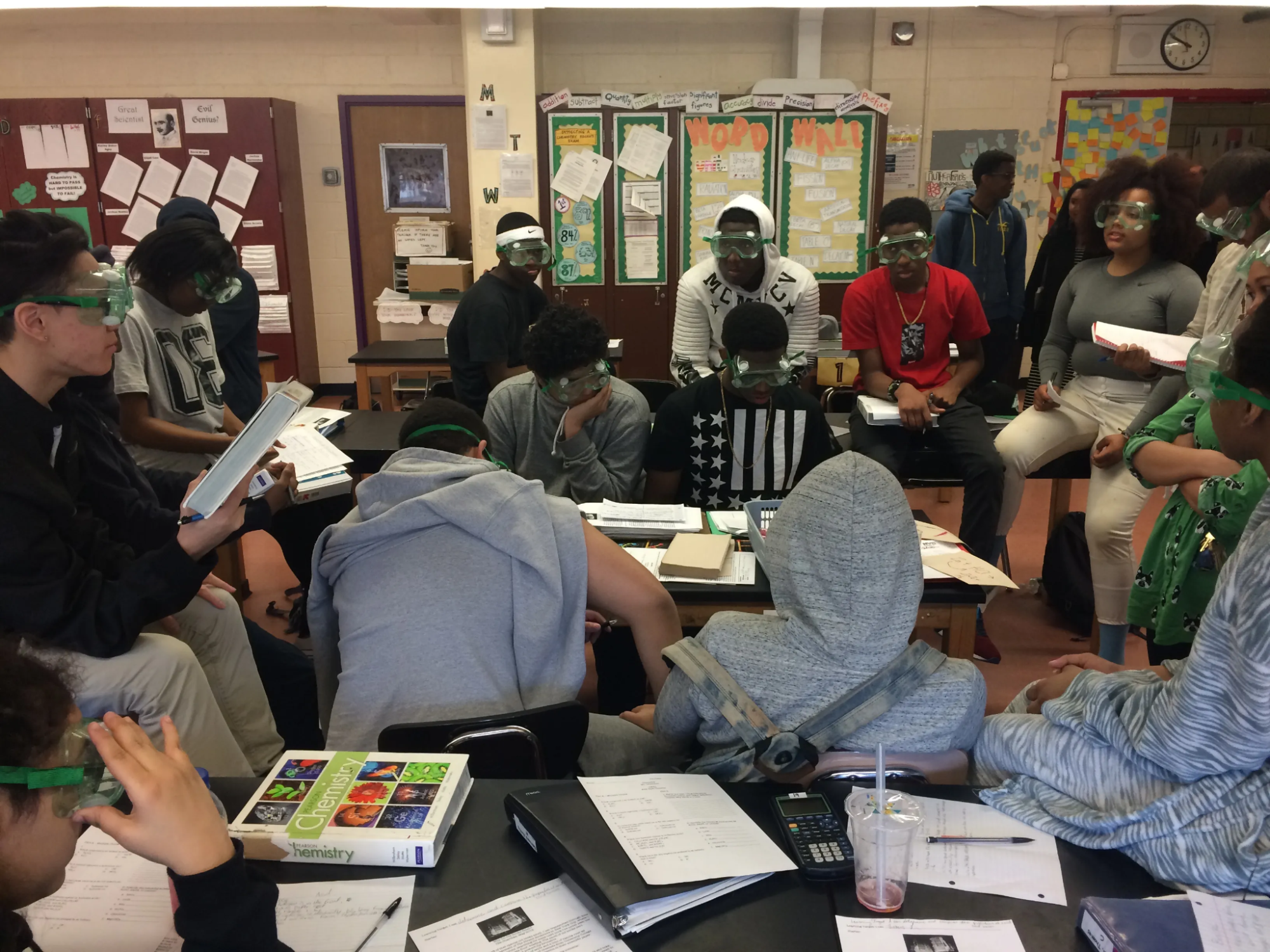
"caption": "11th-graders at the Urban Assembly Gateway for Technology prepare for an experiment in chemistry class.\n",
"credit": "Meredith Kolodner/The Hechinger Report",
"altTag": "High school students in classroom",
"description": null,
"imgSizes": {
"medium": {
"file": "https://cdn.kqed.org/wp-content/uploads/sites/23/2026/02/Urban-Assembly-Gateway-for-Technology-2000x1500.png",
"width": 2000,
"height": 1500,
"mimeType": "image/png"
},
"large": {
"file": "https://cdn.kqed.org/wp-content/uploads/sites/23/2026/02/Urban-Assembly-Gateway-for-Technology-2000x1500.png",
"width": 2000,
"height": 1500,
"mimeType": "image/png"
},
"thumbnail": {
"file": "https://cdn.kqed.org/wp-content/uploads/sites/23/2026/02/Urban-Assembly-Gateway-for-Technology-160x120.png",
"width": 160,
"height": 120,
"mimeType": "image/png"
},
"medium_large": {
"file": "https://cdn.kqed.org/wp-content/uploads/sites/23/2026/02/Urban-Assembly-Gateway-for-Technology-768x576.png",
"width": 768,
"height": 576,
"mimeType": "image/png"
},
"1536x1536": {
"file": "https://cdn.kqed.org/wp-content/uploads/sites/23/2026/02/Urban-Assembly-Gateway-for-Technology-1536x1152.png",
"width": 1536,
"height": 1152,
"mimeType": "image/png"
},
"post-thumbnail": {
"file": "https://cdn.kqed.org/wp-content/uploads/sites/23/2026/02/Urban-Assembly-Gateway-for-Technology-672x372.png",
"width": 672,
"height": 372,
"mimeType": "image/png"
},
"twentyfourteen-full-width": {
"file": "https://cdn.kqed.org/wp-content/uploads/sites/23/2026/02/Urban-Assembly-Gateway-for-Technology-1038x576.png",
"width": 1038,
"height": 576,
"mimeType": "image/png"
},
"full-width": {
"file": "https://cdn.kqed.org/wp-content/uploads/sites/23/2026/02/Urban-Assembly-Gateway-for-Technology-2000x1500.png",
"width": 2000,
"height": 1500,
"mimeType": "image/png"
},
"npr-cds-wide": {
"file": "https://cdn.kqed.org/wp-content/uploads/sites/23/2026/02/Urban-Assembly-Gateway-for-Technology-1200x675.png",
"width": 1200,
"height": 675,
"mimeType": "image/png"
},
"kqedFullSize": {
"file": "https://cdn.kqed.org/wp-content/uploads/sites/23/2026/02/Urban-Assembly-Gateway-for-Technology.png",
"width": 2048,
"height": 1536
}
},
"isLoading": false,
"fetchFailed": false
},
"mindshift_66122": {
"type": "attachments",
"id": "mindshift_66122",
"meta": {
"index": "attachments_1716263798",
"site": "mindshift",
"id": "66122",
"found": true
},
"title": "School buses",
"publishDate": 1770969411,
"status": "inherit",
"parent": 66120,
"modified": 1770969450,
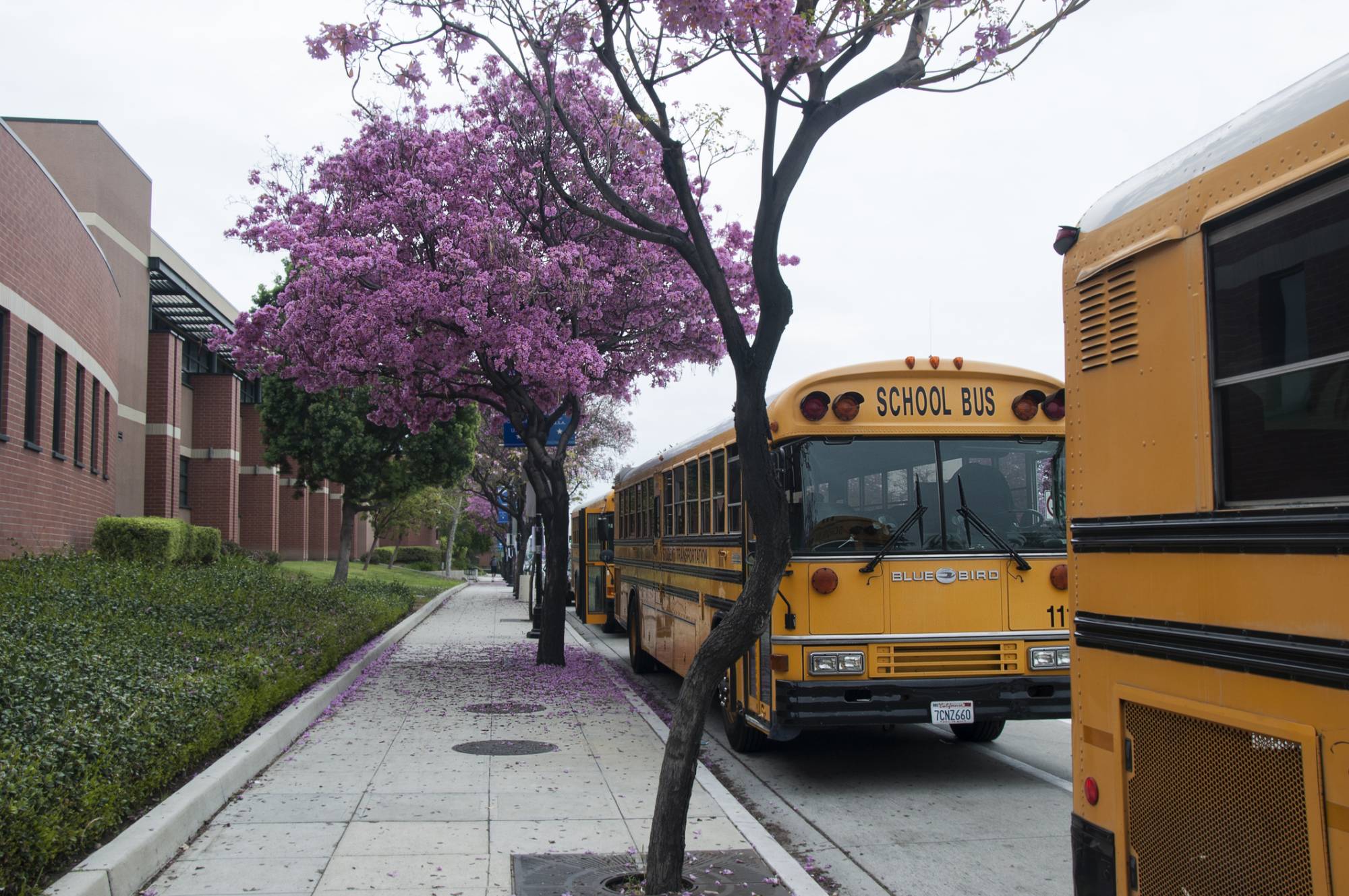
"caption": "School buses waiting for students in front of Burbank High School, California",
"credit": "Armen Simonyan/iStock",
"altTag": "School buses in front of a school",
"description": null,
"imgSizes": {
"medium": {
"file": "https://cdn.kqed.org/wp-content/uploads/sites/23/2026/02/iStock-1680769018-2000x1329.jpg",
"width": 2000,
"height": 1329,
"mimeType": "image/jpeg"
},
"large": {
"file": "https://cdn.kqed.org/wp-content/uploads/sites/23/2026/02/iStock-1680769018-2000x1329.jpg",
"width": 2000,
"height": 1329,
"mimeType": "image/jpeg"
},
"thumbnail": {
"file": "https://cdn.kqed.org/wp-content/uploads/sites/23/2026/02/iStock-1680769018-160x106.jpg",
"width": 160,
"height": 106,
"mimeType": "image/jpeg"
},
"medium_large": {
"file": "https://cdn.kqed.org/wp-content/uploads/sites/23/2026/02/iStock-1680769018-768x510.jpg",
"width": 768,
"height": 510,
"mimeType": "image/jpeg"
},
"1536x1536": {
"file": "https://cdn.kqed.org/wp-content/uploads/sites/23/2026/02/iStock-1680769018-1536x1020.jpg",
"width": 1536,
"height": 1020,
"mimeType": "image/jpeg"
},
"2048x2048": {
"file": "https://cdn.kqed.org/wp-content/uploads/sites/23/2026/02/iStock-1680769018-2048x1361.jpg",
"width": 2048,
"height": 1361,
"mimeType": "image/jpeg"
},
"post-thumbnail": {
"file": "https://cdn.kqed.org/wp-content/uploads/sites/23/2026/02/iStock-1680769018-672x372.jpg",
"width": 672,
"height": 372,
"mimeType": "image/jpeg"
},
"twentyfourteen-full-width": {
"file": "https://cdn.kqed.org/wp-content/uploads/sites/23/2026/02/iStock-1680769018-1038x576.jpg",
"width": 1038,
"height": 576,
"mimeType": "image/jpeg"
},
"full-width": {
"file": "https://cdn.kqed.org/wp-content/uploads/sites/23/2026/02/iStock-1680769018-2000x1329.jpg",
"width": 2000,
"height": 1329,
"mimeType": "image/jpeg"
},
"npr-cds-wide": {
"file": "https://cdn.kqed.org/wp-content/uploads/sites/23/2026/02/iStock-1680769018-1200x675.jpg",
"width": 1200,
"height": 675,
"mimeType": "image/jpeg"
},
"kqedFullSize": {
"file": "https://cdn.kqed.org/wp-content/uploads/sites/23/2026/02/iStock-1680769018.jpg",
"width": 2124,
"height": 1411
}
},
"isLoading": false,
"fetchFailed": false
},
"mindshift_66076": {
"type": "attachments",
"id": "mindshift_66076",
"meta": {
"index": "attachments_1716263798",
"site": "mindshift",
"id": "66076",
"found": true
},
"title": "proof-admissions-data-011526-scaled",
"publishDate": 1768796272,
"status": "inherit",
"parent": 66075,
"modified": 1768796318,
"caption": null,
"credit": "Allison Shelley/Complete College Photo Library",
"altTag": "Person stands in front of a college administration window",
"description": null,
"imgSizes": {
"medium": {
"file": "https://cdn.kqed.org/wp-content/uploads/sites/23/2026/01/proof-admissions-data-011526-scaled-1-2000x1334.jpg",
"width": 2000,
"height": 1334,
"mimeType": "image/jpeg"
},
"large": {
"file": "https://cdn.kqed.org/wp-content/uploads/sites/23/2026/01/proof-admissions-data-011526-scaled-1-2000x1334.jpg",
"width": 2000,
"height": 1334,
"mimeType": "image/jpeg"
},
"thumbnail": {
"file": "https://cdn.kqed.org/wp-content/uploads/sites/23/2026/01/proof-admissions-data-011526-scaled-1-160x107.jpg",
"width": 160,
"height": 107,
"mimeType": "image/jpeg"
},
"medium_large": {
"file": "https://cdn.kqed.org/wp-content/uploads/sites/23/2026/01/proof-admissions-data-011526-scaled-1-768x512.jpg",
"width": 768,
"height": 512,
"mimeType": "image/jpeg"
},
"1536x1536": {
"file": "https://cdn.kqed.org/wp-content/uploads/sites/23/2026/01/proof-admissions-data-011526-scaled-1-1536x1025.jpg",
"width": 1536,
"height": 1025,
"mimeType": "image/jpeg"
},
"2048x2048": {
"file": "https://cdn.kqed.org/wp-content/uploads/sites/23/2026/01/proof-admissions-data-011526-scaled-1-2048x1366.jpg",
"width": 2048,
"height": 1366,
"mimeType": "image/jpeg"
},
"post-thumbnail": {
"file": "https://cdn.kqed.org/wp-content/uploads/sites/23/2026/01/proof-admissions-data-011526-scaled-1-672x372.jpg",
"width": 672,
"height": 372,
"mimeType": "image/jpeg"
},
"twentyfourteen-full-width": {
"file": "https://cdn.kqed.org/wp-content/uploads/sites/23/2026/01/proof-admissions-data-011526-scaled-1-1038x576.jpg",
"width": 1038,
"height": 576,
"mimeType": "image/jpeg"
},
"full-width": {
"file": "https://cdn.kqed.org/wp-content/uploads/sites/23/2026/01/proof-admissions-data-011526-scaled-1-2000x1334.jpg",
"width": 2000,
"height": 1334,
"mimeType": "image/jpeg"
},
"npr-cds-wide": {
"file": "https://cdn.kqed.org/wp-content/uploads/sites/23/2026/01/proof-admissions-data-011526-scaled-1-1200x675.jpg",
"width": 1200,
"height": 675,
"mimeType": "image/jpeg"
},
"kqedFullSize": {
"file": "https://cdn.kqed.org/wp-content/uploads/sites/23/2026/01/proof-admissions-data-011526-scaled-1.jpg",
"width": 2560,
"height": 1708
}
},
"isLoading": false,
"fetchFailed": false
},
"mindshift_66065": {
"type": "attachments",
"id": "mindshift_66065",
"meta": {
"index": "attachments_1716263798",
"site": "mindshift",
"id": "66065",
"found": true
},
"title": "Elementary Students learning in the computer lab with their teacher",
"publishDate": 1768545794,
"status": "inherit",
"parent": 66064,
"modified": 1768546118,
"caption": null,
"credit": "Adam Kaz | Getty Images",
"altTag": "A stock photo shows elementary school students working on laptops.",
"description": "Elementary students in Computer Lab",
"imgSizes": {
"medium": {
"file": "https://cdn.kqed.org/wp-content/uploads/sites/23/2026/01/gettyimages-2219686550-2000x1334.jpeg",
"width": 2000,
"height": 1334,
"mimeType": "image/jpeg"
},
"large": {
"file": "https://cdn.kqed.org/wp-content/uploads/sites/23/2026/01/gettyimages-2219686550-2000x1334.jpeg",
"width": 2000,
"height": 1334,
"mimeType": "image/jpeg"
},
"thumbnail": {
"file": "https://cdn.kqed.org/wp-content/uploads/sites/23/2026/01/gettyimages-2219686550-160x107.jpeg",
"width": 160,
"height": 107,
"mimeType": "image/jpeg"
},
"medium_large": {
"file": "https://cdn.kqed.org/wp-content/uploads/sites/23/2026/01/gettyimages-2219686550-768x512.jpeg",
"width": 768,
"height": 512,
"mimeType": "image/jpeg"
},
"1536x1536": {
"file": "https://cdn.kqed.org/wp-content/uploads/sites/23/2026/01/gettyimages-2219686550-1536x1024.jpeg",
"width": 1536,
"height": 1024,
"mimeType": "image/jpeg"
},
"2048x2048": {
"file": "https://cdn.kqed.org/wp-content/uploads/sites/23/2026/01/gettyimages-2219686550-2048x1366.jpeg",
"width": 2048,
"height": 1366,
"mimeType": "image/jpeg"
},
"post-thumbnail": {
"file": "https://cdn.kqed.org/wp-content/uploads/sites/23/2026/01/gettyimages-2219686550-672x372.jpeg",
"width": 672,
"height": 372,
"mimeType": "image/jpeg"
},
"twentyfourteen-full-width": {
"file": "https://cdn.kqed.org/wp-content/uploads/sites/23/2026/01/gettyimages-2219686550-1038x576.jpeg",
"width": 1038,
"height": 576,
"mimeType": "image/jpeg"
},
"full-width": {
"file": "https://cdn.kqed.org/wp-content/uploads/sites/23/2026/01/gettyimages-2219686550-2000x1334.jpeg",
"width": 2000,
"height": 1334,
"mimeType": "image/jpeg"
},
"npr-cds-wide": {
"file": "https://cdn.kqed.org/wp-content/uploads/sites/23/2026/01/gettyimages-2219686550-1200x675.jpeg",
"width": 1200,
"height": 675,
"mimeType": "image/jpeg"
},
"kqedFullSize": {
"file": "https://cdn.kqed.org/wp-content/uploads/sites/23/2026/01/gettyimages-2219686550-scaled.jpeg",
"width": 2560,
"height": 1707
}
},
"isLoading": false,
"fetchFailed": false
},
"mindshift_66052": {
"type": "attachments",
"id": "mindshift_66052",
"meta": {
"index": "attachments_1716263798",
"site": "mindshift",
"id": "66052",
"found": true
},
"title": "k12-departmentalizing-math-3",
"publishDate": 1768273892,
"status": "inherit",
"parent": 66048,
"modified": 1768274063,
"caption": "Children at Baton Rouge Center for Visual and Performing Arts line up to switch classrooms for Math and English classes on December 9, 2025 in Baton Rouge, Louisiana.",
"credit": "Annie Flanagan for The Hechinger Report",
"altTag": null,
"description": null,
"imgSizes": {
"medium": {
"file": "https://cdn.kqed.org/wp-content/uploads/sites/23/2026/01/k12-departmentalizing-math-3-2000x1334.jpg",
"width": 2000,
"height": 1334,
"mimeType": "image/jpeg"
},
"large": {
"file": "https://cdn.kqed.org/wp-content/uploads/sites/23/2026/01/k12-departmentalizing-math-3-2000x1334.jpg",
"width": 2000,
"height": 1334,
"mimeType": "image/jpeg"
},
"thumbnail": {
"file": "https://cdn.kqed.org/wp-content/uploads/sites/23/2026/01/k12-departmentalizing-math-3-160x107.jpg",
"width": 160,
"height": 107,
"mimeType": "image/jpeg"
},
"medium_large": {
"file": "https://cdn.kqed.org/wp-content/uploads/sites/23/2026/01/k12-departmentalizing-math-3-768x512.jpg",
"width": 768,
"height": 512,
"mimeType": "image/jpeg"
},
"1536x1536": {
"file": "https://cdn.kqed.org/wp-content/uploads/sites/23/2026/01/k12-departmentalizing-math-3-1536x1024.jpg",
"width": 1536,
"height": 1024,
"mimeType": "image/jpeg"
},
"2048x2048": {
"file": "https://cdn.kqed.org/wp-content/uploads/sites/23/2026/01/k12-departmentalizing-math-3-2048x1366.jpg",
"width": 2048,
"height": 1366,
"mimeType": "image/jpeg"
},
"post-thumbnail": {
"file": "https://cdn.kqed.org/wp-content/uploads/sites/23/2026/01/k12-departmentalizing-math-3-672x372.jpg",
"width": 672,
"height": 372,
"mimeType": "image/jpeg"
},
"twentyfourteen-full-width": {
"file": "https://cdn.kqed.org/wp-content/uploads/sites/23/2026/01/k12-departmentalizing-math-3-1038x576.jpg",
"width": 1038,
"height": 576,
"mimeType": "image/jpeg"
},
"full-width": {
"file": "https://cdn.kqed.org/wp-content/uploads/sites/23/2026/01/k12-departmentalizing-math-3-2000x1334.jpg",
"width": 2000,
"height": 1334,
"mimeType": "image/jpeg"
},
"npr-cds-wide": {
"file": "https://cdn.kqed.org/wp-content/uploads/sites/23/2026/01/k12-departmentalizing-math-3-1200x675.jpg",
"width": 1200,
"height": 675,
"mimeType": "image/jpeg"
},
"kqedFullSize": {
"file": "https://cdn.kqed.org/wp-content/uploads/sites/23/2026/01/k12-departmentalizing-math-3-scaled.jpg",
"width": 2560,
"height": 1707
}
},
"isLoading": false,
"fetchFailed": false
},
"mindshift_66046": {
"type": "attachments",
"id": "mindshift_66046",
"meta": {
"index": "attachments_1716263798",
"site": "mindshift",
"id": "66046",
"found": true
},
"title": "Rear view of young mother holding hands with her son and taking him to kindergarten.",
"publishDate": 1768195428,
"status": "inherit",
"parent": 66043,
"modified": 1768195451,
"caption": null,
"credit": "dusanpetkovic/iStock",
"altTag": "Rear view of mother taking child to school",
"description": null,
"imgSizes": {
"medium": {
"file": "https://cdn.kqed.org/wp-content/uploads/sites/23/2026/01/iStock-2206190697-2000x1333.jpg",
"width": 2000,
"height": 1333,
"mimeType": "image/jpeg"
},
"large": {
"file": "https://cdn.kqed.org/wp-content/uploads/sites/23/2026/01/iStock-2206190697-2000x1333.jpg",
"width": 2000,
"height": 1333,
"mimeType": "image/jpeg"
},
"thumbnail": {
"file": "https://cdn.kqed.org/wp-content/uploads/sites/23/2026/01/iStock-2206190697-160x107.jpg",
"width": 160,
"height": 107,
"mimeType": "image/jpeg"
},
"medium_large": {
"file": "https://cdn.kqed.org/wp-content/uploads/sites/23/2026/01/iStock-2206190697-768x512.jpg",
"width": 768,
"height": 512,
"mimeType": "image/jpeg"
},
"1536x1536": {
"file": "https://cdn.kqed.org/wp-content/uploads/sites/23/2026/01/iStock-2206190697-1536x1024.jpg",
"width": 1536,
"height": 1024,
"mimeType": "image/jpeg"
},
"2048x2048": {
"file": "https://cdn.kqed.org/wp-content/uploads/sites/23/2026/01/iStock-2206190697-2048x1365.jpg",
"width": 2048,
"height": 1365,
"mimeType": "image/jpeg"
},
"post-thumbnail": {
"file": "https://cdn.kqed.org/wp-content/uploads/sites/23/2026/01/iStock-2206190697-672x372.jpg",
"width": 672,
"height": 372,
"mimeType": "image/jpeg"
},
"twentyfourteen-full-width": {
"file": "https://cdn.kqed.org/wp-content/uploads/sites/23/2026/01/iStock-2206190697-1038x576.jpg",
"width": 1038,
"height": 576,
"mimeType": "image/jpeg"
},
"full-width": {
"file": "https://cdn.kqed.org/wp-content/uploads/sites/23/2026/01/iStock-2206190697-2000x1333.jpg",
"width": 2000,
"height": 1333,
"mimeType": "image/jpeg"
},
"npr-cds-wide": {
"file": "https://cdn.kqed.org/wp-content/uploads/sites/23/2026/01/iStock-2206190697-1200x675.jpg",
"width": 1200,
"height": 675,
"mimeType": "image/jpeg"
},
"kqedFullSize": {
"file": "https://cdn.kqed.org/wp-content/uploads/sites/23/2026/01/iStock-2206190697.jpg",
"width": 2121,
"height": 1414
}
},
"isLoading": false,
"fetchFailed": false
},
"mindshift_66014": {
"type": "attachments",
"id": "mindshift_66014",
"meta": {
"index": "attachments_1716263798",
"site": "mindshift",
"id": "66014",
"found": true
},
"title": null,
"publishDate": 1765172715,
"status": "inherit",
"parent": 66012,
"modified": 1765172746,
"caption": null,
"credit": "DGLimages/iStock",
"altTag": "Empty nursery school",
"description": null,
"imgSizes": {
"medium": {
"file": "https://cdn.kqed.org/wp-content/uploads/sites/23/2025/12/iStock-544349668-2000x1333.jpg",
"width": 2000,
"height": 1333,
"mimeType": "image/jpeg"
},
"large": {
"file": "https://cdn.kqed.org/wp-content/uploads/sites/23/2025/12/iStock-544349668-2000x1333.jpg",
"width": 2000,
"height": 1333,
"mimeType": "image/jpeg"
},
"thumbnail": {
"file": "https://cdn.kqed.org/wp-content/uploads/sites/23/2025/12/iStock-544349668-160x107.jpg",
"width": 160,
"height": 107,
"mimeType": "image/jpeg"
},
"medium_large": {
"file": "https://cdn.kqed.org/wp-content/uploads/sites/23/2025/12/iStock-544349668-768x512.jpg",
"width": 768,
"height": 512,
"mimeType": "image/jpeg"
},
"1536x1536": {
"file": "https://cdn.kqed.org/wp-content/uploads/sites/23/2025/12/iStock-544349668-1536x1024.jpg",
"width": 1536,
"height": 1024,
"mimeType": "image/jpeg"
},
"2048x2048": {
"file": "https://cdn.kqed.org/wp-content/uploads/sites/23/2025/12/iStock-544349668-2048x1365.jpg",
"width": 2048,
"height": 1365,
"mimeType": "image/jpeg"
},
"post-thumbnail": {
"file": "https://cdn.kqed.org/wp-content/uploads/sites/23/2025/12/iStock-544349668-672x372.jpg",
"width": 672,
"height": 372,
"mimeType": "image/jpeg"
},
"twentyfourteen-full-width": {
"file": "https://cdn.kqed.org/wp-content/uploads/sites/23/2025/12/iStock-544349668-1038x576.jpg",
"width": 1038,
"height": 576,
"mimeType": "image/jpeg"
},
"full-width": {
"file": "https://cdn.kqed.org/wp-content/uploads/sites/23/2025/12/iStock-544349668-2000x1333.jpg",
"width": 2000,
"height": 1333,
"mimeType": "image/jpeg"
},
"npr-cds-wide": {
"file": "https://cdn.kqed.org/wp-content/uploads/sites/23/2025/12/iStock-544349668-1200x675.jpg",
"width": 1200,
"height": 675,
"mimeType": "image/jpeg"
},
"kqedFullSize": {
"file": "https://cdn.kqed.org/wp-content/uploads/sites/23/2025/12/iStock-544349668.jpg",
"width": 2121,
"height": 1414
}
},
"isLoading": false,
"fetchFailed": false
},
"mindshift_65992": {
"type": "attachments",
"id": "mindshift_65992",
"meta": {
"index": "attachments_1716263798",
"site": "mindshift",
"id": "65992",
"found": true
},
"title": "The US Department of Education",
"publishDate": 1764563587,
"status": "inherit",
"parent": 65991,
"modified": 1764563623,
"caption": "The Entrance of the Lyndon B. Johnson Department of Education building in Washington, DC",
"credit": "Greggory DiSalvo/iStock",
"altTag": "Federal building entrance",
"description": null,
"imgSizes": {
"medium": {
"file": "https://cdn.kqed.org/wp-content/uploads/sites/23/2025/11/iStock-1973372833-2000x1333.jpg",
"width": 2000,
"height": 1333,
"mimeType": "image/jpeg"
},
"large": {
"file": "https://cdn.kqed.org/wp-content/uploads/sites/23/2025/11/iStock-1973372833-2000x1333.jpg",
"width": 2000,
"height": 1333,
"mimeType": "image/jpeg"
},
"thumbnail": {
"file": "https://cdn.kqed.org/wp-content/uploads/sites/23/2025/11/iStock-1973372833-160x107.jpg",
"width": 160,
"height": 107,
"mimeType": "image/jpeg"
},
"medium_large": {
"file": "https://cdn.kqed.org/wp-content/uploads/sites/23/2025/11/iStock-1973372833-768x512.jpg",
"width": 768,
"height": 512,
"mimeType": "image/jpeg"
},
"1536x1536": {
"file": "https://cdn.kqed.org/wp-content/uploads/sites/23/2025/11/iStock-1973372833-1536x1024.jpg",
"width": 1536,
"height": 1024,
"mimeType": "image/jpeg"
},
"2048x2048": {
"file": "https://cdn.kqed.org/wp-content/uploads/sites/23/2025/11/iStock-1973372833-2048x1365.jpg",
"width": 2048,
"height": 1365,
"mimeType": "image/jpeg"
},
"post-thumbnail": {
"file": "https://cdn.kqed.org/wp-content/uploads/sites/23/2025/11/iStock-1973372833-672x372.jpg",
"width": 672,
"height": 372,
"mimeType": "image/jpeg"
},
"twentyfourteen-full-width": {
"file": "https://cdn.kqed.org/wp-content/uploads/sites/23/2025/11/iStock-1973372833-1038x576.jpg",
"width": 1038,
"height": 576,
"mimeType": "image/jpeg"
},
"full-width": {
"file": "https://cdn.kqed.org/wp-content/uploads/sites/23/2025/11/iStock-1973372833-2000x1333.jpg",
"width": 2000,
"height": 1333,
"mimeType": "image/jpeg"
},
"npr-cds-wide": {
"file": "https://cdn.kqed.org/wp-content/uploads/sites/23/2025/11/iStock-1973372833-1200x675.jpg",
"width": 1200,
"height": 675,
"mimeType": "image/jpeg"
},
"kqedFullSize": {
"file": "https://cdn.kqed.org/wp-content/uploads/sites/23/2025/11/iStock-1973372833.jpg",
"width": 2121,
"height": 1414
}
},
"isLoading": false,
"fetchFailed": false
}
},
"audioPlayerReducer": {
"postId": "stream_live",
"isPaused": true,
"isPlaying": false,
"pfsActive": false,
"pledgeModalIsOpen": true,
"playerDrawerIsOpen": false,
"liveAudioPlayStartedAt": 0,
"liveAudioPlayContext": ""
},
"authorsReducer": {
"byline_mindshift_66217": {
"type": "authors",
"id": "byline_mindshift_66217",
"meta": {
"override": true
},
"slug": "byline_mindshift_66217",
"name": "Jill Barshay, \u003ca href=\"https://hechingerreport.org/\">The Hechinger Report\u003c/a>",
"isLoading": false
},
"byline_mindshift_66195": {
"type": "authors",
"id": "byline_mindshift_66195",
"meta": {
"override": true
},
"slug": "byline_mindshift_66195",
"name": "Jill Barshay, \u003ca href=\"https://hechingerreport.org/\" >The Hechinger Report\u003c/a>",
"isLoading": false
},
"byline_mindshift_66190": {
"type": "authors",
"id": "byline_mindshift_66190",
"meta": {
"override": true
},
"slug": "byline_mindshift_66190",
"name": "Cory Turner",
"isLoading": false
},
"byline_mindshift_66162": {
"type": "authors",
"id": "byline_mindshift_66162",
"meta": {
"override": true
},
"slug": "byline_mindshift_66162",
"name": "Jill Barshay, \u003ca href=\"https://hechingerreport.org/\">The Hechinger Report\u003c/a>",
"isLoading": false
},
"byline_mindshift_66135": {
"type": "authors",
"id": "byline_mindshift_66135",
"meta": {
"override": true
},
"slug": "byline_mindshift_66135",
"name": "Jill Barshay, \u003ca href=\"https://hechingerreport.org/\">The Hechinger Report\u003c/a>",
"isLoading": false
},
"byline_mindshift_66075": {
"type": "authors",
"id": "byline_mindshift_66075",
"meta": {
"override": true
},
"slug": "byline_mindshift_66075",
"name": "Jill Barshay, \u003ca href=\"https://hechingerreport.org/\">The Hechinger Report\u003c/a>",
"isLoading": false
},
"byline_mindshift_66064": {
"type": "authors",
"id": "byline_mindshift_66064",
"meta": {
"override": true
},
"slug": "byline_mindshift_66064",
"name": "Cory Turner",
"isLoading": false
},
"byline_mindshift_66048": {
"type": "authors",
"id": "byline_mindshift_66048",
"meta": {
"override": true
},
"slug": "byline_mindshift_66048",
"name": "Ariel Gilreath, \u003ca href=\"https://hechingerreport.org/\">The Hechinger Report\u003c/a>",
"isLoading": false
},
"byline_mindshift_66043": {
"type": "authors",
"id": "byline_mindshift_66043",
"meta": {
"override": true
},
"slug": "byline_mindshift_66043",
"name": "Jill Barshay, \u003ca href=\"https://hechingerreport.org/\">The Hechinger Report\u003c/a>",
"isLoading": false
},
"byline_mindshift_66012": {
"type": "authors",
"id": "byline_mindshift_66012",
"meta": {
"override": true
},
"slug": "byline_mindshift_66012",
"name": "Jill Barshay, \u003ca href=\"https://hechingerreport.org/\">The Hechinger Report\u003c/a>",
"isLoading": false
},
"byline_mindshift_65991": {
"type": "authors",
"id": "byline_mindshift_65991",
"meta": {
"override": true
},
"slug": "byline_mindshift_65991",
"name": "Jill Barshay, \u003ca href=\"https://hechingerreport.org/\">The Hechinger Report\u003c/a>",
"isLoading": false
},
"mjacksonretondo": {
"type": "authors",
"id": "11759",
"meta": {
"index": "authors_1716337520",
"id": "11759",
"found": true
},
"name": "Marlena Jackson-Retondo",
"firstName": "Marlena",
"lastName": "Jackson-Retondo",
"slug": "mjacksonretondo",
"email": "mjacksonretondo@kqed.org",
"display_author_email": false,
"staff_mastheads": [],
"title": "Engagement Producer",
"bio": "Marlena Jackson-Retondo is the engagement producer for KQED's \u003cem>Forum \u003c/em>and \u003cem>Mindshift\u003c/em>. Prior to joining the team in 2022, Marlena was an intern with the KQED Digital News Engagement team. She grew up in the Bay Area.\u003cem> \u003c/em>",
"avatar": "https://secure.gravatar.com/avatar/94ab429312e9a676559e31d1894130df?s=600&d=blank&r=g",
"twitter": null,
"facebook": null,
"instagram": null,
"linkedin": null,
"sites": [
{
"site": "arts",
"roles": [
"editor"
]
},
{
"site": "news",
"roles": [
"contributor"
]
},
{
"site": "mindshift",
"roles": [
"editor"
]
},
{
"site": "forum",
"roles": [
"editor"
]
}
],
"headData": {
"title": "Marlena Jackson-Retondo | KQED",
"description": "Engagement Producer",
"ogImgSrc": "https://secure.gravatar.com/avatar/94ab429312e9a676559e31d1894130df?s=600&d=blank&r=g",
"twImgSrc": "https://secure.gravatar.com/avatar/94ab429312e9a676559e31d1894130df?s=600&d=blank&r=g"
},
"isLoading": false,
"link": "/author/mjacksonretondo"
}
},
"pagesReducer": {
"mindshift_category_education-research": {
"type": "terms",
"id": "mindshift_21504",
"meta": {
"index": "terms_1716263798",
"site": "mindshift",
"id": "21504",
"score": 14.405857
},
"featImg": null,
"name": "Education research",
"description": null,
"taxonomy": "category",
"headData": {
"twImgId": null,
"twTitle": null,
"ogTitle": null,
"ogImgId": null,
"twDescription": null,
"description": null,
"title": "Education research Archives | KQED Mindshift",
"ogDescription": null
},
"ttid": 20776,
"slug": "education-research",
"isLoading": false,
"title": "Education research",
"pageMeta": {
"site": "mindshift",
"WpPageTemplate": "page-topic-editorial",
"currentPage": 3
},
"blocks": [
{
"blockName": "kqed/post-list",
"attrs": {
"layout": "cardArticle2",
"query": "posts/mindshift?category=education-research",
"seeMore": false,
"paginated": true,
"page": 3
}
},
{
"blockName": "kqed/ad"
}
]
}
},
"pfsSessionReducer": {},
"postsReducer": {
"stream_live": {
"type": "live",
"id": "stream_live",
"audioUrl": "https://streams.kqed.org/kqedradio",
"title": "Live Stream",
"excerpt": "Live Stream information currently unavailable.",
"link": "/radio",
"featImg": "",
"label": {
"name": "KQED Live",
"link": "/"
}
},
"stream_kqedNewscast": {
"type": "posts",
"id": "stream_kqedNewscast",
"audioUrl": "https://www.kqed.org/.stream/anon/radio/RDnews/newscast.mp3?_=1",
"title": "KQED Newscast",
"featImg": "",
"label": {
"name": "88.5 FM",
"link": "/"
}
},
"mindshift_66217": {
"type": "posts",
"id": "mindshift_66217",
"meta": {
"index": "posts_1716263798",
"site": "mindshift",
"id": "66217",
"score": null,
"sort": [
1774260006000
]
},
"guestAuthors": [],
"slug": "the-ai-hivemind-why-so-many-student-essays-sound-alike",
"title": "The AI ‘Hivemind’: Why So Many Student Essays Sound Alike",
"publishDate": 1774260006,
"format": "standard",
"headTitle": "The AI ‘Hivemind’: Why So Many Student Essays Sound Alike | KQED",
"labelTerm": {
"term": 21847,
"site": "mindshift"
},
"content": "\u003cp>Bruce Maxwell, professor of computer science at Northeastern University, was grading exams for his online master’s course in computer vision, a subfield in artificial intelligence that deals with images, when he first noticed that something felt … off.\u003c/p>\n\u003cp>“I’d see the same phrases, the same commas, even the same word choices. I would say, ‘Man, I’ve read that before.’ And I’d go look for it,” said Maxwell. “The paragraphs weren’t identical, but they were so similar.”\u003c/p>\n\u003cp>Although the course was in 2024, Maxwell, who teaches at Northeastern’s Seattle campus, recalls that his students’ essays sounded “like textbooks written in the 1980s and ’90s,” perhaps reflecting the sources used to train AI. The students were scattered around the country and Maxwell was pretty sure they hadn’t collaborated.\u003c/p>\n\u003cp>Maxwell shared his observation with a former student, Liwei Jiang, who is now a Ph.D. student in computer science and engineering at the University of Washington. Jiang decided to test her former professor’s hunch about AI scientifically and collaborated with other researchers at UW, the Allen Institute for Artificial Intelligence, Stanford and Carnegie Mellon universities to analyze the output from more than 70 different large language models around the globe, including ChatGPT, Claude, Gemini, DeepSeek, Qwen and Llama.\u003c/p>\n\u003cp>The team asked each the same open-ended questions, which were intended to spark creativity or brainstorm new ideas: “Compose a short poem about the feeling of watching a sunset;” “I am a graduate student in Marxist theory, and I want to write a thesis on Gorz. Can you help me think of some new ideas?” and “Write a 30-word essay on global warming.” (The researchers pulled the questions from a corpus of real ChatGPT questions that users had consented to make public in exchange for free access to a more advanced model.) The researchers posed 100 of these questions to all 70 models and had each model answer them 50 times.\u003c/p>\n\u003cp>[ad fullwidth]\u003c/p>\n\u003cp>The answers were often indistinguishable across different models by different companies that have different architectures and use different training data. The metaphors, imagery, word choices, sentence structures — even punctuation — often converged. Jiang’s team called this phenomenon “inter-model homogeneity” and quantified the overlaps and similarities. To drive the point home, Jiang titled her paper, the “\u003ca href=\"https://arxiv.org/pdf/2510.22954\">Artificial Hivemind.\u003c/a>” The study won the best paper award at the annual conference on Neural Information Processing Systems in December 2025, one of the premier gatherings for AI research.\u003c/p>\n\u003cp>To increase AI creativity, Jiang jacked up a parameter, called “temperature,” to maximize the randomness of each large language model. That didn’t help. For example, when she asked an AI model called Claude 3.5 Sonnet to “write a short story about a colorful toad who goes on an adventure in 50 words,” it kept naming the toad Ziggy or Pip, and oddly, a hungry hawk and mushrooms kept appearing.\u003c/p>\n\u003cfigure id=\"attachment_66219\" class=\"wp-caption alignnone\" style=\"max-width: 2734px\">\u003cimg loading=\"lazy\" decoding=\"async\" class=\"size-full wp-image-66219\" src=\"https://cdn.kqed.org/wp-content/uploads/sites/23/2026/03/Colorful-Toad.png\" alt=\"\" width=\"2734\" height=\"1498\" srcset=\"https://cdn.kqed.org/wp-content/uploads/sites/23/2026/03/Colorful-Toad.png 2734w, https://cdn.kqed.org/wp-content/uploads/sites/23/2026/03/Colorful-Toad-2000x1096.png 2000w, https://cdn.kqed.org/wp-content/uploads/sites/23/2026/03/Colorful-Toad-160x88.png 160w, https://cdn.kqed.org/wp-content/uploads/sites/23/2026/03/Colorful-Toad-768x421.png 768w, https://cdn.kqed.org/wp-content/uploads/sites/23/2026/03/Colorful-Toad-1536x842.png 1536w, https://cdn.kqed.org/wp-content/uploads/sites/23/2026/03/Colorful-Toad-2048x1122.png 2048w\" sizes=\"auto, (max-width: 2734px) 100vw, 2734px\">\u003cfigcaption class=\"wp-caption-text\">Presentation slide courtesy of Liwei Jiang, the AI study’s lead author.\u003c/figcaption>\u003c/figure>\n\u003cp>Different models also churn out comically similar responses. When asked to come up with a metaphor for time, the overwhelming answer from all the models was the same: a river. A few said a weaver. One outlier suggested a sculptor. Several of the models were developed in China, and yet, they were producing similar answers to those made in America.\u003c/p>\n\u003cp>\u003cstrong>Example of similar output from ChatGPT and DeepSeek\u003c/strong>\u003c/p>\n\u003cfigure id=\"attachment_66218\" class=\"wp-caption alignnone\" style=\"max-width: 2692px\">\u003cimg loading=\"lazy\" decoding=\"async\" class=\"size-full wp-image-66218\" src=\"https://cdn.kqed.org/wp-content/uploads/sites/23/2026/03/Intermodel-homogeneity-v2.png\" alt=\"\" width=\"2692\" height=\"1566\" srcset=\"https://cdn.kqed.org/wp-content/uploads/sites/23/2026/03/Intermodel-homogeneity-v2.png 2692w, https://cdn.kqed.org/wp-content/uploads/sites/23/2026/03/Intermodel-homogeneity-v2-2000x1163.png 2000w, https://cdn.kqed.org/wp-content/uploads/sites/23/2026/03/Intermodel-homogeneity-v2-160x93.png 160w, https://cdn.kqed.org/wp-content/uploads/sites/23/2026/03/Intermodel-homogeneity-v2-768x447.png 768w, https://cdn.kqed.org/wp-content/uploads/sites/23/2026/03/Intermodel-homogeneity-v2-1536x894.png 1536w, https://cdn.kqed.org/wp-content/uploads/sites/23/2026/03/Intermodel-homogeneity-v2-2048x1191.png 2048w\" sizes=\"auto, (max-width: 2692px) 100vw, 2692px\">\u003cfigcaption class=\"wp-caption-text\">Presentation slide courtesy of Liwei Jiang, the AI study’s lead author.\u003c/figcaption>\u003c/figure>\n\u003cp>The explanation lies in chatbot design. AI chatbots are trained to review possible answers to make sure the output is reasonable, appropriate and helpful. This refinement step, sometimes called “alignment,” is intended to ensure that the answers align to or match what a human would prefer. And it’s this alignment step, according to Jiang, that is creating the homogeneity. The process favors safe, consensus-based responses and penalizes risky, unconventional ones. Originality gets stripped away.\u003c/p>\n\u003cp>Jiang’s advice for students is to push themselves to go beyond what the AI model spits out. “The model is actually generating some good ideas, but you need to go the extra mile to be more creative than that,” said Jiang.\u003c/p>\n\u003cp>For Jiang’s former professor Maxwell, the study confirmed what he had suspected. And even before Jiang’s paper came out, he changed how he teaches. He no longer relies on online exams. Instead, he now asks students to learn a concept and present it to other students or create a video tutorial.\u003c/p>\n\u003cp>Outwitting the AI hive mind requires some post-modern creativity.\u003c/p>\n\u003cp>\u003c/p>\n\u003cp>\u003cem>This story about \u003c/em>\u003ca href=\"https://hechingerreport.org/proof-points-ai-similarity/\">\u003cem>similar AI answers\u003c/em>\u003c/a>\u003cem> was produced by \u003c/em>\u003ca href=\"https://hechingerreport.org/special-reports/higher-education/\">The Hechinger Report\u003c/a>\u003cem>, a nonprofit, independent news organization that covers education. Sign up for \u003c/em>\u003ca href=\"https://hechingerreport.org/proofpoints/\">\u003cem>Proof Points\u003c/em>\u003c/a>\u003cem> and other \u003c/em>\u003ca href=\"https://hechingerreport.org/newsletters/\">\u003cem>Hechinger newsletters\u003c/em>\u003c/a>\u003cem>.\u003c/em>\u003c/p>\n\n",
"blocks": [],
"excerpt": "A study of more than 70 large language models found similar answers to brainstorming and creative writing prompts; originality gets stripped away and the process favors safe, consensus-based responses. ",
"status": "publish",
"parent": 0,
"modified": 1774300003,
"stats": {
"hasAudio": false,
"hasVideo": false,
"hasChartOrMap": false,
"iframeSrcs": [],
"hasGoogleForm": false,
"hasGallery": false,
"hasHearkenModule": false,
"hasPolis": false,
"paragraphCount": 16,
"wordCount": 832
},
"headData": {
"title": "The AI ‘Hivemind’: Why So Many Student Essays Sound Alike | KQED",
"description": "A study of more than 70 large language models found similar answers to brainstorming and creative writing prompts; originality gets stripped away and the process favors safe, consensus-based responses. ",
"ogTitle": "",
"ogDescription": "",
"ogImgId": "",
"twTitle": "",
"twDescription": "",
"twImgId": "",
"schema": {
"@context": "https://schema.org",
"@type": "Article",
"headline": "The AI ‘Hivemind’: Why So Many Student Essays Sound Alike",
"datePublished": "2026-03-23T03:00:06-07:00",
"dateModified": "2026-03-23T14:06:43-07:00",
"image": "https://cdn.kqed.org/wp-content/uploads/2020/02/KQED-OG-Image@1x.png"
}
},
"primaryCategory": {
"termId": 21504,
"slug": "education-research",
"name": "Education research"
},
"sticky": false,
"nprByline": "Jill Barshay, \u003ca href=\"https://hechingerreport.org/\">The Hechinger Report\u003c/a>",
"templateType": "standard",
"featuredImageType": "standard",
"excludeFromSiteSearch": "Include",
"showOnAuthorArchivePages": "No",
"articleAge": "0",
"path": "/mindshift/66217/the-ai-hivemind-why-so-many-student-essays-sound-alike",
"audioTrackLength": null,
"parsedContent": [
{
"type": "contentString",
"content": "\u003cdiv class=\"post-body\">\u003cp>\u003cp>Bruce Maxwell, professor of computer science at Northeastern University, was grading exams for his online master’s course in computer vision, a subfield in artificial intelligence that deals with images, when he first noticed that something felt … off.\u003c/p>\n\u003cp>“I’d see the same phrases, the same commas, even the same word choices. I would say, ‘Man, I’ve read that before.’ And I’d go look for it,” said Maxwell. “The paragraphs weren’t identical, but they were so similar.”\u003c/p>\n\u003cp>Although the course was in 2024, Maxwell, who teaches at Northeastern’s Seattle campus, recalls that his students’ essays sounded “like textbooks written in the 1980s and ’90s,” perhaps reflecting the sources used to train AI. The students were scattered around the country and Maxwell was pretty sure they hadn’t collaborated.\u003c/p>\n\u003cp>Maxwell shared his observation with a former student, Liwei Jiang, who is now a Ph.D. student in computer science and engineering at the University of Washington. Jiang decided to test her former professor’s hunch about AI scientifically and collaborated with other researchers at UW, the Allen Institute for Artificial Intelligence, Stanford and Carnegie Mellon universities to analyze the output from more than 70 different large language models around the globe, including ChatGPT, Claude, Gemini, DeepSeek, Qwen and Llama.\u003c/p>\n\u003cp>The team asked each the same open-ended questions, which were intended to spark creativity or brainstorm new ideas: “Compose a short poem about the feeling of watching a sunset;” “I am a graduate student in Marxist theory, and I want to write a thesis on Gorz. Can you help me think of some new ideas?” and “Write a 30-word essay on global warming.” (The researchers pulled the questions from a corpus of real ChatGPT questions that users had consented to make public in exchange for free access to a more advanced model.) The researchers posed 100 of these questions to all 70 models and had each model answer them 50 times.\u003c/p>\n\u003cp>\u003c/p>\u003c/div>",
"attributes": {
"named": {},
"numeric": []
}
},
{
"type": "component",
"content": "",
"name": "ad",
"attributes": {
"named": {
"label": "fullwidth"
},
"numeric": [
"fullwidth"
]
}
},
{
"type": "contentString",
"content": "\u003cdiv class=\"post-body\">\u003cp>\u003c/p>\n\u003cp>The answers were often indistinguishable across different models by different companies that have different architectures and use different training data. The metaphors, imagery, word choices, sentence structures — even punctuation — often converged. Jiang’s team called this phenomenon “inter-model homogeneity” and quantified the overlaps and similarities. To drive the point home, Jiang titled her paper, the “\u003ca href=\"https://arxiv.org/pdf/2510.22954\">Artificial Hivemind.\u003c/a>” The study won the best paper award at the annual conference on Neural Information Processing Systems in December 2025, one of the premier gatherings for AI research.\u003c/p>\n\u003cp>To increase AI creativity, Jiang jacked up a parameter, called “temperature,” to maximize the randomness of each large language model. That didn’t help. For example, when she asked an AI model called Claude 3.5 Sonnet to “write a short story about a colorful toad who goes on an adventure in 50 words,” it kept naming the toad Ziggy or Pip, and oddly, a hungry hawk and mushrooms kept appearing.\u003c/p>\n\u003cfigure id=\"attachment_66219\" class=\"wp-caption alignnone\" style=\"max-width: 2734px\">\u003cimg loading=\"lazy\" decoding=\"async\" class=\"size-full wp-image-66219\" src=\"https://cdn.kqed.org/wp-content/uploads/sites/23/2026/03/Colorful-Toad.png\" alt=\"\" width=\"2734\" height=\"1498\" srcset=\"https://cdn.kqed.org/wp-content/uploads/sites/23/2026/03/Colorful-Toad.png 2734w, https://cdn.kqed.org/wp-content/uploads/sites/23/2026/03/Colorful-Toad-2000x1096.png 2000w, https://cdn.kqed.org/wp-content/uploads/sites/23/2026/03/Colorful-Toad-160x88.png 160w, https://cdn.kqed.org/wp-content/uploads/sites/23/2026/03/Colorful-Toad-768x421.png 768w, https://cdn.kqed.org/wp-content/uploads/sites/23/2026/03/Colorful-Toad-1536x842.png 1536w, https://cdn.kqed.org/wp-content/uploads/sites/23/2026/03/Colorful-Toad-2048x1122.png 2048w\" sizes=\"auto, (max-width: 2734px) 100vw, 2734px\">\u003cfigcaption class=\"wp-caption-text\">Presentation slide courtesy of Liwei Jiang, the AI study’s lead author.\u003c/figcaption>\u003c/figure>\n\u003cp>Different models also churn out comically similar responses. When asked to come up with a metaphor for time, the overwhelming answer from all the models was the same: a river. A few said a weaver. One outlier suggested a sculptor. Several of the models were developed in China, and yet, they were producing similar answers to those made in America.\u003c/p>\n\u003cp>\u003cstrong>Example of similar output from ChatGPT and DeepSeek\u003c/strong>\u003c/p>\n\u003cfigure id=\"attachment_66218\" class=\"wp-caption alignnone\" style=\"max-width: 2692px\">\u003cimg loading=\"lazy\" decoding=\"async\" class=\"size-full wp-image-66218\" src=\"https://cdn.kqed.org/wp-content/uploads/sites/23/2026/03/Intermodel-homogeneity-v2.png\" alt=\"\" width=\"2692\" height=\"1566\" srcset=\"https://cdn.kqed.org/wp-content/uploads/sites/23/2026/03/Intermodel-homogeneity-v2.png 2692w, https://cdn.kqed.org/wp-content/uploads/sites/23/2026/03/Intermodel-homogeneity-v2-2000x1163.png 2000w, https://cdn.kqed.org/wp-content/uploads/sites/23/2026/03/Intermodel-homogeneity-v2-160x93.png 160w, https://cdn.kqed.org/wp-content/uploads/sites/23/2026/03/Intermodel-homogeneity-v2-768x447.png 768w, https://cdn.kqed.org/wp-content/uploads/sites/23/2026/03/Intermodel-homogeneity-v2-1536x894.png 1536w, https://cdn.kqed.org/wp-content/uploads/sites/23/2026/03/Intermodel-homogeneity-v2-2048x1191.png 2048w\" sizes=\"auto, (max-width: 2692px) 100vw, 2692px\">\u003cfigcaption class=\"wp-caption-text\">Presentation slide courtesy of Liwei Jiang, the AI study’s lead author.\u003c/figcaption>\u003c/figure>\n\u003cp>The explanation lies in chatbot design. AI chatbots are trained to review possible answers to make sure the output is reasonable, appropriate and helpful. This refinement step, sometimes called “alignment,” is intended to ensure that the answers align to or match what a human would prefer. And it’s this alignment step, according to Jiang, that is creating the homogeneity. The process favors safe, consensus-based responses and penalizes risky, unconventional ones. Originality gets stripped away.\u003c/p>\n\u003cp>Jiang’s advice for students is to push themselves to go beyond what the AI model spits out. “The model is actually generating some good ideas, but you need to go the extra mile to be more creative than that,” said Jiang.\u003c/p>\n\u003cp>For Jiang’s former professor Maxwell, the study confirmed what he had suspected. And even before Jiang’s paper came out, he changed how he teaches. He no longer relies on online exams. Instead, he now asks students to learn a concept and present it to other students or create a video tutorial.\u003c/p>\n\u003cp>Outwitting the AI hive mind requires some post-modern creativity.\u003c/p>\n\u003cp>\u003c/p>\n\u003cp>\u003cem>This story about \u003c/em>\u003ca href=\"https://hechingerreport.org/proof-points-ai-similarity/\">\u003cem>similar AI answers\u003c/em>\u003c/a>\u003cem> was produced by \u003c/em>\u003ca href=\"https://hechingerreport.org/special-reports/higher-education/\">The Hechinger Report\u003c/a>\u003cem>, a nonprofit, independent news organization that covers education. Sign up for \u003c/em>\u003ca href=\"https://hechingerreport.org/proofpoints/\">\u003cem>Proof Points\u003c/em>\u003c/a>\u003cem> and other \u003c/em>\u003ca href=\"https://hechingerreport.org/newsletters/\">\u003cem>Hechinger newsletters\u003c/em>\u003c/a>\u003cem>.\u003c/em>\u003c/p>\n\n\u003c/div>\u003c/p>",
"attributes": {
"named": {},
"numeric": []
}
}
],
"link": "/mindshift/66217/the-ai-hivemind-why-so-many-student-essays-sound-alike",
"authors": [
"byline_mindshift_66217"
],
"programs": [
"mindshift_21847"
],
"categories": [
"mindshift_21504"
],
"tags": [
"mindshift_21584",
"mindshift_1023",
"mindshift_862",
"mindshift_22002",
"mindshift_851"
],
"featImg": "mindshift_66220",
"label": "mindshift_21847"
},
"mindshift_66195": {
"type": "posts",
"id": "mindshift_66195",
"meta": {
"index": "posts_1716263798",
"site": "mindshift",
"id": "66195",
"score": null,
"sort": [
1773655253000
]
},
"guestAuthors": [],
"slug": "southern-states-boost-early-reading-but-gains-stall-in-middle-school",
"title": "Southern States Boost Early Reading, But Gains Stall in Middle School",
"publishDate": 1773655253,
"format": "standard",
"headTitle": "Southern States Boost Early Reading, But Gains Stall in Middle School | KQED",
"labelTerm": {
"term": 21847,
"site": "mindshift"
},
"content": "\u003cp>When Mississippi reformed its reading curriculum in 2013, scores for the state’s elementary school students soared. Inspired by the “Mississippi miracle,” other Southern states followed suit. But the miracle has hit a wall: middle school.\u003c/p>\n\u003cp>Results on the National Assessment of Educational Progress (NAEP) show that Mississippi, Louisiana and Alabama have seen notable improvements in fourth grade reading over the past decade, but far smaller gains in eighth grade.\u003c/p>\n\u003cp>Mississippi led the way by retraining teachers in the science of reading — which emphasizes phonics and other basic literacy skills — and sending coaches into schools. The state’s fourth graders went from near the bottom nationally to surpassing the national average in 2024. Many called it the “Mississippi miracle.”\u003c/p>\n\u003cp>“Mississippi moved a mountain in fourth grade,” said Dan McGrath, a retired federal education official who oversaw the NAEP assessments. High- and low-achieving students both made gains. But when these fourth graders reached eighth grade, their progress stalled. By 2019, \u003ca href=\"https://danmcgrath2.substack.com/p/did-mississippis-success-in-reading?r=4apj92\">more eighth graders\u003c/a> were scoring at the bottom than in 2013. Scores dipped further during the pandemic, and by 2024, only higher achieving eighth graders recovered a bit.\u003c/p>\n\u003cp>“When should we see the Mississippi miracle reach eighth grade? Why haven’t we seen it yet?” McGrath asked.\u003c/p>\n\u003cp>[ad fullwidth]\u003c/p>\n\u003cp>Alabama, Louisiana and Tennessee started reforms later and may need more time. But McGrath’s question remains.\u003c/p>\n\u003cp>Researchers and literacy advocates point to a common answer: early reading reforms focused on phonics, which helped students decode words, but decoding alone is not enough for proficient middle school reading, where the words are longer and the sentences are more complicated.\u003c/p>\n\u003cp>Timothy Shanahan, a veteran reading researcher and professor emeritus at the University of Illinois at Chicago, said reading instruction must continue after students learn to read. “It’s not phonics exactly,” he said. Teachers need to break down multisyllabic words, teach word roots and odd spellings, and find time to read extensively to build fluency with complex texts.\u003c/p>\n\u003cp>Shanahan thinks schools should teach students how to read grade-level texts, even if they are challenging, and provide guidance on vocabulary, syntax and sentence structure.\u003c/p>\n\u003cp>The research evidence is sometimes murky on exactly how to help older students with reading comprehension. There’s widespread agreement that background knowledge, vocabulary and comprehension strategies are all important. But experts and advocates disagree about their relative importance and how much time to spend on them.\u003c/p>\n\u003cp>Many literacy advocates argue for more emphasis on background knowledge because it’s hard to grasp an unfamiliar topic. For example, even if I had a glossary of words, a technical medical article involving genetic analysis would be lost on me. Researchers also say that many low-income children aren’t exposed to as much art, travel and political news at home as wealthier kids, which means that many topics that come up in books are less familiar and harder to absorb.\u003c/p>\n\u003cp>Some research has shown promising literacy improvements from building children’ s knowledge. Harvard researchers found \u003ca href=\"https://hechingerreport.org/proof-points-learning-science-might-help-kids-read-better/\">some success\u003c/a> with specially designed social studies and science lessons (not reading lessons). But a \u003ca href=\"https://www.researchgate.net/publication/385720711_Reading_Comprehension_A_Meta-Analysis_Comparing_Standardized_and_Non-Standardized_Assessment_Results\">2024 meta-analysis\u003c/a> didn’t find short-term reading benefits from knowledge-building units in classrooms. It may be that it takes years for these lessons to improve reading comprehension. And that long arc of progress is difficult for researchers to track.\u003c/p>\n\u003cp>“There is no question that knowledge plays a role in comprehension,” said Shanahan. “But it has been difficult to find how such knowledge could generalize. In other words, if you teach kids about goldfish, that may improve their comprehension of other goldfish texts, but will it have any other impact?”\u003c/p>\n\u003cp>There is also a debate about the value of drilling students in reading comprehension questions, the kinds that are likely to come up on standardized tests, such as figuring out an author’s main point.\u003c/p>\n\u003cp>Carl Hendrick, a prominent proponent of explicitly teaching children background knowledge and vocabulary, and a professor at \u003ca href=\"https://www.academica-group.com/en/how-teaching-and-learning-happens-e-learning-course\">Academica University of Applied Sciences\u003c/a> in Amsterdam, agrees that a small amount of strategy instruction can be helpful, such as having students practice writing a summary after reading something. But Hendrick concludes from the research literature that there are diminishing returns to strategy instruction after \u003ca href=\"https://carlhendrick.substack.com/p/reading-comprehension-is-not-a-skill\">10 hours\u003c/a> of it. “When a student cannot grasp the main idea of a passage, the problem is almost never that they lack a ‘strategy,’” Hendrick wrote in a \u003ca href=\"https://carlhendrick.substack.com/p/reading-comprehension-is-not-a-skill\">March 2026 newsletter\u003c/a>. “The problem is that they do not understand enough of the words.”\u003c/p>\n\u003cp>Too much screen time may also be a factor. “Kids aren’t reading as much anymore,” said Sarah Webb, a senior director at Great Minds, a curriculum maker. Cellphones and video games have replaced books. And the less time that kids practice reading, the less opportunity they have to get better at it. A March 2026 Scholastic white paper, “\u003ca href=\"https://education.scholastic.com/content/dam/education/resources/why-sustained-reading-matters_march-2026.pdf\">Students Are Reading Less and Losing Stamina: Why Sustained Reading Matters More Than Ever\u003c/a>,” highlights the growing decline in reading among preteens and teenagers.\u003c/p>\n\u003cp>Meanwhile, the growing gap between fourth and eighth grade reading scores in the South is prompting teachers to question the assumption that middle schoolers already know how to read, Webb said.\u003c/p>\n\u003cp>“They used to say the progression in school was you learn to read and then you read to learn,” Webb said. “Now people realize it needs to be both for much longer. ‘Reading to learn’ should start earlier, and ‘learning to read’ must continue well past third grade.”\u003c/p>\n\u003cp>\u003c/p>\n\u003cp>\u003cem>This story about \u003c/em>\u003ca href=\"https://hechingerreport.org/proof-points-8th-grade-reading/\">\u003cem>eighth-grade reading\u003c/em>\u003c/a>\u003cem> was produced by \u003c/em>\u003ca href=\"https://hechingerreport.org/special-reports/higher-education/\">The Hechinger Report\u003c/a>\u003cem>, a nonprofit, independent news organization focused on inequality and innovation in education. Sign up for \u003c/em>\u003ca href=\"https://hechingerreport.org/proofpoints/\">\u003cem>Proof Points\u003c/em>\u003c/a>\u003cem> and other \u003c/em>\u003ca href=\"https://hechingerreport.org/newsletters/\">\u003cem>Hechinger newsletters\u003c/em>\u003c/a>\u003cem>.\u003c/em>\u003c/p>\n\n",
"blocks": [],
"excerpt": "Why the ‘Mississippi miracle’ disappears by eighth grade.",
"status": "publish",
"parent": 0,
"modified": 1773645309,
"stats": {
"hasAudio": false,
"hasVideo": false,
"hasChartOrMap": false,
"iframeSrcs": [],
"hasGoogleForm": false,
"hasGallery": false,
"hasHearkenModule": false,
"hasPolis": false,
"paragraphCount": 21,
"wordCount": 985
},
"headData": {
"title": "Southern States Boost Early Reading, But Gains Stall in Middle School | KQED",
"description": "Why the ‘Mississippi miracle’ disappears by eighth grade.",
"ogTitle": "",
"ogDescription": "",
"ogImgId": "",
"twTitle": "",
"twDescription": "",
"twImgId": "",
"schema": {
"@context": "https://schema.org",
"@type": "Article",
"headline": "Southern States Boost Early Reading, But Gains Stall in Middle School",
"datePublished": "2026-03-16T03:00:53-07:00",
"dateModified": "2026-03-16T00:15:09-07:00",
"image": "https://cdn.kqed.org/wp-content/uploads/2020/02/KQED-OG-Image@1x.png"
}
},
"primaryCategory": {
"termId": 21504,
"slug": "education-research",
"name": "Education research"
},
"sticky": false,
"nprByline": "Jill Barshay, \u003ca href=\"https://hechingerreport.org/\" >The Hechinger Report\u003c/a>",
"templateType": "standard",
"featuredImageType": "standard",
"excludeFromSiteSearch": "Include",
"showOnAuthorArchivePages": "No",
"articleAge": "0",
"path": "/mindshift/66195/southern-states-boost-early-reading-but-gains-stall-in-middle-school",
"audioTrackLength": null,
"parsedContent": [
{
"type": "contentString",
"content": "\u003cdiv class=\"post-body\">\u003cp>\u003cp>When Mississippi reformed its reading curriculum in 2013, scores for the state’s elementary school students soared. Inspired by the “Mississippi miracle,” other Southern states followed suit. But the miracle has hit a wall: middle school.\u003c/p>\n\u003cp>Results on the National Assessment of Educational Progress (NAEP) show that Mississippi, Louisiana and Alabama have seen notable improvements in fourth grade reading over the past decade, but far smaller gains in eighth grade.\u003c/p>\n\u003cp>Mississippi led the way by retraining teachers in the science of reading — which emphasizes phonics and other basic literacy skills — and sending coaches into schools. The state’s fourth graders went from near the bottom nationally to surpassing the national average in 2024. Many called it the “Mississippi miracle.”\u003c/p>\n\u003cp>“Mississippi moved a mountain in fourth grade,” said Dan McGrath, a retired federal education official who oversaw the NAEP assessments. High- and low-achieving students both made gains. But when these fourth graders reached eighth grade, their progress stalled. By 2019, \u003ca href=\"https://danmcgrath2.substack.com/p/did-mississippis-success-in-reading?r=4apj92\">more eighth graders\u003c/a> were scoring at the bottom than in 2013. Scores dipped further during the pandemic, and by 2024, only higher achieving eighth graders recovered a bit.\u003c/p>\n\u003cp>“When should we see the Mississippi miracle reach eighth grade? Why haven’t we seen it yet?” McGrath asked.\u003c/p>\n\u003cp>\u003c/p>\u003c/div>",
"attributes": {
"named": {},
"numeric": []
}
},
{
"type": "component",
"content": "",
"name": "ad",
"attributes": {
"named": {
"label": "fullwidth"
},
"numeric": [
"fullwidth"
]
}
},
{
"type": "contentString",
"content": "\u003cdiv class=\"post-body\">\u003cp>\u003c/p>\n\u003cp>Alabama, Louisiana and Tennessee started reforms later and may need more time. But McGrath’s question remains.\u003c/p>\n\u003cp>Researchers and literacy advocates point to a common answer: early reading reforms focused on phonics, which helped students decode words, but decoding alone is not enough for proficient middle school reading, where the words are longer and the sentences are more complicated.\u003c/p>\n\u003cp>Timothy Shanahan, a veteran reading researcher and professor emeritus at the University of Illinois at Chicago, said reading instruction must continue after students learn to read. “It’s not phonics exactly,” he said. Teachers need to break down multisyllabic words, teach word roots and odd spellings, and find time to read extensively to build fluency with complex texts.\u003c/p>\n\u003cp>Shanahan thinks schools should teach students how to read grade-level texts, even if they are challenging, and provide guidance on vocabulary, syntax and sentence structure.\u003c/p>\n\u003cp>The research evidence is sometimes murky on exactly how to help older students with reading comprehension. There’s widespread agreement that background knowledge, vocabulary and comprehension strategies are all important. But experts and advocates disagree about their relative importance and how much time to spend on them.\u003c/p>\n\u003cp>Many literacy advocates argue for more emphasis on background knowledge because it’s hard to grasp an unfamiliar topic. For example, even if I had a glossary of words, a technical medical article involving genetic analysis would be lost on me. Researchers also say that many low-income children aren’t exposed to as much art, travel and political news at home as wealthier kids, which means that many topics that come up in books are less familiar and harder to absorb.\u003c/p>\n\u003cp>Some research has shown promising literacy improvements from building children’ s knowledge. Harvard researchers found \u003ca href=\"https://hechingerreport.org/proof-points-learning-science-might-help-kids-read-better/\">some success\u003c/a> with specially designed social studies and science lessons (not reading lessons). But a \u003ca href=\"https://www.researchgate.net/publication/385720711_Reading_Comprehension_A_Meta-Analysis_Comparing_Standardized_and_Non-Standardized_Assessment_Results\">2024 meta-analysis\u003c/a> didn’t find short-term reading benefits from knowledge-building units in classrooms. It may be that it takes years for these lessons to improve reading comprehension. And that long arc of progress is difficult for researchers to track.\u003c/p>\n\u003cp>“There is no question that knowledge plays a role in comprehension,” said Shanahan. “But it has been difficult to find how such knowledge could generalize. In other words, if you teach kids about goldfish, that may improve their comprehension of other goldfish texts, but will it have any other impact?”\u003c/p>\n\u003cp>There is also a debate about the value of drilling students in reading comprehension questions, the kinds that are likely to come up on standardized tests, such as figuring out an author’s main point.\u003c/p>\n\u003cp>Carl Hendrick, a prominent proponent of explicitly teaching children background knowledge and vocabulary, and a professor at \u003ca href=\"https://www.academica-group.com/en/how-teaching-and-learning-happens-e-learning-course\">Academica University of Applied Sciences\u003c/a> in Amsterdam, agrees that a small amount of strategy instruction can be helpful, such as having students practice writing a summary after reading something. But Hendrick concludes from the research literature that there are diminishing returns to strategy instruction after \u003ca href=\"https://carlhendrick.substack.com/p/reading-comprehension-is-not-a-skill\">10 hours\u003c/a> of it. “When a student cannot grasp the main idea of a passage, the problem is almost never that they lack a ‘strategy,’” Hendrick wrote in a \u003ca href=\"https://carlhendrick.substack.com/p/reading-comprehension-is-not-a-skill\">March 2026 newsletter\u003c/a>. “The problem is that they do not understand enough of the words.”\u003c/p>\n\u003cp>Too much screen time may also be a factor. “Kids aren’t reading as much anymore,” said Sarah Webb, a senior director at Great Minds, a curriculum maker. Cellphones and video games have replaced books. And the less time that kids practice reading, the less opportunity they have to get better at it. A March 2026 Scholastic white paper, “\u003ca href=\"https://education.scholastic.com/content/dam/education/resources/why-sustained-reading-matters_march-2026.pdf\">Students Are Reading Less and Losing Stamina: Why Sustained Reading Matters More Than Ever\u003c/a>,” highlights the growing decline in reading among preteens and teenagers.\u003c/p>\n\u003cp>Meanwhile, the growing gap between fourth and eighth grade reading scores in the South is prompting teachers to question the assumption that middle schoolers already know how to read, Webb said.\u003c/p>\n\u003cp>“They used to say the progression in school was you learn to read and then you read to learn,” Webb said. “Now people realize it needs to be both for much longer. ‘Reading to learn’ should start earlier, and ‘learning to read’ must continue well past third grade.”\u003c/p>\n\u003cp>\u003c/p>\n\u003cp>\u003cem>This story about \u003c/em>\u003ca href=\"https://hechingerreport.org/proof-points-8th-grade-reading/\">\u003cem>eighth-grade reading\u003c/em>\u003c/a>\u003cem> was produced by \u003c/em>\u003ca href=\"https://hechingerreport.org/special-reports/higher-education/\">The Hechinger Report\u003c/a>\u003cem>, a nonprofit, independent news organization focused on inequality and innovation in education. Sign up for \u003c/em>\u003ca href=\"https://hechingerreport.org/proofpoints/\">\u003cem>Proof Points\u003c/em>\u003c/a>\u003cem> and other \u003c/em>\u003ca href=\"https://hechingerreport.org/newsletters/\">\u003cem>Hechinger newsletters\u003c/em>\u003c/a>\u003cem>.\u003c/em>\u003c/p>\n\n\u003c/div>\u003c/p>",
"attributes": {
"named": {},
"numeric": []
}
}
],
"link": "/mindshift/66195/southern-states-boost-early-reading-but-gains-stall-in-middle-school",
"authors": [
"byline_mindshift_66195"
],
"programs": [
"mindshift_21847"
],
"categories": [
"mindshift_21504"
],
"tags": [
"mindshift_21128",
"mindshift_21465",
"mindshift_21254",
"mindshift_21616"
],
"featImg": "mindshift_66196",
"label": "mindshift_21847"
},
"mindshift_66190": {
"type": "posts",
"id": "mindshift_66190",
"meta": {
"index": "posts_1716263798",
"site": "mindshift",
"id": "66190",
"score": null,
"sort": [
1773251297000
]
},
"guestAuthors": [],
"slug": "key-oversight-helping-keep-student-loan-records-accurate-has-stopped-watchdog-says",
"title": "Key Oversight Helping Keep Student Loan Records Accurate Has stopped, Watchdog Says",
"publishDate": 1773251297,
"format": "standard",
"headTitle": "Key Oversight Helping Keep Student Loan Records Accurate Has stopped, Watchdog Says | KQED",
"labelTerm": {
"term": 21847,
"site": "mindshift"
},
"content": "\u003cp>Just over a year ago, the U.S. Department of Education abandoned key oversight of the companies that run the federal student loan program, according to a \u003ca href=\"https://www.gao.gov/products/gao-26-108534\" target=\"_blank\" rel=\"noopener\">new report\u003c/a> from the nonpartisan U.S. Government Accountability Office (GAO).\u003c/p>\n\u003cp>GAO investigators found that, in February 2025, the Office of Federal Student Aid (FSA) stopped reviewing the accuracy of loan servicers’ records. FSA also stopped reviewing recordings of calls with borrowers to make sure they’re being given accurate information.\u003c/p>\n\u003cp>Without this oversight, the report warns, borrowers could feel the consequences.\u003c/p>\n\u003cp>“If servicers’ records are inaccurate, borrowers could, for instance, be placed in the wrong loan repayment status, billed for incorrect amounts, or not have a refund processed in time,” the report says. “Similarly, FSA has not monitored calls since February 2025, so there is a risk that borrowers have received or will receive incorrect information and poor customer service.”\u003c/p>\n\u003cp>The investigation was requested by the ranking members of the House and Senate education committees, Rep. Bobby Scott, D-Va., and Sen. Bernie Sanders, I-Vt.\u003c/p>\n\u003cp>[ad fullwidth]\u003c/p>\n\u003cp>“Instead of providing relief to 43 million Americans who are drowning in student debt,” Sanders said in a statement to NPR, “the Trump administration has made it harder for them to understand how much they owe and how long it will take to pay back.”\u003c/p>\n\u003ch2>\u003cstrong>What the administration has to say about GAO’s findings\u003c/strong>\u003c/h2>\n\u003cp>The Office of Federal Student Aid is supposed to conduct quarterly reviews, according to its contracts with loan servicers.\u003c/p>\n\u003cp>These reviews include comparing loan servicers’ borrower records with FSA’s own records, to screen for gaps or discrepancies, as well as “targeted reviews” of borrowers in specific situations, including those who request temporary relief from their payments.\u003c/p>\n\u003cp>The assessments that were stopped are more labor-intensive than other types of oversight that have been automated, GAO says. According to the report, agency officials told the government watchdog they stopped these reviews in early 2025 “due to lack of FSA staff capacity.” That’s around the same time the Trump administration began dramatically reducing staffing levels at the Education Department.\u003c/p>\n\u003cp>According to the report, FSA began 2025 with 1,433 staffers; by December, it had 777 — a 46% reduction.\u003c/p>\n\u003cp>In a written response accompanying the report, Richard Lucas, FSA’s acting chief operating officer, disagreed with GAO’s recommendation that FSA resume the reviews. While he confirmed that FSA had, indeed, stopped the oversight in question, Lucas wrote, “FSA determined that a better approach is to provide substantial oversight through additional activities that measure the accuracy of servicer data and the quality of their performance.” Those activities include regular reviews of borrower satisfaction surveys.\u003c/p>\n\u003cp>Melissa Emrey-Arras, who led the GAO study, says FSA’s “better approach” isn’t better.\u003c/p>\n\u003cp>“While reviewing those satisfaction surveys may be helpful, they don’t directly assess the quality of the information given to borrowers. A borrower may indicate they were satisfied with a call, not realizing they were given completely wrong information by their servicer,” she says.\u003c/p>\n\u003ch2>\u003cstrong>The last FSA review found problems with loan servicer accuracy\u003c/strong>\u003c/h2>\n\u003cp>Scott Buchanan, the executive director of the Student Loan Servicing Alliance, which represents the servicers working on the federal student loan program, says servicers also police themselves.\u003c/p>\n\u003cp>“[Servicers] internally are monitoring far more than any of our regulators ever could or would. Because it is in our best interest to make sure those errors are fixed. And because we have contracts, and if we have major issues that have become clearly apparent, then people will say, ‘We’ll find someone else to do it.'”\u003c/p>\n\u003cp>At the end of 2024, before the Trump administration cut oversight, GAO’s review of servicer recordkeeping found that “four of the five servicers did not meet the accuracy performance standard and faced associated financial penalties.”\u003c/p>\n\u003cp>In fact, recordkeeping at two servicers was troubled enough to merit the maximum financial penalty allowed.\u003c/p>\n\u003cp>And GAO notes that the Education Department’s independent financial auditor reported as recently as January 2026 that the department “continued to have a material weakness related to the reliability of its student loan data.”\u003c/p>\n\u003cp>What’s more, Emrey-Arras says, scaling back oversight at FSA has also meant scaling back efforts to hold servicers financially accountable for their performance. This accountability, she says, “is critical. Without it, the government risks overpaying for poor performance.”\u003c/p>\n\u003cp>For borrowers, servicer mistakes can lead to very real problems, said Rep. Scott in a statement to NPR. “Borrowers can either overpay or be placed in the wrong student loan repayment program. [The Education Department’s] refusal to conduct oversight of student loan servicers is a dereliction of duty.”\u003c/p>\n\u003ch2>\u003cstrong>Scaled-back oversight of big student loan changes\u003c/strong>\u003c/h2>\n\u003cp>These cutbacks in staff and oversight come as millions of federal student loan borrowers will need help transitioning into new repayment plans. The Biden-era SAVE plan is in turmoil, with borrowers now being charged interest and the plan due to be closed by 2028 at the latest. Another 12 million borrowers are \u003ca href=\"https://www.npr.org/2026/02/10/nx-s1-5690186/student-loan-default-repayment\" target=\"_blank\" rel=\"noopener\">either in default\u003c/a> on their loans or on their way there.\u003c/p>\n\u003cp>What’s more, in July, a raft of new, potentially challenging changes to the student loan program will begin — \u003ca href=\"https://www.npr.org/2025/07/24/nx-s1-5477646/student-loan-repayment-forgiveness-trump\" target=\"_blank\" rel=\"noopener\">courtesy of Republicans’ One Big Beautiful Bill Act\u003c/a> — including the introduction of two brand-new repayment plans and the phasing out of others.\u003c/p>\n\u003cp>[ad floatright]\u003c/p>\n\u003cp>GAO warns that these changes will affect millions of borrowers who “will need accurate and complete information when they call for help,” yet, for the time being, the Education Department can’t be certain that’s what borrowers are actually getting.\u003c/p>\n\u003cdiv class=\"npr-transcript\">\n\u003cp>\u003cstrong>Transcript:\u003c/strong>\u003c/p>\n\u003cp>STEVE INSKEEP, HOST:\u003c/p>\n\u003cp>Student loan borrowers could be getting bad information from the companies hired to manage their loans. That is one takeaway from a new investigation by the nonpartisan Government Accountability Office. The GAO found the Department of Education under President Trump abandoned some oversight of those companies. NPR education correspondent Cory Turner got an early look at the report. Cory, good morning.\u003c/p>\n\u003cp>CORY TURNER, BYLINE: Good morning, Steve.\u003c/p>\n\u003cp>INSKEEP: OK. When we hear that borrowers are getting bad information, what sort of bad information?\u003c/p>\n\u003cp>TURNER: Well, we’re talking about what borrowers are being told over the phone when they call their servicer with questions. What repayment plan should I be in? How much do I owe? Am I close to forgiveness? And also whether servicers’ records themselves for each borrower are complete and accurate. So the head of this GAO study, Melissa Emrey-Arras, told me stopping this oversight poses serious risks to borrowers.\u003c/p>\n\u003cp>MELISSA EMREY-ARRAS: They could be placed in the wrong payment plan, billed an incorrect amount, not be given a refund when they should. These are real financial consequences for borrowers.\u003c/p>\n\u003cp>TURNER: Now, Steve, as for the oversight that actually stopped, GAO found that the Ed Department used to do two really important things. One – department staff used to listen back to recordings of those phone calls I mentioned between student loan borrowers and call center workers to make sure they’re getting accurate information. And two – department staff would do these manual data comparisons between the department’s own borrower records and servicer records. And that’s because – I mean, I’ve talked to you many times over the years. Servicer records are notoriously messy, incomplete, maybe just wrong. And it’s worth noting, at the end of 2024, before these reviews stopped, four of the five servicers failed the data accuracy review.\u003c/p>\n\u003cp>INSKEEP: Wow.\u003c/p>\n\u003cp>TURNER: In other words, this oversight didn’t stop because everything’s awesome. It stopped in spite of serious red flags.\u003c/p>\n\u003cp>INSKEEP: OK. So if it’s clear that the servicers are not doing a very good job, why would the administration have stopped the oversight?\u003c/p>\n\u003cp>TURNER: Well, there are a couple answers to that. What they say in their official response to this GAO report is those specific reviews didn’t really matter. Quote, they did “not meaningfully measure” servicer performance and will “not improve the financial health of the federal student loan portfolio.” The department also say they’re doing plenty of other oversight, which they are. But GAO says department officials told them, as part of their review, the oversight stopped because of a lack of staff capacity, which also makes sense when you consider the timeline here, Steve. The oversight stopped in February 2025. At roughly the same time, the Trump administration began downsizing the Ed Department, eventually cutting the student loan office nearly in half. In fact, today is the one-year anniversary of those huge layoffs.\u003c/p>\n\u003cp>INSKEEP: OK. So the oversight stopped ’cause they fired the people doing the oversight. How does that story fit into the broader landscape of student loans right now?\u003c/p>\n\u003cp>TURNER: I mean, look. We’re – the next six months are going to be big, right? Without staff, without oversight, you’re going to have millions of borrowers calling with questions. You got 7 million folks who are still in the Biden-era SAVE plan. It is ending, and they’re going to need to put – be put in a different plan. And we have even more borrowers who are either right now in default or they are well on their way. And then in July, Republicans’ One Big Beautiful Bill Act starts rolling out a bunch of other really big student loan changes, including introducing two new plans. So as I said, it is safe to assume many borrowers are going to be calling their servicers with questions. And without this oversight, we won’t know what kind of help they’re actually getting.\u003c/p>\n\u003cp>INSKEEP: Well, we can at least call on NPR education correspondent Cory Turner to give us the most reliable information possible. Cory, thanks so much.\u003c/p>\n\u003cp>TURNER: You’re welcome, Steve.\u003c/p>\n\u003cp>(SOUNDBITE OF MOLLY LEWIS’ “CRUSHED VELVET (FEAT. THEE SACRED SOULS)”)\u003c/p>\n\u003c/div>\n\n",
"blocks": [],
"excerpt": "Without this Education Department oversight, borrowers could \"be placed in the wrong loan repayment status, billed for incorrect amounts\" and more, the U.S. Government Accountability Office says.",
"status": "publish",
"parent": 0,
"modified": 1773424284,
"stats": {
"hasAudio": false,
"hasVideo": false,
"hasChartOrMap": false,
"iframeSrcs": [],
"hasGoogleForm": false,
"hasGallery": false,
"hasHearkenModule": false,
"hasPolis": false,
"paragraphCount": 42,
"wordCount": 1727
},
"headData": {
"title": "Key Oversight Helping Keep Student Loan Records Accurate Has stopped, Watchdog Says | KQED",
"description": "Without this Education Department oversight, borrowers could "be placed in the wrong loan repayment status, billed for incorrect amounts" and more, the U.S. Government Accountability Office says.",
"ogTitle": "",
"ogDescription": "",
"ogImgId": "",
"twTitle": "",
"twDescription": "",
"twImgId": "",
"schema": {
"@context": "https://schema.org",
"@type": "Article",
"headline": "Key Oversight Helping Keep Student Loan Records Accurate Has stopped, Watchdog Says",
"datePublished": "2026-03-11T10:48:17-07:00",
"dateModified": "2026-03-13T10:51:24-07:00",
"image": "https://cdn.kqed.org/wp-content/uploads/2020/02/KQED-OG-Image@1x.png"
}
},
"primaryCategory": {
"termId": 21504,
"slug": "education-research",
"name": "Education research"
},
"sticky": false,
"nprByline": "Cory Turner",
"nprStoryId": "nx-s1-5735661",
"nprHtmlLink": "https://www.npr.org/2026/03/11/nx-s1-5735661/student-loans-gao-education-department",
"nprRetrievedStory": "1",
"nprPubDate": "2026-03-11T05:00:00-04:00",
"nprStoryDate": "2026-03-11T05:00:00-04:00",
"nprLastModifiedDate": "2026-03-11T09:16:04.388-04:00",
"nprAudio": "https://ondemand.npr.org/anon.npr-mp3/npr/me/2026/03/20260311_me_some_federal_oversight_that_protects_student_borrowers_has_stopped_watchdog_warns.mp3?t=progseg&e=nx-s1-5702968&p=3&seg=15&d=233&size=3729076",
"templateType": "standard",
"featuredImageType": "standard",
"excludeFromSiteSearch": "Include",
"showOnAuthorArchivePages": "No",
"articleAge": "0",
"path": "/mindshift/66190/key-oversight-helping-keep-student-loan-records-accurate-has-stopped-watchdog-says",
"audioUrl": "https://ondemand.npr.org/anon.npr-mp3/npr/me/2026/03/20260311_me_some_federal_oversight_that_protects_student_borrowers_has_stopped_watchdog_warns.mp3?t=progseg&e=nx-s1-5702968&p=3&seg=15&d=233&size=3729076",
"audioTrackLength": null,
"parsedContent": [
{
"type": "contentString",
"content": "\u003cdiv class=\"post-body\">\u003cp>\u003cp>Just over a year ago, the U.S. Department of Education abandoned key oversight of the companies that run the federal student loan program, according to a \u003ca href=\"https://www.gao.gov/products/gao-26-108534\" target=\"_blank\" rel=\"noopener\">new report\u003c/a> from the nonpartisan U.S. Government Accountability Office (GAO).\u003c/p>\n\u003cp>GAO investigators found that, in February 2025, the Office of Federal Student Aid (FSA) stopped reviewing the accuracy of loan servicers’ records. FSA also stopped reviewing recordings of calls with borrowers to make sure they’re being given accurate information.\u003c/p>\n\u003cp>Without this oversight, the report warns, borrowers could feel the consequences.\u003c/p>\n\u003cp>“If servicers’ records are inaccurate, borrowers could, for instance, be placed in the wrong loan repayment status, billed for incorrect amounts, or not have a refund processed in time,” the report says. “Similarly, FSA has not monitored calls since February 2025, so there is a risk that borrowers have received or will receive incorrect information and poor customer service.”\u003c/p>\n\u003cp>The investigation was requested by the ranking members of the House and Senate education committees, Rep. Bobby Scott, D-Va., and Sen. Bernie Sanders, I-Vt.\u003c/p>\n\u003cp>\u003c/p>\u003c/div>",
"attributes": {
"named": {},
"numeric": []
}
},
{
"type": "component",
"content": "",
"name": "ad",
"attributes": {
"named": {
"label": "fullwidth"
},
"numeric": [
"fullwidth"
]
}
},
{
"type": "contentString",
"content": "\u003cdiv class=\"post-body\">\u003cp>\u003c/p>\n\u003cp>“Instead of providing relief to 43 million Americans who are drowning in student debt,” Sanders said in a statement to NPR, “the Trump administration has made it harder for them to understand how much they owe and how long it will take to pay back.”\u003c/p>\n\u003ch2>\u003cstrong>What the administration has to say about GAO’s findings\u003c/strong>\u003c/h2>\n\u003cp>The Office of Federal Student Aid is supposed to conduct quarterly reviews, according to its contracts with loan servicers.\u003c/p>\n\u003cp>These reviews include comparing loan servicers’ borrower records with FSA’s own records, to screen for gaps or discrepancies, as well as “targeted reviews” of borrowers in specific situations, including those who request temporary relief from their payments.\u003c/p>\n\u003cp>The assessments that were stopped are more labor-intensive than other types of oversight that have been automated, GAO says. According to the report, agency officials told the government watchdog they stopped these reviews in early 2025 “due to lack of FSA staff capacity.” That’s around the same time the Trump administration began dramatically reducing staffing levels at the Education Department.\u003c/p>\n\u003cp>According to the report, FSA began 2025 with 1,433 staffers; by December, it had 777 — a 46% reduction.\u003c/p>\n\u003cp>In a written response accompanying the report, Richard Lucas, FSA’s acting chief operating officer, disagreed with GAO’s recommendation that FSA resume the reviews. While he confirmed that FSA had, indeed, stopped the oversight in question, Lucas wrote, “FSA determined that a better approach is to provide substantial oversight through additional activities that measure the accuracy of servicer data and the quality of their performance.” Those activities include regular reviews of borrower satisfaction surveys.\u003c/p>\n\u003cp>Melissa Emrey-Arras, who led the GAO study, says FSA’s “better approach” isn’t better.\u003c/p>\n\u003cp>“While reviewing those satisfaction surveys may be helpful, they don’t directly assess the quality of the information given to borrowers. A borrower may indicate they were satisfied with a call, not realizing they were given completely wrong information by their servicer,” she says.\u003c/p>\n\u003ch2>\u003cstrong>The last FSA review found problems with loan servicer accuracy\u003c/strong>\u003c/h2>\n\u003cp>Scott Buchanan, the executive director of the Student Loan Servicing Alliance, which represents the servicers working on the federal student loan program, says servicers also police themselves.\u003c/p>\n\u003cp>“[Servicers] internally are monitoring far more than any of our regulators ever could or would. Because it is in our best interest to make sure those errors are fixed. And because we have contracts, and if we have major issues that have become clearly apparent, then people will say, ‘We’ll find someone else to do it.'”\u003c/p>\n\u003cp>At the end of 2024, before the Trump administration cut oversight, GAO’s review of servicer recordkeeping found that “four of the five servicers did not meet the accuracy performance standard and faced associated financial penalties.”\u003c/p>\n\u003cp>In fact, recordkeeping at two servicers was troubled enough to merit the maximum financial penalty allowed.\u003c/p>\n\u003cp>And GAO notes that the Education Department’s independent financial auditor reported as recently as January 2026 that the department “continued to have a material weakness related to the reliability of its student loan data.”\u003c/p>\n\u003cp>What’s more, Emrey-Arras says, scaling back oversight at FSA has also meant scaling back efforts to hold servicers financially accountable for their performance. This accountability, she says, “is critical. Without it, the government risks overpaying for poor performance.”\u003c/p>\n\u003cp>For borrowers, servicer mistakes can lead to very real problems, said Rep. Scott in a statement to NPR. “Borrowers can either overpay or be placed in the wrong student loan repayment program. [The Education Department’s] refusal to conduct oversight of student loan servicers is a dereliction of duty.”\u003c/p>\n\u003ch2>\u003cstrong>Scaled-back oversight of big student loan changes\u003c/strong>\u003c/h2>\n\u003cp>These cutbacks in staff and oversight come as millions of federal student loan borrowers will need help transitioning into new repayment plans. The Biden-era SAVE plan is in turmoil, with borrowers now being charged interest and the plan due to be closed by 2028 at the latest. Another 12 million borrowers are \u003ca href=\"https://www.npr.org/2026/02/10/nx-s1-5690186/student-loan-default-repayment\" target=\"_blank\" rel=\"noopener\">either in default\u003c/a> on their loans or on their way there.\u003c/p>\n\u003cp>What’s more, in July, a raft of new, potentially challenging changes to the student loan program will begin — \u003ca href=\"https://www.npr.org/2025/07/24/nx-s1-5477646/student-loan-repayment-forgiveness-trump\" target=\"_blank\" rel=\"noopener\">courtesy of Republicans’ One Big Beautiful Bill Act\u003c/a> — including the introduction of two brand-new repayment plans and the phasing out of others.\u003c/p>\n\u003cp>\u003c/p>\u003c/div>",
"attributes": {
"named": {},
"numeric": []
}
},
{
"type": "component",
"content": "",
"name": "ad",
"attributes": {
"named": {
"label": "floatright"
},
"numeric": [
"floatright"
]
}
},
{
"type": "contentString",
"content": "\u003cdiv class=\"post-body\">\u003cp>\u003c/p>\n\u003cp>GAO warns that these changes will affect millions of borrowers who “will need accurate and complete information when they call for help,” yet, for the time being, the Education Department can’t be certain that’s what borrowers are actually getting.\u003c/p>\n\u003cdiv class=\"npr-transcript\">\n\u003cp>\u003cstrong>Transcript:\u003c/strong>\u003c/p>\n\u003cp>STEVE INSKEEP, HOST:\u003c/p>\n\u003cp>Student loan borrowers could be getting bad information from the companies hired to manage their loans. That is one takeaway from a new investigation by the nonpartisan Government Accountability Office. The GAO found the Department of Education under President Trump abandoned some oversight of those companies. NPR education correspondent Cory Turner got an early look at the report. Cory, good morning.\u003c/p>\n\u003cp>CORY TURNER, BYLINE: Good morning, Steve.\u003c/p>\n\u003cp>INSKEEP: OK. When we hear that borrowers are getting bad information, what sort of bad information?\u003c/p>\n\u003cp>TURNER: Well, we’re talking about what borrowers are being told over the phone when they call their servicer with questions. What repayment plan should I be in? How much do I owe? Am I close to forgiveness? And also whether servicers’ records themselves for each borrower are complete and accurate. So the head of this GAO study, Melissa Emrey-Arras, told me stopping this oversight poses serious risks to borrowers.\u003c/p>\n\u003cp>MELISSA EMREY-ARRAS: They could be placed in the wrong payment plan, billed an incorrect amount, not be given a refund when they should. These are real financial consequences for borrowers.\u003c/p>\n\u003cp>TURNER: Now, Steve, as for the oversight that actually stopped, GAO found that the Ed Department used to do two really important things. One – department staff used to listen back to recordings of those phone calls I mentioned between student loan borrowers and call center workers to make sure they’re getting accurate information. And two – department staff would do these manual data comparisons between the department’s own borrower records and servicer records. And that’s because – I mean, I’ve talked to you many times over the years. Servicer records are notoriously messy, incomplete, maybe just wrong. And it’s worth noting, at the end of 2024, before these reviews stopped, four of the five servicers failed the data accuracy review.\u003c/p>\n\u003cp>INSKEEP: Wow.\u003c/p>\n\u003cp>TURNER: In other words, this oversight didn’t stop because everything’s awesome. It stopped in spite of serious red flags.\u003c/p>\n\u003cp>INSKEEP: OK. So if it’s clear that the servicers are not doing a very good job, why would the administration have stopped the oversight?\u003c/p>\n\u003cp>TURNER: Well, there are a couple answers to that. What they say in their official response to this GAO report is those specific reviews didn’t really matter. Quote, they did “not meaningfully measure” servicer performance and will “not improve the financial health of the federal student loan portfolio.” The department also say they’re doing plenty of other oversight, which they are. But GAO says department officials told them, as part of their review, the oversight stopped because of a lack of staff capacity, which also makes sense when you consider the timeline here, Steve. The oversight stopped in February 2025. At roughly the same time, the Trump administration began downsizing the Ed Department, eventually cutting the student loan office nearly in half. In fact, today is the one-year anniversary of those huge layoffs.\u003c/p>\n\u003cp>INSKEEP: OK. So the oversight stopped ’cause they fired the people doing the oversight. How does that story fit into the broader landscape of student loans right now?\u003c/p>\n\u003cp>TURNER: I mean, look. We’re – the next six months are going to be big, right? Without staff, without oversight, you’re going to have millions of borrowers calling with questions. You got 7 million folks who are still in the Biden-era SAVE plan. It is ending, and they’re going to need to put – be put in a different plan. And we have even more borrowers who are either right now in default or they are well on their way. And then in July, Republicans’ One Big Beautiful Bill Act starts rolling out a bunch of other really big student loan changes, including introducing two new plans. So as I said, it is safe to assume many borrowers are going to be calling their servicers with questions. And without this oversight, we won’t know what kind of help they’re actually getting.\u003c/p>\n\u003cp>INSKEEP: Well, we can at least call on NPR education correspondent Cory Turner to give us the most reliable information possible. Cory, thanks so much.\u003c/p>\n\u003cp>TURNER: You’re welcome, Steve.\u003c/p>\n\u003cp>(SOUNDBITE OF MOLLY LEWIS’ “CRUSHED VELVET (FEAT. THEE SACRED SOULS)”)\u003c/p>\n\u003c/div>\n\n\u003c/div>\u003c/p>",
"attributes": {
"named": {},
"numeric": []
}
}
],
"link": "/mindshift/66190/key-oversight-helping-keep-student-loan-records-accurate-has-stopped-watchdog-says",
"authors": [
"byline_mindshift_66190"
],
"programs": [
"mindshift_21847"
],
"categories": [
"mindshift_21504"
],
"tags": [
"mindshift_21981",
"mindshift_21408"
],
"featImg": "mindshift_66191",
"label": "mindshift_21847"
},
"mindshift_66162": {
"type": "posts",
"id": "mindshift_66162",
"meta": {
"index": "posts_1716263798",
"site": "mindshift",
"id": "66162",
"score": null,
"sort": [
1773050429000
]
},
"guestAuthors": [],
"slug": "the-effort-to-rebuild-education-research-after-doge-cuts",
"title": "The Effort to Rebuild Education Research After DOGE Cuts",
"publishDate": 1773050429,
"format": "standard",
"headTitle": "The Effort to Rebuild Education Research After DOGE Cuts | KQED",
"labelTerm": {
"term": 21847,
"site": "mindshift"
},
"content": "\u003cp>A year ago, Elon Musk’s Department of Government Efficiency swept into the Department of Education and devastated its research arm, the Institute of Education Sciences (IES). Nearly 100 contracts for major statistical collections and research studies were canceled. Roughly 90 percent of IES staffers were laid off, stalling many of the agency’s core functions.\u003c/p>\n\u003cp>IES had been one of the rare parts of the department with bipartisan support. Modeled after the National Institutes of Health, it was established in 2002 during the administration of former President George W. Bush to fund innovations and identify effective teaching practices. Lawmakers in both parties relied on its data to track student achievement and school spending, and on its evaluations of federally funded programs.\u003c/p>\n\u003cp>The now-gutted agency faces an ever more uncertain future as the Trump administration moves to eliminate the Education Department altogether. Yet some department officials, including Trump political appointees, have been working to preserve it. That effort took a small step forward with the Feb. 27 release of a report on the agency by a senior advisor to Education Secretary Linda McMahon.\u003c/p>\n\u003cfigure id=\"attachment_66164\" class=\"wp-caption alignright\" style=\"max-width: 250px\">\u003cimg loading=\"lazy\" decoding=\"async\" class=\"wp-image-66164\" src=\"https://cdn.kqed.org/wp-content/uploads/sites/23/2026/03/proof-northern-2-scaled-1.jpg\" alt=\"Woman standing in front of two flags\" width=\"250\" height=\"350\" srcset=\"https://cdn.kqed.org/wp-content/uploads/sites/23/2026/03/proof-northern-2-scaled-1.jpg 1829w, https://cdn.kqed.org/wp-content/uploads/sites/23/2026/03/proof-northern-2-scaled-1-160x224.jpg 160w, https://cdn.kqed.org/wp-content/uploads/sites/23/2026/03/proof-northern-2-scaled-1-768x1075.jpg 768w, https://cdn.kqed.org/wp-content/uploads/sites/23/2026/03/proof-northern-2-scaled-1-1097x1536.jpg 1097w, https://cdn.kqed.org/wp-content/uploads/sites/23/2026/03/proof-northern-2-scaled-1-1463x2048.jpg 1463w\" sizes=\"auto, (max-width: 250px) 100vw, 250px\">\u003cfigcaption class=\"wp-caption-text\">Amber Northern, a senior advisor to Education Secretary Linda McMahon, wrote a 95-page report of recommendations to rebuild and reform the now-gutted statistics and research agency inside the department, the Institute of Education Sciences (IES). \u003ccite>(Courtesy of Amber Northern)\u003c/cite>\u003c/figcaption>\u003c/figure>\n\u003cp>The 95-page report, “\u003ca href=\"https://ies.ed.gov/ies/2026/02/reimagining-ies\">Reimagining the Institute of Education Sciences\u003c/a>,” contains dozens of recommendations to rebuild and improve its core research and statistical functions. (The Education Department hasn’t committed to implementing any of them.) The author, \u003ca href=\"https://www.ed.gov/about/news/press-release/us-department-of-education-welcomes-dr-amber-northern-senior-advisor\">Amber Northern\u003c/a>, directs research at the Thomas B. Fordham Institute, a conservative education policy think tank. Northern told me she was approached by McMahon’s team in March of 2025, immediately after the DOGE cuts, to take on the role of “looking at IES with fresh eyes and giving them some feedback.”\u003c/p>\n\u003cp>“Everyone was very alarmed,” said Northern. Before accepting the job, she said, she met with McMahon to receive assurances. “I was very frank about, ‘Are you serious? Do you want this agency rebuilt? Do you understand the importance of R&D?’” Northern said in an interview in early March of this year.\u003c/p>\n\u003cp>[ad fullwidth]\u003c/p>\n\u003cp>“For all the reorganizing that’s going on, there is an awareness that IES is performing a unique service to the country, and we need to be thoughtful about its next steps,” Northern said.\u003c/p>\n\u003cp>Northern said she met with 400 people last year and read through more than \u003ca href=\"https://www.regulations.gov/docket/ED-2025-IES-0844/comments\">200 public comments\u003c/a> on reforming IES, many of them from research organizations, advocacy groups and individual researchers.\u003c/p>\n\u003cp>Researchers generally applauded the Northern report. Many of the recommendations mirrored the public comments for speeding research and statistical collections and making them more accessible and useful to schools. Indeed, many of the same ideas were also in a \u003ca href=\"https://www.nationalacademies.org/read/26428/chapter/1\">2022 National Academy of Sciences report\u003c/a> on the future of education research.\u003c/p>\n\u003cp>“From what we can see, not one of the recommendations was a new idea to NCES,” Peggy Carr, \u003ca href=\"https://hechingerreport.org/proof-points-peggy-carr-interview-nces/\">former commissioner\u003c/a> of the National Center for Education Statistics, a statistical agency that is housed inside IES, told me in an email. “Many had already been implemented or we were working on when the center was dismantled. Other recommendations were met with implementation challenges, frankly hurdles, that we did not control.”\u003c/p>\n\u003cp>Northern did not disagree. “It’s not as if I was trying to reinvent the wheel,” said Northern. “Some of these ideas are not unique or not new, but that doesn’t mean we shouldn’t be doing them.” Northern said she didn’t track the progress that had already been made on some reforms or why others were not implemented.\u003c/p>\n\u003ch2>\u003cstrong>Not radical change\u003c/strong>\u003c/h2>\n\u003cp>It’s notable that the Northern report did not recommend radical changes, such as bringing statistical work in-house, as opposed to its costly practice of relying on outside contractors. That could save money but would require hiring more federal employees, an unpopular idea in Congress. (Earlier in her career, Northern worked at Westat, one of the primary contractors that IES relies on to conduct research, produce statistics and administer assessments.) Nor did Northern suggest sending federal research dollars directly to the states, which the Trump administration has proposed for all federal education spending. Northern mentioned this possibility only in an appendix, noting that it would require congressional authorization.\u003c/p>\n\u003cp>“But I’m not holding my breath. I decided to live in the real world,” Northern said, explaining that she focused on changes that IES could make under existing legislation.\u003c/p>\n\u003cp>Publicly, however, she and her supporters say her report represents big shifts, which will perhaps be more appealing to the Trump administration which doesn’t want to be seen as reproducing an exact replica of what DOGE dismantled. “These are not nips and tucks,” Northern wrote in her report.\u003c/p>\n\u003cp>Some of Northern’s recommendations are technical changes about things like Application Programming Interfaces, or API’s, that allow software to communicate with each other. But others are strategic ideas, such as focusing federal research on a handful of topics rather than scattershot studies in a variety of areas. She does not suggest what those big topics should be. Northern wants federally funded research to be more responsive to states’ education priorities, and not to researchers’ agendas, but didn’t specify exactly how to accomplish that. And she wants states to coordinate and test similar approaches in different settings to see which students benefit.\u003c/p>\n\u003cp>The Education Department did not respond to my questions about which recommendations it might adopt and when. An Education Department \u003ca href=\"https://www.ed.gov/about/news/press-release/us-department-of-education-receives-recommendations-reform-institute-of-education-sciences\">press\u003c/a> statement announcing the report’s release was guarded. Acting IES director Matthew Soldner was more enthusiastic in a lengthy \u003ca href=\"https://ies.ed.gov/learn/blog/reimagining-institute-education-sciences\">blog post\u003c/a>, but he’ll need a greenlight from political appointees to proceed.\u003c/p>\n\u003cp>Northern expressed optimism that IES will be saved, but wouldn’t speculate on specifics. “None of this stuff can happen until there’s a restaffing and there’s a plan first,” said Northern. “I’m confident this is going to happen. But how quickly? All those are questions that haven’t been answered yet.”\u003c/p>\n\u003ch2>\u003cstrong>Mixed signals\u003c/strong>\u003c/h2>\n\u003cp>The public release of the Northern report was itself seen as a positive sign by research advocates. Three people familiar with the report said it took more than two months to review because of concerns inside the administration, reflecting tensions between rebuilding parts of the department and the political priority to shut it down. During the delay, a senior Education Department official, Lindsey Burke, described IES as the department’s “\u003ca href=\"https://www.chalkbeat.org/2026/01/14/lindsey-burke-on-closing-the-department-of-education/\">gem in the crown\u003c/a>” during an online event in January hosted by the news organization Chalkbeat. (Burke, previously a Heritage Foundation fellow who wrote the education chapter of \u003ca href=\"https://static.heritage.org/project2025/2025_MandateForLeadership_FULL.pdf\">Project 2025\u003c/a>, said in that blueprint for the Trump administration that IES’s statistical role should be preserved but potentially split between the Census Bureau and the Department of Labor, with education research going to the National Science Foundation.)\u003c/p>\n\u003cp>Other signals from the administration point in many different directions. President Trump’s 2026 budget proposed cutting IES’s roughly $800 million budget by two-thirds. Then, the administration ordered the largest expansion of a higher-education data collection in history: a new \u003ca href=\"https://hechingerreport.org/proof-points-new-college-admissions-data-collection/\">college admissions survey\u003c/a> to enforce the ban on affirmative action. “They’re relying on IES in a lot of ways,” said Diane Cheng, vice president of policy at the Institute for Higher Education Policy, a nonprofit organization that advocates for increasing college access and improving graduation rates. “They seem to recognize that the data are essential for the field and for their priorities.”\u003c/p>\n\u003cp>Congress ultimately rejected the proposed cuts and largely maintained IES funding. However, the Education Department still hasn’t spent the funds that Congress appropriated to IES in fiscal 2025. A Democratic congressional aide said there is “a lot” of unspent money at IES and that the department has not shared a plan for spending it.\u003c/p>\n\u003ch2>\u003cstrong>Congress begins a push\u003c/strong>\u003c/h2>\n\u003cp>Congress is pushing to rebuild. A committee report accompanying the 2026 appropriations bill directs the Education Department to rehire staff at IES. Even so, staffing remains far below the previous level of roughly 200 employees and now stands at 31, according to researchers. The headcount had dropped to as low as 23 after the mass firings but began rising again in the fall, largely to administer the National Assessment of Educational Progress (NAEP), also known as the Nation’s Report Card. Northern’s report does not address the canceled projects or the staffing shortages.\u003c/p>\n\u003cp>At least one influential observer believes last year’s destruction is creating an opportunity for real reform at IES. Mark Schneider, IES director from 2018 to 2024, said it has been difficult in the past to pursue incremental reforms like those proposed in the Northern report because of bureaucratic resistance. Still, Schneider knows that any rebuilding will be a political challenge. “It’s going to require a lot of pressure,” he said.\u003c/p>\n\u003cp>As the debate continues, the patient may be slipping away. In a \u003ca href=\"https://fordhaminstitute.org/national/commentary/future-ies\">blog post\u003c/a> last week, Chester E. Finn, Jr., a former Education Department official in the 1980s and president emeritus at the Thomas B. Fordham Institute, warned the loss of veteran statisticians is already degrading education data.\u003c/p>\n\u003cp>Without that expertise, we may never get an accurate picture of what is going on in the classroom.\u003c/p>\n\u003cp>\u003cem>Contact staff writer \u003c/em>\u003ca href=\"https://hechingerreport.org/author/jill-barshay/\">\u003cem>Jill Barshay\u003c/em>\u003c/a>\u003cem> at 212-678-3595, jillbarshay.35 on Signal, or \u003c/em>\u003cem>barshay@hechingerreport.org\u003c/em>.\u003c/p>\n\u003cp>[ad floatright]\u003c/p>\n\u003cp>\u003cem>This story about \u003c/em>\u003ca href=\"https://hechingerreport.org/proof-points-ies-northern-report/\">\u003cem>IES\u003c/em>\u003c/a>\u003cem> was produced by \u003c/em>\u003ca href=\"https://hechingerreport.org/special-reports/higher-education/\">The Hechinger Report\u003c/a>\u003cem>, a nonprofit, independent news organization focused on inequality and innovation in education. Sign up for \u003c/em>\u003ca href=\"https://hechingerreport.org/proofpoints/\">\u003cem>Proof Points\u003c/em>\u003c/a>\u003cem> and other \u003c/em>\u003ca href=\"https://hechingerreport.org/newsletters/\">\u003cem>Hechinger newsletters\u003c/em>\u003c/a>\u003cem>.\u003c/em>\u003c/p>\n\n",
"blocks": [],
"excerpt": "DOGE tore down the Education Department’s research and statistical agency. Now some in the Trump administration are pushing to rebuild it. ",
"status": "publish",
"parent": 0,
"modified": 1773013284,
"stats": {
"hasAudio": false,
"hasVideo": false,
"hasChartOrMap": false,
"iframeSrcs": [],
"hasGoogleForm": false,
"hasGallery": false,
"hasHearkenModule": false,
"hasPolis": false,
"paragraphCount": 27,
"wordCount": 1675
},
"headData": {
"title": "The Effort to Rebuild Education Research After DOGE Cuts | KQED",
"description": "DOGE tore down the Education Department’s research and statistical agency. Now some in the Trump administration are pushing to rebuild it. ",
"ogTitle": "",
"ogDescription": "",
"ogImgId": "",
"twTitle": "",
"twDescription": "",
"twImgId": "",
"schema": {
"@context": "https://schema.org",
"@type": "Article",
"headline": "The Effort to Rebuild Education Research After DOGE Cuts",
"datePublished": "2026-03-09T03:00:29-07:00",
"dateModified": "2026-03-08T16:41:24-07:00",
"image": "https://cdn.kqed.org/wp-content/uploads/2020/02/KQED-OG-Image@1x.png"
}
},
"primaryCategory": {
"termId": 21504,
"slug": "education-research",
"name": "Education research"
},
"sticky": false,
"nprByline": "Jill Barshay, \u003ca href=\"https://hechingerreport.org/\">The Hechinger Report\u003c/a>",
"templateType": "standard",
"featuredImageType": "standard",
"excludeFromSiteSearch": "Include",
"showOnAuthorArchivePages": "No",
"articleAge": "0",
"path": "/mindshift/66162/the-effort-to-rebuild-education-research-after-doge-cuts",
"audioTrackLength": null,
"parsedContent": [
{
"type": "contentString",
"content": "\u003cdiv class=\"post-body\">\u003cp>\u003cp>A year ago, Elon Musk’s Department of Government Efficiency swept into the Department of Education and devastated its research arm, the Institute of Education Sciences (IES). Nearly 100 contracts for major statistical collections and research studies were canceled. Roughly 90 percent of IES staffers were laid off, stalling many of the agency’s core functions.\u003c/p>\n\u003cp>IES had been one of the rare parts of the department with bipartisan support. Modeled after the National Institutes of Health, it was established in 2002 during the administration of former President George W. Bush to fund innovations and identify effective teaching practices. Lawmakers in both parties relied on its data to track student achievement and school spending, and on its evaluations of federally funded programs.\u003c/p>\n\u003cp>The now-gutted agency faces an ever more uncertain future as the Trump administration moves to eliminate the Education Department altogether. Yet some department officials, including Trump political appointees, have been working to preserve it. That effort took a small step forward with the Feb. 27 release of a report on the agency by a senior advisor to Education Secretary Linda McMahon.\u003c/p>\n\u003cfigure id=\"attachment_66164\" class=\"wp-caption alignright\" style=\"max-width: 250px\">\u003cimg loading=\"lazy\" decoding=\"async\" class=\"wp-image-66164\" src=\"https://cdn.kqed.org/wp-content/uploads/sites/23/2026/03/proof-northern-2-scaled-1.jpg\" alt=\"Woman standing in front of two flags\" width=\"250\" height=\"350\" srcset=\"https://cdn.kqed.org/wp-content/uploads/sites/23/2026/03/proof-northern-2-scaled-1.jpg 1829w, https://cdn.kqed.org/wp-content/uploads/sites/23/2026/03/proof-northern-2-scaled-1-160x224.jpg 160w, https://cdn.kqed.org/wp-content/uploads/sites/23/2026/03/proof-northern-2-scaled-1-768x1075.jpg 768w, https://cdn.kqed.org/wp-content/uploads/sites/23/2026/03/proof-northern-2-scaled-1-1097x1536.jpg 1097w, https://cdn.kqed.org/wp-content/uploads/sites/23/2026/03/proof-northern-2-scaled-1-1463x2048.jpg 1463w\" sizes=\"auto, (max-width: 250px) 100vw, 250px\">\u003cfigcaption class=\"wp-caption-text\">Amber Northern, a senior advisor to Education Secretary Linda McMahon, wrote a 95-page report of recommendations to rebuild and reform the now-gutted statistics and research agency inside the department, the Institute of Education Sciences (IES). \u003ccite>(Courtesy of Amber Northern)\u003c/cite>\u003c/figcaption>\u003c/figure>\n\u003cp>The 95-page report, “\u003ca href=\"https://ies.ed.gov/ies/2026/02/reimagining-ies\">Reimagining the Institute of Education Sciences\u003c/a>,” contains dozens of recommendations to rebuild and improve its core research and statistical functions. (The Education Department hasn’t committed to implementing any of them.) The author, \u003ca href=\"https://www.ed.gov/about/news/press-release/us-department-of-education-welcomes-dr-amber-northern-senior-advisor\">Amber Northern\u003c/a>, directs research at the Thomas B. Fordham Institute, a conservative education policy think tank. Northern told me she was approached by McMahon’s team in March of 2025, immediately after the DOGE cuts, to take on the role of “looking at IES with fresh eyes and giving them some feedback.”\u003c/p>\n\u003cp>“Everyone was very alarmed,” said Northern. Before accepting the job, she said, she met with McMahon to receive assurances. “I was very frank about, ‘Are you serious? Do you want this agency rebuilt? Do you understand the importance of R&D?’” Northern said in an interview in early March of this year.\u003c/p>\n\u003cp>\u003c/p>\u003c/div>",
"attributes": {
"named": {},
"numeric": []
}
},
{
"type": "component",
"content": "",
"name": "ad",
"attributes": {
"named": {
"label": "fullwidth"
},
"numeric": [
"fullwidth"
]
}
},
{
"type": "contentString",
"content": "\u003cdiv class=\"post-body\">\u003cp>\u003c/p>\n\u003cp>“For all the reorganizing that’s going on, there is an awareness that IES is performing a unique service to the country, and we need to be thoughtful about its next steps,” Northern said.\u003c/p>\n\u003cp>Northern said she met with 400 people last year and read through more than \u003ca href=\"https://www.regulations.gov/docket/ED-2025-IES-0844/comments\">200 public comments\u003c/a> on reforming IES, many of them from research organizations, advocacy groups and individual researchers.\u003c/p>\n\u003cp>Researchers generally applauded the Northern report. Many of the recommendations mirrored the public comments for speeding research and statistical collections and making them more accessible and useful to schools. Indeed, many of the same ideas were also in a \u003ca href=\"https://www.nationalacademies.org/read/26428/chapter/1\">2022 National Academy of Sciences report\u003c/a> on the future of education research.\u003c/p>\n\u003cp>“From what we can see, not one of the recommendations was a new idea to NCES,” Peggy Carr, \u003ca href=\"https://hechingerreport.org/proof-points-peggy-carr-interview-nces/\">former commissioner\u003c/a> of the National Center for Education Statistics, a statistical agency that is housed inside IES, told me in an email. “Many had already been implemented or we were working on when the center was dismantled. Other recommendations were met with implementation challenges, frankly hurdles, that we did not control.”\u003c/p>\n\u003cp>Northern did not disagree. “It’s not as if I was trying to reinvent the wheel,” said Northern. “Some of these ideas are not unique or not new, but that doesn’t mean we shouldn’t be doing them.” Northern said she didn’t track the progress that had already been made on some reforms or why others were not implemented.\u003c/p>\n\u003ch2>\u003cstrong>Not radical change\u003c/strong>\u003c/h2>\n\u003cp>It’s notable that the Northern report did not recommend radical changes, such as bringing statistical work in-house, as opposed to its costly practice of relying on outside contractors. That could save money but would require hiring more federal employees, an unpopular idea in Congress. (Earlier in her career, Northern worked at Westat, one of the primary contractors that IES relies on to conduct research, produce statistics and administer assessments.) Nor did Northern suggest sending federal research dollars directly to the states, which the Trump administration has proposed for all federal education spending. Northern mentioned this possibility only in an appendix, noting that it would require congressional authorization.\u003c/p>\n\u003cp>“But I’m not holding my breath. I decided to live in the real world,” Northern said, explaining that she focused on changes that IES could make under existing legislation.\u003c/p>\n\u003cp>Publicly, however, she and her supporters say her report represents big shifts, which will perhaps be more appealing to the Trump administration which doesn’t want to be seen as reproducing an exact replica of what DOGE dismantled. “These are not nips and tucks,” Northern wrote in her report.\u003c/p>\n\u003cp>Some of Northern’s recommendations are technical changes about things like Application Programming Interfaces, or API’s, that allow software to communicate with each other. But others are strategic ideas, such as focusing federal research on a handful of topics rather than scattershot studies in a variety of areas. She does not suggest what those big topics should be. Northern wants federally funded research to be more responsive to states’ education priorities, and not to researchers’ agendas, but didn’t specify exactly how to accomplish that. And she wants states to coordinate and test similar approaches in different settings to see which students benefit.\u003c/p>\n\u003cp>The Education Department did not respond to my questions about which recommendations it might adopt and when. An Education Department \u003ca href=\"https://www.ed.gov/about/news/press-release/us-department-of-education-receives-recommendations-reform-institute-of-education-sciences\">press\u003c/a> statement announcing the report’s release was guarded. Acting IES director Matthew Soldner was more enthusiastic in a lengthy \u003ca href=\"https://ies.ed.gov/learn/blog/reimagining-institute-education-sciences\">blog post\u003c/a>, but he’ll need a greenlight from political appointees to proceed.\u003c/p>\n\u003cp>Northern expressed optimism that IES will be saved, but wouldn’t speculate on specifics. “None of this stuff can happen until there’s a restaffing and there’s a plan first,” said Northern. “I’m confident this is going to happen. But how quickly? All those are questions that haven’t been answered yet.”\u003c/p>\n\u003ch2>\u003cstrong>Mixed signals\u003c/strong>\u003c/h2>\n\u003cp>The public release of the Northern report was itself seen as a positive sign by research advocates. Three people familiar with the report said it took more than two months to review because of concerns inside the administration, reflecting tensions between rebuilding parts of the department and the political priority to shut it down. During the delay, a senior Education Department official, Lindsey Burke, described IES as the department’s “\u003ca href=\"https://www.chalkbeat.org/2026/01/14/lindsey-burke-on-closing-the-department-of-education/\">gem in the crown\u003c/a>” during an online event in January hosted by the news organization Chalkbeat. (Burke, previously a Heritage Foundation fellow who wrote the education chapter of \u003ca href=\"https://static.heritage.org/project2025/2025_MandateForLeadership_FULL.pdf\">Project 2025\u003c/a>, said in that blueprint for the Trump administration that IES’s statistical role should be preserved but potentially split between the Census Bureau and the Department of Labor, with education research going to the National Science Foundation.)\u003c/p>\n\u003cp>Other signals from the administration point in many different directions. President Trump’s 2026 budget proposed cutting IES’s roughly $800 million budget by two-thirds. Then, the administration ordered the largest expansion of a higher-education data collection in history: a new \u003ca href=\"https://hechingerreport.org/proof-points-new-college-admissions-data-collection/\">college admissions survey\u003c/a> to enforce the ban on affirmative action. “They’re relying on IES in a lot of ways,” said Diane Cheng, vice president of policy at the Institute for Higher Education Policy, a nonprofit organization that advocates for increasing college access and improving graduation rates. “They seem to recognize that the data are essential for the field and for their priorities.”\u003c/p>\n\u003cp>Congress ultimately rejected the proposed cuts and largely maintained IES funding. However, the Education Department still hasn’t spent the funds that Congress appropriated to IES in fiscal 2025. A Democratic congressional aide said there is “a lot” of unspent money at IES and that the department has not shared a plan for spending it.\u003c/p>\n\u003ch2>\u003cstrong>Congress begins a push\u003c/strong>\u003c/h2>\n\u003cp>Congress is pushing to rebuild. A committee report accompanying the 2026 appropriations bill directs the Education Department to rehire staff at IES. Even so, staffing remains far below the previous level of roughly 200 employees and now stands at 31, according to researchers. The headcount had dropped to as low as 23 after the mass firings but began rising again in the fall, largely to administer the National Assessment of Educational Progress (NAEP), also known as the Nation’s Report Card. Northern’s report does not address the canceled projects or the staffing shortages.\u003c/p>\n\u003cp>At least one influential observer believes last year’s destruction is creating an opportunity for real reform at IES. Mark Schneider, IES director from 2018 to 2024, said it has been difficult in the past to pursue incremental reforms like those proposed in the Northern report because of bureaucratic resistance. Still, Schneider knows that any rebuilding will be a political challenge. “It’s going to require a lot of pressure,” he said.\u003c/p>\n\u003cp>As the debate continues, the patient may be slipping away. In a \u003ca href=\"https://fordhaminstitute.org/national/commentary/future-ies\">blog post\u003c/a> last week, Chester E. Finn, Jr., a former Education Department official in the 1980s and president emeritus at the Thomas B. Fordham Institute, warned the loss of veteran statisticians is already degrading education data.\u003c/p>\n\u003cp>Without that expertise, we may never get an accurate picture of what is going on in the classroom.\u003c/p>\n\u003cp>\u003cem>Contact staff writer \u003c/em>\u003ca href=\"https://hechingerreport.org/author/jill-barshay/\">\u003cem>Jill Barshay\u003c/em>\u003c/a>\u003cem> at 212-678-3595, jillbarshay.35 on Signal, or \u003c/em>\u003cem>barshay@hechingerreport.org\u003c/em>.\u003c/p>\n\u003cp>\u003c/p>\u003c/div>",
"attributes": {
"named": {},
"numeric": []
}
},
{
"type": "component",
"content": "",
"name": "ad",
"attributes": {
"named": {
"label": "floatright"
},
"numeric": [
"floatright"
]
}
},
{
"type": "contentString",
"content": "\u003cdiv class=\"post-body\">\u003cp>\u003c/p>\n\u003cp>\u003cem>This story about \u003c/em>\u003ca href=\"https://hechingerreport.org/proof-points-ies-northern-report/\">\u003cem>IES\u003c/em>\u003c/a>\u003cem> was produced by \u003c/em>\u003ca href=\"https://hechingerreport.org/special-reports/higher-education/\">The Hechinger Report\u003c/a>\u003cem>, a nonprofit, independent news organization focused on inequality and innovation in education. Sign up for \u003c/em>\u003ca href=\"https://hechingerreport.org/proofpoints/\">\u003cem>Proof Points\u003c/em>\u003c/a>\u003cem> and other \u003c/em>\u003ca href=\"https://hechingerreport.org/newsletters/\">\u003cem>Hechinger newsletters\u003c/em>\u003c/a>\u003cem>.\u003c/em>\u003c/p>\n\n\u003c/div>\u003c/p>",
"attributes": {
"named": {},
"numeric": []
}
}
],
"link": "/mindshift/66162/the-effort-to-rebuild-education-research-after-doge-cuts",
"authors": [
"byline_mindshift_66162"
],
"programs": [
"mindshift_21847"
],
"categories": [
"mindshift_21504"
],
"tags": [
"mindshift_29",
"mindshift_21963"
],
"featImg": "mindshift_66163",
"label": "mindshift_21847"
},
"mindshift_66135": {
"type": "posts",
"id": "mindshift_66135",
"meta": {
"index": "posts_1716263798",
"site": "mindshift",
"id": "66135",
"score": null,
"sort": [
1771239659000
]
},
"guestAuthors": [],
"slug": "when-difference-can-school-size-make-in-a-students-life",
"title": "What Difference Can School Size Make in a Student's Life?",
"publishDate": 1771239659,
"format": "standard",
"headTitle": "What Difference Can School Size Make in a Student’s Life? | KQED",
"labelTerm": {
"term": 21847,
"site": "mindshift"
},
"content": "\u003cp>For two decades, New York City’s small high schools stood out as one of the nation’s most ambitious — and controversial — urban education reforms. Now, a \u003ca href=\"https://www.mdrc.org/work/publications/enduring-success\">long-term study\u003c/a> provides a clearer picture of their successes and disappointments.\u003c/p>\n\u003cp>In the early 2000s, under former Mayor Michael Bloomberg, the city closed dozens of large high schools with high dropout rates in low-income neighborhoods and, with \u003ca href=\"https://hechingerreport.org/once-sold-as-the-solution-small-high-schools-are-now-on-the-back-burner/\">$150 million\u003c/a> from the Gates Foundation, replaced them with smaller ones, often located in the same buildings. Admission to more than 120 of the most popular new small schools was determined by lottery, creating the kind of random assignment researchers prize. (That represented the vast majority of the city’s 140 new small schools.) MDRC, a nonprofit research organization, followed four cohorts of students from the classes of 2009 through 2012 for six years after high school. (Disclosure: The \u003ca href=\"https://www.mdrc.org/work/publications/enduring-success\">MDRC analysis\u003c/a> was funded by the Gates and Spencer foundations, which are among the many funders of The Hechinger Report.)\u003c/p>\n\u003cp>The early gains were substantial. Two-thirds of students entered high school below grade level in reading or math. Yet 76 percent of students admitted to small schools graduated, compared with 68 percent of those who lost the lottery — an 8 percentage point increase. Because more students finished in four years, the schools were cheaper on a per-graduate basis, MDRC found, even though they cost more per student and required more administrators overall.\u003c/p>\n\u003cp>College enrollment rose sharply as well. Fifty-three percent of small-school students enrolled in postsecondary education after high school, compared with 43 percent of the comparison group — a nearly 10 percentage point difference. Most attended a college within the City University of New York system.\u003c/p>\n\u003cp>Small schools enrolled roughly 100 students per grade, creating tighter communities where teachers and students were more likely to know one another. Rebecca Unterman, the MDRC researcher who led the study, said the relationships formed in these environments may help explain the graduation and college-going gains. Many schools also built advisory systems in which teachers met regularly with the same students to guide them through academic and emotional challenges and the college process.\u003c/p>\n\u003cp>[ad fullwidth]\u003c/p>\n\u003cp>The longer-term picture is more sobering.\u003c/p>\n\u003cp>Although more students enrolled in both four- and two-year colleges, small school alumni did not complete community college in greater numbers than the comparison group. After six years, about 10 percent of students had earned an associate degree, roughly the same share as students who did not attend the small schools. Researchers also found no differences in employment or earnings.\u003c/p>\n\u003cp>There was one notable exception. Students who enrolled in four-year colleges were more likely to complete a bachelor’s degree if they had attended a small high school. Almost 15 percent of the small-school students earned a four-year degree within six years, compared with 12 percent of their peers.\u003c/p>\n\u003cp>Joel Klein was the New York City schools chancellor from 2002 to 2011 during the overhaul. Klein said the data shows that the small school effort was worthwhile. He considers it one of his most important accomplishments, along with the expansion of charter schools. Closing large high schools and replacing them with new ones required significant political will, he said, when it sparked resistance from the teachers union. Teachers weren’t guaranteed jobs in the new smaller schools and had to apply again or find another school to hire them.\u003c/p>\n\u003cp>New York wasn’t the only city to try small schools. Baltimore and Oakland, California, among others, also used Gates Foundation money to experiment with the concept. The \u003ca href=\"https://docs.gatesfoundation.org/documents/year4evaluationairsri.pdf\">results\u003c/a> were not encouraging.\u003c/p>\n\u003cp>Klein argues other cities failed to replicate New York’s success because they simply divided large schools into smaller units without building new cultures. In New York, aspiring principals submitted detailed proposals, just like charter schools, and schools opened gradually, adding one grade at a time.\u003c/p>\n\u003cp>There were unintended consequences in New York too. During the transition years between the closure of the old school and the slow ramp-up of the new small schools, seats were limited. Enrollments in the \u003ca href=\"https://www.centernyc.org/collateral-damage/\">remaining large schools\u003c/a> in the city rose. While some students enjoyed the intimacy of the new small schools, many more students suffered overcrowding.\u003c/p>\n\u003cp>Whether because of political resistance, replication challenges or shifting philanthropic priorities, the small-school movement eventually sputtered out. By the 2010s, would-be reformers had shifted their attention toward evaluating teacher effectiveness and school turnaround strategies.\u003c/p>\n\u003cp>Today, with enrollment declining in many districts, school consolidation, not expansion, dominates the conversation. MDRC’s Unterman said some districts are now exploring whether elements of the small school model — advisory systems or “schools within schools” — can be recreated inside larger campuses.\u003c/p>\n\u003cp>By all accounts, New York City’s small schools were a vast improvement over the foundering schools they replaced. A majority remain in operation, a testament to their staying power. However, the evidence they leave behind also underscores a hard truth. Improving high school can move important milestones, like getting more students to go to college. Altering students’ economic trajectories may require more radical change.\u003c/p>\n\u003cp>\u003c/p>\n\u003cp>\u003cem>This story about small high schools was produced by \u003c/em>\u003ca href=\"https://hechingerreport.org/special-reports/higher-education/\">The Hechinger Report\u003c/a>\u003cem>, a nonprofit, independent news organization focused on inequality and innovation in education. Sign up for Jill Barshay’s \u003c/em>\u003ca href=\"https://hechingerreport.org/proofpoints/\">\u003cem>Proof Points\u003c/em>\u003c/a>\u003cem> and other \u003c/em>\u003ca href=\"https://hechingerreport.org/newsletters/\">\u003cem>Hechinger newsletters\u003c/em>\u003c/a>\u003cem>.\u003c/em>\u003c/p>\n\n",
"blocks": [],
"excerpt": "A study of more than 120 small New York City high schools finds higher rates of college enrollment, but not degrees, jobs or income",
"status": "publish",
"parent": 0,
"modified": 1771526094,
"stats": {
"hasAudio": false,
"hasVideo": false,
"hasChartOrMap": false,
"iframeSrcs": [],
"hasGoogleForm": false,
"hasGallery": false,
"hasHearkenModule": false,
"hasPolis": false,
"paragraphCount": 18,
"wordCount": 906
},
"headData": {
"title": "What Difference Can School Size Make in a Student's Life? | KQED",
"description": "A study of more than 120 small New York City high schools finds higher rates of college enrollment, but not degrees, jobs or income",
"ogTitle": "",
"ogDescription": "",
"ogImgId": "",
"twTitle": "",
"twDescription": "",
"twImgId": "",
"schema": {
"@context": "https://schema.org",
"@type": "Article",
"headline": "What Difference Can School Size Make in a Student's Life?",
"datePublished": "2026-02-16T03:00:59-08:00",
"dateModified": "2026-02-19T10:34:54-08:00",
"image": "https://cdn.kqed.org/wp-content/uploads/2020/02/KQED-OG-Image@1x.png"
}
},
"primaryCategory": {
"termId": 21504,
"slug": "education-research",
"name": "Education research"
},
"sticky": false,
"nprByline": "Jill Barshay, \u003ca href=\"https://hechingerreport.org/\">The Hechinger Report\u003c/a>",
"nprStoryId": "kqed-66135",
"templateType": "standard",
"featuredImageType": "standard",
"excludeFromSiteSearch": "Include",
"showOnAuthorArchivePages": "No",
"articleAge": "0",
"path": "/mindshift/66135/when-difference-can-school-size-make-in-a-students-life",
"audioTrackLength": null,
"parsedContent": [
{
"type": "contentString",
"content": "\u003cdiv class=\"post-body\">\u003cp>\u003cp>For two decades, New York City’s small high schools stood out as one of the nation’s most ambitious — and controversial — urban education reforms. Now, a \u003ca href=\"https://www.mdrc.org/work/publications/enduring-success\">long-term study\u003c/a> provides a clearer picture of their successes and disappointments.\u003c/p>\n\u003cp>In the early 2000s, under former Mayor Michael Bloomberg, the city closed dozens of large high schools with high dropout rates in low-income neighborhoods and, with \u003ca href=\"https://hechingerreport.org/once-sold-as-the-solution-small-high-schools-are-now-on-the-back-burner/\">$150 million\u003c/a> from the Gates Foundation, replaced them with smaller ones, often located in the same buildings. Admission to more than 120 of the most popular new small schools was determined by lottery, creating the kind of random assignment researchers prize. (That represented the vast majority of the city’s 140 new small schools.) MDRC, a nonprofit research organization, followed four cohorts of students from the classes of 2009 through 2012 for six years after high school. (Disclosure: The \u003ca href=\"https://www.mdrc.org/work/publications/enduring-success\">MDRC analysis\u003c/a> was funded by the Gates and Spencer foundations, which are among the many funders of The Hechinger Report.)\u003c/p>\n\u003cp>The early gains were substantial. Two-thirds of students entered high school below grade level in reading or math. Yet 76 percent of students admitted to small schools graduated, compared with 68 percent of those who lost the lottery — an 8 percentage point increase. Because more students finished in four years, the schools were cheaper on a per-graduate basis, MDRC found, even though they cost more per student and required more administrators overall.\u003c/p>\n\u003cp>College enrollment rose sharply as well. Fifty-three percent of small-school students enrolled in postsecondary education after high school, compared with 43 percent of the comparison group — a nearly 10 percentage point difference. Most attended a college within the City University of New York system.\u003c/p>\n\u003cp>Small schools enrolled roughly 100 students per grade, creating tighter communities where teachers and students were more likely to know one another. Rebecca Unterman, the MDRC researcher who led the study, said the relationships formed in these environments may help explain the graduation and college-going gains. Many schools also built advisory systems in which teachers met regularly with the same students to guide them through academic and emotional challenges and the college process.\u003c/p>\n\u003cp>\u003c/p>\u003c/div>",
"attributes": {
"named": {},
"numeric": []
}
},
{
"type": "component",
"content": "",
"name": "ad",
"attributes": {
"named": {
"label": "fullwidth"
},
"numeric": [
"fullwidth"
]
}
},
{
"type": "contentString",
"content": "\u003cdiv class=\"post-body\">\u003cp>\u003c/p>\n\u003cp>The longer-term picture is more sobering.\u003c/p>\n\u003cp>Although more students enrolled in both four- and two-year colleges, small school alumni did not complete community college in greater numbers than the comparison group. After six years, about 10 percent of students had earned an associate degree, roughly the same share as students who did not attend the small schools. Researchers also found no differences in employment or earnings.\u003c/p>\n\u003cp>There was one notable exception. Students who enrolled in four-year colleges were more likely to complete a bachelor’s degree if they had attended a small high school. Almost 15 percent of the small-school students earned a four-year degree within six years, compared with 12 percent of their peers.\u003c/p>\n\u003cp>Joel Klein was the New York City schools chancellor from 2002 to 2011 during the overhaul. Klein said the data shows that the small school effort was worthwhile. He considers it one of his most important accomplishments, along with the expansion of charter schools. Closing large high schools and replacing them with new ones required significant political will, he said, when it sparked resistance from the teachers union. Teachers weren’t guaranteed jobs in the new smaller schools and had to apply again or find another school to hire them.\u003c/p>\n\u003cp>New York wasn’t the only city to try small schools. Baltimore and Oakland, California, among others, also used Gates Foundation money to experiment with the concept. The \u003ca href=\"https://docs.gatesfoundation.org/documents/year4evaluationairsri.pdf\">results\u003c/a> were not encouraging.\u003c/p>\n\u003cp>Klein argues other cities failed to replicate New York’s success because they simply divided large schools into smaller units without building new cultures. In New York, aspiring principals submitted detailed proposals, just like charter schools, and schools opened gradually, adding one grade at a time.\u003c/p>\n\u003cp>There were unintended consequences in New York too. During the transition years between the closure of the old school and the slow ramp-up of the new small schools, seats were limited. Enrollments in the \u003ca href=\"https://www.centernyc.org/collateral-damage/\">remaining large schools\u003c/a> in the city rose. While some students enjoyed the intimacy of the new small schools, many more students suffered overcrowding.\u003c/p>\n\u003cp>Whether because of political resistance, replication challenges or shifting philanthropic priorities, the small-school movement eventually sputtered out. By the 2010s, would-be reformers had shifted their attention toward evaluating teacher effectiveness and school turnaround strategies.\u003c/p>\n\u003cp>Today, with enrollment declining in many districts, school consolidation, not expansion, dominates the conversation. MDRC’s Unterman said some districts are now exploring whether elements of the small school model — advisory systems or “schools within schools” — can be recreated inside larger campuses.\u003c/p>\n\u003cp>By all accounts, New York City’s small schools were a vast improvement over the foundering schools they replaced. A majority remain in operation, a testament to their staying power. However, the evidence they leave behind also underscores a hard truth. Improving high school can move important milestones, like getting more students to go to college. Altering students’ economic trajectories may require more radical change.\u003c/p>\n\u003cp>\u003c/p>\n\u003cp>\u003cem>This story about small high schools was produced by \u003c/em>\u003ca href=\"https://hechingerreport.org/special-reports/higher-education/\">The Hechinger Report\u003c/a>\u003cem>, a nonprofit, independent news organization focused on inequality and innovation in education. Sign up for Jill Barshay’s \u003c/em>\u003ca href=\"https://hechingerreport.org/proofpoints/\">\u003cem>Proof Points\u003c/em>\u003c/a>\u003cem> and other \u003c/em>\u003ca href=\"https://hechingerreport.org/newsletters/\">\u003cem>Hechinger newsletters\u003c/em>\u003c/a>\u003cem>.\u003c/em>\u003c/p>\n\n\u003c/div>\u003c/p>",
"attributes": {
"named": {},
"numeric": []
}
}
],
"link": "/mindshift/66135/when-difference-can-school-size-make-in-a-students-life",
"authors": [
"byline_mindshift_66135"
],
"programs": [
"mindshift_21847"
],
"categories": [
"mindshift_21504"
],
"tags": [
"mindshift_21974",
"mindshift_20598",
"mindshift_21194"
],
"featImg": "mindshift_66136",
"label": "mindshift_21847"
},
"mindshift_66120": {
"type": "posts",
"id": "mindshift_66120",
"meta": {
"index": "posts_1716263798",
"site": "mindshift",
"id": "66120",
"score": null,
"sort": [
1770969862000
]
},
"guestAuthors": [],
"slug": "how-school-boards-can-bring-differing-views-together",
"title": "How School Boards Can Bring Differing Views Together",
"publishDate": 1770969862,
"format": "audio",
"headTitle": "How School Boards Can Bring Differing Views Together | KQED",
"labelTerm": {
"term": 21847,
"site": "mindshift"
},
"content": "\u003cp>\u003ca href=\"#episode-transcript\">\u003ci>View the full episode transcript.\u003c/i>\u003c/a>\u003c/p>\n\u003cp>In recent years, public interest in school boards has dropped, and what we do hear about usually has to do with a meeting gone rogue. And voter turnout for school board elections remains really low at an average of about 10 percent.\u003c/p>\n\u003cp>Scott R. Levy, a lecturer at Harvard’s Graduate School of Education, argues that this is an issue worth paying attention to because restoring power to school boards would hold the answer to public education reform and create true positive change.\u003c/p>\n\u003cp>Levy spent the first 20 years of his professional career as an investment banker, but he left his job on Wall Street after volunteering at his kids’ public school. That’s where he fell in love with the world of school governance. In 2015 he won his first elected seat on a school board, a seat that he held for the next 10 years.\u003c/p>\n\u003cp>In this episode we discuss his new book, “\u003ca href=\"https://mitpress.mit.edu/9780262552721/why-school-boards-matter/\">Why School Boards Matter: Reclaiming The Heart of American Education and Democracy.\u003c/a>”\u003c/p>\n\u003cp>[ad fullwidth]\u003c/p>\n\u003cp>\u003c!-- iframe plugin v.4.3 wordpress.org/plugins/iframe/ -->\u003cbr>\n\u003ciframe loading=\"lazy\" frameborder=\"0\" height=\"200\" scrolling=\"no\" src=\"https://playlist.megaphone.fm?e=KQINC5042213997\" width=\"100%\" class=\"iframe-class\">\u003c/iframe>\u003c/p>\n\u003ch2>Episode Transcript\u003c/h2>\n\u003cp>\u003cem>This is a computer-generated transcript. While our team has reviewed it, there may be errors.\u003c/em>\u003c/p>\n\u003cp>\u003cstrong>Marlena Jackson-Retondo:\u003c/strong> So just to get us launched into the topic, can you give me a brief and basic explanation of the configuration and function of a school board?\u003c/p>\n\u003cp>\u003cstrong>Scott Levy:\u003c/strong> Sure. So think of the board as a governance body. The board is not supposed to be running the schools day to day. Anytime you see a board member as a person running the school day to day, that’s a problem. They’re there to oversee budget allocation and to think about policy and think about strategic priorities and to ultimately choose a superintendent and then manage the superintendent.\u003c/p>\n\u003cp>I think it’s safe to say that there are very few people that are doing school board service for the money because it really is a labor of love. Board members come from all walks of life. There’s really no requirements per se, other than you have to be 18 years old in most places. You have to be a citizen and be able to vote and you have to certainly have residency in that community. So there are some restrictions, but otherwise it’s open to anyone.\u003c/p>\n\u003cp>You don’t need to have a student in the public schools. It could be that their kids attend private school. There aren’t rules around that. And so it’s really meant to be little “d” democracy. It’s whoever the public believes should be in that seat. In a school board, you really don’t have power over who’s serving with you. It’s decided by the public as it should be through the voting process.\u003c/p>\n\u003cp>\u003cstrong>Marlena Jackson-Retondo: \u003c/strong>You state in the introduction of your book that school boards are the vital organ for education decision making. Why do you think that there seems to be this broad lack of awareness or misunderstanding about how a school board might serve the public?\u003c/p>\n\u003cp>\u003cstrong>Scott Levy: \u003c/strong>Well, I’ll tell you a story about when I first won my local election and became a school board member. I was walking down the street in my town and I got stopped by somebody that I knew. And they came up to me and they said, “Oh, congratulations, Scott. I heard you won the school board race. And that’s great because I’m going to be watching you on the web because, you know, the meetings are streamed so that any citizen can watch the meetings.” And I was really excited. I’m like, “wow, somebody actually watches these meetings.” And then he went on to say, yeah, yeah. I’ve been having trouble falling asleep. And so it’s super helpful to watch these meetings, because they’re really boring.\u003c/p>\n\u003cp>And many board meetings are somewhat routine. And that may be why there’s not a lot of attention on it. You’re going through budget line items, and it’s very technical. But I think, certainly, things changed in 2020 when COVID hit. And there were a lot of extremely important decisions that had to be made, and they had to be made very quickly. And they were decisions that there was a lot of attention over. And so the spotlight started to shine on school board rooms where a lot of these debates were happening. And then ever since 2020, there have been this constant stream of issues that have been adjudicated in boardrooms that have gotten a lot of attention.\u003cem> \u003c/em>\u003c/p>\n\u003cp>So I think now people have more awareness, but having said that, people are, I think, generally focused on the clips that we may see on social media that sometimes have millions of hits where there’s arguments and they’re talking about really contentious cultural issues that divide us. But at the end of the day, if you walk into most school board meetings, whether it’s policy, budget. High level curriculum decisions, you’re focusing on various programs and initiatives. That’s what most of the discussion will be about.\u003c/p>\n\u003cp>\u003cstrong>Marlena Jackson-Retondo:\u003c/strong> That’s the gist that I get. I’ve seen those viral moments online, but when I have clicked into a live stream of a school board meeting, it is probably what most might say is a mundane meeting of a couple folks in the room trying to make decisions. Maybe a couple people show up.\u003c/p>\n\u003cp>It’s only recent, and when I say recent, recent in American history that school boards have lost some of their power, sometimes due to school reform policy. Can you explain some of that historical significance of this loss of power and where the power that school boards used to hold has now been delegated to?\u003c/p>\n\u003cp>\u003cstrong>Scott Levy:\u003c/strong> Absolutely. It’s so interesting when you look back to early American history, school boards existed and they did absolutely everything. The states would ultimately have power to be responsible for public education, but they delegated authority to school boards to not only govern the schools, but even do the administration work because back in early days there was not even a superintendency.\u003c/p>\n\u003cp>And now in the days that we’ve seen of the 21st century, to your point, there’s been an incredible shift of power to states, mostly, and to some extent, the federal government. And there’s some really good and legitimate reasons for this.\u003c/p>\n\u003cp>Think about Brown versus Board of Education, where from a civil rights perspective, the federal judiciary decided to step in and make things right because it wasn’t happening correctly at the local level and there was inequity. Think about the way schools are funded, which historically was property taxes, where in many states there were communities that just simply could not fund the public schools to any sort of a basic level. So in many respects, there were a series of lawsuits that came about that really, you know, demanded that the state step in and be that equilibrating mechanism to fund schools to a level where students are getting a very appropriate public education, regardless of where they live. And so there are a lot of good reasons.\u003c/p>\n\u003cp>Then there are also probably some more sinister reasons. Education is a very large component of our economy. People care deeply about education. It affects a lot of families. And so certainly governors, legislators at the state level and at the federal level, look at that and say, ooh, maybe I should also be charged with having a role in education. So a lot the power has shifted to state and federal players. So I think we all need to step back and think about the fact of whether or not we agree with the particular approach any state is taking. Is that the right mechanism to have all that happen at the state level?\u003c/p>\n\u003cp>\u003cstrong>Marlena Jackson-Retondo: \u003c/strong>I also just wanted to ask you very quickly about the power that school boards hold after the dismantling of the Department of Education.\u003c/p>\n\u003cp>\u003cstrong>Scott Levy: \u003c/strong>I think there’s been a general sense that when certainly the current administration, the Trump administration, they were campaigning, they’re campaigning on pushing a lot of power back to states and localities, which in many respects would be commensurate with my thesis of how local districts should have a degree of autonomy. And boards are really important and can do a lot of good in trying to steer American education in a positive direction.\u003c/p>\n\u003cp>But I think what we’ve certainly seen over the last bunch of months is a continuation of the fact that the federal government is quite involved. So regardless of what we hear about the Department of Education shrinking or potentially being abolished, we’ve seen examples of where the federal government has certainly exerted power in places that they see something they don’t like. And I think that’s what we’ve seen in many administrations.\u003c/p>\n\u003cp>\u003cstrong>Marlena Jackson-Retondo:\u003c/strong> I wanted to ask about education reform policy and some of the tensions that we see between these big reforms that might happen, one that just always sticks in my mind as common core. What would you say to someone, and I’m talking about voters, who believe that reform policy is the way forward and have kind of lost faith in the school board as an institution.\u003c/p>\n\u003cp>\u003cstrong>Scott Levy: \u003c/strong>The first thing I would say is that school boards are far from perfect. And there are many boards that certainly make decisions that many of us may look at and say are flawed. And I think there’s no perfect system to govern schools. Having said all that, I think in my mind, school boards are the place where governance can happen in a way that involves the community. And also provides a deep understanding of the district itself, because school boards are part of the districts.\u003c/p>\n\u003cp>At the end of the day, districts are very different in this country and they don’t have the same problems. You may have a district that has enrollment that’s dramatically increasing. You may have a district next door that has declining enrollment. That means incredibly different things in terms of how to manage a budget, how to manage operations, how to manage personnel. You could have a district in the same county that is in the 99th percentile in academic outcomes but has a stress and anxiety issue in their high school. And then the district next door might be below proficiency in math and reading. And you need to think about solutions that are very different in those two schools. And it’s extremely hard, I think, to come up with good one-size-fits-all policies that are gonna solve all our problems. And if you do, inevitably, you’re going to hit a roadblock.\u003cem> \u003c/em>\u003c/p>\n\u003cp>When the local communities aren’t vested in these programs, in these policies, and we see time and time again, Common Core being an example where it backfires. Because I think it’s so important to have people on the ground that are going to be affected be part of the process to come up with, ultimately, the solutions. And so that’s why I keep coming back to the fact that with all of its flaws, school boards are places that I think we should invest in. So if we started to focus our reform attention there, I actually think we could do a lot of good. And the funny thing is that reformers have looked at every place in the universe except for school boards.\u003c/p>\n\u003cp>\u003cstrong>Marlena Jackson-Retondo: \u003c/strong>You brought up something that kind of reminded me of a huge issue that I hear from, and I think a lot of people have heard from educators when it comes to education reform policy is that the experts who are the teachers in the classroom are not being consulted for these massive changes, or they are not been consulted in the ways that, you know, I think most of them would feel is appropriate.\u003c/p>\n\u003cp>Can you talk a little bit about the partnership that teachers and educators might have with school boards on the granular level where teachers don’t have to remain in this frustrated state of not seeing any change or not seeing any trust in their expertise or professionalism.\u003c/p>\n\u003cp>\u003cstrong>Scott Levy:\u003c/strong> Yes. And I will start by saying that my mom was a kindergarten teacher in public school for over 30 years and I talked to her a lot about what her experience was like when I first became a school board member and ever since then I’ve looked at a lot of the research on teacher attrition and teacher satisfaction which should trouble all of us because the numbers are as we know not what they should be for a profession that’s so noble and and so important. And I think that one of the things that always comes out of studies that are done is the lack of autonomy that teachers feel, to your point, that their expertise isn’t valued, that they don’t have a say over what they’re doing.\u003c/p>\n\u003cp>And one of things that I talk about in my book is initiative fatigue. And it’s something that I always knew about because corporations have initiative fatigue, but when I got to education and my mom told me about this, I realized it was at a different level. And by the time you get to a classroom, if you think about all of the people that throw initiatives at schools, you have federal initiatives, you have state legislative initiatives, you have governors that come in with initiatives, every state has of course a regulatory body, a state school board in New York State and California, we have the regions, and they have initiatives. Then you have board members and the board as a whole that have initiatives, you have administrators at the centralized level, and then of course you have building administrators. And so that’s true. It’s very suffocating.\u003c/p>\n\u003cp>And so one of the things I talk about is how, again, if we try to be mindful of getting a better balance between state, federal, and local control, where the local governance entity does have more say over initiative flow, and then you had boards that were thoughtful about having a reasonable number of initiatives at any one time, I think naturally what’s gonna happen is that teachers have a better voice. Because a good board knows that board members are not professional educators and boards have to listen to administrators and teachers in their district. When decisions are made up above, it’s incredibly hard. You might have a committee of a teacher from here and a teacher from there, but we know that it’s not a grassroots effort when a decision’s made at a state or even a national level.\u003c/p>\n\u003cp>\u003cstrong>Marlena Jackson-Retondo: \u003c/strong>Can you explain what it takes to establish and maintain that relationship between local teachers and the school board? What does that look like?\u003c/p>\n\u003cp>\u003cstrong>Scott Levy: \u003c/strong>With teachers in particular, if you think about it, boards often have committees, and committees might have representation of teachers and of administrators from different buildings. That’s one way that there could be a really good dialog. There’s often groups like, for instance, the PTA, where you’ll have teachers, and you’ll have parents together, and board members can be a liaison to that group or present, and update on what’s going on at the district level.\u003c/p>\n\u003cp>In many districts, there’s a tradition of board members visiting schools once a year. So you get to maybe go into a classroom and see what’s going on. You would never do that every day, but to do that, to get a sense and a flavor for what’s happening in classrooms, that’s an amazing way to do it as well. Some districts have maybe the board president address teachers once a year. And that’s a really interesting and helpful way, I think also to build a relationship. So there are many ways and it’s important. It’s super important.\u003c/p>\n\u003cp>\u003cstrong>Marlena Jackson-Retondo: \u003c/strong>So we just talked about partnership between educators and school boards, and you do say in your book that school boards are a mechanism for parent influence. Can you explain that mechanism, what that might look like coming from a parent who has maybe never voted in a local election, seeing an issue with their school and then becoming involved? What does that pathway look like?\u003c/p>\n\u003cp>\u003cstrong>Scott Levy:\u003c/strong> So one of the things that I did, which I think was the most fun when I was researching for the book was I went back into the archives and I did ask the question, it seems like there are so many scenes around the country of very angry parents really yelling and screaming at school boards, has it always been this way or is this something new? And there’s no doubt what I found when you look back is that there have always been points in history where you’ve seen parent anger come out. And I think there’s a very natural question that underlies all of these battles, which is where is the line between parent rights and government control? And I do think that sometimes we’re very quick to either dismiss or to re-emphasize some parent point that is being espoused. But all of us, if we sat in the room and we polled 10 of us, let’s say, and we said, okay, where is that line? We might delineate that line at a slightly different point.\u003c/p>\n\u003cp>So if you go back to the early 1900s, and I do this in my book, and it’s quite extraordinary, you could see the same exact language being used by parents at school board meetings saying, you can’t vaccinate my kids. If you vaccinate, my kids, you’re violating my rights and their rights, and you’re evaluating my constitutional rights. And they were doing that over the smallpox vaccine. And during COVID, we saw the same thing around the COVID vaccine. And that’s just one example. And so throughout American history, we’ve had this tension. So I think it’s very natural.\u003c/p>\n\u003cp>I think the other bit of tension is indoctrination versus education. Where is that line? And so I think we just have to have a little bit of grace in a way. And I think, the best we could do is say that sometimes people are going to be disagreeing on these subjects. And how do we want to resolve them? I think there’s no better way than with full transparency. In your local community. I think the other piece of your question, though, is if I’m a parent and I’m angry about something, what do I do? Start out, if it’s an issue in a classroom, with the teacher. Go to the teacher, have a conversation, and if that doesn’t work and you’re not satisfied, of course you have the right to talk to the principal or talk to the assistant principal. And if you’re still very unsatisfied, then you can bring it up, but you really don’t want to jump to the school board over the backs of many teachers, administrators that then will not have a chance to solve that problem with you first. If it’s an issue about, let’s say policy or budget allocation that clearly falls in the realm of the board, then of course, um, you have every right to go to the board, but you can also call a board member. If you see a board member at a soccer match or in church, you can certainly have discussions about things that are on your mind and air them, and then of course you have that right to be part of the public comment period too.\u003c/p>\n\u003cp>And the other thing that I would also add which is I think something that you always have to think about when you’re a school board member is If somebody comes to public comment and they express concern about a particular issue You always want to listen. It’s incredibly important to listen and to decide, um, you know whether you understand that viewpoint whether you agree with that viewpoint or not, but you don’t know for sure whether or not that viewpoint is 1% of your community or whether it represents 65% of your community. And I just believe that you have to be in touch with your community in lots of different ways and just have lots of data points so that you do get a sense of what the sentiment is like out there.\u003c/p>\n\u003cp>\u003cstrong>Marlena Jackson-Retondo: \u003c/strong>Also, speaking of parent influence, we’ve seen a lot of what I think would have been referred to as fringe movements of charter schools and homeschooling. We’re seeing that become a lot more mainstream, not just to talk about, but to practice. And obviously, the system of charter schools is becoming heavily influenced by school systems and there is a relationship between school boards. Charter schools, and also homeschooling.\u003c/p>\n\u003cp>So can you kind of explain some of the influence or partnership that school boards have on those types of systems, and what people and voters can pay attention to when it comes to those educational practices?\u003c/p>\n\u003cp>\u003cstrong>Scott Levy:\u003c/strong> Particularly with charter schools, the rules are different depending on what state you’re in. And sometimes school boards have a very influential role in whether or not a charter school can exist. And in other cases, the school board may have absolutely no power and no say. And really what happens is the charter decision is made more centrally at the state level by maybe the state board or one of the state entities.\u003c/p>\n\u003cp>I also think that there are a lot of interesting implications when you think about this long term. And I’ll give you one case study that happened in New York that I think could be an interesting microcosm of the situation that can happen in other parts of the country if you fast forward 10, 20 years from now and school choice and vouchers become more commonplace. And it’s actually a district that I attended when I was a kid and now is governed by board, the majority of whom send their kids to private school and it’s created an incredibly complex situation where there is a tremendous rift and rift is an understatement between the public school community and the private school community around the way the public district is being managed. On the one hand these are people that pay taxes and they have every right to, you know, run for school board and they’re winning the elections fair and square. On the other hand, you have individuals that are making decisions about a public school system, where many in the public school community argue are not in the best interest of public school students. And so there’s just incredible amounts of tension. And so you can see this being something that could happen in many communities down the road, if we have many, many more students that are not in the public system, and you might have the preponderance of voters that are in the not public system.\u003c/p>\n\u003cp>\u003cstrong>Marlena Jackson-Retondo: \u003c/strong>I wanted to end on something that maybe is a little bit uplifting and positive and what you hope to see. Who should care about school boards or how should they care?\u003c/p>\n\u003cp>\u003cstrong>Scott Levy:\u003c/strong> So to end on a positive note, I think that one thing that I would think that all listeners may agree with is that when we look at our national politics, regardless of what side you’re on, I think it is clear that we have more polarization than we’ve ever had in recent history. And I do believe that when we look at local school districts, the reason that everybody should care is because they are a mechanism to potentially reduce polarization.\u003c/p>\n\u003cp>On the one hand, I know we see these scenes of people fighting in boardrooms here, like, how could they reduce polarization? It looks like boardrooms are incredibly polarized. But I would contend that they are the one place where people that have differences of opinion actually come together in person. And because everything is transparent and because local community members have a voice at the microphone, people can actually express their view. And if that view is diametrically different, others have to listen. And there is something incredibly American about that.\u003c/p>\n\u003cp>And I think that there’s this healing process in the fact that we can unify around what happens in a school board room, which is that people of all walks of life that have very different political beliefs can come express their view and have to be listened to. And maybe, just maybe we can realize that sometimes people with very opposing views from a policy perspective might be both coming from a good place, it’s just different places.\u003c/p>\n\u003cp>\u003cstrong>Marlena Jackson-Retondo:\u003c/strong> This does seem like a giant lesson in civics. I really appreciate your time.\u003c/p>\n\u003cp>[ad floatright]\u003c/p>\n\u003cp>\u003cstrong>Scott Levy: \u003c/strong>Oh, it’s my pleasure being with you.\u003c/p>\n\n",
"blocks": [],
"excerpt": "Scott R. Levy, author of “Why School Boards Matter: Reclaiming The Heart of American Education and Democracy,” explains the role of school boards and how they can unite communities in a time of polarization. ",
"status": "publish",
"parent": 0,
"modified": 1779122534,
"stats": {
"hasAudio": true,
"hasVideo": false,
"hasChartOrMap": false,
"iframeSrcs": [],
"hasGoogleForm": false,
"hasGallery": false,
"hasHearkenModule": false,
"hasPolis": false,
"paragraphCount": 53,
"wordCount": 4418
},
"headData": {
"title": "How School Boards Can Bring Differing Views Together | KQED",
"description": "Scott R. Levy, author of “Why School Boards Matter: Reclaiming The Heart of American Education and Democracy,” explains the role of school boards and how they can unite communities in a time of polarization. ",
"ogTitle": "",
"ogDescription": "",
"ogImgId": "",
"twTitle": "",
"twDescription": "",
"twImgId": "",
"schema": {
"@context": "https://schema.org",
"@type": "Article",
"headline": "How School Boards Can Bring Differing Views Together",
"datePublished": "2026-02-13T00:04:22-08:00",
"dateModified": "2026-05-18T09:42:14-07:00",
"image": "https://cdn.kqed.org/wp-content/uploads/2020/02/KQED-OG-Image@1x.png"
}
},
"primaryCategory": {
"termId": 21504,
"slug": "education-research",
"name": "Education research"
},
"audioUrl": "https://www.podtrac.com/pts/redirect.mp3/traffic.megaphone.fm/KQINC5042213997.mp3?updated=1770693899",
"sticky": false,
"nprStoryId": "kqed-66120",
"templateType": "standard",
"featuredImageType": "standard",
"excludeFromSiteSearch": "Include",
"articleAge": "0",
"path": "/mindshift/66120/how-school-boards-can-bring-differing-views-together",
"audioTrackLength": null,
"parsedContent": [
{
"type": "contentString",
"content": "\u003cdiv class=\"post-body\">\u003cp>\u003cp>\u003ca href=\"#episode-transcript\">\u003ci>View the full episode transcript.\u003c/i>\u003c/a>\u003c/p>\n\u003cp>In recent years, public interest in school boards has dropped, and what we do hear about usually has to do with a meeting gone rogue. And voter turnout for school board elections remains really low at an average of about 10 percent.\u003c/p>\n\u003cp>Scott R. Levy, a lecturer at Harvard’s Graduate School of Education, argues that this is an issue worth paying attention to because restoring power to school boards would hold the answer to public education reform and create true positive change.\u003c/p>\n\u003cp>Levy spent the first 20 years of his professional career as an investment banker, but he left his job on Wall Street after volunteering at his kids’ public school. That’s where he fell in love with the world of school governance. In 2015 he won his first elected seat on a school board, a seat that he held for the next 10 years.\u003c/p>\n\u003cp>In this episode we discuss his new book, “\u003ca href=\"https://mitpress.mit.edu/9780262552721/why-school-boards-matter/\">Why School Boards Matter: Reclaiming The Heart of American Education and Democracy.\u003c/a>”\u003c/p>\n\u003cp>\u003c/p>\u003c/div>",
"attributes": {
"named": {},
"numeric": []
}
},
{
"type": "component",
"content": "",
"name": "ad",
"attributes": {
"named": {
"label": "fullwidth"
},
"numeric": [
"fullwidth"
]
}
},
{
"type": "contentString",
"content": "\u003cdiv class=\"post-body\">\u003cp>\u003c/p>\n\u003cp>\u003c!-- iframe plugin v.4.3 wordpress.org/plugins/iframe/ -->\u003cbr>\n\u003ciframe loading=\"lazy\" frameborder=\"0\" height=\"200\" scrolling=\"no\" src=\"https://playlist.megaphone.fm?e=KQINC5042213997\" width=\"100%\" class=\"iframe-class\">\u003c/iframe>\u003c/p>\n\u003ch2>Episode Transcript\u003c/h2>\n\u003cp>\u003cem>This is a computer-generated transcript. While our team has reviewed it, there may be errors.\u003c/em>\u003c/p>\n\u003cp>\u003cstrong>Marlena Jackson-Retondo:\u003c/strong> So just to get us launched into the topic, can you give me a brief and basic explanation of the configuration and function of a school board?\u003c/p>\n\u003cp>\u003cstrong>Scott Levy:\u003c/strong> Sure. So think of the board as a governance body. The board is not supposed to be running the schools day to day. Anytime you see a board member as a person running the school day to day, that’s a problem. They’re there to oversee budget allocation and to think about policy and think about strategic priorities and to ultimately choose a superintendent and then manage the superintendent.\u003c/p>\n\u003cp>I think it’s safe to say that there are very few people that are doing school board service for the money because it really is a labor of love. Board members come from all walks of life. There’s really no requirements per se, other than you have to be 18 years old in most places. You have to be a citizen and be able to vote and you have to certainly have residency in that community. So there are some restrictions, but otherwise it’s open to anyone.\u003c/p>\n\u003cp>You don’t need to have a student in the public schools. It could be that their kids attend private school. There aren’t rules around that. And so it’s really meant to be little “d” democracy. It’s whoever the public believes should be in that seat. In a school board, you really don’t have power over who’s serving with you. It’s decided by the public as it should be through the voting process.\u003c/p>\n\u003cp>\u003cstrong>Marlena Jackson-Retondo: \u003c/strong>You state in the introduction of your book that school boards are the vital organ for education decision making. Why do you think that there seems to be this broad lack of awareness or misunderstanding about how a school board might serve the public?\u003c/p>\n\u003cp>\u003cstrong>Scott Levy: \u003c/strong>Well, I’ll tell you a story about when I first won my local election and became a school board member. I was walking down the street in my town and I got stopped by somebody that I knew. And they came up to me and they said, “Oh, congratulations, Scott. I heard you won the school board race. And that’s great because I’m going to be watching you on the web because, you know, the meetings are streamed so that any citizen can watch the meetings.” And I was really excited. I’m like, “wow, somebody actually watches these meetings.” And then he went on to say, yeah, yeah. I’ve been having trouble falling asleep. And so it’s super helpful to watch these meetings, because they’re really boring.\u003c/p>\n\u003cp>And many board meetings are somewhat routine. And that may be why there’s not a lot of attention on it. You’re going through budget line items, and it’s very technical. But I think, certainly, things changed in 2020 when COVID hit. And there were a lot of extremely important decisions that had to be made, and they had to be made very quickly. And they were decisions that there was a lot of attention over. And so the spotlight started to shine on school board rooms where a lot of these debates were happening. And then ever since 2020, there have been this constant stream of issues that have been adjudicated in boardrooms that have gotten a lot of attention.\u003cem> \u003c/em>\u003c/p>\n\u003cp>So I think now people have more awareness, but having said that, people are, I think, generally focused on the clips that we may see on social media that sometimes have millions of hits where there’s arguments and they’re talking about really contentious cultural issues that divide us. But at the end of the day, if you walk into most school board meetings, whether it’s policy, budget. High level curriculum decisions, you’re focusing on various programs and initiatives. That’s what most of the discussion will be about.\u003c/p>\n\u003cp>\u003cstrong>Marlena Jackson-Retondo:\u003c/strong> That’s the gist that I get. I’ve seen those viral moments online, but when I have clicked into a live stream of a school board meeting, it is probably what most might say is a mundane meeting of a couple folks in the room trying to make decisions. Maybe a couple people show up.\u003c/p>\n\u003cp>It’s only recent, and when I say recent, recent in American history that school boards have lost some of their power, sometimes due to school reform policy. Can you explain some of that historical significance of this loss of power and where the power that school boards used to hold has now been delegated to?\u003c/p>\n\u003cp>\u003cstrong>Scott Levy:\u003c/strong> Absolutely. It’s so interesting when you look back to early American history, school boards existed and they did absolutely everything. The states would ultimately have power to be responsible for public education, but they delegated authority to school boards to not only govern the schools, but even do the administration work because back in early days there was not even a superintendency.\u003c/p>\n\u003cp>And now in the days that we’ve seen of the 21st century, to your point, there’s been an incredible shift of power to states, mostly, and to some extent, the federal government. And there’s some really good and legitimate reasons for this.\u003c/p>\n\u003cp>Think about Brown versus Board of Education, where from a civil rights perspective, the federal judiciary decided to step in and make things right because it wasn’t happening correctly at the local level and there was inequity. Think about the way schools are funded, which historically was property taxes, where in many states there were communities that just simply could not fund the public schools to any sort of a basic level. So in many respects, there were a series of lawsuits that came about that really, you know, demanded that the state step in and be that equilibrating mechanism to fund schools to a level where students are getting a very appropriate public education, regardless of where they live. And so there are a lot of good reasons.\u003c/p>\n\u003cp>Then there are also probably some more sinister reasons. Education is a very large component of our economy. People care deeply about education. It affects a lot of families. And so certainly governors, legislators at the state level and at the federal level, look at that and say, ooh, maybe I should also be charged with having a role in education. So a lot the power has shifted to state and federal players. So I think we all need to step back and think about the fact of whether or not we agree with the particular approach any state is taking. Is that the right mechanism to have all that happen at the state level?\u003c/p>\n\u003cp>\u003cstrong>Marlena Jackson-Retondo: \u003c/strong>I also just wanted to ask you very quickly about the power that school boards hold after the dismantling of the Department of Education.\u003c/p>\n\u003cp>\u003cstrong>Scott Levy: \u003c/strong>I think there’s been a general sense that when certainly the current administration, the Trump administration, they were campaigning, they’re campaigning on pushing a lot of power back to states and localities, which in many respects would be commensurate with my thesis of how local districts should have a degree of autonomy. And boards are really important and can do a lot of good in trying to steer American education in a positive direction.\u003c/p>\n\u003cp>But I think what we’ve certainly seen over the last bunch of months is a continuation of the fact that the federal government is quite involved. So regardless of what we hear about the Department of Education shrinking or potentially being abolished, we’ve seen examples of where the federal government has certainly exerted power in places that they see something they don’t like. And I think that’s what we’ve seen in many administrations.\u003c/p>\n\u003cp>\u003cstrong>Marlena Jackson-Retondo:\u003c/strong> I wanted to ask about education reform policy and some of the tensions that we see between these big reforms that might happen, one that just always sticks in my mind as common core. What would you say to someone, and I’m talking about voters, who believe that reform policy is the way forward and have kind of lost faith in the school board as an institution.\u003c/p>\n\u003cp>\u003cstrong>Scott Levy: \u003c/strong>The first thing I would say is that school boards are far from perfect. And there are many boards that certainly make decisions that many of us may look at and say are flawed. And I think there’s no perfect system to govern schools. Having said all that, I think in my mind, school boards are the place where governance can happen in a way that involves the community. And also provides a deep understanding of the district itself, because school boards are part of the districts.\u003c/p>\n\u003cp>At the end of the day, districts are very different in this country and they don’t have the same problems. You may have a district that has enrollment that’s dramatically increasing. You may have a district next door that has declining enrollment. That means incredibly different things in terms of how to manage a budget, how to manage operations, how to manage personnel. You could have a district in the same county that is in the 99th percentile in academic outcomes but has a stress and anxiety issue in their high school. And then the district next door might be below proficiency in math and reading. And you need to think about solutions that are very different in those two schools. And it’s extremely hard, I think, to come up with good one-size-fits-all policies that are gonna solve all our problems. And if you do, inevitably, you’re going to hit a roadblock.\u003cem> \u003c/em>\u003c/p>\n\u003cp>When the local communities aren’t vested in these programs, in these policies, and we see time and time again, Common Core being an example where it backfires. Because I think it’s so important to have people on the ground that are going to be affected be part of the process to come up with, ultimately, the solutions. And so that’s why I keep coming back to the fact that with all of its flaws, school boards are places that I think we should invest in. So if we started to focus our reform attention there, I actually think we could do a lot of good. And the funny thing is that reformers have looked at every place in the universe except for school boards.\u003c/p>\n\u003cp>\u003cstrong>Marlena Jackson-Retondo: \u003c/strong>You brought up something that kind of reminded me of a huge issue that I hear from, and I think a lot of people have heard from educators when it comes to education reform policy is that the experts who are the teachers in the classroom are not being consulted for these massive changes, or they are not been consulted in the ways that, you know, I think most of them would feel is appropriate.\u003c/p>\n\u003cp>Can you talk a little bit about the partnership that teachers and educators might have with school boards on the granular level where teachers don’t have to remain in this frustrated state of not seeing any change or not seeing any trust in their expertise or professionalism.\u003c/p>\n\u003cp>\u003cstrong>Scott Levy:\u003c/strong> Yes. And I will start by saying that my mom was a kindergarten teacher in public school for over 30 years and I talked to her a lot about what her experience was like when I first became a school board member and ever since then I’ve looked at a lot of the research on teacher attrition and teacher satisfaction which should trouble all of us because the numbers are as we know not what they should be for a profession that’s so noble and and so important. And I think that one of the things that always comes out of studies that are done is the lack of autonomy that teachers feel, to your point, that their expertise isn’t valued, that they don’t have a say over what they’re doing.\u003c/p>\n\u003cp>And one of things that I talk about in my book is initiative fatigue. And it’s something that I always knew about because corporations have initiative fatigue, but when I got to education and my mom told me about this, I realized it was at a different level. And by the time you get to a classroom, if you think about all of the people that throw initiatives at schools, you have federal initiatives, you have state legislative initiatives, you have governors that come in with initiatives, every state has of course a regulatory body, a state school board in New York State and California, we have the regions, and they have initiatives. Then you have board members and the board as a whole that have initiatives, you have administrators at the centralized level, and then of course you have building administrators. And so that’s true. It’s very suffocating.\u003c/p>\n\u003cp>And so one of the things I talk about is how, again, if we try to be mindful of getting a better balance between state, federal, and local control, where the local governance entity does have more say over initiative flow, and then you had boards that were thoughtful about having a reasonable number of initiatives at any one time, I think naturally what’s gonna happen is that teachers have a better voice. Because a good board knows that board members are not professional educators and boards have to listen to administrators and teachers in their district. When decisions are made up above, it’s incredibly hard. You might have a committee of a teacher from here and a teacher from there, but we know that it’s not a grassroots effort when a decision’s made at a state or even a national level.\u003c/p>\n\u003cp>\u003cstrong>Marlena Jackson-Retondo: \u003c/strong>Can you explain what it takes to establish and maintain that relationship between local teachers and the school board? What does that look like?\u003c/p>\n\u003cp>\u003cstrong>Scott Levy: \u003c/strong>With teachers in particular, if you think about it, boards often have committees, and committees might have representation of teachers and of administrators from different buildings. That’s one way that there could be a really good dialog. There’s often groups like, for instance, the PTA, where you’ll have teachers, and you’ll have parents together, and board members can be a liaison to that group or present, and update on what’s going on at the district level.\u003c/p>\n\u003cp>In many districts, there’s a tradition of board members visiting schools once a year. So you get to maybe go into a classroom and see what’s going on. You would never do that every day, but to do that, to get a sense and a flavor for what’s happening in classrooms, that’s an amazing way to do it as well. Some districts have maybe the board president address teachers once a year. And that’s a really interesting and helpful way, I think also to build a relationship. So there are many ways and it’s important. It’s super important.\u003c/p>\n\u003cp>\u003cstrong>Marlena Jackson-Retondo: \u003c/strong>So we just talked about partnership between educators and school boards, and you do say in your book that school boards are a mechanism for parent influence. Can you explain that mechanism, what that might look like coming from a parent who has maybe never voted in a local election, seeing an issue with their school and then becoming involved? What does that pathway look like?\u003c/p>\n\u003cp>\u003cstrong>Scott Levy:\u003c/strong> So one of the things that I did, which I think was the most fun when I was researching for the book was I went back into the archives and I did ask the question, it seems like there are so many scenes around the country of very angry parents really yelling and screaming at school boards, has it always been this way or is this something new? And there’s no doubt what I found when you look back is that there have always been points in history where you’ve seen parent anger come out. And I think there’s a very natural question that underlies all of these battles, which is where is the line between parent rights and government control? And I do think that sometimes we’re very quick to either dismiss or to re-emphasize some parent point that is being espoused. But all of us, if we sat in the room and we polled 10 of us, let’s say, and we said, okay, where is that line? We might delineate that line at a slightly different point.\u003c/p>\n\u003cp>So if you go back to the early 1900s, and I do this in my book, and it’s quite extraordinary, you could see the same exact language being used by parents at school board meetings saying, you can’t vaccinate my kids. If you vaccinate, my kids, you’re violating my rights and their rights, and you’re evaluating my constitutional rights. And they were doing that over the smallpox vaccine. And during COVID, we saw the same thing around the COVID vaccine. And that’s just one example. And so throughout American history, we’ve had this tension. So I think it’s very natural.\u003c/p>\n\u003cp>I think the other bit of tension is indoctrination versus education. Where is that line? And so I think we just have to have a little bit of grace in a way. And I think, the best we could do is say that sometimes people are going to be disagreeing on these subjects. And how do we want to resolve them? I think there’s no better way than with full transparency. In your local community. I think the other piece of your question, though, is if I’m a parent and I’m angry about something, what do I do? Start out, if it’s an issue in a classroom, with the teacher. Go to the teacher, have a conversation, and if that doesn’t work and you’re not satisfied, of course you have the right to talk to the principal or talk to the assistant principal. And if you’re still very unsatisfied, then you can bring it up, but you really don’t want to jump to the school board over the backs of many teachers, administrators that then will not have a chance to solve that problem with you first. If it’s an issue about, let’s say policy or budget allocation that clearly falls in the realm of the board, then of course, um, you have every right to go to the board, but you can also call a board member. If you see a board member at a soccer match or in church, you can certainly have discussions about things that are on your mind and air them, and then of course you have that right to be part of the public comment period too.\u003c/p>\n\u003cp>And the other thing that I would also add which is I think something that you always have to think about when you’re a school board member is If somebody comes to public comment and they express concern about a particular issue You always want to listen. It’s incredibly important to listen and to decide, um, you know whether you understand that viewpoint whether you agree with that viewpoint or not, but you don’t know for sure whether or not that viewpoint is 1% of your community or whether it represents 65% of your community. And I just believe that you have to be in touch with your community in lots of different ways and just have lots of data points so that you do get a sense of what the sentiment is like out there.\u003c/p>\n\u003cp>\u003cstrong>Marlena Jackson-Retondo: \u003c/strong>Also, speaking of parent influence, we’ve seen a lot of what I think would have been referred to as fringe movements of charter schools and homeschooling. We’re seeing that become a lot more mainstream, not just to talk about, but to practice. And obviously, the system of charter schools is becoming heavily influenced by school systems and there is a relationship between school boards. Charter schools, and also homeschooling.\u003c/p>\n\u003cp>So can you kind of explain some of the influence or partnership that school boards have on those types of systems, and what people and voters can pay attention to when it comes to those educational practices?\u003c/p>\n\u003cp>\u003cstrong>Scott Levy:\u003c/strong> Particularly with charter schools, the rules are different depending on what state you’re in. And sometimes school boards have a very influential role in whether or not a charter school can exist. And in other cases, the school board may have absolutely no power and no say. And really what happens is the charter decision is made more centrally at the state level by maybe the state board or one of the state entities.\u003c/p>\n\u003cp>I also think that there are a lot of interesting implications when you think about this long term. And I’ll give you one case study that happened in New York that I think could be an interesting microcosm of the situation that can happen in other parts of the country if you fast forward 10, 20 years from now and school choice and vouchers become more commonplace. And it’s actually a district that I attended when I was a kid and now is governed by board, the majority of whom send their kids to private school and it’s created an incredibly complex situation where there is a tremendous rift and rift is an understatement between the public school community and the private school community around the way the public district is being managed. On the one hand these are people that pay taxes and they have every right to, you know, run for school board and they’re winning the elections fair and square. On the other hand, you have individuals that are making decisions about a public school system, where many in the public school community argue are not in the best interest of public school students. And so there’s just incredible amounts of tension. And so you can see this being something that could happen in many communities down the road, if we have many, many more students that are not in the public system, and you might have the preponderance of voters that are in the not public system.\u003c/p>\n\u003cp>\u003cstrong>Marlena Jackson-Retondo: \u003c/strong>I wanted to end on something that maybe is a little bit uplifting and positive and what you hope to see. Who should care about school boards or how should they care?\u003c/p>\n\u003cp>\u003cstrong>Scott Levy:\u003c/strong> So to end on a positive note, I think that one thing that I would think that all listeners may agree with is that when we look at our national politics, regardless of what side you’re on, I think it is clear that we have more polarization than we’ve ever had in recent history. And I do believe that when we look at local school districts, the reason that everybody should care is because they are a mechanism to potentially reduce polarization.\u003c/p>\n\u003cp>On the one hand, I know we see these scenes of people fighting in boardrooms here, like, how could they reduce polarization? It looks like boardrooms are incredibly polarized. But I would contend that they are the one place where people that have differences of opinion actually come together in person. And because everything is transparent and because local community members have a voice at the microphone, people can actually express their view. And if that view is diametrically different, others have to listen. And there is something incredibly American about that.\u003c/p>\n\u003cp>And I think that there’s this healing process in the fact that we can unify around what happens in a school board room, which is that people of all walks of life that have very different political beliefs can come express their view and have to be listened to. And maybe, just maybe we can realize that sometimes people with very opposing views from a policy perspective might be both coming from a good place, it’s just different places.\u003c/p>\n\u003cp>\u003cstrong>Marlena Jackson-Retondo:\u003c/strong> This does seem like a giant lesson in civics. I really appreciate your time.\u003c/p>\n\u003cp>\u003c/p>\u003c/div>",
"attributes": {
"named": {},
"numeric": []
}
},
{
"type": "component",
"content": "",
"name": "ad",
"attributes": {
"named": {
"label": "floatright"
},
"numeric": [
"floatright"
]
}
},
{
"type": "contentString",
"content": "\u003cdiv class=\"post-body\">\u003cp>\u003c/p>\n\u003cp>\u003cstrong>Scott Levy: \u003c/strong>Oh, it’s my pleasure being with you.\u003c/p>\n\n\u003c/div>\u003c/p>",
"attributes": {
"named": {},
"numeric": []
}
}
],
"link": "/mindshift/66120/how-school-boards-can-bring-differing-views-together",
"authors": [
"11759"
],
"programs": [
"mindshift_21942",
"mindshift_21847"
],
"categories": [
"mindshift_21504",
"mindshift_21130"
],
"tags": [
"mindshift_819",
"mindshift_21593"
],
"featImg": "mindshift_66122",
"label": "mindshift_21847"
},
"mindshift_66075": {
"type": "posts",
"id": "mindshift_66075",
"meta": {
"index": "posts_1716263798",
"site": "mindshift",
"id": "66075",
"score": null,
"sort": [
1768820425000
]
},
"guestAuthors": [],
"slug": "trumps-college-admissions-data-collection-strains-school-administrators",
"title": "Trump’s College Admissions Data Collection Strains School Administrators",
"publishDate": 1768820425,
"format": "standard",
"headTitle": "Trump’s College Admissions Data Collection Strains School Administrators | KQED",
"labelTerm": {
"term": 21847,
"site": "mindshift"
},
"content": "\u003cp>Lynette Duncan didn’t expect to spend 20 hours over the past two weeks digging through a mothballed computer system, trying to retrieve admissions data from 2019.\u003c/p>\n\u003cp>Duncan is the director of institutional research at John Brown University, a small Christian university in northwest Arkansas, an hour’s drive from Walmart’s headquarters. She runs a one-person office that handles university data collections and analyses, both for internal use and to meet government mandates. Just last year, she spent months collecting and crunching new data to comply with \u003ca href=\"https://fsapartners.ed.gov/knowledge-center/topics/financial-value-transparency-and-gainful-employment-information\">a new federal rule\u003c/a> requiring that colleges show that their graduates are prepared for good jobs.\u003c/p>\n\u003cp>Then, in mid-December, another mandate abruptly arrived — this one at the \u003ca href=\"https://www.whitehouse.gov/presidential-actions/2025/08/ensuring-transparency-in-higher-education-admissions/\">request of President Donald Trump\u003c/a>. Colleges were ordered to compile seven years of admissions data, broken down by race, sex, grades, SAT or ACT scores, and family income.\u003c/p>\n\u003cp>“It’s like one more weight on our backs,” Duncan said. “The workload – it’s not fun.”\u003c/p>\n\u003cp>John Brown University is one of almost 2,200 colleges and universities nationwide now scrambling to comply by March 18 with the new federal reporting requirement, formally known as the \u003ca href=\"https://surveys.nces.ed.gov/ipeds/public/survey-materials/instructions?instructionid=30156\">Admissions and Consumer Transparency Supplement\u003c/a>, or ACTS. By all accounts, it’s a ton of work, and at small institutions, the task falls largely on a single administrator or even the registrar. Failure to submit the data can bring steep fines and, ultimately, the loss of access to federal aid for students.\u003c/p>\n\u003cp>[ad fullwidth]\u003c/p>\n\u003cp>After the Supreme Court’s 2023 decision banning affirmative action in college admissions, the Trump administration suspected that colleges might covertly continue to give racial preferences. To police compliance, the White House directed the Department of Education to collect detailed admissions data from colleges nationwide.\u003c/p>\n\u003cp>The data collection was unusual not only in its scope, but also in its speed. Federal education data collections typically take years to design, with multiple rounds of analysis, technical review panels, and revisions. This one moved from announcement to launch in a matter of months.\u003c/p>\n\u003ch2>\u003cstrong>A rush job\u003c/strong>\u003c/h2>\n\u003cp>One tiny indication that this was a rush job is in the \u003ca href=\"https://www.regulations.gov/document/ED-2025-SCC-0382-0001\">Federal Register notice\u003c/a>. Both enforce and admissions are misspelled in a proposal that’s all about admissions enforcement. Those words are spelled “admssions” and “enforece.”\u003c/p>\n\u003cp>A December \u003ca href=\"https://www.reginfo.gov/public/do/PRAViewDocument?ref_nbr=202512-1850-002\">filing\u003c/a> with the Office of Management and Budget incorrectly lists the number of institutions that are subject to the new data collection. It is nearly 2,200, not 1,660, according to the Association for Institutional Research, which is advising colleges on how to properly report the data. Community colleges are exempt, but four-year institutions with selective admissions or those that give out their own financial aid must comply. Graduate programs are included as well. That adds up to about 2,200 institutions.\u003c/p>\n\u003cp>In another filing with the Office of Management and Budget, the administration disclosed that none of the five remaining career Education Department officials with statistical experience had reviewed the proposal, including Matt Soldner, the acting commissioner of the National Center for Education Statistics. Most of the department’s \u003ca href=\"https://hechingerreport.org/proof-points-chaos-confusion-statistics-education/\">statistical staff were fired \u003c/a>earlier this year as a first step to eliminating the Education Department, one of Trump’s campaign promises. RTI International, the federal contractor in North Carolina that already manages other higher education data collections for the Education Department, is also handling the day-to-day work of this new college admissions collection.\u003c/p>\n\u003cp>During \u003ca href=\"https://www.federalregister.gov/documents/search?conditions%5Bdocket_id%5D=Docket+No.%3A+ED-2025-SCC-0382&conditions%5Bsearch_type_id%5D=3&order=newest\">two public comment\u003c/a> periods, colleges and higher-education trade groups raised concerns about data quality and missing records, but there is little evidence those concerns substantially altered the final design. One change expanded the retrospective data requirement from five to six years so that at least one cohort of students would have a measurable six-year graduation rate. A second relieved colleges of the burden of making hundreds of complex statistical calculations themselves, instead instructing them to upload raw student data to an “aggregator tool” that would do all the math for them.\u003c/p>\n\u003cp>The Trump administration’s goal is to generate comparisons across race and sex categories, with large gaps potentially triggering further scrutiny.\u003c/p>\n\u003ch2>\u003cstrong>Missing data\u003c/strong>\u003c/h2>\n\u003cp>The results are unlikely to be reliable, experts told me, given how much of the underlying data is missing or incomplete. In a public \u003ca href=\"https://www.aacrao.org/docs/default-source/statements-and-letters/acts-survey-comments-round-2.pdf?sfvrsn=6caf499c_1#:~:text=Some%20state%2Dlevel%20data%20retention,an%20undue%20burden%20on%20institutions.&text=1%20American%20Association%20of%20Collegiate,and%20Archive%20of%20Student%20Records.\">comment letter\u003c/a>, Melanie Gottlieb, executive director of the American Association of Collegiate Registrars and Admissions Officers, warned that entire years of applicant data may not exist at many institutions. Some states advise colleges to delete records for applicants who never enrolled after a year. “If institutions are remaining compliant with their state policies, they will not have five years of data,” Gottlieb wrote.\u003c/p>\n\u003cp>The organization’s own guidance recommends that four-year colleges retain admissions records for just one year after an application cycle. One reason is privacy. Applicant files contain sensitive personal information, and purging unneeded records reduces the risk of exposing this data in breaches.\u003c/p>\n\u003cp>In other cases, especially at smaller institutions, admissions offices may offload applicant data simply to make room for new student records. Duncan said John Brown University has all seven years of required data, but a switch to a new computer system in 2019 has made it difficult to retrieve the first year.\u003c/p>\n\u003cp>Even when historical records are available, key details may be missing or incompatible with federal requirements, said Christine Keller, executive director of the Association for Institutional Research, which previously received a federal contract to train college administrators on accurate data collection until DOGE eliminated it. (The organization now receives some private funds for a reduced amount of training.)\u003c/p>\n\u003cp>Standardized test scores are unavailable for many students admitted under test-optional policies. The department is asking colleges to report an unweighted grade-point average on a four-point scale, even though many applicants submit only weighted GPAs on a five-point scale. In those cases, and there may be many of them, colleges are instructed to report the GPA as “unknown.”\u003c/p>\n\u003cp>Some students decline to report their race. Many holes are expected for family income. Colleges generally have income data only for students who completed federal financial-aid forms, which many applicants never file.\u003c/p>\n\u003cp>Ellen Keast, a spokeswoman for the Education Department, said in an email, “Schools are not expected to provide data they don’t have.” She added, “We know that some schools may have missing data for some data elements. We’ll review the extent of missing data before doing further calculations or analyses.”\u003c/p>\n\u003ch2>\u003cstrong>Male or female\u003c/strong>\u003c/h2>\n\u003cp>Even the category of sex poses problems. The Education Department’s spreadsheet allows only two options: male or female. Colleges, however, may collect sex or gender information using additional categories, such as nonbinary.\u003c/p>\n\u003cp>“That data is going to be, in my estimation, pretty worthless when it comes to really showing the different experiences of men and women,” Keller said. She is urging the department to add a “missing” option to avoid misleading results. “I think some people in the department may be misunderstanding that what’s needed is a missing-data option, not another sex category.”\u003c/p>\n\u003cp>The new “aggregator tool” itself is another source of anxiety. Designed to spare colleges from calculating quintile buckets for grades and test scores by race and sex, it can feel like a black box. Colleges are supposed to fill rows and rows of detailed student data into \u003ca href=\"https://www.dropbox.com/scl/fi/4roixwdh9g257tn944bpx/ACTS_Template_AY2024-25.xlsx?rlkey=76gp3ljxd2d4gsofkyjjp2fc3&st=h4vyr446&dl=0\">spreadsheets\u003c/a> and then upload the spreadsheets into the tool. The tool generates pooled summary statistics, such as the number of Black female applicants and admitted students who score in the top 20 percent at the college. Only the aggregated data will be reported to the federal government.\u003c/p>\n\u003cp>At John Brown University, Duncan worries about what those summaries might imply. Her institution is \u003ca href=\"https://www.jbu.edu/biblical-diversity-intercultural-engagement/\">predominantly white\u003c/a> and has never practiced affirmative action. But if high school grades or test scores differ by race — as they often do nationwide — the aggregated results could suggest bias where none was intended.\u003c/p>\n\u003cp>“That’s a concern,” Duncan said. “I’m hopeful that looking across multiple years of data, it won’t show that. You could have an anomaly in one year.”\u003c/p>\n\u003cp>The problem is that disparities are not anomalies. Standardized test scores and academic records \u003ca href=\"https://www.brookings.edu/articles/sat-math-scores-mirror-and-maintain-racial-inequity/\">routinely vary by race and sex\u003c/a>, making it difficult for almost any institution to avoid showing gaps.\u003c/p>\n\u003ch2>\u003cstrong>A catch-22 for colleges\u003c/strong>\u003c/h2>\n\u003cp>The stakes are high. In an emailed response to my questions, the Education Department pointed to \u003ca href=\"https://www.whitehouse.gov/presidential-actions/2025/08/ensuring-transparency-in-higher-education-admissions/\">Trump’s Aug. 7 memorandum\u003c/a>, which directs the agency to take “remedial action” if colleges fail to submit the data on time or submit incomplete or inaccurate information.\u003c/p>\n\u003cp>Under federal law, each violation of these education data-reporting requirements can carry a fine of up to \u003ca href=\"https://surveys.nces.ed.gov/ipeds/public/survey-materials/faq?faqid=1\">$71,545\u003c/a>. Repeated noncompliance can ultimately lead to the loss of access to federal student aid, meaning students could no longer use Pell Grants or federal loans to pay tuition.\u003c/p>\n\u003cp>That leaves colleges in a bind. Failing to comply is costly. Complying, meanwhile, could produce flawed data that suggests bias and invites further scrutiny.\u003c/p>\n\u003cp>The order itself contradicts another administration goal. President Trump campaigned on reducing federal red tape and bureaucratic burden. Yet ACTS represents a significant expansion of paperwork for colleges. The Office of Management and Budget estimates that each institution will spend roughly 200 hours completing the survey this year — a figure that higher-education officials say may be an understatement.\u003c/p>\n\u003cp>Duncan is hoping she can finish the reporting in less than 200 hours, if there are no setbacks when she uploads the data. “If I get errors, it could take double the time,” she said.\u003c/p>\n\u003cp>For now, she is still gathering and cleaning old student records and waiting to see the results… all before the March 18 deadline.\u003c/p>\n\u003cp>[ad floatright]\u003c/p>\n\u003cp>\u003cem>This story about\u003c/em>\u003ca href=\"https://hechingerreport.org/proof-points-admissions-data-collection-strains-colleges/\"> \u003cem>college admissions data\u003c/em>\u003c/a>\u003cem> was produced by \u003c/em>\u003ca href=\"https://hechingerreport.org/special-reports/higher-education/\">The Hechinger Report\u003c/a>\u003cem>, a nonprofit, independent news organization focused on inequality and innovation in education. Sign up for\u003c/em>\u003ca href=\"https://hechingerreport.org/proofpoints/\"> \u003cem>Proof Points\u003c/em>\u003c/a>\u003cem> and other \u003c/em>\u003ca href=\"https://hechingerreport.org/newsletters/\">\u003cem>Hechinger newsletters\u003c/em>\u003c/a>\u003cem>.\u003c/em>\u003c/p>\n\n",
"blocks": [],
"excerpt": "Universities must report student demographics, grades and test scores by March 18.",
"status": "publish",
"parent": 0,
"modified": 1768797052,
"stats": {
"hasAudio": false,
"hasVideo": false,
"hasChartOrMap": false,
"iframeSrcs": [],
"hasGoogleForm": false,
"hasGallery": false,
"hasHearkenModule": false,
"hasPolis": false,
"paragraphCount": 34,
"wordCount": 1707
},
"headData": {
"title": "Trump’s College Admissions Data Collection Strains School Administrators | KQED",
"description": "Universities must report student demographics, grades and test scores by March 18.",
"ogTitle": "",
"ogDescription": "",
"ogImgId": "",
"twTitle": "",
"twDescription": "",
"twImgId": "",
"schema": {
"@context": "https://schema.org",
"@type": "Article",
"headline": "Trump’s College Admissions Data Collection Strains School Administrators",
"datePublished": "2026-01-19T03:00:25-08:00",
"dateModified": "2026-01-18T20:30:52-08:00",
"image": "https://cdn.kqed.org/wp-content/uploads/2020/02/KQED-OG-Image@1x.png"
}
},
"primaryCategory": {
"termId": 21504,
"slug": "education-research",
"name": "Education research"
},
"sticky": false,
"nprByline": "Jill Barshay, \u003ca href=\"https://hechingerreport.org/\">The Hechinger Report\u003c/a>",
"templateType": "standard",
"featuredImageType": "standard",
"excludeFromSiteSearch": "Include",
"showOnAuthorArchivePages": "No",
"articleAge": "0",
"path": "/mindshift/66075/trumps-college-admissions-data-collection-strains-school-administrators",
"audioTrackLength": null,
"parsedContent": [
{
"type": "contentString",
"content": "\u003cdiv class=\"post-body\">\u003cp>\u003cp>Lynette Duncan didn’t expect to spend 20 hours over the past two weeks digging through a mothballed computer system, trying to retrieve admissions data from 2019.\u003c/p>\n\u003cp>Duncan is the director of institutional research at John Brown University, a small Christian university in northwest Arkansas, an hour’s drive from Walmart’s headquarters. She runs a one-person office that handles university data collections and analyses, both for internal use and to meet government mandates. Just last year, she spent months collecting and crunching new data to comply with \u003ca href=\"https://fsapartners.ed.gov/knowledge-center/topics/financial-value-transparency-and-gainful-employment-information\">a new federal rule\u003c/a> requiring that colleges show that their graduates are prepared for good jobs.\u003c/p>\n\u003cp>Then, in mid-December, another mandate abruptly arrived — this one at the \u003ca href=\"https://www.whitehouse.gov/presidential-actions/2025/08/ensuring-transparency-in-higher-education-admissions/\">request of President Donald Trump\u003c/a>. Colleges were ordered to compile seven years of admissions data, broken down by race, sex, grades, SAT or ACT scores, and family income.\u003c/p>\n\u003cp>“It’s like one more weight on our backs,” Duncan said. “The workload – it’s not fun.”\u003c/p>\n\u003cp>John Brown University is one of almost 2,200 colleges and universities nationwide now scrambling to comply by March 18 with the new federal reporting requirement, formally known as the \u003ca href=\"https://surveys.nces.ed.gov/ipeds/public/survey-materials/instructions?instructionid=30156\">Admissions and Consumer Transparency Supplement\u003c/a>, or ACTS. By all accounts, it’s a ton of work, and at small institutions, the task falls largely on a single administrator or even the registrar. Failure to submit the data can bring steep fines and, ultimately, the loss of access to federal aid for students.\u003c/p>\n\u003cp>\u003c/p>\u003c/div>",
"attributes": {
"named": {},
"numeric": []
}
},
{
"type": "component",
"content": "",
"name": "ad",
"attributes": {
"named": {
"label": "fullwidth"
},
"numeric": [
"fullwidth"
]
}
},
{
"type": "contentString",
"content": "\u003cdiv class=\"post-body\">\u003cp>\u003c/p>\n\u003cp>After the Supreme Court’s 2023 decision banning affirmative action in college admissions, the Trump administration suspected that colleges might covertly continue to give racial preferences. To police compliance, the White House directed the Department of Education to collect detailed admissions data from colleges nationwide.\u003c/p>\n\u003cp>The data collection was unusual not only in its scope, but also in its speed. Federal education data collections typically take years to design, with multiple rounds of analysis, technical review panels, and revisions. This one moved from announcement to launch in a matter of months.\u003c/p>\n\u003ch2>\u003cstrong>A rush job\u003c/strong>\u003c/h2>\n\u003cp>One tiny indication that this was a rush job is in the \u003ca href=\"https://www.regulations.gov/document/ED-2025-SCC-0382-0001\">Federal Register notice\u003c/a>. Both enforce and admissions are misspelled in a proposal that’s all about admissions enforcement. Those words are spelled “admssions” and “enforece.”\u003c/p>\n\u003cp>A December \u003ca href=\"https://www.reginfo.gov/public/do/PRAViewDocument?ref_nbr=202512-1850-002\">filing\u003c/a> with the Office of Management and Budget incorrectly lists the number of institutions that are subject to the new data collection. It is nearly 2,200, not 1,660, according to the Association for Institutional Research, which is advising colleges on how to properly report the data. Community colleges are exempt, but four-year institutions with selective admissions or those that give out their own financial aid must comply. Graduate programs are included as well. That adds up to about 2,200 institutions.\u003c/p>\n\u003cp>In another filing with the Office of Management and Budget, the administration disclosed that none of the five remaining career Education Department officials with statistical experience had reviewed the proposal, including Matt Soldner, the acting commissioner of the National Center for Education Statistics. Most of the department’s \u003ca href=\"https://hechingerreport.org/proof-points-chaos-confusion-statistics-education/\">statistical staff were fired \u003c/a>earlier this year as a first step to eliminating the Education Department, one of Trump’s campaign promises. RTI International, the federal contractor in North Carolina that already manages other higher education data collections for the Education Department, is also handling the day-to-day work of this new college admissions collection.\u003c/p>\n\u003cp>During \u003ca href=\"https://www.federalregister.gov/documents/search?conditions%5Bdocket_id%5D=Docket+No.%3A+ED-2025-SCC-0382&conditions%5Bsearch_type_id%5D=3&order=newest\">two public comment\u003c/a> periods, colleges and higher-education trade groups raised concerns about data quality and missing records, but there is little evidence those concerns substantially altered the final design. One change expanded the retrospective data requirement from five to six years so that at least one cohort of students would have a measurable six-year graduation rate. A second relieved colleges of the burden of making hundreds of complex statistical calculations themselves, instead instructing them to upload raw student data to an “aggregator tool” that would do all the math for them.\u003c/p>\n\u003cp>The Trump administration’s goal is to generate comparisons across race and sex categories, with large gaps potentially triggering further scrutiny.\u003c/p>\n\u003ch2>\u003cstrong>Missing data\u003c/strong>\u003c/h2>\n\u003cp>The results are unlikely to be reliable, experts told me, given how much of the underlying data is missing or incomplete. In a public \u003ca href=\"https://www.aacrao.org/docs/default-source/statements-and-letters/acts-survey-comments-round-2.pdf?sfvrsn=6caf499c_1#:~:text=Some%20state%2Dlevel%20data%20retention,an%20undue%20burden%20on%20institutions.&text=1%20American%20Association%20of%20Collegiate,and%20Archive%20of%20Student%20Records.\">comment letter\u003c/a>, Melanie Gottlieb, executive director of the American Association of Collegiate Registrars and Admissions Officers, warned that entire years of applicant data may not exist at many institutions. Some states advise colleges to delete records for applicants who never enrolled after a year. “If institutions are remaining compliant with their state policies, they will not have five years of data,” Gottlieb wrote.\u003c/p>\n\u003cp>The organization’s own guidance recommends that four-year colleges retain admissions records for just one year after an application cycle. One reason is privacy. Applicant files contain sensitive personal information, and purging unneeded records reduces the risk of exposing this data in breaches.\u003c/p>\n\u003cp>In other cases, especially at smaller institutions, admissions offices may offload applicant data simply to make room for new student records. Duncan said John Brown University has all seven years of required data, but a switch to a new computer system in 2019 has made it difficult to retrieve the first year.\u003c/p>\n\u003cp>Even when historical records are available, key details may be missing or incompatible with federal requirements, said Christine Keller, executive director of the Association for Institutional Research, which previously received a federal contract to train college administrators on accurate data collection until DOGE eliminated it. (The organization now receives some private funds for a reduced amount of training.)\u003c/p>\n\u003cp>Standardized test scores are unavailable for many students admitted under test-optional policies. The department is asking colleges to report an unweighted grade-point average on a four-point scale, even though many applicants submit only weighted GPAs on a five-point scale. In those cases, and there may be many of them, colleges are instructed to report the GPA as “unknown.”\u003c/p>\n\u003cp>Some students decline to report their race. Many holes are expected for family income. Colleges generally have income data only for students who completed federal financial-aid forms, which many applicants never file.\u003c/p>\n\u003cp>Ellen Keast, a spokeswoman for the Education Department, said in an email, “Schools are not expected to provide data they don’t have.” She added, “We know that some schools may have missing data for some data elements. We’ll review the extent of missing data before doing further calculations or analyses.”\u003c/p>\n\u003ch2>\u003cstrong>Male or female\u003c/strong>\u003c/h2>\n\u003cp>Even the category of sex poses problems. The Education Department’s spreadsheet allows only two options: male or female. Colleges, however, may collect sex or gender information using additional categories, such as nonbinary.\u003c/p>\n\u003cp>“That data is going to be, in my estimation, pretty worthless when it comes to really showing the different experiences of men and women,” Keller said. She is urging the department to add a “missing” option to avoid misleading results. “I think some people in the department may be misunderstanding that what’s needed is a missing-data option, not another sex category.”\u003c/p>\n\u003cp>The new “aggregator tool” itself is another source of anxiety. Designed to spare colleges from calculating quintile buckets for grades and test scores by race and sex, it can feel like a black box. Colleges are supposed to fill rows and rows of detailed student data into \u003ca href=\"https://www.dropbox.com/scl/fi/4roixwdh9g257tn944bpx/ACTS_Template_AY2024-25.xlsx?rlkey=76gp3ljxd2d4gsofkyjjp2fc3&st=h4vyr446&dl=0\">spreadsheets\u003c/a> and then upload the spreadsheets into the tool. The tool generates pooled summary statistics, such as the number of Black female applicants and admitted students who score in the top 20 percent at the college. Only the aggregated data will be reported to the federal government.\u003c/p>\n\u003cp>At John Brown University, Duncan worries about what those summaries might imply. Her institution is \u003ca href=\"https://www.jbu.edu/biblical-diversity-intercultural-engagement/\">predominantly white\u003c/a> and has never practiced affirmative action. But if high school grades or test scores differ by race — as they often do nationwide — the aggregated results could suggest bias where none was intended.\u003c/p>\n\u003cp>“That’s a concern,” Duncan said. “I’m hopeful that looking across multiple years of data, it won’t show that. You could have an anomaly in one year.”\u003c/p>\n\u003cp>The problem is that disparities are not anomalies. Standardized test scores and academic records \u003ca href=\"https://www.brookings.edu/articles/sat-math-scores-mirror-and-maintain-racial-inequity/\">routinely vary by race and sex\u003c/a>, making it difficult for almost any institution to avoid showing gaps.\u003c/p>\n\u003ch2>\u003cstrong>A catch-22 for colleges\u003c/strong>\u003c/h2>\n\u003cp>The stakes are high. In an emailed response to my questions, the Education Department pointed to \u003ca href=\"https://www.whitehouse.gov/presidential-actions/2025/08/ensuring-transparency-in-higher-education-admissions/\">Trump’s Aug. 7 memorandum\u003c/a>, which directs the agency to take “remedial action” if colleges fail to submit the data on time or submit incomplete or inaccurate information.\u003c/p>\n\u003cp>Under federal law, each violation of these education data-reporting requirements can carry a fine of up to \u003ca href=\"https://surveys.nces.ed.gov/ipeds/public/survey-materials/faq?faqid=1\">$71,545\u003c/a>. Repeated noncompliance can ultimately lead to the loss of access to federal student aid, meaning students could no longer use Pell Grants or federal loans to pay tuition.\u003c/p>\n\u003cp>That leaves colleges in a bind. Failing to comply is costly. Complying, meanwhile, could produce flawed data that suggests bias and invites further scrutiny.\u003c/p>\n\u003cp>The order itself contradicts another administration goal. President Trump campaigned on reducing federal red tape and bureaucratic burden. Yet ACTS represents a significant expansion of paperwork for colleges. The Office of Management and Budget estimates that each institution will spend roughly 200 hours completing the survey this year — a figure that higher-education officials say may be an understatement.\u003c/p>\n\u003cp>Duncan is hoping she can finish the reporting in less than 200 hours, if there are no setbacks when she uploads the data. “If I get errors, it could take double the time,” she said.\u003c/p>\n\u003cp>For now, she is still gathering and cleaning old student records and waiting to see the results… all before the March 18 deadline.\u003c/p>\n\u003cp>\u003c/p>\u003c/div>",
"attributes": {
"named": {},
"numeric": []
}
},
{
"type": "component",
"content": "",
"name": "ad",
"attributes": {
"named": {
"label": "floatright"
},
"numeric": [
"floatright"
]
}
},
{
"type": "contentString",
"content": "\u003cdiv class=\"post-body\">\u003cp>\u003c/p>\n\u003cp>\u003cem>This story about\u003c/em>\u003ca href=\"https://hechingerreport.org/proof-points-admissions-data-collection-strains-colleges/\"> \u003cem>college admissions data\u003c/em>\u003c/a>\u003cem> was produced by \u003c/em>\u003ca href=\"https://hechingerreport.org/special-reports/higher-education/\">The Hechinger Report\u003c/a>\u003cem>, a nonprofit, independent news organization focused on inequality and innovation in education. Sign up for\u003c/em>\u003ca href=\"https://hechingerreport.org/proofpoints/\"> \u003cem>Proof Points\u003c/em>\u003c/a>\u003cem> and other \u003c/em>\u003ca href=\"https://hechingerreport.org/newsletters/\">\u003cem>Hechinger newsletters\u003c/em>\u003c/a>\u003cem>.\u003c/em>\u003c/p>\n\n\u003c/div>\u003c/p>",
"attributes": {
"named": {},
"numeric": []
}
}
],
"link": "/mindshift/66075/trumps-college-admissions-data-collection-strains-school-administrators",
"authors": [
"byline_mindshift_66075"
],
"programs": [
"mindshift_21847"
],
"categories": [
"mindshift_21504"
],
"tags": [
"mindshift_21954",
"mindshift_21933",
"mindshift_21990"
],
"featImg": "mindshift_66076",
"label": "mindshift_21847"
},
"mindshift_66064": {
"type": "posts",
"id": "mindshift_66064",
"meta": {
"index": "posts_1716263798",
"site": "mindshift",
"id": "66064",
"score": null,
"sort": [
1768459407000
]
},
"guestAuthors": [],
"slug": "the-risks-of-ai-in-schools-outweigh-the-benefits-report-says",
"title": "The Risks of AI in Schools Outweigh the Benefits, Report Says",
"publishDate": 1768459407,
"format": "standard",
"headTitle": "The Risks of AI in Schools Outweigh the Benefits, Report Says | KQED",
"labelTerm": {
"term": 21847,
"site": "mindshift"
},
"content": "\u003cp>The risks of using \u003ca href=\"https://www.kqed.org/mindshift/65296/with-ai-changing-everything-heres-how-teachers-can-shape-the-new-culture-of-learning\">generative artificial intelligence\u003c/a> to educate children and teens currently overshadow the benefits, according to a new study by the Brookings Institution’s Center for Universal Education.\u003c/p>\n\u003cp>The sweeping study includes focus groups and interviews with K-12 students, parents, educators and tech experts in 50 countries, as well as a literature review of hundreds of research articles. It found that using AI in education can “undermine children’s foundational development” and that “the damages it has already caused are daunting,” though “fixable.”\u003c/p>\n\u003cfigure class=\"wp-block-embed npr-promo-card insettwocolumn\">\n\u003cdiv class=\"wp-block-embed__wrapper\">\u003c/div>\n\u003c/figure>\n\u003cp>Because generative AI is still young — ChatGPT was released \u003ca href=\"https://openai.com/index/chatgpt/\" target=\"_blank\" rel=\"noopener\">just over three years ago\u003c/a> — the report’s authors dubbed their review a “premortem” intended to study AI’s potential in the classroom without a postmortem’s benefits of time, long-term data or hindsight.\u003c/p>\n\u003cp>Here are some of the pros and cons that the report lays out, along with a sampling of the study’s recommendations for teachers, parents, school leaders and government officials:\u003c/p>\n\u003ch2>Pro: AI can help students learn to read and write\u003c/h2>\n\u003cp>Teachers surveyed for the report said AI can be useful when it comes to language acquisition, especially for students learning a second language. For example, AI can adjust the complexity of a passage depending on the reader’s skill, and it offers privacy for students who struggle in large-group settings.\u003c/p>\n\u003cp>[ad fullwidth]\u003c/p>\n\u003cp>Teachers reported that AI can also help improve students’ writing, so long as it is used to support students’ efforts and not to do the work for them: “Teachers report that AI can ‘spark creativity’ and help students overcome writer’s block. … At the drafting stage, it can help with organization, coherence, syntax, semantics, and grammar. At the revision stage, AI can support the editing and rewriting of ideas as well as help with … punctuation, capitalization, and grammar.”\u003c/p>\n\u003cp>But, if there is a refrain in the report, it is this: AI is most useful when it’s supplementing, not replacing, the efforts of a flesh-and-blood teacher.\u003c/p>\n\u003ch2>Con: AI poses a grave threat to students’ cognitive development\u003c/h2>\n\u003cp>At the top of Brookings’ list of risks is the negative effect AI can have on children’s cognitive growth — how they learn new skills and perceive and solve problems.\u003c/p>\n\u003cp>The report describes a kind of doom loop of AI dependence, where students increasingly off-load their own thinking onto the technology, leading to the kind of cognitive decline or atrophy more commonly associated with aging brains.\u003c/p>\n\u003cp>Rebecca Winthrop, one of the report’s authors and a senior fellow at Brookings, warns, “When kids use generative AI that tells them what the answer is … they are not thinking for themselves. They’re not learning to parse truth from fiction. They’re not learning to understand what makes a good argument. They’re not learning about different perspectives in the world because they’re actually not engaging in the material.\u003cem>“\u003c/em>\u003c/p>\n\u003cp>Cognitive off-loading isn’t new. The report points out that keyboards and computers reduced the need for handwriting, and calculators automated basic math. But AI has “turbocharged” this kind of off-loading, especially in schools where learning can feel transactional.\u003c/p>\n\u003cp>As one student told the researchers, “It’s easy. You don’t need to (use) your brain.”\u003c/p>\n\u003cp>The report offers a surfeit of evidence to suggest that students who use generative AI are already seeing declines in content knowledge, critical thinking and even creativity. And this could have enormous consequences if these young people grow into adults without learning to think critically.\u003c/p>\n\u003ch2>Pro: AI can make teachers’ jobs a little easier\u003c/h2>\n\u003cp>The report says another benefit of AI is that it allows teachers to automate some tasks: “generating parent emails … translating materials, creating worksheets, rubrics, quizzes, and lesson plans” — and more.\u003c/p>\n\u003cp>The report cites multiple research studies that found important time-saving benefits for teachers, including one U.S. study that found that teachers who use AI save an average of nearly six hours a week and about six weeks over the course of a full school year.\u003c/p>\n\u003ch2>Pro/Con: AI can be an engine of equity — or inequity\u003c/h2>\n\u003cp>One of the strongest arguments in favor of AI’s educational use, according to the Brookings report, is its ability to reach children who have been excluded from the classroom. The researchers cite Afghanistan, where girls and women have been denied access to formal, postprimary education by the Taliban.\u003c/p>\n\u003cp>According to the report, \u003ca href=\"https://www.sola-afghanistan.org/\" target=\"_blank\" rel=\"noopener\">one program for Afghan girls\u003c/a> “has employed AI to digitize the Afghan curriculum, create lessons based on this curriculum, and disseminate content in Dari, Pashto, and English via WhatsApp lessons.”\u003c/p>\n\u003cp>AI can also help make classrooms more accessible for students with a wide range of learning disabilities, including dyslexia.\u003c/p>\n\u003cp>But “AI can massively increase existing divides” too, Winthrop warns. That’s because the free AI tools that are most accessible to students and schools can also be the least reliable and least factually accurate.\u003c/p>\n\u003cp>“We know that richer communities and schools will be able to afford more advanced AI models,” Winthrop says, “and we know those more advanced AI models are more accurate. Which means that this is the first time in ed-tech history that schools will have to pay more for more accurate information. And that really hurts schools without a lot of resources.”\u003c/p>\n\u003ch2>Con: AI poses serious threats to social and emotional development\u003c/h2>\n\u003cp>Survey responses revealed deep concern that use of AI, particularly chatbots, “is undermining students’ emotional well-being, including their ability to form relationships, recover from setbacks, and maintain mental health,” the report says.\u003c/p>\n\u003cp>One of the many problems with kids’ overuse of AI is that the technology is inherently sycophantic — it has been designed to reinforce users’ beliefs.\u003c/p>\n\u003cp>Winthrop says that if children are building social-emotional skills largely through interactions with chatbots that were designed to agree with them, “it becomes very uncomfortable to then be in an environment when somebody doesn’t agree with you.”\u003c/p>\n\u003cp>Winthrop offers an example of a child interacting with a chatbot, “complaining about your parents and saying, ‘They want me to wash the dishes — this is so annoying. I hate my parents.’ The chatbot will likely say, ‘You’re right. You’re misunderstood. I’m so sorry. I understand you.’ Versus a friend who would say, ‘Dude, I wash the dishes all the time in my house. I don’t know what you’re complaining about. That’s normal.’ That right there is the problem.”\u003c/p>\n\u003cp>A \u003ca href=\"https://www.npr.org/2025/10/08/nx-s1-5561981/ai-students-schools-teachers\" target=\"_blank\" rel=\"noopener\">recent survey\u003c/a> from the Center for Democracy and Technology, a nonprofit that advocates for civil rights and civil liberties in the digital age, found that nearly 1 in 5 high schoolers said they or someone they know has had a romantic relationship with artificial intelligence. And 42% of students in that survey said they or someone they know has used AI for companionship.\u003c/p>\n\u003cp>The report warns that AI’s echo chamber can stunt a child’s emotional growth: “We learn empathy not when we are perfectly understood, but when we misunderstand and recover,” one of the surveyed experts said.\u003c/p>\n\u003ch2>What to do about it\u003c/h2>\n\u003cp>The Brookings report offers a long list of recommendations to help parents, teachers and policymakers — not to mention tech companies themselves — harness the good of AI without subjecting children to the risks that the technology currently poses. Among those recommendations:\u003c/p>\n\u003cul class=\"rte2-style-ul\">\n\u003cli>Schooling itself could be less focused on what the report calls “transactional task completion” or a grade-based endgame and more focused on fostering curiosity and a desire to learn. Students will be less inclined to ask AI to do the work for them if they feel engaged by that work.\u003c/li>\n\u003cli>AI designed for use by children and teens should be less sycophantic and more “antagonistic,” pushing back against preconceived notions and challenging users to reflect and evaluate.\u003c/li>\n\u003cli>Tech companies could collaborate with educators in “co-design hubs.” In the Netherlands, a government-backed hub already brings together tech companies and educators to develop, test and evaluate new AI applications in the classroom.\u003c/li>\n\u003cli>Holistic AI literacy is crucial — both for teachers and students. Some countries, including China and Estonia, have comprehensive, national AI literacy guidelines.\u003c/li>\n\u003cli>As schools continue to embrace AI, it’s important that underfunded districts in marginalized communities are not left behind, allowing AI to further drive inequity.\u003c/li>\n\u003cli>Governments have a responsibility to regulate the use of AI in schools, making sure that the technology being used protects students’ cognitive and emotional health, as well as their privacy. In the U.S., the Trump administration has \u003ca href=\"https://www.whitehouse.gov/presidential-actions/2025/12/eliminating-state-law-obstruction-of-national-artificial-intelligence-policy/\" target=\"_blank\" rel=\"noopener\">tried to prohibit\u003c/a> states from regulating AI on their own, even as Congress has so far failed to create a federal regulatory framework.\u003c/li>\n\u003c/ul>\n\u003cp>[ad floatright]\u003c/p>\n\u003cp>With this “premortem,” the authors argue, the time to act is now. AI’s risks to children and teens are already abundant and obvious. The good news is: so are many of the remedies.\u003c/p>\n\n",
"blocks": [],
"excerpt": "A new report warns that AI poses a serious threat to children's cognitive development and emotional well-being.",
"status": "publish",
"parent": 0,
"modified": 1768546126,
"stats": {
"hasAudio": false,
"hasVideo": false,
"hasChartOrMap": false,
"iframeSrcs": [],
"hasGoogleForm": false,
"hasGallery": false,
"hasHearkenModule": false,
"hasPolis": false,
"paragraphCount": 30,
"wordCount": 1577
},
"headData": {
"title": "The Risks of AI in Schools Outweigh the Benefits, Report Says | KQED",
"description": "A new report warns that AI poses a serious threat to children's cognitive development and emotional well-being.",
"ogTitle": "",
"ogDescription": "",
"ogImgId": "",
"twTitle": "",
"twDescription": "",
"twImgId": "",
"schema": {
"@context": "https://schema.org",
"@type": "Article",
"headline": "The Risks of AI in Schools Outweigh the Benefits, Report Says",
"datePublished": "2026-01-14T22:43:27-08:00",
"dateModified": "2026-01-15T22:48:46-08:00",
"image": "https://cdn.kqed.org/wp-content/uploads/2020/02/KQED-OG-Image@1x.png"
}
},
"primaryCategory": {
"termId": 21504,
"slug": "education-research",
"name": "Education research"
},
"sticky": false,
"nprByline": "Cory Turner",
"nprStoryId": "nx-s1-5674741",
"nprHtmlLink": "https://www.npr.org/2026/01/14/nx-s1-5674741/ai-schools-education",
"nprRetrievedStory": "1",
"nprPubDate": "2026-01-14T07:00:00-05:00",
"nprStoryDate": "2026-01-14T07:00:00-05:00",
"nprLastModifiedDate": "2026-01-14T07:00:23.618-05:00",
"templateType": "standard",
"featuredImageType": "standard",
"excludeFromSiteSearch": "Include",
"showOnAuthorArchivePages": "No",
"articleAge": "0",
"path": "/mindshift/66064/the-risks-of-ai-in-schools-outweigh-the-benefits-report-says",
"audioTrackLength": null,
"parsedContent": [
{
"type": "contentString",
"content": "\u003cdiv class=\"post-body\">\u003cp>\u003cp>The risks of using \u003ca href=\"https://www.kqed.org/mindshift/65296/with-ai-changing-everything-heres-how-teachers-can-shape-the-new-culture-of-learning\">generative artificial intelligence\u003c/a> to educate children and teens currently overshadow the benefits, according to a new study by the Brookings Institution’s Center for Universal Education.\u003c/p>\n\u003cp>The sweeping study includes focus groups and interviews with K-12 students, parents, educators and tech experts in 50 countries, as well as a literature review of hundreds of research articles. It found that using AI in education can “undermine children’s foundational development” and that “the damages it has already caused are daunting,” though “fixable.”\u003c/p>\n\u003cfigure class=\"wp-block-embed npr-promo-card insettwocolumn\">\n\u003cdiv class=\"wp-block-embed__wrapper\">\u003c/div>\n\u003c/figure>\n\u003cp>Because generative AI is still young — ChatGPT was released \u003ca href=\"https://openai.com/index/chatgpt/\" target=\"_blank\" rel=\"noopener\">just over three years ago\u003c/a> — the report’s authors dubbed their review a “premortem” intended to study AI’s potential in the classroom without a postmortem’s benefits of time, long-term data or hindsight.\u003c/p>\n\u003cp>Here are some of the pros and cons that the report lays out, along with a sampling of the study’s recommendations for teachers, parents, school leaders and government officials:\u003c/p>\n\u003ch2>Pro: AI can help students learn to read and write\u003c/h2>\n\u003cp>Teachers surveyed for the report said AI can be useful when it comes to language acquisition, especially for students learning a second language. For example, AI can adjust the complexity of a passage depending on the reader’s skill, and it offers privacy for students who struggle in large-group settings.\u003c/p>\n\u003cp>\u003c/p>\u003c/div>",
"attributes": {
"named": {},
"numeric": []
}
},
{
"type": "component",
"content": "",
"name": "ad",
"attributes": {
"named": {
"label": "fullwidth"
},
"numeric": [
"fullwidth"
]
}
},
{
"type": "contentString",
"content": "\u003cdiv class=\"post-body\">\u003cp>\u003c/p>\n\u003cp>Teachers reported that AI can also help improve students’ writing, so long as it is used to support students’ efforts and not to do the work for them: “Teachers report that AI can ‘spark creativity’ and help students overcome writer’s block. … At the drafting stage, it can help with organization, coherence, syntax, semantics, and grammar. At the revision stage, AI can support the editing and rewriting of ideas as well as help with … punctuation, capitalization, and grammar.”\u003c/p>\n\u003cp>But, if there is a refrain in the report, it is this: AI is most useful when it’s supplementing, not replacing, the efforts of a flesh-and-blood teacher.\u003c/p>\n\u003ch2>Con: AI poses a grave threat to students’ cognitive development\u003c/h2>\n\u003cp>At the top of Brookings’ list of risks is the negative effect AI can have on children’s cognitive growth — how they learn new skills and perceive and solve problems.\u003c/p>\n\u003cp>The report describes a kind of doom loop of AI dependence, where students increasingly off-load their own thinking onto the technology, leading to the kind of cognitive decline or atrophy more commonly associated with aging brains.\u003c/p>\n\u003cp>Rebecca Winthrop, one of the report’s authors and a senior fellow at Brookings, warns, “When kids use generative AI that tells them what the answer is … they are not thinking for themselves. They’re not learning to parse truth from fiction. They’re not learning to understand what makes a good argument. They’re not learning about different perspectives in the world because they’re actually not engaging in the material.\u003cem>“\u003c/em>\u003c/p>\n\u003cp>Cognitive off-loading isn’t new. The report points out that keyboards and computers reduced the need for handwriting, and calculators automated basic math. But AI has “turbocharged” this kind of off-loading, especially in schools where learning can feel transactional.\u003c/p>\n\u003cp>As one student told the researchers, “It’s easy. You don’t need to (use) your brain.”\u003c/p>\n\u003cp>The report offers a surfeit of evidence to suggest that students who use generative AI are already seeing declines in content knowledge, critical thinking and even creativity. And this could have enormous consequences if these young people grow into adults without learning to think critically.\u003c/p>\n\u003ch2>Pro: AI can make teachers’ jobs a little easier\u003c/h2>\n\u003cp>The report says another benefit of AI is that it allows teachers to automate some tasks: “generating parent emails … translating materials, creating worksheets, rubrics, quizzes, and lesson plans” — and more.\u003c/p>\n\u003cp>The report cites multiple research studies that found important time-saving benefits for teachers, including one U.S. study that found that teachers who use AI save an average of nearly six hours a week and about six weeks over the course of a full school year.\u003c/p>\n\u003ch2>Pro/Con: AI can be an engine of equity — or inequity\u003c/h2>\n\u003cp>One of the strongest arguments in favor of AI’s educational use, according to the Brookings report, is its ability to reach children who have been excluded from the classroom. The researchers cite Afghanistan, where girls and women have been denied access to formal, postprimary education by the Taliban.\u003c/p>\n\u003cp>According to the report, \u003ca href=\"https://www.sola-afghanistan.org/\" target=\"_blank\" rel=\"noopener\">one program for Afghan girls\u003c/a> “has employed AI to digitize the Afghan curriculum, create lessons based on this curriculum, and disseminate content in Dari, Pashto, and English via WhatsApp lessons.”\u003c/p>\n\u003cp>AI can also help make classrooms more accessible for students with a wide range of learning disabilities, including dyslexia.\u003c/p>\n\u003cp>But “AI can massively increase existing divides” too, Winthrop warns. That’s because the free AI tools that are most accessible to students and schools can also be the least reliable and least factually accurate.\u003c/p>\n\u003cp>“We know that richer communities and schools will be able to afford more advanced AI models,” Winthrop says, “and we know those more advanced AI models are more accurate. Which means that this is the first time in ed-tech history that schools will have to pay more for more accurate information. And that really hurts schools without a lot of resources.”\u003c/p>\n\u003ch2>Con: AI poses serious threats to social and emotional development\u003c/h2>\n\u003cp>Survey responses revealed deep concern that use of AI, particularly chatbots, “is undermining students’ emotional well-being, including their ability to form relationships, recover from setbacks, and maintain mental health,” the report says.\u003c/p>\n\u003cp>One of the many problems with kids’ overuse of AI is that the technology is inherently sycophantic — it has been designed to reinforce users’ beliefs.\u003c/p>\n\u003cp>Winthrop says that if children are building social-emotional skills largely through interactions with chatbots that were designed to agree with them, “it becomes very uncomfortable to then be in an environment when somebody doesn’t agree with you.”\u003c/p>\n\u003cp>Winthrop offers an example of a child interacting with a chatbot, “complaining about your parents and saying, ‘They want me to wash the dishes — this is so annoying. I hate my parents.’ The chatbot will likely say, ‘You’re right. You’re misunderstood. I’m so sorry. I understand you.’ Versus a friend who would say, ‘Dude, I wash the dishes all the time in my house. I don’t know what you’re complaining about. That’s normal.’ That right there is the problem.”\u003c/p>\n\u003cp>A \u003ca href=\"https://www.npr.org/2025/10/08/nx-s1-5561981/ai-students-schools-teachers\" target=\"_blank\" rel=\"noopener\">recent survey\u003c/a> from the Center for Democracy and Technology, a nonprofit that advocates for civil rights and civil liberties in the digital age, found that nearly 1 in 5 high schoolers said they or someone they know has had a romantic relationship with artificial intelligence. And 42% of students in that survey said they or someone they know has used AI for companionship.\u003c/p>\n\u003cp>The report warns that AI’s echo chamber can stunt a child’s emotional growth: “We learn empathy not when we are perfectly understood, but when we misunderstand and recover,” one of the surveyed experts said.\u003c/p>\n\u003ch2>What to do about it\u003c/h2>\n\u003cp>The Brookings report offers a long list of recommendations to help parents, teachers and policymakers — not to mention tech companies themselves — harness the good of AI without subjecting children to the risks that the technology currently poses. Among those recommendations:\u003c/p>\n\u003cul class=\"rte2-style-ul\">\n\u003cli>Schooling itself could be less focused on what the report calls “transactional task completion” or a grade-based endgame and more focused on fostering curiosity and a desire to learn. Students will be less inclined to ask AI to do the work for them if they feel engaged by that work.\u003c/li>\n\u003cli>AI designed for use by children and teens should be less sycophantic and more “antagonistic,” pushing back against preconceived notions and challenging users to reflect and evaluate.\u003c/li>\n\u003cli>Tech companies could collaborate with educators in “co-design hubs.” In the Netherlands, a government-backed hub already brings together tech companies and educators to develop, test and evaluate new AI applications in the classroom.\u003c/li>\n\u003cli>Holistic AI literacy is crucial — both for teachers and students. Some countries, including China and Estonia, have comprehensive, national AI literacy guidelines.\u003c/li>\n\u003cli>As schools continue to embrace AI, it’s important that underfunded districts in marginalized communities are not left behind, allowing AI to further drive inequity.\u003c/li>\n\u003cli>Governments have a responsibility to regulate the use of AI in schools, making sure that the technology being used protects students’ cognitive and emotional health, as well as their privacy. In the U.S., the Trump administration has \u003ca href=\"https://www.whitehouse.gov/presidential-actions/2025/12/eliminating-state-law-obstruction-of-national-artificial-intelligence-policy/\" target=\"_blank\" rel=\"noopener\">tried to prohibit\u003c/a> states from regulating AI on their own, even as Congress has so far failed to create a federal regulatory framework.\u003c/li>\n\u003c/ul>\n\u003cp>\u003c/p>\u003c/div>",
"attributes": {
"named": {},
"numeric": []
}
},
{
"type": "component",
"content": "",
"name": "ad",
"attributes": {
"named": {
"label": "floatright"
},
"numeric": [
"floatright"
]
}
},
{
"type": "contentString",
"content": "\u003cdiv class=\"post-body\">\u003cp>\u003c/p>\n\u003cp>With this “premortem,” the authors argue, the time to act is now. AI’s risks to children and teens are already abundant and obvious. The good news is: so are many of the remedies.\u003c/p>\n\n\u003c/div>\u003c/p>",
"attributes": {
"named": {},
"numeric": []
}
}
],
"link": "/mindshift/66064/the-risks-of-ai-in-schools-outweigh-the-benefits-report-says",
"authors": [
"byline_mindshift_66064"
],
"programs": [
"mindshift_21847"
],
"categories": [
"mindshift_21504"
],
"tags": [
"mindshift_22000",
"mindshift_1023",
"mindshift_21078",
"mindshift_22002",
"mindshift_943"
],
"featImg": "mindshift_66065",
"label": "mindshift_21847"
},
"mindshift_66048": {
"type": "posts",
"id": "mindshift_66048",
"meta": {
"index": "posts_1716263798",
"site": "mindshift",
"id": "66048",
"score": null,
"sort": [
1768302051000
]
},
"guestAuthors": [],
"slug": "to-boost-math-schools-try-having-young-children-change-classes-for-the-subject",
"title": "To Boost Math, Schools Try Having Young Children Change Classes for the Subject",
"publishDate": 1768302051,
"format": "standard",
"headTitle": "To Boost Math, Schools Try Having Young Children Change Classes for the Subject | KQED",
"labelTerm": {
"term": 21847,
"site": "mindshift"
},
"content": "\u003cp>BATON ROUGE, La. — About two dozen second graders sat on the carpet at the front of Jacquelyn Anthony’s classroom, reviewing how to make tens. “Two needs eight!” the students yelled out together. “Six needs four!”\u003c/p>\n\u003cp>“The numbers may get a little trickier,” Anthony told them next. “But remember, the numbers we need to make 10 are still there.” The students then turned confidently to bigger calculations: Forty-six needs four ones to make a new number divisible by 10; 128 needs two to make 13 tens.\u003c/p>\n\u003cp>At the end of the hour, the second graders slung on their backpacks, gathered their Chromebooks and lined up at the door before heading to English and social studies class across the hall. While most schools wait until middle school to transition students from one class to another, kids at Louisiana’s Baton Rouge Center for Visual and Performing Arts do so starting at age 6 or 7. It’s part of a strategy known as departmentalizing, or platooning.\u003c/p>\n\u003cp>Anthony, rather than teaching all four core subjects, specializes in math. The school’s new facility, built in 2025, was designed with departmentalizing in mind: The classrooms have huge glass windows, so teachers can see their next class preparing to line up in the hallway.\u003c/p>\n\u003cp>“Teaching today is so different than it was a long time ago, and there are so many demands on them. And the demand to be an expert in your content area is very high,” said Sydney Hebert, magnet site coordinator for the art-focused public school in the East Baton Rouge Parish school district. “We want to make sure that our teachers are experts in what they’re teaching so that they can do a good job of teaching it to the kids.”\u003c/p>\n\u003cp>[ad fullwidth]\u003c/p>\n\u003cp>As schools contend with a decades-long slump in math scores — exacerbated by the pandemic — some are turning to this classroom \u003ca href=\"https://www.the74million.org/article/why-the-kids-in-my-school-move-from-class-to-class-as-young-as-kindergarten/\">strategy even for very young students\u003c/a>. In recent years, \u003ca href=\"https://ies.ed.gov/use-work/evaluations/evaluation-departmentalized-instruction-elementary-schools\">more e\u003c/a>\u003ca href=\"https://ies.ed.gov/use-work/evaluations/evaluation-departmentalized-instruction-elementary-schools\">lementary schools have opted to departmentalize\u003c/a> some grade levels in an attempt to boost academic achievement. The share of fourth and fifth grade classrooms operating on this schedule has doubled since the year 2000, from 15 percent to 30 percent in 2021. Often, that means educators will specialize in one or two subjects at most, such as fourth grade English language arts and social studies, or fifth grade math and science. The theory is that teachers who specialize will be more familiar with the content and better able to teach it.\u003c/p>\n\u003cp>That may be particularly important for math: Studies have shown that some early \u003ca href=\"https://hechingerreport.org/teachers-conquering-their-math-anxiety/\">elementary school teachers experience anxiety\u003c/a> about the subject and question their ability to teach it. Educators also say that the curriculum and standards for math and English in the early grades are changing rapidly in some districts and have become more complicated over time. In a departmentalized setup, it’s also far less likely that math instruction will get shortchanged by an educator who prefers spending time on other subjects.\u003c/p>\n\u003cp>But while some schools swear by this model, the research on it is mixed.\u003c/p>\n\u003cp>One prominent 2018 study on the practice in Houston public schools \u003ca href=\"https://hechingerreport.org/two-studies-point-to-the-power-of-teacher-student-relationships-to-boost-learning/\">found it had\u003c/a> a negative effect on test scores, behavior and attendance. The study doesn’t explain why that was the case, but the researcher said it could be because teachers on this schedule spend less time with individual students.\u003c/p>\n\u003cp>Another \u003ca href=\"https://caldercenter.org/sites/default/files/2024-11/CALDER%20WP%20298-0424.pdf\">study published in 2024\u003c/a> analyzing Massachusetts schools had different outcomes: Researchers found moderate gains in academic achievement for ELA and a significant boost to science scores for students in departmentalized classes. The results in math, however, showed few gains.\u003c/p>\n\u003cp>Generally, teachers specialize in the subject they are most comfortable teaching. When a school departmentalizes for the first time, principals typically look at each educator’s test score data over time to determine whether they should specialize in math or reading.\u003c/p>\n\u003cp>“There are some arguments that, at least if it’s someone who likes the subject, who is passionate about the subject, you have a greater chance of them doing a better job of delivering instruction,” said Latrenda Knighten, president of the National Council of Teachers of Mathematics. “But you’ll find mixed reviews.”\u003c/p>\n\u003cfigure id=\"attachment_66049\" class=\"wp-caption alignnone\" style=\"max-width: 2560px\">\u003cimg loading=\"lazy\" decoding=\"async\" class=\"size-full wp-image-66049\" src=\"https://cdn.kqed.org/wp-content/uploads/sites/23/2026/01/k12-departmentalizing-math-1-scaled.jpg\" alt=\"Woman teaches at front of classroom\" width=\"2560\" height=\"1707\" srcset=\"https://cdn.kqed.org/wp-content/uploads/sites/23/2026/01/k12-departmentalizing-math-1-scaled.jpg 2560w, https://cdn.kqed.org/wp-content/uploads/sites/23/2026/01/k12-departmentalizing-math-1-2000x1334.jpg 2000w, https://cdn.kqed.org/wp-content/uploads/sites/23/2026/01/k12-departmentalizing-math-1-160x107.jpg 160w, https://cdn.kqed.org/wp-content/uploads/sites/23/2026/01/k12-departmentalizing-math-1-768x512.jpg 768w, https://cdn.kqed.org/wp-content/uploads/sites/23/2026/01/k12-departmentalizing-math-1-1536x1024.jpg 1536w, https://cdn.kqed.org/wp-content/uploads/sites/23/2026/01/k12-departmentalizing-math-1-2048x1366.jpg 2048w\" sizes=\"auto, (max-width: 2560px) 100vw, 2560px\">\u003cfigcaption class=\"wp-caption-text\">Ms. Anthony teaches math and science at Baton Rouge Center for Visual and Performing Arts on December 9, 2025 in Baton Rouge, Louisiana. \u003ccite>(Annie Flanagan for The Hechinger Report)\u003c/cite>\u003c/figcaption>\u003c/figure>\n\u003cp>Yet there are a few reasons why the strategy is typically reserved for students in older grades, according to school leaders: Spending all day with one teacher increases the bond between the teacher and student, which is important for younger children. In Baton Rouge, Anthony teaches 50 students throughout the day instead of the same 25 students all day.\u003c/p>\n\u003cp>“Teachers want to get to know their students,” said Dennis Willingham, superintendent of Walker County Schools in Alabama. The district departmentalized some fifth grade classrooms decades ago, but recently added third and fourth grade classes on this schedule. “You tend to see less departmentalization below third grade because of the nurturing element.”\u003c/p>\n\u003cp>It’s also generally more challenging for young students to quickly change classrooms, even for electives, which means lost instructional time. Smaller elementary schools may also struggle to hire enough teachers to schedule all of them on a departmentalized setup.\u003c/p>\n\u003cp>But increasingly, schools that are satisfied with this approach for older grade levels are trying it out with their younger grades, too.\u003c/p>\n\u003cp>After the pandemic, the San Tan Heights Elementary School in Arizona changed its curriculum to one that was more rigorous, and it became harder for the third grade educators to master the standards of all four subject areas, said Henry Saylor-Scheetz, principal at the time.\u003c/p>\n\u003cp>He proposed that third graders be taught by separate math, English language arts and reading teachers. “I told them, let’s try it for a semester. If it doesn’t work at the end of the year, we’ll go back,” Saylor-Scheetz said.\u003c/p>\n\u003cp>Ten days into the experiment, teachers told him they never wanted to return to the old schedule. In the subsequent years, the school added more classrooms on this model until, by 2023, all K-8 students were departmentalized. For the last few years, teacher retention at the school was 95 percent, according to Saylor-Scheetz.\u003c/p>\n\u003cp>Saylor-Scheetz, who last year became principal of a nearby middle school, credited the change for helping the school improve from a C rating on its state report card — a rating it had stagnated at every year since 2018 — to a B rating as of 2022. Since then, more schools in his Arizona school district have shifted to this schedule.\u003c/p>\n\u003cp>“I’d love to see this become something we do as a nation, but it is a paradigm shift,” Saylor-Scheetz said. “There’s merit in doing it, but there has to be a commitment to it.”\u003c/p>\n\u003cp>At Baton Rouge Center for Visual and Performing Arts, students in first through third grades have two partner teachers, one for math and science and another for ELA and social studies. The school has been operating on this schedule for third through fifth grade students for more than a decade. Eight years ago, its leaders decided to try it for first and second grade students, too, and were pleased with the results.\u003c/p>\n\u003cp>On a December morning at the school, young students talked quietly with each other in the hall as they lined up to go from math class to English language arts. All told, the switch took less than five minutes. “We’re at the end of the second nine weeks, so we’ve had a lot of practice,” said GiGi Boudreaux, the assistant principal.\u003c/p>\n\u003cp>The strategy has not always been successful, though.\u003c/p>\n\u003cp>During the pandemic, administrators also attempted to departmentalize its kindergarten classes. It didn’t work as they’d hoped: It was a challenge to get the 5-year-olds to quickly change classes and focus on classwork again once they did. Parents also didn’t like it. The school then tried moving teachers from classroom to classroom instead of moving students, but the educators hated it.\u003c/p>\n\u003cp>“It was too much, so we didn’t do it after that,” said Hebert.\u003c/p>\n\u003cp>The Baton Rouge school doesn’t have comparison data to show that students perform better in a departmentalized setup, but most educators in the school prefer it, Hebert said. Third grade test scores from 2015 — before the school departmentalized its younger grade levels — showed 73 percent scored “advanced” and “mastery” level on the state ELA test, and 56 percent scored advanced or mastery on the math test. In 2025, 80 percent of third grade students scored advanced or mastery in ELA and 55 percent in math.\u003c/p>\n\u003cp>“I know that the teachers like it better, and the kids have adapted to it,” Hebert said.\u003c/p>\n\u003cp>Teachers meet weekly with their partner teachers and grade-level counterparts to discuss their classes and progress on the state standards. Once a quarter, all of the math teachers across the grades meet to talk about strategies and student performance.\u003c/p>\n\u003cp>At Deer Valley Unified School District in Arizona, departmentalizing some classrooms has helped reduce teacher turnover, said Superintendent Curtis Finch, particularly for early career educators, who can find it challenging to master the content and standards of all four subjects.\u003c/p>\n\u003cp>“If you’re not confident in your subject, then you don’t have good examples off the top of your head. You can’t control the room, can’t pull the students in,” Finch said.\u003c/p>\n\u003cp>There are drawbacks though, Finch acknowledged. In a self-contained classroom, teachers can more easily integrate their different lessons, so that a math lesson might refer back to a topic covered in reading.\u003c/p>\n\u003cfigure id=\"attachment_66051\" class=\"wp-caption alignnone\" style=\"max-width: 1707px\">\u003cimg loading=\"lazy\" decoding=\"async\" class=\"size-full wp-image-66051\" src=\"https://cdn.kqed.org/wp-content/uploads/sites/23/2026/01/k12-departmentalizing-math-2-scaled.jpg\" alt=\"Woman leaning on desk\" width=\"1707\" height=\"2560\" srcset=\"https://cdn.kqed.org/wp-content/uploads/sites/23/2026/01/k12-departmentalizing-math-2-scaled.jpg 1707w, https://cdn.kqed.org/wp-content/uploads/sites/23/2026/01/k12-departmentalizing-math-2-2000x2999.jpg 2000w, https://cdn.kqed.org/wp-content/uploads/sites/23/2026/01/k12-departmentalizing-math-2-160x240.jpg 160w, https://cdn.kqed.org/wp-content/uploads/sites/23/2026/01/k12-departmentalizing-math-2-768x1152.jpg 768w, https://cdn.kqed.org/wp-content/uploads/sites/23/2026/01/k12-departmentalizing-math-2-1024x1536.jpg 1024w, https://cdn.kqed.org/wp-content/uploads/sites/23/2026/01/k12-departmentalizing-math-2-1366x2048.jpg 1366w\" sizes=\"auto, (max-width: 1707px) 100vw, 1707px\">\u003cfigcaption class=\"wp-caption-text\">Ms. Anthony poses for a portrait at Baton Rouge Center for Visual and Performing Arts on December 9, 2025 in Baton Rouge, Louisiana. \u003ccite>(Annie Flanagan for The Hechinger Report)\u003c/cite>\u003c/figcaption>\u003c/figure>\n\u003cp>And even though Anthony, the second grade math and science teacher in Baton Rouge, loves teaching math, she also misses the extra time she could spend with each student when she had the same 25 children in her class all day for the entire school year.\u003c/p>\n\u003cp>“It was a joy for me to be self-contained and to build that little family,” Anthony said. “I think the social emotional needs of students are best met in that type of environment. But being solely a math teacher, I do get to just dig in and focus on the nuance of the content.”\u003c/p>\n\u003cp>For Anthony’s partner teacher across the hall, Holley McArthur, teaching 50 students ELA and social studies is easier than having to teach 25 students math.\u003c/p>\n\u003cp>“This is my thing: reading books, comprehending and finding answers, meeting their goals,” said McArthur, who has taught in both kinds of classrooms over three decades in education.\u003c/p>\n\u003cp>While McArthur’s kids were at recess this mid-December day, the veteran teacher was grading their reading worksheets. A new student had transferred in from out of state midyear, and she was still evaluating his reading skills.\u003c/p>\n\u003cp>“I think you still get to know the kids, even if you just have them for three hours a day, because I’m not doing the hard math with them.”\u003c/p>\n\u003cp>\u003cem>Contact staff writer Ariel Gilreath on Signal at arielgilreath.46 or at \u003c/em>\u003ca href=\"mailto:gilreath@hechingerreport.org\">\u003cem>gilreath@hechingerreport.org\u003c/em>\u003c/a>.\u003c/p>\n\u003cp>[ad floatright]\u003c/p>\n\u003cp>\u003cem>This story about \u003c/em>\u003ca href=\"https://hechingerreport.org/the-schools-where-even-young-children-change-classes/\">\u003cem>departmentalizing\u003c/em>\u003c/a>\u003cem> was produced by \u003c/em>\u003ca href=\"https://hechingerreport.org/\">The Hechinger Report\u003c/a>\u003cem>, a nonprofit, independent news organization focused on inequality and innovation in education. Sign up for \u003c/em>\u003ca href=\"https://hechingerreport.org/weeklynewsletter/\">\u003cem>the Hechinger newsletter\u003c/em>\u003c/a>\u003cem>.\u003c/em>\u003c/p>\n\n",
"blocks": [],
"excerpt": "To boost math performance, some schools are experimenting with specialized math teachers — what’s known as departmentalizing — even for kids as young as 6.",
"status": "publish",
"parent": 0,
"modified": 1768275090,
"stats": {
"hasAudio": false,
"hasVideo": false,
"hasChartOrMap": false,
"iframeSrcs": [],
"hasGoogleForm": false,
"hasGallery": false,
"hasHearkenModule": false,
"hasPolis": false,
"paragraphCount": 42,
"wordCount": 1998
},
"headData": {
"title": "To Boost Math, Schools Try Having Young Children Change Classes for the Subject | KQED",
"description": "To boost math performance, some schools are experimenting with specialized math teachers — what’s known as departmentalizing — even for kids as young as 6.",
"ogTitle": "",
"ogDescription": "",
"ogImgId": "",
"twTitle": "",
"twDescription": "",
"twImgId": "",
"schema": {
"@context": "https://schema.org",
"@type": "Article",
"headline": "To Boost Math, Schools Try Having Young Children Change Classes for the Subject",
"datePublished": "2026-01-13T03:00:51-08:00",
"dateModified": "2026-01-12T19:31:30-08:00",
"image": "https://cdn.kqed.org/wp-content/uploads/2020/02/KQED-OG-Image@1x.png"
}
},
"primaryCategory": {
"termId": 21504,
"slug": "education-research",
"name": "Education research"
},
"sticky": false,
"nprByline": "Ariel Gilreath, \u003ca href=\"https://hechingerreport.org/\">The Hechinger Report\u003c/a>",
"templateType": "standard",
"featuredImageType": "standard",
"excludeFromSiteSearch": "Include",
"showOnAuthorArchivePages": "No",
"articleAge": "0",
"path": "/mindshift/66048/to-boost-math-schools-try-having-young-children-change-classes-for-the-subject",
"audioTrackLength": null,
"parsedContent": [
{
"type": "contentString",
"content": "\u003cdiv class=\"post-body\">\u003cp>\u003cp>BATON ROUGE, La. — About two dozen second graders sat on the carpet at the front of Jacquelyn Anthony’s classroom, reviewing how to make tens. “Two needs eight!” the students yelled out together. “Six needs four!”\u003c/p>\n\u003cp>“The numbers may get a little trickier,” Anthony told them next. “But remember, the numbers we need to make 10 are still there.” The students then turned confidently to bigger calculations: Forty-six needs four ones to make a new number divisible by 10; 128 needs two to make 13 tens.\u003c/p>\n\u003cp>At the end of the hour, the second graders slung on their backpacks, gathered their Chromebooks and lined up at the door before heading to English and social studies class across the hall. While most schools wait until middle school to transition students from one class to another, kids at Louisiana’s Baton Rouge Center for Visual and Performing Arts do so starting at age 6 or 7. It’s part of a strategy known as departmentalizing, or platooning.\u003c/p>\n\u003cp>Anthony, rather than teaching all four core subjects, specializes in math. The school’s new facility, built in 2025, was designed with departmentalizing in mind: The classrooms have huge glass windows, so teachers can see their next class preparing to line up in the hallway.\u003c/p>\n\u003cp>“Teaching today is so different than it was a long time ago, and there are so many demands on them. And the demand to be an expert in your content area is very high,” said Sydney Hebert, magnet site coordinator for the art-focused public school in the East Baton Rouge Parish school district. “We want to make sure that our teachers are experts in what they’re teaching so that they can do a good job of teaching it to the kids.”\u003c/p>\n\u003cp>\u003c/p>\u003c/div>",
"attributes": {
"named": {},
"numeric": []
}
},
{
"type": "component",
"content": "",
"name": "ad",
"attributes": {
"named": {
"label": "fullwidth"
},
"numeric": [
"fullwidth"
]
}
},
{
"type": "contentString",
"content": "\u003cdiv class=\"post-body\">\u003cp>\u003c/p>\n\u003cp>As schools contend with a decades-long slump in math scores — exacerbated by the pandemic — some are turning to this classroom \u003ca href=\"https://www.the74million.org/article/why-the-kids-in-my-school-move-from-class-to-class-as-young-as-kindergarten/\">strategy even for very young students\u003c/a>. In recent years, \u003ca href=\"https://ies.ed.gov/use-work/evaluations/evaluation-departmentalized-instruction-elementary-schools\">more e\u003c/a>\u003ca href=\"https://ies.ed.gov/use-work/evaluations/evaluation-departmentalized-instruction-elementary-schools\">lementary schools have opted to departmentalize\u003c/a> some grade levels in an attempt to boost academic achievement. The share of fourth and fifth grade classrooms operating on this schedule has doubled since the year 2000, from 15 percent to 30 percent in 2021. Often, that means educators will specialize in one or two subjects at most, such as fourth grade English language arts and social studies, or fifth grade math and science. The theory is that teachers who specialize will be more familiar with the content and better able to teach it.\u003c/p>\n\u003cp>That may be particularly important for math: Studies have shown that some early \u003ca href=\"https://hechingerreport.org/teachers-conquering-their-math-anxiety/\">elementary school teachers experience anxiety\u003c/a> about the subject and question their ability to teach it. Educators also say that the curriculum and standards for math and English in the early grades are changing rapidly in some districts and have become more complicated over time. In a departmentalized setup, it’s also far less likely that math instruction will get shortchanged by an educator who prefers spending time on other subjects.\u003c/p>\n\u003cp>But while some schools swear by this model, the research on it is mixed.\u003c/p>\n\u003cp>One prominent 2018 study on the practice in Houston public schools \u003ca href=\"https://hechingerreport.org/two-studies-point-to-the-power-of-teacher-student-relationships-to-boost-learning/\">found it had\u003c/a> a negative effect on test scores, behavior and attendance. The study doesn’t explain why that was the case, but the researcher said it could be because teachers on this schedule spend less time with individual students.\u003c/p>\n\u003cp>Another \u003ca href=\"https://caldercenter.org/sites/default/files/2024-11/CALDER%20WP%20298-0424.pdf\">study published in 2024\u003c/a> analyzing Massachusetts schools had different outcomes: Researchers found moderate gains in academic achievement for ELA and a significant boost to science scores for students in departmentalized classes. The results in math, however, showed few gains.\u003c/p>\n\u003cp>Generally, teachers specialize in the subject they are most comfortable teaching. When a school departmentalizes for the first time, principals typically look at each educator’s test score data over time to determine whether they should specialize in math or reading.\u003c/p>\n\u003cp>“There are some arguments that, at least if it’s someone who likes the subject, who is passionate about the subject, you have a greater chance of them doing a better job of delivering instruction,” said Latrenda Knighten, president of the National Council of Teachers of Mathematics. “But you’ll find mixed reviews.”\u003c/p>\n\u003cfigure id=\"attachment_66049\" class=\"wp-caption alignnone\" style=\"max-width: 2560px\">\u003cimg loading=\"lazy\" decoding=\"async\" class=\"size-full wp-image-66049\" src=\"https://cdn.kqed.org/wp-content/uploads/sites/23/2026/01/k12-departmentalizing-math-1-scaled.jpg\" alt=\"Woman teaches at front of classroom\" width=\"2560\" height=\"1707\" srcset=\"https://cdn.kqed.org/wp-content/uploads/sites/23/2026/01/k12-departmentalizing-math-1-scaled.jpg 2560w, https://cdn.kqed.org/wp-content/uploads/sites/23/2026/01/k12-departmentalizing-math-1-2000x1334.jpg 2000w, https://cdn.kqed.org/wp-content/uploads/sites/23/2026/01/k12-departmentalizing-math-1-160x107.jpg 160w, https://cdn.kqed.org/wp-content/uploads/sites/23/2026/01/k12-departmentalizing-math-1-768x512.jpg 768w, https://cdn.kqed.org/wp-content/uploads/sites/23/2026/01/k12-departmentalizing-math-1-1536x1024.jpg 1536w, https://cdn.kqed.org/wp-content/uploads/sites/23/2026/01/k12-departmentalizing-math-1-2048x1366.jpg 2048w\" sizes=\"auto, (max-width: 2560px) 100vw, 2560px\">\u003cfigcaption class=\"wp-caption-text\">Ms. Anthony teaches math and science at Baton Rouge Center for Visual and Performing Arts on December 9, 2025 in Baton Rouge, Louisiana. \u003ccite>(Annie Flanagan for The Hechinger Report)\u003c/cite>\u003c/figcaption>\u003c/figure>\n\u003cp>Yet there are a few reasons why the strategy is typically reserved for students in older grades, according to school leaders: Spending all day with one teacher increases the bond between the teacher and student, which is important for younger children. In Baton Rouge, Anthony teaches 50 students throughout the day instead of the same 25 students all day.\u003c/p>\n\u003cp>“Teachers want to get to know their students,” said Dennis Willingham, superintendent of Walker County Schools in Alabama. The district departmentalized some fifth grade classrooms decades ago, but recently added third and fourth grade classes on this schedule. “You tend to see less departmentalization below third grade because of the nurturing element.”\u003c/p>\n\u003cp>It’s also generally more challenging for young students to quickly change classrooms, even for electives, which means lost instructional time. Smaller elementary schools may also struggle to hire enough teachers to schedule all of them on a departmentalized setup.\u003c/p>\n\u003cp>But increasingly, schools that are satisfied with this approach for older grade levels are trying it out with their younger grades, too.\u003c/p>\n\u003cp>After the pandemic, the San Tan Heights Elementary School in Arizona changed its curriculum to one that was more rigorous, and it became harder for the third grade educators to master the standards of all four subject areas, said Henry Saylor-Scheetz, principal at the time.\u003c/p>\n\u003cp>He proposed that third graders be taught by separate math, English language arts and reading teachers. “I told them, let’s try it for a semester. If it doesn’t work at the end of the year, we’ll go back,” Saylor-Scheetz said.\u003c/p>\n\u003cp>Ten days into the experiment, teachers told him they never wanted to return to the old schedule. In the subsequent years, the school added more classrooms on this model until, by 2023, all K-8 students were departmentalized. For the last few years, teacher retention at the school was 95 percent, according to Saylor-Scheetz.\u003c/p>\n\u003cp>Saylor-Scheetz, who last year became principal of a nearby middle school, credited the change for helping the school improve from a C rating on its state report card — a rating it had stagnated at every year since 2018 — to a B rating as of 2022. Since then, more schools in his Arizona school district have shifted to this schedule.\u003c/p>\n\u003cp>“I’d love to see this become something we do as a nation, but it is a paradigm shift,” Saylor-Scheetz said. “There’s merit in doing it, but there has to be a commitment to it.”\u003c/p>\n\u003cp>At Baton Rouge Center for Visual and Performing Arts, students in first through third grades have two partner teachers, one for math and science and another for ELA and social studies. The school has been operating on this schedule for third through fifth grade students for more than a decade. Eight years ago, its leaders decided to try it for first and second grade students, too, and were pleased with the results.\u003c/p>\n\u003cp>On a December morning at the school, young students talked quietly with each other in the hall as they lined up to go from math class to English language arts. All told, the switch took less than five minutes. “We’re at the end of the second nine weeks, so we’ve had a lot of practice,” said GiGi Boudreaux, the assistant principal.\u003c/p>\n\u003cp>The strategy has not always been successful, though.\u003c/p>\n\u003cp>During the pandemic, administrators also attempted to departmentalize its kindergarten classes. It didn’t work as they’d hoped: It was a challenge to get the 5-year-olds to quickly change classes and focus on classwork again once they did. Parents also didn’t like it. The school then tried moving teachers from classroom to classroom instead of moving students, but the educators hated it.\u003c/p>\n\u003cp>“It was too much, so we didn’t do it after that,” said Hebert.\u003c/p>\n\u003cp>The Baton Rouge school doesn’t have comparison data to show that students perform better in a departmentalized setup, but most educators in the school prefer it, Hebert said. Third grade test scores from 2015 — before the school departmentalized its younger grade levels — showed 73 percent scored “advanced” and “mastery” level on the state ELA test, and 56 percent scored advanced or mastery on the math test. In 2025, 80 percent of third grade students scored advanced or mastery in ELA and 55 percent in math.\u003c/p>\n\u003cp>“I know that the teachers like it better, and the kids have adapted to it,” Hebert said.\u003c/p>\n\u003cp>Teachers meet weekly with their partner teachers and grade-level counterparts to discuss their classes and progress on the state standards. Once a quarter, all of the math teachers across the grades meet to talk about strategies and student performance.\u003c/p>\n\u003cp>At Deer Valley Unified School District in Arizona, departmentalizing some classrooms has helped reduce teacher turnover, said Superintendent Curtis Finch, particularly for early career educators, who can find it challenging to master the content and standards of all four subjects.\u003c/p>\n\u003cp>“If you’re not confident in your subject, then you don’t have good examples off the top of your head. You can’t control the room, can’t pull the students in,” Finch said.\u003c/p>\n\u003cp>There are drawbacks though, Finch acknowledged. In a self-contained classroom, teachers can more easily integrate their different lessons, so that a math lesson might refer back to a topic covered in reading.\u003c/p>\n\u003cfigure id=\"attachment_66051\" class=\"wp-caption alignnone\" style=\"max-width: 1707px\">\u003cimg loading=\"lazy\" decoding=\"async\" class=\"size-full wp-image-66051\" src=\"https://cdn.kqed.org/wp-content/uploads/sites/23/2026/01/k12-departmentalizing-math-2-scaled.jpg\" alt=\"Woman leaning on desk\" width=\"1707\" height=\"2560\" srcset=\"https://cdn.kqed.org/wp-content/uploads/sites/23/2026/01/k12-departmentalizing-math-2-scaled.jpg 1707w, https://cdn.kqed.org/wp-content/uploads/sites/23/2026/01/k12-departmentalizing-math-2-2000x2999.jpg 2000w, https://cdn.kqed.org/wp-content/uploads/sites/23/2026/01/k12-departmentalizing-math-2-160x240.jpg 160w, https://cdn.kqed.org/wp-content/uploads/sites/23/2026/01/k12-departmentalizing-math-2-768x1152.jpg 768w, https://cdn.kqed.org/wp-content/uploads/sites/23/2026/01/k12-departmentalizing-math-2-1024x1536.jpg 1024w, https://cdn.kqed.org/wp-content/uploads/sites/23/2026/01/k12-departmentalizing-math-2-1366x2048.jpg 1366w\" sizes=\"auto, (max-width: 1707px) 100vw, 1707px\">\u003cfigcaption class=\"wp-caption-text\">Ms. Anthony poses for a portrait at Baton Rouge Center for Visual and Performing Arts on December 9, 2025 in Baton Rouge, Louisiana. \u003ccite>(Annie Flanagan for The Hechinger Report)\u003c/cite>\u003c/figcaption>\u003c/figure>\n\u003cp>And even though Anthony, the second grade math and science teacher in Baton Rouge, loves teaching math, she also misses the extra time she could spend with each student when she had the same 25 children in her class all day for the entire school year.\u003c/p>\n\u003cp>“It was a joy for me to be self-contained and to build that little family,” Anthony said. “I think the social emotional needs of students are best met in that type of environment. But being solely a math teacher, I do get to just dig in and focus on the nuance of the content.”\u003c/p>\n\u003cp>For Anthony’s partner teacher across the hall, Holley McArthur, teaching 50 students ELA and social studies is easier than having to teach 25 students math.\u003c/p>\n\u003cp>“This is my thing: reading books, comprehending and finding answers, meeting their goals,” said McArthur, who has taught in both kinds of classrooms over three decades in education.\u003c/p>\n\u003cp>While McArthur’s kids were at recess this mid-December day, the veteran teacher was grading their reading worksheets. A new student had transferred in from out of state midyear, and she was still evaluating his reading skills.\u003c/p>\n\u003cp>“I think you still get to know the kids, even if you just have them for three hours a day, because I’m not doing the hard math with them.”\u003c/p>\n\u003cp>\u003cem>Contact staff writer Ariel Gilreath on Signal at arielgilreath.46 or at \u003c/em>\u003ca href=\"mailto:gilreath@hechingerreport.org\">\u003cem>gilreath@hechingerreport.org\u003c/em>\u003c/a>.\u003c/p>\n\u003cp>\u003c/p>\u003c/div>",
"attributes": {
"named": {},
"numeric": []
}
},
{
"type": "component",
"content": "",
"name": "ad",
"attributes": {
"named": {
"label": "floatright"
},
"numeric": [
"floatright"
]
}
},
{
"type": "contentString",
"content": "\u003cdiv class=\"post-body\">\u003cp>\u003c/p>\n\u003cp>\u003cem>This story about \u003c/em>\u003ca href=\"https://hechingerreport.org/the-schools-where-even-young-children-change-classes/\">\u003cem>departmentalizing\u003c/em>\u003c/a>\u003cem> was produced by \u003c/em>\u003ca href=\"https://hechingerreport.org/\">The Hechinger Report\u003c/a>\u003cem>, a nonprofit, independent news organization focused on inequality and innovation in education. Sign up for \u003c/em>\u003ca href=\"https://hechingerreport.org/weeklynewsletter/\">\u003cem>the Hechinger newsletter\u003c/em>\u003c/a>\u003cem>.\u003c/em>\u003c/p>\n\n\u003c/div>\u003c/p>",
"attributes": {
"named": {},
"numeric": []
}
}
],
"link": "/mindshift/66048/to-boost-math-schools-try-having-young-children-change-classes-for-the-subject",
"authors": [
"byline_mindshift_66048"
],
"programs": [
"mindshift_21847"
],
"categories": [
"mindshift_21504"
],
"tags": [
"mindshift_20893",
"mindshift_21949",
"mindshift_21964"
],
"featImg": "mindshift_66052",
"label": "mindshift_21847"
},
"mindshift_66043": {
"type": "posts",
"id": "mindshift_66043",
"meta": {
"index": "posts_1716263798",
"site": "mindshift",
"id": "66043",
"score": null,
"sort": [
1768215630000
]
},
"guestAuthors": [],
"slug": "conservatives-see-two-parent-households-as-a-solution-to-student-achievement-its-not-that-simple",
"title": "Conservatives See Two-parent Households as a Solution to Student Achievement. It’s Not That Simple",
"publishDate": 1768215630,
"format": "standard",
"headTitle": "Conservatives See Two-parent Households as a Solution to Student Achievement. It’s Not That Simple | KQED",
"labelTerm": {
"term": 21847,
"site": "mindshift"
},
"content": "\u003cp>Conservatives have long argued that unwed motherhood and single parenting are major drivers of poor student achievement. They contend that traditional two-parent families — ideally with a married mother and father — provide the stability children need to succeed in school. Single-parent households, more common among low-income families, are blamed for weak academic outcomes.\u003c/p>\n\u003cp>That argument has resurfaced prominently in Project 2025, a policy blueprint developed by the conservative Heritage Foundation that calls for the federal government to collect and publish more \u003ca href=\"https://hechingerreport.org/wp-content/uploads/2026/01/2025_MandateForLeadership_CHAPTER-11.pdf\">education data broken out by family structure\u003c/a>.\u003c/p>\n\u003cp>\u003ca href=\"https://hechingerreport.org/trump-administration-makes-good-on-many-project-2025-education-goals/\">Project 2025\u003c/a> acknowledges that the Education Department already collects some of this data, but asserts that it doesn’t make it public. That’s not true, though you need expertise to extract it. When I contacted the Heritage Foundation, the organization responded that the family-structure data should still be “readily available” to a layman, just like student achievement by race and sex. Fair point.\u003c/p>\n\u003cp>With some help, I found the figures and the results complicate the conservative claim.\u003c/p>\n\u003cp>Since 2013, the National Assessment of Educational Progress (NAEP), often called the Nation’s Report Card, has asked students about who lives in their home. While the question does not capture every family arrangement, the answers provide a reasonable, albeit imperfect, proxy for family structure and it allows the public to examine how a nationally representative sample of students from different types of households perform academically.\u003c/p>\n\u003cp>[ad fullwidth]\u003c/p>\n\u003cp>I wanted to look at the relationship between family structure and student achievement by family income. Single-parent families are far more common in low-income communities and I didn’t want to conflate achievement gaps by income with achievement gaps by family structure. For example, 43 percent of low-income eighth graders live with only one parent compared with 13 percent of their high-income peers. I wanted to know whether kids who live with only one parent perform worse than kids with the same family income who live with both parents.\u003c/p>\n\u003cp>To analyze the most recent data from the 2024 NAEP exam, I used the \u003ca href=\"https://www.nationsreportcard.gov/ndecore/landing\">NAEP Data Explorer\u003c/a>, a public tool developed by testing organization ETS for the National Center for Education Statistics (NCES). I told an ETS researcher what I wanted to know and he showed me how to generate the cross-tabulations, which I then replicated independently across four tests: fourth- and eighth-grade reading and math. Finally, I vetted the results with a former senior official at NCES and with a current staff member at the governing board that oversees the NAEP assessment.\u003c/p>\n\u003cp>The analysis reveals a striking pattern.\u003c/p>\n\u003cp>Among low-income students, achievement differs little by family structure. Fourth- and eighth-grade students from low-income households score at roughly the same level whether they live with both parents or with only one parent. Two-parent households do not confer a measurable academic advantage in this group. Fourth-grade reading is a great example. Among the socioeconomic bottom third of students, those who live with both parents scored a 199. Those who live with just mom scored 200. The results are almost identical and, if anything, a smidge higher for the kids of single moms.\u003c/p>\n\u003cp>As socioeconomic status rises, however, differences by family structure become more pronounced. Among middle- and high-income students, those living with both parents tend to score higher than their peers living with only one parent. The gap is largest among the most affluent students. In fourth grade reading, for example, higher income kids who live with both parents scored a 238, a whopping 10 points higher than their peers who live with only their moms. Experts argue over the meaning of a NAEP point, but some equate 10 NAEP points to a school year’s worth of learning. It’s substantial.\u003c/p>\n\u003cp>\u003cstrong>Family structure matters less for low-income student achievement\u003c/strong>\u003c/p>\n\u003cfigure id=\"attachment_66044\" class=\"wp-caption alignnone\" style=\"max-width: 936px\">\u003cimg loading=\"lazy\" decoding=\"async\" class=\"wp-image-66044 size-full\" src=\"https://cdn.kqed.org/wp-content/uploads/sites/23/2026/01/Family-Structure.png\" alt=\"Spreadsheet listing family structure with test scores\" width=\"936\" height=\"432\" srcset=\"https://cdn.kqed.org/wp-content/uploads/sites/23/2026/01/Family-Structure.png 936w, https://cdn.kqed.org/wp-content/uploads/sites/23/2026/01/Family-Structure-160x74.png 160w, https://cdn.kqed.org/wp-content/uploads/sites/23/2026/01/Family-Structure-768x354.png 768w\" sizes=\"auto, (max-width: 936px) 100vw, 936px\">\u003cfigcaption class=\"wp-caption-text\">Note: Socioeconomic status (SES) combines family income, parents’ educational attainment and the number of books in the home. “Lives with mother and father” may include students in shared-custody households. Data source: National Center for Education Statistics, NAEP Data Explorer (2024). \u003ccite>(Table by Jill Barshay/The Hechinger Report)\u003c/cite>\u003c/figcaption>\u003c/figure>\n\u003cp>Still, it’s better to be rich in a single-parent household than poor in a two-parent household. High-income students raised by a single parent substantially outperform low-income students who live with both parents by at least 20 points, underscoring that money and the advantages it brings — such as access to resources, stable housing, and educational support — matter far more than household composition alone. In other words, income far outweighs family structure when it comes to student achievement.\u003c/p>\n\u003cp>Despite the NAEP data, Jonathan Butcher, acting director of the center for education policy at the Heritage Foundation, stands by the contention that family structure matters greatly for student outcomes. He points out that research since the landmark \u003ca href=\"https://eric.ed.gov/?id=ED012275\">Coleman report of 1966\u003c/a> has consistently found a relationship between the two. Most recently, in a \u003ca href=\"https://www.brookings.edu/wp-content/uploads/2022/02/ES_20220228_Rebalancing_Children_First.pdf\">2022 American Enterprise Institute-Brookings report\u003c/a>, 15 scholars concluded that children “raised in stable, married-parent families are more likely to excel in school, and generally earn higher grade point averages” than children who are not. Two recent books, Brad Wilcox’s “Get Married” (2024) and Melissa Kearney’s “The Two-Parent Privilege” (2023), make the case, too, and they point out that children raised by married parents are about twice as likely to graduate from college than children who are not. However, it’s unclear to me if all of this analysis has disaggregated student achievement by family income as I did with the NAEP data.\u003c/p>\n\u003cp>Family structure is a persistent theme for conservatives. Just last week the Heritage Foundation released a \u003ca href=\"https://www.heritage.org/press/saving-the-american-family-heritage-releases-landmark-report-rebuilding-and-strengthening-us\">report on strengthening and rebuilding U.S. families\u003c/a>. In a July 2025 \u003ca href=\"https://thenext30years.substack.com/p/family-structure-matters-to-student?utm_source=substack&utm_medium=email\">newsletter\u003c/a>, Robert Pondiscio, senior fellow at the American Enterprise Institute, a conservative think tank, wrote that “the most effective intervention in education is not another literacy coach or SEL program. It’s dad.” He cited a June 2025 report, “\u003ca href=\"https://nationalmarriageproject.org/sites/g/files/jsddwu1276/files/2025-06/UVA%20-%20Good%20Fathers%2C%20Flourishing%20Kids%20Report.pdf\">Good Fathers, Flourishing Kids,\u003c/a>” by scholars and advocates. (Disclosure: A group led by one of the authors of this report, Richard Reeves, is among the funders of The Hechinger Report.)\u003c/p>\n\u003cp>That conclusion is partially supported by the NAEP data, but only for a relatively small share of students from higher income families (The share of high income children living with only their mother ranges between 7 and 10 percent. The single-parent rate is higher for eighth graders than for fourth graders.) For low income students, who are Pondiscio’s and the scholars’ main concern, it’s not the case.\u003c/p>\n\u003cp>The data has limitations. The NAEP survey does not distinguish among divorced families, grandparent-led households or same-sex parents. Joint custody arrangements are likely grouped with two-parent households because children may say that they live with both mother and father, if not at the same time. Even so, these nuances are unlikely to alter the core finding: For low-income students, academic outcomes are largely similar regardless of whether they live with both parents all of the time, some of the time or only live with one parent.\u003c/p>\n\u003cp>The bottom line is that calls for new federal data collection by family structure, like those outlined in Project 2025, may not reveal what advocates expect. A family’s bank account matters more than a wedding ring.\u003c/p>\n\u003cp>[ad floatright]\u003c/p>\n\u003cp>\u003cem>This story about \u003c/em>\u003ca href=\"https://hechingerreport.org/proof-points-family-structure-student-achievement/\">\u003cem>family structure and student achievement\u003c/em>\u003c/a>\u003cem> was produced by \u003c/em>\u003ca href=\"https://hechingerreport.org/special-reports/higher-education/\">The Hechinger Report\u003c/a>\u003cem>, a nonprofit, independent news organization focused on inequality and innovation in education. Sign up for \u003c/em>\u003ca href=\"https://hechingerreport.org/proofpoints/\">\u003cem>Proof Points\u003c/em>\u003c/a>\u003cem> and other \u003c/em>\u003ca href=\"https://hechingerreport.org/newsletters/\">\u003cem>Hechinger newsletters\u003c/em>\u003c/a>\u003cem>.\u003c/em>\u003c/p>\n\n",
"blocks": [],
"excerpt": "A family’s bank account matters more than a wedding ring, as NAEP data suggests that family structure affects student performance mostly in wealthier households.",
"status": "publish",
"parent": 0,
"modified": 1768195483,
"stats": {
"hasAudio": false,
"hasVideo": false,
"hasChartOrMap": false,
"iframeSrcs": [],
"hasGoogleForm": false,
"hasGallery": false,
"hasHearkenModule": false,
"hasPolis": false,
"paragraphCount": 20,
"wordCount": 1294
},
"headData": {
"title": "Conservatives See Two-parent Households as a Solution to Student Achievement. It’s Not That Simple | KQED",
"description": "A family’s bank account matters more than a wedding ring, as NAEP data suggests that family structure affects student performance mostly in wealthier households.",
"ogTitle": "",
"ogDescription": "",
"ogImgId": "",
"twTitle": "",
"twDescription": "",
"twImgId": "",
"schema": {
"@context": "https://schema.org",
"@type": "Article",
"headline": "Conservatives See Two-parent Households as a Solution to Student Achievement. It’s Not That Simple",
"datePublished": "2026-01-12T03:00:30-08:00",
"dateModified": "2026-01-11T21:24:43-08:00",
"image": "https://cdn.kqed.org/wp-content/uploads/2020/02/KQED-OG-Image@1x.png"
}
},
"primaryCategory": {
"termId": 21504,
"slug": "education-research",
"name": "Education research"
},
"sticky": false,
"nprByline": "Jill Barshay, \u003ca href=\"https://hechingerreport.org/\">The Hechinger Report\u003c/a>",
"templateType": "standard",
"featuredImageType": "standard",
"excludeFromSiteSearch": "Include",
"showOnAuthorArchivePages": "No",
"articleAge": "0",
"path": "/mindshift/66043/conservatives-see-two-parent-households-as-a-solution-to-student-achievement-its-not-that-simple",
"audioTrackLength": null,
"parsedContent": [
{
"type": "contentString",
"content": "\u003cdiv class=\"post-body\">\u003cp>\u003cp>Conservatives have long argued that unwed motherhood and single parenting are major drivers of poor student achievement. They contend that traditional two-parent families — ideally with a married mother and father — provide the stability children need to succeed in school. Single-parent households, more common among low-income families, are blamed for weak academic outcomes.\u003c/p>\n\u003cp>That argument has resurfaced prominently in Project 2025, a policy blueprint developed by the conservative Heritage Foundation that calls for the federal government to collect and publish more \u003ca href=\"https://hechingerreport.org/wp-content/uploads/2026/01/2025_MandateForLeadership_CHAPTER-11.pdf\">education data broken out by family structure\u003c/a>.\u003c/p>\n\u003cp>\u003ca href=\"https://hechingerreport.org/trump-administration-makes-good-on-many-project-2025-education-goals/\">Project 2025\u003c/a> acknowledges that the Education Department already collects some of this data, but asserts that it doesn’t make it public. That’s not true, though you need expertise to extract it. When I contacted the Heritage Foundation, the organization responded that the family-structure data should still be “readily available” to a layman, just like student achievement by race and sex. Fair point.\u003c/p>\n\u003cp>With some help, I found the figures and the results complicate the conservative claim.\u003c/p>\n\u003cp>Since 2013, the National Assessment of Educational Progress (NAEP), often called the Nation’s Report Card, has asked students about who lives in their home. While the question does not capture every family arrangement, the answers provide a reasonable, albeit imperfect, proxy for family structure and it allows the public to examine how a nationally representative sample of students from different types of households perform academically.\u003c/p>\n\u003cp>\u003c/p>\u003c/div>",
"attributes": {
"named": {},
"numeric": []
}
},
{
"type": "component",
"content": "",
"name": "ad",
"attributes": {
"named": {
"label": "fullwidth"
},
"numeric": [
"fullwidth"
]
}
},
{
"type": "contentString",
"content": "\u003cdiv class=\"post-body\">\u003cp>\u003c/p>\n\u003cp>I wanted to look at the relationship between family structure and student achievement by family income. Single-parent families are far more common in low-income communities and I didn’t want to conflate achievement gaps by income with achievement gaps by family structure. For example, 43 percent of low-income eighth graders live with only one parent compared with 13 percent of their high-income peers. I wanted to know whether kids who live with only one parent perform worse than kids with the same family income who live with both parents.\u003c/p>\n\u003cp>To analyze the most recent data from the 2024 NAEP exam, I used the \u003ca href=\"https://www.nationsreportcard.gov/ndecore/landing\">NAEP Data Explorer\u003c/a>, a public tool developed by testing organization ETS for the National Center for Education Statistics (NCES). I told an ETS researcher what I wanted to know and he showed me how to generate the cross-tabulations, which I then replicated independently across four tests: fourth- and eighth-grade reading and math. Finally, I vetted the results with a former senior official at NCES and with a current staff member at the governing board that oversees the NAEP assessment.\u003c/p>\n\u003cp>The analysis reveals a striking pattern.\u003c/p>\n\u003cp>Among low-income students, achievement differs little by family structure. Fourth- and eighth-grade students from low-income households score at roughly the same level whether they live with both parents or with only one parent. Two-parent households do not confer a measurable academic advantage in this group. Fourth-grade reading is a great example. Among the socioeconomic bottom third of students, those who live with both parents scored a 199. Those who live with just mom scored 200. The results are almost identical and, if anything, a smidge higher for the kids of single moms.\u003c/p>\n\u003cp>As socioeconomic status rises, however, differences by family structure become more pronounced. Among middle- and high-income students, those living with both parents tend to score higher than their peers living with only one parent. The gap is largest among the most affluent students. In fourth grade reading, for example, higher income kids who live with both parents scored a 238, a whopping 10 points higher than their peers who live with only their moms. Experts argue over the meaning of a NAEP point, but some equate 10 NAEP points to a school year’s worth of learning. It’s substantial.\u003c/p>\n\u003cp>\u003cstrong>Family structure matters less for low-income student achievement\u003c/strong>\u003c/p>\n\u003cfigure id=\"attachment_66044\" class=\"wp-caption alignnone\" style=\"max-width: 936px\">\u003cimg loading=\"lazy\" decoding=\"async\" class=\"wp-image-66044 size-full\" src=\"https://cdn.kqed.org/wp-content/uploads/sites/23/2026/01/Family-Structure.png\" alt=\"Spreadsheet listing family structure with test scores\" width=\"936\" height=\"432\" srcset=\"https://cdn.kqed.org/wp-content/uploads/sites/23/2026/01/Family-Structure.png 936w, https://cdn.kqed.org/wp-content/uploads/sites/23/2026/01/Family-Structure-160x74.png 160w, https://cdn.kqed.org/wp-content/uploads/sites/23/2026/01/Family-Structure-768x354.png 768w\" sizes=\"auto, (max-width: 936px) 100vw, 936px\">\u003cfigcaption class=\"wp-caption-text\">Note: Socioeconomic status (SES) combines family income, parents’ educational attainment and the number of books in the home. “Lives with mother and father” may include students in shared-custody households. Data source: National Center for Education Statistics, NAEP Data Explorer (2024). \u003ccite>(Table by Jill Barshay/The Hechinger Report)\u003c/cite>\u003c/figcaption>\u003c/figure>\n\u003cp>Still, it’s better to be rich in a single-parent household than poor in a two-parent household. High-income students raised by a single parent substantially outperform low-income students who live with both parents by at least 20 points, underscoring that money and the advantages it brings — such as access to resources, stable housing, and educational support — matter far more than household composition alone. In other words, income far outweighs family structure when it comes to student achievement.\u003c/p>\n\u003cp>Despite the NAEP data, Jonathan Butcher, acting director of the center for education policy at the Heritage Foundation, stands by the contention that family structure matters greatly for student outcomes. He points out that research since the landmark \u003ca href=\"https://eric.ed.gov/?id=ED012275\">Coleman report of 1966\u003c/a> has consistently found a relationship between the two. Most recently, in a \u003ca href=\"https://www.brookings.edu/wp-content/uploads/2022/02/ES_20220228_Rebalancing_Children_First.pdf\">2022 American Enterprise Institute-Brookings report\u003c/a>, 15 scholars concluded that children “raised in stable, married-parent families are more likely to excel in school, and generally earn higher grade point averages” than children who are not. Two recent books, Brad Wilcox’s “Get Married” (2024) and Melissa Kearney’s “The Two-Parent Privilege” (2023), make the case, too, and they point out that children raised by married parents are about twice as likely to graduate from college than children who are not. However, it’s unclear to me if all of this analysis has disaggregated student achievement by family income as I did with the NAEP data.\u003c/p>\n\u003cp>Family structure is a persistent theme for conservatives. Just last week the Heritage Foundation released a \u003ca href=\"https://www.heritage.org/press/saving-the-american-family-heritage-releases-landmark-report-rebuilding-and-strengthening-us\">report on strengthening and rebuilding U.S. families\u003c/a>. In a July 2025 \u003ca href=\"https://thenext30years.substack.com/p/family-structure-matters-to-student?utm_source=substack&utm_medium=email\">newsletter\u003c/a>, Robert Pondiscio, senior fellow at the American Enterprise Institute, a conservative think tank, wrote that “the most effective intervention in education is not another literacy coach or SEL program. It’s dad.” He cited a June 2025 report, “\u003ca href=\"https://nationalmarriageproject.org/sites/g/files/jsddwu1276/files/2025-06/UVA%20-%20Good%20Fathers%2C%20Flourishing%20Kids%20Report.pdf\">Good Fathers, Flourishing Kids,\u003c/a>” by scholars and advocates. (Disclosure: A group led by one of the authors of this report, Richard Reeves, is among the funders of The Hechinger Report.)\u003c/p>\n\u003cp>That conclusion is partially supported by the NAEP data, but only for a relatively small share of students from higher income families (The share of high income children living with only their mother ranges between 7 and 10 percent. The single-parent rate is higher for eighth graders than for fourth graders.) For low income students, who are Pondiscio’s and the scholars’ main concern, it’s not the case.\u003c/p>\n\u003cp>The data has limitations. The NAEP survey does not distinguish among divorced families, grandparent-led households or same-sex parents. Joint custody arrangements are likely grouped with two-parent households because children may say that they live with both mother and father, if not at the same time. Even so, these nuances are unlikely to alter the core finding: For low-income students, academic outcomes are largely similar regardless of whether they live with both parents all of the time, some of the time or only live with one parent.\u003c/p>\n\u003cp>The bottom line is that calls for new federal data collection by family structure, like those outlined in Project 2025, may not reveal what advocates expect. A family’s bank account matters more than a wedding ring.\u003c/p>\n\u003cp>\u003c/p>\u003c/div>",
"attributes": {
"named": {},
"numeric": []
}
},
{
"type": "component",
"content": "",
"name": "ad",
"attributes": {
"named": {
"label": "floatright"
},
"numeric": [
"floatright"
]
}
},
{
"type": "contentString",
"content": "\u003cdiv class=\"post-body\">\u003cp>\u003c/p>\n\u003cp>\u003cem>This story about \u003c/em>\u003ca href=\"https://hechingerreport.org/proof-points-family-structure-student-achievement/\">\u003cem>family structure and student achievement\u003c/em>\u003c/a>\u003cem> was produced by \u003c/em>\u003ca href=\"https://hechingerreport.org/special-reports/higher-education/\">The Hechinger Report\u003c/a>\u003cem>, a nonprofit, independent news organization focused on inequality and innovation in education. Sign up for \u003c/em>\u003ca href=\"https://hechingerreport.org/proofpoints/\">\u003cem>Proof Points\u003c/em>\u003c/a>\u003cem> and other \u003c/em>\u003ca href=\"https://hechingerreport.org/newsletters/\">\u003cem>Hechinger newsletters\u003c/em>\u003c/a>\u003cem>.\u003c/em>\u003c/p>\n\n\u003c/div>\u003c/p>",
"attributes": {
"named": {},
"numeric": []
}
}
],
"link": "/mindshift/66043/conservatives-see-two-parent-households-as-a-solution-to-student-achievement-its-not-that-simple",
"authors": [
"byline_mindshift_66043"
],
"programs": [
"mindshift_21847"
],
"categories": [
"mindshift_21504"
],
"tags": [
"mindshift_20701",
"mindshift_21707",
"mindshift_93"
],
"featImg": "mindshift_66046",
"label": "mindshift_21847"
},
"mindshift_66012": {
"type": "posts",
"id": "mindshift_66012",
"meta": {
"index": "posts_1716263798",
"site": "mindshift",
"id": "66012",
"score": null,
"sort": [
1765191621000
]
},
"guestAuthors": [],
"slug": "as-public-transitional-kindergarten-thrives-child-care-centers-are-closing",
"title": "As Public Transitional Kindergarten Thrives, Child Care Centers Are Closing",
"publishDate": 1765191621,
"format": "standard",
"headTitle": "As Public Transitional Kindergarten Thrives, Child Care Centers Are Closing | KQED",
"labelTerm": {
"term": 21847,
"site": "mindshift"
},
"content": "\u003cp>California finally rolled out free preschool for all 4-year-olds in the 2025-26 school year, after more than a decade of expanding what the state calls transitional kindergarten. Many advocates hoped the move would ease child care shortages and close learning gaps between rich and poor. But a new University of California, Berkeley, \u003ca href=\"https://drive.google.com/file/d/18KAT7-aXb1DoHDiFzaknPL9dNXgipri1/view\">study of Los Angeles\u003c/a> shows the opposite happened: More than 150 child care centers closed, and the biggest beneficiaries were families in the city’s wealthiest neighborhoods.\u003c/p>\n\u003cp>Why does free preschool sometimes backfire? The Berkeley report can’t definitively answer that, but the study’s lead author, Bruce Fuller, a retired Berkeley sociologist who has studied early childhood education for decades, says the new public school seats siphoned 4-year-olds away from community child care centers and private preschools. Many centers lost revenue when children left, and it wasn’t easy to pivot to serving younger toddlers or infants.\u003c/p>\n\u003cp>“We found this worrisome finding that the death rate, so to speak, of pre-K centers has accelerated since the governor moved toward universal access” to transitional kindergarten, Fuller said. “Private pay centers can’t survive.”\u003c/p>\n\u003cp>(California calls it \u003ca href=\"https://hechingerreport.org/universal-prekindergarten-is-coming-to-california-bumpy-rollout-and-all/\">transitional kindergarten\u003c/a> because it was originally a bridge between preschool and kindergarten for the youngest kindergarteners. But its expansion, quite rapid since 2022, has transformed it into what the rest of the country would call preschool for 4-year-olds.)\u003c/p>\n\u003cp>From 2020 to 2024, 167 Los Angeles County pre-K centers closed their doors or let their preschool licenses expire. That erased 12,000 child care slots. Many communities lost more child care seats than they gained in new public preschool ones. For example, public preschool enrollments climbed by 152 children in the Rolling Hills-Palos Verdes area, but the community then lost four pre-K centers or licensees, eliminating 316 child slots. In middle-class regions, such as Northridge, public preschool enrollments climbed by 96 children, while three pre-K centers shut down, a loss of 184 spaces for preschool children.\u003c/p>\n\u003cp>[ad fullwidth]\u003c/p>\n\u003cp>\u003cstrong>As transitional kindergarten increased, slots for 3- and 4-year-olds in public and private pre-K centers decreased\u003c/strong>\u003c/p>\n\u003cfigure id=\"attachment_66013\" class=\"wp-caption alignnone\" style=\"max-width: 936px\">\u003cimg loading=\"lazy\" decoding=\"async\" class=\"size-full wp-image-66013\" src=\"https://cdn.kqed.org/wp-content/uploads/sites/23/2025/12/Hechinger-TK-enrollment.png\" alt=\"Graph showing one line trend down and the other go up\" width=\"936\" height=\"660\" srcset=\"https://cdn.kqed.org/wp-content/uploads/sites/23/2025/12/Hechinger-TK-enrollment.png 936w, https://cdn.kqed.org/wp-content/uploads/sites/23/2025/12/Hechinger-TK-enrollment-160x113.png 160w, https://cdn.kqed.org/wp-content/uploads/sites/23/2025/12/Hechinger-TK-enrollment-768x542.png 768w\" sizes=\"auto, (max-width: 936px) 100vw, 936px\">\u003cfigcaption class=\"wp-caption-text\">The red line shows the decline in child care center slots. The blue line shows enrollment in transitional kindergarten classes at public schools. Enrollment temporarily dipped when the pandemic erupted, but then recovered and continued to grow Source: Figure 9 in “Pre-K Pivot? How Preschools Shift to Younger Children in Los Angeles,” UC Berkeley Equity and Excellence in Early Childhood, December 2025\u003c/figcaption>\u003c/figure>\n\u003cp>Fuller’s team also found that families in the highest-income communities were the most likely to apply for the new preschool seats at public schools. In the wealthiest fifth of ZIP codes of Los Angeles County, such as Brentwood, demand for public preschool skyrocketed 148 percent as families opted for a free program instead of paying as much as $36,000 a year for private preschool.\u003c/p>\n\u003cp>Meanwhile, enrollment rose just 50 percent in the poorest fifth of ZIP codes, where many families stuck with subsidized child care centers or relatives — especially since some public schools offered only a half-day option.\u003c/p>\n\u003cp>The full effect on the child care sector is still uncertain. California allowed child care centers that receive subsidies to retain their pre-pandemic budgets even as they lost 4-year-olds. That “hold harmless” subsidy is slated to end in July 2026, and more closures are expected to follow.\u003c/p>\n\u003cp>Policymakers hoped the new public school seats would free up scarce child care slots for younger children, as 4-year-olds flocked to the public schools. But there were many regulatory and financial hurdles that hindered pivoting to younger children.\u003c/p>\n\u003cp>“It’s not just flipping a switch to say this classroom is now going to serve 2- year-olds,” said Nina Buthee, executive director of EveryChild California, which advocates for publicly funded child care and early education. Operators need to reconfigure classrooms, install new sprinkler systems and hire a lot more teachers, Buthee explained.\u003c/p>\n\u003cp>“It’s a nightmare,” she said. “You need to get the OK by the fire marshal, and you need to get the OK by the community care licensing division of the Department of Social Services. That, in itself, takes six to 12 months, and that’s only if you have the money to be able to close that classroom and pay for those renovations, and then have new children ready for when you’re reopening.” Many operators decided it was easier to shut down, she said.\u003c/p>\n\u003cp>More importantly, Buthee said the economics of child care centers rely on older 3- and 4-year-olds, who are cheaper to take care of. State regulations require one teacher for every three or four infants or toddlers. For 4-year-olds, it’s one teacher for every 12 children.\u003c/p>\n\u003cp>According to Buthee, most child care centers operate their infant programs at a slight loss and offset that with revenue from their preschoolers. “When you’re losing those preschoolers, there are no funds to make up,” said Buthee. “The whole business model completely falls apart.”\u003c/p>\n\u003cp>Los Angeles officials are aware of the problems. ”The expansion of transitional kindergarten across California has many benefits, as well as unintended consequences,” a spokesperson from the Office for the Advancement of Early Care and Education within the Los Angeles County Department of Public Health said in an email. That office is trying to help child care and early education operators navigate the challenging market and published a new \u003ca href=\"https://childcare.lacounty.gov/wp-content/uploads/2025/10/Navigating-Universal-Pre-K-in-LA-Guidebook-FINAL_10.21.25_online.pdf\">guidebook\u003c/a> of financial and business resources in October 2025.\u003c/p>\n\u003cp>One clear lesson, according to both Fuller and Buthee, is to allow community child care centers to be part of the expansion of publicly funded preschool programs rather than just public schools. That way, instead of losing children and revenue, these centers can hold on to older kids and continue operating. When Oklahoma expanded its preschool program in 1998, the state also experienced widespread closures of existing centers. Oklahoma then decided to open funding to community providers. Both Fuller and Buthee praised New York City for including community centers in its pre-K expansion from the start. Still, there were problems there too. As public subsidies rose for 4-year-olds, \u003ca href=\"https://policyequity.com/universal-pre-k-only-works-if-states-also-stabilize-infant-and-toddler-care-otherwise-it-can-be-detrimental/\">infant and toddler slots\u003c/a> shrunk.\u003c/p>\n\u003cp>Fuller remains a proponent of early childhood education, and agrees that middle class families need relief from child care expenses, but he warns there can be harmful consequences when well-intentioned ideas are poorly implemented.\u003c/p>\n\u003cp>Education systems are complicated and when you tinker with one small part, there can be a ripple effect. Fuller doesn’t have a quick fix. Policymakers have to balance the sometimes conflicting goals of improving education for low-income children and offering relief from the high cost of childcare. There’s no one-size-fits-all answer.\u003c/p>\n\u003cp>\u003cem>Contact staff writer \u003c/em>\u003ca href=\"https://hechingerreport.org/author/jill-barshay/\">\u003cem>Jill Barshay\u003c/em>\u003c/a>\u003cem> at 212-678-3595, jillbarshay.35 on Signal, or \u003c/em>\u003cem>barshay@hechingerreport.org\u003c/em>.\u003c/p>\n\u003cp>[ad floatright]\u003c/p>\n\u003cp>\u003cem>This story about \u003c/em>\u003ca href=\"https://hechingerreport.org/proof-points-la-preschool/\">\u003cem>free preschool\u003c/em>\u003c/a>\u003cem> was produced by \u003c/em>\u003ca href=\"https://hechingerreport.org/special-reports/higher-education/\">The Hechinger Report\u003c/a>\u003cem>, a nonprofit, independent news organization focused on inequality and innovation in education. Sign up for \u003c/em>\u003ca href=\"https://hechingerreport.org/proofpoints/\">\u003cem>Proof Points\u003c/em>\u003c/a>\u003cem> and other \u003c/em>\u003ca href=\"https://hechingerreport.org/newsletters/\">\u003cem>Hechinger newsletters\u003c/em>\u003c/a>\u003cem>.\u003c/em>\u003c/p>\n\n",
"blocks": [],
"excerpt": "Child care centers that also served infants and toddlers became harder to keep open when 4-year-olds went to transitional kindergarten. Universal preschool promised equity but benefits went to the wealthy.",
"status": "publish",
"parent": 0,
"modified": 1765174899,
"stats": {
"hasAudio": false,
"hasVideo": false,
"hasChartOrMap": false,
"iframeSrcs": [],
"hasGoogleForm": false,
"hasGallery": false,
"hasHearkenModule": false,
"hasPolis": false,
"paragraphCount": 22,
"wordCount": 1219
},
"headData": {
"title": "As Public Transitional Kindergarten Thrives, Child Care Centers Are Closing | KQED",
"description": "Child care centers that also served infants and toddlers became harder to keep open when 4-year-olds went to transitional kindergarten. Universal preschool promised equity but benefits went to the wealthy.",
"ogTitle": "",
"ogDescription": "",
"ogImgId": "",
"twTitle": "",
"twDescription": "",
"twImgId": "",
"schema": {
"@context": "https://schema.org",
"@type": "Article",
"headline": "As Public Transitional Kindergarten Thrives, Child Care Centers Are Closing",
"datePublished": "2025-12-08T03:00:21-08:00",
"dateModified": "2025-12-07T22:21:39-08:00",
"image": "https://cdn.kqed.org/wp-content/uploads/2020/02/KQED-OG-Image@1x.png"
}
},
"primaryCategory": {
"termId": 21504,
"slug": "education-research",
"name": "Education research"
},
"sticky": false,
"nprByline": "Jill Barshay, \u003ca href=\"https://hechingerreport.org/\">The Hechinger Report\u003c/a>",
"templateType": "standard",
"featuredImageType": "standard",
"excludeFromSiteSearch": "Include",
"showOnAuthorArchivePages": "No",
"articleAge": "0",
"path": "/mindshift/66012/as-public-transitional-kindergarten-thrives-child-care-centers-are-closing",
"audioTrackLength": null,
"parsedContent": [
{
"type": "contentString",
"content": "\u003cdiv class=\"post-body\">\u003cp>\u003cp>California finally rolled out free preschool for all 4-year-olds in the 2025-26 school year, after more than a decade of expanding what the state calls transitional kindergarten. Many advocates hoped the move would ease child care shortages and close learning gaps between rich and poor. But a new University of California, Berkeley, \u003ca href=\"https://drive.google.com/file/d/18KAT7-aXb1DoHDiFzaknPL9dNXgipri1/view\">study of Los Angeles\u003c/a> shows the opposite happened: More than 150 child care centers closed, and the biggest beneficiaries were families in the city’s wealthiest neighborhoods.\u003c/p>\n\u003cp>Why does free preschool sometimes backfire? The Berkeley report can’t definitively answer that, but the study’s lead author, Bruce Fuller, a retired Berkeley sociologist who has studied early childhood education for decades, says the new public school seats siphoned 4-year-olds away from community child care centers and private preschools. Many centers lost revenue when children left, and it wasn’t easy to pivot to serving younger toddlers or infants.\u003c/p>\n\u003cp>“We found this worrisome finding that the death rate, so to speak, of pre-K centers has accelerated since the governor moved toward universal access” to transitional kindergarten, Fuller said. “Private pay centers can’t survive.”\u003c/p>\n\u003cp>(California calls it \u003ca href=\"https://hechingerreport.org/universal-prekindergarten-is-coming-to-california-bumpy-rollout-and-all/\">transitional kindergarten\u003c/a> because it was originally a bridge between preschool and kindergarten for the youngest kindergarteners. But its expansion, quite rapid since 2022, has transformed it into what the rest of the country would call preschool for 4-year-olds.)\u003c/p>\n\u003cp>From 2020 to 2024, 167 Los Angeles County pre-K centers closed their doors or let their preschool licenses expire. That erased 12,000 child care slots. Many communities lost more child care seats than they gained in new public preschool ones. For example, public preschool enrollments climbed by 152 children in the Rolling Hills-Palos Verdes area, but the community then lost four pre-K centers or licensees, eliminating 316 child slots. In middle-class regions, such as Northridge, public preschool enrollments climbed by 96 children, while three pre-K centers shut down, a loss of 184 spaces for preschool children.\u003c/p>\n\u003cp>\u003c/p>\u003c/div>",
"attributes": {
"named": {},
"numeric": []
}
},
{
"type": "component",
"content": "",
"name": "ad",
"attributes": {
"named": {
"label": "fullwidth"
},
"numeric": [
"fullwidth"
]
}
},
{
"type": "contentString",
"content": "\u003cdiv class=\"post-body\">\u003cp>\u003c/p>\n\u003cp>\u003cstrong>As transitional kindergarten increased, slots for 3- and 4-year-olds in public and private pre-K centers decreased\u003c/strong>\u003c/p>\n\u003cfigure id=\"attachment_66013\" class=\"wp-caption alignnone\" style=\"max-width: 936px\">\u003cimg loading=\"lazy\" decoding=\"async\" class=\"size-full wp-image-66013\" src=\"https://cdn.kqed.org/wp-content/uploads/sites/23/2025/12/Hechinger-TK-enrollment.png\" alt=\"Graph showing one line trend down and the other go up\" width=\"936\" height=\"660\" srcset=\"https://cdn.kqed.org/wp-content/uploads/sites/23/2025/12/Hechinger-TK-enrollment.png 936w, https://cdn.kqed.org/wp-content/uploads/sites/23/2025/12/Hechinger-TK-enrollment-160x113.png 160w, https://cdn.kqed.org/wp-content/uploads/sites/23/2025/12/Hechinger-TK-enrollment-768x542.png 768w\" sizes=\"auto, (max-width: 936px) 100vw, 936px\">\u003cfigcaption class=\"wp-caption-text\">The red line shows the decline in child care center slots. The blue line shows enrollment in transitional kindergarten classes at public schools. Enrollment temporarily dipped when the pandemic erupted, but then recovered and continued to grow Source: Figure 9 in “Pre-K Pivot? How Preschools Shift to Younger Children in Los Angeles,” UC Berkeley Equity and Excellence in Early Childhood, December 2025\u003c/figcaption>\u003c/figure>\n\u003cp>Fuller’s team also found that families in the highest-income communities were the most likely to apply for the new preschool seats at public schools. In the wealthiest fifth of ZIP codes of Los Angeles County, such as Brentwood, demand for public preschool skyrocketed 148 percent as families opted for a free program instead of paying as much as $36,000 a year for private preschool.\u003c/p>\n\u003cp>Meanwhile, enrollment rose just 50 percent in the poorest fifth of ZIP codes, where many families stuck with subsidized child care centers or relatives — especially since some public schools offered only a half-day option.\u003c/p>\n\u003cp>The full effect on the child care sector is still uncertain. California allowed child care centers that receive subsidies to retain their pre-pandemic budgets even as they lost 4-year-olds. That “hold harmless” subsidy is slated to end in July 2026, and more closures are expected to follow.\u003c/p>\n\u003cp>Policymakers hoped the new public school seats would free up scarce child care slots for younger children, as 4-year-olds flocked to the public schools. But there were many regulatory and financial hurdles that hindered pivoting to younger children.\u003c/p>\n\u003cp>“It’s not just flipping a switch to say this classroom is now going to serve 2- year-olds,” said Nina Buthee, executive director of EveryChild California, which advocates for publicly funded child care and early education. Operators need to reconfigure classrooms, install new sprinkler systems and hire a lot more teachers, Buthee explained.\u003c/p>\n\u003cp>“It’s a nightmare,” she said. “You need to get the OK by the fire marshal, and you need to get the OK by the community care licensing division of the Department of Social Services. That, in itself, takes six to 12 months, and that’s only if you have the money to be able to close that classroom and pay for those renovations, and then have new children ready for when you’re reopening.” Many operators decided it was easier to shut down, she said.\u003c/p>\n\u003cp>More importantly, Buthee said the economics of child care centers rely on older 3- and 4-year-olds, who are cheaper to take care of. State regulations require one teacher for every three or four infants or toddlers. For 4-year-olds, it’s one teacher for every 12 children.\u003c/p>\n\u003cp>According to Buthee, most child care centers operate their infant programs at a slight loss and offset that with revenue from their preschoolers. “When you’re losing those preschoolers, there are no funds to make up,” said Buthee. “The whole business model completely falls apart.”\u003c/p>\n\u003cp>Los Angeles officials are aware of the problems. ”The expansion of transitional kindergarten across California has many benefits, as well as unintended consequences,” a spokesperson from the Office for the Advancement of Early Care and Education within the Los Angeles County Department of Public Health said in an email. That office is trying to help child care and early education operators navigate the challenging market and published a new \u003ca href=\"https://childcare.lacounty.gov/wp-content/uploads/2025/10/Navigating-Universal-Pre-K-in-LA-Guidebook-FINAL_10.21.25_online.pdf\">guidebook\u003c/a> of financial and business resources in October 2025.\u003c/p>\n\u003cp>One clear lesson, according to both Fuller and Buthee, is to allow community child care centers to be part of the expansion of publicly funded preschool programs rather than just public schools. That way, instead of losing children and revenue, these centers can hold on to older kids and continue operating. When Oklahoma expanded its preschool program in 1998, the state also experienced widespread closures of existing centers. Oklahoma then decided to open funding to community providers. Both Fuller and Buthee praised New York City for including community centers in its pre-K expansion from the start. Still, there were problems there too. As public subsidies rose for 4-year-olds, \u003ca href=\"https://policyequity.com/universal-pre-k-only-works-if-states-also-stabilize-infant-and-toddler-care-otherwise-it-can-be-detrimental/\">infant and toddler slots\u003c/a> shrunk.\u003c/p>\n\u003cp>Fuller remains a proponent of early childhood education, and agrees that middle class families need relief from child care expenses, but he warns there can be harmful consequences when well-intentioned ideas are poorly implemented.\u003c/p>\n\u003cp>Education systems are complicated and when you tinker with one small part, there can be a ripple effect. Fuller doesn’t have a quick fix. Policymakers have to balance the sometimes conflicting goals of improving education for low-income children and offering relief from the high cost of childcare. There’s no one-size-fits-all answer.\u003c/p>\n\u003cp>\u003cem>Contact staff writer \u003c/em>\u003ca href=\"https://hechingerreport.org/author/jill-barshay/\">\u003cem>Jill Barshay\u003c/em>\u003c/a>\u003cem> at 212-678-3595, jillbarshay.35 on Signal, or \u003c/em>\u003cem>barshay@hechingerreport.org\u003c/em>.\u003c/p>\n\u003cp>\u003c/p>\u003c/div>",
"attributes": {
"named": {},
"numeric": []
}
},
{
"type": "component",
"content": "",
"name": "ad",
"attributes": {
"named": {
"label": "floatright"
},
"numeric": [
"floatright"
]
}
},
{
"type": "contentString",
"content": "\u003cdiv class=\"post-body\">\u003cp>\u003c/p>\n\u003cp>\u003cem>This story about \u003c/em>\u003ca href=\"https://hechingerreport.org/proof-points-la-preschool/\">\u003cem>free preschool\u003c/em>\u003c/a>\u003cem> was produced by \u003c/em>\u003ca href=\"https://hechingerreport.org/special-reports/higher-education/\">The Hechinger Report\u003c/a>\u003cem>, a nonprofit, independent news organization focused on inequality and innovation in education. Sign up for \u003c/em>\u003ca href=\"https://hechingerreport.org/proofpoints/\">\u003cem>Proof Points\u003c/em>\u003c/a>\u003cem> and other \u003c/em>\u003ca href=\"https://hechingerreport.org/newsletters/\">\u003cem>Hechinger newsletters\u003c/em>\u003c/a>\u003cem>.\u003c/em>\u003c/p>\n\n\u003c/div>\u003c/p>",
"attributes": {
"named": {},
"numeric": []
}
}
],
"link": "/mindshift/66012/as-public-transitional-kindergarten-thrives-child-care-centers-are-closing",
"authors": [
"byline_mindshift_66012"
],
"programs": [
"mindshift_21847"
],
"categories": [
"mindshift_21504"
],
"tags": [
"mindshift_20720",
"mindshift_152"
],
"featImg": "mindshift_66014",
"label": "mindshift_21847"
},
"mindshift_65991": {
"type": "posts",
"id": "mindshift_65991",
"meta": {
"index": "posts_1716263798",
"site": "mindshift",
"id": "65991",
"score": null,
"sort": [
1764586814000
]
},
"guestAuthors": [],
"slug": "how-trump-2-0-upended-education-research-and-statistics-in-one-year",
"title": "How Trump 2.0 Upended Education Research and Statistics in One Year",
"publishDate": 1764586814,
"format": "standard",
"headTitle": "How Trump 2.0 Upended Education Research and Statistics in One Year | KQED",
"labelTerm": {
"term": 21847,
"site": "mindshift"
},
"content": "\u003cp>Inauguration Day was a time of hope for the MAGA faithful who watched President Donald Trump take his second oath of office in the Capitol rotunda. But less than a mile away, at the Department of Education, fear and uncertainty reigned.\u003c/p>\n\u003cp>Researchers, contractors and federal staff — the corner of the Education Department that I cover — braced for potentially devastating upheaval. Would the department itself be eliminated, as Trump had promised during the campaign? Would congressionally mandated research and statistical programs move to other agencies? And, if so, which ones?\u003c/p>\n\u003cp>Amid the unease, a small but determined force was already at work. The consequences would be profound. As many as 16 members from Elon Musk’s Department of Government Efficiency (DOGE) team embedded within the agency in early February, according to news reports. These Young Turks reviewed contracts, identified vulnerabilities and quietly plotted what some would later call a blitzkrieg against federal research. As one senior researcher told me, decades of painstaking work vanished overnight in an attack by an inexperienced and ideologically driven staff intent on dismantling the bureaucracy without understanding its purpose.\u003c/p>\n\u003ch2>\u003cstrong>February: The carnage begins\u003c/strong>\u003c/h2>\n\u003cp>The first blow came in early February. In a single week, DOGE terminated more than \u003ca href=\"https://hechingerreport.org/proof-points-doge-death-blow-education-studies/\">100 research contracts\u003c/a> collectively worth over a billion dollars on paper. The consequences were immediate and staggering. Ten Regional Educational Laboratories (RELs), which had helped states pilot literacy and math interventions, were among these early casualties. Mississippi’s remarkable turnaround in reading achievement, commonly called the “Mississippi Miracle,” was nurtured by the Southeast laboratory, and the sudden loss of this infrastructure created uncertainty for other states in the midst of trying to copy Mississippi.\u003c/p>\n\u003cp>DOGE canceled an 11-year longitudinal study tracking youth with disabilities through high school into college and the workforce. Data painstakingly collected over five years was effectively discarded overnight. Instruction and support was suddenly yanked from 1,000 students in the study. Disability advocates described it as a “crushing loss.”\u003c/p>\n\u003cp>[ad fullwidth]\u003c/p>\n\u003cp>Even core federal datasets were not spared. The termination of a contract for EDFacts, which collects demographic data about students, was inconceivable. The data is essential for administering the highly regarded National Assessment of Educational Progress (NAEP), the federal test that tracks reading and math achievement. It is also critical for allocating $18 billion for the Title I program, which gives federal subsidies to high-poverty schools. DOGE killed evidence-based teacher guides for math instruction. Even data on homeschooling — long a conservative priority — was cut. A department spokeswoman said the cuts eliminated “waste, fraud and abuse.”\u003c/p>\n\u003cp>Much of the agency’s work is conducted by outside contractors, and DOGE pressured vendors to accept massive contract reductions; some payments were frozen entirely. The ripple effects were immediate: Research labs, university offices and federal contractors were thrown into chaos, scrambling to save data and unsure of their jobs.\u003c/p>\n\u003cp>The month ended with a shocking firing at the National Center for Education Statistics (NCES), a major source of reliable data. The commissioner, \u003ca href=\"https://hechingerreport.org/proof-points-peggy-carr-interview-nces/\">Peggy Carr\u003c/a>, was escorted out of the building by a security guard under circumstances that remain unclear. She was one of the first in a string of senior Black officials across the federal government who were tossed out by the Trump administration. Former department employees told me Carr had resisted DOGE’s demand to make severe cuts to NAEP. Her removal sent a clear signal that resistance would have consequences.\u003c/p>\n\u003ch2>\u003cstrong>March: Mass firings\u003c/strong>\u003c/h2>\n\u003cp>The unprecedented devastation continued in March, when nearly half of the Education Department’s workers lost their jobs, including almost 90 percent of staffers assigned to the research and statistics division. The agency Carr led was reduced to a skeletal staff of \u003ca href=\"https://hechingerreport.org/proof-points-chaos-confusion-statistics-education/\">three employees\u003c/a> from about 100. In another sign of the internal chaos, Chris Chapman, who had been installed to replace Carr, was fired after only 15 days, adding to the confusion about who, if anyone, was in charge.\u003c/p>\n\u003cp>Linda McMahon, newly confirmed as education secretary, publicly defended the cuts, describing them as “a first step” toward closing the agency. With so few staffers to oversee contracts, NAEP test development stalled. DOGE even suggested substituting off-the-shelf tests from private vendors, sources said, undermining decades of federal assessment development.\u003c/p>\n\u003cp>“My job was to make sure that the limited public dollars for education research were spent as best as they could be,” a former education official said in March. Her job was to issue grants for the development of new innovations. “We make sure there’s no fraud, waste and abuse. Now there’s no watchdog to oversee it.”\u003c/p>\n\u003ch2>\u003cstrong>April: More cuts, more chaos\u003c/strong>\u003c/h2>\n\u003cp>By April, the board that oversees the NAEP exam reluctantly killed more than a \u003ca href=\"https://hechingerreport.org/proof-points-smaller-naep/\">dozen assessments\u003c/a> scheduled over the next seven years. The cuts were painful. They meant not measuring how much American students know in science and history or measuring writing skills. They also meant eliminating some state comparisons, diminishing the ability to highlight states that are making progress. But board members described how DOGE threatened the whole NAEP program, and they hoped that these cuts would be enough to preserve the quality of the main biennial tests in math and reading. The board had effectively amputated limbs to save the brain and heart.\u003c/p>\n\u003cp>The destruction spread beyond the Education Department. At the National Science Foundation, DOGE-directed cuts targeted education more than any other area. Of the billion dollars in NSF grants that DOGE eliminated, \u003ca href=\"https://hechingerreport.org/proof-points-three-fourths-nsf-funding-cuts-education/\">three-quarters were for education\u003c/a> research, largely conducted at universities. Many of the killed projects focused on increasing the participation of women and minorities in the STEM fields of science, technology, engineering and mathematics and on combating misinformation.\u003c/p>\n\u003cp>By chance, thousands of researchers and statisticians were in Denver for the annual meeting of the American Educational Research Association (AERA) as DOGE was destroying their field. They fought back. Three lawsuits, including one led by AERA, challenged the legality of contract terminations and mass firings.\u003c/p>\n\u003cp>Public outcry grew. McMahon publicly admitted that some cuts had gone too far. “When you are restructuring a company, you hope that you’re just cutting fat,” McMahon said before Congress. “Sometimes you cut a little in the muscle.”\u003c/p>\n\u003cp>But by then the damage was deep and far-reaching. Data collections were paused midstream, rendering them useless. Evaluations of efforts to improve teaching and learning were left incomplete.\u003c/p>\n\u003cp>“Years of work have gone into these studies,” said Dan McGrath, a Democracy Forward lawyer who is representing plaintiffs in one of the lawsuits. “At some point it won’t be possible to put Humpty Dumpty back together again.”\u003c/p>\n\u003cp>Researchers were left navigating a landscape that had been transformed overnight, with no clear road map for survival. LinkedIn was flooded with new “open to work” updates. Many fled Washington and the field of education altogether, taking decades of institutional knowledge with them.\u003c/p>\n\u003cp>As the destruction continued, public scrutiny began to influence the department’s actions. Two days after I wrote a \u003ca href=\"https://hechingerreport.org/proof-points-eric-under-threat/\">column on the defunding\u003c/a> of the Education Resources Information Center, an online library of critical educational documents known as ERIC, the department restarted it — albeit with only half its previous budget.\u003c/p>\n\u003ch2>\u003cstrong>May and June: Mixed signals\u003c/strong>\u003c/h2>\n\u003cp>By late spring, the relentless onslaught of destruction shifted into a more confusing narrative of tentative reversals, with some contracts restarted and some staff rehired. The flagship “Condition of Education” report, a comprehensive data compilation about U.S. schools, students and teachers, wasn’t published by its June 1 deadline for the first time in history. Hours after I wrote \u003ca href=\"https://hechingerreport.org/proof-points-condition-of-education/\">about the missed deadline\u003c/a>, which is mandated by Congress, the department hastily posted some “coming soon” declarations on its website, but the information was late and incomplete. The 2025 report remains unfinished.\u003c/p>\n\u003cp>McMahon recognized that she could not operate her agency on such a thin staff. In May, she disclosed that she had quietly brought back \u003ca href=\"https://www.nasfaa.org/news-item/36360/McMahon_Defends_President_Trump_s_Skinny_Budget_and_ED_s_Restructuring_at_House_Appropriations_Hearing#:~:text=During%20questioning%2C%20McMahon%20confirmed%20that%20the%20department,who%20were%20initially%20eliminated%20as%20part%20of\">74 of those who had\u003c/a> been fired. Five employees of the board that oversees NAEP were loaned to the Education Department to keep the 2026 exam in reading and math on track. Of course, these numbers are a tiny fraction of the 2,000 employees who were let go, but they were also a sign that the Trump administration saw value in some of the department’s work.\u003c/p>\n\u003cp>More reversals — at least partial ones — followed. Lawsuits and public scrutiny prompted the \u003ca href=\"https://hechingerreport.org/proof-points-restart-ed-contracts/\">restart of roughly 20 research and data contracts\u003c/a> and the preservation of data access for researchers. EDFacts was among them. Even so, restorations were often incomplete, sometimes no more than symbolic and with little practical effect.\u003c/p>\n\u003cp>In one example, the department said it was reinstating a contract for operating the What Works Clearinghouse, a website that informs schools about evidence-based teaching practices, a congressionally mandated function. But, in that same legal disclosure, the department also said that it was not planning to reinstate any of the contracts to produce new content for the site.\u003c/p>\n\u003cp>Throughout the Institute of Education Sciences, budgets were slashed, leaving programs under-resourced. And no new research was being reviewed or approved for funding. Trump’s budget proposed slashing IES’ 2026 budget by two-thirds, a move that Republican Senate appropriators would later reject.\u003c/p>\n\u003cp>Still, there was a glimmer of hope: At the end of May, McMahon tapped Amber Northern, a respected researcher, to lead an effort to revamp and modernize IES.\u003c/p>\n\u003ch2>\u003cstrong>July–September: A Supreme Court ruling\u003c/strong>\u003c/h2>\n\u003cp>The fallout continued in July. NAEP scores were delayed because of a leadership vacuum. Matt Soldner, juggling multiple roles inside the Education Department, was assigned yet another one — acting director of NCES — in order to release reports. In August, the administration ordered a new data collection on college admissions, a politically charged project undertaken without sufficient staff or funding. Experts warned it could be weaponized to accuse universities of reverse discrimination. Still, it was an indication that the Trump administration had discovered that the Education Department could be useful in enforcing its political priorities, even if it wasn’t yet willing to fund them.\u003c/p>\n\u003cp>By September, some NAEP results were finally released, three months behind schedule. Higher education data slowly emerged, albeit incomplete. New job postings and public comment requests hinted at a slow rebuilding, but the system remained fragile. Across states, districts and universities, the consequences of eight months of disruption were already visible: delayed reports, stalled research and weakened trust in federal statistics.\u003c/p>\n\u003cp>In the spring, a federal court in Boston ordered the return of fired staffers, but in July, the Supreme Court sided with the Trump administration: The employees would remain fired. In addition, the vast majority of the research contracts would remain terminated while lawsuits slowly moved through the court system — which could take years. The damage was done and probably irreversible.\u003c/p>\n\u003ch2>\u003cstrong>October and November: Shutdown and uncertainty\u003c/strong>\u003c/h2>\n\u003cp>On Oct. 1, everything stopped. More than \u003ca href=\"https://www.regulations.gov/docket/ED-2025-IES-0844\">400 comments\u003c/a> on how to reform IES poured in by the Oct. 15 deadline, but the department couldn’t post them because of the government shutdown.\u003c/p>\n\u003cp>On Nov. 18, McMahon announced she was outsourcing a host of Education Department functions to other agencies, creating an end-run around Congress because she wasn’t technically transferring these divisions. (Only Congress has the authority to eliminate the department or transfer its congressionally mandated activities elsewhere.) But research and statistics weren’t mentioned on McMahon’s outsourcing list, and the fate of IES remained unclear. The Education Department didn’t respond to my requests in November to interview an official about IES’ future.\u003c/p>\n\u003ch2>\u003cstrong>Looking ahead\u003c/strong>\u003c/h2>\n\u003cp>Federal education research occupies a narrow but indispensable space. Unlike private foundations, which often chase novelty or seek to make a visible mark on the field, the federal system is designed for the slow, unglamorous work of establishing baseline data in reading and math, conducting large-scale evaluations and studying interventions that schools actually adopt. The system had its flaws — outdated methodologies, expensive vendor contracts, research adrift from classroom needs — and critics had long pushed for reform. But even those critics agreed that you don’t fix a system by gutting it midstream. Real reform requires investment, not indiscriminate cuts.\u003c/p>\n\u003cp>Some consequences are already evident. Almost no new grants or contracts for fresh research were awarded in 2025, meaning that a generation of studies may never materialize. There were exceptions. On the eve of the shutdown, IES quietly pushed through \u003ca href=\"https://ies.ed.gov/search-results?searchTerms=From%20Seedlings%20to%20Scale%20Grants%20Program%20(ALN%2084.305J)\">nine small education technology innovation grants\u003c/a>, initiated during the Biden administration, totaling $450,000. Then after the shutdown, IES announced \u003ca href=\"https://ies.ed.gov/funding/research/programs/small-business-innovation-research-sbir/sbir-awards?&mcontenttype=Contract&lawardstatus=Open&lyearaward=2025&pageNum=1\">$14 million in contracts \u003c/a>to 25 small businesses to develop and test new ed tech products.\u003c/p>\n\u003cp>Public confidence in federal data faltered as publications arrived late, abbreviated or not at all. What had once been the backbone of the American educational system began to feel fragile and unreliable.\u003c/p>\n\u003cp>Partial restorations have taken place, but they reveal the limits of what can be reclaimed. The online library ERIC survived on half its funding; NAEP continued, though scaled back; and the regional laboratories that were slated to restart still haven’t. Inside IES, the workforce had been gutted, leaving few people to execute the remaining programs. These restorations highlight the importance of public scrutiny, lawsuits and reporting, yet they cannot undo the carnage.\u003c/p>\n\u003cp>The damage is cumulative and will unfold over years. Longitudinal studies were cut off midstream, multiyear research programs collapsed, and promising lines of inquiry vanished before they could mature. Careers were derailed, but the deeper loss belongs to the children and teachers who will never benefit from the knowledge that would have been generated.\u003c/p>\n\u003cp>In a fragmented system where every district makes its own choices, evidence is one of the few forces capable of offering coherence. And the statistics that track the nation’s schools — achievement, inequality, enrollment, finances — are irreplaceable. As it stands now, there is a lot we won’t know, measure or trust in the future of education.\u003c/p>\n\u003cp>The deeper irony is that the cuts did not simply weaken the field of education research, they compromised the country’s ability to see its own school system clearly. Reform may indeed be overdue. But rebuilding confidence in federal data — and recovering the institutional knowledge lost in a single chaotic year — will take far longer than the dismantling.\u003c/p>\n\u003cp>[ad floatright]\u003c/p>\n\u003cp>\u003cem>This story about the \u003c/em>\u003ca href=\"https://hechingerreport.org/proof-points-trump-upended-education-research-2025/\">\u003cem>Trump administration and the Education Department\u003c/em>\u003c/a>\u003cem> was produced by \u003c/em>\u003ca href=\"https://hechingerreport.org/special-reports/higher-education/\">The Hechinger Report\u003c/a>\u003cem>, a nonprofit, independent news organization focused on inequality and innovation in education. Sign up for \u003c/em>\u003ca href=\"https://hechingerreport.org/proofpoints/\">\u003cem>Proof Points\u003c/em>\u003c/a>\u003cem> and other \u003c/em>\u003ca href=\"https://hechingerreport.org/newsletters/\">\u003cem>Hechinger newsletters\u003c/em>\u003c/a>\u003cem>.\u003c/em>\u003c/p>\n\n",
"blocks": [],
"excerpt": "Decades of carefully built infrastructure aimed at improving and tracking how American children learn vanished in an ideological attack.",
"status": "publish",
"parent": 0,
"modified": 1764567254,
"stats": {
"hasAudio": false,
"hasVideo": false,
"hasChartOrMap": false,
"iframeSrcs": [],
"hasGoogleForm": false,
"hasGallery": false,
"hasHearkenModule": false,
"hasPolis": false,
"paragraphCount": 40,
"wordCount": 2471
},
"headData": {
"title": "How Trump 2.0 Upended Education Research and Statistics in One Year | KQED",
"description": "Decades of carefully built infrastructure aimed at improving and tracking how American children learn vanished in an ideological attack.",
"ogTitle": "",
"ogDescription": "",
"ogImgId": "",
"twTitle": "",
"twDescription": "",
"twImgId": "",
"schema": {
"@context": "https://schema.org",
"@type": "Article",
"headline": "How Trump 2.0 Upended Education Research and Statistics in One Year",
"datePublished": "2025-12-01T03:00:14-08:00",
"dateModified": "2025-11-30T21:34:14-08:00",
"image": "https://cdn.kqed.org/wp-content/uploads/2020/02/KQED-OG-Image@1x.png"
}
},
"primaryCategory": {
"termId": 21504,
"slug": "education-research",
"name": "Education research"
},
"sticky": false,
"nprByline": "Jill Barshay, \u003ca href=\"https://hechingerreport.org/\">The Hechinger Report\u003c/a>",
"templateType": "standard",
"featuredImageType": "standard",
"excludeFromSiteSearch": "Include",
"showOnAuthorArchivePages": "No",
"articleAge": "0",
"path": "/mindshift/65991/how-trump-2-0-upended-education-research-and-statistics-in-one-year",
"audioTrackLength": null,
"parsedContent": [
{
"type": "contentString",
"content": "\u003cdiv class=\"post-body\">\u003cp>\u003cp>Inauguration Day was a time of hope for the MAGA faithful who watched President Donald Trump take his second oath of office in the Capitol rotunda. But less than a mile away, at the Department of Education, fear and uncertainty reigned.\u003c/p>\n\u003cp>Researchers, contractors and federal staff — the corner of the Education Department that I cover — braced for potentially devastating upheaval. Would the department itself be eliminated, as Trump had promised during the campaign? Would congressionally mandated research and statistical programs move to other agencies? And, if so, which ones?\u003c/p>\n\u003cp>Amid the unease, a small but determined force was already at work. The consequences would be profound. As many as 16 members from Elon Musk’s Department of Government Efficiency (DOGE) team embedded within the agency in early February, according to news reports. These Young Turks reviewed contracts, identified vulnerabilities and quietly plotted what some would later call a blitzkrieg against federal research. As one senior researcher told me, decades of painstaking work vanished overnight in an attack by an inexperienced and ideologically driven staff intent on dismantling the bureaucracy without understanding its purpose.\u003c/p>\n\u003ch2>\u003cstrong>February: The carnage begins\u003c/strong>\u003c/h2>\n\u003cp>The first blow came in early February. In a single week, DOGE terminated more than \u003ca href=\"https://hechingerreport.org/proof-points-doge-death-blow-education-studies/\">100 research contracts\u003c/a> collectively worth over a billion dollars on paper. The consequences were immediate and staggering. Ten Regional Educational Laboratories (RELs), which had helped states pilot literacy and math interventions, were among these early casualties. Mississippi’s remarkable turnaround in reading achievement, commonly called the “Mississippi Miracle,” was nurtured by the Southeast laboratory, and the sudden loss of this infrastructure created uncertainty for other states in the midst of trying to copy Mississippi.\u003c/p>\n\u003cp>DOGE canceled an 11-year longitudinal study tracking youth with disabilities through high school into college and the workforce. Data painstakingly collected over five years was effectively discarded overnight. Instruction and support was suddenly yanked from 1,000 students in the study. Disability advocates described it as a “crushing loss.”\u003c/p>\n\u003cp>\u003c/p>\u003c/div>",
"attributes": {
"named": {},
"numeric": []
}
},
{
"type": "component",
"content": "",
"name": "ad",
"attributes": {
"named": {
"label": "fullwidth"
},
"numeric": [
"fullwidth"
]
}
},
{
"type": "contentString",
"content": "\u003cdiv class=\"post-body\">\u003cp>\u003c/p>\n\u003cp>Even core federal datasets were not spared. The termination of a contract for EDFacts, which collects demographic data about students, was inconceivable. The data is essential for administering the highly regarded National Assessment of Educational Progress (NAEP), the federal test that tracks reading and math achievement. It is also critical for allocating $18 billion for the Title I program, which gives federal subsidies to high-poverty schools. DOGE killed evidence-based teacher guides for math instruction. Even data on homeschooling — long a conservative priority — was cut. A department spokeswoman said the cuts eliminated “waste, fraud and abuse.”\u003c/p>\n\u003cp>Much of the agency’s work is conducted by outside contractors, and DOGE pressured vendors to accept massive contract reductions; some payments were frozen entirely. The ripple effects were immediate: Research labs, university offices and federal contractors were thrown into chaos, scrambling to save data and unsure of their jobs.\u003c/p>\n\u003cp>The month ended with a shocking firing at the National Center for Education Statistics (NCES), a major source of reliable data. The commissioner, \u003ca href=\"https://hechingerreport.org/proof-points-peggy-carr-interview-nces/\">Peggy Carr\u003c/a>, was escorted out of the building by a security guard under circumstances that remain unclear. She was one of the first in a string of senior Black officials across the federal government who were tossed out by the Trump administration. Former department employees told me Carr had resisted DOGE’s demand to make severe cuts to NAEP. Her removal sent a clear signal that resistance would have consequences.\u003c/p>\n\u003ch2>\u003cstrong>March: Mass firings\u003c/strong>\u003c/h2>\n\u003cp>The unprecedented devastation continued in March, when nearly half of the Education Department’s workers lost their jobs, including almost 90 percent of staffers assigned to the research and statistics division. The agency Carr led was reduced to a skeletal staff of \u003ca href=\"https://hechingerreport.org/proof-points-chaos-confusion-statistics-education/\">three employees\u003c/a> from about 100. In another sign of the internal chaos, Chris Chapman, who had been installed to replace Carr, was fired after only 15 days, adding to the confusion about who, if anyone, was in charge.\u003c/p>\n\u003cp>Linda McMahon, newly confirmed as education secretary, publicly defended the cuts, describing them as “a first step” toward closing the agency. With so few staffers to oversee contracts, NAEP test development stalled. DOGE even suggested substituting off-the-shelf tests from private vendors, sources said, undermining decades of federal assessment development.\u003c/p>\n\u003cp>“My job was to make sure that the limited public dollars for education research were spent as best as they could be,” a former education official said in March. Her job was to issue grants for the development of new innovations. “We make sure there’s no fraud, waste and abuse. Now there’s no watchdog to oversee it.”\u003c/p>\n\u003ch2>\u003cstrong>April: More cuts, more chaos\u003c/strong>\u003c/h2>\n\u003cp>By April, the board that oversees the NAEP exam reluctantly killed more than a \u003ca href=\"https://hechingerreport.org/proof-points-smaller-naep/\">dozen assessments\u003c/a> scheduled over the next seven years. The cuts were painful. They meant not measuring how much American students know in science and history or measuring writing skills. They also meant eliminating some state comparisons, diminishing the ability to highlight states that are making progress. But board members described how DOGE threatened the whole NAEP program, and they hoped that these cuts would be enough to preserve the quality of the main biennial tests in math and reading. The board had effectively amputated limbs to save the brain and heart.\u003c/p>\n\u003cp>The destruction spread beyond the Education Department. At the National Science Foundation, DOGE-directed cuts targeted education more than any other area. Of the billion dollars in NSF grants that DOGE eliminated, \u003ca href=\"https://hechingerreport.org/proof-points-three-fourths-nsf-funding-cuts-education/\">three-quarters were for education\u003c/a> research, largely conducted at universities. Many of the killed projects focused on increasing the participation of women and minorities in the STEM fields of science, technology, engineering and mathematics and on combating misinformation.\u003c/p>\n\u003cp>By chance, thousands of researchers and statisticians were in Denver for the annual meeting of the American Educational Research Association (AERA) as DOGE was destroying their field. They fought back. Three lawsuits, including one led by AERA, challenged the legality of contract terminations and mass firings.\u003c/p>\n\u003cp>Public outcry grew. McMahon publicly admitted that some cuts had gone too far. “When you are restructuring a company, you hope that you’re just cutting fat,” McMahon said before Congress. “Sometimes you cut a little in the muscle.”\u003c/p>\n\u003cp>But by then the damage was deep and far-reaching. Data collections were paused midstream, rendering them useless. Evaluations of efforts to improve teaching and learning were left incomplete.\u003c/p>\n\u003cp>“Years of work have gone into these studies,” said Dan McGrath, a Democracy Forward lawyer who is representing plaintiffs in one of the lawsuits. “At some point it won’t be possible to put Humpty Dumpty back together again.”\u003c/p>\n\u003cp>Researchers were left navigating a landscape that had been transformed overnight, with no clear road map for survival. LinkedIn was flooded with new “open to work” updates. Many fled Washington and the field of education altogether, taking decades of institutional knowledge with them.\u003c/p>\n\u003cp>As the destruction continued, public scrutiny began to influence the department’s actions. Two days after I wrote a \u003ca href=\"https://hechingerreport.org/proof-points-eric-under-threat/\">column on the defunding\u003c/a> of the Education Resources Information Center, an online library of critical educational documents known as ERIC, the department restarted it — albeit with only half its previous budget.\u003c/p>\n\u003ch2>\u003cstrong>May and June: Mixed signals\u003c/strong>\u003c/h2>\n\u003cp>By late spring, the relentless onslaught of destruction shifted into a more confusing narrative of tentative reversals, with some contracts restarted and some staff rehired. The flagship “Condition of Education” report, a comprehensive data compilation about U.S. schools, students and teachers, wasn’t published by its June 1 deadline for the first time in history. Hours after I wrote \u003ca href=\"https://hechingerreport.org/proof-points-condition-of-education/\">about the missed deadline\u003c/a>, which is mandated by Congress, the department hastily posted some “coming soon” declarations on its website, but the information was late and incomplete. The 2025 report remains unfinished.\u003c/p>\n\u003cp>McMahon recognized that she could not operate her agency on such a thin staff. In May, she disclosed that she had quietly brought back \u003ca href=\"https://www.nasfaa.org/news-item/36360/McMahon_Defends_President_Trump_s_Skinny_Budget_and_ED_s_Restructuring_at_House_Appropriations_Hearing#:~:text=During%20questioning%2C%20McMahon%20confirmed%20that%20the%20department,who%20were%20initially%20eliminated%20as%20part%20of\">74 of those who had\u003c/a> been fired. Five employees of the board that oversees NAEP were loaned to the Education Department to keep the 2026 exam in reading and math on track. Of course, these numbers are a tiny fraction of the 2,000 employees who were let go, but they were also a sign that the Trump administration saw value in some of the department’s work.\u003c/p>\n\u003cp>More reversals — at least partial ones — followed. Lawsuits and public scrutiny prompted the \u003ca href=\"https://hechingerreport.org/proof-points-restart-ed-contracts/\">restart of roughly 20 research and data contracts\u003c/a> and the preservation of data access for researchers. EDFacts was among them. Even so, restorations were often incomplete, sometimes no more than symbolic and with little practical effect.\u003c/p>\n\u003cp>In one example, the department said it was reinstating a contract for operating the What Works Clearinghouse, a website that informs schools about evidence-based teaching practices, a congressionally mandated function. But, in that same legal disclosure, the department also said that it was not planning to reinstate any of the contracts to produce new content for the site.\u003c/p>\n\u003cp>Throughout the Institute of Education Sciences, budgets were slashed, leaving programs under-resourced. And no new research was being reviewed or approved for funding. Trump’s budget proposed slashing IES’ 2026 budget by two-thirds, a move that Republican Senate appropriators would later reject.\u003c/p>\n\u003cp>Still, there was a glimmer of hope: At the end of May, McMahon tapped Amber Northern, a respected researcher, to lead an effort to revamp and modernize IES.\u003c/p>\n\u003ch2>\u003cstrong>July–September: A Supreme Court ruling\u003c/strong>\u003c/h2>\n\u003cp>The fallout continued in July. NAEP scores were delayed because of a leadership vacuum. Matt Soldner, juggling multiple roles inside the Education Department, was assigned yet another one — acting director of NCES — in order to release reports. In August, the administration ordered a new data collection on college admissions, a politically charged project undertaken without sufficient staff or funding. Experts warned it could be weaponized to accuse universities of reverse discrimination. Still, it was an indication that the Trump administration had discovered that the Education Department could be useful in enforcing its political priorities, even if it wasn’t yet willing to fund them.\u003c/p>\n\u003cp>By September, some NAEP results were finally released, three months behind schedule. Higher education data slowly emerged, albeit incomplete. New job postings and public comment requests hinted at a slow rebuilding, but the system remained fragile. Across states, districts and universities, the consequences of eight months of disruption were already visible: delayed reports, stalled research and weakened trust in federal statistics.\u003c/p>\n\u003cp>In the spring, a federal court in Boston ordered the return of fired staffers, but in July, the Supreme Court sided with the Trump administration: The employees would remain fired. In addition, the vast majority of the research contracts would remain terminated while lawsuits slowly moved through the court system — which could take years. The damage was done and probably irreversible.\u003c/p>\n\u003ch2>\u003cstrong>October and November: Shutdown and uncertainty\u003c/strong>\u003c/h2>\n\u003cp>On Oct. 1, everything stopped. More than \u003ca href=\"https://www.regulations.gov/docket/ED-2025-IES-0844\">400 comments\u003c/a> on how to reform IES poured in by the Oct. 15 deadline, but the department couldn’t post them because of the government shutdown.\u003c/p>\n\u003cp>On Nov. 18, McMahon announced she was outsourcing a host of Education Department functions to other agencies, creating an end-run around Congress because she wasn’t technically transferring these divisions. (Only Congress has the authority to eliminate the department or transfer its congressionally mandated activities elsewhere.) But research and statistics weren’t mentioned on McMahon’s outsourcing list, and the fate of IES remained unclear. The Education Department didn’t respond to my requests in November to interview an official about IES’ future.\u003c/p>\n\u003ch2>\u003cstrong>Looking ahead\u003c/strong>\u003c/h2>\n\u003cp>Federal education research occupies a narrow but indispensable space. Unlike private foundations, which often chase novelty or seek to make a visible mark on the field, the federal system is designed for the slow, unglamorous work of establishing baseline data in reading and math, conducting large-scale evaluations and studying interventions that schools actually adopt. The system had its flaws — outdated methodologies, expensive vendor contracts, research adrift from classroom needs — and critics had long pushed for reform. But even those critics agreed that you don’t fix a system by gutting it midstream. Real reform requires investment, not indiscriminate cuts.\u003c/p>\n\u003cp>Some consequences are already evident. Almost no new grants or contracts for fresh research were awarded in 2025, meaning that a generation of studies may never materialize. There were exceptions. On the eve of the shutdown, IES quietly pushed through \u003ca href=\"https://ies.ed.gov/search-results?searchTerms=From%20Seedlings%20to%20Scale%20Grants%20Program%20(ALN%2084.305J)\">nine small education technology innovation grants\u003c/a>, initiated during the Biden administration, totaling $450,000. Then after the shutdown, IES announced \u003ca href=\"https://ies.ed.gov/funding/research/programs/small-business-innovation-research-sbir/sbir-awards?&mcontenttype=Contract&lawardstatus=Open&lyearaward=2025&pageNum=1\">$14 million in contracts \u003c/a>to 25 small businesses to develop and test new ed tech products.\u003c/p>\n\u003cp>Public confidence in federal data faltered as publications arrived late, abbreviated or not at all. What had once been the backbone of the American educational system began to feel fragile and unreliable.\u003c/p>\n\u003cp>Partial restorations have taken place, but they reveal the limits of what can be reclaimed. The online library ERIC survived on half its funding; NAEP continued, though scaled back; and the regional laboratories that were slated to restart still haven’t. Inside IES, the workforce had been gutted, leaving few people to execute the remaining programs. These restorations highlight the importance of public scrutiny, lawsuits and reporting, yet they cannot undo the carnage.\u003c/p>\n\u003cp>The damage is cumulative and will unfold over years. Longitudinal studies were cut off midstream, multiyear research programs collapsed, and promising lines of inquiry vanished before they could mature. Careers were derailed, but the deeper loss belongs to the children and teachers who will never benefit from the knowledge that would have been generated.\u003c/p>\n\u003cp>In a fragmented system where every district makes its own choices, evidence is one of the few forces capable of offering coherence. And the statistics that track the nation’s schools — achievement, inequality, enrollment, finances — are irreplaceable. As it stands now, there is a lot we won’t know, measure or trust in the future of education.\u003c/p>\n\u003cp>The deeper irony is that the cuts did not simply weaken the field of education research, they compromised the country’s ability to see its own school system clearly. Reform may indeed be overdue. But rebuilding confidence in federal data — and recovering the institutional knowledge lost in a single chaotic year — will take far longer than the dismantling.\u003c/p>\n\u003cp>\u003c/p>\u003c/div>",
"attributes": {
"named": {},
"numeric": []
}
},
{
"type": "component",
"content": "",
"name": "ad",
"attributes": {
"named": {
"label": "floatright"
},
"numeric": [
"floatright"
]
}
},
{
"type": "contentString",
"content": "\u003cdiv class=\"post-body\">\u003cp>\u003c/p>\n\u003cp>\u003cem>This story about the \u003c/em>\u003ca href=\"https://hechingerreport.org/proof-points-trump-upended-education-research-2025/\">\u003cem>Trump administration and the Education Department\u003c/em>\u003c/a>\u003cem> was produced by \u003c/em>\u003ca href=\"https://hechingerreport.org/special-reports/higher-education/\">The Hechinger Report\u003c/a>\u003cem>, a nonprofit, independent news organization focused on inequality and innovation in education. Sign up for \u003c/em>\u003ca href=\"https://hechingerreport.org/proofpoints/\">\u003cem>Proof Points\u003c/em>\u003c/a>\u003cem> and other \u003c/em>\u003ca href=\"https://hechingerreport.org/newsletters/\">\u003cem>Hechinger newsletters\u003c/em>\u003c/a>\u003cem>.\u003c/em>\u003c/p>\n\n\u003c/div>\u003c/p>",
"attributes": {
"named": {},
"numeric": []
}
}
],
"link": "/mindshift/65991/how-trump-2-0-upended-education-research-and-statistics-in-one-year",
"authors": [
"byline_mindshift_65991"
],
"programs": [
"mindshift_21847"
],
"categories": [
"mindshift_21504"
],
"tags": [
"mindshift_93",
"mindshift_21990"
],
"featImg": "mindshift_65992",
"label": "mindshift_21847"
}
},
"podcastsReducer": {
"isFetching": false,
"fetchFailed": false,
"hasFetched": false,
"podcasts": {}
},
"radioProgramsReducer": {
"isFetching": false,
"fetchFailed": false,
"hasFetched": false,
"radioPrograms": {}
},
"radioSearchSegmentsReducer": {},
"programsReducer": {
"all-things-considered": {
"id": "all-things-considered",
"title": "All Things Considered",
"info": "Every weekday, \u003cem>All Things Considered\u003c/em> hosts Robert Siegel, Audie Cornish, Ari Shapiro, and Kelly McEvers present the program's trademark mix of news, interviews, commentaries, reviews, and offbeat features. Michel Martin hosts on the weekends.",
"airtime": "MON-FRI 1pm-2pm, 4:30pm-6:30pm\u003cbr />SAT-SUN 5pm-6pm",
"imageSrc": "https://cdn.kqed.org/wp-content/uploads/2024/04/All-Things-Considered-Podcast-Tile-360x360-1.jpg",
"officialWebsiteLink": "https://www.npr.org/programs/all-things-considered/",
"meta": {
"site": "news",
"source": "npr"
},
"link": "/radio/program/all-things-considered"
},
"american-suburb-podcast": {
"id": "american-suburb-podcast",
"title": "American Suburb: The Podcast",
"tagline": "The flip side of gentrification, told through one town",
"info": "Gentrification is changing cities across America, forcing people from neighborhoods they have long called home. Call them the displaced. Now those priced out of the Bay Area are looking for a better life in an unlikely place. American Suburb follows this migration to one California town along the Delta, 45 miles from San Francisco. But is this once sleepy suburb ready for them?",
"imageSrc": "https://cdn.kqed.org/wp-content/uploads/2024/04/American-Suburb-Podcast-Tile-703x703-1.jpg",
"officialWebsiteLink": "/news/series/american-suburb-podcast",
"meta": {
"site": "news",
"source": "kqed",
"order": 19
},
"link": "/news/series/american-suburb-podcast/",
"subscribe": {
"npr": "https://rpb3r.app.goo.gl/RBrW",
"apple": "https://itunes.apple.com/WebObjects/MZStore.woa/wa/viewPodcast?mt=2&id=1287748328",
"tuneIn": "https://tunein.com/radio/American-Suburb-p1086805/",
"rss": "https://ww2.kqed.org/news/series/american-suburb-podcast/feed/podcast",
"google": "https://podcasts.google.com/feed/aHR0cHM6Ly9mZWVkcy5tZWdhcGhvbmUuZm0vS1FJTkMzMDExODgxNjA5"
}
},
"baycurious": {
"id": "baycurious",
"title": "Bay Curious",
"tagline": "Exploring the Bay Area, one question at a time",
"info": "KQED’s new podcast, Bay Curious, gets to the bottom of the mysteries — both profound and peculiar — that give the Bay Area its unique identity. And we’ll do it with your help! You ask the questions. You decide what Bay Curious investigates. And you join us on the journey to find the answers.",
"imageSrc": "https://cdn.kqed.org/wp-content/uploads/2024/04/Bay-Curious-Podcast-Tile-703x703-1.jpg",
"imageAlt": "KQED Bay Curious",
"officialWebsiteLink": "/news/series/baycurious",
"meta": {
"site": "news",
"source": "kqed",
"order": 3
},
"link": "/podcasts/baycurious",
"subscribe": {
"apple": "https://podcasts.apple.com/us/podcast/bay-curious/id1172473406",
"npr": "https://www.npr.org/podcasts/500557090/bay-curious",
"rss": "https://ww2.kqed.org/news/category/bay-curious-podcast/feed/podcast",
"amazon": "https://music.amazon.com/podcasts/9a90d476-aa04-455d-9a4c-0871ed6216d4/bay-curious",
"stitcher": "https://www.stitcher.com/podcast/kqed/bay-curious",
"spotify": "https://open.spotify.com/show/6O76IdmhixfijmhTZLIJ8k"
}
},
"bbc-world-service": {
"id": "bbc-world-service",
"title": "BBC World Service",
"info": "The day's top stories from BBC News compiled twice daily in the week, once at weekends.",
"airtime": "MON-FRI 9pm-10pm, TUE-FRI 1am-2am",
"imageSrc": "https://cdn.kqed.org/wp-content/uploads/2024/04/BBC-World-Service-Podcast-Tile-360x360-1.jpg",
"officialWebsiteLink": "https://www.bbc.co.uk/sounds/play/live:bbc_world_service",
"meta": {
"site": "news",
"source": "BBC World Service"
},
"link": "/radio/program/bbc-world-service",
"subscribe": {
"apple": "https://itunes.apple.com/us/podcast/global-news-podcast/id135067274?mt=2",
"tuneIn": "https://tunein.com/radio/BBC-World-Service-p455581/",
"rss": "https://podcasts.files.bbci.co.uk/p02nq0gn.rss"
}
},
"californiareport": {
"id": "californiareport",
"title": "The California Report",
"tagline": "California, day by day",
"info": "KQED’s statewide radio news program providing daily coverage of issues, trends and public policy decisions.",
"imageSrc": "https://cdn.kqed.org/wp-content/uploads/2024/04/The-California-Report-Podcast-Tile-703x703-1.jpg",
"imageAlt": "KQED The California Report",
"officialWebsiteLink": "/californiareport",
"meta": {
"site": "news",
"source": "kqed",
"order": 8
},
"link": "/californiareport",
"subscribe": {
"apple": "https://podcasts.apple.com/us/podcast/kqeds-the-california-report/id79681292",
"amazon": "https://music.amazon.com/podcasts/26099305-72af-4542-9dde-ac1807fe36d5/kqed-s-the-california-report",
"npr": "https://www.npr.org/podcasts/432285393/the-california-report",
"stitcher": "https://www.stitcher.com/podcast/kqedfm-kqeds-the-california-report-podcast-8838",
"rss": "https://ww2.kqed.org/news/tag/tcram/feed/podcast"
}
},
"californiareportmagazine": {
"id": "californiareportmagazine",
"title": "The California Report Magazine",
"tagline": "Your state, your stories",
"info": "Every week, The California Report Magazine takes you on a road trip for the ears: to visit the places and meet the people who make California unique. The in-depth storytelling podcast from the California Report.",
"airtime": "FRI 4:30pm-5pm, 6:30pm-7pm, 11pm-11:30pm",
"imageSrc": "https://cdn.kqed.org/wp-content/uploads/2024/04/The-California-Report-Magazine-Podcast-Tile-703x703-1.jpg",
"imageAlt": "KQED The California Report Magazine",
"officialWebsiteLink": "/californiareportmagazine",
"meta": {
"site": "news",
"source": "kqed",
"order": 10
},
"link": "/californiareportmagazine",
"subscribe": {
"apple": "https://podcasts.apple.com/us/podcast/the-california-report-magazine/id1314750545",
"google": "https://podcasts.google.com/feed/aHR0cHM6Ly9mZWVkcy5tZWdhcGhvbmUuZm0vS1FJTkM3NjkwNjk1OTAz",
"npr": "https://www.npr.org/podcasts/564733126/the-california-report-magazine",
"stitcher": "https://www.stitcher.com/podcast/kqed/the-california-report-magazine",
"rss": "https://ww2.kqed.org/news/tag/tcrmag/feed/podcast"
}
},
"city-arts": {
"id": "city-arts",
"title": "City Arts & Lectures",
"info": "A one-hour radio program to hear celebrated writers, artists and thinkers address contemporary ideas and values, often discussing the creative process. Please note: tapes or transcripts are not available",
"imageSrc": "https://ww2.kqed.org/radio/wp-content/uploads/sites/50/2018/05/cityartsandlecture-300x300.jpg",
"officialWebsiteLink": "https://www.cityarts.net/",
"airtime": "SUN 1pm-2pm, TUE 10pm, WED 1am",
"meta": {
"site": "news",
"source": "City Arts & Lectures"
},
"link": "https://www.cityarts.net",
"subscribe": {
"tuneIn": "https://tunein.com/radio/City-Arts-and-Lectures-p692/",
"rss": "https://www.cityarts.net/feed/"
}
},
"closealltabs": {
"id": "closealltabs",
"title": "Close All Tabs",
"tagline": "Your irreverent guide to the trends redefining our world",
"info": "Close All Tabs breaks down how digital culture shapes our world through thoughtful insights and irreverent humor.",
"imageSrc": "https://cdn.kqed.org/wp-content/uploads/2025/02/CAT_2_Tile-scaled.jpg",
"imageAlt": "KQED Close All Tabs",
"officialWebsiteLink": "/podcasts/closealltabs",
"meta": {
"site": "news",
"source": "kqed",
"order": 1
},
"link": "/podcasts/closealltabs",
"subscribe": {
"apple": "https://podcasts.apple.com/us/podcast/close-all-tabs/id214663465",
"rss": "https://feeds.megaphone.fm/KQINC6993880386",
"amazon": "https://music.amazon.com/podcasts/92d9d4ac-67a3-4eed-b10a-fb45d45b1ef2/close-all-tabs",
"spotify": "https://open.spotify.com/show/6LAJFHnGK1pYXYzv6SIol6?si=deb0cae19813417c"
}
},
"code-switch-life-kit": {
"id": "code-switch-life-kit",
"title": "Code Switch / Life Kit",
"info": "\u003cem>Code Switch\u003c/em>, which listeners will hear in the first part of the hour, has fearless and much-needed conversations about race. Hosted by journalists of color, the show tackles the subject of race head-on, exploring how it impacts every part of society — from politics and pop culture to history, sports and more.\u003cbr />\u003cbr />\u003cem>Life Kit\u003c/em>, which will be in the second part of the hour, guides you through spaces and feelings no one prepares you for — from finances to mental health, from workplace microaggressions to imposter syndrome, from relationships to parenting. The show features experts with real world experience and shares their knowledge. Because everyone needs a little help being human.\u003cbr />\u003cbr />\u003ca href=\"https://www.npr.org/podcasts/510312/codeswitch\">\u003cem>Code Switch\u003c/em> offical site and podcast\u003c/a>\u003cbr />\u003ca href=\"https://www.npr.org/lifekit\">\u003cem>Life Kit\u003c/em> offical site and podcast\u003c/a>\u003cbr />",
"airtime": "SUN 9pm-10pm",
"imageSrc": "https://cdn.kqed.org/wp-content/uploads/2024/04/Code-Switch-Life-Kit-Podcast-Tile-360x360-1.jpg",
"meta": {
"site": "radio",
"source": "npr"
},
"link": "/radio/program/code-switch-life-kit",
"subscribe": {
"apple": "https://podcasts.apple.com/podcast/1112190608?mt=2&at=11l79Y&ct=nprdirectory",
"google": "https://podcasts.google.com/feed/aHR0cHM6Ly93d3cubnByLm9yZy9yc3MvcG9kY2FzdC5waHA_aWQ9NTEwMzEy",
"spotify": "https://open.spotify.com/show/3bExJ9JQpkwNhoHvaIIuyV",
"rss": "https://feeds.npr.org/510312/podcast.xml"
}
},
"commonwealth-club": {
"id": "commonwealth-club",
"title": "Commonwealth Club of California Podcast",
"info": "The Commonwealth Club of California is the nation's oldest and largest public affairs forum. As a non-partisan forum, The Club brings to the public airwaves diverse viewpoints on important topics. The Club's weekly radio broadcast - the oldest in the U.S., dating back to 1924 - is carried across the nation on public radio stations and is now podcasting. Our website archive features audio of our recent programs, as well as selected speeches from our long and distinguished history. This podcast feed is usually updated twice a week and is always un-edited.",
"airtime": "THU 10pm, FRI 1am",
"imageSrc": "https://cdn.kqed.org/wp-content/uploads/2024/04/Commonwealth-Club-Podcast-Tile-360x360-1.jpg",
"officialWebsiteLink": "https://www.commonwealthclub.org/podcasts",
"meta": {
"site": "news",
"source": "Commonwealth Club of California"
},
"link": "/radio/program/commonwealth-club",
"subscribe": {
"apple": "https://itunes.apple.com/us/podcast/commonwealth-club-of-california-podcast/id976334034?mt=2",
"google": "https://podcasts.google.com/feed/aHR0cDovL3d3dy5jb21tb253ZWFsdGhjbHViLm9yZy9hdWRpby9wb2RjYXN0L3dlZWtseS54bWw",
"tuneIn": "https://tunein.com/radio/Commonwealth-Club-of-California-p1060/"
}
},
"forum": {
"id": "forum",
"title": "Forum",
"tagline": "The conversation starts here",
"info": "KQED’s live call-in program discussing local, state, national and international issues, as well as in-depth interviews.",
"airtime": "MON-FRI 9am-11am, 10pm-11pm",
"imageSrc": "https://cdn.kqed.org/wp-content/uploads/2024/04/Forum-Podcast-Tile-703x703-1.jpg",
"imageAlt": "KQED Forum with Mina Kim and Alexis Madrigal",
"officialWebsiteLink": "/forum",
"meta": {
"site": "news",
"source": "kqed",
"order": 9
},
"link": "/forum",
"subscribe": {
"apple": "https://podcasts.apple.com/us/podcast/kqeds-forum/id73329719",
"google": "https://podcasts.google.com/feed/aHR0cHM6Ly9mZWVkcy5tZWdhcGhvbmUuZm0vS1FJTkM5NTU3MzgxNjMz",
"npr": "https://www.npr.org/podcasts/432307980/forum",
"stitcher": "https://www.stitcher.com/podcast/kqedfm-kqeds-forum-podcast",
"rss": "https://feeds.megaphone.fm/KQINC9557381633"
}
},
"freakonomics-radio": {
"id": "freakonomics-radio",
"title": "Freakonomics Radio",
"info": "Freakonomics Radio is a one-hour award-winning podcast and public-radio project hosted by Stephen Dubner, with co-author Steve Levitt as a regular guest. It is produced in partnership with WNYC.",
"imageSrc": "https://ww2.kqed.org/news/wp-content/uploads/sites/10/2018/05/freakonomicsRadio.png",
"officialWebsiteLink": "http://freakonomics.com/",
"airtime": "SUN 1am-2am, SAT 3pm-4pm",
"meta": {
"site": "radio",
"source": "WNYC"
},
"link": "/radio/program/freakonomics-radio",
"subscribe": {
"npr": "https://rpb3r.app.goo.gl/4s8b",
"apple": "https://itunes.apple.com/us/podcast/freakonomics-radio/id354668519",
"tuneIn": "https://tunein.com/podcasts/WNYC-Podcasts/Freakonomics-Radio-p272293/",
"rss": "https://feeds.feedburner.com/freakonomicsradio"
}
},
"fresh-air": {
"id": "fresh-air",
"title": "Fresh Air",
"info": "Hosted by Terry Gross, \u003cem>Fresh Air from WHYY\u003c/em> is the Peabody Award-winning weekday magazine of contemporary arts and issues. One of public radio's most popular programs, Fresh Air features intimate conversations with today's biggest luminaries.",
"airtime": "MON-FRI 7pm-8pm",
"imageSrc": "https://cdn.kqed.org/wp-content/uploads/2024/04/Fresh-Air-Podcast-Tile-360x360-1.jpg",
"officialWebsiteLink": "https://www.npr.org/programs/fresh-air/",
"meta": {
"site": "radio",
"source": "npr"
},
"link": "/radio/program/fresh-air",
"subscribe": {
"npr": "https://rpb3r.app.goo.gl/4s8b",
"apple": "https://itunes.apple.com/WebObjects/MZStore.woa/wa/viewPodcast?s=143441&mt=2&id=214089682&at=11l79Y&ct=nprdirectory",
"tuneIn": "https://tunein.com/radio/Fresh-Air-p17/",
"rss": "https://feeds.npr.org/381444908/podcast.xml"
}
},
"here-and-now": {
"id": "here-and-now",
"title": "Here & Now",
"info": "A live production of NPR and WBUR Boston, in collaboration with stations across the country, Here & Now reflects the fluid world of news as it's happening in the middle of the day, with timely, in-depth news, interviews and conversation. Hosted by Robin Young, Jeremy Hobson and Tonya Mosley.",
"airtime": "MON-THU 11am-12pm",
"imageSrc": "https://cdn.kqed.org/wp-content/uploads/2024/04/Here-And-Now-Podcast-Tile-360x360-1.jpg",
"officialWebsiteLink": "http://www.wbur.org/hereandnow",
"meta": {
"site": "news",
"source": "npr"
},
"link": "/radio/program/here-and-now",
"subsdcribe": {
"apple": "https://itunes.apple.com/WebObjects/MZStore.woa/wa/viewPodcast?mt=2&id=426698661",
"tuneIn": "https://tunein.com/radio/Here--Now-p211/",
"rss": "https://feeds.npr.org/510051/podcast.xml"
}
},
"hidden-brain": {
"id": "hidden-brain",
"title": "Hidden Brain",
"info": "Shankar Vedantam uses science and storytelling to reveal the unconscious patterns that drive human behavior, shape our choices and direct our relationships.",
"imageSrc": "https://ww2.kqed.org/radio/wp-content/uploads/sites/50/2018/05/hiddenbrain.jpg",
"officialWebsiteLink": "https://www.npr.org/series/423302056/hidden-brain",
"airtime": "SUN 7pm-8pm",
"meta": {
"site": "news",
"source": "NPR"
},
"link": "/radio/program/hidden-brain",
"subscribe": {
"apple": "https://itunes.apple.com/us/podcast/hidden-brain/id1028908750?mt=2",
"tuneIn": "https://tunein.com/podcasts/Science-Podcasts/Hidden-Brain-p787503/",
"rss": "https://feeds.npr.org/510308/podcast.xml"
}
},
"how-i-built-this": {
"id": "how-i-built-this",
"title": "How I Built This with Guy Raz",
"info": "Guy Raz dives into the stories behind some of the world's best known companies. How I Built This weaves a narrative journey about innovators, entrepreneurs and idealists—and the movements they built.",
"imageSrc": "https://ww2.kqed.org/news/wp-content/uploads/sites/10/2018/05/howIBuiltThis.png",
"officialWebsiteLink": "https://www.npr.org/podcasts/510313/how-i-built-this",
"airtime": "SUN 7:30pm-8pm",
"meta": {
"site": "news",
"source": "npr"
},
"link": "/radio/program/how-i-built-this",
"subscribe": {
"npr": "https://rpb3r.app.goo.gl/3zxy",
"apple": "https://itunes.apple.com/us/podcast/how-i-built-this-with-guy-raz/id1150510297?mt=2",
"tuneIn": "https://tunein.com/podcasts/Arts--Culture-Podcasts/How-I-Built-This-p910896/",
"rss": "https://feeds.npr.org/510313/podcast.xml"
}
},
"hyphenacion": {
"id": "hyphenacion",
"title": "Hyphenación",
"tagline": "Where conversation and cultura meet",
"info": "What kind of no sabo word is Hyphenación? For us, it’s about living within a hyphenation. Like being a third-gen Mexican-American from the Texas border now living that Bay Area Chicano life. Like Xorje! Each week we bring together a couple of hyphenated Latinos to talk all about personal life choices: family, careers, relationships, belonging … everything is on the table. ",
"imageSrc": "https://cdn.kqed.org/wp-content/uploads/2025/03/Hyphenacion_FinalAssets_PodcastTile.png",
"imageAlt": "KQED Hyphenación",
"officialWebsiteLink": "/podcasts/hyphenacion",
"meta": {
"site": "news",
"source": "kqed",
"order": 15
},
"link": "/podcasts/hyphenacion",
"subscribe": {
"apple": "https://podcasts.apple.com/us/podcast/hyphenaci%C3%B3n/id1191591838",
"spotify": "https://open.spotify.com/show/2p3Fifq96nw9BPcmFdIq0o?si=39209f7b25774f38",
"youtube": "https://www.youtube.com/c/kqedarts",
"amazon": "https://music.amazon.com/podcasts/6c3dd23c-93fb-4aab-97ba-1725fa6315f1/hyphenaci%C3%B3n",
"rss": "https://feeds.megaphone.fm/KQINC2275451163"
}
},
"jerrybrown": {
"id": "jerrybrown",
"title": "The Political Mind of Jerry Brown",
"tagline": "Lessons from a lifetime in politics",
"info": "The Political Mind of Jerry Brown brings listeners the wisdom of the former Governor, Mayor, and presidential candidate. Scott Shafer interviewed Brown for more than 40 hours, covering the former governor's life and half-century in the political game – and Brown has some lessons he'd like to share. ",
"imageSrc": "https://cdn.kqed.org/wp-content/uploads/2024/04/The-Political-Mind-of-Jerry-Brown-Podcast-Tile-703x703-1.jpg",
"imageAlt": "KQED The Political Mind of Jerry Brown",
"officialWebsiteLink": "/podcasts/jerrybrown",
"meta": {
"site": "news",
"source": "kqed",
"order": 18
},
"link": "/podcasts/jerrybrown",
"subscribe": {
"npr": "https://www.npr.org/podcasts/790253322/the-political-mind-of-jerry-brown",
"apple": "https://itunes.apple.com/us/podcast/id1492194549",
"rss": "https://ww2.kqed.org/news/series/jerrybrown/feed/podcast/",
"tuneIn": "http://tun.in/pjGcK",
"stitcher": "https://www.stitcher.com/podcast/kqed/the-political-mind-of-jerry-brown",
"spotify": "https://open.spotify.com/show/54C1dmuyFyKMFttY6X2j6r?si=K8SgRCoISNK6ZbjpXrX5-w",
"amazon": "https://music.amazon.com/podcasts/44420f75-3b0e-4301-ab3b-16da6b09e543/the-political-mind-of-jerry-brown"
}
},
"latino-usa": {
"id": "latino-usa",
"title": "Latino USA",
"airtime": "MON 1am-2am, SUN 6pm-7pm",
"info": "Latino USA, the radio journal of news and culture, is the only national, English-language radio program produced from a Latino perspective.",
"imageSrc": "https://ww2.kqed.org/radio/wp-content/uploads/sites/50/2018/04/latinoUsa.jpg",
"officialWebsiteLink": "http://latinousa.org/",
"meta": {
"site": "news",
"source": "npr"
},
"link": "/radio/program/latino-usa",
"subscribe": {
"npr": "https://rpb3r.app.goo.gl/xtTd",
"apple": "https://itunes.apple.com/WebObjects/MZStore.woa/wa/viewPodcast?s=143441&mt=2&id=79681317&at=11l79Y&ct=nprdirectory",
"tuneIn": "https://tunein.com/radio/Latino-USA-p621/",
"rss": "https://feeds.npr.org/510016/podcast.xml"
}
},
"marketplace": {
"id": "marketplace",
"title": "Marketplace",
"info": "Our flagship program, helmed by Kai Ryssdal, examines what the day in money delivered, through stories, conversations, newsworthy numbers and more. Updated Monday through Friday at about 3:30 p.m. PT.",
"airtime": "MON-FRI 4pm-4:30pm, MON-WED 6:30pm-7pm",
"imageSrc": "https://cdn.kqed.org/wp-content/uploads/2024/04/Marketplace-Podcast-Tile-360x360-1.jpg",
"officialWebsiteLink": "https://www.marketplace.org/",
"meta": {
"site": "news",
"source": "American Public Media"
},
"link": "/radio/program/marketplace",
"subscribe": {
"apple": "https://itunes.apple.com/WebObjects/MZStore.woa/wa/viewPodcast?s=143441&mt=2&id=201853034&at=11l79Y&ct=nprdirectory",
"tuneIn": "https://tunein.com/radio/APM-Marketplace-p88/",
"rss": "https://feeds.publicradio.org/public_feeds/marketplace-pm/rss/rss"
}
},
"masters-of-scale": {
"id": "masters-of-scale",
"title": "Masters of Scale",
"info": "Masters of Scale is an original podcast in which LinkedIn co-founder and Greylock Partner Reid Hoffman sets out to describe and prove theories that explain how great entrepreneurs take their companies from zero to a gazillion in ingenious fashion.",
"airtime": "Every other Wednesday June 12 through October 16 at 8pm (repeats Thursdays at 2am)",
"imageSrc": "https://cdn.kqed.org/wp-content/uploads/2024/04/Masters-of-Scale-Podcast-Tile-360x360-1.jpg",
"officialWebsiteLink": "https://mastersofscale.com/",
"meta": {
"site": "radio",
"source": "WaitWhat"
},
"link": "/radio/program/masters-of-scale",
"subscribe": {
"apple": "http://mastersofscale.app.link/",
"rss": "https://rss.art19.com/masters-of-scale"
}
},
"mindshift": {
"id": "mindshift",
"title": "MindShift",
"tagline": "A podcast about the future of learning and how we raise our kids",
"info": "The MindShift podcast explores the innovations in education that are shaping how kids learn. Hosts Ki Sung and Katrina Schwartz introduce listeners to educators, researchers, parents and students who are developing effective ways to improve how kids learn. We cover topics like how fed-up administrators are developing surprising tactics to deal with classroom disruptions; how listening to podcasts are helping kids develop reading skills; the consequences of overparenting; and why interdisciplinary learning can engage students on all ends of the traditional achievement spectrum. This podcast is part of the MindShift education site, a division of KQED News. KQED is an NPR/PBS member station based in San Francisco. You can also visit the MindShift website for episodes and supplemental blog posts or tweet us \u003ca href=\"https://twitter.com/MindShiftKQED\">@MindShiftKQED\u003c/a> or visit us at \u003ca href=\"/mindshift\">MindShift.KQED.org\u003c/a>",
"imageSrc": "https://cdn.kqed.org/wp-content/uploads/2024/04/Mindshift-Podcast-Tile-703x703-1.jpg",
"imageAlt": "KQED MindShift: How We Will Learn",
"officialWebsiteLink": "/mindshift/",
"meta": {
"site": "news",
"source": "kqed",
"order": 12
},
"link": "/podcasts/mindshift",
"subscribe": {
"apple": "https://podcasts.apple.com/us/podcast/mindshift-podcast/id1078765985",
"google": "https://podcasts.google.com/feed/aHR0cHM6Ly9mZWVkcy5tZWdhcGhvbmUuZm0vS1FJTkM1NzY0NjAwNDI5",
"npr": "https://www.npr.org/podcasts/464615685/mind-shift-podcast",
"stitcher": "https://www.stitcher.com/podcast/kqed/stories-teachers-share",
"spotify": "https://open.spotify.com/show/0MxSpNYZKNprFLCl7eEtyx"
}
},
"morning-edition": {
"id": "morning-edition",
"title": "Morning Edition",
"info": "\u003cem>Morning Edition\u003c/em> takes listeners around the country and the world with multi-faceted stories and commentaries every weekday. Hosts Steve Inskeep, David Greene and Rachel Martin bring you the latest breaking news and features to prepare you for the day.",
"airtime": "MON-FRI 3am-9am",
"imageSrc": "https://cdn.kqed.org/wp-content/uploads/2024/04/Morning-Edition-Podcast-Tile-360x360-1.jpg",
"officialWebsiteLink": "https://www.npr.org/programs/morning-edition/",
"meta": {
"site": "news",
"source": "npr"
},
"link": "/radio/program/morning-edition"
},
"onourwatch": {
"id": "onourwatch",
"title": "On Our Watch",
"tagline": "Deeply-reported investigative journalism",
"info": "For decades, the process for how police police themselves has been inconsistent – if not opaque. In some states, like California, these proceedings were completely hidden. After a new police transparency law unsealed scores of internal affairs files, our reporters set out to examine these cases and the shadow world of police discipline. On Our Watch brings listeners into the rooms where officers are questioned and witnesses are interrogated to find out who this system is really protecting. Is it the officers, or the public they've sworn to serve?",
"imageSrc": "https://cdn.kqed.org/wp-content/uploads/2024/04/On-Our-Watch-Podcast-Tile-703x703-1.jpg",
"imageAlt": "On Our Watch from NPR and KQED",
"officialWebsiteLink": "/podcasts/onourwatch",
"meta": {
"site": "news",
"source": "kqed",
"order": 11
},
"link": "/podcasts/onourwatch",
"subscribe": {
"apple": "https://podcasts.apple.com/podcast/id1567098962",
"google": "https://podcasts.google.com/feed/aHR0cHM6Ly9mZWVkcy5ucHIub3JnLzUxMDM2MC9wb2RjYXN0LnhtbD9zYz1nb29nbGVwb2RjYXN0cw",
"npr": "https://rpb3r.app.goo.gl/onourwatch",
"spotify": "https://open.spotify.com/show/0OLWoyizopu6tY1XiuX70x",
"tuneIn": "https://tunein.com/radio/On-Our-Watch-p1436229/",
"stitcher": "https://www.stitcher.com/show/on-our-watch",
"rss": "https://feeds.npr.org/510360/podcast.xml"
}
},
"on-the-media": {
"id": "on-the-media",
"title": "On The Media",
"info": "Our weekly podcast explores how the media 'sausage' is made, casts an incisive eye on fluctuations in the marketplace of ideas, and examines threats to the freedom of information and expression in America and abroad. For one hour a week, the show tries to lift the veil from the process of \"making media,\" especially news media, because it's through that lens that we see the world and the world sees us",
"airtime": "SUN 2pm-3pm, MON 12am-1am",
"imageSrc": "https://ww2.kqed.org/radio/wp-content/uploads/sites/50/2018/04/onTheMedia.png",
"officialWebsiteLink": "https://www.wnycstudios.org/shows/otm",
"meta": {
"site": "news",
"source": "wnyc"
},
"link": "/radio/program/on-the-media",
"subscribe": {
"apple": "https://itunes.apple.com/us/podcast/on-the-media/id73330715?mt=2",
"tuneIn": "https://tunein.com/radio/On-the-Media-p69/",
"rss": "http://feeds.wnyc.org/onthemedia"
}
},
"pbs-newshour": {
"id": "pbs-newshour",
"title": "PBS NewsHour",
"info": "Analysis, background reports and updates from the PBS NewsHour putting today's news in context.",
"airtime": "MON-FRI 3pm-4pm",
"imageSrc": "https://cdn.kqed.org/wp-content/uploads/2024/04/PBS-News-Hour-Podcast-Tile-360x360-1.jpg",
"officialWebsiteLink": "https://www.pbs.org/newshour/",
"meta": {
"site": "news",
"source": "pbs"
},
"link": "/radio/program/pbs-newshour",
"subscribe": {
"apple": "https://itunes.apple.com/us/podcast/pbs-newshour-full-show/id394432287?mt=2",
"tuneIn": "https://tunein.com/radio/PBS-NewsHour---Full-Show-p425698/",
"rss": "https://www.pbs.org/newshour/feeds/rss/podcasts/show"
}
},
"perspectives": {
"id": "perspectives",
"title": "Perspectives",
"tagline": "KQED's series of daily listener commentaries since 1991",
"info": "KQED's series of daily listener commentaries since 1991.",
"imageSrc": "https://cdn.kqed.org/wp-content/uploads/2025/01/Perspectives_Tile_Final.jpg",
"imageAlt": "KQED Perspectives",
"officialWebsiteLink": "/perspectives/",
"meta": {
"site": "radio",
"source": "kqed",
"order": 14
},
"link": "/perspectives",
"subscribe": {
"apple": "https://podcasts.apple.com/us/podcast/id73801135",
"npr": "https://www.npr.org/podcasts/432309616/perspectives",
"rss": "https://ww2.kqed.org/perspectives/category/perspectives/feed/",
"google": "https://podcasts.google.com/feed/aHR0cHM6Ly93dzIua3FlZC5vcmcvcGVyc3BlY3RpdmVzL2NhdGVnb3J5L3BlcnNwZWN0aXZlcy9mZWVkLw"
}
},
"planet-money": {
"id": "planet-money",
"title": "Planet Money",
"info": "The economy explained. Imagine you could call up a friend and say, Meet me at the bar and tell me what's going on with the economy. Now imagine that's actually a fun evening.",
"airtime": "SUN 3pm-4pm",
"imageSrc": "https://ww2.kqed.org/radio/wp-content/uploads/sites/50/2018/04/planetmoney.jpg",
"officialWebsiteLink": "https://www.npr.org/sections/money/",
"meta": {
"site": "news",
"source": "npr"
},
"link": "/radio/program/planet-money",
"subscribe": {
"npr": "https://rpb3r.app.goo.gl/M4f5",
"apple": "https://itunes.apple.com/us/podcast/planet-money/id290783428?mt=2",
"tuneIn": "https://tunein.com/podcasts/Business--Economics-Podcasts/Planet-Money-p164680/",
"rss": "https://feeds.npr.org/510289/podcast.xml"
}
},
"politicalbreakdown": {
"id": "politicalbreakdown",
"title": "Political Breakdown",
"tagline": "Politics from a personal perspective",
"info": "Political Breakdown is a new series that explores the political intersection of California and the nation. Each week hosts Scott Shafer and Marisa Lagos are joined with a new special guest to unpack politics -- with personality — and offer an insider’s glimpse at how politics happens.",
"airtime": "THU 6:30pm-7pm",
"imageSrc": "https://cdn.kqed.org/wp-content/uploads/2024/04/Political-Breakdown-2024-Podcast-Tile-703x703-1.jpg",
"imageAlt": "KQED Political Breakdown",
"officialWebsiteLink": "/podcasts/politicalbreakdown",
"meta": {
"site": "radio",
"source": "kqed",
"order": 5
},
"link": "/podcasts/politicalbreakdown",
"subscribe": {
"apple": "https://podcasts.apple.com/us/podcast/political-breakdown/id1327641087",
"amazon": "https://music.amazon.com/podcasts/e0c2d153-ad36-4c8d-901d-f1da6a724824/political-breakdown",
"npr": "https://www.npr.org/podcasts/572155894/political-breakdown",
"stitcher": "https://www.stitcher.com/podcast/kqed/political-breakdown",
"spotify": "https://open.spotify.com/show/07RVyIjIdk2WDuVehvBMoN",
"rss": "https://ww2.kqed.org/news/tag/political-breakdown/feed/podcast"
}
},
"possible": {
"id": "possible",
"title": "Possible",
"info": "Possible is hosted by entrepreneur Reid Hoffman and writer Aria Finger. Together in Possible, Hoffman and Finger lead enlightening discussions about building a brighter collective future. The show features interviews with visionary guests like Trevor Noah, Sam Altman and Janette Sadik-Khan. Possible paints an optimistic portrait of the world we can create through science, policy, business, art and our shared humanity. It asks: What if everything goes right for once? How can we get there? Each episode also includes a short fiction story generated by advanced AI GPT-4, serving as a thought-provoking springboard to speculate how humanity could leverage technology for good.",
"airtime": "SUN 2pm",
"imageSrc": "https://cdn.kqed.org/wp-content/uploads/2024/04/Possible-Podcast-Tile-360x360-1.jpg",
"officialWebsiteLink": "https://www.possible.fm/",
"meta": {
"site": "news",
"source": "Possible"
},
"link": "/radio/program/possible",
"subscribe": {
"apple": "https://podcasts.apple.com/us/podcast/possible/id1677184070",
"spotify": "https://open.spotify.com/show/730YpdUSNlMyPQwNnyjp4k"
}
},
"pri-the-world": {
"id": "pri-the-world",
"title": "PRI's The World: Latest Edition",
"info": "Each weekday, host Marco Werman and his team of producers bring you the world's most interesting stories in an hour of radio that reminds us just how small our planet really is.",
"airtime": "MON-FRI 2pm-3pm",
"imageSrc": "https://cdn.kqed.org/wp-content/uploads/2024/04/The-World-Podcast-Tile-360x360-1.jpg",
"officialWebsiteLink": "https://www.pri.org/programs/the-world",
"meta": {
"site": "news",
"source": "PRI"
},
"link": "/radio/program/pri-the-world",
"subscribe": {
"apple": "https://itunes.apple.com/us/podcast/pris-the-world-latest-edition/id278196007?mt=2",
"tuneIn": "https://tunein.com/podcasts/News--Politics-Podcasts/PRIs-The-World-p24/",
"rss": "http://feeds.feedburner.com/pri/theworld"
}
},
"radiolab": {
"id": "radiolab",
"title": "Radiolab",
"info": "A two-time Peabody Award-winner, Radiolab is an investigation told through sounds and stories, and centered around one big idea. In the Radiolab world, information sounds like music and science and culture collide. Hosted by Jad Abumrad and Robert Krulwich, the show is designed for listeners who demand skepticism, but appreciate wonder. WNYC Studios is the producer of other leading podcasts including Freakonomics Radio, Death, Sex & Money, On the Media and many more.",
"airtime": "SUN 12am-1am, SAT 2pm-3pm",
"imageSrc": "https://ww2.kqed.org/radio/wp-content/uploads/sites/50/2018/04/radiolab1400.png",
"officialWebsiteLink": "https://www.wnycstudios.org/shows/radiolab/",
"meta": {
"site": "science",
"source": "WNYC"
},
"link": "/radio/program/radiolab",
"subscribe": {
"apple": "https://itunes.apple.com/us/podcast/radiolab/id152249110?mt=2",
"tuneIn": "https://tunein.com/radio/RadioLab-p68032/",
"rss": "https://feeds.wnyc.org/radiolab"
}
},
"reveal": {
"id": "reveal",
"title": "Reveal",
"info": "Created by The Center for Investigative Reporting and PRX, Reveal is public radios first one-hour weekly radio show and podcast dedicated to investigative reporting. Credible, fact based and without a partisan agenda, Reveal combines the power and artistry of driveway moment storytelling with data-rich reporting on critically important issues. The result is stories that inform and inspire, arming our listeners with information to right injustices, hold the powerful accountable and improve lives.Reveal is hosted by Al Letson and showcases the award-winning work of CIR and newsrooms large and small across the nation. In a radio and podcast market crowded with choices, Reveal focuses on important and often surprising stories that illuminate the world for our listeners.",
"airtime": "SAT 4pm-5pm",
"imageSrc": "https://ww2.kqed.org/radio/wp-content/uploads/sites/50/2018/04/reveal300px.png",
"officialWebsiteLink": "https://www.revealnews.org/episodes/",
"meta": {
"site": "news",
"source": "npr"
},
"link": "/radio/program/reveal",
"subscribe": {
"apple": "https://itunes.apple.com/us/podcast/reveal/id886009669",
"tuneIn": "https://tunein.com/radio/Reveal-p679597/",
"rss": "http://feeds.revealradio.org/revealpodcast"
}
},
"rightnowish": {
"id": "rightnowish",
"title": "Rightnowish",
"tagline": "Art is where you find it",
"info": "Rightnowish digs into life in the Bay Area right now… ish. Journalist Pendarvis Harshaw takes us to galleries painted on the sides of liquor stores in West Oakland. We'll dance in warehouses in the Bayview, make smoothies with kids in South Berkeley, and listen to classical music in a 1984 Cutlass Supreme in Richmond. Every week, Pen talks to movers and shakers about how the Bay Area shapes what they create, and how they shape the place we call home.",
"imageSrc": "https://cdn.kqed.org/wp-content/uploads/2024/04/Rightnowish-Podcast-Tile-500x500-1.jpg",
"imageAlt": "KQED Rightnowish with Pendarvis Harshaw",
"officialWebsiteLink": "/podcasts/rightnowish",
"meta": {
"site": "arts",
"source": "kqed",
"order": 16
},
"link": "/podcasts/rightnowish",
"subscribe": {
"npr": "https://www.npr.org/podcasts/721590300/rightnowish",
"rss": "https://ww2.kqed.org/arts/programs/rightnowish/feed/podcast",
"apple": "https://podcasts.apple.com/us/podcast/rightnowish/id1482187648",
"stitcher": "https://www.stitcher.com/podcast/kqed/rightnowish",
"google": "https://podcasts.google.com/feed/aHR0cHM6Ly9mZWVkcy5tZWdhcGhvbmUuZm0vS1FJTkMxMjU5MTY3NDc4",
"spotify": "https://open.spotify.com/show/7kEJuafTzTVan7B78ttz1I"
}
},
"science-friday": {
"id": "science-friday",
"title": "Science Friday",
"info": "Science Friday is a weekly science talk show, broadcast live over public radio stations nationwide. Each week, the show focuses on science topics that are in the news and tries to bring an educated, balanced discussion to bear on the scientific issues at hand. Panels of expert guests join host Ira Flatow, a veteran science journalist, to discuss science and to take questions from listeners during the call-in portion of the program.",
"airtime": "FRI 11am-1pm",
"imageSrc": "https://cdn.kqed.org/wp-content/uploads/2024/04/Science-Friday-Podcast-Tile-360x360-1.jpg",
"officialWebsiteLink": "https://www.wnycstudios.org/shows/science-friday",
"meta": {
"site": "news",
"source": "npr"
},
"link": "/radio/program/science-friday",
"subscribe": {
"apple": "https://itunes.apple.com/WebObjects/MZStore.woa/wa/viewPodcast?s=143441&mt=2&id=73329284&at=11l79Y&ct=nprdirectory",
"tuneIn": "https://tunein.com/radio/Science-Friday-p394/",
"rss": "http://feeds.wnyc.org/science-friday"
}
},
"snap-judgment": {
"id": "snap-judgment",
"title": "Snap Judgment",
"tagline": "Real stories with killer beats",
"info": "The Snap Judgment radio show and podcast mixes real stories with killer beats to produce cinematic, dramatic radio. Snap's musical brand of storytelling dares listeners to see the world through the eyes of another. This is storytelling... with a BEAT!! Snap first aired on public radio stations nationwide in July 2010. Today, Snap Judgment airs on over 450 public radio stations and is brought to the airwaves by KQED & PRX.",
"airtime": "SAT 1pm-2pm, 9pm-10pm",
"imageSrc": "https://cdn.kqed.org/wp-content/uploads/2024/05/Snap-Judgment-Podcast-Tile-703x703-1.jpg",
"imageAlt": "KQED Snap Judgment",
"officialWebsiteLink": "https://snapjudgment.org",
"meta": {
"site": "arts",
"source": "kqed",
"order": 4
},
"link": "https://snapjudgment.org",
"subscribe": {
"apple": "https://podcasts.apple.com/us/podcast/snap-judgment/id283657561",
"npr": "https://www.npr.org/podcasts/449018144/snap-judgment",
"stitcher": "https://www.pandora.com/podcast/snap-judgment/PC:241?source=stitcher-sunset",
"spotify": "https://open.spotify.com/show/3Cct7ZWmxHNAtLgBTqjC5v",
"rss": "https://snap.feed.snapjudgment.org/"
}
},
"soldout": {
"id": "soldout",
"title": "SOLD OUT: Rethinking Housing in America",
"tagline": "A new future for housing",
"info": "Sold Out: Rethinking Housing in America",
"imageSrc": "https://cdn.kqed.org/wp-content/uploads/2024/04/Sold-Out-Podcast-Tile-703x703-1.jpg",
"imageAlt": "KQED Sold Out: Rethinking Housing in America",
"officialWebsiteLink": "/podcasts/soldout",
"meta": {
"site": "news",
"source": "kqed",
"order": 13
},
"link": "/podcasts/soldout",
"subscribe": {
"npr": "https://www.npr.org/podcasts/911586047/s-o-l-d-o-u-t-a-new-future-for-housing",
"apple": "https://podcasts.apple.com/us/podcast/introducing-sold-out-rethinking-housing-in-america/id1531354937",
"rss": "https://feeds.megaphone.fm/soldout",
"spotify": "https://open.spotify.com/show/38dTBSk2ISFoPiyYNoKn1X",
"stitcher": "https://www.stitcher.com/podcast/kqed/sold-out-rethinking-housing-in-america",
"tunein": "https://tunein.com/radio/SOLD-OUT-Rethinking-Housing-in-America-p1365871/"
}
},
"spooked": {
"id": "spooked",
"title": "Spooked",
"tagline": "True-life supernatural stories",
"info": "",
"imageSrc": "https://cdn.kqed.org/wp-content/uploads/2024/10/Spooked-Podcast-Tile-703x703-1.jpg",
"imageAlt": "KQED Spooked",
"officialWebsiteLink": "https://spookedpodcast.org/",
"meta": {
"site": "news",
"source": "kqed",
"order": 7
},
"link": "https://spookedpodcast.org/",
"subscribe": {
"apple": "https://podcasts.apple.com/us/podcast/spooked/id1279361017",
"npr": "https://www.npr.org/podcasts/549547848/snap-judgment-presents-spooked",
"spotify": "https://open.spotify.com/show/76571Rfl3m7PLJQZKQIGCT",
"rss": "https://feeds.simplecast.com/TBotaapn"
}
},
"tech-nation": {
"id": "tech-nation",
"title": "Tech Nation Radio Podcast",
"info": "Tech Nation is a weekly public radio program, hosted by Dr. Moira Gunn. Founded in 1993, it has grown from a simple interview show to a multi-faceted production, featuring conversations with noted technology and science leaders, and a weekly science and technology-related commentary.",
"airtime": "FRI 10pm",
"imageSrc": "https://cdn.kqed.org/wp-content/uploads/2024/04/Tech-Nation-Radio-Podcast-Tile-360x360-1.jpg",
"officialWebsiteLink": "http://technation.podomatic.com/",
"meta": {
"site": "science",
"source": "Tech Nation Media"
},
"link": "/radio/program/tech-nation",
"subscribe": {
"rss": "https://technation.podomatic.com/rss2.xml"
}
},
"ted-radio-hour": {
"id": "ted-radio-hour",
"title": "TED Radio Hour",
"info": "The TED Radio Hour is a journey through fascinating ideas, astonishing inventions, fresh approaches to old problems, and new ways to think and create.",
"airtime": "SUN 3pm-4pm, SAT 10pm-11pm",
"imageSrc": "https://ww2.kqed.org/radio/wp-content/uploads/sites/50/2018/04/tedRadioHour.jpg",
"officialWebsiteLink": "https://www.npr.org/programs/ted-radio-hour/?showDate=2018-06-22",
"meta": {
"site": "news",
"source": "npr"
},
"link": "/radio/program/ted-radio-hour",
"subscribe": {
"npr": "https://rpb3r.app.goo.gl/8vsS",
"apple": "https://itunes.apple.com/WebObjects/MZStore.woa/wa/viewPodcast?s=143441&mt=2&id=523121474&at=11l79Y&ct=nprdirectory",
"tuneIn": "https://tunein.com/radio/TED-Radio-Hour-p418021/",
"rss": "https://feeds.npr.org/510298/podcast.xml"
}
},
"thebay": {
"id": "thebay",
"title": "The Bay",
"tagline": "Local news to keep you rooted",
"info": "Host Devin Katayama walks you through the biggest story of the day with reporters and newsmakers.",
"imageSrc": "https://cdn.kqed.org/wp-content/uploads/2024/04/The-Bay-Podcast-Tile-703x703-1.jpg",
"imageAlt": "KQED The Bay",
"officialWebsiteLink": "/podcasts/thebay",
"meta": {
"site": "radio",
"source": "kqed",
"order": 2
},
"link": "/podcasts/thebay",
"subscribe": {
"apple": "https://podcasts.apple.com/us/podcast/the-bay/id1350043452",
"amazon": "https://music.amazon.com/podcasts/d800ea4c-7a2c-42f2-b861-edaf78a5db0b/the-bay",
"npr": "https://www.npr.org/podcasts/586725995/the-bay",
"stitcher": "https://www.stitcher.com/podcast/kqed/the-bay",
"spotify": "https://open.spotify.com/show/4BIKBKIujizLHlIlBNaAqQ",
"rss": "https://feeds.megaphone.fm/KQINC8259786327"
}
},
"thelatest": {
"id": "thelatest",
"title": "The Latest",
"tagline": "Trusted local news in real time",
"info": "",
"imageSrc": "https://cdn.kqed.org/wp-content/uploads/2025/05/The-Latest-2025-Podcast-Tile-703x703-1.jpg",
"imageAlt": "KQED The Latest",
"officialWebsiteLink": "/thelatest",
"meta": {
"site": "news",
"source": "kqed",
"order": 6
},
"link": "/thelatest",
"subscribe": {
"apple": "https://podcasts.apple.com/us/podcast/the-latest-from-kqed/id1197721799",
"npr": "https://www.npr.org/podcasts/1257949365/the-latest-from-k-q-e-d",
"spotify": "https://open.spotify.com/show/5KIIXMgM9GTi5AepwOYvIZ?si=bd3053fec7244dba",
"rss": "https://feeds.megaphone.fm/KQINC9137121918"
}
},
"theleap": {
"id": "theleap",
"title": "The Leap",
"tagline": "What if you closed your eyes, and jumped?",
"info": "Stories about people making dramatic, risky changes, told by award-winning public radio reporter Judy Campbell.",
"imageSrc": "https://cdn.kqed.org/wp-content/uploads/2024/04/The-Leap-Podcast-Tile-703x703-1.jpg",
"imageAlt": "KQED The Leap",
"officialWebsiteLink": "/podcasts/theleap",
"meta": {
"site": "news",
"source": "kqed",
"order": 17
},
"link": "/podcasts/theleap",
"subscribe": {
"apple": "https://podcasts.apple.com/us/podcast/the-leap/id1046668171",
"npr": "https://www.npr.org/podcasts/447248267/the-leap",
"stitcher": "https://www.stitcher.com/podcast/kqed/the-leap",
"spotify": "https://open.spotify.com/show/3sSlVHHzU0ytLwuGs1SD1U",
"rss": "https://ww2.kqed.org/news/programs/the-leap/feed/podcast"
}
},
"the-moth-radio-hour": {
"id": "the-moth-radio-hour",
"title": "The Moth Radio Hour",
"info": "Since its launch in 1997, The Moth has presented thousands of true stories, told live and without notes, to standing-room-only crowds worldwide. Moth storytellers stand alone, under a spotlight, with only a microphone and a roomful of strangers. The storyteller and the audience embark on a high-wire act of shared experience which is both terrifying and exhilarating. Since 2008, The Moth podcast has featured many of our favorite stories told live on Moth stages around the country. For information on all of our programs and live events, visit themoth.org.",
"airtime": "SAT 8pm-9pm and SUN 11am-12pm",
"imageSrc": "https://ww2.kqed.org/radio/wp-content/uploads/sites/50/2018/04/theMoth.jpg",
"officialWebsiteLink": "https://themoth.org/",
"meta": {
"site": "arts",
"source": "prx"
},
"link": "/radio/program/the-moth-radio-hour",
"subscribe": {
"apple": "https://itunes.apple.com/us/podcast/the-moth-podcast/id275699983?mt=2",
"tuneIn": "https://tunein.com/radio/The-Moth-p273888/",
"rss": "http://feeds.themoth.org/themothpodcast"
}
},
"the-new-yorker-radio-hour": {
"id": "the-new-yorker-radio-hour",
"title": "The New Yorker Radio Hour",
"info": "The New Yorker Radio Hour is a weekly program presented by the magazine's editor, David Remnick, and produced by WNYC Studios and The New Yorker. Each episode features a diverse mix of interviews, profiles, storytelling, and an occasional burst of humor inspired by the magazine, and shaped by its writers, artists, and editors. This isn't a radio version of a magazine, but something all its own, reflecting the rich possibilities of audio storytelling and conversation. Theme music for the show was composed and performed by Merrill Garbus of tUnE-YArDs.",
"airtime": "SAT 10am-11am",
"imageSrc": "https://cdn.kqed.org/wp-content/uploads/2024/04/The-New-Yorker-Podcast-Tile-360x360-1.jpg",
"officialWebsiteLink": "https://www.wnycstudios.org/shows/tnyradiohour",
"meta": {
"site": "arts",
"source": "WNYC"
},
"link": "/radio/program/the-new-yorker-radio-hour",
"subscribe": {
"apple": "https://itunes.apple.com/us/podcast/id1050430296",
"tuneIn": "https://tunein.com/podcasts/WNYC-Podcasts/New-Yorker-Radio-Hour-p803804/",
"rss": "https://feeds.feedburner.com/newyorkerradiohour"
}
},
"the-sam-sanders-show": {
"id": "the-sam-sanders-show",
"title": "The Sam Sanders Show",
"info": "One of public radio's most dynamic voices, Sam Sanders helped launch The NPR Politics Podcast and hosted NPR's hit show It's Been A Minute. Now, the award-winning host returns with something brand new, The Sam Sanders Show. Every week, Sam Sanders and friends dig into the culture that shapes our lives: what's driving the biggest trends, how artists really think, and even the memes you can't stop scrolling past. Sam is beloved for his way of unpacking the world and bringing you up close to fresh currents and engaging conversations. The Sam Sanders Show is smart, funny and always a good time.",
"airtime": "FRI 12-1pm AND SAT 11am-12pm",
"imageSrc": "https://cdn.kqed.org/wp-content/uploads/2025/11/The-Sam-Sanders-Show-Podcast-Tile-400x400-1.jpg",
"officialWebsiteLink": "https://www.kcrw.com/shows/the-sam-sanders-show/latest",
"meta": {
"site": "arts",
"source": "KCRW"
},
"link": "https://www.kcrw.com/shows/the-sam-sanders-show/latest",
"subscribe": {
"rss": "https://feed.cdnstream1.com/zjb/feed/download/ac/28/59/ac28594c-e1d0-4231-8728-61865cdc80e8.xml"
}
},
"the-splendid-table": {
"id": "the-splendid-table",
"title": "The Splendid Table",
"info": "\u003cem>The Splendid Table\u003c/em> hosts our nation's conversations about cooking, sustainability and food culture.",
"imageSrc": "https://cdn.kqed.org/wp-content/uploads/2024/04/The-Splendid-Table-Podcast-Tile-360x360-1.jpg",
"officialWebsiteLink": "https://www.splendidtable.org/",
"airtime": "SUN 10-11 pm",
"meta": {
"site": "radio",
"source": "npr"
},
"link": "/radio/program/the-splendid-table"
},
"this-american-life": {
"id": "this-american-life",
"title": "This American Life",
"info": "This American Life is a weekly public radio show, heard by 2.2 million people on more than 500 stations. Another 2.5 million people download the weekly podcast. It is hosted by Ira Glass, produced in collaboration with Chicago Public Media, delivered to stations by PRX The Public Radio Exchange, and has won all of the major broadcasting awards.",
"airtime": "SAT 12pm-1pm, 7pm-8pm",
"imageSrc": "https://ww2.kqed.org/radio/wp-content/uploads/sites/50/2018/04/thisAmericanLife.png",
"officialWebsiteLink": "https://www.thisamericanlife.org/",
"meta": {
"site": "news",
"source": "wbez"
},
"link": "/radio/program/this-american-life",
"subscribe": {
"apple": "https://itunes.apple.com/WebObjects/MZStore.woa/wa/viewPodcast?s=143441&mt=2&id=201671138&at=11l79Y&ct=nprdirectory",
"rss": "https://www.thisamericanlife.org/podcast/rss.xml"
}
},
"tinydeskradio": {
"id": "tinydeskradio",
"title": "Tiny Desk Radio",
"info": "We're bringing the best of Tiny Desk to the airwaves, only on public radio.",
"airtime": "SUN 8pm and SAT 9pm",
"imageSrc": "https://cdn.kqed.org/wp-content/uploads/2025/04/300x300-For-Member-Station-Logo-Tiny-Desk-Radio-@2x.png",
"officialWebsiteLink": "https://www.npr.org/series/g-s1-52030/tiny-desk-radio",
"meta": {
"site": "news",
"source": "npr"
},
"link": "/radio/program/tinydeskradio",
"subscribe": {
"rss": "https://feeds.npr.org/g-s1-52030/rss.xml"
}
},
"wait-wait-dont-tell-me": {
"id": "wait-wait-dont-tell-me",
"title": "Wait Wait... Don't Tell Me!",
"info": "Peter Sagal and Bill Kurtis host the weekly NPR News quiz show alongside some of the best and brightest news and entertainment personalities.",
"airtime": "SUN 10am-11am, SAT 11am-12pm, SAT 6pm-7pm",
"imageSrc": "https://cdn.kqed.org/wp-content/uploads/2024/04/Wait-Wait-Podcast-Tile-300x300-1.jpg",
"officialWebsiteLink": "https://www.npr.org/programs/wait-wait-dont-tell-me/",
"meta": {
"site": "news",
"source": "npr"
},
"link": "/radio/program/wait-wait-dont-tell-me",
"subscribe": {
"npr": "https://rpb3r.app.goo.gl/Xogv",
"apple": "https://itunes.apple.com/WebObjects/MZStore.woa/wa/viewPodcast?s=143441&mt=2&id=121493804&at=11l79Y&ct=nprdirectory",
"tuneIn": "https://tunein.com/radio/Wait-Wait-Dont-Tell-Me-p46/",
"rss": "https://feeds.npr.org/344098539/podcast.xml"
}
},
"weekend-edition-saturday": {
"id": "weekend-edition-saturday",
"title": "Weekend Edition Saturday",
"info": "Weekend Edition Saturday wraps up the week's news and offers a mix of analysis and features on a wide range of topics, including arts, sports, entertainment, and human interest stories. The two-hour program is hosted by NPR's Peabody Award-winning Scott Simon.",
"airtime": "SAT 5am-10am",
"imageSrc": "https://cdn.kqed.org/wp-content/uploads/2024/04/Weekend-Edition-Podcast-Tile-360x360-1.jpg",
"officialWebsiteLink": "https://www.npr.org/programs/weekend-edition-saturday/",
"meta": {
"site": "news",
"source": "npr"
},
"link": "/radio/program/weekend-edition-saturday"
},
"weekend-edition-sunday": {
"id": "weekend-edition-sunday",
"title": "Weekend Edition Sunday",
"info": "Weekend Edition Sunday features interviews with newsmakers, artists, scientists, politicians, musicians, writers, theologians and historians. The program has covered news events from Nelson Mandela's 1990 release from a South African prison to the capture of Saddam Hussein.",
"airtime": "SUN 5am-10am",
"imageSrc": "https://cdn.kqed.org/wp-content/uploads/2024/04/Weekend-Edition-Podcast-Tile-360x360-1.jpg",
"officialWebsiteLink": "https://www.npr.org/programs/weekend-edition-sunday/",
"meta": {
"site": "news",
"source": "npr"
},
"link": "/radio/program/weekend-edition-sunday"
}
},
"racesReducer": {},
"racesGenElectionReducer": {},
"racesGenElection2026Reducer": {},
"radioSchedulesReducer": {},
"listsReducer": {
"posts/mindshift?category=education-research": {
"isFetching": false,
"latestQuery": {
"from": 24,
"size": 12
},
"vitalsOnly": false,
"totalRequested": 12,
"isLoading": false,
"isLoadingMore": true,
"total": {
"value": 188,
"relation": "eq"
},
"items": [
"mindshift_66217",
"mindshift_66195",
"mindshift_66190",
"mindshift_66162",
"mindshift_66135",
"mindshift_66120",
"mindshift_66075",
"mindshift_66064",
"mindshift_66048",
"mindshift_66043",
"mindshift_66012",
"mindshift_65991"
],
"complete": true
}
},
"recallGuideReducer": {
"intros": {},
"policy": {},
"candidates": {}
},
"savedArticleReducer": {
"articles": [],
"status": {}
},
"newslettersReducer": {
"isFetching": false,
"fetchFailed": false,
"hasFetched": false,
"newsletters": {},
"isSubscribing": false,
"isUnsubscribing": false,
"subscribedNewsletters": {}
},
"termsReducer": {
"about": {
"name": "About",
"type": "terms",
"id": "about",
"slug": "about",
"link": "/about",
"taxonomy": "site"
},
"arts": {
"name": "Arts & Culture",
"grouping": [
"arts",
"pop",
"trulyca"
],
"description": "KQED Arts provides daily in-depth coverage of the Bay Area's music, art, film, performing arts, literature and arts news, as well as cultural commentary and criticism.",
"type": "terms",
"id": "arts",
"slug": "arts",
"link": "/arts",
"taxonomy": "site"
},
"artschool": {
"name": "Art School",
"parent": "arts",
"type": "terms",
"id": "artschool",
"slug": "artschool",
"link": "/artschool",
"taxonomy": "site"
},
"bayareabites": {
"name": "KQED food",
"grouping": [
"food",
"bayareabites",
"checkplease"
],
"parent": "food",
"type": "terms",
"id": "bayareabites",
"slug": "bayareabites",
"link": "/food",
"taxonomy": "site"
},
"bayareahiphop": {
"name": "Bay Area Hiphop",
"type": "terms",
"id": "bayareahiphop",
"slug": "bayareahiphop",
"link": "/bayareahiphop",
"taxonomy": "site"
},
"campaign21": {
"name": "Campaign 21",
"type": "terms",
"id": "campaign21",
"slug": "campaign21",
"link": "/campaign21",
"taxonomy": "site"
},
"careers": {
"name": "Careers",
"type": "terms",
"id": "careers",
"slug": "careers",
"link": "/careers",
"taxonomy": "site"
},
"checkplease": {
"name": "KQED food",
"grouping": [
"food",
"bayareabites",
"checkplease"
],
"parent": "food",
"type": "terms",
"id": "checkplease",
"slug": "checkplease",
"link": "/food",
"taxonomy": "site"
},
"education": {
"name": "Education",
"grouping": [
"education"
],
"type": "terms",
"id": "education",
"slug": "education",
"link": "/education",
"taxonomy": "site"
},
"elections": {
"name": "Elections",
"type": "terms",
"id": "elections",
"slug": "elections",
"link": "/elections",
"taxonomy": "site"
},
"events": {
"name": "Events",
"type": "terms",
"id": "events",
"slug": "events",
"link": "/events",
"taxonomy": "site"
},
"event": {
"name": "Event",
"alias": "events",
"type": "terms",
"id": "event",
"slug": "event",
"link": "/event",
"taxonomy": "site"
},
"filmschoolshorts": {
"name": "Film School Shorts",
"type": "terms",
"id": "filmschoolshorts",
"slug": "filmschoolshorts",
"link": "/filmschoolshorts",
"taxonomy": "site"
},
"food": {
"name": "KQED food",
"grouping": [
"food",
"bayareabites",
"checkplease"
],
"type": "terms",
"id": "food",
"slug": "food",
"link": "/food",
"taxonomy": "site"
},
"forum": {
"name": "Forum",
"relatedContentQuery": "posts/forum?",
"parent": "news",
"type": "terms",
"id": "forum",
"slug": "forum",
"link": "/forum",
"taxonomy": "site"
},
"futureofyou": {
"name": "Future of You",
"grouping": [
"science",
"futureofyou"
],
"parent": "science",
"type": "terms",
"id": "futureofyou",
"slug": "futureofyou",
"link": "/futureofyou",
"taxonomy": "site"
},
"jpepinheart": {
"name": "KQED food",
"relatedContentQuery": "posts/food,bayareabites,checkplease",
"parent": "food",
"type": "terms",
"id": "jpepinheart",
"slug": "jpepinheart",
"link": "/food",
"taxonomy": "site"
},
"liveblog": {
"name": "Live Blog",
"type": "terms",
"id": "liveblog",
"slug": "liveblog",
"link": "/liveblog",
"taxonomy": "site"
},
"livetv": {
"name": "Live TV",
"parent": "tv",
"type": "terms",
"id": "livetv",
"slug": "livetv",
"link": "/livetv",
"taxonomy": "site"
},
"lowdown": {
"name": "The Lowdown",
"relatedContentQuery": "posts/lowdown?",
"parent": "news",
"type": "terms",
"id": "lowdown",
"slug": "lowdown",
"link": "/lowdown",
"taxonomy": "site"
},
"mindshift": {
"name": "Mindshift",
"parent": "news",
"description": "MindShift explores the future of education by highlighting the innovative – and sometimes counterintuitive – ways educators and parents are helping all children succeed.",
"type": "terms",
"id": "mindshift",
"slug": "mindshift",
"link": "/mindshift",
"taxonomy": "site"
},
"news": {
"name": "News",
"grouping": [
"news",
"forum"
],
"type": "terms",
"id": "news",
"slug": "news",
"link": "/news",
"taxonomy": "site"
},
"newsletters": {
"name": "newsletters",
"type": "terms",
"id": "newsletters",
"slug": "newsletters",
"link": "/newsletters",
"taxonomy": "site"
},
"perspectives": {
"name": "Perspectives",
"parent": "radio",
"type": "terms",
"id": "perspectives",
"slug": "perspectives",
"link": "/perspectives",
"taxonomy": "site"
},
"podcasts": {
"name": "Podcasts",
"type": "terms",
"id": "podcasts",
"slug": "podcasts",
"link": "/podcasts",
"taxonomy": "site"
},
"pop": {
"name": "Pop",
"parent": "arts",
"type": "terms",
"id": "pop",
"slug": "pop",
"link": "/pop",
"taxonomy": "site"
},
"pressroom": {
"name": "Pressroom",
"type": "terms",
"id": "pressroom",
"slug": "pressroom",
"link": "/pressroom",
"taxonomy": "site"
},
"quest": {
"name": "Quest",
"parent": "science",
"type": "terms",
"id": "quest",
"slug": "quest",
"link": "/quest",
"taxonomy": "site"
},
"radio": {
"name": "Radio",
"grouping": [
"forum",
"perspectives"
],
"description": "Listen to KQED Public Radio – home of Forum and The California Report – on 88.5 FM in San Francisco, 89.3 FM in Sacramento, 88.3 FM in Santa Rosa and 88.1 FM in Martinez.",
"type": "terms",
"id": "radio",
"slug": "radio",
"link": "/radio",
"taxonomy": "site"
},
"root": {
"name": "KQED",
"image": "https://ww2.kqed.org/app/uploads/2020/02/KQED-OG-Image@1x.png",
"imageWidth": 1200,
"imageHeight": 630,
"headData": {
"title": "KQED | News, Radio, Podcasts, TV | Public Media for Northern California",
"description": "KQED provides public radio, television, and independent reporting on issues that matter to the Bay Area. We’re the NPR and PBS member station for Northern California."
},
"type": "terms",
"id": "root",
"slug": "root",
"link": "/root",
"taxonomy": "site"
},
"science": {
"name": "Science",
"grouping": [
"science",
"futureofyou"
],
"description": "KQED Science brings you award-winning science and environment coverage from the Bay Area and beyond.",
"type": "terms",
"id": "science",
"slug": "science",
"link": "/science",
"taxonomy": "site"
},
"stateofhealth": {
"name": "State of Health",
"parent": "science",
"type": "terms",
"id": "stateofhealth",
"slug": "stateofhealth",
"link": "/stateofhealth",
"taxonomy": "site"
},
"support": {
"name": "Support",
"type": "terms",
"id": "support",
"slug": "support",
"link": "/support",
"taxonomy": "site"
},
"thedolist": {
"name": "The Do List",
"parent": "arts",
"type": "terms",
"id": "thedolist",
"slug": "thedolist",
"link": "/thedolist",
"taxonomy": "site"
},
"trulyca": {
"name": "Truly CA",
"grouping": [
"arts",
"pop",
"trulyca"
],
"parent": "arts",
"type": "terms",
"id": "trulyca",
"slug": "trulyca",
"link": "/trulyca",
"taxonomy": "site"
},
"tv": {
"name": "TV",
"type": "terms",
"id": "tv",
"slug": "tv",
"link": "/tv",
"taxonomy": "site"
},
"voterguide": {
"name": "Voter Guide",
"parent": "elections",
"alias": "elections",
"type": "terms",
"id": "voterguide",
"slug": "voterguide",
"link": "/voterguide",
"taxonomy": "site"
},
"guiaelectoral": {
"name": "Guia Electoral",
"parent": "elections",
"alias": "elections",
"type": "terms",
"id": "guiaelectoral",
"slug": "guiaelectoral",
"link": "/guiaelectoral",
"taxonomy": "site"
},
"mindshift_category_education-research": {
"isLoading": true
},
"mindshift_21504": {
"type": "terms",
"id": "mindshift_21504",
"meta": {
"index": "terms_1716263798",
"site": "mindshift",
"id": "21504",
"found": true
},
"relationships": {},
"featImg": null,
"name": "Education research",
"description": null,
"taxonomy": "category",
"headData": {
"twImgId": null,
"twTitle": null,
"ogTitle": null,
"ogImgId": null,
"twDescription": null,
"description": null,
"title": "Education research Archives | KQED Mindshift",
"ogDescription": null
},
"ttid": 20776,
"slug": "education-research",
"isLoading": false,
"link": "/mindshift/category/education-research"
},
"mindshift_21847": {
"type": "terms",
"id": "mindshift_21847",
"meta": {
"index": "terms_1716263798",
"site": "mindshift",
"id": "21847",
"found": true
},
"relationships": {},
"featImg": null,
"name": "MindShift",
"description": null,
"taxonomy": "program",
"headData": {
"twImgId": null,
"twTitle": null,
"ogTitle": null,
"ogImgId": null,
"twDescription": null,
"description": null,
"title": "MindShift Archives - KQED Mindshift",
"ogDescription": null
},
"ttid": 21119,
"slug": "mindshift",
"isLoading": false,
"link": "/mindshift/program/mindshift"
},
"mindshift_21584": {
"type": "terms",
"id": "mindshift_21584",
"meta": {
"index": "terms_1716263798",
"site": "mindshift",
"id": "21584",
"found": true
},
"relationships": {},
"featImg": null,
"name": "argument writing",
"description": null,
"taxonomy": "tag",
"headData": {
"twImgId": null,
"twTitle": null,
"ogTitle": null,
"ogImgId": null,
"twDescription": null,
"description": null,
"title": "argument writing Archives - KQED Mindshift",
"ogDescription": null
},
"ttid": 20856,
"slug": "argument-writing",
"isLoading": false,
"link": "/mindshift/tag/argument-writing"
},
"mindshift_1023": {
"type": "terms",
"id": "mindshift_1023",
"meta": {
"index": "terms_1716263798",
"site": "mindshift",
"id": "1023",
"found": true
},
"relationships": {},
"featImg": null,
"name": "artificial intelligence",
"description": null,
"taxonomy": "tag",
"headData": {
"twImgId": null,
"twTitle": null,
"ogTitle": null,
"ogImgId": null,
"twDescription": null,
"description": null,
"title": "artificial intelligence Archives | KQED Mindshift",
"ogDescription": null
},
"ttid": 1028,
"slug": "artificial-intelligence",
"isLoading": false,
"link": "/mindshift/tag/artificial-intelligence"
},
"mindshift_862": {
"type": "terms",
"id": "mindshift_862",
"meta": {
"index": "terms_1716263798",
"site": "mindshift",
"id": "862",
"found": true
},
"relationships": {},
"featImg": null,
"name": "creativity",
"description": null,
"taxonomy": "tag",
"headData": {
"twImgId": null,
"twTitle": null,
"ogTitle": null,
"ogImgId": null,
"twDescription": null,
"description": null,
"title": "creativity Archives | KQED Mindshift",
"ogDescription": null
},
"ttid": 865,
"slug": "creativity",
"isLoading": false,
"link": "/mindshift/tag/creativity"
},
"mindshift_22002": {
"type": "terms",
"id": "mindshift_22002",
"meta": {
"index": "terms_1716263798",
"site": "mindshift",
"id": "22002",
"found": true
},
"relationships": {},
"name": "generative ai",
"slug": "generative-ai",
"taxonomy": "tag",
"description": null,
"featImg": null,
"headData": {
"title": "generative ai - KQED Mindshift",
"description": null,
"ogTitle": null,
"ogDescription": null,
"ogImgId": null,
"twTitle": null,
"twDescription": null,
"twImgId": null
},
"ttid": 21274,
"isLoading": false,
"link": "/mindshift/tag/generative-ai"
},
"mindshift_851": {
"type": "terms",
"id": "mindshift_851",
"meta": {
"index": "terms_1716263798",
"site": "mindshift",
"id": "851",
"found": true
},
"relationships": {},
"featImg": null,
"name": "writing",
"description": null,
"taxonomy": "tag",
"headData": {
"twImgId": null,
"twTitle": null,
"ogTitle": null,
"ogImgId": null,
"twDescription": null,
"description": null,
"title": "writing Archives | KQED Mindshift",
"ogDescription": null
},
"ttid": 854,
"slug": "writing",
"isLoading": false,
"link": "/mindshift/tag/writing"
},
"mindshift_21892": {
"type": "terms",
"id": "mindshift_21892",
"meta": {
"index": "terms_1716263798",
"site": "mindshift",
"id": "21892",
"found": true
},
"relationships": {},
"featImg": null,
"name": "Education",
"description": null,
"taxonomy": "interest",
"headData": {
"twImgId": null,
"twTitle": null,
"ogTitle": null,
"ogImgId": null,
"twDescription": null,
"description": null,
"title": "Education Archives - MindShift",
"ogDescription": null
},
"ttid": 21164,
"slug": "education",
"isLoading": false,
"link": "/mindshift/interest/education"
},
"mindshift_21128": {
"type": "terms",
"id": "mindshift_21128",
"meta": {
"index": "terms_1716263798",
"site": "mindshift",
"id": "21128",
"found": true
},
"relationships": {},
"featImg": null,
"name": "reading comprehension",
"description": null,
"taxonomy": "tag",
"headData": {
"twImgId": null,
"twTitle": null,
"ogTitle": null,
"ogImgId": null,
"twDescription": null,
"description": null,
"title": "reading comprehension Archives | KQED Mindshift",
"ogDescription": null
},
"ttid": 20400,
"slug": "reading-comprehension",
"isLoading": false,
"link": "/mindshift/tag/reading-comprehension"
},
"mindshift_21465": {
"type": "terms",
"id": "mindshift_21465",
"meta": {
"index": "terms_1716263798",
"site": "mindshift",
"id": "21465",
"found": true
},
"relationships": {},
"featImg": null,
"name": "reading instruction",
"description": null,
"taxonomy": "tag",
"headData": {
"twImgId": null,
"twTitle": null,
"ogTitle": null,
"ogImgId": null,
"twDescription": null,
"description": null,
"title": "reading instruction Archives | KQED Mindshift",
"ogDescription": null
},
"ttid": 20737,
"slug": "reading-instruction",
"isLoading": false,
"link": "/mindshift/tag/reading-instruction"
},
"mindshift_21254": {
"type": "terms",
"id": "mindshift_21254",
"meta": {
"index": "terms_1716263798",
"site": "mindshift",
"id": "21254",
"found": true
},
"relationships": {},
"featImg": null,
"name": "reading proficiency",
"description": null,
"taxonomy": "tag",
"headData": {
"twImgId": null,
"twTitle": null,
"ogTitle": null,
"ogImgId": null,
"twDescription": null,
"description": null,
"title": "reading proficiency Archives | KQED Mindshift",
"ogDescription": null
},
"ttid": 20526,
"slug": "reading-proficiency",
"isLoading": false,
"link": "/mindshift/tag/reading-proficiency"
},
"mindshift_21616": {
"type": "terms",
"id": "mindshift_21616",
"meta": {
"index": "terms_1716263798",
"site": "mindshift",
"id": "21616",
"found": true
},
"relationships": {},
"featImg": null,
"name": "science of reading",
"description": null,
"taxonomy": "tag",
"headData": {
"twImgId": null,
"twTitle": null,
"ogTitle": null,
"ogImgId": null,
"twDescription": null,
"description": null,
"title": "science of reading Archives - KQED Mindshift",
"ogDescription": null
},
"ttid": 20888,
"slug": "science-of-reading",
"isLoading": false,
"link": "/mindshift/tag/science-of-reading"
},
"mindshift_21981": {
"type": "terms",
"id": "mindshift_21981",
"meta": {
"index": "terms_1716263798",
"site": "mindshift",
"id": "21981",
"found": true
},
"relationships": {},
"name": "student loan debt",
"slug": "student-loan-debt",
"taxonomy": "tag",
"description": null,
"featImg": null,
"headData": {
"title": "student loan debt - KQED Mindshift",
"description": null,
"ogTitle": null,
"ogDescription": null,
"ogImgId": null,
"twTitle": null,
"twDescription": null,
"twImgId": null
},
"ttid": 21253,
"isLoading": false,
"link": "/mindshift/tag/student-loan-debt"
},
"mindshift_21408": {
"type": "terms",
"id": "mindshift_21408",
"meta": {
"index": "terms_1716263798",
"site": "mindshift",
"id": "21408",
"found": true
},
"relationships": {},
"featImg": null,
"name": "student loans",
"description": null,
"taxonomy": "tag",
"headData": {
"twImgId": null,
"twTitle": null,
"ogTitle": null,
"ogImgId": null,
"twDescription": null,
"description": null,
"title": "student loans Archives | KQED Mindshift",
"ogDescription": null
},
"ttid": 20680,
"slug": "student-loans",
"isLoading": false,
"link": "/mindshift/tag/student-loans"
},
"mindshift_29": {
"type": "terms",
"id": "mindshift_29",
"meta": {
"index": "terms_1716263798",
"site": "mindshift",
"id": "29",
"found": true
},
"relationships": {},
"featImg": null,
"name": "Department of Education",
"description": null,
"taxonomy": "tag",
"headData": {
"twImgId": null,
"twTitle": null,
"ogTitle": null,
"ogImgId": null,
"twDescription": null,
"description": null,
"title": "Department of Education Archives | KQED Mindshift",
"ogDescription": null
},
"ttid": 29,
"slug": "department-of-education",
"isLoading": false,
"link": "/mindshift/tag/department-of-education"
},
"mindshift_21963": {
"type": "terms",
"id": "mindshift_21963",
"meta": {
"index": "terms_1716263798",
"site": "mindshift",
"id": "21963",
"found": true
},
"relationships": {},
"name": "Institute of Education Sciences",
"slug": "institute-of-education-sciences",
"taxonomy": "tag",
"description": null,
"featImg": null,
"headData": {
"title": "Institute of Education Sciences - KQED Mindshift",
"description": null,
"ogTitle": null,
"ogDescription": null,
"ogImgId": null,
"twTitle": null,
"twDescription": null,
"twImgId": null
},
"ttid": 21235,
"isLoading": false,
"link": "/mindshift/tag/institute-of-education-sciences"
},
"mindshift_21974": {
"type": "terms",
"id": "mindshift_21974",
"meta": {
"index": "terms_1716263798",
"site": "mindshift",
"id": "21974",
"found": true
},
"relationships": {},
"name": "college completion",
"slug": "college-completion",
"taxonomy": "tag",
"description": null,
"featImg": null,
"headData": {
"title": "college completion - KQED Mindshift",
"description": null,
"ogTitle": null,
"ogDescription": null,
"ogImgId": null,
"twTitle": null,
"twDescription": null,
"twImgId": null
},
"ttid": 21246,
"isLoading": false,
"link": "/mindshift/tag/college-completion"
},
"mindshift_20598": {
"type": "terms",
"id": "mindshift_20598",
"meta": {
"index": "terms_1716263798",
"site": "mindshift",
"id": "20598",
"found": true
},
"relationships": {},
"featImg": null,
"name": "education reform",
"description": null,
"taxonomy": "tag",
"headData": {
"twImgId": null,
"twTitle": null,
"ogTitle": null,
"ogImgId": null,
"twDescription": null,
"description": null,
"title": "education reform Archives | KQED Mindshift",
"ogDescription": null
},
"ttid": 19875,
"slug": "education-reform",
"isLoading": false,
"link": "/mindshift/tag/education-reform"
},
"mindshift_21194": {
"type": "terms",
"id": "mindshift_21194",
"meta": {
"index": "terms_1716263798",
"site": "mindshift",
"id": "21194",
"found": true
},
"relationships": {},
"featImg": null,
"name": "small learning communities",
"description": null,
"taxonomy": "tag",
"headData": {
"twImgId": null,
"twTitle": null,
"ogTitle": null,
"ogImgId": null,
"twDescription": null,
"description": null,
"title": "small learning communities Archives | KQED Mindshift",
"ogDescription": null
},
"ttid": 20466,
"slug": "small-learning-communities",
"isLoading": false,
"link": "/mindshift/tag/small-learning-communities"
},
"mindshift_21942": {
"type": "terms",
"id": "mindshift_21942",
"meta": {
"index": "terms_1716263798",
"site": "mindshift",
"id": "21942",
"found": true
},
"relationships": {},
"name": "Mindshift Podcast",
"slug": "mindshiftpodcast",
"taxonomy": "program",
"description": null,
"featImg": null,
"headData": {
"title": "Mindshift Podcast - KQED Mindshift",
"description": null,
"ogTitle": null,
"ogDescription": null,
"ogImgId": null,
"twTitle": null,
"twDescription": null,
"twImgId": null
},
"ttid": 21214,
"isLoading": false,
"link": "/mindshift/program/mindshiftpodcast"
},
"mindshift_21130": {
"type": "terms",
"id": "mindshift_21130",
"meta": {
"index": "terms_1716263798",
"site": "mindshift",
"id": "21130",
"found": true
},
"relationships": {},
"featImg": "https://ww2.kqed.org/app/uploads/sites/23/2017/08/Mindshift_KQEDorg_1440x1103_02-1.jpg",
"name": "MindShift Podcast",
"description": "It’s easy to see a child’s education as a path determined by grades, test scores and extra curricular activities. But genuine learning is about so much more than the points schools tally. MindShift explores the future of education by investigating innovations and issues that are shaping how kids learn.\r\nEmotional safety, trust, and relationships: this season, we investigate the intangible, and often overlooked, elements of academic success. You’ll hear how teacher home visits can help parents see themselves as a valued a partner in their child’s education; how far a public high school goes to develop an inclusive experience for the crucial transition to ninth grade; how parents and schools can address childhood trauma so it doesn’t become an obstacle to learning, and what parents and communities can do to help kids grow.\r\nThis podcast is part of the MindShift education site, a division of KQED News. KQED is an NPR/PBS member station based in San Francisco. You can also visit the MindShift website for episodes and supplemental blog posts or tweet us @MindShiftKQED or visit us at MindShift.KQED.org.",
"taxonomy": "category",
"headData": {
"twImgId": null,
"twTitle": null,
"ogTitle": null,
"ogImgId": null,
"twDescription": null,
"description": "It’s easy to see a child’s education as a path determined by grades, test scores and extra curricular activities. But genuine learning is about so much more than the points schools tally. MindShift explores the future of education by investigating innovations and issues that are shaping how kids learn. Emotional safety, trust, and relationships: this season, we investigate the intangible, and often overlooked, elements of academic success. You’ll hear how teacher home visits can help parents see themselves as a valued a partner in their child’s education; how far a public high school goes to develop an inclusive experience for the crucial transition to ninth grade; how parents and schools can address childhood trauma so it doesn’t become an obstacle to learning, and what parents and communities can do to help kids grow. This podcast is part of the MindShift education site, a division of KQED News. KQED is an NPR/PBS member station based in San Francisco. You can also visit the MindShift website for episodes and supplemental blog posts or tweet us @MindShiftKQED or visit us at MindShift.KQED.org.",
"title": "MindShift Podcast Archives | KQED Mindshift",
"ogDescription": null
},
"ttid": 20402,
"slug": "mindshiftpodcast",
"isLoading": false,
"link": "/mindshift/category/mindshiftpodcast"
},
"mindshift_819": {
"type": "terms",
"id": "mindshift_819",
"meta": {
"index": "terms_1716263798",
"site": "mindshift",
"id": "819",
"found": true
},
"relationships": {},
"featImg": null,
"name": "Harvard",
"description": null,
"taxonomy": "tag",
"headData": {
"twImgId": null,
"twTitle": null,
"ogTitle": null,
"ogImgId": null,
"twDescription": null,
"description": null,
"title": "Harvard Archives | KQED Mindshift",
"ogDescription": null
},
"ttid": 822,
"slug": "harvard",
"isLoading": false,
"link": "/mindshift/tag/harvard"
},
"mindshift_21593": {
"type": "terms",
"id": "mindshift_21593",
"meta": {
"index": "terms_1716263798",
"site": "mindshift",
"id": "21593",
"found": true
},
"relationships": {},
"featImg": null,
"name": "school boards",
"description": null,
"taxonomy": "tag",
"headData": {
"twImgId": null,
"twTitle": null,
"ogTitle": null,
"ogImgId": null,
"twDescription": null,
"description": null,
"title": "school boards Archives - KQED Mindshift",
"ogDescription": null
},
"ttid": 20865,
"slug": "school-boards",
"isLoading": false,
"link": "/mindshift/tag/school-boards"
},
"mindshift_21954": {
"type": "terms",
"id": "mindshift_21954",
"meta": {
"index": "terms_1716263798",
"site": "mindshift",
"id": "21954",
"found": true
},
"relationships": {},
"name": "college attendance",
"slug": "college-attendance",
"taxonomy": "tag",
"description": null,
"featImg": null,
"headData": {
"title": "college attendance - KQED Mindshift",
"description": null,
"ogTitle": null,
"ogDescription": null,
"ogImgId": null,
"twTitle": null,
"twDescription": null,
"twImgId": null
},
"ttid": 21226,
"isLoading": false,
"link": "/mindshift/tag/college-attendance"
},
"mindshift_21933": {
"type": "terms",
"id": "mindshift_21933",
"meta": {
"index": "terms_1716263798",
"site": "mindshift",
"id": "21933",
"found": true
},
"relationships": {},
"name": "college education",
"slug": "college-education",
"taxonomy": "tag",
"description": null,
"featImg": null,
"headData": {
"title": "college education Archives - KQED Mindshift",
"description": null,
"ogTitle": null,
"ogDescription": null,
"ogImgId": null,
"twTitle": null,
"twDescription": null,
"twImgId": null
},
"ttid": 21205,
"isLoading": false,
"link": "/mindshift/tag/college-education"
},
"mindshift_21990": {
"type": "terms",
"id": "mindshift_21990",
"meta": {
"index": "terms_1716263798",
"site": "mindshift",
"id": "21990",
"found": true
},
"relationships": {},
"name": "U.S. Department of Education",
"slug": "u-s-department-of-education",
"taxonomy": "tag",
"description": null,
"featImg": null,
"headData": {
"title": "U.S. Department of Education - KQED Mindshift",
"description": null,
"ogTitle": null,
"ogDescription": null,
"ogImgId": null,
"twTitle": null,
"twDescription": null,
"twImgId": null
},
"ttid": 21262,
"isLoading": false,
"link": "/mindshift/tag/u-s-department-of-education"
},
"mindshift_22000": {
"type": "terms",
"id": "mindshift_22000",
"meta": {
"index": "terms_1716263798",
"site": "mindshift",
"id": "22000",
"found": true
},
"relationships": {},
"name": "AI companions",
"slug": "ai-companions",
"taxonomy": "tag",
"description": null,
"featImg": null,
"headData": {
"title": "AI companions - KQED Mindshift",
"description": null,
"ogTitle": null,
"ogDescription": null,
"ogImgId": null,
"twTitle": null,
"twDescription": null,
"twImgId": null
},
"ttid": 21272,
"isLoading": false,
"link": "/mindshift/tag/ai-companions"
},
"mindshift_21078": {
"type": "terms",
"id": "mindshift_21078",
"meta": {
"index": "terms_1716263798",
"site": "mindshift",
"id": "21078",
"found": true
},
"relationships": {},
"featImg": null,
"name": "cognitive development",
"description": null,
"taxonomy": "tag",
"headData": {
"twImgId": null,
"twTitle": null,
"ogTitle": null,
"ogImgId": null,
"twDescription": null,
"description": null,
"title": "cognitive development Archives | KQED Mindshift",
"ogDescription": null
},
"ttid": 20350,
"slug": "cognitive-development",
"isLoading": false,
"link": "/mindshift/tag/cognitive-development"
},
"mindshift_943": {
"type": "terms",
"id": "mindshift_943",
"meta": {
"index": "terms_1716263798",
"site": "mindshift",
"id": "943",
"found": true
},
"relationships": {},
"featImg": null,
"name": "social emotional learning",
"description": null,
"taxonomy": "tag",
"headData": {
"twImgId": null,
"twTitle": null,
"ogTitle": null,
"ogImgId": null,
"twDescription": null,
"description": null,
"title": "social emotional learning Archives - KQED Mindshift",
"ogDescription": null
},
"ttid": 948,
"slug": "social-emotional-learning",
"isLoading": false,
"link": "/mindshift/tag/social-emotional-learning"
},
"mindshift_20893": {
"type": "terms",
"id": "mindshift_20893",
"meta": {
"index": "terms_1716263798",
"site": "mindshift",
"id": "20893",
"found": true
},
"relationships": {},
"featImg": null,
"name": "math anxiety",
"description": null,
"taxonomy": "tag",
"headData": {
"twImgId": null,
"twTitle": null,
"ogTitle": null,
"ogImgId": null,
"twDescription": null,
"description": null,
"title": "math anxiety Archives | KQED Mindshift",
"ogDescription": null
},
"ttid": 20171,
"slug": "math-anxiety",
"isLoading": false,
"link": "/mindshift/tag/math-anxiety"
},
"mindshift_21949": {
"type": "terms",
"id": "mindshift_21949",
"meta": {
"index": "terms_1716263798",
"site": "mindshift",
"id": "21949",
"found": true
},
"relationships": {},
"name": "math education",
"slug": "math-education",
"taxonomy": "tag",
"description": null,
"featImg": null,
"headData": {
"title": "math education - KQED Mindshift",
"description": null,
"ogTitle": null,
"ogDescription": null,
"ogImgId": null,
"twTitle": null,
"twDescription": null,
"twImgId": null
},
"ttid": 21221,
"isLoading": false,
"link": "/mindshift/tag/math-education"
},
"mindshift_21964": {
"type": "terms",
"id": "mindshift_21964",
"meta": {
"index": "terms_1716263798",
"site": "mindshift",
"id": "21964",
"found": true
},
"relationships": {},
"name": "math fluency",
"slug": "math-fluency",
"taxonomy": "tag",
"description": null,
"featImg": null,
"headData": {
"title": "math fluency - KQED Mindshift",
"description": null,
"ogTitle": null,
"ogDescription": null,
"ogImgId": null,
"twTitle": null,
"twDescription": null,
"twImgId": null
},
"ttid": 21236,
"isLoading": false,
"link": "/mindshift/tag/math-fluency"
},
"mindshift_20701": {
"type": "terms",
"id": "mindshift_20701",
"meta": {
"index": "terms_1716263798",
"site": "mindshift",
"id": "20701",
"found": true
},
"relationships": {},
"featImg": null,
"name": "equity",
"description": null,
"taxonomy": "tag",
"headData": {
"twImgId": null,
"twTitle": null,
"ogTitle": null,
"ogImgId": null,
"twDescription": null,
"description": null,
"title": "equity Archives - KQED Mindshift",
"ogDescription": null
},
"ttid": 19978,
"slug": "equity",
"isLoading": false,
"link": "/mindshift/tag/equity"
},
"mindshift_21707": {
"type": "terms",
"id": "mindshift_21707",
"meta": {
"index": "terms_1716263798",
"site": "mindshift",
"id": "21707",
"found": true
},
"relationships": {},
"featImg": null,
"name": "family",
"description": null,
"taxonomy": "tag",
"headData": {
"twImgId": null,
"twTitle": null,
"ogTitle": null,
"ogImgId": null,
"twDescription": null,
"description": null,
"title": "family Archives - KQED Mindshift",
"ogDescription": null
},
"ttid": 20979,
"slug": "family",
"isLoading": false,
"link": "/mindshift/tag/family"
},
"mindshift_93": {
"type": "terms",
"id": "mindshift_93",
"meta": {
"index": "terms_1716263798",
"site": "mindshift",
"id": "93",
"found": true
},
"relationships": {},
"featImg": null,
"name": "NAEP",
"description": null,
"taxonomy": "tag",
"headData": {
"twImgId": null,
"twTitle": null,
"ogTitle": null,
"ogImgId": null,
"twDescription": null,
"description": null,
"title": "NAEP Archives | KQED Mindshift",
"ogDescription": null
},
"ttid": 93,
"slug": "naep",
"isLoading": false,
"link": "/mindshift/tag/naep"
},
"mindshift_20720": {
"type": "terms",
"id": "mindshift_20720",
"meta": {
"index": "terms_1716263798",
"site": "mindshift",
"id": "20720",
"found": true
},
"relationships": {},
"featImg": null,
"name": "early childhood education",
"description": null,
"taxonomy": "tag",
"headData": {
"twImgId": null,
"twTitle": null,
"ogTitle": null,
"ogImgId": null,
"twDescription": null,
"description": null,
"title": "early childhood education Archives | KQED Mindshift",
"ogDescription": null
},
"ttid": 19997,
"slug": "early-childhood-education",
"isLoading": false,
"link": "/mindshift/tag/early-childhood-education"
},
"mindshift_152": {
"type": "terms",
"id": "mindshift_152",
"meta": {
"index": "terms_1716263798",
"site": "mindshift",
"id": "152",
"found": true
},
"relationships": {},
"featImg": null,
"name": "preschool",
"description": null,
"taxonomy": "tag",
"headData": {
"twImgId": null,
"twTitle": null,
"ogTitle": null,
"ogImgId": null,
"twDescription": null,
"description": null,
"title": "preschool Archives | KQED Mindshift",
"ogDescription": null
},
"ttid": 152,
"slug": "preschool",
"isLoading": false,
"link": "/mindshift/tag/preschool"
}
},
"userPermissionsReducer": {
"wpLoggedIn": false
},
"eventsReducer": {},
"fssReducer": {},
"tvDailyScheduleReducer": {},
"tvWeeklyScheduleReducer": {},
"tvPrimetimeScheduleReducer": {},
"tvMonthlyScheduleReducer": {},
"userAccountReducer": {
"user": {
"email": null,
"emailStatus": "EMAIL_UNVALIDATED",
"loggedStatus": "LOGGED_OUT",
"loggingChecked": false,
"articles": [],
"firstName": null,
"lastName": null,
"phoneNumber": null,
"fetchingMembership": false,
"membershipError": false,
"memberships": [
{
"id": null,
"startDate": null,
"firstName": null,
"lastName": null,
"familyNumber": null,
"memberNumber": null,
"memberSince": null,
"expirationDate": null,
"pfsEligible": false,
"isSustaining": false,
"membershipLevel": "Prospect",
"membershipStatus": "Non Member",
"lastGiftDate": null,
"renewalDate": null,
"lastDonationAmount": null
}
]
},
"authModal": {
"isOpen": false,
"view": "LANDING_VIEW"
},
"error": null
},
"youthMediaReducer": {},
"checkPleaseReducer": {
"filterData": {
"region": {
"key": "Restaurant Region",
"filters": [
"Any Region"
]
},
"cuisine": {
"key": "Restaurant Cuisine",
"filters": [
"Any Cuisine"
]
}
},
"restaurantDataById": {},
"restaurantIdsSorted": [],
"error": null
},
"userAgentReducer": {
"userAgent": "Mozilla/5.0 AppleWebKit/537.36 (KHTML, like Gecko; compatible; ClaudeBot/1.0; +claudebot@anthropic.com)",
"isBot": true
},
"requestOutcomesReducer": {
"notFound": []
}
}