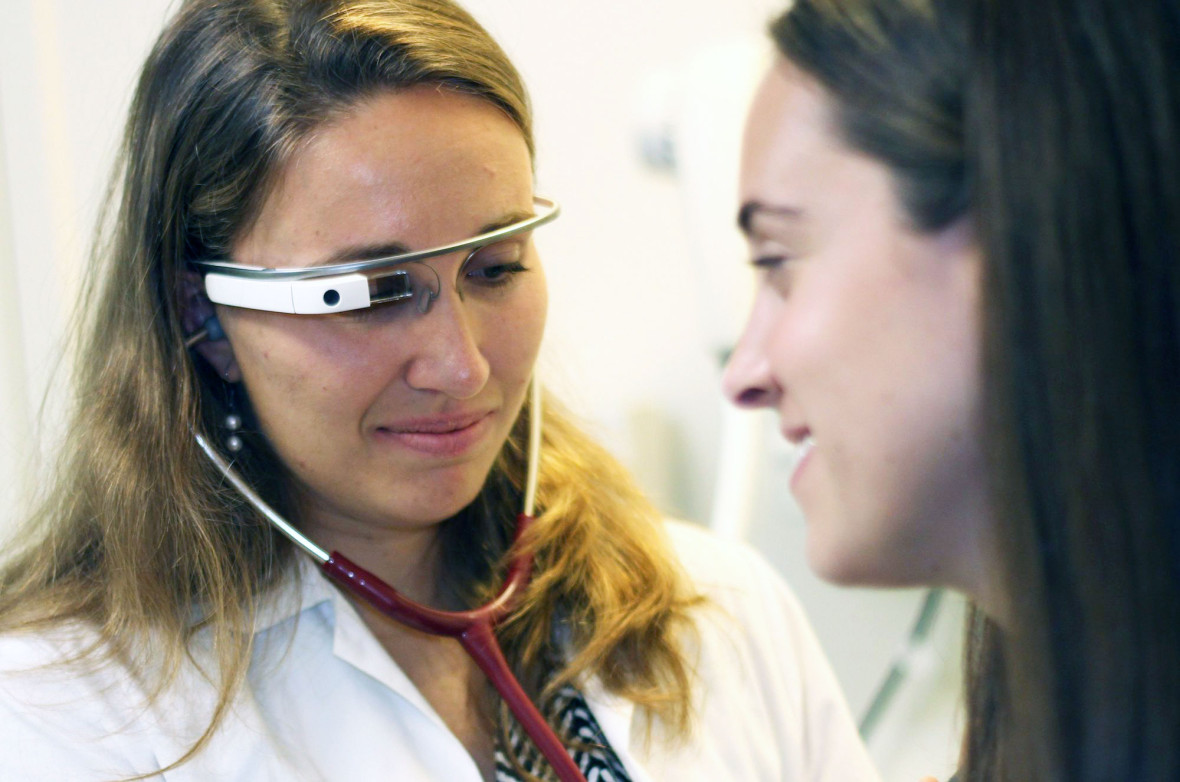
window.__IS_SSR__=true
window.__INITIAL_STATE__={
"attachmentsReducer": {
"audio_0": {
"type": "attachments",
"id": "audio_0",
"imgSizes": {
"kqedFullSize": {
"file": "https://ww2.kqed.org/news/wp-content/themes/KQED-unified/img/audio_bgs/background0.jpg"
}
}
},
"audio_1": {
"type": "attachments",
"id": "audio_1",
"imgSizes": {
"kqedFullSize": {
"file": "https://ww2.kqed.org/news/wp-content/themes/KQED-unified/img/audio_bgs/background1.jpg"
}
}
},
"audio_2": {
"type": "attachments",
"id": "audio_2",
"imgSizes": {
"kqedFullSize": {
"file": "https://ww2.kqed.org/news/wp-content/themes/KQED-unified/img/audio_bgs/background2.jpg"
}
}
},
"audio_3": {
"type": "attachments",
"id": "audio_3",
"imgSizes": {
"kqedFullSize": {
"file": "https://ww2.kqed.org/news/wp-content/themes/KQED-unified/img/audio_bgs/background3.jpg"
}
}
},
"audio_4": {
"type": "attachments",
"id": "audio_4",
"imgSizes": {
"kqedFullSize": {
"file": "https://ww2.kqed.org/news/wp-content/themes/KQED-unified/img/audio_bgs/background4.jpg"
}
}
},
"placeholder": {
"type": "attachments",
"id": "placeholder",
"imgSizes": {
"thumbnail": {
"file": "https://cdn.kqed.org/wp-content/uploads/2024/12/KQED-Default-Image-816638274-2000x1333-1-160x107.jpg",
"width": 160,
"height": 107,
"mimeType": "image/jpeg"
},
"medium": {
"file": "https://cdn.kqed.org/wp-content/uploads/2024/12/KQED-Default-Image-816638274-2000x1333-1-800x533.jpg",
"width": 800,
"height": 533,
"mimeType": "image/jpeg"
},
"medium_large": {
"file": "https://cdn.kqed.org/wp-content/uploads/2024/12/KQED-Default-Image-816638274-2000x1333-1-768x512.jpg",
"width": 768,
"height": 512,
"mimeType": "image/jpeg"
},
"large": {
"file": "https://cdn.kqed.org/wp-content/uploads/2024/12/KQED-Default-Image-816638274-2000x1333-1-1020x680.jpg",
"width": 1020,
"height": 680,
"mimeType": "image/jpeg"
},
"1536x1536": {
"file": "https://cdn.kqed.org/wp-content/uploads/2024/12/KQED-Default-Image-816638274-2000x1333-1-1536x1024.jpg",
"width": 1536,
"height": 1024,
"mimeType": "image/jpeg"
},
"fd-lrg": {
"file": "https://cdn.kqed.org/wp-content/uploads/2024/12/KQED-Default-Image-816638274-2000x1333-1-1536x1024.jpg",
"width": 1536,
"height": 1024,
"mimeType": "image/jpeg"
},
"fd-med": {
"file": "https://cdn.kqed.org/wp-content/uploads/2024/12/KQED-Default-Image-816638274-2000x1333-1-1020x680.jpg",
"width": 1020,
"height": 680,
"mimeType": "image/jpeg"
},
"fd-sm": {
"file": "https://cdn.kqed.org/wp-content/uploads/2024/12/KQED-Default-Image-816638274-2000x1333-1-800x533.jpg",
"width": 800,
"height": 533,
"mimeType": "image/jpeg"
},
"post-thumbnail": {
"file": "https://cdn.kqed.org/wp-content/uploads/2024/12/KQED-Default-Image-816638274-2000x1333-1-672x372.jpg",
"width": 672,
"height": 372,
"mimeType": "image/jpeg"
},
"twentyfourteen-full-width": {
"file": "https://cdn.kqed.org/wp-content/uploads/2024/12/KQED-Default-Image-816638274-2000x1333-1-1038x576.jpg",
"width": 1038,
"height": 576,
"mimeType": "image/jpeg"
},
"xxsmall": {
"file": "https://cdn.kqed.org/wp-content/uploads/2024/12/KQED-Default-Image-816638274-2000x1333-1-160x107.jpg",
"width": 160,
"height": 107,
"mimeType": "image/jpeg"
},
"xsmall": {
"file": "https://cdn.kqed.org/wp-content/uploads/2024/12/KQED-Default-Image-816638274-2000x1333-1-672x372.jpg",
"width": 672,
"height": 372,
"mimeType": "image/jpeg"
},
"small": {
"file": "https://cdn.kqed.org/wp-content/uploads/2024/12/KQED-Default-Image-816638274-2000x1333-1-672x372.jpg",
"width": 672,
"height": 372,
"mimeType": "image/jpeg"
},
"xlarge": {
"file": "https://cdn.kqed.org/wp-content/uploads/2024/12/KQED-Default-Image-816638274-2000x1333-1-1020x680.jpg",
"width": 1020,
"height": 680,
"mimeType": "image/jpeg"
},
"full-width": {
"file": "https://cdn.kqed.org/wp-content/uploads/2024/12/KQED-Default-Image-816638274-2000x1333-1-1920x1280.jpg",
"width": 1920,
"height": 1280,
"mimeType": "image/jpeg"
},
"guest-author-32": {
"file": "https://cdn.kqed.org/wp-content/uploads/2025/01/KQED-Default-Image-816638274-1333x1333-1-160x160.jpg",
"width": 32,
"height": 32,
"mimeType": "image/jpeg"
},
"guest-author-50": {
"file": "https://cdn.kqed.org/wp-content/uploads/2025/01/KQED-Default-Image-816638274-1333x1333-1-160x160.jpg",
"width": 50,
"height": 50,
"mimeType": "image/jpeg"
},
"guest-author-64": {
"file": "https://cdn.kqed.org/wp-content/uploads/2025/01/KQED-Default-Image-816638274-1333x1333-1-160x160.jpg",
"width": 64,
"height": 64,
"mimeType": "image/jpeg"
},
"guest-author-96": {
"file": "https://cdn.kqed.org/wp-content/uploads/2025/01/KQED-Default-Image-816638274-1333x1333-1-160x160.jpg",
"width": 96,
"height": 96,
"mimeType": "image/jpeg"
},
"guest-author-128": {
"file": "https://cdn.kqed.org/wp-content/uploads/2025/01/KQED-Default-Image-816638274-1333x1333-1-160x160.jpg",
"width": 128,
"height": 128,
"mimeType": "image/jpeg"
},
"detail": {
"file": "https://cdn.kqed.org/wp-content/uploads/2025/01/KQED-Default-Image-816638274-1333x1333-1-160x160.jpg",
"width": 160,
"height": 160,
"mimeType": "image/jpeg"
},
"kqedFullSize": {
"file": "https://cdn.kqed.org/wp-content/uploads/2024/12/KQED-Default-Image-816638274-2000x1333-1.jpg",
"width": 2000,
"height": 1333
}
}
},
"futureofyou_350": {
"type": "attachments",
"id": "futureofyou_350",
"meta": {
"index": "attachments_1716263798",
"site": "futureofyou",
"id": "350",
"found": true
},
"parent": 321,
"imgSizes": {
"twentyfourteen-full-width": {
"file": "https://ww2.kqed.org/app/uploads/sites/13/2015/03/doctor-patient-2-1038x576.jpg",
"width": 1038,
"mimeType": "image/jpeg",
"height": 576
},
"thumbnail": {
"file": "https://ww2.kqed.org/app/uploads/sites/13/2015/03/doctor-patient-2-400x265.jpg",
"width": 400,
"mimeType": "image/jpeg",
"height": 265
},
"fd-sm": {
"file": "https://ww2.kqed.org/app/uploads/sites/13/2015/03/doctor-patient-2-320x212.jpg",
"width": 320,
"mimeType": "image/jpeg",
"height": 212
},
"post-thumbnail": {
"file": "https://ww2.kqed.org/app/uploads/sites/13/2015/03/doctor-patient-2-672x372.jpg",
"width": 672,
"mimeType": "image/jpeg",
"height": 372
},
"kqedFullSize": {
"file": "https://ww2.kqed.org/app/uploads/sites/13/2015/03/doctor-patient-2.jpg",
"width": 2000,
"height": 1326
},
"large": {
"file": "https://ww2.kqed.org/app/uploads/sites/13/2015/03/doctor-patient-2-1180x782.jpg",
"width": 1180,
"mimeType": "image/jpeg",
"height": 782
},
"guest-author-96": {
"file": "https://ww2.kqed.org/app/uploads/sites/13/2015/03/doctor-patient-2-96x96.jpg",
"width": 96,
"mimeType": "image/jpeg",
"height": 96
},
"medium": {
"file": "https://ww2.kqed.org/app/uploads/sites/13/2015/03/doctor-patient-2-800x530.jpg",
"width": 800,
"mimeType": "image/jpeg",
"height": 530
},
"guest-author-64": {
"file": "https://ww2.kqed.org/app/uploads/sites/13/2015/03/doctor-patient-2-64x64.jpg",
"width": 64,
"mimeType": "image/jpeg",
"height": 64
},
"guest-author-32": {
"file": "https://ww2.kqed.org/app/uploads/sites/13/2015/03/doctor-patient-2-32x32.jpg",
"width": 32,
"mimeType": "image/jpeg",
"height": 32
},
"fd-lrg": {
"file": "https://ww2.kqed.org/app/uploads/sites/13/2015/03/doctor-patient-2-1180x782.jpg",
"width": 1180,
"mimeType": "image/jpeg",
"height": 782
},
"fd-med": {
"file": "https://ww2.kqed.org/app/uploads/sites/13/2015/03/doctor-patient-2-768x509.jpg",
"width": 768,
"mimeType": "image/jpeg",
"height": 509
},
"detail": {
"file": "https://ww2.kqed.org/app/uploads/sites/13/2015/03/doctor-patient-2-75x75.jpg",
"width": 75,
"mimeType": "image/jpeg",
"height": 75
},
"guest-author-128": {
"file": "https://ww2.kqed.org/app/uploads/sites/13/2015/03/doctor-patient-2-128x128.jpg",
"width": 128,
"mimeType": "image/jpeg",
"height": 128
}
},
"publishDate": 1426208292,
"modified": 1426208313,
"caption": null,
"description": null,
"title": "doctor-patient-2",
"credit": "Photo credit: Augmedix",
"status": "inherit",
"isLoading": false,
"fetchFailed": false
},
"futureofyou_287": {
"type": "attachments",
"id": "futureofyou_287",
"meta": {
"index": "attachments_1716263798",
"site": "futureofyou",
"id": "287",
"found": true
},
"parent": 276,
"imgSizes": {
"twentyfourteen-full-width": {
"file": "https://ww2.kqed.org/app/uploads/sites/13/2015/03/FOY-documentary-e1426121525641-1038x576.jpg",
"width": 1038,
"mimeType": "image/jpeg",
"height": 576
},
"thumbnail": {
"file": "https://ww2.kqed.org/app/uploads/sites/13/2015/03/FOY-documentary-e1426121556910-400x225.jpg",
"width": 400,
"mimeType": "image/jpeg",
"height": 225
},
"fd-sm": {
"file": "https://ww2.kqed.org/app/uploads/sites/13/2015/03/FOY-documentary-e1426121556910-320x180.jpg",
"width": 320,
"mimeType": "image/jpeg",
"height": 180
},
"post-thumbnail": {
"file": "https://ww2.kqed.org/app/uploads/sites/13/2015/03/FOY-documentary-e1426121525641-672x372.jpg",
"width": 672,
"mimeType": "image/jpeg",
"height": 372
},
"kqedFullSize": {
"file": "https://ww2.kqed.org/app/uploads/sites/13/2015/03/FOY-documentary-e1426121556910.jpg",
"width": 640,
"height": 360
},
"large": {
"file": "https://ww2.kqed.org/app/uploads/sites/13/2015/03/FOY-documentary-e1426121525641-1180x663.jpg",
"width": 1180,
"mimeType": "image/jpeg",
"height": 663
},
"guest-author-96": {
"file": "https://ww2.kqed.org/app/uploads/sites/13/2015/03/FOY-documentary-e1426121556910-96x96.jpg",
"width": 96,
"mimeType": "image/jpeg",
"height": 96
},
"medium": {
"file": "https://ww2.kqed.org/app/uploads/sites/13/2015/03/FOY-documentary-e1426121525641-800x449.jpg",
"width": 800,
"mimeType": "image/jpeg",
"height": 449
},
"guest-author-64": {
"file": "https://ww2.kqed.org/app/uploads/sites/13/2015/03/FOY-documentary-e1426121556910-64x64.jpg",
"width": 64,
"mimeType": "image/jpeg",
"height": 64
},
"guest-author-32": {
"file": "https://ww2.kqed.org/app/uploads/sites/13/2015/03/FOY-documentary-e1426121556910-32x32.jpg",
"width": 32,
"mimeType": "image/jpeg",
"height": 32
},
"fd-lrg": {
"file": "https://ww2.kqed.org/app/uploads/sites/13/2015/03/FOY-documentary-e1426121525641-1180x663.jpg",
"width": 1180,
"mimeType": "image/jpeg",
"height": 663
},
"fd-med": {
"file": "https://ww2.kqed.org/app/uploads/sites/13/2015/03/FOY-documentary-e1426121525641-768x432.jpg",
"width": 768,
"mimeType": "image/jpeg",
"height": 432
},
"detail": {
"file": "https://ww2.kqed.org/app/uploads/sites/13/2015/03/FOY-documentary-e1426121556910-75x75.jpg",
"width": 75,
"mimeType": "image/jpeg",
"height": 75
},
"guest-author-128": {
"file": "https://ww2.kqed.org/app/uploads/sites/13/2015/03/FOY-documentary-e1426121556910-128x128.jpg",
"width": 128,
"mimeType": "image/jpeg",
"height": 128
}
},
"publishDate": 1426121503,
"modified": 1426121503,
"caption": null,
"description": "SAN FRANCISCO, CA - JUNE 02: Attendees gather at the Apple Worldwide Developers Conference at the Moscone West center on June 2, 2014 in San Francisco, California. Apple CEO Tim Cook kicked off the annual WWDC which is typically a showcase for upcoming updates to Apple hardware and software. The conference runs through June 6. (Photo by Justin Sullivan/Getty Images)",
"title": "Apple Hosts Its Worldwide Developers Conference",
"credit": null,
"status": "inherit",
"isLoading": false,
"fetchFailed": false
},
"futureofyou_54": {
"type": "attachments",
"id": "futureofyou_54",
"meta": {
"index": "attachments_1716263798",
"site": "futureofyou",
"id": "54",
"found": true
},
"parent": 5,
"imgSizes": {
"twentyfourteen-full-width": {
"file": "https://ww2.kqed.org/app/uploads/sites/13/2015/01/future-versions1-1038x576.png",
"width": 1038,
"mimeType": "image/png",
"height": 576
},
"thumbnail": {
"file": "https://ww2.kqed.org/app/uploads/sites/13/2015/01/future-versions1-400x213.png",
"width": 400,
"mimeType": "image/png",
"height": 213
},
"post-thumbnail": {
"file": "https://ww2.kqed.org/app/uploads/sites/13/2015/01/future-versions1-672x372.png",
"width": 672,
"mimeType": "image/png",
"height": 372
},
"kqedFullSize": {
"file": "https://ww2.kqed.org/app/uploads/sites/13/2015/01/future-versions1.png",
"width": 1474,
"height": 784
},
"large": {
"file": "https://ww2.kqed.org/app/uploads/sites/13/2015/01/future-versions1-1180x628.png",
"width": 1180,
"mimeType": "image/png",
"height": 628
},
"guest-author-96": {
"file": "https://ww2.kqed.org/app/uploads/sites/13/2015/01/future-versions1-96x96.png",
"width": 96,
"mimeType": "image/png",
"height": 96
},
"medium": {
"file": "https://ww2.kqed.org/app/uploads/sites/13/2015/01/future-versions1-800x426.png",
"width": 800,
"mimeType": "image/png",
"height": 426
},
"guest-author-64": {
"file": "https://ww2.kqed.org/app/uploads/sites/13/2015/01/future-versions1-64x64.png",
"width": 64,
"mimeType": "image/png",
"height": 64
},
"detail": {
"file": "https://ww2.kqed.org/app/uploads/sites/13/2015/01/future-versions1-75x75.png",
"width": 75,
"mimeType": "image/png",
"height": 75
},
"guest-author-32": {
"file": "https://ww2.kqed.org/app/uploads/sites/13/2015/01/future-versions1-32x32.png",
"width": 32,
"mimeType": "image/png",
"height": 32
},
"guest-author-128": {
"file": "https://ww2.kqed.org/app/uploads/sites/13/2015/01/future-versions1-128x128.png",
"width": 128,
"mimeType": "image/png",
"height": 128
}
},
"publishDate": 1423264471,
"modified": 1423264471,
"caption": null,
"description": null,
"title": "future-versions",
"credit": null,
"status": "inherit",
"isLoading": false,
"fetchFailed": false
},
"futureofyou_52": {
"type": "attachments",
"id": "futureofyou_52",
"meta": {
"index": "attachments_1716263798",
"site": "futureofyou",
"id": "52",
"found": true
},
"parent": 33,
"imgSizes": {
"twentyfourteen-full-width": {
"file": "https://ww2.kqed.org/app/uploads/sites/13/2015/02/Bret-Parker1-1038x576.jpg",
"width": 1038,
"mimeType": "image/jpeg",
"height": 576
},
"thumbnail": {
"file": "https://ww2.kqed.org/app/uploads/sites/13/2015/02/Bret-Parker1-400x267.jpg",
"width": 400,
"mimeType": "image/jpeg",
"height": 267
},
"post-thumbnail": {
"file": "https://ww2.kqed.org/app/uploads/sites/13/2015/02/Bret-Parker1-672x372.jpg",
"width": 672,
"mimeType": "image/jpeg",
"height": 372
},
"kqedFullSize": {
"file": "https://ww2.kqed.org/app/uploads/sites/13/2015/02/Bret-Parker1.jpg",
"width": 2048,
"height": 1365
},
"large": {
"file": "https://ww2.kqed.org/app/uploads/sites/13/2015/02/Bret-Parker1-1180x786.jpg",
"width": 1180,
"mimeType": "image/jpeg",
"height": 786
},
"guest-author-96": {
"file": "https://ww2.kqed.org/app/uploads/sites/13/2015/02/Bret-Parker1-96x96.jpg",
"width": 96,
"mimeType": "image/jpeg",
"height": 96
},
"medium": {
"file": "https://ww2.kqed.org/app/uploads/sites/13/2015/02/Bret-Parker1-800x533.jpg",
"width": 800,
"mimeType": "image/jpeg",
"height": 533
},
"guest-author-64": {
"file": "https://ww2.kqed.org/app/uploads/sites/13/2015/02/Bret-Parker1-64x64.jpg",
"width": 64,
"mimeType": "image/jpeg",
"height": 64
},
"detail": {
"file": "https://ww2.kqed.org/app/uploads/sites/13/2015/02/Bret-Parker1-75x75.jpg",
"width": 75,
"mimeType": "image/jpeg",
"height": 75
},
"guest-author-32": {
"file": "https://ww2.kqed.org/app/uploads/sites/13/2015/02/Bret-Parker1-32x32.jpg",
"width": 32,
"mimeType": "image/jpeg",
"height": 32
},
"guest-author-128": {
"file": "https://ww2.kqed.org/app/uploads/sites/13/2015/02/Bret-Parker1-128x128.jpg",
"width": 128,
"mimeType": "image/jpeg",
"height": 128
}
},
"publishDate": 1423264414,
"modified": 1425339918,
"caption": "Bret Parker went skydiving this year to raise money for the Michael J. Fox Foundation. Parker participated in a study earlier this year about whether a wearable tracker could effectively measure the severity of tremors caused by Parkinson’s. (Courtesy of Bret Parker)",
"description": null,
"title": "Bret-Parker",
"credit": null,
"status": "inherit",
"isLoading": false,
"fetchFailed": false
},
"futureofyou_27": {
"type": "attachments",
"id": "futureofyou_27",
"meta": {
"index": "attachments_1716263798",
"site": "futureofyou",
"id": "27",
"found": true
},
"parent": 26,
"imgSizes": {
"thumbnail": {
"file": "https://ww2.kqed.org/app/uploads/sites/13/2015/02/computer-servers-150x150.jpg",
"width": 150,
"mimeType": "image/jpeg",
"height": 150
},
"kqedFullSize": {
"file": "https://ww2.kqed.org/app/uploads/sites/13/2015/02/computer-servers.jpg",
"width": 640,
"height": 360
},
"guest-author-96": {
"file": "https://ww2.kqed.org/app/uploads/sites/13/2015/02/computer-servers-96x96.jpg",
"width": 96,
"mimeType": "image/jpeg",
"height": 96
},
"medium": {
"file": "https://ww2.kqed.org/app/uploads/sites/13/2015/02/computer-servers-300x169.jpg",
"width": 300,
"mimeType": "image/jpeg",
"height": 169
},
"guest-author-64": {
"file": "https://ww2.kqed.org/app/uploads/sites/13/2015/02/computer-servers-64x64.jpg",
"width": 64,
"mimeType": "image/jpeg",
"height": 64
},
"detail": {
"file": "https://ww2.kqed.org/app/uploads/sites/13/2015/02/computer-servers-75x75.jpg",
"width": 75,
"mimeType": "image/jpeg",
"height": 75
},
"guest-author-32": {
"file": "https://ww2.kqed.org/app/uploads/sites/13/2015/02/computer-servers-32x32.jpg",
"width": 32,
"mimeType": "image/jpeg",
"height": 32
},
"guest-author-128": {
"file": "https://ww2.kqed.org/app/uploads/sites/13/2015/02/computer-servers-128x128.jpg",
"width": 128,
"mimeType": "image/jpeg",
"height": 128
}
},
"publishDate": 1423184466,
"modified": 1423184890,
"caption": null,
"description": null,
"title": "computer-servers",
"credit": "Courtesy of Guillaume Paumier",
"status": "inherit",
"isLoading": false,
"fetchFailed": false
},
"futureofyou_51": {
"type": "attachments",
"id": "futureofyou_51",
"meta": {
"index": "attachments_1716263798",
"site": "futureofyou",
"id": "51",
"found": true
},
"parent": 45,
"imgSizes": {
"thumbnail": {
"file": "https://ww2.kqed.org/app/uploads/sites/13/2015/02/DNA-21-400x225.jpg",
"width": 400,
"mimeType": "image/jpeg",
"height": 225
},
"kqedFullSize": {
"file": "https://ww2.kqed.org/app/uploads/sites/13/2015/02/DNA-21.jpg",
"width": 640,
"height": 360
},
"guest-author-96": {
"file": "https://ww2.kqed.org/app/uploads/sites/13/2015/02/DNA-21-96x96.jpg",
"width": 96,
"mimeType": "image/jpeg",
"height": 96
},
"guest-author-64": {
"file": "https://ww2.kqed.org/app/uploads/sites/13/2015/02/DNA-21-64x64.jpg",
"width": 64,
"mimeType": "image/jpeg",
"height": 64
},
"detail": {
"file": "https://ww2.kqed.org/app/uploads/sites/13/2015/02/DNA-21-75x75.jpg",
"width": 75,
"mimeType": "image/jpeg",
"height": 75
},
"guest-author-32": {
"file": "https://ww2.kqed.org/app/uploads/sites/13/2015/02/DNA-21-32x32.jpg",
"width": 32,
"mimeType": "image/jpeg",
"height": 32
},
"guest-author-128": {
"file": "https://ww2.kqed.org/app/uploads/sites/13/2015/02/DNA-21-128x128.jpg",
"width": 128,
"mimeType": "image/jpeg",
"height": 128
}
},
"publishDate": 1423264330,
"modified": 1454959112,
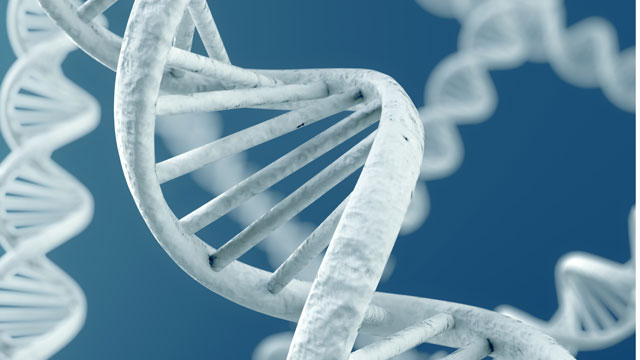
"caption": "A magnified strand of DNA. ",
"description": null,
"title": "DNA-2",
"credit": "Tomasz Wyszomirski",
"status": "inherit",
"isLoading": false,
"fetchFailed": false
},
"futureofyou_98": {
"type": "attachments",
"id": "futureofyou_98",
"meta": {
"index": "attachments_1716263798",
"site": "futureofyou",
"id": "98",
"found": true
},
"parent": 88,
"imgSizes": {
"thumbnail": {
"file": "https://ww2.kqed.org/app/uploads/sites/13/2015/03/07_wearing_necklace-400x225.jpg",
"width": 400,
"mimeType": "image/jpeg",
"height": 225
},
"fd-sm": {
"file": "https://ww2.kqed.org/app/uploads/sites/13/2015/03/07_wearing_necklace-320x180.jpg",
"width": 320,
"mimeType": "image/jpeg",
"height": 180
},
"kqedFullSize": {
"file": "https://ww2.kqed.org/app/uploads/sites/13/2015/03/07_wearing_necklace.jpg",
"width": 640,
"height": 360
},
"guest-author-96": {
"file": "https://ww2.kqed.org/app/uploads/sites/13/2015/03/07_wearing_necklace-96x96.jpg",
"width": 96,
"mimeType": "image/jpeg",
"height": 96
},
"guest-author-64": {
"file": "https://ww2.kqed.org/app/uploads/sites/13/2015/03/07_wearing_necklace-64x64.jpg",
"width": 64,
"mimeType": "image/jpeg",
"height": 64
},
"detail": {
"file": "https://ww2.kqed.org/app/uploads/sites/13/2015/03/07_wearing_necklace-75x75.jpg",
"width": 75,
"mimeType": "image/jpeg",
"height": 75
},
"guest-author-32": {
"file": "https://ww2.kqed.org/app/uploads/sites/13/2015/03/07_wearing_necklace-32x32.jpg",
"width": 32,
"mimeType": "image/jpeg",
"height": 32
},
"guest-author-128": {
"file": "https://ww2.kqed.org/app/uploads/sites/13/2015/03/07_wearing_necklace-128x128.jpg",
"width": 128,
"mimeType": "image/jpeg",
"height": 128
}
},
"publishDate": 1425335663,
"modified": 1425336285,
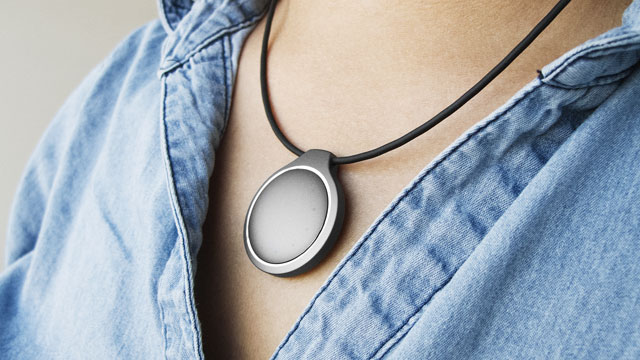
"caption": "The Shine is an activity monitor, sleep tracker and watch. (Misfit Wearables)\n",
"description": null,
"title": "07_wearing_necklace",
"credit": null,
"status": "inherit",
"isLoading": false,
"fetchFailed": false
},
"futureofyou_59": {
"type": "attachments",
"id": "futureofyou_59",
"meta": {
"index": "attachments_1716263798",
"site": "futureofyou",
"id": "59",
"found": true
},
"parent": 58,
"imgSizes": {
"thumbnail": {
"file": "https://ww2.kqed.org/app/uploads/sites/13/2015/02/New-Neuroscape-4788JC_CROP2-1024x575-400x225.jpg",
"width": 400,
"mimeType": "image/jpeg",
"height": 225
},
"post-thumbnail": {
"file": "https://ww2.kqed.org/app/uploads/sites/13/2015/02/New-Neuroscape-4788JC_CROP2-1024x575-672x372.jpg",
"width": 672,
"mimeType": "image/jpeg",
"height": 372
},
"kqedFullSize": {
"file": "https://ww2.kqed.org/app/uploads/sites/13/2015/02/New-Neuroscape-4788JC_CROP2-1024x575.jpg",
"width": 1024,
"height": 575
},
"guest-author-96": {
"file": "https://ww2.kqed.org/app/uploads/sites/13/2015/02/New-Neuroscape-4788JC_CROP2-1024x575-96x96.jpg",
"width": 96,
"mimeType": "image/jpeg",
"height": 96
},
"medium": {
"file": "https://ww2.kqed.org/app/uploads/sites/13/2015/02/New-Neuroscape-4788JC_CROP2-1024x575-800x449.jpg",
"width": 800,
"mimeType": "image/jpeg",
"height": 449
},
"guest-author-64": {
"file": "https://ww2.kqed.org/app/uploads/sites/13/2015/02/New-Neuroscape-4788JC_CROP2-1024x575-64x64.jpg",
"width": 64,
"mimeType": "image/jpeg",
"height": 64
},
"detail": {
"file": "https://ww2.kqed.org/app/uploads/sites/13/2015/02/New-Neuroscape-4788JC_CROP2-1024x575-75x75.jpg",
"width": 75,
"mimeType": "image/jpeg",
"height": 75
},
"guest-author-32": {
"file": "https://ww2.kqed.org/app/uploads/sites/13/2015/02/New-Neuroscape-4788JC_CROP2-1024x575-32x32.jpg",
"width": 32,
"mimeType": "image/jpeg",
"height": 32
},
"guest-author-128": {
"file": "https://ww2.kqed.org/app/uploads/sites/13/2015/02/New-Neuroscape-4788JC_CROP2-1024x575-128x128.jpg",
"width": 128,
"mimeType": "image/jpeg",
"height": 128
}
},
"publishDate": 1423525170,
"modified": 1423525185,
"caption": "Gaming, EEG and MRI brain scanning, and -- eventually -- a closed-loop system will help scientists explore the theraputic uses of video games. (Josh Cassidy/KQED)",
"description": null,
"title": "New-Neuroscape-4788JC_CROP2-1024x575",
"credit": null,
"status": "inherit",
"isLoading": false,
"fetchFailed": false
},
"futureofyou_99": {
"type": "attachments",
"id": "futureofyou_99",
"meta": {
"index": "attachments_1716263798",
"site": "futureofyou",
"id": "99",
"found": true
},
"parent": 87,
"imgSizes": {
"thumbnail": {
"file": "https://ww2.kqed.org/app/uploads/sites/13/2015/03/amyeeg-400x225.jpg",
"width": 400,
"mimeType": "image/jpeg",
"height": 225
},
"fd-sm": {
"file": "https://ww2.kqed.org/app/uploads/sites/13/2015/03/amyeeg-e1428967093113-320x320.jpg",
"width": 320,
"mimeType": "image/jpeg",
"height": 320
},
"kqedFullSize": {
"file": "https://ww2.kqed.org/app/uploads/sites/13/2015/03/amyeeg-e1428967093113.jpg",
"width": 360,
"height": 360
},
"guest-author-96": {
"file": "https://ww2.kqed.org/app/uploads/sites/13/2015/03/amyeeg-e1428967093113-96x96.jpg",
"width": 96,
"mimeType": "image/jpeg",
"height": 96
},
"guest-author-64": {
"file": "https://ww2.kqed.org/app/uploads/sites/13/2015/03/amyeeg-e1428967093113-64x64.jpg",
"width": 64,
"mimeType": "image/jpeg",
"height": 64
},
"detail": {
"file": "https://ww2.kqed.org/app/uploads/sites/13/2015/03/amyeeg-e1428967093113-75x75.jpg",
"width": 75,
"mimeType": "image/jpeg",
"height": 75
},
"guest-author-32": {
"file": "https://ww2.kqed.org/app/uploads/sites/13/2015/03/amyeeg-e1428967093113-32x32.jpg",
"width": 32,
"mimeType": "image/jpeg",
"height": 32
},
"guest-author-128": {
"file": "https://ww2.kqed.org/app/uploads/sites/13/2015/03/amyeeg-e1428967093113-128x128.jpg",
"width": 128,
"mimeType": "image/jpeg",
"height": 128
}
},
"publishDate": 1425335758,
"modified": 1425335779,
"caption": "Neuroscientist Erica Warp fits an EEG on Amy Standen. (Sara Bloomberg/KQED)",
"description": "Neuroscientist Erica Warp fits an EEG on Amy Standen. (Sara Bloomberg/KQED)",
"title": "amyeeg",
"credit": null,
"status": "inherit",
"isLoading": false,
"fetchFailed": false
},
"futureofyou_101": {
"type": "attachments",
"id": "futureofyou_101",
"meta": {
"index": "attachments_1716263798",
"site": "futureofyou",
"id": "101",
"found": true
},
"parent": 93,
"imgSizes": {
"thumbnail": {
"file": "https://ww2.kqed.org/app/uploads/sites/13/2015/03/Baby-foot-400x225.jpg",
"width": 400,
"mimeType": "image/jpeg",
"height": 225
},
"fd-sm": {
"file": "https://ww2.kqed.org/app/uploads/sites/13/2015/03/Baby-foot-320x180.jpg",
"width": 320,
"mimeType": "image/jpeg",
"height": 180
},
"kqedFullSize": {
"file": "https://ww2.kqed.org/app/uploads/sites/13/2015/03/Baby-foot.jpg",
"width": 640,
"height": 360
},
"guest-author-96": {
"file": "https://ww2.kqed.org/app/uploads/sites/13/2015/03/Baby-foot-96x96.jpg",
"width": 96,
"mimeType": "image/jpeg",
"height": 96
},
"guest-author-64": {
"file": "https://ww2.kqed.org/app/uploads/sites/13/2015/03/Baby-foot-64x64.jpg",
"width": 64,
"mimeType": "image/jpeg",
"height": 64
},
"detail": {
"file": "https://ww2.kqed.org/app/uploads/sites/13/2015/03/Baby-foot-75x75.jpg",
"width": 75,
"mimeType": "image/jpeg",
"height": 75
},
"guest-author-32": {
"file": "https://ww2.kqed.org/app/uploads/sites/13/2015/03/Baby-foot-32x32.jpg",
"width": 32,
"mimeType": "image/jpeg",
"height": 32
},
"guest-author-128": {
"file": "https://ww2.kqed.org/app/uploads/sites/13/2015/03/Baby-foot-128x128.jpg",
"width": 128,
"mimeType": "image/jpeg",
"height": 128
}
},
"publishDate": 1425335946,
"modified": 1425335973,
"caption": "At birth, every infant in the US and many other countries undergoes a blood test to detect rare newborn diseases that are treatable if caught quickly. (U.S. Air Force Staff Sgt. Eric T. Sheler/Wikimedia Commons)",
"description": null,
"title": "Baby foot",
"credit": null,
"status": "inherit",
"isLoading": false,
"fetchFailed": false
},
"futureofyou_170": {
"type": "attachments",
"id": "futureofyou_170",
"meta": {
"index": "attachments_1716263798",
"site": "futureofyou",
"id": "170",
"found": true
},
"parent": 169,
"imgSizes": {
"thumbnail": {
"file": "https://ww2.kqed.org/app/uploads/sites/13/2015/03/hpylori-400x225.jpg",
"width": 400,
"mimeType": "image/jpeg",
"height": 225
},
"fd-sm": {
"file": "https://ww2.kqed.org/app/uploads/sites/13/2015/03/hpylori-320x180.jpg",
"width": 320,
"mimeType": "image/jpeg",
"height": 180
},
"kqedFullSize": {
"file": "https://ww2.kqed.org/app/uploads/sites/13/2015/03/hpylori.jpg",
"width": 640,
"height": 360
},
"guest-author-96": {
"file": "https://ww2.kqed.org/app/uploads/sites/13/2015/03/hpylori-96x96.jpg",
"width": 96,
"mimeType": "image/jpeg",
"height": 96
},
"guest-author-64": {
"file": "https://ww2.kqed.org/app/uploads/sites/13/2015/03/hpylori-64x64.jpg",
"width": 64,
"mimeType": "image/jpeg",
"height": 64
},
"detail": {
"file": "https://ww2.kqed.org/app/uploads/sites/13/2015/03/hpylori-75x75.jpg",
"width": 75,
"mimeType": "image/jpeg",
"height": 75
},
"guest-author-32": {
"file": "https://ww2.kqed.org/app/uploads/sites/13/2015/03/hpylori-32x32.jpg",
"width": 32,
"mimeType": "image/jpeg",
"height": 32
},
"guest-author-128": {
"file": "https://ww2.kqed.org/app/uploads/sites/13/2015/03/hpylori-128x128.jpg",
"width": 128,
"mimeType": "image/jpeg",
"height": 128
}
},
"publishDate": 1425345498,
"modified": 1425345522,
"caption": "H. pylori has lived in our stomachs for 200,000 years. (Photo: Yutaka Tsutsumi)",
"description": null,
"title": "hpylori",
"credit": null,
"status": "inherit",
"isLoading": false,
"fetchFailed": false
},
"futureofyou_164": {
"type": "attachments",
"id": "futureofyou_164",
"meta": {
"index": "attachments_1716263798",
"site": "futureofyou",
"id": "164",
"found": true
},
"parent": 163,
"imgSizes": {
"thumbnail": {
"file": "https://ww2.kqed.org/app/uploads/sites/13/2015/03/x-ray-hugocampos-pa_scaled-400x225.jpg",
"width": 400,
"mimeType": "image/jpeg",
"height": 225
},
"fd-sm": {
"file": "https://ww2.kqed.org/app/uploads/sites/13/2015/03/x-ray-hugocampos-pa_scaled-320x180.jpg",
"width": 320,
"mimeType": "image/jpeg",
"height": 180
},
"kqedFullSize": {
"file": "https://ww2.kqed.org/app/uploads/sites/13/2015/03/x-ray-hugocampos-pa_scaled.jpg",
"width": 640,
"height": 360
},
"guest-author-96": {
"file": "https://ww2.kqed.org/app/uploads/sites/13/2015/03/x-ray-hugocampos-pa_scaled-96x96.jpg",
"width": 96,
"mimeType": "image/jpeg",
"height": 96
},
"guest-author-64": {
"file": "https://ww2.kqed.org/app/uploads/sites/13/2015/03/x-ray-hugocampos-pa_scaled-64x64.jpg",
"width": 64,
"mimeType": "image/jpeg",
"height": 64
},
"detail": {
"file": "https://ww2.kqed.org/app/uploads/sites/13/2015/03/x-ray-hugocampos-pa_scaled-75x75.jpg",
"width": 75,
"mimeType": "image/jpeg",
"height": 75
},
"guest-author-32": {
"file": "https://ww2.kqed.org/app/uploads/sites/13/2015/03/x-ray-hugocampos-pa_scaled-32x32.jpg",
"width": 32,
"mimeType": "image/jpeg",
"height": 32
},
"guest-author-128": {
"file": "https://ww2.kqed.org/app/uploads/sites/13/2015/03/x-ray-hugocampos-pa_scaled-128x128.jpg",
"width": 128,
"mimeType": "image/jpeg",
"height": 128
}
},
"publishDate": 1425345151,
"modified": 1425345166,
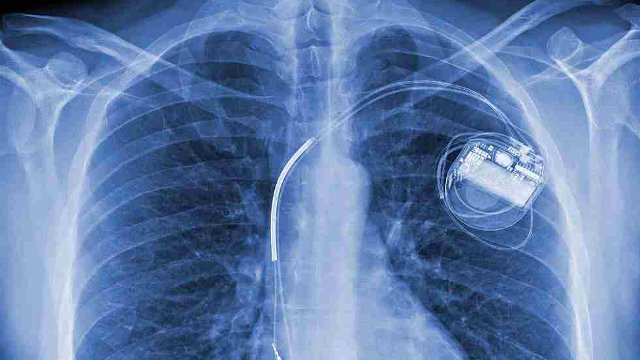
"caption": "An X-ray showing Hugo Campos's ICD. (Courtesy of Hugo Campos)",
"description": null,
"title": "An X-ray showing Hugo Campos's ICD",
"credit": null,
"status": "inherit",
"isLoading": false,
"fetchFailed": false
}
},
"audioPlayerReducer": {
"postId": "stream_live",
"isPaused": true,
"isPlaying": false,
"pfsActive": false,
"pledgeModalIsOpen": true,
"playerDrawerIsOpen": false,
"liveAudioPlayStartedAt": 0,
"liveAudioPlayContext": ""
},
"authorsReducer": {
"amystanden": {
"type": "authors",
"id": "210",
"meta": {
"index": "authors_1716337520",
"id": "210",
"found": true
},
"name": "Amy Standen",
"firstName": "Amy",
"lastName": "Standen",
"slug": "amystanden",
"email": "astanden@kqed.org",
"display_author_email": false,
"staff_mastheads": [],
"title": "KQED Contributor",
"bio": "Amy Standen (@amystanden) is co-host of #\u003ca href=\"https://ww2.kqed.org/news/programs/the-leap\">TheLeapPodcast\u003c/a> (subscribe on iTunes or Stitcher!) and host of KQED and PBSDigital Studios' science video series, \u003ca href=\"https://www.youtube.com/user/KQEDDeepLook\">Deep Look\u003c/a>. Her science radio stories appear on KQED and NPR.\r\n\r\nEmail her at astanden@kqed.org",
"avatar": "https://secure.gravatar.com/avatar/3d021b72de685a788b0487b059d0a6a1?s=600&d=blank&r=g",
"twitter": null,
"facebook": null,
"instagram": null,
"linkedin": null,
"sites": [
{
"site": "news",
"roles": [
"subscriber"
]
},
{
"site": "futureofyou",
"roles": [
"subscriber"
]
},
{
"site": "stateofhealth",
"roles": [
"subscriber"
]
},
{
"site": "science",
"roles": []
},
{
"site": "quest",
"roles": [
"subscriber"
]
}
],
"headData": {
"title": "Amy Standen | KQED",
"description": "KQED Contributor",
"ogImgSrc": "https://secure.gravatar.com/avatar/3d021b72de685a788b0487b059d0a6a1?s=600&d=blank&r=g",
"twImgSrc": "https://secure.gravatar.com/avatar/3d021b72de685a788b0487b059d0a6a1?s=600&d=blank&r=g"
},
"isLoading": false,
"link": "/author/amystanden"
},
"andrea-kissack": {
"type": "authors",
"id": "212",
"meta": {
"index": "authors_1716337520",
"id": "212",
"found": true
},
"name": "Andrea Kissack",
"firstName": "Andrea",
"lastName": "Kissack",
"slug": "andrea-kissack",
"email": "akissack@kqed.org",
"display_author_email": false,
"staff_mastheads": [],
"title": "KQED Contributor",
"bio": "Andrea has nearly three decades of experience working as a reporter, anchor, producer and editor for public radio, large market television news and CBS radio. In her current role as KQED’s Sr. Science Editor, Andrea helps lead a talented team covering science, technology, health and the environment for broadcast and digital platforms. Most recently she helped KQED launch a new, multimedia initiative covering the intersection of technology, health and medical science. She has earned a number of accolades for her work including awards from the Radio and Television News Directors Association, the National Academy of Television Arts and Sciences and the Associated Press. Her work can be seen, and heard, on a number of networks, Including NPR, PBS, CBS and the BBC.",
"avatar": "https://secure.gravatar.com/avatar/3eae7a251f0aee43b3c0137a636cb386?s=600&d=blank&r=g",
"twitter": "andreakissack",
"facebook": null,
"instagram": null,
"linkedin": null,
"sites": [
{
"site": "news",
"roles": [
"subscriber"
]
},
{
"site": "stateofhealth",
"roles": [
"subscriber"
]
},
{
"site": "science",
"roles": []
},
{
"site": "quest",
"roles": [
"add_users",
"create_users",
"edit_files",
"edit_users",
"level_10",
"level_8",
"level_9",
"promote_users",
"view_cimy_extra_fields",
"subscriber"
]
}
],
"headData": {
"title": "Andrea Kissack | KQED",
"description": "KQED Contributor",
"ogImgSrc": "https://secure.gravatar.com/avatar/3eae7a251f0aee43b3c0137a636cb386?s=600&d=blank&r=g",
"twImgSrc": "https://secure.gravatar.com/avatar/3eae7a251f0aee43b3c0137a636cb386?s=600&d=blank&r=g"
},
"isLoading": false,
"link": "/author/andrea-kissack"
},
"kqed": {
"type": "authors",
"id": "236",
"meta": {
"index": "authors_1716337520",
"id": "236",
"found": true
},
"name": "KQED News Staff",
"firstName": "KQED News Staff",
"lastName": null,
"slug": "kqed",
"email": "faq@kqed.org",
"display_author_email": false,
"staff_mastheads": [],
"title": null,
"bio": null,
"avatar": "https://secure.gravatar.com/avatar/ef0e801a68c4c54afa9180db14084167?s=600&d=blank&r=g",
"twitter": null,
"facebook": null,
"instagram": null,
"linkedin": null,
"sites": [
{
"site": "arts",
"roles": [
"contributor"
]
},
{
"site": "news",
"roles": [
"editor"
]
},
{
"site": "futureofyou",
"roles": [
"author"
]
}
],
"headData": {
"title": "KQED News Staff | KQED",
"description": null,
"ogImgSrc": "https://secure.gravatar.com/avatar/ef0e801a68c4c54afa9180db14084167?s=600&d=blank&r=g",
"twImgSrc": "https://secure.gravatar.com/avatar/ef0e801a68c4c54afa9180db14084167?s=600&d=blank&r=g"
},
"isLoading": false,
"link": "/author/kqed"
},
"cfarr": {
"type": "authors",
"id": "3252",
"meta": {
"index": "authors_1716337520",
"id": "3252",
"found": true
},
"name": "Christina Farr",
"firstName": "Christina",
"lastName": "Farr",
"slug": "cfarr",
"email": "cfarr@kqed.org",
"display_author_email": false,
"staff_mastheads": [],
"title": "KQED Contributor",
"bio": "Christina Farr (\u003ca href=\"https://twitter.com/chrissyfarr\">@chrissyfarr\u003c/a>) is the former editor and host of Future of You. She was previously with Reuters, covering digital health and Apple and before that, she reported for Venture Beat. Christina was born and raised in London and has graduate degrees from University of London and the Stanford School of Journalism. Farr’s work has appeared in a variety of publications, including the New York Times, the Daily Telegraph, the Bay Citizen and SFGate.com. She has appeared as a featured expert on NBC, ABC and Reuters TV, among others, and frequently speaks at health and technology conferences. She is also co-founder of Ladies Who Vino, a networking group for women in technology and business.",
"avatar": "https://secure.gravatar.com/avatar/22c63869a7901c61c15e204391c1261d?s=600&d=blank&r=g",
"twitter": null,
"facebook": null,
"instagram": null,
"linkedin": null,
"sites": [
{
"site": "futureofyou",
"roles": [
"administrator"
]
},
{
"site": "stateofhealth",
"roles": [
"author"
]
},
{
"site": "science",
"roles": []
}
],
"headData": {
"title": "Christina Farr | KQED",
"description": "KQED Contributor",
"ogImgSrc": "https://secure.gravatar.com/avatar/22c63869a7901c61c15e204391c1261d?s=600&d=blank&r=g",
"twImgSrc": "https://secure.gravatar.com/avatar/22c63869a7901c61c15e204391c1261d?s=600&d=blank&r=g"
},
"isLoading": false,
"link": "/author/cfarr"
},
"sheraz-sadiq": {
"type": "authors",
"id": "6176",
"meta": {
"index": "authors_1716337520",
"id": "6176",
"found": true
},
"name": "Sheraz Sadiq",
"firstName": "Sheraz",
"lastName": "Sadiq",
"slug": "sheraz-sadiq",
"email": "ssadiq@kqed.org",
"display_author_email": false,
"staff_mastheads": [],
"title": "KQED Contributor",
"bio": "Sheraz Sadiq is an Emmy Award-winning producer at San Francisco PBS affiliate KQED. In 2012, he received the AAAS Kavli Science Journalism award for a story he produced about the seismic retrofit of the Hetch Hetchy water delivery system which serves the San Francisco Bay Area. In addition to producing television content for KQED Science, he has also created online features and written news articles on scientific subjects ranging from astronomy to synthetic biology.",
"avatar": "https://secure.gravatar.com/avatar/d88c61c214e477c4c6f0ebaed4f581bf7c9b1dafd94cd4361285d427107adb8d?s=600&d=blank&r=g",
"twitter": null,
"bluesky": null,
"facebook": null,
"instagram": null,
"linkedin": null,
"sites": [
{
"site": "arts",
"roles": [
"subscriber"
]
},
{
"site": "news",
"roles": [
"subscriber"
]
},
{
"site": "futureofyou",
"roles": [
"subscriber"
]
},
{
"site": "science",
"roles": [
"subscriber"
]
},
{
"site": "quest",
"roles": [
"leadcoordinator",
"subscriber"
]
}
],
"headData": {
"title": "Sheraz Sadiq | KQED",
"description": "KQED Contributor",
"ogImgSrc": "https://secure.gravatar.com/avatar/d88c61c214e477c4c6f0ebaed4f581bf7c9b1dafd94cd4361285d427107adb8d?s=600&d=blank&r=g",
"twImgSrc": "https://secure.gravatar.com/avatar/d88c61c214e477c4c6f0ebaed4f581bf7c9b1dafd94cd4361285d427107adb8d?s=600&d=blank&r=g"
},
"isLoading": false,
"link": "/author/sheraz-sadiq"
}
},
"pagesReducer": {
"futureofyou_program_future-of-you": {
"type": "terms",
"id": "futureofyou_54",
"meta": {
"index": "terms_1716263798",
"site": "futureofyou",
"id": "54",
"score": 14.775673
},
"featImg": null,
"name": "Future of You",
"description": null,
"taxonomy": "program",
"headData": {
"twImgId": null,
"twTitle": null,
"ogTitle": null,
"ogImgId": null,
"twDescription": null,
"description": null,
"title": "Future of You Archives | KQED Arts",
"ogDescription": null
},
"ttid": 54,
"slug": "future-of-you",
"isLoading": false,
"title": "Future of You",
"pageMeta": {
"site": "futureofyou",
"WpPageTemplate": "page-topic-editorial",
"currentPage": 14
},
"blocks": [
{
"blockName": "kqed/post-list",
"attrs": {
"layout": "cardArticle2",
"query": "posts/futureofyou?program=future-of-you",
"seeMore": false,
"paginated": true,
"page": 14
}
},
{
"blockName": "kqed/ad"
}
]
}
},
"pfsSessionReducer": {},
"postsReducer": {
"stream_live": {
"type": "live",
"id": "stream_live",
"audioUrl": "https://streams.kqed.org/kqedradio",
"title": "Live Stream",
"excerpt": "Live Stream information currently unavailable.",
"link": "/radio",
"featImg": "",
"label": {
"name": "KQED Live",
"link": "/"
}
},
"stream_kqedNewscast": {
"type": "posts",
"id": "stream_kqedNewscast",
"audioUrl": "https://www.kqed.org/.stream/anon/radio/RDnews/newscast.mp3?_=1",
"title": "KQED Newscast",
"featImg": "",
"label": {
"name": "88.5 FM",
"link": "/"
}
},
"futureofyou_321": {
"type": "posts",
"id": "futureofyou_321",
"meta": {
"index": "posts_1716263798",
"site": "futureofyou",
"id": "321",
"score": null,
"sort": [
1426251633000
]
},
"parent": 0,
"labelTerm": {
"site": "futureofyou",
"term": 54
},
"blocks": [],
"publishDate": 1426251633,
"format": "image",
"disqusTitle": "Startups, Entrepreneurs Try to Solve Medical Records Debacle",
"title": "Startups, Entrepreneurs Try to Solve Medical Records Debacle",
"headTitle": "Future of You | KQED Future of You | KQED Science",
"content": "\u003caside class=\"alignright\">\n\u003ch3>\u003ca href=\"https://ww2.kqed.org/futureofyou/2015/03/11/critical-condition-how-a-broken-medical-records-system-is-endangering-americas-health/\">Part Two in a Series\u003c/a>\u003c/h3>\n\u003cfigure>\u003ca href=\"https://ww2.kqed.org/futureofyou/2015/03/11/critical-condition-how-a-broken-medical-records-system-is-endangering-americas-health/\">\u003cimg alt=\"\" src=\"http://ww2.kqed.org/futureofyou/wp-content/uploads/sites/13/2015/03/FOY-marquee-4-1920-1180x664.jpg\">\u003c/a>\u003c/figure>\n\u003cp>In the first part of our series on March 12, \u003ca href=\"https://ww2.kqed.org/futureofyou/2015/03/11/critical-condition-how-a-broken-medical-records-system-is-endangering-americas-health/\">Critical Condition: How a Broken Medical Records System is Endangering America’s Health\u003c/a>: digital medical records were supposed to make it easier and more efficient for doctors and hospitals to share patient health information. But the data is scattered among dozens of different systems, many of which don’t talk with each other, putting patients’ lives in danger.\u003c/p>\n\u003c/aside>\n\u003cp>When Jonathan Hirsch cut his hand on a rusty piece of metal last year, he cleaned up the wound and promptly made his way to an emergency room.\u003c/p>\n\u003cp>Hirsch, a San Francisco-based technolog\u003ca href=\"http://www.syapse.com/\">\u003c/a>y entrepreneur, had to rush to the hospital, because he couldn’t recall whether he had received a tetanus shot in the past five years.\u003c/p>\n\u003cp>Two hours later, Hirsch emerged with a bill in the high hundreds of dollars, despite having received very little medical care. What he did get, after all that time and money, was a copy of his immunization record -- but only after five hospital staff members finally hunted down a scanned attachment of the record from another hospital in its network. It turned out he had been vaccinated just four years ago and didn't need another tetanus shot.\u003c/p>\n\u003cp>For hospitals and clinics all over the country, it’s still a technical and logistical nightmare to pull up a complete, accurate and up-to-date copy of patients’ medical records, whether it’s a family history, or a list of allergies and immunizations. Hirsch was lucky to receive this fragment of his medical record at all. It would have been far more cumbersome if he had selected a hospital in a different system or network, or if he had a complex set of medical problems.\u003c/p>\n\u003cp>The idea behind electronic medical records is to make health care more efficient and less costly by digitizing all of our health information so medical histories are more accessible. Hoping to finally make this goal a reality, in 2009, the Obama Administration allocated billions of dollars to incentivize hospitals, clinics and other care providers to adopt electronic medical record systems.\u003c/p>\n\u003cfigure id=\"attachment_334\" class=\"wp-caption aligncenter\" style=\"max-width: 640px\">\u003ca href=\"http://ww2.kqed.org/futureofyou/wp-content/uploads/sites/13/2015/03/FOY-hirsch1920.jpg\">\u003cimg src=\"http://ww2.kqed.org/futureofyou/wp-content/uploads/sites/13/2015/03/FOY-hirsch1920-1180x999.jpg\" alt=\"Jonathan Hirsch is founder of Syapse.\" width=\"640\" height=\"542\" class=\"size-large wp-image-334\" srcset=\"https://ww2.kqed.org/app/uploads/sites/13/2015/03/FOY-hirsch1920-1180x999.jpg 1180w, https://ww2.kqed.org/app/uploads/sites/13/2015/03/FOY-hirsch1920-400x339.jpg 400w, https://ww2.kqed.org/app/uploads/sites/13/2015/03/FOY-hirsch1920-709x600.jpg 709w, https://ww2.kqed.org/app/uploads/sites/13/2015/03/FOY-hirsch1920-768x650.jpg 768w, https://ww2.kqed.org/app/uploads/sites/13/2015/03/FOY-hirsch1920-320x271.jpg 320w, https://ww2.kqed.org/app/uploads/sites/13/2015/03/FOY-hirsch1920.jpg 1920w\" sizes=\"(max-width: 640px) 100vw, 640px\">\u003c/a>\u003cfigcaption class=\"wp-caption-text\">Jonathan Hirsch is founder of Syapse. \u003ccite>(Chrissy Farr / KQED)\u003c/cite>\u003c/figcaption>\u003c/figure>\n\u003cp>Although many hospitals and other medical facilities have digitized their records, the systems they are using are often proprietary and it’s difficult to easily share health information from one hospital or clinic to another. These challenges can be costly and slow down access to health care.\u003c/p>\n\u003cp>[ad fullwidth]\u003c/p>\n\u003cp>“The health care delivery system today treats patients as they engage it: on a one-off basis,” said Aneesh Chopra, who served as the first chief technology officer of the White House from 2009 to 2012. Chopra has dedicated much of his time in and out of office to solving this problem.\u003c/p>\n\u003cp>Modernizing medical records has been a major challenge, and requires cooperation from the government and the private sector. While the big medical records corporations, hospitals and federal officials attempt to solve these problems, some startup companies are hard at work trying to find solutions.\u003c/p>\n\u003ch2>Argonaut Project\u003c/h2>\n\u003cp>Chopra, who is now CEO of \u003ca href=\"http://hunchanalytics.com/\">Hunch Analytics\u003c/a>, a Virginia company that is working to use public and private databases to help health care companies become more efficient, is part of a new initiative called the \u003ca href=\"http://www.informationweek.com/strategic-cio/can-argonaut-project-make-exchanging-health-data-easier/a/d-id/1318774\">Argonaut Project\u003c/a> that aims to make exchanging health data easier.\u003c/p>\n\u003cp>Last fall, Chopra and a diverse group of policymakers, health executives and entrepreneurs sat down at a popular Turkish restaurant in Washington D.C. and discussed a solution that would “put patients at the center,” using the same types of technologies that have been widely adopted by Internet companies like LinkedIn and Facebook.\u003c/p>\n\u003cp>The Argonaut approach is to use web-based, open standards instead of much more complex, health care-specific standards. The project relies on public APIs, or application programming interfaces, which are commands the tech industry commonly uses to make it easier for software programs to share data. It’s basically developer speak for what Chopra refers to as a “handshake” between pieces of software, such as websites.\u003c/p>\n\u003cp>The goal for the project is to promote more flexible, easier access to key groups of health information. If it succeeds, mobile app developers will have a much easier time working with electronic medical records, which could make it possible for patients and doctors in the future to call up important patient information on smart phones and tablets.\u003c/p>\n\u003cp>According to Chopra, another key objective is to build tools to protect patient privacy, so patients will be aware and can consent when their data is shared with a mobile app or any other service.\u003c/p>\n\u003caside class=\"pullquote alignright\">“We are heading into health care's perfect storm.”\u003ccite>Aneesh Chopra, CEO of Hunch Analytics\u003c/cite>\u003c/aside>\n\u003cp>Two of the nation’s largest electronic medical records companies, rivals \u003ca href=\"http://www.cerner.com/\">Cerner\u003c/a>, in Kansas City, and \u003ca href=\"http://www.epic.com/\">Epic Systems\u003c/a>, in Wisconsin, are both founding members of Argonaut. Experts say that’s a good sign, and signals an increasing willingness from the industry to tackle the problem. And the project has a tight deadline: to come up with a solution by June.\u003c/p>\n\u003cp>“We are heading into health care's perfect storm - a shift to value-based, rather than volume-based, health care that will reshape the care delivery system and spur greater demand for open data apps,” said Chopra.\u003c/p>\n\u003ch2>Silicon Valley Looks For Solutions\u003c/h2>\n\u003cp>Seeing a business opportunity, a growing number of entrepreneurs in Silicon Valley and other tech hubs are also trying to come up with easier ways of sharing health data.\u003c/p>\n\u003cp>These startups are part of a booming digital health industry that received \u003ca href=\"http://rockhealth.com/2015/01/digital-health-funding-tops-4-1b-2014-year-review/\">more than $4.1 billion in venture capital investments in 2014\u003c/a>, more than double what investors poured into the companies a year before. Digital health-focused accelerators and venture funds, like \u003ca href=\"http://rockhealth.com/\">Rock Health\u003c/a>, \u003ca href=\"https://www.startuphealth.com/\">StartUp Health\u003c/a> and \u003ca href=\"http://www.healthbox.com/\">Healthbox\u003c/a>, have emerged to meet this growing demand.\u003c/p>\n\u003cfigure id=\"attachment_343\" class=\"wp-caption aligncenter\" style=\"max-width: 640px\">\u003ca href=\"http://ww2.kqed.org/futureofyou/wp-content/uploads/sites/13/2015/03/Rock-Health-1920.jpg\">\u003cimg src=\"http://ww2.kqed.org/futureofyou/wp-content/uploads/sites/13/2015/03/Rock-Health-1920-1180x787.jpg\" alt=\"Rock Health is a startup fund for digital health care companies.\" width=\"640\" height=\"427\" class=\"size-large wp-image-343\" srcset=\"https://ww2.kqed.org/app/uploads/sites/13/2015/03/Rock-Health-1920-1180x787.jpg 1180w, https://ww2.kqed.org/app/uploads/sites/13/2015/03/Rock-Health-1920-400x267.jpg 400w, https://ww2.kqed.org/app/uploads/sites/13/2015/03/Rock-Health-1920-800x533.jpg 800w, https://ww2.kqed.org/app/uploads/sites/13/2015/03/Rock-Health-1920-768x512.jpg 768w, https://ww2.kqed.org/app/uploads/sites/13/2015/03/Rock-Health-1920-320x213.jpg 320w, https://ww2.kqed.org/app/uploads/sites/13/2015/03/Rock-Health-1920.jpg 1920w\" sizes=\"(max-width: 640px) 100vw, 640px\">\u003c/a>\u003cfigcaption class=\"wp-caption-text\">Rock Health is a startup fund for digital health care companies. Photo credit: Rock Health. \u003ccite>(Rock Health)\u003c/cite>\u003c/figcaption>\u003c/figure>\n\u003cp>Some health startups are doing the tough job of collecting data from a patient’s medical record and storing it in one, easily accessible place. This is easier said than done. Patient data is often stored in formats that a computer can’t ingest and share, like PDF files. Hirsch, the patient who had to rush to the emergency room after wounding his hand, started a company in 2008 to make sense of this unstructured data. His startup, Syapse, based in Palo Alto, is working with large and regional health systems, like Intermountain Healthcare and the University of California San Francisco, to aid in the development of a database that combines medical and genetic information.\u003c/p>\n\u003cp>That type of project is one of the biggest potential promises of electronic medical records: To take huge amounts of data and use them to broaden and speed up medical research studies. But with many of the largest record vendors failing in this regard, dozens of other startups are stepping in.\u003c/p>\n\u003cp>And some hospitals, like Kaiser Permanente, are turning to entrepreneurs to help solve their own health data-sharing challenges.\u003c/p>\n\u003cp>Kaiser was ahead of the curve in adopting an electronic medical record system. Southern California Kaiser’s chief medical information officer, John Mattison, was one of the key figures behind that landmark decision in 2003, which helped put Epic Systems on the map when Kaiser announced it would be using that company’s software at its hospitals.\u003c/p>\n\u003cp>Mattison admits the electronic medical record systems are “a little delayed” in modernizing their systems, particularly their ability to meet legitimate requests for information. He said he has spent years pushing Epic executives to adopt more open software standards, so medical records can more easily share information with other vendors and apps.\u003c/p>\n\u003caside class=\"pullquote alignleft\">“I think we can get to a happy medium between fully opening everything, and the ‘walled gardens’ of the past.”\u003ccite>John Mattison, Southern California Kaiser’s chief medical information officer\u003c/cite>\u003c/aside>\n\u003cp>Mattison said doctors at Kaiser and at other hospitals are frustrated by the amount of clicks of a mouse it takes to do any simple task, such as order medication. In the future, he suggests, the medical record may become a platform, or thin clinical layer of sorts, with newer, user-friendly applications for patients and doctors developed on top.\u003c/p>\n\u003cp>“I think we can get to a happy medium between fully opening everything, and the ‘walled gardens’ of the past,” he said.\u003c/p>\n\u003cp>According to Mattison, another area of investment is in identity management tools, which are desperately needed in the current system. As he puts it:\u003c/p>\n\u003cp>“I have a Maria Gonzales in my emergency room. She said she had a car accident three years ago in Chicago and had some stuff taken out, but she doesn’t remember what. The hospital in Chicago has hundreds of Maria Gonzales’s in their system. I do not want to act on the information of the wrong Maria Gonzales.”\u003c/p>\n\u003cp>Mattison said Kaiser is starting to evaluate several startups working on improving identity management, but declined to name them, saying it was still too early in the process. Some have called for a more drastic solution to this problem, such as a \u003ca href=\"http://geekdoctor.blogspot.com/2013/02/its-time-for-national-patient-identifier.html\">national patient identifier number\u003c/a>, similar to a Social Security number. But that has been controversial and has raised privacy and security concerns. If information is indexed in this way, some fear that it could make a hacker's or snoop’s job easier.\u003c/p>\n\u003cp>But others say the risks are worth it, given the frequency that patients are mistakenly associated with someone else, and the serious medical problems that can develop if that occurs.\u003c/p>\n\u003cp>Another major issue with electronic medical records is typographical errors.\u003c/p>\n\u003cp>Boston-based patient advocate Dave deBronkart, \u003ca href=\"http://www.ted.com/talks/dave_debronkart_meet_e_patient_dave\">known to his TED fans as “e-Patient Dave,”\u003c/a> said his mother was recently discharged from a hospital and sent to a rehabilitation center. When her medical information was typed back into the IT system used by the rehab clinic, her thyroid condition was entered incorrectly, he said. DeBronkart said the “best doc in the world” could have given her the wrong medicine, if no one had spotted the error.\u003c/p>\n\u003cp>A handful of Bay Area startups have emerged to try to solve this problem. One company called Augmedix, based in San Francisco, has developed a doctor-focused app for Google Glass, the Internet-connected headgear that looks like a pair of high-tech glasses.\u003c/p>\n\u003cp>Another Silicon Valley-based startup, called Drchrono, is developing an application for Google Glass that it hopes will become the first “\u003ca href=\"https://www.drchrono.com/google-glass-ehr/\">wearable medical record\u003c/a>.” Doctors who use it can record a consultation with a patient’s consent, and notes are automatically stored in the electronic medical record.\u003c/p>\n\u003cp>When a physician sports one of these geeky-looking gadgets, they can use verbal cues to access the patient’s medical record. Notes are created and automatically entered into the record, which may reduce the rates of human error. Augmedix executives say they’ve experienced growing demand for Glass in health care.\u003c/p>\n\u003cp>Seemingly simple problems like data entry are the bane of many doctor’s days, as it means less time spent with patients. Many physicians are turning to solutions from the startup world to ease the transition to electronic medical records and open up the exchange of data.\u003c/p>\n\u003cp>Experts like Kaiser’s Mattison say that these new clinical applications will prove to be so valuable to doctors and hospitals over time that the medical record vendors will be forced to open up their systems.\u003c/p>\n\u003cp>“That will play out in the marketplace, as the forces are in place,” he said.\u003c/p>\n\u003ch2>Empowered patients\u003c/h2>\n\u003cp>Another fertile area of growth is mobile health.\u003c/p>\n\u003cp>In Apple’s operating system alone, users can download more than 900 apps that track health and fitness. These apps can track everything from a users’ sleep to their moods. A growing segment of these apps helps doctors monitor their patients with one or more chronic diseases, like diabetes.\u003c/p>\n\u003cp>But sharing potentially valuable patient data has proven to be a challenge. This data, some of which is gathered on popular devices like activity trackers that people wear on their wrists, isn’t particularly useful to doctors for diagnostic purposes unless it is viewed alongside other important information, like family history and a list of medications.\u003c/p>\n\u003cp>Apple recently set out to solve this problem by developing a service called HealthKit, which aims to integrate data from the apps and devices that patients use. Apple partnered up with many of the largest electronic medical record systems, including Epic and Cerner, for this initiative.\u003c/p>\n\u003caside class=\"pullquote alignright\"> I would not want to be treated as a cancer patient anywhere that didn’t have digital data. It’s a non starter.”\u003ccite> John Mattison, Southern California Kaiser’s chief medical information officer \u003c/cite>\u003c/aside>\n\u003cp>But the process for patients to send data back to their electronic health record is wonky, and requires a number of steps. The patient has to consent to send his or her data from each app or device to HealthKit, where it will remain on the iPhone or iPad. That data can be shared with Epic’s patient-facing mobile app, for instance, and then eventually sent to the treating physician and stored in the medical record.\u003c/p>\n\u003cp>Apple has stressed that it will not share data with any third party, like an advertiser or marketer. It claims it will take on the responsibility of vetting out the apps that broker patient data, by rejecting the apps on that basis. Still, some people fear having their private information stored in one place, where it may be more susceptible to hackers.\u003c/p>\n\u003cp>Another key problem with Apple’s approach, some experts say, is that it requires patients to have an iPhone. Health experts are already calling for a set of common standards to ensure that data can be gathered from both Apple’s system and rivals like Android.\u003c/p>\n\u003cp>Still, many of the top hospitals are running pilot programs using Apple’s HealthKit to monitor a small number of patients with chronic disease, and to avoid potentially fatal outcomes. Many hospital chief medical information officers believe that \u003ca href=\"http://www.reuters.com/article/2015/02/05/us-apple-hospitals-exclusive-idUSKBN0L90G920150205\">patient information from mobile apps will help prevent disease and improve patient outcomes\u003c/a>.\u003c/p>\n\u003cp>The bottom line: Patient-generated data increasingly is finding a place in health care. And systems will need to open up and modernize to keep up.\u003c/p>\n\u003cp>[ad floatright]\u003c/p>\n\u003cp>“I would not want to be treated as a cancer patient anywhere that didn’t have digital data. It’s a non starter,” said Mattison. “Then the question becomes, how do we make the experience more seamless for patients?”\u003c/p>\n\n",
"disqusIdentifier": "321 http://ww2.kqed.org/futureofyou/?p=321",
"disqusUrl": "https://ww2.kqed.org/futureofyou/2015/03/13/startups-entrepreneurs-try-to-solve-medical-records-debacle/",
"stats": {
"hasVideo": false,
"hasChartOrMap": false,
"hasAudio": false,
"hasPolis": false,
"wordCount": 2495,
"hasGoogleForm": false,
"hasGallery": false,
"hasHearkenModule": false,
"iframeSrcs": [],
"paragraphCount": 49
},
"modified": 1453493798,
"excerpt": "Startup companies are experimenting with new ways to unlock valuable patient information, in the hopes of lowering health care costs and improving the quality of care. ",
"headData": {
"twImgId": "",
"twTitle": "",
"ogTitle": "",
"ogImgId": "",
"twDescription": "",
"description": "Startup companies are experimenting with new ways to unlock valuable patient information, in the hopes of lowering health care costs and improving the quality of care. ",
"title": "Startups, Entrepreneurs Try to Solve Medical Records Debacle | KQED",
"ogDescription": "",
"schema": {
"@context": "https://schema.org",
"@type": "Article",
"headline": "Startups, Entrepreneurs Try to Solve Medical Records Debacle",
"datePublished": "2015-03-13T06:00:33-07:00",
"dateModified": "2016-01-22T12:16:38-08:00",
"image": "https://cdn.kqed.org/wp-content/uploads/2020/02/KQED-OG-Image@1x.png"
}
},
"guestAuthors": [],
"slug": "startups-entrepreneurs-try-to-solve-medical-records-debacle",
"status": "publish",
"path": "/futureofyou/321/startups-entrepreneurs-try-to-solve-medical-records-debacle",
"audioTrackLength": null,
"parsedContent": [
{
"type": "contentString",
"content": "\u003cdiv class=\"post-body\">\u003cp>\u003caside class=\"alignright\">\n\u003ch3>\u003ca href=\"https://ww2.kqed.org/futureofyou/2015/03/11/critical-condition-how-a-broken-medical-records-system-is-endangering-americas-health/\">Part Two in a Series\u003c/a>\u003c/h3>\n\u003cfigure>\u003ca href=\"https://ww2.kqed.org/futureofyou/2015/03/11/critical-condition-how-a-broken-medical-records-system-is-endangering-americas-health/\">\u003cimg alt=\"\" src=\"http://ww2.kqed.org/futureofyou/wp-content/uploads/sites/13/2015/03/FOY-marquee-4-1920-1180x664.jpg\">\u003c/a>\u003c/figure>\n\u003cp>In the first part of our series on March 12, \u003ca href=\"https://ww2.kqed.org/futureofyou/2015/03/11/critical-condition-how-a-broken-medical-records-system-is-endangering-americas-health/\">Critical Condition: How a Broken Medical Records System is Endangering America’s Health\u003c/a>: digital medical records were supposed to make it easier and more efficient for doctors and hospitals to share patient health information. But the data is scattered among dozens of different systems, many of which don’t talk with each other, putting patients’ lives in danger.\u003c/p>\n\u003c/aside>\n\u003cp>When Jonathan Hirsch cut his hand on a rusty piece of metal last year, he cleaned up the wound and promptly made his way to an emergency room.\u003c/p>\n\u003cp>Hirsch, a San Francisco-based technolog\u003ca href=\"http://www.syapse.com/\">\u003c/a>y entrepreneur, had to rush to the hospital, because he couldn’t recall whether he had received a tetanus shot in the past five years.\u003c/p>\n\u003cp>Two hours later, Hirsch emerged with a bill in the high hundreds of dollars, despite having received very little medical care. What he did get, after all that time and money, was a copy of his immunization record -- but only after five hospital staff members finally hunted down a scanned attachment of the record from another hospital in its network. It turned out he had been vaccinated just four years ago and didn't need another tetanus shot.\u003c/p>\n\u003cp>For hospitals and clinics all over the country, it’s still a technical and logistical nightmare to pull up a complete, accurate and up-to-date copy of patients’ medical records, whether it’s a family history, or a list of allergies and immunizations. Hirsch was lucky to receive this fragment of his medical record at all. It would have been far more cumbersome if he had selected a hospital in a different system or network, or if he had a complex set of medical problems.\u003c/p>\n\u003cp>The idea behind electronic medical records is to make health care more efficient and less costly by digitizing all of our health information so medical histories are more accessible. Hoping to finally make this goal a reality, in 2009, the Obama Administration allocated billions of dollars to incentivize hospitals, clinics and other care providers to adopt electronic medical record systems.\u003c/p>\n\u003cfigure id=\"attachment_334\" class=\"wp-caption aligncenter\" style=\"max-width: 640px\">\u003ca href=\"http://ww2.kqed.org/futureofyou/wp-content/uploads/sites/13/2015/03/FOY-hirsch1920.jpg\">\u003cimg src=\"http://ww2.kqed.org/futureofyou/wp-content/uploads/sites/13/2015/03/FOY-hirsch1920-1180x999.jpg\" alt=\"Jonathan Hirsch is founder of Syapse.\" width=\"640\" height=\"542\" class=\"size-large wp-image-334\" srcset=\"https://ww2.kqed.org/app/uploads/sites/13/2015/03/FOY-hirsch1920-1180x999.jpg 1180w, https://ww2.kqed.org/app/uploads/sites/13/2015/03/FOY-hirsch1920-400x339.jpg 400w, https://ww2.kqed.org/app/uploads/sites/13/2015/03/FOY-hirsch1920-709x600.jpg 709w, https://ww2.kqed.org/app/uploads/sites/13/2015/03/FOY-hirsch1920-768x650.jpg 768w, https://ww2.kqed.org/app/uploads/sites/13/2015/03/FOY-hirsch1920-320x271.jpg 320w, https://ww2.kqed.org/app/uploads/sites/13/2015/03/FOY-hirsch1920.jpg 1920w\" sizes=\"(max-width: 640px) 100vw, 640px\">\u003c/a>\u003cfigcaption class=\"wp-caption-text\">Jonathan Hirsch is founder of Syapse. \u003ccite>(Chrissy Farr / KQED)\u003c/cite>\u003c/figcaption>\u003c/figure>\n\u003cp>Although many hospitals and other medical facilities have digitized their records, the systems they are using are often proprietary and it’s difficult to easily share health information from one hospital or clinic to another. These challenges can be costly and slow down access to health care.\u003c/p>\n\u003cp>\u003c/p>\u003c/div>",
"attributes": {
"named": {},
"numeric": []
}
},
{
"type": "component",
"content": "",
"name": "ad",
"attributes": {
"named": {
"label": "fullwidth"
},
"numeric": [
"fullwidth"
]
}
},
{
"type": "contentString",
"content": "\u003cdiv class=\"post-body\">\u003cp>\u003c/p>\n\u003cp>“The health care delivery system today treats patients as they engage it: on a one-off basis,” said Aneesh Chopra, who served as the first chief technology officer of the White House from 2009 to 2012. Chopra has dedicated much of his time in and out of office to solving this problem.\u003c/p>\n\u003cp>Modernizing medical records has been a major challenge, and requires cooperation from the government and the private sector. While the big medical records corporations, hospitals and federal officials attempt to solve these problems, some startup companies are hard at work trying to find solutions.\u003c/p>\n\u003ch2>Argonaut Project\u003c/h2>\n\u003cp>Chopra, who is now CEO of \u003ca href=\"http://hunchanalytics.com/\">Hunch Analytics\u003c/a>, a Virginia company that is working to use public and private databases to help health care companies become more efficient, is part of a new initiative called the \u003ca href=\"http://www.informationweek.com/strategic-cio/can-argonaut-project-make-exchanging-health-data-easier/a/d-id/1318774\">Argonaut Project\u003c/a> that aims to make exchanging health data easier.\u003c/p>\n\u003cp>Last fall, Chopra and a diverse group of policymakers, health executives and entrepreneurs sat down at a popular Turkish restaurant in Washington D.C. and discussed a solution that would “put patients at the center,” using the same types of technologies that have been widely adopted by Internet companies like LinkedIn and Facebook.\u003c/p>\n\u003cp>The Argonaut approach is to use web-based, open standards instead of much more complex, health care-specific standards. The project relies on public APIs, or application programming interfaces, which are commands the tech industry commonly uses to make it easier for software programs to share data. It’s basically developer speak for what Chopra refers to as a “handshake” between pieces of software, such as websites.\u003c/p>\n\u003cp>The goal for the project is to promote more flexible, easier access to key groups of health information. If it succeeds, mobile app developers will have a much easier time working with electronic medical records, which could make it possible for patients and doctors in the future to call up important patient information on smart phones and tablets.\u003c/p>\n\u003cp>According to Chopra, another key objective is to build tools to protect patient privacy, so patients will be aware and can consent when their data is shared with a mobile app or any other service.\u003c/p>\n\u003caside class=\"pullquote alignright\">“We are heading into health care's perfect storm.”\u003ccite>Aneesh Chopra, CEO of Hunch Analytics\u003c/cite>\u003c/aside>\n\u003cp>Two of the nation’s largest electronic medical records companies, rivals \u003ca href=\"http://www.cerner.com/\">Cerner\u003c/a>, in Kansas City, and \u003ca href=\"http://www.epic.com/\">Epic Systems\u003c/a>, in Wisconsin, are both founding members of Argonaut. Experts say that’s a good sign, and signals an increasing willingness from the industry to tackle the problem. And the project has a tight deadline: to come up with a solution by June.\u003c/p>\n\u003cp>“We are heading into health care's perfect storm - a shift to value-based, rather than volume-based, health care that will reshape the care delivery system and spur greater demand for open data apps,” said Chopra.\u003c/p>\n\u003ch2>Silicon Valley Looks For Solutions\u003c/h2>\n\u003cp>Seeing a business opportunity, a growing number of entrepreneurs in Silicon Valley and other tech hubs are also trying to come up with easier ways of sharing health data.\u003c/p>\n\u003cp>These startups are part of a booming digital health industry that received \u003ca href=\"http://rockhealth.com/2015/01/digital-health-funding-tops-4-1b-2014-year-review/\">more than $4.1 billion in venture capital investments in 2014\u003c/a>, more than double what investors poured into the companies a year before. Digital health-focused accelerators and venture funds, like \u003ca href=\"http://rockhealth.com/\">Rock Health\u003c/a>, \u003ca href=\"https://www.startuphealth.com/\">StartUp Health\u003c/a> and \u003ca href=\"http://www.healthbox.com/\">Healthbox\u003c/a>, have emerged to meet this growing demand.\u003c/p>\n\u003cfigure id=\"attachment_343\" class=\"wp-caption aligncenter\" style=\"max-width: 640px\">\u003ca href=\"http://ww2.kqed.org/futureofyou/wp-content/uploads/sites/13/2015/03/Rock-Health-1920.jpg\">\u003cimg src=\"http://ww2.kqed.org/futureofyou/wp-content/uploads/sites/13/2015/03/Rock-Health-1920-1180x787.jpg\" alt=\"Rock Health is a startup fund for digital health care companies.\" width=\"640\" height=\"427\" class=\"size-large wp-image-343\" srcset=\"https://ww2.kqed.org/app/uploads/sites/13/2015/03/Rock-Health-1920-1180x787.jpg 1180w, https://ww2.kqed.org/app/uploads/sites/13/2015/03/Rock-Health-1920-400x267.jpg 400w, https://ww2.kqed.org/app/uploads/sites/13/2015/03/Rock-Health-1920-800x533.jpg 800w, https://ww2.kqed.org/app/uploads/sites/13/2015/03/Rock-Health-1920-768x512.jpg 768w, https://ww2.kqed.org/app/uploads/sites/13/2015/03/Rock-Health-1920-320x213.jpg 320w, https://ww2.kqed.org/app/uploads/sites/13/2015/03/Rock-Health-1920.jpg 1920w\" sizes=\"(max-width: 640px) 100vw, 640px\">\u003c/a>\u003cfigcaption class=\"wp-caption-text\">Rock Health is a startup fund for digital health care companies. Photo credit: Rock Health. \u003ccite>(Rock Health)\u003c/cite>\u003c/figcaption>\u003c/figure>\n\u003cp>Some health startups are doing the tough job of collecting data from a patient’s medical record and storing it in one, easily accessible place. This is easier said than done. Patient data is often stored in formats that a computer can’t ingest and share, like PDF files. Hirsch, the patient who had to rush to the emergency room after wounding his hand, started a company in 2008 to make sense of this unstructured data. His startup, Syapse, based in Palo Alto, is working with large and regional health systems, like Intermountain Healthcare and the University of California San Francisco, to aid in the development of a database that combines medical and genetic information.\u003c/p>\n\u003cp>That type of project is one of the biggest potential promises of electronic medical records: To take huge amounts of data and use them to broaden and speed up medical research studies. But with many of the largest record vendors failing in this regard, dozens of other startups are stepping in.\u003c/p>\n\u003cp>And some hospitals, like Kaiser Permanente, are turning to entrepreneurs to help solve their own health data-sharing challenges.\u003c/p>\n\u003cp>Kaiser was ahead of the curve in adopting an electronic medical record system. Southern California Kaiser’s chief medical information officer, John Mattison, was one of the key figures behind that landmark decision in 2003, which helped put Epic Systems on the map when Kaiser announced it would be using that company’s software at its hospitals.\u003c/p>\n\u003cp>Mattison admits the electronic medical record systems are “a little delayed” in modernizing their systems, particularly their ability to meet legitimate requests for information. He said he has spent years pushing Epic executives to adopt more open software standards, so medical records can more easily share information with other vendors and apps.\u003c/p>\n\u003caside class=\"pullquote alignleft\">“I think we can get to a happy medium between fully opening everything, and the ‘walled gardens’ of the past.”\u003ccite>John Mattison, Southern California Kaiser’s chief medical information officer\u003c/cite>\u003c/aside>\n\u003cp>Mattison said doctors at Kaiser and at other hospitals are frustrated by the amount of clicks of a mouse it takes to do any simple task, such as order medication. In the future, he suggests, the medical record may become a platform, or thin clinical layer of sorts, with newer, user-friendly applications for patients and doctors developed on top.\u003c/p>\n\u003cp>“I think we can get to a happy medium between fully opening everything, and the ‘walled gardens’ of the past,” he said.\u003c/p>\n\u003cp>According to Mattison, another area of investment is in identity management tools, which are desperately needed in the current system. As he puts it:\u003c/p>\n\u003cp>“I have a Maria Gonzales in my emergency room. She said she had a car accident three years ago in Chicago and had some stuff taken out, but she doesn’t remember what. The hospital in Chicago has hundreds of Maria Gonzales’s in their system. I do not want to act on the information of the wrong Maria Gonzales.”\u003c/p>\n\u003cp>Mattison said Kaiser is starting to evaluate several startups working on improving identity management, but declined to name them, saying it was still too early in the process. Some have called for a more drastic solution to this problem, such as a \u003ca href=\"http://geekdoctor.blogspot.com/2013/02/its-time-for-national-patient-identifier.html\">national patient identifier number\u003c/a>, similar to a Social Security number. But that has been controversial and has raised privacy and security concerns. If information is indexed in this way, some fear that it could make a hacker's or snoop’s job easier.\u003c/p>\n\u003cp>But others say the risks are worth it, given the frequency that patients are mistakenly associated with someone else, and the serious medical problems that can develop if that occurs.\u003c/p>\n\u003cp>Another major issue with electronic medical records is typographical errors.\u003c/p>\n\u003cp>Boston-based patient advocate Dave deBronkart, \u003ca href=\"http://www.ted.com/talks/dave_debronkart_meet_e_patient_dave\">known to his TED fans as “e-Patient Dave,”\u003c/a> said his mother was recently discharged from a hospital and sent to a rehabilitation center. When her medical information was typed back into the IT system used by the rehab clinic, her thyroid condition was entered incorrectly, he said. DeBronkart said the “best doc in the world” could have given her the wrong medicine, if no one had spotted the error.\u003c/p>\n\u003cp>A handful of Bay Area startups have emerged to try to solve this problem. One company called Augmedix, based in San Francisco, has developed a doctor-focused app for Google Glass, the Internet-connected headgear that looks like a pair of high-tech glasses.\u003c/p>\n\u003cp>Another Silicon Valley-based startup, called Drchrono, is developing an application for Google Glass that it hopes will become the first “\u003ca href=\"https://www.drchrono.com/google-glass-ehr/\">wearable medical record\u003c/a>.” Doctors who use it can record a consultation with a patient’s consent, and notes are automatically stored in the electronic medical record.\u003c/p>\n\u003cp>When a physician sports one of these geeky-looking gadgets, they can use verbal cues to access the patient’s medical record. Notes are created and automatically entered into the record, which may reduce the rates of human error. Augmedix executives say they’ve experienced growing demand for Glass in health care.\u003c/p>\n\u003cp>Seemingly simple problems like data entry are the bane of many doctor’s days, as it means less time spent with patients. Many physicians are turning to solutions from the startup world to ease the transition to electronic medical records and open up the exchange of data.\u003c/p>\n\u003cp>Experts like Kaiser’s Mattison say that these new clinical applications will prove to be so valuable to doctors and hospitals over time that the medical record vendors will be forced to open up their systems.\u003c/p>\n\u003cp>“That will play out in the marketplace, as the forces are in place,” he said.\u003c/p>\n\u003ch2>Empowered patients\u003c/h2>\n\u003cp>Another fertile area of growth is mobile health.\u003c/p>\n\u003cp>In Apple’s operating system alone, users can download more than 900 apps that track health and fitness. These apps can track everything from a users’ sleep to their moods. A growing segment of these apps helps doctors monitor their patients with one or more chronic diseases, like diabetes.\u003c/p>\n\u003cp>But sharing potentially valuable patient data has proven to be a challenge. This data, some of which is gathered on popular devices like activity trackers that people wear on their wrists, isn’t particularly useful to doctors for diagnostic purposes unless it is viewed alongside other important information, like family history and a list of medications.\u003c/p>\n\u003cp>Apple recently set out to solve this problem by developing a service called HealthKit, which aims to integrate data from the apps and devices that patients use. Apple partnered up with many of the largest electronic medical record systems, including Epic and Cerner, for this initiative.\u003c/p>\n\u003caside class=\"pullquote alignright\"> I would not want to be treated as a cancer patient anywhere that didn’t have digital data. It’s a non starter.”\u003ccite> John Mattison, Southern California Kaiser’s chief medical information officer \u003c/cite>\u003c/aside>\n\u003cp>But the process for patients to send data back to their electronic health record is wonky, and requires a number of steps. The patient has to consent to send his or her data from each app or device to HealthKit, where it will remain on the iPhone or iPad. That data can be shared with Epic’s patient-facing mobile app, for instance, and then eventually sent to the treating physician and stored in the medical record.\u003c/p>\n\u003cp>Apple has stressed that it will not share data with any third party, like an advertiser or marketer. It claims it will take on the responsibility of vetting out the apps that broker patient data, by rejecting the apps on that basis. Still, some people fear having their private information stored in one place, where it may be more susceptible to hackers.\u003c/p>\n\u003cp>Another key problem with Apple’s approach, some experts say, is that it requires patients to have an iPhone. Health experts are already calling for a set of common standards to ensure that data can be gathered from both Apple’s system and rivals like Android.\u003c/p>\n\u003cp>Still, many of the top hospitals are running pilot programs using Apple’s HealthKit to monitor a small number of patients with chronic disease, and to avoid potentially fatal outcomes. Many hospital chief medical information officers believe that \u003ca href=\"http://www.reuters.com/article/2015/02/05/us-apple-hospitals-exclusive-idUSKBN0L90G920150205\">patient information from mobile apps will help prevent disease and improve patient outcomes\u003c/a>.\u003c/p>\n\u003cp>The bottom line: Patient-generated data increasingly is finding a place in health care. And systems will need to open up and modernize to keep up.\u003c/p>\n\u003cp>\u003c/p>\u003c/div>",
"attributes": {
"named": {},
"numeric": []
}
},
{
"type": "component",
"content": "",
"name": "ad",
"attributes": {
"named": {
"label": "floatright"
},
"numeric": [
"floatright"
]
}
},
{
"type": "contentString",
"content": "\u003cdiv class=\"post-body\">\u003cp>\u003c/p>\n\u003cp>“I would not want to be treated as a cancer patient anywhere that didn’t have digital data. It’s a non starter,” said Mattison. “Then the question becomes, how do we make the experience more seamless for patients?”\u003c/p>\n\n\u003c/div>\u003c/p>",
"attributes": {
"named": {},
"numeric": []
}
}
],
"link": "/futureofyou/321/startups-entrepreneurs-try-to-solve-medical-records-debacle",
"authors": [
"3252"
],
"programs": [
"futureofyou_54"
],
"categories": [
"futureofyou_1"
],
"tags": [
"futureofyou_82",
"futureofyou_61",
"futureofyou_83",
"futureofyou_80",
"futureofyou_23",
"futureofyou_84"
],
"featImg": "futureofyou_350",
"label": "futureofyou_54"
},
"futureofyou_276": {
"type": "posts",
"id": "futureofyou_276",
"meta": {
"index": "posts_1716263798",
"site": "futureofyou",
"id": "276",
"score": null,
"sort": [
1425947413000
]
},
"parent": 0,
"labelTerm": {
"site": "futureofyou",
"term": 54
},
"blocks": [],
"publishDate": 1425947413,
"format": "standard",
"disqusTitle": "Apple’s Advance Into Medical Research Targets Preventative Care",
"title": "Apple’s Advance Into Medical Research Targets Preventative Care",
"headTitle": "Future of You | KQED Future of You | KQED Science",
"content": "\u003cp>Apple's iPhone could transform medical research, the company said today, a process that hasn't seen much change in decades.\u003c/p>\n\u003cp>At its launch event in San Francisco Monday, Apple announced \u003ca href=\"https://www.apple.com/researchkit/\" target=\"_blank\">ResearchKit\u003c/a>, a new software system that is targeted to the health sector. The company confirmed it's working with research institutions and hospitals, like Stanford University School of Medicine and Penn Medicine, to jointly develop a handful of medical research mobile applications.\u003c/p>\n\u003cp>The goal for these apps is to gather health and fitness data from the iPhone, such as heart rate and steps, which researchers can use to study the causes and potential treatments for disease. Stanford, for instance, has been working closely with Apple on an app called \u003ca href=\"https://med.stanford.edu/myheartcounts.html\" target=\"_blank\">MyHeart Counts\u003c/a> that will collect data from iPhone users about physical activity and various cardiac risk factors.\u003c/p>\n\u003cp>\u003cem>KQED Digital Health Editor Christina Farr spoke with Stephanie Martin today about the possibilities, and implications, of opting into health data collection on a smart phone. Listen below:\u003c/em>\u003c/p>\n\u003cp>[soundcloud url=\"https://api.soundcloud.com/tracks/195095463\" params=\"color=ff5500&auto_play=false&hide_related=false&show_comments=true&show_user=true&show_reposts=false\" width=\"100%\" height=\"166\" iframe=\"true\" /]\u003c/p>\n\u003cp>Apple stressed at the event that it will not sell people's data to pharmaceutical companies, advertisers or other third-parties, but the specifics of a privacy policy concerning health data are still unclear.\u003c/p>\n\u003cp>[ad fullwidth]\u003c/p>\n\u003cp>ResearchKit isn't Apple's first foray into health and medicine. The iPhone maker previously rolled out \u003ca href=\"https://www.apple.com/ios/whats-new/health/\" target=\"_blank\">HealthKit\u003c/a>, a software system for mobile health developers, and it has a team of health advisers that it turns to for guidance.\u003c/p>\n\u003cp>Likely, ResearchKit will follow in HealthKit's footsteps by requiring that app developers secure patient's consent before mining their data.\u003c/p>\n\u003cp>\u003c/p>\n\u003cp>Apple also announced that it will start selling its \u003ca href=\"http://ww2.kqed.org/news/2015/03/09/apple-watch-launches-now-whos-gonna-buy-it\" target=\"_blank\">smart watch\u003c/a>, the Apple Watch, on April 26. The watch also boasts some health and fitness features, such as a basic heart rate monitor.\u003c/p>\n\n",
"disqusIdentifier": "276 http://ww2.kqed.org/futureofyou/?p=276",
"disqusUrl": "https://ww2.kqed.org/futureofyou/2015/03/09/apples-advance-into-medical-research-targets-preventative-care-3/",
"stats": {
"hasVideo": false,
"hasChartOrMap": false,
"hasAudio": false,
"hasPolis": false,
"wordCount": 326,
"hasGoogleForm": false,
"hasGallery": false,
"hasHearkenModule": false,
"iframeSrcs": [],
"paragraphCount": 11
},
"modified": 1426692793,
"excerpt": null,
"headData": {
"twImgId": "",
"twTitle": "",
"ogTitle": "",
"ogImgId": "",
"twDescription": "",
"description": "Apple's iPhone could transform medical research, the company said today, a process that hasn't seen much change in decades. At its launch event in San Francisco Monday, Apple announced ResearchKit, a new software system that is targeted to the health sector. The company confirmed it's working with research institutions and hospitals, like Stanford University School",
"title": "Apple’s Advance Into Medical Research Targets Preventative Care | KQED",
"ogDescription": "",
"schema": {
"@context": "https://schema.org",
"@type": "Article",
"headline": "Apple’s Advance Into Medical Research Targets Preventative Care",
"datePublished": "2015-03-09T17:30:13-07:00",
"dateModified": "2015-03-18T08:33:13-07:00",
"image": "https://cdn.kqed.org/wp-content/uploads/2020/02/KQED-OG-Image@1x.png"
}
},
"guestAuthors": [],
"slug": "apples-advance-into-medical-research-targets-preventative-care-3",
"status": "publish",
"path": "/futureofyou/276/apples-advance-into-medical-research-targets-preventative-care-3",
"audioTrackLength": null,
"parsedContent": [
{
"type": "contentString",
"content": "\u003cdiv class=\"post-body\">\u003cp>\u003cp>Apple's iPhone could transform medical research, the company said today, a process that hasn't seen much change in decades.\u003c/p>\n\u003cp>At its launch event in San Francisco Monday, Apple announced \u003ca href=\"https://www.apple.com/researchkit/\" target=\"_blank\">ResearchKit\u003c/a>, a new software system that is targeted to the health sector. The company confirmed it's working with research institutions and hospitals, like Stanford University School of Medicine and Penn Medicine, to jointly develop a handful of medical research mobile applications.\u003c/p>\n\u003cp>The goal for these apps is to gather health and fitness data from the iPhone, such as heart rate and steps, which researchers can use to study the causes and potential treatments for disease. Stanford, for instance, has been working closely with Apple on an app called \u003ca href=\"https://med.stanford.edu/myheartcounts.html\" target=\"_blank\">MyHeart Counts\u003c/a> that will collect data from iPhone users about physical activity and various cardiac risk factors.\u003c/p>\n\u003cp>\u003cem>KQED Digital Health Editor Christina Farr spoke with Stephanie Martin today about the possibilities, and implications, of opting into health data collection on a smart phone. Listen below:\u003c/em>\u003c/p>\n\u003cp>\u003c/p>\u003cp>\u003cdiv class='utils-parseShortcode-shortcodes-__shortcodes__shortcodeWrapper'>\n \u003ciframe width='100%' height='166'\n scrolling='no' frameborder='no'\n src='https://w.soundcloud.com/player/?url=https://api.soundcloud.com/tracks/195095463&visual=true&color=ff5500&auto_play=false&hide_related=false&show_comments=true&show_user=true&show_reposts=false'\n title='https://api.soundcloud.com/tracks/195095463'>\n \u003c/iframe>\n \u003c/div>\u003c/p>\u003cp>\u003c/p>\n\u003cp>Apple stressed at the event that it will not sell people's data to pharmaceutical companies, advertisers or other third-parties, but the specifics of a privacy policy concerning health data are still unclear.\u003c/p>\n\u003cp>\u003c/p>\u003c/div>",
"attributes": {
"named": {},
"numeric": []
}
},
{
"type": "component",
"content": "",
"name": "ad",
"attributes": {
"named": {
"label": "fullwidth"
},
"numeric": [
"fullwidth"
]
}
},
{
"type": "contentString",
"content": "\u003cdiv class=\"post-body\">\u003cp>\u003c/p>\n\u003cp>ResearchKit isn't Apple's first foray into health and medicine. The iPhone maker previously rolled out \u003ca href=\"https://www.apple.com/ios/whats-new/health/\" target=\"_blank\">HealthKit\u003c/a>, a software system for mobile health developers, and it has a team of health advisers that it turns to for guidance.\u003c/p>\n\u003cp>Likely, ResearchKit will follow in HealthKit's footsteps by requiring that app developers secure patient's consent before mining their data.\u003c/p>\n\u003cp>\u003c/p>\n\u003cp>Apple also announced that it will start selling its \u003ca href=\"http://ww2.kqed.org/news/2015/03/09/apple-watch-launches-now-whos-gonna-buy-it\" target=\"_blank\">smart watch\u003c/a>, the Apple Watch, on April 26. The watch also boasts some health and fitness features, such as a basic heart rate monitor.\u003c/p>\n\n\u003c/div>\u003c/p>",
"attributes": {
"named": {},
"numeric": []
}
}
],
"link": "/futureofyou/276/apples-advance-into-medical-research-targets-preventative-care-3",
"authors": [
"236"
],
"programs": [
"futureofyou_54"
],
"categories": [
"futureofyou_1"
],
"featImg": "futureofyou_287",
"label": "futureofyou_54"
},
"futureofyou_5": {
"type": "posts",
"id": "futureofyou_5",
"meta": {
"index": "posts_1716263798",
"site": "futureofyou",
"id": "5",
"score": null,
"sort": [
1414972446000
]
},
"guestAuthors": [],
"slug": "future-of-you",
"title": "The Digital Health Revolution",
"publishDate": 1414972446,
"format": "video",
"headTitle": "The Digital Health Revolution | KQED",
"labelTerm": {
"term": 54,
"site": "futureofyou"
},
"content": "\u003cp>Today, there are tens of thousands of health and fitness apps that consumers can download onto their smart phones and tablets. From tracking the calories you burn to helping manage your stress through guided meditation, these apps are proving to be popular: within the first six months of 2014, their use increased by more than 60 percent, according to \u003ca title=\"Flurry Analytics blog post\" href=\"http://www.flurry.com/blog/flurry-insights/health-and-fitness-apps-finally-take-fueled-fitness-fanatics#.VErBo_l4rYg\">one recent study\u003c/a>.\u003c/p>\n\u003cp>Many of these apps work with popular activity tracking devices that are made by manufacturers such as \u003ca href=\"http://www.fitbit.com/\">Fitbit\u003c/a> and \u003ca href=\"http://www.misfitwearables.com/\">Misfit Wearables\u003c/a>.\u003c/p>\n\u003cp>Scrappy start-ups and established high-tech companies such as Google, Apple and Samsung are launching a rising tide of wireless activity trackers, apps and online services that are revolutionizing America’s nearly $3 trillion-dollar health care industry.\u003c/p>\n\u003cfigure id=\"attachment_146\" class=\"wp-caption aligncenter\" style=\"max-width: 640px\">\u003cimg loading=\"lazy\" decoding=\"async\" class=\"size-full wp-image-146\" src=\"http://ww2.kqed.org/futureofyou/wp-content/uploads/sites/13/2014/11/BestBuy_scaled_JV0A5967.jpg\" alt=\"Chris Collier’s journey on public transportation: 75 minutes, 6.4 miles. A row of electronic health monitoring devices at a Best Buy store in San Francisco. Photo by Arwen Curry / KQED QUEST\" width=\"640\" height=\"360\" srcset=\"https://cdn.kqed.org/wp-content/uploads/sites/13/2014/11/BestBuy_scaled_JV0A5967.jpg 640w, https://cdn.kqed.org/wp-content/uploads/sites/13/2014/11/BestBuy_scaled_JV0A5967-400x225.jpg 400w, https://cdn.kqed.org/wp-content/uploads/sites/13/2014/11/BestBuy_scaled_JV0A5967-320x180.jpg 320w\" sizes=\"(max-width: 640px) 100vw, 640px\">\u003cfigcaption class=\"wp-caption-text\">A row of electronic health monitoring devices at a Best Buy store in San Francisco. Photo by Arwen Curry / KQED QUEST\u003c/figcaption>\u003c/figure>\n\u003cp>“We call the intersection of health care and technology ‘digital health,'” said Halle Tecco, co-founder and managing director of \u003ca href=\"http://rockhealth.com/\">Rock Health\u003c/a>, a San Francisco firm that funds early-stage start-up companies. “In 2013, we saw nearly $2 billion poured into this industry. That was 100 percent growth from 2011.”\u003c/p>\n\u003cp>More changes are ahead, experts say.\u003c/p>\n\u003caside class=\"pullquote alignright\">We are going into an era in which consumer devices…are going to be the disruptive technologies for the entire health care industry\u003c/aside>\n\u003cp>“We are going into an era in which consumer devices for measuring aspects of our activity or health are going to be the disruptive technologies for the entire health care industry,” said Larry Smarr, a computer science professor at the University of California, San Diego.\u003c/p>\n\u003cp>[ad fullwidth]\u003c/p>\n\u003cp>Already, the internet has revolutionized industries from banking to music, Smarr noted. And now, health care is next, from streamlining the sharing of medical data to launching a remote doctor visit with the swipe of an app.\u003c/p>\n\u003cp>Earlier this year, Apple unveiled its latest mobile device, the \u003ca href=\"https://www.apple.com/watch/\">Apple Watch\u003c/a>, which will be available in early 2015 at a starting price of $349. In addition to being able to play music, and send and receive phone calls and texts, the smart watch also functions as a fitness tracker that can monitor heart rate and calories burned. In addition, Apple’s latest operating system features the HealthKit app where users can store personal health information, such as lists of medication, to nimbly update their electronic medical records or share them with their doctors.\u003c/p>\n\u003cp>Still, the new ability to share personal health information through apps, smartphones and wearable devices carries privacy risks. Jaime King, a law professor at Hastings College of the Law in San Francisco, wears a Fitbit bracelet that monitors her physical activity, including how many steps she takes a day. Although she thinks \u003ca href=\"http://www.fitbit.com/privacy\">Fitbit’s privacy policy\u003c/a> is “really quite good,” she has some words of advice to consumers.\u003c/p>\n\u003cp>“I think that individuals really need to take responsibility for the information that they’re posting up there, and not assume that the companies are going to do that for them,” she said.\u003c/p>\n\u003cp>As \u003ca href=\"http://www.schumer.senate.gov/Newsroom/record.cfm?id=355189\">Sen. Charles Schumer, D-NY, pointed out recently\u003c/a>, no federal laws exist to prevent the selling of personal health information collected and stored by a fitness tracking device or app to a third party, such as a health club or even an insurance provider. And this personal health information goes beyond just the number of steps a person has walked in a day. The activity trackers and their associated apps allow users to store information about body weight, age and height, even how much sleep people get at night.\u003c/p>\n\u003cp>In August 2014, Fitbit, which is the leading manufacturer of activity trackers, updated its privacy policy to state that it will never sell to third parties personal health information that could be used to identify individual consumers using its devices and app. Still, the company left open the possibility that it could share “de-identified and aggregated data,” a practice that \u003ca href=\"https://www.23andme.com/\">23andme\u003c/a>, the maker of an at-home genetic testing kit, has been doing for years.\u003c/p>\n\u003cp>Customers of 23andme submit a saliva sample, and the results are made available to them through the 23andme web site in a matter of weeks. The test can indicate an individual’s genetic ancestry as well as some of their raw genetic data. (In 2013, the FDA stopped 23andme from providing its consumers with health-related information such as the likelihood of developing a disease based on their genetic test results). The company claims that the low cost of its $99 test kit is made possible because the genetic data it collects from customers is stripped of any identifying information and then sold to medical researchers and pharmaceutical firms.\u003c/p>\n\u003cp>\u003cem>(Note: 23andme will only sell genetic data from customers who’ve opted-in to make their anonymized test results available for the company to share with third parties.) \u003c/em>\u003c/p>\n\u003cp>As privacy issues play out and new technology rapidly comes online, medical research is also changing because of new consumer electronic tools, faster wireless connectivity, cloud computing and advances in genetics, allowing patients to become collaborators and researchers in their own health care.\u003c/p>\n\u003cfigure id=\"attachment_145\" class=\"wp-caption aligncenter\" style=\"max-width: 640px\">\u003cimg loading=\"lazy\" decoding=\"async\" class=\"size-full wp-image-145\" src=\"http://ww2.kqed.org/futureofyou/wp-content/uploads/sites/13/2014/11/EKG02_scaled.jpg\" alt=\"AliveCor is the maker of a smartphone case that can record within seconds an EKG, a measure of heart health.\" width=\"640\" height=\"360\" srcset=\"https://cdn.kqed.org/wp-content/uploads/sites/13/2014/11/EKG02_scaled.jpg 640w, https://cdn.kqed.org/wp-content/uploads/sites/13/2014/11/EKG02_scaled-400x225.jpg 400w, https://cdn.kqed.org/wp-content/uploads/sites/13/2014/11/EKG02_scaled-320x180.jpg 320w\" sizes=\"(max-width: 640px) 100vw, 640px\">\u003cfigcaption class=\"wp-caption-text\">AliveCor is the maker of a smartphone case that can record within seconds an EKG, a measure of heart health.\u003c/figcaption>\u003c/figure>\n\u003cp>Take, for example, the \u003ca href=\"https://www.health-eheartstudy.org/\">Health eHeart\u003c/a> study, the world’s first all-electronic global heart study led by Dr. Jeffrey Olgin, Chief of Cardiology at UC San Francisco. Olgin and his team are giving study participants wireless activity trackers, apps and even a smartphone case that can quickly record an EKG reading, an important measure of heart health, rather than having the patients come in to visit a doctor’s office. This data is wirelessly relayed to an online dashboard and may help lead to new, better treatments for heart disease, the number one killer in the United States.\u003c/p>\n\u003caside class=\"pullquote alignright\">It’s not the tools that we really lack in medicine…it’s the lack of big data\u003c/aside>\n\u003cp>“It’s not the tools that we really lack in medicine and in heart disease, it’s really the lack of big data,” Olgin said. “And if we really are able to collect enough of this large, dense data, we hope to be able to gain insights that do much better at predicting individual risk.”\u003c/p>\n\u003cp>For UC San Diego’s Smarr, the changes are part of an amazing era that has been unfolding in recent years.\u003c/p>\n\u003cp>“We have these decadal developments that have transformed the information technology landscape – Amazon, how we buy things; Facebook, how we post things; Google, how we search for things. And now, health data,” he said. “And that makes you a very much more empowered patient.”\u003c/p>\n\u003cp>[ad floatright]\u003c/p>\n\u003cp>\u003cem>This video story is featured in the QUEST television documentary, Future of You. \u003c/em>\u003c/p>\n\u003ch2>\u003cstrong>Additional Links\u003c/strong>\u003c/h2>\n\u003cul>\n\u003cli>\u003ca href=\"http://blogs.kqed.org/science/audio/how-big-data-is-changing-medicine/\">How Big Data is Changing Medicine – KQED Science radio story, 9/29/14\u003c/a>\u003c/li>\n\u003cli>\u003ca href=\"http://blogs.kqed.org/science/audio/consumer-gene-tests-whats-the-future/\">Consumer Gene Tests Face Uncertain Future – KQED Science radio story, 5/5/14\u003c/a>\u003c/li>\n\u003cli>\u003ca href=\"http://science.kqed.org/quest/audio/eavesdropping-on-the-heart-a-patient%E2%80%99s-campaign-for-access/\">Eavesdropping on the Heart: A Patient’s Campaign for Access – KQED QUEST radio story, 2/24/12\u003c/a>\u003c/li>\n\u003c/ul>\n\n",
"blocks": [],
"excerpt": null,
"status": "publish",
"parent": 0,
"modified": 1720819484,
"stats": {
"hasAudio": false,
"hasVideo": false,
"hasChartOrMap": false,
"iframeSrcs": [],
"hasGoogleForm": false,
"hasGallery": false,
"hasHearkenModule": false,
"hasPolis": false,
"paragraphCount": 22,
"wordCount": 1206
},
"headData": {
"title": "The Digital Health Revolution",
"description": "Today, there are tens of thousands of health and fitness apps that consumers can download onto their smart phones and tablets. From tracking the calories you burn to helping manage your stress through guided meditation, these apps are proving to be popular: within the first six months of 2014, their use increased by more than 60 percent, according to one recent study. Many of these apps work with popular activity tracking devices that are made by manufacturers such as Fitbit and Misfit Wearables. Scrappy start-ups and established high-tech companies such as Google, Apple and Samsung are launching a rising tide",
"ogTitle": "",
"ogDescription": "",
"ogImgId": "",
"twTitle": "",
"twDescription": "",
"twImgId": "",
"schema": {
"@context": "https://schema.org",
"@type": "Article",
"headline": "The Digital Health Revolution",
"datePublished": "2014-11-02T15:54:06-08:00",
"dateModified": "2024-07-12T14:24:44-07:00",
"image": "https://cdn.kqed.org/wp-content/uploads/2020/02/KQED-OG-Image@1x.png"
}
},
"videoEmbed": "https://www.youtube.com/watch?v=QTyWv2e1yWs",
"sticky": false,
"path": "/futureofyou/5/future-of-you",
"audioTrackLength": null,
"parsedContent": [
{
"type": "contentString",
"content": "\u003cdiv class=\"post-body\">\u003cp>\u003cp>Today, there are tens of thousands of health and fitness apps that consumers can download onto their smart phones and tablets. From tracking the calories you burn to helping manage your stress through guided meditation, these apps are proving to be popular: within the first six months of 2014, their use increased by more than 60 percent, according to \u003ca title=\"Flurry Analytics blog post\" href=\"http://www.flurry.com/blog/flurry-insights/health-and-fitness-apps-finally-take-fueled-fitness-fanatics#.VErBo_l4rYg\">one recent study\u003c/a>.\u003c/p>\n\u003cp>Many of these apps work with popular activity tracking devices that are made by manufacturers such as \u003ca href=\"http://www.fitbit.com/\">Fitbit\u003c/a> and \u003ca href=\"http://www.misfitwearables.com/\">Misfit Wearables\u003c/a>.\u003c/p>\n\u003cp>Scrappy start-ups and established high-tech companies such as Google, Apple and Samsung are launching a rising tide of wireless activity trackers, apps and online services that are revolutionizing America’s nearly $3 trillion-dollar health care industry.\u003c/p>\n\u003cfigure id=\"attachment_146\" class=\"wp-caption aligncenter\" style=\"max-width: 640px\">\u003cimg loading=\"lazy\" decoding=\"async\" class=\"size-full wp-image-146\" src=\"http://ww2.kqed.org/futureofyou/wp-content/uploads/sites/13/2014/11/BestBuy_scaled_JV0A5967.jpg\" alt=\"Chris Collier’s journey on public transportation: 75 minutes, 6.4 miles. A row of electronic health monitoring devices at a Best Buy store in San Francisco. Photo by Arwen Curry / KQED QUEST\" width=\"640\" height=\"360\" srcset=\"https://cdn.kqed.org/wp-content/uploads/sites/13/2014/11/BestBuy_scaled_JV0A5967.jpg 640w, https://cdn.kqed.org/wp-content/uploads/sites/13/2014/11/BestBuy_scaled_JV0A5967-400x225.jpg 400w, https://cdn.kqed.org/wp-content/uploads/sites/13/2014/11/BestBuy_scaled_JV0A5967-320x180.jpg 320w\" sizes=\"(max-width: 640px) 100vw, 640px\">\u003cfigcaption class=\"wp-caption-text\">A row of electronic health monitoring devices at a Best Buy store in San Francisco. Photo by Arwen Curry / KQED QUEST\u003c/figcaption>\u003c/figure>\n\u003cp>“We call the intersection of health care and technology ‘digital health,'” said Halle Tecco, co-founder and managing director of \u003ca href=\"http://rockhealth.com/\">Rock Health\u003c/a>, a San Francisco firm that funds early-stage start-up companies. “In 2013, we saw nearly $2 billion poured into this industry. That was 100 percent growth from 2011.”\u003c/p>\n\u003cp>More changes are ahead, experts say.\u003c/p>\n\u003caside class=\"pullquote alignright\">We are going into an era in which consumer devices…are going to be the disruptive technologies for the entire health care industry\u003c/aside>\n\u003cp>“We are going into an era in which consumer devices for measuring aspects of our activity or health are going to be the disruptive technologies for the entire health care industry,” said Larry Smarr, a computer science professor at the University of California, San Diego.\u003c/p>\n\u003cp>\u003c/p>\u003c/div>",
"attributes": {
"named": {},
"numeric": []
}
},
{
"type": "component",
"content": "",
"name": "ad",
"attributes": {
"named": {
"label": "fullwidth"
},
"numeric": [
"fullwidth"
]
}
},
{
"type": "contentString",
"content": "\u003cdiv class=\"post-body\">\u003cp>\u003c/p>\n\u003cp>Already, the internet has revolutionized industries from banking to music, Smarr noted. And now, health care is next, from streamlining the sharing of medical data to launching a remote doctor visit with the swipe of an app.\u003c/p>\n\u003cp>Earlier this year, Apple unveiled its latest mobile device, the \u003ca href=\"https://www.apple.com/watch/\">Apple Watch\u003c/a>, which will be available in early 2015 at a starting price of $349. In addition to being able to play music, and send and receive phone calls and texts, the smart watch also functions as a fitness tracker that can monitor heart rate and calories burned. In addition, Apple’s latest operating system features the HealthKit app where users can store personal health information, such as lists of medication, to nimbly update their electronic medical records or share them with their doctors.\u003c/p>\n\u003cp>Still, the new ability to share personal health information through apps, smartphones and wearable devices carries privacy risks. Jaime King, a law professor at Hastings College of the Law in San Francisco, wears a Fitbit bracelet that monitors her physical activity, including how many steps she takes a day. Although she thinks \u003ca href=\"http://www.fitbit.com/privacy\">Fitbit’s privacy policy\u003c/a> is “really quite good,” she has some words of advice to consumers.\u003c/p>\n\u003cp>“I think that individuals really need to take responsibility for the information that they’re posting up there, and not assume that the companies are going to do that for them,” she said.\u003c/p>\n\u003cp>As \u003ca href=\"http://www.schumer.senate.gov/Newsroom/record.cfm?id=355189\">Sen. Charles Schumer, D-NY, pointed out recently\u003c/a>, no federal laws exist to prevent the selling of personal health information collected and stored by a fitness tracking device or app to a third party, such as a health club or even an insurance provider. And this personal health information goes beyond just the number of steps a person has walked in a day. The activity trackers and their associated apps allow users to store information about body weight, age and height, even how much sleep people get at night.\u003c/p>\n\u003cp>In August 2014, Fitbit, which is the leading manufacturer of activity trackers, updated its privacy policy to state that it will never sell to third parties personal health information that could be used to identify individual consumers using its devices and app. Still, the company left open the possibility that it could share “de-identified and aggregated data,” a practice that \u003ca href=\"https://www.23andme.com/\">23andme\u003c/a>, the maker of an at-home genetic testing kit, has been doing for years.\u003c/p>\n\u003cp>Customers of 23andme submit a saliva sample, and the results are made available to them through the 23andme web site in a matter of weeks. The test can indicate an individual’s genetic ancestry as well as some of their raw genetic data. (In 2013, the FDA stopped 23andme from providing its consumers with health-related information such as the likelihood of developing a disease based on their genetic test results). The company claims that the low cost of its $99 test kit is made possible because the genetic data it collects from customers is stripped of any identifying information and then sold to medical researchers and pharmaceutical firms.\u003c/p>\n\u003cp>\u003cem>(Note: 23andme will only sell genetic data from customers who’ve opted-in to make their anonymized test results available for the company to share with third parties.) \u003c/em>\u003c/p>\n\u003cp>As privacy issues play out and new technology rapidly comes online, medical research is also changing because of new consumer electronic tools, faster wireless connectivity, cloud computing and advances in genetics, allowing patients to become collaborators and researchers in their own health care.\u003c/p>\n\u003cfigure id=\"attachment_145\" class=\"wp-caption aligncenter\" style=\"max-width: 640px\">\u003cimg loading=\"lazy\" decoding=\"async\" class=\"size-full wp-image-145\" src=\"http://ww2.kqed.org/futureofyou/wp-content/uploads/sites/13/2014/11/EKG02_scaled.jpg\" alt=\"AliveCor is the maker of a smartphone case that can record within seconds an EKG, a measure of heart health.\" width=\"640\" height=\"360\" srcset=\"https://cdn.kqed.org/wp-content/uploads/sites/13/2014/11/EKG02_scaled.jpg 640w, https://cdn.kqed.org/wp-content/uploads/sites/13/2014/11/EKG02_scaled-400x225.jpg 400w, https://cdn.kqed.org/wp-content/uploads/sites/13/2014/11/EKG02_scaled-320x180.jpg 320w\" sizes=\"(max-width: 640px) 100vw, 640px\">\u003cfigcaption class=\"wp-caption-text\">AliveCor is the maker of a smartphone case that can record within seconds an EKG, a measure of heart health.\u003c/figcaption>\u003c/figure>\n\u003cp>Take, for example, the \u003ca href=\"https://www.health-eheartstudy.org/\">Health eHeart\u003c/a> study, the world’s first all-electronic global heart study led by Dr. Jeffrey Olgin, Chief of Cardiology at UC San Francisco. Olgin and his team are giving study participants wireless activity trackers, apps and even a smartphone case that can quickly record an EKG reading, an important measure of heart health, rather than having the patients come in to visit a doctor’s office. This data is wirelessly relayed to an online dashboard and may help lead to new, better treatments for heart disease, the number one killer in the United States.\u003c/p>\n\u003caside class=\"pullquote alignright\">It’s not the tools that we really lack in medicine…it’s the lack of big data\u003c/aside>\n\u003cp>“It’s not the tools that we really lack in medicine and in heart disease, it’s really the lack of big data,” Olgin said. “And if we really are able to collect enough of this large, dense data, we hope to be able to gain insights that do much better at predicting individual risk.”\u003c/p>\n\u003cp>For UC San Diego’s Smarr, the changes are part of an amazing era that has been unfolding in recent years.\u003c/p>\n\u003cp>“We have these decadal developments that have transformed the information technology landscape – Amazon, how we buy things; Facebook, how we post things; Google, how we search for things. And now, health data,” he said. “And that makes you a very much more empowered patient.”\u003c/p>\n\u003cp>\u003c/p>\u003c/div>",
"attributes": {
"named": {},
"numeric": []
}
},
{
"type": "component",
"content": "",
"name": "ad",
"attributes": {
"named": {
"label": "floatright"
},
"numeric": [
"floatright"
]
}
},
{
"type": "contentString",
"content": "\u003cdiv class=\"post-body\">\u003cp>\u003c/p>\n\u003cp>\u003cem>This video story is featured in the QUEST television documentary, Future of You. \u003c/em>\u003c/p>\n\u003ch2>\u003cstrong>Additional Links\u003c/strong>\u003c/h2>\n\u003cul>\n\u003cli>\u003ca href=\"http://blogs.kqed.org/science/audio/how-big-data-is-changing-medicine/\">How Big Data is Changing Medicine – KQED Science radio story, 9/29/14\u003c/a>\u003c/li>\n\u003cli>\u003ca href=\"http://blogs.kqed.org/science/audio/consumer-gene-tests-whats-the-future/\">Consumer Gene Tests Face Uncertain Future – KQED Science radio story, 5/5/14\u003c/a>\u003c/li>\n\u003cli>\u003ca href=\"http://science.kqed.org/quest/audio/eavesdropping-on-the-heart-a-patient%E2%80%99s-campaign-for-access/\">Eavesdropping on the Heart: A Patient’s Campaign for Access – KQED QUEST radio story, 2/24/12\u003c/a>\u003c/li>\n\u003c/ul>\n\n\u003c/div>\u003c/p>",
"attributes": {
"named": {},
"numeric": []
}
}
],
"link": "/futureofyou/5/future-of-you",
"authors": [
"6176"
],
"programs": [
"futureofyou_54"
],
"categories": [
"futureofyou_1060"
],
"tags": [
"futureofyou_29",
"futureofyou_26",
"futureofyou_49",
"futureofyou_34",
"futureofyou_50",
"futureofyou_51",
"futureofyou_27",
"futureofyou_52",
"futureofyou_53"
],
"featImg": "futureofyou_54",
"label": "futureofyou_54"
},
"futureofyou_33": {
"type": "posts",
"id": "futureofyou_33",
"meta": {
"index": "posts_1716263798",
"site": "futureofyou",
"id": "33",
"score": null,
"sort": [
1412640778000
]
},
"parent": 0,
"labelTerm": {
"site": "futureofyou",
"term": 54
},
"blocks": [],
"publishDate": 1412640778,
"format": "audio",
"disqusTitle": "Do Wearables and Health Apps Belong in the Doctor’s Office?",
"title": "Do Wearables and Health Apps Belong in the Doctor’s Office?",
"headTitle": "Future of You | KQED Future of You | KQED Science",
"content": "\u003cp>http://www.kqed.org/.stream/anon/radio/science/2014/10/20141006science.mp3\u003c/p>\n\u003cp>Apple’s smart watch is only the latest gadget with quasi-medical aspirations. The watch joins a fast-growing wearables industry worth between $3 billion and $5 billion, according to \u003ca href=\"https://doc.research-and-analytics.csfb.com/docView?language=ENG&source=ulg&format=PDF&document_id=805349560&serialid=g9lEUAU7uOFgKHIGT9ZG65xrGGoRvXYXhI1Ez/GEECU=\">Credit Suisse\u003c/a>. Add to that nearly 50,000 health apps and you have a booming new digital health industry aiming to disrupt healthcare the same way Amazon took on publishing.\u003c/p>\n\u003cp>But disruption is easier tweeted than done, especially when doctors aren't as gung-ho.\u003c/p>\n\u003cp>Take, for example, Dr. Paul Abramson, a primary care doctor in San Francisco’s financial district.\u003c/p>\n\u003cp>Abramson is no techno-phobe. He sees patients in a sleek white office with a hydraulic standing desk from Denmark and listens to their hearts with a digital stethoscope.\u003c/p>\n\u003caside class=\"pullquote alignright\">One patient had 'twenty years of data in Excel spreadsheets and several other formats, everything from heart rate to symptoms to medications.'\u003ccite>— Dr. Paul Abramson\u003c/cite>\u003c/aside>\n\u003cp>“I like gadgets,” Abramson explains.\u003c/p>\n\u003cp>[ad fullwidth]\u003c/p>\n\u003cp>Abramson sees many patients from the tech industry. More and more, he says, people are coming in with data collected from consumer medical devices. One recent patient took this to an extreme.\u003c/p>\n\u003cp>He had, Abramson says, “twenty years of data in Excel spreadsheets and several other formats, everything from heart rate to symptoms to medications.”\u003c/p>\n\u003cp>Abramson says even the patient wasn’t sure what to make of it all.\u003c/p>\n\u003cp>“The thought of going through it and trying to put it into a format where you could then analyze it or extract meaning from it was not really feasible,” he says.\u003c/p>\n\u003cp>It wasn’t just that Abramson, like most doctors, doesn’t have time to pour through this data. It’s that he says he can learn a lot more from a simple conversation during a traditional doctor's exam.\u003c/p>\n\u003cp>“I get information from watching people's body language,\" he says, \"from observing their minor ticks and the tone of their voice, and the subtleties of being in a room with them that give me information that there's way I can get. I've tried doing it on the phone, on video conferencing. You just don't get as rich an experience to figure out what's going on and give guidance.”\u003c/p>\n\u003cp>\u003cstrong>Fielding Pitches From Silicon Valley\u003c/strong>\u003c/p>\n\u003cp>But this wariness from doctors hasn’t deterred technology start-ups from trying to insert their products into the doctor’s office.\u003c/p>\n\u003cp>Michael Blum, a cardiologist at UCSF, says he gets pitches from entrepreneurs almost daily.\u003c/p>\n\u003cp>“Their perspective,” says Blum, “is, ‘You old doctors have kept things the same as they are for fifty years. We've got new technology and it's going to disrupt healthcare.’”\u003c/p>\n\u003caside class=\"pullquote alignleft\">'Their perspective is, \"You old doctors have kept things the same as they are for fifty years. We've got new technology and it's going to disrupt healthcare.\"'\u003ccite>— Dr. Michael Blum, UCSF\u003c/cite>\u003c/aside>\n\u003cp>Blum says he’s not entirely at odds with this statement. He agrees that healthcare needs to be disrupted with technology. But this transition is rarely as easy as the tech entrepreneurs predict.\u003c/p>\n\u003cp>Consider the wide-scale conversion from paper to electronic medical records.\u003c/p>\n\u003cp>More than 70 percent of medical centers now use electronic medical records, says Blum, but the transition \u003ca href=\"http://www.nytimes.com/2014/10/01/business/digital-medical-records-become-common-but-sharing-remains-challenging.html\">has been rocky\u003c/a>. Medical centers find themselves using proprietary database systems that aren’t compatible with systems in other medical centers, so electronic records can't always be shared from one office to another.\u003c/p>\n\u003cp>The same problems are likely to pop up when consumer medical devices – for example, home heart or blood glucose monitors – become more widespread.\u003c/p>\n\u003cp>“There's this perception that that data is just going to stream right into your doctor,” says Blum, “and that as soon as you show up they're going to look at that data and know everything they need to know. And the reality is, we're not there. We’re really not close to there yet.”\u003c/p>\n\u003cp>\u003cstrong>Yes, It's Shiny and New. But Does It Work?\u003c/strong>\u003c/p>\n\u003cp>Then there’s the question of accuracy. Devices like the Nike+ FuelBand look shiny and hi-tech, but they are not currently regulated by the FDA.\u003c/p>\n\u003cp>“We can't make the leap that just because this data is coming in digitally, it's accurate,” Blum says.\u003c/p>\n\u003cp>If doctors are often wary of the shiny and the new, he says, it’s for a good reason.\u003c/p>\n\u003caside class=\"pullquote alignleft\">Doctors and hospitals must figure out which technologies are game-changing and which are dead ends.\u003c/aside>\n\u003cp>“Things that seem really fantastic can actually have very adverse outcomes,” Blum says. “There's a long history of studies of medicine or therapies that looked promising and produced good results but shortly thereafter got completely overturned by larger data sets.”\u003c/p>\n\u003cp>It’s largely up to doctors and hospitals to do the vetting, to sort out which technologies are game-changing and which are dead ends.\u003c/p>\n\u003cp>Several providers, including Kaiser Permanente, have created entire new divisions to do this. UCSF recently opened the Center for Digital Health Innovation, which Blum directs.\u003c/p>\n\u003cp>The Center pairs entrepreneurs with medical researchers who can subject new technologies to rigorous medical testing, to make sure the devices live up to their manufacturers’ claims.\u003c/p>\n\u003cp>Meanwhile, Silicon Valley is focusing on specific diseases, looking for the specific niches where its products can be of real service to those with chronic illnesses, and not just healthy people trying to count their steps.\u003c/p>\n\u003cp>\u003cstrong>Can a Wearable Track the Tremors of Parkinson's Disease?\u003c/strong>\u003c/p>\n\u003cp>One partnership between Intel and the Michael J. Fox Foundation is asking whether activity trackers can measure the severity of tremors caused by Parkinson’s disease. One of the participants is Bret Parker, a lawyer who lives in New York.\u003c/p>\n\u003cfigure id=\"attachment_135\" class=\"wp-caption alignleft\" style=\"max-width: 399px\">\u003ca href=\"http://ww2.kqed.org/futureofyou/wp-content/uploads/sites/13/2015/02/Bret-Parker.2.jpg\">\u003cimg class=\"wp-image-135 size-medium\" src=\"http://ww2.kqed.org/futureofyou/wp-content/uploads/sites/13/2015/02/Bret-Parker.2-399x600.jpg\" alt=\"New York lawyer Bret Parker runs marathons and has skydived to raise money for Parkinson's disease, which he has. (Courtesy of Bret Parker)\" width=\"399\" height=\"600\" srcset=\"https://ww2.kqed.org/app/uploads/sites/13/2015/02/Bret-Parker.2-399x600.jpg 399w, https://ww2.kqed.org/app/uploads/sites/13/2015/02/Bret-Parker.2-400x601.jpg 400w, https://ww2.kqed.org/app/uploads/sites/13/2015/02/Bret-Parker.2-320x481.jpg 320w, https://ww2.kqed.org/app/uploads/sites/13/2015/02/Bret-Parker.2.jpg 639w\" sizes=\"(max-width: 399px) 100vw, 399px\">\u003c/a>\u003cfigcaption class=\"wp-caption-text\">New York lawyer Bret Parker runs marathons and has skydived to raise money for Parkinson's disease, which he has. (Courtesy of Bret Parker)\u003c/figcaption>\u003c/figure>\n\u003cp>Parker was diagnosed seven years ago, when he was 38. For a long time the symptoms were mild enough that he told no one outside his immediate family.\u003c/p>\n\u003cp>“My feeling was, don’t worry about things that you can’t control and that aren’t affecting you,\" he said. \"I’d rather just live my life and not think about it.”\u003c/p>\n\u003cp>But as the disease progressed, Parker found himself forced to think about it more. He came out publicly, with a \u003ca href=\"http://www.forbes.com/sites/randalllane/2012/03/12/the-last-workplace-secret/\">blog he wrote\u003c/a> for Forbes.com.\u003c/p>\n\u003cp>And, reluctantly, he’s come to realize that he needs to pay closer attention to his Parkinson’s -- for instance, to the granular details of how his symptoms fluctuate.\u003c/p>\n\u003cp>“It’s become more important to get into the details of, ok, is my medication wearing off or not? Is eating something with it (the medication) or not eating something with it affecting it?”\u003c/p>\n\u003cp>And that’s where the technology could come in. It might provide a detailed recording of the severity of his tremors, while saving Parker from having to jot down notes all day.\u003c/p>\n\u003cp>“This disease is going to creep up on me,” says Parker. “As it advances, I need to be smarter about my role in it.”\u003c/p>\n\u003cp>Meanwhile, another project called the Health eHeart study at UCSF equips cardiology patients with wearable technology to see how everyday activities affect their health.\u003c/p>\n\u003cp>[ad floatright]\u003c/p>\n\u003cp>It's part of a slew of studies to see whether consumer health tools will amount to more than trendy gadgets.\u003c/p>\n\n",
"disqusIdentifier": "33 http://ww2.kqed.org/futureofyou/?p=33",
"disqusUrl": "https://ww2.kqed.org/futureofyou/2014/10/06/do-wearables-and-health-apps-belong-in-the-doctors-office/",
"stats": {
"hasVideo": false,
"hasChartOrMap": false,
"hasAudio": true,
"hasPolis": false,
"wordCount": 1288,
"hasGoogleForm": false,
"hasGallery": false,
"hasHearkenModule": false,
"iframeSrcs": [],
"paragraphCount": 42
},
"modified": 1477283827,
"excerpt": "Wearables and health apps made a multi-billion-dollar industry out of healthy peoples' desires to count calories and rack up steps. ",
"headData": {
"twImgId": "",
"twTitle": "",
"ogTitle": "",
"ogImgId": "",
"twDescription": "",
"description": "Wearables and health apps made a multi-billion-dollar industry out of healthy peoples' desires to count calories and rack up steps. ",
"title": "Do Wearables and Health Apps Belong in the Doctor’s Office? | KQED",
"ogDescription": "",
"schema": {
"@context": "https://schema.org",
"@type": "Article",
"headline": "Do Wearables and Health Apps Belong in the Doctor’s Office?",
"datePublished": "2014-10-06T17:12:58-07:00",
"dateModified": "2016-10-23T21:37:07-07:00",
"image": "https://cdn.kqed.org/wp-content/uploads/2020/02/KQED-OG-Image@1x.png"
}
},
"guestAuthors": [],
"slug": "do-wearables-and-health-apps-belong-in-the-doctors-office",
"status": "publish",
"path": "/futureofyou/33/do-wearables-and-health-apps-belong-in-the-doctors-office",
"audioUrl": "http://www.kqed.org/.stream/anon/radio/science/2014/10/20141006science.mp3",
"audioDuration": null,
"audioTrackLength": null,
"parsedContent": [
{
"type": "contentString",
"content": "\u003cdiv class=\"post-body\">\u003cp>\u003c/p>\u003c/div>",
"attributes": {
"named": {},
"numeric": []
}
},
{
"type": "component",
"content": "",
"name": "audioLink",
"attributes": {
"named": {
"src": "http://www.kqed.org/.stream/anon/radio/science/2014/10/20141006science.mp3"
},
"numeric": []
}
},
{
"type": "contentString",
"content": "\u003cdiv class=\"post-body\">\u003cp>\u003cp>Apple’s smart watch is only the latest gadget with quasi-medical aspirations. The watch joins a fast-growing wearables industry worth between $3 billion and $5 billion, according to \u003ca href=\"https://doc.research-and-analytics.csfb.com/docView?language=ENG&source=ulg&format=PDF&document_id=805349560&serialid=g9lEUAU7uOFgKHIGT9ZG65xrGGoRvXYXhI1Ez/GEECU=\">Credit Suisse\u003c/a>. Add to that nearly 50,000 health apps and you have a booming new digital health industry aiming to disrupt healthcare the same way Amazon took on publishing.\u003c/p>\n\u003cp>But disruption is easier tweeted than done, especially when doctors aren't as gung-ho.\u003c/p>\n\u003cp>Take, for example, Dr. Paul Abramson, a primary care doctor in San Francisco’s financial district.\u003c/p>\n\u003cp>Abramson is no techno-phobe. He sees patients in a sleek white office with a hydraulic standing desk from Denmark and listens to their hearts with a digital stethoscope.\u003c/p>\n\u003caside class=\"pullquote alignright\">One patient had 'twenty years of data in Excel spreadsheets and several other formats, everything from heart rate to symptoms to medications.'\u003ccite>— Dr. Paul Abramson\u003c/cite>\u003c/aside>\n\u003cp>“I like gadgets,” Abramson explains.\u003c/p>\n\u003cp>\u003c/p>\u003c/div>",
"attributes": {
"named": {},
"numeric": []
}
},
{
"type": "component",
"content": "",
"name": "ad",
"attributes": {
"named": {
"label": "fullwidth"
},
"numeric": [
"fullwidth"
]
}
},
{
"type": "contentString",
"content": "\u003cdiv class=\"post-body\">\u003cp>\u003c/p>\n\u003cp>Abramson sees many patients from the tech industry. More and more, he says, people are coming in with data collected from consumer medical devices. One recent patient took this to an extreme.\u003c/p>\n\u003cp>He had, Abramson says, “twenty years of data in Excel spreadsheets and several other formats, everything from heart rate to symptoms to medications.”\u003c/p>\n\u003cp>Abramson says even the patient wasn’t sure what to make of it all.\u003c/p>\n\u003cp>“The thought of going through it and trying to put it into a format where you could then analyze it or extract meaning from it was not really feasible,” he says.\u003c/p>\n\u003cp>It wasn’t just that Abramson, like most doctors, doesn’t have time to pour through this data. It’s that he says he can learn a lot more from a simple conversation during a traditional doctor's exam.\u003c/p>\n\u003cp>“I get information from watching people's body language,\" he says, \"from observing their minor ticks and the tone of their voice, and the subtleties of being in a room with them that give me information that there's way I can get. I've tried doing it on the phone, on video conferencing. You just don't get as rich an experience to figure out what's going on and give guidance.”\u003c/p>\n\u003cp>\u003cstrong>Fielding Pitches From Silicon Valley\u003c/strong>\u003c/p>\n\u003cp>But this wariness from doctors hasn’t deterred technology start-ups from trying to insert their products into the doctor’s office.\u003c/p>\n\u003cp>Michael Blum, a cardiologist at UCSF, says he gets pitches from entrepreneurs almost daily.\u003c/p>\n\u003cp>“Their perspective,” says Blum, “is, ‘You old doctors have kept things the same as they are for fifty years. We've got new technology and it's going to disrupt healthcare.’”\u003c/p>\n\u003caside class=\"pullquote alignleft\">'Their perspective is, \"You old doctors have kept things the same as they are for fifty years. We've got new technology and it's going to disrupt healthcare.\"'\u003ccite>— Dr. Michael Blum, UCSF\u003c/cite>\u003c/aside>\n\u003cp>Blum says he’s not entirely at odds with this statement. He agrees that healthcare needs to be disrupted with technology. But this transition is rarely as easy as the tech entrepreneurs predict.\u003c/p>\n\u003cp>Consider the wide-scale conversion from paper to electronic medical records.\u003c/p>\n\u003cp>More than 70 percent of medical centers now use electronic medical records, says Blum, but the transition \u003ca href=\"http://www.nytimes.com/2014/10/01/business/digital-medical-records-become-common-but-sharing-remains-challenging.html\">has been rocky\u003c/a>. Medical centers find themselves using proprietary database systems that aren’t compatible with systems in other medical centers, so electronic records can't always be shared from one office to another.\u003c/p>\n\u003cp>The same problems are likely to pop up when consumer medical devices – for example, home heart or blood glucose monitors – become more widespread.\u003c/p>\n\u003cp>“There's this perception that that data is just going to stream right into your doctor,” says Blum, “and that as soon as you show up they're going to look at that data and know everything they need to know. And the reality is, we're not there. We’re really not close to there yet.”\u003c/p>\n\u003cp>\u003cstrong>Yes, It's Shiny and New. But Does It Work?\u003c/strong>\u003c/p>\n\u003cp>Then there’s the question of accuracy. Devices like the Nike+ FuelBand look shiny and hi-tech, but they are not currently regulated by the FDA.\u003c/p>\n\u003cp>“We can't make the leap that just because this data is coming in digitally, it's accurate,” Blum says.\u003c/p>\n\u003cp>If doctors are often wary of the shiny and the new, he says, it’s for a good reason.\u003c/p>\n\u003caside class=\"pullquote alignleft\">Doctors and hospitals must figure out which technologies are game-changing and which are dead ends.\u003c/aside>\n\u003cp>“Things that seem really fantastic can actually have very adverse outcomes,” Blum says. “There's a long history of studies of medicine or therapies that looked promising and produced good results but shortly thereafter got completely overturned by larger data sets.”\u003c/p>\n\u003cp>It’s largely up to doctors and hospitals to do the vetting, to sort out which technologies are game-changing and which are dead ends.\u003c/p>\n\u003cp>Several providers, including Kaiser Permanente, have created entire new divisions to do this. UCSF recently opened the Center for Digital Health Innovation, which Blum directs.\u003c/p>\n\u003cp>The Center pairs entrepreneurs with medical researchers who can subject new technologies to rigorous medical testing, to make sure the devices live up to their manufacturers’ claims.\u003c/p>\n\u003cp>Meanwhile, Silicon Valley is focusing on specific diseases, looking for the specific niches where its products can be of real service to those with chronic illnesses, and not just healthy people trying to count their steps.\u003c/p>\n\u003cp>\u003cstrong>Can a Wearable Track the Tremors of Parkinson's Disease?\u003c/strong>\u003c/p>\n\u003cp>One partnership between Intel and the Michael J. Fox Foundation is asking whether activity trackers can measure the severity of tremors caused by Parkinson’s disease. One of the participants is Bret Parker, a lawyer who lives in New York.\u003c/p>\n\u003cfigure id=\"attachment_135\" class=\"wp-caption alignleft\" style=\"max-width: 399px\">\u003ca href=\"http://ww2.kqed.org/futureofyou/wp-content/uploads/sites/13/2015/02/Bret-Parker.2.jpg\">\u003cimg class=\"wp-image-135 size-medium\" src=\"http://ww2.kqed.org/futureofyou/wp-content/uploads/sites/13/2015/02/Bret-Parker.2-399x600.jpg\" alt=\"New York lawyer Bret Parker runs marathons and has skydived to raise money for Parkinson's disease, which he has. (Courtesy of Bret Parker)\" width=\"399\" height=\"600\" srcset=\"https://ww2.kqed.org/app/uploads/sites/13/2015/02/Bret-Parker.2-399x600.jpg 399w, https://ww2.kqed.org/app/uploads/sites/13/2015/02/Bret-Parker.2-400x601.jpg 400w, https://ww2.kqed.org/app/uploads/sites/13/2015/02/Bret-Parker.2-320x481.jpg 320w, https://ww2.kqed.org/app/uploads/sites/13/2015/02/Bret-Parker.2.jpg 639w\" sizes=\"(max-width: 399px) 100vw, 399px\">\u003c/a>\u003cfigcaption class=\"wp-caption-text\">New York lawyer Bret Parker runs marathons and has skydived to raise money for Parkinson's disease, which he has. (Courtesy of Bret Parker)\u003c/figcaption>\u003c/figure>\n\u003cp>Parker was diagnosed seven years ago, when he was 38. For a long time the symptoms were mild enough that he told no one outside his immediate family.\u003c/p>\n\u003cp>“My feeling was, don’t worry about things that you can’t control and that aren’t affecting you,\" he said. \"I’d rather just live my life and not think about it.”\u003c/p>\n\u003cp>But as the disease progressed, Parker found himself forced to think about it more. He came out publicly, with a \u003ca href=\"http://www.forbes.com/sites/randalllane/2012/03/12/the-last-workplace-secret/\">blog he wrote\u003c/a> for Forbes.com.\u003c/p>\n\u003cp>And, reluctantly, he’s come to realize that he needs to pay closer attention to his Parkinson’s -- for instance, to the granular details of how his symptoms fluctuate.\u003c/p>\n\u003cp>“It’s become more important to get into the details of, ok, is my medication wearing off or not? Is eating something with it (the medication) or not eating something with it affecting it?”\u003c/p>\n\u003cp>And that’s where the technology could come in. It might provide a detailed recording of the severity of his tremors, while saving Parker from having to jot down notes all day.\u003c/p>\n\u003cp>“This disease is going to creep up on me,” says Parker. “As it advances, I need to be smarter about my role in it.”\u003c/p>\n\u003cp>Meanwhile, another project called the Health eHeart study at UCSF equips cardiology patients with wearable technology to see how everyday activities affect their health.\u003c/p>\n\u003cp>\u003c/p>\u003c/div>",
"attributes": {
"named": {},
"numeric": []
}
},
{
"type": "component",
"content": "",
"name": "ad",
"attributes": {
"named": {
"label": "floatright"
},
"numeric": [
"floatright"
]
}
},
{
"type": "contentString",
"content": "\u003cdiv class=\"post-body\">\u003cp>\u003c/p>\n\u003cp>It's part of a slew of studies to see whether consumer health tools will amount to more than trendy gadgets.\u003c/p>\n\n\u003c/div>\u003c/p>",
"attributes": {
"named": {},
"numeric": []
}
}
],
"link": "/futureofyou/33/do-wearables-and-health-apps-belong-in-the-doctors-office",
"authors": [
"210"
],
"programs": [
"futureofyou_54"
],
"categories": [
"futureofyou_1060"
],
"tags": [
"futureofyou_26",
"futureofyou_34",
"futureofyou_35",
"futureofyou_25"
],
"featImg": "futureofyou_52",
"label": "futureofyou_54"
},
"futureofyou_26": {
"type": "posts",
"id": "futureofyou_26",
"meta": {
"index": "posts_1716263798",
"site": "futureofyou",
"id": "26",
"score": null,
"sort": [
1412035491000
]
},
"parent": 0,
"labelTerm": {
"site": "futureofyou",
"term": 54
},
"blocks": [],
"publishDate": 1412035491,
"format": "audio",
"disqusTitle": "How Big Data Is Changing Medicine",
"title": "How Big Data Is Changing Medicine",
"headTitle": "Future of You | KQED Future of You | KQED Science",
"content": "\u003cp>http://www.kqed.org/.stream/anon/radio/science/2014/09/20140929science.mp3\u003c/p>\n\u003cp>Here’s how science usually works: Come up with a question or a hypothesis. Develop an experiment to test it and create data. As any middle school student could tell you, it’s called the scientific method.\u003c/p>\n\u003cp>Now, some researchers and entrepreneurs in the Bay Area say that method is being upended, especially when it comes to medicine.\u003c/p>\n\u003cp>Consider what happened in the pediatric intensive care unit at Stanford’s Lucile Packard Children’s Hospital a few years ago.\u003c/p>\n\u003cp>In 2011, a young girl from Reno, Nevada, was flown by helicopter to the pediatric intensive care unit of the hospital.\u003c/p>\n\u003caside class=\"pullquote alignleft\">'Giving the drug was risky. Not giving the drug was also risky.'\u003ccite>— Jennifer Frankovich, Lucile Packard Children's Hospital\u003c/cite>\u003c/aside>\n\u003cp>“She was gravely ill. Her kidneys were shutting down,” recalls Jennifer Frankovich, at the time a young attending physician at the hospital.\u003c/p>\n\u003cp>[ad fullwidth]\u003c/p>\n\u003cp>The girl had been given morphine to dull her crushing abdominal pain. To Frankovich, the girl’s parents, who were from Mexico, looked like deer in the headlights.\u003c/p>\n\u003cp>“There were probably more doctors around her bed than they’d seen in their lives\" she says. \"I mean, the kidney doctor, the intensivist, the rheumatology team, the hematology team. There was a huge number of doctors around this poor girl’s bed.”\u003c/p>\n\u003cp>\u003cstrong>Weighing the Risks \u003c/strong>\u003c/p>\n\u003cp>Tests showed the girl had lupus, a disease in which the immune system goes rogue, attacking the body’s healthy tissues. Lupus can cause permanent kidney damage.\u003c/p>\n\u003cp>But Frankovich worried about something else, too. She’d seen kids like this before, and recalled that some of them also developed blood clots, which can travel to the heart or lungs and be deadly.\u003c/p>\n\u003cp>Blood clots can be prevented with an anti-coagulant, which keeps the blood flowing. But that, too, carries risks. A patient on blood thinners can have a stroke or bleed into an organ. Blood thinners can also complicate surgery.\u003c/p>\n\u003cp>Giving the drug was risky. Not giving the drug was also risky. Frankovich asked her colleagues: What should we do here?\u003c/p>\n\u003cp>“There wasn’t enough published literature to guide this decision,” Frankovich says. “[They said] the best route was to not do anything.”\u003c/p>\n\u003cp>Pediatric lupus is rare, which makes formal studies hard to come by. It would take years for a single institution to identify enough subjects to come up with a meaningful sample size.\u003c/p>\n\u003cp>And the question itself was fairly obscure. Whether or not pediatric lupus patients are at a high risk for developing blood clots is one of those matters that medical researchers haven’t gotten around to answering.\u003c/p>\n\u003cp>Frankovich needed data. And that is when she had her big idea.\u003c/p>\n\u003cfigure id=\"attachment_22096\" class=\"wp-caption aligncenter\" style=\"max-width: 1024px\">\u003ca href=\"http://ww2.kqed.org/futureofyou/wp-content/uploads/sites/13/2014/09/Big-data-2.jpg\">\u003cimg class=\"wp-image-22096 size-full\" src=\"http://blogs.kqed.org/science/files/2014/09/Big-data-2.jpg\" alt=\"(David Pierce/KQED)\" width=\"1024\" height=\"1391\">\u003c/a>\u003cfigcaption class=\"wp-caption-text\">(David Pierce/KQED)\u003c/figcaption>\u003c/figure>\n\u003cp>\u003cstrong>An Unconventional Decision\u003c/strong>\u003c/p>\n\u003cp>Frankovich had been helping build a database of pediatric lupus patients who had been seen previously at the hospital. She had digitized the charts and made them searchable with key words.\u003c/p>\n\u003cp>This isn’t typical.\u003c/p>\n\u003cp>Like any chronic medical condition, lupus generates a staggering amount of paperwork. Doctors follow each patient for years, even a decade.\u003c/p>\n\u003cp>“Our pediatric lupus patients have enough records to fill boxes,” Frankovich says.\u003c/p>\n\u003cp>She says the accumulated records of every kid with lupus who has come through Packard Hospital would fill a large room.\u003c/p>\n\u003cp>But now, all that data was accessible with a keystroke.\u003c/p>\n\u003cp>By looking for patterns within those medical records, Frankovich realized, she would, in a sense, be doing the study no one else had gotten around to doing.\u003c/p>\n\u003cp>She could look at every pediatric lupus patient that had come through the hospital to see how many of them developed blood clots, and what the risk factors were.\u003c/p>\n\u003cp>Based on that, she could calculate whether the risks of a blood clot in her current patient justified the risks of prescribing an anti-coagulant.\u003c/p>\n\u003cp>So she ran the search and presented her findings to her colleagues.\u003c/p>\n\u003caside class=\"pullquote alignright\">'The scientific method itself is growing obsolete.'\u003ccite>— Atul Butte, Stanford School of Medicine\u003c/cite>\u003c/aside>\n\u003cp>“And universally everyone said, ‘wow, based on those numbers, it seems like we should try to prevent a clot in her,’” Frankovich says.\u003c/p>\n\u003cp>The patient was given the anti-coagulant. Over time her lupus got better. As far as Frankovich knows, she’s doing well.\u003c/p>\n\u003cp>It may not seem like it, but what Frankovich did was fairly radical, noteworthy enough to warrant a \u003ca href=\"http://bmi205.stanford.edu/_media/jfrankovich-1.pdf\">paper published \u003c/a>in November 2011 in the New England Journal of Medicine.\u003c/p>\n\u003cp>Traditionally, doctors make decisions based on two factors: One, their own expertise and that of other doctors and specialists. In other words, that team of doctors who were gathered around the young lupus patient’s bed.\u003c/p>\n\u003cp>Two, doctors consult the scientific literature. They read studies and case reports that have been published in established medical journals.\u003c/p>\n\u003cp>Frankovich was taking a third route. She was using electronic medical records to search for answers that were already out there, but hadn’t been uncovered yet.\u003c/p>\n\u003cp>\u003cstrong>A Seismic Shift in Medicine\u003c/strong>\u003c/p>\n\u003cp>It’s an example, says \u003ca href=\"https://buttelab.stanford.edu/\">Atul Butte\u003c/a>, an entrepreneur and associate professor of pediatrics at the Stanford School of Medicine, of a seismic shift happening in medicine.\u003c/p>\n\u003cp>“The idea here is, the scientific method itself is growing obsolete,” Butte says.\u003c/p>\n\u003cfigure id=\"attachment_130\" class=\"wp-caption aligncenter\" style=\"max-width: 1024px\">\u003ca href=\"http://ww2.kqed.org/futureofyou/wp-content/uploads/sites/13/2014/09/Physician-ipad-1024x682.jpg\">\u003cimg class=\"size-full wp-image-130\" src=\"http://ww2.kqed.org/futureofyou/wp-content/uploads/sites/13/2014/09/Physician-ipad-1024x682.jpg\" alt=\"Healthcare providers increasingly use electronic medical records and other large data sets to understand patient responses to treatment over time. (NEC Corporation of America)\" width=\"1024\" height=\"682\" srcset=\"https://ww2.kqed.org/app/uploads/sites/13/2014/09/Physician-ipad-1024x682.jpg 1024w, https://ww2.kqed.org/app/uploads/sites/13/2014/09/Physician-ipad-1024x682-400x266.jpg 400w, https://ww2.kqed.org/app/uploads/sites/13/2014/09/Physician-ipad-1024x682-800x533.jpg 800w, https://ww2.kqed.org/app/uploads/sites/13/2014/09/Physician-ipad-1024x682-768x512.jpg 768w, https://ww2.kqed.org/app/uploads/sites/13/2014/09/Physician-ipad-1024x682-320x213.jpg 320w\" sizes=\"(max-width: 1024px) 100vw, 1024px\">\u003c/a>\u003cfigcaption class=\"wp-caption-text\">Healthcare providers increasingly use electronic medical records and other large data sets to understand patient responses to treatment over time. (NEC Corporation of America)\u003c/figcaption>\u003c/figure>\n\u003cp>This concept draws from \u003ca href=\"http://archive.wired.com/science/discoveries/magazine/16-07/pb_theory\">an essay\u003c/a> published in Wired Magazine in 2008 called “The End of Theory.”\u003c/p>\n\u003cp>According to the essay, so much information will be available at our fingertips in the future that there will be almost no need for experiments. The answers are already out there.\u003c/p>\n\u003cp>“Think about it,” Butte says. “The scientific method -- we learned this in elementary school -- is: We come up with a question, a hypothesis, and go make measurements to answer it. Now we’re living in this world where we already have the measurements and the data. The struggle is to figure out: What do we want to ask of all that data?”\u003c/p>\n\u003cp>Take, for example, a question Butte’s team has focused on recently: the rise in pre-term births in the United States. One theory, says Butte, points to an increase in exposure to environmental toxins.\u003c/p>\n\u003cp>Traditionally, this would be a challenging hypothesis to study. Medical records for these births aren’t necessarily in any one place, online. The same problem exists with records on air pollution, or weather patterns.\u003c/p>\n\u003caside class=\"pullquote alignleft\">'We’re heading to a world where we’ll have the genome sequence of everyone on planet Earth.'\u003ccite>— Atul Butte, Stanford School of Medicine\u003c/cite>\u003c/aside>\n\u003cp>But that’s changing.\u003c/p>\n\u003cp>Now, Butte says, “you can connect pre-term births from the medical records and birth census data to weather patterns, pollution monitors and EPA data to see is there a correlation there or not.”\u003c/p>\n\u003cp>Correlation does not mean causation (as any statistician will tell you) but it’s a good jumping-off point for more targeted research.\u003c/p>\n\u003cp>\u003cstrong>The Ever-Expanding Cloud of Information\u003c/strong>\u003c/p>\n\u003cp>Big data is more than medical records and environmental data, Butte says. It could (or already does) include the results of every clinical trial that’s ever been done, every lab test, Google search, tweet. The data from your Fitbit.\u003c/p>\n\u003cp>Eventually, the challenge won’t be finding the data, it’ll be figuring out how to organize it all.\u003cbr>\n“I think the computational side of this is, let’s try to connect everything to everything,” Butte says.\u003c/p>\n\u003cp>Perhaps the biggest pool of data will be the genetic instructions written in each one of our cells.\u003c/p>\n\u003cp>It took $2.7 billion and 13 years to sequence the first human genome. Today, that same project costs $1,500 and takes about a day.\u003c/p>\n\u003cp>“We’re heading to a world where we’re going to have the genome sequence of everyone on planet Earth,” Butte says.\u003c/p>\n\u003cfigure id=\"attachment_129\" class=\"wp-caption aligncenter\" style=\"max-width: 640px\">\u003ca href=\"http://ww2.kqed.org/futureofyou/wp-content/uploads/sites/13/2014/09/Wojcicki.jpg\">\u003cimg class=\"size-full wp-image-129\" src=\"http://ww2.kqed.org/futureofyou/wp-content/uploads/sites/13/2014/09/Wojcicki.jpg\" alt=\"23andMe CEO Anne Wojcicki, speaking at the annual SXSW festival in Austin, Texas in March 2014. (Jenny Oh/KQED)\" width=\"640\" height=\"480\" srcset=\"https://ww2.kqed.org/app/uploads/sites/13/2014/09/Wojcicki.jpg 640w, https://ww2.kqed.org/app/uploads/sites/13/2014/09/Wojcicki-400x300.jpg 400w, https://ww2.kqed.org/app/uploads/sites/13/2014/09/Wojcicki-320x240.jpg 320w\" sizes=\"(max-width: 640px) 100vw, 640px\">\u003c/a>\u003cfigcaption class=\"wp-caption-text\">23andMe CEO Anne Wojcicki, speaking at the annual SXSW festival in Austin, Texas in March 2014. (Jenny Oh/KQED)\u003c/figcaption>\u003c/figure>\n\u003cp>One of the world’s largest genetics databases belongs to the Mountain View-based company 23andMe.\u003c/p>\n\u003cp>CEO Anne Wojcicki says that huge pool of data is already providing answers.\u003c/p>\n\u003cp>Take for example, she says, a family that came to the company to learn more about three family members who had developed pancreatic cancer.\u003c/p>\n\u003cp>The family members also shared a specific gene mutation. They wanted to know: Is the mutation causing the cancer?\u003c/p>\n\u003cp>23andMe consulted its database of more than 500,000 partial genetic profiles. They found 157 people with the same mutation.\u003c/p>\n\u003cp>“What we saw,” Wojcicki says, “is that of those 157 people with that mutation, the majority said they don’t have the cancer, nor does anyone in their immediate family.\"\u003c/p>\n\u003caside class=\"pullquote alignleft\">We’re able to take the timeline down from years of research to a couple weeks.\"\u003ccite>— Anne Wojcicki, 23andMe\u003c/cite>\u003c/aside>\n\u003cp>\"So we were very quickly able to conclude, not with 100 percent certainty,\" she says, \"but with a high degree of certainty, that the mutation the family thought was causing pancreatic cancer was not causing the cancer.”\u003c/p>\n\u003cp>Normally, she says, this kind of question would require expensive research grants. Researchers would have to recruit subjects with and without the disease and then run genetic tests on all of them.\u003c/p>\n\u003cp>23andMe’s searchable database meant the answers were already there.\u003c/p>\n\u003cp>“We’re able to take the timeline down from years of research to a couple weeks,” Wojcicki says.\u003c/p>\n\u003cp>For 23andMe, big data is a business model. The company anonymizes its genetics information and sells it to researchers who want to study the genetic basis for Parkinson’s disease or diabetes, for example.\u003c/p>\n\u003cp>It recently \u003ca href=\"https://www.23andme.com/ibd/\">teamed up\u003c/a> with Pfizer on a project to research inflammatory bowel syndrome. In July, the company announced a $1.37 million \u003ca href=\"http://mediacenter.23andme.com/press-releases/nih_grant_2014/\">grant\u003c/a> from the National Institutes of Health to develop its database and research engine.\u003c/p>\n\u003cp>This work raises questions about privacy, and about who gets access to this data.\u003c/p>\n\u003cp>\u003cstrong>What’s Safer? Data Or a Team of Doctors?\u003c/strong>\u003c/p>\n\u003cp>And when medicine meets big data there are always questions about safety.\u003c/p>\n\u003cp>Remember Dr. Frankovich and the lupus patient?\u003c/p>\n\u003cp>Given the success of that experiment, you might think what she did is now standard at the hospital where she works. In fact, it’s the opposite.\u003c/p>\n\u003cp>“We’re actually not doing that anymore, says Frankovich.\u003c/p>\n\u003cp>In the end, hospital administrators decided -- at least in urgent cases where time is short -- that it is still safer to trust the wisdom of a team of doctors than to search medical records for data about what’s worked in the past.\u003c/p>\n\u003cp>Frankovich agrees. Analyzing data is complicated and requires specific expertise. What if the search engine has bugs, or the records are transcribed incorrectly? There’s just too much room for error, she says.\u003c/p>\n\u003cp>[ad floatright]\u003c/p>\n\u003cp>“It’s going to take a system to interpret the data,” she says. “And that’s what we don’t have yet. We don’t have that system. We will, I mean for sure, the data is there, right? Now we have to develop the system to use it in a thoughtful, safe way.”\u003c/p>\n\n",
"disqusIdentifier": "26 http://ww2.kqed.org/futureofyou/?p=26",
"disqusUrl": "https://ww2.kqed.org/futureofyou/2014/09/29/how-big-data-is-changing-medicine/",
"stats": {
"hasVideo": false,
"hasChartOrMap": false,
"hasAudio": true,
"hasPolis": false,
"wordCount": 1929,
"hasGoogleForm": false,
"hasGallery": false,
"hasHearkenModule": false,
"iframeSrcs": [],
"paragraphCount": 73
},
"modified": 1425425559,
"excerpt": "Here’s how science usually works: Come up with a question or a hypothesis. Develop an experiment to test it and create data. As any middle school student could tell you, it’s called the scientific method.",
"headData": {
"twImgId": "",
"twTitle": "",
"ogTitle": "",
"ogImgId": "",
"twDescription": "",
"description": "Here’s how science usually works: Come up with a question or a hypothesis. Develop an experiment to test it and create data. As any middle school student could tell you, it’s called the scientific method.",
"title": "How Big Data Is Changing Medicine | KQED",
"ogDescription": "",
"schema": {
"@context": "https://schema.org",
"@type": "Article",
"headline": "How Big Data Is Changing Medicine",
"datePublished": "2014-09-29T17:04:51-07:00",
"dateModified": "2015-03-03T15:32:39-08:00",
"image": "https://cdn.kqed.org/wp-content/uploads/2020/02/KQED-OG-Image@1x.png"
}
},
"guestAuthors": [],
"slug": "how-big-data-is-changing-medicine",
"status": "publish",
"path": "/futureofyou/26/how-big-data-is-changing-medicine",
"audioUrl": "http://www.kqed.org/.stream/anon/radio/science/2014/09/20140929science.mp3",
"audioDuration": null,
"audioTrackLength": null,
"parsedContent": [
{
"type": "contentString",
"content": "\u003cdiv class=\"post-body\">\u003cp>\u003c/p>\u003c/div>",
"attributes": {
"named": {},
"numeric": []
}
},
{
"type": "component",
"content": "",
"name": "audioLink",
"attributes": {
"named": {
"src": "http://www.kqed.org/.stream/anon/radio/science/2014/09/20140929science.mp3"
},
"numeric": []
}
},
{
"type": "contentString",
"content": "\u003cdiv class=\"post-body\">\u003cp>\u003cp>Here’s how science usually works: Come up with a question or a hypothesis. Develop an experiment to test it and create data. As any middle school student could tell you, it’s called the scientific method.\u003c/p>\n\u003cp>Now, some researchers and entrepreneurs in the Bay Area say that method is being upended, especially when it comes to medicine.\u003c/p>\n\u003cp>Consider what happened in the pediatric intensive care unit at Stanford’s Lucile Packard Children’s Hospital a few years ago.\u003c/p>\n\u003cp>In 2011, a young girl from Reno, Nevada, was flown by helicopter to the pediatric intensive care unit of the hospital.\u003c/p>\n\u003caside class=\"pullquote alignleft\">'Giving the drug was risky. Not giving the drug was also risky.'\u003ccite>— Jennifer Frankovich, Lucile Packard Children's Hospital\u003c/cite>\u003c/aside>\n\u003cp>“She was gravely ill. Her kidneys were shutting down,” recalls Jennifer Frankovich, at the time a young attending physician at the hospital.\u003c/p>\n\u003cp>\u003c/p>\u003c/div>",
"attributes": {
"named": {},
"numeric": []
}
},
{
"type": "component",
"content": "",
"name": "ad",
"attributes": {
"named": {
"label": "fullwidth"
},
"numeric": [
"fullwidth"
]
}
},
{
"type": "contentString",
"content": "\u003cdiv class=\"post-body\">\u003cp>\u003c/p>\n\u003cp>The girl had been given morphine to dull her crushing abdominal pain. To Frankovich, the girl’s parents, who were from Mexico, looked like deer in the headlights.\u003c/p>\n\u003cp>“There were probably more doctors around her bed than they’d seen in their lives\" she says. \"I mean, the kidney doctor, the intensivist, the rheumatology team, the hematology team. There was a huge number of doctors around this poor girl’s bed.”\u003c/p>\n\u003cp>\u003cstrong>Weighing the Risks \u003c/strong>\u003c/p>\n\u003cp>Tests showed the girl had lupus, a disease in which the immune system goes rogue, attacking the body’s healthy tissues. Lupus can cause permanent kidney damage.\u003c/p>\n\u003cp>But Frankovich worried about something else, too. She’d seen kids like this before, and recalled that some of them also developed blood clots, which can travel to the heart or lungs and be deadly.\u003c/p>\n\u003cp>Blood clots can be prevented with an anti-coagulant, which keeps the blood flowing. But that, too, carries risks. A patient on blood thinners can have a stroke or bleed into an organ. Blood thinners can also complicate surgery.\u003c/p>\n\u003cp>Giving the drug was risky. Not giving the drug was also risky. Frankovich asked her colleagues: What should we do here?\u003c/p>\n\u003cp>“There wasn’t enough published literature to guide this decision,” Frankovich says. “[They said] the best route was to not do anything.”\u003c/p>\n\u003cp>Pediatric lupus is rare, which makes formal studies hard to come by. It would take years for a single institution to identify enough subjects to come up with a meaningful sample size.\u003c/p>\n\u003cp>And the question itself was fairly obscure. Whether or not pediatric lupus patients are at a high risk for developing blood clots is one of those matters that medical researchers haven’t gotten around to answering.\u003c/p>\n\u003cp>Frankovich needed data. And that is when she had her big idea.\u003c/p>\n\u003cfigure id=\"attachment_22096\" class=\"wp-caption aligncenter\" style=\"max-width: 1024px\">\u003ca href=\"http://ww2.kqed.org/futureofyou/wp-content/uploads/sites/13/2014/09/Big-data-2.jpg\">\u003cimg class=\"wp-image-22096 size-full\" src=\"http://blogs.kqed.org/science/files/2014/09/Big-data-2.jpg\" alt=\"(David Pierce/KQED)\" width=\"1024\" height=\"1391\">\u003c/a>\u003cfigcaption class=\"wp-caption-text\">(David Pierce/KQED)\u003c/figcaption>\u003c/figure>\n\u003cp>\u003cstrong>An Unconventional Decision\u003c/strong>\u003c/p>\n\u003cp>Frankovich had been helping build a database of pediatric lupus patients who had been seen previously at the hospital. She had digitized the charts and made them searchable with key words.\u003c/p>\n\u003cp>This isn’t typical.\u003c/p>\n\u003cp>Like any chronic medical condition, lupus generates a staggering amount of paperwork. Doctors follow each patient for years, even a decade.\u003c/p>\n\u003cp>“Our pediatric lupus patients have enough records to fill boxes,” Frankovich says.\u003c/p>\n\u003cp>She says the accumulated records of every kid with lupus who has come through Packard Hospital would fill a large room.\u003c/p>\n\u003cp>But now, all that data was accessible with a keystroke.\u003c/p>\n\u003cp>By looking for patterns within those medical records, Frankovich realized, she would, in a sense, be doing the study no one else had gotten around to doing.\u003c/p>\n\u003cp>She could look at every pediatric lupus patient that had come through the hospital to see how many of them developed blood clots, and what the risk factors were.\u003c/p>\n\u003cp>Based on that, she could calculate whether the risks of a blood clot in her current patient justified the risks of prescribing an anti-coagulant.\u003c/p>\n\u003cp>So she ran the search and presented her findings to her colleagues.\u003c/p>\n\u003caside class=\"pullquote alignright\">'The scientific method itself is growing obsolete.'\u003ccite>— Atul Butte, Stanford School of Medicine\u003c/cite>\u003c/aside>\n\u003cp>“And universally everyone said, ‘wow, based on those numbers, it seems like we should try to prevent a clot in her,’” Frankovich says.\u003c/p>\n\u003cp>The patient was given the anti-coagulant. Over time her lupus got better. As far as Frankovich knows, she’s doing well.\u003c/p>\n\u003cp>It may not seem like it, but what Frankovich did was fairly radical, noteworthy enough to warrant a \u003ca href=\"http://bmi205.stanford.edu/_media/jfrankovich-1.pdf\">paper published \u003c/a>in November 2011 in the New England Journal of Medicine.\u003c/p>\n\u003cp>Traditionally, doctors make decisions based on two factors: One, their own expertise and that of other doctors and specialists. In other words, that team of doctors who were gathered around the young lupus patient’s bed.\u003c/p>\n\u003cp>Two, doctors consult the scientific literature. They read studies and case reports that have been published in established medical journals.\u003c/p>\n\u003cp>Frankovich was taking a third route. She was using electronic medical records to search for answers that were already out there, but hadn’t been uncovered yet.\u003c/p>\n\u003cp>\u003cstrong>A Seismic Shift in Medicine\u003c/strong>\u003c/p>\n\u003cp>It’s an example, says \u003ca href=\"https://buttelab.stanford.edu/\">Atul Butte\u003c/a>, an entrepreneur and associate professor of pediatrics at the Stanford School of Medicine, of a seismic shift happening in medicine.\u003c/p>\n\u003cp>“The idea here is, the scientific method itself is growing obsolete,” Butte says.\u003c/p>\n\u003cfigure id=\"attachment_130\" class=\"wp-caption aligncenter\" style=\"max-width: 1024px\">\u003ca href=\"http://ww2.kqed.org/futureofyou/wp-content/uploads/sites/13/2014/09/Physician-ipad-1024x682.jpg\">\u003cimg class=\"size-full wp-image-130\" src=\"http://ww2.kqed.org/futureofyou/wp-content/uploads/sites/13/2014/09/Physician-ipad-1024x682.jpg\" alt=\"Healthcare providers increasingly use electronic medical records and other large data sets to understand patient responses to treatment over time. (NEC Corporation of America)\" width=\"1024\" height=\"682\" srcset=\"https://ww2.kqed.org/app/uploads/sites/13/2014/09/Physician-ipad-1024x682.jpg 1024w, https://ww2.kqed.org/app/uploads/sites/13/2014/09/Physician-ipad-1024x682-400x266.jpg 400w, https://ww2.kqed.org/app/uploads/sites/13/2014/09/Physician-ipad-1024x682-800x533.jpg 800w, https://ww2.kqed.org/app/uploads/sites/13/2014/09/Physician-ipad-1024x682-768x512.jpg 768w, https://ww2.kqed.org/app/uploads/sites/13/2014/09/Physician-ipad-1024x682-320x213.jpg 320w\" sizes=\"(max-width: 1024px) 100vw, 1024px\">\u003c/a>\u003cfigcaption class=\"wp-caption-text\">Healthcare providers increasingly use electronic medical records and other large data sets to understand patient responses to treatment over time. (NEC Corporation of America)\u003c/figcaption>\u003c/figure>\n\u003cp>This concept draws from \u003ca href=\"http://archive.wired.com/science/discoveries/magazine/16-07/pb_theory\">an essay\u003c/a> published in Wired Magazine in 2008 called “The End of Theory.”\u003c/p>\n\u003cp>According to the essay, so much information will be available at our fingertips in the future that there will be almost no need for experiments. The answers are already out there.\u003c/p>\n\u003cp>“Think about it,” Butte says. “The scientific method -- we learned this in elementary school -- is: We come up with a question, a hypothesis, and go make measurements to answer it. Now we’re living in this world where we already have the measurements and the data. The struggle is to figure out: What do we want to ask of all that data?”\u003c/p>\n\u003cp>Take, for example, a question Butte’s team has focused on recently: the rise in pre-term births in the United States. One theory, says Butte, points to an increase in exposure to environmental toxins.\u003c/p>\n\u003cp>Traditionally, this would be a challenging hypothesis to study. Medical records for these births aren’t necessarily in any one place, online. The same problem exists with records on air pollution, or weather patterns.\u003c/p>\n\u003caside class=\"pullquote alignleft\">'We’re heading to a world where we’ll have the genome sequence of everyone on planet Earth.'\u003ccite>— Atul Butte, Stanford School of Medicine\u003c/cite>\u003c/aside>\n\u003cp>But that’s changing.\u003c/p>\n\u003cp>Now, Butte says, “you can connect pre-term births from the medical records and birth census data to weather patterns, pollution monitors and EPA data to see is there a correlation there or not.”\u003c/p>\n\u003cp>Correlation does not mean causation (as any statistician will tell you) but it’s a good jumping-off point for more targeted research.\u003c/p>\n\u003cp>\u003cstrong>The Ever-Expanding Cloud of Information\u003c/strong>\u003c/p>\n\u003cp>Big data is more than medical records and environmental data, Butte says. It could (or already does) include the results of every clinical trial that’s ever been done, every lab test, Google search, tweet. The data from your Fitbit.\u003c/p>\n\u003cp>Eventually, the challenge won’t be finding the data, it’ll be figuring out how to organize it all.\u003cbr>\n“I think the computational side of this is, let’s try to connect everything to everything,” Butte says.\u003c/p>\n\u003cp>Perhaps the biggest pool of data will be the genetic instructions written in each one of our cells.\u003c/p>\n\u003cp>It took $2.7 billion and 13 years to sequence the first human genome. Today, that same project costs $1,500 and takes about a day.\u003c/p>\n\u003cp>“We’re heading to a world where we’re going to have the genome sequence of everyone on planet Earth,” Butte says.\u003c/p>\n\u003cfigure id=\"attachment_129\" class=\"wp-caption aligncenter\" style=\"max-width: 640px\">\u003ca href=\"http://ww2.kqed.org/futureofyou/wp-content/uploads/sites/13/2014/09/Wojcicki.jpg\">\u003cimg class=\"size-full wp-image-129\" src=\"http://ww2.kqed.org/futureofyou/wp-content/uploads/sites/13/2014/09/Wojcicki.jpg\" alt=\"23andMe CEO Anne Wojcicki, speaking at the annual SXSW festival in Austin, Texas in March 2014. (Jenny Oh/KQED)\" width=\"640\" height=\"480\" srcset=\"https://ww2.kqed.org/app/uploads/sites/13/2014/09/Wojcicki.jpg 640w, https://ww2.kqed.org/app/uploads/sites/13/2014/09/Wojcicki-400x300.jpg 400w, https://ww2.kqed.org/app/uploads/sites/13/2014/09/Wojcicki-320x240.jpg 320w\" sizes=\"(max-width: 640px) 100vw, 640px\">\u003c/a>\u003cfigcaption class=\"wp-caption-text\">23andMe CEO Anne Wojcicki, speaking at the annual SXSW festival in Austin, Texas in March 2014. (Jenny Oh/KQED)\u003c/figcaption>\u003c/figure>\n\u003cp>One of the world’s largest genetics databases belongs to the Mountain View-based company 23andMe.\u003c/p>\n\u003cp>CEO Anne Wojcicki says that huge pool of data is already providing answers.\u003c/p>\n\u003cp>Take for example, she says, a family that came to the company to learn more about three family members who had developed pancreatic cancer.\u003c/p>\n\u003cp>The family members also shared a specific gene mutation. They wanted to know: Is the mutation causing the cancer?\u003c/p>\n\u003cp>23andMe consulted its database of more than 500,000 partial genetic profiles. They found 157 people with the same mutation.\u003c/p>\n\u003cp>“What we saw,” Wojcicki says, “is that of those 157 people with that mutation, the majority said they don’t have the cancer, nor does anyone in their immediate family.\"\u003c/p>\n\u003caside class=\"pullquote alignleft\">We’re able to take the timeline down from years of research to a couple weeks.\"\u003ccite>— Anne Wojcicki, 23andMe\u003c/cite>\u003c/aside>\n\u003cp>\"So we were very quickly able to conclude, not with 100 percent certainty,\" she says, \"but with a high degree of certainty, that the mutation the family thought was causing pancreatic cancer was not causing the cancer.”\u003c/p>\n\u003cp>Normally, she says, this kind of question would require expensive research grants. Researchers would have to recruit subjects with and without the disease and then run genetic tests on all of them.\u003c/p>\n\u003cp>23andMe’s searchable database meant the answers were already there.\u003c/p>\n\u003cp>“We’re able to take the timeline down from years of research to a couple weeks,” Wojcicki says.\u003c/p>\n\u003cp>For 23andMe, big data is a business model. The company anonymizes its genetics information and sells it to researchers who want to study the genetic basis for Parkinson’s disease or diabetes, for example.\u003c/p>\n\u003cp>It recently \u003ca href=\"https://www.23andme.com/ibd/\">teamed up\u003c/a> with Pfizer on a project to research inflammatory bowel syndrome. In July, the company announced a $1.37 million \u003ca href=\"http://mediacenter.23andme.com/press-releases/nih_grant_2014/\">grant\u003c/a> from the National Institutes of Health to develop its database and research engine.\u003c/p>\n\u003cp>This work raises questions about privacy, and about who gets access to this data.\u003c/p>\n\u003cp>\u003cstrong>What’s Safer? Data Or a Team of Doctors?\u003c/strong>\u003c/p>\n\u003cp>And when medicine meets big data there are always questions about safety.\u003c/p>\n\u003cp>Remember Dr. Frankovich and the lupus patient?\u003c/p>\n\u003cp>Given the success of that experiment, you might think what she did is now standard at the hospital where she works. In fact, it’s the opposite.\u003c/p>\n\u003cp>“We’re actually not doing that anymore, says Frankovich.\u003c/p>\n\u003cp>In the end, hospital administrators decided -- at least in urgent cases where time is short -- that it is still safer to trust the wisdom of a team of doctors than to search medical records for data about what’s worked in the past.\u003c/p>\n\u003cp>Frankovich agrees. Analyzing data is complicated and requires specific expertise. What if the search engine has bugs, or the records are transcribed incorrectly? There’s just too much room for error, she says.\u003c/p>\n\u003cp>\u003c/p>\u003c/div>",
"attributes": {
"named": {},
"numeric": []
}
},
{
"type": "component",
"content": "",
"name": "ad",
"attributes": {
"named": {
"label": "floatright"
},
"numeric": [
"floatright"
]
}
},
{
"type": "contentString",
"content": "\u003cdiv class=\"post-body\">\u003cp>\u003c/p>\n\u003cp>“It’s going to take a system to interpret the data,” she says. “And that’s what we don’t have yet. We don’t have that system. We will, I mean for sure, the data is there, right? Now we have to develop the system to use it in a thoughtful, safe way.”\u003c/p>\n\n\u003c/div>\u003c/p>",
"attributes": {
"named": {},
"numeric": []
}
}
],
"link": "/futureofyou/26/how-big-data-is-changing-medicine",
"authors": [
"210"
],
"programs": [
"futureofyou_54"
],
"categories": [
"futureofyou_1"
],
"tags": [
"futureofyou_15",
"futureofyou_29",
"futureofyou_30",
"futureofyou_31",
"futureofyou_32",
"futureofyou_33"
],
"featImg": "futureofyou_27",
"label": "futureofyou_54"
},
"futureofyou_45": {
"type": "posts",
"id": "futureofyou_45",
"meta": {
"index": "posts_1716263798",
"site": "futureofyou",
"id": "45",
"score": null,
"sort": [
1399336204000
]
},
"parent": 0,
"labelTerm": {
"site": "futureofyou",
"term": 54
},
"blocks": [],
"publishDate": 1399336204,
"format": "audio",
"disqusTitle": "Consumer Gene Tests Face Uncertain Future",
"title": "Consumer Gene Tests Face Uncertain Future",
"headTitle": "Future of You | KQED Future of You | KQED Science",
"content": "\u003cp>http://www.kqed.org/.stream/anon/radio/science/2014/05/20140505science.mp3\u003c/p>\n\u003cp>Consumers who want to find out about their genetic health risks without going to the doctor and paying a hefty price may have to wait. For a while, personal genetic tests were becoming more affordable and informative. But the industry took a blow last year when the government cracked down on Mountain View company \u003ca href=\"https://www.23andme.com/\">23andMe\u003c/a>.\u003c/p>\n\u003cp>That was the last consumer gene testing company still offering health information after two years of federal efforts to regulate the industry. Unlike other companies, many of which folded or sold, 23andMe is working with regulators to come back to the consumer genetic health market.\u003c/p>\n\u003ch2>A Passion for Consumer Genetics\u003c/h2>\n\u003cp>On a recent Thursday evening at the \u003ca href=\"http://www.calacademy.org/\">California Academy of Sciences\u003c/a> in San Francisco, the star of the show was not the giant T-Rex skeleton in the lobby but a small-framed, energetic Silicon Valley entrepreneur speaking about personal genetics.\u003c/p>\n\u003caside class=\"pullquote alignleft\">'One of the main things people think about when they think of their genetic information, is that they want the health interpretation.'\u003c/aside>\n\u003cp>\"I want to ask this audience, how many people have ever had a genetic test?\" said \u003ca href=\"https://www.23andme.com/about/board/\">Anne Wojcicki\u003c/a>, CEO of 23andMe.\u003c/p>\n\u003cp>[ad fullwidth]\u003c/p>\n\u003cp>Of about 150 people in the audience, some 30 people raised their hands.\u003c/p>\n\u003cp>\"So my goal is in the next ten years that every single one of you would raise your hand,\" Wojcicki said.\u003c/p>\n\u003cp>Wojcicki said since 2007, more than half a million customers have sent in a saliva sample and gotten information that included their risks for developing cardiac disease and breast cancer, as well genetic traits such as how fast they metabolize caffeine. But last November the FDA ordered 23andMe to stop sales of its $99 tests.\u003c/p>\n\u003ch2>FDA to 23andMe: Stop Selling Gene Tests\u003c/h2>\n\u003cp>\u003ca href=\"http://www.fda.gov/newsevents/testimony/ucm219925.htm\">The FDA said\u003c/a>, in a very public letter, that the company's test kit was a medical device that needed to be regulated and that 23andMe failed to prove it was interpreting health results accurately.\u003c/p>\n\u003cfigure id=\"attachment_129\" class=\"wp-caption aligncenter\" style=\"max-width: 640px\">\u003ca href=\"http://ww2.kqed.org/futureofyou/wp-content/uploads/sites/13/2014/09/Wojcicki.jpg\">\u003cimg class=\"size-full wp-image-129\" src=\"http://ww2.kqed.org/futureofyou/wp-content/uploads/sites/13/2014/09/Wojcicki.jpg\" alt=\"23andMe CEO Anne Wojcicki, speaking at the annual SXSW festival in Austin, Texas in March 2014. (Jenny Oh/KQED)\" width=\"640\" height=\"480\" srcset=\"https://ww2.kqed.org/app/uploads/sites/13/2014/09/Wojcicki.jpg 640w, https://ww2.kqed.org/app/uploads/sites/13/2014/09/Wojcicki-400x300.jpg 400w, https://ww2.kqed.org/app/uploads/sites/13/2014/09/Wojcicki-320x240.jpg 320w\" sizes=\"(max-width: 640px) 100vw, 640px\">\u003c/a>\u003cfigcaption class=\"wp-caption-text\">23andMe CEO Anne Wojcicki, speaking at the annual SXSW festival in Austin, Texas in March 2014. (Jenny Oh/KQED)\u003c/figcaption>\u003c/figure>\n\u003cp>Wojcicki said the ruling has hit her company hard. \"As a result, we have had to stop offering our healthcare service, and it's had a significant impact because it's one of the main things people think about when they think of their genetic information, is that they want the health interpretation.\"\u003c/p>\n\u003cp>So now, 23andMe is working with the FDA in an effort to once again be able to offer health information. Meanwhile, the company can still provide ancestry information, which is already a crowded field.\u003c/p>\n\u003cp>Hank Greely directs the \u003ca href=\"https://www.law.stanford.edu/organizations/programs-and-centers/center-for-law-and-the-biosciences\">Center for Law and the Biosciences\u003c/a> at Stanford. He said dwindling sales will impact the company’s efforts to build a sizable research database—and that's important to its business strategy.\u003c/p>\n\u003cp>\"For those customers who agree to it by signing a somewhat opaque consent form,\" Greely said, \"they can sell that information to pharma and bio, but without lots of new customers coming in that service becomes less attractive to pharma and biotech.\"\u003c/p>\n\u003cp>Some have criticized 23andme for considering selling anonymized data. But Wojcicki is unapologetic.\u003c/p>\n\u003cp>\"23andMe partners with those companies because those are the people who are making therapies,\" she said. \"And if we want to get better therapies for breast cancer, and you want to get better therapies for asthma and migraines and all kinds of the other conditions that impact our lives, we have to work with pharma companies.\"\u003c/p>\n\u003ch2>Big Data May Lead to Medical Breakthroughs\u003c/h2>\n\u003cp>And here's where consumer genetics isn't just about the consumer. All that genetic information, or big data, can be used to run studies in search of medical breakthroughs. That means any company that wants to stay at the forefront has to keep up with the changing science.\u003c/p>\n\u003caside class=\"pullquote aligncenter\">'We know that the world has been quite focused on getting the so-called thousand-dollar genome.'\u003c/aside>\n\u003cp>In your human genome you have an entire set of 23 human chromosomes, made up of, among other things, DNA building blocks called base pairs. The human genome is composed of 3 billion base pairs.\u003c/p>\n\u003cp>Right now consumer gene tests take tiny snips of less than a million base pairs to look at one person’s unique genetic blueprint. Each of these unique variations is called a snp (yep, pronounced “snip”), for \"single nucleotide polymorphism.\"\u003c/p>\n\u003ch2>The Future Lies in Sequencing the Whole Genome\u003c/h2>\n\u003cp>But a snp is just a fraction of the entire genome. Scientists say the key to the future of genetics lies in sequencing the whole genome.\u003c/p>\n\u003cp>\"We know that the world has been quite focused on getting the so-called thousand-dollar genome,\" said Vance Vanier, vice president of reproductive and genetic health at San Diego-based \u003ca href=\"http://www.illumina.com/\">Illumina\u003c/a>. The company has just unveiled a system it claims can sequence a human genome for $1,000. That’s a big drop from the nearly $3 billion dollar price tag to sequence the first genome in 2003.\u003c/p>\n\u003cp>\"I think the story of the next five years is to see that affordability spread more and more to broader segments of society and to clinical laboratories specifically,\" said Vanier, who was CEO of an early consumer gene testing company called Navigenics.\u003c/p>\n\u003cp>And while he believes genetic testing will continue to be done primarily through medical professionals, he said he still sees a place for consumer gene tests. After all, Vanier said, there was a time home pregnancy tests had to be done in a doctor’s office. Now people can even buy over-the-counter HIV tests.\u003c/p>\n\u003cp>\"I think the pattern you see,\" Vanier said, \"is as information gets better understood and as there are more social safeguards around it to protect from a misuse of it, then there is increasing comfort of how it can evolve into the consumer market.\"\u003c/p>\n\u003cp>[ad floatright]\u003c/p>\n\u003cp>And so the debate continues between those that believe accessing your DNA has become a basic right and those who believe gene tests are better left to a doctor.\u003cbr>\n\u003cem>\u003cbr>\nSince this story published, 23andMe officials confirm they \u003ca href=\"http://www.reuters.com/article/2014/05/06/23andme-genetictesting-idUSL2N0NS0Y820140506?feedType=RSS\">are considering selling their gene tests in markets outside the U.S.\u003c/a> after facing hurdles with the FDA.\u003c/em>\u003c/p>\n\n",
"disqusIdentifier": "45 http://ww2.kqed.org/futureofyou/?p=45",
"disqusUrl": "https://ww2.kqed.org/futureofyou/2014/05/05/consumer-gene-tests-face-uncertain-future/",
"stats": {
"hasVideo": false,
"hasChartOrMap": false,
"hasAudio": true,
"hasPolis": false,
"wordCount": 1044,
"hasGoogleForm": false,
"hasGallery": false,
"hasHearkenModule": false,
"iframeSrcs": [],
"paragraphCount": 25
},
"modified": 1477283845,
"excerpt": "Personal genetics companies that offer health insights are working to satisfy federal regulators and keep up with changing science.",
"headData": {
"twImgId": "",
"twTitle": "",
"ogTitle": "",
"ogImgId": "",
"twDescription": "",
"description": "Personal genetics companies that offer health insights are working to satisfy federal regulators and keep up with changing science.",
"title": "Consumer Gene Tests Face Uncertain Future | KQED",
"ogDescription": "",
"schema": {
"@context": "https://schema.org",
"@type": "Article",
"headline": "Consumer Gene Tests Face Uncertain Future",
"datePublished": "2014-05-05T17:30:04-07:00",
"dateModified": "2016-10-23T21:37:25-07:00",
"image": "https://cdn.kqed.org/wp-content/uploads/2020/02/KQED-OG-Image@1x.png"
}
},
"guestAuthors": [],
"slug": "consumer-gene-tests-face-uncertain-future",
"status": "publish",
"WpOldSlug": "45",
"path": "/futureofyou/45/consumer-gene-tests-face-uncertain-future",
"audioUrl": "http://www.kqed.org/.stream/anon/radio/science/2014/05/20140505science.mp3",
"audioDuration": null,
"audioTrackLength": null,
"parsedContent": [
{
"type": "contentString",
"content": "\u003cdiv class=\"post-body\">\u003cp>\u003c/p>\u003c/div>",
"attributes": {
"named": {},
"numeric": []
}
},
{
"type": "component",
"content": "",
"name": "audioLink",
"attributes": {
"named": {
"src": "http://www.kqed.org/.stream/anon/radio/science/2014/05/20140505science.mp3"
},
"numeric": []
}
},
{
"type": "contentString",
"content": "\u003cdiv class=\"post-body\">\u003cp>\u003cp>Consumers who want to find out about their genetic health risks without going to the doctor and paying a hefty price may have to wait. For a while, personal genetic tests were becoming more affordable and informative. But the industry took a blow last year when the government cracked down on Mountain View company \u003ca href=\"https://www.23andme.com/\">23andMe\u003c/a>.\u003c/p>\n\u003cp>That was the last consumer gene testing company still offering health information after two years of federal efforts to regulate the industry. Unlike other companies, many of which folded or sold, 23andMe is working with regulators to come back to the consumer genetic health market.\u003c/p>\n\u003ch2>A Passion for Consumer Genetics\u003c/h2>\n\u003cp>On a recent Thursday evening at the \u003ca href=\"http://www.calacademy.org/\">California Academy of Sciences\u003c/a> in San Francisco, the star of the show was not the giant T-Rex skeleton in the lobby but a small-framed, energetic Silicon Valley entrepreneur speaking about personal genetics.\u003c/p>\n\u003caside class=\"pullquote alignleft\">'One of the main things people think about when they think of their genetic information, is that they want the health interpretation.'\u003c/aside>\n\u003cp>\"I want to ask this audience, how many people have ever had a genetic test?\" said \u003ca href=\"https://www.23andme.com/about/board/\">Anne Wojcicki\u003c/a>, CEO of 23andMe.\u003c/p>\n\u003cp>\u003c/p>\u003c/div>",
"attributes": {
"named": {},
"numeric": []
}
},
{
"type": "component",
"content": "",
"name": "ad",
"attributes": {
"named": {
"label": "fullwidth"
},
"numeric": [
"fullwidth"
]
}
},
{
"type": "contentString",
"content": "\u003cdiv class=\"post-body\">\u003cp>\u003c/p>\n\u003cp>Of about 150 people in the audience, some 30 people raised their hands.\u003c/p>\n\u003cp>\"So my goal is in the next ten years that every single one of you would raise your hand,\" Wojcicki said.\u003c/p>\n\u003cp>Wojcicki said since 2007, more than half a million customers have sent in a saliva sample and gotten information that included their risks for developing cardiac disease and breast cancer, as well genetic traits such as how fast they metabolize caffeine. But last November the FDA ordered 23andMe to stop sales of its $99 tests.\u003c/p>\n\u003ch2>FDA to 23andMe: Stop Selling Gene Tests\u003c/h2>\n\u003cp>\u003ca href=\"http://www.fda.gov/newsevents/testimony/ucm219925.htm\">The FDA said\u003c/a>, in a very public letter, that the company's test kit was a medical device that needed to be regulated and that 23andMe failed to prove it was interpreting health results accurately.\u003c/p>\n\u003cfigure id=\"attachment_129\" class=\"wp-caption aligncenter\" style=\"max-width: 640px\">\u003ca href=\"http://ww2.kqed.org/futureofyou/wp-content/uploads/sites/13/2014/09/Wojcicki.jpg\">\u003cimg class=\"size-full wp-image-129\" src=\"http://ww2.kqed.org/futureofyou/wp-content/uploads/sites/13/2014/09/Wojcicki.jpg\" alt=\"23andMe CEO Anne Wojcicki, speaking at the annual SXSW festival in Austin, Texas in March 2014. (Jenny Oh/KQED)\" width=\"640\" height=\"480\" srcset=\"https://ww2.kqed.org/app/uploads/sites/13/2014/09/Wojcicki.jpg 640w, https://ww2.kqed.org/app/uploads/sites/13/2014/09/Wojcicki-400x300.jpg 400w, https://ww2.kqed.org/app/uploads/sites/13/2014/09/Wojcicki-320x240.jpg 320w\" sizes=\"(max-width: 640px) 100vw, 640px\">\u003c/a>\u003cfigcaption class=\"wp-caption-text\">23andMe CEO Anne Wojcicki, speaking at the annual SXSW festival in Austin, Texas in March 2014. (Jenny Oh/KQED)\u003c/figcaption>\u003c/figure>\n\u003cp>Wojcicki said the ruling has hit her company hard. \"As a result, we have had to stop offering our healthcare service, and it's had a significant impact because it's one of the main things people think about when they think of their genetic information, is that they want the health interpretation.\"\u003c/p>\n\u003cp>So now, 23andMe is working with the FDA in an effort to once again be able to offer health information. Meanwhile, the company can still provide ancestry information, which is already a crowded field.\u003c/p>\n\u003cp>Hank Greely directs the \u003ca href=\"https://www.law.stanford.edu/organizations/programs-and-centers/center-for-law-and-the-biosciences\">Center for Law and the Biosciences\u003c/a> at Stanford. He said dwindling sales will impact the company’s efforts to build a sizable research database—and that's important to its business strategy.\u003c/p>\n\u003cp>\"For those customers who agree to it by signing a somewhat opaque consent form,\" Greely said, \"they can sell that information to pharma and bio, but without lots of new customers coming in that service becomes less attractive to pharma and biotech.\"\u003c/p>\n\u003cp>Some have criticized 23andme for considering selling anonymized data. But Wojcicki is unapologetic.\u003c/p>\n\u003cp>\"23andMe partners with those companies because those are the people who are making therapies,\" she said. \"And if we want to get better therapies for breast cancer, and you want to get better therapies for asthma and migraines and all kinds of the other conditions that impact our lives, we have to work with pharma companies.\"\u003c/p>\n\u003ch2>Big Data May Lead to Medical Breakthroughs\u003c/h2>\n\u003cp>And here's where consumer genetics isn't just about the consumer. All that genetic information, or big data, can be used to run studies in search of medical breakthroughs. That means any company that wants to stay at the forefront has to keep up with the changing science.\u003c/p>\n\u003caside class=\"pullquote aligncenter\">'We know that the world has been quite focused on getting the so-called thousand-dollar genome.'\u003c/aside>\n\u003cp>In your human genome you have an entire set of 23 human chromosomes, made up of, among other things, DNA building blocks called base pairs. The human genome is composed of 3 billion base pairs.\u003c/p>\n\u003cp>Right now consumer gene tests take tiny snips of less than a million base pairs to look at one person’s unique genetic blueprint. Each of these unique variations is called a snp (yep, pronounced “snip”), for \"single nucleotide polymorphism.\"\u003c/p>\n\u003ch2>The Future Lies in Sequencing the Whole Genome\u003c/h2>\n\u003cp>But a snp is just a fraction of the entire genome. Scientists say the key to the future of genetics lies in sequencing the whole genome.\u003c/p>\n\u003cp>\"We know that the world has been quite focused on getting the so-called thousand-dollar genome,\" said Vance Vanier, vice president of reproductive and genetic health at San Diego-based \u003ca href=\"http://www.illumina.com/\">Illumina\u003c/a>. The company has just unveiled a system it claims can sequence a human genome for $1,000. That’s a big drop from the nearly $3 billion dollar price tag to sequence the first genome in 2003.\u003c/p>\n\u003cp>\"I think the story of the next five years is to see that affordability spread more and more to broader segments of society and to clinical laboratories specifically,\" said Vanier, who was CEO of an early consumer gene testing company called Navigenics.\u003c/p>\n\u003cp>And while he believes genetic testing will continue to be done primarily through medical professionals, he said he still sees a place for consumer gene tests. After all, Vanier said, there was a time home pregnancy tests had to be done in a doctor’s office. Now people can even buy over-the-counter HIV tests.\u003c/p>\n\u003cp>\"I think the pattern you see,\" Vanier said, \"is as information gets better understood and as there are more social safeguards around it to protect from a misuse of it, then there is increasing comfort of how it can evolve into the consumer market.\"\u003c/p>\n\u003cp>\u003c/p>\u003c/div>",
"attributes": {
"named": {},
"numeric": []
}
},
{
"type": "component",
"content": "",
"name": "ad",
"attributes": {
"named": {
"label": "floatright"
},
"numeric": [
"floatright"
]
}
},
{
"type": "contentString",
"content": "\u003cdiv class=\"post-body\">\u003cp>\u003c/p>\n\u003cp>And so the debate continues between those that believe accessing your DNA has become a basic right and those who believe gene tests are better left to a doctor.\u003cbr>\n\u003cem>\u003cbr>\nSince this story published, 23andMe officials confirm they \u003ca href=\"http://www.reuters.com/article/2014/05/06/23andme-genetictesting-idUSL2N0NS0Y820140506?feedType=RSS\">are considering selling their gene tests in markets outside the U.S.\u003c/a> after facing hurdles with the FDA.\u003c/em>\u003c/p>\n\n\u003c/div>\u003c/p>",
"attributes": {
"named": {},
"numeric": []
}
}
],
"link": "/futureofyou/45/consumer-gene-tests-face-uncertain-future",
"authors": [
"212"
],
"programs": [
"futureofyou_54"
],
"categories": [
"futureofyou_1060",
"futureofyou_1064"
],
"tags": [
"futureofyou_15",
"futureofyou_36",
"futureofyou_37",
"futureofyou_38",
"futureofyou_39",
"futureofyou_40",
"futureofyou_41",
"futureofyou_42",
"futureofyou_43",
"futureofyou_44"
],
"featImg": "futureofyou_51",
"label": "futureofyou_54"
},
"futureofyou_88": {
"type": "posts",
"id": "futureofyou_88",
"meta": {
"index": "posts_1716263798",
"site": "futureofyou",
"id": "88",
"score": null,
"sort": [
1397598047000
]
},
"parent": 0,
"labelTerm": {
"site": "futureofyou",
"term": 54
},
"blocks": [],
"publishDate": 1397598047,
"format": "standard",
"disqusTitle": "Health Trackers May Be the Rage, But How Useful Are They?",
"title": "Health Trackers May Be the Rage, But How Useful Are They?",
"headTitle": "Future of You | KQED Future of You | KQED Science",
"content": "\u003cp>For months, technology entrepreneur Will Imholte was hell-bent on finding the best personal activity tracker.\u003c/p>\n\u003cp>Rather than browsing reviews, he decided to test the \u003ca href=\"https://jawbone.com/up\">Jawbone UP\u003c/a>, \u003ca href=\"http://www.fitbit.com/#i.fbq6baj1ueaowp\">Fitbit Flex\u003c/a>, \u003ca href=\"http://www.nike.com/us/en_us/c/nikeplus-fuel\">Nike FuelBand SE \u003c/a>and a litany of others to track his calorie count and weight.\u003c/p>\n\u003cp>But all these devices failed to sustain his interest for more than a week. Despite his best efforts, Imholte gave up on the burgeoning wearable trend. He found that a smartphone and a time-keeping Swiss watch were more than sufficient for his purposes.\u003c/p>\n\u003caside class=\"pullquote alignright\">‘Trust me, I wanted to like wearables, but I stopped using them after a few months.’\u003c/aside>\n\u003cp>“I’m a nerd that can’t get enough of the latest gadgets,” said Imholte, the founder of Prime, a startup that helps patients access their personal medical records.\u003c/p>\n\u003cp>“Trust me, I wanted to like wearables, but I stopped using them after a few months,” he said. “I’m not training for a marathon or anything, so I didn’t really see much need for them in my life.”\u003c/p>\n\u003cp>[ad fullwidth]\u003c/p>\n\u003cp>Wearables are currently the darling of Silicon Valley and the majority of them, right now, are health devices, or have some wellness application. The new consumer electronics tools are allowing people to become their own researchers, trainers and medical advisers by monitoring such things as sleep, activity, heart rate and stress levels.\u003c/p>\n\u003cp>But no one has quite nailed the technology just yet. Amid all the hype, it’s easy to forget that this technology is still in its infancy. For now, most of the devices on the market are glorified pedometers with a high price tag and short battery life.\u003c/p>\n\u003cp>The current slew of wrist bands, like the $99.95 Fitbit Flex or $299 \u003ca href=\"http://www.samsung.com/global/microsite/galaxynote3-gear/\">Samsung Galaxy Gear\u003c/a> smartwatch, are the first generation, with more sophisticated models still under development. Most devices today are adept at collecting data, but they fail to provide consumers with valuable health-related insights.\u003c/p>\n\u003cp>For Imholte, the data piqued his interest — he said it was intriguing to learn that he walked 1,000 steps on Monday — but only temporarily. Ultimately, he was disheartened by the lack of practical advice about how he could improve his health and fitness, without significantly altering his lifestyle.\u003c/p>\n\u003cp>\u003cstrong>Skyrocketing Expectations\u003c/strong>\u003c/p>\n\u003cp>For all their limitations, technology investors have gone gaga for wearable devices. Investors poured $570 million into the space in 2013 alone, according to research firm CB Insights. On Kickstarter, a team asked for $100,000 to build a new smartwatch called Pebble, and were stunned when backers invested over $10.2 million.\u003c/p>\n\u003cp>Wearable devices are nothing new. For years, athletes have used basic activity trackers to help them train for competitions. But, unlike today, those devices did not connect with your smartphone and thousands of health-related apps. The current wearables craze was fueled, in part, by members of the “Quantified Self” movement, who strive for self-understanding by collecting data about themselves. In cities across the U.S., some 30,000 quantified selfers regularly meet up to trade tips and tricks about the latest health-tracking tech.\u003c/p>\n\u003cp>But this year, wearables will no longer be the domain of athletes, fitness junkies and early adopters. Market research firm Canalys predicts that in 2014 companies will ship some 17 million wearable bands.\u003c/p>\n\u003cp>“Having a computer on your wrist will become increasingly common,” said Canalys analyst Daniel Matte, in a statement.\u003c/p>\n\u003cp>\u003cstrong>Meet the Woman With 27 Fitness Trackers\u003c/strong>\u003c/p>\n\u003cfigure id=\"attachment_110\" class=\"wp-caption alignright\" style=\"max-width: 450px\">\u003ca href=\"http://ww2.kqed.org/futureofyou/wp-content/uploads/sites/13/2015/03/wearablesdevcon-768x1024.jpg\">\u003cimg class=\"size-medium wp-image-110\" src=\"http://ww2.kqed.org/futureofyou/wp-content/uploads/sites/13/2015/03/wearablesdevcon-768x1024-450x600.jpg\" alt=\"Rachel Kalmar models her activity trackers at the DevCon Wearables Conference. (Credit: DevCon Wearables Conference)\" width=\"450\" height=\"600\" srcset=\"https://ww2.kqed.org/app/uploads/sites/13/2015/03/wearablesdevcon-768x1024-450x600.jpg 450w, https://ww2.kqed.org/app/uploads/sites/13/2015/03/wearablesdevcon-768x1024-400x533.jpg 400w, https://ww2.kqed.org/app/uploads/sites/13/2015/03/wearablesdevcon-768x1024.jpg 768w, https://ww2.kqed.org/app/uploads/sites/13/2015/03/wearablesdevcon-768x1024-320x427.jpg 320w\" sizes=\"(max-width: 450px) 100vw, 450px\">\u003c/a>\u003cfigcaption class=\"wp-caption-text\">Rachel Kalmar models her activity trackers at the DevCon Wearables Conference. (Credit: DevCon Wearables Conference)\u003c/figcaption>\u003c/figure>\n\u003cp>To prepare for a stroll in San Francisco, Rachel Kalmar straps over two-dozen gadgets to her wrist and forearms.\u003c/p>\n\u003cp>When I first met Kalmar, she was wearing 22 clip-on activity trackers, including the Pebble, Fitbit Flex, Bodymedia and (my personal favorite) an antique pedometer from 1877. Now she has 27 trackers for both Android and iOS monitoring her every waking move.\u003c/p>\n\u003cp>Kalmar isn’t a member of the cult of the quantified self, obsessed with tracking her bodily metrics. For Kalmar, it’s all in pursuit of research. For her day job, she’s a data scientist at Misfit Wearables, maker of the Shine, futuristic jewelry that is popular with young women. The Shine acts as an activity monitor, sleep tracker and watch all in one. It can be worn as a necklace or on a clasp.\u003c/p>\n\u003cp>Kalmar’s been wearing them every day for months, but she hasn’t derived ample benefit from these trackers — and doesn’t expect that you will either.\u003c/p>\n\u003cp>“I thought it would be a week-long project, but then it started getting more and more complicated,” she said.\u003c/p>\n\u003cp>Like Kalmar, Misfit chief executive Sonny Vu is one of the most vocal critiques of the wearables trend. He frequently speaks at conferences and describes these devices as “not that wearable — yet.”\u003c/p>\n\u003cp>The key challenge Kalmar’s unearthed is that the devices don’t speak to each other. When it comes to the human body, data about your steps, heart rate, sleep cycle and glucose levels don’t mean much in isolation.\u003c/p>\n\u003caside class=\"pullquote alignleft\">‘I think of wearables today like the first cell phone cameras, which sucked.’\u003c/aside>\n\u003cp>“What we want is our devices to interact with other devices,” said Kalmer. “Interoperability is key.”\u003cbr>\nBut that’s not an easy prospect for the still-nascent wearables trend.\u003c/p>\n\u003cp>“I mean, Christ, we can’t even all agree on how to treat time zones in our data and databases,” Kalmar quipped.\u003c/p>\n\u003cp>\u003cstrong>What’s Next for Wearables?\u003c/strong>\u003c/p>\n\u003cp>Kalmar hasn’t given up on wearables altogether — far from it. For now, she hopes that the Shine and other devices will inspire people to be more active. And she expects that the field will figure out how to make them more useful.\u003c/p>\n\u003cp>“I think of wearables today like the first cell phone cameras, which sucked,” she said.\u003c/p>\n\u003cp>In an interview from Misfit’s Vietnam offices, Kalmar offered several predictions for the future of wearables: The devices will eventually allow us to interact with other objects in our lives. (Imagine turning off your thermostat or unlocking your front door with a few taps of a smart watch.) Wearables will also increasingly be used to monitor patients with chronic health conditions. And they won’t be mostly bands; health-related smart glasses, sports bras and shoes are among the next generation of wearable sensors.\u003c/p>\n\u003caside class=\"pullquote alignleft\">‘Mobile technology has seen its day. Wearables might be what’s next.’\u003c/aside>\n\u003cp>Another key to longevity, for wearable computers, will be to keep the attention of Silicon Valley’s technology behemoths.\u003cbr>\nGoogle has just released its futuristic eyeglasses called “Glass” to the public after a trial with developers, and Apple is rumored to be secretly developing a smartwatch, the “iWatch.”\u003c/p>\n\u003cp>“I’m excited about what Apple is going to do next,” said Tommy Leep, an investor at San Francisco’s Rothenberg Ventures.\u003c/p>\n\u003cp>Unlike many of his counterparts, he has not invested in a wearable. But he is keeping a close eye on the space, as he believes that wearable tech is one of less than a handful of emerging platforms that have the potential to be the next big thing.\u003c/p>\n\u003cp>“Wearables in and of themselves aren’t hugely exciting right now,” he said. Leep said he hasn’t personally seen many gadgets that are a significant step beyond the iPhone, the smart computer already in millions of pockets.\u003c/p>\n\u003cp>[ad floatright]\u003c/p>\n\u003cp>“That said, many of us believe that mobile technology has seen its day. Wearables might be what’s next.”\u003c/p>\n\n",
"disqusIdentifier": "88 http://ww2.kqed.org/futureofyou/?p=88",
"disqusUrl": "https://ww2.kqed.org/futureofyou/2014/04/15/health-trackers-may-be-the-rage-but-how-useful-are-they/",
"stats": {
"hasVideo": false,
"hasChartOrMap": false,
"hasAudio": false,
"hasPolis": false,
"wordCount": 1315,
"hasGoogleForm": false,
"hasGallery": false,
"hasHearkenModule": false,
"iframeSrcs": [],
"paragraphCount": 35
},
"modified": 1477283858,
"excerpt": null,
"headData": {
"twImgId": "",
"twTitle": "",
"ogTitle": "",
"ogImgId": "",
"twDescription": "",
"description": "For months, technology entrepreneur Will Imholte was hell-bent on finding the best personal activity tracker. Rather than browsing reviews, he decided to test the Jawbone UP, Fitbit Flex, Nike FuelBand SE and a litany of others to track his calorie count and weight. But all these devices failed to sustain his interest for more than",
"title": "Health Trackers May Be the Rage, But How Useful Are They? | KQED",
"ogDescription": "",
"schema": {
"@context": "https://schema.org",
"@type": "Article",
"headline": "Health Trackers May Be the Rage, But How Useful Are They?",
"datePublished": "2014-04-15T14:40:47-07:00",
"dateModified": "2016-10-23T21:37:38-07:00",
"image": "https://cdn.kqed.org/wp-content/uploads/2020/02/KQED-OG-Image@1x.png"
}
},
"guestAuthors": [],
"slug": "health-trackers-may-be-the-rage-but-how-useful-are-they",
"status": "publish",
"path": "/futureofyou/88/health-trackers-may-be-the-rage-but-how-useful-are-they",
"audioTrackLength": null,
"parsedContent": [
{
"type": "contentString",
"content": "\u003cdiv class=\"post-body\">\u003cp>\u003cp>For months, technology entrepreneur Will Imholte was hell-bent on finding the best personal activity tracker.\u003c/p>\n\u003cp>Rather than browsing reviews, he decided to test the \u003ca href=\"https://jawbone.com/up\">Jawbone UP\u003c/a>, \u003ca href=\"http://www.fitbit.com/#i.fbq6baj1ueaowp\">Fitbit Flex\u003c/a>, \u003ca href=\"http://www.nike.com/us/en_us/c/nikeplus-fuel\">Nike FuelBand SE \u003c/a>and a litany of others to track his calorie count and weight.\u003c/p>\n\u003cp>But all these devices failed to sustain his interest for more than a week. Despite his best efforts, Imholte gave up on the burgeoning wearable trend. He found that a smartphone and a time-keeping Swiss watch were more than sufficient for his purposes.\u003c/p>\n\u003caside class=\"pullquote alignright\">‘Trust me, I wanted to like wearables, but I stopped using them after a few months.’\u003c/aside>\n\u003cp>“I’m a nerd that can’t get enough of the latest gadgets,” said Imholte, the founder of Prime, a startup that helps patients access their personal medical records.\u003c/p>\n\u003cp>“Trust me, I wanted to like wearables, but I stopped using them after a few months,” he said. “I’m not training for a marathon or anything, so I didn’t really see much need for them in my life.”\u003c/p>\n\u003cp>\u003c/p>\u003c/div>",
"attributes": {
"named": {},
"numeric": []
}
},
{
"type": "component",
"content": "",
"name": "ad",
"attributes": {
"named": {
"label": "fullwidth"
},
"numeric": [
"fullwidth"
]
}
},
{
"type": "contentString",
"content": "\u003cdiv class=\"post-body\">\u003cp>\u003c/p>\n\u003cp>Wearables are currently the darling of Silicon Valley and the majority of them, right now, are health devices, or have some wellness application. The new consumer electronics tools are allowing people to become their own researchers, trainers and medical advisers by monitoring such things as sleep, activity, heart rate and stress levels.\u003c/p>\n\u003cp>But no one has quite nailed the technology just yet. Amid all the hype, it’s easy to forget that this technology is still in its infancy. For now, most of the devices on the market are glorified pedometers with a high price tag and short battery life.\u003c/p>\n\u003cp>The current slew of wrist bands, like the $99.95 Fitbit Flex or $299 \u003ca href=\"http://www.samsung.com/global/microsite/galaxynote3-gear/\">Samsung Galaxy Gear\u003c/a> smartwatch, are the first generation, with more sophisticated models still under development. Most devices today are adept at collecting data, but they fail to provide consumers with valuable health-related insights.\u003c/p>\n\u003cp>For Imholte, the data piqued his interest — he said it was intriguing to learn that he walked 1,000 steps on Monday — but only temporarily. Ultimately, he was disheartened by the lack of practical advice about how he could improve his health and fitness, without significantly altering his lifestyle.\u003c/p>\n\u003cp>\u003cstrong>Skyrocketing Expectations\u003c/strong>\u003c/p>\n\u003cp>For all their limitations, technology investors have gone gaga for wearable devices. Investors poured $570 million into the space in 2013 alone, according to research firm CB Insights. On Kickstarter, a team asked for $100,000 to build a new smartwatch called Pebble, and were stunned when backers invested over $10.2 million.\u003c/p>\n\u003cp>Wearable devices are nothing new. For years, athletes have used basic activity trackers to help them train for competitions. But, unlike today, those devices did not connect with your smartphone and thousands of health-related apps. The current wearables craze was fueled, in part, by members of the “Quantified Self” movement, who strive for self-understanding by collecting data about themselves. In cities across the U.S., some 30,000 quantified selfers regularly meet up to trade tips and tricks about the latest health-tracking tech.\u003c/p>\n\u003cp>But this year, wearables will no longer be the domain of athletes, fitness junkies and early adopters. Market research firm Canalys predicts that in 2014 companies will ship some 17 million wearable bands.\u003c/p>\n\u003cp>“Having a computer on your wrist will become increasingly common,” said Canalys analyst Daniel Matte, in a statement.\u003c/p>\n\u003cp>\u003cstrong>Meet the Woman With 27 Fitness Trackers\u003c/strong>\u003c/p>\n\u003cfigure id=\"attachment_110\" class=\"wp-caption alignright\" style=\"max-width: 450px\">\u003ca href=\"http://ww2.kqed.org/futureofyou/wp-content/uploads/sites/13/2015/03/wearablesdevcon-768x1024.jpg\">\u003cimg class=\"size-medium wp-image-110\" src=\"http://ww2.kqed.org/futureofyou/wp-content/uploads/sites/13/2015/03/wearablesdevcon-768x1024-450x600.jpg\" alt=\"Rachel Kalmar models her activity trackers at the DevCon Wearables Conference. (Credit: DevCon Wearables Conference)\" width=\"450\" height=\"600\" srcset=\"https://ww2.kqed.org/app/uploads/sites/13/2015/03/wearablesdevcon-768x1024-450x600.jpg 450w, https://ww2.kqed.org/app/uploads/sites/13/2015/03/wearablesdevcon-768x1024-400x533.jpg 400w, https://ww2.kqed.org/app/uploads/sites/13/2015/03/wearablesdevcon-768x1024.jpg 768w, https://ww2.kqed.org/app/uploads/sites/13/2015/03/wearablesdevcon-768x1024-320x427.jpg 320w\" sizes=\"(max-width: 450px) 100vw, 450px\">\u003c/a>\u003cfigcaption class=\"wp-caption-text\">Rachel Kalmar models her activity trackers at the DevCon Wearables Conference. (Credit: DevCon Wearables Conference)\u003c/figcaption>\u003c/figure>\n\u003cp>To prepare for a stroll in San Francisco, Rachel Kalmar straps over two-dozen gadgets to her wrist and forearms.\u003c/p>\n\u003cp>When I first met Kalmar, she was wearing 22 clip-on activity trackers, including the Pebble, Fitbit Flex, Bodymedia and (my personal favorite) an antique pedometer from 1877. Now she has 27 trackers for both Android and iOS monitoring her every waking move.\u003c/p>\n\u003cp>Kalmar isn’t a member of the cult of the quantified self, obsessed with tracking her bodily metrics. For Kalmar, it’s all in pursuit of research. For her day job, she’s a data scientist at Misfit Wearables, maker of the Shine, futuristic jewelry that is popular with young women. The Shine acts as an activity monitor, sleep tracker and watch all in one. It can be worn as a necklace or on a clasp.\u003c/p>\n\u003cp>Kalmar’s been wearing them every day for months, but she hasn’t derived ample benefit from these trackers — and doesn’t expect that you will either.\u003c/p>\n\u003cp>“I thought it would be a week-long project, but then it started getting more and more complicated,” she said.\u003c/p>\n\u003cp>Like Kalmar, Misfit chief executive Sonny Vu is one of the most vocal critiques of the wearables trend. He frequently speaks at conferences and describes these devices as “not that wearable — yet.”\u003c/p>\n\u003cp>The key challenge Kalmar’s unearthed is that the devices don’t speak to each other. When it comes to the human body, data about your steps, heart rate, sleep cycle and glucose levels don’t mean much in isolation.\u003c/p>\n\u003caside class=\"pullquote alignleft\">‘I think of wearables today like the first cell phone cameras, which sucked.’\u003c/aside>\n\u003cp>“What we want is our devices to interact with other devices,” said Kalmer. “Interoperability is key.”\u003cbr>\nBut that’s not an easy prospect for the still-nascent wearables trend.\u003c/p>\n\u003cp>“I mean, Christ, we can’t even all agree on how to treat time zones in our data and databases,” Kalmar quipped.\u003c/p>\n\u003cp>\u003cstrong>What’s Next for Wearables?\u003c/strong>\u003c/p>\n\u003cp>Kalmar hasn’t given up on wearables altogether — far from it. For now, she hopes that the Shine and other devices will inspire people to be more active. And she expects that the field will figure out how to make them more useful.\u003c/p>\n\u003cp>“I think of wearables today like the first cell phone cameras, which sucked,” she said.\u003c/p>\n\u003cp>In an interview from Misfit’s Vietnam offices, Kalmar offered several predictions for the future of wearables: The devices will eventually allow us to interact with other objects in our lives. (Imagine turning off your thermostat or unlocking your front door with a few taps of a smart watch.) Wearables will also increasingly be used to monitor patients with chronic health conditions. And they won’t be mostly bands; health-related smart glasses, sports bras and shoes are among the next generation of wearable sensors.\u003c/p>\n\u003caside class=\"pullquote alignleft\">‘Mobile technology has seen its day. Wearables might be what’s next.’\u003c/aside>\n\u003cp>Another key to longevity, for wearable computers, will be to keep the attention of Silicon Valley’s technology behemoths.\u003cbr>\nGoogle has just released its futuristic eyeglasses called “Glass” to the public after a trial with developers, and Apple is rumored to be secretly developing a smartwatch, the “iWatch.”\u003c/p>\n\u003cp>“I’m excited about what Apple is going to do next,” said Tommy Leep, an investor at San Francisco’s Rothenberg Ventures.\u003c/p>\n\u003cp>Unlike many of his counterparts, he has not invested in a wearable. But he is keeping a close eye on the space, as he believes that wearable tech is one of less than a handful of emerging platforms that have the potential to be the next big thing.\u003c/p>\n\u003cp>“Wearables in and of themselves aren’t hugely exciting right now,” he said. Leep said he hasn’t personally seen many gadgets that are a significant step beyond the iPhone, the smart computer already in millions of pockets.\u003c/p>\n\u003cp>\u003c/p>\u003c/div>",
"attributes": {
"named": {},
"numeric": []
}
},
{
"type": "component",
"content": "",
"name": "ad",
"attributes": {
"named": {
"label": "floatright"
},
"numeric": [
"floatright"
]
}
},
{
"type": "contentString",
"content": "\u003cdiv class=\"post-body\">\u003cp>\u003c/p>\n\u003cp>“That said, many of us believe that mobile technology has seen its day. Wearables might be what’s next.”\u003c/p>\n\n\u003c/div>\u003c/p>",
"attributes": {
"named": {},
"numeric": []
}
}
],
"link": "/futureofyou/88/health-trackers-may-be-the-rage-but-how-useful-are-they",
"authors": [
"3252"
],
"programs": [
"futureofyou_54"
],
"categories": [
"futureofyou_1060"
],
"tags": [
"futureofyou_26",
"futureofyou_28",
"futureofyou_27",
"futureofyou_25"
],
"featImg": "futureofyou_98",
"label": "futureofyou_54"
},
"futureofyou_58": {
"type": "posts",
"id": "futureofyou_58",
"meta": {
"index": "posts_1716263798",
"site": "futureofyou",
"id": "58",
"score": null,
"sort": [
1394149188000
]
},
"parent": 0,
"labelTerm": {
"site": "futureofyou",
"term": 54
},
"blocks": [],
"publishDate": 1394149188,
"format": "standard",
"disqusTitle": "New UCSF Lab Studies How Video Games Affect Our Brains",
"title": "New UCSF Lab Studies How Video Games Affect Our Brains",
"headTitle": "Future of You | KQED Future of You | KQED Science",
"content": "\u003cp>This week the University of California, San Francisco debuts a new laboratory devoted to asking whether video games can do more than turn us into couch potatoes.\u003c/p>\n\u003cp>There are no test tubes at the \u003ca href=\"http://neuroscapelab.com/\">Neuroscape Lab\u003c/a>. Instead, it looks like some billionaire’s personal video game parlor: dimly lit in a palate of dark grays, punctuated by a red gaming chair and a red circle on the floor where gamers stand (and jump, squat and lunge) during motion-capture games.\u003cbr>\n\u003cstrong>\u003cbr>\nExploring the \"Glass Brain\"\u003c/strong>\u003c/p>\n\u003cp>The room is dominated by two large screens. One displays the game itself. On the day I visited, it was a futuristic movement-and-concentration game where an avatar on the screen mirrors the player’s body movements as he or she scores by smacking down floating golden orbs.\u003c/p>\n\u003cp>The second screen displays what Adam Gazzaley, a neuroscientist at UCSF, calls “the glass brain,” a mesmerizing, slowly rotating image of a brain pulsing with flashes of light.\u003c/p>\n\u003cfigure id=\"attachment_138\" class=\"wp-caption aligncenter\" style=\"max-width: 1024px\">\u003cimg class=\"size-full wp-image-138\" src=\"http://ww2.kqed.org/futureofyou/wp-content/uploads/sites/13/2014/03/Neuroscape-JoshC-4795_Scale-1024x575.jpg\" alt=\"The "glass brain" projects EEG data onto an MRI scan of the player's brain. (Josh Cassidy/KQED)\" width=\"1024\" height=\"575\" srcset=\"https://ww2.kqed.org/app/uploads/sites/13/2014/03/Neuroscape-JoshC-4795_Scale-1024x575.jpg 1024w, https://ww2.kqed.org/app/uploads/sites/13/2014/03/Neuroscape-JoshC-4795_Scale-1024x575-400x225.jpg 400w, https://ww2.kqed.org/app/uploads/sites/13/2014/03/Neuroscape-JoshC-4795_Scale-1024x575-800x449.jpg 800w, https://ww2.kqed.org/app/uploads/sites/13/2014/03/Neuroscape-JoshC-4795_Scale-1024x575-768x431.jpg 768w, https://ww2.kqed.org/app/uploads/sites/13/2014/03/Neuroscape-JoshC-4795_Scale-1024x575-320x180.jpg 320w\" sizes=\"(max-width: 1024px) 100vw, 1024px\">\u003cfigcaption class=\"wp-caption-text\">The \"glass brain\" projects EEG data onto an MRI scan of the player's brain. (Josh Cassidy/KQED)\u003c/figcaption>\u003c/figure>\n\u003cp>The glass brain is a mash-up of two brain scanning techniques. One is static, an MRI image of the player’s brain, captured in a scanner before the game begins.\u003c/p>\n\u003cp>[ad fullwidth]\u003c/p>\n\u003cp>Superimposed on the MRI are signals collected by another brain-scanning technique used by neuroscientists: electroencephalography, or \u003ca href=\"http://blogs.kqed.org/science/audio/how-to-fly-a-model-helicopter-with-your-brain-and-other-adventures-in-eeg-gaming/\">EEG\u003c/a>. Normally, EEG read-outs look like the horizontal zig-zags of a seismograph. On the glass brain, they're translated into flashes of red, green and yellow streaks, corresponding to the electric firing between billions of synapses inside in the brain.\u003c/p>\n\u003cp>Right now, there’s a slight delay between the player’s action and when the corresponding brain activity shows up on screen. But technicians are working to close that gap, says Gazzaley, “so that we can see an event in the brain right at the moment it’s happening in the world.”\u003c/p>\n\u003caside class=\"pullquote alignleft\">In search of \"the world's first FDA-approved prescribed video game.\"\u003c/aside>\n\u003cp>The next step is to build the game so that it responds to the player's brain activity, sensing where a particular task activates the brain, and then adjusting to challenge that particular network.\u003c/p>\n\u003cp>\u003cstrong>\u003cbr>\nA Feedback Loop Between Brain and Game\u003c/strong>\u003c/p>\n\u003cp>“The game will essentially understand where the weaknesses are, and then change the mechanics to put pressure on those processes to lead to improvements,” Gazalley says.\u003c/p>\n\u003cp>He is one of several researchers trying to understand whether video games could be used as a therapy for people struggling with memory problems, for example, or ADHD. Gazzaley believes games he's developing could become \"the world's first FDA-approved prescribed video game.\"\u003c/p>\n\u003cfigure id=\"attachment_140\" class=\"wp-caption aligncenter\" style=\"max-width: 1024px\">\u003cimg class=\"size-full wp-image-140\" src=\"http://ww2.kqed.org/futureofyou/wp-content/uploads/sites/13/2014/03/Neuroscape-JoshC-4717-1024x682.jpg\" alt=\" UCSF neuroscientist Adam Gazzaley runs the Neuroscape lab. (Josh Cassidy/KQED)\" width=\"1024\" height=\"682\" srcset=\"https://ww2.kqed.org/app/uploads/sites/13/2014/03/Neuroscape-JoshC-4717-1024x682.jpg 1024w, https://ww2.kqed.org/app/uploads/sites/13/2014/03/Neuroscape-JoshC-4717-1024x682-400x266.jpg 400w, https://ww2.kqed.org/app/uploads/sites/13/2014/03/Neuroscape-JoshC-4717-1024x682-800x533.jpg 800w, https://ww2.kqed.org/app/uploads/sites/13/2014/03/Neuroscape-JoshC-4717-1024x682-768x512.jpg 768w, https://ww2.kqed.org/app/uploads/sites/13/2014/03/Neuroscape-JoshC-4717-1024x682-320x213.jpg 320w\" sizes=\"(max-width: 1024px) 100vw, 1024px\">\u003cfigcaption class=\"wp-caption-text\">UCSF neuroscientist Adam Gazzaley runs the Neuroscape lab. (Josh Cassidy/KQED)\u003c/figcaption>\u003c/figure>\n\u003cp>Success will hinge on something called \"transference,\" says C. Shawn Green, a scientist at the University of Wisconsin, Madison, who studies the effects of games on the brain.\u003c/p>\n\u003cp>“The big crux in the field at the moment is how do we produce really broad effects?\" says Green.\u003cbr>\n\u003cstrong>\u003cbr>\nDoes Video Game Success Transfer to the Real World?\u003c/strong>\u003c/p>\n\u003cp>In other words, it's clear that video games do one thing very well: train people to become better gamers. But whether those results “transfer” outside the game into the real world is a source of lively debate among neuroscientists.\u003c/p>\n\u003cp>In a paper published in \u003ca href=\"http://www.ncbi.nlm.nih.gov/pubmed/24005416\">Nature\u003c/a> last September, UCSF's Gazzaley and his co-authors showed that older adults were better able to multitask in the real world after training on a game called NeuroRacer.\u003c/p>\n\u003cfigure id=\"attachment_141\" class=\"wp-caption alignleft\" style=\"max-width: 288px\">\u003cimg class=\"size-full wp-image-141\" src=\"http://ww2.kqed.org/futureofyou/wp-content/uploads/sites/13/2014/03/Neuroscape-JoshC-4831_Scale-288x162.jpg\" alt=\"UCSF's Neuroscape Lab was produced in partnership with several gaming and virtual-realty tech companies. (Josh Cassidy/KQED)\" width=\"288\" height=\"162\">\u003cfigcaption class=\"wp-caption-text\">UCSF's Neuroscape Lab was produced in partnership with several gaming and virtual-realty tech companies. (Josh Cassidy/KQED)\u003c/figcaption>\u003c/figure>\n\u003cp>In other words, the training \"generalized,\" says Robert Knight, a professor of psychology and neuroscience at UC Berkeley and one of Gazzaley’s former advisors. \"They didn’t only get better at the task [in the video game]; the performance generalized to other tasks.”\u003c/p>\n\u003cp>\u003c/p>\n\u003cp>Whether those results will hold in future studies, and whether similar benefits show up in people with, for example, autism, ADHD or stroke, are questions scientists at Neuroscape and elsewhere will continue to explore.\u003c/p>\n\n",
"disqusIdentifier": "58 http://ww2.kqed.org/futureofyou/?p=58",
"disqusUrl": "https://ww2.kqed.org/futureofyou/2014/03/06/new-ucsf-lab-studies-how-video-games-affect-our-brains/",
"stats": {
"hasVideo": false,
"hasChartOrMap": false,
"hasAudio": false,
"hasPolis": false,
"wordCount": 704,
"hasGoogleForm": false,
"hasGallery": false,
"hasHearkenModule": false,
"iframeSrcs": [],
"paragraphCount": 19
},
"modified": 1477283866,
"excerpt": null,
"headData": {
"twImgId": "",
"twTitle": "",
"ogTitle": "",
"ogImgId": "",
"twDescription": "",
"description": "This week the University of California, San Francisco debuts a new laboratory devoted to asking whether video games can do more than turn us into couch potatoes. There are no test tubes at the Neuroscape Lab. Instead, it looks like some billionaire’s personal video game parlor: dimly lit in a palate of dark grays, punctuated",
"title": "New UCSF Lab Studies How Video Games Affect Our Brains | KQED",
"ogDescription": "",
"schema": {
"@context": "https://schema.org",
"@type": "Article",
"headline": "New UCSF Lab Studies How Video Games Affect Our Brains",
"datePublished": "2014-03-06T15:39:48-08:00",
"dateModified": "2016-10-23T21:37:46-07:00",
"image": "https://cdn.kqed.org/wp-content/uploads/2020/02/KQED-OG-Image@1x.png"
}
},
"guestAuthors": [],
"slug": "new-ucsf-lab-studies-how-video-games-affect-our-brains",
"status": "publish",
"path": "/futureofyou/58/new-ucsf-lab-studies-how-video-games-affect-our-brains",
"audioTrackLength": null,
"parsedContent": [
{
"type": "contentString",
"content": "\u003cdiv class=\"post-body\">\u003cp>\u003cp>This week the University of California, San Francisco debuts a new laboratory devoted to asking whether video games can do more than turn us into couch potatoes.\u003c/p>\n\u003cp>There are no test tubes at the \u003ca href=\"http://neuroscapelab.com/\">Neuroscape Lab\u003c/a>. Instead, it looks like some billionaire’s personal video game parlor: dimly lit in a palate of dark grays, punctuated by a red gaming chair and a red circle on the floor where gamers stand (and jump, squat and lunge) during motion-capture games.\u003cbr>\n\u003cstrong>\u003cbr>\nExploring the \"Glass Brain\"\u003c/strong>\u003c/p>\n\u003cp>The room is dominated by two large screens. One displays the game itself. On the day I visited, it was a futuristic movement-and-concentration game where an avatar on the screen mirrors the player’s body movements as he or she scores by smacking down floating golden orbs.\u003c/p>\n\u003cp>The second screen displays what Adam Gazzaley, a neuroscientist at UCSF, calls “the glass brain,” a mesmerizing, slowly rotating image of a brain pulsing with flashes of light.\u003c/p>\n\u003cfigure id=\"attachment_138\" class=\"wp-caption aligncenter\" style=\"max-width: 1024px\">\u003cimg class=\"size-full wp-image-138\" src=\"http://ww2.kqed.org/futureofyou/wp-content/uploads/sites/13/2014/03/Neuroscape-JoshC-4795_Scale-1024x575.jpg\" alt=\"The "glass brain" projects EEG data onto an MRI scan of the player's brain. (Josh Cassidy/KQED)\" width=\"1024\" height=\"575\" srcset=\"https://ww2.kqed.org/app/uploads/sites/13/2014/03/Neuroscape-JoshC-4795_Scale-1024x575.jpg 1024w, https://ww2.kqed.org/app/uploads/sites/13/2014/03/Neuroscape-JoshC-4795_Scale-1024x575-400x225.jpg 400w, https://ww2.kqed.org/app/uploads/sites/13/2014/03/Neuroscape-JoshC-4795_Scale-1024x575-800x449.jpg 800w, https://ww2.kqed.org/app/uploads/sites/13/2014/03/Neuroscape-JoshC-4795_Scale-1024x575-768x431.jpg 768w, https://ww2.kqed.org/app/uploads/sites/13/2014/03/Neuroscape-JoshC-4795_Scale-1024x575-320x180.jpg 320w\" sizes=\"(max-width: 1024px) 100vw, 1024px\">\u003cfigcaption class=\"wp-caption-text\">The \"glass brain\" projects EEG data onto an MRI scan of the player's brain. (Josh Cassidy/KQED)\u003c/figcaption>\u003c/figure>\n\u003cp>The glass brain is a mash-up of two brain scanning techniques. One is static, an MRI image of the player’s brain, captured in a scanner before the game begins.\u003c/p>\n\u003cp>\u003c/p>\u003c/div>",
"attributes": {
"named": {},
"numeric": []
}
},
{
"type": "component",
"content": "",
"name": "ad",
"attributes": {
"named": {
"label": "fullwidth"
},
"numeric": [
"fullwidth"
]
}
},
{
"type": "contentString",
"content": "\u003cdiv class=\"post-body\">\u003cp>\u003c/p>\n\u003cp>Superimposed on the MRI are signals collected by another brain-scanning technique used by neuroscientists: electroencephalography, or \u003ca href=\"http://blogs.kqed.org/science/audio/how-to-fly-a-model-helicopter-with-your-brain-and-other-adventures-in-eeg-gaming/\">EEG\u003c/a>. Normally, EEG read-outs look like the horizontal zig-zags of a seismograph. On the glass brain, they're translated into flashes of red, green and yellow streaks, corresponding to the electric firing between billions of synapses inside in the brain.\u003c/p>\n\u003cp>Right now, there’s a slight delay between the player’s action and when the corresponding brain activity shows up on screen. But technicians are working to close that gap, says Gazzaley, “so that we can see an event in the brain right at the moment it’s happening in the world.”\u003c/p>\n\u003caside class=\"pullquote alignleft\">In search of \"the world's first FDA-approved prescribed video game.\"\u003c/aside>\n\u003cp>The next step is to build the game so that it responds to the player's brain activity, sensing where a particular task activates the brain, and then adjusting to challenge that particular network.\u003c/p>\n\u003cp>\u003cstrong>\u003cbr>\nA Feedback Loop Between Brain and Game\u003c/strong>\u003c/p>\n\u003cp>“The game will essentially understand where the weaknesses are, and then change the mechanics to put pressure on those processes to lead to improvements,” Gazalley says.\u003c/p>\n\u003cp>He is one of several researchers trying to understand whether video games could be used as a therapy for people struggling with memory problems, for example, or ADHD. Gazzaley believes games he's developing could become \"the world's first FDA-approved prescribed video game.\"\u003c/p>\n\u003cfigure id=\"attachment_140\" class=\"wp-caption aligncenter\" style=\"max-width: 1024px\">\u003cimg class=\"size-full wp-image-140\" src=\"http://ww2.kqed.org/futureofyou/wp-content/uploads/sites/13/2014/03/Neuroscape-JoshC-4717-1024x682.jpg\" alt=\" UCSF neuroscientist Adam Gazzaley runs the Neuroscape lab. (Josh Cassidy/KQED)\" width=\"1024\" height=\"682\" srcset=\"https://ww2.kqed.org/app/uploads/sites/13/2014/03/Neuroscape-JoshC-4717-1024x682.jpg 1024w, https://ww2.kqed.org/app/uploads/sites/13/2014/03/Neuroscape-JoshC-4717-1024x682-400x266.jpg 400w, https://ww2.kqed.org/app/uploads/sites/13/2014/03/Neuroscape-JoshC-4717-1024x682-800x533.jpg 800w, https://ww2.kqed.org/app/uploads/sites/13/2014/03/Neuroscape-JoshC-4717-1024x682-768x512.jpg 768w, https://ww2.kqed.org/app/uploads/sites/13/2014/03/Neuroscape-JoshC-4717-1024x682-320x213.jpg 320w\" sizes=\"(max-width: 1024px) 100vw, 1024px\">\u003cfigcaption class=\"wp-caption-text\">UCSF neuroscientist Adam Gazzaley runs the Neuroscape lab. (Josh Cassidy/KQED)\u003c/figcaption>\u003c/figure>\n\u003cp>Success will hinge on something called \"transference,\" says C. Shawn Green, a scientist at the University of Wisconsin, Madison, who studies the effects of games on the brain.\u003c/p>\n\u003cp>“The big crux in the field at the moment is how do we produce really broad effects?\" says Green.\u003cbr>\n\u003cstrong>\u003cbr>\nDoes Video Game Success Transfer to the Real World?\u003c/strong>\u003c/p>\n\u003cp>In other words, it's clear that video games do one thing very well: train people to become better gamers. But whether those results “transfer” outside the game into the real world is a source of lively debate among neuroscientists.\u003c/p>\n\u003cp>In a paper published in \u003ca href=\"http://www.ncbi.nlm.nih.gov/pubmed/24005416\">Nature\u003c/a> last September, UCSF's Gazzaley and his co-authors showed that older adults were better able to multitask in the real world after training on a game called NeuroRacer.\u003c/p>\n\u003cfigure id=\"attachment_141\" class=\"wp-caption alignleft\" style=\"max-width: 288px\">\u003cimg class=\"size-full wp-image-141\" src=\"http://ww2.kqed.org/futureofyou/wp-content/uploads/sites/13/2014/03/Neuroscape-JoshC-4831_Scale-288x162.jpg\" alt=\"UCSF's Neuroscape Lab was produced in partnership with several gaming and virtual-realty tech companies. (Josh Cassidy/KQED)\" width=\"288\" height=\"162\">\u003cfigcaption class=\"wp-caption-text\">UCSF's Neuroscape Lab was produced in partnership with several gaming and virtual-realty tech companies. (Josh Cassidy/KQED)\u003c/figcaption>\u003c/figure>\n\u003cp>In other words, the training \"generalized,\" says Robert Knight, a professor of psychology and neuroscience at UC Berkeley and one of Gazzaley’s former advisors. \"They didn’t only get better at the task [in the video game]; the performance generalized to other tasks.”\u003c/p>\n\u003cp>\u003c/p>\n\u003cp>Whether those results will hold in future studies, and whether similar benefits show up in people with, for example, autism, ADHD or stroke, are questions scientists at Neuroscape and elsewhere will continue to explore.\u003c/p>\n\n\u003c/div>\u003c/p>",
"attributes": {
"named": {},
"numeric": []
}
}
],
"link": "/futureofyou/58/new-ucsf-lab-studies-how-video-games-affect-our-brains",
"authors": [
"210"
],
"programs": [
"futureofyou_54"
],
"categories": [
"futureofyou_1061"
],
"tags": [
"futureofyou_45",
"futureofyou_46",
"futureofyou_47"
],
"featImg": "futureofyou_59",
"label": "futureofyou_54"
},
"futureofyou_87": {
"type": "posts",
"id": "futureofyou_87",
"meta": {
"index": "posts_1716263798",
"site": "futureofyou",
"id": "87",
"score": null,
"sort": [
1382736175000
]
},
"parent": 0,
"labelTerm": {
"site": "futureofyou",
"term": 54
},
"blocks": [],
"publishDate": 1382736175,
"format": "audio",
"disqusTitle": "How to Fly a Model Helicopter With Your Brain and Other Adventures in EEG Gaming",
"title": "How to Fly a Model Helicopter With Your Brain and Other Adventures in EEG Gaming",
"headTitle": "Future of You | KQED Future of You | KQED Science",
"content": "\u003cp>http://www.kqed.org/.stream/anon/radio/science/2013/10/20131028science.mp3\u003c/p>\n\u003cp>As audiences for the 2013 \u003ca href=\"http://www.youtube.com/watch?v=6dz2gdXP6Zs\">“Carrie”\u003c/a> re-make are finding out in theaters across the country, the power to move things with your mind can be hazardous to one’s well-being and pretty much everyone else’s, too.\u003c/p>\n\u003cp>My own experience with telekinesis, by contrast, was pretty tame.\u003c/p>\n\u003cp>\u003c!-- iframe plugin v.4.3 wordpress.org/plugins/iframe/ -->\u003cbr>\n\u003ciframe src=\"//instagram.com/p/fx0qiDI_Ka/embed/\" frameborder=\"0\" scrolling=\"no\" width=\"612\" height=\"710\" class=\"iframe-class\">\u003c/iframe>\u003c/p>\n\u003cp>\u003cem>In order to get the helicopter to fly, reporter Amy Standen, wearing a headset that captures her brain waves, has to concentrate on a single thought. She doesn’t have to think about the helicopter flying; it can be any thought, but she can’t be distracted and think, “Wow,” once the helicopter starts to fly.\u003c/em>\u003c/p>\n\u003cp>[ad fullwidth]\u003c/p>\n\u003cp>Technically, I’d have a hard time doing this without the use of an EEG headset, in this case the MindWave Mobile, which is made by a San Jose company called NeuroSky.\u003c/p>\n\u003cp>The MindWave Mobile—much like two other mobile brain-wave-sensing devices called the Emotiv and Interaxon—is a pared-down version of something you’ve seen in science fiction movies anytime someone’s head is covered in electrodes. It’s an EEG, or electroencephalogram.\u003c/p>\n\u003cp>The EEG is a device that measures electrical activity inside the brain. It’s good at revealing patterns, like what happens during an epileptic seizure, or during sleep. (Sleep scientists using an EEG discovered the REM, or rapid eye movement state.) It can also detect patterns associated with certain emotional states.\u003c/p>\n\u003cp>In recent years, these headsets have gotten easier to use and much less expensive; the MindWave Mobile costs $99. And this has encouraged developers to come up with ways to harness them for fun, by connecting mobile EEG headsets to other consumer devices like video games, smartphones and—as you see in the video above—miniature helicopters.\u003c/p>\n\u003cp>Johnny Liu, who directs the developer program at NeuroSky, came into the KQED studios recently to show me how to use a headset in combination with the \u003ca href=\"http://www.kickstarter.com/projects/puzzlebox/puzzlebox-orbit-brain-controlled-helicopter\">Puzzlebox Orbit Brain-Controlled Helicopter\u003c/a>. It’s a spherical cage about eight inches in diameter containing three small propellers. Liu positioned the headset’s single sensor over his forehead and powered up an iPad. Then, he just sat there.\u003c/p>\n\u003cfigure id=\"attachment_161\" class=\"wp-caption aligncenter\" style=\"max-width: 640px\">\u003cimg class=\"size-full wp-image-161\" src=\"http://ww2.kqed.org/futureofyou/wp-content/uploads/sites/13/2013/10/Science_Drone_0017_web-e1382747907800.jpg\" alt=\"The helicopter waits for the brain waves to kick in. (Sara Bloomberg/KQED)\" width=\"640\" height=\"360\" srcset=\"https://ww2.kqed.org/app/uploads/sites/13/2013/10/Science_Drone_0017_web-e1382747907800.jpg 640w, https://ww2.kqed.org/app/uploads/sites/13/2013/10/Science_Drone_0017_web-e1382747907800-400x225.jpg 400w, https://ww2.kqed.org/app/uploads/sites/13/2013/10/Science_Drone_0017_web-e1382747907800-320x180.jpg 320w\" sizes=\"(max-width: 640px) 100vw, 640px\">\u003cfigcaption class=\"wp-caption-text\">The helicopter waits for the brain waves to kick in. (Sara Bloomberg/KQED)\u003c/figcaption>\u003c/figure>\n\u003cp>“I’m driving up my attention level,” he explained.\u003c/p>\n\u003cp>Soon we had proof: A red bar on the iPad screen began to rise. When it passed the three-quarters mark, the helicopter’s propellers began to whir as the Orbit lifted from the table.\u003c/p>\n\u003cp>Telekinesis is a lot harder than it looks.\u003c/p>\n\u003cp>When it was my turn, Liu told me to pick something, anything, to focus on. I thought about the fog I’d seen on a walk that morning. Nothing. I fixedly pictured my breakfast. Zilch.\u003c/p>\n\u003cp>“How about you just try thinking about the helicopter?” Liu suggested.\u003c/p>\n\u003cp>It worked! For about three seconds. (The video above makes it look as if the helicopter flew after I focused on fog; that’s a flattering by-product of Instagram’s 15-second video limit.)\u003c/p>\n\u003cp>You can’t get frustrated with the helicopter, it turns out, because that’s different from concentration. You have to calmly focus on it, really hard.\u003c/p>\n\u003caside class=\"pullquote alignright\">You’re doing the same thing as a meditator, a Buddhist monk might do. It’s just we in the West maybe need a device to do it.\u003c/aside>\n\u003cp>“Imagine,” Liu coached, “that you actually have telekinetic powers.”\u003c/p>\n\u003cp>Success: six seconds.\u003c/p>\n\u003cp>Fortunately for the aerodynamically challenged, there are other brain training devices in development. One is the \u003ca href=\"http://ericawarp.com/?projects=neurodisco\">NeuroDisco\u003c/a>, a prototype computer program that can be used with an EEG headset. It’s designed by the composer-husband and neuroscientist-wife team of Richard and Erica Warp, along with designer Chung-Hay Luk.\u003c/p>\n\u003cp>The NeuroDisco reads brainwaves from an EEG headset called the Emotiv, whose 16 sensors must be carefully positioned around the temples and the back of your head.\u003c/p>\n\u003cp>(Fruitlessly, in my case. Apparently I have too much hair—or not enough brain. The Emotiv failed to pick up a signal.)\u003c/p>\n\u003cp>Instead of flying a helicopter, the Emotive feeds brain signals wirelessly into a laptop, where the NeuroDisco, a computer program designed by Richard in composing software called Max/MSP, translates the brain’s electrical patterns into music.\u003c/p>\n\u003cp>The underlying beat corresponds to the type of emotional state. The Emotiv can’t read much of the range of human emotion, but it can, says Erica, “differentiate an excited state from a meditative state from a frustrated state, for example.”\u003c/p>\n\u003cfigure id=\"attachment_107\" class=\"wp-caption aligncenter\" style=\"max-width: 640px\">\u003ca href=\"http://ww2.kqed.org/futureofyou/wp-content/uploads/sites/13/2013/10/Amyeeg2.jpg\">\u003cimg class=\"wp-image-107 size-full\" src=\"http://ww2.kqed.org/futureofyou/wp-content/uploads/sites/13/2013/10/Amyeeg2.jpg\" alt=\"Amyeeg2\" width=\"640\" height=\"427\" srcset=\"https://ww2.kqed.org/app/uploads/sites/13/2013/10/Amyeeg2.jpg 640w, https://ww2.kqed.org/app/uploads/sites/13/2013/10/Amyeeg2-400x267.jpg 400w, https://ww2.kqed.org/app/uploads/sites/13/2013/10/Amyeeg2-320x214.jpg 320w\" sizes=\"(max-width: 640px) 100vw, 640px\">\u003c/a>\u003cfigcaption class=\"wp-caption-text\">Erica Warp explains to me how the NeuroDisco works. (Sara Bloomberg/KQED)\u003c/figcaption>\u003c/figure>\n\u003cp>In a “frustrated” state, the beat is pounding and loud, “like a Nine Inch Nails song,” Richard says. As you become calmer and more meditative, the beat becomes softer and recedes.\u003c/p>\n\u003cp>[soundcloud url=\"https://api.soundcloud.com/tracks/116956297\" width=\"100%\" height=\"166\" iframe=\"true\" /]\u003c/p>\n\u003cp>The notes, meanwhile, correspond to the intensity, or “push” of the emotional state. The stronger your meditative state becomes, for instance, the closer the notes come together, the more “shimmery” the music sounds. A more distracted, less focused state produces tones that are farther away from each other and more discordant.\u003c/p>\n\u003cp>Richard, a former club-goer from London, says he wanted NeuroDisco’s music to be “subtle” and pleasant enough that a user might keep working with it, or as Richard puts it, “communing” with it. The idea is that over time, users will learn how to compose music by subtly changing their brain states, maybe increasing the intensity of their meditative states, for example.\u003c/p>\n\u003cp>Key to this learning process is the experience of biofeedback, where seeing a helicopter lift or hearing music shift tells the user in real time what his or her brain is doing and how it’s changing.\u003c/p>\n\u003cp>[soundcloud url=\"https://api.soundcloud.com/tracks/116956835\" width=\"100%\" height=\"166\" iframe=\"true\" /]\u003c/p>\n\u003cp>“That’s how you would train to be a brain musician,” says Richard. Instead of listening to the sounds the piano produces when you hit the keys, “you’re training to control your mental processes.”\u003c/p>\n\u003cp>Richard says he’s always been an anxious person. The desire to feel more grounded is part of what led him to work on this project.\u003c/p>\n\u003cp>“I was interested in creating an environment where people can really commune with their internal state,” he says.\u003c/p>\n\u003cp>But is more technology really what we need to help us relax? Haven’t people been communing with their internal states without technology for thousands of years?\u003c/p>\n\u003cp>At this, Warp laughs.\u003c/p>\n\u003cp>“You’re doing the same thing as a meditator, a Buddhist monk might do. It’s just we in the West maybe need a device to do it.”\u003c/p>\n\u003cp>I asked that question of Adam Gazzaley, a neuroscientist who studies distraction and technology at University of California-San Francisco: Is technology what we need to help us relax? What about taking a walk, or actually learning to meditate?\u003c/p>\n\u003cp>Gazzaley points out that for some people, that’s a lot to ask, particularly meditation.\u003c/p>\n\u003cp>“A lot of people find it really hard to get started, because they’re not very good at it in the beginning,” he says. EEG games can help engage those people by offering tools they’re comfortable with.\u003c/p>\n\u003cp>Perhaps for some, he adds, EEG feedback could one day be diagnostic—even therapeutic.\u003c/p>\n\u003cp>“Imagine your child is diagnosed with ADHD,” says Gazzaley, “and you take them to the doctor. Instead of being given a box of pills, they put an EEG cap on and they play a video game that looks at how they pay attention to relevant information, how they ignore information, how they sustain attention, how they deal with multiple tasks.”\u003c/p>\n\u003cp>Then, that data gets turned into a game—one the child will actually want to play—that can train him or her to focus more.\u003c/p>\n\u003cp>“Over time, they might see ‘wow, we’ve corrected those things and we didn’t need medication,’ or ‘we needed a lot less medication.’”\u003c/p>\n\u003cp>[ad floatright]\u003c/p>\n\u003cp>As for the rest of us, Gazzaley says, think of EEG games as baby steps toward learning new ways of calming down. Technology helped get us into this mess, maybe technology can help get us out.\u003c/p>\n\n",
"disqusIdentifier": "87 http://ww2.kqed.org/futureofyou/?p=87",
"disqusUrl": "https://ww2.kqed.org/futureofyou/2013/10/25/how-to-fly-a-model-helicopter-with-your-brain-and-other-adventures-in-eeg-gaming/",
"stats": {
"hasVideo": false,
"hasChartOrMap": false,
"hasAudio": true,
"hasPolis": false,
"wordCount": 1464,
"hasGoogleForm": false,
"hasGallery": false,
"hasHearkenModule": false,
"iframeSrcs": [],
"paragraphCount": 45
},
"modified": 1477283875,
"excerpt": null,
"headData": {
"twImgId": "",
"twTitle": "",
"ogTitle": "",
"ogImgId": "",
"twDescription": "",
"description": "http://www.kqed.org/.stream/anon/radio/science/2013/10/20131028science.mp3 As audiences for the 2013 “Carrie” re-make are finding out in theaters across the country, the power to move things with your mind can be hazardous to one’s well-being and pretty much everyone else’s, too. My own experience with telekinesis, by contrast, was pretty tame. In order to get the helicopter to fly, reporter",
"title": "How to Fly a Model Helicopter With Your Brain and Other Adventures in EEG Gaming | KQED",
"ogDescription": "",
"schema": {
"@context": "https://schema.org",
"@type": "Article",
"headline": "How to Fly a Model Helicopter With Your Brain and Other Adventures in EEG Gaming",
"datePublished": "2013-10-25T14:22:55-07:00",
"dateModified": "2016-10-23T21:37:55-07:00",
"image": "https://cdn.kqed.org/wp-content/uploads/2020/02/KQED-OG-Image@1x.png"
}
},
"guestAuthors": [],
"slug": "how-to-fly-a-model-helicopter-with-your-brain-and-other-adventures-in-eeg-gaming",
"status": "publish",
"path": "/futureofyou/87/how-to-fly-a-model-helicopter-with-your-brain-and-other-adventures-in-eeg-gaming",
"audioUrl": "http://www.kqed.org/.stream/anon/radio/science/2013/10/20131028science.mp3",
"audioDuration": null,
"audioTrackLength": null,
"parsedContent": [
{
"type": "contentString",
"content": "\u003cdiv class=\"post-body\">\u003cp>\u003c/p>\u003c/div>",
"attributes": {
"named": {},
"numeric": []
}
},
{
"type": "component",
"content": "",
"name": "audioLink",
"attributes": {
"named": {
"src": "http://www.kqed.org/.stream/anon/radio/science/2013/10/20131028science.mp3"
},
"numeric": []
}
},
{
"type": "contentString",
"content": "\u003cdiv class=\"post-body\">\u003cp>\u003cp>As audiences for the 2013 \u003ca href=\"http://www.youtube.com/watch?v=6dz2gdXP6Zs\">“Carrie”\u003c/a> re-make are finding out in theaters across the country, the power to move things with your mind can be hazardous to one’s well-being and pretty much everyone else’s, too.\u003c/p>\n\u003cp>My own experience with telekinesis, by contrast, was pretty tame.\u003c/p>\n\u003cp>\u003c!-- iframe plugin v.4.3 wordpress.org/plugins/iframe/ -->\u003cbr>\n\u003ciframe src=\"//instagram.com/p/fx0qiDI_Ka/embed/\" frameborder=\"0\" scrolling=\"no\" width=\"612\" height=\"710\" class=\"iframe-class\">\u003c/iframe>\u003c/p>\n\u003cp>\u003cem>In order to get the helicopter to fly, reporter Amy Standen, wearing a headset that captures her brain waves, has to concentrate on a single thought. She doesn’t have to think about the helicopter flying; it can be any thought, but she can’t be distracted and think, “Wow,” once the helicopter starts to fly.\u003c/em>\u003c/p>\n\u003cp>\u003c/p>\u003c/div>",
"attributes": {
"named": {},
"numeric": []
}
},
{
"type": "component",
"content": "",
"name": "ad",
"attributes": {
"named": {
"label": "fullwidth"
},
"numeric": [
"fullwidth"
]
}
},
{
"type": "contentString",
"content": "\u003cdiv class=\"post-body\">\u003cp>\u003c/p>\n\u003cp>Technically, I’d have a hard time doing this without the use of an EEG headset, in this case the MindWave Mobile, which is made by a San Jose company called NeuroSky.\u003c/p>\n\u003cp>The MindWave Mobile—much like two other mobile brain-wave-sensing devices called the Emotiv and Interaxon—is a pared-down version of something you’ve seen in science fiction movies anytime someone’s head is covered in electrodes. It’s an EEG, or electroencephalogram.\u003c/p>\n\u003cp>The EEG is a device that measures electrical activity inside the brain. It’s good at revealing patterns, like what happens during an epileptic seizure, or during sleep. (Sleep scientists using an EEG discovered the REM, or rapid eye movement state.) It can also detect patterns associated with certain emotional states.\u003c/p>\n\u003cp>In recent years, these headsets have gotten easier to use and much less expensive; the MindWave Mobile costs $99. And this has encouraged developers to come up with ways to harness them for fun, by connecting mobile EEG headsets to other consumer devices like video games, smartphones and—as you see in the video above—miniature helicopters.\u003c/p>\n\u003cp>Johnny Liu, who directs the developer program at NeuroSky, came into the KQED studios recently to show me how to use a headset in combination with the \u003ca href=\"http://www.kickstarter.com/projects/puzzlebox/puzzlebox-orbit-brain-controlled-helicopter\">Puzzlebox Orbit Brain-Controlled Helicopter\u003c/a>. It’s a spherical cage about eight inches in diameter containing three small propellers. Liu positioned the headset’s single sensor over his forehead and powered up an iPad. Then, he just sat there.\u003c/p>\n\u003cfigure id=\"attachment_161\" class=\"wp-caption aligncenter\" style=\"max-width: 640px\">\u003cimg class=\"size-full wp-image-161\" src=\"http://ww2.kqed.org/futureofyou/wp-content/uploads/sites/13/2013/10/Science_Drone_0017_web-e1382747907800.jpg\" alt=\"The helicopter waits for the brain waves to kick in. (Sara Bloomberg/KQED)\" width=\"640\" height=\"360\" srcset=\"https://ww2.kqed.org/app/uploads/sites/13/2013/10/Science_Drone_0017_web-e1382747907800.jpg 640w, https://ww2.kqed.org/app/uploads/sites/13/2013/10/Science_Drone_0017_web-e1382747907800-400x225.jpg 400w, https://ww2.kqed.org/app/uploads/sites/13/2013/10/Science_Drone_0017_web-e1382747907800-320x180.jpg 320w\" sizes=\"(max-width: 640px) 100vw, 640px\">\u003cfigcaption class=\"wp-caption-text\">The helicopter waits for the brain waves to kick in. (Sara Bloomberg/KQED)\u003c/figcaption>\u003c/figure>\n\u003cp>“I’m driving up my attention level,” he explained.\u003c/p>\n\u003cp>Soon we had proof: A red bar on the iPad screen began to rise. When it passed the three-quarters mark, the helicopter’s propellers began to whir as the Orbit lifted from the table.\u003c/p>\n\u003cp>Telekinesis is a lot harder than it looks.\u003c/p>\n\u003cp>When it was my turn, Liu told me to pick something, anything, to focus on. I thought about the fog I’d seen on a walk that morning. Nothing. I fixedly pictured my breakfast. Zilch.\u003c/p>\n\u003cp>“How about you just try thinking about the helicopter?” Liu suggested.\u003c/p>\n\u003cp>It worked! For about three seconds. (The video above makes it look as if the helicopter flew after I focused on fog; that’s a flattering by-product of Instagram’s 15-second video limit.)\u003c/p>\n\u003cp>You can’t get frustrated with the helicopter, it turns out, because that’s different from concentration. You have to calmly focus on it, really hard.\u003c/p>\n\u003caside class=\"pullquote alignright\">You’re doing the same thing as a meditator, a Buddhist monk might do. It’s just we in the West maybe need a device to do it.\u003c/aside>\n\u003cp>“Imagine,” Liu coached, “that you actually have telekinetic powers.”\u003c/p>\n\u003cp>Success: six seconds.\u003c/p>\n\u003cp>Fortunately for the aerodynamically challenged, there are other brain training devices in development. One is the \u003ca href=\"http://ericawarp.com/?projects=neurodisco\">NeuroDisco\u003c/a>, a prototype computer program that can be used with an EEG headset. It’s designed by the composer-husband and neuroscientist-wife team of Richard and Erica Warp, along with designer Chung-Hay Luk.\u003c/p>\n\u003cp>The NeuroDisco reads brainwaves from an EEG headset called the Emotiv, whose 16 sensors must be carefully positioned around the temples and the back of your head.\u003c/p>\n\u003cp>(Fruitlessly, in my case. Apparently I have too much hair—or not enough brain. The Emotiv failed to pick up a signal.)\u003c/p>\n\u003cp>Instead of flying a helicopter, the Emotive feeds brain signals wirelessly into a laptop, where the NeuroDisco, a computer program designed by Richard in composing software called Max/MSP, translates the brain’s electrical patterns into music.\u003c/p>\n\u003cp>The underlying beat corresponds to the type of emotional state. The Emotiv can’t read much of the range of human emotion, but it can, says Erica, “differentiate an excited state from a meditative state from a frustrated state, for example.”\u003c/p>\n\u003cfigure id=\"attachment_107\" class=\"wp-caption aligncenter\" style=\"max-width: 640px\">\u003ca href=\"http://ww2.kqed.org/futureofyou/wp-content/uploads/sites/13/2013/10/Amyeeg2.jpg\">\u003cimg class=\"wp-image-107 size-full\" src=\"http://ww2.kqed.org/futureofyou/wp-content/uploads/sites/13/2013/10/Amyeeg2.jpg\" alt=\"Amyeeg2\" width=\"640\" height=\"427\" srcset=\"https://ww2.kqed.org/app/uploads/sites/13/2013/10/Amyeeg2.jpg 640w, https://ww2.kqed.org/app/uploads/sites/13/2013/10/Amyeeg2-400x267.jpg 400w, https://ww2.kqed.org/app/uploads/sites/13/2013/10/Amyeeg2-320x214.jpg 320w\" sizes=\"(max-width: 640px) 100vw, 640px\">\u003c/a>\u003cfigcaption class=\"wp-caption-text\">Erica Warp explains to me how the NeuroDisco works. (Sara Bloomberg/KQED)\u003c/figcaption>\u003c/figure>\n\u003cp>In a “frustrated” state, the beat is pounding and loud, “like a Nine Inch Nails song,” Richard says. As you become calmer and more meditative, the beat becomes softer and recedes.\u003c/p>\n\u003cp>\u003c/p>\u003cp>\u003cdiv class='utils-parseShortcode-shortcodes-__shortcodes__shortcodeWrapper'>\n \u003ciframe width='100%' height='166'\n scrolling='no' frameborder='no'\n src='https://w.soundcloud.com/player/?url=https://api.soundcloud.com/tracks/116956297&visual=true&undefined'\n title='https://api.soundcloud.com/tracks/116956297'>\n \u003c/iframe>\n \u003c/div>\u003c/p>\u003cp>\u003c/p>\n\u003cp>The notes, meanwhile, correspond to the intensity, or “push” of the emotional state. The stronger your meditative state becomes, for instance, the closer the notes come together, the more “shimmery” the music sounds. A more distracted, less focused state produces tones that are farther away from each other and more discordant.\u003c/p>\n\u003cp>Richard, a former club-goer from London, says he wanted NeuroDisco’s music to be “subtle” and pleasant enough that a user might keep working with it, or as Richard puts it, “communing” with it. The idea is that over time, users will learn how to compose music by subtly changing their brain states, maybe increasing the intensity of their meditative states, for example.\u003c/p>\n\u003cp>Key to this learning process is the experience of biofeedback, where seeing a helicopter lift or hearing music shift tells the user in real time what his or her brain is doing and how it’s changing.\u003c/p>\n\u003cp>\u003c/p>\u003cp>\u003cdiv class='utils-parseShortcode-shortcodes-__shortcodes__shortcodeWrapper'>\n \u003ciframe width='100%' height='166'\n scrolling='no' frameborder='no'\n src='https://w.soundcloud.com/player/?url=https://api.soundcloud.com/tracks/116956835&visual=true&undefined'\n title='https://api.soundcloud.com/tracks/116956835'>\n \u003c/iframe>\n \u003c/div>\u003c/p>\u003cp>\u003c/p>\n\u003cp>“That’s how you would train to be a brain musician,” says Richard. Instead of listening to the sounds the piano produces when you hit the keys, “you’re training to control your mental processes.”\u003c/p>\n\u003cp>Richard says he’s always been an anxious person. The desire to feel more grounded is part of what led him to work on this project.\u003c/p>\n\u003cp>“I was interested in creating an environment where people can really commune with their internal state,” he says.\u003c/p>\n\u003cp>But is more technology really what we need to help us relax? Haven’t people been communing with their internal states without technology for thousands of years?\u003c/p>\n\u003cp>At this, Warp laughs.\u003c/p>\n\u003cp>“You’re doing the same thing as a meditator, a Buddhist monk might do. It’s just we in the West maybe need a device to do it.”\u003c/p>\n\u003cp>I asked that question of Adam Gazzaley, a neuroscientist who studies distraction and technology at University of California-San Francisco: Is technology what we need to help us relax? What about taking a walk, or actually learning to meditate?\u003c/p>\n\u003cp>Gazzaley points out that for some people, that’s a lot to ask, particularly meditation.\u003c/p>\n\u003cp>“A lot of people find it really hard to get started, because they’re not very good at it in the beginning,” he says. EEG games can help engage those people by offering tools they’re comfortable with.\u003c/p>\n\u003cp>Perhaps for some, he adds, EEG feedback could one day be diagnostic—even therapeutic.\u003c/p>\n\u003cp>“Imagine your child is diagnosed with ADHD,” says Gazzaley, “and you take them to the doctor. Instead of being given a box of pills, they put an EEG cap on and they play a video game that looks at how they pay attention to relevant information, how they ignore information, how they sustain attention, how they deal with multiple tasks.”\u003c/p>\n\u003cp>Then, that data gets turned into a game—one the child will actually want to play—that can train him or her to focus more.\u003c/p>\n\u003cp>“Over time, they might see ‘wow, we’ve corrected those things and we didn’t need medication,’ or ‘we needed a lot less medication.’”\u003c/p>\n\u003cp>\u003c/p>\u003c/div>",
"attributes": {
"named": {},
"numeric": []
}
},
{
"type": "component",
"content": "",
"name": "ad",
"attributes": {
"named": {
"label": "floatright"
},
"numeric": [
"floatright"
]
}
},
{
"type": "contentString",
"content": "\u003cdiv class=\"post-body\">\u003cp>\u003c/p>\n\u003cp>As for the rest of us, Gazzaley says, think of EEG games as baby steps toward learning new ways of calming down. Technology helped get us into this mess, maybe technology can help get us out.\u003c/p>\n\n\u003c/div>\u003c/p>",
"attributes": {
"named": {},
"numeric": []
}
}
],
"link": "/futureofyou/87/how-to-fly-a-model-helicopter-with-your-brain-and-other-adventures-in-eeg-gaming",
"authors": [
"210"
],
"programs": [
"futureofyou_54"
],
"categories": [
"futureofyou_1061"
],
"tags": [
"futureofyou_56",
"futureofyou_57",
"futureofyou_58",
"futureofyou_59"
],
"featImg": "futureofyou_99",
"label": "futureofyou_54"
},
"futureofyou_93": {
"type": "posts",
"id": "futureofyou_93",
"meta": {
"index": "posts_1716263798",
"site": "futureofyou",
"id": "93",
"score": null,
"sort": [
1381535490000
]
},
"parent": 0,
"labelTerm": {
"site": "futureofyou",
"term": 54
},
"blocks": [],
"publishDate": 1381535490,
"format": "audio",
"disqusTitle": "Should Every Newborn Undergo Genetic Testing?",
"title": "Should Every Newborn Undergo Genetic Testing?",
"headTitle": "Future of You | KQED Future of You | KQED Science",
"content": "\u003cp>http://www.kqed.org/.stream/anon/radio/science/2013/10/2013-10-14-science.mp3\u003c/p>\n\u003cp>When a new baby is born, anything seems possible. But we now know that this potential comes with an asterisk. Written into an infant’s DNA are instructions that may make her more vulnerable than other people are to cancer, for instance, or Alzheimer’s disease.\u003c/p>\n\u003cp>So how much of that information should parents be given when their baby is born?\u003c/p>\n\u003cp>The National Institutes of Health has launched a five-year, $25 million effort to explore this question. Researchers at the University of California-San Francisco and three other sites will receive NIH funds to tackle some of the issues that could arise, should genetic testing become routine for each of the roughly four million babies born every year in the United States.\u003c/p>\n\u003caside class=\"pullquote alignright\">Just because we have the technology to tell parents about diseases their children might face decades down the line, does that mean we should use it?\u003c/aside>\n\u003cp>At UCSF, researchers will focus on a relatively straightforward question: Are genetic tests more effective than the standard blood screening tests newborns currently get?\u003c/p>\n\u003cp>[ad fullwidth]\u003c/p>\n\u003cp>Barbara Koenig is a UCSF bioethicist. She says when the routine blood test became standard in the 1960s, it seemed like magic.\u003c/p>\n\u003cp>“There are a couple rare conditions -- like PKU and genetic hypothyroidism -- that, if you identified them early, you could do an immediate intervention with the infant and prevent a life of terrible suffering, or mental retardation.”\u003c/p>\n\u003cp>PKU is a rare metabolic disorder that, unless treated with a special diet, can lead to mental retardation. Congenital hypothyroidism, caused by an under-active thyroid, can also lead to developmental delays unless treated early on with medication. So tests like this provide a clear and obvious public health benefit, says Koenig.\u003c/p>\n\u003cp>“Someone comes in and does a little heel stick on the baby, takes the blood. Then you don’t\u003cbr>\nhear about it anymore, unless there’s a positive result.”\u003c/p>\n\u003cp>But these tests aren’t perfect. Sometimes there are false positives. And today, says UCSF geneticist Bob Nussbaum, there’s a technology that may be able to do a much better job: genetic testing.\u003c/p>\n\u003cp>“Could it possibly replace our current system?” Nussbaum says his study is asking. “Does it have added value above what we’re doing, providing information that’s useful and important?”\u003c/p>\n\u003cfigure id=\"attachment_155\" class=\"wp-caption alignleft\" style=\"max-width: 163px\">\u003cimg class=\"size-full wp-image-155\" src=\"http://ww2.kqed.org/futureofyou/wp-content/uploads/sites/13/2015/03/Nussbaum-163x162.jpg\" alt=\"Geneticist Robert Nussbaum heads UCSFs $4.5 million newborn screening pilot study. (Holly Smith)\" width=\"163\" height=\"162\" srcset=\"https://ww2.kqed.org/app/uploads/sites/13/2015/03/Nussbaum-163x162.jpg 163w, https://ww2.kqed.org/app/uploads/sites/13/2015/03/Nussbaum-163x162-32x32.jpg 32w, https://ww2.kqed.org/app/uploads/sites/13/2015/03/Nussbaum-163x162-64x64.jpg 64w, https://ww2.kqed.org/app/uploads/sites/13/2015/03/Nussbaum-163x162-96x96.jpg 96w, https://ww2.kqed.org/app/uploads/sites/13/2015/03/Nussbaum-163x162-128x128.jpg 128w, https://ww2.kqed.org/app/uploads/sites/13/2015/03/Nussbaum-163x162-75x75.jpg 75w\" sizes=\"(max-width: 163px) 100vw, 163px\">\u003cfigcaption class=\"wp-caption-text\">Geneticist Robert Nussbaum heads UCSFs $4.5 million newborn screening pilot study. (Holly Smith)\u003c/figcaption>\u003c/figure>\n\u003cp>Over the next five years, Nussbaum, Koenig and others on the team will study the potential of exome testing, which focuses on the two percent of genes that are used as blueprints for the production of proteins. These tests currently cost researchers about $700 apiece.\u003c/p>\n\u003cp>Working with 1,400 blood samples archived in the state’s Department of Public Health, researchers will see whether exome testing does a better job predicting newborn illnesses than the current biochemical tests do.\u003c/p>\n\u003cp>Meanwhile, a second project will offer genetic testing to families whose children have already been diagnosed with an immune disorder, to see whether the genetic tests shed further light on their conditions.\u003c/p>\n\u003cp>But the implications of these questions can be thorny. Researchers at UCSF and the other sites – Brigham and Women’s Hospital in Boston, Children’s Mercy Hospital in Kansas City, and the University of North Carolina at Chapel Hill – are asking: Just because we have the technology to tell parents about diseases their babies might one day get, does that mean we should use it?\u003c/p>\n\u003cp>Many researchers are ambivalent, at best.\u003c/p>\n\u003cp>“What possible value is there in knowing that piece of information now?” asks UCSF’s Nussbaum.\u003c/p>\n\u003cfigure id=\"attachment_156\" class=\"wp-caption alignleft\" style=\"max-width: 107px\">\u003cimg class=\"size-full wp-image-156\" src=\"http://ww2.kqed.org/futureofyou/wp-content/uploads/sites/13/2015/03/Koenig-107x162.jpg\" alt=\"UCSF bioethicist Barbara Koenig calls the desire to have as much information as possible a “distinctly American bias.” (Courtesy of the Mayo Clinic)\" width=\"107\" height=\"162\">\u003cfigcaption class=\"wp-caption-text\">UCSF bioethicist Barbara Koenig calls the desire to have as much information as possible a “distinctly American bias.” (Courtesy of the Mayo Clinic)\u003c/figcaption>\u003c/figure>\n\u003cp>Take, for example, he says, a gene called ApoE, some variants of which indicate an increased risk for Alzheimer’s disease.\u003c/p>\n\u003cp>“I think there’s actually greater harm than good to be telling parents that a child has a three- or four-fold increased risk for a late-onset disorder for which we currently have no therapy.\"\u003c/p>\n\u003cp>As a doctor, this puts Nussbaum in a bind. On the one hand, he knows it can sound patronizing to deprive a parent of medical information about his or her child.\u003c/p>\n\u003cp>On the other hand, this information can alter the course of a child's life in many ways, including changing the way he or she is parented.\u003c/p>\n\u003cp>In fact, there’s a whole body of literature on this phenomenon: it’s called Vulnerable Child Syndrome.\u003c/p>\n\u003cp>Parents of these children, says Nussbaum “are perhaps afraid to institute the same level of discipline. They may treat one of those children differently than the siblings. You’ve introduced a psychological issue.”\u003c/p>\n\u003cp>There’s a term bioethicists often use to describe what these children have lost: “open future.” It refers to a person's right \u003cem>not\u003c/em> to know how his or her genes might impact a life.\u003c/p>\n\u003cp>To underscore this concern, Koenig and Nussbaum point to studies done in Ireland and the United Kingdom on people at risk for Huntington’s disease, a fatal neurodegenerative disorder.\u003c/p>\n\u003cp>When subjects learned that the presence of a specific gene would indicate that they would inescapably come down with the disease, most declined to take the test.\u003c/p>\n\u003caside class=\"pullquote alignright\">Bioethicists use the term “open future\" to describe a child's right \u003cem>not\u003c/em> to know how genes might impact his or her life.\u003c/aside>\n\u003cp>So, the logic goes, if adults often choose not to know what their genes might say about their future, what right do parents, or doctors, have to make that choice for newborns?\u003c/p>\n\u003cp>That's a concern shared by Jonathan Berg, a geneticist at the University of North Carolina School of Medicine, whose NIH funds will explore how best to explain the implications of genetic tests to diverse populations.\u003c/p>\n\u003cp>Berg says he values the choice he has, as an adult, to decide whether to undergo genetic testing -- to know, for example, his ApoE status.\u003c/p>\n\u003cp>“But if you imagine a generation of children whose parents decide that for them, then those children no longer have the right to an open future. They won’t have the ability, as I do, to value the fact that I get to decide that information for myself.”\u003c/p>\n\u003cp>These are not hypothetical concerns, because infant genetic testing is already happening in a limited way, not as a public health venture, but as a commercial one.\u003c/p>\n\u003cp>Catherine Afarian works at a company called 23andMe, based in Mountain View, Califonia. For $100, the company will test for a list of genetic signatures that can provide information about a person’s ancestry and health risks.\u003c/p>\n\u003cp>Afarian bought one for Hudson when he was eight months old.\u003c/p>\n\u003cfigure id=\"attachment_157\" class=\"wp-caption aligncenter\" style=\"max-width: 1538px\">\u003cimg class=\"size-full wp-image-157\" src=\"http://ww2.kqed.org/futureofyou/wp-content/uploads/sites/13/2015/03/Afarian-Family.jpg\" alt=\"If there’s information out there about her son’s health, Afarian says she wants to have it, even if it’s worrisome. (Jonathan Payne)\" width=\"1538\" height=\"1022\" srcset=\"https://ww2.kqed.org/app/uploads/sites/13/2015/03/Afarian-Family.jpg 1538w, https://ww2.kqed.org/app/uploads/sites/13/2015/03/Afarian-Family-400x266.jpg 400w, https://ww2.kqed.org/app/uploads/sites/13/2015/03/Afarian-Family-800x532.jpg 800w, https://ww2.kqed.org/app/uploads/sites/13/2015/03/Afarian-Family-1180x784.jpg 1180w, https://ww2.kqed.org/app/uploads/sites/13/2015/03/Afarian-Family-768x510.jpg 768w, https://ww2.kqed.org/app/uploads/sites/13/2015/03/Afarian-Family-320x213.jpg 320w\" sizes=\"(max-width: 1538px) 100vw, 1538px\">\u003cfigcaption class=\"wp-caption-text\">If there’s information out there about her son’s health, Afarian says she wants to have it, even if it’s worrisome. (Jonathan Payne)\u003c/figcaption>\u003c/figure>\n\u003cp>She learned that Hudson, like herself, has an increased sensitivity for a blood thinner called Warfarin, which is prescribed to prevent blood clots.\u003c/p>\n\u003cp>According to the test, Hudson is also a “slow metabolizer of caffeine, as am I,” she says.\u003c/p>\n\u003cp>Some more serious things came up, too.\u003c/p>\n\u003cp>According to his 23andMe test, Hudson has an increased risk for Parkinson’s disease. This is also not a surprise, as at least one member of Afarian's family has had Parkinson's. Afarian says having the information about Hudson's risk will help her focus her concerns in the future.\u003c/p>\n\u003cp>“I’m going to pay attention to the studies that come out about Parkinson’s,” she says. And when her family can afford to make some charitable contributions, “I want to put money into Parkinson’s research.\u003c/p>\n\u003cp>“My son is only two and a half. Who knows what kinds of opportunities and treatments are going to be there when he’s 30, 40, 50, right?”\u003c/p>\n\u003cp>[ad floatright]\u003c/p>\n\u003cp>Will a majority of parents feel the way Afarian does? That’s just one of many questions the NIH hopes to answer over the next five years. Even then, it could take much longer to sort out whether society at large will benefit from knowing what’s in our children’s genes.\u003c/p>\n\n",
"disqusIdentifier": "93 http://ww2.kqed.org/futureofyou/?p=93",
"disqusUrl": "https://ww2.kqed.org/futureofyou/2013/10/11/should-every-newborn-undergo-genetic-testing/",
"stats": {
"hasVideo": false,
"hasChartOrMap": false,
"hasAudio": true,
"hasPolis": false,
"wordCount": 1433,
"hasGoogleForm": false,
"hasGallery": false,
"hasHearkenModule": false,
"iframeSrcs": [],
"paragraphCount": 41
},
"modified": 1477283883,
"excerpt": "The NIH has launched a five-year, $25 million dollar effort to explore what may be one of the great ethical dilemmas of the 21st century: Just because we can do genetic testing on infants, should we?",
"headData": {
"twImgId": "",
"twTitle": "",
"ogTitle": "",
"ogImgId": "",
"twDescription": "",
"description": "The NIH has launched a five-year, $25 million dollar effort to explore what may be one of the great ethical dilemmas of the 21st century: Just because we can do genetic testing on infants, should we?",
"title": "Should Every Newborn Undergo Genetic Testing? | KQED",
"ogDescription": "",
"schema": {
"@context": "https://schema.org",
"@type": "Article",
"headline": "Should Every Newborn Undergo Genetic Testing?",
"datePublished": "2013-10-11T16:51:30-07:00",
"dateModified": "2016-10-23T21:38:03-07:00",
"image": "https://cdn.kqed.org/wp-content/uploads/2020/02/KQED-OG-Image@1x.png"
}
},
"guestAuthors": [],
"slug": "should-every-newborn-undergo-genetic-testing",
"status": "publish",
"path": "/futureofyou/93/should-every-newborn-undergo-genetic-testing",
"audioUrl": "http://www.kqed.org/.stream/anon/radio/science/2013/10/2013-10-14-science.mp3",
"audioDuration": null,
"audioTrackLength": null,
"parsedContent": [
{
"type": "contentString",
"content": "\u003cdiv class=\"post-body\">\u003cp>\u003cp>http://www.kqed.org/.stream/anon/radio/science/2013/10/2013-10-14-science.mp3\u003c/p>\n\u003cp>When a new baby is born, anything seems possible. But we now know that this potential comes with an asterisk. Written into an infant’s DNA are instructions that may make her more vulnerable than other people are to cancer, for instance, or Alzheimer’s disease.\u003c/p>\n\u003cp>So how much of that information should parents be given when their baby is born?\u003c/p>\n\u003cp>The National Institutes of Health has launched a five-year, $25 million effort to explore this question. Researchers at the University of California-San Francisco and three other sites will receive NIH funds to tackle some of the issues that could arise, should genetic testing become routine for each of the roughly four million babies born every year in the United States.\u003c/p>\n\u003caside class=\"pullquote alignright\">Just because we have the technology to tell parents about diseases their children might face decades down the line, does that mean we should use it?\u003c/aside>\n\u003cp>At UCSF, researchers will focus on a relatively straightforward question: Are genetic tests more effective than the standard blood screening tests newborns currently get?\u003c/p>\n\u003cp>\u003c/p>\u003c/div>",
"attributes": {
"named": {},
"numeric": []
}
},
{
"type": "component",
"content": "",
"name": "ad",
"attributes": {
"named": {
"label": "fullwidth"
},
"numeric": [
"fullwidth"
]
}
},
{
"type": "contentString",
"content": "\u003cdiv class=\"post-body\">\u003cp>\u003c/p>\n\u003cp>Barbara Koenig is a UCSF bioethicist. She says when the routine blood test became standard in the 1960s, it seemed like magic.\u003c/p>\n\u003cp>“There are a couple rare conditions -- like PKU and genetic hypothyroidism -- that, if you identified them early, you could do an immediate intervention with the infant and prevent a life of terrible suffering, or mental retardation.”\u003c/p>\n\u003cp>PKU is a rare metabolic disorder that, unless treated with a special diet, can lead to mental retardation. Congenital hypothyroidism, caused by an under-active thyroid, can also lead to developmental delays unless treated early on with medication. So tests like this provide a clear and obvious public health benefit, says Koenig.\u003c/p>\n\u003cp>“Someone comes in and does a little heel stick on the baby, takes the blood. Then you don’t\u003cbr>\nhear about it anymore, unless there’s a positive result.”\u003c/p>\n\u003cp>But these tests aren’t perfect. Sometimes there are false positives. And today, says UCSF geneticist Bob Nussbaum, there’s a technology that may be able to do a much better job: genetic testing.\u003c/p>\n\u003cp>“Could it possibly replace our current system?” Nussbaum says his study is asking. “Does it have added value above what we’re doing, providing information that’s useful and important?”\u003c/p>\n\u003cfigure id=\"attachment_155\" class=\"wp-caption alignleft\" style=\"max-width: 163px\">\u003cimg class=\"size-full wp-image-155\" src=\"http://ww2.kqed.org/futureofyou/wp-content/uploads/sites/13/2015/03/Nussbaum-163x162.jpg\" alt=\"Geneticist Robert Nussbaum heads UCSFs $4.5 million newborn screening pilot study. (Holly Smith)\" width=\"163\" height=\"162\" srcset=\"https://ww2.kqed.org/app/uploads/sites/13/2015/03/Nussbaum-163x162.jpg 163w, https://ww2.kqed.org/app/uploads/sites/13/2015/03/Nussbaum-163x162-32x32.jpg 32w, https://ww2.kqed.org/app/uploads/sites/13/2015/03/Nussbaum-163x162-64x64.jpg 64w, https://ww2.kqed.org/app/uploads/sites/13/2015/03/Nussbaum-163x162-96x96.jpg 96w, https://ww2.kqed.org/app/uploads/sites/13/2015/03/Nussbaum-163x162-128x128.jpg 128w, https://ww2.kqed.org/app/uploads/sites/13/2015/03/Nussbaum-163x162-75x75.jpg 75w\" sizes=\"(max-width: 163px) 100vw, 163px\">\u003cfigcaption class=\"wp-caption-text\">Geneticist Robert Nussbaum heads UCSFs $4.5 million newborn screening pilot study. (Holly Smith)\u003c/figcaption>\u003c/figure>\n\u003cp>Over the next five years, Nussbaum, Koenig and others on the team will study the potential of exome testing, which focuses on the two percent of genes that are used as blueprints for the production of proteins. These tests currently cost researchers about $700 apiece.\u003c/p>\n\u003cp>Working with 1,400 blood samples archived in the state’s Department of Public Health, researchers will see whether exome testing does a better job predicting newborn illnesses than the current biochemical tests do.\u003c/p>\n\u003cp>Meanwhile, a second project will offer genetic testing to families whose children have already been diagnosed with an immune disorder, to see whether the genetic tests shed further light on their conditions.\u003c/p>\n\u003cp>But the implications of these questions can be thorny. Researchers at UCSF and the other sites – Brigham and Women’s Hospital in Boston, Children’s Mercy Hospital in Kansas City, and the University of North Carolina at Chapel Hill – are asking: Just because we have the technology to tell parents about diseases their babies might one day get, does that mean we should use it?\u003c/p>\n\u003cp>Many researchers are ambivalent, at best.\u003c/p>\n\u003cp>“What possible value is there in knowing that piece of information now?” asks UCSF’s Nussbaum.\u003c/p>\n\u003cfigure id=\"attachment_156\" class=\"wp-caption alignleft\" style=\"max-width: 107px\">\u003cimg class=\"size-full wp-image-156\" src=\"http://ww2.kqed.org/futureofyou/wp-content/uploads/sites/13/2015/03/Koenig-107x162.jpg\" alt=\"UCSF bioethicist Barbara Koenig calls the desire to have as much information as possible a “distinctly American bias.” (Courtesy of the Mayo Clinic)\" width=\"107\" height=\"162\">\u003cfigcaption class=\"wp-caption-text\">UCSF bioethicist Barbara Koenig calls the desire to have as much information as possible a “distinctly American bias.” (Courtesy of the Mayo Clinic)\u003c/figcaption>\u003c/figure>\n\u003cp>Take, for example, he says, a gene called ApoE, some variants of which indicate an increased risk for Alzheimer’s disease.\u003c/p>\n\u003cp>“I think there’s actually greater harm than good to be telling parents that a child has a three- or four-fold increased risk for a late-onset disorder for which we currently have no therapy.\"\u003c/p>\n\u003cp>As a doctor, this puts Nussbaum in a bind. On the one hand, he knows it can sound patronizing to deprive a parent of medical information about his or her child.\u003c/p>\n\u003cp>On the other hand, this information can alter the course of a child's life in many ways, including changing the way he or she is parented.\u003c/p>\n\u003cp>In fact, there’s a whole body of literature on this phenomenon: it’s called Vulnerable Child Syndrome.\u003c/p>\n\u003cp>Parents of these children, says Nussbaum “are perhaps afraid to institute the same level of discipline. They may treat one of those children differently than the siblings. You’ve introduced a psychological issue.”\u003c/p>\n\u003cp>There’s a term bioethicists often use to describe what these children have lost: “open future.” It refers to a person's right \u003cem>not\u003c/em> to know how his or her genes might impact a life.\u003c/p>\n\u003cp>To underscore this concern, Koenig and Nussbaum point to studies done in Ireland and the United Kingdom on people at risk for Huntington’s disease, a fatal neurodegenerative disorder.\u003c/p>\n\u003cp>When subjects learned that the presence of a specific gene would indicate that they would inescapably come down with the disease, most declined to take the test.\u003c/p>\n\u003caside class=\"pullquote alignright\">Bioethicists use the term “open future\" to describe a child's right \u003cem>not\u003c/em> to know how genes might impact his or her life.\u003c/aside>\n\u003cp>So, the logic goes, if adults often choose not to know what their genes might say about their future, what right do parents, or doctors, have to make that choice for newborns?\u003c/p>\n\u003cp>That's a concern shared by Jonathan Berg, a geneticist at the University of North Carolina School of Medicine, whose NIH funds will explore how best to explain the implications of genetic tests to diverse populations.\u003c/p>\n\u003cp>Berg says he values the choice he has, as an adult, to decide whether to undergo genetic testing -- to know, for example, his ApoE status.\u003c/p>\n\u003cp>“But if you imagine a generation of children whose parents decide that for them, then those children no longer have the right to an open future. They won’t have the ability, as I do, to value the fact that I get to decide that information for myself.”\u003c/p>\n\u003cp>These are not hypothetical concerns, because infant genetic testing is already happening in a limited way, not as a public health venture, but as a commercial one.\u003c/p>\n\u003cp>Catherine Afarian works at a company called 23andMe, based in Mountain View, Califonia. For $100, the company will test for a list of genetic signatures that can provide information about a person’s ancestry and health risks.\u003c/p>\n\u003cp>Afarian bought one for Hudson when he was eight months old.\u003c/p>\n\u003cfigure id=\"attachment_157\" class=\"wp-caption aligncenter\" style=\"max-width: 1538px\">\u003cimg class=\"size-full wp-image-157\" src=\"http://ww2.kqed.org/futureofyou/wp-content/uploads/sites/13/2015/03/Afarian-Family.jpg\" alt=\"If there’s information out there about her son’s health, Afarian says she wants to have it, even if it’s worrisome. (Jonathan Payne)\" width=\"1538\" height=\"1022\" srcset=\"https://ww2.kqed.org/app/uploads/sites/13/2015/03/Afarian-Family.jpg 1538w, https://ww2.kqed.org/app/uploads/sites/13/2015/03/Afarian-Family-400x266.jpg 400w, https://ww2.kqed.org/app/uploads/sites/13/2015/03/Afarian-Family-800x532.jpg 800w, https://ww2.kqed.org/app/uploads/sites/13/2015/03/Afarian-Family-1180x784.jpg 1180w, https://ww2.kqed.org/app/uploads/sites/13/2015/03/Afarian-Family-768x510.jpg 768w, https://ww2.kqed.org/app/uploads/sites/13/2015/03/Afarian-Family-320x213.jpg 320w\" sizes=\"(max-width: 1538px) 100vw, 1538px\">\u003cfigcaption class=\"wp-caption-text\">If there’s information out there about her son’s health, Afarian says she wants to have it, even if it’s worrisome. (Jonathan Payne)\u003c/figcaption>\u003c/figure>\n\u003cp>She learned that Hudson, like herself, has an increased sensitivity for a blood thinner called Warfarin, which is prescribed to prevent blood clots.\u003c/p>\n\u003cp>According to the test, Hudson is also a “slow metabolizer of caffeine, as am I,” she says.\u003c/p>\n\u003cp>Some more serious things came up, too.\u003c/p>\n\u003cp>According to his 23andMe test, Hudson has an increased risk for Parkinson’s disease. This is also not a surprise, as at least one member of Afarian's family has had Parkinson's. Afarian says having the information about Hudson's risk will help her focus her concerns in the future.\u003c/p>\n\u003cp>“I’m going to pay attention to the studies that come out about Parkinson’s,” she says. And when her family can afford to make some charitable contributions, “I want to put money into Parkinson’s research.\u003c/p>\n\u003cp>“My son is only two and a half. Who knows what kinds of opportunities and treatments are going to be there when he’s 30, 40, 50, right?”\u003c/p>\n\u003cp>\u003c/p>\u003c/div>",
"attributes": {
"named": {},
"numeric": []
}
},
{
"type": "component",
"content": "",
"name": "ad",
"attributes": {
"named": {
"label": "floatright"
},
"numeric": [
"floatright"
]
}
},
{
"type": "contentString",
"content": "\u003cdiv class=\"post-body\">\u003cp>\u003c/p>\n\u003cp>Will a majority of parents feel the way Afarian does? That’s just one of many questions the NIH hopes to answer over the next five years. Even then, it could take much longer to sort out whether society at large will benefit from knowing what’s in our children’s genes.\u003c/p>\n\n\u003c/div>\u003c/p>",
"attributes": {
"named": {},
"numeric": []
}
}
],
"link": "/futureofyou/93/should-every-newborn-undergo-genetic-testing",
"authors": [
"210"
],
"programs": [
"futureofyou_54"
],
"categories": [
"futureofyou_1064"
],
"tags": [
"futureofyou_15",
"futureofyou_16",
"futureofyou_17",
"futureofyou_18",
"futureofyou_19",
"futureofyou_20",
"futureofyou_21",
"futureofyou_22",
"futureofyou_23",
"futureofyou_24"
],
"featImg": "futureofyou_101",
"label": "futureofyou_54"
},
"futureofyou_169": {
"type": "posts",
"id": "futureofyou_169",
"meta": {
"index": "posts_1716263798",
"site": "futureofyou",
"id": "169",
"score": null,
"sort": [
1367626578000
]
},
"parent": 0,
"labelTerm": {
"site": "futureofyou",
"term": 54
},
"blocks": [],
"publishDate": 1367626578,
"format": "audio",
"disqusTitle": "In Search of the Bacterial Garden of Eden",
"title": "In Search of the Bacterial Garden of Eden",
"headTitle": "Future of You | KQED Future of You | KQED Science",
"content": "\u003cp>http://www.kqed.org/.stream/anon/radio/science/2013/05/2013-05-06-science.mp3\u003c/p>\n\u003ch2>A vast and teeming crew\u003c/h2>\n\u003cp>Here's something to stop and consider: You are mostly not you.\u003c/p>\n\u003cp>Ninety percent of the cells in your body don't have your DNA. They weren't in you when you were in the womb. Instead, they belong to trillions of tiny bacteria and other microbes that live in your stomach, your mouth and on your skin, among other places. Collectively, they make up between five and ten pounds of your body weight, a vast and teeming crew known as the microbiome.\u003c/p>\n\u003cp>Scientists have known about the microbiome for some time, but the advent of relatively inexpensive DNA sequencing has transformed the research, making it possible to sequence – and therefore identify – thousands of species of bacteria and other microbes at once.\u003c/p>\n\u003cfigure id=\"attachment_173\" class=\"wp-caption alignleft\" style=\"max-width: 320px\">\u003ca href=\"http://science.kqed.org/quest/2013/05/03/the-human-microbiome-a-rogues-gallery/\">\u003cimg class=\"size-full wp-image-173\" src=\"http://ww2.kqed.org/futureofyou/wp-content/uploads/sites/13/2013/05/rogues.jpg\" alt=\"The Human Microbiome: A Rogue's Gallery - What are these creatures living inside us? Find out here.\" width=\"320\" height=\"217\">\u003cfigcaption class=\"wp-caption-text\">\u003ca>\u003c/a>The Human Microbiome: A Rogue's Gallery - What are these creatures living inside us? (\u003ca href=\"http://science.kqed.org/quest/2013/05/03/the-human-microbiome-a-rogues-gallery/\">QUEST\u003c/a>)\u003c/figcaption>\u003c/a>\u003c/figure>\n\u003cp>Among those doing the cataloging is Katie Pollard, a geneticist at the Gladstone Institutes in San Francisco.\u003c/p>\n\u003cp>[ad fullwidth]\u003c/p>\n\u003cp>Not long ago, Pollard was chatting with a few colleagues in a weekly meeting when one of them, a grad student named Chris Gignoux, mentioned some field work he'd been doing in a remote part of South Africa with an indigenous sheep and goat herding group called the Khoisan.\u003c/p>\n\u003cp>The Khiosan are thought to be the oldest genetic group on earth, ancestors of the rest of us. Even their language is unique, a \u003ca href=\"http://www.youtube.com/watch?v=c246fZ-7z1w\">“click” language\u003c/a> with consonants found nowhere else in the world.\u003c/p>\n\u003cp>Gignoux is part of a team trying to \u003ca href=\"http://www.nature.com/ncomms/journal/v3/n10/fig_tab/ncomms2140_F2.html\">piece together\u003c/a> the Khoisan's evolutionary history by studying their DNA, which the team extracts from saliva samples collected during field research trips to South Africa.\u003c/p>\n\u003cp>But the scientists were running into a problem. The Khoisan samples were contaminated with non-human cells: bacteria and other microbes that live in the Khoisan's mouths.\u003c/p>\n\u003cp>“The exact DNA that they were viewing as contamination was very interesting to us,” says Pollard.\u003c/p>\n\u003ch2>A garden in your gut\u003c/h2>\n\u003caside class=\"pullquote alignright\">The exact DNA that they were viewing as contamination was very interesting to us,” says Pollard.\u003c/aside>\n\u003cp>In recent years, scientists have come to see these bacteria and other microbes as a delicate ecosystem inside each of us. You can think of it as a garden in your guts, one you are constantly tending and adding to every time you eat a meal or are exposed to something in your environment.\u003c/p>\n\u003cp>And just like a garden, things can get out of whack. Invasive species take over; certain plants die off.\u003c/p>\n\u003cp>And when this happens, scientists believe, people can get sick.\u003c/p>\n\u003cp>Michael Fischbach is an assistant professor in the school of pharmacy at UCSF. He reels off a list of diseases that might – repeat, \u003cem>might\u003c/em> -- be connected to changes in our microbiome: “the inflammatory bowel diseases, including Crohn's disease. Possibly diabetes and obesity. Possibly even allergic diseases like asthma.”\u003c/p>\n\u003cp>This is new science. No one really knows. But Fischbach and others who study the microbiome are excited about the potential here, in part because of two recent discoveries.\u003c/p>\n\u003cfigure id=\"attachment_172\" class=\"wp-caption aligncenter\" style=\"max-width: 640px\">\u003cimg class=\"size-full wp-image-172\" src=\"http://ww2.kqed.org/futureofyou/wp-content/uploads/sites/13/2013/05/pollard.jpg\" alt=\"Katie Pollard, a geneticist at the Gladstone Institutes in San Francisco, is working on cataloging the human microbiome. (Courtesy photo)\" width=\"640\" height=\"485\" srcset=\"https://ww2.kqed.org/app/uploads/sites/13/2013/05/pollard.jpg 640w, https://ww2.kqed.org/app/uploads/sites/13/2013/05/pollard-400x303.jpg 400w, https://ww2.kqed.org/app/uploads/sites/13/2013/05/pollard-320x243.jpg 320w\" sizes=\"(max-width: 640px) 100vw, 640px\">\u003cfigcaption class=\"wp-caption-text\">Katie Pollard, a geneticist at the Gladstone Institutes in San Francisco, is working on cataloging the human microbiome. (Courtesy photo)\u003c/figcaption>\u003c/figure>\n\u003ch2>Fecal transplants and an unlikely connection\u003c/h2>\n\u003cp>One was the announcement last year that people suffering from a stubborn bacterial infection called C.difficile were cured after receiving \u003ca href=\"http://www.ncbi.nlm.nih.gov/pmc/articles/PMC3365524/\">fecal transplants\u003c/a>. They ingested fresh feces – collected from healthy donors and teeming with healthy bacteria – through a tube in their nose. It was a microbiome transplant, and it worked.\u003c/p>\n\u003cp>The second development came last month, when a researcher at the Cleveland Clinic published \u003ca href=\"http://my.clevelandclinic.org/media_relations/library/2013/2013-04-07-cleveland-clinic-researchers-discover-link-between-heart-disease-and-compound-found-in-red-meat-energy-drinks.aspx\">results\u003c/a> connecting bacteria in people's guts to heart disease.\u003c/p>\n\u003cp>“Nobody would have put heart disease on that list,” says Fischbach.\u003c/p>\n\u003cp>He says the announcement sent ripples of optimism throughout the microbiome research community. “The notion that you could come up with something that is going to surprise even those who have been working on it for some time is very much in the air.”\u003c/p>\n\u003cp>Also fueling the excitement is the recent completion of the \u003ca href=\"http://commonfund.nih.gov/hmp/\">Human Microbiome Project\u003c/a>, an effort, funded by the National Institutes of Health, to identify and catalogue the microbiota of 242 healthy American volunteers.\u003c/p>\n\u003cp>Now that scientists are starting to get a handle on what kinds of microbes live in the human body and, roughly, how those populations differ from one individual to another, a key question will be whether there is such a thing as an “ideal” microbiome.\u003c/p>\n\u003cp>In other words, if a bad, or imbalanced microbiome can make people sick, what does a good, balanced microbiome look like? What are the microbes that have evolved to keep us healthy, and how do they do it?\u003c/p>\n\u003ch2>Was there a microbial Garden of Eden?\u003c/h2>\n\u003cp>This is a hard question to answer because most of us have made huge, sweeping changes to our microbiomes at least several times in our lives by taking antibiotics.\u003c/p>\n\u003cp>David Relman, a professor of medicine at Stanford, was one of the first scientists to use DNA sequencing to study the makeup of the microbiome, using a swab from the inside of his own cheek.\u003c/p>\n\u003caside class=\"pullquote alignright\">Antibiotics are \"more like a cluster bomb,\" says Relman. \"They're indiscriminate. And there's a lot of collateral damage.”\u003c/aside>\n\u003cp>Since then, his work has explored how antibiotics affect the microbiome, and how long those \u003ca href=\"http://www.pnas.org/content/early/2010/09/14/1000087107\">changes persist\u003c/a>. He says while antibiotics have saved millions of lives, they’re a blunt instrument.\u003c/p>\n\u003cp>“In the past, we thought of antibiotics as magic bullets,” Relman says. “But – I hate using the military metaphor – they're more like a cluster bomb, or a neutron bomb. They're indiscriminate. And there's a lot of collateral damage.”\u003c/p>\n\u003cp>That collateral damage includes healthy bacteria, which may play important roles in digestion and other functions. Antibiotics can also create ideal environments for harmful bacteria to thrive.\u003c/p>\n\u003cp>Sometimes, the balance restores itself. Other times, the changes may be permanent. If a particular strain of bacteria is lost, it can't be passed on from one human generation to the next.\u003c/p>\n\u003cp>But this is hard to study. Because there’s almost no one out there who hasn't taken antibiotics. Which brings us back to the Khoisan.\u003c/p>\n\u003ch2>Learning from the Khoisan\u003c/h2>\n\u003cp>What occurred to Katie Pollard is that the Khoisan for the most part haven’t had that repeated antibiotic exposure. If researchers can find bacteria in the Khoisan that don’t show up in the saliva of industrialized groups, she says, “that would suggest that something in the modern lifestyle has potentially wiped out these bacteria.”\u003c/p>\n\u003cp>This work is just beginning. So far, Pollard's team has identified about 900 species of microbes in the Khoisan saliva. Next, they'll compare those species to samples from other populations to see whether there are any completely novel microbes in the Khoisan, microbes she and others haven't seen before.\u003c/p>\n\u003cp>Lest anyone start thinking that the Khoisan microbiome could be some sort of wholesale solution to modern ills (maybe imported through some kind of trans-Atlantic fecal transplant?) think again.\u003c/p>\n\u003cp>Among those 900 bacterial species identified, says Pollard, are several that you definitely wouldn't want, a fact that becomes clear when you look at photos of the Khoisan, many of whom are missing teeth.\u003c/p>\n\u003cp>“Many of the bacteria we've found are known pathogens,” says Pollard, “in terms of gum disease or enhancing plaque.”\u003c/p>\n\u003cp>Modern medicine has not been all bad for the microbiome.\u003c/p>\n\u003cp>Pollard and others who do DNA sequencing on gut microbes face a massive computational challenge, one that makes the human genome project look like a cakewalk.\u003c/p>\n\u003cp>[ad floatright]\u003c/p>\n\u003cp>But the end result, say Pollard and others, could be new insights into how we could tweak, even curate the bacteria in our bodies, to make ourselves healthier.\u003c/p>\n\n",
"disqusIdentifier": "169 http://ww2.kqed.org/futureofyou/?p=169",
"disqusUrl": "https://ww2.kqed.org/futureofyou/2013/05/03/in-search-of-the-bacterial-garden-of-eden/",
"stats": {
"hasVideo": false,
"hasChartOrMap": false,
"hasAudio": true,
"hasPolis": false,
"wordCount": 1338,
"hasGoogleForm": false,
"hasGallery": false,
"hasHearkenModule": false,
"iframeSrcs": [],
"paragraphCount": 38
},
"modified": 1426177960,
"excerpt": null,
"headData": {
"twImgId": "",
"twTitle": "",
"ogTitle": "",
"ogImgId": "",
"twDescription": "",
"description": "http://www.kqed.org/.stream/anon/radio/science/2013/05/2013-05-06-science.mp3 A vast and teeming crew Here's something to stop and consider: You are mostly not you. Ninety percent of the cells in your body don't have your DNA. They weren't in you when you were in the womb. Instead, they belong to trillions of tiny bacteria and other microbes that live in your stomach,",
"title": "In Search of the Bacterial Garden of Eden | KQED",
"ogDescription": "",
"schema": {
"@context": "https://schema.org",
"@type": "Article",
"headline": "In Search of the Bacterial Garden of Eden",
"datePublished": "2013-05-03T17:16:18-07:00",
"dateModified": "2015-03-12T09:32:40-07:00",
"image": "https://cdn.kqed.org/wp-content/uploads/2020/02/KQED-OG-Image@1x.png"
}
},
"guestAuthors": [],
"slug": "in-search-of-the-bacterial-garden-of-eden",
"status": "publish",
"path": "/futureofyou/169/in-search-of-the-bacterial-garden-of-eden",
"audioUrl": "http://www.kqed.org/.stream/anon/radio/science/2013/05/2013-05-06-science.mp3",
"audioDuration": null,
"audioTrackLength": null,
"parsedContent": [
{
"type": "contentString",
"content": "\u003cdiv class=\"post-body\">\u003cp>\u003cp>http://www.kqed.org/.stream/anon/radio/science/2013/05/2013-05-06-science.mp3\u003c/p>\n\u003ch2>A vast and teeming crew\u003c/h2>\n\u003cp>Here's something to stop and consider: You are mostly not you.\u003c/p>\n\u003cp>Ninety percent of the cells in your body don't have your DNA. They weren't in you when you were in the womb. Instead, they belong to trillions of tiny bacteria and other microbes that live in your stomach, your mouth and on your skin, among other places. Collectively, they make up between five and ten pounds of your body weight, a vast and teeming crew known as the microbiome.\u003c/p>\n\u003cp>Scientists have known about the microbiome for some time, but the advent of relatively inexpensive DNA sequencing has transformed the research, making it possible to sequence – and therefore identify – thousands of species of bacteria and other microbes at once.\u003c/p>\n\u003cfigure id=\"attachment_173\" class=\"wp-caption alignleft\" style=\"max-width: 320px\">\u003ca href=\"http://science.kqed.org/quest/2013/05/03/the-human-microbiome-a-rogues-gallery/\">\u003cimg class=\"size-full wp-image-173\" src=\"http://ww2.kqed.org/futureofyou/wp-content/uploads/sites/13/2013/05/rogues.jpg\" alt=\"The Human Microbiome: A Rogue's Gallery - What are these creatures living inside us? Find out here.\" width=\"320\" height=\"217\">\u003cfigcaption class=\"wp-caption-text\">\u003ca>\u003c/a>The Human Microbiome: A Rogue's Gallery - What are these creatures living inside us? (\u003ca href=\"http://science.kqed.org/quest/2013/05/03/the-human-microbiome-a-rogues-gallery/\">QUEST\u003c/a>)\u003c/figcaption>\u003c/a>\u003c/figure>\n\u003cp>Among those doing the cataloging is Katie Pollard, a geneticist at the Gladstone Institutes in San Francisco.\u003c/p>\n\u003cp>\u003c/p>\u003c/div>",
"attributes": {
"named": {},
"numeric": []
}
},
{
"type": "component",
"content": "",
"name": "ad",
"attributes": {
"named": {
"label": "fullwidth"
},
"numeric": [
"fullwidth"
]
}
},
{
"type": "contentString",
"content": "\u003cdiv class=\"post-body\">\u003cp>\u003c/p>\n\u003cp>Not long ago, Pollard was chatting with a few colleagues in a weekly meeting when one of them, a grad student named Chris Gignoux, mentioned some field work he'd been doing in a remote part of South Africa with an indigenous sheep and goat herding group called the Khoisan.\u003c/p>\n\u003cp>The Khiosan are thought to be the oldest genetic group on earth, ancestors of the rest of us. Even their language is unique, a \u003ca href=\"http://www.youtube.com/watch?v=c246fZ-7z1w\">“click” language\u003c/a> with consonants found nowhere else in the world.\u003c/p>\n\u003cp>Gignoux is part of a team trying to \u003ca href=\"http://www.nature.com/ncomms/journal/v3/n10/fig_tab/ncomms2140_F2.html\">piece together\u003c/a> the Khoisan's evolutionary history by studying their DNA, which the team extracts from saliva samples collected during field research trips to South Africa.\u003c/p>\n\u003cp>But the scientists were running into a problem. The Khoisan samples were contaminated with non-human cells: bacteria and other microbes that live in the Khoisan's mouths.\u003c/p>\n\u003cp>“The exact DNA that they were viewing as contamination was very interesting to us,” says Pollard.\u003c/p>\n\u003ch2>A garden in your gut\u003c/h2>\n\u003caside class=\"pullquote alignright\">The exact DNA that they were viewing as contamination was very interesting to us,” says Pollard.\u003c/aside>\n\u003cp>In recent years, scientists have come to see these bacteria and other microbes as a delicate ecosystem inside each of us. You can think of it as a garden in your guts, one you are constantly tending and adding to every time you eat a meal or are exposed to something in your environment.\u003c/p>\n\u003cp>And just like a garden, things can get out of whack. Invasive species take over; certain plants die off.\u003c/p>\n\u003cp>And when this happens, scientists believe, people can get sick.\u003c/p>\n\u003cp>Michael Fischbach is an assistant professor in the school of pharmacy at UCSF. He reels off a list of diseases that might – repeat, \u003cem>might\u003c/em> -- be connected to changes in our microbiome: “the inflammatory bowel diseases, including Crohn's disease. Possibly diabetes and obesity. Possibly even allergic diseases like asthma.”\u003c/p>\n\u003cp>This is new science. No one really knows. But Fischbach and others who study the microbiome are excited about the potential here, in part because of two recent discoveries.\u003c/p>\n\u003cfigure id=\"attachment_172\" class=\"wp-caption aligncenter\" style=\"max-width: 640px\">\u003cimg class=\"size-full wp-image-172\" src=\"http://ww2.kqed.org/futureofyou/wp-content/uploads/sites/13/2013/05/pollard.jpg\" alt=\"Katie Pollard, a geneticist at the Gladstone Institutes in San Francisco, is working on cataloging the human microbiome. (Courtesy photo)\" width=\"640\" height=\"485\" srcset=\"https://ww2.kqed.org/app/uploads/sites/13/2013/05/pollard.jpg 640w, https://ww2.kqed.org/app/uploads/sites/13/2013/05/pollard-400x303.jpg 400w, https://ww2.kqed.org/app/uploads/sites/13/2013/05/pollard-320x243.jpg 320w\" sizes=\"(max-width: 640px) 100vw, 640px\">\u003cfigcaption class=\"wp-caption-text\">Katie Pollard, a geneticist at the Gladstone Institutes in San Francisco, is working on cataloging the human microbiome. (Courtesy photo)\u003c/figcaption>\u003c/figure>\n\u003ch2>Fecal transplants and an unlikely connection\u003c/h2>\n\u003cp>One was the announcement last year that people suffering from a stubborn bacterial infection called C.difficile were cured after receiving \u003ca href=\"http://www.ncbi.nlm.nih.gov/pmc/articles/PMC3365524/\">fecal transplants\u003c/a>. They ingested fresh feces – collected from healthy donors and teeming with healthy bacteria – through a tube in their nose. It was a microbiome transplant, and it worked.\u003c/p>\n\u003cp>The second development came last month, when a researcher at the Cleveland Clinic published \u003ca href=\"http://my.clevelandclinic.org/media_relations/library/2013/2013-04-07-cleveland-clinic-researchers-discover-link-between-heart-disease-and-compound-found-in-red-meat-energy-drinks.aspx\">results\u003c/a> connecting bacteria in people's guts to heart disease.\u003c/p>\n\u003cp>“Nobody would have put heart disease on that list,” says Fischbach.\u003c/p>\n\u003cp>He says the announcement sent ripples of optimism throughout the microbiome research community. “The notion that you could come up with something that is going to surprise even those who have been working on it for some time is very much in the air.”\u003c/p>\n\u003cp>Also fueling the excitement is the recent completion of the \u003ca href=\"http://commonfund.nih.gov/hmp/\">Human Microbiome Project\u003c/a>, an effort, funded by the National Institutes of Health, to identify and catalogue the microbiota of 242 healthy American volunteers.\u003c/p>\n\u003cp>Now that scientists are starting to get a handle on what kinds of microbes live in the human body and, roughly, how those populations differ from one individual to another, a key question will be whether there is such a thing as an “ideal” microbiome.\u003c/p>\n\u003cp>In other words, if a bad, or imbalanced microbiome can make people sick, what does a good, balanced microbiome look like? What are the microbes that have evolved to keep us healthy, and how do they do it?\u003c/p>\n\u003ch2>Was there a microbial Garden of Eden?\u003c/h2>\n\u003cp>This is a hard question to answer because most of us have made huge, sweeping changes to our microbiomes at least several times in our lives by taking antibiotics.\u003c/p>\n\u003cp>David Relman, a professor of medicine at Stanford, was one of the first scientists to use DNA sequencing to study the makeup of the microbiome, using a swab from the inside of his own cheek.\u003c/p>\n\u003caside class=\"pullquote alignright\">Antibiotics are \"more like a cluster bomb,\" says Relman. \"They're indiscriminate. And there's a lot of collateral damage.”\u003c/aside>\n\u003cp>Since then, his work has explored how antibiotics affect the microbiome, and how long those \u003ca href=\"http://www.pnas.org/content/early/2010/09/14/1000087107\">changes persist\u003c/a>. He says while antibiotics have saved millions of lives, they’re a blunt instrument.\u003c/p>\n\u003cp>“In the past, we thought of antibiotics as magic bullets,” Relman says. “But – I hate using the military metaphor – they're more like a cluster bomb, or a neutron bomb. They're indiscriminate. And there's a lot of collateral damage.”\u003c/p>\n\u003cp>That collateral damage includes healthy bacteria, which may play important roles in digestion and other functions. Antibiotics can also create ideal environments for harmful bacteria to thrive.\u003c/p>\n\u003cp>Sometimes, the balance restores itself. Other times, the changes may be permanent. If a particular strain of bacteria is lost, it can't be passed on from one human generation to the next.\u003c/p>\n\u003cp>But this is hard to study. Because there’s almost no one out there who hasn't taken antibiotics. Which brings us back to the Khoisan.\u003c/p>\n\u003ch2>Learning from the Khoisan\u003c/h2>\n\u003cp>What occurred to Katie Pollard is that the Khoisan for the most part haven’t had that repeated antibiotic exposure. If researchers can find bacteria in the Khoisan that don’t show up in the saliva of industrialized groups, she says, “that would suggest that something in the modern lifestyle has potentially wiped out these bacteria.”\u003c/p>\n\u003cp>This work is just beginning. So far, Pollard's team has identified about 900 species of microbes in the Khoisan saliva. Next, they'll compare those species to samples from other populations to see whether there are any completely novel microbes in the Khoisan, microbes she and others haven't seen before.\u003c/p>\n\u003cp>Lest anyone start thinking that the Khoisan microbiome could be some sort of wholesale solution to modern ills (maybe imported through some kind of trans-Atlantic fecal transplant?) think again.\u003c/p>\n\u003cp>Among those 900 bacterial species identified, says Pollard, are several that you definitely wouldn't want, a fact that becomes clear when you look at photos of the Khoisan, many of whom are missing teeth.\u003c/p>\n\u003cp>“Many of the bacteria we've found are known pathogens,” says Pollard, “in terms of gum disease or enhancing plaque.”\u003c/p>\n\u003cp>Modern medicine has not been all bad for the microbiome.\u003c/p>\n\u003cp>Pollard and others who do DNA sequencing on gut microbes face a massive computational challenge, one that makes the human genome project look like a cakewalk.\u003c/p>\n\u003cp>\u003c/p>\u003c/div>",
"attributes": {
"named": {},
"numeric": []
}
},
{
"type": "component",
"content": "",
"name": "ad",
"attributes": {
"named": {
"label": "floatright"
},
"numeric": [
"floatright"
]
}
},
{
"type": "contentString",
"content": "\u003cdiv class=\"post-body\">\u003cp>\u003c/p>\n\u003cp>But the end result, say Pollard and others, could be new insights into how we could tweak, even curate the bacteria in our bodies, to make ourselves healthier.\u003c/p>\n\n\u003c/div>\u003c/p>",
"attributes": {
"named": {},
"numeric": []
}
}
],
"link": "/futureofyou/169/in-search-of-the-bacterial-garden-of-eden",
"authors": [
"210"
],
"programs": [
"futureofyou_54"
],
"categories": [
"futureofyou_1"
],
"tags": [
"futureofyou_66",
"futureofyou_67",
"futureofyou_68",
"futureofyou_23"
],
"featImg": "futureofyou_170",
"label": "futureofyou_54"
},
"futureofyou_163": {
"type": "posts",
"id": "futureofyou_163",
"meta": {
"index": "posts_1716263798",
"site": "futureofyou",
"id": "163",
"score": null,
"sort": [
1330132122000
]
},
"parent": 0,
"labelTerm": {
"site": "futureofyou",
"term": 54
},
"blocks": [],
"publishDate": 1330132122,
"format": "audio",
"disqusTitle": "Eavesdropping on the Heart: A Patient’s Campaign for Access",
"title": "Eavesdropping on the Heart: A Patient’s Campaign for Access",
"headTitle": "Future of You | KQED Future of You | KQED Science",
"content": "\u003cp>http://www.kqed.org/.stream/anon/radio/quest/2012/02/2012-02-27-quest.mp3\u003c/p>\n\u003cp>Each year, hundreds of thousands of Americans are implanted with tiny, battery-controlled devices that regulate the beating of their hearts. Those devices transmit streams of medical data directly to doctors.\u003c/p>\n\u003cp>Many of these are ICDs – implantable cardioverter-defibrillators. They’re miraculous, life saving devices.\u003c/p>\n\u003cp>Consider what happened one October afternoon to 45 year-old \u003ca href=\"http://www.mercurynews.com/health/ci_19847981\">Hugo Campos\u003c/a>, who lives in Oakland.\u003c/p>\n\u003cp>Campos was in San Francisco’s Mission District on his way to meet a friend for lunch, when suddenly he felt weak, as if about to faint.\u003c/p>\n\u003cp>[ad fullwidth]\u003c/p>\n\u003cp>He was on the corner of 16th and Valencia Streets, “not a pretty place to pass out,” he says.\u003c/p>\n\u003cp>“My concern was not falling where people had spit! I'm facing death and I'm worried about falling where there's spit.”\u003c/p>\n\u003cp>He felt an urgent need to call his partner, tell him where he was. But there was no time. Campos’s brain was shutting down.\u003c/p>\n\u003cp>“So I leaned against the wall and I expected to fall. And then it passed. It went away.”\u003c/p>\n\u003cp>Campos has a genetic heart disease called hypertrophic cardiomyopathy, a thickening of the heart muscle that can prevent the heart from effectively pumping blood to the brain and body.\u003c/p>\n\u003cp>Luckily for Campos, his doctors were able to diagnose the disease before it suddenly killed him, as it does in many young athletes, for example. In 2007, Campos had the ICD implanted in his chest.\u003c/p>\n\u003cfigure id=\"attachment_166\" class=\"wp-caption aligncenter\" style=\"max-width: 300px\">\u003cimg class=\"size-full wp-image-166\" src=\"http://ww2.kqed.org/futureofyou/wp-content/uploads/sites/13/2012/02/HC_Scale-300x169.jpg\" alt=\"Hugo Campos\" width=\"300\" height=\"169\">\u003cfigcaption class=\"wp-caption-text\">Hugo Campos\u003c/figcaption>\u003c/figure>\n\u003cp>On that October afternoon, the device had two options: It could deliver a powerful jolt of electricity – like those defibrillator paddles you’ve seen on TV. Instead, it acted like a pacemaker, delivering small electrical pulses that coax the heart back to its normal rhythm.\u003c/p>\n\u003cp>The ICD probably saved his life.\u003c/p>\n\u003cp>“All systems are go again,” he says, recalling that moment. “You feel the blood rushing to your head. It feels great. Life feels great. It feels outstanding.”\u003c/p>\n\u003cp>While life-saving, the ICD comes with a downside. When the device performs its defibrillator function, the shock is powerful and can be excruciating. Some ICDs have been known to defibrillate spontaneously, an experience patients describe as \u003ca href=\"http://circep.ahajournals.org/content/4/2/242.extract\">traumatic\u003c/a>.\u003c/p>\n\u003cp>The fear of a shock, along with the ever-present possibility of sudden heart failure and death, has changed Campos.\u003c/p>\n\u003cp>It’s given him a fervent desire to know, and to control as best he can, what’s happening inside his body.\u003c/p>\n\u003cp>Campos is a web designer, and you could describe his attitude as a Silicon Valley approach to heath: He’s had his genome sequenced. He sleeps with a Zeo sleep monitor, and goes nowhere without his FitBit pedometer. Last December, Campos \u003ca href=\"http://quantifiedself.com/hugo-campos/\">photographed\u003c/a> every morsel of food he ate, for a month, removing meat and dairy from his diet.\u003c/p>\n\u003cp>Campos wants the same access to what’s happening inside his ICD. He doesn’t want to have to go to his doctor for the occasional print out of his intracardiac electrogram. He wants the complete raw data, on demand.\u003c/p>\n\u003cp>In 2009, Medtronic, which makes Campos's ICD, told him that the data was only available through his doctor. Since then, he’s met with Medtronic officials and made his case widely in the media (including this recent \u003ca href=\"http://www.mercurynews.com/health/ci_19847981\">Mercury News story\u003c/a>) and online, in a widely-watched \u003ca href=\"http://www.tedxcambridge.com/thrive/hugo-campos/\">TedX talk\u003c/a>. Another inquiry to Medtronic, in 2011 generated a similar response.\u003c/p>\n\u003cp>Meanwhile, other patients, like \u003ca href=\"http://icdusergroup.blogspot.com/2011/12/karen-sandler-cyber-lawyer-running-on.html\">Karen Sandler\u003c/a>, of Massachussets, make Campos’s demands look modest in comparison. A freedom of information lawyer, Sandler wants the full source code for her ICD.\u003c/p>\n\u003cp>“We are seeing a cultural shift,” says Paul Tang, a physician in Palo Alto who has advised the White House on health information policy.\u003c/p>\n\u003cp>Tang believes this whole issue of data and access is just starting to unfold.\u003c/p>\n\u003cp>He says soon, many more of us will have devices in our lives that can monitor our health and transmit that information to our doctors. Our iPhones can tell doctors how much we're exercising. The bathroom scale can report weight gain. Credit card companies could even tell our doctor what kinds of food we're buying.\u003c/p>\n\u003cp>“In the future,” says Tang, “I think we’re going to take advantage of much more of these signals that either emanate from your body, or can be determined noninvasively, and provide feedback on how the things you do in everyday life affect your health.”\u003c/p>\n\u003cp>Tang sees this new age of medical data as a boon for patients, a way to fully engage people in their health, so that they can see the way day-to-day decisions affect their body.\u003c/p>\n\u003cp>He says the The Patient Protection and Affordable Care Act, signed by President Obama in 2010, will give patients far more access to their medical data than every before.\u003c/p>\n\u003cp>But Campos worries that the sheer volume of new data being created, as well as the ability to remotely transmit that data directly to physicians, could end up shutting patients out of their own healthcare, even replacing traditional visits to the doctor's office.\u003c/p>\n\u003cp>He says unless patients start demanding full access to their medical data now, they risk being left out of the loop.\u003c/p>\n\u003cp>“I should be in charge of it in the same way I'm in charge of my financial information,” he says. “It’s just a matter of putting the patient in the center of their own care.”\u003c/p>\n\u003cp>Meanwhile, Campos’s ICD crusade seems to be working. A spokesman for Medtronic says the company is now willing to give Campos his raw data, and is working on ways to make this happen. The spokesman added that the company is willing to do the same for other ICD patients who request to see their raw data, as well.\u003c/p>\n\u003cp>\u003c/p>\n\u003cp>Campos says he’ll believe it when he sees it.\u003c/p>\n\n",
"disqusIdentifier": "163 http://ww2.kqed.org/futureofyou/?p=163",
"disqusUrl": "https://ww2.kqed.org/futureofyou/2012/02/24/eavesdropping-on-the-heart-a-patients-campaign-for-access/",
"stats": {
"hasVideo": false,
"hasChartOrMap": false,
"hasAudio": true,
"hasPolis": false,
"wordCount": 1014,
"hasGoogleForm": false,
"hasGallery": false,
"hasHearkenModule": false,
"iframeSrcs": [],
"paragraphCount": 33
},
"modified": 1425428708,
"excerpt": null,
"headData": {
"twImgId": "",
"twTitle": "",
"ogTitle": "",
"ogImgId": "",
"twDescription": "",
"description": "http://www.kqed.org/.stream/anon/radio/quest/2012/02/2012-02-27-quest.mp3 Each year, hundreds of thousands of Americans are implanted with tiny, battery-controlled devices that regulate the beating of their hearts. Those devices transmit streams of medical data directly to doctors. Many of these are ICDs – implantable cardioverter-defibrillators. They’re miraculous, life saving devices. Consider what happened one October afternoon to 45 year-old Hugo Campos,",
"title": "Eavesdropping on the Heart: A Patient’s Campaign for Access | KQED",
"ogDescription": "",
"schema": {
"@context": "https://schema.org",
"@type": "Article",
"headline": "Eavesdropping on the Heart: A Patient’s Campaign for Access",
"datePublished": "2012-02-24T17:08:42-08:00",
"dateModified": "2015-03-03T16:25:08-08:00",
"image": "https://cdn.kqed.org/wp-content/uploads/2020/02/KQED-OG-Image@1x.png"
}
},
"guestAuthors": [],
"slug": "eavesdropping-on-the-heart-a-patients-campaign-for-access",
"status": "publish",
"path": "/futureofyou/163/eavesdropping-on-the-heart-a-patients-campaign-for-access",
"audioUrl": "http://www.kqed.org/.stream/anon/radio/quest/2012/02/2012-02-27-quest.mp3",
"audioDuration": null,
"audioTrackLength": null,
"parsedContent": [
{
"type": "contentString",
"content": "\u003cdiv class=\"post-body\">\u003cp>\u003cp>http://www.kqed.org/.stream/anon/radio/quest/2012/02/2012-02-27-quest.mp3\u003c/p>\n\u003cp>Each year, hundreds of thousands of Americans are implanted with tiny, battery-controlled devices that regulate the beating of their hearts. Those devices transmit streams of medical data directly to doctors.\u003c/p>\n\u003cp>Many of these are ICDs – implantable cardioverter-defibrillators. They’re miraculous, life saving devices.\u003c/p>\n\u003cp>Consider what happened one October afternoon to 45 year-old \u003ca href=\"http://www.mercurynews.com/health/ci_19847981\">Hugo Campos\u003c/a>, who lives in Oakland.\u003c/p>\n\u003cp>Campos was in San Francisco’s Mission District on his way to meet a friend for lunch, when suddenly he felt weak, as if about to faint.\u003c/p>\n\u003cp>\u003c/p>\u003c/div>",
"attributes": {
"named": {},
"numeric": []
}
},
{
"type": "component",
"content": "",
"name": "ad",
"attributes": {
"named": {
"label": "fullwidth"
},
"numeric": [
"fullwidth"
]
}
},
{
"type": "contentString",
"content": "\u003cdiv class=\"post-body\">\u003cp>\u003c/p>\n\u003cp>He was on the corner of 16th and Valencia Streets, “not a pretty place to pass out,” he says.\u003c/p>\n\u003cp>“My concern was not falling where people had spit! I'm facing death and I'm worried about falling where there's spit.”\u003c/p>\n\u003cp>He felt an urgent need to call his partner, tell him where he was. But there was no time. Campos’s brain was shutting down.\u003c/p>\n\u003cp>“So I leaned against the wall and I expected to fall. And then it passed. It went away.”\u003c/p>\n\u003cp>Campos has a genetic heart disease called hypertrophic cardiomyopathy, a thickening of the heart muscle that can prevent the heart from effectively pumping blood to the brain and body.\u003c/p>\n\u003cp>Luckily for Campos, his doctors were able to diagnose the disease before it suddenly killed him, as it does in many young athletes, for example. In 2007, Campos had the ICD implanted in his chest.\u003c/p>\n\u003cfigure id=\"attachment_166\" class=\"wp-caption aligncenter\" style=\"max-width: 300px\">\u003cimg class=\"size-full wp-image-166\" src=\"http://ww2.kqed.org/futureofyou/wp-content/uploads/sites/13/2012/02/HC_Scale-300x169.jpg\" alt=\"Hugo Campos\" width=\"300\" height=\"169\">\u003cfigcaption class=\"wp-caption-text\">Hugo Campos\u003c/figcaption>\u003c/figure>\n\u003cp>On that October afternoon, the device had two options: It could deliver a powerful jolt of electricity – like those defibrillator paddles you’ve seen on TV. Instead, it acted like a pacemaker, delivering small electrical pulses that coax the heart back to its normal rhythm.\u003c/p>\n\u003cp>The ICD probably saved his life.\u003c/p>\n\u003cp>“All systems are go again,” he says, recalling that moment. “You feel the blood rushing to your head. It feels great. Life feels great. It feels outstanding.”\u003c/p>\n\u003cp>While life-saving, the ICD comes with a downside. When the device performs its defibrillator function, the shock is powerful and can be excruciating. Some ICDs have been known to defibrillate spontaneously, an experience patients describe as \u003ca href=\"http://circep.ahajournals.org/content/4/2/242.extract\">traumatic\u003c/a>.\u003c/p>\n\u003cp>The fear of a shock, along with the ever-present possibility of sudden heart failure and death, has changed Campos.\u003c/p>\n\u003cp>It’s given him a fervent desire to know, and to control as best he can, what’s happening inside his body.\u003c/p>\n\u003cp>Campos is a web designer, and you could describe his attitude as a Silicon Valley approach to heath: He’s had his genome sequenced. He sleeps with a Zeo sleep monitor, and goes nowhere without his FitBit pedometer. Last December, Campos \u003ca href=\"http://quantifiedself.com/hugo-campos/\">photographed\u003c/a> every morsel of food he ate, for a month, removing meat and dairy from his diet.\u003c/p>\n\u003cp>Campos wants the same access to what’s happening inside his ICD. He doesn’t want to have to go to his doctor for the occasional print out of his intracardiac electrogram. He wants the complete raw data, on demand.\u003c/p>\n\u003cp>In 2009, Medtronic, which makes Campos's ICD, told him that the data was only available through his doctor. Since then, he’s met with Medtronic officials and made his case widely in the media (including this recent \u003ca href=\"http://www.mercurynews.com/health/ci_19847981\">Mercury News story\u003c/a>) and online, in a widely-watched \u003ca href=\"http://www.tedxcambridge.com/thrive/hugo-campos/\">TedX talk\u003c/a>. Another inquiry to Medtronic, in 2011 generated a similar response.\u003c/p>\n\u003cp>Meanwhile, other patients, like \u003ca href=\"http://icdusergroup.blogspot.com/2011/12/karen-sandler-cyber-lawyer-running-on.html\">Karen Sandler\u003c/a>, of Massachussets, make Campos’s demands look modest in comparison. A freedom of information lawyer, Sandler wants the full source code for her ICD.\u003c/p>\n\u003cp>“We are seeing a cultural shift,” says Paul Tang, a physician in Palo Alto who has advised the White House on health information policy.\u003c/p>\n\u003cp>Tang believes this whole issue of data and access is just starting to unfold.\u003c/p>\n\u003cp>He says soon, many more of us will have devices in our lives that can monitor our health and transmit that information to our doctors. Our iPhones can tell doctors how much we're exercising. The bathroom scale can report weight gain. Credit card companies could even tell our doctor what kinds of food we're buying.\u003c/p>\n\u003cp>“In the future,” says Tang, “I think we’re going to take advantage of much more of these signals that either emanate from your body, or can be determined noninvasively, and provide feedback on how the things you do in everyday life affect your health.”\u003c/p>\n\u003cp>Tang sees this new age of medical data as a boon for patients, a way to fully engage people in their health, so that they can see the way day-to-day decisions affect their body.\u003c/p>\n\u003cp>He says the The Patient Protection and Affordable Care Act, signed by President Obama in 2010, will give patients far more access to their medical data than every before.\u003c/p>\n\u003cp>But Campos worries that the sheer volume of new data being created, as well as the ability to remotely transmit that data directly to physicians, could end up shutting patients out of their own healthcare, even replacing traditional visits to the doctor's office.\u003c/p>\n\u003cp>He says unless patients start demanding full access to their medical data now, they risk being left out of the loop.\u003c/p>\n\u003cp>“I should be in charge of it in the same way I'm in charge of my financial information,” he says. “It’s just a matter of putting the patient in the center of their own care.”\u003c/p>\n\u003cp>Meanwhile, Campos’s ICD crusade seems to be working. A spokesman for Medtronic says the company is now willing to give Campos his raw data, and is working on ways to make this happen. The spokesman added that the company is willing to do the same for other ICD patients who request to see their raw data, as well.\u003c/p>\n\u003cp>\u003c/p>\n\u003cp>Campos says he’ll believe it when he sees it.\u003c/p>\n\n\u003c/div>\u003c/p>",
"attributes": {
"named": {},
"numeric": []
}
}
],
"link": "/futureofyou/163/eavesdropping-on-the-heart-a-patients-campaign-for-access",
"authors": [
"210"
],
"programs": [
"futureofyou_54"
],
"categories": [
"futureofyou_1"
],
"tags": [
"futureofyou_60",
"futureofyou_61",
"futureofyou_62",
"futureofyou_63",
"futureofyou_64",
"futureofyou_65"
],
"featImg": "futureofyou_164",
"label": "futureofyou_54"
}
},
"podcastsReducer": {
"isFetching": false,
"fetchFailed": false,
"hasFetched": false,
"podcasts": {}
},
"radioProgramsReducer": {
"isFetching": false,
"fetchFailed": false,
"hasFetched": false,
"radioPrograms": {}
},
"radioSearchSegmentsReducer": {},
"programsReducer": {
"all-things-considered": {
"id": "all-things-considered",
"title": "All Things Considered",
"info": "Every weekday, \u003cem>All Things Considered\u003c/em> hosts Robert Siegel, Audie Cornish, Ari Shapiro, and Kelly McEvers present the program's trademark mix of news, interviews, commentaries, reviews, and offbeat features. Michel Martin hosts on the weekends.",
"airtime": "MON-FRI 1pm-2pm, 4:30pm-6:30pm\u003cbr />SAT-SUN 5pm-6pm",
"imageSrc": "https://cdn.kqed.org/wp-content/uploads/2024/04/All-Things-Considered-Podcast-Tile-360x360-1.jpg",
"officialWebsiteLink": "https://www.npr.org/programs/all-things-considered/",
"meta": {
"site": "news",
"source": "npr"
},
"link": "/radio/program/all-things-considered"
},
"american-suburb-podcast": {
"id": "american-suburb-podcast",
"title": "American Suburb: The Podcast",
"tagline": "The flip side of gentrification, told through one town",
"info": "Gentrification is changing cities across America, forcing people from neighborhoods they have long called home. Call them the displaced. Now those priced out of the Bay Area are looking for a better life in an unlikely place. American Suburb follows this migration to one California town along the Delta, 45 miles from San Francisco. But is this once sleepy suburb ready for them?",
"imageSrc": "https://cdn.kqed.org/wp-content/uploads/2024/04/American-Suburb-Podcast-Tile-703x703-1.jpg",
"officialWebsiteLink": "/news/series/american-suburb-podcast",
"meta": {
"site": "news",
"source": "kqed",
"order": 19
},
"link": "/news/series/american-suburb-podcast/",
"subscribe": {
"npr": "https://rpb3r.app.goo.gl/RBrW",
"apple": "https://itunes.apple.com/WebObjects/MZStore.woa/wa/viewPodcast?mt=2&id=1287748328",
"tuneIn": "https://tunein.com/radio/American-Suburb-p1086805/",
"rss": "https://ww2.kqed.org/news/series/american-suburb-podcast/feed/podcast",
"google": "https://podcasts.google.com/feed/aHR0cHM6Ly9mZWVkcy5tZWdhcGhvbmUuZm0vS1FJTkMzMDExODgxNjA5"
}
},
"baycurious": {
"id": "baycurious",
"title": "Bay Curious",
"tagline": "Exploring the Bay Area, one question at a time",
"info": "KQED’s new podcast, Bay Curious, gets to the bottom of the mysteries — both profound and peculiar — that give the Bay Area its unique identity. And we’ll do it with your help! You ask the questions. You decide what Bay Curious investigates. And you join us on the journey to find the answers.",
"imageSrc": "https://cdn.kqed.org/wp-content/uploads/2024/04/Bay-Curious-Podcast-Tile-703x703-1.jpg",
"imageAlt": "KQED Bay Curious",
"officialWebsiteLink": "/news/series/baycurious",
"meta": {
"site": "news",
"source": "kqed",
"order": 3
},
"link": "/podcasts/baycurious",
"subscribe": {
"apple": "https://podcasts.apple.com/us/podcast/bay-curious/id1172473406",
"npr": "https://www.npr.org/podcasts/500557090/bay-curious",
"rss": "https://ww2.kqed.org/news/category/bay-curious-podcast/feed/podcast",
"amazon": "https://music.amazon.com/podcasts/9a90d476-aa04-455d-9a4c-0871ed6216d4/bay-curious",
"stitcher": "https://www.stitcher.com/podcast/kqed/bay-curious",
"spotify": "https://open.spotify.com/show/6O76IdmhixfijmhTZLIJ8k"
}
},
"bbc-world-service": {
"id": "bbc-world-service",
"title": "BBC World Service",
"info": "The day's top stories from BBC News compiled twice daily in the week, once at weekends.",
"airtime": "MON-FRI 9pm-10pm, TUE-FRI 1am-2am",
"imageSrc": "https://cdn.kqed.org/wp-content/uploads/2024/04/BBC-World-Service-Podcast-Tile-360x360-1.jpg",
"officialWebsiteLink": "https://www.bbc.co.uk/sounds/play/live:bbc_world_service",
"meta": {
"site": "news",
"source": "BBC World Service"
},
"link": "/radio/program/bbc-world-service",
"subscribe": {
"apple": "https://itunes.apple.com/us/podcast/global-news-podcast/id135067274?mt=2",
"tuneIn": "https://tunein.com/radio/BBC-World-Service-p455581/",
"rss": "https://podcasts.files.bbci.co.uk/p02nq0gn.rss"
}
},
"californiareport": {
"id": "californiareport",
"title": "The California Report",
"tagline": "California, day by day",
"info": "KQED’s statewide radio news program providing daily coverage of issues, trends and public policy decisions.",
"imageSrc": "https://cdn.kqed.org/wp-content/uploads/2024/04/The-California-Report-Podcast-Tile-703x703-1.jpg",
"imageAlt": "KQED The California Report",
"officialWebsiteLink": "/californiareport",
"meta": {
"site": "news",
"source": "kqed",
"order": 8
},
"link": "/californiareport",
"subscribe": {
"apple": "https://podcasts.apple.com/us/podcast/kqeds-the-california-report/id79681292",
"amazon": "https://music.amazon.com/podcasts/26099305-72af-4542-9dde-ac1807fe36d5/kqed-s-the-california-report",
"npr": "https://www.npr.org/podcasts/432285393/the-california-report",
"stitcher": "https://www.stitcher.com/podcast/kqedfm-kqeds-the-california-report-podcast-8838",
"rss": "https://ww2.kqed.org/news/tag/tcram/feed/podcast"
}
},
"californiareportmagazine": {
"id": "californiareportmagazine",
"title": "The California Report Magazine",
"tagline": "Your state, your stories",
"info": "Every week, The California Report Magazine takes you on a road trip for the ears: to visit the places and meet the people who make California unique. The in-depth storytelling podcast from the California Report.",
"airtime": "FRI 4:30pm-5pm, 6:30pm-7pm, 11pm-11:30pm",
"imageSrc": "https://cdn.kqed.org/wp-content/uploads/2024/04/The-California-Report-Magazine-Podcast-Tile-703x703-1.jpg",
"imageAlt": "KQED The California Report Magazine",
"officialWebsiteLink": "/californiareportmagazine",
"meta": {
"site": "news",
"source": "kqed",
"order": 10
},
"link": "/californiareportmagazine",
"subscribe": {
"apple": "https://podcasts.apple.com/us/podcast/the-california-report-magazine/id1314750545",
"google": "https://podcasts.google.com/feed/aHR0cHM6Ly9mZWVkcy5tZWdhcGhvbmUuZm0vS1FJTkM3NjkwNjk1OTAz",
"npr": "https://www.npr.org/podcasts/564733126/the-california-report-magazine",
"stitcher": "https://www.stitcher.com/podcast/kqed/the-california-report-magazine",
"rss": "https://ww2.kqed.org/news/tag/tcrmag/feed/podcast"
}
},
"city-arts": {
"id": "city-arts",
"title": "City Arts & Lectures",
"info": "A one-hour radio program to hear celebrated writers, artists and thinkers address contemporary ideas and values, often discussing the creative process. Please note: tapes or transcripts are not available",
"imageSrc": "https://ww2.kqed.org/radio/wp-content/uploads/sites/50/2018/05/cityartsandlecture-300x300.jpg",
"officialWebsiteLink": "https://www.cityarts.net/",
"airtime": "SUN 1pm-2pm, TUE 10pm, WED 1am",
"meta": {
"site": "news",
"source": "City Arts & Lectures"
},
"link": "https://www.cityarts.net",
"subscribe": {
"tuneIn": "https://tunein.com/radio/City-Arts-and-Lectures-p692/",
"rss": "https://www.cityarts.net/feed/"
}
},
"closealltabs": {
"id": "closealltabs",
"title": "Close All Tabs",
"tagline": "Your irreverent guide to the trends redefining our world",
"info": "Close All Tabs breaks down how digital culture shapes our world through thoughtful insights and irreverent humor.",
"imageSrc": "https://cdn.kqed.org/wp-content/uploads/2025/02/CAT_2_Tile-scaled.jpg",
"imageAlt": "KQED Close All Tabs",
"officialWebsiteLink": "/podcasts/closealltabs",
"meta": {
"site": "news",
"source": "kqed",
"order": 1
},
"link": "/podcasts/closealltabs",
"subscribe": {
"apple": "https://podcasts.apple.com/us/podcast/close-all-tabs/id214663465",
"rss": "https://feeds.megaphone.fm/KQINC6993880386",
"amazon": "https://music.amazon.com/podcasts/92d9d4ac-67a3-4eed-b10a-fb45d45b1ef2/close-all-tabs",
"spotify": "https://open.spotify.com/show/6LAJFHnGK1pYXYzv6SIol6?si=deb0cae19813417c"
}
},
"code-switch-life-kit": {
"id": "code-switch-life-kit",
"title": "Code Switch / Life Kit",
"info": "\u003cem>Code Switch\u003c/em>, which listeners will hear in the first part of the hour, has fearless and much-needed conversations about race. Hosted by journalists of color, the show tackles the subject of race head-on, exploring how it impacts every part of society — from politics and pop culture to history, sports and more.\u003cbr />\u003cbr />\u003cem>Life Kit\u003c/em>, which will be in the second part of the hour, guides you through spaces and feelings no one prepares you for — from finances to mental health, from workplace microaggressions to imposter syndrome, from relationships to parenting. The show features experts with real world experience and shares their knowledge. Because everyone needs a little help being human.\u003cbr />\u003cbr />\u003ca href=\"https://www.npr.org/podcasts/510312/codeswitch\">\u003cem>Code Switch\u003c/em> offical site and podcast\u003c/a>\u003cbr />\u003ca href=\"https://www.npr.org/lifekit\">\u003cem>Life Kit\u003c/em> offical site and podcast\u003c/a>\u003cbr />",
"airtime": "SUN 9pm-10pm",
"imageSrc": "https://cdn.kqed.org/wp-content/uploads/2024/04/Code-Switch-Life-Kit-Podcast-Tile-360x360-1.jpg",
"meta": {
"site": "radio",
"source": "npr"
},
"link": "/radio/program/code-switch-life-kit",
"subscribe": {
"apple": "https://podcasts.apple.com/podcast/1112190608?mt=2&at=11l79Y&ct=nprdirectory",
"google": "https://podcasts.google.com/feed/aHR0cHM6Ly93d3cubnByLm9yZy9yc3MvcG9kY2FzdC5waHA_aWQ9NTEwMzEy",
"spotify": "https://open.spotify.com/show/3bExJ9JQpkwNhoHvaIIuyV",
"rss": "https://feeds.npr.org/510312/podcast.xml"
}
},
"commonwealth-club": {
"id": "commonwealth-club",
"title": "Commonwealth Club of California Podcast",
"info": "The Commonwealth Club of California is the nation's oldest and largest public affairs forum. As a non-partisan forum, The Club brings to the public airwaves diverse viewpoints on important topics. The Club's weekly radio broadcast - the oldest in the U.S., dating back to 1924 - is carried across the nation on public radio stations and is now podcasting. Our website archive features audio of our recent programs, as well as selected speeches from our long and distinguished history. This podcast feed is usually updated twice a week and is always un-edited.",
"airtime": "THU 10pm, FRI 1am",
"imageSrc": "https://cdn.kqed.org/wp-content/uploads/2024/04/Commonwealth-Club-Podcast-Tile-360x360-1.jpg",
"officialWebsiteLink": "https://www.commonwealthclub.org/podcasts",
"meta": {
"site": "news",
"source": "Commonwealth Club of California"
},
"link": "/radio/program/commonwealth-club",
"subscribe": {
"apple": "https://itunes.apple.com/us/podcast/commonwealth-club-of-california-podcast/id976334034?mt=2",
"google": "https://podcasts.google.com/feed/aHR0cDovL3d3dy5jb21tb253ZWFsdGhjbHViLm9yZy9hdWRpby9wb2RjYXN0L3dlZWtseS54bWw",
"tuneIn": "https://tunein.com/radio/Commonwealth-Club-of-California-p1060/"
}
},
"forum": {
"id": "forum",
"title": "Forum",
"tagline": "The conversation starts here",
"info": "KQED’s live call-in program discussing local, state, national and international issues, as well as in-depth interviews.",
"airtime": "MON-FRI 9am-11am, 10pm-11pm",
"imageSrc": "https://cdn.kqed.org/wp-content/uploads/2024/04/Forum-Podcast-Tile-703x703-1.jpg",
"imageAlt": "KQED Forum with Mina Kim and Alexis Madrigal",
"officialWebsiteLink": "/forum",
"meta": {
"site": "news",
"source": "kqed",
"order": 9
},
"link": "/forum",
"subscribe": {
"apple": "https://podcasts.apple.com/us/podcast/kqeds-forum/id73329719",
"google": "https://podcasts.google.com/feed/aHR0cHM6Ly9mZWVkcy5tZWdhcGhvbmUuZm0vS1FJTkM5NTU3MzgxNjMz",
"npr": "https://www.npr.org/podcasts/432307980/forum",
"stitcher": "https://www.stitcher.com/podcast/kqedfm-kqeds-forum-podcast",
"rss": "https://feeds.megaphone.fm/KQINC9557381633"
}
},
"freakonomics-radio": {
"id": "freakonomics-radio",
"title": "Freakonomics Radio",
"info": "Freakonomics Radio is a one-hour award-winning podcast and public-radio project hosted by Stephen Dubner, with co-author Steve Levitt as a regular guest. It is produced in partnership with WNYC.",
"imageSrc": "https://ww2.kqed.org/news/wp-content/uploads/sites/10/2018/05/freakonomicsRadio.png",
"officialWebsiteLink": "http://freakonomics.com/",
"airtime": "SUN 1am-2am, SAT 3pm-4pm",
"meta": {
"site": "radio",
"source": "WNYC"
},
"link": "/radio/program/freakonomics-radio",
"subscribe": {
"npr": "https://rpb3r.app.goo.gl/4s8b",
"apple": "https://itunes.apple.com/us/podcast/freakonomics-radio/id354668519",
"tuneIn": "https://tunein.com/podcasts/WNYC-Podcasts/Freakonomics-Radio-p272293/",
"rss": "https://feeds.feedburner.com/freakonomicsradio"
}
},
"fresh-air": {
"id": "fresh-air",
"title": "Fresh Air",
"info": "Hosted by Terry Gross, \u003cem>Fresh Air from WHYY\u003c/em> is the Peabody Award-winning weekday magazine of contemporary arts and issues. One of public radio's most popular programs, Fresh Air features intimate conversations with today's biggest luminaries.",
"airtime": "MON-FRI 7pm-8pm",
"imageSrc": "https://cdn.kqed.org/wp-content/uploads/2024/04/Fresh-Air-Podcast-Tile-360x360-1.jpg",
"officialWebsiteLink": "https://www.npr.org/programs/fresh-air/",
"meta": {
"site": "radio",
"source": "npr"
},
"link": "/radio/program/fresh-air",
"subscribe": {
"npr": "https://rpb3r.app.goo.gl/4s8b",
"apple": "https://itunes.apple.com/WebObjects/MZStore.woa/wa/viewPodcast?s=143441&mt=2&id=214089682&at=11l79Y&ct=nprdirectory",
"tuneIn": "https://tunein.com/radio/Fresh-Air-p17/",
"rss": "https://feeds.npr.org/381444908/podcast.xml"
}
},
"here-and-now": {
"id": "here-and-now",
"title": "Here & Now",
"info": "A live production of NPR and WBUR Boston, in collaboration with stations across the country, Here & Now reflects the fluid world of news as it's happening in the middle of the day, with timely, in-depth news, interviews and conversation. Hosted by Robin Young, Jeremy Hobson and Tonya Mosley.",
"airtime": "MON-THU 11am-12pm",
"imageSrc": "https://cdn.kqed.org/wp-content/uploads/2024/04/Here-And-Now-Podcast-Tile-360x360-1.jpg",
"officialWebsiteLink": "http://www.wbur.org/hereandnow",
"meta": {
"site": "news",
"source": "npr"
},
"link": "/radio/program/here-and-now",
"subsdcribe": {
"apple": "https://itunes.apple.com/WebObjects/MZStore.woa/wa/viewPodcast?mt=2&id=426698661",
"tuneIn": "https://tunein.com/radio/Here--Now-p211/",
"rss": "https://feeds.npr.org/510051/podcast.xml"
}
},
"hidden-brain": {
"id": "hidden-brain",
"title": "Hidden Brain",
"info": "Shankar Vedantam uses science and storytelling to reveal the unconscious patterns that drive human behavior, shape our choices and direct our relationships.",
"imageSrc": "https://ww2.kqed.org/radio/wp-content/uploads/sites/50/2018/05/hiddenbrain.jpg",
"officialWebsiteLink": "https://www.npr.org/series/423302056/hidden-brain",
"airtime": "SUN 7pm-8pm",
"meta": {
"site": "news",
"source": "NPR"
},
"link": "/radio/program/hidden-brain",
"subscribe": {
"apple": "https://itunes.apple.com/us/podcast/hidden-brain/id1028908750?mt=2",
"tuneIn": "https://tunein.com/podcasts/Science-Podcasts/Hidden-Brain-p787503/",
"rss": "https://feeds.npr.org/510308/podcast.xml"
}
},
"how-i-built-this": {
"id": "how-i-built-this",
"title": "How I Built This with Guy Raz",
"info": "Guy Raz dives into the stories behind some of the world's best known companies. How I Built This weaves a narrative journey about innovators, entrepreneurs and idealists—and the movements they built.",
"imageSrc": "https://ww2.kqed.org/news/wp-content/uploads/sites/10/2018/05/howIBuiltThis.png",
"officialWebsiteLink": "https://www.npr.org/podcasts/510313/how-i-built-this",
"airtime": "SUN 7:30pm-8pm",
"meta": {
"site": "news",
"source": "npr"
},
"link": "/radio/program/how-i-built-this",
"subscribe": {
"npr": "https://rpb3r.app.goo.gl/3zxy",
"apple": "https://itunes.apple.com/us/podcast/how-i-built-this-with-guy-raz/id1150510297?mt=2",
"tuneIn": "https://tunein.com/podcasts/Arts--Culture-Podcasts/How-I-Built-This-p910896/",
"rss": "https://feeds.npr.org/510313/podcast.xml"
}
},
"hyphenacion": {
"id": "hyphenacion",
"title": "Hyphenación",
"tagline": "Where conversation and cultura meet",
"info": "What kind of no sabo word is Hyphenación? For us, it’s about living within a hyphenation. Like being a third-gen Mexican-American from the Texas border now living that Bay Area Chicano life. Like Xorje! Each week we bring together a couple of hyphenated Latinos to talk all about personal life choices: family, careers, relationships, belonging … everything is on the table. ",
"imageSrc": "https://cdn.kqed.org/wp-content/uploads/2025/03/Hyphenacion_FinalAssets_PodcastTile.png",
"imageAlt": "KQED Hyphenación",
"officialWebsiteLink": "/podcasts/hyphenacion",
"meta": {
"site": "news",
"source": "kqed",
"order": 15
},
"link": "/podcasts/hyphenacion",
"subscribe": {
"apple": "https://podcasts.apple.com/us/podcast/hyphenaci%C3%B3n/id1191591838",
"spotify": "https://open.spotify.com/show/2p3Fifq96nw9BPcmFdIq0o?si=39209f7b25774f38",
"youtube": "https://www.youtube.com/c/kqedarts",
"amazon": "https://music.amazon.com/podcasts/6c3dd23c-93fb-4aab-97ba-1725fa6315f1/hyphenaci%C3%B3n",
"rss": "https://feeds.megaphone.fm/KQINC2275451163"
}
},
"jerrybrown": {
"id": "jerrybrown",
"title": "The Political Mind of Jerry Brown",
"tagline": "Lessons from a lifetime in politics",
"info": "The Political Mind of Jerry Brown brings listeners the wisdom of the former Governor, Mayor, and presidential candidate. Scott Shafer interviewed Brown for more than 40 hours, covering the former governor's life and half-century in the political game – and Brown has some lessons he'd like to share. ",
"imageSrc": "https://cdn.kqed.org/wp-content/uploads/2024/04/The-Political-Mind-of-Jerry-Brown-Podcast-Tile-703x703-1.jpg",
"imageAlt": "KQED The Political Mind of Jerry Brown",
"officialWebsiteLink": "/podcasts/jerrybrown",
"meta": {
"site": "news",
"source": "kqed",
"order": 18
},
"link": "/podcasts/jerrybrown",
"subscribe": {
"npr": "https://www.npr.org/podcasts/790253322/the-political-mind-of-jerry-brown",
"apple": "https://itunes.apple.com/us/podcast/id1492194549",
"rss": "https://ww2.kqed.org/news/series/jerrybrown/feed/podcast/",
"tuneIn": "http://tun.in/pjGcK",
"stitcher": "https://www.stitcher.com/podcast/kqed/the-political-mind-of-jerry-brown",
"spotify": "https://open.spotify.com/show/54C1dmuyFyKMFttY6X2j6r?si=K8SgRCoISNK6ZbjpXrX5-w",
"amazon": "https://music.amazon.com/podcasts/44420f75-3b0e-4301-ab3b-16da6b09e543/the-political-mind-of-jerry-brown"
}
},
"latino-usa": {
"id": "latino-usa",
"title": "Latino USA",
"airtime": "MON 1am-2am, SUN 6pm-7pm",
"info": "Latino USA, the radio journal of news and culture, is the only national, English-language radio program produced from a Latino perspective.",
"imageSrc": "https://ww2.kqed.org/radio/wp-content/uploads/sites/50/2018/04/latinoUsa.jpg",
"officialWebsiteLink": "http://latinousa.org/",
"meta": {
"site": "news",
"source": "npr"
},
"link": "/radio/program/latino-usa",
"subscribe": {
"npr": "https://rpb3r.app.goo.gl/xtTd",
"apple": "https://itunes.apple.com/WebObjects/MZStore.woa/wa/viewPodcast?s=143441&mt=2&id=79681317&at=11l79Y&ct=nprdirectory",
"tuneIn": "https://tunein.com/radio/Latino-USA-p621/",
"rss": "https://feeds.npr.org/510016/podcast.xml"
}
},
"marketplace": {
"id": "marketplace",
"title": "Marketplace",
"info": "Our flagship program, helmed by Kai Ryssdal, examines what the day in money delivered, through stories, conversations, newsworthy numbers and more. Updated Monday through Friday at about 3:30 p.m. PT.",
"airtime": "MON-FRI 4pm-4:30pm, MON-WED 6:30pm-7pm",
"imageSrc": "https://cdn.kqed.org/wp-content/uploads/2024/04/Marketplace-Podcast-Tile-360x360-1.jpg",
"officialWebsiteLink": "https://www.marketplace.org/",
"meta": {
"site": "news",
"source": "American Public Media"
},
"link": "/radio/program/marketplace",
"subscribe": {
"apple": "https://itunes.apple.com/WebObjects/MZStore.woa/wa/viewPodcast?s=143441&mt=2&id=201853034&at=11l79Y&ct=nprdirectory",
"tuneIn": "https://tunein.com/radio/APM-Marketplace-p88/",
"rss": "https://feeds.publicradio.org/public_feeds/marketplace-pm/rss/rss"
}
},
"masters-of-scale": {
"id": "masters-of-scale",
"title": "Masters of Scale",
"info": "Masters of Scale is an original podcast in which LinkedIn co-founder and Greylock Partner Reid Hoffman sets out to describe and prove theories that explain how great entrepreneurs take their companies from zero to a gazillion in ingenious fashion.",
"airtime": "Every other Wednesday June 12 through October 16 at 8pm (repeats Thursdays at 2am)",
"imageSrc": "https://cdn.kqed.org/wp-content/uploads/2024/04/Masters-of-Scale-Podcast-Tile-360x360-1.jpg",
"officialWebsiteLink": "https://mastersofscale.com/",
"meta": {
"site": "radio",
"source": "WaitWhat"
},
"link": "/radio/program/masters-of-scale",
"subscribe": {
"apple": "http://mastersofscale.app.link/",
"rss": "https://rss.art19.com/masters-of-scale"
}
},
"mindshift": {
"id": "mindshift",
"title": "MindShift",
"tagline": "A podcast about the future of learning and how we raise our kids",
"info": "The MindShift podcast explores the innovations in education that are shaping how kids learn. Hosts Ki Sung and Katrina Schwartz introduce listeners to educators, researchers, parents and students who are developing effective ways to improve how kids learn. We cover topics like how fed-up administrators are developing surprising tactics to deal with classroom disruptions; how listening to podcasts are helping kids develop reading skills; the consequences of overparenting; and why interdisciplinary learning can engage students on all ends of the traditional achievement spectrum. This podcast is part of the MindShift education site, a division of KQED News. KQED is an NPR/PBS member station based in San Francisco. You can also visit the MindShift website for episodes and supplemental blog posts or tweet us \u003ca href=\"https://twitter.com/MindShiftKQED\">@MindShiftKQED\u003c/a> or visit us at \u003ca href=\"/mindshift\">MindShift.KQED.org\u003c/a>",
"imageSrc": "https://cdn.kqed.org/wp-content/uploads/2024/04/Mindshift-Podcast-Tile-703x703-1.jpg",
"imageAlt": "KQED MindShift: How We Will Learn",
"officialWebsiteLink": "/mindshift/",
"meta": {
"site": "news",
"source": "kqed",
"order": 12
},
"link": "/podcasts/mindshift",
"subscribe": {
"apple": "https://podcasts.apple.com/us/podcast/mindshift-podcast/id1078765985",
"google": "https://podcasts.google.com/feed/aHR0cHM6Ly9mZWVkcy5tZWdhcGhvbmUuZm0vS1FJTkM1NzY0NjAwNDI5",
"npr": "https://www.npr.org/podcasts/464615685/mind-shift-podcast",
"stitcher": "https://www.stitcher.com/podcast/kqed/stories-teachers-share",
"spotify": "https://open.spotify.com/show/0MxSpNYZKNprFLCl7eEtyx"
}
},
"morning-edition": {
"id": "morning-edition",
"title": "Morning Edition",
"info": "\u003cem>Morning Edition\u003c/em> takes listeners around the country and the world with multi-faceted stories and commentaries every weekday. Hosts Steve Inskeep, David Greene and Rachel Martin bring you the latest breaking news and features to prepare you for the day.",
"airtime": "MON-FRI 3am-9am",
"imageSrc": "https://cdn.kqed.org/wp-content/uploads/2024/04/Morning-Edition-Podcast-Tile-360x360-1.jpg",
"officialWebsiteLink": "https://www.npr.org/programs/morning-edition/",
"meta": {
"site": "news",
"source": "npr"
},
"link": "/radio/program/morning-edition"
},
"onourwatch": {
"id": "onourwatch",
"title": "On Our Watch",
"tagline": "Deeply-reported investigative journalism",
"info": "For decades, the process for how police police themselves has been inconsistent – if not opaque. In some states, like California, these proceedings were completely hidden. After a new police transparency law unsealed scores of internal affairs files, our reporters set out to examine these cases and the shadow world of police discipline. On Our Watch brings listeners into the rooms where officers are questioned and witnesses are interrogated to find out who this system is really protecting. Is it the officers, or the public they've sworn to serve?",
"imageSrc": "https://cdn.kqed.org/wp-content/uploads/2024/04/On-Our-Watch-Podcast-Tile-703x703-1.jpg",
"imageAlt": "On Our Watch from NPR and KQED",
"officialWebsiteLink": "/podcasts/onourwatch",
"meta": {
"site": "news",
"source": "kqed",
"order": 11
},
"link": "/podcasts/onourwatch",
"subscribe": {
"apple": "https://podcasts.apple.com/podcast/id1567098962",
"google": "https://podcasts.google.com/feed/aHR0cHM6Ly9mZWVkcy5ucHIub3JnLzUxMDM2MC9wb2RjYXN0LnhtbD9zYz1nb29nbGVwb2RjYXN0cw",
"npr": "https://rpb3r.app.goo.gl/onourwatch",
"spotify": "https://open.spotify.com/show/0OLWoyizopu6tY1XiuX70x",
"tuneIn": "https://tunein.com/radio/On-Our-Watch-p1436229/",
"stitcher": "https://www.stitcher.com/show/on-our-watch",
"rss": "https://feeds.npr.org/510360/podcast.xml"
}
},
"on-the-media": {
"id": "on-the-media",
"title": "On The Media",
"info": "Our weekly podcast explores how the media 'sausage' is made, casts an incisive eye on fluctuations in the marketplace of ideas, and examines threats to the freedom of information and expression in America and abroad. For one hour a week, the show tries to lift the veil from the process of \"making media,\" especially news media, because it's through that lens that we see the world and the world sees us",
"airtime": "SUN 2pm-3pm, MON 12am-1am",
"imageSrc": "https://ww2.kqed.org/radio/wp-content/uploads/sites/50/2018/04/onTheMedia.png",
"officialWebsiteLink": "https://www.wnycstudios.org/shows/otm",
"meta": {
"site": "news",
"source": "wnyc"
},
"link": "/radio/program/on-the-media",
"subscribe": {
"apple": "https://itunes.apple.com/us/podcast/on-the-media/id73330715?mt=2",
"tuneIn": "https://tunein.com/radio/On-the-Media-p69/",
"rss": "http://feeds.wnyc.org/onthemedia"
}
},
"pbs-newshour": {
"id": "pbs-newshour",
"title": "PBS NewsHour",
"info": "Analysis, background reports and updates from the PBS NewsHour putting today's news in context.",
"airtime": "MON-FRI 3pm-4pm",
"imageSrc": "https://cdn.kqed.org/wp-content/uploads/2024/04/PBS-News-Hour-Podcast-Tile-360x360-1.jpg",
"officialWebsiteLink": "https://www.pbs.org/newshour/",
"meta": {
"site": "news",
"source": "pbs"
},
"link": "/radio/program/pbs-newshour",
"subscribe": {
"apple": "https://itunes.apple.com/us/podcast/pbs-newshour-full-show/id394432287?mt=2",
"tuneIn": "https://tunein.com/radio/PBS-NewsHour---Full-Show-p425698/",
"rss": "https://www.pbs.org/newshour/feeds/rss/podcasts/show"
}
},
"perspectives": {
"id": "perspectives",
"title": "Perspectives",
"tagline": "KQED's series of daily listener commentaries since 1991",
"info": "KQED's series of daily listener commentaries since 1991.",
"imageSrc": "https://cdn.kqed.org/wp-content/uploads/2025/01/Perspectives_Tile_Final.jpg",
"imageAlt": "KQED Perspectives",
"officialWebsiteLink": "/perspectives/",
"meta": {
"site": "radio",
"source": "kqed",
"order": 14
},
"link": "/perspectives",
"subscribe": {
"apple": "https://podcasts.apple.com/us/podcast/id73801135",
"npr": "https://www.npr.org/podcasts/432309616/perspectives",
"rss": "https://ww2.kqed.org/perspectives/category/perspectives/feed/",
"google": "https://podcasts.google.com/feed/aHR0cHM6Ly93dzIua3FlZC5vcmcvcGVyc3BlY3RpdmVzL2NhdGVnb3J5L3BlcnNwZWN0aXZlcy9mZWVkLw"
}
},
"planet-money": {
"id": "planet-money",
"title": "Planet Money",
"info": "The economy explained. Imagine you could call up a friend and say, Meet me at the bar and tell me what's going on with the economy. Now imagine that's actually a fun evening.",
"airtime": "SUN 3pm-4pm",
"imageSrc": "https://ww2.kqed.org/radio/wp-content/uploads/sites/50/2018/04/planetmoney.jpg",
"officialWebsiteLink": "https://www.npr.org/sections/money/",
"meta": {
"site": "news",
"source": "npr"
},
"link": "/radio/program/planet-money",
"subscribe": {
"npr": "https://rpb3r.app.goo.gl/M4f5",
"apple": "https://itunes.apple.com/us/podcast/planet-money/id290783428?mt=2",
"tuneIn": "https://tunein.com/podcasts/Business--Economics-Podcasts/Planet-Money-p164680/",
"rss": "https://feeds.npr.org/510289/podcast.xml"
}
},
"politicalbreakdown": {
"id": "politicalbreakdown",
"title": "Political Breakdown",
"tagline": "Politics from a personal perspective",
"info": "Political Breakdown is a new series that explores the political intersection of California and the nation. Each week hosts Scott Shafer and Marisa Lagos are joined with a new special guest to unpack politics -- with personality — and offer an insider’s glimpse at how politics happens.",
"airtime": "THU 6:30pm-7pm",
"imageSrc": "https://cdn.kqed.org/wp-content/uploads/2024/04/Political-Breakdown-2024-Podcast-Tile-703x703-1.jpg",
"imageAlt": "KQED Political Breakdown",
"officialWebsiteLink": "/podcasts/politicalbreakdown",
"meta": {
"site": "radio",
"source": "kqed",
"order": 5
},
"link": "/podcasts/politicalbreakdown",
"subscribe": {
"apple": "https://podcasts.apple.com/us/podcast/political-breakdown/id1327641087",
"amazon": "https://music.amazon.com/podcasts/e0c2d153-ad36-4c8d-901d-f1da6a724824/political-breakdown",
"npr": "https://www.npr.org/podcasts/572155894/political-breakdown",
"stitcher": "https://www.stitcher.com/podcast/kqed/political-breakdown",
"spotify": "https://open.spotify.com/show/07RVyIjIdk2WDuVehvBMoN",
"rss": "https://ww2.kqed.org/news/tag/political-breakdown/feed/podcast"
}
},
"possible": {
"id": "possible",
"title": "Possible",
"info": "Possible is hosted by entrepreneur Reid Hoffman and writer Aria Finger. Together in Possible, Hoffman and Finger lead enlightening discussions about building a brighter collective future. The show features interviews with visionary guests like Trevor Noah, Sam Altman and Janette Sadik-Khan. Possible paints an optimistic portrait of the world we can create through science, policy, business, art and our shared humanity. It asks: What if everything goes right for once? How can we get there? Each episode also includes a short fiction story generated by advanced AI GPT-4, serving as a thought-provoking springboard to speculate how humanity could leverage technology for good.",
"airtime": "SUN 2pm",
"imageSrc": "https://cdn.kqed.org/wp-content/uploads/2024/04/Possible-Podcast-Tile-360x360-1.jpg",
"officialWebsiteLink": "https://www.possible.fm/",
"meta": {
"site": "news",
"source": "Possible"
},
"link": "/radio/program/possible",
"subscribe": {
"apple": "https://podcasts.apple.com/us/podcast/possible/id1677184070",
"spotify": "https://open.spotify.com/show/730YpdUSNlMyPQwNnyjp4k"
}
},
"pri-the-world": {
"id": "pri-the-world",
"title": "PRI's The World: Latest Edition",
"info": "Each weekday, host Marco Werman and his team of producers bring you the world's most interesting stories in an hour of radio that reminds us just how small our planet really is.",
"airtime": "MON-FRI 2pm-3pm",
"imageSrc": "https://cdn.kqed.org/wp-content/uploads/2024/04/The-World-Podcast-Tile-360x360-1.jpg",
"officialWebsiteLink": "https://www.pri.org/programs/the-world",
"meta": {
"site": "news",
"source": "PRI"
},
"link": "/radio/program/pri-the-world",
"subscribe": {
"apple": "https://itunes.apple.com/us/podcast/pris-the-world-latest-edition/id278196007?mt=2",
"tuneIn": "https://tunein.com/podcasts/News--Politics-Podcasts/PRIs-The-World-p24/",
"rss": "http://feeds.feedburner.com/pri/theworld"
}
},
"radiolab": {
"id": "radiolab",
"title": "Radiolab",
"info": "A two-time Peabody Award-winner, Radiolab is an investigation told through sounds and stories, and centered around one big idea. In the Radiolab world, information sounds like music and science and culture collide. Hosted by Jad Abumrad and Robert Krulwich, the show is designed for listeners who demand skepticism, but appreciate wonder. WNYC Studios is the producer of other leading podcasts including Freakonomics Radio, Death, Sex & Money, On the Media and many more.",
"airtime": "SUN 12am-1am, SAT 2pm-3pm",
"imageSrc": "https://ww2.kqed.org/radio/wp-content/uploads/sites/50/2018/04/radiolab1400.png",
"officialWebsiteLink": "https://www.wnycstudios.org/shows/radiolab/",
"meta": {
"site": "science",
"source": "WNYC"
},
"link": "/radio/program/radiolab",
"subscribe": {
"apple": "https://itunes.apple.com/us/podcast/radiolab/id152249110?mt=2",
"tuneIn": "https://tunein.com/radio/RadioLab-p68032/",
"rss": "https://feeds.wnyc.org/radiolab"
}
},
"reveal": {
"id": "reveal",
"title": "Reveal",
"info": "Created by The Center for Investigative Reporting and PRX, Reveal is public radios first one-hour weekly radio show and podcast dedicated to investigative reporting. Credible, fact based and without a partisan agenda, Reveal combines the power and artistry of driveway moment storytelling with data-rich reporting on critically important issues. The result is stories that inform and inspire, arming our listeners with information to right injustices, hold the powerful accountable and improve lives.Reveal is hosted by Al Letson and showcases the award-winning work of CIR and newsrooms large and small across the nation. In a radio and podcast market crowded with choices, Reveal focuses on important and often surprising stories that illuminate the world for our listeners.",
"airtime": "SAT 4pm-5pm",
"imageSrc": "https://ww2.kqed.org/radio/wp-content/uploads/sites/50/2018/04/reveal300px.png",
"officialWebsiteLink": "https://www.revealnews.org/episodes/",
"meta": {
"site": "news",
"source": "npr"
},
"link": "/radio/program/reveal",
"subscribe": {
"apple": "https://itunes.apple.com/us/podcast/reveal/id886009669",
"tuneIn": "https://tunein.com/radio/Reveal-p679597/",
"rss": "http://feeds.revealradio.org/revealpodcast"
}
},
"rightnowish": {
"id": "rightnowish",
"title": "Rightnowish",
"tagline": "Art is where you find it",
"info": "Rightnowish digs into life in the Bay Area right now… ish. Journalist Pendarvis Harshaw takes us to galleries painted on the sides of liquor stores in West Oakland. We'll dance in warehouses in the Bayview, make smoothies with kids in South Berkeley, and listen to classical music in a 1984 Cutlass Supreme in Richmond. Every week, Pen talks to movers and shakers about how the Bay Area shapes what they create, and how they shape the place we call home.",
"imageSrc": "https://cdn.kqed.org/wp-content/uploads/2024/04/Rightnowish-Podcast-Tile-500x500-1.jpg",
"imageAlt": "KQED Rightnowish with Pendarvis Harshaw",
"officialWebsiteLink": "/podcasts/rightnowish",
"meta": {
"site": "arts",
"source": "kqed",
"order": 16
},
"link": "/podcasts/rightnowish",
"subscribe": {
"npr": "https://www.npr.org/podcasts/721590300/rightnowish",
"rss": "https://ww2.kqed.org/arts/programs/rightnowish/feed/podcast",
"apple": "https://podcasts.apple.com/us/podcast/rightnowish/id1482187648",
"stitcher": "https://www.stitcher.com/podcast/kqed/rightnowish",
"google": "https://podcasts.google.com/feed/aHR0cHM6Ly9mZWVkcy5tZWdhcGhvbmUuZm0vS1FJTkMxMjU5MTY3NDc4",
"spotify": "https://open.spotify.com/show/7kEJuafTzTVan7B78ttz1I"
}
},
"science-friday": {
"id": "science-friday",
"title": "Science Friday",
"info": "Science Friday is a weekly science talk show, broadcast live over public radio stations nationwide. Each week, the show focuses on science topics that are in the news and tries to bring an educated, balanced discussion to bear on the scientific issues at hand. Panels of expert guests join host Ira Flatow, a veteran science journalist, to discuss science and to take questions from listeners during the call-in portion of the program.",
"airtime": "FRI 11am-1pm",
"imageSrc": "https://cdn.kqed.org/wp-content/uploads/2024/04/Science-Friday-Podcast-Tile-360x360-1.jpg",
"officialWebsiteLink": "https://www.wnycstudios.org/shows/science-friday",
"meta": {
"site": "news",
"source": "npr"
},
"link": "/radio/program/science-friday",
"subscribe": {
"apple": "https://itunes.apple.com/WebObjects/MZStore.woa/wa/viewPodcast?s=143441&mt=2&id=73329284&at=11l79Y&ct=nprdirectory",
"tuneIn": "https://tunein.com/radio/Science-Friday-p394/",
"rss": "http://feeds.wnyc.org/science-friday"
}
},
"snap-judgment": {
"id": "snap-judgment",
"title": "Snap Judgment",
"tagline": "Real stories with killer beats",
"info": "The Snap Judgment radio show and podcast mixes real stories with killer beats to produce cinematic, dramatic radio. Snap's musical brand of storytelling dares listeners to see the world through the eyes of another. This is storytelling... with a BEAT!! Snap first aired on public radio stations nationwide in July 2010. Today, Snap Judgment airs on over 450 public radio stations and is brought to the airwaves by KQED & PRX.",
"airtime": "SAT 1pm-2pm, 9pm-10pm",
"imageSrc": "https://cdn.kqed.org/wp-content/uploads/2024/05/Snap-Judgment-Podcast-Tile-703x703-1.jpg",
"imageAlt": "KQED Snap Judgment",
"officialWebsiteLink": "https://snapjudgment.org",
"meta": {
"site": "arts",
"source": "kqed",
"order": 4
},
"link": "https://snapjudgment.org",
"subscribe": {
"apple": "https://podcasts.apple.com/us/podcast/snap-judgment/id283657561",
"npr": "https://www.npr.org/podcasts/449018144/snap-judgment",
"stitcher": "https://www.pandora.com/podcast/snap-judgment/PC:241?source=stitcher-sunset",
"spotify": "https://open.spotify.com/show/3Cct7ZWmxHNAtLgBTqjC5v",
"rss": "https://snap.feed.snapjudgment.org/"
}
},
"soldout": {
"id": "soldout",
"title": "SOLD OUT: Rethinking Housing in America",
"tagline": "A new future for housing",
"info": "Sold Out: Rethinking Housing in America",
"imageSrc": "https://cdn.kqed.org/wp-content/uploads/2024/04/Sold-Out-Podcast-Tile-703x703-1.jpg",
"imageAlt": "KQED Sold Out: Rethinking Housing in America",
"officialWebsiteLink": "/podcasts/soldout",
"meta": {
"site": "news",
"source": "kqed",
"order": 13
},
"link": "/podcasts/soldout",
"subscribe": {
"npr": "https://www.npr.org/podcasts/911586047/s-o-l-d-o-u-t-a-new-future-for-housing",
"apple": "https://podcasts.apple.com/us/podcast/introducing-sold-out-rethinking-housing-in-america/id1531354937",
"rss": "https://feeds.megaphone.fm/soldout",
"spotify": "https://open.spotify.com/show/38dTBSk2ISFoPiyYNoKn1X",
"stitcher": "https://www.stitcher.com/podcast/kqed/sold-out-rethinking-housing-in-america",
"tunein": "https://tunein.com/radio/SOLD-OUT-Rethinking-Housing-in-America-p1365871/"
}
},
"spooked": {
"id": "spooked",
"title": "Spooked",
"tagline": "True-life supernatural stories",
"info": "",
"imageSrc": "https://cdn.kqed.org/wp-content/uploads/2024/10/Spooked-Podcast-Tile-703x703-1.jpg",
"imageAlt": "KQED Spooked",
"officialWebsiteLink": "https://spookedpodcast.org/",
"meta": {
"site": "news",
"source": "kqed",
"order": 7
},
"link": "https://spookedpodcast.org/",
"subscribe": {
"apple": "https://podcasts.apple.com/us/podcast/spooked/id1279361017",
"npr": "https://www.npr.org/podcasts/549547848/snap-judgment-presents-spooked",
"spotify": "https://open.spotify.com/show/76571Rfl3m7PLJQZKQIGCT",
"rss": "https://feeds.simplecast.com/TBotaapn"
}
},
"tech-nation": {
"id": "tech-nation",
"title": "Tech Nation Radio Podcast",
"info": "Tech Nation is a weekly public radio program, hosted by Dr. Moira Gunn. Founded in 1993, it has grown from a simple interview show to a multi-faceted production, featuring conversations with noted technology and science leaders, and a weekly science and technology-related commentary.",
"airtime": "FRI 10pm",
"imageSrc": "https://cdn.kqed.org/wp-content/uploads/2024/04/Tech-Nation-Radio-Podcast-Tile-360x360-1.jpg",
"officialWebsiteLink": "http://technation.podomatic.com/",
"meta": {
"site": "science",
"source": "Tech Nation Media"
},
"link": "/radio/program/tech-nation",
"subscribe": {
"rss": "https://technation.podomatic.com/rss2.xml"
}
},
"ted-radio-hour": {
"id": "ted-radio-hour",
"title": "TED Radio Hour",
"info": "The TED Radio Hour is a journey through fascinating ideas, astonishing inventions, fresh approaches to old problems, and new ways to think and create.",
"airtime": "SUN 3pm-4pm, SAT 10pm-11pm",
"imageSrc": "https://ww2.kqed.org/radio/wp-content/uploads/sites/50/2018/04/tedRadioHour.jpg",
"officialWebsiteLink": "https://www.npr.org/programs/ted-radio-hour/?showDate=2018-06-22",
"meta": {
"site": "news",
"source": "npr"
},
"link": "/radio/program/ted-radio-hour",
"subscribe": {
"npr": "https://rpb3r.app.goo.gl/8vsS",
"apple": "https://itunes.apple.com/WebObjects/MZStore.woa/wa/viewPodcast?s=143441&mt=2&id=523121474&at=11l79Y&ct=nprdirectory",
"tuneIn": "https://tunein.com/radio/TED-Radio-Hour-p418021/",
"rss": "https://feeds.npr.org/510298/podcast.xml"
}
},
"thebay": {
"id": "thebay",
"title": "The Bay",
"tagline": "Local news to keep you rooted",
"info": "Host Devin Katayama walks you through the biggest story of the day with reporters and newsmakers.",
"imageSrc": "https://cdn.kqed.org/wp-content/uploads/2024/04/The-Bay-Podcast-Tile-703x703-1.jpg",
"imageAlt": "KQED The Bay",
"officialWebsiteLink": "/podcasts/thebay",
"meta": {
"site": "radio",
"source": "kqed",
"order": 2
},
"link": "/podcasts/thebay",
"subscribe": {
"apple": "https://podcasts.apple.com/us/podcast/the-bay/id1350043452",
"amazon": "https://music.amazon.com/podcasts/d800ea4c-7a2c-42f2-b861-edaf78a5db0b/the-bay",
"npr": "https://www.npr.org/podcasts/586725995/the-bay",
"stitcher": "https://www.stitcher.com/podcast/kqed/the-bay",
"spotify": "https://open.spotify.com/show/4BIKBKIujizLHlIlBNaAqQ",
"rss": "https://feeds.megaphone.fm/KQINC8259786327"
}
},
"thelatest": {
"id": "thelatest",
"title": "The Latest",
"tagline": "Trusted local news in real time",
"info": "",
"imageSrc": "https://cdn.kqed.org/wp-content/uploads/2025/05/The-Latest-2025-Podcast-Tile-703x703-1.jpg",
"imageAlt": "KQED The Latest",
"officialWebsiteLink": "/thelatest",
"meta": {
"site": "news",
"source": "kqed",
"order": 6
},
"link": "/thelatest",
"subscribe": {
"apple": "https://podcasts.apple.com/us/podcast/the-latest-from-kqed/id1197721799",
"npr": "https://www.npr.org/podcasts/1257949365/the-latest-from-k-q-e-d",
"spotify": "https://open.spotify.com/show/5KIIXMgM9GTi5AepwOYvIZ?si=bd3053fec7244dba",
"rss": "https://feeds.megaphone.fm/KQINC9137121918"
}
},
"theleap": {
"id": "theleap",
"title": "The Leap",
"tagline": "What if you closed your eyes, and jumped?",
"info": "Stories about people making dramatic, risky changes, told by award-winning public radio reporter Judy Campbell.",
"imageSrc": "https://cdn.kqed.org/wp-content/uploads/2024/04/The-Leap-Podcast-Tile-703x703-1.jpg",
"imageAlt": "KQED The Leap",
"officialWebsiteLink": "/podcasts/theleap",
"meta": {
"site": "news",
"source": "kqed",
"order": 17
},
"link": "/podcasts/theleap",
"subscribe": {
"apple": "https://podcasts.apple.com/us/podcast/the-leap/id1046668171",
"npr": "https://www.npr.org/podcasts/447248267/the-leap",
"stitcher": "https://www.stitcher.com/podcast/kqed/the-leap",
"spotify": "https://open.spotify.com/show/3sSlVHHzU0ytLwuGs1SD1U",
"rss": "https://ww2.kqed.org/news/programs/the-leap/feed/podcast"
}
},
"the-moth-radio-hour": {
"id": "the-moth-radio-hour",
"title": "The Moth Radio Hour",
"info": "Since its launch in 1997, The Moth has presented thousands of true stories, told live and without notes, to standing-room-only crowds worldwide. Moth storytellers stand alone, under a spotlight, with only a microphone and a roomful of strangers. The storyteller and the audience embark on a high-wire act of shared experience which is both terrifying and exhilarating. Since 2008, The Moth podcast has featured many of our favorite stories told live on Moth stages around the country. For information on all of our programs and live events, visit themoth.org.",
"airtime": "SAT 8pm-9pm and SUN 11am-12pm",
"imageSrc": "https://ww2.kqed.org/radio/wp-content/uploads/sites/50/2018/04/theMoth.jpg",
"officialWebsiteLink": "https://themoth.org/",
"meta": {
"site": "arts",
"source": "prx"
},
"link": "/radio/program/the-moth-radio-hour",
"subscribe": {
"apple": "https://itunes.apple.com/us/podcast/the-moth-podcast/id275699983?mt=2",
"tuneIn": "https://tunein.com/radio/The-Moth-p273888/",
"rss": "http://feeds.themoth.org/themothpodcast"
}
},
"the-new-yorker-radio-hour": {
"id": "the-new-yorker-radio-hour",
"title": "The New Yorker Radio Hour",
"info": "The New Yorker Radio Hour is a weekly program presented by the magazine's editor, David Remnick, and produced by WNYC Studios and The New Yorker. Each episode features a diverse mix of interviews, profiles, storytelling, and an occasional burst of humor inspired by the magazine, and shaped by its writers, artists, and editors. This isn't a radio version of a magazine, but something all its own, reflecting the rich possibilities of audio storytelling and conversation. Theme music for the show was composed and performed by Merrill Garbus of tUnE-YArDs.",
"airtime": "SAT 10am-11am",
"imageSrc": "https://cdn.kqed.org/wp-content/uploads/2024/04/The-New-Yorker-Podcast-Tile-360x360-1.jpg",
"officialWebsiteLink": "https://www.wnycstudios.org/shows/tnyradiohour",
"meta": {
"site": "arts",
"source": "WNYC"
},
"link": "/radio/program/the-new-yorker-radio-hour",
"subscribe": {
"apple": "https://itunes.apple.com/us/podcast/id1050430296",
"tuneIn": "https://tunein.com/podcasts/WNYC-Podcasts/New-Yorker-Radio-Hour-p803804/",
"rss": "https://feeds.feedburner.com/newyorkerradiohour"
}
},
"the-sam-sanders-show": {
"id": "the-sam-sanders-show",
"title": "The Sam Sanders Show",
"info": "One of public radio's most dynamic voices, Sam Sanders helped launch The NPR Politics Podcast and hosted NPR's hit show It's Been A Minute. Now, the award-winning host returns with something brand new, The Sam Sanders Show. Every week, Sam Sanders and friends dig into the culture that shapes our lives: what's driving the biggest trends, how artists really think, and even the memes you can't stop scrolling past. Sam is beloved for his way of unpacking the world and bringing you up close to fresh currents and engaging conversations. The Sam Sanders Show is smart, funny and always a good time.",
"airtime": "FRI 12-1pm AND SAT 11am-12pm",
"imageSrc": "https://cdn.kqed.org/wp-content/uploads/2025/11/The-Sam-Sanders-Show-Podcast-Tile-400x400-1.jpg",
"officialWebsiteLink": "https://www.kcrw.com/shows/the-sam-sanders-show/latest",
"meta": {
"site": "arts",
"source": "KCRW"
},
"link": "https://www.kcrw.com/shows/the-sam-sanders-show/latest",
"subscribe": {
"rss": "https://feed.cdnstream1.com/zjb/feed/download/ac/28/59/ac28594c-e1d0-4231-8728-61865cdc80e8.xml"
}
},
"the-splendid-table": {
"id": "the-splendid-table",
"title": "The Splendid Table",
"info": "\u003cem>The Splendid Table\u003c/em> hosts our nation's conversations about cooking, sustainability and food culture.",
"imageSrc": "https://cdn.kqed.org/wp-content/uploads/2024/04/The-Splendid-Table-Podcast-Tile-360x360-1.jpg",
"officialWebsiteLink": "https://www.splendidtable.org/",
"airtime": "SUN 10-11 pm",
"meta": {
"site": "radio",
"source": "npr"
},
"link": "/radio/program/the-splendid-table"
},
"this-american-life": {
"id": "this-american-life",
"title": "This American Life",
"info": "This American Life is a weekly public radio show, heard by 2.2 million people on more than 500 stations. Another 2.5 million people download the weekly podcast. It is hosted by Ira Glass, produced in collaboration with Chicago Public Media, delivered to stations by PRX The Public Radio Exchange, and has won all of the major broadcasting awards.",
"airtime": "SAT 12pm-1pm, 7pm-8pm",
"imageSrc": "https://ww2.kqed.org/radio/wp-content/uploads/sites/50/2018/04/thisAmericanLife.png",
"officialWebsiteLink": "https://www.thisamericanlife.org/",
"meta": {
"site": "news",
"source": "wbez"
},
"link": "/radio/program/this-american-life",
"subscribe": {
"apple": "https://itunes.apple.com/WebObjects/MZStore.woa/wa/viewPodcast?s=143441&mt=2&id=201671138&at=11l79Y&ct=nprdirectory",
"rss": "https://www.thisamericanlife.org/podcast/rss.xml"
}
},
"tinydeskradio": {
"id": "tinydeskradio",
"title": "Tiny Desk Radio",
"info": "We're bringing the best of Tiny Desk to the airwaves, only on public radio.",
"airtime": "SUN 8pm and SAT 9pm",
"imageSrc": "https://cdn.kqed.org/wp-content/uploads/2025/04/300x300-For-Member-Station-Logo-Tiny-Desk-Radio-@2x.png",
"officialWebsiteLink": "https://www.npr.org/series/g-s1-52030/tiny-desk-radio",
"meta": {
"site": "news",
"source": "npr"
},
"link": "/radio/program/tinydeskradio",
"subscribe": {
"rss": "https://feeds.npr.org/g-s1-52030/rss.xml"
}
},
"wait-wait-dont-tell-me": {
"id": "wait-wait-dont-tell-me",
"title": "Wait Wait... Don't Tell Me!",
"info": "Peter Sagal and Bill Kurtis host the weekly NPR News quiz show alongside some of the best and brightest news and entertainment personalities.",
"airtime": "SUN 10am-11am, SAT 11am-12pm, SAT 6pm-7pm",
"imageSrc": "https://cdn.kqed.org/wp-content/uploads/2024/04/Wait-Wait-Podcast-Tile-300x300-1.jpg",
"officialWebsiteLink": "https://www.npr.org/programs/wait-wait-dont-tell-me/",
"meta": {
"site": "news",
"source": "npr"
},
"link": "/radio/program/wait-wait-dont-tell-me",
"subscribe": {
"npr": "https://rpb3r.app.goo.gl/Xogv",
"apple": "https://itunes.apple.com/WebObjects/MZStore.woa/wa/viewPodcast?s=143441&mt=2&id=121493804&at=11l79Y&ct=nprdirectory",
"tuneIn": "https://tunein.com/radio/Wait-Wait-Dont-Tell-Me-p46/",
"rss": "https://feeds.npr.org/344098539/podcast.xml"
}
},
"weekend-edition-saturday": {
"id": "weekend-edition-saturday",
"title": "Weekend Edition Saturday",
"info": "Weekend Edition Saturday wraps up the week's news and offers a mix of analysis and features on a wide range of topics, including arts, sports, entertainment, and human interest stories. The two-hour program is hosted by NPR's Peabody Award-winning Scott Simon.",
"airtime": "SAT 5am-10am",
"imageSrc": "https://cdn.kqed.org/wp-content/uploads/2024/04/Weekend-Edition-Podcast-Tile-360x360-1.jpg",
"officialWebsiteLink": "https://www.npr.org/programs/weekend-edition-saturday/",
"meta": {
"site": "news",
"source": "npr"
},
"link": "/radio/program/weekend-edition-saturday"
},
"weekend-edition-sunday": {
"id": "weekend-edition-sunday",
"title": "Weekend Edition Sunday",
"info": "Weekend Edition Sunday features interviews with newsmakers, artists, scientists, politicians, musicians, writers, theologians and historians. The program has covered news events from Nelson Mandela's 1990 release from a South African prison to the capture of Saddam Hussein.",
"airtime": "SUN 5am-10am",
"imageSrc": "https://cdn.kqed.org/wp-content/uploads/2024/04/Weekend-Edition-Podcast-Tile-360x360-1.jpg",
"officialWebsiteLink": "https://www.npr.org/programs/weekend-edition-sunday/",
"meta": {
"site": "news",
"source": "npr"
},
"link": "/radio/program/weekend-edition-sunday"
}
},
"racesReducer": {},
"racesGenElectionReducer": {},
"racesGenElection2026Reducer": {},
"radioSchedulesReducer": {},
"listsReducer": {
"posts/futureofyou?program=future-of-you": {
"isFetching": false,
"latestQuery": {
"from": 156,
"size": 12
},
"vitalsOnly": false,
"totalRequested": 12,
"isLoading": false,
"isLoadingMore": true,
"total": {
"value": 168,
"relation": "eq"
},
"items": [
"futureofyou_321",
"futureofyou_276",
"futureofyou_5",
"futureofyou_33",
"futureofyou_26",
"futureofyou_45",
"futureofyou_88",
"futureofyou_58",
"futureofyou_87",
"futureofyou_93",
"futureofyou_169",
"futureofyou_163"
],
"complete": true
}
},
"recallGuideReducer": {
"intros": {},
"policy": {},
"candidates": {}
},
"savedArticleReducer": {
"articles": [],
"status": {}
},
"newslettersReducer": {
"isFetching": false,
"fetchFailed": false,
"hasFetched": false,
"newsletters": {},
"isSubscribing": false,
"isUnsubscribing": false,
"subscribedNewsletters": {}
},
"termsReducer": {
"about": {
"name": "About",
"type": "terms",
"id": "about",
"slug": "about",
"link": "/about",
"taxonomy": "site"
},
"arts": {
"name": "Arts & Culture",
"grouping": [
"arts",
"pop",
"trulyca"
],
"description": "KQED Arts provides daily in-depth coverage of the Bay Area's music, art, film, performing arts, literature and arts news, as well as cultural commentary and criticism.",
"type": "terms",
"id": "arts",
"slug": "arts",
"link": "/arts",
"taxonomy": "site"
},
"artschool": {
"name": "Art School",
"parent": "arts",
"type": "terms",
"id": "artschool",
"slug": "artschool",
"link": "/artschool",
"taxonomy": "site"
},
"bayareabites": {
"name": "KQED food",
"grouping": [
"food",
"bayareabites",
"checkplease"
],
"parent": "food",
"type": "terms",
"id": "bayareabites",
"slug": "bayareabites",
"link": "/food",
"taxonomy": "site"
},
"bayareahiphop": {
"name": "Bay Area Hiphop",
"type": "terms",
"id": "bayareahiphop",
"slug": "bayareahiphop",
"link": "/bayareahiphop",
"taxonomy": "site"
},
"campaign21": {
"name": "Campaign 21",
"type": "terms",
"id": "campaign21",
"slug": "campaign21",
"link": "/campaign21",
"taxonomy": "site"
},
"careers": {
"name": "Careers",
"type": "terms",
"id": "careers",
"slug": "careers",
"link": "/careers",
"taxonomy": "site"
},
"checkplease": {
"name": "KQED food",
"grouping": [
"food",
"bayareabites",
"checkplease"
],
"parent": "food",
"type": "terms",
"id": "checkplease",
"slug": "checkplease",
"link": "/food",
"taxonomy": "site"
},
"education": {
"name": "Education",
"grouping": [
"education"
],
"type": "terms",
"id": "education",
"slug": "education",
"link": "/education",
"taxonomy": "site"
},
"elections": {
"name": "Elections",
"type": "terms",
"id": "elections",
"slug": "elections",
"link": "/elections",
"taxonomy": "site"
},
"events": {
"name": "Events",
"type": "terms",
"id": "events",
"slug": "events",
"link": "/events",
"taxonomy": "site"
},
"event": {
"name": "Event",
"alias": "events",
"type": "terms",
"id": "event",
"slug": "event",
"link": "/event",
"taxonomy": "site"
},
"filmschoolshorts": {
"name": "Film School Shorts",
"type": "terms",
"id": "filmschoolshorts",
"slug": "filmschoolshorts",
"link": "/filmschoolshorts",
"taxonomy": "site"
},
"food": {
"name": "KQED food",
"grouping": [
"food",
"bayareabites",
"checkplease"
],
"type": "terms",
"id": "food",
"slug": "food",
"link": "/food",
"taxonomy": "site"
},
"forum": {
"name": "Forum",
"relatedContentQuery": "posts/forum?",
"parent": "news",
"type": "terms",
"id": "forum",
"slug": "forum",
"link": "/forum",
"taxonomy": "site"
},
"futureofyou": {
"name": "Future of You",
"grouping": [
"science",
"futureofyou"
],
"parent": "science",
"type": "terms",
"id": "futureofyou",
"slug": "futureofyou",
"link": "/futureofyou",
"taxonomy": "site"
},
"jpepinheart": {
"name": "KQED food",
"relatedContentQuery": "posts/food,bayareabites,checkplease",
"parent": "food",
"type": "terms",
"id": "jpepinheart",
"slug": "jpepinheart",
"link": "/food",
"taxonomy": "site"
},
"liveblog": {
"name": "Live Blog",
"type": "terms",
"id": "liveblog",
"slug": "liveblog",
"link": "/liveblog",
"taxonomy": "site"
},
"livetv": {
"name": "Live TV",
"parent": "tv",
"type": "terms",
"id": "livetv",
"slug": "livetv",
"link": "/livetv",
"taxonomy": "site"
},
"lowdown": {
"name": "The Lowdown",
"relatedContentQuery": "posts/lowdown?",
"parent": "news",
"type": "terms",
"id": "lowdown",
"slug": "lowdown",
"link": "/lowdown",
"taxonomy": "site"
},
"mindshift": {
"name": "Mindshift",
"parent": "news",
"description": "MindShift explores the future of education by highlighting the innovative – and sometimes counterintuitive – ways educators and parents are helping all children succeed.",
"type": "terms",
"id": "mindshift",
"slug": "mindshift",
"link": "/mindshift",
"taxonomy": "site"
},
"news": {
"name": "News",
"grouping": [
"news",
"forum"
],
"type": "terms",
"id": "news",
"slug": "news",
"link": "/news",
"taxonomy": "site"
},
"newsletters": {
"name": "newsletters",
"type": "terms",
"id": "newsletters",
"slug": "newsletters",
"link": "/newsletters",
"taxonomy": "site"
},
"perspectives": {
"name": "Perspectives",
"parent": "radio",
"type": "terms",
"id": "perspectives",
"slug": "perspectives",
"link": "/perspectives",
"taxonomy": "site"
},
"podcasts": {
"name": "Podcasts",
"type": "terms",
"id": "podcasts",
"slug": "podcasts",
"link": "/podcasts",
"taxonomy": "site"
},
"pop": {
"name": "Pop",
"parent": "arts",
"type": "terms",
"id": "pop",
"slug": "pop",
"link": "/pop",
"taxonomy": "site"
},
"pressroom": {
"name": "Pressroom",
"type": "terms",
"id": "pressroom",
"slug": "pressroom",
"link": "/pressroom",
"taxonomy": "site"
},
"quest": {
"name": "Quest",
"parent": "science",
"type": "terms",
"id": "quest",
"slug": "quest",
"link": "/quest",
"taxonomy": "site"
},
"radio": {
"name": "Radio",
"grouping": [
"forum",
"perspectives"
],
"description": "Listen to KQED Public Radio – home of Forum and The California Report – on 88.5 FM in San Francisco, 89.3 FM in Sacramento, 88.3 FM in Santa Rosa and 88.1 FM in Martinez.",
"type": "terms",
"id": "radio",
"slug": "radio",
"link": "/radio",
"taxonomy": "site"
},
"root": {
"name": "KQED",
"image": "https://ww2.kqed.org/app/uploads/2020/02/KQED-OG-Image@1x.png",
"imageWidth": 1200,
"imageHeight": 630,
"headData": {
"title": "KQED | News, Radio, Podcasts, TV | Public Media for Northern California",
"description": "KQED provides public radio, television, and independent reporting on issues that matter to the Bay Area. We’re the NPR and PBS member station for Northern California."
},
"type": "terms",
"id": "root",
"slug": "root",
"link": "/root",
"taxonomy": "site"
},
"science": {
"name": "Science",
"grouping": [
"science",
"futureofyou"
],
"description": "KQED Science brings you award-winning science and environment coverage from the Bay Area and beyond.",
"type": "terms",
"id": "science",
"slug": "science",
"link": "/science",
"taxonomy": "site"
},
"stateofhealth": {
"name": "State of Health",
"parent": "science",
"type": "terms",
"id": "stateofhealth",
"slug": "stateofhealth",
"link": "/stateofhealth",
"taxonomy": "site"
},
"support": {
"name": "Support",
"type": "terms",
"id": "support",
"slug": "support",
"link": "/support",
"taxonomy": "site"
},
"thedolist": {
"name": "The Do List",
"parent": "arts",
"type": "terms",
"id": "thedolist",
"slug": "thedolist",
"link": "/thedolist",
"taxonomy": "site"
},
"trulyca": {
"name": "Truly CA",
"grouping": [
"arts",
"pop",
"trulyca"
],
"parent": "arts",
"type": "terms",
"id": "trulyca",
"slug": "trulyca",
"link": "/trulyca",
"taxonomy": "site"
},
"tv": {
"name": "TV",
"type": "terms",
"id": "tv",
"slug": "tv",
"link": "/tv",
"taxonomy": "site"
},
"voterguide": {
"name": "Voter Guide",
"parent": "elections",
"alias": "elections",
"type": "terms",
"id": "voterguide",
"slug": "voterguide",
"link": "/voterguide",
"taxonomy": "site"
},
"guiaelectoral": {
"name": "Guia Electoral",
"parent": "elections",
"alias": "elections",
"type": "terms",
"id": "guiaelectoral",
"slug": "guiaelectoral",
"link": "/guiaelectoral",
"taxonomy": "site"
},
"futureofyou_program_future-of-you": {
"isLoading": true
},
"futureofyou_54": {
"type": "terms",
"id": "futureofyou_54",
"meta": {
"index": "terms_1716263798",
"site": "futureofyou",
"id": "54",
"found": true
},
"relationships": {},
"featImg": null,
"name": "Future of You",
"description": null,
"taxonomy": "program",
"headData": {
"twImgId": null,
"twTitle": null,
"ogTitle": null,
"ogImgId": null,
"twDescription": null,
"description": null,
"title": "Future of You Archives | KQED Arts",
"ogDescription": null
},
"ttid": 54,
"slug": "future-of-you",
"isLoading": false,
"link": "/futureofyou/program/future-of-you"
},
"futureofyou_1": {
"type": "terms",
"id": "futureofyou_1",
"meta": {
"index": "terms_1716263798",
"site": "futureofyou",
"id": "1",
"found": true
},
"relationships": {},
"featImg": null,
"name": "KQED Future Of You",
"description": null,
"taxonomy": "category",
"headData": {
"twImgId": null,
"twTitle": null,
"ogTitle": null,
"ogImgId": null,
"twDescription": null,
"description": null,
"title": "KQED Future Of You Archives | KQED Arts",
"ogDescription": null
},
"ttid": 1,
"slug": "future-of-you",
"isLoading": false,
"link": "/futureofyou/category/future-of-you"
},
"futureofyou_82": {
"type": "terms",
"id": "futureofyou_82",
"meta": {
"index": "terms_1716263798",
"site": "futureofyou",
"id": "82",
"found": true
},
"relationships": {},
"featImg": null,
"name": "electronic medical records",
"description": null,
"taxonomy": "tag",
"headData": {
"twImgId": null,
"twTitle": null,
"ogTitle": null,
"ogImgId": null,
"twDescription": null,
"description": null,
"title": "electronic medical records Archives | KQED Arts",
"ogDescription": null
},
"ttid": 82,
"slug": "electronic-medical-records",
"isLoading": false,
"link": "/futureofyou/tag/electronic-medical-records"
},
"futureofyou_61": {
"type": "terms",
"id": "futureofyou_61",
"meta": {
"index": "terms_1716263798",
"site": "futureofyou",
"id": "61",
"found": true
},
"relationships": {},
"featImg": null,
"name": "Health",
"description": null,
"taxonomy": "tag",
"headData": {
"twImgId": null,
"twTitle": null,
"ogTitle": null,
"ogImgId": null,
"twDescription": null,
"description": null,
"title": "Health Archives | KQED Arts",
"ogDescription": null
},
"ttid": 61,
"slug": "health",
"isLoading": false,
"link": "/futureofyou/tag/health"
},
"futureofyou_83": {
"type": "terms",
"id": "futureofyou_83",
"meta": {
"index": "terms_1716263798",
"site": "futureofyou",
"id": "83",
"found": true
},
"relationships": {},
"featImg": null,
"name": "kqed",
"description": null,
"taxonomy": "tag",
"headData": {
"twImgId": null,
"twTitle": null,
"ogTitle": null,
"ogImgId": null,
"twDescription": null,
"description": null,
"title": "kqed Archives | KQED Arts",
"ogDescription": null
},
"ttid": 83,
"slug": "kqed",
"isLoading": false,
"link": "/futureofyou/tag/kqed"
},
"futureofyou_80": {
"type": "terms",
"id": "futureofyou_80",
"meta": {
"index": "terms_1716263798",
"site": "futureofyou",
"id": "80",
"found": true
},
"relationships": {},
"featImg": null,
"name": "kqedscience",
"description": null,
"taxonomy": "tag",
"headData": {
"twImgId": null,
"twTitle": null,
"ogTitle": null,
"ogImgId": null,
"twDescription": null,
"description": null,
"title": "kqedscience Archives | KQED Arts",
"ogDescription": null
},
"ttid": 80,
"slug": "kqedscience",
"isLoading": false,
"link": "/futureofyou/tag/kqedscience"
},
"futureofyou_23": {
"type": "terms",
"id": "futureofyou_23",
"meta": {
"index": "terms_1716263798",
"site": "futureofyou",
"id": "23",
"found": true
},
"relationships": {},
"featImg": null,
"name": "news",
"description": null,
"taxonomy": "tag",
"headData": {
"twImgId": null,
"twTitle": null,
"ogTitle": null,
"ogImgId": null,
"twDescription": null,
"description": null,
"title": "news Archives | KQED Arts",
"ogDescription": null
},
"ttid": 23,
"slug": "news",
"isLoading": false,
"link": "/futureofyou/tag/news"
},
"futureofyou_84": {
"type": "terms",
"id": "futureofyou_84",
"meta": {
"index": "terms_1716263798",
"site": "futureofyou",
"id": "84",
"found": true
},
"relationships": {},
"featImg": null,
"name": "pbs",
"description": null,
"taxonomy": "tag",
"headData": {
"twImgId": null,
"twTitle": null,
"ogTitle": null,
"ogImgId": null,
"twDescription": null,
"description": null,
"title": "pbs Archives | KQED Arts",
"ogDescription": null
},
"ttid": 84,
"slug": "pbs",
"isLoading": false,
"link": "/futureofyou/tag/pbs"
},
"futureofyou_1060": {
"type": "terms",
"id": "futureofyou_1060",
"meta": {
"index": "terms_1716263798",
"site": "futureofyou",
"id": "1060",
"found": true
},
"relationships": {},
"featImg": null,
"name": "DIY Health",
"description": null,
"taxonomy": "category",
"headData": {
"twImgId": null,
"twTitle": null,
"ogTitle": null,
"ogImgId": null,
"twDescription": null,
"description": null,
"title": "DIY Health Archives | KQED Arts",
"ogDescription": null
},
"ttid": 1060,
"slug": "diy-health",
"isLoading": false,
"link": "/futureofyou/category/diy-health"
},
"futureofyou_29": {
"type": "terms",
"id": "futureofyou_29",
"meta": {
"index": "terms_1716263798",
"site": "futureofyou",
"id": "29",
"found": true
},
"relationships": {},
"featImg": null,
"name": "Big Data",
"description": null,
"taxonomy": "tag",
"headData": {
"twImgId": null,
"twTitle": null,
"ogTitle": null,
"ogImgId": null,
"twDescription": null,
"description": null,
"title": "Big Data Archives | KQED Arts",
"ogDescription": null
},
"ttid": 29,
"slug": "big-data",
"isLoading": false,
"link": "/futureofyou/tag/big-data"
},
"futureofyou_26": {
"type": "terms",
"id": "futureofyou_26",
"meta": {
"index": "terms_1716263798",
"site": "futureofyou",
"id": "26",
"found": true
},
"relationships": {},
"featImg": null,
"name": "digital health",
"description": null,
"taxonomy": "tag",
"headData": {
"twImgId": null,
"twTitle": null,
"ogTitle": null,
"ogImgId": null,
"twDescription": null,
"description": null,
"title": "digital health Archives | KQED Arts",
"ogDescription": null
},
"ttid": 26,
"slug": "digital-health",
"isLoading": false,
"link": "/futureofyou/tag/digital-health"
},
"futureofyou_49": {
"type": "terms",
"id": "futureofyou_49",
"meta": {
"index": "terms_1716263798",
"site": "futureofyou",
"id": "49",
"found": true
},
"relationships": {},
"featImg": null,
"name": "Fitbit",
"description": null,
"taxonomy": "tag",
"headData": {
"twImgId": null,
"twTitle": null,
"ogTitle": null,
"ogImgId": null,
"twDescription": null,
"description": null,
"title": "Fitbit Archives | KQED Arts",
"ogDescription": null
},
"ttid": 49,
"slug": "fitbit",
"isLoading": false,
"link": "/futureofyou/tag/fitbit"
},
"futureofyou_34": {
"type": "terms",
"id": "futureofyou_34",
"meta": {
"index": "terms_1716263798",
"site": "futureofyou",
"id": "34",
"found": true
},
"relationships": {},
"featImg": null,
"name": "Future of You",
"description": null,
"taxonomy": "tag",
"headData": {
"twImgId": null,
"twTitle": null,
"ogTitle": null,
"ogImgId": null,
"twDescription": null,
"description": null,
"title": "Future of You Archives | KQED Arts",
"ogDescription": null
},
"ttid": 34,
"slug": "future-of-you",
"isLoading": false,
"link": "/futureofyou/tag/future-of-you"
},
"futureofyou_50": {
"type": "terms",
"id": "futureofyou_50",
"meta": {
"index": "terms_1716263798",
"site": "futureofyou",
"id": "50",
"found": true
},
"relationships": {},
"featImg": null,
"name": "Larry Smarr",
"description": null,
"taxonomy": "tag",
"headData": {
"twImgId": null,
"twTitle": null,
"ogTitle": null,
"ogImgId": null,
"twDescription": null,
"description": null,
"title": "Larry Smarr Archives | KQED Arts",
"ogDescription": null
},
"ttid": 50,
"slug": "larry-smarr",
"isLoading": false,
"link": "/futureofyou/tag/larry-smarr"
},
"futureofyou_51": {
"type": "terms",
"id": "futureofyou_51",
"meta": {
"index": "terms_1716263798",
"site": "futureofyou",
"id": "51",
"found": true
},
"relationships": {},
"featImg": null,
"name": "Misfit Shine",
"description": null,
"taxonomy": "tag",
"headData": {
"twImgId": null,
"twTitle": null,
"ogTitle": null,
"ogImgId": null,
"twDescription": null,
"description": null,
"title": "Misfit Shine Archives | KQED Arts",
"ogDescription": null
},
"ttid": 51,
"slug": "misfit-shine",
"isLoading": false,
"link": "/futureofyou/tag/misfit-shine"
},
"futureofyou_27": {
"type": "terms",
"id": "futureofyou_27",
"meta": {
"index": "terms_1716263798",
"site": "futureofyou",
"id": "27",
"found": true
},
"relationships": {},
"featImg": null,
"name": "Misfit wearables",
"description": null,
"taxonomy": "tag",
"headData": {
"twImgId": null,
"twTitle": null,
"ogTitle": null,
"ogImgId": null,
"twDescription": null,
"description": null,
"title": "Misfit wearables Archives | KQED Arts",
"ogDescription": null
},
"ttid": 27,
"slug": "misfit-wearables",
"isLoading": false,
"link": "/futureofyou/tag/misfit-wearables"
},
"futureofyou_52": {
"type": "terms",
"id": "futureofyou_52",
"meta": {
"index": "terms_1716263798",
"site": "futureofyou",
"id": "52",
"found": true
},
"relationships": {},
"featImg": null,
"name": "quantified self",
"description": null,
"taxonomy": "tag",
"headData": {
"twImgId": null,
"twTitle": null,
"ogTitle": null,
"ogImgId": null,
"twDescription": null,
"description": null,
"title": "quantified self Archives | KQED Arts",
"ogDescription": null
},
"ttid": 52,
"slug": "quantified-self",
"isLoading": false,
"link": "/futureofyou/tag/quantified-self"
},
"futureofyou_53": {
"type": "terms",
"id": "futureofyou_53",
"meta": {
"index": "terms_1716263798",
"site": "futureofyou",
"id": "53",
"found": true
},
"relationships": {},
"featImg": null,
"name": "wearable devices",
"description": null,
"taxonomy": "tag",
"headData": {
"twImgId": null,
"twTitle": null,
"ogTitle": null,
"ogImgId": null,
"twDescription": null,
"description": null,
"title": "wearable devices Archives | KQED Arts",
"ogDescription": null
},
"ttid": 53,
"slug": "wearable-devices",
"isLoading": false,
"link": "/futureofyou/tag/wearable-devices"
},
"futureofyou_35": {
"type": "terms",
"id": "futureofyou_35",
"meta": {
"index": "terms_1716263798",
"site": "futureofyou",
"id": "35",
"found": true
},
"relationships": {},
"featImg": null,
"name": "technology",
"description": null,
"taxonomy": "tag",
"headData": {
"twImgId": null,
"twTitle": null,
"ogTitle": null,
"ogImgId": null,
"twDescription": null,
"description": null,
"title": "technology Archives | KQED Arts",
"ogDescription": null
},
"ttid": 35,
"slug": "technology",
"isLoading": false,
"link": "/futureofyou/tag/technology"
},
"futureofyou_25": {
"type": "terms",
"id": "futureofyou_25",
"meta": {
"index": "terms_1716263798",
"site": "futureofyou",
"id": "25",
"found": true
},
"relationships": {},
"featImg": null,
"name": "wearables",
"description": null,
"taxonomy": "tag",
"headData": {
"twImgId": null,
"twTitle": null,
"ogTitle": null,
"ogImgId": null,
"twDescription": null,
"description": null,
"title": "wearables Archives | KQED Arts",
"ogDescription": null
},
"ttid": 25,
"slug": "wearables",
"isLoading": false,
"link": "/futureofyou/tag/wearables"
},
"futureofyou_15": {
"type": "terms",
"id": "futureofyou_15",
"meta": {
"index": "terms_1716263798",
"site": "futureofyou",
"id": "15",
"found": true
},
"relationships": {},
"featImg": null,
"name": "23andMe",
"description": null,
"taxonomy": "tag",
"headData": {
"twImgId": null,
"twTitle": null,
"ogTitle": null,
"ogImgId": null,
"twDescription": null,
"description": null,
"title": "23andMe Archives | KQED Arts",
"ogDescription": null
},
"ttid": 15,
"slug": "23andme",
"isLoading": false,
"link": "/futureofyou/tag/23andme"
},
"futureofyou_30": {
"type": "terms",
"id": "futureofyou_30",
"meta": {
"index": "terms_1716263798",
"site": "futureofyou",
"id": "30",
"found": true
},
"relationships": {},
"featImg": null,
"name": "New England Journal of Medicine",
"description": null,
"taxonomy": "tag",
"headData": {
"twImgId": null,
"twTitle": null,
"ogTitle": null,
"ogImgId": null,
"twDescription": null,
"description": null,
"title": "New England Journal of Medicine Archives | KQED Arts",
"ogDescription": null
},
"ttid": 30,
"slug": "new-england-journal-of-medicine",
"isLoading": false,
"link": "/futureofyou/tag/new-england-journal-of-medicine"
},
"futureofyou_31": {
"type": "terms",
"id": "futureofyou_31",
"meta": {
"index": "terms_1716263798",
"site": "futureofyou",
"id": "31",
"found": true
},
"relationships": {},
"featImg": null,
"name": "Stanford School of Medicine",
"description": null,
"taxonomy": "tag",
"headData": {
"twImgId": null,
"twTitle": null,
"ogTitle": null,
"ogImgId": null,
"twDescription": null,
"description": null,
"title": "Stanford School of Medicine Archives | KQED Arts",
"ogDescription": null
},
"ttid": 31,
"slug": "stanford-school-of-medicine",
"isLoading": false,
"link": "/futureofyou/tag/stanford-school-of-medicine"
},
"futureofyou_32": {
"type": "terms",
"id": "futureofyou_32",
"meta": {
"index": "terms_1716263798",
"site": "futureofyou",
"id": "32",
"found": true
},
"relationships": {},
"featImg": null,
"name": "Stanford’s Lucile Packard Children’s Hospital",
"description": null,
"taxonomy": "tag",
"headData": {
"twImgId": null,
"twTitle": null,
"ogTitle": null,
"ogImgId": null,
"twDescription": null,
"description": null,
"title": "Stanford’s Lucile Packard Children’s Hospital Archives | KQED Arts",
"ogDescription": null
},
"ttid": 32,
"slug": "stanfords-lucile-packard-childrens-hospital",
"isLoading": false,
"link": "/futureofyou/tag/stanfords-lucile-packard-childrens-hospital"
},
"futureofyou_33": {
"type": "terms",
"id": "futureofyou_33",
"meta": {
"index": "terms_1716263798",
"site": "futureofyou",
"id": "33",
"found": true
},
"relationships": {},
"featImg": null,
"name": "Wired magazine",
"description": null,
"taxonomy": "tag",
"headData": {
"twImgId": null,
"twTitle": null,
"ogTitle": null,
"ogImgId": null,
"twDescription": null,
"description": null,
"title": "Wired magazine Archives | KQED Arts",
"ogDescription": null
},
"ttid": 33,
"slug": "wired-magazine",
"isLoading": false,
"link": "/futureofyou/tag/wired-magazine"
},
"futureofyou_1064": {
"type": "terms",
"id": "futureofyou_1064",
"meta": {
"index": "terms_1716263798",
"site": "futureofyou",
"id": "1064",
"found": true
},
"relationships": {},
"featImg": null,
"name": "Your Genes",
"description": null,
"taxonomy": "category",
"headData": {
"twImgId": null,
"twTitle": null,
"ogTitle": null,
"ogImgId": null,
"twDescription": null,
"description": null,
"title": "Your Genes Archives | KQED Arts",
"ogDescription": null
},
"ttid": 1064,
"slug": "your-genes",
"isLoading": false,
"link": "/futureofyou/category/your-genes"
},
"futureofyou_36": {
"type": "terms",
"id": "futureofyou_36",
"meta": {
"index": "terms_1716263798",
"site": "futureofyou",
"id": "36",
"found": true
},
"relationships": {},
"featImg": null,
"name": "Anne Wojcicki",
"description": null,
"taxonomy": "tag",
"headData": {
"twImgId": null,
"twTitle": null,
"ogTitle": null,
"ogImgId": null,
"twDescription": null,
"description": null,
"title": "Anne Wojcicki Archives | KQED Arts",
"ogDescription": null
},
"ttid": 36,
"slug": "anne-wojcicki",
"isLoading": false,
"link": "/futureofyou/tag/anne-wojcicki"
},
"futureofyou_37": {
"type": "terms",
"id": "futureofyou_37",
"meta": {
"index": "terms_1716263798",
"site": "futureofyou",
"id": "37",
"found": true
},
"relationships": {},
"featImg": null,
"name": "direct to consumer tests",
"description": null,
"taxonomy": "tag",
"headData": {
"twImgId": null,
"twTitle": null,
"ogTitle": null,
"ogImgId": null,
"twDescription": null,
"description": null,
"title": "direct to consumer tests Archives | KQED Arts",
"ogDescription": null
},
"ttid": 37,
"slug": "direct-to-consumer-tests",
"isLoading": false,
"link": "/futureofyou/tag/direct-to-consumer-tests"
},
"futureofyou_38": {
"type": "terms",
"id": "futureofyou_38",
"meta": {
"index": "terms_1716263798",
"site": "futureofyou",
"id": "38",
"found": true
},
"relationships": {},
"featImg": null,
"name": "FDA",
"description": null,
"taxonomy": "tag",
"headData": {
"twImgId": null,
"twTitle": null,
"ogTitle": null,
"ogImgId": null,
"twDescription": null,
"description": null,
"title": "FDA Archives | KQED Arts",
"ogDescription": null
},
"ttid": 38,
"slug": "fda",
"isLoading": false,
"link": "/futureofyou/tag/fda"
},
"futureofyou_39": {
"type": "terms",
"id": "futureofyou_39",
"meta": {
"index": "terms_1716263798",
"site": "futureofyou",
"id": "39",
"found": true
},
"relationships": {},
"featImg": null,
"name": "genome",
"description": null,
"taxonomy": "tag",
"headData": {
"twImgId": null,
"twTitle": null,
"ogTitle": null,
"ogImgId": null,
"twDescription": null,
"description": null,
"title": "genome Archives | KQED Arts",
"ogDescription": null
},
"ttid": 39,
"slug": "genome",
"isLoading": false,
"link": "/futureofyou/tag/genome"
},
"futureofyou_40": {
"type": "terms",
"id": "futureofyou_40",
"meta": {
"index": "terms_1716263798",
"site": "futureofyou",
"id": "40",
"found": true
},
"relationships": {},
"featImg": null,
"name": "Illumina",
"description": null,
"taxonomy": "tag",
"headData": {
"twImgId": null,
"twTitle": null,
"ogTitle": null,
"ogImgId": null,
"twDescription": null,
"description": null,
"title": "Illumina Archives | KQED Arts",
"ogDescription": null
},
"ttid": 40,
"slug": "illumina",
"isLoading": false,
"link": "/futureofyou/tag/illumina"
},
"futureofyou_41": {
"type": "terms",
"id": "futureofyou_41",
"meta": {
"index": "terms_1716263798",
"site": "futureofyou",
"id": "41",
"found": true
},
"relationships": {},
"featImg": null,
"name": "personal genetics",
"description": null,
"taxonomy": "tag",
"headData": {
"twImgId": null,
"twTitle": null,
"ogTitle": null,
"ogImgId": null,
"twDescription": null,
"description": null,
"title": "personal genetics Archives | KQED Arts",
"ogDescription": null
},
"ttid": 41,
"slug": "personal-genetics",
"isLoading": false,
"link": "/futureofyou/tag/personal-genetics"
},
"futureofyou_42": {
"type": "terms",
"id": "futureofyou_42",
"meta": {
"index": "terms_1716263798",
"site": "futureofyou",
"id": "42",
"found": true
},
"relationships": {},
"featImg": null,
"name": "personalized genetics genetics",
"description": null,
"taxonomy": "tag",
"headData": {
"twImgId": null,
"twTitle": null,
"ogTitle": null,
"ogImgId": null,
"twDescription": null,
"description": null,
"title": "personalized genetics genetics Archives | KQED Arts",
"ogDescription": null
},
"ttid": 42,
"slug": "personalized-genetics-genetics",
"isLoading": false,
"link": "/futureofyou/tag/personalized-genetics-genetics"
},
"futureofyou_43": {
"type": "terms",
"id": "futureofyou_43",
"meta": {
"index": "terms_1716263798",
"site": "futureofyou",
"id": "43",
"found": true
},
"relationships": {},
"featImg": null,
"name": "snp",
"description": null,
"taxonomy": "tag",
"headData": {
"twImgId": null,
"twTitle": null,
"ogTitle": null,
"ogImgId": null,
"twDescription": null,
"description": null,
"title": "snp Archives | KQED Arts",
"ogDescription": null
},
"ttid": 43,
"slug": "snp",
"isLoading": false,
"link": "/futureofyou/tag/snp"
},
"futureofyou_44": {
"type": "terms",
"id": "futureofyou_44",
"meta": {
"index": "terms_1716263798",
"site": "futureofyou",
"id": "44",
"found": true
},
"relationships": {},
"featImg": null,
"name": "whole genome sequencing",
"description": null,
"taxonomy": "tag",
"headData": {
"twImgId": null,
"twTitle": null,
"ogTitle": null,
"ogImgId": null,
"twDescription": null,
"description": null,
"title": "whole genome sequencing Archives | KQED Arts",
"ogDescription": null
},
"ttid": 44,
"slug": "whole-genome-sequencing",
"isLoading": false,
"link": "/futureofyou/tag/whole-genome-sequencing"
},
"futureofyou_28": {
"type": "terms",
"id": "futureofyou_28",
"meta": {
"index": "terms_1716263798",
"site": "futureofyou",
"id": "28",
"found": true
},
"relationships": {},
"featImg": null,
"name": "health trackers",
"description": null,
"taxonomy": "tag",
"headData": {
"twImgId": null,
"twTitle": null,
"ogTitle": null,
"ogImgId": null,
"twDescription": null,
"description": null,
"title": "health trackers Archives | KQED Arts",
"ogDescription": null
},
"ttid": 28,
"slug": "health-trackers",
"isLoading": false,
"link": "/futureofyou/tag/health-trackers"
},
"futureofyou_1061": {
"type": "terms",
"id": "futureofyou_1061",
"meta": {
"index": "terms_1716263798",
"site": "futureofyou",
"id": "1061",
"found": true
},
"relationships": {},
"featImg": null,
"name": "Your Brain on Tech",
"description": null,
"taxonomy": "category",
"headData": {
"twImgId": null,
"twTitle": null,
"ogTitle": null,
"ogImgId": null,
"twDescription": null,
"description": null,
"title": "Your Brain on Tech Archives | KQED Arts",
"ogDescription": null
},
"ttid": 1061,
"slug": "your-brain-on-tech",
"isLoading": false,
"link": "/futureofyou/category/your-brain-on-tech"
},
"futureofyou_45": {
"type": "terms",
"id": "futureofyou_45",
"meta": {
"index": "terms_1716263798",
"site": "futureofyou",
"id": "45",
"found": true
},
"relationships": {},
"featImg": null,
"name": "adam gazzaley",
"description": null,
"taxonomy": "tag",
"headData": {
"twImgId": null,
"twTitle": null,
"ogTitle": null,
"ogImgId": null,
"twDescription": null,
"description": null,
"title": "adam gazzaley Archives | KQED Arts",
"ogDescription": null
},
"ttid": 45,
"slug": "adam-gazzaley",
"isLoading": false,
"link": "/futureofyou/tag/adam-gazzaley"
},
"futureofyou_46": {
"type": "terms",
"id": "futureofyou_46",
"meta": {
"index": "terms_1716263798",
"site": "futureofyou",
"id": "46",
"found": true
},
"relationships": {},
"featImg": null,
"name": "neuroscape",
"description": null,
"taxonomy": "tag",
"headData": {
"twImgId": null,
"twTitle": null,
"ogTitle": null,
"ogImgId": null,
"twDescription": null,
"description": null,
"title": "neuroscape Archives | KQED Arts",
"ogDescription": null
},
"ttid": 46,
"slug": "neuroscape",
"isLoading": false,
"link": "/futureofyou/tag/neuroscape"
},
"futureofyou_47": {
"type": "terms",
"id": "futureofyou_47",
"meta": {
"index": "terms_1716263798",
"site": "futureofyou",
"id": "47",
"found": true
},
"relationships": {},
"featImg": null,
"name": "transfer",
"description": null,
"taxonomy": "tag",
"headData": {
"twImgId": null,
"twTitle": null,
"ogTitle": null,
"ogImgId": null,
"twDescription": null,
"description": null,
"title": "transfer Archives | KQED Arts",
"ogDescription": null
},
"ttid": 47,
"slug": "transfer",
"isLoading": false,
"link": "/futureofyou/tag/transfer"
},
"futureofyou_56": {
"type": "terms",
"id": "futureofyou_56",
"meta": {
"index": "terms_1716263798",
"site": "futureofyou",
"id": "56",
"found": true
},
"relationships": {},
"featImg": null,
"name": "brain",
"description": null,
"taxonomy": "tag",
"headData": {
"twImgId": null,
"twTitle": null,
"ogTitle": null,
"ogImgId": null,
"twDescription": null,
"description": null,
"title": "brain Archives | KQED Arts",
"ogDescription": null
},
"ttid": 56,
"slug": "brain",
"isLoading": false,
"link": "/futureofyou/tag/brain"
},
"futureofyou_57": {
"type": "terms",
"id": "futureofyou_57",
"meta": {
"index": "terms_1716263798",
"site": "futureofyou",
"id": "57",
"found": true
},
"relationships": {},
"featImg": null,
"name": "brain waves",
"description": null,
"taxonomy": "tag",
"headData": {
"twImgId": null,
"twTitle": null,
"ogTitle": null,
"ogImgId": null,
"twDescription": null,
"description": null,
"title": "brain waves Archives | KQED Arts",
"ogDescription": null
},
"ttid": 57,
"slug": "brain-waves",
"isLoading": false,
"link": "/futureofyou/tag/brain-waves"
},
"futureofyou_58": {
"type": "terms",
"id": "futureofyou_58",
"meta": {
"index": "terms_1716263798",
"site": "futureofyou",
"id": "58",
"found": true
},
"relationships": {},
"featImg": null,
"name": "eeg",
"description": null,
"taxonomy": "tag",
"headData": {
"twImgId": null,
"twTitle": null,
"ogTitle": null,
"ogImgId": null,
"twDescription": null,
"description": null,
"title": "eeg Archives | KQED Arts",
"ogDescription": null
},
"ttid": 58,
"slug": "eeg",
"isLoading": false,
"link": "/futureofyou/tag/eeg"
},
"futureofyou_59": {
"type": "terms",
"id": "futureofyou_59",
"meta": {
"index": "terms_1716263798",
"site": "futureofyou",
"id": "59",
"found": true
},
"relationships": {},
"featImg": null,
"name": "neuroscience",
"description": null,
"taxonomy": "tag",
"headData": {
"twImgId": null,
"twTitle": null,
"ogTitle": null,
"ogImgId": null,
"twDescription": null,
"description": null,
"title": "neuroscience Archives | KQED Arts",
"ogDescription": null
},
"ttid": 59,
"slug": "neuroscience",
"isLoading": false,
"link": "/futureofyou/tag/neuroscience"
},
"futureofyou_16": {
"type": "terms",
"id": "futureofyou_16",
"meta": {
"index": "terms_1716263798",
"site": "futureofyou",
"id": "16",
"found": true
},
"relationships": {},
"featImg": null,
"name": "afarian",
"description": null,
"taxonomy": "tag",
"headData": {
"twImgId": null,
"twTitle": null,
"ogTitle": null,
"ogImgId": null,
"twDescription": null,
"description": null,
"title": "afarian Archives | KQED Arts",
"ogDescription": null
},
"ttid": 16,
"slug": "afarian",
"isLoading": false,
"link": "/futureofyou/tag/afarian"
},
"futureofyou_17": {
"type": "terms",
"id": "futureofyou_17",
"meta": {
"index": "terms_1716263798",
"site": "futureofyou",
"id": "17",
"found": true
},
"relationships": {},
"featImg": null,
"name": "DNA",
"description": null,
"taxonomy": "tag",
"headData": {
"twImgId": null,
"twTitle": null,
"ogTitle": null,
"ogImgId": null,
"twDescription": null,
"description": null,
"title": "DNA Archives | KQED Arts",
"ogDescription": null
},
"ttid": 17,
"slug": "dna",
"isLoading": false,
"link": "/futureofyou/tag/dna"
},
"futureofyou_18": {
"type": "terms",
"id": "futureofyou_18",
"meta": {
"index": "terms_1716263798",
"site": "futureofyou",
"id": "18",
"found": true
},
"relationships": {},
"featImg": null,
"name": "exome",
"description": null,
"taxonomy": "tag",
"headData": {
"twImgId": null,
"twTitle": null,
"ogTitle": null,
"ogImgId": null,
"twDescription": null,
"description": null,
"title": "exome Archives | KQED Arts",
"ogDescription": null
},
"ttid": 18,
"slug": "exome",
"isLoading": false,
"link": "/futureofyou/tag/exome"
},
"futureofyou_19": {
"type": "terms",
"id": "futureofyou_19",
"meta": {
"index": "terms_1716263798",
"site": "futureofyou",
"id": "19",
"found": true
},
"relationships": {},
"featImg": null,
"name": "gene sequencing",
"description": null,
"taxonomy": "tag",
"headData": {
"twImgId": null,
"twTitle": null,
"ogTitle": null,
"ogImgId": null,
"twDescription": null,
"description": null,
"title": "gene sequencing Archives | KQED Arts",
"ogDescription": null
},
"ttid": 19,
"slug": "gene-sequencing",
"isLoading": false,
"link": "/futureofyou/tag/gene-sequencing"
},
"futureofyou_20": {
"type": "terms",
"id": "futureofyou_20",
"meta": {
"index": "terms_1716263798",
"site": "futureofyou",
"id": "20",
"found": true
},
"relationships": {},
"featImg": null,
"name": "genetic tests",
"description": null,
"taxonomy": "tag",
"headData": {
"twImgId": null,
"twTitle": null,
"ogTitle": null,
"ogImgId": null,
"twDescription": null,
"description": null,
"title": "genetic tests Archives | KQED Arts",
"ogDescription": null
},
"ttid": 20,
"slug": "genetic-tests",
"isLoading": false,
"link": "/futureofyou/tag/genetic-tests"
},
"futureofyou_21": {
"type": "terms",
"id": "futureofyou_21",
"meta": {
"index": "terms_1716263798",
"site": "futureofyou",
"id": "21",
"found": true
},
"relationships": {},
"featImg": null,
"name": "koenig",
"description": null,
"taxonomy": "tag",
"headData": {
"twImgId": null,
"twTitle": null,
"ogTitle": null,
"ogImgId": null,
"twDescription": null,
"description": null,
"title": "koenig Archives | KQED Arts",
"ogDescription": null
},
"ttid": 21,
"slug": "koenig",
"isLoading": false,
"link": "/futureofyou/tag/koenig"
},
"futureofyou_22": {
"type": "terms",
"id": "futureofyou_22",
"meta": {
"index": "terms_1716263798",
"site": "futureofyou",
"id": "22",
"found": true
},
"relationships": {},
"featImg": null,
"name": "National Institutes of health",
"description": null,
"taxonomy": "tag",
"headData": {
"twImgId": null,
"twTitle": null,
"ogTitle": null,
"ogImgId": null,
"twDescription": null,
"description": null,
"title": "National Institutes of health Archives | KQED Arts",
"ogDescription": null
},
"ttid": 22,
"slug": "national-institutes-of-health",
"isLoading": false,
"link": "/futureofyou/tag/national-institutes-of-health"
},
"futureofyou_24": {
"type": "terms",
"id": "futureofyou_24",
"meta": {
"index": "terms_1716263798",
"site": "futureofyou",
"id": "24",
"found": true
},
"relationships": {},
"featImg": null,
"name": "nussbaum",
"description": null,
"taxonomy": "tag",
"headData": {
"twImgId": null,
"twTitle": null,
"ogTitle": null,
"ogImgId": null,
"twDescription": null,
"description": null,
"title": "nussbaum Archives | KQED Arts",
"ogDescription": null
},
"ttid": 24,
"slug": "nussbaum",
"isLoading": false,
"link": "/futureofyou/tag/nussbaum"
},
"futureofyou_66": {
"type": "terms",
"id": "futureofyou_66",
"meta": {
"index": "terms_1716263798",
"site": "futureofyou",
"id": "66",
"found": true
},
"relationships": {},
"featImg": null,
"name": "Gladstone",
"description": null,
"taxonomy": "tag",
"headData": {
"twImgId": null,
"twTitle": null,
"ogTitle": null,
"ogImgId": null,
"twDescription": null,
"description": null,
"title": "Gladstone Archives | KQED Arts",
"ogDescription": null
},
"ttid": 66,
"slug": "gladstone",
"isLoading": false,
"link": "/futureofyou/tag/gladstone"
},
"futureofyou_67": {
"type": "terms",
"id": "futureofyou_67",
"meta": {
"index": "terms_1716263798",
"site": "futureofyou",
"id": "67",
"found": true
},
"relationships": {},
"featImg": null,
"name": "khoisan",
"description": null,
"taxonomy": "tag",
"headData": {
"twImgId": null,
"twTitle": null,
"ogTitle": null,
"ogImgId": null,
"twDescription": null,
"description": null,
"title": "khoisan Archives | KQED Arts",
"ogDescription": null
},
"ttid": 67,
"slug": "khoisan",
"isLoading": false,
"link": "/futureofyou/tag/khoisan"
},
"futureofyou_68": {
"type": "terms",
"id": "futureofyou_68",
"meta": {
"index": "terms_1716263798",
"site": "futureofyou",
"id": "68",
"found": true
},
"relationships": {},
"featImg": null,
"name": "microbiome",
"description": null,
"taxonomy": "tag",
"headData": {
"twImgId": null,
"twTitle": null,
"ogTitle": null,
"ogImgId": null,
"twDescription": null,
"description": null,
"title": "microbiome Archives | KQED Arts",
"ogDescription": null
},
"ttid": 68,
"slug": "microbiome",
"isLoading": false,
"link": "/futureofyou/tag/microbiome"
},
"futureofyou_60": {
"type": "terms",
"id": "futureofyou_60",
"meta": {
"index": "terms_1716263798",
"site": "futureofyou",
"id": "60",
"found": true
},
"relationships": {},
"featImg": null,
"name": "Delta-Mendota Canal",
"description": null,
"taxonomy": "tag",
"headData": {
"twImgId": null,
"twTitle": null,
"ogTitle": null,
"ogImgId": null,
"twDescription": null,
"description": null,
"title": "Delta-Mendota Canal Archives | KQED Arts",
"ogDescription": null
},
"ttid": 60,
"slug": "delta-mendota-canal",
"isLoading": false,
"link": "/futureofyou/tag/delta-mendota-canal"
},
"futureofyou_62": {
"type": "terms",
"id": "futureofyou_62",
"meta": {
"index": "terms_1716263798",
"site": "futureofyou",
"id": "62",
"found": true
},
"relationships": {},
"featImg": null,
"name": "hypertrophic cardiomyopathy",
"description": null,
"taxonomy": "tag",
"headData": {
"twImgId": null,
"twTitle": null,
"ogTitle": null,
"ogImgId": null,
"twDescription": null,
"description": null,
"title": "hypertrophic cardiomyopathy Archives | KQED Arts",
"ogDescription": null
},
"ttid": 62,
"slug": "hypertrophic-cardiomyopathy",
"isLoading": false,
"link": "/futureofyou/tag/hypertrophic-cardiomyopathy"
},
"futureofyou_63": {
"type": "terms",
"id": "futureofyou_63",
"meta": {
"index": "terms_1716263798",
"site": "futureofyou",
"id": "63",
"found": true
},
"relationships": {},
"featImg": null,
"name": "ICD",
"description": null,
"taxonomy": "tag",
"headData": {
"twImgId": null,
"twTitle": null,
"ogTitle": null,
"ogImgId": null,
"twDescription": null,
"description": null,
"title": "ICD Archives | KQED Arts",
"ogDescription": null
},
"ttid": 63,
"slug": "icd",
"isLoading": false,
"link": "/futureofyou/tag/icd"
},
"futureofyou_64": {
"type": "terms",
"id": "futureofyou_64",
"meta": {
"index": "terms_1716263798",
"site": "futureofyou",
"id": "64",
"found": true
},
"relationships": {},
"featImg": null,
"name": "implantable cardioverter-defibrillator",
"description": null,
"taxonomy": "tag",
"headData": {
"twImgId": null,
"twTitle": null,
"ogTitle": null,
"ogImgId": null,
"twDescription": null,
"description": null,
"title": "implantable cardioverter-defibrillator Archives | KQED Arts",
"ogDescription": null
},
"ttid": 64,
"slug": "implantable-cardioverter-defibrillator",
"isLoading": false,
"link": "/futureofyou/tag/implantable-cardioverter-defibrillator"
},
"futureofyou_65": {
"type": "terms",
"id": "futureofyou_65",
"meta": {
"index": "terms_1716263798",
"site": "futureofyou",
"id": "65",
"found": true
},
"relationships": {},
"featImg": null,
"name": "Karen Sandler",
"description": null,
"taxonomy": "tag",
"headData": {
"twImgId": null,
"twTitle": null,
"ogTitle": null,
"ogImgId": null,
"twDescription": null,
"description": null,
"title": "Karen Sandler Archives | KQED Arts",
"ogDescription": null
},
"ttid": 65,
"slug": "karen-sandler",
"isLoading": false,
"link": "/futureofyou/tag/karen-sandler"
}
},
"userPermissionsReducer": {
"wpLoggedIn": false
},
"eventsReducer": {},
"fssReducer": {},
"tvDailyScheduleReducer": {},
"tvWeeklyScheduleReducer": {},
"tvPrimetimeScheduleReducer": {},
"tvMonthlyScheduleReducer": {},
"userAccountReducer": {
"user": {
"email": null,
"emailStatus": "EMAIL_UNVALIDATED",
"loggedStatus": "LOGGED_OUT",
"loggingChecked": false,
"articles": [],
"firstName": null,
"lastName": null,
"phoneNumber": null,
"fetchingMembership": false,
"membershipError": false,
"memberships": [
{
"id": null,
"startDate": null,
"firstName": null,
"lastName": null,
"familyNumber": null,
"memberNumber": null,
"memberSince": null,
"expirationDate": null,
"pfsEligible": false,
"isSustaining": false,
"membershipLevel": "Prospect",
"membershipStatus": "Non Member",
"lastGiftDate": null,
"renewalDate": null,
"lastDonationAmount": null
}
]
},
"authModal": {
"isOpen": false,
"view": "LANDING_VIEW"
},
"error": null
},
"youthMediaReducer": {},
"checkPleaseReducer": {
"filterData": {
"region": {
"key": "Restaurant Region",
"filters": [
"Any Region"
]
},
"cuisine": {
"key": "Restaurant Cuisine",
"filters": [
"Any Cuisine"
]
}
},
"restaurantDataById": {},
"restaurantIdsSorted": [],
"error": null
},
"userAgentReducer": {
"userAgent": "Mozilla/5.0 AppleWebKit/537.36 (KHTML, like Gecko; compatible; ClaudeBot/1.0; +claudebot@anthropic.com)",
"isBot": true
},
"requestOutcomesReducer": {
"notFound": []
}
}