window.__IS_SSR__=true
window.__INITIAL_STATE__={
"attachmentsReducer": {
"audio_0": {
"type": "attachments",
"id": "audio_0",
"imgSizes": {
"kqedFullSize": {
"file": "https://ww2.kqed.org/news/wp-content/themes/KQED-unified/img/audio_bgs/background0.jpg"
}
}
},
"audio_1": {
"type": "attachments",
"id": "audio_1",
"imgSizes": {
"kqedFullSize": {
"file": "https://ww2.kqed.org/news/wp-content/themes/KQED-unified/img/audio_bgs/background1.jpg"
}
}
},
"audio_2": {
"type": "attachments",
"id": "audio_2",
"imgSizes": {
"kqedFullSize": {
"file": "https://ww2.kqed.org/news/wp-content/themes/KQED-unified/img/audio_bgs/background2.jpg"
}
}
},
"audio_3": {
"type": "attachments",
"id": "audio_3",
"imgSizes": {
"kqedFullSize": {
"file": "https://ww2.kqed.org/news/wp-content/themes/KQED-unified/img/audio_bgs/background3.jpg"
}
}
},
"audio_4": {
"type": "attachments",
"id": "audio_4",
"imgSizes": {
"kqedFullSize": {
"file": "https://ww2.kqed.org/news/wp-content/themes/KQED-unified/img/audio_bgs/background4.jpg"
}
}
},
"placeholder": {
"type": "attachments",
"id": "placeholder",
"imgSizes": {
"thumbnail": {
"file": "https://cdn.kqed.org/wp-content/uploads/2024/12/KQED-Default-Image-816638274-2000x1333-1-160x107.jpg",
"width": 160,
"height": 107,
"mimeType": "image/jpeg"
},
"medium": {
"file": "https://cdn.kqed.org/wp-content/uploads/2024/12/KQED-Default-Image-816638274-2000x1333-1-800x533.jpg",
"width": 800,
"height": 533,
"mimeType": "image/jpeg"
},
"medium_large": {
"file": "https://cdn.kqed.org/wp-content/uploads/2024/12/KQED-Default-Image-816638274-2000x1333-1-768x512.jpg",
"width": 768,
"height": 512,
"mimeType": "image/jpeg"
},
"large": {
"file": "https://cdn.kqed.org/wp-content/uploads/2024/12/KQED-Default-Image-816638274-2000x1333-1-1020x680.jpg",
"width": 1020,
"height": 680,
"mimeType": "image/jpeg"
},
"1536x1536": {
"file": "https://cdn.kqed.org/wp-content/uploads/2024/12/KQED-Default-Image-816638274-2000x1333-1-1536x1024.jpg",
"width": 1536,
"height": 1024,
"mimeType": "image/jpeg"
},
"fd-lrg": {
"file": "https://cdn.kqed.org/wp-content/uploads/2024/12/KQED-Default-Image-816638274-2000x1333-1-1536x1024.jpg",
"width": 1536,
"height": 1024,
"mimeType": "image/jpeg"
},
"fd-med": {
"file": "https://cdn.kqed.org/wp-content/uploads/2024/12/KQED-Default-Image-816638274-2000x1333-1-1020x680.jpg",
"width": 1020,
"height": 680,
"mimeType": "image/jpeg"
},
"fd-sm": {
"file": "https://cdn.kqed.org/wp-content/uploads/2024/12/KQED-Default-Image-816638274-2000x1333-1-800x533.jpg",
"width": 800,
"height": 533,
"mimeType": "image/jpeg"
},
"post-thumbnail": {
"file": "https://cdn.kqed.org/wp-content/uploads/2024/12/KQED-Default-Image-816638274-2000x1333-1-672x372.jpg",
"width": 672,
"height": 372,
"mimeType": "image/jpeg"
},
"twentyfourteen-full-width": {
"file": "https://cdn.kqed.org/wp-content/uploads/2024/12/KQED-Default-Image-816638274-2000x1333-1-1038x576.jpg",
"width": 1038,
"height": 576,
"mimeType": "image/jpeg"
},
"xxsmall": {
"file": "https://cdn.kqed.org/wp-content/uploads/2024/12/KQED-Default-Image-816638274-2000x1333-1-160x107.jpg",
"width": 160,
"height": 107,
"mimeType": "image/jpeg"
},
"xsmall": {
"file": "https://cdn.kqed.org/wp-content/uploads/2024/12/KQED-Default-Image-816638274-2000x1333-1-672x372.jpg",
"width": 672,
"height": 372,
"mimeType": "image/jpeg"
},
"small": {
"file": "https://cdn.kqed.org/wp-content/uploads/2024/12/KQED-Default-Image-816638274-2000x1333-1-672x372.jpg",
"width": 672,
"height": 372,
"mimeType": "image/jpeg"
},
"xlarge": {
"file": "https://cdn.kqed.org/wp-content/uploads/2024/12/KQED-Default-Image-816638274-2000x1333-1-1020x680.jpg",
"width": 1020,
"height": 680,
"mimeType": "image/jpeg"
},
"full-width": {
"file": "https://cdn.kqed.org/wp-content/uploads/2024/12/KQED-Default-Image-816638274-2000x1333-1-1920x1280.jpg",
"width": 1920,
"height": 1280,
"mimeType": "image/jpeg"
},
"guest-author-32": {
"file": "https://cdn.kqed.org/wp-content/uploads/2025/01/KQED-Default-Image-816638274-1333x1333-1-160x160.jpg",
"width": 32,
"height": 32,
"mimeType": "image/jpeg"
},
"guest-author-50": {
"file": "https://cdn.kqed.org/wp-content/uploads/2025/01/KQED-Default-Image-816638274-1333x1333-1-160x160.jpg",
"width": 50,
"height": 50,
"mimeType": "image/jpeg"
},
"guest-author-64": {
"file": "https://cdn.kqed.org/wp-content/uploads/2025/01/KQED-Default-Image-816638274-1333x1333-1-160x160.jpg",
"width": 64,
"height": 64,
"mimeType": "image/jpeg"
},
"guest-author-96": {
"file": "https://cdn.kqed.org/wp-content/uploads/2025/01/KQED-Default-Image-816638274-1333x1333-1-160x160.jpg",
"width": 96,
"height": 96,
"mimeType": "image/jpeg"
},
"guest-author-128": {
"file": "https://cdn.kqed.org/wp-content/uploads/2025/01/KQED-Default-Image-816638274-1333x1333-1-160x160.jpg",
"width": 128,
"height": 128,
"mimeType": "image/jpeg"
},
"detail": {
"file": "https://cdn.kqed.org/wp-content/uploads/2025/01/KQED-Default-Image-816638274-1333x1333-1-160x160.jpg",
"width": 160,
"height": 160,
"mimeType": "image/jpeg"
},
"kqedFullSize": {
"file": "https://cdn.kqed.org/wp-content/uploads/2024/12/KQED-Default-Image-816638274-2000x1333-1.jpg",
"width": 2000,
"height": 1333
}
}
},
"futureofyou_2555": {
"type": "attachments",
"id": "futureofyou_2555",
"meta": {
"index": "attachments_1716263798",
"site": "futureofyou",
"id": "2555",
"found": true
},
"parent": 1808,
"imgSizes": {
"twentyfourteen-full-width": {
"file": "https://ww2.kqed.org/app/uploads/sites/13/2015/04/sproutling-1024x576.jpeg",
"width": 1024,
"mimeType": "image/jpeg",
"height": 576
},
"thumbnail": {
"file": "https://ww2.kqed.org/app/uploads/sites/13/2015/04/sproutling-400x266.jpeg",
"width": 400,
"mimeType": "image/jpeg",
"height": 266
},
"fd-sm": {
"file": "https://ww2.kqed.org/app/uploads/sites/13/2015/04/sproutling-960x639.jpeg",
"width": 960,
"mimeType": "image/jpeg",
"height": 639
},
"post-thumbnail": {
"file": "https://ww2.kqed.org/app/uploads/sites/13/2015/04/sproutling-672x372.jpeg",
"width": 672,
"mimeType": "image/jpeg",
"height": 372
},
"kqedFullSize": {
"file": "https://ww2.kqed.org/app/uploads/sites/13/2015/04/sproutling.jpeg",
"width": 1024,
"height": 682
},
"guest-author-96": {
"file": "https://ww2.kqed.org/app/uploads/sites/13/2015/04/sproutling-96x96.jpeg",
"width": 96,
"mimeType": "image/jpeg",
"height": 96
},
"medium": {
"file": "https://ww2.kqed.org/app/uploads/sites/13/2015/04/sproutling-800x533.jpeg",
"width": 800,
"mimeType": "image/jpeg",
"height": 533
},
"guest-author-64": {
"file": "https://ww2.kqed.org/app/uploads/sites/13/2015/04/sproutling-64x64.jpeg",
"width": 64,
"mimeType": "image/jpeg",
"height": 64
},
"detail": {
"file": "https://ww2.kqed.org/app/uploads/sites/13/2015/04/sproutling-75x75.jpeg",
"width": 75,
"mimeType": "image/jpeg",
"height": 75
},
"guest-author-32": {
"file": "https://ww2.kqed.org/app/uploads/sites/13/2015/04/sproutling-32x32.jpeg",
"width": 32,
"mimeType": "image/jpeg",
"height": 32
},
"guest-author-128": {
"file": "https://ww2.kqed.org/app/uploads/sites/13/2015/04/sproutling-128x128.jpeg",
"width": 128,
"mimeType": "image/jpeg",
"height": 128
}
},
"publishDate": 1430416341,
"modified": 1430416348,
"caption": "Sproutling's wearable baby monitor can track sleep patterns and more.",
"description": null,
"title": "sproutling",
"credit": "Sproutling",
"status": "inherit",
"isLoading": false,
"fetchFailed": false
},
"futureofyou_2469": {
"type": "attachments",
"id": "futureofyou_2469",
"meta": {
"index": "attachments_1716263798",
"site": "futureofyou",
"id": "2469",
"found": true
},
"parent": 2438,
"imgSizes": {
"twentyfourteen-full-width": {
"file": "https://ww2.kqed.org/app/uploads/sites/13/2015/04/watchoff2-1038x576.jpg",
"width": 1038,
"mimeType": "image/jpeg",
"height": 576
},
"thumbnail": {
"file": "https://ww2.kqed.org/app/uploads/sites/13/2015/04/watchoff2-400x268.jpg",
"width": 400,
"mimeType": "image/jpeg",
"height": 268
},
"fd-sm": {
"file": "https://ww2.kqed.org/app/uploads/sites/13/2015/04/watchoff2-960x643.jpg",
"width": 960,
"mimeType": "image/jpeg",
"height": 643
},
"post-thumbnail": {
"file": "https://ww2.kqed.org/app/uploads/sites/13/2015/04/watchoff2-672x372.jpg",
"width": 672,
"mimeType": "image/jpeg",
"height": 372
},
"kqedFullSize": {
"file": "https://ww2.kqed.org/app/uploads/sites/13/2015/04/watchoff2.jpg",
"width": 2960,
"height": 1984
},
"large": {
"file": "https://ww2.kqed.org/app/uploads/sites/13/2015/04/watchoff2-1180x791.jpg",
"width": 1180,
"mimeType": "image/jpeg",
"height": 791
},
"guest-author-96": {
"file": "https://ww2.kqed.org/app/uploads/sites/13/2015/04/watchoff2-96x96.jpg",
"width": 96,
"mimeType": "image/jpeg",
"height": 96
},
"medium": {
"file": "https://ww2.kqed.org/app/uploads/sites/13/2015/04/watchoff2-800x536.jpg",
"width": 800,
"mimeType": "image/jpeg",
"height": 536
},
"guest-author-64": {
"file": "https://ww2.kqed.org/app/uploads/sites/13/2015/04/watchoff2-64x64.jpg",
"width": 64,
"mimeType": "image/jpeg",
"height": 64
},
"guest-author-32": {
"file": "https://ww2.kqed.org/app/uploads/sites/13/2015/04/watchoff2-32x32.jpg",
"width": 32,
"mimeType": "image/jpeg",
"height": 32
},
"fd-med": {
"file": "https://ww2.kqed.org/app/uploads/sites/13/2015/04/watchoff2-1180x791.jpg",
"width": 1180,
"mimeType": "image/jpeg",
"height": 791
},
"detail": {
"file": "https://ww2.kqed.org/app/uploads/sites/13/2015/04/watchoff2-75x75.jpg",
"width": 75,
"mimeType": "image/jpeg",
"height": 75
},
"guest-author-128": {
"file": "https://ww2.kqed.org/app/uploads/sites/13/2015/04/watchoff2-128x128.jpg",
"width": 128,
"mimeType": "image/jpeg",
"height": 128
}
},
"publishDate": 1430237118,
"modified": 1430241933,
"caption": "I tracked my heart rate using the Apple Watch (L) and the Polar monitor (R)",
"description": null,
"title": "watchoff[2]",
"credit": "Greg Ferenstein",
"status": "inherit",
"isLoading": false,
"fetchFailed": false
},
"futureofyou_2081": {
"type": "attachments",
"id": "futureofyou_2081",
"meta": {
"index": "attachments_1716263798",
"site": "futureofyou",
"id": "2081",
"found": true
},
"parent": 1819,
"imgSizes": {
"twentyfourteen-full-width": {
"file": "https://ww2.kqed.org/app/uploads/sites/13/2015/04/PATH_Uganda_cervical_cancer-1038x576.jpg",
"width": 1038,
"mimeType": "image/jpeg",
"height": 576
},
"thumbnail": {
"file": "https://ww2.kqed.org/app/uploads/sites/13/2015/04/PATH_Uganda_cervical_cancer-400x266.jpg",
"width": 400,
"mimeType": "image/jpeg",
"height": 266
},
"fd-sm": {
"file": "https://ww2.kqed.org/app/uploads/sites/13/2015/04/PATH_Uganda_cervical_cancer-320x213.jpg",
"width": 320,
"mimeType": "image/jpeg",
"height": 213
},
"post-thumbnail": {
"file": "https://ww2.kqed.org/app/uploads/sites/13/2015/04/PATH_Uganda_cervical_cancer-672x372.jpg",
"width": 672,
"mimeType": "image/jpeg",
"height": 372
},
"kqedFullSize": {
"file": "https://ww2.kqed.org/app/uploads/sites/13/2015/04/PATH_Uganda_cervical_cancer.jpg",
"width": 3931,
"height": 2616
},
"large": {
"file": "https://ww2.kqed.org/app/uploads/sites/13/2015/04/PATH_Uganda_cervical_cancer-1180x785.jpg",
"width": 1180,
"mimeType": "image/jpeg",
"height": 785
},
"guest-author-96": {
"file": "https://ww2.kqed.org/app/uploads/sites/13/2015/04/PATH_Uganda_cervical_cancer-96x96.jpg",
"width": 96,
"mimeType": "image/jpeg",
"height": 96
},
"medium": {
"file": "https://ww2.kqed.org/app/uploads/sites/13/2015/04/PATH_Uganda_cervical_cancer-800x532.jpg",
"width": 800,
"mimeType": "image/jpeg",
"height": 532
},
"guest-author-64": {
"file": "https://ww2.kqed.org/app/uploads/sites/13/2015/04/PATH_Uganda_cervical_cancer-64x64.jpg",
"width": 64,
"mimeType": "image/jpeg",
"height": 64
},
"guest-author-32": {
"file": "https://ww2.kqed.org/app/uploads/sites/13/2015/04/PATH_Uganda_cervical_cancer-32x32.jpg",
"width": 32,
"mimeType": "image/jpeg",
"height": 32
},
"fd-lrg": {
"file": "https://ww2.kqed.org/app/uploads/sites/13/2015/04/PATH_Uganda_cervical_cancer-1180x785.jpg",
"width": 1180,
"mimeType": "image/jpeg",
"height": 785
},
"fd-med": {
"file": "https://ww2.kqed.org/app/uploads/sites/13/2015/04/PATH_Uganda_cervical_cancer-768x511.jpg",
"width": 768,
"mimeType": "image/jpeg",
"height": 511
},
"detail": {
"file": "https://ww2.kqed.org/app/uploads/sites/13/2015/04/PATH_Uganda_cervical_cancer-75x75.jpg",
"width": 75,
"mimeType": "image/jpeg",
"height": 75
},
"guest-author-128": {
"file": "https://ww2.kqed.org/app/uploads/sites/13/2015/04/PATH_Uganda_cervical_cancer-128x128.jpg",
"width": 128,
"mimeType": "image/jpeg",
"height": 128
}
},
"publishDate": 1429569180,
"modified": 1429569267,
"caption": "A nurse holding a diagram of the female reproductive system speaks to a group of women Uganda Cancer Institute in Kampala Uganda",
"description": "A nurse holding a diagram of the female reproductive system speaks to a group of women Uganda Cancer Institute in Kampala Uganda",
"title": "Steve Davis visits Uganda Cancer Institute in Kampala Uganda",
"credit": "PATH/Will Boase",
"status": "inherit",
"isLoading": false,
"fetchFailed": false
},
"futureofyou_1803": {
"type": "attachments",
"id": "futureofyou_1803",
"meta": {
"index": "attachments_1716263798",
"site": "futureofyou",
"id": "1803",
"found": true
},
"parent": 1770,
"imgSizes": {
"twentyfourteen-full-width": {
"file": "https://ww2.kqed.org/app/uploads/sites/13/2015/04/startups-health-1038x576.jpg",
"width": 1038,
"mimeType": "image/jpeg",
"height": 576
},
"thumbnail": {
"file": "https://ww2.kqed.org/app/uploads/sites/13/2015/04/startups-health-400x266.jpg",
"width": 400,
"mimeType": "image/jpeg",
"height": 266
},
"fd-sm": {
"file": "https://ww2.kqed.org/app/uploads/sites/13/2015/04/startups-health-320x213.jpg",
"width": 320,
"mimeType": "image/jpeg",
"height": 213
},
"post-thumbnail": {
"file": "https://ww2.kqed.org/app/uploads/sites/13/2015/04/startups-health-672x372.jpg",
"width": 672,
"mimeType": "image/jpeg",
"height": 372
},
"kqedFullSize": {
"file": "https://ww2.kqed.org/app/uploads/sites/13/2015/04/startups-health.jpg",
"width": 4334,
"height": 2884
},
"large": {
"file": "https://ww2.kqed.org/app/uploads/sites/13/2015/04/startups-health-1180x785.jpg",
"width": 1180,
"mimeType": "image/jpeg",
"height": 785
},
"guest-author-96": {
"file": "https://ww2.kqed.org/app/uploads/sites/13/2015/04/startups-health-96x96.jpg",
"width": 96,
"mimeType": "image/jpeg",
"height": 96
},
"medium": {
"file": "https://ww2.kqed.org/app/uploads/sites/13/2015/04/startups-health-800x532.jpg",
"width": 800,
"mimeType": "image/jpeg",
"height": 532
},
"guest-author-64": {
"file": "https://ww2.kqed.org/app/uploads/sites/13/2015/04/startups-health-64x64.jpg",
"width": 64,
"mimeType": "image/jpeg",
"height": 64
},
"guest-author-32": {
"file": "https://ww2.kqed.org/app/uploads/sites/13/2015/04/startups-health-32x32.jpg",
"width": 32,
"mimeType": "image/jpeg",
"height": 32
},
"fd-lrg": {
"file": "https://ww2.kqed.org/app/uploads/sites/13/2015/04/startups-health-1180x785.jpg",
"width": 1180,
"mimeType": "image/jpeg",
"height": 785
},
"fd-med": {
"file": "https://ww2.kqed.org/app/uploads/sites/13/2015/04/startups-health-768x511.jpg",
"width": 768,
"mimeType": "image/jpeg",
"height": 511
},
"detail": {
"file": "https://ww2.kqed.org/app/uploads/sites/13/2015/04/startups-health-75x75.jpg",
"width": 75,
"mimeType": "image/jpeg",
"height": 75
},
"guest-author-128": {
"file": "https://ww2.kqed.org/app/uploads/sites/13/2015/04/startups-health-128x128.jpg",
"width": 128,
"mimeType": "image/jpeg",
"height": 128
}
},
"publishDate": 1429216059,
"modified": 1429216116,
"caption": "Startups may sound glamorous, but the reality is far from it for many hard-working founders. ",
"description": null,
"title": "Thursday, June 25th 2009",
"credit": "Aaron Tait",
"status": "inherit",
"isLoading": false,
"fetchFailed": false
},
"futureofyou_1750": {
"type": "attachments",
"id": "futureofyou_1750",
"meta": {
"index": "attachments_1716263798",
"site": "futureofyou",
"id": "1750",
"found": true
},
"parent": 1722,
"imgSizes": {
"twentyfourteen-full-width": {
"file": "https://ww2.kqed.org/app/uploads/sites/13/2015/04/Atul-Butte.by-Susan-Merrell-kqed-1038x576.jpg",
"width": 1038,
"mimeType": "image/jpeg",
"height": 576
},
"thumbnail": {
"file": "https://ww2.kqed.org/app/uploads/sites/13/2015/04/Atul-Butte.by-Susan-Merrell-kqed-400x267.jpg",
"width": 400,
"mimeType": "image/jpeg",
"height": 267
},
"fd-sm": {
"file": "https://ww2.kqed.org/app/uploads/sites/13/2015/04/Atul-Butte.by-Susan-Merrell-kqed-320x213.jpg",
"width": 320,
"mimeType": "image/jpeg",
"height": 213
},
"post-thumbnail": {
"file": "https://ww2.kqed.org/app/uploads/sites/13/2015/04/Atul-Butte.by-Susan-Merrell-kqed-672x372.jpg",
"width": 672,
"mimeType": "image/jpeg",
"height": 372
},
"kqedFullSize": {
"file": "https://ww2.kqed.org/app/uploads/sites/13/2015/04/Atul-Butte.by-Susan-Merrell-kqed.jpg",
"width": 3000,
"height": 2000
},
"large": {
"file": "https://ww2.kqed.org/app/uploads/sites/13/2015/04/Atul-Butte.by-Susan-Merrell-kqed-1180x787.jpg",
"width": 1180,
"mimeType": "image/jpeg",
"height": 787
},
"guest-author-96": {
"file": "https://ww2.kqed.org/app/uploads/sites/13/2015/04/Atul-Butte.by-Susan-Merrell-kqed-96x96.jpg",
"width": 96,
"mimeType": "image/jpeg",
"height": 96
},
"medium": {
"file": "https://ww2.kqed.org/app/uploads/sites/13/2015/04/Atul-Butte.by-Susan-Merrell-kqed-800x533.jpg",
"width": 800,
"mimeType": "image/jpeg",
"height": 533
},
"guest-author-64": {
"file": "https://ww2.kqed.org/app/uploads/sites/13/2015/04/Atul-Butte.by-Susan-Merrell-kqed-64x64.jpg",
"width": 64,
"mimeType": "image/jpeg",
"height": 64
},
"guest-author-32": {
"file": "https://ww2.kqed.org/app/uploads/sites/13/2015/04/Atul-Butte.by-Susan-Merrell-kqed-32x32.jpg",
"width": 32,
"mimeType": "image/jpeg",
"height": 32
},
"fd-lrg": {
"file": "https://ww2.kqed.org/app/uploads/sites/13/2015/04/Atul-Butte.by-Susan-Merrell-kqed-1180x787.jpg",
"width": 1180,
"mimeType": "image/jpeg",
"height": 787
},
"fd-med": {
"file": "https://ww2.kqed.org/app/uploads/sites/13/2015/04/Atul-Butte.by-Susan-Merrell-kqed-768x512.jpg",
"width": 768,
"mimeType": "image/jpeg",
"height": 512
},
"detail": {
"file": "https://ww2.kqed.org/app/uploads/sites/13/2015/04/Atul-Butte.by-Susan-Merrell-kqed-75x75.jpg",
"width": 75,
"mimeType": "image/jpeg",
"height": 75
},
"guest-author-128": {
"file": "https://ww2.kqed.org/app/uploads/sites/13/2015/04/Atul-Butte.by-Susan-Merrell-kqed-128x128.jpg",
"width": 128,
"mimeType": "image/jpeg",
"height": 128
}
},
"publishDate": 1429116201,
"modified": 1429116376,
"caption": "UCSF's Atul Butte is looking for proposals from California's top hospitals ",
"description": "Informed Health 2015: The UCSF Informatics + Digital Health Conference; Digital health fueled by Informatics: Powering education, research and clinical care innovation -- featured expert presentations from academia and the private sector, exhibits, breakout focus groups, and an announcement by Chancellor Sam Hawgood of the appointment of Atul Butte, MD, PhD, to lead the new UCSF Institute for Computational Health Scienceswas held at the UCSF Mission Bay.Conference Center.",
"title": "Atul Butte, MD, PhD",
"credit": "Susan Merrell / UCSF",
"status": "inherit",
"isLoading": false,
"fetchFailed": false
},
"futureofyou_1715": {
"type": "attachments",
"id": "futureofyou_1715",
"meta": {
"index": "attachments_1716263798",
"site": "futureofyou",
"id": "1715",
"found": true
},
"parent": 1710,
"imgSizes": {
"twentyfourteen-full-width": {
"file": "https://ww2.kqed.org/app/uploads/sites/13/2015/04/doctor-health-1038x576.jpg",
"width": 1038,
"mimeType": "image/jpeg",
"height": 576
},
"thumbnail": {
"file": "https://ww2.kqed.org/app/uploads/sites/13/2015/04/doctor-health-400x267.jpg",
"width": 400,
"mimeType": "image/jpeg",
"height": 267
},
"fd-sm": {
"file": "https://ww2.kqed.org/app/uploads/sites/13/2015/04/doctor-health-320x213.jpg",
"width": 320,
"mimeType": "image/jpeg",
"height": 213
},
"post-thumbnail": {
"file": "https://ww2.kqed.org/app/uploads/sites/13/2015/04/doctor-health-672x372.jpg",
"width": 672,
"mimeType": "image/jpeg",
"height": 372
},
"kqedFullSize": {
"file": "https://ww2.kqed.org/app/uploads/sites/13/2015/04/doctor-health.jpg",
"width": 5184,
"height": 3456
},
"large": {
"file": "https://ww2.kqed.org/app/uploads/sites/13/2015/04/doctor-health-1180x787.jpg",
"width": 1180,
"mimeType": "image/jpeg",
"height": 787
},
"guest-author-96": {
"file": "https://ww2.kqed.org/app/uploads/sites/13/2015/04/doctor-health-96x96.jpg",
"width": 96,
"mimeType": "image/jpeg",
"height": 96
},
"medium": {
"file": "https://ww2.kqed.org/app/uploads/sites/13/2015/04/doctor-health-800x533.jpg",
"width": 800,
"mimeType": "image/jpeg",
"height": 533
},
"guest-author-64": {
"file": "https://ww2.kqed.org/app/uploads/sites/13/2015/04/doctor-health-64x64.jpg",
"width": 64,
"mimeType": "image/jpeg",
"height": 64
},
"guest-author-32": {
"file": "https://ww2.kqed.org/app/uploads/sites/13/2015/04/doctor-health-32x32.jpg",
"width": 32,
"mimeType": "image/jpeg",
"height": 32
},
"fd-lrg": {
"file": "https://ww2.kqed.org/app/uploads/sites/13/2015/04/doctor-health-1180x787.jpg",
"width": 1180,
"mimeType": "image/jpeg",
"height": 787
},
"fd-med": {
"file": "https://ww2.kqed.org/app/uploads/sites/13/2015/04/doctor-health-768x512.jpg",
"width": 768,
"mimeType": "image/jpeg",
"height": 512
},
"detail": {
"file": "https://ww2.kqed.org/app/uploads/sites/13/2015/04/doctor-health-75x75.jpg",
"width": 75,
"mimeType": "image/jpeg",
"height": 75
},
"guest-author-128": {
"file": "https://ww2.kqed.org/app/uploads/sites/13/2015/04/doctor-health-128x128.jpg",
"width": 128,
"mimeType": "image/jpeg",
"height": 128
}
},
"publishDate": 1429030401,
"modified": 1429030894,
"caption": "Health technology is exploding. But does it meet doctors' expectations?",
"description": null,
"title": "doctor health",
"credit": " NEC Corporation of America",
"status": "inherit",
"isLoading": false,
"fetchFailed": false
},
"futureofyou_1483": {
"type": "attachments",
"id": "futureofyou_1483",
"meta": {
"index": "attachments_1716263798",
"site": "futureofyou",
"id": "1483",
"found": true
},
"parent": 1261,
"imgSizes": {
"twentyfourteen-full-width": {
"file": "https://ww2.kqed.org/app/uploads/sites/13/2015/04/photooption3-1038x576.png",
"width": 1038,
"mimeType": "image/png",
"height": 576
},
"thumbnail": {
"file": "https://ww2.kqed.org/app/uploads/sites/13/2015/04/photooption3-400x261.png",
"width": 400,
"mimeType": "image/png",
"height": 261
},
"fd-sm": {
"file": "https://ww2.kqed.org/app/uploads/sites/13/2015/04/photooption3-320x209.png",
"width": 320,
"mimeType": "image/png",
"height": 209
},
"post-thumbnail": {
"file": "https://ww2.kqed.org/app/uploads/sites/13/2015/04/photooption3-672x372.png",
"width": 672,
"mimeType": "image/png",
"height": 372
},
"kqedFullSize": {
"file": "https://ww2.kqed.org/app/uploads/sites/13/2015/04/photooption3.png",
"width": 1180,
"height": 770
},
"large": {
"file": "https://ww2.kqed.org/app/uploads/sites/13/2015/04/photooption3-1180x770.png",
"width": 1180,
"mimeType": "image/png",
"height": 770
},
"guest-author-96": {
"file": "https://ww2.kqed.org/app/uploads/sites/13/2015/04/photooption3-96x96.png",
"width": 96,
"mimeType": "image/png",
"height": 96
},
"medium": {
"file": "https://ww2.kqed.org/app/uploads/sites/13/2015/04/photooption3-800x522.png",
"width": 800,
"mimeType": "image/png",
"height": 522
},
"guest-author-64": {
"file": "https://ww2.kqed.org/app/uploads/sites/13/2015/04/photooption3-64x64.png",
"width": 64,
"mimeType": "image/png",
"height": 64
},
"guest-author-32": {
"file": "https://ww2.kqed.org/app/uploads/sites/13/2015/04/photooption3-32x32.png",
"width": 32,
"mimeType": "image/png",
"height": 32
},
"fd-lrg": {
"file": "https://ww2.kqed.org/app/uploads/sites/13/2015/04/photooption3-1180x770.png",
"width": 1180,
"mimeType": "image/png",
"height": 770
},
"fd-med": {
"file": "https://ww2.kqed.org/app/uploads/sites/13/2015/04/photooption3-768x501.png",
"width": 768,
"mimeType": "image/png",
"height": 501
},
"detail": {
"file": "https://ww2.kqed.org/app/uploads/sites/13/2015/04/photooption3-75x75.png",
"width": 75,
"mimeType": "image/png",
"height": 75
},
"guest-author-128": {
"file": "https://ww2.kqed.org/app/uploads/sites/13/2015/04/photooption3-128x128.png",
"width": 128,
"mimeType": "image/png",
"height": 128
}
},
"publishDate": 1428605522,
"modified": 1428605562,
"caption": "Health care is perfectly matched for the modern, social media landscape",
"description": null,
"title": "photooption3",
"credit": "Emily Peters",
"status": "inherit",
"isLoading": false,
"fetchFailed": false
},
"futureofyou_1120": {
"type": "attachments",
"id": "futureofyou_1120",
"meta": {
"index": "attachments_1716263798",
"site": "futureofyou",
"id": "1120",
"found": true
},
"parent": 1118,
"imgSizes": {
"twentyfourteen-full-width": {
"file": "https://ww2.kqed.org/app/uploads/sites/13/2015/04/Athos-photo1-1038x576.jpg",
"width": 1038,
"mimeType": "image/jpeg",
"height": 576
},
"thumbnail": {
"file": "https://ww2.kqed.org/app/uploads/sites/13/2015/04/Athos-photo1-400x218.jpg",
"width": 400,
"mimeType": "image/jpeg",
"height": 218
},
"fd-sm": {
"file": "https://ww2.kqed.org/app/uploads/sites/13/2015/04/Athos-photo1-320x174.jpg",
"width": 320,
"mimeType": "image/jpeg",
"height": 174
},
"post-thumbnail": {
"file": "https://ww2.kqed.org/app/uploads/sites/13/2015/04/Athos-photo1-672x372.jpg",
"width": 672,
"mimeType": "image/jpeg",
"height": 372
},
"kqedFullSize": {
"file": "https://ww2.kqed.org/app/uploads/sites/13/2015/04/Athos-photo1.jpg",
"width": 3400,
"height": 1851
},
"large": {
"file": "https://ww2.kqed.org/app/uploads/sites/13/2015/04/Athos-photo1-1180x642.jpg",
"width": 1180,
"mimeType": "image/jpeg",
"height": 642
},
"guest-author-96": {
"file": "https://ww2.kqed.org/app/uploads/sites/13/2015/04/Athos-photo1-96x96.jpg",
"width": 96,
"mimeType": "image/jpeg",
"height": 96
},
"medium": {
"file": "https://ww2.kqed.org/app/uploads/sites/13/2015/04/Athos-photo1-800x436.jpg",
"width": 800,
"mimeType": "image/jpeg",
"height": 436
},
"guest-author-64": {
"file": "https://ww2.kqed.org/app/uploads/sites/13/2015/04/Athos-photo1-64x64.jpg",
"width": 64,
"mimeType": "image/jpeg",
"height": 64
},
"guest-author-32": {
"file": "https://ww2.kqed.org/app/uploads/sites/13/2015/04/Athos-photo1-32x32.jpg",
"width": 32,
"mimeType": "image/jpeg",
"height": 32
},
"fd-lrg": {
"file": "https://ww2.kqed.org/app/uploads/sites/13/2015/04/Athos-photo1-1180x642.jpg",
"width": 1180,
"mimeType": "image/jpeg",
"height": 642
},
"fd-med": {
"file": "https://ww2.kqed.org/app/uploads/sites/13/2015/04/Athos-photo1-768x418.jpg",
"width": 768,
"mimeType": "image/jpeg",
"height": 418
},
"detail": {
"file": "https://ww2.kqed.org/app/uploads/sites/13/2015/04/Athos-photo1-75x75.jpg",
"width": 75,
"mimeType": "image/jpeg",
"height": 75
},
"guest-author-128": {
"file": "https://ww2.kqed.org/app/uploads/sites/13/2015/04/Athos-photo1-128x128.jpg",
"width": 128,
"mimeType": "image/jpeg",
"height": 128
}
},
"publishDate": 1427931496,
"modified": 1427931532,
"caption": "Gym-goers can now wear smart clothing to track their heart rate, breathing and more.",
"description": null,
"title": "Athos - photo1",
"credit": "Athos",
"status": "inherit",
"isLoading": false,
"fetchFailed": false
},
"futureofyou_1074": {
"type": "attachments",
"id": "futureofyou_1074",
"meta": {
"index": "attachments_1716263798",
"site": "futureofyou",
"id": "1074",
"found": true
},
"parent": 1046,
"imgSizes": {
"thumbnail": {
"file": "https://ww2.kqed.org/app/uploads/sites/13/2015/03/A-FOY-feature-image-400x220.png",
"width": 400,
"mimeType": "image/png",
"height": 220
},
"fd-sm": {
"file": "https://ww2.kqed.org/app/uploads/sites/13/2015/03/A-FOY-feature-image-320x176.png",
"width": 320,
"mimeType": "image/png",
"height": 176
},
"kqedFullSize": {
"file": "https://ww2.kqed.org/app/uploads/sites/13/2015/03/A-FOY-feature-image.png",
"width": 574,
"height": 316
},
"guest-author-96": {
"file": "https://ww2.kqed.org/app/uploads/sites/13/2015/03/A-FOY-feature-image-96x96.png",
"width": 96,
"mimeType": "image/png",
"height": 96
},
"guest-author-64": {
"file": "https://ww2.kqed.org/app/uploads/sites/13/2015/03/A-FOY-feature-image-64x64.png",
"width": 64,
"mimeType": "image/png",
"height": 64
},
"detail": {
"file": "https://ww2.kqed.org/app/uploads/sites/13/2015/03/A-FOY-feature-image-75x75.png",
"width": 75,
"mimeType": "image/png",
"height": 75
},
"guest-author-32": {
"file": "https://ww2.kqed.org/app/uploads/sites/13/2015/03/A-FOY-feature-image-32x32.png",
"width": 32,
"mimeType": "image/png",
"height": 32
},
"guest-author-128": {
"file": "https://ww2.kqed.org/app/uploads/sites/13/2015/03/A-FOY-feature-image-128x128.png",
"width": 128,
"mimeType": "image/png",
"height": 128
}
},
"publishDate": 1427832205,
"modified": 1427832205,
"caption": null,
"description": null,
"title": "A FOY feature image",
"credit": null,
"status": "inherit",
"isLoading": false,
"fetchFailed": false
},
"futureofyou_1013": {
"type": "attachments",
"id": "futureofyou_1013",
"meta": {
"index": "attachments_1716263798",
"site": "futureofyou",
"id": "1013",
"found": true
},
"parent": 769,
"imgSizes": {
"twentyfourteen-full-width": {
"file": "https://ww2.kqed.org/app/uploads/sites/13/2015/03/EBOLA-1038x576.jpg",
"width": 1038,
"mimeType": "image/jpeg",
"height": 576
},
"thumbnail": {
"file": "https://ww2.kqed.org/app/uploads/sites/13/2015/03/EBOLA-400x300.jpg",
"width": 400,
"mimeType": "image/jpeg",
"height": 300
},
"fd-sm": {
"file": "https://ww2.kqed.org/app/uploads/sites/13/2015/03/EBOLA-320x240.jpg",
"width": 320,
"mimeType": "image/jpeg",
"height": 240
},
"post-thumbnail": {
"file": "https://ww2.kqed.org/app/uploads/sites/13/2015/03/EBOLA-672x372.jpg",
"width": 672,
"mimeType": "image/jpeg",
"height": 372
},
"kqedFullSize": {
"file": "https://ww2.kqed.org/app/uploads/sites/13/2015/03/EBOLA.jpg",
"width": 2048,
"height": 1536
},
"large": {
"file": "https://ww2.kqed.org/app/uploads/sites/13/2015/03/EBOLA-1180x885.jpg",
"width": 1180,
"mimeType": "image/jpeg",
"height": 885
},
"guest-author-96": {
"file": "https://ww2.kqed.org/app/uploads/sites/13/2015/03/EBOLA-96x96.jpg",
"width": 96,
"mimeType": "image/jpeg",
"height": 96
},
"medium": {
"file": "https://ww2.kqed.org/app/uploads/sites/13/2015/03/EBOLA-800x600.jpg",
"width": 800,
"mimeType": "image/jpeg",
"height": 600
},
"guest-author-64": {
"file": "https://ww2.kqed.org/app/uploads/sites/13/2015/03/EBOLA-64x64.jpg",
"width": 64,
"mimeType": "image/jpeg",
"height": 64
},
"guest-author-32": {
"file": "https://ww2.kqed.org/app/uploads/sites/13/2015/03/EBOLA-32x32.jpg",
"width": 32,
"mimeType": "image/jpeg",
"height": 32
},
"fd-lrg": {
"file": "https://ww2.kqed.org/app/uploads/sites/13/2015/03/EBOLA-1180x885.jpg",
"width": 1180,
"mimeType": "image/jpeg",
"height": 885
},
"fd-med": {
"file": "https://ww2.kqed.org/app/uploads/sites/13/2015/03/EBOLA-768x576.jpg",
"width": 768,
"mimeType": "image/jpeg",
"height": 576
},
"detail": {
"file": "https://ww2.kqed.org/app/uploads/sites/13/2015/03/EBOLA-75x75.jpg",
"width": 75,
"mimeType": "image/jpeg",
"height": 75
},
"guest-author-128": {
"file": "https://ww2.kqed.org/app/uploads/sites/13/2015/03/EBOLA-128x128.jpg",
"width": 128,
"mimeType": "image/jpeg",
"height": 128
}
},
"publishDate": 1427741295,
"modified": 1457395269,
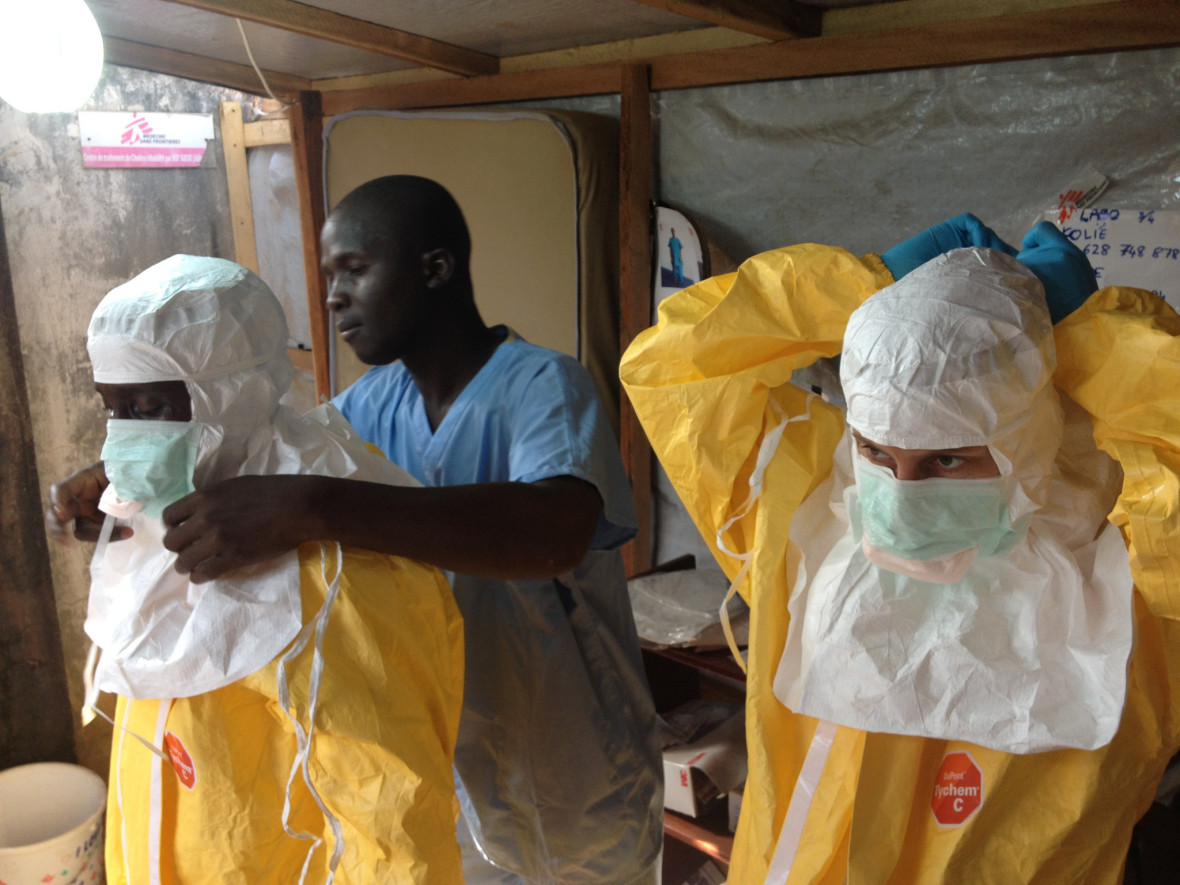
"caption": "Aid workers wearing protective suits in West Africa in August 2013.",
"description": null,
"title": "EBOLA",
"credit": "European Commission DG ECHO ",
"status": "inherit",
"isLoading": false,
"fetchFailed": false
},
"futureofyou_801": {
"type": "attachments",
"id": "futureofyou_801",
"meta": {
"index": "attachments_1716263798",
"site": "futureofyou",
"id": "801",
"found": true
},
"parent": 800,
"imgSizes": {
"twentyfourteen-full-width": {
"file": "https://ww2.kqed.org/app/uploads/sites/13/2015/03/ash_6840-1_wide-8cad123e56966688b4836d6b503b82ecb5ddc3f5-1038x576.jpg",
"width": 1038,
"mimeType": "image/jpeg",
"height": 576
},
"thumbnail": {
"file": "https://ww2.kqed.org/app/uploads/sites/13/2015/03/ash_6840-1_wide-8cad123e56966688b4836d6b503b82ecb5ddc3f5-400x225.jpg",
"width": 400,
"mimeType": "image/jpeg",
"height": 225
},
"fd-sm": {
"file": "https://ww2.kqed.org/app/uploads/sites/13/2015/03/ash_6840-1_wide-8cad123e56966688b4836d6b503b82ecb5ddc3f5-320x180.jpg",
"width": 320,
"mimeType": "image/jpeg",
"height": 180
},
"post-thumbnail": {
"file": "https://ww2.kqed.org/app/uploads/sites/13/2015/03/ash_6840-1_wide-8cad123e56966688b4836d6b503b82ecb5ddc3f5-672x372.jpg",
"width": 672,
"mimeType": "image/jpeg",
"height": 372
},
"kqedFullSize": {
"file": "https://ww2.kqed.org/app/uploads/sites/13/2015/03/ash_6840-1_wide-8cad123e56966688b4836d6b503b82ecb5ddc3f5.jpg",
"width": 2791,
"height": 1570
},
"large": {
"file": "https://ww2.kqed.org/app/uploads/sites/13/2015/03/ash_6840-1_wide-8cad123e56966688b4836d6b503b82ecb5ddc3f5-1180x664.jpg",
"width": 1180,
"mimeType": "image/jpeg",
"height": 664
},
"guest-author-96": {
"file": "https://ww2.kqed.org/app/uploads/sites/13/2015/03/ash_6840-1_wide-8cad123e56966688b4836d6b503b82ecb5ddc3f5-96x96.jpg",
"width": 96,
"mimeType": "image/jpeg",
"height": 96
},
"medium": {
"file": "https://ww2.kqed.org/app/uploads/sites/13/2015/03/ash_6840-1_wide-8cad123e56966688b4836d6b503b82ecb5ddc3f5-800x450.jpg",
"width": 800,
"mimeType": "image/jpeg",
"height": 450
},
"guest-author-64": {
"file": "https://ww2.kqed.org/app/uploads/sites/13/2015/03/ash_6840-1_wide-8cad123e56966688b4836d6b503b82ecb5ddc3f5-64x64.jpg",
"width": 64,
"mimeType": "image/jpeg",
"height": 64
},
"guest-author-32": {
"file": "https://ww2.kqed.org/app/uploads/sites/13/2015/03/ash_6840-1_wide-8cad123e56966688b4836d6b503b82ecb5ddc3f5-32x32.jpg",
"width": 32,
"mimeType": "image/jpeg",
"height": 32
},
"fd-lrg": {
"file": "https://ww2.kqed.org/app/uploads/sites/13/2015/03/ash_6840-1_wide-8cad123e56966688b4836d6b503b82ecb5ddc3f5-1180x664.jpg",
"width": 1180,
"mimeType": "image/jpeg",
"height": 664
},
"fd-med": {
"file": "https://ww2.kqed.org/app/uploads/sites/13/2015/03/ash_6840-1_wide-8cad123e56966688b4836d6b503b82ecb5ddc3f5-768x432.jpg",
"width": 768,
"mimeType": "image/jpeg",
"height": 432
},
"detail": {
"file": "https://ww2.kqed.org/app/uploads/sites/13/2015/03/ash_6840-1_wide-8cad123e56966688b4836d6b503b82ecb5ddc3f5-75x75.jpg",
"width": 75,
"mimeType": "image/jpeg",
"height": 75
},
"guest-author-128": {
"file": "https://ww2.kqed.org/app/uploads/sites/13/2015/03/ash_6840-1_wide-8cad123e56966688b4836d6b503b82ecb5ddc3f5-128x128.jpg",
"width": 128,
"mimeType": "image/jpeg",
"height": 128
}
},
"publishDate": 1427304489,
"modified": 1427304566,
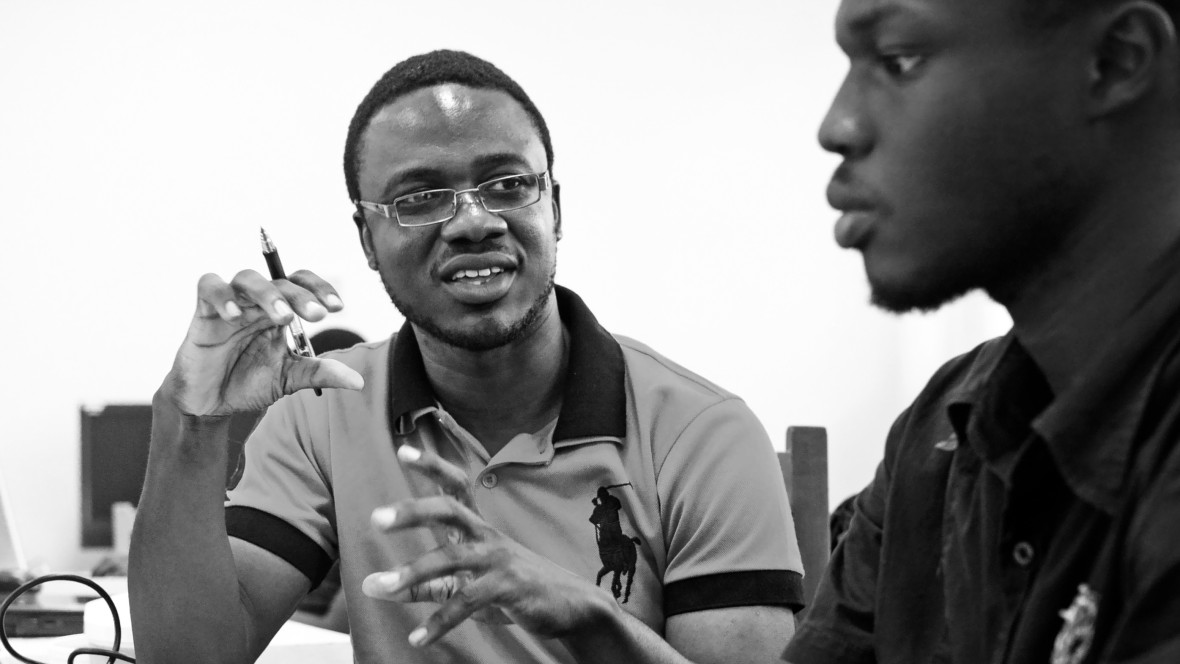
"caption": "Kpetermeni Siakor (left), a Liberian who is studying in Ghana, used crowdsourcing software to help out during the Ebola epidemic.\n(Courtesy of Ashesi University College)",
"description": "Kpetermeni Siakor (left), a Liberian who is studying in Ghana, used crowdsourcing software to help out during the Ebola epidemic.",
"title": "Kpetermeni Siakor (left), a Liberian who is studying in Ghana, used crowdsourcing software to help out during the Ebola epidemic.",
"credit": null,
"status": "inherit",
"isLoading": false,
"fetchFailed": false
},
"futureofyou_691": {
"type": "attachments",
"id": "futureofyou_691",
"meta": {
"index": "attachments_1716263798",
"site": "futureofyou",
"id": "691",
"found": true
},
"parent": 686,
"imgSizes": {
"twentyfourteen-full-width": {
"file": "https://ww2.kqed.org/app/uploads/sites/13/2015/03/Leah-Wildflower-1038x576.png",
"width": 1038,
"mimeType": "image/png",
"height": 576
},
"thumbnail": {
"file": "https://ww2.kqed.org/app/uploads/sites/13/2015/03/Leah-Wildflower-400x267.png",
"width": 400,
"mimeType": "image/png",
"height": 267
},
"fd-sm": {
"file": "https://ww2.kqed.org/app/uploads/sites/13/2015/03/Leah-Wildflower-320x214.png",
"width": 320,
"mimeType": "image/png",
"height": 214
},
"post-thumbnail": {
"file": "https://ww2.kqed.org/app/uploads/sites/13/2015/03/Leah-Wildflower-672x372.png",
"width": 672,
"mimeType": "image/png",
"height": 372
},
"kqedFullSize": {
"file": "https://ww2.kqed.org/app/uploads/sites/13/2015/03/Leah-Wildflower.png",
"width": 1175,
"height": 784
},
"fd-med": {
"file": "https://ww2.kqed.org/app/uploads/sites/13/2015/03/Leah-Wildflower-768x512.png",
"width": 768,
"mimeType": "image/png",
"height": 512
},
"guest-author-96": {
"file": "https://ww2.kqed.org/app/uploads/sites/13/2015/03/Leah-Wildflower-96x96.png",
"width": 96,
"mimeType": "image/png",
"height": 96
},
"medium": {
"file": "https://ww2.kqed.org/app/uploads/sites/13/2015/03/Leah-Wildflower-800x534.png",
"width": 800,
"mimeType": "image/png",
"height": 534
},
"guest-author-64": {
"file": "https://ww2.kqed.org/app/uploads/sites/13/2015/03/Leah-Wildflower-64x64.png",
"width": 64,
"mimeType": "image/png",
"height": 64
},
"detail": {
"file": "https://ww2.kqed.org/app/uploads/sites/13/2015/03/Leah-Wildflower-75x75.png",
"width": 75,
"mimeType": "image/png",
"height": 75
},
"guest-author-32": {
"file": "https://ww2.kqed.org/app/uploads/sites/13/2015/03/Leah-Wildflower-32x32.png",
"width": 32,
"mimeType": "image/png",
"height": 32
},
"guest-author-128": {
"file": "https://ww2.kqed.org/app/uploads/sites/13/2015/03/Leah-Wildflower-128x128.png",
"width": 128,
"mimeType": "image/png",
"height": 128
}
},
"publishDate": 1427141513,
"modified": 1427144934,
"caption": "Leah Sparks, CEO of Wildflower Health at a women in health retreat. ",
"description": null,
"title": "Leah, Wildflower",
"credit": "Rock Health",
"status": "inherit",
"isLoading": false,
"fetchFailed": false
}
},
"audioPlayerReducer": {
"postId": "stream_live",
"isPaused": true,
"isPlaying": false,
"pfsActive": false,
"pledgeModalIsOpen": true,
"playerDrawerIsOpen": false,
"liveAudioPlayStartedAt": 0,
"liveAudioPlayContext": ""
},
"authorsReducer": {
"byline_futureofyou_1710": {
"type": "authors",
"id": "byline_futureofyou_1710",
"meta": {
"override": true
},
"slug": "byline_futureofyou_1710",
"name": "Michelle Andrews",
"isLoading": false
},
"byline_futureofyou_800": {
"type": "authors",
"id": "byline_futureofyou_800",
"meta": {
"override": true
},
"slug": "byline_futureofyou_800",
"name": "Poncie Rutsch",
"isLoading": false
},
"cfarr": {
"type": "authors",
"id": "3252",
"meta": {
"index": "authors_1716337520",
"id": "3252",
"found": true
},
"name": "Christina Farr",
"firstName": "Christina",
"lastName": "Farr",
"slug": "cfarr",
"email": "cfarr@kqed.org",
"display_author_email": false,
"staff_mastheads": [],
"title": "KQED Contributor",
"bio": "Christina Farr (\u003ca href=\"https://twitter.com/chrissyfarr\">@chrissyfarr\u003c/a>) is the former editor and host of Future of You. She was previously with Reuters, covering digital health and Apple and before that, she reported for Venture Beat. Christina was born and raised in London and has graduate degrees from University of London and the Stanford School of Journalism. Farr’s work has appeared in a variety of publications, including the New York Times, the Daily Telegraph, the Bay Citizen and SFGate.com. She has appeared as a featured expert on NBC, ABC and Reuters TV, among others, and frequently speaks at health and technology conferences. She is also co-founder of Ladies Who Vino, a networking group for women in technology and business.",
"avatar": "https://secure.gravatar.com/avatar/22c63869a7901c61c15e204391c1261d?s=600&d=blank&r=g",
"twitter": null,
"facebook": null,
"instagram": null,
"linkedin": null,
"sites": [
{
"site": "futureofyou",
"roles": [
"administrator"
]
},
{
"site": "stateofhealth",
"roles": [
"author"
]
},
{
"site": "science",
"roles": []
}
],
"headData": {
"title": "Christina Farr | KQED",
"description": "KQED Contributor",
"ogImgSrc": "https://secure.gravatar.com/avatar/22c63869a7901c61c15e204391c1261d?s=600&d=blank&r=g",
"twImgSrc": "https://secure.gravatar.com/avatar/22c63869a7901c61c15e204391c1261d?s=600&d=blank&r=g"
},
"isLoading": false,
"link": "/author/cfarr"
},
"rgrant": {
"type": "authors",
"id": "6620",
"meta": {
"index": "authors_1716337520",
"id": "6620",
"found": true
},
"name": "Rebecca Grant",
"firstName": "Rebecca",
"lastName": "Grant",
"slug": "rgrant",
"email": "rebeccaggrant@gmail.com",
"display_author_email": false,
"staff_mastheads": [],
"title": null,
"bio": "Rebecca Grant is a freelance journalist who has published work in The Atlantic, Fast Company, Forbes, The Daily Dot, and others. She spent 2 years as a staff writer at VentureBeat reporting on the startup scene, as well as issues relating to social innovation and diversity in the tech industry. Before Venturebeat, she served as a Peace Corps Volunteer, conducting an education project in rural Thailand. She has a B.A. from Cornell University.",
"avatar": "https://secure.gravatar.com/avatar/acf522116cc10f32fb9bc84af7f1ea28?s=600&d=blank&r=g",
"twitter": null,
"facebook": null,
"instagram": null,
"linkedin": null,
"sites": [
{
"site": "futureofyou",
"roles": [
"contributor"
]
}
],
"headData": {
"title": "Rebecca Grant | KQED",
"description": null,
"ogImgSrc": "https://secure.gravatar.com/avatar/acf522116cc10f32fb9bc84af7f1ea28?s=600&d=blank&r=g",
"twImgSrc": "https://secure.gravatar.com/avatar/acf522116cc10f32fb9bc84af7f1ea28?s=600&d=blank&r=g"
},
"isLoading": false,
"link": "/author/rgrant"
},
"gferenstein": {
"type": "authors",
"id": "6621",
"meta": {
"index": "authors_1716337520",
"id": "6621",
"found": true
},
"name": "Gregory Ferenstein",
"firstName": "Gregory",
"lastName": "Ferenstein",
"slug": "gferenstein",
"email": "travelmail26@gmail.com",
"display_author_email": false,
"staff_mastheads": [],
"title": null,
"bio": "The Ferenstein Wire is a syndicated news service. For inquires, email greg at greg ferenstein dot com. Greg is a technology journalist who has written for Venturebeat, Techcrunch, Fast Company, and other news services.",
"avatar": "https://secure.gravatar.com/avatar/36fb0b62cd32125bebf1806040529d3f?s=600&d=blank&r=g",
"twitter": null,
"facebook": null,
"instagram": null,
"linkedin": null,
"sites": [
{
"site": "futureofyou",
"roles": [
"author"
]
}
],
"headData": {
"title": "Gregory Ferenstein | KQED",
"description": null,
"ogImgSrc": "https://secure.gravatar.com/avatar/36fb0b62cd32125bebf1806040529d3f?s=600&d=blank&r=g",
"twImgSrc": "https://secure.gravatar.com/avatar/36fb0b62cd32125bebf1806040529d3f?s=600&d=blank&r=g"
},
"isLoading": false,
"link": "/author/gferenstein"
},
"emilypeters": {
"type": "authors",
"id": "7236",
"meta": {
"index": "authors_1716337520",
"id": "7236",
"found": true
},
"name": "Emily Peters",
"firstName": "Emily",
"lastName": "Peters",
"slug": "emilypeters",
"email": "emily@uncommonbold.com",
"display_author_email": false,
"staff_mastheads": [],
"title": null,
"bio": "Emily F. Peters is founder of Uncommon Bold, a San Francisco–based brand strategy studio focused on early stage tech companies and digital health. She is a 4-time startup veteran with a background in digital health, having worked for Practice Fusion and Doximity. Reach her on Twitter \u003ca href=\"http://www.twitter.com/emilyfpeters\">@emilyfpeters\u003c/a>.",
"avatar": "https://secure.gravatar.com/avatar/f2bb9c0d3f889a6b1d7203e90c9117b7?s=600&d=blank&r=g",
"twitter": null,
"facebook": null,
"instagram": null,
"linkedin": null,
"sites": [
{
"site": "futureofyou",
"roles": [
"author"
]
}
],
"headData": {
"title": "Emily Peters | KQED",
"description": null,
"ogImgSrc": "https://secure.gravatar.com/avatar/f2bb9c0d3f889a6b1d7203e90c9117b7?s=600&d=blank&r=g",
"twImgSrc": "https://secure.gravatar.com/avatar/f2bb9c0d3f889a6b1d7203e90c9117b7?s=600&d=blank&r=g"
},
"isLoading": false,
"link": "/author/emilypeters"
},
"anicaj": {
"type": "authors",
"id": "7241",
"meta": {
"index": "authors_1716337520",
"id": "7241",
"found": true
},
"name": "Anica John",
"firstName": "Anica",
"lastName": "John",
"slug": "anicaj",
"email": "angelfleur@gmail.com",
"display_author_email": false,
"staff_mastheads": [],
"title": null,
"bio": "Anica John runs her own consulting company advising Silicon Valley technology companies on business strategy and marketing. Prior to her consulting practice, Anica founded two technology companies, and most recently served as Chief Operating Officer of an infant wearables startup.",
"avatar": "https://secure.gravatar.com/avatar/69d9a53280418da4196a8c6cf60a8b2a?s=600&d=blank&r=g",
"twitter": null,
"facebook": null,
"instagram": null,
"linkedin": null,
"sites": [
{
"site": "futureofyou",
"roles": [
"author"
]
}
],
"headData": {
"title": "Anica John | KQED",
"description": null,
"ogImgSrc": "https://secure.gravatar.com/avatar/69d9a53280418da4196a8c6cf60a8b2a?s=600&d=blank&r=g",
"twImgSrc": "https://secure.gravatar.com/avatar/69d9a53280418da4196a8c6cf60a8b2a?s=600&d=blank&r=g"
},
"isLoading": false,
"link": "/author/anicaj"
}
},
"pagesReducer": {
"futureofyou_program_future-of-you": {
"type": "terms",
"id": "futureofyou_54",
"meta": {
"index": "terms_1716263798",
"site": "futureofyou",
"id": "54",
"score": 14.775631
},
"featImg": null,
"name": "Future of You",
"description": null,
"taxonomy": "program",
"headData": {
"twImgId": null,
"twTitle": null,
"ogTitle": null,
"ogImgId": null,
"twDescription": null,
"description": null,
"title": "Future of You Archives | KQED Arts",
"ogDescription": null
},
"ttid": 54,
"slug": "future-of-you",
"isLoading": false,
"title": "Future of You",
"pageMeta": {
"site": "futureofyou",
"WpPageTemplate": "page-topic-editorial",
"currentPage": 13
},
"blocks": [
{
"blockName": "kqed/post-list",
"attrs": {
"layout": "cardArticle2",
"query": "posts/futureofyou?program=future-of-you",
"seeMore": false,
"paginated": true,
"page": 13
}
},
{
"blockName": "kqed/ad"
}
]
}
},
"pfsSessionReducer": {},
"postsReducer": {
"stream_live": {
"type": "live",
"id": "stream_live",
"audioUrl": "https://streams.kqed.org/kqedradio",
"title": "Live Stream",
"excerpt": "Live Stream information currently unavailable.",
"link": "/radio",
"featImg": "",
"label": {
"name": "KQED Live",
"link": "/"
}
},
"stream_kqedNewscast": {
"type": "posts",
"id": "stream_kqedNewscast",
"audioUrl": "https://www.kqed.org/.stream/anon/radio/RDnews/newscast.mp3?_=1",
"title": "KQED Newscast",
"featImg": "",
"label": {
"name": "88.5 FM",
"link": "/"
}
},
"futureofyou_1808": {
"type": "posts",
"id": "futureofyou_1808",
"meta": {
"index": "posts_1716263798",
"site": "futureofyou",
"id": "1808",
"score": null,
"sort": [
1430414164000
]
},
"parent": 0,
"labelTerm": {
"site": "futureofyou",
"term": 54
},
"blocks": [],
"publishDate": 1430414164,
"format": "standard",
"disqusTitle": "Will These New Apps Boost Your Baby’s Brain Health?",
"title": "Will These New Apps Boost Your Baby’s Brain Health?",
"headTitle": "Contributor | Future of You | KQED Future of You | KQED Science",
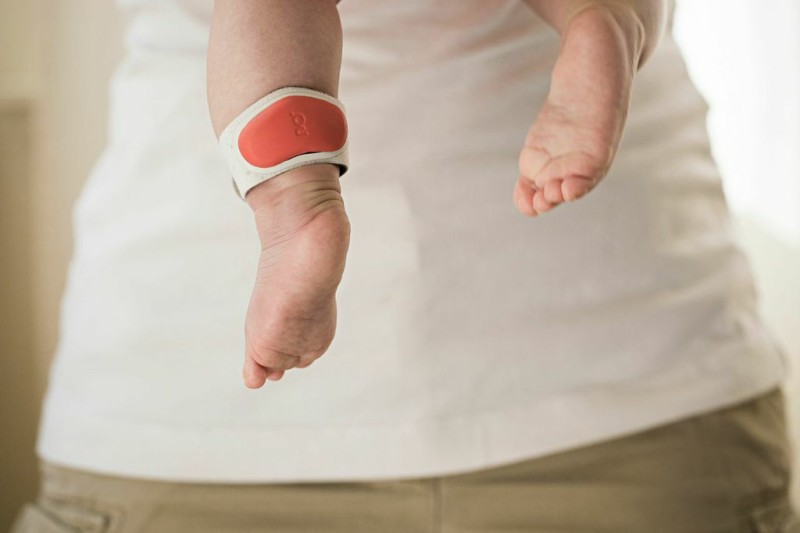
"content": "\u003cp>\u003cem>Author \u003cspan class=\"il\">Anica\u003c/span> John is an entrepreneur and advises Silicon Valley tech companies on business strategy and marketing. She recently worked at Smilables, an infant wearables startup.\u003c/em>\u003c/p>\n\u003cp>I'm seven months along with my first child and feeling inundated with information and advice on baby products.\u003c/p>\n\u003cp>It’s no wonder, because registering for a baby shower can be daunting. I found myself stunned by the sheer volume of strollers and car seats (which, when put together are billed as “travel systems”), cribs and hundreds of other baby products.\u003c/p>\n\u003cp>Alongside these staples, I'm evaluating a new wave of devices that can now gather important health and wellness data about your baby.\u003c/p>\n\u003cp>Here's what I have learned so far:\u003c/p>\n\u003cp>[ad fullwidth]\u003c/p>\n\u003cp>Some of the most popular startups in the space are producing new, high-tech baby monitors. These gadgets are a significant improvement on traditional baby monitors with scratchy audio outputs or grainy video. One company, \u003ca href=\"http://www.sproutling.com/\" target=\"_blank\">Sproutling\u003c/a>, produces a wearable baby monitor that delivers vital sign information on a sleeping baby. A similar device from \u003ca href=\"https://www.owletcare.com/\" target=\"_blank\">Owlet\u003c/a> comes in sock form.\u003c/p>\n\u003cp>But these startups don’t track the most important measure for a child’s long-term success: Brain development.\u003c/p>\n\u003cp>\u003cstrong>Can an App Support Your Baby's Brain Development?\u003c/strong>\u003c/p>\n\u003cp>\u003ca href=\"http://spock.fcs.uga.edu/ext/pubs/chfd/FACS01-7.pdf\" target=\"_blank\">Studies have shown \u003c/a>that stimulating a newborn baby’s brain helps to create neural connections that will be vital to future brain development.\u003c/p>\n\u003cp>Traditionally, new parents have been coached to meet this need through general advice centered around attentiveness. For example, you'll often see infant care websites that instruct parents to “sing songs,” or “express joy and interest in your baby.”\u003c/p>\n\u003cp>While these are helpful reminders, concerted efforts on brain development tend to fall by the wayside.\u003c/p>\n\u003cp>Fortunately, during my research, I discovered a new category of technology products that addresses this problem.\u003c/p>\n\u003cp>\u003ca href=\"http://babysparks.com/\" target=\"_blank\">BabySparks\u003c/a> is a smartphone app that provides hundreds of activities for parents to perform with their babies, all of which look a lot like playing. Caregivers can decide to do activities based on the specific needs of their babies or follow a daily program recommended by the app based on the child's age and development characteristics.\u003c/p>\n\u003cp>The app also has a milestone feature that provides parents an objective understanding of how their baby should be progressing in each of the developmental areas.\u003c/p>\n\u003caside class=\"pullquote alignright\">“The key is to choose products that increase the chances of caregivers interacting with infants.\"\u003c/aside>\n\u003cp>Another startup, \u003ca href=\"http://www.versame.com/\" target=\"_blank\">Versame\u003c/a>, is developing a device that encourages caregivers to expose their infants to more words. Research indicates that the window for language development closes early. For example, infants over six months have difficulty recognizing sounds they have not heard repeated often.\u003c/p>\n\u003cp>Even more poignant is Stanford professor Anne Fernald’s assertion during a TED talk that, for babies, conversation is “\u003ca href=\"https://www.youtube.com/watch?v=IpHwJyjm7rM\" target=\"_blank\">nourishment for the brain\u003c/a>.” [Skip to the bottom to watch the video in full.]\u003c/p>\n\u003cp>Versame’s hardware product can be worn directly by the baby, attached to the crib or placed in the nursery, and counts the number of words a child hears. Caregivers can check the data on their smartphone at any point during the day and adjust the attention they give to each child accordingly. The goal is to inspire powerful positive behavior changes.\u003c/p>\n\u003cp>\u003cstrong>Realistic Goals for New Technologies \u003c/strong>\u003c/p>\n\u003cp>But my research showed that infant brain development products have a controversial history.\u003c/p>\n\u003cp>Such products have received criticism in the past. In 2007, the \u003ca href=\"http://en.wikipedia.org/wiki/Baby_Einstein\" target=\"_blank\">University of Washington claimed\u003c/a> that \u003ca href=\"http://www.kidsii.com/babyeinstein/\" target=\"_blank\">Baby Einstein\u003c/a> products adversely affected baby brain development by encouraging infants and toddlers to sit in front of televisions and watch educational DVDs or videos. While a subsequent lawsuit forced the researchers to retract their statements, the incident led the \u003ca href=\"https://www.aap.org/en-us/Pages/Default.aspx\" target=\"_blank\">American Academy of Pediatrics\u003c/a> to issue a recommendation against any screen time for children under two years of age.\u003c/p>\n\u003cp>So what's the best choice for a new parent?\u003c/p>\n\u003cfigure id=\"attachment_1815\" class=\"wp-caption alignleft\" style=\"max-width: 445px\">\u003cimg class=\" wp-image-1815\" src=\"http://ww2.kqed.org/futureofyou/wp-content/uploads/sites/13/2015/04/monkey-nanny-800x600.jpg\" alt=\"It's important to choose products that increase caregivers' interactions with an infant \" width=\"445\" height=\"334\" srcset=\"https://ww2.kqed.org/app/uploads/sites/13/2015/04/monkey-nanny-800x600.jpg 800w, https://ww2.kqed.org/app/uploads/sites/13/2015/04/monkey-nanny-400x300.jpg 400w, https://ww2.kqed.org/app/uploads/sites/13/2015/04/monkey-nanny-768x576.jpg 768w, https://ww2.kqed.org/app/uploads/sites/13/2015/04/monkey-nanny-320x240.jpg 320w, https://ww2.kqed.org/app/uploads/sites/13/2015/04/monkey-nanny.jpg 1024w\" sizes=\"(max-width: 445px) 100vw, 445px\">\u003cfigcaption class=\"wp-caption-text\">New products are a step ahead of nanny cams \u003ccite>(Jim Champion)\u003c/cite>\u003c/figcaption>\u003c/figure>\n\u003cp>The key is to choose products that increase the chances of caregivers interacting with infants. New parents, nannies, and other caregivers are often overwhelmed with caring for the basic needs of newborns and infants. In my opinion, using technology that provides constructive ways to interact with children this age can improve the number and quality of these interactions.\u003c/p>\n\u003cp>As a future working mother, the most compelling feature of these interactive baby educational products is that I can give my nanny specific assignments that can have a positive impact on my child’s development.\u003c/p>\n\u003cp>In the past, many working parents relied on nanny cams and an intuitive sense of how a hired caregiver would respond to our child’s needs. Now these new products provide metrics for measurement that allow us to set goals for improvement (“I’d like my child to hear 1000 more words each day,” or “I’d like her to do three more motor skills exercises this week.”).\u003c/p>\n\u003cp>This kind of tracking, if executed well, gives new tools to parents and caregivers, and may ultimately democratize early infant education through its effectiveness and simplicity.\u003c/p>\n\u003cp>\u003c/p>\n\u003cp>[youtube http://www.youtube.com/watch?v=IpHwJyjm7rM]\u003c/p>\n\n",
"disqusIdentifier": "1808 http://ww2.kqed.org/futureofyou/?p=1808",
"disqusUrl": "https://ww2.kqed.org/futureofyou/2015/04/30/will-these-new-apps-boost-your-babys-brain-health/",
"stats": {
"hasVideo": true,
"hasChartOrMap": false,
"hasAudio": false,
"hasPolis": false,
"wordCount": 911,
"hasGoogleForm": false,
"hasGallery": false,
"hasHearkenModule": false,
"iframeSrcs": [],
"paragraphCount": 28
},
"modified": 1514511073,
"excerpt": "A new generation of infant educational products brings the latest scientific research in child development out of the lab, and into the hands of the modern parent. ",
"headData": {
"twImgId": "",
"twTitle": "",
"ogTitle": "",
"ogImgId": "",
"twDescription": "",
"description": "A new generation of infant educational products brings the latest scientific research in child development out of the lab, and into the hands of the modern parent. ",
"title": "Will These New Apps Boost Your Baby’s Brain Health? | KQED",
"ogDescription": "",
"schema": {
"@context": "https://schema.org",
"@type": "Article",
"headline": "Will These New Apps Boost Your Baby’s Brain Health?",
"datePublished": "2015-04-30T10:16:04-07:00",
"dateModified": "2017-12-28T17:31:13-08:00",
"image": "https://cdn.kqed.org/wp-content/uploads/2020/02/KQED-OG-Image@1x.png"
}
},
"guestAuthors": [],
"slug": "will-these-new-apps-boost-your-babys-brain-health",
"status": "publish",
"path": "/futureofyou/1808/will-these-new-apps-boost-your-babys-brain-health",
"audioTrackLength": null,
"parsedContent": [
{
"type": "contentString",
"content": "\u003cdiv class=\"post-body\">\u003cp>\u003cp>\u003cem>Author \u003cspan class=\"il\">Anica\u003c/span> John is an entrepreneur and advises Silicon Valley tech companies on business strategy and marketing. She recently worked at Smilables, an infant wearables startup.\u003c/em>\u003c/p>\n\u003cp>I'm seven months along with my first child and feeling inundated with information and advice on baby products.\u003c/p>\n\u003cp>It’s no wonder, because registering for a baby shower can be daunting. I found myself stunned by the sheer volume of strollers and car seats (which, when put together are billed as “travel systems”), cribs and hundreds of other baby products.\u003c/p>\n\u003cp>Alongside these staples, I'm evaluating a new wave of devices that can now gather important health and wellness data about your baby.\u003c/p>\n\u003cp>Here's what I have learned so far:\u003c/p>\n\u003cp>\u003c/p>\u003c/div>",
"attributes": {
"named": {},
"numeric": []
}
},
{
"type": "component",
"content": "",
"name": "ad",
"attributes": {
"named": {
"label": "fullwidth"
},
"numeric": [
"fullwidth"
]
}
},
{
"type": "contentString",
"content": "\u003cdiv class=\"post-body\">\u003cp>\u003c/p>\n\u003cp>Some of the most popular startups in the space are producing new, high-tech baby monitors. These gadgets are a significant improvement on traditional baby monitors with scratchy audio outputs or grainy video. One company, \u003ca href=\"http://www.sproutling.com/\" target=\"_blank\">Sproutling\u003c/a>, produces a wearable baby monitor that delivers vital sign information on a sleeping baby. A similar device from \u003ca href=\"https://www.owletcare.com/\" target=\"_blank\">Owlet\u003c/a> comes in sock form.\u003c/p>\n\u003cp>But these startups don’t track the most important measure for a child’s long-term success: Brain development.\u003c/p>\n\u003cp>\u003cstrong>Can an App Support Your Baby's Brain Development?\u003c/strong>\u003c/p>\n\u003cp>\u003ca href=\"http://spock.fcs.uga.edu/ext/pubs/chfd/FACS01-7.pdf\" target=\"_blank\">Studies have shown \u003c/a>that stimulating a newborn baby’s brain helps to create neural connections that will be vital to future brain development.\u003c/p>\n\u003cp>Traditionally, new parents have been coached to meet this need through general advice centered around attentiveness. For example, you'll often see infant care websites that instruct parents to “sing songs,” or “express joy and interest in your baby.”\u003c/p>\n\u003cp>While these are helpful reminders, concerted efforts on brain development tend to fall by the wayside.\u003c/p>\n\u003cp>Fortunately, during my research, I discovered a new category of technology products that addresses this problem.\u003c/p>\n\u003cp>\u003ca href=\"http://babysparks.com/\" target=\"_blank\">BabySparks\u003c/a> is a smartphone app that provides hundreds of activities for parents to perform with their babies, all of which look a lot like playing. Caregivers can decide to do activities based on the specific needs of their babies or follow a daily program recommended by the app based on the child's age and development characteristics.\u003c/p>\n\u003cp>The app also has a milestone feature that provides parents an objective understanding of how their baby should be progressing in each of the developmental areas.\u003c/p>\n\u003caside class=\"pullquote alignright\">“The key is to choose products that increase the chances of caregivers interacting with infants.\"\u003c/aside>\n\u003cp>Another startup, \u003ca href=\"http://www.versame.com/\" target=\"_blank\">Versame\u003c/a>, is developing a device that encourages caregivers to expose their infants to more words. Research indicates that the window for language development closes early. For example, infants over six months have difficulty recognizing sounds they have not heard repeated often.\u003c/p>\n\u003cp>Even more poignant is Stanford professor Anne Fernald’s assertion during a TED talk that, for babies, conversation is “\u003ca href=\"https://www.youtube.com/watch?v=IpHwJyjm7rM\" target=\"_blank\">nourishment for the brain\u003c/a>.” [Skip to the bottom to watch the video in full.]\u003c/p>\n\u003cp>Versame’s hardware product can be worn directly by the baby, attached to the crib or placed in the nursery, and counts the number of words a child hears. Caregivers can check the data on their smartphone at any point during the day and adjust the attention they give to each child accordingly. The goal is to inspire powerful positive behavior changes.\u003c/p>\n\u003cp>\u003cstrong>Realistic Goals for New Technologies \u003c/strong>\u003c/p>\n\u003cp>But my research showed that infant brain development products have a controversial history.\u003c/p>\n\u003cp>Such products have received criticism in the past. In 2007, the \u003ca href=\"http://en.wikipedia.org/wiki/Baby_Einstein\" target=\"_blank\">University of Washington claimed\u003c/a> that \u003ca href=\"http://www.kidsii.com/babyeinstein/\" target=\"_blank\">Baby Einstein\u003c/a> products adversely affected baby brain development by encouraging infants and toddlers to sit in front of televisions and watch educational DVDs or videos. While a subsequent lawsuit forced the researchers to retract their statements, the incident led the \u003ca href=\"https://www.aap.org/en-us/Pages/Default.aspx\" target=\"_blank\">American Academy of Pediatrics\u003c/a> to issue a recommendation against any screen time for children under two years of age.\u003c/p>\n\u003cp>So what's the best choice for a new parent?\u003c/p>\n\u003cfigure id=\"attachment_1815\" class=\"wp-caption alignleft\" style=\"max-width: 445px\">\u003cimg class=\" wp-image-1815\" src=\"http://ww2.kqed.org/futureofyou/wp-content/uploads/sites/13/2015/04/monkey-nanny-800x600.jpg\" alt=\"It's important to choose products that increase caregivers' interactions with an infant \" width=\"445\" height=\"334\" srcset=\"https://ww2.kqed.org/app/uploads/sites/13/2015/04/monkey-nanny-800x600.jpg 800w, https://ww2.kqed.org/app/uploads/sites/13/2015/04/monkey-nanny-400x300.jpg 400w, https://ww2.kqed.org/app/uploads/sites/13/2015/04/monkey-nanny-768x576.jpg 768w, https://ww2.kqed.org/app/uploads/sites/13/2015/04/monkey-nanny-320x240.jpg 320w, https://ww2.kqed.org/app/uploads/sites/13/2015/04/monkey-nanny.jpg 1024w\" sizes=\"(max-width: 445px) 100vw, 445px\">\u003cfigcaption class=\"wp-caption-text\">New products are a step ahead of nanny cams \u003ccite>(Jim Champion)\u003c/cite>\u003c/figcaption>\u003c/figure>\n\u003cp>The key is to choose products that increase the chances of caregivers interacting with infants. New parents, nannies, and other caregivers are often overwhelmed with caring for the basic needs of newborns and infants. In my opinion, using technology that provides constructive ways to interact with children this age can improve the number and quality of these interactions.\u003c/p>\n\u003cp>As a future working mother, the most compelling feature of these interactive baby educational products is that I can give my nanny specific assignments that can have a positive impact on my child’s development.\u003c/p>\n\u003cp>In the past, many working parents relied on nanny cams and an intuitive sense of how a hired caregiver would respond to our child’s needs. Now these new products provide metrics for measurement that allow us to set goals for improvement (“I’d like my child to hear 1000 more words each day,” or “I’d like her to do three more motor skills exercises this week.”).\u003c/p>\n\u003cp>This kind of tracking, if executed well, gives new tools to parents and caregivers, and may ultimately democratize early infant education through its effectiveness and simplicity.\u003c/p>\n\u003cp>\u003c/p>\n\u003cp>\u003c/p>\u003cp>\u003cspan class='utils-parseShortcode-shortcodes-__youtubeShortcode__embedYoutube'>\n \u003cspan class='utils-parseShortcode-shortcodes-__youtubeShortcode__embedYoutubeInside'>\n \u003ciframe\n loading='lazy'\n class='utils-parseShortcode-shortcodes-__youtubeShortcode__youtubePlayer'\n type='text/html'\n src='//www.youtube.com/embed/IpHwJyjm7rM'\n title='//www.youtube.com/embed/IpHwJyjm7rM'\n allowfullscreen='true'\n style='border:0;'>\u003c/iframe>\n \u003c/span>\n \u003c/span>\u003c/p>\u003cp>\u003c/p>\n\n\u003c/div>\u003c/p>",
"attributes": {
"named": {},
"numeric": []
}
}
],
"link": "/futureofyou/1808/will-these-new-apps-boost-your-babys-brain-health",
"authors": [
"7241"
],
"programs": [
"futureofyou_54"
],
"series": [
"futureofyou_172"
],
"categories": [
"futureofyou_1",
"futureofyou_73"
],
"tags": [
"futureofyou_631",
"futureofyou_175",
"futureofyou_205",
"futureofyou_138",
"futureofyou_61",
"futureofyou_222",
"futureofyou_80",
"futureofyou_223",
"futureofyou_224"
],
"featImg": "futureofyou_2555",
"label": "futureofyou_54"
},
"futureofyou_2438": {
"type": "posts",
"id": "futureofyou_2438",
"meta": {
"index": "posts_1716263798",
"site": "futureofyou",
"id": "2438",
"score": null,
"sort": [
1430238607000
]
},
"parent": 0,
"labelTerm": {
"site": "futureofyou",
"term": 54
},
"blocks": [],
"publishDate": 1430238607,
"format": "standard",
"disqusTitle": "The Apple Watch For Fitness: Your iPhone is Enough (review)",
"title": "The Apple Watch For Fitness: Your iPhone is Enough (review)",
"headTitle": "Review | Future of You | KQED Future of You | KQED Science",
"content": "\u003cp>\u003cem>This is a story from Ferenstein Wire, a syndicated news service.\u003c/em>\u003c/p>\n\u003cp>Over the past three years, there have been extraordinary advances in wearables for fitness: Precise heart rate monitoring, form tracking and energy output.\u003c/p>\n\u003cp>The \u003ca href=\"http://www.apple.com/watch/?cid=wwa-us-kwg-watch-com\">Apple Watch\u003c/a> has none of these features.\u003c/p>\n\u003cp>Presently, it's one of the most expensive pedometers on planet earth. Beyond a lackluster heart rate monitor, all the important fitness features of the Apple Watch are already on the iPhone: Run-tracking, personal health coaching and activity-logging.\u003c/p>\n\u003cp>In fact, the Apple Watch is not designed to measure one of the most important habits of an athlete: Sleep quality. Other less expensive trackers, such as the \u003ca href=\"http://www.mybasis.com/?gclid=CjwKEAjw3_ypBRCwoKqKw5P9wgsSJAAbi2K9-ag8w1Nv5rM7Ve5siL_R6gasXSuWj2REOP6bmGFQQBoCZNHw_wcB\">Basis Watch\u003c/a> or \u003ca href=\"http://fitbit.com\">Fitbit\u003c/a>, are a better option for that.\u003c/p>\n\u003cp>[ad fullwidth]\u003c/p>\n\u003cp>I was ridiculously excited about the Apple Watch. I spilled a lot of virtual ink fantasizing about the impending fitness revolution. After trying out the Apple Watch at my local gym, I can say, unequivocally, I am still excited for the Apple Watch to be a worthwhile fitness companion someday. But for now, if you're looking to track your fitness, there is no real advantage to using it over the iPhone.\u003c/p>\n\u003cp>\u003cstrong>For Runners: Watch vs. iPhone\u003c/strong>\u003c/p>\n\u003cp>Taken together, walking and running are the most popular workouts in America, comprising the main activity for more than one-third of exercisers.\u003c/p>\n\u003cp>The iPhone is a delightful companion for the staple of American health. The new iOS for iPhone automatically tracks walking and running, assuming you carry your phone with you most of the day.\u003c/p>\n\u003cp>The Apple Watch fitness apps, \u003ca href=\"https://www.endomondo.com/\">like Endomondo\u003c/a>, use the iPhone for the bulk of its health-tracking, including distance, pace, and elevation (although, you may need to use an armband).\u003c/p>\n\u003cp>Below is my run up San Francisco’s beautiful Bernal Heights, without an Apple Watch.\u003c/p>\n\u003cfigure id=\"attachment_2441\" class=\"wp-caption alignleft\" style=\"max-width: 296px\">\u003cimg class=\" wp-image-2441\" src=\"http://ww2.kqed.org/futureofyou/wp-content/uploads/sites/13/2015/04/endomondo1-337x600.png\" alt=\"A workout summary using a free app called Endomondo\" width=\"296\" height=\"527\" srcset=\"https://ww2.kqed.org/app/uploads/sites/13/2015/04/endomondo1-337x600.png 337w, https://ww2.kqed.org/app/uploads/sites/13/2015/04/endomondo1-400x711.png 400w, https://ww2.kqed.org/app/uploads/sites/13/2015/04/endomondo1-663x1180.png 663w, https://ww2.kqed.org/app/uploads/sites/13/2015/04/endomondo1.png 750w\" sizes=\"(max-width: 296px) 100vw, 296px\">\u003cfigcaption class=\"wp-caption-text\">A workout summary using a free app called Endomondo \u003ccite>(Greg Ferenstein)\u003c/cite>\u003c/figcaption>\u003c/figure>\n\u003cp>The one additional item that quantified-self enthusiasts pair for a run is a heart rate monitor, which was the big promise of the Apple Watch. Unfortunately, the monitor’s sluggish heart rate performance isn’t up to snuff.\u003c/p>\n\u003cp>During my test run at the gym, my \u003ca href=\"http://www.polar.com/us-en/products/accessories\">Polar chest strap\u003c/a> confirmed that I was well into my target heart rate zone, while the Apple Watch was still crunching the numbers. During an exhausting run, staring at your watch is the last thing you want to do.\u003c/p>\n\u003cp>If I ran long enough, the Apple Watch did eventually catch up to my actual heart rate during hill sprints -- approximating 180 beats per minute -- but as soon as I started slowing down, it couldn’t tell me that I was going too easy. In fact, to take a screenshot, I had completely stopped running — but Apple’s heart rate monitor didn’t know that.\u003c/p>\n\u003cfigure id=\"attachment_2470\" class=\"wp-caption aligncenter\" style=\"max-width: 800px\">\u003cimg class=\"size-medium wp-image-2470\" src=\"http://ww2.kqed.org/futureofyou/wp-content/uploads/sites/13/2015/04/1-heart-rate-800x600.jpg\" alt=\"The Apple Watch came close to accurate heart rate tracking -- for a second\" width=\"800\" height=\"600\" srcset=\"https://ww2.kqed.org/app/uploads/sites/13/2015/04/1-heart-rate-800x600.jpg 800w, https://ww2.kqed.org/app/uploads/sites/13/2015/04/1-heart-rate-400x300.jpg 400w, https://ww2.kqed.org/app/uploads/sites/13/2015/04/1-heart-rate-1180x885.jpg 1180w, https://ww2.kqed.org/app/uploads/sites/13/2015/04/1-heart-rate-960x720.jpg 960w\" sizes=\"(max-width: 800px) 100vw, 800px\">\u003cfigcaption class=\"wp-caption-text\">The Apple Watch came close to accurate heart rate tracking -- for a second \u003ccite>(Greg Ferenstein)\u003c/cite>\u003c/figcaption>\u003c/figure>\n\u003cfigure id=\"attachment_2471\" class=\"wp-caption aligncenter\" style=\"max-width: 800px\">\u003cimg class=\"size-medium wp-image-2471\" src=\"http://ww2.kqed.org/futureofyou/wp-content/uploads/sites/13/2015/04/2-heart-rate-800x600.jpg\" alt=\"But it couldn’t detect changes in intensity\" width=\"800\" height=\"600\" srcset=\"https://ww2.kqed.org/app/uploads/sites/13/2015/04/2-heart-rate-800x600.jpg 800w, https://ww2.kqed.org/app/uploads/sites/13/2015/04/2-heart-rate-400x300.jpg 400w, https://ww2.kqed.org/app/uploads/sites/13/2015/04/2-heart-rate-1180x885.jpg 1180w, https://ww2.kqed.org/app/uploads/sites/13/2015/04/2-heart-rate-960x720.jpg 960w\" sizes=\"(max-width: 800px) 100vw, 800px\">\u003cfigcaption class=\"wp-caption-text\">But it couldn’t detect changes in intensity \u003ccite>(Greg Ferenstein)\u003c/cite>\u003c/figcaption>\u003c/figure>\n\u003cp>Heart rate training is a very sensitive strategy; a discrepancy of greater than 10 beats per minute can mean the difference between a sweat-drenched goal-crushing workout, and wasted lolly gagging. At high heart rates, every second counts — but, the Apple Watch doesn’t.\u003c/p>\n\u003cp>\u003cstrong>Devices For Fitness\u003c/strong>\u003c/p>\n\u003cp>The Apple Watch still could be revolutionary for its ability to pull data from more fitness-specific devices. The next evolution of fitness involves form-tracking. For instance, wearables that can tell if your movements are sloppy or executed with Olympic-class perfection.\u003c/p>\n\u003cp>Here are a few that I've tested out:\u003c/p>\n\u003cul>\n\u003cli>The \u003ca href=\"http://www.sensoriafitness.com/\">Sensoria Smart Sock\u003c/a> has helped me learn how to run on the ball of my foot, so I don’t wake up the next day hobbling on a damaged heel. It has an automated audio coach that whispers instructions in your ear as you run.\u003c/li>\n\u003cli>The \u003ca href=\"https://amiigo.com/\">Amiigo\u003c/a> wristband pairs with a shoelace clip to automatically monitor repetitions during weight training.\u003c/li>\n\u003cli>The \u003ca href=\"http://www.liveathos.com/\">Athos\u003c/a> smart shorts uses electrical signals to sense if you are tensing the right muscles. During a trial run, the shorts told me that my Spin bike form was great, but my Olympic squat was dangerously over-reliant on one leg. Symmetry between limbs is a key to preventing injury.\u003c/li>\n\u003c/ul>\n\u003cp>Eventually, Apple could combine all this data to give me an overall picture of my health. For instance, Apple might find a pattern between a well-executed weight-lifting session and fat loss. Or, Apple might notice that poor running form is decreasing the number of days I exercise each month and recommend that I rest my feet for a week.\u003c/p>\n\u003cp>But, these are all just theoretical ideas for the Apple Watch -- for now.\u003c/p>\n\u003cp>\u003cstrong>The Apple iOS is Good for General Wellness\u003c/strong>\u003c/p>\n\u003cfigure id=\"attachment_2473\" class=\"wp-caption aligncenter\" style=\"max-width: 456px\">\u003cimg class=\"size-medium wp-image-2473\" src=\"http://ww2.kqed.org/futureofyou/wp-content/uploads/sites/13/2015/04/dashboard-456x600.png\" alt=\"A snapshot of my activities from the Apple Health app\" width=\"456\" height=\"600\" srcset=\"https://ww2.kqed.org/app/uploads/sites/13/2015/04/dashboard-456x600.png 456w, https://ww2.kqed.org/app/uploads/sites/13/2015/04/dashboard-400x526.png 400w, https://ww2.kqed.org/app/uploads/sites/13/2015/04/dashboard.png 750w\" sizes=\"(max-width: 456px) 100vw, 456px\">\u003cfigcaption class=\"wp-caption-text\">A snapshot of my activities from the Apple Health app \u003ccite>(Greg Ferenstein)\u003c/cite>\u003c/figcaption>\u003c/figure>\n\u003cp>For general wellness, the iPhone already tracks important measures. If you carry your phone in your pocket, the newest Apple iOS software automatically logs steps, stairs and running. There are even apps that can calculate basic sleep statistics by analyzing how your phone jostles on your bed at night.\u003c/p>\n\u003cp>But if you think a new gadget is what you or your parents need to kick their health into gear, the Apple Watch still might be a great idea. For folks who need reminders to be a little healthier, stand up more, and go for a walk at night, the device is a fine choice.\u003c/p>\n\u003cp>For instance, the app that Apple chose as one of the best new health apps, \u003ca href=\"http://lark.com\">Lark\u003c/a>, uses proven psychological coaching techniques to remind users to be more active and eat healthier.\u003c/p>\n\u003cp>[\u003ca href=\"http://ww2.kqed.org/futureofyou/2015/04/23/these-apps-are-turning-the-apple-watch-into-a-personal-health-coach/\">Click here for more\u003c/a> on health apps for the Apple Watch.]\u003c/p>\n\u003cfigure id=\"attachment_2474\" class=\"wp-caption alignright\" style=\"max-width: 375px\">\u003cimg class=\" wp-image-2474\" src=\"http://ww2.kqed.org/futureofyou/wp-content/uploads/sites/13/2015/04/granola1-800x567.jpg\" alt=\"I told Lark I ate a granola bar; it was not pleased (for the record: I did not actually eat a granola bar).\" width=\"375\" height=\"266\" srcset=\"https://ww2.kqed.org/app/uploads/sites/13/2015/04/granola1-800x567.jpg 800w, https://ww2.kqed.org/app/uploads/sites/13/2015/04/granola1-400x283.jpg 400w, https://ww2.kqed.org/app/uploads/sites/13/2015/04/granola1-1180x836.jpg 1180w, https://ww2.kqed.org/app/uploads/sites/13/2015/04/granola1-960x680.jpg 960w\" sizes=\"(max-width: 375px) 100vw, 375px\">\u003cfigcaption class=\"wp-caption-text\">I told Lark I ate a granola bar; it was not pleased (for the record: I did not actually eat a granola bar). \u003ccite>(Greg Ferenstein)\u003c/cite>\u003c/figcaption>\u003c/figure>\n\u003cp>Speak into the watch to log meals and Lark will automatically send top-tier coaching advice back in real time. I was impressed that it had incorporated the latest health guidelines on granola bars, which are now well-known trojan horses of sugar.\u003c/p>\n\u003cp>Combined with the watch’s step-counting abilities, Apple (and apps like Lark) could potentially be a real boon for those who just need a little extra coaching.\u003c/p>\n\u003cp>But for folks training for a triathlon, weight lifters, runners, bicyclists or Cross- fitters, the Apple Watch doesn’t add much.\u003c/p>\n\u003cp>In short, the Apple Watch is in its first generation. I’m optimistic that Apple will improve the sensor-tracking capabilities and the device will be a worthwhile fitness companion in the future.\u003c/p>\n\u003cp>[ad floatright]\u003c/p>\n\u003cp> \u003c/p>\n\n",
"disqusIdentifier": "2438 http://ww2.kqed.org/futureofyou/?p=2438",
"disqusUrl": "https://ww2.kqed.org/futureofyou/2015/04/28/the-apple-watch-for-fitness-your-iphone-is-enough-review/",
"stats": {
"hasVideo": false,
"hasChartOrMap": false,
"hasAudio": false,
"hasPolis": false,
"wordCount": 1140,
"hasGoogleForm": false,
"hasGallery": false,
"hasHearkenModule": false,
"iframeSrcs": [],
"paragraphCount": 31
},
"modified": 1477282859,
"excerpt": "I'm excited to see how the Apple Watch evolves as a health and fitness-tracking device. But for now, there's no real advantage to using it over your iPhone. ",
"headData": {
"twImgId": "",
"twTitle": "",
"ogTitle": "",
"ogImgId": "",
"twDescription": "",
"description": "I'm excited to see how the Apple Watch evolves as a health and fitness-tracking device. But for now, there's no real advantage to using it over your iPhone. ",
"title": "The Apple Watch For Fitness: Your iPhone is Enough (review) | KQED",
"ogDescription": "",
"schema": {
"@context": "https://schema.org",
"@type": "Article",
"headline": "The Apple Watch For Fitness: Your iPhone is Enough (review)",
"datePublished": "2015-04-28T09:30:07-07:00",
"dateModified": "2016-10-23T21:20:59-07:00",
"image": "https://cdn.kqed.org/wp-content/uploads/2020/02/KQED-OG-Image@1x.png"
}
},
"guestAuthors": [],
"slug": "the-apple-watch-for-fitness-your-iphone-is-enough-review",
"status": "publish",
"path": "/futureofyou/2438/the-apple-watch-for-fitness-your-iphone-is-enough-review",
"audioTrackLength": null,
"parsedContent": [
{
"type": "contentString",
"content": "\u003cdiv class=\"post-body\">\u003cp>\u003cp>\u003cem>This is a story from Ferenstein Wire, a syndicated news service.\u003c/em>\u003c/p>\n\u003cp>Over the past three years, there have been extraordinary advances in wearables for fitness: Precise heart rate monitoring, form tracking and energy output.\u003c/p>\n\u003cp>The \u003ca href=\"http://www.apple.com/watch/?cid=wwa-us-kwg-watch-com\">Apple Watch\u003c/a> has none of these features.\u003c/p>\n\u003cp>Presently, it's one of the most expensive pedometers on planet earth. Beyond a lackluster heart rate monitor, all the important fitness features of the Apple Watch are already on the iPhone: Run-tracking, personal health coaching and activity-logging.\u003c/p>\n\u003cp>In fact, the Apple Watch is not designed to measure one of the most important habits of an athlete: Sleep quality. Other less expensive trackers, such as the \u003ca href=\"http://www.mybasis.com/?gclid=CjwKEAjw3_ypBRCwoKqKw5P9wgsSJAAbi2K9-ag8w1Nv5rM7Ve5siL_R6gasXSuWj2REOP6bmGFQQBoCZNHw_wcB\">Basis Watch\u003c/a> or \u003ca href=\"http://fitbit.com\">Fitbit\u003c/a>, are a better option for that.\u003c/p>\n\u003cp>\u003c/p>\u003c/div>",
"attributes": {
"named": {},
"numeric": []
}
},
{
"type": "component",
"content": "",
"name": "ad",
"attributes": {
"named": {
"label": "fullwidth"
},
"numeric": [
"fullwidth"
]
}
},
{
"type": "contentString",
"content": "\u003cdiv class=\"post-body\">\u003cp>\u003c/p>\n\u003cp>I was ridiculously excited about the Apple Watch. I spilled a lot of virtual ink fantasizing about the impending fitness revolution. After trying out the Apple Watch at my local gym, I can say, unequivocally, I am still excited for the Apple Watch to be a worthwhile fitness companion someday. But for now, if you're looking to track your fitness, there is no real advantage to using it over the iPhone.\u003c/p>\n\u003cp>\u003cstrong>For Runners: Watch vs. iPhone\u003c/strong>\u003c/p>\n\u003cp>Taken together, walking and running are the most popular workouts in America, comprising the main activity for more than one-third of exercisers.\u003c/p>\n\u003cp>The iPhone is a delightful companion for the staple of American health. The new iOS for iPhone automatically tracks walking and running, assuming you carry your phone with you most of the day.\u003c/p>\n\u003cp>The Apple Watch fitness apps, \u003ca href=\"https://www.endomondo.com/\">like Endomondo\u003c/a>, use the iPhone for the bulk of its health-tracking, including distance, pace, and elevation (although, you may need to use an armband).\u003c/p>\n\u003cp>Below is my run up San Francisco’s beautiful Bernal Heights, without an Apple Watch.\u003c/p>\n\u003cfigure id=\"attachment_2441\" class=\"wp-caption alignleft\" style=\"max-width: 296px\">\u003cimg class=\" wp-image-2441\" src=\"http://ww2.kqed.org/futureofyou/wp-content/uploads/sites/13/2015/04/endomondo1-337x600.png\" alt=\"A workout summary using a free app called Endomondo\" width=\"296\" height=\"527\" srcset=\"https://ww2.kqed.org/app/uploads/sites/13/2015/04/endomondo1-337x600.png 337w, https://ww2.kqed.org/app/uploads/sites/13/2015/04/endomondo1-400x711.png 400w, https://ww2.kqed.org/app/uploads/sites/13/2015/04/endomondo1-663x1180.png 663w, https://ww2.kqed.org/app/uploads/sites/13/2015/04/endomondo1.png 750w\" sizes=\"(max-width: 296px) 100vw, 296px\">\u003cfigcaption class=\"wp-caption-text\">A workout summary using a free app called Endomondo \u003ccite>(Greg Ferenstein)\u003c/cite>\u003c/figcaption>\u003c/figure>\n\u003cp>The one additional item that quantified-self enthusiasts pair for a run is a heart rate monitor, which was the big promise of the Apple Watch. Unfortunately, the monitor’s sluggish heart rate performance isn’t up to snuff.\u003c/p>\n\u003cp>During my test run at the gym, my \u003ca href=\"http://www.polar.com/us-en/products/accessories\">Polar chest strap\u003c/a> confirmed that I was well into my target heart rate zone, while the Apple Watch was still crunching the numbers. During an exhausting run, staring at your watch is the last thing you want to do.\u003c/p>\n\u003cp>If I ran long enough, the Apple Watch did eventually catch up to my actual heart rate during hill sprints -- approximating 180 beats per minute -- but as soon as I started slowing down, it couldn’t tell me that I was going too easy. In fact, to take a screenshot, I had completely stopped running — but Apple’s heart rate monitor didn’t know that.\u003c/p>\n\u003cfigure id=\"attachment_2470\" class=\"wp-caption aligncenter\" style=\"max-width: 800px\">\u003cimg class=\"size-medium wp-image-2470\" src=\"http://ww2.kqed.org/futureofyou/wp-content/uploads/sites/13/2015/04/1-heart-rate-800x600.jpg\" alt=\"The Apple Watch came close to accurate heart rate tracking -- for a second\" width=\"800\" height=\"600\" srcset=\"https://ww2.kqed.org/app/uploads/sites/13/2015/04/1-heart-rate-800x600.jpg 800w, https://ww2.kqed.org/app/uploads/sites/13/2015/04/1-heart-rate-400x300.jpg 400w, https://ww2.kqed.org/app/uploads/sites/13/2015/04/1-heart-rate-1180x885.jpg 1180w, https://ww2.kqed.org/app/uploads/sites/13/2015/04/1-heart-rate-960x720.jpg 960w\" sizes=\"(max-width: 800px) 100vw, 800px\">\u003cfigcaption class=\"wp-caption-text\">The Apple Watch came close to accurate heart rate tracking -- for a second \u003ccite>(Greg Ferenstein)\u003c/cite>\u003c/figcaption>\u003c/figure>\n\u003cfigure id=\"attachment_2471\" class=\"wp-caption aligncenter\" style=\"max-width: 800px\">\u003cimg class=\"size-medium wp-image-2471\" src=\"http://ww2.kqed.org/futureofyou/wp-content/uploads/sites/13/2015/04/2-heart-rate-800x600.jpg\" alt=\"But it couldn’t detect changes in intensity\" width=\"800\" height=\"600\" srcset=\"https://ww2.kqed.org/app/uploads/sites/13/2015/04/2-heart-rate-800x600.jpg 800w, https://ww2.kqed.org/app/uploads/sites/13/2015/04/2-heart-rate-400x300.jpg 400w, https://ww2.kqed.org/app/uploads/sites/13/2015/04/2-heart-rate-1180x885.jpg 1180w, https://ww2.kqed.org/app/uploads/sites/13/2015/04/2-heart-rate-960x720.jpg 960w\" sizes=\"(max-width: 800px) 100vw, 800px\">\u003cfigcaption class=\"wp-caption-text\">But it couldn’t detect changes in intensity \u003ccite>(Greg Ferenstein)\u003c/cite>\u003c/figcaption>\u003c/figure>\n\u003cp>Heart rate training is a very sensitive strategy; a discrepancy of greater than 10 beats per minute can mean the difference between a sweat-drenched goal-crushing workout, and wasted lolly gagging. At high heart rates, every second counts — but, the Apple Watch doesn’t.\u003c/p>\n\u003cp>\u003cstrong>Devices For Fitness\u003c/strong>\u003c/p>\n\u003cp>The Apple Watch still could be revolutionary for its ability to pull data from more fitness-specific devices. The next evolution of fitness involves form-tracking. For instance, wearables that can tell if your movements are sloppy or executed with Olympic-class perfection.\u003c/p>\n\u003cp>Here are a few that I've tested out:\u003c/p>\n\u003cul>\n\u003cli>The \u003ca href=\"http://www.sensoriafitness.com/\">Sensoria Smart Sock\u003c/a> has helped me learn how to run on the ball of my foot, so I don’t wake up the next day hobbling on a damaged heel. It has an automated audio coach that whispers instructions in your ear as you run.\u003c/li>\n\u003cli>The \u003ca href=\"https://amiigo.com/\">Amiigo\u003c/a> wristband pairs with a shoelace clip to automatically monitor repetitions during weight training.\u003c/li>\n\u003cli>The \u003ca href=\"http://www.liveathos.com/\">Athos\u003c/a> smart shorts uses electrical signals to sense if you are tensing the right muscles. During a trial run, the shorts told me that my Spin bike form was great, but my Olympic squat was dangerously over-reliant on one leg. Symmetry between limbs is a key to preventing injury.\u003c/li>\n\u003c/ul>\n\u003cp>Eventually, Apple could combine all this data to give me an overall picture of my health. For instance, Apple might find a pattern between a well-executed weight-lifting session and fat loss. Or, Apple might notice that poor running form is decreasing the number of days I exercise each month and recommend that I rest my feet for a week.\u003c/p>\n\u003cp>But, these are all just theoretical ideas for the Apple Watch -- for now.\u003c/p>\n\u003cp>\u003cstrong>The Apple iOS is Good for General Wellness\u003c/strong>\u003c/p>\n\u003cfigure id=\"attachment_2473\" class=\"wp-caption aligncenter\" style=\"max-width: 456px\">\u003cimg class=\"size-medium wp-image-2473\" src=\"http://ww2.kqed.org/futureofyou/wp-content/uploads/sites/13/2015/04/dashboard-456x600.png\" alt=\"A snapshot of my activities from the Apple Health app\" width=\"456\" height=\"600\" srcset=\"https://ww2.kqed.org/app/uploads/sites/13/2015/04/dashboard-456x600.png 456w, https://ww2.kqed.org/app/uploads/sites/13/2015/04/dashboard-400x526.png 400w, https://ww2.kqed.org/app/uploads/sites/13/2015/04/dashboard.png 750w\" sizes=\"(max-width: 456px) 100vw, 456px\">\u003cfigcaption class=\"wp-caption-text\">A snapshot of my activities from the Apple Health app \u003ccite>(Greg Ferenstein)\u003c/cite>\u003c/figcaption>\u003c/figure>\n\u003cp>For general wellness, the iPhone already tracks important measures. If you carry your phone in your pocket, the newest Apple iOS software automatically logs steps, stairs and running. There are even apps that can calculate basic sleep statistics by analyzing how your phone jostles on your bed at night.\u003c/p>\n\u003cp>But if you think a new gadget is what you or your parents need to kick their health into gear, the Apple Watch still might be a great idea. For folks who need reminders to be a little healthier, stand up more, and go for a walk at night, the device is a fine choice.\u003c/p>\n\u003cp>For instance, the app that Apple chose as one of the best new health apps, \u003ca href=\"http://lark.com\">Lark\u003c/a>, uses proven psychological coaching techniques to remind users to be more active and eat healthier.\u003c/p>\n\u003cp>[\u003ca href=\"http://ww2.kqed.org/futureofyou/2015/04/23/these-apps-are-turning-the-apple-watch-into-a-personal-health-coach/\">Click here for more\u003c/a> on health apps for the Apple Watch.]\u003c/p>\n\u003cfigure id=\"attachment_2474\" class=\"wp-caption alignright\" style=\"max-width: 375px\">\u003cimg class=\" wp-image-2474\" src=\"http://ww2.kqed.org/futureofyou/wp-content/uploads/sites/13/2015/04/granola1-800x567.jpg\" alt=\"I told Lark I ate a granola bar; it was not pleased (for the record: I did not actually eat a granola bar).\" width=\"375\" height=\"266\" srcset=\"https://ww2.kqed.org/app/uploads/sites/13/2015/04/granola1-800x567.jpg 800w, https://ww2.kqed.org/app/uploads/sites/13/2015/04/granola1-400x283.jpg 400w, https://ww2.kqed.org/app/uploads/sites/13/2015/04/granola1-1180x836.jpg 1180w, https://ww2.kqed.org/app/uploads/sites/13/2015/04/granola1-960x680.jpg 960w\" sizes=\"(max-width: 375px) 100vw, 375px\">\u003cfigcaption class=\"wp-caption-text\">I told Lark I ate a granola bar; it was not pleased (for the record: I did not actually eat a granola bar). \u003ccite>(Greg Ferenstein)\u003c/cite>\u003c/figcaption>\u003c/figure>\n\u003cp>Speak into the watch to log meals and Lark will automatically send top-tier coaching advice back in real time. I was impressed that it had incorporated the latest health guidelines on granola bars, which are now well-known trojan horses of sugar.\u003c/p>\n\u003cp>Combined with the watch’s step-counting abilities, Apple (and apps like Lark) could potentially be a real boon for those who just need a little extra coaching.\u003c/p>\n\u003cp>But for folks training for a triathlon, weight lifters, runners, bicyclists or Cross- fitters, the Apple Watch doesn’t add much.\u003c/p>\n\u003cp>In short, the Apple Watch is in its first generation. I’m optimistic that Apple will improve the sensor-tracking capabilities and the device will be a worthwhile fitness companion in the future.\u003c/p>\n\u003cp>\u003c/p>\u003c/div>",
"attributes": {
"named": {},
"numeric": []
}
},
{
"type": "component",
"content": "",
"name": "ad",
"attributes": {
"named": {
"label": "floatright"
},
"numeric": [
"floatright"
]
}
},
{
"type": "contentString",
"content": "\u003cdiv class=\"post-body\">\u003cp>\u003c/p>\n\u003cp> \u003c/p>\n\n\u003c/div>\u003c/p>",
"attributes": {
"named": {},
"numeric": []
}
}
],
"link": "/futureofyou/2438/the-apple-watch-for-fitness-your-iphone-is-enough-review",
"authors": [
"6621"
],
"programs": [
"futureofyou_54"
],
"series": [
"futureofyou_172",
"futureofyou_252"
],
"categories": [
"futureofyou_1060"
],
"tags": [
"futureofyou_236",
"futureofyou_1441",
"futureofyou_26",
"futureofyou_186",
"futureofyou_34",
"futureofyou_138",
"futureofyou_256",
"futureofyou_255",
"futureofyou_80",
"futureofyou_242",
"futureofyou_180",
"futureofyou_253"
],
"featImg": "futureofyou_2469",
"label": "futureofyou_54"
},
"futureofyou_1819": {
"type": "posts",
"id": "futureofyou_1819",
"meta": {
"index": "posts_1716263798",
"site": "futureofyou",
"id": "1819",
"score": null,
"sort": [
1430156452000
]
},
"parent": 0,
"labelTerm": {
"site": "futureofyou",
"term": 54
},
"blocks": [],
"publishDate": 1430156452,
"format": "standard",
"disqusTitle": "Smartphones, Vinegar and the Future of Cervical Cancer Screening",
"title": "Smartphones, Vinegar and the Future of Cervical Cancer Screening",
"headTitle": "Women’s Health | Future of You | KQED Future of You | KQED Science",
"content": "\u003cp>100 years ago, cervical cancer reigned as the leading cause of cancer death for women in the United States\u003c/p>\n\u003cp>Then,\u003ca href=\"http://weill.cornell.edu/archives/blog/2011/06/george-papanicolaou-development-of-the-pap-smear.html\">\u003cspan style=\"color: #1155cc\"> a doctor at Cornell University\u003c/span>\u003c/a> began conducting studies on the sex cycle of guinea pigs and in 1915 realized that a similar “smear” technique could be applied to the study of human vaginal cells. A few decades of disinterest and skepticism later, the Pap smear became the standard cancer screening test for women. Today, \u003ca href=\"http://report.nih.gov/nihfactsheets/viewfactsheet.aspx?csid=76\">\u003cspan style=\"color: #1155cc\">the cervical cancer death rate has plunged by more than 50 percent and ranks 14th in frequency in the United States.\u003c/span>\u003c/a>\u003c/p>\n\u003cp>This is far from the case in developing countries, where \u003ca href=\"http://www.womendeliver.org/assets/CervicalCancer_final.pdf\">\u003cspan style=\"color: #1155cc\">cervical cancer is the most common cancer\u003c/span>\u003c/a> and the leading cause of cancer deaths among women. \u003ca href=\"http://www.wcrf.org/int/cancer-facts-figures/data-specific-cancers/cervical-cancer-statistics\">\u003cspan style=\"color: #1155cc\">Over 85 percent of cervical cancer cases occur\u003c/span>\u003c/a> in the developing world and these staggering rates are largely due to the lack of screening. Pap smears are rare and less than five percent of women receive any cervical cancer screening at all.\u003c/p>\n\u003cp>However, new research and innovations in cervical cancer screening are helping to increase its breadth and frequency in many of the world’s poorest countries. Moreover, these new approaches are actually more accurate, convenient, and cost-effective than the traditional Pap smear, not to mention less unpleasant. They let doctors and their patients bypass the Pap smear altogether, while the Pap smear’s dominance in the U.S. remains strong.\u003c/p>\n\u003cp>\u003cstrong>No Place for the Pap\u003c/strong>\u003c/p>\n\u003cp>[ad fullwidth]\u003c/p>\n\u003cp>Many women may be surprised to learn that the Pap smear only detects cancer about half of the time but repeating the test on a regular basis increases the chances of finding cancer since the disease is slow to develop.\u003c/p>\n\u003cp>Repeating the test regularly is often not an option in developing countries where a number of barriers -- time, money, distance, transportation, children, agricultural cycles, social stigmas -- prevent women from visiting health clinics. Paps also take a hefty amount of resources to administer and read.\u003c/p>\n\u003cp>“The Pap test is hard to implement in low resource settings because it requires expensive machines, labs, and trained technicians, as well as for women to make the trips to clinics,” said Dr. José Jerónimo, the senior adviser for women’s cancers in a reproductive health program called \u003ca href=\"http://www.path.org/our-work/reproductive-health.php\">PATH\u003c/a>.\u003c/p>\n\u003cp>\u003ca href=\"http://www.path.org/\">PATH\u003c/a> is an international nonprofit dedicated to accelerating health innovation in the developing world. The organization has a number of initiatives aimed at making cervical cancer screening and prevention more prevalent in under-resourced areas. A key part of its approach is a low-tech effort called “VIA”, which stands for visual inspection with acetic acid.\u003c/p>\n\u003cfigure id=\"attachment_2125\" class=\"wp-caption aligncenter\" style=\"max-width: 446px\">\u003cimg class=\" wp-image-2125\" src=\"http://ww2.kqed.org/futureofyou/wp-content/uploads/sites/13/2015/04/Unknown-4-800x450.jpeg\" alt=\"Many new technologies are deployed first in developing countries \" width=\"446\" height=\"251\" srcset=\"https://ww2.kqed.org/app/uploads/sites/13/2015/04/Unknown-4-800x450.jpeg 800w, https://ww2.kqed.org/app/uploads/sites/13/2015/04/Unknown-4-400x225.jpeg 400w, https://ww2.kqed.org/app/uploads/sites/13/2015/04/Unknown-4-1180x664.jpeg 1180w, https://ww2.kqed.org/app/uploads/sites/13/2015/04/Unknown-4-768x432.jpeg 768w, https://ww2.kqed.org/app/uploads/sites/13/2015/04/Unknown-4-320x180.jpeg 320w, https://ww2.kqed.org/app/uploads/sites/13/2015/04/Unknown-4.jpeg 1920w\" sizes=\"(max-width: 446px) 100vw, 446px\">\u003cfigcaption class=\"wp-caption-text\">Many new technologies are deployed first in developing countries \u003ccite>(TeamLiveLonger )\u003c/cite>\u003c/figcaption>\u003c/figure>\n\u003cp>This method involves swabbing the cervix with a 3 to 5 percent vinegar solution during a speculum exam, waiting for one minute, and then observing the cervix to see if white areas appear. In addition to being inexpensive and easy to administer, VIA also provides immediate results. It allows a patient to immediately receive guidance on next steps if the test is positive.\u003c/p>\n\u003cp>However, like the Pap, the vinegar technique only identifies 50 to 60 percent of precancerous cases, which is why PATH helped develop \u003ca href=\"http://www.path.org/news/press-room/147/\">a new molecular test called careHPV\u003c/a> that was developed and field tested for use in low-resource settings.\u003c/p>\n\u003cp>CareHPV can detect DNA from 14 cancer-causing types of HPV in 2.5 hours without extensive lab facilities, using an affordable machine the size of a toaster oven that runs on electricity or a battery. Women can collect their own samples using a small brush, without the need for a pelvic exam.\u003c/p>\n\u003cp>This approach is ideal for environments where health care resources are limited and testing is often administered by community health workers who visit people’s homes, as well as in places where stigmas against pelvic exams persist.\u003c/p>\n\u003cp>Dr. Jerónimo said that simply by allowing women to collect the sample themselves, coverage increases by 4 times.\u003c/p>\n\u003cfigure id=\"attachment_2124\" class=\"wp-caption aligncenter\" style=\"max-width: 443px\">\u003cimg class=\"wp-image-2124\" src=\"http://ww2.kqed.org/futureofyou/wp-content/uploads/sites/13/2015/04/Unknown-2-800x533.jpeg\" alt=\"A group of medical students learn how to send images \" width=\"443\" height=\"295\" srcset=\"https://ww2.kqed.org/app/uploads/sites/13/2015/04/Unknown-2-800x533.jpeg 800w, https://ww2.kqed.org/app/uploads/sites/13/2015/04/Unknown-2-400x266.jpeg 400w, https://ww2.kqed.org/app/uploads/sites/13/2015/04/Unknown-2-1180x786.jpeg 1180w, https://ww2.kqed.org/app/uploads/sites/13/2015/04/Unknown-2-768x511.jpeg 768w, https://ww2.kqed.org/app/uploads/sites/13/2015/04/Unknown-2-320x213.jpeg 320w\" sizes=\"(max-width: 443px) 100vw, 443px\">\u003cfigcaption class=\"wp-caption-text\">A group of medical students learn how to send images \u003ccite>(TeamLiveLonger )\u003c/cite>\u003c/figcaption>\u003c/figure>\n\u003cp>\u003cstrong>Texting, Calling, and Cervical Cancer Screening\u003c/strong>\u003c/p>\n\u003cp>\u003ca href=\"https://www.mobileodt.com/\">MobileODT\u003c/a> is a startup that makes a mobile colposcope, a long-range, Internet-connected magnifying glass that plugs into smartphones. The device provides a high-resolution image of cervical tissue, which can then be securely transmitted for diagnostics.\u003c/p>\n\u003cp>[Skip to the bottom to a video of how a mobile colposcope works.]\u003c/p>\n\u003cp>“There are very few labs or specialists in developing countries who are able to correctly assess cervical cancer at its early stages,” said MobileODT chief executive and cofounder Ariel Beery.\u003c/p>\n\u003cp>“What we seek to do is enable those same health workers who are already in the field to use a tool they use everyday — a mobile phone — to better visualize the cervix and collaborate with experts to process those images with greater accuracy.”\u003c/p>\n\u003cp>The advanced prototype of the mobile colposcope is currently being piloted in Kenya, Haiti, Mexico, Botswana and the U.S.. The startup ultimately hopes to use the data it collects to develop algorithms that are able to assess the risk of cervical cancer at any stage of the viruses’ development.\u003c/p>\n\u003cp>\u003ca href=\"https://www.indiegogo.com/projects/teamlivelonger-battling-cervical-cancer-in-haiti\">TeamLiveLonger\u003c/a> is another startup leveraging smartphone technology to combat cervical cancer, although its goal is to increase the feasibility of Pap smears, rather than replace them.\u003c/p>\n\u003cp>Founder Lou Auguste is of Haitian descent and worked as a first responder after the 2010 earthquake. There, he learned that Haitian women have the highest rate of mortality from cervical cancer in the world, with 54 per 100,000 women dying from the disease each year.\u003c/p>\n\u003cp>“Most women in Haiti have never been tested for cervical cancer or they don’t catch it before it is too late,” Auguste said.\u003c/p>\n\u003cp>“Doctors know how to perform pap smears but we realized there were only 5 pathologists in the whole country, so we needed to figure out a system for sending slides for consultations abroad.”\u003c/p>\n\u003cp>TeamLiveLonger developed an adaptor that connects a smartphone to a microscope to acquire images of slides. Its mobile technology then stitches the images together to produce a whole slide and securely transfers the images via a service called BitTorrent Sync (which enables the app to transfer large files over bad Internet connections) to a pathologist in the U.S. for analysis and diagnosis. TeamLiveLonger also built an electronic health record for mobile devices that makes it easy for health workers to keep cases updated and know when people come back to the clinic to receive results or treatment.\u003c/p>\n\u003cp>The Pap smear may not be the best method of screening for cervical cancer but it does hold the dubious distinction of being the most prevalent one. Innovation after innovation has emerged in this space over the past 20 years but their adoption is much faster in the developing world without the entrenched legacy of the Pap smear to overcome.\u003c/p>\n\u003cp>While women in Haiti, India, Nicaragua and Uganda get screened for cervical cancer with a brush and a mobile phone, it looks like women in the U.S. will have to endure the speculum for the foreseeable future.\u003c/p>\n\u003cp>[ad floatright]\u003c/p>\n\u003cp>[youtube http://www.youtube.com/watch?v=Mm5ogJT-M9k]\u003c/p>\n\n",
"disqusIdentifier": "1819 http://ww2.kqed.org/futureofyou/?p=1819",
"disqusUrl": "https://ww2.kqed.org/futureofyou/2015/04/27/smartphones-vinegar-and-the-future-of-cervical-cancer-screening/",
"stats": {
"hasVideo": true,
"hasChartOrMap": false,
"hasAudio": false,
"hasPolis": false,
"wordCount": 1207,
"hasGoogleForm": false,
"hasGallery": false,
"hasHearkenModule": false,
"iframeSrcs": [],
"paragraphCount": 30
},
"modified": 1430164393,
"excerpt": "Already dreading your next Pap smear? New medical screening tools offer a more affordable, less invasive alternative and women in the developing world are among the first to try them.",
"headData": {
"twImgId": "",
"twTitle": "",
"ogTitle": "",
"ogImgId": "",
"twDescription": "",
"description": "Already dreading your next Pap smear? New medical screening tools offer a more affordable, less invasive alternative and women in the developing world are among the first to try them.",
"title": "Smartphones, Vinegar and the Future of Cervical Cancer Screening | KQED",
"ogDescription": "",
"schema": {
"@context": "https://schema.org",
"@type": "Article",
"headline": "Smartphones, Vinegar and the Future of Cervical Cancer Screening",
"datePublished": "2015-04-27T10:40:52-07:00",
"dateModified": "2015-04-27T12:53:13-07:00",
"image": "https://cdn.kqed.org/wp-content/uploads/2020/02/KQED-OG-Image@1x.png"
}
},
"guestAuthors": [],
"slug": "smartphones-vinegar-and-the-future-of-cervical-cancer-screening",
"status": "publish",
"path": "/futureofyou/1819/smartphones-vinegar-and-the-future-of-cervical-cancer-screening",
"audioTrackLength": null,
"parsedContent": [
{
"type": "contentString",
"content": "\u003cdiv class=\"post-body\">\u003cp>\u003cp>100 years ago, cervical cancer reigned as the leading cause of cancer death for women in the United States\u003c/p>\n\u003cp>Then,\u003ca href=\"http://weill.cornell.edu/archives/blog/2011/06/george-papanicolaou-development-of-the-pap-smear.html\">\u003cspan style=\"color: #1155cc\"> a doctor at Cornell University\u003c/span>\u003c/a> began conducting studies on the sex cycle of guinea pigs and in 1915 realized that a similar “smear” technique could be applied to the study of human vaginal cells. A few decades of disinterest and skepticism later, the Pap smear became the standard cancer screening test for women. Today, \u003ca href=\"http://report.nih.gov/nihfactsheets/viewfactsheet.aspx?csid=76\">\u003cspan style=\"color: #1155cc\">the cervical cancer death rate has plunged by more than 50 percent and ranks 14th in frequency in the United States.\u003c/span>\u003c/a>\u003c/p>\n\u003cp>This is far from the case in developing countries, where \u003ca href=\"http://www.womendeliver.org/assets/CervicalCancer_final.pdf\">\u003cspan style=\"color: #1155cc\">cervical cancer is the most common cancer\u003c/span>\u003c/a> and the leading cause of cancer deaths among women. \u003ca href=\"http://www.wcrf.org/int/cancer-facts-figures/data-specific-cancers/cervical-cancer-statistics\">\u003cspan style=\"color: #1155cc\">Over 85 percent of cervical cancer cases occur\u003c/span>\u003c/a> in the developing world and these staggering rates are largely due to the lack of screening. Pap smears are rare and less than five percent of women receive any cervical cancer screening at all.\u003c/p>\n\u003cp>However, new research and innovations in cervical cancer screening are helping to increase its breadth and frequency in many of the world’s poorest countries. Moreover, these new approaches are actually more accurate, convenient, and cost-effective than the traditional Pap smear, not to mention less unpleasant. They let doctors and their patients bypass the Pap smear altogether, while the Pap smear’s dominance in the U.S. remains strong.\u003c/p>\n\u003cp>\u003cstrong>No Place for the Pap\u003c/strong>\u003c/p>\n\u003cp>\u003c/p>\u003c/div>",
"attributes": {
"named": {},
"numeric": []
}
},
{
"type": "component",
"content": "",
"name": "ad",
"attributes": {
"named": {
"label": "fullwidth"
},
"numeric": [
"fullwidth"
]
}
},
{
"type": "contentString",
"content": "\u003cdiv class=\"post-body\">\u003cp>\u003c/p>\n\u003cp>Many women may be surprised to learn that the Pap smear only detects cancer about half of the time but repeating the test on a regular basis increases the chances of finding cancer since the disease is slow to develop.\u003c/p>\n\u003cp>Repeating the test regularly is often not an option in developing countries where a number of barriers -- time, money, distance, transportation, children, agricultural cycles, social stigmas -- prevent women from visiting health clinics. Paps also take a hefty amount of resources to administer and read.\u003c/p>\n\u003cp>“The Pap test is hard to implement in low resource settings because it requires expensive machines, labs, and trained technicians, as well as for women to make the trips to clinics,” said Dr. José Jerónimo, the senior adviser for women’s cancers in a reproductive health program called \u003ca href=\"http://www.path.org/our-work/reproductive-health.php\">PATH\u003c/a>.\u003c/p>\n\u003cp>\u003ca href=\"http://www.path.org/\">PATH\u003c/a> is an international nonprofit dedicated to accelerating health innovation in the developing world. The organization has a number of initiatives aimed at making cervical cancer screening and prevention more prevalent in under-resourced areas. A key part of its approach is a low-tech effort called “VIA”, which stands for visual inspection with acetic acid.\u003c/p>\n\u003cfigure id=\"attachment_2125\" class=\"wp-caption aligncenter\" style=\"max-width: 446px\">\u003cimg class=\" wp-image-2125\" src=\"http://ww2.kqed.org/futureofyou/wp-content/uploads/sites/13/2015/04/Unknown-4-800x450.jpeg\" alt=\"Many new technologies are deployed first in developing countries \" width=\"446\" height=\"251\" srcset=\"https://ww2.kqed.org/app/uploads/sites/13/2015/04/Unknown-4-800x450.jpeg 800w, https://ww2.kqed.org/app/uploads/sites/13/2015/04/Unknown-4-400x225.jpeg 400w, https://ww2.kqed.org/app/uploads/sites/13/2015/04/Unknown-4-1180x664.jpeg 1180w, https://ww2.kqed.org/app/uploads/sites/13/2015/04/Unknown-4-768x432.jpeg 768w, https://ww2.kqed.org/app/uploads/sites/13/2015/04/Unknown-4-320x180.jpeg 320w, https://ww2.kqed.org/app/uploads/sites/13/2015/04/Unknown-4.jpeg 1920w\" sizes=\"(max-width: 446px) 100vw, 446px\">\u003cfigcaption class=\"wp-caption-text\">Many new technologies are deployed first in developing countries \u003ccite>(TeamLiveLonger )\u003c/cite>\u003c/figcaption>\u003c/figure>\n\u003cp>This method involves swabbing the cervix with a 3 to 5 percent vinegar solution during a speculum exam, waiting for one minute, and then observing the cervix to see if white areas appear. In addition to being inexpensive and easy to administer, VIA also provides immediate results. It allows a patient to immediately receive guidance on next steps if the test is positive.\u003c/p>\n\u003cp>However, like the Pap, the vinegar technique only identifies 50 to 60 percent of precancerous cases, which is why PATH helped develop \u003ca href=\"http://www.path.org/news/press-room/147/\">a new molecular test called careHPV\u003c/a> that was developed and field tested for use in low-resource settings.\u003c/p>\n\u003cp>CareHPV can detect DNA from 14 cancer-causing types of HPV in 2.5 hours without extensive lab facilities, using an affordable machine the size of a toaster oven that runs on electricity or a battery. Women can collect their own samples using a small brush, without the need for a pelvic exam.\u003c/p>\n\u003cp>This approach is ideal for environments where health care resources are limited and testing is often administered by community health workers who visit people’s homes, as well as in places where stigmas against pelvic exams persist.\u003c/p>\n\u003cp>Dr. Jerónimo said that simply by allowing women to collect the sample themselves, coverage increases by 4 times.\u003c/p>\n\u003cfigure id=\"attachment_2124\" class=\"wp-caption aligncenter\" style=\"max-width: 443px\">\u003cimg class=\"wp-image-2124\" src=\"http://ww2.kqed.org/futureofyou/wp-content/uploads/sites/13/2015/04/Unknown-2-800x533.jpeg\" alt=\"A group of medical students learn how to send images \" width=\"443\" height=\"295\" srcset=\"https://ww2.kqed.org/app/uploads/sites/13/2015/04/Unknown-2-800x533.jpeg 800w, https://ww2.kqed.org/app/uploads/sites/13/2015/04/Unknown-2-400x266.jpeg 400w, https://ww2.kqed.org/app/uploads/sites/13/2015/04/Unknown-2-1180x786.jpeg 1180w, https://ww2.kqed.org/app/uploads/sites/13/2015/04/Unknown-2-768x511.jpeg 768w, https://ww2.kqed.org/app/uploads/sites/13/2015/04/Unknown-2-320x213.jpeg 320w\" sizes=\"(max-width: 443px) 100vw, 443px\">\u003cfigcaption class=\"wp-caption-text\">A group of medical students learn how to send images \u003ccite>(TeamLiveLonger )\u003c/cite>\u003c/figcaption>\u003c/figure>\n\u003cp>\u003cstrong>Texting, Calling, and Cervical Cancer Screening\u003c/strong>\u003c/p>\n\u003cp>\u003ca href=\"https://www.mobileodt.com/\">MobileODT\u003c/a> is a startup that makes a mobile colposcope, a long-range, Internet-connected magnifying glass that plugs into smartphones. The device provides a high-resolution image of cervical tissue, which can then be securely transmitted for diagnostics.\u003c/p>\n\u003cp>[Skip to the bottom to a video of how a mobile colposcope works.]\u003c/p>\n\u003cp>“There are very few labs or specialists in developing countries who are able to correctly assess cervical cancer at its early stages,” said MobileODT chief executive and cofounder Ariel Beery.\u003c/p>\n\u003cp>“What we seek to do is enable those same health workers who are already in the field to use a tool they use everyday — a mobile phone — to better visualize the cervix and collaborate with experts to process those images with greater accuracy.”\u003c/p>\n\u003cp>The advanced prototype of the mobile colposcope is currently being piloted in Kenya, Haiti, Mexico, Botswana and the U.S.. The startup ultimately hopes to use the data it collects to develop algorithms that are able to assess the risk of cervical cancer at any stage of the viruses’ development.\u003c/p>\n\u003cp>\u003ca href=\"https://www.indiegogo.com/projects/teamlivelonger-battling-cervical-cancer-in-haiti\">TeamLiveLonger\u003c/a> is another startup leveraging smartphone technology to combat cervical cancer, although its goal is to increase the feasibility of Pap smears, rather than replace them.\u003c/p>\n\u003cp>Founder Lou Auguste is of Haitian descent and worked as a first responder after the 2010 earthquake. There, he learned that Haitian women have the highest rate of mortality from cervical cancer in the world, with 54 per 100,000 women dying from the disease each year.\u003c/p>\n\u003cp>“Most women in Haiti have never been tested for cervical cancer or they don’t catch it before it is too late,” Auguste said.\u003c/p>\n\u003cp>“Doctors know how to perform pap smears but we realized there were only 5 pathologists in the whole country, so we needed to figure out a system for sending slides for consultations abroad.”\u003c/p>\n\u003cp>TeamLiveLonger developed an adaptor that connects a smartphone to a microscope to acquire images of slides. Its mobile technology then stitches the images together to produce a whole slide and securely transfers the images via a service called BitTorrent Sync (which enables the app to transfer large files over bad Internet connections) to a pathologist in the U.S. for analysis and diagnosis. TeamLiveLonger also built an electronic health record for mobile devices that makes it easy for health workers to keep cases updated and know when people come back to the clinic to receive results or treatment.\u003c/p>\n\u003cp>The Pap smear may not be the best method of screening for cervical cancer but it does hold the dubious distinction of being the most prevalent one. Innovation after innovation has emerged in this space over the past 20 years but their adoption is much faster in the developing world without the entrenched legacy of the Pap smear to overcome.\u003c/p>\n\u003cp>While women in Haiti, India, Nicaragua and Uganda get screened for cervical cancer with a brush and a mobile phone, it looks like women in the U.S. will have to endure the speculum for the foreseeable future.\u003c/p>\n\u003cp>\u003c/p>\u003c/div>",
"attributes": {
"named": {},
"numeric": []
}
},
{
"type": "component",
"content": "",
"name": "ad",
"attributes": {
"named": {
"label": "floatright"
},
"numeric": [
"floatright"
]
}
},
{
"type": "contentString",
"content": "\u003cdiv class=\"post-body\">\u003cp>\u003c/p>\n\u003cp>\u003c/p>\u003cp>\u003cspan class='utils-parseShortcode-shortcodes-__youtubeShortcode__embedYoutube'>\n \u003cspan class='utils-parseShortcode-shortcodes-__youtubeShortcode__embedYoutubeInside'>\n \u003ciframe\n loading='lazy'\n class='utils-parseShortcode-shortcodes-__youtubeShortcode__youtubePlayer'\n type='text/html'\n src='//www.youtube.com/embed/Mm5ogJT-M9k'\n title='//www.youtube.com/embed/Mm5ogJT-M9k'\n allowfullscreen='true'\n style='border:0;'>\u003c/iframe>\n \u003c/span>\n \u003c/span>\u003c/p>\u003cp>\u003c/p>\n\n\u003c/div>\u003c/p>",
"attributes": {
"named": {},
"numeric": []
}
}
],
"link": "/futureofyou/1819/smartphones-vinegar-and-the-future-of-cervical-cancer-screening",
"authors": [
"6620"
],
"programs": [
"futureofyou_54"
],
"series": [
"futureofyou_219"
],
"categories": [
"futureofyou_1",
"futureofyou_73"
],
"tags": [
"futureofyou_213",
"futureofyou_34",
"futureofyou_61",
"futureofyou_80",
"futureofyou_173",
"futureofyou_214",
"futureofyou_216",
"futureofyou_218",
"futureofyou_217",
"futureofyou_215"
],
"featImg": "futureofyou_2081",
"label": "futureofyou_54"
},
"futureofyou_1770": {
"type": "posts",
"id": "futureofyou_1770",
"meta": {
"index": "posts_1716263798",
"site": "futureofyou",
"id": "1770",
"score": null,
"sort": [
1429295404000
]
},
"parent": 0,
"labelTerm": {
"site": "futureofyou",
"term": 54
},
"blocks": [],
"publishDate": 1429295404,
"format": "standard",
"disqusTitle": "Stressed-Out Startup Founders Find Support Online",
"title": "Stressed-Out Startup Founders Find Support Online",
"headTitle": "Startup Culture | Future of You | KQED Future of You | KQED Science",
"content": "\u003cp>In Silicon Valley, the archetypical startup founder is brilliant, young, hyper-ambitious to a fault, and rarely shows weakness.\u003c/p>\n\u003cp>But in reality, many founders are struggling.\u003c/p>\n\u003cp>Entrepreneurs often shout from the rooftops about their personal and company milestones, whether it's a new investor or technical hire. But under all that bravado and outward confidence, many entrepreneur will face a lot of anxiety, stress and pressure to succeed.\u003c/p>\n\u003cfigure id=\"attachment_1799\" class=\"wp-caption alignright\" style=\"max-width: 2880px\">\u003cimg class=\"size-full wp-image-1799\" src=\"http://ww2.kqed.org/futureofyou/wp-content/uploads/sites/13/2015/04/7cupsoftea-team.jpg\" alt=\"The 7 Cups of Tea team on a company outing \" width=\"2880\" height=\"1835\" srcset=\"https://ww2.kqed.org/app/uploads/sites/13/2015/04/7cupsoftea-team.jpg 2880w, https://ww2.kqed.org/app/uploads/sites/13/2015/04/7cupsoftea-team-400x255.jpg 400w, https://ww2.kqed.org/app/uploads/sites/13/2015/04/7cupsoftea-team-800x510.jpg 800w, https://ww2.kqed.org/app/uploads/sites/13/2015/04/7cupsoftea-team-1180x752.jpg 1180w, https://ww2.kqed.org/app/uploads/sites/13/2015/04/7cupsoftea-team-768x489.jpg 768w, https://ww2.kqed.org/app/uploads/sites/13/2015/04/7cupsoftea-team-320x204.jpg 320w\" sizes=\"(max-width: 2880px) 100vw, 2880px\">\u003cfigcaption class=\"wp-caption-text\">The 7 Cups of Tea team on a company outing \u003ccite>(7 Cups of Tea )\u003c/cite>\u003c/figcaption>\u003c/figure>\n\u003cp>\"I've been through two startups and it's rough,\" said Glen Moriarty, a trained psychologist and the founder of \u003ca href=\"http://www.7cupsoftea.com/\">7 Cups of Tea\u003c/a>, a website and app that connects entrepreneurs with peers, who act as confidential listeners.\u003c/p>\n\u003cp>\"Founder life is incredibly challenging, but we rarely talk about it.\"\u003c/p>\n\u003cp>[ad fullwidth]\u003c/p>\n\u003cp>That's why 7 Cups of Tea launched a \u003ca href=\"http://www.7cupsoftea.com/startups/\">program\u003c/a> to support the emotional health of founders of other startups. 7 Cups of Tea's team is deeply embedded in the startup network. It was among the first health companies to graduate from \u003ca href=\"https://www.ycombinator.com/\">Y Combinator\u003c/a>, the accelerator program based in Mountain View, Calif.\u003c/p>\n\u003cp>It takes advantage of a growing trend for digital services that connect people with online health support. 7 Cups of Tea specializes in matching people with trained listeners who\u003ca href=\"http://www.7cupsoftea.com/listener/becomeListener.php\"> complete its online course\u003c/a>. Other apps like \u003ca href=\"http://www.doctorondemand.com/\">Doctor on Demand\u003c/a> and \u003ca href=\"http://mdlive.com\">MDLive\u003c/a> offer on-demand access to doctors and therapists -- all that's required is an Internet connection.\u003c/p>\n\u003cp>Here's how it works: Register via the 7 Cups of Tea website or app, and connect to one of thousands of confidential listeners, who communicate with you via text message. Or alternatively, sign up for a group chat session with a featured expert.\u003c/p>\n\u003cp>I logged in one evening to a public 7 Cups of Tea session, where Charlie Hoehn, author of \u003ca href=\"http://www.amazon.com/Play-It-Away-Workaholics-Anxiety/dp/0615918174\">Play It Away: A Workaholic’s Cure for Anxiety\u003c/a>, responded to concerns raised by startup founders, many of whom were anonymous. The experience is similar to a Reddit \"Ask Me Anything\" (AMA).\u003c/p>\n\u003cp>Some founders shared tips (\"In my experience, leaving the environment I am in really helps. So I leave office and go to a coffee shop or a library\"); others asked Hoehn questions (\"If the focus on my startup is what is causing all the anxiety, how can I balance it with focusing on other things like family or hobbies?\").\u003c/p>\n\u003cp>After an hour or so of monitoring the discussion, it seemed clear that startup founders didn't have many alternative spaces to discuss such topics as work-life balance, and dealing with both anxiety and depression.\u003c/p>\n\u003cp>Popular Q&A site \u003ca href=\"http://quora.com\">Quora\u003c/a> is one of the few alternative online destinations for founders to share their real feelings and connect with peers. \u003ca href=\"http://www.quora.com/What-is-it-like-to-be-a-start-up-founder\">When a user posed the question,\u003c/a> \"What's it like to be a startup founder,\" over two-dozen people responded. The answers were surprisingly frank: One founder likened it to the experience of raising a child; calling his startup an act of \"creation.\"\u003ca href=\"We%20rarely%20hear%20about%20it%20in%20the%20press,%20or%20in%20pitch%20meetings.%C2%A0\"> \u003c/a>Another admitted that he thought about his startup an unhealthy amount: Every waking moment, including while spending time with his family or in the shower.\u003c/p>\n\u003cfigure id=\"attachment_1856\" class=\"wp-caption alignleft\" style=\"max-width: 462px\">\u003cimg class=\" wp-image-1856\" src=\"http://ww2.kqed.org/futureofyou/wp-content/uploads/sites/13/2015/04/Screen-Shot-2015-04-17-at-11.26.11-AM.png\" alt=\"A response to a question on Quora about the realities of startup life\" width=\"462\" height=\"197\" srcset=\"https://ww2.kqed.org/app/uploads/sites/13/2015/04/Screen-Shot-2015-04-17-at-11.26.11-AM.png 788w, https://ww2.kqed.org/app/uploads/sites/13/2015/04/Screen-Shot-2015-04-17-at-11.26.11-AM-400x170.png 400w, https://ww2.kqed.org/app/uploads/sites/13/2015/04/Screen-Shot-2015-04-17-at-11.26.11-AM-768x326.png 768w, https://ww2.kqed.org/app/uploads/sites/13/2015/04/Screen-Shot-2015-04-17-at-11.26.11-AM-320x136.png 320w\" sizes=\"(max-width: 462px) 100vw, 462px\">\u003cfigcaption class=\"wp-caption-text\">A response to a question on Quora about the realities of startup life\u003c/figcaption>\u003c/figure>\n\u003cp>Chatting with a therapist face-to-face is advisable for stressed-out founders. But the virtual approach offers a few benefits of its own, and may work best in concert with traditional therapy. For one thing, entrepreneurs can chat anonymously with peers in the startup world, who share similar experiences.\u003c/p>\n\u003cp>But will the majority of Silicon Valley entrepreneurs flock to a service like 7 Cups of Tea? At present, it has only reached a small percentage of the startup community. And will the key influencers embrace a culture of vulnerability and openness, rather than perpetuate long-standing myths about the dogged startup founder?\u003c/p>\n\u003cp>\u003cstrong>\"This shouldn't be a taboo subject\" \u003c/strong>\u003c/p>\n\u003cp>Brad Feld is one of the few venture capitalists who has \u003ca href=\"http://feld.com/archives/2014/10/founder-suicides.html\">spoken out about his personal struggle\u003c/a> with clinical depression.\u003c/p>\n\u003cp>In the wake of a \u003ca href=\"http://www.dailymail.co.uk/news/article-2781211/Mystery-three-suicides-tech-start-planning-bring-happiness-las-vegas.html\">series of suicides\u003c/a> that rocked the startup community, Feld called for more honest discussion about how intense it can be to start a company.\u003c/p>\n\u003cp>Colorado-based Feld is now one of the biggest advocates for \u003ca href=\"http://www.7cupsoftea.com/\">7 Cups Of Tea\u003c/a>'s startup program.\u003c/p>\n\u003cp>\"This shouldn't be a taboo subject,\" said Feld.\u003c/p>\n\u003cp>\"Founders are buried by the myth that leaders must be strong... and that emotional and mental health issues will negatively impact their ability to be effective, so they must suppress them if they want to succeed as an entrepreneur,\" he added.\u003c/p>\n\u003cp>For his part, Moriarty believes it can help to match up people who share a visceral understanding of the day-to-day stresses of running a company.\u003c/p>\n\u003cp>Aside from reaching out to entrepreneurs to sign up or act as counselors, Moriarty also hopes to convince venture capitalists to recommend 7 Cups of Tea to founders.\u003c/p>\n\u003cp>\u003c/p>\n\u003cp>\"Not a lot of people understand that a startup isn't like grad school or a job, where hard work is often sufficient. With a startup, there is a lot of luck involved, regardless of your age and experience. A lot of things have to go right,\" said Moriarty. \"That's very stressful.\"\u003c/p>\n\n",
"disqusIdentifier": "1770 http://ww2.kqed.org/futureofyou/?p=1770",
"disqusUrl": "https://ww2.kqed.org/futureofyou/2015/04/17/stressed-out-startup-founders-find-support-online/",
"stats": {
"hasVideo": false,
"hasChartOrMap": false,
"hasAudio": false,
"hasPolis": false,
"wordCount": 935,
"hasGoogleForm": false,
"hasGallery": false,
"hasHearkenModule": false,
"iframeSrcs": [],
"paragraphCount": 25
},
"modified": 1429296339,
"excerpt": "Online counseling service 7 Cups of Tea launched a program to help entrepreneurs deal with stress and anxiety. ",
"headData": {
"twImgId": "",
"twTitle": "",
"ogTitle": "",
"ogImgId": "",
"twDescription": "",
"description": "Online counseling service 7 Cups of Tea launched a program to help entrepreneurs deal with stress and anxiety. ",
"title": "Stressed-Out Startup Founders Find Support Online | KQED",
"ogDescription": "",
"schema": {
"@context": "https://schema.org",
"@type": "Article",
"headline": "Stressed-Out Startup Founders Find Support Online",
"datePublished": "2015-04-17T11:30:04-07:00",
"dateModified": "2015-04-17T11:45:39-07:00",
"image": "https://cdn.kqed.org/wp-content/uploads/2020/02/KQED-OG-Image@1x.png"
}
},
"guestAuthors": [],
"slug": "stressed-out-startup-founders-find-support-online",
"status": "publish",
"path": "/futureofyou/1770/stressed-out-startup-founders-find-support-online",
"audioTrackLength": null,
"parsedContent": [
{
"type": "contentString",
"content": "\u003cdiv class=\"post-body\">\u003cp>\u003cp>In Silicon Valley, the archetypical startup founder is brilliant, young, hyper-ambitious to a fault, and rarely shows weakness.\u003c/p>\n\u003cp>But in reality, many founders are struggling.\u003c/p>\n\u003cp>Entrepreneurs often shout from the rooftops about their personal and company milestones, whether it's a new investor or technical hire. But under all that bravado and outward confidence, many entrepreneur will face a lot of anxiety, stress and pressure to succeed.\u003c/p>\n\u003cfigure id=\"attachment_1799\" class=\"wp-caption alignright\" style=\"max-width: 2880px\">\u003cimg class=\"size-full wp-image-1799\" src=\"http://ww2.kqed.org/futureofyou/wp-content/uploads/sites/13/2015/04/7cupsoftea-team.jpg\" alt=\"The 7 Cups of Tea team on a company outing \" width=\"2880\" height=\"1835\" srcset=\"https://ww2.kqed.org/app/uploads/sites/13/2015/04/7cupsoftea-team.jpg 2880w, https://ww2.kqed.org/app/uploads/sites/13/2015/04/7cupsoftea-team-400x255.jpg 400w, https://ww2.kqed.org/app/uploads/sites/13/2015/04/7cupsoftea-team-800x510.jpg 800w, https://ww2.kqed.org/app/uploads/sites/13/2015/04/7cupsoftea-team-1180x752.jpg 1180w, https://ww2.kqed.org/app/uploads/sites/13/2015/04/7cupsoftea-team-768x489.jpg 768w, https://ww2.kqed.org/app/uploads/sites/13/2015/04/7cupsoftea-team-320x204.jpg 320w\" sizes=\"(max-width: 2880px) 100vw, 2880px\">\u003cfigcaption class=\"wp-caption-text\">The 7 Cups of Tea team on a company outing \u003ccite>(7 Cups of Tea )\u003c/cite>\u003c/figcaption>\u003c/figure>\n\u003cp>\"I've been through two startups and it's rough,\" said Glen Moriarty, a trained psychologist and the founder of \u003ca href=\"http://www.7cupsoftea.com/\">7 Cups of Tea\u003c/a>, a website and app that connects entrepreneurs with peers, who act as confidential listeners.\u003c/p>\n\u003cp>\"Founder life is incredibly challenging, but we rarely talk about it.\"\u003c/p>\n\u003cp>\u003c/p>\u003c/div>",
"attributes": {
"named": {},
"numeric": []
}
},
{
"type": "component",
"content": "",
"name": "ad",
"attributes": {
"named": {
"label": "fullwidth"
},
"numeric": [
"fullwidth"
]
}
},
{
"type": "contentString",
"content": "\u003cdiv class=\"post-body\">\u003cp>\u003c/p>\n\u003cp>That's why 7 Cups of Tea launched a \u003ca href=\"http://www.7cupsoftea.com/startups/\">program\u003c/a> to support the emotional health of founders of other startups. 7 Cups of Tea's team is deeply embedded in the startup network. It was among the first health companies to graduate from \u003ca href=\"https://www.ycombinator.com/\">Y Combinator\u003c/a>, the accelerator program based in Mountain View, Calif.\u003c/p>\n\u003cp>It takes advantage of a growing trend for digital services that connect people with online health support. 7 Cups of Tea specializes in matching people with trained listeners who\u003ca href=\"http://www.7cupsoftea.com/listener/becomeListener.php\"> complete its online course\u003c/a>. Other apps like \u003ca href=\"http://www.doctorondemand.com/\">Doctor on Demand\u003c/a> and \u003ca href=\"http://mdlive.com\">MDLive\u003c/a> offer on-demand access to doctors and therapists -- all that's required is an Internet connection.\u003c/p>\n\u003cp>Here's how it works: Register via the 7 Cups of Tea website or app, and connect to one of thousands of confidential listeners, who communicate with you via text message. Or alternatively, sign up for a group chat session with a featured expert.\u003c/p>\n\u003cp>I logged in one evening to a public 7 Cups of Tea session, where Charlie Hoehn, author of \u003ca href=\"http://www.amazon.com/Play-It-Away-Workaholics-Anxiety/dp/0615918174\">Play It Away: A Workaholic’s Cure for Anxiety\u003c/a>, responded to concerns raised by startup founders, many of whom were anonymous. The experience is similar to a Reddit \"Ask Me Anything\" (AMA).\u003c/p>\n\u003cp>Some founders shared tips (\"In my experience, leaving the environment I am in really helps. So I leave office and go to a coffee shop or a library\"); others asked Hoehn questions (\"If the focus on my startup is what is causing all the anxiety, how can I balance it with focusing on other things like family or hobbies?\").\u003c/p>\n\u003cp>After an hour or so of monitoring the discussion, it seemed clear that startup founders didn't have many alternative spaces to discuss such topics as work-life balance, and dealing with both anxiety and depression.\u003c/p>\n\u003cp>Popular Q&A site \u003ca href=\"http://quora.com\">Quora\u003c/a> is one of the few alternative online destinations for founders to share their real feelings and connect with peers. \u003ca href=\"http://www.quora.com/What-is-it-like-to-be-a-start-up-founder\">When a user posed the question,\u003c/a> \"What's it like to be a startup founder,\" over two-dozen people responded. The answers were surprisingly frank: One founder likened it to the experience of raising a child; calling his startup an act of \"creation.\"\u003ca href=\"We%20rarely%20hear%20about%20it%20in%20the%20press,%20or%20in%20pitch%20meetings.%C2%A0\"> \u003c/a>Another admitted that he thought about his startup an unhealthy amount: Every waking moment, including while spending time with his family or in the shower.\u003c/p>\n\u003cfigure id=\"attachment_1856\" class=\"wp-caption alignleft\" style=\"max-width: 462px\">\u003cimg class=\" wp-image-1856\" src=\"http://ww2.kqed.org/futureofyou/wp-content/uploads/sites/13/2015/04/Screen-Shot-2015-04-17-at-11.26.11-AM.png\" alt=\"A response to a question on Quora about the realities of startup life\" width=\"462\" height=\"197\" srcset=\"https://ww2.kqed.org/app/uploads/sites/13/2015/04/Screen-Shot-2015-04-17-at-11.26.11-AM.png 788w, https://ww2.kqed.org/app/uploads/sites/13/2015/04/Screen-Shot-2015-04-17-at-11.26.11-AM-400x170.png 400w, https://ww2.kqed.org/app/uploads/sites/13/2015/04/Screen-Shot-2015-04-17-at-11.26.11-AM-768x326.png 768w, https://ww2.kqed.org/app/uploads/sites/13/2015/04/Screen-Shot-2015-04-17-at-11.26.11-AM-320x136.png 320w\" sizes=\"(max-width: 462px) 100vw, 462px\">\u003cfigcaption class=\"wp-caption-text\">A response to a question on Quora about the realities of startup life\u003c/figcaption>\u003c/figure>\n\u003cp>Chatting with a therapist face-to-face is advisable for stressed-out founders. But the virtual approach offers a few benefits of its own, and may work best in concert with traditional therapy. For one thing, entrepreneurs can chat anonymously with peers in the startup world, who share similar experiences.\u003c/p>\n\u003cp>But will the majority of Silicon Valley entrepreneurs flock to a service like 7 Cups of Tea? At present, it has only reached a small percentage of the startup community. And will the key influencers embrace a culture of vulnerability and openness, rather than perpetuate long-standing myths about the dogged startup founder?\u003c/p>\n\u003cp>\u003cstrong>\"This shouldn't be a taboo subject\" \u003c/strong>\u003c/p>\n\u003cp>Brad Feld is one of the few venture capitalists who has \u003ca href=\"http://feld.com/archives/2014/10/founder-suicides.html\">spoken out about his personal struggle\u003c/a> with clinical depression.\u003c/p>\n\u003cp>In the wake of a \u003ca href=\"http://www.dailymail.co.uk/news/article-2781211/Mystery-three-suicides-tech-start-planning-bring-happiness-las-vegas.html\">series of suicides\u003c/a> that rocked the startup community, Feld called for more honest discussion about how intense it can be to start a company.\u003c/p>\n\u003cp>Colorado-based Feld is now one of the biggest advocates for \u003ca href=\"http://www.7cupsoftea.com/\">7 Cups Of Tea\u003c/a>'s startup program.\u003c/p>\n\u003cp>\"This shouldn't be a taboo subject,\" said Feld.\u003c/p>\n\u003cp>\"Founders are buried by the myth that leaders must be strong... and that emotional and mental health issues will negatively impact their ability to be effective, so they must suppress them if they want to succeed as an entrepreneur,\" he added.\u003c/p>\n\u003cp>For his part, Moriarty believes it can help to match up people who share a visceral understanding of the day-to-day stresses of running a company.\u003c/p>\n\u003cp>Aside from reaching out to entrepreneurs to sign up or act as counselors, Moriarty also hopes to convince venture capitalists to recommend 7 Cups of Tea to founders.\u003c/p>\n\u003cp>\u003c/p>\n\u003cp>\"Not a lot of people understand that a startup isn't like grad school or a job, where hard work is often sufficient. With a startup, there is a lot of luck involved, regardless of your age and experience. A lot of things have to go right,\" said Moriarty. \"That's very stressful.\"\u003c/p>\n\n\u003c/div>\u003c/p>",
"attributes": {
"named": {},
"numeric": []
}
}
],
"link": "/futureofyou/1770/stressed-out-startup-founders-find-support-online",
"authors": [
"3252"
],
"programs": [
"futureofyou_54"
],
"series": [
"futureofyou_110"
],
"categories": [
"futureofyou_1",
"futureofyou_73"
],
"tags": [
"futureofyou_201",
"futureofyou_207",
"futureofyou_205",
"futureofyou_210",
"futureofyou_34",
"futureofyou_138",
"futureofyou_206",
"futureofyou_80",
"futureofyou_204",
"futureofyou_202",
"futureofyou_86",
"futureofyou_203"
],
"featImg": "futureofyou_1803",
"label": "futureofyou_54"
},
"futureofyou_1722": {
"type": "posts",
"id": "futureofyou_1722",
"meta": {
"index": "posts_1716263798",
"site": "futureofyou",
"id": "1722",
"score": null,
"sort": [
1429131211000
]
},
"parent": 0,
"labelTerm": {
"site": "futureofyou",
"term": 54
},
"blocks": [],
"publishDate": 1429131211,
"format": "standard",
"disqusTitle": "Meet the Man Leading California's $3M 'Precision Medicine' Initiative",
"title": "Meet the Man Leading California's $3M 'Precision Medicine' Initiative",
"headTitle": "Q&A | Future of You | KQED Future of You | KQED Science",
"content": "\u003cp>\"Precision medicine\" may seem like a vague and futuristic term. But for President Obama and other policymakers, it represents the future of cancer treatment and care.\u003c/p>\n\u003cp>For decades, doctors would prescribe treatments that work for some or most people -- a \"one sized fits all\" approach. But precision medicine proposes that care providers treat patients on an individual basis.\u003c/p>\n\u003cp>This week, the state of California stepped up its efforts to deliver more targeted health care by setting aside $3 million for precision medicine.\u003c/p>\n\u003cp>The program relies on support from patients, caregivers and researchers, including doctors and nurses. Many health experts are already on board, as precision medicine could dramatically improve how we treat serious diseases, like cancer and diabetes.\u003c/p>\n\u003cfigure id=\"attachment_1760\" class=\"wp-caption alignright\" style=\"max-width: 370px\">\u003cimg class=\"size-full wp-image-1760\" src=\"http://ww2.kqed.org/futureofyou/wp-content/uploads/sites/13/2015/04/Precision-Medicine-Timeline2.jpg\" alt=\"A timeline of precision medicine milestones\" width=\"370\" height=\"1190\" srcset=\"https://ww2.kqed.org/app/uploads/sites/13/2015/04/Precision-Medicine-Timeline2.jpg 370w, https://ww2.kqed.org/app/uploads/sites/13/2015/04/Precision-Medicine-Timeline2-187x600.jpg 187w, https://ww2.kqed.org/app/uploads/sites/13/2015/04/Precision-Medicine-Timeline2-367x1180.jpg 367w, https://ww2.kqed.org/app/uploads/sites/13/2015/04/Precision-Medicine-Timeline2-320x1029.jpg 320w\" sizes=\"(max-width: 370px) 100vw, 370px\">\u003cfigcaption class=\"wp-caption-text\">A timeline of precision medicine milestones \u003ccite>(UCSF)\u003c/cite>\u003c/figcaption>\u003c/figure>\n\u003cp>Atul Butte, a physician and computational health buff, has stepped up to lead California's $3 million initiative. \u003cem>KQED's Future of You\u003c/em> discussed with Butte the goals for the program,called the \"California Initiative To Advance Precision Medicine,\" a few of the challenges, and the real benefits for people. This interview has been edited and condensed for brevity.\u003c/p>\n\u003cp>[ad fullwidth]\u003c/p>\n\u003cp>\u003cstrong>Do patients understand this \"Precision Medicine\" idea? How will you communicate this initiative to the general public?\u003c/strong>\u003c/p>\n\u003cp>Honestly, I don't think most people do. We are still trying to define the phrase, and figure out how best to describe it to the public. President Obama mentioned it earlier this year in a speech, and positioned it as a way for the country to try to solve cancer. I use phrases like \"imagine a Google Maps for health\" or \"a new molecular approach to thinking about disease\" -- and I tell people that now we're in a position to really do something.\u003c/p>\n\u003cp>\u003cstrong>The analogy of \"Google Maps for health\" is catchy. Did you come up with it? And what does it mean?\u003c/strong>\u003c/p>\n\u003cp>I actually borrowed the term from a \u003ca href=\"http://www.ucsf.edu/sites/default/files/legacy_files/documents/new-taxonomy.pdf\">\u003cspan class=\"s2\">2011 report from the Institute of Medicine\u003c/span>\u003c/a>. Susan Desmond-Hellman and \u003ca href=\"http://yamamotolab.ucsf.edu/\">\u003cspan class=\"s2\">Keith Yamamoto\u003c/span>\u003c/a> and others from UCSF were part of a committee to decide what the future of medical research would be. The committee collected health data in all sorts of layers, including a layer for cost of care, for genomics, or for medications. But we are not connecting the dots between these layers. The analogy the committee used is with Google Maps, which pulls together in its visualization traffic data, restaurant ratings, building data and more. You need that kind of data integration for Life Sciences and medicine also.\u003c/p>\n\u003cp>\u003cb>KQED \u003c/b>\u003ca href=\"http://ww2.kqed.org/futureofyou/2015/03/20/ucsf-white-house-search-for-better-treatments-for-disease/\">\u003cspan class=\"s2\">\u003cb>recently visited your new digs at the UCSF Mission Bay\u003c/b>\u003c/span>\u003c/a>\u003cb> to meet with U.S. Department of Health and Human Services Secretary Sylvia Burwell and discuss the government's plans for Precision Medicine. What new details have emerged since then?\u003c/b>\u003c/p>\n\u003caside class=\"pullquote alignright\">“We're not looking at tiny bits of human DNA anymore, but the whole genome.\"\u003c/aside>\n\u003cp>Well, our plans date back to well before your visit in March. Governor Brown mentioned 'Precision Medicine' in the 2014 State of the Union Address. A pot of money -- $3 million -- was put into the state budget. We've been thinking since then about how to leverage that money.\u003c/p>\n\u003cp>We now know that we're planning to use it in two ways. We will start by collecting data that is necessary for us to provide Precision Medicine. We will determine questions like: Who has the assets? Is it groups of patients or genomics companies?\u003c/p>\n\u003cp>The bulk of the money, however, will go to two research pilots. These pilots will be run at multiple sites across the UC Health System.\u003c/p>\n\u003cp>\u003cstrong>How will you pick the two pilots? Will you setup a committee to evaluate all the proposals? And which diseases are you focusing on first?\u003c/strong>\u003c/p>\n\u003cp>We envision that all ten of the UC campuses will put in proposals. We may also get entries from Stanford and other California medical schools, as well as private biotech companies. We'll put together a committee in the next few weeks to decide on the two that will receive funding.\u003c/p>\n\u003cp>We're hoping that different campuses will work together and exchange relevant data. For instance, if two of the UC schools are exceptionally great at taking care of patients with breast cancer, they could pool data to develop specific drug therapies.\u003c/p>\n\u003cp>Cancer is an obvious target for Precision Medicine, and a lot of people are talking about that. We could also help kids with rare diseases.\u003c/p>\n\u003cp>\u003cstrong>How will you deal with some of the challenges of sharing data across different medical institutions? As recent articles \u003ca href=\"http://ww2.kqed.org/futureofyou/broken-medical-records\">(including a two-part series from KQED) \u003c/a>have demonstrated, much of this data isn't stored in a format that computers can ingest. And as you gather this sensitive data, how will you protect it?\u003c/strong>\u003c/p>\n\u003cp>A lot of this data is structured, which makes it easier for a computer to sort. But some of it, like imaging studies and text-based medical reports, are very difficult to process. There are some tools we can use, but we envision that many more tools will be developed in the next few years, whether it's from academia or private companies.\u003c/p>\n\u003cp>Another thing to highlight is that we want to make sure patients are involved in the process. We will make sure the data is anonymized and de-identified. We don't need to know who these patients are. We'll also be adding ethics and privacy advocates on the committee.\u003c/p>\n\u003cp>\u003cstrong>$3 million is a drop in the bucket when it comes to health care. Are you disappointed that there aren't more funds for the initiative?\u003c/strong>\u003c/p>\n\u003cp>Frankly, I am thrilled there is any money at all. Money for science from state budgets is hard to come by! But there may be more money in the future, potentially from private investors.\u003c/p>\n\u003cp>\u003cstrong>Speaking of patients, how will people benefit from this initiative in real and tangible ways? The initiative seems quite vague in its scope.\u003c/strong>\u003c/p>\n\u003cp>Let's be clear: This is a modest sum of money that will be spent on short-term trials. Some patients might enroll in these studies, particularly as existing studies expand to more UC centers. Those who participate at the early stages can learn about genetics. But the experience will not change for the average Californian.\u003c/p>\n\u003cp>\u003cstrong>How did you get involved in this field of \"computational health sciences\"? Will there be a hot market for jobs like this, which combine computer science and medicine skill-sets?\u003c/strong>\u003c/p>\n\u003cp>I started my career as a computer scientist, and used to work as a contractor for big companies like Apple. I later attended medical school and trained as a pediatrician. My advisors convinced me to go to \u003ca href=\"http://web.mit.edu/\">The Massachusetts Institute of Technology (MIT) to earn a PhD. \u003c/a>After graduating, I set up a lab to figure out how to better use medical data.\u003c/p>\n\u003cp>I just moved over to UCSF from Stanford at the beginning of April to build out the Institute for Computational Health Science. We'll be recruiting heavily.\u003c/p>\n\u003cp>The field of bioinformatics has been important for some time, but the significance is new. We're not looking at tiny bits of human DNA anymore, but the whole genome. The scope is much bigger. Bioinformatics is absolutely the career of the future.\u003c/p>\n\u003cp>\u003cstrong>What brought you to UCSF after over a decade at Stanford?\u003c/strong>\u003c/p>\n\u003caside class=\"pullquote alignleft\">\"Bioinformatics is absolutely the career of the future.\"\u003c/aside>\n\u003cp>I loved Stanford, but UCSF offered two things I couldn't get there. It's a major medical center with large patient populations and resources that are required to build out a whole program in computational health. We're going to build a new building -- you need a large set of resources for that. Also, I have this physician link across all the UC health campuses. That's 13 million patients! We can really learn a lot from them, while we work to improve the consistency of care across the UC system.\u003c/p>\n\u003cp>\u003cstrong>Do you have any plans for new research that would reduce inefficiencies and help keep health care costs under control? And how about pricing, which can wildly differ between California hospitals?\u003c/strong>\u003c/p>\n\u003cp>Yes, there are a lot of inefficiencies in our health care system. I think data might shed light on where we can improve. I am hopeful we can reduce health care costs. How can we remove the piece that isn't needed?\u003c/p>\n\u003cp>Pricing depends on a complicated system of players, including payers. If I can even partially solve the cost problem, I'll see that as a success. Pricing is a different story.\u003c/p>\n\u003cp>\u003cstrong>How will the private sector get involved with this initiative? And are you looking at involving digital health tools from Silicon Valley's startups?\u003c/strong>\u003c/p>\n\u003cp>Yes, we expect that private industry will want to get involved. I have been getting tons of emails already from companies.\u003c/p>\n\u003cp>We envision that these pilots will draw on resources from the tech world, like Apple's ResearchKit, which offers an interesting way to recruit patients. We would also encourage research teams to use new tools and partner with companies like Apple or Samsung to get more outcomes data on their patients. What are patients like at home? How healthy are their habits? We need more real-world data.\u003c/p>\n\u003cp>[ad floatright]\u003c/p>\n\u003cp>I am definitely optimistic about the role of technology in health care. Computers and digitization really has helped. We just need to make sure people aren't being left behind as we move into this digital age, and that everyone makes these transition away from paper-based systems in a safe and effective way.\u003c/p>\n\n",
"disqusIdentifier": "1722 http://ww2.kqed.org/futureofyou/?p=1722",
"disqusUrl": "https://ww2.kqed.org/futureofyou/2015/04/15/meet-the-man-leading-californias-3m-precision-medicine-initiative/",
"stats": {
"hasVideo": false,
"hasChartOrMap": false,
"hasAudio": false,
"hasPolis": false,
"wordCount": 1637,
"hasGoogleForm": false,
"hasGallery": false,
"hasHearkenModule": false,
"iframeSrcs": [],
"paragraphCount": 39
},
"modified": 1429133385,
"excerpt": "The state of California just launched a $3 million \"Precision Medicine\" initiative. The project's leader, Dr. Atul Butte, opens up to KQED about some of the key challenges, including efforts to safeguard patient privacy. ",
"headData": {
"twImgId": "",
"twTitle": "",
"ogTitle": "",
"ogImgId": "",
"twDescription": "",
"description": "The state of California just launched a $3 million "Precision Medicine" initiative. The project's leader, Dr. Atul Butte, opens up to KQED about some of the key challenges, including efforts to safeguard patient privacy. ",
"title": "Meet the Man Leading California's $3M 'Precision Medicine' Initiative | KQED",
"ogDescription": "",
"schema": {
"@context": "https://schema.org",
"@type": "Article",
"headline": "Meet the Man Leading California's $3M 'Precision Medicine' Initiative",
"datePublished": "2015-04-15T13:53:31-07:00",
"dateModified": "2015-04-15T14:29:45-07:00",
"image": "https://cdn.kqed.org/wp-content/uploads/2020/02/KQED-OG-Image@1x.png"
}
},
"guestAuthors": [],
"slug": "meet-the-man-leading-californias-3m-precision-medicine-initiative",
"status": "publish",
"path": "/futureofyou/1722/meet-the-man-leading-californias-3m-precision-medicine-initiative",
"audioTrackLength": null,
"parsedContent": [
{
"type": "contentString",
"content": "\u003cdiv class=\"post-body\">\u003cp>\u003cp>\"Precision medicine\" may seem like a vague and futuristic term. But for President Obama and other policymakers, it represents the future of cancer treatment and care.\u003c/p>\n\u003cp>For decades, doctors would prescribe treatments that work for some or most people -- a \"one sized fits all\" approach. But precision medicine proposes that care providers treat patients on an individual basis.\u003c/p>\n\u003cp>This week, the state of California stepped up its efforts to deliver more targeted health care by setting aside $3 million for precision medicine.\u003c/p>\n\u003cp>The program relies on support from patients, caregivers and researchers, including doctors and nurses. Many health experts are already on board, as precision medicine could dramatically improve how we treat serious diseases, like cancer and diabetes.\u003c/p>\n\u003cfigure id=\"attachment_1760\" class=\"wp-caption alignright\" style=\"max-width: 370px\">\u003cimg class=\"size-full wp-image-1760\" src=\"http://ww2.kqed.org/futureofyou/wp-content/uploads/sites/13/2015/04/Precision-Medicine-Timeline2.jpg\" alt=\"A timeline of precision medicine milestones\" width=\"370\" height=\"1190\" srcset=\"https://ww2.kqed.org/app/uploads/sites/13/2015/04/Precision-Medicine-Timeline2.jpg 370w, https://ww2.kqed.org/app/uploads/sites/13/2015/04/Precision-Medicine-Timeline2-187x600.jpg 187w, https://ww2.kqed.org/app/uploads/sites/13/2015/04/Precision-Medicine-Timeline2-367x1180.jpg 367w, https://ww2.kqed.org/app/uploads/sites/13/2015/04/Precision-Medicine-Timeline2-320x1029.jpg 320w\" sizes=\"(max-width: 370px) 100vw, 370px\">\u003cfigcaption class=\"wp-caption-text\">A timeline of precision medicine milestones \u003ccite>(UCSF)\u003c/cite>\u003c/figcaption>\u003c/figure>\n\u003cp>Atul Butte, a physician and computational health buff, has stepped up to lead California's $3 million initiative. \u003cem>KQED's Future of You\u003c/em> discussed with Butte the goals for the program,called the \"California Initiative To Advance Precision Medicine,\" a few of the challenges, and the real benefits for people. This interview has been edited and condensed for brevity.\u003c/p>\n\u003cp>\u003c/p>\u003c/div>",
"attributes": {
"named": {},
"numeric": []
}
},
{
"type": "component",
"content": "",
"name": "ad",
"attributes": {
"named": {
"label": "fullwidth"
},
"numeric": [
"fullwidth"
]
}
},
{
"type": "contentString",
"content": "\u003cdiv class=\"post-body\">\u003cp>\u003c/p>\n\u003cp>\u003cstrong>Do patients understand this \"Precision Medicine\" idea? How will you communicate this initiative to the general public?\u003c/strong>\u003c/p>\n\u003cp>Honestly, I don't think most people do. We are still trying to define the phrase, and figure out how best to describe it to the public. President Obama mentioned it earlier this year in a speech, and positioned it as a way for the country to try to solve cancer. I use phrases like \"imagine a Google Maps for health\" or \"a new molecular approach to thinking about disease\" -- and I tell people that now we're in a position to really do something.\u003c/p>\n\u003cp>\u003cstrong>The analogy of \"Google Maps for health\" is catchy. Did you come up with it? And what does it mean?\u003c/strong>\u003c/p>\n\u003cp>I actually borrowed the term from a \u003ca href=\"http://www.ucsf.edu/sites/default/files/legacy_files/documents/new-taxonomy.pdf\">\u003cspan class=\"s2\">2011 report from the Institute of Medicine\u003c/span>\u003c/a>. Susan Desmond-Hellman and \u003ca href=\"http://yamamotolab.ucsf.edu/\">\u003cspan class=\"s2\">Keith Yamamoto\u003c/span>\u003c/a> and others from UCSF were part of a committee to decide what the future of medical research would be. The committee collected health data in all sorts of layers, including a layer for cost of care, for genomics, or for medications. But we are not connecting the dots between these layers. The analogy the committee used is with Google Maps, which pulls together in its visualization traffic data, restaurant ratings, building data and more. You need that kind of data integration for Life Sciences and medicine also.\u003c/p>\n\u003cp>\u003cb>KQED \u003c/b>\u003ca href=\"http://ww2.kqed.org/futureofyou/2015/03/20/ucsf-white-house-search-for-better-treatments-for-disease/\">\u003cspan class=\"s2\">\u003cb>recently visited your new digs at the UCSF Mission Bay\u003c/b>\u003c/span>\u003c/a>\u003cb> to meet with U.S. Department of Health and Human Services Secretary Sylvia Burwell and discuss the government's plans for Precision Medicine. What new details have emerged since then?\u003c/b>\u003c/p>\n\u003caside class=\"pullquote alignright\">“We're not looking at tiny bits of human DNA anymore, but the whole genome.\"\u003c/aside>\n\u003cp>Well, our plans date back to well before your visit in March. Governor Brown mentioned 'Precision Medicine' in the 2014 State of the Union Address. A pot of money -- $3 million -- was put into the state budget. We've been thinking since then about how to leverage that money.\u003c/p>\n\u003cp>We now know that we're planning to use it in two ways. We will start by collecting data that is necessary for us to provide Precision Medicine. We will determine questions like: Who has the assets? Is it groups of patients or genomics companies?\u003c/p>\n\u003cp>The bulk of the money, however, will go to two research pilots. These pilots will be run at multiple sites across the UC Health System.\u003c/p>\n\u003cp>\u003cstrong>How will you pick the two pilots? Will you setup a committee to evaluate all the proposals? And which diseases are you focusing on first?\u003c/strong>\u003c/p>\n\u003cp>We envision that all ten of the UC campuses will put in proposals. We may also get entries from Stanford and other California medical schools, as well as private biotech companies. We'll put together a committee in the next few weeks to decide on the two that will receive funding.\u003c/p>\n\u003cp>We're hoping that different campuses will work together and exchange relevant data. For instance, if two of the UC schools are exceptionally great at taking care of patients with breast cancer, they could pool data to develop specific drug therapies.\u003c/p>\n\u003cp>Cancer is an obvious target for Precision Medicine, and a lot of people are talking about that. We could also help kids with rare diseases.\u003c/p>\n\u003cp>\u003cstrong>How will you deal with some of the challenges of sharing data across different medical institutions? As recent articles \u003ca href=\"http://ww2.kqed.org/futureofyou/broken-medical-records\">(including a two-part series from KQED) \u003c/a>have demonstrated, much of this data isn't stored in a format that computers can ingest. And as you gather this sensitive data, how will you protect it?\u003c/strong>\u003c/p>\n\u003cp>A lot of this data is structured, which makes it easier for a computer to sort. But some of it, like imaging studies and text-based medical reports, are very difficult to process. There are some tools we can use, but we envision that many more tools will be developed in the next few years, whether it's from academia or private companies.\u003c/p>\n\u003cp>Another thing to highlight is that we want to make sure patients are involved in the process. We will make sure the data is anonymized and de-identified. We don't need to know who these patients are. We'll also be adding ethics and privacy advocates on the committee.\u003c/p>\n\u003cp>\u003cstrong>$3 million is a drop in the bucket when it comes to health care. Are you disappointed that there aren't more funds for the initiative?\u003c/strong>\u003c/p>\n\u003cp>Frankly, I am thrilled there is any money at all. Money for science from state budgets is hard to come by! But there may be more money in the future, potentially from private investors.\u003c/p>\n\u003cp>\u003cstrong>Speaking of patients, how will people benefit from this initiative in real and tangible ways? The initiative seems quite vague in its scope.\u003c/strong>\u003c/p>\n\u003cp>Let's be clear: This is a modest sum of money that will be spent on short-term trials. Some patients might enroll in these studies, particularly as existing studies expand to more UC centers. Those who participate at the early stages can learn about genetics. But the experience will not change for the average Californian.\u003c/p>\n\u003cp>\u003cstrong>How did you get involved in this field of \"computational health sciences\"? Will there be a hot market for jobs like this, which combine computer science and medicine skill-sets?\u003c/strong>\u003c/p>\n\u003cp>I started my career as a computer scientist, and used to work as a contractor for big companies like Apple. I later attended medical school and trained as a pediatrician. My advisors convinced me to go to \u003ca href=\"http://web.mit.edu/\">The Massachusetts Institute of Technology (MIT) to earn a PhD. \u003c/a>After graduating, I set up a lab to figure out how to better use medical data.\u003c/p>\n\u003cp>I just moved over to UCSF from Stanford at the beginning of April to build out the Institute for Computational Health Science. We'll be recruiting heavily.\u003c/p>\n\u003cp>The field of bioinformatics has been important for some time, but the significance is new. We're not looking at tiny bits of human DNA anymore, but the whole genome. The scope is much bigger. Bioinformatics is absolutely the career of the future.\u003c/p>\n\u003cp>\u003cstrong>What brought you to UCSF after over a decade at Stanford?\u003c/strong>\u003c/p>\n\u003caside class=\"pullquote alignleft\">\"Bioinformatics is absolutely the career of the future.\"\u003c/aside>\n\u003cp>I loved Stanford, but UCSF offered two things I couldn't get there. It's a major medical center with large patient populations and resources that are required to build out a whole program in computational health. We're going to build a new building -- you need a large set of resources for that. Also, I have this physician link across all the UC health campuses. That's 13 million patients! We can really learn a lot from them, while we work to improve the consistency of care across the UC system.\u003c/p>\n\u003cp>\u003cstrong>Do you have any plans for new research that would reduce inefficiencies and help keep health care costs under control? And how about pricing, which can wildly differ between California hospitals?\u003c/strong>\u003c/p>\n\u003cp>Yes, there are a lot of inefficiencies in our health care system. I think data might shed light on where we can improve. I am hopeful we can reduce health care costs. How can we remove the piece that isn't needed?\u003c/p>\n\u003cp>Pricing depends on a complicated system of players, including payers. If I can even partially solve the cost problem, I'll see that as a success. Pricing is a different story.\u003c/p>\n\u003cp>\u003cstrong>How will the private sector get involved with this initiative? And are you looking at involving digital health tools from Silicon Valley's startups?\u003c/strong>\u003c/p>\n\u003cp>Yes, we expect that private industry will want to get involved. I have been getting tons of emails already from companies.\u003c/p>\n\u003cp>We envision that these pilots will draw on resources from the tech world, like Apple's ResearchKit, which offers an interesting way to recruit patients. We would also encourage research teams to use new tools and partner with companies like Apple or Samsung to get more outcomes data on their patients. What are patients like at home? How healthy are their habits? We need more real-world data.\u003c/p>\n\u003cp>\u003c/p>\u003c/div>",
"attributes": {
"named": {},
"numeric": []
}
},
{
"type": "component",
"content": "",
"name": "ad",
"attributes": {
"named": {
"label": "floatright"
},
"numeric": [
"floatright"
]
}
},
{
"type": "contentString",
"content": "\u003cdiv class=\"post-body\">\u003cp>\u003c/p>\n\u003cp>I am definitely optimistic about the role of technology in health care. Computers and digitization really has helped. We just need to make sure people aren't being left behind as we move into this digital age, and that everyone makes these transition away from paper-based systems in a safe and effective way.\u003c/p>\n\n\u003c/div>\u003c/p>",
"attributes": {
"named": {},
"numeric": []
}
}
],
"link": "/futureofyou/1722/meet-the-man-leading-californias-3m-precision-medicine-initiative",
"authors": [
"3252"
],
"programs": [
"futureofyou_54"
],
"series": [
"futureofyou_135"
],
"categories": [
"futureofyou_1",
"futureofyou_73"
],
"tags": [
"futureofyou_15",
"futureofyou_194",
"futureofyou_29",
"futureofyou_200",
"futureofyou_103",
"futureofyou_141",
"futureofyou_190",
"futureofyou_34",
"futureofyou_138",
"futureofyou_197",
"futureofyou_196",
"futureofyou_171",
"futureofyou_80",
"futureofyou_112",
"futureofyou_170",
"futureofyou_198",
"futureofyou_113"
],
"featImg": "futureofyou_1750",
"label": "futureofyou_54"
},
"futureofyou_1710": {
"type": "posts",
"id": "futureofyou_1710",
"meta": {
"index": "posts_1716263798",
"site": "futureofyou",
"id": "1710",
"score": null,
"sort": [
1429030909000
]
},
"parent": 0,
"labelTerm": {
"site": "futureofyou",
"term": 54
},
"blocks": [],
"publishDate": 1429030909,
"format": "standard",
"disqusTitle": "Digital Tools for Health Come With 'Hope, Hype and Harm'",
"title": "Digital Tools for Health Come With 'Hope, Hype and Harm'",
"headTitle": "Future of You | KQED Future of You | KQED Science",
"content": "\u003cp>Dr. Robert Wachter has long been an advocate for patient safety and a keen observer of trends in medicine.\u003c/p>\n\u003cp>Years ago, Wachter coined the term \"\u003ca href=\"http://www.hospitalmedicine.org/Web/About_SHM/Industry/Hospital_Medicine_Hospital_Definition.aspx\">hospitalist\u003c/a>\" and predicted the rise of these doctors who specialize in caring for hospitalized patients.\u003c/p>\n\u003cp>Wachter, associate chairman of University of California, San Francisco's department of medicine, has a new book out: \u003cem>\u003ca href=\"http://www.amazon.com/dp/0071849467/\">The Digital Doctor: Hope, Hype and Harm at the Dawn of Medicine's Computer Age\u003c/a>. \u003c/em>In it, he turns his attention to the rise of technology in health care, and the risks and rewards as we digitize everything from medical records to office visits. Here is an edited and condensed version of our recent conversation about it.\u003c/p>\n\u003cp>\u003cstrong>As I read your book I couldn't help thinking about the elderly. Many older people aren't tech savvy. They're intimidated by looking up information on computers and sending email to their doctors. They're also bigger health care users than many younger people. What needs to be done to help them get and stay engaged as technology advances?\u003c/strong>\u003c/p>\n\u003cp>It's an important question. It's not natural for them the way it is for the next generation and beyond. But most older people are at least using email and know how to surf the Web. Silicon Valley has woken up and realized this is a huge market. As consumer-oriented tech companies enter the health care field, I think they're going to design tools and technology and ways of interfacing that make it seamless for the people who need to become engaged. This will allow older patients to at least do the basic stuff, like renewing their medications, the stuff that's just incredibly annoying in the paper world.\u003c/p>\n\u003cfigure id=\"attachment_1711\" class=\"wp-caption alignright\" style=\"max-width: 313px\">\u003cimg class=\" wp-image-1711\" src=\"http://ww2.kqed.org/futureofyou/wp-content/uploads/sites/13/2015/04/wachter-2_enl-1940c2d5c1865e3563ca9ee326e802aa12d934c7.jpg\" alt=\"Dr. Robert Wachter writes that computers have crowded out eye contact between the doctor and patient, in his latest book, The Digital Doctor: Hope, Hype, and Harm at the Dawn of Medicine's Computer Age.\" width=\"313\" height=\"457\" srcset=\"https://ww2.kqed.org/app/uploads/sites/13/2015/04/wachter-2_enl-1940c2d5c1865e3563ca9ee326e802aa12d934c7.jpg 799w, https://ww2.kqed.org/app/uploads/sites/13/2015/04/wachter-2_enl-1940c2d5c1865e3563ca9ee326e802aa12d934c7-400x584.jpg 400w, https://ww2.kqed.org/app/uploads/sites/13/2015/04/wachter-2_enl-1940c2d5c1865e3563ca9ee326e802aa12d934c7-411x600.jpg 411w, https://ww2.kqed.org/app/uploads/sites/13/2015/04/wachter-2_enl-1940c2d5c1865e3563ca9ee326e802aa12d934c7-768x1121.jpg 768w, https://ww2.kqed.org/app/uploads/sites/13/2015/04/wachter-2_enl-1940c2d5c1865e3563ca9ee326e802aa12d934c7-320x467.jpg 320w\" sizes=\"(max-width: 313px) 100vw, 313px\">\u003cfigcaption class=\"wp-caption-text\">Dr. Robert Wachter writes that computers have crowded out eye contact between the doctor and patient, in his latest book, \u003cem>The Digital Doctor: Hope, Hype, and Harm at the Dawn of Medicine's Computer Age.\u003c/em> \u003ccite>(Susan Merrell/University of California, San Francisco)\u003c/cite>\u003c/figcaption>\u003c/figure>\n\u003cp>\u003cstrong>In your book, you talk about moving away from fee-for-service payments to doctors and hospitals and toward payments based on a population of people, adjusted for their baseline health. From a patient perspective, will that change how they pay for their care? At the most basic level, could that finally mean the end of incomprehensible \"explanation of benefits\" insurance forms, for example? \u003c/strong>\u003c/p>\n\u003cp>[ad fullwidth]\u003c/p>\n\u003cp>I wish I were more hopeful. Of all the nuts we have to crack, this is the one I'm least optimistic about.\u003c/p>\n\u003cp>If everybody is in an accountable care organization or the like, providers get a single payment when they treat someone. But as long as they're still doing an adjustment for the relative sickness of the patients, the organization will need to account for all of the details. And I'm afraid the patient may also still see a confusing itemized bill, unless we can get to a point in which you've paid for the year and you're done.\u003c/p>\n\u003cp>The movement away from piecemeal payments is hopeful, and so are the digitization of health care and the entry of Silicon Valley companies with a consumer sensibility. I guess the question is: Do all of those trends — when woven together — lead to something that's more user friendly? When it comes to clinical care, I think the answer is yes. I see how we can get to a much happier place, with better care through digital medicine, in five to seven years. But the idea that you could get a simple, clear insurance bill that you pay with one click... that still feels like a moon shot to me. So maybe in 10 to 15 years.\u003c/p>\n\u003cp>\u003cstrong>To what extent can technology really help people comparison shop for health care? To date, we've seen that it seems to work best for procedures like colonoscopies or MRIs, where the service performed is fairly comparable. Could people really comparison shop for cancer treatment? Would we want them to?\u003c/strong>\u003c/p>\n\u003cp>Sure, why not? Some of this comes down to your fundamental belief in capitalism and the market. But we do have to pay some attention to fundamental differences between health care and other markets. For example, in health care, we can't accept haves and have-nots, while we readily accept this with other luxury goods. That said, I'm pretty convinced that if you create an environment where patients have the information they need to make those decisions, that the market will help them make good choices.\u003c/p>\n\u003cp>The area I worry about is the science. How do we really know that one doctor or hospital is better than another? Most aspects of quality measurement are not very advanced.\u003c/p>\n\u003cp>Another real challenge is fragmentation. If I get my colonoscopy at one place because it's the best and cheapest but it's in a different system than the one my primary care doctor is in, that's a problem if the electronic records don't talk to each other. As a patient, I've got to think about the advantage of receiving the cheapest procedure compared to the negative consequences of no one doctor having a complete view of my health.\u003c/p>\n\u003cp>\u003cstrong>Do you think the federal health law requirement that people have health insurance positively affects their engagement in their own health care or the health care system?\u003c/strong>\u003c/p>\n\u003cp>I think everybody should have health insurance. The system works better and people have better health and health care with universal insurance. And the law was the most politically feasible way to make that happen, so I support it. When people have health insurance, it creates a connection to a system that is largely mediated through a primary care doctor. To have 40 to 50 million people floating outside the system – able to access the system only episodically and when they're very ill – is crazy.\u003c/p>\n\u003cp>Has having insurance increased their engagement? Yes, but at a level that's pretty wimpy. Now you can see a primary care doctor to manage your blood pressure in an office visit every six months, but is that the level of engagement we should aspire to? Nowhere near it. The hope is that by having everybody part of an organized health care system, now it's in the interest of the system to have engaged patients – since that engagement should lead to fewer office visits, ER visits, and hospitalizations. But this is the sort of thing that takes years, if not decades, to develop.\u003c/p>\n\u003cp>\u003cstrong>What about initiatives like OpenNotes that allow patients to read their doctors' electronic notes about their care? How do they change the patient-doctor relationship?\u003c/strong>\u003c/p>\n\u003cp>OpenNotes illustrates the democratization of the health care system, which is going to challenge all of the system's fundamental underpinnings. Digitization is an enabler. It's changing the relationship between doctors and their patients from an extraordinarily paternalistic one to one that is more democratic. In the new world, a patient's choice is no longer just, \"Do I see doctor A or B?\" but \"Do I even need to see a doctor at all?\" OpenNotes is part of this trend.\u003c/p>\n\u003cp>As wonderful as patient sharing access to their information is, along with new tools to self-manage and things like telemedicine that allow patients to receive care outside the traditional system, in a world of high copays you are going to see some patients making some very bad choices. In the old days, the sick patient had to go see a doctor. Now they can go to MinuteClinic. Or they can Google their symptoms. I wouldn't want to turn back the clock, but it raises the question, \"When is self-management a bad choice?\"\u003c/p>\n\u003cp>[ad floatright]\u003c/p>\n\u003cp>As health care finally goes digital, some people believe that it's no different than travel or banking. But no one is getting harmed by using TripAdvisor or Fidelity. I think you could argue that health care is fundamentally different.\u003c/p>\n\u003cdiv class=\"fullattribution\">Copyright 2015 Kaiser Health News. To see more, visit \u003ca href=\"http://www.kaiserhealthnews.org/\">http://www.kaiserhealthnews.org/\u003c/a>.\u003cimg src=\"http://www.google-analytics.com/__utm.gif?utmac=UA-5828686-4&utmdt=Digital+Tools+For+Health+Come+With+%27Hope%2C+Hype+And+Harm%27&utme=8(APIKey)9(MDAxOTAwOTE4MDEyMTkxMDAzNjczZDljZA004)\" alt=\"\">\u003c/div>\n\n",
"disqusIdentifier": "1710 http://ww2.kqed.org/futureofyou/?p=1710",
"disqusUrl": "https://ww2.kqed.org/futureofyou/2015/04/14/digital-tools-for-health-come-with-hope-hype-and-harm/",
"stats": {
"hasVideo": false,
"hasChartOrMap": false,
"hasAudio": false,
"hasPolis": false,
"wordCount": 1346,
"hasGoogleForm": false,
"hasGallery": false,
"hasHearkenModule": false,
"iframeSrcs": [],
"paragraphCount": 22
},
"modified": 1517012664,
"excerpt": "Medicine's move into the computer age has great potential for improving care. But patients and doctors still face serious challenges in adapting to the rush of new technology.",
"headData": {
"twImgId": "",
"twTitle": "",
"ogTitle": "",
"ogImgId": "",
"twDescription": "",
"description": "Medicine's move into the computer age has great potential for improving care. But patients and doctors still face serious challenges in adapting to the rush of new technology.",
"title": "Digital Tools for Health Come With 'Hope, Hype and Harm' | KQED",
"ogDescription": "",
"schema": {
"@context": "https://schema.org",
"@type": "Article",
"headline": "Digital Tools for Health Come With 'Hope, Hype and Harm'",
"datePublished": "2015-04-14T10:01:49-07:00",
"dateModified": "2018-01-26T16:24:24-08:00",
"image": "https://cdn.kqed.org/wp-content/uploads/2020/02/KQED-OG-Image@1x.png"
}
},
"guestAuthors": [],
"slug": "digital-tools-for-health-come-with-hope-hype-and-harm",
"status": "publish",
"nprApiLink": "http://api.npr.org/query?id=399423844&apiKey=MDAxOTAwOTE4MDEyMTkxMDAzNjczZDljZA004",
"nprByline": "Michelle Andrews",
"nprStoryDate": "Tue, 14 Apr 2015 10:51:00 -0400",
"nprLastModifiedDate": "Tue, 14 Apr 2015 12:09:12 -0400",
"nprHtmlLink": "http://www.npr.org/blogs/health/2015/04/14/399423844/digital-tools-for-health-come-with-hope-hype-and-harm?ft=nprml&f=399423844",
"nprStoryId": "399423844",
"nprRetrievedStory": "1",
"nprPubDate": "Tue, 14 Apr 2015 12:09:00 -0400",
"path": "/futureofyou/1710/digital-tools-for-health-come-with-hope-hype-and-harm",
"audioTrackLength": null,
"parsedContent": [
{
"type": "contentString",
"content": "\u003cdiv class=\"post-body\">\u003cp>\u003cp>Dr. Robert Wachter has long been an advocate for patient safety and a keen observer of trends in medicine.\u003c/p>\n\u003cp>Years ago, Wachter coined the term \"\u003ca href=\"http://www.hospitalmedicine.org/Web/About_SHM/Industry/Hospital_Medicine_Hospital_Definition.aspx\">hospitalist\u003c/a>\" and predicted the rise of these doctors who specialize in caring for hospitalized patients.\u003c/p>\n\u003cp>Wachter, associate chairman of University of California, San Francisco's department of medicine, has a new book out: \u003cem>\u003ca href=\"http://www.amazon.com/dp/0071849467/\">The Digital Doctor: Hope, Hype and Harm at the Dawn of Medicine's Computer Age\u003c/a>. \u003c/em>In it, he turns his attention to the rise of technology in health care, and the risks and rewards as we digitize everything from medical records to office visits. Here is an edited and condensed version of our recent conversation about it.\u003c/p>\n\u003cp>\u003cstrong>As I read your book I couldn't help thinking about the elderly. Many older people aren't tech savvy. They're intimidated by looking up information on computers and sending email to their doctors. They're also bigger health care users than many younger people. What needs to be done to help them get and stay engaged as technology advances?\u003c/strong>\u003c/p>\n\u003cp>It's an important question. It's not natural for them the way it is for the next generation and beyond. But most older people are at least using email and know how to surf the Web. Silicon Valley has woken up and realized this is a huge market. As consumer-oriented tech companies enter the health care field, I think they're going to design tools and technology and ways of interfacing that make it seamless for the people who need to become engaged. This will allow older patients to at least do the basic stuff, like renewing their medications, the stuff that's just incredibly annoying in the paper world.\u003c/p>\n\u003cfigure id=\"attachment_1711\" class=\"wp-caption alignright\" style=\"max-width: 313px\">\u003cimg class=\" wp-image-1711\" src=\"http://ww2.kqed.org/futureofyou/wp-content/uploads/sites/13/2015/04/wachter-2_enl-1940c2d5c1865e3563ca9ee326e802aa12d934c7.jpg\" alt=\"Dr. Robert Wachter writes that computers have crowded out eye contact between the doctor and patient, in his latest book, The Digital Doctor: Hope, Hype, and Harm at the Dawn of Medicine's Computer Age.\" width=\"313\" height=\"457\" srcset=\"https://ww2.kqed.org/app/uploads/sites/13/2015/04/wachter-2_enl-1940c2d5c1865e3563ca9ee326e802aa12d934c7.jpg 799w, https://ww2.kqed.org/app/uploads/sites/13/2015/04/wachter-2_enl-1940c2d5c1865e3563ca9ee326e802aa12d934c7-400x584.jpg 400w, https://ww2.kqed.org/app/uploads/sites/13/2015/04/wachter-2_enl-1940c2d5c1865e3563ca9ee326e802aa12d934c7-411x600.jpg 411w, https://ww2.kqed.org/app/uploads/sites/13/2015/04/wachter-2_enl-1940c2d5c1865e3563ca9ee326e802aa12d934c7-768x1121.jpg 768w, https://ww2.kqed.org/app/uploads/sites/13/2015/04/wachter-2_enl-1940c2d5c1865e3563ca9ee326e802aa12d934c7-320x467.jpg 320w\" sizes=\"(max-width: 313px) 100vw, 313px\">\u003cfigcaption class=\"wp-caption-text\">Dr. Robert Wachter writes that computers have crowded out eye contact between the doctor and patient, in his latest book, \u003cem>The Digital Doctor: Hope, Hype, and Harm at the Dawn of Medicine's Computer Age.\u003c/em> \u003ccite>(Susan Merrell/University of California, San Francisco)\u003c/cite>\u003c/figcaption>\u003c/figure>\n\u003cp>\u003cstrong>In your book, you talk about moving away from fee-for-service payments to doctors and hospitals and toward payments based on a population of people, adjusted for their baseline health. From a patient perspective, will that change how they pay for their care? At the most basic level, could that finally mean the end of incomprehensible \"explanation of benefits\" insurance forms, for example? \u003c/strong>\u003c/p>\n\u003cp>\u003c/p>\u003c/div>",
"attributes": {
"named": {},
"numeric": []
}
},
{
"type": "component",
"content": "",
"name": "ad",
"attributes": {
"named": {
"label": "fullwidth"
},
"numeric": [
"fullwidth"
]
}
},
{
"type": "contentString",
"content": "\u003cdiv class=\"post-body\">\u003cp>\u003c/p>\n\u003cp>I wish I were more hopeful. Of all the nuts we have to crack, this is the one I'm least optimistic about.\u003c/p>\n\u003cp>If everybody is in an accountable care organization or the like, providers get a single payment when they treat someone. But as long as they're still doing an adjustment for the relative sickness of the patients, the organization will need to account for all of the details. And I'm afraid the patient may also still see a confusing itemized bill, unless we can get to a point in which you've paid for the year and you're done.\u003c/p>\n\u003cp>The movement away from piecemeal payments is hopeful, and so are the digitization of health care and the entry of Silicon Valley companies with a consumer sensibility. I guess the question is: Do all of those trends — when woven together — lead to something that's more user friendly? When it comes to clinical care, I think the answer is yes. I see how we can get to a much happier place, with better care through digital medicine, in five to seven years. But the idea that you could get a simple, clear insurance bill that you pay with one click... that still feels like a moon shot to me. So maybe in 10 to 15 years.\u003c/p>\n\u003cp>\u003cstrong>To what extent can technology really help people comparison shop for health care? To date, we've seen that it seems to work best for procedures like colonoscopies or MRIs, where the service performed is fairly comparable. Could people really comparison shop for cancer treatment? Would we want them to?\u003c/strong>\u003c/p>\n\u003cp>Sure, why not? Some of this comes down to your fundamental belief in capitalism and the market. But we do have to pay some attention to fundamental differences between health care and other markets. For example, in health care, we can't accept haves and have-nots, while we readily accept this with other luxury goods. That said, I'm pretty convinced that if you create an environment where patients have the information they need to make those decisions, that the market will help them make good choices.\u003c/p>\n\u003cp>The area I worry about is the science. How do we really know that one doctor or hospital is better than another? Most aspects of quality measurement are not very advanced.\u003c/p>\n\u003cp>Another real challenge is fragmentation. If I get my colonoscopy at one place because it's the best and cheapest but it's in a different system than the one my primary care doctor is in, that's a problem if the electronic records don't talk to each other. As a patient, I've got to think about the advantage of receiving the cheapest procedure compared to the negative consequences of no one doctor having a complete view of my health.\u003c/p>\n\u003cp>\u003cstrong>Do you think the federal health law requirement that people have health insurance positively affects their engagement in their own health care or the health care system?\u003c/strong>\u003c/p>\n\u003cp>I think everybody should have health insurance. The system works better and people have better health and health care with universal insurance. And the law was the most politically feasible way to make that happen, so I support it. When people have health insurance, it creates a connection to a system that is largely mediated through a primary care doctor. To have 40 to 50 million people floating outside the system – able to access the system only episodically and when they're very ill – is crazy.\u003c/p>\n\u003cp>Has having insurance increased their engagement? Yes, but at a level that's pretty wimpy. Now you can see a primary care doctor to manage your blood pressure in an office visit every six months, but is that the level of engagement we should aspire to? Nowhere near it. The hope is that by having everybody part of an organized health care system, now it's in the interest of the system to have engaged patients – since that engagement should lead to fewer office visits, ER visits, and hospitalizations. But this is the sort of thing that takes years, if not decades, to develop.\u003c/p>\n\u003cp>\u003cstrong>What about initiatives like OpenNotes that allow patients to read their doctors' electronic notes about their care? How do they change the patient-doctor relationship?\u003c/strong>\u003c/p>\n\u003cp>OpenNotes illustrates the democratization of the health care system, which is going to challenge all of the system's fundamental underpinnings. Digitization is an enabler. It's changing the relationship between doctors and their patients from an extraordinarily paternalistic one to one that is more democratic. In the new world, a patient's choice is no longer just, \"Do I see doctor A or B?\" but \"Do I even need to see a doctor at all?\" OpenNotes is part of this trend.\u003c/p>\n\u003cp>As wonderful as patient sharing access to their information is, along with new tools to self-manage and things like telemedicine that allow patients to receive care outside the traditional system, in a world of high copays you are going to see some patients making some very bad choices. In the old days, the sick patient had to go see a doctor. Now they can go to MinuteClinic. Or they can Google their symptoms. I wouldn't want to turn back the clock, but it raises the question, \"When is self-management a bad choice?\"\u003c/p>\n\u003cp>\u003c/p>\u003c/div>",
"attributes": {
"named": {},
"numeric": []
}
},
{
"type": "component",
"content": "",
"name": "ad",
"attributes": {
"named": {
"label": "floatright"
},
"numeric": [
"floatright"
]
}
},
{
"type": "contentString",
"content": "\u003cdiv class=\"post-body\">\u003cp>\u003c/p>\n\u003cp>As health care finally goes digital, some people believe that it's no different than travel or banking. But no one is getting harmed by using TripAdvisor or Fidelity. I think you could argue that health care is fundamentally different.\u003c/p>\n\u003cdiv class=\"fullattribution\">Copyright 2015 Kaiser Health News. To see more, visit \u003ca href=\"http://www.kaiserhealthnews.org/\">http://www.kaiserhealthnews.org/\u003c/a>.\u003cimg src=\"http://www.google-analytics.com/__utm.gif?utmac=UA-5828686-4&utmdt=Digital+Tools+For+Health+Come+With+%27Hope%2C+Hype+And+Harm%27&utme=8(APIKey)9(MDAxOTAwOTE4MDEyMTkxMDAzNjczZDljZA004)\" alt=\"\">\u003c/div>\n\n\u003c/div>\u003c/p>",
"attributes": {
"named": {},
"numeric": []
}
}
],
"link": "/futureofyou/1710/digital-tools-for-health-come-with-hope-hype-and-harm",
"authors": [
"byline_futureofyou_1710"
],
"programs": [
"futureofyou_54"
],
"categories": [
"futureofyou_1"
],
"tags": [
"futureofyou_193",
"futureofyou_26",
"futureofyou_190",
"futureofyou_192",
"futureofyou_34",
"futureofyou_61",
"futureofyou_80",
"futureofyou_85",
"futureofyou_125",
"futureofyou_189",
"futureofyou_35"
],
"featImg": "futureofyou_1715",
"label": "futureofyou_54"
},
"futureofyou_1261": {
"type": "posts",
"id": "futureofyou_1261",
"meta": {
"index": "posts_1716263798",
"site": "futureofyou",
"id": "1261",
"score": null,
"sort": [
1428951969000
]
},
"parent": 0,
"labelTerm": {
"site": "futureofyou",
"term": 54
},
"blocks": [],
"publishDate": 1428951969,
"format": "standard",
"disqusTitle": "9 Fresh Ways Medicine Makes Use of Social Media",
"title": "9 Fresh Ways Medicine Makes Use of Social Media",
"headTitle": "Contributor | Future of You | KQED Future of You | KQED Science",
"content": "\u003cp>\u003cem>Author Emily F. Peters is founder of \u003ca href=\"http://www.uncommonbold.com/\">Uncommon Bold\u003c/a>, a San Francisco–based brand strategy studio. Reach her on Twitter: \u003ca href=\"https://twitter.com/EmilyFPeters\">@emilyfpeters\u003c/a>.\u003c/em>\u003c/p>\n\u003cp>Facebook has 1.3 billion users, more than 900 million people use Twitter, and an hour of video is uploaded to YouTube every single second. In the last decade, social networks have fundamentally changed the ways we connect, build communities and \u003ca href=\"http://giphy.com/search/ninja-cat\">share ninja cat GIFs\u003c/a>.\u003c/p>\n\u003cp>So much about health care seems perfectly matched for this modern landscape of social media: All those heart-wrenching stories of recovery against the odds, inspiring new robotic inventions, cases of doctors who just care too much and loads of “you’ll never believe” medical research.\u003c/p>\n\u003cp>But when it comes to social media, the health sector is just getting started.\u003c/p>\n\u003cp>\"Healthcare is habitually late to the party when it comes to marketing and communications, as it's a heavily regulated industry. Social media is no exception,\" said Amanda Changuris, a social media marketing analyst at Highmark and an advisor to the \u003ca href=\"http://network.socialmedia.mayoclinic.org/about-3/\">Mayo Clinic Center for Social Media.\u003c/a>\u003c/p>\n\u003cp>[ad fullwidth]\u003c/p>\n\u003cp>\"The good news is that there are now some truly excellent minds putting the medium through its paces for the benefit of patients, physicians and the public in general,\" said Changuris.\u003c/p>\n\u003cp>What can social media and medicine do? From organ donations to #FOMO (which stands for \"fear of missing out\"), here are nine ingenious examples of health care making the most of social networks:\u003c/p>\n\u003cp>\u003cstrong>Opening Operating Rooms to the World\u003c/strong>\u003c/p>\n\u003cp>If blood and gore doesn't make you squeamish, tune into live hospital video streams. Health organizations are tapping into our fascination with medicine and human anatomy by broadcasting surgical procedures via social media.\u003c/p>\n\u003cp>\u003ca href=\"http://www.swedish.org/landing-pages/cochlear-implant-and-hearing-loss-web-series\">The Swedish Medical Center in Washington State\u003c/a> ran a live broadcast of a cochlear implant surgery and followed up with emotional video of the patient listening to music for the first time. \u003ca href=\"http://www.memorialhermann.org/body-of-experts/c-section-twittercast/\">Memorial Hermann Hospital in Texas \u003c/a>showed a six-pound baby boy being delivered via cesarean section live from the OR on Twitter. \u003ca href=\"http://newsroom.ucla.edu/stories/ucla-live-tweets-surgery-to-implant-246356\">UCLA broadcast live on Vine \u003c/a>during brain surgery, showing the Parkinson’s patient playing country music guitar mid-operation.\u003c/p>\n\u003cfigure id=\"attachment_1550\" class=\"wp-caption alignleft\" style=\"max-width: 1280px\">\u003cimg class=\"size-full wp-image-1550\" src=\"http://ww2.kqed.org/futureofyou/wp-content/uploads/sites/13/2015/04/456343289_1280x720.jpg\" alt='A screenshot from a video intended to reduce fears about the \"snip\"' width=\"1280\" height=\"720\" srcset=\"https://ww2.kqed.org/app/uploads/sites/13/2015/04/456343289_1280x720.jpg 1280w, https://ww2.kqed.org/app/uploads/sites/13/2015/04/456343289_1280x720-400x225.jpg 400w, https://ww2.kqed.org/app/uploads/sites/13/2015/04/456343289_1280x720-800x450.jpg 800w, https://ww2.kqed.org/app/uploads/sites/13/2015/04/456343289_1280x720-1180x664.jpg 1180w, https://ww2.kqed.org/app/uploads/sites/13/2015/04/456343289_1280x720-768x432.jpg 768w, https://ww2.kqed.org/app/uploads/sites/13/2015/04/456343289_1280x720-320x180.jpg 320w\" sizes=\"(max-width: 1280px) 100vw, 1280px\">\u003cfigcaption class=\"wp-caption-text\">A screenshot from a video intended to reduce fears about the \"snip\" \u003ccite>(YouTube/ World Vasectomy Day)\u003c/cite>\u003c/figcaption>\u003c/figure>\n\u003cp>And in 2014, the doctors behind \u003ca href=\"http://www.worldvasectomyday.org\">World Vasectomy Day\u003c/a> took it a step further with a single-day live broadcast of 25 vasectomies. Over 10,000 viewers tuned in to the video stream of surgeries, international video interviews and short documentaries -- all as part of advocacy efforts to reduce fear of “the snip.”\u003c/p>\n\u003cp>\u003cstrong>Crowdsourcing Tough Medical Diagnoses\u003c/strong>\u003c/p>\n\u003cp>The average patient who signs up to a website called \u003ca href=\"http://crowdmed.com\">CrowdMed\u003c/a> has been sick for about eight years, spent more than $55,000 on medical expenses and still doesn’t have a diagnosis for their disease. The crowdsourcing startup helps patients reach a network of “medical detectives”— mostly healthcare professionals and medical students across 23 countries—with their tough medical cases.\u003c/p>\n\u003cp>\u003ca href=\"https://www.crowdmed.com/our-stories/julietta\">One patient, Juliette (pseudonym), \u003c/a>found a diagnosis and cure in just two weeks for a painful swelling condition that had kept her bedridden and undergoing surgery for two decades.\u003c/p>\n\u003cp>“Our 'medical detectives' spend an average of 11 hours per month solving medical cases on the network, which is more time than the average user spends on any other online social media,” said Jessica Greenwalt, co-founder of CrowdMed.\u003c/p>\n\u003cp>“They devote a lot of time to researching diagnoses and communicating with patients.”\u003c/p>\n\u003cp>\u003cstrong>Raising Millions for Clinical Research\u003c/strong>\u003c/p>\n\u003cp>When four-year-old Eliza O’Neill was diagnosed with a rare pediatric disease, her parents turned to social media with a poignant video. \u003ca href=\"http://www.gofundme.com/ElizaONeill\">They’ve now raised more than $2 million for Sanfilippo Syndrome\u003c/a> from 30,000 donors and are working with Nationwide Children’s Hospital in Ohio to speed clinical trials for a promising cure.\u003c/p>\n\u003cp>\u003c!-- iframe plugin v.4.3 wordpress.org/plugins/iframe/ -->\u003cbr>\n\u003ciframe width=\"800\" height=\"425\" src=\"https://www.youtube.com/embed/G0IY8qG7J-I?rel=0\" frameborder=\"0\" scrolling=\"yes\" class=\"iframe-class\">\u003c/iframe>\u003c/p>\n\u003cp> \u003c/p>\n\u003cp>Campaigns like Eliza's and\u003ca href=\"http://www.alsa.org/about-us/ice-bucket-challenge-faq.html\"> the ALS Ice Bucket Challenge\u003c/a> —which raised $115 million in just a few months -- prove just how potent a platform social media can be for raising funds and awareness. The social media model is now being used for everything from \u003ca href=\"http://fightcolorectalcancer.org/do-something/raise-awareness/strong-arm-selfie/\">#strongarmselfies\u003c/a> for colon cancer to \u003ca href=\"http://bigstory.ap.org/article/west-africans-get-creative-ebola-awareness\">buckets of soapy water for Ebola awareness.\u003c/a>\u003c/p>\n\u003cp>\u003cstrong>Tapping into #FOMO for Public Health\u003c/strong>\u003c/p>\n\u003cp>UCLA studied using social networks to drive up peer pressure and combat the spread of AIDS. The Harnessing Online Peer Education \u003ca href=\"http://newsroom.ucla.edu/releases/combining-social-media-and-behavioral-psychology-could-lead-to-more-hiv-testing\">(HOPE) study\u003c/a> found that social media conversations could triple the request rate for at-home HIV tests in high-risk populations in just three weeks. The researchers are now focused on expanding the study’s lessons to combat substance abuse, depression and bullying.\u003c/p>\n\u003cp>“I think there’s a huge potential in social media—not necessarily because of social media itself, but because everyone uses it,” said Sean Young, executive director, UC Institute for Prediction Technology and UCLA Center for Digital Behavior and the primary investigator on the HOPE study.\u003c/p>\n\u003cp>“Researchers are typically behind the curve in terms of what people are using in technology. People who want to find sex partners, who want to find drugs, they’re going to use the most up-to-date technology to do that. Researchers need to stay ahead of the latest tech trends to keep up.”\u003c/p>\n\u003cp>\u003cstrong>Mining Social Data for Life-Saving Trends\u003c/strong>\u003c/p>\n\u003cp>The massive, real-time trove of public social media data is a potential gold mine for medical researchers. For example, University of Pennsylvania recently found that \u003ca href=\"http://pss.sagepub.com/content/26/2/159\">angry tweets were a strong predictor of fatal cardiac disease.\u003c/a> According to the study, the “model based only on Twitter language predicted [heart disease] mortality significantly better than did a model that combined 10 common demographic, socioeconomic and health risk factors, including smoking, diabetes, hypertension and obesity.”\u003c/p>\n\u003cfigure id=\"attachment_1551\" class=\"wp-caption alignright\" style=\"max-width: 432px\">\u003cimg class=\" wp-image-1551\" src=\"http://ww2.kqed.org/futureofyou/wp-content/uploads/sites/13/2015/04/EbolaTracking-1.jpg\" alt=\"Screenshot of a real-time Ebola tracking map from researchers at Northeastern \" width=\"432\" height=\"305\" srcset=\"https://ww2.kqed.org/app/uploads/sites/13/2015/04/EbolaTracking-1.jpg 1169w, https://ww2.kqed.org/app/uploads/sites/13/2015/04/EbolaTracking-1-400x283.jpg 400w, https://ww2.kqed.org/app/uploads/sites/13/2015/04/EbolaTracking-1-800x566.jpg 800w, https://ww2.kqed.org/app/uploads/sites/13/2015/04/EbolaTracking-1-768x543.jpg 768w, https://ww2.kqed.org/app/uploads/sites/13/2015/04/EbolaTracking-1-320x226.jpg 320w\" sizes=\"(max-width: 432px) 100vw, 432px\">\u003cfigcaption class=\"wp-caption-text\">Screenshot of a real-time Ebola tracking map from researchers at Northeastern \u003ccite>(Emily Peters)\u003c/cite>\u003c/figcaption>\u003c/figure>\n\u003cp>Researchers at Northeastern University created a real-time map tracking international \u003ca href=\"http://ebolatracking.org\">Ebola awareness\u003c/a> through tweets. In Italy, scientists improved on Google’s Flu Trends to create accurate \u003ca href=\"http://www.aiimjournal.com/article/S0933-3657(14)00004-9/abstract\">“syndromic surveillance”\u003c/a> of flu through Twitter. While the potential for social media in research is huge, there are emerging debates about the \u003ca href=\"http://sciencelife.uchospitals.edu/2014/10/21/a-tempting-source-of-data-social-media-is-uncharted-ethical-territory-for-medical-research/\">ethics and accuracy of using the data.\u003c/a>\u003c/p>\n\u003cp>\u003cstrong>Direct Messaging Candidates for Clinical Trials\u003c/strong>\u003c/p>\n\u003cp>An estimated 30 percent of the work of a clinical trial is spent on patient recruiting, and difficulty finding patients is cited as the top reason that clinical research is delayed. Social media is changing this fast.\u003c/p>\n\u003cfigure id=\"attachment_1553\" class=\"wp-caption alignleft\" style=\"max-width: 385px\">\u003cimg class=\" wp-image-1553\" src=\"http://ww2.kqed.org/futureofyou/wp-content/uploads/sites/13/2015/04/2_other_patients.png\" alt=\"A graphic developed by PatientsLikeMe\" width=\"385\" height=\"385\" srcset=\"https://ww2.kqed.org/app/uploads/sites/13/2015/04/2_other_patients.png 2048w, https://ww2.kqed.org/app/uploads/sites/13/2015/04/2_other_patients-400x400.png 400w, https://ww2.kqed.org/app/uploads/sites/13/2015/04/2_other_patients-600x600.png 600w, https://ww2.kqed.org/app/uploads/sites/13/2015/04/2_other_patients-1180x1180.png 1180w, https://ww2.kqed.org/app/uploads/sites/13/2015/04/2_other_patients-768x768.png 768w, https://ww2.kqed.org/app/uploads/sites/13/2015/04/2_other_patients-320x320.png 320w, https://ww2.kqed.org/app/uploads/sites/13/2015/04/2_other_patients-32x32.png 32w, https://ww2.kqed.org/app/uploads/sites/13/2015/04/2_other_patients-64x64.png 64w, https://ww2.kqed.org/app/uploads/sites/13/2015/04/2_other_patients-96x96.png 96w, https://ww2.kqed.org/app/uploads/sites/13/2015/04/2_other_patients-128x128.png 128w, https://ww2.kqed.org/app/uploads/sites/13/2015/04/2_other_patients-75x75.png 75w\" sizes=\"(max-width: 385px) 100vw, 385px\">\u003cfigcaption class=\"wp-caption-text\">A graphic developed by PatientsLikeMe \u003ccite>(PatientsLikeMe)\u003c/cite>\u003c/figcaption>\u003c/figure>\n\u003cp>In fact, \u003ca href=\"http://pediatrics.aappublications.org/content/early/2014/04/09/peds.2013-2966.abstract\">one study in the journal Pediatrics\u003c/a> found that 84 percent of patients for two recent pediatric rare disease trials were referred via social media. The patient social network \u003ca href=\"http://patientslikeme.com\">PatientsLikeMe\u003c/a> even has a tool to automatically match members to over 45,000 clinical trial opportunities. Patient recruitment via social networks could lead to quicker and more cost-effective research for cures.\u003c/p>\n\u003cp>\u003cstrong>Paging Doctors About the Conversation\u003c/strong>\u003c/p>\n\u003cfigure id=\"attachment_1554\" class=\"wp-caption alignleft\" style=\"max-width: 460px\">\u003cimg class=\"wp-image-1554\" src=\"http://ww2.kqed.org/futureofyou/wp-content/uploads/sites/13/2015/04/171497-INFO.jpeg\" alt=\"A heat map of salaries for general surgeons by U.S. country\" width=\"460\" height=\"230\" srcset=\"https://ww2.kqed.org/app/uploads/sites/13/2015/04/171497-INFO.jpeg 2400w, https://ww2.kqed.org/app/uploads/sites/13/2015/04/171497-INFO-400x200.jpeg 400w, https://ww2.kqed.org/app/uploads/sites/13/2015/04/171497-INFO-800x400.jpeg 800w, https://ww2.kqed.org/app/uploads/sites/13/2015/04/171497-INFO-1180x590.jpeg 1180w, https://ww2.kqed.org/app/uploads/sites/13/2015/04/171497-INFO-768x384.jpeg 768w, https://ww2.kqed.org/app/uploads/sites/13/2015/04/171497-INFO-320x160.jpeg 320w\" sizes=\"(max-width: 460px) 100vw, 460px\">\u003cfigcaption class=\"wp-caption-text\">A heat map of salaries for general surgeons by region. \u003ccite>(Doximity)\u003c/cite>\u003c/figcaption>\u003c/figure>\n\u003cp>Strict privacy restrictions made social media a dangerous territory for medical professionals early on, but the healthcare sector is adapting quickly.\u003c/p>\n\u003cp>Professional networks such as \u003ca href=\"http://sermo.com\">Sermo\u003c/a>, \u003ca href=\"http://doximity.com\">Doximity\u003c/a> and \u003ca href=\"https://figure1.com/\">Figure 1\u003c/a> have created physician-only social spaces for collaboration. Doximity has gone so far as to crowd-source information on medical training and salaries to provide back to its doctor membership. \u003ca href=\"http://network.socialmedia.mayoclinic.org/social-media-residency/\">Mayo Clinic’s Center for Social Media\u003c/a> has been a leader in helping doctors and medical organizations to dip their toes in the social waters.\u003c/p>\n\u003cp>\u003cstrong>What's Trending? Organ Donations\u003c/strong>\u003c/p>\n\u003cp>When Facebook added a single organ donation question to their timeline, over 57,000 people announced their intentions to be donors, and 13,000 officially joined their state registry in a single day— \u003ca href=\"http://www.hopkinsmedicine.org/news/media/releases/the_facebook_effect_social_media_dramatically_boosts_organ_donor_registration\">an increase of 21 times\u003c/a> over normal registration rates, according to Johns Hopkins researchers. The long-term impact of Facebook’s organ donation campaign is still being studied, but it’s a hopeful step for the over 100,000 Americans currently on organ waiting lists.\u003c/p>\n\u003cp>\u003cstrong>Making Disease Awareness Personal\u003c/strong>\u003c/p>\n\u003cp>Lastly, a social media campaign made use of Facebook’s unique features to cleverly raise awareness of a terrible disease. In Holland, health advocates photoshopped people into pictures of events they never attended and then tagged them on Facebook. A followup message said, “Confusing, right? You’re now experiencing what it’s like to have Alzheimer’s disease.” Skip to the bottom for \u003ca href=\"https://vimeo.com/85254361\">a video\u003c/a> with details of their ingenious social campaign.\u003c/p>\n\u003cp>All the examples above took place in the past few years, which suggests that this potent combination of social media and medicine is still in its early days. Despite concerns about consumer privacy and some reticence from healthcare leaders, researchers, doctors, and patients have found fresh new ways to make the most of the social networks that connect us all.\u003c/p>\n\u003cp>[vimeo 85254361 w=500 h=281]\u003c/p>\n\u003cp> \u003c/p>\n\u003cp>[ad floatright]\u003c/p>\n\u003cp>\u003cem>Disclosure: Peters is a shareholder in Doximity having worked with them until February of 2015. \u003c/em>\u003c/p>\n\n",
"disqusIdentifier": "1261 http://ww2.kqed.org/futureofyou/?p=1261",
"disqusUrl": "https://ww2.kqed.org/futureofyou/2015/04/13/9-fresh-ways-medicine-makes-use-of-social-media/",
"stats": {
"hasVideo": true,
"hasChartOrMap": false,
"hasAudio": false,
"hasPolis": false,
"wordCount": 1522,
"hasGoogleForm": false,
"hasGallery": false,
"hasHearkenModule": false,
"iframeSrcs": [],
"paragraphCount": 42
},
"modified": 1428955257,
"excerpt": "The health sector is leveraging social media in unexpected ways, whether it's live-streaming a surgery or \"crowdsourcing\" medical knowledge. ",
"headData": {
"twImgId": "",
"twTitle": "",
"ogTitle": "",
"ogImgId": "",
"twDescription": "",
"description": "The health sector is leveraging social media in unexpected ways, whether it's live-streaming a surgery or "crowdsourcing" medical knowledge. ",
"title": "9 Fresh Ways Medicine Makes Use of Social Media | KQED",
"ogDescription": "",
"schema": {
"@context": "https://schema.org",
"@type": "Article",
"headline": "9 Fresh Ways Medicine Makes Use of Social Media",
"datePublished": "2015-04-13T12:06:09-07:00",
"dateModified": "2015-04-13T13:00:57-07:00",
"image": "https://cdn.kqed.org/wp-content/uploads/2020/02/KQED-OG-Image@1x.png"
}
},
"guestAuthors": [],
"slug": "9-fresh-ways-medicine-makes-use-of-social-media",
"status": "publish",
"path": "/futureofyou/1261/9-fresh-ways-medicine-makes-use-of-social-media",
"audioTrackLength": null,
"parsedContent": [
{
"type": "contentString",
"content": "\u003cdiv class=\"post-body\">\u003cp>\u003cp>\u003cem>Author Emily F. Peters is founder of \u003ca href=\"http://www.uncommonbold.com/\">Uncommon Bold\u003c/a>, a San Francisco–based brand strategy studio. Reach her on Twitter: \u003ca href=\"https://twitter.com/EmilyFPeters\">@emilyfpeters\u003c/a>.\u003c/em>\u003c/p>\n\u003cp>Facebook has 1.3 billion users, more than 900 million people use Twitter, and an hour of video is uploaded to YouTube every single second. In the last decade, social networks have fundamentally changed the ways we connect, build communities and \u003ca href=\"http://giphy.com/search/ninja-cat\">share ninja cat GIFs\u003c/a>.\u003c/p>\n\u003cp>So much about health care seems perfectly matched for this modern landscape of social media: All those heart-wrenching stories of recovery against the odds, inspiring new robotic inventions, cases of doctors who just care too much and loads of “you’ll never believe” medical research.\u003c/p>\n\u003cp>But when it comes to social media, the health sector is just getting started.\u003c/p>\n\u003cp>\"Healthcare is habitually late to the party when it comes to marketing and communications, as it's a heavily regulated industry. Social media is no exception,\" said Amanda Changuris, a social media marketing analyst at Highmark and an advisor to the \u003ca href=\"http://network.socialmedia.mayoclinic.org/about-3/\">Mayo Clinic Center for Social Media.\u003c/a>\u003c/p>\n\u003cp>\u003c/p>\u003c/div>",
"attributes": {
"named": {},
"numeric": []
}
},
{
"type": "component",
"content": "",
"name": "ad",
"attributes": {
"named": {
"label": "fullwidth"
},
"numeric": [
"fullwidth"
]
}
},
{
"type": "contentString",
"content": "\u003cdiv class=\"post-body\">\u003cp>\u003c/p>\n\u003cp>\"The good news is that there are now some truly excellent minds putting the medium through its paces for the benefit of patients, physicians and the public in general,\" said Changuris.\u003c/p>\n\u003cp>What can social media and medicine do? From organ donations to #FOMO (which stands for \"fear of missing out\"), here are nine ingenious examples of health care making the most of social networks:\u003c/p>\n\u003cp>\u003cstrong>Opening Operating Rooms to the World\u003c/strong>\u003c/p>\n\u003cp>If blood and gore doesn't make you squeamish, tune into live hospital video streams. Health organizations are tapping into our fascination with medicine and human anatomy by broadcasting surgical procedures via social media.\u003c/p>\n\u003cp>\u003ca href=\"http://www.swedish.org/landing-pages/cochlear-implant-and-hearing-loss-web-series\">The Swedish Medical Center in Washington State\u003c/a> ran a live broadcast of a cochlear implant surgery and followed up with emotional video of the patient listening to music for the first time. \u003ca href=\"http://www.memorialhermann.org/body-of-experts/c-section-twittercast/\">Memorial Hermann Hospital in Texas \u003c/a>showed a six-pound baby boy being delivered via cesarean section live from the OR on Twitter. \u003ca href=\"http://newsroom.ucla.edu/stories/ucla-live-tweets-surgery-to-implant-246356\">UCLA broadcast live on Vine \u003c/a>during brain surgery, showing the Parkinson’s patient playing country music guitar mid-operation.\u003c/p>\n\u003cfigure id=\"attachment_1550\" class=\"wp-caption alignleft\" style=\"max-width: 1280px\">\u003cimg class=\"size-full wp-image-1550\" src=\"http://ww2.kqed.org/futureofyou/wp-content/uploads/sites/13/2015/04/456343289_1280x720.jpg\" alt='A screenshot from a video intended to reduce fears about the \"snip\"' width=\"1280\" height=\"720\" srcset=\"https://ww2.kqed.org/app/uploads/sites/13/2015/04/456343289_1280x720.jpg 1280w, https://ww2.kqed.org/app/uploads/sites/13/2015/04/456343289_1280x720-400x225.jpg 400w, https://ww2.kqed.org/app/uploads/sites/13/2015/04/456343289_1280x720-800x450.jpg 800w, https://ww2.kqed.org/app/uploads/sites/13/2015/04/456343289_1280x720-1180x664.jpg 1180w, https://ww2.kqed.org/app/uploads/sites/13/2015/04/456343289_1280x720-768x432.jpg 768w, https://ww2.kqed.org/app/uploads/sites/13/2015/04/456343289_1280x720-320x180.jpg 320w\" sizes=\"(max-width: 1280px) 100vw, 1280px\">\u003cfigcaption class=\"wp-caption-text\">A screenshot from a video intended to reduce fears about the \"snip\" \u003ccite>(YouTube/ World Vasectomy Day)\u003c/cite>\u003c/figcaption>\u003c/figure>\n\u003cp>And in 2014, the doctors behind \u003ca href=\"http://www.worldvasectomyday.org\">World Vasectomy Day\u003c/a> took it a step further with a single-day live broadcast of 25 vasectomies. Over 10,000 viewers tuned in to the video stream of surgeries, international video interviews and short documentaries -- all as part of advocacy efforts to reduce fear of “the snip.”\u003c/p>\n\u003cp>\u003cstrong>Crowdsourcing Tough Medical Diagnoses\u003c/strong>\u003c/p>\n\u003cp>The average patient who signs up to a website called \u003ca href=\"http://crowdmed.com\">CrowdMed\u003c/a> has been sick for about eight years, spent more than $55,000 on medical expenses and still doesn’t have a diagnosis for their disease. The crowdsourcing startup helps patients reach a network of “medical detectives”— mostly healthcare professionals and medical students across 23 countries—with their tough medical cases.\u003c/p>\n\u003cp>\u003ca href=\"https://www.crowdmed.com/our-stories/julietta\">One patient, Juliette (pseudonym), \u003c/a>found a diagnosis and cure in just two weeks for a painful swelling condition that had kept her bedridden and undergoing surgery for two decades.\u003c/p>\n\u003cp>“Our 'medical detectives' spend an average of 11 hours per month solving medical cases on the network, which is more time than the average user spends on any other online social media,” said Jessica Greenwalt, co-founder of CrowdMed.\u003c/p>\n\u003cp>“They devote a lot of time to researching diagnoses and communicating with patients.”\u003c/p>\n\u003cp>\u003cstrong>Raising Millions for Clinical Research\u003c/strong>\u003c/p>\n\u003cp>When four-year-old Eliza O’Neill was diagnosed with a rare pediatric disease, her parents turned to social media with a poignant video. \u003ca href=\"http://www.gofundme.com/ElizaONeill\">They’ve now raised more than $2 million for Sanfilippo Syndrome\u003c/a> from 30,000 donors and are working with Nationwide Children’s Hospital in Ohio to speed clinical trials for a promising cure.\u003c/p>\n\u003cp>\u003c!-- iframe plugin v.4.3 wordpress.org/plugins/iframe/ -->\u003cbr>\n\u003ciframe width=\"800\" height=\"425\" src=\"https://www.youtube.com/embed/G0IY8qG7J-I?rel=0\" frameborder=\"0\" scrolling=\"yes\" class=\"iframe-class\">\u003c/iframe>\u003c/p>\n\u003cp> \u003c/p>\n\u003cp>Campaigns like Eliza's and\u003ca href=\"http://www.alsa.org/about-us/ice-bucket-challenge-faq.html\"> the ALS Ice Bucket Challenge\u003c/a> —which raised $115 million in just a few months -- prove just how potent a platform social media can be for raising funds and awareness. The social media model is now being used for everything from \u003ca href=\"http://fightcolorectalcancer.org/do-something/raise-awareness/strong-arm-selfie/\">#strongarmselfies\u003c/a> for colon cancer to \u003ca href=\"http://bigstory.ap.org/article/west-africans-get-creative-ebola-awareness\">buckets of soapy water for Ebola awareness.\u003c/a>\u003c/p>\n\u003cp>\u003cstrong>Tapping into #FOMO for Public Health\u003c/strong>\u003c/p>\n\u003cp>UCLA studied using social networks to drive up peer pressure and combat the spread of AIDS. The Harnessing Online Peer Education \u003ca href=\"http://newsroom.ucla.edu/releases/combining-social-media-and-behavioral-psychology-could-lead-to-more-hiv-testing\">(HOPE) study\u003c/a> found that social media conversations could triple the request rate for at-home HIV tests in high-risk populations in just three weeks. The researchers are now focused on expanding the study’s lessons to combat substance abuse, depression and bullying.\u003c/p>\n\u003cp>“I think there’s a huge potential in social media—not necessarily because of social media itself, but because everyone uses it,” said Sean Young, executive director, UC Institute for Prediction Technology and UCLA Center for Digital Behavior and the primary investigator on the HOPE study.\u003c/p>\n\u003cp>“Researchers are typically behind the curve in terms of what people are using in technology. People who want to find sex partners, who want to find drugs, they’re going to use the most up-to-date technology to do that. Researchers need to stay ahead of the latest tech trends to keep up.”\u003c/p>\n\u003cp>\u003cstrong>Mining Social Data for Life-Saving Trends\u003c/strong>\u003c/p>\n\u003cp>The massive, real-time trove of public social media data is a potential gold mine for medical researchers. For example, University of Pennsylvania recently found that \u003ca href=\"http://pss.sagepub.com/content/26/2/159\">angry tweets were a strong predictor of fatal cardiac disease.\u003c/a> According to the study, the “model based only on Twitter language predicted [heart disease] mortality significantly better than did a model that combined 10 common demographic, socioeconomic and health risk factors, including smoking, diabetes, hypertension and obesity.”\u003c/p>\n\u003cfigure id=\"attachment_1551\" class=\"wp-caption alignright\" style=\"max-width: 432px\">\u003cimg class=\" wp-image-1551\" src=\"http://ww2.kqed.org/futureofyou/wp-content/uploads/sites/13/2015/04/EbolaTracking-1.jpg\" alt=\"Screenshot of a real-time Ebola tracking map from researchers at Northeastern \" width=\"432\" height=\"305\" srcset=\"https://ww2.kqed.org/app/uploads/sites/13/2015/04/EbolaTracking-1.jpg 1169w, https://ww2.kqed.org/app/uploads/sites/13/2015/04/EbolaTracking-1-400x283.jpg 400w, https://ww2.kqed.org/app/uploads/sites/13/2015/04/EbolaTracking-1-800x566.jpg 800w, https://ww2.kqed.org/app/uploads/sites/13/2015/04/EbolaTracking-1-768x543.jpg 768w, https://ww2.kqed.org/app/uploads/sites/13/2015/04/EbolaTracking-1-320x226.jpg 320w\" sizes=\"(max-width: 432px) 100vw, 432px\">\u003cfigcaption class=\"wp-caption-text\">Screenshot of a real-time Ebola tracking map from researchers at Northeastern \u003ccite>(Emily Peters)\u003c/cite>\u003c/figcaption>\u003c/figure>\n\u003cp>Researchers at Northeastern University created a real-time map tracking international \u003ca href=\"http://ebolatracking.org\">Ebola awareness\u003c/a> through tweets. In Italy, scientists improved on Google’s Flu Trends to create accurate \u003ca href=\"http://www.aiimjournal.com/article/S0933-3657(14)00004-9/abstract\">“syndromic surveillance”\u003c/a> of flu through Twitter. While the potential for social media in research is huge, there are emerging debates about the \u003ca href=\"http://sciencelife.uchospitals.edu/2014/10/21/a-tempting-source-of-data-social-media-is-uncharted-ethical-territory-for-medical-research/\">ethics and accuracy of using the data.\u003c/a>\u003c/p>\n\u003cp>\u003cstrong>Direct Messaging Candidates for Clinical Trials\u003c/strong>\u003c/p>\n\u003cp>An estimated 30 percent of the work of a clinical trial is spent on patient recruiting, and difficulty finding patients is cited as the top reason that clinical research is delayed. Social media is changing this fast.\u003c/p>\n\u003cfigure id=\"attachment_1553\" class=\"wp-caption alignleft\" style=\"max-width: 385px\">\u003cimg class=\" wp-image-1553\" src=\"http://ww2.kqed.org/futureofyou/wp-content/uploads/sites/13/2015/04/2_other_patients.png\" alt=\"A graphic developed by PatientsLikeMe\" width=\"385\" height=\"385\" srcset=\"https://ww2.kqed.org/app/uploads/sites/13/2015/04/2_other_patients.png 2048w, https://ww2.kqed.org/app/uploads/sites/13/2015/04/2_other_patients-400x400.png 400w, https://ww2.kqed.org/app/uploads/sites/13/2015/04/2_other_patients-600x600.png 600w, https://ww2.kqed.org/app/uploads/sites/13/2015/04/2_other_patients-1180x1180.png 1180w, https://ww2.kqed.org/app/uploads/sites/13/2015/04/2_other_patients-768x768.png 768w, https://ww2.kqed.org/app/uploads/sites/13/2015/04/2_other_patients-320x320.png 320w, https://ww2.kqed.org/app/uploads/sites/13/2015/04/2_other_patients-32x32.png 32w, https://ww2.kqed.org/app/uploads/sites/13/2015/04/2_other_patients-64x64.png 64w, https://ww2.kqed.org/app/uploads/sites/13/2015/04/2_other_patients-96x96.png 96w, https://ww2.kqed.org/app/uploads/sites/13/2015/04/2_other_patients-128x128.png 128w, https://ww2.kqed.org/app/uploads/sites/13/2015/04/2_other_patients-75x75.png 75w\" sizes=\"(max-width: 385px) 100vw, 385px\">\u003cfigcaption class=\"wp-caption-text\">A graphic developed by PatientsLikeMe \u003ccite>(PatientsLikeMe)\u003c/cite>\u003c/figcaption>\u003c/figure>\n\u003cp>In fact, \u003ca href=\"http://pediatrics.aappublications.org/content/early/2014/04/09/peds.2013-2966.abstract\">one study in the journal Pediatrics\u003c/a> found that 84 percent of patients for two recent pediatric rare disease trials were referred via social media. The patient social network \u003ca href=\"http://patientslikeme.com\">PatientsLikeMe\u003c/a> even has a tool to automatically match members to over 45,000 clinical trial opportunities. Patient recruitment via social networks could lead to quicker and more cost-effective research for cures.\u003c/p>\n\u003cp>\u003cstrong>Paging Doctors About the Conversation\u003c/strong>\u003c/p>\n\u003cfigure id=\"attachment_1554\" class=\"wp-caption alignleft\" style=\"max-width: 460px\">\u003cimg class=\"wp-image-1554\" src=\"http://ww2.kqed.org/futureofyou/wp-content/uploads/sites/13/2015/04/171497-INFO.jpeg\" alt=\"A heat map of salaries for general surgeons by U.S. country\" width=\"460\" height=\"230\" srcset=\"https://ww2.kqed.org/app/uploads/sites/13/2015/04/171497-INFO.jpeg 2400w, https://ww2.kqed.org/app/uploads/sites/13/2015/04/171497-INFO-400x200.jpeg 400w, https://ww2.kqed.org/app/uploads/sites/13/2015/04/171497-INFO-800x400.jpeg 800w, https://ww2.kqed.org/app/uploads/sites/13/2015/04/171497-INFO-1180x590.jpeg 1180w, https://ww2.kqed.org/app/uploads/sites/13/2015/04/171497-INFO-768x384.jpeg 768w, https://ww2.kqed.org/app/uploads/sites/13/2015/04/171497-INFO-320x160.jpeg 320w\" sizes=\"(max-width: 460px) 100vw, 460px\">\u003cfigcaption class=\"wp-caption-text\">A heat map of salaries for general surgeons by region. \u003ccite>(Doximity)\u003c/cite>\u003c/figcaption>\u003c/figure>\n\u003cp>Strict privacy restrictions made social media a dangerous territory for medical professionals early on, but the healthcare sector is adapting quickly.\u003c/p>\n\u003cp>Professional networks such as \u003ca href=\"http://sermo.com\">Sermo\u003c/a>, \u003ca href=\"http://doximity.com\">Doximity\u003c/a> and \u003ca href=\"https://figure1.com/\">Figure 1\u003c/a> have created physician-only social spaces for collaboration. Doximity has gone so far as to crowd-source information on medical training and salaries to provide back to its doctor membership. \u003ca href=\"http://network.socialmedia.mayoclinic.org/social-media-residency/\">Mayo Clinic’s Center for Social Media\u003c/a> has been a leader in helping doctors and medical organizations to dip their toes in the social waters.\u003c/p>\n\u003cp>\u003cstrong>What's Trending? Organ Donations\u003c/strong>\u003c/p>\n\u003cp>When Facebook added a single organ donation question to their timeline, over 57,000 people announced their intentions to be donors, and 13,000 officially joined their state registry in a single day— \u003ca href=\"http://www.hopkinsmedicine.org/news/media/releases/the_facebook_effect_social_media_dramatically_boosts_organ_donor_registration\">an increase of 21 times\u003c/a> over normal registration rates, according to Johns Hopkins researchers. The long-term impact of Facebook’s organ donation campaign is still being studied, but it’s a hopeful step for the over 100,000 Americans currently on organ waiting lists.\u003c/p>\n\u003cp>\u003cstrong>Making Disease Awareness Personal\u003c/strong>\u003c/p>\n\u003cp>Lastly, a social media campaign made use of Facebook’s unique features to cleverly raise awareness of a terrible disease. In Holland, health advocates photoshopped people into pictures of events they never attended and then tagged them on Facebook. A followup message said, “Confusing, right? You’re now experiencing what it’s like to have Alzheimer’s disease.” Skip to the bottom for \u003ca href=\"https://vimeo.com/85254361\">a video\u003c/a> with details of their ingenious social campaign.\u003c/p>\n\u003cp>All the examples above took place in the past few years, which suggests that this potent combination of social media and medicine is still in its early days. Despite concerns about consumer privacy and some reticence from healthcare leaders, researchers, doctors, and patients have found fresh new ways to make the most of the social networks that connect us all.\u003c/p>\n\u003cp>\u003c/p>\u003c/div>",
"attributes": {
"named": {},
"numeric": []
}
},
{
"type": "component",
"content": "",
"name": "vimeo",
"attributes": {
"named": {
"w": "500",
"h": "281",
"label": "85254361"
},
"numeric": [
"85254361"
]
}
},
{
"type": "contentString",
"content": "\u003cdiv class=\"post-body\">\u003cp>\u003c/p>\n\u003cp> \u003c/p>\n\u003cp>\u003c/p>\u003c/div>",
"attributes": {
"named": {},
"numeric": []
}
},
{
"type": "component",
"content": "",
"name": "ad",
"attributes": {
"named": {
"label": "floatright"
},
"numeric": [
"floatright"
]
}
},
{
"type": "contentString",
"content": "\u003cdiv class=\"post-body\">\u003cp>\u003c/p>\n\u003cp>\u003cem>Disclosure: Peters is a shareholder in Doximity having worked with them until February of 2015. \u003c/em>\u003c/p>\n\n\u003c/div>\u003c/p>",
"attributes": {
"named": {},
"numeric": []
}
}
],
"link": "/futureofyou/1261/9-fresh-ways-medicine-makes-use-of-social-media",
"authors": [
"7236"
],
"programs": [
"futureofyou_54"
],
"series": [
"futureofyou_172"
],
"categories": [
"futureofyou_1",
"futureofyou_73"
],
"tags": [
"futureofyou_175",
"futureofyou_176",
"futureofyou_178",
"futureofyou_177",
"futureofyou_80",
"futureofyou_173",
"futureofyou_174",
"futureofyou_179"
],
"featImg": "futureofyou_1483",
"label": "futureofyou_54"
},
"futureofyou_1118": {
"type": "posts",
"id": "futureofyou_1118",
"meta": {
"index": "posts_1716263798",
"site": "futureofyou",
"id": "1118",
"score": null,
"sort": [
1427986816000
]
},
"parent": 0,
"labelTerm": {
"site": "futureofyou",
"term": 54
},
"blocks": [],
"publishDate": 1427986816,
"format": "standard",
"disqusTitle": "Why “Smart Clothing” is the Next Frontier for Wearable Health Tech",
"title": "Why “Smart Clothing” is the Next Frontier for Wearable Health Tech",
"headTitle": "Future of You | KQED Future of You | KQED Science",
"content": "\u003cp>When Eric Blue goes to the gym, he sports a wafer-thin shirt that tracks his every move.\u003c/p>\n\u003cp>Blue’s shirt contains tiny sensors, which are woven into the fabric. They monitor his heart rate, the calories he burns and other metrics, like breathing rate. And a companion mobile app on his smart phone informs him about the intensity of his workouts.\u003c/p>\n\u003cp>Blue, a Los Angeles entrepreneur, says regular use of the shirt has pushed him to “up his game” during exercise.\u003c/p>\n\u003cp>This is no ordinary shirt. It represents the evolution of the wearable-tech trend from accessories, like watches and bands like Fitbits, to full-blown clothing.\u003c/p>\n\u003cp>Blue, 38, was among the first people to buy a biometric shirt from Montreal-based startup \u003ca href=\"http://www.hexoskin.com/\">Hexoskin\u003c/a>. Blue is a self-professed “fitness junkie” who goes to the gym at least five times each week, so he said the shirt is worth the $399 price tag. For Blue, it’s far easier to throw on a Hexoskin shirt and go, rather than fiddle with a smartphone or chest strap.\u003c/p>\n\u003cp>[ad fullwidth]\u003c/p>\n\u003cp>\"My old heart rate monitor is now sitting in the closet, gathering dust,\" he said.\u003c/p>\n\u003cfigure id=\"attachment_1121\" class=\"wp-caption alignright\" style=\"max-width: 751px\">\u003cimg class=\"size-full wp-image-1121\" src=\"http://ww2.kqed.org/futureofyou/wp-content/uploads/sites/13/2015/04/gym_01.jpg\" alt=\"Gym-goers wearing gear from Hexoskin\" width=\"751\" height=\"500\" srcset=\"https://ww2.kqed.org/app/uploads/sites/13/2015/04/gym_01.jpg 751w, https://ww2.kqed.org/app/uploads/sites/13/2015/04/gym_01-400x266.jpg 400w, https://ww2.kqed.org/app/uploads/sites/13/2015/04/gym_01-320x213.jpg 320w\" sizes=\"(max-width: 751px) 100vw, 751px\">\u003cfigcaption class=\"wp-caption-text\">Gym-goers wearing gear from Hexoskin \u003ccite>(Hexoskin)\u003c/cite>\u003c/figcaption>\u003c/figure>\n\u003cp class=\"p1\">\u003cspan class=\"s1\">\"It sounds very sci-fi right now, but in\u003c/span> the future all of the personal data being collected by health and fitness sensors and smart watches will alternatively be readily available in our clothing.\"\u003c/p>\n\u003cp>Blue isn’t alone in embracing the smart clothing trend.\u003c/p>\n\u003cp>Famous athletes, \u003ca href=\"http://www.space.com/28945-mock-mars-mission-hexoskin-shirt.html\">astronauts\u003c/a>, and even \u003ca href=\"http://www.hexoskin.com/blogs/news/13604554-cirque-du-soleil-uses-hexoskin-to-monitor-performers-fatigue\">Cirque du Soleil performers\u003c/a> have all espoused the benefits of using Hexoskin and other smart clothing products. Smart shirts, athletic pants and even socks started hitting stores last year.\u003c/p>\n\u003cp>But medical experts say they hope patients with serious and chronic conditions also can benefit from smart clothing. When will these products reach the health care market, where they may be needed most?\u003c/p>\n\u003cp>“These companies will hit fitness fans first,” said Stephanie Tilenius, founder of \u003ca href=\"https://www.vida.com/\">Vida\u003c/a>, a mobile app that matches sick patients with personal health coaches.\u003c/p>\n\u003cp>“But I see huge potential for chronic care.”\u003c/p>\n\u003cp>\u003cstrong>Rapid Evolution\u003c/strong>\u003c/p>\n\u003cp>It’s still early for smart clothing, but the technology is evolving rapidly.\u003c/p>\n\u003cp>One company, \u003ca href=\"http://www.liveathos.com/\">Athos\u003c/a>, based in Redwood City, develops garments that can track people’s muscles as they move. Sensors in its shirt can detect whether a user is putting too much pressure on one side of the body, for instance.\u003c/p>\n\u003cp>Athos is focused on reaching passionate exercisers who want to make improvements to their exercise regimes, like training more intensively while avoiding injury, said CEO Dhananja Jayalath.\u003c/p>\n\u003cp>\"The people who buy our stuff are into fitness -- they typically spent a lot of time working out,\" he said.\u003c/p>\n\u003cp>As is the case with many startups, Jayalath started Athos to solve a personal problem.\u003c/p>\n\u003caside class=\"pullquote alignright\">“My old heart rate monitor is now sitting in the closet, gathering dust.'\"\u003cbr>\n\u003ccite>Eric Blue, Hexoskin user and the founder of Traqs\u003c/cite>\u003c/aside>\n\u003cp>He came up with the idea while studying electrical engineering in college. Jayalath, who frequently goes to the gym, said he couldn’t stop thinking about whether technology could replace a personal trainer.\u003c/p>\n\u003cp>“After we came up with the idea, people told us we were crazy and it wasn’t possible,” he said.\u003c/p>\n\u003cp>It took Jayalath and a fellow electrical engineer just five years to build a working prototype.\u003c/p>\n\u003cp>Against all expectations, Jayalath succeeded in developing apparel that can track muscle activity, heart rate recovery times and breathing rates. In the past, athletes would have needed to be hooked up to a machine in a performance lab to access this information.\u003c/p>\n\u003cp>Jayalath didn’t intend to build a product for sick people. But Athos has already received a great deal of interest from the medical community.\u003c/p>\n\u003cp>The company anticipates that its clothing will eventually be used in all kinds of clinical settings, such as hospitals and rehabilitation clinics. Smart clothing could benefit patients with a variety of medical conditions, including heart disease and obesity.\u003c/p>\n\u003cp>“Gradually over the next few years, these low-cost, consumer-focused, data-rich devices and apps will bring to bear vastly more data than physicians have in some circumstances,” said Pete Moran, a general partner at the venture capital firm \u003ca href=\"http://www.dcm.com/\">DCM\u003c/a>, which invested in Athos.\u003c/p>\n\u003cp>But selling to hospitals comes with strings attached.\u003c/p>\n\u003cp>“It would be far easier for a product like this to remain in the ‘wellness’ category,” said Morgan Reed, an executive director at \u003ca href=\"http://actonline.org/\">The App Association\u003c/a>, a Washington, D.C. nonprofit that works with patient advocates and app developers.\u003c/p>\n\u003cp>By saying they are helping improve fitness and well being, Reed said, these companies may hope to avoid regulatory oversight from government agencies like the U.S. Food and Drug Administration.\u003c/p>\n\u003cp>\u003cstrong>Smart Training to Smart Recovery\u003c/strong>\u003c/p>\n\u003cp>NBA All-Star Jermaine O’Neal \u003ca href=\"http://www.bizjournals.com/sanjose/news/2014/08/12/nbas-jermaine-oneal-joe-lacob-join-12-2m-funding.html?page=all\">recently endorsed and made a personal investment in\u003c/a> Athos because it helps him \"train smarter.\"\u003c/p>\n\u003cp>But how about helping surgical patients recover smarter?\u003c/p>\n\u003cp>“Fitness shirts could find a market in rehabilitation and could facilitate home exercises. That's just a thought,” said Dr. Molly Maloof, a general practitioner based in San Francisco, who has been closely following the wearable tech trend.\u003c/p>\n\u003caside class=\"pullquote alignleft\">\"There has been an explosion in patient-generated data, but much of it may not be useful to physicians in the short-term.\"\u003cbr>\n\u003ccite>Dr. Pat Basu,chief medical officer at Doctor On Demand\u003c/cite>\u003c/aside>\n\u003cp>Patients could wear biometric shirts and other apparel after surgeries, she said. Those who have recently undergone cardiac surgery, for instance, could be alerted if their heart rate is too high.\u003c/p>\n\u003cp>Smart clothing might also help people who are obese or overweight. Some doctors would consider recommending smart clothing to some of their patients, if it would inspire them to exercise regularly.\u003c/p>\n\u003cp>\"The fact is that the majority of Americans are in terrible shape,\" said Maloof. According to Maloof, fitness shirts could help get people on their feet, as long as the product proves to be more compelling than a barely-used gym membership.\u003c/p>\n\u003cp>Other physicians said they remain unconvinced that the data is precise. This mistrust doesn’t just apply to smart clothing, but the wearable-tech trend in general.\u003c/p>\n\u003cp>“There has been an explosion in patient-generated data, but much of it may not be useful to physicians in the short-term,” said Dr. Pat Basu, a former chief resident at Stanford University and current chief medical officer at \u003ca href=\"http://www.doctorondemand.com/\">Doctor On Demand\u003c/a>, an app that connects people to doctors.\u003c/p>\n\u003cp>“If a patient is showing me their blood pressure or heart rate they gathered from an app or device, I’ll always ask myself, ‘Is the fidelity of this information accurate or not?'”\u003c/p>\n\u003cp>Basu also said that wearable-tech makers should produce reports about each patient that doctors and nurses can skim. Many physicians are already inundated with the wealth of data that patients are generating from new wearable apps and devices, he said.\u003c/p>\n\u003cp>Moreover, some doctors fear that they will be liable if they miss something in the growing pile of patient data.\u003c/p>\n\u003cp>Privacy is another concern. The App Association’s executive director, Morgan Reed, has examined the privacy policies of companies like Athos.\u003c/p>\n\u003cp>He’s satisfied that patient’s sensitive health information is protected – for now.\u003c/p>\n\u003cp>But Reed expressed fears that the next crop of smart clothing companies might opt to offset the high cost of their products by selling people’s health data to pharmaceutical companies, insurance providers and even employers.\u003c/p>\n\u003cp>\u003ca href=\"http://www.fiercemobilehealthcare.com/story/senator-wants-ftc-rules-data-selling-wearable-device-companies/2014-08-11\">Fears are mounting among policymakers \u003c/a>that many of the most popular wearable tech companies are selling people’s personal health data, including step counts, hours of sleep and location.\u003c/p>\n\u003cp>[ad floatright]\u003c/p>\n\u003cp>“Would consumers understand that they’re buying the version that is monetizing through data-sharing?” Reed said. “That’s the problem that everyone in the wearables industry is working on right now.”\u003c/p>\n\n",
"disqusIdentifier": "1118 http://ww2.kqed.org/futureofyou/?p=1118",
"disqusUrl": "https://ww2.kqed.org/futureofyou/2015/04/02/why-smart-clothing-is-the-next-frontier-for-wearable-health-tech/",
"stats": {
"hasVideo": false,
"hasChartOrMap": false,
"hasAudio": false,
"hasPolis": false,
"wordCount": 1348,
"hasGoogleForm": false,
"hasGallery": false,
"hasHearkenModule": false,
"iframeSrcs": [],
"paragraphCount": 46
},
"modified": 1517014624,
"excerpt": "The wearable-technology trend is quickly evolving from accessories, like bands, to full-on clothing. Unlike Fitbits, \"smart\" clothing can track everything from your muscle activity to your heart rate.",
"headData": {
"twImgId": "",
"twTitle": "",
"ogTitle": "",
"ogImgId": "",
"twDescription": "",
"description": "The wearable-technology trend is quickly evolving from accessories, like bands, to full-on clothing. Unlike Fitbits, "smart" clothing can track everything from your muscle activity to your heart rate.",
"title": "Why “Smart Clothing” is the Next Frontier for Wearable Health Tech | KQED",
"ogDescription": "",
"schema": {
"@context": "https://schema.org",
"@type": "Article",
"headline": "Why “Smart Clothing” is the Next Frontier for Wearable Health Tech",
"datePublished": "2015-04-02T08:00:16-07:00",
"dateModified": "2018-01-26T16:57:04-08:00",
"image": "https://cdn.kqed.org/wp-content/uploads/2020/02/KQED-OG-Image@1x.png"
}
},
"guestAuthors": [],
"slug": "why-smart-clothing-is-the-next-frontier-for-wearable-health-tech",
"status": "publish",
"path": "/futureofyou/1118/why-smart-clothing-is-the-next-frontier-for-wearable-health-tech",
"audioTrackLength": null,
"parsedContent": [
{
"type": "contentString",
"content": "\u003cdiv class=\"post-body\">\u003cp>\u003cp>When Eric Blue goes to the gym, he sports a wafer-thin shirt that tracks his every move.\u003c/p>\n\u003cp>Blue’s shirt contains tiny sensors, which are woven into the fabric. They monitor his heart rate, the calories he burns and other metrics, like breathing rate. And a companion mobile app on his smart phone informs him about the intensity of his workouts.\u003c/p>\n\u003cp>Blue, a Los Angeles entrepreneur, says regular use of the shirt has pushed him to “up his game” during exercise.\u003c/p>\n\u003cp>This is no ordinary shirt. It represents the evolution of the wearable-tech trend from accessories, like watches and bands like Fitbits, to full-blown clothing.\u003c/p>\n\u003cp>Blue, 38, was among the first people to buy a biometric shirt from Montreal-based startup \u003ca href=\"http://www.hexoskin.com/\">Hexoskin\u003c/a>. Blue is a self-professed “fitness junkie” who goes to the gym at least five times each week, so he said the shirt is worth the $399 price tag. For Blue, it’s far easier to throw on a Hexoskin shirt and go, rather than fiddle with a smartphone or chest strap.\u003c/p>\n\u003cp>\u003c/p>\u003c/div>",
"attributes": {
"named": {},
"numeric": []
}
},
{
"type": "component",
"content": "",
"name": "ad",
"attributes": {
"named": {
"label": "fullwidth"
},
"numeric": [
"fullwidth"
]
}
},
{
"type": "contentString",
"content": "\u003cdiv class=\"post-body\">\u003cp>\u003c/p>\n\u003cp>\"My old heart rate monitor is now sitting in the closet, gathering dust,\" he said.\u003c/p>\n\u003cfigure id=\"attachment_1121\" class=\"wp-caption alignright\" style=\"max-width: 751px\">\u003cimg class=\"size-full wp-image-1121\" src=\"http://ww2.kqed.org/futureofyou/wp-content/uploads/sites/13/2015/04/gym_01.jpg\" alt=\"Gym-goers wearing gear from Hexoskin\" width=\"751\" height=\"500\" srcset=\"https://ww2.kqed.org/app/uploads/sites/13/2015/04/gym_01.jpg 751w, https://ww2.kqed.org/app/uploads/sites/13/2015/04/gym_01-400x266.jpg 400w, https://ww2.kqed.org/app/uploads/sites/13/2015/04/gym_01-320x213.jpg 320w\" sizes=\"(max-width: 751px) 100vw, 751px\">\u003cfigcaption class=\"wp-caption-text\">Gym-goers wearing gear from Hexoskin \u003ccite>(Hexoskin)\u003c/cite>\u003c/figcaption>\u003c/figure>\n\u003cp class=\"p1\">\u003cspan class=\"s1\">\"It sounds very sci-fi right now, but in\u003c/span> the future all of the personal data being collected by health and fitness sensors and smart watches will alternatively be readily available in our clothing.\"\u003c/p>\n\u003cp>Blue isn’t alone in embracing the smart clothing trend.\u003c/p>\n\u003cp>Famous athletes, \u003ca href=\"http://www.space.com/28945-mock-mars-mission-hexoskin-shirt.html\">astronauts\u003c/a>, and even \u003ca href=\"http://www.hexoskin.com/blogs/news/13604554-cirque-du-soleil-uses-hexoskin-to-monitor-performers-fatigue\">Cirque du Soleil performers\u003c/a> have all espoused the benefits of using Hexoskin and other smart clothing products. Smart shirts, athletic pants and even socks started hitting stores last year.\u003c/p>\n\u003cp>But medical experts say they hope patients with serious and chronic conditions also can benefit from smart clothing. When will these products reach the health care market, where they may be needed most?\u003c/p>\n\u003cp>“These companies will hit fitness fans first,” said Stephanie Tilenius, founder of \u003ca href=\"https://www.vida.com/\">Vida\u003c/a>, a mobile app that matches sick patients with personal health coaches.\u003c/p>\n\u003cp>“But I see huge potential for chronic care.”\u003c/p>\n\u003cp>\u003cstrong>Rapid Evolution\u003c/strong>\u003c/p>\n\u003cp>It’s still early for smart clothing, but the technology is evolving rapidly.\u003c/p>\n\u003cp>One company, \u003ca href=\"http://www.liveathos.com/\">Athos\u003c/a>, based in Redwood City, develops garments that can track people’s muscles as they move. Sensors in its shirt can detect whether a user is putting too much pressure on one side of the body, for instance.\u003c/p>\n\u003cp>Athos is focused on reaching passionate exercisers who want to make improvements to their exercise regimes, like training more intensively while avoiding injury, said CEO Dhananja Jayalath.\u003c/p>\n\u003cp>\"The people who buy our stuff are into fitness -- they typically spent a lot of time working out,\" he said.\u003c/p>\n\u003cp>As is the case with many startups, Jayalath started Athos to solve a personal problem.\u003c/p>\n\u003caside class=\"pullquote alignright\">“My old heart rate monitor is now sitting in the closet, gathering dust.'\"\u003cbr>\n\u003ccite>Eric Blue, Hexoskin user and the founder of Traqs\u003c/cite>\u003c/aside>\n\u003cp>He came up with the idea while studying electrical engineering in college. Jayalath, who frequently goes to the gym, said he couldn’t stop thinking about whether technology could replace a personal trainer.\u003c/p>\n\u003cp>“After we came up with the idea, people told us we were crazy and it wasn’t possible,” he said.\u003c/p>\n\u003cp>It took Jayalath and a fellow electrical engineer just five years to build a working prototype.\u003c/p>\n\u003cp>Against all expectations, Jayalath succeeded in developing apparel that can track muscle activity, heart rate recovery times and breathing rates. In the past, athletes would have needed to be hooked up to a machine in a performance lab to access this information.\u003c/p>\n\u003cp>Jayalath didn’t intend to build a product for sick people. But Athos has already received a great deal of interest from the medical community.\u003c/p>\n\u003cp>The company anticipates that its clothing will eventually be used in all kinds of clinical settings, such as hospitals and rehabilitation clinics. Smart clothing could benefit patients with a variety of medical conditions, including heart disease and obesity.\u003c/p>\n\u003cp>“Gradually over the next few years, these low-cost, consumer-focused, data-rich devices and apps will bring to bear vastly more data than physicians have in some circumstances,” said Pete Moran, a general partner at the venture capital firm \u003ca href=\"http://www.dcm.com/\">DCM\u003c/a>, which invested in Athos.\u003c/p>\n\u003cp>But selling to hospitals comes with strings attached.\u003c/p>\n\u003cp>“It would be far easier for a product like this to remain in the ‘wellness’ category,” said Morgan Reed, an executive director at \u003ca href=\"http://actonline.org/\">The App Association\u003c/a>, a Washington, D.C. nonprofit that works with patient advocates and app developers.\u003c/p>\n\u003cp>By saying they are helping improve fitness and well being, Reed said, these companies may hope to avoid regulatory oversight from government agencies like the U.S. Food and Drug Administration.\u003c/p>\n\u003cp>\u003cstrong>Smart Training to Smart Recovery\u003c/strong>\u003c/p>\n\u003cp>NBA All-Star Jermaine O’Neal \u003ca href=\"http://www.bizjournals.com/sanjose/news/2014/08/12/nbas-jermaine-oneal-joe-lacob-join-12-2m-funding.html?page=all\">recently endorsed and made a personal investment in\u003c/a> Athos because it helps him \"train smarter.\"\u003c/p>\n\u003cp>But how about helping surgical patients recover smarter?\u003c/p>\n\u003cp>“Fitness shirts could find a market in rehabilitation and could facilitate home exercises. That's just a thought,” said Dr. Molly Maloof, a general practitioner based in San Francisco, who has been closely following the wearable tech trend.\u003c/p>\n\u003caside class=\"pullquote alignleft\">\"There has been an explosion in patient-generated data, but much of it may not be useful to physicians in the short-term.\"\u003cbr>\n\u003ccite>Dr. Pat Basu,chief medical officer at Doctor On Demand\u003c/cite>\u003c/aside>\n\u003cp>Patients could wear biometric shirts and other apparel after surgeries, she said. Those who have recently undergone cardiac surgery, for instance, could be alerted if their heart rate is too high.\u003c/p>\n\u003cp>Smart clothing might also help people who are obese or overweight. Some doctors would consider recommending smart clothing to some of their patients, if it would inspire them to exercise regularly.\u003c/p>\n\u003cp>\"The fact is that the majority of Americans are in terrible shape,\" said Maloof. According to Maloof, fitness shirts could help get people on their feet, as long as the product proves to be more compelling than a barely-used gym membership.\u003c/p>\n\u003cp>Other physicians said they remain unconvinced that the data is precise. This mistrust doesn’t just apply to smart clothing, but the wearable-tech trend in general.\u003c/p>\n\u003cp>“There has been an explosion in patient-generated data, but much of it may not be useful to physicians in the short-term,” said Dr. Pat Basu, a former chief resident at Stanford University and current chief medical officer at \u003ca href=\"http://www.doctorondemand.com/\">Doctor On Demand\u003c/a>, an app that connects people to doctors.\u003c/p>\n\u003cp>“If a patient is showing me their blood pressure or heart rate they gathered from an app or device, I’ll always ask myself, ‘Is the fidelity of this information accurate or not?'”\u003c/p>\n\u003cp>Basu also said that wearable-tech makers should produce reports about each patient that doctors and nurses can skim. Many physicians are already inundated with the wealth of data that patients are generating from new wearable apps and devices, he said.\u003c/p>\n\u003cp>Moreover, some doctors fear that they will be liable if they miss something in the growing pile of patient data.\u003c/p>\n\u003cp>Privacy is another concern. The App Association’s executive director, Morgan Reed, has examined the privacy policies of companies like Athos.\u003c/p>\n\u003cp>He’s satisfied that patient’s sensitive health information is protected – for now.\u003c/p>\n\u003cp>But Reed expressed fears that the next crop of smart clothing companies might opt to offset the high cost of their products by selling people’s health data to pharmaceutical companies, insurance providers and even employers.\u003c/p>\n\u003cp>\u003ca href=\"http://www.fiercemobilehealthcare.com/story/senator-wants-ftc-rules-data-selling-wearable-device-companies/2014-08-11\">Fears are mounting among policymakers \u003c/a>that many of the most popular wearable tech companies are selling people’s personal health data, including step counts, hours of sleep and location.\u003c/p>\n\u003cp>\u003c/p>\u003c/div>",
"attributes": {
"named": {},
"numeric": []
}
},
{
"type": "component",
"content": "",
"name": "ad",
"attributes": {
"named": {
"label": "floatright"
},
"numeric": [
"floatright"
]
}
},
{
"type": "contentString",
"content": "\u003cdiv class=\"post-body\">\u003cp>\u003c/p>\n\u003cp>“Would consumers understand that they’re buying the version that is monetizing through data-sharing?” Reed said. “That’s the problem that everyone in the wearables industry is working on right now.”\u003c/p>\n\n\u003c/div>\u003c/p>",
"attributes": {
"named": {},
"numeric": []
}
}
],
"link": "/futureofyou/1118/why-smart-clothing-is-the-next-frontier-for-wearable-health-tech",
"authors": [
"3252"
],
"programs": [
"futureofyou_54"
],
"categories": [
"futureofyou_1060"
],
"tags": [
"futureofyou_150",
"futureofyou_148",
"futureofyou_1225",
"futureofyou_152",
"futureofyou_138",
"futureofyou_61",
"futureofyou_151",
"futureofyou_80",
"futureofyou_149",
"futureofyou_25"
],
"featImg": "futureofyou_1120",
"label": "futureofyou_54"
},
"futureofyou_1046": {
"type": "posts",
"id": "futureofyou_1046",
"meta": {
"index": "posts_1716263798",
"site": "futureofyou",
"id": "1046",
"score": null,
"sort": [
1427832211000
]
},
"parent": 0,
"labelTerm": {
"site": "futureofyou",
"term": 54
},
"blocks": [],
"publishDate": 1427832211,
"format": "video",
"disqusTitle": "A Glimpse at Wearable Tech for Asthma Patients That Runs on Body Heat",
"title": "A Glimpse at Wearable Tech for Asthma Patients That Runs on Body Heat",
"headTitle": "Future of You | KQED Future of You | KQED Science",
"content": "\u003cp>Imagine wearable sensors that are powered by the heat and motion of your body.\u003c/p>\n\u003cp>Without the limitations of a bulky battery, these tiny and sophisticated sensors could be sewn inside clothing or worn on the wrist. Scientists in North Carolina are working on this new kind of wearable tech right now.\u003c/p>\n\u003cp>The first group of patients that may benefit from such advancements?\u003c/p>\n\u003cp>The over 50 million people in the U.S. that suffer from asthma and other respiratory diseases.\u003c/p>\n\u003cp>A growing area of new technology can detect how the body will react to pollution levels and send an alert to the consumer. \u003ca href=\"http://news.science360.gov/obj/video/cf728860-826c-4199-bfc2-3ca14dfe1fd6/wearable-sensors-monitor-triggers-asthma-more\">A new video from Science360 News\u003c/a> features a National Science Foundation-funded team at North Carolina State University using wearable tech to track vitals, like hydration levels and heart rate. The same devices can also monitor the immediate environment, including the varying presence of gases in the air.\u003c/p>\n\u003cp>[ad fullwidth]\u003c/p>\n\u003cp>Asthma patients need to constantly worry about potential triggers, from dust mites to smog. The team of researchers and scientists, led by Veena Misra, hope, in the next five to ten years, their wearable technology will provide an \"early warning system\" to these patients.\u003c/p>\n\u003cp>\u003c/p>\n\u003cp>This isn't the only wearable technology that is aimed at supporting patients with asthma. Bay Area-based \u003ca href=\"http://propellerhealth.com/\">Propeller Health\u003c/a> has developed a mobile app and sensors that can help people with asthma manage their condition.\u003c/p>\n\n",
"disqusIdentifier": "1046 http://ww2.kqed.org/futureofyou/?p=1046",
"disqusUrl": "https://ww2.kqed.org/futureofyou/2015/03/31/a-glimpse-at-wearable-tech-for-asthma-patients-that-runs-on-body-heat/",
"stats": {
"hasVideo": false,
"hasChartOrMap": false,
"hasAudio": false,
"hasPolis": false,
"wordCount": 239,
"hasGoogleForm": false,
"hasGallery": false,
"hasHearkenModule": false,
"iframeSrcs": [],
"paragraphCount": 9
},
"modified": 1477283368,
"excerpt": "A video from Science360 News features a small team at the North Carolina State University that is some \"five to ten years\" away from bringing the new wearable tech to market.",
"headData": {
"twImgId": "",
"twTitle": "",
"ogTitle": "",
"ogImgId": "",
"twDescription": "",
"description": "A video from Science360 News features a small team at the North Carolina State University that is some "five to ten years" away from bringing the new wearable tech to market.",
"title": "A Glimpse at Wearable Tech for Asthma Patients That Runs on Body Heat | KQED",
"ogDescription": "",
"schema": {
"@context": "https://schema.org",
"@type": "Article",
"headline": "A Glimpse at Wearable Tech for Asthma Patients That Runs on Body Heat",
"datePublished": "2015-03-31T13:03:31-07:00",
"dateModified": "2016-10-23T21:29:28-07:00",
"image": "https://cdn.kqed.org/wp-content/uploads/2020/02/KQED-OG-Image@1x.png"
}
},
"guestAuthors": [],
"slug": "a-glimpse-at-wearable-tech-for-asthma-patients-that-runs-on-body-heat",
"status": "publish",
"videoEmbed": "[youtube=https://youtu.be/MmiP_voM8UQ]",
"path": "/futureofyou/1046/a-glimpse-at-wearable-tech-for-asthma-patients-that-runs-on-body-heat",
"audioTrackLength": null,
"parsedContent": [
{
"type": "contentString",
"content": "\u003cdiv class=\"post-body\">\u003cp>\u003cp>Imagine wearable sensors that are powered by the heat and motion of your body.\u003c/p>\n\u003cp>Without the limitations of a bulky battery, these tiny and sophisticated sensors could be sewn inside clothing or worn on the wrist. Scientists in North Carolina are working on this new kind of wearable tech right now.\u003c/p>\n\u003cp>The first group of patients that may benefit from such advancements?\u003c/p>\n\u003cp>The over 50 million people in the U.S. that suffer from asthma and other respiratory diseases.\u003c/p>\n\u003cp>A growing area of new technology can detect how the body will react to pollution levels and send an alert to the consumer. \u003ca href=\"http://news.science360.gov/obj/video/cf728860-826c-4199-bfc2-3ca14dfe1fd6/wearable-sensors-monitor-triggers-asthma-more\">A new video from Science360 News\u003c/a> features a National Science Foundation-funded team at North Carolina State University using wearable tech to track vitals, like hydration levels and heart rate. The same devices can also monitor the immediate environment, including the varying presence of gases in the air.\u003c/p>\n\u003cp>\u003c/p>\u003c/div>",
"attributes": {
"named": {},
"numeric": []
}
},
{
"type": "component",
"content": "",
"name": "ad",
"attributes": {
"named": {
"label": "fullwidth"
},
"numeric": [
"fullwidth"
]
}
},
{
"type": "contentString",
"content": "\u003cdiv class=\"post-body\">\u003cp>\u003c/p>\n\u003cp>Asthma patients need to constantly worry about potential triggers, from dust mites to smog. The team of researchers and scientists, led by Veena Misra, hope, in the next five to ten years, their wearable technology will provide an \"early warning system\" to these patients.\u003c/p>\n\u003cp>\u003c/p>\n\u003cp>This isn't the only wearable technology that is aimed at supporting patients with asthma. Bay Area-based \u003ca href=\"http://propellerhealth.com/\">Propeller Health\u003c/a> has developed a mobile app and sensors that can help people with asthma manage their condition.\u003c/p>\n\n\u003c/div>\u003c/p>",
"attributes": {
"named": {},
"numeric": []
}
}
],
"link": "/futureofyou/1046/a-glimpse-at-wearable-tech-for-asthma-patients-that-runs-on-body-heat",
"authors": [
"3252"
],
"programs": [
"futureofyou_54"
],
"categories": [
"futureofyou_1060"
],
"tags": [
"futureofyou_147",
"futureofyou_34",
"futureofyou_61",
"futureofyou_146",
"futureofyou_145",
"futureofyou_144"
],
"featImg": "futureofyou_1074",
"label": "futureofyou_54"
},
"futureofyou_769": {
"type": "posts",
"id": "futureofyou_769",
"meta": {
"index": "posts_1716263798",
"site": "futureofyou",
"id": "769",
"score": null,
"sort": [
1427702755000
]
},
"parent": 0,
"labelTerm": {
"site": "futureofyou",
"term": 54
},
"blocks": [],
"publishDate": 1427702755,
"format": "standard",
"disqusTitle": "Fighting Ebola in West Africa: Q&A with Steven VanRoekel",
"title": "Fighting Ebola in West Africa: Q&A with Steven VanRoekel",
"headTitle": "Q&A | Future of You | KQED Future of You | KQED Science",
"content": "\u003cp>Steven VanRoekel has dedicated his career to developing and communicating complex technologies, whether at Microsoft or the federal government. But this past Fall, he faced his biggest challenge yet: To use the simplest technology available to help combat the Ebola epidemic in West Africa.\u003c/p>\n\u003cp>In September of 2014, VanRoekel left his post as Chief Information Officer (CIO) at the White House to join USAID, the government agency responsible for administering aid to civilians overseas. VanRoekel was charged with coordinating the U.S. government's response to the Ebola outbreak. He worked at USAID until mid-March, when he \u003ca href=\"http://www.washingtonpost.com/business/capitalbusiness/steven-vanroekel-steps-down-from-usaid/2015/03/19/69c3e666-ce5d-11e4-a2a7-9517a3a70506_story.html\">announced that he would be leaving \u003c/a>to spend more time with family.\u003c/p>\n\u003cp>When he first took on the job, the Ebola crisis seemed to have no end in sight. Today, rates of new infections are starting to wind down. New Ebola cases continue to be reported in Guinea and Sierra Leone, but the situation has vastly improved in Liberia, where no confirmed cases have been reported in over a month. In about a year, \u003ca href=\"http://www.cdc.gov/vhf/ebola/\">the disease has claimed over 10,000 lives in West Africa\u003c/a>, making it the largest Ebola epidemic in history.\u003c/p>\n\u003cp>I sat down with VanRoekel at the tech conference SXSW in Austin, Texas earlier this month and asked him about his experience using simple technologies to fight Ebola in West Africa.\u003c/p>\n\u003ch2>Can you recall what it was like to fly into the midst of an Ebola outbreak when you first visited West Africa?\u003c/h2>\n\u003cfigure id=\"attachment_1012\" class=\"wp-caption alignleft\" style=\"max-width: 337px\">\u003cimg class=\" wp-image-1012\" src=\"http://ww2.kqed.org/futureofyou/wp-content/uploads/sites/13/2015/03/CAAcusnVEAA_6jQ.jpg\" alt=\"Steven VanRoekel speaking at SXSW in Austin, Tx. \" width=\"337\" height=\"337\" srcset=\"https://ww2.kqed.org/app/uploads/sites/13/2015/03/CAAcusnVEAA_6jQ.jpg 600w, https://ww2.kqed.org/app/uploads/sites/13/2015/03/CAAcusnVEAA_6jQ-400x400.jpg 400w, https://ww2.kqed.org/app/uploads/sites/13/2015/03/CAAcusnVEAA_6jQ-320x320.jpg 320w, https://ww2.kqed.org/app/uploads/sites/13/2015/03/CAAcusnVEAA_6jQ-32x32.jpg 32w, https://ww2.kqed.org/app/uploads/sites/13/2015/03/CAAcusnVEAA_6jQ-64x64.jpg 64w, https://ww2.kqed.org/app/uploads/sites/13/2015/03/CAAcusnVEAA_6jQ-96x96.jpg 96w, https://ww2.kqed.org/app/uploads/sites/13/2015/03/CAAcusnVEAA_6jQ-128x128.jpg 128w, https://ww2.kqed.org/app/uploads/sites/13/2015/03/CAAcusnVEAA_6jQ-75x75.jpg 75w\" sizes=\"(max-width: 337px) 100vw, 337px\">\u003cfigcaption class=\"wp-caption-text\">Steven VanRoekel speaking at SXSW in Austin, Tx. \u003ccite>(Jessica Bolaños Vanegas / Goodspero)\u003c/cite>\u003c/figcaption>\u003c/figure>\n\u003cp>My first visit to West Africa during the midst of the crisis was a trip to neighboring Ghana to attend a two-day planning session with the United Nations. Ghana had not seen a case of Ebola at that time, but you could feel the fear in the air. My next trip, a few weeks later, was to Monrovia, Liberia. There were active cases in the city, Ebola Treatment Units on the way to the city from the airport, and the precautions were even more intense. You had to wash your hands in bleach water before entering any establishment, including restaurants, hotels and meeting places, have your temperature taken, and there was no physical contact of any kind. It is pretty weird when you meet someone to not shake their hand, but that was the norm in Liberia.\u003c/p>\n\u003cp>[ad fullwidth]\u003c/p>\n\u003cp>In Liberia we were all in it together, so there was really no stigma to this behavior. The stigma really came flying back to the States. The airline employees all wore rubber gloves and you could tell they were afraid to be working around you. The customs people in the United States were terrific, as were the public health officials, but you had this real fear for three weeks that you may have somehow contracted Ebola. We now know that it is much harder to transmit than we all thought in the early Fall.\u003c/p>\n\u003ch2>Were new consumer technologies, like virtual conferencing services for doctors or health tracking wearables, relevant in this crisis?\u003c/h2>\n\u003caside class=\"pullquote alignright\">“You had to wash your hands in bleach water before entering any establishment\"\u003cbr>\n\u003ccite>Steven VanRoekel, former White House and USAID executive\u003c/cite>\u003c/aside>\n\u003cp>You're lucky if you get a 2G connection in some parts of West Africa. We did set up call centers, so we could provide communication tools at scale. We also did work with communication technology providers in the region, like Facebook's nonprofit Internet.org and [Microsoft cofounder] Paul Allen. We also talked to Google, which is doing work around '\u003ca href=\"http://www.google.com/loon/\">launchable' communications services like Project Loon. \u003c/a>\u003c/p>\n\u003cp>As for wearables, they can also be very applicable, but more so in the care setting -- both for monitoring patients as well as monitoring health workers. This did not play a big role in the epidemic, but we made advances in this space, \u003ca href=\"http://mashable.com/2015/03/14/smart-band-aid-ebola/\">like this smart band\u003c/a>, that will be applicable to future crisis.\u003c/p>\n\u003ch2>In Africa, mobile phone usage has been exploding. How did your team take advantage of the new opportunities for SMS communications?\u003c/h2>\n\u003cp>The growth of mobile in remote parts of the world, including West Africa, has been profound in the last decade. You can certainly find at least a few people who have a phone in very remote areas. These phones are typically simple voice and text phones, not smart devices, and there is a booming business model around pay-as-you-go services. People visit these little wooden kiosks in their village and buy a “scratch card” that gives them a code for minutes on their phones. Where mobile comes into play in this environment is the use of minimally-viable solutions, namely using voice and SMS to both communicate out, like messaging to people what symptoms to look for or how to get help, as well as to provide services where people can report cases. There is a wonderful emerging suite of tools that exist to do this data collection. One of the coolest is the \u003ca href=\"http://www.mhero.org/mHero\">MHERO\u003c/a> suite created by UNICEF.\u003c/p>\n\u003ch2>Speaking of communications challenges, how were you able to pull together patient records and track the spread of the disease?\u003c/h2>\n\u003cp>That's what a big part of our work was about. When I started, we had a lot of confusion in the field because case loads were going up so rapidly. What we did -- and by 'we', I mean the global response teams -- was to kick off an effort to get data harmonized and make it operational. During my first trip to Liberia, we worked with the health ministry to create a structure where people in the field could manually collect data.\u003c/p>\n\u003ch2>How would that work in practice?\u003c/h2>\n\u003caside class=\"pullquote alignleft\">\"In Liberia we were all in it together. The stigma really came flying back to the States.\"\u003cbr>\n\u003ccite>Steven VanRoekel, former White House, USAID executive\u003c/cite>\u003c/aside>\n\u003cp>We trained 10,000 people to collect data in paper formats, until it got to the \u003ca href=\"http://liberiamohsw.org/\">Ministry of Health in Liberia\u003c/a>. Our health workers would answer questions like, 'Are they probable or confirmed?' What are the symptoms?' Who have they been in contact with?' We then looked at the trends to find correlations like whether more men were getting it than women, or whether there was any correlation with the sex trade. Every day at around 4.30pm, we held a situation meeting where this data would be presented and argued about. We asked, 'What was the story behind the numbers?' We learned that about 70 percent of those who got infected were touching dead bodies. You're most infectious when you die. But there are cultural practices about hugging a loved one after they had passed. We had to get the word out.\u003c/p>\n\u003ch2>Where does this effort go from here?\u003c/h2>\n\u003cp>We need this data to continue to flow. We hope this is a model for the U.S. and other countries where some health data is trapped. Our vision is that by having open medical data systems that work across the vast variability of the operating environment, including a low- or no-connectivity dirt floor clinic with illiterate staff. You could create a world where you would not only have early warnings of issues arising in remote areas, but you could address those quickly and stop disease before it becomes a crisis. USAID is working on convening the community to make this a reality in West Africa and hopefully a platform for bio-surveillance around the world.\u003c/p>\n\u003cp>\u003cem>This interview has been condensed and edited for brevity.\u003c/em>\u003c/p>\n\u003cp>[ad floatright]\u003c/p>\n\u003cp>\u003cem>It is the first in an occasional Q&A series for KQED's Future of You, where we interview influential people working at the intersection of healthcare and technology.\u003c/em>\u003c/p>\n\n",
"disqusIdentifier": "769 http://ww2.kqed.org/futureofyou/?p=769",
"disqusUrl": "https://ww2.kqed.org/futureofyou/2015/03/30/fighting-ebola-in-west-africa-qa-with-steven-vanroekel/",
"stats": {
"hasVideo": false,
"hasChartOrMap": false,
"hasAudio": false,
"hasPolis": false,
"wordCount": 1300,
"hasGoogleForm": false,
"hasGallery": false,
"hasHearkenModule": false,
"iframeSrcs": [],
"paragraphCount": 16
},
"modified": 1427745976,
"excerpt": "As the chief innovation officer at USAID, Steven VanRoekel coordinated the U.S. government's response to the Ebola outbreak in West Africa. ",
"headData": {
"twImgId": "",
"twTitle": "",
"ogTitle": "",
"ogImgId": "",
"twDescription": "",
"description": "As the chief innovation officer at USAID, Steven VanRoekel coordinated the U.S. government's response to the Ebola outbreak in West Africa. ",
"title": "Fighting Ebola in West Africa: Q&A with Steven VanRoekel | KQED",
"ogDescription": "",
"schema": {
"@context": "https://schema.org",
"@type": "Article",
"headline": "Fighting Ebola in West Africa: Q&A with Steven VanRoekel",
"datePublished": "2015-03-30T01:05:55-07:00",
"dateModified": "2015-03-30T13:06:16-07:00",
"image": "https://cdn.kqed.org/wp-content/uploads/2020/02/KQED-OG-Image@1x.png"
}
},
"guestAuthors": [],
"slug": "fighting-ebola-in-west-africa-qa-with-steven-vanroekel",
"status": "publish",
"path": "/futureofyou/769/fighting-ebola-in-west-africa-qa-with-steven-vanroekel",
"audioTrackLength": null,
"parsedContent": [
{
"type": "contentString",
"content": "\u003cdiv class=\"post-body\">\u003cp>\u003cp>Steven VanRoekel has dedicated his career to developing and communicating complex technologies, whether at Microsoft or the federal government. But this past Fall, he faced his biggest challenge yet: To use the simplest technology available to help combat the Ebola epidemic in West Africa.\u003c/p>\n\u003cp>In September of 2014, VanRoekel left his post as Chief Information Officer (CIO) at the White House to join USAID, the government agency responsible for administering aid to civilians overseas. VanRoekel was charged with coordinating the U.S. government's response to the Ebola outbreak. He worked at USAID until mid-March, when he \u003ca href=\"http://www.washingtonpost.com/business/capitalbusiness/steven-vanroekel-steps-down-from-usaid/2015/03/19/69c3e666-ce5d-11e4-a2a7-9517a3a70506_story.html\">announced that he would be leaving \u003c/a>to spend more time with family.\u003c/p>\n\u003cp>When he first took on the job, the Ebola crisis seemed to have no end in sight. Today, rates of new infections are starting to wind down. New Ebola cases continue to be reported in Guinea and Sierra Leone, but the situation has vastly improved in Liberia, where no confirmed cases have been reported in over a month. In about a year, \u003ca href=\"http://www.cdc.gov/vhf/ebola/\">the disease has claimed over 10,000 lives in West Africa\u003c/a>, making it the largest Ebola epidemic in history.\u003c/p>\n\u003cp>I sat down with VanRoekel at the tech conference SXSW in Austin, Texas earlier this month and asked him about his experience using simple technologies to fight Ebola in West Africa.\u003c/p>\n\u003ch2>Can you recall what it was like to fly into the midst of an Ebola outbreak when you first visited West Africa?\u003c/h2>\n\u003cfigure id=\"attachment_1012\" class=\"wp-caption alignleft\" style=\"max-width: 337px\">\u003cimg class=\" wp-image-1012\" src=\"http://ww2.kqed.org/futureofyou/wp-content/uploads/sites/13/2015/03/CAAcusnVEAA_6jQ.jpg\" alt=\"Steven VanRoekel speaking at SXSW in Austin, Tx. \" width=\"337\" height=\"337\" srcset=\"https://ww2.kqed.org/app/uploads/sites/13/2015/03/CAAcusnVEAA_6jQ.jpg 600w, https://ww2.kqed.org/app/uploads/sites/13/2015/03/CAAcusnVEAA_6jQ-400x400.jpg 400w, https://ww2.kqed.org/app/uploads/sites/13/2015/03/CAAcusnVEAA_6jQ-320x320.jpg 320w, https://ww2.kqed.org/app/uploads/sites/13/2015/03/CAAcusnVEAA_6jQ-32x32.jpg 32w, https://ww2.kqed.org/app/uploads/sites/13/2015/03/CAAcusnVEAA_6jQ-64x64.jpg 64w, https://ww2.kqed.org/app/uploads/sites/13/2015/03/CAAcusnVEAA_6jQ-96x96.jpg 96w, https://ww2.kqed.org/app/uploads/sites/13/2015/03/CAAcusnVEAA_6jQ-128x128.jpg 128w, https://ww2.kqed.org/app/uploads/sites/13/2015/03/CAAcusnVEAA_6jQ-75x75.jpg 75w\" sizes=\"(max-width: 337px) 100vw, 337px\">\u003cfigcaption class=\"wp-caption-text\">Steven VanRoekel speaking at SXSW in Austin, Tx. \u003ccite>(Jessica Bolaños Vanegas / Goodspero)\u003c/cite>\u003c/figcaption>\u003c/figure>\n\u003cp>My first visit to West Africa during the midst of the crisis was a trip to neighboring Ghana to attend a two-day planning session with the United Nations. Ghana had not seen a case of Ebola at that time, but you could feel the fear in the air. My next trip, a few weeks later, was to Monrovia, Liberia. There were active cases in the city, Ebola Treatment Units on the way to the city from the airport, and the precautions were even more intense. You had to wash your hands in bleach water before entering any establishment, including restaurants, hotels and meeting places, have your temperature taken, and there was no physical contact of any kind. It is pretty weird when you meet someone to not shake their hand, but that was the norm in Liberia.\u003c/p>\n\u003cp>\u003c/p>\u003c/div>",
"attributes": {
"named": {},
"numeric": []
}
},
{
"type": "component",
"content": "",
"name": "ad",
"attributes": {
"named": {
"label": "fullwidth"
},
"numeric": [
"fullwidth"
]
}
},
{
"type": "contentString",
"content": "\u003cdiv class=\"post-body\">\u003cp>\u003c/p>\n\u003cp>In Liberia we were all in it together, so there was really no stigma to this behavior. The stigma really came flying back to the States. The airline employees all wore rubber gloves and you could tell they were afraid to be working around you. The customs people in the United States were terrific, as were the public health officials, but you had this real fear for three weeks that you may have somehow contracted Ebola. We now know that it is much harder to transmit than we all thought in the early Fall.\u003c/p>\n\u003ch2>Were new consumer technologies, like virtual conferencing services for doctors or health tracking wearables, relevant in this crisis?\u003c/h2>\n\u003caside class=\"pullquote alignright\">“You had to wash your hands in bleach water before entering any establishment\"\u003cbr>\n\u003ccite>Steven VanRoekel, former White House and USAID executive\u003c/cite>\u003c/aside>\n\u003cp>You're lucky if you get a 2G connection in some parts of West Africa. We did set up call centers, so we could provide communication tools at scale. We also did work with communication technology providers in the region, like Facebook's nonprofit Internet.org and [Microsoft cofounder] Paul Allen. We also talked to Google, which is doing work around '\u003ca href=\"http://www.google.com/loon/\">launchable' communications services like Project Loon. \u003c/a>\u003c/p>\n\u003cp>As for wearables, they can also be very applicable, but more so in the care setting -- both for monitoring patients as well as monitoring health workers. This did not play a big role in the epidemic, but we made advances in this space, \u003ca href=\"http://mashable.com/2015/03/14/smart-band-aid-ebola/\">like this smart band\u003c/a>, that will be applicable to future crisis.\u003c/p>\n\u003ch2>In Africa, mobile phone usage has been exploding. How did your team take advantage of the new opportunities for SMS communications?\u003c/h2>\n\u003cp>The growth of mobile in remote parts of the world, including West Africa, has been profound in the last decade. You can certainly find at least a few people who have a phone in very remote areas. These phones are typically simple voice and text phones, not smart devices, and there is a booming business model around pay-as-you-go services. People visit these little wooden kiosks in their village and buy a “scratch card” that gives them a code for minutes on their phones. Where mobile comes into play in this environment is the use of minimally-viable solutions, namely using voice and SMS to both communicate out, like messaging to people what symptoms to look for or how to get help, as well as to provide services where people can report cases. There is a wonderful emerging suite of tools that exist to do this data collection. One of the coolest is the \u003ca href=\"http://www.mhero.org/mHero\">MHERO\u003c/a> suite created by UNICEF.\u003c/p>\n\u003ch2>Speaking of communications challenges, how were you able to pull together patient records and track the spread of the disease?\u003c/h2>\n\u003cp>That's what a big part of our work was about. When I started, we had a lot of confusion in the field because case loads were going up so rapidly. What we did -- and by 'we', I mean the global response teams -- was to kick off an effort to get data harmonized and make it operational. During my first trip to Liberia, we worked with the health ministry to create a structure where people in the field could manually collect data.\u003c/p>\n\u003ch2>How would that work in practice?\u003c/h2>\n\u003caside class=\"pullquote alignleft\">\"In Liberia we were all in it together. The stigma really came flying back to the States.\"\u003cbr>\n\u003ccite>Steven VanRoekel, former White House, USAID executive\u003c/cite>\u003c/aside>\n\u003cp>We trained 10,000 people to collect data in paper formats, until it got to the \u003ca href=\"http://liberiamohsw.org/\">Ministry of Health in Liberia\u003c/a>. Our health workers would answer questions like, 'Are they probable or confirmed?' What are the symptoms?' Who have they been in contact with?' We then looked at the trends to find correlations like whether more men were getting it than women, or whether there was any correlation with the sex trade. Every day at around 4.30pm, we held a situation meeting where this data would be presented and argued about. We asked, 'What was the story behind the numbers?' We learned that about 70 percent of those who got infected were touching dead bodies. You're most infectious when you die. But there are cultural practices about hugging a loved one after they had passed. We had to get the word out.\u003c/p>\n\u003ch2>Where does this effort go from here?\u003c/h2>\n\u003cp>We need this data to continue to flow. We hope this is a model for the U.S. and other countries where some health data is trapped. Our vision is that by having open medical data systems that work across the vast variability of the operating environment, including a low- or no-connectivity dirt floor clinic with illiterate staff. You could create a world where you would not only have early warnings of issues arising in remote areas, but you could address those quickly and stop disease before it becomes a crisis. USAID is working on convening the community to make this a reality in West Africa and hopefully a platform for bio-surveillance around the world.\u003c/p>\n\u003cp>\u003cem>This interview has been condensed and edited for brevity.\u003c/em>\u003c/p>\n\u003cp>\u003c/p>\u003c/div>",
"attributes": {
"named": {},
"numeric": []
}
},
{
"type": "component",
"content": "",
"name": "ad",
"attributes": {
"named": {
"label": "floatright"
},
"numeric": [
"floatright"
]
}
},
{
"type": "contentString",
"content": "\u003cdiv class=\"post-body\">\u003cp>\u003c/p>\n\u003cp>\u003cem>It is the first in an occasional Q&A series for KQED's Future of You, where we interview influential people working at the intersection of healthcare and technology.\u003c/em>\u003c/p>\n\n\u003c/div>\u003c/p>",
"attributes": {
"named": {},
"numeric": []
}
}
],
"link": "/futureofyou/769/fighting-ebola-in-west-africa-qa-with-steven-vanroekel",
"authors": [
"3252"
],
"programs": [
"futureofyou_54"
],
"series": [
"futureofyou_135"
],
"categories": [
"futureofyou_1",
"futureofyou_73"
],
"tags": [
"futureofyou_142",
"futureofyou_141",
"futureofyou_122",
"futureofyou_143",
"futureofyou_138",
"futureofyou_61",
"futureofyou_80",
"futureofyou_140",
"futureofyou_25"
],
"featImg": "futureofyou_1013",
"label": "futureofyou_54"
},
"futureofyou_800": {
"type": "posts",
"id": "futureofyou_800",
"meta": {
"index": "posts_1716263798",
"site": "futureofyou",
"id": "800",
"score": null,
"sort": [
1427305086000
]
},
"parent": 0,
"labelTerm": {
"site": "futureofyou",
"term": 54
},
"blocks": [],
"publishDate": 1427305086,
"format": "standard",
"disqusTitle": "How Did Ebola Volunteers Know Where to Go in Liberia? Crowdsourcing!",
"title": "How Did Ebola Volunteers Know Where to Go in Liberia? Crowdsourcing!",
"headTitle": "Future of You | KQED Future of You | KQED Science",
"content": "\u003cp>From more than 900 miles away, Kpetermeni Siakor helped get volunteers to the right neighborhoods in his native Liberia during the height of the Ebola epidemic.\u003c/p>\n\u003cp>He did it with \u003ca href=\"http://www.ushahidi.com/\">Ushahidi\u003c/a>, crowdsourcing software that was developed in Kenya in 2008, when the country experienced a wave of post-election violence. The word Ushahidi means testimony in Swahili.\u003c/p>\n\u003cp>\"The government had shut down internet connections and radio stations, so Ushahidi was born out of the need to let people know what is happening,\" says Siakor, 26. He's a computer science student at \u003ca href=\"http://www.ashesi.edu.gh/\">Ashesi University College\u003c/a> in Accra, Ghana, and receives financial support from the \u003ca href=\"http://mastercardfdnscholars.org/\">MasterCard Foundation Scholars Program\u003c/a>.\u003c/p>\n\u003cp>In its infancy, citizen journalists would map violent incidents and peace efforts on Ushahidi. Siakor worked with a team that used the software following similarly contentious elections in Liberia in 2011. Afterward, his colleagues continued to run a technology hub in Monrovia called \u003ca href=\"http://ilabliberia.org/\">iLab Liberia\u003c/a> to develop technology knowledge. When Ebola broke out, they already had a perfect tool to share data and aid emergency responders in real time.\u003c/p>\n\u003cp>Here's how it worked. Siakor and his team assigned volunteers to the emergency dispatch unit in Liberia, which would receive phone calls from the public reporting any possible Ebola cases. The volunteers would enter details into the Ushahidi system. So the Ministry of Health could see the documents in real-time, as volunteers updated the database. Before using Ushahidi, it took five days or more to get reports on the Ebola cases to the Ministry of Health.\u003c/p>\n\u003cp>[ad fullwidth]\u003c/p>\n\u003cp>Since the team collected information about where people were contracting Ebola and where they were being treated, they could use that data to map Liberia's health centers and redistribute supplies. \"There were some organizations that were dividing supplies like chlorine and gloves to various health centers,\" explains Siakor. Because he could track where Ebola patients were and where they were receiving treatment, he could help direct supplies and volunteers to where they were needed most.\u003c/p>\n\u003cp>While he was managing Liberia's Ebola response from afar, Siakor worried about his family, who live just outside Monrovia. \"They ended up comforting me,\" he says. \"Whenever I called home they kept saying, 'Why are you so worried? People are fine!'\" Even though there is health center nearby, no one in the community was infected with Ebola. \"I'm really really grateful that none of them got infected,\" says Siakor.\u003c/p>\n\u003cp>From friends and family, he hears things are different at home since Ebola broke out a year ago. \"My dad tells me that if you go to town you might come back with totally bleached hands because you wash your hands [with chlorine solution] in every office you enter,\" says Siakor. The pace of development, which was accelerating before Ebola, seems to have come to a complete halt. It doesn't help that many businesses and schools closed during the outbreak. \"Generally the very high spirits that you typically find on the streets in Liberia, you don't hear that anymore,\" he says.\u003c/p>\n\u003cp>Siakor thinks that the best way to move forward is to rebuild basic health services in Liberia. And not by bringing in international groups.\u003c/p>\n\u003cp>\u003c/p>\n\u003cp>\"People were just waiting for help to come from outside,\" says Siakor. \"That just left the entire country vulnerable.\" He wants Liberia to be able to help itself. \"Ebola has shown that we need to start looking at local solutions,\" he says.\u003c/p>\n\u003cdiv class=\"fullattribution\">Copyright 2015 NPR. To see more, visit http://www.npr.org/.\u003cimg src=\"http://www.google-analytics.com/__utm.gif?utmac=UA-5828686-4&utmdt=How+Did+Ebola+Volunteers+Know+Where+To+Go+In+Liberia%3F+Crowdsourcing%21&utme=8(APIKey)9(MDAxOTAwOTE4MDEyMTkxMDAzNjczZDljZA004)\" alt=\"\">\u003c/div>\n\n",
"disqusIdentifier": "800 http://ww2.kqed.org/futureofyou/?p=800",
"disqusUrl": "https://ww2.kqed.org/futureofyou/2015/03/25/how-did-ebola-volunteers-know-where-to-go-in-liberia-crowdsourcing/",
"stats": {
"hasVideo": false,
"hasChartOrMap": false,
"hasAudio": false,
"hasPolis": false,
"wordCount": 584,
"hasGoogleForm": false,
"hasGallery": false,
"hasHearkenModule": false,
"iframeSrcs": [],
"paragraphCount": 12
},
"modified": 1428349589,
"excerpt": "Kpetermeni Siakor was 900 miles from home when Ebola struck. But with special software, he helped direct volunteers and supplies to the right spots.",
"headData": {
"twImgId": "",
"twTitle": "",
"ogTitle": "",
"ogImgId": "",
"twDescription": "",
"description": "Kpetermeni Siakor was 900 miles from home when Ebola struck. But with special software, he helped direct volunteers and supplies to the right spots.",
"title": "How Did Ebola Volunteers Know Where to Go in Liberia? Crowdsourcing! | KQED",
"ogDescription": "",
"schema": {
"@context": "https://schema.org",
"@type": "Article",
"headline": "How Did Ebola Volunteers Know Where to Go in Liberia? Crowdsourcing!",
"datePublished": "2015-03-25T10:38:06-07:00",
"dateModified": "2015-04-06T12:46:29-07:00",
"image": "https://cdn.kqed.org/wp-content/uploads/2020/02/KQED-OG-Image@1x.png"
}
},
"guestAuthors": [],
"slug": "how-did-ebola-volunteers-know-where-to-go-in-liberia-crowdsourcing",
"status": "publish",
"nprApiLink": "http://api.npr.org/query?id=394266190&apiKey=MDAxOTAwOTE4MDEyMTkxMDAzNjczZDljZA004",
"nprByline": "Poncie Rutsch",
"nprStoryDate": "Wed, 25 Mar 2015 11:15:00 -0400",
"nprLastModifiedDate": "Wed, 25 Mar 2015 11:32:11 -0400",
"nprHtmlLink": "http://www.npr.org/blogs/goatsandsoda/2015/03/25/394266190/how-did-ebola-volunteers-know-where-to-go-in-liberia-crowdsourcing?ft=nprml&f=394266190",
"nprStoryId": "394266190",
"nprRetrievedStory": "1",
"nprPubDate": "Wed, 25 Mar 2015 11:32:00 -0400",
"path": "/futureofyou/800/how-did-ebola-volunteers-know-where-to-go-in-liberia-crowdsourcing",
"audioTrackLength": null,
"parsedContent": [
{
"type": "contentString",
"content": "\u003cdiv class=\"post-body\">\u003cp>\u003cp>From more than 900 miles away, Kpetermeni Siakor helped get volunteers to the right neighborhoods in his native Liberia during the height of the Ebola epidemic.\u003c/p>\n\u003cp>He did it with \u003ca href=\"http://www.ushahidi.com/\">Ushahidi\u003c/a>, crowdsourcing software that was developed in Kenya in 2008, when the country experienced a wave of post-election violence. The word Ushahidi means testimony in Swahili.\u003c/p>\n\u003cp>\"The government had shut down internet connections and radio stations, so Ushahidi was born out of the need to let people know what is happening,\" says Siakor, 26. He's a computer science student at \u003ca href=\"http://www.ashesi.edu.gh/\">Ashesi University College\u003c/a> in Accra, Ghana, and receives financial support from the \u003ca href=\"http://mastercardfdnscholars.org/\">MasterCard Foundation Scholars Program\u003c/a>.\u003c/p>\n\u003cp>In its infancy, citizen journalists would map violent incidents and peace efforts on Ushahidi. Siakor worked with a team that used the software following similarly contentious elections in Liberia in 2011. Afterward, his colleagues continued to run a technology hub in Monrovia called \u003ca href=\"http://ilabliberia.org/\">iLab Liberia\u003c/a> to develop technology knowledge. When Ebola broke out, they already had a perfect tool to share data and aid emergency responders in real time.\u003c/p>\n\u003cp>Here's how it worked. Siakor and his team assigned volunteers to the emergency dispatch unit in Liberia, which would receive phone calls from the public reporting any possible Ebola cases. The volunteers would enter details into the Ushahidi system. So the Ministry of Health could see the documents in real-time, as volunteers updated the database. Before using Ushahidi, it took five days or more to get reports on the Ebola cases to the Ministry of Health.\u003c/p>\n\u003cp>\u003c/p>\u003c/div>",
"attributes": {
"named": {},
"numeric": []
}
},
{
"type": "component",
"content": "",
"name": "ad",
"attributes": {
"named": {
"label": "fullwidth"
},
"numeric": [
"fullwidth"
]
}
},
{
"type": "contentString",
"content": "\u003cdiv class=\"post-body\">\u003cp>\u003c/p>\n\u003cp>Since the team collected information about where people were contracting Ebola and where they were being treated, they could use that data to map Liberia's health centers and redistribute supplies. \"There were some organizations that were dividing supplies like chlorine and gloves to various health centers,\" explains Siakor. Because he could track where Ebola patients were and where they were receiving treatment, he could help direct supplies and volunteers to where they were needed most.\u003c/p>\n\u003cp>While he was managing Liberia's Ebola response from afar, Siakor worried about his family, who live just outside Monrovia. \"They ended up comforting me,\" he says. \"Whenever I called home they kept saying, 'Why are you so worried? People are fine!'\" Even though there is health center nearby, no one in the community was infected with Ebola. \"I'm really really grateful that none of them got infected,\" says Siakor.\u003c/p>\n\u003cp>From friends and family, he hears things are different at home since Ebola broke out a year ago. \"My dad tells me that if you go to town you might come back with totally bleached hands because you wash your hands [with chlorine solution] in every office you enter,\" says Siakor. The pace of development, which was accelerating before Ebola, seems to have come to a complete halt. It doesn't help that many businesses and schools closed during the outbreak. \"Generally the very high spirits that you typically find on the streets in Liberia, you don't hear that anymore,\" he says.\u003c/p>\n\u003cp>Siakor thinks that the best way to move forward is to rebuild basic health services in Liberia. And not by bringing in international groups.\u003c/p>\n\u003cp>\u003c/p>\n\u003cp>\"People were just waiting for help to come from outside,\" says Siakor. \"That just left the entire country vulnerable.\" He wants Liberia to be able to help itself. \"Ebola has shown that we need to start looking at local solutions,\" he says.\u003c/p>\n\u003cdiv class=\"fullattribution\">Copyright 2015 NPR. To see more, visit http://www.npr.org/.\u003cimg src=\"http://www.google-analytics.com/__utm.gif?utmac=UA-5828686-4&utmdt=How+Did+Ebola+Volunteers+Know+Where+To+Go+In+Liberia%3F+Crowdsourcing%21&utme=8(APIKey)9(MDAxOTAwOTE4MDEyMTkxMDAzNjczZDljZA004)\" alt=\"\">\u003c/div>\n\n\u003c/div>\u003c/p>",
"attributes": {
"named": {},
"numeric": []
}
}
],
"link": "/futureofyou/800/how-did-ebola-volunteers-know-where-to-go-in-liberia-crowdsourcing",
"authors": [
"byline_futureofyou_800"
],
"programs": [
"futureofyou_54"
],
"categories": [
"futureofyou_1"
],
"tags": [
"futureofyou_124",
"futureofyou_122",
"futureofyou_80",
"futureofyou_123"
],
"featImg": "futureofyou_801",
"label": "futureofyou_54"
},
"futureofyou_686": {
"type": "posts",
"id": "futureofyou_686",
"meta": {
"index": "posts_1716263798",
"site": "futureofyou",
"id": "686",
"score": null,
"sort": [
1427146384000
]
},
"parent": 0,
"labelTerm": {
"site": "futureofyou",
"term": 54
},
"blocks": [],
"publishDate": 1427146384,
"format": "standard",
"disqusTitle": "What Digital Health Lacks: Female CEOs",
"title": "What Digital Health Lacks: Female CEOs",
"headTitle": "Future of You | KQED Future of You | KQED Science",
"content": "\u003cp>Health care is undergoing major technological changes, from an explosion of consumer tools used to access medical information to advancements in genetics.\u003c/p>\n\u003cp>But in the booming health-tech economy, just like in the health care industry at large, this transformation is primarily being led by men.\u003c/p>\n\u003cp>Just 6 percent of digital health startups that have raised at least $2 million in capital in the past four years are led by women. That's according to data compiled by early-stage venture fund \u003ca href=\"http://rockhealth.com/\">Rock Health\u003c/a> for \u003ca href=\"http://www.slideshare.net/RockHealth/the-state-of-women-in-healthcare-2015/1\">a report released on Monday\u003c/a>.\u003c/p>\n\u003cp>Digital health sits at the intersection between new technologies, health care and medicine. In Silicon Valley, investors are increasingly opening their checkbooks to startups that are attempting to disrupt the health care system, not unlike how the Internet changed banking and commerce.\u003c/p>\n\u003caside class=\"pullquote alignleft\">“The problem here is clearly not expertise or interest from female CEOs.”\u003ccite> Kyra Davis,UCSF Entrepreneurship Center program manager\u003c/cite>\u003c/aside>\n\u003cp>But relatively few women are gaining funding for their startup ideas. And the percentage hasn't improved much in recent years, despite the swell of media attention on the topic and the explosion of women-in-tech networking groups.\u003c/p>\n\u003cp>[ad fullwidth]\u003c/p>\n\u003cp>Some investors say it's simply more difficult to fund women in health-technology, as the pool is still so small.\u003c/p>\n\u003cp>\"There are too few female founders who are taking the risk in starting a company, especially for moms that need to support a family,\" said Missy Krasner, a former digital health investor at \u003ca href=\"http://www.canvas.vc/\">Canvas Venture Fund\u003c/a>.\u003c/p>\n\u003cp>Kranser said she actively sought out female founders to meet and potentially fund but \"there were just not a lot.\"\u003c/p>\n\u003cp>For those who do take the plunge, female mentors and role models in health care are hard to come by, said Rock Health's Teresa Wang, author of the report.\u003c/p>\n\u003cp>Making matters worse, some female entrepreneurs in Rock Health's network have experienced a gender-based bias when pitching venture capitalists.\u003c/p>\n\u003cp>Dozens of venture firms in Silicon Valley do not have a single female partner in their ranks (a few notable exceptions who invest in digital health: Rebecca Lynn at Canvas Venture Fund and Beth Seidenberg at Kleiner Perkins Caufield Byers).\u003c/p>\n\u003cp>Others say this lack of investment in female founders is the key problem -- and not the lack of desire among women to start companies.\u003c/p>\n\u003cfigure id=\"attachment_689\" class=\"wp-caption alignright\" style=\"max-width: 398px\">\u003ca href=\"http://ww2.kqed.org/futureofyou/wp-content/uploads/sites/13/2015/03/Female-led-Digital-Health-Startups.jpg\">\u003cimg class=\"size-medium wp-image-689\" src=\"http://ww2.kqed.org/futureofyou/wp-content/uploads/sites/13/2015/03/Female-led-Digital-Health-Startups-398x600.jpg\" alt=\"6 female-led digital health startups to watch\" width=\"398\" height=\"600\" srcset=\"https://ww2.kqed.org/app/uploads/sites/13/2015/03/Female-led-Digital-Health-Startups-398x600.jpg 398w, https://ww2.kqed.org/app/uploads/sites/13/2015/03/Female-led-Digital-Health-Startups-400x603.jpg 400w, https://ww2.kqed.org/app/uploads/sites/13/2015/03/Female-led-Digital-Health-Startups-783x1180.jpg 783w, https://ww2.kqed.org/app/uploads/sites/13/2015/03/Female-led-Digital-Health-Startups-1180x1778.jpg 1180w, https://ww2.kqed.org/app/uploads/sites/13/2015/03/Female-led-Digital-Health-Startups-768x1157.jpg 768w, https://ww2.kqed.org/app/uploads/sites/13/2015/03/Female-led-Digital-Health-Startups-320x482.jpg 320w, https://ww2.kqed.org/app/uploads/sites/13/2015/03/Female-led-Digital-Health-Startups.jpg 1807w\" sizes=\"(max-width: 398px) 100vw, 398px\">\u003c/a>\u003cfigcaption class=\"wp-caption-text\">6 female-led digital health startups to watch\u003c/figcaption>\u003c/figure>\n\u003cp>\"The problem here is clearly not expertise or interest from female CEOs,\" said Kyra Davis, a program manager for the \u003ca href=\"https://ita.ucsf.edu/entrepreneurship-center\">Entrepreneurship Center at UCSF\u003c/a>. Davis said many of the female founders she knows have faced challenges raising money.\u003c/p>\n\u003cp>\"In one case, I've seen a female entrepreneur bring on a male mentor to act as a chairman and lead the early fundraising efforts entirely. The strategy was effective, but obviously does not address the larger problem.\"\u003c/p>\n\u003cp>\u003cstrong>The Big Picture\u003c/strong>\u003c/p>\n\u003cp>Across the board in health care, women represent only 21 percent of executives and 21 percent of board members at Fortune 500 companies, according to information compiled by Rock Health.\u003c/p>\n\u003cp>\u003ca href=\"http://www.mylan.com/company/leadership\">There's only one female CEO at a Fortune 500 health care company\u003c/a>, the report found.\u003c/p>\n\u003cp>Similarly, hospitals lack diversity in their senior management. Women make up 27 percent of hospital boards, and 34 percent of leadership teams, according to data from Thomson Reuters Top 100 Hospitals.\u003c/p>\n\u003cp>And yet, women are the target demographic for a growing number of health care companies. Women are the health care decision makers for their families about 80 percent of the time, according to the U.S. Department of Labor.\u003c/p>\n\u003cp>So why haven't women shot through the ranks? The problems are systemic and often cultural.\u003c/p>\n\u003cp>Of the 400 women surveyed for the report, 96 percent said that gender discrimination still exists, and almost 50 percent described their gender as a professional hurdle.\u003c/p>\n\u003cp>But the report concluded its findings by providing some recommendations for both men and women, who want to change the ratio.\u003c/p>\n\u003cp>One key solution involves rethinking the hiring process to include more female leaders, Wang said. Gender balance is fair, but is also good for business, numerous recent studies have found.\u003c/p>\n\u003cp>Rock Health and other organizations are also working to improve access to female mentorship. Wang suggests that experienced women in health and technology should try to take 15 or 20 minutes of their time, occasionally, to advise a more junior female entrepreneurs.\u003c/p>\n\u003cp>\u003c/p>\n\u003cp>\"Mentorship and support would go a long way,\" said Wang.\u003c/p>\n\n",
"disqusIdentifier": "686 http://ww2.kqed.org/futureofyou/?p=686",
"disqusUrl": "https://ww2.kqed.org/futureofyou/2015/03/23/what-digital-health-lacks-female-ceos/",
"stats": {
"hasVideo": false,
"hasChartOrMap": false,
"hasAudio": false,
"hasPolis": false,
"wordCount": 736,
"hasGoogleForm": false,
"hasGallery": false,
"hasHearkenModule": false,
"iframeSrcs": [],
"paragraphCount": 27
},
"modified": 1427157653,
"excerpt": "Only six percent of digital health startups are led by women, according to a new report, and women continue to make up a small percentage of executives across the wider health care industry. To change the ratio, the report calls for more mentorship for would-be female entrepreneurs, and some dramatic changes to health care hiring processes. ",
"headData": {
"twImgId": "",
"twTitle": "",
"ogTitle": "",
"ogImgId": "",
"twDescription": "",
"description": "Only six percent of digital health startups are led by women, according to a new report, and women continue to make up a small percentage of executives across the wider health care industry. To change the ratio, the report calls for more mentorship for would-be female entrepreneurs, and some dramatic changes to health care hiring processes. ",
"title": "What Digital Health Lacks: Female CEOs | KQED",
"ogDescription": "",
"schema": {
"@context": "https://schema.org",
"@type": "Article",
"headline": "What Digital Health Lacks: Female CEOs",
"datePublished": "2015-03-23T14:33:04-07:00",
"dateModified": "2015-03-23T17:40:53-07:00",
"image": "https://cdn.kqed.org/wp-content/uploads/2020/02/KQED-OG-Image@1x.png"
}
},
"guestAuthors": [],
"slug": "what-digital-health-lacks-female-ceos",
"status": "publish",
"path": "/futureofyou/686/what-digital-health-lacks-female-ceos",
"audioTrackLength": null,
"parsedContent": [
{
"type": "contentString",
"content": "\u003cdiv class=\"post-body\">\u003cp>\u003cp>Health care is undergoing major technological changes, from an explosion of consumer tools used to access medical information to advancements in genetics.\u003c/p>\n\u003cp>But in the booming health-tech economy, just like in the health care industry at large, this transformation is primarily being led by men.\u003c/p>\n\u003cp>Just 6 percent of digital health startups that have raised at least $2 million in capital in the past four years are led by women. That's according to data compiled by early-stage venture fund \u003ca href=\"http://rockhealth.com/\">Rock Health\u003c/a> for \u003ca href=\"http://www.slideshare.net/RockHealth/the-state-of-women-in-healthcare-2015/1\">a report released on Monday\u003c/a>.\u003c/p>\n\u003cp>Digital health sits at the intersection between new technologies, health care and medicine. In Silicon Valley, investors are increasingly opening their checkbooks to startups that are attempting to disrupt the health care system, not unlike how the Internet changed banking and commerce.\u003c/p>\n\u003caside class=\"pullquote alignleft\">“The problem here is clearly not expertise or interest from female CEOs.”\u003ccite> Kyra Davis,UCSF Entrepreneurship Center program manager\u003c/cite>\u003c/aside>\n\u003cp>But relatively few women are gaining funding for their startup ideas. And the percentage hasn't improved much in recent years, despite the swell of media attention on the topic and the explosion of women-in-tech networking groups.\u003c/p>\n\u003cp>\u003c/p>\u003c/div>",
"attributes": {
"named": {},
"numeric": []
}
},
{
"type": "component",
"content": "",
"name": "ad",
"attributes": {
"named": {
"label": "fullwidth"
},
"numeric": [
"fullwidth"
]
}
},
{
"type": "contentString",
"content": "\u003cdiv class=\"post-body\">\u003cp>\u003c/p>\n\u003cp>Some investors say it's simply more difficult to fund women in health-technology, as the pool is still so small.\u003c/p>\n\u003cp>\"There are too few female founders who are taking the risk in starting a company, especially for moms that need to support a family,\" said Missy Krasner, a former digital health investor at \u003ca href=\"http://www.canvas.vc/\">Canvas Venture Fund\u003c/a>.\u003c/p>\n\u003cp>Kranser said she actively sought out female founders to meet and potentially fund but \"there were just not a lot.\"\u003c/p>\n\u003cp>For those who do take the plunge, female mentors and role models in health care are hard to come by, said Rock Health's Teresa Wang, author of the report.\u003c/p>\n\u003cp>Making matters worse, some female entrepreneurs in Rock Health's network have experienced a gender-based bias when pitching venture capitalists.\u003c/p>\n\u003cp>Dozens of venture firms in Silicon Valley do not have a single female partner in their ranks (a few notable exceptions who invest in digital health: Rebecca Lynn at Canvas Venture Fund and Beth Seidenberg at Kleiner Perkins Caufield Byers).\u003c/p>\n\u003cp>Others say this lack of investment in female founders is the key problem -- and not the lack of desire among women to start companies.\u003c/p>\n\u003cfigure id=\"attachment_689\" class=\"wp-caption alignright\" style=\"max-width: 398px\">\u003ca href=\"http://ww2.kqed.org/futureofyou/wp-content/uploads/sites/13/2015/03/Female-led-Digital-Health-Startups.jpg\">\u003cimg class=\"size-medium wp-image-689\" src=\"http://ww2.kqed.org/futureofyou/wp-content/uploads/sites/13/2015/03/Female-led-Digital-Health-Startups-398x600.jpg\" alt=\"6 female-led digital health startups to watch\" width=\"398\" height=\"600\" srcset=\"https://ww2.kqed.org/app/uploads/sites/13/2015/03/Female-led-Digital-Health-Startups-398x600.jpg 398w, https://ww2.kqed.org/app/uploads/sites/13/2015/03/Female-led-Digital-Health-Startups-400x603.jpg 400w, https://ww2.kqed.org/app/uploads/sites/13/2015/03/Female-led-Digital-Health-Startups-783x1180.jpg 783w, https://ww2.kqed.org/app/uploads/sites/13/2015/03/Female-led-Digital-Health-Startups-1180x1778.jpg 1180w, https://ww2.kqed.org/app/uploads/sites/13/2015/03/Female-led-Digital-Health-Startups-768x1157.jpg 768w, https://ww2.kqed.org/app/uploads/sites/13/2015/03/Female-led-Digital-Health-Startups-320x482.jpg 320w, https://ww2.kqed.org/app/uploads/sites/13/2015/03/Female-led-Digital-Health-Startups.jpg 1807w\" sizes=\"(max-width: 398px) 100vw, 398px\">\u003c/a>\u003cfigcaption class=\"wp-caption-text\">6 female-led digital health startups to watch\u003c/figcaption>\u003c/figure>\n\u003cp>\"The problem here is clearly not expertise or interest from female CEOs,\" said Kyra Davis, a program manager for the \u003ca href=\"https://ita.ucsf.edu/entrepreneurship-center\">Entrepreneurship Center at UCSF\u003c/a>. Davis said many of the female founders she knows have faced challenges raising money.\u003c/p>\n\u003cp>\"In one case, I've seen a female entrepreneur bring on a male mentor to act as a chairman and lead the early fundraising efforts entirely. The strategy was effective, but obviously does not address the larger problem.\"\u003c/p>\n\u003cp>\u003cstrong>The Big Picture\u003c/strong>\u003c/p>\n\u003cp>Across the board in health care, women represent only 21 percent of executives and 21 percent of board members at Fortune 500 companies, according to information compiled by Rock Health.\u003c/p>\n\u003cp>\u003ca href=\"http://www.mylan.com/company/leadership\">There's only one female CEO at a Fortune 500 health care company\u003c/a>, the report found.\u003c/p>\n\u003cp>Similarly, hospitals lack diversity in their senior management. Women make up 27 percent of hospital boards, and 34 percent of leadership teams, according to data from Thomson Reuters Top 100 Hospitals.\u003c/p>\n\u003cp>And yet, women are the target demographic for a growing number of health care companies. Women are the health care decision makers for their families about 80 percent of the time, according to the U.S. Department of Labor.\u003c/p>\n\u003cp>So why haven't women shot through the ranks? The problems are systemic and often cultural.\u003c/p>\n\u003cp>Of the 400 women surveyed for the report, 96 percent said that gender discrimination still exists, and almost 50 percent described their gender as a professional hurdle.\u003c/p>\n\u003cp>But the report concluded its findings by providing some recommendations for both men and women, who want to change the ratio.\u003c/p>\n\u003cp>One key solution involves rethinking the hiring process to include more female leaders, Wang said. Gender balance is fair, but is also good for business, numerous recent studies have found.\u003c/p>\n\u003cp>Rock Health and other organizations are also working to improve access to female mentorship. Wang suggests that experienced women in health and technology should try to take 15 or 20 minutes of their time, occasionally, to advise a more junior female entrepreneurs.\u003c/p>\n\u003cp>\u003c/p>\n\u003cp>\"Mentorship and support would go a long way,\" said Wang.\u003c/p>\n\n\u003c/div>\u003c/p>",
"attributes": {
"named": {},
"numeric": []
}
}
],
"link": "/futureofyou/686/what-digital-health-lacks-female-ceos",
"authors": [
"3252"
],
"programs": [
"futureofyou_54"
],
"categories": [
"futureofyou_1",
"futureofyou_73"
],
"tags": [
"futureofyou_26",
"futureofyou_116",
"futureofyou_34",
"futureofyou_80",
"futureofyou_114",
"futureofyou_115"
],
"featImg": "futureofyou_691",
"label": "futureofyou_54"
}
},
"podcastsReducer": {
"isFetching": false,
"fetchFailed": false,
"hasFetched": false,
"podcasts": {}
},
"radioProgramsReducer": {
"isFetching": false,
"fetchFailed": false,
"hasFetched": false,
"radioPrograms": {}
},
"radioSearchSegmentsReducer": {},
"programsReducer": {
"all-things-considered": {
"id": "all-things-considered",
"title": "All Things Considered",
"info": "Every weekday, \u003cem>All Things Considered\u003c/em> hosts Robert Siegel, Audie Cornish, Ari Shapiro, and Kelly McEvers present the program's trademark mix of news, interviews, commentaries, reviews, and offbeat features. Michel Martin hosts on the weekends.",
"airtime": "MON-FRI 1pm-2pm, 4:30pm-6:30pm\u003cbr />SAT-SUN 5pm-6pm",
"imageSrc": "https://cdn.kqed.org/wp-content/uploads/2024/04/All-Things-Considered-Podcast-Tile-360x360-1.jpg",
"officialWebsiteLink": "https://www.npr.org/programs/all-things-considered/",
"meta": {
"site": "news",
"source": "npr"
},
"link": "/radio/program/all-things-considered"
},
"american-suburb-podcast": {
"id": "american-suburb-podcast",
"title": "American Suburb: The Podcast",
"tagline": "The flip side of gentrification, told through one town",
"info": "Gentrification is changing cities across America, forcing people from neighborhoods they have long called home. Call them the displaced. Now those priced out of the Bay Area are looking for a better life in an unlikely place. American Suburb follows this migration to one California town along the Delta, 45 miles from San Francisco. But is this once sleepy suburb ready for them?",
"imageSrc": "https://cdn.kqed.org/wp-content/uploads/2024/04/American-Suburb-Podcast-Tile-703x703-1.jpg",
"officialWebsiteLink": "/news/series/american-suburb-podcast",
"meta": {
"site": "news",
"source": "kqed",
"order": 19
},
"link": "/news/series/american-suburb-podcast/",
"subscribe": {
"npr": "https://rpb3r.app.goo.gl/RBrW",
"apple": "https://itunes.apple.com/WebObjects/MZStore.woa/wa/viewPodcast?mt=2&id=1287748328",
"tuneIn": "https://tunein.com/radio/American-Suburb-p1086805/",
"rss": "https://ww2.kqed.org/news/series/american-suburb-podcast/feed/podcast",
"google": "https://podcasts.google.com/feed/aHR0cHM6Ly9mZWVkcy5tZWdhcGhvbmUuZm0vS1FJTkMzMDExODgxNjA5"
}
},
"baycurious": {
"id": "baycurious",
"title": "Bay Curious",
"tagline": "Exploring the Bay Area, one question at a time",
"info": "KQED’s new podcast, Bay Curious, gets to the bottom of the mysteries — both profound and peculiar — that give the Bay Area its unique identity. And we’ll do it with your help! You ask the questions. You decide what Bay Curious investigates. And you join us on the journey to find the answers.",
"imageSrc": "https://cdn.kqed.org/wp-content/uploads/2024/04/Bay-Curious-Podcast-Tile-703x703-1.jpg",
"imageAlt": "KQED Bay Curious",
"officialWebsiteLink": "/news/series/baycurious",
"meta": {
"site": "news",
"source": "kqed",
"order": 3
},
"link": "/podcasts/baycurious",
"subscribe": {
"apple": "https://podcasts.apple.com/us/podcast/bay-curious/id1172473406",
"npr": "https://www.npr.org/podcasts/500557090/bay-curious",
"rss": "https://ww2.kqed.org/news/category/bay-curious-podcast/feed/podcast",
"amazon": "https://music.amazon.com/podcasts/9a90d476-aa04-455d-9a4c-0871ed6216d4/bay-curious",
"stitcher": "https://www.stitcher.com/podcast/kqed/bay-curious",
"spotify": "https://open.spotify.com/show/6O76IdmhixfijmhTZLIJ8k"
}
},
"bbc-world-service": {
"id": "bbc-world-service",
"title": "BBC World Service",
"info": "The day's top stories from BBC News compiled twice daily in the week, once at weekends.",
"airtime": "MON-FRI 9pm-10pm, TUE-FRI 1am-2am",
"imageSrc": "https://cdn.kqed.org/wp-content/uploads/2024/04/BBC-World-Service-Podcast-Tile-360x360-1.jpg",
"officialWebsiteLink": "https://www.bbc.co.uk/sounds/play/live:bbc_world_service",
"meta": {
"site": "news",
"source": "BBC World Service"
},
"link": "/radio/program/bbc-world-service",
"subscribe": {
"apple": "https://itunes.apple.com/us/podcast/global-news-podcast/id135067274?mt=2",
"tuneIn": "https://tunein.com/radio/BBC-World-Service-p455581/",
"rss": "https://podcasts.files.bbci.co.uk/p02nq0gn.rss"
}
},
"californiareport": {
"id": "californiareport",
"title": "The California Report",
"tagline": "California, day by day",
"info": "KQED’s statewide radio news program providing daily coverage of issues, trends and public policy decisions.",
"imageSrc": "https://cdn.kqed.org/wp-content/uploads/2024/04/The-California-Report-Podcast-Tile-703x703-1.jpg",
"imageAlt": "KQED The California Report",
"officialWebsiteLink": "/californiareport",
"meta": {
"site": "news",
"source": "kqed",
"order": 8
},
"link": "/californiareport",
"subscribe": {
"apple": "https://podcasts.apple.com/us/podcast/kqeds-the-california-report/id79681292",
"amazon": "https://music.amazon.com/podcasts/26099305-72af-4542-9dde-ac1807fe36d5/kqed-s-the-california-report",
"npr": "https://www.npr.org/podcasts/432285393/the-california-report",
"stitcher": "https://www.stitcher.com/podcast/kqedfm-kqeds-the-california-report-podcast-8838",
"rss": "https://ww2.kqed.org/news/tag/tcram/feed/podcast"
}
},
"californiareportmagazine": {
"id": "californiareportmagazine",
"title": "The California Report Magazine",
"tagline": "Your state, your stories",
"info": "Every week, The California Report Magazine takes you on a road trip for the ears: to visit the places and meet the people who make California unique. The in-depth storytelling podcast from the California Report.",
"airtime": "FRI 4:30pm-5pm, 6:30pm-7pm, 11pm-11:30pm",
"imageSrc": "https://cdn.kqed.org/wp-content/uploads/2024/04/The-California-Report-Magazine-Podcast-Tile-703x703-1.jpg",
"imageAlt": "KQED The California Report Magazine",
"officialWebsiteLink": "/californiareportmagazine",
"meta": {
"site": "news",
"source": "kqed",
"order": 10
},
"link": "/californiareportmagazine",
"subscribe": {
"apple": "https://podcasts.apple.com/us/podcast/the-california-report-magazine/id1314750545",
"google": "https://podcasts.google.com/feed/aHR0cHM6Ly9mZWVkcy5tZWdhcGhvbmUuZm0vS1FJTkM3NjkwNjk1OTAz",
"npr": "https://www.npr.org/podcasts/564733126/the-california-report-magazine",
"stitcher": "https://www.stitcher.com/podcast/kqed/the-california-report-magazine",
"rss": "https://ww2.kqed.org/news/tag/tcrmag/feed/podcast"
}
},
"city-arts": {
"id": "city-arts",
"title": "City Arts & Lectures",
"info": "A one-hour radio program to hear celebrated writers, artists and thinkers address contemporary ideas and values, often discussing the creative process. Please note: tapes or transcripts are not available",
"imageSrc": "https://ww2.kqed.org/radio/wp-content/uploads/sites/50/2018/05/cityartsandlecture-300x300.jpg",
"officialWebsiteLink": "https://www.cityarts.net/",
"airtime": "SUN 1pm-2pm, TUE 10pm, WED 1am",
"meta": {
"site": "news",
"source": "City Arts & Lectures"
},
"link": "https://www.cityarts.net",
"subscribe": {
"tuneIn": "https://tunein.com/radio/City-Arts-and-Lectures-p692/",
"rss": "https://www.cityarts.net/feed/"
}
},
"closealltabs": {
"id": "closealltabs",
"title": "Close All Tabs",
"tagline": "Your irreverent guide to the trends redefining our world",
"info": "Close All Tabs breaks down how digital culture shapes our world through thoughtful insights and irreverent humor.",
"imageSrc": "https://cdn.kqed.org/wp-content/uploads/2025/02/CAT_2_Tile-scaled.jpg",
"imageAlt": "KQED Close All Tabs",
"officialWebsiteLink": "/podcasts/closealltabs",
"meta": {
"site": "news",
"source": "kqed",
"order": 1
},
"link": "/podcasts/closealltabs",
"subscribe": {
"apple": "https://podcasts.apple.com/us/podcast/close-all-tabs/id214663465",
"rss": "https://feeds.megaphone.fm/KQINC6993880386",
"amazon": "https://music.amazon.com/podcasts/92d9d4ac-67a3-4eed-b10a-fb45d45b1ef2/close-all-tabs",
"spotify": "https://open.spotify.com/show/6LAJFHnGK1pYXYzv6SIol6?si=deb0cae19813417c"
}
},
"code-switch-life-kit": {
"id": "code-switch-life-kit",
"title": "Code Switch / Life Kit",
"info": "\u003cem>Code Switch\u003c/em>, which listeners will hear in the first part of the hour, has fearless and much-needed conversations about race. Hosted by journalists of color, the show tackles the subject of race head-on, exploring how it impacts every part of society — from politics and pop culture to history, sports and more.\u003cbr />\u003cbr />\u003cem>Life Kit\u003c/em>, which will be in the second part of the hour, guides you through spaces and feelings no one prepares you for — from finances to mental health, from workplace microaggressions to imposter syndrome, from relationships to parenting. The show features experts with real world experience and shares their knowledge. Because everyone needs a little help being human.\u003cbr />\u003cbr />\u003ca href=\"https://www.npr.org/podcasts/510312/codeswitch\">\u003cem>Code Switch\u003c/em> offical site and podcast\u003c/a>\u003cbr />\u003ca href=\"https://www.npr.org/lifekit\">\u003cem>Life Kit\u003c/em> offical site and podcast\u003c/a>\u003cbr />",
"airtime": "SUN 9pm-10pm",
"imageSrc": "https://cdn.kqed.org/wp-content/uploads/2024/04/Code-Switch-Life-Kit-Podcast-Tile-360x360-1.jpg",
"meta": {
"site": "radio",
"source": "npr"
},
"link": "/radio/program/code-switch-life-kit",
"subscribe": {
"apple": "https://podcasts.apple.com/podcast/1112190608?mt=2&at=11l79Y&ct=nprdirectory",
"google": "https://podcasts.google.com/feed/aHR0cHM6Ly93d3cubnByLm9yZy9yc3MvcG9kY2FzdC5waHA_aWQ9NTEwMzEy",
"spotify": "https://open.spotify.com/show/3bExJ9JQpkwNhoHvaIIuyV",
"rss": "https://feeds.npr.org/510312/podcast.xml"
}
},
"commonwealth-club": {
"id": "commonwealth-club",
"title": "Commonwealth Club of California Podcast",
"info": "The Commonwealth Club of California is the nation's oldest and largest public affairs forum. As a non-partisan forum, The Club brings to the public airwaves diverse viewpoints on important topics. The Club's weekly radio broadcast - the oldest in the U.S., dating back to 1924 - is carried across the nation on public radio stations and is now podcasting. Our website archive features audio of our recent programs, as well as selected speeches from our long and distinguished history. This podcast feed is usually updated twice a week and is always un-edited.",
"airtime": "THU 10pm, FRI 1am",
"imageSrc": "https://cdn.kqed.org/wp-content/uploads/2024/04/Commonwealth-Club-Podcast-Tile-360x360-1.jpg",
"officialWebsiteLink": "https://www.commonwealthclub.org/podcasts",
"meta": {
"site": "news",
"source": "Commonwealth Club of California"
},
"link": "/radio/program/commonwealth-club",
"subscribe": {
"apple": "https://itunes.apple.com/us/podcast/commonwealth-club-of-california-podcast/id976334034?mt=2",
"google": "https://podcasts.google.com/feed/aHR0cDovL3d3dy5jb21tb253ZWFsdGhjbHViLm9yZy9hdWRpby9wb2RjYXN0L3dlZWtseS54bWw",
"tuneIn": "https://tunein.com/radio/Commonwealth-Club-of-California-p1060/"
}
},
"forum": {
"id": "forum",
"title": "Forum",
"tagline": "The conversation starts here",
"info": "KQED’s live call-in program discussing local, state, national and international issues, as well as in-depth interviews.",
"airtime": "MON-FRI 9am-11am, 10pm-11pm",
"imageSrc": "https://cdn.kqed.org/wp-content/uploads/2024/04/Forum-Podcast-Tile-703x703-1.jpg",
"imageAlt": "KQED Forum with Mina Kim and Alexis Madrigal",
"officialWebsiteLink": "/forum",
"meta": {
"site": "news",
"source": "kqed",
"order": 9
},
"link": "/forum",
"subscribe": {
"apple": "https://podcasts.apple.com/us/podcast/kqeds-forum/id73329719",
"google": "https://podcasts.google.com/feed/aHR0cHM6Ly9mZWVkcy5tZWdhcGhvbmUuZm0vS1FJTkM5NTU3MzgxNjMz",
"npr": "https://www.npr.org/podcasts/432307980/forum",
"stitcher": "https://www.stitcher.com/podcast/kqedfm-kqeds-forum-podcast",
"rss": "https://feeds.megaphone.fm/KQINC9557381633"
}
},
"freakonomics-radio": {
"id": "freakonomics-radio",
"title": "Freakonomics Radio",
"info": "Freakonomics Radio is a one-hour award-winning podcast and public-radio project hosted by Stephen Dubner, with co-author Steve Levitt as a regular guest. It is produced in partnership with WNYC.",
"imageSrc": "https://ww2.kqed.org/news/wp-content/uploads/sites/10/2018/05/freakonomicsRadio.png",
"officialWebsiteLink": "http://freakonomics.com/",
"airtime": "SUN 1am-2am, SAT 3pm-4pm",
"meta": {
"site": "radio",
"source": "WNYC"
},
"link": "/radio/program/freakonomics-radio",
"subscribe": {
"npr": "https://rpb3r.app.goo.gl/4s8b",
"apple": "https://itunes.apple.com/us/podcast/freakonomics-radio/id354668519",
"tuneIn": "https://tunein.com/podcasts/WNYC-Podcasts/Freakonomics-Radio-p272293/",
"rss": "https://feeds.feedburner.com/freakonomicsradio"
}
},
"fresh-air": {
"id": "fresh-air",
"title": "Fresh Air",
"info": "Hosted by Terry Gross, \u003cem>Fresh Air from WHYY\u003c/em> is the Peabody Award-winning weekday magazine of contemporary arts and issues. One of public radio's most popular programs, Fresh Air features intimate conversations with today's biggest luminaries.",
"airtime": "MON-FRI 7pm-8pm",
"imageSrc": "https://cdn.kqed.org/wp-content/uploads/2024/04/Fresh-Air-Podcast-Tile-360x360-1.jpg",
"officialWebsiteLink": "https://www.npr.org/programs/fresh-air/",
"meta": {
"site": "radio",
"source": "npr"
},
"link": "/radio/program/fresh-air",
"subscribe": {
"npr": "https://rpb3r.app.goo.gl/4s8b",
"apple": "https://itunes.apple.com/WebObjects/MZStore.woa/wa/viewPodcast?s=143441&mt=2&id=214089682&at=11l79Y&ct=nprdirectory",
"tuneIn": "https://tunein.com/radio/Fresh-Air-p17/",
"rss": "https://feeds.npr.org/381444908/podcast.xml"
}
},
"here-and-now": {
"id": "here-and-now",
"title": "Here & Now",
"info": "A live production of NPR and WBUR Boston, in collaboration with stations across the country, Here & Now reflects the fluid world of news as it's happening in the middle of the day, with timely, in-depth news, interviews and conversation. Hosted by Robin Young, Jeremy Hobson and Tonya Mosley.",
"airtime": "MON-THU 11am-12pm",
"imageSrc": "https://cdn.kqed.org/wp-content/uploads/2024/04/Here-And-Now-Podcast-Tile-360x360-1.jpg",
"officialWebsiteLink": "http://www.wbur.org/hereandnow",
"meta": {
"site": "news",
"source": "npr"
},
"link": "/radio/program/here-and-now",
"subsdcribe": {
"apple": "https://itunes.apple.com/WebObjects/MZStore.woa/wa/viewPodcast?mt=2&id=426698661",
"tuneIn": "https://tunein.com/radio/Here--Now-p211/",
"rss": "https://feeds.npr.org/510051/podcast.xml"
}
},
"hidden-brain": {
"id": "hidden-brain",
"title": "Hidden Brain",
"info": "Shankar Vedantam uses science and storytelling to reveal the unconscious patterns that drive human behavior, shape our choices and direct our relationships.",
"imageSrc": "https://ww2.kqed.org/radio/wp-content/uploads/sites/50/2018/05/hiddenbrain.jpg",
"officialWebsiteLink": "https://www.npr.org/series/423302056/hidden-brain",
"airtime": "SUN 7pm-8pm",
"meta": {
"site": "news",
"source": "NPR"
},
"link": "/radio/program/hidden-brain",
"subscribe": {
"apple": "https://itunes.apple.com/us/podcast/hidden-brain/id1028908750?mt=2",
"tuneIn": "https://tunein.com/podcasts/Science-Podcasts/Hidden-Brain-p787503/",
"rss": "https://feeds.npr.org/510308/podcast.xml"
}
},
"how-i-built-this": {
"id": "how-i-built-this",
"title": "How I Built This with Guy Raz",
"info": "Guy Raz dives into the stories behind some of the world's best known companies. How I Built This weaves a narrative journey about innovators, entrepreneurs and idealists—and the movements they built.",
"imageSrc": "https://ww2.kqed.org/news/wp-content/uploads/sites/10/2018/05/howIBuiltThis.png",
"officialWebsiteLink": "https://www.npr.org/podcasts/510313/how-i-built-this",
"airtime": "SUN 7:30pm-8pm",
"meta": {
"site": "news",
"source": "npr"
},
"link": "/radio/program/how-i-built-this",
"subscribe": {
"npr": "https://rpb3r.app.goo.gl/3zxy",
"apple": "https://itunes.apple.com/us/podcast/how-i-built-this-with-guy-raz/id1150510297?mt=2",
"tuneIn": "https://tunein.com/podcasts/Arts--Culture-Podcasts/How-I-Built-This-p910896/",
"rss": "https://feeds.npr.org/510313/podcast.xml"
}
},
"hyphenacion": {
"id": "hyphenacion",
"title": "Hyphenación",
"tagline": "Where conversation and cultura meet",
"info": "What kind of no sabo word is Hyphenación? For us, it’s about living within a hyphenation. Like being a third-gen Mexican-American from the Texas border now living that Bay Area Chicano life. Like Xorje! Each week we bring together a couple of hyphenated Latinos to talk all about personal life choices: family, careers, relationships, belonging … everything is on the table. ",
"imageSrc": "https://cdn.kqed.org/wp-content/uploads/2025/03/Hyphenacion_FinalAssets_PodcastTile.png",
"imageAlt": "KQED Hyphenación",
"officialWebsiteLink": "/podcasts/hyphenacion",
"meta": {
"site": "news",
"source": "kqed",
"order": 15
},
"link": "/podcasts/hyphenacion",
"subscribe": {
"apple": "https://podcasts.apple.com/us/podcast/hyphenaci%C3%B3n/id1191591838",
"spotify": "https://open.spotify.com/show/2p3Fifq96nw9BPcmFdIq0o?si=39209f7b25774f38",
"youtube": "https://www.youtube.com/c/kqedarts",
"amazon": "https://music.amazon.com/podcasts/6c3dd23c-93fb-4aab-97ba-1725fa6315f1/hyphenaci%C3%B3n",
"rss": "https://feeds.megaphone.fm/KQINC2275451163"
}
},
"jerrybrown": {
"id": "jerrybrown",
"title": "The Political Mind of Jerry Brown",
"tagline": "Lessons from a lifetime in politics",
"info": "The Political Mind of Jerry Brown brings listeners the wisdom of the former Governor, Mayor, and presidential candidate. Scott Shafer interviewed Brown for more than 40 hours, covering the former governor's life and half-century in the political game – and Brown has some lessons he'd like to share. ",
"imageSrc": "https://cdn.kqed.org/wp-content/uploads/2024/04/The-Political-Mind-of-Jerry-Brown-Podcast-Tile-703x703-1.jpg",
"imageAlt": "KQED The Political Mind of Jerry Brown",
"officialWebsiteLink": "/podcasts/jerrybrown",
"meta": {
"site": "news",
"source": "kqed",
"order": 18
},
"link": "/podcasts/jerrybrown",
"subscribe": {
"npr": "https://www.npr.org/podcasts/790253322/the-political-mind-of-jerry-brown",
"apple": "https://itunes.apple.com/us/podcast/id1492194549",
"rss": "https://ww2.kqed.org/news/series/jerrybrown/feed/podcast/",
"tuneIn": "http://tun.in/pjGcK",
"stitcher": "https://www.stitcher.com/podcast/kqed/the-political-mind-of-jerry-brown",
"spotify": "https://open.spotify.com/show/54C1dmuyFyKMFttY6X2j6r?si=K8SgRCoISNK6ZbjpXrX5-w",
"amazon": "https://music.amazon.com/podcasts/44420f75-3b0e-4301-ab3b-16da6b09e543/the-political-mind-of-jerry-brown"
}
},
"latino-usa": {
"id": "latino-usa",
"title": "Latino USA",
"airtime": "MON 1am-2am, SUN 6pm-7pm",
"info": "Latino USA, the radio journal of news and culture, is the only national, English-language radio program produced from a Latino perspective.",
"imageSrc": "https://ww2.kqed.org/radio/wp-content/uploads/sites/50/2018/04/latinoUsa.jpg",
"officialWebsiteLink": "http://latinousa.org/",
"meta": {
"site": "news",
"source": "npr"
},
"link": "/radio/program/latino-usa",
"subscribe": {
"npr": "https://rpb3r.app.goo.gl/xtTd",
"apple": "https://itunes.apple.com/WebObjects/MZStore.woa/wa/viewPodcast?s=143441&mt=2&id=79681317&at=11l79Y&ct=nprdirectory",
"tuneIn": "https://tunein.com/radio/Latino-USA-p621/",
"rss": "https://feeds.npr.org/510016/podcast.xml"
}
},
"marketplace": {
"id": "marketplace",
"title": "Marketplace",
"info": "Our flagship program, helmed by Kai Ryssdal, examines what the day in money delivered, through stories, conversations, newsworthy numbers and more. Updated Monday through Friday at about 3:30 p.m. PT.",
"airtime": "MON-FRI 4pm-4:30pm, MON-WED 6:30pm-7pm",
"imageSrc": "https://cdn.kqed.org/wp-content/uploads/2024/04/Marketplace-Podcast-Tile-360x360-1.jpg",
"officialWebsiteLink": "https://www.marketplace.org/",
"meta": {
"site": "news",
"source": "American Public Media"
},
"link": "/radio/program/marketplace",
"subscribe": {
"apple": "https://itunes.apple.com/WebObjects/MZStore.woa/wa/viewPodcast?s=143441&mt=2&id=201853034&at=11l79Y&ct=nprdirectory",
"tuneIn": "https://tunein.com/radio/APM-Marketplace-p88/",
"rss": "https://feeds.publicradio.org/public_feeds/marketplace-pm/rss/rss"
}
},
"masters-of-scale": {
"id": "masters-of-scale",
"title": "Masters of Scale",
"info": "Masters of Scale is an original podcast in which LinkedIn co-founder and Greylock Partner Reid Hoffman sets out to describe and prove theories that explain how great entrepreneurs take their companies from zero to a gazillion in ingenious fashion.",
"airtime": "Every other Wednesday June 12 through October 16 at 8pm (repeats Thursdays at 2am)",
"imageSrc": "https://cdn.kqed.org/wp-content/uploads/2024/04/Masters-of-Scale-Podcast-Tile-360x360-1.jpg",
"officialWebsiteLink": "https://mastersofscale.com/",
"meta": {
"site": "radio",
"source": "WaitWhat"
},
"link": "/radio/program/masters-of-scale",
"subscribe": {
"apple": "http://mastersofscale.app.link/",
"rss": "https://rss.art19.com/masters-of-scale"
}
},
"mindshift": {
"id": "mindshift",
"title": "MindShift",
"tagline": "A podcast about the future of learning and how we raise our kids",
"info": "The MindShift podcast explores the innovations in education that are shaping how kids learn. Hosts Ki Sung and Katrina Schwartz introduce listeners to educators, researchers, parents and students who are developing effective ways to improve how kids learn. We cover topics like how fed-up administrators are developing surprising tactics to deal with classroom disruptions; how listening to podcasts are helping kids develop reading skills; the consequences of overparenting; and why interdisciplinary learning can engage students on all ends of the traditional achievement spectrum. This podcast is part of the MindShift education site, a division of KQED News. KQED is an NPR/PBS member station based in San Francisco. You can also visit the MindShift website for episodes and supplemental blog posts or tweet us \u003ca href=\"https://twitter.com/MindShiftKQED\">@MindShiftKQED\u003c/a> or visit us at \u003ca href=\"/mindshift\">MindShift.KQED.org\u003c/a>",
"imageSrc": "https://cdn.kqed.org/wp-content/uploads/2024/04/Mindshift-Podcast-Tile-703x703-1.jpg",
"imageAlt": "KQED MindShift: How We Will Learn",
"officialWebsiteLink": "/mindshift/",
"meta": {
"site": "news",
"source": "kqed",
"order": 12
},
"link": "/podcasts/mindshift",
"subscribe": {
"apple": "https://podcasts.apple.com/us/podcast/mindshift-podcast/id1078765985",
"google": "https://podcasts.google.com/feed/aHR0cHM6Ly9mZWVkcy5tZWdhcGhvbmUuZm0vS1FJTkM1NzY0NjAwNDI5",
"npr": "https://www.npr.org/podcasts/464615685/mind-shift-podcast",
"stitcher": "https://www.stitcher.com/podcast/kqed/stories-teachers-share",
"spotify": "https://open.spotify.com/show/0MxSpNYZKNprFLCl7eEtyx"
}
},
"morning-edition": {
"id": "morning-edition",
"title": "Morning Edition",
"info": "\u003cem>Morning Edition\u003c/em> takes listeners around the country and the world with multi-faceted stories and commentaries every weekday. Hosts Steve Inskeep, David Greene and Rachel Martin bring you the latest breaking news and features to prepare you for the day.",
"airtime": "MON-FRI 3am-9am",
"imageSrc": "https://cdn.kqed.org/wp-content/uploads/2024/04/Morning-Edition-Podcast-Tile-360x360-1.jpg",
"officialWebsiteLink": "https://www.npr.org/programs/morning-edition/",
"meta": {
"site": "news",
"source": "npr"
},
"link": "/radio/program/morning-edition"
},
"onourwatch": {
"id": "onourwatch",
"title": "On Our Watch",
"tagline": "Deeply-reported investigative journalism",
"info": "For decades, the process for how police police themselves has been inconsistent – if not opaque. In some states, like California, these proceedings were completely hidden. After a new police transparency law unsealed scores of internal affairs files, our reporters set out to examine these cases and the shadow world of police discipline. On Our Watch brings listeners into the rooms where officers are questioned and witnesses are interrogated to find out who this system is really protecting. Is it the officers, or the public they've sworn to serve?",
"imageSrc": "https://cdn.kqed.org/wp-content/uploads/2024/04/On-Our-Watch-Podcast-Tile-703x703-1.jpg",
"imageAlt": "On Our Watch from NPR and KQED",
"officialWebsiteLink": "/podcasts/onourwatch",
"meta": {
"site": "news",
"source": "kqed",
"order": 11
},
"link": "/podcasts/onourwatch",
"subscribe": {
"apple": "https://podcasts.apple.com/podcast/id1567098962",
"google": "https://podcasts.google.com/feed/aHR0cHM6Ly9mZWVkcy5ucHIub3JnLzUxMDM2MC9wb2RjYXN0LnhtbD9zYz1nb29nbGVwb2RjYXN0cw",
"npr": "https://rpb3r.app.goo.gl/onourwatch",
"spotify": "https://open.spotify.com/show/0OLWoyizopu6tY1XiuX70x",
"tuneIn": "https://tunein.com/radio/On-Our-Watch-p1436229/",
"stitcher": "https://www.stitcher.com/show/on-our-watch",
"rss": "https://feeds.npr.org/510360/podcast.xml"
}
},
"on-the-media": {
"id": "on-the-media",
"title": "On The Media",
"info": "Our weekly podcast explores how the media 'sausage' is made, casts an incisive eye on fluctuations in the marketplace of ideas, and examines threats to the freedom of information and expression in America and abroad. For one hour a week, the show tries to lift the veil from the process of \"making media,\" especially news media, because it's through that lens that we see the world and the world sees us",
"airtime": "SUN 2pm-3pm, MON 12am-1am",
"imageSrc": "https://ww2.kqed.org/radio/wp-content/uploads/sites/50/2018/04/onTheMedia.png",
"officialWebsiteLink": "https://www.wnycstudios.org/shows/otm",
"meta": {
"site": "news",
"source": "wnyc"
},
"link": "/radio/program/on-the-media",
"subscribe": {
"apple": "https://itunes.apple.com/us/podcast/on-the-media/id73330715?mt=2",
"tuneIn": "https://tunein.com/radio/On-the-Media-p69/",
"rss": "http://feeds.wnyc.org/onthemedia"
}
},
"pbs-newshour": {
"id": "pbs-newshour",
"title": "PBS NewsHour",
"info": "Analysis, background reports and updates from the PBS NewsHour putting today's news in context.",
"airtime": "MON-FRI 3pm-4pm",
"imageSrc": "https://cdn.kqed.org/wp-content/uploads/2024/04/PBS-News-Hour-Podcast-Tile-360x360-1.jpg",
"officialWebsiteLink": "https://www.pbs.org/newshour/",
"meta": {
"site": "news",
"source": "pbs"
},
"link": "/radio/program/pbs-newshour",
"subscribe": {
"apple": "https://itunes.apple.com/us/podcast/pbs-newshour-full-show/id394432287?mt=2",
"tuneIn": "https://tunein.com/radio/PBS-NewsHour---Full-Show-p425698/",
"rss": "https://www.pbs.org/newshour/feeds/rss/podcasts/show"
}
},
"perspectives": {
"id": "perspectives",
"title": "Perspectives",
"tagline": "KQED's series of daily listener commentaries since 1991",
"info": "KQED's series of daily listener commentaries since 1991.",
"imageSrc": "https://cdn.kqed.org/wp-content/uploads/2025/01/Perspectives_Tile_Final.jpg",
"imageAlt": "KQED Perspectives",
"officialWebsiteLink": "/perspectives/",
"meta": {
"site": "radio",
"source": "kqed",
"order": 14
},
"link": "/perspectives",
"subscribe": {
"apple": "https://podcasts.apple.com/us/podcast/id73801135",
"npr": "https://www.npr.org/podcasts/432309616/perspectives",
"rss": "https://ww2.kqed.org/perspectives/category/perspectives/feed/",
"google": "https://podcasts.google.com/feed/aHR0cHM6Ly93dzIua3FlZC5vcmcvcGVyc3BlY3RpdmVzL2NhdGVnb3J5L3BlcnNwZWN0aXZlcy9mZWVkLw"
}
},
"planet-money": {
"id": "planet-money",
"title": "Planet Money",
"info": "The economy explained. Imagine you could call up a friend and say, Meet me at the bar and tell me what's going on with the economy. Now imagine that's actually a fun evening.",
"airtime": "SUN 3pm-4pm",
"imageSrc": "https://ww2.kqed.org/radio/wp-content/uploads/sites/50/2018/04/planetmoney.jpg",
"officialWebsiteLink": "https://www.npr.org/sections/money/",
"meta": {
"site": "news",
"source": "npr"
},
"link": "/radio/program/planet-money",
"subscribe": {
"npr": "https://rpb3r.app.goo.gl/M4f5",
"apple": "https://itunes.apple.com/us/podcast/planet-money/id290783428?mt=2",
"tuneIn": "https://tunein.com/podcasts/Business--Economics-Podcasts/Planet-Money-p164680/",
"rss": "https://feeds.npr.org/510289/podcast.xml"
}
},
"politicalbreakdown": {
"id": "politicalbreakdown",
"title": "Political Breakdown",
"tagline": "Politics from a personal perspective",
"info": "Political Breakdown is a new series that explores the political intersection of California and the nation. Each week hosts Scott Shafer and Marisa Lagos are joined with a new special guest to unpack politics -- with personality — and offer an insider’s glimpse at how politics happens.",
"airtime": "THU 6:30pm-7pm",
"imageSrc": "https://cdn.kqed.org/wp-content/uploads/2024/04/Political-Breakdown-2024-Podcast-Tile-703x703-1.jpg",
"imageAlt": "KQED Political Breakdown",
"officialWebsiteLink": "/podcasts/politicalbreakdown",
"meta": {
"site": "radio",
"source": "kqed",
"order": 5
},
"link": "/podcasts/politicalbreakdown",
"subscribe": {
"apple": "https://podcasts.apple.com/us/podcast/political-breakdown/id1327641087",
"amazon": "https://music.amazon.com/podcasts/e0c2d153-ad36-4c8d-901d-f1da6a724824/political-breakdown",
"npr": "https://www.npr.org/podcasts/572155894/political-breakdown",
"stitcher": "https://www.stitcher.com/podcast/kqed/political-breakdown",
"spotify": "https://open.spotify.com/show/07RVyIjIdk2WDuVehvBMoN",
"rss": "https://ww2.kqed.org/news/tag/political-breakdown/feed/podcast"
}
},
"possible": {
"id": "possible",
"title": "Possible",
"info": "Possible is hosted by entrepreneur Reid Hoffman and writer Aria Finger. Together in Possible, Hoffman and Finger lead enlightening discussions about building a brighter collective future. The show features interviews with visionary guests like Trevor Noah, Sam Altman and Janette Sadik-Khan. Possible paints an optimistic portrait of the world we can create through science, policy, business, art and our shared humanity. It asks: What if everything goes right for once? How can we get there? Each episode also includes a short fiction story generated by advanced AI GPT-4, serving as a thought-provoking springboard to speculate how humanity could leverage technology for good.",
"airtime": "SUN 2pm",
"imageSrc": "https://cdn.kqed.org/wp-content/uploads/2024/04/Possible-Podcast-Tile-360x360-1.jpg",
"officialWebsiteLink": "https://www.possible.fm/",
"meta": {
"site": "news",
"source": "Possible"
},
"link": "/radio/program/possible",
"subscribe": {
"apple": "https://podcasts.apple.com/us/podcast/possible/id1677184070",
"spotify": "https://open.spotify.com/show/730YpdUSNlMyPQwNnyjp4k"
}
},
"pri-the-world": {
"id": "pri-the-world",
"title": "PRI's The World: Latest Edition",
"info": "Each weekday, host Marco Werman and his team of producers bring you the world's most interesting stories in an hour of radio that reminds us just how small our planet really is.",
"airtime": "MON-FRI 2pm-3pm",
"imageSrc": "https://cdn.kqed.org/wp-content/uploads/2024/04/The-World-Podcast-Tile-360x360-1.jpg",
"officialWebsiteLink": "https://www.pri.org/programs/the-world",
"meta": {
"site": "news",
"source": "PRI"
},
"link": "/radio/program/pri-the-world",
"subscribe": {
"apple": "https://itunes.apple.com/us/podcast/pris-the-world-latest-edition/id278196007?mt=2",
"tuneIn": "https://tunein.com/podcasts/News--Politics-Podcasts/PRIs-The-World-p24/",
"rss": "http://feeds.feedburner.com/pri/theworld"
}
},
"radiolab": {
"id": "radiolab",
"title": "Radiolab",
"info": "A two-time Peabody Award-winner, Radiolab is an investigation told through sounds and stories, and centered around one big idea. In the Radiolab world, information sounds like music and science and culture collide. Hosted by Jad Abumrad and Robert Krulwich, the show is designed for listeners who demand skepticism, but appreciate wonder. WNYC Studios is the producer of other leading podcasts including Freakonomics Radio, Death, Sex & Money, On the Media and many more.",
"airtime": "SUN 12am-1am, SAT 2pm-3pm",
"imageSrc": "https://ww2.kqed.org/radio/wp-content/uploads/sites/50/2018/04/radiolab1400.png",
"officialWebsiteLink": "https://www.wnycstudios.org/shows/radiolab/",
"meta": {
"site": "science",
"source": "WNYC"
},
"link": "/radio/program/radiolab",
"subscribe": {
"apple": "https://itunes.apple.com/us/podcast/radiolab/id152249110?mt=2",
"tuneIn": "https://tunein.com/radio/RadioLab-p68032/",
"rss": "https://feeds.wnyc.org/radiolab"
}
},
"reveal": {
"id": "reveal",
"title": "Reveal",
"info": "Created by The Center for Investigative Reporting and PRX, Reveal is public radios first one-hour weekly radio show and podcast dedicated to investigative reporting. Credible, fact based and without a partisan agenda, Reveal combines the power and artistry of driveway moment storytelling with data-rich reporting on critically important issues. The result is stories that inform and inspire, arming our listeners with information to right injustices, hold the powerful accountable and improve lives.Reveal is hosted by Al Letson and showcases the award-winning work of CIR and newsrooms large and small across the nation. In a radio and podcast market crowded with choices, Reveal focuses on important and often surprising stories that illuminate the world for our listeners.",
"airtime": "SAT 4pm-5pm",
"imageSrc": "https://ww2.kqed.org/radio/wp-content/uploads/sites/50/2018/04/reveal300px.png",
"officialWebsiteLink": "https://www.revealnews.org/episodes/",
"meta": {
"site": "news",
"source": "npr"
},
"link": "/radio/program/reveal",
"subscribe": {
"apple": "https://itunes.apple.com/us/podcast/reveal/id886009669",
"tuneIn": "https://tunein.com/radio/Reveal-p679597/",
"rss": "http://feeds.revealradio.org/revealpodcast"
}
},
"rightnowish": {
"id": "rightnowish",
"title": "Rightnowish",
"tagline": "Art is where you find it",
"info": "Rightnowish digs into life in the Bay Area right now… ish. Journalist Pendarvis Harshaw takes us to galleries painted on the sides of liquor stores in West Oakland. We'll dance in warehouses in the Bayview, make smoothies with kids in South Berkeley, and listen to classical music in a 1984 Cutlass Supreme in Richmond. Every week, Pen talks to movers and shakers about how the Bay Area shapes what they create, and how they shape the place we call home.",
"imageSrc": "https://cdn.kqed.org/wp-content/uploads/2024/04/Rightnowish-Podcast-Tile-500x500-1.jpg",
"imageAlt": "KQED Rightnowish with Pendarvis Harshaw",
"officialWebsiteLink": "/podcasts/rightnowish",
"meta": {
"site": "arts",
"source": "kqed",
"order": 16
},
"link": "/podcasts/rightnowish",
"subscribe": {
"npr": "https://www.npr.org/podcasts/721590300/rightnowish",
"rss": "https://ww2.kqed.org/arts/programs/rightnowish/feed/podcast",
"apple": "https://podcasts.apple.com/us/podcast/rightnowish/id1482187648",
"stitcher": "https://www.stitcher.com/podcast/kqed/rightnowish",
"google": "https://podcasts.google.com/feed/aHR0cHM6Ly9mZWVkcy5tZWdhcGhvbmUuZm0vS1FJTkMxMjU5MTY3NDc4",
"spotify": "https://open.spotify.com/show/7kEJuafTzTVan7B78ttz1I"
}
},
"science-friday": {
"id": "science-friday",
"title": "Science Friday",
"info": "Science Friday is a weekly science talk show, broadcast live over public radio stations nationwide. Each week, the show focuses on science topics that are in the news and tries to bring an educated, balanced discussion to bear on the scientific issues at hand. Panels of expert guests join host Ira Flatow, a veteran science journalist, to discuss science and to take questions from listeners during the call-in portion of the program.",
"airtime": "FRI 11am-1pm",
"imageSrc": "https://cdn.kqed.org/wp-content/uploads/2024/04/Science-Friday-Podcast-Tile-360x360-1.jpg",
"officialWebsiteLink": "https://www.wnycstudios.org/shows/science-friday",
"meta": {
"site": "news",
"source": "npr"
},
"link": "/radio/program/science-friday",
"subscribe": {
"apple": "https://itunes.apple.com/WebObjects/MZStore.woa/wa/viewPodcast?s=143441&mt=2&id=73329284&at=11l79Y&ct=nprdirectory",
"tuneIn": "https://tunein.com/radio/Science-Friday-p394/",
"rss": "http://feeds.wnyc.org/science-friday"
}
},
"snap-judgment": {
"id": "snap-judgment",
"title": "Snap Judgment",
"tagline": "Real stories with killer beats",
"info": "The Snap Judgment radio show and podcast mixes real stories with killer beats to produce cinematic, dramatic radio. Snap's musical brand of storytelling dares listeners to see the world through the eyes of another. This is storytelling... with a BEAT!! Snap first aired on public radio stations nationwide in July 2010. Today, Snap Judgment airs on over 450 public radio stations and is brought to the airwaves by KQED & PRX.",
"airtime": "SAT 1pm-2pm, 9pm-10pm",
"imageSrc": "https://cdn.kqed.org/wp-content/uploads/2024/05/Snap-Judgment-Podcast-Tile-703x703-1.jpg",
"imageAlt": "KQED Snap Judgment",
"officialWebsiteLink": "https://snapjudgment.org",
"meta": {
"site": "arts",
"source": "kqed",
"order": 4
},
"link": "https://snapjudgment.org",
"subscribe": {
"apple": "https://podcasts.apple.com/us/podcast/snap-judgment/id283657561",
"npr": "https://www.npr.org/podcasts/449018144/snap-judgment",
"stitcher": "https://www.pandora.com/podcast/snap-judgment/PC:241?source=stitcher-sunset",
"spotify": "https://open.spotify.com/show/3Cct7ZWmxHNAtLgBTqjC5v",
"rss": "https://snap.feed.snapjudgment.org/"
}
},
"soldout": {
"id": "soldout",
"title": "SOLD OUT: Rethinking Housing in America",
"tagline": "A new future for housing",
"info": "Sold Out: Rethinking Housing in America",
"imageSrc": "https://cdn.kqed.org/wp-content/uploads/2024/04/Sold-Out-Podcast-Tile-703x703-1.jpg",
"imageAlt": "KQED Sold Out: Rethinking Housing in America",
"officialWebsiteLink": "/podcasts/soldout",
"meta": {
"site": "news",
"source": "kqed",
"order": 13
},
"link": "/podcasts/soldout",
"subscribe": {
"npr": "https://www.npr.org/podcasts/911586047/s-o-l-d-o-u-t-a-new-future-for-housing",
"apple": "https://podcasts.apple.com/us/podcast/introducing-sold-out-rethinking-housing-in-america/id1531354937",
"rss": "https://feeds.megaphone.fm/soldout",
"spotify": "https://open.spotify.com/show/38dTBSk2ISFoPiyYNoKn1X",
"stitcher": "https://www.stitcher.com/podcast/kqed/sold-out-rethinking-housing-in-america",
"tunein": "https://tunein.com/radio/SOLD-OUT-Rethinking-Housing-in-America-p1365871/"
}
},
"spooked": {
"id": "spooked",
"title": "Spooked",
"tagline": "True-life supernatural stories",
"info": "",
"imageSrc": "https://cdn.kqed.org/wp-content/uploads/2024/10/Spooked-Podcast-Tile-703x703-1.jpg",
"imageAlt": "KQED Spooked",
"officialWebsiteLink": "https://spookedpodcast.org/",
"meta": {
"site": "news",
"source": "kqed",
"order": 7
},
"link": "https://spookedpodcast.org/",
"subscribe": {
"apple": "https://podcasts.apple.com/us/podcast/spooked/id1279361017",
"npr": "https://www.npr.org/podcasts/549547848/snap-judgment-presents-spooked",
"spotify": "https://open.spotify.com/show/76571Rfl3m7PLJQZKQIGCT",
"rss": "https://feeds.simplecast.com/TBotaapn"
}
},
"tech-nation": {
"id": "tech-nation",
"title": "Tech Nation Radio Podcast",
"info": "Tech Nation is a weekly public radio program, hosted by Dr. Moira Gunn. Founded in 1993, it has grown from a simple interview show to a multi-faceted production, featuring conversations with noted technology and science leaders, and a weekly science and technology-related commentary.",
"airtime": "FRI 10pm",
"imageSrc": "https://cdn.kqed.org/wp-content/uploads/2024/04/Tech-Nation-Radio-Podcast-Tile-360x360-1.jpg",
"officialWebsiteLink": "http://technation.podomatic.com/",
"meta": {
"site": "science",
"source": "Tech Nation Media"
},
"link": "/radio/program/tech-nation",
"subscribe": {
"rss": "https://technation.podomatic.com/rss2.xml"
}
},
"ted-radio-hour": {
"id": "ted-radio-hour",
"title": "TED Radio Hour",
"info": "The TED Radio Hour is a journey through fascinating ideas, astonishing inventions, fresh approaches to old problems, and new ways to think and create.",
"airtime": "SUN 3pm-4pm, SAT 10pm-11pm",
"imageSrc": "https://ww2.kqed.org/radio/wp-content/uploads/sites/50/2018/04/tedRadioHour.jpg",
"officialWebsiteLink": "https://www.npr.org/programs/ted-radio-hour/?showDate=2018-06-22",
"meta": {
"site": "news",
"source": "npr"
},
"link": "/radio/program/ted-radio-hour",
"subscribe": {
"npr": "https://rpb3r.app.goo.gl/8vsS",
"apple": "https://itunes.apple.com/WebObjects/MZStore.woa/wa/viewPodcast?s=143441&mt=2&id=523121474&at=11l79Y&ct=nprdirectory",
"tuneIn": "https://tunein.com/radio/TED-Radio-Hour-p418021/",
"rss": "https://feeds.npr.org/510298/podcast.xml"
}
},
"thebay": {
"id": "thebay",
"title": "The Bay",
"tagline": "Local news to keep you rooted",
"info": "Host Devin Katayama walks you through the biggest story of the day with reporters and newsmakers.",
"imageSrc": "https://cdn.kqed.org/wp-content/uploads/2024/04/The-Bay-Podcast-Tile-703x703-1.jpg",
"imageAlt": "KQED The Bay",
"officialWebsiteLink": "/podcasts/thebay",
"meta": {
"site": "radio",
"source": "kqed",
"order": 2
},
"link": "/podcasts/thebay",
"subscribe": {
"apple": "https://podcasts.apple.com/us/podcast/the-bay/id1350043452",
"amazon": "https://music.amazon.com/podcasts/d800ea4c-7a2c-42f2-b861-edaf78a5db0b/the-bay",
"npr": "https://www.npr.org/podcasts/586725995/the-bay",
"stitcher": "https://www.stitcher.com/podcast/kqed/the-bay",
"spotify": "https://open.spotify.com/show/4BIKBKIujizLHlIlBNaAqQ",
"rss": "https://feeds.megaphone.fm/KQINC8259786327"
}
},
"thelatest": {
"id": "thelatest",
"title": "The Latest",
"tagline": "Trusted local news in real time",
"info": "",
"imageSrc": "https://cdn.kqed.org/wp-content/uploads/2025/05/The-Latest-2025-Podcast-Tile-703x703-1.jpg",
"imageAlt": "KQED The Latest",
"officialWebsiteLink": "/thelatest",
"meta": {
"site": "news",
"source": "kqed",
"order": 6
},
"link": "/thelatest",
"subscribe": {
"apple": "https://podcasts.apple.com/us/podcast/the-latest-from-kqed/id1197721799",
"npr": "https://www.npr.org/podcasts/1257949365/the-latest-from-k-q-e-d",
"spotify": "https://open.spotify.com/show/5KIIXMgM9GTi5AepwOYvIZ?si=bd3053fec7244dba",
"rss": "https://feeds.megaphone.fm/KQINC9137121918"
}
},
"theleap": {
"id": "theleap",
"title": "The Leap",
"tagline": "What if you closed your eyes, and jumped?",
"info": "Stories about people making dramatic, risky changes, told by award-winning public radio reporter Judy Campbell.",
"imageSrc": "https://cdn.kqed.org/wp-content/uploads/2024/04/The-Leap-Podcast-Tile-703x703-1.jpg",
"imageAlt": "KQED The Leap",
"officialWebsiteLink": "/podcasts/theleap",
"meta": {
"site": "news",
"source": "kqed",
"order": 17
},
"link": "/podcasts/theleap",
"subscribe": {
"apple": "https://podcasts.apple.com/us/podcast/the-leap/id1046668171",
"npr": "https://www.npr.org/podcasts/447248267/the-leap",
"stitcher": "https://www.stitcher.com/podcast/kqed/the-leap",
"spotify": "https://open.spotify.com/show/3sSlVHHzU0ytLwuGs1SD1U",
"rss": "https://ww2.kqed.org/news/programs/the-leap/feed/podcast"
}
},
"the-moth-radio-hour": {
"id": "the-moth-radio-hour",
"title": "The Moth Radio Hour",
"info": "Since its launch in 1997, The Moth has presented thousands of true stories, told live and without notes, to standing-room-only crowds worldwide. Moth storytellers stand alone, under a spotlight, with only a microphone and a roomful of strangers. The storyteller and the audience embark on a high-wire act of shared experience which is both terrifying and exhilarating. Since 2008, The Moth podcast has featured many of our favorite stories told live on Moth stages around the country. For information on all of our programs and live events, visit themoth.org.",
"airtime": "SAT 8pm-9pm and SUN 11am-12pm",
"imageSrc": "https://ww2.kqed.org/radio/wp-content/uploads/sites/50/2018/04/theMoth.jpg",
"officialWebsiteLink": "https://themoth.org/",
"meta": {
"site": "arts",
"source": "prx"
},
"link": "/radio/program/the-moth-radio-hour",
"subscribe": {
"apple": "https://itunes.apple.com/us/podcast/the-moth-podcast/id275699983?mt=2",
"tuneIn": "https://tunein.com/radio/The-Moth-p273888/",
"rss": "http://feeds.themoth.org/themothpodcast"
}
},
"the-new-yorker-radio-hour": {
"id": "the-new-yorker-radio-hour",
"title": "The New Yorker Radio Hour",
"info": "The New Yorker Radio Hour is a weekly program presented by the magazine's editor, David Remnick, and produced by WNYC Studios and The New Yorker. Each episode features a diverse mix of interviews, profiles, storytelling, and an occasional burst of humor inspired by the magazine, and shaped by its writers, artists, and editors. This isn't a radio version of a magazine, but something all its own, reflecting the rich possibilities of audio storytelling and conversation. Theme music for the show was composed and performed by Merrill Garbus of tUnE-YArDs.",
"airtime": "SAT 10am-11am",
"imageSrc": "https://cdn.kqed.org/wp-content/uploads/2024/04/The-New-Yorker-Podcast-Tile-360x360-1.jpg",
"officialWebsiteLink": "https://www.wnycstudios.org/shows/tnyradiohour",
"meta": {
"site": "arts",
"source": "WNYC"
},
"link": "/radio/program/the-new-yorker-radio-hour",
"subscribe": {
"apple": "https://itunes.apple.com/us/podcast/id1050430296",
"tuneIn": "https://tunein.com/podcasts/WNYC-Podcasts/New-Yorker-Radio-Hour-p803804/",
"rss": "https://feeds.feedburner.com/newyorkerradiohour"
}
},
"the-sam-sanders-show": {
"id": "the-sam-sanders-show",
"title": "The Sam Sanders Show",
"info": "One of public radio's most dynamic voices, Sam Sanders helped launch The NPR Politics Podcast and hosted NPR's hit show It's Been A Minute. Now, the award-winning host returns with something brand new, The Sam Sanders Show. Every week, Sam Sanders and friends dig into the culture that shapes our lives: what's driving the biggest trends, how artists really think, and even the memes you can't stop scrolling past. Sam is beloved for his way of unpacking the world and bringing you up close to fresh currents and engaging conversations. The Sam Sanders Show is smart, funny and always a good time.",
"airtime": "FRI 12-1pm AND SAT 11am-12pm",
"imageSrc": "https://cdn.kqed.org/wp-content/uploads/2025/11/The-Sam-Sanders-Show-Podcast-Tile-400x400-1.jpg",
"officialWebsiteLink": "https://www.kcrw.com/shows/the-sam-sanders-show/latest",
"meta": {
"site": "arts",
"source": "KCRW"
},
"link": "https://www.kcrw.com/shows/the-sam-sanders-show/latest",
"subscribe": {
"rss": "https://feed.cdnstream1.com/zjb/feed/download/ac/28/59/ac28594c-e1d0-4231-8728-61865cdc80e8.xml"
}
},
"the-splendid-table": {
"id": "the-splendid-table",
"title": "The Splendid Table",
"info": "\u003cem>The Splendid Table\u003c/em> hosts our nation's conversations about cooking, sustainability and food culture.",
"imageSrc": "https://cdn.kqed.org/wp-content/uploads/2024/04/The-Splendid-Table-Podcast-Tile-360x360-1.jpg",
"officialWebsiteLink": "https://www.splendidtable.org/",
"airtime": "SUN 10-11 pm",
"meta": {
"site": "radio",
"source": "npr"
},
"link": "/radio/program/the-splendid-table"
},
"this-american-life": {
"id": "this-american-life",
"title": "This American Life",
"info": "This American Life is a weekly public radio show, heard by 2.2 million people on more than 500 stations. Another 2.5 million people download the weekly podcast. It is hosted by Ira Glass, produced in collaboration with Chicago Public Media, delivered to stations by PRX The Public Radio Exchange, and has won all of the major broadcasting awards.",
"airtime": "SAT 12pm-1pm, 7pm-8pm",
"imageSrc": "https://ww2.kqed.org/radio/wp-content/uploads/sites/50/2018/04/thisAmericanLife.png",
"officialWebsiteLink": "https://www.thisamericanlife.org/",
"meta": {
"site": "news",
"source": "wbez"
},
"link": "/radio/program/this-american-life",
"subscribe": {
"apple": "https://itunes.apple.com/WebObjects/MZStore.woa/wa/viewPodcast?s=143441&mt=2&id=201671138&at=11l79Y&ct=nprdirectory",
"rss": "https://www.thisamericanlife.org/podcast/rss.xml"
}
},
"tinydeskradio": {
"id": "tinydeskradio",
"title": "Tiny Desk Radio",
"info": "We're bringing the best of Tiny Desk to the airwaves, only on public radio.",
"airtime": "SUN 8pm and SAT 9pm",
"imageSrc": "https://cdn.kqed.org/wp-content/uploads/2025/04/300x300-For-Member-Station-Logo-Tiny-Desk-Radio-@2x.png",
"officialWebsiteLink": "https://www.npr.org/series/g-s1-52030/tiny-desk-radio",
"meta": {
"site": "news",
"source": "npr"
},
"link": "/radio/program/tinydeskradio",
"subscribe": {
"rss": "https://feeds.npr.org/g-s1-52030/rss.xml"
}
},
"wait-wait-dont-tell-me": {
"id": "wait-wait-dont-tell-me",
"title": "Wait Wait... Don't Tell Me!",
"info": "Peter Sagal and Bill Kurtis host the weekly NPR News quiz show alongside some of the best and brightest news and entertainment personalities.",
"airtime": "SUN 10am-11am, SAT 11am-12pm, SAT 6pm-7pm",
"imageSrc": "https://cdn.kqed.org/wp-content/uploads/2024/04/Wait-Wait-Podcast-Tile-300x300-1.jpg",
"officialWebsiteLink": "https://www.npr.org/programs/wait-wait-dont-tell-me/",
"meta": {
"site": "news",
"source": "npr"
},
"link": "/radio/program/wait-wait-dont-tell-me",
"subscribe": {
"npr": "https://rpb3r.app.goo.gl/Xogv",
"apple": "https://itunes.apple.com/WebObjects/MZStore.woa/wa/viewPodcast?s=143441&mt=2&id=121493804&at=11l79Y&ct=nprdirectory",
"tuneIn": "https://tunein.com/radio/Wait-Wait-Dont-Tell-Me-p46/",
"rss": "https://feeds.npr.org/344098539/podcast.xml"
}
},
"weekend-edition-saturday": {
"id": "weekend-edition-saturday",
"title": "Weekend Edition Saturday",
"info": "Weekend Edition Saturday wraps up the week's news and offers a mix of analysis and features on a wide range of topics, including arts, sports, entertainment, and human interest stories. The two-hour program is hosted by NPR's Peabody Award-winning Scott Simon.",
"airtime": "SAT 5am-10am",
"imageSrc": "https://cdn.kqed.org/wp-content/uploads/2024/04/Weekend-Edition-Podcast-Tile-360x360-1.jpg",
"officialWebsiteLink": "https://www.npr.org/programs/weekend-edition-saturday/",
"meta": {
"site": "news",
"source": "npr"
},
"link": "/radio/program/weekend-edition-saturday"
},
"weekend-edition-sunday": {
"id": "weekend-edition-sunday",
"title": "Weekend Edition Sunday",
"info": "Weekend Edition Sunday features interviews with newsmakers, artists, scientists, politicians, musicians, writers, theologians and historians. The program has covered news events from Nelson Mandela's 1990 release from a South African prison to the capture of Saddam Hussein.",
"airtime": "SUN 5am-10am",
"imageSrc": "https://cdn.kqed.org/wp-content/uploads/2024/04/Weekend-Edition-Podcast-Tile-360x360-1.jpg",
"officialWebsiteLink": "https://www.npr.org/programs/weekend-edition-sunday/",
"meta": {
"site": "news",
"source": "npr"
},
"link": "/radio/program/weekend-edition-sunday"
}
},
"racesReducer": {},
"racesGenElectionReducer": {},
"racesGenElection2026Reducer": {},
"radioSchedulesReducer": {},
"listsReducer": {
"posts/futureofyou?program=future-of-you": {
"isFetching": false,
"latestQuery": {
"from": 144,
"size": 12
},
"vitalsOnly": false,
"totalRequested": 12,
"isLoading": false,
"isLoadingMore": true,
"total": {
"value": 168,
"relation": "eq"
},
"items": [
"futureofyou_1808",
"futureofyou_2438",
"futureofyou_1819",
"futureofyou_1770",
"futureofyou_1722",
"futureofyou_1710",
"futureofyou_1261",
"futureofyou_1118",
"futureofyou_1046",
"futureofyou_769",
"futureofyou_800",
"futureofyou_686"
],
"complete": true
}
},
"recallGuideReducer": {
"intros": {},
"policy": {},
"candidates": {}
},
"savedArticleReducer": {
"articles": [],
"status": {}
},
"newslettersReducer": {
"isFetching": false,
"fetchFailed": false,
"hasFetched": false,
"newsletters": {},
"isSubscribing": false,
"isUnsubscribing": false,
"subscribedNewsletters": {}
},
"termsReducer": {
"about": {
"name": "About",
"type": "terms",
"id": "about",
"slug": "about",
"link": "/about",
"taxonomy": "site"
},
"arts": {
"name": "Arts & Culture",
"grouping": [
"arts",
"pop",
"trulyca"
],
"description": "KQED Arts provides daily in-depth coverage of the Bay Area's music, art, film, performing arts, literature and arts news, as well as cultural commentary and criticism.",
"type": "terms",
"id": "arts",
"slug": "arts",
"link": "/arts",
"taxonomy": "site"
},
"artschool": {
"name": "Art School",
"parent": "arts",
"type": "terms",
"id": "artschool",
"slug": "artschool",
"link": "/artschool",
"taxonomy": "site"
},
"bayareabites": {
"name": "KQED food",
"grouping": [
"food",
"bayareabites",
"checkplease"
],
"parent": "food",
"type": "terms",
"id": "bayareabites",
"slug": "bayareabites",
"link": "/food",
"taxonomy": "site"
},
"bayareahiphop": {
"name": "Bay Area Hiphop",
"type": "terms",
"id": "bayareahiphop",
"slug": "bayareahiphop",
"link": "/bayareahiphop",
"taxonomy": "site"
},
"campaign21": {
"name": "Campaign 21",
"type": "terms",
"id": "campaign21",
"slug": "campaign21",
"link": "/campaign21",
"taxonomy": "site"
},
"careers": {
"name": "Careers",
"type": "terms",
"id": "careers",
"slug": "careers",
"link": "/careers",
"taxonomy": "site"
},
"checkplease": {
"name": "KQED food",
"grouping": [
"food",
"bayareabites",
"checkplease"
],
"parent": "food",
"type": "terms",
"id": "checkplease",
"slug": "checkplease",
"link": "/food",
"taxonomy": "site"
},
"education": {
"name": "Education",
"grouping": [
"education"
],
"type": "terms",
"id": "education",
"slug": "education",
"link": "/education",
"taxonomy": "site"
},
"elections": {
"name": "Elections",
"type": "terms",
"id": "elections",
"slug": "elections",
"link": "/elections",
"taxonomy": "site"
},
"events": {
"name": "Events",
"type": "terms",
"id": "events",
"slug": "events",
"link": "/events",
"taxonomy": "site"
},
"event": {
"name": "Event",
"alias": "events",
"type": "terms",
"id": "event",
"slug": "event",
"link": "/event",
"taxonomy": "site"
},
"filmschoolshorts": {
"name": "Film School Shorts",
"type": "terms",
"id": "filmschoolshorts",
"slug": "filmschoolshorts",
"link": "/filmschoolshorts",
"taxonomy": "site"
},
"food": {
"name": "KQED food",
"grouping": [
"food",
"bayareabites",
"checkplease"
],
"type": "terms",
"id": "food",
"slug": "food",
"link": "/food",
"taxonomy": "site"
},
"forum": {
"name": "Forum",
"relatedContentQuery": "posts/forum?",
"parent": "news",
"type": "terms",
"id": "forum",
"slug": "forum",
"link": "/forum",
"taxonomy": "site"
},
"futureofyou": {
"name": "Future of You",
"grouping": [
"science",
"futureofyou"
],
"parent": "science",
"type": "terms",
"id": "futureofyou",
"slug": "futureofyou",
"link": "/futureofyou",
"taxonomy": "site"
},
"jpepinheart": {
"name": "KQED food",
"relatedContentQuery": "posts/food,bayareabites,checkplease",
"parent": "food",
"type": "terms",
"id": "jpepinheart",
"slug": "jpepinheart",
"link": "/food",
"taxonomy": "site"
},
"liveblog": {
"name": "Live Blog",
"type": "terms",
"id": "liveblog",
"slug": "liveblog",
"link": "/liveblog",
"taxonomy": "site"
},
"livetv": {
"name": "Live TV",
"parent": "tv",
"type": "terms",
"id": "livetv",
"slug": "livetv",
"link": "/livetv",
"taxonomy": "site"
},
"lowdown": {
"name": "The Lowdown",
"relatedContentQuery": "posts/lowdown?",
"parent": "news",
"type": "terms",
"id": "lowdown",
"slug": "lowdown",
"link": "/lowdown",
"taxonomy": "site"
},
"mindshift": {
"name": "Mindshift",
"parent": "news",
"description": "MindShift explores the future of education by highlighting the innovative – and sometimes counterintuitive – ways educators and parents are helping all children succeed.",
"type": "terms",
"id": "mindshift",
"slug": "mindshift",
"link": "/mindshift",
"taxonomy": "site"
},
"news": {
"name": "News",
"grouping": [
"news",
"forum"
],
"type": "terms",
"id": "news",
"slug": "news",
"link": "/news",
"taxonomy": "site"
},
"newsletters": {
"name": "newsletters",
"type": "terms",
"id": "newsletters",
"slug": "newsletters",
"link": "/newsletters",
"taxonomy": "site"
},
"perspectives": {
"name": "Perspectives",
"parent": "radio",
"type": "terms",
"id": "perspectives",
"slug": "perspectives",
"link": "/perspectives",
"taxonomy": "site"
},
"podcasts": {
"name": "Podcasts",
"type": "terms",
"id": "podcasts",
"slug": "podcasts",
"link": "/podcasts",
"taxonomy": "site"
},
"pop": {
"name": "Pop",
"parent": "arts",
"type": "terms",
"id": "pop",
"slug": "pop",
"link": "/pop",
"taxonomy": "site"
},
"pressroom": {
"name": "Pressroom",
"type": "terms",
"id": "pressroom",
"slug": "pressroom",
"link": "/pressroom",
"taxonomy": "site"
},
"quest": {
"name": "Quest",
"parent": "science",
"type": "terms",
"id": "quest",
"slug": "quest",
"link": "/quest",
"taxonomy": "site"
},
"radio": {
"name": "Radio",
"grouping": [
"forum",
"perspectives"
],
"description": "Listen to KQED Public Radio – home of Forum and The California Report – on 88.5 FM in San Francisco, 89.3 FM in Sacramento, 88.3 FM in Santa Rosa and 88.1 FM in Martinez.",
"type": "terms",
"id": "radio",
"slug": "radio",
"link": "/radio",
"taxonomy": "site"
},
"root": {
"name": "KQED",
"image": "https://ww2.kqed.org/app/uploads/2020/02/KQED-OG-Image@1x.png",
"imageWidth": 1200,
"imageHeight": 630,
"headData": {
"title": "KQED | News, Radio, Podcasts, TV | Public Media for Northern California",
"description": "KQED provides public radio, television, and independent reporting on issues that matter to the Bay Area. We’re the NPR and PBS member station for Northern California."
},
"type": "terms",
"id": "root",
"slug": "root",
"link": "/root",
"taxonomy": "site"
},
"science": {
"name": "Science",
"grouping": [
"science",
"futureofyou"
],
"description": "KQED Science brings you award-winning science and environment coverage from the Bay Area and beyond.",
"type": "terms",
"id": "science",
"slug": "science",
"link": "/science",
"taxonomy": "site"
},
"stateofhealth": {
"name": "State of Health",
"parent": "science",
"type": "terms",
"id": "stateofhealth",
"slug": "stateofhealth",
"link": "/stateofhealth",
"taxonomy": "site"
},
"support": {
"name": "Support",
"type": "terms",
"id": "support",
"slug": "support",
"link": "/support",
"taxonomy": "site"
},
"thedolist": {
"name": "The Do List",
"parent": "arts",
"type": "terms",
"id": "thedolist",
"slug": "thedolist",
"link": "/thedolist",
"taxonomy": "site"
},
"trulyca": {
"name": "Truly CA",
"grouping": [
"arts",
"pop",
"trulyca"
],
"parent": "arts",
"type": "terms",
"id": "trulyca",
"slug": "trulyca",
"link": "/trulyca",
"taxonomy": "site"
},
"tv": {
"name": "TV",
"type": "terms",
"id": "tv",
"slug": "tv",
"link": "/tv",
"taxonomy": "site"
},
"voterguide": {
"name": "Voter Guide",
"parent": "elections",
"alias": "elections",
"type": "terms",
"id": "voterguide",
"slug": "voterguide",
"link": "/voterguide",
"taxonomy": "site"
},
"guiaelectoral": {
"name": "Guia Electoral",
"parent": "elections",
"alias": "elections",
"type": "terms",
"id": "guiaelectoral",
"slug": "guiaelectoral",
"link": "/guiaelectoral",
"taxonomy": "site"
},
"futureofyou_program_future-of-you": {
"isLoading": true
},
"futureofyou_54": {
"type": "terms",
"id": "futureofyou_54",
"meta": {
"index": "terms_1716263798",
"site": "futureofyou",
"id": "54",
"found": true
},
"relationships": {},
"featImg": null,
"name": "Future of You",
"description": null,
"taxonomy": "program",
"headData": {
"twImgId": null,
"twTitle": null,
"ogTitle": null,
"ogImgId": null,
"twDescription": null,
"description": null,
"title": "Future of You Archives | KQED Arts",
"ogDescription": null
},
"ttid": 54,
"slug": "future-of-you",
"isLoading": false,
"link": "/futureofyou/program/future-of-you"
},
"futureofyou_172": {
"type": "terms",
"id": "futureofyou_172",
"meta": {
"index": "terms_1716263798",
"site": "futureofyou",
"id": "172",
"found": true
},
"relationships": {},
"featImg": null,
"name": "Contributor",
"description": null,
"taxonomy": "series",
"headData": {
"twImgId": null,
"twTitle": null,
"ogTitle": null,
"ogImgId": null,
"twDescription": null,
"description": null,
"title": "Contributor Archives | KQED Arts",
"ogDescription": null
},
"ttid": 172,
"slug": "contributor",
"isLoading": false,
"link": "/futureofyou/series/contributor"
},
"futureofyou_1": {
"type": "terms",
"id": "futureofyou_1",
"meta": {
"index": "terms_1716263798",
"site": "futureofyou",
"id": "1",
"found": true
},
"relationships": {},
"featImg": null,
"name": "KQED Future Of You",
"description": null,
"taxonomy": "category",
"headData": {
"twImgId": null,
"twTitle": null,
"ogTitle": null,
"ogImgId": null,
"twDescription": null,
"description": null,
"title": "KQED Future Of You Archives | KQED Arts",
"ogDescription": null
},
"ttid": 1,
"slug": "future-of-you",
"isLoading": false,
"link": "/futureofyou/category/future-of-you"
},
"futureofyou_73": {
"type": "terms",
"id": "futureofyou_73",
"meta": {
"index": "terms_1716263798",
"site": "futureofyou",
"id": "73",
"found": true
},
"relationships": {},
"featImg": null,
"name": "KQED News",
"description": null,
"taxonomy": "category",
"headData": {
"twImgId": null,
"twTitle": null,
"ogTitle": null,
"ogImgId": null,
"twDescription": null,
"description": null,
"title": "KQED News Archives | KQED Arts",
"ogDescription": null
},
"ttid": 73,
"slug": "kqed-news",
"isLoading": false,
"link": "/futureofyou/category/kqed-news"
},
"futureofyou_631": {
"type": "terms",
"id": "futureofyou_631",
"meta": {
"index": "terms_1716263798",
"site": "futureofyou",
"id": "631",
"found": true
},
"relationships": {},
"featImg": null,
"name": "babies",
"description": null,
"taxonomy": "tag",
"headData": {
"twImgId": null,
"twTitle": null,
"ogTitle": null,
"ogImgId": null,
"twDescription": null,
"description": null,
"title": "babies Archives | KQED Arts",
"ogDescription": null
},
"ttid": 631,
"slug": "babies",
"isLoading": false,
"link": "/futureofyou/tag/babies"
},
"futureofyou_175": {
"type": "terms",
"id": "futureofyou_175",
"meta": {
"index": "terms_1716263798",
"site": "futureofyou",
"id": "175",
"found": true
},
"relationships": {},
"featImg": null,
"name": "contributor",
"description": null,
"taxonomy": "tag",
"headData": {
"twImgId": null,
"twTitle": null,
"ogTitle": null,
"ogImgId": null,
"twDescription": null,
"description": null,
"title": "contributor Archives | KQED Arts",
"ogDescription": null
},
"ttid": 175,
"slug": "contributor",
"isLoading": false,
"link": "/futureofyou/tag/contributor"
},
"futureofyou_205": {
"type": "terms",
"id": "futureofyou_205",
"meta": {
"index": "terms_1716263798",
"site": "futureofyou",
"id": "205",
"found": true
},
"relationships": {},
"featImg": null,
"name": "emotional health",
"description": null,
"taxonomy": "tag",
"headData": {
"twImgId": null,
"twTitle": null,
"ogTitle": null,
"ogImgId": null,
"twDescription": null,
"description": null,
"title": "emotional health Archives | KQED Arts",
"ogDescription": null
},
"ttid": 205,
"slug": "emotional-health",
"isLoading": false,
"link": "/futureofyou/tag/emotional-health"
},
"futureofyou_138": {
"type": "terms",
"id": "futureofyou_138",
"meta": {
"index": "terms_1716263798",
"site": "futureofyou",
"id": "138",
"found": true
},
"relationships": {},
"featImg": null,
"name": "futureofyou",
"description": null,
"taxonomy": "tag",
"headData": {
"twImgId": null,
"twTitle": null,
"ogTitle": null,
"ogImgId": null,
"twDescription": null,
"description": null,
"title": "futureofyou Archives | KQED Arts",
"ogDescription": null
},
"ttid": 138,
"slug": "futureofyou",
"isLoading": false,
"link": "/futureofyou/tag/futureofyou"
},
"futureofyou_61": {
"type": "terms",
"id": "futureofyou_61",
"meta": {
"index": "terms_1716263798",
"site": "futureofyou",
"id": "61",
"found": true
},
"relationships": {},
"featImg": null,
"name": "Health",
"description": null,
"taxonomy": "tag",
"headData": {
"twImgId": null,
"twTitle": null,
"ogTitle": null,
"ogImgId": null,
"twDescription": null,
"description": null,
"title": "Health Archives | KQED Arts",
"ogDescription": null
},
"ttid": 61,
"slug": "health",
"isLoading": false,
"link": "/futureofyou/tag/health"
},
"futureofyou_222": {
"type": "terms",
"id": "futureofyou_222",
"meta": {
"index": "terms_1716263798",
"site": "futureofyou",
"id": "222",
"found": true
},
"relationships": {},
"featImg": null,
"name": "infant wearables",
"description": null,
"taxonomy": "tag",
"headData": {
"twImgId": null,
"twTitle": null,
"ogTitle": null,
"ogImgId": null,
"twDescription": null,
"description": null,
"title": "infant wearables Archives | KQED Arts",
"ogDescription": null
},
"ttid": 222,
"slug": "infant-wearables",
"isLoading": false,
"link": "/futureofyou/tag/infant-wearables"
},
"futureofyou_80": {
"type": "terms",
"id": "futureofyou_80",
"meta": {
"index": "terms_1716263798",
"site": "futureofyou",
"id": "80",
"found": true
},
"relationships": {},
"featImg": null,
"name": "kqedscience",
"description": null,
"taxonomy": "tag",
"headData": {
"twImgId": null,
"twTitle": null,
"ogTitle": null,
"ogImgId": null,
"twDescription": null,
"description": null,
"title": "kqedscience Archives | KQED Arts",
"ogDescription": null
},
"ttid": 80,
"slug": "kqedscience",
"isLoading": false,
"link": "/futureofyou/tag/kqedscience"
},
"futureofyou_223": {
"type": "terms",
"id": "futureofyou_223",
"meta": {
"index": "terms_1716263798",
"site": "futureofyou",
"id": "223",
"found": true
},
"relationships": {},
"featImg": null,
"name": "new mother",
"description": null,
"taxonomy": "tag",
"headData": {
"twImgId": null,
"twTitle": null,
"ogTitle": null,
"ogImgId": null,
"twDescription": null,
"description": null,
"title": "new mother Archives | KQED Arts",
"ogDescription": null
},
"ttid": 223,
"slug": "new-mother",
"isLoading": false,
"link": "/futureofyou/tag/new-mother"
},
"futureofyou_224": {
"type": "terms",
"id": "futureofyou_224",
"meta": {
"index": "terms_1716263798",
"site": "futureofyou",
"id": "224",
"found": true
},
"relationships": {},
"featImg": null,
"name": "parent",
"description": null,
"taxonomy": "tag",
"headData": {
"twImgId": null,
"twTitle": null,
"ogTitle": null,
"ogImgId": null,
"twDescription": null,
"description": null,
"title": "parent Archives | KQED Arts",
"ogDescription": null
},
"ttid": 224,
"slug": "parent",
"isLoading": false,
"link": "/futureofyou/tag/parent"
},
"futureofyou_252": {
"type": "terms",
"id": "futureofyou_252",
"meta": {
"index": "terms_1716263798",
"site": "futureofyou",
"id": "252",
"found": true
},
"relationships": {},
"featImg": null,
"name": "Review",
"description": null,
"taxonomy": "series",
"headData": {
"twImgId": null,
"twTitle": null,
"ogTitle": null,
"ogImgId": null,
"twDescription": null,
"description": null,
"title": "Review Archives | KQED Arts",
"ogDescription": null
},
"ttid": 252,
"slug": "review",
"isLoading": false,
"link": "/futureofyou/series/review"
},
"futureofyou_1060": {
"type": "terms",
"id": "futureofyou_1060",
"meta": {
"index": "terms_1716263798",
"site": "futureofyou",
"id": "1060",
"found": true
},
"relationships": {},
"featImg": null,
"name": "DIY Health",
"description": null,
"taxonomy": "category",
"headData": {
"twImgId": null,
"twTitle": null,
"ogTitle": null,
"ogImgId": null,
"twDescription": null,
"description": null,
"title": "DIY Health Archives | KQED Arts",
"ogDescription": null
},
"ttid": 1060,
"slug": "diy-health",
"isLoading": false,
"link": "/futureofyou/category/diy-health"
},
"futureofyou_236": {
"type": "terms",
"id": "futureofyou_236",
"meta": {
"index": "terms_1716263798",
"site": "futureofyou",
"id": "236",
"found": true
},
"relationships": {},
"featImg": null,
"name": "Apple Watch",
"description": null,
"taxonomy": "tag",
"headData": {
"twImgId": null,
"twTitle": null,
"ogTitle": null,
"ogImgId": null,
"twDescription": null,
"description": null,
"title": "Apple Watch Archives | KQED Arts",
"ogDescription": null
},
"ttid": 236,
"slug": "apple-watch",
"isLoading": false,
"link": "/futureofyou/tag/apple-watch"
},
"futureofyou_1441": {
"type": "terms",
"id": "futureofyou_1441",
"meta": {
"index": "terms_1716263798",
"site": "futureofyou",
"id": "1441",
"found": true
},
"relationships": {},
"featImg": null,
"name": "calories",
"description": null,
"taxonomy": "tag",
"headData": {
"twImgId": null,
"twTitle": null,
"ogTitle": null,
"ogImgId": null,
"twDescription": null,
"description": null,
"title": "calories Archives | KQED Arts",
"ogDescription": null
},
"ttid": 1441,
"slug": "calories",
"isLoading": false,
"link": "/futureofyou/tag/calories"
},
"futureofyou_26": {
"type": "terms",
"id": "futureofyou_26",
"meta": {
"index": "terms_1716263798",
"site": "futureofyou",
"id": "26",
"found": true
},
"relationships": {},
"featImg": null,
"name": "digital health",
"description": null,
"taxonomy": "tag",
"headData": {
"twImgId": null,
"twTitle": null,
"ogTitle": null,
"ogImgId": null,
"twDescription": null,
"description": null,
"title": "digital health Archives | KQED Arts",
"ogDescription": null
},
"ttid": 26,
"slug": "digital-health",
"isLoading": false,
"link": "/futureofyou/tag/digital-health"
},
"futureofyou_186": {
"type": "terms",
"id": "futureofyou_186",
"meta": {
"index": "terms_1716263798",
"site": "futureofyou",
"id": "186",
"found": true
},
"relationships": {},
"featImg": null,
"name": "ferensteinwire",
"description": null,
"taxonomy": "tag",
"headData": {
"twImgId": null,
"twTitle": null,
"ogTitle": null,
"ogImgId": null,
"twDescription": null,
"description": null,
"title": "ferensteinwire Archives | KQED Arts",
"ogDescription": null
},
"ttid": 186,
"slug": "ferensteinwire",
"isLoading": false,
"link": "/futureofyou/tag/ferensteinwire"
},
"futureofyou_34": {
"type": "terms",
"id": "futureofyou_34",
"meta": {
"index": "terms_1716263798",
"site": "futureofyou",
"id": "34",
"found": true
},
"relationships": {},
"featImg": null,
"name": "Future of You",
"description": null,
"taxonomy": "tag",
"headData": {
"twImgId": null,
"twTitle": null,
"ogTitle": null,
"ogImgId": null,
"twDescription": null,
"description": null,
"title": "Future of You Archives | KQED Arts",
"ogDescription": null
},
"ttid": 34,
"slug": "future-of-you",
"isLoading": false,
"link": "/futureofyou/tag/future-of-you"
},
"futureofyou_256": {
"type": "terms",
"id": "futureofyou_256",
"meta": {
"index": "terms_1716263798",
"site": "futureofyou",
"id": "256",
"found": true
},
"relationships": {},
"featImg": null,
"name": "greg ferenstein",
"description": null,
"taxonomy": "tag",
"headData": {
"twImgId": null,
"twTitle": null,
"ogTitle": null,
"ogImgId": null,
"twDescription": null,
"description": null,
"title": "greg ferenstein Archives | KQED Arts",
"ogDescription": null
},
"ttid": 256,
"slug": "greg-ferenstein",
"isLoading": false,
"link": "/futureofyou/tag/greg-ferenstein"
},
"futureofyou_255": {
"type": "terms",
"id": "futureofyou_255",
"meta": {
"index": "terms_1716263798",
"site": "futureofyou",
"id": "255",
"found": true
},
"relationships": {},
"featImg": null,
"name": "heart rate",
"description": null,
"taxonomy": "tag",
"headData": {
"twImgId": null,
"twTitle": null,
"ogTitle": null,
"ogImgId": null,
"twDescription": null,
"description": null,
"title": "heart rate Archives | KQED Arts",
"ogDescription": null
},
"ttid": 255,
"slug": "heart-rate",
"isLoading": false,
"link": "/futureofyou/tag/heart-rate"
},
"futureofyou_242": {
"type": "terms",
"id": "futureofyou_242",
"meta": {
"index": "terms_1716263798",
"site": "futureofyou",
"id": "242",
"found": true
},
"relationships": {},
"featImg": null,
"name": "lark",
"description": null,
"taxonomy": "tag",
"headData": {
"twImgId": null,
"twTitle": null,
"ogTitle": null,
"ogImgId": null,
"twDescription": null,
"description": null,
"title": "lark Archives | KQED Arts",
"ogDescription": null
},
"ttid": 242,
"slug": "lark",
"isLoading": false,
"link": "/futureofyou/tag/lark"
},
"futureofyou_180": {
"type": "terms",
"id": "futureofyou_180",
"meta": {
"index": "terms_1716263798",
"site": "futureofyou",
"id": "180",
"found": true
},
"relationships": {},
"featImg": null,
"name": "sleep",
"description": null,
"taxonomy": "tag",
"headData": {
"twImgId": null,
"twTitle": null,
"ogTitle": null,
"ogImgId": null,
"twDescription": null,
"description": null,
"title": "sleep Archives | KQED Arts",
"ogDescription": null
},
"ttid": 180,
"slug": "sleep",
"isLoading": false,
"link": "/futureofyou/tag/sleep"
},
"futureofyou_253": {
"type": "terms",
"id": "futureofyou_253",
"meta": {
"index": "terms_1716263798",
"site": "futureofyou",
"id": "253",
"found": true
},
"relationships": {},
"featImg": null,
"name": "step tracking",
"description": null,
"taxonomy": "tag",
"headData": {
"twImgId": null,
"twTitle": null,
"ogTitle": null,
"ogImgId": null,
"twDescription": null,
"description": null,
"title": "step tracking Archives | KQED Arts",
"ogDescription": null
},
"ttid": 253,
"slug": "step-tracking",
"isLoading": false,
"link": "/futureofyou/tag/step-tracking"
},
"futureofyou_219": {
"type": "terms",
"id": "futureofyou_219",
"meta": {
"index": "terms_1716263798",
"site": "futureofyou",
"id": "219",
"found": true
},
"relationships": {},
"featImg": null,
"name": "Women's Health",
"description": null,
"taxonomy": "series",
"headData": {
"twImgId": null,
"twTitle": null,
"ogTitle": null,
"ogImgId": null,
"twDescription": null,
"description": null,
"title": "Women's Health Archives | KQED Arts",
"ogDescription": null
},
"ttid": 219,
"slug": "womens-health",
"isLoading": false,
"link": "/futureofyou/series/womens-health"
},
"futureofyou_213": {
"type": "terms",
"id": "futureofyou_213",
"meta": {
"index": "terms_1716263798",
"site": "futureofyou",
"id": "213",
"found": true
},
"relationships": {},
"featImg": null,
"name": "cervical cancer",
"description": null,
"taxonomy": "tag",
"headData": {
"twImgId": null,
"twTitle": null,
"ogTitle": null,
"ogImgId": null,
"twDescription": null,
"description": null,
"title": "cervical cancer Archives | KQED Arts",
"ogDescription": null
},
"ttid": 213,
"slug": "cervical-cancer",
"isLoading": false,
"link": "/futureofyou/tag/cervical-cancer"
},
"futureofyou_173": {
"type": "terms",
"id": "futureofyou_173",
"meta": {
"index": "terms_1716263798",
"site": "futureofyou",
"id": "173",
"found": true
},
"relationships": {},
"featImg": null,
"name": "medicine",
"description": null,
"taxonomy": "tag",
"headData": {
"twImgId": null,
"twTitle": null,
"ogTitle": null,
"ogImgId": null,
"twDescription": null,
"description": null,
"title": "medicine Archives | KQED Arts",
"ogDescription": null
},
"ttid": 173,
"slug": "medicine",
"isLoading": false,
"link": "/futureofyou/tag/medicine"
},
"futureofyou_214": {
"type": "terms",
"id": "futureofyou_214",
"meta": {
"index": "terms_1716263798",
"site": "futureofyou",
"id": "214",
"found": true
},
"relationships": {},
"featImg": null,
"name": "pap smear",
"description": null,
"taxonomy": "tag",
"headData": {
"twImgId": null,
"twTitle": null,
"ogTitle": null,
"ogImgId": null,
"twDescription": null,
"description": null,
"title": "pap smear Archives | KQED Arts",
"ogDescription": null
},
"ttid": 214,
"slug": "pap-smear",
"isLoading": false,
"link": "/futureofyou/tag/pap-smear"
},
"futureofyou_216": {
"type": "terms",
"id": "futureofyou_216",
"meta": {
"index": "terms_1716263798",
"site": "futureofyou",
"id": "216",
"found": true
},
"relationships": {},
"featImg": null,
"name": "public health",
"description": null,
"taxonomy": "tag",
"headData": {
"twImgId": null,
"twTitle": null,
"ogTitle": null,
"ogImgId": null,
"twDescription": null,
"description": null,
"title": "public health Archives | KQED Arts",
"ogDescription": null
},
"ttid": 216,
"slug": "public-health",
"isLoading": false,
"link": "/futureofyou/tag/public-health"
},
"futureofyou_218": {
"type": "terms",
"id": "futureofyou_218",
"meta": {
"index": "terms_1716263798",
"site": "futureofyou",
"id": "218",
"found": true
},
"relationships": {},
"featImg": null,
"name": "test",
"description": null,
"taxonomy": "tag",
"headData": {
"twImgId": null,
"twTitle": null,
"ogTitle": null,
"ogImgId": null,
"twDescription": null,
"description": null,
"title": "test Archives | KQED Arts",
"ogDescription": null
},
"ttid": 218,
"slug": "test",
"isLoading": false,
"link": "/futureofyou/tag/test"
},
"futureofyou_217": {
"type": "terms",
"id": "futureofyou_217",
"meta": {
"index": "terms_1716263798",
"site": "futureofyou",
"id": "217",
"found": true
},
"relationships": {},
"featImg": null,
"name": "VIA",
"description": null,
"taxonomy": "tag",
"headData": {
"twImgId": null,
"twTitle": null,
"ogTitle": null,
"ogImgId": null,
"twDescription": null,
"description": null,
"title": "VIA Archives | KQED Arts",
"ogDescription": null
},
"ttid": 217,
"slug": "via",
"isLoading": false,
"link": "/futureofyou/tag/via"
},
"futureofyou_215": {
"type": "terms",
"id": "futureofyou_215",
"meta": {
"index": "terms_1716263798",
"site": "futureofyou",
"id": "215",
"found": true
},
"relationships": {},
"featImg": null,
"name": "women",
"description": null,
"taxonomy": "tag",
"headData": {
"twImgId": null,
"twTitle": null,
"ogTitle": null,
"ogImgId": null,
"twDescription": null,
"description": null,
"title": "women Archives | KQED Arts",
"ogDescription": null
},
"ttid": 215,
"slug": "women",
"isLoading": false,
"link": "/futureofyou/tag/women"
},
"futureofyou_110": {
"type": "terms",
"id": "futureofyou_110",
"meta": {
"index": "terms_1716263798",
"site": "futureofyou",
"id": "110",
"found": true
},
"relationships": {},
"featImg": null,
"name": "Startup Culture",
"description": null,
"taxonomy": "series",
"headData": {
"twImgId": null,
"twTitle": null,
"ogTitle": null,
"ogImgId": null,
"twDescription": null,
"description": null,
"title": "Startup Culture Archives | KQED Arts",
"ogDescription": null
},
"ttid": 110,
"slug": "startup-culture",
"isLoading": false,
"link": "/futureofyou/series/startup-culture"
},
"futureofyou_201": {
"type": "terms",
"id": "futureofyou_201",
"meta": {
"index": "terms_1716263798",
"site": "futureofyou",
"id": "201",
"found": true
},
"relationships": {},
"featImg": null,
"name": "7 cups of tea",
"description": null,
"taxonomy": "tag",
"headData": {
"twImgId": null,
"twTitle": null,
"ogTitle": null,
"ogImgId": null,
"twDescription": null,
"description": null,
"title": "7 cups of tea Archives | KQED Arts",
"ogDescription": null
},
"ttid": 201,
"slug": "7-cups-of-tea",
"isLoading": false,
"link": "/futureofyou/tag/7-cups-of-tea"
},
"futureofyou_207": {
"type": "terms",
"id": "futureofyou_207",
"meta": {
"index": "terms_1716263798",
"site": "futureofyou",
"id": "207",
"found": true
},
"relationships": {},
"featImg": null,
"name": "brad feld",
"description": null,
"taxonomy": "tag",
"headData": {
"twImgId": null,
"twTitle": null,
"ogTitle": null,
"ogImgId": null,
"twDescription": null,
"description": null,
"title": "brad feld Archives | KQED Arts",
"ogDescription": null
},
"ttid": 207,
"slug": "brad-feld",
"isLoading": false,
"link": "/futureofyou/tag/brad-feld"
},
"futureofyou_210": {
"type": "terms",
"id": "futureofyou_210",
"meta": {
"index": "terms_1716263798",
"site": "futureofyou",
"id": "210",
"found": true
},
"relationships": {},
"featImg": null,
"name": "entrepreneurs",
"description": null,
"taxonomy": "tag",
"headData": {
"twImgId": null,
"twTitle": null,
"ogTitle": null,
"ogImgId": null,
"twDescription": null,
"description": null,
"title": "entrepreneurs Archives | KQED Arts",
"ogDescription": null
},
"ttid": 210,
"slug": "entrepreneurs",
"isLoading": false,
"link": "/futureofyou/tag/entrepreneurs"
},
"futureofyou_206": {
"type": "terms",
"id": "futureofyou_206",
"meta": {
"index": "terms_1716263798",
"site": "futureofyou",
"id": "206",
"found": true
},
"relationships": {},
"featImg": null,
"name": "glen moriarity",
"description": null,
"taxonomy": "tag",
"headData": {
"twImgId": null,
"twTitle": null,
"ogTitle": null,
"ogImgId": null,
"twDescription": null,
"description": null,
"title": "glen moriarity Archives | KQED Arts",
"ogDescription": null
},
"ttid": 206,
"slug": "glen-moriarity",
"isLoading": false,
"link": "/futureofyou/tag/glen-moriarity"
},
"futureofyou_204": {
"type": "terms",
"id": "futureofyou_204",
"meta": {
"index": "terms_1716263798",
"site": "futureofyou",
"id": "204",
"found": true
},
"relationships": {},
"featImg": null,
"name": "mental health",
"description": null,
"taxonomy": "tag",
"headData": {
"twImgId": null,
"twTitle": null,
"ogTitle": null,
"ogImgId": null,
"twDescription": null,
"description": null,
"title": "mental health Archives | KQED Arts",
"ogDescription": null
},
"ttid": 204,
"slug": "mental-health",
"isLoading": false,
"link": "/futureofyou/tag/mental-health"
},
"futureofyou_202": {
"type": "terms",
"id": "futureofyou_202",
"meta": {
"index": "terms_1716263798",
"site": "futureofyou",
"id": "202",
"found": true
},
"relationships": {},
"featImg": null,
"name": "online counseling",
"description": null,
"taxonomy": "tag",
"headData": {
"twImgId": null,
"twTitle": null,
"ogTitle": null,
"ogImgId": null,
"twDescription": null,
"description": null,
"title": "online counseling Archives | KQED Arts",
"ogDescription": null
},
"ttid": 202,
"slug": "online-counseling",
"isLoading": false,
"link": "/futureofyou/tag/online-counseling"
},
"futureofyou_86": {
"type": "terms",
"id": "futureofyou_86",
"meta": {
"index": "terms_1716263798",
"site": "futureofyou",
"id": "86",
"found": true
},
"relationships": {},
"featImg": null,
"name": "startups",
"description": null,
"taxonomy": "tag",
"headData": {
"twImgId": null,
"twTitle": null,
"ogTitle": null,
"ogImgId": null,
"twDescription": null,
"description": null,
"title": "startups Archives | KQED Arts",
"ogDescription": null
},
"ttid": 86,
"slug": "startups",
"isLoading": false,
"link": "/futureofyou/tag/startups"
},
"futureofyou_203": {
"type": "terms",
"id": "futureofyou_203",
"meta": {
"index": "terms_1716263798",
"site": "futureofyou",
"id": "203",
"found": true
},
"relationships": {},
"featImg": null,
"name": "therapy",
"description": null,
"taxonomy": "tag",
"headData": {
"twImgId": null,
"twTitle": null,
"ogTitle": null,
"ogImgId": null,
"twDescription": null,
"description": null,
"title": "therapy Archives | KQED Arts",
"ogDescription": null
},
"ttid": 203,
"slug": "therapy",
"isLoading": false,
"link": "/futureofyou/tag/therapy"
},
"futureofyou_135": {
"type": "terms",
"id": "futureofyou_135",
"meta": {
"index": "terms_1716263798",
"site": "futureofyou",
"id": "135",
"found": true
},
"relationships": {},
"featImg": null,
"name": "Q&A",
"description": null,
"taxonomy": "series",
"headData": {
"twImgId": null,
"twTitle": null,
"ogTitle": null,
"ogImgId": null,
"twDescription": null,
"description": null,
"title": "Q&A Archives | KQED Arts",
"ogDescription": null
},
"ttid": 135,
"slug": "qa",
"isLoading": false,
"link": "/futureofyou/series/qa"
},
"futureofyou_15": {
"type": "terms",
"id": "futureofyou_15",
"meta": {
"index": "terms_1716263798",
"site": "futureofyou",
"id": "15",
"found": true
},
"relationships": {},
"featImg": null,
"name": "23andMe",
"description": null,
"taxonomy": "tag",
"headData": {
"twImgId": null,
"twTitle": null,
"ogTitle": null,
"ogImgId": null,
"twDescription": null,
"description": null,
"title": "23andMe Archives | KQED Arts",
"ogDescription": null
},
"ttid": 15,
"slug": "23andme",
"isLoading": false,
"link": "/futureofyou/tag/23andme"
},
"futureofyou_194": {
"type": "terms",
"id": "futureofyou_194",
"meta": {
"index": "terms_1716263798",
"site": "futureofyou",
"id": "194",
"found": true
},
"relationships": {},
"featImg": null,
"name": "Atul Butte",
"description": null,
"taxonomy": "tag",
"headData": {
"twImgId": null,
"twTitle": null,
"ogTitle": null,
"ogImgId": null,
"twDescription": null,
"description": null,
"title": "Atul Butte Archives | KQED Arts",
"ogDescription": null
},
"ttid": 194,
"slug": "atul-butte",
"isLoading": false,
"link": "/futureofyou/tag/atul-butte"
},
"futureofyou_29": {
"type": "terms",
"id": "futureofyou_29",
"meta": {
"index": "terms_1716263798",
"site": "futureofyou",
"id": "29",
"found": true
},
"relationships": {},
"featImg": null,
"name": "Big Data",
"description": null,
"taxonomy": "tag",
"headData": {
"twImgId": null,
"twTitle": null,
"ogTitle": null,
"ogImgId": null,
"twDescription": null,
"description": null,
"title": "Big Data Archives | KQED Arts",
"ogDescription": null
},
"ttid": 29,
"slug": "big-data",
"isLoading": false,
"link": "/futureofyou/tag/big-data"
},
"futureofyou_200": {
"type": "terms",
"id": "futureofyou_200",
"meta": {
"index": "terms_1716263798",
"site": "futureofyou",
"id": "200",
"found": true
},
"relationships": {},
"featImg": null,
"name": "bioinformatics",
"description": null,
"taxonomy": "tag",
"headData": {
"twImgId": null,
"twTitle": null,
"ogTitle": null,
"ogImgId": null,
"twDescription": null,
"description": null,
"title": "bioinformatics Archives | KQED Arts",
"ogDescription": null
},
"ttid": 200,
"slug": "bioinformatics",
"isLoading": false,
"link": "/futureofyou/tag/bioinformatics"
},
"futureofyou_103": {
"type": "terms",
"id": "futureofyou_103",
"meta": {
"index": "terms_1716263798",
"site": "futureofyou",
"id": "103",
"found": true
},
"relationships": {},
"featImg": null,
"name": "cancer",
"description": null,
"taxonomy": "tag",
"headData": {
"twImgId": null,
"twTitle": null,
"ogTitle": null,
"ogImgId": null,
"twDescription": null,
"description": null,
"title": "cancer Archives | KQED Arts",
"ogDescription": null
},
"ttid": 103,
"slug": "cancer",
"isLoading": false,
"link": "/futureofyou/tag/cancer"
},
"futureofyou_141": {
"type": "terms",
"id": "futureofyou_141",
"meta": {
"index": "terms_1716263798",
"site": "futureofyou",
"id": "141",
"found": true
},
"relationships": {},
"featImg": null,
"name": "disease",
"description": null,
"taxonomy": "tag",
"headData": {
"twImgId": null,
"twTitle": null,
"ogTitle": null,
"ogImgId": null,
"twDescription": null,
"description": null,
"title": "disease Archives | KQED Arts",
"ogDescription": null
},
"ttid": 141,
"slug": "disease",
"isLoading": false,
"link": "/futureofyou/tag/disease"
},
"futureofyou_190": {
"type": "terms",
"id": "futureofyou_190",
"meta": {
"index": "terms_1716263798",
"site": "futureofyou",
"id": "190",
"found": true
},
"relationships": {},
"featImg": null,
"name": "doctors",
"description": null,
"taxonomy": "tag",
"headData": {
"twImgId": null,
"twTitle": null,
"ogTitle": null,
"ogImgId": null,
"twDescription": null,
"description": null,
"title": "doctors Archives | KQED Arts",
"ogDescription": null
},
"ttid": 190,
"slug": "doctors",
"isLoading": false,
"link": "/futureofyou/tag/doctors"
},
"futureofyou_197": {
"type": "terms",
"id": "futureofyou_197",
"meta": {
"index": "terms_1716263798",
"site": "futureofyou",
"id": "197",
"found": true
},
"relationships": {},
"featImg": null,
"name": "gene tests",
"description": null,
"taxonomy": "tag",
"headData": {
"twImgId": null,
"twTitle": null,
"ogTitle": null,
"ogImgId": null,
"twDescription": null,
"description": null,
"title": "gene tests Archives | KQED Arts",
"ogDescription": null
},
"ttid": 197,
"slug": "gene-tests",
"isLoading": false,
"link": "/futureofyou/tag/gene-tests"
},
"futureofyou_196": {
"type": "terms",
"id": "futureofyou_196",
"meta": {
"index": "terms_1716263798",
"site": "futureofyou",
"id": "196",
"found": true
},
"relationships": {},
"featImg": null,
"name": "genomics",
"description": null,
"taxonomy": "tag",
"headData": {
"twImgId": null,
"twTitle": null,
"ogTitle": null,
"ogImgId": null,
"twDescription": null,
"description": null,
"title": "genomics Archives | KQED Arts",
"ogDescription": null
},
"ttid": 196,
"slug": "genomics",
"isLoading": false,
"link": "/futureofyou/tag/genomics"
},
"futureofyou_171": {
"type": "terms",
"id": "futureofyou_171",
"meta": {
"index": "terms_1716263798",
"site": "futureofyou",
"id": "171",
"found": true
},
"relationships": {},
"featImg": null,
"name": "interview",
"description": null,
"taxonomy": "tag",
"headData": {
"twImgId": null,
"twTitle": null,
"ogTitle": null,
"ogImgId": null,
"twDescription": null,
"description": null,
"title": "interview Archives | KQED Arts",
"ogDescription": null
},
"ttid": 171,
"slug": "interview",
"isLoading": false,
"link": "/futureofyou/tag/interview"
},
"futureofyou_112": {
"type": "terms",
"id": "futureofyou_112",
"meta": {
"index": "terms_1716263798",
"site": "futureofyou",
"id": "112",
"found": true
},
"relationships": {},
"featImg": null,
"name": "precision medicine",
"description": null,
"taxonomy": "tag",
"headData": {
"twImgId": null,
"twTitle": null,
"ogTitle": null,
"ogImgId": null,
"twDescription": null,
"description": null,
"title": "precision medicine Archives | KQED Arts",
"ogDescription": null
},
"ttid": 112,
"slug": "precision-medicine",
"isLoading": false,
"link": "/futureofyou/tag/precision-medicine"
},
"futureofyou_170": {
"type": "terms",
"id": "futureofyou_170",
"meta": {
"index": "terms_1716263798",
"site": "futureofyou",
"id": "170",
"found": true
},
"relationships": {},
"featImg": null,
"name": "Q&A",
"description": null,
"taxonomy": "tag",
"headData": {
"twImgId": null,
"twTitle": null,
"ogTitle": null,
"ogImgId": null,
"twDescription": null,
"description": null,
"title": "Q&A Archives | KQED Arts",
"ogDescription": null
},
"ttid": 170,
"slug": "qa",
"isLoading": false,
"link": "/futureofyou/tag/qa"
},
"futureofyou_198": {
"type": "terms",
"id": "futureofyou_198",
"meta": {
"index": "terms_1716263798",
"site": "futureofyou",
"id": "198",
"found": true
},
"relationships": {},
"featImg": null,
"name": "treatment",
"description": null,
"taxonomy": "tag",
"headData": {
"twImgId": null,
"twTitle": null,
"ogTitle": null,
"ogImgId": null,
"twDescription": null,
"description": null,
"title": "treatment Archives | KQED Arts",
"ogDescription": null
},
"ttid": 198,
"slug": "treatment",
"isLoading": false,
"link": "/futureofyou/tag/treatment"
},
"futureofyou_113": {
"type": "terms",
"id": "futureofyou_113",
"meta": {
"index": "terms_1716263798",
"site": "futureofyou",
"id": "113",
"found": true
},
"relationships": {},
"featImg": null,
"name": "ucsf",
"description": null,
"taxonomy": "tag",
"headData": {
"twImgId": null,
"twTitle": null,
"ogTitle": null,
"ogImgId": null,
"twDescription": null,
"description": null,
"title": "ucsf Archives | KQED Arts",
"ogDescription": null
},
"ttid": 113,
"slug": "ucsf",
"isLoading": false,
"link": "/futureofyou/tag/ucsf"
},
"futureofyou_193": {
"type": "terms",
"id": "futureofyou_193",
"meta": {
"index": "terms_1716263798",
"site": "futureofyou",
"id": "193",
"found": true
},
"relationships": {},
"featImg": null,
"name": "comparison shop",
"description": null,
"taxonomy": "tag",
"headData": {
"twImgId": null,
"twTitle": null,
"ogTitle": null,
"ogImgId": null,
"twDescription": null,
"description": null,
"title": "comparison shop Archives | KQED Arts",
"ogDescription": null
},
"ttid": 193,
"slug": "comparison-shop",
"isLoading": false,
"link": "/futureofyou/tag/comparison-shop"
},
"futureofyou_192": {
"type": "terms",
"id": "futureofyou_192",
"meta": {
"index": "terms_1716263798",
"site": "futureofyou",
"id": "192",
"found": true
},
"relationships": {},
"featImg": null,
"name": "future",
"description": null,
"taxonomy": "tag",
"headData": {
"twImgId": null,
"twTitle": null,
"ogTitle": null,
"ogImgId": null,
"twDescription": null,
"description": null,
"title": "future Archives | KQED Arts",
"ogDescription": null
},
"ttid": 192,
"slug": "future",
"isLoading": false,
"link": "/futureofyou/tag/future"
},
"futureofyou_85": {
"type": "terms",
"id": "futureofyou_85",
"meta": {
"index": "terms_1716263798",
"site": "futureofyou",
"id": "85",
"found": true
},
"relationships": {},
"featImg": null,
"name": "medical records",
"description": null,
"taxonomy": "tag",
"headData": {
"twImgId": null,
"twTitle": null,
"ogTitle": null,
"ogImgId": null,
"twDescription": null,
"description": null,
"title": "medical records Archives | KQED Arts",
"ogDescription": null
},
"ttid": 85,
"slug": "medical-records",
"isLoading": false,
"link": "/futureofyou/tag/medical-records"
},
"futureofyou_125": {
"type": "terms",
"id": "futureofyou_125",
"meta": {
"index": "terms_1716263798",
"site": "futureofyou",
"id": "125",
"found": true
},
"relationships": {},
"featImg": null,
"name": "NPR",
"description": null,
"taxonomy": "tag",
"headData": {
"twImgId": null,
"twTitle": null,
"ogTitle": null,
"ogImgId": null,
"twDescription": null,
"description": null,
"title": "NPR Archives | KQED Arts",
"ogDescription": null
},
"ttid": 125,
"slug": "npr",
"isLoading": false,
"link": "/futureofyou/tag/npr"
},
"futureofyou_189": {
"type": "terms",
"id": "futureofyou_189",
"meta": {
"index": "terms_1716263798",
"site": "futureofyou",
"id": "189",
"found": true
},
"relationships": {},
"featImg": null,
"name": "robert wachter",
"description": null,
"taxonomy": "tag",
"headData": {
"twImgId": null,
"twTitle": null,
"ogTitle": null,
"ogImgId": null,
"twDescription": null,
"description": null,
"title": "robert wachter Archives | KQED Arts",
"ogDescription": null
},
"ttid": 189,
"slug": "robert-wachter",
"isLoading": false,
"link": "/futureofyou/tag/robert-wachter"
},
"futureofyou_35": {
"type": "terms",
"id": "futureofyou_35",
"meta": {
"index": "terms_1716263798",
"site": "futureofyou",
"id": "35",
"found": true
},
"relationships": {},
"featImg": null,
"name": "technology",
"description": null,
"taxonomy": "tag",
"headData": {
"twImgId": null,
"twTitle": null,
"ogTitle": null,
"ogImgId": null,
"twDescription": null,
"description": null,
"title": "technology Archives | KQED Arts",
"ogDescription": null
},
"ttid": 35,
"slug": "technology",
"isLoading": false,
"link": "/futureofyou/tag/technology"
},
"futureofyou_176": {
"type": "terms",
"id": "futureofyou_176",
"meta": {
"index": "terms_1716263798",
"site": "futureofyou",
"id": "176",
"found": true
},
"relationships": {},
"featImg": null,
"name": "emily peters",
"description": null,
"taxonomy": "tag",
"headData": {
"twImgId": null,
"twTitle": null,
"ogTitle": null,
"ogImgId": null,
"twDescription": null,
"description": null,
"title": "emily peters Archives | KQED Arts",
"ogDescription": null
},
"ttid": 176,
"slug": "emily-peters",
"isLoading": false,
"link": "/futureofyou/tag/emily-peters"
},
"futureofyou_178": {
"type": "terms",
"id": "futureofyou_178",
"meta": {
"index": "terms_1716263798",
"site": "futureofyou",
"id": "178",
"found": true
},
"relationships": {},
"featImg": null,
"name": "facebook",
"description": null,
"taxonomy": "tag",
"headData": {
"twImgId": null,
"twTitle": null,
"ogTitle": null,
"ogImgId": null,
"twDescription": null,
"description": null,
"title": "facebook Archives | KQED Arts",
"ogDescription": null
},
"ttid": 178,
"slug": "facebook",
"isLoading": false,
"link": "/futureofyou/tag/facebook"
},
"futureofyou_177": {
"type": "terms",
"id": "futureofyou_177",
"meta": {
"index": "terms_1716263798",
"site": "futureofyou",
"id": "177",
"found": true
},
"relationships": {},
"featImg": null,
"name": "hospitals",
"description": null,
"taxonomy": "tag",
"headData": {
"twImgId": null,
"twTitle": null,
"ogTitle": null,
"ogImgId": null,
"twDescription": null,
"description": null,
"title": "hospitals Archives | KQED Arts",
"ogDescription": null
},
"ttid": 177,
"slug": "hospitals",
"isLoading": false,
"link": "/futureofyou/tag/hospitals"
},
"futureofyou_174": {
"type": "terms",
"id": "futureofyou_174",
"meta": {
"index": "terms_1716263798",
"site": "futureofyou",
"id": "174",
"found": true
},
"relationships": {},
"featImg": null,
"name": "social media",
"description": null,
"taxonomy": "tag",
"headData": {
"twImgId": null,
"twTitle": null,
"ogTitle": null,
"ogImgId": null,
"twDescription": null,
"description": null,
"title": "social media Archives | KQED Arts",
"ogDescription": null
},
"ttid": 174,
"slug": "social-media",
"isLoading": false,
"link": "/futureofyou/tag/social-media"
},
"futureofyou_179": {
"type": "terms",
"id": "futureofyou_179",
"meta": {
"index": "terms_1716263798",
"site": "futureofyou",
"id": "179",
"found": true
},
"relationships": {},
"featImg": null,
"name": "twitter",
"description": null,
"taxonomy": "tag",
"headData": {
"twImgId": null,
"twTitle": null,
"ogTitle": null,
"ogImgId": null,
"twDescription": null,
"description": null,
"title": "twitter Archives | KQED Arts",
"ogDescription": null
},
"ttid": 179,
"slug": "twitter",
"isLoading": false,
"link": "/futureofyou/tag/twitter"
},
"futureofyou_150": {
"type": "terms",
"id": "futureofyou_150",
"meta": {
"index": "terms_1716263798",
"site": "futureofyou",
"id": "150",
"found": true
},
"relationships": {},
"featImg": null,
"name": "athos",
"description": null,
"taxonomy": "tag",
"headData": {
"twImgId": null,
"twTitle": null,
"ogTitle": null,
"ogImgId": null,
"twDescription": null,
"description": null,
"title": "athos Archives | KQED Arts",
"ogDescription": null
},
"ttid": 150,
"slug": "athos",
"isLoading": false,
"link": "/futureofyou/tag/athos"
},
"futureofyou_148": {
"type": "terms",
"id": "futureofyou_148",
"meta": {
"index": "terms_1716263798",
"site": "futureofyou",
"id": "148",
"found": true
},
"relationships": {},
"featImg": null,
"name": "biometrics",
"description": null,
"taxonomy": "tag",
"headData": {
"twImgId": null,
"twTitle": null,
"ogTitle": null,
"ogImgId": null,
"twDescription": null,
"description": null,
"title": "biometrics Archives | KQED Arts",
"ogDescription": null
},
"ttid": 148,
"slug": "biometrics",
"isLoading": false,
"link": "/futureofyou/tag/biometrics"
},
"futureofyou_1225": {
"type": "terms",
"id": "futureofyou_1225",
"meta": {
"index": "terms_1716263798",
"site": "futureofyou",
"id": "1225",
"found": true
},
"relationships": {},
"featImg": null,
"name": "chronic disease",
"description": null,
"taxonomy": "tag",
"headData": {
"twImgId": null,
"twTitle": null,
"ogTitle": null,
"ogImgId": null,
"twDescription": null,
"description": null,
"title": "chronic disease Archives | KQED Arts",
"ogDescription": null
},
"ttid": 1225,
"slug": "chronic-disease",
"isLoading": false,
"link": "/futureofyou/tag/chronic-disease"
},
"futureofyou_152": {
"type": "terms",
"id": "futureofyou_152",
"meta": {
"index": "terms_1716263798",
"site": "futureofyou",
"id": "152",
"found": true
},
"relationships": {},
"featImg": null,
"name": "doctorondemand",
"description": null,
"taxonomy": "tag",
"headData": {
"twImgId": null,
"twTitle": null,
"ogTitle": null,
"ogImgId": null,
"twDescription": null,
"description": null,
"title": "doctorondemand Archives | KQED Arts",
"ogDescription": null
},
"ttid": 152,
"slug": "doctorondemand",
"isLoading": false,
"link": "/futureofyou/tag/doctorondemand"
},
"futureofyou_151": {
"type": "terms",
"id": "futureofyou_151",
"meta": {
"index": "terms_1716263798",
"site": "futureofyou",
"id": "151",
"found": true
},
"relationships": {},
"featImg": null,
"name": "hexoskin",
"description": null,
"taxonomy": "tag",
"headData": {
"twImgId": null,
"twTitle": null,
"ogTitle": null,
"ogImgId": null,
"twDescription": null,
"description": null,
"title": "hexoskin Archives | KQED Arts",
"ogDescription": null
},
"ttid": 151,
"slug": "hexoskin",
"isLoading": false,
"link": "/futureofyou/tag/hexoskin"
},
"futureofyou_149": {
"type": "terms",
"id": "futureofyou_149",
"meta": {
"index": "terms_1716263798",
"site": "futureofyou",
"id": "149",
"found": true
},
"relationships": {},
"featImg": null,
"name": "smart clothing",
"description": null,
"taxonomy": "tag",
"headData": {
"twImgId": null,
"twTitle": null,
"ogTitle": null,
"ogImgId": null,
"twDescription": null,
"description": null,
"title": "smart clothing Archives | KQED Arts",
"ogDescription": null
},
"ttid": 149,
"slug": "smart-clothing",
"isLoading": false,
"link": "/futureofyou/tag/smart-clothing"
},
"futureofyou_25": {
"type": "terms",
"id": "futureofyou_25",
"meta": {
"index": "terms_1716263798",
"site": "futureofyou",
"id": "25",
"found": true
},
"relationships": {},
"featImg": null,
"name": "wearables",
"description": null,
"taxonomy": "tag",
"headData": {
"twImgId": null,
"twTitle": null,
"ogTitle": null,
"ogImgId": null,
"twDescription": null,
"description": null,
"title": "wearables Archives | KQED Arts",
"ogDescription": null
},
"ttid": 25,
"slug": "wearables",
"isLoading": false,
"link": "/futureofyou/tag/wearables"
},
"futureofyou_147": {
"type": "terms",
"id": "futureofyou_147",
"meta": {
"index": "terms_1716263798",
"site": "futureofyou",
"id": "147",
"found": true
},
"relationships": {},
"featImg": null,
"name": "asthma",
"description": null,
"taxonomy": "tag",
"headData": {
"twImgId": null,
"twTitle": null,
"ogTitle": null,
"ogImgId": null,
"twDescription": null,
"description": null,
"title": "asthma Archives | KQED Arts",
"ogDescription": null
},
"ttid": 147,
"slug": "asthma",
"isLoading": false,
"link": "/futureofyou/tag/asthma"
},
"futureofyou_146": {
"type": "terms",
"id": "futureofyou_146",
"meta": {
"index": "terms_1716263798",
"site": "futureofyou",
"id": "146",
"found": true
},
"relationships": {},
"featImg": null,
"name": "nanotechnology",
"description": null,
"taxonomy": "tag",
"headData": {
"twImgId": null,
"twTitle": null,
"ogTitle": null,
"ogImgId": null,
"twDescription": null,
"description": null,
"title": "nanotechnology Archives | KQED Arts",
"ogDescription": null
},
"ttid": 146,
"slug": "nanotechnology",
"isLoading": false,
"link": "/futureofyou/tag/nanotechnology"
},
"futureofyou_145": {
"type": "terms",
"id": "futureofyou_145",
"meta": {
"index": "terms_1716263798",
"site": "futureofyou",
"id": "145",
"found": true
},
"relationships": {},
"featImg": null,
"name": "sensors",
"description": null,
"taxonomy": "tag",
"headData": {
"twImgId": null,
"twTitle": null,
"ogTitle": null,
"ogImgId": null,
"twDescription": null,
"description": null,
"title": "sensors Archives | KQED Arts",
"ogDescription": null
},
"ttid": 145,
"slug": "sensors",
"isLoading": false,
"link": "/futureofyou/tag/sensors"
},
"futureofyou_144": {
"type": "terms",
"id": "futureofyou_144",
"meta": {
"index": "terms_1716263798",
"site": "futureofyou",
"id": "144",
"found": true
},
"relationships": {},
"featImg": null,
"name": "wearable",
"description": null,
"taxonomy": "tag",
"headData": {
"twImgId": null,
"twTitle": null,
"ogTitle": null,
"ogImgId": null,
"twDescription": null,
"description": null,
"title": "wearable Archives | KQED Arts",
"ogDescription": null
},
"ttid": 144,
"slug": "wearable",
"isLoading": false,
"link": "/futureofyou/tag/wearable"
},
"futureofyou_142": {
"type": "terms",
"id": "futureofyou_142",
"meta": {
"index": "terms_1716263798",
"site": "futureofyou",
"id": "142",
"found": true
},
"relationships": {},
"featImg": null,
"name": "communications",
"description": null,
"taxonomy": "tag",
"headData": {
"twImgId": null,
"twTitle": null,
"ogTitle": null,
"ogImgId": null,
"twDescription": null,
"description": null,
"title": "communications Archives | KQED Arts",
"ogDescription": null
},
"ttid": 142,
"slug": "communications",
"isLoading": false,
"link": "/futureofyou/tag/communications"
},
"futureofyou_122": {
"type": "terms",
"id": "futureofyou_122",
"meta": {
"index": "terms_1716263798",
"site": "futureofyou",
"id": "122",
"found": true
},
"relationships": {},
"featImg": null,
"name": "Ebola",
"description": null,
"taxonomy": "tag",
"headData": {
"twImgId": null,
"twTitle": null,
"ogTitle": null,
"ogImgId": null,
"twDescription": null,
"description": null,
"title": "Ebola Archives | KQED Arts",
"ogDescription": null
},
"ttid": 122,
"slug": "ebola",
"isLoading": false,
"link": "/futureofyou/tag/ebola"
},
"futureofyou_143": {
"type": "terms",
"id": "futureofyou_143",
"meta": {
"index": "terms_1716263798",
"site": "futureofyou",
"id": "143",
"found": true
},
"relationships": {},
"featImg": null,
"name": "full-image",
"description": null,
"taxonomy": "tag",
"headData": {
"twImgId": null,
"twTitle": null,
"ogTitle": null,
"ogImgId": null,
"twDescription": null,
"description": null,
"title": "full-image Archives | KQED Arts",
"ogDescription": null
},
"ttid": 143,
"slug": "full-image",
"isLoading": false,
"link": "/futureofyou/tag/full-image"
},
"futureofyou_140": {
"type": "terms",
"id": "futureofyou_140",
"meta": {
"index": "terms_1716263798",
"site": "futureofyou",
"id": "140",
"found": true
},
"relationships": {},
"featImg": null,
"name": "Steven VanRoekel",
"description": null,
"taxonomy": "tag",
"headData": {
"twImgId": null,
"twTitle": null,
"ogTitle": null,
"ogImgId": null,
"twDescription": null,
"description": null,
"title": "Steven VanRoekel Archives | KQED Arts",
"ogDescription": null
},
"ttid": 140,
"slug": "steven-vanroekel",
"isLoading": false,
"link": "/futureofyou/tag/steven-vanroekel"
},
"futureofyou_124": {
"type": "terms",
"id": "futureofyou_124",
"meta": {
"index": "terms_1716263798",
"site": "futureofyou",
"id": "124",
"found": true
},
"relationships": {},
"featImg": null,
"name": "crowdsourcing",
"description": null,
"taxonomy": "tag",
"headData": {
"twImgId": null,
"twTitle": null,
"ogTitle": null,
"ogImgId": null,
"twDescription": null,
"description": null,
"title": "crowdsourcing Archives | KQED Arts",
"ogDescription": null
},
"ttid": 124,
"slug": "crowdsourcing",
"isLoading": false,
"link": "/futureofyou/tag/crowdsourcing"
},
"futureofyou_123": {
"type": "terms",
"id": "futureofyou_123",
"meta": {
"index": "terms_1716263798",
"site": "futureofyou",
"id": "123",
"found": true
},
"relationships": {},
"featImg": null,
"name": "Ushahidi",
"description": null,
"taxonomy": "tag",
"headData": {
"twImgId": null,
"twTitle": null,
"ogTitle": null,
"ogImgId": null,
"twDescription": null,
"description": null,
"title": "Ushahidi Archives | KQED Arts",
"ogDescription": null
},
"ttid": 123,
"slug": "ushahidi",
"isLoading": false,
"link": "/futureofyou/tag/ushahidi"
},
"futureofyou_116": {
"type": "terms",
"id": "futureofyou_116",
"meta": {
"index": "terms_1716263798",
"site": "futureofyou",
"id": "116",
"found": true
},
"relationships": {},
"featImg": null,
"name": "diversity",
"description": null,
"taxonomy": "tag",
"headData": {
"twImgId": null,
"twTitle": null,
"ogTitle": null,
"ogImgId": null,
"twDescription": null,
"description": null,
"title": "diversity Archives | KQED Arts",
"ogDescription": null
},
"ttid": 116,
"slug": "diversity",
"isLoading": false,
"link": "/futureofyou/tag/diversity"
},
"futureofyou_114": {
"type": "terms",
"id": "futureofyou_114",
"meta": {
"index": "terms_1716263798",
"site": "futureofyou",
"id": "114",
"found": true
},
"relationships": {},
"featImg": null,
"name": "women in health",
"description": null,
"taxonomy": "tag",
"headData": {
"twImgId": null,
"twTitle": null,
"ogTitle": null,
"ogImgId": null,
"twDescription": null,
"description": null,
"title": "women in health Archives | KQED Arts",
"ogDescription": null
},
"ttid": 114,
"slug": "women-in-health",
"isLoading": false,
"link": "/futureofyou/tag/women-in-health"
},
"futureofyou_115": {
"type": "terms",
"id": "futureofyou_115",
"meta": {
"index": "terms_1716263798",
"site": "futureofyou",
"id": "115",
"found": true
},
"relationships": {},
"featImg": null,
"name": "women in tech",
"description": null,
"taxonomy": "tag",
"headData": {
"twImgId": null,
"twTitle": null,
"ogTitle": null,
"ogImgId": null,
"twDescription": null,
"description": null,
"title": "women in tech Archives | KQED Arts",
"ogDescription": null
},
"ttid": 115,
"slug": "women-in-tech",
"isLoading": false,
"link": "/futureofyou/tag/women-in-tech"
}
},
"userPermissionsReducer": {
"wpLoggedIn": false
},
"eventsReducer": {},
"fssReducer": {},
"tvDailyScheduleReducer": {},
"tvWeeklyScheduleReducer": {},
"tvPrimetimeScheduleReducer": {},
"tvMonthlyScheduleReducer": {},
"userAccountReducer": {
"user": {
"email": null,
"emailStatus": "EMAIL_UNVALIDATED",
"loggedStatus": "LOGGED_OUT",
"loggingChecked": false,
"articles": [],
"firstName": null,
"lastName": null,
"phoneNumber": null,
"fetchingMembership": false,
"membershipError": false,
"memberships": [
{
"id": null,
"startDate": null,
"firstName": null,
"lastName": null,
"familyNumber": null,
"memberNumber": null,
"memberSince": null,
"expirationDate": null,
"pfsEligible": false,
"isSustaining": false,
"membershipLevel": "Prospect",
"membershipStatus": "Non Member",
"lastGiftDate": null,
"renewalDate": null,
"lastDonationAmount": null
}
]
},
"authModal": {
"isOpen": false,
"view": "LANDING_VIEW"
},
"error": null
},
"youthMediaReducer": {},
"checkPleaseReducer": {
"filterData": {
"region": {
"key": "Restaurant Region",
"filters": [
"Any Region"
]
},
"cuisine": {
"key": "Restaurant Cuisine",
"filters": [
"Any Cuisine"
]
}
},
"restaurantDataById": {},
"restaurantIdsSorted": [],
"error": null
},
"userAgentReducer": {
"userAgent": "Mozilla/5.0 AppleWebKit/537.36 (KHTML, like Gecko; compatible; ClaudeBot/1.0; +claudebot@anthropic.com)",
"isBot": true
},
"requestOutcomesReducer": {
"notFound": []
}
}