window.__IS_SSR__=true
window.__INITIAL_STATE__={
"attachmentsReducer": {
"audio_0": {
"type": "attachments",
"id": "audio_0",
"imgSizes": {
"kqedFullSize": {
"file": "https://ww2.kqed.org/news/wp-content/themes/KQED-unified/img/audio_bgs/background0.jpg"
}
}
},
"audio_1": {
"type": "attachments",
"id": "audio_1",
"imgSizes": {
"kqedFullSize": {
"file": "https://ww2.kqed.org/news/wp-content/themes/KQED-unified/img/audio_bgs/background1.jpg"
}
}
},
"audio_2": {
"type": "attachments",
"id": "audio_2",
"imgSizes": {
"kqedFullSize": {
"file": "https://ww2.kqed.org/news/wp-content/themes/KQED-unified/img/audio_bgs/background2.jpg"
}
}
},
"audio_3": {
"type": "attachments",
"id": "audio_3",
"imgSizes": {
"kqedFullSize": {
"file": "https://ww2.kqed.org/news/wp-content/themes/KQED-unified/img/audio_bgs/background3.jpg"
}
}
},
"audio_4": {
"type": "attachments",
"id": "audio_4",
"imgSizes": {
"kqedFullSize": {
"file": "https://ww2.kqed.org/news/wp-content/themes/KQED-unified/img/audio_bgs/background4.jpg"
}
}
},
"placeholder": {
"type": "attachments",
"id": "placeholder",
"imgSizes": {
"thumbnail": {
"file": "https://cdn.kqed.org/wp-content/uploads/2024/12/KQED-Default-Image-816638274-2000x1333-1-160x107.jpg",
"width": 160,
"height": 107,
"mimeType": "image/jpeg"
},
"medium": {
"file": "https://cdn.kqed.org/wp-content/uploads/2024/12/KQED-Default-Image-816638274-2000x1333-1-800x533.jpg",
"width": 800,
"height": 533,
"mimeType": "image/jpeg"
},
"medium_large": {
"file": "https://cdn.kqed.org/wp-content/uploads/2024/12/KQED-Default-Image-816638274-2000x1333-1-768x512.jpg",
"width": 768,
"height": 512,
"mimeType": "image/jpeg"
},
"large": {
"file": "https://cdn.kqed.org/wp-content/uploads/2024/12/KQED-Default-Image-816638274-2000x1333-1-1020x680.jpg",
"width": 1020,
"height": 680,
"mimeType": "image/jpeg"
},
"1536x1536": {
"file": "https://cdn.kqed.org/wp-content/uploads/2024/12/KQED-Default-Image-816638274-2000x1333-1-1536x1024.jpg",
"width": 1536,
"height": 1024,
"mimeType": "image/jpeg"
},
"fd-lrg": {
"file": "https://cdn.kqed.org/wp-content/uploads/2024/12/KQED-Default-Image-816638274-2000x1333-1-1536x1024.jpg",
"width": 1536,
"height": 1024,
"mimeType": "image/jpeg"
},
"fd-med": {
"file": "https://cdn.kqed.org/wp-content/uploads/2024/12/KQED-Default-Image-816638274-2000x1333-1-1020x680.jpg",
"width": 1020,
"height": 680,
"mimeType": "image/jpeg"
},
"fd-sm": {
"file": "https://cdn.kqed.org/wp-content/uploads/2024/12/KQED-Default-Image-816638274-2000x1333-1-800x533.jpg",
"width": 800,
"height": 533,
"mimeType": "image/jpeg"
},
"post-thumbnail": {
"file": "https://cdn.kqed.org/wp-content/uploads/2024/12/KQED-Default-Image-816638274-2000x1333-1-672x372.jpg",
"width": 672,
"height": 372,
"mimeType": "image/jpeg"
},
"twentyfourteen-full-width": {
"file": "https://cdn.kqed.org/wp-content/uploads/2024/12/KQED-Default-Image-816638274-2000x1333-1-1038x576.jpg",
"width": 1038,
"height": 576,
"mimeType": "image/jpeg"
},
"xxsmall": {
"file": "https://cdn.kqed.org/wp-content/uploads/2024/12/KQED-Default-Image-816638274-2000x1333-1-160x107.jpg",
"width": 160,
"height": 107,
"mimeType": "image/jpeg"
},
"xsmall": {
"file": "https://cdn.kqed.org/wp-content/uploads/2024/12/KQED-Default-Image-816638274-2000x1333-1-672x372.jpg",
"width": 672,
"height": 372,
"mimeType": "image/jpeg"
},
"small": {
"file": "https://cdn.kqed.org/wp-content/uploads/2024/12/KQED-Default-Image-816638274-2000x1333-1-672x372.jpg",
"width": 672,
"height": 372,
"mimeType": "image/jpeg"
},
"xlarge": {
"file": "https://cdn.kqed.org/wp-content/uploads/2024/12/KQED-Default-Image-816638274-2000x1333-1-1020x680.jpg",
"width": 1020,
"height": 680,
"mimeType": "image/jpeg"
},
"full-width": {
"file": "https://cdn.kqed.org/wp-content/uploads/2024/12/KQED-Default-Image-816638274-2000x1333-1-1920x1280.jpg",
"width": 1920,
"height": 1280,
"mimeType": "image/jpeg"
},
"guest-author-32": {
"file": "https://cdn.kqed.org/wp-content/uploads/2025/01/KQED-Default-Image-816638274-1333x1333-1-160x160.jpg",
"width": 32,
"height": 32,
"mimeType": "image/jpeg"
},
"guest-author-50": {
"file": "https://cdn.kqed.org/wp-content/uploads/2025/01/KQED-Default-Image-816638274-1333x1333-1-160x160.jpg",
"width": 50,
"height": 50,
"mimeType": "image/jpeg"
},
"guest-author-64": {
"file": "https://cdn.kqed.org/wp-content/uploads/2025/01/KQED-Default-Image-816638274-1333x1333-1-160x160.jpg",
"width": 64,
"height": 64,
"mimeType": "image/jpeg"
},
"guest-author-96": {
"file": "https://cdn.kqed.org/wp-content/uploads/2025/01/KQED-Default-Image-816638274-1333x1333-1-160x160.jpg",
"width": 96,
"height": 96,
"mimeType": "image/jpeg"
},
"guest-author-128": {
"file": "https://cdn.kqed.org/wp-content/uploads/2025/01/KQED-Default-Image-816638274-1333x1333-1-160x160.jpg",
"width": 128,
"height": 128,
"mimeType": "image/jpeg"
},
"detail": {
"file": "https://cdn.kqed.org/wp-content/uploads/2025/01/KQED-Default-Image-816638274-1333x1333-1-160x160.jpg",
"width": 160,
"height": 160,
"mimeType": "image/jpeg"
},
"kqedFullSize": {
"file": "https://cdn.kqed.org/wp-content/uploads/2024/12/KQED-Default-Image-816638274-2000x1333-1.jpg",
"width": 2000,
"height": 1333
}
}
},
"arts_13920337": {
"type": "attachments",
"id": "arts_13920337",
"meta": {
"index": "attachments_1716263798",
"site": "arts",
"id": "13920337",
"found": true
},
"parent": 13920320,
"imgSizes": {
"twentyfourteen-full-width": {
"file": "https://ww2.kqed.org/app/uploads/sites/2/2022/10/DSC04450-1038x576.jpg",
"width": 1038,
"mimeType": "image/jpeg",
"height": 576
},
"thumbnail": {
"file": "https://ww2.kqed.org/app/uploads/sites/2/2022/10/DSC04450-160x107.jpg",
"width": 160,
"mimeType": "image/jpeg",
"height": 107
},
"post-thumbnail": {
"file": "https://ww2.kqed.org/app/uploads/sites/2/2022/10/DSC04450-672x372.jpg",
"width": 672,
"mimeType": "image/jpeg",
"height": 372
},
"kqedFullSize": {
"file": "https://ww2.kqed.org/app/uploads/sites/2/2022/10/DSC04450.jpg",
"width": 1616,
"height": 1080
},
"large": {
"file": "https://ww2.kqed.org/app/uploads/sites/2/2022/10/DSC04450-1020x682.jpg",
"width": 1020,
"mimeType": "image/jpeg",
"height": 682
},
"1536x1536": {
"file": "https://ww2.kqed.org/app/uploads/sites/2/2022/10/DSC04450-1536x1027.jpg",
"width": 1536,
"mimeType": "image/jpeg",
"height": 1027
},
"medium": {
"file": "https://ww2.kqed.org/app/uploads/sites/2/2022/10/DSC04450-800x535.jpg",
"width": 800,
"mimeType": "image/jpeg",
"height": 535
},
"medium_large": {
"file": "https://ww2.kqed.org/app/uploads/sites/2/2022/10/DSC04450-768x513.jpg",
"width": 768,
"mimeType": "image/jpeg",
"height": 513
}
},
"publishDate": 1665686152,
"modified": 1665686270,
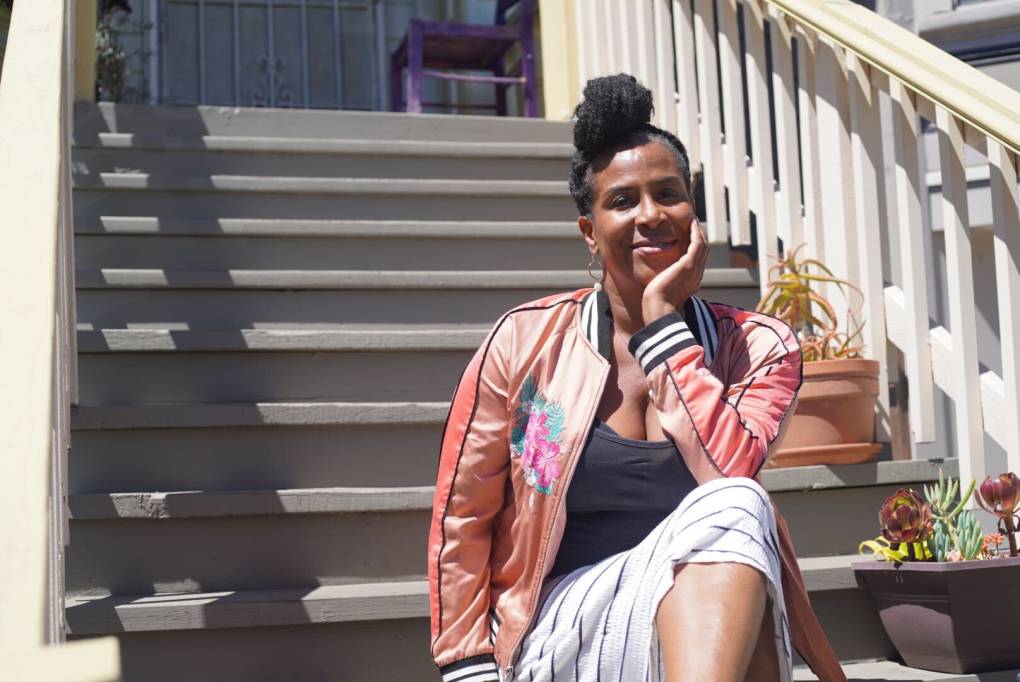
"caption": "Traci Bartlow, owner of B-Love's Guesthouse, sits on the porch of her property in West Oakland. ",
"description": "Traci Bartlow, owner of B-Love's Guesthouse, sits on the porch of her property in West Oakland. ",
"title": "Traci Bartlow, owner of B-Love's Guesthouse, sits on the porch of her property in West Oakland.",
"credit": "Pendarvis Harshaw",
"status": "inherit",
"altTag": "Traci Bartlow, owner of B-Love's Guesthouse, sits on the porch of her property in West Oakland.",
"isLoading": false,
"fetchFailed": false
},
"arts_13917962": {
"type": "attachments",
"id": "arts_13917962",
"meta": {
"index": "attachments_1716263798",
"site": "arts",
"id": "13917962",
"found": true
},
"parent": 13917938,
"imgSizes": {
"twentyfourteen-full-width": {
"file": "https://ww2.kqed.org/app/uploads/sites/2/2022/08/Copy-of-Pass-The-Aux-template-1038x576.jpg",
"width": 1038,
"mimeType": "image/jpeg",
"height": 576
},
"thumbnail": {
"file": "https://ww2.kqed.org/app/uploads/sites/2/2022/08/Copy-of-Pass-The-Aux-template-160x90.jpg",
"width": 160,
"mimeType": "image/jpeg",
"height": 90
},
"post-thumbnail": {
"file": "https://ww2.kqed.org/app/uploads/sites/2/2022/08/Copy-of-Pass-The-Aux-template-672x372.jpg",
"width": 672,
"mimeType": "image/jpeg",
"height": 372
},
"kqedFullSize": {
"file": "https://ww2.kqed.org/app/uploads/sites/2/2022/08/Copy-of-Pass-The-Aux-template.jpg",
"width": 1920,
"height": 1080
},
"large": {
"file": "https://ww2.kqed.org/app/uploads/sites/2/2022/08/Copy-of-Pass-The-Aux-template-1020x574.jpg",
"width": 1020,
"mimeType": "image/jpeg",
"height": 574
},
"1536x1536": {
"file": "https://ww2.kqed.org/app/uploads/sites/2/2022/08/Copy-of-Pass-The-Aux-template-1536x864.jpg",
"width": 1536,
"mimeType": "image/jpeg",
"height": 864
},
"medium": {
"file": "https://ww2.kqed.org/app/uploads/sites/2/2022/08/Copy-of-Pass-The-Aux-template-800x450.jpg",
"width": 800,
"mimeType": "image/jpeg",
"height": 450
},
"medium_large": {
"file": "https://ww2.kqed.org/app/uploads/sites/2/2022/08/Copy-of-Pass-The-Aux-template-768x432.jpg",
"width": 768,
"mimeType": "image/jpeg",
"height": 432
}
},
"publishDate": 1661285697,
"modified": 1661448156,
"caption": "When Hurricane Katrina sent him out of New Orleans, Poo$ie found a supportive network in West Oakland. ",
"description": null,
"title": "Copy of Pass The Aux template",
"credit": "Photo by Edwin Roque / @rocky__vision; Illustration by Kelly Heigert",
"status": "inherit",
"altTag": null,
"isLoading": false,
"fetchFailed": false
},
"arts_13913119": {
"type": "attachments",
"id": "arts_13913119",
"meta": {
"index": "attachments_1716263798",
"site": "arts",
"id": "13913119",
"found": true
},
"parent": 13913116,
"imgSizes": {
"twentyfourteen-full-width": {
"file": "https://ww2.kqed.org/app/uploads/sites/2/2022/05/continental-club-2-1038x576.jpg",
"width": 1038,
"mimeType": "image/jpeg",
"height": 576
},
"thumbnail": {
"file": "https://ww2.kqed.org/app/uploads/sites/2/2022/05/continental-club-2-160x90.jpg",
"width": 160,
"mimeType": "image/jpeg",
"height": 90
},
"post-thumbnail": {
"file": "https://ww2.kqed.org/app/uploads/sites/2/2022/05/continental-club-2-672x372.jpg",
"width": 672,
"mimeType": "image/jpeg",
"height": 372
},
"kqedFullSize": {
"file": "https://ww2.kqed.org/app/uploads/sites/2/2022/05/continental-club-2.jpg",
"width": 1920,
"height": 1080
},
"large": {
"file": "https://ww2.kqed.org/app/uploads/sites/2/2022/05/continental-club-2-1020x574.jpg",
"width": 1020,
"mimeType": "image/jpeg",
"height": 574
},
"1536x1536": {
"file": "https://ww2.kqed.org/app/uploads/sites/2/2022/05/continental-club-2-1536x864.jpg",
"width": 1536,
"mimeType": "image/jpeg",
"height": 864
},
"medium": {
"file": "https://ww2.kqed.org/app/uploads/sites/2/2022/05/continental-club-2-800x450.jpg",
"width": 800,
"mimeType": "image/jpeg",
"height": 450
},
"medium_large": {
"file": "https://ww2.kqed.org/app/uploads/sites/2/2022/05/continental-club-2-768x432.jpg",
"width": 768,
"mimeType": "image/jpeg",
"height": 432
}
},
"publishDate": 1652209951,
"modified": 1652215775,
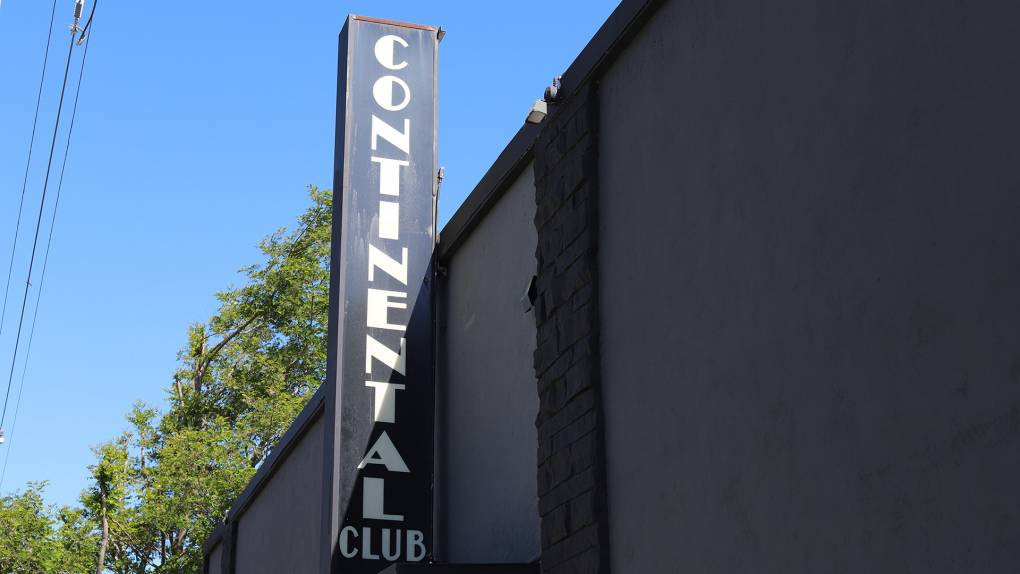
"caption": "West Oakland's Continental Club, originally established as a blues venue in 1961, reopened in January 2022 under new ownership. Local nonprofit Hip-Hop for Change and other event organizers are calling for a boycott and accusing the new owner of discrimination. Owner Ron Frydberg denies the claims. ",
"description": null,
"title": "continental club 2",
"credit": "Nastia Voynovskaya",
"status": "inherit",
"altTag": null,
"isLoading": false,
"fetchFailed": false
},
"arts_13911178": {
"type": "attachments",
"id": "arts_13911178",
"meta": {
"index": "attachments_1716263798",
"site": "arts",
"id": "13911178",
"found": true
},
"parent": 13911168,
"imgSizes": {
"twentyfourteen-full-width": {
"file": "https://ww2.kqed.org/app/uploads/sites/2/2022/03/gay4u_quesabirria-1038x576.jpg",
"width": 1038,
"mimeType": "image/jpeg",
"height": 576
},
"thumbnail": {
"file": "https://ww2.kqed.org/app/uploads/sites/2/2022/03/gay4u_quesabirria-160x100.jpg",
"width": 160,
"mimeType": "image/jpeg",
"height": 100
},
"post-thumbnail": {
"file": "https://ww2.kqed.org/app/uploads/sites/2/2022/03/gay4u_quesabirria-672x372.jpg",
"width": 672,
"mimeType": "image/jpeg",
"height": 372
},
"kqedFullSize": {
"file": "https://ww2.kqed.org/app/uploads/sites/2/2022/03/gay4u_quesabirria-scaled.jpg",
"width": 2560,
"height": 1600
},
"2048x2048": {
"file": "https://ww2.kqed.org/app/uploads/sites/2/2022/03/gay4u_quesabirria-2048x1280.jpg",
"width": 2048,
"mimeType": "image/jpeg",
"height": 1280
},
"large": {
"file": "https://ww2.kqed.org/app/uploads/sites/2/2022/03/gay4u_quesabirria-1020x638.jpg",
"width": 1020,
"mimeType": "image/jpeg",
"height": 638
},
"1536x1536": {
"file": "https://ww2.kqed.org/app/uploads/sites/2/2022/03/gay4u_quesabirria-1536x960.jpg",
"width": 1536,
"mimeType": "image/jpeg",
"height": 960
},
"full-width": {
"file": "https://ww2.kqed.org/app/uploads/sites/2/2022/03/gay4u_quesabirria-1920x1200.jpg",
"width": 1920,
"mimeType": "image/jpeg",
"height": 1200
},
"medium": {
"file": "https://ww2.kqed.org/app/uploads/sites/2/2022/03/gay4u_quesabirria-800x500.jpg",
"width": 800,
"mimeType": "image/jpeg",
"height": 500
},
"medium_large": {
"file": "https://ww2.kqed.org/app/uploads/sites/2/2022/03/gay4u_quesabirria-768x480.jpg",
"width": 768,
"mimeType": "image/jpeg",
"height": 480
}
},
"publishDate": 1648239856,
"modified": 1648239935,
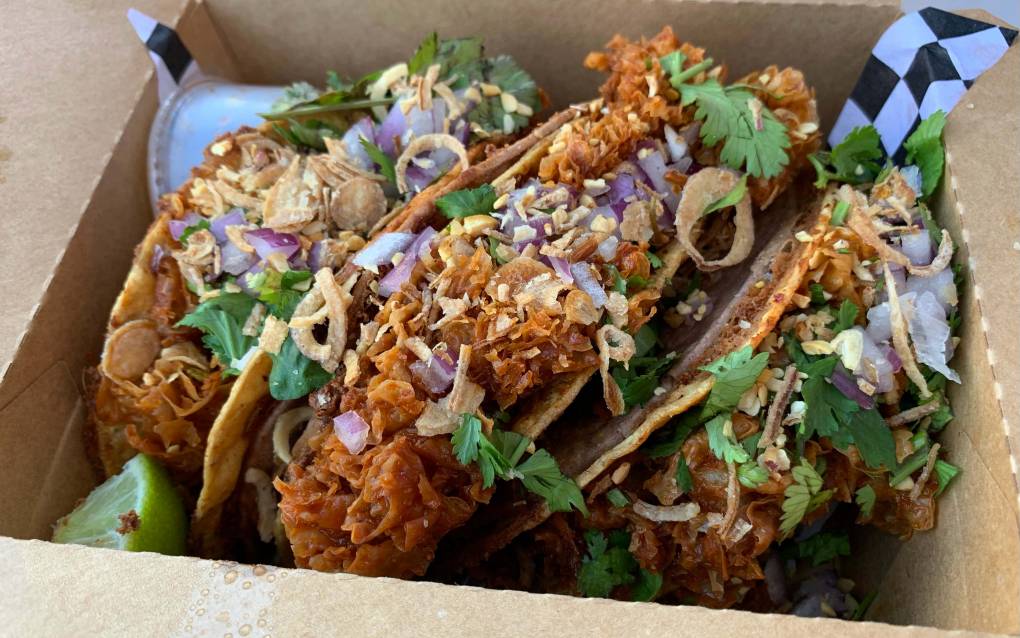
"caption": "The vegan quesabirria in one many dishes at Gay4U that feature bold flavors and interesting textures.",
"description": null,
"title": "gay4u_quesabirria",
"credit": "Paloma Cortes",
"status": "inherit",
"altTag": "Three vegan quesabirria tacos in a takeout container.",
"isLoading": false,
"fetchFailed": false
},
"arts_13900446": {
"type": "attachments",
"id": "arts_13900446",
"meta": {
"index": "attachments_1716263798",
"site": "arts",
"id": "13900446",
"found": true
},
"parent": 13900429,
"imgSizes": {
"thumbnail": {
"file": "https://ww2.kqed.org/app/uploads/sites/2/2021/07/storefront-market_culinary-kids-160x100.jpg",
"width": 160,
"mimeType": "image/jpeg",
"height": 100
},
"post-thumbnail": {
"file": "https://ww2.kqed.org/app/uploads/sites/2/2021/07/storefront-market_culinary-kids-672x372.jpg",
"width": 672,
"mimeType": "image/jpeg",
"height": 372
},
"kqedFullSize": {
"file": "https://ww2.kqed.org/app/uploads/sites/2/2021/07/storefront-market_culinary-kids.jpg",
"width": 828,
"height": 517
},
"medium": {
"file": "https://ww2.kqed.org/app/uploads/sites/2/2021/07/storefront-market_culinary-kids-800x500.jpg",
"width": 800,
"mimeType": "image/jpeg",
"height": 500
},
"medium_large": {
"file": "https://ww2.kqed.org/app/uploads/sites/2/2021/07/storefront-market_culinary-kids-768x480.jpg",
"width": 768,
"mimeType": "image/jpeg",
"height": 480
}
},
"publishDate": 1627598453,
"modified": 1627598539,
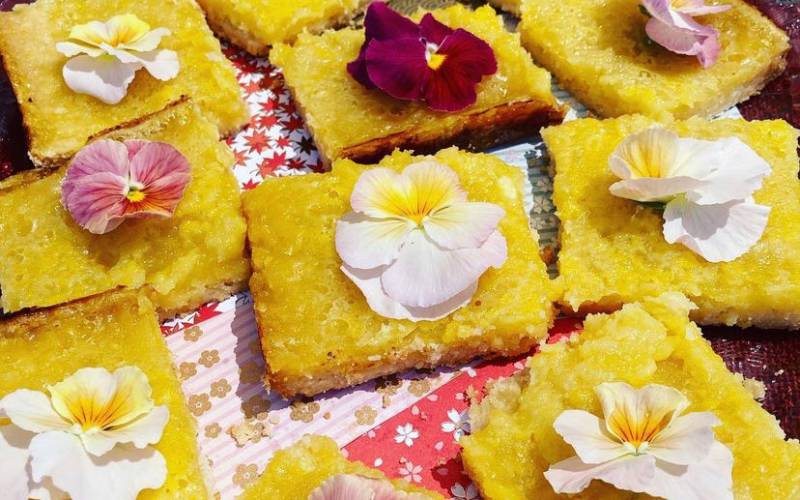
"caption": "Lemon bars from the youth-run Culinary Kids come topped with edible flowers.",
"description": null,
"title": "storefront market_culinary kids",
"credit": "Storefront Records",
"status": "inherit",
"altTag": "A spread of lemon bars topped with pink and red edible flowers.",
"isLoading": false,
"fetchFailed": false
},
"arts_13896072": {
"type": "attachments",
"id": "arts_13896072",
"meta": {
"index": "attachments_1716263798",
"site": "arts",
"id": "13896072",
"found": true
},
"parent": 13896069,
"imgSizes": {
"twentyfourteen-full-width": {
"file": "https://ww2.kqed.org/app/uploads/sites/2/2021/04/Jolly-Jolly_main-1038x576.jpg",
"width": 1038,
"mimeType": "image/jpeg",
"height": 576
},
"thumbnail": {
"file": "https://ww2.kqed.org/app/uploads/sites/2/2021/04/Jolly-Jolly_main-160x100.jpg",
"width": 160,
"mimeType": "image/jpeg",
"height": 100
},
"post-thumbnail": {
"file": "https://ww2.kqed.org/app/uploads/sites/2/2021/04/Jolly-Jolly_main-672x372.jpg",
"width": 672,
"mimeType": "image/jpeg",
"height": 372
},
"kqedFullSize": {
"file": "https://ww2.kqed.org/app/uploads/sites/2/2021/04/Jolly-Jolly_main-scaled.jpg",
"width": 2560,
"height": 1600
},
"2048x2048": {
"file": "https://ww2.kqed.org/app/uploads/sites/2/2021/04/Jolly-Jolly_main-2048x1280.jpg",
"width": 2048,
"mimeType": "image/jpeg",
"height": 1280
},
"large": {
"file": "https://ww2.kqed.org/app/uploads/sites/2/2021/04/Jolly-Jolly_main-1020x638.jpg",
"width": 1020,
"mimeType": "image/jpeg",
"height": 638
},
"1536x1536": {
"file": "https://ww2.kqed.org/app/uploads/sites/2/2021/04/Jolly-Jolly_main-1536x960.jpg",
"width": 1536,
"mimeType": "image/jpeg",
"height": 960
},
"full-width": {
"file": "https://ww2.kqed.org/app/uploads/sites/2/2021/04/Jolly-Jolly_main-1920x1200.jpg",
"width": 1920,
"mimeType": "image/jpeg",
"height": 1200
},
"medium": {
"file": "https://ww2.kqed.org/app/uploads/sites/2/2021/04/Jolly-Jolly_main-800x500.jpg",
"width": 800,
"mimeType": "image/jpeg",
"height": 500
},
"medium_large": {
"file": "https://ww2.kqed.org/app/uploads/sites/2/2021/04/Jolly-Jolly_main-768x480.jpg",
"width": 768,
"mimeType": "image/jpeg",
"height": 480
}
},
"publishDate": 1618953912,
"modified": 1618953990,
"caption": "Jollof rice topped with plantains, kale, shrimp, and baked chicken.",
"description": null,
"title": "Jolly-Jolly_main",
"credit": "Luke Tsai",
"status": "inherit",
"altTag": "Takeout container of jollof rice topped with plantains and baked chicken",
"isLoading": false,
"fetchFailed": false
},
"arts_13895389": {
"type": "attachments",
"id": "arts_13895389",
"meta": {
"index": "attachments_1716263798",
"site": "arts",
"id": "13895389",
"found": true
},
"parent": 13895386,
"imgSizes": {
"twentyfourteen-full-width": {
"file": "https://ww2.kqed.org/app/uploads/sites/2/2021/04/CommunityMarket_Main-1038x576.jpg",
"width": 1038,
"mimeType": "image/jpeg",
"height": 576
},
"thumbnail": {
"file": "https://ww2.kqed.org/app/uploads/sites/2/2021/04/CommunityMarket_Main-160x90.jpg",
"width": 160,
"mimeType": "image/jpeg",
"height": 90
},
"post-thumbnail": {
"file": "https://ww2.kqed.org/app/uploads/sites/2/2021/04/CommunityMarket_Main-672x372.jpg",
"width": 672,
"mimeType": "image/jpeg",
"height": 372
},
"kqedFullSize": {
"file": "https://ww2.kqed.org/app/uploads/sites/2/2021/04/CommunityMarket_Main.jpg",
"width": 2000,
"height": 1125
},
"large": {
"file": "https://ww2.kqed.org/app/uploads/sites/2/2021/04/CommunityMarket_Main-1020x574.jpg",
"width": 1020,
"mimeType": "image/jpeg",
"height": 574
},
"1536x1536": {
"file": "https://ww2.kqed.org/app/uploads/sites/2/2021/04/CommunityMarket_Main-1536x864.jpg",
"width": 1536,
"mimeType": "image/jpeg",
"height": 864
},
"full-width": {
"file": "https://ww2.kqed.org/app/uploads/sites/2/2021/04/CommunityMarket_Main-1920x1080.jpg",
"width": 1920,
"mimeType": "image/jpeg",
"height": 1080
},
"medium": {
"file": "https://ww2.kqed.org/app/uploads/sites/2/2021/04/CommunityMarket_Main-800x450.jpg",
"width": 800,
"mimeType": "image/jpeg",
"height": 450
},
"medium_large": {
"file": "https://ww2.kqed.org/app/uploads/sites/2/2021/04/CommunityMarket_Main-768x432.jpg",
"width": 768,
"mimeType": "image/jpeg",
"height": 432
}
},
"publishDate": 1617908254,
"modified": 1617908359,
"caption": "The number of customers shopping at Community Foods Market has declined sharply since the start of the pandemic.",
"description": "The number of customers shopping at Community Foods Market has declined sharply since the start of the pandemic.",
"title": "CommunityMarket_Main",
"credit": "Community Foods Market",
"status": "inherit",
"altTag": "Shoppers inside Community Foods Market during the pandemic",
"isLoading": false,
"fetchFailed": false
},
"arts_13894444": {
"type": "attachments",
"id": "arts_13894444",
"meta": {
"index": "attachments_1716263798",
"site": "arts",
"id": "13894444",
"found": true
},
"parent": 13894423,
"imgSizes": {
"twentyfourteen-full-width": {
"file": "https://ww2.kqed.org/app/uploads/sites/2/2021/03/Flints.MAIN_-1038x576.jpg",
"width": 1038,
"mimeType": "image/jpeg",
"height": 576
},
"thumbnail": {
"file": "https://ww2.kqed.org/app/uploads/sites/2/2021/03/Flints.MAIN_-160x90.jpg",
"width": 160,
"mimeType": "image/jpeg",
"height": 90
},
"post-thumbnail": {
"file": "https://ww2.kqed.org/app/uploads/sites/2/2021/03/Flints.MAIN_-672x372.jpg",
"width": 672,
"mimeType": "image/jpeg",
"height": 372
},
"kqedFullSize": {
"file": "https://ww2.kqed.org/app/uploads/sites/2/2021/03/Flints.MAIN_.jpg",
"width": 1920,
"height": 1080
},
"large": {
"file": "https://ww2.kqed.org/app/uploads/sites/2/2021/03/Flints.MAIN_-1020x574.jpg",
"width": 1020,
"mimeType": "image/jpeg",
"height": 574
},
"1536x1536": {
"file": "https://ww2.kqed.org/app/uploads/sites/2/2021/03/Flints.MAIN_-1536x864.jpg",
"width": 1536,
"mimeType": "image/jpeg",
"height": 864
},
"medium": {
"file": "https://ww2.kqed.org/app/uploads/sites/2/2021/03/Flints.MAIN_-800x450.jpg",
"width": 800,
"mimeType": "image/jpeg",
"height": 450
},
"medium_large": {
"file": "https://ww2.kqed.org/app/uploads/sites/2/2021/03/Flints.MAIN_-768x432.jpg",
"width": 768,
"mimeType": "image/jpeg",
"height": 432
}
},
"publishDate": 1616526666,
"modified": 1680737842,
"caption": "The original Flint's Barbecue location at 3114 San Pablo Ave. was an iconic Oakland restaurant until it closed in the late '90s. The current iteration of the business operates mostly as a pop-up and catering business.",
"description": null,
"title": "Flints.MAIN",
"credit": "Our Oakland",
"status": "inherit",
"altTag": "The exterior of Flint's Barbecue, with the \"Flint's Bar-B-Q\" sign visible",
"isLoading": false,
"fetchFailed": false
},
"arts_13893118": {
"type": "attachments",
"id": "arts_13893118",
"meta": {
"index": "attachments_1716263798",
"site": "arts",
"id": "13893118",
"found": true
},
"parent": 13893054,
"imgSizes": {
"twentyfourteen-full-width": {
"file": "https://ww2.kqed.org/app/uploads/sites/2/2021/02/Pen_COVER-1038x576.jpg",
"width": 1038,
"mimeType": "image/jpeg",
"height": 576
},
"thumbnail": {
"file": "https://ww2.kqed.org/app/uploads/sites/2/2021/02/Pen_COVER-160x90.jpg",
"width": 160,
"mimeType": "image/jpeg",
"height": 90
},
"post-thumbnail": {
"file": "https://ww2.kqed.org/app/uploads/sites/2/2021/02/Pen_COVER-672x372.jpg",
"width": 672,
"mimeType": "image/jpeg",
"height": 372
},
"kqedFullSize": {
"file": "https://ww2.kqed.org/app/uploads/sites/2/2021/02/Pen_COVER.jpg",
"width": 1920,
"height": 1080
},
"large": {
"file": "https://ww2.kqed.org/app/uploads/sites/2/2021/02/Pen_COVER-1020x574.jpg",
"width": 1020,
"mimeType": "image/jpeg",
"height": 574
},
"1536x1536": {
"file": "https://ww2.kqed.org/app/uploads/sites/2/2021/02/Pen_COVER-1536x864.jpg",
"width": 1536,
"mimeType": "image/jpeg",
"height": 864
},
"medium": {
"file": "https://ww2.kqed.org/app/uploads/sites/2/2021/02/Pen_COVER-800x450.jpg",
"width": 800,
"mimeType": "image/jpeg",
"height": 450
},
"medium_large": {
"file": "https://ww2.kqed.org/app/uploads/sites/2/2021/02/Pen_COVER-768x432.jpg",
"width": 768,
"mimeType": "image/jpeg",
"height": 432
}
},
"publishDate": 1614105404,
"modified": 1614105478,
"caption": "Before becoming a reverend, Cheryl Dawson was a member of the Black Panther Party. Now, she's part of a towering mural in West Oakland paying tribute to the women of the Black Panther Party.",
"description": "Before becoming a reverend, Cheryl Dawson was a member of the Black Panther Party. Now, she's part of a towering mural in West Oakland paying tribute to the women of the Black Panther Party.",
"title": "Pen_COVER",
"credit": "Courtesy Cheryl Dawson",
"status": "inherit",
"altTag": "Before becoming a reverend, Cheryl Dawson was a member of the Black Panther Party. Now, she's part of a towering mural in West Oakland paying tribute to the women of the Black Panther Party.",
"isLoading": false,
"fetchFailed": false
},
"arts_13890138": {
"type": "attachments",
"id": "arts_13890138",
"meta": {
"index": "attachments_1716263798",
"site": "arts",
"id": "13890138",
"found": true
},
"parent": 13890127,
"imgSizes": {
"twentyfourteen-full-width": {
"file": "https://ww2.kqed.org/app/uploads/sites/2/2020/12/FutureIsOursMural-1038x576.jpg",
"width": 1038,
"mimeType": "image/jpeg",
"height": 576
},
"thumbnail": {
"file": "https://ww2.kqed.org/app/uploads/sites/2/2020/12/FutureIsOursMural-160x99.jpg",
"width": 160,
"mimeType": "image/jpeg",
"height": 99
},
"post-thumbnail": {
"file": "https://ww2.kqed.org/app/uploads/sites/2/2020/12/FutureIsOursMural-672x372.jpg",
"width": 672,
"mimeType": "image/jpeg",
"height": 372
},
"kqedFullSize": {
"file": "https://ww2.kqed.org/app/uploads/sites/2/2020/12/FutureIsOursMural.jpg",
"width": 1920,
"height": 1182
},
"large": {
"file": "https://ww2.kqed.org/app/uploads/sites/2/2020/12/FutureIsOursMural-1020x628.jpg",
"width": 1020,
"mimeType": "image/jpeg",
"height": 628
},
"1536x1536": {
"file": "https://ww2.kqed.org/app/uploads/sites/2/2020/12/FutureIsOursMural-1536x946.jpg",
"width": 1536,
"mimeType": "image/jpeg",
"height": 946
},
"medium": {
"file": "https://ww2.kqed.org/app/uploads/sites/2/2020/12/FutureIsOursMural-800x493.jpg",
"width": 800,
"mimeType": "image/jpeg",
"height": 493
},
"medium_large": {
"file": "https://ww2.kqed.org/app/uploads/sites/2/2020/12/FutureIsOursMural-768x473.jpg",
"width": 768,
"mimeType": "image/jpeg",
"height": 473
}
},
"publishDate": 1607542722,
"modified": 1607542738,
"caption": "A mural on 14th Street in West Oakland, depicting Jazz Hudson, Olafemi Akintunde and their son Selah.",
"description": "A mural on 14th Street in West Oakland, depicting Jazz Hudson, Olafemi Akintunde and their son Selah.",
"title": "FutureIsOursMural",
"credit": "Refa One",
"status": "inherit",
"altTag": "A mural on 14th Street in West Oakland, depicting Jazz Hudson, Olafemi Akintunde and their son Selah.",
"isLoading": false,
"fetchFailed": false
},
"arts_13879428": {
"type": "attachments",
"id": "arts_13879428",
"meta": {
"index": "attachments_1716263798",
"site": "arts",
"id": "13879428",
"found": true
},
"parent": 13879426,
"imgSizes": {
"twentyfourteen-full-width": {
"file": "https://ww2.kqed.org/app/uploads/sites/2/2020/04/Agana_COVER-1038x576.jpg",
"width": 1038,
"mimeType": "image/jpeg",
"height": 576
},
"thumbnail": {
"file": "https://ww2.kqed.org/app/uploads/sites/2/2020/04/Agana_COVER-160x90.jpg",
"width": 160,
"mimeType": "image/jpeg",
"height": 90
},
"post-thumbnail": {
"file": "https://ww2.kqed.org/app/uploads/sites/2/2020/04/Agana_COVER-672x372.jpg",
"width": 672,
"mimeType": "image/jpeg",
"height": 372
},
"kqedFullSize": {
"file": "https://ww2.kqed.org/app/uploads/sites/2/2020/04/Agana_COVER.jpg",
"width": 1920,
"height": 1080
},
"large": {
"file": "https://ww2.kqed.org/app/uploads/sites/2/2020/04/Agana_COVER-1020x574.jpg",
"width": 1020,
"mimeType": "image/jpeg",
"height": 574
},
"full-width": {
"file": "https://ww2.kqed.org/app/uploads/sites/2/2020/04/Agana_COVER-1920x1080.jpg",
"width": 1920,
"mimeType": "image/jpeg",
"height": 1080
},
"medium": {
"file": "https://ww2.kqed.org/app/uploads/sites/2/2020/04/Agana_COVER-800x450.jpg",
"width": 800,
"mimeType": "image/jpeg",
"height": 450
},
"medium_large": {
"file": "https://ww2.kqed.org/app/uploads/sites/2/2020/04/Agana_COVER-768x432.jpg",
"width": 768,
"mimeType": "image/jpeg",
"height": 432
}
},
"publishDate": 1588116295,
"modified": 1588117147,
"caption": "DJ Agana in front of the 'You Are Beautiful' mural in West Oakland.",
"description": "DJ Agana in front of the 'You Are Beautiful' mural in West Oakland.",
"title": "Agana_COVER",
"credit": "\u003ca href=\"https://www.instagram.com/carla.hr/\" target=\"_blank\">Carla Hernandez Ramirez\u003c/a>",
"status": "inherit",
"isLoading": false,
"fetchFailed": false
},
"arts_13876184": {
"type": "attachments",
"id": "arts_13876184",
"meta": {
"index": "attachments_1716263798",
"site": "arts",
"id": "13876184",
"found": true
},
"parent": 13876171,
"imgSizes": {
"twentyfourteen-full-width": {
"file": "https://ww2.kqed.org/app/uploads/sites/2/2020/03/DSC8543-1038x576.jpg",
"width": 1038,
"mimeType": "image/jpeg",
"height": 576
},
"thumbnail": {
"file": "https://ww2.kqed.org/app/uploads/sites/2/2020/03/DSC8543-160x107.jpg",
"width": 160,
"mimeType": "image/jpeg",
"height": 107
},
"post-thumbnail": {
"file": "https://ww2.kqed.org/app/uploads/sites/2/2020/03/DSC8543-672x372.jpg",
"width": 672,
"mimeType": "image/jpeg",
"height": 372
},
"kqedFullSize": {
"file": "https://ww2.kqed.org/app/uploads/sites/2/2020/03/DSC8543.jpg",
"width": 1616,
"height": 1080
},
"large": {
"file": "https://ww2.kqed.org/app/uploads/sites/2/2020/03/DSC8543-1020x682.jpg",
"width": 1020,
"mimeType": "image/jpeg",
"height": 682
},
"medium": {
"file": "https://ww2.kqed.org/app/uploads/sites/2/2020/03/DSC8543-800x535.jpg",
"width": 800,
"mimeType": "image/jpeg",
"height": 535
},
"medium_large": {
"file": "https://ww2.kqed.org/app/uploads/sites/2/2020/03/DSC8543-768x513.jpg",
"width": 768,
"mimeType": "image/jpeg",
"height": 513
}
},
"publishDate": 1583774763,
"modified": 1583868168,
"caption": "Students and Administrators from McClymonds participate in a Restorative Justice circle in West Oakland",
"description": "Students and Administrators from McClymonds participate in a Restorative Justice circle in West Oakland",
"title": "Students and Administrators from McClymonds participate in a Restorative Justice circle in West Oakland",
"credit": "Pendarvis Harshaw",
"status": "inherit",
"isLoading": false,
"fetchFailed": false
}
},
"audioPlayerReducer": {
"postId": "stream_live",
"isPaused": true,
"isPlaying": false,
"pfsActive": false,
"pledgeModalIsOpen": true,
"playerDrawerIsOpen": false,
"liveAudioPlayStartedAt": 0,
"liveAudioPlayContext": ""
},
"authorsReducer": {
"nvoynovskaya": {
"type": "authors",
"id": "11387",
"meta": {
"index": "authors_1716337520",
"id": "11387",
"found": true
},
"name": "Nastia Voynovskaya",
"firstName": "Nastia",
"lastName": "Voynovskaya",
"slug": "nvoynovskaya",
"email": "nvoynovskaya@kqed.org",
"display_author_email": false,
"staff_mastheads": [
"arts"
],
"title": "Editor and reporter",
"bio": "Nastia Voynovskaya is a reporter, editor and host at KQED Arts & Culture. She's been covering the arts in the Bay Area for over a decade, with a focus on music, queer culture, labor issues and grassroots organizing. She has edited KQED story series such as Trans Bay: A History of San Francisco's Gender-Diverse Community, and co-created KQED's Bay Area hip-hop history project, That's My Word. Nastia's work has been recognized by the Society of Professional Journalists and San Francisco Press Club. She regularly appears on podcasts and radio programs, including NPR's All Songs Considered, and hosts live events where music, culture and conversation meet.",
"avatar": "https://secure.gravatar.com/avatar/5025ee460e5a85d69ca20ea6c6f2f80d7e17795c828f61ea3aecfcd924e9042e?s=600&d=blank&r=g",
"twitter": null,
"bluesky": null,
"facebook": null,
"instagram": "https://www.instagram.com/nananastia/",
"linkedin": null,
"sites": [
{
"site": "",
"roles": [
"editor"
]
},
{
"site": "arts",
"roles": [
"administrator"
]
},
{
"site": "news",
"roles": [
"editor"
]
},
{
"site": "pop",
"roles": [
"administrator"
]
},
{
"site": "bayareabites",
"roles": [
"editor"
]
},
{
"site": "podcasts",
"roles": [
"editor"
]
},
{
"site": "hiphop",
"roles": [
"editor"
]
}
],
"headData": {
"title": "Nastia Voynovskaya | KQED",
"description": "Editor and reporter",
"ogImgSrc": "https://secure.gravatar.com/avatar/5025ee460e5a85d69ca20ea6c6f2f80d7e17795c828f61ea3aecfcd924e9042e?s=600&d=blank&r=g",
"twImgSrc": "https://secure.gravatar.com/avatar/5025ee460e5a85d69ca20ea6c6f2f80d7e17795c828f61ea3aecfcd924e9042e?s=600&d=blank&r=g"
},
"isLoading": false,
"link": "/author/nvoynovskaya"
},
"ogpenn": {
"type": "authors",
"id": "11491",
"meta": {
"index": "authors_1716337520",
"id": "11491",
"found": true
},
"name": "Pendarvis Harshaw",
"firstName": "Pendarvis",
"lastName": "Harshaw",
"slug": "ogpenn",
"email": "ogpenn@gmail.com",
"display_author_email": false,
"staff_mastheads": [
"arts"
],
"title": "Community Engagement Reporter",
"bio": "Pendarvis Harshaw is an educator, host and writer with KQED Arts.",
"avatar": "https://secure.gravatar.com/avatar/972b77ee8e3f346ae2b00622661187fbfabd059b5693bbdc1475ea7a722fd4cd?s=600&d=blank&r=g",
"twitter": null,
"bluesky": null,
"facebook": null,
"instagram": "ogpenn",
"linkedin": null,
"sites": [
{
"site": "arts",
"roles": [
"administrator"
]
},
{
"site": "news",
"roles": [
"editor"
]
},
{
"site": "bayareabites",
"roles": [
"author"
]
},
{
"site": "hiphop",
"roles": [
"editor"
]
}
],
"headData": {
"title": "Pendarvis Harshaw | KQED",
"description": "Community Engagement Reporter",
"ogImgSrc": "https://secure.gravatar.com/avatar/972b77ee8e3f346ae2b00622661187fbfabd059b5693bbdc1475ea7a722fd4cd?s=600&d=blank&r=g",
"twImgSrc": "https://secure.gravatar.com/avatar/972b77ee8e3f346ae2b00622661187fbfabd059b5693bbdc1475ea7a722fd4cd?s=600&d=blank&r=g"
},
"isLoading": false,
"link": "/author/ogpenn"
},
"mmedina": {
"type": "authors",
"id": "11528",
"meta": {
"index": "authors_1716337520",
"id": "11528",
"found": true
},
"name": "Marisol Medina-Cadena",
"firstName": "Marisol",
"lastName": "Medina-Cadena",
"slug": "mmedina",
"email": "mmedina@KQED.org",
"display_author_email": true,
"staff_mastheads": [],
"title": "Producer, Rightnowish Podcast",
"bio": "Marisol Medina-Cadena is a radio reporter and podcast producer. Before working at KQED, she produced for PBS member station, KCET, in Los Angeles. In 2017, Marisol won an Emmy Award for her work on the televised documentary, \u003cem>City Rising\u003c/em>, examining California's affordable housing crisis and the historical roots of gentrification.",
"avatar": "https://secure.gravatar.com/avatar/6c3db46a1cabb5e1fe9a365b5f4e681e?s=600&d=blank&r=g",
"twitter": "marisolreports",
"facebook": null,
"instagram": null,
"linkedin": null,
"sites": [
{
"site": "arts",
"roles": []
},
{
"site": "news",
"roles": [
"edit_others_posts"
]
}
],
"headData": {
"title": "Marisol Medina-Cadena | KQED",
"description": "Producer, Rightnowish Podcast",
"ogImgSrc": "https://secure.gravatar.com/avatar/6c3db46a1cabb5e1fe9a365b5f4e681e?s=600&d=blank&r=g",
"twImgSrc": "https://secure.gravatar.com/avatar/6c3db46a1cabb5e1fe9a365b5f4e681e?s=600&d=blank&r=g"
},
"isLoading": false,
"link": "/author/mmedina"
},
"azucenarasilla": {
"type": "authors",
"id": "11624",
"meta": {
"index": "authors_1716337520",
"id": "11624",
"found": true
},
"name": "Azucena Rasilla",
"firstName": "Azucena",
"lastName": "Rasilla",
"slug": "azucenarasilla",
"email": "azucena.rasilla@gmail.com",
"display_author_email": false,
"staff_mastheads": [],
"title": null,
"bio": "Freelance Journalist I former East Bay Express I DM/email music/arts/culture tips that I can turn into stories I azucena.rasilla@gmail.com",
"avatar": "https://secure.gravatar.com/avatar/451ecba09a36b5e0f6fbb13210621eea?s=600&d=blank&r=g",
"twitter": "chroniclesofazu",
"facebook": null,
"instagram": null,
"linkedin": null,
"sites": [
{
"site": "arts",
"roles": [
"contributor"
]
},
{
"site": "bayareabites",
"roles": [
"contributor"
]
}
],
"headData": {
"title": "Azucena Rasilla | KQED",
"description": null,
"ogImgSrc": "https://secure.gravatar.com/avatar/451ecba09a36b5e0f6fbb13210621eea?s=600&d=blank&r=g",
"twImgSrc": "https://secure.gravatar.com/avatar/451ecba09a36b5e0f6fbb13210621eea?s=600&d=blank&r=g"
},
"isLoading": false,
"link": "/author/azucenarasilla"
},
"ltsai": {
"type": "authors",
"id": "11743",
"meta": {
"index": "authors_1716337520",
"id": "11743",
"found": true
},
"name": "Luke Tsai",
"firstName": "Luke",
"lastName": "Tsai",
"slug": "ltsai",
"email": "ltsai@kqed.org",
"display_author_email": true,
"staff_mastheads": [
"arts"
],
"title": "Food Editor",
"bio": "Luke Tsai is KQED's food editor and resident stinky tofu connoisseur. Prior to KQED, he was an editor at Eater SF, \u003cem>San Francisco \u003c/em>magazine, and the \u003cem>East Bay Express\u003c/em>, and his work has also appeared in TASTE, the \u003cem>San Francisco Chronicle\u003c/em>, and the \u003cem>Best Food Writing\u003c/em> anthology. When he isn't writing or editing, you'll find him eating most everything he can get his hands on.",
"avatar": "https://secure.gravatar.com/avatar/1e59b45bf191526e7339d6ba46e33a57b2030d25c27660ecc64ea3cb863e34f7?s=600&d=blank&r=g",
"twitter": "theluketsai",
"bluesky": null,
"facebook": null,
"instagram": null,
"linkedin": null,
"sites": [
{
"site": "",
"roles": [
"editor"
]
},
{
"site": "arts",
"roles": [
"administrator"
]
},
{
"site": "news",
"roles": [
"editor",
"contributor"
]
},
{
"site": "bayareabites",
"roles": [
"editor"
]
},
{
"site": "food",
"roles": [
"editor"
]
}
],
"headData": {
"title": "Luke Tsai | KQED",
"description": "Food Editor",
"ogImgSrc": "https://secure.gravatar.com/avatar/1e59b45bf191526e7339d6ba46e33a57b2030d25c27660ecc64ea3cb863e34f7?s=600&d=blank&r=g",
"twImgSrc": "https://secure.gravatar.com/avatar/1e59b45bf191526e7339d6ba46e33a57b2030d25c27660ecc64ea3cb863e34f7?s=600&d=blank&r=g"
},
"isLoading": false,
"link": "/author/ltsai"
},
"pabarca": {
"type": "authors",
"id": "11882",
"meta": {
"index": "authors_1716337520",
"id": "11882",
"found": true
},
"name": "Paloma Abarca",
"firstName": "Paloma",
"lastName": "Abarca",
"slug": "pabarca",
"email": "pabarca@kqed.org",
"display_author_email": true,
"staff_mastheads": [],
"title": "KQED Contributor",
"bio": "Paloma Yaritza Abarca is a Live Event Producer and Digital Creator for KQED Live, our multiplatform live events program. She focuses on amplifying LGBTQIA and BIPOC voices and developing opportunities to showcase the diversity of the Bay's culture and history. She's produced three successful Latinx events: Hella Caffeinated con Pan, The Special: Vegan Food con Sazón, and Reclaiming Curanderismo, and was previously the Latinx Engagement Producer with KQED's Audience Development team. Paloma was a writer and Lead Content Specialist for the Dance Music Media and News company, EDM Maniac, has produced stories for KALW's award-winning news magazine Crosscurrents, and ran San Francisco State's events venue, The Depot.",
"avatar": "https://secure.gravatar.com/avatar/90ff14b6bdb2e86dc89f8cf0d6beeecd?s=600&d=blank&r=g",
"twitter": null,
"facebook": null,
"instagram": null,
"linkedin": null,
"sites": [
{
"site": "arts",
"roles": [
"contributor"
]
}
],
"headData": {
"title": "Paloma Abarca | KQED",
"description": "KQED Contributor",
"ogImgSrc": "https://secure.gravatar.com/avatar/90ff14b6bdb2e86dc89f8cf0d6beeecd?s=600&d=blank&r=g",
"twImgSrc": "https://secure.gravatar.com/avatar/90ff14b6bdb2e86dc89f8cf0d6beeecd?s=600&d=blank&r=g"
},
"isLoading": false,
"link": "/author/pabarca"
}
},
"pagesReducer": {
"arts_tag_west-oakland": {
"type": "terms",
"id": "arts_2533",
"meta": {
"index": "terms_1716263798",
"site": "arts",
"id": "2533",
"score": 8.7945
},
"featImg": null,
"name": "West Oakland",
"description": null,
"taxonomy": "tag",
"headData": {
"twImgId": null,
"twTitle": null,
"ogTitle": null,
"ogImgId": null,
"twDescription": null,
"description": null,
"title": "West Oakland Archives | KQED Arts",
"ogDescription": null
},
"ttid": 2545,
"slug": "west-oakland",
"isLoading": false,
"title": "West Oakland",
"pageMeta": {
"site": "arts",
"WpPageTemplate": "page-topic-editorial",
"currentPage": 2
},
"blocks": [
{
"blockName": "kqed/post-list",
"attrs": {
"layout": "cardArticle2",
"query": "posts/arts?tag=west-oakland",
"seeMore": false,
"paginated": true,
"page": 2
}
},
{
"blockName": "kqed/ad"
}
]
}
},
"pfsSessionReducer": {},
"postsReducer": {
"stream_live": {
"type": "live",
"id": "stream_live",
"audioUrl": "https://streams.kqed.org/kqedradio",
"title": "Live Stream",
"excerpt": "Live Stream information currently unavailable.",
"link": "/radio",
"featImg": "",
"label": {
"name": "KQED Live",
"link": "/"
}
},
"stream_kqedNewscast": {
"type": "posts",
"id": "stream_kqedNewscast",
"audioUrl": "https://www.kqed.org/.stream/anon/radio/RDnews/newscast.mp3?_=1",
"title": "KQED Newscast",
"featImg": "",
"label": {
"name": "88.5 FM",
"link": "/"
}
},
"arts_13920320": {
"type": "posts",
"id": "arts_13920320",
"meta": {
"index": "posts_1716263798",
"site": "arts",
"id": "13920320",
"score": null,
"sort": [
1665741657000
]
},
"guestAuthors": [],
"slug": "preserving-oakland-arts-and-culture-at-b-loves-guesthouse",
"title": "Preserving Oakland Arts and Culture at B-Love’s Guesthouse",
"publishDate": 1665741657,
"format": "audio",
"headTitle": "Preserving Oakland Arts and Culture at B-Love’s Guesthouse | KQED",
"labelTerm": {},
"content": "\u003cp>Inside of a classic Queen Anne Victorian in West Oakland, photographer \u003ca href=\"https://www.instagram.com/tracibartlow/\" target=\"_blank\" rel=\"noopener noreferrer\">Traci Bartlow\u003c/a> displays beautifully framed images of the people who shaped hip-hop culture here in the Bay Area, and across the nation.\u003c/p>\n\u003cp>Her exhibition, \u003cem>\u003ca href=\"https://www.eventbrite.com/e/the-gallery-experience-at-b-loves-guest-house-tickets-403783887477\" target=\"_blank\" rel=\"noopener noreferrer\">Oakland Picture Lady: Tales of the 90’s Girl\u003c/a>\u003c/em>, features photos of Outkast and Queen Latifah, Busta Rhymes and ODB, alongside images of the Luniz and Shock-G, as well as E-40 and The Click.\u003c/p>\n\u003cp>While the photos tell a story about what life was like in growing up in Oakland, it’s her house that tells the complex story of multiple generations of Black folks, land ownership and community appreciation.\u003c/p>\n\u003cp>Traci is the owner of \u003ca href=\"https://www.b-lovesguesthouse.com/\" target=\"_blank\" rel=\"noopener noreferrer\">B-Love’s Guesthouse\u003c/a>, which is a photography museum \u003cem>and\u003c/em> a boutique hotel. With its picturesque front porch and flourishing garden in the back, the building features seven different rooms that folks can rent.\u003c/p>\n\u003cfigure id=\"attachment_13920339\" class=\"wp-caption aligncenter\" style=\"max-width: 800px\">\u003cimg loading=\"lazy\" decoding=\"async\" class=\"size-medium wp-image-13920339\" src=\"https://ww2.kqed.org/app/uploads/sites/2/2022/10/DSC04426-800x535.jpg\" alt=\"Traci Bartlow holds up an image of the wash house her mother once owned in East Oakland. \" width=\"800\" height=\"535\" srcset=\"https://cdn.kqed.org/wp-content/uploads/sites/2/2022/10/DSC04426-800x535.jpg 800w, https://cdn.kqed.org/wp-content/uploads/sites/2/2022/10/DSC04426-1020x682.jpg 1020w, https://cdn.kqed.org/wp-content/uploads/sites/2/2022/10/DSC04426-160x107.jpg 160w, https://cdn.kqed.org/wp-content/uploads/sites/2/2022/10/DSC04426-768x513.jpg 768w, https://cdn.kqed.org/wp-content/uploads/sites/2/2022/10/DSC04426-1536x1027.jpg 1536w, https://cdn.kqed.org/wp-content/uploads/sites/2/2022/10/DSC04426.jpg 1616w\" sizes=\"(max-width: 800px) 100vw, 800px\">\u003cfigcaption class=\"wp-caption-text\">Traci Bartlow holds up an image of the washhouse her mother once owned in East Oakland. \u003ccite>(Pendarvis Harshaw)\u003c/cite>\u003c/figcaption>\u003c/figure>\n\u003cp>An \u003ca href=\"https://www.alvinailey.org/school\">Ailey School\u003c/a> graduate turned \u003ca href=\"https://www.youtube.com/watch?v=LjBa6yqRau4\">Emmy-winning dancer\u003c/a> and choreographer, Traci fell in love with the arts through what she experienced in her neighborhood as a child. Block parties and family functions introduced her to her love of dance.\u003c/p>\n\u003cp>Born and raised in East Oakland, she also saw firsthand the importance of a neighborhood hub by watching the multiple ways people would use her mother’s washhouse. It wasn’t just a laundromat but a corner store, a place to get your prom dress made or pick up your Avon order.\u003c/p>\n\u003cp>She acquired her current home from the late Eddie Mae Holmes, a Black woman who once owned multiple properties in West Oakland. And Traci envisioned using the space for the purposes of artistic expression and community gatherings, including showcasing her work.\u003c/p>\n\u003cfigure id=\"attachment_13920342\" class=\"wp-caption aligncenter\" style=\"max-width: 800px\">\u003cimg loading=\"lazy\" decoding=\"async\" class=\"wp-image-13920342 size-medium\" src=\"https://ww2.kqed.org/app/uploads/sites/2/2022/10/DSC04446-800x535.jpg\" alt=\"Traci Bartlow.\" width=\"800\" height=\"535\" srcset=\"https://cdn.kqed.org/wp-content/uploads/sites/2/2022/10/DSC04446-800x535.jpg 800w, https://cdn.kqed.org/wp-content/uploads/sites/2/2022/10/DSC04446-1020x682.jpg 1020w, https://cdn.kqed.org/wp-content/uploads/sites/2/2022/10/DSC04446-160x107.jpg 160w, https://cdn.kqed.org/wp-content/uploads/sites/2/2022/10/DSC04446-768x513.jpg 768w, https://cdn.kqed.org/wp-content/uploads/sites/2/2022/10/DSC04446-1536x1027.jpg 1536w, https://cdn.kqed.org/wp-content/uploads/sites/2/2022/10/DSC04446.jpg 1616w\" sizes=\"(max-width: 800px) 100vw, 800px\">\u003cfigcaption class=\"wp-caption-text\">Traci Bartlow sits on the stairwell of her Queen Ann Victorian home in West Oakland \u003ccite>(Pendarvis Harshaw)\u003c/cite>\u003c/figcaption>\u003c/figure>\n\u003cp>Now B-Love’s Guesthouse stands as a home for hip-hop history and a safe haven for folks to come together.\u003c/p>\n\u003cp>This week we take a tour of the property and walk down memory lane through her photos. If you’re interested after listening to this episode, you can take a \u003ca href=\"https://www.eventbrite.com/e/the-gallery-experience-at-b-loves-guest-house-tickets-403783887477\">tour\u003c/a> too.\u003c/p>\n\u003cp>\u003c!-- iframe plugin v.4.3 wordpress.org/plugins/iframe/ -->\u003cbr>\n\u003ciframe loading=\"lazy\" frameborder=\"0\" height=\"200\" scrolling=\"no\" src=\"https://playlist.megaphone.fm?e=KQINC5621038255&light=true\" width=\"100%\" class=\"iframe-class\">\u003c/iframe>\u003c/p>\n\u003cp>\u003cspan style=\"font-weight: 400\">\u003ca href=\"https://bit.ly/3TiAwgf\">Read the transcript\u003c/a>.\u003c/span>\u003c/p>\n\u003cp>\u003cstrong>Below are lightly edited excerpts of my conversation with Traci Bartlow.\u003c/strong>\u003c/p>\n\u003cp>\u003cem>\u003cspan style=\"font-weight: 400\">Pen: \u003c/span>Just a few blocks from the women of the Black Panther Party mural and West Oakland BART station is Traci Bartlow’s home and hotel, B-Love’s Guesthouse. It’s on a residential street with lots of history.\u003c/em>\u003c/p>\n\u003cp>Traci:\u003cspan style=\"font-weight: 400\"> I acquired the house in 2007 from a team of people that would buy houses, flip them, and then sell them. They bought the house from a woman named Eddie Mae Holmes. And Ms. Holmes was an African-American woman that came to West Oakland when she was 14 years old. And, through her family ownership, she acquired this house, this house on the corner. And in 1965, she had that apartment building around the corner built. On the lower level of the apartment building, she had Holmes Barber Shop. So Ms. Holmes is one of those black women in the community that was providing in so many different ways for everyone. \u003c/span>\u003c/p>\n\u003cp>\u003cem>\u003cspan style=\"font-weight: 400\">Pen: \u003c/span> About 15 years ago, Traci converted her home into a guesthouse. People can choose from one of seven rooms for an overnight stay. And at the same time, folks can enjoy the framed photos from Traci’s archives. Her photos are a time machine, instantly transporting me back to the East Oakland that I knew as a youth. \u003c/em>\u003c/p>\n\u003cp>\u003cspan style=\"font-weight: 400\">[aside postid='arts_13891300']Traci: These are people that I grew up with. You know, we went to middle school and high school together. My mother owned the laundromat on 98th and Birch, and so everyone would come and do their laundry at my mom’s laundromat. And her business wasn’t just where you can do your laundry. It was like a community center where my mom had a sewing machine in the corner and she would do alterations and she would make prom dresses and make outfits for people. She also sold Avon, and we had a little store in the back where you could buy candy and chips and sandwiches. I would make homemade cookies and we would have those ghetto Icees, you know, like Kool-Aid in a cup. So people were always coming to the laundromat. \u003c/span>\u003c/p>\n\u003cp>\u003cem>\u003cspan style=\"font-weight: 400\">Pen: \u003c/span> Even before she got into photography, Traci was already into the arts. At age 19, she was awarded a scholarship to study dance at the \u003ca href=\"https://www.alvinailey.org/school\">Ailey School\u003c/a> in New York. After finishing the two-year professional dance training program, she took performing gigs across the globe. One thing led to another and Traci dabbled in modeling before picking up the camera herself. \u003c/em>\u003c/p>\n\u003cp>\u003cspan style=\"font-weight: 400\">Traci: I would also find myself at modeling shoots and just be like, ‘What kind of light is that? Oh, that’s a diffuser? What does that do?’ \u003c/span>It was just like this natural progression of me knowing about photography and wanting to learn more. \u003cspan style=\"font-weight: 400\">I’m self-taught, so I started photographing other dancers. And you’ll see many images from this photo shoot, because this was an assignment I gave myself to practice with high speed film. \u003c/span>\u003c/p>\n\u003cp> \u003c/p>\n\u003cp>\u003cimg loading=\"lazy\" decoding=\"async\" class=\"aligncenter size-full wp-image-12127869\" src=\"https://ww2.kqed.org/app/uploads/sites/2/2016/09/Q.Logo_.Break_.jpg\" alt=\"\" width=\"800\" height=\"78\" srcset=\"https://cdn.kqed.org/wp-content/uploads/sites/2/2016/09/Q.Logo_.Break_.jpg 800w, https://cdn.kqed.org/wp-content/uploads/sites/2/2016/09/Q.Logo_.Break_-400x39.jpg 400w, https://cdn.kqed.org/wp-content/uploads/sites/2/2016/09/Q.Logo_.Break_-768x75.jpg 768w\" sizes=\"(max-width: 800px) 100vw, 800px\">\u003c/p>\n\u003cp>\u003cstrong>\u003cem>Rightnowish is an arts and culture podcast produced at KQED. Listen to it wherever you get your podcasts or click the play button at the top of this page and subscribe to the show on \u003ca href=\"https://www.npr.org/podcasts/721590300/rightnowish\">NPR One\u003c/a>, \u003ca href=\"https://open.spotify.com/show/7kEJuafTzTVan7B78ttz1I\">Spotify\u003c/a>, \u003ca href=\"https://podcasts.apple.com/us/podcast/rightnowish/id1482187648\">Apple Podcasts\u003c/a>, \u003ca href=\"https://tunein.com/podcasts/Arts--Culture-Podcasts/Rightnowish-p1258245/\">TuneIn\u003c/a>, \u003ca href=\"https://www.stitcher.com/podcast/kqed/rightnowish\">Stitcher\u003c/a> or wherever you get your podcasts. \u003c/em>\u003c/strong>\u003c/p>\n\u003cp>[ad fullwidth]\u003c/p>\n\u003cp>\u003c/p>\n",
"blocks": [],
"excerpt": "Traci Bartlow's home is a showcase for her work and holds the history of her West Oakland neighborhood.",
"status": "publish",
"parent": 0,
"modified": 1726759255,
"stats": {
"hasAudio": true,
"hasVideo": false,
"hasChartOrMap": false,
"iframeSrcs": [],
"hasGoogleForm": false,
"hasGallery": false,
"hasHearkenModule": false,
"hasPolis": false,
"paragraphCount": 22,
"wordCount": 956
},
"headData": {
"title": "Preserving Oakland Arts and Culture at B-Love’s Guesthouse | KQED",
"description": "Traci Bartlow's home is a showcase for her work and holds the history of her West Oakland neighborhood.",
"ogTitle": "",
"ogDescription": "",
"ogImgId": "",
"twTitle": "",
"twDescription": "",
"twImgId": "",
"schema": {
"@context": "https://schema.org",
"@type": "Article",
"headline": "Preserving Oakland Arts and Culture at B-Love’s Guesthouse",
"datePublished": "2022-10-14T03:00:57-07:00",
"dateModified": "2024-09-19T08:20:55-07:00",
"image": "https://cdn.kqed.org/wp-content/uploads/2020/02/KQED-OG-Image@1x.png"
}
},
"source": "Rightnowish ",
"sourceUrl": "https://www.kqed.org/podcasts/rightnowish",
"audioUrl": "https://www.podtrac.com/pts/redirect.mp3/traffic.megaphone.fm/KQINC5621038255.mp3?updated=1665703768",
"sticky": false,
"templateType": "standard",
"featuredImageType": "standard",
"excludeFromSiteSearch": "Include",
"path": "/arts/13920320/preserving-oakland-arts-and-culture-at-b-loves-guesthouse",
"audioTrackLength": null,
"parsedContent": [
{
"type": "contentString",
"content": "\u003cdiv class=\"post-body\">\u003cp>\u003cp>Inside of a classic Queen Anne Victorian in West Oakland, photographer \u003ca href=\"https://www.instagram.com/tracibartlow/\" target=\"_blank\" rel=\"noopener noreferrer\">Traci Bartlow\u003c/a> displays beautifully framed images of the people who shaped hip-hop culture here in the Bay Area, and across the nation.\u003c/p>\n\u003cp>Her exhibition, \u003cem>\u003ca href=\"https://www.eventbrite.com/e/the-gallery-experience-at-b-loves-guest-house-tickets-403783887477\" target=\"_blank\" rel=\"noopener noreferrer\">Oakland Picture Lady: Tales of the 90’s Girl\u003c/a>\u003c/em>, features photos of Outkast and Queen Latifah, Busta Rhymes and ODB, alongside images of the Luniz and Shock-G, as well as E-40 and The Click.\u003c/p>\n\u003cp>While the photos tell a story about what life was like in growing up in Oakland, it’s her house that tells the complex story of multiple generations of Black folks, land ownership and community appreciation.\u003c/p>\n\u003cp>Traci is the owner of \u003ca href=\"https://www.b-lovesguesthouse.com/\" target=\"_blank\" rel=\"noopener noreferrer\">B-Love’s Guesthouse\u003c/a>, which is a photography museum \u003cem>and\u003c/em> a boutique hotel. With its picturesque front porch and flourishing garden in the back, the building features seven different rooms that folks can rent.\u003c/p>\n\u003cfigure id=\"attachment_13920339\" class=\"wp-caption aligncenter\" style=\"max-width: 800px\">\u003cimg loading=\"lazy\" decoding=\"async\" class=\"size-medium wp-image-13920339\" src=\"https://ww2.kqed.org/app/uploads/sites/2/2022/10/DSC04426-800x535.jpg\" alt=\"Traci Bartlow holds up an image of the wash house her mother once owned in East Oakland. \" width=\"800\" height=\"535\" srcset=\"https://cdn.kqed.org/wp-content/uploads/sites/2/2022/10/DSC04426-800x535.jpg 800w, https://cdn.kqed.org/wp-content/uploads/sites/2/2022/10/DSC04426-1020x682.jpg 1020w, https://cdn.kqed.org/wp-content/uploads/sites/2/2022/10/DSC04426-160x107.jpg 160w, https://cdn.kqed.org/wp-content/uploads/sites/2/2022/10/DSC04426-768x513.jpg 768w, https://cdn.kqed.org/wp-content/uploads/sites/2/2022/10/DSC04426-1536x1027.jpg 1536w, https://cdn.kqed.org/wp-content/uploads/sites/2/2022/10/DSC04426.jpg 1616w\" sizes=\"(max-width: 800px) 100vw, 800px\">\u003cfigcaption class=\"wp-caption-text\">Traci Bartlow holds up an image of the washhouse her mother once owned in East Oakland. \u003ccite>(Pendarvis Harshaw)\u003c/cite>\u003c/figcaption>\u003c/figure>\n\u003cp>An \u003ca href=\"https://www.alvinailey.org/school\">Ailey School\u003c/a> graduate turned \u003ca href=\"https://www.youtube.com/watch?v=LjBa6yqRau4\">Emmy-winning dancer\u003c/a> and choreographer, Traci fell in love with the arts through what she experienced in her neighborhood as a child. Block parties and family functions introduced her to her love of dance.\u003c/p>\n\u003cp>Born and raised in East Oakland, she also saw firsthand the importance of a neighborhood hub by watching the multiple ways people would use her mother’s washhouse. It wasn’t just a laundromat but a corner store, a place to get your prom dress made or pick up your Avon order.\u003c/p>\n\u003cp>She acquired her current home from the late Eddie Mae Holmes, a Black woman who once owned multiple properties in West Oakland. And Traci envisioned using the space for the purposes of artistic expression and community gatherings, including showcasing her work.\u003c/p>\n\u003cfigure id=\"attachment_13920342\" class=\"wp-caption aligncenter\" style=\"max-width: 800px\">\u003cimg loading=\"lazy\" decoding=\"async\" class=\"wp-image-13920342 size-medium\" src=\"https://ww2.kqed.org/app/uploads/sites/2/2022/10/DSC04446-800x535.jpg\" alt=\"Traci Bartlow.\" width=\"800\" height=\"535\" srcset=\"https://cdn.kqed.org/wp-content/uploads/sites/2/2022/10/DSC04446-800x535.jpg 800w, https://cdn.kqed.org/wp-content/uploads/sites/2/2022/10/DSC04446-1020x682.jpg 1020w, https://cdn.kqed.org/wp-content/uploads/sites/2/2022/10/DSC04446-160x107.jpg 160w, https://cdn.kqed.org/wp-content/uploads/sites/2/2022/10/DSC04446-768x513.jpg 768w, https://cdn.kqed.org/wp-content/uploads/sites/2/2022/10/DSC04446-1536x1027.jpg 1536w, https://cdn.kqed.org/wp-content/uploads/sites/2/2022/10/DSC04446.jpg 1616w\" sizes=\"(max-width: 800px) 100vw, 800px\">\u003cfigcaption class=\"wp-caption-text\">Traci Bartlow sits on the stairwell of her Queen Ann Victorian home in West Oakland \u003ccite>(Pendarvis Harshaw)\u003c/cite>\u003c/figcaption>\u003c/figure>\n\u003cp>Now B-Love’s Guesthouse stands as a home for hip-hop history and a safe haven for folks to come together.\u003c/p>\n\u003cp>This week we take a tour of the property and walk down memory lane through her photos. If you’re interested after listening to this episode, you can take a \u003ca href=\"https://www.eventbrite.com/e/the-gallery-experience-at-b-loves-guest-house-tickets-403783887477\">tour\u003c/a> too.\u003c/p>\n\u003cp>\u003c!-- iframe plugin v.4.3 wordpress.org/plugins/iframe/ -->\u003cbr>\n\u003ciframe loading=\"lazy\" frameborder=\"0\" height=\"200\" scrolling=\"no\" src=\"https://playlist.megaphone.fm?e=KQINC5621038255&light=true\" width=\"100%\" class=\"iframe-class\">\u003c/iframe>\u003c/p>\n\u003cp>\u003cspan style=\"font-weight: 400\">\u003ca href=\"https://bit.ly/3TiAwgf\">Read the transcript\u003c/a>.\u003c/span>\u003c/p>\n\u003cp>\u003cstrong>Below are lightly edited excerpts of my conversation with Traci Bartlow.\u003c/strong>\u003c/p>\n\u003cp>\u003cem>\u003cspan style=\"font-weight: 400\">Pen: \u003c/span>Just a few blocks from the women of the Black Panther Party mural and West Oakland BART station is Traci Bartlow’s home and hotel, B-Love’s Guesthouse. It’s on a residential street with lots of history.\u003c/em>\u003c/p>\n\u003cp>Traci:\u003cspan style=\"font-weight: 400\"> I acquired the house in 2007 from a team of people that would buy houses, flip them, and then sell them. They bought the house from a woman named Eddie Mae Holmes. And Ms. Holmes was an African-American woman that came to West Oakland when she was 14 years old. And, through her family ownership, she acquired this house, this house on the corner. And in 1965, she had that apartment building around the corner built. On the lower level of the apartment building, she had Holmes Barber Shop. So Ms. Holmes is one of those black women in the community that was providing in so many different ways for everyone. \u003c/span>\u003c/p>\n\u003cp>\u003cem>\u003cspan style=\"font-weight: 400\">Pen: \u003c/span> About 15 years ago, Traci converted her home into a guesthouse. People can choose from one of seven rooms for an overnight stay. And at the same time, folks can enjoy the framed photos from Traci’s archives. Her photos are a time machine, instantly transporting me back to the East Oakland that I knew as a youth. \u003c/em>\u003c/p>\n\u003cp>\u003cspan style=\"font-weight: 400\">\u003c/p>\u003c/div>",
"attributes": {
"named": {},
"numeric": []
}
},
{
"type": "component",
"content": "",
"name": "aside",
"attributes": {
"named": {
"postid": "arts_13891300",
"label": ""
},
"numeric": []
}
},
{
"type": "contentString",
"content": "\u003cdiv class=\"post-body\">\u003cp>Traci: These are people that I grew up with. You know, we went to middle school and high school together. My mother owned the laundromat on 98th and Birch, and so everyone would come and do their laundry at my mom’s laundromat. And her business wasn’t just where you can do your laundry. It was like a community center where my mom had a sewing machine in the corner and she would do alterations and she would make prom dresses and make outfits for people. She also sold Avon, and we had a little store in the back where you could buy candy and chips and sandwiches. I would make homemade cookies and we would have those ghetto Icees, you know, like Kool-Aid in a cup. So people were always coming to the laundromat. \u003c/span>\u003c/p>\n\u003cp>\u003cem>\u003cspan style=\"font-weight: 400\">Pen: \u003c/span> Even before she got into photography, Traci was already into the arts. At age 19, she was awarded a scholarship to study dance at the \u003ca href=\"https://www.alvinailey.org/school\">Ailey School\u003c/a> in New York. After finishing the two-year professional dance training program, she took performing gigs across the globe. One thing led to another and Traci dabbled in modeling before picking up the camera herself. \u003c/em>\u003c/p>\n\u003cp>\u003cspan style=\"font-weight: 400\">Traci: I would also find myself at modeling shoots and just be like, ‘What kind of light is that? Oh, that’s a diffuser? What does that do?’ \u003c/span>It was just like this natural progression of me knowing about photography and wanting to learn more. \u003cspan style=\"font-weight: 400\">I’m self-taught, so I started photographing other dancers. And you’ll see many images from this photo shoot, because this was an assignment I gave myself to practice with high speed film. \u003c/span>\u003c/p>\n\u003cp> \u003c/p>\n\u003cp>\u003cimg loading=\"lazy\" decoding=\"async\" class=\"aligncenter size-full wp-image-12127869\" src=\"https://ww2.kqed.org/app/uploads/sites/2/2016/09/Q.Logo_.Break_.jpg\" alt=\"\" width=\"800\" height=\"78\" srcset=\"https://cdn.kqed.org/wp-content/uploads/sites/2/2016/09/Q.Logo_.Break_.jpg 800w, https://cdn.kqed.org/wp-content/uploads/sites/2/2016/09/Q.Logo_.Break_-400x39.jpg 400w, https://cdn.kqed.org/wp-content/uploads/sites/2/2016/09/Q.Logo_.Break_-768x75.jpg 768w\" sizes=\"(max-width: 800px) 100vw, 800px\">\u003c/p>\n\u003cp>\u003cstrong>\u003cem>Rightnowish is an arts and culture podcast produced at KQED. Listen to it wherever you get your podcasts or click the play button at the top of this page and subscribe to the show on \u003ca href=\"https://www.npr.org/podcasts/721590300/rightnowish\">NPR One\u003c/a>, \u003ca href=\"https://open.spotify.com/show/7kEJuafTzTVan7B78ttz1I\">Spotify\u003c/a>, \u003ca href=\"https://podcasts.apple.com/us/podcast/rightnowish/id1482187648\">Apple Podcasts\u003c/a>, \u003ca href=\"https://tunein.com/podcasts/Arts--Culture-Podcasts/Rightnowish-p1258245/\">TuneIn\u003c/a>, \u003ca href=\"https://www.stitcher.com/podcast/kqed/rightnowish\">Stitcher\u003c/a> or wherever you get your podcasts. \u003c/em>\u003c/strong>\u003c/p>\n\u003cp>\u003c/p>\u003c/div>",
"attributes": {
"named": {},
"numeric": []
}
},
{
"type": "component",
"content": "",
"name": "ad",
"attributes": {
"named": {
"label": "fullwidth"
},
"numeric": [
"fullwidth"
]
}
},
{
"type": "contentString",
"content": "\u003cdiv class=\"post-body\">\u003cp>\u003c/p>\n\u003cp>\u003c/p>\n\u003c/div>\u003c/p>",
"attributes": {
"named": {},
"numeric": []
}
}
],
"link": "/arts/13920320/preserving-oakland-arts-and-culture-at-b-loves-guesthouse",
"authors": [
"11491",
"11528"
],
"programs": [
"arts_8720"
],
"categories": [
"arts_1",
"arts_7862",
"arts_21759",
"arts_70"
],
"tags": [
"arts_18829",
"arts_4097",
"arts_831",
"arts_2640",
"arts_1143",
"arts_822",
"arts_2533"
],
"featImg": "arts_13920337",
"label": "source_arts_13920320"
},
"arts_13917938": {
"type": "posts",
"id": "arts_13917938",
"meta": {
"index": "posts_1716263798",
"site": "arts",
"id": "13917938",
"score": null,
"sort": [
1661286020000
]
},
"parent": 0,
"labelTerm": {
"site": "arts"
},
"blocks": [],
"publishDate": 1661286020,
"format": "standard",
"title": "Pass The Aux: Poo$ie, 'Words Don't Hurt'",
"headTitle": "Pass The Aux: Poo$ie, ‘Words Don’t Hurt’ | KQED",
"content": "\u003cp>\u003cem>Welcome to Pass the Aux, where KQED Arts & Culture brings you our favorite new tracks by Bay Area artists. \u003ca href=\"https://www.kqed.org/arts/tag/pass-the-aux\" target=\"_blank\" rel=\"noopener noreferrer\">Check out past entries and submit a song for future coverage\u003c/a>.\u003c/em>\u003c/p>\n\u003cp>Give me a simple kick drum, a snare, and some uplifting words and you’ve got my ear. End the song with cute kids clapping and singing about love and I’m sold.\u003c/p>\n\u003cp>Poo$ie’s 17-track album \u003ca href=\"https://open.spotify.com/album/4CBNoUjrSd1DuOXYgiwhc4?autoplay=true\" target=\"_blank\" rel=\"noopener noreferrer\">\u003cem>Still Ain’t Easy\u003c/em>\u003c/a> contains notable features, uptempo bangers and joints to ride to. But he chose “\u003ca href=\"https://www.youtube.com/watch?v=mOGYyK9r-rg\" target=\"_blank\" rel=\"noopener noreferrer\">Words Don’t Hurt\u003c/a>” (featuring Pimping P & D. Marie, and produced by \u003ca href=\"https://www.instagram.com/ogjarin/\" target=\"_blank\" rel=\"noopener noreferrer\">OG Jarin\u003c/a>) as his lead single because it represents where he is as an artist at this point in life, he says.\u003c/p>\n\u003cp>“This song meant the most to me,” Poo$ie tells me of the a catchy, uplifting track. “It’s my favorite song off the album.”\u003c/p>\n\u003cp>\u003ciframe loading=\"lazy\" title=\"Poo$ie - Words Don't Hurt feat. Pimping P & D. Marie (prod. OG Jarin)\" width=\"500\" height=\"281\" src=\"https://www.youtube.com/embed/mOGYyK9r-rg?feature=oembed\" frameborder=\"0\" allow=\"accelerometer; autoplay; clipboard-write; encrypted-media; gyroscope; picture-in-picture; web-share\" allowfullscreen>\u003c/iframe>\u003c/p>\n\u003cp>[ad fullwidth]\u003c/p>\n\u003cp>Poo$ie’s three-year-old son Zavion (or “Yuckaman”) is one of the children featured at the end of the song, as well as the video, shot and edited by \u003ca href=\"https://www.instagram.com/seanietsunami300/\" target=\"_blank\" rel=\"noopener noreferrer\">Sean Muniz\u003c/a>. “The chant at the end, my son came up with that part,” says Poo$ie. “But he didn’t want to be in the video until the other kids came; when his cousins came, it was over.”\u003c/p>\n\u003cp>Poo$ie, originally from New Orleans’ 8th Ward, is as family-oriented as his son. After Hurricane Katrina, he found a second home and extended family in Oakland, particularly through attending McClymonds High School and within hip-hop circles in the Bay Area.\u003c/p>\n\u003cfigure id=\"attachment_13917945\" class=\"wp-caption aligncenter\" style=\"max-width: 800px\">\u003cimg loading=\"lazy\" decoding=\"async\" class=\"wp-image-13917945 size-medium\" src=\"https://ww2.kqed.org/app/uploads/sites/2/2022/08/IMG_0971-800x533.jpeg\" alt=\"Poo$ie performs in front of a live crowd at Cornerstone in Berkeley.\" width=\"800\" height=\"533\" srcset=\"https://cdn.kqed.org/wp-content/uploads/sites/2/2022/08/IMG_0971-800x533.jpeg 800w, https://cdn.kqed.org/wp-content/uploads/sites/2/2022/08/IMG_0971-1020x680.jpeg 1020w, https://cdn.kqed.org/wp-content/uploads/sites/2/2022/08/IMG_0971-160x107.jpeg 160w, https://cdn.kqed.org/wp-content/uploads/sites/2/2022/08/IMG_0971-768x512.jpeg 768w, https://cdn.kqed.org/wp-content/uploads/sites/2/2022/08/IMG_0971-1536x1024.jpeg 1536w, https://cdn.kqed.org/wp-content/uploads/sites/2/2022/08/IMG_0971-2048x1365.jpeg 2048w, https://cdn.kqed.org/wp-content/uploads/sites/2/2022/08/IMG_0971-1920x1280.jpeg 1920w\" sizes=\"(max-width: 800px) 100vw, 800px\">\u003cfigcaption class=\"wp-caption-text\">Poo$ie performs in front of a live crowd at Cornerstone in Berkeley. \u003ccite>(Joshua Lee Kennedy / @Sadfiphotoz)\u003c/cite>\u003c/figcaption>\u003c/figure>\n\u003cp>All of that influence comes through on \u003cem>Still Ain’t Easy\u003c/em>, an album sprinkled with references to family and friends and guest appearances from talented people in Poo$ie’s network. With praise from established artists like \u003ca href=\"https://twitter.com/p_lo/status/1560133114151653378?s=20&t=2AmrFraPAHYDoDxdk3JO_Q\" target=\"_blank\" rel=\"noopener noreferrer\">P-Lo\u003c/a> and recent shows in Oakland and San Francisco, Poo$ie’s profile is on the rise.\u003c/p>\n\u003cp>“Bruh, this is my biggest project,” he tells me while discussing his latest album. “This is a life changing moment for sure… people are resonating with the music.”\u003c/p>\n\u003cp>\u003cimg loading=\"lazy\" decoding=\"async\" class=\"aligncenter size-full wp-image-12904247\" src=\"https://ww2.kqed.org/app/uploads/sites/2/2017/03/Q.Logo_.Break_-400x39.jpg\" alt=\"\" width=\"400\" height=\"39\" srcset=\"https://cdn.kqed.org/wp-content/uploads/sites/2/2017/03/Q.Logo_.Break_-400x39.jpg 400w, https://cdn.kqed.org/wp-content/uploads/sites/2/2017/03/Q.Logo_.Break_-400x39-160x16.jpg 160w, https://cdn.kqed.org/wp-content/uploads/sites/2/2017/03/Q.Logo_.Break_-400x39-240x23.jpg 240w, https://cdn.kqed.org/wp-content/uploads/sites/2/2017/03/Q.Logo_.Break_-400x39-375x37.jpg 375w\" sizes=\"(max-width: 400px) 100vw, 400px\">\u003c/p>\n\u003cp>\u003c/p>\n\u003cp>\u003cem>Poo$ie performs on Friday, Sept. 9, at Cornerstone in Berkeley. \u003ca href=\"https://cornerstoneberkeley.com/loe-gino-j-lately-ian-kelly-pooie/\" target=\"_blank\" rel=\"noopener noreferrer\">Details here\u003c/a>. \u003c/em>\u003c/p>\n\n",
"stats": {
"hasVideo": true,
"hasChartOrMap": false,
"hasAudio": false,
"hasPolis": false,
"wordCount": 404,
"hasGoogleForm": false,
"hasGallery": false,
"hasHearkenModule": false,
"iframeSrcs": [],
"paragraphCount": 13
},
"modified": 1705006465,
"excerpt": "From West Oakland by way of New Orleans, Poo$ie profile is on the rise. ",
"headData": {
"twImgId": "",
"twTitle": "",
"ogTitle": "",
"ogImgId": "",
"twDescription": "",
"description": "From West Oakland by way of New Orleans, Poo$ie profile is on the rise. ",
"title": "Pass The Aux: Poo$ie, 'Words Don't Hurt' | KQED",
"ogDescription": "",
"schema": {
"@context": "https://schema.org",
"@type": "Article",
"headline": "Pass The Aux: Poo$ie, 'Words Don't Hurt'",
"datePublished": "2022-08-23T13:20:20-07:00",
"dateModified": "2024-01-11T12:54:25-08:00",
"image": "https://cdn.kqed.org/wp-content/uploads/2020/02/KQED-OG-Image@1x.png"
}
},
"guestAuthors": [],
"slug": "pass-the-aux-pooie-words-dont-hurt",
"status": "publish",
"templateType": "standard",
"excludeFromSiteSearch": "Include",
"featuredImageType": "standard",
"sticky": false,
"subhead": "All the kids know: a hug is the closest thing we'll get to love. ",
"path": "/arts/13917938/pass-the-aux-pooie-words-dont-hurt",
"audioTrackLength": null,
"parsedContent": [
{
"type": "contentString",
"content": "\u003cdiv class=\"post-body\">\u003cp>\u003cp>\u003cem>Welcome to Pass the Aux, where KQED Arts & Culture brings you our favorite new tracks by Bay Area artists. \u003ca href=\"https://www.kqed.org/arts/tag/pass-the-aux\" target=\"_blank\" rel=\"noopener noreferrer\">Check out past entries and submit a song for future coverage\u003c/a>.\u003c/em>\u003c/p>\n\u003cp>Give me a simple kick drum, a snare, and some uplifting words and you’ve got my ear. End the song with cute kids clapping and singing about love and I’m sold.\u003c/p>\n\u003cp>Poo$ie’s 17-track album \u003ca href=\"https://open.spotify.com/album/4CBNoUjrSd1DuOXYgiwhc4?autoplay=true\" target=\"_blank\" rel=\"noopener noreferrer\">\u003cem>Still Ain’t Easy\u003c/em>\u003c/a> contains notable features, uptempo bangers and joints to ride to. But he chose “\u003ca href=\"https://www.youtube.com/watch?v=mOGYyK9r-rg\" target=\"_blank\" rel=\"noopener noreferrer\">Words Don’t Hurt\u003c/a>” (featuring Pimping P & D. Marie, and produced by \u003ca href=\"https://www.instagram.com/ogjarin/\" target=\"_blank\" rel=\"noopener noreferrer\">OG Jarin\u003c/a>) as his lead single because it represents where he is as an artist at this point in life, he says.\u003c/p>\n\u003cp>“This song meant the most to me,” Poo$ie tells me of the a catchy, uplifting track. “It’s my favorite song off the album.”\u003c/p>\n\u003cp>\u003ciframe loading=\"lazy\" title=\"Poo$ie - Words Don't Hurt feat. Pimping P & D. Marie (prod. OG Jarin)\" width=\"500\" height=\"281\" src=\"https://www.youtube.com/embed/mOGYyK9r-rg?feature=oembed\" frameborder=\"0\" allow=\"accelerometer; autoplay; clipboard-write; encrypted-media; gyroscope; picture-in-picture; web-share\" allowfullscreen>\u003c/iframe>\u003c/p>\n\u003cp>\u003c/p>\u003c/div>",
"attributes": {
"named": {},
"numeric": []
}
},
{
"type": "component",
"content": "",
"name": "ad",
"attributes": {
"named": {
"label": "fullwidth"
},
"numeric": [
"fullwidth"
]
}
},
{
"type": "contentString",
"content": "\u003cdiv class=\"post-body\">\u003cp>\u003c/p>\n\u003cp>Poo$ie’s three-year-old son Zavion (or “Yuckaman”) is one of the children featured at the end of the song, as well as the video, shot and edited by \u003ca href=\"https://www.instagram.com/seanietsunami300/\" target=\"_blank\" rel=\"noopener noreferrer\">Sean Muniz\u003c/a>. “The chant at the end, my son came up with that part,” says Poo$ie. “But he didn’t want to be in the video until the other kids came; when his cousins came, it was over.”\u003c/p>\n\u003cp>Poo$ie, originally from New Orleans’ 8th Ward, is as family-oriented as his son. After Hurricane Katrina, he found a second home and extended family in Oakland, particularly through attending McClymonds High School and within hip-hop circles in the Bay Area.\u003c/p>\n\u003cfigure id=\"attachment_13917945\" class=\"wp-caption aligncenter\" style=\"max-width: 800px\">\u003cimg loading=\"lazy\" decoding=\"async\" class=\"wp-image-13917945 size-medium\" src=\"https://ww2.kqed.org/app/uploads/sites/2/2022/08/IMG_0971-800x533.jpeg\" alt=\"Poo$ie performs in front of a live crowd at Cornerstone in Berkeley.\" width=\"800\" height=\"533\" srcset=\"https://cdn.kqed.org/wp-content/uploads/sites/2/2022/08/IMG_0971-800x533.jpeg 800w, https://cdn.kqed.org/wp-content/uploads/sites/2/2022/08/IMG_0971-1020x680.jpeg 1020w, https://cdn.kqed.org/wp-content/uploads/sites/2/2022/08/IMG_0971-160x107.jpeg 160w, https://cdn.kqed.org/wp-content/uploads/sites/2/2022/08/IMG_0971-768x512.jpeg 768w, https://cdn.kqed.org/wp-content/uploads/sites/2/2022/08/IMG_0971-1536x1024.jpeg 1536w, https://cdn.kqed.org/wp-content/uploads/sites/2/2022/08/IMG_0971-2048x1365.jpeg 2048w, https://cdn.kqed.org/wp-content/uploads/sites/2/2022/08/IMG_0971-1920x1280.jpeg 1920w\" sizes=\"(max-width: 800px) 100vw, 800px\">\u003cfigcaption class=\"wp-caption-text\">Poo$ie performs in front of a live crowd at Cornerstone in Berkeley. \u003ccite>(Joshua Lee Kennedy / @Sadfiphotoz)\u003c/cite>\u003c/figcaption>\u003c/figure>\n\u003cp>All of that influence comes through on \u003cem>Still Ain’t Easy\u003c/em>, an album sprinkled with references to family and friends and guest appearances from talented people in Poo$ie’s network. With praise from established artists like \u003ca href=\"https://twitter.com/p_lo/status/1560133114151653378?s=20&t=2AmrFraPAHYDoDxdk3JO_Q\" target=\"_blank\" rel=\"noopener noreferrer\">P-Lo\u003c/a> and recent shows in Oakland and San Francisco, Poo$ie’s profile is on the rise.\u003c/p>\n\u003cp>“Bruh, this is my biggest project,” he tells me while discussing his latest album. “This is a life changing moment for sure… people are resonating with the music.”\u003c/p>\n\u003cp>\u003cimg loading=\"lazy\" decoding=\"async\" class=\"aligncenter size-full wp-image-12904247\" src=\"https://ww2.kqed.org/app/uploads/sites/2/2017/03/Q.Logo_.Break_-400x39.jpg\" alt=\"\" width=\"400\" height=\"39\" srcset=\"https://cdn.kqed.org/wp-content/uploads/sites/2/2017/03/Q.Logo_.Break_-400x39.jpg 400w, https://cdn.kqed.org/wp-content/uploads/sites/2/2017/03/Q.Logo_.Break_-400x39-160x16.jpg 160w, https://cdn.kqed.org/wp-content/uploads/sites/2/2017/03/Q.Logo_.Break_-400x39-240x23.jpg 240w, https://cdn.kqed.org/wp-content/uploads/sites/2/2017/03/Q.Logo_.Break_-400x39-375x37.jpg 375w\" sizes=\"(max-width: 400px) 100vw, 400px\">\u003c/p>\n\u003cp>\u003c/p>\n\u003cp>\u003cem>Poo$ie performs on Friday, Sept. 9, at Cornerstone in Berkeley. \u003ca href=\"https://cornerstoneberkeley.com/loe-gino-j-lately-ian-kelly-pooie/\" target=\"_blank\" rel=\"noopener noreferrer\">Details here\u003c/a>. \u003c/em>\u003c/p>\n\n\u003c/div>\u003c/p>",
"attributes": {
"named": {},
"numeric": []
}
}
],
"link": "/arts/13917938/pass-the-aux-pooie-words-dont-hurt",
"authors": [
"11491"
],
"categories": [
"arts_1",
"arts_69"
],
"tags": [
"arts_10278",
"arts_831",
"arts_2171",
"arts_13240",
"arts_9159",
"arts_2533"
],
"featImg": "arts_13917962",
"label": "arts"
},
"arts_13913116": {
"type": "posts",
"id": "arts_13913116",
"meta": {
"index": "posts_1716263798",
"site": "arts",
"id": "13913116",
"score": null,
"sort": [
1652223410000
]
},
"parent": 0,
"labelTerm": {
"site": "arts"
},
"blocks": [],
"publishDate": 1652223410,
"format": "standard",
"title": "Hip-Hop for Change Boycotts Continental Club Over Alleged Discrimination",
"headTitle": "Hip-Hop for Change Boycotts Continental Club Over Alleged Discrimination | KQED",
"content": "\u003cp>Speaking out against racism isn’t controversial in Oakland, a city known nationwide for its activism. At least that’s what Eric Sasz of Hip-Hop For Change assumed when his nonprofit rented the \u003ca href=\"https://www.continentalcluboakland.com/\" target=\"_blank\" rel=\"noopener noreferrer\">Continental Club\u003c/a> for its free, all ages Women’s Empowerment Summit on March 12.\u003c/p>\n\u003cp>Originally opened in 1961, the Continental Club hosted blues and R&B artists for decades as part of West Oakland’s once-thriving circuit of Black nightclubs. The club reopened in its current form in January, and features a Black Panther Party-themed mural on its rooftop in homage to its history. That’s why Sasz was taken aback when Ron Frydberg, the owner of the venue, asked him to take down T-shirts with the slogan “End White Supremacy” from his merch table, Sasz said.\u003c/p>\n\u003cp>“I was like, ‘There’s no way.’ I think this is our best-selling T-shirt,” recalled Sasz, who serves as Hip-Hop for Change’s event director. “This is what we do as an organization: fight racism and do social justice work.”\u003c/p>\n\u003cp>After Sasz pushed back, he said, Frydberg backed down. But the T-shirt incident was the first in a series of discriminatory behaviors Sasz said he and his staff witnessed during the Hip-Hop for Change event.\u003c/p>\n\u003cp>Now, Hip-Hop For Change and other event organizers in Oakland are accusing Frydberg of racism, homophobia and sexism, and calling for a boycott of the Continental Club.\u003c/p>\n\u003cp>[ad fullwidth]\u003c/p>\n\u003cp>“He’s contributing to the problem in Oakland right now, which is coming into historically Black places and colonizing them,” Sasz said.\u003c/p>\n\u003cp>Meanwhile, Frydberg denied several of the allegations. “It’s unfortunate that they had such a negative feeling towards us after doing everything we were supposed to do to host their event,” he said.\u003c/p>\n\u003cp>https://www.instagram.com/p/CdMO5VePp_q/\u003c/p>\n\u003ch2>Accusations Over the ‘F’-Word\u003c/h2>\n\u003cp>Another Hip-Hop for Change staffer, who spoke to KQED under the condition of anonymity out of fear of retaliation, was working the Women’s Empowerment Summit when a colleague came to her in tears after a conversation with Frydberg.\u003c/p>\n\u003cp>“She just came up to me and she’s like, ‘He just called me the ‘f’-word,’” said the Hip-Hop for Change staffer, referring to the homophobic slur. “And she is a transgender Black woman. And I was like, ‘Wait, what? Like, he did what?’ And [Ron] was very defensive about it.”\u003c/p>\n\u003cp>As the Hip-Hop for Change staffer put it, after being called the slur, the transgender woman became increasingly upset, had too much to drink and had to go home in an Uber. “When we were leaving, Ron’s security team kept calling her ‘him’ and kept saying, ‘Oh, the gay boy over there’ and stuff like that,’” the staffer said.\u003c/p>\n\u003cp>Sasz discussed the situation with his staff, including the person who was allegedly called the slur. Afterwards, Sasz confronted Frydberg, who denied using that language.\u003c/p>\n\u003cp>[pullquote size='large' citation='Eric Sasz, Hip-Hop for Change']‘We’re just trying to educate our community so folks don’t have the same experience we had.’[/pullquote]\u003c/p>\n\u003cp>When reached by KQED, Frydberg denied ever using the slur, and accused Sasz of changing his story. “What he told me is that he heard that somebody in my staff said that, not me specifically,” he said. “In fact, what had happened was I was coming to talk to him about a situation about his staff being drunk and belligerent, and harassing my security guards. … He couldn’t tell me who it was [that used the slur]. I talked to all of my staff. It became a big issue that night.”\u003c/p>\n\u003cp>“We go above and beyond to make sure that everybody is well respected while they’re at the club,” Frydberg added.\u003c/p>\n\u003cp>Sasz denies that he changed his story.\u003c/p>\n\u003ch2>‘Guilty of Being White’\u003c/h2>\n\u003cp>Tensions escalated as the Women’s Empowerment Summit continued. According to Sasz and several other witnesses, Frydberg and his security repeatedly asked one of Hip-Hop for Change’s artists, a new mother with two infants, to move from a booth Frydberg wanted to reserve for bottle service. The table hadn’t been sold, and neither had several others in the section that afternoon. (The artist, Gina Madrid, said she sat at the booth to move her babies away from the club’s speakers.) Sasz also said that at the end of the event, Frydberg raised his voice and threatened to throw Hip-Hop for Change’s chairs into the street if they didn’t get them out that night.\u003c/p>\n\u003cp>“He’s seeing the demographic of the crowd, I think, that we’re bringing in,” recalled Sasz, noting that most attendees of the Hip-Hop for Change event were Black and brown, while Frydberg is white. “And I think that’s where we started to feel racist behavior.”\u003c/p>\n\u003cp>Speaking to KQED, Frydberg denied asking Madrid to move, but also asserted his right to maintain a service offered at his club. He denied getting aggressive about the chairs, and said that he asked politely for Hip-Hop for Change to remove them.\u003c/p>\n\u003cp>At first, Frydberg declined to answer questions about the “End White Supremacy” T-shirts. Shortly after Hip-Hop for Change posted their call for a boycott of Continental Club on Instagram on May 5, the club’s account commented that Hip-Hop for Change is now “bashing us because they didn’t like someone who’s only guilty of being white.”\u003c/p>\n\u003cfigure id=\"attachment_13913121\" class=\"wp-caption aligncenter\" style=\"max-width: 800px\">\u003cimg loading=\"lazy\" decoding=\"async\" class=\"size-medium wp-image-13913121\" src=\"https://ww2.kqed.org/app/uploads/sites/2/2022/05/MHP_6724-800x532.jpg\" alt=\"\" width=\"800\" height=\"532\" srcset=\"https://cdn.kqed.org/wp-content/uploads/sites/2/2022/05/MHP_6724-800x532.jpg 800w, https://cdn.kqed.org/wp-content/uploads/sites/2/2022/05/MHP_6724-1020x678.jpg 1020w, https://cdn.kqed.org/wp-content/uploads/sites/2/2022/05/MHP_6724-160x106.jpg 160w, https://cdn.kqed.org/wp-content/uploads/sites/2/2022/05/MHP_6724-768x511.jpg 768w, https://cdn.kqed.org/wp-content/uploads/sites/2/2022/05/MHP_6724.jpg 1200w\" sizes=\"(max-width: 800px) 100vw, 800px\">\u003cfigcaption class=\"wp-caption-text\">A speaker panel at Hip-Hop for Change’s Women’s Empowerment Summit at Continental Club on March 12, 2022. \u003ccite>(Jane Vick)\u003c/cite>\u003c/figcaption>\u003c/figure>\n\u003cp>But in a follow-up conversation, Frydberg’s tone changed from defensive to apologetic, and he clarified that he agrees with the “End White Supremacy” message. He only wanted the T-shirts taken down from the raised display, he said, out of fear of making the club a target for angry white supremacists. (Sasz said he understood Frydberg to be asking him to not sell the T-shirt at all.)\u003c/p>\n\u003cp>“I can understand how it might have been misconstrued as supporting white supremacy, but like, I’m Jewish,” Frydberg said, adding, “I clearly understand that I made the wrong decision. And it was hurtful in the moment, but it was not in any way with any intention to not support the cause.”\u003c/p>\n\u003cp>He described Hip-Hop for Change’s boycott on Instagram as “a piling-on campaign of white supremacy and racism, when that’s not the truth.”\u003c/p>\n\u003cp>[pullquote size='large' citation='Ron Frydberg, Continental Club']‘I clearly understand that I made the wrong decision. And it was hurtful in the moment, but it was not in any way with any intention to not support [Hip-Hop for Change’s] cause.’[/pullquote]\u003c/p>\n\u003ch2>The Former Bar Manager Speaks Out\u003c/h2>\n\u003cp>Dennise Acio, the former Continental Club bar manager, said Hip-Hop for Change’s Women’s Empowerment Summit wasn’t the first time people felt unsafe or uncomfortable at the venue because of Frydberg.\u003c/p>\n\u003cp>According to Acio, Frydberg regularly made sexualized comments about female staff members. “He has said many times that he wants to hire bartenders that are sexy, and [he would] point certain people out. ‘Oh, like her,’” Acio said. “I had this one guy I hired. He’s great, he’s dependable. He’s always there and doing a good job. And yet [Ron] even pointed him out like, ‘Not like him.’”\u003c/p>\n\u003cp>When asked whether he had ever made comments sexualizing employees, Frydberg changed the subject and said Acio was the one who was in charge of hiring. (Acio said all hiring decisions had to go through Frydberg.) Frydberg said that his staff represents the community, and includes many queer women of color. “We’re committed to having a diverse staff that represents our community in all shapes and forms and sizes, and so on and so forth,” he said.\u003c/p>\n\u003cp>He was “using us as a face,” Acio said. “But really what he represented wasn’t the community at all.”\u003c/p>\n\u003cfigure id=\"attachment_13913122\" class=\"wp-caption aligncenter\" style=\"max-width: 800px\">\u003cimg loading=\"lazy\" decoding=\"async\" class=\"size-medium wp-image-13913122\" src=\"https://ww2.kqed.org/app/uploads/sites/2/2022/05/continental-club-1-800x533.jpg\" alt=\"\" width=\"800\" height=\"533\" srcset=\"https://cdn.kqed.org/wp-content/uploads/sites/2/2022/05/continental-club-1-800x533.jpg 800w, https://cdn.kqed.org/wp-content/uploads/sites/2/2022/05/continental-club-1-1020x680.jpg 1020w, https://cdn.kqed.org/wp-content/uploads/sites/2/2022/05/continental-club-1-160x107.jpg 160w, https://cdn.kqed.org/wp-content/uploads/sites/2/2022/05/continental-club-1-768x512.jpg 768w, https://cdn.kqed.org/wp-content/uploads/sites/2/2022/05/continental-club-1-1536x1024.jpg 1536w, https://cdn.kqed.org/wp-content/uploads/sites/2/2022/05/continental-club-1.jpg 1920w\" sizes=\"(max-width: 800px) 100vw, 800px\">\u003cfigcaption class=\"wp-caption-text\">The exterior of the Continental Club. \u003ccite>(Nastia Voynovskaya)\u003c/cite>\u003c/figcaption>\u003c/figure>\n\u003ch2>‘These are Dog-Whistle Words’\u003c/h2>\n\u003cp>In January, Acio pitched Frydberg on the Continental Club hosting The Sweet Spot, a new party she’d created in collaboration with her partner, DJ and promoter Lady Ryan. Lady Ryan said that Frydberg’s former booking manager, Mark Sandstorm, relayed a flat-rate offer of $400, which she considered insultingly low. (“I’ve never seen a situation where a venue offers a promoter $400 to bring in their entire community,” Lady Ryan said, noting that the Continental Club is in a residential area without much foot traffic.)\u003c/p>\n\u003cp>After negotiations, the two agreed that Lady Ryan and Acio would keep the door proceeds, and the venue would keep bar sales. The first Sweet Spot party on March 6 was a success. Despite the tensions with Frydberg, Acio and Lady Ryan decided to throw another one on April 3.\u003c/p>\n\u003cp>After the second party ended, one of the bartenders poured the staff a round of after-shift drinks, a common practice in the bar industry. In a follow-up conversation, Frydberg told Acio that the drinks constituted stealing, and demanded she pay him back. Frydberg said he had a strict rule against shift drinks; Acio and Sandstorm, the former booking manager, said there was no clear, consistent policy at the time. “He picked and chose what it was,” Acio said.\u003c/p>\n\u003cp>“He was making comments like, for our community to claim that they’re so woke and … that they support one another, ‘And here you guys are stealing from me,’” Acio said. “I’m like, ‘We weren’t stealing from you.’ We worked our asses off and we had a couple of drinks after work.”\u003c/p>\n\u003cp>“Using the word ‘thieves,’ using the word ‘woke.’ You know, these are kind of like dog-whistle words,” Lady Ryan said.\u003c/p>\n\u003cp>“To my understanding, the staff—Dennise included, Lady Ryan—decided to throw themselves a party after the event,” Frydberg said. “I felt very disrespected as, you know, as a business, that the bar manager is allowing people to effectively steal from the company,” he added.\u003c/p>\n\u003cp>Acio said there was no afterparty: the staff was still closing the club down and counting tips when the shots were poured.\u003c/p>\n\u003cp>“I reprimanded her, and that’s when the attacks started happening with Dennise and Lady Ryan,” said Frydberg, referring to Acio and Lady Ryan’s Instagram story posts detailing their complaints about the club.\u003c/p>\n\u003cfigure id=\"attachment_13913123\" class=\"wp-caption aligncenter\" style=\"max-width: 800px\">\u003cimg loading=\"lazy\" decoding=\"async\" class=\"size-medium wp-image-13913123\" src=\"https://ww2.kqed.org/app/uploads/sites/2/2022/05/1Y3A0026-800x533.jpg\" alt=\"\" width=\"800\" height=\"533\" srcset=\"https://cdn.kqed.org/wp-content/uploads/sites/2/2022/05/1Y3A0026-800x533.jpg 800w, https://cdn.kqed.org/wp-content/uploads/sites/2/2022/05/1Y3A0026-1020x680.jpg 1020w, https://cdn.kqed.org/wp-content/uploads/sites/2/2022/05/1Y3A0026-160x107.jpg 160w, https://cdn.kqed.org/wp-content/uploads/sites/2/2022/05/1Y3A0026-768x512.jpg 768w, https://cdn.kqed.org/wp-content/uploads/sites/2/2022/05/1Y3A0026-1536x1024.jpg 1536w, https://cdn.kqed.org/wp-content/uploads/sites/2/2022/05/1Y3A0026.jpg 1920w\" sizes=\"(max-width: 800px) 100vw, 800px\">\u003cfigcaption class=\"wp-caption-text\">The crowd at The Sweet Spot party at Continental Club on April 3. \u003ccite>(Courtesy of The Sweet Spot and Stephen Flynn Photography)\u003c/cite>\u003c/figcaption>\u003c/figure>\n\u003ch2>‘That’s Our Labor’\u003c/h2>\n\u003cp>Acio and Frydberg’s working relationship deteriorated, and she quit at the end of April. But even afterward, the Continental Club’s Instagram posted photos from The Sweet Spot to advertise their rooftop bar. “That’s our vibe, that’s our energy, that’s our labor that we put into that. And they’re capitalizing off of it,” Ryan said.\u003c/p>\n\u003cp>After KQED interviewed Sasz and Frydberg about the allegations last week, Sasz got a call from DJ Sam Mack, the grandson of Curtis Christy, who co-founded the original Continental Club—first as a restaurant in 1947 and then as an expanded nightclub in 1961. Sasz said that Mack told him he’d “see [him] in the streets” if he continued to speak out about the Continental Club, which Sasz took as a threat. Sasz showed KQED screenshots of text messages from Mack telling him to “shut the fuck up about white supremacy.”\u003c/p>\n\u003cp>Reached by KQED, Mack denied saying he would “see [Sasz] in the streets,” and insisted he had called to invite Sasz to a restorative justice circle to resolve the conflict. “If he took that as violence, then that’s [on] him,” said Mack.\u003c/p>\n\u003cp>https://www.instagram.com/p/CdZLOdYLy8d/\u003c/p>\n\u003cp>Sasz said that despite the perceived threat, Hip-Hop for Change is proceeding with the boycott. “Really we’re just trying to educate our community so folks don’t have the same experience we had,” he said, characterizing the night as “probably the worst venue experience I’ve ever had.”\u003c/p>\n\u003cp>[ad floatright]\u003c/p>\n\u003cp>Frydberg, meanwhile, said he wants to make amends and is open to meeting with Hip-Hop for Change on their terms. On May 10, he posted an apology on Instagram. “I understand that they’re hurt. And however we can rectify this, we are willing to make any commitment,” said Frydberg. “Like, if they want me to take a diversity training, I’m happy to do that. I mean, there’s nothing I won’t do to rectify this.”\u003c/p>\n\n",
"stats": {
"hasVideo": false,
"hasChartOrMap": false,
"hasAudio": false,
"hasPolis": false,
"wordCount": 2294,
"hasGoogleForm": false,
"hasGallery": false,
"hasHearkenModule": false,
"iframeSrcs": [],
"paragraphCount": 42
},
"modified": 1705006871,
"excerpt": "Several event organizers allege racism, sexism and homophobia. Owner Ron Frydberg denies claims of bigotry.",
"headData": {
"twImgId": "",
"twTitle": "",
"ogTitle": "",
"ogImgId": "",
"twDescription": "",
"description": "Several event organizers allege racism, sexism and homophobia. Owner Ron Frydberg denies claims of bigotry.",
"title": "Hip-Hop for Change Boycotts Continental Club Over Alleged Discrimination | KQED",
"ogDescription": "",
"schema": {
"@context": "https://schema.org",
"@type": "Article",
"headline": "Hip-Hop for Change Boycotts Continental Club Over Alleged Discrimination",
"datePublished": "2022-05-10T15:56:50-07:00",
"dateModified": "2024-01-11T13:01:11-08:00",
"image": "https://cdn.kqed.org/wp-content/uploads/2020/02/KQED-OG-Image@1x.png"
}
},
"guestAuthors": [],
"slug": "hip-hop-for-change-boycotts-continental-club-over-alleged-discrimination",
"status": "publish",
"templateType": "standard",
"excludeFromSiteSearch": "Include",
"featuredImageType": "standard",
"sticky": false,
"path": "/arts/13913116/hip-hop-for-change-boycotts-continental-club-over-alleged-discrimination",
"audioTrackLength": null,
"parsedContent": [
{
"type": "contentString",
"content": "\u003cdiv class=\"post-body\">\u003cp>\u003cp>Speaking out against racism isn’t controversial in Oakland, a city known nationwide for its activism. At least that’s what Eric Sasz of Hip-Hop For Change assumed when his nonprofit rented the \u003ca href=\"https://www.continentalcluboakland.com/\" target=\"_blank\" rel=\"noopener noreferrer\">Continental Club\u003c/a> for its free, all ages Women’s Empowerment Summit on March 12.\u003c/p>\n\u003cp>Originally opened in 1961, the Continental Club hosted blues and R&B artists for decades as part of West Oakland’s once-thriving circuit of Black nightclubs. The club reopened in its current form in January, and features a Black Panther Party-themed mural on its rooftop in homage to its history. That’s why Sasz was taken aback when Ron Frydberg, the owner of the venue, asked him to take down T-shirts with the slogan “End White Supremacy” from his merch table, Sasz said.\u003c/p>\n\u003cp>“I was like, ‘There’s no way.’ I think this is our best-selling T-shirt,” recalled Sasz, who serves as Hip-Hop for Change’s event director. “This is what we do as an organization: fight racism and do social justice work.”\u003c/p>\n\u003cp>After Sasz pushed back, he said, Frydberg backed down. But the T-shirt incident was the first in a series of discriminatory behaviors Sasz said he and his staff witnessed during the Hip-Hop for Change event.\u003c/p>\n\u003cp>Now, Hip-Hop For Change and other event organizers in Oakland are accusing Frydberg of racism, homophobia and sexism, and calling for a boycott of the Continental Club.\u003c/p>\n\u003cp>\u003c/p>\u003c/div>",
"attributes": {
"named": {},
"numeric": []
}
},
{
"type": "component",
"content": "",
"name": "ad",
"attributes": {
"named": {
"label": "fullwidth"
},
"numeric": [
"fullwidth"
]
}
},
{
"type": "contentString",
"content": "\u003cdiv class=\"post-body\">\u003cp>\u003c/p>\n\u003cp>“He’s contributing to the problem in Oakland right now, which is coming into historically Black places and colonizing them,” Sasz said.\u003c/p>\n\u003cp>Meanwhile, Frydberg denied several of the allegations. “It’s unfortunate that they had such a negative feeling towards us after doing everything we were supposed to do to host their event,” he said.\u003c/p>\u003c/p>\u003c/div>",
"attributes": {
"named": {},
"numeric": []
}
},
{
"type": "component",
"content": "",
"name": "instagramLink",
"attributes": {
"named": {
"instagramUrl": "https://www.instagram.com/p/CdMO5VePp_q/"
},
"numeric": []
}
},
{
"type": "contentString",
"content": "\u003cdiv class=\"post-body\">\u003cp>\u003ch2>Accusations Over the ‘F’-Word\u003c/h2>\n\u003cp>Another Hip-Hop for Change staffer, who spoke to KQED under the condition of anonymity out of fear of retaliation, was working the Women’s Empowerment Summit when a colleague came to her in tears after a conversation with Frydberg.\u003c/p>\n\u003cp>“She just came up to me and she’s like, ‘He just called me the ‘f’-word,’” said the Hip-Hop for Change staffer, referring to the homophobic slur. “And she is a transgender Black woman. And I was like, ‘Wait, what? Like, he did what?’ And [Ron] was very defensive about it.”\u003c/p>\n\u003cp>As the Hip-Hop for Change staffer put it, after being called the slur, the transgender woman became increasingly upset, had too much to drink and had to go home in an Uber. “When we were leaving, Ron’s security team kept calling her ‘him’ and kept saying, ‘Oh, the gay boy over there’ and stuff like that,’” the staffer said.\u003c/p>\n\u003cp>Sasz discussed the situation with his staff, including the person who was allegedly called the slur. Afterwards, Sasz confronted Frydberg, who denied using that language.\u003c/p>\n\u003cp>\u003c/p>\u003c/div>",
"attributes": {
"named": {},
"numeric": []
}
},
{
"type": "component",
"content": "‘We’re just trying to educate our community so folks don’t have the same experience we had.’",
"name": "pullquote",
"attributes": {
"named": {
"size": "large",
"citation": "Eric Sasz, Hip-Hop for Change",
"label": ""
},
"numeric": []
}
},
{
"type": "contentString",
"content": "\u003cdiv class=\"post-body\">\u003cp>\u003c/p>\n\u003cp>When reached by KQED, Frydberg denied ever using the slur, and accused Sasz of changing his story. “What he told me is that he heard that somebody in my staff said that, not me specifically,” he said. “In fact, what had happened was I was coming to talk to him about a situation about his staff being drunk and belligerent, and harassing my security guards. … He couldn’t tell me who it was [that used the slur]. I talked to all of my staff. It became a big issue that night.”\u003c/p>\n\u003cp>“We go above and beyond to make sure that everybody is well respected while they’re at the club,” Frydberg added.\u003c/p>\n\u003cp>Sasz denies that he changed his story.\u003c/p>\n\u003ch2>‘Guilty of Being White’\u003c/h2>\n\u003cp>Tensions escalated as the Women’s Empowerment Summit continued. According to Sasz and several other witnesses, Frydberg and his security repeatedly asked one of Hip-Hop for Change’s artists, a new mother with two infants, to move from a booth Frydberg wanted to reserve for bottle service. The table hadn’t been sold, and neither had several others in the section that afternoon. (The artist, Gina Madrid, said she sat at the booth to move her babies away from the club’s speakers.) Sasz also said that at the end of the event, Frydberg raised his voice and threatened to throw Hip-Hop for Change’s chairs into the street if they didn’t get them out that night.\u003c/p>\n\u003cp>“He’s seeing the demographic of the crowd, I think, that we’re bringing in,” recalled Sasz, noting that most attendees of the Hip-Hop for Change event were Black and brown, while Frydberg is white. “And I think that’s where we started to feel racist behavior.”\u003c/p>\n\u003cp>Speaking to KQED, Frydberg denied asking Madrid to move, but also asserted his right to maintain a service offered at his club. He denied getting aggressive about the chairs, and said that he asked politely for Hip-Hop for Change to remove them.\u003c/p>\n\u003cp>At first, Frydberg declined to answer questions about the “End White Supremacy” T-shirts. Shortly after Hip-Hop for Change posted their call for a boycott of Continental Club on Instagram on May 5, the club’s account commented that Hip-Hop for Change is now “bashing us because they didn’t like someone who’s only guilty of being white.”\u003c/p>\n\u003cfigure id=\"attachment_13913121\" class=\"wp-caption aligncenter\" style=\"max-width: 800px\">\u003cimg loading=\"lazy\" decoding=\"async\" class=\"size-medium wp-image-13913121\" src=\"https://ww2.kqed.org/app/uploads/sites/2/2022/05/MHP_6724-800x532.jpg\" alt=\"\" width=\"800\" height=\"532\" srcset=\"https://cdn.kqed.org/wp-content/uploads/sites/2/2022/05/MHP_6724-800x532.jpg 800w, https://cdn.kqed.org/wp-content/uploads/sites/2/2022/05/MHP_6724-1020x678.jpg 1020w, https://cdn.kqed.org/wp-content/uploads/sites/2/2022/05/MHP_6724-160x106.jpg 160w, https://cdn.kqed.org/wp-content/uploads/sites/2/2022/05/MHP_6724-768x511.jpg 768w, https://cdn.kqed.org/wp-content/uploads/sites/2/2022/05/MHP_6724.jpg 1200w\" sizes=\"(max-width: 800px) 100vw, 800px\">\u003cfigcaption class=\"wp-caption-text\">A speaker panel at Hip-Hop for Change’s Women’s Empowerment Summit at Continental Club on March 12, 2022. \u003ccite>(Jane Vick)\u003c/cite>\u003c/figcaption>\u003c/figure>\n\u003cp>But in a follow-up conversation, Frydberg’s tone changed from defensive to apologetic, and he clarified that he agrees with the “End White Supremacy” message. He only wanted the T-shirts taken down from the raised display, he said, out of fear of making the club a target for angry white supremacists. (Sasz said he understood Frydberg to be asking him to not sell the T-shirt at all.)\u003c/p>\n\u003cp>“I can understand how it might have been misconstrued as supporting white supremacy, but like, I’m Jewish,” Frydberg said, adding, “I clearly understand that I made the wrong decision. And it was hurtful in the moment, but it was not in any way with any intention to not support the cause.”\u003c/p>\n\u003cp>He described Hip-Hop for Change’s boycott on Instagram as “a piling-on campaign of white supremacy and racism, when that’s not the truth.”\u003c/p>\n\u003cp>\u003c/p>\u003c/div>",
"attributes": {
"named": {},
"numeric": []
}
},
{
"type": "component",
"content": "‘I clearly understand that I made the wrong decision. And it was hurtful in the moment, but it was not in any way with any intention to not support [Hip-Hop for Change’s] cause.’",
"name": "pullquote",
"attributes": {
"named": {
"size": "large",
"citation": "Ron Frydberg, Continental Club",
"label": ""
},
"numeric": []
}
},
{
"type": "contentString",
"content": "\u003cdiv class=\"post-body\">\u003cp>\u003c/p>\n\u003ch2>The Former Bar Manager Speaks Out\u003c/h2>\n\u003cp>Dennise Acio, the former Continental Club bar manager, said Hip-Hop for Change’s Women’s Empowerment Summit wasn’t the first time people felt unsafe or uncomfortable at the venue because of Frydberg.\u003c/p>\n\u003cp>According to Acio, Frydberg regularly made sexualized comments about female staff members. “He has said many times that he wants to hire bartenders that are sexy, and [he would] point certain people out. ‘Oh, like her,’” Acio said. “I had this one guy I hired. He’s great, he’s dependable. He’s always there and doing a good job. And yet [Ron] even pointed him out like, ‘Not like him.’”\u003c/p>\n\u003cp>When asked whether he had ever made comments sexualizing employees, Frydberg changed the subject and said Acio was the one who was in charge of hiring. (Acio said all hiring decisions had to go through Frydberg.) Frydberg said that his staff represents the community, and includes many queer women of color. “We’re committed to having a diverse staff that represents our community in all shapes and forms and sizes, and so on and so forth,” he said.\u003c/p>\n\u003cp>He was “using us as a face,” Acio said. “But really what he represented wasn’t the community at all.”\u003c/p>\n\u003cfigure id=\"attachment_13913122\" class=\"wp-caption aligncenter\" style=\"max-width: 800px\">\u003cimg loading=\"lazy\" decoding=\"async\" class=\"size-medium wp-image-13913122\" src=\"https://ww2.kqed.org/app/uploads/sites/2/2022/05/continental-club-1-800x533.jpg\" alt=\"\" width=\"800\" height=\"533\" srcset=\"https://cdn.kqed.org/wp-content/uploads/sites/2/2022/05/continental-club-1-800x533.jpg 800w, https://cdn.kqed.org/wp-content/uploads/sites/2/2022/05/continental-club-1-1020x680.jpg 1020w, https://cdn.kqed.org/wp-content/uploads/sites/2/2022/05/continental-club-1-160x107.jpg 160w, https://cdn.kqed.org/wp-content/uploads/sites/2/2022/05/continental-club-1-768x512.jpg 768w, https://cdn.kqed.org/wp-content/uploads/sites/2/2022/05/continental-club-1-1536x1024.jpg 1536w, https://cdn.kqed.org/wp-content/uploads/sites/2/2022/05/continental-club-1.jpg 1920w\" sizes=\"(max-width: 800px) 100vw, 800px\">\u003cfigcaption class=\"wp-caption-text\">The exterior of the Continental Club. \u003ccite>(Nastia Voynovskaya)\u003c/cite>\u003c/figcaption>\u003c/figure>\n\u003ch2>‘These are Dog-Whistle Words’\u003c/h2>\n\u003cp>In January, Acio pitched Frydberg on the Continental Club hosting The Sweet Spot, a new party she’d created in collaboration with her partner, DJ and promoter Lady Ryan. Lady Ryan said that Frydberg’s former booking manager, Mark Sandstorm, relayed a flat-rate offer of $400, which she considered insultingly low. (“I’ve never seen a situation where a venue offers a promoter $400 to bring in their entire community,” Lady Ryan said, noting that the Continental Club is in a residential area without much foot traffic.)\u003c/p>\n\u003cp>After negotiations, the two agreed that Lady Ryan and Acio would keep the door proceeds, and the venue would keep bar sales. The first Sweet Spot party on March 6 was a success. Despite the tensions with Frydberg, Acio and Lady Ryan decided to throw another one on April 3.\u003c/p>\n\u003cp>After the second party ended, one of the bartenders poured the staff a round of after-shift drinks, a common practice in the bar industry. In a follow-up conversation, Frydberg told Acio that the drinks constituted stealing, and demanded she pay him back. Frydberg said he had a strict rule against shift drinks; Acio and Sandstorm, the former booking manager, said there was no clear, consistent policy at the time. “He picked and chose what it was,” Acio said.\u003c/p>\n\u003cp>“He was making comments like, for our community to claim that they’re so woke and … that they support one another, ‘And here you guys are stealing from me,’” Acio said. “I’m like, ‘We weren’t stealing from you.’ We worked our asses off and we had a couple of drinks after work.”\u003c/p>\n\u003cp>“Using the word ‘thieves,’ using the word ‘woke.’ You know, these are kind of like dog-whistle words,” Lady Ryan said.\u003c/p>\n\u003cp>“To my understanding, the staff—Dennise included, Lady Ryan—decided to throw themselves a party after the event,” Frydberg said. “I felt very disrespected as, you know, as a business, that the bar manager is allowing people to effectively steal from the company,” he added.\u003c/p>\n\u003cp>Acio said there was no afterparty: the staff was still closing the club down and counting tips when the shots were poured.\u003c/p>\n\u003cp>“I reprimanded her, and that’s when the attacks started happening with Dennise and Lady Ryan,” said Frydberg, referring to Acio and Lady Ryan’s Instagram story posts detailing their complaints about the club.\u003c/p>\n\u003cfigure id=\"attachment_13913123\" class=\"wp-caption aligncenter\" style=\"max-width: 800px\">\u003cimg loading=\"lazy\" decoding=\"async\" class=\"size-medium wp-image-13913123\" src=\"https://ww2.kqed.org/app/uploads/sites/2/2022/05/1Y3A0026-800x533.jpg\" alt=\"\" width=\"800\" height=\"533\" srcset=\"https://cdn.kqed.org/wp-content/uploads/sites/2/2022/05/1Y3A0026-800x533.jpg 800w, https://cdn.kqed.org/wp-content/uploads/sites/2/2022/05/1Y3A0026-1020x680.jpg 1020w, https://cdn.kqed.org/wp-content/uploads/sites/2/2022/05/1Y3A0026-160x107.jpg 160w, https://cdn.kqed.org/wp-content/uploads/sites/2/2022/05/1Y3A0026-768x512.jpg 768w, https://cdn.kqed.org/wp-content/uploads/sites/2/2022/05/1Y3A0026-1536x1024.jpg 1536w, https://cdn.kqed.org/wp-content/uploads/sites/2/2022/05/1Y3A0026.jpg 1920w\" sizes=\"(max-width: 800px) 100vw, 800px\">\u003cfigcaption class=\"wp-caption-text\">The crowd at The Sweet Spot party at Continental Club on April 3. \u003ccite>(Courtesy of The Sweet Spot and Stephen Flynn Photography)\u003c/cite>\u003c/figcaption>\u003c/figure>\n\u003ch2>‘That’s Our Labor’\u003c/h2>\n\u003cp>Acio and Frydberg’s working relationship deteriorated, and she quit at the end of April. But even afterward, the Continental Club’s Instagram posted photos from The Sweet Spot to advertise their rooftop bar. “That’s our vibe, that’s our energy, that’s our labor that we put into that. And they’re capitalizing off of it,” Ryan said.\u003c/p>\n\u003cp>After KQED interviewed Sasz and Frydberg about the allegations last week, Sasz got a call from DJ Sam Mack, the grandson of Curtis Christy, who co-founded the original Continental Club—first as a restaurant in 1947 and then as an expanded nightclub in 1961. Sasz said that Mack told him he’d “see [him] in the streets” if he continued to speak out about the Continental Club, which Sasz took as a threat. Sasz showed KQED screenshots of text messages from Mack telling him to “shut the fuck up about white supremacy.”\u003c/p>\n\u003cp>Reached by KQED, Mack denied saying he would “see [Sasz] in the streets,” and insisted he had called to invite Sasz to a restorative justice circle to resolve the conflict. “If he took that as violence, then that’s [on] him,” said Mack.\u003c/p>\u003c/p>\u003c/div>",
"attributes": {
"named": {},
"numeric": []
}
},
{
"type": "component",
"content": "",
"name": "instagramLink",
"attributes": {
"named": {
"instagramUrl": "https://www.instagram.com/p/CdZLOdYLy8d/"
},
"numeric": []
}
},
{
"type": "contentString",
"content": "\u003cdiv class=\"post-body\">\u003cp>\u003cp>Sasz said that despite the perceived threat, Hip-Hop for Change is proceeding with the boycott. “Really we’re just trying to educate our community so folks don’t have the same experience we had,” he said, characterizing the night as “probably the worst venue experience I’ve ever had.”\u003c/p>\n\u003cp>\u003c/p>\u003c/div>",
"attributes": {
"named": {},
"numeric": []
}
},
{
"type": "component",
"content": "",
"name": "ad",
"attributes": {
"named": {
"label": "floatright"
},
"numeric": [
"floatright"
]
}
},
{
"type": "contentString",
"content": "\u003cdiv class=\"post-body\">\u003cp>\u003c/p>\n\u003cp>Frydberg, meanwhile, said he wants to make amends and is open to meeting with Hip-Hop for Change on their terms. On May 10, he posted an apology on Instagram. “I understand that they’re hurt. And however we can rectify this, we are willing to make any commitment,” said Frydberg. “Like, if they want me to take a diversity training, I’m happy to do that. I mean, there’s nothing I won’t do to rectify this.”\u003c/p>\n\n\u003c/div>\u003c/p>",
"attributes": {
"named": {},
"numeric": []
}
}
],
"link": "/arts/13913116/hip-hop-for-change-boycotts-continental-club-over-alleged-discrimination",
"authors": [
"11387"
],
"categories": [
"arts_1",
"arts_235"
],
"tags": [
"arts_10342",
"arts_10278",
"arts_831",
"arts_3226",
"arts_6387",
"arts_3652",
"arts_2533"
],
"featImg": "arts_13913119",
"label": "arts"
},
"arts_13911168": {
"type": "posts",
"id": "arts_13911168",
"meta": {
"index": "posts_1716263798",
"site": "arts",
"id": "13911168",
"score": null,
"sort": [
1648240328000
]
},
"parent": 0,
"labelTerm": {},
"blocks": [],
"publishDate": 1648240328,
"format": "standard",
"title": "Gay4U's Closing Is Not a Goodbye: The Trans-Centric Vegan Cafe Hits the Road",
"headTitle": "Gay4U’s Closing Is Not a Goodbye: The Trans-Centric Vegan Cafe Hits the Road | KQED",
"content": "\u003cp>\u003cspan style=\"font-weight: 400\">[dropcap]O[/dropcap]n the corner of 14th and Peralta Street in West Oakland sits \u003c/span>\u003ca href=\"https://www.instagram.com/gay4u.biz/?hl=en\">\u003cspan style=\"font-weight: 400\">Gay4U\u003c/span>\u003c/a>\u003cspan style=\"font-weight: 400\">, a small, unassuming restaurant that sells kimchi chilaquiles, vegan quesabirria and other meatless wonders. But the space has grown to be more than just another vegan restaurant. The trans flag colors (light blue, white and pink) that decorate the restaurant’s facade are just one sign of how \u003c/span>\u003cspan style=\"font-weight: 400\">Gay4U has made its mark on the Bay Area’s queer and trans communities of color—and in the hearts, and stomachs, of many. \u003c/span>\u003c/p>\n\u003cp>\u003cspan style=\"font-weight: 400\">Now, after two and a half years in West Oakland, the restaurant is closing. Or, to be more accurate, it’s hitting the road: \u003c/span>\u003cspan style=\"font-weight: 400\">Gay4U will have its last day of service as a brick-and-mortar restaurant—at least for now—on Sunday, March 27. Starting in April, the business will morph into a roving pop-up that will move across the country, from city to city, at least through the end of September.\u003c/span>\u003c/p>\n\u003cp>\u003cspan style=\"font-weight: 400\">Beyond its menu of vegan dishes that draw on Latinx, Asian and American comfort food flavors, Gay4U became a fixture in West Oakland by building a supportive and safe space for trans people of color. The restaurant instituted a program wherein trans people of color could always eat for free. It set up a bright pink community fridge right outside to provide for those experiencing food and housing insecurity. Every month, it hosts a local market called “GayMart” that holds space for LGBTQ+ artists, live music and more. \u003c/span>\u003c/p>\n\u003cp>\u003cspan style=\"font-weight: 400\">All this has made the restaurant a go-to for queer and trans folks in the area.\u003c/span>\u003c/p>\n\u003cfigure id=\"attachment_13911179\" class=\"wp-caption alignnone\" style=\"max-width: 2560px\">\u003cimg loading=\"lazy\" decoding=\"async\" class=\"size-full wp-image-13911179\" src=\"https://ww2.kqed.org/app/uploads/sites/2/2022/03/gay4u_blacktranslives-scaled.jpg\" alt='A display inside Gay4U with blocks that read \"Black Trans Lives Matter.\"' width=\"2560\" height=\"2007\" srcset=\"https://cdn.kqed.org/wp-content/uploads/sites/2/2022/03/gay4u_blacktranslives-scaled.jpg 2560w, https://cdn.kqed.org/wp-content/uploads/sites/2/2022/03/gay4u_blacktranslives-800x627.jpg 800w, https://cdn.kqed.org/wp-content/uploads/sites/2/2022/03/gay4u_blacktranslives-1020x800.jpg 1020w, https://cdn.kqed.org/wp-content/uploads/sites/2/2022/03/gay4u_blacktranslives-160x125.jpg 160w, https://cdn.kqed.org/wp-content/uploads/sites/2/2022/03/gay4u_blacktranslives-768x602.jpg 768w, https://cdn.kqed.org/wp-content/uploads/sites/2/2022/03/gay4u_blacktranslives-1536x1204.jpg 1536w, https://cdn.kqed.org/wp-content/uploads/sites/2/2022/03/gay4u_blacktranslives-2048x1605.jpg 2048w, https://cdn.kqed.org/wp-content/uploads/sites/2/2022/03/gay4u_blacktranslives-1920x1505.jpg 1920w\" sizes=\"(max-width: 2560px) 100vw, 2560px\">\u003cfigcaption class=\"wp-caption-text\">The West Oakland restaurant has been a haven for queer and trans communities of color. \u003ccite>(Paloma Cortes)\u003c/cite>\u003c/figcaption>\u003c/figure>\n\u003cp>\u003cspan style=\"font-weight: 400\">The nurturer behind all of this is Ginger Espice, a trans femme woman who moved to the Bay Area from San Diego in their early 20s, launching a series of pop-ups to show off their vegan tamales and other vegetable-based goodies. In 2009, Espice (who was known as Sofi Peligras at the time) and their then-partner started Hella Vegan Eats, a food truck in Oakland’s Uptown Arts District. \u003c/span>\u003c/p>\n\u003cp>[ad fullwidth]\u003c/p>\n\u003cp>\u003cspan style=\"font-weight: 400\">“Once I moved to the Bay Area, I felt really allotted to be myself, and a lot of that had to do with starting Hella Vegan Eats, selling food on the streets, and all the fun vegan foods that people [are] recognizing me for,” Espice says. \u003c/span>\u003c/p>\n\u003cp>\u003cspan style=\"font-weight: 400\">For its last three years of business, the popular food truck operated out of \u003c/span>\u003ca href=\"https://www.facebook.com/ccwbarandrestaurant/\">\u003cspan style=\"font-weight: 400\">Classic Cars West\u003c/span>\u003c/a>\u003cspan style=\"font-weight: 400\">, but \u003c/span>\u003ca href=\"https://sf.eater.com/2019/2/7/18215793/hella-vegan-eats-closing-displaced-oakland\">\u003cspan style=\"font-weight: 400\">it was asked to leave\u003c/span>\u003c/a>\u003cspan style=\"font-weight: 400\"> in early 2019. Espice’s relationship with their partner ended, too, not long after that. So, Espice needed to figure out a new plan.\u003c/span>\u003c/p>\n\u003cp>\u003cspan style=\"font-weight: 400\">“I was like, ‘I’m not coming correct, I’m not being myself as I need to be and that just needs to come out,’ [so] I agreed with myself that it was okay to be myself,” Espice says.\u003c/span>\u003c/p>\n\u003cp>\u003cspan style=\"font-weight: 400\">The end result of this journey of self-acceptance was Gay4U, which \u003c/span>\u003ca href=\"https://www.kqed.org/bayareabites/135485/hella-vegan-eats-is-reborn-in-oakland-as-gay-4-u\">\u003cspan style=\"font-weight: 400\">opened in its new West Oakland home toward the end of 2019\u003c/span>\u003c/a>\u003cspan style=\"font-weight: 400\">, with its new trans-POC-eat-free policy in place. \u003c/span>\u003c/p>\n\u003cp>https://www.instagram.com/p/CawytdGAIcG/\u003c/p>\n\u003cp>\u003cspan style=\"font-weight: 400\">The food itself was a big attraction from the very start. “Unusual things are what’s inspiring, just trying different flavors and textures,” says Espice, who wanted the restaurant to reflect California’s rich culture of hole-in-the-wall restaurants—like doughnut shops that also sell amazing cheeseburgers or Chinese food. \u003c/span>\u003c/p>\n\u003cp>\u003cspan style=\"font-weight: 400\">Gay4U’s vegan quesabirria is a nod to their parents’ roots in Tijuana, with well-spiced snow mushrooms that imitate the chewiness of meat, a crispy blue-corn tortilla, cashew-based cheese, and a cordyceps mushroom consomé on the side for dipping or sipping. The makka birria crunch wrap (think Taco Bell Crunchwrap Supreme) stuffs two of those crunchy quesabirria tacos into a soft flour tortilla, along with a vegan cheddar mac and cheese, and tops the whole thing off with a sprinkling of cashew-cotija cheese—a vegan take on the much-admired aged Mexican cheese. \u003c/span>\u003c/p>\n\u003cp>\u003cspan style=\"font-weight: 400\">For Espice, food is a kind of love language: “That’s just what I do. I see people and I’m like, ‘Let me make you dinner!’” But Gay4U was never solely about the food. Espice’s bigger goal was always to make queer and trans people of color feel welcomed, seen, accepted and supported. \u003c/span>\u003c/p>\n\u003cp>\u003cspan style=\"font-weight: 400\">“I think for me [it’s about] having a resource and a place to see the community that I want to see \u003c/span>\u003cspan style=\"font-weight: 400\">held up and prized,” Espice explains. \u003c/span>\u003c/p>\n\u003cp>\u003cspan style=\"font-weight: 400\">Toward that end, Gay4U also hosts the aforementioned “GayMart,” which \u003c/span>\u003cspan style=\"font-weight: 400\">Espice figured would be a clever antidote to the big corporate stores like Kmart and Walmart. One Sunday a month, the restaurant converts into an outdoor lounge for the community. Queer and trans artists set up tables and clothing racks outside, selling vintage clothing, crystals, handmade candles and a plethora of other creative things. Local DJs come through with their sound equipment and vinyl collections. Other folks stop by the community fridge to enjoy some free food, or to grab the free clothing that’s available there at times. \u003c/span>\u003c/p>\n\u003cp>\u003cspan style=\"font-weight: 400\">For Noelle, a local beauty aesthetician and owner of Oakland’s \u003c/span>\u003ca href=\"https://www.instagram.com/deladerma/\">\u003cspan style=\"font-weight: 400\">De La Derma\u003c/span>\u003c/a>\u003cspan style=\"font-weight: 400\">, \u003c/span>\u003cspan style=\"font-weight: 400\">“GayMart feels like a once in a lifetime experience—the people are so lovely and sweet, and it’s one of my favorite places to be.” Rizza, a tooth gem artist in Alameda who runs \u003c/span>\u003ca href=\"https://www.instagram.com/gemsbytsg/\">\u003cspan style=\"font-weight: 400\">Topshelfgold\u003c/span>\u003c/a>\u003cspan style=\"font-weight: 400\">, says, “I’ve vended for three years now, and there’s no other space that has been provided to me like Ginger’s space—it feels so much more supportive. There’s no words to express how much I love Ginger and how they support the queer community.” \u003c/span>\u003c/p>\n\u003cfigure id=\"attachment_13911181\" class=\"wp-caption alignnone\" style=\"max-width: 2560px\">\u003cimg loading=\"lazy\" decoding=\"async\" class=\"size-full wp-image-13911181\" src=\"https://ww2.kqed.org/app/uploads/sites/2/2022/03/gay4u_gaymart-scaled.jpg\" alt='Artists and other creatives set up booths on the sidewalk for the outdoor market known as \"GayMart.\"' width=\"2560\" height=\"1865\" srcset=\"https://cdn.kqed.org/wp-content/uploads/sites/2/2022/03/gay4u_gaymart-scaled.jpg 2560w, https://cdn.kqed.org/wp-content/uploads/sites/2/2022/03/gay4u_gaymart-800x583.jpg 800w, https://cdn.kqed.org/wp-content/uploads/sites/2/2022/03/gay4u_gaymart-1020x743.jpg 1020w, https://cdn.kqed.org/wp-content/uploads/sites/2/2022/03/gay4u_gaymart-160x117.jpg 160w, https://cdn.kqed.org/wp-content/uploads/sites/2/2022/03/gay4u_gaymart-768x559.jpg 768w, https://cdn.kqed.org/wp-content/uploads/sites/2/2022/03/gay4u_gaymart-1536x1119.jpg 1536w, https://cdn.kqed.org/wp-content/uploads/sites/2/2022/03/gay4u_gaymart-2048x1492.jpg 2048w, https://cdn.kqed.org/wp-content/uploads/sites/2/2022/03/gay4u_gaymart-1920x1399.jpg 1920w\" sizes=\"(max-width: 2560px) 100vw, 2560px\">\u003cfigcaption class=\"wp-caption-text\">One Sunday a month, the sidewalk outside Gay4U turns into a sprawling outdoor market known as “GayMart.” \u003ccite>(Paloma Cortes)\u003c/cite>\u003c/figcaption>\u003c/figure>\n\u003cp>\u003cspan style=\"font-weight: 400\">For the past year, Espice has joined forces with Oakland-based mutual aid and QTIBIPOC artists collective \u003c/span>\u003ca href=\"https://threadsradio.com/introducing-we-are-the-ones/\">\u003cspan style=\"font-weight: 400\">We Are The Ones\u003c/span>\u003c/a>\u003cspan style=\"font-weight: 400\"> and\u003c/span>\u003ca href=\"https://www.instagram.com/visibilit_/\">\u003cspan style=\"font-weight: 400\"> Visibilit_\u003c/span>\u003c/a>\u003cspan style=\"font-weight: 400\">, a trans migrant-focused fundraising platform, to host dedicated trans skate parties. \u003c/span>\u003ca href=\"https://www.instagram.com/th3mb0ys/\">\u003cspan style=\"font-weight: 400\">ThemBoys\u003c/span>\u003c/a>\u003cspan style=\"font-weight: 400\">, a Bay Area skate crew, provides skate rentals, helping attendees prep for an evening dedicated to skating, rolling and bouncing. Of course, Gay4U provides the food.\u003c/span>\u003c/p>\n\u003cp>\u003cspan style=\"font-weight: 400\">The final West Oakland iteration of the \u003c/span>\u003ca href=\"https://www.instagram.com/p/CbGXdv3PimU/\">\u003cspan style=\"font-weight: 400\">skate party\u003c/span>\u003c/a>\u003cspan style=\"font-weight: 400\">, at least for now, will take place at Defremery Skate Park on March 26, in honor of the Transgender Day of Visibility. \u003c/span>\u003c/p>\n\u003cp>\u003cspan style=\"font-weight: 400\">[aside postID='bayareabites_135485,arts_13910410,arts_13910234']Espice hopes to bring the skate parties with them on the road, but the challenges of the pandemic made them realize that they needed to bring this chapter of their business to a close. They spent the last four years working over 100 hours a week to serve the community, build their brand and keep Gay4U afloat. But in the end, it all proved to be too much. After selling most of their belongings to pay the lease and not receiving any PPE grants, Espice decided they needed to take a break. \u003c/span>\u003c/p>\n\u003cp>\u003cspan style=\"font-weight: 400\">“The stresses of running a business on my own started weighing on me,” Espice says. The pop-up tour would provide a different set of opportunities. Espice plans to be on the road for six months, starting with a two-month stint at the queer, Chinanx taqueria \u003c/span>\u003ca href=\"https://www.instagram.com/mistaconespdx/?hl=en\">\u003cspan style=\"font-weight: 400\">Mis Tacones\u003c/span>\u003c/a>\u003cspan style=\"font-weight: 400\"> in Portland, Oregon. The other stops have yet to be announced, but Espice plans to end the tour in New York City. And trans people of color will eat for free everywhere Gay4U goes. \u003c/span>\u003c/p>\n\u003cp>\u003cspan style=\"font-weight: 400\">As for the restaurant’s current West Oakland location, Espice wanted to be sure that the kitchen went to another vegan POC-owned business. Starting in April, \u003c/span>\u003ca href=\"https://www.dontbechickn.com/\">\u003cspan style=\"font-weight: 400\">Don’t Be Chiki’n\u003c/span>\u003c/a>\u003cspan style=\"font-weight: 400\">, a Black woman-owned food truck serving vegan soul food classics like fried chicken, mac and cheese, beignets and milkshakes, will be moving in.\u003c/span>\u003c/p>\n\u003cp>\u003cspan style=\"font-weight: 400\"> \u003c/span>\u003cspan style=\"font-weight: 400\">With many projects in the works dedicated to what they call the “gay agenda,” Espice promises that Gay4U is just getting started. During the next six months, you can also expect Espice to co-host a podcast focused on queer and trans artists, sell hand-designed clothing made in collaboration with their sibling, and much more. They’re currently working on popularizing the idea of “Trans Tuesday”—a day of the week when people are encouraged to be a little different. \u003c/span>\u003c/p>\n\u003cp>\u003cspan style=\"font-weight: 400\">In other words, Espice doesn’t believe this is a goodbye to the Bay Area from Gay4U, but a see-you-later.\u003c/span>\u003c/p>\n\u003cp>\u003cspan style=\"font-weight: 400\">“I am someone who believes this is all a lucid dream, and I want to express that I wouldn’t be here if it weren’t for Black trans femmes,” Espice says. “I want to always show my love and admiration for the culture that blossomed and inspired me.” \u003c/span>\u003c/p>\n\u003cp>\u003cimg loading=\"lazy\" decoding=\"async\" class=\"aligncenter size-full wp-image-12904247\" src=\"https://ww2.kqed.org/app/uploads/sites/2/2017/03/Q.Logo_.Break_-400x39.jpg\" alt=\"\" width=\"400\" height=\"39\" srcset=\"https://cdn.kqed.org/wp-content/uploads/sites/2/2017/03/Q.Logo_.Break_-400x39.jpg 400w, https://cdn.kqed.org/wp-content/uploads/sites/2/2017/03/Q.Logo_.Break_-400x39-160x16.jpg 160w, https://cdn.kqed.org/wp-content/uploads/sites/2/2017/03/Q.Logo_.Break_-400x39-240x23.jpg 240w, https://cdn.kqed.org/wp-content/uploads/sites/2/2017/03/Q.Logo_.Break_-400x39-375x37.jpg 375w\" sizes=\"(max-width: 400px) 100vw, 400px\">\u003c/p>\n\u003cp>[ad floatright]\u003c/p>\n\u003cp>\u003ci>\u003cspan style=\"font-weight: 400\">Gay4U’s last day of business is Sunday, March 27—it will be open from 10am to 5pm at 1327 Peralta St. in Oakland. The Trans Skate Day will take place on Saturday, March 26, 2–6 pm, at the Defremery Town Park Skate Park.\u003c/span>\u003c/i>\u003c/p>\n\n",
"stats": {
"hasVideo": false,
"hasChartOrMap": false,
"hasAudio": false,
"hasPolis": false,
"wordCount": 1601,
"hasGoogleForm": false,
"hasGallery": false,
"hasHearkenModule": false,
"iframeSrcs": [],
"paragraphCount": 26
},
"modified": 1705007043,
"excerpt": "A haven for queer and trans communities of color, the West Oakland restaurant embarks on a nationwide pop-up tour.",
"headData": {
"twImgId": "",
"twTitle": "",
"ogTitle": "",
"ogImgId": "",
"twDescription": "",
"description": "A haven for queer and trans communities of color, the West Oakland restaurant embarks on a nationwide pop-up tour.",
"title": "Gay4U's Closing Is Not a Goodbye: The Trans-Centric Vegan Cafe Hits the Road | KQED",
"ogDescription": "",
"schema": {
"@context": "https://schema.org",
"@type": "Article",
"headline": "Gay4U's Closing Is Not a Goodbye: The Trans-Centric Vegan Cafe Hits the Road",
"datePublished": "2022-03-25T13:32:08-07:00",
"dateModified": "2024-01-11T13:04:03-08:00",
"image": "https://cdn.kqed.org/wp-content/uploads/2020/02/KQED-OG-Image@1x.png"
}
},
"guestAuthors": [],
"slug": "gay4u-closing-vegan-west-oakland-trans-poc",
"status": "publish",
"sourceUrl": "https://www.kqed.org/food/",
"templateType": "standard",
"excludeFromSiteSearch": "Include",
"featuredImageType": "standard",
"sticky": false,
"source": "Food",
"showOnAuthorArchivePages": "No",
"articleAge": "0",
"path": "/arts/13911168/gay4u-closing-vegan-west-oakland-trans-poc",
"audioTrackLength": null,
"parsedContent": [
{
"type": "contentString",
"content": "\u003cdiv class=\"post-body\">\u003cp>\u003cp>\u003cspan style=\"font-weight: 400\">\u003c/p>\u003cp>\u003cspan class=\"utils-parseShortcode-shortcodes-__dropcapShortcode__dropcap\">O\u003c/span>\u003c/p>\u003cp>n the corner of 14th and Peralta Street in West Oakland sits \u003c/span>\u003ca href=\"https://www.instagram.com/gay4u.biz/?hl=en\">\u003cspan style=\"font-weight: 400\">Gay4U\u003c/span>\u003c/a>\u003cspan style=\"font-weight: 400\">, a small, unassuming restaurant that sells kimchi chilaquiles, vegan quesabirria and other meatless wonders. But the space has grown to be more than just another vegan restaurant. The trans flag colors (light blue, white and pink) that decorate the restaurant’s facade are just one sign of how \u003c/span>\u003cspan style=\"font-weight: 400\">Gay4U has made its mark on the Bay Area’s queer and trans communities of color—and in the hearts, and stomachs, of many. \u003c/span>\u003c/p>\n\u003cp>\u003cspan style=\"font-weight: 400\">Now, after two and a half years in West Oakland, the restaurant is closing. Or, to be more accurate, it’s hitting the road: \u003c/span>\u003cspan style=\"font-weight: 400\">Gay4U will have its last day of service as a brick-and-mortar restaurant—at least for now—on Sunday, March 27. Starting in April, the business will morph into a roving pop-up that will move across the country, from city to city, at least through the end of September.\u003c/span>\u003c/p>\n\u003cp>\u003cspan style=\"font-weight: 400\">Beyond its menu of vegan dishes that draw on Latinx, Asian and American comfort food flavors, Gay4U became a fixture in West Oakland by building a supportive and safe space for trans people of color. The restaurant instituted a program wherein trans people of color could always eat for free. It set up a bright pink community fridge right outside to provide for those experiencing food and housing insecurity. Every month, it hosts a local market called “GayMart” that holds space for LGBTQ+ artists, live music and more. \u003c/span>\u003c/p>\n\u003cp>\u003cspan style=\"font-weight: 400\">All this has made the restaurant a go-to for queer and trans folks in the area.\u003c/span>\u003c/p>\n\u003cfigure id=\"attachment_13911179\" class=\"wp-caption alignnone\" style=\"max-width: 2560px\">\u003cimg loading=\"lazy\" decoding=\"async\" class=\"size-full wp-image-13911179\" src=\"https://ww2.kqed.org/app/uploads/sites/2/2022/03/gay4u_blacktranslives-scaled.jpg\" alt='A display inside Gay4U with blocks that read \"Black Trans Lives Matter.\"' width=\"2560\" height=\"2007\" srcset=\"https://cdn.kqed.org/wp-content/uploads/sites/2/2022/03/gay4u_blacktranslives-scaled.jpg 2560w, https://cdn.kqed.org/wp-content/uploads/sites/2/2022/03/gay4u_blacktranslives-800x627.jpg 800w, https://cdn.kqed.org/wp-content/uploads/sites/2/2022/03/gay4u_blacktranslives-1020x800.jpg 1020w, https://cdn.kqed.org/wp-content/uploads/sites/2/2022/03/gay4u_blacktranslives-160x125.jpg 160w, https://cdn.kqed.org/wp-content/uploads/sites/2/2022/03/gay4u_blacktranslives-768x602.jpg 768w, https://cdn.kqed.org/wp-content/uploads/sites/2/2022/03/gay4u_blacktranslives-1536x1204.jpg 1536w, https://cdn.kqed.org/wp-content/uploads/sites/2/2022/03/gay4u_blacktranslives-2048x1605.jpg 2048w, https://cdn.kqed.org/wp-content/uploads/sites/2/2022/03/gay4u_blacktranslives-1920x1505.jpg 1920w\" sizes=\"(max-width: 2560px) 100vw, 2560px\">\u003cfigcaption class=\"wp-caption-text\">The West Oakland restaurant has been a haven for queer and trans communities of color. \u003ccite>(Paloma Cortes)\u003c/cite>\u003c/figcaption>\u003c/figure>\n\u003cp>\u003cspan style=\"font-weight: 400\">The nurturer behind all of this is Ginger Espice, a trans femme woman who moved to the Bay Area from San Diego in their early 20s, launching a series of pop-ups to show off their vegan tamales and other vegetable-based goodies. In 2009, Espice (who was known as Sofi Peligras at the time) and their then-partner started Hella Vegan Eats, a food truck in Oakland’s Uptown Arts District. \u003c/span>\u003c/p>\n\u003cp>\u003c/p>\u003c/div>",
"attributes": {
"named": {},
"numeric": []
}
},
{
"type": "component",
"content": "",
"name": "ad",
"attributes": {
"named": {
"label": "fullwidth"
},
"numeric": [
"fullwidth"
]
}
},
{
"type": "contentString",
"content": "\u003cdiv class=\"post-body\">\u003cp>\u003c/p>\n\u003cp>\u003cspan style=\"font-weight: 400\">“Once I moved to the Bay Area, I felt really allotted to be myself, and a lot of that had to do with starting Hella Vegan Eats, selling food on the streets, and all the fun vegan foods that people [are] recognizing me for,” Espice says. \u003c/span>\u003c/p>\n\u003cp>\u003cspan style=\"font-weight: 400\">For its last three years of business, the popular food truck operated out of \u003c/span>\u003ca href=\"https://www.facebook.com/ccwbarandrestaurant/\">\u003cspan style=\"font-weight: 400\">Classic Cars West\u003c/span>\u003c/a>\u003cspan style=\"font-weight: 400\">, but \u003c/span>\u003ca href=\"https://sf.eater.com/2019/2/7/18215793/hella-vegan-eats-closing-displaced-oakland\">\u003cspan style=\"font-weight: 400\">it was asked to leave\u003c/span>\u003c/a>\u003cspan style=\"font-weight: 400\"> in early 2019. Espice’s relationship with their partner ended, too, not long after that. So, Espice needed to figure out a new plan.\u003c/span>\u003c/p>\n\u003cp>\u003cspan style=\"font-weight: 400\">“I was like, ‘I’m not coming correct, I’m not being myself as I need to be and that just needs to come out,’ [so] I agreed with myself that it was okay to be myself,” Espice says.\u003c/span>\u003c/p>\n\u003cp>\u003cspan style=\"font-weight: 400\">The end result of this journey of self-acceptance was Gay4U, which \u003c/span>\u003ca href=\"https://www.kqed.org/bayareabites/135485/hella-vegan-eats-is-reborn-in-oakland-as-gay-4-u\">\u003cspan style=\"font-weight: 400\">opened in its new West Oakland home toward the end of 2019\u003c/span>\u003c/a>\u003cspan style=\"font-weight: 400\">, with its new trans-POC-eat-free policy in place. \u003c/span>\u003c/p>\u003c/p>\u003c/div>",
"attributes": {
"named": {},
"numeric": []
}
},
{
"type": "component",
"content": "",
"name": "instagramLink",
"attributes": {
"named": {
"instagramUrl": "https://www.instagram.com/p/CawytdGAIcG/"
},
"numeric": []
}
},
{
"type": "contentString",
"content": "\u003cdiv class=\"post-body\">\u003cp>\u003cp>\u003cspan style=\"font-weight: 400\">The food itself was a big attraction from the very start. “Unusual things are what’s inspiring, just trying different flavors and textures,” says Espice, who wanted the restaurant to reflect California’s rich culture of hole-in-the-wall restaurants—like doughnut shops that also sell amazing cheeseburgers or Chinese food. \u003c/span>\u003c/p>\n\u003cp>\u003cspan style=\"font-weight: 400\">Gay4U’s vegan quesabirria is a nod to their parents’ roots in Tijuana, with well-spiced snow mushrooms that imitate the chewiness of meat, a crispy blue-corn tortilla, cashew-based cheese, and a cordyceps mushroom consomé on the side for dipping or sipping. The makka birria crunch wrap (think Taco Bell Crunchwrap Supreme) stuffs two of those crunchy quesabirria tacos into a soft flour tortilla, along with a vegan cheddar mac and cheese, and tops the whole thing off with a sprinkling of cashew-cotija cheese—a vegan take on the much-admired aged Mexican cheese. \u003c/span>\u003c/p>\n\u003cp>\u003cspan style=\"font-weight: 400\">For Espice, food is a kind of love language: “That’s just what I do. I see people and I’m like, ‘Let me make you dinner!’” But Gay4U was never solely about the food. Espice’s bigger goal was always to make queer and trans people of color feel welcomed, seen, accepted and supported. \u003c/span>\u003c/p>\n\u003cp>\u003cspan style=\"font-weight: 400\">“I think for me [it’s about] having a resource and a place to see the community that I want to see \u003c/span>\u003cspan style=\"font-weight: 400\">held up and prized,” Espice explains. \u003c/span>\u003c/p>\n\u003cp>\u003cspan style=\"font-weight: 400\">Toward that end, Gay4U also hosts the aforementioned “GayMart,” which \u003c/span>\u003cspan style=\"font-weight: 400\">Espice figured would be a clever antidote to the big corporate stores like Kmart and Walmart. One Sunday a month, the restaurant converts into an outdoor lounge for the community. Queer and trans artists set up tables and clothing racks outside, selling vintage clothing, crystals, handmade candles and a plethora of other creative things. Local DJs come through with their sound equipment and vinyl collections. Other folks stop by the community fridge to enjoy some free food, or to grab the free clothing that’s available there at times. \u003c/span>\u003c/p>\n\u003cp>\u003cspan style=\"font-weight: 400\">For Noelle, a local beauty aesthetician and owner of Oakland’s \u003c/span>\u003ca href=\"https://www.instagram.com/deladerma/\">\u003cspan style=\"font-weight: 400\">De La Derma\u003c/span>\u003c/a>\u003cspan style=\"font-weight: 400\">, \u003c/span>\u003cspan style=\"font-weight: 400\">“GayMart feels like a once in a lifetime experience—the people are so lovely and sweet, and it’s one of my favorite places to be.” Rizza, a tooth gem artist in Alameda who runs \u003c/span>\u003ca href=\"https://www.instagram.com/gemsbytsg/\">\u003cspan style=\"font-weight: 400\">Topshelfgold\u003c/span>\u003c/a>\u003cspan style=\"font-weight: 400\">, says, “I’ve vended for three years now, and there’s no other space that has been provided to me like Ginger’s space—it feels so much more supportive. There’s no words to express how much I love Ginger and how they support the queer community.” \u003c/span>\u003c/p>\n\u003cfigure id=\"attachment_13911181\" class=\"wp-caption alignnone\" style=\"max-width: 2560px\">\u003cimg loading=\"lazy\" decoding=\"async\" class=\"size-full wp-image-13911181\" src=\"https://ww2.kqed.org/app/uploads/sites/2/2022/03/gay4u_gaymart-scaled.jpg\" alt='Artists and other creatives set up booths on the sidewalk for the outdoor market known as \"GayMart.\"' width=\"2560\" height=\"1865\" srcset=\"https://cdn.kqed.org/wp-content/uploads/sites/2/2022/03/gay4u_gaymart-scaled.jpg 2560w, https://cdn.kqed.org/wp-content/uploads/sites/2/2022/03/gay4u_gaymart-800x583.jpg 800w, https://cdn.kqed.org/wp-content/uploads/sites/2/2022/03/gay4u_gaymart-1020x743.jpg 1020w, https://cdn.kqed.org/wp-content/uploads/sites/2/2022/03/gay4u_gaymart-160x117.jpg 160w, https://cdn.kqed.org/wp-content/uploads/sites/2/2022/03/gay4u_gaymart-768x559.jpg 768w, https://cdn.kqed.org/wp-content/uploads/sites/2/2022/03/gay4u_gaymart-1536x1119.jpg 1536w, https://cdn.kqed.org/wp-content/uploads/sites/2/2022/03/gay4u_gaymart-2048x1492.jpg 2048w, https://cdn.kqed.org/wp-content/uploads/sites/2/2022/03/gay4u_gaymart-1920x1399.jpg 1920w\" sizes=\"(max-width: 2560px) 100vw, 2560px\">\u003cfigcaption class=\"wp-caption-text\">One Sunday a month, the sidewalk outside Gay4U turns into a sprawling outdoor market known as “GayMart.” \u003ccite>(Paloma Cortes)\u003c/cite>\u003c/figcaption>\u003c/figure>\n\u003cp>\u003cspan style=\"font-weight: 400\">For the past year, Espice has joined forces with Oakland-based mutual aid and QTIBIPOC artists collective \u003c/span>\u003ca href=\"https://threadsradio.com/introducing-we-are-the-ones/\">\u003cspan style=\"font-weight: 400\">We Are The Ones\u003c/span>\u003c/a>\u003cspan style=\"font-weight: 400\"> and\u003c/span>\u003ca href=\"https://www.instagram.com/visibilit_/\">\u003cspan style=\"font-weight: 400\"> Visibilit_\u003c/span>\u003c/a>\u003cspan style=\"font-weight: 400\">, a trans migrant-focused fundraising platform, to host dedicated trans skate parties. \u003c/span>\u003ca href=\"https://www.instagram.com/th3mb0ys/\">\u003cspan style=\"font-weight: 400\">ThemBoys\u003c/span>\u003c/a>\u003cspan style=\"font-weight: 400\">, a Bay Area skate crew, provides skate rentals, helping attendees prep for an evening dedicated to skating, rolling and bouncing. Of course, Gay4U provides the food.\u003c/span>\u003c/p>\n\u003cp>\u003cspan style=\"font-weight: 400\">The final West Oakland iteration of the \u003c/span>\u003ca href=\"https://www.instagram.com/p/CbGXdv3PimU/\">\u003cspan style=\"font-weight: 400\">skate party\u003c/span>\u003c/a>\u003cspan style=\"font-weight: 400\">, at least for now, will take place at Defremery Skate Park on March 26, in honor of the Transgender Day of Visibility. \u003c/span>\u003c/p>\n\u003cp>\u003cspan style=\"font-weight: 400\">\u003c/p>\u003c/div>",
"attributes": {
"named": {},
"numeric": []
}
},
{
"type": "component",
"content": "",
"name": "aside",
"attributes": {
"named": {
"postid": "bayareabites_135485,arts_13910410,arts_13910234",
"label": ""
},
"numeric": []
}
},
{
"type": "contentString",
"content": "\u003cdiv class=\"post-body\">\u003cp>Espice hopes to bring the skate parties with them on the road, but the challenges of the pandemic made them realize that they needed to bring this chapter of their business to a close. They spent the last four years working over 100 hours a week to serve the community, build their brand and keep Gay4U afloat. But in the end, it all proved to be too much. After selling most of their belongings to pay the lease and not receiving any PPE grants, Espice decided they needed to take a break. \u003c/span>\u003c/p>\n\u003cp>\u003cspan style=\"font-weight: 400\">“The stresses of running a business on my own started weighing on me,” Espice says. The pop-up tour would provide a different set of opportunities. Espice plans to be on the road for six months, starting with a two-month stint at the queer, Chinanx taqueria \u003c/span>\u003ca href=\"https://www.instagram.com/mistaconespdx/?hl=en\">\u003cspan style=\"font-weight: 400\">Mis Tacones\u003c/span>\u003c/a>\u003cspan style=\"font-weight: 400\"> in Portland, Oregon. The other stops have yet to be announced, but Espice plans to end the tour in New York City. And trans people of color will eat for free everywhere Gay4U goes. \u003c/span>\u003c/p>\n\u003cp>\u003cspan style=\"font-weight: 400\">As for the restaurant’s current West Oakland location, Espice wanted to be sure that the kitchen went to another vegan POC-owned business. Starting in April, \u003c/span>\u003ca href=\"https://www.dontbechickn.com/\">\u003cspan style=\"font-weight: 400\">Don’t Be Chiki’n\u003c/span>\u003c/a>\u003cspan style=\"font-weight: 400\">, a Black woman-owned food truck serving vegan soul food classics like fried chicken, mac and cheese, beignets and milkshakes, will be moving in.\u003c/span>\u003c/p>\n\u003cp>\u003cspan style=\"font-weight: 400\"> \u003c/span>\u003cspan style=\"font-weight: 400\">With many projects in the works dedicated to what they call the “gay agenda,” Espice promises that Gay4U is just getting started. During the next six months, you can also expect Espice to co-host a podcast focused on queer and trans artists, sell hand-designed clothing made in collaboration with their sibling, and much more. They’re currently working on popularizing the idea of “Trans Tuesday”—a day of the week when people are encouraged to be a little different. \u003c/span>\u003c/p>\n\u003cp>\u003cspan style=\"font-weight: 400\">In other words, Espice doesn’t believe this is a goodbye to the Bay Area from Gay4U, but a see-you-later.\u003c/span>\u003c/p>\n\u003cp>\u003cspan style=\"font-weight: 400\">“I am someone who believes this is all a lucid dream, and I want to express that I wouldn’t be here if it weren’t for Black trans femmes,” Espice says. “I want to always show my love and admiration for the culture that blossomed and inspired me.” \u003c/span>\u003c/p>\n\u003cp>\u003cimg loading=\"lazy\" decoding=\"async\" class=\"aligncenter size-full wp-image-12904247\" src=\"https://ww2.kqed.org/app/uploads/sites/2/2017/03/Q.Logo_.Break_-400x39.jpg\" alt=\"\" width=\"400\" height=\"39\" srcset=\"https://cdn.kqed.org/wp-content/uploads/sites/2/2017/03/Q.Logo_.Break_-400x39.jpg 400w, https://cdn.kqed.org/wp-content/uploads/sites/2/2017/03/Q.Logo_.Break_-400x39-160x16.jpg 160w, https://cdn.kqed.org/wp-content/uploads/sites/2/2017/03/Q.Logo_.Break_-400x39-240x23.jpg 240w, https://cdn.kqed.org/wp-content/uploads/sites/2/2017/03/Q.Logo_.Break_-400x39-375x37.jpg 375w\" sizes=\"(max-width: 400px) 100vw, 400px\">\u003c/p>\n\u003cp>\u003c/p>\u003c/div>",
"attributes": {
"named": {},
"numeric": []
}
},
{
"type": "component",
"content": "",
"name": "ad",
"attributes": {
"named": {
"label": "floatright"
},
"numeric": [
"floatright"
]
}
},
{
"type": "contentString",
"content": "\u003cdiv class=\"post-body\">\u003cp>\u003c/p>\n\u003cp>\u003ci>\u003cspan style=\"font-weight: 400\">Gay4U’s last day of business is Sunday, March 27—it will be open from 10am to 5pm at 1327 Peralta St. in Oakland. The Trans Skate Day will take place on Saturday, March 26, 2–6 pm, at the Defremery Town Park Skate Park.\u003c/span>\u003c/i>\u003c/p>\n\n\u003c/div>\u003c/p>",
"attributes": {
"named": {},
"numeric": []
}
}
],
"link": "/arts/13911168/gay4u-closing-vegan-west-oakland-trans-poc",
"authors": [
"11882"
],
"categories": [
"arts_1",
"arts_12276"
],
"tags": [
"arts_10278",
"arts_14089",
"arts_14062",
"arts_14087",
"arts_2533"
],
"featImg": "arts_13911178",
"label": "source_arts_13911168"
},
"arts_13900429": {
"type": "posts",
"id": "arts_13900429",
"meta": {
"index": "posts_1716263798",
"site": "arts",
"id": "13900429",
"score": null,
"sort": [
1627657201000
]
},
"parent": 0,
"labelTerm": {},
"blocks": [],
"publishDate": 1627657201,
"format": "standard",
"title": "Fantastic Negrito’s Record Label Cooks Up Food-Filled Event to Support Oakland Youth",
"headTitle": "Fantastic Negrito’s Record Label Cooks Up Food-Filled Event to Support Oakland Youth | KQED",
"content": "\u003cp>\u003cspan style=\"font-weight: 400\">When the \u003c/span>\u003ca href=\"https://www.kqed.org/arts/10384842/oaklands-own-fantastic-negrito-wins-npr-tiny-desk-concert-contest\">\u003cspan style=\"font-weight: 400\">Oakland musician Fantastic Negrito\u003c/span>\u003c/a>\u003cspan style=\"font-weight: 400\">, a.k.a. Xavier Dphrepaulezz, started his new independent record label \u003c/span>\u003ca href=\"https://www.storefrontrecords.com/\">\u003cspan style=\"font-weight: 400\">Storefront Records\u003c/span>\u003c/a>\u003cspan style=\"font-weight: 400\">, he talked about how he wanted its West Oakland home base to be \u003c/span>\u003ca href=\"https://www.storefrontrecords.com/crowdfunding\">\u003cspan style=\"font-weight: 400\">a resource for the local community\u003c/span>\u003c/a>\u003cspan style=\"font-weight: 400\">. What better way to kick off that effort than by hosting free outdoor events in the building’s courtyard and parking lot at the corner of 34th Street and San Pablo Avenue?\u003c/span>\u003c/p>\n\u003cp>\u003cspan style=\"font-weight: 400\">So was born Storefront Market, a community-minded event series that takes place on the last Saturday afternoon of every month. Each iteration of the market has its own theme (say, a street food fair or a vinyl swap meet) and live music lineup—and, not for nothing, there’s always an abundance of tasty and reasonably priced food available for purchase. \u003c/span>\u003c/p>\n\u003cp>\u003cspan style=\"font-weight: 400\">The events are all meant to be family-friendly, but the edition coming up this Saturday, July 31, is \u003c/span>\u003ci>\u003cspan style=\"font-weight: 400\">especially \u003c/span>\u003c/i>\u003cspan style=\"font-weight: 400\">focused on food, music and activities to appeal to kids. Fittingly, it’s called the Fountain of Youth Festival.\u003c/span>\u003c/p>\n\u003cp>\u003cspan style=\"font-weight: 400\">[aside postID='arts_13895386']Adu Abraham, the event’s organizer, says it’s important to note that the festival’s immediate vicinity in West Oakland is largely a food desert. And there aren’t many other folks in the neighborhood putting together free events like this that pull in vendors from all over Oakland. “It’s welcoming enough that people feel comfortable to bring their kids or their dogs,” she says. \u003c/span>\u003c/p>\n\u003cp>\u003cspan style=\"font-weight: 400\">As for the youth focus of Saturday’s event, it isn’t just a matter of setting up a crafts table or having someone in clown makeup tie animal balloons—not that there’s anything wrong with those things. (Indeed, the Fountain of Youth Festival will have a few hands-on activities like a drum workshop.) \u003c/span>\u003c/p>\n\u003cfigure id=\"attachment_13900456\" class=\"wp-caption alignnone\" style=\"max-width: 828px\">\u003cimg loading=\"lazy\" decoding=\"async\" class=\"size-full wp-image-13900456\" src=\"https://ww2.kqed.org/app/uploads/sites/2/2021/07/storefront-market_drums.jpg\" alt=\"A young child tries playing African drums at an outdoor market.\" width=\"828\" height=\"707\" srcset=\"https://cdn.kqed.org/wp-content/uploads/sites/2/2021/07/storefront-market_drums.jpg 828w, https://cdn.kqed.org/wp-content/uploads/sites/2/2021/07/storefront-market_drums-800x683.jpg 800w, https://cdn.kqed.org/wp-content/uploads/sites/2/2021/07/storefront-market_drums-160x137.jpg 160w, https://cdn.kqed.org/wp-content/uploads/sites/2/2021/07/storefront-market_drums-768x656.jpg 768w\" sizes=\"(max-width: 828px) 100vw, 828px\">\u003cfigcaption class=\"wp-caption-text\">A child plays a traditional drum at a previous Storefront Market event. \u003ccite>(Cheryl Alterman)\u003c/cite>\u003c/figcaption>\u003c/figure>\n\u003cp>\u003cspan style=\"font-weight: 400\">But the biggest focus will be on providing opportunities for young people in Oakland to build a better future for themselves. In short, Abraham says, “the goal is to encourage financial literacy among the youth.” \u003c/span>\u003c/p>\n\u003cp>[ad fullwidth]\u003c/p>\n\u003cp>\u003cspan style=\"font-weight: 400\">Toward that end, the majority of the vendors themselves will be teenagers, selling handmade earrings, second-hand clothing, \u003c/span>\u003ca href=\"https://www.crownbizoakland.com/about-us\">\u003cspan style=\"font-weight: 400\">Jean-Michel Basquiat–inspired hats\u003c/span>\u003c/a>\u003cspan style=\"font-weight: 400\"> and more. Food-wise, the headliners include a handful of talented young bakers from Oakland, including \u003c/span>\u003ca href=\"https://www.yahshibakes.com/\">\u003cspan style=\"font-weight: 400\">Yahshi Bakes\u003c/span>\u003c/a>\u003cspan style=\"font-weight: 400\">, run by a \u003c/span>\u003ca href=\"https://eastbayexpress.com/for-young-bakers-brick-and-mortars-are-no-longer-necessary-2-1/\">\u003cspan style=\"font-weight: 400\">former Food Network \u003c/span>\u003ci>\u003cspan style=\"font-weight: 400\">Kids Baking Championship\u003c/span>\u003c/i>\u003cspan style=\"font-weight: 400\"> runner-up\u003c/span>\u003c/a>\u003cspan style=\"font-weight: 400\">, and \u003c/span>\u003ca href=\"https://www.instagram.com/p/CPhJ4mdhrW0/\">\u003cspan style=\"font-weight: 400\">Culinary Kids\u003c/span>\u003c/a>\u003cspan style=\"font-weight: 400\">, which specializes in lemon bars. \u003c/span>\u003c/p>\n\u003cp>\u003cspan style=\"font-weight: 400\"> \u003c/span>\u003cspan style=\"font-weight: 400\">No one would fault you for assembling an entire meal of those sweet treats, but for visitors looking for something more savory, the market has also brought in a couple of (grownup-run) ringers with cult followings among East Bay food lovers: Dela Curo will be selling its popular \u003c/span>\u003ca href=\"https://sf.eater.com/2020/10/7/21504224/dela-curo-japanese-black-curry-b-dama-chikara-ono\">\u003cspan style=\"font-weight: 400\">Japanese black curry\u003c/span>\u003c/a>\u003cspan style=\"font-weight: 400\"> and \u003c/span>\u003ca href=\"https://sf.eater.com/2020/12/2/21754408/sundo-japanese-fruit-sandwiches-milk-bread-choujuku-pan-chikara-ono-b-dama\">\u003cspan style=\"font-weight: 400\">milk bread fruit sandwiches\u003c/span>\u003c/a>\u003cspan style=\"font-weight: 400\">. And barbecue specialist \u003c/span>\u003ca href=\"https://www.instagram.com/eastoaklandsmoke/?hl=en\">\u003cspan style=\"font-weight: 400\">MexiQ\u003c/span>\u003c/a>\u003cspan style=\"font-weight: 400\"> will sling its signature Mexican fusion smoked chicken and ribs.\u003c/span>\u003c/p>\n\u003cp>\u003cspan style=\"font-weight: 400\">“It’s free!” Abraham says of the event. “We’re here for the community to come through.”\u003c/span>\u003c/p>\n\u003cp>\u003cimg loading=\"lazy\" decoding=\"async\" class=\"aligncenter size-full wp-image-12904247\" src=\"https://ww2.kqed.org/app/uploads/sites/2/2017/03/Q.Logo_.Break_-400x39.jpg\" alt=\"\" width=\"400\" height=\"39\" srcset=\"https://cdn.kqed.org/wp-content/uploads/sites/2/2017/03/Q.Logo_.Break_-400x39.jpg 400w, https://cdn.kqed.org/wp-content/uploads/sites/2/2017/03/Q.Logo_.Break_-400x39-160x16.jpg 160w, https://cdn.kqed.org/wp-content/uploads/sites/2/2017/03/Q.Logo_.Break_-400x39-240x23.jpg 240w, https://cdn.kqed.org/wp-content/uploads/sites/2/2017/03/Q.Logo_.Break_-400x39-375x37.jpg 375w\" sizes=\"(max-width: 400px) 100vw, 400px\">\u003c/p>\n\u003cp>\u003c/p>\n\u003cp>\u003ci>\u003cspan style=\"font-weight: 400\">\u003ca href=\"https://www.storefrontrecords.com/storefront-market\">Storefront Market’s events\u003c/a> are held outside Storefront Records, at 3431 San Pablo Avenue, on the last Saturday of the month from noon–5pm. This month’s kid-focused Fountain of Youth Festival edition takes place on July 31.\u003c/span>\u003c/i> \u003ci>\u003cspan style=\"font-weight: 400\">Masks will be required for unvaccinated guests.\u003c/span>\u003c/i>\u003cspan style=\"font-weight: 400\"> \u003c/span>\u003c/p>\n\n",
"stats": {
"hasVideo": false,
"hasChartOrMap": false,
"hasAudio": false,
"hasPolis": false,
"wordCount": 576,
"hasGoogleForm": false,
"hasGallery": false,
"hasHearkenModule": false,
"iframeSrcs": [],
"paragraphCount": 12
},
"modified": 1705008041,
"excerpt": "The Storefront Market event will feature lemon bars, Japanese curry and a lesson in financial literacy.",
"headData": {
"twImgId": "",
"twTitle": "",
"ogTitle": "",
"ogImgId": "",
"twDescription": "",
"description": "The Storefront Market event will feature lemon bars, Japanese curry and a lesson in financial literacy.",
"title": "Fantastic Negrito’s Record Label Cooks Up Food-Filled Event to Support Oakland Youth | KQED",
"ogDescription": "",
"schema": {
"@context": "https://schema.org",
"@type": "Article",
"headline": "Fantastic Negrito’s Record Label Cooks Up Food-Filled Event to Support Oakland Youth",
"datePublished": "2021-07-30T08:00:01-07:00",
"dateModified": "2024-01-11T13:20:41-08:00",
"image": "https://cdn.kqed.org/wp-content/uploads/2020/02/KQED-OG-Image@1x.png"
}
},
"guestAuthors": [],
"slug": "storefront-market-fantastic-negrito-west-oakland-kid-friendly-food",
"status": "publish",
"templateType": "standard",
"featuredImageType": "standard",
"sticky": false,
"source": "The Do List",
"path": "/arts/13900429/storefront-market-fantastic-negrito-west-oakland-kid-friendly-food",
"audioTrackLength": null,
"parsedContent": [
{
"type": "contentString",
"content": "\u003cdiv class=\"post-body\">\u003cp>\u003cp>\u003cspan style=\"font-weight: 400\">When the \u003c/span>\u003ca href=\"https://www.kqed.org/arts/10384842/oaklands-own-fantastic-negrito-wins-npr-tiny-desk-concert-contest\">\u003cspan style=\"font-weight: 400\">Oakland musician Fantastic Negrito\u003c/span>\u003c/a>\u003cspan style=\"font-weight: 400\">, a.k.a. Xavier Dphrepaulezz, started his new independent record label \u003c/span>\u003ca href=\"https://www.storefrontrecords.com/\">\u003cspan style=\"font-weight: 400\">Storefront Records\u003c/span>\u003c/a>\u003cspan style=\"font-weight: 400\">, he talked about how he wanted its West Oakland home base to be \u003c/span>\u003ca href=\"https://www.storefrontrecords.com/crowdfunding\">\u003cspan style=\"font-weight: 400\">a resource for the local community\u003c/span>\u003c/a>\u003cspan style=\"font-weight: 400\">. What better way to kick off that effort than by hosting free outdoor events in the building’s courtyard and parking lot at the corner of 34th Street and San Pablo Avenue?\u003c/span>\u003c/p>\n\u003cp>\u003cspan style=\"font-weight: 400\">So was born Storefront Market, a community-minded event series that takes place on the last Saturday afternoon of every month. Each iteration of the market has its own theme (say, a street food fair or a vinyl swap meet) and live music lineup—and, not for nothing, there’s always an abundance of tasty and reasonably priced food available for purchase. \u003c/span>\u003c/p>\n\u003cp>\u003cspan style=\"font-weight: 400\">The events are all meant to be family-friendly, but the edition coming up this Saturday, July 31, is \u003c/span>\u003ci>\u003cspan style=\"font-weight: 400\">especially \u003c/span>\u003c/i>\u003cspan style=\"font-weight: 400\">focused on food, music and activities to appeal to kids. Fittingly, it’s called the Fountain of Youth Festival.\u003c/span>\u003c/p>\n\u003cp>\u003cspan style=\"font-weight: 400\">\u003c/p>\u003c/div>",
"attributes": {
"named": {},
"numeric": []
}
},
{
"type": "component",
"content": "",
"name": "aside",
"attributes": {
"named": {
"postid": "arts_13895386",
"label": ""
},
"numeric": []
}
},
{
"type": "contentString",
"content": "\u003cdiv class=\"post-body\">\u003cp>Adu Abraham, the event’s organizer, says it’s important to note that the festival’s immediate vicinity in West Oakland is largely a food desert. And there aren’t many other folks in the neighborhood putting together free events like this that pull in vendors from all over Oakland. “It’s welcoming enough that people feel comfortable to bring their kids or their dogs,” she says. \u003c/span>\u003c/p>\n\u003cp>\u003cspan style=\"font-weight: 400\">As for the youth focus of Saturday’s event, it isn’t just a matter of setting up a crafts table or having someone in clown makeup tie animal balloons—not that there’s anything wrong with those things. (Indeed, the Fountain of Youth Festival will have a few hands-on activities like a drum workshop.) \u003c/span>\u003c/p>\n\u003cfigure id=\"attachment_13900456\" class=\"wp-caption alignnone\" style=\"max-width: 828px\">\u003cimg loading=\"lazy\" decoding=\"async\" class=\"size-full wp-image-13900456\" src=\"https://ww2.kqed.org/app/uploads/sites/2/2021/07/storefront-market_drums.jpg\" alt=\"A young child tries playing African drums at an outdoor market.\" width=\"828\" height=\"707\" srcset=\"https://cdn.kqed.org/wp-content/uploads/sites/2/2021/07/storefront-market_drums.jpg 828w, https://cdn.kqed.org/wp-content/uploads/sites/2/2021/07/storefront-market_drums-800x683.jpg 800w, https://cdn.kqed.org/wp-content/uploads/sites/2/2021/07/storefront-market_drums-160x137.jpg 160w, https://cdn.kqed.org/wp-content/uploads/sites/2/2021/07/storefront-market_drums-768x656.jpg 768w\" sizes=\"(max-width: 828px) 100vw, 828px\">\u003cfigcaption class=\"wp-caption-text\">A child plays a traditional drum at a previous Storefront Market event. \u003ccite>(Cheryl Alterman)\u003c/cite>\u003c/figcaption>\u003c/figure>\n\u003cp>\u003cspan style=\"font-weight: 400\">But the biggest focus will be on providing opportunities for young people in Oakland to build a better future for themselves. In short, Abraham says, “the goal is to encourage financial literacy among the youth.” \u003c/span>\u003c/p>\n\u003cp>\u003c/p>\u003c/div>",
"attributes": {
"named": {},
"numeric": []
}
},
{
"type": "component",
"content": "",
"name": "ad",
"attributes": {
"named": {
"label": "fullwidth"
},
"numeric": [
"fullwidth"
]
}
},
{
"type": "contentString",
"content": "\u003cdiv class=\"post-body\">\u003cp>\u003c/p>\n\u003cp>\u003cspan style=\"font-weight: 400\">Toward that end, the majority of the vendors themselves will be teenagers, selling handmade earrings, second-hand clothing, \u003c/span>\u003ca href=\"https://www.crownbizoakland.com/about-us\">\u003cspan style=\"font-weight: 400\">Jean-Michel Basquiat–inspired hats\u003c/span>\u003c/a>\u003cspan style=\"font-weight: 400\"> and more. Food-wise, the headliners include a handful of talented young bakers from Oakland, including \u003c/span>\u003ca href=\"https://www.yahshibakes.com/\">\u003cspan style=\"font-weight: 400\">Yahshi Bakes\u003c/span>\u003c/a>\u003cspan style=\"font-weight: 400\">, run by a \u003c/span>\u003ca href=\"https://eastbayexpress.com/for-young-bakers-brick-and-mortars-are-no-longer-necessary-2-1/\">\u003cspan style=\"font-weight: 400\">former Food Network \u003c/span>\u003ci>\u003cspan style=\"font-weight: 400\">Kids Baking Championship\u003c/span>\u003c/i>\u003cspan style=\"font-weight: 400\"> runner-up\u003c/span>\u003c/a>\u003cspan style=\"font-weight: 400\">, and \u003c/span>\u003ca href=\"https://www.instagram.com/p/CPhJ4mdhrW0/\">\u003cspan style=\"font-weight: 400\">Culinary Kids\u003c/span>\u003c/a>\u003cspan style=\"font-weight: 400\">, which specializes in lemon bars. \u003c/span>\u003c/p>\n\u003cp>\u003cspan style=\"font-weight: 400\"> \u003c/span>\u003cspan style=\"font-weight: 400\">No one would fault you for assembling an entire meal of those sweet treats, but for visitors looking for something more savory, the market has also brought in a couple of (grownup-run) ringers with cult followings among East Bay food lovers: Dela Curo will be selling its popular \u003c/span>\u003ca href=\"https://sf.eater.com/2020/10/7/21504224/dela-curo-japanese-black-curry-b-dama-chikara-ono\">\u003cspan style=\"font-weight: 400\">Japanese black curry\u003c/span>\u003c/a>\u003cspan style=\"font-weight: 400\"> and \u003c/span>\u003ca href=\"https://sf.eater.com/2020/12/2/21754408/sundo-japanese-fruit-sandwiches-milk-bread-choujuku-pan-chikara-ono-b-dama\">\u003cspan style=\"font-weight: 400\">milk bread fruit sandwiches\u003c/span>\u003c/a>\u003cspan style=\"font-weight: 400\">. And barbecue specialist \u003c/span>\u003ca href=\"https://www.instagram.com/eastoaklandsmoke/?hl=en\">\u003cspan style=\"font-weight: 400\">MexiQ\u003c/span>\u003c/a>\u003cspan style=\"font-weight: 400\"> will sling its signature Mexican fusion smoked chicken and ribs.\u003c/span>\u003c/p>\n\u003cp>\u003cspan style=\"font-weight: 400\">“It’s free!” Abraham says of the event. “We’re here for the community to come through.”\u003c/span>\u003c/p>\n\u003cp>\u003cimg loading=\"lazy\" decoding=\"async\" class=\"aligncenter size-full wp-image-12904247\" src=\"https://ww2.kqed.org/app/uploads/sites/2/2017/03/Q.Logo_.Break_-400x39.jpg\" alt=\"\" width=\"400\" height=\"39\" srcset=\"https://cdn.kqed.org/wp-content/uploads/sites/2/2017/03/Q.Logo_.Break_-400x39.jpg 400w, https://cdn.kqed.org/wp-content/uploads/sites/2/2017/03/Q.Logo_.Break_-400x39-160x16.jpg 160w, https://cdn.kqed.org/wp-content/uploads/sites/2/2017/03/Q.Logo_.Break_-400x39-240x23.jpg 240w, https://cdn.kqed.org/wp-content/uploads/sites/2/2017/03/Q.Logo_.Break_-400x39-375x37.jpg 375w\" sizes=\"(max-width: 400px) 100vw, 400px\">\u003c/p>\n\u003cp>\u003c/p>\n\u003cp>\u003ci>\u003cspan style=\"font-weight: 400\">\u003ca href=\"https://www.storefrontrecords.com/storefront-market\">Storefront Market’s events\u003c/a> are held outside Storefront Records, at 3431 San Pablo Avenue, on the last Saturday of the month from noon–5pm. This month’s kid-focused Fountain of Youth Festival edition takes place on July 31.\u003c/span>\u003c/i> \u003ci>\u003cspan style=\"font-weight: 400\">Masks will be required for unvaccinated guests.\u003c/span>\u003c/i>\u003cspan style=\"font-weight: 400\"> \u003c/span>\u003c/p>\n\n\u003c/div>\u003c/p>",
"attributes": {
"named": {},
"numeric": []
}
}
],
"link": "/arts/13900429/storefront-market-fantastic-negrito-west-oakland-kid-friendly-food",
"authors": [
"11743"
],
"programs": [
"arts_140"
],
"categories": [
"arts_1",
"arts_12276"
],
"tags": [
"arts_4435",
"arts_1588",
"arts_1297",
"arts_659",
"arts_930",
"arts_15048",
"arts_2533"
],
"featImg": "arts_13900446",
"label": "source_arts_13900429"
},
"arts_13896069": {
"type": "posts",
"id": "arts_13896069",
"meta": {
"index": "posts_1716263798",
"site": "arts",
"id": "13896069",
"score": null,
"sort": [
1619032341000
]
},
"parent": 0,
"labelTerm": {},
"blocks": [],
"publishDate": 1619032341,
"format": "standard",
"title": "West Oakland’s New Nigerian Spot and the Power of Jollof Rice",
"headTitle": "West Oakland’s New Nigerian Spot and the Power of Jollof Rice | KQED",
"content": "\u003cp>\u003cspan style=\"font-weight: 400\">Jollof rice might be West Africa’s most famous dish—the smoky, spicy, tomato-tinged pride and joy of countless households across Nigeria, Ghana and Sierra Leone. In the Bay Area, however, the dish is still a relative rarity. So when a new Nigerian takeout spot called \u003c/span>\u003ca href=\"https://www.jollyjollyllc.com/\">\u003cspan style=\"font-weight: 400\">Jolly-Jolly Coffee & Kitchen\u003c/span>\u003c/a>\u003cspan style=\"font-weight: 400\"> opened in West Oakland last month, it was happy news for jollof rice lovers across the Bay—and, really, for anyone who appreciates well-spiced food. \u003c/span>\u003c/p>\n\u003cp>\u003cspan style=\"font-weight: 400\">Located in a former pupusa shop across the street from the West Oakland BART station, Jolly-Jolly specializes in what chef-owner Jahswill Ukagumaoha describes as street foods. These were the kinds of inexpensive dishes that Ukagumaoha survived on when he was a university student in Nigeria. He serves a fiery suya chicken skewer that he bakes in the oven. A breakfast plate features Indomie, Nigeria’s most popular brand of instant noodle. \u003c/span>\u003c/p>\n\u003cfigure id=\"attachment_13896073\" class=\"wp-caption aligncenter\" style=\"max-width: 800px\">\u003cimg loading=\"lazy\" decoding=\"async\" class=\"size-medium wp-image-13896073\" src=\"https://ww2.kqed.org/app/uploads/sites/2/2021/04/Jolly-Jolly_noodle-800x600.jpg\" alt=\"Overhead view of jollof Indomie: Indomie instant noodles tossed with vegetables and topped with plantains and scrambled egg\" width=\"800\" height=\"600\" srcset=\"https://cdn.kqed.org/wp-content/uploads/sites/2/2021/04/Jolly-Jolly_noodle-800x600.jpg 800w, https://cdn.kqed.org/wp-content/uploads/sites/2/2021/04/Jolly-Jolly_noodle-1020x765.jpg 1020w, https://cdn.kqed.org/wp-content/uploads/sites/2/2021/04/Jolly-Jolly_noodle-160x120.jpg 160w, https://cdn.kqed.org/wp-content/uploads/sites/2/2021/04/Jolly-Jolly_noodle-768x576.jpg 768w, https://cdn.kqed.org/wp-content/uploads/sites/2/2021/04/Jolly-Jolly_noodle-1536x1152.jpg 1536w, https://cdn.kqed.org/wp-content/uploads/sites/2/2021/04/Jolly-Jolly_noodle-2048x1536.jpg 2048w, https://cdn.kqed.org/wp-content/uploads/sites/2/2021/04/Jolly-Jolly_noodle-1920x1440.jpg 1920w\" sizes=\"(max-width: 800px) 100vw, 800px\">\u003cfigcaption class=\"wp-caption-text\">Indomie jollof: a classic breakfast for thrifty Nigerian university students. \u003ccite>(Luke Tsai)\u003c/cite>\u003c/figcaption>\u003c/figure>\n\u003cp>\u003cspan style=\"font-weight: 400\">But the star of the menu is that orange-tinted jollof rice, which is available in several different configurations, topped with oxtails or stewed goat meat or even kale. It’s a family recipe, passed down from the chef’s mother. (As Ukagumaoha quips, “Who would teach a male child how to cook if not your mother?”) In fact, the chef had been making jollof for years, but he says it never tasted quite right until recently, when his mother divulged her secret ingredient. \u003c/span>\u003c/p>\n\u003cp>\u003cspan style=\"font-weight: 400\">[aside postID='bayareabites_135791' label='More Jollof Rice']Of course, Ukagumaoha won’t say what that ingredient is. But the results speak for themselves: His jollof is packed with umami and fiery enough to make you break a sweat. It’s nearly impossible to stop eating. Of particular note is an extra-savory version that’s topped with kale and shrimp, both tossed in a potent shrimp-based sauce—an original creation, Ukagumaoha says, that adds a little bit of California flair to the traditional party dish.\u003c/span>\u003c/p>\n\u003cp>Ukagumaoha helped run a small restaurant during his university days in Nsukka, Nigeria. After moving to the Bay Area in 2014, he worked mostly in the nonprofit sector for various housing programs. During the pandemic, however, after other job contracts had run their course, Ukagumaoha started thinking seriously about starting a food business, and started doing volunteer food prep at large corporate catering companies like Bon Appétit.\u003c/p>\n\u003cfigure id=\"attachment_13896074\" class=\"wp-caption aligncenter\" style=\"max-width: 800px\">\u003cimg loading=\"lazy\" decoding=\"async\" class=\"size-medium wp-image-13896074\" src=\"https://ww2.kqed.org/app/uploads/sites/2/2021/04/Jolly-Jolly_burger-800x574.jpg\" alt=\"Takeout container with an akara burger: bean fritters between sliced Ghanaian bread.\" width=\"800\" height=\"574\" srcset=\"https://cdn.kqed.org/wp-content/uploads/sites/2/2021/04/Jolly-Jolly_burger-800x574.jpg 800w, https://cdn.kqed.org/wp-content/uploads/sites/2/2021/04/Jolly-Jolly_burger-1020x732.jpg 1020w, https://cdn.kqed.org/wp-content/uploads/sites/2/2021/04/Jolly-Jolly_burger-160x115.jpg 160w, https://cdn.kqed.org/wp-content/uploads/sites/2/2021/04/Jolly-Jolly_burger-768x551.jpg 768w, https://cdn.kqed.org/wp-content/uploads/sites/2/2021/04/Jolly-Jolly_burger-1536x1102.jpg 1536w, https://cdn.kqed.org/wp-content/uploads/sites/2/2021/04/Jolly-Jolly_burger-2048x1469.jpg 2048w, https://cdn.kqed.org/wp-content/uploads/sites/2/2021/04/Jolly-Jolly_burger-1920x1377.jpg 1920w\" sizes=\"(max-width: 800px) 100vw, 800px\">\u003cfigcaption class=\"wp-caption-text\">The akara burger. \u003ccite>(Jolly-Jolly)\u003c/cite>\u003c/figcaption>\u003c/figure>\n\u003cp>\u003cspan style=\"font-weight: 400\">While jollof is the headliner, Jolly-Jolly serves a number of other dishes that are even harder to find in the Bay. There’s an akara burger, made up of fried bean fritters that Ukagumaoha sandwiches between slices of \u003c/span>\u003ca href=\"https://www.instagram.com/p/CNdhw_WBeOS/\">\u003cspan style=\"font-weight: 400\">sweet agege bread made by a local Ghanaian baker\u003c/span>\u003c/a>\u003cspan style=\"font-weight: 400\">. And in the mornings, he cranks out orders of Indomie jollof, a staple for thrifty Nigerian university students. \u003c/span>\u003cspan style=\"font-weight: 400\">“My mother used to buy [Indomie instant noodles] because we were five of us all in the university at the same time,” Ukagumaoha recalls. T\u003c/span>\u003cspan style=\"font-weight: 400\">o make his version, he tosses the noodles with diced vegetables and spices, and serves them with fried plantains and a juicy egg scramble. All of those humble constituent parts combine to make up a hearty breakfast that’s almost unreasonable in its sheer deliciousness. \u003c/span>\u003c/p>\n\u003cp>[ad fullwidth]\u003c/p>\n\u003cp>\u003cspan style=\"font-weight: 400\">In the long term, Ukagumaoha says his passion lies in researching spices and their various health benefits. Eventually, he hopes, that line of inquiry will give his menu a more pan-African flavor, adding recipes from Ghana, Egypt and Cameroon. Already, he’s begun incorporating the flavors of the diaspora in dishes like his baked chicken drumsticks, whose spice rub includes Jamaican curry and Ethiopian berbere. \u003c/span>\u003c/p>\n\u003cp>\u003cspan style=\"font-weight: 400\">“I want to blend all the spices together to create my own signature,” he says.\u003c/span>\u003c/p>\n\u003cp>\u003cimg loading=\"lazy\" decoding=\"async\" class=\"aligncenter size-full wp-image-12904247\" src=\"https://ww2.kqed.org/app/uploads/sites/2/2017/03/Q.Logo_.Break_-400x39.jpg\" alt=\"\" width=\"400\" height=\"39\" srcset=\"https://cdn.kqed.org/wp-content/uploads/sites/2/2017/03/Q.Logo_.Break_-400x39.jpg 400w, https://cdn.kqed.org/wp-content/uploads/sites/2/2017/03/Q.Logo_.Break_-400x39-160x16.jpg 160w, https://cdn.kqed.org/wp-content/uploads/sites/2/2017/03/Q.Logo_.Break_-400x39-240x23.jpg 240w, https://cdn.kqed.org/wp-content/uploads/sites/2/2017/03/Q.Logo_.Break_-400x39-375x37.jpg 375w\" sizes=\"(max-width: 400px) 100vw, 400px\">\u003c/p>\n\u003cp>\u003c/p>\n\u003cp>\u003ci>\u003cspan style=\"font-weight: 400\">Jolly-Jolly is open at 1498 7th Street in West Oakland, Tuesday through Friday 9 a.m.–7 p.m. and Saturday and Sunday 11 a.m.–8 p.m. Call in orders at 415-941-8817 (preferred) or \u003c/span>\u003c/i>\u003ca href=\"https://www.jollyjollyllc.com/order\">\u003ci>\u003cspan style=\"font-weight: 400\">order online\u003c/span>\u003c/i>\u003c/a>\u003ci>\u003cspan style=\"font-weight: 400\">.\u003c/span>\u003c/i>\u003c/p>\n\n",
"stats": {
"hasVideo": false,
"hasChartOrMap": false,
"hasAudio": false,
"hasPolis": false,
"wordCount": 693,
"hasGoogleForm": false,
"hasGallery": false,
"hasHearkenModule": false,
"iframeSrcs": [],
"paragraphCount": 12
},
"modified": 1705019143,
"excerpt": "Jolly-Jolly Coffee and Kitchen is serving some of the Bay Area’s most delicious Nigerian and Afro-Caribbean food.",
"headData": {
"twImgId": "",
"twTitle": "",
"ogTitle": "",
"ogImgId": "",
"twDescription": "",
"description": "Jolly-Jolly Coffee and Kitchen is serving some of the Bay Area’s most delicious Nigerian and Afro-Caribbean food.",
"title": "West Oakland’s New Nigerian Spot and the Power of Jollof Rice | KQED",
"ogDescription": "",
"schema": {
"@context": "https://schema.org",
"@type": "Article",
"headline": "West Oakland’s New Nigerian Spot and the Power of Jollof Rice",
"datePublished": "2021-04-21T12:12:21-07:00",
"dateModified": "2024-01-11T16:25:43-08:00",
"image": "https://cdn.kqed.org/wp-content/uploads/2020/02/KQED-OG-Image@1x.png"
}
},
"guestAuthors": [],
"slug": "jolly-jolly-nigerian-restaurant-west-oakland-jollof-rice-indomie",
"status": "publish",
"sourceUrl": "https://www.kqed.org/arts/category/food",
"templateType": "standard",
"featuredImageType": "standard",
"sticky": false,
"source": "Food",
"path": "/arts/13896069/jolly-jolly-nigerian-restaurant-west-oakland-jollof-rice-indomie",
"audioTrackLength": null,
"parsedContent": [
{
"type": "contentString",
"content": "\u003cdiv class=\"post-body\">\u003cp>\u003cp>\u003cspan style=\"font-weight: 400\">Jollof rice might be West Africa’s most famous dish—the smoky, spicy, tomato-tinged pride and joy of countless households across Nigeria, Ghana and Sierra Leone. In the Bay Area, however, the dish is still a relative rarity. So when a new Nigerian takeout spot called \u003c/span>\u003ca href=\"https://www.jollyjollyllc.com/\">\u003cspan style=\"font-weight: 400\">Jolly-Jolly Coffee & Kitchen\u003c/span>\u003c/a>\u003cspan style=\"font-weight: 400\"> opened in West Oakland last month, it was happy news for jollof rice lovers across the Bay—and, really, for anyone who appreciates well-spiced food. \u003c/span>\u003c/p>\n\u003cp>\u003cspan style=\"font-weight: 400\">Located in a former pupusa shop across the street from the West Oakland BART station, Jolly-Jolly specializes in what chef-owner Jahswill Ukagumaoha describes as street foods. These were the kinds of inexpensive dishes that Ukagumaoha survived on when he was a university student in Nigeria. He serves a fiery suya chicken skewer that he bakes in the oven. A breakfast plate features Indomie, Nigeria’s most popular brand of instant noodle. \u003c/span>\u003c/p>\n\u003cfigure id=\"attachment_13896073\" class=\"wp-caption aligncenter\" style=\"max-width: 800px\">\u003cimg loading=\"lazy\" decoding=\"async\" class=\"size-medium wp-image-13896073\" src=\"https://ww2.kqed.org/app/uploads/sites/2/2021/04/Jolly-Jolly_noodle-800x600.jpg\" alt=\"Overhead view of jollof Indomie: Indomie instant noodles tossed with vegetables and topped with plantains and scrambled egg\" width=\"800\" height=\"600\" srcset=\"https://cdn.kqed.org/wp-content/uploads/sites/2/2021/04/Jolly-Jolly_noodle-800x600.jpg 800w, https://cdn.kqed.org/wp-content/uploads/sites/2/2021/04/Jolly-Jolly_noodle-1020x765.jpg 1020w, https://cdn.kqed.org/wp-content/uploads/sites/2/2021/04/Jolly-Jolly_noodle-160x120.jpg 160w, https://cdn.kqed.org/wp-content/uploads/sites/2/2021/04/Jolly-Jolly_noodle-768x576.jpg 768w, https://cdn.kqed.org/wp-content/uploads/sites/2/2021/04/Jolly-Jolly_noodle-1536x1152.jpg 1536w, https://cdn.kqed.org/wp-content/uploads/sites/2/2021/04/Jolly-Jolly_noodle-2048x1536.jpg 2048w, https://cdn.kqed.org/wp-content/uploads/sites/2/2021/04/Jolly-Jolly_noodle-1920x1440.jpg 1920w\" sizes=\"(max-width: 800px) 100vw, 800px\">\u003cfigcaption class=\"wp-caption-text\">Indomie jollof: a classic breakfast for thrifty Nigerian university students. \u003ccite>(Luke Tsai)\u003c/cite>\u003c/figcaption>\u003c/figure>\n\u003cp>\u003cspan style=\"font-weight: 400\">But the star of the menu is that orange-tinted jollof rice, which is available in several different configurations, topped with oxtails or stewed goat meat or even kale. It’s a family recipe, passed down from the chef’s mother. (As Ukagumaoha quips, “Who would teach a male child how to cook if not your mother?”) In fact, the chef had been making jollof for years, but he says it never tasted quite right until recently, when his mother divulged her secret ingredient. \u003c/span>\u003c/p>\n\u003cp>\u003cspan style=\"font-weight: 400\">\u003c/p>\u003c/div>",
"attributes": {
"named": {},
"numeric": []
}
},
{
"type": "component",
"content": "",
"name": "aside",
"attributes": {
"named": {
"postid": "bayareabites_135791",
"label": "More Jollof Rice "
},
"numeric": []
}
},
{
"type": "contentString",
"content": "\u003cdiv class=\"post-body\">\u003cp>Of course, Ukagumaoha won’t say what that ingredient is. But the results speak for themselves: His jollof is packed with umami and fiery enough to make you break a sweat. It’s nearly impossible to stop eating. Of particular note is an extra-savory version that’s topped with kale and shrimp, both tossed in a potent shrimp-based sauce—an original creation, Ukagumaoha says, that adds a little bit of California flair to the traditional party dish.\u003c/span>\u003c/p>\n\u003cp>Ukagumaoha helped run a small restaurant during his university days in Nsukka, Nigeria. After moving to the Bay Area in 2014, he worked mostly in the nonprofit sector for various housing programs. During the pandemic, however, after other job contracts had run their course, Ukagumaoha started thinking seriously about starting a food business, and started doing volunteer food prep at large corporate catering companies like Bon Appétit.\u003c/p>\n\u003cfigure id=\"attachment_13896074\" class=\"wp-caption aligncenter\" style=\"max-width: 800px\">\u003cimg loading=\"lazy\" decoding=\"async\" class=\"size-medium wp-image-13896074\" src=\"https://ww2.kqed.org/app/uploads/sites/2/2021/04/Jolly-Jolly_burger-800x574.jpg\" alt=\"Takeout container with an akara burger: bean fritters between sliced Ghanaian bread.\" width=\"800\" height=\"574\" srcset=\"https://cdn.kqed.org/wp-content/uploads/sites/2/2021/04/Jolly-Jolly_burger-800x574.jpg 800w, https://cdn.kqed.org/wp-content/uploads/sites/2/2021/04/Jolly-Jolly_burger-1020x732.jpg 1020w, https://cdn.kqed.org/wp-content/uploads/sites/2/2021/04/Jolly-Jolly_burger-160x115.jpg 160w, https://cdn.kqed.org/wp-content/uploads/sites/2/2021/04/Jolly-Jolly_burger-768x551.jpg 768w, https://cdn.kqed.org/wp-content/uploads/sites/2/2021/04/Jolly-Jolly_burger-1536x1102.jpg 1536w, https://cdn.kqed.org/wp-content/uploads/sites/2/2021/04/Jolly-Jolly_burger-2048x1469.jpg 2048w, https://cdn.kqed.org/wp-content/uploads/sites/2/2021/04/Jolly-Jolly_burger-1920x1377.jpg 1920w\" sizes=\"(max-width: 800px) 100vw, 800px\">\u003cfigcaption class=\"wp-caption-text\">The akara burger. \u003ccite>(Jolly-Jolly)\u003c/cite>\u003c/figcaption>\u003c/figure>\n\u003cp>\u003cspan style=\"font-weight: 400\">While jollof is the headliner, Jolly-Jolly serves a number of other dishes that are even harder to find in the Bay. There’s an akara burger, made up of fried bean fritters that Ukagumaoha sandwiches between slices of \u003c/span>\u003ca href=\"https://www.instagram.com/p/CNdhw_WBeOS/\">\u003cspan style=\"font-weight: 400\">sweet agege bread made by a local Ghanaian baker\u003c/span>\u003c/a>\u003cspan style=\"font-weight: 400\">. And in the mornings, he cranks out orders of Indomie jollof, a staple for thrifty Nigerian university students. \u003c/span>\u003cspan style=\"font-weight: 400\">“My mother used to buy [Indomie instant noodles] because we were five of us all in the university at the same time,” Ukagumaoha recalls. T\u003c/span>\u003cspan style=\"font-weight: 400\">o make his version, he tosses the noodles with diced vegetables and spices, and serves them with fried plantains and a juicy egg scramble. All of those humble constituent parts combine to make up a hearty breakfast that’s almost unreasonable in its sheer deliciousness. \u003c/span>\u003c/p>\n\u003cp>\u003c/p>\u003c/div>",
"attributes": {
"named": {},
"numeric": []
}
},
{
"type": "component",
"content": "",
"name": "ad",
"attributes": {
"named": {
"label": "fullwidth"
},
"numeric": [
"fullwidth"
]
}
},
{
"type": "contentString",
"content": "\u003cdiv class=\"post-body\">\u003cp>\u003c/p>\n\u003cp>\u003cspan style=\"font-weight: 400\">In the long term, Ukagumaoha says his passion lies in researching spices and their various health benefits. Eventually, he hopes, that line of inquiry will give his menu a more pan-African flavor, adding recipes from Ghana, Egypt and Cameroon. Already, he’s begun incorporating the flavors of the diaspora in dishes like his baked chicken drumsticks, whose spice rub includes Jamaican curry and Ethiopian berbere. \u003c/span>\u003c/p>\n\u003cp>\u003cspan style=\"font-weight: 400\">“I want to blend all the spices together to create my own signature,” he says.\u003c/span>\u003c/p>\n\u003cp>\u003cimg loading=\"lazy\" decoding=\"async\" class=\"aligncenter size-full wp-image-12904247\" src=\"https://ww2.kqed.org/app/uploads/sites/2/2017/03/Q.Logo_.Break_-400x39.jpg\" alt=\"\" width=\"400\" height=\"39\" srcset=\"https://cdn.kqed.org/wp-content/uploads/sites/2/2017/03/Q.Logo_.Break_-400x39.jpg 400w, https://cdn.kqed.org/wp-content/uploads/sites/2/2017/03/Q.Logo_.Break_-400x39-160x16.jpg 160w, https://cdn.kqed.org/wp-content/uploads/sites/2/2017/03/Q.Logo_.Break_-400x39-240x23.jpg 240w, https://cdn.kqed.org/wp-content/uploads/sites/2/2017/03/Q.Logo_.Break_-400x39-375x37.jpg 375w\" sizes=\"(max-width: 400px) 100vw, 400px\">\u003c/p>\n\u003cp>\u003c/p>\n\u003cp>\u003ci>\u003cspan style=\"font-weight: 400\">Jolly-Jolly is open at 1498 7th Street in West Oakland, Tuesday through Friday 9 a.m.–7 p.m. and Saturday and Sunday 11 a.m.–8 p.m. Call in orders at 415-941-8817 (preferred) or \u003c/span>\u003c/i>\u003ca href=\"https://www.jollyjollyllc.com/order\">\u003ci>\u003cspan style=\"font-weight: 400\">order online\u003c/span>\u003c/i>\u003c/a>\u003ci>\u003cspan style=\"font-weight: 400\">.\u003c/span>\u003c/i>\u003c/p>\n\n\u003c/div>\u003c/p>",
"attributes": {
"named": {},
"numeric": []
}
}
],
"link": "/arts/13896069/jolly-jolly-nigerian-restaurant-west-oakland-jollof-rice-indomie",
"authors": [
"11743"
],
"categories": [
"arts_1",
"arts_12276"
],
"tags": [
"arts_1297",
"arts_2533"
],
"featImg": "arts_13896072",
"label": "source_arts_13896069"
},
"arts_13895386": {
"type": "posts",
"id": "arts_13895386",
"meta": {
"index": "posts_1716263798",
"site": "arts",
"id": "13895386",
"score": null,
"sort": [
1617910633000
]
},
"parent": 0,
"labelTerm": {},
"blocks": [],
"publishDate": 1617910633,
"format": "standard",
"title": "One of West Oakland’s Only Grocery Stores Is In Danger of Closing",
"headTitle": "One of West Oakland’s Only Grocery Stores Is In Danger of Closing | KQED",
"content": "\u003cp>\u003cspan style=\"font-weight: 400\">Even as the COVID-19 crisis has touched every conceivable corner of society this past year, \u003c/span>\u003ca href=\"https://www.npr.org/local/305/2020/03/17/817166724/one-type-of-business-that-s-thriving-during-coronavirus-locally-owned-grocery-stores\">\u003cspan style=\"font-weight: 400\">at least the grocery stores have done okay\u003c/span>\u003c/a>\u003cspan style=\"font-weight: 400\">. That’s the conventional wisdom, anyway: Every in-store shopper has experienced the long lines, has seen the shelves depleted of all-purpose flour and every last scrap of toilet paper. \u003c/span>\u003c/p>\n\u003cp>\u003cspan style=\"font-weight: 400\">West Oakland’s \u003c/span>\u003ca href=\"https://www.communityfoodsmarket.com/\">\u003cspan style=\"font-weight: 400\">Community Foods Market\u003c/span>\u003c/a>\u003cspan style=\"font-weight: 400\"> saw the same boom in sales as every other supermarket in the early days of the first shelter-in-place order, as customers rushed to stock up on essential goods. But that initial boost proved to be short-lived, says Brahm Ahmadi, the store’s founder and CEO. By summertime, as low-income West Oakland residents were hit especially hard by the COVID-spurred economic downturn, both sales and customer traffic had plummeted. \u003c/span>\u003c/p>\n\u003cp>\u003cspan style=\"font-weight: 400\">Now, Community Foods Market is in danger of closing altogether, Ahmadi says. To help prevent that, the company launched a \u003c/span>\u003ca href=\"https://mailchi.mp/communityfoodsmarket/save-our-store\">\u003cspan style=\"font-weight: 400\">“Save Our Store” campaign\u003c/span>\u003c/a>\u003cspan style=\"font-weight: 400\"> today, asking customers and supporters to sign up to become “boosters” who commit to shopping at the store, or \u003c/span>\u003ca href=\"https://shop.communityfoodsmarket.com/\">\u003cspan style=\"font-weight: 400\">ordering online\u003c/span>\u003c/a>\u003cspan style=\"font-weight: 400\">, at least once a month—and to recruit at least five other people to do the same.\u003c/span>\u003c/p>\n\u003cp>\u003cspan style=\"font-weight: 400\">Otherwise, Ahmadi says, without that significant infusion of cash, the store may be forced to close its doors altogether. \u003c/span>\u003c/p>\n\u003cp>\u003cspan style=\"font-weight: 400\">If that were to happen, it would be a big loss for West Oakland. The neighborhood has long been one of the Bay Area’s most notorious fresh food deserts— a community of 25,000 people that \u003c/span>\u003ca href=\"https://www.kqed.org/news/11740134/full-service-grocery-store-set-to-open-in-west-oakland-food-desert\">\u003cspan style=\"font-weight: 400\">endured decades without a full-service grocery store\u003c/span>\u003c/a>\u003cspan style=\"font-weight: 400\">. The Community Foods Market project was \u003c/span>\u003ca href=\"https://eastbayexpress.com/a-grocery-store-for-west-oakland-2-1/\">\u003cspan style=\"font-weight: 400\">more than 15 years in the making\u003c/span>\u003c/a>\u003cspan style=\"font-weight: 400\">: When the market finally opened in June of 2019, it became only the second grocery store in West Oakland—by far the largest, and the only one in its immediate vicinity. (\u003ca href=\"https://www.kqed.org/bayareabites/129251/an-oakland-community-grocery-store-feeds-its-people\" target=\"_blank\" rel=\"noopener noreferrer\">Mandela Grocery\u003c/a>, a smaller grocery cooperative, is located two miles away near the West Oakland BART station.)\u003c/span>\u003c/p>\n\u003cp>[ad fullwidth]\u003c/p>\n\u003cp>[aside postID='news_11740134']Despite people’s perception that grocery stores have thrived through the COVID era, that hasn’t really been the case for a lot of the smaller independent grocers, Ahmadi says: “The boon of the pandemic in the grocery industry has not been evenly distributed.”\u003c/p>\n\u003cp>\u003cspan style=\"font-weight: 400\">At Community Foods, sales basically flat-lined a few months into the pandemic. And since November, the number of customers visiting the store dropped another 28 percent, prompting the store to lay off seven full-time employees—more than a third of its staff—and reduce hours for several of the ones who remained. \u003c/span>\u003c/p>\n\u003cp>\u003cspan style=\"font-weight: 400\">The problem, Ahmadi says, is that even the initial spike in sales didn’t necessarily wind up being a net positive. Community Foods had only been open for about nine months when the pandemic hit, and, as a small, relatively new independent grocer, it didn’t have cash reserves that it could use to increase its inventory to account for the sudden demand for certain essential items. “That’s what a lot of the larger corporate retailers were able to do,” Ahmadi explains. “For example, toilet paper was one of the big ones: They could order extra pallets of toilet paper, shove them in the warehouse, wait until the shelves cleared, refill and maintain stock.”\u003c/span>\u003c/p>\n\u003cp>\u003cspan style=\"font-weight: 400\">At Community Foods, once the store’s shelves were depleted during those early weeks of the pandemic, they simply never got replenished—for months on end, in some cases. And so, “customers came in, saw we didn’t have the goods, and left,” Ahmad says. \u003c/span>\u003c/p>\n\u003cfigure id=\"attachment_13895390\" class=\"wp-caption aligncenter\" style=\"max-width: 800px\">\u003cimg loading=\"lazy\" decoding=\"async\" class=\"size-medium wp-image-13895390\" src=\"https://ww2.kqed.org/app/uploads/sites/2/2021/04/BrahmAhmadi-800x450.jpg\" alt=\"Community Foods CEO Brahm Ahmadi poses in the produce section\" width=\"800\" height=\"450\" srcset=\"https://cdn.kqed.org/wp-content/uploads/sites/2/2021/04/BrahmAhmadi-800x450.jpg 800w, https://cdn.kqed.org/wp-content/uploads/sites/2/2021/04/BrahmAhmadi-1020x574.jpg 1020w, https://cdn.kqed.org/wp-content/uploads/sites/2/2021/04/BrahmAhmadi-160x90.jpg 160w, https://cdn.kqed.org/wp-content/uploads/sites/2/2021/04/BrahmAhmadi-768x432.jpg 768w, https://cdn.kqed.org/wp-content/uploads/sites/2/2021/04/BrahmAhmadi.jpg 1156w\" sizes=\"(max-width: 800px) 100vw, 800px\">\u003cfigcaption class=\"wp-caption-text\">Community Foods Market CEO Brahm Ahmadi poses in the produce section. \u003ccite>(Community Foods Market)\u003c/cite>\u003c/figcaption>\u003c/figure>\n\u003cp>\u003cspan style=\"font-weight: 400\">Exacerbating the situation were what Ahmadi describes as the “anti-competitive” practices of the large corporate grocery chains, which strike deals with suppliers to lock down exclusive access to certain products, locking out smaller markets like Community Foods. It’s a practice that has been so pervasive during the pandemic that the National Grocers Association \u003c/span>\u003ca href=\"https://www.nationalgrocers.org/news/pandemic-worsens-dominant-food-retailers-anti-competitive-tactics-against-local-independent-grocers/\">\u003cspan style=\"font-weight: 400\">recently came out with a paper\u003c/span>\u003c/a>\u003cspan style=\"font-weight: 400\"> condemning what \u003c/span>\u003ca href=\"https://www.nationalgrocers.org/wp-content/uploads/2021/03/NGA-Antitrust-White-Paper25618.pdf\">\u003cspan style=\"font-weight: 400\">it contends are antitrust violations\u003c/span>\u003c/a>\u003cspan style=\"font-weight: 400\">.\u003c/span>\u003c/p>\n\u003cp>\u003cspan style=\"font-weight: 400\">Ahmadi says mid-pandemic pivots like adding online ordering, with free delivery for seniors within a three-mile radius, helped a little bit, but not nearly enough. Meanwhile, given the devastating impact that the COVID crisis has had on low-income communities of color, Ahmadi recognizes that many of the store’s regular customers in West Oakland just don’t have much money to spend. Even though Ahmadi says his store’s prices are fairly competitive with the larger grocery chains, he’s had many regulars tell him that they now take the bus to shop at Walmart or Costco. Ahmadi says they’ll tell him, “I really want to just shop with you; this is our neighborhood market” — but also, “I’m on fixed income; I really need to make it stretch.” \u003c/span>\u003c/p>\n\u003cp>\u003cspan style=\"font-weight: 400\">The goal of the \u003ca href=\"https://mailchi.mp/communityfoodsmarket/save-our-store\">“booster” campaign\u003c/a> is to increase customer traffic by 100 people a day over the next 30 days. Ahmadi says the company decided to go that route instead of doing a more standard crowdfunding campaign because his hope is that private investors, who have deeper pockets, will be the ones to give Community Foods Market the large cash infusion that it needs. (There is an \u003c/span>\u003ca href=\"https://www.gofundme.com/f/support-west-oakland-food-access-during-covid19?utm_campaign=p_cp+share-sheet&utm_medium=copy_link_all&utm_source=customer\">\u003cspan style=\"font-weight: 400\">active GoFundMe campaign\u003c/span>\u003c/a>\u003cspan style=\"font-weight: 400\">, however, for supporters who live too far away from the store to shop there regularly.)\u003c/span>\u003c/p>\n\u003cp>\u003cspan style=\"font-weight: 400\">But Ahmadi says it’s hard to convince big investors to provide funding during a time when the store is struggling to bring customers in the door. The hope is that the campaign will help turn that tide. In that sense, Ahmadi says, it’s helpful for boosters to shop at the store even if they can only spend $5 or $10 at a time.\u003c/span>\u003c/p>\n\u003cp>\u003c/p>\n\u003cp>\u003cspan style=\"font-weight: 400\">“That helps me go back to these potential funders and tell that story,” Ahmadi says. “The community has responded to our call. It’s rallying behind us. It’s choosing us again.”\u003c/span>\u003c/p>\n\n",
"stats": {
"hasVideo": false,
"hasChartOrMap": false,
"hasAudio": false,
"hasPolis": false,
"wordCount": 1042,
"hasGoogleForm": false,
"hasGallery": false,
"hasHearkenModule": false,
"iframeSrcs": [],
"paragraphCount": 16
},
"modified": 1705019204,
"excerpt": "Community Foods Market was open for less than a year when the pandemic hit. Despite an initial surge in sales last March, the grocery store is now fighting for its survival.",
"headData": {
"twImgId": "",
"twTitle": "",
"ogTitle": "",
"ogImgId": "",
"twDescription": "",
"description": "Community Foods Market was open for less than a year when the pandemic hit. Despite an initial surge in sales last March, the grocery store is now fighting for its survival.",
"title": "One of West Oakland’s Only Grocery Stores Is In Danger of Closing | KQED",
"ogDescription": "",
"schema": {
"@context": "https://schema.org",
"@type": "Article",
"headline": "One of West Oakland’s Only Grocery Stores Is In Danger of Closing",
"datePublished": "2021-04-08T12:37:13-07:00",
"dateModified": "2024-01-11T16:26:44-08:00",
"image": "https://cdn.kqed.org/wp-content/uploads/2020/02/KQED-OG-Image@1x.png"
}
},
"guestAuthors": [],
"slug": "community-foods-market-west-oakland-campaign-coronavirus",
"status": "publish",
"sourceUrl": "https://www.kqed.org/arts/category/food",
"templateType": "standard",
"featuredImageType": "standard",
"sticky": false,
"source": "Food",
"path": "/arts/13895386/community-foods-market-west-oakland-campaign-coronavirus",
"audioTrackLength": null,
"parsedContent": [
{
"type": "contentString",
"content": "\u003cdiv class=\"post-body\">\u003cp>\u003cp>\u003cspan style=\"font-weight: 400\">Even as the COVID-19 crisis has touched every conceivable corner of society this past year, \u003c/span>\u003ca href=\"https://www.npr.org/local/305/2020/03/17/817166724/one-type-of-business-that-s-thriving-during-coronavirus-locally-owned-grocery-stores\">\u003cspan style=\"font-weight: 400\">at least the grocery stores have done okay\u003c/span>\u003c/a>\u003cspan style=\"font-weight: 400\">. That’s the conventional wisdom, anyway: Every in-store shopper has experienced the long lines, has seen the shelves depleted of all-purpose flour and every last scrap of toilet paper. \u003c/span>\u003c/p>\n\u003cp>\u003cspan style=\"font-weight: 400\">West Oakland’s \u003c/span>\u003ca href=\"https://www.communityfoodsmarket.com/\">\u003cspan style=\"font-weight: 400\">Community Foods Market\u003c/span>\u003c/a>\u003cspan style=\"font-weight: 400\"> saw the same boom in sales as every other supermarket in the early days of the first shelter-in-place order, as customers rushed to stock up on essential goods. But that initial boost proved to be short-lived, says Brahm Ahmadi, the store’s founder and CEO. By summertime, as low-income West Oakland residents were hit especially hard by the COVID-spurred economic downturn, both sales and customer traffic had plummeted. \u003c/span>\u003c/p>\n\u003cp>\u003cspan style=\"font-weight: 400\">Now, Community Foods Market is in danger of closing altogether, Ahmadi says. To help prevent that, the company launched a \u003c/span>\u003ca href=\"https://mailchi.mp/communityfoodsmarket/save-our-store\">\u003cspan style=\"font-weight: 400\">“Save Our Store” campaign\u003c/span>\u003c/a>\u003cspan style=\"font-weight: 400\"> today, asking customers and supporters to sign up to become “boosters” who commit to shopping at the store, or \u003c/span>\u003ca href=\"https://shop.communityfoodsmarket.com/\">\u003cspan style=\"font-weight: 400\">ordering online\u003c/span>\u003c/a>\u003cspan style=\"font-weight: 400\">, at least once a month—and to recruit at least five other people to do the same.\u003c/span>\u003c/p>\n\u003cp>\u003cspan style=\"font-weight: 400\">Otherwise, Ahmadi says, without that significant infusion of cash, the store may be forced to close its doors altogether. \u003c/span>\u003c/p>\n\u003cp>\u003cspan style=\"font-weight: 400\">If that were to happen, it would be a big loss for West Oakland. The neighborhood has long been one of the Bay Area’s most notorious fresh food deserts— a community of 25,000 people that \u003c/span>\u003ca href=\"https://www.kqed.org/news/11740134/full-service-grocery-store-set-to-open-in-west-oakland-food-desert\">\u003cspan style=\"font-weight: 400\">endured decades without a full-service grocery store\u003c/span>\u003c/a>\u003cspan style=\"font-weight: 400\">. The Community Foods Market project was \u003c/span>\u003ca href=\"https://eastbayexpress.com/a-grocery-store-for-west-oakland-2-1/\">\u003cspan style=\"font-weight: 400\">more than 15 years in the making\u003c/span>\u003c/a>\u003cspan style=\"font-weight: 400\">: When the market finally opened in June of 2019, it became only the second grocery store in West Oakland—by far the largest, and the only one in its immediate vicinity. (\u003ca href=\"https://www.kqed.org/bayareabites/129251/an-oakland-community-grocery-store-feeds-its-people\" target=\"_blank\" rel=\"noopener noreferrer\">Mandela Grocery\u003c/a>, a smaller grocery cooperative, is located two miles away near the West Oakland BART station.)\u003c/span>\u003c/p>\n\u003cp>\u003c/p>\u003c/div>",
"attributes": {
"named": {},
"numeric": []
}
},
{
"type": "component",
"content": "",
"name": "ad",
"attributes": {
"named": {
"label": "fullwidth"
},
"numeric": [
"fullwidth"
]
}
},
{
"type": "contentString",
"content": "\u003cdiv class=\"post-body\">\u003cp>\u003c/p>\n\u003cp>\u003c/p>\u003c/div>",
"attributes": {
"named": {},
"numeric": []
}
},
{
"type": "component",
"content": "",
"name": "aside",
"attributes": {
"named": {
"postid": "news_11740134",
"label": ""
},
"numeric": []
}
},
{
"type": "contentString",
"content": "\u003cdiv class=\"post-body\">\u003cp>Despite people’s perception that grocery stores have thrived through the COVID era, that hasn’t really been the case for a lot of the smaller independent grocers, Ahmadi says: “The boon of the pandemic in the grocery industry has not been evenly distributed.”\u003c/p>\n\u003cp>\u003cspan style=\"font-weight: 400\">At Community Foods, sales basically flat-lined a few months into the pandemic. And since November, the number of customers visiting the store dropped another 28 percent, prompting the store to lay off seven full-time employees—more than a third of its staff—and reduce hours for several of the ones who remained. \u003c/span>\u003c/p>\n\u003cp>\u003cspan style=\"font-weight: 400\">The problem, Ahmadi says, is that even the initial spike in sales didn’t necessarily wind up being a net positive. Community Foods had only been open for about nine months when the pandemic hit, and, as a small, relatively new independent grocer, it didn’t have cash reserves that it could use to increase its inventory to account for the sudden demand for certain essential items. “That’s what a lot of the larger corporate retailers were able to do,” Ahmadi explains. “For example, toilet paper was one of the big ones: They could order extra pallets of toilet paper, shove them in the warehouse, wait until the shelves cleared, refill and maintain stock.”\u003c/span>\u003c/p>\n\u003cp>\u003cspan style=\"font-weight: 400\">At Community Foods, once the store’s shelves were depleted during those early weeks of the pandemic, they simply never got replenished—for months on end, in some cases. And so, “customers came in, saw we didn’t have the goods, and left,” Ahmad says. \u003c/span>\u003c/p>\n\u003cfigure id=\"attachment_13895390\" class=\"wp-caption aligncenter\" style=\"max-width: 800px\">\u003cimg loading=\"lazy\" decoding=\"async\" class=\"size-medium wp-image-13895390\" src=\"https://ww2.kqed.org/app/uploads/sites/2/2021/04/BrahmAhmadi-800x450.jpg\" alt=\"Community Foods CEO Brahm Ahmadi poses in the produce section\" width=\"800\" height=\"450\" srcset=\"https://cdn.kqed.org/wp-content/uploads/sites/2/2021/04/BrahmAhmadi-800x450.jpg 800w, https://cdn.kqed.org/wp-content/uploads/sites/2/2021/04/BrahmAhmadi-1020x574.jpg 1020w, https://cdn.kqed.org/wp-content/uploads/sites/2/2021/04/BrahmAhmadi-160x90.jpg 160w, https://cdn.kqed.org/wp-content/uploads/sites/2/2021/04/BrahmAhmadi-768x432.jpg 768w, https://cdn.kqed.org/wp-content/uploads/sites/2/2021/04/BrahmAhmadi.jpg 1156w\" sizes=\"(max-width: 800px) 100vw, 800px\">\u003cfigcaption class=\"wp-caption-text\">Community Foods Market CEO Brahm Ahmadi poses in the produce section. \u003ccite>(Community Foods Market)\u003c/cite>\u003c/figcaption>\u003c/figure>\n\u003cp>\u003cspan style=\"font-weight: 400\">Exacerbating the situation were what Ahmadi describes as the “anti-competitive” practices of the large corporate grocery chains, which strike deals with suppliers to lock down exclusive access to certain products, locking out smaller markets like Community Foods. It’s a practice that has been so pervasive during the pandemic that the National Grocers Association \u003c/span>\u003ca href=\"https://www.nationalgrocers.org/news/pandemic-worsens-dominant-food-retailers-anti-competitive-tactics-against-local-independent-grocers/\">\u003cspan style=\"font-weight: 400\">recently came out with a paper\u003c/span>\u003c/a>\u003cspan style=\"font-weight: 400\"> condemning what \u003c/span>\u003ca href=\"https://www.nationalgrocers.org/wp-content/uploads/2021/03/NGA-Antitrust-White-Paper25618.pdf\">\u003cspan style=\"font-weight: 400\">it contends are antitrust violations\u003c/span>\u003c/a>\u003cspan style=\"font-weight: 400\">.\u003c/span>\u003c/p>\n\u003cp>\u003cspan style=\"font-weight: 400\">Ahmadi says mid-pandemic pivots like adding online ordering, with free delivery for seniors within a three-mile radius, helped a little bit, but not nearly enough. Meanwhile, given the devastating impact that the COVID crisis has had on low-income communities of color, Ahmadi recognizes that many of the store’s regular customers in West Oakland just don’t have much money to spend. Even though Ahmadi says his store’s prices are fairly competitive with the larger grocery chains, he’s had many regulars tell him that they now take the bus to shop at Walmart or Costco. Ahmadi says they’ll tell him, “I really want to just shop with you; this is our neighborhood market” — but also, “I’m on fixed income; I really need to make it stretch.” \u003c/span>\u003c/p>\n\u003cp>\u003cspan style=\"font-weight: 400\">The goal of the \u003ca href=\"https://mailchi.mp/communityfoodsmarket/save-our-store\">“booster” campaign\u003c/a> is to increase customer traffic by 100 people a day over the next 30 days. Ahmadi says the company decided to go that route instead of doing a more standard crowdfunding campaign because his hope is that private investors, who have deeper pockets, will be the ones to give Community Foods Market the large cash infusion that it needs. (There is an \u003c/span>\u003ca href=\"https://www.gofundme.com/f/support-west-oakland-food-access-during-covid19?utm_campaign=p_cp+share-sheet&utm_medium=copy_link_all&utm_source=customer\">\u003cspan style=\"font-weight: 400\">active GoFundMe campaign\u003c/span>\u003c/a>\u003cspan style=\"font-weight: 400\">, however, for supporters who live too far away from the store to shop there regularly.)\u003c/span>\u003c/p>\n\u003cp>\u003cspan style=\"font-weight: 400\">But Ahmadi says it’s hard to convince big investors to provide funding during a time when the store is struggling to bring customers in the door. The hope is that the campaign will help turn that tide. In that sense, Ahmadi says, it’s helpful for boosters to shop at the store even if they can only spend $5 or $10 at a time.\u003c/span>\u003c/p>\n\u003cp>\u003c/p>\n\u003cp>\u003cspan style=\"font-weight: 400\">“That helps me go back to these potential funders and tell that story,” Ahmadi says. “The community has responded to our call. It’s rallying behind us. It’s choosing us again.”\u003c/span>\u003c/p>\n\n\u003c/div>\u003c/p>",
"attributes": {
"named": {},
"numeric": []
}
}
],
"link": "/arts/13895386/community-foods-market-west-oakland-campaign-coronavirus",
"authors": [
"11743"
],
"categories": [
"arts_1",
"arts_12276"
],
"tags": [
"arts_10126",
"arts_1297",
"arts_10166",
"arts_2533"
],
"featImg": "arts_13895389",
"label": "source_arts_13895386"
},
"arts_13894423": {
"type": "posts",
"id": "arts_13894423",
"meta": {
"index": "posts_1716263798",
"site": "arts",
"id": "13894423",
"score": null,
"sort": [
1616527095000
]
},
"parent": 0,
"labelTerm": {},
"blocks": [],
"publishDate": 1616527095,
"format": "standard",
"title": "Flint’s, an Icon of Oakland Barbecue, Plots Return to Original Location",
"headTitle": "Flint’s, an Icon of Oakland Barbecue, Plots Return to Original Location | KQED",
"content": "\u003cp>\u003cspan style=\"font-weight: 400\">The dark red barbecue sauce at \u003c/span>\u003ca href=\"https://www.instagram.com/flintsbarbecue/\">\u003cspan style=\"font-weight: 400\">Flint’s Barbecue\u003c/span>\u003c/a>\u003cspan style=\"font-weight: 400\"> was deep in flavor, never too sweet. The house-made links were coarse-ground to maximize sauce absorption—the best around, according to the restaurant’s loyal fans. And by the time the restaurant closed the last of its three locations in Oakland in 2010, its legend was secure: To this day, there is no shortage of old-timers who insist that Flint’s was, without question, the greatest of all time, especially during the restaurant’s heyday in the 1970s and ’80s.\u003c/span>\u003c/p>\n\u003cp>\u003cspan style=\"font-weight: 400\">Then it was gone for good—until two years ago, that is, when Crystal Martin, the granddaughter of founder Willie Flintroy, resurrected the Flint’s name with a \u003c/span>\u003ca href=\"https://eastbayexpress.com/flints-bbq-is-coming-back-to-the-town-1/\">\u003cspan style=\"font-weight: 400\">series of pop-ups\u003c/span>\u003c/a>\u003cspan style=\"font-weight: 400\"> featuring all of the original recipes. Now, Martin says she’s one step closer to realizing her ultimate dream: to reopen Flint’s as a full-fledged restaurant at one of its original locations. Specifically, she’s in negotiations to lease the old Flint’s location at 3114 San Pablo Ave. in West Oakland—the same restaurant where she helped out as a kid, peeling potatoes for the potato salad in the prep kitchen area in back. (“That’s all I could do,” Martin recalls.) \u003c/span>\u003c/p>\n\u003cfigure id=\"attachment_13894445\" class=\"wp-caption aligncenter\" style=\"max-width: 640px\">\u003cimg loading=\"lazy\" decoding=\"async\" class=\"size-full wp-image-13894445\" src=\"https://ww2.kqed.org/app/uploads/sites/2/2021/03/flints_crystalmartin.crop_.jpg\" alt=\"Crystal Martin stands inside her Alameda commercial kitchen space during one of her Flint's pop-ups.\" width=\"640\" height=\"908\" srcset=\"https://cdn.kqed.org/wp-content/uploads/sites/2/2021/03/flints_crystalmartin.crop_.jpg 640w, https://cdn.kqed.org/wp-content/uploads/sites/2/2021/03/flints_crystalmartin.crop_-160x227.jpg 160w\" sizes=\"(max-width: 640px) 100vw, 640px\">\u003cfigcaption class=\"wp-caption-text\">Crystal Martin at her Alameda commercial kitchen space during one of her Flint’s pop-ups. \u003ccite>(HMTWNHERO)\u003c/cite>\u003c/figcaption>\u003c/figure>\n\u003cp>\u003cspan style=\"font-weight: 400\">The building has sat empty since that particular Flint’s closed in the late ’90s. At first, the whole point of the pop-ups was to build up enough capital to try to buy the place outright, Martin says. Instead, someone else recently bought the building, and the new owner reached out to Martin to see if she’d be interested in leasing the space—the first time that’s been a viable option since the restaurant closed.\u003c/span>\u003c/p>\n\u003cp>\u003cspan style=\"font-weight: 400\">There’s still a long way to go, however, before a reborn Flint’s restaurant becomes a reality. Martin says that in order to purchase all of the necessary kitchen equipment and to cover the first few months of rent while she gets the business off the ground, she needs to raise at least $75,000 to $100,000. She’s launched a \u003c/span>\u003ca href=\"https://www.gofundme.com/f/help-us-move-back-to-san-pablo\">\u003cspan style=\"font-weight: 400\">GoFundMe campaign\u003c/span>\u003c/a>\u003cspan style=\"font-weight: 400\">. Her hope is that the legion of folks who are nostalgic for Flint’s glory years will rally together to support the effort.\u003c/span>\u003c/p>\n\u003cp>\u003cspan style=\"font-weight: 400\">Still, the very prospect of bringing Flint’s back to one of its original homes has Martin feeling excited and hopeful. When she did a walkthrough a couple of weeks ago, it was the first time she’d been back in the space since the San Pablo Avenue location closed. As soon as she walked in the door, Martin says, she was flooded with memories of the time she spent there as a kid. \u003c/span>\u003c/p>\n\u003cp>[ad fullwidth]\u003c/p>\n\u003cp>\u003cspan style=\"font-weight: 400\">Martin’s older sister, Lynette Martin, worked at the restaurant as a high school student in the late ’70s. “The first thing I remembered was looking at the brick oven,” she says. “That brought back a lot of memories.” The San Pablo Avenue location was a very plainly decorated takeout-only restaurant, Lynette recalls. The only furniture, really, was a big cooler where they kept the soda and a jukebox that was always on, playing whatever R&B songs were popular at the time.\u003c/span>\u003c/p>\n\u003cp>\u003cspan style=\"font-weight: 400\">David Peters, a long-time resident of West Oakland’s Hoover-Foster neighborhood, grew up just around the corner from the San Pablo Avenue location and was a regular customer from the time it first opened in the early ’70s, often drawing long lines that wrapped around the block. (The very first Flint’s \u003c/span>\u003ca href=\"https://localwiki.org/oakland/Flint%27s_Bar-B-Q\">\u003cspan style=\"font-weight: 400\">opened on East 14th Street in 1968\u003c/span>\u003c/a>\u003cspan style=\"font-weight: 400\">.) “My enduring memory is the ‘thwack-thwack-thwack-thwack’ — is them hitting the cleavers, chopping up the ribs with the cleavers on the cutting boards. That’s the enduring auditory memory of Flint’s,” Peters says.\u003c/span>\u003c/p>\n\u003cfigure id=\"attachment_13894446\" class=\"wp-caption aligncenter\" style=\"max-width: 800px\">\u003cimg loading=\"lazy\" decoding=\"async\" class=\"size-full wp-image-13894446\" src=\"https://ww2.kqed.org/app/uploads/sites/2/2021/03/FlintSlinks.Crop_.jpg\" alt=\"Two trays full of Flint's house-made links.\" width=\"800\" height=\"646\" srcset=\"https://cdn.kqed.org/wp-content/uploads/sites/2/2021/03/FlintSlinks.Crop_.jpg 800w, https://cdn.kqed.org/wp-content/uploads/sites/2/2021/03/FlintSlinks.Crop_-160x129.jpg 160w, https://cdn.kqed.org/wp-content/uploads/sites/2/2021/03/FlintSlinks.Crop_-768x620.jpg 768w\" sizes=\"(max-width: 800px) 100vw, 800px\">\u003cfigcaption class=\"wp-caption-text\">The coarse-ground links were one of Flint’s signature items. \u003ccite>(Flint's Barbecue)\u003c/cite>\u003c/figcaption>\u003c/figure>\n\u003cp>\u003cspan style=\"font-weight: 400\">According to Peters, what set Flint’s apart were those coarse-ground links, which he never found anywhere else, and of course that barbecue sauce, which he says was “just so delicious”: \u003c/span>\u003c/p>\n\u003cp>\u003cspan style=\"font-weight: 400\">“You’d get it on your potato salad. You’d end up with a pool of it in their styrofoam to-go thing. You’d sop it up with bread. If I could have drank the stuff, it would have been fine.”\u003c/span>\u003c/p>\n\u003cp>\u003cspan style=\"font-weight: 400\">These days, Peters is the project director for a forthcoming “\u003ca href=\"https://walk.ouroakland.net/tour/black-liberation-1/\">Black Liberation Walking Tour\u003c/a>” of the Hoover-Foster neighborhood—a guided walk that aims to celebrate the history, culture, and art of that particular stretch of West Oakland. One of the first stops on the tour that’s already been planned? A visit to the old Flint’s, of course.\u003c/span>\u003c/p>\n\u003cp>\u003cspan style=\"font-weight: 400\">Peters believes the restaurant’s return would mark an important turning point for the neighborhood, which in his lifetime has gone from having just four Black families living on the block to being a predominantly Black neighborhood to now, once again, only having four Black families on the block. Since Flint’s departure in the ’90s, the once-vital commercial strip on that stretch of San Pablo Avenue has never been the same.\u003c/span>\u003c/p>\n\u003cp>\u003cspan style=\"font-weight: 400\">“[The restaurant] was a source of pride for the neighborhood,” Peters says of Flint’s. “People knew where we lived. It was affirming to see this thriving Black business do so well.”\u003c/span>\u003c/p>\n\u003cp>\u003cspan style=\"font-weight: 400\">In the meantime, nostalgic barbecue lovers looking to get a taste of that classic Flint’s flavor will have to content themselves with Martin’s pop-ups for now, starting with a sauce sale in late April to mark the \u003c/span>\u003ca href=\"https://www.instagram.com/p/CMi8B6Bs_TH/\">\u003cspan style=\"font-weight: 400\">two-year anniversary of her Flint’s comeback tour\u003c/span>\u003c/a>\u003cspan style=\"font-weight: 400\">. The next full-on barbecue pop-up will probably take place sometime over the summer. And in June, Martin will host the first pop-up for her new Creole soul food business, \u003c/span>\u003ca href=\"https://www.instagram.com/ladyflintscreolesoul/\">\u003cspan style=\"font-weight: 400\">Lady Flint’s Creole Soul\u003c/span>\u003c/a>\u003cspan style=\"font-weight: 400\">. All of the events will be held out of Martin’s commercial kitchen at 2400 Monarch St. in Alameda.\u003c/span>\u003c/p>\n\u003cp>\u003c/p>\n\u003cp>\u003cspan style=\"font-weight: 400\">But if all goes well, it’s possible that by early next year, Flint’s—in all its saucy glory—will rise again.\u003c/span>\u003c/p>\n\n",
"stats": {
"hasVideo": false,
"hasChartOrMap": false,
"hasAudio": false,
"hasPolis": false,
"wordCount": 1109,
"hasGoogleForm": false,
"hasGallery": false,
"hasHearkenModule": false,
"iframeSrcs": [],
"paragraphCount": 16
},
"modified": 1705019301,
"excerpt": "Crystal Martin, the granddaughter of the restaurant’s founder, is raising money to reopen Flint’s Barbecue’s long-shuttered West Oakland location.",
"headData": {
"twImgId": "",
"twTitle": "",
"ogTitle": "",
"ogImgId": "",
"twDescription": "",
"description": "Crystal Martin, the granddaughter of the restaurant’s founder, is raising money to reopen Flint’s Barbecue’s long-shuttered West Oakland location.",
"title": "Flint’s, an Icon of Oakland Barbecue, Plots Return to Original Location | KQED",
"ogDescription": "",
"schema": {
"@context": "https://schema.org",
"@type": "Article",
"headline": "Flint’s, an Icon of Oakland Barbecue, Plots Return to Original Location",
"datePublished": "2021-03-23T12:18:15-07:00",
"dateModified": "2024-01-11T16:28:21-08:00",
"image": "https://cdn.kqed.org/wp-content/uploads/2020/02/KQED-OG-Image@1x.png"
}
},
"guestAuthors": [],
"slug": "flints-an-icon-of-oakland-barbecue-plots-return-to-original-location",
"status": "publish",
"sourceUrl": "https://www.kqed.org/arts/category/food",
"templateType": "standard",
"featuredImageType": "standard",
"sticky": false,
"source": "Food",
"path": "/arts/13894423/flints-an-icon-of-oakland-barbecue-plots-return-to-original-location",
"audioTrackLength": null,
"parsedContent": [
{
"type": "contentString",
"content": "\u003cdiv class=\"post-body\">\u003cp>\u003cp>\u003cspan style=\"font-weight: 400\">The dark red barbecue sauce at \u003c/span>\u003ca href=\"https://www.instagram.com/flintsbarbecue/\">\u003cspan style=\"font-weight: 400\">Flint’s Barbecue\u003c/span>\u003c/a>\u003cspan style=\"font-weight: 400\"> was deep in flavor, never too sweet. The house-made links were coarse-ground to maximize sauce absorption—the best around, according to the restaurant’s loyal fans. And by the time the restaurant closed the last of its three locations in Oakland in 2010, its legend was secure: To this day, there is no shortage of old-timers who insist that Flint’s was, without question, the greatest of all time, especially during the restaurant’s heyday in the 1970s and ’80s.\u003c/span>\u003c/p>\n\u003cp>\u003cspan style=\"font-weight: 400\">Then it was gone for good—until two years ago, that is, when Crystal Martin, the granddaughter of founder Willie Flintroy, resurrected the Flint’s name with a \u003c/span>\u003ca href=\"https://eastbayexpress.com/flints-bbq-is-coming-back-to-the-town-1/\">\u003cspan style=\"font-weight: 400\">series of pop-ups\u003c/span>\u003c/a>\u003cspan style=\"font-weight: 400\"> featuring all of the original recipes. Now, Martin says she’s one step closer to realizing her ultimate dream: to reopen Flint’s as a full-fledged restaurant at one of its original locations. Specifically, she’s in negotiations to lease the old Flint’s location at 3114 San Pablo Ave. in West Oakland—the same restaurant where she helped out as a kid, peeling potatoes for the potato salad in the prep kitchen area in back. (“That’s all I could do,” Martin recalls.) \u003c/span>\u003c/p>\n\u003cfigure id=\"attachment_13894445\" class=\"wp-caption aligncenter\" style=\"max-width: 640px\">\u003cimg loading=\"lazy\" decoding=\"async\" class=\"size-full wp-image-13894445\" src=\"https://ww2.kqed.org/app/uploads/sites/2/2021/03/flints_crystalmartin.crop_.jpg\" alt=\"Crystal Martin stands inside her Alameda commercial kitchen space during one of her Flint's pop-ups.\" width=\"640\" height=\"908\" srcset=\"https://cdn.kqed.org/wp-content/uploads/sites/2/2021/03/flints_crystalmartin.crop_.jpg 640w, https://cdn.kqed.org/wp-content/uploads/sites/2/2021/03/flints_crystalmartin.crop_-160x227.jpg 160w\" sizes=\"(max-width: 640px) 100vw, 640px\">\u003cfigcaption class=\"wp-caption-text\">Crystal Martin at her Alameda commercial kitchen space during one of her Flint’s pop-ups. \u003ccite>(HMTWNHERO)\u003c/cite>\u003c/figcaption>\u003c/figure>\n\u003cp>\u003cspan style=\"font-weight: 400\">The building has sat empty since that particular Flint’s closed in the late ’90s. At first, the whole point of the pop-ups was to build up enough capital to try to buy the place outright, Martin says. Instead, someone else recently bought the building, and the new owner reached out to Martin to see if she’d be interested in leasing the space—the first time that’s been a viable option since the restaurant closed.\u003c/span>\u003c/p>\n\u003cp>\u003cspan style=\"font-weight: 400\">There’s still a long way to go, however, before a reborn Flint’s restaurant becomes a reality. Martin says that in order to purchase all of the necessary kitchen equipment and to cover the first few months of rent while she gets the business off the ground, she needs to raise at least $75,000 to $100,000. She’s launched a \u003c/span>\u003ca href=\"https://www.gofundme.com/f/help-us-move-back-to-san-pablo\">\u003cspan style=\"font-weight: 400\">GoFundMe campaign\u003c/span>\u003c/a>\u003cspan style=\"font-weight: 400\">. Her hope is that the legion of folks who are nostalgic for Flint’s glory years will rally together to support the effort.\u003c/span>\u003c/p>\n\u003cp>\u003cspan style=\"font-weight: 400\">Still, the very prospect of bringing Flint’s back to one of its original homes has Martin feeling excited and hopeful. When she did a walkthrough a couple of weeks ago, it was the first time she’d been back in the space since the San Pablo Avenue location closed. As soon as she walked in the door, Martin says, she was flooded with memories of the time she spent there as a kid. \u003c/span>\u003c/p>\n\u003cp>\u003c/p>\u003c/div>",
"attributes": {
"named": {},
"numeric": []
}
},
{
"type": "component",
"content": "",
"name": "ad",
"attributes": {
"named": {
"label": "fullwidth"
},
"numeric": [
"fullwidth"
]
}
},
{
"type": "contentString",
"content": "\u003cdiv class=\"post-body\">\u003cp>\u003c/p>\n\u003cp>\u003cspan style=\"font-weight: 400\">Martin’s older sister, Lynette Martin, worked at the restaurant as a high school student in the late ’70s. “The first thing I remembered was looking at the brick oven,” she says. “That brought back a lot of memories.” The San Pablo Avenue location was a very plainly decorated takeout-only restaurant, Lynette recalls. The only furniture, really, was a big cooler where they kept the soda and a jukebox that was always on, playing whatever R&B songs were popular at the time.\u003c/span>\u003c/p>\n\u003cp>\u003cspan style=\"font-weight: 400\">David Peters, a long-time resident of West Oakland’s Hoover-Foster neighborhood, grew up just around the corner from the San Pablo Avenue location and was a regular customer from the time it first opened in the early ’70s, often drawing long lines that wrapped around the block. (The very first Flint’s \u003c/span>\u003ca href=\"https://localwiki.org/oakland/Flint%27s_Bar-B-Q\">\u003cspan style=\"font-weight: 400\">opened on East 14th Street in 1968\u003c/span>\u003c/a>\u003cspan style=\"font-weight: 400\">.) “My enduring memory is the ‘thwack-thwack-thwack-thwack’ — is them hitting the cleavers, chopping up the ribs with the cleavers on the cutting boards. That’s the enduring auditory memory of Flint’s,” Peters says.\u003c/span>\u003c/p>\n\u003cfigure id=\"attachment_13894446\" class=\"wp-caption aligncenter\" style=\"max-width: 800px\">\u003cimg loading=\"lazy\" decoding=\"async\" class=\"size-full wp-image-13894446\" src=\"https://ww2.kqed.org/app/uploads/sites/2/2021/03/FlintSlinks.Crop_.jpg\" alt=\"Two trays full of Flint's house-made links.\" width=\"800\" height=\"646\" srcset=\"https://cdn.kqed.org/wp-content/uploads/sites/2/2021/03/FlintSlinks.Crop_.jpg 800w, https://cdn.kqed.org/wp-content/uploads/sites/2/2021/03/FlintSlinks.Crop_-160x129.jpg 160w, https://cdn.kqed.org/wp-content/uploads/sites/2/2021/03/FlintSlinks.Crop_-768x620.jpg 768w\" sizes=\"(max-width: 800px) 100vw, 800px\">\u003cfigcaption class=\"wp-caption-text\">The coarse-ground links were one of Flint’s signature items. \u003ccite>(Flint's Barbecue)\u003c/cite>\u003c/figcaption>\u003c/figure>\n\u003cp>\u003cspan style=\"font-weight: 400\">According to Peters, what set Flint’s apart were those coarse-ground links, which he never found anywhere else, and of course that barbecue sauce, which he says was “just so delicious”: \u003c/span>\u003c/p>\n\u003cp>\u003cspan style=\"font-weight: 400\">“You’d get it on your potato salad. You’d end up with a pool of it in their styrofoam to-go thing. You’d sop it up with bread. If I could have drank the stuff, it would have been fine.”\u003c/span>\u003c/p>\n\u003cp>\u003cspan style=\"font-weight: 400\">These days, Peters is the project director for a forthcoming “\u003ca href=\"https://walk.ouroakland.net/tour/black-liberation-1/\">Black Liberation Walking Tour\u003c/a>” of the Hoover-Foster neighborhood—a guided walk that aims to celebrate the history, culture, and art of that particular stretch of West Oakland. One of the first stops on the tour that’s already been planned? A visit to the old Flint’s, of course.\u003c/span>\u003c/p>\n\u003cp>\u003cspan style=\"font-weight: 400\">Peters believes the restaurant’s return would mark an important turning point for the neighborhood, which in his lifetime has gone from having just four Black families living on the block to being a predominantly Black neighborhood to now, once again, only having four Black families on the block. Since Flint’s departure in the ’90s, the once-vital commercial strip on that stretch of San Pablo Avenue has never been the same.\u003c/span>\u003c/p>\n\u003cp>\u003cspan style=\"font-weight: 400\">“[The restaurant] was a source of pride for the neighborhood,” Peters says of Flint’s. “People knew where we lived. It was affirming to see this thriving Black business do so well.”\u003c/span>\u003c/p>\n\u003cp>\u003cspan style=\"font-weight: 400\">In the meantime, nostalgic barbecue lovers looking to get a taste of that classic Flint’s flavor will have to content themselves with Martin’s pop-ups for now, starting with a sauce sale in late April to mark the \u003c/span>\u003ca href=\"https://www.instagram.com/p/CMi8B6Bs_TH/\">\u003cspan style=\"font-weight: 400\">two-year anniversary of her Flint’s comeback tour\u003c/span>\u003c/a>\u003cspan style=\"font-weight: 400\">. The next full-on barbecue pop-up will probably take place sometime over the summer. And in June, Martin will host the first pop-up for her new Creole soul food business, \u003c/span>\u003ca href=\"https://www.instagram.com/ladyflintscreolesoul/\">\u003cspan style=\"font-weight: 400\">Lady Flint’s Creole Soul\u003c/span>\u003c/a>\u003cspan style=\"font-weight: 400\">. All of the events will be held out of Martin’s commercial kitchen at 2400 Monarch St. in Alameda.\u003c/span>\u003c/p>\n\u003cp>\u003c/p>\n\u003cp>\u003cspan style=\"font-weight: 400\">But if all goes well, it’s possible that by early next year, Flint’s—in all its saucy glory—will rise again.\u003c/span>\u003c/p>\n\n\u003c/div>\u003c/p>",
"attributes": {
"named": {},
"numeric": []
}
}
],
"link": "/arts/13894423/flints-an-icon-of-oakland-barbecue-plots-return-to-original-location",
"authors": [
"11743"
],
"categories": [
"arts_1",
"arts_12276",
"arts_7862"
],
"tags": [
"arts_13831",
"arts_10342",
"arts_2533"
],
"featImg": "arts_13894444",
"label": "source_arts_13894423"
},
"arts_13893054": {
"type": "posts",
"id": "arts_13893054",
"meta": {
"index": "posts_1716263798",
"site": "arts",
"id": "13893054",
"score": null,
"sort": [
1614125263000
]
},
"guestAuthors": [],
"slug": "the-black-panther-party-and-the-rev-cheryl-dawson",
"title": "The Black Panther Party and the Rev. Cheryl Dawson",
"publishDate": 1614125263,
"format": "standard",
"headTitle": "The Black Panther Party and the Rev. Cheryl Dawson | KQED",
"labelTerm": {},
"content": "\u003cp>\u003cspan style=\"font-size: 4.6875em;float: left;line-height: 0.733em;padding: 0.05em 0.1em 0 0;font-family: times, serif, georgia\">T\u003c/span>he sun shined down on West Oakland last Wednesday as I was greeted with a warm, welcoming, COVID-cautious elbow bump from Ericka Huggins.\u003cimg loading=\"lazy\" decoding=\"async\" class=\"alignright size-thumbnail wp-image-13833985\" src=\"https://ww2.kqed.org/app/uploads/sites/2/2018/05/OGPenn.Cap_-160x184.jpg\" alt=\"\" width=\"160\" height=\"184\" srcset=\"https://cdn.kqed.org/wp-content/uploads/sites/2/2018/05/OGPenn.Cap_-160x184.jpg 160w, https://cdn.kqed.org/wp-content/uploads/sites/2/2018/05/OGPenn.Cap_.jpg 180w\" sizes=\"auto, (max-width: 160px) 100vw, 160px\">\u003c/p>\n\u003cp>Huggins, the former director of the Black Panther Party’s Oakland Community School, stood masked among a scattered crowd of people on the 1.3-mile stretch of greenway that bisects Mandela Parkway in West Oakland. It’s here that the Cypress Structure collapsed in the ’89 quake—and also where two months prior in that same year, Black Panther Party cofounder Dr. Huey P. Newton was shot and killed just a few blocks away.\u003c/p>\n\u003cp>And yet—as I overheard one person say during Wednesday’s gathering—“this isn’t where he died, this is where he \u003cem>lived\u003c/em>.”\u003c/p>\n\u003cp>Last Wednesday, Feb. 17, would’ve been Dr. Newton’s 79th birthday. To help celebrate were newly minted street signs on a three-block section of 9th Street, now officially rechristened Dr. Huey P. Newton Way.\u003c/p>\n\u003cp>After Fredrika Newton, Dr. Newton’s widow and president of the \u003ca href=\"https://hueypnewtonfoundation.org/\">Dr. Huey P. Newton Foundation\u003c/a>, ceremoniously removed the cloth that covered the new street sign on 9th Street and Mandela Parkway, the crowd made its way to the intersection of 9th and Center Streets. That’s where a freshly painted mural dedicated to the women of the Black Panther Party now radiates from the broad side of a two-story Victorian home.\u003c/p>\n\u003cfigure id=\"attachment_13893058\" class=\"wp-caption alignnone\" style=\"max-width: 800px\">\u003cimg loading=\"lazy\" decoding=\"async\" class=\"size-medium wp-image-13893058\" src=\"https://ww2.kqed.org/app/uploads/sites/2/2021/02/IMG_3053-800x600.jpg\" alt=\"A two-story home on Center street and 9th street in West Oakland is now home to a mural dedicated to the women of the Black Panther Party. Artwork by Rachel Wolfe-Goldsmith. \" width=\"800\" height=\"600\" srcset=\"https://cdn.kqed.org/wp-content/uploads/sites/2/2021/02/IMG_3053-800x600.jpg 800w, https://cdn.kqed.org/wp-content/uploads/sites/2/2021/02/IMG_3053-1020x765.jpg 1020w, https://cdn.kqed.org/wp-content/uploads/sites/2/2021/02/IMG_3053-160x120.jpg 160w, https://cdn.kqed.org/wp-content/uploads/sites/2/2021/02/IMG_3053-768x576.jpg 768w, https://cdn.kqed.org/wp-content/uploads/sites/2/2021/02/IMG_3053.jpg 1024w\" sizes=\"auto, (max-width: 800px) 100vw, 800px\">\u003cfigcaption class=\"wp-caption-text\">A two-story home on Center street and 9th Street in West Oakland is now home to a mural dedicated to the women of the Black Panther Party. Artwork by Rachel Wolfe-Goldsmith. \u003ccite>(Pendarvis Harshaw)\u003c/cite>\u003c/figcaption>\u003c/figure>\n\u003cp>Lead artist \u003ca href=\"https://www.instagram.com/wolfe_.pack/\" target=\"_blank\" rel=\"noopener noreferrer\">Rachel Wolfe-Goldsmith\u003c/a> worked with other artists and community members on \u003ca href=\"https://linktr.ee/westoaklandmuralproject\" target=\"_blank\" rel=\"noopener noreferrer\">the #SayHerName: Women of the Black Panther Party Mural Project\u003c/a>, an initiative spearheaded by homeowner \u003ca href=\"https://www.instagram.com/missjilie/\" target=\"_blank\" rel=\"noopener noreferrer\">JiLchristina Vest\u003c/a> that honors the names of the largely overlooked women of the Black Panther Party. Towering images of women supplying groceries and carrying guns, drawn from photos taken by \u003ca href=\"https://stephenshames.com/projects/black-panther-party/\" target=\"_blank\" rel=\"noopener noreferrer\">Stephen Shames\u003c/a>, are accompanied by the written names of over 250 women—all former Panthers.\u003c/p>\n\u003cp>[ad fullwidth]\u003c/p>\n\u003cp>There aren’t that many public displays honoring the Black Panthers in Oakland. The new mural and street signs join a meager collection: a \u003ca href=\"https://localwiki.org/oakland/Black_Panther_Party\" target=\"_blank\" rel=\"noopener noreferrer\">small sign\u003c/a> on the corner of 55th and Market Streets, a \u003ca href=\"https://www.kqed.org/arts/13851520/rightnowish-refa-one-spraypaint-in-hand-honors-west-oaklands-history\" target=\"_blank\" rel=\"noopener noreferrer\">mural\u003c/a> on 14th and Peralta Streets, the \u003ca href=\"https://www.merritt.edu/student-life/hue-p-newton-lounge/\" target=\"_blank\" rel=\"noopener noreferrer\">Huey P. Newton Lounge\u003c/a> at Merritt College and \u003ca href=\"https://www.npr.org/2018/04/06/600055767/bobby-hutton-the-killing-that-catapulted-the-black-panthers-to-fame\" target=\"_blank\" rel=\"noopener noreferrer\">Lil Bobby Hutton Grove\u003c/a> in DeFremery Park.\u003c/p>\n\u003cp>But countless Panther flags, shirts, and tattoos on the skin of the people in this community all stand as evidence of a widely-known fact: this is Panther territory.\u003c/p>\n\u003cfigure id=\"attachment_13893145\" class=\"wp-caption aligncenter\" style=\"max-width: 800px\">\u003cimg loading=\"lazy\" decoding=\"async\" class=\"size-medium wp-image-13893145\" src=\"https://ww2.kqed.org/app/uploads/sites/2/2021/02/FreeHuey.Black_.Panthers-800x524.jpg\" alt=\"Two men hold a 'Free Huey' banner at the newly christened Huey P. Newton Way in West Oakland, Feb. 17, 2021. \" width=\"800\" height=\"524\" srcset=\"https://cdn.kqed.org/wp-content/uploads/sites/2/2021/02/FreeHuey.Black_.Panthers-800x524.jpg 800w, https://cdn.kqed.org/wp-content/uploads/sites/2/2021/02/FreeHuey.Black_.Panthers-1020x668.jpg 1020w, https://cdn.kqed.org/wp-content/uploads/sites/2/2021/02/FreeHuey.Black_.Panthers-160x105.jpg 160w, https://cdn.kqed.org/wp-content/uploads/sites/2/2021/02/FreeHuey.Black_.Panthers-768x503.jpg 768w, https://cdn.kqed.org/wp-content/uploads/sites/2/2021/02/FreeHuey.Black_.Panthers-1536x1006.jpg 1536w, https://cdn.kqed.org/wp-content/uploads/sites/2/2021/02/FreeHuey.Black_.Panthers.jpg 1920w\" sizes=\"auto, (max-width: 800px) 100vw, 800px\">\u003cfigcaption class=\"wp-caption-text\">Two men hold a ‘Free Huey’ banner at the newly christened Huey P. Newton Way in West Oakland, Feb. 17, 2021. \u003ccite>(Pendarvis Harshaw/KQED)\u003c/cite>\u003c/figcaption>\u003c/figure>\n\u003cp>\u003cspan style=\"font-size: 4.6875em;float: left;line-height: 0.733em;padding: 0.05em 0.1em 0 0;font-family: times, serif, georgia\">E\u003c/span>ven beyond Oakland’s city limits, the Black Panther Party is once again in the larger public consciousness.\u003c/p>\n\u003cp>Shaka King’s recently released film \u003ca href=\"https://www.kqed.org/arts/13892640/director-shaka-kings-long-journey-to-judas-and-the-black-messiah\" target=\"_blank\" rel=\"noopener noreferrer\">\u003ci>Judas and the Black Messiah\u003c/i>\u003c/a> has reinvigorated people’s interest in the life, politics, and assassination of the Illinois Black Panther Party chapter’s chairman, Fred Hampton. (The film is told from the perspective of William O’Neal, the informant who assisted the FBI in bringing Hampton down.)\u003c/p>\n\u003cp>But well before \u003cem>Judas and the Black Messiah\u003c/em>, and the murals and new signage in Oakland, the legacy of the Party and the individuals involved has long been a personal interest of mine.\u003c/p>\n\u003cp>I once held back childlike excitement when Ericka Huggins and archivist Lisbet Tellefsen allowed me to look through the \u003ca href=\"https://archive.curbed.com/2016/6/29/12010106/black-panther-school-mova-oakland\" target=\"_blank\" rel=\"noopener noreferrer\">old photos of the Black Panther’s Oakland Community School\u003c/a>. And I defeated pterodactyl-sized stomach butterflies of nervousness before asking Fredrika Newton \u003ca href=\"https://www.kqed.org/arts/13874735/fredrika-newton-huey-p-revolutionary-love\" target=\"_blank\" rel=\"noopener noreferrer\">intimate questions about her relationship with Dr. Newton\u003c/a>.[aside postID='arts_13874735']\u003c/p>\n\u003cp>I’ve talked to educational counselor and former Panther\u003ca href=\"https://ogtoldme.tumblr.com/post/68941837393/sometimes-we-devalue-ourselves-we-dont-really\" target=\"_blank\" rel=\"noopener noreferrer\"> Massai Minters\u003c/a> at UCLA’s Campbell Hall where Bunchy Carter and John Huggins were assassinated, attended an event at Merritt College where famed Black Panther Party illustrator \u003ca href=\"https://ogtoldme.tumblr.com/post/77494359367/culture-is-a-weapon-emory-douglas-emory\" target=\"_blank\" rel=\"noopener noreferrer\">Emory Douglas\u003c/a> spoke about his book \u003cem>Black Panther: The Revolutionary Art of Emory Douglas\u003c/em>, and even sat in a small apartment with a sick \u003ca href=\"https://ogtoldme.tumblr.com/post/49263235572/when-asked-what-guidance-he-would-give-to-a-young\" target=\"_blank\" rel=\"noopener noreferrer\">Ronald “Elder” Freeman\u003c/a>, discussing how to address the ills of society while simultaneously looking for his medicine. Elder has since passed, but his words linger.\u003c/p>\n\u003cp>Through these interactions, as well as reading books and watching documentaries, I’ve gained a certain understanding about the Panthers: terrorized by the government, stigmatized by the media, and loved by the people (well, \u003cem>some\u003c/em> of the people). The Panthers fought to save their community from the failures of a capitalist system, while simultaneously dealing with their own personal issues—issues that were largely the byproducts of a capitalist system.\u003c/p>\n\u003cp>Beyond the legacy of the Black Panther Party as a whole, I often think about the stories of the individual people involved. People whose stories haven’t been fully told. People like the Rev. Cheryl Dawson.\u003c/p>\n\u003cfigure id=\"attachment_13893142\" class=\"wp-caption aligncenter\" style=\"max-width: 800px\">\u003cimg loading=\"lazy\" decoding=\"async\" class=\"size-medium wp-image-13893142\" src=\"https://ww2.kqed.org/app/uploads/sites/2/2021/02/CherylDawson.2021-800x600.jpg\" alt=\"Rev. Cheryl Dawson.\" width=\"800\" height=\"600\" srcset=\"https://cdn.kqed.org/wp-content/uploads/sites/2/2021/02/CherylDawson.2021-800x600.jpg 800w, https://cdn.kqed.org/wp-content/uploads/sites/2/2021/02/CherylDawson.2021-1020x765.jpg 1020w, https://cdn.kqed.org/wp-content/uploads/sites/2/2021/02/CherylDawson.2021-160x120.jpg 160w, https://cdn.kqed.org/wp-content/uploads/sites/2/2021/02/CherylDawson.2021-768x576.jpg 768w, https://cdn.kqed.org/wp-content/uploads/sites/2/2021/02/CherylDawson.2021.jpg 1280w\" sizes=\"auto, (max-width: 800px) 100vw, 800px\">\u003cfigcaption class=\"wp-caption-text\">The Rev. Cheryl Dawson. \u003ccite>(Courtesy Cheryl Dawson.)\u003c/cite>\u003c/figcaption>\u003c/figure>\n\u003cp>\u003cspan style=\"font-size: 4.6875em;float: left;line-height: 0.733em;padding: 0.05em 0.1em 0 0;font-family: times, serif, georgia\">“I\u003c/span> took the political structure that I learned in the Party, and combined it with the information that I had about womanist theory and I took that work to the Congo—the Democratic Republic of the Congo—did I tell you about that?” Dawson asks me over the phone.\u003c/p>\n\u003cp>I tell her that during our two previous conversations she hadn’t mentioned that, so I’m glad she called back.\u003c/p>\n\u003cp>She tells me that about a decade ago she led empowerment workshops with women in Uganda and Haiti as well, using principles she developed when she was selling copies of the Black Panther Party newspaper on the corner of Alcatraz Avenue and Adeline Street in Berkeley back in the day.\u003c/p>\n\u003cp>In an earlier conversation, she mentions another chapter in her life that was also heavily influenced by her time with the Party.[aside postID='arts_13884294']\u003c/p>\n\u003cp>Starting in the early ’80s Dawson worked in and out of prisons, developing programs for women who are incarcerated. She spent the final decade of her career working as the Rehabilitation Services Coordinator in the San Francisco County Sheriff Office’s Women’s Resource Center. That’s where she implemented a curriculum to empower women through lectures, through the use of popular media to inspire critical thinking, and by asking class attendees to reflect on “\u003ca href=\"http://ww.sfsheriff.com/newsletter_june2017.html\" target=\"_blank\" rel=\"noopener noreferrer\">their own cultural experiences and injustices\u003c/a>”. Upon leaving her position last year, the San Francisco Sheriff’s Department honored her commitment to the work by naming Dec. 20 “Rev. Cheryl Dawson Day.”\u003c/p>\n\u003cp>I couldn’t help but wonder: \u003ci>How do you pivot from working for a revolutionary liberation organization to working for the very institution that incarcerates people?\u003c/i>\u003c/p>\n\u003cp>“I was working in the same sacred spaces,” explains Dawson. “The same tight corners, the same buried holes in the ground that I had tested, and walked in, and helped raise people up from when I was working in the Party … The pain that women wore in the prison is the same pain that I saw in the community from which they had come.”\u003c/p>\n\u003cp>Simply put, Dawson saw the position as an opportunity to get deeper into the system and make a change from within.\u003c/p>\n\u003cfigure id=\"attachment_13893149\" class=\"wp-caption aligncenter\" style=\"max-width: 600px\">\u003cimg loading=\"lazy\" decoding=\"async\" class=\"size-full wp-image-13893149\" src=\"https://ww2.kqed.org/app/uploads/sites/2/2021/02/CherylDawson.1970s.jpg\" alt=\"Cheryl Dawson in the 1970s. \" width=\"600\" height=\"800\" srcset=\"https://cdn.kqed.org/wp-content/uploads/sites/2/2021/02/CherylDawson.1970s.jpg 600w, https://cdn.kqed.org/wp-content/uploads/sites/2/2021/02/CherylDawson.1970s-160x213.jpg 160w\" sizes=\"auto, (max-width: 600px) 100vw, 600px\">\u003cfigcaption class=\"wp-caption-text\">Cheryl Dawson in the 1980s. \u003ccite>(Courtesy Rev. Cheryl Dawson)\u003c/cite>\u003c/figcaption>\u003c/figure>\n\u003cp>As a consultant at the federal prison in Dublin, she recalls sitting outside of solitary confinement, kneeling down on the cement floor, and talking through the slit in the steel door where the food was passed through. “I was trying to get a glimpse of the woman I was talking to,” says Dawson. “To just hold her gaze for a moment and try to give her hope for tomorrow.”\u003c/p>\n\u003cp>She did this work while continuing to face “that same deep intimate pain” that she experienced as a young girl; the pain that pushed her to join the Party in the first place.\u003c/p>\n\u003cp>As a child, Dawson lived in \u003ca href=\"https://universityvillage.berkeley.edu/about/village-history\" target=\"_blank\" rel=\"noopener noreferrer\">Codornices Village\u003c/a>, a housing project on land leased from UC Berkeley to house wartime workers and their families in the 40s, many of them African American. It’s no coincidence that in the 1960s, when the housing projects were closed and the property was returned to UC Berkeley, \u003ca href=\"http://www.bayareacensus.ca.gov/cities/Albany50.htm\" target=\"_blank\" rel=\"noopener noreferrer\">the “Negro” population\u003c/a> of Albany went from 1,778 people in 1950 down to just 75 people in 1960.\u003c/p>\n\u003cp>Afterward, Dawson spent some time in Oakland, but Berkeley was her home. She lived one block to the white side of the city’s racial housing dividing line, formerly known as Grove street (now Martin Luther King Jr. Boulevard).\u003c/p>\n\u003cp>At Berkeley’s Longfellow Elementary School, despite being in the Black neighborhood of South Berkeley, she saw racism firsthand. In class, Dawson says, she and the other Black kids were routinely overlooked when they raised their hands and over-punished when they got in trouble.\u003c/p>\n\u003cfigure id=\"attachment_13893150\" class=\"wp-caption aligncenter\" style=\"max-width: 600px\">\u003cimg loading=\"lazy\" decoding=\"async\" class=\"size-full wp-image-13893150\" src=\"https://ww2.kqed.org/app/uploads/sites/2/2021/02/CherylDawson.Wicker.jpg\" alt=\"Cheryl Dawson in the 1970s.\" width=\"600\" height=\"832\" srcset=\"https://cdn.kqed.org/wp-content/uploads/sites/2/2021/02/CherylDawson.Wicker.jpg 600w, https://cdn.kqed.org/wp-content/uploads/sites/2/2021/02/CherylDawson.Wicker-160x222.jpg 160w\" sizes=\"auto, (max-width: 600px) 100vw, 600px\">\u003cfigcaption class=\"wp-caption-text\">Cheryl Dawson in the 1970s. \u003ccite>(Courtesy Rev. Cheryl Dawson)\u003c/cite>\u003c/figcaption>\u003c/figure>\n\u003cp>She says a brother as dark as she was once got in trouble, and a white teacher grabbed him by the scruff of his neck and put him under one of those old-fashioned wooden desks. The teacher then sat down and scooted her chair in. “She pinned him in like he was a dog or cat or something,” says Dawson. “The only thing he could do is look out from under the desk.”\u003c/p>\n\u003cp>The memory of the disobedient boy and the heavy-handed punishment stuck with her. Shortly afterward she learned about social workers, and how they helped people; especially people who looked like her. “At a very young age,” says Dawson, “I had a desire to do that, it was stamped in my heart. Unbeknownst to me, it would continue to manifest for the remainder of my life.”\u003c/p>\n\u003cp>She went on to attend Willard Junior High, which was much whiter, and well above the racial dividing line. After attending Berkeley High for the majority of her high school years, she graduated from Oakland Tech and went on to Cal State East Bay.\u003c/p>\n\u003cp>While she was in college, Dawson was invited to an event at Oakland City College where Black Panther Party for Self-Defense co-founder Bobby Seale was speaking. And the rest was history.\u003c/p>\n\u003cfigure id=\"attachment_13893143\" class=\"wp-caption aligncenter\" style=\"max-width: 800px\">\u003cimg loading=\"lazy\" decoding=\"async\" class=\"size-medium wp-image-13893143\" src=\"https://ww2.kqed.org/app/uploads/sites/2/2021/02/CherylDawson-800x532.jpg\" alt=\"Cheryl Dawson, seen here with her family.\" width=\"800\" height=\"532\" srcset=\"https://cdn.kqed.org/wp-content/uploads/sites/2/2021/02/CherylDawson-800x532.jpg 800w, https://cdn.kqed.org/wp-content/uploads/sites/2/2021/02/CherylDawson-1020x678.jpg 1020w, https://cdn.kqed.org/wp-content/uploads/sites/2/2021/02/CherylDawson-160x106.jpg 160w, https://cdn.kqed.org/wp-content/uploads/sites/2/2021/02/CherylDawson-768x510.jpg 768w, https://cdn.kqed.org/wp-content/uploads/sites/2/2021/02/CherylDawson-1536x1021.jpg 1536w, https://cdn.kqed.org/wp-content/uploads/sites/2/2021/02/CherylDawson.jpg 1920w\" sizes=\"auto, (max-width: 800px) 100vw, 800px\">\u003cfigcaption class=\"wp-caption-text\">Cheryl Dawson, seen here with her children. \u003ccite>(Courtesy Cheryl Dawson)\u003c/cite>\u003c/figcaption>\u003c/figure>\n\u003cp>\u003cspan style=\"font-size: 4.6875em;float: left;line-height: 0.733em;padding: 0.05em 0.1em 0 0;font-family: times, serif, georgia\">R\u003c/span>ev. Dawson has no issue discussing details of her time in the Party, like bundling up her infant daughter at the early hour of “can’t see in the morning” so they could get to the Panther headquarters, serve the people and take political classes, only to return home at “can’t see at night.”\u003c/p>\n\u003cp>But what stands out from our conversation is Dawson periodically pausing to ask her grandchildren to “be careful while you’re doing that.”\u003c/p>\n\u003cp>Community service starts at home.\u003c/p>\n\u003cp>Dawson tells me she’s inspired by her great uncle, who left the south on a flatbed truck after being chased by the Klan. Once he settled in California, he sent for his sister, Dawson’s grandmother. Not too long after arriving in the Bay Area, Dawson’s grandmother and grandfather were wed through a marriage broker in West Oakland.[aside postID='arts_13825847']\u003c/p>\n\u003cp>Speaking highly of her four children, Dawson proudly mentions that two of her sons chose to change their names upon adulthood in an effort to shed their slave names.\u003c/p>\n\u003cp>Dawson holds a master’s degree in womanist theology from the American Baptist Seminary at UC Berkeley’s Graduate Theological Union, as well as an M.A. in women’s spirituality from San Francisco’s California Institute of Integral Studies. She was ordained as a reverend about five years ago, at the same place she served: the historic Beth Eden Baptist Church in West Oakland.\u003c/p>\n\u003cp>She tells me she just recently returned to the church, as nowadays spends most of her time with the grandchildren I heard in the background on our calls. And of course, she plans to take them to see the new mural featuring images of her comrades in West Oakland.\u003c/p>\n\u003cp>“The mural brings us from the margins to the center,” says Dawson of the artwork’s significance. “To turn the light on and say: I see you. And to further extend my view of connectivity and say, ‘I see you, because you are me.’ Just that alone is life-saving. And that’s what we were about in the Party: \u003cem>saving the lives of our people.\u003c/em>”\u003c/p>\n\u003cp>\u003cimg loading=\"lazy\" decoding=\"async\" class=\"aligncenter size-medium wp-image-12127869\" src=\"https://ww2.kqed.org/app/uploads/sites/2/2016/09/Q.Logo_.Break_-800x78.jpg\" alt=\"\" width=\"800\" height=\"78\" srcset=\"https://cdn.kqed.org/wp-content/uploads/sites/2/2016/09/Q.Logo_.Break_.jpg 800w, https://cdn.kqed.org/wp-content/uploads/sites/2/2016/09/Q.Logo_.Break_-400x39.jpg 400w, https://cdn.kqed.org/wp-content/uploads/sites/2/2016/09/Q.Logo_.Break_-768x75.jpg 768w\" sizes=\"auto, (max-width: 800px) 100vw, 800px\">\u003c/p>\n\u003cp>\u003cem>The Rev. Cheryl Dawson recently spoke about her experiences with the Black Panther Party on the KQED podcast The Bay. \u003ca href=\"https://www.kqed.org/news/11858928/west-oakland-mural-honors-women-of-black-panther-party\" target=\"_blank\" rel=\"noopener noreferrer\">Hear it here\u003c/a>. \u003c/em>\u003c/p>\n\u003cp>[ad floatright]\u003c/p>\n\u003cp>\u003cem>As part of ‘The Black Panther Party Celebration of Activism,’ Pendarvis Harshaw interviews Ryan Coogler, Marshawn Lynch, Marcus Roberts, Charles D. King and Josh Johnson, to be broadcast on Facebook Live and YouTube on Wednesday, Feb. 24, at noon PST. \u003ca href=\"https://www.oaklandrootssc.com/news_article/show/1146959\" target=\"_blank\" rel=\"noopener noreferrer\">Details here\u003c/a>. \u003c/em>\u003c/p>\n\n",
"blocks": [],
"excerpt": "A new mural in West Oakland honors the women of the Black Panther Party—and Rev. Cheryl Dawson is one of them.",
"status": "publish",
"parent": 0,
"modified": 1787684158,
"stats": {
"hasAudio": false,
"hasVideo": false,
"hasChartOrMap": false,
"iframeSrcs": [],
"hasGoogleForm": false,
"hasGallery": false,
"hasHearkenModule": false,
"hasPolis": false,
"paragraphCount": 45,
"wordCount": 2200
},
"headData": {
"title": "The Black Panther Party and the Rev. Cheryl Dawson | KQED",
"description": "A new mural in West Oakland honors the women of the Black Panther Party—and Rev. Cheryl Dawson is one of them.",
"ogTitle": "",
"ogDescription": "",
"ogImgId": "",
"twTitle": "",
"twDescription": "",
"twImgId": "",
"schema": {
"@context": "https://schema.org",
"@type": "Article",
"headline": "The Black Panther Party and the Rev. Cheryl Dawson",
"datePublished": "2021-02-23T16:07:43-08:00",
"dateModified": "2026-08-25T11:55:58-07:00",
"image": "https://cdn.kqed.org/wp-content/uploads/2020/02/KQED-OG-Image@1x.png"
}
},
"primaryCategory": {
"termId": 1,
"slug": "arts",
"name": "Arts"
},
"source": "Commentary",
"sourceUrl": "https://www.kqed.org/artscommentary",
"sticky": false,
"templateType": "standard",
"featuredImageType": "standard",
"excludeFromSiteSearch": "Include",
"articleAge": "0",
"path": "/arts/13893054/the-black-panther-party-and-the-rev-cheryl-dawson",
"audioTrackLength": null,
"parsedContent": [
{
"type": "contentString",
"content": "\u003cdiv class=\"post-body\">\u003cp>\u003cp>\u003cspan style=\"font-size: 4.6875em;float: left;line-height: 0.733em;padding: 0.05em 0.1em 0 0;font-family: times, serif, georgia\">T\u003c/span>he sun shined down on West Oakland last Wednesday as I was greeted with a warm, welcoming, COVID-cautious elbow bump from Ericka Huggins.\u003cimg loading=\"lazy\" decoding=\"async\" class=\"alignright size-thumbnail wp-image-13833985\" src=\"https://ww2.kqed.org/app/uploads/sites/2/2018/05/OGPenn.Cap_-160x184.jpg\" alt=\"\" width=\"160\" height=\"184\" srcset=\"https://cdn.kqed.org/wp-content/uploads/sites/2/2018/05/OGPenn.Cap_-160x184.jpg 160w, https://cdn.kqed.org/wp-content/uploads/sites/2/2018/05/OGPenn.Cap_.jpg 180w\" sizes=\"auto, (max-width: 160px) 100vw, 160px\">\u003c/p>\n\u003cp>Huggins, the former director of the Black Panther Party’s Oakland Community School, stood masked among a scattered crowd of people on the 1.3-mile stretch of greenway that bisects Mandela Parkway in West Oakland. It’s here that the Cypress Structure collapsed in the ’89 quake—and also where two months prior in that same year, Black Panther Party cofounder Dr. Huey P. Newton was shot and killed just a few blocks away.\u003c/p>\n\u003cp>And yet—as I overheard one person say during Wednesday’s gathering—“this isn’t where he died, this is where he \u003cem>lived\u003c/em>.”\u003c/p>\n\u003cp>Last Wednesday, Feb. 17, would’ve been Dr. Newton’s 79th birthday. To help celebrate were newly minted street signs on a three-block section of 9th Street, now officially rechristened Dr. Huey P. Newton Way.\u003c/p>\n\u003cp>After Fredrika Newton, Dr. Newton’s widow and president of the \u003ca href=\"https://hueypnewtonfoundation.org/\">Dr. Huey P. Newton Foundation\u003c/a>, ceremoniously removed the cloth that covered the new street sign on 9th Street and Mandela Parkway, the crowd made its way to the intersection of 9th and Center Streets. That’s where a freshly painted mural dedicated to the women of the Black Panther Party now radiates from the broad side of a two-story Victorian home.\u003c/p>\n\u003cfigure id=\"attachment_13893058\" class=\"wp-caption alignnone\" style=\"max-width: 800px\">\u003cimg loading=\"lazy\" decoding=\"async\" class=\"size-medium wp-image-13893058\" src=\"https://ww2.kqed.org/app/uploads/sites/2/2021/02/IMG_3053-800x600.jpg\" alt=\"A two-story home on Center street and 9th street in West Oakland is now home to a mural dedicated to the women of the Black Panther Party. Artwork by Rachel Wolfe-Goldsmith. \" width=\"800\" height=\"600\" srcset=\"https://cdn.kqed.org/wp-content/uploads/sites/2/2021/02/IMG_3053-800x600.jpg 800w, https://cdn.kqed.org/wp-content/uploads/sites/2/2021/02/IMG_3053-1020x765.jpg 1020w, https://cdn.kqed.org/wp-content/uploads/sites/2/2021/02/IMG_3053-160x120.jpg 160w, https://cdn.kqed.org/wp-content/uploads/sites/2/2021/02/IMG_3053-768x576.jpg 768w, https://cdn.kqed.org/wp-content/uploads/sites/2/2021/02/IMG_3053.jpg 1024w\" sizes=\"auto, (max-width: 800px) 100vw, 800px\">\u003cfigcaption class=\"wp-caption-text\">A two-story home on Center street and 9th Street in West Oakland is now home to a mural dedicated to the women of the Black Panther Party. Artwork by Rachel Wolfe-Goldsmith. \u003ccite>(Pendarvis Harshaw)\u003c/cite>\u003c/figcaption>\u003c/figure>\n\u003cp>Lead artist \u003ca href=\"https://www.instagram.com/wolfe_.pack/\" target=\"_blank\" rel=\"noopener noreferrer\">Rachel Wolfe-Goldsmith\u003c/a> worked with other artists and community members on \u003ca href=\"https://linktr.ee/westoaklandmuralproject\" target=\"_blank\" rel=\"noopener noreferrer\">the #SayHerName: Women of the Black Panther Party Mural Project\u003c/a>, an initiative spearheaded by homeowner \u003ca href=\"https://www.instagram.com/missjilie/\" target=\"_blank\" rel=\"noopener noreferrer\">JiLchristina Vest\u003c/a> that honors the names of the largely overlooked women of the Black Panther Party. Towering images of women supplying groceries and carrying guns, drawn from photos taken by \u003ca href=\"https://stephenshames.com/projects/black-panther-party/\" target=\"_blank\" rel=\"noopener noreferrer\">Stephen Shames\u003c/a>, are accompanied by the written names of over 250 women—all former Panthers.\u003c/p>\n\u003cp>\u003c/p>\u003c/div>",
"attributes": {
"named": {},
"numeric": []
}
},
{
"type": "component",
"content": "",
"name": "ad",
"attributes": {
"named": {
"label": "fullwidth"
},
"numeric": [
"fullwidth"
]
}
},
{
"type": "contentString",
"content": "\u003cdiv class=\"post-body\">\u003cp>\u003c/p>\n\u003cp>There aren’t that many public displays honoring the Black Panthers in Oakland. The new mural and street signs join a meager collection: a \u003ca href=\"https://localwiki.org/oakland/Black_Panther_Party\" target=\"_blank\" rel=\"noopener noreferrer\">small sign\u003c/a> on the corner of 55th and Market Streets, a \u003ca href=\"https://www.kqed.org/arts/13851520/rightnowish-refa-one-spraypaint-in-hand-honors-west-oaklands-history\" target=\"_blank\" rel=\"noopener noreferrer\">mural\u003c/a> on 14th and Peralta Streets, the \u003ca href=\"https://www.merritt.edu/student-life/hue-p-newton-lounge/\" target=\"_blank\" rel=\"noopener noreferrer\">Huey P. Newton Lounge\u003c/a> at Merritt College and \u003ca href=\"https://www.npr.org/2018/04/06/600055767/bobby-hutton-the-killing-that-catapulted-the-black-panthers-to-fame\" target=\"_blank\" rel=\"noopener noreferrer\">Lil Bobby Hutton Grove\u003c/a> in DeFremery Park.\u003c/p>\n\u003cp>But countless Panther flags, shirts, and tattoos on the skin of the people in this community all stand as evidence of a widely-known fact: this is Panther territory.\u003c/p>\n\u003cfigure id=\"attachment_13893145\" class=\"wp-caption aligncenter\" style=\"max-width: 800px\">\u003cimg loading=\"lazy\" decoding=\"async\" class=\"size-medium wp-image-13893145\" src=\"https://ww2.kqed.org/app/uploads/sites/2/2021/02/FreeHuey.Black_.Panthers-800x524.jpg\" alt=\"Two men hold a 'Free Huey' banner at the newly christened Huey P. Newton Way in West Oakland, Feb. 17, 2021. \" width=\"800\" height=\"524\" srcset=\"https://cdn.kqed.org/wp-content/uploads/sites/2/2021/02/FreeHuey.Black_.Panthers-800x524.jpg 800w, https://cdn.kqed.org/wp-content/uploads/sites/2/2021/02/FreeHuey.Black_.Panthers-1020x668.jpg 1020w, https://cdn.kqed.org/wp-content/uploads/sites/2/2021/02/FreeHuey.Black_.Panthers-160x105.jpg 160w, https://cdn.kqed.org/wp-content/uploads/sites/2/2021/02/FreeHuey.Black_.Panthers-768x503.jpg 768w, https://cdn.kqed.org/wp-content/uploads/sites/2/2021/02/FreeHuey.Black_.Panthers-1536x1006.jpg 1536w, https://cdn.kqed.org/wp-content/uploads/sites/2/2021/02/FreeHuey.Black_.Panthers.jpg 1920w\" sizes=\"auto, (max-width: 800px) 100vw, 800px\">\u003cfigcaption class=\"wp-caption-text\">Two men hold a ‘Free Huey’ banner at the newly christened Huey P. Newton Way in West Oakland, Feb. 17, 2021. \u003ccite>(Pendarvis Harshaw/KQED)\u003c/cite>\u003c/figcaption>\u003c/figure>\n\u003cp>\u003cspan style=\"font-size: 4.6875em;float: left;line-height: 0.733em;padding: 0.05em 0.1em 0 0;font-family: times, serif, georgia\">E\u003c/span>ven beyond Oakland’s city limits, the Black Panther Party is once again in the larger public consciousness.\u003c/p>\n\u003cp>Shaka King’s recently released film \u003ca href=\"https://www.kqed.org/arts/13892640/director-shaka-kings-long-journey-to-judas-and-the-black-messiah\" target=\"_blank\" rel=\"noopener noreferrer\">\u003ci>Judas and the Black Messiah\u003c/i>\u003c/a> has reinvigorated people’s interest in the life, politics, and assassination of the Illinois Black Panther Party chapter’s chairman, Fred Hampton. (The film is told from the perspective of William O’Neal, the informant who assisted the FBI in bringing Hampton down.)\u003c/p>\n\u003cp>But well before \u003cem>Judas and the Black Messiah\u003c/em>, and the murals and new signage in Oakland, the legacy of the Party and the individuals involved has long been a personal interest of mine.\u003c/p>\n\u003cp>I once held back childlike excitement when Ericka Huggins and archivist Lisbet Tellefsen allowed me to look through the \u003ca href=\"https://archive.curbed.com/2016/6/29/12010106/black-panther-school-mova-oakland\" target=\"_blank\" rel=\"noopener noreferrer\">old photos of the Black Panther’s Oakland Community School\u003c/a>. And I defeated pterodactyl-sized stomach butterflies of nervousness before asking Fredrika Newton \u003ca href=\"https://www.kqed.org/arts/13874735/fredrika-newton-huey-p-revolutionary-love\" target=\"_blank\" rel=\"noopener noreferrer\">intimate questions about her relationship with Dr. Newton\u003c/a>.\u003c/p>\u003c/div>",
"attributes": {
"named": {},
"numeric": []
}
},
{
"type": "component",
"content": "",
"name": "aside",
"attributes": {
"named": {
"postid": "arts_13874735",
"label": ""
},
"numeric": []
}
},
{
"type": "contentString",
"content": "\u003cdiv class=\"post-body\">\u003cp>\u003c/p>\n\u003cp>I’ve talked to educational counselor and former Panther\u003ca href=\"https://ogtoldme.tumblr.com/post/68941837393/sometimes-we-devalue-ourselves-we-dont-really\" target=\"_blank\" rel=\"noopener noreferrer\"> Massai Minters\u003c/a> at UCLA’s Campbell Hall where Bunchy Carter and John Huggins were assassinated, attended an event at Merritt College where famed Black Panther Party illustrator \u003ca href=\"https://ogtoldme.tumblr.com/post/77494359367/culture-is-a-weapon-emory-douglas-emory\" target=\"_blank\" rel=\"noopener noreferrer\">Emory Douglas\u003c/a> spoke about his book \u003cem>Black Panther: The Revolutionary Art of Emory Douglas\u003c/em>, and even sat in a small apartment with a sick \u003ca href=\"https://ogtoldme.tumblr.com/post/49263235572/when-asked-what-guidance-he-would-give-to-a-young\" target=\"_blank\" rel=\"noopener noreferrer\">Ronald “Elder” Freeman\u003c/a>, discussing how to address the ills of society while simultaneously looking for his medicine. Elder has since passed, but his words linger.\u003c/p>\n\u003cp>Through these interactions, as well as reading books and watching documentaries, I’ve gained a certain understanding about the Panthers: terrorized by the government, stigmatized by the media, and loved by the people (well, \u003cem>some\u003c/em> of the people). The Panthers fought to save their community from the failures of a capitalist system, while simultaneously dealing with their own personal issues—issues that were largely the byproducts of a capitalist system.\u003c/p>\n\u003cp>Beyond the legacy of the Black Panther Party as a whole, I often think about the stories of the individual people involved. People whose stories haven’t been fully told. People like the Rev. Cheryl Dawson.\u003c/p>\n\u003cfigure id=\"attachment_13893142\" class=\"wp-caption aligncenter\" style=\"max-width: 800px\">\u003cimg loading=\"lazy\" decoding=\"async\" class=\"size-medium wp-image-13893142\" src=\"https://ww2.kqed.org/app/uploads/sites/2/2021/02/CherylDawson.2021-800x600.jpg\" alt=\"Rev. Cheryl Dawson.\" width=\"800\" height=\"600\" srcset=\"https://cdn.kqed.org/wp-content/uploads/sites/2/2021/02/CherylDawson.2021-800x600.jpg 800w, https://cdn.kqed.org/wp-content/uploads/sites/2/2021/02/CherylDawson.2021-1020x765.jpg 1020w, https://cdn.kqed.org/wp-content/uploads/sites/2/2021/02/CherylDawson.2021-160x120.jpg 160w, https://cdn.kqed.org/wp-content/uploads/sites/2/2021/02/CherylDawson.2021-768x576.jpg 768w, https://cdn.kqed.org/wp-content/uploads/sites/2/2021/02/CherylDawson.2021.jpg 1280w\" sizes=\"auto, (max-width: 800px) 100vw, 800px\">\u003cfigcaption class=\"wp-caption-text\">The Rev. Cheryl Dawson. \u003ccite>(Courtesy Cheryl Dawson.)\u003c/cite>\u003c/figcaption>\u003c/figure>\n\u003cp>\u003cspan style=\"font-size: 4.6875em;float: left;line-height: 0.733em;padding: 0.05em 0.1em 0 0;font-family: times, serif, georgia\">“I\u003c/span> took the political structure that I learned in the Party, and combined it with the information that I had about womanist theory and I took that work to the Congo—the Democratic Republic of the Congo—did I tell you about that?” Dawson asks me over the phone.\u003c/p>\n\u003cp>I tell her that during our two previous conversations she hadn’t mentioned that, so I’m glad she called back.\u003c/p>\n\u003cp>She tells me that about a decade ago she led empowerment workshops with women in Uganda and Haiti as well, using principles she developed when she was selling copies of the Black Panther Party newspaper on the corner of Alcatraz Avenue and Adeline Street in Berkeley back in the day.\u003c/p>\n\u003cp>In an earlier conversation, she mentions another chapter in her life that was also heavily influenced by her time with the Party.\u003c/p>\u003c/div>",
"attributes": {
"named": {},
"numeric": []
}
},
{
"type": "component",
"content": "",
"name": "aside",
"attributes": {
"named": {
"postid": "arts_13884294",
"label": ""
},
"numeric": []
}
},
{
"type": "contentString",
"content": "\u003cdiv class=\"post-body\">\u003cp>\u003c/p>\n\u003cp>Starting in the early ’80s Dawson worked in and out of prisons, developing programs for women who are incarcerated. She spent the final decade of her career working as the Rehabilitation Services Coordinator in the San Francisco County Sheriff Office’s Women’s Resource Center. That’s where she implemented a curriculum to empower women through lectures, through the use of popular media to inspire critical thinking, and by asking class attendees to reflect on “\u003ca href=\"http://ww.sfsheriff.com/newsletter_june2017.html\" target=\"_blank\" rel=\"noopener noreferrer\">their own cultural experiences and injustices\u003c/a>”. Upon leaving her position last year, the San Francisco Sheriff’s Department honored her commitment to the work by naming Dec. 20 “Rev. Cheryl Dawson Day.”\u003c/p>\n\u003cp>I couldn’t help but wonder: \u003ci>How do you pivot from working for a revolutionary liberation organization to working for the very institution that incarcerates people?\u003c/i>\u003c/p>\n\u003cp>“I was working in the same sacred spaces,” explains Dawson. “The same tight corners, the same buried holes in the ground that I had tested, and walked in, and helped raise people up from when I was working in the Party … The pain that women wore in the prison is the same pain that I saw in the community from which they had come.”\u003c/p>\n\u003cp>Simply put, Dawson saw the position as an opportunity to get deeper into the system and make a change from within.\u003c/p>\n\u003cfigure id=\"attachment_13893149\" class=\"wp-caption aligncenter\" style=\"max-width: 600px\">\u003cimg loading=\"lazy\" decoding=\"async\" class=\"size-full wp-image-13893149\" src=\"https://ww2.kqed.org/app/uploads/sites/2/2021/02/CherylDawson.1970s.jpg\" alt=\"Cheryl Dawson in the 1970s. \" width=\"600\" height=\"800\" srcset=\"https://cdn.kqed.org/wp-content/uploads/sites/2/2021/02/CherylDawson.1970s.jpg 600w, https://cdn.kqed.org/wp-content/uploads/sites/2/2021/02/CherylDawson.1970s-160x213.jpg 160w\" sizes=\"auto, (max-width: 600px) 100vw, 600px\">\u003cfigcaption class=\"wp-caption-text\">Cheryl Dawson in the 1980s. \u003ccite>(Courtesy Rev. Cheryl Dawson)\u003c/cite>\u003c/figcaption>\u003c/figure>\n\u003cp>As a consultant at the federal prison in Dublin, she recalls sitting outside of solitary confinement, kneeling down on the cement floor, and talking through the slit in the steel door where the food was passed through. “I was trying to get a glimpse of the woman I was talking to,” says Dawson. “To just hold her gaze for a moment and try to give her hope for tomorrow.”\u003c/p>\n\u003cp>She did this work while continuing to face “that same deep intimate pain” that she experienced as a young girl; the pain that pushed her to join the Party in the first place.\u003c/p>\n\u003cp>As a child, Dawson lived in \u003ca href=\"https://universityvillage.berkeley.edu/about/village-history\" target=\"_blank\" rel=\"noopener noreferrer\">Codornices Village\u003c/a>, a housing project on land leased from UC Berkeley to house wartime workers and their families in the 40s, many of them African American. It’s no coincidence that in the 1960s, when the housing projects were closed and the property was returned to UC Berkeley, \u003ca href=\"http://www.bayareacensus.ca.gov/cities/Albany50.htm\" target=\"_blank\" rel=\"noopener noreferrer\">the “Negro” population\u003c/a> of Albany went from 1,778 people in 1950 down to just 75 people in 1960.\u003c/p>\n\u003cp>Afterward, Dawson spent some time in Oakland, but Berkeley was her home. She lived one block to the white side of the city’s racial housing dividing line, formerly known as Grove street (now Martin Luther King Jr. Boulevard).\u003c/p>\n\u003cp>At Berkeley’s Longfellow Elementary School, despite being in the Black neighborhood of South Berkeley, she saw racism firsthand. In class, Dawson says, she and the other Black kids were routinely overlooked when they raised their hands and over-punished when they got in trouble.\u003c/p>\n\u003cfigure id=\"attachment_13893150\" class=\"wp-caption aligncenter\" style=\"max-width: 600px\">\u003cimg loading=\"lazy\" decoding=\"async\" class=\"size-full wp-image-13893150\" src=\"https://ww2.kqed.org/app/uploads/sites/2/2021/02/CherylDawson.Wicker.jpg\" alt=\"Cheryl Dawson in the 1970s.\" width=\"600\" height=\"832\" srcset=\"https://cdn.kqed.org/wp-content/uploads/sites/2/2021/02/CherylDawson.Wicker.jpg 600w, https://cdn.kqed.org/wp-content/uploads/sites/2/2021/02/CherylDawson.Wicker-160x222.jpg 160w\" sizes=\"auto, (max-width: 600px) 100vw, 600px\">\u003cfigcaption class=\"wp-caption-text\">Cheryl Dawson in the 1970s. \u003ccite>(Courtesy Rev. Cheryl Dawson)\u003c/cite>\u003c/figcaption>\u003c/figure>\n\u003cp>She says a brother as dark as she was once got in trouble, and a white teacher grabbed him by the scruff of his neck and put him under one of those old-fashioned wooden desks. The teacher then sat down and scooted her chair in. “She pinned him in like he was a dog or cat or something,” says Dawson. “The only thing he could do is look out from under the desk.”\u003c/p>\n\u003cp>The memory of the disobedient boy and the heavy-handed punishment stuck with her. Shortly afterward she learned about social workers, and how they helped people; especially people who looked like her. “At a very young age,” says Dawson, “I had a desire to do that, it was stamped in my heart. Unbeknownst to me, it would continue to manifest for the remainder of my life.”\u003c/p>\n\u003cp>She went on to attend Willard Junior High, which was much whiter, and well above the racial dividing line. After attending Berkeley High for the majority of her high school years, she graduated from Oakland Tech and went on to Cal State East Bay.\u003c/p>\n\u003cp>While she was in college, Dawson was invited to an event at Oakland City College where Black Panther Party for Self-Defense co-founder Bobby Seale was speaking. And the rest was history.\u003c/p>\n\u003cfigure id=\"attachment_13893143\" class=\"wp-caption aligncenter\" style=\"max-width: 800px\">\u003cimg loading=\"lazy\" decoding=\"async\" class=\"size-medium wp-image-13893143\" src=\"https://ww2.kqed.org/app/uploads/sites/2/2021/02/CherylDawson-800x532.jpg\" alt=\"Cheryl Dawson, seen here with her family.\" width=\"800\" height=\"532\" srcset=\"https://cdn.kqed.org/wp-content/uploads/sites/2/2021/02/CherylDawson-800x532.jpg 800w, https://cdn.kqed.org/wp-content/uploads/sites/2/2021/02/CherylDawson-1020x678.jpg 1020w, https://cdn.kqed.org/wp-content/uploads/sites/2/2021/02/CherylDawson-160x106.jpg 160w, https://cdn.kqed.org/wp-content/uploads/sites/2/2021/02/CherylDawson-768x510.jpg 768w, https://cdn.kqed.org/wp-content/uploads/sites/2/2021/02/CherylDawson-1536x1021.jpg 1536w, https://cdn.kqed.org/wp-content/uploads/sites/2/2021/02/CherylDawson.jpg 1920w\" sizes=\"auto, (max-width: 800px) 100vw, 800px\">\u003cfigcaption class=\"wp-caption-text\">Cheryl Dawson, seen here with her children. \u003ccite>(Courtesy Cheryl Dawson)\u003c/cite>\u003c/figcaption>\u003c/figure>\n\u003cp>\u003cspan style=\"font-size: 4.6875em;float: left;line-height: 0.733em;padding: 0.05em 0.1em 0 0;font-family: times, serif, georgia\">R\u003c/span>ev. Dawson has no issue discussing details of her time in the Party, like bundling up her infant daughter at the early hour of “can’t see in the morning” so they could get to the Panther headquarters, serve the people and take political classes, only to return home at “can’t see at night.”\u003c/p>\n\u003cp>But what stands out from our conversation is Dawson periodically pausing to ask her grandchildren to “be careful while you’re doing that.”\u003c/p>\n\u003cp>Community service starts at home.\u003c/p>\n\u003cp>Dawson tells me she’s inspired by her great uncle, who left the south on a flatbed truck after being chased by the Klan. Once he settled in California, he sent for his sister, Dawson’s grandmother. Not too long after arriving in the Bay Area, Dawson’s grandmother and grandfather were wed through a marriage broker in West Oakland.\u003c/p>\u003c/div>",
"attributes": {
"named": {},
"numeric": []
}
},
{
"type": "component",
"content": "",
"name": "aside",
"attributes": {
"named": {
"postid": "arts_13825847",
"label": ""
},
"numeric": []
}
},
{
"type": "contentString",
"content": "\u003cdiv class=\"post-body\">\u003cp>\u003c/p>\n\u003cp>Speaking highly of her four children, Dawson proudly mentions that two of her sons chose to change their names upon adulthood in an effort to shed their slave names.\u003c/p>\n\u003cp>Dawson holds a master’s degree in womanist theology from the American Baptist Seminary at UC Berkeley’s Graduate Theological Union, as well as an M.A. in women’s spirituality from San Francisco’s California Institute of Integral Studies. She was ordained as a reverend about five years ago, at the same place she served: the historic Beth Eden Baptist Church in West Oakland.\u003c/p>\n\u003cp>She tells me she just recently returned to the church, as nowadays spends most of her time with the grandchildren I heard in the background on our calls. And of course, she plans to take them to see the new mural featuring images of her comrades in West Oakland.\u003c/p>\n\u003cp>“The mural brings us from the margins to the center,” says Dawson of the artwork’s significance. “To turn the light on and say: I see you. And to further extend my view of connectivity and say, ‘I see you, because you are me.’ Just that alone is life-saving. And that’s what we were about in the Party: \u003cem>saving the lives of our people.\u003c/em>”\u003c/p>\n\u003cp>\u003cimg loading=\"lazy\" decoding=\"async\" class=\"aligncenter size-medium wp-image-12127869\" src=\"https://ww2.kqed.org/app/uploads/sites/2/2016/09/Q.Logo_.Break_-800x78.jpg\" alt=\"\" width=\"800\" height=\"78\" srcset=\"https://cdn.kqed.org/wp-content/uploads/sites/2/2016/09/Q.Logo_.Break_.jpg 800w, https://cdn.kqed.org/wp-content/uploads/sites/2/2016/09/Q.Logo_.Break_-400x39.jpg 400w, https://cdn.kqed.org/wp-content/uploads/sites/2/2016/09/Q.Logo_.Break_-768x75.jpg 768w\" sizes=\"auto, (max-width: 800px) 100vw, 800px\">\u003c/p>\n\u003cp>\u003cem>The Rev. Cheryl Dawson recently spoke about her experiences with the Black Panther Party on the KQED podcast The Bay. \u003ca href=\"https://www.kqed.org/news/11858928/west-oakland-mural-honors-women-of-black-panther-party\" target=\"_blank\" rel=\"noopener noreferrer\">Hear it here\u003c/a>. \u003c/em>\u003c/p>\n\u003cp>\u003c/p>\u003c/div>",
"attributes": {
"named": {},
"numeric": []
}
},
{
"type": "component",
"content": "",
"name": "ad",
"attributes": {
"named": {
"label": "floatright"
},
"numeric": [
"floatright"
]
}
},
{
"type": "contentString",
"content": "\u003cdiv class=\"post-body\">\u003cp>\u003c/p>\n\u003cp>\u003cem>As part of ‘The Black Panther Party Celebration of Activism,’ Pendarvis Harshaw interviews Ryan Coogler, Marshawn Lynch, Marcus Roberts, Charles D. King and Josh Johnson, to be broadcast on Facebook Live and YouTube on Wednesday, Feb. 24, at noon PST. \u003ca href=\"https://www.oaklandrootssc.com/news_article/show/1146959\" target=\"_blank\" rel=\"noopener noreferrer\">Details here\u003c/a>. \u003c/em>\u003c/p>\n\n\u003c/div>\u003c/p>",
"attributes": {
"named": {},
"numeric": []
}
}
],
"link": "/arts/13893054/the-black-panther-party-and-the-rev-cheryl-dawson",
"authors": [
"11491"
],
"categories": [
"arts_1",
"arts_2303",
"arts_7862"
],
"tags": [
"arts_6775",
"arts_1346",
"arts_2767",
"arts_10342",
"arts_10278",
"arts_977",
"arts_8926",
"arts_1143",
"arts_13556",
"arts_2533"
],
"featImg": "arts_13893118",
"label": "source_arts_13893054"
},
"arts_13890127": {
"type": "posts",
"id": "arts_13890127",
"meta": {
"index": "posts_1716263798",
"site": "arts",
"id": "13890127",
"score": null,
"sort": [
1607560253000
]
},
"guestAuthors": [],
"slug": "what-a-vandalized-oakland-mural-says-about-black-futures-in-america",
"title": "What a Vandalized Oakland Mural Says About Black Futures in America",
"publishDate": 1607560253,
"format": "standard",
"headTitle": "What a Vandalized Oakland Mural Says About Black Futures in America | KQED",
"labelTerm": {},
"content": "\u003cp>\u003cspan style=\"font-size: 4.6875em;float: left;line-height: 0.733em;padding: 0.05em 0.1em 0 0;font-family: times, serif, georgia\">A\u003c/span> mural in West Oakland depicting three members of an African American family, dressed in white garb above the words “The Future is Ours,” was defaced this past weekend. It’s the third time the painting has been vandalized in the past two weeks.\u003c/p>\n\u003cp>\u003cimg loading=\"lazy\" decoding=\"async\" class=\"alignright size-thumbnail wp-image-13833985\" src=\"https://ww2.kqed.org/app/uploads/sites/2/2018/05/OGPenn.Cap_-160x184.jpg\" alt=\"\" width=\"160\" height=\"184\" srcset=\"https://cdn.kqed.org/wp-content/uploads/sites/2/2018/05/OGPenn.Cap_-160x184.jpg 160w, https://cdn.kqed.org/wp-content/uploads/sites/2/2018/05/OGPenn.Cap_.jpg 180w\" sizes=\"(max-width: 160px) 100vw, 160px\">\u003c/p>\n\u003cp>The lead artist behind the piece and founder of the street art collective AeroSoul, \u003ca href=\"https://www.instagram.com/refa1love/\" target=\"_blank\" rel=\"noopener noreferrer\">Refa One\u003c/a>, says he doesn’t know the identity of the vandal, but has a feeling racism plays a role in what’s going on.\u003c/p>\n\u003cp>I’ve covered Refa’s work before. I’ve had him on my podcast \u003cem>Rightnowish\u003c/em> to discuss his \u003ca href=\"https://www.kqed.org/arts/13851520/rightnowish-refa-one-spraypaint-in-hand-honors-west-oaklands-history\" target=\"_blank\" rel=\"noopener noreferrer\">Dr. Huey P. Newton mural\u003c/a> in West Oakland, and have photographed his Oscar Grant mural at Fruitvale BART Station. And, earlier this year, I wrote a story after Refa \u003ca href=\"https://www.kqed.org/arts/13874738/a-mural-of-tom-hanks-and-too-short-in-oakland-goes-deeper-than-paint\" target=\"_blank\" rel=\"noopener noreferrer\">covered up a Tom Hanks and Too $hort mural\u003c/a> on San Pablo Avenue in Oakland because he felt that it didn’t properly benefit the community.\u003c/p>\n\u003cp>So, you may ask, how is his own mural being defaced any different?\u003c/p>\n\u003cp>“There’s no comparison,” Refa One tells me. “We halted cultural gentrifiers from coming into the Black community, and went and created art that is edifying for Black people.”\u003c/p>\n\u003cfigure id=\"attachment_13890130\" class=\"wp-caption aligncenter\" style=\"max-width: 600px\">\u003cimg loading=\"lazy\" decoding=\"async\" class=\" wp-image-13890130\" src=\"https://ww2.kqed.org/app/uploads/sites/2/2020/12/Selah-II-800x1067.jpeg\" alt=\"A line is shown, drawn though an image of the Black family at the center of the mural on 14th st. in West Oakland\" width=\"600\" height=\"800\" srcset=\"https://cdn.kqed.org/wp-content/uploads/sites/2/2020/12/Selah-II-800x1067.jpeg 800w, https://cdn.kqed.org/wp-content/uploads/sites/2/2020/12/Selah-II-1020x1360.jpeg 1020w, https://cdn.kqed.org/wp-content/uploads/sites/2/2020/12/Selah-II-160x213.jpeg 160w, https://cdn.kqed.org/wp-content/uploads/sites/2/2020/12/Selah-II-768x1024.jpeg 768w, https://cdn.kqed.org/wp-content/uploads/sites/2/2020/12/Selah-II-1152x1536.jpeg 1152w, https://cdn.kqed.org/wp-content/uploads/sites/2/2020/12/Selah-II.jpeg 1536w\" sizes=\"(max-width: 600px) 100vw, 600px\">\u003cfigcaption class=\"wp-caption-text\">A line is drawn though the image of a Black family at the center of a mural on 14th Street in West Oakland. \u003ccite>(Refa One)\u003c/cite>\u003c/figcaption>\u003c/figure>\n\u003cp>\u003cspan style=\"font-size: 4.6875em;float: left;line-height: 0.733em;padding: 0.05em 0.1em 0 0;font-family: times, serif, georgia\">T\u003c/span>he mural on San Pablo Avenue that depicted the \u003ca href=\"https://twitter.com/OGpenn/status/1222571572185055234\" target=\"_blank\" rel=\"noopener noreferrer\">world-famous Hollywood actor beside the MC who popularized rapping about pimpin’ and selling tapes out of his trunk\u003c/a>—both raised in Oakland—has since been replaced with a note that a new mural is in progress (delayed by circumstances related to COVID-19) and a quote from the Black Panther Party’s Ten-Point Program: “We Want Decent Housing Fit For The Shelter Of Human Beings.”\u003c/p>\n\u003cp>Refa says his latest piece is a nod to the future of the Black community.\u003c/p>\n\u003cp>The \u003ca href=\"https://twitter.com/AerosoulArt/status/1335471412883070976\" target=\"_blank\" rel=\"noopener noreferrer\">recently vandalized mural\u003c/a>, with its multicolored geometrical background, is located on 14th Street in West Oakland. The area was once home to a majority African American community that’s since embarked on a mass exodus due to a number of factors—urban renewal, the war on drugs, predatory lending, gentrification, you name it. The neighborhood is much like America itself: in the grips of constant tension driven by the all-too-familiar isms of racism, capitalism, sexism and classism.\u003c/p>\n\u003cp>Some folks in this country have this notion that since Joe Biden has been elected president, we’ll be able to “go back to normal.” But we all know what normal race relations look like in America. On top of that, we know there’s a large percentage of people—\u003ca href=\"https://cookpolitical.com/2020-national-popular-vote-tracker\" target=\"_blank\" rel=\"noopener noreferrer\">46.9% of voters nationwide\u003c/a>—who aren’t too fond of this new president.\u003c/p>\n\u003cp>Last month \u003ca href=\"https://www.fbi.gov/news/pressrel/press-releases/fbi-releases-2019-hate-crime-statistics\" target=\"_blank\" rel=\"noopener noreferrer\">the FBI released results\u003c/a>\u003cspan style=\"font-weight: 400\"> showing that, nationwide, the amount of reported hate crimes has been rising for almost 12 years, and \u003c/span>\u003ca href=\"https://www.npr.org/2020/11/16/935439777/fbi-report-bias-motivated-killings-at-record-high-amid-nationwide-rise-in-hate-c\" target=\"_blank\" rel=\"noopener noreferrer\">\u003cspan style=\"font-weight: 400\">this year is no different\u003c/span>\u003c/a>\u003cspan style=\"font-weight: 400\">. For the past decade, California has seen hate crimes reported at \u003c/span>\u003ca href=\"https://crime-data-explorer.app.cloud.gov/explorer/state/california/crime\" target=\"_blank\" rel=\"noopener noreferrer\">\u003cspan style=\"font-weight: 400\">a rate higher than the rest of the country\u003c/span>\u003c/a>\u003cspan style=\"font-weight: 400\">.\u003c/span>\u003c/p>\n\u003cp>[ad fullwidth]\u003c/p>\n\u003cp>Consider that there have been at least three Black men found hanged in California this year, all of which were initially ruled suicides. Over the summer, \u003ca href=\"https://www.nytimes.com/2020/06/19/us/hanging-deaths-california.html\" target=\"_blank\" rel=\"noopener noreferrer\">\u003cspan style=\"font-weight: 400\">two men in Southern California\u003c/span>\u003c/a>\u003cspan style=\"font-weight: 400\">, Malcolm Harsh in Victorville and Robert Fuller in Palmdale were found hanged; Harsh’s death has since been \u003c/span>\u003ca href=\"https://www.vvdailypress.com/story/news/politics/county/2020/06/20/sheriffrsquos-video-evidence-shows-malcolm-harsch-hanged-himself/42149381/\">\u003cspan style=\"font-weight: 400\">proven to have been a suicide\u003c/span>\u003c/a>\u003cspan style=\"font-weight: 400\">. But questions still linger about the circumstances around Fuller’s death. \u003c/span>\u003c/p>\n\u003cp>The most recent incident happened this fall in Sacramento, where \u003cspan style=\"font-weight: 400\">\u003ca href=\"https://www.sacbee.com/news/local/sacramento-tipping-point/community-voices/article246767356.html\" target=\"_blank\" rel=\"noopener noreferrer\">Willie Brown Jr. was found hanged from a basketball hoop, just days before the election\u003c/a>. Although still officially ruled a suicide, questions remain as to what truly happened.\u003c/span>\u003c/p>\n\u003cp>\u003cspan style=\"font-weight: 400\">That same weekend, a boat parade of Trump supporters floated along the two rivers upon which the city was founded, the Sacramento and the American. Since then, pro-Trump rallies have continued in Sacramento, including \u003c/span>\u003ca href=\"https://www.capradio.org/articles/2020/12/05/antifa-protesters-confront-pro-trump-demonstrators-proud-boys-at-californias-capitol-violence-ensues/\" target=\"_blank\" rel=\"noopener noreferrer\">\u003cspan style=\"font-weight: 400\">one that turned violent this past weekend\u003c/span>\u003c/a>\u003cspan style=\"font-weight: 400\"> as Trump-supporting Proud Boys exchanged blows and pepper spray with Antifa activists on the perimeter of the state’s capitol building. \u003c/span>\u003c/p>\n\u003cp>\u003cspan style=\"font-weight: 400\">A day prior, in Richmond’s Point Richmond area, a conflict arose between a man posing with a Trump flag and a group of people fishing nearby, one of whom tried to snatch the flag. The \u003ca href=\"https://richmondstandard.com/richmond/2020/12/07/gunshot-fired-in-fight-over-trump-flag-in-richmond/?utm_source=facebook&utm_content=photo&fbclid=IwAR2KyOfzd5Tw8xyE1resasZ1DjpvqDMuE55SnKtjCji3KYCYRM_GlP7RhUs\">\u003cspan style=\"font-weight: 400\">Richmond Pulse reports\u003c/span>\u003c/a> that the conflict led to a gun being fired in the direction of the Trump supporter, but that no one was hit.\u003c/span>\u003c/p>\n\u003cp>\u003cspan style=\"font-weight: 400\">Just about a month ago, on the other side of Contra Costa County in the city of Brentwood, protestors took to the street in anger over a local resident’s extreme show of Trump support—\u003c/span>\u003ca href=\"https://www.ktvu.com/news/trump-house-in-brentwood-targeted-by-angry-neighbors-police-monitor-scene\">\u003cspan style=\"font-weight: 400\">an effigy of Joe Biden\u003c/span>\u003c/a>\u003cspan style=\"font-weight: 400\"> hanged from a window. \u003c/span>\u003c/p>\n\u003cp>\u003cspan style=\"font-weight: 400\">All the while, I’m thinking about the end of the Civil War, and the \u003c/span>\u003ca href=\"https://www.nytimes.com/2020/06/16/us/reconstruction-violence-lynchings.html\">\u003cspan style=\"font-weight: 400\">2,000 Black people who were lynched\u003c/span>\u003c/a>\u003cspan style=\"font-weight: 400\"> in the 24-month period immediately afterward.\u003c/span>\u003c/p>\n\u003cfigure id=\"attachment_13890131\" class=\"wp-caption alignnone\" style=\"max-width: 800px\">\u003cimg loading=\"lazy\" decoding=\"async\" class=\"size-medium wp-image-13890131\" src=\"https://ww2.kqed.org/app/uploads/sites/2/2020/12/Selah-800x600.jpeg\" alt=\"A closer look at the defaced mural, showing a black line clearly through the image of the young child\" width=\"800\" height=\"600\" srcset=\"https://cdn.kqed.org/wp-content/uploads/sites/2/2020/12/Selah-800x600.jpeg 800w, https://cdn.kqed.org/wp-content/uploads/sites/2/2020/12/Selah-1020x765.jpeg 1020w, https://cdn.kqed.org/wp-content/uploads/sites/2/2020/12/Selah-160x120.jpeg 160w, https://cdn.kqed.org/wp-content/uploads/sites/2/2020/12/Selah-768x576.jpeg 768w, https://cdn.kqed.org/wp-content/uploads/sites/2/2020/12/Selah.jpeg 1024w\" sizes=\"(max-width: 800px) 100vw, 800px\">\u003cfigcaption class=\"wp-caption-text\">A closer look at the defaced mural, showing a black line clearly through the image of the young child \u003ccite>(Refa One)\u003c/cite>\u003c/figcaption>\u003c/figure>\n\u003cp>\u003cspan style=\"font-size: 4.6875em;float: left;line-height: 0.733em;padding: 0.05em 0.1em 0 0;font-family: times, serif, georgia\">S\u003c/span>o, yeah, when I hear about someone defacing a work of art dedicated to the proliferation of Black futurism, a part of me is like, ‘Yeah, murals get painted over everyday, B.’\u003c/p>\n\u003cp>At the same time, I can’t help think about the timing, the environment and the symbolism—the lines are literally drawn on the child.\u003c/p>\n\u003cp>The mother depicted in the mural is \u003ca href=\"https://www.instagram.com/jazzhudson/\" target=\"_blank\" rel=\"noopener noreferrer\">Jazz Hudson\u003c/a>, a poet and owner of \u003ca href=\"https://www.goddessbutteroakland.com/shop\" target=\"_blank\" rel=\"noopener noreferrer\">Goddess Butter\u003c/a>, and a friend I grew-up with in the Oakland arts community. She’s seen in a regal headwrap, sitting alongside her husband Olafemi Akintunde and the youngest of their three children, Selah. Jazz says she understands that painting over murals is all part of the street art game, but that doesn’t change how she feels seeing her child with a black line over his face.\u003c/p>\n\u003cp>\u003cspan style=\"font-weight: 400\"> “This last time,” Hudson tells me, “I cried, I got scared. I immediately was like, ‘I want my son’s face off that mural.'” \u003c/span>\u003c/p>\n\u003cp>\u003cspan style=\"font-weight: 400\">Hudson, also unaware of the identity of the vandal or the motivation behind the defacing, says that it could be someone who doesn’t like Refa’s work, or even someone who doesn’t appreciate her family. “Either way, it does speak to the constant attack on Black people thriving,” she tells me. “\u003cspan style=\"font-weight: 400\">To dress up in all white, for African people, is a representation of purity, your highest self and your ancestors.” \u003c/span>\u003c/span>\u003c/p>\n\u003cp>Hudson was once hopeful that the mural, a visual representation of the evolution of their family, would stand as a proud artifact. She now says she’s removed her emotions from the piece.\u003c/p>\n\u003cp>The father in the mural, \u003ca href=\"https://www.instagram.com/bankhtheartist/\" target=\"_blank\" rel=\"noopener noreferrer\"> Olafemi Akintunde\u003c/a>\u003cspan style=\"font-weight: 400\">, an artist and educator, used a well-known four-letter word to express his emotion toward the person repeatedly tarnishing the image of his family. “\u003c/span>My child’s face being defaced—it’s a powerful symbol,” says Akintunde. “\u003cspan style=\"font-weight: 400\">The Black child, the Black male in particular, is a symbol that scares a lot of people,” he says, adding that fear-based energy “isn’t what’s winning right now, in general.” \u003c/span>\u003c/p>\n\u003cp>With multiple layers of epoxy protecting the mural, the thin layer of aerosol paint sprayed on the piece requires spending money on supplies and a couple of hours of elbow grease in order to be erased.\u003c/p>\n\u003cp>A vandalized piece of art doesn’t compare to headlines of hangings or physical brawls at rallies. But it’s hard not to look at the defaced mural of Jazz, Olafemi and Selah and think of the everyday tension in the minds of people who reside in this divided land.\u003c/p>\n\u003cp>The only thing out here that’s more obvious than a three-foot-long jet black scar across a wall-sized painting of a Black family dressed in white are the racist and classist tensions that divide Americans—and a new president isn’t going to change that.\u003c/p>\n\u003cp>[ad floatright]\u003c/p>\n",
"blocks": [],
"excerpt": "It may be just another defaced mural, but it's hard not to see its parallels to the post-election tension in America.",
"status": "publish",
"parent": 0,
"modified": 1726761223,
"stats": {
"hasAudio": false,
"hasVideo": false,
"hasChartOrMap": false,
"iframeSrcs": [],
"hasGoogleForm": false,
"hasGallery": false,
"hasHearkenModule": false,
"hasPolis": false,
"paragraphCount": 28,
"wordCount": 1400
},
"headData": {
"title": "What a Vandalized Oakland Mural Says About Black Futures in America | KQED",
"description": "It may be just another defaced mural, but it's hard not to see its parallels to the post-election tension in America.",
"ogTitle": "",
"ogDescription": "",
"ogImgId": "",
"twTitle": "",
"twDescription": "",
"twImgId": "",
"schema": {
"@context": "https://schema.org",
"@type": "Article",
"headline": "What a Vandalized Oakland Mural Says About Black Futures in America",
"datePublished": "2020-12-09T16:30:53-08:00",
"dateModified": "2024-09-19T08:53:43-07:00",
"image": "https://cdn.kqed.org/wp-content/uploads/2020/02/KQED-OG-Image@1x.png"
}
},
"source": "Commentary",
"sourceUrl": "https://www.kqed.org/artscommentary",
"sticky": false,
"templateType": "standard",
"featuredImageType": "standard",
"excludeFromSiteSearch": "Include",
"articleAge": "0",
"path": "/arts/13890127/what-a-vandalized-oakland-mural-says-about-black-futures-in-america",
"audioTrackLength": null,
"parsedContent": [
{
"type": "contentString",
"content": "\u003cdiv class=\"post-body\">\u003cp>\u003cp>\u003cspan style=\"font-size: 4.6875em;float: left;line-height: 0.733em;padding: 0.05em 0.1em 0 0;font-family: times, serif, georgia\">A\u003c/span> mural in West Oakland depicting three members of an African American family, dressed in white garb above the words “The Future is Ours,” was defaced this past weekend. It’s the third time the painting has been vandalized in the past two weeks.\u003c/p>\n\u003cp>\u003cimg loading=\"lazy\" decoding=\"async\" class=\"alignright size-thumbnail wp-image-13833985\" src=\"https://ww2.kqed.org/app/uploads/sites/2/2018/05/OGPenn.Cap_-160x184.jpg\" alt=\"\" width=\"160\" height=\"184\" srcset=\"https://cdn.kqed.org/wp-content/uploads/sites/2/2018/05/OGPenn.Cap_-160x184.jpg 160w, https://cdn.kqed.org/wp-content/uploads/sites/2/2018/05/OGPenn.Cap_.jpg 180w\" sizes=\"(max-width: 160px) 100vw, 160px\">\u003c/p>\n\u003cp>The lead artist behind the piece and founder of the street art collective AeroSoul, \u003ca href=\"https://www.instagram.com/refa1love/\" target=\"_blank\" rel=\"noopener noreferrer\">Refa One\u003c/a>, says he doesn’t know the identity of the vandal, but has a feeling racism plays a role in what’s going on.\u003c/p>\n\u003cp>I’ve covered Refa’s work before. I’ve had him on my podcast \u003cem>Rightnowish\u003c/em> to discuss his \u003ca href=\"https://www.kqed.org/arts/13851520/rightnowish-refa-one-spraypaint-in-hand-honors-west-oaklands-history\" target=\"_blank\" rel=\"noopener noreferrer\">Dr. Huey P. Newton mural\u003c/a> in West Oakland, and have photographed his Oscar Grant mural at Fruitvale BART Station. And, earlier this year, I wrote a story after Refa \u003ca href=\"https://www.kqed.org/arts/13874738/a-mural-of-tom-hanks-and-too-short-in-oakland-goes-deeper-than-paint\" target=\"_blank\" rel=\"noopener noreferrer\">covered up a Tom Hanks and Too $hort mural\u003c/a> on San Pablo Avenue in Oakland because he felt that it didn’t properly benefit the community.\u003c/p>\n\u003cp>So, you may ask, how is his own mural being defaced any different?\u003c/p>\n\u003cp>“There’s no comparison,” Refa One tells me. “We halted cultural gentrifiers from coming into the Black community, and went and created art that is edifying for Black people.”\u003c/p>\n\u003cfigure id=\"attachment_13890130\" class=\"wp-caption aligncenter\" style=\"max-width: 600px\">\u003cimg loading=\"lazy\" decoding=\"async\" class=\" wp-image-13890130\" src=\"https://ww2.kqed.org/app/uploads/sites/2/2020/12/Selah-II-800x1067.jpeg\" alt=\"A line is shown, drawn though an image of the Black family at the center of the mural on 14th st. in West Oakland\" width=\"600\" height=\"800\" srcset=\"https://cdn.kqed.org/wp-content/uploads/sites/2/2020/12/Selah-II-800x1067.jpeg 800w, https://cdn.kqed.org/wp-content/uploads/sites/2/2020/12/Selah-II-1020x1360.jpeg 1020w, https://cdn.kqed.org/wp-content/uploads/sites/2/2020/12/Selah-II-160x213.jpeg 160w, https://cdn.kqed.org/wp-content/uploads/sites/2/2020/12/Selah-II-768x1024.jpeg 768w, https://cdn.kqed.org/wp-content/uploads/sites/2/2020/12/Selah-II-1152x1536.jpeg 1152w, https://cdn.kqed.org/wp-content/uploads/sites/2/2020/12/Selah-II.jpeg 1536w\" sizes=\"(max-width: 600px) 100vw, 600px\">\u003cfigcaption class=\"wp-caption-text\">A line is drawn though the image of a Black family at the center of a mural on 14th Street in West Oakland. \u003ccite>(Refa One)\u003c/cite>\u003c/figcaption>\u003c/figure>\n\u003cp>\u003cspan style=\"font-size: 4.6875em;float: left;line-height: 0.733em;padding: 0.05em 0.1em 0 0;font-family: times, serif, georgia\">T\u003c/span>he mural on San Pablo Avenue that depicted the \u003ca href=\"https://twitter.com/OGpenn/status/1222571572185055234\" target=\"_blank\" rel=\"noopener noreferrer\">world-famous Hollywood actor beside the MC who popularized rapping about pimpin’ and selling tapes out of his trunk\u003c/a>—both raised in Oakland—has since been replaced with a note that a new mural is in progress (delayed by circumstances related to COVID-19) and a quote from the Black Panther Party’s Ten-Point Program: “We Want Decent Housing Fit For The Shelter Of Human Beings.”\u003c/p>\n\u003cp>Refa says his latest piece is a nod to the future of the Black community.\u003c/p>\n\u003cp>The \u003ca href=\"https://twitter.com/AerosoulArt/status/1335471412883070976\" target=\"_blank\" rel=\"noopener noreferrer\">recently vandalized mural\u003c/a>, with its multicolored geometrical background, is located on 14th Street in West Oakland. The area was once home to a majority African American community that’s since embarked on a mass exodus due to a number of factors—urban renewal, the war on drugs, predatory lending, gentrification, you name it. The neighborhood is much like America itself: in the grips of constant tension driven by the all-too-familiar isms of racism, capitalism, sexism and classism.\u003c/p>\n\u003cp>Some folks in this country have this notion that since Joe Biden has been elected president, we’ll be able to “go back to normal.” But we all know what normal race relations look like in America. On top of that, we know there’s a large percentage of people—\u003ca href=\"https://cookpolitical.com/2020-national-popular-vote-tracker\" target=\"_blank\" rel=\"noopener noreferrer\">46.9% of voters nationwide\u003c/a>—who aren’t too fond of this new president.\u003c/p>\n\u003cp>Last month \u003ca href=\"https://www.fbi.gov/news/pressrel/press-releases/fbi-releases-2019-hate-crime-statistics\" target=\"_blank\" rel=\"noopener noreferrer\">the FBI released results\u003c/a>\u003cspan style=\"font-weight: 400\"> showing that, nationwide, the amount of reported hate crimes has been rising for almost 12 years, and \u003c/span>\u003ca href=\"https://www.npr.org/2020/11/16/935439777/fbi-report-bias-motivated-killings-at-record-high-amid-nationwide-rise-in-hate-c\" target=\"_blank\" rel=\"noopener noreferrer\">\u003cspan style=\"font-weight: 400\">this year is no different\u003c/span>\u003c/a>\u003cspan style=\"font-weight: 400\">. For the past decade, California has seen hate crimes reported at \u003c/span>\u003ca href=\"https://crime-data-explorer.app.cloud.gov/explorer/state/california/crime\" target=\"_blank\" rel=\"noopener noreferrer\">\u003cspan style=\"font-weight: 400\">a rate higher than the rest of the country\u003c/span>\u003c/a>\u003cspan style=\"font-weight: 400\">.\u003c/span>\u003c/p>\n\u003cp>\u003c/p>\u003c/div>",
"attributes": {
"named": {},
"numeric": []
}
},
{
"type": "component",
"content": "",
"name": "ad",
"attributes": {
"named": {
"label": "fullwidth"
},
"numeric": [
"fullwidth"
]
}
},
{
"type": "contentString",
"content": "\u003cdiv class=\"post-body\">\u003cp>\u003c/p>\n\u003cp>Consider that there have been at least three Black men found hanged in California this year, all of which were initially ruled suicides. Over the summer, \u003ca href=\"https://www.nytimes.com/2020/06/19/us/hanging-deaths-california.html\" target=\"_blank\" rel=\"noopener noreferrer\">\u003cspan style=\"font-weight: 400\">two men in Southern California\u003c/span>\u003c/a>\u003cspan style=\"font-weight: 400\">, Malcolm Harsh in Victorville and Robert Fuller in Palmdale were found hanged; Harsh’s death has since been \u003c/span>\u003ca href=\"https://www.vvdailypress.com/story/news/politics/county/2020/06/20/sheriffrsquos-video-evidence-shows-malcolm-harsch-hanged-himself/42149381/\">\u003cspan style=\"font-weight: 400\">proven to have been a suicide\u003c/span>\u003c/a>\u003cspan style=\"font-weight: 400\">. But questions still linger about the circumstances around Fuller’s death. \u003c/span>\u003c/p>\n\u003cp>The most recent incident happened this fall in Sacramento, where \u003cspan style=\"font-weight: 400\">\u003ca href=\"https://www.sacbee.com/news/local/sacramento-tipping-point/community-voices/article246767356.html\" target=\"_blank\" rel=\"noopener noreferrer\">Willie Brown Jr. was found hanged from a basketball hoop, just days before the election\u003c/a>. Although still officially ruled a suicide, questions remain as to what truly happened.\u003c/span>\u003c/p>\n\u003cp>\u003cspan style=\"font-weight: 400\">That same weekend, a boat parade of Trump supporters floated along the two rivers upon which the city was founded, the Sacramento and the American. Since then, pro-Trump rallies have continued in Sacramento, including \u003c/span>\u003ca href=\"https://www.capradio.org/articles/2020/12/05/antifa-protesters-confront-pro-trump-demonstrators-proud-boys-at-californias-capitol-violence-ensues/\" target=\"_blank\" rel=\"noopener noreferrer\">\u003cspan style=\"font-weight: 400\">one that turned violent this past weekend\u003c/span>\u003c/a>\u003cspan style=\"font-weight: 400\"> as Trump-supporting Proud Boys exchanged blows and pepper spray with Antifa activists on the perimeter of the state’s capitol building. \u003c/span>\u003c/p>\n\u003cp>\u003cspan style=\"font-weight: 400\">A day prior, in Richmond’s Point Richmond area, a conflict arose between a man posing with a Trump flag and a group of people fishing nearby, one of whom tried to snatch the flag. The \u003ca href=\"https://richmondstandard.com/richmond/2020/12/07/gunshot-fired-in-fight-over-trump-flag-in-richmond/?utm_source=facebook&utm_content=photo&fbclid=IwAR2KyOfzd5Tw8xyE1resasZ1DjpvqDMuE55SnKtjCji3KYCYRM_GlP7RhUs\">\u003cspan style=\"font-weight: 400\">Richmond Pulse reports\u003c/span>\u003c/a> that the conflict led to a gun being fired in the direction of the Trump supporter, but that no one was hit.\u003c/span>\u003c/p>\n\u003cp>\u003cspan style=\"font-weight: 400\">Just about a month ago, on the other side of Contra Costa County in the city of Brentwood, protestors took to the street in anger over a local resident’s extreme show of Trump support—\u003c/span>\u003ca href=\"https://www.ktvu.com/news/trump-house-in-brentwood-targeted-by-angry-neighbors-police-monitor-scene\">\u003cspan style=\"font-weight: 400\">an effigy of Joe Biden\u003c/span>\u003c/a>\u003cspan style=\"font-weight: 400\"> hanged from a window. \u003c/span>\u003c/p>\n\u003cp>\u003cspan style=\"font-weight: 400\">All the while, I’m thinking about the end of the Civil War, and the \u003c/span>\u003ca href=\"https://www.nytimes.com/2020/06/16/us/reconstruction-violence-lynchings.html\">\u003cspan style=\"font-weight: 400\">2,000 Black people who were lynched\u003c/span>\u003c/a>\u003cspan style=\"font-weight: 400\"> in the 24-month period immediately afterward.\u003c/span>\u003c/p>\n\u003cfigure id=\"attachment_13890131\" class=\"wp-caption alignnone\" style=\"max-width: 800px\">\u003cimg loading=\"lazy\" decoding=\"async\" class=\"size-medium wp-image-13890131\" src=\"https://ww2.kqed.org/app/uploads/sites/2/2020/12/Selah-800x600.jpeg\" alt=\"A closer look at the defaced mural, showing a black line clearly through the image of the young child\" width=\"800\" height=\"600\" srcset=\"https://cdn.kqed.org/wp-content/uploads/sites/2/2020/12/Selah-800x600.jpeg 800w, https://cdn.kqed.org/wp-content/uploads/sites/2/2020/12/Selah-1020x765.jpeg 1020w, https://cdn.kqed.org/wp-content/uploads/sites/2/2020/12/Selah-160x120.jpeg 160w, https://cdn.kqed.org/wp-content/uploads/sites/2/2020/12/Selah-768x576.jpeg 768w, https://cdn.kqed.org/wp-content/uploads/sites/2/2020/12/Selah.jpeg 1024w\" sizes=\"(max-width: 800px) 100vw, 800px\">\u003cfigcaption class=\"wp-caption-text\">A closer look at the defaced mural, showing a black line clearly through the image of the young child \u003ccite>(Refa One)\u003c/cite>\u003c/figcaption>\u003c/figure>\n\u003cp>\u003cspan style=\"font-size: 4.6875em;float: left;line-height: 0.733em;padding: 0.05em 0.1em 0 0;font-family: times, serif, georgia\">S\u003c/span>o, yeah, when I hear about someone defacing a work of art dedicated to the proliferation of Black futurism, a part of me is like, ‘Yeah, murals get painted over everyday, B.’\u003c/p>\n\u003cp>At the same time, I can’t help think about the timing, the environment and the symbolism—the lines are literally drawn on the child.\u003c/p>\n\u003cp>The mother depicted in the mural is \u003ca href=\"https://www.instagram.com/jazzhudson/\" target=\"_blank\" rel=\"noopener noreferrer\">Jazz Hudson\u003c/a>, a poet and owner of \u003ca href=\"https://www.goddessbutteroakland.com/shop\" target=\"_blank\" rel=\"noopener noreferrer\">Goddess Butter\u003c/a>, and a friend I grew-up with in the Oakland arts community. She’s seen in a regal headwrap, sitting alongside her husband Olafemi Akintunde and the youngest of their three children, Selah. Jazz says she understands that painting over murals is all part of the street art game, but that doesn’t change how she feels seeing her child with a black line over his face.\u003c/p>\n\u003cp>\u003cspan style=\"font-weight: 400\"> “This last time,” Hudson tells me, “I cried, I got scared. I immediately was like, ‘I want my son’s face off that mural.'” \u003c/span>\u003c/p>\n\u003cp>\u003cspan style=\"font-weight: 400\">Hudson, also unaware of the identity of the vandal or the motivation behind the defacing, says that it could be someone who doesn’t like Refa’s work, or even someone who doesn’t appreciate her family. “Either way, it does speak to the constant attack on Black people thriving,” she tells me. “\u003cspan style=\"font-weight: 400\">To dress up in all white, for African people, is a representation of purity, your highest self and your ancestors.” \u003c/span>\u003c/span>\u003c/p>\n\u003cp>Hudson was once hopeful that the mural, a visual representation of the evolution of their family, would stand as a proud artifact. She now says she’s removed her emotions from the piece.\u003c/p>\n\u003cp>The father in the mural, \u003ca href=\"https://www.instagram.com/bankhtheartist/\" target=\"_blank\" rel=\"noopener noreferrer\"> Olafemi Akintunde\u003c/a>\u003cspan style=\"font-weight: 400\">, an artist and educator, used a well-known four-letter word to express his emotion toward the person repeatedly tarnishing the image of his family. “\u003c/span>My child’s face being defaced—it’s a powerful symbol,” says Akintunde. “\u003cspan style=\"font-weight: 400\">The Black child, the Black male in particular, is a symbol that scares a lot of people,” he says, adding that fear-based energy “isn’t what’s winning right now, in general.” \u003c/span>\u003c/p>\n\u003cp>With multiple layers of epoxy protecting the mural, the thin layer of aerosol paint sprayed on the piece requires spending money on supplies and a couple of hours of elbow grease in order to be erased.\u003c/p>\n\u003cp>A vandalized piece of art doesn’t compare to headlines of hangings or physical brawls at rallies. But it’s hard not to look at the defaced mural of Jazz, Olafemi and Selah and think of the everyday tension in the minds of people who reside in this divided land.\u003c/p>\n\u003cp>The only thing out here that’s more obvious than a three-foot-long jet black scar across a wall-sized painting of a Black family dressed in white are the racist and classist tensions that divide Americans—and a new president isn’t going to change that.\u003c/p>\n\u003cp>\u003c/p>\u003c/div>",
"attributes": {
"named": {},
"numeric": []
}
},
{
"type": "component",
"content": "",
"name": "ad",
"attributes": {
"named": {
"label": "floatright"
},
"numeric": [
"floatright"
]
}
},
{
"type": "contentString",
"content": "\u003cdiv class=\"post-body\">\u003cp>\u003c/p>\n\u003c/div>\u003c/p>",
"attributes": {
"named": {},
"numeric": []
}
}
],
"link": "/arts/13890127/what-a-vandalized-oakland-mural-says-about-black-futures-in-america",
"authors": [
"11491"
],
"categories": [
"arts_1",
"arts_2303",
"arts_70"
],
"tags": [
"arts_2767",
"arts_10278",
"arts_903",
"arts_1737",
"arts_3652",
"arts_2533"
],
"featImg": "arts_13890138",
"label": "source_arts_13890127"
},
"arts_13879426": {
"type": "posts",
"id": "arts_13879426",
"meta": {
"index": "posts_1716263798",
"site": "arts",
"id": "13879426",
"score": null,
"sort": [
1588186820000
]
},
"guestAuthors": [],
"slug": "artist-dj-agana-sprays-meaningful-symbols-across-a-changing-oakland",
"title": "Artist DJ Agana Sprays Meaningful Symbols Across a Changing Oakland",
"publishDate": 1588186820,
"format": "image",
"headTitle": "Artist DJ Agana Sprays Meaningful Symbols Across a Changing Oakland | KQED",
"labelTerm": {
"site": "arts"
},
"content": "\u003cp>The north-south median-divided street now known as Mandela Parkway is a microcosm of the changes at play throughout Oakland. Once, it was the site of the Cypress Structure, a 1.6-mile-long two-deck freeway that collapsed during the 1989 Loma Prieta earthquake and killed 42 people. Now, Mandela Parkway is home to food establishments, industrial businesses and pathways, which in the pre-pandemic era filled with affluent residents walking through the neighborhood. But tucked into the side streets is another, simultaneous, Oakland, one that reflects the uneven effects of gentrification sweeping the Town. \u003c/p>\n\u003cp>Vanessa Espinoza, better known as \u003ca href=\"https://www.instagram.com/dj_agana/\" rel=\"noopener noreferrer\" target=\"_blank\">DJ Agana\u003c/a>, is well aware of the disparity present in these streets. She’s looking up at \u003ci>You Are Beautiful\u003c/i>, a mural on the back of East Bay Resources recycling center on West Oakland’s Willow Street. “The mural is all trashed, I don’t know if this is going to work,” she says of a planned photoshoot.\u003c/p>\n\u003cp>DJ Agana is an East Oakland graffiti artist and a member of the women’s artist collective \u003ca href=\"https://www.fewandfarwomen.com/\" rel=\"noopener noreferrer\" target=\"_blank\">Few and Far\u003c/a>. Agana is also an emcee, a 3D visual effects animator, a jewelry maker and an activist.\u003c/p>\n\u003cfigure id=\"attachment_13879429\" class=\"wp-caption aligncenter\" style=\"max-width: 1200px\">\u003cimg loading=\"lazy\" decoding=\"async\" src=\"https://ww2.kqed.org/app/uploads/sites/2/2020/04/AganaMural_1200.jpg\" alt=\"\" width=\"1200\" height=\"800\" class=\"size-full wp-image-13879429\" srcset=\"https://cdn.kqed.org/wp-content/uploads/sites/2/2020/04/AganaMural_1200.jpg 1200w, https://cdn.kqed.org/wp-content/uploads/sites/2/2020/04/AganaMural_1200-160x107.jpg 160w, https://cdn.kqed.org/wp-content/uploads/sites/2/2020/04/AganaMural_1200-800x533.jpg 800w, https://cdn.kqed.org/wp-content/uploads/sites/2/2020/04/AganaMural_1200-768x512.jpg 768w, https://cdn.kqed.org/wp-content/uploads/sites/2/2020/04/AganaMural_1200-1020x680.jpg 1020w\" sizes=\"(max-width: 1200px) 100vw, 1200px\">\u003cfigcaption class=\"wp-caption-text\">DJ Agana in front of her contribution to the ‘You Are Beautiful’ mural. \u003ccite>(\u003ca href=\"https://www.instagram.com/carla.hr/\" target=\"_blank\">Carla Hernandez Ramirez\u003c/a>)\u003c/cite>\u003c/figcaption>\u003c/figure>\n\u003cp>\u003ci>You Are Beautiful\u003c/i>, painted by Agana and Few and Far members in 2018, depicts women in all shapes and forms: pregnant, breast-feeding, voluptuous, in full tribal regalia. Its message is straightforward but emphatic—all women are beautiful. Agana’s contribution to the mural is a woman breastfeeding her baby, draped in a teal shawl, her feet surrounded by a maíz plant. \u003c/p>\n\u003cp>The image is Agana’s way of normalizing a part of motherhood that is often sexualized or seen as inappropriate in public space. “Breasts aren’t made for your sexual pleasure,” she says. “They are made to feed babies, they might be sexy, they might turn you on or make you uncomfortable, but I’m going to feed my baby when he’s hungry, and I don’t care who is around.”[pullquote size='medium' citation='DJ Agana']‘This is reclaiming what is sacred and keeping our traditions alive through our recipes, and our food.’[/pullquote]\u003c/p>\n\u003cp>Fans of Agana’s work will recognize the imagery of corn, a recurring motif in her practice. Before shelter-in-place orders shuttered the eatery, it could be seen in \u003ca href=\"https://www.instagram.com/p/B8HNJHYFjm7/\" rel=\"noopener noreferrer\" target=\"_blank\">the mural\u003c/a> that adorns the inside wall of La Guerrera’s Kitchen, a mother-daughter food establishment in Fruitvale (currently offering \u003ca href=\"https://www.laguerreraskitchen.com/#how-to-support-during-covid-19-section\" rel=\"noopener noreferrer\" target=\"_blank\">pick-up services\u003c/a> from a nearby brewery, Friday through Sunday).\u003c/p>\n\u003cp>Agana’s maíz imagery draws from her Venezuelan roots and the knowledge that ancient civilizations in Mexico and Central and South America \u003ca href=\"https://www.smithsonianmag.com/smart-news/rethinking-corny-history-maize-180971038/\" rel=\"noopener noreferrer\" target=\"_blank\">used the grain as a food staple\u003c/a> until it was colonized by the food industry. She wants to bring awareness to this sacred grain in its natural form, not as corn syrup or other heavily processed corn-based products. “This is reclaiming what is sacred and keeping our traditions alive through our recipes, and our food,” she says. “That’s why it is my symbol.” \u003c/p>\n\u003cp>As Agana walks around the mural on Willow Street, she notices missing pieces and new tags. All that remains of the homeless encampment that once occupied that stretch of the street is the illegal dumping lining the bottom of the mural.\u003c/p>\n\u003cfigure id=\"attachment_13879431\" class=\"wp-caption aligncenter\" style=\"max-width: 1200px\">\u003cimg loading=\"lazy\" decoding=\"async\" src=\"https://ww2.kqed.org/app/uploads/sites/2/2020/04/WillowStreet_1200.jpg\" alt=\"\" width=\"1200\" height=\"800\" class=\"size-full wp-image-13879431\" srcset=\"https://cdn.kqed.org/wp-content/uploads/sites/2/2020/04/WillowStreet_1200.jpg 1200w, https://cdn.kqed.org/wp-content/uploads/sites/2/2020/04/WillowStreet_1200-160x107.jpg 160w, https://cdn.kqed.org/wp-content/uploads/sites/2/2020/04/WillowStreet_1200-800x533.jpg 800w, https://cdn.kqed.org/wp-content/uploads/sites/2/2020/04/WillowStreet_1200-768x512.jpg 768w, https://cdn.kqed.org/wp-content/uploads/sites/2/2020/04/WillowStreet_1200-1020x680.jpg 1020w\" sizes=\"(max-width: 1200px) 100vw, 1200px\">\u003cfigcaption class=\"wp-caption-text\">Few and Far’s mural ‘You Are Beautiful,’ seen in 2020 on West Oakland’s Willow Street. \u003ccite>(\u003ca href=\"https://www.instagram.com/carla.hr/\" target=\"_blank\">Carla Hernandez Ramirez\u003c/a>)\u003c/cite>\u003c/figcaption>\u003c/figure>\n\u003cp>“The theme of this mural is ‘you are beautiful,’ which is super ironic considering the state that it is in right now,” Agana says. “But that was the state that [the area] was in when we first got here.” At the time, Willow Street was the site of a homeless encampment of over 100 unhoused people. \u003c/p>\n\u003cp>\u003ca href=\"https://www.fewandfarwomen.com/meme\" rel=\"noopener noreferrer\" target=\"_blank\">Meme\u003c/a>, one of the artists in Few and Far, leads efforts to obtain permission from building owners to secure wall space for their projects. She reached out to the owner of East Bay Resources (who owns several buildings across town that often boast street art), secured sponsorships from Ironlak Spray Paint and Monster Energy, and the collective got to work. \u003c/p>\n\u003cp>[ad fullwidth]\u003c/p>\n\u003cp>“When we started working on the mural, we made friends with the homeless folks, they had our back and we had theirs,” Agana says. “We shared food, we broke bread, we brought them clothes, whatever we could do to support [them].” The collective prepped and cleaned the area before they started painting. Now, the upkeep of the mural also falls on the artists, damaged walls, trash and all.\u003c/p>\n\u003cp>Today, the mural and its surroundings are a juxtaposition of the changing demographics of the city. Artists struggle to remain rooted, often a few hundred dollars away from coming up short on rent and losing housing themselves—even more the case during the ongoing coronavirus pandemic. \u003c/p>\n\u003cp>[aside postID='arts_13874738']Talking about \u003ci>You Are Beautiful\u003c/i>, Agana touches on the subject of who has permission to paint a mural and where. \u003ca href=\"https://www.kqed.org/arts/13874738/a-mural-of-tom-hanks-and-too-short-in-oakland-goes-deeper-than-paint\" rel=\"noopener noreferrer\" target=\"_blank\">Controversy recently flared\u003c/a> up over a Tom Hanks and Too $hort mural painted on the side of the building at Oakland’s San Pablo Avenue and Castro Street. \u003c/p>\n\u003cp>“We all get our walls different ways, but there is a thing about going over other people’s art,” Agana emphasizes. “Even if the owner gives you consent, that’s not enough, you gotta know what art was there before. Where it came from, who did it, you can sue, it’s disrespectful.” \u003c/p>\n\u003cp>Agana mentions a mural in San Francisco’s Mission District created by local youth under the guidance of the Precita Eyes Mural Arts Center. When it was \u003ca href=\"https://missionlocal.org/2017/06/missions-culture-not-for-sale-but-it-can-be-painted-over/\" rel=\"noopener noreferrer\" target=\"_blank\">painted over\u003c/a> in 2017, it was perceived as an attempt as a way to erase the Latinx contributions to the neighborhood. “Folks that are rooted where they are from feel some type of way,” Agana says. “If an out-of-towner rolls up and paints a wall, there’s definitely tension.” \u003c/p>\n\u003cp>The clash isn’t just between local artists and those coming from out of town. Agana says there is tension even between artists who work in different styles. “There’s tension between the graffiti and street art, between who is native to the neighborhood and the Town, and who is coming to just get some fame,” she explains. When the artist isn’t connected to the site, she says, “People feel like they are gentrifying [a wall] and taking something that is sacred.” \u003c/p>\n\u003cfigure id=\"attachment_13879430\" class=\"wp-caption aligncenter\" style=\"max-width: 1200px\">\u003cimg loading=\"lazy\" decoding=\"async\" src=\"https://ww2.kqed.org/app/uploads/sites/2/2020/04/FewAndFar_1200.jpg\" alt=\"\" width=\"1200\" height=\"800\" class=\"size-full wp-image-13879430\" srcset=\"https://cdn.kqed.org/wp-content/uploads/sites/2/2020/04/FewAndFar_1200.jpg 1200w, https://cdn.kqed.org/wp-content/uploads/sites/2/2020/04/FewAndFar_1200-160x107.jpg 160w, https://cdn.kqed.org/wp-content/uploads/sites/2/2020/04/FewAndFar_1200-800x533.jpg 800w, https://cdn.kqed.org/wp-content/uploads/sites/2/2020/04/FewAndFar_1200-768x512.jpg 768w, https://cdn.kqed.org/wp-content/uploads/sites/2/2020/04/FewAndFar_1200-1020x680.jpg 1020w\" sizes=\"(max-width: 1200px) 100vw, 1200px\">\u003cfigcaption class=\"wp-caption-text\">Few and Far is a women’s artist collective. \u003ccite>(\u003ca href=\"https://www.instagram.com/carla.hr/\" target=\"_blank\">Carla Hernandez Ramirez\u003c/a>)\u003c/cite>\u003c/figcaption>\u003c/figure>\n\u003cp>For Agana and the Few and Far crew, there are even more obstacles than getting permission to paint on a particular wall. The world of graffiti and street art remains heavily male dominated; getting recognition and respect as women is a battle they continue to fight. “I’m putting in a lot of work, and the ladies in the crew are also putting in a lot of work where we gain respect, but it didn’t come easy,” Agana says. “There’s a stereotype of ‘she got good because her boyfriend taught her.’ There’s this assumption that you got good because of a dude.” She emphasizes the need to respect the artistry without sexist assumptions. \u003c/p>\n\u003cp>Agana’s work, sprayed across Bay Area walls, challenges the notion of who, and what, gets to take up space in the public realm. In her purposeful depictions of maíz, of different body types engaged in activities that represent her own lived experience—and the experiences of her community—Agana puts her own beliefs into large-scale practice. \u003c/p>\n\u003cp>As she says, “It’s not about putting your name everywhere and your own personal fame. It’s about everybody and what your art represents.”\u003c/p>\n\u003cp>[ad floatright]\u003c/p>\n",
"blocks": [],
"excerpt": "The East Oakland artist is known for her maíz imagery and representations of powerful women. ",
"status": "publish",
"parent": 0,
"modified": 1726762119,
"stats": {
"hasAudio": false,
"hasVideo": false,
"hasChartOrMap": false,
"iframeSrcs": [],
"hasGoogleForm": false,
"hasGallery": false,
"hasHearkenModule": false,
"hasPolis": false,
"paragraphCount": 21,
"wordCount": 1378
},
"headData": {
"title": "Artist DJ Agana Sprays Meaningful Symbols Across a Changing Oakland | KQED",
"description": "The East Oakland artist is known for her maíz imagery and representations of powerful women. ",
"ogTitle": "",
"ogDescription": "",
"ogImgId": "",
"twTitle": "",
"twDescription": "",
"twImgId": "",
"schema": {
"@context": "https://schema.org",
"@type": "Article",
"headline": "Artist DJ Agana Sprays Meaningful Symbols Across a Changing Oakland",
"datePublished": "2020-04-29T12:00:20-07:00",
"dateModified": "2024-09-19T09:08:39-07:00",
"image": "https://cdn.kqed.org/wp-content/uploads/2020/02/KQED-OG-Image@1x.png"
}
},
"sticky": false,
"templateType": "standard",
"featuredImageType": "standard",
"path": "/arts/13879426/artist-dj-agana-sprays-meaningful-symbols-across-a-changing-oakland",
"audioTrackLength": null,
"parsedContent": [
{
"type": "contentString",
"content": "\u003cdiv class=\"post-body\">\u003cp>\u003cp>The north-south median-divided street now known as Mandela Parkway is a microcosm of the changes at play throughout Oakland. Once, it was the site of the Cypress Structure, a 1.6-mile-long two-deck freeway that collapsed during the 1989 Loma Prieta earthquake and killed 42 people. Now, Mandela Parkway is home to food establishments, industrial businesses and pathways, which in the pre-pandemic era filled with affluent residents walking through the neighborhood. But tucked into the side streets is another, simultaneous, Oakland, one that reflects the uneven effects of gentrification sweeping the Town. \u003c/p>\n\u003cp>Vanessa Espinoza, better known as \u003ca href=\"https://www.instagram.com/dj_agana/\" rel=\"noopener noreferrer\" target=\"_blank\">DJ Agana\u003c/a>, is well aware of the disparity present in these streets. She’s looking up at \u003ci>You Are Beautiful\u003c/i>, a mural on the back of East Bay Resources recycling center on West Oakland’s Willow Street. “The mural is all trashed, I don’t know if this is going to work,” she says of a planned photoshoot.\u003c/p>\n\u003cp>DJ Agana is an East Oakland graffiti artist and a member of the women’s artist collective \u003ca href=\"https://www.fewandfarwomen.com/\" rel=\"noopener noreferrer\" target=\"_blank\">Few and Far\u003c/a>. Agana is also an emcee, a 3D visual effects animator, a jewelry maker and an activist.\u003c/p>\n\u003cfigure id=\"attachment_13879429\" class=\"wp-caption aligncenter\" style=\"max-width: 1200px\">\u003cimg loading=\"lazy\" decoding=\"async\" src=\"https://ww2.kqed.org/app/uploads/sites/2/2020/04/AganaMural_1200.jpg\" alt=\"\" width=\"1200\" height=\"800\" class=\"size-full wp-image-13879429\" srcset=\"https://cdn.kqed.org/wp-content/uploads/sites/2/2020/04/AganaMural_1200.jpg 1200w, https://cdn.kqed.org/wp-content/uploads/sites/2/2020/04/AganaMural_1200-160x107.jpg 160w, https://cdn.kqed.org/wp-content/uploads/sites/2/2020/04/AganaMural_1200-800x533.jpg 800w, https://cdn.kqed.org/wp-content/uploads/sites/2/2020/04/AganaMural_1200-768x512.jpg 768w, https://cdn.kqed.org/wp-content/uploads/sites/2/2020/04/AganaMural_1200-1020x680.jpg 1020w\" sizes=\"(max-width: 1200px) 100vw, 1200px\">\u003cfigcaption class=\"wp-caption-text\">DJ Agana in front of her contribution to the ‘You Are Beautiful’ mural. \u003ccite>(\u003ca href=\"https://www.instagram.com/carla.hr/\" target=\"_blank\">Carla Hernandez Ramirez\u003c/a>)\u003c/cite>\u003c/figcaption>\u003c/figure>\n\u003cp>\u003ci>You Are Beautiful\u003c/i>, painted by Agana and Few and Far members in 2018, depicts women in all shapes and forms: pregnant, breast-feeding, voluptuous, in full tribal regalia. Its message is straightforward but emphatic—all women are beautiful. Agana’s contribution to the mural is a woman breastfeeding her baby, draped in a teal shawl, her feet surrounded by a maíz plant. \u003c/p>\n\u003cp>The image is Agana’s way of normalizing a part of motherhood that is often sexualized or seen as inappropriate in public space. “Breasts aren’t made for your sexual pleasure,” she says. “They are made to feed babies, they might be sexy, they might turn you on or make you uncomfortable, but I’m going to feed my baby when he’s hungry, and I don’t care who is around.”\u003c/p>\u003c/div>",
"attributes": {
"named": {},
"numeric": []
}
},
{
"type": "component",
"content": "‘This is reclaiming what is sacred and keeping our traditions alive through our recipes, and our food.’",
"name": "pullquote",
"attributes": {
"named": {
"size": "medium",
"citation": "DJ Agana",
"label": ""
},
"numeric": []
}
},
{
"type": "contentString",
"content": "\u003cdiv class=\"post-body\">\u003cp>\u003c/p>\n\u003cp>Fans of Agana’s work will recognize the imagery of corn, a recurring motif in her practice. Before shelter-in-place orders shuttered the eatery, it could be seen in \u003ca href=\"https://www.instagram.com/p/B8HNJHYFjm7/\" rel=\"noopener noreferrer\" target=\"_blank\">the mural\u003c/a> that adorns the inside wall of La Guerrera’s Kitchen, a mother-daughter food establishment in Fruitvale (currently offering \u003ca href=\"https://www.laguerreraskitchen.com/#how-to-support-during-covid-19-section\" rel=\"noopener noreferrer\" target=\"_blank\">pick-up services\u003c/a> from a nearby brewery, Friday through Sunday).\u003c/p>\n\u003cp>Agana’s maíz imagery draws from her Venezuelan roots and the knowledge that ancient civilizations in Mexico and Central and South America \u003ca href=\"https://www.smithsonianmag.com/smart-news/rethinking-corny-history-maize-180971038/\" rel=\"noopener noreferrer\" target=\"_blank\">used the grain as a food staple\u003c/a> until it was colonized by the food industry. She wants to bring awareness to this sacred grain in its natural form, not as corn syrup or other heavily processed corn-based products. “This is reclaiming what is sacred and keeping our traditions alive through our recipes, and our food,” she says. “That’s why it is my symbol.” \u003c/p>\n\u003cp>As Agana walks around the mural on Willow Street, she notices missing pieces and new tags. All that remains of the homeless encampment that once occupied that stretch of the street is the illegal dumping lining the bottom of the mural.\u003c/p>\n\u003cfigure id=\"attachment_13879431\" class=\"wp-caption aligncenter\" style=\"max-width: 1200px\">\u003cimg loading=\"lazy\" decoding=\"async\" src=\"https://ww2.kqed.org/app/uploads/sites/2/2020/04/WillowStreet_1200.jpg\" alt=\"\" width=\"1200\" height=\"800\" class=\"size-full wp-image-13879431\" srcset=\"https://cdn.kqed.org/wp-content/uploads/sites/2/2020/04/WillowStreet_1200.jpg 1200w, https://cdn.kqed.org/wp-content/uploads/sites/2/2020/04/WillowStreet_1200-160x107.jpg 160w, https://cdn.kqed.org/wp-content/uploads/sites/2/2020/04/WillowStreet_1200-800x533.jpg 800w, https://cdn.kqed.org/wp-content/uploads/sites/2/2020/04/WillowStreet_1200-768x512.jpg 768w, https://cdn.kqed.org/wp-content/uploads/sites/2/2020/04/WillowStreet_1200-1020x680.jpg 1020w\" sizes=\"(max-width: 1200px) 100vw, 1200px\">\u003cfigcaption class=\"wp-caption-text\">Few and Far’s mural ‘You Are Beautiful,’ seen in 2020 on West Oakland’s Willow Street. \u003ccite>(\u003ca href=\"https://www.instagram.com/carla.hr/\" target=\"_blank\">Carla Hernandez Ramirez\u003c/a>)\u003c/cite>\u003c/figcaption>\u003c/figure>\n\u003cp>“The theme of this mural is ‘you are beautiful,’ which is super ironic considering the state that it is in right now,” Agana says. “But that was the state that [the area] was in when we first got here.” At the time, Willow Street was the site of a homeless encampment of over 100 unhoused people. \u003c/p>\n\u003cp>\u003ca href=\"https://www.fewandfarwomen.com/meme\" rel=\"noopener noreferrer\" target=\"_blank\">Meme\u003c/a>, one of the artists in Few and Far, leads efforts to obtain permission from building owners to secure wall space for their projects. She reached out to the owner of East Bay Resources (who owns several buildings across town that often boast street art), secured sponsorships from Ironlak Spray Paint and Monster Energy, and the collective got to work. \u003c/p>\n\u003cp>\u003c/p>\u003c/div>",
"attributes": {
"named": {},
"numeric": []
}
},
{
"type": "component",
"content": "",
"name": "ad",
"attributes": {
"named": {
"label": "fullwidth"
},
"numeric": [
"fullwidth"
]
}
},
{
"type": "contentString",
"content": "\u003cdiv class=\"post-body\">\u003cp>\u003c/p>\n\u003cp>“When we started working on the mural, we made friends with the homeless folks, they had our back and we had theirs,” Agana says. “We shared food, we broke bread, we brought them clothes, whatever we could do to support [them].” The collective prepped and cleaned the area before they started painting. Now, the upkeep of the mural also falls on the artists, damaged walls, trash and all.\u003c/p>\n\u003cp>Today, the mural and its surroundings are a juxtaposition of the changing demographics of the city. Artists struggle to remain rooted, often a few hundred dollars away from coming up short on rent and losing housing themselves—even more the case during the ongoing coronavirus pandemic. \u003c/p>\n\u003cp>\u003c/p>\u003c/div>",
"attributes": {
"named": {},
"numeric": []
}
},
{
"type": "component",
"content": "",
"name": "aside",
"attributes": {
"named": {
"postid": "arts_13874738",
"label": ""
},
"numeric": []
}
},
{
"type": "contentString",
"content": "\u003cdiv class=\"post-body\">\u003cp>Talking about \u003ci>You Are Beautiful\u003c/i>, Agana touches on the subject of who has permission to paint a mural and where. \u003ca href=\"https://www.kqed.org/arts/13874738/a-mural-of-tom-hanks-and-too-short-in-oakland-goes-deeper-than-paint\" rel=\"noopener noreferrer\" target=\"_blank\">Controversy recently flared\u003c/a> up over a Tom Hanks and Too $hort mural painted on the side of the building at Oakland’s San Pablo Avenue and Castro Street. \u003c/p>\n\u003cp>“We all get our walls different ways, but there is a thing about going over other people’s art,” Agana emphasizes. “Even if the owner gives you consent, that’s not enough, you gotta know what art was there before. Where it came from, who did it, you can sue, it’s disrespectful.” \u003c/p>\n\u003cp>Agana mentions a mural in San Francisco’s Mission District created by local youth under the guidance of the Precita Eyes Mural Arts Center. When it was \u003ca href=\"https://missionlocal.org/2017/06/missions-culture-not-for-sale-but-it-can-be-painted-over/\" rel=\"noopener noreferrer\" target=\"_blank\">painted over\u003c/a> in 2017, it was perceived as an attempt as a way to erase the Latinx contributions to the neighborhood. “Folks that are rooted where they are from feel some type of way,” Agana says. “If an out-of-towner rolls up and paints a wall, there’s definitely tension.” \u003c/p>\n\u003cp>The clash isn’t just between local artists and those coming from out of town. Agana says there is tension even between artists who work in different styles. “There’s tension between the graffiti and street art, between who is native to the neighborhood and the Town, and who is coming to just get some fame,” she explains. When the artist isn’t connected to the site, she says, “People feel like they are gentrifying [a wall] and taking something that is sacred.” \u003c/p>\n\u003cfigure id=\"attachment_13879430\" class=\"wp-caption aligncenter\" style=\"max-width: 1200px\">\u003cimg loading=\"lazy\" decoding=\"async\" src=\"https://ww2.kqed.org/app/uploads/sites/2/2020/04/FewAndFar_1200.jpg\" alt=\"\" width=\"1200\" height=\"800\" class=\"size-full wp-image-13879430\" srcset=\"https://cdn.kqed.org/wp-content/uploads/sites/2/2020/04/FewAndFar_1200.jpg 1200w, https://cdn.kqed.org/wp-content/uploads/sites/2/2020/04/FewAndFar_1200-160x107.jpg 160w, https://cdn.kqed.org/wp-content/uploads/sites/2/2020/04/FewAndFar_1200-800x533.jpg 800w, https://cdn.kqed.org/wp-content/uploads/sites/2/2020/04/FewAndFar_1200-768x512.jpg 768w, https://cdn.kqed.org/wp-content/uploads/sites/2/2020/04/FewAndFar_1200-1020x680.jpg 1020w\" sizes=\"(max-width: 1200px) 100vw, 1200px\">\u003cfigcaption class=\"wp-caption-text\">Few and Far is a women’s artist collective. \u003ccite>(\u003ca href=\"https://www.instagram.com/carla.hr/\" target=\"_blank\">Carla Hernandez Ramirez\u003c/a>)\u003c/cite>\u003c/figcaption>\u003c/figure>\n\u003cp>For Agana and the Few and Far crew, there are even more obstacles than getting permission to paint on a particular wall. The world of graffiti and street art remains heavily male dominated; getting recognition and respect as women is a battle they continue to fight. “I’m putting in a lot of work, and the ladies in the crew are also putting in a lot of work where we gain respect, but it didn’t come easy,” Agana says. “There’s a stereotype of ‘she got good because her boyfriend taught her.’ There’s this assumption that you got good because of a dude.” She emphasizes the need to respect the artistry without sexist assumptions. \u003c/p>\n\u003cp>Agana’s work, sprayed across Bay Area walls, challenges the notion of who, and what, gets to take up space in the public realm. In her purposeful depictions of maíz, of different body types engaged in activities that represent her own lived experience—and the experiences of her community—Agana puts her own beliefs into large-scale practice. \u003c/p>\n\u003cp>As she says, “It’s not about putting your name everywhere and your own personal fame. It’s about everybody and what your art represents.”\u003c/p>\n\u003cp>\u003c/p>\u003c/div>",
"attributes": {
"named": {},
"numeric": []
}
},
{
"type": "component",
"content": "",
"name": "ad",
"attributes": {
"named": {
"label": "floatright"
},
"numeric": [
"floatright"
]
}
},
{
"type": "contentString",
"content": "\u003cdiv class=\"post-body\">\u003cp>\u003c/p>\n\u003c/div>\u003c/p>",
"attributes": {
"named": {},
"numeric": []
}
}
],
"link": "/arts/13879426/artist-dj-agana-sprays-meaningful-symbols-across-a-changing-oakland",
"authors": [
"11624"
],
"categories": [
"arts_1",
"arts_70"
],
"tags": [
"arts_10278",
"arts_10836",
"arts_903",
"arts_1401",
"arts_2533"
],
"featImg": "arts_13879428",
"label": "arts"
},
"arts_13876171": {
"type": "posts",
"id": "arts_13876171",
"meta": {
"index": "posts_1716263798",
"site": "arts",
"id": "13876171",
"score": null,
"sort": [
1583866807000
]
},
"guestAuthors": [],
"slug": "what-students-are-saying-about-mcclymonds-closure",
"title": "What Students are Saying About McClymonds' Closure",
"publishDate": 1583866807,
"format": "standard",
"headTitle": "What Students are Saying About McClymonds’ Closure | KQED",
"labelTerm": {
"site": "arts"
},
"content": "\u003cp>\u003cspan style=\"font-size: 4.6875em;float: left;line-height: 0.733em;padding: 0.05em 0.1em 0 0;font-family: times, serif, georgia\">I\u003c/span>n a news cycle like ours, the closure of McClymonds High School in West Oakland might seem overshadowed by national headlines about the Grand Princess cruise ship, which on Monday carried people with coronavirus to the Port of Oakland.\u003c/p>\n\u003cp>But the McClymonds story is important. It’s a site where trichloroethylene (TCE), a cancer-causing chemical, was found in the groundwater late last month. And after two and a half weeks away from campus, it’s where students are scheduled to return to next week.\u003c/p>\n\u003cp>\u003cimg loading=\"lazy\" decoding=\"async\" class=\"alignright size-thumbnail wp-image-13833985\" src=\"https://ww2.kqed.org/arts/wp-content/uploads/sites/2/2018/05/OGPenn.Cap_-160x184.jpg\" alt=\"\" width=\"160\" height=\"184\" srcset=\"https://cdn.kqed.org/wp-content/uploads/sites/2/2018/05/OGPenn.Cap_-160x184.jpg 160w, https://cdn.kqed.org/wp-content/uploads/sites/2/2018/05/OGPenn.Cap_.jpg 180w\" sizes=\"(max-width: 160px) 100vw, 160px\">\u003c/p>\n\u003cp>In addition to TCE, the school is surrounded by a horseshoe-shaped freeway structure, thousands of shipping trucks and underground storage tanks– a number of them have resulted in documented leaks. That’s because West Oakland was an industrial bastion for the greater part of the 20th century. Numerous factories, plants and warehouses have sullied its soil. (The city’s only known EPA Superfund Site—a cleanup priority for the EPA— is \u003ca href=\"https://cumulis.epa.gov/supercpad/cursites/csitinfo.cfm?id=0905334\" target=\"_blank\" rel=\"noopener noreferrer\">AMCO Chemical\u003c/a> in West Oakland.) \u003ca href=\"http://acphd.org/media/496252/air-pollution-health-impacts-west-oakland-acphd-2018.pdf\" target=\"_blank\" rel=\"noopener noreferrer\">It’s home\u003c/a> to Alameda County’s highest levels of asthma and lowest life expectancy.\u003c/p>\n\u003cp>And who lives in West Oakland? During the decades of rampant redlining, it was one of the few places in the Bay Area African Americans could freely move into. That’s why McClymonds, historically, is a predominantly African American school. It’s also known for its legendary alums (Bill Russell and Frank Robinson, to name a few) and honored for its football team recently winning the state championship \u003ca href=\"https://www.sfgate.com/sports/article/McClymonds-is-a-state-football-champion-for-3rd-13469769.php\" target=\"_blank\" rel=\"noopener noreferrer\">three times in a row\u003c/a>. It’s a pillar of the community, and even with the changing demographics in the neighborhood due to gentrification, the school’s \u003ca href=\"https://www.publicschoolreview.com/mcclymonds-high-school-profile\" target=\"_blank\" rel=\"noopener noreferrer\">reported population\u003c/a> of 372 students is still 80% African American.\u003c/p>\n\u003cp>Much of the coverage of McClymonds’ closure has centered on input from adults: elected officials, parents and school administrators. But what’s it like to be a student, in a literally toxic environment? I wanted to find out.\u003c/p>\n\u003cfigure id=\"attachment_13876186\" class=\"wp-caption alignnone\" style=\"max-width: 800px\">\u003cimg loading=\"lazy\" decoding=\"async\" class=\"size-medium wp-image-13876186\" src=\"https://ww2.kqed.org/app/uploads/sites/2/2020/03/DSC8532-800x535.jpg\" alt=\"Shoes and Shakur. Some of the items inside of the Restorative Justice Circle. \" width=\"800\" height=\"535\" srcset=\"https://cdn.kqed.org/wp-content/uploads/sites/2/2020/03/DSC8532-800x535.jpg 800w, https://cdn.kqed.org/wp-content/uploads/sites/2/2020/03/DSC8532-160x107.jpg 160w, https://cdn.kqed.org/wp-content/uploads/sites/2/2020/03/DSC8532-768x513.jpg 768w, https://cdn.kqed.org/wp-content/uploads/sites/2/2020/03/DSC8532-1020x682.jpg 1020w, https://cdn.kqed.org/wp-content/uploads/sites/2/2020/03/DSC8532.jpg 1616w\" sizes=\"(max-width: 800px) 100vw, 800px\">\u003cfigcaption class=\"wp-caption-text\">Shoes and Shakur. Some of the items inside of the Restorative Justice Circle. \u003ccite>(Pendarvis Harshaw)\u003c/cite>\u003c/figcaption>\u003c/figure>\n\u003cp>\u003cspan style=\"font-size: 4.6875em;float: left;line-height: 0.733em;padding: 0.05em 0.1em 0 0;font-family: times, serif, georgia\">I\u003c/span>nside the staff room at Ralph J. Bunche Academy in West Oakland, Saba Ghebreyesus (or Ms. Saba as the students call her), director of the youth-led multimedia platform \u003ca href=\"https://www.instagram.com/direct/t/340282366841710300949128149233437389874\" target=\"_blank\" rel=\"noopener noreferrer\">IceeHouse\u003c/a>, stood at the dry-erase board writing the agreements for a restorative justice circle. A few minutes later, a handful of students from McClymonds trickled in, followed by a teacher, Mr. Taylor (not to be confused with the McClymonds principal, Jeffrey Taylor, who was also present, as well as Oakland Unified School District Administrator Vanessa Sifuentes-Dimaano).\u003c/p>\n\u003cp>The goal of the circle at Bunche, where McClymonds students were temporarily relocated, was to give young folks an opportunity to discuss how they’re processing the news that a potentially harmful chemical was discovered under their school just weeks ago.\u003c/p>\n\u003cp>The door closed and the students sat in a circle around a few items: an old sidekick two-way, a brick cellphone, the \u003cem>Tupac Shakur Legacy\u003c/em> book by Jamal Joseph, and the talking piece: a miniature statue of people in a rowboat. After some warm-up questions, Ms. Saba asked, “What was running through your mind and what were you feeling when you first heard a hazardous chemical was found at McClymonds?”\u003c/p>\n\u003cp>“To be honest, I just kinda seen it as no school for us last week,” said a ninth grader named Christopher as he let out a slight laugh.\u003c/p>\n\u003cp>Miles, a 10th grader, brought up Ramone Sanders, a McClymonds alumnus who was diagnosed with cancer at 19 years old in 2019. “It was kind of like, wow, that could have really been responsible for his death,” he said. “And they could shut down the whole school because of that.”\u003c/p>\n\u003cfigure id=\"attachment_13876187\" class=\"wp-caption aligncenter\" style=\"max-width: 800px\">\u003cimg loading=\"lazy\" decoding=\"async\" class=\"size-medium wp-image-13876187\" src=\"https://ww2.kqed.org/app/uploads/sites/2/2020/03/DSC8548-800x535.jpg\" alt=\"Dwayne, a senior at McClymonds stands in the hallway at Ralph J. Bunche Academy in West Oakland\" width=\"800\" height=\"535\" srcset=\"https://cdn.kqed.org/wp-content/uploads/sites/2/2020/03/DSC8548-800x535.jpg 800w, https://cdn.kqed.org/wp-content/uploads/sites/2/2020/03/DSC8548-160x107.jpg 160w, https://cdn.kqed.org/wp-content/uploads/sites/2/2020/03/DSC8548-768x513.jpg 768w, https://cdn.kqed.org/wp-content/uploads/sites/2/2020/03/DSC8548-1020x682.jpg 1020w, https://cdn.kqed.org/wp-content/uploads/sites/2/2020/03/DSC8548.jpg 1616w\" sizes=\"(max-width: 800px) 100vw, 800px\">\u003cfigcaption class=\"wp-caption-text\">Dwayne, a senior at McClymonds stands in the hallway at Ralph J. Bunche Academy in West Oakland \u003ccite>(Pendarvis Harshaw/KQED)\u003c/cite>\u003c/figcaption>\u003c/figure>\n\u003cp>Other students brought up concerns about how missing class could impact their academic success. “Was that going to affect my credits? Was that going to affect my graduation?” asked a 12th grader named Neyionna. “The TCE, how long has it really been there?… I’m just saying, Mack just needs to be rebuilt, I think, because where Mack is, is an industrial area: the factories, the gas stations… And it’s all black [people], so yeah, I think that’s kinda racist,” she concluded.\u003c/p>\n\u003cp>A senior named Dwayne pointed out that news of contamination affected his and other students’ mental health. “I have something called generalized anxiety disorder. It gets triggered by events like this,” he said. “I’m a hypochondriac as well. So, I was like, ‘I definitely have cancer.'”\u003c/p>\n\u003cp>He shared that he’s angry and confused, and that his trust in the adults in charge has been shaken. “If McClymonds were to burn down that day, what would be the plan OUSD would implement for all of this?” he asked. “Is there a plan in place for a natural disaster? It just seems like it took a little too long for us to have a plan.”\u003c/p>\n\u003cp>Ashely, another senior, said, “It’s really stressful … It’s like: Oh, my god, again? We have ANOTHER issue at McClymonds? It’s just irritating, I don’t want to go through it.” She said moving campuses, dealing with this and ‘senior-itis’ is a lot. “I just want to give up.”\u003c/p>\n\u003cp>“My initial reaction was to do my research so I don’t make any wrong assumptions about what’s going on,” said Themba, a senior who wants to go to college to become a chemical engineer. “Let me figure out what’s going on, what’s TCE; I don’t want to just hear ‘it’s cancer.’ Let me figure out what it does, what’s the chemical?”\u003c/p>\n\u003cp>Despite his knack for information gathering, Themba said he didn’t attend any of the community meetings held after the discovery of the chemical “because I knew it was going to be hectic, I knew it was going loud,” he said, adding that he questioned people’s intentions: “Who are you really fighting for? Where do you stand? … Are you really here for the kids who want to learn?”\u003c/p>\n\u003cp>Ms. Saba received the talking piece from Themba and said, “This is not just about McClymonds, this is about something bigger than McClymonds. This is about years of environmental waste that’s impacting a specific community, when I say years, I’m talking about 30 to 40 years of history.”\u003c/p>\n\u003cp>(\u003cem>Longer even\u003c/em>, I thought to myself.)\u003c/p>\n\u003cfigure id=\"attachment_13876189\" class=\"wp-caption aligncenter\" style=\"max-width: 800px\">\u003cimg loading=\"lazy\" decoding=\"async\" class=\"size-medium wp-image-13876189\" src=\"https://ww2.kqed.org/app/uploads/sites/2/2020/03/DSC8531-800x535.jpg\" alt=\"Christopher and the talking piece, Seraiah sitting behind him\" width=\"800\" height=\"535\" srcset=\"https://cdn.kqed.org/wp-content/uploads/sites/2/2020/03/DSC8531-800x535.jpg 800w, https://cdn.kqed.org/wp-content/uploads/sites/2/2020/03/DSC8531-160x107.jpg 160w, https://cdn.kqed.org/wp-content/uploads/sites/2/2020/03/DSC8531-768x513.jpg 768w, https://cdn.kqed.org/wp-content/uploads/sites/2/2020/03/DSC8531-1020x682.jpg 1020w, https://cdn.kqed.org/wp-content/uploads/sites/2/2020/03/DSC8531.jpg 1616w\" sizes=\"(max-width: 800px) 100vw, 800px\">\u003cfigcaption class=\"wp-caption-text\">Christopher and the talking piece, Seraiah sitting behind him \u003ccite>(Pendarvis Harshaw)\u003c/cite>\u003c/figcaption>\u003c/figure>\n\u003cp>Suddenly, a noise outside the door interrupted the discussion. \u003cem>I’m about to slap these little girls in the face, so somebody better go get them right now\u003c/em>, said an adult’s voice from the hallway. \u003cem>Where is the principal? … I’m not dealing with this anymore. I done had every emotion this week, and they want to come in here being disrespectful…\u003c/em>\u003c/p>\n\u003cp>Clearly, tensions were high, and even the adults were on edge. Our circle sat quietly as the voice outside passed by.\u003c/p>\n\u003cp>Principal Taylor briefly stepped out to address the noise, while Ms. Saba broke the silence. “I don’t want ya’ll to get distracted, I want ya’ll to focus on what ya’ll want to share and what’s important to ya’ll. We have one more question before we close out.”\u003c/p>\n\u003cp>She instructed everyone to take a deep breath. “What do you think needs to be done to make things as right as possible? And what do you need? What do you personally need from your principal and from yourself and from your peers?” asked Ms. Saba.\u003c/p>\n\u003cp>[ad fullwidth]\u003c/p>\n\u003cp>Principal Taylor held the talking piece and said, “From everybody, we need a little compassion and a little understanding. Everybody’s anxiety levels are already past ten… The students, I need them to understand that, it’s not their fault, and it’s not our fault.”\u003c/p>\n\u003cp>Principal Taylor then somberly brought up \u003ca href=\"https://www.eastbaytimes.com/2017/07/06/funeral-services-set-for-mcclymonds-football-standout-darryl-aikens/\" target=\"_blank\" rel=\"noopener noreferrer\">Darryl Aikens\u003c/a>, who was one of his students and who died of leukemia in 2017. “Everybody keeps using him as an excuse, you know, ‘He caught cancer from the school,’” Principal Taylor said in air-quotes.\u003c/p>\n\u003cp>“They don’t even know his mom. Don’t know his family. And they keep putting him out there, and it’s making his mother sick. His grandmother sick… I just want it to stop.”\u003c/p>\n\u003cp>Vanessa from OUSD’s central office took the talking piece, and noted that “compassion and empathy” are required on all fronts; she concluded by asking that the students, “Continue to be that voice.”\u003c/p>\n\u003cfigure id=\"attachment_13876192\" class=\"wp-caption alignnone\" style=\"max-width: 800px\">\u003cimg loading=\"lazy\" decoding=\"async\" class=\"size-medium wp-image-13876192\" src=\"https://ww2.kqed.org/app/uploads/sites/2/2020/03/DSC8541-800x535.jpg\" alt=\"Miles talks while Principal Taylor sits in the background\" width=\"800\" height=\"535\" srcset=\"https://cdn.kqed.org/wp-content/uploads/sites/2/2020/03/DSC8541-800x535.jpg 800w, https://cdn.kqed.org/wp-content/uploads/sites/2/2020/03/DSC8541-160x107.jpg 160w, https://cdn.kqed.org/wp-content/uploads/sites/2/2020/03/DSC8541-768x513.jpg 768w, https://cdn.kqed.org/wp-content/uploads/sites/2/2020/03/DSC8541-1020x682.jpg 1020w, https://cdn.kqed.org/wp-content/uploads/sites/2/2020/03/DSC8541.jpg 1616w\" sizes=\"(max-width: 800px) 100vw, 800px\">\u003cfigcaption class=\"wp-caption-text\">Miles talks while Principal Taylor sits in the background. \u003ccite>(Pendarvis Harshaw)\u003c/cite>\u003c/figcaption>\u003c/figure>\n\u003cp>\u003cspan style=\"font-size: 4.6875em;float: left;line-height: 0.733em;padding: 0.05em 0.1em 0 0;font-family: times, serif, georgia\">M\u003c/span>iles, designer scarf around his forehead and a big jacket, took the talking piece and brought the discussion to another form of toxicity that exists at many schools, not just McClymonds. “What I need from the staff is for them to show that they actually care,” he said.\u003c/p>\n\u003cp>He noted that some faculty members bring their own issues with them to the classroom, and leave it to the students to educate themselves.\u003c/p>\n\u003cp>“You’re supposed to be teaching us, we’re not adults yet. I’m only in the 10th grade,” said Miles. “They’re looking at us like we’re 35. Like we’re supposed to be teaching them. They’ve gotta teach us.” He was met with at least one person’s supportive applause when he made that point.\u003c/p>\n\u003cp>The talking piece landed back in Ms. Saba’s hands. She closed the circle by thanking all the participants and ended by sharing a quote from Margaret Mead.\u003c/p>\n\u003cp>“Never doubt that a small group of thoughtful, committed citizens can change the world,” she recited. “Indeed, it is the only thing that ever has.”\u003c/p>\n\u003cp>[ad floatright]\u003c/p>\n",
"blocks": [],
"excerpt": "What's it like to be a student at McClymonds High, in a literally toxic environment? ",
"status": "publish",
"parent": 0,
"modified": 1726764183,
"stats": {
"hasAudio": false,
"hasVideo": false,
"hasChartOrMap": false,
"iframeSrcs": [],
"hasGoogleForm": false,
"hasGallery": false,
"hasHearkenModule": false,
"hasPolis": false,
"paragraphCount": 34,
"wordCount": 1762
},
"headData": {
"title": "What Students are Saying About McClymonds' Closure | KQED",
"description": "What's it like to be a student at McClymonds High, in a literally toxic environment? ",
"ogTitle": "",
"ogDescription": "",
"ogImgId": "",
"twTitle": "",
"twDescription": "",
"twImgId": "",
"schema": {
"@context": "https://schema.org",
"@type": "Article",
"headline": "What Students are Saying About McClymonds' Closure",
"datePublished": "2020-03-10T12:00:07-07:00",
"dateModified": "2024-09-19T09:43:03-07:00",
"image": "https://cdn.kqed.org/wp-content/uploads/2020/02/KQED-OG-Image@1x.png"
}
},
"sticky": false,
"templateType": "standard",
"featuredImageType": "standard",
"path": "/arts/13876171/what-students-are-saying-about-mcclymonds-closure",
"audioTrackLength": null,
"parsedContent": [
{
"type": "contentString",
"content": "\u003cdiv class=\"post-body\">\u003cp>\u003cp>\u003cspan style=\"font-size: 4.6875em;float: left;line-height: 0.733em;padding: 0.05em 0.1em 0 0;font-family: times, serif, georgia\">I\u003c/span>n a news cycle like ours, the closure of McClymonds High School in West Oakland might seem overshadowed by national headlines about the Grand Princess cruise ship, which on Monday carried people with coronavirus to the Port of Oakland.\u003c/p>\n\u003cp>But the McClymonds story is important. It’s a site where trichloroethylene (TCE), a cancer-causing chemical, was found in the groundwater late last month. And after two and a half weeks away from campus, it’s where students are scheduled to return to next week.\u003c/p>\n\u003cp>\u003cimg loading=\"lazy\" decoding=\"async\" class=\"alignright size-thumbnail wp-image-13833985\" src=\"https://ww2.kqed.org/arts/wp-content/uploads/sites/2/2018/05/OGPenn.Cap_-160x184.jpg\" alt=\"\" width=\"160\" height=\"184\" srcset=\"https://cdn.kqed.org/wp-content/uploads/sites/2/2018/05/OGPenn.Cap_-160x184.jpg 160w, https://cdn.kqed.org/wp-content/uploads/sites/2/2018/05/OGPenn.Cap_.jpg 180w\" sizes=\"(max-width: 160px) 100vw, 160px\">\u003c/p>\n\u003cp>In addition to TCE, the school is surrounded by a horseshoe-shaped freeway structure, thousands of shipping trucks and underground storage tanks– a number of them have resulted in documented leaks. That’s because West Oakland was an industrial bastion for the greater part of the 20th century. Numerous factories, plants and warehouses have sullied its soil. (The city’s only known EPA Superfund Site—a cleanup priority for the EPA— is \u003ca href=\"https://cumulis.epa.gov/supercpad/cursites/csitinfo.cfm?id=0905334\" target=\"_blank\" rel=\"noopener noreferrer\">AMCO Chemical\u003c/a> in West Oakland.) \u003ca href=\"http://acphd.org/media/496252/air-pollution-health-impacts-west-oakland-acphd-2018.pdf\" target=\"_blank\" rel=\"noopener noreferrer\">It’s home\u003c/a> to Alameda County’s highest levels of asthma and lowest life expectancy.\u003c/p>\n\u003cp>And who lives in West Oakland? During the decades of rampant redlining, it was one of the few places in the Bay Area African Americans could freely move into. That’s why McClymonds, historically, is a predominantly African American school. It’s also known for its legendary alums (Bill Russell and Frank Robinson, to name a few) and honored for its football team recently winning the state championship \u003ca href=\"https://www.sfgate.com/sports/article/McClymonds-is-a-state-football-champion-for-3rd-13469769.php\" target=\"_blank\" rel=\"noopener noreferrer\">three times in a row\u003c/a>. It’s a pillar of the community, and even with the changing demographics in the neighborhood due to gentrification, the school’s \u003ca href=\"https://www.publicschoolreview.com/mcclymonds-high-school-profile\" target=\"_blank\" rel=\"noopener noreferrer\">reported population\u003c/a> of 372 students is still 80% African American.\u003c/p>\n\u003cp>Much of the coverage of McClymonds’ closure has centered on input from adults: elected officials, parents and school administrators. But what’s it like to be a student, in a literally toxic environment? I wanted to find out.\u003c/p>\n\u003cfigure id=\"attachment_13876186\" class=\"wp-caption alignnone\" style=\"max-width: 800px\">\u003cimg loading=\"lazy\" decoding=\"async\" class=\"size-medium wp-image-13876186\" src=\"https://ww2.kqed.org/app/uploads/sites/2/2020/03/DSC8532-800x535.jpg\" alt=\"Shoes and Shakur. Some of the items inside of the Restorative Justice Circle. \" width=\"800\" height=\"535\" srcset=\"https://cdn.kqed.org/wp-content/uploads/sites/2/2020/03/DSC8532-800x535.jpg 800w, https://cdn.kqed.org/wp-content/uploads/sites/2/2020/03/DSC8532-160x107.jpg 160w, https://cdn.kqed.org/wp-content/uploads/sites/2/2020/03/DSC8532-768x513.jpg 768w, https://cdn.kqed.org/wp-content/uploads/sites/2/2020/03/DSC8532-1020x682.jpg 1020w, https://cdn.kqed.org/wp-content/uploads/sites/2/2020/03/DSC8532.jpg 1616w\" sizes=\"(max-width: 800px) 100vw, 800px\">\u003cfigcaption class=\"wp-caption-text\">Shoes and Shakur. Some of the items inside of the Restorative Justice Circle. \u003ccite>(Pendarvis Harshaw)\u003c/cite>\u003c/figcaption>\u003c/figure>\n\u003cp>\u003cspan style=\"font-size: 4.6875em;float: left;line-height: 0.733em;padding: 0.05em 0.1em 0 0;font-family: times, serif, georgia\">I\u003c/span>nside the staff room at Ralph J. Bunche Academy in West Oakland, Saba Ghebreyesus (or Ms. Saba as the students call her), director of the youth-led multimedia platform \u003ca href=\"https://www.instagram.com/direct/t/340282366841710300949128149233437389874\" target=\"_blank\" rel=\"noopener noreferrer\">IceeHouse\u003c/a>, stood at the dry-erase board writing the agreements for a restorative justice circle. A few minutes later, a handful of students from McClymonds trickled in, followed by a teacher, Mr. Taylor (not to be confused with the McClymonds principal, Jeffrey Taylor, who was also present, as well as Oakland Unified School District Administrator Vanessa Sifuentes-Dimaano).\u003c/p>\n\u003cp>The goal of the circle at Bunche, where McClymonds students were temporarily relocated, was to give young folks an opportunity to discuss how they’re processing the news that a potentially harmful chemical was discovered under their school just weeks ago.\u003c/p>\n\u003cp>The door closed and the students sat in a circle around a few items: an old sidekick two-way, a brick cellphone, the \u003cem>Tupac Shakur Legacy\u003c/em> book by Jamal Joseph, and the talking piece: a miniature statue of people in a rowboat. After some warm-up questions, Ms. Saba asked, “What was running through your mind and what were you feeling when you first heard a hazardous chemical was found at McClymonds?”\u003c/p>\n\u003cp>“To be honest, I just kinda seen it as no school for us last week,” said a ninth grader named Christopher as he let out a slight laugh.\u003c/p>\n\u003cp>Miles, a 10th grader, brought up Ramone Sanders, a McClymonds alumnus who was diagnosed with cancer at 19 years old in 2019. “It was kind of like, wow, that could have really been responsible for his death,” he said. “And they could shut down the whole school because of that.”\u003c/p>\n\u003cfigure id=\"attachment_13876187\" class=\"wp-caption aligncenter\" style=\"max-width: 800px\">\u003cimg loading=\"lazy\" decoding=\"async\" class=\"size-medium wp-image-13876187\" src=\"https://ww2.kqed.org/app/uploads/sites/2/2020/03/DSC8548-800x535.jpg\" alt=\"Dwayne, a senior at McClymonds stands in the hallway at Ralph J. Bunche Academy in West Oakland\" width=\"800\" height=\"535\" srcset=\"https://cdn.kqed.org/wp-content/uploads/sites/2/2020/03/DSC8548-800x535.jpg 800w, https://cdn.kqed.org/wp-content/uploads/sites/2/2020/03/DSC8548-160x107.jpg 160w, https://cdn.kqed.org/wp-content/uploads/sites/2/2020/03/DSC8548-768x513.jpg 768w, https://cdn.kqed.org/wp-content/uploads/sites/2/2020/03/DSC8548-1020x682.jpg 1020w, https://cdn.kqed.org/wp-content/uploads/sites/2/2020/03/DSC8548.jpg 1616w\" sizes=\"(max-width: 800px) 100vw, 800px\">\u003cfigcaption class=\"wp-caption-text\">Dwayne, a senior at McClymonds stands in the hallway at Ralph J. Bunche Academy in West Oakland \u003ccite>(Pendarvis Harshaw/KQED)\u003c/cite>\u003c/figcaption>\u003c/figure>\n\u003cp>Other students brought up concerns about how missing class could impact their academic success. “Was that going to affect my credits? Was that going to affect my graduation?” asked a 12th grader named Neyionna. “The TCE, how long has it really been there?… I’m just saying, Mack just needs to be rebuilt, I think, because where Mack is, is an industrial area: the factories, the gas stations… And it’s all black [people], so yeah, I think that’s kinda racist,” she concluded.\u003c/p>\n\u003cp>A senior named Dwayne pointed out that news of contamination affected his and other students’ mental health. “I have something called generalized anxiety disorder. It gets triggered by events like this,” he said. “I’m a hypochondriac as well. So, I was like, ‘I definitely have cancer.'”\u003c/p>\n\u003cp>He shared that he’s angry and confused, and that his trust in the adults in charge has been shaken. “If McClymonds were to burn down that day, what would be the plan OUSD would implement for all of this?” he asked. “Is there a plan in place for a natural disaster? It just seems like it took a little too long for us to have a plan.”\u003c/p>\n\u003cp>Ashely, another senior, said, “It’s really stressful … It’s like: Oh, my god, again? We have ANOTHER issue at McClymonds? It’s just irritating, I don’t want to go through it.” She said moving campuses, dealing with this and ‘senior-itis’ is a lot. “I just want to give up.”\u003c/p>\n\u003cp>“My initial reaction was to do my research so I don’t make any wrong assumptions about what’s going on,” said Themba, a senior who wants to go to college to become a chemical engineer. “Let me figure out what’s going on, what’s TCE; I don’t want to just hear ‘it’s cancer.’ Let me figure out what it does, what’s the chemical?”\u003c/p>\n\u003cp>Despite his knack for information gathering, Themba said he didn’t attend any of the community meetings held after the discovery of the chemical “because I knew it was going to be hectic, I knew it was going loud,” he said, adding that he questioned people’s intentions: “Who are you really fighting for? Where do you stand? … Are you really here for the kids who want to learn?”\u003c/p>\n\u003cp>Ms. Saba received the talking piece from Themba and said, “This is not just about McClymonds, this is about something bigger than McClymonds. This is about years of environmental waste that’s impacting a specific community, when I say years, I’m talking about 30 to 40 years of history.”\u003c/p>\n\u003cp>(\u003cem>Longer even\u003c/em>, I thought to myself.)\u003c/p>\n\u003cfigure id=\"attachment_13876189\" class=\"wp-caption aligncenter\" style=\"max-width: 800px\">\u003cimg loading=\"lazy\" decoding=\"async\" class=\"size-medium wp-image-13876189\" src=\"https://ww2.kqed.org/app/uploads/sites/2/2020/03/DSC8531-800x535.jpg\" alt=\"Christopher and the talking piece, Seraiah sitting behind him\" width=\"800\" height=\"535\" srcset=\"https://cdn.kqed.org/wp-content/uploads/sites/2/2020/03/DSC8531-800x535.jpg 800w, https://cdn.kqed.org/wp-content/uploads/sites/2/2020/03/DSC8531-160x107.jpg 160w, https://cdn.kqed.org/wp-content/uploads/sites/2/2020/03/DSC8531-768x513.jpg 768w, https://cdn.kqed.org/wp-content/uploads/sites/2/2020/03/DSC8531-1020x682.jpg 1020w, https://cdn.kqed.org/wp-content/uploads/sites/2/2020/03/DSC8531.jpg 1616w\" sizes=\"(max-width: 800px) 100vw, 800px\">\u003cfigcaption class=\"wp-caption-text\">Christopher and the talking piece, Seraiah sitting behind him \u003ccite>(Pendarvis Harshaw)\u003c/cite>\u003c/figcaption>\u003c/figure>\n\u003cp>Suddenly, a noise outside the door interrupted the discussion. \u003cem>I’m about to slap these little girls in the face, so somebody better go get them right now\u003c/em>, said an adult’s voice from the hallway. \u003cem>Where is the principal? … I’m not dealing with this anymore. I done had every emotion this week, and they want to come in here being disrespectful…\u003c/em>\u003c/p>\n\u003cp>Clearly, tensions were high, and even the adults were on edge. Our circle sat quietly as the voice outside passed by.\u003c/p>\n\u003cp>Principal Taylor briefly stepped out to address the noise, while Ms. Saba broke the silence. “I don’t want ya’ll to get distracted, I want ya’ll to focus on what ya’ll want to share and what’s important to ya’ll. We have one more question before we close out.”\u003c/p>\n\u003cp>She instructed everyone to take a deep breath. “What do you think needs to be done to make things as right as possible? And what do you need? What do you personally need from your principal and from yourself and from your peers?” asked Ms. Saba.\u003c/p>\n\u003cp>\u003c/p>\u003c/div>",
"attributes": {
"named": {},
"numeric": []
}
},
{
"type": "component",
"content": "",
"name": "ad",
"attributes": {
"named": {
"label": "fullwidth"
},
"numeric": [
"fullwidth"
]
}
},
{
"type": "contentString",
"content": "\u003cdiv class=\"post-body\">\u003cp>\u003c/p>\n\u003cp>Principal Taylor held the talking piece and said, “From everybody, we need a little compassion and a little understanding. Everybody’s anxiety levels are already past ten… The students, I need them to understand that, it’s not their fault, and it’s not our fault.”\u003c/p>\n\u003cp>Principal Taylor then somberly brought up \u003ca href=\"https://www.eastbaytimes.com/2017/07/06/funeral-services-set-for-mcclymonds-football-standout-darryl-aikens/\" target=\"_blank\" rel=\"noopener noreferrer\">Darryl Aikens\u003c/a>, who was one of his students and who died of leukemia in 2017. “Everybody keeps using him as an excuse, you know, ‘He caught cancer from the school,’” Principal Taylor said in air-quotes.\u003c/p>\n\u003cp>“They don’t even know his mom. Don’t know his family. And they keep putting him out there, and it’s making his mother sick. His grandmother sick… I just want it to stop.”\u003c/p>\n\u003cp>Vanessa from OUSD’s central office took the talking piece, and noted that “compassion and empathy” are required on all fronts; she concluded by asking that the students, “Continue to be that voice.”\u003c/p>\n\u003cfigure id=\"attachment_13876192\" class=\"wp-caption alignnone\" style=\"max-width: 800px\">\u003cimg loading=\"lazy\" decoding=\"async\" class=\"size-medium wp-image-13876192\" src=\"https://ww2.kqed.org/app/uploads/sites/2/2020/03/DSC8541-800x535.jpg\" alt=\"Miles talks while Principal Taylor sits in the background\" width=\"800\" height=\"535\" srcset=\"https://cdn.kqed.org/wp-content/uploads/sites/2/2020/03/DSC8541-800x535.jpg 800w, https://cdn.kqed.org/wp-content/uploads/sites/2/2020/03/DSC8541-160x107.jpg 160w, https://cdn.kqed.org/wp-content/uploads/sites/2/2020/03/DSC8541-768x513.jpg 768w, https://cdn.kqed.org/wp-content/uploads/sites/2/2020/03/DSC8541-1020x682.jpg 1020w, https://cdn.kqed.org/wp-content/uploads/sites/2/2020/03/DSC8541.jpg 1616w\" sizes=\"(max-width: 800px) 100vw, 800px\">\u003cfigcaption class=\"wp-caption-text\">Miles talks while Principal Taylor sits in the background. \u003ccite>(Pendarvis Harshaw)\u003c/cite>\u003c/figcaption>\u003c/figure>\n\u003cp>\u003cspan style=\"font-size: 4.6875em;float: left;line-height: 0.733em;padding: 0.05em 0.1em 0 0;font-family: times, serif, georgia\">M\u003c/span>iles, designer scarf around his forehead and a big jacket, took the talking piece and brought the discussion to another form of toxicity that exists at many schools, not just McClymonds. “What I need from the staff is for them to show that they actually care,” he said.\u003c/p>\n\u003cp>He noted that some faculty members bring their own issues with them to the classroom, and leave it to the students to educate themselves.\u003c/p>\n\u003cp>“You’re supposed to be teaching us, we’re not adults yet. I’m only in the 10th grade,” said Miles. “They’re looking at us like we’re 35. Like we’re supposed to be teaching them. They’ve gotta teach us.” He was met with at least one person’s supportive applause when he made that point.\u003c/p>\n\u003cp>The talking piece landed back in Ms. Saba’s hands. She closed the circle by thanking all the participants and ended by sharing a quote from Margaret Mead.\u003c/p>\n\u003cp>“Never doubt that a small group of thoughtful, committed citizens can change the world,” she recited. “Indeed, it is the only thing that ever has.”\u003c/p>\n\u003cp>\u003c/p>\u003c/div>",
"attributes": {
"named": {},
"numeric": []
}
},
{
"type": "component",
"content": "",
"name": "ad",
"attributes": {
"named": {
"label": "floatright"
},
"numeric": [
"floatright"
]
}
},
{
"type": "contentString",
"content": "\u003cdiv class=\"post-body\">\u003cp>\u003c/p>\n\u003c/div>\u003c/p>",
"attributes": {
"named": {},
"numeric": []
}
}
],
"link": "/arts/13876171/what-students-are-saying-about-mcclymonds-closure",
"authors": [
"11491"
],
"categories": [
"arts_2303",
"arts_235"
],
"tags": [
"arts_2767",
"arts_4725",
"arts_1118",
"arts_1143",
"arts_7292",
"arts_5718",
"arts_9159",
"arts_2533"
],
"featImg": "arts_13876184",
"label": "arts"
}
},
"podcastsReducer": {
"isFetching": false,
"fetchFailed": false,
"hasFetched": false,
"podcasts": {}
},
"radioProgramsReducer": {
"isFetching": false,
"fetchFailed": false,
"hasFetched": false,
"radioPrograms": {}
},
"radioSearchSegmentsReducer": {},
"programsReducer": {
"all-things-considered": {
"id": "all-things-considered",
"title": "All Things Considered",
"info": "Every weekday, \u003cem>All Things Considered\u003c/em> hosts Robert Siegel, Audie Cornish, Ari Shapiro, and Kelly McEvers present the program's trademark mix of news, interviews, commentaries, reviews, and offbeat features. Michel Martin hosts on the weekends.",
"airtime": "MON-FRI 1pm-2pm, 4:30pm-6:30pm\u003cbr />SAT-SUN 5pm-6pm",
"imageSrc": "https://cdn.kqed.org/wp-content/uploads/2024/04/All-Things-Considered-Podcast-Tile-360x360-1.jpg",
"officialWebsiteLink": "https://www.npr.org/programs/all-things-considered/",
"meta": {
"site": "news",
"source": "npr"
},
"link": "/radio/program/all-things-considered"
},
"american-suburb-podcast": {
"id": "american-suburb-podcast",
"title": "American Suburb: The Podcast",
"tagline": "The flip side of gentrification, told through one town",
"info": "Gentrification is changing cities across America, forcing people from neighborhoods they have long called home. Call them the displaced. Now those priced out of the Bay Area are looking for a better life in an unlikely place. American Suburb follows this migration to one California town along the Delta, 45 miles from San Francisco. But is this once sleepy suburb ready for them?",
"imageSrc": "https://cdn.kqed.org/wp-content/uploads/2024/04/American-Suburb-Podcast-Tile-703x703-1.jpg",
"officialWebsiteLink": "/news/series/american-suburb-podcast",
"meta": {
"site": "news",
"source": "kqed",
"order": 19
},
"link": "/news/series/american-suburb-podcast/",
"subscribe": {
"npr": "https://rpb3r.app.goo.gl/RBrW",
"apple": "https://itunes.apple.com/WebObjects/MZStore.woa/wa/viewPodcast?mt=2&id=1287748328",
"tuneIn": "https://tunein.com/radio/American-Suburb-p1086805/",
"rss": "https://ww2.kqed.org/news/series/american-suburb-podcast/feed/podcast",
"google": "https://podcasts.google.com/feed/aHR0cHM6Ly9mZWVkcy5tZWdhcGhvbmUuZm0vS1FJTkMzMDExODgxNjA5"
}
},
"baycurious": {
"id": "baycurious",
"title": "Bay Curious",
"tagline": "Exploring the Bay Area, one question at a time",
"info": "KQED’s new podcast, Bay Curious, gets to the bottom of the mysteries — both profound and peculiar — that give the Bay Area its unique identity. And we’ll do it with your help! You ask the questions. You decide what Bay Curious investigates. And you join us on the journey to find the answers.",
"imageSrc": "https://cdn.kqed.org/wp-content/uploads/2024/04/Bay-Curious-Podcast-Tile-703x703-1.jpg",
"imageAlt": "KQED Bay Curious",
"officialWebsiteLink": "/news/series/baycurious",
"meta": {
"site": "news",
"source": "kqed",
"order": 3
},
"link": "/podcasts/baycurious",
"subscribe": {
"apple": "https://podcasts.apple.com/us/podcast/bay-curious/id1172473406",
"npr": "https://www.npr.org/podcasts/500557090/bay-curious",
"rss": "https://ww2.kqed.org/news/category/bay-curious-podcast/feed/podcast",
"amazon": "https://music.amazon.com/podcasts/9a90d476-aa04-455d-9a4c-0871ed6216d4/bay-curious",
"stitcher": "https://www.stitcher.com/podcast/kqed/bay-curious",
"spotify": "https://open.spotify.com/show/6O76IdmhixfijmhTZLIJ8k"
}
},
"bbc-world-service": {
"id": "bbc-world-service",
"title": "BBC World Service",
"info": "The day's top stories from BBC News compiled twice daily in the week, once at weekends.",
"airtime": "MON-FRI 9pm-10pm, TUE-FRI 1am-2am",
"imageSrc": "https://cdn.kqed.org/wp-content/uploads/2024/04/BBC-World-Service-Podcast-Tile-360x360-1.jpg",
"officialWebsiteLink": "https://www.bbc.co.uk/sounds/play/live:bbc_world_service",
"meta": {
"site": "news",
"source": "BBC World Service"
},
"link": "/radio/program/bbc-world-service",
"subscribe": {
"apple": "https://itunes.apple.com/us/podcast/global-news-podcast/id135067274?mt=2",
"tuneIn": "https://tunein.com/radio/BBC-World-Service-p455581/",
"rss": "https://podcasts.files.bbci.co.uk/p02nq0gn.rss"
}
},
"californiareport": {
"id": "californiareport",
"title": "The California Report",
"tagline": "California, day by day",
"info": "KQED’s statewide radio news program providing daily coverage of issues, trends and public policy decisions.",
"imageSrc": "https://cdn.kqed.org/wp-content/uploads/2024/04/The-California-Report-Podcast-Tile-703x703-1.jpg",
"imageAlt": "KQED The California Report",
"officialWebsiteLink": "/californiareport",
"meta": {
"site": "news",
"source": "kqed",
"order": 8
},
"link": "/californiareport",
"subscribe": {
"apple": "https://podcasts.apple.com/us/podcast/kqeds-the-california-report/id79681292",
"amazon": "https://music.amazon.com/podcasts/26099305-72af-4542-9dde-ac1807fe36d5/kqed-s-the-california-report",
"npr": "https://www.npr.org/podcasts/432285393/the-california-report",
"stitcher": "https://www.stitcher.com/podcast/kqedfm-kqeds-the-california-report-podcast-8838",
"rss": "https://ww2.kqed.org/news/tag/tcram/feed/podcast"
}
},
"californiareportmagazine": {
"id": "californiareportmagazine",
"title": "The California Report Magazine",
"tagline": "Your state, your stories",
"info": "Every week, The California Report Magazine takes you on a road trip for the ears: to visit the places and meet the people who make California unique. The in-depth storytelling podcast from the California Report.",
"airtime": "FRI 4:30pm-5pm, 6:30pm-7pm, 11pm-11:30pm",
"imageSrc": "https://cdn.kqed.org/wp-content/uploads/2024/04/The-California-Report-Magazine-Podcast-Tile-703x703-1.jpg",
"imageAlt": "KQED The California Report Magazine",
"officialWebsiteLink": "/californiareportmagazine",
"meta": {
"site": "news",
"source": "kqed",
"order": 10
},
"link": "/californiareportmagazine",
"subscribe": {
"apple": "https://podcasts.apple.com/us/podcast/the-california-report-magazine/id1314750545",
"google": "https://podcasts.google.com/feed/aHR0cHM6Ly9mZWVkcy5tZWdhcGhvbmUuZm0vS1FJTkM3NjkwNjk1OTAz",
"npr": "https://www.npr.org/podcasts/564733126/the-california-report-magazine",
"stitcher": "https://www.stitcher.com/podcast/kqed/the-california-report-magazine",
"rss": "https://ww2.kqed.org/news/tag/tcrmag/feed/podcast"
}
},
"city-arts": {
"id": "city-arts",
"title": "City Arts & Lectures",
"info": "A one-hour radio program to hear celebrated writers, artists and thinkers address contemporary ideas and values, often discussing the creative process. Please note: tapes or transcripts are not available",
"imageSrc": "https://ww2.kqed.org/radio/wp-content/uploads/sites/50/2018/05/cityartsandlecture-300x300.jpg",
"officialWebsiteLink": "https://www.cityarts.net/",
"airtime": "SUN 1pm-2pm, TUE 10pm, WED 1am",
"meta": {
"site": "news",
"source": "City Arts & Lectures"
},
"link": "https://www.cityarts.net",
"subscribe": {
"tuneIn": "https://tunein.com/radio/City-Arts-and-Lectures-p692/",
"rss": "https://www.cityarts.net/feed/"
}
},
"closealltabs": {
"id": "closealltabs",
"title": "Close All Tabs",
"tagline": "Your irreverent guide to the trends redefining our world",
"info": "Close All Tabs breaks down how digital culture shapes our world through thoughtful insights and irreverent humor.",
"imageSrc": "https://cdn.kqed.org/wp-content/uploads/2025/02/CAT_2_Tile-scaled.jpg",
"imageAlt": "KQED Close All Tabs",
"officialWebsiteLink": "/podcasts/closealltabs",
"meta": {
"site": "news",
"source": "kqed",
"order": 1
},
"link": "/podcasts/closealltabs",
"subscribe": {
"apple": "https://podcasts.apple.com/us/podcast/close-all-tabs/id214663465",
"rss": "https://feeds.megaphone.fm/KQINC6993880386",
"amazon": "https://music.amazon.com/podcasts/92d9d4ac-67a3-4eed-b10a-fb45d45b1ef2/close-all-tabs",
"spotify": "https://open.spotify.com/show/6LAJFHnGK1pYXYzv6SIol6?si=deb0cae19813417c"
}
},
"code-switch-life-kit": {
"id": "code-switch-life-kit",
"title": "Code Switch / Life Kit",
"info": "\u003cem>Code Switch\u003c/em>, which listeners will hear in the first part of the hour, has fearless and much-needed conversations about race. Hosted by journalists of color, the show tackles the subject of race head-on, exploring how it impacts every part of society — from politics and pop culture to history, sports and more.\u003cbr />\u003cbr />\u003cem>Life Kit\u003c/em>, which will be in the second part of the hour, guides you through spaces and feelings no one prepares you for — from finances to mental health, from workplace microaggressions to imposter syndrome, from relationships to parenting. The show features experts with real world experience and shares their knowledge. Because everyone needs a little help being human.\u003cbr />\u003cbr />\u003ca href=\"https://www.npr.org/podcasts/510312/codeswitch\">\u003cem>Code Switch\u003c/em> offical site and podcast\u003c/a>\u003cbr />\u003ca href=\"https://www.npr.org/lifekit\">\u003cem>Life Kit\u003c/em> offical site and podcast\u003c/a>\u003cbr />",
"airtime": "SUN 9pm-10pm",
"imageSrc": "https://cdn.kqed.org/wp-content/uploads/2024/04/Code-Switch-Life-Kit-Podcast-Tile-360x360-1.jpg",
"meta": {
"site": "radio",
"source": "npr"
},
"link": "/radio/program/code-switch-life-kit",
"subscribe": {
"apple": "https://podcasts.apple.com/podcast/1112190608?mt=2&at=11l79Y&ct=nprdirectory",
"google": "https://podcasts.google.com/feed/aHR0cHM6Ly93d3cubnByLm9yZy9yc3MvcG9kY2FzdC5waHA_aWQ9NTEwMzEy",
"spotify": "https://open.spotify.com/show/3bExJ9JQpkwNhoHvaIIuyV",
"rss": "https://feeds.npr.org/510312/podcast.xml"
}
},
"commonwealth-club": {
"id": "commonwealth-club",
"title": "Commonwealth Club of California Podcast",
"info": "The Commonwealth Club of California is the nation's oldest and largest public affairs forum. As a non-partisan forum, The Club brings to the public airwaves diverse viewpoints on important topics. The Club's weekly radio broadcast - the oldest in the U.S., dating back to 1924 - is carried across the nation on public radio stations and is now podcasting. Our website archive features audio of our recent programs, as well as selected speeches from our long and distinguished history. This podcast feed is usually updated twice a week and is always un-edited.",
"airtime": "THU 10pm, FRI 1am",
"imageSrc": "https://cdn.kqed.org/wp-content/uploads/2024/04/Commonwealth-Club-Podcast-Tile-360x360-1.jpg",
"officialWebsiteLink": "https://www.commonwealthclub.org/podcasts",
"meta": {
"site": "news",
"source": "Commonwealth Club of California"
},
"link": "/radio/program/commonwealth-club",
"subscribe": {
"apple": "https://itunes.apple.com/us/podcast/commonwealth-club-of-california-podcast/id976334034?mt=2",
"google": "https://podcasts.google.com/feed/aHR0cDovL3d3dy5jb21tb253ZWFsdGhjbHViLm9yZy9hdWRpby9wb2RjYXN0L3dlZWtseS54bWw",
"tuneIn": "https://tunein.com/radio/Commonwealth-Club-of-California-p1060/"
}
},
"forum": {
"id": "forum",
"title": "Forum",
"tagline": "The conversation starts here",
"info": "KQED’s live call-in program discussing local, state, national and international issues, as well as in-depth interviews.",
"airtime": "MON-FRI 9am-11am, 10pm-11pm",
"imageSrc": "https://cdn.kqed.org/wp-content/uploads/2024/04/Forum-Podcast-Tile-703x703-1.jpg",
"imageAlt": "KQED Forum with Mina Kim and Alexis Madrigal",
"officialWebsiteLink": "/forum",
"meta": {
"site": "news",
"source": "kqed",
"order": 9
},
"link": "/forum",
"subscribe": {
"apple": "https://podcasts.apple.com/us/podcast/kqeds-forum/id73329719",
"google": "https://podcasts.google.com/feed/aHR0cHM6Ly9mZWVkcy5tZWdhcGhvbmUuZm0vS1FJTkM5NTU3MzgxNjMz",
"npr": "https://www.npr.org/podcasts/432307980/forum",
"stitcher": "https://www.stitcher.com/podcast/kqedfm-kqeds-forum-podcast",
"rss": "https://feeds.megaphone.fm/KQINC9557381633"
}
},
"freakonomics-radio": {
"id": "freakonomics-radio",
"title": "Freakonomics Radio",
"info": "Freakonomics Radio is a one-hour award-winning podcast and public-radio project hosted by Stephen Dubner, with co-author Steve Levitt as a regular guest. It is produced in partnership with WNYC.",
"imageSrc": "https://ww2.kqed.org/news/wp-content/uploads/sites/10/2018/05/freakonomicsRadio.png",
"officialWebsiteLink": "http://freakonomics.com/",
"airtime": "SUN 1am-2am, SAT 3pm-4pm",
"meta": {
"site": "radio",
"source": "WNYC"
},
"link": "/radio/program/freakonomics-radio",
"subscribe": {
"npr": "https://rpb3r.app.goo.gl/4s8b",
"apple": "https://itunes.apple.com/us/podcast/freakonomics-radio/id354668519",
"tuneIn": "https://tunein.com/podcasts/WNYC-Podcasts/Freakonomics-Radio-p272293/",
"rss": "https://feeds.feedburner.com/freakonomicsradio"
}
},
"fresh-air": {
"id": "fresh-air",
"title": "Fresh Air",
"info": "Hosted by Terry Gross, \u003cem>Fresh Air from WHYY\u003c/em> is the Peabody Award-winning weekday magazine of contemporary arts and issues. One of public radio's most popular programs, Fresh Air features intimate conversations with today's biggest luminaries.",
"airtime": "MON-FRI 7pm-8pm",
"imageSrc": "https://cdn.kqed.org/wp-content/uploads/2024/04/Fresh-Air-Podcast-Tile-360x360-1.jpg",
"officialWebsiteLink": "https://www.npr.org/programs/fresh-air/",
"meta": {
"site": "radio",
"source": "npr"
},
"link": "/radio/program/fresh-air",
"subscribe": {
"npr": "https://rpb3r.app.goo.gl/4s8b",
"apple": "https://itunes.apple.com/WebObjects/MZStore.woa/wa/viewPodcast?s=143441&mt=2&id=214089682&at=11l79Y&ct=nprdirectory",
"tuneIn": "https://tunein.com/radio/Fresh-Air-p17/",
"rss": "https://feeds.npr.org/381444908/podcast.xml"
}
},
"here-and-now": {
"id": "here-and-now",
"title": "Here & Now",
"info": "A live production of NPR and WBUR Boston, in collaboration with stations across the country, Here & Now reflects the fluid world of news as it's happening in the middle of the day, with timely, in-depth news, interviews and conversation. Hosted by Robin Young, Jeremy Hobson and Tonya Mosley.",
"airtime": "MON-THU 11am-12pm",
"imageSrc": "https://cdn.kqed.org/wp-content/uploads/2024/04/Here-And-Now-Podcast-Tile-360x360-1.jpg",
"officialWebsiteLink": "http://www.wbur.org/hereandnow",
"meta": {
"site": "news",
"source": "npr"
},
"link": "/radio/program/here-and-now",
"subsdcribe": {
"apple": "https://itunes.apple.com/WebObjects/MZStore.woa/wa/viewPodcast?mt=2&id=426698661",
"tuneIn": "https://tunein.com/radio/Here--Now-p211/",
"rss": "https://feeds.npr.org/510051/podcast.xml"
}
},
"hidden-brain": {
"id": "hidden-brain",
"title": "Hidden Brain",
"info": "Shankar Vedantam uses science and storytelling to reveal the unconscious patterns that drive human behavior, shape our choices and direct our relationships.",
"imageSrc": "https://ww2.kqed.org/radio/wp-content/uploads/sites/50/2018/05/hiddenbrain.jpg",
"officialWebsiteLink": "https://www.npr.org/series/423302056/hidden-brain",
"airtime": "SUN 7pm-8pm",
"meta": {
"site": "news",
"source": "NPR"
},
"link": "/radio/program/hidden-brain",
"subscribe": {
"apple": "https://itunes.apple.com/us/podcast/hidden-brain/id1028908750?mt=2",
"tuneIn": "https://tunein.com/podcasts/Science-Podcasts/Hidden-Brain-p787503/",
"rss": "https://feeds.npr.org/510308/podcast.xml"
}
},
"how-i-built-this": {
"id": "how-i-built-this",
"title": "How I Built This with Guy Raz",
"info": "Guy Raz dives into the stories behind some of the world's best known companies. How I Built This weaves a narrative journey about innovators, entrepreneurs and idealists—and the movements they built.",
"imageSrc": "https://ww2.kqed.org/news/wp-content/uploads/sites/10/2018/05/howIBuiltThis.png",
"officialWebsiteLink": "https://www.npr.org/podcasts/510313/how-i-built-this",
"airtime": "SUN 7:30pm-8pm",
"meta": {
"site": "news",
"source": "npr"
},
"link": "/radio/program/how-i-built-this",
"subscribe": {
"npr": "https://rpb3r.app.goo.gl/3zxy",
"apple": "https://itunes.apple.com/us/podcast/how-i-built-this-with-guy-raz/id1150510297?mt=2",
"tuneIn": "https://tunein.com/podcasts/Arts--Culture-Podcasts/How-I-Built-This-p910896/",
"rss": "https://feeds.npr.org/510313/podcast.xml"
}
},
"hyphenacion": {
"id": "hyphenacion",
"title": "Hyphenación",
"tagline": "Where conversation and cultura meet",
"info": "What kind of no sabo word is Hyphenación? For us, it’s about living within a hyphenation. Like being a third-gen Mexican-American from the Texas border now living that Bay Area Chicano life. Like Xorje! Each week we bring together a couple of hyphenated Latinos to talk all about personal life choices: family, careers, relationships, belonging … everything is on the table. ",
"imageSrc": "https://cdn.kqed.org/wp-content/uploads/2025/03/Hyphenacion_FinalAssets_PodcastTile.png",
"imageAlt": "KQED Hyphenación",
"officialWebsiteLink": "/podcasts/hyphenacion",
"meta": {
"site": "news",
"source": "kqed",
"order": 15
},
"link": "/podcasts/hyphenacion",
"subscribe": {
"apple": "https://podcasts.apple.com/us/podcast/hyphenaci%C3%B3n/id1191591838",
"spotify": "https://open.spotify.com/show/2p3Fifq96nw9BPcmFdIq0o?si=39209f7b25774f38",
"youtube": "https://www.youtube.com/c/kqedarts",
"amazon": "https://music.amazon.com/podcasts/6c3dd23c-93fb-4aab-97ba-1725fa6315f1/hyphenaci%C3%B3n",
"rss": "https://feeds.megaphone.fm/KQINC2275451163"
}
},
"jerrybrown": {
"id": "jerrybrown",
"title": "The Political Mind of Jerry Brown",
"tagline": "Lessons from a lifetime in politics",
"info": "The Political Mind of Jerry Brown brings listeners the wisdom of the former Governor, Mayor, and presidential candidate. Scott Shafer interviewed Brown for more than 40 hours, covering the former governor's life and half-century in the political game – and Brown has some lessons he'd like to share. ",
"imageSrc": "https://cdn.kqed.org/wp-content/uploads/2024/04/The-Political-Mind-of-Jerry-Brown-Podcast-Tile-703x703-1.jpg",
"imageAlt": "KQED The Political Mind of Jerry Brown",
"officialWebsiteLink": "/podcasts/jerrybrown",
"meta": {
"site": "news",
"source": "kqed",
"order": 18
},
"link": "/podcasts/jerrybrown",
"subscribe": {
"npr": "https://www.npr.org/podcasts/790253322/the-political-mind-of-jerry-brown",
"apple": "https://itunes.apple.com/us/podcast/id1492194549",
"rss": "https://ww2.kqed.org/news/series/jerrybrown/feed/podcast/",
"tuneIn": "http://tun.in/pjGcK",
"stitcher": "https://www.stitcher.com/podcast/kqed/the-political-mind-of-jerry-brown",
"spotify": "https://open.spotify.com/show/54C1dmuyFyKMFttY6X2j6r?si=K8SgRCoISNK6ZbjpXrX5-w",
"amazon": "https://music.amazon.com/podcasts/44420f75-3b0e-4301-ab3b-16da6b09e543/the-political-mind-of-jerry-brown"
}
},
"latino-usa": {
"id": "latino-usa",
"title": "Latino USA",
"airtime": "MON 1am-2am, SUN 6pm-7pm",
"info": "Latino USA, the radio journal of news and culture, is the only national, English-language radio program produced from a Latino perspective.",
"imageSrc": "https://ww2.kqed.org/radio/wp-content/uploads/sites/50/2018/04/latinoUsa.jpg",
"officialWebsiteLink": "http://latinousa.org/",
"meta": {
"site": "news",
"source": "npr"
},
"link": "/radio/program/latino-usa",
"subscribe": {
"npr": "https://rpb3r.app.goo.gl/xtTd",
"apple": "https://itunes.apple.com/WebObjects/MZStore.woa/wa/viewPodcast?s=143441&mt=2&id=79681317&at=11l79Y&ct=nprdirectory",
"tuneIn": "https://tunein.com/radio/Latino-USA-p621/",
"rss": "https://feeds.npr.org/510016/podcast.xml"
}
},
"marketplace": {
"id": "marketplace",
"title": "Marketplace",
"info": "Our flagship program, helmed by Kai Ryssdal, examines what the day in money delivered, through stories, conversations, newsworthy numbers and more. Updated Monday through Friday at about 3:30 p.m. PT.",
"airtime": "MON-FRI 4pm-4:30pm, MON-WED 6:30pm-7pm",
"imageSrc": "https://cdn.kqed.org/wp-content/uploads/2024/04/Marketplace-Podcast-Tile-360x360-1.jpg",
"officialWebsiteLink": "https://www.marketplace.org/",
"meta": {
"site": "news",
"source": "American Public Media"
},
"link": "/radio/program/marketplace",
"subscribe": {
"apple": "https://itunes.apple.com/WebObjects/MZStore.woa/wa/viewPodcast?s=143441&mt=2&id=201853034&at=11l79Y&ct=nprdirectory",
"tuneIn": "https://tunein.com/radio/APM-Marketplace-p88/",
"rss": "https://feeds.publicradio.org/public_feeds/marketplace-pm/rss/rss"
}
},
"masters-of-scale": {
"id": "masters-of-scale",
"title": "Masters of Scale",
"info": "Masters of Scale is an original podcast in which LinkedIn co-founder and Greylock Partner Reid Hoffman sets out to describe and prove theories that explain how great entrepreneurs take their companies from zero to a gazillion in ingenious fashion.",
"airtime": "Every other Wednesday June 12 through October 16 at 8pm (repeats Thursdays at 2am)",
"imageSrc": "https://cdn.kqed.org/wp-content/uploads/2024/04/Masters-of-Scale-Podcast-Tile-360x360-1.jpg",
"officialWebsiteLink": "https://mastersofscale.com/",
"meta": {
"site": "radio",
"source": "WaitWhat"
},
"link": "/radio/program/masters-of-scale",
"subscribe": {
"apple": "http://mastersofscale.app.link/",
"rss": "https://rss.art19.com/masters-of-scale"
}
},
"mindshift": {
"id": "mindshift",
"title": "MindShift",
"tagline": "A podcast about the future of learning and how we raise our kids",
"info": "The MindShift podcast explores the innovations in education that are shaping how kids learn. Hosts Ki Sung and Katrina Schwartz introduce listeners to educators, researchers, parents and students who are developing effective ways to improve how kids learn. We cover topics like how fed-up administrators are developing surprising tactics to deal with classroom disruptions; how listening to podcasts are helping kids develop reading skills; the consequences of overparenting; and why interdisciplinary learning can engage students on all ends of the traditional achievement spectrum. This podcast is part of the MindShift education site, a division of KQED News. KQED is an NPR/PBS member station based in San Francisco. You can also visit the MindShift website for episodes and supplemental blog posts or tweet us \u003ca href=\"https://twitter.com/MindShiftKQED\">@MindShiftKQED\u003c/a> or visit us at \u003ca href=\"/mindshift\">MindShift.KQED.org\u003c/a>",
"imageSrc": "https://cdn.kqed.org/wp-content/uploads/2024/04/Mindshift-Podcast-Tile-703x703-1.jpg",
"imageAlt": "KQED MindShift: How We Will Learn",
"officialWebsiteLink": "/mindshift/",
"meta": {
"site": "news",
"source": "kqed",
"order": 12
},
"link": "/podcasts/mindshift",
"subscribe": {
"apple": "https://podcasts.apple.com/us/podcast/mindshift-podcast/id1078765985",
"google": "https://podcasts.google.com/feed/aHR0cHM6Ly9mZWVkcy5tZWdhcGhvbmUuZm0vS1FJTkM1NzY0NjAwNDI5",
"npr": "https://www.npr.org/podcasts/464615685/mind-shift-podcast",
"stitcher": "https://www.stitcher.com/podcast/kqed/stories-teachers-share",
"spotify": "https://open.spotify.com/show/0MxSpNYZKNprFLCl7eEtyx"
}
},
"morning-edition": {
"id": "morning-edition",
"title": "Morning Edition",
"info": "\u003cem>Morning Edition\u003c/em> takes listeners around the country and the world with multi-faceted stories and commentaries every weekday. Hosts Steve Inskeep, David Greene and Rachel Martin bring you the latest breaking news and features to prepare you for the day.",
"airtime": "MON-FRI 3am-9am",
"imageSrc": "https://cdn.kqed.org/wp-content/uploads/2024/04/Morning-Edition-Podcast-Tile-360x360-1.jpg",
"officialWebsiteLink": "https://www.npr.org/programs/morning-edition/",
"meta": {
"site": "news",
"source": "npr"
},
"link": "/radio/program/morning-edition"
},
"onourwatch": {
"id": "onourwatch",
"title": "On Our Watch",
"tagline": "Deeply-reported investigative journalism",
"info": "For decades, the process for how police police themselves has been inconsistent – if not opaque. In some states, like California, these proceedings were completely hidden. After a new police transparency law unsealed scores of internal affairs files, our reporters set out to examine these cases and the shadow world of police discipline. On Our Watch brings listeners into the rooms where officers are questioned and witnesses are interrogated to find out who this system is really protecting. Is it the officers, or the public they've sworn to serve?",
"imageSrc": "https://cdn.kqed.org/wp-content/uploads/2024/04/On-Our-Watch-Podcast-Tile-703x703-1.jpg",
"imageAlt": "On Our Watch from NPR and KQED",
"officialWebsiteLink": "/podcasts/onourwatch",
"meta": {
"site": "news",
"source": "kqed",
"order": 11
},
"link": "/podcasts/onourwatch",
"subscribe": {
"apple": "https://podcasts.apple.com/podcast/id1567098962",
"google": "https://podcasts.google.com/feed/aHR0cHM6Ly9mZWVkcy5ucHIub3JnLzUxMDM2MC9wb2RjYXN0LnhtbD9zYz1nb29nbGVwb2RjYXN0cw",
"npr": "https://rpb3r.app.goo.gl/onourwatch",
"spotify": "https://open.spotify.com/show/0OLWoyizopu6tY1XiuX70x",
"tuneIn": "https://tunein.com/radio/On-Our-Watch-p1436229/",
"stitcher": "https://www.stitcher.com/show/on-our-watch",
"rss": "https://feeds.npr.org/510360/podcast.xml"
}
},
"on-the-media": {
"id": "on-the-media",
"title": "On The Media",
"info": "Our weekly podcast explores how the media 'sausage' is made, casts an incisive eye on fluctuations in the marketplace of ideas, and examines threats to the freedom of information and expression in America and abroad. For one hour a week, the show tries to lift the veil from the process of \"making media,\" especially news media, because it's through that lens that we see the world and the world sees us",
"airtime": "SUN 2pm-3pm, MON 12am-1am",
"imageSrc": "https://ww2.kqed.org/radio/wp-content/uploads/sites/50/2018/04/onTheMedia.png",
"officialWebsiteLink": "https://www.wnycstudios.org/shows/otm",
"meta": {
"site": "news",
"source": "wnyc"
},
"link": "/radio/program/on-the-media",
"subscribe": {
"apple": "https://itunes.apple.com/us/podcast/on-the-media/id73330715?mt=2",
"tuneIn": "https://tunein.com/radio/On-the-Media-p69/",
"rss": "http://feeds.wnyc.org/onthemedia"
}
},
"pbs-newshour": {
"id": "pbs-newshour",
"title": "PBS NewsHour",
"info": "Analysis, background reports and updates from the PBS NewsHour putting today's news in context.",
"airtime": "MON-FRI 3pm-4pm",
"imageSrc": "https://cdn.kqed.org/wp-content/uploads/2024/04/PBS-News-Hour-Podcast-Tile-360x360-1.jpg",
"officialWebsiteLink": "https://www.pbs.org/newshour/",
"meta": {
"site": "news",
"source": "pbs"
},
"link": "/radio/program/pbs-newshour",
"subscribe": {
"apple": "https://itunes.apple.com/us/podcast/pbs-newshour-full-show/id394432287?mt=2",
"tuneIn": "https://tunein.com/radio/PBS-NewsHour---Full-Show-p425698/",
"rss": "https://www.pbs.org/newshour/feeds/rss/podcasts/show"
}
},
"perspectives": {
"id": "perspectives",
"title": "Perspectives",
"tagline": "KQED's series of daily listener commentaries since 1991",
"info": "KQED's series of daily listener commentaries since 1991.",
"imageSrc": "https://cdn.kqed.org/wp-content/uploads/2025/01/Perspectives_Tile_Final.jpg",
"imageAlt": "KQED Perspectives",
"officialWebsiteLink": "/perspectives/",
"meta": {
"site": "radio",
"source": "kqed",
"order": 14
},
"link": "/perspectives",
"subscribe": {
"apple": "https://podcasts.apple.com/us/podcast/id73801135",
"npr": "https://www.npr.org/podcasts/432309616/perspectives",
"rss": "https://ww2.kqed.org/perspectives/category/perspectives/feed/",
"google": "https://podcasts.google.com/feed/aHR0cHM6Ly93dzIua3FlZC5vcmcvcGVyc3BlY3RpdmVzL2NhdGVnb3J5L3BlcnNwZWN0aXZlcy9mZWVkLw"
}
},
"planet-money": {
"id": "planet-money",
"title": "Planet Money",
"info": "The economy explained. Imagine you could call up a friend and say, Meet me at the bar and tell me what's going on with the economy. Now imagine that's actually a fun evening.",
"airtime": "SUN 3pm-4pm",
"imageSrc": "https://ww2.kqed.org/radio/wp-content/uploads/sites/50/2018/04/planetmoney.jpg",
"officialWebsiteLink": "https://www.npr.org/sections/money/",
"meta": {
"site": "news",
"source": "npr"
},
"link": "/radio/program/planet-money",
"subscribe": {
"npr": "https://rpb3r.app.goo.gl/M4f5",
"apple": "https://itunes.apple.com/us/podcast/planet-money/id290783428?mt=2",
"tuneIn": "https://tunein.com/podcasts/Business--Economics-Podcasts/Planet-Money-p164680/",
"rss": "https://feeds.npr.org/510289/podcast.xml"
}
},
"politicalbreakdown": {
"id": "politicalbreakdown",
"title": "Political Breakdown",
"tagline": "Politics from a personal perspective",
"info": "Political Breakdown is a new series that explores the political intersection of California and the nation. Each week hosts Scott Shafer and Marisa Lagos are joined with a new special guest to unpack politics -- with personality — and offer an insider’s glimpse at how politics happens.",
"airtime": "THU 6:30pm-7pm",
"imageSrc": "https://cdn.kqed.org/wp-content/uploads/2024/04/Political-Breakdown-2024-Podcast-Tile-703x703-1.jpg",
"imageAlt": "KQED Political Breakdown",
"officialWebsiteLink": "/podcasts/politicalbreakdown",
"meta": {
"site": "radio",
"source": "kqed",
"order": 5
},
"link": "/podcasts/politicalbreakdown",
"subscribe": {
"apple": "https://podcasts.apple.com/us/podcast/political-breakdown/id1327641087",
"amazon": "https://music.amazon.com/podcasts/e0c2d153-ad36-4c8d-901d-f1da6a724824/political-breakdown",
"npr": "https://www.npr.org/podcasts/572155894/political-breakdown",
"stitcher": "https://www.stitcher.com/podcast/kqed/political-breakdown",
"spotify": "https://open.spotify.com/show/07RVyIjIdk2WDuVehvBMoN",
"rss": "https://ww2.kqed.org/news/tag/political-breakdown/feed/podcast"
}
},
"possible": {
"id": "possible",
"title": "Possible",
"info": "Possible is hosted by entrepreneur Reid Hoffman and writer Aria Finger. Together in Possible, Hoffman and Finger lead enlightening discussions about building a brighter collective future. The show features interviews with visionary guests like Trevor Noah, Sam Altman and Janette Sadik-Khan. Possible paints an optimistic portrait of the world we can create through science, policy, business, art and our shared humanity. It asks: What if everything goes right for once? How can we get there? Each episode also includes a short fiction story generated by advanced AI GPT-4, serving as a thought-provoking springboard to speculate how humanity could leverage technology for good.",
"airtime": "SUN 2pm",
"imageSrc": "https://cdn.kqed.org/wp-content/uploads/2024/04/Possible-Podcast-Tile-360x360-1.jpg",
"officialWebsiteLink": "https://www.possible.fm/",
"meta": {
"site": "news",
"source": "Possible"
},
"link": "/radio/program/possible",
"subscribe": {
"apple": "https://podcasts.apple.com/us/podcast/possible/id1677184070",
"spotify": "https://open.spotify.com/show/730YpdUSNlMyPQwNnyjp4k"
}
},
"pri-the-world": {
"id": "pri-the-world",
"title": "PRI's The World: Latest Edition",
"info": "Each weekday, host Marco Werman and his team of producers bring you the world's most interesting stories in an hour of radio that reminds us just how small our planet really is.",
"airtime": "MON-FRI 2pm-3pm",
"imageSrc": "https://cdn.kqed.org/wp-content/uploads/2024/04/The-World-Podcast-Tile-360x360-1.jpg",
"officialWebsiteLink": "https://www.pri.org/programs/the-world",
"meta": {
"site": "news",
"source": "PRI"
},
"link": "/radio/program/pri-the-world",
"subscribe": {
"apple": "https://itunes.apple.com/us/podcast/pris-the-world-latest-edition/id278196007?mt=2",
"tuneIn": "https://tunein.com/podcasts/News--Politics-Podcasts/PRIs-The-World-p24/",
"rss": "http://feeds.feedburner.com/pri/theworld"
}
},
"radiolab": {
"id": "radiolab",
"title": "Radiolab",
"info": "A two-time Peabody Award-winner, Radiolab is an investigation told through sounds and stories, and centered around one big idea. In the Radiolab world, information sounds like music and science and culture collide. Hosted by Jad Abumrad and Robert Krulwich, the show is designed for listeners who demand skepticism, but appreciate wonder. WNYC Studios is the producer of other leading podcasts including Freakonomics Radio, Death, Sex & Money, On the Media and many more.",
"airtime": "SUN 12am-1am, SAT 2pm-3pm",
"imageSrc": "https://ww2.kqed.org/radio/wp-content/uploads/sites/50/2018/04/radiolab1400.png",
"officialWebsiteLink": "https://www.wnycstudios.org/shows/radiolab/",
"meta": {
"site": "science",
"source": "WNYC"
},
"link": "/radio/program/radiolab",
"subscribe": {
"apple": "https://itunes.apple.com/us/podcast/radiolab/id152249110?mt=2",
"tuneIn": "https://tunein.com/radio/RadioLab-p68032/",
"rss": "https://feeds.wnyc.org/radiolab"
}
},
"reveal": {
"id": "reveal",
"title": "Reveal",
"info": "Created by The Center for Investigative Reporting and PRX, Reveal is public radios first one-hour weekly radio show and podcast dedicated to investigative reporting. Credible, fact based and without a partisan agenda, Reveal combines the power and artistry of driveway moment storytelling with data-rich reporting on critically important issues. The result is stories that inform and inspire, arming our listeners with information to right injustices, hold the powerful accountable and improve lives.Reveal is hosted by Al Letson and showcases the award-winning work of CIR and newsrooms large and small across the nation. In a radio and podcast market crowded with choices, Reveal focuses on important and often surprising stories that illuminate the world for our listeners.",
"airtime": "SAT 4pm-5pm",
"imageSrc": "https://ww2.kqed.org/radio/wp-content/uploads/sites/50/2018/04/reveal300px.png",
"officialWebsiteLink": "https://www.revealnews.org/episodes/",
"meta": {
"site": "news",
"source": "npr"
},
"link": "/radio/program/reveal",
"subscribe": {
"apple": "https://itunes.apple.com/us/podcast/reveal/id886009669",
"tuneIn": "https://tunein.com/radio/Reveal-p679597/",
"rss": "http://feeds.revealradio.org/revealpodcast"
}
},
"rightnowish": {
"id": "rightnowish",
"title": "Rightnowish",
"tagline": "Art is where you find it",
"info": "Rightnowish digs into life in the Bay Area right now… ish. Journalist Pendarvis Harshaw takes us to galleries painted on the sides of liquor stores in West Oakland. We'll dance in warehouses in the Bayview, make smoothies with kids in South Berkeley, and listen to classical music in a 1984 Cutlass Supreme in Richmond. Every week, Pen talks to movers and shakers about how the Bay Area shapes what they create, and how they shape the place we call home.",
"imageSrc": "https://cdn.kqed.org/wp-content/uploads/2024/04/Rightnowish-Podcast-Tile-500x500-1.jpg",
"imageAlt": "KQED Rightnowish with Pendarvis Harshaw",
"officialWebsiteLink": "/podcasts/rightnowish",
"meta": {
"site": "arts",
"source": "kqed",
"order": 16
},
"link": "/podcasts/rightnowish",
"subscribe": {
"npr": "https://www.npr.org/podcasts/721590300/rightnowish",
"rss": "https://ww2.kqed.org/arts/programs/rightnowish/feed/podcast",
"apple": "https://podcasts.apple.com/us/podcast/rightnowish/id1482187648",
"stitcher": "https://www.stitcher.com/podcast/kqed/rightnowish",
"google": "https://podcasts.google.com/feed/aHR0cHM6Ly9mZWVkcy5tZWdhcGhvbmUuZm0vS1FJTkMxMjU5MTY3NDc4",
"spotify": "https://open.spotify.com/show/7kEJuafTzTVan7B78ttz1I"
}
},
"science-friday": {
"id": "science-friday",
"title": "Science Friday",
"info": "Science Friday is a weekly science talk show, broadcast live over public radio stations nationwide. Each week, the show focuses on science topics that are in the news and tries to bring an educated, balanced discussion to bear on the scientific issues at hand. Panels of expert guests join host Ira Flatow, a veteran science journalist, to discuss science and to take questions from listeners during the call-in portion of the program.",
"airtime": "FRI 11am-1pm",
"imageSrc": "https://cdn.kqed.org/wp-content/uploads/2024/04/Science-Friday-Podcast-Tile-360x360-1.jpg",
"officialWebsiteLink": "https://www.wnycstudios.org/shows/science-friday",
"meta": {
"site": "news",
"source": "npr"
},
"link": "/radio/program/science-friday",
"subscribe": {
"apple": "https://itunes.apple.com/WebObjects/MZStore.woa/wa/viewPodcast?s=143441&mt=2&id=73329284&at=11l79Y&ct=nprdirectory",
"tuneIn": "https://tunein.com/radio/Science-Friday-p394/",
"rss": "http://feeds.wnyc.org/science-friday"
}
},
"snap-judgment": {
"id": "snap-judgment",
"title": "Snap Judgment",
"tagline": "Real stories with killer beats",
"info": "The Snap Judgment radio show and podcast mixes real stories with killer beats to produce cinematic, dramatic radio. Snap's musical brand of storytelling dares listeners to see the world through the eyes of another. This is storytelling... with a BEAT!! Snap first aired on public radio stations nationwide in July 2010. Today, Snap Judgment airs on over 450 public radio stations and is brought to the airwaves by KQED & PRX.",
"airtime": "SAT 1pm-2pm, 9pm-10pm",
"imageSrc": "https://cdn.kqed.org/wp-content/uploads/2024/05/Snap-Judgment-Podcast-Tile-703x703-1.jpg",
"imageAlt": "KQED Snap Judgment",
"officialWebsiteLink": "https://snapjudgment.org",
"meta": {
"site": "arts",
"source": "kqed",
"order": 4
},
"link": "https://snapjudgment.org",
"subscribe": {
"apple": "https://podcasts.apple.com/us/podcast/snap-judgment/id283657561",
"npr": "https://www.npr.org/podcasts/449018144/snap-judgment",
"stitcher": "https://www.pandora.com/podcast/snap-judgment/PC:241?source=stitcher-sunset",
"spotify": "https://open.spotify.com/show/3Cct7ZWmxHNAtLgBTqjC5v",
"rss": "https://snap.feed.snapjudgment.org/"
}
},
"soldout": {
"id": "soldout",
"title": "SOLD OUT: Rethinking Housing in America",
"tagline": "A new future for housing",
"info": "Sold Out: Rethinking Housing in America",
"imageSrc": "https://cdn.kqed.org/wp-content/uploads/2024/04/Sold-Out-Podcast-Tile-703x703-1.jpg",
"imageAlt": "KQED Sold Out: Rethinking Housing in America",
"officialWebsiteLink": "/podcasts/soldout",
"meta": {
"site": "news",
"source": "kqed",
"order": 13
},
"link": "/podcasts/soldout",
"subscribe": {
"npr": "https://www.npr.org/podcasts/911586047/s-o-l-d-o-u-t-a-new-future-for-housing",
"apple": "https://podcasts.apple.com/us/podcast/introducing-sold-out-rethinking-housing-in-america/id1531354937",
"rss": "https://feeds.megaphone.fm/soldout",
"spotify": "https://open.spotify.com/show/38dTBSk2ISFoPiyYNoKn1X",
"stitcher": "https://www.stitcher.com/podcast/kqed/sold-out-rethinking-housing-in-america",
"tunein": "https://tunein.com/radio/SOLD-OUT-Rethinking-Housing-in-America-p1365871/"
}
},
"spooked": {
"id": "spooked",
"title": "Spooked",
"tagline": "True-life supernatural stories",
"info": "",
"imageSrc": "https://cdn.kqed.org/wp-content/uploads/2024/10/Spooked-Podcast-Tile-703x703-1.jpg",
"imageAlt": "KQED Spooked",
"officialWebsiteLink": "https://spookedpodcast.org/",
"meta": {
"site": "news",
"source": "kqed",
"order": 7
},
"link": "https://spookedpodcast.org/",
"subscribe": {
"apple": "https://podcasts.apple.com/us/podcast/spooked/id1279361017",
"npr": "https://www.npr.org/podcasts/549547848/snap-judgment-presents-spooked",
"spotify": "https://open.spotify.com/show/76571Rfl3m7PLJQZKQIGCT",
"rss": "https://feeds.simplecast.com/TBotaapn"
}
},
"tech-nation": {
"id": "tech-nation",
"title": "Tech Nation Radio Podcast",
"info": "Tech Nation is a weekly public radio program, hosted by Dr. Moira Gunn. Founded in 1993, it has grown from a simple interview show to a multi-faceted production, featuring conversations with noted technology and science leaders, and a weekly science and technology-related commentary.",
"airtime": "FRI 10pm",
"imageSrc": "https://cdn.kqed.org/wp-content/uploads/2024/04/Tech-Nation-Radio-Podcast-Tile-360x360-1.jpg",
"officialWebsiteLink": "http://technation.podomatic.com/",
"meta": {
"site": "science",
"source": "Tech Nation Media"
},
"link": "/radio/program/tech-nation",
"subscribe": {
"rss": "https://technation.podomatic.com/rss2.xml"
}
},
"ted-radio-hour": {
"id": "ted-radio-hour",
"title": "TED Radio Hour",
"info": "The TED Radio Hour is a journey through fascinating ideas, astonishing inventions, fresh approaches to old problems, and new ways to think and create.",
"airtime": "SUN 3pm-4pm, SAT 10pm-11pm",
"imageSrc": "https://ww2.kqed.org/radio/wp-content/uploads/sites/50/2018/04/tedRadioHour.jpg",
"officialWebsiteLink": "https://www.npr.org/programs/ted-radio-hour/?showDate=2018-06-22",
"meta": {
"site": "news",
"source": "npr"
},
"link": "/radio/program/ted-radio-hour",
"subscribe": {
"npr": "https://rpb3r.app.goo.gl/8vsS",
"apple": "https://itunes.apple.com/WebObjects/MZStore.woa/wa/viewPodcast?s=143441&mt=2&id=523121474&at=11l79Y&ct=nprdirectory",
"tuneIn": "https://tunein.com/radio/TED-Radio-Hour-p418021/",
"rss": "https://feeds.npr.org/510298/podcast.xml"
}
},
"thebay": {
"id": "thebay",
"title": "The Bay",
"tagline": "Local news to keep you rooted",
"info": "Host Devin Katayama walks you through the biggest story of the day with reporters and newsmakers.",
"imageSrc": "https://cdn.kqed.org/wp-content/uploads/2024/04/The-Bay-Podcast-Tile-703x703-1.jpg",
"imageAlt": "KQED The Bay",
"officialWebsiteLink": "/podcasts/thebay",
"meta": {
"site": "radio",
"source": "kqed",
"order": 2
},
"link": "/podcasts/thebay",
"subscribe": {
"apple": "https://podcasts.apple.com/us/podcast/the-bay/id1350043452",
"amazon": "https://music.amazon.com/podcasts/d800ea4c-7a2c-42f2-b861-edaf78a5db0b/the-bay",
"npr": "https://www.npr.org/podcasts/586725995/the-bay",
"stitcher": "https://www.stitcher.com/podcast/kqed/the-bay",
"spotify": "https://open.spotify.com/show/4BIKBKIujizLHlIlBNaAqQ",
"rss": "https://feeds.megaphone.fm/KQINC8259786327"
}
},
"thelatest": {
"id": "thelatest",
"title": "The Latest",
"tagline": "Trusted local news in real time",
"info": "",
"imageSrc": "https://cdn.kqed.org/wp-content/uploads/2025/05/The-Latest-2025-Podcast-Tile-703x703-1.jpg",
"imageAlt": "KQED The Latest",
"officialWebsiteLink": "/thelatest",
"meta": {
"site": "news",
"source": "kqed",
"order": 6
},
"link": "/thelatest",
"subscribe": {
"apple": "https://podcasts.apple.com/us/podcast/the-latest-from-kqed/id1197721799",
"npr": "https://www.npr.org/podcasts/1257949365/the-latest-from-k-q-e-d",
"spotify": "https://open.spotify.com/show/5KIIXMgM9GTi5AepwOYvIZ?si=bd3053fec7244dba",
"rss": "https://feeds.megaphone.fm/KQINC9137121918"
}
},
"theleap": {
"id": "theleap",
"title": "The Leap",
"tagline": "What if you closed your eyes, and jumped?",
"info": "Stories about people making dramatic, risky changes, told by award-winning public radio reporter Judy Campbell.",
"imageSrc": "https://cdn.kqed.org/wp-content/uploads/2024/04/The-Leap-Podcast-Tile-703x703-1.jpg",
"imageAlt": "KQED The Leap",
"officialWebsiteLink": "/podcasts/theleap",
"meta": {
"site": "news",
"source": "kqed",
"order": 17
},
"link": "/podcasts/theleap",
"subscribe": {
"apple": "https://podcasts.apple.com/us/podcast/the-leap/id1046668171",
"npr": "https://www.npr.org/podcasts/447248267/the-leap",
"stitcher": "https://www.stitcher.com/podcast/kqed/the-leap",
"spotify": "https://open.spotify.com/show/3sSlVHHzU0ytLwuGs1SD1U",
"rss": "https://ww2.kqed.org/news/programs/the-leap/feed/podcast"
}
},
"the-moth-radio-hour": {
"id": "the-moth-radio-hour",
"title": "The Moth Radio Hour",
"info": "Since its launch in 1997, The Moth has presented thousands of true stories, told live and without notes, to standing-room-only crowds worldwide. Moth storytellers stand alone, under a spotlight, with only a microphone and a roomful of strangers. The storyteller and the audience embark on a high-wire act of shared experience which is both terrifying and exhilarating. Since 2008, The Moth podcast has featured many of our favorite stories told live on Moth stages around the country. For information on all of our programs and live events, visit themoth.org.",
"airtime": "SAT 8pm-9pm and SUN 11am-12pm",
"imageSrc": "https://ww2.kqed.org/radio/wp-content/uploads/sites/50/2018/04/theMoth.jpg",
"officialWebsiteLink": "https://themoth.org/",
"meta": {
"site": "arts",
"source": "prx"
},
"link": "/radio/program/the-moth-radio-hour",
"subscribe": {
"apple": "https://itunes.apple.com/us/podcast/the-moth-podcast/id275699983?mt=2",
"tuneIn": "https://tunein.com/radio/The-Moth-p273888/",
"rss": "http://feeds.themoth.org/themothpodcast"
}
},
"the-new-yorker-radio-hour": {
"id": "the-new-yorker-radio-hour",
"title": "The New Yorker Radio Hour",
"info": "The New Yorker Radio Hour is a weekly program presented by the magazine's editor, David Remnick, and produced by WNYC Studios and The New Yorker. Each episode features a diverse mix of interviews, profiles, storytelling, and an occasional burst of humor inspired by the magazine, and shaped by its writers, artists, and editors. This isn't a radio version of a magazine, but something all its own, reflecting the rich possibilities of audio storytelling and conversation. Theme music for the show was composed and performed by Merrill Garbus of tUnE-YArDs.",
"airtime": "SAT 10am-11am",
"imageSrc": "https://cdn.kqed.org/wp-content/uploads/2024/04/The-New-Yorker-Podcast-Tile-360x360-1.jpg",
"officialWebsiteLink": "https://www.wnycstudios.org/shows/tnyradiohour",
"meta": {
"site": "arts",
"source": "WNYC"
},
"link": "/radio/program/the-new-yorker-radio-hour",
"subscribe": {
"apple": "https://itunes.apple.com/us/podcast/id1050430296",
"tuneIn": "https://tunein.com/podcasts/WNYC-Podcasts/New-Yorker-Radio-Hour-p803804/",
"rss": "https://feeds.feedburner.com/newyorkerradiohour"
}
},
"the-sam-sanders-show": {
"id": "the-sam-sanders-show",
"title": "The Sam Sanders Show",
"info": "One of public radio's most dynamic voices, Sam Sanders helped launch The NPR Politics Podcast and hosted NPR's hit show It's Been A Minute. Now, the award-winning host returns with something brand new, The Sam Sanders Show. Every week, Sam Sanders and friends dig into the culture that shapes our lives: what's driving the biggest trends, how artists really think, and even the memes you can't stop scrolling past. Sam is beloved for his way of unpacking the world and bringing you up close to fresh currents and engaging conversations. The Sam Sanders Show is smart, funny and always a good time.",
"airtime": "FRI 12-1pm AND SAT 11am-12pm",
"imageSrc": "https://cdn.kqed.org/wp-content/uploads/2025/11/The-Sam-Sanders-Show-Podcast-Tile-400x400-1.jpg",
"officialWebsiteLink": "https://www.kcrw.com/shows/the-sam-sanders-show/latest",
"meta": {
"site": "arts",
"source": "KCRW"
},
"link": "https://www.kcrw.com/shows/the-sam-sanders-show/latest",
"subscribe": {
"rss": "https://feed.cdnstream1.com/zjb/feed/download/ac/28/59/ac28594c-e1d0-4231-8728-61865cdc80e8.xml"
}
},
"the-splendid-table": {
"id": "the-splendid-table",
"title": "The Splendid Table",
"info": "\u003cem>The Splendid Table\u003c/em> hosts our nation's conversations about cooking, sustainability and food culture.",
"imageSrc": "https://cdn.kqed.org/wp-content/uploads/2024/04/The-Splendid-Table-Podcast-Tile-360x360-1.jpg",
"officialWebsiteLink": "https://www.splendidtable.org/",
"airtime": "SUN 10-11 pm",
"meta": {
"site": "radio",
"source": "npr"
},
"link": "/radio/program/the-splendid-table"
},
"this-american-life": {
"id": "this-american-life",
"title": "This American Life",
"info": "This American Life is a weekly public radio show, heard by 2.2 million people on more than 500 stations. Another 2.5 million people download the weekly podcast. It is hosted by Ira Glass, produced in collaboration with Chicago Public Media, delivered to stations by PRX The Public Radio Exchange, and has won all of the major broadcasting awards.",
"airtime": "SAT 12pm-1pm, 7pm-8pm",
"imageSrc": "https://ww2.kqed.org/radio/wp-content/uploads/sites/50/2018/04/thisAmericanLife.png",
"officialWebsiteLink": "https://www.thisamericanlife.org/",
"meta": {
"site": "news",
"source": "wbez"
},
"link": "/radio/program/this-american-life",
"subscribe": {
"apple": "https://itunes.apple.com/WebObjects/MZStore.woa/wa/viewPodcast?s=143441&mt=2&id=201671138&at=11l79Y&ct=nprdirectory",
"rss": "https://www.thisamericanlife.org/podcast/rss.xml"
}
},
"tinydeskradio": {
"id": "tinydeskradio",
"title": "Tiny Desk Radio",
"info": "We're bringing the best of Tiny Desk to the airwaves, only on public radio.",
"airtime": "SUN 8pm and SAT 9pm",
"imageSrc": "https://cdn.kqed.org/wp-content/uploads/2025/04/300x300-For-Member-Station-Logo-Tiny-Desk-Radio-@2x.png",
"officialWebsiteLink": "https://www.npr.org/series/g-s1-52030/tiny-desk-radio",
"meta": {
"site": "news",
"source": "npr"
},
"link": "/radio/program/tinydeskradio",
"subscribe": {
"rss": "https://feeds.npr.org/g-s1-52030/rss.xml"
}
},
"wait-wait-dont-tell-me": {
"id": "wait-wait-dont-tell-me",
"title": "Wait Wait... Don't Tell Me!",
"info": "Peter Sagal and Bill Kurtis host the weekly NPR News quiz show alongside some of the best and brightest news and entertainment personalities.",
"airtime": "SUN 10am-11am, SAT 11am-12pm, SAT 6pm-7pm",
"imageSrc": "https://cdn.kqed.org/wp-content/uploads/2024/04/Wait-Wait-Podcast-Tile-300x300-1.jpg",
"officialWebsiteLink": "https://www.npr.org/programs/wait-wait-dont-tell-me/",
"meta": {
"site": "news",
"source": "npr"
},
"link": "/radio/program/wait-wait-dont-tell-me",
"subscribe": {
"npr": "https://rpb3r.app.goo.gl/Xogv",
"apple": "https://itunes.apple.com/WebObjects/MZStore.woa/wa/viewPodcast?s=143441&mt=2&id=121493804&at=11l79Y&ct=nprdirectory",
"tuneIn": "https://tunein.com/radio/Wait-Wait-Dont-Tell-Me-p46/",
"rss": "https://feeds.npr.org/344098539/podcast.xml"
}
},
"weekend-edition-saturday": {
"id": "weekend-edition-saturday",
"title": "Weekend Edition Saturday",
"info": "Weekend Edition Saturday wraps up the week's news and offers a mix of analysis and features on a wide range of topics, including arts, sports, entertainment, and human interest stories. The two-hour program is hosted by NPR's Peabody Award-winning Scott Simon.",
"airtime": "SAT 5am-10am",
"imageSrc": "https://cdn.kqed.org/wp-content/uploads/2024/04/Weekend-Edition-Podcast-Tile-360x360-1.jpg",
"officialWebsiteLink": "https://www.npr.org/programs/weekend-edition-saturday/",
"meta": {
"site": "news",
"source": "npr"
},
"link": "/radio/program/weekend-edition-saturday"
},
"weekend-edition-sunday": {
"id": "weekend-edition-sunday",
"title": "Weekend Edition Sunday",
"info": "Weekend Edition Sunday features interviews with newsmakers, artists, scientists, politicians, musicians, writers, theologians and historians. The program has covered news events from Nelson Mandela's 1990 release from a South African prison to the capture of Saddam Hussein.",
"airtime": "SUN 5am-10am",
"imageSrc": "https://cdn.kqed.org/wp-content/uploads/2024/04/Weekend-Edition-Podcast-Tile-360x360-1.jpg",
"officialWebsiteLink": "https://www.npr.org/programs/weekend-edition-sunday/",
"meta": {
"site": "news",
"source": "npr"
},
"link": "/radio/program/weekend-edition-sunday"
}
},
"racesReducer": {},
"racesGenElectionReducer": {},
"racesGenElection2026Reducer": {},
"radioSchedulesReducer": {},
"listsReducer": {
"posts/arts?tag=west-oakland": {
"isFetching": false,
"latestQuery": {
"from": 12,
"size": 12
},
"vitalsOnly": false,
"totalRequested": 12,
"isLoading": false,
"isLoadingMore": true,
"total": {
"value": 29,
"relation": "eq"
},
"items": [
"arts_13920320",
"arts_13917938",
"arts_13913116",
"arts_13911168",
"arts_13900429",
"arts_13896069",
"arts_13895386",
"arts_13894423",
"arts_13893054",
"arts_13890127",
"arts_13879426",
"arts_13876171"
],
"complete": true
}
},
"recallGuideReducer": {
"intros": {},
"policy": {},
"candidates": {}
},
"savedArticleReducer": {
"articles": [],
"status": {}
},
"newslettersReducer": {
"isFetching": false,
"fetchFailed": false,
"hasFetched": false,
"newsletters": {},
"isSubscribing": false,
"isUnsubscribing": false,
"subscribedNewsletters": {}
},
"termsReducer": {
"about": {
"name": "About",
"type": "terms",
"id": "about",
"slug": "about",
"link": "/about",
"taxonomy": "site"
},
"arts": {
"name": "Arts & Culture",
"grouping": [
"arts",
"pop",
"trulyca"
],
"description": "KQED Arts provides daily in-depth coverage of the Bay Area's music, art, film, performing arts, literature and arts news, as well as cultural commentary and criticism.",
"type": "terms",
"id": "arts",
"slug": "arts",
"link": "/arts",
"taxonomy": "site"
},
"artschool": {
"name": "Art School",
"parent": "arts",
"type": "terms",
"id": "artschool",
"slug": "artschool",
"link": "/artschool",
"taxonomy": "site"
},
"bayareabites": {
"name": "KQED food",
"grouping": [
"food",
"bayareabites",
"checkplease"
],
"parent": "food",
"type": "terms",
"id": "bayareabites",
"slug": "bayareabites",
"link": "/food",
"taxonomy": "site"
},
"bayareahiphop": {
"name": "Bay Area Hiphop",
"type": "terms",
"id": "bayareahiphop",
"slug": "bayareahiphop",
"link": "/bayareahiphop",
"taxonomy": "site"
},
"campaign21": {
"name": "Campaign 21",
"type": "terms",
"id": "campaign21",
"slug": "campaign21",
"link": "/campaign21",
"taxonomy": "site"
},
"careers": {
"name": "Careers",
"type": "terms",
"id": "careers",
"slug": "careers",
"link": "/careers",
"taxonomy": "site"
},
"checkplease": {
"name": "KQED food",
"grouping": [
"food",
"bayareabites",
"checkplease"
],
"parent": "food",
"type": "terms",
"id": "checkplease",
"slug": "checkplease",
"link": "/food",
"taxonomy": "site"
},
"education": {
"name": "Education",
"grouping": [
"education"
],
"type": "terms",
"id": "education",
"slug": "education",
"link": "/education",
"taxonomy": "site"
},
"elections": {
"name": "Elections",
"type": "terms",
"id": "elections",
"slug": "elections",
"link": "/elections",
"taxonomy": "site"
},
"events": {
"name": "Events",
"type": "terms",
"id": "events",
"slug": "events",
"link": "/events",
"taxonomy": "site"
},
"event": {
"name": "Event",
"alias": "events",
"type": "terms",
"id": "event",
"slug": "event",
"link": "/event",
"taxonomy": "site"
},
"filmschoolshorts": {
"name": "Film School Shorts",
"type": "terms",
"id": "filmschoolshorts",
"slug": "filmschoolshorts",
"link": "/filmschoolshorts",
"taxonomy": "site"
},
"food": {
"name": "KQED food",
"grouping": [
"food",
"bayareabites",
"checkplease"
],
"type": "terms",
"id": "food",
"slug": "food",
"link": "/food",
"taxonomy": "site"
},
"forum": {
"name": "Forum",
"relatedContentQuery": "posts/forum?",
"parent": "news",
"type": "terms",
"id": "forum",
"slug": "forum",
"link": "/forum",
"taxonomy": "site"
},
"futureofyou": {
"name": "Future of You",
"grouping": [
"science",
"futureofyou"
],
"parent": "science",
"type": "terms",
"id": "futureofyou",
"slug": "futureofyou",
"link": "/futureofyou",
"taxonomy": "site"
},
"jpepinheart": {
"name": "KQED food",
"relatedContentQuery": "posts/food,bayareabites,checkplease",
"parent": "food",
"type": "terms",
"id": "jpepinheart",
"slug": "jpepinheart",
"link": "/food",
"taxonomy": "site"
},
"liveblog": {
"name": "Live Blog",
"type": "terms",
"id": "liveblog",
"slug": "liveblog",
"link": "/liveblog",
"taxonomy": "site"
},
"livetv": {
"name": "Live TV",
"parent": "tv",
"type": "terms",
"id": "livetv",
"slug": "livetv",
"link": "/livetv",
"taxonomy": "site"
},
"lowdown": {
"name": "The Lowdown",
"relatedContentQuery": "posts/lowdown?",
"parent": "news",
"type": "terms",
"id": "lowdown",
"slug": "lowdown",
"link": "/lowdown",
"taxonomy": "site"
},
"mindshift": {
"name": "Mindshift",
"parent": "news",
"description": "MindShift explores the future of education by highlighting the innovative – and sometimes counterintuitive – ways educators and parents are helping all children succeed.",
"type": "terms",
"id": "mindshift",
"slug": "mindshift",
"link": "/mindshift",
"taxonomy": "site"
},
"news": {
"name": "News",
"grouping": [
"news",
"forum"
],
"type": "terms",
"id": "news",
"slug": "news",
"link": "/news",
"taxonomy": "site"
},
"newsletters": {
"name": "newsletters",
"type": "terms",
"id": "newsletters",
"slug": "newsletters",
"link": "/newsletters",
"taxonomy": "site"
},
"perspectives": {
"name": "Perspectives",
"parent": "radio",
"type": "terms",
"id": "perspectives",
"slug": "perspectives",
"link": "/perspectives",
"taxonomy": "site"
},
"podcasts": {
"name": "Podcasts",
"type": "terms",
"id": "podcasts",
"slug": "podcasts",
"link": "/podcasts",
"taxonomy": "site"
},
"pop": {
"name": "Pop",
"parent": "arts",
"type": "terms",
"id": "pop",
"slug": "pop",
"link": "/pop",
"taxonomy": "site"
},
"pressroom": {
"name": "Pressroom",
"type": "terms",
"id": "pressroom",
"slug": "pressroom",
"link": "/pressroom",
"taxonomy": "site"
},
"quest": {
"name": "Quest",
"parent": "science",
"type": "terms",
"id": "quest",
"slug": "quest",
"link": "/quest",
"taxonomy": "site"
},
"radio": {
"name": "Radio",
"grouping": [
"forum",
"perspectives"
],
"description": "Listen to KQED Public Radio – home of Forum and The California Report – on 88.5 FM in San Francisco, 89.3 FM in Sacramento, 88.3 FM in Santa Rosa and 88.1 FM in Martinez.",
"type": "terms",
"id": "radio",
"slug": "radio",
"link": "/radio",
"taxonomy": "site"
},
"root": {
"name": "KQED",
"image": "https://ww2.kqed.org/app/uploads/2020/02/KQED-OG-Image@1x.png",
"imageWidth": 1200,
"imageHeight": 630,
"headData": {
"title": "KQED | News, Radio, Podcasts, TV | Public Media for Northern California",
"description": "KQED provides public radio, television, and independent reporting on issues that matter to the Bay Area. We’re the NPR and PBS member station for Northern California."
},
"type": "terms",
"id": "root",
"slug": "root",
"link": "/root",
"taxonomy": "site"
},
"science": {
"name": "Science",
"grouping": [
"science",
"futureofyou"
],
"description": "KQED Science brings you award-winning science and environment coverage from the Bay Area and beyond.",
"type": "terms",
"id": "science",
"slug": "science",
"link": "/science",
"taxonomy": "site"
},
"stateofhealth": {
"name": "State of Health",
"parent": "science",
"type": "terms",
"id": "stateofhealth",
"slug": "stateofhealth",
"link": "/stateofhealth",
"taxonomy": "site"
},
"support": {
"name": "Support",
"type": "terms",
"id": "support",
"slug": "support",
"link": "/support",
"taxonomy": "site"
},
"thedolist": {
"name": "The Do List",
"parent": "arts",
"type": "terms",
"id": "thedolist",
"slug": "thedolist",
"link": "/thedolist",
"taxonomy": "site"
},
"trulyca": {
"name": "Truly CA",
"grouping": [
"arts",
"pop",
"trulyca"
],
"parent": "arts",
"type": "terms",
"id": "trulyca",
"slug": "trulyca",
"link": "/trulyca",
"taxonomy": "site"
},
"tv": {
"name": "TV",
"type": "terms",
"id": "tv",
"slug": "tv",
"link": "/tv",
"taxonomy": "site"
},
"voterguide": {
"name": "Voter Guide",
"parent": "elections",
"alias": "elections",
"type": "terms",
"id": "voterguide",
"slug": "voterguide",
"link": "/voterguide",
"taxonomy": "site"
},
"guiaelectoral": {
"name": "Guia Electoral",
"parent": "elections",
"alias": "elections",
"type": "terms",
"id": "guiaelectoral",
"slug": "guiaelectoral",
"link": "/guiaelectoral",
"taxonomy": "site"
},
"arts_tag_west-oakland": {
"isLoading": true
},
"arts_2533": {
"type": "terms",
"id": "arts_2533",
"meta": {
"index": "terms_1716263798",
"site": "arts",
"id": "2533",
"found": true
},
"relationships": {},
"featImg": null,
"name": "West Oakland",
"description": null,
"taxonomy": "tag",
"headData": {
"twImgId": null,
"twTitle": null,
"ogTitle": null,
"ogImgId": null,
"twDescription": null,
"description": null,
"title": "West Oakland Archives | KQED Arts",
"ogDescription": null
},
"ttid": 2545,
"slug": "west-oakland",
"isLoading": false,
"link": "/arts/tag/west-oakland"
},
"source_arts_13920320": {
"type": "terms",
"id": "source_arts_13920320",
"meta": {
"override": true
},
"name": "Rightnowish ",
"link": "https://www.kqed.org/podcasts/rightnowish",
"isLoading": false
},
"source_arts_13911168": {
"type": "terms",
"id": "source_arts_13911168",
"meta": {
"override": true
},
"name": "Food",
"link": "https://www.kqed.org/food/",
"isLoading": false
},
"source_arts_13900429": {
"type": "terms",
"id": "source_arts_13900429",
"meta": {
"override": true
},
"name": "The Do List",
"isLoading": false
},
"source_arts_13896069": {
"type": "terms",
"id": "source_arts_13896069",
"meta": {
"override": true
},
"name": "Food",
"link": "https://www.kqed.org/arts/category/food",
"isLoading": false
},
"source_arts_13895386": {
"type": "terms",
"id": "source_arts_13895386",
"meta": {
"override": true
},
"name": "Food",
"link": "https://www.kqed.org/arts/category/food",
"isLoading": false
},
"source_arts_13894423": {
"type": "terms",
"id": "source_arts_13894423",
"meta": {
"override": true
},
"name": "Food",
"link": "https://www.kqed.org/arts/category/food",
"isLoading": false
},
"source_arts_13893054": {
"type": "terms",
"id": "source_arts_13893054",
"meta": {
"override": true
},
"name": "Commentary",
"link": "https://www.kqed.org/artscommentary",
"isLoading": false
},
"source_arts_13890127": {
"type": "terms",
"id": "source_arts_13890127",
"meta": {
"override": true
},
"name": "Commentary",
"link": "https://www.kqed.org/artscommentary",
"isLoading": false
},
"arts_8720": {
"type": "terms",
"id": "arts_8720",
"meta": {
"index": "terms_1716263798",
"site": "arts",
"id": "8720",
"found": true
},
"relationships": {},
"featImg": null,
"name": "Rightnowish",
"description": null,
"taxonomy": "program",
"headData": {
"twImgId": null,
"twTitle": null,
"ogTitle": null,
"ogImgId": null,
"twDescription": null,
"description": null,
"title": "Rightnowish Archives | KQED Arts",
"ogDescription": null
},
"ttid": 8732,
"slug": "rightnowish",
"isLoading": false,
"link": "/arts/program/rightnowish"
},
"arts_1": {
"type": "terms",
"id": "arts_1",
"meta": {
"index": "terms_1716263798",
"site": "arts",
"id": "1",
"found": true
},
"relationships": {},
"featImg": null,
"name": "Arts",
"description": null,
"taxonomy": "category",
"headData": {
"twImgId": null,
"twTitle": null,
"ogTitle": null,
"ogImgId": null,
"twDescription": null,
"description": null,
"title": "Arts Archives | KQED Arts",
"ogDescription": null
},
"ttid": 1,
"slug": "arts",
"isLoading": false,
"link": "/arts/category/arts"
},
"arts_7862": {
"type": "terms",
"id": "arts_7862",
"meta": {
"index": "terms_1716263798",
"site": "arts",
"id": "7862",
"found": true
},
"relationships": {},
"featImg": null,
"name": "History",
"description": null,
"taxonomy": "category",
"headData": {
"twImgId": null,
"twTitle": null,
"ogTitle": null,
"ogImgId": null,
"twDescription": null,
"description": null,
"title": "History Archives | KQED Arts",
"ogDescription": null
},
"ttid": 7874,
"slug": "history",
"isLoading": false,
"link": "/arts/category/history"
},
"arts_21759": {
"type": "terms",
"id": "arts_21759",
"meta": {
"index": "terms_1716263798",
"site": "arts",
"id": "21759",
"found": true
},
"relationships": {},
"featImg": null,
"name": "Podcast",
"description": null,
"taxonomy": "category",
"headData": {
"twImgId": null,
"twTitle": null,
"ogTitle": null,
"ogImgId": null,
"twDescription": null,
"description": null,
"title": "Podcast Archives | KQED Arts",
"ogDescription": null
},
"ttid": 21771,
"slug": "podcast",
"isLoading": false,
"link": "/arts/category/podcast"
},
"arts_70": {
"type": "terms",
"id": "arts_70",
"meta": {
"index": "terms_1716263798",
"site": "arts",
"id": "70",
"found": true
},
"relationships": {},
"featImg": null,
"name": "Visual Arts",
"description": null,
"taxonomy": "category",
"headData": {
"twImgId": null,
"twTitle": null,
"ogTitle": null,
"ogImgId": null,
"twDescription": null,
"description": null,
"title": "Visual Arts Archives | KQED Arts",
"ogDescription": null
},
"ttid": 71,
"slug": "visualarts",
"isLoading": false,
"link": "/arts/category/visualarts"
},
"arts_18829": {
"type": "terms",
"id": "arts_18829",
"meta": {
"index": "terms_1716263798",
"site": "arts",
"id": "18829",
"found": true
},
"relationships": {},
"featImg": null,
"name": "B-Love's Guesthouse",
"description": null,
"taxonomy": "tag",
"headData": {
"twImgId": null,
"twTitle": null,
"ogTitle": null,
"ogImgId": null,
"twDescription": null,
"description": null,
"title": "B-Love's Guesthouse Archives | KQED Arts",
"ogDescription": null
},
"ttid": 18841,
"slug": "b-loves-guesthouse",
"isLoading": false,
"link": "/arts/tag/b-loves-guesthouse"
},
"arts_4097": {
"type": "terms",
"id": "arts_4097",
"meta": {
"index": "terms_1716263798",
"site": "arts",
"id": "4097",
"found": true
},
"relationships": {},
"featImg": null,
"name": "black history",
"description": null,
"taxonomy": "tag",
"headData": {
"twImgId": null,
"twTitle": null,
"ogTitle": null,
"ogImgId": null,
"twDescription": null,
"description": null,
"title": "black history Archives | KQED Arts",
"ogDescription": null
},
"ttid": 4109,
"slug": "black-history",
"isLoading": false,
"link": "/arts/tag/black-history"
},
"arts_831": {
"type": "terms",
"id": "arts_831",
"meta": {
"index": "terms_1716263798",
"site": "arts",
"id": "831",
"found": true
},
"relationships": {},
"featImg": null,
"name": "Hip Hop",
"description": null,
"taxonomy": "tag",
"headData": {
"twImgId": null,
"twTitle": null,
"socialTitle": "Fresh Off the Streets: Get Amped by the Bay's Hottest Hip-Hop Stories",
"ogTitle": null,
"ogImgId": null,
"twDescription": null,
"description": "Discover rising stars, hidden gems, and live events that'll keep your head nodding. Find your next favorite local hip hop artist right here.",
"metaRobotsNoIndex": "index",
"title": "Fresh Off the Streets: Get Amped by the Bay's Hottest Hip-Hop Stories",
"ogDescription": null
},
"ttid": 849,
"slug": "hip-hop",
"isLoading": false,
"link": "/arts/tag/hip-hop"
},
"arts_2640": {
"type": "terms",
"id": "arts_2640",
"meta": {
"index": "terms_1716263798",
"site": "arts",
"id": "2640",
"found": true
},
"relationships": {},
"featImg": null,
"name": "history",
"description": null,
"taxonomy": "tag",
"headData": {
"twImgId": null,
"twTitle": null,
"ogTitle": null,
"ogImgId": null,
"twDescription": null,
"description": null,
"title": "history Archives | KQED Arts",
"ogDescription": null
},
"ttid": 2652,
"slug": "history",
"isLoading": false,
"link": "/arts/tag/history"
},
"arts_1143": {
"type": "terms",
"id": "arts_1143",
"meta": {
"index": "terms_1716263798",
"site": "arts",
"id": "1143",
"found": true
},
"relationships": {},
"featImg": null,
"name": "Oakland",
"description": null,
"taxonomy": "tag",
"headData": {
"twImgId": null,
"twTitle": null,
"ogTitle": null,
"ogImgId": null,
"twDescription": null,
"description": null,
"title": "Oakland Archives | KQED Arts",
"ogDescription": null
},
"ttid": 692,
"slug": "oakland",
"isLoading": false,
"link": "/arts/tag/oakland"
},
"arts_822": {
"type": "terms",
"id": "arts_822",
"meta": {
"index": "terms_1716263798",
"site": "arts",
"id": "822",
"found": true
},
"relationships": {},
"featImg": null,
"name": "photography",
"description": null,
"taxonomy": "tag",
"headData": {
"twImgId": null,
"twTitle": null,
"ogTitle": null,
"ogImgId": null,
"twDescription": null,
"description": null,
"title": "photography Archives | KQED Arts",
"ogDescription": null
},
"ttid": 840,
"slug": "photography",
"isLoading": false,
"link": "/arts/tag/photography"
},
"arts_69": {
"type": "terms",
"id": "arts_69",
"meta": {
"index": "terms_1716263798",
"site": "arts",
"id": "69",
"found": true
},
"relationships": {},
"featImg": null,
"name": "Music",
"description": null,
"taxonomy": "category",
"headData": {
"twImgId": null,
"twTitle": null,
"ogTitle": null,
"ogImgId": null,
"twDescription": null,
"description": null,
"title": "Music Archives | KQED Arts",
"ogDescription": null
},
"ttid": 70,
"slug": "music",
"isLoading": false,
"link": "/arts/category/music"
},
"arts_10278": {
"type": "terms",
"id": "arts_10278",
"meta": {
"index": "terms_1716263798",
"site": "arts",
"id": "10278",
"found": true
},
"relationships": {},
"featImg": null,
"name": "featured-arts",
"description": null,
"taxonomy": "tag",
"headData": {
"twImgId": null,
"twTitle": null,
"ogTitle": null,
"ogImgId": null,
"twDescription": null,
"description": null,
"title": "featured-arts Archives | KQED Arts",
"ogDescription": null
},
"ttid": 10290,
"slug": "featured-arts",
"isLoading": false,
"link": "/arts/tag/featured-arts"
},
"arts_2171": {
"type": "terms",
"id": "arts_2171",
"meta": {
"index": "terms_1716263798",
"site": "arts",
"id": "2171",
"found": true
},
"relationships": {},
"featImg": null,
"name": "New Orleans",
"description": null,
"taxonomy": "tag",
"headData": {
"twImgId": null,
"twTitle": null,
"ogTitle": null,
"ogImgId": null,
"twDescription": null,
"description": null,
"title": "New Orleans Archives | KQED Arts",
"ogDescription": null
},
"ttid": 2183,
"slug": "new-orleans",
"isLoading": false,
"link": "/arts/tag/new-orleans"
},
"arts_13240": {
"type": "terms",
"id": "arts_13240",
"meta": {
"index": "terms_1716263798",
"site": "arts",
"id": "13240",
"found": true
},
"relationships": {},
"featImg": null,
"name": "Pass the Aux",
"description": null,
"taxonomy": "tag",
"headData": {
"twImgId": null,
"twTitle": null,
"socialTitle": "Bay Area Beats: Discover New Music with KQED's Pass the Aux",
"ogTitle": null,
"ogImgId": null,
"twDescription": null,
"description": "Discover rising stars, genre-bending gems, and local legends recommended by our music experts. Tune in, crank it up, and find your next musical obsession.",
"metaRobotsNoIndex": "index",
"title": "Bay Area Beats: Discover New Music with KQED's Pass the Aux",
"ogDescription": null
},
"ttid": 13252,
"slug": "pass-the-aux",
"isLoading": false,
"link": "/arts/tag/pass-the-aux"
},
"arts_9159": {
"type": "terms",
"id": "arts_9159",
"meta": {
"index": "terms_1716263798",
"site": "arts",
"id": "9159",
"found": true
},
"relationships": {},
"featImg": null,
"name": "schools",
"description": null,
"taxonomy": "tag",
"headData": {
"twImgId": null,
"twTitle": null,
"ogTitle": null,
"ogImgId": null,
"twDescription": null,
"description": null,
"title": "schools Archives | KQED Arts",
"ogDescription": null
},
"ttid": 9171,
"slug": "schools",
"isLoading": false,
"link": "/arts/tag/schools"
},
"arts_235": {
"type": "terms",
"id": "arts_235",
"meta": {
"index": "terms_1716263798",
"site": "arts",
"id": "235",
"found": true
},
"relationships": {},
"featImg": null,
"name": "News",
"description": null,
"taxonomy": "category",
"headData": {
"twImgId": null,
"twTitle": null,
"ogTitle": null,
"ogImgId": null,
"twDescription": null,
"description": null,
"title": "News Archives | KQED Arts",
"ogDescription": null
},
"ttid": 236,
"slug": "news",
"isLoading": false,
"link": "/arts/category/news"
},
"arts_10342": {
"type": "terms",
"id": "arts_10342",
"meta": {
"index": "terms_1716263798",
"site": "arts",
"id": "10342",
"found": true
},
"relationships": {},
"featImg": null,
"name": "editorspick",
"description": null,
"taxonomy": "tag",
"headData": {
"twImgId": null,
"twTitle": null,
"ogTitle": null,
"ogImgId": null,
"twDescription": null,
"description": null,
"title": "editorspick Archives | KQED Arts",
"ogDescription": null
},
"ttid": 10354,
"slug": "editorspick",
"isLoading": false,
"link": "/arts/tag/editorspick"
},
"arts_3226": {
"type": "terms",
"id": "arts_3226",
"meta": {
"index": "terms_1716263798",
"site": "arts",
"id": "3226",
"found": true
},
"relationships": {},
"name": "LGBTQ+",
"slug": "lgbtq",
"taxonomy": "tag",
"description": null,
"featImg": null,
"headData": {
"title": "LGBTQ+ | KQED Arts",
"description": null,
"ogTitle": null,
"ogDescription": null,
"ogImgId": null,
"twTitle": null,
"twDescription": null,
"twImgId": null
},
"ttid": 3238,
"isLoading": false,
"link": "/arts/tag/lgbtq"
},
"arts_6387": {
"type": "terms",
"id": "arts_6387",
"meta": {
"index": "terms_1716263798",
"site": "arts",
"id": "6387",
"found": true
},
"relationships": {},
"featImg": null,
"name": "music venues",
"description": null,
"taxonomy": "tag",
"headData": {
"twImgId": null,
"twTitle": null,
"ogTitle": null,
"ogImgId": null,
"twDescription": null,
"description": null,
"title": "music venues Archives | KQED Arts",
"ogDescription": null
},
"ttid": 6399,
"slug": "music-venues",
"isLoading": false,
"link": "/arts/tag/music-venues"
},
"arts_3652": {
"type": "terms",
"id": "arts_3652",
"meta": {
"index": "terms_1716263798",
"site": "arts",
"id": "3652",
"found": true
},
"relationships": {},
"featImg": null,
"name": "racism",
"description": null,
"taxonomy": "tag",
"headData": {
"twImgId": null,
"twTitle": null,
"ogTitle": null,
"ogImgId": null,
"twDescription": null,
"description": null,
"title": "racism Archives | KQED Arts",
"ogDescription": null
},
"ttid": 3664,
"slug": "racism",
"isLoading": false,
"link": "/arts/tag/racism"
},
"arts_12276": {
"type": "terms",
"id": "arts_12276",
"meta": {
"index": "terms_1716263798",
"site": "arts",
"id": "12276",
"found": true
},
"relationships": {},
"featImg": null,
"name": "Food",
"description": null,
"taxonomy": "category",
"headData": {
"twImgId": null,
"twTitle": null,
"ogTitle": null,
"ogImgId": null,
"twDescription": null,
"description": "Explore the Bay Area culinary scene through KQED's food stories, recipes, dining experiences, and stories from the diverse tastemakers that define the Bay's cuisines.",
"title": "Bay Area Food Archives, Articles, News, and Reviews | KQED",
"ogDescription": null
},
"ttid": 12288,
"slug": "food",
"isLoading": false,
"link": "/arts/category/food"
},
"arts_14089": {
"type": "terms",
"id": "arts_14089",
"meta": {
"index": "terms_1716263798",
"site": "arts",
"id": "14089",
"found": true
},
"relationships": {},
"featImg": null,
"name": "pop-up",
"description": null,
"taxonomy": "tag",
"headData": {
"twImgId": null,
"twTitle": null,
"ogTitle": null,
"ogImgId": null,
"twDescription": null,
"description": null,
"title": "pop-up Archives | KQED Arts",
"ogDescription": null
},
"ttid": 14101,
"slug": "pop-up",
"isLoading": false,
"link": "/arts/tag/pop-up"
},
"arts_14062": {
"type": "terms",
"id": "arts_14062",
"meta": {
"index": "terms_1716263798",
"site": "arts",
"id": "14062",
"found": true
},
"relationships": {},
"featImg": null,
"name": "quesabirria",
"description": null,
"taxonomy": "tag",
"headData": {
"twImgId": null,
"twTitle": null,
"ogTitle": null,
"ogImgId": null,
"twDescription": null,
"description": null,
"title": "quesabirria Archives | KQED Arts",
"ogDescription": null
},
"ttid": 14074,
"slug": "quesabirria",
"isLoading": false,
"link": "/arts/tag/quesabirria"
},
"arts_14087": {
"type": "terms",
"id": "arts_14087",
"meta": {
"index": "terms_1716263798",
"site": "arts",
"id": "14087",
"found": true
},
"relationships": {},
"featImg": null,
"name": "vegan",
"description": null,
"taxonomy": "tag",
"headData": {
"twImgId": null,
"twTitle": null,
"ogTitle": null,
"ogImgId": null,
"twDescription": null,
"description": null,
"title": "vegan Archives | KQED Arts",
"ogDescription": null
},
"ttid": 14099,
"slug": "vegan",
"isLoading": false,
"link": "/arts/tag/vegan"
},
"arts_140": {
"type": "terms",
"id": "arts_140",
"meta": {
"index": "terms_1716263798",
"site": "arts",
"id": "140",
"found": true
},
"relationships": {},
"name": "The Do List",
"slug": "the-do-list",
"taxonomy": "program",
"description": null,
"featImg": "https://cdn.kqed.org/wp-content/uploads/sites/2/2015/11/The-Do-LIst-logo-2014-horizontal-015.png",
"headData": {
"title": "The Do List Archives | KQED Arts",
"description": null,
"ogTitle": null,
"ogDescription": null,
"ogImgId": null,
"twTitle": null,
"twDescription": null,
"twImgId": null
},
"ttid": 141,
"isLoading": false,
"link": "/arts/program/the-do-list"
},
"arts_4435": {
"type": "terms",
"id": "arts_4435",
"meta": {
"index": "terms_1716263798",
"site": "arts",
"id": "4435",
"found": true
},
"relationships": {},
"featImg": null,
"name": "Do List",
"description": null,
"taxonomy": "tag",
"headData": {
"twImgId": null,
"twTitle": null,
"ogTitle": null,
"ogImgId": null,
"twDescription": null,
"description": null,
"title": "Do List Archives | KQED Arts",
"ogDescription": null
},
"ttid": 4447,
"slug": "do-list",
"isLoading": false,
"link": "/arts/tag/do-list"
},
"arts_1588": {
"type": "terms",
"id": "arts_1588",
"meta": {
"index": "terms_1716263798",
"site": "arts",
"id": "1588",
"found": true
},
"relationships": {},
"name": "Fantastic Negrito",
"slug": "fantastic-negrito",
"taxonomy": "tag",
"description": null,
"featImg": null,
"headData": {
"title": "Fantastic Negrito | KQED Arts",
"description": null,
"ogTitle": null,
"ogDescription": null,
"ogImgId": null,
"twTitle": null,
"twDescription": null,
"twImgId": null
},
"ttid": 1600,
"isLoading": false,
"link": "/arts/tag/fantastic-negrito"
},
"arts_1297": {
"type": "terms",
"id": "arts_1297",
"meta": {
"index": "terms_1716263798",
"site": "arts",
"id": "1297",
"found": true
},
"relationships": {},
"featImg": null,
"name": "food",
"description": null,
"taxonomy": "tag",
"headData": {
"twImgId": null,
"twTitle": null,
"ogTitle": null,
"ogImgId": null,
"twDescription": null,
"description": null,
"title": "food Archives | KQED Arts",
"ogDescription": null
},
"ttid": 1309,
"slug": "food",
"isLoading": false,
"link": "/arts/tag/food"
},
"arts_659": {
"type": "terms",
"id": "arts_659",
"meta": {
"index": "terms_1716263798",
"site": "arts",
"id": "659",
"found": true
},
"relationships": {},
"featImg": null,
"name": "free",
"description": null,
"taxonomy": "tag",
"headData": {
"twImgId": null,
"twTitle": null,
"ogTitle": null,
"ogImgId": null,
"twDescription": null,
"description": null,
"title": "free Archives | KQED Arts",
"ogDescription": null
},
"ttid": 668,
"slug": "free",
"isLoading": false,
"link": "/arts/tag/free"
},
"arts_930": {
"type": "terms",
"id": "arts_930",
"meta": {
"index": "terms_1716263798",
"site": "arts",
"id": "930",
"found": true
},
"relationships": {},
"featImg": null,
"name": "kids",
"description": null,
"taxonomy": "tag",
"headData": {
"twImgId": null,
"twTitle": null,
"ogTitle": null,
"ogImgId": null,
"twDescription": null,
"description": null,
"title": "kids Archives | KQED Arts",
"ogDescription": null
},
"ttid": 948,
"slug": "kids",
"isLoading": false,
"link": "/arts/tag/kids"
},
"arts_15048": {
"type": "terms",
"id": "arts_15048",
"meta": {
"index": "terms_1716263798",
"site": "arts",
"id": "15048",
"found": true
},
"relationships": {},
"featImg": null,
"name": "mexiq",
"description": null,
"taxonomy": "tag",
"headData": {
"twImgId": null,
"twTitle": null,
"ogTitle": null,
"ogImgId": null,
"twDescription": null,
"description": null,
"title": "mexiq Archives | KQED Arts",
"ogDescription": null
},
"ttid": 15060,
"slug": "mexiq",
"isLoading": false,
"link": "/arts/tag/mexiq"
},
"arts_10126": {
"type": "terms",
"id": "arts_10126",
"meta": {
"index": "terms_1716263798",
"site": "arts",
"id": "10126",
"found": true
},
"relationships": {},
"featImg": null,
"name": "coronavirus",
"description": null,
"taxonomy": "tag",
"headData": {
"twImgId": null,
"twTitle": null,
"ogTitle": null,
"ogImgId": null,
"twDescription": null,
"description": null,
"title": "coronavirus Archives | KQED Arts",
"ogDescription": null
},
"ttid": 10138,
"slug": "coronavirus",
"isLoading": false,
"link": "/arts/tag/coronavirus"
},
"arts_10166": {
"type": "terms",
"id": "arts_10166",
"meta": {
"index": "terms_1716263798",
"site": "arts",
"id": "10166",
"found": true
},
"relationships": {},
"featImg": null,
"name": "pandemic",
"description": null,
"taxonomy": "tag",
"headData": {
"twImgId": null,
"twTitle": null,
"ogTitle": null,
"ogImgId": null,
"twDescription": null,
"description": null,
"title": "pandemic Archives | KQED Arts",
"ogDescription": null
},
"ttid": 10178,
"slug": "pandemic",
"isLoading": false,
"link": "/arts/tag/pandemic"
},
"arts_13831": {
"type": "terms",
"id": "arts_13831",
"meta": {
"index": "terms_1716263798",
"site": "arts",
"id": "13831",
"found": true
},
"relationships": {},
"featImg": null,
"name": "barbecue",
"description": null,
"taxonomy": "tag",
"headData": {
"twImgId": null,
"twTitle": null,
"ogTitle": null,
"ogImgId": null,
"twDescription": null,
"description": null,
"title": "barbecue Archives | KQED Arts",
"ogDescription": null
},
"ttid": 13843,
"slug": "barbecue",
"isLoading": false,
"link": "/arts/tag/barbecue"
},
"arts_2303": {
"type": "terms",
"id": "arts_2303",
"meta": {
"index": "terms_1716263798",
"site": "arts",
"id": "2303",
"found": true
},
"relationships": {},
"featImg": null,
"name": "Commentary",
"description": null,
"taxonomy": "category",
"headData": {
"twImgId": null,
"twTitle": null,
"ogTitle": null,
"ogImgId": null,
"twDescription": null,
"description": null,
"title": "Commentary Archives | KQED Arts",
"ogDescription": null
},
"ttid": 2315,
"slug": "commentary",
"isLoading": false,
"link": "/arts/category/commentary"
},
"arts_6775": {
"type": "terms",
"id": "arts_6775",
"meta": {
"index": "terms_1716263798",
"site": "arts",
"id": "6775",
"found": true
},
"relationships": {},
"featImg": null,
"name": "black panther party",
"description": null,
"taxonomy": "tag",
"headData": {
"twImgId": null,
"twTitle": null,
"ogTitle": null,
"ogImgId": null,
"twDescription": null,
"description": null,
"title": "black panther party Archives | KQED Arts",
"ogDescription": null
},
"ttid": 6787,
"slug": "black-panther-party",
"isLoading": false,
"link": "/arts/tag/black-panther-party"
},
"arts_1346": {
"type": "terms",
"id": "arts_1346",
"meta": {
"index": "terms_1716263798",
"site": "arts",
"id": "1346",
"found": true
},
"relationships": {},
"featImg": null,
"name": "Black Panthers",
"description": null,
"taxonomy": "tag",
"headData": {
"twImgId": null,
"twTitle": null,
"ogTitle": null,
"ogImgId": null,
"twDescription": null,
"description": null,
"title": "Black Panthers Archives | KQED Arts",
"ogDescription": null
},
"ttid": 1358,
"slug": "black-panthers",
"isLoading": false,
"link": "/arts/tag/black-panthers"
},
"arts_2767": {
"type": "terms",
"id": "arts_2767",
"meta": {
"index": "terms_1716263798",
"site": "arts",
"id": "2767",
"found": true
},
"relationships": {},
"featImg": null,
"name": "commentary",
"description": null,
"taxonomy": "tag",
"headData": {
"twImgId": null,
"twTitle": null,
"ogTitle": null,
"ogImgId": null,
"twDescription": null,
"description": null,
"title": "commentary Archives | KQED Arts",
"ogDescription": null
},
"ttid": 2779,
"slug": "commentary",
"isLoading": false,
"link": "/arts/tag/commentary"
},
"arts_977": {
"type": "terms",
"id": "arts_977",
"meta": {
"index": "terms_1716263798",
"site": "arts",
"id": "977",
"found": true
},
"relationships": {},
"name": "Film",
"slug": "film",
"taxonomy": "tag",
"description": null,
"featImg": null,
"headData": {
"title": "Film Archives | KQED Arts",
"description": null,
"ogTitle": null,
"ogDescription": null,
"ogImgId": null,
"twTitle": null,
"twDescription": null,
"twImgId": null
},
"ttid": 995,
"isLoading": false,
"link": "/arts/tag/film"
},
"arts_8926": {
"type": "terms",
"id": "arts_8926",
"meta": {
"index": "terms_1716263798",
"site": "arts",
"id": "8926",
"found": true
},
"relationships": {},
"featImg": null,
"name": "Fredrika Newton",
"description": null,
"taxonomy": "tag",
"headData": {
"twImgId": null,
"twTitle": null,
"ogTitle": null,
"ogImgId": null,
"twDescription": null,
"description": null,
"title": "Fredrika Newton Archives | KQED Arts",
"ogDescription": null
},
"ttid": 8938,
"slug": "fredrika-newton",
"isLoading": false,
"link": "/arts/tag/fredrika-newton"
},
"arts_13556": {
"type": "terms",
"id": "arts_13556",
"meta": {
"index": "terms_1716263798",
"site": "arts",
"id": "13556",
"found": true
},
"relationships": {},
"featImg": null,
"name": "Rachel Wolfe Goldsmith",
"description": null,
"taxonomy": "tag",
"headData": {
"twImgId": null,
"twTitle": null,
"ogTitle": null,
"ogImgId": null,
"twDescription": null,
"description": null,
"title": "Rachel Wolfe Goldsmith Archives | KQED Arts",
"ogDescription": null
},
"ttid": 13568,
"slug": "rachel-wolfe-goldsmith",
"isLoading": false,
"link": "/arts/tag/rachel-wolfe-goldsmith"
},
"arts_903": {
"type": "terms",
"id": "arts_903",
"meta": {
"index": "terms_1716263798",
"site": "arts",
"id": "903",
"found": true
},
"relationships": {},
"featImg": null,
"name": "graffiti",
"description": null,
"taxonomy": "tag",
"headData": {
"twImgId": null,
"twTitle": null,
"ogTitle": null,
"ogImgId": null,
"twDescription": null,
"description": null,
"title": "graffiti Archives | KQED Arts",
"ogDescription": null
},
"ttid": 921,
"slug": "graffiti",
"isLoading": false,
"link": "/arts/tag/graffiti"
},
"arts_1737": {
"type": "terms",
"id": "arts_1737",
"meta": {
"index": "terms_1716263798",
"site": "arts",
"id": "1737",
"found": true
},
"relationships": {},
"featImg": null,
"name": "murals",
"description": null,
"taxonomy": "tag",
"headData": {
"twImgId": null,
"twTitle": null,
"ogTitle": null,
"ogImgId": null,
"twDescription": null,
"description": null,
"title": "murals Archives | KQED Arts",
"ogDescription": null
},
"ttid": 1749,
"slug": "murals",
"isLoading": false,
"link": "/arts/tag/murals"
},
"arts_10836": {
"type": "terms",
"id": "arts_10836",
"meta": {
"index": "terms_1716263798",
"site": "arts",
"id": "10836",
"found": true
},
"relationships": {},
"featImg": null,
"name": "few and far",
"description": null,
"taxonomy": "tag",
"headData": {
"twImgId": null,
"twTitle": null,
"ogTitle": null,
"ogImgId": null,
"twDescription": null,
"description": null,
"title": "few and far Archives | KQED Arts",
"ogDescription": null
},
"ttid": 10848,
"slug": "few-and-far",
"isLoading": false,
"link": "/arts/tag/few-and-far"
},
"arts_1401": {
"type": "terms",
"id": "arts_1401",
"meta": {
"index": "terms_1716263798",
"site": "arts",
"id": "1401",
"found": true
},
"relationships": {},
"featImg": null,
"name": "profile",
"description": null,
"taxonomy": "tag",
"headData": {
"twImgId": null,
"twTitle": null,
"ogTitle": null,
"ogImgId": null,
"twDescription": null,
"description": null,
"title": "profile Archives | KQED Arts",
"ogDescription": null
},
"ttid": 1413,
"slug": "profile",
"isLoading": false,
"link": "/arts/tag/profile"
},
"arts_4725": {
"type": "terms",
"id": "arts_4725",
"meta": {
"index": "terms_1716263798",
"site": "arts",
"id": "4725",
"found": true
},
"relationships": {},
"featImg": null,
"name": "education",
"description": null,
"taxonomy": "tag",
"headData": {
"twImgId": null,
"twTitle": null,
"ogTitle": null,
"ogImgId": null,
"twDescription": null,
"description": null,
"title": "education Archives | KQED Arts",
"ogDescription": null
},
"ttid": 4737,
"slug": "education",
"isLoading": false,
"link": "/arts/tag/education"
},
"arts_1118": {
"type": "terms",
"id": "arts_1118",
"meta": {
"index": "terms_1716263798",
"site": "arts",
"id": "1118",
"found": true
},
"relationships": {},
"featImg": null,
"name": "featured",
"description": null,
"taxonomy": "tag",
"headData": {
"twImgId": null,
"twTitle": null,
"ogTitle": null,
"ogImgId": null,
"twDescription": null,
"description": null,
"title": "featured Archives | KQED Arts",
"ogDescription": null
},
"ttid": 1135,
"slug": "featured",
"isLoading": false,
"link": "/arts/tag/featured"
},
"arts_7292": {
"type": "terms",
"id": "arts_7292",
"meta": {
"index": "terms_1716263798",
"site": "arts",
"id": "7292",
"found": true
},
"relationships": {},
"featImg": null,
"name": "OUSD",
"description": null,
"taxonomy": "tag",
"headData": {
"twImgId": null,
"twTitle": null,
"ogTitle": null,
"ogImgId": null,
"twDescription": null,
"description": null,
"title": "OUSD Archives | KQED Arts",
"ogDescription": null
},
"ttid": 7304,
"slug": "ousd",
"isLoading": false,
"link": "/arts/tag/ousd"
},
"arts_5718": {
"type": "terms",
"id": "arts_5718",
"meta": {
"index": "terms_1716263798",
"site": "arts",
"id": "5718",
"found": true
},
"relationships": {},
"featImg": null,
"name": "restorative justice",
"description": null,
"taxonomy": "tag",
"headData": {
"twImgId": null,
"twTitle": null,
"ogTitle": null,
"ogImgId": null,
"twDescription": null,
"description": null,
"title": "restorative justice Archives | KQED Arts",
"ogDescription": null
},
"ttid": 5730,
"slug": "restorative-justice",
"isLoading": false,
"link": "/arts/tag/restorative-justice"
}
},
"userPermissionsReducer": {
"wpLoggedIn": false
},
"eventsReducer": {},
"fssReducer": {},
"tvDailyScheduleReducer": {},
"tvWeeklyScheduleReducer": {},
"tvPrimetimeScheduleReducer": {},
"tvMonthlyScheduleReducer": {},
"userAccountReducer": {
"user": {
"email": null,
"emailStatus": "EMAIL_UNVALIDATED",
"loggedStatus": "LOGGED_OUT",
"loggingChecked": false,
"articles": [],
"firstName": null,
"lastName": null,
"phoneNumber": null,
"fetchingMembership": false,
"membershipError": false,
"memberships": [
{
"id": null,
"startDate": null,
"firstName": null,
"lastName": null,
"familyNumber": null,
"memberNumber": null,
"memberSince": null,
"expirationDate": null,
"pfsEligible": false,
"isSustaining": false,
"membershipLevel": "Prospect",
"membershipStatus": "Non Member",
"lastGiftDate": null,
"renewalDate": null,
"lastDonationAmount": null
}
]
},
"authModal": {
"isOpen": false,
"view": "LANDING_VIEW"
},
"error": null
},
"youthMediaReducer": {},
"checkPleaseReducer": {
"filterData": {
"region": {
"key": "Restaurant Region",
"filters": [
"Any Region"
]
},
"cuisine": {
"key": "Restaurant Cuisine",
"filters": [
"Any Cuisine"
]
}
},
"restaurantDataById": {},
"restaurantIdsSorted": [],
"error": null
},
"userAgentReducer": {
"userAgent": "Mozilla/5.0 AppleWebKit/537.36 (KHTML, like Gecko; compatible; ClaudeBot/1.0; +claudebot@anthropic.com)",
"isBot": true
},
"requestOutcomesReducer": {
"notFound": []
}
}