window.__IS_SSR__=true
window.__INITIAL_STATE__={
"attachmentsReducer": {
"audio_0": {
"type": "attachments",
"id": "audio_0",
"imgSizes": {
"kqedFullSize": {
"file": "https://ww2.kqed.org/news/wp-content/themes/KQED-unified/img/audio_bgs/background0.jpg"
}
}
},
"audio_1": {
"type": "attachments",
"id": "audio_1",
"imgSizes": {
"kqedFullSize": {
"file": "https://ww2.kqed.org/news/wp-content/themes/KQED-unified/img/audio_bgs/background1.jpg"
}
}
},
"audio_2": {
"type": "attachments",
"id": "audio_2",
"imgSizes": {
"kqedFullSize": {
"file": "https://ww2.kqed.org/news/wp-content/themes/KQED-unified/img/audio_bgs/background2.jpg"
}
}
},
"audio_3": {
"type": "attachments",
"id": "audio_3",
"imgSizes": {
"kqedFullSize": {
"file": "https://ww2.kqed.org/news/wp-content/themes/KQED-unified/img/audio_bgs/background3.jpg"
}
}
},
"audio_4": {
"type": "attachments",
"id": "audio_4",
"imgSizes": {
"kqedFullSize": {
"file": "https://ww2.kqed.org/news/wp-content/themes/KQED-unified/img/audio_bgs/background4.jpg"
}
}
},
"placeholder": {
"type": "attachments",
"id": "placeholder",
"imgSizes": {
"thumbnail": {
"file": "https://cdn.kqed.org/wp-content/uploads/2024/12/KQED-Default-Image-816638274-2000x1333-1-160x107.jpg",
"width": 160,
"height": 107,
"mimeType": "image/jpeg"
},
"medium": {
"file": "https://cdn.kqed.org/wp-content/uploads/2024/12/KQED-Default-Image-816638274-2000x1333-1-800x533.jpg",
"width": 800,
"height": 533,
"mimeType": "image/jpeg"
},
"medium_large": {
"file": "https://cdn.kqed.org/wp-content/uploads/2024/12/KQED-Default-Image-816638274-2000x1333-1-768x512.jpg",
"width": 768,
"height": 512,
"mimeType": "image/jpeg"
},
"large": {
"file": "https://cdn.kqed.org/wp-content/uploads/2024/12/KQED-Default-Image-816638274-2000x1333-1-1020x680.jpg",
"width": 1020,
"height": 680,
"mimeType": "image/jpeg"
},
"1536x1536": {
"file": "https://cdn.kqed.org/wp-content/uploads/2024/12/KQED-Default-Image-816638274-2000x1333-1-1536x1024.jpg",
"width": 1536,
"height": 1024,
"mimeType": "image/jpeg"
},
"fd-lrg": {
"file": "https://cdn.kqed.org/wp-content/uploads/2024/12/KQED-Default-Image-816638274-2000x1333-1-1536x1024.jpg",
"width": 1536,
"height": 1024,
"mimeType": "image/jpeg"
},
"fd-med": {
"file": "https://cdn.kqed.org/wp-content/uploads/2024/12/KQED-Default-Image-816638274-2000x1333-1-1020x680.jpg",
"width": 1020,
"height": 680,
"mimeType": "image/jpeg"
},
"fd-sm": {
"file": "https://cdn.kqed.org/wp-content/uploads/2024/12/KQED-Default-Image-816638274-2000x1333-1-800x533.jpg",
"width": 800,
"height": 533,
"mimeType": "image/jpeg"
},
"post-thumbnail": {
"file": "https://cdn.kqed.org/wp-content/uploads/2024/12/KQED-Default-Image-816638274-2000x1333-1-672x372.jpg",
"width": 672,
"height": 372,
"mimeType": "image/jpeg"
},
"twentyfourteen-full-width": {
"file": "https://cdn.kqed.org/wp-content/uploads/2024/12/KQED-Default-Image-816638274-2000x1333-1-1038x576.jpg",
"width": 1038,
"height": 576,
"mimeType": "image/jpeg"
},
"xxsmall": {
"file": "https://cdn.kqed.org/wp-content/uploads/2024/12/KQED-Default-Image-816638274-2000x1333-1-160x107.jpg",
"width": 160,
"height": 107,
"mimeType": "image/jpeg"
},
"xsmall": {
"file": "https://cdn.kqed.org/wp-content/uploads/2024/12/KQED-Default-Image-816638274-2000x1333-1-672x372.jpg",
"width": 672,
"height": 372,
"mimeType": "image/jpeg"
},
"small": {
"file": "https://cdn.kqed.org/wp-content/uploads/2024/12/KQED-Default-Image-816638274-2000x1333-1-672x372.jpg",
"width": 672,
"height": 372,
"mimeType": "image/jpeg"
},
"xlarge": {
"file": "https://cdn.kqed.org/wp-content/uploads/2024/12/KQED-Default-Image-816638274-2000x1333-1-1020x680.jpg",
"width": 1020,
"height": 680,
"mimeType": "image/jpeg"
},
"full-width": {
"file": "https://cdn.kqed.org/wp-content/uploads/2024/12/KQED-Default-Image-816638274-2000x1333-1-1920x1280.jpg",
"width": 1920,
"height": 1280,
"mimeType": "image/jpeg"
},
"guest-author-32": {
"file": "https://cdn.kqed.org/wp-content/uploads/2025/01/KQED-Default-Image-816638274-1333x1333-1-160x160.jpg",
"width": 32,
"height": 32,
"mimeType": "image/jpeg"
},
"guest-author-50": {
"file": "https://cdn.kqed.org/wp-content/uploads/2025/01/KQED-Default-Image-816638274-1333x1333-1-160x160.jpg",
"width": 50,
"height": 50,
"mimeType": "image/jpeg"
},
"guest-author-64": {
"file": "https://cdn.kqed.org/wp-content/uploads/2025/01/KQED-Default-Image-816638274-1333x1333-1-160x160.jpg",
"width": 64,
"height": 64,
"mimeType": "image/jpeg"
},
"guest-author-96": {
"file": "https://cdn.kqed.org/wp-content/uploads/2025/01/KQED-Default-Image-816638274-1333x1333-1-160x160.jpg",
"width": 96,
"height": 96,
"mimeType": "image/jpeg"
},
"guest-author-128": {
"file": "https://cdn.kqed.org/wp-content/uploads/2025/01/KQED-Default-Image-816638274-1333x1333-1-160x160.jpg",
"width": 128,
"height": 128,
"mimeType": "image/jpeg"
},
"detail": {
"file": "https://cdn.kqed.org/wp-content/uploads/2025/01/KQED-Default-Image-816638274-1333x1333-1-160x160.jpg",
"width": 160,
"height": 160,
"mimeType": "image/jpeg"
},
"kqedFullSize": {
"file": "https://cdn.kqed.org/wp-content/uploads/2024/12/KQED-Default-Image-816638274-2000x1333-1.jpg",
"width": 2000,
"height": 1333
}
}
},
"arts_13874497": {
"type": "attachments",
"id": "arts_13874497",
"meta": {
"index": "attachments_1716263798",
"site": "arts",
"id": "13874497",
"found": true
},
"parent": 13874305,
"imgSizes": {
"twentyfourteen-full-width": {
"file": "https://ww2.kqed.org/app/uploads/sites/2/2020/02/KQED_The_Hustle_Savage_Mind_hires_9-1038x576.jpg",
"width": 1038,
"mimeType": "image/jpeg",
"height": 576
},
"thumbnail": {
"file": "https://ww2.kqed.org/app/uploads/sites/2/2020/02/KQED_The_Hustle_Savage_Mind_hires_9-160x90.jpg",
"width": 160,
"mimeType": "image/jpeg",
"height": 90
},
"post-thumbnail": {
"file": "https://ww2.kqed.org/app/uploads/sites/2/2020/02/KQED_The_Hustle_Savage_Mind_hires_9-672x372.jpg",
"width": 672,
"mimeType": "image/jpeg",
"height": 372
},
"kqedFullSize": {
"file": "https://ww2.kqed.org/app/uploads/sites/2/2020/02/KQED_The_Hustle_Savage_Mind_hires_9.jpg",
"width": 1920,
"height": 1080
},
"large": {
"file": "https://ww2.kqed.org/app/uploads/sites/2/2020/02/KQED_The_Hustle_Savage_Mind_hires_9-1020x574.jpg",
"width": 1020,
"mimeType": "image/jpeg",
"height": 574
},
"full-width": {
"file": "https://ww2.kqed.org/app/uploads/sites/2/2020/02/KQED_The_Hustle_Savage_Mind_hires_9-1920x1080.jpg",
"width": 1920,
"mimeType": "image/jpeg",
"height": 1080
},
"medium": {
"file": "https://ww2.kqed.org/app/uploads/sites/2/2020/02/KQED_The_Hustle_Savage_Mind_hires_9-800x450.jpg",
"width": 800,
"mimeType": "image/jpeg",
"height": 450
},
"medium_large": {
"file": "https://ww2.kqed.org/app/uploads/sites/2/2020/02/KQED_The_Hustle_Savage_Mind_hires_9-768x432.jpg",
"width": 768,
"mimeType": "image/jpeg",
"height": 432
}
},
"publishDate": 1581013278,
"modified": 1581013332,
"caption": "Savage Mind, aka Abraham Padilla, at his home studio in Oakland.",
"description": "Savage Mind, aka Abraham Padilla, at his home studio in Oakland.",
"title": "KQED_The_Hustle_Savage_Mind_hires_9",
"credit": "Graham Holoch ",
"status": "inherit",
"isLoading": false,
"fetchFailed": false
},
"arts_13873211": {
"type": "attachments",
"id": "arts_13873211",
"meta": {
"index": "attachments_1716263798",
"site": "arts",
"id": "13873211",
"found": true
},
"parent": 13873207,
"imgSizes": {
"twentyfourteen-full-width": {
"file": "https://ww2.kqed.org/app/uploads/sites/2/2020/01/Face-and-mannequin-1038x576.jpg",
"width": 1038,
"mimeType": "image/jpeg",
"height": 576
},
"thumbnail": {
"file": "https://ww2.kqed.org/app/uploads/sites/2/2020/01/Face-and-mannequin-160x90.jpg",
"width": 160,
"mimeType": "image/jpeg",
"height": 90
},
"post-thumbnail": {
"file": "https://ww2.kqed.org/app/uploads/sites/2/2020/01/Face-and-mannequin-672x372.jpg",
"width": 672,
"mimeType": "image/jpeg",
"height": 372
},
"kqedFullSize": {
"file": "https://ww2.kqed.org/app/uploads/sites/2/2020/01/Face-and-mannequin.jpg",
"width": 1920,
"height": 1080
},
"large": {
"file": "https://ww2.kqed.org/app/uploads/sites/2/2020/01/Face-and-mannequin-1020x574.jpg",
"width": 1020,
"mimeType": "image/jpeg",
"height": 574
},
"complete_open_graph": {
"file": "https://ww2.kqed.org/app/uploads/sites/2/2020/01/Face-and-mannequin-1200x675.jpg",
"width": 1200,
"mimeType": "image/jpeg",
"height": 675
},
"full-width": {
"file": "https://ww2.kqed.org/app/uploads/sites/2/2020/01/Face-and-mannequin-1920x1080.jpg",
"width": 1920,
"mimeType": "image/jpeg",
"height": 1080
},
"medium": {
"file": "https://ww2.kqed.org/app/uploads/sites/2/2020/01/Face-and-mannequin-800x450.jpg",
"width": 800,
"mimeType": "image/jpeg",
"height": 450
},
"medium_large": {
"file": "https://ww2.kqed.org/app/uploads/sites/2/2020/01/Face-and-mannequin-768x432.jpg",
"width": 768,
"mimeType": "image/jpeg",
"height": 432
}
},
"publishDate": 1578957779,
"modified": 1578958077,
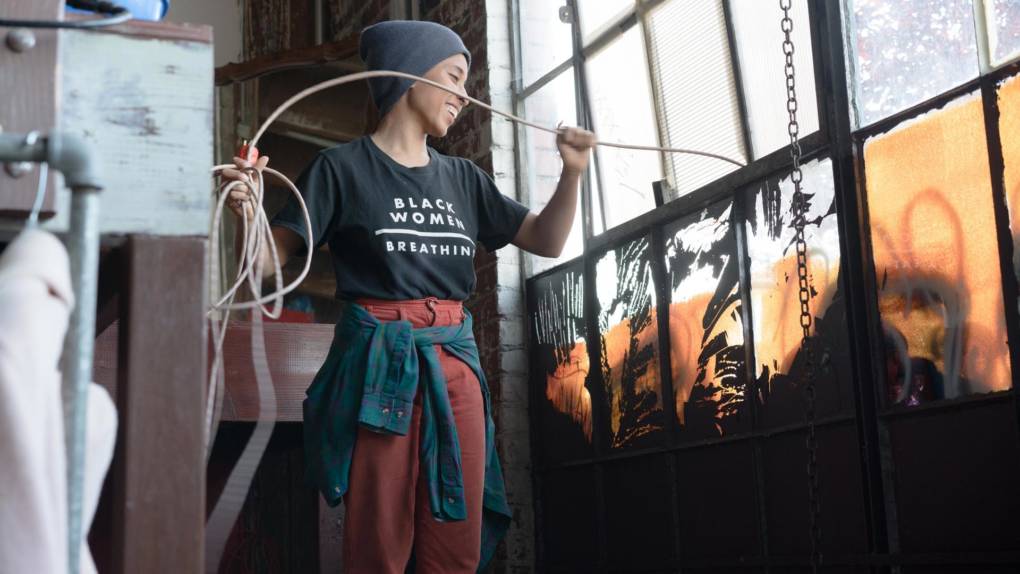
"caption": "Oakland metalsmith Karen Smith is launching a new nonprofit, We Wield the Hammer, to bring metalwork to other black women and girls.",
"description": "Oakland metalsmith Karen Smith is launching a new nonprofit, We Wield the Hammer, to bring metalwork to other black women and girls.",
"title": "Oakland metalsmith Karen Smith is launching a new nonprofit, We Wield the Hammer, to bring metalwork to other black women and girls.",
"credit": "Sam Lefebvre/KQED",
"status": "inherit",
"isLoading": false,
"fetchFailed": false
},
"arts_13871177": {
"type": "attachments",
"id": "arts_13871177",
"meta": {
"index": "attachments_1716263798",
"site": "arts",
"id": "13871177",
"found": true
},
"parent": 0,
"imgSizes": {
"twentyfourteen-full-width": {
"file": "https://ww2.kqed.org/app/uploads/sites/2/2019/12/KQED_The_Hustle_Tracy_Goh_hires7_COVER-1038x576.jpg",
"width": 1038,
"mimeType": "image/jpeg",
"height": 576
},
"thumbnail": {
"file": "https://ww2.kqed.org/app/uploads/sites/2/2019/12/KQED_The_Hustle_Tracy_Goh_hires7_COVER-160x90.jpg",
"width": 160,
"mimeType": "image/jpeg",
"height": 90
},
"post-thumbnail": {
"file": "https://ww2.kqed.org/app/uploads/sites/2/2019/12/KQED_The_Hustle_Tracy_Goh_hires7_COVER-672x372.jpg",
"width": 672,
"mimeType": "image/jpeg",
"height": 372
},
"kqedFullSize": {
"file": "https://ww2.kqed.org/app/uploads/sites/2/2019/12/KQED_The_Hustle_Tracy_Goh_hires7_COVER.jpg",
"width": 1920,
"height": 1080
},
"large": {
"file": "https://ww2.kqed.org/app/uploads/sites/2/2019/12/KQED_The_Hustle_Tracy_Goh_hires7_COVER-1020x574.jpg",
"width": 1020,
"mimeType": "image/jpeg",
"height": 574
},
"complete_open_graph": {
"file": "https://ww2.kqed.org/app/uploads/sites/2/2019/12/KQED_The_Hustle_Tracy_Goh_hires7_COVER-1200x675.jpg",
"width": 1200,
"mimeType": "image/jpeg",
"height": 675
},
"full-width": {
"file": "https://ww2.kqed.org/app/uploads/sites/2/2019/12/KQED_The_Hustle_Tracy_Goh_hires7_COVER-1920x1080.jpg",
"width": 1920,
"mimeType": "image/jpeg",
"height": 1080
},
"medium": {
"file": "https://ww2.kqed.org/app/uploads/sites/2/2019/12/KQED_The_Hustle_Tracy_Goh_hires7_COVER-800x450.jpg",
"width": 800,
"mimeType": "image/jpeg",
"height": 450
},
"medium_large": {
"file": "https://ww2.kqed.org/app/uploads/sites/2/2019/12/KQED_The_Hustle_Tracy_Goh_hires7_COVER-768x432.jpg",
"width": 768,
"mimeType": "image/jpeg",
"height": 432
}
},
"publishDate": 1575936445,
"modified": 1575936556,
"caption": "Tracy Goh at home in her Sea Cliff apartment, on the couch that doubles as her office. ",
"description": "Tracy Goh at home in her Sea Cliff apartment, on the couch that doubles as her office. ",
"title": "KQED_The_Hustle_Tracy_Goh_hires7_COVER",
"credit": "Graham Holoch/KQED",
"status": "inherit",
"isLoading": false,
"fetchFailed": false
},
"arts_13869326": {
"type": "attachments",
"id": "arts_13869326",
"meta": {
"index": "attachments_1716263798",
"site": "arts",
"id": "13869326",
"found": true
},
"parent": 13869323,
"imgSizes": {
"twentyfourteen-full-width": {
"file": "https://ww2.kqed.org/app/uploads/sites/2/2019/11/Hustle.Avila_.Damato.MAIN_-1038x576.jpg",
"width": 1038,
"mimeType": "image/jpeg",
"height": 576
},
"thumbnail": {
"file": "https://ww2.kqed.org/app/uploads/sites/2/2019/11/Hustle.Avila_.Damato.MAIN_-160x100.jpg",
"width": 160,
"mimeType": "image/jpeg",
"height": 100
},
"post-thumbnail": {
"file": "https://ww2.kqed.org/app/uploads/sites/2/2019/11/Hustle.Avila_.Damato.MAIN_-672x372.jpg",
"width": 672,
"mimeType": "image/jpeg",
"height": 372
},
"kqedFullSize": {
"file": "https://ww2.kqed.org/app/uploads/sites/2/2019/11/Hustle.Avila_.Damato.MAIN_.jpg",
"width": 1920,
"height": 1200
},
"large": {
"file": "https://ww2.kqed.org/app/uploads/sites/2/2019/11/Hustle.Avila_.Damato.MAIN_-1020x638.jpg",
"width": 1020,
"mimeType": "image/jpeg",
"height": 638
},
"complete_open_graph": {
"file": "https://ww2.kqed.org/app/uploads/sites/2/2019/11/Hustle.Avila_.Damato.MAIN_-1200x750.jpg",
"width": 1200,
"mimeType": "image/jpeg",
"height": 750
},
"full-width": {
"file": "https://ww2.kqed.org/app/uploads/sites/2/2019/11/Hustle.Avila_.Damato.MAIN_-1920x1200.jpg",
"width": 1920,
"mimeType": "image/jpeg",
"height": 1200
},
"medium": {
"file": "https://ww2.kqed.org/app/uploads/sites/2/2019/11/Hustle.Avila_.Damato.MAIN_-800x500.jpg",
"width": 800,
"mimeType": "image/jpeg",
"height": 500
},
"medium_large": {
"file": "https://ww2.kqed.org/app/uploads/sites/2/2019/11/Hustle.Avila_.Damato.MAIN_-768x480.jpg",
"width": 768,
"mimeType": "image/jpeg",
"height": 480
}
},
"publishDate": 1572890183,
"modified": 1572890393,
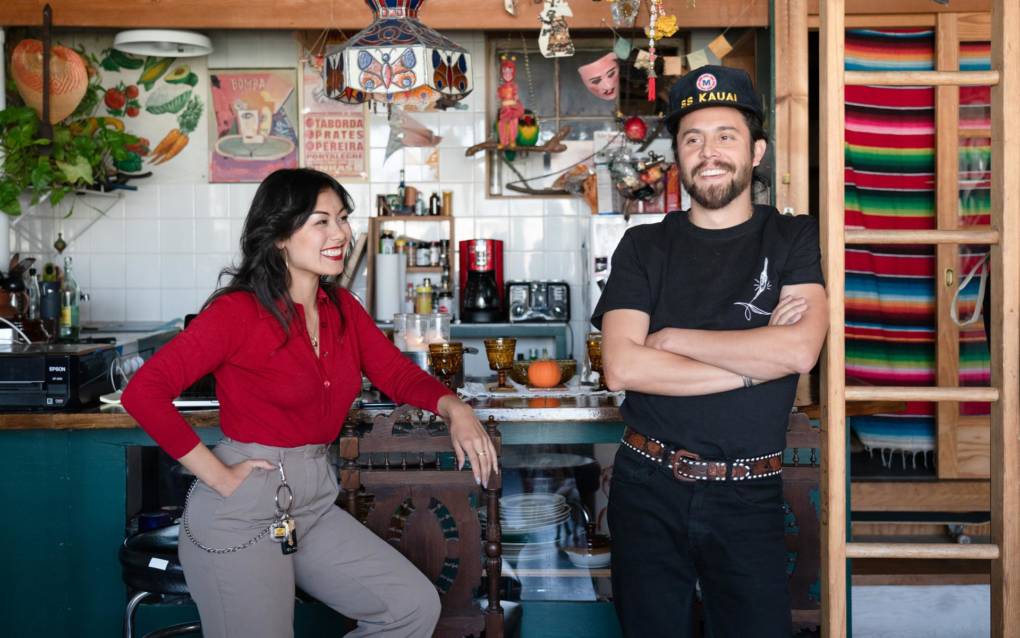
"caption": "Lauren D'Amato and Isaac Avila in their Bernal Heights live/work space. With multiple jobs, the couple lives on $2,000–$5,000 a month.",
"description": "Lauren D'Amato and Isaac Avila in their Bernal Heights live/work space. With multiple jobs, the couple lives on $2,000–$5,000 a month.",
"title": "Hustle.Avila.Damato.MAIN",
"credit": "Graham Holoch/KQED",
"status": "inherit",
"isLoading": false,
"fetchFailed": false
},
"arts_13867417": {
"type": "attachments",
"id": "arts_13867417",
"meta": {
"index": "attachments_1716263798",
"site": "arts",
"id": "13867417",
"found": true
},
"parent": 13867392,
"imgSizes": {
"twentyfourteen-full-width": {
"file": "https://ww2.kqed.org/app/uploads/sites/2/2019/10/KQED_Tom_Beland_hires_12_COVER-1038x576.jpg",
"width": 1038,
"mimeType": "image/jpeg",
"height": 576
},
"thumbnail": {
"file": "https://ww2.kqed.org/app/uploads/sites/2/2019/10/KQED_Tom_Beland_hires_12_COVER-160x90.jpg",
"width": 160,
"mimeType": "image/jpeg",
"height": 90
},
"post-thumbnail": {
"file": "https://ww2.kqed.org/app/uploads/sites/2/2019/10/KQED_Tom_Beland_hires_12_COVER-672x372.jpg",
"width": 672,
"mimeType": "image/jpeg",
"height": 372
},
"kqedFullSize": {
"file": "https://ww2.kqed.org/app/uploads/sites/2/2019/10/KQED_Tom_Beland_hires_12_COVER.jpg",
"width": 1920,
"height": 1080
},
"large": {
"file": "https://ww2.kqed.org/app/uploads/sites/2/2019/10/KQED_Tom_Beland_hires_12_COVER-1020x574.jpg",
"width": 1020,
"mimeType": "image/jpeg",
"height": 574
},
"complete_open_graph": {
"file": "https://ww2.kqed.org/app/uploads/sites/2/2019/10/KQED_Tom_Beland_hires_12_COVER-1200x675.jpg",
"width": 1200,
"mimeType": "image/jpeg",
"height": 675
},
"full-width": {
"file": "https://ww2.kqed.org/app/uploads/sites/2/2019/10/KQED_Tom_Beland_hires_12_COVER-1920x1080.jpg",
"width": 1920,
"mimeType": "image/jpeg",
"height": 1080
},
"medium": {
"file": "https://ww2.kqed.org/app/uploads/sites/2/2019/10/KQED_Tom_Beland_hires_12_COVER-800x450.jpg",
"width": 800,
"mimeType": "image/jpeg",
"height": 450
},
"medium_large": {
"file": "https://ww2.kqed.org/app/uploads/sites/2/2019/10/KQED_Tom_Beland_hires_12_COVER-768x432.jpg",
"width": 768,
"mimeType": "image/jpeg",
"height": 432
}
},
"publishDate": 1569959977,
"modified": 1569968850,
"caption": "Cartoonist Tom Beland at Aroma Roasters in Santa Rosa. Beland considers the $300 he spends every month at Santa Rosa cafes \"studio rent.\"",
"description": "Cartoonist Tom Beland at Aroma Roasters in Santa Rosa. Beland considers the $300 he spends every month at Santa Rosa cafes \"studio rent.\"",
"title": "KQED_Tom_Beland_hires_12_COVER",
"credit": "Graham Holoch/KQED",
"status": "inherit",
"isLoading": false,
"fetchFailed": false
},
"arts_13865410": {
"type": "attachments",
"id": "arts_13865410",
"meta": {
"index": "attachments_1716263798",
"site": "arts",
"id": "13865410",
"found": true
},
"parent": 13865238,
"imgSizes": {
"twentyfourteen-full-width": {
"file": "https://ww2.kqed.org/app/uploads/sites/2/2019/08/KQED_The_Hustle_Citizens_Jazz_1_hires-1038x576.jpg",
"width": 1038,
"mimeType": "image/jpeg",
"height": 576
},
"thumbnail": {
"file": "https://ww2.kqed.org/app/uploads/sites/2/2019/08/KQED_The_Hustle_Citizens_Jazz_1_hires-160x90.jpg",
"width": 160,
"mimeType": "image/jpeg",
"height": 90
},
"post-thumbnail": {
"file": "https://ww2.kqed.org/app/uploads/sites/2/2019/08/KQED_The_Hustle_Citizens_Jazz_1_hires-672x372.jpg",
"width": 672,
"mimeType": "image/jpeg",
"height": 372
},
"kqedFullSize": {
"file": "https://ww2.kqed.org/app/uploads/sites/2/2019/08/KQED_The_Hustle_Citizens_Jazz_1_hires.jpg",
"width": 1920,
"height": 1080
},
"large": {
"file": "https://ww2.kqed.org/app/uploads/sites/2/2019/08/KQED_The_Hustle_Citizens_Jazz_1_hires-1020x574.jpg",
"width": 1020,
"mimeType": "image/jpeg",
"height": 574
},
"complete_open_graph": {
"file": "https://ww2.kqed.org/app/uploads/sites/2/2019/08/KQED_The_Hustle_Citizens_Jazz_1_hires-1200x675.jpg",
"width": 1200,
"mimeType": "image/jpeg",
"height": 675
},
"full-width": {
"file": "https://ww2.kqed.org/app/uploads/sites/2/2019/08/KQED_The_Hustle_Citizens_Jazz_1_hires-1920x1080.jpg",
"width": 1920,
"mimeType": "image/jpeg",
"height": 1080
},
"medium": {
"file": "https://ww2.kqed.org/app/uploads/sites/2/2019/08/KQED_The_Hustle_Citizens_Jazz_1_hires-800x450.jpg",
"width": 800,
"mimeType": "image/jpeg",
"height": 450
},
"medium_large": {
"file": "https://ww2.kqed.org/app/uploads/sites/2/2019/08/KQED_The_Hustle_Citizens_Jazz_1_hires-768x432.jpg",
"width": 768,
"mimeType": "image/jpeg",
"height": 432
}
},
"publishDate": 1567203754,
"modified": 1567203810,
"caption": "Active in the Bay Area's jazz scene since 1999, Caroline Chung became bandleader to advocate for fair pay for herself and her players.",
"description": "Active in the Bay Area's jazz scene since 1999, Caroline Chung became bandleader to advocate for fair pay for herself and her players.",
"title": "KQED_The_Hustle_Citizens_Jazz_1_hires",
"credit": "Graham Holoch",
"status": "inherit",
"isLoading": false,
"fetchFailed": false
},
"arts_13860995": {
"type": "attachments",
"id": "arts_13860995",
"meta": {
"index": "attachments_1716263798",
"site": "arts",
"id": "13860995",
"found": true
},
"parent": 13860957,
"imgSizes": {
"twentyfourteen-full-width": {
"file": "https://ww2.kqed.org/app/uploads/sites/2/2019/07/KQED_TheHustle_Graham_Holoch_Stephanie_Hewett_14_COVER-1038x576.jpg",
"width": 1038,
"mimeType": "image/jpeg",
"height": 576
},
"thumbnail": {
"file": "https://ww2.kqed.org/app/uploads/sites/2/2019/07/KQED_TheHustle_Graham_Holoch_Stephanie_Hewett_14_COVER-160x90.jpg",
"width": 160,
"mimeType": "image/jpeg",
"height": 90
},
"post-thumbnail": {
"file": "https://ww2.kqed.org/app/uploads/sites/2/2019/07/KQED_TheHustle_Graham_Holoch_Stephanie_Hewett_14_COVER-672x372.jpg",
"width": 672,
"mimeType": "image/jpeg",
"height": 372
},
"kqedFullSize": {
"file": "https://ww2.kqed.org/app/uploads/sites/2/2019/07/KQED_TheHustle_Graham_Holoch_Stephanie_Hewett_14_COVER.jpg",
"width": 1920,
"height": 1080
},
"large": {
"file": "https://ww2.kqed.org/app/uploads/sites/2/2019/07/KQED_TheHustle_Graham_Holoch_Stephanie_Hewett_14_COVER-1020x574.jpg",
"width": 1020,
"mimeType": "image/jpeg",
"height": 574
},
"complete_open_graph": {
"file": "https://ww2.kqed.org/app/uploads/sites/2/2019/07/KQED_TheHustle_Graham_Holoch_Stephanie_Hewett_14_COVER-1200x675.jpg",
"width": 1200,
"mimeType": "image/jpeg",
"height": 675
},
"full-width": {
"file": "https://ww2.kqed.org/app/uploads/sites/2/2019/07/KQED_TheHustle_Graham_Holoch_Stephanie_Hewett_14_COVER-1920x1080.jpg",
"width": 1920,
"mimeType": "image/jpeg",
"height": 1080
},
"medium": {
"file": "https://ww2.kqed.org/app/uploads/sites/2/2019/07/KQED_TheHustle_Graham_Holoch_Stephanie_Hewett_14_COVER-800x450.jpg",
"width": 800,
"mimeType": "image/jpeg",
"height": 450
},
"medium_large": {
"file": "https://ww2.kqed.org/app/uploads/sites/2/2019/07/KQED_TheHustle_Graham_Holoch_Stephanie_Hewett_14_COVER-768x432.jpg",
"width": 768,
"mimeType": "image/jpeg",
"height": 432
}
},
"publishDate": 1562698525,
"modified": 1563224973,
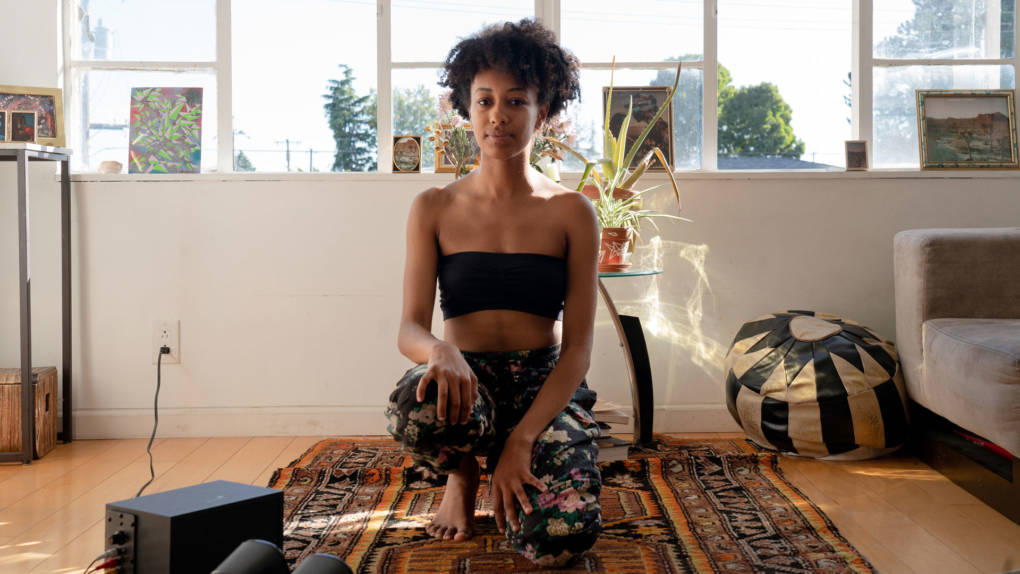
"caption": "Movement researcher, choreographer and performer Stephanie Hewett at home in Oakland.",
"description": "Movement researcher, choreographer and performer Stephanie Hewett at home in Oakland.",
"title": "KQED_TheHustle_Graham_Holoch_Stephanie_Hewett_14_COVER",
"credit": "Graham Holoch/KQED",
"status": "inherit",
"isLoading": false,
"fetchFailed": false
},
"arts_13861454": {
"type": "attachments",
"id": "arts_13861454",
"meta": {
"index": "attachments_1716263798",
"site": "arts",
"id": "13861454",
"found": true
},
"parent": 13861452,
"imgSizes": {
"twentyfourteen-full-width": {
"file": "https://ww2.kqed.org/app/uploads/sites/2/2019/07/HUSTLE_Talk-2-1038x576.jpg",
"width": 1038,
"mimeType": "image/jpeg",
"height": 576
},
"thumbnail": {
"file": "https://ww2.kqed.org/app/uploads/sites/2/2019/07/HUSTLE_Talk-2-160x90.jpg",
"width": 160,
"mimeType": "image/jpeg",
"height": 90
},
"post-thumbnail": {
"file": "https://ww2.kqed.org/app/uploads/sites/2/2019/07/HUSTLE_Talk-2-672x372.jpg",
"width": 672,
"mimeType": "image/jpeg",
"height": 372
},
"kqedFullSize": {
"file": "https://ww2.kqed.org/app/uploads/sites/2/2019/07/HUSTLE_Talk-2.jpg",
"width": 1920,
"height": 1080
},
"large": {
"file": "https://ww2.kqed.org/app/uploads/sites/2/2019/07/HUSTLE_Talk-2-1020x574.jpg",
"width": 1020,
"mimeType": "image/jpeg",
"height": 574
},
"complete_open_graph": {
"file": "https://ww2.kqed.org/app/uploads/sites/2/2019/07/HUSTLE_Talk-2-1200x675.jpg",
"width": 1200,
"mimeType": "image/jpeg",
"height": 675
},
"full-width": {
"file": "https://ww2.kqed.org/app/uploads/sites/2/2019/07/HUSTLE_Talk-2-1920x1080.jpg",
"width": 1920,
"mimeType": "image/jpeg",
"height": 1080
},
"medium": {
"file": "https://ww2.kqed.org/app/uploads/sites/2/2019/07/HUSTLE_Talk-2-800x450.jpg",
"width": 800,
"mimeType": "image/jpeg",
"height": 450
},
"medium_large": {
"file": "https://ww2.kqed.org/app/uploads/sites/2/2019/07/HUSTLE_Talk-2-768x432.jpg",
"width": 768,
"mimeType": "image/jpeg",
"height": 432
}
},
"publishDate": 1563233169,
"modified": 1563233233,
"caption": "As so many other artists have to leave the Bay Area, how do you make it work in order to stay?",
"description": "As so many other artists have to leave the Bay Area, how do you make it work in order to stay?",
"title": "HUSTLE_Talk-2",
"credit": null,
"status": "inherit",
"isLoading": false,
"fetchFailed": false
},
"arts_13861472": {
"type": "attachments",
"id": "arts_13861472",
"meta": {
"index": "attachments_1716263798",
"site": "arts",
"id": "13861472",
"found": true
},
"parent": 13861451,
"imgSizes": {
"twentyfourteen-full-width": {
"file": "https://ww2.kqed.org/app/uploads/sites/2/2019/07/KQED_TheHustle_Graham_Holoch_Stephanie_Hewett_2_COVER-1038x576.jpg",
"width": 1038,
"mimeType": "image/jpeg",
"height": 576
},
"thumbnail": {
"file": "https://ww2.kqed.org/app/uploads/sites/2/2019/07/KQED_TheHustle_Graham_Holoch_Stephanie_Hewett_2_COVER-160x90.jpg",
"width": 160,
"mimeType": "image/jpeg",
"height": 90
},
"post-thumbnail": {
"file": "https://ww2.kqed.org/app/uploads/sites/2/2019/07/KQED_TheHustle_Graham_Holoch_Stephanie_Hewett_2_COVER-672x372.jpg",
"width": 672,
"mimeType": "image/jpeg",
"height": 372
},
"kqedFullSize": {
"file": "https://ww2.kqed.org/app/uploads/sites/2/2019/07/KQED_TheHustle_Graham_Holoch_Stephanie_Hewett_2_COVER.jpg",
"width": 1920,
"height": 1080
},
"large": {
"file": "https://ww2.kqed.org/app/uploads/sites/2/2019/07/KQED_TheHustle_Graham_Holoch_Stephanie_Hewett_2_COVER-1020x574.jpg",
"width": 1020,
"mimeType": "image/jpeg",
"height": 574
},
"complete_open_graph": {
"file": "https://ww2.kqed.org/app/uploads/sites/2/2019/07/KQED_TheHustle_Graham_Holoch_Stephanie_Hewett_2_COVER-1200x675.jpg",
"width": 1200,
"mimeType": "image/jpeg",
"height": 675
},
"full-width": {
"file": "https://ww2.kqed.org/app/uploads/sites/2/2019/07/KQED_TheHustle_Graham_Holoch_Stephanie_Hewett_2_COVER-1920x1080.jpg",
"width": 1920,
"mimeType": "image/jpeg",
"height": 1080
},
"medium": {
"file": "https://ww2.kqed.org/app/uploads/sites/2/2019/07/KQED_TheHustle_Graham_Holoch_Stephanie_Hewett_2_COVER-800x450.jpg",
"width": 800,
"mimeType": "image/jpeg",
"height": 450
},
"medium_large": {
"file": "https://ww2.kqed.org/app/uploads/sites/2/2019/07/KQED_TheHustle_Graham_Holoch_Stephanie_Hewett_2_COVER-768x432.jpg",
"width": 768,
"mimeType": "image/jpeg",
"height": 432
}
},
"publishDate": 1563240963,
"modified": 1563240980,
"caption": "A profile on movement researcher, choreographer and performer Stephanie Hewett kicks off 'The Hustle.'",
"description": "A profile on movement researcher, choreographer and performer Stephanie Hewett kicks off 'The Hustle.'",
"title": "KQED_TheHustle_Graham_Holoch_Stephanie_Hewett_2_COVER",
"credit": "Graham Holoch/KQED",
"status": "inherit",
"isLoading": false,
"fetchFailed": false
},
"arts_13829566": {
"type": "attachments",
"id": "arts_13829566",
"meta": {
"index": "attachments_1716263798",
"site": "arts",
"id": "13829566",
"found": true
},
"parent": 13829537,
"imgSizes": {
"small": {
"file": "https://ww2.kqed.org/app/uploads/sites/2/2018/04/Sasha.Kelley.Survey.MAIN_-520x293.jpg",
"width": 520,
"mimeType": "image/jpeg",
"height": 293
},
"twentyfourteen-full-width": {
"file": "https://ww2.kqed.org/app/uploads/sites/2/2018/04/Sasha.Kelley.Survey.MAIN_-1038x576.jpg",
"width": 1038,
"mimeType": "image/jpeg",
"height": 576
},
"thumbnail": {
"file": "https://ww2.kqed.org/app/uploads/sites/2/2018/04/Sasha.Kelley.Survey.MAIN_-160x90.jpg",
"width": 160,
"mimeType": "image/jpeg",
"height": 90
},
"fd-sm": {
"file": "https://ww2.kqed.org/app/uploads/sites/2/2018/04/Sasha.Kelley.Survey.MAIN_-960x540.jpg",
"width": 960,
"mimeType": "image/jpeg",
"height": 540
},
"post-thumbnail": {
"file": "https://ww2.kqed.org/app/uploads/sites/2/2018/04/Sasha.Kelley.Survey.MAIN_-672x372.jpg",
"width": 672,
"mimeType": "image/jpeg",
"height": 372
},
"xsmall": {
"file": "https://ww2.kqed.org/app/uploads/sites/2/2018/04/Sasha.Kelley.Survey.MAIN_-375x211.jpg",
"width": 375,
"mimeType": "image/jpeg",
"height": 211
},
"kqedFullSize": {
"file": "https://ww2.kqed.org/app/uploads/sites/2/2018/04/Sasha.Kelley.Survey.MAIN_.jpg",
"width": 1920,
"height": 1080
},
"large": {
"file": "https://ww2.kqed.org/app/uploads/sites/2/2018/04/Sasha.Kelley.Survey.MAIN_-1020x574.jpg",
"width": 1020,
"mimeType": "image/jpeg",
"height": 574
},
"xlarge": {
"file": "https://ww2.kqed.org/app/uploads/sites/2/2018/04/Sasha.Kelley.Survey.MAIN_-1180x664.jpg",
"width": 1180,
"mimeType": "image/jpeg",
"height": 664
},
"complete_open_graph": {
"file": "https://ww2.kqed.org/app/uploads/sites/2/2018/04/Sasha.Kelley.Survey.MAIN_-1200x675.jpg",
"width": 1200,
"mimeType": "image/jpeg",
"height": 675
},
"guest-author-50": {
"file": "https://ww2.kqed.org/app/uploads/sites/2/2018/04/Sasha.Kelley.Survey.MAIN_-50x50.jpg",
"width": 50,
"mimeType": "image/jpeg",
"height": 50
},
"guest-author-96": {
"file": "https://ww2.kqed.org/app/uploads/sites/2/2018/04/Sasha.Kelley.Survey.MAIN_-96x96.jpg",
"width": 96,
"mimeType": "image/jpeg",
"height": 96
},
"medium": {
"file": "https://ww2.kqed.org/app/uploads/sites/2/2018/04/Sasha.Kelley.Survey.MAIN_-800x450.jpg",
"width": 800,
"mimeType": "image/jpeg",
"height": 450
},
"guest-author-64": {
"file": "https://ww2.kqed.org/app/uploads/sites/2/2018/04/Sasha.Kelley.Survey.MAIN_-64x64.jpg",
"width": 64,
"mimeType": "image/jpeg",
"height": 64
},
"guest-author-32": {
"file": "https://ww2.kqed.org/app/uploads/sites/2/2018/04/Sasha.Kelley.Survey.MAIN_-32x32.jpg",
"width": 32,
"mimeType": "image/jpeg",
"height": 32
},
"fd-lrg": {
"file": "https://ww2.kqed.org/app/uploads/sites/2/2018/04/Sasha.Kelley.Survey.MAIN_-1920x1080.jpg",
"width": 1920,
"mimeType": "image/jpeg",
"height": 1080
},
"fd-med": {
"file": "https://ww2.kqed.org/app/uploads/sites/2/2018/04/Sasha.Kelley.Survey.MAIN_-1180x664.jpg",
"width": 1180,
"mimeType": "image/jpeg",
"height": 664
},
"full-width": {
"file": "https://ww2.kqed.org/app/uploads/sites/2/2018/04/Sasha.Kelley.Survey.MAIN_-1920x1080.jpg",
"width": 1920,
"mimeType": "image/jpeg",
"height": 1080
},
"detail": {
"file": "https://ww2.kqed.org/app/uploads/sites/2/2018/04/Sasha.Kelley.Survey.MAIN_-150x150.jpg",
"width": 150,
"mimeType": "image/jpeg",
"height": 150
},
"medium_large": {
"file": "https://ww2.kqed.org/app/uploads/sites/2/2018/04/Sasha.Kelley.Survey.MAIN_-768x432.jpg",
"width": 768,
"mimeType": "image/jpeg",
"height": 432
},
"guest-author-128": {
"file": "https://ww2.kqed.org/app/uploads/sites/2/2018/04/Sasha.Kelley.Survey.MAIN_-128x128.jpg",
"width": 128,
"mimeType": "image/jpeg",
"height": 128
},
"xxsmall": {
"file": "https://ww2.kqed.org/app/uploads/sites/2/2018/04/Sasha.Kelley.Survey.MAIN_-240x135.jpg",
"width": 240,
"mimeType": "image/jpeg",
"height": 135
}
},
"publishDate": 1523942623,
"modified": 1523942705,
"caption": "Sasha Kelley at Alena Museum in West Oakland. The artist and working mother combines side jobs and cost-cutting measures in order to stay in the Bay Area.",
"description": "Sasha Kelley at Alena Museum in West Oakland. The artist and working mother combines side jobs and cost-cutting measures in order to stay in the Bay Area.",
"title": "Sasha.Kelley.Survey.MAIN",
"credit": "Graham Holoch",
"status": "inherit",
"isLoading": false,
"fetchFailed": false
},
"arts_13829261": {
"type": "attachments",
"id": "arts_13829261",
"meta": {
"index": "attachments_1716263798",
"site": "arts",
"id": "13829261",
"found": true
},
"parent": 13828854,
"imgSizes": {
"small": {
"file": "https://ww2.kqed.org/app/uploads/sites/2/2018/04/TheoAlvarez.MAIN_-520x293.jpg",
"width": 520,
"mimeType": "image/jpeg",
"height": 293
},
"twentyfourteen-full-width": {
"file": "https://ww2.kqed.org/app/uploads/sites/2/2018/04/TheoAlvarez.MAIN_-1038x576.jpg",
"width": 1038,
"mimeType": "image/jpeg",
"height": 576
},
"thumbnail": {
"file": "https://ww2.kqed.org/app/uploads/sites/2/2018/04/TheoAlvarez.MAIN_-160x90.jpg",
"width": 160,
"mimeType": "image/jpeg",
"height": 90
},
"fd-sm": {
"file": "https://ww2.kqed.org/app/uploads/sites/2/2018/04/TheoAlvarez.MAIN_-960x540.jpg",
"width": 960,
"mimeType": "image/jpeg",
"height": 540
},
"post-thumbnail": {
"file": "https://ww2.kqed.org/app/uploads/sites/2/2018/04/TheoAlvarez.MAIN_-672x372.jpg",
"width": 672,
"mimeType": "image/jpeg",
"height": 372
},
"xsmall": {
"file": "https://ww2.kqed.org/app/uploads/sites/2/2018/04/TheoAlvarez.MAIN_-375x211.jpg",
"width": 375,
"mimeType": "image/jpeg",
"height": 211
},
"kqedFullSize": {
"file": "https://ww2.kqed.org/app/uploads/sites/2/2018/04/TheoAlvarez.MAIN_.jpg",
"width": 1920,
"height": 1080
},
"large": {
"file": "https://ww2.kqed.org/app/uploads/sites/2/2018/04/TheoAlvarez.MAIN_-1020x574.jpg",
"width": 1020,
"mimeType": "image/jpeg",
"height": 574
},
"xlarge": {
"file": "https://ww2.kqed.org/app/uploads/sites/2/2018/04/TheoAlvarez.MAIN_-1180x664.jpg",
"width": 1180,
"mimeType": "image/jpeg",
"height": 664
},
"complete_open_graph": {
"file": "https://ww2.kqed.org/app/uploads/sites/2/2018/04/TheoAlvarez.MAIN_-1200x675.jpg",
"width": 1200,
"mimeType": "image/jpeg",
"height": 675
},
"guest-author-50": {
"file": "https://ww2.kqed.org/app/uploads/sites/2/2018/04/TheoAlvarez.MAIN_-50x50.jpg",
"width": 50,
"mimeType": "image/jpeg",
"height": 50
},
"guest-author-96": {
"file": "https://ww2.kqed.org/app/uploads/sites/2/2018/04/TheoAlvarez.MAIN_-96x96.jpg",
"width": 96,
"mimeType": "image/jpeg",
"height": 96
},
"medium": {
"file": "https://ww2.kqed.org/app/uploads/sites/2/2018/04/TheoAlvarez.MAIN_-800x450.jpg",
"width": 800,
"mimeType": "image/jpeg",
"height": 450
},
"guest-author-64": {
"file": "https://ww2.kqed.org/app/uploads/sites/2/2018/04/TheoAlvarez.MAIN_-64x64.jpg",
"width": 64,
"mimeType": "image/jpeg",
"height": 64
},
"guest-author-32": {
"file": "https://ww2.kqed.org/app/uploads/sites/2/2018/04/TheoAlvarez.MAIN_-32x32.jpg",
"width": 32,
"mimeType": "image/jpeg",
"height": 32
},
"fd-lrg": {
"file": "https://ww2.kqed.org/app/uploads/sites/2/2018/04/TheoAlvarez.MAIN_-1920x1080.jpg",
"width": 1920,
"mimeType": "image/jpeg",
"height": 1080
},
"fd-med": {
"file": "https://ww2.kqed.org/app/uploads/sites/2/2018/04/TheoAlvarez.MAIN_-1180x664.jpg",
"width": 1180,
"mimeType": "image/jpeg",
"height": 664
},
"full-width": {
"file": "https://ww2.kqed.org/app/uploads/sites/2/2018/04/TheoAlvarez.MAIN_-1920x1080.jpg",
"width": 1920,
"mimeType": "image/jpeg",
"height": 1080
},
"detail": {
"file": "https://ww2.kqed.org/app/uploads/sites/2/2018/04/TheoAlvarez.MAIN_-150x150.jpg",
"width": 150,
"mimeType": "image/jpeg",
"height": 150
},
"medium_large": {
"file": "https://ww2.kqed.org/app/uploads/sites/2/2018/04/TheoAlvarez.MAIN_-768x432.jpg",
"width": 768,
"mimeType": "image/jpeg",
"height": 432
},
"guest-author-128": {
"file": "https://ww2.kqed.org/app/uploads/sites/2/2018/04/TheoAlvarez.MAIN_-128x128.jpg",
"width": 128,
"mimeType": "image/jpeg",
"height": 128
},
"xxsmall": {
"file": "https://ww2.kqed.org/app/uploads/sites/2/2018/04/TheoAlvarez.MAIN_-240x135.jpg",
"width": 240,
"mimeType": "image/jpeg",
"height": 135
}
},
"publishDate": 1523557308,
"modified": 1523561750,
"caption": "Theo Alvarez in San Francisco, where he works as a musician, teacher, graphic designer, photographer, rideshare driver, and many other roles.",
"description": "Theo Alvarez in San Francisco, where he works as a musician, teacher, graphic designer, photographer, rideshare driver, and many other roles.",
"title": "TheoAlvarez.MAIN",
"credit": "Graham Holoch",
"status": "inherit",
"isLoading": false,
"fetchFailed": false
},
"arts_13828799": {
"type": "attachments",
"id": "arts_13828799",
"meta": {
"index": "attachments_1716263798",
"site": "arts",
"id": "13828799",
"found": true
},
"parent": 13828649,
"imgSizes": {
"small": {
"file": "https://ww2.kqed.org/app/uploads/sites/2/2018/04/LJ5-1-520x293.jpg",
"width": 520,
"mimeType": "image/jpeg",
"height": 293
},
"twentyfourteen-full-width": {
"file": "https://ww2.kqed.org/app/uploads/sites/2/2018/04/LJ5-1-1038x576.jpg",
"width": 1038,
"mimeType": "image/jpeg",
"height": 576
},
"thumbnail": {
"file": "https://ww2.kqed.org/app/uploads/sites/2/2018/04/LJ5-1-160x90.jpg",
"width": 160,
"mimeType": "image/jpeg",
"height": 90
},
"fd-sm": {
"file": "https://ww2.kqed.org/app/uploads/sites/2/2018/04/LJ5-1-960x540.jpg",
"width": 960,
"mimeType": "image/jpeg",
"height": 540
},
"post-thumbnail": {
"file": "https://ww2.kqed.org/app/uploads/sites/2/2018/04/LJ5-1-672x372.jpg",
"width": 672,
"mimeType": "image/jpeg",
"height": 372
},
"xsmall": {
"file": "https://ww2.kqed.org/app/uploads/sites/2/2018/04/LJ5-1-375x211.jpg",
"width": 375,
"mimeType": "image/jpeg",
"height": 211
},
"kqedFullSize": {
"file": "https://ww2.kqed.org/app/uploads/sites/2/2018/04/LJ5-1.jpg",
"width": 1920,
"height": 1080
},
"large": {
"file": "https://ww2.kqed.org/app/uploads/sites/2/2018/04/LJ5-1-1020x574.jpg",
"width": 1020,
"mimeType": "image/jpeg",
"height": 574
},
"xlarge": {
"file": "https://ww2.kqed.org/app/uploads/sites/2/2018/04/LJ5-1-1180x664.jpg",
"width": 1180,
"mimeType": "image/jpeg",
"height": 664
},
"guest-author-50": {
"file": "https://ww2.kqed.org/app/uploads/sites/2/2018/04/LJ5-1-50x50.jpg",
"width": 50,
"mimeType": "image/jpeg",
"height": 50
},
"guest-author-96": {
"file": "https://ww2.kqed.org/app/uploads/sites/2/2018/04/LJ5-1-96x96.jpg",
"width": 96,
"mimeType": "image/jpeg",
"height": 96
},
"medium": {
"file": "https://ww2.kqed.org/app/uploads/sites/2/2018/04/LJ5-1-800x450.jpg",
"width": 800,
"mimeType": "image/jpeg",
"height": 450
},
"guest-author-64": {
"file": "https://ww2.kqed.org/app/uploads/sites/2/2018/04/LJ5-1-64x64.jpg",
"width": 64,
"mimeType": "image/jpeg",
"height": 64
},
"guest-author-32": {
"file": "https://ww2.kqed.org/app/uploads/sites/2/2018/04/LJ5-1-32x32.jpg",
"width": 32,
"mimeType": "image/jpeg",
"height": 32
},
"fd-lrg": {
"file": "https://ww2.kqed.org/app/uploads/sites/2/2018/04/LJ5-1-1920x1080.jpg",
"width": 1920,
"mimeType": "image/jpeg",
"height": 1080
},
"fd-med": {
"file": "https://ww2.kqed.org/app/uploads/sites/2/2018/04/LJ5-1-1180x664.jpg",
"width": 1180,
"mimeType": "image/jpeg",
"height": 664
},
"full-width": {
"file": "https://ww2.kqed.org/app/uploads/sites/2/2018/04/LJ5-1-1920x1080.jpg",
"width": 1920,
"mimeType": "image/jpeg",
"height": 1080
},
"detail": {
"file": "https://ww2.kqed.org/app/uploads/sites/2/2018/04/LJ5-1-150x150.jpg",
"width": 150,
"mimeType": "image/jpeg",
"height": 150
},
"medium_large": {
"file": "https://ww2.kqed.org/app/uploads/sites/2/2018/04/LJ5-1-768x432.jpg",
"width": 768,
"mimeType": "image/jpeg",
"height": 432
},
"guest-author-128": {
"file": "https://ww2.kqed.org/app/uploads/sites/2/2018/04/LJ5-1-128x128.jpg",
"width": 128,
"mimeType": "image/jpeg",
"height": 128
},
"xxsmall": {
"file": "https://ww2.kqed.org/app/uploads/sites/2/2018/04/LJ5-1-240x135.jpg",
"width": 240,
"mimeType": "image/jpeg",
"height": 135
}
},
"publishDate": 1522955201,
"modified": 1522955276,
"caption": "James Jackson and Lilie Hoy (right) of Yassou in the garden of Zoo Labs in Oakland.",
"description": "James Jackson and Lilie Hoy (right) of Yassou in the garden of Zoo Labs in Oakland.",
"title": "LJ5",
"credit": "Graham Holoch",
"status": "inherit",
"isLoading": false,
"fetchFailed": false
}
},
"audioPlayerReducer": {
"postId": "stream_live",
"isPaused": true,
"isPlaying": false,
"pfsActive": false,
"pledgeModalIsOpen": true,
"playerDrawerIsOpen": false,
"liveAudioPlayStartedAt": 0,
"liveAudioPlayContext": ""
},
"authorsReducer": {
"shotchkiss": {
"type": "authors",
"id": "61",
"meta": {
"index": "authors_1716337520",
"id": "61",
"found": true
},
"name": "Sarah Hotchkiss",
"firstName": "Sarah",
"lastName": "Hotchkiss",
"slug": "shotchkiss",
"email": "shotchkiss@kqed.org",
"display_author_email": true,
"staff_mastheads": [
"arts"
],
"title": "Senior Editor",
"bio": "Sarah Hotchkiss is a San Francisco \u003ca href=\"http://www.sarahhotchkiss.com\">artist\u003c/a> and arts writer. In 2019, she received the Dorothea & Leo Rabkin Foundation grant for visual art journalism and in 2020 she received a Society of Professional Journalists, Northern California award for excellence in arts and culture reporting.",
"avatar": "https://secure.gravatar.com/avatar/bc662df144b3d27fd8b1b6f1c2a420d34e91e53154d411bb7ad353cc8b6cea8d?s=600&d=blank&r=g",
"twitter": null,
"bluesky": null,
"facebook": null,
"instagram": null,
"linkedin": null,
"sites": [
{
"site": "",
"roles": [
"editor"
]
},
{
"site": "arts",
"roles": [
"Contributor",
"administrator"
]
},
{
"site": "artschool",
"roles": [
"administrator"
]
},
{
"site": "news",
"roles": [
"editor"
]
},
{
"site": "pop",
"roles": [
"administrator"
]
},
{
"site": "bayareabites",
"roles": [
"editor"
]
},
{
"site": "spark",
"roles": [
"editor"
]
},
{
"site": "checkplease",
"roles": [
"editor"
]
}
],
"headData": {
"title": "Sarah Hotchkiss | KQED",
"description": "Senior Editor",
"ogImgSrc": "https://secure.gravatar.com/avatar/bc662df144b3d27fd8b1b6f1c2a420d34e91e53154d411bb7ad353cc8b6cea8d?s=600&d=blank&r=g",
"twImgSrc": "https://secure.gravatar.com/avatar/bc662df144b3d27fd8b1b6f1c2a420d34e91e53154d411bb7ad353cc8b6cea8d?s=600&d=blank&r=g"
},
"isLoading": false,
"link": "/author/shotchkiss"
},
"kqedarts": {
"type": "authors",
"id": "92",
"meta": {
"index": "authors_1716337520",
"id": "92",
"found": true
},
"name": "KQED Arts",
"firstName": "KQED",
"lastName": "Arts",
"slug": "kqedarts",
"email": "arts@kqed.org",
"display_author_email": false,
"staff_mastheads": [],
"title": "KQED Staff",
"bio": null,
"avatar": "https://secure.gravatar.com/avatar/321c9ebfeb7736f9e55366a6d3399ab0?s=600&d=blank&r=g",
"twitter": null,
"facebook": null,
"instagram": "https://www.instagram.com/kqed_arts/",
"linkedin": null,
"sites": [
{
"site": "arts",
"roles": [
"contributor"
]
},
{
"site": "pop",
"roles": [
"contributor"
]
},
{
"site": "science",
"roles": [
"author"
]
},
{
"site": "food",
"roles": [
"contributor"
]
}
],
"headData": {
"title": "KQED Arts | KQED",
"description": "KQED Staff",
"ogImgSrc": "https://secure.gravatar.com/avatar/321c9ebfeb7736f9e55366a6d3399ab0?s=600&d=blank&r=g",
"twImgSrc": "https://secure.gravatar.com/avatar/321c9ebfeb7736f9e55366a6d3399ab0?s=600&d=blank&r=g"
},
"isLoading": false,
"link": "/author/kqedarts"
},
"gmeline": {
"type": "authors",
"id": "185",
"meta": {
"index": "authors_1716337520",
"id": "185",
"found": true
},
"name": "Gabe Meline",
"firstName": "Gabe",
"lastName": "Meline",
"slug": "gmeline",
"email": "gmeline@kqed.org",
"display_author_email": true,
"staff_mastheads": [
"arts"
],
"title": "Senior Editor, KQED Arts & Culture",
"bio": "Gabe Meline entered journalism at age 15 making photocopied zines, and has since earned awards from the Edward R. Murrow Awards, the Society for Professional Journalists, the Online Journalism Awards, the Association of Alternative Newsweeklies and the California Newspaper Publishers Association. Prior to KQED, he was the editor of the \u003cem>North Bay Bohemian\u003c/em> and a touring musician. He lives with his wife and daughter in his hometown of Santa Rosa, CA.",
"avatar": "https://secure.gravatar.com/avatar/5bebe57be0d8bc2dd318934feb47299e2d2d10cba28d09d8d7afb389a2ce2bdd?s=600&d=blank&r=g",
"twitter": null,
"bluesky": null,
"facebook": null,
"instagram": null,
"linkedin": null,
"sites": [
{
"site": "",
"roles": [
"editor"
]
},
{
"site": "arts",
"roles": [
"administrator"
]
},
{
"site": "artschool",
"roles": [
"editor"
]
},
{
"site": "news",
"roles": [
"author"
]
},
{
"site": "pop",
"roles": [
"editor"
]
},
{
"site": "bayareabites",
"roles": [
"editor"
]
},
{
"site": "food",
"roles": [
"editor"
]
},
{
"site": "forum",
"roles": [
"administrator"
]
},
{
"site": "liveblog",
"roles": [
"editor"
]
},
{
"site": "hiphop",
"roles": [
"editor"
]
}
],
"headData": {
"title": "Gabe Meline | KQED",
"description": "Senior Editor, KQED Arts & Culture",
"ogImgSrc": "https://secure.gravatar.com/avatar/5bebe57be0d8bc2dd318934feb47299e2d2d10cba28d09d8d7afb389a2ce2bdd?s=600&d=blank&r=g",
"twImgSrc": "https://secure.gravatar.com/avatar/5bebe57be0d8bc2dd318934feb47299e2d2d10cba28d09d8d7afb389a2ce2bdd?s=600&d=blank&r=g"
},
"isLoading": false,
"link": "/author/gmeline"
},
"cveltman": {
"type": "authors",
"id": "8608",
"meta": {
"index": "authors_1716337520",
"id": "8608",
"found": true
},
"name": "Chloe Veltman",
"firstName": "Chloe",
"lastName": "Veltman",
"slug": "cveltman",
"email": "cveltman@kqed.org",
"display_author_email": true,
"staff_mastheads": [],
"title": "Arts and Culture Reporter",
"bio": "Chloe Veltman is a former arts and culture reporter for KQED. Prior to joining the organization, she launched and led the arts bureau at Colorado Public Radio, served as the Bay Area's culture columnist for the New York Times, and was the founder, host and executive producer of VoiceBox, a national award-winning weekly podcast/radio show and live events series all about the human voice. Chloe is the recipient of numerous prizes, grants and fellowships including a Webby Award for her work on interactive storytelling, both the John S Knight Journalism Fellowship and Humanities Center Fellowship at Stanford University, the Sundance Arts Writing Fellowship and a Library of Congress Research Fellowship. She is the author of the book \"On Acting\" and has appeared as a guest lecturer at Yale University and the San Francisco Conservatory of Music among other institutions. She holds a BA in english literature from King's College, Cambridge, and a Masters in Dramaturgy from the Central School of Speech and Drama/Harvard Institute for Advanced Theater Training.\r\n\u003ca href=\"https://www.chloeveltman.com\">www.chloeveltman.com\u003c/a>",
"avatar": "https://secure.gravatar.com/avatar/55403394b00a1ddab683952c2eb2cf85?s=600&d=blank&r=g",
"twitter": "chloeveltman",
"facebook": null,
"instagram": null,
"linkedin": null,
"sites": [
{
"site": "arts",
"roles": []
},
{
"site": "news",
"roles": [
"author"
]
},
{
"site": "pop",
"roles": [
"editor"
]
},
{
"site": "science",
"roles": []
}
],
"headData": {
"title": "Chloe Veltman | KQED",
"description": "Arts and Culture Reporter",
"ogImgSrc": "https://secure.gravatar.com/avatar/55403394b00a1ddab683952c2eb2cf85?s=600&d=blank&r=g",
"twImgSrc": "https://secure.gravatar.com/avatar/55403394b00a1ddab683952c2eb2cf85?s=600&d=blank&r=g"
},
"isLoading": false,
"link": "/author/cveltman"
},
"slefebvre": {
"type": "authors",
"id": "11091",
"meta": {
"index": "authors_1716337520",
"id": "11091",
"found": true
},
"name": "Sam Lefebvre",
"firstName": "Sam",
"lastName": "Lefebvre",
"slug": "slefebvre",
"email": "sdlefebvre@gmail.com",
"display_author_email": false,
"staff_mastheads": [],
"title": "KQED Contributor",
"bio": "Sam Lefebvre is an award-winning reporter at KQED Arts. He has worked as an editor and columnist at the \u003cem>East Bay Express\u003c/em>, \u003cem>SF Weekly \u003c/em>and Impose Magazine, and his journalism and criticism has appeared in \u003cem>The New York Times\u003c/em>, the Guardian and Pitchfork.",
"avatar": "https://secure.gravatar.com/avatar/49d39b42930b77fb13784ddd9fa63fe780666b71bf289368509dba576b64e69b?s=600&d=blank&r=g",
"twitter": "Lefebvre_Sam",
"bluesky": null,
"facebook": null,
"instagram": null,
"linkedin": null,
"sites": [
{
"site": "arts",
"roles": [
"subscriber"
]
},
{
"site": "news",
"roles": [
"author"
]
}
],
"headData": {
"title": "Sam Lefebvre | KQED",
"description": "KQED Contributor",
"ogImgSrc": "https://secure.gravatar.com/avatar/49d39b42930b77fb13784ddd9fa63fe780666b71bf289368509dba576b64e69b?s=600&d=blank&r=g",
"twImgSrc": "https://secure.gravatar.com/avatar/49d39b42930b77fb13784ddd9fa63fe780666b71bf289368509dba576b64e69b?s=600&d=blank&r=g"
},
"isLoading": false,
"link": "/author/slefebvre"
},
"nvoynovskaya": {
"type": "authors",
"id": "11387",
"meta": {
"index": "authors_1716337520",
"id": "11387",
"found": true
},
"name": "Nastia Voynovskaya",
"firstName": "Nastia",
"lastName": "Voynovskaya",
"slug": "nvoynovskaya",
"email": "nvoynovskaya@kqed.org",
"display_author_email": false,
"staff_mastheads": [
"arts"
],
"title": "Editor and reporter",
"bio": "Nastia Voynovskaya is a reporter, editor and host at KQED Arts & Culture. She's been covering the arts in the Bay Area for over a decade, with a focus on music, queer culture, labor issues and grassroots organizing. She has edited KQED story series such as Trans Bay: A History of San Francisco's Gender-Diverse Community, and co-created KQED's Bay Area hip-hop history project, That's My Word. Nastia's work has been recognized by the Society of Professional Journalists and San Francisco Press Club. She regularly appears on podcasts and radio programs, including NPR's All Songs Considered, and hosts live events where music, culture and conversation meet.",
"avatar": "https://secure.gravatar.com/avatar/5025ee460e5a85d69ca20ea6c6f2f80d7e17795c828f61ea3aecfcd924e9042e?s=600&d=blank&r=g",
"twitter": null,
"bluesky": null,
"facebook": null,
"instagram": "https://www.instagram.com/nananastia/",
"linkedin": null,
"sites": [
{
"site": "",
"roles": [
"editor"
]
},
{
"site": "arts",
"roles": [
"administrator"
]
},
{
"site": "news",
"roles": [
"editor"
]
},
{
"site": "pop",
"roles": [
"administrator"
]
},
{
"site": "bayareabites",
"roles": [
"editor"
]
},
{
"site": "podcasts",
"roles": [
"editor"
]
},
{
"site": "hiphop",
"roles": [
"editor"
]
}
],
"headData": {
"title": "Nastia Voynovskaya | KQED",
"description": "Editor and reporter",
"ogImgSrc": "https://secure.gravatar.com/avatar/5025ee460e5a85d69ca20ea6c6f2f80d7e17795c828f61ea3aecfcd924e9042e?s=600&d=blank&r=g",
"twImgSrc": "https://secure.gravatar.com/avatar/5025ee460e5a85d69ca20ea6c6f2f80d7e17795c828f61ea3aecfcd924e9042e?s=600&d=blank&r=g"
},
"isLoading": false,
"link": "/author/nvoynovskaya"
}
},
"pagesReducer": {
"arts_tag_the-hustle": {
"type": "terms",
"id": "arts_4213",
"meta": {
"index": "terms_1716263798",
"site": "arts",
"id": "4213",
"score": 9.893801
},
"featImg": null,
"name": "the hustle",
"description": null,
"taxonomy": "tag",
"headData": {
"twImgId": null,
"twTitle": null,
"ogTitle": null,
"ogImgId": null,
"twDescription": null,
"description": null,
"title": "the hustle Archives | KQED Arts",
"ogDescription": null
},
"ttid": 4225,
"slug": "the-hustle",
"isLoading": false,
"title": "the hustle",
"pageMeta": {
"site": "arts",
"WpPageTemplate": "page-topic-editorial",
"currentPage": 2
},
"blocks": [
{
"blockName": "kqed/post-list",
"attrs": {
"layout": "cardArticle2",
"query": "posts/arts?tag=the-hustle",
"seeMore": false,
"paginated": true,
"page": 2
}
},
{
"blockName": "kqed/ad"
}
]
}
},
"pfsSessionReducer": {},
"postsReducer": {
"stream_live": {
"type": "live",
"id": "stream_live",
"audioUrl": "https://streams.kqed.org/kqedradio",
"title": "Live Stream",
"excerpt": "Live Stream information currently unavailable.",
"link": "/radio",
"featImg": "",
"label": {
"name": "KQED Live",
"link": "/"
}
},
"stream_kqedNewscast": {
"type": "posts",
"id": "stream_kqedNewscast",
"audioUrl": "https://www.kqed.org/.stream/anon/radio/RDnews/newscast.mp3?_=1",
"title": "KQED Newscast",
"featImg": "",
"label": {
"name": "88.5 FM",
"link": "/"
}
},
"arts_13874305": {
"type": "posts",
"id": "arts_13874305",
"meta": {
"index": "posts_1716263798",
"site": "arts",
"id": "13874305",
"score": null,
"sort": [
1581019243000
]
},
"parent": 0,
"labelTerm": {
"site": "arts",
"term": 4525
},
"blocks": [],
"publishDate": 1581019243,
"format": "image",
"title": "Launching a Music Career in the Bay Area Takes Sacrifice—Just Ask Savage Mind",
"headTitle": "Launching a Music Career in the Bay Area Takes Sacrifice—Just Ask Savage Mind | KQED",
"content": "\u003cp>Over the past year, Oakland-based musician Abraham Padilla, who performs under the moniker \u003ca href=\"https://savagemindmusic.com/\" target=\"_blank\" rel=\"noopener noreferrer\">Savage Mind\u003c/a>, has been in incubation mode, studying, practicing and securing opportunities to turn his creative practice into a viable business.\u003c/p>\n\u003cp>The 24-year-old rapper, trumpeter and pianist self-released his most ambitious album to date, \u003cem>1995\u003c/em>, a soulful collection of tracks with a West Coast bounce, jazz refrains and meditations on the pressures of life as a son of Filipino immigrants trying to make it in music. Padilla produced, arranged and engineered the record himself. And he put it out through his own label, \u003ca href=\"https://soulvisionmusic.com/\" target=\"_blank\" rel=\"noopener noreferrer\">Soul Vision\u003c/a>; he and co-founder, J. RAP, recently formed an LLC to turn their loose collective into a legit operation.\u003c/p>\n\u003cp>[pullquote align='right' size='small']\u003cb>By the numbers…\u003c/b>\u003c/p>\n\u003cul>\n\u003cli>2019 income: $28,000\u003c/li>\n\u003cli>2019 earnings from music: Around $3,000\u003c/li>\n\u003cli>Home and studio rent: $850/month\u003c/li>\n\u003cli>Royalties from streaming: $150\u003c/li>\n\u003c/ul>\n\u003cp>\u003cbr>\n[/pullquote]\u003c/p>\n\u003cp>The last year has been fruitful for Padilla. He successfully booked his first big concert last summer, a release show for \u003cem>1995\u003c/em> at the Uptown Nightclub in Oakland. (With around 84 tickets sold, the show brought in around $1,000—most of which went to paying openers and recouping merch-production costs.) He also composed and performed an original score for a play, \u003ca href=\"http://www.zspace.org/schooled\" target=\"_blank\" rel=\"noopener noreferrer\">\u003cem>Schooled\u003c/em>\u003c/a>, at San Francisco’s Z Space. (This paid about $2,000 for three months of work, including attending rehearsals and performing the score live during the show’s run.) And he’s been getting booked for university campus gigs that pay anywhere from $100 to $360.\u003c/p>\n\u003cp>“These successes mean a lot, the fact that I could independently host a show and make that amount of money, pay out my performers and bring that revenue back to the business—it was unbelievable to me,” he says. “But thinking in the long term, $1,000 can barely cover any type of rent. And $500 isn’t a lot in the grand scheme of things, with the debt that I owe or basic overhead costs of just living.”\u003c/p>\n\u003cfigure id=\"attachment_13874498\" class=\"wp-caption aligncenter\" style=\"max-width: 800px\">\u003cimg loading=\"lazy\" decoding=\"async\" class=\"size-medium wp-image-13874498\" src=\"https://ww2.kqed.org/app/uploads/sites/2/2020/02/KQED_The_Hustle_Savage_Mind_hires_1-800x533.jpg\" alt=\"A rapper, producer, trumpeter, pianist and engineer, Savage Mind takes inspiration from the Bay Area's legacy of entrepreneurial independent musicians.\" width=\"800\" height=\"533\" srcset=\"https://cdn.kqed.org/wp-content/uploads/sites/2/2020/02/KQED_The_Hustle_Savage_Mind_hires_1-800x533.jpg 800w, https://cdn.kqed.org/wp-content/uploads/sites/2/2020/02/KQED_The_Hustle_Savage_Mind_hires_1-160x107.jpg 160w, https://cdn.kqed.org/wp-content/uploads/sites/2/2020/02/KQED_The_Hustle_Savage_Mind_hires_1-768x512.jpg 768w, https://cdn.kqed.org/wp-content/uploads/sites/2/2020/02/KQED_The_Hustle_Savage_Mind_hires_1-1020x680.jpg 1020w, https://cdn.kqed.org/wp-content/uploads/sites/2/2020/02/KQED_The_Hustle_Savage_Mind_hires_1.jpg 1920w\" sizes=\"(max-width: 800px) 100vw, 800px\">\u003cfigcaption class=\"wp-caption-text\">A rapper, producer, trumpeter, pianist and engineer, Savage Mind takes inspiration from the Bay Area’s legacy of entrepreneurial independent musicians. \u003ccite>(Graham Holoch)\u003c/cite>\u003c/figcaption>\u003c/figure>\n\u003cp>To facilitate this growth in his burgeoning music career, Padilla has made immense sacrifices. After graduating from UC Berkeley with a bachelor’s degree in rhetoric in 2016, Padilla has juggled multiple part-time jobs to sustain himself as an artist. Last summer, he felt himself burning out after working a 14-day stretch of coffee shop shifts and after-school teaching gigs with no days off.\u003c/p>\n\u003cp>Born in the Philippines, Padilla was raised in the mostly working-class East Bay town of Pittsburg. His family is supportive, but he doesn’t have any sort of trust fund to fall back on—so he knows it’s on him to make his dreams happen.\u003c/p>\n\u003cp>“While I was creating the album, I was—and still am—getting used to the fact that this is what I want to do as a career,” he says. “The expectation is always that you’re a doctor or lawyer or engineer, and that carries for a lot of immigrant families. Even when I graduated college, my mom was kind of confused: ‘What is rhetoric and what do you do,’ or ‘what can you do?’ But it’s great now because [my parents] actually support me as a rapper.”\u003c/p>\n\u003cp>In June, things stabilized when Padilla quit his other jobs and settled into a part-time position at Red Bay Coffee’s Richmond location. The local coffee roaster, wholesaler and cafe has become known as a creative hub since it opened in 2014. Its Oakland store hosts events such as singer-songwriter showcases from \u003ca href=\"https://womensoundoff.com/\" target=\"_blank\" rel=\"noopener noreferrer\">Women Sound Off\u003c/a>, and most of Padilla’s coworkers are artists, which helps with networking.\u003c/p>\n\u003cp>But perhaps the biggest plus is that Red Bay Coffee provides full-time benefits for part-time workers. This is a major boon for Padilla, who was worried about what he’d do for health insurance after he turned 26 and would no longer be covered by his parents’ plan.\u003c/p>\n\u003cp>“They’re taking a very progressive approach,” he says of Red Bay. “Me not being dependent on my parents for medical care was one of my worries, especially because it’s expensive. Being able to work for that company now … has helped and elevated me to be in a better place than I was a few years ago.”\u003c/p>\n\u003cfigure id=\"attachment_13874499\" class=\"wp-caption aligncenter\" style=\"max-width: 800px\">\u003cimg loading=\"lazy\" decoding=\"async\" class=\"size-medium wp-image-13874499\" src=\"https://ww2.kqed.org/app/uploads/sites/2/2020/02/KQED_The_Hustle_Savage_Mind_hires_13-800x450.jpg\" alt=\"Motivational reminders in Savage Mind's studio.\" width=\"800\" height=\"450\" srcset=\"https://cdn.kqed.org/wp-content/uploads/sites/2/2020/02/KQED_The_Hustle_Savage_Mind_hires_13-800x450.jpg 800w, https://cdn.kqed.org/wp-content/uploads/sites/2/2020/02/KQED_The_Hustle_Savage_Mind_hires_13-160x90.jpg 160w, https://cdn.kqed.org/wp-content/uploads/sites/2/2020/02/KQED_The_Hustle_Savage_Mind_hires_13-768x432.jpg 768w, https://cdn.kqed.org/wp-content/uploads/sites/2/2020/02/KQED_The_Hustle_Savage_Mind_hires_13-1020x574.jpg 1020w, https://cdn.kqed.org/wp-content/uploads/sites/2/2020/02/KQED_The_Hustle_Savage_Mind_hires_13.jpg 1920w\" sizes=\"(max-width: 800px) 100vw, 800px\">\u003cfigcaption class=\"wp-caption-text\">Motivational reminders in Savage Mind’s studio. \u003ccite>(Graham Holoch)\u003c/cite>\u003c/figcaption>\u003c/figure>\n\u003cp>The Bay Area’s brutal housing market is notoriously challenging for artists, and Padilla is no exception: he had to move three times over the course of the last year, from Berkeley back home to his parents’ place in Pittsburg, then briefly to Vallejo before settling down in North Oakland. While living in Vallejo, he woke up at 5:30am to fight traffic and make it to work in Richmond by 8am.\u003c/p>\n\u003cp>From his new place, his commute is much shorter, 25 to 45 minutes depending on traffic. To make living in Oakland work, he shares a room with his partner, a fellow musician. (Padilla’s half of their rent is $850 a month.) They have two other housemates in their well-lit, three-bedroom apartment. The place is filled with verdant house plants, and their French bulldog Sunny sunbathes on the deck. Padilla’s studio set-up is nestled in a nook between the living room couch and the dining area—a huge cost-saving measure that allows him to produce and engineer all his music at home.\u003c/p>\n\u003cp>Of Padilla’s roughly $28,000 in income over the past year, about $3,000 came from music. That includes $150 in streaming royalties for about 5,000 streams on Spotify and other platforms. He knows that streaming will never pay the bills: the commonly held estimate in the industry, he says, is that a million streams roughly equal just $4,000. The real money comes from brand endorsements and licensing opportunities in film and television once an artist attracts enough streaming fans.\u003c/p>\n\u003cfigure id=\"attachment_13874500\" class=\"wp-caption aligncenter\" style=\"max-width: 800px\">\u003cimg loading=\"lazy\" decoding=\"async\" class=\"size-medium wp-image-13874500\" src=\"https://ww2.kqed.org/app/uploads/sites/2/2020/02/KQED_The_Hustle_Savage_Mind_hires_5-800x534.jpg\" alt=\"Savage Mind is a jazz trumpeter and pianist, which lends his production a unique sound. \" width=\"800\" height=\"534\" srcset=\"https://cdn.kqed.org/wp-content/uploads/sites/2/2020/02/KQED_The_Hustle_Savage_Mind_hires_5-800x534.jpg 800w, https://cdn.kqed.org/wp-content/uploads/sites/2/2020/02/KQED_The_Hustle_Savage_Mind_hires_5-160x107.jpg 160w, https://cdn.kqed.org/wp-content/uploads/sites/2/2020/02/KQED_The_Hustle_Savage_Mind_hires_5-768x512.jpg 768w, https://cdn.kqed.org/wp-content/uploads/sites/2/2020/02/KQED_The_Hustle_Savage_Mind_hires_5-1020x681.jpg 1020w, https://cdn.kqed.org/wp-content/uploads/sites/2/2020/02/KQED_The_Hustle_Savage_Mind_hires_5.jpg 1920w\" sizes=\"(max-width: 800px) 100vw, 800px\">\u003cfigcaption class=\"wp-caption-text\">Savage Mind is a jazz trumpeter and pianist, which lends his production a unique sound. \u003ccite>(Graham Holoch)\u003c/cite>\u003c/figcaption>\u003c/figure>\n\u003cp>Padilla is inspired by the many entrepreneurial Bay Area artists like \u003ca href=\"https://www.eastbayexpress.com/oakland/my-afternoon-with-e-40-a-day-in-the-life-of-the-bay-areas-most-prolific-and-respected-rapper/Content?oid=5072523\" target=\"_blank\" rel=\"noopener noreferrer\">E-40\u003c/a>, who recently became a business partner in the Filipino takeout spot the Lumpia Company, and who has his own liquor company in addition to running Sick Wid It Records. \u003ca href=\"https://www.kqed.org/arts/13874024/five-years-after-his-death-the-jackas-collaborators-remember-his-complex-legacy\" target=\"_blank\" rel=\"noopener noreferrer\">The Jacka\u003c/a>, who hails from Padilla’s hometown of Pittsburg, also comes to mind with his Artist Records, as well as \u003ca href=\"https://www.kqed.org/arts/13854043/when-nipsey-hussle-brought-his-marathon-mindset-to-oakland\" target=\"_blank\" rel=\"noopener noreferrer\">Nipsey Hussle\u003c/a>, whose Marathon Clothing company created jobs in his Los Angeles community.\u003c/p>\n\u003cp>[aside label='Side Gigs and Successes' link1='https://www.kqed.org/arts/13861452/talk-to-us-bay-area-artists-whats-your-hustle,Are you a Bay Area artist? Tell us about your hustle.' target=_blank]\u003c/p>\n\u003cp>“In Pittsburg, a lot of people don’t have access to the industry, period,” he says of his desire to give back. “I want to be able to offer the things I’m learning here.” Pittsburg and Bay Point have rich hip-hop and rap communities, he notes, and that history is shaped by people like his family, who moved from Daly City, Richmond or Oakland to cheaper housing markets. For Padilla, the Bay Area’s musical landscape is also a story of affordability.\u003c/p>\n\u003cp>Padilla is still in the early stages of his career, and for now he’s laying the groundwork for his big vision. He drives his dad’s hand-me-down 1996 Toyota, and cooks enough to last through the week so he doesn’t have to eat out.\u003c/p>\n\u003cp>“To say you’re doing something else that isn’t the presupposed norm, it’s always the hardest rope to jump,” he says. “But once you’re doing it, I’ve found that you believe in yourself more. I may not be this or that, but none of that matters because I’m trying to do something much bigger.”\u003c/p>\n\u003cp>[ad fullwidth]\u003c/p>\n\u003cp>[ad floatright]\u003c/p>\n",
"stats": {
"hasVideo": false,
"hasChartOrMap": false,
"hasAudio": false,
"hasPolis": false,
"wordCount": 1404,
"hasGoogleForm": false,
"hasGallery": false,
"hasHearkenModule": false,
"iframeSrcs": [],
"paragraphCount": 22
},
"modified": 1705021341,
"excerpt": "The Oakland-based rapper, producer and multi-instrumentalist hopes to follow in the footsteps of entrepreneurial artists like E-40. ",
"headData": {
"twImgId": "",
"twTitle": "",
"ogTitle": "",
"ogImgId": "",
"twDescription": "",
"description": "The Oakland-based rapper, producer and multi-instrumentalist hopes to follow in the footsteps of entrepreneurial artists like E-40. ",
"title": "Launching a Music Career in the Bay Area Takes Sacrifice—Just Ask Savage Mind | KQED",
"ogDescription": "",
"schema": {
"@context": "https://schema.org",
"@type": "Article",
"headline": "Launching a Music Career in the Bay Area Takes Sacrifice—Just Ask Savage Mind",
"datePublished": "2020-02-06T12:00:43-08:00",
"dateModified": "2024-01-11T17:02:21-08:00",
"image": "https://cdn.kqed.org/wp-content/uploads/2020/02/KQED-OG-Image@1x.png"
}
},
"guestAuthors": [],
"slug": "launching-a-music-career-in-the-bay-area-takes-sacrifice-just-ask-savage-mind",
"status": "publish",
"templateType": "standard",
"featuredImageType": "standard",
"sticky": false,
"path": "/arts/13874305/launching-a-music-career-in-the-bay-area-takes-sacrifice-just-ask-savage-mind",
"audioTrackLength": null,
"parsedContent": [
{
"type": "contentString",
"content": "\u003cdiv class=\"post-body\">\u003cp>\u003cp>Over the past year, Oakland-based musician Abraham Padilla, who performs under the moniker \u003ca href=\"https://savagemindmusic.com/\" target=\"_blank\" rel=\"noopener noreferrer\">Savage Mind\u003c/a>, has been in incubation mode, studying, practicing and securing opportunities to turn his creative practice into a viable business.\u003c/p>\n\u003cp>The 24-year-old rapper, trumpeter and pianist self-released his most ambitious album to date, \u003cem>1995\u003c/em>, a soulful collection of tracks with a West Coast bounce, jazz refrains and meditations on the pressures of life as a son of Filipino immigrants trying to make it in music. Padilla produced, arranged and engineered the record himself. And he put it out through his own label, \u003ca href=\"https://soulvisionmusic.com/\" target=\"_blank\" rel=\"noopener noreferrer\">Soul Vision\u003c/a>; he and co-founder, J. RAP, recently formed an LLC to turn their loose collective into a legit operation.\u003c/p>\n\u003cp>\u003c/p>\u003c/div>",
"attributes": {
"named": {},
"numeric": []
}
},
{
"type": "component",
"content": "\u003cb>By the numbers…\u003c/b>\u003c/p>\n\u003cul>\n\u003cli>2019 income: $28,000\u003c/li>\n\u003cli>2019 earnings from music: Around $3,000\u003c/li>\n\u003cli>Home and studio rent: $850/month\u003c/li>\n\u003cli>Royalties from streaming: $150\u003c/li>\n\u003c/ul>\n\u003cp>\u003cbr>\n",
"name": "pullquote",
"attributes": {
"named": {
"align": "right",
"size": "small",
"label": ""
},
"numeric": []
}
},
{
"type": "contentString",
"content": "\u003cdiv class=\"post-body\">\u003cp>\u003c/p>\n\u003cp>The last year has been fruitful for Padilla. He successfully booked his first big concert last summer, a release show for \u003cem>1995\u003c/em> at the Uptown Nightclub in Oakland. (With around 84 tickets sold, the show brought in around $1,000—most of which went to paying openers and recouping merch-production costs.) He also composed and performed an original score for a play, \u003ca href=\"http://www.zspace.org/schooled\" target=\"_blank\" rel=\"noopener noreferrer\">\u003cem>Schooled\u003c/em>\u003c/a>, at San Francisco’s Z Space. (This paid about $2,000 for three months of work, including attending rehearsals and performing the score live during the show’s run.) And he’s been getting booked for university campus gigs that pay anywhere from $100 to $360.\u003c/p>\n\u003cp>“These successes mean a lot, the fact that I could independently host a show and make that amount of money, pay out my performers and bring that revenue back to the business—it was unbelievable to me,” he says. “But thinking in the long term, $1,000 can barely cover any type of rent. And $500 isn’t a lot in the grand scheme of things, with the debt that I owe or basic overhead costs of just living.”\u003c/p>\n\u003cfigure id=\"attachment_13874498\" class=\"wp-caption aligncenter\" style=\"max-width: 800px\">\u003cimg loading=\"lazy\" decoding=\"async\" class=\"size-medium wp-image-13874498\" src=\"https://ww2.kqed.org/app/uploads/sites/2/2020/02/KQED_The_Hustle_Savage_Mind_hires_1-800x533.jpg\" alt=\"A rapper, producer, trumpeter, pianist and engineer, Savage Mind takes inspiration from the Bay Area's legacy of entrepreneurial independent musicians.\" width=\"800\" height=\"533\" srcset=\"https://cdn.kqed.org/wp-content/uploads/sites/2/2020/02/KQED_The_Hustle_Savage_Mind_hires_1-800x533.jpg 800w, https://cdn.kqed.org/wp-content/uploads/sites/2/2020/02/KQED_The_Hustle_Savage_Mind_hires_1-160x107.jpg 160w, https://cdn.kqed.org/wp-content/uploads/sites/2/2020/02/KQED_The_Hustle_Savage_Mind_hires_1-768x512.jpg 768w, https://cdn.kqed.org/wp-content/uploads/sites/2/2020/02/KQED_The_Hustle_Savage_Mind_hires_1-1020x680.jpg 1020w, https://cdn.kqed.org/wp-content/uploads/sites/2/2020/02/KQED_The_Hustle_Savage_Mind_hires_1.jpg 1920w\" sizes=\"(max-width: 800px) 100vw, 800px\">\u003cfigcaption class=\"wp-caption-text\">A rapper, producer, trumpeter, pianist and engineer, Savage Mind takes inspiration from the Bay Area’s legacy of entrepreneurial independent musicians. \u003ccite>(Graham Holoch)\u003c/cite>\u003c/figcaption>\u003c/figure>\n\u003cp>To facilitate this growth in his burgeoning music career, Padilla has made immense sacrifices. After graduating from UC Berkeley with a bachelor’s degree in rhetoric in 2016, Padilla has juggled multiple part-time jobs to sustain himself as an artist. Last summer, he felt himself burning out after working a 14-day stretch of coffee shop shifts and after-school teaching gigs with no days off.\u003c/p>\n\u003cp>Born in the Philippines, Padilla was raised in the mostly working-class East Bay town of Pittsburg. His family is supportive, but he doesn’t have any sort of trust fund to fall back on—so he knows it’s on him to make his dreams happen.\u003c/p>\n\u003cp>“While I was creating the album, I was—and still am—getting used to the fact that this is what I want to do as a career,” he says. “The expectation is always that you’re a doctor or lawyer or engineer, and that carries for a lot of immigrant families. Even when I graduated college, my mom was kind of confused: ‘What is rhetoric and what do you do,’ or ‘what can you do?’ But it’s great now because [my parents] actually support me as a rapper.”\u003c/p>\n\u003cp>In June, things stabilized when Padilla quit his other jobs and settled into a part-time position at Red Bay Coffee’s Richmond location. The local coffee roaster, wholesaler and cafe has become known as a creative hub since it opened in 2014. Its Oakland store hosts events such as singer-songwriter showcases from \u003ca href=\"https://womensoundoff.com/\" target=\"_blank\" rel=\"noopener noreferrer\">Women Sound Off\u003c/a>, and most of Padilla’s coworkers are artists, which helps with networking.\u003c/p>\n\u003cp>But perhaps the biggest plus is that Red Bay Coffee provides full-time benefits for part-time workers. This is a major boon for Padilla, who was worried about what he’d do for health insurance after he turned 26 and would no longer be covered by his parents’ plan.\u003c/p>\n\u003cp>“They’re taking a very progressive approach,” he says of Red Bay. “Me not being dependent on my parents for medical care was one of my worries, especially because it’s expensive. Being able to work for that company now … has helped and elevated me to be in a better place than I was a few years ago.”\u003c/p>\n\u003cfigure id=\"attachment_13874499\" class=\"wp-caption aligncenter\" style=\"max-width: 800px\">\u003cimg loading=\"lazy\" decoding=\"async\" class=\"size-medium wp-image-13874499\" src=\"https://ww2.kqed.org/app/uploads/sites/2/2020/02/KQED_The_Hustle_Savage_Mind_hires_13-800x450.jpg\" alt=\"Motivational reminders in Savage Mind's studio.\" width=\"800\" height=\"450\" srcset=\"https://cdn.kqed.org/wp-content/uploads/sites/2/2020/02/KQED_The_Hustle_Savage_Mind_hires_13-800x450.jpg 800w, https://cdn.kqed.org/wp-content/uploads/sites/2/2020/02/KQED_The_Hustle_Savage_Mind_hires_13-160x90.jpg 160w, https://cdn.kqed.org/wp-content/uploads/sites/2/2020/02/KQED_The_Hustle_Savage_Mind_hires_13-768x432.jpg 768w, https://cdn.kqed.org/wp-content/uploads/sites/2/2020/02/KQED_The_Hustle_Savage_Mind_hires_13-1020x574.jpg 1020w, https://cdn.kqed.org/wp-content/uploads/sites/2/2020/02/KQED_The_Hustle_Savage_Mind_hires_13.jpg 1920w\" sizes=\"(max-width: 800px) 100vw, 800px\">\u003cfigcaption class=\"wp-caption-text\">Motivational reminders in Savage Mind’s studio. \u003ccite>(Graham Holoch)\u003c/cite>\u003c/figcaption>\u003c/figure>\n\u003cp>The Bay Area’s brutal housing market is notoriously challenging for artists, and Padilla is no exception: he had to move three times over the course of the last year, from Berkeley back home to his parents’ place in Pittsburg, then briefly to Vallejo before settling down in North Oakland. While living in Vallejo, he woke up at 5:30am to fight traffic and make it to work in Richmond by 8am.\u003c/p>\n\u003cp>From his new place, his commute is much shorter, 25 to 45 minutes depending on traffic. To make living in Oakland work, he shares a room with his partner, a fellow musician. (Padilla’s half of their rent is $850 a month.) They have two other housemates in their well-lit, three-bedroom apartment. The place is filled with verdant house plants, and their French bulldog Sunny sunbathes on the deck. Padilla’s studio set-up is nestled in a nook between the living room couch and the dining area—a huge cost-saving measure that allows him to produce and engineer all his music at home.\u003c/p>\n\u003cp>Of Padilla’s roughly $28,000 in income over the past year, about $3,000 came from music. That includes $150 in streaming royalties for about 5,000 streams on Spotify and other platforms. He knows that streaming will never pay the bills: the commonly held estimate in the industry, he says, is that a million streams roughly equal just $4,000. The real money comes from brand endorsements and licensing opportunities in film and television once an artist attracts enough streaming fans.\u003c/p>\n\u003cfigure id=\"attachment_13874500\" class=\"wp-caption aligncenter\" style=\"max-width: 800px\">\u003cimg loading=\"lazy\" decoding=\"async\" class=\"size-medium wp-image-13874500\" src=\"https://ww2.kqed.org/app/uploads/sites/2/2020/02/KQED_The_Hustle_Savage_Mind_hires_5-800x534.jpg\" alt=\"Savage Mind is a jazz trumpeter and pianist, which lends his production a unique sound. \" width=\"800\" height=\"534\" srcset=\"https://cdn.kqed.org/wp-content/uploads/sites/2/2020/02/KQED_The_Hustle_Savage_Mind_hires_5-800x534.jpg 800w, https://cdn.kqed.org/wp-content/uploads/sites/2/2020/02/KQED_The_Hustle_Savage_Mind_hires_5-160x107.jpg 160w, https://cdn.kqed.org/wp-content/uploads/sites/2/2020/02/KQED_The_Hustle_Savage_Mind_hires_5-768x512.jpg 768w, https://cdn.kqed.org/wp-content/uploads/sites/2/2020/02/KQED_The_Hustle_Savage_Mind_hires_5-1020x681.jpg 1020w, https://cdn.kqed.org/wp-content/uploads/sites/2/2020/02/KQED_The_Hustle_Savage_Mind_hires_5.jpg 1920w\" sizes=\"(max-width: 800px) 100vw, 800px\">\u003cfigcaption class=\"wp-caption-text\">Savage Mind is a jazz trumpeter and pianist, which lends his production a unique sound. \u003ccite>(Graham Holoch)\u003c/cite>\u003c/figcaption>\u003c/figure>\n\u003cp>Padilla is inspired by the many entrepreneurial Bay Area artists like \u003ca href=\"https://www.eastbayexpress.com/oakland/my-afternoon-with-e-40-a-day-in-the-life-of-the-bay-areas-most-prolific-and-respected-rapper/Content?oid=5072523\" target=\"_blank\" rel=\"noopener noreferrer\">E-40\u003c/a>, who recently became a business partner in the Filipino takeout spot the Lumpia Company, and who has his own liquor company in addition to running Sick Wid It Records. \u003ca href=\"https://www.kqed.org/arts/13874024/five-years-after-his-death-the-jackas-collaborators-remember-his-complex-legacy\" target=\"_blank\" rel=\"noopener noreferrer\">The Jacka\u003c/a>, who hails from Padilla’s hometown of Pittsburg, also comes to mind with his Artist Records, as well as \u003ca href=\"https://www.kqed.org/arts/13854043/when-nipsey-hussle-brought-his-marathon-mindset-to-oakland\" target=\"_blank\" rel=\"noopener noreferrer\">Nipsey Hussle\u003c/a>, whose Marathon Clothing company created jobs in his Los Angeles community.\u003c/p>\n\u003cp>\u003c/p>\u003c/div>",
"attributes": {
"named": {},
"numeric": []
}
},
{
"type": "component",
"content": "",
"name": "aside",
"attributes": {
"named": {
"label": "Side Gigs and Successes ",
"link1": "https://www.kqed.org/arts/13861452/talk-to-us-bay-area-artists-whats-your-hustle,Are you a Bay Area artist? Tell us about your hustle.",
"target": "_blank"
},
"numeric": []
}
},
{
"type": "contentString",
"content": "\u003cdiv class=\"post-body\">\u003cp>\u003c/p>\n\u003cp>“In Pittsburg, a lot of people don’t have access to the industry, period,” he says of his desire to give back. “I want to be able to offer the things I’m learning here.” Pittsburg and Bay Point have rich hip-hop and rap communities, he notes, and that history is shaped by people like his family, who moved from Daly City, Richmond or Oakland to cheaper housing markets. For Padilla, the Bay Area’s musical landscape is also a story of affordability.\u003c/p>\n\u003cp>Padilla is still in the early stages of his career, and for now he’s laying the groundwork for his big vision. He drives his dad’s hand-me-down 1996 Toyota, and cooks enough to last through the week so he doesn’t have to eat out.\u003c/p>\n\u003cp>“To say you’re doing something else that isn’t the presupposed norm, it’s always the hardest rope to jump,” he says. “But once you’re doing it, I’ve found that you believe in yourself more. I may not be this or that, but none of that matters because I’m trying to do something much bigger.”\u003c/p>\n\u003cp>\u003c/p>\u003c/div>",
"attributes": {
"named": {},
"numeric": []
}
},
{
"type": "component",
"content": "",
"name": "ad",
"attributes": {
"named": {
"label": "fullwidth"
},
"numeric": [
"fullwidth"
]
}
},
{
"type": "contentString",
"content": "\u003cdiv class=\"post-body\">\u003cp>\u003c/p>\n\u003cp>\u003c/p>\u003c/div>",
"attributes": {
"named": {},
"numeric": []
}
},
{
"type": "component",
"content": "",
"name": "ad",
"attributes": {
"named": {
"label": "floatright"
},
"numeric": [
"floatright"
]
}
},
{
"type": "contentString",
"content": "\u003cdiv class=\"post-body\">\u003cp>\u003c/p>\n\u003c/div>\u003c/p>",
"attributes": {
"named": {},
"numeric": []
}
}
],
"link": "/arts/13874305/launching-a-music-career-in-the-bay-area-takes-sacrifice-just-ask-savage-mind",
"authors": [
"11387"
],
"series": [
"arts_4525"
],
"categories": [
"arts_69"
],
"tags": [
"arts_1118",
"arts_4213"
],
"featImg": "arts_13874497",
"label": "arts_4525"
},
"arts_13873207": {
"type": "posts",
"id": "arts_13873207",
"meta": {
"index": "posts_1716263798",
"site": "arts",
"id": "13873207",
"score": null,
"sort": [
1579032077000
]
},
"parent": 0,
"labelTerm": {
"site": "arts",
"term": 4525
},
"blocks": [],
"publishDate": 1579032077,
"format": "image",
"title": "An Oakland Metalsmith Risks Instability to Bring Metal Arts to Black Girls",
"headTitle": "An Oakland Metalsmith Risks Instability to Bring Metal Arts to Black Girls | KQED",
"content": "\u003cp>Earlier this month, Oakland metalsmith \u003ca href=\"https://karensmithmetalartist.com/\" target=\"_blank\" rel=\"noopener noreferrer\">Karen Smith\u003c/a> put the finishing touches on \u003cem>Mamedjarra the Sacred\u003c/em>, a sterling silver necklace. After nearly a year of work on the piece—a hammered crescent with dangling discs and frizzy strands—she shipped it to the Richmond Art Center, where it’s featured in a new group show, \u003cem>\u003ca href=\"http://richmondartcenter.org/exhibitions/art-of-the-african-diaspora-2020/\" target=\"_blank\" rel=\"noopener noreferrer\">Art of the African Diaspora\u003c/a>\u003c/em>. And then she started to pack up her East Oakland workspace, where Smith is being displaced after falling behind on rent.\u003c/p>\n\u003cp>[pullquote align='right' size='small']By the numbers…\u003c/p>\n\u003cul>\n\u003cli>2019 income: <$10,000\u003c/li>\n\u003cli>Home and studio rent: $800/month\u003c/li>\n\u003cli>2019 City of Oakland grant: $4,999\u003c/li>\n\u003cli>Time spent waiting for grant check: 5 months and counting\u003c/li>\n\u003cli>Silver: $18.09/ounce\u003c/li>\n\u003c/ul>\n\u003cp>[/pullquote]\u003c/p>\n\u003cp>“It’s a huge transitional time for me,” says Smith, wearing hoops and a black apron, as she demonstrates an acetylene torch on solderite in the small studio. “But a good one.”\u003c/p>\n\u003cp>Smith, who moved to Oakland in 1995 (she refuses to share her age), is shifting her metalwork practice from jewelry to a fine arts context, and launching a new nonprofit, \u003ca href=\"https://wewieldthehammer.org/\" target=\"_blank\" rel=\"noopener noreferrer\">We Wield the Hammer\u003c/a>, to bring the craft to other black women and girls through free, intensive workshops. The transition follows an influential apprenticeship in Senegal that took her abroad for most of 2018. “That was the start of the snowballing debt,” she says. “The trip was also a catalyst.”\u003c/p>\n\u003cp>Workspace and housing costs are the biggest challenges to artists in Oakland, according to a \u003ca href=\"http://www2.oaklandnet.com/oakca1/groups/ceda/documents/agenda/oak062138.pdf\" target=\"_blank\" rel=\"noopener noreferrer\">city report\u003c/a> from 2016. What’s unique about Smith isn’t her financial struggles so much as her response: doubling down on as-yet-unprofitable projects. She’s loaning her equipment to a young metalsmith who’s teaching for We Wield the Hammer, which runs out of the Crucible in West Oakland, and foregoing a salary while fundraising for her fiscally-sponsored organization. She’s also speaking candidly about her experience, aiming to spur public investment in the arts.\u003c/p>\n\u003cfigure id=\"attachment_13873216\" class=\"wp-caption aligncenter\" style=\"max-width: 800px\">\u003cimg loading=\"lazy\" decoding=\"async\" class=\"size-medium wp-image-13873216\" src=\"https://ww2.kqed.org/app/uploads/sites/2/2020/01/Soldering-in-action-800x450.jpg\" alt=\"Smith demonstrates her acetylene torch on solderite.\" width=\"800\" height=\"450\" srcset=\"https://cdn.kqed.org/wp-content/uploads/sites/2/2020/01/Soldering-in-action-800x450.jpg 800w, https://cdn.kqed.org/wp-content/uploads/sites/2/2020/01/Soldering-in-action-160x90.jpg 160w, https://cdn.kqed.org/wp-content/uploads/sites/2/2020/01/Soldering-in-action-768x432.jpg 768w, https://cdn.kqed.org/wp-content/uploads/sites/2/2020/01/Soldering-in-action-1020x574.jpg 1020w, https://cdn.kqed.org/wp-content/uploads/sites/2/2020/01/Soldering-in-action-1200x675.jpg 1200w, https://cdn.kqed.org/wp-content/uploads/sites/2/2020/01/Soldering-in-action.jpg 1920w\" sizes=\"(max-width: 800px) 100vw, 800px\">\u003cfigcaption class=\"wp-caption-text\">Smith demonstrates her acetylene torch on solderite. \u003ccite>(Sam Lefebvre/KQED)\u003c/cite>\u003c/figcaption>\u003c/figure>\n\u003cp>At a November meeting of the advisory committee to Oakland’s Cultural Funding Program (CFP), which awarded her nonprofit $4,999 in both 2018 and 2019 (though the latter check is still in the mail), Smith shared that her car was repossessed while she poured her energy into We Wield the Hammer, and advocated boosting grant amounts in the individual artist category.[pullquote size='medium' citation='Karen Smith']‘The cost of everything has gone up exponentially except grants and salaries.’[/pullquote]\u003c/p>\n\u003cp>“The cost of everything has gone up exponentially except grants and salaries,” she said during the public comment period. “The award is a pittance. I’m grateful—but it’s a pittance.” Smith continued, “I’m here because I want to put a face on what it means to be an artist in Oakland.”\u003c/p>\n\u003cp>Smith, who grew up in Brooklyn, divorced her husband in 2010. “I promised not to do things I don’t want to do anymore,” she says. She started a business, New Spirit Designs, making objects such as malas, or prayer beads, related to her practice as a Buddhist, which started 20 years ago at a daylong meditation. “I hadn’t been quiet for a day, ever, and over the course of the day my life changed,” she says. “I could actually listen to what was happening in my body.”\u003c/p>\n\u003cfigure id=\"attachment_13873215\" class=\"wp-caption aligncenter\" style=\"max-width: 800px\">\u003cimg loading=\"lazy\" decoding=\"async\" class=\"size-medium wp-image-13873215\" src=\"https://ww2.kqed.org/app/uploads/sites/2/2020/01/Sizing-rings-800x450.jpg\" alt=\"Sizing rings in Smith's soon-to-be-empty workspace. She's being displaced after falling behind on rent.\" width=\"800\" height=\"450\" srcset=\"https://cdn.kqed.org/wp-content/uploads/sites/2/2020/01/Sizing-rings-800x450.jpg 800w, https://cdn.kqed.org/wp-content/uploads/sites/2/2020/01/Sizing-rings-160x90.jpg 160w, https://cdn.kqed.org/wp-content/uploads/sites/2/2020/01/Sizing-rings-768x432.jpg 768w, https://cdn.kqed.org/wp-content/uploads/sites/2/2020/01/Sizing-rings-1020x574.jpg 1020w, https://cdn.kqed.org/wp-content/uploads/sites/2/2020/01/Sizing-rings-1200x675.jpg 1200w, https://cdn.kqed.org/wp-content/uploads/sites/2/2020/01/Sizing-rings.jpg 1920w\" sizes=\"(max-width: 800px) 100vw, 800px\">\u003cfigcaption class=\"wp-caption-text\">Sizing rings in Smith’s soon-to-be-empty workspace. She’s being displaced after falling behind on rent. \u003ccite>(Sam Lefebvre/KQED)\u003c/cite>\u003c/figcaption>\u003c/figure>\n\u003cp>Working with beads, though, left Smith unfulfilled. Several years ago she commissioned a metal bracelet, providing drawings to a craftsperson. “It was beautiful but it wasn’t what I envisioned,” she recalls. “That’s what made me realize I need to work with metal.” Through library books and online forums, she learned wire-wrapping, and then to use a butane torch. “Because I had no background, no idea what I was doing, I started out with silver—great way to burn money.”\u003c/p>\n\u003cp>Smith has made wedding bands, which run up to $2,000 for gold, and sold jewelry at farmers markets and craft fairs. “It’s a hardscrabble way to make a living,” she says, noting the physical toll and upfront costs. Now, though, Smith wants to make more work like her piece for \u003cem>Art of the African Diaspora\u003c/em>: sculpture, or “wearable art,” as she likes to say. She wants to use the metalsmithing techniques she learned through jewelry to create less everyday objects. As a former academic accustomed to valuing educational pedigree, being self-taught provokes some insecurity. “So I’m trying to position myself to consistently own the title ‘artist,’” she says.\u003c/p>\n\u003cp>“I mean, I’ll probably always make jewelry, like hoops—I’m a hoops whore,” she adds. “Every woman looks good in hoops. But hoops like these cost $40. I also make a pair that cost $340.”\u003c/p>\n\u003cfigure id=\"attachment_13873214\" class=\"wp-caption aligncenter\" style=\"max-width: 800px\">\u003cimg loading=\"lazy\" decoding=\"async\" class=\"size-medium wp-image-13873214\" src=\"https://ww2.kqed.org/app/uploads/sites/2/2020/01/Laughing-800x450.jpg\" alt=\"Smith is transitioning her metalwork from jewelry to a fine arts context.\" width=\"800\" height=\"450\" srcset=\"https://cdn.kqed.org/wp-content/uploads/sites/2/2020/01/Laughing-800x450.jpg 800w, https://cdn.kqed.org/wp-content/uploads/sites/2/2020/01/Laughing-160x90.jpg 160w, https://cdn.kqed.org/wp-content/uploads/sites/2/2020/01/Laughing-768x432.jpg 768w, https://cdn.kqed.org/wp-content/uploads/sites/2/2020/01/Laughing-1020x574.jpg 1020w, https://cdn.kqed.org/wp-content/uploads/sites/2/2020/01/Laughing-1200x675.jpg 1200w, https://cdn.kqed.org/wp-content/uploads/sites/2/2020/01/Laughing.jpg 1920w\" sizes=\"(max-width: 800px) 100vw, 800px\">\u003cfigcaption class=\"wp-caption-text\">Smith is transitioning her metalwork from jewelry to a fine arts context. \u003ccite>(Sam Lefebvre/KQED)\u003c/cite>\u003c/figcaption>\u003c/figure>\n\u003cp>Smith describes her time in Senegal in 2018 as practically preordained, the result of one morning “hearing a voice.” She couldn’t find a formal apprenticeship program, but through academic contacts made some inroads with artisans in Dakar, the capital. “The first person who responded was a Senegalese man who said, ‘Does she know that women don’t wield the hammer? That we have that saying? That it’s transmitted father-to-son?’” she recalls. “I was like, sorry, no I don’t know about any of that. And he said, ‘Good, because it has to change.’”[aside label='Side Gigs and Successes' link1='https://www.kqed.org/arts/13827433/bay-area-artists-we-want-to-know-whats-your-hustle,Are you a Bay Area artist? Tell us about your hustle.' target=_blank]\u003c/p>\n\u003cp>She connected with a fifth-generation metalsmith named Ibrahim Sow and his apprentice son, Oumar Moida. “I think he thought initially that I was some young girl who wanted to make earrings on vacation for the ’gram,” she says. “When I got there he was amazed by my age, that I’m black—he was hella taken aback.” She learned to work from scratch: melting fine silver and copper to form sterling as well as making her own soldering alloy. She first stayed for two months and then, at Sow’s urging, returned for four-and-a-half more months later in 2018.\u003c/p>\n\u003cp>The patriarchal legacy of metalsmithing in Senegal created distance between Smith and the women around the artist village where she worked in Dakar. But she captured the interest of a young girl who’d stand silently in the studio doorway to watch. “I asked the teacher’s son about her and he said that she thought I was a ghost, that she’d never seen a woman doing what I was doing, so I had to be magic,” she says. “I thought, if she wants to learn, who will teach her?”\u003c/p>\n\u003cfigure id=\"attachment_13873213\" class=\"wp-caption aligncenter\" style=\"max-width: 800px\">\u003cimg loading=\"lazy\" decoding=\"async\" class=\"size-medium wp-image-13873213\" src=\"https://ww2.kqed.org/app/uploads/sites/2/2020/01/is-torch-off-800x450.jpg\" alt=\"Because she's being displaced from her workspace, Smith is loaning her equipment to Ale'ah Bashir Baaqee, a young metal artist from Oakland.\" width=\"800\" height=\"450\" srcset=\"https://cdn.kqed.org/wp-content/uploads/sites/2/2020/01/is-torch-off-800x450.jpg 800w, https://cdn.kqed.org/wp-content/uploads/sites/2/2020/01/is-torch-off-160x90.jpg 160w, https://cdn.kqed.org/wp-content/uploads/sites/2/2020/01/is-torch-off-768x432.jpg 768w, https://cdn.kqed.org/wp-content/uploads/sites/2/2020/01/is-torch-off-1020x574.jpg 1020w, https://cdn.kqed.org/wp-content/uploads/sites/2/2020/01/is-torch-off-1200x675.jpg 1200w, https://cdn.kqed.org/wp-content/uploads/sites/2/2020/01/is-torch-off.jpg 1920w\" sizes=\"(max-width: 800px) 100vw, 800px\">\u003cfigcaption class=\"wp-caption-text\">Because she’s being displaced from her workspace, Smith is loaning her equipment to Ale’ah Bashir Baaqee, a young metal artist from Oakland. \u003ccite>(Sam Lefebvre/KQED)\u003c/cite>\u003c/figcaption>\u003c/figure>\n\u003cp>Smith returned from Dakar inspired but stressed; she’d spent most of 2018 without income, and started last year with an illness that prevented her from working for several weeks. “When you work for yourself there’s no unemployment, no sick pay,” she says. Still, Smith found some part-time work teaching at the Crucible (where co-teaching a two-day workshop pays approximately $300). The industrial arts center hosted the first We Wield the Hammer session last summer, and Smith secured the CFP grants to buy materials and pay a teacher, Ale’ah Bashir Baaqee.\u003c/p>\n\u003cp>The second eight-week session of We Wield the Hammer, which Smith plans to expand to Senegal, starts this month with a cohort of six black women and girls between the ages of 14 and 24. Until she can draw a salary from the organization, she plans to use workspace at the Crucible for personal projects. Because she must vacate her studio by the end of January, Smith is loaning her equipment to Baaqee, a metal artist from Oakland. “I’m letting her borrow all of these hammers,” Smith says in the soon-to-be-empty studio. “This is my favorite hammer.”\u003c/p>\n\u003cp>[ad fullwidth]\u003c/p>\n\u003cp>[ad floatright]\u003c/p>\n",
"stats": {
"hasVideo": false,
"hasChartOrMap": false,
"hasAudio": false,
"hasPolis": false,
"wordCount": 1493,
"hasGoogleForm": false,
"hasGallery": false,
"hasHearkenModule": false,
"iframeSrcs": [],
"paragraphCount": 19
},
"modified": 1705021505,
"excerpt": "Aiming to spur public investment in the arts, Karen Smith says, 'I want to put a face on what it means to be an artist in Oakland.'",
"headData": {
"twImgId": "",
"twTitle": "",
"ogTitle": "",
"ogImgId": "",
"twDescription": "",
"description": "Aiming to spur public investment in the arts, Karen Smith says, 'I want to put a face on what it means to be an artist in Oakland.'",
"title": "An Oakland Metalsmith Risks Instability to Bring Metal Arts to Black Girls | KQED",
"ogDescription": "",
"schema": {
"@context": "https://schema.org",
"@type": "Article",
"headline": "An Oakland Metalsmith Risks Instability to Bring Metal Arts to Black Girls",
"datePublished": "2020-01-14T12:01:17-08:00",
"dateModified": "2024-01-11T17:05:05-08:00",
"image": "https://cdn.kqed.org/wp-content/uploads/2020/02/KQED-OG-Image@1x.png"
}
},
"guestAuthors": [],
"slug": "the-hustle-karen-smith-metalsmith-oakland",
"status": "publish",
"templateType": "standard",
"featuredImageType": "standard",
"sticky": false,
"path": "/arts/13873207/the-hustle-karen-smith-metalsmith-oakland",
"audioTrackLength": null,
"parsedContent": [
{
"type": "contentString",
"content": "\u003cdiv class=\"post-body\">\u003cp>\u003cp>Earlier this month, Oakland metalsmith \u003ca href=\"https://karensmithmetalartist.com/\" target=\"_blank\" rel=\"noopener noreferrer\">Karen Smith\u003c/a> put the finishing touches on \u003cem>Mamedjarra the Sacred\u003c/em>, a sterling silver necklace. After nearly a year of work on the piece—a hammered crescent with dangling discs and frizzy strands—she shipped it to the Richmond Art Center, where it’s featured in a new group show, \u003cem>\u003ca href=\"http://richmondartcenter.org/exhibitions/art-of-the-african-diaspora-2020/\" target=\"_blank\" rel=\"noopener noreferrer\">Art of the African Diaspora\u003c/a>\u003c/em>. And then she started to pack up her East Oakland workspace, where Smith is being displaced after falling behind on rent.\u003c/p>\n\u003cp>\u003c/p>\u003c/div>",
"attributes": {
"named": {},
"numeric": []
}
},
{
"type": "component",
"content": "By the numbers…\u003c/p>\n\u003cul>\n\u003cli>2019 income: <$10,000\u003c/li>\n\u003cli>Home and studio rent: $800/month\u003c/li>\n\u003cli>2019 City of Oakland grant: $4,999\u003c/li>\n\u003cli>Time spent waiting for grant check: 5 months and counting\u003c/li>\n\u003cli>Silver: $18.09/ounce\u003c/li>\n\u003c/ul>\n\u003cp>",
"name": "pullquote",
"attributes": {
"named": {
"align": "right",
"size": "small",
"label": ""
},
"numeric": []
}
},
{
"type": "contentString",
"content": "\u003cdiv class=\"post-body\">\u003cp>\u003c/p>\n\u003cp>“It’s a huge transitional time for me,” says Smith, wearing hoops and a black apron, as she demonstrates an acetylene torch on solderite in the small studio. “But a good one.”\u003c/p>\n\u003cp>Smith, who moved to Oakland in 1995 (she refuses to share her age), is shifting her metalwork practice from jewelry to a fine arts context, and launching a new nonprofit, \u003ca href=\"https://wewieldthehammer.org/\" target=\"_blank\" rel=\"noopener noreferrer\">We Wield the Hammer\u003c/a>, to bring the craft to other black women and girls through free, intensive workshops. The transition follows an influential apprenticeship in Senegal that took her abroad for most of 2018. “That was the start of the snowballing debt,” she says. “The trip was also a catalyst.”\u003c/p>\n\u003cp>Workspace and housing costs are the biggest challenges to artists in Oakland, according to a \u003ca href=\"http://www2.oaklandnet.com/oakca1/groups/ceda/documents/agenda/oak062138.pdf\" target=\"_blank\" rel=\"noopener noreferrer\">city report\u003c/a> from 2016. What’s unique about Smith isn’t her financial struggles so much as her response: doubling down on as-yet-unprofitable projects. She’s loaning her equipment to a young metalsmith who’s teaching for We Wield the Hammer, which runs out of the Crucible in West Oakland, and foregoing a salary while fundraising for her fiscally-sponsored organization. She’s also speaking candidly about her experience, aiming to spur public investment in the arts.\u003c/p>\n\u003cfigure id=\"attachment_13873216\" class=\"wp-caption aligncenter\" style=\"max-width: 800px\">\u003cimg loading=\"lazy\" decoding=\"async\" class=\"size-medium wp-image-13873216\" src=\"https://ww2.kqed.org/app/uploads/sites/2/2020/01/Soldering-in-action-800x450.jpg\" alt=\"Smith demonstrates her acetylene torch on solderite.\" width=\"800\" height=\"450\" srcset=\"https://cdn.kqed.org/wp-content/uploads/sites/2/2020/01/Soldering-in-action-800x450.jpg 800w, https://cdn.kqed.org/wp-content/uploads/sites/2/2020/01/Soldering-in-action-160x90.jpg 160w, https://cdn.kqed.org/wp-content/uploads/sites/2/2020/01/Soldering-in-action-768x432.jpg 768w, https://cdn.kqed.org/wp-content/uploads/sites/2/2020/01/Soldering-in-action-1020x574.jpg 1020w, https://cdn.kqed.org/wp-content/uploads/sites/2/2020/01/Soldering-in-action-1200x675.jpg 1200w, https://cdn.kqed.org/wp-content/uploads/sites/2/2020/01/Soldering-in-action.jpg 1920w\" sizes=\"(max-width: 800px) 100vw, 800px\">\u003cfigcaption class=\"wp-caption-text\">Smith demonstrates her acetylene torch on solderite. \u003ccite>(Sam Lefebvre/KQED)\u003c/cite>\u003c/figcaption>\u003c/figure>\n\u003cp>At a November meeting of the advisory committee to Oakland’s Cultural Funding Program (CFP), which awarded her nonprofit $4,999 in both 2018 and 2019 (though the latter check is still in the mail), Smith shared that her car was repossessed while she poured her energy into We Wield the Hammer, and advocated boosting grant amounts in the individual artist category.\u003c/p>\u003c/div>",
"attributes": {
"named": {},
"numeric": []
}
},
{
"type": "component",
"content": "‘The cost of everything has gone up exponentially except grants and salaries.’",
"name": "pullquote",
"attributes": {
"named": {
"size": "medium",
"citation": "Karen Smith",
"label": ""
},
"numeric": []
}
},
{
"type": "contentString",
"content": "\u003cdiv class=\"post-body\">\u003cp>\u003c/p>\n\u003cp>“The cost of everything has gone up exponentially except grants and salaries,” she said during the public comment period. “The award is a pittance. I’m grateful—but it’s a pittance.” Smith continued, “I’m here because I want to put a face on what it means to be an artist in Oakland.”\u003c/p>\n\u003cp>Smith, who grew up in Brooklyn, divorced her husband in 2010. “I promised not to do things I don’t want to do anymore,” she says. She started a business, New Spirit Designs, making objects such as malas, or prayer beads, related to her practice as a Buddhist, which started 20 years ago at a daylong meditation. “I hadn’t been quiet for a day, ever, and over the course of the day my life changed,” she says. “I could actually listen to what was happening in my body.”\u003c/p>\n\u003cfigure id=\"attachment_13873215\" class=\"wp-caption aligncenter\" style=\"max-width: 800px\">\u003cimg loading=\"lazy\" decoding=\"async\" class=\"size-medium wp-image-13873215\" src=\"https://ww2.kqed.org/app/uploads/sites/2/2020/01/Sizing-rings-800x450.jpg\" alt=\"Sizing rings in Smith's soon-to-be-empty workspace. She's being displaced after falling behind on rent.\" width=\"800\" height=\"450\" srcset=\"https://cdn.kqed.org/wp-content/uploads/sites/2/2020/01/Sizing-rings-800x450.jpg 800w, https://cdn.kqed.org/wp-content/uploads/sites/2/2020/01/Sizing-rings-160x90.jpg 160w, https://cdn.kqed.org/wp-content/uploads/sites/2/2020/01/Sizing-rings-768x432.jpg 768w, https://cdn.kqed.org/wp-content/uploads/sites/2/2020/01/Sizing-rings-1020x574.jpg 1020w, https://cdn.kqed.org/wp-content/uploads/sites/2/2020/01/Sizing-rings-1200x675.jpg 1200w, https://cdn.kqed.org/wp-content/uploads/sites/2/2020/01/Sizing-rings.jpg 1920w\" sizes=\"(max-width: 800px) 100vw, 800px\">\u003cfigcaption class=\"wp-caption-text\">Sizing rings in Smith’s soon-to-be-empty workspace. She’s being displaced after falling behind on rent. \u003ccite>(Sam Lefebvre/KQED)\u003c/cite>\u003c/figcaption>\u003c/figure>\n\u003cp>Working with beads, though, left Smith unfulfilled. Several years ago she commissioned a metal bracelet, providing drawings to a craftsperson. “It was beautiful but it wasn’t what I envisioned,” she recalls. “That’s what made me realize I need to work with metal.” Through library books and online forums, she learned wire-wrapping, and then to use a butane torch. “Because I had no background, no idea what I was doing, I started out with silver—great way to burn money.”\u003c/p>\n\u003cp>Smith has made wedding bands, which run up to $2,000 for gold, and sold jewelry at farmers markets and craft fairs. “It’s a hardscrabble way to make a living,” she says, noting the physical toll and upfront costs. Now, though, Smith wants to make more work like her piece for \u003cem>Art of the African Diaspora\u003c/em>: sculpture, or “wearable art,” as she likes to say. She wants to use the metalsmithing techniques she learned through jewelry to create less everyday objects. As a former academic accustomed to valuing educational pedigree, being self-taught provokes some insecurity. “So I’m trying to position myself to consistently own the title ‘artist,’” she says.\u003c/p>\n\u003cp>“I mean, I’ll probably always make jewelry, like hoops—I’m a hoops whore,” she adds. “Every woman looks good in hoops. But hoops like these cost $40. I also make a pair that cost $340.”\u003c/p>\n\u003cfigure id=\"attachment_13873214\" class=\"wp-caption aligncenter\" style=\"max-width: 800px\">\u003cimg loading=\"lazy\" decoding=\"async\" class=\"size-medium wp-image-13873214\" src=\"https://ww2.kqed.org/app/uploads/sites/2/2020/01/Laughing-800x450.jpg\" alt=\"Smith is transitioning her metalwork from jewelry to a fine arts context.\" width=\"800\" height=\"450\" srcset=\"https://cdn.kqed.org/wp-content/uploads/sites/2/2020/01/Laughing-800x450.jpg 800w, https://cdn.kqed.org/wp-content/uploads/sites/2/2020/01/Laughing-160x90.jpg 160w, https://cdn.kqed.org/wp-content/uploads/sites/2/2020/01/Laughing-768x432.jpg 768w, https://cdn.kqed.org/wp-content/uploads/sites/2/2020/01/Laughing-1020x574.jpg 1020w, https://cdn.kqed.org/wp-content/uploads/sites/2/2020/01/Laughing-1200x675.jpg 1200w, https://cdn.kqed.org/wp-content/uploads/sites/2/2020/01/Laughing.jpg 1920w\" sizes=\"(max-width: 800px) 100vw, 800px\">\u003cfigcaption class=\"wp-caption-text\">Smith is transitioning her metalwork from jewelry to a fine arts context. \u003ccite>(Sam Lefebvre/KQED)\u003c/cite>\u003c/figcaption>\u003c/figure>\n\u003cp>Smith describes her time in Senegal in 2018 as practically preordained, the result of one morning “hearing a voice.” She couldn’t find a formal apprenticeship program, but through academic contacts made some inroads with artisans in Dakar, the capital. “The first person who responded was a Senegalese man who said, ‘Does she know that women don’t wield the hammer? That we have that saying? That it’s transmitted father-to-son?’” she recalls. “I was like, sorry, no I don’t know about any of that. And he said, ‘Good, because it has to change.’”\u003c/p>\u003c/div>",
"attributes": {
"named": {},
"numeric": []
}
},
{
"type": "component",
"content": "",
"name": "aside",
"attributes": {
"named": {
"label": "Side Gigs and Successes ",
"link1": "https://www.kqed.org/arts/13827433/bay-area-artists-we-want-to-know-whats-your-hustle,Are you a Bay Area artist? Tell us about your hustle.",
"target": "_blank"
},
"numeric": []
}
},
{
"type": "contentString",
"content": "\u003cdiv class=\"post-body\">\u003cp>\u003c/p>\n\u003cp>She connected with a fifth-generation metalsmith named Ibrahim Sow and his apprentice son, Oumar Moida. “I think he thought initially that I was some young girl who wanted to make earrings on vacation for the ’gram,” she says. “When I got there he was amazed by my age, that I’m black—he was hella taken aback.” She learned to work from scratch: melting fine silver and copper to form sterling as well as making her own soldering alloy. She first stayed for two months and then, at Sow’s urging, returned for four-and-a-half more months later in 2018.\u003c/p>\n\u003cp>The patriarchal legacy of metalsmithing in Senegal created distance between Smith and the women around the artist village where she worked in Dakar. But she captured the interest of a young girl who’d stand silently in the studio doorway to watch. “I asked the teacher’s son about her and he said that she thought I was a ghost, that she’d never seen a woman doing what I was doing, so I had to be magic,” she says. “I thought, if she wants to learn, who will teach her?”\u003c/p>\n\u003cfigure id=\"attachment_13873213\" class=\"wp-caption aligncenter\" style=\"max-width: 800px\">\u003cimg loading=\"lazy\" decoding=\"async\" class=\"size-medium wp-image-13873213\" src=\"https://ww2.kqed.org/app/uploads/sites/2/2020/01/is-torch-off-800x450.jpg\" alt=\"Because she's being displaced from her workspace, Smith is loaning her equipment to Ale'ah Bashir Baaqee, a young metal artist from Oakland.\" width=\"800\" height=\"450\" srcset=\"https://cdn.kqed.org/wp-content/uploads/sites/2/2020/01/is-torch-off-800x450.jpg 800w, https://cdn.kqed.org/wp-content/uploads/sites/2/2020/01/is-torch-off-160x90.jpg 160w, https://cdn.kqed.org/wp-content/uploads/sites/2/2020/01/is-torch-off-768x432.jpg 768w, https://cdn.kqed.org/wp-content/uploads/sites/2/2020/01/is-torch-off-1020x574.jpg 1020w, https://cdn.kqed.org/wp-content/uploads/sites/2/2020/01/is-torch-off-1200x675.jpg 1200w, https://cdn.kqed.org/wp-content/uploads/sites/2/2020/01/is-torch-off.jpg 1920w\" sizes=\"(max-width: 800px) 100vw, 800px\">\u003cfigcaption class=\"wp-caption-text\">Because she’s being displaced from her workspace, Smith is loaning her equipment to Ale’ah Bashir Baaqee, a young metal artist from Oakland. \u003ccite>(Sam Lefebvre/KQED)\u003c/cite>\u003c/figcaption>\u003c/figure>\n\u003cp>Smith returned from Dakar inspired but stressed; she’d spent most of 2018 without income, and started last year with an illness that prevented her from working for several weeks. “When you work for yourself there’s no unemployment, no sick pay,” she says. Still, Smith found some part-time work teaching at the Crucible (where co-teaching a two-day workshop pays approximately $300). The industrial arts center hosted the first We Wield the Hammer session last summer, and Smith secured the CFP grants to buy materials and pay a teacher, Ale’ah Bashir Baaqee.\u003c/p>\n\u003cp>The second eight-week session of We Wield the Hammer, which Smith plans to expand to Senegal, starts this month with a cohort of six black women and girls between the ages of 14 and 24. Until she can draw a salary from the organization, she plans to use workspace at the Crucible for personal projects. Because she must vacate her studio by the end of January, Smith is loaning her equipment to Baaqee, a metal artist from Oakland. “I’m letting her borrow all of these hammers,” Smith says in the soon-to-be-empty studio. “This is my favorite hammer.”\u003c/p>\n\u003cp>\u003c/p>\u003c/div>",
"attributes": {
"named": {},
"numeric": []
}
},
{
"type": "component",
"content": "",
"name": "ad",
"attributes": {
"named": {
"label": "fullwidth"
},
"numeric": [
"fullwidth"
]
}
},
{
"type": "contentString",
"content": "\u003cdiv class=\"post-body\">\u003cp>\u003c/p>\n\u003cp>\u003c/p>\u003c/div>",
"attributes": {
"named": {},
"numeric": []
}
},
{
"type": "component",
"content": "",
"name": "ad",
"attributes": {
"named": {
"label": "floatright"
},
"numeric": [
"floatright"
]
}
},
{
"type": "contentString",
"content": "\u003cdiv class=\"post-body\">\u003cp>\u003c/p>\n\u003c/div>\u003c/p>",
"attributes": {
"named": {},
"numeric": []
}
}
],
"link": "/arts/13873207/the-hustle-karen-smith-metalsmith-oakland",
"authors": [
"11091"
],
"series": [
"arts_4525"
],
"categories": [
"arts_1",
"arts_235",
"arts_70"
],
"tags": [
"arts_3560",
"arts_1118",
"arts_596",
"arts_1143",
"arts_4213"
],
"featImg": "arts_13873211",
"label": "arts_4525"
},
"arts_13871153": {
"type": "posts",
"id": "arts_13871153",
"meta": {
"index": "posts_1716263798",
"site": "arts",
"id": "13871153",
"score": null,
"sort": [
1575993638000
]
},
"guestAuthors": [],
"slug": "the-hustle-tracy-goh-damansara-malasian-food",
"title": "How Tracy Goh Built a Malaysian Food Business from Scratch",
"publishDate": 1575993638,
"format": "image",
"headTitle": "How Tracy Goh Built a Malaysian Food Business from Scratch | KQED",
"labelTerm": {
"term": 4525,
"site": "arts"
},
"content": "\u003cp>Tracy Goh is on a mission to start a Malaysian food movement in San Francisco.\u003c/p>\n\u003cp>[pullquote align='right' size='small']By the numbers…\u003c/p>\n\u003cul>\n\u003cli>2018 income: Approximately $20,000\u003c/li>\n\u003cli>Rent: $1,800/month\u003c/li>\n\u003cli>Health insurance: $370/month\u003c/li>\n\u003cli>Flight home: $600–800/year\u003c/li>\n\u003c/ul>\n\u003cp>[/pullquote]\u003c/p>\n\u003cp>Her goals weren’t always so lofty, but she credits her 2012 move from Melbourne to San Francisco—and a lot of luck—with setting her on the path toward running a \u003ca href=\"https://eatwithtracy.com/\" rel=\"noopener noreferrer\" target=\"_blank\">food business\u003c/a>. When she moved, Goh was a casual \u003ca href=\"https://www.instagram.com/eatwithtracy/\" rel=\"noopener noreferrer\" target=\"_blank\">Instagram foodie\u003c/a> with a background in digital marketing, posting pictures of homemade Malaysian dishes for a small number of followers and playing around with filter effects. \u003c/p>\n\u003cp>Gramming images of dishes like sago gula melaka (a cold tapioca pudding), steaming bowls of laksa (noodle soup) and nasi lemak (a one-plate meal), Goh introduced her non-Malaysian followers—at least visually—to the specialties of her country. When the mouth-watering pictures were just too tantalizing, someone offered to pay Goh to cook for them. \u003c/p>\n\u003cp>https://www.instagram.com/p/BxVvWJ0gczR/\u003c/p>\n\u003cp>“I reluctantly invited the first four or five people to a one-bedroom,” she remembers. “From four it became six, which became ten, and at one point I had like sixteen people stuffed into my living room.” \u003c/p>\n\u003cp>She figured out the economics of cooking for strangers as she went along. “I had no idea,” she says. “I was undercharging, underpaying myself. I didn’t think about labor, I just charged for the ingredients.” In those early days, one of her five-course meals would cost a guest a very low $45. “Why did I do that?” she laughs. \u003c/p>\n\u003cp>Now, after seven years and near-weekly pop-ups in venues all over town, Goh aims for a profit margin of 30 to 40 percent. On average, her meals cost diners about $65 per person. Most recently, tickets for a prix fixe family-style pop-up on Dec. 1 (featuring her signature laksa and a chili Dungeness crab) sold out so quickly Goh secured a second seating at the Mission District host restaurant Tselogs. \u003c/p>\n\u003cfigure id=\"attachment_13871204\" class=\"wp-caption aligncenter\" style=\"max-width: 1920px\">\u003cimg loading=\"lazy\" decoding=\"async\" src=\"https://ww2.kqed.org/app/uploads/sites/2/2019/12/KQED_The_Hustle_Tracy_Goh_hires11_1920.jpg\" alt=\"Woman in turquoise shirt leans one arm on the edge of sink, stands in her kitchen in front of cabinets and a long tiled counter.\" width=\"1920\" height=\"1281\" class=\"size-full wp-image-13871204\" srcset=\"https://cdn.kqed.org/wp-content/uploads/sites/2/2019/12/KQED_The_Hustle_Tracy_Goh_hires11_1920.jpg 1920w, https://cdn.kqed.org/wp-content/uploads/sites/2/2019/12/KQED_The_Hustle_Tracy_Goh_hires11_1920-160x107.jpg 160w, https://cdn.kqed.org/wp-content/uploads/sites/2/2019/12/KQED_The_Hustle_Tracy_Goh_hires11_1920-800x534.jpg 800w, https://cdn.kqed.org/wp-content/uploads/sites/2/2019/12/KQED_The_Hustle_Tracy_Goh_hires11_1920-768x512.jpg 768w, https://cdn.kqed.org/wp-content/uploads/sites/2/2019/12/KQED_The_Hustle_Tracy_Goh_hires11_1920-1020x681.jpg 1020w, https://cdn.kqed.org/wp-content/uploads/sites/2/2019/12/KQED_The_Hustle_Tracy_Goh_hires11_1920-1200x801.jpg 1200w\" sizes=\"(max-width: 1920px) 100vw, 1920px\">\u003cfigcaption class=\"wp-caption-text\">Goh in her home kitchen; she and her partner use the metal table behind her to shoot photographs of food. \u003ccite>(Graham Holoch/KQED)\u003c/cite>\u003c/figcaption>\u003c/figure>\n\u003cp>She maintains that profit margin with principled frugality. She lives with her partner in a rent-control apartment in San Francisco’s Sea Cliff neighborhood, paying $1,800 per month for her share of rent and utilities. Food photography happens in the large kitchen; the living room couch is her office. She walks most places, sometimes lugging around 50 pounds of cooking supplies and produce in a backpack and two grocery bags. When she can’t carry everything, she takes an Uber; she estimates she spends about $60 per meal on car trips. \u003c/p>\n\u003cp>But she doesn’t skimp where it matters. She sets aside $600–800 a year to fly home and visit her parents—trips that often double as ingredients research. Goh also believes in paying her workers fairly. “I don’t feel right paying anyone less than $18 an hour,” she says. “Because I live here too, you know. And I cannot give them a full time job or benefits.” (Her own health insurance costs $370 a month.) She pays her cook and front-of-house staff $20 an hour. “And because it’s prepaid and ticketed,” she explains, “customers don’t tip most of the time. So I tip out of pocket.”\u003c/p>\n\u003cp>Sometimes she and her chef friends trade favors, working each others’ events for free. She’s collaborated on multiple occasions with her friend Siska Silitonga of \u003ca href=\"http://chilicali.com/\" rel=\"noopener noreferrer\" target=\"_blank\">ChiliCali\u003c/a>, pairing Malaysian and Indonesian dishes side by side so diners could sample the differences between the two cultures’ flavors. \u003c/p>\n\u003cfigure id=\"attachment_13871173\" class=\"wp-caption aligncenter\" style=\"max-width: 1920px\">\u003cimg loading=\"lazy\" decoding=\"async\" src=\"https://ww2.kqed.org/app/uploads/sites/2/2019/12/KQED_The_Hustle_Tracy_Goh_hires20_1920.jpg\" alt=\"Labeled baskets of spices sit in a white shelf in the kitchen.\" width=\"1920\" height=\"1281\" class=\"size-full wp-image-13871173\" srcset=\"https://cdn.kqed.org/wp-content/uploads/sites/2/2019/12/KQED_The_Hustle_Tracy_Goh_hires20_1920.jpg 1920w, https://cdn.kqed.org/wp-content/uploads/sites/2/2019/12/KQED_The_Hustle_Tracy_Goh_hires20_1920-160x107.jpg 160w, https://cdn.kqed.org/wp-content/uploads/sites/2/2019/12/KQED_The_Hustle_Tracy_Goh_hires20_1920-800x534.jpg 800w, https://cdn.kqed.org/wp-content/uploads/sites/2/2019/12/KQED_The_Hustle_Tracy_Goh_hires20_1920-768x512.jpg 768w, https://cdn.kqed.org/wp-content/uploads/sites/2/2019/12/KQED_The_Hustle_Tracy_Goh_hires20_1920-1020x681.jpg 1020w, https://cdn.kqed.org/wp-content/uploads/sites/2/2019/12/KQED_The_Hustle_Tracy_Goh_hires20_1920-1200x801.jpg 1200w\" sizes=\"(max-width: 1920px) 100vw, 1920px\">\u003cfigcaption class=\"wp-caption-text\">Goh’s home kitchen has plenty of space for food preparation and photography—and a very organized spice rack. \u003ccite>(Graham Holoch/KQED)\u003c/cite>\u003c/figcaption>\u003c/figure>\n\u003cp>Goh says her such friends are also a great resource when it comes to learning about and negotiating the local food world, often introducing each other to amenable pop-up venues. “My friends and I are mostly not traditional trained chefs,” she says of their support system. “We’re just entrepreneurs who have a vision and usually we’re all immigrants. So it’s a different kind of dynamic compared to restaurant chefs, who are probably more competitive.”\u003c/p>\n\u003cp>[pullquote size='medium' citation='Tracy Goh']‘Even when I’m not making money I have to keep doing pop-ups. Because if I disappear, people go elsewhere.’[/pullquote]\u003c/p>\n\u003cp>Host restaurants typically charge either an hourly fee ($60–$100 per hour, often with a minimum of four hours) or take a percentage of the night’s earnings (14–40 percent), with an additional $150–$180 for administrative and cleaning fees on top of that. Every deal is different, Goh says, and over the years she’s definitely found herself in both poorly equipped kitchens and operating under rental rates that meant she could only break even.\u003c/p>\n\u003cp>“Even when I’m not making money I have to keep doing pop-ups,” Goh explains. “Because if I disappear, people go elsewhere.”\u003c/p>\n\u003cp>In November 2017, she narrowed the focus of her pop-ups by launching the Laksa Project, a series of communal dining events centered around a variety of Malaysian noodle bowls. By specializing in one dish, she could better recycle surplus ingredients and manage her overhead. The project reached its stated goal—of serving 1,000 bowls of laksa in one year—in late October 2018. \u003c/p>\n\u003cfigure id=\"attachment_13871175\" class=\"wp-caption aligncenter\" style=\"max-width: 1920px\">\u003cimg loading=\"lazy\" decoding=\"async\" src=\"https://ww2.kqed.org/app/uploads/sites/2/2019/12/KQED_The_Hustle_Tracy_Goh_hires21_1920.jpg\" alt=\"Woman in turquoise shirt wipes down the outside of a cup of chai.\" width=\"1920\" height=\"1281\" class=\"size-full wp-image-13871175\" srcset=\"https://cdn.kqed.org/wp-content/uploads/sites/2/2019/12/KQED_The_Hustle_Tracy_Goh_hires21_1920.jpg 1920w, https://cdn.kqed.org/wp-content/uploads/sites/2/2019/12/KQED_The_Hustle_Tracy_Goh_hires21_1920-160x107.jpg 160w, https://cdn.kqed.org/wp-content/uploads/sites/2/2019/12/KQED_The_Hustle_Tracy_Goh_hires21_1920-800x534.jpg 800w, https://cdn.kqed.org/wp-content/uploads/sites/2/2019/12/KQED_The_Hustle_Tracy_Goh_hires21_1920-768x512.jpg 768w, https://cdn.kqed.org/wp-content/uploads/sites/2/2019/12/KQED_The_Hustle_Tracy_Goh_hires21_1920-1020x681.jpg 1020w, https://cdn.kqed.org/wp-content/uploads/sites/2/2019/12/KQED_The_Hustle_Tracy_Goh_hires21_1920-1200x801.jpg 1200w\" sizes=\"(max-width: 1920px) 100vw, 1920px\">\u003cfigcaption class=\"wp-caption-text\">Goh prepares chai in her home kitchen on a cold and rainy day. \u003ccite>(Graham Holoch/KQED)\u003c/cite>\u003c/figcaption>\u003c/figure>\n\u003cp>Expanding her audience with the Laksa Project was also about educating them specifically about Malaysian food. “Many Americans don’t even know to ask for Malaysian food, let alone laksa, so I had to come up with a campaign so they would have this term in their vocabulary,” she says. “The ramen trend is so in right now and people know a similar Burmese soup called mohinga. And if they like that, I thought, why not laksa?”\u003c/p>\n\u003cp>[aside label='Side Gigs and Successes' link1='https://www.kqed.org/arts/13861452/talk-to-us-bay-area-artists-whats-your-hustle,Are you a Bay Area artist? Tell us about your hustle.' target=_blank]\u003c/p>\n\u003cp>In March, Goh joined \u003ca href=\"https://lacocinasf.org/\" rel=\"noopener noreferrer\" target=\"_blank\">La Cocina\u003c/a>’s incubator program for women, immigrants and people of color launching food businesses. The application process is competitive; participants also have to qualify as either low-income or very low-income in order to be eligible for La Cocina’s technical assistance and affordable kitchen space.\u003c/p>\n\u003cp>For Goh, La Cocina is an opportunity to scale up and take an important next step: establishing a brick-and-mortar restaurant. She even has the name picked out—Damansara, after the Kuala Lampur township where she grew up. She raised just over $47,000 in Kickstarter campaign this year, but after fees and reward fulfillments, that’s only about 10 percent of what she’ll really need to secure a 1,000 square-foot restaurant in San Francisco. \u003c/p>\n\u003cfigure id=\"attachment_13871171\" class=\"wp-caption aligncenter\" style=\"max-width: 1920px\">\u003cimg loading=\"lazy\" decoding=\"async\" src=\"https://ww2.kqed.org/app/uploads/sites/2/2019/12/KQED_The_Hustle_Tracy_Goh_hires16_1920.jpg\" alt=\"Postcards, photos, magnets and a shopping list cover the freezer door of a white refrigerator.\" width=\"1920\" height=\"1281\" class=\"size-full wp-image-13871171\" srcset=\"https://cdn.kqed.org/wp-content/uploads/sites/2/2019/12/KQED_The_Hustle_Tracy_Goh_hires16_1920.jpg 1920w, https://cdn.kqed.org/wp-content/uploads/sites/2/2019/12/KQED_The_Hustle_Tracy_Goh_hires16_1920-160x107.jpg 160w, https://cdn.kqed.org/wp-content/uploads/sites/2/2019/12/KQED_The_Hustle_Tracy_Goh_hires16_1920-800x534.jpg 800w, https://cdn.kqed.org/wp-content/uploads/sites/2/2019/12/KQED_The_Hustle_Tracy_Goh_hires16_1920-768x512.jpg 768w, https://cdn.kqed.org/wp-content/uploads/sites/2/2019/12/KQED_The_Hustle_Tracy_Goh_hires16_1920-1020x681.jpg 1020w, https://cdn.kqed.org/wp-content/uploads/sites/2/2019/12/KQED_The_Hustle_Tracy_Goh_hires16_1920-1200x801.jpg 1200w\" sizes=\"(max-width: 1920px) 100vw, 1920px\">\u003cfigcaption class=\"wp-caption-text\">The fridge in Goh’s home kitchen boasts postcards from Malaysia. \u003ccite>(Graham Holoch/KQED)\u003c/cite>\u003c/figcaption>\u003c/figure>\n\u003cp>“I thought I would be open by now,” she says of her ongoing search for a suitable, affordable space. “Now I’m looking at possibly summer 2020.”\u003c/p>\n\u003cp>Until then, pop-ups have their limitations, she explains. You’re always in someone else’s kitchen, constantly moving supplies between one location and another, and people have to make a concerted effort to seek you out. It’s inefficient. When she has a restaurant, Goh says, she can approach farmers about growing the ingredients she needs to make her dishes. \u003c/p>\n\u003cp>And though a handful of other Malaysian restaurants exist around the Bay Area, Goh thinks she has the social media background and business savvy to give Malaysian food a voice. Simply put: “I need to have a brick and mortar if I want to start a Malaysian food movement,” she says. \u003c/p>\n\u003cp>[ad fullwidth]\u003c/p>\n\u003cp>[ad floatright]\u003c/p>\n",
"blocks": [],
"excerpt": "Creating a Malaysian food movement in San Francisco hasn't been easy, but Tracy Goh's not in it for the money.",
"status": "publish",
"parent": 0,
"modified": 1726764657,
"stats": {
"hasAudio": false,
"hasVideo": false,
"hasChartOrMap": false,
"iframeSrcs": [],
"hasGoogleForm": false,
"hasGallery": false,
"hasHearkenModule": false,
"hasPolis": false,
"paragraphCount": 25,
"wordCount": 1410
},
"headData": {
"title": "How Tracy Goh Built a Malaysian Food Business from Scratch | KQED",
"description": "Creating a Malaysian food movement in San Francisco hasn't been easy, but Tracy Goh's not in it for the money.",
"ogTitle": "",
"ogDescription": "",
"ogImgId": "",
"twTitle": "",
"twDescription": "",
"twImgId": "",
"schema": {
"@context": "https://schema.org",
"@type": "Article",
"headline": "How Tracy Goh Built a Malaysian Food Business from Scratch",
"datePublished": "2019-12-10T08:00:38-08:00",
"dateModified": "2024-09-19T09:50:57-07:00",
"image": "https://cdn.kqed.org/wp-content/uploads/2020/02/KQED-OG-Image@1x.png"
}
},
"sticky": false,
"templateType": "standard",
"featuredImageType": "standard",
"path": "/arts/13871153/the-hustle-tracy-goh-damansara-malasian-food",
"audioTrackLength": null,
"parsedContent": [
{
"type": "contentString",
"content": "\u003cdiv class=\"post-body\">\u003cp>\u003cp>Tracy Goh is on a mission to start a Malaysian food movement in San Francisco.\u003c/p>\n\u003cp>\u003c/p>\u003c/div>",
"attributes": {
"named": {},
"numeric": []
}
},
{
"type": "component",
"content": "By the numbers…\u003c/p>\n\u003cul>\n\u003cli>2018 income: Approximately $20,000\u003c/li>\n\u003cli>Rent: $1,800/month\u003c/li>\n\u003cli>Health insurance: $370/month\u003c/li>\n\u003cli>Flight home: $600–800/year\u003c/li>\n\u003c/ul>\n\u003cp>",
"name": "pullquote",
"attributes": {
"named": {
"align": "right",
"size": "small",
"label": ""
},
"numeric": []
}
},
{
"type": "contentString",
"content": "\u003cdiv class=\"post-body\">\u003cp>\u003c/p>\n\u003cp>Her goals weren’t always so lofty, but she credits her 2012 move from Melbourne to San Francisco—and a lot of luck—with setting her on the path toward running a \u003ca href=\"https://eatwithtracy.com/\" rel=\"noopener noreferrer\" target=\"_blank\">food business\u003c/a>. When she moved, Goh was a casual \u003ca href=\"https://www.instagram.com/eatwithtracy/\" rel=\"noopener noreferrer\" target=\"_blank\">Instagram foodie\u003c/a> with a background in digital marketing, posting pictures of homemade Malaysian dishes for a small number of followers and playing around with filter effects. \u003c/p>\n\u003cp>Gramming images of dishes like sago gula melaka (a cold tapioca pudding), steaming bowls of laksa (noodle soup) and nasi lemak (a one-plate meal), Goh introduced her non-Malaysian followers—at least visually—to the specialties of her country. When the mouth-watering pictures were just too tantalizing, someone offered to pay Goh to cook for them. \u003c/p>\u003c/p>\u003c/div>",
"attributes": {
"named": {},
"numeric": []
}
},
{
"type": "component",
"content": "",
"name": "instagramLink",
"attributes": {
"named": {
"instagramUrl": "https://www.instagram.com/p/BxVvWJ0gczR/"
},
"numeric": []
}
},
{
"type": "contentString",
"content": "\u003cdiv class=\"post-body\">\u003cp>\u003cp>“I reluctantly invited the first four or five people to a one-bedroom,” she remembers. “From four it became six, which became ten, and at one point I had like sixteen people stuffed into my living room.” \u003c/p>\n\u003cp>She figured out the economics of cooking for strangers as she went along. “I had no idea,” she says. “I was undercharging, underpaying myself. I didn’t think about labor, I just charged for the ingredients.” In those early days, one of her five-course meals would cost a guest a very low $45. “Why did I do that?” she laughs. \u003c/p>\n\u003cp>Now, after seven years and near-weekly pop-ups in venues all over town, Goh aims for a profit margin of 30 to 40 percent. On average, her meals cost diners about $65 per person. Most recently, tickets for a prix fixe family-style pop-up on Dec. 1 (featuring her signature laksa and a chili Dungeness crab) sold out so quickly Goh secured a second seating at the Mission District host restaurant Tselogs. \u003c/p>\n\u003cfigure id=\"attachment_13871204\" class=\"wp-caption aligncenter\" style=\"max-width: 1920px\">\u003cimg loading=\"lazy\" decoding=\"async\" src=\"https://ww2.kqed.org/app/uploads/sites/2/2019/12/KQED_The_Hustle_Tracy_Goh_hires11_1920.jpg\" alt=\"Woman in turquoise shirt leans one arm on the edge of sink, stands in her kitchen in front of cabinets and a long tiled counter.\" width=\"1920\" height=\"1281\" class=\"size-full wp-image-13871204\" srcset=\"https://cdn.kqed.org/wp-content/uploads/sites/2/2019/12/KQED_The_Hustle_Tracy_Goh_hires11_1920.jpg 1920w, https://cdn.kqed.org/wp-content/uploads/sites/2/2019/12/KQED_The_Hustle_Tracy_Goh_hires11_1920-160x107.jpg 160w, https://cdn.kqed.org/wp-content/uploads/sites/2/2019/12/KQED_The_Hustle_Tracy_Goh_hires11_1920-800x534.jpg 800w, https://cdn.kqed.org/wp-content/uploads/sites/2/2019/12/KQED_The_Hustle_Tracy_Goh_hires11_1920-768x512.jpg 768w, https://cdn.kqed.org/wp-content/uploads/sites/2/2019/12/KQED_The_Hustle_Tracy_Goh_hires11_1920-1020x681.jpg 1020w, https://cdn.kqed.org/wp-content/uploads/sites/2/2019/12/KQED_The_Hustle_Tracy_Goh_hires11_1920-1200x801.jpg 1200w\" sizes=\"(max-width: 1920px) 100vw, 1920px\">\u003cfigcaption class=\"wp-caption-text\">Goh in her home kitchen; she and her partner use the metal table behind her to shoot photographs of food. \u003ccite>(Graham Holoch/KQED)\u003c/cite>\u003c/figcaption>\u003c/figure>\n\u003cp>She maintains that profit margin with principled frugality. She lives with her partner in a rent-control apartment in San Francisco’s Sea Cliff neighborhood, paying $1,800 per month for her share of rent and utilities. Food photography happens in the large kitchen; the living room couch is her office. She walks most places, sometimes lugging around 50 pounds of cooking supplies and produce in a backpack and two grocery bags. When she can’t carry everything, she takes an Uber; she estimates she spends about $60 per meal on car trips. \u003c/p>\n\u003cp>But she doesn’t skimp where it matters. She sets aside $600–800 a year to fly home and visit her parents—trips that often double as ingredients research. Goh also believes in paying her workers fairly. “I don’t feel right paying anyone less than $18 an hour,” she says. “Because I live here too, you know. And I cannot give them a full time job or benefits.” (Her own health insurance costs $370 a month.) She pays her cook and front-of-house staff $20 an hour. “And because it’s prepaid and ticketed,” she explains, “customers don’t tip most of the time. So I tip out of pocket.”\u003c/p>\n\u003cp>Sometimes she and her chef friends trade favors, working each others’ events for free. She’s collaborated on multiple occasions with her friend Siska Silitonga of \u003ca href=\"http://chilicali.com/\" rel=\"noopener noreferrer\" target=\"_blank\">ChiliCali\u003c/a>, pairing Malaysian and Indonesian dishes side by side so diners could sample the differences between the two cultures’ flavors. \u003c/p>\n\u003cfigure id=\"attachment_13871173\" class=\"wp-caption aligncenter\" style=\"max-width: 1920px\">\u003cimg loading=\"lazy\" decoding=\"async\" src=\"https://ww2.kqed.org/app/uploads/sites/2/2019/12/KQED_The_Hustle_Tracy_Goh_hires20_1920.jpg\" alt=\"Labeled baskets of spices sit in a white shelf in the kitchen.\" width=\"1920\" height=\"1281\" class=\"size-full wp-image-13871173\" srcset=\"https://cdn.kqed.org/wp-content/uploads/sites/2/2019/12/KQED_The_Hustle_Tracy_Goh_hires20_1920.jpg 1920w, https://cdn.kqed.org/wp-content/uploads/sites/2/2019/12/KQED_The_Hustle_Tracy_Goh_hires20_1920-160x107.jpg 160w, https://cdn.kqed.org/wp-content/uploads/sites/2/2019/12/KQED_The_Hustle_Tracy_Goh_hires20_1920-800x534.jpg 800w, https://cdn.kqed.org/wp-content/uploads/sites/2/2019/12/KQED_The_Hustle_Tracy_Goh_hires20_1920-768x512.jpg 768w, https://cdn.kqed.org/wp-content/uploads/sites/2/2019/12/KQED_The_Hustle_Tracy_Goh_hires20_1920-1020x681.jpg 1020w, https://cdn.kqed.org/wp-content/uploads/sites/2/2019/12/KQED_The_Hustle_Tracy_Goh_hires20_1920-1200x801.jpg 1200w\" sizes=\"(max-width: 1920px) 100vw, 1920px\">\u003cfigcaption class=\"wp-caption-text\">Goh’s home kitchen has plenty of space for food preparation and photography—and a very organized spice rack. \u003ccite>(Graham Holoch/KQED)\u003c/cite>\u003c/figcaption>\u003c/figure>\n\u003cp>Goh says her such friends are also a great resource when it comes to learning about and negotiating the local food world, often introducing each other to amenable pop-up venues. “My friends and I are mostly not traditional trained chefs,” she says of their support system. “We’re just entrepreneurs who have a vision and usually we’re all immigrants. So it’s a different kind of dynamic compared to restaurant chefs, who are probably more competitive.”\u003c/p>\n\u003cp>\u003c/p>\u003c/div>",
"attributes": {
"named": {},
"numeric": []
}
},
{
"type": "component",
"content": "‘Even when I’m not making money I have to keep doing pop-ups. Because if I disappear, people go elsewhere.’",
"name": "pullquote",
"attributes": {
"named": {
"size": "medium",
"citation": "Tracy Goh",
"label": ""
},
"numeric": []
}
},
{
"type": "contentString",
"content": "\u003cdiv class=\"post-body\">\u003cp>\u003c/p>\n\u003cp>Host restaurants typically charge either an hourly fee ($60–$100 per hour, often with a minimum of four hours) or take a percentage of the night’s earnings (14–40 percent), with an additional $150–$180 for administrative and cleaning fees on top of that. Every deal is different, Goh says, and over the years she’s definitely found herself in both poorly equipped kitchens and operating under rental rates that meant she could only break even.\u003c/p>\n\u003cp>“Even when I’m not making money I have to keep doing pop-ups,” Goh explains. “Because if I disappear, people go elsewhere.”\u003c/p>\n\u003cp>In November 2017, she narrowed the focus of her pop-ups by launching the Laksa Project, a series of communal dining events centered around a variety of Malaysian noodle bowls. By specializing in one dish, she could better recycle surplus ingredients and manage her overhead. The project reached its stated goal—of serving 1,000 bowls of laksa in one year—in late October 2018. \u003c/p>\n\u003cfigure id=\"attachment_13871175\" class=\"wp-caption aligncenter\" style=\"max-width: 1920px\">\u003cimg loading=\"lazy\" decoding=\"async\" src=\"https://ww2.kqed.org/app/uploads/sites/2/2019/12/KQED_The_Hustle_Tracy_Goh_hires21_1920.jpg\" alt=\"Woman in turquoise shirt wipes down the outside of a cup of chai.\" width=\"1920\" height=\"1281\" class=\"size-full wp-image-13871175\" srcset=\"https://cdn.kqed.org/wp-content/uploads/sites/2/2019/12/KQED_The_Hustle_Tracy_Goh_hires21_1920.jpg 1920w, https://cdn.kqed.org/wp-content/uploads/sites/2/2019/12/KQED_The_Hustle_Tracy_Goh_hires21_1920-160x107.jpg 160w, https://cdn.kqed.org/wp-content/uploads/sites/2/2019/12/KQED_The_Hustle_Tracy_Goh_hires21_1920-800x534.jpg 800w, https://cdn.kqed.org/wp-content/uploads/sites/2/2019/12/KQED_The_Hustle_Tracy_Goh_hires21_1920-768x512.jpg 768w, https://cdn.kqed.org/wp-content/uploads/sites/2/2019/12/KQED_The_Hustle_Tracy_Goh_hires21_1920-1020x681.jpg 1020w, https://cdn.kqed.org/wp-content/uploads/sites/2/2019/12/KQED_The_Hustle_Tracy_Goh_hires21_1920-1200x801.jpg 1200w\" sizes=\"(max-width: 1920px) 100vw, 1920px\">\u003cfigcaption class=\"wp-caption-text\">Goh prepares chai in her home kitchen on a cold and rainy day. \u003ccite>(Graham Holoch/KQED)\u003c/cite>\u003c/figcaption>\u003c/figure>\n\u003cp>Expanding her audience with the Laksa Project was also about educating them specifically about Malaysian food. “Many Americans don’t even know to ask for Malaysian food, let alone laksa, so I had to come up with a campaign so they would have this term in their vocabulary,” she says. “The ramen trend is so in right now and people know a similar Burmese soup called mohinga. And if they like that, I thought, why not laksa?”\u003c/p>\n\u003cp>\u003c/p>\u003c/div>",
"attributes": {
"named": {},
"numeric": []
}
},
{
"type": "component",
"content": "",
"name": "aside",
"attributes": {
"named": {
"label": "Side Gigs and Successes ",
"link1": "https://www.kqed.org/arts/13861452/talk-to-us-bay-area-artists-whats-your-hustle,Are you a Bay Area artist? Tell us about your hustle.",
"target": "_blank"
},
"numeric": []
}
},
{
"type": "contentString",
"content": "\u003cdiv class=\"post-body\">\u003cp>\u003c/p>\n\u003cp>In March, Goh joined \u003ca href=\"https://lacocinasf.org/\" rel=\"noopener noreferrer\" target=\"_blank\">La Cocina\u003c/a>’s incubator program for women, immigrants and people of color launching food businesses. The application process is competitive; participants also have to qualify as either low-income or very low-income in order to be eligible for La Cocina’s technical assistance and affordable kitchen space.\u003c/p>\n\u003cp>For Goh, La Cocina is an opportunity to scale up and take an important next step: establishing a brick-and-mortar restaurant. She even has the name picked out—Damansara, after the Kuala Lampur township where she grew up. She raised just over $47,000 in Kickstarter campaign this year, but after fees and reward fulfillments, that’s only about 10 percent of what she’ll really need to secure a 1,000 square-foot restaurant in San Francisco. \u003c/p>\n\u003cfigure id=\"attachment_13871171\" class=\"wp-caption aligncenter\" style=\"max-width: 1920px\">\u003cimg loading=\"lazy\" decoding=\"async\" src=\"https://ww2.kqed.org/app/uploads/sites/2/2019/12/KQED_The_Hustle_Tracy_Goh_hires16_1920.jpg\" alt=\"Postcards, photos, magnets and a shopping list cover the freezer door of a white refrigerator.\" width=\"1920\" height=\"1281\" class=\"size-full wp-image-13871171\" srcset=\"https://cdn.kqed.org/wp-content/uploads/sites/2/2019/12/KQED_The_Hustle_Tracy_Goh_hires16_1920.jpg 1920w, https://cdn.kqed.org/wp-content/uploads/sites/2/2019/12/KQED_The_Hustle_Tracy_Goh_hires16_1920-160x107.jpg 160w, https://cdn.kqed.org/wp-content/uploads/sites/2/2019/12/KQED_The_Hustle_Tracy_Goh_hires16_1920-800x534.jpg 800w, https://cdn.kqed.org/wp-content/uploads/sites/2/2019/12/KQED_The_Hustle_Tracy_Goh_hires16_1920-768x512.jpg 768w, https://cdn.kqed.org/wp-content/uploads/sites/2/2019/12/KQED_The_Hustle_Tracy_Goh_hires16_1920-1020x681.jpg 1020w, https://cdn.kqed.org/wp-content/uploads/sites/2/2019/12/KQED_The_Hustle_Tracy_Goh_hires16_1920-1200x801.jpg 1200w\" sizes=\"(max-width: 1920px) 100vw, 1920px\">\u003cfigcaption class=\"wp-caption-text\">The fridge in Goh’s home kitchen boasts postcards from Malaysia. \u003ccite>(Graham Holoch/KQED)\u003c/cite>\u003c/figcaption>\u003c/figure>\n\u003cp>“I thought I would be open by now,” she says of her ongoing search for a suitable, affordable space. “Now I’m looking at possibly summer 2020.”\u003c/p>\n\u003cp>Until then, pop-ups have their limitations, she explains. You’re always in someone else’s kitchen, constantly moving supplies between one location and another, and people have to make a concerted effort to seek you out. It’s inefficient. When she has a restaurant, Goh says, she can approach farmers about growing the ingredients she needs to make her dishes. \u003c/p>\n\u003cp>And though a handful of other Malaysian restaurants exist around the Bay Area, Goh thinks she has the social media background and business savvy to give Malaysian food a voice. Simply put: “I need to have a brick and mortar if I want to start a Malaysian food movement,” she says. \u003c/p>\n\u003cp>\u003c/p>\u003c/div>",
"attributes": {
"named": {},
"numeric": []
}
},
{
"type": "component",
"content": "",
"name": "ad",
"attributes": {
"named": {
"label": "fullwidth"
},
"numeric": [
"fullwidth"
]
}
},
{
"type": "contentString",
"content": "\u003cdiv class=\"post-body\">\u003cp>\u003c/p>\n\u003cp>\u003c/p>\u003c/div>",
"attributes": {
"named": {},
"numeric": []
}
},
{
"type": "component",
"content": "",
"name": "ad",
"attributes": {
"named": {
"label": "floatright"
},
"numeric": [
"floatright"
]
}
},
{
"type": "contentString",
"content": "\u003cdiv class=\"post-body\">\u003cp>\u003c/p>\n\u003c/div>\u003c/p>",
"attributes": {
"named": {},
"numeric": []
}
}
],
"link": "/arts/13871153/the-hustle-tracy-goh-damansara-malasian-food",
"authors": [
"61"
],
"series": [
"arts_4525"
],
"categories": [
"arts_1"
],
"tags": [
"arts_1297",
"arts_9430",
"arts_4279",
"arts_4213"
],
"featImg": "arts_13871177",
"label": "arts_4525"
},
"arts_13869323": {
"type": "posts",
"id": "arts_13869323",
"meta": {
"index": "posts_1716263798",
"site": "arts",
"id": "13869323",
"score": null,
"sort": [
1572998421000
]
},
"guestAuthors": [],
"slug": "how-the-money-adds-up-for-this-bernal-heights-sign-making-couple",
"title": "How the Money Adds Up for This San Francisco Sign-Making Couple",
"publishDate": 1572998421,
"format": "image",
"headTitle": "How the Money Adds Up for This San Francisco Sign-Making Couple | KQED",
"labelTerm": {
"term": 4525,
"site": "arts"
},
"content": "\u003cp>It’s telling that during my visit to Isaac Avila and Lauren D’Amato’s Bernal Heights live/work space, they don’t stop painting for the entire hour we talk.\u003c/p>\n\u003cp>[pullquote align='right' size='small']By the numbers…\u003c/p>\n\u003cul>\n\u003cli>Rent: $2,000/month\u003c/li>\n\u003cli>Studio rent: none (live/work space)\u003c/li>\n\u003cli>Total income: $2,000–$5,000/month\u003c/li>\n\u003c/ul>\n\u003cp>[/pullquote]\u003c/p>\n\u003cp>The couple began working together under the moniker \u003ca href=\"https://www.avilarosesigns.com/\" rel=\"noopener noreferrer\" target=\"_blank\">Avila Rose Signs\u003c/a> a year and a half ago, setting themselves up as sign painters to do the kind of work they clearly love while also carving out time for their own art practices. \u003c/p>\n\u003cp>“Lauren wanted to get out of the sign shop, and I wanted to do more freelance work,” Avila says. That sign shop was New Bohemia Signs, where D’Amato apprenticed while getting her degree in painting at the San Francisco Art Institute, and where she worked full-time for three-and-a-half years. (Her family also paints signs, and once had shops in Los Angeles and New Jersey: “They got me started drawing young.”)\u003c/p>\n\u003cp>Born in Mexico City and a graduate of UC Berkeley’s MFA program, Avila has shown paintings and sculptures in a number of local project spaces and galleries—including a recent \u003ca href=\"http://rightwindow.blogspot.com/2019/09/bootleg-milagros-isaac-vazquez-avila.html\" rel=\"noopener noreferrer\" target=\"_blank\">two-person show\u003c/a> with D’Amato at San Francisco’s Right Window Gallery—but his personal work is mostly small-scale. He wanted to make murals, but couldn’t find the right collaborator. \u003c/p>\n\u003cp>Enter D’Amato, raised in the lowrider hub of Whittier, who was ready to hang out her own shingle. Or, as it turned out, \u003ci>their\u003c/i> shingle. “It was always my personal plan to be doing this, and when Isaac and I met and started dating, we realized there was a lot we could work on together,” D’Amato says.\u003c/p>\n\u003cp>As for picking up those formal sign painting skills, Avila says, “I’m still apprenticing, and will forever.” \u003c/p>\n\u003cp>Now they live, work and make art side-by-side in this space—a relative steal in San Francisco, with monthly rent set at $2,000. And though work by Avila Rose Signs adorns the Oakland Coliseum and countless motor vehicles currently roaming the West Coast, they’re still learning how to best advocate for their work—and deal with the financial roller coaster of running your own business. \u003c/p>\n\u003cfigure id=\"attachment_13869340\" class=\"wp-caption aligncenter\" style=\"max-width: 800px\">\u003cimg loading=\"lazy\" decoding=\"async\" src=\"https://ww2.kqed.org/arts/wp-content/uploads/sites/2/2019/11/KQED_The_Hustle_Avila_Rose_Signs_hires_16-800x534.jpg\" alt=\"Lauren D'Amato in the Bernal Heights live/work space she shares with Isaac Avila.\" width=\"800\" height=\"534\" class=\"size-medium wp-image-13869340\" srcset=\"https://cdn.kqed.org/wp-content/uploads/sites/2/2019/11/KQED_The_Hustle_Avila_Rose_Signs_hires_16-800x534.jpg 800w, https://cdn.kqed.org/wp-content/uploads/sites/2/2019/11/KQED_The_Hustle_Avila_Rose_Signs_hires_16-160x107.jpg 160w, https://cdn.kqed.org/wp-content/uploads/sites/2/2019/11/KQED_The_Hustle_Avila_Rose_Signs_hires_16-768x512.jpg 768w, https://cdn.kqed.org/wp-content/uploads/sites/2/2019/11/KQED_The_Hustle_Avila_Rose_Signs_hires_16-1020x680.jpg 1020w, https://cdn.kqed.org/wp-content/uploads/sites/2/2019/11/KQED_The_Hustle_Avila_Rose_Signs_hires_16-1200x800.jpg 1200w, https://cdn.kqed.org/wp-content/uploads/sites/2/2019/11/KQED_The_Hustle_Avila_Rose_Signs_hires_16-1920x1281.jpg 1920w\" sizes=\"(max-width: 800px) 100vw, 800px\">\u003cfigcaption class=\"wp-caption-text\">Lauren D’Amato in the Bernal Heights live/work space she shares with Isaac Avila. \u003ccite>(Graham Holoch/KQED)\u003c/cite>\u003c/figcaption>\u003c/figure>\n\u003ch2>‘We’re painting signs on a building, but we know how to use the computer!’\u003c/h2>\n\u003cp>D’Amato rattles off a list of jobs Avila Rose Signs does: exterior signage, super graphics, gold leaf, glass work, design. “We sign paint, but we’re also more than sign painters, because there’s a lot that goes into sign painting beyond just painting a sign,” Avila explains.\u003c/p>\n\u003cp>Some clients don’t seem to understand that—which might have something to do with preconceived notions about the so-called “low” art of sign painting and the “high” art of graphic design work. “We’re painting signs on a building, but we know how to use the computer!” D’Amato says.\u003c/p>\n\u003cp>They find themselves routinely needing to make clear the true value of their labor. “Are you going to reuse this sign and is it going to become your logo? Are we choosing all the colors and aesthetics that go along with your business to the point where we’re essentially doing branding but not getting paid for that?” D’Amato asks. “We’re still trying to make sure we’re getting compensated fairly. Especially because people doing that kind of work in the city are getting paid so much more money than we’re getting paid to do a lot of the same work.”\u003c/p>\n\u003cp>Every job is different. Depending on the customer, the job size and their level of involvement in designing a piece, their rates vary. Each charges $80–$100 an hour (double that if they’re both working on the job), and if they’re painting a large-scale wall piece, their rates are $25–$45 per square foot. They have special sliding scales for low-income clients and neighborhood businesses.\u003c/p>\n\u003cp>In 2018, they painted an enormous Oakland tree logo on the exterior of the Coliseum’s newly renovated Treehouse, along with more trees inside and a giant circular sign that now hangs near a pool table. In total, they charged around $17,000 for the project, factoring in expenses like driving to and from the Coliseum, hiring a boom lift ($150–$200 per day) and splitting a third of the proceeds with a fellow sign painter. They each took home between $3,000 and $4,000, after a few weeks of preparation and four solid days of painting.\u003c/p>\n\u003cfigure id=\"attachment_13869337\" class=\"wp-caption aligncenter\" style=\"max-width: 800px\">\u003cimg loading=\"lazy\" decoding=\"async\" src=\"https://ww2.kqed.org/arts/wp-content/uploads/sites/2/2019/11/KQED_The_Hustle_Avila_Rose_Signs_hires_22-800x533.jpg\" alt=\"Isaac Avila and Lauren D'Amato with their dog Rico.\" width=\"800\" height=\"533\" class=\"size-medium wp-image-13869337\" srcset=\"https://cdn.kqed.org/wp-content/uploads/sites/2/2019/11/KQED_The_Hustle_Avila_Rose_Signs_hires_22-800x533.jpg 800w, https://cdn.kqed.org/wp-content/uploads/sites/2/2019/11/KQED_The_Hustle_Avila_Rose_Signs_hires_22-160x107.jpg 160w, https://cdn.kqed.org/wp-content/uploads/sites/2/2019/11/KQED_The_Hustle_Avila_Rose_Signs_hires_22-768x512.jpg 768w, https://cdn.kqed.org/wp-content/uploads/sites/2/2019/11/KQED_The_Hustle_Avila_Rose_Signs_hires_22-1020x680.jpg 1020w, https://cdn.kqed.org/wp-content/uploads/sites/2/2019/11/KQED_The_Hustle_Avila_Rose_Signs_hires_22-1200x800.jpg 1200w, https://cdn.kqed.org/wp-content/uploads/sites/2/2019/11/KQED_The_Hustle_Avila_Rose_Signs_hires_22-1920x1280.jpg 1920w\" sizes=\"(max-width: 800px) 100vw, 800px\">\u003cfigcaption class=\"wp-caption-text\">Isaac Avila and Lauren D’Amato with their dog Rico. \u003ccite>(Graham Holoch/KQED)\u003c/cite>\u003c/figcaption>\u003c/figure>\n\u003ch2>‘We’re incredibly lucky’\u003c/h2>\n\u003cp>Like many working artists, Avila and D’Amato have a monthly income that varies widely. Avila still works two days a week bartending at the Valencia bar Mosto, and D’Amato does custom work on 45-RPM record cases, cars and motorcycles to earn a bit of side money. Every now and then D’Amato will sell artwork or embellished furniture out of the studio. Depending on how many Avila Rose jobs they line up, they make a total combined income from all jobs of between $2,000 and $5,000 a month. \u003c/p>\n\u003cp>In San Francisco, that isn’t much. They’re able to live off that income thanks to not only their relatively low rent, but their shared penchant for frugality.\u003c/p>\n\u003cp>“We’re incredibly lucky,” D’Amato says, looking around the corner of the built-out warehouse she shares with Avila. One wall faces the street, letting in light from nearly floor-to-ceiling windows. The other surfaces are covered in hand-painted signs, mementos and beautiful found objects. They sleep in a lofted area over the kitchen, and their dog Rico doesn’t take up much space.\u003c/p>\n\u003cp>“The group that owns this building—they’re older, at later stages in their careers,” Avila says. “And they’re all pretty aware of the hardships of just being an artist and what it takes, especially if you’re trying to build something from scratch.” \u003c/p>\n\u003cp>Though the fact that they’re month-to-month does bring some anxiety, D’Amato and Avila know there’s no way they could be doing what they do—getting their own business off the ground—without the support of their landlords. Paying rent on both an apartment and a separate studio, let alone one with a woodshop that would let them use enamel paints and solvents, would be prohibitively expensive. \u003c/p>\n\u003cp>They keep their other spending low; D’Aamato doesn’t have health insurance, and she’s slowly chipping away at her art school loans. (She transferred into SFAI, so she’s in a slightly better situation than classmates with four years of loans.) As for materials, Avila’s sculptures are made from woodshop scraps, and they both pick up old glass, furniture and frames off the streets. The materials of their sign painting trade are expensive enough—a book of gold leaf is $45–$50, pints of enamel paint run $30–$50.\u003c/p>\n\u003cp>“I’ll be using the same brush for like half a year, and then I’ll say, ‘I think it’s time for me to make an investment in this because it’s the thing that’s making me money,’” D’Amato says. “And then I’ll buy a few more brushes.” \u003c/p>\n\u003cp>How much are brushes? “Oh, probably about $20,” she laughs. “That’s how careful we are.”\u003c/p>\n\u003cfigure id=\"attachment_13869335\" class=\"wp-caption aligncenter\" style=\"max-width: 800px\">\u003cimg loading=\"lazy\" decoding=\"async\" src=\"https://ww2.kqed.org/arts/wp-content/uploads/sites/2/2019/11/KQED_The_Hustle_Avila_Rose_Signs_hires_23-800x533.jpg\" alt=\"In addition to sign painting and their own art, Isaac Avila and Lauren D'Amato host Kustom Sunday, a car culture meetup in San Francisco.\" width=\"800\" height=\"533\" class=\"size-medium wp-image-13869335\" srcset=\"https://cdn.kqed.org/wp-content/uploads/sites/2/2019/11/KQED_The_Hustle_Avila_Rose_Signs_hires_23-800x533.jpg 800w, https://cdn.kqed.org/wp-content/uploads/sites/2/2019/11/KQED_The_Hustle_Avila_Rose_Signs_hires_23-160x107.jpg 160w, https://cdn.kqed.org/wp-content/uploads/sites/2/2019/11/KQED_The_Hustle_Avila_Rose_Signs_hires_23-768x512.jpg 768w, https://cdn.kqed.org/wp-content/uploads/sites/2/2019/11/KQED_The_Hustle_Avila_Rose_Signs_hires_23-1020x680.jpg 1020w, https://cdn.kqed.org/wp-content/uploads/sites/2/2019/11/KQED_The_Hustle_Avila_Rose_Signs_hires_23-1200x800.jpg 1200w, https://cdn.kqed.org/wp-content/uploads/sites/2/2019/11/KQED_The_Hustle_Avila_Rose_Signs_hires_23-1920x1280.jpg 1920w\" sizes=\"(max-width: 800px) 100vw, 800px\">\u003cfigcaption class=\"wp-caption-text\">In addition to sign painting and their own art, Isaac Avila and Lauren D’Amato host Kustom Sunday, a car culture meetup in San Francisco. \u003ccite>(Graham Holoch/KQED)\u003c/cite>\u003c/figcaption>\u003c/figure>\n\u003ch2>‘I value all the work that we do’\u003c/h2>\n\u003cp>Last year, Avila and D’Amato also started hosting an event series called Kustom Sunday, first at the warehouse and now at off-site locations like Golden Gate Park. For D’Amato, it’s a way to establish herself as someone who does lettering, gilding and pin-striping on cars. “That’s such a hard thing to get into, especially as a young woman,” she says. She’s perfected her own style of blended floral work most often seen on traditional furniture, and never seen in enamel paint. \u003c/p>\n\u003cp>At Kustom Sundays, the couple invites DJs to play, a barbeque is lit and people line up for their custom paint jobs. Similarly, if D’Amato goes to a bar and sets up shop for a night, she can make between $700 and $1,000 painting motorcycle helmets, tanks and record boxes.\u003c/p>\n\u003cp>[aside label='Side Gigs and Successes' link1='https://www.kqed.org/arts/13861452/talk-to-us-bay-area-artists-whats-your-hustle,Are you a Bay Area artist? Tell us about your hustle.' target=_blank]\u003cbr>\nAvila says it currently feels like they can’t say no to anything that pays. But D’Amato points out how important it’s been to volunteer their labor to causes and communities they believe in. In the immediate, that means considering a trip up to the \u003ca href=\"http://www.bbcrc.org/\" rel=\"noopener noreferrer\" target=\"_blank\">Black Butte Center for Railroad Culture\u003c/a>, where a community of sign painters periodically convenes to help restore historic railcars.\u003c/p>\n\u003cp>The question of why they stay in San Francisco is an easy one. For Avila, who’s been here since 2003, it’s the closest thing he has to a home. Growing up in Southern California, D’Amato spent plenty of time visiting her grandparents in the East Bay; when she finished up at SFAI, she knew she wasn’t done with the city. Despite the changes in the city’s demographics and the cost of living, they’re deeply tied to both their immediate neighborhood and the Bay Area’s artistic communities. \u003c/p>\n\u003cp>Merging their fine art backgrounds with the more rigid standards of sign painting, D’Amato and Avila enjoy being less traditional in their approach to Avila Rose Signs. \u003c/p>\n\u003cp>Or, as D’Amato puts it: “I just value all the work that we do.” \u003c/p>\n\u003cp>[ad fullwidth]\u003c/p>\n\u003cp>[ad floatright]\u003c/p>\n",
"blocks": [],
"excerpt": "From their Bernal Heights home, Isaac Avila and Lauren D’Amato navigate the finances of painting, sign-making and custom side jobs.",
"status": "publish",
"parent": 0,
"modified": 1726764944,
"stats": {
"hasAudio": false,
"hasVideo": false,
"hasChartOrMap": false,
"iframeSrcs": [],
"hasGoogleForm": false,
"hasGallery": false,
"hasHearkenModule": false,
"hasPolis": false,
"paragraphCount": 30,
"wordCount": 1827
},
"headData": {
"title": "How the Money Adds Up for This San Francisco Sign-Making Couple | KQED",
"description": "From their Bernal Heights home, Isaac Avila and Lauren D’Amato navigate the finances of painting, sign-making and custom side jobs.",
"ogTitle": "",
"ogDescription": "",
"ogImgId": "",
"twTitle": "",
"twDescription": "",
"twImgId": "",
"schema": {
"@context": "https://schema.org",
"@type": "Article",
"headline": "How the Money Adds Up for This San Francisco Sign-Making Couple",
"datePublished": "2019-11-05T16:00:21-08:00",
"dateModified": "2024-09-19T09:55:44-07:00",
"image": "https://cdn.kqed.org/wp-content/uploads/2020/02/KQED-OG-Image@1x.png"
}
},
"sticky": false,
"templateType": "standard",
"featuredImageType": "standard",
"path": "/arts/13869323/how-the-money-adds-up-for-this-bernal-heights-sign-making-couple",
"audioTrackLength": null,
"parsedContent": [
{
"type": "contentString",
"content": "\u003cdiv class=\"post-body\">\u003cp>\u003cp>It’s telling that during my visit to Isaac Avila and Lauren D’Amato’s Bernal Heights live/work space, they don’t stop painting for the entire hour we talk.\u003c/p>\n\u003cp>\u003c/p>\u003c/div>",
"attributes": {
"named": {},
"numeric": []
}
},
{
"type": "component",
"content": "By the numbers…\u003c/p>\n\u003cul>\n\u003cli>Rent: $2,000/month\u003c/li>\n\u003cli>Studio rent: none (live/work space)\u003c/li>\n\u003cli>Total income: $2,000–$5,000/month\u003c/li>\n\u003c/ul>\n\u003cp>",
"name": "pullquote",
"attributes": {
"named": {
"align": "right",
"size": "small",
"label": ""
},
"numeric": []
}
},
{
"type": "contentString",
"content": "\u003cdiv class=\"post-body\">\u003cp>\u003c/p>\n\u003cp>The couple began working together under the moniker \u003ca href=\"https://www.avilarosesigns.com/\" rel=\"noopener noreferrer\" target=\"_blank\">Avila Rose Signs\u003c/a> a year and a half ago, setting themselves up as sign painters to do the kind of work they clearly love while also carving out time for their own art practices. \u003c/p>\n\u003cp>“Lauren wanted to get out of the sign shop, and I wanted to do more freelance work,” Avila says. That sign shop was New Bohemia Signs, where D’Amato apprenticed while getting her degree in painting at the San Francisco Art Institute, and where she worked full-time for three-and-a-half years. (Her family also paints signs, and once had shops in Los Angeles and New Jersey: “They got me started drawing young.”)\u003c/p>\n\u003cp>Born in Mexico City and a graduate of UC Berkeley’s MFA program, Avila has shown paintings and sculptures in a number of local project spaces and galleries—including a recent \u003ca href=\"http://rightwindow.blogspot.com/2019/09/bootleg-milagros-isaac-vazquez-avila.html\" rel=\"noopener noreferrer\" target=\"_blank\">two-person show\u003c/a> with D’Amato at San Francisco’s Right Window Gallery—but his personal work is mostly small-scale. He wanted to make murals, but couldn’t find the right collaborator. \u003c/p>\n\u003cp>Enter D’Amato, raised in the lowrider hub of Whittier, who was ready to hang out her own shingle. Or, as it turned out, \u003ci>their\u003c/i> shingle. “It was always my personal plan to be doing this, and when Isaac and I met and started dating, we realized there was a lot we could work on together,” D’Amato says.\u003c/p>\n\u003cp>As for picking up those formal sign painting skills, Avila says, “I’m still apprenticing, and will forever.” \u003c/p>\n\u003cp>Now they live, work and make art side-by-side in this space—a relative steal in San Francisco, with monthly rent set at $2,000. And though work by Avila Rose Signs adorns the Oakland Coliseum and countless motor vehicles currently roaming the West Coast, they’re still learning how to best advocate for their work—and deal with the financial roller coaster of running your own business. \u003c/p>\n\u003cfigure id=\"attachment_13869340\" class=\"wp-caption aligncenter\" style=\"max-width: 800px\">\u003cimg loading=\"lazy\" decoding=\"async\" src=\"https://ww2.kqed.org/arts/wp-content/uploads/sites/2/2019/11/KQED_The_Hustle_Avila_Rose_Signs_hires_16-800x534.jpg\" alt=\"Lauren D'Amato in the Bernal Heights live/work space she shares with Isaac Avila.\" width=\"800\" height=\"534\" class=\"size-medium wp-image-13869340\" srcset=\"https://cdn.kqed.org/wp-content/uploads/sites/2/2019/11/KQED_The_Hustle_Avila_Rose_Signs_hires_16-800x534.jpg 800w, https://cdn.kqed.org/wp-content/uploads/sites/2/2019/11/KQED_The_Hustle_Avila_Rose_Signs_hires_16-160x107.jpg 160w, https://cdn.kqed.org/wp-content/uploads/sites/2/2019/11/KQED_The_Hustle_Avila_Rose_Signs_hires_16-768x512.jpg 768w, https://cdn.kqed.org/wp-content/uploads/sites/2/2019/11/KQED_The_Hustle_Avila_Rose_Signs_hires_16-1020x680.jpg 1020w, https://cdn.kqed.org/wp-content/uploads/sites/2/2019/11/KQED_The_Hustle_Avila_Rose_Signs_hires_16-1200x800.jpg 1200w, https://cdn.kqed.org/wp-content/uploads/sites/2/2019/11/KQED_The_Hustle_Avila_Rose_Signs_hires_16-1920x1281.jpg 1920w\" sizes=\"(max-width: 800px) 100vw, 800px\">\u003cfigcaption class=\"wp-caption-text\">Lauren D’Amato in the Bernal Heights live/work space she shares with Isaac Avila. \u003ccite>(Graham Holoch/KQED)\u003c/cite>\u003c/figcaption>\u003c/figure>\n\u003ch2>‘We’re painting signs on a building, but we know how to use the computer!’\u003c/h2>\n\u003cp>D’Amato rattles off a list of jobs Avila Rose Signs does: exterior signage, super graphics, gold leaf, glass work, design. “We sign paint, but we’re also more than sign painters, because there’s a lot that goes into sign painting beyond just painting a sign,” Avila explains.\u003c/p>\n\u003cp>Some clients don’t seem to understand that—which might have something to do with preconceived notions about the so-called “low” art of sign painting and the “high” art of graphic design work. “We’re painting signs on a building, but we know how to use the computer!” D’Amato says.\u003c/p>\n\u003cp>They find themselves routinely needing to make clear the true value of their labor. “Are you going to reuse this sign and is it going to become your logo? Are we choosing all the colors and aesthetics that go along with your business to the point where we’re essentially doing branding but not getting paid for that?” D’Amato asks. “We’re still trying to make sure we’re getting compensated fairly. Especially because people doing that kind of work in the city are getting paid so much more money than we’re getting paid to do a lot of the same work.”\u003c/p>\n\u003cp>Every job is different. Depending on the customer, the job size and their level of involvement in designing a piece, their rates vary. Each charges $80–$100 an hour (double that if they’re both working on the job), and if they’re painting a large-scale wall piece, their rates are $25–$45 per square foot. They have special sliding scales for low-income clients and neighborhood businesses.\u003c/p>\n\u003cp>In 2018, they painted an enormous Oakland tree logo on the exterior of the Coliseum’s newly renovated Treehouse, along with more trees inside and a giant circular sign that now hangs near a pool table. In total, they charged around $17,000 for the project, factoring in expenses like driving to and from the Coliseum, hiring a boom lift ($150–$200 per day) and splitting a third of the proceeds with a fellow sign painter. They each took home between $3,000 and $4,000, after a few weeks of preparation and four solid days of painting.\u003c/p>\n\u003cfigure id=\"attachment_13869337\" class=\"wp-caption aligncenter\" style=\"max-width: 800px\">\u003cimg loading=\"lazy\" decoding=\"async\" src=\"https://ww2.kqed.org/arts/wp-content/uploads/sites/2/2019/11/KQED_The_Hustle_Avila_Rose_Signs_hires_22-800x533.jpg\" alt=\"Isaac Avila and Lauren D'Amato with their dog Rico.\" width=\"800\" height=\"533\" class=\"size-medium wp-image-13869337\" srcset=\"https://cdn.kqed.org/wp-content/uploads/sites/2/2019/11/KQED_The_Hustle_Avila_Rose_Signs_hires_22-800x533.jpg 800w, https://cdn.kqed.org/wp-content/uploads/sites/2/2019/11/KQED_The_Hustle_Avila_Rose_Signs_hires_22-160x107.jpg 160w, https://cdn.kqed.org/wp-content/uploads/sites/2/2019/11/KQED_The_Hustle_Avila_Rose_Signs_hires_22-768x512.jpg 768w, https://cdn.kqed.org/wp-content/uploads/sites/2/2019/11/KQED_The_Hustle_Avila_Rose_Signs_hires_22-1020x680.jpg 1020w, https://cdn.kqed.org/wp-content/uploads/sites/2/2019/11/KQED_The_Hustle_Avila_Rose_Signs_hires_22-1200x800.jpg 1200w, https://cdn.kqed.org/wp-content/uploads/sites/2/2019/11/KQED_The_Hustle_Avila_Rose_Signs_hires_22-1920x1280.jpg 1920w\" sizes=\"(max-width: 800px) 100vw, 800px\">\u003cfigcaption class=\"wp-caption-text\">Isaac Avila and Lauren D’Amato with their dog Rico. \u003ccite>(Graham Holoch/KQED)\u003c/cite>\u003c/figcaption>\u003c/figure>\n\u003ch2>‘We’re incredibly lucky’\u003c/h2>\n\u003cp>Like many working artists, Avila and D’Amato have a monthly income that varies widely. Avila still works two days a week bartending at the Valencia bar Mosto, and D’Amato does custom work on 45-RPM record cases, cars and motorcycles to earn a bit of side money. Every now and then D’Amato will sell artwork or embellished furniture out of the studio. Depending on how many Avila Rose jobs they line up, they make a total combined income from all jobs of between $2,000 and $5,000 a month. \u003c/p>\n\u003cp>In San Francisco, that isn’t much. They’re able to live off that income thanks to not only their relatively low rent, but their shared penchant for frugality.\u003c/p>\n\u003cp>“We’re incredibly lucky,” D’Amato says, looking around the corner of the built-out warehouse she shares with Avila. One wall faces the street, letting in light from nearly floor-to-ceiling windows. The other surfaces are covered in hand-painted signs, mementos and beautiful found objects. They sleep in a lofted area over the kitchen, and their dog Rico doesn’t take up much space.\u003c/p>\n\u003cp>“The group that owns this building—they’re older, at later stages in their careers,” Avila says. “And they’re all pretty aware of the hardships of just being an artist and what it takes, especially if you’re trying to build something from scratch.” \u003c/p>\n\u003cp>Though the fact that they’re month-to-month does bring some anxiety, D’Amato and Avila know there’s no way they could be doing what they do—getting their own business off the ground—without the support of their landlords. Paying rent on both an apartment and a separate studio, let alone one with a woodshop that would let them use enamel paints and solvents, would be prohibitively expensive. \u003c/p>\n\u003cp>They keep their other spending low; D’Aamato doesn’t have health insurance, and she’s slowly chipping away at her art school loans. (She transferred into SFAI, so she’s in a slightly better situation than classmates with four years of loans.) As for materials, Avila’s sculptures are made from woodshop scraps, and they both pick up old glass, furniture and frames off the streets. The materials of their sign painting trade are expensive enough—a book of gold leaf is $45–$50, pints of enamel paint run $30–$50.\u003c/p>\n\u003cp>“I’ll be using the same brush for like half a year, and then I’ll say, ‘I think it’s time for me to make an investment in this because it’s the thing that’s making me money,’” D’Amato says. “And then I’ll buy a few more brushes.” \u003c/p>\n\u003cp>How much are brushes? “Oh, probably about $20,” she laughs. “That’s how careful we are.”\u003c/p>\n\u003cfigure id=\"attachment_13869335\" class=\"wp-caption aligncenter\" style=\"max-width: 800px\">\u003cimg loading=\"lazy\" decoding=\"async\" src=\"https://ww2.kqed.org/arts/wp-content/uploads/sites/2/2019/11/KQED_The_Hustle_Avila_Rose_Signs_hires_23-800x533.jpg\" alt=\"In addition to sign painting and their own art, Isaac Avila and Lauren D'Amato host Kustom Sunday, a car culture meetup in San Francisco.\" width=\"800\" height=\"533\" class=\"size-medium wp-image-13869335\" srcset=\"https://cdn.kqed.org/wp-content/uploads/sites/2/2019/11/KQED_The_Hustle_Avila_Rose_Signs_hires_23-800x533.jpg 800w, https://cdn.kqed.org/wp-content/uploads/sites/2/2019/11/KQED_The_Hustle_Avila_Rose_Signs_hires_23-160x107.jpg 160w, https://cdn.kqed.org/wp-content/uploads/sites/2/2019/11/KQED_The_Hustle_Avila_Rose_Signs_hires_23-768x512.jpg 768w, https://cdn.kqed.org/wp-content/uploads/sites/2/2019/11/KQED_The_Hustle_Avila_Rose_Signs_hires_23-1020x680.jpg 1020w, https://cdn.kqed.org/wp-content/uploads/sites/2/2019/11/KQED_The_Hustle_Avila_Rose_Signs_hires_23-1200x800.jpg 1200w, https://cdn.kqed.org/wp-content/uploads/sites/2/2019/11/KQED_The_Hustle_Avila_Rose_Signs_hires_23-1920x1280.jpg 1920w\" sizes=\"(max-width: 800px) 100vw, 800px\">\u003cfigcaption class=\"wp-caption-text\">In addition to sign painting and their own art, Isaac Avila and Lauren D’Amato host Kustom Sunday, a car culture meetup in San Francisco. \u003ccite>(Graham Holoch/KQED)\u003c/cite>\u003c/figcaption>\u003c/figure>\n\u003ch2>‘I value all the work that we do’\u003c/h2>\n\u003cp>Last year, Avila and D’Amato also started hosting an event series called Kustom Sunday, first at the warehouse and now at off-site locations like Golden Gate Park. For D’Amato, it’s a way to establish herself as someone who does lettering, gilding and pin-striping on cars. “That’s such a hard thing to get into, especially as a young woman,” she says. She’s perfected her own style of blended floral work most often seen on traditional furniture, and never seen in enamel paint. \u003c/p>\n\u003cp>At Kustom Sundays, the couple invites DJs to play, a barbeque is lit and people line up for their custom paint jobs. Similarly, if D’Amato goes to a bar and sets up shop for a night, she can make between $700 and $1,000 painting motorcycle helmets, tanks and record boxes.\u003c/p>\n\u003cp>\u003c/p>\u003c/div>",
"attributes": {
"named": {},
"numeric": []
}
},
{
"type": "component",
"content": "",
"name": "aside",
"attributes": {
"named": {
"label": "Side Gigs and Successes ",
"link1": "https://www.kqed.org/arts/13861452/talk-to-us-bay-area-artists-whats-your-hustle,Are you a Bay Area artist? Tell us about your hustle.",
"target": "_blank"
},
"numeric": []
}
},
{
"type": "contentString",
"content": "\u003cdiv class=\"post-body\">\u003cp>\u003cbr>\nAvila says it currently feels like they can’t say no to anything that pays. But D’Amato points out how important it’s been to volunteer their labor to causes and communities they believe in. In the immediate, that means considering a trip up to the \u003ca href=\"http://www.bbcrc.org/\" rel=\"noopener noreferrer\" target=\"_blank\">Black Butte Center for Railroad Culture\u003c/a>, where a community of sign painters periodically convenes to help restore historic railcars.\u003c/p>\n\u003cp>The question of why they stay in San Francisco is an easy one. For Avila, who’s been here since 2003, it’s the closest thing he has to a home. Growing up in Southern California, D’Amato spent plenty of time visiting her grandparents in the East Bay; when she finished up at SFAI, she knew she wasn’t done with the city. Despite the changes in the city’s demographics and the cost of living, they’re deeply tied to both their immediate neighborhood and the Bay Area’s artistic communities. \u003c/p>\n\u003cp>Merging their fine art backgrounds with the more rigid standards of sign painting, D’Amato and Avila enjoy being less traditional in their approach to Avila Rose Signs. \u003c/p>\n\u003cp>Or, as D’Amato puts it: “I just value all the work that we do.” \u003c/p>\n\u003cp>\u003c/p>\u003c/div>",
"attributes": {
"named": {},
"numeric": []
}
},
{
"type": "component",
"content": "",
"name": "ad",
"attributes": {
"named": {
"label": "fullwidth"
},
"numeric": [
"fullwidth"
]
}
},
{
"type": "contentString",
"content": "\u003cdiv class=\"post-body\">\u003cp>\u003c/p>\n\u003cp>\u003c/p>\u003c/div>",
"attributes": {
"named": {},
"numeric": []
}
},
{
"type": "component",
"content": "",
"name": "ad",
"attributes": {
"named": {
"label": "floatright"
},
"numeric": [
"floatright"
]
}
},
{
"type": "contentString",
"content": "\u003cdiv class=\"post-body\">\u003cp>\u003c/p>\n\u003c/div>\u003c/p>",
"attributes": {
"named": {},
"numeric": []
}
}
],
"link": "/arts/13869323/how-the-money-adds-up-for-this-bernal-heights-sign-making-couple",
"authors": [
"61"
],
"series": [
"arts_4525"
],
"categories": [
"arts_76",
"arts_235",
"arts_70"
],
"tags": [
"arts_3419",
"arts_9111",
"arts_1118",
"arts_4544",
"arts_1737",
"arts_1551",
"arts_2216",
"arts_4213"
],
"featImg": "arts_13869326",
"label": "arts_4525"
},
"arts_13867392": {
"type": "posts",
"id": "arts_13867392",
"meta": {
"index": "posts_1716263798",
"site": "arts",
"id": "13867392",
"score": null,
"sort": [
1569970532000
]
},
"guestAuthors": [],
"slug": "a-cartoonist-balancing-freelance-work-and-a-day-job-on-a-shoestring-budget",
"title": "A Cartoonist Balancing Freelance Work and a Day Job on a Shoestring Budget",
"publishDate": 1569970532,
"format": "image",
"headTitle": "A Cartoonist Balancing Freelance Work and a Day Job on a Shoestring Budget | KQED",
"labelTerm": {
"term": 4525,
"site": "arts"
},
"content": "\u003cp>\u003cem>I should take off my Spider-Man hoodie, shouldn’t I?\u003c/em>\u003c/p>\n\u003cp>[pullquote align='right' size='small']By the numbers…\u003c/p>\n\u003cul>\n\u003cli>Rent: $800/month\u003c/li>\n\u003cli>Internet: $100/month\u003c/li>\n\u003cli>Coffee: $300/month\u003c/li>\n\u003cli>Comic shop income: $1,200/month\u003c/li>\n\u003cli>Teaching income: $100–$250/month\u003c/li>\n\u003c/ul>\n\u003cp>[/pullquote]\u003c/p>\n\u003cp>\u003ca href=\"https://www.instagram.com/tommybeland/?hl=en\" rel=\"noopener noreferrer\" target=\"_blank\">Tom Beland\u003c/a> was walking up to the front door, and he was still second-guessing his wardrobe. He’d been desperately trying to find a place to live in Santa Rosa during a seemingly never-ending housing crisis. He knew he should probably appear professional to the landlord renting the room.\u003c/p>\n\u003cp>\u003cem>Screw it\u003c/em>, Beland thought, as he knocked on the door. \u003cem>I’ll leave the hoodie on\u003c/em>.\u003c/p>\n\u003cp>The door opened. The house, he quickly noticed, was filled with \u003cem>Star Wars\u003c/em> memorabilia. The guy renting out the room couldn’t care less about a Spider-Man hoodie, and the room was a steal: large, with its own side entrance, for only $800 a month. Beland assumed it’d be rented to a single mom or someone displaced by eviction. When he got the call that he could have it, “I got emotional, right there in my car,” he recalls.\u003c/p>\n\u003cp>The thing is, Beland \u003cem>was\u003c/em> appearing professional by wearing his hoodie. After all, he’d worked on \u003cem>Spider-Man\u003c/em>. For Marvel.\u003c/p>\n\u003cfigure id=\"attachment_13867416\" class=\"wp-caption aligncenter\" style=\"max-width: 1200px\">\u003cimg loading=\"lazy\" decoding=\"async\" src=\"https://ww2.kqed.org/arts/wp-content/uploads/sites/2/2019/10/KQED_Tom_Beland_hires_9_1200.jpg\" alt=\"Beland holding up drawings from 'Chicacabra,' a comic optioned by Selena Gomez.\" width=\"1200\" height=\"800\" class=\"size-full wp-image-13867416\" srcset=\"https://cdn.kqed.org/wp-content/uploads/sites/2/2019/10/KQED_Tom_Beland_hires_9_1200.jpg 1200w, https://cdn.kqed.org/wp-content/uploads/sites/2/2019/10/KQED_Tom_Beland_hires_9_1200-160x107.jpg 160w, https://cdn.kqed.org/wp-content/uploads/sites/2/2019/10/KQED_Tom_Beland_hires_9_1200-800x533.jpg 800w, https://cdn.kqed.org/wp-content/uploads/sites/2/2019/10/KQED_Tom_Beland_hires_9_1200-768x512.jpg 768w, https://cdn.kqed.org/wp-content/uploads/sites/2/2019/10/KQED_Tom_Beland_hires_9_1200-1020x680.jpg 1020w\" sizes=\"(max-width: 1200px) 100vw, 1200px\">\u003cfigcaption class=\"wp-caption-text\">Beland holding up drawings from ‘Chicacabra,’ a comic optioned by Selena Gomez. \u003ccite>(Graham Holoch/KQED)\u003c/cite>\u003c/figcaption>\u003c/figure>\n\u003ch2>From autobiographical zines to movie options\u003c/h2>\n\u003cp>Beland, 57, is a cartoonist. That means he draws pretty much constantly. During his downtime working at Outer Planes, a Santa Rosa comic book store, he draws. He teaches drawing classes to young students, where he draws, and picks up freelance gigs, for which he draws. Lately he’s been going to steampunk circus-type events, studying the performers, who he draws. Often, he’ll be at a local cafe every day, where he sits, and draws.\u003c/p>\n\u003cp>Beland lives a city that was home to the world’s most famous cartoonist, Charles Schulz, whose presence lingers throughout Santa Rosa in roadside statues of his \u003cem>Peanuts\u003c/em> characters and a museum bearing his name. But the landscape for comics has changed considerably since Schulz’s day.\u003c/p>\n\u003cp>Along with his $800 rent in the Roseland neighborhood of Santa Rosa, Beland estimates his other major living expenses are internet at $100 a month, and coffee at the cafes where he draws (“that’s my studio rent,” he quips)—$300 a month on average. Working primarily on an iPad now, he doesn’t have to buy many art supplies, and he avoids paying for TV by watching bootleg NBA streams on Reddit. Sometimes, he’ll get free coffee or food from waitresses or cooks who know him as the cartoonist guy who leaves clever drawings of the staff with his bill.\u003c/p>\n\u003cfigure id=\"attachment_13867442\" class=\"wp-caption aligncenter\" style=\"max-width: 800px\">\u003cimg loading=\"lazy\" decoding=\"async\" src=\"https://ww2.kqed.org/arts/wp-content/uploads/sites/2/2019/10/KQED_Tom_Beland_hires_20_1200-800x533.jpg\" alt=\"Beland working at Brew, a cafe in Santa Rosa.\" width=\"800\" height=\"533\" class=\"size-medium wp-image-13867442\" srcset=\"https://cdn.kqed.org/wp-content/uploads/sites/2/2019/10/KQED_Tom_Beland_hires_20_1200-800x533.jpg 800w, https://cdn.kqed.org/wp-content/uploads/sites/2/2019/10/KQED_Tom_Beland_hires_20_1200-160x107.jpg 160w, https://cdn.kqed.org/wp-content/uploads/sites/2/2019/10/KQED_Tom_Beland_hires_20_1200-768x512.jpg 768w, https://cdn.kqed.org/wp-content/uploads/sites/2/2019/10/KQED_Tom_Beland_hires_20_1200-1020x680.jpg 1020w, https://cdn.kqed.org/wp-content/uploads/sites/2/2019/10/KQED_Tom_Beland_hires_20_1200.jpg 1200w\" sizes=\"(max-width: 800px) 100vw, 800px\">\u003cfigcaption class=\"wp-caption-text\">Beland working at Brew, a cafe in Santa Rosa. \u003ccite>(Graham Holoch/KQED)\u003c/cite>\u003c/figcaption>\u003c/figure>\n\u003cp>Beland’s day job at the comic book store still provides the most income: about $1,200 a month on average, he says. The money from the lessons he teaches ranges from $100–$250 a month. The rest of his income ebbs and flows from various sources.\u003c/p>\n\u003cp>Beland has freelanced for Marvel, DC and Bongo; his byline is on comic books of \u003cem>Fantastic Four\u003c/em>, \u003cem>Wolverine\u003c/em>, \u003cem>Avengers\u003c/em> and \u003cem>The Simpsons\u003c/em>. When Beland first \u003ca href=\"https://www.marvel.com/comics/creators/726/tom_beland\" rel=\"noopener noreferrer\" target=\"_blank\">got asked to write \u003cem>Spider-Man\u003c/em> comic books\u003c/a> for Marvel, it was a dream come true: his own parents died when he was young, and reading \u003cem>Spider-Man\u003c/em>, the orphaned superhero, helped him through the pain.\u003c/p>\n\u003cp>“It’s one thing to read these characters, but when they’re saying words that came out of your head, it’s crazy,” he says. “I never thought I could love Spider-Man more than when I got to write Spider-Man.”\u003c/p>\n\u003cp>For his most recent \u003cem>Spider-Man\u003c/em> work in 2009, Beland got $170 per page—half for coming up with the story idea, or “plotting,” and half for writing. (Under his \u003cem>Spider-Man\u003c/em> deal, he gets royalties if the comics go to paperback. For \u003cem>The Simpsons\u003c/em>, he was paid $200 a page, but with no royalty option.)\u003c/p>\n\u003cfigure id=\"attachment_13867415\" class=\"wp-caption aligncenter\" style=\"max-width: 1200px\">\u003cimg loading=\"lazy\" decoding=\"async\" src=\"https://ww2.kqed.org/arts/wp-content/uploads/sites/2/2019/10/KQED_Tom_Beland_hires_4_1200.jpg\" alt=\"Beland's pantry holds food and stacks of drawings.\" width=\"1200\" height=\"800\" class=\"size-full wp-image-13867415\" srcset=\"https://cdn.kqed.org/wp-content/uploads/sites/2/2019/10/KQED_Tom_Beland_hires_4_1200.jpg 1200w, https://cdn.kqed.org/wp-content/uploads/sites/2/2019/10/KQED_Tom_Beland_hires_4_1200-160x107.jpg 160w, https://cdn.kqed.org/wp-content/uploads/sites/2/2019/10/KQED_Tom_Beland_hires_4_1200-800x533.jpg 800w, https://cdn.kqed.org/wp-content/uploads/sites/2/2019/10/KQED_Tom_Beland_hires_4_1200-768x512.jpg 768w, https://cdn.kqed.org/wp-content/uploads/sites/2/2019/10/KQED_Tom_Beland_hires_4_1200-1020x680.jpg 1020w\" sizes=\"(max-width: 1200px) 100vw, 1200px\">\u003cfigcaption class=\"wp-caption-text\">Beland’s pantry holds food and stacks of drawings. \u003ccite>(Graham Holoch/KQED)\u003c/cite>\u003c/figcaption>\u003c/figure>\n\u003cp>As for Beland’s own books, his first was \u003cem>\u003ca href=\"https://www.goodreads.com/en/book/show/2068084.True_Story_Swear_To_God_Archives_Volume_1_True_Story_Swear_to_God\" rel=\"noopener noreferrer\" target=\"_blank\">True Story Swear to God\u003c/a>\u003c/em>, which started as a comic strip in his hometown newspaper in Napa, the \u003cem>Napa Valley Register\u003c/em>, where he was on staff for 17 years. Initially photocopying the autobiographical comics in zine form with a cover price of $2.25 each, they were then anthologized in a book that garnered six nominations at the Eisner Awards, the highest honor in cartooning. The publishing rights now belong to Image Comics, which has kept it in print, although Beland has yet to recoup royalties from it.\u003c/p>\n\u003cp>Beland’s latest book, \u003cem>\u003ca href=\"https://www.idwpublishing.com/product/chicacabra/\" rel=\"noopener noreferrer\" target=\"_blank\">Chicacabra\u003c/a>\u003c/em>, also has yet to get out of the red. But it landed in the hands of pop star Selena Gomez, who loved the story so much she optioned it for a movie. An option doesn’t necessarily mean the film will get made; only that the one paying for the option has dibs on making it. And the pay can be good. Beland’s first option check for \u003cem>Chicacabra\u003c/em> was for $5,000. A second check came within the year, again for $5,000. He’s expecting a $10,000 check soon for another option renewal. \u003c/p>\n\u003cp>\u003cem>Chicacabra\u003c/em> follows the adventures of a Puerto Rican high school student, Isabel Sanchez, who after family tragedy discovers a mysterious, literal demon living inside of her body. “I made three demands,” Beland says of the option deal. “That she stay Puerto Rican, if possible, that I want an all-Latino crew, and that I want women on the writing staff. And I got all three.”\u003c/p>\n\u003cp>For Beland—who, like Gomez, openly wrestles with depression—the checks are an unexpected bonus to something he wrote five years ago. Like writing for \u003cem>Spider-Man\u003c/em>, though, it’s more than the money. \u003c/p>\n\u003cp>“I can see why Selena grabbed that character,” Beland says. “She’s dark, she’s broken, she’s shattered.”\u003c/p>\n\u003cfigure id=\"attachment_13867418\" class=\"wp-caption aligncenter\" style=\"max-width: 1200px\">\u003cimg loading=\"lazy\" decoding=\"async\" src=\"https://ww2.kqed.org/arts/wp-content/uploads/sites/2/2019/10/KQED_Tom_Beland_hires_13_1200.jpg\" alt=\"Beland now uses an iPad and stylus to do all his drawing.\" width=\"1200\" height=\"800\" class=\"size-full wp-image-13867418\" srcset=\"https://cdn.kqed.org/wp-content/uploads/sites/2/2019/10/KQED_Tom_Beland_hires_13_1200.jpg 1200w, https://cdn.kqed.org/wp-content/uploads/sites/2/2019/10/KQED_Tom_Beland_hires_13_1200-160x107.jpg 160w, https://cdn.kqed.org/wp-content/uploads/sites/2/2019/10/KQED_Tom_Beland_hires_13_1200-800x533.jpg 800w, https://cdn.kqed.org/wp-content/uploads/sites/2/2019/10/KQED_Tom_Beland_hires_13_1200-768x512.jpg 768w, https://cdn.kqed.org/wp-content/uploads/sites/2/2019/10/KQED_Tom_Beland_hires_13_1200-1020x680.jpg 1020w\" sizes=\"(max-width: 1200px) 100vw, 1200px\">\u003cfigcaption class=\"wp-caption-text\">Beland now uses an iPad and stylus to do all his drawing. \u003ccite>(Graham Holoch/KQED)\u003c/cite>\u003c/figcaption>\u003c/figure>\n\u003ch2>An unexpected windfall and a viral hit\u003c/h2>\n\u003cp>A couple years ago, Beland himself was broken and shattered. On his way to his job at the comic book store, he was hit by a car on his scooter. He broke two ribs and shattered his elbow. He nearly settled for $5,000 when a former editor convinced him to talk to a lawyer.\u003c/p>\n\u003cp>“It was a year and a half of walking two miles from home to the comic shop,” Beland says. “I couldn’t afford bus fare every day. Food was minimum of bologna sandwiches every day.” (He still keeps a modest pantry—canned soup, white bread, Twinkies—inside an armoire in his room.)\u003c/p>\n\u003cp>The other driver’s insurance company eventually paid $75,000. After the lawyers took their cut, and Beland bought a new car, a comfortable pad of about $20,000 remained in the bank. Having no other savings or retirement investments, he’s tried not to touch it.\u003c/p>\n\u003cp>The iPad, something he once swore he’d never use, is an exception. It cost about $1,000, the special stylus another $100. For Beland, it felt wrong, spending so much money. “I don’t buy things like that. I’d been poor for four years,” he says. “I felt guilty when I bought it.”\u003c/p>\n\u003cfigure id=\"attachment_13867454\" class=\"wp-caption aligncenter\" style=\"max-width: 800px\">\u003cimg loading=\"lazy\" decoding=\"async\" src=\"https://ww2.kqed.org/arts/wp-content/uploads/sites/2/2019/10/KQED_Tom_Beland_hires_7_1200-800x533.jpg\" alt=\"Stacks of comics and drawings abound in Tom Beland's $800/month room in a shared Santa Rosa house.\" width=\"800\" height=\"533\" class=\"size-medium wp-image-13867454\" srcset=\"https://cdn.kqed.org/wp-content/uploads/sites/2/2019/10/KQED_Tom_Beland_hires_7_1200-800x533.jpg 800w, https://cdn.kqed.org/wp-content/uploads/sites/2/2019/10/KQED_Tom_Beland_hires_7_1200-160x107.jpg 160w, https://cdn.kqed.org/wp-content/uploads/sites/2/2019/10/KQED_Tom_Beland_hires_7_1200-768x512.jpg 768w, https://cdn.kqed.org/wp-content/uploads/sites/2/2019/10/KQED_Tom_Beland_hires_7_1200-1020x680.jpg 1020w, https://cdn.kqed.org/wp-content/uploads/sites/2/2019/10/KQED_Tom_Beland_hires_7_1200.jpg 1200w\" sizes=\"(max-width: 800px) 100vw, 800px\">\u003cfigcaption class=\"wp-caption-text\">Stacks of comics and drawings abound in Tom Beland’s $800/month room in a shared Santa Rosa house. \u003ccite>(Graham Holoch/KQED)\u003c/cite>\u003c/figcaption>\u003c/figure>\n\u003cp>But soon, he was drawing on it nonstop (“I was like Wayne Gretzky the first time he put skates on,” he jokes), and the digital nature of the iPad has allowed him to sell portraits at circus and burlesque shows quickly and cheaply, for $15–$40 each. \u003c/p>\n\u003cp>Some of Beland’s work doesn’t pay at all. Recently he contributed a two-page story sharply critical of Trump to \u003cem>\u003ca href=\"https://www.lionforge.com/puerto-rico-strong/\" rel=\"noopener noreferrer\" target=\"_blank\">Puerto Rico Strong\u003c/a>\u003c/em>, which won an Eisner Award for Best Anthology. The proceeds went to hurricane relief on the island, where Beland lived and called home for 20 years.\u003c/p>\n\u003cp>But Beland’s most-viewed drawing was one he did in about 15 minutes. In 2018, he’d just seen \u003cem>Black Panther\u003c/em> at the movie theater, where he saw some African American children in the lobby pointing at the movie poster, saying “That’s me.” He sketched the scene, posted it on Facebook, and it quickly went viral. After Michael B. Jordan, one of the film’s stars, reposted it, Marvel got in touch asking to use it as a special variant cover for the \u003cem>Black Panther\u003c/em> comic book.\u003c/p>\n\u003cp>https://www.instagram.com/p/Bfo4cOWHEw7/\u003c/p>\n\u003cp>Marvel paid him $650 for the sketch. But again, it was about more than the money. Beland was flown around the country for signings, and “I got hugged by a lot of people,” he says. “There were some real emotional moments.”\u003c/p>\n\u003cp>For the time being, Beland wants to stay in the Bay Area, despite the high cost of living. His brother lives here, “and he’s everything to me,” he says.[aside label='Side Gigs and Successes' link1='https://www.kqed.org/arts/13861452/talk-to-us-bay-area-artists-whats-your-hustle,Are you a Bay Area artist? Tell us about your hustle.' target=_blank]\u003c/p>\n\u003cp>And having been in the business for over 30 years, he has some advice for up-and-coming cartoonists.\u003c/p>\n\u003cp>“You better be ready to grind,” he says. “If you’re going to be a pro baseball player, you’re not going from high school to the Yankees. You’re on a bus. If you’re doing comedy, you’re in a car, you’re going to go to some hotel that’s horrendous, and you maybe get 25 bucks.”\u003c/p>\n\u003cp>“But,” Beland continues, “it gets you to that gig that’s really interesting. And it gives you the jones to go back and do that next thing. That’s what I’m always looking for. The next thing.”\u003c/p>\n\u003cp>[ad fullwidth]\u003c/p>\n\u003cp>[ad floatright]\u003c/p>\n",
"blocks": [],
"excerpt": "For Tom Beland, who draws nonstop to afford living in Santa Rosa, it's about more than the money.",
"status": "publish",
"parent": 0,
"modified": 1726766130,
"stats": {
"hasAudio": false,
"hasVideo": false,
"hasChartOrMap": false,
"iframeSrcs": [],
"hasGoogleForm": false,
"hasGallery": false,
"hasHearkenModule": false,
"hasPolis": false,
"paragraphCount": 33,
"wordCount": 1782
},
"headData": {
"title": "A Cartoonist Balancing Freelance Work and a Day Job on a Shoestring Budget | KQED",
"description": "For Tom Beland, who draws nonstop to afford living in Santa Rosa, it's about more than the money.",
"ogTitle": "",
"ogDescription": "",
"ogImgId": "",
"twTitle": "",
"twDescription": "",
"twImgId": "",
"schema": {
"@context": "https://schema.org",
"@type": "Article",
"headline": "A Cartoonist Balancing Freelance Work and a Day Job on a Shoestring Budget",
"datePublished": "2019-10-01T15:55:32-07:00",
"dateModified": "2024-09-19T10:15:30-07:00",
"image": "https://cdn.kqed.org/wp-content/uploads/2020/02/KQED-OG-Image@1x.png"
}
},
"sticky": false,
"templateType": "standard",
"featuredImageType": "standard",
"path": "/arts/13867392/a-cartoonist-balancing-freelance-work-and-a-day-job-on-a-shoestring-budget",
"audioTrackLength": null,
"parsedContent": [
{
"type": "contentString",
"content": "\u003cdiv class=\"post-body\">\u003cp>\u003cp>\u003cem>I should take off my Spider-Man hoodie, shouldn’t I?\u003c/em>\u003c/p>\n\u003cp>\u003c/p>\u003c/div>",
"attributes": {
"named": {},
"numeric": []
}
},
{
"type": "component",
"content": "By the numbers…\u003c/p>\n\u003cul>\n\u003cli>Rent: $800/month\u003c/li>\n\u003cli>Internet: $100/month\u003c/li>\n\u003cli>Coffee: $300/month\u003c/li>\n\u003cli>Comic shop income: $1,200/month\u003c/li>\n\u003cli>Teaching income: $100–$250/month\u003c/li>\n\u003c/ul>\n\u003cp>",
"name": "pullquote",
"attributes": {
"named": {
"align": "right",
"size": "small",
"label": ""
},
"numeric": []
}
},
{
"type": "contentString",
"content": "\u003cdiv class=\"post-body\">\u003cp>\u003c/p>\n\u003cp>\u003ca href=\"https://www.instagram.com/tommybeland/?hl=en\" rel=\"noopener noreferrer\" target=\"_blank\">Tom Beland\u003c/a> was walking up to the front door, and he was still second-guessing his wardrobe. He’d been desperately trying to find a place to live in Santa Rosa during a seemingly never-ending housing crisis. He knew he should probably appear professional to the landlord renting the room.\u003c/p>\n\u003cp>\u003cem>Screw it\u003c/em>, Beland thought, as he knocked on the door. \u003cem>I’ll leave the hoodie on\u003c/em>.\u003c/p>\n\u003cp>The door opened. The house, he quickly noticed, was filled with \u003cem>Star Wars\u003c/em> memorabilia. The guy renting out the room couldn’t care less about a Spider-Man hoodie, and the room was a steal: large, with its own side entrance, for only $800 a month. Beland assumed it’d be rented to a single mom or someone displaced by eviction. When he got the call that he could have it, “I got emotional, right there in my car,” he recalls.\u003c/p>\n\u003cp>The thing is, Beland \u003cem>was\u003c/em> appearing professional by wearing his hoodie. After all, he’d worked on \u003cem>Spider-Man\u003c/em>. For Marvel.\u003c/p>\n\u003cfigure id=\"attachment_13867416\" class=\"wp-caption aligncenter\" style=\"max-width: 1200px\">\u003cimg loading=\"lazy\" decoding=\"async\" src=\"https://ww2.kqed.org/arts/wp-content/uploads/sites/2/2019/10/KQED_Tom_Beland_hires_9_1200.jpg\" alt=\"Beland holding up drawings from 'Chicacabra,' a comic optioned by Selena Gomez.\" width=\"1200\" height=\"800\" class=\"size-full wp-image-13867416\" srcset=\"https://cdn.kqed.org/wp-content/uploads/sites/2/2019/10/KQED_Tom_Beland_hires_9_1200.jpg 1200w, https://cdn.kqed.org/wp-content/uploads/sites/2/2019/10/KQED_Tom_Beland_hires_9_1200-160x107.jpg 160w, https://cdn.kqed.org/wp-content/uploads/sites/2/2019/10/KQED_Tom_Beland_hires_9_1200-800x533.jpg 800w, https://cdn.kqed.org/wp-content/uploads/sites/2/2019/10/KQED_Tom_Beland_hires_9_1200-768x512.jpg 768w, https://cdn.kqed.org/wp-content/uploads/sites/2/2019/10/KQED_Tom_Beland_hires_9_1200-1020x680.jpg 1020w\" sizes=\"(max-width: 1200px) 100vw, 1200px\">\u003cfigcaption class=\"wp-caption-text\">Beland holding up drawings from ‘Chicacabra,’ a comic optioned by Selena Gomez. \u003ccite>(Graham Holoch/KQED)\u003c/cite>\u003c/figcaption>\u003c/figure>\n\u003ch2>From autobiographical zines to movie options\u003c/h2>\n\u003cp>Beland, 57, is a cartoonist. That means he draws pretty much constantly. During his downtime working at Outer Planes, a Santa Rosa comic book store, he draws. He teaches drawing classes to young students, where he draws, and picks up freelance gigs, for which he draws. Lately he’s been going to steampunk circus-type events, studying the performers, who he draws. Often, he’ll be at a local cafe every day, where he sits, and draws.\u003c/p>\n\u003cp>Beland lives a city that was home to the world’s most famous cartoonist, Charles Schulz, whose presence lingers throughout Santa Rosa in roadside statues of his \u003cem>Peanuts\u003c/em> characters and a museum bearing his name. But the landscape for comics has changed considerably since Schulz’s day.\u003c/p>\n\u003cp>Along with his $800 rent in the Roseland neighborhood of Santa Rosa, Beland estimates his other major living expenses are internet at $100 a month, and coffee at the cafes where he draws (“that’s my studio rent,” he quips)—$300 a month on average. Working primarily on an iPad now, he doesn’t have to buy many art supplies, and he avoids paying for TV by watching bootleg NBA streams on Reddit. Sometimes, he’ll get free coffee or food from waitresses or cooks who know him as the cartoonist guy who leaves clever drawings of the staff with his bill.\u003c/p>\n\u003cfigure id=\"attachment_13867442\" class=\"wp-caption aligncenter\" style=\"max-width: 800px\">\u003cimg loading=\"lazy\" decoding=\"async\" src=\"https://ww2.kqed.org/arts/wp-content/uploads/sites/2/2019/10/KQED_Tom_Beland_hires_20_1200-800x533.jpg\" alt=\"Beland working at Brew, a cafe in Santa Rosa.\" width=\"800\" height=\"533\" class=\"size-medium wp-image-13867442\" srcset=\"https://cdn.kqed.org/wp-content/uploads/sites/2/2019/10/KQED_Tom_Beland_hires_20_1200-800x533.jpg 800w, https://cdn.kqed.org/wp-content/uploads/sites/2/2019/10/KQED_Tom_Beland_hires_20_1200-160x107.jpg 160w, https://cdn.kqed.org/wp-content/uploads/sites/2/2019/10/KQED_Tom_Beland_hires_20_1200-768x512.jpg 768w, https://cdn.kqed.org/wp-content/uploads/sites/2/2019/10/KQED_Tom_Beland_hires_20_1200-1020x680.jpg 1020w, https://cdn.kqed.org/wp-content/uploads/sites/2/2019/10/KQED_Tom_Beland_hires_20_1200.jpg 1200w\" sizes=\"(max-width: 800px) 100vw, 800px\">\u003cfigcaption class=\"wp-caption-text\">Beland working at Brew, a cafe in Santa Rosa. \u003ccite>(Graham Holoch/KQED)\u003c/cite>\u003c/figcaption>\u003c/figure>\n\u003cp>Beland’s day job at the comic book store still provides the most income: about $1,200 a month on average, he says. The money from the lessons he teaches ranges from $100–$250 a month. The rest of his income ebbs and flows from various sources.\u003c/p>\n\u003cp>Beland has freelanced for Marvel, DC and Bongo; his byline is on comic books of \u003cem>Fantastic Four\u003c/em>, \u003cem>Wolverine\u003c/em>, \u003cem>Avengers\u003c/em> and \u003cem>The Simpsons\u003c/em>. When Beland first \u003ca href=\"https://www.marvel.com/comics/creators/726/tom_beland\" rel=\"noopener noreferrer\" target=\"_blank\">got asked to write \u003cem>Spider-Man\u003c/em> comic books\u003c/a> for Marvel, it was a dream come true: his own parents died when he was young, and reading \u003cem>Spider-Man\u003c/em>, the orphaned superhero, helped him through the pain.\u003c/p>\n\u003cp>“It’s one thing to read these characters, but when they’re saying words that came out of your head, it’s crazy,” he says. “I never thought I could love Spider-Man more than when I got to write Spider-Man.”\u003c/p>\n\u003cp>For his most recent \u003cem>Spider-Man\u003c/em> work in 2009, Beland got $170 per page—half for coming up with the story idea, or “plotting,” and half for writing. (Under his \u003cem>Spider-Man\u003c/em> deal, he gets royalties if the comics go to paperback. For \u003cem>The Simpsons\u003c/em>, he was paid $200 a page, but with no royalty option.)\u003c/p>\n\u003cfigure id=\"attachment_13867415\" class=\"wp-caption aligncenter\" style=\"max-width: 1200px\">\u003cimg loading=\"lazy\" decoding=\"async\" src=\"https://ww2.kqed.org/arts/wp-content/uploads/sites/2/2019/10/KQED_Tom_Beland_hires_4_1200.jpg\" alt=\"Beland's pantry holds food and stacks of drawings.\" width=\"1200\" height=\"800\" class=\"size-full wp-image-13867415\" srcset=\"https://cdn.kqed.org/wp-content/uploads/sites/2/2019/10/KQED_Tom_Beland_hires_4_1200.jpg 1200w, https://cdn.kqed.org/wp-content/uploads/sites/2/2019/10/KQED_Tom_Beland_hires_4_1200-160x107.jpg 160w, https://cdn.kqed.org/wp-content/uploads/sites/2/2019/10/KQED_Tom_Beland_hires_4_1200-800x533.jpg 800w, https://cdn.kqed.org/wp-content/uploads/sites/2/2019/10/KQED_Tom_Beland_hires_4_1200-768x512.jpg 768w, https://cdn.kqed.org/wp-content/uploads/sites/2/2019/10/KQED_Tom_Beland_hires_4_1200-1020x680.jpg 1020w\" sizes=\"(max-width: 1200px) 100vw, 1200px\">\u003cfigcaption class=\"wp-caption-text\">Beland’s pantry holds food and stacks of drawings. \u003ccite>(Graham Holoch/KQED)\u003c/cite>\u003c/figcaption>\u003c/figure>\n\u003cp>As for Beland’s own books, his first was \u003cem>\u003ca href=\"https://www.goodreads.com/en/book/show/2068084.True_Story_Swear_To_God_Archives_Volume_1_True_Story_Swear_to_God\" rel=\"noopener noreferrer\" target=\"_blank\">True Story Swear to God\u003c/a>\u003c/em>, which started as a comic strip in his hometown newspaper in Napa, the \u003cem>Napa Valley Register\u003c/em>, where he was on staff for 17 years. Initially photocopying the autobiographical comics in zine form with a cover price of $2.25 each, they were then anthologized in a book that garnered six nominations at the Eisner Awards, the highest honor in cartooning. The publishing rights now belong to Image Comics, which has kept it in print, although Beland has yet to recoup royalties from it.\u003c/p>\n\u003cp>Beland’s latest book, \u003cem>\u003ca href=\"https://www.idwpublishing.com/product/chicacabra/\" rel=\"noopener noreferrer\" target=\"_blank\">Chicacabra\u003c/a>\u003c/em>, also has yet to get out of the red. But it landed in the hands of pop star Selena Gomez, who loved the story so much she optioned it for a movie. An option doesn’t necessarily mean the film will get made; only that the one paying for the option has dibs on making it. And the pay can be good. Beland’s first option check for \u003cem>Chicacabra\u003c/em> was for $5,000. A second check came within the year, again for $5,000. He’s expecting a $10,000 check soon for another option renewal. \u003c/p>\n\u003cp>\u003cem>Chicacabra\u003c/em> follows the adventures of a Puerto Rican high school student, Isabel Sanchez, who after family tragedy discovers a mysterious, literal demon living inside of her body. “I made three demands,” Beland says of the option deal. “That she stay Puerto Rican, if possible, that I want an all-Latino crew, and that I want women on the writing staff. And I got all three.”\u003c/p>\n\u003cp>For Beland—who, like Gomez, openly wrestles with depression—the checks are an unexpected bonus to something he wrote five years ago. Like writing for \u003cem>Spider-Man\u003c/em>, though, it’s more than the money. \u003c/p>\n\u003cp>“I can see why Selena grabbed that character,” Beland says. “She’s dark, she’s broken, she’s shattered.”\u003c/p>\n\u003cfigure id=\"attachment_13867418\" class=\"wp-caption aligncenter\" style=\"max-width: 1200px\">\u003cimg loading=\"lazy\" decoding=\"async\" src=\"https://ww2.kqed.org/arts/wp-content/uploads/sites/2/2019/10/KQED_Tom_Beland_hires_13_1200.jpg\" alt=\"Beland now uses an iPad and stylus to do all his drawing.\" width=\"1200\" height=\"800\" class=\"size-full wp-image-13867418\" srcset=\"https://cdn.kqed.org/wp-content/uploads/sites/2/2019/10/KQED_Tom_Beland_hires_13_1200.jpg 1200w, https://cdn.kqed.org/wp-content/uploads/sites/2/2019/10/KQED_Tom_Beland_hires_13_1200-160x107.jpg 160w, https://cdn.kqed.org/wp-content/uploads/sites/2/2019/10/KQED_Tom_Beland_hires_13_1200-800x533.jpg 800w, https://cdn.kqed.org/wp-content/uploads/sites/2/2019/10/KQED_Tom_Beland_hires_13_1200-768x512.jpg 768w, https://cdn.kqed.org/wp-content/uploads/sites/2/2019/10/KQED_Tom_Beland_hires_13_1200-1020x680.jpg 1020w\" sizes=\"(max-width: 1200px) 100vw, 1200px\">\u003cfigcaption class=\"wp-caption-text\">Beland now uses an iPad and stylus to do all his drawing. \u003ccite>(Graham Holoch/KQED)\u003c/cite>\u003c/figcaption>\u003c/figure>\n\u003ch2>An unexpected windfall and a viral hit\u003c/h2>\n\u003cp>A couple years ago, Beland himself was broken and shattered. On his way to his job at the comic book store, he was hit by a car on his scooter. He broke two ribs and shattered his elbow. He nearly settled for $5,000 when a former editor convinced him to talk to a lawyer.\u003c/p>\n\u003cp>“It was a year and a half of walking two miles from home to the comic shop,” Beland says. “I couldn’t afford bus fare every day. Food was minimum of bologna sandwiches every day.” (He still keeps a modest pantry—canned soup, white bread, Twinkies—inside an armoire in his room.)\u003c/p>\n\u003cp>The other driver’s insurance company eventually paid $75,000. After the lawyers took their cut, and Beland bought a new car, a comfortable pad of about $20,000 remained in the bank. Having no other savings or retirement investments, he’s tried not to touch it.\u003c/p>\n\u003cp>The iPad, something he once swore he’d never use, is an exception. It cost about $1,000, the special stylus another $100. For Beland, it felt wrong, spending so much money. “I don’t buy things like that. I’d been poor for four years,” he says. “I felt guilty when I bought it.”\u003c/p>\n\u003cfigure id=\"attachment_13867454\" class=\"wp-caption aligncenter\" style=\"max-width: 800px\">\u003cimg loading=\"lazy\" decoding=\"async\" src=\"https://ww2.kqed.org/arts/wp-content/uploads/sites/2/2019/10/KQED_Tom_Beland_hires_7_1200-800x533.jpg\" alt=\"Stacks of comics and drawings abound in Tom Beland's $800/month room in a shared Santa Rosa house.\" width=\"800\" height=\"533\" class=\"size-medium wp-image-13867454\" srcset=\"https://cdn.kqed.org/wp-content/uploads/sites/2/2019/10/KQED_Tom_Beland_hires_7_1200-800x533.jpg 800w, https://cdn.kqed.org/wp-content/uploads/sites/2/2019/10/KQED_Tom_Beland_hires_7_1200-160x107.jpg 160w, https://cdn.kqed.org/wp-content/uploads/sites/2/2019/10/KQED_Tom_Beland_hires_7_1200-768x512.jpg 768w, https://cdn.kqed.org/wp-content/uploads/sites/2/2019/10/KQED_Tom_Beland_hires_7_1200-1020x680.jpg 1020w, https://cdn.kqed.org/wp-content/uploads/sites/2/2019/10/KQED_Tom_Beland_hires_7_1200.jpg 1200w\" sizes=\"(max-width: 800px) 100vw, 800px\">\u003cfigcaption class=\"wp-caption-text\">Stacks of comics and drawings abound in Tom Beland’s $800/month room in a shared Santa Rosa house. \u003ccite>(Graham Holoch/KQED)\u003c/cite>\u003c/figcaption>\u003c/figure>\n\u003cp>But soon, he was drawing on it nonstop (“I was like Wayne Gretzky the first time he put skates on,” he jokes), and the digital nature of the iPad has allowed him to sell portraits at circus and burlesque shows quickly and cheaply, for $15–$40 each. \u003c/p>\n\u003cp>Some of Beland’s work doesn’t pay at all. Recently he contributed a two-page story sharply critical of Trump to \u003cem>\u003ca href=\"https://www.lionforge.com/puerto-rico-strong/\" rel=\"noopener noreferrer\" target=\"_blank\">Puerto Rico Strong\u003c/a>\u003c/em>, which won an Eisner Award for Best Anthology. The proceeds went to hurricane relief on the island, where Beland lived and called home for 20 years.\u003c/p>\n\u003cp>But Beland’s most-viewed drawing was one he did in about 15 minutes. In 2018, he’d just seen \u003cem>Black Panther\u003c/em> at the movie theater, where he saw some African American children in the lobby pointing at the movie poster, saying “That’s me.” He sketched the scene, posted it on Facebook, and it quickly went viral. After Michael B. Jordan, one of the film’s stars, reposted it, Marvel got in touch asking to use it as a special variant cover for the \u003cem>Black Panther\u003c/em> comic book.\u003c/p>\u003c/p>\u003c/div>",
"attributes": {
"named": {},
"numeric": []
}
},
{
"type": "component",
"content": "",
"name": "instagramLink",
"attributes": {
"named": {
"instagramUrl": "https://www.instagram.com/p/Bfo4cOWHEw7/"
},
"numeric": []
}
},
{
"type": "contentString",
"content": "\u003cdiv class=\"post-body\">\u003cp>\u003cp>Marvel paid him $650 for the sketch. But again, it was about more than the money. Beland was flown around the country for signings, and “I got hugged by a lot of people,” he says. “There were some real emotional moments.”\u003c/p>\n\u003cp>For the time being, Beland wants to stay in the Bay Area, despite the high cost of living. His brother lives here, “and he’s everything to me,” he says.\u003c/p>\u003c/div>",
"attributes": {
"named": {},
"numeric": []
}
},
{
"type": "component",
"content": "",
"name": "aside",
"attributes": {
"named": {
"label": "Side Gigs and Successes ",
"link1": "https://www.kqed.org/arts/13861452/talk-to-us-bay-area-artists-whats-your-hustle,Are you a Bay Area artist? Tell us about your hustle.",
"target": "_blank"
},
"numeric": []
}
},
{
"type": "contentString",
"content": "\u003cdiv class=\"post-body\">\u003cp>\u003c/p>\n\u003cp>And having been in the business for over 30 years, he has some advice for up-and-coming cartoonists.\u003c/p>\n\u003cp>“You better be ready to grind,” he says. “If you’re going to be a pro baseball player, you’re not going from high school to the Yankees. You’re on a bus. If you’re doing comedy, you’re in a car, you’re going to go to some hotel that’s horrendous, and you maybe get 25 bucks.”\u003c/p>\n\u003cp>“But,” Beland continues, “it gets you to that gig that’s really interesting. And it gives you the jones to go back and do that next thing. That’s what I’m always looking for. The next thing.”\u003c/p>\n\u003cp>\u003c/p>\u003c/div>",
"attributes": {
"named": {},
"numeric": []
}
},
{
"type": "component",
"content": "",
"name": "ad",
"attributes": {
"named": {
"label": "fullwidth"
},
"numeric": [
"fullwidth"
]
}
},
{
"type": "contentString",
"content": "\u003cdiv class=\"post-body\">\u003cp>\u003c/p>\n\u003cp>\u003c/p>\u003c/div>",
"attributes": {
"named": {},
"numeric": []
}
},
{
"type": "component",
"content": "",
"name": "ad",
"attributes": {
"named": {
"label": "floatright"
},
"numeric": [
"floatright"
]
}
},
{
"type": "contentString",
"content": "\u003cdiv class=\"post-body\">\u003cp>\u003c/p>\n\u003c/div>\u003c/p>",
"attributes": {
"named": {},
"numeric": []
}
}
],
"link": "/arts/13867392/a-cartoonist-balancing-freelance-work-and-a-day-job-on-a-shoestring-budget",
"authors": [
"185"
],
"series": [
"arts_4525"
],
"categories": [
"arts_74",
"arts_70"
],
"tags": [
"arts_1942",
"arts_1118",
"arts_7321",
"arts_3570",
"arts_2721",
"arts_4213"
],
"featImg": "arts_13867417",
"label": "arts_4525"
},
"arts_13865238": {
"type": "posts",
"id": "arts_13865238",
"meta": {
"index": "posts_1716263798",
"site": "arts",
"id": "13865238",
"score": null,
"sort": [
1567538365000
]
},
"parent": 0,
"labelTerm": {
"site": "arts",
"term": 4525
},
"blocks": [],
"publishDate": 1567538365,
"format": "image",
"title": "A Bassist and Massage Therapist Relies on Her Hands to Survive the Bay Area Economy",
"headTitle": "A Bassist and Massage Therapist Relies on Her Hands to Survive the Bay Area Economy | KQED",
"content": "\u003cp>\u003cspan style=\"font-size: 4.6875em;float: left;line-height: 0.733em;padding: 0.05em 0.1em 0 0;font-family: times, serif, georgia\">J\u003c/span>azz bassist \u003ca href=\"https://www.facebook.com/carolinebass007\" target=\"_blank\" rel=\"noopener noreferrer\">Caroline Chung\u003c/a> has been gigging in the Bay Area since 1999, so she knows how to be resourceful. On a recent afternoon, I meet her poolside at an upscale apartment tower in Oakland’s Jack London neighborhood. She has the keys because she’s watching an old, fluffy toy dog whose owner is out of town—one of the many side hustles she’s taken on as an independent musician in a region with more billionaires per capita than anywhere else in the world.\u003c/p>\n\u003cp>[pullquote align='right' size='small']By the numbers…\u003c/p>\n\u003cul>\n\u003cli>Rent: Around $800/month\u003c/li>\n\u003cli>Music income: $15,000/year\u003c/li>\n\u003cli>Massage therapy income: $15,000/year\u003c/li>\n\u003cli>Studio space: $0/month\u003c/li>\n\u003c/ul>\n\u003cp>[/pullquote]\u003c/p>\n\u003cp>We settle into a cushioned cabana among the building’s well-tanned, Botoxed and muscled residents. A group of dudes with six packs (both beer and abdominal) fire up a grill; a woman in a bikini lounges while watching Netflix on her phone. It’s Monday, but none of them seem to be in a rush.\u003c/p>\n\u003cp>These fancy digs aren’t the norm for Chung, but her house-sitting side jobs allow her to enjoy such occasional luxuries. Before we dip into the pool, she reflects on the self-care rituals that help her stay sane in the Bay Area’s high-pressure economic climate.\u003c/p>\n\u003cp>“Part of it is having that quiet, introspective, meditative time,” she says. “I spend a lot of time writing music, and I feel like it keeps me grounded.”\u003c/p>\n\u003cfigure id=\"attachment_13865411\" class=\"wp-caption aligncenter\" style=\"max-width: 800px\">\u003cimg loading=\"lazy\" decoding=\"async\" class=\"size-medium wp-image-13865411\" src=\"https://ww2.kqed.org/arts/wp-content/uploads/sites/2/2019/08/KQED_The_Hustle_Citizens_Jazz_6_hires-800x533.jpg\" alt=\"Chung's spacious West Oakland home is where her ensemble Citizens Jazz practices, so she doesn't have to rent a separate practice space.\" width=\"800\" height=\"533\" srcset=\"https://cdn.kqed.org/wp-content/uploads/sites/2/2019/08/KQED_The_Hustle_Citizens_Jazz_6_hires-800x533.jpg 800w, https://cdn.kqed.org/wp-content/uploads/sites/2/2019/08/KQED_The_Hustle_Citizens_Jazz_6_hires-160x107.jpg 160w, https://cdn.kqed.org/wp-content/uploads/sites/2/2019/08/KQED_The_Hustle_Citizens_Jazz_6_hires-768x512.jpg 768w, https://cdn.kqed.org/wp-content/uploads/sites/2/2019/08/KQED_The_Hustle_Citizens_Jazz_6_hires-1020x680.jpg 1020w, https://cdn.kqed.org/wp-content/uploads/sites/2/2019/08/KQED_The_Hustle_Citizens_Jazz_6_hires-1200x800.jpg 1200w, https://cdn.kqed.org/wp-content/uploads/sites/2/2019/08/KQED_The_Hustle_Citizens_Jazz_6_hires.jpg 1920w\" sizes=\"(max-width: 800px) 100vw, 800px\">\u003cfigcaption class=\"wp-caption-text\">Chung’s spacious West Oakland home is where her ensemble Citizens Jazz practices, so she doesn’t have to rent a separate practice space. \u003ccite>(Graham Holoch)\u003c/cite>\u003c/figcaption>\u003c/figure>\n\u003cp>Chung lives not far from where we meet, in a three-bedroom West Oakland house she shares with two roommates. The other half of their duplex is the office of a social justice nonprofit, so there are no neighbors to bother when Chung has band practice there with her ensemble, Citizens Jazz.\u003c/p>\n\u003cp>“I got lucky with this place because the landlord is very reasonable, and he’s a jazz fan,” says Chung. Her third of the rent is just over $800, and because she can practice at home—even with a drum kit, which would be a no-go in an apartment building—she saves hundreds of dollars a month, not to mention time commuting since she doesn’t have to rent a separate practice space.\u003c/p>\n\u003cp>Chung has lived in the Bay Area for 20 years (with a brief stint in New York around 2008), and she’s weathered the jazz scene’s expansions and contractions, which usually go hand-in-hand with larger economic forces. With \u003ca href=\"https://www.kqed.org/arts/13863963/why-wil-blades-is-the-latest-celebrated-jazz-musician-to-leave-the-bay-area\" target=\"_blank\" rel=\"noopener noreferrer\">venues closing\u003c/a> and changing management over the years, work hasn’t been quite as plentiful as it once was. “Even though my playing has gotten better, I feel like I have fewer regular gigs than I did,” she says.\u003c/p>\n\u003cp>Chung typically performs once or twice a week; she has a residency at the upscale North Beach cocktail bar Comstock Saloon, where she plays every other Wednesday. She also gets bookings for weddings and events through the app \u003ca href=\"https://www.thumbtack.com/ca/oakland/bands-for-hire/citizens-jazz/service/120081237787133166\" target=\"_blank\" rel=\"noopener noreferrer\">Thumbtack\u003c/a>, a marketplace for freelancers of all kinds. Those jobs typically pay two to three times more than a restaurant or bar gig, Chung says.\u003c/p>\n\u003cfigure id=\"attachment_13865414\" class=\"wp-caption aligncenter\" style=\"max-width: 800px\">\u003cimg loading=\"lazy\" decoding=\"async\" class=\"size-medium wp-image-13865414\" src=\"https://ww2.kqed.org/arts/wp-content/uploads/sites/2/2019/08/KQED_The_Hustle_Citizens_Jazz_10_hires-800x533.jpg\" alt=\"Alone time to think and reflect is how Caroline Chung says grounded amid the Bay Area's high-pressure economic climate.\" width=\"800\" height=\"533\" srcset=\"https://cdn.kqed.org/wp-content/uploads/sites/2/2019/08/KQED_The_Hustle_Citizens_Jazz_10_hires-800x533.jpg 800w, https://cdn.kqed.org/wp-content/uploads/sites/2/2019/08/KQED_The_Hustle_Citizens_Jazz_10_hires-160x107.jpg 160w, https://cdn.kqed.org/wp-content/uploads/sites/2/2019/08/KQED_The_Hustle_Citizens_Jazz_10_hires-768x512.jpg 768w, https://cdn.kqed.org/wp-content/uploads/sites/2/2019/08/KQED_The_Hustle_Citizens_Jazz_10_hires-1020x680.jpg 1020w, https://cdn.kqed.org/wp-content/uploads/sites/2/2019/08/KQED_The_Hustle_Citizens_Jazz_10_hires-1200x800.jpg 1200w, https://cdn.kqed.org/wp-content/uploads/sites/2/2019/08/KQED_The_Hustle_Citizens_Jazz_10_hires.jpg 1920w\" sizes=\"(max-width: 800px) 100vw, 800px\">\u003cfigcaption class=\"wp-caption-text\">Alone time to think and reflect is how Caroline Chung says grounded amid the Bay Area’s high-pressure economic climate. \u003ccite>(Graham Holoch)\u003c/cite>\u003c/figcaption>\u003c/figure>\n\u003cp>\u003cspan style=\"font-size: 4.6875em;float: left;line-height: 0.733em;padding: 0.05em 0.1em 0 0;font-family: times, serif, georgia\">A\u003c/span> nimble player with varied tastes, Chung is just as likely to perform a tribute to bebop great Dizzy Gillespie or swing composer Billy Strayhorn as she is to lead her band in a bossa nova and Latin jazz set. She runs Citizens Jazz as a loose collective; the size of the ensemble depends on the client’s budget, which allows her to pay her bandmates the fairest possible wage.\u003c/p>\n\u003cp>[pullquote size='medium' citation='Caroline Chung']‘Very early on, I learned to do my own thing and get my own gigs.’[/pullquote]\u003c/p>\n\u003cp>Making sure everyone in her band is well compensated is front-of-mind for Chung, but her role as a bandleader also came out of necessity in what she describes as a male-dominated scene where women musicians are often taken less seriously, and hired less frequently. “Very early on, I learned to do my own thing and get my own gigs,” she says. “Most of my gigging is the gigs that I get, and I hire the musicians because otherwise I would never work.”\u003c/p>\n\u003cp>Chung estimates that about 45 percent of her $35,000 annual income comes from music. It used to be 100 percent, but she went to school to become licensed as a massage therapist in 2014 after losing several regular shows—including her Friday and Saturday nights at the now-shuttered Burritt Room, which were a crucial moneymaker. Several other gigs disappeared after bars changed management, and the new managers decided to replace Citizens Jazz with their friends’ bands, she says.\u003c/p>\n\u003cp>“I just got really fed up where I was ready to give up music, which is why I went into massage therapy school,” she says. “I’m glad I did that because I don’t have to stress out anymore.”\u003c/p>\n\u003cp>[aside link1='https://www.kqed.org/arts/13857471/artist-passion-exploitation-duke-study,Why Do Employers Lowball Creatives? A New Study Has Answers' target=_blank]\u003c/p>\n\u003cp>For her day job, Chung does massage 12 hours a week at Piedmont Spa and two hours a week at Kaiser’s KP Fit program, with her going rate at $40 to $60 an hour. (As an upright bassist and massage therapist, she’s developed what are likely some of the strongest hands in the Bay Area.) She says massage therapy brings in about 45 percent of her income, and the remaining 10 percent comes from odd jobs like pet sitting and house sitting.\u003c/p>\n\u003cp>Later that afternoon, Chung hosts musician friends in the Jack London building’s spacious lounge, and one of her friends cooks the group an aromatic Indian feast. “It’s nice, sometimes I forget that all I have to do is make the effort to gather people,” she says. “Sometimes I do spend too much time alone, and I know you need to get out, especially if you want to meet musicians who might hire you.”\u003c/p>\n\u003cp>\u003cspan style=\"font-size: 4.6875em;float: left;line-height: 0.733em;padding: 0.05em 0.1em 0 0;font-family: times, serif, georgia\">T\u003c/span>hough Chung’s income is modest for this region (the median household income in Oakland is just over $63,000), she’s found ways to thrive. She rarely eats out, only splurging on organic, sustainable food occasionally. And she thrifts her clothes, like the stylish batik-print shift dress she’s wearing when we meet up. “I have more fun going thrift store shopping anyways,” she says.\u003c/p>\n\u003cp>And, a testament to her generous personality, she still finds time and money to help people without housing in her neighborhood, buying them food and making calls to help connect them to resources. She tells me about a gentleman she befriended recently who wants to get off the streets.\u003c/p>\n\u003cp>“Part of the time I feel like I’m running around acting like a social worker,” she says.\u003c/p>\n\u003cfigure id=\"attachment_13865412\" class=\"wp-caption aligncenter\" style=\"max-width: 800px\">\u003cimg loading=\"lazy\" decoding=\"async\" class=\"size-medium wp-image-13865412\" src=\"https://ww2.kqed.org/arts/wp-content/uploads/sites/2/2019/08/KQED_The_Hustle_Citizens_Jazz_9_hires-800x534.jpg\" alt=\"\" width=\"800\" height=\"534\" srcset=\"https://cdn.kqed.org/wp-content/uploads/sites/2/2019/08/KQED_The_Hustle_Citizens_Jazz_9_hires-800x534.jpg 800w, https://cdn.kqed.org/wp-content/uploads/sites/2/2019/08/KQED_The_Hustle_Citizens_Jazz_9_hires-160x107.jpg 160w, https://cdn.kqed.org/wp-content/uploads/sites/2/2019/08/KQED_The_Hustle_Citizens_Jazz_9_hires-768x512.jpg 768w, https://cdn.kqed.org/wp-content/uploads/sites/2/2019/08/KQED_The_Hustle_Citizens_Jazz_9_hires-1020x681.jpg 1020w, https://cdn.kqed.org/wp-content/uploads/sites/2/2019/08/KQED_The_Hustle_Citizens_Jazz_9_hires-1200x801.jpg 1200w, https://cdn.kqed.org/wp-content/uploads/sites/2/2019/08/KQED_The_Hustle_Citizens_Jazz_9_hires.jpg 1920w\" sizes=\"(max-width: 800px) 100vw, 800px\">\u003cfigcaption class=\"wp-caption-text\">About half of Caroline Chung’s income comes from massage therapy, though she spends considerably fewer hours on it per week than her music practice. \u003ccite>(Graham Holoch)\u003c/cite>\u003c/figcaption>\u003c/figure>\n\u003cp>With no federal or state laws guaranteeing musicians a fair wage, Chung has faced challenges advocating for herself over the years. She tells me about a time a bar manager cancelled on her last minute—despite the fact that she invested time rehearsing, and turned down other opportunities to take that job. When Chung asked him to pay half of her rate for the last minute cancellation (a standard practice in many other industries that rely on contract workers, including journalism), the manager paid up but never booked her again.\u003c/p>\n\u003cp>[aside label='Side Gigs and Successes' link1='https://www.kqed.org/arts/13861452/talk-to-us-bay-area-artists-whats-your-hustle,Are you a Bay Area artist? Tell us about your hustle.' target=_blank]\u003c/p>\n\u003cp>“They were really bothered by that,” she sighs. “Even if you stand up for what you feel is fair, they will take that as a negative.”\u003c/p>\n\u003cp>Being a professional jazz musician takes years of training, and hours of weekly practice. Yet Chung says that many venues in the Bay Area pay only $20–$40 per musician for a three-hour gig, which factors out to less than minimum wage (she refuses to play unless everyone in her band is well compensated for their time). In 2011, Chung attempted to organize a musicians’ boycott of underpaying bars and clubs. Unfortunately, she realized that even if more experienced players held out, young, eager up-and-comers would gladly take their spot for next to nothing.\u003c/p>\n\u003cp>“I do think it’s important for musicians to not play gigs where they’re not paying you or treating you fairly,” she says. “It’s kind of the only way you can make a statement.”\u003c/p>\n\u003cp>Chung doesn’t pretend that being a musician in the Bay Area is easy. But through determination and a realist perspective, she’s making it work.\u003c/p>\n\u003cp>“My overall goal is to be the best musician I can be, and try to not focus on other people’s successes and comparisons because it’s so easy to get down,” she says. “Now that I’m older, I’ve learned to have a personal relationship with the music without letting anything else get in the way.”\u003c/p>\n\u003cp>[ad fullwidth]\u003c/p>\n\u003cp>[ad floatright]\u003c/p>\n",
"stats": {
"hasVideo": false,
"hasChartOrMap": false,
"hasAudio": false,
"hasPolis": false,
"wordCount": 1667,
"hasGoogleForm": false,
"hasGallery": false,
"hasHearkenModule": false,
"iframeSrcs": [],
"paragraphCount": 30
},
"modified": 1705022216,
"excerpt": "Caroline Chung, bandleader of Citizens Jazz, talks about negotiating fair wages and staying afloat in the contracting jazz scene.",
"headData": {
"twImgId": "",
"twTitle": "",
"ogTitle": "",
"ogImgId": "",
"twDescription": "",
"description": "Caroline Chung, bandleader of Citizens Jazz, talks about negotiating fair wages and staying afloat in the contracting jazz scene.",
"title": "A Bassist and Massage Therapist Relies on Her Hands to Survive the Bay Area Economy | KQED",
"ogDescription": "",
"schema": {
"@context": "https://schema.org",
"@type": "Article",
"headline": "A Bassist and Massage Therapist Relies on Her Hands to Survive the Bay Area Economy",
"datePublished": "2019-09-03T12:19:25-07:00",
"dateModified": "2024-01-11T17:16:56-08:00",
"image": "https://cdn.kqed.org/wp-content/uploads/2020/02/KQED-OG-Image@1x.png"
}
},
"guestAuthors": [],
"slug": "the-hustle-caroline-chung-citizens-jazz-bassist",
"status": "publish",
"templateType": "standard",
"featuredImageType": "standard",
"sticky": false,
"path": "/arts/13865238/the-hustle-caroline-chung-citizens-jazz-bassist",
"audioTrackLength": null,
"parsedContent": [
{
"type": "contentString",
"content": "\u003cdiv class=\"post-body\">\u003cp>\u003cp>\u003cspan style=\"font-size: 4.6875em;float: left;line-height: 0.733em;padding: 0.05em 0.1em 0 0;font-family: times, serif, georgia\">J\u003c/span>azz bassist \u003ca href=\"https://www.facebook.com/carolinebass007\" target=\"_blank\" rel=\"noopener noreferrer\">Caroline Chung\u003c/a> has been gigging in the Bay Area since 1999, so she knows how to be resourceful. On a recent afternoon, I meet her poolside at an upscale apartment tower in Oakland’s Jack London neighborhood. She has the keys because she’s watching an old, fluffy toy dog whose owner is out of town—one of the many side hustles she’s taken on as an independent musician in a region with more billionaires per capita than anywhere else in the world.\u003c/p>\n\u003cp>\u003c/p>\u003c/div>",
"attributes": {
"named": {},
"numeric": []
}
},
{
"type": "component",
"content": "By the numbers…\u003c/p>\n\u003cul>\n\u003cli>Rent: Around $800/month\u003c/li>\n\u003cli>Music income: $15,000/year\u003c/li>\n\u003cli>Massage therapy income: $15,000/year\u003c/li>\n\u003cli>Studio space: $0/month\u003c/li>\n\u003c/ul>\n\u003cp>",
"name": "pullquote",
"attributes": {
"named": {
"align": "right",
"size": "small",
"label": ""
},
"numeric": []
}
},
{
"type": "contentString",
"content": "\u003cdiv class=\"post-body\">\u003cp>\u003c/p>\n\u003cp>We settle into a cushioned cabana among the building’s well-tanned, Botoxed and muscled residents. A group of dudes with six packs (both beer and abdominal) fire up a grill; a woman in a bikini lounges while watching Netflix on her phone. It’s Monday, but none of them seem to be in a rush.\u003c/p>\n\u003cp>These fancy digs aren’t the norm for Chung, but her house-sitting side jobs allow her to enjoy such occasional luxuries. Before we dip into the pool, she reflects on the self-care rituals that help her stay sane in the Bay Area’s high-pressure economic climate.\u003c/p>\n\u003cp>“Part of it is having that quiet, introspective, meditative time,” she says. “I spend a lot of time writing music, and I feel like it keeps me grounded.”\u003c/p>\n\u003cfigure id=\"attachment_13865411\" class=\"wp-caption aligncenter\" style=\"max-width: 800px\">\u003cimg loading=\"lazy\" decoding=\"async\" class=\"size-medium wp-image-13865411\" src=\"https://ww2.kqed.org/arts/wp-content/uploads/sites/2/2019/08/KQED_The_Hustle_Citizens_Jazz_6_hires-800x533.jpg\" alt=\"Chung's spacious West Oakland home is where her ensemble Citizens Jazz practices, so she doesn't have to rent a separate practice space.\" width=\"800\" height=\"533\" srcset=\"https://cdn.kqed.org/wp-content/uploads/sites/2/2019/08/KQED_The_Hustle_Citizens_Jazz_6_hires-800x533.jpg 800w, https://cdn.kqed.org/wp-content/uploads/sites/2/2019/08/KQED_The_Hustle_Citizens_Jazz_6_hires-160x107.jpg 160w, https://cdn.kqed.org/wp-content/uploads/sites/2/2019/08/KQED_The_Hustle_Citizens_Jazz_6_hires-768x512.jpg 768w, https://cdn.kqed.org/wp-content/uploads/sites/2/2019/08/KQED_The_Hustle_Citizens_Jazz_6_hires-1020x680.jpg 1020w, https://cdn.kqed.org/wp-content/uploads/sites/2/2019/08/KQED_The_Hustle_Citizens_Jazz_6_hires-1200x800.jpg 1200w, https://cdn.kqed.org/wp-content/uploads/sites/2/2019/08/KQED_The_Hustle_Citizens_Jazz_6_hires.jpg 1920w\" sizes=\"(max-width: 800px) 100vw, 800px\">\u003cfigcaption class=\"wp-caption-text\">Chung’s spacious West Oakland home is where her ensemble Citizens Jazz practices, so she doesn’t have to rent a separate practice space. \u003ccite>(Graham Holoch)\u003c/cite>\u003c/figcaption>\u003c/figure>\n\u003cp>Chung lives not far from where we meet, in a three-bedroom West Oakland house she shares with two roommates. The other half of their duplex is the office of a social justice nonprofit, so there are no neighbors to bother when Chung has band practice there with her ensemble, Citizens Jazz.\u003c/p>\n\u003cp>“I got lucky with this place because the landlord is very reasonable, and he’s a jazz fan,” says Chung. Her third of the rent is just over $800, and because she can practice at home—even with a drum kit, which would be a no-go in an apartment building—she saves hundreds of dollars a month, not to mention time commuting since she doesn’t have to rent a separate practice space.\u003c/p>\n\u003cp>Chung has lived in the Bay Area for 20 years (with a brief stint in New York around 2008), and she’s weathered the jazz scene’s expansions and contractions, which usually go hand-in-hand with larger economic forces. With \u003ca href=\"https://www.kqed.org/arts/13863963/why-wil-blades-is-the-latest-celebrated-jazz-musician-to-leave-the-bay-area\" target=\"_blank\" rel=\"noopener noreferrer\">venues closing\u003c/a> and changing management over the years, work hasn’t been quite as plentiful as it once was. “Even though my playing has gotten better, I feel like I have fewer regular gigs than I did,” she says.\u003c/p>\n\u003cp>Chung typically performs once or twice a week; she has a residency at the upscale North Beach cocktail bar Comstock Saloon, where she plays every other Wednesday. She also gets bookings for weddings and events through the app \u003ca href=\"https://www.thumbtack.com/ca/oakland/bands-for-hire/citizens-jazz/service/120081237787133166\" target=\"_blank\" rel=\"noopener noreferrer\">Thumbtack\u003c/a>, a marketplace for freelancers of all kinds. Those jobs typically pay two to three times more than a restaurant or bar gig, Chung says.\u003c/p>\n\u003cfigure id=\"attachment_13865414\" class=\"wp-caption aligncenter\" style=\"max-width: 800px\">\u003cimg loading=\"lazy\" decoding=\"async\" class=\"size-medium wp-image-13865414\" src=\"https://ww2.kqed.org/arts/wp-content/uploads/sites/2/2019/08/KQED_The_Hustle_Citizens_Jazz_10_hires-800x533.jpg\" alt=\"Alone time to think and reflect is how Caroline Chung says grounded amid the Bay Area's high-pressure economic climate.\" width=\"800\" height=\"533\" srcset=\"https://cdn.kqed.org/wp-content/uploads/sites/2/2019/08/KQED_The_Hustle_Citizens_Jazz_10_hires-800x533.jpg 800w, https://cdn.kqed.org/wp-content/uploads/sites/2/2019/08/KQED_The_Hustle_Citizens_Jazz_10_hires-160x107.jpg 160w, https://cdn.kqed.org/wp-content/uploads/sites/2/2019/08/KQED_The_Hustle_Citizens_Jazz_10_hires-768x512.jpg 768w, https://cdn.kqed.org/wp-content/uploads/sites/2/2019/08/KQED_The_Hustle_Citizens_Jazz_10_hires-1020x680.jpg 1020w, https://cdn.kqed.org/wp-content/uploads/sites/2/2019/08/KQED_The_Hustle_Citizens_Jazz_10_hires-1200x800.jpg 1200w, https://cdn.kqed.org/wp-content/uploads/sites/2/2019/08/KQED_The_Hustle_Citizens_Jazz_10_hires.jpg 1920w\" sizes=\"(max-width: 800px) 100vw, 800px\">\u003cfigcaption class=\"wp-caption-text\">Alone time to think and reflect is how Caroline Chung says grounded amid the Bay Area’s high-pressure economic climate. \u003ccite>(Graham Holoch)\u003c/cite>\u003c/figcaption>\u003c/figure>\n\u003cp>\u003cspan style=\"font-size: 4.6875em;float: left;line-height: 0.733em;padding: 0.05em 0.1em 0 0;font-family: times, serif, georgia\">A\u003c/span> nimble player with varied tastes, Chung is just as likely to perform a tribute to bebop great Dizzy Gillespie or swing composer Billy Strayhorn as she is to lead her band in a bossa nova and Latin jazz set. She runs Citizens Jazz as a loose collective; the size of the ensemble depends on the client’s budget, which allows her to pay her bandmates the fairest possible wage.\u003c/p>\n\u003cp>\u003c/p>\u003c/div>",
"attributes": {
"named": {},
"numeric": []
}
},
{
"type": "component",
"content": "‘Very early on, I learned to do my own thing and get my own gigs.’",
"name": "pullquote",
"attributes": {
"named": {
"size": "medium",
"citation": "Caroline Chung",
"label": ""
},
"numeric": []
}
},
{
"type": "contentString",
"content": "\u003cdiv class=\"post-body\">\u003cp>\u003c/p>\n\u003cp>Making sure everyone in her band is well compensated is front-of-mind for Chung, but her role as a bandleader also came out of necessity in what she describes as a male-dominated scene where women musicians are often taken less seriously, and hired less frequently. “Very early on, I learned to do my own thing and get my own gigs,” she says. “Most of my gigging is the gigs that I get, and I hire the musicians because otherwise I would never work.”\u003c/p>\n\u003cp>Chung estimates that about 45 percent of her $35,000 annual income comes from music. It used to be 100 percent, but she went to school to become licensed as a massage therapist in 2014 after losing several regular shows—including her Friday and Saturday nights at the now-shuttered Burritt Room, which were a crucial moneymaker. Several other gigs disappeared after bars changed management, and the new managers decided to replace Citizens Jazz with their friends’ bands, she says.\u003c/p>\n\u003cp>“I just got really fed up where I was ready to give up music, which is why I went into massage therapy school,” she says. “I’m glad I did that because I don’t have to stress out anymore.”\u003c/p>\n\u003cp>\u003c/p>\u003c/div>",
"attributes": {
"named": {},
"numeric": []
}
},
{
"type": "component",
"content": "",
"name": "aside",
"attributes": {
"named": {
"link1": "https://www.kqed.org/arts/13857471/artist-passion-exploitation-duke-study,Why Do Employers Lowball Creatives? A New Study Has Answers",
"target": "_blank",
"label": ""
},
"numeric": []
}
},
{
"type": "contentString",
"content": "\u003cdiv class=\"post-body\">\u003cp>\u003c/p>\n\u003cp>For her day job, Chung does massage 12 hours a week at Piedmont Spa and two hours a week at Kaiser’s KP Fit program, with her going rate at $40 to $60 an hour. (As an upright bassist and massage therapist, she’s developed what are likely some of the strongest hands in the Bay Area.) She says massage therapy brings in about 45 percent of her income, and the remaining 10 percent comes from odd jobs like pet sitting and house sitting.\u003c/p>\n\u003cp>Later that afternoon, Chung hosts musician friends in the Jack London building’s spacious lounge, and one of her friends cooks the group an aromatic Indian feast. “It’s nice, sometimes I forget that all I have to do is make the effort to gather people,” she says. “Sometimes I do spend too much time alone, and I know you need to get out, especially if you want to meet musicians who might hire you.”\u003c/p>\n\u003cp>\u003cspan style=\"font-size: 4.6875em;float: left;line-height: 0.733em;padding: 0.05em 0.1em 0 0;font-family: times, serif, georgia\">T\u003c/span>hough Chung’s income is modest for this region (the median household income in Oakland is just over $63,000), she’s found ways to thrive. She rarely eats out, only splurging on organic, sustainable food occasionally. And she thrifts her clothes, like the stylish batik-print shift dress she’s wearing when we meet up. “I have more fun going thrift store shopping anyways,” she says.\u003c/p>\n\u003cp>And, a testament to her generous personality, she still finds time and money to help people without housing in her neighborhood, buying them food and making calls to help connect them to resources. She tells me about a gentleman she befriended recently who wants to get off the streets.\u003c/p>\n\u003cp>“Part of the time I feel like I’m running around acting like a social worker,” she says.\u003c/p>\n\u003cfigure id=\"attachment_13865412\" class=\"wp-caption aligncenter\" style=\"max-width: 800px\">\u003cimg loading=\"lazy\" decoding=\"async\" class=\"size-medium wp-image-13865412\" src=\"https://ww2.kqed.org/arts/wp-content/uploads/sites/2/2019/08/KQED_The_Hustle_Citizens_Jazz_9_hires-800x534.jpg\" alt=\"\" width=\"800\" height=\"534\" srcset=\"https://cdn.kqed.org/wp-content/uploads/sites/2/2019/08/KQED_The_Hustle_Citizens_Jazz_9_hires-800x534.jpg 800w, https://cdn.kqed.org/wp-content/uploads/sites/2/2019/08/KQED_The_Hustle_Citizens_Jazz_9_hires-160x107.jpg 160w, https://cdn.kqed.org/wp-content/uploads/sites/2/2019/08/KQED_The_Hustle_Citizens_Jazz_9_hires-768x512.jpg 768w, https://cdn.kqed.org/wp-content/uploads/sites/2/2019/08/KQED_The_Hustle_Citizens_Jazz_9_hires-1020x681.jpg 1020w, https://cdn.kqed.org/wp-content/uploads/sites/2/2019/08/KQED_The_Hustle_Citizens_Jazz_9_hires-1200x801.jpg 1200w, https://cdn.kqed.org/wp-content/uploads/sites/2/2019/08/KQED_The_Hustle_Citizens_Jazz_9_hires.jpg 1920w\" sizes=\"(max-width: 800px) 100vw, 800px\">\u003cfigcaption class=\"wp-caption-text\">About half of Caroline Chung’s income comes from massage therapy, though she spends considerably fewer hours on it per week than her music practice. \u003ccite>(Graham Holoch)\u003c/cite>\u003c/figcaption>\u003c/figure>\n\u003cp>With no federal or state laws guaranteeing musicians a fair wage, Chung has faced challenges advocating for herself over the years. She tells me about a time a bar manager cancelled on her last minute—despite the fact that she invested time rehearsing, and turned down other opportunities to take that job. When Chung asked him to pay half of her rate for the last minute cancellation (a standard practice in many other industries that rely on contract workers, including journalism), the manager paid up but never booked her again.\u003c/p>\n\u003cp>\u003c/p>\u003c/div>",
"attributes": {
"named": {},
"numeric": []
}
},
{
"type": "component",
"content": "",
"name": "aside",
"attributes": {
"named": {
"label": "Side Gigs and Successes ",
"link1": "https://www.kqed.org/arts/13861452/talk-to-us-bay-area-artists-whats-your-hustle,Are you a Bay Area artist? Tell us about your hustle.",
"target": "_blank"
},
"numeric": []
}
},
{
"type": "contentString",
"content": "\u003cdiv class=\"post-body\">\u003cp>\u003c/p>\n\u003cp>“They were really bothered by that,” she sighs. “Even if you stand up for what you feel is fair, they will take that as a negative.”\u003c/p>\n\u003cp>Being a professional jazz musician takes years of training, and hours of weekly practice. Yet Chung says that many venues in the Bay Area pay only $20–$40 per musician for a three-hour gig, which factors out to less than minimum wage (she refuses to play unless everyone in her band is well compensated for their time). In 2011, Chung attempted to organize a musicians’ boycott of underpaying bars and clubs. Unfortunately, she realized that even if more experienced players held out, young, eager up-and-comers would gladly take their spot for next to nothing.\u003c/p>\n\u003cp>“I do think it’s important for musicians to not play gigs where they’re not paying you or treating you fairly,” she says. “It’s kind of the only way you can make a statement.”\u003c/p>\n\u003cp>Chung doesn’t pretend that being a musician in the Bay Area is easy. But through determination and a realist perspective, she’s making it work.\u003c/p>\n\u003cp>“My overall goal is to be the best musician I can be, and try to not focus on other people’s successes and comparisons because it’s so easy to get down,” she says. “Now that I’m older, I’ve learned to have a personal relationship with the music without letting anything else get in the way.”\u003c/p>\n\u003cp>\u003c/p>\u003c/div>",
"attributes": {
"named": {},
"numeric": []
}
},
{
"type": "component",
"content": "",
"name": "ad",
"attributes": {
"named": {
"label": "fullwidth"
},
"numeric": [
"fullwidth"
]
}
},
{
"type": "contentString",
"content": "\u003cdiv class=\"post-body\">\u003cp>\u003c/p>\n\u003cp>\u003c/p>\u003c/div>",
"attributes": {
"named": {},
"numeric": []
}
},
{
"type": "component",
"content": "",
"name": "ad",
"attributes": {
"named": {
"label": "floatright"
},
"numeric": [
"floatright"
]
}
},
{
"type": "contentString",
"content": "\u003cdiv class=\"post-body\">\u003cp>\u003c/p>\n\u003c/div>\u003c/p>",
"attributes": {
"named": {},
"numeric": []
}
}
],
"link": "/arts/13865238/the-hustle-caroline-chung-citizens-jazz-bassist",
"authors": [
"11387"
],
"series": [
"arts_4525"
],
"categories": [
"arts_69"
],
"tags": [
"arts_4516",
"arts_1118",
"arts_1420",
"arts_4213"
],
"featImg": "arts_13865410",
"label": "arts_4525"
},
"arts_13860957": {
"type": "posts",
"id": "arts_13860957",
"meta": {
"index": "posts_1716263798",
"site": "arts",
"id": "13860957",
"score": null,
"sort": [
1564498822000
]
},
"guestAuthors": [],
"slug": "the-hustle-stephanie-hewett-dance",
"title": "How Stephanie Hewett Found Her Financial Footing in the Bay Area Dance Scene",
"publishDate": 1564498822,
"format": "image",
"headTitle": "How Stephanie Hewett Found Her Financial Footing in the Bay Area Dance Scene | KQED",
"labelTerm": {
"term": 4525,
"site": "arts"
},
"content": "\u003cp>\u003ca href=\"https://www.stephanie-hewett.com/\" rel=\"noopener noreferrer\" target=\"_blank\">Stephanie Hewett\u003c/a>’s story is a classic Bay Area artist experience of constant hustles, side gigs, long rides on public transportation—and finally, her body telling her to slow down.\u003c/p>\n\u003cp>[pullquote align='right' size='small']By the numbers…\u003c/p>\n\u003cul>\n\u003cli>Rent: $600/month\u003c/li>\n\u003cli>Day job: $33,000/year\u003c/li>\n\u003cli>Dance work: $300–$1,000/month\u003c/li>\n\u003cli>Car insurance: $100/month\u003c/li>\n\u003cli>School loans: $250/month\u003c/li>\n\u003c/ul>\n\u003cp>[/pullquote]\u003c/p>\n\u003cp>In order to shorten her commute from Oakland to the College of San Mateo, where Hewett worked in 2018 as adjunct faculty in the dance department, filling in for a teacher on parental leave, the performer and choreographer needed a car. But in order to buy a car, she needed to work seven days a week for six months to save up the money. And before she bought that car, she had to find the time to learn to drive.\u003c/p>\n\u003cp>Growing up in the Bronx, driving wasn’t a skill Hewett needed until she graduated from Mills with her MFA in dance and found herself teaching 40 miles away from her Oakland home.\u003c/p>\n\u003cp>So for three months after she started teaching, and before she bought her own wheels, Hewett commuted almost two hours each way, Monday through Friday, to San Mateo. “I would have to take a bus to the Coliseum BART, then BART to Hayward, then take a bus from Hayward to Foster City, and then take a bus from Foster City to San Mateo,” she says. “It was rough.”\u003c/p>\n\u003ch2>Paying the price of not slowing down\u003c/h2>\n\u003cp>For many recent graduates of an MFA program, landing a full-time (though temporary) gig teaching pilates, yoga and ballet at a Bay Area community college might sound like a dream fulfilled. But Hewett says the schedule—even after she cut her commute in half by driving—proved grueling. \u003c/p>\n\u003cp>Ultimately, what prevented Hewett from maintaining her untenable regimen of teaching, performing and commuting was her very own body. She sprained her ankle while performing at YBCA in June 2018, then continued to dance on it while rehearsing for a November performance in San Francisco’s City Hall, \u003ca href=\"https://www.sfartscommission.org/calendar/xuxa-santamaria-song4sanctuary\" rel=\"noopener noreferrer\" target=\"_blank\">an event\u003c/a> with Oakland artist Sofía Córdova. \u003c/p>\n\u003cfigure id=\"attachment_13860992\" class=\"wp-caption aligncenter\" style=\"max-width: 1200px\">\u003cimg loading=\"lazy\" decoding=\"async\" src=\"https://ww2.kqed.org/arts/wp-content/uploads/sites/2/2019/07/KQED_TheHustle_Graham_Holoch_Stephanie_Hewett_8_1200.jpg\" alt=\"Hewett has chronic tendonitis in her left foot, which changes the way she now approaches her practice.\" width=\"1200\" height=\"800\" class=\"size-full wp-image-13860992\" srcset=\"https://cdn.kqed.org/wp-content/uploads/sites/2/2019/07/KQED_TheHustle_Graham_Holoch_Stephanie_Hewett_8_1200.jpg 1200w, https://cdn.kqed.org/wp-content/uploads/sites/2/2019/07/KQED_TheHustle_Graham_Holoch_Stephanie_Hewett_8_1200-160x107.jpg 160w, https://cdn.kqed.org/wp-content/uploads/sites/2/2019/07/KQED_TheHustle_Graham_Holoch_Stephanie_Hewett_8_1200-800x533.jpg 800w, https://cdn.kqed.org/wp-content/uploads/sites/2/2019/07/KQED_TheHustle_Graham_Holoch_Stephanie_Hewett_8_1200-768x512.jpg 768w, https://cdn.kqed.org/wp-content/uploads/sites/2/2019/07/KQED_TheHustle_Graham_Holoch_Stephanie_Hewett_8_1200-1020x680.jpg 1020w\" sizes=\"(max-width: 1200px) 100vw, 1200px\">\u003cfigcaption class=\"wp-caption-text\">Hewett has chronic tendonitis in her left foot, which changes the way she now approaches her practice. \u003ccite>(Graham Holoch/KQED)\u003c/cite>\u003c/figcaption>\u003c/figure>\n\u003cp>By sheer luck, as Hewett was struggling to maintain her schedule while injured, the Mills dance department reached out offering her a full-time job as an administrative assistant. Even teaching five days a week, her adjunct position at College of San Mateo meant she didn’t have any health insurance. “I didn’t have security,” she says. “All my money was from teaching.”\u003c/p>\n\u003cp>Hewett accepted Mills’ offer. “I never imagined myself doing that,” she remembers, “but the timing was kind of perfect because I was hurting myself by not stopping and not slowing down.”\u003c/p>\n\u003ch2>Finding support in the Bay Area dance scene\u003c/h2>\n\u003cp>Now, Hewett makes about $33,000 a year at Mills—and has health insurance. In addition to that steady income, she brings in anywhere between $300 and $1,000 a month from her practice. This includes performing in collaboration with visual artists (like the City Hall event) or independently at events, and teaching workshops.\u003c/p>\n\u003cp>Most recently, Hewett has done audio describing work for audience members with visual impairments, through the dance company \u003ca href=\"https://www.jesscurtisgravity.org/programs#access\" rel=\"noopener noreferrer\" target=\"_blank\">Jess Curtis/Gravity\u003c/a>. Hewett describes actions, costumes, setting, gestures, facial expressions and objects into a muffled microphone for audience members wearing wireless headsets.\u003c/p>\n\u003cp>“This is something that not a lot of dance companies or performance and theater companies are doing,” Hewett says. “So Jess is really hoping that folks will take these services seriously and provide them for their audiences.”\u003c/p>\n\u003cfigure id=\"attachment_13860991\" class=\"wp-caption aligncenter\" style=\"max-width: 1200px\">\u003cimg loading=\"lazy\" decoding=\"async\" src=\"https://ww2.kqed.org/arts/wp-content/uploads/sites/2/2019/07/KQED_TheHustle_Graham_Holoch_Stephanie_Hewett_7_1200.jpg\" alt=\"Hewett's laptop.\" width=\"1200\" height=\"800\" class=\"size-full wp-image-13860991\" srcset=\"https://cdn.kqed.org/wp-content/uploads/sites/2/2019/07/KQED_TheHustle_Graham_Holoch_Stephanie_Hewett_7_1200.jpg 1200w, https://cdn.kqed.org/wp-content/uploads/sites/2/2019/07/KQED_TheHustle_Graham_Holoch_Stephanie_Hewett_7_1200-160x107.jpg 160w, https://cdn.kqed.org/wp-content/uploads/sites/2/2019/07/KQED_TheHustle_Graham_Holoch_Stephanie_Hewett_7_1200-800x533.jpg 800w, https://cdn.kqed.org/wp-content/uploads/sites/2/2019/07/KQED_TheHustle_Graham_Holoch_Stephanie_Hewett_7_1200-768x512.jpg 768w, https://cdn.kqed.org/wp-content/uploads/sites/2/2019/07/KQED_TheHustle_Graham_Holoch_Stephanie_Hewett_7_1200-1020x680.jpg 1020w\" sizes=\"(max-width: 1200px) 100vw, 1200px\">\u003cfigcaption class=\"wp-caption-text\">Hewett’s laptop. \u003ccite>(Graham Holoch/KQED)\u003c/cite>\u003c/figcaption>\u003c/figure>\n\u003cp>In addition to her own practice, Hewett is part of the Bay Area collective Lxs Dxs (pronounced “lex dex”), a six-person group of emerging movement artists and choreographers (jose e abad, Gabriel Christian, Felix Sol Linck-Frenz, Hewett, Emelia Martínez Brumbaugh and randy reyes) who met during CounterPulse’s \u003ca href=\"http://counterpulse.org/event/performing-diaspora-residency-2017-2-2/\" rel=\"noopener noreferrer\" target=\"_blank\">Performing Diaspora residency\u003c/a> in December 2017. \u003c/p>\n\u003cp>[aside label='Side Gigs and Successes' link1='https://www.kqed.org/arts/13861452/talk-to-us-bay-area-artists-whats-your-hustle,Are you a Bay Area artist? Tell us about your hustle.' target=_blank]\u003c/p>\n\u003cp>“We all have our different practices that we bring together,” she says. “Some people are more interested in storytelling, some people are more interested in video work or ritual practice or drag.” The group has performed together several times since forming, thanks to residencies at Rancho 2y2 in Veracruz, Mexico, and at CSU San Marcos (the artists were able to pay for about half of their travel costs with money earned from past residencies and performances; the rest they paid out of pocket). Most recently, Lxs Dxs was invited to perform as part of CounterPulse’s May fundraising gala, receiving a $300 honorarium they split six ways. \u003c/p>\n\u003cp>Creating new work is only possible, Hewett notes, if Lxs Dxs can access free rehearsal space—as they did when preparing for CounterPulse’s gala. “It’s hard to meet weekly when we don’t have our own space,” she says. And at this point, it’s just not a financial possibility for the collaborative: “That would require us paying for space and then not being able to pay ourselves for the time.” Bay Area rehearsal spaces cost about $15 to $20 an hour. \u003c/p>\n\u003cp>The support of organizations like CounterPulse has been a major part of Hewett’s Bay Area career. In addition to collaborating with Reyes during his Performing Diaspora residency, Hewett was awarded the Edge residency, CounterPulse’s commissioning program for contemporary choreographers. That residency culminated in her production \u003ci>\u003ca href=\"http://counterpulse.org/event/edge2019/\" rel=\"noopener noreferrer\" target=\"_blank\">/soft/c/\u003c/a>\u003c/i> in April 2019, for which Hewett received a $700 co-production grant from the dance company \u003ca href=\"http://factsf.org/\" rel=\"noopener noreferrer\" target=\"_blank\">FACT/SF\u003c/a>. Charles Slender-White, FACT/SF’s artistic director, later invited her to join his nascent fiscal sponsorship program. \u003c/p>\n\u003cfigure id=\"attachment_13860994\" class=\"wp-caption aligncenter\" style=\"max-width: 1200px\">\u003cimg loading=\"lazy\" decoding=\"async\" src=\"https://ww2.kqed.org/arts/wp-content/uploads/sites/2/2019/07/KQED_TheHustle_Graham_Holoch_Stephanie_Hewett_12_1200.jpg\" alt=\"Hewett at home in Oakland.\" width=\"1200\" height=\"800\" class=\"size-full wp-image-13860994\" srcset=\"https://cdn.kqed.org/wp-content/uploads/sites/2/2019/07/KQED_TheHustle_Graham_Holoch_Stephanie_Hewett_12_1200.jpg 1200w, https://cdn.kqed.org/wp-content/uploads/sites/2/2019/07/KQED_TheHustle_Graham_Holoch_Stephanie_Hewett_12_1200-160x107.jpg 160w, https://cdn.kqed.org/wp-content/uploads/sites/2/2019/07/KQED_TheHustle_Graham_Holoch_Stephanie_Hewett_12_1200-800x533.jpg 800w, https://cdn.kqed.org/wp-content/uploads/sites/2/2019/07/KQED_TheHustle_Graham_Holoch_Stephanie_Hewett_12_1200-768x512.jpg 768w, https://cdn.kqed.org/wp-content/uploads/sites/2/2019/07/KQED_TheHustle_Graham_Holoch_Stephanie_Hewett_12_1200-1020x680.jpg 1020w\" sizes=\"(max-width: 1200px) 100vw, 1200px\">\u003cfigcaption class=\"wp-caption-text\">Hewett at home in Oakland. \u003ccite>(Graham Holoch/KQED)\u003c/cite>\u003c/figcaption>\u003c/figure>\n\u003cp>With fiscal sponsorship, Hewett is eligible to apply for funds only available to nonprofits. In the future, if Hewett receives grants through FACT/SF, the organization will take five percent of all awarded money as an administrative fee. (Other local fiscal sponsorship programs, like \u003ca href=\"https://dancersgroup.org/\" rel=\"noopener noreferrer\" target=\"_blank\">Dancers’ Group\u003c/a> and \u003ca href=\"https://theintersection.org/\" rel=\"noopener noreferrer\" target=\"_blank\">Intersection for the Arts\u003c/a>, take ten percent.) \u003c/p>\n\u003cp>[pullquote size='medium' citation='Stephanie Hewett']‘I refuse to have collaborators and not pay them.’[/pullquote]\u003c/p>\n\u003cp>Hewett is one of just two initial recipients of FACT/SF’s fiscal sponsorship program. “I see her work as having a lot of promise,” says Slender-White of Hewett. “I think her voice and aesthetic in the region is unique and interesting. She also seems to approach craft with a level of rigor that I personally find very satisfying.”\u003c/p>\n\u003cp>Hewett says the financial realities of managing a dance company, getting fiscal sponsorship and making it all work in the Bay Area wasn’t the focus during her grad program at Mills: “You put a lot of money into it and you have all this space and time to experiment and decide what it is that you want to say and how to say it.” Which was great, Hewett says, but it means learning how to navigate the wider world of arts funding after grad school, through word of mouth and cohort networks. \u003c/p>\n\u003ch2>Expanding her practice\u003c/h2>\n\u003cp>Meanwhile, Hewett keeps her expenses fairly low. She has two roommates and pays $600 a month in rent. On top of that she spends $100 a month on car insurance and $250 a month on grad school loans. The only purchases she makes that could possibly be described as impulsive or extraneous are the props and materials she hoards for future projects.\u003c/p>\n\u003cp>Hewett says her relationship to money definitely impacts how often she produces shows and what kind of scale she’s able to attain in her work. “I can’t produce work all the time because I don’t have the resources to do that,” she says. “And I also refuse to have collaborators and not pay them. So most of the time I end up making a lot of solo work, which also requires money, but not as much money.”\u003c/p>\n\u003cfigure id=\"attachment_13860993\" class=\"wp-caption aligncenter\" style=\"max-width: 1200px\">\u003cimg loading=\"lazy\" decoding=\"async\" src=\"https://ww2.kqed.org/arts/wp-content/uploads/sites/2/2019/07/KQED_TheHustle_Graham_Holoch_Stephanie_Hewett_9_1200.jpg\" alt=\"An altar of mementos in Hewett's Oakland home.\" width=\"1200\" height=\"800\" class=\"size-full wp-image-13860993\" srcset=\"https://cdn.kqed.org/wp-content/uploads/sites/2/2019/07/KQED_TheHustle_Graham_Holoch_Stephanie_Hewett_9_1200.jpg 1200w, https://cdn.kqed.org/wp-content/uploads/sites/2/2019/07/KQED_TheHustle_Graham_Holoch_Stephanie_Hewett_9_1200-160x107.jpg 160w, https://cdn.kqed.org/wp-content/uploads/sites/2/2019/07/KQED_TheHustle_Graham_Holoch_Stephanie_Hewett_9_1200-800x533.jpg 800w, https://cdn.kqed.org/wp-content/uploads/sites/2/2019/07/KQED_TheHustle_Graham_Holoch_Stephanie_Hewett_9_1200-768x512.jpg 768w, https://cdn.kqed.org/wp-content/uploads/sites/2/2019/07/KQED_TheHustle_Graham_Holoch_Stephanie_Hewett_9_1200-1020x680.jpg 1020w\" sizes=\"(max-width: 1200px) 100vw, 1200px\">\u003cfigcaption class=\"wp-caption-text\">An altar of mementos in Hewett’s Oakland home. \u003ccite>(Graham Holoch/KQED)\u003c/cite>\u003c/figcaption>\u003c/figure>\n\u003cp>With \u003ci>/soft/c/\u003c/i>, for example, Hewett paid two dancers to perform, hired an artist to create live projections during the show and commissioned new work from a composer. CounterPulse provides $1,500 in artist fees and $1,000 in production fees to recipients of the Edge residency; Hewett ended up paying $2,000 out of pocket to her dancers and collaborators.\u003c/p>\n\u003cp>For now, producing one major piece a year is finally feasible for Hewett. She has a slate of residencies and performances scheduled through October, and her practice is changing. Because of her injury, she’s exploring other mediums. “I’ve been dabbling in music composition, video projection, storytelling with voice. I would say I’m very much multidisciplinary,” she sums up. She’s learning how to mix music and DJ—another expenditure she’s now saving up for. \u003c/p>\n\u003cp>So far, Hewett’s been able to stay in the Bay Area, provided with the opportunities and support she hoped to find after grad school. “I really enjoy it here, especially in Oakland,” she says. “I love the communities that I’ve created and that I’m in. As long as I can keep making money or keep being awarded these grants, and people can believe in my work and pay me to make the work, I think it can happen.” \u003c/p>\n\u003cp>“But if anything shifts,” she adds, “I’m open to leaving.”\u003c/p>\n\u003cp>[ad fullwidth]\u003c/p>\n\u003cp>[ad floatright]\u003c/p>\n",
"blocks": [],
"excerpt": "When Stephanie Hewett's body told her to slow down, her practice—and her day job—needed to change.",
"status": "publish",
"parent": 0,
"modified": 1726766557,
"stats": {
"hasAudio": false,
"hasVideo": false,
"hasChartOrMap": false,
"iframeSrcs": [],
"hasGoogleForm": false,
"hasGallery": false,
"hasHearkenModule": false,
"hasPolis": false,
"paragraphCount": 30,
"wordCount": 1698
},
"headData": {
"title": "How Stephanie Hewett Found Her Financial Footing in the Bay Area Dance Scene | KQED",
"description": "When Stephanie Hewett's body told her to slow down, her practice—and her day job—needed to change.",
"ogTitle": "",
"ogDescription": "",
"ogImgId": "",
"twTitle": "",
"twDescription": "",
"twImgId": "",
"schema": {
"@context": "https://schema.org",
"@type": "Article",
"headline": "How Stephanie Hewett Found Her Financial Footing in the Bay Area Dance Scene",
"datePublished": "2019-07-30T08:00:22-07:00",
"dateModified": "2024-09-19T10:22:37-07:00",
"image": "https://cdn.kqed.org/wp-content/uploads/2020/02/KQED-OG-Image@1x.png"
}
},
"sticky": false,
"templateType": "standard",
"featuredImageType": "standard",
"path": "/arts/13860957/the-hustle-stephanie-hewett-dance",
"audioTrackLength": null,
"parsedContent": [
{
"type": "contentString",
"content": "\u003cdiv class=\"post-body\">\u003cp>\u003cp>\u003ca href=\"https://www.stephanie-hewett.com/\" rel=\"noopener noreferrer\" target=\"_blank\">Stephanie Hewett\u003c/a>’s story is a classic Bay Area artist experience of constant hustles, side gigs, long rides on public transportation—and finally, her body telling her to slow down.\u003c/p>\n\u003cp>\u003c/p>\u003c/div>",
"attributes": {
"named": {},
"numeric": []
}
},
{
"type": "component",
"content": "By the numbers…\u003c/p>\n\u003cul>\n\u003cli>Rent: $600/month\u003c/li>\n\u003cli>Day job: $33,000/year\u003c/li>\n\u003cli>Dance work: $300–$1,000/month\u003c/li>\n\u003cli>Car insurance: $100/month\u003c/li>\n\u003cli>School loans: $250/month\u003c/li>\n\u003c/ul>\n\u003cp>",
"name": "pullquote",
"attributes": {
"named": {
"align": "right",
"size": "small",
"label": ""
},
"numeric": []
}
},
{
"type": "contentString",
"content": "\u003cdiv class=\"post-body\">\u003cp>\u003c/p>\n\u003cp>In order to shorten her commute from Oakland to the College of San Mateo, where Hewett worked in 2018 as adjunct faculty in the dance department, filling in for a teacher on parental leave, the performer and choreographer needed a car. But in order to buy a car, she needed to work seven days a week for six months to save up the money. And before she bought that car, she had to find the time to learn to drive.\u003c/p>\n\u003cp>Growing up in the Bronx, driving wasn’t a skill Hewett needed until she graduated from Mills with her MFA in dance and found herself teaching 40 miles away from her Oakland home.\u003c/p>\n\u003cp>So for three months after she started teaching, and before she bought her own wheels, Hewett commuted almost two hours each way, Monday through Friday, to San Mateo. “I would have to take a bus to the Coliseum BART, then BART to Hayward, then take a bus from Hayward to Foster City, and then take a bus from Foster City to San Mateo,” she says. “It was rough.”\u003c/p>\n\u003ch2>Paying the price of not slowing down\u003c/h2>\n\u003cp>For many recent graduates of an MFA program, landing a full-time (though temporary) gig teaching pilates, yoga and ballet at a Bay Area community college might sound like a dream fulfilled. But Hewett says the schedule—even after she cut her commute in half by driving—proved grueling. \u003c/p>\n\u003cp>Ultimately, what prevented Hewett from maintaining her untenable regimen of teaching, performing and commuting was her very own body. She sprained her ankle while performing at YBCA in June 2018, then continued to dance on it while rehearsing for a November performance in San Francisco’s City Hall, \u003ca href=\"https://www.sfartscommission.org/calendar/xuxa-santamaria-song4sanctuary\" rel=\"noopener noreferrer\" target=\"_blank\">an event\u003c/a> with Oakland artist Sofía Córdova. \u003c/p>\n\u003cfigure id=\"attachment_13860992\" class=\"wp-caption aligncenter\" style=\"max-width: 1200px\">\u003cimg loading=\"lazy\" decoding=\"async\" src=\"https://ww2.kqed.org/arts/wp-content/uploads/sites/2/2019/07/KQED_TheHustle_Graham_Holoch_Stephanie_Hewett_8_1200.jpg\" alt=\"Hewett has chronic tendonitis in her left foot, which changes the way she now approaches her practice.\" width=\"1200\" height=\"800\" class=\"size-full wp-image-13860992\" srcset=\"https://cdn.kqed.org/wp-content/uploads/sites/2/2019/07/KQED_TheHustle_Graham_Holoch_Stephanie_Hewett_8_1200.jpg 1200w, https://cdn.kqed.org/wp-content/uploads/sites/2/2019/07/KQED_TheHustle_Graham_Holoch_Stephanie_Hewett_8_1200-160x107.jpg 160w, https://cdn.kqed.org/wp-content/uploads/sites/2/2019/07/KQED_TheHustle_Graham_Holoch_Stephanie_Hewett_8_1200-800x533.jpg 800w, https://cdn.kqed.org/wp-content/uploads/sites/2/2019/07/KQED_TheHustle_Graham_Holoch_Stephanie_Hewett_8_1200-768x512.jpg 768w, https://cdn.kqed.org/wp-content/uploads/sites/2/2019/07/KQED_TheHustle_Graham_Holoch_Stephanie_Hewett_8_1200-1020x680.jpg 1020w\" sizes=\"(max-width: 1200px) 100vw, 1200px\">\u003cfigcaption class=\"wp-caption-text\">Hewett has chronic tendonitis in her left foot, which changes the way she now approaches her practice. \u003ccite>(Graham Holoch/KQED)\u003c/cite>\u003c/figcaption>\u003c/figure>\n\u003cp>By sheer luck, as Hewett was struggling to maintain her schedule while injured, the Mills dance department reached out offering her a full-time job as an administrative assistant. Even teaching five days a week, her adjunct position at College of San Mateo meant she didn’t have any health insurance. “I didn’t have security,” she says. “All my money was from teaching.”\u003c/p>\n\u003cp>Hewett accepted Mills’ offer. “I never imagined myself doing that,” she remembers, “but the timing was kind of perfect because I was hurting myself by not stopping and not slowing down.”\u003c/p>\n\u003ch2>Finding support in the Bay Area dance scene\u003c/h2>\n\u003cp>Now, Hewett makes about $33,000 a year at Mills—and has health insurance. In addition to that steady income, she brings in anywhere between $300 and $1,000 a month from her practice. This includes performing in collaboration with visual artists (like the City Hall event) or independently at events, and teaching workshops.\u003c/p>\n\u003cp>Most recently, Hewett has done audio describing work for audience members with visual impairments, through the dance company \u003ca href=\"https://www.jesscurtisgravity.org/programs#access\" rel=\"noopener noreferrer\" target=\"_blank\">Jess Curtis/Gravity\u003c/a>. Hewett describes actions, costumes, setting, gestures, facial expressions and objects into a muffled microphone for audience members wearing wireless headsets.\u003c/p>\n\u003cp>“This is something that not a lot of dance companies or performance and theater companies are doing,” Hewett says. “So Jess is really hoping that folks will take these services seriously and provide them for their audiences.”\u003c/p>\n\u003cfigure id=\"attachment_13860991\" class=\"wp-caption aligncenter\" style=\"max-width: 1200px\">\u003cimg loading=\"lazy\" decoding=\"async\" src=\"https://ww2.kqed.org/arts/wp-content/uploads/sites/2/2019/07/KQED_TheHustle_Graham_Holoch_Stephanie_Hewett_7_1200.jpg\" alt=\"Hewett's laptop.\" width=\"1200\" height=\"800\" class=\"size-full wp-image-13860991\" srcset=\"https://cdn.kqed.org/wp-content/uploads/sites/2/2019/07/KQED_TheHustle_Graham_Holoch_Stephanie_Hewett_7_1200.jpg 1200w, https://cdn.kqed.org/wp-content/uploads/sites/2/2019/07/KQED_TheHustle_Graham_Holoch_Stephanie_Hewett_7_1200-160x107.jpg 160w, https://cdn.kqed.org/wp-content/uploads/sites/2/2019/07/KQED_TheHustle_Graham_Holoch_Stephanie_Hewett_7_1200-800x533.jpg 800w, https://cdn.kqed.org/wp-content/uploads/sites/2/2019/07/KQED_TheHustle_Graham_Holoch_Stephanie_Hewett_7_1200-768x512.jpg 768w, https://cdn.kqed.org/wp-content/uploads/sites/2/2019/07/KQED_TheHustle_Graham_Holoch_Stephanie_Hewett_7_1200-1020x680.jpg 1020w\" sizes=\"(max-width: 1200px) 100vw, 1200px\">\u003cfigcaption class=\"wp-caption-text\">Hewett’s laptop. \u003ccite>(Graham Holoch/KQED)\u003c/cite>\u003c/figcaption>\u003c/figure>\n\u003cp>In addition to her own practice, Hewett is part of the Bay Area collective Lxs Dxs (pronounced “lex dex”), a six-person group of emerging movement artists and choreographers (jose e abad, Gabriel Christian, Felix Sol Linck-Frenz, Hewett, Emelia Martínez Brumbaugh and randy reyes) who met during CounterPulse’s \u003ca href=\"http://counterpulse.org/event/performing-diaspora-residency-2017-2-2/\" rel=\"noopener noreferrer\" target=\"_blank\">Performing Diaspora residency\u003c/a> in December 2017. \u003c/p>\n\u003cp>\u003c/p>\u003c/div>",
"attributes": {
"named": {},
"numeric": []
}
},
{
"type": "component",
"content": "",
"name": "aside",
"attributes": {
"named": {
"label": "Side Gigs and Successes ",
"link1": "https://www.kqed.org/arts/13861452/talk-to-us-bay-area-artists-whats-your-hustle,Are you a Bay Area artist? Tell us about your hustle.",
"target": "_blank"
},
"numeric": []
}
},
{
"type": "contentString",
"content": "\u003cdiv class=\"post-body\">\u003cp>\u003c/p>\n\u003cp>“We all have our different practices that we bring together,” she says. “Some people are more interested in storytelling, some people are more interested in video work or ritual practice or drag.” The group has performed together several times since forming, thanks to residencies at Rancho 2y2 in Veracruz, Mexico, and at CSU San Marcos (the artists were able to pay for about half of their travel costs with money earned from past residencies and performances; the rest they paid out of pocket). Most recently, Lxs Dxs was invited to perform as part of CounterPulse’s May fundraising gala, receiving a $300 honorarium they split six ways. \u003c/p>\n\u003cp>Creating new work is only possible, Hewett notes, if Lxs Dxs can access free rehearsal space—as they did when preparing for CounterPulse’s gala. “It’s hard to meet weekly when we don’t have our own space,” she says. And at this point, it’s just not a financial possibility for the collaborative: “That would require us paying for space and then not being able to pay ourselves for the time.” Bay Area rehearsal spaces cost about $15 to $20 an hour. \u003c/p>\n\u003cp>The support of organizations like CounterPulse has been a major part of Hewett’s Bay Area career. In addition to collaborating with Reyes during his Performing Diaspora residency, Hewett was awarded the Edge residency, CounterPulse’s commissioning program for contemporary choreographers. That residency culminated in her production \u003ci>\u003ca href=\"http://counterpulse.org/event/edge2019/\" rel=\"noopener noreferrer\" target=\"_blank\">/soft/c/\u003c/a>\u003c/i> in April 2019, for which Hewett received a $700 co-production grant from the dance company \u003ca href=\"http://factsf.org/\" rel=\"noopener noreferrer\" target=\"_blank\">FACT/SF\u003c/a>. Charles Slender-White, FACT/SF’s artistic director, later invited her to join his nascent fiscal sponsorship program. \u003c/p>\n\u003cfigure id=\"attachment_13860994\" class=\"wp-caption aligncenter\" style=\"max-width: 1200px\">\u003cimg loading=\"lazy\" decoding=\"async\" src=\"https://ww2.kqed.org/arts/wp-content/uploads/sites/2/2019/07/KQED_TheHustle_Graham_Holoch_Stephanie_Hewett_12_1200.jpg\" alt=\"Hewett at home in Oakland.\" width=\"1200\" height=\"800\" class=\"size-full wp-image-13860994\" srcset=\"https://cdn.kqed.org/wp-content/uploads/sites/2/2019/07/KQED_TheHustle_Graham_Holoch_Stephanie_Hewett_12_1200.jpg 1200w, https://cdn.kqed.org/wp-content/uploads/sites/2/2019/07/KQED_TheHustle_Graham_Holoch_Stephanie_Hewett_12_1200-160x107.jpg 160w, https://cdn.kqed.org/wp-content/uploads/sites/2/2019/07/KQED_TheHustle_Graham_Holoch_Stephanie_Hewett_12_1200-800x533.jpg 800w, https://cdn.kqed.org/wp-content/uploads/sites/2/2019/07/KQED_TheHustle_Graham_Holoch_Stephanie_Hewett_12_1200-768x512.jpg 768w, https://cdn.kqed.org/wp-content/uploads/sites/2/2019/07/KQED_TheHustle_Graham_Holoch_Stephanie_Hewett_12_1200-1020x680.jpg 1020w\" sizes=\"(max-width: 1200px) 100vw, 1200px\">\u003cfigcaption class=\"wp-caption-text\">Hewett at home in Oakland. \u003ccite>(Graham Holoch/KQED)\u003c/cite>\u003c/figcaption>\u003c/figure>\n\u003cp>With fiscal sponsorship, Hewett is eligible to apply for funds only available to nonprofits. In the future, if Hewett receives grants through FACT/SF, the organization will take five percent of all awarded money as an administrative fee. (Other local fiscal sponsorship programs, like \u003ca href=\"https://dancersgroup.org/\" rel=\"noopener noreferrer\" target=\"_blank\">Dancers’ Group\u003c/a> and \u003ca href=\"https://theintersection.org/\" rel=\"noopener noreferrer\" target=\"_blank\">Intersection for the Arts\u003c/a>, take ten percent.) \u003c/p>\n\u003cp>\u003c/p>\u003c/div>",
"attributes": {
"named": {},
"numeric": []
}
},
{
"type": "component",
"content": "‘I refuse to have collaborators and not pay them.’",
"name": "pullquote",
"attributes": {
"named": {
"size": "medium",
"citation": "Stephanie Hewett",
"label": ""
},
"numeric": []
}
},
{
"type": "contentString",
"content": "\u003cdiv class=\"post-body\">\u003cp>\u003c/p>\n\u003cp>Hewett is one of just two initial recipients of FACT/SF’s fiscal sponsorship program. “I see her work as having a lot of promise,” says Slender-White of Hewett. “I think her voice and aesthetic in the region is unique and interesting. She also seems to approach craft with a level of rigor that I personally find very satisfying.”\u003c/p>\n\u003cp>Hewett says the financial realities of managing a dance company, getting fiscal sponsorship and making it all work in the Bay Area wasn’t the focus during her grad program at Mills: “You put a lot of money into it and you have all this space and time to experiment and decide what it is that you want to say and how to say it.” Which was great, Hewett says, but it means learning how to navigate the wider world of arts funding after grad school, through word of mouth and cohort networks. \u003c/p>\n\u003ch2>Expanding her practice\u003c/h2>\n\u003cp>Meanwhile, Hewett keeps her expenses fairly low. She has two roommates and pays $600 a month in rent. On top of that she spends $100 a month on car insurance and $250 a month on grad school loans. The only purchases she makes that could possibly be described as impulsive or extraneous are the props and materials she hoards for future projects.\u003c/p>\n\u003cp>Hewett says her relationship to money definitely impacts how often she produces shows and what kind of scale she’s able to attain in her work. “I can’t produce work all the time because I don’t have the resources to do that,” she says. “And I also refuse to have collaborators and not pay them. So most of the time I end up making a lot of solo work, which also requires money, but not as much money.”\u003c/p>\n\u003cfigure id=\"attachment_13860993\" class=\"wp-caption aligncenter\" style=\"max-width: 1200px\">\u003cimg loading=\"lazy\" decoding=\"async\" src=\"https://ww2.kqed.org/arts/wp-content/uploads/sites/2/2019/07/KQED_TheHustle_Graham_Holoch_Stephanie_Hewett_9_1200.jpg\" alt=\"An altar of mementos in Hewett's Oakland home.\" width=\"1200\" height=\"800\" class=\"size-full wp-image-13860993\" srcset=\"https://cdn.kqed.org/wp-content/uploads/sites/2/2019/07/KQED_TheHustle_Graham_Holoch_Stephanie_Hewett_9_1200.jpg 1200w, https://cdn.kqed.org/wp-content/uploads/sites/2/2019/07/KQED_TheHustle_Graham_Holoch_Stephanie_Hewett_9_1200-160x107.jpg 160w, https://cdn.kqed.org/wp-content/uploads/sites/2/2019/07/KQED_TheHustle_Graham_Holoch_Stephanie_Hewett_9_1200-800x533.jpg 800w, https://cdn.kqed.org/wp-content/uploads/sites/2/2019/07/KQED_TheHustle_Graham_Holoch_Stephanie_Hewett_9_1200-768x512.jpg 768w, https://cdn.kqed.org/wp-content/uploads/sites/2/2019/07/KQED_TheHustle_Graham_Holoch_Stephanie_Hewett_9_1200-1020x680.jpg 1020w\" sizes=\"(max-width: 1200px) 100vw, 1200px\">\u003cfigcaption class=\"wp-caption-text\">An altar of mementos in Hewett’s Oakland home. \u003ccite>(Graham Holoch/KQED)\u003c/cite>\u003c/figcaption>\u003c/figure>\n\u003cp>With \u003ci>/soft/c/\u003c/i>, for example, Hewett paid two dancers to perform, hired an artist to create live projections during the show and commissioned new work from a composer. CounterPulse provides $1,500 in artist fees and $1,000 in production fees to recipients of the Edge residency; Hewett ended up paying $2,000 out of pocket to her dancers and collaborators.\u003c/p>\n\u003cp>For now, producing one major piece a year is finally feasible for Hewett. She has a slate of residencies and performances scheduled through October, and her practice is changing. Because of her injury, she’s exploring other mediums. “I’ve been dabbling in music composition, video projection, storytelling with voice. I would say I’m very much multidisciplinary,” she sums up. She’s learning how to mix music and DJ—another expenditure she’s now saving up for. \u003c/p>\n\u003cp>So far, Hewett’s been able to stay in the Bay Area, provided with the opportunities and support she hoped to find after grad school. “I really enjoy it here, especially in Oakland,” she says. “I love the communities that I’ve created and that I’m in. As long as I can keep making money or keep being awarded these grants, and people can believe in my work and pay me to make the work, I think it can happen.” \u003c/p>\n\u003cp>“But if anything shifts,” she adds, “I’m open to leaving.”\u003c/p>\n\u003cp>\u003c/p>\u003c/div>",
"attributes": {
"named": {},
"numeric": []
}
},
{
"type": "component",
"content": "",
"name": "ad",
"attributes": {
"named": {
"label": "fullwidth"
},
"numeric": [
"fullwidth"
]
}
},
{
"type": "contentString",
"content": "\u003cdiv class=\"post-body\">\u003cp>\u003c/p>\n\u003cp>\u003c/p>\u003c/div>",
"attributes": {
"named": {},
"numeric": []
}
},
{
"type": "component",
"content": "",
"name": "ad",
"attributes": {
"named": {
"label": "floatright"
},
"numeric": [
"floatright"
]
}
},
{
"type": "contentString",
"content": "\u003cdiv class=\"post-body\">\u003cp>\u003c/p>\n\u003c/div>\u003c/p>",
"attributes": {
"named": {},
"numeric": []
}
}
],
"link": "/arts/13860957/the-hustle-stephanie-hewett-dance",
"authors": [
"61"
],
"series": [
"arts_4525"
],
"categories": [
"arts_1",
"arts_966",
"arts_235"
],
"tags": [
"arts_1018",
"arts_879",
"arts_1118",
"arts_2299",
"arts_596",
"arts_4213"
],
"featImg": "arts_13860995",
"label": "arts_4525"
},
"arts_13861452": {
"type": "posts",
"id": "arts_13861452",
"meta": {
"index": "posts_1716263798",
"site": "arts",
"id": "13861452",
"score": null,
"sort": [
1564498793000
]
},
"guestAuthors": [],
"slug": "talk-to-us-bay-area-artists-whats-your-hustle",
"title": "TALK TO US: Bay Area Artists, What’s Your Hustle?",
"publishDate": 1564498793,
"format": "standard",
"headTitle": "TALK TO US: Bay Area Artists, What’s Your Hustle? | KQED",
"labelTerm": {
"term": 4525,
"site": "arts"
},
"content": "\u003cp>Despite reports to the contrary, we know there’s a vibrant and thriving art scene in the Bay Area. Every month, \u003ci>The Hustle\u003c/i> asks a Bay Area artist to be radically transparent about their finances, getting real about sacrifices, side gigs and successes. \u003c/p>\n\u003cp>Are you a Bay Area artist with a “hustle”? Have you found creative ways to stay in the region while pursuing your work? We’d love to talk to you! Fill out the survey below to contribute to our reporting and be considered for inclusion in the series.\u003c/p>\n\u003cp>[googleapps domain=”docs” dir=”forms/d/e/1FAIpQLScbSJTo3R1WyYSn0hfYr_t6sNbQh6_uSiowBaJDLCEuLPrFDw/viewform” query=”embedded=true” width=”800″ height=”2680″ /]\u003c/p>\n\u003cp>[ad fullwidth]\u003c/p>\n\u003cp>\u003c/p>\n",
"blocks": [],
"excerpt": "How are you making ends meet in one of the most expensive regions in the United States?",
"status": "publish",
"parent": 0,
"modified": 1726766566,
"stats": {
"hasAudio": false,
"hasVideo": false,
"hasChartOrMap": false,
"iframeSrcs": [],
"hasGoogleForm": true,
"hasGallery": false,
"hasHearkenModule": false,
"hasPolis": false,
"paragraphCount": 5,
"wordCount": 123
},
"headData": {
"title": "TALK TO US: Bay Area Artists, What’s Your Hustle? | KQED",
"description": "How are you making ends meet in one of the most expensive regions in the United States?",
"ogTitle": "",
"ogDescription": "",
"ogImgId": "",
"twTitle": "",
"twDescription": "",
"twImgId": "",
"schema": {
"@context": "https://schema.org",
"@type": "Article",
"headline": "TALK TO US: Bay Area Artists, What’s Your Hustle?",
"datePublished": "2019-07-30T07:59:53-07:00",
"dateModified": "2024-09-19T10:22:46-07:00",
"image": "https://cdn.kqed.org/wp-content/uploads/2020/02/KQED-OG-Image@1x.png"
}
},
"sticky": false,
"templateType": "standard",
"featuredImageType": "standard",
"path": "/arts/13861452/talk-to-us-bay-area-artists-whats-your-hustle",
"audioTrackLength": null,
"parsedContent": [
{
"type": "contentString",
"content": "\u003cdiv class=\"post-body\">\u003cp>\u003cp>Despite reports to the contrary, we know there’s a vibrant and thriving art scene in the Bay Area. Every month, \u003ci>The Hustle\u003c/i> asks a Bay Area artist to be radically transparent about their finances, getting real about sacrifices, side gigs and successes. \u003c/p>\n\u003cp>Are you a Bay Area artist with a “hustle”? Have you found creative ways to stay in the region while pursuing your work? We’d love to talk to you! Fill out the survey below to contribute to our reporting and be considered for inclusion in the series.\u003c/p>\n\u003cp>\u003c/p>\u003cp>\u003ciframe\n src='https://”docs”.google.com/”forms/d/e/1FAIpQLScbSJTo3R1WyYSn0hfYr_t6sNbQh6_uSiowBaJDLCEuLPrFDw/viewform”?embedded=true'\n title='https://”docs”.google.com/”forms/d/e/1FAIpQLScbSJTo3R1WyYSn0hfYr_t6sNbQh6_uSiowBaJDLCEuLPrFDw/viewform”'\n width='”800″'\n height='”2680″'\n frameborder='no'>\u003c/iframe>\u003c/p>\u003cp>\u003c/p>\n\u003cp>\u003c/p>\u003c/div>",
"attributes": {
"named": {},
"numeric": []
}
},
{
"type": "component",
"content": "",
"name": "ad",
"attributes": {
"named": {
"label": "fullwidth"
},
"numeric": [
"fullwidth"
]
}
},
{
"type": "contentString",
"content": "\u003cdiv class=\"post-body\">\u003cp>\u003c/p>\n\u003cp>\u003c/p>\n\u003c/div>\u003c/p>",
"attributes": {
"named": {},
"numeric": []
}
}
],
"link": "/arts/13861452/talk-to-us-bay-area-artists-whats-your-hustle",
"authors": [
"92"
],
"series": [
"arts_4525"
],
"categories": [
"arts_1",
"arts_235"
],
"tags": [
"arts_4213"
],
"featImg": "arts_13861454",
"label": "arts_4525"
},
"arts_13861451": {
"type": "posts",
"id": "arts_13861451",
"meta": {
"index": "posts_1716263798",
"site": "arts",
"id": "13861451",
"score": null,
"sort": [
1564498670000
]
},
"guestAuthors": [],
"slug": "welcome-back-to-the-hustle-a-series-about-bay-area-artists-and-their-money",
"title": "Welcome Back to ‘The Hustle,’ a Series about Bay Area Artists and Their Money",
"publishDate": 1564498670,
"format": "standard",
"headTitle": "Welcome Back to ‘The Hustle,’ a Series about Bay Area Artists and Their Money | KQED",
"labelTerm": {
"term": 4525,
"site": "arts"
},
"content": "\u003cp>Covering the Bay Area arts scene can often feel like covering the slow disappearance of the Bay Area arts scene. As \u003ca href=\"https://www.kqed.org/arts/13839507/if-the-hemlocks-walls-could-talk-looking-back-at-17-years-of-shows\" rel=\"noopener\" target=\"_blank\">venues close\u003c/a>, \u003ca href=\"https://www.kqed.org/arts/13861153/its-criminal-cultural-funding-cuts-frustrate-oakland-artists\" rel=\"noopener\" target=\"_blank\">funding opportunities diminish\u003c/a> and \u003ca href=\"https://www.kqed.org/arts/13860412/500-capp-street-lays-off-head-curator-creates-confusion-about-future-exhibitions\" rel=\"noopener\" target=\"_blank\">institutions “restructure”\u003c/a> (a.k.a. lay off full-time staff), it’s important to remember that despite all this, the Bay Area is home to an enduring and vibrant community of musicians, actors, writers and other artists.\u003c/p>\n\u003cp>To fight those memory lapses, we’re re-launching \u003ci>The Hustle\u003c/i>: an \u003ca href=\"https://ww2.kqed.org/pressroom/2019/06/27/murrow/\" rel=\"noopener\" target=\"_blank\">award-winning\u003c/a> series looking at the money behind brilliant Bay Area artists who are making ends meet in one of the most expensive regions in the United States. Every month we ask someone to be radically transparent about their finances, getting real about income, expenses, sacrifices, side gigs and successes.\u003c/p>\n\u003cp>Money is a taboo topic of conversation in every field, but it’s especially difficult for artists to discuss—and this secrecy keeps important information from circulating when it could help others. Only by talking honestly about the real price of making art in the Bay Area can we better understand how to support the artists who live here.\u003c/p>\n\u003cp>Are you a Bay Area artist with a “hustle”? We’d love to talk to you! Fill out the survey below to contribute to our reporting and be considered for inclusion in the series.\u003c/p>\n\u003cp>[googleapps domain=”docs” dir=”forms/d/e/1FAIpQLScbSJTo3R1WyYSn0hfYr_t6sNbQh6_uSiowBaJDLCEuLPrFDw/viewform” query=”embedded=true” width=”800″ height=”2680″ /]\u003c/p>\n\u003cp>[ad fullwidth]\u003c/p>\n\u003cp>\u003c/p>\n",
"blocks": [],
"excerpt": "An ongoing series profiles artists who are making ends meet in one of the most expensive regions in the United States.",
"status": "publish",
"parent": 0,
"modified": 1726766571,
"stats": {
"hasAudio": false,
"hasVideo": false,
"hasChartOrMap": false,
"iframeSrcs": [],
"hasGoogleForm": true,
"hasGallery": false,
"hasHearkenModule": false,
"hasPolis": false,
"paragraphCount": 7,
"wordCount": 256
},
"headData": {
"title": "Welcome Back to ‘The Hustle,’ a Series about Bay Area Artists and Their Money | KQED",
"description": "An ongoing series profiles artists who are making ends meet in one of the most expensive regions in the United States.",
"ogTitle": "",
"ogDescription": "",
"ogImgId": "",
"twTitle": "",
"twDescription": "",
"twImgId": "",
"schema": {
"@context": "https://schema.org",
"@type": "Article",
"headline": "Welcome Back to ‘The Hustle,’ a Series about Bay Area Artists and Their Money",
"datePublished": "2019-07-30T07:57:50-07:00",
"dateModified": "2024-09-19T10:22:51-07:00",
"image": "https://cdn.kqed.org/wp-content/uploads/2020/02/KQED-OG-Image@1x.png"
}
},
"sticky": false,
"templateType": "standard",
"featuredImageType": "standard",
"path": "/arts/13861451/welcome-back-to-the-hustle-a-series-about-bay-area-artists-and-their-money",
"audioTrackLength": null,
"parsedContent": [
{
"type": "contentString",
"content": "\u003cdiv class=\"post-body\">\u003cp>\u003cp>Covering the Bay Area arts scene can often feel like covering the slow disappearance of the Bay Area arts scene. As \u003ca href=\"https://www.kqed.org/arts/13839507/if-the-hemlocks-walls-could-talk-looking-back-at-17-years-of-shows\" rel=\"noopener\" target=\"_blank\">venues close\u003c/a>, \u003ca href=\"https://www.kqed.org/arts/13861153/its-criminal-cultural-funding-cuts-frustrate-oakland-artists\" rel=\"noopener\" target=\"_blank\">funding opportunities diminish\u003c/a> and \u003ca href=\"https://www.kqed.org/arts/13860412/500-capp-street-lays-off-head-curator-creates-confusion-about-future-exhibitions\" rel=\"noopener\" target=\"_blank\">institutions “restructure”\u003c/a> (a.k.a. lay off full-time staff), it’s important to remember that despite all this, the Bay Area is home to an enduring and vibrant community of musicians, actors, writers and other artists.\u003c/p>\n\u003cp>To fight those memory lapses, we’re re-launching \u003ci>The Hustle\u003c/i>: an \u003ca href=\"https://ww2.kqed.org/pressroom/2019/06/27/murrow/\" rel=\"noopener\" target=\"_blank\">award-winning\u003c/a> series looking at the money behind brilliant Bay Area artists who are making ends meet in one of the most expensive regions in the United States. Every month we ask someone to be radically transparent about their finances, getting real about income, expenses, sacrifices, side gigs and successes.\u003c/p>\n\u003cp>Money is a taboo topic of conversation in every field, but it’s especially difficult for artists to discuss—and this secrecy keeps important information from circulating when it could help others. Only by talking honestly about the real price of making art in the Bay Area can we better understand how to support the artists who live here.\u003c/p>\n\u003cp>Are you a Bay Area artist with a “hustle”? We’d love to talk to you! Fill out the survey below to contribute to our reporting and be considered for inclusion in the series.\u003c/p>\n\u003cp>\u003c/p>\u003cp>\u003ciframe\n src='https://”docs”.google.com/”forms/d/e/1FAIpQLScbSJTo3R1WyYSn0hfYr_t6sNbQh6_uSiowBaJDLCEuLPrFDw/viewform”?embedded=true'\n title='https://”docs”.google.com/”forms/d/e/1FAIpQLScbSJTo3R1WyYSn0hfYr_t6sNbQh6_uSiowBaJDLCEuLPrFDw/viewform”'\n width='”800″'\n height='”2680″'\n frameborder='no'>\u003c/iframe>\u003c/p>\u003cp>\u003c/p>\n\u003cp>\u003c/p>\u003c/div>",
"attributes": {
"named": {},
"numeric": []
}
},
{
"type": "component",
"content": "",
"name": "ad",
"attributes": {
"named": {
"label": "fullwidth"
},
"numeric": [
"fullwidth"
]
}
},
{
"type": "contentString",
"content": "\u003cdiv class=\"post-body\">\u003cp>\u003c/p>\n\u003cp>\u003c/p>\n\u003c/div>\u003c/p>",
"attributes": {
"named": {},
"numeric": []
}
}
],
"link": "/arts/13861451/welcome-back-to-the-hustle-a-series-about-bay-area-artists-and-their-money",
"authors": [
"61"
],
"series": [
"arts_4525"
],
"categories": [
"arts_1",
"arts_235"
],
"tags": [
"arts_4213"
],
"featImg": "arts_13861472",
"label": "arts_4525"
},
"arts_13829537": {
"type": "posts",
"id": "arts_13829537",
"meta": {
"index": "posts_1716263798",
"site": "arts",
"id": "13829537",
"score": null,
"sort": [
1523977219000
]
},
"guestAuthors": [],
"slug": "the-hustle-a-snapshot-of-artists-finances-in-the-bay-area",
"title": "The Hustle: A Snapshot of Artists' Money in the Bay Area",
"publishDate": 1523977219,
"format": "standard",
"headTitle": "The Hustle: A Snapshot of Artists’ Money in the Bay Area | KQED",
"labelTerm": {
"term": 4525,
"site": "arts"
},
"content": "\u003cp>Despite reports to the contrary, artists are still here in the Bay Area.\u003c/p>\n\u003cp>It’s true that the region is not the haven for cash-strapped dreamers it once was. But despite astronomical rents and dwindling resources, those still hanging on here are finding creative ways to, well, stay creative.\u003c/p>\n\u003cp>Over the past six weeks in a series called ‘\u003ca href=\"https://www.kqed.org/arts/tag/the-hustle\" target=\"_blank\" rel=\"noopener\">The Hustle\u003c/a>,’ we interviewed six Bay Area artists about balancing their artistic principles with family responsibilities, grueling schedules and the \u003ca href=\"https://www.expatistan.com/cost-of-living/index/north-america\" target=\"_blank\" rel=\"noopener\">highest cost of living\u003c/a> in the continental United States. All of them were very transparent about the money coming in and the money going out.\u003c/p>\n\u003cp>Along the way, we realized that there were more artists whose stories we wanted to tell, and that each person’s story was different.\u003c/p>\n\u003cp>Thus we launched our \u003ca href=\"https://www.kqed.org/arts/13827433/bay-area-artists-we-want-to-know-whats-your-hustle\" target=\"_blank\" rel=\"noopener\">online artist survey\u003c/a>, asking the same probing financial questions we asked our profiled artists: What’s your living situation? How much money do you make? Do you have any side hustles or freelance gigs? Why do you choose to stay in the Bay Area?\u003c/p>\n\u003cfigure id=\"attachment_13827660\" class=\"wp-caption aligncenter\" style=\"max-width: 800px\">\u003cimg loading=\"lazy\" decoding=\"async\" class=\"size-medium wp-image-13827660\" src=\"https://ww2.kqed.org/arts/wp-content/uploads/sites/2/2018/03/KQED_Arabelle_Raphael_7_1200-800x519.jpg\" alt=\"Raphael at home.\" width=\"800\" height=\"519\" srcset=\"https://cdn.kqed.org/wp-content/uploads/sites/2/2018/03/KQED_Arabelle_Raphael_7_1200-800x519.jpg 800w, https://cdn.kqed.org/wp-content/uploads/sites/2/2018/03/KQED_Arabelle_Raphael_7_1200-160x104.jpg 160w, https://cdn.kqed.org/wp-content/uploads/sites/2/2018/03/KQED_Arabelle_Raphael_7_1200-768x498.jpg 768w, https://cdn.kqed.org/wp-content/uploads/sites/2/2018/03/KQED_Arabelle_Raphael_7_1200-1020x661.jpg 1020w, https://cdn.kqed.org/wp-content/uploads/sites/2/2018/03/KQED_Arabelle_Raphael_7_1200-1180x765.jpg 1180w, https://cdn.kqed.org/wp-content/uploads/sites/2/2018/03/KQED_Arabelle_Raphael_7_1200-960x622.jpg 960w, https://cdn.kqed.org/wp-content/uploads/sites/2/2018/03/KQED_Arabelle_Raphael_7_1200-240x156.jpg 240w, https://cdn.kqed.org/wp-content/uploads/sites/2/2018/03/KQED_Arabelle_Raphael_7_1200-375x243.jpg 375w, https://cdn.kqed.org/wp-content/uploads/sites/2/2018/03/KQED_Arabelle_Raphael_7_1200-520x337.jpg 520w, https://cdn.kqed.org/wp-content/uploads/sites/2/2018/03/KQED_Arabelle_Raphael_7_1200.jpg 1200w\" sizes=\"(max-width: 800px) 100vw, 800px\">\u003cfigcaption class=\"wp-caption-text\">Artist and sex worker Arabelle Raphael at home in the East Bay. \u003ccite>(Graham Holoch / KQED)\u003c/cite>\u003c/figcaption>\u003c/figure>\n\u003cp>Over 60 artists responded to the survey, repping the East Bay, North Bay, South Bay, San Francisco and even Vallejo. Over half were visual artists, while writers, musicians, graphic artists, performance artists and dancers filled out the survey as well. Everyone had advice for other artists trying to make the Bay Area their home.\u003c/p>\n\u003cp>[ad fullwidth]\u003c/p>\n\u003cp>Their answers help us understand both the precarious financial situation that many artists in the Bay Area face, but also the resilience and determination so many of them evince.\u003c/p>\n\u003ch2>Living not-so-large\u003c/h2>\n\u003cp>The majority of our survey respondents – 75 percent – live in shared rentals, and only a few are homeowners. Some have carved out resourceful living solutions in the Bay Area housing crunch. Joy Tyler, a writer, lives in a tiny house on wheels for $600 a month in the Laurel District of Oakland. A dancer in southwest Berkeley shares a camper van with one other person for $700 a month. And Sou’Lo, a multi-talented musician who lives rent-free in a friend’s car in Hayward, takes advantage of a life on wheels by running a mobile recording studio, among (many) other side hustles.\u003c/p>\n\u003cp>For many, shared rental situations are the only way to make living in the Bay Area financially feasible. Two of our respondents live in shared houses of eight. One film and installation artist recently moved into an in-law studio with one other person, but only after two years of living with 11 other people.\u003c/p>\n\u003cp>Our respondents’ rents range from zero (a Vallejo home owned outright) to $6,000 a month (a house in the Mission District). Fifty percent of our respondents pay over $1150 a month in rent.\u003c/p>\n\u003cp>\u003cimg loading=\"lazy\" decoding=\"async\" class=\"aligncenter size-medium wp-image-13829543\" src=\"https://ww2.kqed.org/arts/wp-content/uploads/sites/2/2018/04/Monthly-hosuing-costs-800x231.png\" alt=\"\" width=\"800\" height=\"231\" srcset=\"https://cdn.kqed.org/wp-content/uploads/sites/2/2018/04/Monthly-hosuing-costs-800x231.png 800w, https://cdn.kqed.org/wp-content/uploads/sites/2/2018/04/Monthly-hosuing-costs-160x46.png 160w, https://cdn.kqed.org/wp-content/uploads/sites/2/2018/04/Monthly-hosuing-costs-768x222.png 768w, https://cdn.kqed.org/wp-content/uploads/sites/2/2018/04/Monthly-hosuing-costs-1020x294.png 1020w, https://cdn.kqed.org/wp-content/uploads/sites/2/2018/04/Monthly-hosuing-costs-1200x346.png 1200w, https://cdn.kqed.org/wp-content/uploads/sites/2/2018/04/Monthly-hosuing-costs-1180x341.png 1180w, https://cdn.kqed.org/wp-content/uploads/sites/2/2018/04/Monthly-hosuing-costs-960x277.png 960w, https://cdn.kqed.org/wp-content/uploads/sites/2/2018/04/Monthly-hosuing-costs-240x69.png 240w, https://cdn.kqed.org/wp-content/uploads/sites/2/2018/04/Monthly-hosuing-costs-375x108.png 375w, https://cdn.kqed.org/wp-content/uploads/sites/2/2018/04/Monthly-hosuing-costs-520x150.png 520w, https://cdn.kqed.org/wp-content/uploads/sites/2/2018/04/Monthly-hosuing-costs.png 1476w\" sizes=\"(max-width: 800px) 100vw, 800px\">\u003c/p>\n\u003ch2>Don’t forget: making art costs money too\u003c/h2>\n\u003cp>On top of home rent, 40 percent of our respondents pay for studio space or time. The median monthly rent for those recording, rehearsal or fabrication spaces is $310 a month. Many respondents have carved studio spaces out of their homes.\u003c/p>\n\u003cp>Visual artist Deb Leal, who lives in the Mission, says, “Living room is the studio, for sure.” Others have claimed garages as their work spaces. Others have transformed their homes into live/work spaces. But for many in shared living situations, there simply isn’t room – and paying for outside space isn’t an option. A musician living with family in Richmond says, simply, “I don’t make enough or have enough money for a studio of my own yet.”\u003c/p>\n\u003cfigure id=\"attachment_13828664\" class=\"wp-caption aligncenter\" style=\"max-width: 800px\">\u003cimg loading=\"lazy\" decoding=\"async\" class=\"size-medium wp-image-13828664\" src=\"https://ww2.kqed.org/arts/wp-content/uploads/sites/2/2018/04/LJ1-800x450.jpg\" alt=\"James Jackson and Lilie Hoy had a residency at Zoo Labs in September 2017, which gives them free access to the studio.\" width=\"800\" height=\"450\" srcset=\"https://cdn.kqed.org/wp-content/uploads/sites/2/2018/04/LJ1-800x450.jpg 800w, https://cdn.kqed.org/wp-content/uploads/sites/2/2018/04/LJ1-160x90.jpg 160w, https://cdn.kqed.org/wp-content/uploads/sites/2/2018/04/LJ1-768x432.jpg 768w, https://cdn.kqed.org/wp-content/uploads/sites/2/2018/04/LJ1-1020x574.jpg 1020w, https://cdn.kqed.org/wp-content/uploads/sites/2/2018/04/LJ1.jpg 1920w, https://cdn.kqed.org/wp-content/uploads/sites/2/2018/04/LJ1-1180x664.jpg 1180w, https://cdn.kqed.org/wp-content/uploads/sites/2/2018/04/LJ1-960x540.jpg 960w, https://cdn.kqed.org/wp-content/uploads/sites/2/2018/04/LJ1-240x135.jpg 240w, https://cdn.kqed.org/wp-content/uploads/sites/2/2018/04/LJ1-375x211.jpg 375w, https://cdn.kqed.org/wp-content/uploads/sites/2/2018/04/LJ1-520x293.jpg 520w\" sizes=\"(max-width: 800px) 100vw, 800px\">\u003cfigcaption class=\"wp-caption-text\">Yassou had a residency at Zoo Labs in September 2017, which gives the band free access to the studio. \u003ccite>(Graham Holoch)\u003c/cite>\u003c/figcaption>\u003c/figure>\n\u003cp>But studios are only one resource many artists need to make their work. Out of our 60 respondents, only one answered no to the question “Do you have other costs associated with your art?”\u003c/p>\n\u003cp>These costs range from paints to submission fees to marketing to shipping. Each discipline comes with its own expenses. Dancers listed toe tape, dance shoes, body work and hairspray. Musicians cited expenses like violin string, sheet music and instrument maintenance. Theater artists pay for sound, lighting and costume design. Visual artists pay for museum tickets and memberships to local arts organizations.\u003c/p>\n\u003cp>Other costs? “Endless,” says one Oakland musician.\u003c/p>\n\u003cp>\u003cimg loading=\"lazy\" decoding=\"async\" class=\"aligncenter size-medium wp-image-13829544\" src=\"https://ww2.kqed.org/arts/wp-content/uploads/sites/2/2018/04/Monthly-income-day-jobs-800x263.png\" alt=\"\" width=\"800\" height=\"263\" srcset=\"https://cdn.kqed.org/wp-content/uploads/sites/2/2018/04/Monthly-income-day-jobs-800x263.png 800w, https://cdn.kqed.org/wp-content/uploads/sites/2/2018/04/Monthly-income-day-jobs-160x53.png 160w, https://cdn.kqed.org/wp-content/uploads/sites/2/2018/04/Monthly-income-day-jobs-768x253.png 768w, https://cdn.kqed.org/wp-content/uploads/sites/2/2018/04/Monthly-income-day-jobs-1020x336.png 1020w, https://cdn.kqed.org/wp-content/uploads/sites/2/2018/04/Monthly-income-day-jobs-1200x395.png 1200w, https://cdn.kqed.org/wp-content/uploads/sites/2/2018/04/Monthly-income-day-jobs-1180x389.png 1180w, https://cdn.kqed.org/wp-content/uploads/sites/2/2018/04/Monthly-income-day-jobs-960x316.png 960w, https://cdn.kqed.org/wp-content/uploads/sites/2/2018/04/Monthly-income-day-jobs-240x79.png 240w, https://cdn.kqed.org/wp-content/uploads/sites/2/2018/04/Monthly-income-day-jobs-375x123.png 375w, https://cdn.kqed.org/wp-content/uploads/sites/2/2018/04/Monthly-income-day-jobs-520x171.png 520w, https://cdn.kqed.org/wp-content/uploads/sites/2/2018/04/Monthly-income-day-jobs.png 1476w\" sizes=\"(max-width: 800px) 100vw, 800px\">\u003c/p>\n\u003ch2>How do you pay for it all?\u003c/h2>\n\u003cp>While over 70 percent of our respondents have day jobs (one has nine \u003ci>different\u003c/i> day jobs), these non-art pursuits aren’t necessarily making them financially stable. In San Francisco, the \u003ca href=\"http://sfmohcd.org/sites/default/files/Documents/MOH/Asset%20Management/2018%20AMI-IncomeLimits-HMFA_04-06-18.pdf\" target=\"_blank\" rel=\"noopener\">2018 area median income for one person is $82,900\u003c/a>. Translated into monthly paychecks, that’s just over $6,900 a month.\u003c/p>\n\u003cp>Only two of our respondents make more than the AMI at their day jobs. Then again, not all of them live in San Francisco. But the AMI does show the staggering amount of wealth in the Bay Area right now, which affects everything from apartment rents to coffee prices.\u003c/p>\n\u003cp>Fifty percent of our respondents make less than $2,000 a month in their day jobs. Many of them teach in addition to their art practice, some at as many as three different institutions.\u003c/p>\n\u003ch2>Earnings from art\u003c/h2>\n\u003cp>Despite the inherent costs of producing work, we were surprised by how many of our respondents make a not insignificant amount of money from their art. These are not Sunday painters and dabbling hobbyists. And though there are many signifiers of artistic accomplishment that can never be measured on a tax return, dollar figures will have to suffice.\u003c/p>\n\u003cp>\u003cimg loading=\"lazy\" decoding=\"async\" class=\"aligncenter size-medium wp-image-13829545\" src=\"https://ww2.kqed.org/arts/wp-content/uploads/sites/2/2018/04/Monthly-income-from-art-800x566.png\" alt=\"\" width=\"800\" height=\"566\" srcset=\"https://cdn.kqed.org/wp-content/uploads/sites/2/2018/04/Monthly-income-from-art-800x566.png 800w, https://cdn.kqed.org/wp-content/uploads/sites/2/2018/04/Monthly-income-from-art-160x113.png 160w, https://cdn.kqed.org/wp-content/uploads/sites/2/2018/04/Monthly-income-from-art-768x543.png 768w, https://cdn.kqed.org/wp-content/uploads/sites/2/2018/04/Monthly-income-from-art-1020x721.png 1020w, https://cdn.kqed.org/wp-content/uploads/sites/2/2018/04/Monthly-income-from-art-1200x849.png 1200w, https://cdn.kqed.org/wp-content/uploads/sites/2/2018/04/Monthly-income-from-art-1180x835.png 1180w, https://cdn.kqed.org/wp-content/uploads/sites/2/2018/04/Monthly-income-from-art-960x679.png 960w, https://cdn.kqed.org/wp-content/uploads/sites/2/2018/04/Monthly-income-from-art-240x170.png 240w, https://cdn.kqed.org/wp-content/uploads/sites/2/2018/04/Monthly-income-from-art-375x265.png 375w, https://cdn.kqed.org/wp-content/uploads/sites/2/2018/04/Monthly-income-from-art-520x368.png 520w, https://cdn.kqed.org/wp-content/uploads/sites/2/2018/04/Monthly-income-from-art.png 1476w\" sizes=\"(max-width: 800px) 100vw, 800px\">\u003c/p>\n\u003cp>On the low end of the spectrum is a musician and photographer from Richmond who makes no money: “I DJ or tour with friends who do shows, but they barely pay me,” he writes. Alternately, a painter in Oakland brings in an estimated $7,000 a month from art, with no day jobs or side gigs.\u003c/p>\n\u003cp>Simply asking to be paid, several artists note, is the first step. “Demand more money from organizations/companies/etc that profit from your work,” writes a visual artist from Oakland who makes $1,000 from art. That idea flows both ways, she adds: “Support other artists, especially monetarily, if you can.”\u003c/p>\n\u003cp>One question we added to our survey (suggested by producer and musician \u003ca href=\"https://www.chhotimaa.com/\">Chhoti Maa\u003c/a>) dealt with race and identity as a factor in being able to get work. Several respondents, especially in theater and dance, saw white men as more likely to get work. Others felt tokenized: “I am a queer/non-binary filmmaker,” one replied, and “when I get recognition in certain circles it is often to fill a bill with women/non-binary filmmakers.”\u003c/p>\n\u003cfigure id=\"attachment_13827341\" class=\"wp-caption aligncenter\" style=\"max-width: 800px\">\u003cimg loading=\"lazy\" decoding=\"async\" class=\"size-medium wp-image-13827341\" src=\"https://ww2.kqed.org/arts/wp-content/uploads/sites/2/2018/03/KQED_Beth_Wilmurt_8-800x533.jpg\" alt=\"One of the ways Beth Wilmurt saves on her monthly bills? Having a flip phone instead of the latest high-ticket iPhone.\" width=\"800\" height=\"533\" srcset=\"https://cdn.kqed.org/wp-content/uploads/sites/2/2018/03/KQED_Beth_Wilmurt_8-800x533.jpg 800w, https://cdn.kqed.org/wp-content/uploads/sites/2/2018/03/KQED_Beth_Wilmurt_8-160x107.jpg 160w, https://cdn.kqed.org/wp-content/uploads/sites/2/2018/03/KQED_Beth_Wilmurt_8-768x512.jpg 768w, https://cdn.kqed.org/wp-content/uploads/sites/2/2018/03/KQED_Beth_Wilmurt_8-1020x680.jpg 1020w, https://cdn.kqed.org/wp-content/uploads/sites/2/2018/03/KQED_Beth_Wilmurt_8.jpg 1920w, https://cdn.kqed.org/wp-content/uploads/sites/2/2018/03/KQED_Beth_Wilmurt_8-1180x787.jpg 1180w, https://cdn.kqed.org/wp-content/uploads/sites/2/2018/03/KQED_Beth_Wilmurt_8-960x640.jpg 960w, https://cdn.kqed.org/wp-content/uploads/sites/2/2018/03/KQED_Beth_Wilmurt_8-240x160.jpg 240w, https://cdn.kqed.org/wp-content/uploads/sites/2/2018/03/KQED_Beth_Wilmurt_8-375x250.jpg 375w, https://cdn.kqed.org/wp-content/uploads/sites/2/2018/03/KQED_Beth_Wilmurt_8-520x347.jpg 520w\" sizes=\"(max-width: 800px) 100vw, 800px\">\u003cfigcaption class=\"wp-caption-text\">One of the ways actress Beth Wilmurt saves on her monthly bills? Having a flip phone instead of the latest high-ticket iPhone. \u003ccite>(Graham Holoch)\u003c/cite>\u003c/figcaption>\u003c/figure>\n\u003ch2>Cutting corners\u003c/h2>\n\u003cp>Of course, one way artists make it work is by doing with less. Among the tips we received from artists: don‘t eat out, use cheaper materials, don’t own a car, buy used clothes, pack a lunch, print things out at work, use the public library, build your own furniture, bike to work, don’t pamper yourself, don’t go out for drinks, and many others.\u003c/p>\n\u003cp>An Oakland musician says, “I can eat nothing but ramen for days — just throw in various veggies. I generally busk if I need train fare but don’t have funds. Your average liquid soap can work for showers, dishes, and laundry. Glasses last forever if you take care of the lenses — superglue fixes most things (but not instruments). There’s are never too many layers of T-shirts if the one jacket isn’t enough.”\u003c/p>\n\u003cp>A San Mateo-based painter had pointed advice for people and organizations ready to take advantage of your status as a struggling artist. “DO NOT participate in art competitions that ask you for an entry fee,” they write. “Do not hire or pay for marketing advisers or ‘teachers’ who promise to straighten up your art business. They charge too much & are not useful. Instead check out books on this topic from your public library.”\u003c/p>\n\u003ch2>Advice for Others\u003c/h2>\n\u003cp>More than any other piece of advice, “know your worth and demand to be paid” was mentioned by our survey respondents. Beyond that, we found artists generally split into two camps: those who advised to achieve financial stability before making art, and those who advised to work odd jobs that fit an artist’s schedule and don’t compromise creative energy.\u003c/p>\n\u003cp>A mixed media artist in San Francisco says, “Network, Network, Network! Make connections with your fellow artists and the art collectors that have a genuine interest in local artists. Join forces, share your resources, show up for each other. There are many more components to being an artist than just making art. One of the most essential is being recognized as a valuable asset to the community by contributing your talents, camaraderie and support.”\u003c/p>\n\u003cfigure id=\"attachment_13829268\" class=\"wp-caption aligncenter\" style=\"max-width: 800px\">\u003cimg loading=\"lazy\" decoding=\"async\" class=\"size-medium wp-image-13829268\" src=\"https://ww2.kqed.org/arts/wp-content/uploads/sites/2/2018/04/KQED_Theo_Alvarez_Graham_Holoch_5-800x534.jpg\" alt=\"Theo Alvarez in San Francisco.\" width=\"800\" height=\"534\" srcset=\"https://cdn.kqed.org/wp-content/uploads/sites/2/2018/04/KQED_Theo_Alvarez_Graham_Holoch_5-800x534.jpg 800w, https://cdn.kqed.org/wp-content/uploads/sites/2/2018/04/KQED_Theo_Alvarez_Graham_Holoch_5-160x107.jpg 160w, https://cdn.kqed.org/wp-content/uploads/sites/2/2018/04/KQED_Theo_Alvarez_Graham_Holoch_5-768x512.jpg 768w, https://cdn.kqed.org/wp-content/uploads/sites/2/2018/04/KQED_Theo_Alvarez_Graham_Holoch_5-1020x681.jpg 1020w, https://cdn.kqed.org/wp-content/uploads/sites/2/2018/04/KQED_Theo_Alvarez_Graham_Holoch_5-1200x801.jpg 1200w, https://cdn.kqed.org/wp-content/uploads/sites/2/2018/04/KQED_Theo_Alvarez_Graham_Holoch_5.jpg 1920w, https://cdn.kqed.org/wp-content/uploads/sites/2/2018/04/KQED_Theo_Alvarez_Graham_Holoch_5-1180x787.jpg 1180w, https://cdn.kqed.org/wp-content/uploads/sites/2/2018/04/KQED_Theo_Alvarez_Graham_Holoch_5-960x641.jpg 960w, https://cdn.kqed.org/wp-content/uploads/sites/2/2018/04/KQED_Theo_Alvarez_Graham_Holoch_5-240x160.jpg 240w, https://cdn.kqed.org/wp-content/uploads/sites/2/2018/04/KQED_Theo_Alvarez_Graham_Holoch_5-375x250.jpg 375w, https://cdn.kqed.org/wp-content/uploads/sites/2/2018/04/KQED_Theo_Alvarez_Graham_Holoch_5-520x347.jpg 520w\" sizes=\"(max-width: 800px) 100vw, 800px\">\u003cfigcaption class=\"wp-caption-text\">Musician Theo Alvarez in San Francisco. \u003ccite>(Graham Holoch)\u003c/cite>\u003c/figcaption>\u003c/figure>\n\u003cp>Mission District-based painter Arika von Edler says, “Live here and show your work at local galleries, but jump at any opportunity to show your work in L.A., New York, Miami, or Europe because that’s where the money is. Being a financially successful SF artist means showing outside the city. Unfortunately the amount of people who support the arts by buying art has decreased significantly in the last couple years, so show in cities where they do.”\u003c/p>\n\u003cp>Other advice was plentiful: share space, don’t give away your work, find alternative housing, get paid under the table, work in the service industry for the flexibility, teach, take advantage of the internet’s diverse market, volunteer at a gallery or art center, don’t be a flake, keep going, never stop, never give up, work jobs that don’t change your ability to make art, be well organized, understand what you’re getting into, research what resources are around you and use them.\u003c/p>\n\u003cp>Some advice was more sobering. “Marry rich, like your grandmother suggested,” wrote a San Francisco photographer. “Get used to eating canned tuna or peanut butter sandwiches.”\u003c/p>\n\u003cfigure id=\"attachment_13826688\" class=\"wp-caption aligncenter\" style=\"max-width: 800px\">\u003cimg loading=\"lazy\" decoding=\"async\" class=\"size-medium wp-image-13826688\" src=\"https://ww2.kqed.org/arts/wp-content/uploads/sites/2/2018/03/KQED_Dana_Hemenway_6_1200-800x533.jpg\" alt=\"Hemenway with a cardboard mock-up of a commissioned piece for a hotel in Healdsburg.\" width=\"800\" height=\"533\" srcset=\"https://cdn.kqed.org/wp-content/uploads/sites/2/2018/03/KQED_Dana_Hemenway_6_1200-800x533.jpg 800w, https://cdn.kqed.org/wp-content/uploads/sites/2/2018/03/KQED_Dana_Hemenway_6_1200-160x107.jpg 160w, https://cdn.kqed.org/wp-content/uploads/sites/2/2018/03/KQED_Dana_Hemenway_6_1200-768x512.jpg 768w, https://cdn.kqed.org/wp-content/uploads/sites/2/2018/03/KQED_Dana_Hemenway_6_1200-1020x680.jpg 1020w, https://cdn.kqed.org/wp-content/uploads/sites/2/2018/03/KQED_Dana_Hemenway_6_1200-1180x787.jpg 1180w, https://cdn.kqed.org/wp-content/uploads/sites/2/2018/03/KQED_Dana_Hemenway_6_1200-960x640.jpg 960w, https://cdn.kqed.org/wp-content/uploads/sites/2/2018/03/KQED_Dana_Hemenway_6_1200-240x160.jpg 240w, https://cdn.kqed.org/wp-content/uploads/sites/2/2018/03/KQED_Dana_Hemenway_6_1200-375x250.jpg 375w, https://cdn.kqed.org/wp-content/uploads/sites/2/2018/03/KQED_Dana_Hemenway_6_1200-520x347.jpg 520w, https://cdn.kqed.org/wp-content/uploads/sites/2/2018/03/KQED_Dana_Hemenway_6_1200.jpg 1200w\" sizes=\"(max-width: 800px) 100vw, 800px\">\u003cfigcaption class=\"wp-caption-text\">Artist Dana Hemenway with a cardboard mock-up of a commissioned piece for a hotel in Healdsburg. \u003ccite>(Graham Holoch / KQED)\u003c/cite>\u003c/figcaption>\u003c/figure>\n\u003ch2>What can be done?\u003c/h2>\n\u003cp>When we undertook ‘The Hustle,’ we did so knowing that more artists had left the Bay Area in a five-year span then ever before. Like janitors, teachers, and waitstaff, artists are important to the day-to-day existence of a city, but are rarely compensated accordingly.\u003c/p>\n\u003cp>We asked what sort of action, by lawmakers or the public, respondents believed could help artists most in the Bay Area, and the responses ranged from the sensible to the radical. Rent control, affordable housing, universal healthcare and special designations for artists were floated as options.\u003c/p>\n\u003cp>One mixed media artist from the Mission says, “Artists should be given a monthly stipend to live and work in San Francisco. If all the creatives are forced to leave, San Francisco will deteriorate (more than it already has) and become a place no one wants to pay for. All the big money will leave for somewhere more interesting, likely wherever the artists went to. San Francisco will lose ALL her magic and ALL the money. If you want to keep the people with money here, you have to keep the artists making the magic! Pay the artists to stay.”\u003c/p>\n\u003cfigure id=\"attachment_13827342\" class=\"wp-caption aligncenter\" style=\"max-width: 800px\">\u003cimg loading=\"lazy\" decoding=\"async\" class=\"size-medium wp-image-13827342\" src=\"https://ww2.kqed.org/arts/wp-content/uploads/sites/2/2018/03/KQED_Beth_Wilmurt_10-800x533.jpg\" alt=\"Beth WIlmurt's share of her rent-controlled apartment in the Haight is just $500. "Rent control is the golden handcuff," she says.\" width=\"800\" height=\"533\" srcset=\"https://cdn.kqed.org/wp-content/uploads/sites/2/2018/03/KQED_Beth_Wilmurt_10-800x533.jpg 800w, https://cdn.kqed.org/wp-content/uploads/sites/2/2018/03/KQED_Beth_Wilmurt_10-160x107.jpg 160w, https://cdn.kqed.org/wp-content/uploads/sites/2/2018/03/KQED_Beth_Wilmurt_10-768x512.jpg 768w, https://cdn.kqed.org/wp-content/uploads/sites/2/2018/03/KQED_Beth_Wilmurt_10-1020x680.jpg 1020w, https://cdn.kqed.org/wp-content/uploads/sites/2/2018/03/KQED_Beth_Wilmurt_10.jpg 1920w, https://cdn.kqed.org/wp-content/uploads/sites/2/2018/03/KQED_Beth_Wilmurt_10-1180x787.jpg 1180w, https://cdn.kqed.org/wp-content/uploads/sites/2/2018/03/KQED_Beth_Wilmurt_10-960x640.jpg 960w, https://cdn.kqed.org/wp-content/uploads/sites/2/2018/03/KQED_Beth_Wilmurt_10-240x160.jpg 240w, https://cdn.kqed.org/wp-content/uploads/sites/2/2018/03/KQED_Beth_Wilmurt_10-375x250.jpg 375w, https://cdn.kqed.org/wp-content/uploads/sites/2/2018/03/KQED_Beth_Wilmurt_10-520x347.jpg 520w\" sizes=\"(max-width: 800px) 100vw, 800px\">\u003cfigcaption class=\"wp-caption-text\">Beth Wilmurt’s share of her rent-controlled apartment in the Haight is just $500. “Rent control is the golden handcuff,” she says. \u003ccite>(Graham Holoch)\u003c/cite>\u003c/figcaption>\u003c/figure>\n\u003cp>Several answers posited that artists’ survival is not an issue of policy, but of education. One Oakland musician put it simply: “Educate people on the costs and energy that go into creating art so when they are asked to or made to pay a fair rate for art, they won’t think they’re entitled to it to it.”\u003c/p>\n\u003cp>“Art is generally considered to be a non-fundamental education, and receives not only little funding, but is treated of little importance,” writes Heidi Black, a comic artist and illustrator based in San Jose. “Yet art is everywhere — architecture, design, entertainment — all forms of art! As a culture we need to assign value to art, and that means giving it value in education. Teach kids the importance of paintings like \u003cem>Guernica\u003c/em>, of the resistance art movements in the Soviet Union. Teach them how music can move a culture. Make the arts just as important as sports.”\u003c/p>\n\u003cfigure id=\"attachment_13828287\" class=\"wp-caption aligncenter\" style=\"max-width: 800px\">\u003cimg loading=\"lazy\" decoding=\"async\" class=\"size-medium wp-image-13828287\" src=\"https://ww2.kqed.org/arts/wp-content/uploads/sites/2/2018/03/KQED_Sasha_Kelley_5-800x534.jpg\" alt=\"Sasha Kelley, pictured in West Oakland with daughter Ameenah.\" width=\"800\" height=\"534\" srcset=\"https://cdn.kqed.org/wp-content/uploads/sites/2/2018/03/KQED_Sasha_Kelley_5-800x534.jpg 800w, https://cdn.kqed.org/wp-content/uploads/sites/2/2018/03/KQED_Sasha_Kelley_5-160x107.jpg 160w, https://cdn.kqed.org/wp-content/uploads/sites/2/2018/03/KQED_Sasha_Kelley_5-768x512.jpg 768w, https://cdn.kqed.org/wp-content/uploads/sites/2/2018/03/KQED_Sasha_Kelley_5-1020x681.jpg 1020w, https://cdn.kqed.org/wp-content/uploads/sites/2/2018/03/KQED_Sasha_Kelley_5.jpg 1920w, https://cdn.kqed.org/wp-content/uploads/sites/2/2018/03/KQED_Sasha_Kelley_5-1180x787.jpg 1180w, https://cdn.kqed.org/wp-content/uploads/sites/2/2018/03/KQED_Sasha_Kelley_5-960x641.jpg 960w, https://cdn.kqed.org/wp-content/uploads/sites/2/2018/03/KQED_Sasha_Kelley_5-240x160.jpg 240w, https://cdn.kqed.org/wp-content/uploads/sites/2/2018/03/KQED_Sasha_Kelley_5-375x250.jpg 375w, https://cdn.kqed.org/wp-content/uploads/sites/2/2018/03/KQED_Sasha_Kelley_5-520x347.jpg 520w\" sizes=\"(max-width: 800px) 100vw, 800px\">\u003cfigcaption class=\"wp-caption-text\">Photographer Sasha Kelley, pictured in West Oakland with daughter Ameenah. \u003ccite>(Graham Holoch)\u003c/cite>\u003c/figcaption>\u003c/figure>\n\u003ch2>Why do you stay?\u003c/h2>\n\u003cp>With costs as high as they are, why do artists stay in the Bay Area? Responses ranged from the practical (“I moved here 20 years ago, how can I start over at 51?”) to what can best be summarized as a nostalgia for a different San Francisco, one more welcoming to the dreamer. Others simply said: It’s home.\u003c/p>\n\u003cp>Some even exercised a bit of vision, like musician Joel Chapman.\u003c/p>\n\u003cp>“I’m staying here because I want to believe in a future of San Francisco art,” he said. “And I want to contribute to that future.”\u003c/p>\n\u003cp>\u003cimg loading=\"lazy\" decoding=\"async\" class=\"aligncenter size-medium wp-image-12127869\" src=\"https://ww2.kqed.org/arts/wp-content/uploads/sites/2/2016/09/Q.Logo_.Break_-800x78.jpg\" alt=\"\" width=\"800\" height=\"78\" srcset=\"https://cdn.kqed.org/wp-content/uploads/sites/2/2016/09/Q.Logo_.Break_.jpg 800w, https://cdn.kqed.org/wp-content/uploads/sites/2/2016/09/Q.Logo_.Break_-400x39.jpg 400w, https://cdn.kqed.org/wp-content/uploads/sites/2/2016/09/Q.Logo_.Break_-768x75.jpg 768w\" sizes=\"(max-width: 800px) 100vw, 800px\">\u003c/p>\n\u003cp>[ad floatright]\u003c/p>\n\u003cp>\u003cem>Read all profiles in ‘The Hustle’ \u003ca href=\"https://www.kqed.org/arts/tag/the-hustle\" target=\"_blank\" rel=\"noopener\">here\u003c/a>. Thanks to those who participated.\u003c/em>\u003c/p>\n\n",
"blocks": [],
"excerpt": "We asked, you responded—read the results of KQED's artists' survey about surviving in the high-cost-of-living Bay Area.",
"status": "publish",
"parent": 0,
"modified": 1726771162,
"stats": {
"hasAudio": false,
"hasVideo": false,
"hasChartOrMap": false,
"iframeSrcs": [],
"hasGoogleForm": false,
"hasGallery": false,
"hasHearkenModule": false,
"hasPolis": false,
"paragraphCount": 45,
"wordCount": 2315
},
"headData": {
"title": "The Hustle: A Snapshot of Artists' Money in the Bay Area | KQED",
"description": "We asked, you responded—read the results of KQED's artists' survey about surviving in the high-cost-of-living Bay Area.",
"ogTitle": "",
"ogDescription": "",
"ogImgId": "",
"twTitle": "",
"twDescription": "",
"twImgId": "",
"schema": {
"@context": "https://schema.org",
"@type": "Article",
"headline": "The Hustle: A Snapshot of Artists' Money in the Bay Area",
"datePublished": "2018-04-17T08:00:19-07:00",
"dateModified": "2024-09-19T11:39:22-07:00",
"image": "https://cdn.kqed.org/wp-content/uploads/2020/02/KQED-OG-Image@1x.png"
}
},
"sticky": false,
"templateType": "standard",
"featuredImageType": "standard",
"path": "/arts/13829537/the-hustle-a-snapshot-of-artists-finances-in-the-bay-area",
"audioTrackLength": null,
"parsedContent": [
{
"type": "contentString",
"content": "\u003cdiv class=\"post-body\">\u003cp>\u003cp>Despite reports to the contrary, artists are still here in the Bay Area.\u003c/p>\n\u003cp>It’s true that the region is not the haven for cash-strapped dreamers it once was. But despite astronomical rents and dwindling resources, those still hanging on here are finding creative ways to, well, stay creative.\u003c/p>\n\u003cp>Over the past six weeks in a series called ‘\u003ca href=\"https://www.kqed.org/arts/tag/the-hustle\" target=\"_blank\" rel=\"noopener\">The Hustle\u003c/a>,’ we interviewed six Bay Area artists about balancing their artistic principles with family responsibilities, grueling schedules and the \u003ca href=\"https://www.expatistan.com/cost-of-living/index/north-america\" target=\"_blank\" rel=\"noopener\">highest cost of living\u003c/a> in the continental United States. All of them were very transparent about the money coming in and the money going out.\u003c/p>\n\u003cp>Along the way, we realized that there were more artists whose stories we wanted to tell, and that each person’s story was different.\u003c/p>\n\u003cp>Thus we launched our \u003ca href=\"https://www.kqed.org/arts/13827433/bay-area-artists-we-want-to-know-whats-your-hustle\" target=\"_blank\" rel=\"noopener\">online artist survey\u003c/a>, asking the same probing financial questions we asked our profiled artists: What’s your living situation? How much money do you make? Do you have any side hustles or freelance gigs? Why do you choose to stay in the Bay Area?\u003c/p>\n\u003cfigure id=\"attachment_13827660\" class=\"wp-caption aligncenter\" style=\"max-width: 800px\">\u003cimg loading=\"lazy\" decoding=\"async\" class=\"size-medium wp-image-13827660\" src=\"https://ww2.kqed.org/arts/wp-content/uploads/sites/2/2018/03/KQED_Arabelle_Raphael_7_1200-800x519.jpg\" alt=\"Raphael at home.\" width=\"800\" height=\"519\" srcset=\"https://cdn.kqed.org/wp-content/uploads/sites/2/2018/03/KQED_Arabelle_Raphael_7_1200-800x519.jpg 800w, https://cdn.kqed.org/wp-content/uploads/sites/2/2018/03/KQED_Arabelle_Raphael_7_1200-160x104.jpg 160w, https://cdn.kqed.org/wp-content/uploads/sites/2/2018/03/KQED_Arabelle_Raphael_7_1200-768x498.jpg 768w, https://cdn.kqed.org/wp-content/uploads/sites/2/2018/03/KQED_Arabelle_Raphael_7_1200-1020x661.jpg 1020w, https://cdn.kqed.org/wp-content/uploads/sites/2/2018/03/KQED_Arabelle_Raphael_7_1200-1180x765.jpg 1180w, https://cdn.kqed.org/wp-content/uploads/sites/2/2018/03/KQED_Arabelle_Raphael_7_1200-960x622.jpg 960w, https://cdn.kqed.org/wp-content/uploads/sites/2/2018/03/KQED_Arabelle_Raphael_7_1200-240x156.jpg 240w, https://cdn.kqed.org/wp-content/uploads/sites/2/2018/03/KQED_Arabelle_Raphael_7_1200-375x243.jpg 375w, https://cdn.kqed.org/wp-content/uploads/sites/2/2018/03/KQED_Arabelle_Raphael_7_1200-520x337.jpg 520w, https://cdn.kqed.org/wp-content/uploads/sites/2/2018/03/KQED_Arabelle_Raphael_7_1200.jpg 1200w\" sizes=\"(max-width: 800px) 100vw, 800px\">\u003cfigcaption class=\"wp-caption-text\">Artist and sex worker Arabelle Raphael at home in the East Bay. \u003ccite>(Graham Holoch / KQED)\u003c/cite>\u003c/figcaption>\u003c/figure>\n\u003cp>Over 60 artists responded to the survey, repping the East Bay, North Bay, South Bay, San Francisco and even Vallejo. Over half were visual artists, while writers, musicians, graphic artists, performance artists and dancers filled out the survey as well. Everyone had advice for other artists trying to make the Bay Area their home.\u003c/p>\n\u003cp>\u003c/p>\u003c/div>",
"attributes": {
"named": {},
"numeric": []
}
},
{
"type": "component",
"content": "",
"name": "ad",
"attributes": {
"named": {
"label": "fullwidth"
},
"numeric": [
"fullwidth"
]
}
},
{
"type": "contentString",
"content": "\u003cdiv class=\"post-body\">\u003cp>\u003c/p>\n\u003cp>Their answers help us understand both the precarious financial situation that many artists in the Bay Area face, but also the resilience and determination so many of them evince.\u003c/p>\n\u003ch2>Living not-so-large\u003c/h2>\n\u003cp>The majority of our survey respondents – 75 percent – live in shared rentals, and only a few are homeowners. Some have carved out resourceful living solutions in the Bay Area housing crunch. Joy Tyler, a writer, lives in a tiny house on wheels for $600 a month in the Laurel District of Oakland. A dancer in southwest Berkeley shares a camper van with one other person for $700 a month. And Sou’Lo, a multi-talented musician who lives rent-free in a friend’s car in Hayward, takes advantage of a life on wheels by running a mobile recording studio, among (many) other side hustles.\u003c/p>\n\u003cp>For many, shared rental situations are the only way to make living in the Bay Area financially feasible. Two of our respondents live in shared houses of eight. One film and installation artist recently moved into an in-law studio with one other person, but only after two years of living with 11 other people.\u003c/p>\n\u003cp>Our respondents’ rents range from zero (a Vallejo home owned outright) to $6,000 a month (a house in the Mission District). Fifty percent of our respondents pay over $1150 a month in rent.\u003c/p>\n\u003cp>\u003cimg loading=\"lazy\" decoding=\"async\" class=\"aligncenter size-medium wp-image-13829543\" src=\"https://ww2.kqed.org/arts/wp-content/uploads/sites/2/2018/04/Monthly-hosuing-costs-800x231.png\" alt=\"\" width=\"800\" height=\"231\" srcset=\"https://cdn.kqed.org/wp-content/uploads/sites/2/2018/04/Monthly-hosuing-costs-800x231.png 800w, https://cdn.kqed.org/wp-content/uploads/sites/2/2018/04/Monthly-hosuing-costs-160x46.png 160w, https://cdn.kqed.org/wp-content/uploads/sites/2/2018/04/Monthly-hosuing-costs-768x222.png 768w, https://cdn.kqed.org/wp-content/uploads/sites/2/2018/04/Monthly-hosuing-costs-1020x294.png 1020w, https://cdn.kqed.org/wp-content/uploads/sites/2/2018/04/Monthly-hosuing-costs-1200x346.png 1200w, https://cdn.kqed.org/wp-content/uploads/sites/2/2018/04/Monthly-hosuing-costs-1180x341.png 1180w, https://cdn.kqed.org/wp-content/uploads/sites/2/2018/04/Monthly-hosuing-costs-960x277.png 960w, https://cdn.kqed.org/wp-content/uploads/sites/2/2018/04/Monthly-hosuing-costs-240x69.png 240w, https://cdn.kqed.org/wp-content/uploads/sites/2/2018/04/Monthly-hosuing-costs-375x108.png 375w, https://cdn.kqed.org/wp-content/uploads/sites/2/2018/04/Monthly-hosuing-costs-520x150.png 520w, https://cdn.kqed.org/wp-content/uploads/sites/2/2018/04/Monthly-hosuing-costs.png 1476w\" sizes=\"(max-width: 800px) 100vw, 800px\">\u003c/p>\n\u003ch2>Don’t forget: making art costs money too\u003c/h2>\n\u003cp>On top of home rent, 40 percent of our respondents pay for studio space or time. The median monthly rent for those recording, rehearsal or fabrication spaces is $310 a month. Many respondents have carved studio spaces out of their homes.\u003c/p>\n\u003cp>Visual artist Deb Leal, who lives in the Mission, says, “Living room is the studio, for sure.” Others have claimed garages as their work spaces. Others have transformed their homes into live/work spaces. But for many in shared living situations, there simply isn’t room – and paying for outside space isn’t an option. A musician living with family in Richmond says, simply, “I don’t make enough or have enough money for a studio of my own yet.”\u003c/p>\n\u003cfigure id=\"attachment_13828664\" class=\"wp-caption aligncenter\" style=\"max-width: 800px\">\u003cimg loading=\"lazy\" decoding=\"async\" class=\"size-medium wp-image-13828664\" src=\"https://ww2.kqed.org/arts/wp-content/uploads/sites/2/2018/04/LJ1-800x450.jpg\" alt=\"James Jackson and Lilie Hoy had a residency at Zoo Labs in September 2017, which gives them free access to the studio.\" width=\"800\" height=\"450\" srcset=\"https://cdn.kqed.org/wp-content/uploads/sites/2/2018/04/LJ1-800x450.jpg 800w, https://cdn.kqed.org/wp-content/uploads/sites/2/2018/04/LJ1-160x90.jpg 160w, https://cdn.kqed.org/wp-content/uploads/sites/2/2018/04/LJ1-768x432.jpg 768w, https://cdn.kqed.org/wp-content/uploads/sites/2/2018/04/LJ1-1020x574.jpg 1020w, https://cdn.kqed.org/wp-content/uploads/sites/2/2018/04/LJ1.jpg 1920w, https://cdn.kqed.org/wp-content/uploads/sites/2/2018/04/LJ1-1180x664.jpg 1180w, https://cdn.kqed.org/wp-content/uploads/sites/2/2018/04/LJ1-960x540.jpg 960w, https://cdn.kqed.org/wp-content/uploads/sites/2/2018/04/LJ1-240x135.jpg 240w, https://cdn.kqed.org/wp-content/uploads/sites/2/2018/04/LJ1-375x211.jpg 375w, https://cdn.kqed.org/wp-content/uploads/sites/2/2018/04/LJ1-520x293.jpg 520w\" sizes=\"(max-width: 800px) 100vw, 800px\">\u003cfigcaption class=\"wp-caption-text\">Yassou had a residency at Zoo Labs in September 2017, which gives the band free access to the studio. \u003ccite>(Graham Holoch)\u003c/cite>\u003c/figcaption>\u003c/figure>\n\u003cp>But studios are only one resource many artists need to make their work. Out of our 60 respondents, only one answered no to the question “Do you have other costs associated with your art?”\u003c/p>\n\u003cp>These costs range from paints to submission fees to marketing to shipping. Each discipline comes with its own expenses. Dancers listed toe tape, dance shoes, body work and hairspray. Musicians cited expenses like violin string, sheet music and instrument maintenance. Theater artists pay for sound, lighting and costume design. Visual artists pay for museum tickets and memberships to local arts organizations.\u003c/p>\n\u003cp>Other costs? “Endless,” says one Oakland musician.\u003c/p>\n\u003cp>\u003cimg loading=\"lazy\" decoding=\"async\" class=\"aligncenter size-medium wp-image-13829544\" src=\"https://ww2.kqed.org/arts/wp-content/uploads/sites/2/2018/04/Monthly-income-day-jobs-800x263.png\" alt=\"\" width=\"800\" height=\"263\" srcset=\"https://cdn.kqed.org/wp-content/uploads/sites/2/2018/04/Monthly-income-day-jobs-800x263.png 800w, https://cdn.kqed.org/wp-content/uploads/sites/2/2018/04/Monthly-income-day-jobs-160x53.png 160w, https://cdn.kqed.org/wp-content/uploads/sites/2/2018/04/Monthly-income-day-jobs-768x253.png 768w, https://cdn.kqed.org/wp-content/uploads/sites/2/2018/04/Monthly-income-day-jobs-1020x336.png 1020w, https://cdn.kqed.org/wp-content/uploads/sites/2/2018/04/Monthly-income-day-jobs-1200x395.png 1200w, https://cdn.kqed.org/wp-content/uploads/sites/2/2018/04/Monthly-income-day-jobs-1180x389.png 1180w, https://cdn.kqed.org/wp-content/uploads/sites/2/2018/04/Monthly-income-day-jobs-960x316.png 960w, https://cdn.kqed.org/wp-content/uploads/sites/2/2018/04/Monthly-income-day-jobs-240x79.png 240w, https://cdn.kqed.org/wp-content/uploads/sites/2/2018/04/Monthly-income-day-jobs-375x123.png 375w, https://cdn.kqed.org/wp-content/uploads/sites/2/2018/04/Monthly-income-day-jobs-520x171.png 520w, https://cdn.kqed.org/wp-content/uploads/sites/2/2018/04/Monthly-income-day-jobs.png 1476w\" sizes=\"(max-width: 800px) 100vw, 800px\">\u003c/p>\n\u003ch2>How do you pay for it all?\u003c/h2>\n\u003cp>While over 70 percent of our respondents have day jobs (one has nine \u003ci>different\u003c/i> day jobs), these non-art pursuits aren’t necessarily making them financially stable. In San Francisco, the \u003ca href=\"http://sfmohcd.org/sites/default/files/Documents/MOH/Asset%20Management/2018%20AMI-IncomeLimits-HMFA_04-06-18.pdf\" target=\"_blank\" rel=\"noopener\">2018 area median income for one person is $82,900\u003c/a>. Translated into monthly paychecks, that’s just over $6,900 a month.\u003c/p>\n\u003cp>Only two of our respondents make more than the AMI at their day jobs. Then again, not all of them live in San Francisco. But the AMI does show the staggering amount of wealth in the Bay Area right now, which affects everything from apartment rents to coffee prices.\u003c/p>\n\u003cp>Fifty percent of our respondents make less than $2,000 a month in their day jobs. Many of them teach in addition to their art practice, some at as many as three different institutions.\u003c/p>\n\u003ch2>Earnings from art\u003c/h2>\n\u003cp>Despite the inherent costs of producing work, we were surprised by how many of our respondents make a not insignificant amount of money from their art. These are not Sunday painters and dabbling hobbyists. And though there are many signifiers of artistic accomplishment that can never be measured on a tax return, dollar figures will have to suffice.\u003c/p>\n\u003cp>\u003cimg loading=\"lazy\" decoding=\"async\" class=\"aligncenter size-medium wp-image-13829545\" src=\"https://ww2.kqed.org/arts/wp-content/uploads/sites/2/2018/04/Monthly-income-from-art-800x566.png\" alt=\"\" width=\"800\" height=\"566\" srcset=\"https://cdn.kqed.org/wp-content/uploads/sites/2/2018/04/Monthly-income-from-art-800x566.png 800w, https://cdn.kqed.org/wp-content/uploads/sites/2/2018/04/Monthly-income-from-art-160x113.png 160w, https://cdn.kqed.org/wp-content/uploads/sites/2/2018/04/Monthly-income-from-art-768x543.png 768w, https://cdn.kqed.org/wp-content/uploads/sites/2/2018/04/Monthly-income-from-art-1020x721.png 1020w, https://cdn.kqed.org/wp-content/uploads/sites/2/2018/04/Monthly-income-from-art-1200x849.png 1200w, https://cdn.kqed.org/wp-content/uploads/sites/2/2018/04/Monthly-income-from-art-1180x835.png 1180w, https://cdn.kqed.org/wp-content/uploads/sites/2/2018/04/Monthly-income-from-art-960x679.png 960w, https://cdn.kqed.org/wp-content/uploads/sites/2/2018/04/Monthly-income-from-art-240x170.png 240w, https://cdn.kqed.org/wp-content/uploads/sites/2/2018/04/Monthly-income-from-art-375x265.png 375w, https://cdn.kqed.org/wp-content/uploads/sites/2/2018/04/Monthly-income-from-art-520x368.png 520w, https://cdn.kqed.org/wp-content/uploads/sites/2/2018/04/Monthly-income-from-art.png 1476w\" sizes=\"(max-width: 800px) 100vw, 800px\">\u003c/p>\n\u003cp>On the low end of the spectrum is a musician and photographer from Richmond who makes no money: “I DJ or tour with friends who do shows, but they barely pay me,” he writes. Alternately, a painter in Oakland brings in an estimated $7,000 a month from art, with no day jobs or side gigs.\u003c/p>\n\u003cp>Simply asking to be paid, several artists note, is the first step. “Demand more money from organizations/companies/etc that profit from your work,” writes a visual artist from Oakland who makes $1,000 from art. That idea flows both ways, she adds: “Support other artists, especially monetarily, if you can.”\u003c/p>\n\u003cp>One question we added to our survey (suggested by producer and musician \u003ca href=\"https://www.chhotimaa.com/\">Chhoti Maa\u003c/a>) dealt with race and identity as a factor in being able to get work. Several respondents, especially in theater and dance, saw white men as more likely to get work. Others felt tokenized: “I am a queer/non-binary filmmaker,” one replied, and “when I get recognition in certain circles it is often to fill a bill with women/non-binary filmmakers.”\u003c/p>\n\u003cfigure id=\"attachment_13827341\" class=\"wp-caption aligncenter\" style=\"max-width: 800px\">\u003cimg loading=\"lazy\" decoding=\"async\" class=\"size-medium wp-image-13827341\" src=\"https://ww2.kqed.org/arts/wp-content/uploads/sites/2/2018/03/KQED_Beth_Wilmurt_8-800x533.jpg\" alt=\"One of the ways Beth Wilmurt saves on her monthly bills? Having a flip phone instead of the latest high-ticket iPhone.\" width=\"800\" height=\"533\" srcset=\"https://cdn.kqed.org/wp-content/uploads/sites/2/2018/03/KQED_Beth_Wilmurt_8-800x533.jpg 800w, https://cdn.kqed.org/wp-content/uploads/sites/2/2018/03/KQED_Beth_Wilmurt_8-160x107.jpg 160w, https://cdn.kqed.org/wp-content/uploads/sites/2/2018/03/KQED_Beth_Wilmurt_8-768x512.jpg 768w, https://cdn.kqed.org/wp-content/uploads/sites/2/2018/03/KQED_Beth_Wilmurt_8-1020x680.jpg 1020w, https://cdn.kqed.org/wp-content/uploads/sites/2/2018/03/KQED_Beth_Wilmurt_8.jpg 1920w, https://cdn.kqed.org/wp-content/uploads/sites/2/2018/03/KQED_Beth_Wilmurt_8-1180x787.jpg 1180w, https://cdn.kqed.org/wp-content/uploads/sites/2/2018/03/KQED_Beth_Wilmurt_8-960x640.jpg 960w, https://cdn.kqed.org/wp-content/uploads/sites/2/2018/03/KQED_Beth_Wilmurt_8-240x160.jpg 240w, https://cdn.kqed.org/wp-content/uploads/sites/2/2018/03/KQED_Beth_Wilmurt_8-375x250.jpg 375w, https://cdn.kqed.org/wp-content/uploads/sites/2/2018/03/KQED_Beth_Wilmurt_8-520x347.jpg 520w\" sizes=\"(max-width: 800px) 100vw, 800px\">\u003cfigcaption class=\"wp-caption-text\">One of the ways actress Beth Wilmurt saves on her monthly bills? Having a flip phone instead of the latest high-ticket iPhone. \u003ccite>(Graham Holoch)\u003c/cite>\u003c/figcaption>\u003c/figure>\n\u003ch2>Cutting corners\u003c/h2>\n\u003cp>Of course, one way artists make it work is by doing with less. Among the tips we received from artists: don‘t eat out, use cheaper materials, don’t own a car, buy used clothes, pack a lunch, print things out at work, use the public library, build your own furniture, bike to work, don’t pamper yourself, don’t go out for drinks, and many others.\u003c/p>\n\u003cp>An Oakland musician says, “I can eat nothing but ramen for days — just throw in various veggies. I generally busk if I need train fare but don’t have funds. Your average liquid soap can work for showers, dishes, and laundry. Glasses last forever if you take care of the lenses — superglue fixes most things (but not instruments). There’s are never too many layers of T-shirts if the one jacket isn’t enough.”\u003c/p>\n\u003cp>A San Mateo-based painter had pointed advice for people and organizations ready to take advantage of your status as a struggling artist. “DO NOT participate in art competitions that ask you for an entry fee,” they write. “Do not hire or pay for marketing advisers or ‘teachers’ who promise to straighten up your art business. They charge too much & are not useful. Instead check out books on this topic from your public library.”\u003c/p>\n\u003ch2>Advice for Others\u003c/h2>\n\u003cp>More than any other piece of advice, “know your worth and demand to be paid” was mentioned by our survey respondents. Beyond that, we found artists generally split into two camps: those who advised to achieve financial stability before making art, and those who advised to work odd jobs that fit an artist’s schedule and don’t compromise creative energy.\u003c/p>\n\u003cp>A mixed media artist in San Francisco says, “Network, Network, Network! Make connections with your fellow artists and the art collectors that have a genuine interest in local artists. Join forces, share your resources, show up for each other. There are many more components to being an artist than just making art. One of the most essential is being recognized as a valuable asset to the community by contributing your talents, camaraderie and support.”\u003c/p>\n\u003cfigure id=\"attachment_13829268\" class=\"wp-caption aligncenter\" style=\"max-width: 800px\">\u003cimg loading=\"lazy\" decoding=\"async\" class=\"size-medium wp-image-13829268\" src=\"https://ww2.kqed.org/arts/wp-content/uploads/sites/2/2018/04/KQED_Theo_Alvarez_Graham_Holoch_5-800x534.jpg\" alt=\"Theo Alvarez in San Francisco.\" width=\"800\" height=\"534\" srcset=\"https://cdn.kqed.org/wp-content/uploads/sites/2/2018/04/KQED_Theo_Alvarez_Graham_Holoch_5-800x534.jpg 800w, https://cdn.kqed.org/wp-content/uploads/sites/2/2018/04/KQED_Theo_Alvarez_Graham_Holoch_5-160x107.jpg 160w, https://cdn.kqed.org/wp-content/uploads/sites/2/2018/04/KQED_Theo_Alvarez_Graham_Holoch_5-768x512.jpg 768w, https://cdn.kqed.org/wp-content/uploads/sites/2/2018/04/KQED_Theo_Alvarez_Graham_Holoch_5-1020x681.jpg 1020w, https://cdn.kqed.org/wp-content/uploads/sites/2/2018/04/KQED_Theo_Alvarez_Graham_Holoch_5-1200x801.jpg 1200w, https://cdn.kqed.org/wp-content/uploads/sites/2/2018/04/KQED_Theo_Alvarez_Graham_Holoch_5.jpg 1920w, https://cdn.kqed.org/wp-content/uploads/sites/2/2018/04/KQED_Theo_Alvarez_Graham_Holoch_5-1180x787.jpg 1180w, https://cdn.kqed.org/wp-content/uploads/sites/2/2018/04/KQED_Theo_Alvarez_Graham_Holoch_5-960x641.jpg 960w, https://cdn.kqed.org/wp-content/uploads/sites/2/2018/04/KQED_Theo_Alvarez_Graham_Holoch_5-240x160.jpg 240w, https://cdn.kqed.org/wp-content/uploads/sites/2/2018/04/KQED_Theo_Alvarez_Graham_Holoch_5-375x250.jpg 375w, https://cdn.kqed.org/wp-content/uploads/sites/2/2018/04/KQED_Theo_Alvarez_Graham_Holoch_5-520x347.jpg 520w\" sizes=\"(max-width: 800px) 100vw, 800px\">\u003cfigcaption class=\"wp-caption-text\">Musician Theo Alvarez in San Francisco. \u003ccite>(Graham Holoch)\u003c/cite>\u003c/figcaption>\u003c/figure>\n\u003cp>Mission District-based painter Arika von Edler says, “Live here and show your work at local galleries, but jump at any opportunity to show your work in L.A., New York, Miami, or Europe because that’s where the money is. Being a financially successful SF artist means showing outside the city. Unfortunately the amount of people who support the arts by buying art has decreased significantly in the last couple years, so show in cities where they do.”\u003c/p>\n\u003cp>Other advice was plentiful: share space, don’t give away your work, find alternative housing, get paid under the table, work in the service industry for the flexibility, teach, take advantage of the internet’s diverse market, volunteer at a gallery or art center, don’t be a flake, keep going, never stop, never give up, work jobs that don’t change your ability to make art, be well organized, understand what you’re getting into, research what resources are around you and use them.\u003c/p>\n\u003cp>Some advice was more sobering. “Marry rich, like your grandmother suggested,” wrote a San Francisco photographer. “Get used to eating canned tuna or peanut butter sandwiches.”\u003c/p>\n\u003cfigure id=\"attachment_13826688\" class=\"wp-caption aligncenter\" style=\"max-width: 800px\">\u003cimg loading=\"lazy\" decoding=\"async\" class=\"size-medium wp-image-13826688\" src=\"https://ww2.kqed.org/arts/wp-content/uploads/sites/2/2018/03/KQED_Dana_Hemenway_6_1200-800x533.jpg\" alt=\"Hemenway with a cardboard mock-up of a commissioned piece for a hotel in Healdsburg.\" width=\"800\" height=\"533\" srcset=\"https://cdn.kqed.org/wp-content/uploads/sites/2/2018/03/KQED_Dana_Hemenway_6_1200-800x533.jpg 800w, https://cdn.kqed.org/wp-content/uploads/sites/2/2018/03/KQED_Dana_Hemenway_6_1200-160x107.jpg 160w, https://cdn.kqed.org/wp-content/uploads/sites/2/2018/03/KQED_Dana_Hemenway_6_1200-768x512.jpg 768w, https://cdn.kqed.org/wp-content/uploads/sites/2/2018/03/KQED_Dana_Hemenway_6_1200-1020x680.jpg 1020w, https://cdn.kqed.org/wp-content/uploads/sites/2/2018/03/KQED_Dana_Hemenway_6_1200-1180x787.jpg 1180w, https://cdn.kqed.org/wp-content/uploads/sites/2/2018/03/KQED_Dana_Hemenway_6_1200-960x640.jpg 960w, https://cdn.kqed.org/wp-content/uploads/sites/2/2018/03/KQED_Dana_Hemenway_6_1200-240x160.jpg 240w, https://cdn.kqed.org/wp-content/uploads/sites/2/2018/03/KQED_Dana_Hemenway_6_1200-375x250.jpg 375w, https://cdn.kqed.org/wp-content/uploads/sites/2/2018/03/KQED_Dana_Hemenway_6_1200-520x347.jpg 520w, https://cdn.kqed.org/wp-content/uploads/sites/2/2018/03/KQED_Dana_Hemenway_6_1200.jpg 1200w\" sizes=\"(max-width: 800px) 100vw, 800px\">\u003cfigcaption class=\"wp-caption-text\">Artist Dana Hemenway with a cardboard mock-up of a commissioned piece for a hotel in Healdsburg. \u003ccite>(Graham Holoch / KQED)\u003c/cite>\u003c/figcaption>\u003c/figure>\n\u003ch2>What can be done?\u003c/h2>\n\u003cp>When we undertook ‘The Hustle,’ we did so knowing that more artists had left the Bay Area in a five-year span then ever before. Like janitors, teachers, and waitstaff, artists are important to the day-to-day existence of a city, but are rarely compensated accordingly.\u003c/p>\n\u003cp>We asked what sort of action, by lawmakers or the public, respondents believed could help artists most in the Bay Area, and the responses ranged from the sensible to the radical. Rent control, affordable housing, universal healthcare and special designations for artists were floated as options.\u003c/p>\n\u003cp>One mixed media artist from the Mission says, “Artists should be given a monthly stipend to live and work in San Francisco. If all the creatives are forced to leave, San Francisco will deteriorate (more than it already has) and become a place no one wants to pay for. All the big money will leave for somewhere more interesting, likely wherever the artists went to. San Francisco will lose ALL her magic and ALL the money. If you want to keep the people with money here, you have to keep the artists making the magic! Pay the artists to stay.”\u003c/p>\n\u003cfigure id=\"attachment_13827342\" class=\"wp-caption aligncenter\" style=\"max-width: 800px\">\u003cimg loading=\"lazy\" decoding=\"async\" class=\"size-medium wp-image-13827342\" src=\"https://ww2.kqed.org/arts/wp-content/uploads/sites/2/2018/03/KQED_Beth_Wilmurt_10-800x533.jpg\" alt=\"Beth WIlmurt's share of her rent-controlled apartment in the Haight is just $500. "Rent control is the golden handcuff," she says.\" width=\"800\" height=\"533\" srcset=\"https://cdn.kqed.org/wp-content/uploads/sites/2/2018/03/KQED_Beth_Wilmurt_10-800x533.jpg 800w, https://cdn.kqed.org/wp-content/uploads/sites/2/2018/03/KQED_Beth_Wilmurt_10-160x107.jpg 160w, https://cdn.kqed.org/wp-content/uploads/sites/2/2018/03/KQED_Beth_Wilmurt_10-768x512.jpg 768w, https://cdn.kqed.org/wp-content/uploads/sites/2/2018/03/KQED_Beth_Wilmurt_10-1020x680.jpg 1020w, https://cdn.kqed.org/wp-content/uploads/sites/2/2018/03/KQED_Beth_Wilmurt_10.jpg 1920w, https://cdn.kqed.org/wp-content/uploads/sites/2/2018/03/KQED_Beth_Wilmurt_10-1180x787.jpg 1180w, https://cdn.kqed.org/wp-content/uploads/sites/2/2018/03/KQED_Beth_Wilmurt_10-960x640.jpg 960w, https://cdn.kqed.org/wp-content/uploads/sites/2/2018/03/KQED_Beth_Wilmurt_10-240x160.jpg 240w, https://cdn.kqed.org/wp-content/uploads/sites/2/2018/03/KQED_Beth_Wilmurt_10-375x250.jpg 375w, https://cdn.kqed.org/wp-content/uploads/sites/2/2018/03/KQED_Beth_Wilmurt_10-520x347.jpg 520w\" sizes=\"(max-width: 800px) 100vw, 800px\">\u003cfigcaption class=\"wp-caption-text\">Beth Wilmurt’s share of her rent-controlled apartment in the Haight is just $500. “Rent control is the golden handcuff,” she says. \u003ccite>(Graham Holoch)\u003c/cite>\u003c/figcaption>\u003c/figure>\n\u003cp>Several answers posited that artists’ survival is not an issue of policy, but of education. One Oakland musician put it simply: “Educate people on the costs and energy that go into creating art so when they are asked to or made to pay a fair rate for art, they won’t think they’re entitled to it to it.”\u003c/p>\n\u003cp>“Art is generally considered to be a non-fundamental education, and receives not only little funding, but is treated of little importance,” writes Heidi Black, a comic artist and illustrator based in San Jose. “Yet art is everywhere — architecture, design, entertainment — all forms of art! As a culture we need to assign value to art, and that means giving it value in education. Teach kids the importance of paintings like \u003cem>Guernica\u003c/em>, of the resistance art movements in the Soviet Union. Teach them how music can move a culture. Make the arts just as important as sports.”\u003c/p>\n\u003cfigure id=\"attachment_13828287\" class=\"wp-caption aligncenter\" style=\"max-width: 800px\">\u003cimg loading=\"lazy\" decoding=\"async\" class=\"size-medium wp-image-13828287\" src=\"https://ww2.kqed.org/arts/wp-content/uploads/sites/2/2018/03/KQED_Sasha_Kelley_5-800x534.jpg\" alt=\"Sasha Kelley, pictured in West Oakland with daughter Ameenah.\" width=\"800\" height=\"534\" srcset=\"https://cdn.kqed.org/wp-content/uploads/sites/2/2018/03/KQED_Sasha_Kelley_5-800x534.jpg 800w, https://cdn.kqed.org/wp-content/uploads/sites/2/2018/03/KQED_Sasha_Kelley_5-160x107.jpg 160w, https://cdn.kqed.org/wp-content/uploads/sites/2/2018/03/KQED_Sasha_Kelley_5-768x512.jpg 768w, https://cdn.kqed.org/wp-content/uploads/sites/2/2018/03/KQED_Sasha_Kelley_5-1020x681.jpg 1020w, https://cdn.kqed.org/wp-content/uploads/sites/2/2018/03/KQED_Sasha_Kelley_5.jpg 1920w, https://cdn.kqed.org/wp-content/uploads/sites/2/2018/03/KQED_Sasha_Kelley_5-1180x787.jpg 1180w, https://cdn.kqed.org/wp-content/uploads/sites/2/2018/03/KQED_Sasha_Kelley_5-960x641.jpg 960w, https://cdn.kqed.org/wp-content/uploads/sites/2/2018/03/KQED_Sasha_Kelley_5-240x160.jpg 240w, https://cdn.kqed.org/wp-content/uploads/sites/2/2018/03/KQED_Sasha_Kelley_5-375x250.jpg 375w, https://cdn.kqed.org/wp-content/uploads/sites/2/2018/03/KQED_Sasha_Kelley_5-520x347.jpg 520w\" sizes=\"(max-width: 800px) 100vw, 800px\">\u003cfigcaption class=\"wp-caption-text\">Photographer Sasha Kelley, pictured in West Oakland with daughter Ameenah. \u003ccite>(Graham Holoch)\u003c/cite>\u003c/figcaption>\u003c/figure>\n\u003ch2>Why do you stay?\u003c/h2>\n\u003cp>With costs as high as they are, why do artists stay in the Bay Area? Responses ranged from the practical (“I moved here 20 years ago, how can I start over at 51?”) to what can best be summarized as a nostalgia for a different San Francisco, one more welcoming to the dreamer. Others simply said: It’s home.\u003c/p>\n\u003cp>Some even exercised a bit of vision, like musician Joel Chapman.\u003c/p>\n\u003cp>“I’m staying here because I want to believe in a future of San Francisco art,” he said. “And I want to contribute to that future.”\u003c/p>\n\u003cp>\u003cimg loading=\"lazy\" decoding=\"async\" class=\"aligncenter size-medium wp-image-12127869\" src=\"https://ww2.kqed.org/arts/wp-content/uploads/sites/2/2016/09/Q.Logo_.Break_-800x78.jpg\" alt=\"\" width=\"800\" height=\"78\" srcset=\"https://cdn.kqed.org/wp-content/uploads/sites/2/2016/09/Q.Logo_.Break_.jpg 800w, https://cdn.kqed.org/wp-content/uploads/sites/2/2016/09/Q.Logo_.Break_-400x39.jpg 400w, https://cdn.kqed.org/wp-content/uploads/sites/2/2016/09/Q.Logo_.Break_-768x75.jpg 768w\" sizes=\"(max-width: 800px) 100vw, 800px\">\u003c/p>\n\u003cp>\u003c/p>\u003c/div>",
"attributes": {
"named": {},
"numeric": []
}
},
{
"type": "component",
"content": "",
"name": "ad",
"attributes": {
"named": {
"label": "floatright"
},
"numeric": [
"floatright"
]
}
},
{
"type": "contentString",
"content": "\u003cdiv class=\"post-body\">\u003cp>\u003c/p>\n\u003cp>\u003cem>Read all profiles in ‘The Hustle’ \u003ca href=\"https://www.kqed.org/arts/tag/the-hustle\" target=\"_blank\" rel=\"noopener\">here\u003c/a>. Thanks to those who participated.\u003c/em>\u003c/p>\n\n\u003c/div>\u003c/p>",
"attributes": {
"named": {},
"numeric": []
}
}
],
"link": "/arts/13829537/the-hustle-a-snapshot-of-artists-finances-in-the-bay-area",
"authors": [
"61",
"185"
],
"series": [
"arts_4525"
],
"categories": [
"arts_1",
"arts_235"
],
"tags": [
"arts_4516",
"arts_1118",
"arts_596",
"arts_163",
"arts_4213"
],
"featImg": "arts_13829566",
"label": "arts_4525"
},
"arts_13828854": {
"type": "posts",
"id": "arts_13828854",
"meta": {
"index": "posts_1716263798",
"site": "arts",
"id": "13828854",
"score": null,
"sort": [
1523563367000
]
},
"guestAuthors": [],
"slug": "the-hustle-how-many-jobs-does-a-musician-have-to-work-to-stay-in-san-francisco",
"title": "How Many Jobs Does a Musician Need To Stay in San Francisco?",
"publishDate": 1523563367,
"format": "standard",
"headTitle": "How Many Jobs Does a Musician Need To Stay in San Francisco? | KQED",
"labelTerm": {
"term": 4525,
"site": "arts"
},
"content": "\u003cp>Theo Alvarez says he gets six hours sleep a night. But it’s hard to imagine how he even sleeps at all.\u003c/p>\n\u003cfigure id=\"attachment_13829262\" class=\"wp-caption alignright\" style=\"max-width: 250px\">\u003cimg loading=\"lazy\" decoding=\"async\" class=\"size-full wp-image-13829262\" src=\"https://ww2.kqed.org/arts/wp-content/uploads/sites/2/2018/04/Theo-stats-b.jpg\" alt=\"By the numbers\" width=\"250\" height=\"333\" srcset=\"https://cdn.kqed.org/wp-content/uploads/sites/2/2018/04/Theo-stats-b.jpg 250w, https://cdn.kqed.org/wp-content/uploads/sites/2/2018/04/Theo-stats-b-160x213.jpg 160w, https://cdn.kqed.org/wp-content/uploads/sites/2/2018/04/Theo-stats-b-240x320.jpg 240w\" sizes=\"(max-width: 250px) 100vw, 250px\">\u003cfigcaption class=\"wp-caption-text\">By the numbers. \u003ccite>(KQED)\u003c/cite>\u003c/figcaption>\u003c/figure>\n\u003cp>In addition to his creative pursuits as \u003ca href=\"https://about.me/jibril.alvarez\" target=\"_blank\" rel=\"noopener\">a jazz pianist, music producer, bandleader, photographer and multimedia performance artist\u003c/a>, the 29-year-old San Franciscan works as a facility manager and docent at the \u003ca href=\"https://manilatown.org/\" target=\"_blank\" rel=\"noopener\">I-Hotel Manilatown Center\u003c/a> (a historical landmark and community activism hub in North Beach), does freelance graphic and web design, drives for Uber and Lyft, and recently launched an organic fruit delivery business.\u003c/p>\n\u003cp>“I sleep when the fruit runs out,” he says. \u003c/p>\n\u003cp>Alvarez eats a raw vegan diet, so his new business enables him to eat mostly for free. “I buy in bulk, and then I sell it to make the money back, and then still have some left over to sustain me,” he says, adding that he spends up to $300 a week on produce.\u003c/p>\n\u003cfigure id=\"attachment_13829270\" class=\"wp-caption aligncenter\" style=\"max-width: 800px\">\u003cimg loading=\"lazy\" decoding=\"async\" class=\"size-medium wp-image-13829270\" src=\"https://ww2.kqed.org/arts/wp-content/uploads/sites/2/2018/04/KQED_Theo_Alvarez_Graham_Holoch_8-800x532.jpg\" alt=\"Theo Alvarez at the I-Hotel Manilatown Center, where he teaches.\" width=\"800\" height=\"532\" srcset=\"https://cdn.kqed.org/wp-content/uploads/sites/2/2018/04/KQED_Theo_Alvarez_Graham_Holoch_8-800x532.jpg 800w, https://cdn.kqed.org/wp-content/uploads/sites/2/2018/04/KQED_Theo_Alvarez_Graham_Holoch_8-160x106.jpg 160w, https://cdn.kqed.org/wp-content/uploads/sites/2/2018/04/KQED_Theo_Alvarez_Graham_Holoch_8-768x511.jpg 768w, https://cdn.kqed.org/wp-content/uploads/sites/2/2018/04/KQED_Theo_Alvarez_Graham_Holoch_8-1020x678.jpg 1020w, https://cdn.kqed.org/wp-content/uploads/sites/2/2018/04/KQED_Theo_Alvarez_Graham_Holoch_8-1200x798.jpg 1200w, https://cdn.kqed.org/wp-content/uploads/sites/2/2018/04/KQED_Theo_Alvarez_Graham_Holoch_8.jpg 1920w, https://cdn.kqed.org/wp-content/uploads/sites/2/2018/04/KQED_Theo_Alvarez_Graham_Holoch_8-1180x785.jpg 1180w, https://cdn.kqed.org/wp-content/uploads/sites/2/2018/04/KQED_Theo_Alvarez_Graham_Holoch_8-960x639.jpg 960w, https://cdn.kqed.org/wp-content/uploads/sites/2/2018/04/KQED_Theo_Alvarez_Graham_Holoch_8-240x160.jpg 240w, https://cdn.kqed.org/wp-content/uploads/sites/2/2018/04/KQED_Theo_Alvarez_Graham_Holoch_8-375x249.jpg 375w, https://cdn.kqed.org/wp-content/uploads/sites/2/2018/04/KQED_Theo_Alvarez_Graham_Holoch_8-520x346.jpg 520w\" sizes=\"(max-width: 800px) 100vw, 800px\">\u003cfigcaption class=\"wp-caption-text\">Theo Alvarez at the I-Hotel Manilatown Center, where he works as a facility manager and docent. \u003ccite>(Graham Holoch)\u003c/cite>\u003c/figcaption>\u003c/figure>\n\u003cp>Despite Alvarez’s exceedingly healthy, low-cost diet, making ends meet in order to continue to live in his hometown is an exhausting, ongoing challenge. “I’ve definitely forgotten to take time out, running around trying to do this and trying to do that,” he says.\u003c/p>\n\u003cp>[ad fullwidth]\u003c/p>\n\u003cp>Last year, Alvarez says he earned around $45,000. Most of his earnings came from driving people around the city for Uber and Lyft, so his car-related expenses are, unsurprisingly, steep. He finances his 2015 Subaru at $700 a month. Then there’s $200 in car insurance and at least $150 in gas. As for housing, he pays $1,700 in monthly rent, plus $100 in renter’s insurance.\u003c/p>\n\u003ch2>A place to call home\u003c/h2>\n\u003cp>Finding affordable housing was, until recently, Alvarez’s biggest challenge. The combination of the stratospheric Bay Area rental market, the piecemeal nature of his work, and a low credit score made it hard for Alvarez to sign a lease on an apartment. For years, he floated between month-to-month roommate situations in the East Bay, the North Bay and San Francisco. “There were times in between renting different places where I was forced to rely on the kindness of family and friends,” he says.\u003c/p>\n\u003cfigure id=\"attachment_13829269\" class=\"wp-caption aligncenter\" style=\"max-width: 800px\">\u003cimg loading=\"lazy\" decoding=\"async\" class=\"size-medium wp-image-13829269\" src=\"https://ww2.kqed.org/arts/wp-content/uploads/sites/2/2018/04/KQED_Theo_Alvarez_Graham_Holoch_7-800x534.jpg\" alt=\"Theo Alvarez on revolving loans: 'Over time, it just eats away at your income.'\" width=\"800\" height=\"534\" srcset=\"https://cdn.kqed.org/wp-content/uploads/sites/2/2018/04/KQED_Theo_Alvarez_Graham_Holoch_7-800x534.jpg 800w, https://cdn.kqed.org/wp-content/uploads/sites/2/2018/04/KQED_Theo_Alvarez_Graham_Holoch_7-160x107.jpg 160w, https://cdn.kqed.org/wp-content/uploads/sites/2/2018/04/KQED_Theo_Alvarez_Graham_Holoch_7-768x512.jpg 768w, https://cdn.kqed.org/wp-content/uploads/sites/2/2018/04/KQED_Theo_Alvarez_Graham_Holoch_7-1020x681.jpg 1020w, https://cdn.kqed.org/wp-content/uploads/sites/2/2018/04/KQED_Theo_Alvarez_Graham_Holoch_7-1200x801.jpg 1200w, https://cdn.kqed.org/wp-content/uploads/sites/2/2018/04/KQED_Theo_Alvarez_Graham_Holoch_7.jpg 1920w, https://cdn.kqed.org/wp-content/uploads/sites/2/2018/04/KQED_Theo_Alvarez_Graham_Holoch_7-1180x787.jpg 1180w, https://cdn.kqed.org/wp-content/uploads/sites/2/2018/04/KQED_Theo_Alvarez_Graham_Holoch_7-960x641.jpg 960w, https://cdn.kqed.org/wp-content/uploads/sites/2/2018/04/KQED_Theo_Alvarez_Graham_Holoch_7-240x160.jpg 240w, https://cdn.kqed.org/wp-content/uploads/sites/2/2018/04/KQED_Theo_Alvarez_Graham_Holoch_7-375x250.jpg 375w, https://cdn.kqed.org/wp-content/uploads/sites/2/2018/04/KQED_Theo_Alvarez_Graham_Holoch_7-520x347.jpg 520w\" sizes=\"(max-width: 800px) 100vw, 800px\">\u003cfigcaption class=\"wp-caption-text\">Theo Alvarez on revolving loans: ‘Over time, it just eats away at your income.’ \u003ccite>(Graham Holoch)\u003c/cite>\u003c/figcaption>\u003c/figure>\n\u003cp>Alvarez’s financial stability took a turn for the worse when he got into a cycle of taking out short term micro-loans to cover his costs. “That’s why it’s called a revolving loan, because people take the loan out and then they pay it back and take it out again,” he explains. “Over time, it just eats away at your income. I would highly advise against it.”\u003c/p>\n\u003cp>Happily, Alvarez was recently able to get on top of his finances after some coaching from the \u003ca href=\"http://medasf.org/\" target=\"_blank\" rel=\"noopener\">Mission Economic Development Agency\u003c/a>, a non-profit, low-income advocacy organization based in the Mission. He cleared up his credit score and was able to sign a one-year lease on a live-work studio in downtown San Francisco, just blocks away from his job at the I-Hotel Manilatown Center.\u003c/p>\n\u003cp>Alvarez says having his own digs is a game-changer. “In all my experience of struggling to do what I do, I can say without a doubt that in order to develop and produce art, space is an extremely crucial element,” he says. “A safe, physical place for the artist’s vision to take shape, and a space where it can be shared with and enjoyed by others.”\u003c/p>\n\u003cfigure id=\"attachment_13828869\" class=\"wp-caption aligncenter\" style=\"max-width: 800px\">\u003cimg loading=\"lazy\" decoding=\"async\" class=\"size-medium wp-image-13828869\" src=\"https://ww2.kqed.org/arts/wp-content/uploads/sites/2/2018/04/theo-alvarez-1-e1522973189435-800x452.jpg\" alt=\"Theo Alvarez plays the piano at the I-Hotel Manilatown Center in North Beach.\" width=\"800\" height=\"452\" srcset=\"https://cdn.kqed.org/wp-content/uploads/sites/2/2018/04/theo-alvarez-1-e1522973189435-800x452.jpg 800w, https://cdn.kqed.org/wp-content/uploads/sites/2/2018/04/theo-alvarez-1-e1522973189435-160x90.jpg 160w, https://cdn.kqed.org/wp-content/uploads/sites/2/2018/04/theo-alvarez-1-e1522973189435-768x434.jpg 768w, https://cdn.kqed.org/wp-content/uploads/sites/2/2018/04/theo-alvarez-1-e1522973189435-1020x576.jpg 1020w, https://cdn.kqed.org/wp-content/uploads/sites/2/2018/04/theo-alvarez-1-e1522973189435-1180x666.jpg 1180w, https://cdn.kqed.org/wp-content/uploads/sites/2/2018/04/theo-alvarez-1-e1522973189435-960x542.jpg 960w, https://cdn.kqed.org/wp-content/uploads/sites/2/2018/04/theo-alvarez-1-e1522973189435-240x136.jpg 240w, https://cdn.kqed.org/wp-content/uploads/sites/2/2018/04/theo-alvarez-1-e1522973189435-375x212.jpg 375w, https://cdn.kqed.org/wp-content/uploads/sites/2/2018/04/theo-alvarez-1-e1522973189435-520x294.jpg 520w, https://cdn.kqed.org/wp-content/uploads/sites/2/2018/04/theo-alvarez-1-e1522973189435.jpg 1776w\" sizes=\"(max-width: 800px) 100vw, 800px\">\u003cfigcaption class=\"wp-caption-text\">Theo Alvarez plays the piano at the I-Hotel Manilatown Center in North Beach. \u003ccite>(Chloe Veltman/KQED)\u003c/cite>\u003c/figcaption>\u003c/figure>\n\u003ch2>Defying ‘starving artist’ syndrome\u003c/h2>\n\u003cp>Down the line, Alvarez says he’d like to one day buy his own home and raise a family. But for now, he’s focused on growing his fruit business and trying to get more lucrative media and design gigs, perhaps in the tech industry. Though he enjoys driving, he’d like to do it less. “I feel like my time and talents could definitely be put in other areas,” Alvarez says.\u003c/p>\n\u003cp>And while life has been tough on some fronts, Alvarez is committed to staying in the Bay Area.\u003c/p>\n\u003cp>For one thing, he’s proud of his local roots as a first-generation, American-born Filipino who earned his education at \u003ca href=\"http://www.sfsu.edu/\" target=\"_blank\" rel=\"noopener\">San Francisco State University\u003c/a> and \u003ca href=\"https://www.ccsf.edu/\" target=\"_blank\" rel=\"noopener\">City College of San Francisco\u003c/a>. “English is my native language,” he says. “But I also speak and study Tagalog, Spanish, Japanese and Chinese due to growing up in the multi-ethnic environment that is San Francisco.”\u003c/p>\n\u003cfigure id=\"attachment_13829268\" class=\"wp-caption aligncenter\" style=\"max-width: 800px\">\u003cimg loading=\"lazy\" decoding=\"async\" class=\"size-medium wp-image-13829268\" src=\"https://ww2.kqed.org/arts/wp-content/uploads/sites/2/2018/04/KQED_Theo_Alvarez_Graham_Holoch_5-800x534.jpg\" alt=\"Theo Alvarez in San Francisco.\" width=\"800\" height=\"534\" srcset=\"https://cdn.kqed.org/wp-content/uploads/sites/2/2018/04/KQED_Theo_Alvarez_Graham_Holoch_5-800x534.jpg 800w, https://cdn.kqed.org/wp-content/uploads/sites/2/2018/04/KQED_Theo_Alvarez_Graham_Holoch_5-160x107.jpg 160w, https://cdn.kqed.org/wp-content/uploads/sites/2/2018/04/KQED_Theo_Alvarez_Graham_Holoch_5-768x512.jpg 768w, https://cdn.kqed.org/wp-content/uploads/sites/2/2018/04/KQED_Theo_Alvarez_Graham_Holoch_5-1020x681.jpg 1020w, https://cdn.kqed.org/wp-content/uploads/sites/2/2018/04/KQED_Theo_Alvarez_Graham_Holoch_5-1200x801.jpg 1200w, https://cdn.kqed.org/wp-content/uploads/sites/2/2018/04/KQED_Theo_Alvarez_Graham_Holoch_5.jpg 1920w, https://cdn.kqed.org/wp-content/uploads/sites/2/2018/04/KQED_Theo_Alvarez_Graham_Holoch_5-1180x787.jpg 1180w, https://cdn.kqed.org/wp-content/uploads/sites/2/2018/04/KQED_Theo_Alvarez_Graham_Holoch_5-960x641.jpg 960w, https://cdn.kqed.org/wp-content/uploads/sites/2/2018/04/KQED_Theo_Alvarez_Graham_Holoch_5-240x160.jpg 240w, https://cdn.kqed.org/wp-content/uploads/sites/2/2018/04/KQED_Theo_Alvarez_Graham_Holoch_5-375x250.jpg 375w, https://cdn.kqed.org/wp-content/uploads/sites/2/2018/04/KQED_Theo_Alvarez_Graham_Holoch_5-520x347.jpg 520w\" sizes=\"(max-width: 800px) 100vw, 800px\">\u003cfigcaption class=\"wp-caption-text\">Theo Alvarez in San Francisco. \u003ccite>(Graham Holoch)\u003c/cite>\u003c/figcaption>\u003c/figure>\n\u003cp>For another, Alvarez doesn’t see his future in San Francisco as that of the stereotypical “starving artist.” In recent years, he says he’s met people who are able to sustain successful artistic careers in the city, which has given him hope.\u003c/p>\n\u003cp>“I think the biggest shock is discovering that you can make it as an artist in the Bay Area,” he says. “I’ve met artists who have gone through the wringer, and they were able to get into a situation where they are living comfortably. I realized this is definitely possible. It’s doable.”\u003c/p>\n\u003cp>\u003c/p>\n\u003cp>\u003cimg loading=\"lazy\" decoding=\"async\" class=\"aligncenter size-medium wp-image-12127869\" src=\"https://ww2.kqed.org/arts/wp-content/uploads/sites/2/2016/09/Q.Logo_.Break_-800x78.jpg\" alt=\"\" width=\"800\" height=\"78\" srcset=\"https://cdn.kqed.org/wp-content/uploads/sites/2/2016/09/Q.Logo_.Break_.jpg 800w, https://cdn.kqed.org/wp-content/uploads/sites/2/2016/09/Q.Logo_.Break_-400x39.jpg 400w, https://cdn.kqed.org/wp-content/uploads/sites/2/2016/09/Q.Logo_.Break_-768x75.jpg 768w\" sizes=\"(max-width: 800px) 100vw, 800px\">\u003c/p>\n\n",
"blocks": [],
"excerpt": "Living in San Francisco on $45,000 a year, Theo Alvarez somehow gets six hours of sleep a night working numerous side gigs.",
"status": "publish",
"parent": 0,
"modified": 1726771165,
"stats": {
"hasAudio": false,
"hasVideo": false,
"hasChartOrMap": false,
"iframeSrcs": [],
"hasGoogleForm": false,
"hasGallery": false,
"hasHearkenModule": false,
"hasPolis": false,
"paragraphCount": 18,
"wordCount": 932
},
"headData": {
"title": "How Many Jobs Does a Musician Need To Stay in San Francisco? | KQED",
"description": "Living in San Francisco on $45,000 a year, Theo Alvarez somehow gets six hours of sleep a night working numerous side gigs.",
"ogTitle": "",
"ogDescription": "",
"ogImgId": "",
"twTitle": "",
"twDescription": "",
"twImgId": "",
"schema": {
"@context": "https://schema.org",
"@type": "Article",
"headline": "How Many Jobs Does a Musician Need To Stay in San Francisco?",
"datePublished": "2018-04-12T13:02:47-07:00",
"dateModified": "2024-09-19T11:39:25-07:00",
"image": "https://cdn.kqed.org/wp-content/uploads/2020/02/KQED-OG-Image@1x.png"
}
},
"sticky": false,
"templateType": "standard",
"featuredImageType": "standard",
"path": "/arts/13828854/the-hustle-how-many-jobs-does-a-musician-have-to-work-to-stay-in-san-francisco",
"audioTrackLength": null,
"parsedContent": [
{
"type": "contentString",
"content": "\u003cdiv class=\"post-body\">\u003cp>\u003cp>Theo Alvarez says he gets six hours sleep a night. But it’s hard to imagine how he even sleeps at all.\u003c/p>\n\u003cfigure id=\"attachment_13829262\" class=\"wp-caption alignright\" style=\"max-width: 250px\">\u003cimg loading=\"lazy\" decoding=\"async\" class=\"size-full wp-image-13829262\" src=\"https://ww2.kqed.org/arts/wp-content/uploads/sites/2/2018/04/Theo-stats-b.jpg\" alt=\"By the numbers\" width=\"250\" height=\"333\" srcset=\"https://cdn.kqed.org/wp-content/uploads/sites/2/2018/04/Theo-stats-b.jpg 250w, https://cdn.kqed.org/wp-content/uploads/sites/2/2018/04/Theo-stats-b-160x213.jpg 160w, https://cdn.kqed.org/wp-content/uploads/sites/2/2018/04/Theo-stats-b-240x320.jpg 240w\" sizes=\"(max-width: 250px) 100vw, 250px\">\u003cfigcaption class=\"wp-caption-text\">By the numbers. \u003ccite>(KQED)\u003c/cite>\u003c/figcaption>\u003c/figure>\n\u003cp>In addition to his creative pursuits as \u003ca href=\"https://about.me/jibril.alvarez\" target=\"_blank\" rel=\"noopener\">a jazz pianist, music producer, bandleader, photographer and multimedia performance artist\u003c/a>, the 29-year-old San Franciscan works as a facility manager and docent at the \u003ca href=\"https://manilatown.org/\" target=\"_blank\" rel=\"noopener\">I-Hotel Manilatown Center\u003c/a> (a historical landmark and community activism hub in North Beach), does freelance graphic and web design, drives for Uber and Lyft, and recently launched an organic fruit delivery business.\u003c/p>\n\u003cp>“I sleep when the fruit runs out,” he says. \u003c/p>\n\u003cp>Alvarez eats a raw vegan diet, so his new business enables him to eat mostly for free. “I buy in bulk, and then I sell it to make the money back, and then still have some left over to sustain me,” he says, adding that he spends up to $300 a week on produce.\u003c/p>\n\u003cfigure id=\"attachment_13829270\" class=\"wp-caption aligncenter\" style=\"max-width: 800px\">\u003cimg loading=\"lazy\" decoding=\"async\" class=\"size-medium wp-image-13829270\" src=\"https://ww2.kqed.org/arts/wp-content/uploads/sites/2/2018/04/KQED_Theo_Alvarez_Graham_Holoch_8-800x532.jpg\" alt=\"Theo Alvarez at the I-Hotel Manilatown Center, where he teaches.\" width=\"800\" height=\"532\" srcset=\"https://cdn.kqed.org/wp-content/uploads/sites/2/2018/04/KQED_Theo_Alvarez_Graham_Holoch_8-800x532.jpg 800w, https://cdn.kqed.org/wp-content/uploads/sites/2/2018/04/KQED_Theo_Alvarez_Graham_Holoch_8-160x106.jpg 160w, https://cdn.kqed.org/wp-content/uploads/sites/2/2018/04/KQED_Theo_Alvarez_Graham_Holoch_8-768x511.jpg 768w, https://cdn.kqed.org/wp-content/uploads/sites/2/2018/04/KQED_Theo_Alvarez_Graham_Holoch_8-1020x678.jpg 1020w, https://cdn.kqed.org/wp-content/uploads/sites/2/2018/04/KQED_Theo_Alvarez_Graham_Holoch_8-1200x798.jpg 1200w, https://cdn.kqed.org/wp-content/uploads/sites/2/2018/04/KQED_Theo_Alvarez_Graham_Holoch_8.jpg 1920w, https://cdn.kqed.org/wp-content/uploads/sites/2/2018/04/KQED_Theo_Alvarez_Graham_Holoch_8-1180x785.jpg 1180w, https://cdn.kqed.org/wp-content/uploads/sites/2/2018/04/KQED_Theo_Alvarez_Graham_Holoch_8-960x639.jpg 960w, https://cdn.kqed.org/wp-content/uploads/sites/2/2018/04/KQED_Theo_Alvarez_Graham_Holoch_8-240x160.jpg 240w, https://cdn.kqed.org/wp-content/uploads/sites/2/2018/04/KQED_Theo_Alvarez_Graham_Holoch_8-375x249.jpg 375w, https://cdn.kqed.org/wp-content/uploads/sites/2/2018/04/KQED_Theo_Alvarez_Graham_Holoch_8-520x346.jpg 520w\" sizes=\"(max-width: 800px) 100vw, 800px\">\u003cfigcaption class=\"wp-caption-text\">Theo Alvarez at the I-Hotel Manilatown Center, where he works as a facility manager and docent. \u003ccite>(Graham Holoch)\u003c/cite>\u003c/figcaption>\u003c/figure>\n\u003cp>Despite Alvarez’s exceedingly healthy, low-cost diet, making ends meet in order to continue to live in his hometown is an exhausting, ongoing challenge. “I’ve definitely forgotten to take time out, running around trying to do this and trying to do that,” he says.\u003c/p>\n\u003cp>\u003c/p>\u003c/div>",
"attributes": {
"named": {},
"numeric": []
}
},
{
"type": "component",
"content": "",
"name": "ad",
"attributes": {
"named": {
"label": "fullwidth"
},
"numeric": [
"fullwidth"
]
}
},
{
"type": "contentString",
"content": "\u003cdiv class=\"post-body\">\u003cp>\u003c/p>\n\u003cp>Last year, Alvarez says he earned around $45,000. Most of his earnings came from driving people around the city for Uber and Lyft, so his car-related expenses are, unsurprisingly, steep. He finances his 2015 Subaru at $700 a month. Then there’s $200 in car insurance and at least $150 in gas. As for housing, he pays $1,700 in monthly rent, plus $100 in renter’s insurance.\u003c/p>\n\u003ch2>A place to call home\u003c/h2>\n\u003cp>Finding affordable housing was, until recently, Alvarez’s biggest challenge. The combination of the stratospheric Bay Area rental market, the piecemeal nature of his work, and a low credit score made it hard for Alvarez to sign a lease on an apartment. For years, he floated between month-to-month roommate situations in the East Bay, the North Bay and San Francisco. “There were times in between renting different places where I was forced to rely on the kindness of family and friends,” he says.\u003c/p>\n\u003cfigure id=\"attachment_13829269\" class=\"wp-caption aligncenter\" style=\"max-width: 800px\">\u003cimg loading=\"lazy\" decoding=\"async\" class=\"size-medium wp-image-13829269\" src=\"https://ww2.kqed.org/arts/wp-content/uploads/sites/2/2018/04/KQED_Theo_Alvarez_Graham_Holoch_7-800x534.jpg\" alt=\"Theo Alvarez on revolving loans: 'Over time, it just eats away at your income.'\" width=\"800\" height=\"534\" srcset=\"https://cdn.kqed.org/wp-content/uploads/sites/2/2018/04/KQED_Theo_Alvarez_Graham_Holoch_7-800x534.jpg 800w, https://cdn.kqed.org/wp-content/uploads/sites/2/2018/04/KQED_Theo_Alvarez_Graham_Holoch_7-160x107.jpg 160w, https://cdn.kqed.org/wp-content/uploads/sites/2/2018/04/KQED_Theo_Alvarez_Graham_Holoch_7-768x512.jpg 768w, https://cdn.kqed.org/wp-content/uploads/sites/2/2018/04/KQED_Theo_Alvarez_Graham_Holoch_7-1020x681.jpg 1020w, https://cdn.kqed.org/wp-content/uploads/sites/2/2018/04/KQED_Theo_Alvarez_Graham_Holoch_7-1200x801.jpg 1200w, https://cdn.kqed.org/wp-content/uploads/sites/2/2018/04/KQED_Theo_Alvarez_Graham_Holoch_7.jpg 1920w, https://cdn.kqed.org/wp-content/uploads/sites/2/2018/04/KQED_Theo_Alvarez_Graham_Holoch_7-1180x787.jpg 1180w, https://cdn.kqed.org/wp-content/uploads/sites/2/2018/04/KQED_Theo_Alvarez_Graham_Holoch_7-960x641.jpg 960w, https://cdn.kqed.org/wp-content/uploads/sites/2/2018/04/KQED_Theo_Alvarez_Graham_Holoch_7-240x160.jpg 240w, https://cdn.kqed.org/wp-content/uploads/sites/2/2018/04/KQED_Theo_Alvarez_Graham_Holoch_7-375x250.jpg 375w, https://cdn.kqed.org/wp-content/uploads/sites/2/2018/04/KQED_Theo_Alvarez_Graham_Holoch_7-520x347.jpg 520w\" sizes=\"(max-width: 800px) 100vw, 800px\">\u003cfigcaption class=\"wp-caption-text\">Theo Alvarez on revolving loans: ‘Over time, it just eats away at your income.’ \u003ccite>(Graham Holoch)\u003c/cite>\u003c/figcaption>\u003c/figure>\n\u003cp>Alvarez’s financial stability took a turn for the worse when he got into a cycle of taking out short term micro-loans to cover his costs. “That’s why it’s called a revolving loan, because people take the loan out and then they pay it back and take it out again,” he explains. “Over time, it just eats away at your income. I would highly advise against it.”\u003c/p>\n\u003cp>Happily, Alvarez was recently able to get on top of his finances after some coaching from the \u003ca href=\"http://medasf.org/\" target=\"_blank\" rel=\"noopener\">Mission Economic Development Agency\u003c/a>, a non-profit, low-income advocacy organization based in the Mission. He cleared up his credit score and was able to sign a one-year lease on a live-work studio in downtown San Francisco, just blocks away from his job at the I-Hotel Manilatown Center.\u003c/p>\n\u003cp>Alvarez says having his own digs is a game-changer. “In all my experience of struggling to do what I do, I can say without a doubt that in order to develop and produce art, space is an extremely crucial element,” he says. “A safe, physical place for the artist’s vision to take shape, and a space where it can be shared with and enjoyed by others.”\u003c/p>\n\u003cfigure id=\"attachment_13828869\" class=\"wp-caption aligncenter\" style=\"max-width: 800px\">\u003cimg loading=\"lazy\" decoding=\"async\" class=\"size-medium wp-image-13828869\" src=\"https://ww2.kqed.org/arts/wp-content/uploads/sites/2/2018/04/theo-alvarez-1-e1522973189435-800x452.jpg\" alt=\"Theo Alvarez plays the piano at the I-Hotel Manilatown Center in North Beach.\" width=\"800\" height=\"452\" srcset=\"https://cdn.kqed.org/wp-content/uploads/sites/2/2018/04/theo-alvarez-1-e1522973189435-800x452.jpg 800w, https://cdn.kqed.org/wp-content/uploads/sites/2/2018/04/theo-alvarez-1-e1522973189435-160x90.jpg 160w, https://cdn.kqed.org/wp-content/uploads/sites/2/2018/04/theo-alvarez-1-e1522973189435-768x434.jpg 768w, https://cdn.kqed.org/wp-content/uploads/sites/2/2018/04/theo-alvarez-1-e1522973189435-1020x576.jpg 1020w, https://cdn.kqed.org/wp-content/uploads/sites/2/2018/04/theo-alvarez-1-e1522973189435-1180x666.jpg 1180w, https://cdn.kqed.org/wp-content/uploads/sites/2/2018/04/theo-alvarez-1-e1522973189435-960x542.jpg 960w, https://cdn.kqed.org/wp-content/uploads/sites/2/2018/04/theo-alvarez-1-e1522973189435-240x136.jpg 240w, https://cdn.kqed.org/wp-content/uploads/sites/2/2018/04/theo-alvarez-1-e1522973189435-375x212.jpg 375w, https://cdn.kqed.org/wp-content/uploads/sites/2/2018/04/theo-alvarez-1-e1522973189435-520x294.jpg 520w, https://cdn.kqed.org/wp-content/uploads/sites/2/2018/04/theo-alvarez-1-e1522973189435.jpg 1776w\" sizes=\"(max-width: 800px) 100vw, 800px\">\u003cfigcaption class=\"wp-caption-text\">Theo Alvarez plays the piano at the I-Hotel Manilatown Center in North Beach. \u003ccite>(Chloe Veltman/KQED)\u003c/cite>\u003c/figcaption>\u003c/figure>\n\u003ch2>Defying ‘starving artist’ syndrome\u003c/h2>\n\u003cp>Down the line, Alvarez says he’d like to one day buy his own home and raise a family. But for now, he’s focused on growing his fruit business and trying to get more lucrative media and design gigs, perhaps in the tech industry. Though he enjoys driving, he’d like to do it less. “I feel like my time and talents could definitely be put in other areas,” Alvarez says.\u003c/p>\n\u003cp>And while life has been tough on some fronts, Alvarez is committed to staying in the Bay Area.\u003c/p>\n\u003cp>For one thing, he’s proud of his local roots as a first-generation, American-born Filipino who earned his education at \u003ca href=\"http://www.sfsu.edu/\" target=\"_blank\" rel=\"noopener\">San Francisco State University\u003c/a> and \u003ca href=\"https://www.ccsf.edu/\" target=\"_blank\" rel=\"noopener\">City College of San Francisco\u003c/a>. “English is my native language,” he says. “But I also speak and study Tagalog, Spanish, Japanese and Chinese due to growing up in the multi-ethnic environment that is San Francisco.”\u003c/p>\n\u003cfigure id=\"attachment_13829268\" class=\"wp-caption aligncenter\" style=\"max-width: 800px\">\u003cimg loading=\"lazy\" decoding=\"async\" class=\"size-medium wp-image-13829268\" src=\"https://ww2.kqed.org/arts/wp-content/uploads/sites/2/2018/04/KQED_Theo_Alvarez_Graham_Holoch_5-800x534.jpg\" alt=\"Theo Alvarez in San Francisco.\" width=\"800\" height=\"534\" srcset=\"https://cdn.kqed.org/wp-content/uploads/sites/2/2018/04/KQED_Theo_Alvarez_Graham_Holoch_5-800x534.jpg 800w, https://cdn.kqed.org/wp-content/uploads/sites/2/2018/04/KQED_Theo_Alvarez_Graham_Holoch_5-160x107.jpg 160w, https://cdn.kqed.org/wp-content/uploads/sites/2/2018/04/KQED_Theo_Alvarez_Graham_Holoch_5-768x512.jpg 768w, https://cdn.kqed.org/wp-content/uploads/sites/2/2018/04/KQED_Theo_Alvarez_Graham_Holoch_5-1020x681.jpg 1020w, https://cdn.kqed.org/wp-content/uploads/sites/2/2018/04/KQED_Theo_Alvarez_Graham_Holoch_5-1200x801.jpg 1200w, https://cdn.kqed.org/wp-content/uploads/sites/2/2018/04/KQED_Theo_Alvarez_Graham_Holoch_5.jpg 1920w, https://cdn.kqed.org/wp-content/uploads/sites/2/2018/04/KQED_Theo_Alvarez_Graham_Holoch_5-1180x787.jpg 1180w, https://cdn.kqed.org/wp-content/uploads/sites/2/2018/04/KQED_Theo_Alvarez_Graham_Holoch_5-960x641.jpg 960w, https://cdn.kqed.org/wp-content/uploads/sites/2/2018/04/KQED_Theo_Alvarez_Graham_Holoch_5-240x160.jpg 240w, https://cdn.kqed.org/wp-content/uploads/sites/2/2018/04/KQED_Theo_Alvarez_Graham_Holoch_5-375x250.jpg 375w, https://cdn.kqed.org/wp-content/uploads/sites/2/2018/04/KQED_Theo_Alvarez_Graham_Holoch_5-520x347.jpg 520w\" sizes=\"(max-width: 800px) 100vw, 800px\">\u003cfigcaption class=\"wp-caption-text\">Theo Alvarez in San Francisco. \u003ccite>(Graham Holoch)\u003c/cite>\u003c/figcaption>\u003c/figure>\n\u003cp>For another, Alvarez doesn’t see his future in San Francisco as that of the stereotypical “starving artist.” In recent years, he says he’s met people who are able to sustain successful artistic careers in the city, which has given him hope.\u003c/p>\n\u003cp>“I think the biggest shock is discovering that you can make it as an artist in the Bay Area,” he says. “I’ve met artists who have gone through the wringer, and they were able to get into a situation where they are living comfortably. I realized this is definitely possible. It’s doable.”\u003c/p>\n\u003cp>\u003c/p>\n\u003cp>\u003cimg loading=\"lazy\" decoding=\"async\" class=\"aligncenter size-medium wp-image-12127869\" src=\"https://ww2.kqed.org/arts/wp-content/uploads/sites/2/2016/09/Q.Logo_.Break_-800x78.jpg\" alt=\"\" width=\"800\" height=\"78\" srcset=\"https://cdn.kqed.org/wp-content/uploads/sites/2/2016/09/Q.Logo_.Break_.jpg 800w, https://cdn.kqed.org/wp-content/uploads/sites/2/2016/09/Q.Logo_.Break_-400x39.jpg 400w, https://cdn.kqed.org/wp-content/uploads/sites/2/2016/09/Q.Logo_.Break_-768x75.jpg 768w\" sizes=\"(max-width: 800px) 100vw, 800px\">\u003c/p>\n\n\u003c/div>\u003c/p>",
"attributes": {
"named": {},
"numeric": []
}
}
],
"link": "/arts/13828854/the-hustle-how-many-jobs-does-a-musician-have-to-work-to-stay-in-san-francisco",
"authors": [
"8608"
],
"series": [
"arts_4525"
],
"categories": [
"arts_1",
"arts_235"
],
"tags": [
"arts_4672",
"arts_1119",
"arts_1118",
"arts_596",
"arts_4213"
],
"featImg": "arts_13829261",
"label": "arts_4525"
},
"arts_13828649": {
"type": "posts",
"id": "arts_13828649",
"meta": {
"index": "posts_1716263798",
"site": "arts",
"id": "13828649",
"score": null,
"sort": [
1522954829000
]
},
"parent": 0,
"labelTerm": {
"site": "arts",
"term": 4525
},
"blocks": [],
"publishDate": 1522954829,
"format": "image",
"title": "Two Musicians Who Spend Their Profits on Paying Collaborators",
"headTitle": "Two Musicians Who Spend Their Profits on Paying Collaborators | KQED",
"content": "\u003cp>Most of Lilie Hoy and James Jackson’s artistically inclined classmates from their Waldorf high school in upstate New York moved to New York City to pursue their creative careers. The married bandmates wanted to follow a less typical path, so seven years ago, when they were both 20 years old, they relocated to the Bay Area along with three bandmates from their art pop outfit, \u003ca href=\"http://yassouband.com/\" target=\"_blank\" rel=\"noopener\">Yassou\u003c/a>.\u003c/p>\n\u003cfigure id=\"attachment_13828787\" class=\"wp-caption alignright\" style=\"max-width: 250px\">\u003cimg loading=\"lazy\" decoding=\"async\" class=\"size-full wp-image-13828787\" src=\"https://ww2.kqed.org/arts/wp-content/uploads/sites/2/2018/04/Yassou-stats-250b.jpg\" alt=\"\" width=\"250\" height=\"333\" srcset=\"https://cdn.kqed.org/wp-content/uploads/sites/2/2018/04/Yassou-stats-250b.jpg 250w, https://cdn.kqed.org/wp-content/uploads/sites/2/2018/04/Yassou-stats-250b-160x213.jpg 160w, https://cdn.kqed.org/wp-content/uploads/sites/2/2018/04/Yassou-stats-250b-240x320.jpg 240w\" sizes=\"(max-width: 250px) 100vw, 250px\">\u003cfigcaption class=\"wp-caption-text\">By the numbers. \u003ccite>(KQED)\u003c/cite>\u003c/figcaption>\u003c/figure>\n\u003cp>“This seemed like a much more manageable way to live in an urban environment. It’s smaller, it’s more beautiful, and it has that nature element — we really fell in love with it,” says Jackson.\u003c/p>\n\u003cp>But as costs of living began to skyrocket across the Bay Area, a more sobering reality set in. “We were pretty naive, as well,” he continues. “Maybe in retrospect we would have gone to L.A. or stayed put. We don’t regret it, but we weren’t thinking it out financially. We were like, ‘Let’s move.’”\u003c/p>\n\u003cp>In the last fiscal year, the couple made $95,000 between the two of them, and they estimate that $5,000 of that is directly from their art. (In previous years, they’ve made up to a quarter of their earnings from music, but the number fluctuates depending on shows and commissions.)\u003c/p>\n\u003cfigure id=\"attachment_13828664\" class=\"wp-caption aligncenter\" style=\"max-width: 800px\">\u003cimg loading=\"lazy\" decoding=\"async\" class=\"size-medium wp-image-13828664\" src=\"https://ww2.kqed.org/arts/wp-content/uploads/sites/2/2018/04/LJ1-800x450.jpg\" alt=\"James Jackson and Lilie Hoy had a residency at Zoo Labs in September 2017, which gives them free access to the studio.\" width=\"800\" height=\"450\" srcset=\"https://cdn.kqed.org/wp-content/uploads/sites/2/2018/04/LJ1-800x450.jpg 800w, https://cdn.kqed.org/wp-content/uploads/sites/2/2018/04/LJ1-160x90.jpg 160w, https://cdn.kqed.org/wp-content/uploads/sites/2/2018/04/LJ1-768x432.jpg 768w, https://cdn.kqed.org/wp-content/uploads/sites/2/2018/04/LJ1-1020x574.jpg 1020w, https://cdn.kqed.org/wp-content/uploads/sites/2/2018/04/LJ1.jpg 1920w, https://cdn.kqed.org/wp-content/uploads/sites/2/2018/04/LJ1-1180x664.jpg 1180w, https://cdn.kqed.org/wp-content/uploads/sites/2/2018/04/LJ1-960x540.jpg 960w, https://cdn.kqed.org/wp-content/uploads/sites/2/2018/04/LJ1-240x135.jpg 240w, https://cdn.kqed.org/wp-content/uploads/sites/2/2018/04/LJ1-375x211.jpg 375w, https://cdn.kqed.org/wp-content/uploads/sites/2/2018/04/LJ1-520x293.jpg 520w\" sizes=\"(max-width: 800px) 100vw, 800px\">\u003cfigcaption class=\"wp-caption-text\">Yassou had a residency at Zoo Labs in September 2017, which gives the band free access to the studio. \u003ccite>(Graham Holoch)\u003c/cite>\u003c/figcaption>\u003c/figure>\n\u003cp>On a recent afternoon, Jackson and Hoy recline on a leather sofa in the control room of a recording studio at \u003ca href=\"http://zoolabs.org/\" target=\"_blank\" rel=\"noopener\">Zoo Labs\u003c/a>, the West Oakland music incubator where Yassou had a residency last September. Working in this studio, with its state-of-the-art mixer, speaker system, and collection of musical instruments, would ordinarily cost them nearly $1,000 for a 10-12 hour day. But because they’re alumni of Zoo Labs’ residency program, it’s free as long as they’re working on a long-term project. Today, Hoy and Jackson are fine-tuning a score for an indie rock ballet based on \u003cem>Mad Max: Fury Road\u003c/em>, coming to the Chapel this September.\u003c/p>\n\u003cdiv class=\"mceTemp\">\u003c/div>\n\u003cp>“We really like that sort of mash-up of classical with something more pop-oriented,” says Hoy. “Something a little bit more emotionally raw yet accessible.”\u003c/p>\n\u003cp>[ad fullwidth]\u003c/p>\n\u003cp>Jackson and Hoy’s band Yassou has had some big opportunities over the past few years; since releasing their \u003ca href=\"https://www.eastbayexpress.com/oakland/yassou-finds-beauty-in-sadness/Content?oid=4580696\" target=\"_blank\" rel=\"noopener\">a stunning music video EP in 2015\u003c/a>, they opened for veteran indie rockers the National at the Massachusetts Museum of Contemporary Art in 2016 and composed the score for the \u003ca href=\"https://www.louisvilleballet.org/backstage/2016/09/review-mixed-program-opens-louisville-ballets-65th-season/\" target=\"_blank\" rel=\"noopener\">Louisville Ballet’s 2016 season opener\u003c/a>.\u003c/p>\n\u003cp>But even as the bandmates fill their weekly calendar with prestigious projects — like their upcoming performance with a string quartet at a gala at Minnesota Street Project — the monetary payoff hasn’t been enough to for them to live off their music entirely.\u003c/p>\n\u003ch3>Cutting Costs and Eliminating Distractions\u003c/h3>\n\u003cp>“The dream is to buy a house off music someday and live off of it. But for now, I make most of my money at Outerlands,” says Hoy, referring to the upscale Outer Sunset restaurant where she bartends full time. She’s the band’s lead singer and handles most of the visuals, like the short film she directed to accompany their next EP.[contextly_sidebar id=”pGZCnxun0YJmb5v7O0viUvbbh8VPrXhX”]\u003c/p>\n\u003cp>“We definitely don’t live lavishly. We enjoy our lives, but to maintain that lifestyle strictly off music, we’d have to be really successful,” says Jackson.\u003c/p>\n\u003cp>He worked in food service til August, but quit to focus more time on Yassou. The band doesn’t have a management team, so in addition to being the lead songwriter and producer, Jackson takes on many of the managerial tasks, like coordinating collaborators and handling PR. To make ends meet, he teaches private music production lessons to local students in the couple’s home base of Mill Valley for $50 an hour.\u003c/p>\n\u003cp>In search of more space to rehearse four years ago, Jackson and Hoy moved from a one-bedroom apartment with roommates in San Francisco to a cottage in Mill Valley, the Marin County town about 15 miles north of the city. Rent is $1,900 a month, but they have a two-bedroom apartment to themselves, with a basement large enough for their entire band to rehearse. There’s enough distance from their neighbors to avoid noise complaints, something that wouldn’t have been feasible had they stayed in San Francisco.\u003c/p>\n\u003cfigure id=\"attachment_13828668\" class=\"wp-caption aligncenter\" style=\"max-width: 800px\">\u003cimg loading=\"lazy\" decoding=\"async\" class=\"size-medium wp-image-13828668\" src=\"https://ww2.kqed.org/arts/wp-content/uploads/sites/2/2018/04/LJ2-800x534.jpg\" alt=\"To make ends meet, James Jackson takes on teaching gigs while Lilly Hoy bartends full time. Most of their earnings from music go to paying collaborators. \" width=\"800\" height=\"534\" srcset=\"https://cdn.kqed.org/wp-content/uploads/sites/2/2018/04/LJ2-800x534.jpg 800w, https://cdn.kqed.org/wp-content/uploads/sites/2/2018/04/LJ2-160x107.jpg 160w, https://cdn.kqed.org/wp-content/uploads/sites/2/2018/04/LJ2-768x512.jpg 768w, https://cdn.kqed.org/wp-content/uploads/sites/2/2018/04/LJ2-1020x681.jpg 1020w, https://cdn.kqed.org/wp-content/uploads/sites/2/2018/04/LJ2.jpg 1920w, https://cdn.kqed.org/wp-content/uploads/sites/2/2018/04/LJ2-1180x787.jpg 1180w, https://cdn.kqed.org/wp-content/uploads/sites/2/2018/04/LJ2-960x641.jpg 960w, https://cdn.kqed.org/wp-content/uploads/sites/2/2018/04/LJ2-240x160.jpg 240w, https://cdn.kqed.org/wp-content/uploads/sites/2/2018/04/LJ2-375x250.jpg 375w, https://cdn.kqed.org/wp-content/uploads/sites/2/2018/04/LJ2-520x347.jpg 520w\" sizes=\"(max-width: 800px) 100vw, 800px\">\u003cfigcaption class=\"wp-caption-text\">To make ends meet, James Jackson takes on teaching gigs while Lilie Hoy bartends full time. Most of their earnings from music go to paying collaborators. \u003ccite>(Graham Holoch)\u003c/cite>\u003c/figcaption>\u003c/figure>\n\u003cp>Mill Valley, a mostly quiet, family-oriented town, doesn’t have nearly as many distractions for two twenty-somethings as San Francisco does, either, which helps the band stay productive and cut costs. “Staying home as much as possible, you get more work done that way,” says Hoy. “There’s not much temptation in the form of nightlife.”\u003c/p>\n\u003ch3>Staying True to Their Creative Vision\u003c/h3>\n\u003cp>The financial aspect of playing with a full band (and, in their recent performances, a string ensemble) comes with challenges, but Jackson and Hoy are uncompromising in their vision of performing with live instrumentalists.\u003c/p>\n\u003cp>“It’s always been, for me, a huge part of our identity,” says Hoy. “Some of my favorite ways to create music is having the input of so many different people with such different tastes and backgrounds. It’s that as well as their own commitment to be a part of the project. We all have to be a bit in love with it to keep doing it. It becomes like a chosen family.”\u003c/p>\n\u003cp>One of the major difficulties is scheduling. With Hoy’s full-time job at Outerlands, Jackson’s teaching gigs, and the other bandmates’ various day jobs, Yassou only have one day a week to get together — which is usually on Mondays, when they go to Zoo Labs. “It takes like five times as long” to complete projects, says Jackson, adding that many of their collaborators donate their time.\u003c/p>\n\u003cp>“It’s no one’s fault, but it’s difficult to collaborate if there’s not much money involved,” he says. “These other people have to survive; they’re gigging or they’re teaching. Everyone’s hustling really hard, so unless you can supply them with something it’s hard for them to give their time.”\u003c/p>\n\u003cdiv class=\"mceTemp\">\u003c/div>\n\u003cfigure id=\"attachment_13828666\" class=\"wp-caption aligncenter\" style=\"max-width: 800px\">\u003cimg loading=\"lazy\" decoding=\"async\" class=\"size-medium wp-image-13828666\" src=\"https://ww2.kqed.org/arts/wp-content/uploads/sites/2/2018/04/LJ4-800x534.jpg\" alt=\"James Jackson and Lilly Hoy's indie rock outfit Yassou regularly collaborates with string quartets and ballets.\" width=\"800\" height=\"534\" srcset=\"https://cdn.kqed.org/wp-content/uploads/sites/2/2018/04/LJ4-800x534.jpg 800w, https://cdn.kqed.org/wp-content/uploads/sites/2/2018/04/LJ4-160x107.jpg 160w, https://cdn.kqed.org/wp-content/uploads/sites/2/2018/04/LJ4-768x512.jpg 768w, https://cdn.kqed.org/wp-content/uploads/sites/2/2018/04/LJ4-1020x681.jpg 1020w, https://cdn.kqed.org/wp-content/uploads/sites/2/2018/04/LJ4.jpg 1920w, https://cdn.kqed.org/wp-content/uploads/sites/2/2018/04/LJ4-1180x787.jpg 1180w, https://cdn.kqed.org/wp-content/uploads/sites/2/2018/04/LJ4-960x641.jpg 960w, https://cdn.kqed.org/wp-content/uploads/sites/2/2018/04/LJ4-240x160.jpg 240w, https://cdn.kqed.org/wp-content/uploads/sites/2/2018/04/LJ4-375x250.jpg 375w, https://cdn.kqed.org/wp-content/uploads/sites/2/2018/04/LJ4-520x347.jpg 520w\" sizes=\"(max-width: 800px) 100vw, 800px\">\u003cfigcaption class=\"wp-caption-text\">With their various side gigs, the members of Yassou say collaborations can take five times as long as they normally would. \u003ccite>(Graham Holoch)\u003c/cite>\u003c/figcaption>\u003c/figure>\n\u003cp>“We’re all sort of in this for the dream of being in a band,” says Hoy. “[Our bandmates] moved out here with us for that reason, not to make money.”\u003c/p>\n\u003cp>Yassou split the money they make from their gigs among all five bandmates, and sometimes additional musicians. The band has received generous compensation for some of their projects, but because Jackson and Hoy prioritize paying everyone else before paying themselves, their take-home pay is often scant. The Louisville Ballet, for instance, paid the band $15,000 for their commission. But most of the money went into travel, a former bandmate’s fee for helping score the string arrangement, paying the other musicians, and taxes.\u003c/p>\n\u003cp>“That was a big learning curve,” says Jackson. “When you think of that $15,000 — I knew about taxes, but you’re used to getting a paycheck where it’s already all taken out. But everything we put aside from that commission got eaten up by taxes the next year.”\u003c/p>\n\u003cp>The opening gig for the National at the Mass MoCA, one of Yassou’s most high-profile performances, paid $1,000. But the entire fee went into flying out Hoy and Jackson’s bandmates for the show. The band stayed at Hoy’s mother’s house to save money on accommodations. While on the East Coast, they booked a “warm-up” show in their hometown of Hudson, New York to offset some of the costs of the trip.\u003c/p>\n\u003cp>“Financially, it’s not feasible. It’s the reason we don’t tour,” says Jackson. “Before, to be successful, you’d just get in a van and drive around the country for two years. Now we can’t do that with this many people.”\u003c/p>\n\u003cp>Jackson and Hoy realize that trying to make it as musicians is a risky proposition in such a cost-prohibitive region with little music industry infrastructure. But they say that their creative community is what keeps them rooted in the Bay Area. As Jackson says, “If we didn’t have the spot where we live, places like Zoo Labs, and our small group of collaborators — who are so generous and such a big part of what we do — then we could have been gone a long time ago for sure.”\u003c/p>\n\u003cp>\u003cimg loading=\"lazy\" decoding=\"async\" class=\"aligncenter size-medium wp-image-12127869\" src=\"https://ww2.kqed.org/arts/wp-content/uploads/sites/2/2016/09/Q.Logo_.Break_-800x78.jpg\" alt=\"\" width=\"800\" height=\"78\" srcset=\"https://cdn.kqed.org/wp-content/uploads/sites/2/2016/09/Q.Logo_.Break_.jpg 800w, https://cdn.kqed.org/wp-content/uploads/sites/2/2016/09/Q.Logo_.Break_-400x39.jpg 400w, https://cdn.kqed.org/wp-content/uploads/sites/2/2016/09/Q.Logo_.Break_-768x75.jpg 768w\" sizes=\"(max-width: 800px) 100vw, 800px\">\u003c/p>\n\u003cp>\u003cem>For more stories in ‘The Hustle,’ \u003ca href=\"https://www.kqed.org/arts/tag/the-hustle\" target=\"_blank\" rel=\"noopener\">click here\u003c/a>.\u003c/em>\u003c/p>\n\u003cp>[ad floatright]\u003c/p>\n\u003cp>\u003cem>Artists, we want to know: what’s your hustle? Take our Bay Area artist survey \u003ca href=\"https://www.kqed.org/arts/13827433/bay-area-artists-we-want-to-know-whats-your-hustle\" target=\"_blank\" rel=\"noopener\">here\u003c/a>.\u003c/em>\u003c/p>\n\n",
"stats": {
"hasVideo": false,
"hasChartOrMap": false,
"hasAudio": false,
"hasPolis": false,
"wordCount": 1605,
"hasGoogleForm": false,
"hasGallery": false,
"hasHearkenModule": false,
"iframeSrcs": [],
"paragraphCount": 28
},
"modified": 1705028123,
"excerpt": "James Jackson and Lilie Hoy, the husband-wife nucleus of the band Yassou, juggle side gigs to fund ambitious collaborations. ",
"headData": {
"twImgId": "",
"twTitle": "",
"ogTitle": "",
"ogImgId": "",
"twDescription": "",
"description": "James Jackson and Lilie Hoy, the husband-wife nucleus of the band Yassou, juggle side gigs to fund ambitious collaborations. ",
"title": "Two Musicians Who Spend Their Profits on Paying Collaborators | KQED",
"ogDescription": "",
"schema": {
"@context": "https://schema.org",
"@type": "Article",
"headline": "Two Musicians Who Spend Their Profits on Paying Collaborators",
"datePublished": "2018-04-05T12:00:29-07:00",
"dateModified": "2024-01-11T18:55:23-08:00",
"image": "https://cdn.kqed.org/wp-content/uploads/2020/02/KQED-OG-Image@1x.png"
}
},
"guestAuthors": [],
"slug": "the-hustle-two-musicians-who-spend-their-profits-on-paying-collaborators",
"status": "publish",
"templateType": "standard",
"featuredImageType": "standard",
"sticky": false,
"path": "/arts/13828649/the-hustle-two-musicians-who-spend-their-profits-on-paying-collaborators",
"audioTrackLength": null,
"parsedContent": [
{
"type": "contentString",
"content": "\u003cdiv class=\"post-body\">\u003cp>\u003cp>Most of Lilie Hoy and James Jackson’s artistically inclined classmates from their Waldorf high school in upstate New York moved to New York City to pursue their creative careers. The married bandmates wanted to follow a less typical path, so seven years ago, when they were both 20 years old, they relocated to the Bay Area along with three bandmates from their art pop outfit, \u003ca href=\"http://yassouband.com/\" target=\"_blank\" rel=\"noopener\">Yassou\u003c/a>.\u003c/p>\n\u003cfigure id=\"attachment_13828787\" class=\"wp-caption alignright\" style=\"max-width: 250px\">\u003cimg loading=\"lazy\" decoding=\"async\" class=\"size-full wp-image-13828787\" src=\"https://ww2.kqed.org/arts/wp-content/uploads/sites/2/2018/04/Yassou-stats-250b.jpg\" alt=\"\" width=\"250\" height=\"333\" srcset=\"https://cdn.kqed.org/wp-content/uploads/sites/2/2018/04/Yassou-stats-250b.jpg 250w, https://cdn.kqed.org/wp-content/uploads/sites/2/2018/04/Yassou-stats-250b-160x213.jpg 160w, https://cdn.kqed.org/wp-content/uploads/sites/2/2018/04/Yassou-stats-250b-240x320.jpg 240w\" sizes=\"(max-width: 250px) 100vw, 250px\">\u003cfigcaption class=\"wp-caption-text\">By the numbers. \u003ccite>(KQED)\u003c/cite>\u003c/figcaption>\u003c/figure>\n\u003cp>“This seemed like a much more manageable way to live in an urban environment. It’s smaller, it’s more beautiful, and it has that nature element — we really fell in love with it,” says Jackson.\u003c/p>\n\u003cp>But as costs of living began to skyrocket across the Bay Area, a more sobering reality set in. “We were pretty naive, as well,” he continues. “Maybe in retrospect we would have gone to L.A. or stayed put. We don’t regret it, but we weren’t thinking it out financially. We were like, ‘Let’s move.’”\u003c/p>\n\u003cp>In the last fiscal year, the couple made $95,000 between the two of them, and they estimate that $5,000 of that is directly from their art. (In previous years, they’ve made up to a quarter of their earnings from music, but the number fluctuates depending on shows and commissions.)\u003c/p>\n\u003cfigure id=\"attachment_13828664\" class=\"wp-caption aligncenter\" style=\"max-width: 800px\">\u003cimg loading=\"lazy\" decoding=\"async\" class=\"size-medium wp-image-13828664\" src=\"https://ww2.kqed.org/arts/wp-content/uploads/sites/2/2018/04/LJ1-800x450.jpg\" alt=\"James Jackson and Lilie Hoy had a residency at Zoo Labs in September 2017, which gives them free access to the studio.\" width=\"800\" height=\"450\" srcset=\"https://cdn.kqed.org/wp-content/uploads/sites/2/2018/04/LJ1-800x450.jpg 800w, https://cdn.kqed.org/wp-content/uploads/sites/2/2018/04/LJ1-160x90.jpg 160w, https://cdn.kqed.org/wp-content/uploads/sites/2/2018/04/LJ1-768x432.jpg 768w, https://cdn.kqed.org/wp-content/uploads/sites/2/2018/04/LJ1-1020x574.jpg 1020w, https://cdn.kqed.org/wp-content/uploads/sites/2/2018/04/LJ1.jpg 1920w, https://cdn.kqed.org/wp-content/uploads/sites/2/2018/04/LJ1-1180x664.jpg 1180w, https://cdn.kqed.org/wp-content/uploads/sites/2/2018/04/LJ1-960x540.jpg 960w, https://cdn.kqed.org/wp-content/uploads/sites/2/2018/04/LJ1-240x135.jpg 240w, https://cdn.kqed.org/wp-content/uploads/sites/2/2018/04/LJ1-375x211.jpg 375w, https://cdn.kqed.org/wp-content/uploads/sites/2/2018/04/LJ1-520x293.jpg 520w\" sizes=\"(max-width: 800px) 100vw, 800px\">\u003cfigcaption class=\"wp-caption-text\">Yassou had a residency at Zoo Labs in September 2017, which gives the band free access to the studio. \u003ccite>(Graham Holoch)\u003c/cite>\u003c/figcaption>\u003c/figure>\n\u003cp>On a recent afternoon, Jackson and Hoy recline on a leather sofa in the control room of a recording studio at \u003ca href=\"http://zoolabs.org/\" target=\"_blank\" rel=\"noopener\">Zoo Labs\u003c/a>, the West Oakland music incubator where Yassou had a residency last September. Working in this studio, with its state-of-the-art mixer, speaker system, and collection of musical instruments, would ordinarily cost them nearly $1,000 for a 10-12 hour day. But because they’re alumni of Zoo Labs’ residency program, it’s free as long as they’re working on a long-term project. Today, Hoy and Jackson are fine-tuning a score for an indie rock ballet based on \u003cem>Mad Max: Fury Road\u003c/em>, coming to the Chapel this September.\u003c/p>\n\u003cdiv class=\"mceTemp\">\u003c/div>\n\u003cp>“We really like that sort of mash-up of classical with something more pop-oriented,” says Hoy. “Something a little bit more emotionally raw yet accessible.”\u003c/p>\n\u003cp>\u003c/p>\u003c/div>",
"attributes": {
"named": {},
"numeric": []
}
},
{
"type": "component",
"content": "",
"name": "ad",
"attributes": {
"named": {
"label": "fullwidth"
},
"numeric": [
"fullwidth"
]
}
},
{
"type": "contentString",
"content": "\u003cdiv class=\"post-body\">\u003cp>\u003c/p>\n\u003cp>Jackson and Hoy’s band Yassou has had some big opportunities over the past few years; since releasing their \u003ca href=\"https://www.eastbayexpress.com/oakland/yassou-finds-beauty-in-sadness/Content?oid=4580696\" target=\"_blank\" rel=\"noopener\">a stunning music video EP in 2015\u003c/a>, they opened for veteran indie rockers the National at the Massachusetts Museum of Contemporary Art in 2016 and composed the score for the \u003ca href=\"https://www.louisvilleballet.org/backstage/2016/09/review-mixed-program-opens-louisville-ballets-65th-season/\" target=\"_blank\" rel=\"noopener\">Louisville Ballet’s 2016 season opener\u003c/a>.\u003c/p>\n\u003cp>But even as the bandmates fill their weekly calendar with prestigious projects — like their upcoming performance with a string quartet at a gala at Minnesota Street Project — the monetary payoff hasn’t been enough to for them to live off their music entirely.\u003c/p>\n\u003ch3>Cutting Costs and Eliminating Distractions\u003c/h3>\n\u003cp>“The dream is to buy a house off music someday and live off of it. But for now, I make most of my money at Outerlands,” says Hoy, referring to the upscale Outer Sunset restaurant where she bartends full time. She’s the band’s lead singer and handles most of the visuals, like the short film she directed to accompany their next EP.\u003c/p>\u003cp>\u003c/p>\u003cp>\u003c/p>\n\u003cp>“We definitely don’t live lavishly. We enjoy our lives, but to maintain that lifestyle strictly off music, we’d have to be really successful,” says Jackson.\u003c/p>\n\u003cp>He worked in food service til August, but quit to focus more time on Yassou. The band doesn’t have a management team, so in addition to being the lead songwriter and producer, Jackson takes on many of the managerial tasks, like coordinating collaborators and handling PR. To make ends meet, he teaches private music production lessons to local students in the couple’s home base of Mill Valley for $50 an hour.\u003c/p>\n\u003cp>In search of more space to rehearse four years ago, Jackson and Hoy moved from a one-bedroom apartment with roommates in San Francisco to a cottage in Mill Valley, the Marin County town about 15 miles north of the city. Rent is $1,900 a month, but they have a two-bedroom apartment to themselves, with a basement large enough for their entire band to rehearse. There’s enough distance from their neighbors to avoid noise complaints, something that wouldn’t have been feasible had they stayed in San Francisco.\u003c/p>\n\u003cfigure id=\"attachment_13828668\" class=\"wp-caption aligncenter\" style=\"max-width: 800px\">\u003cimg loading=\"lazy\" decoding=\"async\" class=\"size-medium wp-image-13828668\" src=\"https://ww2.kqed.org/arts/wp-content/uploads/sites/2/2018/04/LJ2-800x534.jpg\" alt=\"To make ends meet, James Jackson takes on teaching gigs while Lilly Hoy bartends full time. Most of their earnings from music go to paying collaborators. \" width=\"800\" height=\"534\" srcset=\"https://cdn.kqed.org/wp-content/uploads/sites/2/2018/04/LJ2-800x534.jpg 800w, https://cdn.kqed.org/wp-content/uploads/sites/2/2018/04/LJ2-160x107.jpg 160w, https://cdn.kqed.org/wp-content/uploads/sites/2/2018/04/LJ2-768x512.jpg 768w, https://cdn.kqed.org/wp-content/uploads/sites/2/2018/04/LJ2-1020x681.jpg 1020w, https://cdn.kqed.org/wp-content/uploads/sites/2/2018/04/LJ2.jpg 1920w, https://cdn.kqed.org/wp-content/uploads/sites/2/2018/04/LJ2-1180x787.jpg 1180w, https://cdn.kqed.org/wp-content/uploads/sites/2/2018/04/LJ2-960x641.jpg 960w, https://cdn.kqed.org/wp-content/uploads/sites/2/2018/04/LJ2-240x160.jpg 240w, https://cdn.kqed.org/wp-content/uploads/sites/2/2018/04/LJ2-375x250.jpg 375w, https://cdn.kqed.org/wp-content/uploads/sites/2/2018/04/LJ2-520x347.jpg 520w\" sizes=\"(max-width: 800px) 100vw, 800px\">\u003cfigcaption class=\"wp-caption-text\">To make ends meet, James Jackson takes on teaching gigs while Lilie Hoy bartends full time. Most of their earnings from music go to paying collaborators. \u003ccite>(Graham Holoch)\u003c/cite>\u003c/figcaption>\u003c/figure>\n\u003cp>Mill Valley, a mostly quiet, family-oriented town, doesn’t have nearly as many distractions for two twenty-somethings as San Francisco does, either, which helps the band stay productive and cut costs. “Staying home as much as possible, you get more work done that way,” says Hoy. “There’s not much temptation in the form of nightlife.”\u003c/p>\n\u003ch3>Staying True to Their Creative Vision\u003c/h3>\n\u003cp>The financial aspect of playing with a full band (and, in their recent performances, a string ensemble) comes with challenges, but Jackson and Hoy are uncompromising in their vision of performing with live instrumentalists.\u003c/p>\n\u003cp>“It’s always been, for me, a huge part of our identity,” says Hoy. “Some of my favorite ways to create music is having the input of so many different people with such different tastes and backgrounds. It’s that as well as their own commitment to be a part of the project. We all have to be a bit in love with it to keep doing it. It becomes like a chosen family.”\u003c/p>\n\u003cp>One of the major difficulties is scheduling. With Hoy’s full-time job at Outerlands, Jackson’s teaching gigs, and the other bandmates’ various day jobs, Yassou only have one day a week to get together — which is usually on Mondays, when they go to Zoo Labs. “It takes like five times as long” to complete projects, says Jackson, adding that many of their collaborators donate their time.\u003c/p>\n\u003cp>“It’s no one’s fault, but it’s difficult to collaborate if there’s not much money involved,” he says. “These other people have to survive; they’re gigging or they’re teaching. Everyone’s hustling really hard, so unless you can supply them with something it’s hard for them to give their time.”\u003c/p>\n\u003cdiv class=\"mceTemp\">\u003c/div>\n\u003cfigure id=\"attachment_13828666\" class=\"wp-caption aligncenter\" style=\"max-width: 800px\">\u003cimg loading=\"lazy\" decoding=\"async\" class=\"size-medium wp-image-13828666\" src=\"https://ww2.kqed.org/arts/wp-content/uploads/sites/2/2018/04/LJ4-800x534.jpg\" alt=\"James Jackson and Lilly Hoy's indie rock outfit Yassou regularly collaborates with string quartets and ballets.\" width=\"800\" height=\"534\" srcset=\"https://cdn.kqed.org/wp-content/uploads/sites/2/2018/04/LJ4-800x534.jpg 800w, https://cdn.kqed.org/wp-content/uploads/sites/2/2018/04/LJ4-160x107.jpg 160w, https://cdn.kqed.org/wp-content/uploads/sites/2/2018/04/LJ4-768x512.jpg 768w, https://cdn.kqed.org/wp-content/uploads/sites/2/2018/04/LJ4-1020x681.jpg 1020w, https://cdn.kqed.org/wp-content/uploads/sites/2/2018/04/LJ4.jpg 1920w, https://cdn.kqed.org/wp-content/uploads/sites/2/2018/04/LJ4-1180x787.jpg 1180w, https://cdn.kqed.org/wp-content/uploads/sites/2/2018/04/LJ4-960x641.jpg 960w, https://cdn.kqed.org/wp-content/uploads/sites/2/2018/04/LJ4-240x160.jpg 240w, https://cdn.kqed.org/wp-content/uploads/sites/2/2018/04/LJ4-375x250.jpg 375w, https://cdn.kqed.org/wp-content/uploads/sites/2/2018/04/LJ4-520x347.jpg 520w\" sizes=\"(max-width: 800px) 100vw, 800px\">\u003cfigcaption class=\"wp-caption-text\">With their various side gigs, the members of Yassou say collaborations can take five times as long as they normally would. \u003ccite>(Graham Holoch)\u003c/cite>\u003c/figcaption>\u003c/figure>\n\u003cp>“We’re all sort of in this for the dream of being in a band,” says Hoy. “[Our bandmates] moved out here with us for that reason, not to make money.”\u003c/p>\n\u003cp>Yassou split the money they make from their gigs among all five bandmates, and sometimes additional musicians. The band has received generous compensation for some of their projects, but because Jackson and Hoy prioritize paying everyone else before paying themselves, their take-home pay is often scant. The Louisville Ballet, for instance, paid the band $15,000 for their commission. But most of the money went into travel, a former bandmate’s fee for helping score the string arrangement, paying the other musicians, and taxes.\u003c/p>\n\u003cp>“That was a big learning curve,” says Jackson. “When you think of that $15,000 — I knew about taxes, but you’re used to getting a paycheck where it’s already all taken out. But everything we put aside from that commission got eaten up by taxes the next year.”\u003c/p>\n\u003cp>The opening gig for the National at the Mass MoCA, one of Yassou’s most high-profile performances, paid $1,000. But the entire fee went into flying out Hoy and Jackson’s bandmates for the show. The band stayed at Hoy’s mother’s house to save money on accommodations. While on the East Coast, they booked a “warm-up” show in their hometown of Hudson, New York to offset some of the costs of the trip.\u003c/p>\n\u003cp>“Financially, it’s not feasible. It’s the reason we don’t tour,” says Jackson. “Before, to be successful, you’d just get in a van and drive around the country for two years. Now we can’t do that with this many people.”\u003c/p>\n\u003cp>Jackson and Hoy realize that trying to make it as musicians is a risky proposition in such a cost-prohibitive region with little music industry infrastructure. But they say that their creative community is what keeps them rooted in the Bay Area. As Jackson says, “If we didn’t have the spot where we live, places like Zoo Labs, and our small group of collaborators — who are so generous and such a big part of what we do — then we could have been gone a long time ago for sure.”\u003c/p>\n\u003cp>\u003cimg loading=\"lazy\" decoding=\"async\" class=\"aligncenter size-medium wp-image-12127869\" src=\"https://ww2.kqed.org/arts/wp-content/uploads/sites/2/2016/09/Q.Logo_.Break_-800x78.jpg\" alt=\"\" width=\"800\" height=\"78\" srcset=\"https://cdn.kqed.org/wp-content/uploads/sites/2/2016/09/Q.Logo_.Break_.jpg 800w, https://cdn.kqed.org/wp-content/uploads/sites/2/2016/09/Q.Logo_.Break_-400x39.jpg 400w, https://cdn.kqed.org/wp-content/uploads/sites/2/2016/09/Q.Logo_.Break_-768x75.jpg 768w\" sizes=\"(max-width: 800px) 100vw, 800px\">\u003c/p>\n\u003cp>\u003cem>For more stories in ‘The Hustle,’ \u003ca href=\"https://www.kqed.org/arts/tag/the-hustle\" target=\"_blank\" rel=\"noopener\">click here\u003c/a>.\u003c/em>\u003c/p>\n\u003cp>\u003c/p>\u003c/div>",
"attributes": {
"named": {},
"numeric": []
}
},
{
"type": "component",
"content": "",
"name": "ad",
"attributes": {
"named": {
"label": "floatright"
},
"numeric": [
"floatright"
]
}
},
{
"type": "contentString",
"content": "\u003cdiv class=\"post-body\">\u003cp>\u003c/p>\n\u003cp>\u003cem>Artists, we want to know: what’s your hustle? Take our Bay Area artist survey \u003ca href=\"https://www.kqed.org/arts/13827433/bay-area-artists-we-want-to-know-whats-your-hustle\" target=\"_blank\" rel=\"noopener\">here\u003c/a>.\u003c/em>\u003c/p>\n\n\u003c/div>\u003c/p>",
"attributes": {
"named": {},
"numeric": []
}
}
],
"link": "/arts/13828649/the-hustle-two-musicians-who-spend-their-profits-on-paying-collaborators",
"authors": [
"11387"
],
"series": [
"arts_4525"
],
"categories": [
"arts_69"
],
"tags": [
"arts_1118",
"arts_596",
"arts_4213"
],
"featImg": "arts_13828799",
"label": "arts_4525"
}
},
"podcastsReducer": {
"isFetching": false,
"fetchFailed": false,
"hasFetched": false,
"podcasts": {}
},
"radioProgramsReducer": {
"isFetching": false,
"fetchFailed": false,
"hasFetched": false,
"radioPrograms": {}
},
"radioSearchSegmentsReducer": {},
"programsReducer": {
"all-things-considered": {
"id": "all-things-considered",
"title": "All Things Considered",
"info": "Every weekday, \u003cem>All Things Considered\u003c/em> hosts Robert Siegel, Audie Cornish, Ari Shapiro, and Kelly McEvers present the program's trademark mix of news, interviews, commentaries, reviews, and offbeat features. Michel Martin hosts on the weekends.",
"airtime": "MON-FRI 1pm-2pm, 4:30pm-6:30pm\u003cbr />SAT-SUN 5pm-6pm",
"imageSrc": "https://cdn.kqed.org/wp-content/uploads/2024/04/All-Things-Considered-Podcast-Tile-360x360-1.jpg",
"officialWebsiteLink": "https://www.npr.org/programs/all-things-considered/",
"meta": {
"site": "news",
"source": "npr"
},
"link": "/radio/program/all-things-considered"
},
"american-suburb-podcast": {
"id": "american-suburb-podcast",
"title": "American Suburb: The Podcast",
"tagline": "The flip side of gentrification, told through one town",
"info": "Gentrification is changing cities across America, forcing people from neighborhoods they have long called home. Call them the displaced. Now those priced out of the Bay Area are looking for a better life in an unlikely place. American Suburb follows this migration to one California town along the Delta, 45 miles from San Francisco. But is this once sleepy suburb ready for them?",
"imageSrc": "https://cdn.kqed.org/wp-content/uploads/2024/04/American-Suburb-Podcast-Tile-703x703-1.jpg",
"officialWebsiteLink": "/news/series/american-suburb-podcast",
"meta": {
"site": "news",
"source": "kqed",
"order": 19
},
"link": "/news/series/american-suburb-podcast/",
"subscribe": {
"npr": "https://rpb3r.app.goo.gl/RBrW",
"apple": "https://itunes.apple.com/WebObjects/MZStore.woa/wa/viewPodcast?mt=2&id=1287748328",
"tuneIn": "https://tunein.com/radio/American-Suburb-p1086805/",
"rss": "https://ww2.kqed.org/news/series/american-suburb-podcast/feed/podcast",
"google": "https://podcasts.google.com/feed/aHR0cHM6Ly9mZWVkcy5tZWdhcGhvbmUuZm0vS1FJTkMzMDExODgxNjA5"
}
},
"baycurious": {
"id": "baycurious",
"title": "Bay Curious",
"tagline": "Exploring the Bay Area, one question at a time",
"info": "KQED’s new podcast, Bay Curious, gets to the bottom of the mysteries — both profound and peculiar — that give the Bay Area its unique identity. And we’ll do it with your help! You ask the questions. You decide what Bay Curious investigates. And you join us on the journey to find the answers.",
"imageSrc": "https://cdn.kqed.org/wp-content/uploads/2024/04/Bay-Curious-Podcast-Tile-703x703-1.jpg",
"imageAlt": "KQED Bay Curious",
"officialWebsiteLink": "/news/series/baycurious",
"meta": {
"site": "news",
"source": "kqed",
"order": 3
},
"link": "/podcasts/baycurious",
"subscribe": {
"apple": "https://podcasts.apple.com/us/podcast/bay-curious/id1172473406",
"npr": "https://www.npr.org/podcasts/500557090/bay-curious",
"rss": "https://ww2.kqed.org/news/category/bay-curious-podcast/feed/podcast",
"amazon": "https://music.amazon.com/podcasts/9a90d476-aa04-455d-9a4c-0871ed6216d4/bay-curious",
"stitcher": "https://www.stitcher.com/podcast/kqed/bay-curious",
"spotify": "https://open.spotify.com/show/6O76IdmhixfijmhTZLIJ8k"
}
},
"bbc-world-service": {
"id": "bbc-world-service",
"title": "BBC World Service",
"info": "The day's top stories from BBC News compiled twice daily in the week, once at weekends.",
"airtime": "MON-FRI 9pm-10pm, TUE-FRI 1am-2am",
"imageSrc": "https://cdn.kqed.org/wp-content/uploads/2024/04/BBC-World-Service-Podcast-Tile-360x360-1.jpg",
"officialWebsiteLink": "https://www.bbc.co.uk/sounds/play/live:bbc_world_service",
"meta": {
"site": "news",
"source": "BBC World Service"
},
"link": "/radio/program/bbc-world-service",
"subscribe": {
"apple": "https://itunes.apple.com/us/podcast/global-news-podcast/id135067274?mt=2",
"tuneIn": "https://tunein.com/radio/BBC-World-Service-p455581/",
"rss": "https://podcasts.files.bbci.co.uk/p02nq0gn.rss"
}
},
"californiareport": {
"id": "californiareport",
"title": "The California Report",
"tagline": "California, day by day",
"info": "KQED’s statewide radio news program providing daily coverage of issues, trends and public policy decisions.",
"imageSrc": "https://cdn.kqed.org/wp-content/uploads/2024/04/The-California-Report-Podcast-Tile-703x703-1.jpg",
"imageAlt": "KQED The California Report",
"officialWebsiteLink": "/californiareport",
"meta": {
"site": "news",
"source": "kqed",
"order": 8
},
"link": "/californiareport",
"subscribe": {
"apple": "https://podcasts.apple.com/us/podcast/kqeds-the-california-report/id79681292",
"amazon": "https://music.amazon.com/podcasts/26099305-72af-4542-9dde-ac1807fe36d5/kqed-s-the-california-report",
"npr": "https://www.npr.org/podcasts/432285393/the-california-report",
"stitcher": "https://www.stitcher.com/podcast/kqedfm-kqeds-the-california-report-podcast-8838",
"rss": "https://ww2.kqed.org/news/tag/tcram/feed/podcast"
}
},
"californiareportmagazine": {
"id": "californiareportmagazine",
"title": "The California Report Magazine",
"tagline": "Your state, your stories",
"info": "Every week, The California Report Magazine takes you on a road trip for the ears: to visit the places and meet the people who make California unique. The in-depth storytelling podcast from the California Report.",
"airtime": "FRI 4:30pm-5pm, 6:30pm-7pm, 11pm-11:30pm",
"imageSrc": "https://cdn.kqed.org/wp-content/uploads/2024/04/The-California-Report-Magazine-Podcast-Tile-703x703-1.jpg",
"imageAlt": "KQED The California Report Magazine",
"officialWebsiteLink": "/californiareportmagazine",
"meta": {
"site": "news",
"source": "kqed",
"order": 10
},
"link": "/californiareportmagazine",
"subscribe": {
"apple": "https://podcasts.apple.com/us/podcast/the-california-report-magazine/id1314750545",
"google": "https://podcasts.google.com/feed/aHR0cHM6Ly9mZWVkcy5tZWdhcGhvbmUuZm0vS1FJTkM3NjkwNjk1OTAz",
"npr": "https://www.npr.org/podcasts/564733126/the-california-report-magazine",
"stitcher": "https://www.stitcher.com/podcast/kqed/the-california-report-magazine",
"rss": "https://ww2.kqed.org/news/tag/tcrmag/feed/podcast"
}
},
"city-arts": {
"id": "city-arts",
"title": "City Arts & Lectures",
"info": "A one-hour radio program to hear celebrated writers, artists and thinkers address contemporary ideas and values, often discussing the creative process. Please note: tapes or transcripts are not available",
"imageSrc": "https://ww2.kqed.org/radio/wp-content/uploads/sites/50/2018/05/cityartsandlecture-300x300.jpg",
"officialWebsiteLink": "https://www.cityarts.net/",
"airtime": "SUN 1pm-2pm, TUE 10pm, WED 1am",
"meta": {
"site": "news",
"source": "City Arts & Lectures"
},
"link": "https://www.cityarts.net",
"subscribe": {
"tuneIn": "https://tunein.com/radio/City-Arts-and-Lectures-p692/",
"rss": "https://www.cityarts.net/feed/"
}
},
"closealltabs": {
"id": "closealltabs",
"title": "Close All Tabs",
"tagline": "Your irreverent guide to the trends redefining our world",
"info": "Close All Tabs breaks down how digital culture shapes our world through thoughtful insights and irreverent humor.",
"imageSrc": "https://cdn.kqed.org/wp-content/uploads/2025/02/CAT_2_Tile-scaled.jpg",
"imageAlt": "KQED Close All Tabs",
"officialWebsiteLink": "/podcasts/closealltabs",
"meta": {
"site": "news",
"source": "kqed",
"order": 1
},
"link": "/podcasts/closealltabs",
"subscribe": {
"apple": "https://podcasts.apple.com/us/podcast/close-all-tabs/id214663465",
"rss": "https://feeds.megaphone.fm/KQINC6993880386",
"amazon": "https://music.amazon.com/podcasts/92d9d4ac-67a3-4eed-b10a-fb45d45b1ef2/close-all-tabs",
"spotify": "https://open.spotify.com/show/6LAJFHnGK1pYXYzv6SIol6?si=deb0cae19813417c"
}
},
"code-switch-life-kit": {
"id": "code-switch-life-kit",
"title": "Code Switch / Life Kit",
"info": "\u003cem>Code Switch\u003c/em>, which listeners will hear in the first part of the hour, has fearless and much-needed conversations about race. Hosted by journalists of color, the show tackles the subject of race head-on, exploring how it impacts every part of society — from politics and pop culture to history, sports and more.\u003cbr />\u003cbr />\u003cem>Life Kit\u003c/em>, which will be in the second part of the hour, guides you through spaces and feelings no one prepares you for — from finances to mental health, from workplace microaggressions to imposter syndrome, from relationships to parenting. The show features experts with real world experience and shares their knowledge. Because everyone needs a little help being human.\u003cbr />\u003cbr />\u003ca href=\"https://www.npr.org/podcasts/510312/codeswitch\">\u003cem>Code Switch\u003c/em> offical site and podcast\u003c/a>\u003cbr />\u003ca href=\"https://www.npr.org/lifekit\">\u003cem>Life Kit\u003c/em> offical site and podcast\u003c/a>\u003cbr />",
"airtime": "SUN 9pm-10pm",
"imageSrc": "https://cdn.kqed.org/wp-content/uploads/2024/04/Code-Switch-Life-Kit-Podcast-Tile-360x360-1.jpg",
"meta": {
"site": "radio",
"source": "npr"
},
"link": "/radio/program/code-switch-life-kit",
"subscribe": {
"apple": "https://podcasts.apple.com/podcast/1112190608?mt=2&at=11l79Y&ct=nprdirectory",
"google": "https://podcasts.google.com/feed/aHR0cHM6Ly93d3cubnByLm9yZy9yc3MvcG9kY2FzdC5waHA_aWQ9NTEwMzEy",
"spotify": "https://open.spotify.com/show/3bExJ9JQpkwNhoHvaIIuyV",
"rss": "https://feeds.npr.org/510312/podcast.xml"
}
},
"commonwealth-club": {
"id": "commonwealth-club",
"title": "Commonwealth Club of California Podcast",
"info": "The Commonwealth Club of California is the nation's oldest and largest public affairs forum. As a non-partisan forum, The Club brings to the public airwaves diverse viewpoints on important topics. The Club's weekly radio broadcast - the oldest in the U.S., dating back to 1924 - is carried across the nation on public radio stations and is now podcasting. Our website archive features audio of our recent programs, as well as selected speeches from our long and distinguished history. This podcast feed is usually updated twice a week and is always un-edited.",
"airtime": "THU 10pm, FRI 1am",
"imageSrc": "https://cdn.kqed.org/wp-content/uploads/2024/04/Commonwealth-Club-Podcast-Tile-360x360-1.jpg",
"officialWebsiteLink": "https://www.commonwealthclub.org/podcasts",
"meta": {
"site": "news",
"source": "Commonwealth Club of California"
},
"link": "/radio/program/commonwealth-club",
"subscribe": {
"apple": "https://itunes.apple.com/us/podcast/commonwealth-club-of-california-podcast/id976334034?mt=2",
"google": "https://podcasts.google.com/feed/aHR0cDovL3d3dy5jb21tb253ZWFsdGhjbHViLm9yZy9hdWRpby9wb2RjYXN0L3dlZWtseS54bWw",
"tuneIn": "https://tunein.com/radio/Commonwealth-Club-of-California-p1060/"
}
},
"forum": {
"id": "forum",
"title": "Forum",
"tagline": "The conversation starts here",
"info": "KQED’s live call-in program discussing local, state, national and international issues, as well as in-depth interviews.",
"airtime": "MON-FRI 9am-11am, 10pm-11pm",
"imageSrc": "https://cdn.kqed.org/wp-content/uploads/2024/04/Forum-Podcast-Tile-703x703-1.jpg",
"imageAlt": "KQED Forum with Mina Kim and Alexis Madrigal",
"officialWebsiteLink": "/forum",
"meta": {
"site": "news",
"source": "kqed",
"order": 9
},
"link": "/forum",
"subscribe": {
"apple": "https://podcasts.apple.com/us/podcast/kqeds-forum/id73329719",
"google": "https://podcasts.google.com/feed/aHR0cHM6Ly9mZWVkcy5tZWdhcGhvbmUuZm0vS1FJTkM5NTU3MzgxNjMz",
"npr": "https://www.npr.org/podcasts/432307980/forum",
"stitcher": "https://www.stitcher.com/podcast/kqedfm-kqeds-forum-podcast",
"rss": "https://feeds.megaphone.fm/KQINC9557381633"
}
},
"freakonomics-radio": {
"id": "freakonomics-radio",
"title": "Freakonomics Radio",
"info": "Freakonomics Radio is a one-hour award-winning podcast and public-radio project hosted by Stephen Dubner, with co-author Steve Levitt as a regular guest. It is produced in partnership with WNYC.",
"imageSrc": "https://ww2.kqed.org/news/wp-content/uploads/sites/10/2018/05/freakonomicsRadio.png",
"officialWebsiteLink": "http://freakonomics.com/",
"airtime": "SUN 1am-2am, SAT 3pm-4pm",
"meta": {
"site": "radio",
"source": "WNYC"
},
"link": "/radio/program/freakonomics-radio",
"subscribe": {
"npr": "https://rpb3r.app.goo.gl/4s8b",
"apple": "https://itunes.apple.com/us/podcast/freakonomics-radio/id354668519",
"tuneIn": "https://tunein.com/podcasts/WNYC-Podcasts/Freakonomics-Radio-p272293/",
"rss": "https://feeds.feedburner.com/freakonomicsradio"
}
},
"fresh-air": {
"id": "fresh-air",
"title": "Fresh Air",
"info": "Hosted by Terry Gross, \u003cem>Fresh Air from WHYY\u003c/em> is the Peabody Award-winning weekday magazine of contemporary arts and issues. One of public radio's most popular programs, Fresh Air features intimate conversations with today's biggest luminaries.",
"airtime": "MON-FRI 7pm-8pm",
"imageSrc": "https://cdn.kqed.org/wp-content/uploads/2024/04/Fresh-Air-Podcast-Tile-360x360-1.jpg",
"officialWebsiteLink": "https://www.npr.org/programs/fresh-air/",
"meta": {
"site": "radio",
"source": "npr"
},
"link": "/radio/program/fresh-air",
"subscribe": {
"npr": "https://rpb3r.app.goo.gl/4s8b",
"apple": "https://itunes.apple.com/WebObjects/MZStore.woa/wa/viewPodcast?s=143441&mt=2&id=214089682&at=11l79Y&ct=nprdirectory",
"tuneIn": "https://tunein.com/radio/Fresh-Air-p17/",
"rss": "https://feeds.npr.org/381444908/podcast.xml"
}
},
"here-and-now": {
"id": "here-and-now",
"title": "Here & Now",
"info": "A live production of NPR and WBUR Boston, in collaboration with stations across the country, Here & Now reflects the fluid world of news as it's happening in the middle of the day, with timely, in-depth news, interviews and conversation. Hosted by Robin Young, Jeremy Hobson and Tonya Mosley.",
"airtime": "MON-THU 11am-12pm",
"imageSrc": "https://cdn.kqed.org/wp-content/uploads/2024/04/Here-And-Now-Podcast-Tile-360x360-1.jpg",
"officialWebsiteLink": "http://www.wbur.org/hereandnow",
"meta": {
"site": "news",
"source": "npr"
},
"link": "/radio/program/here-and-now",
"subsdcribe": {
"apple": "https://itunes.apple.com/WebObjects/MZStore.woa/wa/viewPodcast?mt=2&id=426698661",
"tuneIn": "https://tunein.com/radio/Here--Now-p211/",
"rss": "https://feeds.npr.org/510051/podcast.xml"
}
},
"hidden-brain": {
"id": "hidden-brain",
"title": "Hidden Brain",
"info": "Shankar Vedantam uses science and storytelling to reveal the unconscious patterns that drive human behavior, shape our choices and direct our relationships.",
"imageSrc": "https://ww2.kqed.org/radio/wp-content/uploads/sites/50/2018/05/hiddenbrain.jpg",
"officialWebsiteLink": "https://www.npr.org/series/423302056/hidden-brain",
"airtime": "SUN 7pm-8pm",
"meta": {
"site": "news",
"source": "NPR"
},
"link": "/radio/program/hidden-brain",
"subscribe": {
"apple": "https://itunes.apple.com/us/podcast/hidden-brain/id1028908750?mt=2",
"tuneIn": "https://tunein.com/podcasts/Science-Podcasts/Hidden-Brain-p787503/",
"rss": "https://feeds.npr.org/510308/podcast.xml"
}
},
"how-i-built-this": {
"id": "how-i-built-this",
"title": "How I Built This with Guy Raz",
"info": "Guy Raz dives into the stories behind some of the world's best known companies. How I Built This weaves a narrative journey about innovators, entrepreneurs and idealists—and the movements they built.",
"imageSrc": "https://ww2.kqed.org/news/wp-content/uploads/sites/10/2018/05/howIBuiltThis.png",
"officialWebsiteLink": "https://www.npr.org/podcasts/510313/how-i-built-this",
"airtime": "SUN 7:30pm-8pm",
"meta": {
"site": "news",
"source": "npr"
},
"link": "/radio/program/how-i-built-this",
"subscribe": {
"npr": "https://rpb3r.app.goo.gl/3zxy",
"apple": "https://itunes.apple.com/us/podcast/how-i-built-this-with-guy-raz/id1150510297?mt=2",
"tuneIn": "https://tunein.com/podcasts/Arts--Culture-Podcasts/How-I-Built-This-p910896/",
"rss": "https://feeds.npr.org/510313/podcast.xml"
}
},
"hyphenacion": {
"id": "hyphenacion",
"title": "Hyphenación",
"tagline": "Where conversation and cultura meet",
"info": "What kind of no sabo word is Hyphenación? For us, it’s about living within a hyphenation. Like being a third-gen Mexican-American from the Texas border now living that Bay Area Chicano life. Like Xorje! Each week we bring together a couple of hyphenated Latinos to talk all about personal life choices: family, careers, relationships, belonging … everything is on the table. ",
"imageSrc": "https://cdn.kqed.org/wp-content/uploads/2025/03/Hyphenacion_FinalAssets_PodcastTile.png",
"imageAlt": "KQED Hyphenación",
"officialWebsiteLink": "/podcasts/hyphenacion",
"meta": {
"site": "news",
"source": "kqed",
"order": 15
},
"link": "/podcasts/hyphenacion",
"subscribe": {
"apple": "https://podcasts.apple.com/us/podcast/hyphenaci%C3%B3n/id1191591838",
"spotify": "https://open.spotify.com/show/2p3Fifq96nw9BPcmFdIq0o?si=39209f7b25774f38",
"youtube": "https://www.youtube.com/c/kqedarts",
"amazon": "https://music.amazon.com/podcasts/6c3dd23c-93fb-4aab-97ba-1725fa6315f1/hyphenaci%C3%B3n",
"rss": "https://feeds.megaphone.fm/KQINC2275451163"
}
},
"jerrybrown": {
"id": "jerrybrown",
"title": "The Political Mind of Jerry Brown",
"tagline": "Lessons from a lifetime in politics",
"info": "The Political Mind of Jerry Brown brings listeners the wisdom of the former Governor, Mayor, and presidential candidate. Scott Shafer interviewed Brown for more than 40 hours, covering the former governor's life and half-century in the political game – and Brown has some lessons he'd like to share. ",
"imageSrc": "https://cdn.kqed.org/wp-content/uploads/2024/04/The-Political-Mind-of-Jerry-Brown-Podcast-Tile-703x703-1.jpg",
"imageAlt": "KQED The Political Mind of Jerry Brown",
"officialWebsiteLink": "/podcasts/jerrybrown",
"meta": {
"site": "news",
"source": "kqed",
"order": 18
},
"link": "/podcasts/jerrybrown",
"subscribe": {
"npr": "https://www.npr.org/podcasts/790253322/the-political-mind-of-jerry-brown",
"apple": "https://itunes.apple.com/us/podcast/id1492194549",
"rss": "https://ww2.kqed.org/news/series/jerrybrown/feed/podcast/",
"tuneIn": "http://tun.in/pjGcK",
"stitcher": "https://www.stitcher.com/podcast/kqed/the-political-mind-of-jerry-brown",
"spotify": "https://open.spotify.com/show/54C1dmuyFyKMFttY6X2j6r?si=K8SgRCoISNK6ZbjpXrX5-w",
"amazon": "https://music.amazon.com/podcasts/44420f75-3b0e-4301-ab3b-16da6b09e543/the-political-mind-of-jerry-brown"
}
},
"latino-usa": {
"id": "latino-usa",
"title": "Latino USA",
"airtime": "MON 1am-2am, SUN 6pm-7pm",
"info": "Latino USA, the radio journal of news and culture, is the only national, English-language radio program produced from a Latino perspective.",
"imageSrc": "https://ww2.kqed.org/radio/wp-content/uploads/sites/50/2018/04/latinoUsa.jpg",
"officialWebsiteLink": "http://latinousa.org/",
"meta": {
"site": "news",
"source": "npr"
},
"link": "/radio/program/latino-usa",
"subscribe": {
"npr": "https://rpb3r.app.goo.gl/xtTd",
"apple": "https://itunes.apple.com/WebObjects/MZStore.woa/wa/viewPodcast?s=143441&mt=2&id=79681317&at=11l79Y&ct=nprdirectory",
"tuneIn": "https://tunein.com/radio/Latino-USA-p621/",
"rss": "https://feeds.npr.org/510016/podcast.xml"
}
},
"marketplace": {
"id": "marketplace",
"title": "Marketplace",
"info": "Our flagship program, helmed by Kai Ryssdal, examines what the day in money delivered, through stories, conversations, newsworthy numbers and more. Updated Monday through Friday at about 3:30 p.m. PT.",
"airtime": "MON-FRI 4pm-4:30pm, MON-WED 6:30pm-7pm",
"imageSrc": "https://cdn.kqed.org/wp-content/uploads/2024/04/Marketplace-Podcast-Tile-360x360-1.jpg",
"officialWebsiteLink": "https://www.marketplace.org/",
"meta": {
"site": "news",
"source": "American Public Media"
},
"link": "/radio/program/marketplace",
"subscribe": {
"apple": "https://itunes.apple.com/WebObjects/MZStore.woa/wa/viewPodcast?s=143441&mt=2&id=201853034&at=11l79Y&ct=nprdirectory",
"tuneIn": "https://tunein.com/radio/APM-Marketplace-p88/",
"rss": "https://feeds.publicradio.org/public_feeds/marketplace-pm/rss/rss"
}
},
"masters-of-scale": {
"id": "masters-of-scale",
"title": "Masters of Scale",
"info": "Masters of Scale is an original podcast in which LinkedIn co-founder and Greylock Partner Reid Hoffman sets out to describe and prove theories that explain how great entrepreneurs take their companies from zero to a gazillion in ingenious fashion.",
"airtime": "Every other Wednesday June 12 through October 16 at 8pm (repeats Thursdays at 2am)",
"imageSrc": "https://cdn.kqed.org/wp-content/uploads/2024/04/Masters-of-Scale-Podcast-Tile-360x360-1.jpg",
"officialWebsiteLink": "https://mastersofscale.com/",
"meta": {
"site": "radio",
"source": "WaitWhat"
},
"link": "/radio/program/masters-of-scale",
"subscribe": {
"apple": "http://mastersofscale.app.link/",
"rss": "https://rss.art19.com/masters-of-scale"
}
},
"mindshift": {
"id": "mindshift",
"title": "MindShift",
"tagline": "A podcast about the future of learning and how we raise our kids",
"info": "The MindShift podcast explores the innovations in education that are shaping how kids learn. Hosts Ki Sung and Katrina Schwartz introduce listeners to educators, researchers, parents and students who are developing effective ways to improve how kids learn. We cover topics like how fed-up administrators are developing surprising tactics to deal with classroom disruptions; how listening to podcasts are helping kids develop reading skills; the consequences of overparenting; and why interdisciplinary learning can engage students on all ends of the traditional achievement spectrum. This podcast is part of the MindShift education site, a division of KQED News. KQED is an NPR/PBS member station based in San Francisco. You can also visit the MindShift website for episodes and supplemental blog posts or tweet us \u003ca href=\"https://twitter.com/MindShiftKQED\">@MindShiftKQED\u003c/a> or visit us at \u003ca href=\"/mindshift\">MindShift.KQED.org\u003c/a>",
"imageSrc": "https://cdn.kqed.org/wp-content/uploads/2024/04/Mindshift-Podcast-Tile-703x703-1.jpg",
"imageAlt": "KQED MindShift: How We Will Learn",
"officialWebsiteLink": "/mindshift/",
"meta": {
"site": "news",
"source": "kqed",
"order": 12
},
"link": "/podcasts/mindshift",
"subscribe": {
"apple": "https://podcasts.apple.com/us/podcast/mindshift-podcast/id1078765985",
"google": "https://podcasts.google.com/feed/aHR0cHM6Ly9mZWVkcy5tZWdhcGhvbmUuZm0vS1FJTkM1NzY0NjAwNDI5",
"npr": "https://www.npr.org/podcasts/464615685/mind-shift-podcast",
"stitcher": "https://www.stitcher.com/podcast/kqed/stories-teachers-share",
"spotify": "https://open.spotify.com/show/0MxSpNYZKNprFLCl7eEtyx"
}
},
"morning-edition": {
"id": "morning-edition",
"title": "Morning Edition",
"info": "\u003cem>Morning Edition\u003c/em> takes listeners around the country and the world with multi-faceted stories and commentaries every weekday. Hosts Steve Inskeep, David Greene and Rachel Martin bring you the latest breaking news and features to prepare you for the day.",
"airtime": "MON-FRI 3am-9am",
"imageSrc": "https://cdn.kqed.org/wp-content/uploads/2024/04/Morning-Edition-Podcast-Tile-360x360-1.jpg",
"officialWebsiteLink": "https://www.npr.org/programs/morning-edition/",
"meta": {
"site": "news",
"source": "npr"
},
"link": "/radio/program/morning-edition"
},
"onourwatch": {
"id": "onourwatch",
"title": "On Our Watch",
"tagline": "Deeply-reported investigative journalism",
"info": "For decades, the process for how police police themselves has been inconsistent – if not opaque. In some states, like California, these proceedings were completely hidden. After a new police transparency law unsealed scores of internal affairs files, our reporters set out to examine these cases and the shadow world of police discipline. On Our Watch brings listeners into the rooms where officers are questioned and witnesses are interrogated to find out who this system is really protecting. Is it the officers, or the public they've sworn to serve?",
"imageSrc": "https://cdn.kqed.org/wp-content/uploads/2024/04/On-Our-Watch-Podcast-Tile-703x703-1.jpg",
"imageAlt": "On Our Watch from NPR and KQED",
"officialWebsiteLink": "/podcasts/onourwatch",
"meta": {
"site": "news",
"source": "kqed",
"order": 11
},
"link": "/podcasts/onourwatch",
"subscribe": {
"apple": "https://podcasts.apple.com/podcast/id1567098962",
"google": "https://podcasts.google.com/feed/aHR0cHM6Ly9mZWVkcy5ucHIub3JnLzUxMDM2MC9wb2RjYXN0LnhtbD9zYz1nb29nbGVwb2RjYXN0cw",
"npr": "https://rpb3r.app.goo.gl/onourwatch",
"spotify": "https://open.spotify.com/show/0OLWoyizopu6tY1XiuX70x",
"tuneIn": "https://tunein.com/radio/On-Our-Watch-p1436229/",
"stitcher": "https://www.stitcher.com/show/on-our-watch",
"rss": "https://feeds.npr.org/510360/podcast.xml"
}
},
"on-the-media": {
"id": "on-the-media",
"title": "On The Media",
"info": "Our weekly podcast explores how the media 'sausage' is made, casts an incisive eye on fluctuations in the marketplace of ideas, and examines threats to the freedom of information and expression in America and abroad. For one hour a week, the show tries to lift the veil from the process of \"making media,\" especially news media, because it's through that lens that we see the world and the world sees us",
"airtime": "SUN 2pm-3pm, MON 12am-1am",
"imageSrc": "https://ww2.kqed.org/radio/wp-content/uploads/sites/50/2018/04/onTheMedia.png",
"officialWebsiteLink": "https://www.wnycstudios.org/shows/otm",
"meta": {
"site": "news",
"source": "wnyc"
},
"link": "/radio/program/on-the-media",
"subscribe": {
"apple": "https://itunes.apple.com/us/podcast/on-the-media/id73330715?mt=2",
"tuneIn": "https://tunein.com/radio/On-the-Media-p69/",
"rss": "http://feeds.wnyc.org/onthemedia"
}
},
"pbs-newshour": {
"id": "pbs-newshour",
"title": "PBS NewsHour",
"info": "Analysis, background reports and updates from the PBS NewsHour putting today's news in context.",
"airtime": "MON-FRI 3pm-4pm",
"imageSrc": "https://cdn.kqed.org/wp-content/uploads/2024/04/PBS-News-Hour-Podcast-Tile-360x360-1.jpg",
"officialWebsiteLink": "https://www.pbs.org/newshour/",
"meta": {
"site": "news",
"source": "pbs"
},
"link": "/radio/program/pbs-newshour",
"subscribe": {
"apple": "https://itunes.apple.com/us/podcast/pbs-newshour-full-show/id394432287?mt=2",
"tuneIn": "https://tunein.com/radio/PBS-NewsHour---Full-Show-p425698/",
"rss": "https://www.pbs.org/newshour/feeds/rss/podcasts/show"
}
},
"perspectives": {
"id": "perspectives",
"title": "Perspectives",
"tagline": "KQED's series of daily listener commentaries since 1991",
"info": "KQED's series of daily listener commentaries since 1991.",
"imageSrc": "https://cdn.kqed.org/wp-content/uploads/2025/01/Perspectives_Tile_Final.jpg",
"imageAlt": "KQED Perspectives",
"officialWebsiteLink": "/perspectives/",
"meta": {
"site": "radio",
"source": "kqed",
"order": 14
},
"link": "/perspectives",
"subscribe": {
"apple": "https://podcasts.apple.com/us/podcast/id73801135",
"npr": "https://www.npr.org/podcasts/432309616/perspectives",
"rss": "https://ww2.kqed.org/perspectives/category/perspectives/feed/",
"google": "https://podcasts.google.com/feed/aHR0cHM6Ly93dzIua3FlZC5vcmcvcGVyc3BlY3RpdmVzL2NhdGVnb3J5L3BlcnNwZWN0aXZlcy9mZWVkLw"
}
},
"planet-money": {
"id": "planet-money",
"title": "Planet Money",
"info": "The economy explained. Imagine you could call up a friend and say, Meet me at the bar and tell me what's going on with the economy. Now imagine that's actually a fun evening.",
"airtime": "SUN 3pm-4pm",
"imageSrc": "https://ww2.kqed.org/radio/wp-content/uploads/sites/50/2018/04/planetmoney.jpg",
"officialWebsiteLink": "https://www.npr.org/sections/money/",
"meta": {
"site": "news",
"source": "npr"
},
"link": "/radio/program/planet-money",
"subscribe": {
"npr": "https://rpb3r.app.goo.gl/M4f5",
"apple": "https://itunes.apple.com/us/podcast/planet-money/id290783428?mt=2",
"tuneIn": "https://tunein.com/podcasts/Business--Economics-Podcasts/Planet-Money-p164680/",
"rss": "https://feeds.npr.org/510289/podcast.xml"
}
},
"politicalbreakdown": {
"id": "politicalbreakdown",
"title": "Political Breakdown",
"tagline": "Politics from a personal perspective",
"info": "Political Breakdown is a new series that explores the political intersection of California and the nation. Each week hosts Scott Shafer and Marisa Lagos are joined with a new special guest to unpack politics -- with personality — and offer an insider’s glimpse at how politics happens.",
"airtime": "THU 6:30pm-7pm",
"imageSrc": "https://cdn.kqed.org/wp-content/uploads/2024/04/Political-Breakdown-2024-Podcast-Tile-703x703-1.jpg",
"imageAlt": "KQED Political Breakdown",
"officialWebsiteLink": "/podcasts/politicalbreakdown",
"meta": {
"site": "radio",
"source": "kqed",
"order": 5
},
"link": "/podcasts/politicalbreakdown",
"subscribe": {
"apple": "https://podcasts.apple.com/us/podcast/political-breakdown/id1327641087",
"amazon": "https://music.amazon.com/podcasts/e0c2d153-ad36-4c8d-901d-f1da6a724824/political-breakdown",
"npr": "https://www.npr.org/podcasts/572155894/political-breakdown",
"stitcher": "https://www.stitcher.com/podcast/kqed/political-breakdown",
"spotify": "https://open.spotify.com/show/07RVyIjIdk2WDuVehvBMoN",
"rss": "https://ww2.kqed.org/news/tag/political-breakdown/feed/podcast"
}
},
"possible": {
"id": "possible",
"title": "Possible",
"info": "Possible is hosted by entrepreneur Reid Hoffman and writer Aria Finger. Together in Possible, Hoffman and Finger lead enlightening discussions about building a brighter collective future. The show features interviews with visionary guests like Trevor Noah, Sam Altman and Janette Sadik-Khan. Possible paints an optimistic portrait of the world we can create through science, policy, business, art and our shared humanity. It asks: What if everything goes right for once? How can we get there? Each episode also includes a short fiction story generated by advanced AI GPT-4, serving as a thought-provoking springboard to speculate how humanity could leverage technology for good.",
"airtime": "SUN 2pm",
"imageSrc": "https://cdn.kqed.org/wp-content/uploads/2024/04/Possible-Podcast-Tile-360x360-1.jpg",
"officialWebsiteLink": "https://www.possible.fm/",
"meta": {
"site": "news",
"source": "Possible"
},
"link": "/radio/program/possible",
"subscribe": {
"apple": "https://podcasts.apple.com/us/podcast/possible/id1677184070",
"spotify": "https://open.spotify.com/show/730YpdUSNlMyPQwNnyjp4k"
}
},
"pri-the-world": {
"id": "pri-the-world",
"title": "PRI's The World: Latest Edition",
"info": "Each weekday, host Marco Werman and his team of producers bring you the world's most interesting stories in an hour of radio that reminds us just how small our planet really is.",
"airtime": "MON-FRI 2pm-3pm",
"imageSrc": "https://cdn.kqed.org/wp-content/uploads/2024/04/The-World-Podcast-Tile-360x360-1.jpg",
"officialWebsiteLink": "https://www.pri.org/programs/the-world",
"meta": {
"site": "news",
"source": "PRI"
},
"link": "/radio/program/pri-the-world",
"subscribe": {
"apple": "https://itunes.apple.com/us/podcast/pris-the-world-latest-edition/id278196007?mt=2",
"tuneIn": "https://tunein.com/podcasts/News--Politics-Podcasts/PRIs-The-World-p24/",
"rss": "http://feeds.feedburner.com/pri/theworld"
}
},
"radiolab": {
"id": "radiolab",
"title": "Radiolab",
"info": "A two-time Peabody Award-winner, Radiolab is an investigation told through sounds and stories, and centered around one big idea. In the Radiolab world, information sounds like music and science and culture collide. Hosted by Jad Abumrad and Robert Krulwich, the show is designed for listeners who demand skepticism, but appreciate wonder. WNYC Studios is the producer of other leading podcasts including Freakonomics Radio, Death, Sex & Money, On the Media and many more.",
"airtime": "SUN 12am-1am, SAT 2pm-3pm",
"imageSrc": "https://ww2.kqed.org/radio/wp-content/uploads/sites/50/2018/04/radiolab1400.png",
"officialWebsiteLink": "https://www.wnycstudios.org/shows/radiolab/",
"meta": {
"site": "science",
"source": "WNYC"
},
"link": "/radio/program/radiolab",
"subscribe": {
"apple": "https://itunes.apple.com/us/podcast/radiolab/id152249110?mt=2",
"tuneIn": "https://tunein.com/radio/RadioLab-p68032/",
"rss": "https://feeds.wnyc.org/radiolab"
}
},
"reveal": {
"id": "reveal",
"title": "Reveal",
"info": "Created by The Center for Investigative Reporting and PRX, Reveal is public radios first one-hour weekly radio show and podcast dedicated to investigative reporting. Credible, fact based and without a partisan agenda, Reveal combines the power and artistry of driveway moment storytelling with data-rich reporting on critically important issues. The result is stories that inform and inspire, arming our listeners with information to right injustices, hold the powerful accountable and improve lives.Reveal is hosted by Al Letson and showcases the award-winning work of CIR and newsrooms large and small across the nation. In a radio and podcast market crowded with choices, Reveal focuses on important and often surprising stories that illuminate the world for our listeners.",
"airtime": "SAT 4pm-5pm",
"imageSrc": "https://ww2.kqed.org/radio/wp-content/uploads/sites/50/2018/04/reveal300px.png",
"officialWebsiteLink": "https://www.revealnews.org/episodes/",
"meta": {
"site": "news",
"source": "npr"
},
"link": "/radio/program/reveal",
"subscribe": {
"apple": "https://itunes.apple.com/us/podcast/reveal/id886009669",
"tuneIn": "https://tunein.com/radio/Reveal-p679597/",
"rss": "http://feeds.revealradio.org/revealpodcast"
}
},
"rightnowish": {
"id": "rightnowish",
"title": "Rightnowish",
"tagline": "Art is where you find it",
"info": "Rightnowish digs into life in the Bay Area right now… ish. Journalist Pendarvis Harshaw takes us to galleries painted on the sides of liquor stores in West Oakland. We'll dance in warehouses in the Bayview, make smoothies with kids in South Berkeley, and listen to classical music in a 1984 Cutlass Supreme in Richmond. Every week, Pen talks to movers and shakers about how the Bay Area shapes what they create, and how they shape the place we call home.",
"imageSrc": "https://cdn.kqed.org/wp-content/uploads/2024/04/Rightnowish-Podcast-Tile-500x500-1.jpg",
"imageAlt": "KQED Rightnowish with Pendarvis Harshaw",
"officialWebsiteLink": "/podcasts/rightnowish",
"meta": {
"site": "arts",
"source": "kqed",
"order": 16
},
"link": "/podcasts/rightnowish",
"subscribe": {
"npr": "https://www.npr.org/podcasts/721590300/rightnowish",
"rss": "https://ww2.kqed.org/arts/programs/rightnowish/feed/podcast",
"apple": "https://podcasts.apple.com/us/podcast/rightnowish/id1482187648",
"stitcher": "https://www.stitcher.com/podcast/kqed/rightnowish",
"google": "https://podcasts.google.com/feed/aHR0cHM6Ly9mZWVkcy5tZWdhcGhvbmUuZm0vS1FJTkMxMjU5MTY3NDc4",
"spotify": "https://open.spotify.com/show/7kEJuafTzTVan7B78ttz1I"
}
},
"science-friday": {
"id": "science-friday",
"title": "Science Friday",
"info": "Science Friday is a weekly science talk show, broadcast live over public radio stations nationwide. Each week, the show focuses on science topics that are in the news and tries to bring an educated, balanced discussion to bear on the scientific issues at hand. Panels of expert guests join host Ira Flatow, a veteran science journalist, to discuss science and to take questions from listeners during the call-in portion of the program.",
"airtime": "FRI 11am-1pm",
"imageSrc": "https://cdn.kqed.org/wp-content/uploads/2024/04/Science-Friday-Podcast-Tile-360x360-1.jpg",
"officialWebsiteLink": "https://www.wnycstudios.org/shows/science-friday",
"meta": {
"site": "news",
"source": "npr"
},
"link": "/radio/program/science-friday",
"subscribe": {
"apple": "https://itunes.apple.com/WebObjects/MZStore.woa/wa/viewPodcast?s=143441&mt=2&id=73329284&at=11l79Y&ct=nprdirectory",
"tuneIn": "https://tunein.com/radio/Science-Friday-p394/",
"rss": "http://feeds.wnyc.org/science-friday"
}
},
"snap-judgment": {
"id": "snap-judgment",
"title": "Snap Judgment",
"tagline": "Real stories with killer beats",
"info": "The Snap Judgment radio show and podcast mixes real stories with killer beats to produce cinematic, dramatic radio. Snap's musical brand of storytelling dares listeners to see the world through the eyes of another. This is storytelling... with a BEAT!! Snap first aired on public radio stations nationwide in July 2010. Today, Snap Judgment airs on over 450 public radio stations and is brought to the airwaves by KQED & PRX.",
"airtime": "SAT 1pm-2pm, 9pm-10pm",
"imageSrc": "https://cdn.kqed.org/wp-content/uploads/2024/05/Snap-Judgment-Podcast-Tile-703x703-1.jpg",
"imageAlt": "KQED Snap Judgment",
"officialWebsiteLink": "https://snapjudgment.org",
"meta": {
"site": "arts",
"source": "kqed",
"order": 4
},
"link": "https://snapjudgment.org",
"subscribe": {
"apple": "https://podcasts.apple.com/us/podcast/snap-judgment/id283657561",
"npr": "https://www.npr.org/podcasts/449018144/snap-judgment",
"stitcher": "https://www.pandora.com/podcast/snap-judgment/PC:241?source=stitcher-sunset",
"spotify": "https://open.spotify.com/show/3Cct7ZWmxHNAtLgBTqjC5v",
"rss": "https://snap.feed.snapjudgment.org/"
}
},
"soldout": {
"id": "soldout",
"title": "SOLD OUT: Rethinking Housing in America",
"tagline": "A new future for housing",
"info": "Sold Out: Rethinking Housing in America",
"imageSrc": "https://cdn.kqed.org/wp-content/uploads/2024/04/Sold-Out-Podcast-Tile-703x703-1.jpg",
"imageAlt": "KQED Sold Out: Rethinking Housing in America",
"officialWebsiteLink": "/podcasts/soldout",
"meta": {
"site": "news",
"source": "kqed",
"order": 13
},
"link": "/podcasts/soldout",
"subscribe": {
"npr": "https://www.npr.org/podcasts/911586047/s-o-l-d-o-u-t-a-new-future-for-housing",
"apple": "https://podcasts.apple.com/us/podcast/introducing-sold-out-rethinking-housing-in-america/id1531354937",
"rss": "https://feeds.megaphone.fm/soldout",
"spotify": "https://open.spotify.com/show/38dTBSk2ISFoPiyYNoKn1X",
"stitcher": "https://www.stitcher.com/podcast/kqed/sold-out-rethinking-housing-in-america",
"tunein": "https://tunein.com/radio/SOLD-OUT-Rethinking-Housing-in-America-p1365871/"
}
},
"spooked": {
"id": "spooked",
"title": "Spooked",
"tagline": "True-life supernatural stories",
"info": "",
"imageSrc": "https://cdn.kqed.org/wp-content/uploads/2024/10/Spooked-Podcast-Tile-703x703-1.jpg",
"imageAlt": "KQED Spooked",
"officialWebsiteLink": "https://spookedpodcast.org/",
"meta": {
"site": "news",
"source": "kqed",
"order": 7
},
"link": "https://spookedpodcast.org/",
"subscribe": {
"apple": "https://podcasts.apple.com/us/podcast/spooked/id1279361017",
"npr": "https://www.npr.org/podcasts/549547848/snap-judgment-presents-spooked",
"spotify": "https://open.spotify.com/show/76571Rfl3m7PLJQZKQIGCT",
"rss": "https://feeds.simplecast.com/TBotaapn"
}
},
"tech-nation": {
"id": "tech-nation",
"title": "Tech Nation Radio Podcast",
"info": "Tech Nation is a weekly public radio program, hosted by Dr. Moira Gunn. Founded in 1993, it has grown from a simple interview show to a multi-faceted production, featuring conversations with noted technology and science leaders, and a weekly science and technology-related commentary.",
"airtime": "FRI 10pm",
"imageSrc": "https://cdn.kqed.org/wp-content/uploads/2024/04/Tech-Nation-Radio-Podcast-Tile-360x360-1.jpg",
"officialWebsiteLink": "http://technation.podomatic.com/",
"meta": {
"site": "science",
"source": "Tech Nation Media"
},
"link": "/radio/program/tech-nation",
"subscribe": {
"rss": "https://technation.podomatic.com/rss2.xml"
}
},
"ted-radio-hour": {
"id": "ted-radio-hour",
"title": "TED Radio Hour",
"info": "The TED Radio Hour is a journey through fascinating ideas, astonishing inventions, fresh approaches to old problems, and new ways to think and create.",
"airtime": "SUN 3pm-4pm, SAT 10pm-11pm",
"imageSrc": "https://ww2.kqed.org/radio/wp-content/uploads/sites/50/2018/04/tedRadioHour.jpg",
"officialWebsiteLink": "https://www.npr.org/programs/ted-radio-hour/?showDate=2018-06-22",
"meta": {
"site": "news",
"source": "npr"
},
"link": "/radio/program/ted-radio-hour",
"subscribe": {
"npr": "https://rpb3r.app.goo.gl/8vsS",
"apple": "https://itunes.apple.com/WebObjects/MZStore.woa/wa/viewPodcast?s=143441&mt=2&id=523121474&at=11l79Y&ct=nprdirectory",
"tuneIn": "https://tunein.com/radio/TED-Radio-Hour-p418021/",
"rss": "https://feeds.npr.org/510298/podcast.xml"
}
},
"thebay": {
"id": "thebay",
"title": "The Bay",
"tagline": "Local news to keep you rooted",
"info": "Host Devin Katayama walks you through the biggest story of the day with reporters and newsmakers.",
"imageSrc": "https://cdn.kqed.org/wp-content/uploads/2024/04/The-Bay-Podcast-Tile-703x703-1.jpg",
"imageAlt": "KQED The Bay",
"officialWebsiteLink": "/podcasts/thebay",
"meta": {
"site": "radio",
"source": "kqed",
"order": 2
},
"link": "/podcasts/thebay",
"subscribe": {
"apple": "https://podcasts.apple.com/us/podcast/the-bay/id1350043452",
"amazon": "https://music.amazon.com/podcasts/d800ea4c-7a2c-42f2-b861-edaf78a5db0b/the-bay",
"npr": "https://www.npr.org/podcasts/586725995/the-bay",
"stitcher": "https://www.stitcher.com/podcast/kqed/the-bay",
"spotify": "https://open.spotify.com/show/4BIKBKIujizLHlIlBNaAqQ",
"rss": "https://feeds.megaphone.fm/KQINC8259786327"
}
},
"thelatest": {
"id": "thelatest",
"title": "The Latest",
"tagline": "Trusted local news in real time",
"info": "",
"imageSrc": "https://cdn.kqed.org/wp-content/uploads/2025/05/The-Latest-2025-Podcast-Tile-703x703-1.jpg",
"imageAlt": "KQED The Latest",
"officialWebsiteLink": "/thelatest",
"meta": {
"site": "news",
"source": "kqed",
"order": 6
},
"link": "/thelatest",
"subscribe": {
"apple": "https://podcasts.apple.com/us/podcast/the-latest-from-kqed/id1197721799",
"npr": "https://www.npr.org/podcasts/1257949365/the-latest-from-k-q-e-d",
"spotify": "https://open.spotify.com/show/5KIIXMgM9GTi5AepwOYvIZ?si=bd3053fec7244dba",
"rss": "https://feeds.megaphone.fm/KQINC9137121918"
}
},
"theleap": {
"id": "theleap",
"title": "The Leap",
"tagline": "What if you closed your eyes, and jumped?",
"info": "Stories about people making dramatic, risky changes, told by award-winning public radio reporter Judy Campbell.",
"imageSrc": "https://cdn.kqed.org/wp-content/uploads/2024/04/The-Leap-Podcast-Tile-703x703-1.jpg",
"imageAlt": "KQED The Leap",
"officialWebsiteLink": "/podcasts/theleap",
"meta": {
"site": "news",
"source": "kqed",
"order": 17
},
"link": "/podcasts/theleap",
"subscribe": {
"apple": "https://podcasts.apple.com/us/podcast/the-leap/id1046668171",
"npr": "https://www.npr.org/podcasts/447248267/the-leap",
"stitcher": "https://www.stitcher.com/podcast/kqed/the-leap",
"spotify": "https://open.spotify.com/show/3sSlVHHzU0ytLwuGs1SD1U",
"rss": "https://ww2.kqed.org/news/programs/the-leap/feed/podcast"
}
},
"the-moth-radio-hour": {
"id": "the-moth-radio-hour",
"title": "The Moth Radio Hour",
"info": "Since its launch in 1997, The Moth has presented thousands of true stories, told live and without notes, to standing-room-only crowds worldwide. Moth storytellers stand alone, under a spotlight, with only a microphone and a roomful of strangers. The storyteller and the audience embark on a high-wire act of shared experience which is both terrifying and exhilarating. Since 2008, The Moth podcast has featured many of our favorite stories told live on Moth stages around the country. For information on all of our programs and live events, visit themoth.org.",
"airtime": "SAT 8pm-9pm and SUN 11am-12pm",
"imageSrc": "https://ww2.kqed.org/radio/wp-content/uploads/sites/50/2018/04/theMoth.jpg",
"officialWebsiteLink": "https://themoth.org/",
"meta": {
"site": "arts",
"source": "prx"
},
"link": "/radio/program/the-moth-radio-hour",
"subscribe": {
"apple": "https://itunes.apple.com/us/podcast/the-moth-podcast/id275699983?mt=2",
"tuneIn": "https://tunein.com/radio/The-Moth-p273888/",
"rss": "http://feeds.themoth.org/themothpodcast"
}
},
"the-new-yorker-radio-hour": {
"id": "the-new-yorker-radio-hour",
"title": "The New Yorker Radio Hour",
"info": "The New Yorker Radio Hour is a weekly program presented by the magazine's editor, David Remnick, and produced by WNYC Studios and The New Yorker. Each episode features a diverse mix of interviews, profiles, storytelling, and an occasional burst of humor inspired by the magazine, and shaped by its writers, artists, and editors. This isn't a radio version of a magazine, but something all its own, reflecting the rich possibilities of audio storytelling and conversation. Theme music for the show was composed and performed by Merrill Garbus of tUnE-YArDs.",
"airtime": "SAT 10am-11am",
"imageSrc": "https://cdn.kqed.org/wp-content/uploads/2024/04/The-New-Yorker-Podcast-Tile-360x360-1.jpg",
"officialWebsiteLink": "https://www.wnycstudios.org/shows/tnyradiohour",
"meta": {
"site": "arts",
"source": "WNYC"
},
"link": "/radio/program/the-new-yorker-radio-hour",
"subscribe": {
"apple": "https://itunes.apple.com/us/podcast/id1050430296",
"tuneIn": "https://tunein.com/podcasts/WNYC-Podcasts/New-Yorker-Radio-Hour-p803804/",
"rss": "https://feeds.feedburner.com/newyorkerradiohour"
}
},
"the-sam-sanders-show": {
"id": "the-sam-sanders-show",
"title": "The Sam Sanders Show",
"info": "One of public radio's most dynamic voices, Sam Sanders helped launch The NPR Politics Podcast and hosted NPR's hit show It's Been A Minute. Now, the award-winning host returns with something brand new, The Sam Sanders Show. Every week, Sam Sanders and friends dig into the culture that shapes our lives: what's driving the biggest trends, how artists really think, and even the memes you can't stop scrolling past. Sam is beloved for his way of unpacking the world and bringing you up close to fresh currents and engaging conversations. The Sam Sanders Show is smart, funny and always a good time.",
"airtime": "FRI 12-1pm AND SAT 11am-12pm",
"imageSrc": "https://cdn.kqed.org/wp-content/uploads/2025/11/The-Sam-Sanders-Show-Podcast-Tile-400x400-1.jpg",
"officialWebsiteLink": "https://www.kcrw.com/shows/the-sam-sanders-show/latest",
"meta": {
"site": "arts",
"source": "KCRW"
},
"link": "https://www.kcrw.com/shows/the-sam-sanders-show/latest",
"subscribe": {
"rss": "https://feed.cdnstream1.com/zjb/feed/download/ac/28/59/ac28594c-e1d0-4231-8728-61865cdc80e8.xml"
}
},
"the-splendid-table": {
"id": "the-splendid-table",
"title": "The Splendid Table",
"info": "\u003cem>The Splendid Table\u003c/em> hosts our nation's conversations about cooking, sustainability and food culture.",
"imageSrc": "https://cdn.kqed.org/wp-content/uploads/2024/04/The-Splendid-Table-Podcast-Tile-360x360-1.jpg",
"officialWebsiteLink": "https://www.splendidtable.org/",
"airtime": "SUN 10-11 pm",
"meta": {
"site": "radio",
"source": "npr"
},
"link": "/radio/program/the-splendid-table"
},
"this-american-life": {
"id": "this-american-life",
"title": "This American Life",
"info": "This American Life is a weekly public radio show, heard by 2.2 million people on more than 500 stations. Another 2.5 million people download the weekly podcast. It is hosted by Ira Glass, produced in collaboration with Chicago Public Media, delivered to stations by PRX The Public Radio Exchange, and has won all of the major broadcasting awards.",
"airtime": "SAT 12pm-1pm, 7pm-8pm",
"imageSrc": "https://ww2.kqed.org/radio/wp-content/uploads/sites/50/2018/04/thisAmericanLife.png",
"officialWebsiteLink": "https://www.thisamericanlife.org/",
"meta": {
"site": "news",
"source": "wbez"
},
"link": "/radio/program/this-american-life",
"subscribe": {
"apple": "https://itunes.apple.com/WebObjects/MZStore.woa/wa/viewPodcast?s=143441&mt=2&id=201671138&at=11l79Y&ct=nprdirectory",
"rss": "https://www.thisamericanlife.org/podcast/rss.xml"
}
},
"tinydeskradio": {
"id": "tinydeskradio",
"title": "Tiny Desk Radio",
"info": "We're bringing the best of Tiny Desk to the airwaves, only on public radio.",
"airtime": "SUN 8pm and SAT 9pm",
"imageSrc": "https://cdn.kqed.org/wp-content/uploads/2025/04/300x300-For-Member-Station-Logo-Tiny-Desk-Radio-@2x.png",
"officialWebsiteLink": "https://www.npr.org/series/g-s1-52030/tiny-desk-radio",
"meta": {
"site": "news",
"source": "npr"
},
"link": "/radio/program/tinydeskradio",
"subscribe": {
"rss": "https://feeds.npr.org/g-s1-52030/rss.xml"
}
},
"wait-wait-dont-tell-me": {
"id": "wait-wait-dont-tell-me",
"title": "Wait Wait... Don't Tell Me!",
"info": "Peter Sagal and Bill Kurtis host the weekly NPR News quiz show alongside some of the best and brightest news and entertainment personalities.",
"airtime": "SUN 10am-11am, SAT 11am-12pm, SAT 6pm-7pm",
"imageSrc": "https://cdn.kqed.org/wp-content/uploads/2024/04/Wait-Wait-Podcast-Tile-300x300-1.jpg",
"officialWebsiteLink": "https://www.npr.org/programs/wait-wait-dont-tell-me/",
"meta": {
"site": "news",
"source": "npr"
},
"link": "/radio/program/wait-wait-dont-tell-me",
"subscribe": {
"npr": "https://rpb3r.app.goo.gl/Xogv",
"apple": "https://itunes.apple.com/WebObjects/MZStore.woa/wa/viewPodcast?s=143441&mt=2&id=121493804&at=11l79Y&ct=nprdirectory",
"tuneIn": "https://tunein.com/radio/Wait-Wait-Dont-Tell-Me-p46/",
"rss": "https://feeds.npr.org/344098539/podcast.xml"
}
},
"weekend-edition-saturday": {
"id": "weekend-edition-saturday",
"title": "Weekend Edition Saturday",
"info": "Weekend Edition Saturday wraps up the week's news and offers a mix of analysis and features on a wide range of topics, including arts, sports, entertainment, and human interest stories. The two-hour program is hosted by NPR's Peabody Award-winning Scott Simon.",
"airtime": "SAT 5am-10am",
"imageSrc": "https://cdn.kqed.org/wp-content/uploads/2024/04/Weekend-Edition-Podcast-Tile-360x360-1.jpg",
"officialWebsiteLink": "https://www.npr.org/programs/weekend-edition-saturday/",
"meta": {
"site": "news",
"source": "npr"
},
"link": "/radio/program/weekend-edition-saturday"
},
"weekend-edition-sunday": {
"id": "weekend-edition-sunday",
"title": "Weekend Edition Sunday",
"info": "Weekend Edition Sunday features interviews with newsmakers, artists, scientists, politicians, musicians, writers, theologians and historians. The program has covered news events from Nelson Mandela's 1990 release from a South African prison to the capture of Saddam Hussein.",
"airtime": "SUN 5am-10am",
"imageSrc": "https://cdn.kqed.org/wp-content/uploads/2024/04/Weekend-Edition-Podcast-Tile-360x360-1.jpg",
"officialWebsiteLink": "https://www.npr.org/programs/weekend-edition-sunday/",
"meta": {
"site": "news",
"source": "npr"
},
"link": "/radio/program/weekend-edition-sunday"
}
},
"racesReducer": {},
"racesGenElectionReducer": {},
"racesGenElection2026Reducer": {},
"racesGenElection2026PresidentialReducer": {},
"radioSchedulesReducer": {},
"listsReducer": {
"posts/arts?tag=the-hustle": {
"isFetching": false,
"latestQuery": {
"from": 12,
"size": 12
},
"vitalsOnly": false,
"totalRequested": 12,
"isLoading": false,
"isLoadingMore": true,
"total": {
"value": 29,
"relation": "eq"
},
"items": [
"arts_13874305",
"arts_13873207",
"arts_13871153",
"arts_13869323",
"arts_13867392",
"arts_13865238",
"arts_13860957",
"arts_13861452",
"arts_13861451",
"arts_13829537",
"arts_13828854",
"arts_13828649"
],
"complete": true
}
},
"recallGuideReducer": {
"intros": {},
"policy": {},
"candidates": {}
},
"savedArticleReducer": {
"articles": [],
"status": {}
},
"newslettersReducer": {
"isFetching": false,
"fetchFailed": false,
"hasFetched": false,
"newsletters": {},
"isSubscribing": false,
"isUnsubscribing": false,
"subscribedNewsletters": {}
},
"termsReducer": {
"about": {
"name": "About",
"type": "terms",
"id": "about",
"slug": "about",
"link": "/about",
"taxonomy": "site"
},
"arts": {
"name": "Arts & Culture",
"grouping": [
"arts",
"pop",
"trulyca"
],
"description": "KQED Arts provides daily in-depth coverage of the Bay Area's music, art, film, performing arts, literature and arts news, as well as cultural commentary and criticism.",
"type": "terms",
"id": "arts",
"slug": "arts",
"link": "/arts",
"taxonomy": "site"
},
"artschool": {
"name": "Art School",
"parent": "arts",
"type": "terms",
"id": "artschool",
"slug": "artschool",
"link": "/artschool",
"taxonomy": "site"
},
"bayareabites": {
"name": "KQED food",
"grouping": [
"food",
"bayareabites",
"checkplease"
],
"parent": "food",
"type": "terms",
"id": "bayareabites",
"slug": "bayareabites",
"link": "/food",
"taxonomy": "site"
},
"bayareahiphop": {
"name": "Bay Area Hiphop",
"type": "terms",
"id": "bayareahiphop",
"slug": "bayareahiphop",
"link": "/bayareahiphop",
"taxonomy": "site"
},
"campaign21": {
"name": "Campaign 21",
"type": "terms",
"id": "campaign21",
"slug": "campaign21",
"link": "/campaign21",
"taxonomy": "site"
},
"careers": {
"name": "Careers",
"type": "terms",
"id": "careers",
"slug": "careers",
"link": "/careers",
"taxonomy": "site"
},
"checkplease": {
"name": "KQED food",
"grouping": [
"food",
"bayareabites",
"checkplease"
],
"parent": "food",
"type": "terms",
"id": "checkplease",
"slug": "checkplease",
"link": "/food",
"taxonomy": "site"
},
"education": {
"name": "Education",
"grouping": [
"education"
],
"type": "terms",
"id": "education",
"slug": "education",
"link": "/education",
"taxonomy": "site"
},
"elections": {
"name": "Elections",
"type": "terms",
"id": "elections",
"slug": "elections",
"link": "/elections",
"taxonomy": "site"
},
"events": {
"name": "Events",
"type": "terms",
"id": "events",
"slug": "events",
"link": "/events",
"taxonomy": "site"
},
"event": {
"name": "Event",
"alias": "events",
"type": "terms",
"id": "event",
"slug": "event",
"link": "/event",
"taxonomy": "site"
},
"filmschoolshorts": {
"name": "Film School Shorts",
"type": "terms",
"id": "filmschoolshorts",
"slug": "filmschoolshorts",
"link": "/filmschoolshorts",
"taxonomy": "site"
},
"food": {
"name": "KQED food",
"grouping": [
"food",
"bayareabites",
"checkplease"
],
"type": "terms",
"id": "food",
"slug": "food",
"link": "/food",
"taxonomy": "site"
},
"forum": {
"name": "Forum",
"relatedContentQuery": "posts/forum?",
"parent": "news",
"type": "terms",
"id": "forum",
"slug": "forum",
"link": "/forum",
"taxonomy": "site"
},
"futureofyou": {
"name": "Future of You",
"grouping": [
"science",
"futureofyou"
],
"parent": "science",
"type": "terms",
"id": "futureofyou",
"slug": "futureofyou",
"link": "/futureofyou",
"taxonomy": "site"
},
"jpepinheart": {
"name": "KQED food",
"relatedContentQuery": "posts/food,bayareabites,checkplease",
"parent": "food",
"type": "terms",
"id": "jpepinheart",
"slug": "jpepinheart",
"link": "/food",
"taxonomy": "site"
},
"liveblog": {
"name": "Live Blog",
"type": "terms",
"id": "liveblog",
"slug": "liveblog",
"link": "/liveblog",
"taxonomy": "site"
},
"livetv": {
"name": "Live TV",
"parent": "tv",
"type": "terms",
"id": "livetv",
"slug": "livetv",
"link": "/livetv",
"taxonomy": "site"
},
"lowdown": {
"name": "The Lowdown",
"relatedContentQuery": "posts/lowdown?",
"parent": "news",
"type": "terms",
"id": "lowdown",
"slug": "lowdown",
"link": "/lowdown",
"taxonomy": "site"
},
"mindshift": {
"name": "Mindshift",
"parent": "news",
"description": "MindShift explores the future of education by highlighting the innovative – and sometimes counterintuitive – ways educators and parents are helping all children succeed.",
"type": "terms",
"id": "mindshift",
"slug": "mindshift",
"link": "/mindshift",
"taxonomy": "site"
},
"news": {
"name": "News",
"grouping": [
"news",
"forum"
],
"type": "terms",
"id": "news",
"slug": "news",
"link": "/news",
"taxonomy": "site"
},
"newsletters": {
"name": "newsletters",
"type": "terms",
"id": "newsletters",
"slug": "newsletters",
"link": "/newsletters",
"taxonomy": "site"
},
"perspectives": {
"name": "Perspectives",
"parent": "radio",
"type": "terms",
"id": "perspectives",
"slug": "perspectives",
"link": "/perspectives",
"taxonomy": "site"
},
"podcasts": {
"name": "Podcasts",
"type": "terms",
"id": "podcasts",
"slug": "podcasts",
"link": "/podcasts",
"taxonomy": "site"
},
"pop": {
"name": "Pop",
"parent": "arts",
"type": "terms",
"id": "pop",
"slug": "pop",
"link": "/pop",
"taxonomy": "site"
},
"pressroom": {
"name": "Pressroom",
"type": "terms",
"id": "pressroom",
"slug": "pressroom",
"link": "/pressroom",
"taxonomy": "site"
},
"quest": {
"name": "Quest",
"parent": "science",
"type": "terms",
"id": "quest",
"slug": "quest",
"link": "/quest",
"taxonomy": "site"
},
"radio": {
"name": "Radio",
"grouping": [
"forum",
"perspectives"
],
"description": "Listen to KQED Public Radio – home of Forum and The California Report – on 88.5 FM in San Francisco, 89.3 FM in Sacramento, 88.3 FM in Santa Rosa and 88.1 FM in Martinez.",
"type": "terms",
"id": "radio",
"slug": "radio",
"link": "/radio",
"taxonomy": "site"
},
"root": {
"name": "KQED",
"image": "https://ww2.kqed.org/app/uploads/2020/02/KQED-OG-Image@1x.png",
"imageWidth": 1200,
"imageHeight": 630,
"headData": {
"title": "KQED | News, Radio, Podcasts, TV | Public Media for Northern California",
"description": "KQED provides public radio, television, and independent reporting on issues that matter to the Bay Area. We’re the NPR and PBS member station for Northern California."
},
"type": "terms",
"id": "root",
"slug": "root",
"link": "/root",
"taxonomy": "site"
},
"science": {
"name": "Science",
"grouping": [
"science",
"futureofyou"
],
"description": "KQED Science brings you award-winning science and environment coverage from the Bay Area and beyond.",
"type": "terms",
"id": "science",
"slug": "science",
"link": "/science",
"taxonomy": "site"
},
"stateofhealth": {
"name": "State of Health",
"parent": "science",
"type": "terms",
"id": "stateofhealth",
"slug": "stateofhealth",
"link": "/stateofhealth",
"taxonomy": "site"
},
"support": {
"name": "Support",
"type": "terms",
"id": "support",
"slug": "support",
"link": "/support",
"taxonomy": "site"
},
"thedolist": {
"name": "The Do List",
"parent": "arts",
"type": "terms",
"id": "thedolist",
"slug": "thedolist",
"link": "/thedolist",
"taxonomy": "site"
},
"trulyca": {
"name": "Truly CA",
"grouping": [
"arts",
"pop",
"trulyca"
],
"parent": "arts",
"type": "terms",
"id": "trulyca",
"slug": "trulyca",
"link": "/trulyca",
"taxonomy": "site"
},
"tv": {
"name": "TV",
"type": "terms",
"id": "tv",
"slug": "tv",
"link": "/tv",
"taxonomy": "site"
},
"voterguide": {
"name": "Voter Guide",
"parent": "elections",
"alias": "elections",
"type": "terms",
"id": "voterguide",
"slug": "voterguide",
"link": "/voterguide",
"taxonomy": "site"
},
"guiaelectoral": {
"name": "Guia Electoral",
"parent": "elections",
"alias": "elections",
"type": "terms",
"id": "guiaelectoral",
"slug": "guiaelectoral",
"link": "/guiaelectoral",
"taxonomy": "site"
},
"arts_tag_the-hustle": {
"isLoading": true
},
"arts_4213": {
"type": "terms",
"id": "arts_4213",
"meta": {
"index": "terms_1716263798",
"site": "arts",
"id": "4213",
"found": true
},
"relationships": {},
"featImg": null,
"name": "the hustle",
"description": null,
"taxonomy": "tag",
"headData": {
"twImgId": null,
"twTitle": null,
"ogTitle": null,
"ogImgId": null,
"twDescription": null,
"description": null,
"title": "the hustle Archives | KQED Arts",
"ogDescription": null
},
"ttid": 4225,
"slug": "the-hustle",
"isLoading": false,
"link": "/arts/tag/the-hustle"
},
"arts_4525": {
"type": "terms",
"id": "arts_4525",
"meta": {
"index": "terms_1716263798",
"site": "arts",
"id": "4525",
"found": true
},
"relationships": {},
"featImg": null,
"name": "The Hustle",
"description": null,
"taxonomy": "series",
"headData": {
"twImgId": null,
"twTitle": null,
"ogTitle": null,
"ogImgId": null,
"twDescription": null,
"description": null,
"title": "The Hustle Archives | KQED Arts",
"ogDescription": null
},
"ttid": 4537,
"slug": "hustle",
"isLoading": false,
"link": "/arts/series/hustle"
},
"arts_69": {
"type": "terms",
"id": "arts_69",
"meta": {
"index": "terms_1716263798",
"site": "arts",
"id": "69",
"found": true
},
"relationships": {},
"featImg": null,
"name": "Music",
"description": null,
"taxonomy": "category",
"headData": {
"twImgId": null,
"twTitle": null,
"ogTitle": null,
"ogImgId": null,
"twDescription": null,
"description": null,
"title": "Music Archives | KQED Arts",
"ogDescription": null
},
"ttid": 70,
"slug": "music",
"isLoading": false,
"link": "/arts/category/music"
},
"arts_1118": {
"type": "terms",
"id": "arts_1118",
"meta": {
"index": "terms_1716263798",
"site": "arts",
"id": "1118",
"found": true
},
"relationships": {},
"featImg": null,
"name": "featured",
"description": null,
"taxonomy": "tag",
"headData": {
"twImgId": null,
"twTitle": null,
"ogTitle": null,
"ogImgId": null,
"twDescription": null,
"description": null,
"title": "featured Archives | KQED Arts",
"ogDescription": null
},
"ttid": 1135,
"slug": "featured",
"isLoading": false,
"link": "/arts/tag/featured"
},
"arts_1": {
"type": "terms",
"id": "arts_1",
"meta": {
"index": "terms_1716263798",
"site": "arts",
"id": "1",
"found": true
},
"relationships": {},
"featImg": null,
"name": "Arts",
"description": null,
"taxonomy": "category",
"headData": {
"twImgId": null,
"twTitle": null,
"ogTitle": null,
"ogImgId": null,
"twDescription": null,
"description": null,
"title": "Arts Archives | KQED Arts",
"ogDescription": null
},
"ttid": 1,
"slug": "arts",
"isLoading": false,
"link": "/arts/category/arts"
},
"arts_235": {
"type": "terms",
"id": "arts_235",
"meta": {
"index": "terms_1716263798",
"site": "arts",
"id": "235",
"found": true
},
"relationships": {},
"featImg": null,
"name": "News",
"description": null,
"taxonomy": "category",
"headData": {
"twImgId": null,
"twTitle": null,
"ogTitle": null,
"ogImgId": null,
"twDescription": null,
"description": null,
"title": "News Archives | KQED Arts",
"ogDescription": null
},
"ttid": 236,
"slug": "news",
"isLoading": false,
"link": "/arts/category/news"
},
"arts_70": {
"type": "terms",
"id": "arts_70",
"meta": {
"index": "terms_1716263798",
"site": "arts",
"id": "70",
"found": true
},
"relationships": {},
"featImg": null,
"name": "Visual Arts",
"description": null,
"taxonomy": "category",
"headData": {
"twImgId": null,
"twTitle": null,
"ogTitle": null,
"ogImgId": null,
"twDescription": null,
"description": null,
"title": "Visual Arts Archives | KQED Arts",
"ogDescription": null
},
"ttid": 71,
"slug": "visualarts",
"isLoading": false,
"link": "/arts/category/visualarts"
},
"arts_3560": {
"type": "terms",
"id": "arts_3560",
"meta": {
"index": "terms_1716263798",
"site": "arts",
"id": "3560",
"found": true
},
"relationships": {},
"featImg": null,
"name": "art grants",
"description": null,
"taxonomy": "tag",
"headData": {
"twImgId": null,
"twTitle": null,
"ogTitle": null,
"ogImgId": null,
"twDescription": null,
"description": null,
"title": "art grants Archives | KQED Arts",
"ogDescription": null
},
"ttid": 3572,
"slug": "art-grants",
"isLoading": false,
"link": "/arts/tag/art-grants"
},
"arts_596": {
"type": "terms",
"id": "arts_596",
"meta": {
"index": "terms_1716263798",
"site": "arts",
"id": "596",
"found": true
},
"relationships": {},
"featImg": null,
"name": "ntv",
"description": null,
"taxonomy": "tag",
"headData": {
"twImgId": null,
"twTitle": null,
"ogTitle": null,
"ogImgId": null,
"twDescription": null,
"description": null,
"title": "ntv Archives | KQED Arts",
"ogDescription": null
},
"ttid": 602,
"slug": "ntv",
"isLoading": false,
"link": "/arts/tag/ntv"
},
"arts_1143": {
"type": "terms",
"id": "arts_1143",
"meta": {
"index": "terms_1716263798",
"site": "arts",
"id": "1143",
"found": true
},
"relationships": {},
"featImg": null,
"name": "Oakland",
"description": null,
"taxonomy": "tag",
"headData": {
"twImgId": null,
"twTitle": null,
"ogTitle": null,
"ogImgId": null,
"twDescription": null,
"description": null,
"title": "Oakland Archives | KQED Arts",
"ogDescription": null
},
"ttid": 692,
"slug": "oakland",
"isLoading": false,
"link": "/arts/tag/oakland"
},
"arts_1297": {
"type": "terms",
"id": "arts_1297",
"meta": {
"index": "terms_1716263798",
"site": "arts",
"id": "1297",
"found": true
},
"relationships": {},
"featImg": null,
"name": "food",
"description": null,
"taxonomy": "tag",
"headData": {
"twImgId": null,
"twTitle": null,
"ogTitle": null,
"ogImgId": null,
"twDescription": null,
"description": null,
"title": "food Archives | KQED Arts",
"ogDescription": null
},
"ttid": 1309,
"slug": "food",
"isLoading": false,
"link": "/arts/tag/food"
},
"arts_9430": {
"type": "terms",
"id": "arts_9430",
"meta": {
"index": "terms_1716263798",
"site": "arts",
"id": "9430",
"found": true
},
"relationships": {},
"featImg": null,
"name": "la cocina",
"description": null,
"taxonomy": "tag",
"headData": {
"twImgId": null,
"twTitle": null,
"ogTitle": null,
"ogImgId": null,
"twDescription": null,
"description": null,
"title": "la cocina Archives | KQED Arts",
"ogDescription": null
},
"ttid": 9442,
"slug": "la-cocina",
"isLoading": false,
"link": "/arts/tag/la-cocina"
},
"arts_4279": {
"type": "terms",
"id": "arts_4279",
"meta": {
"index": "terms_1716263798",
"site": "arts",
"id": "4279",
"found": true
},
"relationships": {},
"featImg": null,
"name": "rent control",
"description": null,
"taxonomy": "tag",
"headData": {
"twImgId": null,
"twTitle": null,
"ogTitle": null,
"ogImgId": null,
"twDescription": null,
"description": null,
"title": "rent control Archives | KQED Arts",
"ogDescription": null
},
"ttid": 4291,
"slug": "rent-control",
"isLoading": false,
"link": "/arts/tag/rent-control"
},
"arts_76": {
"type": "terms",
"id": "arts_76",
"meta": {
"index": "terms_1716263798",
"site": "arts",
"id": "76",
"found": true
},
"relationships": {},
"featImg": null,
"name": "Fashion/Design",
"description": null,
"taxonomy": "category",
"headData": {
"twImgId": null,
"twTitle": null,
"ogTitle": null,
"ogImgId": null,
"twDescription": null,
"description": null,
"title": "Fashion/Design Archives | KQED Arts",
"ogDescription": null
},
"ttid": 77,
"slug": "design",
"isLoading": false,
"link": "/arts/category/design"
},
"arts_3419": {
"type": "terms",
"id": "arts_3419",
"meta": {
"index": "terms_1716263798",
"site": "arts",
"id": "3419",
"found": true
},
"relationships": {},
"featImg": null,
"name": "Chicano",
"description": null,
"taxonomy": "tag",
"headData": {
"twImgId": null,
"twTitle": null,
"ogTitle": null,
"ogImgId": null,
"twDescription": null,
"description": null,
"title": "Chicano Archives | KQED Arts",
"ogDescription": null
},
"ttid": 3431,
"slug": "chicano",
"isLoading": false,
"link": "/arts/tag/chicano"
},
"arts_9111": {
"type": "terms",
"id": "arts_9111",
"meta": {
"index": "terms_1716263798",
"site": "arts",
"id": "9111",
"found": true
},
"relationships": {},
"featImg": null,
"name": "chicano art",
"description": null,
"taxonomy": "tag",
"headData": {
"twImgId": null,
"twTitle": null,
"ogTitle": null,
"ogImgId": null,
"twDescription": null,
"description": null,
"title": "chicano art Archives | KQED Arts",
"ogDescription": null
},
"ttid": 9123,
"slug": "chicano-art",
"isLoading": false,
"link": "/arts/tag/chicano-art"
},
"arts_4544": {
"type": "terms",
"id": "arts_4544",
"meta": {
"index": "terms_1716263798",
"site": "arts",
"id": "4544",
"found": true
},
"relationships": {},
"featImg": null,
"name": "Housing",
"description": null,
"taxonomy": "tag",
"headData": {
"twImgId": null,
"twTitle": null,
"ogTitle": null,
"ogImgId": null,
"twDescription": null,
"description": null,
"title": "Housing Archives | KQED Arts",
"ogDescription": null
},
"ttid": 4556,
"slug": "housing",
"isLoading": false,
"link": "/arts/tag/housing"
},
"arts_1737": {
"type": "terms",
"id": "arts_1737",
"meta": {
"index": "terms_1716263798",
"site": "arts",
"id": "1737",
"found": true
},
"relationships": {},
"featImg": null,
"name": "murals",
"description": null,
"taxonomy": "tag",
"headData": {
"twImgId": null,
"twTitle": null,
"ogTitle": null,
"ogImgId": null,
"twDescription": null,
"description": null,
"title": "murals Archives | KQED Arts",
"ogDescription": null
},
"ttid": 1749,
"slug": "murals",
"isLoading": false,
"link": "/arts/tag/murals"
},
"arts_1551": {
"type": "terms",
"id": "arts_1551",
"meta": {
"index": "terms_1716263798",
"site": "arts",
"id": "1551",
"found": true
},
"relationships": {},
"featImg": null,
"name": "oakland a's",
"description": null,
"taxonomy": "tag",
"headData": {
"twImgId": null,
"twTitle": null,
"ogTitle": null,
"ogImgId": null,
"twDescription": null,
"description": null,
"title": "oakland a's Archives | KQED Arts",
"ogDescription": null
},
"ttid": 1563,
"slug": "oakland-as",
"isLoading": false,
"link": "/arts/tag/oakland-as"
},
"arts_2216": {
"type": "terms",
"id": "arts_2216",
"meta": {
"index": "terms_1716263798",
"site": "arts",
"id": "2216",
"found": true
},
"relationships": {},
"featImg": null,
"name": "rent",
"description": null,
"taxonomy": "tag",
"headData": {
"twImgId": null,
"twTitle": null,
"ogTitle": null,
"ogImgId": null,
"twDescription": null,
"description": null,
"title": "rent Archives | KQED Arts",
"ogDescription": null
},
"ttid": 2228,
"slug": "rent",
"isLoading": false,
"link": "/arts/tag/rent"
},
"arts_74": {
"type": "terms",
"id": "arts_74",
"meta": {
"index": "terms_1716263798",
"site": "arts",
"id": "74",
"found": true
},
"relationships": {},
"featImg": null,
"name": "Movies",
"description": null,
"taxonomy": "category",
"headData": {
"twImgId": null,
"twTitle": null,
"ogTitle": null,
"ogImgId": null,
"twDescription": null,
"description": null,
"title": "Movies Archives | KQED Arts",
"ogDescription": null
},
"ttid": 75,
"slug": "movies",
"isLoading": false,
"link": "/arts/category/movies"
},
"arts_1942": {
"type": "terms",
"id": "arts_1942",
"meta": {
"index": "terms_1716263798",
"site": "arts",
"id": "1942",
"found": true
},
"relationships": {},
"featImg": null,
"name": "comics",
"description": null,
"taxonomy": "tag",
"headData": {
"twImgId": null,
"twTitle": null,
"ogTitle": null,
"ogImgId": null,
"twDescription": null,
"description": null,
"title": "comics Archives | KQED Arts",
"ogDescription": null
},
"ttid": 1954,
"slug": "comics",
"isLoading": false,
"link": "/arts/tag/comics"
},
"arts_7321": {
"type": "terms",
"id": "arts_7321",
"meta": {
"index": "terms_1716263798",
"site": "arts",
"id": "7321",
"found": true
},
"relationships": {},
"featImg": null,
"name": "housing crisis",
"description": null,
"taxonomy": "tag",
"headData": {
"twImgId": null,
"twTitle": null,
"ogTitle": null,
"ogImgId": null,
"twDescription": null,
"description": null,
"title": "housing crisis Archives | KQED Arts",
"ogDescription": null
},
"ttid": 7333,
"slug": "housing-crisis",
"isLoading": false,
"link": "/arts/tag/housing-crisis"
},
"arts_3570": {
"type": "terms",
"id": "arts_3570",
"meta": {
"index": "terms_1716263798",
"site": "arts",
"id": "3570",
"found": true
},
"relationships": {},
"featImg": null,
"name": "Marvel",
"description": null,
"taxonomy": "tag",
"headData": {
"twImgId": null,
"twTitle": null,
"ogTitle": null,
"ogImgId": null,
"twDescription": null,
"description": null,
"title": "Marvel Archives | KQED Arts",
"ogDescription": null
},
"ttid": 3582,
"slug": "marvel",
"isLoading": false,
"link": "/arts/tag/marvel"
},
"arts_2721": {
"type": "terms",
"id": "arts_2721",
"meta": {
"index": "terms_1716263798",
"site": "arts",
"id": "2721",
"found": true
},
"relationships": {},
"featImg": null,
"name": "Santa Rosa",
"description": null,
"taxonomy": "tag",
"headData": {
"twImgId": null,
"twTitle": null,
"ogTitle": null,
"ogImgId": null,
"twDescription": null,
"description": null,
"title": "Santa Rosa Archives | KQED Arts",
"ogDescription": null
},
"ttid": 2733,
"slug": "santa-rosa",
"isLoading": false,
"link": "/arts/tag/santa-rosa"
},
"arts_4516": {
"type": "terms",
"id": "arts_4516",
"meta": {
"index": "terms_1716263798",
"site": "arts",
"id": "4516",
"found": true
},
"relationships": {},
"featImg": null,
"name": "bay area artists",
"description": null,
"taxonomy": "tag",
"headData": {
"twImgId": null,
"twTitle": null,
"ogTitle": null,
"ogImgId": null,
"twDescription": null,
"description": null,
"title": "bay area artists Archives | KQED Arts",
"ogDescription": null
},
"ttid": 4528,
"slug": "bay-area-artists",
"isLoading": false,
"link": "/arts/tag/bay-area-artists"
},
"arts_1420": {
"type": "terms",
"id": "arts_1420",
"meta": {
"index": "terms_1716263798",
"site": "arts",
"id": "1420",
"found": true
},
"relationships": {},
"featImg": null,
"name": "jazz",
"description": null,
"taxonomy": "tag",
"headData": {
"twImgId": null,
"twTitle": null,
"ogTitle": null,
"ogImgId": null,
"twDescription": null,
"description": null,
"title": "jazz Archives | KQED Arts",
"ogDescription": null
},
"ttid": 1432,
"slug": "jazz",
"isLoading": false,
"link": "/arts/tag/jazz"
},
"arts_966": {
"type": "terms",
"id": "arts_966",
"meta": {
"index": "terms_1716263798",
"site": "arts",
"id": "966",
"found": true
},
"relationships": {},
"featImg": null,
"name": "Dance",
"description": null,
"taxonomy": "category",
"headData": {
"twImgId": null,
"twTitle": null,
"ogTitle": null,
"ogImgId": null,
"twDescription": null,
"description": null,
"title": "Dance Archives | KQED Arts",
"ogDescription": null
},
"ttid": 984,
"slug": "dance",
"isLoading": false,
"link": "/arts/category/dance"
},
"arts_1018": {
"type": "terms",
"id": "arts_1018",
"meta": {
"index": "terms_1716263798",
"site": "arts",
"id": "1018",
"found": true
},
"relationships": {},
"featImg": null,
"name": "Counterpulse",
"description": null,
"taxonomy": "tag",
"headData": {
"twImgId": null,
"twTitle": null,
"ogTitle": null,
"ogImgId": null,
"twDescription": null,
"description": null,
"title": "Counterpulse Archives | KQED Arts",
"ogDescription": null
},
"ttid": 1035,
"slug": "counterpulse",
"isLoading": false,
"link": "/arts/tag/counterpulse"
},
"arts_879": {
"type": "terms",
"id": "arts_879",
"meta": {
"index": "terms_1716263798",
"site": "arts",
"id": "879",
"found": true
},
"relationships": {},
"featImg": null,
"name": "dance",
"description": "Covering dance events in the Bay Area and more.",
"taxonomy": "tag",
"headData": {
"twImgId": null,
"twTitle": null,
"ogTitle": null,
"ogImgId": null,
"twDescription": null,
"description": "Covering dance events in the Bay Area and more.",
"title": "dance Archives | KQED Arts",
"ogDescription": null
},
"ttid": 897,
"slug": "dance",
"isLoading": false,
"link": "/arts/tag/dance"
},
"arts_2299": {
"type": "terms",
"id": "arts_2299",
"meta": {
"index": "terms_1716263798",
"site": "arts",
"id": "2299",
"found": true
},
"relationships": {},
"featImg": null,
"name": "Mills College",
"description": null,
"taxonomy": "tag",
"headData": {
"twImgId": null,
"twTitle": null,
"ogTitle": null,
"ogImgId": null,
"twDescription": null,
"description": null,
"title": "Mills College Archives | KQED Arts",
"ogDescription": null
},
"ttid": 2311,
"slug": "mills-college",
"isLoading": false,
"link": "/arts/tag/mills-college"
},
"arts_163": {
"type": "terms",
"id": "arts_163",
"meta": {
"index": "terms_1716263798",
"site": "arts",
"id": "163",
"found": true
},
"relationships": {},
"featImg": null,
"name": "priced out",
"description": null,
"taxonomy": "tag",
"headData": {
"twImgId": null,
"twTitle": null,
"ogTitle": null,
"ogImgId": null,
"twDescription": null,
"description": null,
"title": "priced out Archives | KQED Arts",
"ogDescription": null
},
"ttid": 164,
"slug": "priced-out",
"isLoading": false,
"link": "/arts/tag/priced-out"
},
"arts_4672": {
"type": "terms",
"id": "arts_4672",
"meta": {
"index": "terms_1716263798",
"site": "arts",
"id": "4672",
"found": true
},
"relationships": {},
"featImg": null,
"name": "Asian American",
"description": null,
"taxonomy": "tag",
"headData": {
"twImgId": null,
"twTitle": null,
"ogTitle": null,
"ogImgId": null,
"twDescription": null,
"description": null,
"title": "Asian American Archives | KQED Arts",
"ogDescription": null
},
"ttid": 4684,
"slug": "asian-american",
"isLoading": false,
"link": "/arts/tag/asian-american"
},
"arts_1119": {
"type": "terms",
"id": "arts_1119",
"meta": {
"index": "terms_1716263798",
"site": "arts",
"id": "1119",
"found": true
},
"relationships": {},
"featImg": null,
"name": "feature",
"description": null,
"taxonomy": "tag",
"headData": {
"twImgId": null,
"twTitle": null,
"ogTitle": null,
"ogImgId": null,
"twDescription": null,
"description": null,
"title": "feature Archives | KQED Arts",
"ogDescription": null
},
"ttid": 1136,
"slug": "feature",
"isLoading": false,
"link": "/arts/tag/feature"
}
},
"userPermissionsReducer": {
"wpLoggedIn": false
},
"eventsReducer": {},
"fssReducer": {},
"tvDailyScheduleReducer": {},
"tvWeeklyScheduleReducer": {},
"tvPrimetimeScheduleReducer": {},
"tvMonthlyScheduleReducer": {},
"userAccountReducer": {
"user": {
"email": null,
"emailStatus": "EMAIL_UNVALIDATED",
"loggedStatus": "LOGGED_OUT",
"loggingChecked": false,
"articles": [],
"firstName": null,
"lastName": null,
"phoneNumber": null,
"fetchingMembership": false,
"membershipError": false,
"memberships": [
{
"id": null,
"startDate": null,
"firstName": null,
"lastName": null,
"familyNumber": null,
"memberNumber": null,
"memberSince": null,
"expirationDate": null,
"pfsEligible": false,
"isSustaining": false,
"membershipLevel": "Prospect",
"membershipStatus": "Non Member",
"lastGiftDate": null,
"renewalDate": null,
"lastDonationAmount": null
}
]
},
"authModal": {
"isOpen": false,
"view": "LANDING_VIEW"
},
"error": null
},
"youthMediaReducer": {},
"checkPleaseReducer": {
"filterData": {
"region": {
"key": "Restaurant Region",
"filters": [
"Any Region"
]
},
"cuisine": {
"key": "Restaurant Cuisine",
"filters": [
"Any Cuisine"
]
}
},
"restaurantDataById": {},
"restaurantIdsSorted": [],
"error": null
},
"userAgentReducer": {
"userAgent": "Mozilla/5.0 AppleWebKit/537.36 (KHTML, like Gecko; compatible; ClaudeBot/1.0; +claudebot@anthropic.com)",
"isBot": true
},
"requestOutcomesReducer": {
"notFound": []
}
}